Nat Hentoff is an atheist, but he became a pro-life activist because of the scientific evidence that shows that the unborn child is a distinct and separate human being and even has a separate DNA. His perspective is a very intriguing one that I thought you would be interested in. I have shared before many cases (Bernard Nathanson, Donald Trump, Paul Greenberg, Kathy Ireland) when other high profile pro-choice leaders have changed their views and this is just another case like those. I have contacted the White House over and over concerning this issue and have even received responses. I am hopeful that people will stop and look even in a secular way (if they are not believers) at this abortion debate and see that the unborn child is deserving of our protection.That is why the writings of Nat Hentoff of the Cato Institute are so crucial.
I truly believe that many of the problems we have today in the USA are due to the advancement of humanism in the last few decades in our society. Ronald Reagan appointed the evangelical Dr. C. Everett Koop to the position of Surgeon General in his administration. He partnered with Dr. Francis Schaeffer in making the video below. It is very valuable information for Christians to have. Actually I have included a video below that includes comments from him on this subject.
_____________________________________
Francis Schaeffer “BASIS FOR HUMAN DIGNITY” Whatever…HTTHR
Dr. Francis schaeffer – The flow of Materialism(from Part 4 of Whatever happened to human race?)
Dr. Francis Schaeffer – The Biblical flow of Truth & History (intro)
Francis Schaeffer – The Biblical Flow of History & Truth (1)
Dr. Francis Schaeffer – The Biblical Flow of Truth & History (part 2)
__________
________________
On June 7, 201o John Whitehead wrote this article:
Last Tuesday, a friend, an inveterate civil libertarian, called me as broken bodies were still being placed on stretchers. ‘This is going to cause a surge by government — local, state, and federal — to shred the Bill of Rights,’ he said. ‘And it will be cheered by an enthusiastic, indignant public.’ If he’s right, and American history would indicate he is, the relatively few uncompromising civil libertarians among us will again be regarded with contempt and continuous suspicion by both the authorities and the populace.”
–Nat Hentoff, following the 9/11 attacksAt the age of 85, Hentoff is a radical in the best sense of the word — a true freedom fighter and warrior journalist with a deep-seated intolerance of injustice. His integrity and willingness to buck the trends have earned him the well-deserved reputation of being one of our nation’s most respected, controversial and uncompromising writers.Armed with a keen understanding of the law and an enviable way with words, brandishing a rapier wit and teeming with moral outrage, Nat has never been one to back down from a fight, and there have been many over the course of his lifetime — one marked by controversy and fueled by his passion for the protection of civil liberties and human rights. There was the time Nat testified for stand-up comic and political satirist Lenny Bruce during his obscenity trial; stood up for a woman rejected from law school for being white; called into Oliver North’s talk show to voice his agreement about liberal intolerance for free speech; and resigned from the ACLU in protest of their position on assisted suicide, as well as their position against revealing the results of HIV tests on newborn babies.This is also a man who has walked among political and cultural giants and lived to tell the tale. He was friends with Malcolm X, was labeled “the Antichrist” by Louis Farrakhan, and came to know some of the most talented jazz musicians of all time — Duke Ellington, Thelonious Monk, Charles Mingus, and Dizzy Gillespie, to name a few. He also wrote liner notes for such musical greats as Bob Dylan, Billie Holiday, and Aretha Franklin.A self-described uncategorizable libertarian, Hentoff adds he is also a “Jewish atheist, civil libertarian, pro-lifer.” Born in Boston on June 10, 1925, Hentoff received a B.A. with honors from Northeastern University and did graduate work at Harvard. From 1953 to 1957, he was associate editor of Down Beat magazine. He has written many books on jazz, biographies and novels, including children’s books. His articles have appeared in the Wall Street Journal, New York Times, Commonwealth, the New Republic, the Atlantic and the New Yorker, where he was a staff writer for more than 25 years. In 1980, he was awarded a Guggenheim Fellowship in Education and an American Bar Association Silver Gavel Award for his coverage of the law and criminal justice in his columns. In 1985, he was awarded an Honorary Doctorate of Laws by Northeastern University. For 50 years, Hentoff wrote a weekly column for the Village Voice. When that position was terminated on December 31, 2008, Hentoff joined the Cato Institute as a Senior Fellow.Despite an illustrious career as a journalist, there has been no shortage of derogatory labels applied to Nat by his critics, including, as he notes in his memoir, Speaking Freely:
A radical (according to the FBI): an “enslaver of women” (according to pro-choicers); a suspiciously unpredictable civil-libertarian (according to the ACLU); a dangerous defender of alleged pornography (according to my friend Catherine MacKinnon); an irrelevant, anachronistic integrationist (according to assorted black nationalists); and, as an editor at the Washington Post once said, not unkindly–“a general pain in the ass.”
Indeed, in keeping with his role as a socio-political gadfly, Nat has managed to anger nearly every political faction by sticking to his principles, regardless of the trouble it stirs up. When Nat first declared himself a pro-lifer, women in his Village Voice office actually stopped speaking to him. Likewise, although ACLU affiliates around the country had for years invited him to speak at fundraising dinners, after declaring himself a pro-lifer, all such invitations stopped. His outspoken denunciation of President Clinton only increased his isolation in liberal circles (he said that Clinton had “done more harm to the Constitution than any president in American history,” and called him “a serial violator of our liberties”).
Even his forced departure from the Village Voice could not dampen Nat’s zeal nor temper his voice. Most recently, Hentoff has been an outspoken critic of Barack Obama’s presidency:
Obama has little, if any, principles except to aggrandize and make himself more and more important. You see that in his foreign policy. Obama lacks a backbone — both a constitutional backbone and a personal backbone. This is a man who is causing us and will cause us a great deal of harm constitutionally and personally. This is the first administration that has scared me.
At the end of the day, what sets Hentoff apart is the fact that he has never lost his sense of rage, nor his eternal optimism.
“Nat Hentoff has never allowed his thought to harden into ideology,” writes Allen Barra for the Village Voice. “He’s never lost his talent to agitate us and make us rethink our own positions–to make sure that our minds watch ourselves.”
It’s people like Nat Hentoff who keep us honest, inspire us, and push us to think. As he once told me:
I am optimistic. I have to be optimistic, as I know you are. That is why you keep writing and keep doing what you do. You have to do this because we have been through very dark periods before. There are enough people who are starting to be actively involved that we can turn things around. And we need to encourage others to become involved.
Nat Hentoff, thanks for being “a general pain in the ass.” We’ve all been the better for it.
Francis Schaeffer: “Whatever Happened to the Human Race” (Episode 1) ABORTION OF THE HUMAN RACE Published on Oct 6, 2012 by AdamMetropolis ________________ Picture of Francis Schaeffer and his wife Edith from the 1930′s above. I was sad to read about Edith passing away on Easter weekend in 2013. I wanted to pass along this fine […]
I have gone back and forth and back and forth with many liberals on the Arkansas Times Blog on many issues such as abortion, human rights, welfare, poverty, gun control and issues dealing with popular culture. Here is another exchange I had with them a while back. My username at the Ark Times Blog is Saline […]
I have gone back and forth and back and forth with many liberals on the Arkansas Times Blog on many issues such as abortion, human rights, welfare, poverty, gun control and issues dealing with popular culture. Here is another exchange I had with them a while back. My username at the Ark Times Blog is Saline […]
It is truly sad to me that liberals will lie in order to attack good Christian people like state senator Jason Rapert of Conway, Arkansas because he headed a group of pro-life senators that got a pro-life bill through the Arkansas State Senate the last week of January in 2013. I have gone back and […]
I have gone back and forth and back and forth with many liberals on the Arkansas Times Blog on many issues such as abortion, human rights, welfare, poverty, gun control and issues dealing with popular culture. Here is another exchange I had with them a while back. My username at the Ark Times Blog is Saline […]
I have gone back and forth and back and forth with many liberals on the Arkansas Times Blog on many issues such as abortion, human rights, welfare, poverty, gun control and issues dealing with popular culture. Here is another exchange I had with them a while back. My username at the Ark Times Blog is Saline […]
I have gone back and forth and back and forth with many liberals on the Arkansas Times Blog on many issues such as abortion, human rights, welfare, poverty, gun control and issues dealing with popular culture. Here is another exchange I had with them a while back. My username at the Ark Times Blog is Saline […]
Sometimes you can see evidences in someone’s life of how content they really are. I saw something like that on 2-8-13 when I confronted a blogger that goes by the name “AngryOldWoman” on the Arkansas Times Blog. See below. Leadership Crisis in America Published on Jul 11, 2012 Picture of Adrian Rogers above from 1970′s […]
In the film series “WHATEVER HAPPENED TO THE HUMAN RACE?” the arguments are presented against abortion (Episode 1), infanticide (Episode 2), euthenasia (Episode 3), and then there is a discussion of the Christian versus Humanist worldview concerning the issue of “the basis for human dignity” in Episode 4 and then in the last episode a close […]
I have gone back and forth and back and forth with many liberals on the Arkansas Times Blog on many issues such as abortion, human rights, welfare, poverty, gun control and issues dealing with popular culture. Here is another exchange I had with them a while back. My username at the Ark Times Blog is Saline […]
I have gone back and forth and back and forth with many liberals on the Arkansas Times Blog on many issues such as abortion, human rights, welfare, poverty, gun control and issues dealing with popular culture. Here is another exchange I had with them a while back. My username at the Ark Times Blog is Saline […]
I have gone back and forth and back and forth with many liberals on the Arkansas Times Blog on many issues such as abortion, human rights, welfare, poverty, gun control and issues dealing with popular culture. Here is another exchange I had with them a while back. My username at the Ark Times Blog is Saline […]
E P I S O D E 1 0 Dr. Francis Schaeffer – Episode X – Final Choices 27 min FINAL CHOICES I. Authoritarianism the Only Humanistic Social Option One man or an elite giving authoritative arbitrary absolutes. A. Society is sole absolute in absence of other absolutes. B. But society has to be […]
E P I S O D E 9 Dr. Francis Schaeffer – Episode IX – The Age of Personal Peace and Affluence 27 min T h e Age of Personal Peace and Afflunce I. By the Early 1960s People Were Bombarded From Every Side by Modern Man’s Humanistic Thought II. Modern Form of Humanistic Thought Leads […]
E P I S O D E 8 Dr. Francis Schaeffer – Episode VIII – The Age of Fragmentation 27 min I saw this film series in 1979 and it had a major impact on me. T h e Age of FRAGMENTATION I. Art As a Vehicle Of Modern Thought A. Impressionism (Monet, Renoir, Pissarro, Sisley, […]
E P I S O D E 7 Dr. Francis Schaeffer – Episode VII – The Age of Non Reason I am thrilled to get this film series with you. I saw it first in 1979 and it had such a big impact on me. Today’s episode is where we see modern humanist man act […]
E P I S O D E 6 How Should We Then Live 6#1 Uploaded by NoMirrorHDDHrorriMoN on Oct 3, 2011 How Should We Then Live? Episode 6 of 12 ________ I am sharing with you a film series that I saw in 1979. In this film Francis Schaeffer asserted that was a shift in […]
E P I S O D E 5 How Should We Then Live? Episode 5: The Revolutionary Age I was impacted by this film series by Francis Schaeffer back in the 1970′s and I wanted to share it with you. Francis Schaeffer noted, “Reformation Did Not Bring Perfection. But gradually on basis of biblical teaching there […]
Dr. Francis Schaeffer – Episode IV – The Reformation 27 min I was impacted by this film series by Francis Schaeffer back in the 1970′s and I wanted to share it with you. Schaeffer makes three key points concerning the Reformation: “1. Erasmian Christian humanism rejected by Farel. 2. Bible gives needed answers not only as to […]
Francis Schaeffer’s “How should we then live?” Video and outline of episode 3 “The Renaissance” Francis Schaeffer: “How Should We Then Live?” (Episode 3) THE RENAISSANCE I was impacted by this film series by Francis Schaeffer back in the 1970′s and I wanted to share it with you. Schaeffer really shows why we have so […]
Francis Schaeffer: “How Should We Then Live?” (Episode 2) THE MIDDLE AGES I was impacted by this film series by Francis Schaeffer back in the 1970′s and I wanted to share it with you. Schaeffer points out that during this time period unfortunately we have the “Church’s deviation from early church’s teaching in regard […]
Francis Schaeffer: “How Should We Then Live?” (Episode 1) THE ROMAN AGE Today I am starting a series that really had a big impact on my life back in the 1970′s when I first saw it. There are ten parts and today is the first. Francis Schaeffer takes a look at Rome and why […]
President Obama c/o The White House 1600 Pennsylvania Avenue NW Washington, DC 20500
Dear Mr. President,
I know that you receive 20,000 letters a day and that you actually read 10 of them every day. I really do respect you for trying to get a pulse on what is going on out here. I know that you don’t agree with my pro-life views but I wanted to challenge you as a fellow Christian to re-examine your pro-choice view.
___________________
Many in the world today are taking a long look at the abortion industry because of the May 14, 2013 guilty verdict and life term penalty handed down by a jury (which included 9 out of 12 pro-choice jurors) to Dr. Kermit Gosnell. During this time of reflection I wanted to put forth some of the pro-life’s best arguments.
I truly believe that many of the problems we have today in the USA are due to the advancement of humanism in the last few decades in our society. Ronald Reagan appointed the evangelical Dr. C. Everett Koop to the position of Surgeon General in his administration. He partnered with Dr. Francis Schaeffer in making the video below. It is very valuable information for Christians to have. Actually I have included a video below that includes comments from him on this subject.
Francis Schaeffer Whatever Happened to the Human Race (Episode 1) ABORTION
_____________________________________
Francis Schaeffer “BASIS FOR HUMAN DIGNITY” Whatever…HTTHR
Dr. Francis schaeffer – The flow of Materialism(from Part 4 of Whatever happened to human race?)
Dr. Francis Schaeffer – The Biblical flow of Truth & History (intro)
Francis Schaeffer – The Biblical Flow of History & Truth (1)
Dr. Francis Schaeffer – The Biblical Flow of Truth & History (part 2)
Infant beheadings. Severed baby feet in jars. A child screaming after it was delivered alive during an abortion procedure. Haven’t heard about these sickening accusations?
It’s not your fault. Since the murder trial of Pennsylvania abortion doctor Kermit Gosnell began March 18, there has been precious little coverage of the case that should be on every news show and front page. The revolting revelations of Gosnell’s former staff, who have been testifying to what they witnessed and did during late-term abortions, should shock anyone with a heart.
Philadelphia abortionist Kermit Gosnell is accused of killing seven born-alive babies (many more actually died — hundreds more) and one grown woman in his abortion clinic. Testimony from former employees in recent days has included descriptions of literal beheadings, as Gosnell and his staff rushed from room to room using scissors to sever the spinal cords of minute-old infants. One woman died at the hands of his ill-equipped, unqualified medical staff. Jars of severed baby feet served as macabre decorations at Gosnell’s office, some have said.
Joe Carter has given a brief overview of this murderer and the grisly ways in which he and his staff treated women and murdered babies. Trevin Wax does a similar thing while addressing reasons why the media has said nothing about it. Another has also pointed out the silence of media, which is appalling. As one noted, “The dead babies. The exploited women. The racism. The numerous governmental failures. It just is insanely newsworthy.”
There has also been a 21 minute documentary,“3801 Lancaster,” exposing Kermit Gosnell by explaining the horrific acts committed against women and children at this abortuary, the Philadelphia Women’s Medical Society, and the cover-up by state and local oversight agencies. It is almost beyond belief! Please be discerning before you watch this as it contains graphic pictures of aborted babies and tragic testimonies from some of those who were abused. It is not necessarily something everyone should watch or hear, but some must. It is factual and these atrocities cannot and should not be hidden, particularly since we hear nothing from the media.
For regular updates on the court proceedings, Andrée Seu Peterson has been writing summaries.
On the one hand, this silence of the media ought not to surprise us. It reflects the culture in which we live where they will promote their agenda and, often, attack Christians and Christianity. But on the other hand, we can be grateful that this sort of barbarism committed against humanity, specifically exploiting those who may be considered marginal and most needy, still offends consciences. Unlike the silence of the media, we must not to be silent. In love and with justice, we will stand with and for those fellow image bearers, and we will stand, in love and with justice, against those who exploit them for their own gain.
Lord, have mercy
_____________
Tony Perkins: Gosnell Trial – FOX News
Published on May 13, 2013
Tony Perkins: Gosnell Trial – FOX News
______________________
Thank you so much for your time. I know how valuable it is. I also appreciate the fine family that you have and your commitment as a father and a husband. I also respect you for putting your faith in Christ for your eternal life. I am pleading to you on the basis of the Bible to please review your religious views concerning abortion. It was the Bible that caused the abolition movement of the 1800’s and it also was the basis for Martin Luther King’s movement for civil rights and it also is the basis for recognizing the unborn children.
Sincerely,
Everette Hatcher III, 13900 Cottontail Lane, Alexander, AR 72002, ph 501-920-5733, lowcostsqueegees@yahoo.com
Francis Schaeffer: “Whatever Happened to the Human Race” (Episode 1) ABORTION OF THE HUMAN RACE Published on Oct 6, 2012 by AdamMetropolis ________________ Picture of Francis Schaeffer and his wife Edith from the 1930′s above. I was sad to read about Edith passing away on Easter weekend in 2013. I wanted to pass along this fine […]
I have gone back and forth and back and forth with many liberals on the Arkansas Times Blog on many issues such as abortion, human rights, welfare, poverty, gun control and issues dealing with popular culture. Here is another exchange I had with them a while back. My username at the Ark Times Blog is Saline […]
I have gone back and forth and back and forth with many liberals on the Arkansas Times Blog on many issues such as abortion, human rights, welfare, poverty, gun control and issues dealing with popular culture. Here is another exchange I had with them a while back. My username at the Ark Times Blog is Saline […]
It is truly sad to me that liberals will lie in order to attack good Christian people like state senator Jason Rapert of Conway, Arkansas because he headed a group of pro-life senators that got a pro-life bill through the Arkansas State Senate the last week of January in 2013. I have gone back and […]
I have gone back and forth and back and forth with many liberals on the Arkansas Times Blog on many issues such as abortion, human rights, welfare, poverty, gun control and issues dealing with popular culture. Here is another exchange I had with them a while back. My username at the Ark Times Blog is Saline […]
I have gone back and forth and back and forth with many liberals on the Arkansas Times Blog on many issues such as abortion, human rights, welfare, poverty, gun control and issues dealing with popular culture. Here is another exchange I had with them a while back. My username at the Ark Times Blog is Saline […]
I have gone back and forth and back and forth with many liberals on the Arkansas Times Blog on many issues such as abortion, human rights, welfare, poverty, gun control and issues dealing with popular culture. Here is another exchange I had with them a while back. My username at the Ark Times Blog is Saline […]
Sometimes you can see evidences in someone’s life of how content they really are. I saw something like that on 2-8-13 when I confronted a blogger that goes by the name “AngryOldWoman” on the Arkansas Times Blog. See below. Leadership Crisis in America Published on Jul 11, 2012 Picture of Adrian Rogers above from 1970′s […]
In the film series “WHATEVER HAPPENED TO THE HUMAN RACE?” the arguments are presented against abortion (Episode 1), infanticide (Episode 2), euthenasia (Episode 3), and then there is a discussion of the Christian versus Humanist worldview concerning the issue of “the basis for human dignity” in Episode 4 and then in the last episode a close […]
I have gone back and forth and back and forth with many liberals on the Arkansas Times Blog on many issues such as abortion, human rights, welfare, poverty, gun control and issues dealing with popular culture. Here is another exchange I had with them a while back. My username at the Ark Times Blog is Saline […]
I have gone back and forth and back and forth with many liberals on the Arkansas Times Blog on many issues such as abortion, human rights, welfare, poverty, gun control and issues dealing with popular culture. Here is another exchange I had with them a while back. My username at the Ark Times Blog is Saline […]
I have gone back and forth and back and forth with many liberals on the Arkansas Times Blog on many issues such as abortion, human rights, welfare, poverty, gun control and issues dealing with popular culture. Here is another exchange I had with them a while back. My username at the Ark Times Blog is Saline […]
E P I S O D E 1 0 Dr. Francis Schaeffer – Episode X – Final Choices 27 min FINAL CHOICES I. Authoritarianism the Only Humanistic Social Option One man or an elite giving authoritative arbitrary absolutes. A. Society is sole absolute in absence of other absolutes. B. But society has to be […]
E P I S O D E 9 Dr. Francis Schaeffer – Episode IX – The Age of Personal Peace and Affluence 27 min T h e Age of Personal Peace and Afflunce I. By the Early 1960s People Were Bombarded From Every Side by Modern Man’s Humanistic Thought II. Modern Form of Humanistic Thought Leads […]
E P I S O D E 8 Dr. Francis Schaeffer – Episode VIII – The Age of Fragmentation 27 min I saw this film series in 1979 and it had a major impact on me. T h e Age of FRAGMENTATION I. Art As a Vehicle Of Modern Thought A. Impressionism (Monet, Renoir, Pissarro, Sisley, […]
E P I S O D E 7 Dr. Francis Schaeffer – Episode VII – The Age of Non Reason I am thrilled to get this film series with you. I saw it first in 1979 and it had such a big impact on me. Today’s episode is where we see modern humanist man act […]
E P I S O D E 6 How Should We Then Live 6#1 Uploaded by NoMirrorHDDHrorriMoN on Oct 3, 2011 How Should We Then Live? Episode 6 of 12 ________ I am sharing with you a film series that I saw in 1979. In this film Francis Schaeffer asserted that was a shift in […]
E P I S O D E 5 How Should We Then Live? Episode 5: The Revolutionary Age I was impacted by this film series by Francis Schaeffer back in the 1970′s and I wanted to share it with you. Francis Schaeffer noted, “Reformation Did Not Bring Perfection. But gradually on basis of biblical teaching there […]
Dr. Francis Schaeffer – Episode IV – The Reformation 27 min I was impacted by this film series by Francis Schaeffer back in the 1970′s and I wanted to share it with you. Schaeffer makes three key points concerning the Reformation: “1. Erasmian Christian humanism rejected by Farel. 2. Bible gives needed answers not only as to […]
Francis Schaeffer’s “How should we then live?” Video and outline of episode 3 “The Renaissance” Francis Schaeffer: “How Should We Then Live?” (Episode 3) THE RENAISSANCE I was impacted by this film series by Francis Schaeffer back in the 1970′s and I wanted to share it with you. Schaeffer really shows why we have so […]
Francis Schaeffer: “How Should We Then Live?” (Episode 2) THE MIDDLE AGES I was impacted by this film series by Francis Schaeffer back in the 1970′s and I wanted to share it with you. Schaeffer points out that during this time period unfortunately we have the “Church’s deviation from early church’s teaching in regard […]
Francis Schaeffer: “How Should We Then Live?” (Episode 1) THE ROMAN AGE Today I am starting a series that really had a big impact on my life back in the 1970′s when I first saw it. There are ten parts and today is the first. Francis Schaeffer takes a look at Rome and why […]
J.I.PACKER WROTE OF SCHAEFFER, “His communicative style was not that of a cautious academic who labors for exhaustive coverage and dispassionate objectivity. It was rather that of an impassioned thinker who paints his vision of eternal truth in bold strokes and stark contrasts.Yet it is a fact that MANY YOUNG THINKERS AND ARTISTS…HAVE FOUND SCHAEFFER’S ANALYSES A LIFELINE TO SANITY WITHOUT WHICH THEY COULD NOT HAVE GONE ON LIVING.”
Francis Schaeffer in Art and the Bible noted, “Many modern artists, it seems to me, have forgotten the value that art has in itself. Much modern art is far too intellectual to be great art. Many modern artists seem not to see the distinction between man and non-man, and it is a part of the lostness of modern man that they no longer see value in the work of art as a work of art.”
Many modern artists are left in this point of desperation that Schaeffer points out and it reminds me of the despair that Solomon speaks of in Ecclesiastes. Christian scholar Ravi Zacharias has noted, “The key to understanding the Book of Ecclesiastes is the term ‘under the sun.’ What that literally means is you lock God out of a closed system, and you are left with only this world of time plus chance plus matter.” THIS IS EXACT POINT SCHAEFFER SAYS SECULAR ARTISTS ARE PAINTING FROM TODAY BECAUSE THEY BELIEVED ARE A RESULT OF MINDLESS CHANCE.
How Should We then Live Episode 7 small (Age of Nonreason)
#02 How Should We Then Live? (Promo Clip) Dr. Francis Schaeffer
The clip above is from episode 9 THE AGE OF PERSONAL PEACE AND AFFLUENCE
10 Worldview and Truth
In above clip Schaeffer quotes Paul’s speech in Greece from Romans 1 (from Episode FINAL CHOICES)
Two Minute Warning: How Then Should We Live?: Francis Schaeffer at 100
A Christian Manifesto Francis Schaeffer
Published on Dec 18, 2012
A video important to today. The man was very wise in the ways of God. And of government. Hope you enjoy a good solis teaching from the past. The truth never gets old.
Francis Schaeffer “BASIS FOR HUMAN DIGNITY” Whatever…HTTHR
Ballad Of A Thin Man
_________
Francis Schaeffer noted:
I want to give you an illustration of the Theatre of the Absurd from the back of Bob Dylan’s record Highway 61 revisited. Language becomes junk but once you have finished you have had a communication. It is really the same as a drug experience. Let me read this:
On the slow train time does not interfere & at the Arabian crossing waits White Heap, the man from the newspaper & behind him the hundred Inevitables made of solid rock & stone — the Cream Judge & the Clown — the doll house where Savage Rose & Fixable live simply in their wild animal luxury . . . . Autumn, with two zeros above her nose arguing over the sun being dark or Bach is as famous as its commotion & that she herself — not Orpheus — is the logical poet “I am the logical poet” she screams “Spring? Spring is only the beginning!” she attempts to make Cream Judge jealous by telling him of down-to-earth people & while the universe is erupting, she points to the slow train & prays for rain and for time to interfere — she is not extremely fat but rather progressively unhappy . . . . the hundred Inevitables hide their predictions & go to bars & drink & get drunk in their very special conscious way & when tom dooley, the kind of person you think you’ve seen before, comes strolling in with White Heap, the hundred Inevitables all say “who’s that man who looks so white?” & the bartender, a good boy & one who keeps the buffalo in his mind, says, “I don’t know, but I’m sure I’ve seen the other fellow someplace” & when Paul Sargent, a plainclothes man from 4th street, comes in at three in the morning & busts everybody for being incredible, nobody really gets angry — just a little illiterate most people get & Rome, one of the hundred Inevitables whispers “I told you so” to Madam John . . . Savage Rose & Fixable are bravely blowing kisses to the Jade Hexagram Carnaby Street & to all the mysterious juveniles & the Cream Judge is writing a book on the true meaning of a pear — last year. he wrote one on famous dogs of the civil war & now he has false teeth & no children . . . . when the Cream met Savage Rose & Fixable, he was introduced to them by none other than Lifelessness — Lifelessness is the Great Enemy & always wears a hip guard — he is very hipguard . . . . Lifelessness said when introducing everybody “go save the world” & “involvement! that’s the issue” & things like that & Savage Rose winked at Fixable & the Cream went off with his arm in a sling singing “summertime & the livin is easy” . . . . the Clown appears — puts a gag over Autumn’s mouth and says “there are two kinds of people — simple people & normal people” this usually gets a big laugh from the sandpit & White Heap sneezes — passes out & rips open Autumn’s gag & says “What do you mean you’re Autumn and without you there’d be no spring! you fool! without spring, there’d be no you! what do you think of that???.” then Savage Rose & Fixable come by & kick him in the brains & color him pink for being a phony philosopher — then the Clown comes by and screams “You phony philosopher!” & jumps on his head — Paul Sargent comes by again in an umpire’s suit & some college kid who’s read all about Nietzsche comes by & says “Neitzsche never wore an umpire’s suit” & Paul says “You wanna buy some cloths, kid?” & then Rome & John come out of the bar & they’re going up to Harlem . . . . we are singing today of the WIPE-OUT GANG — the WIPE-OUT GANG buys, owns & operates the Insanity Factory — if you do not know where the Insanity Factory is located, you should hereby take two steps to the right, paint your teeth & go to sleep . . . . the songs on this specific record are not so much songs but rather exercises in tonal breath control. . . . the subject matter — though meaningless as it is — has something to do with the beautiful strangers . . . . the beautiful strangers, Vivaldi’s green jacket & the holy slow train
you are right john cohen — quazimodo was right — mozart was right. . . . I cannot say the word eye any more . . . . when I speak this word eye, it is as if I am speaking of somebody’s eye that I faintly remember . . . . there is no eye — there is only a series of mouths — long live the mouths — your rooftop — if you don’t already know — has been demolished . . . . eye is plasma & you are right about that too — you are lucky — you don’t have to think about such things as eye & rooftops & quazimodo.
Notes By Bob Dylan
_____________
Francis Schaeffer comments:
If you don’t feel dead there is something wrong with you. You really are dead. This isn’t the Theartre of the Absurd, but it is the same exact technique. Everything is killed, but don’t think for a moment that communication is dead. It isn’t. It is a tremendous tool for a communication after all the rational logical controls are down and out of the way. And all I can say is that the kids that listen to this stuff and have nothing to anchor to you can’t for a moment think that they aren’t infiltrated by this. So I would not tie this very closely to the Theartre of the Absurd.
The Theartre of the Absurd does smash normal communication, but it doesn’t smash communication. It throws wide open a first order experience to speak of destruction to give this vague idea of hope in other forms. Then it leads to pantheism.
Jean Arp (Hans Arp)
Jean Arp is associated with the DADA movement. His collages were of torn pieces of paper dropped and affixed where they would land. His use of chance is intended to create free of human intervention. “Dada,” wrote Arp, “wished to destroy the hoaxes of reason and to discover an unreasoned order.”
Collage with Squares Arranged According to the Laws of Chance
Highway 61 Revisited is the sixth studio album by the American singer-songwriterBob Dylan, released by Columbia Records in August 1965. Having until then recorded mostly acoustic music, Dylan used rock musicians as his backing band on every track of the album, except for the closing 11-minute ballad, “Desolation Row.” Critics have focused on the innovative way in which Dylan combined driving, blues-based music with the subtlety of poetry to create songs that captured the political and cultural chaos of contemporary America. Author Michael Gray has argued that in an important sense the 1960s “started” with this album.[1]
Highway 61 Revisited peaked at number three in the United States charts and number four in the United Kingdom. The album was ranked number four on Rolling Stone‘s “500 Greatest Albums of All Time“. “Like a Rolling Stone” was a top-10 hit in several countries, and was listed at number one on Rolling Stone‘s 500 Greatest Songs of All Time list. Two other songs, “Desolation Row” and “Highway 61 Revisited,” were listed at number 187 and number 373 respectively.
In his memoir Chronicles: Volume One, Dylan described the kinship he felt with the route that supplied the title of his sixth album: “Highway 61, the main thoroughfare of the country blues, begins about where I began. I always felt like I’d started on it, always had been on it and could go anywhere, even down in to the deep Delta country. It was the same road, full of the same contradictions, the same one-horse towns, the same spiritual ancestors … It was my place in the universe, always felt like it was in my blood.”[2]
While he was growing up in the 1950s, Highway 61 stretched from Duluth, where Dylan was born, through St. Paul, and down to the Mississippi delta. Along the way, the route passed near the birthplaces and homes of influential musicians such as Muddy Waters, Son House, Elvis Presley, and Charley Patton. The “empress of the blues”, Bessie Smith, died after sustaining serious injuries in an automobile accident on Highway 61. Critic Mark Polizzotti points out that blues legend Robert Johnson is alleged to have sold his soul to the devil at the highway’s crossroads with Route 49.[3] The highway had also been the subject of several blues recordings, notably Roosevelt Sykes‘ “Highway 61 Blues” (1932) and Mississippi Fred McDowell‘s “61 Highway” (1964).[4]
Dylan has stated that he had to overcome considerable resistance at Columbia Records to give the album its title. He told biographer Robert Shelton: “I wanted to call that album Highway 61 Revisited. Nobody understood it. I had to go up the fucking ladder until finally the word came down and said: ‘Let him call it what he wants to call it’.”[5] Michael Gray has suggested that the very title of the album represents Dylan’s insistence that his songs are rooted in the traditions of the blues: “Indeed the album title Highway 61 Revisited announces that we are in for a long revisit, since it is such a long, blues-travelled highway. Many bluesmen had been there before [Dylan], all recording versions of a blues called ‘Highway 61’.”[6]
Recording sessions
Background
In May 1965, Dylan returned from his tour of England feeling tired and dissatisfied with his material. He told journalist Nat Hentoff: “I was going to quit singing. I was very drained.” The singer added, “It’s very tiring having other people tell you how much they dig you if you yourself don’t dig you.”[7]
As a consequence of his dissatisfaction, Dylan wrote 20 pages of verse he later described as a “long piece of vomit”.[8] He reduced this to a song with four verses and a chorus—”Like a Rolling Stone”.[9] He told Hentoff that writing and recording the song washed away his dissatisfaction, and restored his enthusiasm for creating music.[7] Describing the experience to Robert Hilburn in 2004, nearly 40 years later, Dylan said: “It’s like a ghost is writing a song like that … You don’t know what it means except the ghost picked me to write the song.”[10]
Highway 61 Revisited was recorded in two blocks of recording sessions that took place in Studio A of Columbia Records, located in Midtown Manhattan.[11] The first block, June 15 and June 16, was produced by Tom Wilson and resulted in the single “Like a Rolling Stone”.[12] On July 25, Dylan performed his controversial electric set at the Newport Folk Festival, where some of the crowd booed his performance.[13] Four days after Newport, Dylan returned to the recording studio. From July 29 to August 4, he and his band completed recording Highway 61 Revisited, but under the supervision of a new producer, Bob Johnston.[14]
Al Kooper’s improvised organ riff on “Like a Rolling Stone” has been described as “one of the great moments of pop music serendipity”.[15]
Tom Wilson produced the initial recording sessions for Highway 61 Revisited on June 15–16, 1965. Dylan was backed by Bobby Gregg on drums, Joe Macho, Jr. on bass, Paul Griffin on piano, and Frank Owens on guitar.[16] For lead guitar, the singer recruited Michael Bloomfield of the Paul Butterfield Blues Band.[17] The musicians began the June 15 session by recording a fast version of “It Takes a Lot to Laugh, It Takes a Train to Cry” and the song “Sitting on a Barbed Wire Fence”, which was omitted from the Highway 61 album.[18] Dylan and his band next attempted to record “Like a Rolling Stone”;[19] at this early stage, Dylan’s piano dominated the backing, which was in 3/4 time.[20] “Barbed Wire Fence”, the fast version of “It Takes a Lot to Laugh”, and an early take of “Like a Rolling Stone” were eventually released on The Bootleg Series Volumes 1–3 (Rare & Unreleased) 1961–1991.[21]
The musicians returned to Studio A the following day, when they devoted almost the entire session to recording “Like a Rolling Stone”. Present on this occasion was Al Kooper, a young musician invited by Wilson to observe, but who wanted to play on the session.[22] Kooper managed to sit in on the session, and he improvised an organ riff that, critics Greil Marcus and Mark Polizzotti argue, became a crucial element of the recording.[23][24] The fourth take was ultimately selected as the master, but Dylan and the band recorded eleven more takes.[25] After “Like a Rolling Stone” had been completed, he improvised a short unreleased song,[26] bootlegged under the title “Lunatic Princess Revisited”,[25] but copyrighted as “Why Do You Have to Be So Frantic?”.[27] Critic Clinton Heylin calls the song a “weird little one-verse fragment”, but claims that the riff is the blueprint of the singer’s 1979 evangelical composition, “Slow Train”.[26]
Recording sessions, July 29 – August 4
To create the material for Highway 61 Revisited, Dylan spent a month writing in his new home in the Byrdcliffe artists’ colony of Woodstock in upstate New York.[28] When he returned to Studio A on July 29, he was backed by the same musicians as the previous session, but his producer had changed from Wilson to Johnston.[29][a 1]
Nashville sessions musician Charlie McCoy’s chance visit to New York resulted in the guitar flourishes accompanying “Desolation Row”, the last track on the album.[30]
Their first session together was devoted to three songs. After recording several takes each of “Tombstone Blues“, “It Takes a Lot to Laugh” and “Positively 4th Street“, masters were successfully recorded.[31] “Tombstone Blues” and “It Takes a Lot to Laugh” were included in the final album, but “Positively 4th Street” was issued as a single-only release. At the close of the July 29 session, Dylan attempted to record “Desolation Row”, accompanied by Al Kooper on electric guitar and Harvey Brooks on bass. There was no drummer, as the drummer had gone home.[32] This electric version was eventually released in 2005, on The Bootleg Series Vol. 7.[33]
On July 30, Dylan and his band returned to Studio A and recorded three songs. A master take of “From a Buick 6” was recorded and later included on the final album, but most of the session was devoted to “Can You Please Crawl Out Your Window?” Dylan was unsatisfied with the results and set the song aside for a later date; it was eventually re-recorded with the Hawks in October.[34]
One final session was held on August 4, again at Studio A. Most of the session was devoted to completing “Desolation Row”. Johnston has related that Nashville musician Charlie McCoy was visiting New York, and he invited McCoy to play guitar at the session.[30] According to some sources, seven takes of “Desolation Row” were recorded, and takes six and seven were spliced together for the master recording.[41]
The resulting album, Highway 61 Revisited, has been described as “Dylan’s first purely ‘rock’ album”,[42] a realization of his wish to leave his old music format behind and move on from his all-acoustic first four albums and half-acoustic, half-electric fifth album, Bringing It All Back Home. Documentary director D. A. Pennebaker, who filmed Dylan on his acoustic UK tour in May 1965, has said: “I didn’t know that he was going to leave acoustic. I did know that he was getting a little dragged by it.”[43]
___________________
My favorite performance by Bob Dylan was when he played on this song below:
I pledge my head to heaven
R-0153Pledge My Head To Heaven (Keith Green) – Bob plays harmonica for Keith Green on this track from his gospel album So You Wanna Go Back To Egypt, Pretty Good Records, 1980
In 2004, Rolling Stone magazine declared “Like a Rolling Stone” to be “the greatest song of all time”, and noted “the impressionist voltage of Dylan’s language, the intensely personal accusation in his voice (‘Ho-o-o-ow does it fe-e-e-el?’)” and “the apocalyptic charge of Kooper’s garage-gospel organ”.[44]
Highway 61 Revisited opens with “Like a Rolling Stone”, which has been described as revolutionary in its combination of electric guitar licks, organ chords, and Dylan’s voice, “at once so young and so snarling … and so cynical”.[45] Michael Gray characterized “Like a Rolling Stone” as “a chaotic amalgam of blues, impressionism, allegory, and an intense directness: ‘How does it feel?'”[45] Polizzotti writes that the composition is notable for avoiding traditional themes of popular music, such as romance, and instead expresses resentment and a yearning for revenge.[46][47] It has been suggested that Miss Lonely, the song’s central character, is based on Edie Sedgwick, a socialite and actress in the Factory scene of pop artistAndy Warhol.[48] Critic Mike Marqusee has written that this composition is “surely a Dylan cameo”, and that its full poignancy becomes apparent upon the realization that “it is sung, at least in part, to the singer himself: he’s the one ‘with no direction home’.”[49] “Like A Rolling Stone” reached number two in the Billboard Hot 100 in the summer of 1965,[50] and was a top-10 hit in Australia, Canada, the Netherlands, New Zealand, and the United Kingdom.[51][52]
The fast-paced blues song “Tombstone Blues”, driven by Michael Bloomfield’s lead guitar, uses a parade of historical characters—outlaw Belle Starr, biblical temptress Delilah, Jack the Ripper (represented in this song as a successful businessman), John the Baptist (described here as a torturer), and blues singer Ma Rainey whom Dylan humorously suggests shared a sleeping bag with composer Beethoven—to sketch an absurdist account of contemporary America.[53] For critics Mark Polizzotti and Andy Gill, the reality behind the song is the then-escalating Vietnam War; both writers hear the “king of the Philistines” who sends his slaves “out to the jungle” as a reference to President Lyndon B. Johnson.[53][54]
According to critic Andy Gill, “It Takes A Lot To Laugh” illustrates Dylan’s creativity, both in the way it adapts an old blues song, and in the way Dylan recorded two radically different versions of the song: the first, fast and guitar-driven; in his second version, released on Highway 61, Dylan transformed the song into a “slow, loping, piano-based blues”.[55]
On July 29, 1965, Dylan and his band resumed recording “It Takes a Lot to Laugh, It Takes a Train to Cry”.[56]Tony Glover, who observed the recording session, has recalled that Dylan re-worked on the song at the piano while the other musicians took a lunch break.[57] Critic Sean Egan writes that by slowing down the tempo, Dylan transformed the song from an “insufferably smart-alec number into a slow, tender, sensual anthem”.[58] Gill points out that the lyrics reveal the singer’s talent for borrowing from old blues numbers, adapting the lines “Don’t the clouds look lonesome shining across the sea/ Don’t my gal look good when she’s coming after me” from “Solid Road” by bluesmen Brownie McGhee and Leroy Carr.[55]
Allmusic critic Bill Janovitz describes “From a Buick 6” as a “raucous, up-tempo blues”, which is played “almost recklessly”.[59] The song opens with a snare shot similar to the beginning of “Like a Rolling Stone”.[60] Partially based on Sleepy John Estes‘ 1930 song “Milk Cow Blues“,[59] the guitar part is patterned after older blues riffs by Robert Johnson, Charlie Patton and Big Joe Williams.[61] Robert Shelton hears the song as “an earthy tribute to another funky earth-mother”,[61] while for Heylin it is close to filler material; he argues that only through the musicians’ performance is Dylan able to “convince us he is doing more than just listing the number of ways in which this ‘graveyard woman’ is both a lifesaver and a death-giver”.[62]
“Ballad of a Thin Man” is driven by Dylan’s piano, which contrasts with “the spooky organ riffs” played by Al Kooper.[63] Marqusee describes the song as one of “the purest songs of protest ever sung”, as it looks at the media and its inability to understand both the singer and his work. He writes that the song became the anthem of an in-group, “disgusted by the old, excited by the new … elated by their discovery of others who shared their feelings”, with its refrain “Something is happening here/ But you don’t know what it is/ Do you, Mr Jones?” epitomizing the “hip exclusivity” of the burgeoning counterculture.[63] Robert Shelton describes the song’s central character, Mr Jones, as “one of Dylan’s greatest archetypes”, characterizing him as “a Philistine … superficially educated and well bred but not very smart about the things that count”.[61]
Side two
Polizzotti, in his study of Highway 61 Revisited, writes that the opening track of Side Two, “Queen Jane Approximately” is in a similar vein to “Like a Rolling Stone”, but the song offers “a touch of sympathy and even comfort in place of relentless mockery”.[64] The song is structured as a series of ABAB quatrain verses, with each verse followed by a chorus that is simply a repeat of the last line of each verse: “Won’t you come see me Queen Jane?”.[65] Gill calls this song “the least interesting track” on Highway 61, but praises the piano ascending the scale during the harmonica break as an evocation of “the stifling nature of an upper class existence”.[66] “Queen Jane Approximately” was released as the B-side of Dylan’s “One of Us Must Know (Sooner or Later)” single in early 1966.[67]
Dylan commences the title song of his album, “Highway 61 Revisited”, with the words “Oh God said to Abraham, ‘Kill me a son’/Abe says, ‘Man, you must be puttin’ me on'”.[68] As Gill has pointed out, Abraham was the name of Dylan’s father, which makes the singer the son whom God wants killed.[69] Gill comments that it is befitting that this song, celebrating a highway central to the history of the blues, is a “raucous blues boogie”.[69] He notes that the scope of the song broadens to make the highway a road of endless possibilities, peopled by dubious characters and culminating in a promoter who “seriously considers staging World War III out on Highway 61”.[69] The song is punctuated by the sound of a police siren. (On the album cover, Dylan is credited with playing “Police Car”.)[70] Highway 61 Revisited” was released as the B-side of his “Can You Please Crawl Out Your Window?” single on November 30, 1965.[71]
“Just Like Tom Thumb’s Blues” has six verses and no chorus.[72] The lyrics describe a nightmarish experience in Juarez, Mexico, where, in Shelton’s words, “our anti-hero stumbles amid sickness, despair, whores and saints.”[73] He battles with corrupt authorities, alcohol and drugs before resolving to return to New York City.[73][74][75] In this song, critics have heard literary references to Malcolm Lowry‘s Under the Volcano, Edgar Allan Poe‘s “The Murders in the Rue Morgue” and Jack Kerouac‘s Desolation Angels.[73][76][77] The backing musicians, Bobby Gregg on drums, Mike Bloomfield on electric guitar, and two pianists, Paul Griffin on tack piano and Al Kooper on Hohner Pianet, produce a mood that, for Gill, perfectly complements the “enervated tone” of the lyrics.[38][78] Heylin notes that Dylan took great care—sixteen takes—to get the effect he was after, with lyrics that subtly “[skirt] the edge of reason”.[36]
Featuring a “courtly, flamenco-tinged guitar backing”,[79] it has been suggested that in “Desolation Row”, Dylan combined the cultural chaos of mid-1960s America with sepia-tinged TV westerns he remembered from his youth, such as Rawhide and Gunsmoke.[80]
Dylan concludes Highway 61 Revisited with the sole acoustic exception to his rock album. Gill has characterized “Desolation Row” as “an 11-minute epic of entropy, which takes the form of a Fellini-esque parade of grotesques and oddities featuring a huge cast of iconic characters”. These include historical celebrities such as Einstein and Nero, the biblical characters Noah and Cain and Abel, the Shakespearian figures of Ophelia and Romeo, ending with literary titans T.S. Eliot and Ezra Pound.[79] The song opens with a report that “they’re selling postcards of the hanging”, and adds “the circus is in town”.[81] Polizzotti connects this song with the lynching of three black circus workers in Duluth, Minnesota, which was Dylan’s birthplace, and describes “Desolation Row” as a cowboy song, “the ‘Home On The Range’ of the frightening territory that was mid-sixties America”.[80] In the penultimate verse, the passengers on the Titanic are shouting “Which side are you on?”.[82] Shelton suggests Dylan is asking, “What difference which side you’re on if you’re sailing on the Titanic?” and is thus satirizing “simpleminded political commitment”.[82]
Outtakes
Eleven outtakes from the Highway 61 Revisited sessions have subsequently been released on the Columbia and Legacy record labels. The first proper non-album release from the sessions was the single “Positively 4th Street”,[83] although on an early pressing of the single Columbia used another Highway 61 outtake, “Can You Please Crawl Out Your Window?”, by mistake.[84] “Crawl Out Your Window” was subsequently re-recorded with the Hawks in October, and released as a single in November 1965.[34] Columbia accidentally released an alternate take of “From a Buick 6” on an early pressing of Highway 61 Revisited, and this version continued to appear on the Japanese release for several years.[62] Other officially released outtakes include alternate takes of “Like a Rolling Stone” and “It Takes a Lot to Laugh, It Takes a Train to Cry”, and a previously unreleased song, “Sitting on a Barbed Wire Fence”, on The Bootleg Series Volumes 1–3 (Rare & Unreleased) 1961–1991.[21] Alternate takes of “Desolation Row”, “Highway 61 Revisited”, “Just Like Tom Thumb’s Blues”, “Tombstone Blues” and a still different take of “It Takes a Lot to Laugh, It Takes a Train to Cry” were released on The Bootleg Series Volume 7.[33] Excerpts from several different takes of “Like a Rolling Stone” appeared on the Highway 61 Interactive CD-ROM,[85] released in February 1995.[86] Several other alternate takes of various songs were recorded during the Highway 61 sessions but remain unreleased,[87] as does the composition “Why Do You Have to Be So Frantic?”.[26]
Packaging
The cover artwork was photographed by Daniel Kramer several weeks before the recording sessions. Kramer captured Dylan sitting on the stoop of the apartment of his manager, Albert Grossman, located in Gramercy Park, New York, placing Dylan’s friend Bob Neuwirth behind Dylan “to give it extra color”.[88] Dylan wears a Triumph motorcycle T-shirt under a blue and purple silk shirt, holding his Ray-Ban sunglasses in his right hand.[88] Photographer Kramer commented in 2010 on the singer’s expression: “He’s hostile, or it’s a hostile moodiness. He’s almost challenging me or you or whoever’s looking at it: ‘What are you gonna do about it, buster?‘“[89]
As he had on his previous three albums, Dylan contributed his own writing to the back cover of Highway 61 Revisited, in the shape of freeform, surrealist prose: “On the slow train time does not interfere & at the Arabian crossing waits White Heap, the man from the newspaper & behind him the hundred inevitable made of solid rock & stone.”[70] One critic has pointed out the close similarity of these notes to the stream of consciousness, experimental novel Tarantula, which Dylan was writing during 1965 and 1966.[58]
In the British music press, initial reviews of Highway 61 expressed both bafflement and admiration for the record. New Musical Express critic Allen Evans wrote: “Another set of message songs and story songs sung in that monotonous and tuneless way by Dylan which becomes quite arresting as you listen.”[97] The Melody Maker LP review section, by an anonymous critic, commented: “Bob Dylan’s sixth LP, like all others, is fairly incomprehensible but nevertheless an absolute knock-out.”[98] The English poet Philip Larkin, reviewing the album for The Daily Telegraph, wrote that he found himself “well rewarded” by the record: “Dylan’s cawing, derisive voice is probably well suited to his material … and his guitar adapts itself to rock (‘Highway 61’) and ballad (‘Queen Jane’). There is a marathon ‘Desolation Row’ which has an enchanting tune and mysterious, possibly half-baked words.”[99]
In September 1965, the US trade journal Billboard also praised the album, and predicted big sales for it: “Based upon his singles hit ‘Like a Rolling Stone’, Dylan has a top-of-the-chart-winner in this package of his off-beat, commercial material.”[100] The album peaked at number three on the US Billboard 200 chart of top albums,[50] and number four on the UK albums charts.[101] In the US, Highway 61 was certificated as a gold record in August 1967,[102] and platinum in August 1997.[103]
Highway 61 Revisited has remained among the most highly acclaimed of Dylan’s works. Biographer Anthony Scaduto praises its rich imagery, and describes it as “one of the most brilliant pop records ever made. As rock, it cuts through to the core of the music—a hard driving beat without frills, without self-consciousness.”[104] Michael Gray calls Highway 61 “revolutionary and stunning, not just for its energy and panache but in its vision: fusing radical, electrical music … with lyrics that were light years ahead of anyone else’s; Dylan here unites the force of blues-based rock’n’roll with the power of poetry. The whole rock culture, the whole post-Beatle pop-rock world, and so in an important sense the 1960s started here.”[1]
Among Dylan’s contemporaries, Phil Ochs was impressed by Highway 61, explaining: “It’s the kind of music that plants a seed in your mind and then you have to hear it several times. And as you go over it you start to hear more and more things. He’s done something that’s left the whole field ridiculously in the back of him.”[105] In 2003, Rolling Stone magazine described Highway 61 as “one of those albums that changed everything”, and placed it at number four in its list of “The 500 Greatest Albums of All Time“.[106] The Rolling Stone list of “The 500 Greatest Songs of All Time” ranked “Highway 61 Revisited”, “Desolation Row” and “Like a Rolling Stone” at number 373,[107] number 187,[108] and number one, respectively.[44] In 2012, The Best 100 Albums of All Time book ranked Highway 61 Revisited as the greatest album of all time.[109]
Having toured continuously since the inception of his Never Ending Tour in June 1988,[110] Dylan has performed “Like a Rolling Stone” more than 2,000 times in concert.[111]
Most of the songs on Highway 61 Revisited have remained important, in varying degrees, to Dylan’s live performances since 1965. According to his website, he has played “Like a Rolling Stone” over 2,000 times, “Highway 61 Revisited” more than 1,700 times, “Ballad of a Thin Man” over 1,000 times, and most of the other songs between 150 and 500 times.[111]
Episode #099: Filmed at her home and studio in New Mexico, artist Susan Rothenberg explains how she transforms personal experiences and feelings into works that can become an “emotional moment” for the viewer. While discussing the loss of her dog, Rothenberg describes the process of recovering a memory of her pet through the act of painting.
Susan Rothenberg’s early work—large acrylic, figurative paintings—came to prominence in the 1970s New York art world, a time and place almost completely dominated and defined by Minimalist aesthetics and theories. The first body of work for which she became known centered on life-sized images of horses. Glyph-like and iconic, these images are not so much abstracted as pared down to their most essential elements. The horses, along with fragmented body parts (heads, eyes, and hands) are almost totemic, like primitive symbols, and serve as formal elements through which Rothenberg investigated the meaning, mechanics, and essence of painting. Rothenbergs paintings since the 1990s reflect her move from New York to New Mexico, her adoption of oil painting, and her new-found interest in using the memory of observed and experienced events (a riding accident, a near-fatal bee sting, walking the dog, a game of poker or dominoes) as an armature for creating a painting. These scenes excerpted from daily life, whether highlighting an untoward event or a moment of remembrance, come to life through Rothenbergs thickly layered and nervous brushwork. A distinctive characteristic of these paintings is a tilted perspective in which the vantage point is located high above the ground. A common experience in the New Mexico landscape, this unexpected perspective invests the work with an eerily objective psychological edge.
VIDEO | Producer: Wesley Miller & Nick Ravich. Interview: Susan Sollins. Camera: Dyanna Taylor. Sound: Jim Gallup. Editor: Paulo Padilha. Artwork Courtesy: Susan Rothenberg.
__________________________
Susan Rothenberg: Bruce & the Studio | Art21 “Exclusive”
Uploaded on May 7, 2010
Episode #105: Susan Rothenberg describes the blend of studio time and ranch work that she shares with her husband, the artist Bruce Nauman, at their New Mexico home.
Susan Rothenberg’s early work—large acrylic, figurative paintings—came to prominence in the 1970s New York art world, a time and place almost completely dominated and defined by Minimalist aesthetics and theories. The first body of work for which she became known centered on life-sized images of horses. Glyph-like and iconic, these images are not so much abstracted as pared down to their most essential elements. The horses, along with fragmented body parts (heads, eyes, and hands) are almost totemic, like primitive symbols, and serve as formal elements through which Rothenberg investigated the meaning, mechanics, and essence of painting. Rothenbergs paintings since the 1990s reflect her move from New York to New Mexico, her adoption of oil painting, and her new-found interest in using the memory of observed and experienced events (a riding accident, a near-fatal bee sting, walking the dog, a game of poker or dominoes) as an armature for creating a painting. These scenes excerpted from daily life, whether highlighting an untoward event or a moment of remembrance, come to life through Rothenbergs thickly layered and nervous brushwork. A distinctive characteristic of these paintings is a tilted perspective in which the vantage point is located high above the ground. A common experience in the New Mexico landscape, this unexpected perspective invests the work with an eerily objective psychological edge.
VIDEO | Producer: Wesley Miller & Nick Ravich. Interview: Susan Sollins. Camera: Robert Elfstrom & Dyanna Taylor. Sound: Jim Gallup & Ray Day. Editor: Paulo Padilha. Artwork Courtesy: Bruce Nauman & Susan Rothenberg. Special Thanks: Bruce Nauman.
Sperone Westwater is pleased to announce an exhibition of ten new paintings by Susan Rothenberg.
In these new works on canvas, Rothenberg has created compositions with fragmented images of the body. Acting as surrogates for the human form, Rothenberg uses these disembodied puppet legs, heads and arms to demonstrate how the representation of the figure can be transformed into a study of space and form. Unlike other recent paintings in which much of the imagery was drawn from Rothenberg’s physical surroundings in the New Mexico desert, this new group of work uses the body as its primary subject. This series is the latest example of Rothenberg’s longtime ability to challenge and extend painterly conventions in her distinctive way of organizing pictorial space and her exploration of light, color, form and movement.
In these paintings, boldly colored shapes are juxtaposed against a textured and heavily worked white/grey/putty background – a technique that can be traced back to Rothenberg’s radical Horse Paintings of the 1970s. Although the shapes of body parts represented in these new paintings are familiar, all sense of narrative is lost by their dispersion across the picture plane and the composition as a whole becomes abstract.
Rothenberg’s first solo exhibition in New York in 1975, consisting of three large-scale painting of horses, was heralded for introducing imagery into minimalist abstraction and bringing a new sensitivity to figuration. Peter Schjeldahl called the show “a eureka,” stating that “the large format of the pictures was a gesture of ambition” and that “the mere reference to something really existing was astonishing.” Since then, Rothenberg has had numerous solo exhibitions and her work has been exhibited extensively throughout the United States and abroad. Her work is in the collections of over forty major public institutions worldwide. Recent important exhibitions include a retrospective at the Albright-Knox Art Gallery in Buffalo, New York that traveled to Washington, D.C., St. Louis, Chicago, and Seattle (1992); a retrospective at the Museo de Arte Contemporáneo in Monterrey, Mexico (1996); a show of paintings from the nineties at The Museum of Fine Arts, Boston (1999), and an exhibition of drawings and prints at the Museum of Art at Cornell University that traveled to The Contemporary Museum in Honolulu, and the Museum of Fine Arts, Santa Fe (1998-99). Forthcoming important exhibitions for Rothenberg include a group show titled “Paint Made Flesh” at the Frist Art Center in Nashville, Tennessee from 23 January – 10 May 2009, and a solo survey of twenty-five paintings presented by the Modern Art Museum of Fort Worth and the Georgia O’Keeffe Museum in Santa Fe, New Mexico. “Susan Rothenberg: Moving in Place” will open at the Modern Art Museum of Fort Worth (15 October 2009 – 4 January 2010), and travel to the Georgia O’Keeffe Museum in Santa Fe, New Mexico (22 January – 16 May 2010), The Phillips Collection in Washington D.C. (15 June – 30 September 2010), and the Miami Art Museum (15 October 2010 – 9 January 2011).
A catalogue with full-page color reproductions accompanies the exhibition. For more information as well as photographic images, please contact Maryse Brand at Sperone Westwater at (212) 999-7337, ormaryse@speronewestwater.com.
Since the mid-1970s, Rothenberg has been recognized as one of the most innovative and independent artists of the contemporary period; in 2010, New York Times art critic David Belcher wrote that comparisons between Rothenberg and Georgia O’Keeffe had “become hard to avoid.”[1] From her early years in SoHo through her move to New Mexico’s desert landscape, Rothenberg has remained as influenced and challenged by her physical surroundings as she is by artistic issues and personal experiences. In addition to her earliest horse paintings, Rothenberg has taken on numerous forms as subject matter, such as dancing figures, heads and bodies, animals, and atmospheric landscapes. Rothenberg’s visceral canvases have continued to evolve, as she explores the boundary between figural representation and abstraction; her work also examines the role of color and light, and the translation of her personal experience to a painterly surface.
Rothenberg’s first solo exhibition in New York in 1975, consisting of three large-scale paintings of horses, was heralded for introducing imagery into minimalist abstraction, while bringing a new sensitivity to figuration. Critic Peter Schjeldahl called the show “a eureka,” stating that “the large format of the pictures was a gesture of ambition,” and that “the mere reference to something really existing was astonishing.”
Later career
Although best-knownt as a painter, Rothenberg has also made crucial contributions to the medium of drawing. On the occasion of her 2004 exhibition of drawings at Sperone Westwater, Robert Storr wrote, “…fundamentally, drawing is as much a matter of evocation as it is of depiction, of identifying the primary qualities of things in the world and transposing them without a loss of quiddity. This at any rate is what drawing has been for Rothenberg.”
Rothenberg married the artist Bruce Nauman in 1989.
Museum exhibitions
1978 “Susan Rothenberg, Recent Work,” Walker Art Center, Minneapolis, Minnesota, 20 May – 2 July (catalogue)
1981–1982 “Susan Rothenberg,” Kunsthalle Basel, Switzerland, 3 October – 15 November; Frankfurter Kunstverein, Frankfurt, 7 December – 31 January; Louisiana Museum, Humlebaek, Denmark, 13 March – 2 May (catalogue); “Susan Rothenberg,” Akron Art Museum, Ohio, 21 November – 10 January
1982 “Susan Rothenberg: Recent Paintings,” Stedelijk Museum, Amsterdam, 14 October – 29 November (catalogue)
1983–1985 “Susan Rothenberg,” Los Angeles County Museum of Art, California, 1 September – 16 October; San Francisco Museum of Art, California, 10 November – 25 December; Museum of Art, Carnegie Institute, Pittsburgh, 18 January – 18 March 1984; Institute of Contemporary Art, Boston, 10 April – 3 June; Aspen Center for the Visual Arts, Colorado, 1 July – 19 August; Detroit Institute of Arts, Michigan, 9 September – 21 October; Tate Gallery, London, 21 November – 20 January 1985; Virginia Museum of Fine Arts, Richmond, 26 February – 27 March (catalogue); “Currents,” ICA, Boston, April.
1985 “Centric 13: Susan Rothenberg—Works on Paper,” University Art Museum, California State Center, Long Beach, 12 March – 21 April; Des Moines Art Center, Iowa, 21 June – 28 July (catalogue); “Susan Rothenberg, Prints,” Des Moines Art Center, Iowa, September – October
1988 “Drawing Now: Susan Rothenberg,” Baltimore Museum of Art, Maryland, 23 February – 4 April
1990 “Susan Rothenberg,” Rooseum Center for Contemporary Art, Malmo, Sweden, 30 June – 17 August 1990 (catalogue)
1992–94 “Susan Rothenberg, Paintings and Drawings, 1974–1992,” Albright Knox Art Gallery, Buffalo, 14 November 1992 – 3 January *1993; Hirshhorn Museum and Sculpture Garden, Washington, D.C., 10 February – 9 May 1993: The Saint Louis Art Museum, Saint Louis, MO., 27 May – 25 July 1993; Museum of Contemporary Art, Chicago, 20 August – 24 October 1993; Seattle Art Museum, Seattle, WA., 17 November – 9 January 1994; The Dallas Museum of Art, Dallas, TX, 30 January – 27 March 1994 (catalogue)
1995 “Focus Series,” Virginia Museum of Fine Arts, Richmond, VA, 18 February – 2 July
1996–97 “Susan Rothenberg,” MARCO, Museo de Arte Contemporaneo de Monterrey, Monterrey, Mexico, 4 October 1996 – 19 January 1997 (catalogue)
1998–99 “Susan Rothenberg: Drawings and Prints,” Herbert F. Johnson Museum of Art, Cornell University, Ithaca, NY, 22 August – 25 October; The Contemporary Museum, Honolulu, HI, 15 January–14 March; Museum of Fine Arts, Santa Fe, NM, 21 March – 24 May (catalogue)
1999–2000 “Susan Rothenberg: Paintings from the 90’s,” Museum of Fine Arts, Boston, MFA, 18 November 1999 – 17 January 2000 (Catalogue)
2009–2010 “Susan Rothenberg: Moving In Place,” Modern Art Museum of Fort Worth, TX, 18 October 2009 – 3 January 2010
References
Jump up ^David Belcher, “Another Painter in O’Keefe Territory,” The New York Times, 8 April 2010.
Sources
Harry N. Abrams, Inc., published a major monograph on Rothenberg written by Joan Simon (Simon, Joan, Susan Rothenberg, New York: Harry N. Abrams, Inc., 1991).
Susan Rothenberg was born in Buffalo, New York, in 1945. She received a BFA from Cornell University. Her early work—large acrylic, figurative paintings—came to prominence in the 1970s New York art world, a time and place almost completely dominated and defined by Minimalist aesthetics and theories. The first body of work for which Rothenberg became known centered on life-size images of horses. Glyph-like and iconic, these images are not so much abstracted as pared down to their most essential elements. The horses, along with fragmented body parts (heads, eyes, and hands) are almost totemic, like primitive symbols, and serve as formal elements through which Rothenberg investigated the meaning, mechanics, and essence of painting. Rothenberg’s paintings since the 1990s reflect her move from New York to New Mexico, her adoption of oil painting, and her new-found interest in using the memory of observed and experienced events (a riding accident, a near-fatal bee sting, walking the dog, a game of poker or dominoes) as an armature for creating a painting. These scenes excerpted from daily life, whether highlighting an untoward event or a moment of remembrance, come to life through Rothenberg’s thickly layered and nervous brushwork. A distinctive characteristic of these paintings is a tilted perspective, in which the vantage point is located high above the ground. A common experience in the New Mexico landscape, this unexpected perspective invests the work with an eerily objective psychological edge. Susan Rothenberg received a fellowship from the National Endowment for the Arts and the Skowhegan Medal for Painting. She has had one-person exhibitions at Museum of Fine Arts, Boston; Dallas Museum of Art; Hirshhorn Museum and Sculpture Garden, Washington, DC; Los Angeles County Museum of Art; Museum of Contemporary Art, Chicago; Walker Art Center, Minneapolis; and Tate Gallery, London; among others.
E P I S O D E 1 0 Dr. Francis Schaeffer – Episode X – Final Choices 27 min FINAL CHOICES I. Authoritarianism the Only Humanistic Social Option One man or an elite giving authoritative arbitrary absolutes. A. Society is sole absolute in absence of other absolutes. B. But society has to be […]
E P I S O D E 9 Dr. Francis Schaeffer – Episode IX – The Age of Personal Peace and Affluence 27 min T h e Age of Personal Peace and Afflunce I. By the Early 1960s People Were Bombarded From Every Side by Modern Man’s Humanistic Thought II. Modern Form of Humanistic Thought Leads […]
E P I S O D E 8 Dr. Francis Schaeffer – Episode VIII – The Age of Fragmentation 27 min I saw this film series in 1979 and it had a major impact on me. T h e Age of FRAGMENTATION I. Art As a Vehicle Of Modern Thought A. Impressionism (Monet, Renoir, Pissarro, Sisley, […]
E P I S O D E 7 Dr. Francis Schaeffer – Episode VII – The Age of Non Reason I am thrilled to get this film series with you. I saw it first in 1979 and it had such a big impact on me. Today’s episode is where we see modern humanist man act […]
E P I S O D E 6 How Should We Then Live 6#1 Uploaded by NoMirrorHDDHrorriMoN on Oct 3, 2011 How Should We Then Live? Episode 6 of 12 ________ I am sharing with you a film series that I saw in 1979. In this film Francis Schaeffer asserted that was a shift in […]
E P I S O D E 5 How Should We Then Live? Episode 5: The Revolutionary Age I was impacted by this film series by Francis Schaeffer back in the 1970′s and I wanted to share it with you. Francis Schaeffer noted, “Reformation Did Not Bring Perfection. But gradually on basis of biblical teaching there […]
Dr. Francis Schaeffer – Episode IV – The Reformation 27 min I was impacted by this film series by Francis Schaeffer back in the 1970′s and I wanted to share it with you. Schaeffer makes three key points concerning the Reformation: “1. Erasmian Christian humanism rejected by Farel. 2. Bible gives needed answers not only as to […]
Francis Schaeffer’s “How should we then live?” Video and outline of episode 3 “The Renaissance” Francis Schaeffer: “How Should We Then Live?” (Episode 3) THE RENAISSANCE I was impacted by this film series by Francis Schaeffer back in the 1970′s and I wanted to share it with you. Schaeffer really shows why we have so […]
Francis Schaeffer: “How Should We Then Live?” (Episode 2) THE MIDDLE AGES I was impacted by this film series by Francis Schaeffer back in the 1970′s and I wanted to share it with you. Schaeffer points out that during this time period unfortunately we have the “Church’s deviation from early church’s teaching in regard […]
Francis Schaeffer: “How Should We Then Live?” (Episode 1) THE ROMAN AGE Today I am starting a series that really had a big impact on my life back in the 1970′s when I first saw it. There are ten parts and today is the first. Francis Schaeffer takes a look at Rome and why […]
President Obama c/o The White House 1600 Pennsylvania Avenue NW Washington, DC 20500
Dear Mr. President,
I know that you receive 20,000 letters a day and that you actually read 10 of them every day. I really do respect you for trying to get a pulse on what is going on out here. I know that you don’t agree with my pro-life views but I wanted to challenge you as a fellow Christian to re-examine your pro-choice view.
___________________
Many in the world today are taking a long look at the abortion industry because of the May 14, 2013 guilty verdict and life term penalty handed down by a jury (which included 9 out of 12 pro-choice jurors) to Dr. Kermit Gosnell. During this time of reflection I wanted to put forth some of the pro-life’s best arguments.
I truly believe that many of the problems we have today in the USA are due to the advancement of humanism in the last few decades in our society. Ronald Reagan appointed the evangelical Dr. C. Everett Koop to the position of Surgeon General in his administration. He partnered with Dr. Francis Schaeffer in making the video below. It is very valuable information for Christians to have. Actually I have included a video below that includes comments from him on this subject.
Francis Schaeffer Whatever Happened to the Human Race (Episode 1) ABORTION
_____________________________________
Francis Schaeffer “BASIS FOR HUMAN DIGNITY” Whatever…HTTHR
Dr. Francis schaeffer – The flow of Materialism(from Part 4 of Whatever happened to human race?)
Dr. Francis Schaeffer – The Biblical flow of Truth & History (intro)
Francis Schaeffer – The Biblical Flow of History & Truth (1)
Dr. Francis Schaeffer – The Biblical Flow of Truth & History (part 2)
The guilty verdict for abortion doctor Kermit Gosnell has spurred a new conversation in America about the sanctity of human life. (Graphic-girl / rgbstock.com)
The guilty verdict for abortion doctor Kermit Gosnell has spurred a new conversation in America about the sanctity of human life. Last week’s conviction of Gosnell on three counts of first-degree murder in the deaths of three babies has many asking when life begins—and how we can protect it in the future. Among them is Richard Land, newly appointed president-elect of Southern Evangelical Seminary, a leader in apologetics education.
Last week, Gosnell, 72, was convicted of three counts of first-degree murder in the deaths of three babies born alive in his West Philadelphia clinic. He was acquitted of killing a fourth newborn during an illegal late-term abortion in a dirty clinic that served mostly low-income women and teens and went years without a state inspection.
After 10 days of deliberation, the jury also found Gosnell guilty of involuntary manslaughter in the death of a patient who died from an overdose of sedatives. Gosnell was sentenced to three life terms in prison without parole. It has been widely reported that Gosnell performed 40,136 abortions in his clinic from 1988 to 2009.
“This trial—and last week’s conviction and sentencing—has opened many eyes to what is really happening in the seedy underground world of abortion,” Land comments. “This very sad, disturbing and grotesque story is the knife’s edge of the abortion issue. Abortion is one of the most profound issues of our time, and the case of Kermit Gosnell, his disgusting abortion clinic and the horrors that went on there have rekindled a much-needed discussion on abortion in America.”
Land says the Gosnell trial, guilty verdict and sentencing of Gosnell to three life terms in prison has brought to light three questions that beg answers from all Americans:
1) What is a human being?
2) When does it become one?
3) When does it cease to become a human being?
“Headlines from Dr. Gosnell’s trial have forced many of us to reconsider how we think about the beginning and end of human life,” Land continues. “These three little babies were born alive in Gosnell’s clinic, and a jury of his peers found that this doctor ignored their whimpers and chose to end their short lives in the most callous and unfeeling way. Certainly the fate of this abortionist will cause many Americans to ask what they can do to protect our most innocent lives and help these little souls who can’t help themselves—just as their precious lives are beginning.”
_____________
Tony Perkins: Gosnell Trial – FOX News
Published on May 13, 2013
Tony Perkins: Gosnell Trial – FOX News
_____________________
Thank you so much for your time. I know how valuable it is. I also appreciate the fine family that you have and your commitment as a father and a husband. I also respect you for putting your faith in Christ for your eternal life. I am pleading to you on the basis of the Bible to please review your religious views concerning abortion. It was the Bible that caused the abolition movement of the 1800’s and it also was the basis for Martin Luther King’s movement for civil rights and it also is the basis for recognizing the unborn children.
Sincerely,
Everette Hatcher III, 13900 Cottontail Lane, Alexander, AR 72002, ph 501-920-5733, lowcostsqueegees@yahoo.com
Francis Schaeffer: “Whatever Happened to the Human Race” (Episode 1) ABORTION OF THE HUMAN RACE Published on Oct 6, 2012 by AdamMetropolis ________________ Picture of Francis Schaeffer and his wife Edith from the 1930′s above. I was sad to read about Edith passing away on Easter weekend in 2013. I wanted to pass along this fine […]
I have gone back and forth and back and forth with many liberals on the Arkansas Times Blog on many issues such as abortion, human rights, welfare, poverty, gun control and issues dealing with popular culture. Here is another exchange I had with them a while back. My username at the Ark Times Blog is Saline […]
I have gone back and forth and back and forth with many liberals on the Arkansas Times Blog on many issues such as abortion, human rights, welfare, poverty, gun control and issues dealing with popular culture. Here is another exchange I had with them a while back. My username at the Ark Times Blog is Saline […]
It is truly sad to me that liberals will lie in order to attack good Christian people like state senator Jason Rapert of Conway, Arkansas because he headed a group of pro-life senators that got a pro-life bill through the Arkansas State Senate the last week of January in 2013. I have gone back and […]
I have gone back and forth and back and forth with many liberals on the Arkansas Times Blog on many issues such as abortion, human rights, welfare, poverty, gun control and issues dealing with popular culture. Here is another exchange I had with them a while back. My username at the Ark Times Blog is Saline […]
I have gone back and forth and back and forth with many liberals on the Arkansas Times Blog on many issues such as abortion, human rights, welfare, poverty, gun control and issues dealing with popular culture. Here is another exchange I had with them a while back. My username at the Ark Times Blog is Saline […]
I have gone back and forth and back and forth with many liberals on the Arkansas Times Blog on many issues such as abortion, human rights, welfare, poverty, gun control and issues dealing with popular culture. Here is another exchange I had with them a while back. My username at the Ark Times Blog is Saline […]
Sometimes you can see evidences in someone’s life of how content they really are. I saw something like that on 2-8-13 when I confronted a blogger that goes by the name “AngryOldWoman” on the Arkansas Times Blog. See below. Leadership Crisis in America Published on Jul 11, 2012 Picture of Adrian Rogers above from 1970′s […]
In the film series “WHATEVER HAPPENED TO THE HUMAN RACE?” the arguments are presented against abortion (Episode 1), infanticide (Episode 2), euthenasia (Episode 3), and then there is a discussion of the Christian versus Humanist worldview concerning the issue of “the basis for human dignity” in Episode 4 and then in the last episode a close […]
I have gone back and forth and back and forth with many liberals on the Arkansas Times Blog on many issues such as abortion, human rights, welfare, poverty, gun control and issues dealing with popular culture. Here is another exchange I had with them a while back. My username at the Ark Times Blog is Saline […]
I have gone back and forth and back and forth with many liberals on the Arkansas Times Blog on many issues such as abortion, human rights, welfare, poverty, gun control and issues dealing with popular culture. Here is another exchange I had with them a while back. My username at the Ark Times Blog is Saline […]
I have gone back and forth and back and forth with many liberals on the Arkansas Times Blog on many issues such as abortion, human rights, welfare, poverty, gun control and issues dealing with popular culture. Here is another exchange I had with them a while back. My username at the Ark Times Blog is Saline […]
E P I S O D E 1 0 Dr. Francis Schaeffer – Episode X – Final Choices 27 min FINAL CHOICES I. Authoritarianism the Only Humanistic Social Option One man or an elite giving authoritative arbitrary absolutes. A. Society is sole absolute in absence of other absolutes. B. But society has to be […]
E P I S O D E 9 Dr. Francis Schaeffer – Episode IX – The Age of Personal Peace and Affluence 27 min T h e Age of Personal Peace and Afflunce I. By the Early 1960s People Were Bombarded From Every Side by Modern Man’s Humanistic Thought II. Modern Form of Humanistic Thought Leads […]
E P I S O D E 8 Dr. Francis Schaeffer – Episode VIII – The Age of Fragmentation 27 min I saw this film series in 1979 and it had a major impact on me. T h e Age of FRAGMENTATION I. Art As a Vehicle Of Modern Thought A. Impressionism (Monet, Renoir, Pissarro, Sisley, […]
E P I S O D E 7 Dr. Francis Schaeffer – Episode VII – The Age of Non Reason I am thrilled to get this film series with you. I saw it first in 1979 and it had such a big impact on me. Today’s episode is where we see modern humanist man act […]
E P I S O D E 6 How Should We Then Live 6#1 Uploaded by NoMirrorHDDHrorriMoN on Oct 3, 2011 How Should We Then Live? Episode 6 of 12 ________ I am sharing with you a film series that I saw in 1979. In this film Francis Schaeffer asserted that was a shift in […]
E P I S O D E 5 How Should We Then Live? Episode 5: The Revolutionary Age I was impacted by this film series by Francis Schaeffer back in the 1970′s and I wanted to share it with you. Francis Schaeffer noted, “Reformation Did Not Bring Perfection. But gradually on basis of biblical teaching there […]
Dr. Francis Schaeffer – Episode IV – The Reformation 27 min I was impacted by this film series by Francis Schaeffer back in the 1970′s and I wanted to share it with you. Schaeffer makes three key points concerning the Reformation: “1. Erasmian Christian humanism rejected by Farel. 2. Bible gives needed answers not only as to […]
Francis Schaeffer’s “How should we then live?” Video and outline of episode 3 “The Renaissance” Francis Schaeffer: “How Should We Then Live?” (Episode 3) THE RENAISSANCE I was impacted by this film series by Francis Schaeffer back in the 1970′s and I wanted to share it with you. Schaeffer really shows why we have so […]
Francis Schaeffer: “How Should We Then Live?” (Episode 2) THE MIDDLE AGES I was impacted by this film series by Francis Schaeffer back in the 1970′s and I wanted to share it with you. Schaeffer points out that during this time period unfortunately we have the “Church’s deviation from early church’s teaching in regard […]
Francis Schaeffer: “How Should We Then Live?” (Episode 1) THE ROMAN AGE Today I am starting a series that really had a big impact on my life back in the 1970′s when I first saw it. There are ten parts and today is the first. Francis Schaeffer takes a look at Rome and why […]
Nat Hentoff is an atheist, but he became a pro-life activist because of the scientific evidence that shows that the unborn child is a distinct and separate human being and even has a separate DNA. His perspective is a very intriguing one that I thought you would be interested in. I have shared before many cases (Bernard Nathanson, Donald Trump, Paul Greenberg, Kathy Ireland) when other high profile pro-choice leaders have changed their views and this is just another case like those. I have contacted the White House over and over concerning this issue and have even received responses. I am hopeful that people will stop and look even in a secular way (if they are not believers) at this abortion debate and see that the unborn child is deserving of our protection.That is why the writings of Nat Hentoff of the Cato Institute are so crucial.
by Nat Hentoff. Presented at AUL Forum, 19 October 1986, Chicago. This article is part of no violence period.
I’ll begin by indicating how I became aware, very belatedly, of the “indivisibility of life.” I mention this fragment of autobiography only be cause I think it may be useful to those who are interested in bringing others like me – some people are not interested in making the ranks more heterogeneous, but others are, as I’ve been finding out – to a realization that the “slippery slope” is far more than a metaphor.
When I say “like me,” I suppose in some respects I’m regarded as a “liberal,” although I often stray from that category, and certainly a civil libertarian – though the ACLU and I are in profound disagreement on the matters of abortion, handicapped infants and euthanasia, because I think they have forsaken basic civil liberties in dealing with these issues. I’m considered a liberal except for that unaccountable heresy of recent years that has to do with pro-life matters.
It’s all the more unaccountable to a lot of people because I remain an atheist, a Jewish atheist. (That’s a special branch of the division.) I think the question I’m most often asked from both sides is, “How do you presume to have this kind of moral conception without a belief in God?” And the answer is, “It’s harder.” But it’s not impossible.
For me, this transformation started with the reporting I did on the Babies Doe. While covering the story, I came across a number of physicians, medical writers, staff people in Congress and some members of the House and Senate who were convinced that making it possible for a spina bifida or a Down syndrome infant to die was the equivalent of what they called a “late abortion.” And surely, they felt, there’s nothing wrong with that.
Now, I had not been thinking about abortion at all. I had not thought about it for years. I had what W. H. Auden called in another context a “rehearsed response.” You mentioned abortion and I would say, “Oh yeah, that’s a fundamental part of women’s liberation,” and that was the end of it.
But then I started hearing about “late abortion.” The simple “fact” that the infant had been born, proponents suggest, should not get in the way of mercifully saving him or her from a life hardly worth living. At the same time, the parents are saved from the financial and emotional burden of caring for an imperfect child.
And then I heard the head of the Reproductive Freedom Rights unit of the ACLU saying – this was at the same time as the Baby Jane Doe story was developing on Long Island – at a forum, “I don’t know what all this fuss is about. Dealing with these handicapped infants is really an extension of women’s reproductive freedom rights, women’s right to control their own bodies.”
That stopped me. It seemed to me we were not talking about Roe v. Wade. These infants were born. And having been born, as persons under the Constitution, they were entitled to at least the same rights as people on death row – due process, equal protection of the law. So for the first time, I began to pay attention to the “slippery slope” warnings of pro-lifers I read about or had seen on television. Because abortion had become legal and easily available, that argument ran – as you well know – infanticide would eventually become openly permissible, to be followed by euthanasia for infirm, expensive senior citizens.
And then in the New York Review of Books , I saw the respected, though not by me, Australian bio-ethicist Peter Singer boldly assert that the slope was not slippery at all, but rather a logical throughway once you got on to it. This is what he said – and I’ve heard this in variant forms from many, many people who consider themselves compassionate, concerned with the pow erless and all that.
Singer: “The pro-life groups were right about one thing, the location of the baby inside or outside the womb cannot make much of a moral differ ence. We cannot coherently hold it is alright to kill a fetus a week before birth, but as soon as the baby is born everything must be done to keep it alive. The solution, however,” said Singer, “is not to accept the pro-life view that the fetus is a human being with the same moral status as yours or mine. The solution is the very opposite, to abandon the idea that all human life is of equal worth.” Which, of course, the majority of the Court had already done in Roe v. Wade.
Recently, I was interviewing Dr. Norman Levinsky, Chief of Medicine of Boston University Medical Center and a medical ethicist. He is one of those rare medical ethicists who really is concerned with nurturing life, as contrasted with those of his peers who see death as a form of treatment. He told me that he is much disturbed by the extent to which medical decisions are made according to the patient’s age. He says there are those physicians who believe that life is worth less if you’re over 80 than if you’re 28.
So this is capsulizing an incremental learning process. I was beginning to learn about the indivisibility of life. I began to interview people, to read, and I read Dr. Leo Alexander. Joe Stanton, who must be the greatest single resource of information, at least to beginners – and, I think, non-beginners – in this field, sent me a whole lot of stuff, including Dr. Leo Alexander’s piece in the New England Journal of Medicinein the 1940s. And then I thought of Dr. Alexander when I saw an April 1984 piece in the New England Journal of Medicine by 10 physicians defending the withdrawal of food and water from certain “hopelessly ill” patients. And I found out that Dr. Alexander was still alive then but didn’t have much longer to live. And he said to Patrick Duff, who is a professor of philosophy at Clarke University and who testified in the Brophy case, about that article, “It is much like Germany in the 20s and 30s. The barriers against killing are coming down.”
Nearly two years later, as you know, the seven member judicial council of the American Medical Association ruled unanimously that it is ethical for doctors to withhold “all means of life-prolonging medical treatment” in cluding food and water, if the patient is in a coma that is “beyond doubt irreversible” and “there are adequate safeguards to confirm the accuracy of the diagnosis.” Now keep in mind “beyond doubt irreversible” and “adequate safeguards to confirm the accuracy of the diagnosis.” Death, to begin with, may not be imminent for food and water to be stopped, according to the AMA.
Then Dr. Nancy Dickey, who is chairman of the council that made that ruling, noted that there is no medical definition of”adequate safeguards,” no checklist that doctors would have to fill out in each case. The decision would be up to each doctor.
Aside from the ethics of this, for the moment, I would point out that the New England Journal of Medicine, or at least the editor, Dr. Arnold Relman, said fairly recently that there are at least 40,000 incompetent physicians in the United States – incompetent or impaired. At least.
Back to Dr. Norman Levinsky. This is all part of this learning process. It is not a huge step, he said, from stopping the feeding to giving the patient a little more morphine to speed his end. I mean it is not a big step from passive to active euthanasia.
Well, in time, a rather short period of time, I became pro-life across the board, which led to certain social problems, starting at home. My wife’s most recurrent attack begins with, “You are creating social mischief,” and there are people at my paper who do not speak to me anymore. In most cases, that’s no loss.
And I began to find out, in a different way, how the stereotypes about pro-lifers work. When you’re one of them and you read about the stereotypes, you get a sort of different perspective.
There’s a magazine called the Progressive. It’s published in Madison, Wisconsin. It comes out of the progressive movement of Senator Lafolette, in the early part of this century. It is very liberal. Its staff, the last I knew, was without exception pro-abortion. But its editor is a rare editor in that he believes not only that his readers can stand opinions contrary to what they’d like to hear, but that it’s good for them. His name is Erwin Knoll and he published a long piece by Mary Meehan, who is one of my favorite authors, which pointed out that for the left, of all groups of society, not to understand that the most helpless members of this society are the preborn – a word that I picked up today, better than unborn – is strange, to say the least.
The article by Meehan produced an avalanche of letters. I have not seen such vitriol since Richard Nixon was president – and he deserved it. One of the infuriated readers said pro-life is only a code word representing the kind of neo-fascist, absolutist thinking that is the antithesis to the goals of the left. What, exactly, are the anti-abortionists for? School prayer, a strong national defense, the traditional family characterized by patriarchal dominance. And what are they against? School busing, homosexuals, divorce, sex education, the ERA, welfare, contraception and birth control. I read that over five or six times and none of those applied to me.
I began to wonder if Meehan and I were the only pro-life people who came from the left. Meehan has a long background in civil rights work. And by the way, she said in the piece, “It is out of characterfor the left to neglect the weak and helpless. The traditional mark of the left has been its protection of the underdog, the weak and the poor. The unborn child is the most helpless form of humanity, even more in need of protection than the poor tenant farmer or the mental patient. The basic instinct of the left is to aid those who cannot aid themselves. And that instinct is absolutely sound. It’s what keeps the human proposition going.”
I’ll give you a quick footnote on the Progressive. Erwin Knoll got a series of ads, tiny ads because they couldn’t pay very much even at the magazine’s rates, from a group called Feminists for Life or America – a group, by the way, that is anti-nuclear weapons and is also very pro-life in terms of being anti-abortion. And the ads ran. There is a group called the Funding Exchange which is made up of foundations which are put into operation and headed by the scions of the rich. These are children who are trying to atone for their parents’ rapaciousness by doing good. The children are liberals. The Funding Exchange was so horrified to see those three tiny ads that even though the Progressive is soundly pro-abortion, the Funding Exchange not only dropped the grant they had given the Progressive, but they made a point of telling Erwin Knoll that they were going to make sure that other foundations didn’t give them any money either. I’m always in trigued at how few people understand that free speech encompasses a little more than the speech you like.
Well eventually, in addition to Mary Meehan, I found that there were a number of other pro-lifers who also do not cherish the MX missile, William Bradford Reynolds, or Ronald Reagan. And one of them is Juli Loesch, who writes and speaks against both war and abortion. She is the founder of Pro-lifers for Survival, which describes itself as a network of women and men supporting alternatives to abortion and nuclear arms. She’s rather rare, I find in my limited experience, among combatants on all sides of this question because she is unfailingly lucid – and she has a good sense of humor. In an interview in the U.S. Catholic she said that combining her various pro-life preoccupations “was the most fun I’ve ever had in my life. It’s great because you always have common ground with someone. For example, if you’re talking to pro-lifers you can always warmup the crowd, so to speak, by saying a lot of anti-abortion stuff. After you’ve got everybody celebrating the principles they all hold dear, you apply those principles to the nuclear arms issue. For instance, I’ll say ‘this nuclear radiation is going to destroy the unborn in the womb all over the world.’ And then I always lay a quote by the late Herman Kahn on them. He pointed out that about 100 million embryonic deaths would result from limited nuclear war. One hundred million embryonic deaths is of limited significance, he said, because human fecundity being what it is, the slight reduction in fecundity should not be a matter of serious concern even to individuals. Tell that to a pro-life group,” she says, “and their response will be, ‘That guy’s an abortionist.’ Well what he was was a nuclear strategist.”
I found other allies as a result of having been interviewed on National Public Radio as the curiosity of the month. Letters came in from around the country, most of them saying essentially what a woman from Illinois wrote:
“I feel as you do, that it is ethically, not to mention logically, inconsistent to oppose capital punishment and nuclear armament while supporting abortion and/or euthanasia.”
The most surprising letters were two from members of the boards of two state affiliates of the ACLU. Now I’m a former member of the national board and I was on the New York board for 17 years, and I well know the devotion of the vast number of the rank and file, let alone the leadership, to abortion. rights. So I was surprised to get these letters. One board member from Maryland said we had a board meeting where we approved with only one dissent (his) the decision of the national board to put the right to abortion at the top of its priorities – the top of its priorities. Forget the First Amendment and the Fourth, let Edwin Meese take care of those. There was no discussion, he said, of the relation of abortion to capital punishment.
The most interesting letter was from Barry Nakell, who is a law profes sor at the University of North Carolina. He is one of the founders of the affiliate of the ACLU there. And he gave me a copy of a speech he made in 1985 at the annual meeting in Chapel Hill of the North Carolina Civil Liberties Union. He reminded the members that the principle of respect for the dignity of life was the basis for the paramount issue on the North Carolina Civil Liberties Union agenda since its founding. That group was founded because of their opposition to capital punishment. Yet, he said, supporting Roe v. Wade, these civil libertarians were agreeing that the Constitution protects the right to take life. The situation is a little backward, Nakell told his brothers and sisters. In the classical position, the Constitu tion would be interpreted to protect the right to life, and pro-abortion advocates would be pressing to relax that constitutional guarantee. In Roe v. Wade, the Supreme Court turned that position upside down and the ACLU went along, taking the decidedly odd civil libertarian position that some lives are less worthy of protection than other lives. I asked Nakell how his heresy had been received. Apparently they’re much more polite down there than they are in New York. “With civility,” he said. As a matter of fact, he added, there were several members of the board who had been troubled for some time, but it’s interesting, they didn’t quite want to come out and say they were worried about Roe v. Wade,that they were worried about abortion. But Nakell took the first step. He’s an optimist by temperament and he tells me he expects to make more progress. And then he told me about a bumper sticker he had seen recently in North Carolina- “Equal Rights for Unborn Women.”
For several years now I’ve been researching a profile of Cardinal O’Connor of New York, which will be a book eventually. And in the course of that I came across Cardinal Bernardin’s “seamless garment” concept. It’s a phrase he does not use any more because of internal political reasons. It is now called the “consistent ethic of life,” which is fine by me. I miss “seamless garment” though, because there’s a nice literary flavor to it. But I’ll accept “consistent ethic of life.” Bernardin said, in a speech at Fordham that has won him considerable plaudits and considerable dissonance, “[N]uclear war threatens life on a previously unimaginable scale. Abortion takes life daily on a horrendous scale. Public executions are fast becoming weekly events in the most advanced technological society in history, and euthanasia is now openly discussed and even advocated. Each of these assaults on life has its own meaning and morality. They cannot be collapsed into one problem, but they must be confronted as pieces of a larger pattern.”
That had a profound effect on me. It’s not new. As a matter of fact, Juli Loesch thought of it before he did, as did the people at The Catholic Worker who got it, of course, from Dorothy Day. And it goes further back into the centuries. But there was something about the way Bernardin put it that hit me very hard.
So I decided by now, because I was considered by some people to be a reliable pro-lifer, I decided to go out to Columbus, Ohio, where I had been asked to speak at the annual Right to Life convention. And, I thought, I’m going to bring them the word, if they haven’t heard it before from Cardinal Bernardin. At first they were delighted to see me, but that didn’t last very long. Jack Willke and Mrs. Willke were there, and they can attest to the fact that in some respects I’m lucky to be here. I pointed out that pro-lifers – maybe this is chutzpah, telling people who have been in this all their lives what you’ve discovered in 20 minutes – that pro-lifers ought to be opposing capital punishment and nuclear armament and the Reagan budget with its dedicated care for missiles as it cuts funds for the Women/Infant/Children Program that provides diet supplements and medical checkups for mothers in poverty. Surely, I said, they should not emulate the President in these matters – and here I stole a line from Congressman Barney Frank – they should not emulate the President in being pro-life only up to the moment of birth. Well the faces before me began to close, and from the middle and the back of the dining room there were shouts. I couldn’t make out the words, but they were not approving. As I went on, there were more shouts as well as growls and table-thumping of an insistence that indicated a tumbrel awaited outside. I finally ended my speech to a chorus of howls, and several of the diners rushed toward the dais. I did not remember ever intending to die for this cause, but as it turned out the attacks were all verbal. Most of the disappointed listeners, once they caught their breath, charitably ascribed my failure to understand the total unrelatedness of nuclear arms and abortion to my not yet having found God.
But I discovered in other places that I didn’t have to bring them the news of the consistent ethic of life. I talked at the Catholic church outside Stamford, Connecticut last week, and they – including the pastor – understood the “consistent ethic of life” agreat deal better than I did. So I see some real hope for my point of view.
There are a lot of people like me out there who are troubled by abortion. That should not stop them from joining at least one of the more possibly compatible groups, but it does. They are unwilling to join what they consider to be the forces of Reagan, Rambo and Rehnquist. But there are beginning to be pro-life forces that they can in conscience – they have consciences too – join. One of them is Pro-lifers for Survival, another is Feminists for Life of America. And there is something that just started that I find very interesting. It’s very small now. It’s the first consistent-ethic-of-life political action committee, and it’s called JustLife. The people who started it were some what dismayed that anti-abortionists like Jerry Falwell, Pat Robertson, Jimmy Swaggart and other such household names were giving the impres sion that if Christ were in the Senate, he’d vote for Star Wars. The founders of JustLife thought that a new assembly of Christians – most of them, by the way, theologically conservative evangelicals and Catholics – ought, there fore, to start the political action committee.
What they aim to show is that there is another Christian perspective on these matters. JustLife is supporting candidates who advocate what it calls, again, a “consistent ethic of life.” A candidate does not have to be a Christian to get help from this PAC, but he or she does have to oppose abortion. Another requirement is a determination to end, rather than further institutionalize, the nuclear arms race. They’re against the MX missile. They’re against Star Wars. Now I think you see that the nuclear part of their program is mild. I’m a disciple of A. J. Muste. He was a Christian pacifist. The new PAC does not go so far as Muste or Dorothy Day. Instead, it urges verifiable multi-lateral disarmament. Everybody’s for that, except when you get to the negotiating table. One board member, Kathleen Hayes, who is managing editor of the Christian magazine, The Other Side, told the Catholic Register that she believes that unilateral disarmament is ultimately what the gospel would call us to. But the aim of JustLife is to pick up votes, and there’s a much more powerful gospel if you want to pick up votes, and that’s called deterrence.
The third basic criterion the candidate has to meet to get money from JustLife, is that he or she must recognize that there are actual poor people out there – not just freeloaders, as the Attorney General has suggested. Once the poor are seen as three dimensional, a JustLife candidate has to show that he or she would work to get them health care, housing and food. For as it was said, “Blessed are the hungry, for they shall be filled.” Distilling its tripartite credo in its first fundraising letter, JustLife em phasizes, “[W]e support an unborn child’s right to life. We also support that child’s right to adequate nutrition, housing, education and health care. We support that child’s right to live in a safe world.”
Now this political witness by Christians going contrary to the politics of most other pro-life groups – that is, those pro-life groups that have political agenda- is obviously well within the rights of free speech and assembly. Yet another interesting thing, and I find this dismaying, is that while a number of Catholic bishops agree with the thrust of JustLife – in fact one of them was originally on the board, and a consistent ethic of life is now an official position of the National Conference of Catholic Bishops as of last November – there are no Catholic bishops on the board of JustLife. The main reason is that there is a current lawsuit brought by Larry Lader, the pro-abortionist, challenging the tax-exempt status of the Catholic church on the charge that it has been engaged in political campaigning and in lobbying against abortion. Because of the length of that suit, its cost and its still uncertain outcome, the bishops are experiencing a chilling effect. And I’ve seen no editorials about that from people who would ordinarily be concerned with the First Amend ment.
Meanwhile, JustLife, having announced publicly its existence in June, has raised $45,000 from 1,300 contributors, expects to reach $60,000 by the end of the year and is gearing up for 1988. I’ll show you how it works in one state, because this could eventually happen elsewhere. In Nevada, the Pro-Family Coalition has endorsed Republican James Santini, but since Santini is against both the nuclear freeze and funding for poverty programs, JustLife is on the side of Congressman Harry Reid, who votes to fill the hungry, slim down the Pentagon and is also against abortion. They’re both against abortion, but only one, says JustLife, keeps on caring for life after birth. I would like to see this group grow, and other groups do the same thing or similar things. [Reid won in November.]
On Sunday October 25th, Cardinal O’Connor had a letter read at all masses at all parishes in the Archdiocese of New York. It was Respect Life Sunday. And this is how the letter began: “I am frightened and chilled by the continuing destruction of unborn human life, and now we are seeing precisely what we have been predicting all along. Once the victory seemed to be won on legalizing the killing of the unborn, attention was turned to the terminally ill. Now we are hearing a clamor thoughout the United States for legislation that will lift any regulations whatsoever in regard to sustaining the life of a terminally ill patient. Indeed the move is toward authorizing the deliberate speeding up of the deaths of vulnerable patients by starvation or dehydration. It all goes together. What is permitted today is often demanded tomorrow. If the current contempt for the unborn continues, in my judgment we will soon see required genetic screening programs, with public health authorities urging mothers to abort babies that may be born with defects. I’ve been reading that this summer the state of California has introduced a program which moves precisely in that direction. I plead with you to reflect with utmost urgency on what is happening. Do not think that your life, or your aging parents’ lives, or the lives of the handicapped, the cancerous, the so-called ‘useless,’ are secure if the proponents of euthanasia have their way.”
Finally, with that in mind, back in 1971, two years before Roe v. Wade, in the state of New York, the legislature, after much pressure, decided to decriminalize abortion and make it a good deal easier. At the time, a significant editorial was delivered on the local CBS station by Sherri Henry, who has since become a big-time talk show host. And she wrote then, “[A]bortion is no longer illegal in New York. It is nothing to be ashamed of, nothing to fear. It is one sensible method of dealing with such problems as overpopulation, illegitimacy, and possible birth defects. It is one way of fighting the rising welfare rolls and the increasing number of child abuse cases.
Very simple. When there are no children, they can’t be abused. When there are no severely handicapped children or adults, we will all save money. When everyone in failing health has to die by a certain age, how much more aesthetic our society will be.
Most people will begin to understand the lethal logic of the abortionists, the advocates of euthanasia, and the AMA, if this logic is presented lucidly, persistently and on the basis of the indivisibility of all life. All life.
I truly believe that many of the problems we have today in the USA are due to the advancement of humanism in the last few decades in our society. Ronald Reagan appointed the evangelical Dr. C. Everett Koop to the position of Surgeon General in his administration. He partnered with Dr. Francis Schaeffer in making the video below. It is very valuable information for Christians to have. Actually I have included a video below that includes comments from him on this subject.
Francis Schaeffer Whatever Happened to the Human Race (Episode 1) ABORTION
_____________________________________
Francis Schaeffer “BASIS FOR HUMAN DIGNITY” Whatever…HTTHR
Dr. Francis schaeffer – The flow of Materialism(from Part 4 of Whatever happened to human race?)
Dr. Francis Schaeffer – The Biblical flow of Truth & History (intro)
Francis Schaeffer – The Biblical Flow of History & Truth (1)
Dr. Francis Schaeffer – The Biblical Flow of Truth & History (part 2)
Francis Schaeffer: “Whatever Happened to the Human Race” (Episode 1) ABORTION OF THE HUMAN RACE Published on Oct 6, 2012 by AdamMetropolis ________________ Picture of Francis Schaeffer and his wife Edith from the 1930′s above. I was sad to read about Edith passing away on Easter weekend in 2013. I wanted to pass along this fine […]
ABORTION – THE SILENT SCREAM 1 / Extended, High-Resolution Version (with permission from APF). Republished with Permission from Roy Tidwell of American Portrait Films as long as the following credits are shown: VHS/DVDs Available American Portrait Films Call 1-800-736-4567 http://www.amport.com The Hand of God-Selected Quotes from Bernard N. Nathanson, M.D., Unjust laws exist. Shall we […]
I have been writing President Obama letters and have not received a personal response yet. (He reads 10 letters a day personally and responds to each of them.) However, I did receive a form letter in the form of an email on April 16, 2011. First you will see my letter to him which was mailed around April 9th(although […]
ABORTION – THE SILENT SCREAM 1 / Extended, High-Resolution Version (with permission from APF). Republished with Permission from Roy Tidwell of American Portrait Films as long as the following credits are shown: VHS/DVDs Available American Portrait Films Call 1-800-736-4567 http://www.amport.com The Hand of God-Selected Quotes from Bernard N. Nathanson, M.D., Unjust laws exist. Shall we […]
When I think of the things that make me sad concerning this country, the first thing that pops into my mind is our treatment of unborn children. Donald Trump is probably going to run for president of the United States. Tony Perkins of the Family Research Council recently had a conversation with him concerning the […]
I have gone back and forth and back and forth with many liberals on the Arkansas Times Blog on many issues such as abortion, human rights, welfare, poverty, gun control and issues dealing with popular culture. Here is another exchange I had with them a while back. My username at the Ark Times Blog is Saline […]
I have gone back and forth and back and forth with many liberals on the Arkansas Times Blog on many issues such as abortion, human rights, welfare, poverty, gun control and issues dealing with popular culture. Here is another exchange I had with them a while back. My username at the Ark Times Blog is Saline […]
It is truly sad to me that liberals will lie in order to attack good Christian people like state senator Jason Rapert of Conway, Arkansas because he headed a group of pro-life senators that got a pro-life bill through the Arkansas State Senate the last week of January in 2013. I have gone back and […]
I have gone back and forth and back and forth with many liberals on the Arkansas Times Blog on many issues such as abortion, human rights, welfare, poverty, gun control and issues dealing with popular culture. Here is another exchange I had with them a while back. My username at the Ark Times Blog is Saline […]
I have gone back and forth and back and forth with many liberals on the Arkansas Times Blog on many issues such as abortion, human rights, welfare, poverty, gun control and issues dealing with popular culture. Here is another exchange I had with them a while back. My username at the Ark Times Blog is Saline […]
I have gone back and forth and back and forth with many liberals on the Arkansas Times Blog on many issues such as abortion, human rights, welfare, poverty, gun control and issues dealing with popular culture. Here is another exchange I had with them a while back. My username at the Ark Times Blog is Saline […]
Sometimes you can see evidences in someone’s life of how content they really are. I saw something like that on 2-8-13 when I confronted a blogger that goes by the name “AngryOldWoman” on the Arkansas Times Blog. See below. Leadership Crisis in America Published on Jul 11, 2012 Picture of Adrian Rogers above from 1970′s […]
In the film series “WHATEVER HAPPENED TO THE HUMAN RACE?” the arguments are presented against abortion (Episode 1), infanticide (Episode 2), euthenasia (Episode 3), and then there is a discussion of the Christian versus Humanist worldview concerning the issue of “the basis for human dignity” in Episode 4 and then in the last episode a close […]
I have gone back and forth and back and forth with many liberals on the Arkansas Times Blog on many issues such as abortion, human rights, welfare, poverty, gun control and issues dealing with popular culture. Here is another exchange I had with them a while back. My username at the Ark Times Blog is Saline […]
I have gone back and forth and back and forth with many liberals on the Arkansas Times Blog on many issues such as abortion, human rights, welfare, poverty, gun control and issues dealing with popular culture. Here is another exchange I had with them a while back. My username at the Ark Times Blog is Saline […]
I have gone back and forth and back and forth with many liberals on the Arkansas Times Blog on many issues such as abortion, human rights, welfare, poverty, gun control and issues dealing with popular culture. Here is another exchange I had with them a while back. My username at the Ark Times Blog is Saline […]
E P I S O D E 1 0 Dr. Francis Schaeffer – Episode X – Final Choices 27 min FINAL CHOICES I. Authoritarianism the Only Humanistic Social Option One man or an elite giving authoritative arbitrary absolutes. A. Society is sole absolute in absence of other absolutes. B. But society has to be […]
E P I S O D E 9 Dr. Francis Schaeffer – Episode IX – The Age of Personal Peace and Affluence 27 min T h e Age of Personal Peace and Afflunce I. By the Early 1960s People Were Bombarded From Every Side by Modern Man’s Humanistic Thought II. Modern Form of Humanistic Thought Leads […]
E P I S O D E 8 Dr. Francis Schaeffer – Episode VIII – The Age of Fragmentation 27 min I saw this film series in 1979 and it had a major impact on me. T h e Age of FRAGMENTATION I. Art As a Vehicle Of Modern Thought A. Impressionism (Monet, Renoir, Pissarro, Sisley, […]
E P I S O D E 7 Dr. Francis Schaeffer – Episode VII – The Age of Non Reason I am thrilled to get this film series with you. I saw it first in 1979 and it had such a big impact on me. Today’s episode is where we see modern humanist man act […]
E P I S O D E 6 How Should We Then Live 6#1 Uploaded by NoMirrorHDDHrorriMoN on Oct 3, 2011 How Should We Then Live? Episode 6 of 12 ________ I am sharing with you a film series that I saw in 1979. In this film Francis Schaeffer asserted that was a shift in […]
E P I S O D E 5 How Should We Then Live? Episode 5: The Revolutionary Age I was impacted by this film series by Francis Schaeffer back in the 1970′s and I wanted to share it with you. Francis Schaeffer noted, “Reformation Did Not Bring Perfection. But gradually on basis of biblical teaching there […]
Dr. Francis Schaeffer – Episode IV – The Reformation 27 min I was impacted by this film series by Francis Schaeffer back in the 1970′s and I wanted to share it with you. Schaeffer makes three key points concerning the Reformation: “1. Erasmian Christian humanism rejected by Farel. 2. Bible gives needed answers not only as to […]
Francis Schaeffer’s “How should we then live?” Video and outline of episode 3 “The Renaissance” Francis Schaeffer: “How Should We Then Live?” (Episode 3) THE RENAISSANCE I was impacted by this film series by Francis Schaeffer back in the 1970′s and I wanted to share it with you. Schaeffer really shows why we have so […]
Francis Schaeffer: “How Should We Then Live?” (Episode 2) THE MIDDLE AGES I was impacted by this film series by Francis Schaeffer back in the 1970′s and I wanted to share it with you. Schaeffer points out that during this time period unfortunately we have the “Church’s deviation from early church’s teaching in regard […]
Francis Schaeffer: “How Should We Then Live?” (Episode 1) THE ROMAN AGE Today I am starting a series that really had a big impact on my life back in the 1970′s when I first saw it. There are ten parts and today is the first. Francis Schaeffer takes a look at Rome and why […]
President Obama c/o The White House 1600 Pennsylvania Avenue NW Washington, DC 20500
Dear Mr. President,
I know that you receive 20,000 letters a day and that you actually read 10 of them every day. I really do respect you for trying to get a pulse on what is going on out here. I know that you don’t agree with my pro-life views but I wanted to challenge you as a fellow Christian to re-examine your pro-choice view.
___________________
Many in the world today are taking a long look at the abortion industry because of the May 14, 2013 guilty verdict and life term penalty handed down by a jury (which included 9 out of 12 pro-choice jurors) to Dr. Kermit Gosnell. During this time of reflection I wanted to put forth some of the pro-life’s best arguments.
I truly believe that many of the problems we have today in the USA are due to the advancement of humanism in the last few decades in our society. Ronald Reagan appointed the evangelical Dr. C. Everett Koop to the position of Surgeon General in his administration. He partnered with Dr. Francis Schaeffer in making the video below. It is very valuable information for Christians to have. Actually I have included a video below that includes comments from him on this subject.
Francis Schaeffer Whatever Happened to the Human Race (Episode 1) ABORTION
_____________________________________
Francis Schaeffer “BASIS FOR HUMAN DIGNITY” Whatever…HTTHR
Dr. Francis schaeffer – The flow of Materialism(from Part 4 of Whatever happened to human race?)
Dr. Francis Schaeffer – The Biblical flow of Truth & History (intro)
Francis Schaeffer – The Biblical Flow of History & Truth (1)
Dr. Francis Schaeffer – The Biblical Flow of Truth & History (part 2)
You won’t see it on TV, whether paid or free-to-air. The New Zealand Herald ran an article months ago, way before the fire was stoked. The mainstream blogosphere hasn’t mentioned it (at least not when this was being written). It’s not being talked about at morning tea or drinks on a Friday.
“One of the most shocking medical malpractice and human rights violations stories in recent US history has been running in a courtroom in Philadelphia for a month now but you would know that from following [major news outlets]”1
The trial of Kermit Gosnell, an abortion doctor in Philadelphia, PA involves a sensational 281-page Grand Jury report and horrific testimonies of what should have at least merited some space in the World sections of our leading newspapers, or some TV or radio airtime. But there isn’t.
There seems to be a global media blackout in relation to this. When pressed, a New York Times editor said, “Judged on news value alone, the Gosnell trial deserves more coverage than it’s had, in The Times and elsewhere”2 and attributes that to the chaos theory that dictates what’s news and what’s not.
So what of the details? What is shocking medical malpractice? What human rights have been violated?
A testimony given by a former employee of the cynically named Women’s Medical Society described how, as an unlicensed medical graduate, he helped Gosnell perform late-term abortions by snipping the spinal cords of babies as they were delivered. “It was literally a beheading. It is separating the brain from the body.”3
The Grand Jury report states:
“This is about the betrayal of poor, scared women, mostly young, mostly black or immigrant. At least two of them are dead. Many had their wombs and bowels perforated. Many were infected with venereal diseases with unsterilized instruments.
“This is about hundreds of infanticides in which live, viable, babies in the third trimester of pregnancy were delivered – and then murdered by snipping their spinal cords with scissors. One of them was so developed that the doctor joked, before snipping, ‘he could walk me to the bus stop’. It is about thousands of abortions.”4
When law enforcement authorities entered the facility in February 2010 looking for evidence of illegal drug prescribing, this is what they found:
“There was blood on the floor and urine was splattered on the walls. A flea-infested cat was prowling around, and there were cat faeces on the stairs. Semi-conscious women scheduled for abortions were moaning in the waiting room or the recovery room, where they sat on dirty recliners covered with blood-stained blankets.
“The two surgical procedure rooms were filthy — like “a bad gas station restroom”, said a policeman. Instruments were not sterile. Equipment was rusty and outdated. Oxygen equipment was covered with dust. Corroded suction tubing for abortion procedures doubled as a suction source for resuscitation. It stank.
“Foetal remains were haphazardly stored throughout the clinic – in bags, milk jugs, orange juice cartons, and even in cat-food containers. Some were in a refrigerator, others were frozen. The investigators found a row of jars containing just the severed feet of foetuses, like voodoo fetishes. In the basement, they discovered medical waste piled high.”5
This was not something that went without client complaint – especially as in 2009 Karnamaya Mongar, an immigrant from Nepal, was given so much anaesthetic at Gosnell’s clinic that she fell unconscious and died in hospital. When asked why the death was not followed up the chief counsel for the Pennsylvania Department of Health explained: “People die”. There have been other complaints laid with the Pennsylvania Department of Health. The reasons vary but they share commonality in that not one of them was met with a site visit or investigation.
Shocking medical malpractice and human rights violations; court room proceedings; law enforcement reports; Grand Jury report; the testimony of former employees; the death of clients – all point to the reality that atrocities have been committed or supervised by Kermit Gosnell. Yet our media has nothing to say. A prolonged power outage in semi-rural New Zealand gets front page space6, but not a case that has seen thousands of children killed, women irreversibly violated (and some actually killed), and leaves a State department with a lot of explaining to do.
I guess that’s why The Life Times exists. If you could read this in the Herald or on stuff.co.nz, if you could hear this on the radio or watch it on TV, I wouldn’t need to write anything. But you haven’t seen nor heard, and I have written!
As this is an unfolding story, there is something to follow – though not through your regular news source.
I recommend starting with a documentary that has been put together and can be viewed at www.3801lancaster.com. From there like their Facebook page, follow the links and read the articles.
Thank you so much for your time. I know how valuable it is. I also appreciate the fine family that you have and your commitment as a father and a husband. I also respect you for putting your faith in Christ for your eternal life. I am pleading to you on the basis of the Bible to please review your religious views concerning abortion. It was the Bible that caused the abolition movement of the 1800’s and it also was the basis for Martin Luther King’s movement for civil rights and it also is the basis for recognizing the unborn children.
Sincerely,
Everette Hatcher III, 13900 Cottontail Lane, Alexander, AR 72002, ph 501-920-5733, lowcostsqueegees@yahoo.com
Francis Schaeffer: “Whatever Happened to the Human Race” (Episode 1) ABORTION OF THE HUMAN RACE Published on Oct 6, 2012 by AdamMetropolis ________________ Picture of Francis Schaeffer and his wife Edith from the 1930′s above. I was sad to read about Edith passing away on Easter weekend in 2013. I wanted to pass along this fine […]
I have gone back and forth and back and forth with many liberals on the Arkansas Times Blog on many issues such as abortion, human rights, welfare, poverty, gun control and issues dealing with popular culture. Here is another exchange I had with them a while back. My username at the Ark Times Blog is Saline […]
I have gone back and forth and back and forth with many liberals on the Arkansas Times Blog on many issues such as abortion, human rights, welfare, poverty, gun control and issues dealing with popular culture. Here is another exchange I had with them a while back. My username at the Ark Times Blog is Saline […]
It is truly sad to me that liberals will lie in order to attack good Christian people like state senator Jason Rapert of Conway, Arkansas because he headed a group of pro-life senators that got a pro-life bill through the Arkansas State Senate the last week of January in 2013. I have gone back and […]
I have gone back and forth and back and forth with many liberals on the Arkansas Times Blog on many issues such as abortion, human rights, welfare, poverty, gun control and issues dealing with popular culture. Here is another exchange I had with them a while back. My username at the Ark Times Blog is Saline […]
I have gone back and forth and back and forth with many liberals on the Arkansas Times Blog on many issues such as abortion, human rights, welfare, poverty, gun control and issues dealing with popular culture. Here is another exchange I had with them a while back. My username at the Ark Times Blog is Saline […]
I have gone back and forth and back and forth with many liberals on the Arkansas Times Blog on many issues such as abortion, human rights, welfare, poverty, gun control and issues dealing with popular culture. Here is another exchange I had with them a while back. My username at the Ark Times Blog is Saline […]
Sometimes you can see evidences in someone’s life of how content they really are. I saw something like that on 2-8-13 when I confronted a blogger that goes by the name “AngryOldWoman” on the Arkansas Times Blog. See below. Leadership Crisis in America Published on Jul 11, 2012 Picture of Adrian Rogers above from 1970′s […]
In the film series “WHATEVER HAPPENED TO THE HUMAN RACE?” the arguments are presented against abortion (Episode 1), infanticide (Episode 2), euthenasia (Episode 3), and then there is a discussion of the Christian versus Humanist worldview concerning the issue of “the basis for human dignity” in Episode 4 and then in the last episode a close […]
I have gone back and forth and back and forth with many liberals on the Arkansas Times Blog on many issues such as abortion, human rights, welfare, poverty, gun control and issues dealing with popular culture. Here is another exchange I had with them a while back. My username at the Ark Times Blog is Saline […]
I have gone back and forth and back and forth with many liberals on the Arkansas Times Blog on many issues such as abortion, human rights, welfare, poverty, gun control and issues dealing with popular culture. Here is another exchange I had with them a while back. My username at the Ark Times Blog is Saline […]
I have gone back and forth and back and forth with many liberals on the Arkansas Times Blog on many issues such as abortion, human rights, welfare, poverty, gun control and issues dealing with popular culture. Here is another exchange I had with them a while back. My username at the Ark Times Blog is Saline […]
E P I S O D E 1 0 Dr. Francis Schaeffer – Episode X – Final Choices 27 min FINAL CHOICES I. Authoritarianism the Only Humanistic Social Option One man or an elite giving authoritative arbitrary absolutes. A. Society is sole absolute in absence of other absolutes. B. But society has to be […]
E P I S O D E 9 Dr. Francis Schaeffer – Episode IX – The Age of Personal Peace and Affluence 27 min T h e Age of Personal Peace and Afflunce I. By the Early 1960s People Were Bombarded From Every Side by Modern Man’s Humanistic Thought II. Modern Form of Humanistic Thought Leads […]
E P I S O D E 8 Dr. Francis Schaeffer – Episode VIII – The Age of Fragmentation 27 min I saw this film series in 1979 and it had a major impact on me. T h e Age of FRAGMENTATION I. Art As a Vehicle Of Modern Thought A. Impressionism (Monet, Renoir, Pissarro, Sisley, […]
E P I S O D E 7 Dr. Francis Schaeffer – Episode VII – The Age of Non Reason I am thrilled to get this film series with you. I saw it first in 1979 and it had such a big impact on me. Today’s episode is where we see modern humanist man act […]
E P I S O D E 6 How Should We Then Live 6#1 Uploaded by NoMirrorHDDHrorriMoN on Oct 3, 2011 How Should We Then Live? Episode 6 of 12 ________ I am sharing with you a film series that I saw in 1979. In this film Francis Schaeffer asserted that was a shift in […]
E P I S O D E 5 How Should We Then Live? Episode 5: The Revolutionary Age I was impacted by this film series by Francis Schaeffer back in the 1970′s and I wanted to share it with you. Francis Schaeffer noted, “Reformation Did Not Bring Perfection. But gradually on basis of biblical teaching there […]
Dr. Francis Schaeffer – Episode IV – The Reformation 27 min I was impacted by this film series by Francis Schaeffer back in the 1970′s and I wanted to share it with you. Schaeffer makes three key points concerning the Reformation: “1. Erasmian Christian humanism rejected by Farel. 2. Bible gives needed answers not only as to […]
Francis Schaeffer’s “How should we then live?” Video and outline of episode 3 “The Renaissance” Francis Schaeffer: “How Should We Then Live?” (Episode 3) THE RENAISSANCE I was impacted by this film series by Francis Schaeffer back in the 1970′s and I wanted to share it with you. Schaeffer really shows why we have so […]
Francis Schaeffer: “How Should We Then Live?” (Episode 2) THE MIDDLE AGES I was impacted by this film series by Francis Schaeffer back in the 1970′s and I wanted to share it with you. Schaeffer points out that during this time period unfortunately we have the “Church’s deviation from early church’s teaching in regard […]
Francis Schaeffer: “How Should We Then Live?” (Episode 1) THE ROMAN AGE Today I am starting a series that really had a big impact on my life back in the 1970′s when I first saw it. There are ten parts and today is the first. Francis Schaeffer takes a look at Rome and why […]
The Mark of the Christian by Francis Schaeffer Part 5
THE MARK OF A CHRISTIAN – CLASS 5 – Honest Answers Observable Love/F
Published on Aug 13, 2012
The class was originally taught at Redeemer Presbyterian Church in Overland Park, KS by Dan Guinn from FrancisSchaefferStudies.org as part of the adult Sunday School hour on Mar. 29th, 2012.
This class covers (section headings by Schaeffer) Section 8 – Honest Answers Observable Love Section 9 – False Notions Of Unity
Christians should present the truth in love and that is what Francis Schaeffer’s book “The Mark of the Christian” is about. I have a portion of that book below:
Christians have not always presented a pretty picture to the world.
Love in practice
Let me give two beautiful examples of such observable love. One happened among the Brethren groups in Germany immediately after World War II.
In order to control the church, Hitler commanded the union of all religious groups in Germany, drawing them together by law. The Brethren divided over this issue. Half accepted Hitler’s dictum and half refused. The ones who submitted, of course, had a much easier time, but gradually in this organizational oneness with the liberal groups their own doctrinal sharpness and spiritual life suffered. On the other hand, the group that stayed out remained spiritually virile, but there was hardly a family in which someone did not die in a German concentration camp.
Now can you imagine the emotional tension? The war is over, and these Christian brothers face each other again. They had the same doctrine, and they had previously worked together for more than a generation. Now what is going to happen? One man remembers that his father died in a concentration camp and knows that these people in the other group remained safe. But those on the other side have deep personal feelings as well.
Then gradually these brothers came to know that this situation just would not do. A time was appointed when the elders of the two groups could meet together in a certain quiet place. I asked the man who told me this, “What did you do?” He said, “Well, I’ll tell you what we did. We came together, and we set aside several days in which each man would search his own heart.” Here was a real difference; the emotions were deeply, deeply involved. “My father has gone to the concentration camp, my mother was dragged away.” These things are not just little pebbles on the beach; they reach into the deep wellsprings of human emotions. But these people understood the command of Christ about this, and for several days every man did nothing except search his own heart concerning his own failures and the commands of Christ. Then they met together.
I asked the man, “What happened then?”
And he said, “We just were one.”
To my mind, this is exactly what Jesus speaks about. The Father has sent the Son!
I truly believe that many of the problems we have today in the USA are due to the advancement of humanism in the last few decades in our society. Ronald Reagan appointed the evangelical Dr. C. Everett Koop to the position of Surgeon General in his administration. He partnered with Dr. Francis Schaeffer in making the video below. It is very valuable information for Christians to have. Actually I have included a video below that includes comments from him on this subject.
Francis Schaeffer: “Whatever Happened to the Human Race” (Episode 1) ABORTION OF THE HUMAN RACE Published on Oct 6, 2012 by AdamMetropolis The 45 minute video above is from the film series created from Francis Schaeffer’s book “Whatever Happened to the Human Race?” with Dr. C. Everett Koop. This book really helped develop my political views […]
E P I S O D E 1 0 Dr. Francis Schaeffer – Episode X – Final Choices 27 min FINAL CHOICES I. Authoritarianism the Only Humanistic Social Option One man or an elite giving authoritative arbitrary absolutes. A. Society is sole absolute in absence of other absolutes. B. But society has to be […]
E P I S O D E 9 Dr. Francis Schaeffer – Episode IX – The Age of Personal Peace and Affluence 27 min T h e Age of Personal Peace and Afflunce I. By the Early 1960s People Were Bombarded From Every Side by Modern Man’s Humanistic Thought II. Modern Form of Humanistic Thought Leads […]
E P I S O D E 8 Dr. Francis Schaeffer – Episode VIII – The Age of Fragmentation 27 min I saw this film series in 1979 and it had a major impact on me. T h e Age of FRAGMENTATION I. Art As a Vehicle Of Modern Thought A. Impressionism (Monet, Renoir, Pissarro, Sisley, […]
E P I S O D E 7 Dr. Francis Schaeffer – Episode VII – The Age of Non Reason I am thrilled to get this film series with you. I saw it first in 1979 and it had such a big impact on me. Today’s episode is where we see modern humanist man act […]
E P I S O D E 6 How Should We Then Live 6#1 Uploaded by NoMirrorHDDHrorriMoN on Oct 3, 2011 How Should We Then Live? Episode 6 of 12 ________ I am sharing with you a film series that I saw in 1979. In this film Francis Schaeffer asserted that was a shift in […]
E P I S O D E 5 How Should We Then Live? Episode 5: The Revolutionary Age I was impacted by this film series by Francis Schaeffer back in the 1970′s and I wanted to share it with you. Francis Schaeffer noted, “Reformation Did Not Bring Perfection. But gradually on basis of biblical teaching there […]
Dr. Francis Schaeffer – Episode IV – The Reformation 27 min I was impacted by this film series by Francis Schaeffer back in the 1970′s and I wanted to share it with you. Schaeffer makes three key points concerning the Reformation: “1. Erasmian Christian humanism rejected by Farel. 2. Bible gives needed answers not only as to […]
Francis Schaeffer’s “How should we then live?” Video and outline of episode 3 “The Renaissance” Francis Schaeffer: “How Should We Then Live?” (Episode 3) THE RENAISSANCE I was impacted by this film series by Francis Schaeffer back in the 1970′s and I wanted to share it with you. Schaeffer really shows why we have so […]
Francis Schaeffer: “How Should We Then Live?” (Episode 2) THE MIDDLE AGES I was impacted by this film series by Francis Schaeffer back in the 1970′s and I wanted to share it with you. Schaeffer points out that during this time period unfortunately we have the “Church’s deviation from early church’s teaching in regard […]
Francis Schaeffer: “How Should We Then Live?” (Episode 1) THE ROMAN AGE Today I am starting a series that really had a big impact on my life back in the 1970′s when I first saw it. There are ten parts and today is the first. Francis Schaeffer takes a look at Rome and why […]
Francis Schaeffer: “Whatever Happened to the Human Race” (Episode 5) TRUTH AND HISTORY Published on Oct 7, 2012 by AdamMetropolis This crucial series is narrated by the late Dr. Francis Schaeffer and former Surgeon General Dr. C. Everett Koop. Today, choices are being made that undermine human rights at their most basic level. Practices once […]
The opening song at the beginning of this episode is very insightful. Francis Schaeffer: “Whatever Happened to the Human Race” (Episode 4) THE BASIS FOR HUMAN DIGNITY Published on Oct 7, 2012 by AdamMetropolis This crucial series is narrated by the late Dr. Francis Schaeffer and former Surgeon General Dr. C. Everett Koop. Today, choices […]
Francis Schaeffer: “Whatever Happened to the Human Race” (Episode 3) DEATH BY SOMEONE’S CHOICE Published on Oct 6, 2012 by AdamMetropolis This crucial
series is narrated by the late Dr. Francis Schaeffer and former Surgeon General Dr. C. Everett Koop. Today, choices are being made that undermine human rights at their most basic level. Practices […]
Francis Schaeffer: “Whatever Happened to the Human Race?” (Episode 2) SLAUGHTER OF THE INNOCENTS Published on Oct 6, 2012 by AdamMetropolis This crucial series is narrated by the late Dr. Francis Schaeffer and former Surgeon General Dr. C. Everett Koop. Today, choices are being made that undermine human rights at their most basic level. Practices […]
It is not possible to know where the pro-life evangelicals are coming from unless you look at the work of the person who inspired them the most. That person was Francis Schaeffer. I do care about economic issues but the pro-life issue is the most important to me. Several years ago Adrian Rogers (past president of […]
This essay below is worth the read. Schaeffer, Francis – “Francis Schaeffer and the Pro-Life Movement” [How Should We Then Live?, Whatever Happened to the Human Race?, A Christian Manifesto] Editor note: <p> </p> [The following essay explores the role that Francis Schaeffer played in the rise of the pro-life movement. It examines the place of […]
Great article on Schaeffer. Who was Dr. Francis A. Schaeffer? By Francis Schaeffer The unique contribution of Dr. Francis Schaeffer on a whole generation was the ability to communicate the truth of historic Biblical Christianity in a way that combined intellectual integrity with practical, loving care. This grew out of his extensive understanding of the Bible […]
President Obama c/o The White House 1600 Pennsylvania Avenue NW Washington, DC 20500
Dear Mr. President,
I know that you receive 20,000 letters a day and that you actually read 10 of them every day. I really do respect you for trying to get a pulse on what is going on out here. I know that you don’t agree with my pro-life views but I wanted to challenge you as a fellow Christian to re-examine your pro-choice view.
___________________
Many in the world today are taking a long look at the abortion industry because of the May 14, 2013 guilty verdict and life term penalty handed down by a jury (which included 9 out of 12 pro-choice jurors) to Dr. Kermit Gosnell. During this time of reflection I wanted to put forth some of the pro-life’s best arguments.
I truly believe that many of the problems we have today in the USA are due to the advancement of humanism in the last few decades in our society. Ronald Reagan appointed the evangelical Dr. C. Everett Koop to the position of Surgeon General in his administration. He partnered with Dr. Francis Schaeffer in making the video below. It is very valuable information for Christians to have. Actually I have included a video below that includes comments from him on this subject.
Francis Schaeffer Whatever Happened to the Human Race (Episode 1) ABORTION
_____________________________________
Francis Schaeffer “BASIS FOR HUMAN DIGNITY” Whatever…HTTHR
Dr. Francis schaeffer – The flow of Materialism(from Part 4 of Whatever happened to human race?)
Dr. Francis Schaeffer – The Biblical flow of Truth & History (intro)
Francis Schaeffer – The Biblical Flow of History & Truth (1)
Dr. Francis Schaeffer – The Biblical Flow of Truth & History (part 2)
The abortionist murders are not getting much play in the MSM. Last time I checked there had been 7 stories about his trial (some coverage when he was first accused), 6 were on Fox, one on CNN. Our president is one of the politicians who believes if the intention was to abort, then a born alive baby doesn’t need medical attention because it might question a woman’s right to an abortion.* So if the media covered this story, they might have to question his judgment.
Abby Johnson, former Planned Parenthood worker now pro-life activist, asks “What if Gosnell had been snipping the spinal cords of puppies after they were born?? Think THAT would be news worthy?? Our country has gone nuts.”
Yes, Abby, and this one starts at the top with the politicians, the academics, social workers, and yes, even pastors and priests.
*Obama’s Illinois testimony that he doubted a law would be constitutional if the child had to be given medical care.
“Gosnell catered to minorities, immigrants and poor women, and made millions of dollars over 30 years performing illegal and late-term abortions in squalid and barbaric conditions, prosecutors said. “
Thank you so much for your time. I know how valuable it is. I also appreciate the fine family that you have and your commitment as a father and a husband. I also respect you for putting your faith in Christ for your eternal life. I am pleading to you on the basis of the Bible to please review your religious views concerning abortion. It was the Bible that caused the abolition movement of the 1800’s and it also was the basis for Martin Luther King’s movement for civil rights and it also is the basis for recognizing the unborn children.
Sincerely,
Everette Hatcher III, 13900 Cottontail Lane, Alexander, AR 72002, ph 501-920-5733, lowcostsqueegees@yahoo.com
Francis Schaeffer: “Whatever Happened to the Human Race” (Episode 1) ABORTION OF THE HUMAN RACE Published on Oct 6, 2012 by AdamMetropolis ________________ Picture of Francis Schaeffer and his wife Edith from the 1930′s above. I was sad to read about Edith passing away on Easter weekend in 2013. I wanted to pass along this fine […]
I have gone back and forth and back and forth with many liberals on the Arkansas Times Blog on many issues such as abortion, human rights, welfare, poverty, gun control and issues dealing with popular culture. Here is another exchange I had with them a while back. My username at the Ark Times Blog is Saline […]
I have gone back and forth and back and forth with many liberals on the Arkansas Times Blog on many issues such as abortion, human rights, welfare, poverty, gun control and issues dealing with popular culture. Here is another exchange I had with them a while back. My username at the Ark Times Blog is Saline […]
It is truly sad to me that liberals will lie in order to attack good Christian people like state senator Jason Rapert of Conway, Arkansas because he headed a group of pro-life senators that got a pro-life bill through the Arkansas State Senate the last week of January in 2013. I have gone back and […]
I have gone back and forth and back and forth with many liberals on the Arkansas Times Blog on many issues such as abortion, human rights, welfare, poverty, gun control and issues dealing with popular culture. Here is another exchange I had with them a while back. My username at the Ark Times Blog is Saline […]
I have gone back and forth and back and forth with many liberals on the Arkansas Times Blog on many issues such as abortion, human rights, welfare, poverty, gun control and issues dealing with popular culture. Here is another exchange I had with them a while back. My username at the Ark Times Blog is Saline […]
I have gone back and forth and back and forth with many liberals on the Arkansas Times Blog on many issues such as abortion, human rights, welfare, poverty, gun control and issues dealing with popular culture. Here is another exchange I had with them a while back. My username at the Ark Times Blog is Saline […]
Sometimes you can see evidences in someone’s life of how content they really are. I saw something like that on 2-8-13 when I confronted a blogger that goes by the name “AngryOldWoman” on the Arkansas Times Blog. See below. Leadership Crisis in America Published on Jul 11, 2012 Picture of Adrian Rogers above from 1970′s […]
In the film series “WHATEVER HAPPENED TO THE HUMAN RACE?” the arguments are presented against abortion (Episode 1), infanticide (Episode 2), euthenasia (Episode 3), and then there is a discussion of the Christian versus Humanist worldview concerning the issue of “the basis for human dignity” in Episode 4 and then in the last episode a close […]
I have gone back and forth and back and forth with many liberals on the Arkansas Times Blog on many issues such as abortion, human rights, welfare, poverty, gun control and issues dealing with popular culture. Here is another exchange I had with them a while back. My username at the Ark Times Blog is Saline […]
I have gone back and forth and back and forth with many liberals on the Arkansas Times Blog on many issues such as abortion, human rights, welfare, poverty, gun control and issues dealing with popular culture. Here is another exchange I had with them a while back. My username at the Ark Times Blog is Saline […]
I have gone back and forth and back and forth with many liberals on the Arkansas Times Blog on many issues such as abortion, human rights, welfare, poverty, gun control and issues dealing with popular culture. Here is another exchange I had with them a while back. My username at the Ark Times Blog is Saline […]
E P I S O D E 1 0 Dr. Francis Schaeffer – Episode X – Final Choices 27 min FINAL CHOICES I. Authoritarianism the Only Humanistic Social Option One man or an elite giving authoritative arbitrary absolutes. A. Society is sole absolute in absence of other absolutes. B. But society has to be […]
E P I S O D E 9 Dr. Francis Schaeffer – Episode IX – The Age of Personal Peace and Affluence 27 min T h e Age of Personal Peace and Afflunce I. By the Early 1960s People Were Bombarded From Every Side by Modern Man’s Humanistic Thought II. Modern Form of Humanistic Thought Leads […]
E P I S O D E 8 Dr. Francis Schaeffer – Episode VIII – The Age of Fragmentation 27 min I saw this film series in 1979 and it had a major impact on me. T h e Age of FRAGMENTATION I. Art As a Vehicle Of Modern Thought A. Impressionism (Monet, Renoir, Pissarro, Sisley, […]
E P I S O D E 7 Dr. Francis Schaeffer – Episode VII – The Age of Non Reason I am thrilled to get this film series with you. I saw it first in 1979 and it had such a big impact on me. Today’s episode is where we see modern humanist man act […]
E P I S O D E 6 How Should We Then Live 6#1 Uploaded by NoMirrorHDDHrorriMoN on Oct 3, 2011 How Should We Then Live? Episode 6 of 12 ________ I am sharing with you a film series that I saw in 1979. In this film Francis Schaeffer asserted that was a shift in […]
E P I S O D E 5 How Should We Then Live? Episode 5: The Revolutionary Age I was impacted by this film series by Francis Schaeffer back in the 1970′s and I wanted to share it with you. Francis Schaeffer noted, “Reformation Did Not Bring Perfection. But gradually on basis of biblical teaching there […]
Dr. Francis Schaeffer – Episode IV – The Reformation 27 min I was impacted by this film series by Francis Schaeffer back in the 1970′s and I wanted to share it with you. Schaeffer makes three key points concerning the Reformation: “1. Erasmian Christian humanism rejected by Farel. 2. Bible gives needed answers not only as to […]
Francis Schaeffer’s “How should we then live?” Video and outline of episode 3 “The Renaissance” Francis Schaeffer: “How Should We Then Live?” (Episode 3) THE RENAISSANCE I was impacted by this film series by Francis Schaeffer back in the 1970′s and I wanted to share it with you. Schaeffer really shows why we have so […]
Francis Schaeffer: “How Should We Then Live?” (Episode 2) THE MIDDLE AGES I was impacted by this film series by Francis Schaeffer back in the 1970′s and I wanted to share it with you. Schaeffer points out that during this time period unfortunately we have the “Church’s deviation from early church’s teaching in regard […]
Francis Schaeffer: “How Should We Then Live?” (Episode 1) THE ROMAN AGE Today I am starting a series that really had a big impact on my life back in the 1970′s when I first saw it. There are ten parts and today is the first. Francis Schaeffer takes a look at Rome and why […]
Schaeffer was the closest thing to a “man of sorrows” I have seen. He could not allow himself to be happy when most of the world was desperately lost and he knew why. He was the first Christian I found who could embrace faith and the despair of a lost humanity all at the same time. Though he had been found, he still knew what it was to be lost.
Schaeffer was the first Christian leader who taught me to weep over the world instead of judging it. Schaeffer modeled a caring and thoughtful engagement in the history of philosophy and its influence through movies, novels, plays, music, and art. Here was Schaeffer, teaching at Wheaton College about the existential dilemma expressed in Michelangelo Antonioni’s 1966 film, Blowup, when movies were still forbidden to students. He didn’t bat an eye. He ignored our legalism and went on teaching because he had been personally gripped by the desperation of such cultural statements.
Schaeffer taught his followers not to sneer at or dismiss the dissonance in modern art. He showed how these artists were merely expressing the outcome of the presuppositions of the modern era that did away with God and put all conclusions on a strictly human, rational level. Instead of shaking our heads at a depressing, dark, abstract work of art, the true Christian reaction should be to weep for the lost person who created it. Schaeffer was a rare Christian leader who advocated understanding and empathizing with non-Christians instead of taking issue with them.
Bob Dylan – When You Gonna Wake Up Sermon – Tempe 1979
Published on Apr 28, 2012
Probably the most contentious show in Dylan’s long history of live performance. The between-song “raps” were a fixture of Dylan’s performances during his “Christian” period, but early during the Slow Train Coming tour, Dylan and his band encountered the most hostile, skeptical audience of the tour in Tempe, Arizona on November 26th, 1979. An unique audio document of a fascinating period that people rarely discuss today.
1. Rutherford argued that Romans 13 indicates that all power is from God and that government is ordained and instituted by God. The state, however, is to be administered according to the principles of God’s Law. Acts of the state which contradicted God’s Law were illegitimate and acts of tyranny. Tyranny was defined as ruling without the sanction of God.
2. Rutherford held that a tyrannical government is always immoral. He said that “a power ethical, politic, or moral, to oppress, is not from God, and is not a power, but a licentious deviation of a power; and is no more from God, but from sinful nature and the old serpent, than a license to sin.”
3. Rutherford presents several arguments to establish the right and duty of resistance to unlawful government. First, since tyranny is satanic, not to resist it is to resist God—to resist tyranny is to honor God. Second, since the ruler is granted power conditionally, it follows that the people have the power to withdraw their sanction if the proper conditions are not fulfilled. The civil magistrate is a “fiduciary figure”—that is, he holds his authority in trust for the people. Violation of the trust gives the people a legitimate base for resistance.
It follows from Rutherford’s thesis that citizens have a moral obligation to resist unjust and tyrannical government. While we must always be subject to the office of the magistrate, we are not to be subject to the man in that office who commands that which is contrary the Bible.
Rutherford offered suggestions concerning illegitimate acts of the state. A ruler, he wrote, should not be deposed merely because he commits a single breach of the compact he has with the people. Only when the magistrate acts in such a way that the governing structure of the country is being destroyed—that is, when he is attacking the fundamental structure of society—is he to be relieved of his power and authority. A Christian Manifesto, F. Schaeffer, p. 100-101
In Lex Rex he (Rutherford) does not propose armed revolution as an automatic solution. Instead, he sets forth the appropriate response to interference by the state in the liberties of the citizenry. Specifically, he stated that if the state deliberately is committed to destroying its ethical commitment to God then resistance is appropriate.
In such an instance, for the private person, the individual, Rutherford suggested that there are three appropriate levels of resistance: First, he must defend himself by protest (in contemporary society this would most often be by legal action); second, he must flee if at all possible; and third, he may use force, if necessary, to defend himself. One should not employ force if he may save himself by flight; nor should one employ flight if he can save himself and defend himself by protest and the employment of constitutional means of redress.
On the other hand, when the state commits illegitimate acts against a corporate body—such as a duly constituted state or local body, or even a church—then flight is often an impractical and unrealistic means of resistance. Therefore, with respect to a corporate group or community, there are two levels of resistance: remonstration (or protest) and then, if necessary, force employed in self-defense.
For a corporate body (a civil entity), when illegitimate state acts are perpetrated upon it, resistance should be under the protection of the duly constituted authorities: if possible, it should be under the rule of the lesser magistrates (local officials). Rutherford urged that the office of the local official is just as much from God as is the office of the highest state official. Rutherford said, “When the supreme magistrate will not execute the judgment of the Lord, those who made him supreme magistrate, under God, who have under God, sovereighn liberty to dispose of crowns and kingdoms, are to execute the judgment of the Lord, when wicked men make the law of God of none effect.”
Samuel Rutherford and Bob Dylan would have understood each other. In “When You Gonna Wake Up” from the album SLOW TRAIN COMING, Dylan has the lines: “Adulterers in churches and pornography in the schools, You got gangsters in power and lawbreakers making rules, When you gonna wake up, When you gonna wake up, When you gonna wake up, And strengthen the things that remain?”
The difference in the centuries, and the difference in the language used, changes nothing. pp. 103-4
Force, as used in this book, means compulsion or constraint exerted upon a person (or persons) or on an entity such as the state. When discussing force it is important to keep an axiom in mind: always before protest or force is used, we must work for reconstruction. In other words, we should attempt to correct and rebuild society before we advocate tearing it down or disrupting it.
If there is a legitimate reason for the use of force, and if there is a vigilant precaution against its overreaction in practice, then at a certain point a use of force is justifiable. We should recognize, however, that overreaction can too easily become the ugly horror of sheer violence. Therefore a distinction between force and violence is crucial. p. 106
This defense (of human life) should be carried out on at least four fronts:
First, we should aggressively support a human life bill or a constitutional amendment protecting unborn children.
Second, we must enter the courts seeking to overturn the Supreme Court’s abortion decision.
Third, legal and political action should be taken against hospitals and abortion clinics that perform abortions (perhaps including picketing).
Fourth, the State must be made to feel the presence of the Christian community. This may include doing such things as sit-ins in legislatures and courts, including the Supreme Court, when other constitutional means fail…The bottom line is that at a certain point there is not only the right, but the duty, to disobey the state.
This is scary. There are at least four reasons why.
First, we must make definite that we are in no way talking about any kind of a theocracy.
Second, it is frightening when we realize that our consideration of these things, and this work, will certainly get behind the Iron Curtain and into other tyrannical countries where Christians face these questions in practice every day of their lives, in prison or out of prison. p. 120
A matter of individual decision’
In our day an illustration for the need of protest is tax money being used for abortion. After all the normal constitutional means of protest had been exhausted, then what could be done? At some point protest could lead some Christians to refuse to pay some portion of their tax money. Of course,, this would mean a trial. Such a move would have to be the individual’s choice under God. No one should decide for another. (p. 108)
After recognizing man’s God-given absolute rights, the Declaration [of Independence] goes on to declare that whenever civil government becomes destructive of these rights, “it is the right of the people to alter and abolish it, and institute new government, laying its foundation on such principles, and organizing its powers in such form as to them shall seem most likely to effect their safely and happiness.” The Founding Fathers, in the spirit of Lex Rex, cautioned in the Declaration of Independence that established governments should not be altered or abolished for “light and transient causes.” But when there is a “long train of abuses and usurpations” designed to produce an oppressive, authoritarian state, “it is their right, it is their duty, to throw off such government…”
Simply put, the Declaration of Independence states that the people, if they find that their basic rights are being systematically attacked by the state, have a duty to try to change that government, and if they cannot do so, to abolish it. Christian Manifesto, pp. 127-8
If there is no final place for civil disobedience, then the government has been made autonomous, and as such, it has been put in the place of the Living God. If there is no final place for civil disobedience, then the government has been made autonomous, and as such, it has been put in the place of the Living God, because then you are to obey it even when it tells you in is own way at that time to worship Caesar. And that point is exactly where the early Christians performed their acts of civil disobedience even when it cost them their lives. Christian Manifesto, p. 130
It is time we consciously realize that when any office commands what is contrary to God’s Law it abrogates its authority. And our loyalty to the God who gave this law then requires that we make the appropriate response in that situation to such a tyrannical usurping of power. pp 131-2
A Christian Manifesto, by Francis Schaeffer, Crossway, 1981
How Should We Then Live – Episode Seven – 07 – Portuguese Subtitles
___
__
#02 How Should We Then Live? (Promo Clip) Dr. Francis Schaeffer
The clip above is from episode 9 THE AGE OF PERSONAL PEACE AND AFFLUENCE
10 Worldview and Truth
In above clip Schaeffer quotes Paul’s speech in Greece from Romans 1 (from Episode FINAL CHOICES)
Two Minute Warning: How Then Should We Live?: Francis Schaeffer at 100
A Christian Manifesto Francis Schaeffer
Published on Dec 18, 2012
A video important to today. The man was very wise in the ways of God. And of government. Hope you enjoy a good solis teaching from the past. The truth never gets old.
Francis Schaeffer “BASIS FOR HUMAN DIGNITY” Whatever…HTTHR
___________
Andy Warhol’s Screen Test of Bob Dylan (1965) NYC
Published on Sep 29, 2013
Pictures and video from Andy Warhol’s “Screen Tests” of Bob Dylan circa 1965
God don’t make no promises that He don’t keep
You got some big dreams, baby, but in order to dream you gotta still be asleep
“God don’t make no promises that He don’t keep
You got some big dreams, baby, but in order to dream you gotta still be asleep
When you gonna wake up, when you gonna wake up
When you gonna wake up and strengthen the things that remain?
Counterfeit philosophies have polluted all of your thoughts
Karl Marx has got ya by the throat and Henry Kissinger has got you all wrapped up into knots
When you gonna wake up, when you gonna wake up
When you gonna wake up and strengthen the things that remain?
You got innocent men in jail, your insane asylums are filled
You got unrighteous doctors dealing drugs that’ll never cure your ills
When you gonna wake up, when you gonna wake up
When you gonna wake up and strengthen the things that remain?
Adulterers in churches and pornography in the schools You got gangsters in power and lawbreakers making rules
YES, When you gonna wake up, when you gonna wake up When you gonna wake up and strengthen the things that remain?
Well you can’t take it with you and you know that it’s too worthless to be sold
They tell you, “Time is money,” as if your life was worth its weight in gold
When you gonna wake up, when YOU gonna wake up
When you gonna wake up and strengthen the things that remain?
Spiritual advisors that make you hold your breath
They’ll give you instant inner peace but every step you take leads right down to death
When you gonna wake up, when you gonna wake up
When you gonna wake up and strengthen the things that remain?
Do you ever wonder just what God requires?
You think He’s just an errand boy to satisfy your wandering desires?
When you gonna wake up, when you gonna wake up
When you gonna wake up and strengthen the things that remain?
There’s a Man up on a cross and He’s been crucified
You know who He is you know why He died?
When you gonna wake up, when you gonna wake up
When you gonna wake up and strengthen the things that remain?”
J.I.PACKER WROTE OF SCHAEFFER, “His communicative style was not that of a cautious academic who labors for exhaustive coverage and dispassionate objectivity. It was rather that of an impassioned thinker who paints his vision of eternal truth in bold strokes and stark contrasts.Yet it is a fact that MANY YOUNG THINKERS AND ARTISTS…HAVE FOUND SCHAEFFER’S ANALYSES A LIFELINE TO SANITY WITHOUT WHICH THEY COULD NOT HAVE GONE ON LIVING.”
Francis Schaeffer in Art and the Bible noted, “Many modern artists, it seems to me, have forgotten the value that art has in itself. Much modern art is far too intellectual to be great art. Many modern artists seem not to see the distinction between man and non-man, and it is a part of the lostness of modern man that they no longer see value in the work of art as a work of art.”
Many modern artists are left in this point of desperation that Schaeffer points out and it reminds me of the despair that Solomon speaks of in Ecclesiastes. Christian scholar Ravi Zacharias has noted, “The key to understanding the Book of Ecclesiastes is the term ‘under the sun.’ What that literally means is you lock God out of a closed system, and you are left with only this world of time plus chance plus matter.” THIS IS EXACT POINT SCHAEFFER SAYS SECULAR ARTISTS ARE PAINTING FROM TODAY BECAUSE THEY BELIEVED ARE A RESULT OF MINDLESS CHANCE.
Josiah McElheny: History & Originality | Art21 “Exclusive”
Uploaded on Oct 9, 2009
Episode #077: Artist Josiah McElheny discusses the relationship between artworks and the context in which they were created, highlighting the distinctions between history and the personal and interpretive reinvention of historical facts.
Josiah McElheny creates finely crafted, handmade glass objects that he combines with photographs, text, and museological displays to evoke notions of meaning and memory. McElheny’s work takes as its subject the object, idea, and social nexus of glass. Influenced by the writings of Jorge Luis Borges, McElheny’s work often takes the form of historical fictions. Part of McElheny’s fascination with storytelling is that glassmaking is part of an oral tradition handed down generation to generation, artisan to artisan. Sculptural models of Modernist ideals, these totally reflective environments are both elegant seductions as well as parables of the vices of utopian aspirations.
VIDEO | Producer: Wesley Miller and Nick Ravich. Interview: Susan Sollins. Camera & Sound: Kurt Branstetter, Joel Shapiro, and Tom Bergin. Editor: Jenny Chiurco. Artwork Courtesy: Josiah McElheny. Special Thanks: Donald Young Gallery, Chicago and MoMA QNS, Long Island City.
__________________
Trying to show Big Bang which was discovered in 1965 and was on the cover of every newspaper and proved Einstin wrong!!!!
Episode #013: Josiah McElheny discusses his film Conceptual Drawings for a Chandelier, 1965 (2005), shot at The Metropolitan Opera in New York.
Josiah McElheny creates finely crafted, handmade glass objects that he combines with photographs, text, and museological displays to evoke notions of meaning and memory. McElheny’s work takes as its subject the history of Modernism and the impact it has made on society, aesthetics, and contemporary thought.
Josiah McElheny is featured in the Season 3 (2005) episode “Memory” of the Art:21—Art in the Twenty-First Century television series on PBS.
VIDEO | Producer: Wesley Miller & Nick Ravich. Camera & Sound: Nick Ravich. Editor: Jennifer Chiurco. Artwork courtesy: Josiah McElheny. Thanks: The Museum of Modern Art, New York.
_____________________
Talks about Francis Bacon’s paintings being both beautiful and horrible looking too.
Episode #062: Artist Josiah McElheny discusses the intentionally problematic nature of beauty and seduction in his “Total Reflective Abstraction” (2004) installation, on view at Donald Young Gallery in Chicago, as well as works by fellow artists and architectural masterpieces such as Renaissance palaces.
Josiah McElheny creates finely crafted, handmade glass objects that he combines with photographs, text, and museological displays to evoke notions of meaning and memory. McElhenys work takes as its subject the object, idea, and social nexus of glass. Influenced by the writings of Jorge Luis Borges, McElhenys work often takes the form of historical fictions. Part of McElhenys fascination with storytelling is that glassmaking is part of an oral tradition handed down generation to generation, artisan to artisan. Sculptural models of Modernist ideals, these totally reflective environments are both elegant seductions as well as parables of the vices of utopian aspirations.
VIDEO | Producer: Wesley Miller and Nick Ravich. Interview: Susan Sollins. Camera & Sound: Kurt Branstetter, Joel Shapiro, and Tom Bergin. Editor: Jenny Chiurco. Artwork Courtesy: Josiah McElheny. Special Thanks: Donald Young Gallery, Chicago.
The Bloomberg Commission:
JOSIAH MCELHENY:
The Past Was A Mirage I Had Left Far Behind
7 September 2011 – 19 August 2012
Sculptor and writer Josiah McElheny transforms the Gallery into a hall of mirrors.
Seven large-scale, mirrored sculptures are arranged as multiple reflective screens for displaying abstract films, selected by a group of invited collaborators and programmed to change throughout the year. The sculptures reflect and refract the projected film selection, saturating the whole gallery and visitors in images and light. Refracted, distorted and multiplied, the moving images explore how abstraction is used to depict an image of visual enlightenment.
The Bloomberg Commission is displayed in Gallery 2, a dedicated space for site-specific works of art that was previously the reading room of the former Whitechapel Library. Inspired by the history of the Library as a creative haven for early modernist thinkers such as Isaac Rosenberg and Mark Gertler, McElheny’s new work explores the history of abstraction in film and video, reinterpreting them by presenting fractured, constantly morphing versions.
Josiah McElheny (b. 1966) lives and works in New York. His work combines a conceptually rigorous examination of history with an ability to create deeply engaging sensory experiences.
__________
The artist depicks perfect spiritual worlds that will never be enacted.
Josiah McElheny: “The Alpine Cathedral and the City-Crown” | Art21 “Exclusive”
Uploaded on May 19, 2008
Episode #011: Josiah McElheny discusses his installation The Alpine Cathedral and the City-Crown (2007) at the Museum of Modern Art in New York.
Josiah McElheny creates finely crafted, handmade glass objects that he combines with photographs, text, and museological displays to evoke notions of meaning and memory. McElheny’s work takes as its subject the history of Modernism and the impact it has made on society, aesthetics, and contemporary thought.
Josiah McElheny is featured in the Season 3 (2005) episode Memory of the Art:21—Art in the Twenty-First Century television series on PBS.
VIDEO | Producer: Wesley Miller & Nick Ravich. Camera & Sound: Nick Ravich. Editor: Jennifer Chiurco. Artwork courtesy: Josiah McElheny. Thanks: The Museum of Modern Art, New York.
VIDEO | Producer: Wesley Miller & Nick Ravich. Camera & Sound: Nick Ravich. Editor: Jennifer Chiurco. Artwork courtesy: Josiah McElheny. Thanks: The Museum of Modern Art, New York.
“From an Historical Anecdote about Fashion,” 2000
Blown glass, wood, metal and glass display case, five framed digital prints
Display case dimensions: 72 x 120 x 28 inches
Digital prints: 18 x 25 1/2 inches each
Collection Whitney Museum of American Art, New York, NY
Photo by Tom Van
Courtesy Donald Young Gallery, Chicago
“I think of all the aspects of display or style or, quote-unquote, beauty. Not of the word ‘beauty’ per se but of elegance- of its specific visual nature, or humor- so that you want to look at it. It’s a way of bringing people into the work- and then there are ideas or experiences for them to find.”
– Josiah McElheny
_____________
Josiah McElheny | Art21 | Preview from Season 3 of “Art in the Twenty-First Century” (2005)
Uploaded on May 14, 2008
Josiah McElheny creates finely crafted, handmade glass objects that he combines with photographs, text, and museological displays to evoke notions of meaning and memory. McElheny’s work takes as its subject the object, idea, and social nexus of glass. Influenced by the writings of Jorge Luis Borges, McElheny’s work often takes the form of historical fictions.
Josiah McElheny is featured in the Season 3 episode “Memory” of the Art21 series “Art in the Twenty-First Century”.
E P I S O D E 1 0 Dr. Francis Schaeffer – Episode X – Final Choices 27 min FINAL CHOICES I. Authoritarianism the Only Humanistic Social Option One man or an elite giving authoritative arbitrary absolutes. A. Society is sole absolute in absence of other absolutes. B. But society has to be […]
E P I S O D E 9 Dr. Francis Schaeffer – Episode IX – The Age of Personal Peace and Affluence 27 min T h e Age of Personal Peace and Afflunce I. By the Early 1960s People Were Bombarded From Every Side by Modern Man’s Humanistic Thought II. Modern Form of Humanistic Thought Leads […]
E P I S O D E 8 Dr. Francis Schaeffer – Episode VIII – The Age of Fragmentation 27 min I saw this film series in 1979 and it had a major impact on me. T h e Age of FRAGMENTATION I. Art As a Vehicle Of Modern Thought A. Impressionism (Monet, Renoir, Pissarro, Sisley, […]
E P I S O D E 7 Dr. Francis Schaeffer – Episode VII – The Age of Non Reason I am thrilled to get this film series with you. I saw it first in 1979 and it had such a big impact on me. Today’s episode is where we see modern humanist man act […]
E P I S O D E 6 How Should We Then Live 6#1 Uploaded by NoMirrorHDDHrorriMoN on Oct 3, 2011 How Should We Then Live? Episode 6 of 12 ________ I am sharing with you a film series that I saw in 1979. In this film Francis Schaeffer asserted that was a shift in […]
E P I S O D E 5 How Should We Then Live? Episode 5: The Revolutionary Age I was impacted by this film series by Francis Schaeffer back in the 1970′s and I wanted to share it with you. Francis Schaeffer noted, “Reformation Did Not Bring Perfection. But gradually on basis of biblical teaching there […]
Dr. Francis Schaeffer – Episode IV – The Reformation 27 min I was impacted by this film series by Francis Schaeffer back in the 1970′s and I wanted to share it with you. Schaeffer makes three key points concerning the Reformation: “1. Erasmian Christian humanism rejected by Farel. 2. Bible gives needed answers not only as to […]
Francis Schaeffer’s “How should we then live?” Video and outline of episode 3 “The Renaissance” Francis Schaeffer: “How Should We Then Live?” (Episode 3) THE RENAISSANCE I was impacted by this film series by Francis Schaeffer back in the 1970′s and I wanted to share it with you. Schaeffer really shows why we have so […]
Francis Schaeffer: “How Should We Then Live?” (Episode 2) THE MIDDLE AGES I was impacted by this film series by Francis Schaeffer back in the 1970′s and I wanted to share it with you. Schaeffer points out that during this time period unfortunately we have the “Church’s deviation from early church’s teaching in regard […]
Francis Schaeffer: “How Should We Then Live?” (Episode 1) THE ROMAN AGE Today I am starting a series that really had a big impact on my life back in the 1970′s when I first saw it. There are ten parts and today is the first. Francis Schaeffer takes a look at Rome and why […]
Several years ago, I was a huge fan of Francis Schaeffer, a reformed Christian and self-proclaimed critic of art, culture, and philosophy. I read all of his books and much of my worldview was shaped by his critiques of non-Christian thought. I remember dismissing a lot of contemporary views (postmodernism, emergent church, Rob Bell, relativism, atheism, ect.) with the simple claim that “modern man is dead.” Is modern man actually “dead?” According to Schaeffer, yes, he has rebelled against God and sought to create understanding through himself. This explains why we have paintings such as Marcel Duchamp’s Nude Descending a Staircase No. 2.
Modern man’s world crumbles. Conventions fall apart and reality becomes disintegrated as there is no lasting hope. On the other hand, the Bible has the potential to offer answers in this broken world.
I remember in one book by Schaeffer, Albert Camus’ The Plague is somewhat rejected for being nihilistic, atheistic, and borderline ridiculous. In the book, the main character Rieux, a doctor, must deal with a modern resurgence of the bubonic plague. His wife is taken away, he sees others die on an hourly basis, and wrestles with losing hope.
After actually reading Camus, I was deeply moved. Camus raised questions directly related to the horrors experienced in the World Wars. Rieux seems to mirror Camus in that he struggles with belief in God, morality, and his own life’s purpose. After finishing the book, I realized that I had grown past my previous dismissal of the surrounding culture. Modern humanity should not be dismissed for being “dead;” people simply have questions that they constantly wrestle with. All of these concerns are completely legitimate. For example, why did God allow Auschwitz to happen? Why do I have so much anxiety? Does moral good actually exist? If he’s there, can God actually hear me?
While these questions might seem haunting or shocking to many, people actually deal with these issues. Perhaps rather than dismissing the person wrestling with something grave and atheistic, why not befriend him/her and engage in the issue as well? The metaphor of wrestling with God is definitely not limited to Jacob.
I don’t think that Schaeffer would reject those questions listed in your section “for example,” nor would I think he would reject the person asking them. I think the issue that he takes is with the assertion that life is absurd, and if life is absurd, then God must be dead. If God is dead, then man is dead. Struggling with the concept is incredibly important and should absolutely be discussed, but the acceptance and promotion of this existentialistic philosophy is dangerous, and it should be rejected because it conflicts with truth.
Also, it should be noted that Labri Fellowship International, a house of sorts that Dr. Schaeffer created, is a resting place for people to go and seek the answers to the questions that you listed. They go and converse and philosophize and seek ultimate understanding. http://www.labri.org/
If I misunderstood what you were saying, or you just straight up disagree, please let me know!
I have gone back and forth and back and forth with many liberals on the Arkansas Times Blog on many issues such as abortion, human rights, welfare, poverty, gun control and issues dealing with popular culture. Here is another exchange I had with them a while back. My username at the Ark Times Blog is Saline […]
It is not possible to know where the pro-life evangelicals are coming from unless you look at the work of the person who inspired them the most. That person was Francis Schaeffer. I do care about economic issues but the pro-life issue is the most important to me. Several years ago Adrian Rogers (past president of […]
I got this off a Christian blog spot. This person makes some good points and quotes my favorite Christian philosopher Francis Schaeffer too. Prostitution, Chaos, and Christian Art The newest theatrical release of Victor Hugo’s 1862 novel “Les Miserables” was released on Christmas, but many Christians are refusing to see the movie. The reason simple — […]
Francis Schaeffer was truly a great man and I enjoyed reading his books. A theologian #2: Rev. Francis Schaeffer Duriez, Colin. Francis Schaeffer: An Authentic Life. Wheaton, IL: Crossway Books, 2008. Pp. 240. Francis Schaeffer is one of the great evangelical theologians of our modern day. I was already familiar with some of his books and his […]
Francis Schaeffer: “Whatever Happened to the Human Race?” (Episode 2) SLAUGHTER OF THE INNOCENTS Published on Oct 6, 2012 by AdamMetropolis ___________ The 45 minute video above is from the film series created from Francis Schaeffer’s book “Whatever Happened to the Human Race?” with Dr. C. Everett Koop. This book really helped develop my political views […]
The Francis and Edith Schaeffer Story Pt.1 – Today’s Christian Videos The Francis and Edith Schaeffer Story – Part 3 of 3 Francis Schaeffer: “Whatever Happened to the Human Race” (Episode 1) ABORTION OF THE HUMAN RACE Published on Oct 6, 2012 by AdamMetropolis ________________ Picture of Francis Schaeffer and his wife Edith from the […]
THE MARK OF A CHRISTIAN – CLASS 1 – Introduction Published on Mar 7, 2012 This is the introductory class on “The Mark Of A Christian” by Francis Schaeffer. The class was originally taught at Redeemer Presbyterian Church in Overland Park, KS by Dan Guinn from FrancisSchaefferStudies.org as part of the adult Sunday School hour […]
Francis Schaeffer: “Whatever Happened to the Human Race?” (Episode 2) SLAUGHTER OF THE INNOCENTS Published on Oct 6, 2012 by AdamMetropolis The 45 minute video above is from the film series created from Francis Schaeffer’s book “Whatever Happened to the Human Race?” with Dr. C. Everett Koop. This book really helped develop my political views concerning […]
Francis Schaeffer: “Whatever Happened to the Human Race” (Episode 1) ABORTION OF THE HUMAN RACE Published on Oct 6, 2012 by AdamMetropolis The 45 minute video above is from the film series created from Francis Schaeffer’s book “Whatever Happened to the Human Race?” with Dr. C. Everett Koop. This book really helped develop my political views […]
I have gone back and forth and back and forth with many liberals on the Arkansas Times Blog on many issues such as abortion, human rights, welfare, poverty, gun control and issues dealing with popular culture. Here is another exchange I had with them a while back. My username at the Ark Times Blog is Saline […]
Francis Schaeffer: “Whatever Happened to the Human Race” (Episode 5) TRUTH AND HISTORY Published on Oct 7, 2012 by AdamMetropolis The 45 minute video above is from the film series created from Francis Schaeffer’s book “Whatever Happened to the Human Race?” with Dr. C. Everett Koop. This book really helped develop my political views concerning abortion, […]


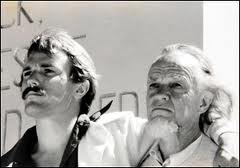


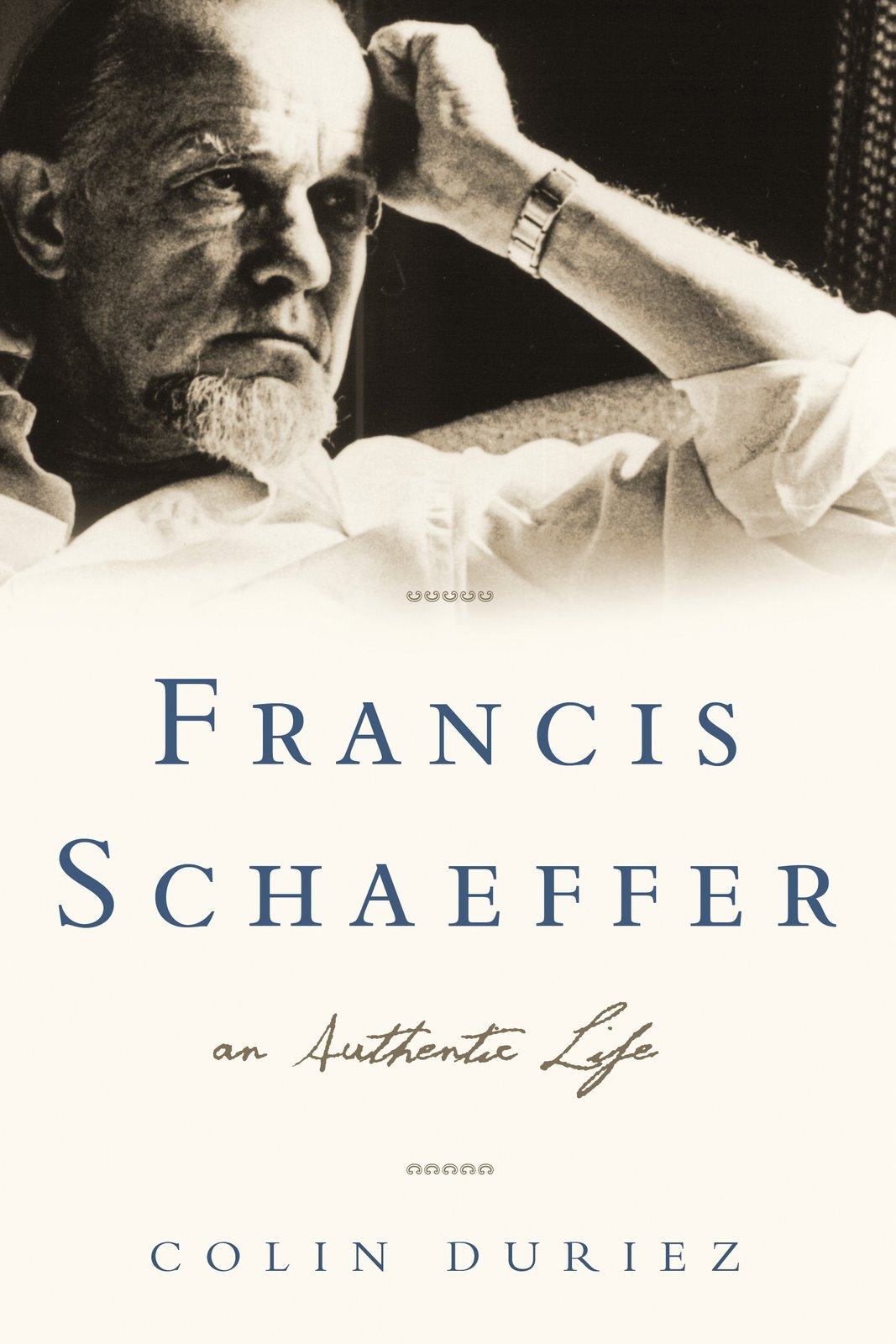



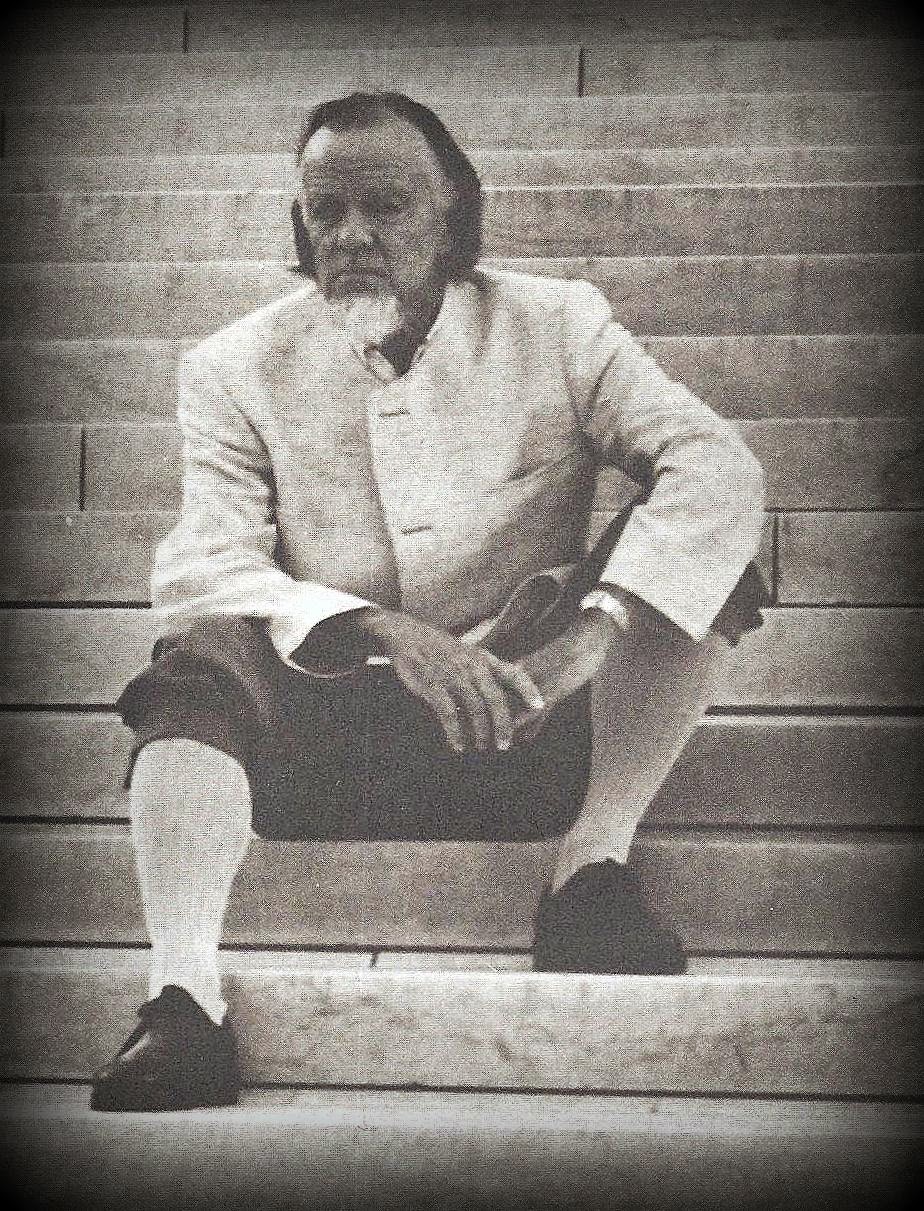


 The Daily Hatch
