Christian Rock Pioneer Larry Norman’s Songs Part 1
I posted a lot in the past about my favorite Christian musicians such as Keith Green (I enjoyed reading Green’s monthly publications too), and 2nd Chapter of Acts and others. Today I wanted to talk about one of Larry Norman’s songs. David Rogers introduced me to Larry Norman’s music in the 1970’s and his album IN ANOTHER LAND came out in 1976 and sold an enormous amount of copies for a Christian record back then.
Larry Norman – The Great American Novel ~ [Lyrics]
Larry Norman – 1 – The Rock That Doesn’t Roll – In Another Land (1976)
Larry Norman – 2 – I Love You – In Another Land (1976)
Calling Larry Norman a “Christian rock pioneer” is easy, and true enough. But before becoming the personification of the Jesus Movement of the late ’60s and early ’70s, he got his start in the mainstream pop world.In 1966, he joined San Jose area band People and signed to Capitol Records. They scored a pop hit with their cover of The Zombies’ “I Love You (But the Words Won’t Come),” before disbanding over internal spiritual conflicts and Norman’s frustration with the label’s re-naming of the band’s debut album. Norman stayed with Capitol for the release of his solo debut, Upon This Rock, a wildly eclectic folk/rock record often referred to as the first Christian rock record of any consequence.
He moved to MGM Records for two critically-acclaimed albums, including Only Visiting This Planet (called “The Best Christian Album of All Time” by the editors of CCM Magazine). But sales were few, and by 1972, Norman went underground, starting Solid Rock Records in the U.S. and Europe, beginning a 35-year run of independence that brought about not only more great music of his own, but also introduced other artful, progressive artists including Randy Stonehill, Daniel Amos, Steve Scott, Tom Howard, Mark Heard, Chris Eaton (Lyrix) and others.
Unlike the safe, southern gospel influenced Christian records of the mid-’70s, Norman’s albums were richly layered in the best tradition of acts like The Beatles, the Rolling Stones, Elton John and Crosby, Stills and Nash, with a dark, apocalyptic streak. His message engaged the culture with authenticity and conviction, and his imagination articulated the disconnectedness felt by so many people in the aftermath of the ’60s.
Odd and controversial business practices and broken personal relationships would bring about the end of his Solid Rock Records imprint and cause friction between Norman and some of his closest friends. As Christian music came into its own, he sent himself into a sort of exile. He emerged occasionally, often with surprising stories of personal injuries and even conspiracies. But for the most part, he spent the last two decades of his life communicating directly with his die-hard fans and performing solo acoustic concerts around the world in small venues.
He released a few new projects and re-assembled his classics for release through his website, larrynorman.com. Occasional festival appearances were rare treats for the faithful fans, but he was so far outside the mainstream that most of today’s Christian music fans have absolutely no idea who Larry Norman is.
The fire he fanned continues to burn to this day. Much of the current faith-fueled music scene can trace its existence all the way back to this lanky San Jose kid with the quizzical face, the ripped blue jeans and the simple message that Jesus loves us. His reach extends well into the mainstream where he was admired by artists like U2, John Mellancamp, Bob Dylan and alternative/punk legend Frank Black of Pixies fame. Black, with his ’90s band The Catholics, covered Norman’s song “Six Sixty Six” and frequently went out of his way to laud his impact. In a statement issued the day after Norman’s death, Black called the singer “The most Christ-like man I ever knew.”
In 2002, when U2’s Bono visited Nashville to speak with Christian artists about his DATA campaign, the only artist he specifically asked about was Larry Norman. Norman couldn’t make that trip, so Bono visited him on the road later that year.
His flaws were many, and unfortunately, often kept him at more than arm’s length from the industry he inadvertently helped create. But in time, most of his harshest critics accepted that despite his faults, maybe because of them, he was an amazing person who had given the Church an incredible gift. One-time protégée and best friend Randy Stonehill had distanced himself from Norman for over 20 years following deep personal conflict between the two. In 2001, they reconciled, reuniting onstage at Cornerstone.
Norman struggled with heart disease for most of the last decade. On Sunday, Feb. 24, 2008 his struggle ended. He died peacefully. He was 60. It is certainly no overstatement to say Larry Norman is to Christian music what John Lennon is to rock & roll or Bob Dylan is to folk music. His contributions deserve to be discovered by future generations, and his enduring legacy includes the fantastic truth that despite his personal weakness and frailty, God used him to accomplish amazing things.
John J. Thompson is an artist, author, pastor, music journalist and industry veteran. He founded True Tunes and Gyroscope Arts and currently resides in Nashville. JohnJThompson.com
Francis Schaeffer Whatever Happened to the Human Race (Episode 1) ABORTION _____________________________________ 1978 Prolife Pamphlet from Keith Green’s ministry has saved the lives of many babies!!!! Francis Schaeffer “BASIS FOR HUMAN DIGNITY” Whatever…HTTHR Dr. Francis schaeffer – The flow of Materialism(from Part 4 of Whatever happened to human race?) Dr. Francis Schaeffer – The Biblical […]
This is a tribute to Keith Green who died 32 years ago today!!! On July 28, 1983 I was sitting by the radio when CBS radio news came on and gave the shocking news that Keith Green had been killed by an airplane crash in Texas with two of his children. 7 months later I […]
My favorite Christian music artist of all time is Keith Green. Sunday, May 5, 2013 You Are Celled To Go – Keith Green Keith Green – (talks about) Jesus Commands Us To Go! (live) Uploaded on May 26, 2008 Keith Green talks about “Jesus Commands Us To Go!” live at Jesus West Coast ’82 You can find […]
To me this song below sums up Keith Green’s life best. 2nd Chapter of Acts – Make My Life A Prayer to You Make my life a prayer to You I want to do what You want me to No empty words and no white lies No token prayers, no compromise I want to shine […]
Keith Green – Easter Song (live) Uploaded by monum on May 25, 2008 Keith Green performing “Easter Song” live from The Daisy Club — LA (1982) ____________________________ Keith Green was a great song writer and performer. Here is his story below: The Lord had taken Keith from concerts of 20 or less — to stadiums […]
Keith Green – Asleep In The Light Uploaded by keithyhuntington on Jul 23, 2006 keith green performing Asleep In The Light at Jesus West Coast 1982 __________________________ Keith Green was a great song writer and performer and the video clip above includes my favorite Keith Green song. Here is his story below: “I repent of […]
Keith Green – So You Wanna Go Back To Egypt (live) Uploaded by monum on May 25, 2008 Keith Green performing “So You Wanna Go Back To Egypt” live at West Coast 1980 ____________ This song really shows Keith’s humor, but it really has great message. Keith also had a great newsletter that went out […]
Keith Green – So You Wanna Go Back To Egypt (live) Uploaded by monum on May 25, 2008 Keith Green performing “So You Wanna Go Back To Egypt” live at West Coast 1980 ____________ This song really shows Keith’s humor, but it really has great message. Keith also had a great newsletter that went out […]
Keith Green – Your Love Broke Through Here is something I got off the internet and this website has lots of Keith’s great songs: Keith Green: His Music, Ministry, and Legacy My mom hung up the phone and broke into tears. She had just heard the news of Keith Green’s death. I was only ten […]
Keith Green – So You Wanna Go Back To Egypt (live) Uploaded by monum on May 25, 2008 Keith Green performing “So You Wanna Go Back To Egypt” live at West Coast 1980 ____________ This song really shows Keith’s humor, but it really has great message. Keith also had a great newsletter that went out […]
Zechariah 12:3 (KJV) notes, “And in that day will I make Jerusalem a burdensome stone for all people: all that burden themselves with it shall be cut in pieces, though all the people of the earth be gathered together against it.”
It is amazing how up to date the Bible can be in many ways.
Mike Huckabee opened up his 8-2-14 Fox news show up with these words:
“You bet it is tragic that many civilians in Gaza have died, but when Palestinians pack their population around their military hardware and weaponry and then they fail to heed the leaflets, radio transmissions, dud warning bombs, phone calls and text messages, the results will be tragic. One MSNBC reporter blamed Israel for an attack on a school that turned out to be a misguided Hamas rocket. I wonder if the Jew-haters would feel better if Israel was terrible at protecting and there were thousands of dead Jewish children?,,,,Every single agreed to cease-fire agreement pushed for by President Obama has resulted in Hamas violating it by firing more rockets right into civilian targets in Israel.”
Furthermore, Bible believers are not surprised that Israel doesn’t get along with their cousins in the Middle East because Genesis 16:12 notes concerning Israel’s neighbors “…he will live in hostility towards all his brothers.” Also we were not surprised when the Jews returned to the Holy Land after War World II because Isaiah 11:12 asserts, “And He will … gather together the dispersed of Judah from the four corners of the earth.”
Amos 9:14-15: “And I will bring back the exiles of My people Israel, and they shall build the waste cities and inhabit them; and they shall plant vineyards and drink the wine from them; they shall also make gardens and eat the fruit of them. And I will plant them upon their land, and they shall no more be torn up out of their land which I gave them, says the Lord your God.”
I visited Israel in 1976 and our tour guide was my pastor Adrian Rogers. During the trip he asserted that the Jews had a divine right to be in the land, but they would never have peace until Christ came back.
Rogers also made 4 other points concerning the young nation of Israel.
First, the Old Testament predicted that the Jews would regather from all over the world and form a new reborn nation of Israel. (Isaiah 11:11-12)
Second, it was also predicted that the nation of Israel would become a stumbling block to the whole world. (Zechariah 12:3)
Third, it was predicted that the Hebrew language would be used again as the Jews’ first language even though we know in 1948 that Hebrew at that time was a dead language! (Zeph 3:9; 2 Thess 2:3-4).
Fourth, it was predicted that the Jews would never again be removed from their land.(Amos 9:14-15)
I was fascinated to read a few years later these groundbreaking words by a famous columnist who happened to be a Jew. Irving Kristol in his article, “The Political Dilemma of American Jews,” COMMENTARY MAGAZINE, 7/1/84 , wrote:
The rise of the Moral Majority is another new feature of the American landscape that baffles Jews…One of the reasons—perhaps the main reason—they do not know what to do about it is the fact that the Moral Majority is strongly pro-Israel. Some Jews, enmeshed in the liberal time warp, refuse to take this mundane fact seriously. They are wrong. Just how wrong they are can be seen by asking the question: how significant would it be for American Jews if the Moral Majority were anti-Israel? The answer is easy and inescapable: it would be of major significance. Indeed, it would generally be regarded by Jews as a very alarming matter. So it is ironic, and puzzling, that American Jews appear to be not all that interested in, and certainly not enthusiastic about, the fact that the Moral Majority is unequivocally pro-Israel… In short, is it not time for an agonizing reappraisal?
I later corresponded with Mr. Kristol and his good friend Daniel Bell and shared with them some of these same Old Testament Prophecies concerning the Jews returning to the promised land once again.
Dear Mr. Hatcher, Thank you for your thoughtful letter. I don’t know whether or not the prophecies of the Ezekiel are being fulfilled. The very nature of such prophecy, or the parables of Jesus, are inherently ambiguous, and so always opaque. As to the survival of the Jewish people, I think of the remark of Samuel Johnson that there is nothing stronger than the knowledge that one may be hanged the next day to concentrate the mind–or the will. Sincerely, Daniel Bell
On September 21, 1995 his good friend Irving Kristol added this comment, “I am leery of taking Biblical prophecies too literally. They always seem to get fulfilled, some way or other, whatever happens. They are inspiring, of course, which enough for me.”
Just recently I got to visit with Irving Kristol’s son Bill in a political meeting in Hot Springs, Arkansas on July 18, 2014. I gave him copies of letters I had received from both his father and their family friend Daniel Bell. He was amazed. He read the letters on the spot and thanked me for them. I told that Old Testament prophecies concerning Israel was the subject of the letters. Then I told him how much I respected his mother’s historical work and asked how she was doing.
The Bible maintains several characteristics that prove it is from God. One of those is the fact that the Bible is accurate in every one of its details. The field of archaeology brings to light this amazing accuracy and Kyle Butt does a great job of showing that in this film series he did on “The Bible and Archaeology.”
_________________________-
The Bible and Archaeology (2/5)
Adrian Rogers – How you can be certain the Bible is the word of God
I want to give you five reasons to affirm the Bible is the Word of God.
First, I believe the Bible is the Word of God because of its scientific accuracy. The Truth of the Word of God tells us that God “hangeth the earth upon nothing” (Job 26:7). How did Job know that the earth hung in space before the age of modern astronomy and space travel? The Holy Spirit told him. The scientists of Isaiah’s day didn’t know the topography of the earth, but Isaiah said, “It is [God] that sitteth upon the circle of the earth” (Isaiah 40:22). The word for “circle” here means a globe or sphere. How did Isaiah know that God say upon the circle of the earth? By divine inspiration.
Secondly, the Bible is affirmed through historical accuracy. Do you remember the story about the handwriting on the wall that is found in the fifth chapter of Daniel? Belshazzar hosted a feast with a thousand of his lords and ladies. Suddenly, a gruesome hand appeared out of nowhere and began to write on a wall. The king was disturbed and asked for someone to interpret the writing. Daniel was found and gave the interpretation. After the interpretation, “Then commanded Belshazzar, and they clothed Daniel with scarlet, and put a chain of gold about his neck, and made a proclamation concerning him, that he should be the third ruler in the kingdom.” (Daniel 5:29). Basing their opinion on Babylonian records, the historians claim this never happened. According to the records, the last king of Babylon was not Belshazzar, but a man named Nabonidas. And so, they said, the Bible is in error. There wasn’t a record of a king named Belshazzar. Well, the spades of archeologists continued to do their work. In 1853, an inscription was found on a cornerstone of a temple built by Nabonidas, to the god Ur, which read: “May I, Nabonidas, king of Babylon, not sin against thee. And may reverence for thee dwell in the heart of Belshazzar, my first-born favorite son.” From other inscriptions, it was learned that Belshazzar and Nabonidas were co-regents. Nabonidas traveled while Belshazzar stayed home to run the kingdom. Now that we know that Belshazzar and Nabonidas were co-regents, it makes sense that Belshazzar would say that Daniel would be the third ruler. What a marvelous nugget of truth tucked away in the Word of God!
Third, from Genesis to Revelation, the Bible reads as one book. And there is incredible unity to the Bible. The Bible is one book, and yet it is made up of 66 books, was written by at least 40 different authors over a period of about 1600 years, in 13 different countries and on three different continents. It was written in at least three different languages by people in all professions. The Bible forms one beautiful temple of truth that does not contradict itself theologically, morally, ethically, doctrinally, scientifically, historically, or in any other way.
Fourth, did you know the Bible is the only book in the world that has accurate prophecy? When you read the prophecies of the Bible, you simply have to stand back in awe. There are over 300 precise prophecies that deal with the Lord Jesus Christ in the Old Testament that are fulfilled in the New Testament. To say that these are fulfilled by chance is an astronomical impossibility.
Finally, the Bible is not a book of the month, but the Book of the Ages. First Peter 1:25 says: “But the word of the Lord endureth for ever. And this is the Word which by the gospel is preached unto you.” No book has ever had as much opposition as the Bible. Men have laughed at it, scorned it, burned it, ridiculed it, and made laws against it. But the Word of God has survived. And it is applicable today as much as it was yesterday and will be tomorrow.
It’s so majestically deep that scholars could swim and never touch the bottom. Yet so wonderfully shallow that a little child could come and get a drink of water without fear of drowning. That is God’s precious, holy Word. The Word of God. Know it. Believe it. It is True.
“In Christ Alone” music video featuring scenes from “The Passion of the Christ”. It is sung by Lou Fellingham of Phatfish and the writer of the hymn is Stuart Townend. On this Easter weekend 2013 there is no other better time to take a look at the truth and accuracy of the Bible. Is the […]
Here is some very convincing evidence that points to the view that the Bible is historically accurate. Archaeological and External Evidence for the Bible Archeology consistently confirms the Bible! Archaeology and the Old Testament Ebla tablets—discovered in 1970s in Northern Syria. Documents written on clay tablets from around 2300 B.C. demonstrate that personal and place […]
Larry King – Dr. John MacArthur vs. “father” Manning Uploaded on Sep 26, 2011 GotoThisSite.org ___________ I have seen John MacArthur on Larry King Show many times and I thought you would like to see some of these episodes. I have posted several of John MacArthur’s sermons in the past and my favorite is his […]
The Bible and Archaeology (1/5) The Bible maintains several characteristics that prove it is from God. One of those is the fact that the Bible is accurate in every one of its details. The field of archaeology brings to light this amazing accuracy. _________________________- Many people have questioned the accuracy of the Bible, but I […]
Irving Kristol pictured below: In 1980 I read the books HOW SHOULD WE THEN LIVE? by Francis Schaeffer and WHATEVER HAPPENED TO THE HUMAN RACE? by both Schaeffer and Dr. C. Everett Koop and I saw the film series by the same names. In those two books Daniel Bell was quoted. In HOW SHOULD WE […]
______________ Bill Kristol Published on Jul 20, 2014 The Weekly Standard editor and publisher Bill Kristol discusses Clintons, Pryor-Cotton and 2016. _____________________________________________________________________ On Friday July 18, 2014 I had the opportunity to visit personally with Bill Kristol who is the founder of THE WEEKLY STANDARD MAGAZINE. I told him that I had the privilege to […]
Richard Dawkins & Ricky Gervais on Religion Trailer | The Story of the Jews | PBS ____________________________ Robert Lewis noted that many orthodox Jews believed through the centuries that God would honor the ancient prophecies that predicted that the Jews would be restored to the land of Israel, but then I notice the latest film […]
Jon Feltheimer, CEO, Lionsgate Films AKA Lions Gate Films (Summit Entertainment/Roadside Attractions)
2700 Colorado Ave.
Santa Monica, CA 90404
Phone: (310) 449-9200; Fax: (310) 255-3870
Website: http://www.lionsgatefilms.com
Content:
(CCC, BBB, AA, M) Very strong Christian worldview with very strong moral, pro-family messages; no foul language, plus one reference to going to the bathroom; no violence; no sex; no nudity; alcohol use and girl passes out from drinking; no smoking or drugs; and, girl lies and runs away from home, but repents.
Summary:
GRACE UNPLUDGGED is about the young daughter of a former rock star who found Jesus and now must lead his wayward daughter away from bad influences and back to Christ. GRACE UNPLUDGGED keeps you on the edge of your seat and is one of the best, most entertaining, and most powerful, heartrending Christian movie ever produced.
Review:
GRACE UNPLUGGED is an extremely well produced, faith-filled, jeopardy packed movie that speaks to all the millions of parents whose children want to get into the entertainment industry.
Grace is the daughter of John Trey, a famous rock singer who crashed and found Jesus. When Grace was little, John gave her a guitar. Now, they sing together, much to her mother’s delight.
However, 18-year-old Grace is getting more and more rebellious. She wants to sing her style of music. She wants to do things her way. She wants to go into the music industry, while John only wants to sing with her in church. And, she doesn’t want to talk about it, even though John is overly protective and presses her hard to make the right choices.
Through a quirk of fate, John’s major music hit from the past gets a second chance by becoming a YouTube sensation. His former manager, Frank “Mossy” Mostin, who’s been on the rocks for many years, comes to John to say he’s got him a big record deal with Sapphire Records. So, they’re back in business.
Mossy is stunned, however, when John doesn’t want the offer. He wants to remain in a small Southern town in an out-of-the-way church. Grace, however, records herself singing her father’s song and sends it to Mossy. Mossy hires her on the spot, and she runs away from home to Hollywood.
Mossy is a conniving, music industry veteran with a Romantic worldview. He sets her up with Jason, a TV star, in order to raise her profile and rope her in tighter to the music scene. Her pop music idol tells her that her body is her biggest asset and sometimes you have to spend it. The only bright light is a young Christian intern at Sapphire Records, who has recommitted his life to Christ. He tries to serve as Grace’s conscience while pointing her back to Jesus in very subtle, wonderful ways.
John comes out to Hollywood to take Grace home. Grace finds out Jason is just using her. And, life starts to unravel in a major way. Will Grace return to Christ before she heads down the road to perdition?
GRACE UNPLUGGED is a extraordinarily well structured movie. The mother/father dialogue is real. The father/daughter dialogue is real. The Hollywood manager is a smooth talking devilish egotist, who actually makes a lot of sense. Grace is getting what she desires, but is that what she needs?
GRACE UNPLUGGED is tremendous. It isn’t just a three hankie but a whole Kleenex box movie. It keeps you on the edge of your seat. This type of clean, evangelistic movie is a departure for Lionsgate Films. They’ve done Tyler Perry movies, but GRACE UNPLUGGED goes the next step. It’s one of the best, most entertaining Christian movies ever produced. MOVIEGUIDE® only hopes they market the movie well enough that every family wants to see it. GRACE UNPLUGGED will help many families and keep them from going through the heartache of the prodigal son or daughter.
1. It’s an enjoyable, heartfelt and entertaining movie. The quality storytelling and moving performances meet and even exceed industry standards. GRACE UNPLUGGED is loads of fun for the whole family.
2. It proclaims the name of Jesus. It’s not everyday we get to see movies in theaters that magnify the name of Jesus. By seeing GRACE UNPLUGGED, you are making a statement about the importance of your faith.
3. It has an important message for everyone. Whether you’re a father, mother, daughter or even a son, GRACE UNPLUGGED has important messages about the importance of family, and following God’s calling rather than one’s own.
4. It’s a great evangelism tool. Bring a friend who needs Jesus or just an encouraging word. GRACE UNPLUGGED is a great conversation starter about the important things of life.
5. Did we mention how fun this movie is?
“Grace Unplugged is tremendous … one of the best, most entertaining Christian movies ever made.” – Dr. Ted Baehr, Movieguide
* Grace Unplugged is the #1 viewer rated film on Fandango
* 90% viewer rating on Rotten Tomatoes (same as Gravity)
* Cinemascore (exit survey) of A- (same as Gravity)
The Lou Gramm Band – You Saved Me (great song) Uploaded by SacredWarrior1991 on May 2, 2011 This song is taken from The Lou Gramm Band (LGB – 2009). ______________________________________ The Lou Gramm Band – I Wanna Testify (great song) Uploaded by SacredWarrior1991 on May 2, 2011 This song is taken from The Lou Gramm […]
Double Vision – Foreigner Foreigner- Urgent Foreigner – Cold As Ice _____________________________ The Lou Gramm Band – Redeemer (great song) Uploaded by SacredWarrior1991 on May 2, 2011 This song is taken from The Lou Gramm Band (LGB – 2009). ____________________________________ Lou Gramm Knows What Love Is – CBN.com Uploaded by CBNonline on Nov 4, 2009 […]
Katy Perry Dedicates Song to Tim Tebow at Super Bowl Party Sun, Feb. 05, 2012 Posted: 07:01 PM EDT Flamboyant pop star Katy Perry dedicated suggestive song “Peacock” to evangelical quarterback Tim Tebow at a pre-Super Bowl party Saturday night. Perry, the daughter of Christian ministers, said “This one goes out to Tim […]
Wikipedia reported: Blondie Chris Stein and Deborah Harry in 2008 Background information Origin New York City, US Genres New Wave punk rock[1][2] dance-rock[3] pop punk[3][4] post-punk power pop Years active 1974–1982 1997–present Labels Chrysalis/EMI Beyond/BMG Epic Sanctuary Private Stock Website http://www.blondie.net Members Debbie Harry Chris Stein Clem Burke Leigh Foxx Matt Katz-Bohen Tommy Kessler Jimmy […]
Chynna Phillips is open about her Christian faith jh31 “Dancing with the Stars” (DWTS) is a very popular show. I have only watched it a little, but I am a big fan of Chynna Phillips. I love a lot of her music. Dancing With the Stars: Chynna Phillips Speaks Openly About Her Christian Faith Actress […]
In-Studio Interviews – Tyson Ritter ‘The All American Rejects’ Interview: Kids In The Street I enjoyed the concert in Little Rock on 12-13-12, and lead singer Tyson Ritter wrote a song on his latest cd that we should all pay attention to because it covers an issue that both him and many other lead singers […]
The Poison – The All-American Rejects Avril Lavigne and Tyson Ritter from All American Rejects Talk Almost Alice The All-American Rejects – Dirty Little Secret Tyson Ritter, the leadsinger of the All-American Rejects has admitted that he was a jerk for the last couple of years when he lived a sexually impure life by sleeping […]
The All-American Rejects Music Interview Tyson Ritter Full Band only on The Artist Spotlight The All-American Rejects – The Last Song The All-American Rejects – It Ends Tonight I got to go hear the All-American Rejects in Little Rock on 12-13-12. Here are some of my reactions. Tyson Ritter admitted that he lost his way […]
The All-American Rejects – Swing, Swing The All-American Rejects – Move Along Tyson Ritter in Little Rock below: Sent from my iPhone On 12-13-12 I got to hear the All-American Rejects and their lead singer Tyson Ritter play at Juanita’s in Little Rock on Clinton Ave. The performance of music was very good. However, Tyson’s […]
Larry Norman and Steve Turner on John Lennon’s spiritual quest and Jesus!!!
______________
I posted a lot in the past about my favorite Christian musicians such as Keith Green (I enjoyed reading Green’s monthly publications too), and 2nd Chapter of Acts and others. Today I wanted to talk about one of Larry Norman’s songs. David Rogers introduced me to Larry Norman’s music in the 1970’s and his album IN ANOTHER LAND came out in 1976 and sold an enormous amount of copies for a Christian record back then.
Larry Norman on John Lennon, Paul McCartney and the Beatles
Uploaded on Dec 28, 2011
Larry shares his view on The Beatles, especially John Lennon
Two books tell the story behind John Lennon’s short-lived conversion.
Steve Turner/ June 12, 2000
Two new books on John Lennon claim that the ex-Beatle experienced a brief period as a born-again Christian during the 1970s. While living the life of a virtual recluse in New York’s Dakota Building, Lennon became an avid viewer of American TV evangelists and, at some point during 1977, declared that he had been saved. Robert Rosen in Nowhere Man: The Final Days of John Lennon (published in June by Soft Skull Press) cites Billy Graham as the main influence, whereas Geoffrey Giuliano in Lennon in America (published in June by Cooper Square Press) mentions both Graham and Pat Robertson. Both agree that the period, during which Lennon peppered his everyday conversation with
“Praise the Lord” and “Thank you, Jesus,” was brief. Giuliano says it lasted for “a matter of months.” Rosen suggests it was “about two weeks.”
Both writers have based their information on sources close to Lennon and on the singer’s personal diaries, which circulated shortly after his death and were then retrieved by his widow, Yoko Ono. The existence of the diaries has been known for some time, but so far no writer has divulged their contents. Because of legal problems, neither Rosen nor Giuliano has been able to quote directly from the diaries, but both have drawn on the information.
“One day [Lennon] had an epiphany—he allowed himself to be touched by the love of Jesus Christ, and it drove him to tears of joy and ecstacy,” writes Rosen, a New York journalist briefly employed by Ono.
“He drew a picture of a crucifix; he was born again, and the experience was such a kick that he had to share it with Yoko.”
Giuliano, who has written extensively about the Beatles, pinpoints the conversion to a Palm Sunday and says that Lennon was so moved by a series about Jesus broadcast on Robertson’s CBN that he broke down in tears. In the following weeks, he attended church services and took his son, Sean, to a Christian theater performance. He even called The 700 Club help line to request prayer for his health and troubled marriage.
“He prayed for forgiveness when he stepped on insects or snapped at the maid,” Giuliano writes.
“He became convinced that Jesus was personally protecting Sean.”
Ono, whose first husband Anthony Cox became an evangelical Christian in the 1970s, was displeased with Lennon’s changed outlook. Giuliano claims that Lennon began to challenge her interest in the occult and was disappointed that she wouldn’t join him in watching Graham’s telecasts.
“She feared that John’s new faith would clash with her own ideas about spiritualism and threaten her iron hold over him.”
In the end Ono won. In his final years, the man best known for his lines “Imagine there’s no heaven / It’s easy if you try” was living a life dictated by astrologers, numerologists, clairvoyants, psychics, herbalists, and tarot-card readers. The one song that Lennon wrote during his born-again period has never been released. “You Saved My Soul,” which recounts being prevented from attempting suicide while staying in a Tokyo hotel, is known only to Beatles bootleggers. Two years later, Lennon wrote a parody of Bob Dylan’s “Gotta Serve Somebody” in which he urged his listeners to believe in no one but themselves—a line he had peddled on his first solo release in 1970. According to Rosen in Nowhere Man, Lennon wrote the song in Palm Beach after seeing the newly converted Dylan on a Grammy Awards TV broadcast.
Rosen writes that “Serve Yourself” was “a wrathful protest bristling with fury and despair.”
“(You got to serve yourself / Nobody gonna do it for you / You may believe in devils / You may believe in laws / But you know you’re gonna to have to serve yourself.”)Unlike the other Beatles, Lennon was raised as a nominal Christian and attended Sunday school at St. Peter’s Church in Woolton, Liverpool. This early exposure to Christianity may explain why he always seemed to regard Jesus as a figure who had to be dealt with, whether through comparison (“The Beatles are more popular than Jesus”), identification (“They’re gonna crucify me,” in “Ballad of John and Yoko”), or challenge (“I don’t believe in Jesus,” in “God”).
Where his contemporaries ignored Jesus, Lennon had to continually take him on. In his final interviews, carried out just weeks before his death in December 1980, Lennon said his beliefs could be described as “Zen Christian, Zen pagan, Zen Marxist” or nothing at all. Speaking to Newsweek‘s Barbara Graustark, however, Lennon revealed that he still reads the Bible. “Some of [Christ’s parables] are only making sense to me now, after a whole life of sitting in church or school,” he told her.
“It was just moany, moany, moany for years, and then I hear it again and I think, God, that’s what he means.”
Steve Turner is a journalist and poet living in London.
Related Elsewhere
Nowhere Man and Lennon in America are available from Amazon.com and other Web retailers. The Buffalo Newsand The Times discuss the controversy swirling around the sources used for Lennon in America. An interview with Geoffrey Giuliano, author of Lennon in America, is available online. Excerpts of Nowhere Man are available from the publisher.In 1966, there was a furor over Lennon’s alleged comment that the Beatles were more popular than Jesus. About.com has an area devoted to the Beatles, which links to the other top Beatles sites.Sister publication Books & Culture looked at the spiritual side of Lennon contemporary Bob Dylan in a 1998 issue.
Previous Popular Culture columns include:
The Clay Cries Out | “The Miracle Maker” presents an animated, supernatural, and utterly believable Jesus. (April 3, 2000)
Take a Little Time Out | Amy Grants ever-smiling face is everywhere, obscuring the tragedy of two failed marriages. (Feb. 7, 2000)
Rocking the Church | The Rolling Stone of Christian magazines turns 20. (March 1, 1999)
larry Norman 1983b Wish We’d All Been Ready, I Am A Servant
Uploaded on Mar 5, 2008
From VHS tape “Illegal Observations – The Best of Norman Bootlegs, Part 2 Vol 7”
Please show your love for Larry’s work by purchasing videos and albums in the online store at http://www.larrynorman.com . Even though Larry is gone his work lives on (as well as his medical bills). We all must help to preserve his legacy for future generations.
Francis Schaeffer Whatever Happened to the Human Race (Episode 1) ABORTION _____________________________________ 1978 Prolife Pamphlet from Keith Green’s ministry has saved the lives of many babies!!!! Francis Schaeffer “BASIS FOR HUMAN DIGNITY” Whatever…HTTHR Dr. Francis schaeffer – The flow of Materialism(from Part 4 of Whatever happened to human race?) Dr. Francis Schaeffer – The Biblical […]
This is a tribute to Keith Green who died 32 years ago today!!! On July 28, 1983 I was sitting by the radio when CBS radio news came on and gave the shocking news that Keith Green had been killed by an airplane crash in Texas with two of his children. 7 months later I […]
My favorite Christian music artist of all time is Keith Green. Sunday, May 5, 2013 You Are Celled To Go – Keith Green Keith Green – (talks about) Jesus Commands Us To Go! (live) Uploaded on May 26, 2008 Keith Green talks about “Jesus Commands Us To Go!” live at Jesus West Coast ’82 You can find […]
To me this song below sums up Keith Green’s life best. 2nd Chapter of Acts – Make My Life A Prayer to You Make my life a prayer to You I want to do what You want me to No empty words and no white lies No token prayers, no compromise I want to shine […]
Keith Green – Easter Song (live) Uploaded by monum on May 25, 2008 Keith Green performing “Easter Song” live from The Daisy Club — LA (1982) ____________________________ Keith Green was a great song writer and performer. Here is his story below: The Lord had taken Keith from concerts of 20 or less — to stadiums […]
Keith Green – Asleep In The Light Uploaded by keithyhuntington on Jul 23, 2006 keith green performing Asleep In The Light at Jesus West Coast 1982 __________________________ Keith Green was a great song writer and performer and the video clip above includes my favorite Keith Green song. Here is his story below: “I repent of […]
Keith Green – So You Wanna Go Back To Egypt (live) Uploaded by monum on May 25, 2008 Keith Green performing “So You Wanna Go Back To Egypt” live at West Coast 1980 ____________ This song really shows Keith’s humor, but it really has great message. Keith also had a great newsletter that went out […]
Keith Green – So You Wanna Go Back To Egypt (live) Uploaded by monum on May 25, 2008 Keith Green performing “So You Wanna Go Back To Egypt” live at West Coast 1980 ____________ This song really shows Keith’s humor, but it really has great message. Keith also had a great newsletter that went out […]
Keith Green – Your Love Broke Through Here is something I got off the internet and this website has lots of Keith’s great songs: Keith Green: His Music, Ministry, and Legacy My mom hung up the phone and broke into tears. She had just heard the news of Keith Green’s death. I was only ten […]
Keith Green – So You Wanna Go Back To Egypt (live) Uploaded by monum on May 25, 2008 Keith Green performing “So You Wanna Go Back To Egypt” live at West Coast 1980 ____________ This song really shows Keith’s humor, but it really has great message. Keith also had a great newsletter that went out […]
Larry’s Norman’s song SONG FOR A SMALL CIRCLE OF FRIENDS (with links to the people he is referring to)
______________
I posted a lot in the past about my favorite Christian musicians such as Keith Green (I enjoyed reading Green’s monthly publications too), and 2nd Chapter of Acts and others. Today I wanted to talk about one of Larry Norman’s songs. David Rogers introduced me to Larry Norman’s music in the 1970’s and his album IN ANOTHER LAND came out in 1976 and sold an enormous amount of copies for a Christian record back then.
Larry Norman: “Song For A Small Circle Of Friends” Music Video*
Uploaded on Jul 6, 2009
Larry David Norman (April 8, 1947 February 24, 2008) was an American Christian musician, singer, songwriter, record producer, and humorist. Norman’s recordings are noted for their Christian and social subject matter, and he is often described as the “father of Christian rock music”. Norman has been described as having had a significant influence on many artists, secular and religious.
Norman had long been associated with the Jesus people of the late 1960s and early 1970s, although it has been reported that “he did not particularly identify himself with the youth-oriented ‘Jesus movement’ of the time”.
Norman began recording in 1966 and recorded numerous albums. Norman’s first album, I Love You, recorded when he was the lead singer for the group People!, was released in 1968. The band’s cover version of The Zombies song of the same name reached number 14 on Billboard magazine’s top twenty list in June of that year as a single. Norman left People! prior to 1969 and subsequently performed as a solo artist, appearing both on mainstream and independent labels.
In 2001 Norman was inducted into the Gospel Music Association’s Hall of Fame as a solo artist. In 2007 Norman was inducted into the San Jose Rocks Hall of Fame (San Jose, California), both as a member of People!, and as a solo artist. At that time Norman reunited for a concert with People!
In recent years, however, many CCM artists have credited Norman as an influence on their music, particularly in the sub-genre of Christian rock. He is often cited as influencing both Keith Green and Randy Stonehill in their conversions to Christianity. In turn both eventually became Christian music artists. He has granted interviews to magazines covering Contemporary Christian music and accepted industry awards. When asked about the relationship between CCM and his own music, Norman has replied “I’m happy if I’ve been an encouragement to other artists.”
Larry Norman died of heart disease and complications at his home in Salem, Oregon with family and friends present.
Well my life is filled with songs
But I just could not get along without my friends
And I’m happy now, but when this good life ends
I know a better life begins.
And love to you sir Stonehill,
Armed with your axe full gallop on your amp.
Ah, you’re so crazy but you know it,
And I love you as we both crawl toward the Lamp.
With Clapton on guitar, and Charlie on the drums. McCartney on the Hofner bass with blisters on his thumbs.
Dear Bobby watch your fears all hide
And disappear while love inside starts growing,
You’re older but less colder
Than the jokes and folks you spent your childhood snowing.
And Someone died for all your friends
But even better yet, He lives again.
And if this song does not make sense to you,
I hope His Spirit slips on through,
He loves you
He loves you
He loves you
And if these words do not appeal to
I hope His Spirit slips on through,
He loves you
He loves you
He loves you
And if this song does not make sense to you,
I hope His Spirit slips on through,
You know, He loves you
Francis Schaeffer Whatever Happened to the Human Race (Episode 1) ABORTION _____________________________________ 1978 Prolife Pamphlet from Keith Green’s ministry has saved the lives of many babies!!!! Francis Schaeffer “BASIS FOR HUMAN DIGNITY” Whatever…HTTHR Dr. Francis schaeffer – The flow of Materialism(from Part 4 of Whatever happened to human race?) Dr. Francis Schaeffer – The Biblical […]
This is a tribute to Keith Green who died 32 years ago today!!! On July 28, 1983 I was sitting by the radio when CBS radio news came on and gave the shocking news that Keith Green had been killed by an airplane crash in Texas with two of his children. 7 months later I […]
My favorite Christian music artist of all time is Keith Green. Sunday, May 5, 2013 You Are Celled To Go – Keith Green Keith Green – (talks about) Jesus Commands Us To Go! (live) Uploaded on May 26, 2008 Keith Green talks about “Jesus Commands Us To Go!” live at Jesus West Coast ’82 You can find […]
To me this song below sums up Keith Green’s life best. 2nd Chapter of Acts – Make My Life A Prayer to You Make my life a prayer to You I want to do what You want me to No empty words and no white lies No token prayers, no compromise I want to shine […]
Keith Green – Easter Song (live) Uploaded by monum on May 25, 2008 Keith Green performing “Easter Song” live from The Daisy Club — LA (1982) ____________________________ Keith Green was a great song writer and performer. Here is his story below: The Lord had taken Keith from concerts of 20 or less — to stadiums […]
Keith Green – Asleep In The Light Uploaded by keithyhuntington on Jul 23, 2006 keith green performing Asleep In The Light at Jesus West Coast 1982 __________________________ Keith Green was a great song writer and performer and the video clip above includes my favorite Keith Green song. Here is his story below: “I repent of […]
Keith Green – So You Wanna Go Back To Egypt (live) Uploaded by monum on May 25, 2008 Keith Green performing “So You Wanna Go Back To Egypt” live at West Coast 1980 ____________ This song really shows Keith’s humor, but it really has great message. Keith also had a great newsletter that went out […]
Keith Green – So You Wanna Go Back To Egypt (live) Uploaded by monum on May 25, 2008 Keith Green performing “So You Wanna Go Back To Egypt” live at West Coast 1980 ____________ This song really shows Keith’s humor, but it really has great message. Keith also had a great newsletter that went out […]
Keith Green – Your Love Broke Through Here is something I got off the internet and this website has lots of Keith’s great songs: Keith Green: His Music, Ministry, and Legacy My mom hung up the phone and broke into tears. She had just heard the news of Keith Green’s death. I was only ten […]
Keith Green – So You Wanna Go Back To Egypt (live) Uploaded by monum on May 25, 2008 Keith Green performing “So You Wanna Go Back To Egypt” live at West Coast 1980 ____________ This song really shows Keith’s humor, but it really has great message. Keith also had a great newsletter that went out […]
He’s not shy about sharing his opinion with 5 million social media followers so Ricky Gervais was happy to clear a few things up for us too.
__________________________________
Discussion (2 of 3): Antony Flew, N.T. Wright, and Gary Habermas
___________
The Bible and Science (Part 02)
The Kalam Cosmological Argument (Scientific Evidence) (Henry Schaefer, PhD)
Published on Jun 11, 2012
Scientist Dr. Henry “Fritz” Schaefer gives a lecture on the cosmological argument and shows how contemporary science backs it up.
_______________________________
Antony Flew pictured below:
_________
I have learned several things about atheists in the last 20 years while I have been corresponding with them. First, they know in their hearts that God exists and they can’t live as if God doesn’t exist, but they will still search in some way in their life for a greater meaning. Second, many atheists will take time out of their busy lives to examine the evidence that I present to them. Third, there is hope that they will change their views.
At the bottom of this post I have listed every post from March and April 2014 that is about Antony Flew, who was arguably the most famous atheist philosopher of the 20th century and his conversion from atheism to theism.
Let’s go over again a few points I made at the first of this post. My first point is backed up by Romans 1:18-19 (Amplified Bible) ” For God’s wrath and indignation are revealed from heaven against all ungodliness and unrighteousness of men, who in their wickedness REPRESSandHINDER the truth and make it inoperative. For that which is KNOWN about God is EVIDENT to them andMADE PLAIN IN THEIR INNER CONSCIOUSNESS, because God has SHOWN IT TO THEM,”(emphasis mine). I have discussed this many times on my blog and even have interacted with many atheists from CSICOP in the past.
My second point is that many atheists will take the time to consider the evidence that I have presented to them and will respond. The late Adrian Rogers was my pastor at Bellevue Baptist when I grew up and I sent his sermon on evolution and another on the accuracy of the Bible to many atheists to listen to and many of them did. I also sent many of the arguments from Francis Schaeffer also.
______
Adrian Rogers and his wife Joyce pictured above with former President George Bush at Union University in Tennessee.
Third, there is hope that an atheist will reconsider his or her position after examining more evidence. Twenty years I had the opportunity to correspond with two individuals that were regarded as two of the most famous atheists of the 20th Century, Antony Flew and Carl Sagan. I had read the books and seen the films of the Christian philosopher Francis Schaeffer and he had discussed the works of both of these men. I sent both of these gentlemen philosophical arguments from Schaeffer in these letters and in the first letter I sent a cassette tape of my pastor’s sermon IS THE BIBLE TRUE? You may have noticed in the news a few years that Antony Flew actually became a theist in 2004 and remained one until his death in 2010. Carl Sagan remained a skeptic until his dying day in 1996.Antony Flew wrote me back several times and in the June 1, 1994 letter he commented, “Thank you for sending me the IS THE BIBLE TRUE? tape to which I have just listened with great interest and, I trust, profit.” I later sent him Adrian Rogers’ sermon on evolution too.
“I need God…I reached out for religion, I longed for it, it was the remedy. Had it been denied me, I would have invented it myself.” (words, 102, 97).
“Atheism is a cruel, long-term business: I believe that I have gone through it to the end.” – Jean-Paul Sartre.
Before Sartre’s death he is recorded as saying,
“I do not feel that I am the product of chance, a speck of dust in the universe, but someone who was expected, prepared, prefigured. In short, a being whom only a Creator could put here” (National Review, 11 June, 1982, p. 677). Sigmund Freud speaking of God admitted that
“It would be very nice indeed if there was a God.” There is “a sense of man’s insignificance or impotence in the face of the universe.”
.
Friedrich Nietzsche –
“God is dead. God remains dead. And we have killed him. How shall we, the murderers, of all murderers, comfort ourselves?”
“I hold up before myself the images of Dante and Spinoza (believers), who were better at accepting the lot of solitude….My life now consists in the wish that it might be otherwise…And that somebody might make my ‘truths’ appear incredible to me…”
Thus Spake Zarathustra:
“Unknown one! Speak. What wilt thou, unknown-god?… Do come back With all thy tortures! To the last of all that are lonely, Oh, come back!…
“And the last flame of my heart Up it gloweth unto thee! Oh, come back, Mine unknown God, my pain! My last happiness!…”
David Hume—
“Most fortunately it happens, that since reason is incapable of dispelling these colds, nature herself suffices to that purpose, and cures me of this philosophical melancholy and delirium. I din, I play a game of backgammon, I converse, and am merry with my friends; and when after three or four hour’s amusement, I would return to these speculations, they appear so cold and strained and ridiculous, that I cannot find in my heart to enter into them any farther.”
Walter Kauffman, German American Philosopher,
“Religion is rooted in man’s aspirations to transcend himself…Whether he worships idols or strives to perfect himself, man is the god-intoxicated ape.”
Will Durant, an American writer, historian and philosopher was interviewed by the Chicago Sun-Times.
I survive morally because I was taught the moral code along with religion, while I have discarded the religion, which was Roman Catholicism. You and I are living on a shadow…because we are operating on the Christian ethical code which was given us, unfused with Christian faith…but what will happen with our children…? We are not giving them an ethics warmed up with Christian faith. They are living on the shadow of a shadow.”
Alber Camus
For anyone who is alone, without God and without a master, the weight of days is dreadful” (The Fall, 133).
“… Despite the fact that there is no God, at least the Church must be built” (The Rebel, 147).
Bertrand Russell
“Even when one feels nearest to other people, something in one seems obstinately to belong to God…–at least that is how I should express it if I thought there was a God. It is odd, isn’t it? I care passionately for this world and many things and people in it, and yet…what is it all?” There must be something more important one feels, though I don’t believe there is”
The British Humanist Magazine charged that Humanism is almost “clinically detached from life.” It recommends they develop a humanist Bible, a humanist hymnal, Ten Commandments for humanists, and even confessional practices! In addition,
“the use of hypnotic techniques–music and other psychological devices–during humanist services would give the audience that deep spiritual experience and they would emerge refreshed and inspired with their humanist faith…” (1964).
Jesus felt the sadness too:
“O Jerusalem, Jerusalem, you who kill the prophets and stone those sent to you, how often I have longed to gather your children together, as a hen gathers her chicks under her wings, but you were not willing.” (Matthew 23:37)
Discussion (1 of 3): Antony Flew, N.T. Wright, and Gary Habermas Uploaded on Sep 22, 2010 A discussion with Antony Flew, N.T. Wright, and Gary Habermas. This was held at Westminster Chapel March, 2008 Debate – William Lane Craig vs Christopher Hitchens – Does God Exist? Uploaded on Jan 27, 2011 April 4, 2009 – Craig vs. […]
____________ Discussion (1 of 3): Antony Flew, N.T. Wright, and Gary Habermas Uploaded on Sep 22, 2010 A discussion with Antony Flew, N.T. Wright, and Gary Habermas. This was held at Westminster Chapel March, 2008 Is Goodness Without God is Good Enough? William Lane Craig vs. Paul Kurtz Published on Jul 29, 2013 Date: October 24, 2001 […]
____________ Jesus’ Resurrection: Atheist, Antony Flew, and Theist, Gary Habermas, Dialogue Published on Apr 7, 2012 http://www.veritas.org/talks – Did Jesus die, was he buried, and what happened afterward? Join legendary atheist Antony Flew and Christian historian and apologist Gary Habermas in a discussion about the facts surrounding the death and resurrection of Jesus Christ. Join […]
______________ Does God Exist? Thomas Warren vs. Antony Flew Published on Jan 2, 2014 Date: September 20-23, 1976 Location: North Texas State University Christian debater: Thomas B. Warren Atheist debater: Antony G.N. Flew For Thomas Warren: http://www.warrenapologeticscenter.org/ ______________________ Antony Flew and his conversion to theism Uploaded on Aug 12, 2011 Antony Flew, a well known spokesperson […]
____ Does God Exist? Thomas Warren vs. Antony Flew Published on Jan 2, 2014 Date: September 20-23, 1976 Location: North Texas State University Christian debater: Thomas B. Warren Atheist debater: Antony G.N. Flew For Thomas Warren: http://www.warrenapologeticscenter.org/ ______________________ Antony Flew and his conversion to theism Uploaded on Aug 12, 2011 Antony Flew, a well known […]
_____________ Famed atheist sees evidence for God, cites recent discoveries Antony Flew NASHVILLE, Tenn. (BP)–Antony Flew, a legendary British philosopher and atheist, has changed his mind about the existence of God in light of recent scientific evidence.Flew — a prolific author who has argued against the existence of God and the claims of Christianity for […]
7News : Web Extra: Ricky Gervais on God Published on Mar 23, 2014 He’s not shy about sharing his opinion with 5 million social media followers so Ricky Gervais was happy to clear a few things up for us too. __________________________________ Discussion (2 of 3): Antony Flew, N.T. Wright, and Gary Habermas Atheist Lawrence Krauss loses debate […]
_________ Antony Flew on God and Atheism Published on Feb 11, 2013 Lee Strobel interviews philosopher and scholar Antony Flew on his conversion from atheism to deism. Much of it has to do with intelligent design. Flew was considered one of the most influential and important thinker for atheism during his time before his death […]
____________ Antony Flew on God and Atheism Published on Feb 11, 2013 Lee Strobel interviews philosopher and scholar Antony Flew on his conversion from atheism to deism. Much of it has to do with intelligent design. Flew was considered one of the most influential and important thinker for atheism during his time before his death […]
Discussion (1 of 3): Antony Flew, N.T. Wright, and Gary Habermas Uploaded on Sep 22, 2010 A discussion with Antony Flew, N.T. Wright, and Gary Habermas. This was held at Westminster Chapel March, 2008 ______________________ Making Sense of Faith and Science Uploaded on May 16, 2008 Dr. H. Fritz Schaefer confronts the assertion that one cannot believe […]
_______________ Guest Blogger Dan Meyer Writes on Antony Flew and Problem of Evil Posted: November 8, 2007 by Rick Hogaboam in Ethics, Philosophy, Theology Tags: antony flew, bart ehrman, evangelical, evil, karl barth, stanley fish 0 Antony Flew There are two articles in the NY Times this morning that make me sick. They are both about Antony Flew (http://www.nytimes.com/2007/11/04/magazine/04Flew-t.html?_r=1&oref=slogin), the famous British philosopher who seems to have […]
During the 1990′s I actually made it a practice to write famous atheists and scientists that were mentioned by Adrian Rogers and Francis Schaeffer and challenge them with the evidence for the Bible’s historicity and the claims of the gospel. Usually I would send them a cassette tape of Adrian Rogers’ messages “6 reasons I know […]
Piers Morgan Tonight : CNN Official Interview: Ricky Gervais says atheism shouldn’t offend Uploaded on Jan 20, 2011 Ricky Gervais tells CNN’s Piers Morgan why he’s an atheist, and why his jokes about God shouldn’t offend believers. The Bible and Science (Part 01) __________________________________ Antony Flew tells what the book THERE IS A GOD: “How the world’s most […]
Richard Dawkins Interview Ricky Gervais About Atheism! _________ Antony Flew – World’s Most Famous Atheist Accepts Existence of God Uploaded on Nov 28, 2008 Has Science Discovered God? A half-century ago, in 1955, Professor Antony Flew set the agenda for modern atheism with his Theology and Falsification, a paper presented in a debate with C.S. […]
Ricky Gervais on Science and History (with transcript) Published on Apr 20, 2012 The comedian offers a preview of the stand-up routine, Science. Question: What do you make of smart people?Gervais: Yeah. I was talking to Karl Pilkington about Einstein. And he went, “What was so great about him?” I said, “Well, you know, he […]
Discussion (3 of 3): Antony Flew, N.T. Wright, and Gary Habermas David Brent on Guitar – Free Love Freeway – The Office – BBC The Kalam Cosmological Argument (Scientific Evidence) (Henry Schaefer, PhD) Published on Jun 11, 2012 Scientist Dr. Henry “Fritz” Schaefer gives a lecture on the cosmological argument and shows how contemporary science backs […]
________________ The Bible and Science (Part 01) Making Sense of Faith and Science Uploaded on May 16, 2008 Dr. H. Fritz Schaefer confronts the assertion that one cannot believe in God and be a credible scientist. He explains that the theistic world view of Bacon, Kepler, Pascal, Boyle, Newton, Faraday and Maxwell was instrumental in the […]
_____________ Ricky Gervais – Losing Religion and Becoming An Atheist Uploaded on Jul 2, 2009 Ricky Gervais – Losing Religion and Becoming An Atheist _____________________ Chuck Colson wrote back in 2005 concerning Antony Flew: When he reads the first chapter of Genesis, Flew says he’s impressed that a book written thousands of years ago harmonizes with […]
____________ Does God Exist? Thomas Warren vs. Antony Flew Published on Jan 2, 2014 Date: September 20-23, 1976 Location: North Texas State University Christian debater: Thomas B. Warren Atheist debater: Antony G.N. Flew For Thomas Warren: http://www.warrenapologeticscenter.org/ ______________________ Antony Flew and his conversion to theism Uploaded on Aug 12, 2011 Antony Flew, a well known spokesperson […]
Antony Flew – World’s Most Famous Atheist Accepts Existence of God Uploaded on Nov 28, 2008 Has Science Discovered God? A half-century ago, in 1955, Professor Antony Flew set the agenda for modern atheism with his Theology and Falsification, a paper presented in a debate with C.S. Lewis. This work became the most widely reprinted […]
_______________________ Robert Jastrow on God and the Big Bang Published on Jun 26, 2012 Henry “Fritz” Schaefer comments on a popular quote made by scientist Robert Jastrow. Jastrow (who Carl Sagan was too scared to debate) is an agnostic but believes that the Big Bang leaves room for the existence of God. ____________ Discussion (3 of […]
Making Sense of Faith and Science Uploaded on May 16, 2008 Dr. H. Fritz Schaefer confronts the assertion that one cannot believe in God and be a credible scientist. He explains that the theistic world view of Bacon, Kepler, Pascal, Boyle, Newton, Faraday and Maxwell was instrumental in the rise of modern science itself. Presented as […]
________ Discussion (2 of 3): Antony Flew, N.T. Wright, and Gary Habermas ______________ Atheist Lawrence Krauss loses debate to wiser Christian Published on Sep 13, 2013 http://www.reasonablefaith.org More of this here The Bible and Science (Part 02) The Kalam Cosmological Argument (Scientific Evidence) (Henry Schaefer, PhD) Published on Jun 11, 2012 Scientist Dr. Henry “Fritz” Schaefer gives a […]
Antony Flew – World’s Most Famous Atheist Accepts Existence of God Uploaded on Nov 28, 2008 Has Science Discovered God? A half-century ago, in 1955, Professor Antony Flew set the agenda for modern atheism with his Theology and Falsification, a paper presented in a debate with C.S. Lewis. This work became the most widely reprinted […]
__________________ Does God Exist?: William Lane Craig vs Antony Flew Uploaded on Dec 16, 2010 http://drcraigvideos.blogspot.com – William Lane Craig and Antony Flew met in 1998 on the 50th anniversary of the famous Copleston/Russell debate to discuss the question of God’s existence in a public debate. Unlike Richard Dawkins, Flew was one of the most respected […]
Ricky Gervais: Christians Haven’t Got A Monopoly On Good Josh Wilson – Before The Morning (Official Music Video) One of my favorite songs is called “Before the Morning” and it is by the Christian singer Josh Wilson. The lyrics start out: “Why do you have to feel the things that hurt you? If there’s a […]
______________ William Lane Craig versus Eddie Tabash Debate Uploaded on Feb 6, 2012 Secular Humanism versus Christianity, Lawyer versus Theologian. Evangelical Christian apologist William Lane Craig debates humanist atheist lawyer Eddie Tabash at Pepperdine University, February 8, 1999. Visithttp://www.Infidels.org and http://www.WilliamLaneCraig.com ________________ Antony Flew on God and Atheism Published on Feb 11, 2013 Lee Strobel […]
_______________________ Discussion (1 of 3): Antony Flew, N.T. Wright, and Gary Habermas Uploaded on Sep 22, 2010 A discussion with Antony Flew, N.T. Wright, and Gary Habermas. This was held at Westminster Chapel March, 2008 Debate – William Lane Craig vs Christopher Hitchens – Does God Exist? Uploaded on Jan 27, 2011 April 4, 2009 – Craig […]
_________________ Antony Flew – World’s Most Famous Atheist Accepts Existence of God Uploaded on Nov 28, 2008 Has Science Discovered God? A half-century ago, in 1955, Professor Antony Flew set the agenda for modern atheism with his Theology and Falsification, a paper presented in a debate with C.S. Lewis. This work became the most widely […]
_____________ Antony Flew on God and Atheism Published on Feb 11, 2013 Lee Strobel interviews philosopher and scholar Antony Flew on his conversion from atheism to deism. Much of it has to do with intelligent design. Flew was considered one of the most influential and important thinker for atheism during his time before his […]
___________________ This is the finest article yet I have read that traces Antony Flew’s long path from atheism to theism. How Anthony Flew – Flew to God Among the world’s atheists there was hardly any with the intellectual stature of Anthony Flew. He was a contemporary with C.S. Lewis and has been a thorn in […]
Making Sense of Faith and Science Uploaded on May 16, 2008 Dr. H. Fritz Schaefer confronts the assertion that one cannot believe in God and be a credible scientist. He explains that the theistic world view of Bacon, Kepler, Pascal, Boyle, Newton, Faraday and Maxwell was instrumental in the rise of modern science itself. Presented […]
Discussion (2 of 3): Antony Flew, N.T. Wright, and Gary Habermas ______________ Atheist Lawrence Krauss loses debate to wiser Christian Published on Sep 13, 2013 http://www.reasonablefaith.org More of this here The Bible and Science (Part 02) The Kalam Cosmological Argument (Scientific Evidence) (Henry Schaefer, PhD) Published on Jun 11, 2012 Scientist Dr. Henry “Fritz” Schaefer gives a lecture […]
Conversation with John Barrow Published on Jun 16, 2012 Templeton Prize 2006, Gifford Lectures 1988 British Academy, 1 June 2012 _______ Many Christians are involved in science and John D. Barrow is one of the leaders of science today. Here is his bio: John D Barrow John D. Barrow was born in London in […]
____________ Discussion (1 of 3): Antony Flew, N.T. Wright, and Gary Habermas Uploaded on Sep 22, 2010 A discussion with Antony Flew, N.T. Wright, and Gary Habermas. This was held at Westminster Chapel March, 2008 ___________ __________ Antony Flew, “I was particularly impressed with Gerry Schroeder’s point-by-point refutation of what I call the MONKEY […]
________________ The Kalam Cosmological Argument (Scientific Evidence) (Henry Schaefer, PhD) Published on Jun 11, 2012 Scientist Dr. Henry “Fritz” Schaefer gives a lecture on the cosmological argument and shows how contemporary science backs it up. _________________________________ Charles Darwin wrote THE ORIGIN OF THE SPECIES and it was published in November of 1859, and at that time Darwin […]
Intelligent Design: Is It Viable? William Lane Craig vs. Francisco J. Ayala Published on Nov 10, 2013 Date: November 5, 2009 Location: Indiana University Christian/Intelligent Design proponent debater: William Lane Craig Christian/Darwinist debater: Francisco J. Ayala For William Lane Craig: http://www.reasonablefaith.org/ For Francisco Ayala: http://www.faculty.uci.edu/profile.cf… To purchase this debate: http://apps.biola.edu/apologetics-sto… _______________________________ Antony Flew answers the criticisms of Richard Dawkins […]
_____________ Antony Flew on God and Atheism Published on Feb 11, 2013 Lee Strobel interviews philosopher and scholar Antony Flew on his conversion from atheism to deism. Much of it has to do with intelligent design. Flew was considered one of the most influential and important thinker for atheism during his time before his death […]
__________________ Does God Exist? Thomas Warren vs. Antony Flew Published on Jan 2, 2014 Date: September 20-23, 1976 Location: North Texas State University Christian debater: Thomas B. Warren Atheist debater: Antony G.N. Flew For Thomas Warren: http://www.warrenapologeticscenter.org/_____________________ _ Antony Flew – World’s Most Famous Atheist Accepts Existence of God Uploaded on Nov 28, […]
________________ ________ Antony Flew – World’s Most Famous Atheist Accepts Existence of God Uploaded on Nov 28, 2008 Has Science Discovered God? A half-century ago, in 1955, Professor Antony Flew set the agenda for modern atheism with his Theology and Falsification, a paper presented in a debate with C.S. Lewis. This work became the most […]
____________ Jesus’ Resurrection: Atheist, Antony Flew, and Theist, Gary Habermas, Dialogue Published on Apr 7, 2012 http://www.veritas.org/talks – Did Jesus die, was he buried, and what happened afterward? Join legendary atheist Antony Flew and Christian historian and apologist Gary Habermas in a discussion about the facts surrounding the death and resurrection of Jesus Christ. Join the […]
_______ ________ Does God Exist?: William Lane Craig vs Antony Flew Uploaded on Dec 16, 2010 http://drcraigvideos.blogspot.com – William Lane Craig and Antony Flew met in 1998 on the 50th anniversary of the famous Copleston/Russell debate to discuss the question of God’s existence in a public debate. Unlike Richard Dawkins, Flew was one of the most […]
_________________ Antony Flew on God and Atheism Published on Feb 11, 2013 Lee Strobel interviews philosopher and scholar Antony Flew on his conversion from atheism to deism. Much of it has to do with intelligent design. Flew was considered one of the most influential and important thinker for atheism during his time before his […]
__________ Discussion (1 of 3): Antony Flew, N.T. Wright, and Gary Habermas Uploaded on Sep 22, 2010 A discussion with Antony Flew, N.T. Wright, and Gary Habermas. This was held at Westminster Chapel March, 2008 Debate – William Lane Craig vs Christopher Hitchens – Does God Exist? Uploaded on Jan 27, 2011 April 4, 2009 – Craig […]
________ William Lane Craig versus Eddie Tabash Debate Uploaded on Feb 6, 2012 Secular Humanism versus Christianity, Lawyer versus Theologian. Evangelical Christian apologist William Lane Craig debates humanist atheist lawyer Eddie Tabash at Pepperdine University, February 8, 1999. Visit http://www.Infidels.org andhttp://www.WilliamLaneCraig.com ________________ Antony Flew on God and Atheism Published on Feb 11, 2013 Lee […]
___________ Does God Exist? Thomas Warren vs. Antony Flew Published on Jan 2, 2014 Date: September 20-23, 1976 Location: North Texas State University Christian debater: Thomas B. Warren Atheist debater: Antony G.N. Flew For Thomas Warren: http://www.warrenapologeticscenter.org/ ______________________ Antony Flew and his conversion to theism Uploaded on Aug 12, 2011 Antony Flew, a well known […]
_____________ Antony Flew on God and Atheism Published on Feb 11, 2013 Lee Strobel interviews philosopher and scholar Antony Flew on his conversion from atheism to deism. Much of it has to do with intelligent design. Flew was considered one of the most influential and important thinker for atheism during his time before his death […]
___________ Does God Exist?: William Lane Craig vs Antony Flew Uploaded on Dec 16, 2010 http://drcraigvideos.blogspot.com – William Lane Craig and Antony Flew met in 1998 on the 50th anniversary of the famous Copleston/Russell debate to discuss the question of God’s existence in a public debate. Unlike Richard Dawkins, Flew was one of the most respected […]
___________ ________ Jesus’ Resurrection: Atheist, Antony Flew, and Theist, Gary Habermas, Dialogue Published on Apr 7, 2012http://www.veritas.org/talks – Did Jesus die, was he buried, and what happened afterward? Join legendary atheist Antony Flew and Christian historian and apologist Gary Habermas in a discussion about the facts surrounding the death and resurrection of Jesus Christ. Join […]
___________ ________ Antony Flew – World’s Most Famous Atheist Accepts Existence of God Uploaded on Nov 28, 2008 Has Science Discovered God? A half-century ago, in 1955, Professor Antony Flew set the agenda for modern atheism with his Theology and Falsification, a paper presented in a debate with C.S. Lewis. This work became the most […]
________ Antony Flew on God and Atheism Published on Feb 11, 2013 Lee Strobel interviews philosopher and scholar Antony Flew on his conversion from atheism to deism. Much of it has to do with intelligent design. Flew was considered one of the most influential and important thinker for atheism during his time before his death […]
Discussion (2 of 3): Antony Flew, N.T. Wright, and Gary Habermas ______________ Atheist Lawrence Krauss loses debate to wiser Christian Published on Sep 13, 2013 http://www.reasonablefaith.org More of this here The Bible and Science (Part 02) The Kalam Cosmological Argument (Scientific Evidence) (Henry Schaefer, PhD) Published on Jun 11, 2012 Scientist Dr. Henry “Fritz” Schaefer gives a lecture […]
Pro-life Pamphlet “The Crime of Being Alive: Abortion, Euthanasia, & Infanticide” was influenced by Koop and Schaeffer
Francis Schaeffer Whatever Happened to the Human Race (Episode 1) ABORTION
Francis Schaeffer “BASIS FOR HUMAN DIGNITY” Whatever…HTTHR
I read lots of Francis Schaeffer and Dr. C. Everett Koop’s books and watched their films in the late 1970’s and early 1980’s as did Keith and Melody Green. Below Melody Green quotes some of this same material that was used by Schaeffer and Koop in their film series WHATEVER HAPPENED TO HUMAN RACE?
Dr. Francis schaeffer – The flow of Materialism(from Part 4 of Whatever happened to human race?)
Dr. Francis Schaeffer – The Biblical flow of Truth & History (intro)
Francis Schaeffer – The Biblical Flow of History & Truth (1)
Dr. Francis Schaeffer – The Biblical Flow of Truth & History (part 2)
We’d probably like to think that the photograph on the next page is from another time, another place. Nazi Germany, perhaps. However, this photo and the story surrounding it is only one graphic example of just how far the devaluation of human life has gone. Perhaps we ourselves have been numbed to what is happening in our own time.
As you will see, infanticide, or the killing of infants, is a practice that reaches far beyond the womb, while euthanasia is a type of killing that may include young and old alike.
We will start with the broader view first, euthanasia, and look at some of its beginnings. We think you will be shocked to find that the mentality that justifies these acts is not much different than the mentality that brought about another, not so distant, tragedy.
As we take a look at euthanasia and infanticide, we must remember that the loss of respect for human life through abortion only serves to fuel and accelerate these deadly practices.
What Is Euthanasia?
Euthanasia: To purposely speed up or causedeath when it’s “in the best interest” of the patient. It’s done with or without the patient’s consent, by a lethal injection, suffocation, or by not giving the basic and ordinary treatment that would routinely be offered. It also includes withholding food and water to “allow” a patient to die. Some harmless and even noble sounding terms commonly used are “right to die” and “mercy killing.”
Euthanasia should not be confused with the term “death with dignity,” which means allowing a terminally ill patient to die naturally, without using extreme measures to draw out the death process into a long and painful ordeal. Dr. Paul Marx states it “is not euthanasia at all. It usually refers to removing supportive equipment or drug treatment when a patient has irrevocably entered the process of dying.”1
Wichita, Kansas, 1983: This baby was found along with several aborted babies, waiting to be burned at a city incinerator used by the Humane Society to dispose of dead dogs and cats. This largest baby appeared to be full term and weighed around six pounds. Dr. John Willke stated, “My judgment is that this was a salt poison abortion. I have no idea why they opened the body. In a legitimate autopsy the body is closed and sewn back up.”3
L.I.F.E., Inc.
We sometimes put our dogs and cats “to sleep” when the cost of treating them outweighs their value to us, but can we measure human life on the same scale? Unfortunately, it is being done. Euthanasia is sometimes practiced in nursing homes and mental hospitals, where the sick and aged lie unwanted and unvisited by their families. They have no defense against this deceptive mentality of death.
The Mistake Of Others
History tells us about another government that legalized euthanasia: Germany, before the Nazi rule! We usually picture Hitler rising to power and then embarking on a horrendous campaign of murder. Most of our history books leave out the fact that the selective death of “undesirables” had begun years before Hitler took office!
In the early 1920s the renowned psychiatrist, Dr. Alfred Hoche, and the respected judge, Karl Binding, wrote The Release of the Destruction Of Life Devoid of Value. In their book they stated that those who were dying or were physically or mentally handicapped should be given the “mercy” of a painless death. They also pointed out the economic benefits of such a program.
“It was respected psychiatrists and pediatricians – not Nazi thugs – who killed 75% of the chronically ill in Germany. It began by killing German, non-Jewish persons suffering serious defects. In time, the reasons for killing became slighter – for example, `poorly formed ears,’ bed wetters, and `difficult to educate.’ An estimated 275,000 persons who had been in nursing homes, hospitals, and asylums were killed.”2
Germany’s euthanasia movement also had its comforting phrases such as help for the dyingandmercy deaths. “Realm’s Committee for Scientific Approach to Severe Illness Due to Heredity and Constitution” was the harmless sounding name of an organization set up specifically for the killing of children.
From Small Beginnings
When Hitler came to power, he simply built on the foundation conveniently laid by German doctors and readily accepted by society in general. German schools taught that in nature the sick die and the healthy survive – therefore, helping the handicapped went against nature. The “grandfather” of their philosophy of natural selection was the same Charles Darwin who is honored in our education system today. If man evolved, then he is a mere animal. His value is determined strictly by what he can offer society. If man is created in the image and likeness of God, his value is determined by his Creator.
Dr. Leo Alexander, who worked with the Chief Counsel for War Crimes at the Nuremberg Trials, observed, “Whatever proportion these crimes finally assumed, it became evident that they had started from small beginnings. The beginnings at first were merely a subtle shift in emphasis in the basic attitudes of the physicians. It started with the acceptance of the attitude, basic in the euthanasia movement, that there is such a thing as life not worthy to be lived.”4
C. Everett Koop, MD, Surgeon General of the United States, warns us about what lies ahead. “One could say without hesitation that we are at the crossroads of the corruption of medicine with the corruption of law. Corruption of law came first in this country with the US Supreme Court abortion decision of 1973. The corruption of medicine followed. In Germany in the 1930s the corruption of medicine came first. But the Holocaust could not have come about with the corruption of medicine alone. It took the corruption of law to make euthanasia legal. There is no doubt that if the doctors in Germany had stood for the right to life of every individual, the Holocaust at the very least would have been slowed down and minimized.”5
One gas chamber’s load of people speaks only too eloquently. Belsen concentration camp.
Hayes Publising Co.
The Link Between Abortion And Euthanasia
Only “viable” human beings who have the “capability of meaningful life” may, but need not, be protected by the state. – US Supreme court, January 22, 1973
The Supreme Court’s ruling on abortion has not only devalued human life, but it has set in motion a mentality of death that reaches far beyond the womb. Francis Schaeffer wondered, “Will a society which has assumed the right to kill infants in the womb – because they are unwanted, imperfect, or merely inconvenient – have difficulty in assuming the right to kill other human beings, especially older adults who are judged unwanted, deemed imperfect physically or mentally, or considered a possible social nuisance?”6
Abortion practices are being used to justify euthanasia. In the Atlantic Monthly it was argued that if the life of a Down’s Syndrome baby can be “ended prenatal, why should it not be ended neonatally [just after birth]? The only difference between the fetus and the infant is that the infant breathes with its lungs.”7 Like it or not, this line of logic is correct. If we can kill babies before they are born, why not after?
Another shocking statement comes from a Nobel Prize winner: “If a child were not declared alive until three days after birth, then all parents could be allowed the choice that only a few are given under the present system. The doctor could allow the child to die if the parents so chose, and save a lot of misery and suffering. I believe this is the only rational and compassionate attitude to have.”8
Malcolm Muggeridge, the distinguished British journalist, critic, and lecturer, reflects on the subtle change of values in Germany that led to the slaughter of millions. “It all began in the decadent years of post WWI Germany. All the most horrible and disgusting aspects of the last decades of the 20th century – the pornography, the sadism, the violence, the moral and spiritual vacuum – were already in evidence there. Can this sort of thing happen in countries like Canada and England and the United States? In my opinion, yes. In fact, it is already happening. It should never be forgotten that it was the euthanasia program first organized by the medical profession which led to and merged with the genocide program.”9 As he views our current euthanasia practices, Muggeridge wonders if some future historian will say of us, “It took no more than three decades to transform a war crime into an act of compassion.”
Caesarean Section Abortion
If this was a regular C-section, the cord would be tied and cut, that baby tended to, and taken to the nursery. This however was marked ‘Abortion,’ the baby cut free and left to die.
Hayes Publishing Co.
This 6 mo. 2 lb. baby girl died unattended in a bucket.
We tend to believe that the Nazi genocide of WWII could never happen again. But if we take a careful look, the very same foundations are again being laid, and accepted, that allowed such a tragedy. We must learn from the mistakes of others, lest we make the same ones. History can repeat itself. In fact, the wheels have already been set in motion.
What Is Infanticide?
Infanticide: The murder of infants. Already an alarmingly common practice in the United States, infanticide is probably the most common and accepted form of euthanasia. Abortion itself is obviously a form of infanticide – however, late-term abortions (second and third trimester) sometimes present what has been called “the dreaded complication.”
During a late-term abortion, sometimes a baby that’s supposed to be born dead is born alive. There are no laws protecting these infants. We may not hear much about this, but it’s not as rare as we tend to think. It is estimated that 400-500 live abortion births occur each year, although only about 1% are reported.10 A report is not legally required, and what doctor would want to volunteer such information? Dr. Willard Cates, chief of abortion surveillance for the Center For Disease Control in Atlanta, says, “It’s like turning yourself into the IRS for an audit. What is there to gain?”
Baby Alive!
A woman’s scream broke the late-night quiet and brought two young obstetrical nurses rushing to her room. Something had gone wrong. There on the bed, instead of the dead aborted baby they expected, was a live 2½-pound baby boy, crying and moving his arms and legs. One of the nurses gathered up the squirming infant and dashed down the corridor. She didn’t take the baby to an intensive care nursery, but instead deposited him on a drain board in a dirty utility room. Finally, a head nurse phoned the physician at home. “He told me to leave it where it was,” she testified later, “that it would probably die in a few minutes.” This little boy did die – 2½ hours after he was discarded in the closet. This happened in the United States in 1979 – and is not an isolated incident. Another baby, a little girl, was rescued by nurses who found her lying in a bedpan. She is 5 years old now and doing well.
It’s no longer a miracle for an infant of 24 weeks’ development, who could be legally aborted anywhere in the United States, to be saved if born prematurely. “It is frightening,” said Dr. Roger K. Freeman, medical director of Women’s Hospital at the Long Beach Memorial Medical Center in California. “Medicine is now able to give the premature a chance that may be rejected by the mother.”11
Medical trends indicate that these live births will become more frequent since the demand for late-term abortions is growing. Saline and prostaglandin abortions sometimes deliver live babies, but a C-section abortion (hysterotomy) has the highest incidence of all of abortion live births. One obstetrician said that in a hysterotomy, “as the infant is lifted from the womb, he is only sleeping, like his mother. She is under anesthesia, and so is he. You want to know how they kill him? They put a towel over his face so he can’t breathe. And by the time they get him to the lab, he is dead.”12
Twenty states have no laws limiting late abortions or directing compulsory care for live-born abortion babies.
Emotional Scars
Although abortion live births usually escape public notice, they create deeply troubling emotions for the medical personnel involved – doctors and nurses alike. Nursing staffs have led a number of quiet revolts, and two major hospitals in the Fort Lauderdale area, for instance, stopped offering abortions in the late 1970s after protests from the nurses. Similarly, a Grand Rapids hospital was forced to stop late-term abortions in 1977 after nurses there made good on their threat not to handle the dead babies. One night they left a dead baby in its mother’s bed for an hour and a half, despite angry and threatening calls from the attending physician, who finally had to go in and remove it himself. In general, it has been difficult to find obstetrical nurses willing to assist.
Prostaglandin Abortion
“A prostaglandin abortion was filmed for use as an instructional film. The film showed a three-pound baby, born alive, moving and gasping.”
Chemicals produced by the Upjohn Pharmaceutical Co. are used to cause the uterus to contract intensely and push out the developing baby.
Pearson Foundation.
Several studies have documented the distress caused to many nurses. Dr. Warren M. Hem, Chief Physician, and Billie Corrigan, Head Nurse of the Boulder Abortion Clinic, presented a paper to a 1978 Planned Parenthood convention entitled “What About Us? Staff Reactions …” “Eight out of the 15 staff members surveyed reported emotional problems. Two said they worried about the physician’s psychological well-being. Two reported horrifying dreams involving fetuses, one of which involved the hiding of fetal parts so that other people would not see them.” Hern and Corrigan concluded, “We have produced an unusual dilemma. A procedure is becoming recognized as the procedure of choice in late abortion, but those capable of performing or assisting with it are having strong personal reservations about participating in an operation which they view as destructive and violent.”
Dr. Julius Butler, a professor of obstetrics and gynecology at the University of Minnesota Medical School, said, “Remember, there is a human being at the other end of the table taking that kid apart. We’ve had guys drinking too much, taking drugs, even a suicide or two.” Dr. William Benbow Thompson of the University of California at Irvine said, “Arms, legs, chests come out in the forceps. It’s not a sight for everybody.”
What do you do when your insides reject carrying out the things that your philosophy demands? One survivor of a Nazi concentration camp says of his guard: “More than once during executions I heard him mutter, `Orders are orders.’ It was as though he wanted to dismiss any last scruples or give himself courage. His training in the SS had turned him into an uncritical and willing tool… he never batted an eyelid when it came to shooting men, women, and children one after the other. Alcohol played an important part in his life.”13
The Dreaded Complication – Case Histories
By ignoring the problem of abortion live births, the courts and the medical establishment are choosing to overlook a long, well-documented history of cases.
1969, Scotland: A custodian heard a cry from a paper bag in the snow beside an incinerator. Inside, he found a live aborted baby. It was taken in and cared for but died nine hours later. The baby was close to eight months old. No one checked for signs of life before it was discarded. No charges were filed. This case was a matter of record before abortion was legalized in this country.
1973, Bakersfield, CA: A 4½-pound infant was born alive following a saline abortion. Informed by phone, the doctor ordered two nurses to stop giving oxygen to the baby. His instructions were overridden by another physician. The baby survived and was later adopted. The first doctor was indicted for solicitation to commit murder. The case was dismissed.
Saline Abortion
Said of a live baby girl after a saline abortion:
“She was beautiful. She was pink. There were no physical deformities. She lay in a basin put there to catch all the stuff. She was waving her arms and legs. You could tell she was making a big effort to live.”
Hayes Publishing Co.
Saline abortions are performed by injecting poisonous concentrated salt solution into the baby’s bag of water. The baby breathes and swallows this fluid resulting in slow poisoning.
1974, Pittsburgh, PA: A prostaglandin abortion was filmed for use as an instructional film. The film showed a three-pound baby, born alive, moving and gasping. Also, a nurse and medical student testified that they had noticed signs of life. The doctor testified that the infant sustained fatal damage during delivery. No charges were filed.
1975, Boston, MA: A doctor was convicted of manslaughter for neglecting to give care to a 24-week infant after a 1973 abortion. Witnesses said he held the infant down and smothered it. He was the first American doctor ever convicted on charges of failing to care for an infant born during an abortion. The conviction was overturned by the Massachusetts Supreme Court on the ground that improper instructions had been given to the jury.
1977, Westminster, CA: A seven-month baby girl was born alive after a saline abortion. A nurse testified that when the doctor got to the hospital, he stopped her efforts to help the baby’s breathing. A fellow physician testified that he had seen the doctor choke the infant, “I saw him put his hand on this baby’s neck and push down. He said. `I can’t find the trachea!’ and `This baby won’t stop breathing!’” The charges against the doctor were dismissed.
1978, Cleveland, OH: A young woman entered a hospital for an abortion. The baby was born alive and after several weeks of intensive care, the child went home – with its mother! A source familiar with the case remembered one detail: “The doctors had a very hard time making her realize she had a child. She kept saying, `But I had an abortion.’”
1979, Florida: A nursing supervisor told of a live birth where the infant was dumped in a bedpan without examination, as was standard practice. “It didn’t die,” the nurse said. “It was left in the bedpan for an hour before signs of life were noticed. It weighed slightly over a pound.” Excellent care enabled the baby to survive. The child, now 5 years old, has been adopted.
1979, Wilmington, DE: Two babies were born alive, five weeks apart, after saline abortions in a medical center. One was discovered by a nurse, struggling for breath after having been placed in a plastic specimen jar. The second was immediately judged to be a live delivery and was given quick treatment. They both survived and were later adopted.
1979, Los Angeles, CA: What seemed to be a stillborn infant of 23 weeks was delivered from an abortion. Half an hour later the baby made gasping attempts to breathe, but no efforts were made to resuscitate it. The baby was taken to a small utility room that was used as an infant morgue. When told of the continued gasping, the doctor instructed a nurse, “Leave the baby there-it will die.” Twelve hours later, according to the testimony of the nurse, she returned to workand found the infant still in the closet, still gasping. The doctor then reluctantly agreed to have the baby boy transferred to an intensive care unit, where he died four days later. A coroner’s jury ruled the death “accidental” rather than natural, but found nothing in the doctor’s conduct to warrant criminal action.
Two Nurses speak Out
Nurses are usually the ones who bear the burden of handling the well-developed babies of late abortions. The following two nurses both spoke of being deeply troubled by what they have seen of late abortions in American hospitals.
Norma was present in 1980, when a live baby girl was delivered after a saline abortion. The baby appeared healthy at birth. “She was beautiful,” Norma said. “She was pink. There were no physical deformities. She lay in a basin put there to catch all the stuff. She was waving her arms and legs. You could tell she was making a big effort to live.”
Acting on their own, the nurses took her to the intensive care nursery and had the 1-pound-14-ounce baby transferred six hours later to the Loma Linda University Medical Center. Four days later the baby was reported stable with no apparent effects from the saline. However, she later developed a complication and died 11 days after birth.
Linda, while hurrying out of a patient’s room one day to dispose of the aborted “tissue,” felt movement. Startled, she looked straight into the eyes of a live baby. “It looked right at me,” she recalled. She rushed the 1½-pound infant into the nursing station and called the doctor. “It was pink and it had a heartbeat. But the doctor told me the baby was not viable and to send it to the lab.” She did not follow the order, but had no means to help the tiny baby. The nursing supervisor refused to let her put the baby in the nursery where there was proper equipment to assist premature babies in distress. Two hours later the infant died, still at the nursing station, still without medical treatment. It died in a makeshift crib with one hot-water bottle for `warmth and an open tube of oxygen blowing near its head.
This happened in 1973, but Linda is still upset. “I stood by and watched that baby die without doing a thing,” she said. “I have guilt to this day. I feel the baby might have lived had it been properly cared for.”
Two Infanticides Not Involving Abortion
So far, we have been speaking about babies who were aborted. Not wanted. But what about wanted babies who become unwanted immediately after they’re born?
1971: At Johns Hopkins Hospital, a baby was born with an intestinal blockage that meant he could not be nourished. When his parents learned that he also had Down’s Syndrome, they refused to permit the relatively minor operation that would have corrected the internal condition. So the baby was wheeled into an out of-the-way corner, where he died of starvation and dehydration 15 days later.14
1982: In Bloomington, Indiana, a baby was born with Down’s Syndrome. “Infant Doe,” as he came to be called in the courts, needed simple surgery to enable him to eat. However, the parents refused the surgery – and went further by refusing to yield custody of the child to any of the couples who were eager to adopt him. When the matter came before the courts, the parents’ decision to let the child starve to death was reinforced.15
These babies died a slow and painful death. We treat animals better than these children were treated. How can you rationalize something like this? President Ronald Reagan denounced Baby Doe’s death: “The real issue for the courts was not whether Baby Doe was a human being. The real issue was whether to protect the life of a human being who had Down’s Syndrome. The judge let Baby Doe starve and die, and the Indiana Supreme Court sanctioned his decision.”16
The mentality that allowed two babies to starve to death may be wider spread than we think. Dr. C. Everett Koop said, “Surveys five years ago (1979) showed that about half the physicians contacted felt it was all right not to perform corrective surgery on an infant with Down’s Syndrome. They also would deny food to these retarded children, which subjects these infants to a very inhumane death by starvation.”17
Also, a panel of physicians, attorneys, PhD’s, a nurse, a social worker, and a science reporter voted in favor of infanticide for defective but self-sustaining infants. Moreover, 17 of the 20 panelists agreed it would be acceptable to directly kill such infants.18
A US doctor suggested that “five billion dollars could be saved in the next half-century (in Florida alone) if the state’s mongoloids were permitted to merely succumb to pneumonia – a disease to which they are highly susceptible.”19
Conclusion
If we continue to allow such practices we need to check our own qualifications for staying alive. Just being a living human being isn’t enough anymore. Either all men are created equal and have value according to the Lord who made them, or no one has any value, regardless of our efforts to throw together some sort of sliding scale. The ones who insist on the practices of euthanasia and infanticide are unknowingly signing their own death certificates. If their brothers and sisters in humanity are worthless, then so are they. The groundwork for more terrible crimes against humanity than we can even imagine has already been laid. What will we do about it?
“Truly I say to you, to the extent that you did It to one of these brothers of Mine, even the least of them, you did it to Me.” (Matt. 25:40)
1) “The Mercy Killers,” by Dr. Paul Mars.
2) “What About the `Right To Die’?” published by Life Cycle Books.
3) National Right To Die News, August 18, 1983.
4) “Medical Science Under Dictatorship,” by Dr. Leo Alexander.
5) “Abortion and the Future.” By C. Everett Koop, MD
6) Whatever Happened To the Human Race” by Francis Schaeffer and C. Everett Koop, MD
7) “The Mercy Killers”
8) National Right To Life News, August 30, 1983.
9) “The Humane Holocaust,” by Malcom Muggeridge.
10) “The Dreaded Complication,” The Philadelphia Inquirer, August 2, 1981.
11) Ibid.
12) Ibid.
13) Eyewitness Auschwitz. Three Years In the Gas Chambers, by Filip Muller, Stein And Day Publishers, 1979
14) “The Mercy Killers”
15) The Forerunner, June 1982
16) Abortion and the Conscience Of A Nation, by Ronald Reagan, Thomas Nelson Publishers.
17) US News and World Report, January 16, 1984
18) National Right To Life News, August 30, 1983
19) “The Mercy Killers”
Many photos in this pamphlet have been used with permission from the materials by Dr. and Mrs. Willke published by Hayes Publishing Co., 6304 Hamilton Ave., Cincinnati, OH 45224
Many of the facts and examples used came from the article “The Dreaded Complication” by Liz Jefferies & Rick Edmunds. You may receive their article with further documentaion by writing to: The Piladelphia Inquirer, 400 N. Broad St., Philadelphia, PA 19101
I have debated with Ark Times Bloggers many times in the past on many different subjects. Abortion is probably the most often debated subject and I have noticed that many pro-life individuals are now surfacing on the Arkansas Times Blog. Here are some examples. Arhogfan501 asserted: This is the beginning of the end for recreational abortion […]
I have debated with Ark Times Bloggers many times in the past on many different subjects. Abortion is probably the most often debated subject and I have noticed that many pro-life individuals are now surfacing on the Arkansas Times Blog. Here are some examples. Arhogfan501 asserted: This is the beginning of the end for recreational abortion […]
I have debated with Ark Times Bloggers many times in the past on many different subjects. Abortion is probably the most often debated subject and I have noticed that many pro-life individuals are now surfacing on the Arkansas Times Blog. Here are some examples. Arhogfan501 asserted: This is the beginning of the end for recreational […]
I have debated with Ark Times Bloggers many times in the past on many different subjects. Abortion is probably the most often debated subject and I have noticed that many pro-life individuals are now surfacing on the Arkansas Times Blog. Here are some examples. Arhogfan501 asserted: This is the beginning of the end for recreational abortion […]
In the film series “WHATEVER HAPPENED TO THE HUMAN RACE?” the arguments are presented against abortion (Episode 1), infanticide (Episode 2), euthenasia (Episode 3), and then there is a discussion of the Christian versus Humanist worldview concerning the issue of “the basis for human dignity” in Episode 4 and then in the last episode a close […]
I have debated with Ark Times Bloggers many times in the past on many different subjects. Abortion is probably the most often debated subject and I have noticed that many pro-life individuals are now surfacing on the Arkansas Times Blog. Here are some examples. Arhogfan501 asserted: This is the beginning of the end for recreational abortion […]
I have debated with Ark Times Bloggers many times in the past on many different subjects. Abortion is probably the most often debated subject and I have noticed that many pro-life individuals are now surfacing on the Arkansas Times Blog. Here are some examples. Arhogfan501 asserted: This is the beginning of the end for recreational abortion […]
BRIAN LAMB, HOST: Nat Hentoff, author of “Speaking Freely: A Memoir,” can you remember in your lifetime when you were the maddest about anything?
Mr. NAT HENTOFF (Author, “Speaking Freely: A Memoir”): Well, it happened so frequently. I think what I was most maddest about–and it’s in the book–when the House and the Senate, back in 1984, were debating a bill that would –at least delay and maybe stop some of the ex–summary execution of disabled children–infants. And the Down syndrome kids and other kids had been, in some cases, routinely let die, to use the euphemism. And I saw the debate on the floor of the House. And I considered myself, at the time, a liberal; I don’t know what I consider myself now. And here are the leading liberals at the time Geraldine Ferraro, Don Edwards, who I’m–I admire enormously, Henry Waxman–saying, `You can’t do that. That’s an interference with the doctor-mother’–not the doctor-infant, but doctor-mother–`relationship.’
And I figured, `My God, these are –the–this isn’t fetus time. This is–they’re born children.’ And–and as Harry Blackmun said when he wrote Roe v. Wade, `Once a child is born, the child has basic constitutional rights: due process, equal protection of the laws.’ And they were acting as if you could just dispose of these kids. I was angry.
LAMB: You said that you thought yourself to be a liberal. What would that mean to you?
Mr. HENTOFF: Well, I grew up in a household in which we had a clock that we won at Revere Beach during the Depression–one of those brass clocks that didn’t work–but it showed Franklin D. Roosevelt standing at the wheel of the New Deal. Even though the clock didn’t work, we kept the clock because of how we felt about FDR. A lot since then I knew about FDR I wouldn’t have been so enthusiastic.
But a liberal was somebody who expected and hoped that government would help the poor–you know, that whole routine. I did not know then and I’ve learned since that in an area that means a lot to me, free speech, liberals are as bad as many conservatives in trying to censor speech. The whole politically correct movement, if it–if that’s what it is, was spawned by liberals. So I try to avoid categorizing myself.
LAMB: How did you get to the memoir?
Mr. HENTOFF: Well, I had written a book called “Boston Boy” some years ago, and that took me from the time I could speak, I guess, in Boston through the time when I finally left to come to New York. And a lot–that book had a number of sort of rites of passage for me. One was understanding and coping with anti-Semitism. Boston, at the time, was the most anti-Semitic city in the country. And I found out when I was an adolescent that you have to be crazy to go out after dark all by yourself; you’d get your head bashed in. More fulfilling, I was introduced to jazz, and that’s become a basic concern and passion of mine ever since.
This book, “Speaking Freely,” starts when I came to New York. And the first chapter is about a man who became a friend of mine, much to our mutual surprise, Malcolm X. And it goes through other rites of passage, I guess you’d say, including the–what I just spoke about, the learning that liberalism isn’t quite as liberal as it pretends to be. And it goes through my adventures with the FBI during the anti-war period and the civil rights period. And a particular moment–and I’m not, to this day, quite sure how I feel about it–I had always wanted to be in the law books–you know, Hentoff vs. something or other. And then Congressman Icord headed a House on American activities committee. It was called the House Internal Security Committee. And he put out a report, and he named a number of very destructive people who lectured at colleges and left arson in their wake and did other terrible things. And he mentioned me and he ascribed to me three organizations to which I’d never belonged, and I decided I would do something about this.
When the ACLU took my case and we got a ruling I think, for the first time, they could–the Congress could put out the report internally but they couldn’t put it out at taxpayers’ expense around the country. And I felt odd about that because I, in a way, I was interfering with free speech, but then, you can’t always win.
LAMB: When has a liberal been the most upset with you to your face?
Mr. HENTOFF: Oh, well, the most controversial subject-issue I’ve ever gotten involved in to this day was when I became pro-life. And liberals are very–many liberals are very angry at me because of that. In part, because–they could understand it, they say, if I came to it from a religious kin–a Catholic perspective. But I’m still a Jewish atheist, and that really bothers them. And I come to it entirely from the point of view of biology. And what Roe v. Wade has led to, I–what I did in the 1980s–I tracked all of the state Supreme Court decisions concerning people who wanted to have their relatives–their husband, their wife, their child–taken off of feeding tubes or respirators.
Every time the Supreme Court of a state would say, `That’s OK,’ they based it on Roe v. Wade. And it turned out when–the–in terms of the physician-assisted suicide, the first federal district judge in the history of the United States out in Washington–state of Washington–came to the same conclusion, basing it on Roe v. Wade. And around that time, I met the angel of death, Derrick Humphrey, who introduced the whole concept of assisted suicide, and he was exultant. He was talking about things that had happened to him for the good. He said, `When I came to this country, I couldn’t get my ideas across to anybody, practically, but then a wonderful thing happened and the door opened.’ I said, `What was that?’ He said, `Roe v. Wade, because when Roe v. Wade said that you can remove a fetus for privacy, and privacy is the safeguard of that, then it was extended through the courts to, “You can take the respirator off your husband’s–your husband,” or whatever and, finally, physician-assisted suicide.’ So when I say I’m pro-life, I mean pro-life across the legal board.
LAMB: How do you make your money today?
Mr. HENTOFF: I write a syndicated column for The Washington Post that goes to about 200, 250 papers. I write a column for The Village Voice, which I’ve done since time immemorial, and occasionally–and books. And I occasionally write minor notes for record albums and occasional articles.
LAMB: You wrote some liner notes for Bob Dylan once.
Mr. HENTOFF: Yeah. I’ve always been amused by Dylan; I don’t think he’s been amused by me. When I first knew him, he lived in the Village. And for a man who, years after, would disdain publicity or any attempts at interviews, whenever I’d write something about him, he’d be on the street corner saying, `When’s it going to run? When’s it going to run?’ But I must say that album that was–it was the second album he did, and though I’ve never been a fan of his guitar-playing, he did–I have to admit, he did catch the Zeitgeist of the time.
LAMB: But what made him mad with you? And what kind of relationship do you have with him today?
Mr. HENTOFF: Oh, that was–he was really mad with my wife. I had asked by Rolling Stone–the only assignment I ever had for them–to do a story on the Rolling Thunder Review, which was Bob Dylan, Alan Ginsberg, Joan Baez and a host of stars. My wife, some weeks before, had written in The New York Times that The Kid wasn’t The Kid anymore and he wasn’t all that winning anymore.
So when I approached one of his secretaries for an interview, I was told that Bob didn’t want to see me anymore because of what my wife Margot had written. So I went ahead and did the piece anyway. A reporter is never put off by somebody not wanting to be interviewed. And I got Joan Baez to talk and Alan Ginsberg and some of the guys in the band. And by the end of the piece, another emissary came and said, `Bob is willing to speak to you now.’ And I said with great pleasure, `No, thanks. The piece is over.’
LAMB: When was the last time you talked to him?
Mr. HENTOFF: That–well, I guess I haven’t talked to him since before then. I follow his career. And…
LAMB: When was the date of that? Do you remember?
Mr. HENTOFF: Oh, gosh, my chronology is not always very good. That was at least–let’s see–at least 30 years ago, maybe more.
LAMB: Where do you live today?
Mr. HENTOFF: I live in the Village right near NYU, which is taking over most of the Village. I’ve lived there for most of my time in New York. One of the things I like about the Village is, it’s considered the kind of area where you can’t have skyscrapers or, actually, many tall buildings. So you can see the sky which, I think, is a benefit.
LAMB: You say that Margot is your third wife?
Mr. HENTOFF: Yeah. The first one–a very nice person–that didn’t last terribly long. We’d lived together before then. The second one…
LAMB: What was the–how long were you married the first time?
Mr. HENTOFF: Where?
LAMB: How long?
Mr. HENTOFF: How long? About eight months, I think.
LAMB: When?
Mr. HENTOFF: That was back in 1951–’50, ’51. Then the second wife–the best part of that union, our two daughters, and that lasted about five years. And I’ve been married to Margot now for about 38 years.
LAMB: And does Margot have a byline somewhere regularly?
Mr. HENTOFF: I wish she did. She used to write regularly for The Voice, for The New York Review of Books, for Harper’s Bazaar, and she really had the most distinctive writing style, even more than mine, than I’ve ever seen in this business. But she stopped. She decided that she had nothing more to say. And yet, every day, she has a whole lot to say, and I wish she’d write it down.
LAMB: Where are you two politically now together?
Mr. HENTOFF: Well, I think one thing we share is a complete bottomless disdain for Bill Clinton. My–mine is based on the fact that he has done–and I’m–this sounds like hyperbole, but he has done more harm to the Constitution and the Bill of Rights than any president since John Adams. And he outshines John Adams in that regard. Margot dislikes him because he’s totally untrustworthy, and you really ought to have some faith in whoever’s going to be your president.
LAMB: What proof do you have that he’s done harm to the Constitution?
Mr. HENTOFF: All right. To begin with, when John Adams–when– James Madison was writing–pretty much writing the Constitution, he got a letter from Thomas Jefferson, who was then-ambassador to France. And Jefferson said–I am paraphrasing–`Do not forget to keep habeas corpus and strengthen it.’ That–in–that’s the oldest English-speaking right. It goes back to the Magna Carta in 1215.
LAMB: What’s it mean?
Mr. HENTOFF: But in our country, it means that if you’ve been sentenced and convicted in a state court, either to death or to some other kind of sentence, you have the right to petition a federal court to review what happened to you. Was it fair? Did you get due process? Was there prosecutorial misconduct? There are any number of things that could happen. And until Clinton, you had three, four, five, even more years I collect records of people who have been on death row for eight, 10, 12, 14 years–this is before Clinton–who finally got a decent lawyer, usually a pro bono lawyer, and an investigator, and were able to find out–they–they’re but approved that they’re–that they were innocent. And now, these days, with DNA, that happens even more often.
But under Clinton–under this part of the anti-crime bill that he– had passed with the Republicans–they’re just as bad, but he was the power. Under Clinton, you’re limited to one year. You have one year to petition. If the court doesn’t want to hear it, too bad. And that is outrageous.
LAMB: Do you think he’s doing this consciously?
Mr. HENTOFF: Oh, I think–I don’t think he does anything–I don’t think it’s ill will. I don’t think he’s evil in the sense that he hates the Bill of Rights. He does what he figures will help him politically. It’s like when he was running for president. I’ll never forget this one. He was running in New Hampshire. He was not doing well. And he suddenly, over a weekend, rushed back to Little Rock to execute a guy who had killed a cop, but in the process, the policeman had shot him in the head and he was out of it. He didn’t know today from tomorrow, good, evil, whatever. His lawyer begged–his lawyer was an old friend of Clinton. He begged Clinton not to have this guy executed. It was absurd. But he did it anyway. And that was to show that he wasn’t tough on crime. And the habeas corpus business, that’s to show that he’s not tough on crime. And you have an electorate that wants to see people who are not tough on crime.
Oh, and other things he’s done. The immigration bill–the new immigration bill–he has stripped the courts, which Congress can do under the leadership of the president, so that people who had a right to asylum or to petition –for asylum who were legal residents are now unable to go through because that part of the bill has been taken out. I mean, he has called for expanded wiretaps for the FBI. I mean, he goes on and on and on. And he was the man, as a matter of fact, who, in terms of the Communications Decency Act, which would have made the Internet, the whole concept of cyberspace, vulnerable to rampant censorship–he pushed that bill, and I know the man in the Justice Department whom he persuaded — the guy didn’t want to lose his job–to write the bill. And, of course, the Supreme Court, 9-to-nothing, said it was unconstitutional.
I mean, did this happens on a regular basis. And what–the crucial part of it to me is, I–the press is practically uninterested in this. In the last campaign, the ’96 campaign, I can’t remember this coming up in any of the television interviews that were done, the presidential debates that Jim Lehrer held and the like, except for Tony Lewis of The New York Times and maybe one or two other people. Now that is dangerous, when the people don’t know what’s happening to their Constitution.
LAMB: Go back to your wife, Margot. You agree on Bill Clinton. Do you disagree on politics and anything right now?
Mr. HENTOFF: Well, we disagree heavily on abortion. She thinks–first of all, she –this I hear from a lot of people beside her. She thinks that men have no business getting into this argument at all unless they’re going to be pro-choice. But it turns out that a fair number of fetuses are male, and besides that, we are all one part of humankind, it seems to me.
LAMB: Where’d you meet her?
Mr. HENTOFF: We had–well, I met her on Fire Island when I had a house there many years ago. And then I was co-editor of the magazine called The Jazz Review, which was a pioneering magazine because it was the only magazine, then or now, in which all the articles were written by musicians, by jazz men. They had been laboring for years under the stereotype that they weren’t very articulate except when they picked up their horn. Anyway, she was the–I guess, the coordinator or the production manager, and we got to know each other and we married.
LAMB: How many children have you had with her?
Mr. HENTOFF: Two boys. One, Nicholas, is a criminal defense attorney in Phoenix in which he –gets into –a lot of very controversial cases. He has sued Sheriff Arpaio, the famous sheriff who keeps people in tents, gives them green bologna and the like. My other son Tom is with Williams & Connolly in Washington, where he does intellectual property defamation cases.
LAMB: You say in the book he fights political correctness?
Mr. HENTOFF: Tom?
LAMB: Yes.
Mr. HENTOFF: Oh, yeah. Tom–it started when he was the editor of the paper at Wesleyan and the–members of the staff. This was the first wave of political correctness. The editors of the staff members came and said he must–he must, from now on, stop using `freshmen’ and–in-as part of the policy of the paper. It had to be `freshperson.’ Therefore, you don’t–you’re not discriminating against males or females. They were very fervent about that, and he was equally fervent about not politicizing language. So until he left, `freshmen’ stayed. It is no longer in use there.
LAMB: What about Jessica?
Mr. HENTOFF: Oh, Jessica is–she is a–one of the great risk-takers in –my experience. When she was at State University of New York at Purchase, they had a 4014 system. You go to –you have four semesters. Then, in between the other four semesters, you can take whatever courses you want. And a pied piper came along, a circus performer–a professional circus performer–and Jessica found her vocation and she became, to my great alarm, a trapeze artist with a friend. She played all over the United States. I boycotted her for a while. I couldn’t stand it because–for example, I’d say, `Why don’t you use a net?’ `Oh, we don’t use a net. Europeans don’t use a net. We don’t use a net.’ And I said, `But people come and expect you to break you neck.’ And I bought her a net, which, of course, was never used. But then I figured, after all, I have my obsessions; she’s entitled to hers. And I did –see her perform, and she was very good. Fortunately, however, she now has three small children; she’s now on the ground. She runs her own everyday circus in St. Louis.
LAMB: Who got her interested in being a circus performer?
Mr. HENTOFF: The pied piper.
LAMB: I mean, is there anything in your background or your wife’s background…
Mr. HENTOFF: No, not at all. No. She’s singular in that respect. I mean, in terms of the boys, I always wanted to be a lawyer and would often talk law with them, but I certainly never wanted to be a trapeze performer.
LAMB: What about your daughter Miranda.
Mr. HENTOFF: Miranda is a complete musician. She’s a composer, a singer. She writes scripts along –with her projects. And she’s a superb teacher. Her teaching pupils have ranged from Itzhak Perlman to Sting. And, it’s one of the great, great pleasures of my life–I mean, talk about vicarious satisfaction from –your kids. She was teaching once at Lincoln Center, and the hall was full of other professionals–musicians, professors, teachers. And she was explaining how Bartok composed his second piano concerto. And she explained how the music was interwoven with the rhythms and what he had in his mind. And I was just stunned. This is a kid who used to work –on a piano with a cracked keyboard.
LAMB: Four children.
Mr. HENTOFF: Four children.
LAMB: Go back to someone you talked about in the book by the name of A.J. Muste.
Mr. HENTOFF: Ah.
LAMB: Who is he? Is he alive?
Mr. HENTOFF: No. A.J. was a–as he likes to say, a radical pacifist; that is, he never engaged in violence but he believed, as Gandhi did–and he knew Gandhi slightly–he believed that a pacifist had to be active in the community. And in that respect, Martin Luther King, whom A.J. advised in the civil rights movement, was also a radical pacifist. He–A.J. never got much credit, never got much attention. For example, I wrote a biography of him and nobody ever heard of it. But he was very influenced–in–influential in the peace movement, in the civil rights movement. And he was extraordinarily calm–the most–I couldn’t–I’ve never known a man who would go through–I mean, the cops would be arresting him. There’d be turmoil around him. And he was just watching and…
LAMB: Where’d he live? Where was he from? How old was he when he died?
Mr. HENTOFF: He was from Michigan and he grew up in the Dutch Reform Church there, which is a fairly strict church. He later came to New York. He was the minister of a labor temple in the–on the East Side. Then he founded, to my knowledge, the first, maybe the only, labor school; that is, Cornell has a labor department and other schools. But this was a school for–entirely for labor organizers, and he was the–the chairman.
He was–and this was funny in a way. Trotsky found out about him–Leon Trotsky–because A.J. worked. He was an activist. And he organized the first sit-in strike in Toledo in a factory. And Trotsky was very impressed with that. And…
LAMB: What year would that have been?
Mr. HENTOFF: Oh, ’33, ’34, something like that.
LAMB: When did A.J. Muste die?
Mr. HENTOFF: A.J. died in the late ’60s, I think. He was 81, something like that.
LAMB: And you knew him?
Mr. HENTOFF: Oh, I knew him very well. I tried for a while to be like he was, and that is a total pacifist. But then Margot hit me hard in the stomach one day to prove to me that I wasn’t as perfect a pacifist as I thought I was.
LAMB: Tell more about that story, ’cause it’s in the book. She literally hit you?
Mr. HENTOFF: She literally hit me as hard as she could, which is pretty hard.
LAMB: Did she surprise you?
Mr. HENTOFF: Yeah, that was the whole point. And I didn’t– hit back, but I knew that if it had been anybody else, I would have hit back, and that was the point of her metaphorical blow.
LAMB: Is she not a pacifist?
Mr. HENTOFF: No.
LAMB: And you said that when she was at The Voice, she had a contrarian attitude about some of these political issues?
Mr. HENTOFF: Oh, yeah, The Voice–to begin with, The Voice has been politically correct in many of its aspects since before that term was ever used. It’s always been–well, I’ll give you an example. I found out–the paper used to go to bed on Tues–on Monday. I found out that on Monday nights, the editors would cut out–literally cut out passages, sometimes whole paragraphs, of some of the writers that might possibly offend blacks, lesbians, gays, radicals. And I wrote a couple of columns about that. And they’re–of course, they were annoyed that I had written about it, but, I mean, it –another example–and she always also conjured that. She was an editor there for a time as well as a writer.
But Jules Feiffer once wrote a strip. He was then, as now, a syndicator. Of course, he’s not at The Voice anymore. But his strip would come to The Voice first. And the strip showed an Archie Bunker-type sitting in the kitchen–speaking of stereotypes–with a can of beer, saying, `I can’t say “kike” anymore. I can’t say “fag” anymore. About the only think I can say anymore is “nigger.”‘ There was an uproar at The Voice. Great pressure was put on the editor, David Schneiderman, to not run the strip. It was offensive. It was racist. And nobody apparently read the strip and saw what it was about. And I wrote a column about that.
So the –obviously, the–there have been other very good reporters at The Voice. We’ve done good muckraking stuff, good political stuff. But the–spirit of the paper, until fairly recently, with a new editor who doesn’t go on that route, has been, well, politically correct.
LAMB: What was the story about the column you wrote about Clay Felker when he ran The Voice?
Mr. HENTOFF: Oh, Felker took over The Voice…
LAMB: Who is he, by the way?
Mr. HENTOFF: Clay Felker was then–he had–to his credit, he had created New York Magazine, which was the first of the city magazines that covered the city and gave all kinds of advice and all that sort of stuff. And there were copies all over the country by the time he left. He had, however, a view of journalism that was very much, I must say, like Tina Brown’s at The New Yorker. You hit ’em hard, fast, give ’em something to talk about the day after the paper comes out, as contrasted with William Shawn, who gave them something to talk about two or three years from then.
LAMB: Who was William Shawn?
Mr. HENTOFF: William Shawn was the editor of The New Yorker and for whom I worked for, God, 27 years; a man I respected enormously because of what he did, –what the magazine was about. Anyway, I got a letter. He took over The Voice and tried to turn it into New York Magazine–very glitzy covers that promised practically nothing in terms of what was inside, very rushed paper anymore. You–not very contemplative, thoughtful or whatever.
So I got a letter one day from somebody saying, `You’re always criticizing the press. Why don’t you talk about what Clay Felker is doing to your own paper?’ And my 10-year-old son Tom, now with Williams & Connelly, put in a legal opinion, not –an opinion from the back of the car saying, `You know why? What are you, afraid?’ So I wrote the column. I–you know, –the column simply said that Felker is destroying this paper. And I heard that he was about ready to fire me, but two other people on The Voice interceded and, fortunately, he had a very short attention span, so I wasn’t fired.
LAMB: Any of that being done today?
Mr. HENTOFF: The…
LAMB: Being that contrary with your own publication where you’re…
Mr. HENTOFF: Did I do…
LAMB: Where you being paid–no, anybody. I mean, were you being paid at the time, by the way…
Mr. HENTOFF: Oh, yeah. I was…
LAMB: …because –there was a time when The Village Voice didn’t pay.
Mr. HENTOFF: Yeah, but I was getting a big fat $100 a week at that time. No, it’s being done–I mean, the most recent example and the most, I think, appalling example was when Martin Peretz, the owner–and I stress owner–of The New Republic fired a journalist who I think was uncommonly skilled and full of integrity and passion and all that stuff. But he had criticized regularly the former pupil and friend of Martin Peretz, Al Gore, so he was fired. That’s contrarianist that went around–that did–that was not rewarded.
LAMB: What’s wrong, though, with an owner of a publication like that firing somebody that won’t support his views?
Mr. HENTOFF: Well, it’s perfectly within his rights. It’s a private–you know, th–it’s not censorship. The First Amendment doesn’t come into play because it’s a private magazine. What’s wrong with it is, it lowers, to say the least, the credibility of the magazine. And if I were writing for it, I would feel diminished because the owner had done such a thing.
LAMB: What does it mean to you to be an atheist?
Mr. HENTOFF: It means that I was never able–I mean, I really envy, in some respects, some of the people of faith I’ve known–A.J., for example.
LAMB: What was his religion?
Mr. HENTOFF: He was–he–I don’t know what he finally came out believing in, but it was some kind of higher being. But Kierkegaard said it for me a long time ago. He said, `You can’t really think yourself into a faith, into a religion. It’s something you have to make a leap into faith.’ And I’ve never been able to do that. I wish I could. Then maybe I could believe in an afterlife.
LAMB: What was it like in your family growing up?
Mr. HENTOFF: Well, we were–I mean, my parents were Orthodox Jews but not very regular Orthodox Jews. I was bar mitzvahed and all that. But God was hardly ever mentioned in my family. Franklin D. Roosevelt was.
LAMB: They liked him.
Mr. HENTOFF: They liked him a lot.
LAMB: And what about your kids? What are they?
Mr. HENTOFF: I think at least two of them–and I’m–I better not speak them by name because I’m not sure where they are these days, but at least two of them believe in some kind of higher force. The–another is an atheist and the other is still pondering.
LAMB: You had a friendship or still have a friendship with John Cardinal O’Connor?
Mr. HENTOFF: Oh, I like him a lot. He–I started a–to know him–when I asked William Shawn at The New Yorker, `Sh–can I do a profile of Cardinal O’Connor?’ He said, `All right. Find out what he’s like.’ So I went to his office, and I heard somebody–and it turned out to be O’Connor–yelling outside, and I’ve never heard him since raise his voice.
At the time there was a hospital strike in New York and the Catholic hospitals were part of a general consortium, and the head of the consortium had decided that they were finally going to replace some of the striking workers. And I hear O’Connor yelling, `Over my dead body will you replace any of those workers! They have a right to strike.’ So I figured, `This is interesting.’ Here is a guy who’s supposed to be the Genghis Khan of the church, the pro-choice people hate him, and I don’t know about his labor background so I figured there must be more to him, and there is. I wrote a book about him.
My favorite story about O’Connor–one of them–is I was in Toronto at a pro-life conference. And I was –I had a session before he was to come on, and I was explaining–I thought very moderately, calmly–that the best way to not have unwanted abortions was to have much more research on contraception. And two very large, true-faith people came out of the audience, wrested the microphone out of my hand and said, `That is im–inappropriate, improper. Pro-lifers do not believe in contraception.’ And O’Connor’s watching this. I get up again and introduce him, and O’Connor said, `I want to tell you I’m delighted that Nat is not a member of the Catholic Church. We have enough trouble as it is.’
LAMB: How close did you get to him?
Mr. HENTOFF: I guess pretty close. He had Margot and me over for drinks a couple of times. That was something I never could have envisioned back when I was a kid in Boston, that a cardinal and I would be, if not breaking bread, at least breaking Scotch. And I’ve I call him from time to time and he calls me. And when I think there’s something he ought to think about doing, I call him and he usually does it.
LAMB: How many books have you written?
Mr. HENTOFF: Well, counting the ones I’ve co-edited, I guess about 28 or 29.
LAMB: Can you make a living off of doing…
Mr. HENTOFF: No.
LAMB: No?
Mr. HENTOFF: No. I–this sounds corny, but I once told a kid when I was in a the library conference, the best–not the best, what I really hope for is that someday 20, 30 years from now, some kid, 12-year-old, 15-year-old, in Des Moines will be going through the stacks, if they have stacks anymore–they probably won’t–and find a book of mine and get something from it. But in terms of money, no.
LAMB: Have you been able to make a living–a decent living writing?
Mr. HENTOFF: Well, it depends on what you mean by decent. I’m–you know, it’s comfortable. We live in the village. We have a summer place in Westport, Connecticut. We don’t spend a lot on all kinds of things. But I have no complaints.
LAMB: Has your wife worked anymore since she left The Voice?
Mr. HENTOFF: No. Again, I wish she would because–especially now the kind of–I mean, honesty is hardly the word. She writes with a ferocity of clarity that–nobody else around has now.
LAMB: So you’re the breadwinner?
Mr. HENTOFF: Yeah. And she has some investments and stuff.
LAMB: Where did you go to school originally? What did–how did you train to be a writer?
Mr. HENTOFF: I read like everybody–like every other writer. I’ve been reading since I could read, which was about four or five years old. And I’d pick–my father would bring home about six newspapers. We had 10 in Boston at the time. I went to the library as soon as I could walk. So the training came from reading all kinds of people, from fairy tales and later on to–I don’t know why–Schweitz’s “Life of Christ.”
And the book that really, really shaped my politics and has forever is Arthur Koestler’s “Darkness at Noon,” which is a novel based on terrible fact about what it was like in Russia during Stalin’s time when people actually believed that to get to the point where the Proletariat would triumph, anything that was necessary to be done should be done; the means didn’t count. And, of course, that’s not–that’s just not Russia.
But I went to school at a place that also shaped my life, Boston Latin School. Sandra Day O’Connor–once she said that there are–there were no public schools in America until the 18th century, and she overlooked my alma mater because we started–I say we–in 1635. And among the people who went there–and they’re on–the walls in the auditorium, the names are: Ralph Waldo Emerson and Cotton Mather, Benjamin Franklin, except he split when he was 10 years old to go to work. But it–Santiana, all that sort of–but the marvelous part of that school was all kinds of kids went.
It was a competitive examination. Poor kids, Brahmans, middle-class kids. The masters, as the teachers were called, didn’t give a damn about –how we felt, what was– things like at home. I mean, this goes against the current grain. All they thought about was: `You’re here. You made the exam. You can do the work. And if you can’t, we’ll throw you out.’ And it was a great lesson because I found out, and as the other kids did, that I could do the work.
LAMB: But what about your parents? What were they doing then for a living?
Mr. HENTOFF: Oh, my father–my mother’s always been–well, my mother, when she was younger, worked at Filene’s in Boston. And she was chief cashier. And I always wondered why she never went back to some kind of work ’cause that was a very responsible position. My father had always been a traveling salesman–New England, the South, whatever. He was very impressed when he saw “Death of a Salesman,” I must say. He recognized himself to some extent.
LAMB: In your life, how many different publications have you worked for?
Mr. HENTOFF: Oh, that’s hard to figure.
LAMB: How about the main jobs?
Mr. HENTOFF: Well, the main jobs would be The New Yorker, The Village Voice, The Washington Post and–I’m thinking of the–stray one…
LAMB: You did The Reporter.
Mr. HENTOFF: The Reporter when Max Askeli was there, but I got fired from The Reporter. Max Askeli was a very courageous, principled man up to a point. He had left Italy before he was thrown in jail by Mussolini. And he started this very good magazine. In fact, Meg Greenfield, who’s now the editorial page editor of The Washington Post, was one of the star reporters there. I was in the back of the book doing music. I once did a–the first piece on Malcolm X that anyone had ever seen in the– white press.
But I was very much against the Vietnam War, and Max Askeli was visiting Lyndon Johnson in the White House cheering him on, writing editorials. And in The Voice one day I once referred to him as Commander Askeli. And I called in to The Reporter to go over the galleys of a music piece I had written, and the editor whispered to me, `It’s not gonna run. You’re not gonna run. Max Askeli has fired you because of what you said about him.’ You see, the person who has the strong ownership of free speech is the one who owns the press.
LAMB: Why did you–you did that more than once in your life where you had–we just talked about a couple of them.
Mr. HENTOFF: Yeah.
LAMB: What makes you do that?
Mr. HENTOFF: I don’t know. It seems to be the thing to do. I don’t like to feel intimidated by where I make a living.
LAMB: Have you ever pulled your punches?
Mr. HENTOFF: I suppose I have. I think it–yeah, I must have. I can’t remember, but it’ll come to me later.
LAMB: And, again, –did you have people in your life, in your family at all that were like this: always kind of flaunting authority or…
Mr. HENTOFF: My father was pretty independent. He was–he was arrested once in Nashville when he was on one of his sales trips because he had a black — guy to lunch. So that took a fair amount of courage at the time. Otherwise, no, I guess not. But I don’t…
LAMB: Did you ever regret doing it?
Mr. HENTOFF: Did I ever…
LAMB: Regret doing that, like criticizing–calling him Commander Askeli?
Mr. HENTOFF: Oh, I thought it was funny. I mean, I’m sor–I was sorry I lost the gig, but, I mean, I felt better about myself that I did it, rather than have–rather than thinking it and not writing it for being afraid of what might happen to me.
LAMB: You do a chapter on William Shawn, and he comes up all the time over the years.
Mr. HENTOFF: Yeah.
LAMB: When did he die?
Mr. HENTOFF: Again, you can see my chronology is terrible. It must have been about seven or eight years ago. It was after he was fired by Newhouse. After New–when Newhouse bought The New Yorker, he said in one of those grand press conferences that `Bill Shawn will stay here as long as he wants to be here.’ Well, he wanted to be here until he died, but he wasn’t allowed to.
LAMB: What was he like?
Mr. HENTOFF: I’ve never met anybody quite like him. He created–and I’m sure it was conscious–an aura about him of quietude. But inside that quietude there was the firmest of wills. He knew exactly what he wanted to do. He–I mean, he didn’t, at least in my case and I think most of the others, he didn’t edit the writers very strongly, but he knew what he wanted. And if he liked the piece, then he would run it. But he wanted the magazine to be something that was more than just a weekly event. And as a result you could pick up a New Yorker under him, as I mentioned before, a year from then or 10 years or 20 years and there would always be something worth reading in it.
LAMB: You say that you had something to do with getting him fired.
Mr. HENTOFF: Yeah. I’ve–that I regret. That was stupid and ignorant on my part. I went to a party as a guest of a friend of mine, a lawyer. And he had a client who I didn’t know, except–maybe I’m pretending I didn’t know, but he was a big investor in The New Yorker. And as I found out later in a book about The New Yorker, this guy was very unhappy about Shawn. He thought Shawn was spending out–spending too much money on writers.
And then I told him–I was complaining the way writers complain. You know, I said, you know, `He pays very well, but a lot of my pieces don’t get in,’ and that was true of most of the writers there. And then he–but he pays you for them. That’s very–that was very nice of him. This guy didn’t think it was very nice of him. He figured, `Oh, my God, that’s more of my investment gone,’ and paying money to writers for not printing them.
So that became, apparently, one of his weapons against Shawn when he–in the corporate skirmishes that went on. It was a bad mistake on my part.
LAMB: But you ran into Mr. Shawn later.
Mr. HENTOFF: That was–he had been fired. And he had always been in The New Yorker immaculately dressed–quietly, immaculately dressed, very soft-spoken. On the phone I could hardly hear him sometimes. And after he was fired, I was going to the YMHA on the Upper East Side to do a talk on free speech.
LAMB: What’s YMHA?
Mr. HENTOFF: Young Men’s Hebrew Association. YM–yeah. And I went into a coffee shop to get a piece of pie and a coffee, and I was reading a paper and I hear a voice. And it was -it was not a voice I was familiar with, but I looked across the table and I saw Lilian Ross. Lilian Ross was a –veteran writer for The New Yorker. She, in fact, brought me to The New Yorker many years ago. And sitting next to her was William Shawn–no tie, needed a shave. His voice was kind of coarse and rather loud. He wasn’t drunk, but I was just stunned.
LAMB: Did you talk to him?
Mr. HENTOFF: Yeah. There wasn’t mu–much said, but I was thinking, perhaps unkindly–not unkindly, but on–inaccurately of Theodore Dreiser’s “Carrie,” when the main character in “Carrie” has been brought down by Carrie and his–he– dress is disheveled and all that sort of thing. And that’s the last I ever saw of him.
LAMB: Who was Carl Armstrong?
Mr. HENTOFF: Carl Armstrong was one of those people in the anti-war years who had been so convinced of the righteousness of their cause that he and some friends decided they would blow up a building at the University of Wisconsin, in which they said research was being done to help the war against the Vietnamese. What they blew up at three or four in the morning was a young scientist, who was married and had a couple of kids, who wasn’t working on war stuff at all. And he was killed.
And I was less angry at Armstrong, though I was angry at the people who came to his trial: Dan Ellsberg, who ordinarily I respected a lot; Philip Berrigan; the guy who teaches at Princeton still–I can’t remember his name. And they were saying–well, they were saying, really, what Arthur Koestler had people saying on “Darkness at Noon.” The means were unfortunate and, sadly, someone died, but the end is what is important and this was a great symbolic–something or other–sign against the war in Vietnarm–nam. And I thought that was utterly disgusting. Fortunately most of the people who were involved in anti-Vietnam activity did not con themselves into being like the violent people they didn’t want.
LAMB: You mentioned Arthur Koestler again. When did he live?
Mr. HENTOFF: Let’s see…
LAMB: And did you ever know him?
Mr. HENTOFF: I went to a lecture of his once, I never met him. I’m trying to — I know he–he fought in the Spanish Civil War. He was in prison, I think, in Spain and in–and in Russia. He came to the United States; that’s when I saw him in the mid-1940s. Then he went to England where he lived and died, but I’m not sure of the dates of his death. He wrote some other very interesting books, but that book–I mean, if I were teaching, I don’t care what the course is, I would say you really have to read “Darkness at Noon.”
LAMB: And is it still available?
Mr. HENTOFF: Yeah. It’s in paperback.
LAMB: You remember who gave you the book?
Mr. HENTOFF: I gave me the book. I saw it lying around somewhere. In the library, I guess.
LAMB: Just read it?
Mr. HENTOFF: Yeah. Sure.
LAMB: You also once decided you wanted to look at your FBI file.
Mr. HENTOFF: Yeah. I was writing–at least beginning to write Boston Boy and there were a lot of holes in my so-called research. I didn’t know the towns my mother and father came from in Russia. I didn’t know the name of the clothing store I went to work for when I was 11 years old. I didn’t know a lot of things. So I called for my FBI files, not expecting to have that stuff there, but I wanted to know what they had on me. And–but they did have the towns my mother and father lived in in Russia. They had the grocery store I worked in when I was 11 years old.
Then they had a lot of clippings, a lot of articles I’d written. And to me the–the funniest one was–I had done a piece for Playboy about J. Edgar Hoover. I had not been very kind to J. Edgar Hoover. And the field agent had written on –it was sent directly to Hoover–that–the director should see this–`And, besides, Hentoff is a lousy writer.’ And I thought that went a bit far.
LAMB: Can anybody see their FBI file?
Mr. HENTOFF: I think you can apply under the Freedom of Informa…
LAMB: How did you do it?
Mr. HENTOFF: I went through the Freedom of Information Act.
LAMB: What…
Mr. HENTOFF: You know, then they re–as they say, they redact it. If they don’t want you to see something, it comes out black. Then you can appeal. If you have enough money, you can appeal again. But they showed me a lot of stuff.
LAMB: And what year did you do it?
Mr. HENTOFF: Let’s see, I guess 1980, something like that.
LAMB: You have a lot of other people that you talk about in the book, including William Brennan, the former justice of the Supreme Court.
Mr. HENTOFF: Right.
LAMB: What did you think of him?
Mr. HENTOFF: Well, I never expected to get to know him as well as I did. I called his chambers once. I’d gotten the go-ahead from Shawn to do a profile of him. I didn’t even know if he’d agree because most of the justices do not sit for profiles. And he answered the phone and he said, `Sure, come up.’ Gave -a date. And I saw him quite often from time to time.
He–I mean, my two heroes are Brennan and, even more so, a man I didn’t able–wasn’t able to write about, but–at least then was William O. Douglas because they both really–they lived the Bill of Rights. They believed, you know, as if it were religious faith, that everybody had the right to speak, the right to assemble; all those things that Clinton has a very dim view of.
And he was–the thing that impressed me about Brennan, he’d been on the court a long time; he had really shaped the jurisprudence of our times until the last 10 or–years or so, and yet he had, as the British say, no side, no pretentiousness, very easy guy. He laughed a lot. He could take criticism. Very impressive fellow.
The one thing he did that I never–I understood it, but I didn’t like it. There was a case against Ralph Ginsberg. Ralph Ginsberg edited a magazine called Eros. Eros was about –erotic material, both in print and pictures, etc. I wrote a piece for it on Sam Hyakowa and his very useful distinction between the lyrics of the blues–the black blues and popular lyrics. Black…
LAMB: Who was Sam Hyakowa?
Mr. HENTOFF: He was a semanticist who later became a rather sleepy United States senator. But he was a good semanticist. And all of a sudden at my door one day, at my office, there appeared a detective from the district attorney’s office carrying a gun. And I was to go forthwith to an interview in the DA’s office about Eros magazine. I was not hip then to the task–I mean, you know, `Where’s your warrant?’ and all that sort of stuff.
So there was a real press on to get Eros. And finally, Ginsberg himself was indicted and convicted of pandering. And Brennan, of all people, read the decision from the bench, and Brennan had been the key man on the court to get away from obscenity, let alone pornography, and to say that it also–it’s also subjective it oughtn’t to be justicable. And as he read the decision, his neck grew redder and redder and he was furious. I mean, he could have hit Ginsberg, I guess, except he wasn’t that sort of fellow.
And I asked a clerk, `What is this all about?’ And he said, `Oh, well, Justice Brennan has a daughter, and she’s of the age where he feels she might have been shaped in some way by this magazine.’ So even Brennan at a crucial point–and it didn’t last beyond that decision–succumbed to his visceral feelings rather than his liberal–libertarian feelings.
LAMB: How do you, in your opinion, stay consistent with–I mean, we’ve started talking that you thought you were a liberal, you’re not sure what you are today, and you find yourself, you know, being opposed by the different sides at strange times and being on all different sides of the issue. How do you stay, in your mind, consistent?
Mr. HENTOFF: Well, I –first of all, I do believe that everybody, including people I abhor, have the right to speak and not be censored.
LAMB: How far can they go?
Mr. HENTOFF: As far as you want. I can–the only exceptions, I would think, is if someone were to threaten somebody–specifically, a person and say, `I’m gonna see you at dawn and I’m gonna knife you.’ That’s not protected speech.
LAMB: Any language, any words you want to use?
Mr. HENTOFF: Any words at all. Words are–I mean, there is a great–there was a great scene in New York once when Lenny Bruce, who was a friend of mine, was on trial for his words. And Richard Cue, the assistant district attorney, was making a name for himself trying to blast all of the witnesses for the defense. And he got Dorothy Kilgallen, who was a very famous then syndicated columnist, a devout Catholic, a conservative and a great admirer of Lenny Bruce. And he con–he strung together, Cue did, all of the words in Lenny’s monologues that could be considered terribly offensive, and he hit her with them. It was a barrage. `What do you think then, Ms. Kilgallen?’ `Well,’ she said, `they’re words. They’re words. That’s all. Words.’ That’s the way I feel.
LAMB: You resigned from the ACLU.
Mr. HENTOFF: I did, indeed. I had differed with the ACLU in the past, as most of the people in the ACLU do from time to time. But I had a lot of respect for much of what they’re doing, and I still do. I still call the affiliates from time to time to get stories. But they did one thing that was beyond the possibility of my staying.
The Centers for Disease Control, since 1988, had been testing infants at birth for various diseases–sickle-cell anemia, syphilis, whatever, and HIV that leads to AIDS. HIV was not allowed to be the results of that test was not told to the parents or the physician–the attending physician because of political reasons. The gay groups and the feminist groups didn’t want that sort of violation of privacy to go on. And the ACLU went along with that.
And, finally, a very brave assemblywoman in New York, who was pro-choice, Nettie Mayersohn, finally got a bill through that made this testing mandatory so that people–for example, if a woman took her child home and the woman was infected and didn’t know it, but the child was not, the child–the woman would breast-feed the child and the child would die. And I kept saying to the people I knew in the ACLU, `How can you allow people to die for the sake of an utterly rigid, wrongheaded principle?’ And they wouldn’t budge, so I left.
LAMB: They ever try to get you back?
Mr. HENTOFF: Oh, they wouldn’t try to get me back. Like Cardinal O’Connor, I think they’re delighted I’m not there. I’m too much trouble.
LAMB: I’m gonna name a bunch of folks in the time remaining. I just want you give us a little, short snippet of what you think of them…
Mr. HENTOFF: Yeah.
LAMB: …and how you knew them. Stokely Carmichael.
Mr. HENTOFF: Stokely was a very bright young man who was active in the Southern civil rights movement, took over SNCC and became what I call a tribalist. He is all for blacks and is a–become a terrible anti-Semite and I think is one of those people who has done a lot of harm not only — to integration, but to the whole sense of possible communality between whites and blacks.
LAMB: How well did you know him?
Mr. HENTOFF: Not well. Too well. I didn’t know him, hardly.
LAMB: Murray Kempton.
Mr. HENTOFF: Oh, Murray Kempton was, you know, perhaps the most singular journalist of our time. He was another person who wrote beautifully with great understanding of jazz, as well as politics, as well as what it was like to live.
LAMB: Why was he your mentor?
Mr. HENTOFF: Well, one of the things he told me, the way Izzy Stone did, was, `Don’t go to press conferences ’cause it’s a PR thing to begin with. Anything you want to know, they’re not gonna tell you.’ That’s why they have a press conference is not to tell you things. And also Izzy then said, `Go see some middle-level bureaucrat whom nobody ever asks about–asks to see, and then you’ll find out things,’ which was true. But I liked Murray ’cause of his personality. He –he was quirky and continually interesting.
LAMB: Adlai Stevenson.
Mr. HENTOFF: Adlai Stevenson–you know, I–when he was running for president, I thought he was going to be the hope of our time. But then when he became part of the Johnson administration and was UN ambassador, –our ambassador to the UN–and lied. He lied again and again on the basis of policy that was set for Washington. And a bunch of us went to see him because we wanted–we were trying to get some people of stature to come out against the Vietnam War. And he was marvelously graceful, charming and dishonest. So I didn’t like him.
LAMB: Martin Luther King.
Mr. HENTOFF: I hardly knew him. I interviewed him once. I–the thing about King that–that I especially admire–I mean, obviously what he did in the South. But when he decided to expand his influence to go against the Vietnam War, and this went against the advice of Roy Wilkins and other black leaders and naturally a lot of white politicians, he said, `No. That’s–that’s what I have to do. I mean, that’s the thing we have to talk about.’
LAMB: Dizzy Gillespie.
Mr. HENTOFF: Dizzy was a very warm, brilliant trumpet player, general wise man. I mean, –I don’t mean that in a derogatory sense. It sounds funny, but the thing I most remember about Dizzy–I hadn’t seen him for several years, and I went to a rehearsal of his at Lincoln Center. And as he came down the hall he was talking to somebody, and then he saw me and he gave me a big embrace. And he said to the guy, `It’s like seeing an old broad of yours.’ I thought, `Gee.’
LAMB: Duke Ellington.
Mr. HENTOFF: Oh, Duke was–I was–I– got to know him quite well, but I was almost always in awe of him, first because he was the most original composer this country’s ever had; I think Charles Ives is a close second. But there was–the– presence of the man, the– grace, the steel behind the grace–he was an extraordinary person.
LAMB: Was there a difference between Father Coughlin and Louis Farrakhan?
Mr. HENTOFF: Not so it matters to me. And they’re both pre-eminent anti-Semites. Father Coughlin perhaps had a wider range of hatred and bitterness. I mean, he–although now that I think of it, when–I remember when I was a kid I listened to Coughlin, and Coughlin would say that the Jews are the international bankers who take away the widows’ might. At the same time, the Jews run the Politburo in Moscow, which made us very busy. And Farrakhan says pretty much the same thing: `The Jews run the Federal Reserve Board. The Jews get us into wars. The’–I mean, the fact that Farrakhan was named by Time magazine last year as one of the 25 most influential Americans I found chilling.
LAMB: You missed anything in your life that you wanted to do?
Mr. HENTOFF: Yeah. Play the clarinet well so I could be in Duke Ellington’s band, but that’s now impossible. And the other thing I miss is teaching. I did teach for awhile and I love teaching ’cause that’s the fun of getting interplay of ideas, not just talking to your typewriter.
LAMB: Do you have another book you want to write?
Mr. HENTOFF: Well, I’m working on one now. It’s called “Living the Bill of Rights,” and it’s about people–well, it starts with Brennan and Douglas as people who not only live the Bill of Rights, but try to shape the reason for that. But then–the–these are people who–there’s a valedictorian in a high school in Murfreesboro, Tennessee, a born-again Christian, who got into a lot of trouble because she wouldn’t let her principal–this is a public high school–censor or see her valedictorian speech. She said, `No. That’s First Amendment right. I’m gonna do that.’ And the whole school closed against her almost physically.
Then there’s a black lawyer in Galveston, Texas, who was the unpaid NAACP general counsel in Texas. He had a great record in housing discrimination, labor discrimination. He decided to take as a client a member of the Ku Klux Klan because the state wanted to get the membership lists of the Klan to find out if they could get something on the Klan. And he said, `I got to take you. I despise you. But we, the NAACP, won that case; NAACP vs. Alabama in the 1950s. Nobody has the right to get your membership lists.’ He was fired from the NAACP. He became a pariah, until he stopped his practice and went around the state talking to black church groups and other black groups explaining why he had done what he had done. To me, he’s a hero.
LAMB: Where was this picture taken?
Mr. HENTOFF: That was taken at the studio of a photographer in Chelsea.
LAMB: What year?
Mr. HENTOFF: Oh, about–let’s see, this year, I think. Yeah, earlier this year.
LAMB: On that note, Nat Hentoff, we’re out of time. “Speaking Freely” is the book. It’s a memoir. And we thank you for joining us.
Open letter to President Obama (Part 633) (Emailed to White House on 6-12-13.) President Obama c/o The White House 1600 Pennsylvania Avenue NW Washington, DC 20500 Dear Mr. President, I know that you receive 20,000 letters a day and that you actually read 10 of them every day. I really do respect you for trying to get […]
Open letter to President Obama (Part 621) (Emailed to White House on 6-12-13.) President Obama c/o The White House 1600 Pennsylvania Avenue NW Washington, DC 20500 Dear Mr. President, I know that you receive 20,000 letters a day and that you actually read 10 of them every day. I really do respect you for trying to get […]
Nat Hentoff is an atheist, but he became a pro-life activist because of the scientific evidence that shows that the unborn child is a distinct and separate human being and even has a separate DNA. His perspective is a very intriguing one that I thought you would be interested in. I have shared before many […]
Open letter to President Obama (Part 541) (Emailed to White House on 6-12-13.) President Obama c/o The White House 1600 Pennsylvania Avenue NW Washington, DC 20500 Dear Mr. President, I know that you receive 20,000 letters a day and that you actually read 10 of them every day. I really do respect you for trying to get […]
Nat Hentoff is an atheist, but he became a pro-life activist because of the scientific evidence that shows that the unborn child is a distinct and separate human being and even has a separate DNA. His perspective is a very intriguing one that I thought you would be interested in. I have shared before many […]
Pro-life Atheist Nat Hentoff: Mr. President, did you mean what you said at Notre Dame about “working together to reduce the number of women seeking abortions”? Nat Hentoff is an atheist, but he became a pro-life activist because of the scientific evidence that shows that the unborn child is a distinct and separate human being […]
Pro-life atheist Nat Hentoff: With Obama you will get more abortions!!! Nat Hentoff is an atheist, but he became a pro-life activist because of the scientific evidence that shows that the unborn child is a distinct and separate human being and even has a separate DNA. His perspective is a very intriguing one that I […]
The pro-life atheist Nat Hentoff wrote a fine article below I wanted to share with you. Nat Hentoff is an atheist, but he became a pro-life activist because of the scientific evidence that shows that the unborn child is a distinct and separate human being and even has a separate DNA. His perspective is a […]
Nat Hentoff is an atheist, but he became a pro-life activist because of the scientific evidence that shows that the unborn child is a distinct and separate human being and even has a separate DNA. His perspective is a very intriguing one that I thought you would be interested in. I have shared before many […]
Nat Hentoff is an atheist, but he became a pro-life activist because of the scientific evidence that shows that the unborn child is a distinct and separate human being and even has a separate DNA. His perspective is a very intriguing one that I thought you would be interested in. I have shared before many […]
This is a tribute to Keith Green who died 32 years ago today!!! On July 28, 1983 I was sitting by the radio when CBS radio news came on and gave the shocking news that Keith Green had been killed by an airplane crash in Texas with two of his children. 7 months later I attended a concert in Little Rock in February where Keith’s wife Melody who was 8 1/2 months pregnant introduced a video of Keith’s last concert. I am still jealous of my friends Jon Frazier and David Rogers who got to see Keith live in concert. I wish I had the opportunity to do so.
I was amazed at the lasting impact of Keith’s music. My son Hunter drove his good friend Sean Michel to Memphis to try out for American Idol several years ago and Sean talked about how much Keith Green’s music impacted him and here is the video below of Sean performing a Christian song at American Idol:
Sean Michel American Idol Performance
Also I still hear Keith Green’s music performed at Fellowship Bible Church in Little Rock where we are members and from time to time his songs are mentioned from the pulpit at our church. What other Christian music performer from 30 years ago can say that? Here is a tribute I put together for him and it falls on the day that Keith went to be with Christ 32 years ago.
Keith Green – (talks about) Jesus Commands Us To Go! (live)
Uploaded on May 26, 2008
Keith Green talks about “Jesus Commands Us To Go!” live at Jesus West Coast ’82
You are called to go Keith’s concerts were evangelistic and exhortational. He was the Lecrae of the 70’s. Here is what he has to say about the great commission:
“The world isn’t being won today because we’re not doing it. It’s our fault. This generation of Christians is responsible for this generation of souls on the earth. And no where in the world is the gospel so plentiful as here in the United States. No where. And I don’t want to see us stand before God on that day ans say, ‘but God I didn’t hear you call me.’ Here is something for all you to chew on, you don’t need to hear a call, you’re already called. In fact, if you stay home from going into all nations you had better be able to say to God, ‘You called me to stay home God, I know that as a fact.'”
Keith Green – Asleep In The Light (live)
Uploaded on May 26, 2008
Keith Green performing “Asleep In The Light” live at Jesus West Coast ’82
Keith Green was an intense and radical man of God. He was taken from this Earth at a relatively young age. His legacy lives on through his music and his sermons. This video is about his life.
Keith Green had a major impact on me back in 1978 when I first heard him. Here is his story below:
Spiritual Conversion
Keith had a Jewish and Christian Science background, but grew up reading the New Testament. He called it “an odd combination” that left him open minded but deeply unsatisfied. His journey led him to drugs, South Asian mysticism, and “free love.” After experiencing what Green described as a “bad trip,” he abandoned drug use and became bitter towards philosophy and theology in general. Green would later state, however, that in the midst of his skepticism, he felt that God “broke through calloused heart,” and he became a born-again Christian. Soon afterward, Keith’s wife Melody (whom he had married on Christmas Day 1973) also became a born-again Christian. It was during this time that the newlyweds became involved with the Vineyard Christian Fellowship in Southern California.
Ministry
In 1975, the Greens began an outreach program in the suburbs of Los Angeles, California, in the San Fernando Valley. Purchasing the home next door to their own and renting an additional five in the same neighborhood, Keith and Melody provided a environment of Christian teaching for a group of young adults, the majority of whom were of college age. Much to the consternation of neighbors, those living in the Green’s homes included former drug addicts, the homeless and even some prostitutes who had been referred to the Greens by other ministries and shelters. In 1977, the Greens outreach was officially named Last Days Ministries.
Keith Green’s initial tone of ministry was largely influenced by Leonard Ravenhill, who pointed Keith to Charles Finney, a nineteenth century revivalist preacher who preached the law of God to provoke conviction in his hearers. During his concerts he would often exhort his listeners to repent and commit themselves more wholly to following Christ. Green later softened his approach, and this transition is evident in his music beginning with So You Wanna Go Back To Egypt in 1980.
Recording
Green was signed to Contemporary Christian music label Sparrow Records in 1976 and worked on the album Firewind (1976) with Christian artists 2nd Chapter of Acts, Terry Talbot, John Michael Talbot, and Barry McGuire. His first solo project, For Him Who Has Ears to Hear, was released in 1977 and his second solo release, No Compromise, followed in 1978.
In 1979, after negotiating a release from his contract with Sparrow, Green initiated a new policy of refusing to charge money for concerts or albums. Keith and Melody mortgaged their home to privately finance Green’s next album, So You Wanna Go Back To Egypt. The album, which featured a guest appearance by Bob Dylan, was offered through mail-order and at concerts for a price determined by the purchaser. As of May 1982, Green had shipped out more than 200,000 units of his album ? 61,000 for free. Subsequent albums included The Keith Green Collection (1981) and Songs For The Shepherd (1982).
When his music was carried by Christian bookstores, a second cassette was included free of charge for every cassette purchased to give away to a friend to help spread the Gospel.
We want to give everyone an opportunity to share their memories of how Jesus used Keith to impact their life. And gather all the stories in one place for everyone to enjoy.
Keith sure impacted my life. After Jesus, he was my biggest influence. Keith modeled giving everything to Jesus, not wanting celebrity, caring for the poor, taking people off the streets, and reaching into prisons. We did that from the start together.
I would love to know what your story is. How did Keith impact your life? Were you at a concert? Was it through the music? Are you in ministry? On the mission field?
How did Keith impact you, and what are you doing now that you think you might not be doing — if not for his influence?
Please share your story in the comment section below.
I’ll start!
Here are a Few Great Photos I Love…
What’s YOUR story?
How did Jesus use Keith to Impact Your Life?
After telling your story scroll back to bottom — to click “share” — so your friends can comment on this Page too!We are celebrating Keith’s Life, Music, and Message with two Collections. Both include a CD, a DVD, and a Book:
The LEGACY PACKAGE and The LIFE COLLECTION — On sale now in the LDM Store
I was a young woman searching for God’s will in my life like where to serve Him? Was I called to go? That one Fri. night Keith Green Concert in the 60’s convinced me by the words He sang that we cannot avoid that call on our lives to seek the hungry and the lost. That the workers are few and time is getting short. It was a move like I never saw just sweeping the crowds to truly stand for the Lord and follow where He leads us. In 1989 I married my dear husband Stanley Yejerla and went to Papua New Guinea on a wing and a prayer. Then I had my oldest son there and 1 year 3 months later after our term finished we saw the Lord open the doors wide open to minister to the international students and those we came in contact with for 2 years. When we brought our 2 boys home we served where and when we could always keeping our Lord and others first. Most of all we know the Lord is good. Its been a while since I listened over and over again to His songs compelling us to go. But the message is still clear. Now my daughters are training to teach children for the Lord and I am so grateful.
Robyn lingard (Guest)
05/10/2014 06:16
I first heard Keith green’s music about 1year before I committed my life to god. My brother had just become a Christian at uni and he was introduced to Keith’s music. When he came home on the occasional weekend, he would play this music and try to get me to listen but all I wanted to do was run away from this creepy Christian music. When I did become part of god’s family, I listened and listened to Keith’s music. This was in the early ”80s and every Christian I met was into this music. I listened and listened to Keith’s music for many years. On my wedding day “love with me” was one song our soloist sang. Now my children are teenagers and my husband and I have our family to enjoy this beautiful music. It is especially great on a cold dark Monday morning to help wake us up and have a thankful god-worshipful mindset I have been so blessed by Keith’ music. Thank you.
Steve Roberts (Guest)
05/28/2014 19:58
I read the article “Why You Should Go To The Mission Field”. That was over 25 years ago. Been there ever since. 😉
D.M. (Guest)
05/30/2014 20:39
Keith was introduced to us from acquaintances we met at bible meetings in the 1970’s….Somehow we (my siblings -7 all of us) got ahold of a record and began listening to him….along with Randy Stonehill and many others….Keith was/is an amazing intrument of God, still today, as some of us have not stayed on the path of God’s will all the time…Keith comes up on Holidays…”do you remember the ……….album of Keith?”…..”I can make you a copy?”…..”Hey, I heard they are making a movie of Keith Green!” “They ARE????”…..The Holy Spirit is STILL touching people’s hearts in my family…every time Keith’s name is mentioned…I feel like we would all agree…Keith’s message was of “NO COMPROMISE”…..so it can be hard to hear for some of us through the years…but make no mistake, the HOLY SPIRIT gets through….as we go on our on ways….The Holy Spirit’s nudging continues, praise JESUS. My little boy who is terminally ill with down syndrome, autisma and much more…met Jesus by the Holy Spirit a few years ago….he is basically mute but says “jesus”…tonight I re-introduced him on the screen to Keith Green although he has been listening to him for years….He saw “heaven is for real”…..2x and we are ready for Keith’s movie….I told him it was coming and we are praying for all those involved in the making that the HOLY SPIRIT leads….
Walter Woodliff-Robinson Texas (Guest)
06/11/2014 12:12
Hello Melody and co-laborers in The Lamb who takes away the sins of the world,May the peace and grace of Yahushua ha Mashiach be upon you and deliverance from this present world.I wanted to share the great joy and help all at Last Days Ministry had and have on me today. I wish to convey to those were were part and those participating today what a joy and love I have for you all.I recently looked you up and had not been really aware of the continuing ministry Abba has shared in you. It has encouraged me and recent ministry moments Abba shared through “You Tube” of Keith hit me again. I have had many struggles and this world is relentless in its desire to be rid of all who seek Him. Yet, He delivers them that trust in Him and seek His Ways. Psalm 1, Matthew 28, “He IS Risen, Risen Indeed”!
Today, I see things that I would not have believed but by His Word and hearing the testimony of Moshe in his Song about these days. So, please remember all in the world; His people, as they reach out to Him who has overcome this world.
I realize that the work of Yahushua is one He works in you to reach the lambs lost in a wilderness of woe and deception as in Sinai many years ago. I will continue to pray for your ministry in our little 7th Day Baptist church in Pinole. Psalm 119: 103
Looking forward to hearing what The Spirit is doing in your travels with Yahushua.
One of my sustain verses Proverbs 3: 5 & 6
Shabbat Shalom Aleichem,
Walter (Brad)ley Woodliff
4glorybound@gmail.com (Guest)
06/16/2014 13:42
Hey Melody, not sure you will remember me. We traveled with you & Keith & the Last Days Crew with our sound system on Keith’s last tour of weekends & then the many dates across the USA & Canada American’s Against Abortion ralleys. I’m living in Oklahoma now & leading worship some, playing piano & singing. One of my husband’s favorite songs that I do is, “When I Hear The Praises Start.” I will never forget the fresh fire and freedom that you guys had. I didn’t know the LORD very well when I was traveling with you. We lived in East TX for awhile after relocating from Nashville, TN. My oldest 2 children went home to be with the LORD, one in 1993, while I was in East TX & the other in 2004. They were both perfectly healthy at birth & so I know, there are no guarantees, except this, children are a huge blessing from the LORD & He never makes a mistake. The LORD is patient & ready to refine us if we will let Him. My life will always be blessed for knowing you guys & the prophetic voice that Last Days carried. I’m very thankful to see you restored, as I know you went through terrible loss & difficulties, which at the time, was impossible for all of us standing by to understand. So thankful for you. Dixie (Little) Ross
Serving Jesus Christ our Saviour, our Sovereign & King together with you.
Joanna Bates
07/01/2014 13:48
I was born in August 1982, and grew up listening to Keith Green in my home – my mom loved his music. My mom recently and suddenly passed, and it is Keith Green’s music that brings me comfort by bringing me good memories of my sweet mother, and by drawing me nearer to God.
teresa durham (Guest)
07/07/2014 04:41
My brother gave me a tract when I was 17 on abortion I believe from last days ministries. After I read it I told myself I wouldnt ever get an abortion. A couple monthes later I found out I was pregnant. I told my boyfriend and the first thing he said was to get an abortion. I said no and I now have a wonderful son who is 32 years old. thank-you for your ministry!
Leslie Meadows (Guest)
07/14/2014 22:44
Keith Green and the Last Days Ministries left such a great impression on me. I still listen to Keith Green’s music and is as if time has never moved! The music he made is still relevant and powerful and moves me to worship Christ in Spirit and in Truth. I feel a special comfort and first love that warms my spirit. I thank God for Keith and Melody Green. I just couldn’t believe it when Keith and his children died that day in the tragic plane crash. But the seed that fell in to the ground and died has bore SO MUCH FRUIT! I just thank God for you Melody and for Keith and pray God’s continued blessing and will for you and your family!
Peter DePaoli
07/23/2014 01:46
We were supposed to be counselors at the Keith Green concert in Portland Oregon in August of 1982…what a shock to hear about the plan crash in July!….we still attended what was the first Memorial concert led by Melody…all these years later, whenever I backslide, get lukewarm…I spend time with the Lord, and listen to Keith’s music…I just ordered the full set of the ministry years, and marvel that some of the songs I had not heard for years, still drive me to tears as I listen in the car….I believe this generation needs to hear these songs and get “bananas for Jesus” as Keith always said…blessings, Rev. Peter DePaoli www.reclaimingvictory.org
My favorite Christian music artist of all time is Keith Green. Sunday, May 5, 2013 You Are Celled To Go – Keith Green Keith Green – (talks about) Jesus Commands Us To Go! (live) Uploaded on May 26, 2008 Keith Green talks about “Jesus Commands Us To Go!” live at Jesus West Coast ’82 You can find […]
To me this song below sums up Keith Green’s life best. 2nd Chapter of Acts – Make My Life A Prayer to You Make my life a prayer to You I want to do what You want me to No empty words and no white lies No token prayers, no compromise I want to shine […]
Keith Green – Easter Song (live) Uploaded by monum on May 25, 2008 Keith Green performing “Easter Song” live from The Daisy Club — LA (1982) ____________________________ Keith Green was a great song writer and performer. Here is his story below: The Lord had taken Keith from concerts of 20 or less — to stadiums […]
Keith Green – Asleep In The Light Uploaded by keithyhuntington on Jul 23, 2006 keith green performing Asleep In The Light at Jesus West Coast 1982 __________________________ Keith Green was a great song writer and performer and the video clip above includes my favorite Keith Green song. Here is his story below: “I repent of […]
Keith Green – So You Wanna Go Back To Egypt (live) Uploaded by monum on May 25, 2008 Keith Green performing “So You Wanna Go Back To Egypt” live at West Coast 1980 ____________ This song really shows Keith’s humor, but it really has great message. Keith also had a great newsletter that went out […]
Keith Green – So You Wanna Go Back To Egypt (live) Uploaded by monum on May 25, 2008 Keith Green performing “So You Wanna Go Back To Egypt” live at West Coast 1980 ____________ This song really shows Keith’s humor, but it really has great message. Keith also had a great newsletter that went out […]
Keith Green – Your Love Broke Through Here is something I got off the internet and this website has lots of Keith’s great songs: Keith Green: His Music, Ministry, and Legacy My mom hung up the phone and broke into tears. She had just heard the news of Keith Green’s death. I was only ten […]
Keith Green – So You Wanna Go Back To Egypt (live) Uploaded by monum on May 25, 2008 Keith Green performing “So You Wanna Go Back To Egypt” live at West Coast 1980 ____________ This song really shows Keith’s humor, but it really has great message. Keith also had a great newsletter that went out […]
Keith Green – So You Wanna Go Back To Egypt (live) Uploaded by monum on May 25, 2008 Keith Green performing “So You Wanna Go Back To Egypt” live at West Coast 1980 ____________ This song really shows Keith’s humor, but it really has great message. Keith also had a great newsletter that went out […]
The Keith Green Story pt 7/7 I remember when I first Keith Green. He had a great impact on me. Below are some quotes on Keith: Quotes “It’s time to quit playing church and start being the Church (Matt. 18:20)” — Keith Green, as quoted by Melody Green in the introduction to A Cry in […]
The Keith Green Story pt 6/7 When I first heard Keith Green in 1978 it had a major impact on my life. Below is his story: LEGEND Keith Green CBN.com – When musician Keith Green died in a plane crash on July 28, 1982, the world lost a special man whose heart was aflame with […]
The Keith Green Story pt 1/7 Keith Green had a major impact on me when I first heard him in 1978. Here is his story below: Keith Gordon Green (, 1953 ? , 1982) was an American gospel singer, songwriter, musician, and Contemporary Christian Music artist originally from Sheepshead Bay, New York. Green is best […]
The Keith Green Story pt 5/7 Keith Green had a major impact on me back in 1978 when I first heard him. Here is his story below: Tribute Recordings In 1992, several artists joined together to re-record many of Green’s best-known songs for a tribute album called No Compromise: Remembering the Music of Keith Green […]
The Keith Green Story pt 4/7 Keith Green had a major impact on me back in 1978 when I first heard him. Here is his story below: Last Days Ministries In 1978, Last Days Ministries (LDM) began publishing the Last Days Newsletter. Originally printed on a few pages of loose paper, the newsletter grew in […]
The Keith Green Story pt 3/7 Keith Green had a major impact on me back in 1978 when I first heard him. Here is his story below: Spiritual Conversion Keith had a Jewish and Christian Science background, but grew up reading the New Testament. He called it “an odd combination” that left him open minded […]
My favorite Christian music artist of all time is Keith Green. Sunday, May 5, 2013 You Are Celled To Go – Keith Green Keith Green – (talks about) Jesus Commands Us To Go! (live) Uploaded on May 26, 2008 Keith Green talks about “Jesus Commands Us To Go!” live at Jesus West Coast ’82 You can find […]
Keith Green – So You Wanna Go Back To Egypt (live) Uploaded by monum on May 25, 2008 Keith Green performing “So You Wanna Go Back To Egypt” live at West Coast 1980 ____________ This song really shows Keith’s humor, but it really has great message. Keith also had a great newsletter that went out […]
Keith Green – So You Wanna Go Back To Egypt (live) Uploaded by monum on May 25, 2008 Keith Green performing “So You Wanna Go Back To Egypt” live at West Coast 1980 ____________ This song really shows Keith’s humor, but it really has great message. Keith also had a great newsletter that went out […]
Keith Green – So You Wanna Go Back To Egypt (live) Uploaded by monum on May 25, 2008 Keith Green performing “So You Wanna Go Back To Egypt” live at West Coast 1980 ____________ This song really shows Keith’s humor, but it really has great message. Keith also had a great newsletter that went out […]
Keith Green – So You Wanna Go Back To Egypt (live) Uploaded by monum on May 25, 2008 Keith Green performing “So You Wanna Go Back To Egypt” live at West Coast 1980 ____________ This song really shows Keith’s humor, but it really has great message. Keith also had a great newsletter that went out […]
By Jason Lipshutz, New York | November 04, 2013 4:33 PM EST
“A first taste like honey, you were so yum/Can’t wait for a second, cause it’s so fun,” is a line from the song “You Ain’t Seen Nothin’ Yet,” off Avril Lavigne’s self-titled fifth studio album. It’s a line that’s cutesy and cloying, but look, if you can, beyond it, and soak in the beautifully crafted pop song that houses it. From “Sk8er Boi” to “Girlfriend” to the underrated “What The Hell,” Lavigne has always released pop music that defies dissection, ruffling the feathers of scholars with cries of “Hey, hey! You, you! I don’t like your girlfriend,” and disregarding high art for a meaty chorus. The thing is, Lavigne has always been highly skilled at this practice — ever since she began spitting the polysyllabic pile-up of the “Complicated” chorus, Lavigne has stayed in her lane, cranked out an album’s worth of enjoyable pop-rock every three years or so, and kept her image and integrity intact. For someone who often focuses on the irresponsibilities of youth, Lavigne has proven herself as one of mainstream music’s most reliable personalities; her commitment to bestowing us with impudent anthems is almost workmanlike.
There are new faces on “Avril Lavigne” — notably her husband, Nickelback’s Chad Kroeger, who co-wrote most of the album and sings with Lavigne on “Let Me Go.” There is a new label, Epic Records, which reunites Lavigne with Antonio “L.A.” Reid, who helped bring her music to the masses. But for the most part, Lavigne’s fifth full-length encapsulates everything worth loving about the 29-year-old’s long-running artistry. There are zero attempts at growing up, but instead there is “Here’s To Never Growing Up,” the album’s marvelous lead single, as well as a kick in the groin called “Bad Girl,” featuring Marilyn Manson; “Bitchin’ Summer,” about how awesome the summer is going to be; and “Falling Fast,” a love song that could soundtrack a flurry of proms come springtime. In spite of the subject matter, the songwriting has never been sharper, and unlike 2011’s “Goodbye Lullaby,” which featured moments in which Lavigne sounded unsure of herself, the singer is fully in control here. When she concludes that line from “You Ain’t Seen Nothin’ Yet” with “Third base, I’m headed for a home run/Don’t stop baby, don’t stop baby now,” she tries to sell her words with the most charming of poses. Needless to say, she succeeds.
Which songs on “Avril Lavigne” are worth adding to your hottest playlist? Check out our track-by-track breakdown of Avril Lavigne’s new album.
_______________
7. Bad Girl feat. Marilyn Manson – The high-profile collaboration with Marilyn Manson is salacious, sloppy, muddied rock music — as it damn well should be. As Lavigne writhes in the spotlight, Manson shrieks his encouragement, and the rubber-necking audience is treated to a spitballing session that turned into glorious chaos.
8. Hello Kitty – As compelling of a car-crash “Bad Girl” was, “Hello Kitty” has the opposite effect: it’s a bold stab at a genre outside of Lavigne’s oeuvre (here, dark-edged techno-pop), but it never comes together. By the 20th time “Hello Kitty, you’re so pretty” is declared, the listener’s attention is already on the next track.
9. You Ain’t Seen Nothin’ Yet – Lavigne travels back to her well-worn pop-rock path and spins a tale of quickly forged romance that could have easily fit in on “The Best Damn Thing.” “You Ain’t Seen Nothin’ Yet” is not quite as solid as “Avril Lavigne’s” uptempo singles, but it’s almost there, and the unabashedly joyful bridge is worth a listen on its own.
10. Sippin’ on Sunshine – The first song on the album to shove the bass to the forefront, “Sippin’ on Sunshine” is a light, surprisingly funky hoedown that translates the echoing chorus of “Here’s To Never Growing Up” to a lyrics sheet that could play well on adult contemporary radio.
11. Hello Heartache – “I was champagne/You were Jameson,” Lavigne laments on this straightforward breakup track. The ghouls crowing “la-la-la” in the background amplify Lavigne’s pain, and although the sentiment at the heart of “Hello Heartache” is a simple one, it’s no less impactful.
12. Falling Fast – There are moments on “Avril Lavigne” that the singer seems primed for a country-pop makeover, and “Falling Fast” is the clearest, and best, example of Lavigne’s subtle shift toward Nashville’s biggest genre. The song’s breathy delivery, hushed rock elements and crystallized melody would all be at home on a Taylor Swift album.
13. Hush Hush – The great thing about the songwriting on “Avril Lavigne” is that it always conveys a deeper meaning without overreaching or busting out the thesaurus. The piano-driven “Hush Hush” emits a rush of feelings — regret, anger, desperation, nakedness, and finally, faint hopefulness — and unpacks them tidily while presenting Lavigne as a pop artist one can still trust to handle the job.
Little Rock native David Hodges co-wrote the Avril Lavigne song “Give you what you like” Give You What You Like – Avril Lavigne (Sub. English-Español) Here are the lyrics: If you give me what I want Then Ill give you what you like When you turn off the lights I get stars in my eyes […]
Little Rock native David Hodges co-wrote Avril Lavigne song “Let Me Go” Avril Lavigne – Let Me Go ft. Chad Kroeger Let Me Go (Avril Lavigne song) From Wikipedia, the free encyclopedia Jump to: navigation, search “Let Me Go” Single by Avril Lavigne featuring Chad Kroeger from the album Avril Lavigne Released 15 October 2013 Format Digital download […]
Little Rock native David Hodges co-wrote many of the songs on Avril Lavigne’s new album Preview “Avril Lavigne” iTunes 30 Second Snippets According to Wikipedia: Avril Lavigne (album) From Wikipedia, the free encyclopedia Jump to: navigation, search Avril Lavigne Studio album by Avril Lavigne Released 1 November 2013 Recorded 2011–2013 Length 46:07 Label Epic Producer Rickard B. […]
David Archuleta – Crush Crush (David Archuleta song) From Wikipedia, the free encyclopedia “Crush” Single by David Archuleta from the album David Archuleta Released August 12, 2008 (See release history) Format CD single, digital download Recorded 2008 Genre Pop Length 3:33 Label Jive Writer(s) Jess Cates, David Hodges, Emanuel Kiriakou Producer Emanuel Kiriakou David Archuleta singles chronology “Crush“ (2008) “A Little Too Not Over You“ […]
Uploaded on May 11, 2011 “What About Now” is the seventh single from American rock band Daughtry’s eponymous debut album. The song is a ballad, that was written by Ben Moody, David Hodges (both former members of Evanescence), and Josh Hartzler, who is married to Amy Lee (the lead singer of Evanescence) It is one of […]
Evanescence – Bring Me To Life From David Hodges website: David Hodges is a Grammy award-winning writer/producer/artist hailing from Little Rock, AR. As the former writer and keyboardist of the band Evanescence, he and his band mates took home Best New Artist as well as the Best Hard Rock Performance trophy for their hit “Bring […]
Carrie Underwood | There’s A Place For Us | Music Video Uploaded on Dec 27, 2010 Music Video of Carrie Underwood – There’s A Place For Us – The Chronicles Of Narnia – Voyage Of The Dawn Treader Soundtrack This video is created using various trailers from the film The Chronicles Of Narnia – Voyage Of The […]
Evanescence – My Immortal From David Hodges website: David Hodges is a Grammy award-winning writer/producer/artist hailing from Little Rock, AR. As the former writer and keyboardist of the band Evanescence, he and his band mates took home Best New Artist as well as the Best Hard Rock Performance trophy for their hit “Bring Me To […]
Christina Perri- The Lonely (official music video) Distance (Christina Perri song) From Wikipedia, the free encyclopedia “Distance” Single by Christina Perri featuring Jason Mraz from the album lovestrong. Released March 20, 2012 Format Digital download Recorded 2011 Genre Pop Length 3:55 Label Atlantic Writer(s) Christina Perri, David Hodges Christina Perri singles chronology “A Thousand Years“ (2011) “Distance“ (2012) Jason Mraz singles chronology “I […]
Evanescence – Going Under From David Hodges website: David Hodges is a Grammy award-winning writer/producer/artist hailing from Little Rock, AR. As the former writer and keyboardist of the band Evanescence, he and his band mates took home Best New Artist as well as the Best Hard Rock Performance trophy for their hit “Bring Me To […]
Kelly Clarkson – Because Of You From David Hodges website: David Hodges is a Grammy award-winning writer/producer/artist hailing from Little Rock, AR. As the former writer and keyboardist of the band Evanescence, he and his band mates took home Best New Artist as well as the Best Hard Rock Performance trophy for their hit “Bring […]
On June 28, 2013 Underwood was back on top with a song that Little Rock native David Hodges who graduated at Arkansas Baptist High School help write. Carrie Underwood “Sees” No. 1 Again onTop 20 By Sarah Wyland | Leave a Comment Carrie Underwood photo courtesy of Sony Music Nashville. Carrie Underwood current single title is prophetic. She makes […]
Christina Perri ‘Safe Haven’ Interview- New Album Coming! Published on Feb 6, 2013 http://bit.ly/ClevverMusic – Subscribe to ClevverMusic! We caught up with “Jar of Hearts” singer Christina Perri at the Safe Haven movie premiere where her song “Arms” is featured on the soundtrack. We chatted with her on the red carpet about the song, and […]
David Hodges is a graduate of Arkansas Baptist High School in Little Rock and he co-wrote the song “A Thousand Years,”with Christina Perri. It was featured in the movie “Breaking Dawn Part 2.” David is one of the three founding members of Evanescence and he has written for Kelly Clarkson, Celine Dion, Reba McEntire, Carrie Underwood, […]
The “American Idol” contestant-turned-actress is getting positive reviews for her role in “Smash.” The singer plays an actress who is competing for the part of Marilyn Monroe in a Broadway show. The Hollywood Reporter calls it “‘Glee’ for grownups” and Entertainment Weekly calls McPhee “mediocre” but “very likable.” Great song: Uploaded by KatharineMcPheeVEVO on Nov […]
Little Rock native and Arkansas Baptist High School graduate David Hodges co-wrote a song for the blockbuster movie “Breaking Dawn” that comes out this Friday. Interview: Breaking Dawn’s Christina Perri Twi’s Hard, Dreams Big By Leah Collins, Dose.ca Nov 1, 2011 More Images » OMG. Christina Perri went from a […]



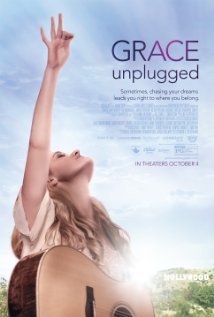


 We’d probably like to think that the photograph on the next page is from another time, another place. Nazi Germany, perhaps. However, this photo and the story surrounding it is only one graphic example of just how far the devaluation of human life has gone. Perhaps we ourselves have been numbed to what is happening in our own time.


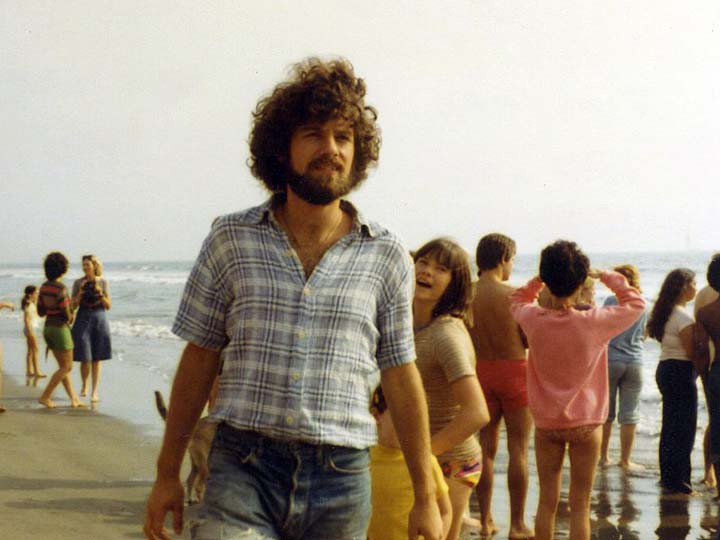


 The Daily Hatch