The Congressional Budget Office has released its new Long-Term Budget Outlook and I will continue a now-annual tradition (see 2018, 2019, 2020, 2021, 2022) of sharing some very bad news about America’s fiscal future.
Here’s the most important chart. It shows two unfortunate developments. First, we see that the tax burden is gradually increasing as a share of economic output. Second, we see that the burden of federal spending is increasing even faster.
What happens when spending grows even faster than revenue?
We get more government debt. Or, to be more precise, this next chart shows that we get a lot more debt.
Indeed, the debt is going to reach unprecedented levels over the next 30 years.
I normally don’t fret that much about red ink. After all, deficits and debt are largely symptoms of a much bigger problem, which is excessive government spending.
That being said, high levels of debt can trigger a crisis if investors decide (like they did in Greece) that a government can’t be trusted to pay all promised money to bondholders.
Now let’s get back to the underlying problem of too much government.
What’s driving America’s long-run problems? In part, the answer is higher interest payments on the ever-increasing debt.
Looking at the above charts, and at the risk of repeating what I’ve already written (many times), the United States is between a rock and a hard place. The only choices are:
Keep fiscal policy on auto-pilot, allowing government to grow until we suffer a Greek-style debt crisis.
Impose massive tax increases on the middle class to finance an ever-bigger future government.
P.S. There was some sensible economic analysis in the CBO report.
Here’s what it said about the economic impact of deficits.
Deficits grow in the agency’s budget projections, and as a result, the federal government borrows more each year. That increase in federal borrowing pushes up interest rates and thus reduces private investment in capital, causing output to be lower in the long term than it would be otherwise,especially in the last two decades of the projection period. Less private investment reduces the amount of capital per worker, making workers less productive and leading to lower wages. Those lower wages reduce people’s incentive to work and, consequently, lead to a smaller supply of labor.
And here’s what CBO says about the impact of taxes.
Under current law, tax rates on individual income will rise at the end of 2025 when those provisions are scheduled to expire. Moreover, as income rises faster than inflation, more income is pushed into higher tax brackets over time. That real bracket creep results in higher effective marginal tax rates on labor income and capital income.11 Higher marginal tax rates on labor income would reduce people’s after-tax wages and weaken their incentive to work. Likewise, an increase in the marginal tax rate on capital income would lower people’s incentives to save and invest, thereby reducing the stock of capital and, in turn, labor productivity. That reduction in labor productivity would put downward pressure on wages. All told, less private investment and a smaller labor supply decrease economic output and income in CBO’s extended baseline projections.
Nothing wrong with that analysis. There are negative consequences when governments borrow and there are negative consequences when governments tax. But there was a sin of omission. CBO also should have explained (as it has on other occasions) that there are negative economic consequences when governments spend.
Ronald Reagan_We will never abandon our belief in God
NASHVILLE, Tenn. (BP)–While much is being said of how former President Ronald Reagan was an eternal optimist who believed America’s best days were ahead, several Southern Baptist leaders have noted his outlook was closely linked to his stated faith in God.
James T. Draper Jr., president of LifeWay Christian Resources, was among six religious leaders to meet with Reagan while he was governor of California. During the meeting, D. James Kennedy asked Reagan two pointed questions about his faith.
The first question was, “If you died today, do you have the assurance you would go to heaven?” Reagan answered, “Yes.”
“Kennedy then asked him, ‘If you should stand before God today and He asked you, ‘Why should I let you in my heaven?’ what would you say?’” Draper recounted in a statement to Baptist Press. “At that point, Gov. Reagan stroked his chin and had that faraway look. After a moment he said, ‘Well, I guess it would be because I pray to His Son Jesus Christ every day.’
“He won my heart that day because that was obviously not a question he had thought about or had planned to answer, and his response was very honest and open,” Draper said. “He was one of the most gracious men I have ever met, and always gave you the sense of honesty and integrity that inspires confidence.”
Reagan died June 5 at his home in Bel Air, Calif., after a decade-long battle with Alzheimer’s disease. The 40th president of the United States was 93.
After being elected President of the Southern Baptist Convention in 1979, Adrian Rogers met with President Ronald Reagan.
Former SBC President Adrian Rogers, pastor of the Memphis-area Bellevue Baptist Church, recounted that he first met Reagan in 1980 when he was a candidate for president. Rogers and four others visited with Reagan in a hotel room.
“Someone asked him this question at the end of the meeting, ‘Governor, I want to ask you a very personal question. Do you know Jesus Christ? Not do you know about Him, but do you know Him?’
“He said, ‘Oh, yes. He is very real to me. I have trusted Him as my personal Lord and Savior, and I pray every day. But I don’t wear my religion on my sleeves.’
“I felt impressed to pray for him, and I put my arm around him and prayed,” Rogers recounted. “I got a letter from him, and I really appreciated it. … He said, ‘Thank you for remembering me in prayer before our Lord.’”
Rogers was in about a half-dozen meetings with Reagan. Once, in the Oval Office early in his administration, “I told him, ‘Mr. President, Southern Baptists love you and will stand behind you if you will stand for the things that mean so much to them. Stand for the home, for the family, for purity. Those are the things that mean so much to them, and I would hope that you would stand for them.’ And he said he would.”
Rogers described Reagan as “a man of principle. He was not driven by polls or political correctness. In that sense, I think he was comparable to our current president. I think the same mosquito may have bit them both.
“The other major thing I would mention about him was his genteel kindness and his ability to make you feel important and feel at home,” Rogers said. “I do believe he was one of the most affable persons I have met.”
Morris H. Chapman, president of the SBC’s Executive Committee, described Reagan as “an extraordinarily gifted and patriotic American and a great president. He had a profound understanding of the difference in right and wrong, justice and injustice, strength and weakness, and civility and incivility. His moral compass kept him on course in leading his beloved country. … His faith sustained him in tough times.”
Chapman recalled the closing words of Reagan’s speech in the wake of the Challenger Space Shuttle disaster in 1986. Reagan said America would never forget the astronauts as they waved goodbye and “slipped the surly bonds of earth to touch the face of God.”
“In times like these he demonstrated the resolve of a president, the caring nature of a pastor and the love of a father,” Chapman said.
Robert E. Reccord, president of the North American Mission Board, noted that Reagan was teaching Sunday School at his home church in Dixon, Ill., by the age of 15, and the principles laid down then led to his realization that faith in God was essential to America’s survival.
Reccord mentioned Reagan’s 1984 address at an ecumenical prayer breakfast in Dallas in which he said, “America needs God more than God needs America. If we ever forget that we are one nation under God, then we will be a nation gone under.”
“I am so thankful for how he courageously corrected those who for so long have misrepresented the principle of separation of church and state,” Reccord said in a statement to Baptist Press. “In 1982 he told the Alabama legislature, ‘To those who cite the First Amendment as a reason for excluding God from more and more of our institutions and everyday life, may I just say: The First Amendment of the Constitution was not written to protect the people of this country from religious values; it was written to protect religious values from government tyranny.’
“That kind of clarity, born in a personal and vital faith, made me thankful Ronald Reagan was my president, but more importantly, a fellow Christ-follower,” Reccord said. “As he now enters the heavenly Shining City, I pray Christ’s comfort for Mrs. Reagan and the family.”
R. Albert Mohler Jr., president of Southern Baptist Theological Seminary in Louisville, Ky., was a 16-year-old volunteer in Reagan’s 1976 campaign for the Republican presidential nomination when he stood in a rope line for the chance to shake Reagan’s hand in Fort Lauderdale, Fla.
“I had been inspired by Reagan’s clear and confident voice, articulating a bold vision for America when others preached disillusionment. He presented a conservative political philosophy that changed a generation — and made a great impact on my life,” Mohler said in a statement to Baptist Press.
“Ronald Reagan transformed the world by refusing to believe that freedom and liberty were too expensive to defend,” Mohler also said. “He transformed the presidency by demonstrating that conviction, rather than political calculation, would drive his policies and decisions…. He believed in the American dream and the American people, and he gave the nation a new confidence in its most cherished ideals.”
Christians should remember that Reagan spoke directly and simply about his personal faith in Christ, Mohler said, noting, “He spoke of his confidence in divine providence and his security in knowing that this life is not the end.”
Reagan also took a courageous stand for the sanctity of human life by telling the nation the truth about abortion and putting the defense of human life on the nation’s agenda, Mohler said.
Paige Patterson, president of Southwestern Baptist Theological Seminary in Fort Worth, Texas, called Reagan the greatest U.S. president since Teddy Roosevelt and ranked Reagan among the five most influential presidents in the history of the nation.
“President Reagan was a gracious friend who demonstrated his own reverence for the Word of God by designating 1983 as the Year of the Bible,” Patterson said.
Reagan chose Patterson’s wife, Dorothy, to serve as chair of the Presidential Bible Committee, which raised money for a special edition of the New King James Version of the Bible.
“President Reagan was a colorful, decisive, humble, principle-driven statesman who was as little affected by Beltway politics as any president we have ever had. We will miss him profoundly,” Patterson said.
Billy Graham expressed his wishes to be present with the Reagan family during their time of mourning but is recuperating in Asheville, N.C., from pelvic surgery.
“Ronald Reagan was one of my closest personal friends for many years,” Graham said in a statement. “Ruth and I spent a number of nights at the White House and had hundreds of hours of conversations with the president and first lady. Mr. Reagan had a religious faith deeper than most people knew.”
Graham said Reagan was a man of tremendous integrity based on his religious belief, and the evangelist had prayer with the ailing former president and his wife during the later years of his life.
“Though her husband was unable to communicate at times, Nancy would say, ‘When you prayed, I think he knew you were here,’” Graham said. “The love between Ronald and Nancy Reagan was an example to the nation.”
Reagan’s casket was transported from a Santa Monica funeral home to his presidential library in Simi Valley, Calif., June 7 where it will lie in repose until the evening of June 8. The casket will then be moved to Washington to lie in state in the rotunda of the U.S. Capitol until a state funeral at the National Cathedral June 11. The body will then be returned to California to be buried at the Reagan Presidential Library.
President Bush has ordered the American flag be lowered to half-staff on all buildings, grounds and naval vessels of the United States for 30 days in honor of Reagan. Bush also declared June 11 a National Day of Mourning and ordered all non-essential government buildings closed on that day. –30– With reporting by Chris Turner, Tom Strode, Martin King, Lawrence Smith & Brent Thompson. (BP) photos posted in the BP Photo Library at http://www.bpnews.net. Photo titles: RONALD REAGAN and MEETING THE PRESIDENT.
Best President of my life time Ronald Wilson Reagan.
Worst President of my lifetime LBJ.
MY PICK OF THE BEST AND WORST PRESIDENTS OF MY LIFETIME:
One of the thrills of my life was getting to hear President Reagan speak in the beginning of November of 1984 at the State House Convention Center in Little Rock. Immediately after that program I was standing outside on Markham with my girlfriend Jill Sawyer (now wife of 34 years) and we were alone on a corner and the President was driven by and he waved at us and we waved back. Since the rally that President Reagan held was filled with thousands of people I assumed Jill and I were on the corner with many other people but when I turned around I realized that President Reagan had only waved to us two because we were all alone on the corner and I felt deeply honored.
One of the reasons I liked Reagan was because of his conservative economic philosophy which he got from my hero Milton Friedman and his social views on abortion which influenced his pick for surgeon general which was C. Everett Koop who was Francis Schaeffer’s good friend. Ronald Reagan because of his pro-life views also attended a meeting in Dallas in 1980 with my pastor Adrian Rogers who was President of the Southern Baptist Convention at the time
—
Dr. C. Everett Koop pictured above and Adrian Rogers pictured below with Reagan.
I have a son named Wilson Daniel Hatcher and he is named after two of the most respected men I have ever read about : Daniel from the Old Testament and Ronald Wilson Reagan. I have studied that book of Daniel for years and have come to respect that author who was a saint who worked in two pagan governments but he never compromised. My favorite record was the album “No Compromise” by Keith Green and on the cover was a picture from the Book of Daniel.
My favorite President was divorced and running against a family man in 1980 who was part my same religious denomination I belong to and I personally thought Carter had been the second worst President During my life time behind LBJ who had pushed Down the accelerator full speed ahead on the welfare state which has trapped so many of our citizens from climbing the economic ladder to true financial freedom.
I decided that Joe Biden was going to win because Chuck Todd on Sunday November 1st on MEET THE PRESS noted that the last poll in 2016 had Hilliary Clinton over Trump 44% to 40% while the final Wall Street Journal NBC poll completed on November 1st, 2020 has Biden up 52% to 42%.
My exact Prediction of who will win between Donald Trump and Joe Biden and by how much.
Let me start off by saying that in October of 1972 my fifth grade class at the private Christian school that I had just started attending named EVANGELICAL CHRISTIAN SCHOOL in Memphis had a vote in my elementary class where Mrs. Blake was our teacher and President Richard Nixon won re-election 21-0. That was the first time I predicted the winner of a Presidential Election, but I have predicted ever since. Sadly I was wrong just four years later when President Gerald Ford was beaten by Jimmy Carter. I then was correct in every election until Mitt Romney lost to President Obama in 2012, and Hillary Clinton lost to Donald Trump in 2016.
Let me share my insights on the race in 2020. The issue that President Trump has chosen to emphasize more than any other is Joe Biden’s corruptness as a politician trying to allow his son Hunter to benefit financially from his relationship to the Vice President. During the last presidential debate in Nashville the moderator asked Biden about his son Hunter and Biden responded:
There are 50 former national intelligence folks who said what he’s accusing me of is a Russian plant. Five former heads of the CIA — both parties — say what he’s saying is a bunch of garbage. Nobody believes it except him and his good friend Rudy Giuliani.
I believe that these emails from Hunter Biden do accurately show that Hunter benefitted from his father agreeing to meet with people that Hunter arranged for him to meet with and this is not Russian disinformation. However, this story was never picked up by the mainstream media and that is whyI am predicting Joe Biden to win Michigan and Wisconsin and defeat Donald Trump. I read an article today on CNN that predicts a 270-268 victory by Biden and that is my prediction too. The article noted:
Biden wins 270 to 268 by winning the Clinton states plus Arizona, Michigan, Nebraska’s 2nd Congressional District and Wisconsin.
Another article that caught my attention is below:
Trump won last time out by just more than 10,000 votes, or around 0.3 percent of those cast, according to figures from The New York Times. According to Real Clear Politics, Biden is up by 7.2 points on average, looking at state polling.
A recent poll from The Hill/Harris X put him up 11 points, with 54 percent of 1,289 likely voters asked October 12 to 15 going for Biden, compared to 43 percent for Trump.
Wisconsin
In Wisconsin, Biden is up 6.1 points on average, according to Real Clear Politics.
Survey Monkey’s latest results, from 4,571 likely voters asked September 20 to October 17, put Biden up 12 points, with 55 percent of the support compared to 43 percent for Trump.
—
THESE DEFICITS ARE YOO BIG FOR TRUMP TO OVERCOME IN MY VIEW AND THAT IS WHY I AM PREDICTING A BIDEN VICTORY.
(Arkansas Governor Hutchinson at White House with President Trump pictured below)
Now let’s look at Past Presidential Races and the Results of my Predictions:
Years I was correct: 1972, 1980, 1984, 1988, 1992, 1996, 2000, 2004, 2008, 2012.
Years my predictions were wrong: 1976, 2012, and 2016.
In 1972 the Republicans nominated President Richard M. Nixon and Vice President Spiro Agnew. The Democrats, still split over the war in Vietnam, chose a presidential candidate of liberal persuasion, Senator George McGovern of South Dakota. Senator Thomas F. Eagleton of Missouri was the vice-presidential choice, but after it was revealed that he had once received electric shock and other psychiatric treatments, he resigned from the ticket. McGovern named Sargent Shriver, director of the Peace Corps, as his replacement.
The campaign focused on the prospect of peace in Vietnam and an upsurge in the economy. Unemployment had leveled off and the inflation rate was declining. Two weeks before the November election, Secretary of State Henry Kissinger predicted inaccurately that the war in Vietnam would soon be over. During the campaign, a break-in occurred at Democratic National Headquarters in the Watergate complex in Washington, D.C., but it had little impact until after the election.
The campaign ended in one of the greatest landslides in the nation’s history. Nixon’s popular vote was 47,169,911 to McGovern’s 29,170,383, and the Republican victory in the Electoral College was even more lopsided at 520 to 17. Only Massachusetts gave its votes to McGovern.
1976: Jimmy Carter vs. Gerald Ford
In 1976 the Democratic Party nominated former governor Jimmy Carter of Georgia for president and Senator Walter Mondale of Minnesota for vice president. The Republicans chose President Gerald Fordand Senator Robert Dole of Kansas. Richard M. Nixon had appointed Ford, a congressman from Michigan, as vice president to replace Spiro Agnew, who had resigned amid charges of corruption. Ford became president when Nixon resigned after the House Judiciary Committee voted three articles of impeachment because of his involvement in an attempted cover-up of the politically inspired Watergate break-in.
In the campaign, Carter ran as an outsider, independent of Washington, which was now in disrepute. Ford tried to justify his pardoning Nixon for any crimes he might have committed during the cover-up, as well as to overcome the disgrace many thought the Republicans had brought to the presidency.
Carter and Mondale won a narrow victory, 40,828,587 popular votes to 39,147,613 and 297 electoral votes to 241. The Democratic victory ended eight years of divided government; the party now controlled both the White House and Congress.
1980: Ronald Reagan vs. Jimmy Carter vs. John B. Anderson
In 1980 President Jimmy Carter was opposed for the Democratic nomination by Senator Edward Kennedy of Massachusetts in ten primaries. But Carter easily won the nomination at the Democratic convention. The party also renominated Walter Mondale for vice president.
Ronald Reagan, former governor of California, received the Republican nomination, and his chief challenger, George Bush, became the vice-presidential nominee. Representative John B. Anderson of Illinois, who had also sought the nomination, ran as an independent with Patrick J. Lucey, former Democratic governor of Wisconsin, as his running mate.
The two major issues of the campaign were the economy and the Iran Hostage Crisis. President Carter seemed unable to control inflation and had not succeeded in obtaining the release of American hostages in Tehran before the election.
Reagan won a landslide victory, and Republicans also gained control of the Senate for the first time in twenty-five years. Reagan received 43,904,153 popular votes in the election, and Carter, 35,483,883. Reagan won 489 votes in the Electoral College to Carter’s 49. John Anderson won no electoral votes, but got 5,720,060 popular votes.
1984: Ronald Reagan vs. Walter Mondale
In 1984 the Republicans renominated Ronald Reagan and George Bush. Former vice president Walter Mondale was the Democratic choice, having turned aside challenges from Senator Gary Hart of Colorado and the Reverend Jesse Jackson. Jackson, an African-American, sought to move the party to the left. Mondale chose Representative Geraldine Ferraro of New York for his running mate. This was the first time a major party nominated a woman for one of the top offices.
Peace and prosperity, despite massive budget deficits, ensured Reagan’s victory. Gary Hart had portrayed Mondale as a candidate of the “special interests,” and the Republicans did so as well. Ferraro’s nomination did not overcome a perceived gender gap, as 56 percent of voting women chose Reagan.
Reagan won a decisive victory, carrying all states except Minnesota, Mondale’s home state, and the District of Columbia. He received 54,455,074 popular votes to Mondale’s total of 37,577,185. In the Electoral College the count was Reagan, 525 and Mondale, 13.
1988: George H.W. Bush vs. Michael Dukakis
Although Vice President George Bush faced some opposition in the primaries from Senator Robert Dole of Kansas in 1988, he won the Republican nomination by acclamation. He chose Senator Dan Quayle of Indiana as his running mate. The Democrats nominated Michael Dukakis, governor of Massachusetts, for president and Senator Lloyd Bentsen of Texas for vice president. Dukakis had faced strong competition in the primaries, including the Reverend Jesse Jacksonand Senator Gary Hart of Colorado. Hart withdrew from the race following revelations about an extramarital affair, and party regulars and political pundits perceived Jackson, a liberal and an African-American, as unlikely to win the general election.
Once again the Republicans were in the enviable situation of running during a time of relative tranquility and economic stability. After a campaign featuring controversial television ads, Bush and Quayle won 48,886,097 popular votes to 41,809,074 for Dukakis and Bentsen and carried the Electoral College, 426 to 111.
1992: Bill Clinton vs. George H.W. Bush vs. H. Ross Perot
In 1991 incumbent President George H. W. Bush’s approval ratings reached 88 percent, the highest in presidential history up to that point. But by 1992, his ratings had sunk, and Bush became the fourth sitting U.S. president to lose re-election.
In the summer of 1992 Ross Perot led the polls with 39 percent of voter support. Although Perot came in a distant third, he was still the most successful third-party candidate since Theodore Roosevelt in 1912.
Popular Vote: 44,908,254 (Clinton) to 39,102,343 (Bush)Electoral College: 370 (Clinton) to 168 (Bush)
1996: Bill Clinton vs. Robert Dole vs. H. Ross Perot vs. Ralph Nader
Although Clinton won a decisive victory, he carried a mere four Southern states, signaling a decline in Southern support for Democrats who historically could count on the area as an electoral stronghold. Later, in the elections of 2000 and 2004, Democrats did not carry a single Southern state.
The 1996 election was the most lavishly funded up to that point. The combined amount spent by the two major parties for all federal candidates topped $2 billion, which was 33 percent more than what was spent in 1992.
During this election the Democratic National Committee was accused of accepting donations from Chinese contributors. Non-American citizens are forbidden by law from donating to U.S. politicians and 17 people were later convicted for the activity.
Popular Vote: 45,590,703 (Clinton) to 37,816,307 (Dole). Electoral College: 379 (Clinton) to 159 (Dole)
2000: George W. Bush vs. Al Gore vs. Ralph Nader
The 2000 election was the fourth election in U.S. history in which the winner of the electoral votes did not carry the popular vote. It was the first such election since 1888, when Benjamin Harris became president after winning more electoral votes but losing the popular vote to Grover Cleveland.
Gore conceded on election night but retracted his concession the next day when he learned that the vote in Florida was too close to call. Florida began a recount, but the U.S. Supreme Court eventually ruled the recount unconstitutional.
Political activist Ralph Nader ran on the Green Party ticket and captured 2.7 percent of the vote.
Popular Vote: 50,996,582 (Gore) to 50,465,062 (Bush). Electoral College: 271 (Bush) to 266 (Gore)
2004: George W. Bush vs. John Kerry
Total voter turnout for the 2004 presidential election numbered at about 120 million, an impressive 15 million increase from the 2000 vote.
After the bitterly contested election of 2000, many were poised for a similar election battle in 2004. Although there were reported irregularities in Ohio, a recount confirmed the original vote counts with nominal differences that did not affect the final outcome.
Former Vermont governor Howard Dean was the expected Democratic candidate but lost support during the primaries. There was speculation that he sealed his fate when he let out a deep, guttural yell in front of a rally of supporters, which became known as the “I Have a Scream” speech, because it was delivered on Martin Luther King Day.
Popular Vote: 60,693,281 (Bush) to 57,355,978 (Kerry). Electoral College: 286 (Bush) to 251 (Kerry)
2008: Barack Obama vs. John McCain
In this historic election, Barack Obamabecame the first African-American to become president. With the Obama/Biden win, Biden became the first-ever Roman Catholic vice president.
Had the McCain/Palin ticket won, John McCain would have been the oldest president in history, and Sarah Palin would have been the first woman vice president.
Popular Vote: 69,297,997 (Obama) to 59,597,520 (McCain). Electoral College: 365 (Obama) to 173 (McCain).
2012: Barack Obama vs. Mitt Romney
Romney, the first Mormon to receive a major party’s nomination, fought off a number of Republican challengers in the primary, while the incumbent Obama faced no intra-party challenges.
The election, the first waged following the “Citizens United” Supreme Court decision that allowed for increased political contributions, cost more than $2.6 billion, with the two major party candidates spending close to $1.12 billion that cycle.
Popular Vote: 65,915,795 (Obama) to 60,933,504 (Romney). Electoral College: 332 (Obama) to 206 (Romney).
2016: Donald J. Trump vs. Hillary Clinton
The 2016 election was unconventional in its level of divisiveness. Former first lady, New York Senator and Secretary of State Hillary Rodham Clinton became the first woman to be nominated by a major party in a U.S. presidential election. Donald Trump, a New York real estate baron and reality TV star, was quick to mock fellow Republicans running for the nomination as well as his democratic opponent.
In what many political analysts considered a stunning upset, Trump, with his populist, nationalist campaign, lost the popular vote, but won the Electoral College, becoming the nation’s 45th president.
Popular Vote: 65,853,516 (Clinton) to 62,984,825 (Trump). Electoral College: 306 (Trump) to 232 (Clinton).
——
—-
If Trump was to win re-election then I predict his next pick for the Supreme Court would have been Allison Jones Rushing who I discussed below:
I have a son named Wilson Daniel Hatcher and he is named after two of the most respected men I have ever read about : Daniel from the Old Testament and Ronald Wilson Reagan. I have studied that book of Daniel for years and have come to respect that author who was a saint who worked in two pagan governments but he never compromised. My favorite record was the album “No Compromise” by Keith Green and on the cover was a picture from the Book of Daniel.
One of the thrills of my life was getting to hear President Reagan speak in the beginning of November of 1984 at the State House Convention Center in Little Rock. Immediately after that program I was standing outside on Markham with my girlfriend Jill Sawyer (now wife of 34 years) and we were alone on a corner and the President was driven by and he waved at us and we waved back. Since the rally that President Reagan held was filled with thousands of people I assumed Jill and I were on the corner with many other people but when I turned around I realized that President Reagan had only waved to us two because we were all alone on the corner and I felt deeply honored.
I have read everything I can get my hands on about the views of Allison Jones Rushing and her views remind me of Ronald Reagan which I am summer
In the judicial-nominee process, smear attacks have replaced substantive discourse. Allison Jones Rushing is just the latest victim.
Rushing was recently confirmed to the U.S. Court of Appeals for the Fourth Circuit by a 53-44 vote. This party-line vote is indicative of the confirmation process in recent years, which has dissolved into a morass of bitter mudslinging. Never mind her impeccable credentials, Rushing was labeled an “ideological extremist” and lambasted for a summer internship with a supposed “hate group.”
Reality is much less scandalous.
A native of North Carolina, Rushing excelled at Wake Forest University and at Duke Law School. She clerked for three of the most preeminent federal judges in the country, including then-Judge Neil Gorsuch and U.S. Supreme Court Justice Clarence Thomas. She then joined and subsequently became a partner at Williams & Connolly, recognized as the most selective law firm in the United States. Accolades have followed her throughout her education and career, and justifiably so.
Rushing also has an impressive record of pro-bono legal service. She successfully represented a military veteran seeking education benefits, helped numerous criminal defendants on appeal, and represented the New York City Council Black, Latino, and Asian Caucus in opposing a discriminatory city facility use policy that was ultimately rescinded by Mayor Bill de Blasio.
Why the attacks on Rushing, then?
A principal complaint against her is that, during law school, she did a summer internship with Alliance Defending Freedom, where I serve as senior vice president of strategic relations and training and which the Southern Poverty Law Center has irresponsibly labeled a “hate group.” Of course, this is the same SPLC that recently paid $3.375 million and issued a public apology to settle a threatened defamation lawsuit after it falsely labeled Muslim reformer Maajid Nawaz an anti-Muslim extremist. So unwarranted attacks are not new territory for the SPLC.
Then what is Alliance Defending Freedom? For the past 25 years, ADF has defended constitutionally guaranteed freedoms for Americans from all walks of life who are seeking to live consistent with their conscience. The Washington Post has described ADF as the “legal powerhouse that keeps winning at the Supreme Court,” with nine victories at the court in the past eight years. In fact, according to independent analysis published last fall, ADF emerged as a front-runner at the Supreme Court: the law firm with the highest number of wins in First Amendment cases and the top performing firm overall during the 2013-2017 terms.
Fair-minded individuals from both sides of the aisle have vigorously rejected the SPLC’s characterization of ADF. U.S. Senator James Lankford calls ADF “a national and reputable law firm that works to advocate for the rights of people to peacefully and freely speak, live and work according to their faith and conscience without threat of government punishment.” Nadine Strossen, the former president of the ACLU, explained, “I consider ADF to be a valuable ally on important issues of common concern, and a worthy adversary (not an ‘enemy’) on important issues of disagreement; what I do not consider it to be, considering the full scope of its work, is a ‘hate group.’”
And what did Rushing actually do during her summer internship with ADF? It was certainly nothing like what the SPLC would have you to believe. She co-authored an academic legal article discussing who had the right to bring a lawsuit in federal court to challenge the constitutionality of a passive display (like a Ten Commandments monument) on public property, a legal question which the Supreme Court is still grappling with today.
For this, activists sought to banish a credentialed and highly competent woman from public service. For this, Rushing was branded an “ideological extremist.” For this, every Democratic senator present for her confirmation vote deemed her unfit to serve on the bench.
Who, in this scenario, are actually the ideological extremists?
TIMOTHY CHANDLER is senior counsel and senior vice president of strategic relations and training for Alliance Defending Freedom.
TIMOTHY CHANDLER is senior counsel and senior vice president of strategic relations and training for Alliance Defending Freedom
—-
Amy Coney Barrett was appointed to the U.S. Court of Appeals for the Seventh Circuit in November 2017. She serves on the faculty of the Notre Dame Law School, teaching on constitutional law, federal courts, and statutory interpretation, and previously served on the Advisory Committee for the Federal Rules of Appellate Procedure. She earned her bachelor’s degree from Rhodes College in 1994 and her J.D. from Notre Dame Law School in 1997. Following law school, Barrett clerked for Judge Laurence Silberman of the U.S. Court of Appeals for the D.C. Circuit and for Associate Justice Antonin Scalia of the U.S. Supreme Court. She also practiced law with Washington, D.C. law firm Miller, Cassidy, Larroca & Lewin.
I have gone back and forth and back and forth with many liberals on the Arkansas Times Blog on many issues such as abortion, human rights, welfare, poverty, gun control and issues dealing with popular culture. Here is another exchange I had with them a while back. My username at the Ark Times Blog is Saline […]By Everette Hatcher III | Posted in Francis Schaeffer, Prolife | Edit | Comments (0)
I have gone back and forth and back and forth with many liberals on the Arkansas Times Blog on many issues such as abortion, human rights, welfare, poverty, gun control and issues dealing with popular culture. Here is another exchange I had with them a while back. My username at the Ark Times Blog is Saline […]By Everette Hatcher III | Posted in Francis Schaeffer, President Obama, Prolife | Edit | Comments (0)
I have gone back and forth and back and forth with many liberals on the Arkansas Times Blog on many issues such as abortion, human rights, welfare, poverty, gun control and issues dealing with popular culture. Here is another exchange I had with them a while back. My username at the Ark Times Blog is Saline […]By Everette Hatcher III | Posted in Francis Schaeffer, President Obama, Prolife | Edit | Comments (0)
I have gone back and forth and back and forth with many liberals on the Arkansas Times Blog on many issues such as abortion, human rights, welfare, poverty, gun control and issues dealing with popular culture. Here is another exchange I had with them a while back. My username at the Ark Times Blog is Saline […]By Everette Hatcher III | Posted in Francis Schaeffer, Prolife | Edit | Comments (0)
I have gone back and forth and back and forth with many liberals on the Arkansas Times Blog on many issues such as abortion, human rights, welfare, poverty, gun control and issues dealing with popular culture. Here is another exchange I had with them a while back. My username at the Ark Times Blog is Saline […]By Everette Hatcher III | Posted in Francis Schaeffer, Prolife | Edit | Comments (0)
I have gone back and forth and back and forth with many liberals on the Arkansas Times Blog on many issues such as abortion, human rights, welfare, poverty, gun control and issues dealing with popular culture. Here is another exchange I had with them a while back. My username at the Ark Times Blog is Saline […]By Everette Hatcher III | Posted in Francis Schaeffer, Prolife | Edit | Comments (3)
I have gone back and forth and back and forth with many liberals on the Arkansas Times Blog on many issues such as abortion, human rights, welfare, poverty, gun control and issues dealing with popular culture. Here is another exchange I had with them a while back. My username at the Ark Times Blog is Saline […]By Everette Hatcher III | Posted in Francis Schaeffer, Prolife | Edit | Comments (2)
It is truly sad to me that liberals will lie in order to attack good Christian people like state senator Jason Rapert of Conway, Arkansas because he headed a group of pro-life senators that got a pro-life bill through the Arkansas State Senate the last week of January in 2013. I have gone back and […]By Everette Hatcher III | Posted in Arkansas Times, Francis Schaeffer, Max Brantley, Prolife | Edit | Comments (0)
I have gone back and forth and back and forth with many liberals on the Arkansas Times Blog on many issues such as abortion, human rights, welfare, poverty, gun control and issues dealing with popular culture. Here is another exchange I had with them a while back. My username at the Ark Times Blog is Saline […]By Everette Hatcher III | Posted in Francis Schaeffer, Prolife | Edit | Comments (0)
Theaters: During World War 2 J. Robert Oppenheimer works on a team to develop a weapon to end the war, if it doesn’t end the world.
Why is Oppenheimer rated ? The MPA rated Oppenheimer
Run Time: 180 minutes
Violence: The creation of nuclear weapons is a significant part of the film. A character has terrifying visions of a nuclear holocaust, complete with burned bodies and radiation sickness. It is implied that a woman is deliberately drowned in her bathtub. There are frequent mentions of bombing raids and associated deaths and injuries. It is suggested that a suicide is not what it appears to be. Sexual Content: There are two sex scenes that include visible breasts and buttocks. Breasts are also visible in non-sexual contexts. Profanity: There are over a dozen uses of profanity, including sexual expletives, scatological curses, and terms of deity. Drugs/Alcohol: Alcohol is consumed in social situations and in an addictive context. Alcoholism is a recurring issue in the film. Characters frequently smoke cigarettes, as is historically accurate for the time period.
On Science and Culture by J. Robert Oppenheimer, Encounter (Magazine) October 1962 issue, was the best article that he ever wrote and it touched on a lot of critical issues including the one that Francis Schaeffer discusses in this blog post!
—
OPPENHEIMER and EINSTEIN
Passage from chapters 3 and 4 from Francis Schaeffer book HE IS THERE AMD HE IS NOT SILENT:
This is where Leonardo da Vinci is so important. He was the first modern mathema- tician, and he really understood this dilemma. It is not that I am reading back into him our dilemma of modern cynicism. He really under- stood it. He understood, in the passage of all these hundreds of years between himself and modern man, where rationalistic man would end up if man failed to find a solution. This is what real genius is—understanding before your time—and Leonardo da Vinci did understand. He understood that if you began on the basis of rationalism—that is, man beginning only from himself, and not having any outside knowledge—you would have only mathematics and particulars and would end up with only mechanics. In other words, he was so far ahead of his time—that he really understood that everything was going to end up only as a ma- chine, and there were not going to be any univ- ersals or meaning at all. The universals were going to be crossed out. So Leonardo really be- came very much like the modern man. He said we should try to paint the universals. This is re- ally very close to the modern concept of the upper-story experience. So he painted and painted and painted, trying to paint the univer- sals. He actually tried to paint the universal just as Plato had had the idea that if we were really to have a knowledge of chairs, there would have to be an ideal chair somewhere that would cover all kinds of chairs. Leonardo, who was a Neo-Platonist, understood this, and he said, “Let man produce the universals.” But what kind of man? The mathematical man? No, not the mathematical man but the painter, the sensitive man. So Leonardo is a very crucial man in the area of humanistic epistemology.
At this point in Escape from Reason, I devel- oped the difference between what I call “mod- ern science” and the “modern modern sci- ence.”
In my earlier books I have referred to Whitehead and Oppenheimer, two scientists—neither one a Christian—who insisted that modern science could not have been born except in the Christian milieu. Bear with me as I repeat this, for I want in this book to carry it a step further, into the area of knowing. As Whitehead so beautifully points out, these men all believed that the universe was created by a reasonable God, and therefore the universe could be found out by reason. This was their base. Modern science is the original science, in which you had men who believed in the unifor- mity of natural causes in a limited system, a system which could be reordered by God and by man made in the image of God. This is a cause and effect system in a limited time span. But from the time of Newton (not with Newton himself, but with the Newtonians who followed him), we have the concept of the “machine” until we are left with the only machine, and you move into the “modern modern science,” in which we have the uniformity of natural causes in a closed system, including sociology and psychology. Man is included in the machine. This is the world in which we live in the area of science today. No longer believing that they can be sure the universe is reasonable because created by a reasonable God, the question is raised that Leonardo da Vinci already under- stood and that the Greeks understood before that: “How does the scientist know; on what basis can he know that what he knows, he really knows?”
So rationalism put forth at this point the epistemological concept of positivism. Posi- tivism is a theory of knowing which assumes that we can know facts and objects with total objectivity. Modern “scientism” is built on it.
It is a truly romantic concept, and while it held sway, rationalistic man stood ten feet tall in his pride. It was based on the notion that without any universals to begin with, finite man could reach out and grasp with finite reason sufficient true knowledge to make universals out of the particulars.
Jean-Jacques Rousseau is crucial at this point, because he changed the formulation from “nature and grace” to “nature and free- dom,” absolute freedom. Rousseau and the men around him saw that in the area of “na- ture,” everything had become the machine. In other words, “downstairs” everything was in the area of positivism, and everything was a ma- chine. “Upstairs” they added the other thing, namely, absolute freedom. In the sense of absolute freedom upstairs, not only is man not to be bound by revelation, but he is not to be bound by society, the polis, either. The concept of autonomous freedom is clearly seen in Gau- gin, the painter. He was getting rid of all the re- straints, not just the restraint of God, but also the restraint of the polis, which for Gaugin was epitomized by the highly developed culture of France. He left France and went to Tahiti to be rid of the culture, the polis. In doing this, he practiced the concept of the noble savage that, of course, Jean-Jacques Rousseau had previ- ously set forth. You get rid of the restraints, you get rid of the polis, you get rid of God or the gods, and then you are free. Unhappily, though not surprisingly, this did not turn out as he ex- pected.
So what we have is not a destructive free- dom only in morals (though it shows itself very quickly in morals, especially quickly, perhaps, in sexual anarchy), but in the area of knowledge as well. In metaphysics, in the area of being, as well as morals, we are supposed to have abso- lute freedom. But then the dilemma comes: How do you know and how do you know you know?
We may imagine the Greeks and Leonardo da Vinci and all the Neo-Platonists at the time of the High Renaissance coming in and asking Rousseau and his followers, “Don’t you see what you have done? Where are the universals? How are you going to know? How are you going to build enough universals out of partic- ulars, even for society to run, let alone build true knowledge, knowledge that you really know and are sure that you know?”
It is only a step, really, from men like Gau- gin to the whole hippie culture, and as a matter of fact, to the whole modern culture. In one sense there is a parenthesis in time from Rousseau until the birth of the hippie culture and the whole modern culture that is founded on the view that there are no universals anywhere—that man is totally, hedonistically free; the individual is totally, hedonistically free—not only morally, but also in the area of knowledge. We can easily see the moral confusion that has resulted from this, but the epistemological confusion is worse. If there are not universals, how do we know reality from non-reality? At this point, we are right in the lap of modern man’s problem, as I will develop later.
Now let us go back to the period immedi- ately after Rousseau, to Immanuel Kant, and Hegel, who changed the whole concept of epistemology. Before this, in epistemology, man always thought in terms of antithesis; the methodology of epistemology had always been antithesis. That is, you learn by saying “a” is not “non-a.” That is the first step of classical logic. In other words, in antithesis, if this is true, then its opposite is not true. You can make an antithesis. That is the classical methodology of epistemology, of knowing. But Hegel argued that antithesis has never turned out well on a rationalistic basis, so he proposed to change the methodology of epistemology. Instead of dealing with antithesis, let us deal with synthesis. So he set up his famous triangle—everything is a thesis, it sets up an antithesis, and the answer is always synthesis. The whole world changed in the area of morals and political science, but it changed more pro- foundly, though less obviously, in the area of knowing and knowing itself. He changed the whole theory of how we know.
In my books I move quickly to Kierkegaard, who took this a step further. He set up, as I have indicated, the absolute dichotomy be- tween reason and non-reason. Kierkegaard, and especially Kierkegaardianism that followed him, teaches that that which would give meaning is always separated from reason; reason only leads to knowledge downstairs, which is mathematical knowledge without any meaning, but upstairs you hope to find a non-rational meaning for the particulars. This is Kierkegaard’s contribution.
All of this flows from four men—Rousseau, Kant, Hegel, and Kierkegaard—and their thinking in the area of epistemology. From Hegel, this kind of think- ing has replaced antithesis with synthesis, so turning the whole theory of knowledge upside down. Today, existentialism has three forms: the French, Jean-Paul Sartre; the German, Hei- degger; and that of Karl Jaspers, who is also a German but lives in Switzerland. The distinc- tions between the forms of existentialism do not change the fact that it is the same system even though it has different expressions with these different men, namely, that rationality only leads to something horrible in every area, including knowledge. Indeed, not including knowledge, but first of all knowledge—principally knowledge. To these men as rationalists the knowledge we can know with our reason is only a mathematical formula in which man is only a machine. Instead of rea- son they hope to find some sort of mystical experience “upstairs,” apart from reason, to provide a universal.
Here we can feel again the whole drift of the hippie movement and the drug culture as well. Man hopes to find something in his head because he cannot know certainly that anything is “out there.” This is where we are. I am con- vinced that the generation gap is basically in the area of epistemology. Before, man had a romantic hope that on the basis of rationalism he was going to be able to find a meaning to life, and put universals over the particulars. But on this side of Rousseau, Kant, Hegel, and Kierkegaard, this hope no longer exists; the hope is given up. Young people today live in a generation that no longer believes in the hope of truth as truth. That is why I use the term “true truth” in my books to emphasize real truth. This is not just a tautology. It is an admission that the word “truth” now means something that before these four men would not have been considered truth at all. So, in desperation, I have coined the expression “true truth” to make the point, but it is hard to make it sharp enough for people to understand how large the problem is.
After Kierkegaard, rationality is seen as leading to pessimism. We can have mathe- matical knowledge, but man is only a machine, and any kind of optimism one could have concerning meaning would have to be in the area of the non-rational, the “upstairs.” So rationality, including modern science, will lead only to pessimism. Man is only the machine; man is only a zero, and nothing has any real meaning. I am nothing—one particular among thousands of particulars. No particulars have meaning, and specifically, man has no meaning—specifically the particular of myself. I have no meaning; I die; man is dead. If stu- dents wonder why they are treated like IBM cards, it is for no less reason than this.
So man makes his leap “upstairs” into all sorts of mysticisms in the area of knowledge—and they are mysticisms, because they are totally separated from all rationality. This is a mysticism like no previous mysticism. Previous mysticisms always assumed something was there. But modern man’s mysticisms are semantic mysticisms that deal only with words; they have nothing to do with anything being there, but are simply concerned with something in one’s own head, or in lan- guage in one form or another. The modern tak- ing of drugs began as one way to try to find meaning within one’s head.
The present situation is one where we have in the area of the rational positivism for “scien- tific fact,” that which leads to mathematical for- mulae and man as a machine; and in the non- rational area we find all kinds of non-rational mysticisms.
Now we must turn our attention again to the “downstairs” positivism. This was the great hope of rationalistic man, but gradually posi- tivism has died. I remember when I first lec- tured at Oxford and Cambridge, one had to change gears between the two great universities because in Oxford they were still teaching log- ical positivism, but in Cambridge it was all lin- guistic analysis. Today it is linguistic analysis almost everywhere in the world. Gradually, positivism has died. For a careful study as to why this has happened, I would recommend Michael Polanyi’s book Personal Knowledge: An Introduction to Post-critical Philosophy. Polanyi is a name that hardly ever appears in the popular press, and he is unknown by many, but he is one of the dominant thinkers in the intellectual world. His book shows why positivism is not a sufficient epistemology, and why the hope of modern science to have any certain knowledge is doomed to failure. And truly there is probably not a chair of philosophy of importance in the world today that teaches positivism. It is still held by the undergraduate and by the naive scientist who, with a happy smile on his face, is building on a foundation that no longer exists. Now we must notice where we have come. The first of the modern scientists—Copernicus, Galileo, up to Newton and Faraday, as White- head pointed out—had the courage to begin to formulate modern science because they be- lieved the universe had been created by a rea- sonable God, and therefore, it was possible to find out that which was true about the universe by reason. But when we come to naturalistic science, that is all destroyed; positivism is put in its place, but now positivism itself is de- stroyed.
Polanyi argues that positivism is inade- quate because it does not consider the knower of what is known. It acts as though the knower may be overlooked and yet have full knowledge of certain things, as though the knower knew without actually being there. Or you might say positivism does not take into account the knower’s theories or presuppositions. You can assume that he approaches the thing without any presuppositions, without any grid through which he feeds his knowledge.
But there is the dilemma, as Polanyi shows, because this simply is not true. There is no scientist in the positivistic position who does not feed knowledge through a grid—a the- ory or worldview through which he sees and finds. The concept of the totally innocent, objective observer is utterly naive. And science cannot exist without an observer.
When I was younger, people would always say that science is completely objective. Then, some years ago in Oxford, it began to be in- sisted that this is not true, that there is no such thing as science without the observer. The observer sets up the experiment and then the observer observes it—then the observer makes the conclusions. Polanyi says the observer is never neutral; he has a grid, he has presuppo- sitions through which he feeds the thing that he finds.
I would go a step further. I have always in- sisted that positivism has an even more basic problem. One must always judge a system in its own total structure; you cannot mix systems, or you get a philosophical chop suey rather than any real thought. Within positivism as a total structure there is no way of saying with certainty that anything exists. Within the system of positivism itself, by the very nature of the case, you simply begin nakedly with nothing there. You have no reason within the system to know that the data is data, or that what is reach- ing you is data. Within the system there is no universal to give you the right to be sure that what is reaching you from outside is data. The system of positivism itself gives you no cer- tainty that anything is there, or that there is re- ally in the first move any difference between reality and fantasy.
There is a further problem. Not only does the positivist not know certainly that anything is there, but even if it is there, he can have no rea- son to think he knows anything truly nor any- where near truly. There is no reason within the system to be sure that there is a correlation be- tween the observer—that is, the subject—and the thing—that is, the object.
To bring it further up to date, Karl Popper, who is another of the well-known thinkers of our own day, has until recently argued that a thing is meaningless unless it is open to verifi- cation and falsification. But in a recent book he has taken a step backwards. He now says there is no possibility of verification. You cannot verify anything—only falsify. That is, you cannot say what a thing is; you can only say certain things that it is not. When Polanyi finished destroying logical positivism so beautifully, he was left with total cynicism in the area of epistemology concerning knowing; in his new book Karl Pop- per has really come to the same place. In sci- ence the same problem is involved with much of the “model” concept. One often finds that the objective reality is getting dim, and all that remains is the model in the scientist’s head.
We are left then with this. Positivism died and has been replaced everywhere by linguistic analysis. Positivism did not leave one with knowledge but only with a set of statistical aver- ages and approximations, with no certainty that anything was there finally and no certainty of continuity in the things that were there.
One can relate this to Alfred Korzybski’s and D. David Bourland’s “General Semantics,” which would not allow the verb “to be” ever to be used. All their books are written without the use of the verb “to be.” Why? Because they say there is no certainty of continuity. I would add that it seems to me also to be related to the stream-of-consciousness psychology that ends up with nothing but a stream-of-consciousness because it is not sure that an “I” is there.
I should like to turn to the philosopher Ludwig Wittgenstein, who is in many ways the key to this whole matter. There is an early Wittgenstein, and there is a later Wittgenstein, but in his Tractatus, to which we refer here, we are concerned with the early Wittgenstein. Later he moved into linguistic analysis, but in this early stage, he argued that down here in the world (in the area of reason) you have facts:
you have the propositions of natural science. This is all that can be said; it is all that you can put into language. This is the limit of language and the limit of logic. “Downstairs” we can speak, but all that can be spoken is the mathe- matical propositions of natural science. Lan- guage is limited to the “downstairs” of reason, and that ends up with mathematical formu- lations.
But, as Bertrand Russell emphasizes, Wittgenstein was a mystic. Even in his early days, there were already the elements of mysti- cism. In the “upper story” he put silence, be- cause you could not talk about anything out- side of the known world of natural science. But man desperately needed values, ethics, mean- ings to it all. Man needs these desperately, but there is only silence there. It was at this point that the title of this present book was born. It is Wittgenstein’s word “silence” that has given me this title. Wittgenstein says that there is only si- lence in the area of the things man desperately needs most—values, ethics, and meanings. Man knows it needs to be there, he argues, but he cannot talk or even think about it. Values, ethics, meanings are all upstairs. No matter how much we need them, there is only silence.
From this he plunged into linguistic anal- ysis, which is now the dominant philosophy all over the world. It was born at this place in the desperation that followed when positivism was seen to be inadequate. The “old” Wittgenstein and the existentialist really are very, very close at this particular point, though if you move from England to the Continent in the study of philosophy you find that people usually assume that they are completely at variance. Yet there is a way of looking at them in which they are very close: at the moment when Wittgenstein says there is no real value or meaning in all these things, only silence.
For those who know Bergman’s film The Silence, this will ring a very familiar bell. Bergman is a philosopher who came to the place where he decided that there would never be anything spoken from this upper level, that God (even as the existentialist would use that word) was meaningless. At that point he made the film The Silence, and Bergman himself changed from that point onward. In other words, he agreed with what Wittgenstein, the brilliant philosopher, had said many years be- fore. So really Bergman and Wittgenstein must be seen together, and the film The Silence was a demonstration of this particular point.
What we are left with, let us notice, is an anti-philosophy, because everything that makes life worthwhile, or gives meaning to life, or binds it together beyond isolated particulars, is in an “upstairs” of total silence.
Thus we are left with two anti-philosophies in the world today. One is existentialism, which is an anti-philosophy because it deals with the big questions but with no rationality. But if we follow the later Wittgenstein’s development, we move into linguistic analysis, and we find that this also is an anti-philosophy, because where it defines words in the area of reason, language leads to language, and that is all. It is not only the certainty of values that is gone but the cer- tainty of knowing.
Speaking of Wittgenstein and his moving into the area of language, as we have seen, it is well to mention at this point the later Hei- degger, who also dealt with language, though in a very different way. Heidegger was originally an existentialist who believed that there was only the angst toward the universe that gave the hope that something was there. But later he moved on into the view that because there is language in the universe, we may hope that there is something there, a nonrational hope of an ultimate meaning to it all. So Heidegger says, “Just listen to the poet,” not the content of the poet who is speaking. In other words, be- cause there is a being—that is, the poet—who speaks, we can hope that Being—that is, existence—has meaning. He adds a different note in an attempt to make his position empir- ical and not just abstract. What he did was to claim that there was, in the far past, in the pre- Socratic age before Aristotle, a great, golden language when there was a direct, “first-order experience” from the universe. This was purely hypothetical. It had no base historically, but he proposed it as an act of desperation in an at- tempt to lay a historical foundation on or under an otherwise purely hypothetical and nebulous concept.
We must understand that these things are not just theoretical in their effects. The later Heidegger is crucially important in theology, in the new hermeneutics. These things have their effect in the student world as well. They are not abstract. They are changing our world.
Let us at this point note an important fac- tor. Whether we are dealing with Heidegger say- ing, “Listen to the poet,” and offering an upper- story semantic mysticism that seems to give hope, or with Wittgenstein who moves in the opposite direction and is more honest in saying that there is only silence upstairs, and there- fore, all we can do is define words, which will never deal finally with meanings or values; whether we look at Heidegger or Wittgenstein, who move in opposite directions at the point of language, the interesting thing is that modern man has come to conclude that the secret of the whole thing lies somehow in language. This is the age of semantics at this very basic point.
Notice what this means to us. The whole question with Heidegger and Wittgenstein—and with Bergman—is whether there is anyone adequately there in the universe to speak. We are surrounded by a sea of anti- philosophy. Positivism, which was an opti- mistic rationalism and the base of naturalistic science, has died. It has been proved to be an insufficient epistemology. But the remaining alternatives—existentialism on the one hand, and linguistic analysis on the other—are anti- philosophies that cause man to be hopeless concerning ethics, values, meaning, and the certainty of knowledge. So in epistemology we are surrounded by a sea of anti-philosophy. Polanyi, for example, who was so magnificent in destroying logical positivism, ends up with pure cynicism in the area of epistemology and knowing. So, as we have seen, does Karl Pop- per. Modern man is stuck right here. Positivism is dead and what is left is cynicism as to know- ing. That is where modern man is, whether the individual man knows it or not.
Those who have been raised in the last couple of decades stand right here in the area of epistemology. The really great problem is not, for example, just drugs or amorality. The problem is knowing. This is a generation of anti-philosophy people caught in an uncer- tainty of knowing. In the downstairs area that modern man ascribes to rationality, and concerning which he talks with meaningful language, he can see himself only as a ma- chine, a totally determined machine, and so has no way to be sure of knowing even the natural world. But in the area of the upstairs, which he ascribes to nonrationality, modern man is com- pletely without categories, for categories are re- lated to reason and antithesis. In the upstairs he has no reason to say that this is right as op- posed to that being wrong (or non-right, per- haps, to use the more modern idiom). In the area of morals, in the upstairs he has no way to say one thing is right as opposed to another thing being non-right. But notice it is more pro- found and more horrible. Equally, living up- stairs he has no way to say that this is true as opposed to that which is non-true. Don’t you feel the desperation? This means that he has no control (and I use the word “control” with the French meaning, the possibility of checking something), he has no way of having such con- trol in the upstairs.
Now we see this vividly in the cinema. I have dealt with this already at some length in Escape from Reason and elsewhere, but it is a necessary part of the picture here, too, and so I am going to repeat myself. Antonioni’s film Blowup is an example of this. The main char- acter is the photographer. He is a perfect choice because what he is dealing with is not a set of human values but an impersonal photo- graphic lens. The camera could be just as easily hooked up to an impersonal computer as to this photographer. The photographer runs around taking his snapshots, a finite human being dealing only with particulars and totally unable to put any meaning into them, and the cold camera lens offers no judgment, no control in any of what it sees. We recall the posters advertising Antonioni’s film: “Murder without guilt, love without meaning.” In other words, there are no categories in the area of morals—murder is without guilt; but equally, there are no categories in the human realm—love is without meaning. So Antonioni pictures the death of categories.
In the area of morality, there is no uni- versal above; we are left only with particulars. The camera can click, click, click, and we are left with a series of particulars and no universals. That is all that rationalistic man can do for him- self, Antonioni says, and he is absolutely right. All the way back to the Greeks, we have for two thousand years the cleverest men who have ever lived trying to find a way to put meaning and certainty of knowledge into the area of rationalistic man, but man, beginning with himself with no other knowledge outside of himself, is a total failure, and Antonioni points it out beautifully in his film.
But the modern cinema and other art forms go beyond the loss of human and moral categories. They point out quite properly that if you have no place for categories, you not only lose categories where moral and human values are concerned, but you also lose any categories that would distinguish between reality and fan- tasy. This is seen in many modern films and novels, for example, Belle de Jour, Juliet of the Spirits, In the Balance, Rendezvous, and—closest to our own moment as I write this, and very well done—the film of Bergman, The Hour of the Wolf.
The drug culture enters into this, too. At the very heart of the thing is the loss of distinc- tion between reality and fantasy by the taking of drugs. But even if modern man does not take drugs, he has no categories once he has moved out of the lower area of reason. Downstairs he is already dead; he is only a machine, and none of these things have any meaning. But as soon as he moves upstairs, into the area of the upper-story mysticism, all that is left is a place with no categories with which to distinguish the inner world from the outer world with any cer- tainty or to distinguish what is in his head from that which is in the external world.
What we are left with today is the fact that modern man has no categories to enable him to be at all sure of the difference between what is real and what is only in his head. Many who come to us at L’Abri have suffered this loss of distinction between reality and fantasy.
There are four groups of categories in- volved here. We have considered three of these: first, the moral category; second, the human; third, the categories of reality and fantasy. The fourth, which we examine now, concerns our knowing other people.
The third group of categories is concerned with moving from inside the head to outside the head with certainty, and being sure that there is any difference between reality and fan- tasy. The fourth group is the reverse: how can two people meeting ever know each other—moving from outside their heads into each other’s heads? How do we have any cate- gories to enable us to move into the other per- son’s thought world? This is the modern man’s alienation; this is the blackness that so many modern people face, the feeling of being totally alienated. A couple can sleep together for ten or fifteen years, but how are they going to get in- side each other’s heads to know anything about the other person as a person, in contrast merely to a language machine? It is easy to know the façade of a language machine, but how can you get in behind the language and know the per- son in this kind of setting? This is a very special modern form of lostness
. I had this brought strongly to my attention a number of years ago when a very modern couple came to L’Abri. We put them in one of the chalets. They keep everyone awake night after night because they would talk all the way through the night until morning—talk, talk, talk. They were driving everyone crazy. Naturally, I became intrigued. I wondered what they were talking about. These people had been together for a long time; what did they talk about all the time? When I got to know them, I found out, and it turned on a new dimension for me as it dawned on me what the dilemma really is. I found out that they talked because they were trying desperately to know each other. They were really in love, and they were talking and talking in order to try to find one sentence or one phrase that they could know exhaustively to- gether so that they could begin to know each other and to move inside of each other’s heads. They had no universals in their world, and thus they had to make a universal by a totally ex- haustive point of contact. Being finite, they could not reach this.
So how do you begin? You are left with only particulars. Moving outward, you have no certainty that there is anything there, outside. Moving inside, inward, you are trying to move into somebody else’s head. How do you know you are touching him? In this setting, human beings are the only ones who are there. There is no one else there to speak—only silence. So if you do not have the exhaustive phrase, how do you begin? You just cannot begin by knowing something partially; it must be exhaustive be- cause there is no one else anywhere to provide any universals. The universal, the certainty, must be in your own conversation, in one ex- haustive sentence or one exhaustive phrase to begin with. The problem is in the area of episte- mology, and it centers on language.
Modern man is left either downstairs, as a machine with words that do not lead either to values or facts but only to words, or he is left upstairs, in a world without categories in regard to human values, moral values, or the differ- ence between reality and fantasy. Weep for our generation! Man, made in the image of God and intended to be in vertical communication with the One who is there and who is not silent, and meant to have horizontal communication with his own kind, has, because of his proud rationalism, making himself autonomous, come to this place.
I would end this chapter with a quotation from Satyricon of Fellini. Toward the end of the film, a man looks down at his friend, who is dying a ridiculous death, an absolutely absurd death. With all his hopes, he has come to a completely absurd end. Modern man, made in the image of God and meant to be in communi- cation with God and then with his kind, has come to this place of horrible silence. In the film Fellini has the voice say, “O God, how far he lies from his destination now.” There was never a truer word.
PAGE 93 69%
CHAPTER 4 THE EPISTEMOLOGICAL NECESSITY
THE ANSWER
There is a Christian answer to the epistemo- logical problem. Let us begin by remembering that the High Renaissance had a problem of na- ture and grace: their rationalism and humanism had no way to bind nature and grace together. They never achieved an answer to the problem, and the dilemma of the twentieth century really springs from this. Rationalistic and humanistic men, brilliant as they were, could never find the way to bind nature and grace together. How- ever, at about the same time, as I have empha- sized in my earlier books, the Reformation was taking place, and the Reformation had no prob- lem of nature and grace. This is really a tremen- dous distinction. Nature and grace arose as a problem out of the rationalistic, humanistic Re- naissance, and it has never been solved. It is not that Christianity had a tremendous problem at the Reformation, and that the reformers wrestled with all this and then came up with an answer. No, there simply was no problem of na- ture and grace to the Reformation, because the Reformation had verbal, propositional reve- lation, and there was no dichotomy between nature and grace. The historic Christian position had no nature and grace problem be- cause of propositional revelation, and reve- lation deals with language.
In our own generation, we have reached the core of the problem of language. We have already discussed the later Heidegger’s use of language, and also Wittgenstein’s use of lan- guage and linguistic analysis. But the difference is that Heidegger and Wittgenstein realized that there must be something spoken if we are going to know anything, but they had no one there to speak. It is as simple and as profound as that. Is there anyone there to speak? Or do we, being finite, just gather enough facts, enough particulars, to try to make our own universals?
In the Reformation and the Judeo-Christian position in general, we find that there is someone there to speak, and that he has told us about two areas. He has spoken first about himself, not exhaustively, but truly; and second, he has spoken about history and about the cos- mos, not exhaustively, but truly. This being the case, and as he has told us about both things on the basis of propositional, verbalized reve- lation, the Reformation had no nature and grace problem. They had a unity, for the simple rea- son that revelation spoke to both areas, thus the problem simply did not exist. Rationalism could not find an answer, but God, speaking, gives the unity needed for the nature and grace dilemma.
This brings us to a very basic question. Is the biblical position intellectually possible? Is it possible to have intellectual integrity while holding to the position of verbalized, proposi- tional revelation? I would say the answer is this: It is not possible if you hold the presupposition of the uniformity of natural causes in a closed system. If you do, any idea of revelation be- comes nonsense. It is not only that there are problems in such a case, but that it becomes absolute nonsense if you really believe in the uniformity of natural causes in a closed system, namely, that everything is a machine. Whether you begin with a naturalistic view in philosophy or a naturalistic view in theology makes no dif- ference. For the liberal theologian, it is quite impossible to think of real propositional reve- lation. Discussion only about detail is not going to solve the problem. The big thing has to be faced, the question of the presuppo- sitions. If I am completely committed, without question, to the uniformity of natural causes in a closed system, then, whether I express myself in philosophical or religious terms, propositional, verbalized revelation—knowledge that man has from God—is a totally unthinkable concept. This is because by definition everything is a machine, so naturally there is no knowledge from outside—from God. If this is your worldview, and you refuse to consider the possibility of any other, even though your naturalistic world- view leads to the dehumanization of man and is against the facts that we know about man and things, you are a dead end. You must remem- ber you can only hold the uniformity of natural causes in the closed system, which is the monolithic consensus today, by denying what man knows about man. But if you insist upon holding this view, even though it dehumanizes man, and even though it is opposed to the evi- dence of what man knows about man, then you must understand there is no place for revelation. Not only that, but if you are going to hold to the uniformity of natural causes in the closed system, against all the evidence (and I do insist it is against the evidence), then you will never, never be able to consider the other presupposition, which began modern science in the first place: the uniformity of natural caus- es in a limited system, open to reordering by God and by man.
There is an interesting factor here, and that is that in modern, secular anthropology (and I stress secular), the distinction of man against non-man is made in the area of language. It was not always so. The distinction used to be made in the area of man as the toolmaker, so that wherever you found the toolmaker, it was man as against non-man. This is no longer true. The distinction is now language. The secular an- thropologists agree that if we are to determine what is man in contrast to what is non-man, it is not in the area of toolmaking, but in the area of the verbalizer. If it is a verbalizer, it is man. If it is a non-verbalizer, it is not man.
We have now concluded that what marks man as man is verbalization. We communicate propositional communication to each other in spoken or written form in language. Indeed, it is deeper than this because the way we think in- side of our own heads is in language. We can have other things in our heads besides lan- guage, but it always must be linked to language. A book, for example, can be written with much figure of speech, but the figure of speech must have a continuity with the normal use of syntax and a defined use of terms, or nobody knows that the book is about. So whether we are talk- ing about outward communication or inward thought, man is a verbalizer.
Now let us look at this argument from a non-Christian view, from the modern man’s view of the uniformity of natural causes in a closed system. Here all concept of proposi- tonal revelation, and especially verbalized, propositional revelation, is totally nonsense. The question I have often tried to raise in con- nection with this presupposition of the unifor- mity of natural causes in a closed system is whether it is viable in the light of what we know. I would insist it is not. It fails to explain man. It fails to explain the universe and its form. It fails to stand up in the area of epistemology.
It is obvious that verbalized propositional revelation is not possible on the basis of the uniformity of natural causes. But the argument stands or falls upon the question: Is the pre- supposition of the uniformity of natural causes really acceptable? In my earlier books, and in the previous chapters of this book, we have considered whether this presupposition is in fact acceptable, or even reasonable, not upon the basis of Christian faith, but upon the basis of what we know concerning man and the uni- verse as it is.
In today’s news you will read about Kirk Cameron taking on the atheist Stephen Hawking over some recent assertions he made concerning the existence of heaven. Back in December of 1995 I had the opportunity to correspond with Carl Sagan about a year before his untimely death. Sarah Anne Hughes in her article,”Kirk Cameron criticizes […]
Ronald Reagan has many famous quotes, including “government is the problem” and “The nine most terrifying words in the English language are ‘I’m from the government and I’m here to help.’”
Channeling Reagan’s wisdom, I have repeatedly shared examples of how government makes things worse rather than better.
If it is any comfort, however, politicians in other nations routinely also make the mistake of thinking (or claiming) that more government can solve problems.
A report in the New York Times by Constant Méheut asks why there is ongoing discontent in French neighborhoods where the government has spent billions of euros.
After the 2005 riots, the French government invested billions of euros to revamp its immigrant suburbs, or banlieues, to try to rid them of run-down social-housing blocks. But the similarity of the recent riots, and what spurred them, almost a generation later has raised questions about whether the efforts to improve conditions in the banlieues have failed.…The reasons for the failure, they say: Change has come too slow, and, perhaps more important, the government programs have done little to address deeper, debilitating issues of poverty… Clichy-sous-Bois embodies the challenges facing France. The city was the center of the 2005 riots and has since become something of a laboratory for the changes promised by various governments. New social housing has sprung up in many neighborhoods. A government-funded cultural center opened in 2018… But when riots broke out across the country after the recent police shooting, Clichy-sous-Bois was hit hard again… A 2018 parliamentary report noted that the successive governments’ efforts to improve life in the suburbs had mostly failed, in part because they did not focus enough on helping residents escape poverty.
The article does not say how many billions were spent, but France has the highest burden of government spending in Europe. Which is saying something.
It is also a country where poor people get plenty of handouts, but the article reminds us that that government spending to “help” the poor has an unfortunate consequence of trapping them in poverty (a problem that also exists in the United States).
NASHVILLE, Tenn. (BP)–While much is being said of how former President Ronald Reagan was an eternal optimist who believed America’s best days were ahead, several Southern Baptist leaders have noted his outlook was closely linked to his stated faith in God.
James T. Draper Jr., president of LifeWay Christian Resources, was among six religious leaders to meet with Reagan while he was governor of California. During the meeting, D. James Kennedy asked Reagan two pointed questions about his faith.
The first question was, “If you died today, do you have the assurance you would go to heaven?” Reagan answered, “Yes.”
“Kennedy then asked him, ‘If you should stand before God today and He asked you, ‘Why should I let you in my heaven?’ what would you say?’” Draper recounted in a statement to Baptist Press. “At that point, Gov. Reagan stroked his chin and had that faraway look. After a moment he said, ‘Well, I guess it would be because I pray to His Son Jesus Christ every day.’
“He won my heart that day because that was obviously not a question he had thought about or had planned to answer, and his response was very honest and open,” Draper said. “He was one of the most gracious men I have ever met, and always gave you the sense of honesty and integrity that inspires confidence.”
Reagan died June 5 at his home in Bel Air, Calif., after a decade-long battle with Alzheimer’s disease. The 40th president of the United States was 93.
After being elected President of the Southern Baptist Convention in 1979, Adrian Rogers met with President Ronald Reagan.
Former SBC President Adrian Rogers, pastor of the Memphis-area Bellevue Baptist Church, recounted that he first met Reagan in 1980 when he was a candidate for president. Rogers and four others visited with Reagan in a hotel room.
“Someone asked him this question at the end of the meeting, ‘Governor, I want to ask you a very personal question. Do you know Jesus Christ? Not do you know about Him, but do you know Him?’
“He said, ‘Oh, yes. He is very real to me. I have trusted Him as my personal Lord and Savior, and I pray every day. But I don’t wear my religion on my sleeves.’
“I felt impressed to pray for him, and I put my arm around him and prayed,” Rogers recounted. “I got a letter from him, and I really appreciated it. … He said, ‘Thank you for remembering me in prayer before our Lord.’”
Rogers was in about a half-dozen meetings with Reagan. Once, in the Oval Office early in his administration, “I told him, ‘Mr. President, Southern Baptists love you and will stand behind you if you will stand for the things that mean so much to them. Stand for the home, for the family, for purity. Those are the things that mean so much to them, and I would hope that you would stand for them.’ And he said he would.”
Rogers described Reagan as “a man of principle. He was not driven by polls or political correctness. In that sense, I think he was comparable to our current president. I think the same mosquito may have bit them both.
“The other major thing I would mention about him was his genteel kindness and his ability to make you feel important and feel at home,” Rogers said. “I do believe he was one of the most affable persons I have met.”
Morris H. Chapman, president of the SBC’s Executive Committee, described Reagan as “an extraordinarily gifted and patriotic American and a great president. He had a profound understanding of the difference in right and wrong, justice and injustice, strength and weakness, and civility and incivility. His moral compass kept him on course in leading his beloved country. … His faith sustained him in tough times.”
Chapman recalled the closing words of Reagan’s speech in the wake of the Challenger Space Shuttle disaster in 1986. Reagan said America would never forget the astronauts as they waved goodbye and “slipped the surly bonds of earth to touch the face of God.”
“In times like these he demonstrated the resolve of a president, the caring nature of a pastor and the love of a father,” Chapman said.
Robert E. Reccord, president of the North American Mission Board, noted that Reagan was teaching Sunday School at his home church in Dixon, Ill., by the age of 15, and the principles laid down then led to his realization that faith in God was essential to America’s survival.
Reccord mentioned Reagan’s 1984 address at an ecumenical prayer breakfast in Dallas in which he said, “America needs God more than God needs America. If we ever forget that we are one nation under God, then we will be a nation gone under.”
“I am so thankful for how he courageously corrected those who for so long have misrepresented the principle of separation of church and state,” Reccord said in a statement to Baptist Press. “In 1982 he told the Alabama legislature, ‘To those who cite the First Amendment as a reason for excluding God from more and more of our institutions and everyday life, may I just say: The First Amendment of the Constitution was not written to protect the people of this country from religious values; it was written to protect religious values from government tyranny.’
“That kind of clarity, born in a personal and vital faith, made me thankful Ronald Reagan was my president, but more importantly, a fellow Christ-follower,” Reccord said. “As he now enters the heavenly Shining City, I pray Christ’s comfort for Mrs. Reagan and the family.”
R. Albert Mohler Jr., president of Southern Baptist Theological Seminary in Louisville, Ky., was a 16-year-old volunteer in Reagan’s 1976 campaign for the Republican presidential nomination when he stood in a rope line for the chance to shake Reagan’s hand in Fort Lauderdale, Fla.
“I had been inspired by Reagan’s clear and confident voice, articulating a bold vision for America when others preached disillusionment. He presented a conservative political philosophy that changed a generation — and made a great impact on my life,” Mohler said in a statement to Baptist Press.
“Ronald Reagan transformed the world by refusing to believe that freedom and liberty were too expensive to defend,” Mohler also said. “He transformed the presidency by demonstrating that conviction, rather than political calculation, would drive his policies and decisions…. He believed in the American dream and the American people, and he gave the nation a new confidence in its most cherished ideals.”
Christians should remember that Reagan spoke directly and simply about his personal faith in Christ, Mohler said, noting, “He spoke of his confidence in divine providence and his security in knowing that this life is not the end.”
Reagan also took a courageous stand for the sanctity of human life by telling the nation the truth about abortion and putting the defense of human life on the nation’s agenda, Mohler said.
Paige Patterson, president of Southwestern Baptist Theological Seminary in Fort Worth, Texas, called Reagan the greatest U.S. president since Teddy Roosevelt and ranked Reagan among the five most influential presidents in the history of the nation.
“President Reagan was a gracious friend who demonstrated his own reverence for the Word of God by designating 1983 as the Year of the Bible,” Patterson said.
Reagan chose Patterson’s wife, Dorothy, to serve as chair of the Presidential Bible Committee, which raised money for a special edition of the New King James Version of the Bible.
“President Reagan was a colorful, decisive, humble, principle-driven statesman who was as little affected by Beltway politics as any president we have ever had. We will miss him profoundly,” Patterson said.
Billy Graham expressed his wishes to be present with the Reagan family during their time of mourning but is recuperating in Asheville, N.C., from pelvic surgery.
“Ronald Reagan was one of my closest personal friends for many years,” Graham said in a statement. “Ruth and I spent a number of nights at the White House and had hundreds of hours of conversations with the president and first lady. Mr. Reagan had a religious faith deeper than most people knew.”
Graham said Reagan was a man of tremendous integrity based on his religious belief, and the evangelist had prayer with the ailing former president and his wife during the later years of his life.
“Though her husband was unable to communicate at times, Nancy would say, ‘When you prayed, I think he knew you were here,’” Graham said. “The love between Ronald and Nancy Reagan was an example to the nation.”
Reagan’s casket was transported from a Santa Monica funeral home to his presidential library in Simi Valley, Calif., June 7 where it will lie in repose until the evening of June 8. The casket will then be moved to Washington to lie in state in the rotunda of the U.S. Capitol until a state funeral at the National Cathedral June 11. The body will then be returned to California to be buried at the Reagan Presidential Library.
President Bush has ordered the American flag be lowered to half-staff on all buildings, grounds and naval vessels of the United States for 30 days in honor of Reagan. Bush also declared June 11 a National Day of Mourning and ordered all non-essential government buildings closed on that day. –30– With reporting by Chris Turner, Tom Strode, Martin King, Lawrence Smith & Brent Thompson. (BP) photos posted in the BP Photo Library at http://www.bpnews.net. Photo titles: RONALD REAGAN and MEETING THE PRESIDENT.
Best President of my life time Ronald Wilson Reagan.
Worst President of my lifetime LBJ.
MY PICK OF THE BEST AND WORST PRESIDENTS OF MY LIFETIME:
One of the thrills of my life was getting to hear President Reagan speak in the beginning of November of 1984 at the State House Convention Center in Little Rock. Immediately after that program I was standing outside on Markham with my girlfriend Jill Sawyer (now wife of 34 years) and we were alone on a corner and the President was driven by and he waved at us and we waved back. Since the rally that President Reagan held was filled with thousands of people I assumed Jill and I were on the corner with many other people but when I turned around I realized that President Reagan had only waved to us two because we were all alone on the corner and I felt deeply honored.
One of the reasons I liked Reagan was because of his conservative economic philosophy which he got from my hero Milton Friedman and his social views on abortion which influenced his pick for surgeon general which was C. Everett Koop who was Francis Schaeffer’s good friend. Ronald Reagan because of his pro-life views also attended a meeting in Dallas in 1980 with my pastor Adrian Rogers who was President of the Southern Baptist Convention at the time
—
Dr. C. Everett Koop pictured above and Adrian Rogers pictured below with Reagan.
I have a son named Wilson Daniel Hatcher and he is named after two of the most respected men I have ever read about : Daniel from the Old Testament and Ronald Wilson Reagan. I have studied that book of Daniel for years and have come to respect that author who was a saint who worked in two pagan governments but he never compromised. My favorite record was the album “No Compromise” by Keith Green and on the cover was a picture from the Book of Daniel.
My favorite President was divorced and running against a family man in 1980 who was part my same religious denomination I belong to and I personally thought Carter had been the second worst President During my life time behind LBJ who had pushed Down the accelerator full speed ahead on the welfare state which has trapped so many of our citizens from climbing the economic ladder to true financial freedom.
I decided that Joe Biden was going to win because Chuck Todd on Sunday November 1st on MEET THE PRESS noted that the last poll in 2016 had Hilliary Clinton over Trump 44% to 40% while the final Wall Street Journal NBC poll completed on November 1st, 2020 has Biden up 52% to 42%.
My exact Prediction of who will win between Donald Trump and Joe Biden and by how much.
Let me start off by saying that in October of 1972 my fifth grade class at the private Christian school that I had just started attending named EVANGELICAL CHRISTIAN SCHOOL in Memphis had a vote in my elementary class where Mrs. Blake was our teacher and President Richard Nixon won re-election 21-0. That was the first time I predicted the winner of a Presidential Election, but I have predicted ever since. Sadly I was wrong just four years later when President Gerald Ford was beaten by Jimmy Carter. I then was correct in every election until Mitt Romney lost to President Obama in 2012, and Hillary Clinton lost to Donald Trump in 2016.
Let me share my insights on the race in 2020. The issue that President Trump has chosen to emphasize more than any other is Joe Biden’s corruptness as a politician trying to allow his son Hunter to benefit financially from his relationship to the Vice President. During the last presidential debate in Nashville the moderator asked Biden about his son Hunter and Biden responded:
There are 50 former national intelligence folks who said what he’s accusing me of is a Russian plant. Five former heads of the CIA — both parties — say what he’s saying is a bunch of garbage. Nobody believes it except him and his good friend Rudy Giuliani.
I believe that these emails from Hunter Biden do accurately show that Hunter benefitted from his father agreeing to meet with people that Hunter arranged for him to meet with and this is not Russian disinformation. However, this story was never picked up by the mainstream media and that is whyI am predicting Joe Biden to win Michigan and Wisconsin and defeat Donald Trump. I read an article today on CNN that predicts a 270-268 victory by Biden and that is my prediction too. The article noted:
Biden wins 270 to 268 by winning the Clinton states plus Arizona, Michigan, Nebraska’s 2nd Congressional District and Wisconsin.
Another article that caught my attention is below:
Trump won last time out by just more than 10,000 votes, or around 0.3 percent of those cast, according to figures from The New York Times. According to Real Clear Politics, Biden is up by 7.2 points on average, looking at state polling.
A recent poll from The Hill/Harris X put him up 11 points, with 54 percent of 1,289 likely voters asked October 12 to 15 going for Biden, compared to 43 percent for Trump.
Wisconsin
In Wisconsin, Biden is up 6.1 points on average, according to Real Clear Politics.
Survey Monkey’s latest results, from 4,571 likely voters asked September 20 to October 17, put Biden up 12 points, with 55 percent of the support compared to 43 percent for Trump.
—
THESE DEFICITS ARE YOO BIG FOR TRUMP TO OVERCOME IN MY VIEW AND THAT IS WHY I AM PREDICTING A BIDEN VICTORY.
(Arkansas Governor Hutchinson at White House with President Trump pictured below)
Now let’s look at Past Presidential Races and the Results of my Predictions:
Years I was correct: 1972, 1980, 1984, 1988, 1992, 1996, 2000, 2004, 2008, 2012.
Years my predictions were wrong: 1976, 2012, and 2016.
In 1972 the Republicans nominated President Richard M. Nixon and Vice President Spiro Agnew. The Democrats, still split over the war in Vietnam, chose a presidential candidate of liberal persuasion, Senator George McGovern of South Dakota. Senator Thomas F. Eagleton of Missouri was the vice-presidential choice, but after it was revealed that he had once received electric shock and other psychiatric treatments, he resigned from the ticket. McGovern named Sargent Shriver, director of the Peace Corps, as his replacement.
The campaign focused on the prospect of peace in Vietnam and an upsurge in the economy. Unemployment had leveled off and the inflation rate was declining. Two weeks before the November election, Secretary of State Henry Kissinger predicted inaccurately that the war in Vietnam would soon be over. During the campaign, a break-in occurred at Democratic National Headquarters in the Watergate complex in Washington, D.C., but it had little impact until after the election.
The campaign ended in one of the greatest landslides in the nation’s history. Nixon’s popular vote was 47,169,911 to McGovern’s 29,170,383, and the Republican victory in the Electoral College was even more lopsided at 520 to 17. Only Massachusetts gave its votes to McGovern.
1976: Jimmy Carter vs. Gerald Ford
In 1976 the Democratic Party nominated former governor Jimmy Carter of Georgia for president and Senator Walter Mondale of Minnesota for vice president. The Republicans chose President Gerald Fordand Senator Robert Dole of Kansas. Richard M. Nixon had appointed Ford, a congressman from Michigan, as vice president to replace Spiro Agnew, who had resigned amid charges of corruption. Ford became president when Nixon resigned after the House Judiciary Committee voted three articles of impeachment because of his involvement in an attempted cover-up of the politically inspired Watergate break-in.
In the campaign, Carter ran as an outsider, independent of Washington, which was now in disrepute. Ford tried to justify his pardoning Nixon for any crimes he might have committed during the cover-up, as well as to overcome the disgrace many thought the Republicans had brought to the presidency.
Carter and Mondale won a narrow victory, 40,828,587 popular votes to 39,147,613 and 297 electoral votes to 241. The Democratic victory ended eight years of divided government; the party now controlled both the White House and Congress.
1980: Ronald Reagan vs. Jimmy Carter vs. John B. Anderson
In 1980 President Jimmy Carter was opposed for the Democratic nomination by Senator Edward Kennedy of Massachusetts in ten primaries. But Carter easily won the nomination at the Democratic convention. The party also renominated Walter Mondale for vice president.
Ronald Reagan, former governor of California, received the Republican nomination, and his chief challenger, George Bush, became the vice-presidential nominee. Representative John B. Anderson of Illinois, who had also sought the nomination, ran as an independent with Patrick J. Lucey, former Democratic governor of Wisconsin, as his running mate.
The two major issues of the campaign were the economy and the Iran Hostage Crisis. President Carter seemed unable to control inflation and had not succeeded in obtaining the release of American hostages in Tehran before the election.
Reagan won a landslide victory, and Republicans also gained control of the Senate for the first time in twenty-five years. Reagan received 43,904,153 popular votes in the election, and Carter, 35,483,883. Reagan won 489 votes in the Electoral College to Carter’s 49. John Anderson won no electoral votes, but got 5,720,060 popular votes.
1984: Ronald Reagan vs. Walter Mondale
In 1984 the Republicans renominated Ronald Reagan and George Bush. Former vice president Walter Mondale was the Democratic choice, having turned aside challenges from Senator Gary Hart of Colorado and the Reverend Jesse Jackson. Jackson, an African-American, sought to move the party to the left. Mondale chose Representative Geraldine Ferraro of New York for his running mate. This was the first time a major party nominated a woman for one of the top offices.
Peace and prosperity, despite massive budget deficits, ensured Reagan’s victory. Gary Hart had portrayed Mondale as a candidate of the “special interests,” and the Republicans did so as well. Ferraro’s nomination did not overcome a perceived gender gap, as 56 percent of voting women chose Reagan.
Reagan won a decisive victory, carrying all states except Minnesota, Mondale’s home state, and the District of Columbia. He received 54,455,074 popular votes to Mondale’s total of 37,577,185. In the Electoral College the count was Reagan, 525 and Mondale, 13.
1988: George H.W. Bush vs. Michael Dukakis
Although Vice President George Bush faced some opposition in the primaries from Senator Robert Dole of Kansas in 1988, he won the Republican nomination by acclamation. He chose Senator Dan Quayle of Indiana as his running mate. The Democrats nominated Michael Dukakis, governor of Massachusetts, for president and Senator Lloyd Bentsen of Texas for vice president. Dukakis had faced strong competition in the primaries, including the Reverend Jesse Jacksonand Senator Gary Hart of Colorado. Hart withdrew from the race following revelations about an extramarital affair, and party regulars and political pundits perceived Jackson, a liberal and an African-American, as unlikely to win the general election.
Once again the Republicans were in the enviable situation of running during a time of relative tranquility and economic stability. After a campaign featuring controversial television ads, Bush and Quayle won 48,886,097 popular votes to 41,809,074 for Dukakis and Bentsen and carried the Electoral College, 426 to 111.
1992: Bill Clinton vs. George H.W. Bush vs. H. Ross Perot
In 1991 incumbent President George H. W. Bush’s approval ratings reached 88 percent, the highest in presidential history up to that point. But by 1992, his ratings had sunk, and Bush became the fourth sitting U.S. president to lose re-election.
In the summer of 1992 Ross Perot led the polls with 39 percent of voter support. Although Perot came in a distant third, he was still the most successful third-party candidate since Theodore Roosevelt in 1912.
Popular Vote: 44,908,254 (Clinton) to 39,102,343 (Bush)Electoral College: 370 (Clinton) to 168 (Bush)
1996: Bill Clinton vs. Robert Dole vs. H. Ross Perot vs. Ralph Nader
Although Clinton won a decisive victory, he carried a mere four Southern states, signaling a decline in Southern support for Democrats who historically could count on the area as an electoral stronghold. Later, in the elections of 2000 and 2004, Democrats did not carry a single Southern state.
The 1996 election was the most lavishly funded up to that point. The combined amount spent by the two major parties for all federal candidates topped $2 billion, which was 33 percent more than what was spent in 1992.
During this election the Democratic National Committee was accused of accepting donations from Chinese contributors. Non-American citizens are forbidden by law from donating to U.S. politicians and 17 people were later convicted for the activity.
Popular Vote: 45,590,703 (Clinton) to 37,816,307 (Dole). Electoral College: 379 (Clinton) to 159 (Dole)
2000: George W. Bush vs. Al Gore vs. Ralph Nader
The 2000 election was the fourth election in U.S. history in which the winner of the electoral votes did not carry the popular vote. It was the first such election since 1888, when Benjamin Harris became president after winning more electoral votes but losing the popular vote to Grover Cleveland.
Gore conceded on election night but retracted his concession the next day when he learned that the vote in Florida was too close to call. Florida began a recount, but the U.S. Supreme Court eventually ruled the recount unconstitutional.
Political activist Ralph Nader ran on the Green Party ticket and captured 2.7 percent of the vote.
Popular Vote: 50,996,582 (Gore) to 50,465,062 (Bush). Electoral College: 271 (Bush) to 266 (Gore)
2004: George W. Bush vs. John Kerry
Total voter turnout for the 2004 presidential election numbered at about 120 million, an impressive 15 million increase from the 2000 vote.
After the bitterly contested election of 2000, many were poised for a similar election battle in 2004. Although there were reported irregularities in Ohio, a recount confirmed the original vote counts with nominal differences that did not affect the final outcome.
Former Vermont governor Howard Dean was the expected Democratic candidate but lost support during the primaries. There was speculation that he sealed his fate when he let out a deep, guttural yell in front of a rally of supporters, which became known as the “I Have a Scream” speech, because it was delivered on Martin Luther King Day.
Popular Vote: 60,693,281 (Bush) to 57,355,978 (Kerry). Electoral College: 286 (Bush) to 251 (Kerry)
2008: Barack Obama vs. John McCain
In this historic election, Barack Obamabecame the first African-American to become president. With the Obama/Biden win, Biden became the first-ever Roman Catholic vice president.
Had the McCain/Palin ticket won, John McCain would have been the oldest president in history, and Sarah Palin would have been the first woman vice president.
Popular Vote: 69,297,997 (Obama) to 59,597,520 (McCain). Electoral College: 365 (Obama) to 173 (McCain).
2012: Barack Obama vs. Mitt Romney
Romney, the first Mormon to receive a major party’s nomination, fought off a number of Republican challengers in the primary, while the incumbent Obama faced no intra-party challenges.
The election, the first waged following the “Citizens United” Supreme Court decision that allowed for increased political contributions, cost more than $2.6 billion, with the two major party candidates spending close to $1.12 billion that cycle.
Popular Vote: 65,915,795 (Obama) to 60,933,504 (Romney). Electoral College: 332 (Obama) to 206 (Romney).
2016: Donald J. Trump vs. Hillary Clinton
The 2016 election was unconventional in its level of divisiveness. Former first lady, New York Senator and Secretary of State Hillary Rodham Clinton became the first woman to be nominated by a major party in a U.S. presidential election. Donald Trump, a New York real estate baron and reality TV star, was quick to mock fellow Republicans running for the nomination as well as his democratic opponent.
In what many political analysts considered a stunning upset, Trump, with his populist, nationalist campaign, lost the popular vote, but won the Electoral College, becoming the nation’s 45th president.
Popular Vote: 65,853,516 (Clinton) to 62,984,825 (Trump). Electoral College: 306 (Trump) to 232 (Clinton).
——
—-
If Trump was to win re-election then I predict his next pick for the Supreme Court would have been Allison Jones Rushing who I discussed below:
I have a son named Wilson Daniel Hatcher and he is named after two of the most respected men I have ever read about : Daniel from the Old Testament and Ronald Wilson Reagan. I have studied that book of Daniel for years and have come to respect that author who was a saint who worked in two pagan governments but he never compromised. My favorite record was the album “No Compromise” by Keith Green and on the cover was a picture from the Book of Daniel.
One of the thrills of my life was getting to hear President Reagan speak in the beginning of November of 1984 at the State House Convention Center in Little Rock. Immediately after that program I was standing outside on Markham with my girlfriend Jill Sawyer (now wife of 34 years) and we were alone on a corner and the President was driven by and he waved at us and we waved back. Since the rally that President Reagan held was filled with thousands of people I assumed Jill and I were on the corner with many other people but when I turned around I realized that President Reagan had only waved to us two because we were all alone on the corner and I felt deeply honored.
I have read everything I can get my hands on about the views of Allison Jones Rushing and her views remind me of Ronald Reagan which I am summer
In the judicial-nominee process, smear attacks have replaced substantive discourse. Allison Jones Rushing is just the latest victim.
Rushing was recently confirmed to the U.S. Court of Appeals for the Fourth Circuit by a 53-44 vote. This party-line vote is indicative of the confirmation process in recent years, which has dissolved into a morass of bitter mudslinging. Never mind her impeccable credentials, Rushing was labeled an “ideological extremist” and lambasted for a summer internship with a supposed “hate group.”
Reality is much less scandalous.
A native of North Carolina, Rushing excelled at Wake Forest University and at Duke Law School. She clerked for three of the most preeminent federal judges in the country, including then-Judge Neil Gorsuch and U.S. Supreme Court Justice Clarence Thomas. She then joined and subsequently became a partner at Williams & Connolly, recognized as the most selective law firm in the United States. Accolades have followed her throughout her education and career, and justifiably so.
Rushing also has an impressive record of pro-bono legal service. She successfully represented a military veteran seeking education benefits, helped numerous criminal defendants on appeal, and represented the New York City Council Black, Latino, and Asian Caucus in opposing a discriminatory city facility use policy that was ultimately rescinded by Mayor Bill de Blasio.
Why the attacks on Rushing, then?
A principal complaint against her is that, during law school, she did a summer internship with Alliance Defending Freedom, where I serve as senior vice president of strategic relations and training and which the Southern Poverty Law Center has irresponsibly labeled a “hate group.” Of course, this is the same SPLC that recently paid $3.375 million and issued a public apology to settle a threatened defamation lawsuit after it falsely labeled Muslim reformer Maajid Nawaz an anti-Muslim extremist. So unwarranted attacks are not new territory for the SPLC.
Then what is Alliance Defending Freedom? For the past 25 years, ADF has defended constitutionally guaranteed freedoms for Americans from all walks of life who are seeking to live consistent with their conscience. The Washington Post has described ADF as the “legal powerhouse that keeps winning at the Supreme Court,” with nine victories at the court in the past eight years. In fact, according to independent analysis published last fall, ADF emerged as a front-runner at the Supreme Court: the law firm with the highest number of wins in First Amendment cases and the top performing firm overall during the 2013-2017 terms.
Fair-minded individuals from both sides of the aisle have vigorously rejected the SPLC’s characterization of ADF. U.S. Senator James Lankford calls ADF “a national and reputable law firm that works to advocate for the rights of people to peacefully and freely speak, live and work according to their faith and conscience without threat of government punishment.” Nadine Strossen, the former president of the ACLU, explained, “I consider ADF to be a valuable ally on important issues of common concern, and a worthy adversary (not an ‘enemy’) on important issues of disagreement; what I do not consider it to be, considering the full scope of its work, is a ‘hate group.’”
And what did Rushing actually do during her summer internship with ADF? It was certainly nothing like what the SPLC would have you to believe. She co-authored an academic legal article discussing who had the right to bring a lawsuit in federal court to challenge the constitutionality of a passive display (like a Ten Commandments monument) on public property, a legal question which the Supreme Court is still grappling with today.
For this, activists sought to banish a credentialed and highly competent woman from public service. For this, Rushing was branded an “ideological extremist.” For this, every Democratic senator present for her confirmation vote deemed her unfit to serve on the bench.
Who, in this scenario, are actually the ideological extremists?
TIMOTHY CHANDLER is senior counsel and senior vice president of strategic relations and training for Alliance Defending Freedom.
TIMOTHY CHANDLER is senior counsel and senior vice president of strategic relations and training for Alliance Defending Freedom
—-
Amy Coney Barrett was appointed to the U.S. Court of Appeals for the Seventh Circuit in November 2017. She serves on the faculty of the Notre Dame Law School, teaching on constitutional law, federal courts, and statutory interpretation, and previously served on the Advisory Committee for the Federal Rules of Appellate Procedure. She earned her bachelor’s degree from Rhodes College in 1994 and her J.D. from Notre Dame Law School in 1997. Following law school, Barrett clerked for Judge Laurence Silberman of the U.S. Court of Appeals for the D.C. Circuit and for Associate Justice Antonin Scalia of the U.S. Supreme Court. She also practiced law with Washington, D.C. law firm Miller, Cassidy, Larroca & Lewin.
I have gone back and forth and back and forth with many liberals on the Arkansas Times Blog on many issues such as abortion, human rights, welfare, poverty, gun control and issues dealing with popular culture. Here is another exchange I had with them a while back. My username at the Ark Times Blog is Saline […]By Everette Hatcher III | Posted in Francis Schaeffer, Prolife | Edit | Comments (0)
I have gone back and forth and back and forth with many liberals on the Arkansas Times Blog on many issues such as abortion, human rights, welfare, poverty, gun control and issues dealing with popular culture. Here is another exchange I had with them a while back. My username at the Ark Times Blog is Saline […]By Everette Hatcher III | Posted in Francis Schaeffer, President Obama, Prolife | Edit | Comments (0)
I have gone back and forth and back and forth with many liberals on the Arkansas Times Blog on many issues such as abortion, human rights, welfare, poverty, gun control and issues dealing with popular culture. Here is another exchange I had with them a while back. My username at the Ark Times Blog is Saline […]By Everette Hatcher III | Posted in Francis Schaeffer, President Obama, Prolife | Edit | Comments (0)
I have gone back and forth and back and forth with many liberals on the Arkansas Times Blog on many issues such as abortion, human rights, welfare, poverty, gun control and issues dealing with popular culture. Here is another exchange I had with them a while back. My username at the Ark Times Blog is Saline […]By Everette Hatcher III | Posted in Francis Schaeffer, Prolife | Edit | Comments (0)
I have gone back and forth and back and forth with many liberals on the Arkansas Times Blog on many issues such as abortion, human rights, welfare, poverty, gun control and issues dealing with popular culture. Here is another exchange I had with them a while back. My username at the Ark Times Blog is Saline […]By Everette Hatcher III | Posted in Francis Schaeffer, Prolife | Edit | Comments (0)
I have gone back and forth and back and forth with many liberals on the Arkansas Times Blog on many issues such as abortion, human rights, welfare, poverty, gun control and issues dealing with popular culture. Here is another exchange I had with them a while back. My username at the Ark Times Blog is Saline […]By Everette Hatcher III | Posted in Francis Schaeffer, Prolife | Edit | Comments (3)
I have gone back and forth and back and forth with many liberals on the Arkansas Times Blog on many issues such as abortion, human rights, welfare, poverty, gun control and issues dealing with popular culture. Here is another exchange I had with them a while back. My username at the Ark Times Blog is Saline […]By Everette Hatcher III | Posted in Francis Schaeffer, Prolife | Edit | Comments (2)
It is truly sad to me that liberals will lie in order to attack good Christian people like state senator Jason Rapert of Conway, Arkansas because he headed a group of pro-life senators that got a pro-life bill through the Arkansas State Senate the last week of January in 2013. I have gone back and […]By Everette Hatcher III | Posted in Arkansas Times, Francis Schaeffer, Max Brantley, Prolife | Edit | Comments (0)
I have gone back and forth and back and forth with many liberals on the Arkansas Times Blog on many issues such as abortion, human rights, welfare, poverty, gun control and issues dealing with popular culture. Here is another exchange I had with them a while back. My username at the Ark Times Blog is Saline […]By Everette Hatcher III | Posted in Francis Schaeffer, Prolife | Edit | Comments (0)
On Science and Culture by J. Robert Oppenheimer, Encounter (Magazine) October 1962 issue, was the best article that he ever wrote and it touched on a lot of critical issues including the one that Francis Schaeffer discusses in this blog post!
The Christopher Nolan film stars Florence Pugh, Emily Blunt, Robert Downey Jr., Matt Damon, and more
The first reactions to Oppenheimer have praised the forthcoming film as “spectacular” and one of Christopher Nolan’s best films to date.
The film, which charts J.Robert Oppenheimer ‘s path to creating the first atomic bomb, premiered last night in Paris to rave early reactions.
As well as Cillian Murphy, who plays the titular theoretical physicist, the film also stars Emily Blunt as Oppenheimer’s wife, biologist Kitty Oppenheimer ; Matt Damon as Manhattan Project director Lt Leslie Groves Jr, Robert Downey Jr as Atomic Energy Commission boss Lewis Strauss and Florence Pugh as Oppenheimer’s ex-fiancee, Jean Tatlock.
Praising the film, Telegraph critic Robbie Collin wrote on Twitter: “Am torn between being all coy and mysterious about Oppenheimer and just coming out and saying it’s a total knockout that split my brain open like a twitchy plutonium nucleus and left me sobbing through the end credits like I can’t even remember what else.”
He added: “And for all those who’ve groused about the lack of sex in Christopher Nolan’s earlier work…boy oh BOY, are you getting some sex as only Nolan could stage it in this one.”
Similarly full of praise was The Sunday Times’ Jonathan Dean, who wrote: “Totally absorbed in OPPENHEIMER, a dense, talkie, tense film partly about the bomb, mostly about how doomed we are. Happy summer! Murphy is good, but the support essential: Damon, Downey Jr & Ehrenreich even bring gags. An audacious, inventive, complex film to rattle its audience.”
He added: “The downside? The women are badly served – Emily Blunt only once gets out of her stressed mother role. But it’s straight into my Nolan top three, alongside Memento & The Prestige.”
Associated Press writer Lindsey Bahr also described the film as “a spectacular achievement in its truthful, concise adaptation, inventive storytelling and nuanced performances from Cillian Murphy, Emily Blunt, Robert Downey Jr, Matt Damon and the many, many others involved”.
Passage from ESCAPE FROM REASON chapter 3 by Francis Schaeffer:
EARLY MODERN SCIENCE Science was very much involved in the situation that has been outlined. What we have to realize is that early modern science was started by those who lived in the consensus and setting of Christianity. A man like J. Robert Oppenheimer, for example, who was not a Christian, nevertheless understood this. He has said that Christianity was needed to give birth to modern science.1 Christianity was necessary for the beginning of modern science for the simple reason that Christianity created a climate of thought which put men in a position to investigate the form of the universe. Jean-Paul Sartre (b. 1905) states that the great philosophic question is that something exists rather than nothing exists. No matter what man thinks, he has to deal with the fact and the problem that there is something there. Christianity gives an explanation of why it is objectively there. In contrast to Eastern thinking, the Hebrew-Christian tradition affirms that God has created a true universe outside of himself. When I use this term “outside of himself,” I do not mean it in a spatial sense; I mean that the universe is not an extension of the essence of God. It is not just a dream of God. There is something there to think about, to deal with and to investigate which has objective reality. Christianity gives a certainty of objective reality and of cause and effect, a certainty that is
strong enough to build on. Thus the object, and history, and cause and effect really exist. Further, many of the early scientists had the same general outlook as that of Francis Bacon (1561-1626), who said, in Novum Organum Scientiarum: “Man by the Fall fell at the same time from his state of innocence and from his dominion over nature. Both of these losses, however, can even in this life be in some part repaired; the former by religion and faith, the latter by the arts and sciences.”Therefore science as science (and art as art) was understood to be, in the best sense, a religious activity. Notice in the quotation the fact that Francis Bacon did not see science as autonomous, for it was placed within the revelation of the Scriptures at the point of the Fall. Yet, within that “form,” science (and art) was free and of intrinsic value before both men and God. The early scientists also shared the outlook of Christianity in believing that there is a reasonable God, who had created a reasonable universe, and thus man, by use of his reason, could find out the universe’s form. These tremendous contributions, which we take for granted, launched early modern science. It would be a very real question if the scientists of today, who function without these assurances and motivations, would, or could, have ever begun modern science. Nature had to be freed from the Byzantine mentality and returned to a proper biblical emphasis; and it was the biblical mentality which gave birth to modern science. Early science was natural science in that it dealt with natural things, but it was not naturalistic, for, though it held to the uniformity of natural causes, it did not conceive of God and man as caught in the machinery. They held the conviction, first, that God gave knowledge to men—knowledge concerning himself and also concerning the universe and history; and, second, that God and man were not a part of the machinery and could affect the working of the machine of cause and effect. So there was not an autonomous situation in the “lower story.” Science thus developed, a science which dealt with the real, natural world but which had not yet become naturalistic.
KANT AND ROUSSEAU After the Renaissance-Reformation period the next crucial stage is reached at the time of Kant (1724-1804) and of Rousseau (1712-1778), although there were of course many others in the intervening period who could well be studied. By the time we come to Kant and Rousseau, the sense of the autonomous, which had derived from Aquinas, is fully developed. So we find now that the problem was formulated differently. This shift in the wording of the formulation shows, in itself, the development of the problem. Whereas men had previously spoken of nature and grace, by this time there was no idea of grace—the word did not fit any longer. Rationalism was now well developed and entrenched; and there was no concept of revelation in any area. Consequently the problem was now defined, not in terms of “nature and grace,” but of “nature and freedom”: FREEDOM NATURE This is a titanic change, expressing a secularized situation. Nature has totally devoured grace, and what is left in its place “upstairs” is the word “freedom.” Kant’s system broke upon the rock of trying to find a way, any way, to bring the phenomenal world of nature into relationship with the noumenal world of universals. The line between the upper and lower stories is now much thicker— and is soon to become thicker still. At this time we find that nature is now really so totally autonomous that determinism begins to emerge. Previously determinism had almost always been confined to the area of physics, or, in other words, to the machine portion of the universe. But, though a determinism was involved in the lower story, there was still an intense longing after human freedom. However, now human freedom was seen as autonomous also. In the diagram, freedom and nature are both now
autonomous. The individual’s freedom is seen not only as freedom without the need of redemption, but as absolute freedom. The fight to retain freedom is carried on by Rousseau to a high degree. He and those who follow him, in their literature and art, express a casting aside of civilization as that which is restraining man’s freedom. It is the birth of the Bohemian ideal. They feel the pressure “downstairs” of man as the machine. Naturalistic science becomes a very heavy weight—an enemy. Freedom is beginning to be lost. So men, who are not really modern men as yet and so have not accepted the fact that they are only machines, begin to hate science. They long for freedom even if the freedom makes no sense, and thus autonomous freedom and the autonomous machine stand facing each other. What is autonomous freedom? It means a freedom in which the individual is the center of the universe. Autonomous freedom is a freedom that is without restraint. Therefore, as man begins to feel the weight of the machine pressing upon him, Rousseau and others swear and curse, as it were, against the science which is threatening their human freedom. The freedom that they advocate is autonomous in that it has nothing to restrain it. It is freedom without limitations. It is freedom that no longer fits into the rational world. It merely hopes and tries to will that the finite individual man will be free—and all that is left is individual self-expression. To appreciate the significance of this stage of the formation of modern man, we must remember that up until this time the schools of philosophy in the West, from the time of the Greeks onward, had three important principles in common. The first is that they were rationalistic. By this is meant that man begins absolutely and totally from himself, gathers the information concerning the particulars, and formulates the universals. This is the proper use of the word rationalistic and the way I am using it in this book. Second, they all believed in the rational. This word has no relationship to the word rationalism. They acted upon the basis that man’s aspiration for the validity of reason was well founded. They thought in terms of antithesis. If a certain thing was true, the opposite was not true. In morals, if a thing was right, the opposite was wrong. This is something that goes as far back as you can go in
man’s thinking. There is no historic basis for the later Heidegger’s position that the pre-Socratic Greeks, prior to Aristotle, thought differently. As a matter of fact it is the only way man can think. The sobering fact is that the only way one can reject thinking in terms of an antithesis and the rational is on the basis of the rational and the antithesis. When a man says that thinking in terms of an antithesis is wrong, what he is really doing is using the concept of antithesis to deny antithesis. That is the way God has made us and there is no other way to think. Therefore, the basis of classical logic is that A is not non-A. The understanding of what is involved in this methodology of antithesis, and what is involved in casting it away, is very important in understanding contemporary thought. The third thing that men had always hoped for in philosophy was that they would be able to construct a unified field of knowledge. At the time of Kant, for example, men were tenaciously hanging on to this hope, despite the pressure against it. They hoped that by means of rationalism plus rationality they would find a complete answer—an answer that would encompass all of thought and all of life. With minor exceptions, this aspiration marked all philosophy up to and including the time of Kant. MODERN MODERN SCIENCE Before we move on to Hegel, who marks the next significant stage toward modern man, I want to take brief note of the shift in science that occurred along with this shift in philosophy that we have been discussing. This requires a moment’s recapitulation. The early scientists believed in the uniformity of natural causes. What they did not believe in was the uniformity of natural causes in a closed system. That little phrase makes all the difference in the world. It makes the difference between natural science and a science that is rooted in naturalistic philosophy. It makes all the difference between what I would call modern science and what I would call modern modern science. It is important to notice that this is not a failing of science as science; rather that the uniformity of
natural causes in a closed system has become the dominant philosophy among scientists. Under the influence of the presupposition of the uniformity of natural causes in a closed system, the machine does not merely embrace the sphere of physics, it now encompasses everything. Earlier thinkers would have rejected this totally. Leonardo da Vinci understood the way things were going. We saw earlier that he understood that if you begin rationalistically with mathematics, all you have is particulars and therefore you are left with mechanics. Having understood this, he hung on to his pursuit of the universal. But, by the time to which we have now come in our study, the autonomous lower story has eaten up the upstairs completely. The modern modern scientists insist on a total unity of the downstairs and the upstairs, and the upstairs disappears. Neither God nor freedom are there any more—everything is in the machine. In science the significant change came about therefore as a result of a shift in emphasis from the uniformity of natural causes to the uniformity of natural causes in a closed system. One thing to note carefully about the men who have taken this direction— and we have now come to the present day—is that these men still insist on unity of knowledge. These men still follow the classical ideal of unity. But what is the result of their desire for a unified field? We find that they include in their naturalism no longer physics only; now psychology and social science are also in the machine. They say there must be unity and no division. But the only way unity can be achieved on this basis is by simply ruling out freedom. Thus we are left with a deterministic sea without a shore. The result of seeking for a unity on the basis of the uniformity of natural causes in a closed system is that freedom does not exist. In fact, love no longer exists; significance, in the old sense of man longing for significance, no longer exists. In other words, what has really happened is that the line has been removed and put up above everything—and in the old “upstairs” nothing exists.
In today’s news you will read about Kirk Cameron taking on the atheist Stephen Hawking over some recent assertions he made concerning the existence of heaven. Back in December of 1995 I had the opportunity to correspond with Carl Sagan about a year before his untimely death. Sarah Anne Hughes in her article,”Kirk Cameron criticizes […]
But plenty of politicians think throwing more money at a problem will yield positive results (or, they pretend to think that way because they figure spending more of other people’s money is a way of buying votes).
Here are some excerpts from a New York Times report by Sarah Mervosh.
Despite billions of federal dollars spent to help make up for pandemic-related learning loss, progress in reading and math stalled over the past school year for elementary and middle-school students…In fact, students in most grades showed slower than average growth in math and reading, when compared with students before the pandemic. That means learning gaps created during the pandemic are not closing — if anything, the gaps may be widening. …Older students, who generally learn at a slower rate and face more challenging material, are the furthest behind.
But at least the report acknowledges the negative affect on poorer children.
Students who do not catch up may be less likely to go to college and, research has shown, could earn $70,000 less over their lifetimes.…Nationally, Black and Hispanic students were more likely to have attended schools that stayed remote for longer and often recorded greater losses compared with white and Asian students. They now have more ground to make up, and, like white and Asian students, their rate of learning has not accelerated.
I’m very tempted to contact the New York Times so I can suggest that they edit to subheadline to read “Because of billions of federal aid” rather than “Despite billions in federal aid.”
President Biden wants to take the opposite approach.
A few days ago, Dan Balz of the Washington Postprovided some “news analysis” about Biden’s fiscal agenda. Some of what he wrote was accurate, noting that the president wants to increase spending by an additional $6 trillion over the next 10 years.
…the scope and implications of his domestic agenda have come sharply into focus. Together they represent the most dramatic shift in federal economic and social welfare policy since Ronald Reagan was elected 40 years ago.…The politics of redistribution, which are at the heart of what Biden is proposing, could test decades of assumptions that Democrats should be afraid of being tagged as the party of big government. …Together, the already approved coronavirus relief plan, the infrastructure proposal that was unveiled a few weeks ago and the newly proposed plan to invest in social welfare programs would total roughly $6 trillion.
But Mr. Balz then decided to be either sloppy or dishonest, writing that we’ve had decades of Reagan-style policies that have squeezed domestic spending and disproportionately lowered tax burden for rich people.
Reagan’s small-government philosophy resulted in a decades-long squeeze on the federal government, especially domestic spending, and on tax policies that mainly benefited the wealthiest Americans. …Government spending on social safety-net programs has been reduced compared with previous years.
Balz is wrong, wildly wrong.
You don’t have to take my word for it. Here’s a chart, taken from an October 2020 report by the Congressional Budget Office. As you can see, people in the lowest income quintile have been the biggest winners,, with their average tax rate dropping from about 10 percent to about 2 percent..
Here’s a chart showing marginal tax rates from a January 2019 CBO report. As you can see, Reagan lowered marginal tax rates for everyone, but Balz’s assertion that the rich got the lion’s share of the benefits is hard to justify considering that people in the bottom quintile now have negative marginal tax rates.
Balz’s mistakes on tax policy are significant.
But his biggest error (or worst dishonesty) occurred when he wrote about a “decades-long squeeze” on domestic spending and asserted that “spending on social safety-net programs has been reduced.”
A quick visit to the Office of Management and Budget’s Historical Tables is all that’s needed to debunk this nonsense. Here’s a chart, based on Table 8.2, showing the inflation-adjusted growth of entitlements and domestic discretionary programs.
Call me crazy, but I’m seeing a rapid increase in domestic spending after Reagan left office.
P.P.S. I also can’t resist noting that Balz wrote how Biden wants to “invest” in social welfare programs, as if there’s some sort of positive return from creating more dependency. Reminds me of this Chuck Asay cartoon from the Obama years.
March 3, 2021
President Biden c/o The White House
1600 Pennsylvania Avenue NW
Washington, DC 20500
Dear Mr. President,
______________________________
Dan Mitchell shows how ignoring the Laffer Curve is like running a stop sign!!!!
I’m thinking of inventing a game, sort of a fiscal version of Pin the Tail on the Donkey.
Only the way it will work is that there will be a map of the world and the winner will be the blindfolded person who puts their pin closest to a nation such asAustralia or Switzerland that has a relatively low risk of long-run fiscal collapse.
That won’t be an easy game to win since we have data from the BIS, OECD, and IMF showing that government is growing far too fast in the vast majority of nations.
We also know that many states and cities suffer from the same problems.
A handful of local governments already have hit the fiscal brick wall, with many of them (gee, what a surprise) from California.
The most spectacular mess, though, is about to happen in Michigan.
After decades of sad and spectacular decline, it has come to this for Detroit: The city is $19 billion in debt and on the edge of becoming the nation’s largest municipal bankruptcy. An emergency manager says the city can make good on only a sliver of what it owes — in many cases just pennies on the dollar.
I could continue with a long list of profligate governments, but you get the idea. Some of these governments are collapsing at a quicker pace and some at a slower pace. But all of them are in deep trouble because they don’t follow my Golden Rule about restraining the burden of government spending so that it grows slower than the private sector.
Detroit obviously is an example of a government that is collapsing sooner rather than later.
Why? Simply stated, as the size and scope of the public sector increased, that created very destructive economic and political dynamics.
More and more people got lured into the wagon of government dependency, which puts an ever-increasing burden on a shrinking pool of producers.
Meanwhile, organized interest groups such as government bureaucrats used their political muscle to extract absurdly excessive compensation packages, putting an even larger burden of the dwindling supply of taxpayers.
But that’s not the main focus of this post. Instead, I want to highlight a particular excerpt from the article and make a point about how too many people are blindly – perhaps willfully – ignorant of the Laffer Curve.
Check out this sentence.
Property tax collections are down 20 percent and income tax collections are down by more than a third in just the past five years — despite some of the highest tax rates in the state.
This is a classic “Fox Butterfield mistake,” which occurs when someone fails to recognize a cause-effect relationship. In this case, the reporter should have recognized that tax collections are down because Detroit has very high tax rates.
The city has a lot more problems than just high tax rates, of course, but can there be any doubt that productive people have very little incentive to earn and report taxable income in Detroit?
And that’s the essential insight of the Laffer Curve. Politicians can’t – or at least shouldn’t – assume that a 20 percent increase in tax rates will lead to a 20 percent increase in tax revenue. They also have to consider the degree to which a higher tax rate will cause a change in taxable income.
In some cases, higher tax rates will discourage people from earning more taxable income.
In some cases, higher tax rates will discourage people from reporting all the income they earn.
In some cases, higher tax rates will encourage people to utilize tax loopholes to shrink their taxable income.
In some cases, higher tax rates will encourage migration, thus causing taxable income to disappear.
The Laffer Curve charts a relationship between tax rates and tax revenue. While the theory behind the Laffer Curve is widely accepted, the concept has become very controversial because politicians on both sides of the debate exaggerate. This video shows the middle ground between those who claim “all tax cuts pay for themselves” and those who claim tax policy has no impact on economic performance. This video, focusing on the theory of the Laffer Curve, is Part I of a three-part series. Part II reviews evidence of Laffer-Curve responses. Part III discusses how the revenue-estimating process in Washington can be improved. For more information please visit the Center for Freedom and Prosperity’s web site: http://www.freedomandprosperity.org
Thank you so much for your time. I know how valuable it is. I also appreciate the fine family that you have and your commitment as a father and a husband.
Sincerely,
Everette Hatcher III, 13900 Cottontail Lane, Alexander, AR 72002, ph 501-920-5733,
We got to cut spending or we will be in a fiscal crisis like Greece!!! Question of the Week: Has the European Fiscal Crisis Ended? January 12, 2013 by Dan Mitchell I’ve frequently commented on Europe’s fiscal mess and argued that excessive government spending is responsible for both the sovereign debt crisis and the economic stagnation […]
The Flat Tax: How it Works and Why it is Good for America Uploaded by afq2007 on Mar 29, 2010 This Center for Freedom and Prosperity Foundation video shows how the flat tax would benefit families and businesses, and also explains how this simple and fair system would boost economic growth and eliminate the special-interest […]
I have put up lots of cartoons from Dan Mitchell’s blog before and they have got lots of hits before. Many of them have dealt with the economy, eternal unemployment benefits, socialism, Greece, welfare state or on gun control. President Obama really does think that all his answers lie in raising taxes on the rich when the […]
__________ President Reagan, Nancy Reagan, Tom Selleck, Dudley Moore, Lucille Ball at a Tribute to Bob Hope’s 80th birthday at the Kennedy Center. 5/20/83. __________________________ Dan Mitchell is very good at giving speeches and making it very simple to understand economic policy and how it affects a nation. Mitchell also talks about slowing the growth […]
The Laffer Curve – Explained Uploaded by Eddie Stannard on Nov 14, 2011 This video explains the relationship between tax rates, taxable income, and tax revenue. The key lesson is that the Laffer Curve is not an all-or-nothing proposition, where we have to choose between the exaggerated claim that “all tax cuts pay for themselves” […]
President Obama c/o The White House 1600 Pennsylvania Avenue NW Washington, DC 20500 Dear Mr. President, I know that you receive 20,000 letters a day and that you actually read 10 of them every day. I really do respect you for trying to get a pulse on what is going on out here. The way […]
Dan Mitchell does a great job explaining the Laffer Curve President Obama c/o The White House 1600 Pennsylvania Avenue NW Washington, DC 20500 Dear Mr. President, I know that you receive 20,000 letters a day and that you actually read 10 of them every day. I really do respect you for trying to get a […]
I have put up lots of cartoons from Dan Mitchell’s blog before and they have got lots of hits before. Many of them have dealt with the economy, eternal unemployment benefits, socialism, Greece, welfare state or on gun control. Today’s cartoon deals with the Laffer curve. Revenge of the Laffer Curve…Again and Again and Again March 27, 2013 […]
I have put up lots of cartoons from Dan Mitchell’s blog before and they have got lots of hits before. Many of them have dealt with the sequester, economy, eternal unemployment benefits, socialism, minimum wage laws, tax increases, social security, high taxes in California, Obamacare, Greece, welfare state or on gun control. President Obama’s favorite state must be California because […]
Class Warfare just don’t pay it seems. Why can’t we learn from other countries’ mistakes? Class Warfare Tax Policy Causes Portugal to Crash on the Laffer Curve, but Will Obama Learn from this Mistake? December 31, 2012 by Dan Mitchell Back in mid-2010, I wrote that Portugal was going to exacerbate its fiscal problems by raising […]
Republicans would be stupid to raise taxes. Don’t Get Bamboozled by the Fiscal Cliff: Five Policy Reasons and Five Political Reasons Why Republicans Should Keep their No-Tax-Hike Promises December 6, 2012 by Dan Mitchell The politicians claim that they are negotiating about how best to reduce the deficit. That irks me because our fiscal problem is […]
The Laffer Curve – Explained Uploaded by Eddie Stannard on Nov 14, 2011 This video explains the relationship between tax rates, taxable income, and tax revenue. The key lesson is that the Laffer Curve is not an all-or-nothing proposition, where we have to choose between the exaggerated claim that “all tax cuts pay for themselves” […]
Dan Mitchell’s article and the video from his organization takes a hard look at President Obama’s tax record. Dissecting Obama’s Record on Tax Policy October 30, 2012 by Dan Mitchell The folks at the Center for Freedom and Prosperity have been on a roll in the past few months, putting out an excellent series of videos […]
The Laffer Curve, Part I: Understanding the Theory Uploaded by afq2007 on Jan 28, 2008 The Laffer Curve charts a relationship between tax rates and tax revenue. While the theory behind the Laffer Curve is widely accepted, the concept has become very controversial because politicians on both sides of the debate exaggerate. This video shows […]
I got to hear Arthur Laffer speak back in 1981 and he predicted what would happen in the next few years with the Reagan tax cuts and he was right with every prediction. The Laffer Curve Wreaks Havoc in the United Kingdom July 1, 2012 by Dan Mitchell Back in 2010, I excoriated the new […]
You can’t blame someone for leaving one state for another if they have a better an opportunity to make money. Maryland to Texas, but Not Okay to Move from the United States to Singapore? July 12, 2012 by Dan Mitchell I’ve commented before about entrepreneurs, investors, and small business owners migrating from high tax states such […]
Raising taxes will not work. Liberals act like the Laffer Curve does not exist. The Laffer Curve Shows that Tax Increases Are a Very Bad Idea – even if They Generate More Tax Revenue April 10, 2012 by Dan Mitchell The Laffer Curve is a graphical representation of the relationship between tax rates, tax revenue, and […]
Dan Mitchell of the Cato Institute shows why Obama’s plan to tax the rich will not solve our deficit problem. Explaining in the New York Post Why Obama’s Soak-the-Rich Tax Policy Is Doomed to Failure April 17, 2012 by Dan Mitchell I think high tax rates on certain classes of citizens are immoral and discriminatory. If the […]
You want the rich to pay more? Dan Mitchell observed:I explained that “rich” taxpayers declared much more income and paid much higher taxes after Reagan reduced the top tax rate from 70 percent to 28 percent. Liberals don’t understand good tax policies. Against 3-1 Odds, Promoting Good Tax Policy on Government TV April 12, 2012 by […]
Class warfare again from President Obama. Rejecting the Buffett Rule and Fighting Obama’s Class Warfare on CNBC April 10, 2012 by Dan Mitchell I’ve already explained why Warren Buffett is either dishonest or clueless about tax policy. Today, on CNBC, I got to debate the tax scheme that President Obama has named after the Omaha investor. […]
Oppenheimer is all the buzz these days, and the early reviews from the Paris premiere are proving that the movie is all worth it.
Christopher Nolan’s biopic Oppenheimer has just made its way to Paris, and critics are already loving it. According to the French crème de la crème of the film industry, the movie is “Nolan’s most dense film” to date, comparable only to 2017’s Dunkirk (via a Twitter fan account).
Oppenheimer reportedly features quite a lot of insightful dialogue, various characters, and in the most Nolan-esque way, several timelines. Viewers would be shocked if the renowned filmmaker ever made a film that didn’t make their brains hurt on the first watch.
Speaking of which, the French critics confirm that Oppenheimer follows the traditional complexity that Nolan’s works are famous for. It does take at least two viewings to understand what is going on, which is why the audiences (us included) will absolutely love it. Honestly, are you even a Nolan stan if you get the message of a movie of his on the first try? Doubtful.
The reviews also compare Oppenheimer to masterpieces from the Golden Age of Hollywood, which was roughly the period between 1927 and 1969. Does this mean that the movie has some scenes in black and white or something?
Critics are praising the film’s casting and editing work, as well as the soundtrack by Ludwig Goransson, known for his work on The Mandalorian, Black Panther, and Venom. By the way, this is not the first time Goransson has worked with Nolan – they previously collaborated on 2020’s Tenet.
Still, there are some drawbacks to Oppenheimer too (not even Nolan is perfect). Lack of female character development and lack of emotion are among the ones that come up more often in the reviews.
You will be able to judge Nolan’s Oppenheimer for yourself soon enough. The biopic thriller is scheduled for release on July 21, 2023.
On Science and Culture by J. Robert Oppenheimer, Encounter (Magazine) October 1962 issue, was the best article that he ever wrote and it touched on a lot of critical issues including the one that Francis Schaeffer discusses in this blog post!
Francis Schaeffer above
CHAPTER 7 of HOW SHOULD WE THEN LIVE?
7 The Rise of Modern Science
Two eras in history came almost simulta- neously: the High Renaissance and, in contrast to it, the Reformation. A third phenomenon which we must deal with began at approx- imately the same time. It is often called the Scientific Revolution.
We can date the rise of modern science with Copernicus (1475–1543), the Polish astronomer, and Vesalius (1514–1564) who was Italian. But this is not to say that nothing that could be called science preceded them. The Greeks, the Arabs, and the Chinese had a deep knowledge of the world. The Chinese, however, developed few general scientific theories based on their knowledge, and medieval science largely ac- cepted Aristotle as the ultimate authority. In the Arabic world there was much discussion in this area, but it would seem that the principles by which they comprehended the world were formed under the combined influence of Aris- totelianism and Neo-Platonism. The Arabic scholars did remarkable work, especially in mathematics—in trigonometry and algebra, for example, and in astronomy. Omar Khayyam (c. 1048–c. 1122)—who is better known for his Rubaiyat, in which he carries to its logical con- clusion the Islamic concept of fate—calculated the length of the solar year and carried algebra further than it had been taken before. But with the Arabs as with medieval Europeans, science was considered one aspect of philosophy, with the traditions of the philosophers, especially Aristotle, ruling supreme.
That is, medieval science was based on au- thority rather than observation. It developed through logic rather than experimentation, though there were notable exceptions.
The foundation for modern science can be said to have been laid at Oxford when scholars there attacked Thomas Aquinas’s teaching by proving that his chief authority, Aristotle, made certain mistakes about natural phenomena. Roger Bacon (1214–1294) was a part of this Ox- ford group, but the most important man was Robert Grosseteste (c. 1175–1253) who laid the philosophical foundations for a departure from Aristotelian science. Of course other factors were involved as well, but the challenge to the authority of Aristotle opened the doors for less restricted thought. This challenge to the con- cepts of Aristotle developed fruitfully at the University of Padua in the fifteenth and six- teenth centuries.
When the Roman Church attacked Copernicus and Galileo (1564–1642), it was not because their teaching actually contained any- thing contrary to the Bible. The church author- ities thought it did, but that was because Aris- totelian elements had become part of church orthodoxy, and Galileo’s notions clearly con- flicted with them. In fact, Galileo defended the compatibility of Copernicus and the Bible, and this was one of the factors which brought about his trial.
Let us return to the fact that the Renais- sance and Reformation overlap the Scientific Revolution. Let me emphasize that I am not implying that the Reformation caused the rise of modern science. All I am pointing out at this point is that the High Renaissance, the Refor- mation, and the Scientific Revolution were simultaneous at that point in history. To put the temporal relationship into perspective, let us consider a few dates: Leonardo da Vinci lived between 1452 and 1519. Luther’s Ninety-five Theses were hammered to the church door in 1517. Calvin’s Institutes were published in 1536. In 1546 Luther died. Copernicus, the as- tronomer, lived from 1473 to 1543 and gave a preliminary outline of his theory in 1530—that is, that the earth went around the sun, and not the sun around the earth. In the 1540s, three things happened: first, On the Revolutions of the Heavenly Spheres by Copernicus was published posthumously; second, Vesalius published his book On the Structure of the Human Body (this book is often spoken of as De Fabrica); third, the first edition of a Latin translation of the col- lected works of Archimedes (c. 287–212 B.C.) was published in 1544 in Basel. This introduced some of the mathematical methods essential to the development of modern science.
Francis Bacon lived from 1561 to 1626. He was a lawyer, essayist, and Lord Chancellor of England. Though historians now do not give him as important a place as they used to, he did, nevertheless, fight a battle against the old order of scholasticism with its slavish depen- dence on accepted authorities. He stressed careful observation and a systematic collection of information “to unlock nature’s secrets.” In 1609 Galileo began to use the newly invented telescope and what he saw and wrote about indicated that Aristotle had been mistaken in his pronouncements about the makeup of the universe. Galileo was not the first to rely on ex- perimental evidence. Danish Tycho Brahe (1546–1601) had come to similar conclusions from observation, but Galileo articulated his findings publicly in his lifetime and in his na- tive tongue so that all could read what he wrote. Condemned by the Roman Inquisition in 1632, he was forced to recant; but his writings con- tinued to testify not only that Copernicus was right, but also that Aristotle was wrong.
The rise of modern science did not conflict with what the Bible teaches; indeed, at a crucial point the Scientific Revolution rested upon what the Bible teaches. Both Alfred North Whitehead (1861–1947) and J. Robert Oppen- heimer (1904–1967) have stressed that modern science was born out of the Christian world view. Whitehead was a widely respected math- ematician and philosopher, and Oppenheimer, after he became director of the Institute for Ad- vanced Study at Princeton in 1947, wrote on a wide range of subjects related to science, in addition to writing on his own field on the structure of the atom and atomic energy. As far as I know, neither of the two men were Christians or claimed to be Christians, yet both were straightforward in acknowledging that modern science was born out of the Christian world view.
Oppenheimer, for example, described this in an article “On Science and Culture” in En- counter in October 1962. In the Harvard Univer- sity Lowell Lectures entitled Science and the Modern World (1925), Whitehead said that Christianity is the mother of science because of “the medieval insistence on the rationality of God.” Whitehead also spoke of confidence “in the intelligible rationality of a personal being.” He also says in these lectures that because of the rationality of God, the early scientists had an “inexpugnable belief that every detailed occurrence can be correlated with its an- tecedents in a perfectly definite manner, exem- plifying general principles. Without this belief the incredible labors of scientists would be without hope.” In other words, because the early scientists believed that the world was cre- ated by a reasonable God, they were not sur- prised to discover that people could find out something true about nature and the universe on the basis of reason.
This is a good place to emphasize some things I am not saying. First, the reason- ableness of the created order on the basis of its creation by a reasonable God was not a distinc- tive emphasis of the Reformation, but was held in common by both the pre-Reformation church and the Reformers. The belief White- head describes would have been common to both: the heavens and earth had been created by God, and God is a reasonable God, as the Bible says he is.
Second (as was stressed when considering the art which flowed from the Reformation but should be repeated here), it is not only a Chris- tian who can paint beauty or who has creative stirrings in the area of science. These creative stirrings are rooted in the fact that people are made in the image of God, the great Creator, whether or not an individual knows or acknowl- edges it, and even though the image of God in people is now contorted. This creativeness— whether in art, science, or engineering—is a part of the unique mannishness of man as made in the image of God. Man, in contrast to non-man, is creative. A person’s world view, however, does show through. This includes what happens to people’s creative stirrings in science. The world view determines the direc- tion such creative stirrings will take, and how—and whether the stirrings will continue or dry up.
Third, not all the scientists to be considered in this section were individually consistent Christians. Many of them were, but they were all living within the thought forms brought forth by Christianity. And in this setting man’s creative stirring had a base on which to con- tinue and develop. To quote Whitehead once more, the Christian thought form of the early scientists gave them “the faith in the possibility of science.”
Living within the concept that the world was created by a reasonable God, scientists could move with confidence, expecting to be able to find out about the world by observation and ex- perimentation. This was their epistemological base—the philosophical foundation with which they were sure they could know. (Epistemology is the theory of knowledge—how we know, or how we know we can know.) Since the world had been created by a reasonable God, they were not surprised to find a correlation between themselves as observers and the thing ob- served—that is, between subject and object. This base is normative to one functioning in the Christian framework, whether he is observ- ing a chair or the molecules which make up the chair. Without this foundation, Western mod- ern science would not have been born.
Here one must consider an important ques- tion: Did the work of the Renaissance play a part in the birth of modern science? Of course it did. More than that, the gradual intellectual and cultural awakenings in the Middle Ages also exerted their influence. The increased knowledge of Greek thought—at Padua Univer- sity, for example—opened new doors. Cer- tainly, Renaissance elements and those of the Greek intellectual traditions were involved in the scientific awakening. But to say theoretically that the Greek tradition would have been in it- self a sufficient stimulus for the Scientific Revo- lution comes up against the fact that it was not. It was the Christian factor that made the differ- ence. Whitehead and Oppenheimer are right. Christianity is the mother of modern science because it insists that the God who created the universe has revealed himself in the Bible to be the kind of God he is. Consequently, there is a sufficient basis for science to study the uni- verse. Later, when the Christian base was lost, a tradition and momentum had been set in mo- tion, and the pragmatic necessity of technology, and even control by the state, drives science on, but, as we shall see, with a subtle yet important change in emphasis.
Francis Bacon, who could be called the major prophet of the Scientific Revolution, took the Bible seriously, including the historic Fall, the revolt of man in history. He said in Novum Organum Scientiarum (1620), “Man by the Fall fell at the same time from his state of inno- cence and from his dominion over creation. Both of these losses, however, can even in this life be in some parts repaired; the former by religion and faith, the latter by the arts and sci- ences.” Notice that Bacon did not see science as autonomous. Man, including science, is not autonomous. He is to take seriously what the Bible teaches about history and about that which it teaches has occurred in the cosmos. Yet, upon the base of the Bible’s teaching, sci- ence and art are intrinsically valuable before both men and God. This gave a strong impetus for the creative stirrings of science to continue rather than to be spasmodic.
To continue with the founders of modern science: Johannes Kepler, a German astronomer, lived between 1571 and 1630, the same time as Galileo. He was the first man to show that the planets’ orbits are elliptical, not circular. Sir Isaac Newton (1642–1727), while a young professor in his twenties at Cambridge University, came to the conclusion that there is a universal force of attraction between every body in the universe and that it must be calcu- lable. That force he called gravity. He set this forth later in The Mathematical Principles of Nat- ural Philosophy (1687). This became one of the most influential books in the history of human thought. By experimenting in Neville’s Court in Trinity College at Cambridge University, he was also able to work out the speed of sound by timing the interval between the sound of an ob- ject which he dropped, and the echo coming back to him from a known distance. loyal to what he believed the Bible teaches. It has been said that seventeenth-century scien- tists limited themselves to the how without interest in the why. This is not true. Newton, like other early scientists, had no problem with the why because he began with the existence of a personal God who had created the universe.
In his later years, Newton wrote more about the Bible than about science, though little was published. Humanists have said that they wish he had spent all of his time on his science. They think he wasted the hours he expended on biblical study, but they really are a bit blind when they say this. As Whitehead and Oppen- heimer stressed, if Newton and others had not had a biblical base, they would have had no base for their science at all. That is not to say that one must agree with all of Newton’s speculations on either metaphysics or doctrine.
Throughout his lifetime, Newton tried to be But the point is that Newton’s intense interest in the Bible came out of his view that the same God who had created the universe had given people truth in the Bible. And his view was that the Bible contained the same sort of truth as could be learned from a study of the universe. Newton and these other scientists would have been astonished at a science obsessed with how the universe functions, but professionally failing to ask the question “Why?”
Though later he became disillusioned with science, Blaise Pascal (1623–1662) made the first successful barometer and did important work on the equilibrium of fluids. He was not content to work only in a laboratory, but took a tube of mercury up the mountain Puy de Dôme (in central France) and thus recorded the changes in the mercury level according to altitude. He was also a mathematician of note whose work hastened the development of dif- ferential calculus. By some he is also consid- ered the greatest writer of French prose who ever lived. An outstanding Christian, he empha- sized that he did not see people lost like specks of dust in the universe (which was now so much larger and more complicated than people had thought), for people—as unique—could comprehend something of the universe. People could comprehend the stars; the stars compre- hend nothing. And besides this, for Pascal, people were special because Christ died on the cross for them.
René Descartes (1596–1650) was important for his emphasis on mathematical analysis and theory of science. I personally would reject his philosophic views. But he regarded himself as a good Catholic, and it was his religion which, in light of his philosophic views, saved him from solipsism—that is, from living in the cocoon of himself.
In the early days of the Royal Society of Lon- don for Improving Natural Knowledge, founded in 1662, most of its members were professing Christians. George M. Trevelyan (1876–1962) in English Social History (1942) writes, “Robert Boyle, Isaac Newton and the early members of the Royal Society were religious men, who repu- diated the sceptical doctrines of Hobbes. But they familiarized the minds of their countrymen with the idea of law in the Universe and with scientific methods of enquiry to discover truth. It was believed that these methods would never lead to any conclusions inconsistent with Bib- lical history and miraculous religion; Newton lived and died in that faith.” We must never think that the Christian base hindered science. Rather, the Christian base made modern science possible.
PAGE. 193 44%
41 Sir Isaac Newton engraved by Freeman (top) and Blaise Pascal by Philippe de Champagne. “… early scientists had no problem with the why.” Photos courtesy Radio Times London.
The tradition of Bacon and Newton and the early days of the Royal Society was strongly maintained right through the nineteenth cen- tury. Michael Faraday (1791–1867) made his great contributions in the area of electricity. His crowning discovery was the induction of elec- tric current. Faraday was also a Christian. He belonged to a group whose position was: “Where the Scriptures speak, we speak; where the Scriptures are silent, we are silent.” In the conviction that knowledge concerning God’s creation is for all people to enjoy, and not just a professional elite, he gave famous public demonstrations of his pioneering work in electricity. James Clerk Maxwell (1831–1879), who, like Faraday, worked with electricity, was also a believer in a personal God. Indeed, the majority of those who founded modern sci- ence, from Copernicus to Maxwell, were func- tioning on a Christian base. Many of them were personally Christians, but even those who were not, were living within the thought forms brought forth by Christianity, especially the be- lief that God as the Creator and Lawgiver has implanted laws in his creation which man can discover.
But we may ask, “Isn’t science now in a new stage, one in which the concept of an orderly universe is passé?” It is often said that relativity as a philosophy, as a world view, is supported by Albert Einstein’s (1879–1955) theory of rela- tivity. But this is mistaken because Einstein’s theory of relativity assumes that everywhere in the universe light travels at a constant speed in a vacuum. In other words, we must say with the utmost force that nothing is less relative philosophically than the theory of relativity. Ein- stein himself stood implacably against any such application of his concepts. We can think of his often quoted words from the London Ob- server of April 5, 1964: “I cannot believe that God plays dice with the cosmos.”
One may then ask if Einstein’s views have not been proven old-fashioned by Werner Heisenberg’s (1901–1976) principle of uncer- tainty, or indeterminacy principle (1927), and by the wide acceptance of the concept of quantum. The answer again is no. The principle of indeter- minacy has to do with a certain area of obser- vation, namely, the location of an object and its velocity. For example, if we try to establish the exact position and speed of two atomic particles which are going to collide, we will never be able to determine exactly how they will rebound. The physicist cannot have an accurate observation of both their location and their velocity simultaneously. The quantum theory of either light or particles does not lead to the concept of chance or random universe either. For example, whether viewed as a wave or a particle, light does not function at random and it is an effect which brings forth causes. Even the far-out theoretical existence of “black holes” in space, as set forth by John G. Taylor (1931–), is based on the concept of an orderly universe and calculations resting on that concept.
42 Michael Faraday conducting a public exper- iment. “God’s creation is for all people to enjoy.” Photo courtesy of The Royal Institution.
If an airplane is to fly, it must be con- structed to fit the order of the universe that ex- ists. People, no matter what they have come to believe, still look for the explanation of any happening in terms of other earlier happenings. If this were not possible, not only would expla- nations cease, but science could not be used reliably in technology. It is possible to so func- tion in our universe that, because there is a uni- formity of natural causes, a man may travel hundreds of thousands of miles to the moon and land within a few feet of his planned desti- nation, or he may aim an atomic weapon at a target on the other side of our planet and land it within ten feet of that target. We know we live in a universe that is much more complex than people, including scientists, once thought it to be, but that is much different from the concept of a random universe.
On the Christian base, one could expect to find out something true about the universe by reason. There were certain other results of the Christian world view. For example, there was the certainty of something “there”—an objec- tive reality—for science to examine. What we seem to observe is not just an extension of the essence of God, as Hindu and Buddhist think- ing would have it. The Christian world view gives us a real world which is there to study objectively. Another result of the Christian base was that the world was worth finding out about, for in doing so one was investigating God’s cre- ation. And people were free to investigate na- ture, for nature was not seen as full of gods and therefore taboo. All things were created by God and are open for people’s investigation. God himself had told mankind to have dominion over nature, and as we saw from the quotation from Francis Bacon, to him science had a part in this. There was a reason for continuing one’s interest and pressing on.
43 Assembly of a satellite at the Kennedy Space Center. “… science could not be used.” Photo by Mustafa Arshad.
In this setting, people’s creative stirrings had a base from which to develop and to con- tinue. To quote Bacon again, “To conclude, therefore, let no man out of weak conceit of sobriety, or in ill applied moderation, think or maintain, that a man can search too far or be too well studied in the book of God’s word, or in the book of God’s works.” “The book of God’s word” is the Bible; “the book of God’s works” is the world which God has made. So, for Bacon and other scientists working on the Christian base, there was no separation or final conflict between what the Bible teaches and sci- ence.
The Greeks, the Moslems, and the Chinese eventually lost interest in science. As we said before, the Chinese had an early and profound knowledge of the world. Joseph Needham (1900–), in his book The Grand Titration (1969), explains why this never developed into a full-fledged science: “There was no confi- dence that the code of Nature’s laws could ever be unveiled and read, because there was no assurance that a divine being, even more ratio- nal than ourselves, had ever formulated such a code capable of being read.” But for the scien- tists who were functioning on a Christian base, there was an incentive to continue searching for the objective truth which they had good reason to know was there. Then, too, with the biblical emphasis on the rightness of work and the dig- nity of all vocations, it was natural that the things which were learned should flow over into the practical side and not remain a matter of mere intellectual curiosity and that, in other words, technology, in the beneficial sense, should be born.
What was the view of these modern scien- tists on a Christian base? They held to the con- cept of the uniformity of natural causes in an open system, or, as it may also be expressed, the uniformity of natural causes in a limited time span. God has made a cause-and-effect uni- verse; therefore we can find out something about the causes from the effects. But (and the but is very important) it is an open universe be- cause God and man are outside of the unifor- mity of natural causes. In other words, all that exists is not one big cosmic machine which in- cludes everything. Of course, if a person steps in front of a moving auto, the cause-and-effect universe functions upon him; but God and people are not a part of a total cosmic machine. Things go on in a cause-and-effect sequence, but at a point of time the direction may be changed by God or by people. Consequently, there is a place for God, but there is also a proper place for man.
This carries with it something profound— that the machine, whether the cosmic machine or the machines which people make, is neither a master nor a threat—because the machine does not include everything. There is some- thing which is “outside” of the cosmic ma- chine, and there is a place for man to be man.
—
Atomic Bombings of Hiroshima and Nagasaki – August 6 and 9, 1945
From left to right: Robertson, Wigner, Weyl, Gödel, Rabi, Einstein, Ladenburg, Oppenheimer, and Clemence
In today’s news you will read about Kirk Cameron taking on the atheist Stephen Hawking over some recent assertions he made concerning the existence of heaven. Back in December of 1995 I had the opportunity to correspond with Carl Sagan about a year before his untimely death. Sarah Anne Hughes in her article,”Kirk Cameron criticizes […]
And the people I cited in that column also made very good points about better K-12 schooling being the right way of preparing more minority children to successfully advance to the next level, especially if they want to attend elite colleges.
Professor Roland Fryer, an economics professor at Harvard, easily has the best piece. Here’s some of what he proposed.
…selective schools are planning to respond to its widely anticipated decision to end affirmative action…in part, by watering down their admissions standards, through policies like reducing or eliminating the role of standardized tests. …But this is precisely backward. Instead of making the admissions process shallow, elite colleges should deepen the applicant pool.The simplest, most direct way to do that is for these schools to found and fund schools that educate disadvantaged students. …They could fix the problem if they truly wanted to. Elite colleges could operate a network of, say, 100 feeder middle and high schools — academies that are open to promising students who otherwise lack access to a high-quality secondary education, in cities where such children are common because of high poverty rates and underperforming public schools. …he cost would be about $4 billion — about 2 percent of the League’s total endowments. This cost could be offset by fundraising specifically for the academies. One could even add three years of middle school without getting close to the $10 billion mark, if we believe intervention must start sooner.
Professor Fryer is correct on many levels.
He’s right that better K-12 schooling is the smart way of getting more minority kids ready for college.
But what’s especially enjoyable about his column is that he’s asking elite colleges to put up or shut up. If they really care about better schooling and more diversity, they can take a small slice of their endowments to make it happen.
Assuming courts are doing their job, it doesn’t matterif 90 percent of voters support restrictions on free speech.
Assuming courts are doing their job, it doesn’t matter if 90 percent of voters support gun confiscation.
Assuming courts are doing their job, it doesn’t matter if 90 percent of voters support warrantless searches.
That being said, a constitutional republic is a democratic form of government. And if government is staying within proper boundaries, political decisions should be based on majority rule, as expressed through elections.
In some cases, that will lead to decisions I don’t like. For instance, the (tragic) 16th Amendment gives the federal government the authority to impose an income tax and voters repeatedly have elected politicians who have opted to exercise that authority.
Needless to say, I will continue my efforts to educate voters and lawmakers in hopes that eventually there will be majorities that choose a different approach. That’s how things should work in a properly functioning democracy.
But not everyone agrees.
A report in the New York Times, authored by Elizabeth Harris and Alexandra Alter, discusses the controversy over which books should be in the libraries of government schools.
The Keller Independent School District, just outside of Dallas, passed a new rule in November: It banned books from its libraries that include the concept of gender fluidity. …recently, the issue has been supercharged by a rapidly growing and increasingly influential constellation of conservative groups.The organizations frequently describe themselves as defending parental rights. …“This is not about banning books, it’s about protecting the innocence of our children,” said Keith Flaugh, one of the founders of Florida Citizens Alliance, a conservative group focused on education… The restrictions, said Emerson Sykes, a First Amendment litigator for the American Civil Liberties Union, infringe on students’ “right to access a broad range of material without political censorship.” …In Florida, parents who oppose book banning formed the Freedom to Read Project.
As indicated by the excerpt, some people are very sloppy with language.
If a school decides not to buy a certain book for its library, that is not a “book ban.” Censorship only exists when the government uses coercion to prevent people from buying books with their own money.
As I wrote earlier this year, “The fight is not over which books to ban. It’s about which books to buy.”
And this brings us back to the issue of democracy.
School libraries obviously don’t have the space or funds to stock every book ever published, so somebody has to make choices. And voters have the ultimate power to make those choices since they elect school boards.
I’ll close by noting that democracy does not please everyone. Left-leaning parents in Alabama probably don’t always like the decisions of their school boards,just like right-leaning parents in Vermont presumably don’t always like the decisions of their school boards.
And the same thing happens with other contentious issues, such as teaching critical race theory.
Which is why school choice is the best outcome. Then, regardless of ideology, parents can choose schools that have the curriculum (and books) that they think will be best for their children.
P.S. If you want to peruse a genuine example of censorship, click here.
In a study published by the National Bureau of Economic Research, Professors David N. Figlio, Cassandra M.D. Hart & Krzysztof Karbownikfound that school choice led to benefits even for kids who remained stuck in government schools.
They enjoyed better academic outcomes, which is somewhat surprising, but even I was pleasantly shocked to see improved behavioral outcomes as well.
School choice programs have been growing in the United States and worldwide over the past two decades, and thus there is considerable interest in how these policies affect students remaining in public schools. …the evidence on the effects of these programs as they scale up is virtually non-existent. Here, we investigate this question using data from the state of Florida where, over the course of our sample period, the voucher program participation increased nearly seven-fold.We find consistent evidence that as the program grows in size, students in public schools that faced higher competitive pressure levels see greater gains from the program expansion than do those in locations with less competitive pressure. Importantly, we find that these positive externalities extend to behavioral outcomes— absenteeism and suspensions—that have not been well-explored in prior literature on school choice from either voucher or charter programs. Our preferred competition measure, the Competitive Pressure Index, produces estimates implying that a 10 percent increase in the number of students participating in the voucher program increases test scores by 0.3 to 0.7 percent of a standard deviation and reduces behavioral problems by 0.6 to 0.9 percent. …Finally, we find that public school students who are most positively affected come from comparatively lower socioeconomic background, which is the set of students that schools should be most concerned about losing under the Florida Tax Credit Scholarship program.
It’s good news that competition from the private sector produces better results in government schools.
But it’s great news that those from disadvantaged backgrounds disproportionately benefit when there is more school choice.
Wonkier readers will enjoy Figure A2, which shows the benefits to regular kids on the right and disadvantaged kids on the left.
Since the study looked at results in Florida, I’ll close by observing that Florida is ranked #1 for education freedom and ranked #3 for school choice.
P.S. Here’s a video explaining the benefits of school choice.
P.P.S. There’s international evidence from Sweden, Chile, Canada, and the Netherlands, all of which shows superior results when competition replaces government education monopolies.
———-
Milton Friedman chose the emphasis on school choice and school vouchers as his greatest legacy and hopefully the Supreme Court will help that dream see a chance!
Monopoly government school systems cost a lot of moneyand do a bad job.The interests of the education bureaucracy rank higherthan the educational needs of kids. Poor families are especially disadvantaged.
But 2022 may be a good year as well. That’s because the Supreme Court is considering whether to strike down state laws that restrict choice by discriminating against religious schools.
Michael Bindas of the Institute for Justice and Walter Womack of the Southern Christian Leadership Conference make the case for a level playing field in a column for the New York Times.
In 2002, the Supreme Court held that the Constitution allows school choice programs to include schools that provide religious instruction, so long as the voucher program also offers secular options. The question now before the court is whether a state may nevertheless exclude schools that provide religious instruction. The case, Carson v. Makin, …concerns Maine’s tuition assistance program. In that large and sparsely populated state, over half of the school districts have no public high schools. If a student lives in such a district, and it does not contract with another high school to educate its students, then the district must pay tuition for the student to attend the school of her or his parents’ choice. …But one type of school is off limits: a school that provides religious instruction. That may seem unconstitutional, and we argue that it is. Only last year, the Supreme Court, citing the free exercise clause of the Constitution, held that states cannot bar students in a school choice program from selecting religious schools when it allows them to choose other private schools. …The outcome will be enormously consequential for families in public schools that are failing them and will go a long way toward determining whether the most disadvantaged families can exercise the same control over the education of their children as wealthier citizens.
The Wall Street Journaleditorialized on this issue earlier this week.
Maine has one of the country’s oldest educational choice systems, a tuition program for students who live in areas that don’t run schools of their own. Instead these families get to pick a school, and public funds go toward enrollment. Religious schools are excluded, however, and on Wednesday the Supreme Court will hear from parents who have closely read the First Amendment.…Maine argues it isn’t denying funds based on the religious “status” of any school… The state claims, rather, that it is merely refusing to allocate money for a “religious use,” specifically, “an education designed to proselytize and inculcate children with a particular faith.” In practice, this distinction between “status” and “use” falls apart. Think about it: Maine is happy to fund tuition at an evangelical school, as long as nothing evangelical is taught. Hmmm. …A state can’t subsidize tuition only for private schools with government-approved values, and trying to define the product as “secular education” gives away the game. …America’s Founders knew what they were doing when they wrote the First Amendment to protect religious “free exercise.”
What does the other side say?
Rachel Laser, head of Americans United for Separation of Church and State, doesn’t want religious schools to be treated equally under school choice programs.
…two sets of parents in Maine claim that the Constitution’s promise of religious freedom actually requires the state to fund religious education at private schools with taxpayer dollars — as a substitute for public education. This interpretation flips the meaning of religious freedom on its head and threatens both true religious freedom and public education.…The problem here is even bigger than public funds paying for praying, as wrong as that is. Unlike public schools, private religious schools often do not honor civil rights protections, especially for LGBTQ people, women, students with disabilities, religious minorities and the nonreligious. …If the court were to agree with the parents, it would also be rejecting the will of three-quarters of the states, which long ago enacted clauses in their state constitutions and passed statutes specifically prohibiting public funding of religious education. …It is up to parents and religious communities to educate their children in their faith. Publicly funded schools should never serve that purpose.
These arguments are not persuasive.
The fact that many state constitutions include so-called Blaine amendments actually undermines her argument since those provisions were motivated by a desire to discriminate against parochial schools that provided education to Catholic immigrants.
And it’s definitely not clear why school choice shouldn’t include religious schools that follow religious teachings, unless she also wants to argue that student grants and loans shouldn’t go to students at Notre Dame, Brigham Young, Liberty, and other religiously affiliated colleges.
The good news is that Ms. Laser’s arguments don’t seem to be winning. Based on this report from yesterday’s Washington Post, authored by Robert Barnes, there are reasons to believe the Justices will make the right decision.
Conservatives on the Supreme Court seemed…critical of a Maine tuition program that does not allow public funds to go to schools that promote religious instruction. The case involves an unusual program in a small state that affects only a few thousand students. But it could have greater implications… The oral argument went on for nearly two hours and featured an array of hypotheticals. …But the session ended as most suspected it would, with the three liberal justices expressing support for Maine and the six conservatives skeptical that it protected religious parents from unconstitutional discrimination.
I can’t resist sharing this additional excerpt about President Biden deciding to side with teacher unions instead of students.
The Justice Department switched its position in the case after President Biden was inaugurated and now supports Maine.
Instead, let’s close with some uplifting thoughts about what might happen if we get a good decision from the Supreme Court when decisions are announced next year.
Maybe I’m overly optimistic, but I think we’re getting close to a tipping point. As more and more states and communities shift to choice, we will have more and more evidence that it’s a win-win for both families and taxpayers.
Which will lead to more choice programs, which will produce more helpful data.
Libertarians and others are often torn about school choice. They may wish to see the government schooling monopoly weakened, but they may resist supporting choice mechanisms, like vouchers and education savings accounts, because they don’t go far enough. Indeed, most current choice programs continue to rely on taxpayer funding of education and don’t address the underlying compulsory nature of elementary and secondary schooling.
Skeptics may also have legitimate fears that taxpayer-funded education choice programs will lead to over-regulation of previously independent and parochial schooling options, making all schooling mirror compulsory mass schooling, with no substantive variation.
Friedman Challenged Compulsory Schooling Laws
Milton Friedman had these same concerns. The Nobel prize-winning economist is widely considered to be the one to popularize the idea of vouchers and school choice beginning with his 1955 paper, “The Role of Government in Education.” His vision continues to be realized through the important work of EdChoice, formerly the Friedman Foundation for Education Choice, that Friedman and his economist wife, Rose, founded in 1996.
July 31 is Milton Friedman’s birthday. He died in 2006 at the age of 94, but his ideas continue to have an impact, particularly in education policy.
Friedman saw vouchers and other choice programs as half-measures. He recognized the larger problems of taxpayer funding and compulsion, but saw vouchers as an important starting point in allowing parents to regain control of their children’s education. In their popular book, Free To Choose, first published in 1980, the Friedmans wrote:
We regard the voucher plan as a partial solution because it affects neither the financing of schooling nor the compulsory attendance laws. We favor going much farther. (p.161)
They continued:
The compulsory attendance laws are the justification for government control over the standards of private schools. But it is far from clear that there is any justification for the compulsory attendance laws themselves. (p. 162)
The Friedmans admitted that their “own views on this have changed over time,” as they realized that “compulsory attendance at schools is not necessary to achieve that minimum standard of literacy and knowledge,” and that “schooling was well-nigh universal in the United States before either compulsory attendance or government financing of schooling existed. Like most laws, compulsory attendance laws have costs as well as benefits. We no longer believe the benefits justify the costs.” (pp. 162-3)
Still, they felt that vouchers would be the essential starting point toward chipping away at monopoly mass schooling by putting parents back in charge. School choice, in other words, would be a necessary but not sufficient policy approach toward addressing the underlying issue of government control of education.
Vouchers as a First Step
In their book, the Friedmans presented the potential outcomes of their proposed voucher plan, which would give parents access to some or all of the average per-pupil expenditures of a child enrolled in public school. They believed that vouchers would help create a more competitive education market, encouraging education entrepreneurship. They felt that parents would be more empowered with greater control over their children’s education and have a stronger desire to contribute some of their own money toward education. They asserted that in many places “the public school has fostered residential stratification, by tying the kind and cost of schooling to residential location” and suggested that voucher programs would lead to increased integration and heterogeneity. (pp. 166-7)
To the critics who said, and still say, that school choice programs would destroy the public schools, the Friedmans replied that these critics fail to
explain why, if the public school system is doing such a splendid job, it needs to fear competition from nongovernmental, competitive schools or, if it isn’t, why anyone should object to its “destruction.” (p. 170)
What I appreciate most about the Friedmans discussion of vouchers and the promise of school choice is their unrelenting support of parents. They believed that parents, not government bureaucrats and intellectuals, know what is best for their children’s education and well-being and are fully capable of choosing wisely for their children—when they have the opportunity to do so.
They wrote:
Parents generally have both greater interest in their children’s schooling and more intimate knowledge of their capacities and needs than anyone else. Social reformers, and educational reformers in particular, often self-righteously take for granted that parents, especially those who are poor and have little education themselves, have little interest in their children’s education and no competence to choose for them. That is a gratuitous insult. Such parents have frequently had limited opportunity to choose. However, U.S. history has demonstrated that, given the opportunity, they have often been willing to sacrifice a great deal, and have done so wisely, for their children’s welfare. (p. 160).
Today, school voucher programs exist in 15 states plus the District of Columbia. These programs have consistently shown that when parents are given the choice to opt-out of an assigned district school, many will take advantage of the opportunity. In Washington, D.C., low-income parents who win a voucher lottery send their children to private schools.
The most recent three-year federal evaluationof voucher program participants found that while student academic achievement was comparable to achievement for non-voucher students remaining in public schools, there were statistically significant improvements in other important areas. For instance, voucher participants had lower rates of chronic absenteeism than the control groups, as well as higher student satisfaction scores. There were also tremendous cost-savings.
In Wisconsin, the Milwaukee Parental Choice Program has served over 28,000 low-income students attending 129 participating private schools.
According to Corey DeAngelis, Director of School Choice at the Reason Foundation and a prolific researcher on the topic, the recent analysis of the D.C. voucher program “reveals that private schools produce the same academic outcomes for only a third of the cost of the public schools. In other words, school choice is a great investment.”
In Wisconsin, the Milwaukee Parental Choice Program was created in 1990 and is the nation’s oldest voucher program. It currently serves over 28,000 low-income students attending 129 participating private schools. Like the D.C. voucher program, data on test scores of Milwaukee voucher students show similar results to public school students, but non-academic results are promising.
Increased Access and Decreased Crime
Recent research found voucher recipients had lower crime rates and lower incidences of unplanned pregnancies in young adulthood. On his birthday, let’s celebrate Milton Friedman’s vision of enabling parents, not government, to be in control of a child’s education.
According to Howard Fuller, an education professor at Marquette University, founder of the Black Alliance for Educational Options, and one of the developers of the Milwaukee voucher program, the key is parent empowerment—particularly for low-income minority families.
In an interview with NPR, Fuller said: “What I’m saying to you is that there are thousands of black children whose lives are much better today because of the Milwaukee parental choice program,” he says. “They were able to access better schools than they would have without a voucher.”
Putting parents back in charge of their child’s education through school choice measures was Milton Friedman’s goal. It was not his ultimate goal, as it would not fully address the funding and compulsion components of government schooling; but it was, and remains, an important first step. As the Friedmans wrote in Free To Choose:
The strong American tradition of voluntary action has provided many excellent examples that demonstrate what can be done when parents have greater choice. (p. 159).
On his birthday, let’s celebrate Milton Friedman’s vision of enabling parents, not government, to be in control of a child’s education.
Michael Harrington: If you don’t have the expertise, the knowledge technology today, you’re out of the debate. And I think that we have to democratize information and government as well as the economy and society. FRIEDMAN: I am sorry to say Michael Harrington’s solution is not a solution to it. He wants minority rule, I […]
By Everette Hatcher III | Posted in Current Events, Milton Friedman | Edit | Comments (0)
PETERSON: Well, let me ask you how you would cope with this problem, Dr. Friedman. The people decided that they wanted cool air, and there was tremendous need, and so we built a huge industry, the air conditioning industry, hundreds of thousands of jobs, tremendous earnings opportunities and nearly all of us now have air […]
By Everette Hatcher III | Posted in Current Events, Milton Friedman | Edit | Comments (0)
Part 5 Milton Friedman: I do not believe it’s proper to put the situation in terms of industrialist versus government. On the contrary, one of the reasons why I am in favor of less government is because when you have more government industrialists take it over, and the two together form a coalition against the ordinary […]
By Everette Hatcher III | Posted in Current Events, Milton Friedman | Edit | Comments (0)
The fundamental principal of the free society is voluntary cooperation. The economic market, buying and selling, is one example. But it’s only one example. Voluntary cooperation is far broader than that. To take an example that at first sight seems about as far away as you can get __ the language we speak; the words […]
By Everette Hatcher III | Posted in Current Events, Milton Friedman | Edit | Comments (0)
_________________________ Pt3 Nowadays there’s a considerable amount of traffic at this border. People cross a little more freely than they use to. Many people from Hong Kong trade in China and the market has helped bring the two countries closer together, but the barriers between them are still very real. On this side […]
By Everette Hatcher III | Posted in Current Events, Milton Friedman | Edit | Comments (0)
Aside from its harbor, the only other important resource of Hong Kong is people __ over 4_ million of them. Like America a century ago, Hong Kong in the past few decades has been a haven for people who sought the freedom to make the most of their own abilities. Many of them are […]
By Everette Hatcher III | Posted in Current Events, Milton Friedman | Edit | Comments (0)
“FREE TO CHOOSE” 1: The Power of the Market (Milton Friedman) Free to Choose ^ | 1980 | Milton Friedman Posted on Monday, July 17, 2006 4:20:46 PM by Choose Ye This Day FREE TO CHOOSE: The Power of the Market Friedman: Once all of this was a swamp, covered with forest. The Canarce Indians […]
If you would like to see the first three episodes on inflation in Milton Friedman’s film series “Free to Choose” then go to a previous post I did. Ep. 9 – How to Cure Inflation [4/7]. Milton Friedman’s Free to Choose (1980) Uploaded by investbligurucom on Jun 16, 2010 While many people have a fairly […]
Charlie Rose interview of Milton Friedman My favorite economist: Milton Friedman : A Great Champion of Liberty by V. Sundaram Milton Friedman, the Nobel Prize-winning economist who advocated an unfettered free market and had the ear of three US Presidents – Nixon, Ford and Reagan – died last Thursday (16 November, 2006 ) in San Francisco […]
By Everette Hatcher III | Posted in Milton Friedman | Edit | Comments (0)
Stearns Speaks on House Floor in Support of Balanced Budget Amendment Uploaded by RepCliffStearns on Nov 18, 2011 Speaking on House floor in support of Balanced Budget Resolution, 11/18/2011 ___________ Below are some of the main proposals of Milton Friedman. I highly respected his work. David J. Theroux said this about Milton Friedman’s view concerning […]
By Everette Hatcher III | Posted in Milton Friedman | Edit | Comments (0)
Milton Friedman: Free To Choose – The Failure Of Socialism With Ronald Reagan (Full) Published on Mar 19, 2012 by NoNationalityNeeded Milton Friedman’s writings affected me greatly when I first discovered them and I wanted to share with you. We must not head down the path of socialism like Greece has done. Abstract: Ronald Reagan […]
By Everette Hatcher III | Posted in Milton Friedman, President Obama | Edit | Comments (1)
What a great defense of Milton Friedman!!!! Defaming Milton Friedman by Johan Norberg This article appeared in Reason Online on September 26, 2008 PRINT PAGE CITE THIS Sans Serif Serif Share with your friends: ShareThis In the future, if you tell a student or a journalist that you favor free markets and limited government, there is […]
In 2009, I groused that modern Democrats were repeating George Wallace’s awful policy of blocking educational opportunities for minority children. Based on this video, the folks at Unleash Prosperity Now are even more upset.
———-
–
That’s a hard-hitting video, but opponents of school choice deserve scorn. Especially the hypocrites who send their own kids to private school while fighting against that option for less-advantaged families.
Let’s take a closer look at how school choice is a civil rights issue.
I decided to write about this topic because of the video, but also after seeing this tweet from David Frum, in which he correctly observes that it makes little sense to advocate racial preferences for college admissions while ignoring the fact that minority kids have fallen way behind by the time they are thinking about college.
I’m sure David is right about the importance of a good home environment, but it’s also important to offer minority kids better K-12 schools.
Marc Thiessen shares this concern and, in hisWashington Postcolumn, specifically recommends school choice to help narrow the achievement gap.
But while racial preferences were the wrong solution, the underlying problem is real: We have horrific racial disparities in elementary and secondary education in this country that make it harder for poor Black and Hispanic students to gain admission to, and succeed in, college. And that is because millions are trapped in failing public schools that do not prepare them for college, much less for life — and because their parents do not have the same choices as affluent White parents do to send them to good schools. …Instead of trying to help kids at the end of the process by lowering admissions standards, we should be helping them at the start of the process by giving them access to better schools… Fortunately, conservatives have…been…taking affirmative action of their own to help these kids — passing school choice laws across the country that address the systematic discrimination in our public schools.
By the way, there is already plenty of academic evidence that school choice leads to better academic outcome…and more racial integration.
By contrast, there’s also plenty of evidence that government school do a terrible job with minority students.
Thiessen’s column has some of the grim data.
The state of education for poor minority students in the United States is a disgrace. An analysis of 2021-22 data by Fox News’s Project Baltimore found that 93 percent of students in Baltimore public schools could not do math at grade level, including 23 schools where not a single student could do so. In Illinois, data showed 53 schools — most of them in Chicago — where not a single student could do math at grade level, and 30 where not a single student can read at grade level. In Minnesota, there were 19 schools where not one student could do math at grade level — half of them in Minneapolis-St. Paul — while half of all students in the public school system could not read at grade level. There is simply no excuse for keeping kids trapped in schools like these. …Blame for this debacle lies in large part with teachers’ unions.
Man protesting in front of the Minnesota Department of Education to stop the masking and vaccines for the children going to school, St. Paul, Minnesota. November 3, 2021. (Photo: Michael Siluk/Universal Images Group/Getty Images)
Jason Bedrick is a research fellow with The Heritage Foundation’s Center for Education Policy.
Education choice is on the march.
So far this year, four states have enacted education choice policies that will be available to all K-12 students. Arkansas, Florida, Iowa, and Utah have now joined Arizona and West Virginia in making every child eligible for education savings accounts (ESAs) or ESA-like policies that allow families to choose the learning environments that align with their values and work best for their children.
The education choice movement has already made more progress this year than ever before—and the year is far from over. Late last week, three state legislatures gave final approval to bills that would create new education choice policies or significantly expand existing ones.
States With Newly Passed Bills
Indiana
The final budget deal struck by the Republican majorities in both chambers of the Indiana state legislature will expand eligibility for the state’s school voucher program to nearly every K-12 student.
The bill increases the income eligibility threshold from 300% of the free-and-reduced-price lunch program’s income limit to 400%, which means that more than 95% of K-12 students in Indiana will now be eligible.
The budget will also expand eligibility for Indiana’s two other education choice programs, a tax-credit scholarship and an education savings account policy. Gov. Eric Holcomb, a Republican, said that he would “gladly sign” the budget, which passed along party lines.
Montana
The Montana legislature sent the Students with Special Needs Equal Opportunity Act to Republican Gov. Greg Gianforte’s desk. The bill would create an ESA for students with special needs worth between $5,000 and $8,000.
“Every parent knows each child is unique,” said Gianforte during his State of the State address in February, “Let’s ensure each child’s education best meets his or her individual needs.”
Gianforte is expected to sign the bill.
South Carolina
The South Carolina legislature sent Republican Gov. Henry McMaster a bill to create the Education Scholarship Trust Fund, which will make ESAs available to low- and middle-income families.
By year three, families earning up to 400% of the federal poverty line (currently $120,000 for a family of four) will be eligible for ESAs worth up to $6,000 that they can use for a wide variety of education expenses, including private school tuition, tutoring, textbooks, homeschool curriculum, online learning, and more. McMaster is expected to sign the legislation.
“It gives the parent an option,” said the bill’s sponsor, Republican Sen. Larry Grooms, “It lets the parent decide what is best for their child instead of the government deciding what is best for a child based on the zip code in which you happen to live.”
States Where Progress Is Being Made
Several other states are also making progress toward enacting new education choice policies or significantly expanding existing ones, including:
The bill will need to clear one additional legislative hurdle before heading to the desk of Gov. Jim Pillen, a Republican, who said that the Opportunity Scholarships Act would “give parents, who have kids with the greatest needs, the means to choose a school that serves them best and allows them to thrive.”
New Hampshire
The New Hampshire House of Representatives passed a bill raising the income eligibility threshold for the state’s Education Freedom Accounts from 300% of the federal poverty line to 350%.
The bill is expected to pass the state senate and has the support of Republican Gov. Chris Sununu, who declared in his state of the state address in February that the accounts are “finally ensuring that the system works for families and that the system meets the needs of the child — not the other way around.”
North Carolina
On Wednesday, the North Carolina Senate Education Committee passed a bill that would expand the state’s ESA policy to all K-12 students.
“This legislation is about kids first, about families being able to make the best decisions for their child,” declared the bill’s primary sponsor, Rep. Tricia Cotham, who recently switched her party registration from Democrat to Republican.
Democratic Gov. Roy Cooper has threated to veto the ESA bill, but all of the North Carolina General Assembly’s Republicans have signed onto the bill—enough to override a veto.
If enacted, North Carolina would become the seventh state to make education choice available to the families of all K-12 students.
Oklahoma
After months of negotiations, amendments, and not infrequent recriminations, on Wednesday the Oklahoma House of Representatives passedRepublican Gov. Kevin Stitt’s compromise education plan.
The plan includes a refundable personal-use tax credit worth $5,000 per student in the first year, with priority going to families earning less than $250,000 per year.
A total of up to $200 million in tax credits would be available. By year thee, the tax credits would be worth $6,500 per pupil and the caps on income and total tax credits available would be eliminated. As a part of the deal, the state would spend about $600 million more on public schools, including funds earmarked for teacher pay raises.
Once again, the Oklahoma Senate responded with their own plan. On Thursday, the senate passed a similar proposal that would give larger tax credits (up to $7,500) to lower-income families, which are reduced as income rises to $5,000 per pupil, with a household income cap of $250,000.
In an effort to pressure the legislature to reach a compromise, Stitt has vetoed 20 unrelated bills. In a veto message, Stitt explained his reasoning:
[U]ntil the people of Oklahoma have a tax cut, until every teacher in the state gets the pay raise they deserve, until parents get a tax credit to send their child to the school of their choice, I am vetoing this unrelated policy and will continue to veto any and all legislation authored by Senators who have not stood with the people of Oklahoma and supported this plan.
Previously, the school choice movement almost exclusively made its case in terms that appealed to libertarians (freedom, markets, competition, etc.) or liberals (equity, expanding opportunity for the most disadvantaged, etc.), but avoided making values-based arguments that appealed to conservatives out of a fear of alienating potential allies on the left.
However, the teachers’ unions’ lock on the Democratic party prevented the school choice movement from garnering meaningful support from Democratic legislators. In years past, Democratic support for choice legislation has rarely been decisive. Moreover, attempting to appeal to the Democrats came at a significant policy cost as it often entailed proposing relatively small school choice programs targeted toward low-income families or other disadvantaged groups.
Meanwhile, the school choice movement was not doing enough to appeal to conservative rural Republicans who were skeptical of school choice. As my colleague Jay P. Greene and I observed recently in National Review, “the best prospects for additional universal programs this year are all in states with Republican governors and legislatures.”
As we explained, the school choice movement could not afford to continue ignoring conservatives:
The main opposition to these programs in Republican-dominated states has come from rural superintendents, who remind their representatives that the local public school is often the largest employer in small towns. They threaten that anything that undermines the biggest industry in their district is politically dangerous for rural legislators.
The solution to this political challenge is to help inform and organize families in suburban and rural areas who are concerned about the kinds of values their children are being taught in public schools. Radical academic content and school practices are not confined to large urban school districts on the coasts. Even in small towns across America’s heartland, public-school staffs have become emboldened to impose values on students that are strongly at odds with those preferred by parents.
Highlighting the ways in which public schools are pushing values and ideas that are anathema to the median red-state parent has increased public support for policies that allow all families to choose the learning environments that align with their values and have public education funding follow their child.
The greater GOP voter intensity in support of education choice has translated into the most massive wave of choice victories ever.
As in years past, nearly all the bills passed in any legislative chamber this year have been with strong Republican support and few if any Democrats. The difference is that there is now sufficient Republican support to pass robust education choice legislation.
Have an opinion about this article? To sound off, please email letters@DailySignal.com and we’ll consider publishing your edited remarks in our regular “We Hear You” feature. Remember to include the url or headline of the article plus your name and town and/or state.
Back in 2013, I shared some research showing how school choice produced good results. Not just in terms of student achievement, but also benefits for taxpayers as well.
It seems that some lawmakers have learned the right lessons from these studies. Over the past three years, statewide school choice has been enacted in West Virginia, Arizona, Iowa, Utah, Arkansas, and Florida.
In his Wall Street Journal column, Bill McGurn celebrates this wave of victories.
It’s been a good year for Milton Friedman. The Nobel Prize-winning economist has been dead for nearly two decades. But the moment has come for the idea that may prove his greatest legacy: Parents should decide where the public funds for educating their children go. Already this year, four states have adopted school choice for everyone—and it’s only April.…Florida is the most populous state to embrace full school choice. It follows Iowa, Utah and Arkansas, which passed their own legislation this year. These were preceded by West Virginia in 2021 and Arizona in 2022. More may be coming. Four other states—Oklahoma, Ohio, Wyoming and Texas—have legislation pending. …Corey DeAngelis, a senior fellow with the American Federation for Children, says the mood has shifted. …“I wish Milton Friedman were alive today to see his ideas finally come to fruition,” Mr. DeAngelis says. “The dominos are falling and there’s nothing Randi Weingarten and the teachers unions can do about it.”
My fingers are crossed that Texas approves school choice in the few days, but rest assured I’ll celebrate if Oklahoma, Ohio, or Wyoming is the next domino.
P.S. I’m writing today about school choice in part because I’m in Europe as part of the Free Market Road Show and one of the other speakers is Admir Čavalić, who is both an academic and a member of parliament from Bosnia and Herzegovina. Along with two other scholars, Damir Bećirović, and Amela Bešlagić, he did research on support for school choice in the Balkans. Here are some of the responses from parents.
It’s very encouraging to find Serbs, Croats, and Bosnians agreeing on an issue. Maybe their governments eventually will adopt school choice, thus joining Sweden, Chile, Canada, and the Netherlands.
A massive expansion of Florida’s school-choice programs that would make all students eligible for taxpayer-backed vouchers is headed to Gov. Ron DeSantis… DeSantis already has pledged to sign the proposal, which includes removing income-eligibility requirements that are part of current voucher programs. …Under the bill, students would be eligible to receive vouchers if they are “a resident of this state” and “eligible to enroll in kindergarten through grade 12” in a public school.
The Florida Senate gave final approval Thursday to a bill creating universal school vouchers… Republican state lawmakers, who hold a supermajority in the Legislature, want to open state voucher programsthat currently provide scholarships to more than 252,000 children with disabilities or from low-income families to all of the 2.9 million school-age children in Florida… The bill would give any parent the choice to receive a voucher for their child to be used for private school tuition or homeschooling services and supplies — as long as that student was not enrolled in public school. DeSantis has been a supporter of the programs.
Let’s conclude with some excerpts from a Wall Street Journaleditorial.
Florida has long been a leader on K-12 choice, vying with Arizona to offer the most expansive options in the nation. On Thursday Florida caught up with Arizona’s universal education savings account program by making its existing school choice offerings available to any student in the state.…The legislation…would remove income eligibility limits on the state’s current school voucher programs. It would also expand the eligible uses for the roughly $7,500 accounts to include tutoring, instructional materials and other education expenses, making these true ESAs rather than simply tuition vouchers. The bill prioritizes lower-income families and provides for home-schooled students to receive funds. Gov. Ron DeSantis, who has greatly advanced school choice in his state, is expected to sign.
By the way, the WSJ notes that Georgia may fall short in the battle to give families better educational options. As a rabid Georgia Bulldog who likes nothing better than stomping on the Florida Gators, it galls me that a handful of bad Republican legislators in the Peach State are standing in the proverbial schoolhouse door.
I’ll close by noting that there already are many reasons for Americans to migrate to Florida, such as no state income tax.
Assuming courts are doing their job, it doesn’t matterif 90 percent of voters support restrictions on free speech.
Assuming courts are doing their job, it doesn’t matter if 90 percent of voters support gun confiscation.
Assuming courts are doing their job, it doesn’t matter if 90 percent of voters support warrantless searches.
That being said, a constitutional republic is a democratic form of government. And if government is staying within proper boundaries, political decisions should be based on majority rule, as expressed through elections.
In some cases, that will lead to decisions I don’t like. For instance, the (tragic) 16th Amendment gives the federal government the authority to impose an income tax and voters repeatedly have elected politicians who have opted to exercise that authority.
Needless to say, I will continue my efforts to educate voters and lawmakers in hopes that eventually there will be majorities that choose a different approach. That’s how things should work in a properly functioning democracy.
But not everyone agrees.
A report in the New York Times, authored by Elizabeth Harris and Alexandra Alter, discusses the controversy over which books should be in the libraries of government schools.
The Keller Independent School District, just outside of Dallas, passed a new rule in November: It banned books from its libraries that include the concept of gender fluidity. …recently, the issue has been supercharged by a rapidly growing and increasingly influential constellation of conservative groups.The organizations frequently describe themselves as defending parental rights. …“This is not about banning books, it’s about protecting the innocence of our children,” said Keith Flaugh, one of the founders of Florida Citizens Alliance, a conservative group focused on education… The restrictions, said Emerson Sykes, a First Amendment litigator for the American Civil Liberties Union, infringe on students’ “right to access a broad range of material without political censorship.” …In Florida, parents who oppose book banning formed the Freedom to Read Project.
As indicated by the excerpt, some people are very sloppy with language.
If a school decides not to buy a certain book for its library, that is not a “book ban.” Censorship only exists when the government uses coercion to prevent people from buying books with their own money.
As I wrote earlier this year, “The fight is not over which books to ban. It’s about which books to buy.”
And this brings us back to the issue of democracy.
School libraries obviously don’t have the space or funds to stock every book ever published, so somebody has to make choices. And voters have the ultimate power to make those choices since they elect school boards.
I’ll close by noting that democracy does not please everyone. Left-leaning parents in Alabama probably don’t always like the decisions of their school boards,just like right-leaning parents in Vermont presumably don’t always like the decisions of their school boards.
And the same thing happens with other contentious issues, such as teaching critical race theory.
Which is why school choice is the best outcome. Then, regardless of ideology, parents can choose schools that have the curriculum (and books) that they think will be best for their children.
P.S. If you want to peruse a genuine example of censorship, click here.
In a study published by the National Bureau of Economic Research, Professors David N. Figlio, Cassandra M.D. Hart & Krzysztof Karbownikfound that school choice led to benefits even for kids who remained stuck in government schools.
They enjoyed better academic outcomes, which is somewhat surprising, but even I was pleasantly shocked to see improved behavioral outcomes as well.
School choice programs have been growing in the United States and worldwide over the past two decades, and thus there is considerable interest in how these policies affect students remaining in public schools. …the evidence on the effects of these programs as they scale up is virtually non-existent. Here, we investigate this question using data from the state of Florida where, over the course of our sample period, the voucher program participation increased nearly seven-fold.We find consistent evidence that as the program grows in size, students in public schools that faced higher competitive pressure levels see greater gains from the program expansion than do those in locations with less competitive pressure. Importantly, we find that these positive externalities extend to behavioral outcomes— absenteeism and suspensions—that have not been well-explored in prior literature on school choice from either voucher or charter programs. Our preferred competition measure, the Competitive Pressure Index, produces estimates implying that a 10 percent increase in the number of students participating in the voucher program increases test scores by 0.3 to 0.7 percent of a standard deviation and reduces behavioral problems by 0.6 to 0.9 percent. …Finally, we find that public school students who are most positively affected come from comparatively lower socioeconomic background, which is the set of students that schools should be most concerned about losing under the Florida Tax Credit Scholarship program.
It’s good news that competition from the private sector produces better results in government schools.
But it’s great news that those from disadvantaged backgrounds disproportionately benefit when there is more school choice.
Wonkier readers will enjoy Figure A2, which shows the benefits to regular kids on the right and disadvantaged kids on the left.
Since the study looked at results in Florida, I’ll close by observing that Florida is ranked #1 for education freedom and ranked #3 for school choice.
P.S. Here’s a video explaining the benefits of school choice.
P.P.S. There’s international evidence from Sweden, Chile, Canada, and the Netherlands, all of which shows superior results when competition replaces government education monopolies.
———-
Milton Friedman chose the emphasis on school choice and school vouchers as his greatest legacy and hopefully the Supreme Court will help that dream see a chance!
Monopoly government school systems cost a lot of moneyand do a bad job.The interests of the education bureaucracy rank higherthan the educational needs of kids. Poor families are especially disadvantaged.
But 2022 may be a good year as well. That’s because the Supreme Court is considering whether to strike down state laws that restrict choice by discriminating against religious schools.
Michael Bindas of the Institute for Justice and Walter Womack of the Southern Christian Leadership Conference make the case for a level playing field in a column for the New York Times.
In 2002, the Supreme Court held that the Constitution allows school choice programs to include schools that provide religious instruction, so long as the voucher program also offers secular options. The question now before the court is whether a state may nevertheless exclude schools that provide religious instruction. The case, Carson v. Makin, …concerns Maine’s tuition assistance program. In that large and sparsely populated state, over half of the school districts have no public high schools. If a student lives in such a district, and it does not contract with another high school to educate its students, then the district must pay tuition for the student to attend the school of her or his parents’ choice. …But one type of school is off limits: a school that provides religious instruction. That may seem unconstitutional, and we argue that it is. Only last year, the Supreme Court, citing the free exercise clause of the Constitution, held that states cannot bar students in a school choice program from selecting religious schools when it allows them to choose other private schools. …The outcome will be enormously consequential for families in public schools that are failing them and will go a long way toward determining whether the most disadvantaged families can exercise the same control over the education of their children as wealthier citizens.
The Wall Street Journaleditorialized on this issue earlier this week.
Maine has one of the country’s oldest educational choice systems, a tuition program for students who live in areas that don’t run schools of their own. Instead these families get to pick a school, and public funds go toward enrollment. Religious schools are excluded, however, and on Wednesday the Supreme Court will hear from parents who have closely read the First Amendment.…Maine argues it isn’t denying funds based on the religious “status” of any school… The state claims, rather, that it is merely refusing to allocate money for a “religious use,” specifically, “an education designed to proselytize and inculcate children with a particular faith.” In practice, this distinction between “status” and “use” falls apart. Think about it: Maine is happy to fund tuition at an evangelical school, as long as nothing evangelical is taught. Hmmm. …A state can’t subsidize tuition only for private schools with government-approved values, and trying to define the product as “secular education” gives away the game. …America’s Founders knew what they were doing when they wrote the First Amendment to protect religious “free exercise.”
What does the other side say?
Rachel Laser, head of Americans United for Separation of Church and State, doesn’t want religious schools to be treated equally under school choice programs.
…two sets of parents in Maine claim that the Constitution’s promise of religious freedom actually requires the state to fund religious education at private schools with taxpayer dollars — as a substitute for public education. This interpretation flips the meaning of religious freedom on its head and threatens both true religious freedom and public education.…The problem here is even bigger than public funds paying for praying, as wrong as that is. Unlike public schools, private religious schools often do not honor civil rights protections, especially for LGBTQ people, women, students with disabilities, religious minorities and the nonreligious. …If the court were to agree with the parents, it would also be rejecting the will of three-quarters of the states, which long ago enacted clauses in their state constitutions and passed statutes specifically prohibiting public funding of religious education. …It is up to parents and religious communities to educate their children in their faith. Publicly funded schools should never serve that purpose.
These arguments are not persuasive.
The fact that many state constitutions include so-called Blaine amendments actually undermines her argument since those provisions were motivated by a desire to discriminate against parochial schools that provided education to Catholic immigrants.
And it’s definitely not clear why school choice shouldn’t include religious schools that follow religious teachings, unless she also wants to argue that student grants and loans shouldn’t go to students at Notre Dame, Brigham Young, Liberty, and other religiously affiliated colleges.
The good news is that Ms. Laser’s arguments don’t seem to be winning. Based on this report from yesterday’s Washington Post, authored by Robert Barnes, there are reasons to believe the Justices will make the right decision.
Conservatives on the Supreme Court seemed…critical of a Maine tuition program that does not allow public funds to go to schools that promote religious instruction. The case involves an unusual program in a small state that affects only a few thousand students. But it could have greater implications… The oral argument went on for nearly two hours and featured an array of hypotheticals. …But the session ended as most suspected it would, with the three liberal justices expressing support for Maine and the six conservatives skeptical that it protected religious parents from unconstitutional discrimination.
I can’t resist sharing this additional excerpt about President Biden deciding to side with teacher unions instead of students.
The Justice Department switched its position in the case after President Biden was inaugurated and now supports Maine.
Instead, let’s close with some uplifting thoughts about what might happen if we get a good decision from the Supreme Court when decisions are announced next year.
Maybe I’m overly optimistic, but I think we’re getting close to a tipping point. As more and more states and communities shift to choice, we will have more and more evidence that it’s a win-win for both families and taxpayers.
Which will lead to more choice programs, which will produce more helpful data.
Libertarians and others are often torn about school choice. They may wish to see the government schooling monopoly weakened, but they may resist supporting choice mechanisms, like vouchers and education savings accounts, because they don’t go far enough. Indeed, most current choice programs continue to rely on taxpayer funding of education and don’t address the underlying compulsory nature of elementary and secondary schooling.
Skeptics may also have legitimate fears that taxpayer-funded education choice programs will lead to over-regulation of previously independent and parochial schooling options, making all schooling mirror compulsory mass schooling, with no substantive variation.
Friedman Challenged Compulsory Schooling Laws
Milton Friedman had these same concerns. The Nobel prize-winning economist is widely considered to be the one to popularize the idea of vouchers and school choice beginning with his 1955 paper, “The Role of Government in Education.” His vision continues to be realized through the important work of EdChoice, formerly the Friedman Foundation for Education Choice, that Friedman and his economist wife, Rose, founded in 1996.
July 31 is Milton Friedman’s birthday. He died in 2006 at the age of 94, but his ideas continue to have an impact, particularly in education policy.
Friedman saw vouchers and other choice programs as half-measures. He recognized the larger problems of taxpayer funding and compulsion, but saw vouchers as an important starting point in allowing parents to regain control of their children’s education. In their popular book, Free To Choose, first published in 1980, the Friedmans wrote:
We regard the voucher plan as a partial solution because it affects neither the financing of schooling nor the compulsory attendance laws. We favor going much farther. (p.161)
They continued:
The compulsory attendance laws are the justification for government control over the standards of private schools. But it is far from clear that there is any justification for the compulsory attendance laws themselves. (p. 162)
The Friedmans admitted that their “own views on this have changed over time,” as they realized that “compulsory attendance at schools is not necessary to achieve that minimum standard of literacy and knowledge,” and that “schooling was well-nigh universal in the United States before either compulsory attendance or government financing of schooling existed. Like most laws, compulsory attendance laws have costs as well as benefits. We no longer believe the benefits justify the costs.” (pp. 162-3)
Still, they felt that vouchers would be the essential starting point toward chipping away at monopoly mass schooling by putting parents back in charge. School choice, in other words, would be a necessary but not sufficient policy approach toward addressing the underlying issue of government control of education.
Vouchers as a First Step
In their book, the Friedmans presented the potential outcomes of their proposed voucher plan, which would give parents access to some or all of the average per-pupil expenditures of a child enrolled in public school. They believed that vouchers would help create a more competitive education market, encouraging education entrepreneurship. They felt that parents would be more empowered with greater control over their children’s education and have a stronger desire to contribute some of their own money toward education. They asserted that in many places “the public school has fostered residential stratification, by tying the kind and cost of schooling to residential location” and suggested that voucher programs would lead to increased integration and heterogeneity. (pp. 166-7)
To the critics who said, and still say, that school choice programs would destroy the public schools, the Friedmans replied that these critics fail to
explain why, if the public school system is doing such a splendid job, it needs to fear competition from nongovernmental, competitive schools or, if it isn’t, why anyone should object to its “destruction.” (p. 170)
What I appreciate most about the Friedmans discussion of vouchers and the promise of school choice is their unrelenting support of parents. They believed that parents, not government bureaucrats and intellectuals, know what is best for their children’s education and well-being and are fully capable of choosing wisely for their children—when they have the opportunity to do so.
They wrote:
Parents generally have both greater interest in their children’s schooling and more intimate knowledge of their capacities and needs than anyone else. Social reformers, and educational reformers in particular, often self-righteously take for granted that parents, especially those who are poor and have little education themselves, have little interest in their children’s education and no competence to choose for them. That is a gratuitous insult. Such parents have frequently had limited opportunity to choose. However, U.S. history has demonstrated that, given the opportunity, they have often been willing to sacrifice a great deal, and have done so wisely, for their children’s welfare. (p. 160).
Today, school voucher programs exist in 15 states plus the District of Columbia. These programs have consistently shown that when parents are given the choice to opt-out of an assigned district school, many will take advantage of the opportunity. In Washington, D.C., low-income parents who win a voucher lottery send their children to private schools.
The most recent three-year federal evaluationof voucher program participants found that while student academic achievement was comparable to achievement for non-voucher students remaining in public schools, there were statistically significant improvements in other important areas. For instance, voucher participants had lower rates of chronic absenteeism than the control groups, as well as higher student satisfaction scores. There were also tremendous cost-savings.
In Wisconsin, the Milwaukee Parental Choice Program has served over 28,000 low-income students attending 129 participating private schools.
According to Corey DeAngelis, Director of School Choice at the Reason Foundation and a prolific researcher on the topic, the recent analysis of the D.C. voucher program “reveals that private schools produce the same academic outcomes for only a third of the cost of the public schools. In other words, school choice is a great investment.”
In Wisconsin, the Milwaukee Parental Choice Program was created in 1990 and is the nation’s oldest voucher program. It currently serves over 28,000 low-income students attending 129 participating private schools. Like the D.C. voucher program, data on test scores of Milwaukee voucher students show similar results to public school students, but non-academic results are promising.
Increased Access and Decreased Crime
Recent research found voucher recipients had lower crime rates and lower incidences of unplanned pregnancies in young adulthood. On his birthday, let’s celebrate Milton Friedman’s vision of enabling parents, not government, to be in control of a child’s education.
According to Howard Fuller, an education professor at Marquette University, founder of the Black Alliance for Educational Options, and one of the developers of the Milwaukee voucher program, the key is parent empowerment—particularly for low-income minority families.
In an interview with NPR, Fuller said: “What I’m saying to you is that there are thousands of black children whose lives are much better today because of the Milwaukee parental choice program,” he says. “They were able to access better schools than they would have without a voucher.”
Putting parents back in charge of their child’s education through school choice measures was Milton Friedman’s goal. It was not his ultimate goal, as it would not fully address the funding and compulsion components of government schooling; but it was, and remains, an important first step. As the Friedmans wrote in Free To Choose:
The strong American tradition of voluntary action has provided many excellent examples that demonstrate what can be done when parents have greater choice. (p. 159).
On his birthday, let’s celebrate Milton Friedman’s vision of enabling parents, not government, to be in control of a child’s education.
Michael Harrington: If you don’t have the expertise, the knowledge technology today, you’re out of the debate. And I think that we have to democratize information and government as well as the economy and society. FRIEDMAN: I am sorry to say Michael Harrington’s solution is not a solution to it. He wants minority rule, I […]
By Everette Hatcher III | Posted in Current Events, Milton Friedman | Edit | Comments (0)
PETERSON: Well, let me ask you how you would cope with this problem, Dr. Friedman. The people decided that they wanted cool air, and there was tremendous need, and so we built a huge industry, the air conditioning industry, hundreds of thousands of jobs, tremendous earnings opportunities and nearly all of us now have air […]
By Everette Hatcher III | Posted in Current Events, Milton Friedman | Edit | Comments (0)
Part 5 Milton Friedman: I do not believe it’s proper to put the situation in terms of industrialist versus government. On the contrary, one of the reasons why I am in favor of less government is because when you have more government industrialists take it over, and the two together form a coalition against the ordinary […]
By Everette Hatcher III | Posted in Current Events, Milton Friedman | Edit | Comments (0)
The fundamental principal of the free society is voluntary cooperation. The economic market, buying and selling, is one example. But it’s only one example. Voluntary cooperation is far broader than that. To take an example that at first sight seems about as far away as you can get __ the language we speak; the words […]
By Everette Hatcher III | Posted in Current Events, Milton Friedman | Edit | Comments (0)
_________________________ Pt3 Nowadays there’s a considerable amount of traffic at this border. People cross a little more freely than they use to. Many people from Hong Kong trade in China and the market has helped bring the two countries closer together, but the barriers between them are still very real. On this side […]
By Everette Hatcher III | Posted in Current Events, Milton Friedman | Edit | Comments (0)
Aside from its harbor, the only other important resource of Hong Kong is people __ over 4_ million of them. Like America a century ago, Hong Kong in the past few decades has been a haven for people who sought the freedom to make the most of their own abilities. Many of them are […]
By Everette Hatcher III | Posted in Current Events, Milton Friedman | Edit | Comments (0)
“FREE TO CHOOSE” 1: The Power of the Market (Milton Friedman) Free to Choose ^ | 1980 | Milton Friedman Posted on Monday, July 17, 2006 4:20:46 PM by Choose Ye This Day FREE TO CHOOSE: The Power of the Market Friedman: Once all of this was a swamp, covered with forest. The Canarce Indians […]
If you would like to see the first three episodes on inflation in Milton Friedman’s film series “Free to Choose” then go to a previous post I did. Ep. 9 – How to Cure Inflation [4/7]. Milton Friedman’s Free to Choose (1980) Uploaded by investbligurucom on Jun 16, 2010 While many people have a fairly […]
Charlie Rose interview of Milton Friedman My favorite economist: Milton Friedman : A Great Champion of Liberty by V. Sundaram Milton Friedman, the Nobel Prize-winning economist who advocated an unfettered free market and had the ear of three US Presidents – Nixon, Ford and Reagan – died last Thursday (16 November, 2006 ) in San Francisco […]
By Everette Hatcher III | Posted in Milton Friedman | Edit | Comments (0)
Stearns Speaks on House Floor in Support of Balanced Budget Amendment Uploaded by RepCliffStearns on Nov 18, 2011 Speaking on House floor in support of Balanced Budget Resolution, 11/18/2011 ___________ Below are some of the main proposals of Milton Friedman. I highly respected his work. David J. Theroux said this about Milton Friedman’s view concerning […]
By Everette Hatcher III | Posted in Milton Friedman | Edit | Comments (0)
Milton Friedman: Free To Choose – The Failure Of Socialism With Ronald Reagan (Full) Published on Mar 19, 2012 by NoNationalityNeeded Milton Friedman’s writings affected me greatly when I first discovered them and I wanted to share with you. We must not head down the path of socialism like Greece has done. Abstract: Ronald Reagan […]
By Everette Hatcher III | Posted in Milton Friedman, President Obama | Edit | Comments (1)
What a great defense of Milton Friedman!!!! Defaming Milton Friedman by Johan Norberg This article appeared in Reason Online on September 26, 2008 PRINT PAGE CITE THIS Sans Serif Serif Share with your friends: ShareThis In the future, if you tell a student or a journalist that you favor free markets and limited government, there is […]
Universal Pictures has finally unveiled Christopher Nolan’s atomic bomb epic “Oppenheimer” at a world premiere event in Paris. First reactions to the nearly three-hour drama are pouring in and are strong across the board, with the film being called a “spectacular achievement” and “audacious.”
Writing for The Los Angeles Times, former critic Kenneth Turan hailed “Oppenheimer” as “arguably Nolan’s most impressive work yet in the way it combines his acknowledged visual mastery with one of the deepest character dives in recent American cinema.”
Matt Maytum, deputy editor of Total Film, said Nolan’s latest left him “stunned,” adding, “[It’s] a character study on the grandest scale, with a sublime central performance by Cillian Murphy. An epic historical drama but with a distinctly Nolan sensibility: the tension, structure, sense of scale, startling sound design, remarkable visuals. Wow.”
Associated Press film writer Lindsey Bahr called the movie “a spectacular achievement in its truthful, concise adaptation, inventive storytelling and nuanced performances from Cillian Murphy, Emily Blunt, Robert Downey Jr., Matt Damon and the many, many others involved.”
On Science and Culture by J. Robert Oppenheimer, Encounter (Magazine) October 1962 issue, was the best article that he ever wrote and it touched on a lot of critical issues including the one that Francis Schaeffer discusses in this blog post!
Passage from Francis Schaeffer THE CHURCH OF THE END OF THE TWENTIETH CENTURY
Page 6
THE RISE OF SCIENCE
The birth of modern science is a good place to begin. Modern science arose out of a Christian mentality. Alfred North Whitehead, for example, emphasizes the fact that modern science was born because it was surrounded by a Christian frame of reference. Galileo, Copernicus, Francis Bacon, Kepler, and scientists up to and including Newton believed that the world was created by a reasonable God, and therefore we could find out the order of the universe by reason.
Oppenheimer stressed the same thing: modern science could not have been born at all without a Christian milieu, a Christian consensus. As Francis Bacon ( 1561-1626 ) said in Novum Organum Scientiarum : ” Man by the Fall fell at the same time from his state of innocence and from his dominion over nature. Both of these losses, however, can even in this life be in some part repaired; the former by religion and faith, the latter by the arts and sciences.” A few years ago I read something from Galileo which was very moving to me. Galileo stressed the fact that when he looked at the universe in all its richness and its beauty ( he did not mean merely aesthetic beauty , but its unity in the midst of its complexity). he was called to only one end–to worship the beauty of the Creator.
This was the birth of our modern thinking in the area of science , and it produced various resultsIt led, for example, to the certainty of the uniformity of natural causes. There was a uniformity of natural causes, not in a closed system, but in one that as open to reordering.
Early modern scientists believed that God and man could operate into the machine and reorder the flow of cause and effect.
This had a number of results . First , it meant that nature was important . Second , it implied a clear distinction between nature as the object and myself as the observer. There was an objective basis for knowledge–something out there–and there was, therefore, a clear distinction between reality and fantasy. The people who gave birth to modern science knew that God had created the universe , that it was there , not as Eastern thinking has it , as an extension of the essence of God, but as something other than God and as something other than what is spun out of the mind of man. Today the objective basis basis for knowledge has been undermined, and the distinction between reality and fantasy has become difficult—sometimes impossible~~to maintain.
Page 7
Furthermore, as is obvious from the quotation above, Bacon believed that man was wonderful, even though he was fallen. He believed in the fall of man in the biblical sense—that man is a sinner shut away from God on the basis of his moral guilt. Nevertheless, man is wonderful.
This is the very opposite of modern man. Modern man has been told that reason has led to the conclusion that man is a zero. This is a part of the tension of our present generation. It did not exist when modern science began. In those days, in other words, the machine was no threat—neither the machine of the cosmos, not the machines that man made.
Page 10
MODERN SCIENCE AND MODERN MODERN SCIENCE
Later we come to the difference between modern science and what I call modern, modern science. Modern science was born, as I have indicated, from the Christian concept that man on the basis of reason could understand the universe because a God of reason had created it. Modern, modern science, however, extended the idea of the uniformity of natural causes by adding a new phrase — in a closed system. This little phrase changed all of life because it put everything within the machine .
At first science dealt with physics, chemistry and astronomy. You could add a few more subjects perhaps, but there it ended. But later as psychology. was added and then social sciences, man himself was in the machine.
If everything is put into the machine, of course there is no place for God. But also there is no place for man, no place for the significance of man, no place for beauty, for morals or for love. When you come to this place, you have a sea without a shore. Everything is dead. But the presupposition of the uniformity of natural causes in a closed system does not explain the two basic things that are before us: (1) the universe that exists and its form, and (2) the mannishness of man.
As Sartre says, the basic philosophic question is that something is there rather than nothing being there. Einstein adds a note: when we examine the universe, we find that it is like a well-formulated word puzzle: namely, that you can suggest any word , but finally only one will fit. In other words, you not only have that is there that has to be explained, but it is a very special kind of a universe, a universe exceedingly complex and yet with a definite form.
Modern man in his philosophy, his music and his art usually depicts a chaotic situation in the universe. But when you make a Boeing 707, it is beautiful.
Why? Because it fits into the universe. The universe is not really the chaos that they picture. There is also the problem of the uniqueness of man . Over 60,000 years ago – if you accept modern dating – man buried his dead in flower petals. If we look at Chinese bronzes, though they are far separated from us in time and culture, we find they conform to ourselves. They were made by somebody else , but they are also a part of me . There is the mannishness of man . The cave paintings at 20,000-30,000 B.C. are even more
illustrative. From these one can show that man has always felt himself to be different from non-man.
Modern man says, “No, we are just machines — chemically determined or psychologically determined.” But nobody consistently lives this way in his life. I would insist that here is a presupposition which intellectually, in the laboratory, would be cast out simply because it does not explain what is.
On the other hand, the biblical position, which begins with a personal rather than an impersonal beginning, gives us a different answer. The real issue is to decide, with intellectual integrity, which set of presuppositions conforms to what is. But many of us catch our presuppositions like measles. Why do people fit into the post-Christian world? I would urge that it is not because of facts
, but because our present almost monolithic culture has forced upon us the other answer–namely, the uniformity of natural causes, not in an open system beginning with a personal God, the way the early scientists believed, but in a closed system. It is not that the facts are against the Christian presuppositions , but simply that the Christian view is presented as unthinkable . The better the
the brainwashing tends to be. The results of following the implications of modern man were clearly developed in the nineteenth century. Nobody has expressed it better than the Marquis de Sade, who was one of the early modern chemical determinists. De Sade’s position (and he lived by it) was that if you have determinism, then whatever is is right. You can say that things are nosocial. Or you can think the liberal theologian Paul Tillich’s concept of the demonic being a force for disintegration rather than for integration, but that is all you can say. You cannot say that anything is right or wrong. Morality is dead. Man is dead.
Nietzsche is a key to this. He was the first man who cried, in the modern sense. “God is dead,” but he was brilliant enough to understand the results. If God is dead, then everything is gone. I believe that it was not just venereal disease in Switzerland which caused him to become insane. I believe that Nietzsche made a philosophic statement in his insanity. He understood that if God is dead, there are no answers to anything and insanity is the end. This is not too far philosophically from the modern Michael Foucault , for example , who says that the only freedom is in insanity .
If we do not begin with a personal Creator, eventually we are left (no matter how we string it out semantically) with the impersonal plus time plus chance. We must explain everything in the uniqueness of man, and we must understand all of the complexity of the universe on the basis of time plus chance.
The difficulty of explaining man and the universe on such a basis was recognized by Darwin himself. In his autobiography and in letters published by his son he wrote: “With my mind I cannot believe that these things come by chance.” He said this as an old man many times over. Twice he added a strange note to this effect: “I know in my mind this can’t be true, but my mind is only a monkey’s mind, and who can trust a mind like that?” On this basis, how could one accept any conclusions of the human mind, including Darwin’s theory?
More recently, Murray Eden at MIT used high-speed computers to ask a question: Beginning with chaos at any acceptable amount of time up to eight billion years ago, could the present complexity come by chance? The answer is absolutely No.
But modern man does in fact assume — wittingly or unwittingly — that the universe and man can be explained by the impersonal plus time plus chance. And in this case man and his aspirations stand in total alienation from what is. And that is precisely where many people today live — in a generation of alienation: alienation in the ghettos, alienation in the university, alienation from parents, alienation on every side. Sometimes this takes the form of “dropping out,” sometimes it takes the form of “joining the system” to get along as easily as possible and to get as much from the system as possible. Those who are only playing with these ideas and have not gotten down into the real guts of it forget that the basic alienation with which they are faced is a cosmic alienation. It is simply this: there is nobody there to respond to you. There is nobody home in the universe. There is no one and nothing to conform to who you are or what you hope. That is the dilemma.
Let me use an illustration I have used previously. Suppose, for example, that the room in which you are seated is the only universe there is. God could have made a universe just this big if he wished. Suppose in making the only universe there were a room made up of solid walls, but filled up to the ceiling with liquids: just liquids and solids and no free gases. Suppose then that fish were swimming in the universe. The fish would not be alienated from the universe because they can conform to the universe by their nature. But suppose if by chance, as the evolutionists see chance, the fish suddenly developed lungs. Would they be higher or lower? Obviously, they would be lower, because they would drown. They would have a cosmic alienation from the universe that surrounded them.
But man has aspirations; he has what I call his mannishness. He desires that love be more than being in bed with a woman, that moral motions be more than merely sociological something-or-others, that his significance lie in being more than one more cog in a vast machine. He wants a relationship to society other than that of a small machine being manipulated by a big machine. On the basis of modern thought, however, all of these would simply be an illusion. And since there are aspirations which separate man from his impersonal universe, man then faces his being caught in a terrible, cosmic, final alienation. He drowns in cosmic alienation, for there is nothing in the universe to fulfill him. That is the position of modern man.
Beginning with rationalism, rationally you come only to pessimism. Man equals the machine. Man is dead. So those who followed Kierkegaard put forth the concept of an optimism in the area of nonrationality. Faith and optimism, they said, are always a leap. Neither has anything to do with reason.
In today’s news you will read about Kirk Cameron taking on the atheist Stephen Hawking over some recent assertions he made concerning the existence of heaven. Back in December of 1995 I had the opportunity to correspond with Carl Sagan about a year before his untimely death. Sarah Anne Hughes in her article,”Kirk Cameron criticizes […]
This image released by Universal Pictures shows Benny Safdie as Edward Teller, left, and Cillian Murphy as J. Robert Oppenheimer in a scene from “Oppenheimer.”Melinda Sue Gordon/Universal Pictures
—
OPPENHEIMER and EINSTEIN
On Science and Culture by J. Robert Oppenheimer, Encounter (Magazine) October 1962 issue, was the best article that he ever wrote and it touched on a lot of critical issues including the one that Francis Schaeffer discusses in this blog post!
Beginning of Chapter 4 of POLLUTION AND THE DEATH OF MAN:
The beginning of the Christian view of nature is the concept of creation: that God was there before the beginning of the space-time continuum and God created everything out of nothing. From this, we must understand that creation is not an extension of the essence of God. Created things have an objective existence in themselves. They are really there.
Whitehead, Oppenheimer, and others have pointed out that modern science was born out of a surrounding consensus of historic Christianity. Why? Because, as Whitehead has emphasized, Christianity believes that God has created an external world that is really there, and because He is a reasonable God, one can expect to be able to find the order of the universe by reason. Whitehead was absolutely right about this. He was not a Christian, but he understood that there would never have been modern science without the biblical view of Christianity.
In today’s news you will read about Kirk Cameron taking on the atheist Stephen Hawking over some recent assertions he made concerning the existence of heaven. Back in December of 1995 I had the opportunity to correspond with Carl Sagan about a year before his untimely death. Sarah Anne Hughes in her article,”Kirk Cameron criticizes […]


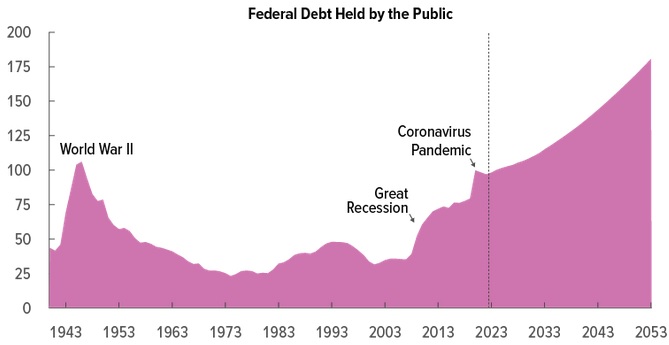




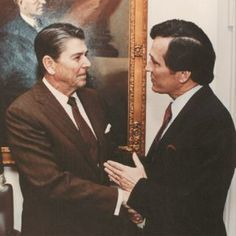

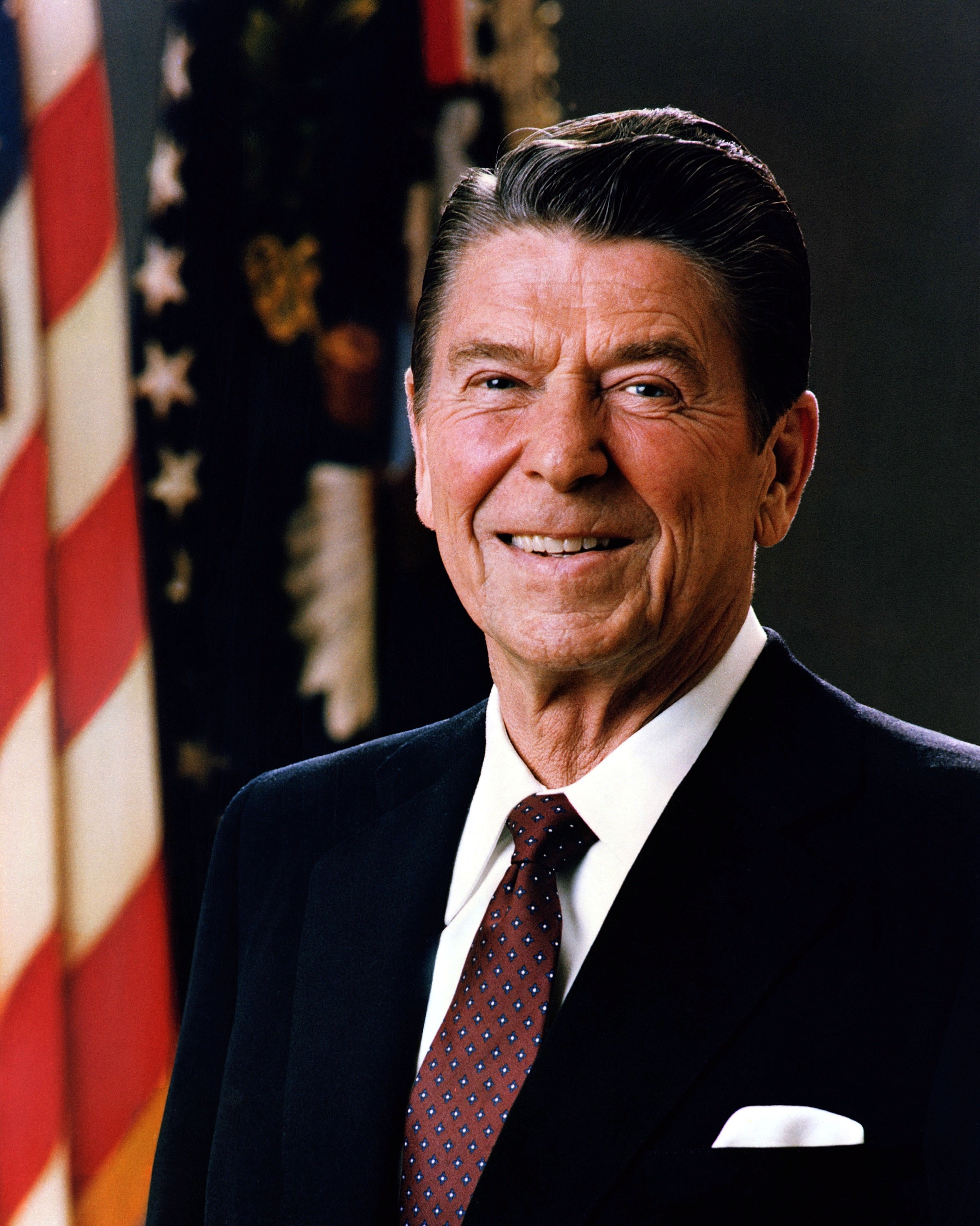
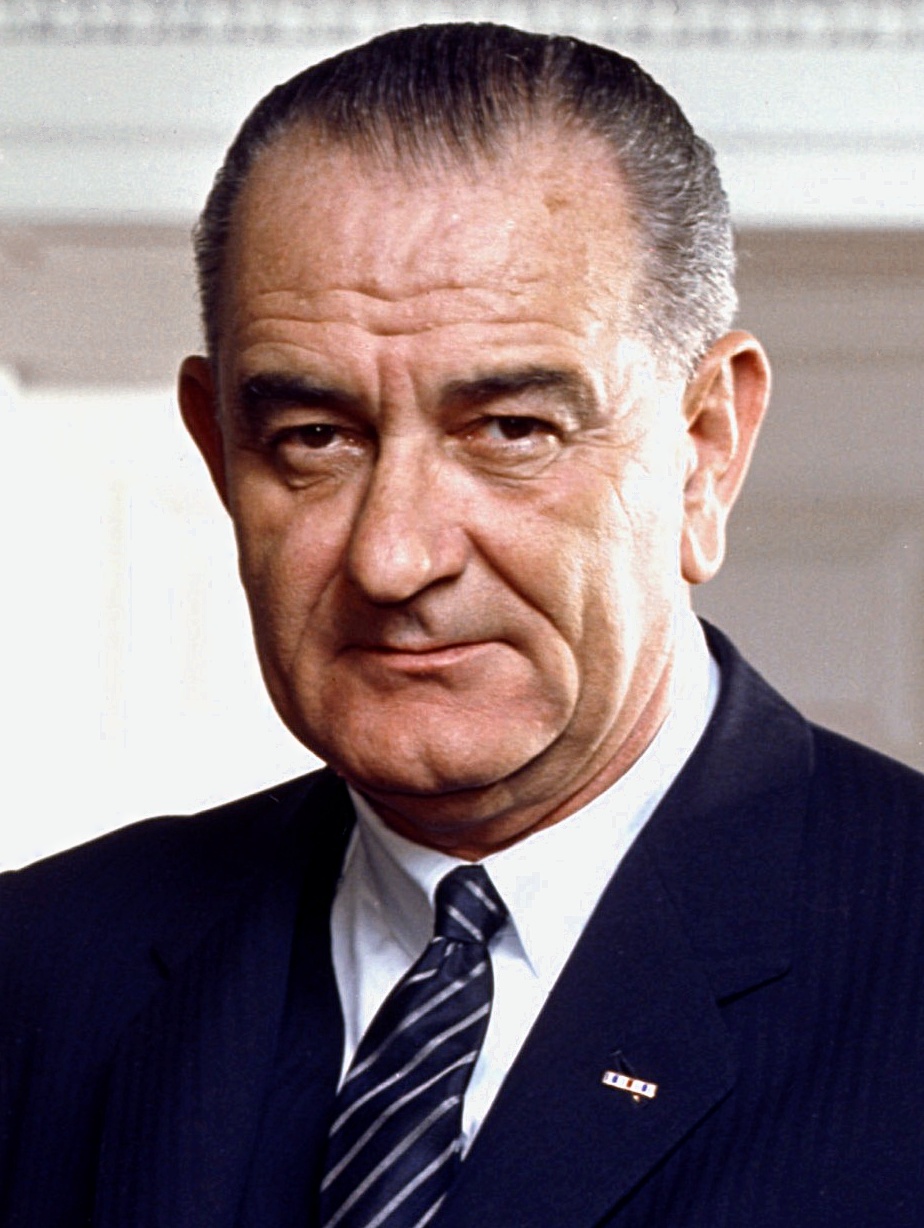
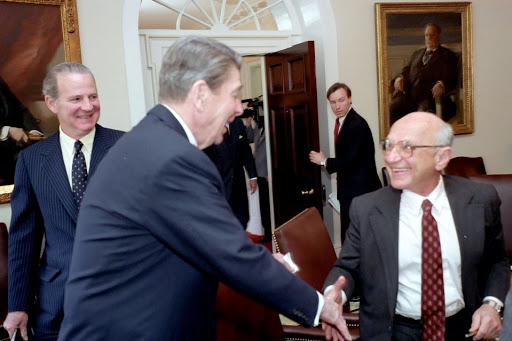
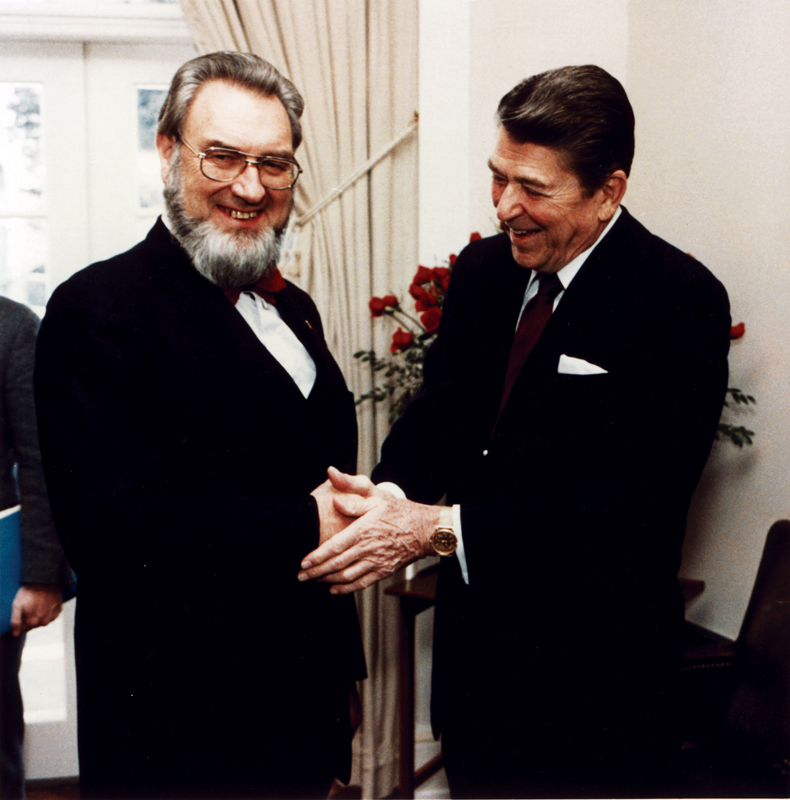
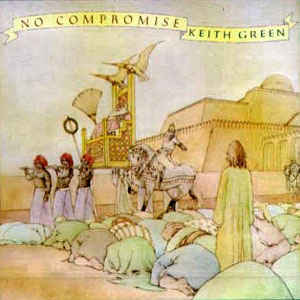
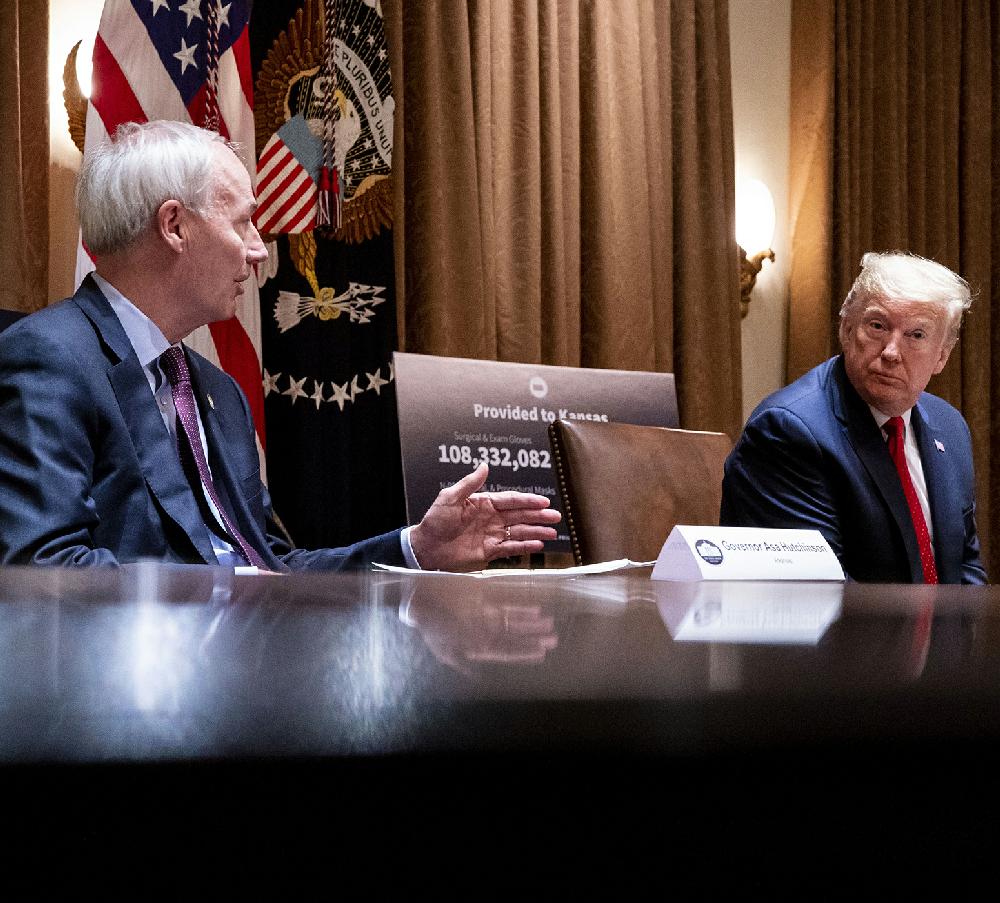
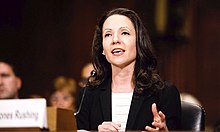
 Allison Jones Rushing testifies before a Senate Judiciary confirmation hearing on her nomination to be a United States circuit judge for the Fourth Circuit, October 17, 2018. (Yuri
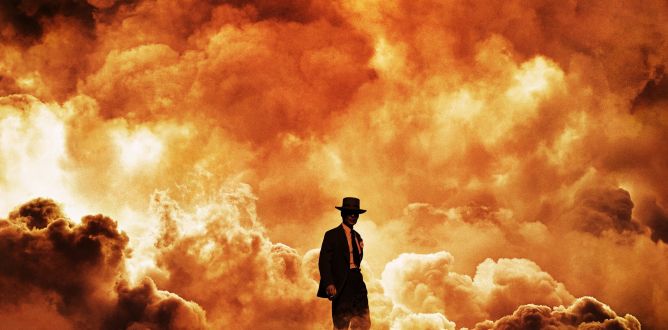


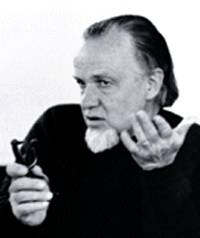
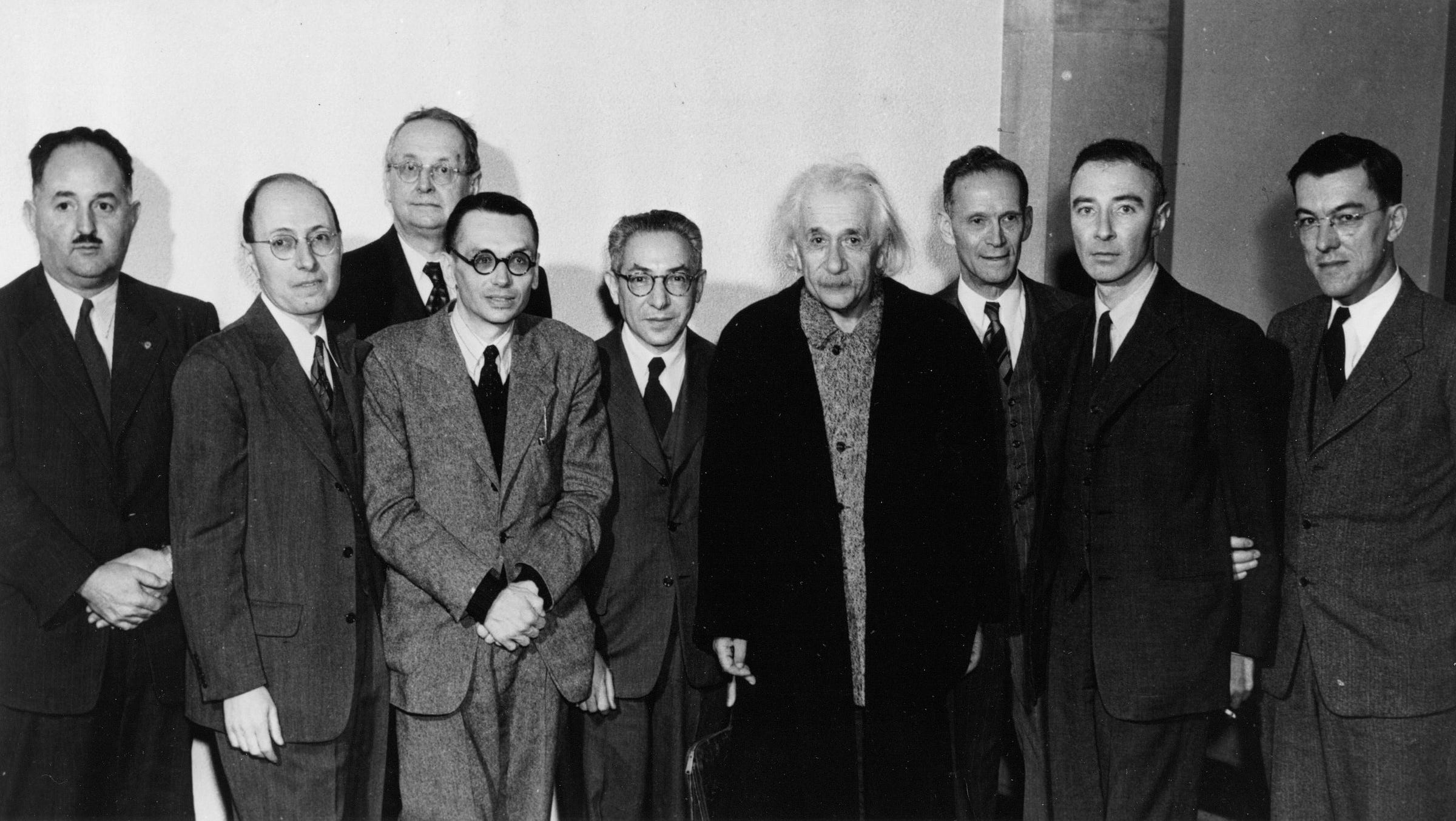
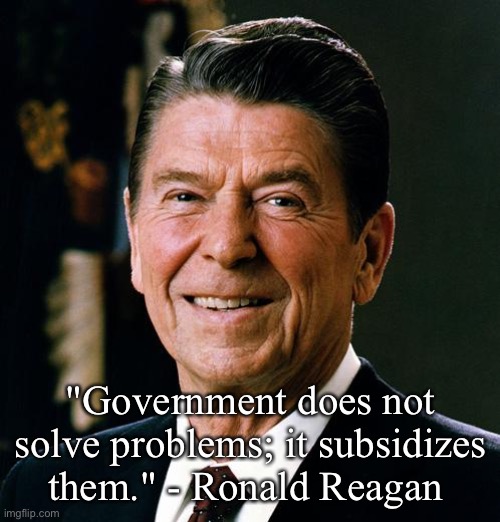
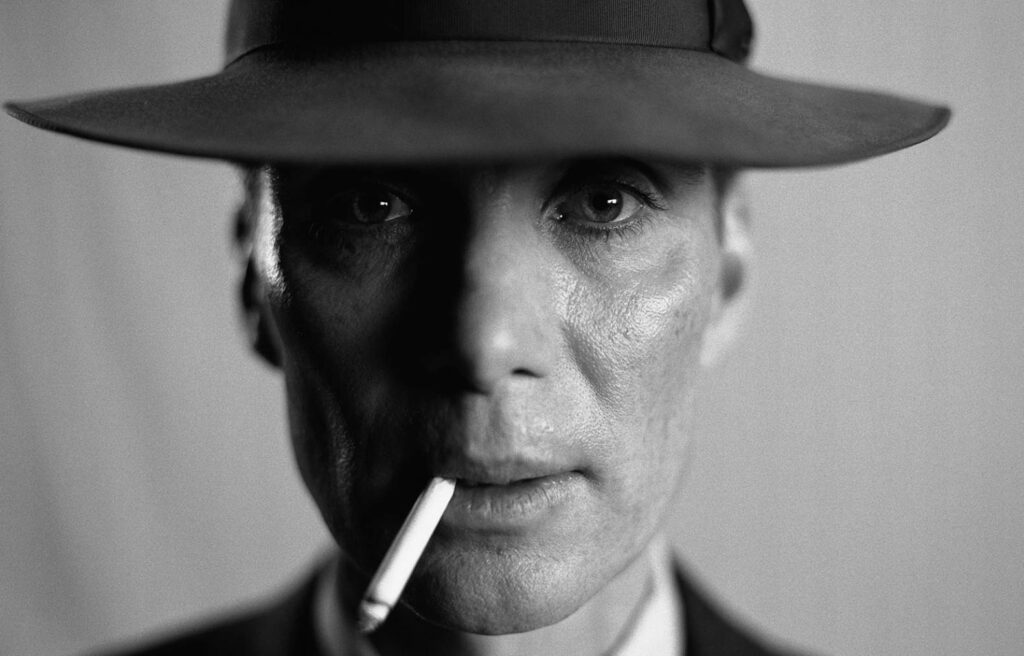



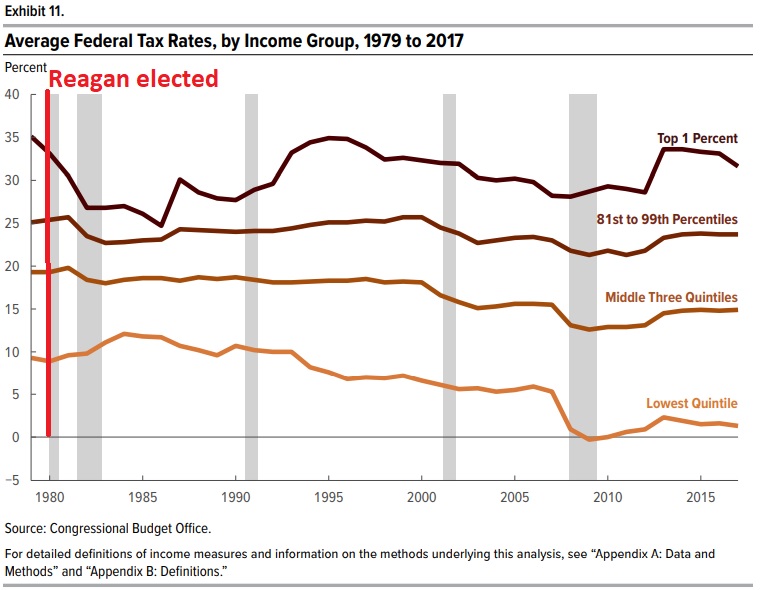
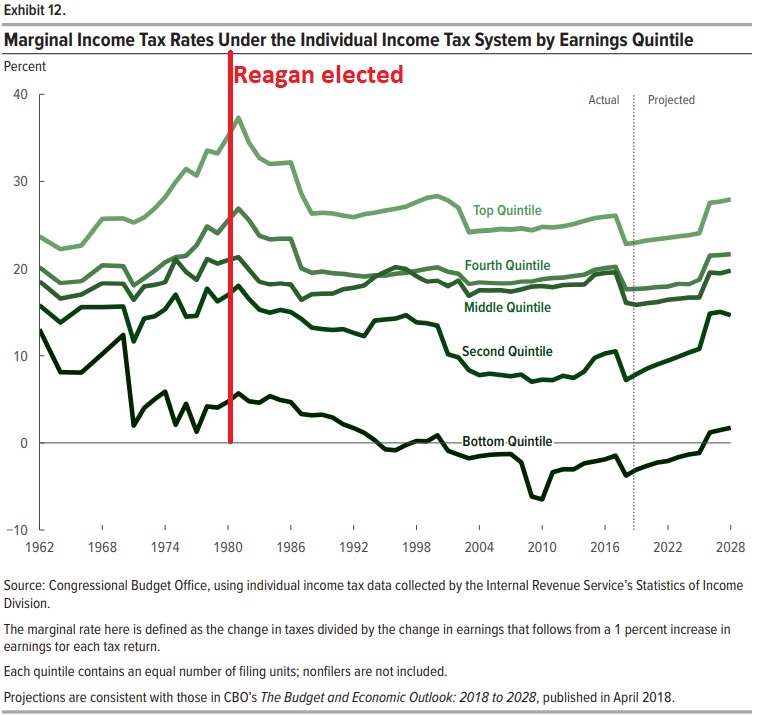
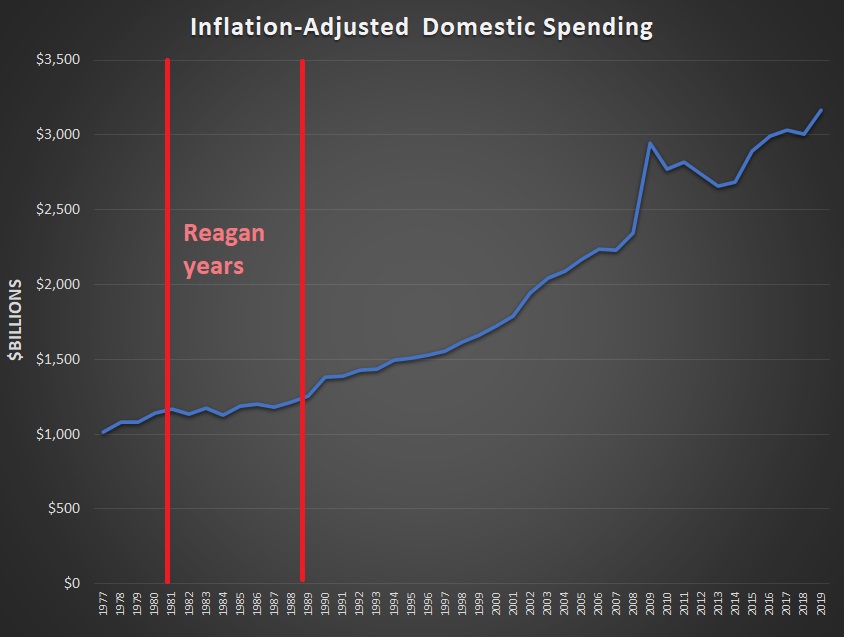


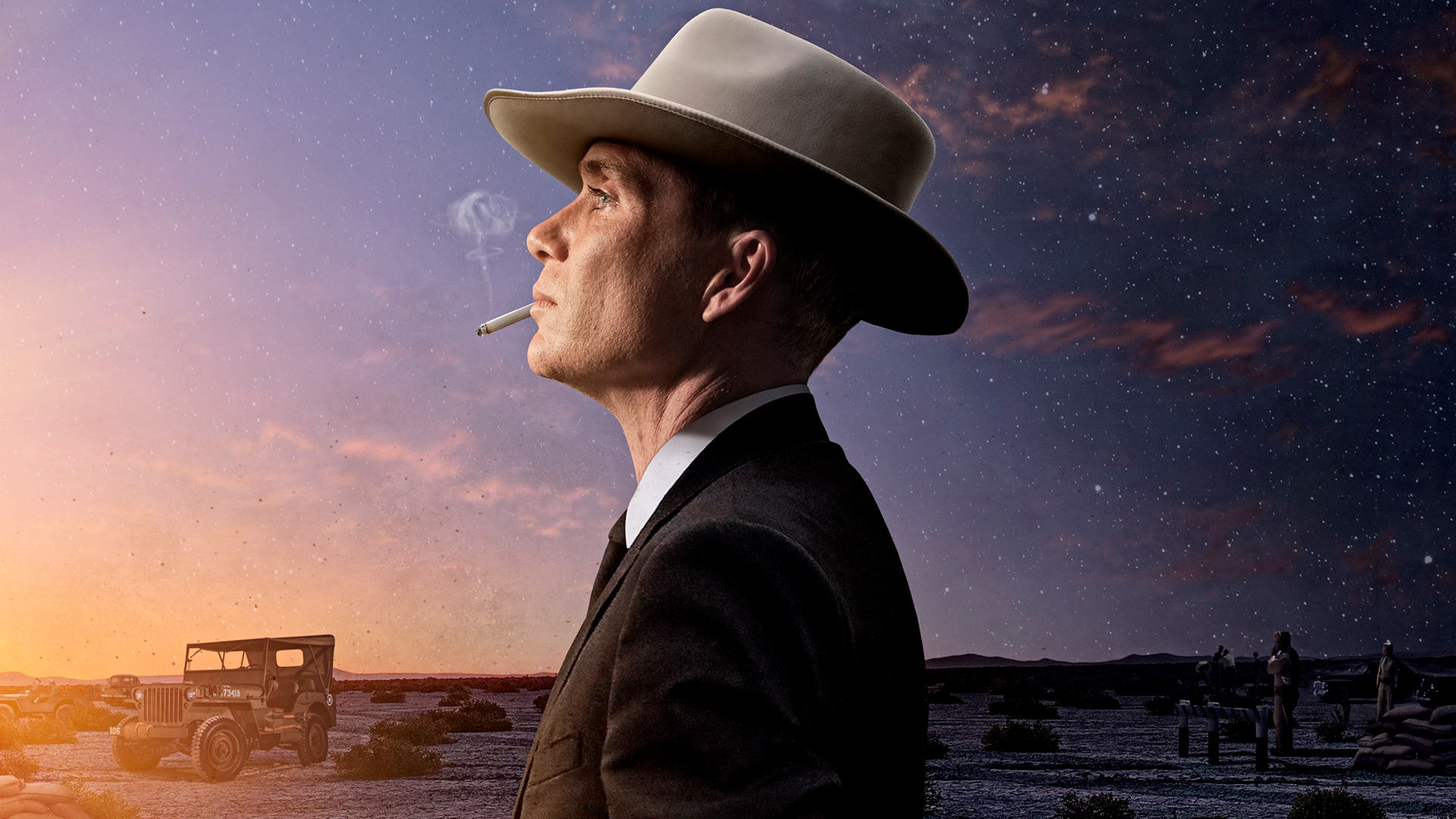

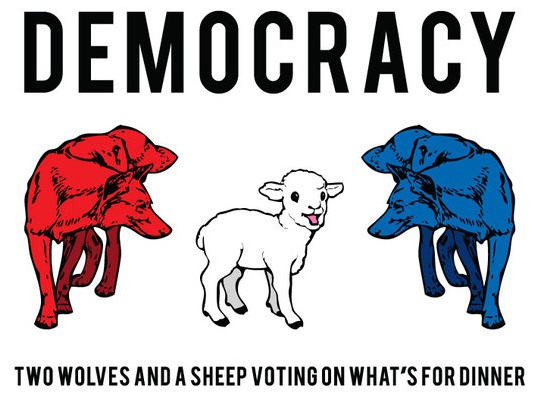



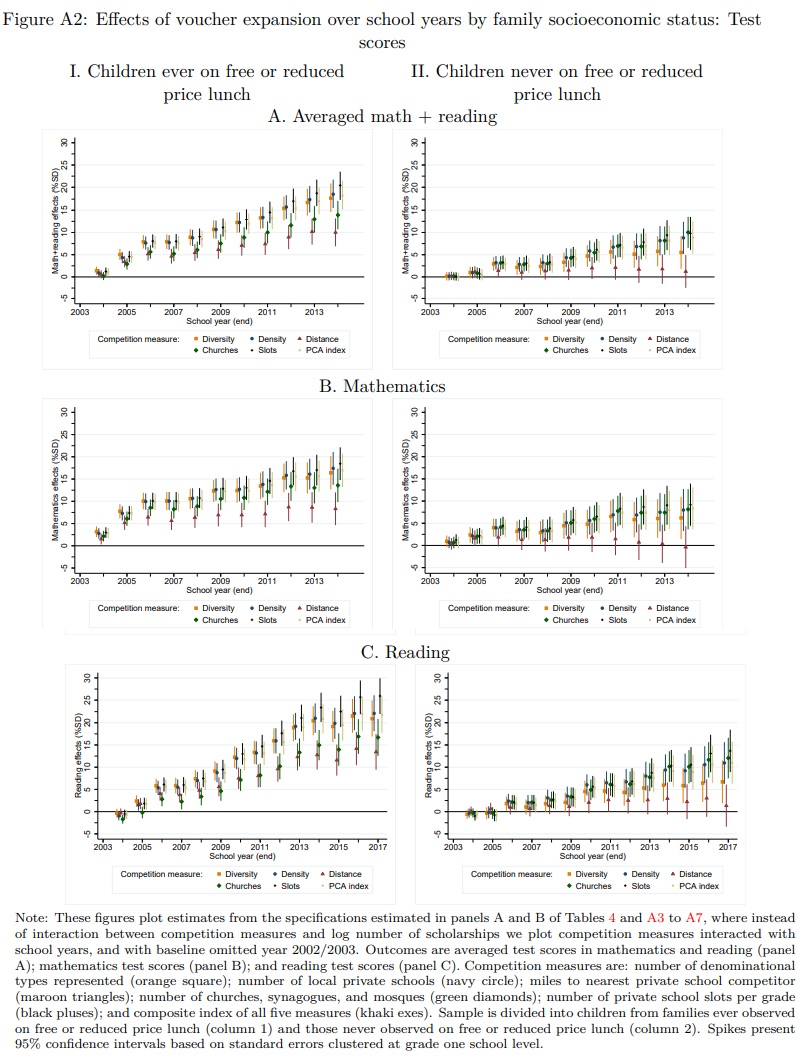












 The Daily Hatch