
_________________
The late Adrian Rogers was my pastor at Bellevue Baptist when I grew up and I sent his sermon on evolution and another on the accuracy of the Bible to many atheists to listen to and many of them did. I also sent many of the arguments from Francis Schaeffer also.
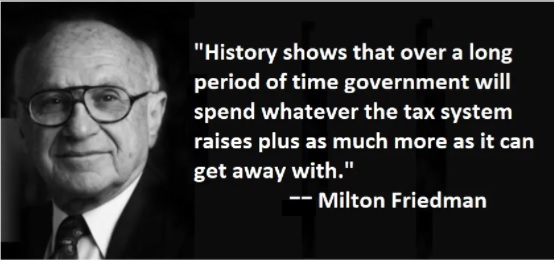
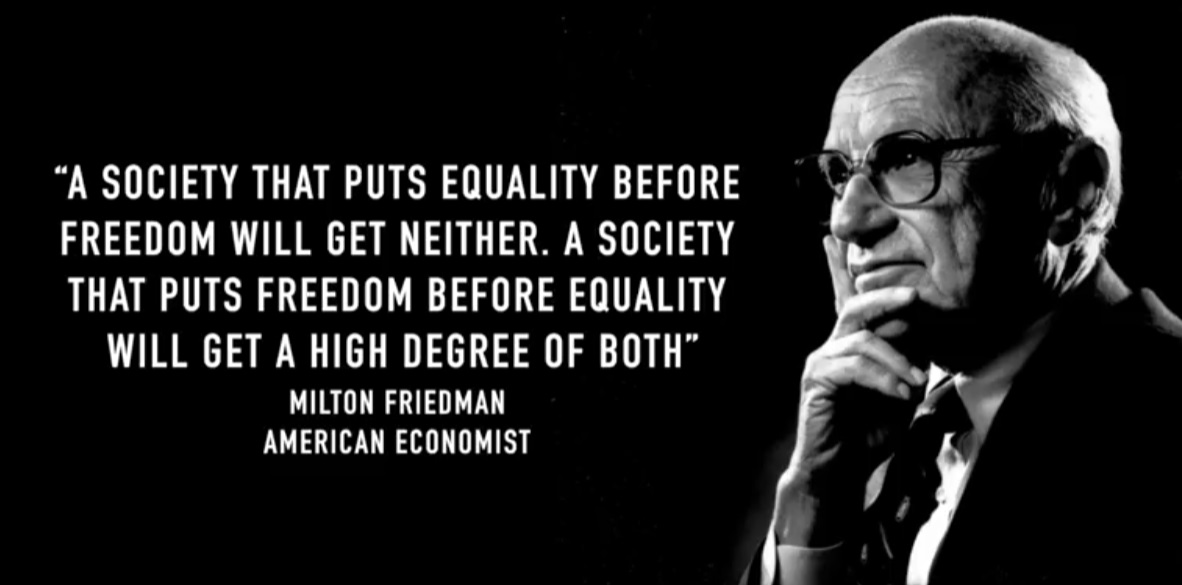
Many of these scholars have taken the time to respond back to me in the last 20 years and some of the names included are Ernest Mayr (1904-2005), George Wald (1906-1997), Carl Sagan (1934-1996), Robert Shapiro (1935-2011), Nicolaas Bloembergen (1920-), Brian Charlesworth (1945-), Francisco J. Ayala (1934-) Elliott Sober (1948-), Kevin Padian (1951-), Matt Cartmill (1943-) , Milton Fingerman (1928-), John J. Shea (1969-), , Michael A. Crawford (1938-), (Paul Kurtz (1925-2012), Sol Gordon (1923-2008), Albert Ellis (1913-2007), Barbara Marie Tabler (1915-1996), Renate Vambery (1916-2005), Archie J. Bahm (1907-1996), Aron S “Gil” Martin ( 1910-1997), Matthew I. Spetter (1921-2012), H. J. Eysenck (1916-1997), Robert L. Erdmann (1929-2006), Mary Morain (1911-1999), Lloyd Morain (1917-2010), Warren Allen Smith (1921-), Bette Chambers (1930-), Gordon Stein (1941-1996) , Milton Friedman (1912-2006), John Hospers (1918-2011), and Michael Martin (1932-).
THIRD, there is hope that an atheist will reconsider his or her position after examining more evidence. Twenty years I had the opportunity to correspond with two individuals that were regarded as two of the most famous atheists of the 20th Century, Antony Flew and Carl Sagan. I had read the books and seen the films of the Christian philosopher Francis Schaeffer and he had discussed the works of both of these men. I sent both of these gentlemen philosophical arguments from Schaeffer in these letters and in the first letter I sent a cassette tape of my pastor’s sermon IS THE BIBLE TRUE? You may have noticed in the news a few years that Antony Flew actually became a theist in 2004 and remained one until his death in 2010. Carl Sagan remained a skeptic until his dying day in 1996.Antony Flew wrote me back several times and in the June 1, 1994 letter he commented, “Thank you for sending me the IS THE BIBLE TRUE? tape to which I have just listened with great interest and, I trust, profit.” I later sent him Adrian Rogers’ sermon on evolution too.
The ironic thing is back in 2008 I visited the Bellevue Baptist Book Store and bought the book There Is A God – How the World’s Most Notorious Atheist Changed His Mind, by Antony Flew, and it is in this same store that I bought the message by Adrian Rogers in 1994 that I sent to Antony Flew. Although Antony Flew did not make a public profession of faith he did admit that the evidence for God’s existence was overwhelming to him in the last decade of his life. His experience has been used in a powerful way to tell others about Christ. Let me point out that while on airplane when I was reading this book a gentleman asked me about the book. I was glad to tell him the whole story about Adrian Rogers’ two messages that I sent to Dr. Flew and I gave him CD’s of the messages which I carry with me always. Then at McDonald’s at the Airport, a worker at McDonald’s asked me about the book and I gave him the same two messages from Adrian Rogers too.
in many of these letters that I would send to famous skeptics and I would always include audio messages from Adrian Rogers. Perhaps Schaeffer’s most effective argument was concerning Romans 1 and how a person could say that he didn’t believe that the world had a purpose or meaning but he could not live that way in the world that God created and with the conscience that every person is born with.
Google “Adrian Rogers Francis Schaeffer” and the first 8 things that come up will be my blog posts concerning effort to reach these atheists. These two great men proved that the scriptures Hebrews 4:12 and Isaiah 55:11 are true, “For the word of God is alive and active. Sharper than any double-edged sword, it penetrates even to dividing soul and spirit, joints and marrow; it judges the thoughts and attitudes of the heart.” and “so is my word that goes out from my mouth: It will not return to me empty, but will accomplish what I desire and achieve the purpose for which I sent it.”
Critics – Part 1
By Dr
You can’t have it both ways. If the Gospel writers were allowed to adapt their message to a particular audience then it can’t be claimed that God literally took their hand and wrote the scriptures. If we allow the Gospel writers to adapt their message, then we had better get ready to accept the fact that Paul interjected his own opinion about so many matters that he was personally opposed to or were culturally dominant at the time he wrote it. God would not have written inconsistencies in His Scriptures unless we want to admit that God has a sense of humor.
Hank Hanegraaff the director of CRI has noted:
“Can anything involving human beings contain the inerrant Word of God”?
The short answer to that question is “yes.” It’s true that humans are fallible vessels that they’re prone to error, but that in no way precludes the inerrancy of the Bible. All Scripture is God breathed. All Scripture is useful for teaching, rebuking, correcting, training in righteousness, so that the man of God may be thoroughly equipped for every good work (2 Tim. 3:16-17). The Apostle Paul there puts a very significant premium of the accuracy of all Scripture.
The Apostle Peter does essentially the same thing. He says that prophecy never had its origin in the will of man, but men spoke from God as they were carried along by the Holy Spirit.
The doctrine of inspiration tells us that God did something miraculous in inspiration. He worked through fallible human prophets, He utilized their individual personalities, all to pen what is authoritative, infallible, and sacred as Scripture. In fact we can demonstrate that the Bible is divine as opposed to human in origin. If you look just at archeology, you find what is concealed in the soil, corresponds to what is revealed in the Scriptures, and that with minute precision. I’m talking about people, and places, even particulars. So we know, we have evidence that the Bible corresponds to reality, and therefore it is truth, and a miracle—the miracle of infallible inspiration, the inspiration that comes from the Holy Spirit.
Now we don’t suppose that the disciples walked around with tape recorders, or we’re programmed automatons, but what we do suppose is that the believers who are used by God to pen the Scriptures captured the essential voice of God in the Scripture. Not the exact words they heard. For example, if you look at the Sermon on the Mount, you’ll see that there are various versions of the Sermon on the Mount given by Mark, Matthew, and Luke. And you see that the Sermon on the Mount is given in a different way but is essentially the same, because through their own personalities Matthew and Luke capture the essential voice of Jesus not the exact verbiage that Jesus used, and that’s why there can be differences and yet complete agreement because there’s no difference in the message that is being communicated in either case.
_________________________________
I remember listening to a 90 minute lecture by Francis Schaeffer on the conclusions the great American archaeologist (William F. Albright) who changed his views over the years because of the archaeological evidence. Below is some of that evidence. (You can access some of the evidence that convinced William Ramsey concerning the Book of Luke and Acts here.)
I went and secured a copy of the interview and read it myself. In a 1963 interview with Christianity Today magazine, William F. Albright (1891-1971) stated:
In my opinion, every book of the New Testament was written by a baptized Jew between the forties and eighties of the first century A.D. (very probably sometime between about 50 and 75 A.D.)(Christianity Today, VII, 359, January 18, 1963, “Toward a More Conservative View,” interview with William F. Albright.)
. John Ankerberg, Dr. John Weldon
| Biblical Archaeology, Silencing the critics (Part 1)Significantly, even liberal theologians, secular academics, and critics generally cannot deny that archaeology has confirmed thebiblical record at many points. Rationalistic detractors of the Bible can attack it all day long, but they cannot dispute archaeological facts. Consider the weekly PBS series “Mysteries of the Bible.” Despite some shortcomings, such as the theologically liberal experts and non-Christian commentators, this program has offered example after example, week after week, of the archaeological reliability of the Bible.To further illustrate, probably the three greatest American archaeologists of the twentieth century each had their liberal training modified by their archaeological work. W. F. Albright, Nelson Glueck, and George Ernest Wright all “received training in the liberal scholarship of the day, which had resulted from the earlier and continuing critical study of the Bible, predominantly by German scholars.”1 Despite their liberal training, it was archaeological research that bolstered their confidence in the biblical text:Albright said of himself, “I must admit that I tried to be rational and empirical in my approach [but] we all have presuppositions of a philosophical order.” The same statement could be applied as easily to Gleuck and Wright, for all three were deeply imbued with the theological perceptions which infused their work. Albright, the son of a Methodist missionary, came to see that much of German critical thought was established upon a philosophical base that could not be sustained in the light of archaeological discoveries…. Nelson Glueck was Albright’s student. In his own explorations in Trans-Jordan and the Negev and in his excavations, Glueck worked with the Bible in hand. He trusted what he called “the remarkable phenomenon of historical memory in the Bible.” He was the president of the prestigious Hebrew Union College-Jewish Institute of Religion and an ordained Rabbi. Wright went from the faculty of the McCormick Theological Seminary in Chicago to a position in the Harvard Divinity School which he retained until his death. He, too, was a student of Albright.2Glueck forthrightly declared, “As a matter of fact, however, it may be clearly stated categorically that no archaeological discovery has ever controverted a single biblical reference. Scores of archaeological findings have been made which confirm in clear outline or exact details historical statements in the Bible.”3In fact, “Much of the credit for this relatively new assessment of the patriarchal tradition must go to the ‘Albright school.’ Albright himself pointed out years ago that apart from ‘a few diehards among older scholars’ there is hardly a single biblical historian who is not at least impressed with the rapid accumulation of data supporting the ‘substantial historicity’ of patriarchal tradition.”4And, in fact, this is true not just for the patriarchal tradition but the Bible generally. The earlier statement by assyriologist A. H. Sayce continues to hold true today: “Time after time the most positive assertions of a skeptical criticism have been disproved by archaeological discovery, events and personages that were confidently pronounced to be mythical have been shown to be historical, and the older [i.e., biblical] writers have turned out to have been better acquainted with what they were describing than the modern critics who has flouted them.”5
Millar Burrows of Yale points out that, “Archaeology has in many cases refuted the views of modern critics. It has been shown in a number of instances that these views rest on false assumptions and unreal, artificial schemes of historical development….” And, “The excessive skepticism of many liberal theologians stems not from a careful evaluation of the available data, but from an enormous predisposition against the supernatural.”6 Many other examples could be given of how firsthand archaeological work changed the view of a critic. One of the most prominent is that of Sir William Ramsay. Ramsey’s own archaeological findings convinced him of the reliability of the Bible and the truth of what it taught. In his The Bearing of Recent Discovery on the Trustworthiness of the New Testamentand other books, he shows why he came to conclude that “Luke’s history is unsurpassed in respect of its trustworthiness” and that “Luke is a historian of the first rank … In short, this author should be placed along with the very greatest of historians.”7 As part of his secular academic duties, Dr. Clifford Wilson was for some years required to research and teach higher critical approaches to the Bible. This gave him a great deal of firsthand exposure and insight to the assumptions and methodologies that go into these approaches. Yet his own archaeological research was found to continually refute such skeptical theories, so much so that he finally concluded, “It is the steady conviction of this writer that the Bible is … the ancient world’s most reliable history textbook….”8 In a personal communication he added the following, I was not always the “literalist” I am today. I’ve always had a profound respect for the Bible, but accepted that the use of poetic forms meant that the record could often be interpreted symbolically where now I take it literally—though of course there are times when symbolism is clearly utilized. Thus in later Scriptures “Egypt” can be a geographic country or a symbolic term. That liberalism is especially true in relation to Genesis chapters 1 through 11, often considered allegorical or mythical, where my researches have led me to the conclusion that this is profound writing, meant to be taken literally. There was a real Adam, creation that was contemporaneous for the various life forms as shown in Genesis chapter 1, and a consistent style of history writing—such as the outlines given in Genesis one, then zeroing in on the specifics relating to mankind in Genesis chapter 2; the history of all the early peoples in Genesis chapter 10, then the concentration on Abraham and his descendants from Genesis chapter 11 onwards. Early man, “the birth of the lady of the rib,” long-living man, giants in the earth (animals, birds, and men), the flood, the Tower of Babel—and much more—point to factual, accurate recording of history in these early chapters of Genesis. Over 40 years have passed since I first became professionally involved in biblical archaeology and my commitment to the Bible as the world’s greatest history book is firmly settled. As Psalm 119:89 states, “Forever O Lord, your word is established in heaven.” Indeed one of the most valuable contributions of modern archaeology has been its reputation of higher critical views toward scripture. Consider for example the discovery of the Dead Sea scrolls. J. Randall Price (Ph.D., Middle Eastern Studies) currently working on a forthcoming apologetic text on biblical archaeology writes, “Those who expect the [Dead Sea] scrolls to produce a radical revision of the Bible have been disappointed, for these texts have only verified the reliability and stability of the Old Testament as it appears in our modern translations.”9 He further points out how the Daniel fragments of the Dead Sea Scrolls should require scholars to abandon a Maccabean date. The same kind of evidence forced scholars to abandon Maccabean dates for Chronicles, Ecclesiastes, and many of the Psalms. But so far, most scholars refuse to do this for Daniel: “Unfortunately, critical scholars have not arrived at a similar conclusion for the Book of Daniel, even though the evidence is identical.”10 In fact, according to Old Testament scholar Gerhard Hasel, a date for Daniel in the sixth or fifth century BC “has more in its favor today from the point of view of language alone than ever before.”11 The Dead Sea Scrolls also provide significant evidence for the unity and single authorship of the Book of Isaiah. Dr. Price concludes, “The discovery of the Dead Sea Scrolls, then, has made a contribution toward confirming the integrity of the biblical text and its own claim to predictive prophecy. Rather than support the recent theories of documentary disunity, the Scrolls have returned scholars to a time when the Bible’s internal witness to its own consistency and veracity was fully accepted by its adherents.”12 (to be continued) Notes: 1 Keith N. Scoville, Biblical Archeology in Focus (Grand Rapids, MI: Baker, 1978), p. 163. 2 Ibid., p. 163. 3 Norman L. Geisler and Ron Brooks, When Skeptics Ask: A Handbook on Christian Evidences (Wheaton, IL: Victor, 1990), p. 179. 4 Eugene H. Merrill, Professor of Old Testament Studies, Dallas Theological Seminary, “Ebla and Biblical Historical Inerrancy” in Roy B. Zuck (Genesis ed.), Vital Apologetic Issues: Examining Reasons and Revelation in Biblical Perspective (Grand Rapids, MI: Kregel, 1995), p. 180. 5 A. H. Sayce, Monument Facts and Higher Critical Fancies (London: The Religious Tract Society, 1904), p. 23, Cited in Josh McDowell, More Evidence That Demands a Verdict(Arrowhead Springs, CA: Campus Crusade for Christ, 1975), p. 53. 6 As cited in Josh McDowell, Evidence that Demands a Verdict (Arrowhead Springs, CA: Campus Crusade for Christ, 1972) p. 66. 7 William M. Ramsay, The Bearing of Recent Discovery on the Trustworthiness of the New Testament (Grand Rapids, MI: Baker Bookhouse, 1959), p. 91; cf. William M. Ramsay, Luke the Physician, pp. 177-79, 222 from F. F. Bruce, The New Testament Documents: Are They Reliable? (Downers Grove, IL: InterVarsity Press, 1971), pp. 90-91. 8 Clifford Wilson, Rocks, Relics and Biblical Reliability (Grand Rapids, MI: Zondervan/Richardson, TX: Probe, 1977), p. 126 9 J. Randall Price, Secrets of the Dead Sea Scrolls (Eugene, OR: Harvest House, 1996), p. 146. 10 Ibid., p. 159. 11 Ibid., p. 163.
Published on Jul 9, 2012 Contemporary Art Trends [ARTS 315], Jon Anderson The Fully Present Object: Minimalism September 16, 2011 [ARTS 315] Contemporary Liturgies: Performance Art and Embodied Belief – Jon Anderson
Published on Apr 5, 2012 Contemporary Art Trends [ARTS 315], Jon Anderson Contemporary Liturgies: Performance Art and Embodied Belief November 4, 2011 _______________ The mythological event from Hindu religion describes at 5:00. Five Sculptors: Anish Kapoor
___________________________ Kapoor, Anish – by Nigel HallidayReview of Anish Kapoor at the Royal Academy, 2009Royal Academy, Piccadilly, London, until 11 December 2009by Nigel Halliday Anish Kapoor is one of Britain’s leading talents in Conceptual Art. Whereas some exponents in this area seem flash and savvy, and others superficial or downright vacuous, Kapoor combines thoughtfulness, creativity and a traditional respect for beauty, even though the resultant forms are non-traditional. As Steve Turner says in his book Imagine, if Christians are going to engage constructively in the arts, our first question about a work should not be the narrow one, ‘Is it Christian?’ but the broader one, ‘Is it any good as a work of art?’ This exhibition certainly contains a number of very powerful and effective works, which we cannot help but admire, even if our understanding of reality and transcendence is very different. Kapoor was formed amongst an interesting range of influences. He was born and brought up in India, son of a Punjabi father. His mother was from a Jewish-Iraqi family who moved to India when she was a small child. As a teenager Kapoor spent time in Israel, before coming to Britain as an art-student. Kapoor’s work is not about his ethnicity, but it does seem to be shot through with a mindset influenced by Buddhism. The visitor is greeted in the Academy’s forecourt by Tall Tree and the Eye, a beautiful, towering arrangement of large silvery shiny balls, cleverly arranged with minimal physical contact between them, so they seem to float upwards. They sharply reflect the viewer and all that surrounds us, but with a weightlessness that suggests the ‘lightness of being’. Inside, in the first room, When I am pregnant is a large bump in the gallery wall, which emerges so subtly that one misses it at first. It seems to suggest a Buddhist sense of being merging seamlessly into nothingness. Yellow, a gorgeous, enormous construction in the second room seems to be on a similar theme. Recessed into a wall, it toys with being and nothingness, as solidity dissolves imperceptibly into space. The achievement of this imperceptibility is a sign of his genuine creativity and craftsmanship. In the main room a series of wonderful distorting mirrors invite the viewer to meditate on the different ways in which we perceive the world. These are both interesting and fun, inviting you to walk towards a mirror, appearing distorted, and then suddenly see yourself as you really are. The most eye-catching work is the home-made cannon, which every twenty minutes fires a twenty-pound projectile of red wax across the gallery, through a door way, and against the far wall. This is one of a couple of works which will actually change over the course of the exhibition: the red gunge gradually accumulates in the second room and spreads back over the floor into the first.There is no doubt, judging from the audience’s reaction, that this is seen as a piece of comic theatre, an entertainment involving suspense followed by release through laughter. But there is nothing in the work, and especially the po-faced studio assistant who loads and fires the gun like an officiant at a religious ritual, to suggest anything less than total seriousness. The assistant is clearly under instructions not to engage with, or even acknowledge the presence of, the audience. He steps through the crowd, avoiding eye-contact and deaf to any and every question. He loads the missile and charges the gun with a solemn efficiency of one laying out the eucharist. He then stands in perfect contemplative stillness while the air pressure builds, before with a single, decisive action he pulls the lever and the missile is launched.Kapoor notes that he is interested in the random, chancelike effects that this procedure will generate. To him, one imagines, the work speaks of a postmodernist loss of confidence in rationality and human control: that there are forces in the world which are far outside our capacity to predict, that we stand in awe and wonder at their effects, and in some way find meaning in them.In an earlier generation Christians would have revolted at this embracing of chance and rejection of rational control. But, as I watched, I wondered if this work is more in tune with a Biblical worldview than was probably intended. The work does not demonstrate that life is random and meaningless, because the very nature of its components – the building of the gun, the targeting, the control of the compressed air that fires the projectile – all speak clearly of rationality and control. But the uncontrolled effects of the work speak equally powerfully about chaos theory, the unpredictability of the effects of our actions. They also embody some of the ‘complaint’ of the writer of Ecclesiastes: that we labour away in the world, and yet seem to have so little certainty about it; we know God is in control of it, but we can’t grasp the meaning ourselves, nor control the outcomes of all our labour. Unlike this work, we can accept apparent randomness, and even sometimes enjoy its effects, without finding meaning itself in the randomness. But what I like about Kapoor is that he is clearly trying to engage with genuine issues, to put three-dimensional form on the perceptions that many people share: that they have lost confidence in their ability to grasp reality, or even to perceive themselves with confidence.And because Kapoor is a serious artist, reflecting on the human condition, there is much that is good in his work that Christians can engage with constructively. First published in Evangelicals Now, December 2009 www.nigelhalliday.org/anish-kapoor-ra-2009/ Related posts:Taking on Ark Times Bloggers on various issues Part I “Old Testament Bible Prophecy” includes the film TRUTH AND HISTORY and article ” Jane Roe became pro-life”I have gone back and forth and back and forth with many liberals on the Arkansas Times Blog on many issues such as abortion, human rights, welfare, poverty, gun control and issues dealing with popular culture. Here is another exchange I had with them a while back. My username at the Ark Times Blog is Saline […] John MacArthur on fulfilled prophecy from the Bible Part 2I have posted many of the sermons by John MacArthur. He is a great bible teacher and this sermon below is another great message. His series on the Book of Proverbs was outstanding too. I also have posted several of the visits MacArthur made to Larry King’s Show. One of two most popular posts I […] John MacArthur on fulfilled prophecy from the Bible Part 1I have posted many of the sermons by John MacArthur. He is a great bible teacher and this sermon below is another great message. His series on the Book of Proverbs was outstanding too. I also have posted several of the visits MacArthur made to Larry King’s Show. One of two most popular posts I […] John MacArthur: Fulfilled prophecy in the Bible? (Ezekiel 26-28 and the story of Tyre, video clips)Prophecy–The Biblical Prophesy About Tyre.mp4 Uploaded by TruthIsLife7 on Dec 5, 2010 A short summary of the prophecy about Tyre and it’s precise fulfillment. Go to this link and watch the whole series for the amazing fulfillment from secular sources. http://www.youtube.com/watch?v=qvt4mDZUefo ________________ John MacArthur on the amazing fulfilled prophecy on Tyre and how it was fulfilled […] John MacArthur on the Bible and Science (Part 2)John MacArthur on the Bible and Science (Part 2) I have posted many of the sermons by John MacArthur. He is a great bible teacher and this sermon below is another great message. His series on the Book of Proverbs was outstanding too. I also have posted several of the visits MacArthur made to Larry […] John MacArthur on the Bible and Science (Part 1)John MacArthur on the Bible and Science (Part 1) I have posted many of the sermons by John MacArthur. He is a great bible teacher and this sermon below is another great message. His series on the Book of Proverbs was outstanding too. I also have posted several of the visits MacArthur made to Larry […] Adrian Rogers: “Why I believe the Bible is true”Adrian Rogers – How you can be certain the Bible is the word of God Great article by Adrian Rogers. What evidence is there that the Bible is in fact God’s Word? I want to give you five reasons to affirm the Bible is the Word of God. First, I believe the Bible is the […] The Old Testament is Filled with Fulfilled Prophecy by Jim WallaceIs there any evidence the Bible is true? Articles By PleaseConvinceMe Apologetics Radio The Old Testament is Filled with Fulfilled Prophecy Jim Wallace A Simple Litmus Test There are many ways to verify the reliability of scripture from both internal evidences of transmission and agreement, to external confirmation through archeology and science. But perhaps the […] Taking on Ark Times Bloggers on various issues Part M “Old Testament prophecy fulfilled?”Part 3(includes film DEATH BY SOMEONE’S CHOICE)I have gone back and forth and back and forth with many liberals on the Arkansas Times Blog on many issues such as abortion, human rights, welfare, poverty, gun control and issues dealing with popular culture. Here is another exchange I had with them a while back. My username at the Ark Times Blog is […] Evidence for the BibleHere is some very convincing evidence that points to the view that the Bible is historically accurate. Archaeological and External Evidence for the Bible Archeology consistently confirms the Bible! Archaeology and the Old Testament Ebla tablets—discovered in 1970s in Northern Syria. Documents written on clay tablets from around 2300 B.C. demonstrate that personal and place […] Related posts: FRANCIS SCHAEFFER ANALYZES ART AND CULTURE Part 53 THE BEATLES (Part E, Stg. Pepper’s and John Lennon’s search in 1967 for truth was through drugs, money, laughter, etc & similar to King Solomon’s, LOTS OF PICTURES OF JOHN AND CYNTHIA) (Feature on artist Yoko Ono)The John Lennon and the Beatles really were on a long search for meaning and fulfillment in their lives just like King Solomon did in the Book of Ecclesiastes. Solomon looked into learning (1:12-18, 2:12-17), laughter, ladies, luxuries, and liquor (2:1-2, 8, 10, 11), and labor (2:4-6, 18-20). He fount that without God in the picture all […] FRANCIS SCHAEFFER ANALYZES ART AND CULTURE Part 52 THE BEATLES (Part D, There is evidence that the Beatles may have been exposed to Francis Schaeffer!!!) (Feature on artist Anna Margaret Rose Freeman )______________ George Harrison Swears & Insults Paul and Yoko Lucy in the Sky with Diamonds- The Beatles The Beatles: I have dedicated several posts to this series on the Beatles and I don’t know when this series will end because Francis Schaeffer spent a lot of time listening to the Beatles and talking […] FRANCIS SCHAEFFER ANALYZES ART AND CULTURE Part 51 THE BEATLES (Part C, List of those on cover of Stg.Pepper’s ) (Feature on artist Raqib Shaw )The Beatles in a press conference after their Return from the USA Uploaded on Nov 29, 2010 The Beatles in a press conference after their Return from the USA. The Beatles: I have dedicated several posts to this series on the Beatles and I don’t know when this series will end because Francis […] FRANCIS SCHAEFFER ANALYZES ART AND CULTURE Part 50 THE BEATLES (Part B, The Psychedelic Music of the Beatles) (Feature on artist Peter Blake )__________________ Beatles 1966 Last interview I have dedicated several posts to this series on the Beatles and I don’t know when this series will end because Francis Schaeffer spent a lot of time listening to the Beatles and talking and writing about them and their impact on the culture of the 1960’s. In this […] FRANCIS SCHAEFFER ANALYZES ART AND CULTURE Part 49 THE BEATLES (Part A, The Meaning of Stg. Pepper’s Cover) (Feature on artist Mika Tajima)_______________ The Beatles documentary || A Long and Winding Road || Episode 5 (This video discusses Stg. Pepper’s creation I have dedicated several posts to this series on the Beatles and I don’t know when this series will end because Francis Schaeffer spent a lot of time listening to the Beatles and talking and writing about […] FRANCIS SCHAEFFER ANALYZES ART AND CULTURE PART 48 “BLOW UP” by Michelangelo Antonioni makes Philosophic Statement (Feature on artist Nancy Holt)_______________ Francis Schaeffer pictured below: _____________________ I have included the 27 minute episode THE AGE OF NONREASON by Francis Schaeffer. In that video Schaeffer noted, ” Sergeant Pepper’s Lonely Hearts Club Band…for a time it became the rallying cry for young people throughout the world. It expressed the essence of their lives, thoughts and their feelings.” How Should […] FRANCIS SCHAEFFER ANALYZES ART AND CULTURE Part 47 Woody Allen and Professor Levy and the death of “Optimistic Humanism” from the movie CRIMES AND MISDEMEANORS Plus Charles Darwin’s comments too!!! (Feature on artist Rodney Graham)Crimes and Misdemeanors: A Discussion: Part 1 ___________________________________ Today I will answer the simple question: IS IT POSSIBLE TO BE AN OPTIMISTIC SECULAR HUMANIST THAT DOES NOT BELIEVE IN GOD OR AN AFTERLIFE? This question has been around for a long time and you can go back to the 19th century and read this same […] FRANCIS SCHAEFFER ANALYZES ART AND CULTURE PART 46 Friedrich Nietzsche (Featured artist is Thomas Schütte)____________________________________ Francis Schaeffer pictured below: __________ Francis Schaeffer has written extensively on art and culture spanning the last 2000years and here are some posts I have done on this subject before : Francis Schaeffer’s “How should we then live?” Video and outline of episode 10 “Final Choices” , episode 9 “The Age of Personal Peace and Affluence”, episode 8 […] |
_________________
















































 The Daily Hatch
