And this is motivating many legislators to push for school choice, especially since there’s more and more evidence that school choice improves educational outcomes.
For instance, the Wall Street Journalopined last week about a new victory in Indiana.
Ten years ago in these columns, we hailed Indiana for its leadership in establishing one of America’s most ambitious school voucher programs. On Thursday the Indiana Legislature built on that achievement by approving a budget that will take the program to 48,000 students a year from about 37,000. …The teachers unions are unhappy. Their beef is that money to expand choice is taken from traditional public schools. And this year they lobbied local school boards to pass resolutions opposed to school choice. But that common union line about choice robbing public schools isn’t true. …92% of Indiana students will be in traditional public schools, and 93% of all education funding will go to these schools. …Since 2011, when Indiana pushed through its first voucher plan, more than a quarter-million Hoosier students have benefited. In an interview with Today’s Catholic, former Gov. Mitch Daniels explains the moral logic of choice this way: “Providing poor and minority families the same choice of schools that their wealthier neighbors enjoy is the purest example of ‘social justice’ in our society today.”
Meanwhile, Arkansas may be on the verge of adding to the good news.
Here are some excerpts from an article by Jason Bedrick in National Review.
In response to families demanding more educational options, six states have already passed new choice policies or expanded existing ones this year, and similar bills are still making their way through more than a dozen other state legislatures. …the Arkansas state senate…passed Senate Bill 680,which has the support of Governor Asa Hutchinson and the Arkansas Department of Education, by an overwhelming margin. Although only half the size of the previous proposal and limited only to low-income children, the bill still represents a major step toward providing broad access to educational choice. The Arkansas House now has another opportunity to do right by Arkansas families desperate for more educational options. …the Arkansas House Revenue and Taxation Committee voted to recommend that the full House pass the bill.
The superintendents of government schools are fighting to preserve the status quo. Their main argument is that choice will hurt outcomes for students stuck in their schools.
But competition encourages everyone to do better, and Jason shares some of the evidence about government schools doing better when there is school choice .
The research about the effects of educational-choice policies on public schools…overwhelmingly finds that such policies benefit not only participating students, but also the students who remain in their assigned district schools. Out of 27 studies, 25 find that students attending district schools improve their performance on standardized tests after the introduction of a choice program, while only one study found a negative effect, and one found no visible effect. …a recent study by the University of Arkansas found that states with robust educational-choice policies saw significant improvements on the National Assessment of Educational Progress (known as the “Nation’s Report Card”) over the last two decades. …The sky isn’t falling in any of the 29 states that have some form of private-school-choice program. Indeed, the sun is still shining on their public-school systems, which have not only not collapsed but are actually performing better than before.
Fingers crossed that Arkansas lawmakers do what’s right for kids rather than siding with the education bureaucracy.
Let’s conclude with this video from the Institute of Justice, which makes the point that school choice is especially critical for those with low incomes and other challenging backgrounds.
I shared a similar video back in 2016 as part of a column about why school choice is critical for black children.
P.S. If you want to learn more about school choice, I recommend this video.
P.P.S. It’s uplifting to see very successful school choice systems operate in nations such as Canada, Sweden, Chile, and the Netherlands.
From school choice to personalized lifelong learning.
Sixty years ago, Milton Friedman came up with a profound idea for improving education. Rather than paying public schools to educate the students in their districts, the future Nobel Laureate argued, the government should provide parents with vouchers to allow them to choose what school each child would attend.
In cities such as Milwaukee and Cleveland and Washington, D.C., and states such as Arizona and Florida and Indiana, families across America have benefited from programs designed to give families educational choice. Empirical evidence assessing these programs shows that allowing parents to choose their children’s schools results in greater parental satisfaction, higher student test scores, and improved graduation rates.
But in 2015, the landscape of K–12 and higher education, as well as the economy and the labor market as a whole, are changing. And these changes require us to rethink how choice in education could best help children and adults succeed. Consider two key trends:
First, students of all ages now have unprecedented opportunities to benefit from affordable and high-quality learning experiences. In 2015, a student in the United States — or anywhere in the world — with an Internet connection has the opportunity to learn from a wide variety of terrific teachers.
Many schools are using technology to offer personalized and challenging forms of instruction. Brilliant educators like Salman Khan — the founder of Khan Academy — are providing lessons online, for free, for any student who is willing to do the work. Colleges like MIT and Stanford now offer coursework online for free and even award credentials to those who pass an exam.
For motivated students of all ages, learning is becoming a personalized journey that can happen any day, at any hour, at their own pace, not just within the walls of a traditional classroom or during the school year. Students will experience education through multiple channels, and not just from one school.
Second, it is becoming increasingly clear that the need to learn doesn’t end with earning a diploma. Many adults who have traditional credentials like college degrees are struggling to find well-paying jobs. According to the New York Federal Reserve Bank, 44 percent of recent college graduates are in jobs that don’t require a college degree. Some professions that once were secure livelihoods are being disrupted or replaced by machines, technologies, or new enterprises. As a result, many workers are being forced to acquire new skills in order to change careers.
What do these trends mean for Milton Friedman’s original idea of using school vouchers to improve education?
We should be giving families control of the funds that they will spend on K–12 and higher education throughout their lives.
Instead of simply providing parents with the power to choose which school their child attends during a given school year, we should be giving them — and eventually the students themselves, when they reach adulthood — control of the funds that they will spend on K–12 and higher education throughout their lives. Rather than only allowing parents to answer the question of where a child goes to school, we should let students (or, initially, their parents) control where, when, how, and from whom they learn.
Five states, led by Arizona, have introduced state-funded education savings accounts that give families this control of K–12 funding. Parents can use funds in the account to pay for school tuition, tutoring, online classes, and instructional materials, and if there is anything left in a given year, to save it for future years. The state maintains proper oversight by tracking how funds are spent.
Nevada recently enacted a universal education-savings-account program that will offer the parents of all public-school students the chance to take direct control of their children’s education in this way.
Besides these promising state efforts, Congress has an opportunity to begin giving families direct control over how their education funds are spent over the course of a lifetime. Congress could reform federal 529 savings plans, which allow tax-free saving for college, to include other allowable uses — from preschool and K–12 education to post-college job training.
Transforming 529 accounts into Lifelong Learning Education Savings Accounts would provide an immediate benefit to the families of the 12 million holders of 529 savings accounts. Use of the accounts would likely grow if other expenses were allowed, since 35 states and D.C. offer tax incentives for contributions into 529 accounts. Congress could also give families the option of receiving their share of federal education funds directly into an account if they forgo public programs such as Head Start. This would ensure that disadvantaged students also have the opportunity to benefit.
Parents should be thankful for Milton Friedman’s vision for school choice, which has improved educational opportunities for millions. But in 2015, education savings accounts and lifelong learning offer a more promising answer to the question of how best to equip Americans to learn, succeed, and pursue happiness throughout their lives.
— Dan Lips is a fellow with the Goldwater Institute. In 2005, he wrote a paper for the Institute proposing the nation’s first state-funded K–12 education-savings-account program for Arizona.
Michael Harrington: If you don’t have the expertise, the knowledge technology today, you’re out of the debate. And I think that we have to democratize information and government as well as the economy and society. FRIEDMAN: I am sorry to say Michael Harrington’s solution is not a solution to it. He wants minority rule, I […]
By Everette Hatcher III | Posted in Current Events, Milton Friedman | Edit | Comments (0)
PETERSON: Well, let me ask you how you would cope with this problem, Dr. Friedman. The people decided that they wanted cool air, and there was tremendous need, and so we built a huge industry, the air conditioning industry, hundreds of thousands of jobs, tremendous earnings opportunities and nearly all of us now have air […]
By Everette Hatcher III | Posted in Current Events, Milton Friedman | Edit | Comments (0)
Part 5 Milton Friedman: I do not believe it’s proper to put the situation in terms of industrialist versus government. On the contrary, one of the reasons why I am in favor of less government is because when you have more government industrialists take it over, and the two together form a coalition against the ordinary […]
By Everette Hatcher III | Posted in Current Events, Milton Friedman | Edit | Comments (0)
The fundamental principal of the free society is voluntary cooperation. The economic market, buying and selling, is one example. But it’s only one example. Voluntary cooperation is far broader than that. To take an example that at first sight seems about as far away as you can get __ the language we speak; the words […]
By Everette Hatcher III | Posted in Current Events, Milton Friedman | Edit | Comments (0)
_________________________ Pt3 Nowadays there’s a considerable amount of traffic at this border. People cross a little more freely than they use to. Many people from Hong Kong trade in China and the market has helped bring the two countries closer together, but the barriers between them are still very real. On this side […]
By Everette Hatcher III | Posted in Current Events, Milton Friedman | Edit | Comments (0)
Aside from its harbor, the only other important resource of Hong Kong is people __ over 4_ million of them. Like America a century ago, Hong Kong in the past few decades has been a haven for people who sought the freedom to make the most of their own abilities. Many of them are […]
By Everette Hatcher III | Posted in Current Events, Milton Friedman | Edit | Comments (0)
“FREE TO CHOOSE” 1: The Power of the Market (Milton Friedman) Free to Choose ^ | 1980 | Milton Friedman Posted on Monday, July 17, 2006 4:20:46 PM by Choose Ye This Day FREE TO CHOOSE: The Power of the Market Friedman: Once all of this was a swamp, covered with forest. The Canarce Indians […]
If you would like to see the first three episodes on inflation in Milton Friedman’s film series “Free to Choose” then go to a previous post I did. Ep. 9 – How to Cure Inflation [4/7]. Milton Friedman’s Free to Choose (1980) Uploaded by investbligurucom on Jun 16, 2010 While many people have a fairly […]
Charlie Rose interview of Milton Friedman My favorite economist: Milton Friedman : A Great Champion of Liberty by V. Sundaram Milton Friedman, the Nobel Prize-winning economist who advocated an unfettered free market and had the ear of three US Presidents – Nixon, Ford and Reagan – died last Thursday (16 November, 2006 ) in San Francisco […]
By Everette Hatcher III | Posted in Milton Friedman | Edit | Comments (0)
Stearns Speaks on House Floor in Support of Balanced Budget Amendment Uploaded by RepCliffStearns on Nov 18, 2011 Speaking on House floor in support of Balanced Budget Resolution, 11/18/2011 ___________ Below are some of the main proposals of Milton Friedman. I highly respected his work. David J. Theroux said this about Milton Friedman’s view concerning […]
By Everette Hatcher III | Posted in Milton Friedman | Edit | Comments (0)
Milton Friedman: Free To Choose – The Failure Of Socialism With Ronald Reagan (Full) Published on Mar 19, 2012 by NoNationalityNeeded Milton Friedman’s writings affected me greatly when I first discovered them and I wanted to share with you. We must not head down the path of socialism like Greece has done. Abstract: Ronald Reagan […]
By Everette Hatcher III | Posted in Milton Friedman, President Obama | Edit | Comments (1)
What a great defense of Milton Friedman!!!! Defaming Milton Friedman by Johan Norberg This article appeared in Reason Online on September 26, 2008 PRINT PAGE CITE THIS Sans Serif Serif Share with your friends: ShareThis In the future, if you tell a student or a journalist that you favor free markets and limited government, there is […]
Milton Friedman – A Conversation On Minimum Wage FREE TO CHOOSE
April 25, 2021
Office of Barack and Michelle Obama P.O. Box 91000 Washington, DC 20066
Dear President Obama,
I wrote you over 700 letters while you were President and I mailed them to the White House and also published them on my blog http://www.thedailyhatch.org .I received several letters back from your staff and I wanted to thank you for those letters.
There are several issues raised in your book that I would like to discuss with you such as the minimum wage law, the liberal press, the cause of 2007 financial meltdown, and especially your pro-choice (what I call pro-abortion) view which I strongly object to on both religious and scientific grounds, Two of the most impressive things in your book were your dedication to both the National Prayer Breakfast (which spoke at 8 times and your many visits to the sides of wounded warriors!!
I have been reading your autobiography A PROMISED LAND and I have been enjoying it.
Let me make a few comments on it, and here is the first quote of yours I want to comment on:
I was campaigning to push the country in the opposite direction. I didn’t think America could roll back automation or sever the global supply chain (though I did think we could negotiate stronger labor and environmental provisions in our trade agreements). But I was certain we could adapt our laws and institutions, just as we’d done in the past, to make sure that folks willing to work could get a fair shake. At every stop I made, in every city and small town, my message was the same. I promised to raise taxes on high-income Americans to pay for vital investments in education, research, and infrastructure. I promised to strengthen unions and raise the minimum wage as well as to deliver universal healthcare and make college more affordable. I wanted people to understand that there was a precedent for bold government action. FDR had saved capitalism from itself, laying the foundation for a post–World War II boom.
—-
The minimum wage has hurt young people as they seek to enter the job market and prove themselves and start heading up the financial ladder of opportunity and by cutting the bottom of the ladder off it is difficult for the most unskilled and disadvantaged to compete!
But let’s not just focus on numbers. There are painful human costs when low-skilled workers are priced out of the labor market.
Here are some excerpts from a column in the Wall Street Journalabout a real-world example of people losing their jobs.
It’s well-established in the economic literature, if not in the minds of proponents of these laws, that the result will be job losses. Yet this empirical reality fails to capture the emotional reality of the employees who are let go, or of the business owners who had no choice but to let them go. …Michigan’s minimum wage rose in September to $8.15 an hour from $7.40 (the minimum wage for tipped employees rose 17%, to $3.10 an hour). The wage will rise to $9.25 by January 2018.
Now let’s look at the impact on a non-profit restaurant that helped disadvantaged people.
The staff at Tastes of Life was made up of recovering addicts, recently incarcerated individuals and others who would have a hard time landing a job elsewhere. Mr. Mosley explained that on-the-job offenses for which an employee would have been “gone that day” in a traditional work setting were instead used as training opportunities at Tastes of Life. …Mr. Mosley’s financial goal was to break even and use any excess funds to subsidize Life Challenge participants. After more than two years of operation on Beck Road, 2½ miles from the center of town, Tastes of Life had a steady flow of loyal customers, but rising food costs presented a challenge. …Mr. Mosley and Ms. Tucker had planned to print new menus with higher prices to cover the food costs, but the September wage hike complicated those plans, in particular because the increase covered both tipped and non-tipped employees. …“If we had a $10 menu item, it would have to be $14,” Mr. Mosley said. The restaurant’s customer base of seniors on a fixed income and Hillsdale locals made this option a nonstarter. The restaurant also had to find roughly 250 new customers a month, unrealistic in a small town of about 8,300.
So the inevitable happened.
The increased minimum wage, he told me, was “the straw that broke that camel’s back,” forcing him to close his doors and lay off his 12-person staff. …with the higher wage costs, the arrangement was no longer feasible, and Tastes of Life closed on Sept. 28. …Four former employees have been able to leverage their restaurant experience to find new employment, but Mr. Mosley told me that eight are still out of work. …the loss of Tastes of Life cuts deep, because the benefit for Life Challenge participants was both valuable and is not easily attained elsewhere. These unintended consequences of a minimum wage hike aren’t unique to small towns in south-central Michigan. Tragically, they repeat themselves in locales small and large each time legislators heed the populist call to “raise the wage.”
Understanding “unintended consequences” is a key characteristic of a good economist.
Today, the goal is simply to understand that it is pointlessly destructive to make low-skilled labor less affordable.
P.S. Given all the evidence that minimum-wage laws destroy jobs, why do some people persist in supporting such a destructive policy? In this post, I provide six possible reasons.
President Obama c/o The White House 1600 Pennsylvania Avenue NW Washington, DC 20500 Dear Mr. President, I know that you receive 20,000 letters a day and that you actually read 10 of them every day. I really do respect you for trying to get a pulse on what is going on out here. There have […]By Everette Hatcher III | Posted in David Barton, Founding Fathers, President Obama | Edit |Comments (0)
There have been many articles written by evangelicals like me who fear that our founding fathers would not recognize our country today because secular humanism has rid our nation of spiritual roots. I am deeply troubled by the secular agenda of those who are at war with religion in our public life. Lillian Kwon quoted somebody […]By Everette Hatcher III | Posted in David Barton, Founding Fathers | Edit | Comments (0)
There have been many articles written by evangelicals like me who fear that our founding fathers would not recognize our country today because secular humanism has rid our nation of spiritual roots. I am deeply troubled by the secular agenda of those who are at war with religion in our public life. Lillian Kwon quoted somebody […]By Everette Hatcher III | Posted in David Barton, Founding Fathers | Edit | Comments (0)
There have been many articles written by evangelicals like me who fear that our founding fathers would not recognize our country today because secular humanism has rid our nation of spiritual roots. I am deeply troubled by the secular agenda of those who are at war with religion in our public life. Lillian Kwon quoted somebody […]By Everette Hatcher III | Posted in David Barton, Founding Fathers | Edit | Comments (0)
There have been many articles written by evangelicals like me who fear that our founding fathers would not recognize our country today because secular humanism has rid our nation of spiritual roots. I am deeply troubled by the secular agenda of those who are at war with religion in our public life. Lillian Kwon quoted somebody […]By Everette Hatcher III | Posted in David Barton, Founding Fathers | Edit | Comments (0)
There have been many articles written by evangelicals like me who fear that our founding fathers would not recognize our country today because secular humanism has rid our nation of spiritual roots. I am deeply troubled by the secular agenda of those who are at war with religion in our public life. Lillian Kwon quoted somebody […]By Everette Hatcher III | Posted in Founding Fathers | Edit | Comments (0)
President Obama Speaks at The Ohio State University Commencement Ceremony Published on May 5, 2013 President Obama delivers the commencement address at The Ohio State University. May 5, 2013. You can learn a lot about what President Obama thinks the founding fathers were all about from his recent speech at Ohio State. May 7, 2013, […]By Everette Hatcher III | Posted in Founding Fathers, President Obama | Edit | Comments (0)
Dr. C. Everett Koop with Bill Graham. Francis Schaeffer: “Whatever Happened to the Human Race” (Episode 4) THE BASIS FOR HUMAN DIGNITY Published on Oct 7, 2012 by AdamMetropolis The 45 minute video above is from the film series created from Francis Schaeffer’s book “Whatever Happened to the Human Race?” with Dr. C. Everett Koop. This […]By Everette Hatcher III | Posted in Founding Fathers, Francis Schaeffer, Prolife | Edit |Comments (1)
America’s Founding Fathers Deist or Christian? – David Barton 4/6 There have been many articles written by evangelicals like me who fear that our founding fathers would not recognize our country today because secular humanism has rid our nation of spiritual roots. I am deeply troubled by the secular agenda of those who are at […]By Everette Hatcher III | Posted in David Barton, Founding Fathers | Tagged governor of connecticut, john witherspoon, jonathan trumbull | Edit | Comments (1)
3 Of 5 / The Bible’s Influence In America / American Heritage Series / David Barton There were 55 gentlemen who put together the constitution and their church affliation is of public record. Greg Koukl notes: Members of the Constitutional Convention, the most influential group of men shaping the political foundations of our nation, were […]By Everette Hatcher III | Posted in Founding Fathers | Edit | Comments (0)
I do not think that John Quincy Adams was a founding father in the same sense that his father was. However, I do think he was involved in the early days of our government working with many of the founding fathers. Michele Bachmann got into another history-related tussle on ABC’s “Good Morning America” today, standing […]By Everette Hatcher III | Posted in David Barton, Founding Fathers | Edit | Comments (0)
I have gone back and forth and back and forth with many liberals on the Arkansas Times Blog on many issues such as abortion, human rights, welfare, poverty, gun control and issues dealing with popular culture. Here is another exchange I had with them a while back. My username at the Ark Times Blog is Saline […]By Everette Hatcher III | Posted in Arkansas Times, Francis Schaeffer, Prolife | Edit |Comments (0)
I truly believe that many of the problems we have today in the USA are due to the advancement of humanism in the last few decades in our society. Ronald Reagan appointed the evangelical Dr. C. Everett Koop to the position of Surgeon General in his administration. He partnered with Dr. Francis Schaeffer in making the […]By Everette Hatcher III | Posted in Adrian Rogers, Francis Schaeffer | Edit | Comments (0)
Francis Schaeffer: “Whatever Happened to the Human Race” (Episode 4) THE BASIS FOR HUMAN DIGNITY Published on Oct 7, 2012 by AdamMetropolis ____________ The 45 minute video above is from the film series created from Francis Schaeffer’s book “Whatever Happened to the Human Race?” with Dr. C. Everett Koop. This book really helped develop my political […]By Everette Hatcher III | Posted in Francis Schaeffer | Edit | Comments (0)
Today we’re going to mix two things that seem disconnected.
Our first topic is federalism, which is the sensible principle that deciding things at the local level, or even state level, is better than being ruled by faraway politicians and a big, centralized bureaucracy.
You can still get awful policies from local politicians and state politicians, of course, but at least it is easier to monitor their actions, remove them from power, or move away if necessary.
A big reason I’m a fan of federalism because it creates competition among governments. For instance, I cheer when businesses, investors, and entrepreneurs escape from high-tax states like California and New York and move to zero-income tax states such as Florida and Texas.
When programs are centralized in Washington, by contrast, you simply add another layer of bureaucracy and expense.
But it’s not just a money issue. When Washington is in charge, you get a one-size-fits-all approach. That means there’s no room for innovation and diversity, which makes it much less likely that policy makers can learn what works and what doesn’t work.
Our second topic involves a story about record-setting levels of waste in California.
In a column published by Reason, Steven Greenhut describes how the unemployment insurance program in the Golden State has experienced jaw-dropping levels of fraud.
This is one of the most infuriating scandals ever to plague our state. The department, which is responsible for paying out unemployment insurance claims, has been incapable of paying legitimate claims even as it has paid as much as $31 billion in fraudulent ones, often to inmates.…Here’s a desk-pounder from CBS Los Angeles: “A Fresno girl who just celebrated her first birthday is collecting $167 per week in unemployment benefits after a claim was filed on her behalf stating that she was an unemployed actor.” The Southern California News Group reported last month that one man “is suspected of using the identities of 23 inmates and others to obtain more than $3 million in state unemployment benefits.” Approximately 10 percent of the paid claims have been fraudulent, with another 17 percent under suspicion. This will be “the largest fraud investigation in the history of America,” according to one expert.
I suspect that we’ll discover that most of the suspicious payments also were fraudulent, which means one-fourth of the money went to crooks.
Meanwhile, the same bureaucrats who blindly sent out checks to the wrong people also managed to ignore inquiries from the right people.
The department’s call center only answered 1 percent of calls that Californians had made to check on their claim status.
Amazingly, the Biden Administration has decided that the person in charge of all this waste and fraud should be rewarded.
Julie Su, the state labor secretary who was responsible for the department, may receive a big promotion…to serve as President Joe Biden’s pick for deputy secretary of the federal department of labor.
I fully agree with Mr. Greenhut’s concluding observation.
Welcome to…government, where no good deed goes unpunished and no level of incompetence goes unrewarded.
At this point, you may be wondering about the connection between our two topics.
To show how they are related, I’ll ask this rhetorical question: Why aren’t people in California upset about losing at least $31 billion to fraud, especially since the entire state budget is about $134 billion?
The answer is that they’re not wasting their own money!
The vast majority of the pandemic-related unemployment funds were provided by Washington, most notably (1) extended benefits under existing UI, (2) pandemic expansion of UI to cover people not normally eligible for UI, and (3) bonus payments.
So we shouldn’t be surprised that California bureaucrats didn’t care how much of the money was lost to fraud. As Milton Friedman wisely pointed out, there’s no incentive to be responsible when spending other people’s money on other people.
Now I’ll ask another rhetorical question: What would have happened if California was in charge of not only spending the money, but also was in charge of raising the money?
I’m sure there would have been plenty of waste and fraud, but even profligate California officials would have figured out it wasn’t a good idea to squander $31 billion of their own money.
The bottom line is you get better outcomes when there’s genuine decentralization. Simply stated, politicians have to be at least semi-responsible when they have to raise the money that they spend. It’s called accountability.
Which is why even the left-leaning OECD and left-leaning IMFhave produced research confirming superior results with real federalism.
FEDERALISM!!!P.P.P.S. To see what Hayek and Mises wrote about federalism, click here.
Stimulus II: A Sequel America Can’t Afford
Milton Friedman – Stimulus and Inflation
—-
Daniel J. Mitchell on Obama’s Economic Stimulus Plan
Dan Mitchell discusses Ineffectiveness of Stimulus Spending
April 15, 2021
Office of Barack and Michelle Obama P.O. Box 91000 Washington, DC 20066
Dear President Obama,
I wrote you over 700 letters while you were President and I mailed them to the White House and also published them on my blog http://www.thedailyhatch.org .I received several letters back from your staff and I wanted to thank you for those letters.
There are several issues raised in your book that I would like to discuss with you such as the minimum wage law, the liberal press, the cause of 2007 financial meltdown, and especially your pro-choice (what I call pro-abortion) view which I strongly object to on both religious and scientific grounds, Two of the most impressive things in your book were your dedication to both the National Prayer Breakfast (which spoke at 8 times and your many visits to the sides of wounded warriors!!
I have been reading your autobiography A PROMISED LAND and I have been enjoying it.
Let me make a few comments on it, and here is the first quote of yours I want to comment on:
Page 244
We proposed that nearly $800 billion be divided into three buckets of roughly equal size. In bucket one, emergency payments like supplementary unemployment insurance and direct aid to states to slow further mass layoffs of teachers, police officers, and other public workers. In bucket two, tax cuts targeted at the middle class, as well as various business tax breaks that gave companies a big incentive to invest in new plants or equipment now instead of later. Both the emergency payments and the tax cuts had the advantage of being easy to administer; we could quickly get money out the door and into the pockets of consumers and businesses. Tax cuts also had the added benefit of potentially attracting Republican support. The third bucket, on the other hand, contained initiatives that were harder to design and would take longer to implement but might have a bigger long-term impact: not just traditional infrastructure spending like road construction and sewer repair but also high-speed rail, solar and wind power installation, broadband lines for underserved rural areas, and incentives for states to reform their education systems—all intended not only to put people to work but to make America more competitive. Considering how many unmet needs there were in communities all across the country, I was surprised by how much work it took for our team to find worthy projects of sufficient scale for the Recovery Act to fund. Some promising ideas we rejected because they would take too long to stand up or required a huge new bureaucracy to manage. Others missed the cut because they wouldn’t boost demand sufficiently. Mindful of accusations that I planned to use the economic crisis as an excuse for an orgy of wasteful liberal boondoggles (and because I in fact wanted to prevent Congress from engaging in wasteful boondoggles, liberal or otherwise), we put in place a series of good-government safeguards: a competitive application process for state and local governments seeking funding; strict audit and reporting requirements; and, in a move we knew would draw howls from Capitol Hill, a firm policy of no “earmarks”—to use the innocuous name for a time-honored practice in which members of Congress insert various pet projects (many dubious) into must-pass legislation.
PAGE 257
I stepped up to speak. It was my first time at a House Republicans gathering, and it was hard not to be struck by the room’s uniformity: row after row of mostly middle-aged white men, with a dozen or so women and maybe two or three Hispanics and Asians. Most sat stone-faced as I briefly made the case for stimulus—citing the latest data on the economy’s meltdown, the need for quick action, the fact that our package contained tax cuts Republicans had long promoted, and our commitment to long-term deficit reduction once the crisis had passed. The audience did perk up when I opened the floor for a series of questions (or, more accurately, talking points pretending to be questions), all of which I cheerfully responded to as if my answers mattered.
I think running up the deficit is not constructive and justifying it by trumping to stimulate the economy is foolhardy!!!
President Obama c/o The White House 1600 Pennsylvania Avenue NW Washington, DC 20500 Dear Mr. President, I know that you receive 20,000 letters a day and that you actually read 10 of them every day. I really do respect you for trying to get a pulse on what is going on out here. There have […]By Everette Hatcher III | Posted in David Barton, Founding Fathers, President Obama | Edit |Comments (0)
There have been many articles written by evangelicals like me who fear that our founding fathers would not recognize our country today because secular humanism has rid our nation of spiritual roots. I am deeply troubled by the secular agenda of those who are at war with religion in our public life. Lillian Kwon quoted somebody […]By Everette Hatcher III | Posted in David Barton, Founding Fathers | Edit | Comments (0)
There have been many articles written by evangelicals like me who fear that our founding fathers would not recognize our country today because secular humanism has rid our nation of spiritual roots. I am deeply troubled by the secular agenda of those who are at war with religion in our public life. Lillian Kwon quoted somebody […]By Everette Hatcher III | Posted in David Barton, Founding Fathers | Edit | Comments (0)
There have been many articles written by evangelicals like me who fear that our founding fathers would not recognize our country today because secular humanism has rid our nation of spiritual roots. I am deeply troubled by the secular agenda of those who are at war with religion in our public life. Lillian Kwon quoted somebody […]By Everette Hatcher III | Posted in David Barton, Founding Fathers | Edit | Comments (0)
There have been many articles written by evangelicals like me who fear that our founding fathers would not recognize our country today because secular humanism has rid our nation of spiritual roots. I am deeply troubled by the secular agenda of those who are at war with religion in our public life. Lillian Kwon quoted somebody […]By Everette Hatcher III | Posted in David Barton, Founding Fathers | Edit | Comments (0)
There have been many articles written by evangelicals like me who fear that our founding fathers would not recognize our country today because secular humanism has rid our nation of spiritual roots. I am deeply troubled by the secular agenda of those who are at war with religion in our public life. Lillian Kwon quoted somebody […]By Everette Hatcher III | Posted in Founding Fathers | Edit | Comments (0)
President Obama Speaks at The Ohio State University Commencement Ceremony Published on May 5, 2013 President Obama delivers the commencement address at The Ohio State University. May 5, 2013. You can learn a lot about what President Obama thinks the founding fathers were all about from his recent speech at Ohio State. May 7, 2013, […]By Everette Hatcher III | Posted in Founding Fathers, President Obama | Edit | Comments (0)
Dr. C. Everett Koop with Bill Graham. Francis Schaeffer: “Whatever Happened to the Human Race” (Episode 4) THE BASIS FOR HUMAN DIGNITY Published on Oct 7, 2012 by AdamMetropolis The 45 minute video above is from the film series created from Francis Schaeffer’s book “Whatever Happened to the Human Race?” with Dr. C. Everett Koop. This […]By Everette Hatcher III | Posted in Founding Fathers, Francis Schaeffer, Prolife | Edit |Comments (1)
America’s Founding Fathers Deist or Christian? – David Barton 4/6 There have been many articles written by evangelicals like me who fear that our founding fathers would not recognize our country today because secular humanism has rid our nation of spiritual roots. I am deeply troubled by the secular agenda of those who are at […]By Everette Hatcher III | Posted in David Barton, Founding Fathers | Tagged governor of connecticut, john witherspoon, jonathan trumbull | Edit | Comments (1)
3 Of 5 / The Bible’s Influence In America / American Heritage Series / David Barton There were 55 gentlemen who put together the constitution and their church affliation is of public record. Greg Koukl notes: Members of the Constitutional Convention, the most influential group of men shaping the political foundations of our nation, were […]By Everette Hatcher III | Posted in Founding Fathers | Edit | Comments (0)
I do not think that John Quincy Adams was a founding father in the same sense that his father was. However, I do think he was involved in the early days of our government working with many of the founding fathers. Michele Bachmann got into another history-related tussle on ABC’s “Good Morning America” today, standing […]By Everette Hatcher III | Posted in David Barton, Founding Fathers | Edit | Comments (0)
I have gone back and forth and back and forth with many liberals on the Arkansas Times Blog on many issues such as abortion, human rights, welfare, poverty, gun control and issues dealing with popular culture. Here is another exchange I had with them a while back. My username at the Ark Times Blog is Saline […]By Everette Hatcher III | Posted in Arkansas Times, Francis Schaeffer, Prolife | Edit |Comments (0)
I truly believe that many of the problems we have today in the USA are due to the advancement of humanism in the last few decades in our society. Ronald Reagan appointed the evangelical Dr. C. Everett Koop to the position of Surgeon General in his administration. He partnered with Dr. Francis Schaeffer in making the […]By Everette Hatcher III | Posted in Adrian Rogers, Francis Schaeffer | Edit | Comments (0)
Francis Schaeffer: “Whatever Happened to the Human Race” (Episode 4) THE BASIS FOR HUMAN DIGNITY Published on Oct 7, 2012 by AdamMetropolis ____________ The 45 minute video above is from the film series created from Francis Schaeffer’s book “Whatever Happened to the Human Race?” with Dr. C. Everett Koop. This book really helped develop my political […]By Everette Hatcher III | Posted in Francis Schaeffer | Edit | Comments (0)
Office of Barack and Michelle Obama P.O. Box 91000 Washington, DC 20066
Dear President Obama,
I wrote you over 700 letters while you were President and I mailed them to the White House and also published them on my blog http://www.thedailyhatch.org .I received several letters back from your staff and I wanted to thank you for those letters.
There are several issues raised in your book that I would like to discuss with you such as the minimum wage law, the liberal press, the cause of 2007 financial meltdown, and especially your pro-choice (what I call pro-abortion) view which I strongly object to on both religious and scientific grounds, Two of the most impressive things in your book were your dedication to both the National Prayer Breakfast (which spoke at 8 times and your many visits to the sides of wounded warriors!!
I have been reading your autobiography A PROMISED LAND and I have been enjoying it.
Let me make a few comments on it, and here is the first quote of yours I want to comment on:
WHEN IT CAME to immigration, everyone agreed that the system was broken. The process of immigrating legally to the United States could take a decade or longer, often depending on what country you were coming from and how much money you had.Meanwhile, the economic gulf between us and our southern neighbors drove hundreds of thousands of people to illegally cross the 1,933-mile U.S.-Mexico border each year, searching for work and a better life. Congress had spent billions to harden the border, with fencing, cameras, drones, and an expanded and increasingly militarized border patrol. But rather than stop the flow of immigrants, these steps had spurred an industry of smugglers—coyotes—who made big money transporting human cargo in barbaric and sometimes deadly fashion. And although border crossings by poor Mexican and Central American migrants received most of the attention from politicians and the press, about 40 percent of America’s unauthorized immigrants arrived through airports or other legal ports of entry and then overstayed their visas. By 2010, an estimated eleven million undocumented persons were living in the United States, in large part thoroughly woven into the fabric of American life.Many were longtime residents, with children who either were U.S. citizens by virtue of having been born on American soil or had been brought to the United States at such an early age that they were American in every respect except for a piece of paper. Entire sectors of the U.S. economy relied on their labor, as undocumented immigrants were often willing to do the toughest, dirtiest work for meager pay—picking the fruits and vegetables that stocked our grocery stores, mopping the floors of offices, washing dishes at restaurants, and providing care to the elderly. But although American consumers benefited from this invisible workforce, many feared that immigrants were taking jobs from citizens, burdening social services programs, and changing the nation’s racial and cultural makeup, which led to demands for the government to crack down on illegal immigration. This sentiment was strongest among Republican constituencies, egged on by an increasingly nativist right-wing press. However, the politics didn’t fall neatly along partisan lines: The traditionally Democratic trade union rank and file, for example, saw the growing presence of undocumented workers on co nstruction sites as threatening their livelihoods, while Republican-leaning business groups interested in maintaining a steady supply of cheap labor (or, in the case of Silicon Valley, foreign-born computer programmers and engineers) often took pro-immigration positions. Back in 2007, the maverick version of John McCain, along with his sidekick Lindsey Graham, had actually joined Ted Kennedy to put together a comprehensive reform bill that offered citizenship to millions of undocumented immigrants while more tightly securing our borders. Despite strong support from President Bush, it had failed to clear the Senate. The bill did, however, receive twelve Republican votes, indicating the real possibility of a future bipartisan accord. I’d pledged during the campaign to resurrect similar legislation once elected, and I’d appointed former Arizona governor Janet Napolitano as head of the Department of Homeland Security—the agency that oversaw U.S. Immigration and Customs Enforcement (ICE) and U.S. Customs and Border Protection—partly because of her knowledge of border issues and her reputation for having previously managed immigration in a way that was both compassionate and tough. My hopes for a bill had thus far been dashed. With the economy in crisis and Americans losing jobs,few in Congress had any appetite to take on a hot-button issue like immigration. Kennedy was gone. McCain, having been criticized by the right flank for his relatively moderate immigration stance, showed little interest in taking up the banner again. Worse yet, my administration was deporting undocumented workers at an accelerating rate. This wasn’t a result of any directive from me, but rather it stemmed from a 2008 congressional mandate that both expanded ICE’s budget and increased collaboration between ICE and local law enforcement departments in an effort to deport more undocumented immigrants with criminal records. My team and I had made a strategic choice not to immediately try to reverse the policies we’d inherited in large part because we didn’t want to provide ammunition to critics who claimed that Democrats weren’t willing to enforce existing immigration laws—a perception that we thought could torpedo our chances of passing a future reform bill. But by 2010, immigrant-rights and Latino advocacy groups were criticizing our lack of progress..And although I continued to urge Congress to pass immigration reform, I had no realistic path for delivering a new comprehensive law before the midterms.
Milton Friedmanwisely noted, “It’s just obvious you can’t have free immigration and a welfare state,” Is it prudent to allow illegal immigrants (60 percent of whom are high-school dropouts) access to Social Security, Medicare, and, over time, to 60 federal means-tested welfare programs? I don’t think so either!
During his show on January 15, 2015, Nationally syndicated radio host Mark Levin recalled the famed economist Milton Friedman and explored an important reason why open immigration, despite what many now think, is not in the best interest of the United States and its citizenry.
“I want to talk about what’s about to happen,” said Levin, “and it’s going to upset you and disappoint you. I have no control over that.”
You aren’t going to be happy about it, Levin suggests.
Levin continued:
“I want to remind you of something – what Milton Friedman said many years ago about what he called free immigration to jobs and welfare. I played this some time ago, as well as many other clips, and we’ve dug deeply into this subject. You know more about the issue of immigration and illegal immigration and amnesty than the average political hack voter.”
I want to remind you about what Milton Friedman said about all of this, “because this whole notion that you can have open borders or you can pretend you are going to secure the border, and then, immediately after passing that bill, you’re passing a wide range of other bills, which all add up to so-called comprehensive immigration reform,” says Levin. “There’s nothing reformist about it.”
Milton Friedman had the following to say about immigration:
“I have always been amused by kind of a paradox. Suppose you go around and ask people: ‘The United States, as you know, before 1914 had completely free immigration. Anybody could get on a boat and come to these shores. If you landed on Ellis Island, it was an immigrant. Was that a good thing or a bad thing?’ You will find hardly a soul who will say it was a bad thing. Almost everybody will say it was a good thing.
“But then, suppose I say to the same people: ‘But now, what about today? Do you think we should have free immigration?’
“’Oh no,’ they’ll say. ‘We couldn’t possibly have free immigration today. Boy that would, uhh, that would flood us with immigrants from India and God knows where. We’d be driven down to a bare subsistence level.’
“What’s the difference? How can people be so inconsistent? Why is it that free immigration was a good thing before 1914 and free immigration is a bad thing today?
“Well, there is a sense in which that answer is right. There is a sense in which free immigration, in the same sense in which we had it before 1914, is not possible today.
“Why not? Because it is one thing to have free immigration to jobs. It is another thing to have free immigration to welfare.”
“It is one thing to have free immigration to jobs, which is what the radical amnesty crowd argues for, including many in the Republican Party, and another thing to have free amnesty or free immigration to welfare,” repeated Levin.
“And look how Obama is handling this issue, in addition to his lawlessness,” remarked Levin.
“He’s immediately trying to sign people up for social security, many of whom haven’t paid a penny into it. He’s immediately trying to sign people up to Medicaid, for all kinds of benefits.
“And this is, really, one of the key issues,” said Levin. It’s ignored by many. It is argued that it will benefit the U.S. economically; it is said that the people coming here do so because they love this country; and these people reject Milton Friedman’s words.
“You have a massive welfare state. We have too many American citizens, who are dipping into our welfare system and are encouraged to do it,” said Levin.
Mark Levin then finished with this query, followed by Milton Friedman’s answer:
“What do you think dirt poor people from overseas, aliens, are going to do when they come into this country – when they’re encouraged to do this by our own government and politicians?
“So it’s one thing to come to America, it’s one thing to immigrate for jobs, it’s another for welfare.”
_________________
Milton Friedman is the short one!!!
Sincerely,
Everette Hatcher III, 13900 Cottontail Lane, Alexander, AR 72002, ph 501-920-5733 everettehatcher@gmail.com
President Obama c/o The White House 1600 Pennsylvania Avenue NW Washington, DC 20500 Dear Mr. President, I know that you receive 20,000 letters a day and that you actually read 10 of them every day. I really do respect you for trying to get a pulse on what is going on out here. There have […]By Everette Hatcher III | Posted in David Barton, Founding Fathers, President Obama | Edit |Comments (0)
There have been many articles written by evangelicals like me who fear that our founding fathers would not recognize our country today because secular humanism has rid our nation of spiritual roots. I am deeply troubled by the secular agenda of those who are at war with religion in our public life. Lillian Kwon quoted somebody […]By Everette Hatcher III | Posted in David Barton, Founding Fathers | Edit | Comments (0)
There have been many articles written by evangelicals like me who fear that our founding fathers would not recognize our country today because secular humanism has rid our nation of spiritual roots. I am deeply troubled by the secular agenda of those who are at war with religion in our public life. Lillian Kwon quoted somebody […]By Everette Hatcher III | Posted in David Barton, Founding Fathers | Edit | Comments (0)
There have been many articles written by evangelicals like me who fear that our founding fathers would not recognize our country today because secular humanism has rid our nation of spiritual roots. I am deeply troubled by the secular agenda of those who are at war with religion in our public life. Lillian Kwon quoted somebody […]By Everette Hatcher III | Posted in David Barton, Founding Fathers | Edit | Comments (0)
There have been many articles written by evangelicals like me who fear that our founding fathers would not recognize our country today because secular humanism has rid our nation of spiritual roots. I am deeply troubled by the secular agenda of those who are at war with religion in our public life. Lillian Kwon quoted somebody […]By Everette Hatcher III | Posted in David Barton, Founding Fathers | Edit | Comments (0)
There have been many articles written by evangelicals like me who fear that our founding fathers would not recognize our country today because secular humanism has rid our nation of spiritual roots. I am deeply troubled by the secular agenda of those who are at war with religion in our public life. Lillian Kwon quoted somebody […]By Everette Hatcher III | Posted in Founding Fathers | Edit | Comments (0)
President Obama Speaks at The Ohio State University Commencement Ceremony Published on May 5, 2013 President Obama delivers the commencement address at The Ohio State University. May 5, 2013. You can learn a lot about what President Obama thinks the founding fathers were all about from his recent speech at Ohio State. May 7, 2013, […]By Everette Hatcher III | Posted in Founding Fathers, President Obama | Edit | Comments (0)
Dr. C. Everett Koop with Bill Graham. Francis Schaeffer: “Whatever Happened to the Human Race” (Episode 4) THE BASIS FOR HUMAN DIGNITY Published on Oct 7, 2012 by AdamMetropolis The 45 minute video above is from the film series created from Francis Schaeffer’s book “Whatever Happened to the Human Race?” with Dr. C. Everett Koop. This […]By Everette Hatcher III | Posted in Founding Fathers, Francis Schaeffer, Prolife | Edit |Comments (1)
America’s Founding Fathers Deist or Christian? – David Barton 4/6 There have been many articles written by evangelicals like me who fear that our founding fathers would not recognize our country today because secular humanism has rid our nation of spiritual roots. I am deeply troubled by the secular agenda of those who are at […]By Everette Hatcher III | Posted in David Barton, Founding Fathers | Tagged governor of connecticut, john witherspoon, jonathan trumbull | Edit | Comments (1)
3 Of 5 / The Bible’s Influence In America / American Heritage Series / David Barton There were 55 gentlemen who put together the constitution and their church affliation is of public record. Greg Koukl notes: Members of the Constitutional Convention, the most influential group of men shaping the political foundations of our nation, were […]By Everette Hatcher III | Posted in Founding Fathers | Edit | Comments (0)
I do not think that John Quincy Adams was a founding father in the same sense that his father was. However, I do think he was involved in the early days of our government working with many of the founding fathers. Michele Bachmann got into another history-related tussle on ABC’s “Good Morning America” today, standing […]By Everette Hatcher III | Posted in David Barton, Founding Fathers | Edit | Comments (0)
I have gone back and forth and back and forth with many liberals on the Arkansas Times Blog on many issues such as abortion, human rights, welfare, poverty, gun control and issues dealing with popular culture. Here is another exchange I had with them a while back. My username at the Ark Times Blog is Saline […]By Everette Hatcher III | Posted in Arkansas Times, Francis Schaeffer, Prolife | Edit |Comments (0)
I truly believe that many of the problems we have today in the USA are due to the advancement of humanism in the last few decades in our society. Ronald Reagan appointed the evangelical Dr. C. Everett Koop to the position of Surgeon General in his administration. He partnered with Dr. Francis Schaeffer in making the […]By Everette Hatcher III | Posted in Adrian Rogers, Francis Schaeffer | Edit | Comments (0)
Francis Schaeffer: “Whatever Happened to the Human Race” (Episode 4) THE BASIS FOR HUMAN DIGNITY Published on Oct 7, 2012 by AdamMetropolis ____________ The 45 minute video above is from the film series created from Francis Schaeffer’s book “Whatever Happened to the Human Race?” with Dr. C. Everett Koop. This book really helped develop my political […]By Everette Hatcher III | Posted in Francis Schaeffer | Edit | Comments (0)
Which is why there should be no tax on capital gains, and a few nations sensibly take this approach.
But they’re outnumbered by countries that do impose this pernicious form of double taxation. For instance, the Tax Foundation has a new report about the level of capital gains taxation in Europe, which includes this very instructive map.
As you can see, some countries, such as Denmark (gee, what a surprise), have very punitive rates.
However, other nations (such as Switzerland, Belgium, Czech Republic, Slovakia, Luxembourg, and Slovenia) wisely don’t impose this form of double taxation.
If the United States was included, we would be in the middle of the pack. Actually, we would be a bit worse than average, especially when you include the Obamacare tax on capital gains.
But if Joe Biden succeeds, the United States soon will have the dubious honor of being the worst of the worst.
The Wall Street Journalopined this morning about the grim news.
Biden officials leaked that they will soon propose raising the federal tax on capital gains to 43.4% from a top rate of 23.8% today. …Mr. Biden will tax capital gains for taxpayers who earn more than $1 million at the personal income tax rate, which he also wants to raise to 39.6% from 37%.Add the 3.8% ObamaCare tax on investment, and you get to 43.4%. And that’s merely the federal rate. Add 13.3% in California and 11.85% in New York (plus 3.88% in New York City), which also tax capital gains as regular income, and you are heading toward the 60% rate range. Keep in mind this is on the sale of gains that are often inflated as assets are held for years without adjustment for inflation. Oh, and Mr. Biden also wants to eliminate the step-up in basis on capital gains that accrues at death.
Beating out Denmark for the highest capital gains tax rate is bad.
But it’s even worse when you realize that capital gains often occur because investors expect an asset to generate more future income. But that future income gets hit by the corporate income tax (as well as the tax on dividends) when it actually materializes.
And I also recommend these columns (here, here, and here) for additional information on why we should be eliminating the capital gains tax rather than increasing it.
P.S. Don’t forget that there’s no indexing to protect taxpayersfrom having to pay tax on gains that are due only to inflation.
President Biden c/o The White House
1600 Pennsylvania Avenue NW
Washington, DC 20500
Dear Mr. President,
Is our country learning from history? California keeps raising their taxes on the wealthy and people keep moving from California to Texas. What does our federal government do? They also have been raising taxes on the wealthy lately. Take a look at this excellent video below and then read a great article by Dan Mitchell of the Cato Institute on what is happening in California right now.
Will Higher Tax Rates Balance the Budget?
Published on Apr 11, 2012
As the U.S. debt and deficit grows, some politicians and economist have called for higher tax rates in order to balance the budget. The question becomes: when the government raises taxes, does it actually collect a larger portion of the US economy?
Professor Antony Davies examines 50 years of economic data and finds that regardless of tax rates, the percentage of GDP that the government collects has remained relatively constant. In other words, no matter how high government sets tax rates, the government gets about the same portion. According to Davies, if we’re concerned about balancing the budget, we should worry less about raising tax revenue and more about growing the economy. The recipe for growth? Lower tax rates and a simplified tax code.
Like most people, I’m a sucker for a heartwarming story around the holidays.
Sometimes, you get that nice feeling when good things happen to good people, like you find at the end of a classic movie like “It’s a Wonderful Life.”
But since I’m a bit of a curmudgeon, I also feel all warm and fuzzy when bad things happen to bad people.
That’s why I always smile when I read stories about taxpayers moving across borders, thus preventing greedy tax-hiking politicians from collecting more revenue.
I smile because I envision the moment when some budget geek tells these sleazy politicians that projected revenues aren’t materializing and they don’t have more money to spend.
So I wish I could be a fly on the wall when this moment of truth happens to California politicians. They convinced voters in the state to enact Prop 30, a huge tax increase targeting those evil, awful, bad rich people.
Governor Brown and his fellow kleptocrats in Sacramento doubtlessly are salivating at the thought of more money to waste.
But notwithstanding a satirical suggestion from Walter Williams, there aren’t guard towers and barbed-wire fences surrounding the state. Productive people can leave, and that’s happening every day. And they take their taxable income with them.
Usually in ways that don’t attract attention. But sometimes a bunch of them leave at the same times, and that is newsworthy. Here’s an example of that happening, as reported by the San Francisco Chronicle.
Chevron Corp. will move up to 800 jobs – about a quarter of its current headquarters staff – from the Bay Area to Houston over the next two years but will remain based in San Ramon, the oil company told employees Thursday. …The company already employs far more people in Houston – about 9,000 full-time employees and contractors – than it does in San Ramon.
We don’t know a lot of details, but these were positions at the company’s headquarters and they were “technical positions dealing with information and advanced energy technologies…tied to Chevron’s worldwide oil exploration and production business.”
Let’s assume these highly skilled employees earn an average of $250,000. I imagine that’s a low-ball estimate, but this is just for purposes of a thought experiment. Now multiply that average salary by 800 workers and you get $200 million of income.
And every penny of that $200 million no longer will be subject to tax by the kleptocrats in the state’s capital.
What’s happening in a big way with Chevron is happening in small ways every single day with investors, entrepreneurs, small business owners, and other “rich’ people.
That’s good for the people escaping. And it also will warm my heart when California’s despicable politicians discover next year that there’s an “unexpected” revenue shortfall.
Thank you so much for your time. I know how valuable it is. I also appreciate the fine family that you have and your commitment as a father and a husband.
Sincerely,
Everette Hatcher III, 13900 Cottontail Lane, Alexander, AR 72002, ph 501-920-5733
(Emailed to White House on 12-21-12.) President Obama c/o The White House 1600 Pennsylvania Avenue NW Washington, DC 20500 Dear Mr. President, I know that you receive 20,000 letters a day and that you actually read 10 of them every day. I really do respect you for trying to get a pulse on […]
(Emailed to White House on 12-21-12.) President Obama c/o The White House 1600 Pennsylvania Avenue NW Washington, DC 20500 Dear Mr. President, I know that you receive 20,000 letters a day and that you actually read 10 of them every day. I really do respect you for trying to get a pulse on what is […]
(Emailed to White House on 12-21-12) President Obama c/o The White House 1600 Pennsylvania Avenue NW Washington, DC 20500 Dear Mr. President, I know that you receive 20,000 letters a day and that you actually read 10 of them every day. I really do respect you for trying to get a pulse on what is […]
The federal government has a spending problem and Milton Friedman came up with the negative income tax to help poor people get out of the welfare trap. It seems that the government screws up about everything. Then why is President Obama wanting more taxes? _______________ Milton Friedman – The Negative Income Tax Published on […]
I was sad to read that the Speaker John Boehner has been involved in punishing tea party republicans. Actually I have written letters to several of these same tea party heroes telling them that I have emailed Boehner encouraging him to listen to them. Rep. David Schweikert (R-AZ),Justin Amash (R-MI), and Tim Huelskamp (R-KS). have been contacted […]
Michael Tanner of the Cato Institute in his article, “Hitting the Ceiling,” National Review Online, March 7, 2012 noted: After all, despite all the sturm und drang about spending cuts as part of last year’s debt-ceiling deal, federal spending not only increased from 2011 to 2012, it rose faster than inflation and population growth combined. […]
Michael Tanner of the Cato Institute in his article, “Hitting the Ceiling,” National Review Online, March 7, 2012 noted: After all, despite all the sturm und drang about spending cuts as part of last year’s debt-ceiling deal, federal spending not only increased from 2011 to 2012, it rose faster than inflation and population growth combined. […]
Some of the heroes are Mo Brooks, Martha Roby, Jeff Flake, Trent Franks, Duncan Hunter, Tom Mcclintock, Devin Nunes, Scott Tipton, Bill Posey, Steve Southerland and those others below in the following posts. THEY VOTED AGAINST THE DEBT CEILING INCREASE IN 2011 AND WE NEED THAT TYPE OF LEADERSHIP NOW SINCE PRESIDENT OBAMA HAS BEEN […]
I hated to see that Allen West may be on the way out. ABC News reported: Nov 7, 2012 7:20am What Happened to the Tea Party (and the Blue Dogs?) Some of the Republican Party‘s most controversial House members are clinging to narrow leads in races where only a few votes are left to count. […]
Rep Himes and Rep Schweikert Discuss the Debt and Budget Deal Michael Tanner of the Cato Institute in his article, “Hitting the Ceiling,” National Review Online, March 7, 2012 noted: After all, despite all the sturm und drang about spending cuts as part of last year’s debt-ceiling deal, federal spending not only increased from 2011 […]
Office of Barack and Michelle Obama P.O. Box 91000 Washington, DC 20066
Dear President Obama,
I wrote you over 700 letters while you were President and I mailed them to the White House and also published them on my blog http://www.thedailyhatch.org .I received several letters back from your staff and I wanted to thank you for those letters.
I have been reading your autobiography A PROMISED LAND and I have been enjoying it.
Let me make a few comments on it, and here is the first quote of yours I want to comment on:
THE SECOND TURN of events was an opportunity rather than a crisis. At the end of April, Supreme Court justice David Souter called to tell me he was retiring from the bench, giving me my first chance to fill a seat on the highest court in the land. Getting somebody confirmed to the Supreme Court has never been a slam dunk, in part because the Court’s role in American government has always been controversial. After all, the idea of giving nine unelected, tenured-for-life lawyers in black robes the power to strike down laws passed by a majority of the people’s representatives doesn’t sound very democratic. But since Marbury v. Madison, the 1803 Supreme Court case that gave the Court final say on the meaning of the U.S. Constitution and established the principle of judicial review over the actions of the Congress and the president, that’s how our system of checks and balances has worked. In theory, Supreme Court justices don’t “make law” when exercising these powers; instead, they’re supposed to merely “interpret” the Constitution, helping to bridge how its provisions were understood by the framers and how they apply to the world we live in today. For the bulk of constitutional cases coming before the Court, the theory holds up pretty well. Justices have for the most part felt bound by the text of the Constitution and precedents set by earlier courts, even when doing so results in an outcome they don’t personally agree with. Throughout American history, though, the most important cases have involved deciphering the meaning of phrases like “due process,” “privileges and immunities,” “equal protection,” or “establishment of religion”—terms so vague that it’s doubtful any two Founding Fathers agreed on exactly what they meant. This ambiguity gives individual justices all kinds of room to “interpret” in ways that reflect their moral judgments, political preferences, biases, and fears. That’s why in the 1930s a mostly conservative Court could rule that FDR’s New Deal policies violated the Constitution, while forty years later a mostly liberal Court could rule that the Constitution grants Congress almost unlimited power to regulate the economy. It’s how one set of justices, in Plessy v. Ferguson, could read the Equal Protection Clause to permit “separate but equal,” and another set of justices, in Brown v. Board of Education, could rely on the exact same language to unanimously arrive at the opposite conclusion. It turned out that Supreme Court justices made law all the time. Over the years, the press and the public started paying more attention to Court decisions and, by extension, to the process of confirming justices. In 1955, southern Democrats—in a fit of pique over the Brown decision—institutionalized the practice of having Supreme Court nominees appear before the Senate Judiciary Committee to be grilled on their legal views. The 1973 Roe v. Wade decision focused further attention on Court appointments, with every nomination from that point on triggering a pitched battle between pro-choice and anti-abortion forces. The high-profile rejection of Robert Bork’s nomination in the late 1980s and the Clarence Thomas–Anita Hill hearings in the early 1990s—in which the nominee was accused of sexual harassment—proved to be irresistible TV drama.
—
Liberals seem to have their candidates get through with no false accusations of gang banging like Brett Kavanaugh had thrown at him. In fact, Judge Bork was as brilliant and accomplished judge but he was turned down by Democrats for no good reason. Judge Thomas had a squeaky clean past but every dirty rumor was thrown at him too!!! Very disgraceful to treat a fine gentleman like that!!!
As a professing Christian you should put pro-life judges on the court!!
LifeNews.com Note: Robert P. George is McCormick Professor of Jurisprudence and Director of the James Madison Program in American Ideals and Institutions at Princeton University. He is a member of the President’s Council on Bioethics and previously served on the United States Commission on Civil Rights. This article previously appeared in Public Discourse:
Within a year after Roe v. Wade, however, Nathanson began to have moral doubts about the cause to which he had been so single-mindedly devoted. In a widely noticed 1974 essay in the prestigious New England Journal of Medicine, he revealed his growing doubts about the “pro-choice” dogma that abortion was merely the removal of an “undifferentiated mass of cells,” and not the killing of a developing human being. Referring to abortions that he had supervised or performed, he confessed to an “increasing certainty that I had in fact presided over 60,000 deaths.”
Still, he was not ready to abandon support for legal abortion. It was, he continued to insist, necessary to prevent the bad consequences of illegal abortions. But he was moving from viewing abortion itself as a legitimate solution to a woman’s personal problem, to seeing it as an evil that should be discouraged, even if for practical reasons it had to be tolerated. Over the next several years, while continuing to perform abortions for what he regarded as legitimate “health” reasons, Nathanson would be moved still further toward the pro-life position by the emergence of new technologies, especially fetoscopy and ultrasound, that made it increasingly difficult, and finally impossible, to deny that abortion is the deliberate killing of a unique human being–a child in the womb.
By 1980, the weight of evidence in favor of the pro-life position had overwhelmed Nathanson and driven him out of the practice of abortion. He had come to regard the procedure as unjustified homicide and refused to perform it. Soon he was dedicating himself to the fight against abortion and revealing to the world the lies he and his abortion movement colleagues had told to break down public opposition.
In 1985, Nathanson employed the new fetal imaging technology to produce a documentary film, “The Silent Scream,” which energized the pro-life movement and threw the pro-choice side onto the defensive by showing in graphic detail the killing of a twelve-week-old fetus in a suction abortion. Nathanson used the footage to describe the facts of fetal development and to make the case for the humanity and dignity of the child in the womb. At one point, viewers see the child draw back from the surgical instrument and open his mouth: “This,” Nathanson says in the narration, “is the silent scream of a child threatened imminently with extinction.”
Publicity for “The Silent Scream” was provided by no less a figure than President Ronald Reagan, who showed the film in the White House and touted it in speeches. Like Nathanson, Reagan, who had signed one of the first abortion-legalization bills when he was Governor of California, was a zealous convert to the pro-life cause. During his term as president, Reagan wrote and published a powerful pro-life book entitled Abortion and the Conscience of the Nation–a book that Nathanson praised for telling the truth about the life of the child in the womb and the injustice of abortion
Sincerely,
Everette Hatcher III, 13900 Cottontail Lane, Alexander, AR 72002, ph 501-920-5733 everettehatcher@gmail.com
President Obama c/o The White House 1600 Pennsylvania Avenue NW Washington, DC 20500 Dear Mr. President, I know that you receive 20,000 letters a day and that you actually read 10 of them every day. I really do respect you for trying to get a pulse on what is going on out here. There have […]By Everette Hatcher III | Posted in David Barton, Founding Fathers, President Obama | Edit |Comments (0)
There have been many articles written by evangelicals like me who fear that our founding fathers would not recognize our country today because secular humanism has rid our nation of spiritual roots. I am deeply troubled by the secular agenda of those who are at war with religion in our public life. Lillian Kwon quoted somebody […]By Everette Hatcher III | Posted in David Barton, Founding Fathers | Edit | Comments (0)
There have been many articles written by evangelicals like me who fear that our founding fathers would not recognize our country today because secular humanism has rid our nation of spiritual roots. I am deeply troubled by the secular agenda of those who are at war with religion in our public life. Lillian Kwon quoted somebody […]By Everette Hatcher III | Posted in David Barton, Founding Fathers | Edit | Comments (0)
There have been many articles written by evangelicals like me who fear that our founding fathers would not recognize our country today because secular humanism has rid our nation of spiritual roots. I am deeply troubled by the secular agenda of those who are at war with religion in our public life. Lillian Kwon quoted somebody […]By Everette Hatcher III | Posted in David Barton, Founding Fathers | Edit | Comments (0)
There have been many articles written by evangelicals like me who fear that our founding fathers would not recognize our country today because secular humanism has rid our nation of spiritual roots. I am deeply troubled by the secular agenda of those who are at war with religion in our public life. Lillian Kwon quoted somebody […]By Everette Hatcher III | Posted in David Barton, Founding Fathers | Edit | Comments (0)
There have been many articles written by evangelicals like me who fear that our founding fathers would not recognize our country today because secular humanism has rid our nation of spiritual roots. I am deeply troubled by the secular agenda of those who are at war with religion in our public life. Lillian Kwon quoted somebody […]By Everette Hatcher III | Posted in Founding Fathers | Edit | Comments (0)
President Obama Speaks at The Ohio State University Commencement Ceremony Published on May 5, 2013 President Obama delivers the commencement address at The Ohio State University. May 5, 2013. You can learn a lot about what President Obama thinks the founding fathers were all about from his recent speech at Ohio State. May 7, 2013, […]By Everette Hatcher III | Posted in Founding Fathers, President Obama | Edit | Comments (0)
Dr. C. Everett Koop with Bill Graham. Francis Schaeffer: “Whatever Happened to the Human Race” (Episode 4) THE BASIS FOR HUMAN DIGNITY Published on Oct 7, 2012 by AdamMetropolis The 45 minute video above is from the film series created from Francis Schaeffer’s book “Whatever Happened to the Human Race?” with Dr. C. Everett Koop. This […]By Everette Hatcher III | Posted in Founding Fathers, Francis Schaeffer, Prolife | Edit |Comments (1)
America’s Founding Fathers Deist or Christian? – David Barton 4/6 There have been many articles written by evangelicals like me who fear that our founding fathers would not recognize our country today because secular humanism has rid our nation of spiritual roots. I am deeply troubled by the secular agenda of those who are at […]By Everette Hatcher III | Posted in David Barton, Founding Fathers | Tagged governor of connecticut, john witherspoon, jonathan trumbull | Edit | Comments (1)
3 Of 5 / The Bible’s Influence In America / American Heritage Series / David Barton There were 55 gentlemen who put together the constitution and their church affliation is of public record. Greg Koukl notes: Members of the Constitutional Convention, the most influential group of men shaping the political foundations of our nation, were […]By Everette Hatcher III | Posted in Founding Fathers | Edit | Comments (0)
I do not think that John Quincy Adams was a founding father in the same sense that his father was. However, I do think he was involved in the early days of our government working with many of the founding fathers. Michele Bachmann got into another history-related tussle on ABC’s “Good Morning America” today, standing […]By Everette Hatcher III | Posted in David Barton, Founding Fathers | Edit | Comments (0)
I have gone back and forth and back and forth with many liberals on the Arkansas Times Blog on many issues such as abortion, human rights, welfare, poverty, gun control and issues dealing with popular culture. Here is another exchange I had with them a while back. My username at the Ark Times Blog is Saline […]By Everette Hatcher III | Posted in Arkansas Times, Francis Schaeffer, Prolife | Edit |Comments (0)
I truly believe that many of the problems we have today in the USA are due to the advancement of humanism in the last few decades in our society. Ronald Reagan appointed the evangelical Dr. C. Everett Koop to the position of Surgeon General in his administration. He partnered with Dr. Francis Schaeffer in making the […]By Everette Hatcher III | Posted in Adrian Rogers, Francis Schaeffer | Edit | Comments (0)
Francis Schaeffer: “Whatever Happened to the Human Race” (Episode 4) THE BASIS FOR HUMAN DIGNITY Published on Oct 7, 2012 by AdamMetropolis ____________ The 45 minute video above is from the film series created from Francis Schaeffer’s book “Whatever Happened to the Human Race?” with Dr. C. Everett Koop. This book really helped develop my political […]By Everette Hatcher III | Posted in Francis Schaeffer | Edit | Comments (0)
Johnny Cash’s version of the traditional God’s Gonna Cut You Down, from the album “American V: A Hundred Highways”, was released as a music video on November 9 2006, just over three years after Cash died. Producer Rick Rubin opens the music video, saying, “You know, Johnny always wore black. He wore black because he identified with the poor and the downtrodden…”. What follows is a collection of black and white clips of well known pop artists wearing black, each interacting with the song in their own way. Some use religious imagery. Howard sits in his limo reading from Ezekiel 34, a Biblical passage warning about impending judgment for false shepherd. Bono leaning on a graffiti-filled wall between angel’s wings and a halo, pointing to the words, “Sinners Make The Best Saints. J.C. R.I.P.” A number of artists wear or hold crosses.
Artists appear in this order: Rick Rubin, Iggy Pop, Kanye West, Chris Martin, Kris Kristofferson, Patti Smith, Terence Howard, Flea (Red Hot Chili Peppers), Q-Tip, Adam Levine (Maroon 5), Chris Rock, Justin Timberlake, Kate Moss, Sir Peter Blake (Sgt Peppers Artist), Sheryl Crow, Denis Hopper, Woody Harrelson, Amy Lee of Evanescence, Tommy Lee, Natalie Maines, Emily Robison, Martie Maguire (Dixie Chicks), Mick Jones, Sharon Stone, Bono, Shelby Lynne, Anthony Kiedis, Travis Barker, Lisa Marie Presley, Kid Rock, Jay Z, Keith Richards, Billy Gibbons, Corinne Bailey Rae, Johnny Depp, Graham Nash, Brian Wilson, Rick Rubin and Owen Wilson. The video finishes with Rick Rubin traveling to a seaside cliff with friend Owen Wilson to throw a bouquet of flowers up in the air.
March 16, 2019
Adam Levine
Beverly Hills, CA 90210-5213
USA
Dear Adam,
I understand that you are Jewish. If Johnny Cash was here today, I bet he would share something like this below from the scriptures. Johnny was a student of the whole Bible. He wrote the book THE MAN IN WHITE about the apostle Paul and it took him 10 years to write and in that book you can tell that he spent much time in research asking Jewish leaders what life was like for the Jews in the 1st century in Palestine while being occupied by the Romans.
I know that you will spending lots of time in the scriptures and I wanted to share with you some key scriptures that talk about the Messiah.
What if you could predict that a major world event would take place five minutes from now? What if you could accurately describe what would happen? Would knowing the future give you unusual power? Would anyone believe you? Possibly some would, but how many would not?
Many people do not believe the Bible, yet it miraculously foretells hundreds of events, sometimes in minute detail, and usually hundreds – sometimes thousands – of years ahead. Some prophecies concern cities and countries, such as Tyre, Jericho, Samaria, Jerusalem, Palestine, Moab, and Babylon. Others relate to specific individuals. Many have already been fulfilled, but some are still in the future.
Jesus Christ is the subject of more than 300 Old Testament prophecies. His birth nearly 2,000 years ago, and events of His life had been foretold by many prophets during a period of 1,500 years. History confirms that even the smallest detail happened just as predicted. It confirms beyond a doubt that Jesus is the true Messiah, the Son of God and Savior of the world.
The following chart lists some of the amazing predictions concerning Jesus Christ, together with the record of their fulfillment:
His Birth Old Testament Prophecy: Isaiah 7:14
Fullfillment in Jesus: Matthew 1:18,22,23
His Birthplace Old Testament Prophecy: Micah 5:2
Fullfillment in Jesus: Luke 2:4,6,7
His Childhood in Egypt Old Testament Prophecy: Hosea 11:1
Fullfillment in Jesus: Matthew 2:14-15
The Purpose for His Death Old Testament Prophecy: Isaiah 53:4-6
Fullfillment in Jesus: 1 Corinthians 15:21; 1 Peter 2:24
His Betrayal Old Testament Prophecy: Zechariah 11:12-13; 13:6
Fullfillment in Jesus: Matthew 26:14-16; 27:3-10
His Crucifixion Old Testament Prophecy: Psalm 22
Fullfillment in Jesus: Matthew 27
His Resurrection Old Testament Prophecy: Psalm 16:9-10
Fullfillment in Jesus: Acts 2:31
The printed version of this study contains 29 pages of preparatory notes not included in the online version of this study. Click here to order the printed study guide, The Uniqueness of Jesus.
Isaiah 53-54
English Standard Version (ESV)
53 (A)Who has believed what he has heard from us?[a]
And to whom has (B)the arm of the Lord been revealed? 2 For he grew up before him like a young plant, (C)and like a root out of dry ground; (D)he had no form or majesty that we should look at him,
and no beauty that we should desire him. 3 (E)He was despised and rejected[b] by men;
a man of sorrows,[c] and acquainted with[d] grief;[e]
and as one from whom men hide their faces[f]
he was despised, and (F)we esteemed him not.
4 (G)Surely he has borne our griefs
and carried our sorrows;
yet we esteemed him stricken, (H)smitten by God, and afflicted. 5 (I)But he was pierced for our transgressions;
he was crushed for our iniquities;
upon him was the chastisement that brought us peace, (J)and with his wounds we are healed. 6 (K)All we like sheep have gone astray;
we have turned—every one—to his own way; (L)and the Lord has laid on him
the iniquity of us all.
7 He was oppressed, and he was afflicted, (M)yet he opened not his mouth; (N)like a (O)lamb that is led to the slaughter,
and like a sheep that before its shearers is silent,
so he opened not his mouth. 8 By oppression and judgment he was taken away;
and as for his generation, (P)who considered
that he was cut off out of the land of the living,
stricken for the transgression of my people? 9 And they made his grave with the wicked (Q)and with a rich man in his death,
although (R)he had done no violence,
and there was no deceit in his mouth.
10 Yet (S)it was the will of the Lord to crush him;
he has put him to grief;[g] (T)when his soul makes[h] an offering for guilt,
he shall see his offspring; he shall prolong his days; (U)the will of the Lord shall prosper in his hand. 11 Out of the anguish of his soul he shall see[i] and be satisfied;
by his knowledge shall (V)the righteous one, my servant, (W)make many to be accounted righteous, (X)and he shall bear their iniquities. 12 (Y)Therefore I will divide him a portion with the many,[j] (Z)and he shall divide the spoil with the strong,[k]
because he poured out his soul to death
and was numbered with the transgressors; (AA)yet he bore the sin of many,
and makes intercession for the transgressors.
The Eternal Covenant of Peace
54 (AB)“Sing, O barren one, who did not bear;
break forth into singing and cry aloud,
you who have not been in labor!
For the children of (AC)the desolate one (AD)will be more
than the children of her who is married,” says the Lord. 2 (AE)“Enlarge the place of your tent,
and let the curtains of your habitations be stretched out;
do not hold back; lengthen your cords
and strengthen your stakes. 3 (AF)For you will spread abroad to the right and to the left,
and your offspring will possess the nations
and will people the desolate cities.
4 “Fear not, (AG)for you will not be ashamed;
be not confounded, for you will not be disgraced;
for you will forget the shame of your youth,
and the reproach of your widowhood you will remember no more. 5 (AH)For your Maker is your husband,
the Lord of hosts is his name; (AI)and the Holy One of Israel is your Redeemer, (AJ)the God of the whole earth he is called. 6 (AK)For the Lord has called you
like a wife deserted and grieved in spirit,
like a wife of youth when she is cast off,
says your God. 7 (AL)For a brief moment I deserted you,
but with great compassion I will gather you. 8 (AM)In overflowing anger for a moment
I hid my face from you, (AN)but with everlasting love I will have compassion on you,”
says the Lord, your Redeemer.
9 “This is like (AO)the days of Noah[l] to me:
as I swore that the waters of Noah
should no more go over the earth,
so I have sworn that I will not be angry with you,
and will not rebuke you. 10 For the mountains may depart
and the hills be removed,
but my steadfast love shall not depart from you,
and (AP)my covenant of peace shall not be removed,”
says the Lord, who has compassion on you.
11 (AQ)“O afflicted one, storm-tossed and not comforted,
behold, (AR)I will set your stones in antimony, (AS)and lay your foundations with sapphires.[m] 12 I will make your pinnacles of agate,[n]
your gates of carbuncles,[o]
and all your wall of precious stones
You and I have something in common and it is the song GOD’S GONNA CUT YOU DOWN. You were in the video and my post about that video entitled, People in the Johnny Cash video “God’s Gonna Cut You Down” is the most popular post I have done in recent years. It ranked #1 for all of 2015 and I have over 1,000,000 hits on my http://www.thedailyhatch.org blog site. The ironic thing is that I never knew what a big deal Johnny Cash was until he had died. I grew up in Memphis with his nephew Paul Garrett and we even went to the same school and church. Paul’s mother was Johnny Cash’s sister Margaret Louise Garrett.
Stu Carnall, an early tour manager for Johnny Cash, recalled, “Johnny’s an individualist, and he’s a loner….We’d be on the road for weeks at a time, staying at motels and hotels along the way. While the other members of the troupe would sleep in, Johnny would disappear for a few hours. When he returned, if anyone asked where he’d been, he’d answer straight faced, ‘to church.'”
There were two sides to Johnny Cash and he expressed that best when he said, “There is a spiritual side to me that goes real deep, but I confess right up front that I’m the biggest sinner of them all.”
Have you ever taken the time to read the words of the song?
You can run on for a long time
Run on for a long time
Run on for a long time
Sooner or later God’ll cut you down
Sooner or later God’ll cut you down
Go tell that long tongue liar
Go and tell that midnight rider
Tell the rambler,
The gambler,
The back biter
Tell ’em that God’s gonna cut ’em down
Tell ’em that God’s gonna cut ’em down
Well my goodness gracious let me tell you the news
My head’s been wet with the midnight dew
I’ve been down on bended knee talkin’ to the man from Galilee
He spoke to me in the voice so sweet
I thought I heard the shuffle of the angel’s feet
He called my name and my heart stood still
When he said, “John go do My will!”
Well you may throw your rock and hide your hand
Workin’ in the dark against your fellow man
But as sure as God made black and white
What’s down in the dark will be brought to the light
You can run on for a long time
Run on for a long time
Sooner or later God’ll cut you down
___
Johnny Cash sang this song of Judgment because he knew the Bible says in Romans 6:23, “For the wages of sin is death; but the GIFT OF GOD IS ETERNAL LIFE THROUGH JESUS CHRIST OUR LORD.” The first part of this verse is about the judgment sinners must face if not pardoned, but the second part is about Christ who paid our sin debt!!! Did you know that Romans 6:23 is part of what we call the Roman Road to Christ. Here is how it goes:
Because of our sin, we are separated from God. For all have sinned and fall short of the glory of God. (Romans 3:23)
The Penalty for our sin is death. For the wages of sin is death, but the gift of God is eternal life in Jesus Christ our Lord.(Romans 6:23)
The penalty for our sin was paid by Jesus Christ! But God demonstrates His own love toward us, in that while we were yet sinners, Christ died for us. (Romans 5:8)
If we repent of our sin, then confess and trust Jesus Christ as our Lord and Savior, we will be saved from our sins! For whoever calls on the name of the Lord shall be saved. (Romans 10:13)
…if you confess with your mouth the Lord Jesus and believe in your heart that God has raised Him from the dead, you will be saved. For with the heart one believes unto righteousness, and with the mouth confession is made unto salvation. (Romans 10:9,10)
PS: I have enclosed a booklet entitled THIS WAS YOUR LIFE! If one repents and puts trust in Christ alone for eternal life then he or she will be forgiven. Francis Schaeffer noted, “If Satan tempts you to worry over it, rebuff him by saying I AM FORGIVEN ON THE BASIS OF THE WORK OF CHRIST AS HE DIED ON THE CROSS!!!”
American singer and civil rights activist Odetta recorded a traditional version of the song. Musician Sean Michel covered the song during his audition on Season 6 of American Idol.Matchbox Twenty also used the song before playing “How Far We’ve Come” on their “Exile in America” tour.
The New Jersey rock band The Gaslight Anthem have also covered the song.[citation needed] Canadian rock band Three Days Grace has used the song in the opening of their live shows, as well as the rock band Staind . Bobbie Gentry recorded a version as “Sermon” on her album The Delta Sweete. Guitarist Bill Leverty recorded a version for his third solo project Deep South, a tribute album of traditional songs. Tom Jones recorded an up-tempo version which appears on his 2010 album Praise & Blame. Pow woW recorded a version with the Golden Gate Quartet for their 1992 album Regagner les Plaines and performed a live version with the quartet in 2008. A cover of the song by Blues Saraceno was used for the Season 8 trailer of the TV series Dexter. Pedro Costarecorded a neo-blues version for the Discovery channel TV show Weed Country (2013). Virginia based folk rock band Carbon Leaf covered the song many times during their live shows.
SANTIAGO, Chile (BP)–Sean Michel smiled through his distinctive, foot-long beard as he slid the guitar strap over his shoulder and greeted the crowd at El Huevo nightclub with what little Spanish he knows. The former American Idol contestant and his band then erupted into the sounds of Mississippi Delta blues-rock.But unlike other musicians who played that night, the Sean Michel band sang about every person’s need for God and the salvation that comes only through faith in Jesus Christ.”We came down [to Chile] to open doors that other ministries couldn’t,” said Jay Newman, Michel’s manager. “To get in places that only a rock band could — to create a vision for new church-planting movements among the underground, disenfranchised subcultures of Chile.”The Sean Michel band recently traveled through central Chile playing more than 15 shows in bars, churches, schools and parks. The group consists of Southern Baptists Sean Michel, lead singer; Alvin Rapien, lead guitarist; Seth Atchley, bass guitarist; and Tyler Groves, drummer.”Although we’re a blues rock ‘n’ roll band, we’re an extension of the church,” Michel said. “We’re kind of like ‘musicianaries,’ if you will.”MISSIONS-MINDED MUSICIANSThe band formed after Michel and Newman met as students at Ouachita Baptist University in Arkadelphia, Ark. While there, the two began recording and selling Michel’s music as a way to raise money for mission trips to Africa and Asia.”We were just trying to raise money for a mission trip, but we’d also seen God speaking to people through the music,” Michel said. “So we were like, ‘Well, maybe we need to do something with this,’ and we became a music ministry. But it’s always been rooted in missions and … in the Great Commission.”Michel graduated from Ouachita in 2001, Newman in 2004. In 2007, Newman talked Michel into auditioning for American Idol. The exposure Michel received through the television show gained a wider audience for their ministry.”The whole American Idol thing was so weird,” Michel said. “We just kind of went on a whim. But the Lord used it in a big way.”During his tryout, Michel belted out a soulful rendition of Johnny Cash’s “God’s Gonna Cut You Down.” The video of the audition went viral on the Internet.Soon he was doing radio interviews in which he identified himself as a Christian and directed listeners to the band’s Gospel-laden MySpace page. On their next mission trip to Asia, Michel and Newman found that being recognizable gave them access to venues they couldn’t have entered before.The band is now an official extension of First Southern Baptist Church of Bryant, Ark., where the musicians have long been active members serving in the music and youth ministries. Every mission trip they have taken has involved working with International Mission Board (IMB) missionaries.”We’re Southern Baptist,” Michel said. “That’s who we roll with.”
TOUR DE FAITH
“With short-term mission trips, you can plan, but you just got to be willing for your plans to change,” said Michel. When the band arrived in Chile, they were surprised to find that their schedule wasn’t nearly as full as expected. Almost no public venues had booked shows, and many rock-wary churches had declined to host the band.
“The biggest barrier we had was the pastors,” said Cliff Case, an IMB missionary in Santiago, Chile, and a 1984 graduate of Ouachita Baptist. “The older pastors on two or three different occasions gave excuses for not doing it. It was a real frustration in that sense.”
Disappointed by the lack of interest, the band prayed for God’s help. They met Jose Campos — or Pépe, as the band came to know him. Campos works with music and youth for the Ministry of the Down and Out, an independent Christian ministry that seeks to reach the often-overlooked demographics of Santiago.
Campos was able to use his connections to book shows for the band in venues they wouldn’t have known about otherwise.
“Had we met Pépe (Campos) two or three weeks before the group came, there’s no telling how many shows we might have done,” said Case, who met Newman at Ouachita when Case and his wife, Cinthy, were missionaries-in-residence there.
Campos booked the show at El Huevo, possibly Chile’s most popular club. Playing there has given the band musical credibility among Chilean rockers. And, one Chilean church reported that a youth accepted Christ after hearing Newman talk before a show. The band already is contemplating a return tour next year.
OPENING NEW DOORS
Sharing the Gospel through their songs is only the beginning for the Sean Michel band. Their vision is to be a catalyst to help churches — and missionaries — connect with the lost people of their communities.
“God is not saving the world through rock bands,” Michel said. “He’s saving the world through the church. And it will always be through the local body.”
The band wants to see churches take ministry beyond the church doors.
“If you’re going to want to legitimately reach lost people, you’re going to have to get out,” Michel said. “Go out into the dark places. Those are the places we need to be to reach out.”
The band’s ministry in Chile opened new doors for IMB missionaries to reach the young, musical subculture of Chilean society.
“They laid the groundwork for more opportunities,” Case said. “Now we have a network of who to talk to and how to get organized. We can focus on how to use the work they’re doing so we can win people to the Lord and plant some churches.”
Tristan Taylor is an International Mission Board writer living in the Americas.
Damien Hirst – The First Look presented by Channel 4
Published on Apr 3, 2012
Featuring Noel Fielding
_______________
At the 5:00 point in the video above the 1991 artwork “THE PHYSICAL IMPOSSIBILITY OF DEATH IN THE MIND OF SOMEONE LIVING” is featured.
Last week I took the opportunity of the record sale at auction of Edvard Munch’s masterpiece, The Scream (1895) to reflect on Munch and his work from a theological perspective. But the auctions themselves, which achieved record prices for several artists, raise their own set of theological questions that are more productive and interesting than most media commentary, which cites the disconnect between the art world and the so-called real world, or questions whether a work of art is worth $120 million. Given the attention that the auctions have received the last few weeks inThe New York Timesand the fact that British artist Damien Hirst’s retrospective at the Tate Gallery in London opened last month, I thought it worthwhile to republish a slightly edited version of a blog post entitled, “The Stuffed Shark and the Insecurity of Culture,” originally published at Comment: Public Theology for the Common Good on February 15, 2012.
Damien Hirst, The Physical Impossibility of Death in the Mind of Someone Living, 1991
The Art Market
The media coverage surrounding British artist Damien Hirst’s presentation of over three hundred “dot” paintings at Larry Gagosian’s eleven galleries around the world (most of them painted by his assistants), reminded me of my defense of his most infamous work, The Physical Impossibility of Death in the Mind of Someone Living (1991) in the Summer 2010 issue of Comment. Commissioned by the British advertising executive and art collector Charles Saatchi, the fourteen-foot stuffed tiger shark suspended in a tank filled with formaldehyde was sold in 2005 to the American hedge fund executive Stephen Cohen for $12 million and recently donated to the Metropolitan Museum of Art. This work embodies the mysterious opacity of the contemporary art world, which frustrates even the most culturally engaged Christians.
I wrote that Christians need a more robust understanding of the rich and complex habitus of the contemporary art world, consisting of the labyrinthine network of institutional and sociological fields that can make a stuffed shark a highly successful and valuable work of art. I argued that the cultural mandate—what Andy Crouch calls “the relentless, restless human effort to take the world as it’s given to us and make something else”—includes the messy and sometimes unsightly and smelly sausage-making that characterizes the means and mechanisms by which art makes its way from the studio to galleries, private collections, and museums. I went further to suggest that with its holy days, liturgies, relics, and other practices that maintain belief, the art world operates like a religion. And that should command our interest, whether or not we like the stuffed shark or find problematic aspects of the institutional framework that made it possible.
But there is a much darker side to the contemporary art world, which economist Don Thompson explores in The $12 Million Stuffed Shark: The Curious Economics of Contemporary Art (Palgrave/ Macmillan, 2008). The book analyzes the mystifying economic structure that characterizes contemporary art at the highest echelons. For Thompson, this art world is defined by insecurity. “Never underestimate,” states an auction house director, “how insecure buyers are about contemporary art, and how much they always need reassurance.” Insecurity is the fuel that powers the network of auction houses, galleries, museums, and interpretation, which serve as validating mechanisms, reinforcing decisions to acquire, represent, exhibit, or review an artist’s work. Thompson’s book suggests that this rarely has to do with the quality of the work of art itself, but the leverage of secondary indicators. “The value of art often has more to do with artist, dealer, or auction-house branding, and with collector ego, than it does with art.” But the collector’s ego is fragile. “Most of all,” Thompson writes, “they want reassurance that, when they hang the art their friends will not ridicule their purchase.” Whether it is $12 million for a stuffed shark or $200,000 for a canvas with oil paints smeared on it, collectors need to be confident that their purchase brings power, prestige, and cultural capital.
Artists who work at this elite level know this and develop their own strategies to provide such reassurance. “The job of the artist,” Francis Bacon once said, “is always to deepen the mystery.” The strange personas and outrageous gestures of Andy Warhol, Joseph Beuys, Damien Hirst, Jeff Koons, and Maurizio Cattelan are intentionally crafted efforts to enchant collectors, easing their insecurity. In an age when collectors and dealers regularly consult a website called Artfacts (www.artfacts.net), which ranks artists like stocks, rising and falling on a daily basis, such strategies are absolutely necessary to preserve any creative autonomy and human integrity.
The insecurity that haunts collectors and dealers can crush artists, forcing them into a high-stakes game of behavioral poker, in which their very livelihoods and identities are determined by a small group of wealthy but unpredictable collectors pursuing entertainment and validation. To dismiss this as antithetical to the integrity of art over-idealizes it and distorts the social and institutional fabric from which the work emerges. Moreover, this situation is the same for a painter of landscapes as it is for Damien Hirst. It was also the same for artists like Munch, whose decision to return to Norway was a strategic effort to diversify the market for his work before the outbreak of World War I.
Edvard Munch in his studio, 1938
Culture and Law & Gospel
For the Lutheran and Reformed traditions, the cultural mandate is the foundation upon which vocation is built, encouraging culture-making and faithful presence in contemporary culture. After the Fall, however, we must exercise this God-given responsibility and desire to cultivate the earth east of Eden, in Cain’s city of Enoch. Culture thus bears the mark of Cain, the curse of toil and hardship. It is what is produced by our desperate wanderings, geographically and spiritually, and our greatest cultural monuments are often wrought through violence and death. Leo Tolstoy’s wife, Sofia, who sacrificed her life to serve her husband, wondered how many people would have to be consumed to enable the fire of genius to burn. It is impossible to read The Death of Ivan Ilych or Anna Karenina and not consider the pain and misery that the production of these undeniably humanizing works caused to the author’s friends and family, not to mention to Tolstoy himself.
This is tragic because great works of culture, whether paintings, poems, or cathedrals, are embodiments of a God-given urge for eternity, monuments to their maker’s existence, to their physical and emotional presence as image-bearers of God, and their ultimate identity in Christ. They can be a beautiful defiance of their mortality and a powerful intuition of grace, which is God’s final Word. Crouch writes in Culture Making, “All our culture making must be bound up in this prayer—that what we make of the world will last after the world itself has been rolled up like a scroll.” This is as true of the non-Christian as it is for the Christian. This is also why art often functions like a religion–it is an aesthetic means of justification. But as a religion, it is based on law. And it can crush, even while it inexplicably produces work that sings the melody of grace.
The “curious economics of contemporary art” that Thompson explores is the result of the internalization of insecurity and unsatisfied desire—that is, law. Modern and contemporary art becomes what Reformed pastor and author Tullian Tchividjian has called “self-salvation projects,” characterized by the efforts “to do more/try harder.” Like the builders of the Tower of Babel, art becomes a means by which we ”make a name for ourselves” (Gen.11: 4).
Although Tchividjian’s primary target is the confusion of law and gospel that distorts the two words by which God makes himself known to us, it offers significant secondary implications for modern and postmodern cultural analysis. Horton observes, “Although the goal of the law, according to Paul, is to silence the world before God, modernity is one long filibuster in which the sovereign self refuses to yield even to the Speaker of the House.” What are we to make of works of art produced by such a filibustering sovereign self, crushed by the law, kicking the goads, and for whom art is the only salvation, the only hope for eternal life? From this vantage point, there is much more at stake than simply the merits of the stuffed shark as a work of art and talking about “worldview.” In fact, most Christian worldview thinking operates as a legal scheme that cuts one off from experiencing the presence of grace in contemporary art and culture.
Grace and Art
But the mark of Cain is not only a curse but also a blessing. “Because of God’s common grace,” Horton observes, “no culture is entirely devoid of any sense of truth, justice, and beauty.” As Paul writes in Colossians, it is in Christ that “all things” hold together, even poems and paintings made by filibustering sovereign selves. Viewed through the lens of Christ, who says from the cross, “It is finished,” we can receive these works, like The Scream and the stuffed shark, wrought from fear and violence, as gospel and as grace, receive them as part of the liberating power that frees us to create and experience, to make and be shaped by culture, and be a faithful presence in a world in which Christ is working to make all things new, and in whom we have all we need.
Referring to the implications of justification through the finished work of Christ, Lutheran theologian Gerhard Forde asked, “What are you going to do now that you don’t have to do anything?” This is a freedom that can come only from beyond the hills (Psalm 121), a freedom no artist can manufacture, only receive, and to which the artist can only respond.
I got to hear Johnny Cash sing in person back in 1978. Here is a portion of an article about his Christian Testimony. The Man Came Around “Being a Christian isn’t for sissies,” Cash said once. “It takes a real man to live for God—a lot more man than to live for the devil, […]
I got to see Johnny Cash perform in Memphis in 1978 and I actually knew his nephew very well. He was an outspoken Christian and evangelical. Here is an article that discusses this. Johnny Cash’s Complicated Faith Dave Urbanski <!– var fbShare = { google_analytics: ‘true’, } tweetmeme_source = ‘RELEVANTMag’; –> Unwrapping the enigma of […]
I got to hear Johnny Cash sing in person back in 1978. Here is a portion of an article about his Christian Testimony. The Man Came Around A Walking Contradiction Cash’s daughter, singer-songwriter Rosanne Cash, once pointed out that “my father was raised a Baptist, but he has the soul of a mystic. He’s […]
I got to hear Johnny Cash sing in person back in 1978 at a Billy Graham Crusade in Memphis. Here is a portion of an article about his Christian Testimony. The Man Came Around Cash also made major headlines when he shared his faith on The Johnny Cash Show, a popular variety program on ABC […]
I got to hear Johnny Cash sing in person back in 1978. Here is a portion of an article about his Christian Testimony. The Man Came Around Johnny Cash was not ashamed of his Christian faith—though it was sometimes a messy faith—and even got some encouragement from Billy Graham along the way. Dave Urbanski | […]
Wikipedia noted: Johnny Cash recorded a version of “God’s Gonna Cut You Down” on American V: A Hundred Highways in 2003, with an arrangement quite different from most known gospel versions of the song. A music video, directed by Tony Kaye,[1] was made for this version in late 2006. It featured a number of celebrities, […]
I also explained why a Swiss-style spending cap could have saved Greece and Italy from fiscal crisis. Here’s that part of the discussion.
For those not familiar with spending caps, this six-minute videotells you everything you need to know.
Simply stated, this policy requires politicians to abide by fiscal policy’s Golden Rule, meaning that – on average – government spending grows slower than the private economy.
And that’s a very effective recipe for a lower burden of spending and falling levels of red ink.
One of the points I made in the video is that spending caps would prevented the fiscal mess in Greece and Italy.
To show what I mean, I went to the International Monetary Funds World Economic Outlookdatabase and downloaded the historical budget data for those two nations. I then created charts showing actual spending starting in 1988 compared to how much spending would have grown if there was a requirement that the budget could only increase by 2 percent each year.
Here are the shocking numbers for Greece.
The obvious takeaway is that there never would have been a fiscal crisis if Greece had a spending cap.
That also would be true even if the spending cap allowed 3-percent budget increases starting in 1998.
And it would be true if the 2-percent spending cap didn’t start until 2000.
There are all sorts of ways of adjusting the numbers. The bottom line is that any reasonable level of spending restraint could have prevented the horrible misery Greece has suffered.
Here are the numbers for Italy.
As you can see, the government budget has not increased nearly as fast in Italy as it did in Greece, but the burden of spending nonetheless has become more onerous – particularly when compared to what would have happened if there was a 2-percent spending cap.
I’ve written many times (here, here, here, and here) about Italy’s looming fiscal crisis. As I said in the interview, I don’t know when the house of cards will collapse, but it won’t be pretty.
And tax reform, while very desirable, is not going to avert that crisis. At least not unless it is combined with very serious spending restraint.
P.P.S. It’s also worth noting that the United States would be in a much stronger position today if we had enacted a spending capa couple of decades ago.
—
March 31, 2021
President Biden c/o The White House
1600 Pennsylvania Avenue NW
Washington, DC 20500
Dear Mr. President,
Please explain to me if you ever do plan to balance the budget while you are President? I have written these things below about you and I really do think that you don’t want to cut spending in order to balance the budget. It seems you ever are daring the Congress to stop you from spending more.
“The credit of the United States ‘is not a bargaining chip,’ Obama said on 1-14-13. However, President Obama keeps getting our country’s credit rating downgraded as he raises the debt ceiling higher and higher!!!!
Washington Could Learn a Lot from a Drug Addict
Just spend more, don’t know how to cut!!! Really!!! That is not living in the real world is it?
Making more dependent on government is not the way to go!!
Why is our government in over 16 trillion dollars in debt? There are many reasons for this but the biggest reason is people say “Let’s spend someone else’s money to solve our problems.” Liberals like Max Brantley have talked this way for years. Brantley will say that conservatives are being harsh when they don’t want the government out encouraging people to be dependent on the government. The Obama adminstration has even promoted a plan for young people to follow like Julia the Moocher.
Imagine standing a baby carrot up next to the 25-story Stephens building in Little Rock. That gives you a picture of the impact on the national debt that federal spending in Arkansas on Medicaid expansion would have, while here at home expansion would give coverage to more than 200,000 of our neediest citizens, create jobs, and save money for the state.
Here’s the thing: while more than a billion dollars a year in federal spending would represent a big-time stimulus for Arkansas, it’s not even a drop in the bucket when it comes to the national debt.
Currently, the national debt is around $16.4 trillion. In fiscal year 2015, the federal government would spend somewhere in the neighborhood of $1.2 billion to fund Medicaid expansion in Arkansas if we say yes. That’s about 1/13,700th of the debt.
It’s hard to get a handle on numbers that big, so to put that in perspective, let’s get back to the baby carrot. Imagine that the height of the Stephens building (365 feet) is the $16 trillion national debt. That $1.2 billion would be the length of a ladybug. Of course, we’re not just talking about one year if we expand. Between now and 2021, the federal government projects to contribute around $10 billion. The federal debt is projected to be around $25 trillion by then, so we’re talking about 1/2,500th of the debt. Compared to the Stephens building? That’s a baby carrot.
______________
Here is how it will all end if everyone feels they should be allowed to have their “baby carrot.”
How sad it is that liberals just don’t get this reality.
While living in Europe in the 1760s, Franklin observed: “in different countries … the more public provisions were made for the poor, the less they provided for themselves, and of course became poorer. And, on the contrary, the less was done for them, the more they did for themselves, and became richer.”
Alexander Fraser Tytler, Lord Woodhouselee(15 October 1747 – 5 January 1813) was a Scottish lawyer, writer, and professor. Tytler was also a historian, and he noted, “A democracy cannot exist as a permanent form of government. It can only exist until the majority discovers it can vote itself largess out of the public treasury. After that, the majority always votes for the candidate promising the most benefits with the result the democracy collapses because of the loose fiscal policy ensuing, always to be followed by a dictatorship, then a monarchy.”
[Jefferson affirms that the main purpose of society is to enable human beings to keep the fruits of their labor.— TGW]
To take from one, because it is thought that his own industry and that of his fathers has acquired too much, in order to spare to others, who, or whose fathers have not exercised equal industry and skill, is to violate arbitrarily the first principle of association, “the guarantee to every one of a free exercise of his industry, and the fruits acquired by it.” If the overgrown wealth of an individual be deemed dangerous to the State, the best corrective is the law of equal inheritance to all in equal degree; and the better, as this enforces a law of nature, while extra taxation violates it.
[From Writings of Thomas Jefferson, ed. Albert E. Bergh (Washington: Thomas Jefferson Memorial Association, 1904), 14:466.]
_______
Jefferson pointed out that to take from the rich and give to the poor through government is just wrong. Franklin knew the poor would have a better path upward without government welfare coming their way. Milton Friedman’s negative income tax is the best method for doing that and by taking away all welfare programs and letting them go to the churches for charity.
_____________
_________
Thank you so much for your time. I know how valuable it is. I also appreciate the fine family that you have and your commitment as a father and a husband.
Sincerely,
Everette Hatcher III, 13900 Cottontail Lane, Alexander, AR 72002, ph 501-920-5733
We got to act fast and get off this path of socialism. Morning Bell: Welfare Spending Shattering All-Time Highs Robert Rector and Amy Payne October 18, 2012 at 9:03 am It’s been a pretty big year for welfare—and a new report shows welfare is bigger than ever. The Obama Administration turned a giant spotlight […]
We need to cut Food Stamp program and not extend it. However, it seems that people tell the taxpayers back home they are going to Washington and cut government spending but once they get up there they just fall in line with everyone else that keeps spending our money. I am glad that at least […]
Government Must Cut Spending Uploaded by HeritageFoundation on Dec 2, 2010 The government can cut roughly $343 billion from the federal budget and they can do so immediately. __________ Liberals argue that the poor need more welfare programs, but I have always argued that these programs enslave the poor to the government. Food Stamps Growth […]
Milton Friedman – The Negative Income Tax Published on May 11, 2012 by LibertyPen In this 1968 interview, Milton Friedman explained the negative income tax, a proposal that at minimum would save taxpayers the 72 percent of our current welfare budget spent on administration. http://www.LibertyPen.com Source: Firing Line with William F Buckley Jr. ________________ Milton […]
Dan Mitchell Commenting on Obama’s Failure to Propose a Fiscal Plan Published on Aug 16, 2012 by danmitchellcato No description available. ___________ After the Welfare State Posted by David Boaz Cato senior fellow Tom G. Palmer, who is lecturing about freedom in Slovenia and Tbilisi this week, asked me to post this announcement of his […]
Is President Obama gutting the welfare reform that Bill Clinton signed into law? Morning Bell: Obama Denies Gutting Welfare Reform Amy Payne August 8, 2012 at 9:15 am The Obama Administration came out swinging against its critics on welfare reform yesterday, with Press Secretary Jay Carney saying the charge that the Administration gutted the successful […]
Thomas Sowell – Welfare Welfare reform was working so good. Why did we have to abandon it? Look at this article from 2003. The Continuing Good News About Welfare Reform By Robert Rector and Patrick Fagan, Ph.D. February 6, 2003 Six years ago, President Bill Clinton signed legislation overhauling part of the nation’s welfare system. […]
Uploaded by ForaTv on May 29, 2009 Complete video at: http://fora.tv/2009/05/18/James_Bartholomew_The_Welfare_State_Were_In Author James Bartholomew argues that welfare benefits actually increase government handouts by ‘ruining’ ambition. He compares welfare to a humane mousetrap. —– Welfare reform was working so good. Why did we have to abandon it? Look at this article from 2003. In the controversial […]
Thomas Sowell If the welfare reform law was successful then why change it? Wasn’t Bill Clinton the president that signed into law? Obama Guts Welfare Reform Robert Rector and Kiki Bradley July 12, 2012 at 4:10 pm Today, the Obama Department of Health and Human Services (HHS) released an official policy directive rewriting the welfare […]
I have been writing President Obama letters and have not received a personal response yet. (He reads 10 letters a day personally and responds to each of them.) However, I did receive a form letter in the form of an email on July 10, 2012. I don’t know which letter of mine generated this response so I have […]
In an Oct. 30, 2012, file photo, former Vice President Walter Mondale, a former Minnesota senator, gestures while speaking at a Students for Obama rally at the University of Minnesota McNamara Alumni Center in Minneapolis. (AP Photo/Jim Mone, File
I enjoyed my visit with Walter Mondale’s brotherRobert Lester Mondale and his wife Rosemary on April 14, 1996 at his cabin in Fredricktown, Missouri , and my visit was very enjoyable and informative. Mr. Mondale had the distinction of being the only person to sign all three of the Humanist Manifestos in 1933, 1973 and 2003.
Ricky Gervais act outs atheist bewilderment and frustration in the face of nice Christian nonsense
Carl Sagan – Parents
Carl Sagan said that he missed his parents terribly and he wished he could believe in the afterlife but he was not convinced because of the lack of proof. I had the opportunity to correspond back and forth with Carl Sagan. I presented him evidence that the Bible was true and there was an afterlife, but he would not accept the evidence.
Today I want to take another approach to the issue of the afterlife and that is the pure and simple fact that without an enforcement factor people can do what they want in this life and get away with it. This is a big glaring weakness in the Humanist Manifestos that have been published so far. All three of them do not recognize the existence of God who is our final judge. (I am not claiming that this is evidence that points to an afterlife, but this post will demonstrate that atheists many times have not thought through the full ramifications of their philosophy of life.)
I had the unique opportunity to discuss this very issue with Robert Lester Mondale and his wife Rosemary on April 14, 1996 at his cabin in Fredricktown, Missouri , and my visit was very enjoyable and informative. Mr. Mondale had the distinction of being the only person to sign all three of the Humanist Manifestos in 1933, 1973 and 2003. I asked him which signers of Humanist Manifesto Number One did he know well and he said that Raymond B. Bragg, and Edwin H. Wilsonand him were known as “the three young radicals of the group.” Harold P. Marley used to have a cabin near his and they used to take long walks together, but Marley’s wife got a job in Hot Springs, Arkansas and they moved down there.
Roy Wood Sellars was a popular professor of philosophy that he knew. I asked if he knew John Dewey and he said he did not, but Dewey did contact him one time to ask him some questions about an article he had written, but Mondale could not recall anything else about that.
Mondale told me some stories about his neighbors and we got to talking about some of his church members when he was an Unitarian pastor. Once during the 1930’s he was told by one of his wealthier Jewish members that he shouldn’t continue to be critical of the Nazis. This member had just come back from Germany and according to him Hitler had done a great job of getting the economy moving and things were good.
Of course, just a few years later after World War II was over Mondale discovered on a second hand basis what exactly had happened over there when he visited with a Lutheran pastor friend who had just returned from Germany. This Lutheran preacher was one of the first to be allowed in after the liberation of the concentration camps in 1945, and he told Mondale what level of devastation and destruction of innocent lives went on inside these camps. As Mondale listened to his friend he could feel his own face turning pale.
I asked, “If those Nazis escaped to Brazil or Argentina and lived out their lives in peace would they face judgment after they died?”
Mondale responded, “I don’t think there is anything after death.”
I told Mr. Mondale that there is sense in me that says justice will be given eventually and God will judge those Nazis even if they evade punishment here on earth. I did point out that in Ecclesiastes 4:1 Solomon did note that without God in the picture the scales may not be balanced in this life and power could reign, but at the same time the Bible teaches that all must face the ultimate Judge.
Then I asked him if he got to watch the O.J. Simpson trial and he said that he did and he thought that the prosecution had plenty of evidence too. Again I asked Mr. Mondale the same question concerning O.J. and he responded, “I don’t think there is a God that will intervene and I don’t believe in the afterlife.”
Dan Guinn posted on his blog at http://www.francisschaefferstudies.org concerning the Nazis and evolution: As Schaeffer points out, “…these ideas helped produce an even more far-reaching yet logical conclusion: the Nazi movement in Germany. Heinrich Himmler (1900-1945), leader of the Gestapo, stated that the law of nature must take its course in the survival of the fittest. The result was the gas chambers. Hitler stated numerous times that Christianity and its notion of charity should be “replaced by the ethic of strength over weakness.” Surely many factors were involved in the rise of National Socialism in Germany. For example, the Christian consensus had largely been lost by the undermining from a rationalistic philosophy and a romantic pantheism on the secular side, and a liberal theology (which was an adoption of rationalism in theological terminology) in the universities and many of the churches. Thus biblical Christianity was no longer giving the consensus for German society. After World War I came political and economic chaos and a flood of moral permissiveness in Germany. Thus, many factors created the situation. But in that setting the theory of the survival of the fittest sanctioned what occurred. ”
Francis Schaeffer notes that this idea ties into today when we are actually talking about making infanticide legal in some academic settings. Look at what these three humanist scholars have written:
Peter Singer, who recently was seated in an endowed chair at Princeton’s Center for Human Values, said, “Killing a disabled infant is not morally equivalent to killing a person. Very often it is not wrong at all.”
In May 1973, James D. Watson, the Nobel Prize laureate who discovered the double helix of DNA, granted an interview to Prism magazine, then a publication of the American Medical Association. Time later reported the interview to the general public, quoting Watson as having said, “If a child were not declared alive until three days after birth, then all parents could be allowed the choice only a few are given under the present system. The doctor could allow the child to die if the parents so choose and save a lot of misery and suffering. I believe this view is the only rational, compassionate attitude to have.”
In January 1978, Francis Crick, also a Nobel laureate, was quoted in the Pacific News Service as saying “… no newborn infant should be declared human until it has passed certain tests regarding its genetic endowment and that if it fails these tests it forfeits the right to live.”
Woody Allen’s 1989 movie, CRIMES AND MISDEMEANORS, was on this very subject of the Nazis that Lester Mondale and I discussed on that day in 1996 at Mondale’s cabin in Missouri. In this film, Allen attacks his own atheistic view of morality. Martin Landau plays a Jewish eye doctor named Judah Rosenthal raised by a religious father who always told him, “The eyes of God are always upon you.” However, Judah later concludes that God doesn’t exist. He has his mistress (played in the film by Anjelica Huston) murdered because she continually threatened to blow the whistle on his past questionable, probably illegal, business activities. She also attempted to break up Judah’s respectable marriage by going public with their two-year affair. Judah struggles with his conscience throughout the remainder of the movie and continues to be haunted by his father’s words: “The eyes of God are always upon you.” This is a very scary phrase to a young boy, Judah observes. He often wondered how penetrating God’s eyes are.
Later in the film, Judah reflects on the conversation his religious father had with Judah ‘s unbelieving Aunt May at the dinner table many years ago:
“Come on Sol, open your eyes. Six million Jews burned to death by the Nazis, and they got away with it because might makes right,” says aunt May
Sol replies, “May, how did they get away with it?”
Judah asks, “If a man kills, then what?”
Sol responds to his son, “Then in one way or another he will be punished.”
Aunt May comments, “I say if he can do it and get away with it and he chooses not to be bothered by the ethics, then he is home free.”
Judah ‘s final conclusion was that might did make right. He observed that one day, because of this conclusion, he woke up and the cloud of guilt was gone. He was, as his aunt said, “home free.”
Woody Allen has exposed a weakness in his own humanistic view that God is not necessary as a basis for good ethics. There must be an enforcement factor in order to convince Judah not to resort to murder. Otherwise, it is fully to Judah ‘s advantage to remove this troublesome woman from his life. CAN A MATERIALIST OR A HUMANIST THAT DOES NOT BELIEVE IN AN AFTERLIFE GIVE JUDAH ONE REASON WHY HE SHOULDN’T HAVE HIS MISTRESS KILLED?
The Bible tells us, “{God} has also set eternity in the hearts of men…” (Ecclesiastes 3:11 NIV). The secularist calls this an illusion, but the Bible tells us that the idea that we will survive the grave was planted in everyone’s heart by God Himself. Romans 1:19-21 tells us that God has instilled a conscience in everyone that points each of them to Him and tells them what is right and wrong (also Romans 2:14 -15).
It’s no wonder, then, that one of Allen’s fellow humanists would comment, “Certain moral truths — such as do not kill, do not steal, and do not lie — do have a special status of being not just ‘mere opinion’ but bulwarks of humanitarian action. I have no intention of saying, ‘I think Hitler was wrong.’ Hitler WAS wrong.” (Gloria Leitner, “A Perspective on Belief,” THE HUMANIST, May/June 1997, pp. 38-39)
Here Leitner is reasoning from her God-given conscience and not from humanist philosophy. It wasn’t long before she received criticism. Humanist Abigail Ann Martin responded, “Neither am I an advocate of Hitler; however, by whose criteria is he evil?” (THE HUMANIST, September/October 1997, p. 2)
On the April 13, 2014 episode of THE GOOD WIFE called “The Materialist,” Alicia in a custody case asks the father Professor Mercer some questions about his own academic publications. She reads from his book that he is a “materialist and he believes that “free-will is just an illusion,” and we are all just products of the physical world and that includes our thoughts and emotions and there is no basis for calling anything right or wrong. Sounds like to me the good professor would agree wholeheartedly with the humanist Abigail Ann Martin’s assertion concerning Hitler’s morality too! Jean-Paul Sartre noted, “No finite point has meaning without an infinite reference point.”
Christians agree with Judah ‘s father that “The eyes of God are always upon us.” Proverbs 5:21 asserts, “For the ways of man are before the eyes of the Lord, and He ponders all his paths.” Revelation 20:12 states, “…And the dead were judged (sentenced) by what they had done (their whole way of feeling and acting, their aims and endeavors) in accordance with what was recorded in the books” (Amplified Version). The Bible is revealed truth from God. It is the basis for our morality. Judah inherited the Jewish ethical values of the Ten Commandments from his father, but, through years of life as a skeptic, his standards had been lowered. Finally, we discover that Judah ‘s secular version of morality does not resemble his father’s biblically-based morality.
Woody Allen’s CRIMES AND MISDEMEANORS forces unbelievers to grapple with the logical conclusions of a purely secular morality, and the secularist has no basis for asserting that Judah is wrong.
Larry King actually mentioned on his show, LARRY KING LIVE, that Chuck Colson had discussed the movie CRIMES AND MISDEMEANORS with him. Colson asked King if life was just a Darwinian struggle where the ruthless come out on top. Colson continued, “When we do wrong, is that our only choice? Either live tormented by guilt, or else kill our conscience and live like beasts?” (BREAKPOINT COMMENTARY, “Finding Common Ground,” September 14, 1993)
Josef Mengele tortured and murdered many Jews and then lived the rest of his long life out in South America in peace. Will he ever face judgment for his actions?
The ironic thing is that at the end of our visit I that pointed out to Mr. Mondale that Paul Kurtz had said in light of the horrible events in World War II that Kurtz witnessed himself in the death camps (Kurtz entered a death camp as an U.S. Soldier to liberate it) that it was obvious that Humanist Manifesto I was way too optimistic and it was necessary to come up with another one. I thought that might encourage Mr. Mondale to comment further on our earlier conversion concerning evil deeds, but he just said, “That doesn’t surprise me that Kurtz would say something like that.”
The second Humanist Manifesto was written in 1973 by Paul Kurtz and Edwin H. Wilson, and was intended to update the previous one. It begins with a statement that the excesses of Nazism and world war had made the first seem “far too optimistic”, and indicated a more hardheaded and realistic approach in its seventeen-point statement, which was much longer and more elaborate than the previous version. Nevertheless, much of the unbridled optimism of the first remained, with hopes stated that war would become obsolete and poverty would be eliminated.
R. Lester Mondale of Fredricktown, Missouri died on August 19, 2003, he was ninety-nine years old. Mondale was the last living signer of Humanist Manifesto I (he was the youngest to sign in 1933). He was also the only person to sign all three manifestos.
An AHA member perhaps since the organization’s founding, he received the AHA’s Humanist Pioneer award in 1973 and the Humanist Founder award in 2001. Mondale became a Unitarian minister after being raised a Methodist.
He was very active with the American Humanist Association, the American Ethical Union and served as president of the Fellowship of Religious Humanists in the 60’s and 70’s. Humanists Vice President Sarah Oelberg says that Mondale’s death marks “truly the end of an era” and AHA Director of Planned Giving Bette Chambers calls him “a great man, a great Humanist.”
Lester is survived by his wife, Rosemary, and four daughters: Karen Mondale of St. Louis, Missouri; Julia Jensen of St. Cloud, Minnesota; Tarrie Swenstad of Odin, Minnesota; and Ellen Mondale of Bethesda, Maryland. Also surviving him are his three brothers: Walter Mondale, former vice president of the United States, Pete Mondale, and Morton Mondale. Lester Mondale was also a proud grandparent of seven and a great-grandparent.
The Mondale siblings: Lester, Walter, Mort, Pete, and Clifford and Eleanor Archer (adopted sister); credit: University of Minnesota Law Library Archives
______________ Does God Exist? Thomas Warren vs. Antony Flew Published on Jan 2, 2014 Date: September 20-23, 1976 Location: North Texas State University Christian debater: Thomas B. Warren Atheist debater: Antony G.N. Flew For Thomas Warren: http://www.warrenapologeticscenter.org/ ______________________ Antony Flew and his conversion to theism Uploaded on Aug 12, 2011 Antony Flew, a well known spokesperson […]
______________ William Lane Craig versus Eddie Tabash Debate Uploaded on Feb 6, 2012 Secular Humanism versus Christianity, Lawyer versus Theologian. Evangelical Christian apologist William Lane Craig debates humanist atheist lawyer Eddie Tabash at Pepperdine University, February 8, 1999. Visithttp://www.Infidels.org and http://www.WilliamLaneCraig.com ________________ Antony Flew on God and Atheism Published on Feb 11, 2013 Lee Strobel […]
_______________________ Discussion (1 of 3): Antony Flew, N.T. Wright, and Gary Habermas Uploaded on Sep 22, 2010 A discussion with Antony Flew, N.T. Wright, and Gary Habermas. This was held at Westminster Chapel March, 2008 Debate – William Lane Craig vs Christopher Hitchens – Does God Exist? Uploaded on Jan 27, 2011 April 4, 2009 – Craig […]
_________________ Antony Flew – World’s Most Famous Atheist Accepts Existence of God Uploaded on Nov 28, 2008 Has Science Discovered God? A half-century ago, in 1955, Professor Antony Flew set the agenda for modern atheism with his Theology and Falsification, a paper presented in a debate with C.S. Lewis. This work became the most widely […]
_____________ Antony Flew on God and Atheism Published on Feb 11, 2013 Lee Strobel interviews philosopher and scholar Antony Flew on his conversion from atheism to deism. Much of it has to do with intelligent design. Flew was considered one of the most influential and important thinker for atheism during his time before his […]
___________________ This is the finest article yet I have read that traces Antony Flew’s long path from atheism to theism. How Anthony Flew – Flew to God Among the world’s atheists there was hardly any with the intellectual stature of Anthony Flew. He was a contemporary with C.S. Lewis and has been a thorn in […]
Making Sense of Faith and Science Uploaded on May 16, 2008 Dr. H. Fritz Schaefer confronts the assertion that one cannot believe in God and be a credible scientist. He explains that the theistic world view of Bacon, Kepler, Pascal, Boyle, Newton, Faraday and Maxwell was instrumental in the rise of modern science itself. Presented […]
Discussion (2 of 3): Antony Flew, N.T. Wright, and Gary Habermas ______________ Atheist Lawrence Krauss loses debate to wiser Christian Published on Sep 13, 2013 http://www.reasonablefaith.org More of this here The Bible and Science (Part 02) The Kalam Cosmological Argument (Scientific Evidence) (Henry Schaefer, PhD) Published on Jun 11, 2012 Scientist Dr. Henry “Fritz” Schaefer gives a lecture […]
Conversation with John Barrow Published on Jun 16, 2012 Templeton Prize 2006, Gifford Lectures 1988 British Academy, 1 June 2012 _______ Many Christians are involved in science and John D. Barrow is one of the leaders of science today. Here is his bio: John D Barrow John D. Barrow was born in London in […]
____________ Discussion (1 of 3): Antony Flew, N.T. Wright, and Gary Habermas Uploaded on Sep 22, 2010 A discussion with Antony Flew, N.T. Wright, and Gary Habermas. This was held at Westminster Chapel March, 2008 ___________ __________ Antony Flew, “I was particularly impressed with Gerry Schroeder’s point-by-point refutation of what I call the MONKEY […]
Given the tendency of politicians to buy votes with other people’s money, I’m especially impressed by his frugality. He followed my Golden Rule about 90 years before I ever proposed the concept.
Let’s further investigate his performance.
Larry Reed of the Foundation for Economic Education has two must-read articles about Coolidge’s track record.
First, to illustrate Coolidge’s admirable philosophy of fiscal restraint, he shares these key passages from his 1925 inauguration.
I favor the policy of economy, not because I wish to save money, but because I wish to save people. The men and women of this country who toil are the ones who bear the cost of the Government. Every dollar that we carelessly waste means that their life will be so much the more meager. Every dollar that we prudently save means that their life will be so much the more abundant. Economy is idealism in its most practical form.…The wisest and soundest method of solving our tax problem is through economy…The collection of any taxes which are not absolutely required, which do not beyond reasonable doubt contribute to the public welfare, is only a species of legalized larceny. …They do not support any privileged class; they do not need to maintain great military forces; they ought not to be burdened with a great array of public employees…. I am opposed to extremely high rates, because they produce little or no revenue, because they are bad for the country, and, finally, because they are wrong. …The wise and correct course to follow in taxation and all other economic legislation is not to destroy those who have already secured success but to create conditions under which everyone will have a better chance to be successful.
Magnificent.
And you should also see what he said in 1926, when celebrating the 150th anniversary of America’s independence.
Larry Reed also debunked the silly notion that Coolidge was responsible for the Great Depression of the 1930s.
So-called “progressives” tell us that Calvin Coolidge was a bad president because the Great Depression started just months after he left office. …Should Coolidge get any of the blame for the Great Depression? The Federal Reserve’s expansion of money and credit in the 1920s certainly set the country up for at least a mild fall, but that wasn’t Coolidge’s fault.He saw the Fed as the “independent” entity it was supposed to be and didn’t meddle with it. At least once he expressed concern that the Fed might be fostering a bubble but he otherwise didn’t make a stink about it. “Not my bailiwick,” he believed. We can legitimately say that Coolidge should have criticized the Fed’s easy money policy more loudly. …In any event, far worse than the Fed’s inflation was its deflation, which didn’t begin in earnest until the final weeks of the Coolidge administration. …Every good economist concedes that erratic monetary policy at the Fed was at least a minor cause of the 1920s boom and surely a major cause of the 1930s bust. You can’t blame that on Coolidge.
If you want more information about the Fed’s role in causing economic turmoil, I recommend this video presentation from George Selgin.
Larry’s column points out that both Herbert Hoover and Franklin Roosevelt then imposed policies that lengthened and deepened the downturn.
Markets were, in fact, making a comeback in the spring of 1930 and unemployment had not yet hit double digits. Not until June 1930, when Congress and President Hoover raised tariffs and triggered an international trade war, did recession cascade into depression. Two years later, they flattened just about everybody who was still standing by doubling the income tax. …Franklin Roosevelt…then delivered…absurd interventions kept the economy in depression for another seven years.
What especially tragic about the Great Depression is that Warren Harding showed, just a decade earlier, how to quickly put an end to a deep downturn.
I’ll close with by emphasizing this quote from Coolidge’s inaugural address. Every supporter of limited government should withhold support from any politician who is unable to echo this sentiment today.
National Affairs Campaign Address on Religious Liberty (Abridged)
delivered 22 August 1980, Dallas, Texas
______________
RonaldReagan
National Affairs Campaign Address on Religious Liberty (Abridged)
delivered 22 August 1980, Dallas, Texas
[AUTHENTICITY CERTIFIED: Text version below transcribed directly from audio]
Our two good governors who are here; Dr. Criswell, Reverend Chairman, and ladies and gentlemen here on the platform; and you, ladies and gentlemen:
You know, a few days ago, I addressed a group in Chicago and received their endorsement for my candidacy. Now, I know this is a non-partisan gathering, and so I know that you can’t endorse me, but I only brought that up because I want you to know that I endorse you and what you’re doing.
Since the start of my presidential campaign, I and many others have felt a new vitality in American politics — a fresh sense of purpose, a deeper feeling of commitment is giving new energy and new direction to our public life. You are the reason. Religious America is awakening perhaps just in time for our country’s sake. I’ve seen the impact of your dedication. I know the sincerity of your intent, and I’m deeply honored to be with you here tonight. You know, I’m told that throughout history, man has adopted about four billion laws. It’s always seemed to me, however, that in all that time and with all those laws, we haven’t improved by one iota on the Ten Commandments.
Today, you and I are meeting at a time when traditional Judeo-Christian values based on the moral teaching of religion are undergoing what is perhaps their most serious challenge in our nation’s history. Nowhere is the challenge to traditional values more pronounced or more dangerous than in the area of public policy debate. So it’s fitting that the topic of our meeting should be national affairs, for it is precisely in the affairs of our nation where the challenge to those values is the greatest.
In recent years, we’ve seen a new and cynical attack on the part of those who would seek to remove from our public policy debate the voice of traditional morality. This tactic seeks not only to discredit traditional moral teachings, but also to exclude them from public debate by intimidation and name-calling, as we were so eloquently told a short time ago.1 We have all heard a charge that whenever those with traditional religious values seek to contribute to public policy, they’re attempting to impose their views on others. We’re told that any public policy approach incorporating traditional values is out of bounds.
This is a matter that transcends partisan politics. It demands the attention of every American regardless of party. If we have come to a time in the United States when the attempt to see traditional moral values reflected in public policy leaves one open to irresponsible charges, then the structure of our free society is under attack and the foundation of our freedom is threatened.
Under the pretense of separation of Church and State, religious beliefs cannot be advocated in many of our public institutions — but atheism can. You know, I’ve often had a fantasy: I’ve thought of serving an atheist a delicious gourmet dinner and then asking he or she whether they believed there was a cook.
When I hear the First Amendment used as a reason to keep traditional moral values away from policy making, I’m shocked. The First Amendment was written not to protect the people and their laws from religious values, but to protect those values from government tyranny. This is what Madison meantwhen he drafted the Constitution and that precious First Amendment. This is what the state legislatures meant when they ratified it. And this is what a long line of Supreme Court decisions have meant. But over the last two or three decades, the federal government seems to have forgotten both that old time religion and that old time Constitution.
[At at this juncture, video editing truncates a substantial amount of content; see Research Note #1 below for additional speech content as prepared for delivery.]
In our own country, we can get our house back in order. The drugs that ravage the young, the street crimes that terrorize the elderly, these are not necessary parts of life. Despite some — Despite some intolerable court decisions, we do not have to forever tolerate the pornography that defaces our neighborhoods, or — or the permissiveness that permeates our schools. We can break the yolk of poverty by unleashing America’s economic power for growth and expansion, not by making anyone the perpetual ward of the State. We can cherish our aged, helping families to care for one another rather than driving their members into impersonal dependence upon government programs and government institutions.
When I made the decision to seek the presidency, I quoted one of those early colonists who landed on the Massachusetts shore, telling the little band with him that the eyes of all mankind were on them and that they could be as a shining “city upon a hill.” Well the eyes of all mankind are still upon us, pleading with us to keep our rendezvous with destiny, to give hope to all who yearn for freedom and cherish human dignity. We have God’s promise that if we turn to him and ask his help, we shall have it. With his help, we can still become that shining city upon a hill.
I’ve always believed that every b[l]essing brings with it a responsibility, a responsibility to use that blessing wisely, to share it generously, and to preserve it for those who come after us. If we believe God has blessed America with liberty, then we have not just a right to vote, but a duty to vote. We — We have not just the freedom to work in campaigns and run for office and comment on public affairs, we have a responsibility as you’ve already been told — again, so eloquently tonight — to do so. That is the only way to preserve our blessings – extend them to others and hand them on to our children.
If you do not speak your mind and cast your ballots, then who will speak and work for the ideals we cherish? Who will vote to protect the American family and respect its interest in the formulation of public policy? Who, if not you and millions more like you, will vote to defend the defenseless and the weak, the very young, the poor, and the very old? When you stand up for your values, when you assert your civil rights to vote and to participate fully in government, you’re defending our true heritage of religious liberty. You’re standing in the tradition of Roger Williams, Isaac Backus, and all the other dissenters who established for us the rights of religious conscience.
Much has changed since the Constitution guaranteed all Americans their religious liberty, but some things must never change. The perils our country faces today and will face in the 1980s seem unprecedented in their scope and consequences; but our response to them can be the response of men and women in any era who seek divine guidance in the policies of their government and the promulgation of their laws. When the Israelites were about to enter the Promised Land, they were told that their government and laws must be models to other nations, showing to the world the wisdom and mercy of their God. To us, as to the ancient People of The Promise, there is given an opportunity: a chance to make our laws and government not only a model to mankind, but a testament to the wisdom and mercy of God. Let it be said of us — Let it be said of us, surely this great nation is a wise and understanding people.
May I close on a personal note? I was asked once in a press interview what book I would choose if I were shipwrecked on an island and could have only one book for the rest of my life. I replied that I knew of only one book that could be read and re-read and continue to be a challenge: The Bible, The Old and New Testaments. I can only add to that, my friends, that I continue to look to the Scriptures today for fulfillment and for guidance. And indeed, it is an incontrovertible fact that all the complex and horrendous questions confronting us at home and worldwide have their answer in that single Book.
I — But I just take just one more moment of your time. And maybe here I’m telling a little story that you perhaps have already seen. I don’t know how it is being circulated. I only know that it came into my hands by way of a friend. It was a card, a single paragraph on that card, author unknown.
But the author was telling the story of a dream the author had had, a dream of walking on the beach beside the Lord, while all the scenes of his lifetime flashed in the heavens above, leaving the two pairs of footprints in the sand. And then as the final scene of his life was on the sky, he turned around and looked back at the path on the beach. And he saw that every once in a while, there was only one set of footprints. And he said that every time the one set of footprints came at the time when the scene in the sky was of — of a terribly troublesome and despairing time in his life.
And he said,
Lord, you said that if I would follow you you would walk beside me; that I would always have your help. Why is it that in the times I needed you most, you left me and I see only one set of footprints?
And the Lord said,
My precious child, I would never leave you in your time of trouble. When you see only one set of footprints, it was then that I carried you.
Thank you very much. Thank you.
1 James Robison delivered an address at this gathering immediately prior to Mr. Reagan. Video of that address may be found here.
Research Note 2: Special thanks to Joseph Slife for suggesting this speech and for timely assistance in locating source materials for the transcript above.
Page Updated: 2/2/20
Whatever Happened To The Human Race? | Episode 2 | Slaughter of the Inno…
Whatever Happened To The Human Race? | Episode 1 | Abortion of the Human…
Francis and Edith Schaeffer pictured below:
_____________
Milton and Rose Friedman pictured with Ronald Reagan:
My heroes in 1980 were the economist Milton Friedman, the doctor C. Everett Koop, the politician Ronald Reagan, the Christian philosopher Francis Schaeffer, the evangelist Billy Graham, and my pastor Adrian Rogers. I have been amazed at how many of these men knew each other.
I only had once chance to correspond with Milton Friedman and he quickly answered my letter. It was a question concerning my favorite christian philosopher Francis Schaeffer. I had read inthe 1981 printing of The Tapestry: the Life and Times of Francis and Edith Schaeffer on page 644 that Edith mentioned “that the KUP SHOW (ran byIrv Kupcinet ) in Chicago, a talk show Francis was on twice, once with the economist Milton Friedman, whith whom he still has a good correspondence.” I asked in a letter in the late 1990’s if Friedman remembered the content of any of that correspondence and he said he did not. Although I had an immense appreciation for Milton Friedman’s economic views sadly he took his agnostic views with him till his death in 2004.
JUDY GARLAND IRV KUPCINET Kup’s Show 1967
Published on Dec 3, 2013
1969 edit of Judy Garland’s 1967 appearance on Chicago based “Kup’s Show.”
_________________________________
The closest connection I have had to Francis Schaeffer personally was that my mother once met his good friend Audrey W. Johnson (1907-84) who was the founder of BIBLE STUDY FELLOWSHIP. My mother worked for Maryann Frazier who was the longtime Bible Study Fellowship teacher in Memphis.
Miss Johnson showed Mrs Frazier a picture of her hugging Francis and Edith Schaeffer and since she was taller than both of them she called them “my two small friends.”
__________
Dr. C. Everett Koop was picked by Ronald Reagan to be Surgeon General (pictured below)
___________
__________________
After being elected President of the Southern Baptist Convention in 1979, Adrian Rogers met with Presidents Jimmy Carter and Ronald Reagan.
____
________________
This was the average sanctuary crowd when I was growing up at Bellevue Baptist in Memphis. Now take what you see and multiply it by three, because they had three morning services. This photo was taken sometime in the early 1980’s
___________________
On 3-16-15 I found the first linkbetween my spiritual heroes: Adrian Rogers and Francis Schaeffer!!!!! In this article below I read these words:
“If Schaeffer had still been alive, we would have had him come,” Richard Land said. He noted that Schaeffer was “close” to Adrian Rogers and “admired” by Bailey Smith, two conservative SBC presidents. Edith Schaeffer and Patterson’s wife Dorothy were close friends and travelled together in the early 1980s speaking on the importance of the home.
My family joined Bellevue Baptist in 1975 and every summer our pastor Adrian Rogers would come back from the annual Southern Baptist Convention meeting in June and he would share on the following Wednesday night about some of the troubling things that were happening in the Southern Baptist Seminaries because of the leftward swing in the theology. I knew that this was a big issue with him and I knew that Francis Schaeffer had fought the same battle in his seminary days 40 years earlier. HOWEVER, I DID NOT KNOW THAT THEY KNEW IT EACH OTHER AT THIS TIME IN THE 1970’S!!!!!!!
The same time in the 1970’s and 1980’s that I was a member of Bellevue Baptist in Memphis where Adrian Rogers was pastor, I also was a student at Evangelical Christian School from the 5th grade to the 12th grade where I was introduced to the books and films of Francis Schaeffer. At ECS my favorite teacher was Mark Brink who actually played both film series to us (WHATEVER HAPPENED TO THE HUMAN RACE? and HOW SHOULD WE THEN LIVE?) during our senior year and believe it or not after I graduated I would come back and join some of his future classes when the film was playing again because I couldn’t get enough of Schaeffer’s film series!!!!
During this time I was amazed at how many prominent figures in the world found their way into the works of both Adrian Rogers and Francis Schaeffer and I wondered what it would be like if these individuals were exposed to the Bible and the gospel. Therefore, over 20 years ago I began sending the messages of Adrian Rogers and portions of the works of Francis Schaeffer to many of the secular figures that they mentioned in their works. Let me give you some examples and tell you about some lessons that I have learned.
I have learned several things about atheists in the last 20 years while I have been corresponding with them. FIRST, they know in their hearts that God exists and they can’t live as if God doesn’t exist, but they will still search in some way in their life for a greater meaning. SECOND, many atheists will take time out of their busy lives to examine the evidence that I present to them. THIRD, there is hope that they will change their views.
Let’s go over again a few points I made at the first of this post. My FIRST point is backed up by Romans 1:18-19 (Amplified Bible) ” For God’s wrath and indignation are revealed from heaven against all ungodliness and unrighteousness of men, who in their wickedness REPRESS and HINDER the truth and make it inoperative. For that which is KNOWN about God is EVIDENT to them and MADE PLAIN IN THEIR INNER CONSCIOUSNESS, because God has SHOWN IT TO THEM,”(emphasis mine). I have discussed this many times on my blog and even have interacted with many atheists from CSICOP in the past. (I first heard this from my pastor Adrian Rogers back in the 1980’s.)
My SECOND point is that many atheists will take the time to consider the evidence that I have presented to them and will respond. The late Adrian Rogers was my pastor at Bellevue Baptist when I grew up and I sent his sermon on evolution and another on the accuracy of the Bible to many atheists to listen to and many of them did. I also sent many of the arguments from Francis Schaeffer also.
Many of these scholars have taken the time to respond back to me in the last 20 years and some of the names included are Ernest Mayr (1904-2005), George Wald (1906-1997), Carl Sagan (1934-1996), Robert Shapiro (1935-2011), Nicolaas Bloembergen (1920-), Brian Charlesworth (1945-), Francisco J. Ayala (1934-) Elliott Sober (1948-), Kevin Padian (1951-), Matt Cartmill (1943-) , Milton Fingerman (1928-), John J. Shea (1969-), , Michael A. Crawford (1938-), (Paul Kurtz (1925-2012), Sol Gordon (1923-2008), Albert Ellis (1913-2007), Barbara Marie Tabler (1915-1996), Renate Vambery (1916-2005), Archie J. Bahm (1907-1996), Aron S “Gil” Martin ( 1910-1997), Matthew I. Spetter (1921-2012), H. J. Eysenck (1916-1997), Robert L. Erdmann (1929-2006), Mary Morain (1911-1999), Lloyd Morain (1917-2010), Warren Allen Smith (1921-), Bette Chambers (1930-), Gordon Stein (1941-1996) , Milton Friedman (1912-2006), John Hospers (1918-2011), and Michael Martin (1932-).
THIRD, there is hope that an atheist will reconsider his or her position after examining more evidence. Twenty years I had the opportunity to correspond with two individuals that were regarded as two of the most famous atheists of the 20th Century, Antony Flew and Carl Sagan. I had read the books and seen the films of the Christian philosopher Francis Schaeffer and he had discussed the works of both of these men. I sent both of these gentlemen philosophical arguments from Schaeffer in these letters and in the first letter I sent a cassette tape of my pastor’s sermon IS THE BIBLE TRUE? You may have noticed in the news a few years that Antony Flew actually became a theist in 2004 and remained one until his death in 2010. Carl Sagan remained a skeptic until his dying day in 1996.Antony Flew wrote me back several times and in the June 1, 1994 letter he commented, “Thank you for sending me the IS THE BIBLE TRUE? tape to which I have just listened with great interest and, I trust, profit.” I later sent him Adrian Rogers’ sermon on evolution too. The ironic thing is back in 2008 I visited the Bellevue Baptist Book Store and bought the book There Is A God – How the World’s Most Notorious Atheist Changed His Mind, by Antony Flew, and it is in this same store that I bought the message by Adrian Rogers in 1994 that I sent to Antony Flew. Although Antony Flew did not make a public profession of faith he did admit that the evidence for God’s existence was overwhelming to him in the last decade of his life. His experience has been used in a powerful way to tell others about Christ. Let me point out that while on airplane when I was reading this book a gentleman asked me about the book. I was glad to tell him the whole story about Adrian Rogers’ two messages that I sent to Dr. Flew and I gave him CD’s of the messages which I carry with me always. Then at McDonald’s at the Airport, a worker at McDonald’s asked me about the book and I gave him the same two messages from Adrian Rogers too.
Francis Schaeffer’s words would be quoted in many of these letters that I would send to famous skeptics and I would always include audio messages from Adrian Rogers. Perhaps Schaeffer’s most effective argument was concerning Romans 1 and how a person could say that he didn’t believe that the world had a purpose or meaning but he could not live that way in the world that God created and with the conscience that every person is born with.
Google “Adrian Rogers Francis Schaeffer” and the first 8 things that come up will be my blog posts concerning effort to reach these atheists. These two great men proved that the scriptures Hebrews 4:12 and Isaiah 55:11 are true, “For the word of God is alive and active. Sharper than any double-edged sword, it penetrates even to dividing soul and spirit, joints and marrow; it judges the thoughts and attitudes of the heart.” and “so is my word that goes out from my mouth: It will not return to me empty, but will accomplish what I desire and achieve the purpose for which I sent it.”
I noticed from audio tapes in the 1960’s that Francis Schaeffer was a close friends with former Southern Baptist Seminary Professor Clark Pinnock from New Orleans. My friend Sherwood Haisty actually got to hear Clark Pinnock speak in 1999 although Dr. Pinnock did take a liberal shift later in his life.
NASHVILLE (BP) — The late Francis Schaeffer was known to pick up the phone during the early years of the Southern Baptist Convention’s conservative resurgence. Paige Patterson knew to expect a call from Schaeffer around Christmas with the question, “You’re not growing weary in well-doing are you?”
Francis Schaeffer & the SBC
Patterson, a leader in the movement to return the SBC to a high view of Scripture, would reply, “No, Dr. Schaeffer. I’m under fire, but I’m doing fine. And I’m trusting the Lord and proceeding on.”
To some it may seem strange that an international Presbyterian apologist and analyst of pop culture would take such interest in a Baptist controversy over biblical inerrancy.
But to Schaeffer it made perfect sense.
He believed churches were acquiescing to the world, abandoning their belief that the Bible is without error in everything it said. A watered-down theology left the SBC with decreased power to battle cultural evils. To Schaeffer the convention was the last major American denomination with hope for reversing this “great evangelical disaster,” as he put it.
Thirty years after Schaeffer’s death, Baptist leaders still remember how he took time from his speaking, writing and filmmaking schedule to quietly encourage Patterson; Paul Pressler, a judge from Texas with whom Patterson worked closely during the conservative resurgence; Adrian Rogers, a Memphis pastor who served three terms SBC president; and others.
By the early 1990s, conservatives had elected an unbroken string of convention presidents and moved in position to shift the balance of power on all convention boards and committees from the theologically moderate establishment. But at the time of Schaeffer’s annual calls, the outcome of the controversy was still in doubt.
“I strongly suspect that he was afraid I would not hold strong,” Patterson, now president of Southwestern Baptist Theological Seminary in Texas, told Baptist Press. “He had seen so many people fold up under pressure that he assumed we probably would too. So he would call and ask for a report.”
A worldwide ministry
Schaeffer was born in 1912 in Germantown, Pa., and was saved at age 18 through a combination of personal Bible reading and attending a tent revival meeting. Within months of his conversion he felt called to vocational ministry and eventually enrolled at Westminster Theological Seminary in Philadelphia, where he studied New Testament under J. Gresham Machen and apologetics under Cornelius Val Til.
Schaeffer withdrew from Westminster before he graduated to attend the more fundamentalist-leaning Faith Theological Seminary in Wilmington, Del. In keeping with early 20th-century fundamentalism, Schaeffer emphasized separation from the world and personal holiness. Among the practices he opposed were theater attendance and dancing. Schaeffer retained his fundamentalist commitments through 10 years of pastoring in the U.S. and then service as a Presbyterian missionary in Europe.
In the early 1950s, however, a crisis of faith led Schaeffer and his wife Edith to begin engaging culture with the Gospel rather than shunning it. They founded a retreat center in Switzerland called L’Abri — French for “the shelter” — where he studied culture from a Christian perspective and engaged young people with the claims of Christ.
L’Abri grew and was featured in TIME magazine in 1960. Soon Schaeffer emerged as a popular author and speaker, explaining how western civilization had departed from a Judeo-Christian worldview and setting forth Christianity as the only solution to societal ills.
Schaeffer “wakened the cultural consciousness of the evangelical community,” Bruce Little, director of the Francis Schaeffer Collection at Southeastern Baptist Theological Seminary, told BP. The Schaeffer Collection includes all of the apologist’s personal papers and has been digitized by the North Carolina seminary.
“He thought that man’s dilemma was that man was fighting against the evil of the day, but he wasn’t winning,” Little, who also serves as senior professor of philosophy at Southeastern, said. “Schaeffer thought the answer to this is found in the Scriptures.”
From a Christian worldview perspective, Schaeffer wrote and spoke about such topics as the environment, abortion, art, literature, music, intellectual history and denominational decline. In the 1970s and 1980s, audiences packed auditoriums across America to hear him speak. He died of cancer in 1984.
Southern Baptist connections
Schaeffer’s interest in engaging culture made him particularly appealing to Southern Baptist conservatives. He helped provide them with a “battle plan” to fight cultural evils and what they perceived as theological drift in their denomination, Richard Land, president of Southern Evangelical Seminary, told BP.
“The one thing I heard growing up in Southern Baptist churches that was just plain wrong went something like this,” Land, former president of the Ethics & Religious Liberty Commission, said. “We’re Southern Baptist. That means we don’t get involved in anything controversial. We just preach the Gospel.”
As a corrective to that notion, Schaeffer “made it very clear to us that the Bible is true seven days a week, 24 hours a day and its truth is to be applied to every area of life,” Land said.
Along with theologian Carl F.H. Henry, Schaeffer was the key intellectual influence on leaders of the conservative resurgence, Land said. When conservatives started to be elected as the executives of Baptist institutions, Henry spoke at Land’s inauguration at the Christian Life Commission (the ERLC’s precursor), R. Albert Mohler Jr.’s at Southern Baptist Theological Seminary in Kentucky and Timothy George’s at Beeson Divinity School in Alabama.
“If Schaeffer had still been alive, we would have had him come,” Land said. He noted that Schaeffer was “close” to Rogers and “admired” by Bailey Smith, two conservative SBC presidents. Edith Schaeffer and Patterson’s wife Dorothy were close friends and travelled together in the early 1980s speaking on the importance of the home.
Clark Pinnock, a former New Orleans Baptist Theological Seminary professor who mentored conservative resurgence leaders before taking a leftward theological turn in his own thinking, served on Schaeffer’s staff at L’Abri.
Another Southern Baptist to feel Schaeffer’s personal influence was James Parker, professor of worldview and culture at Southern Seminary. After reading works by Schaeffer and spending two months at L’Abri during his doctoral studies at Basel University in Switzerland, Parker decided he wanted to open a center for evangelism and discipleship like Schaeffer’s.
In 1992 Parker founded the Trinity Institute, a nonprofit study and retreat center near Waco, Texas, where he tutors individuals in the Christian faith and hosts conferences exploring the integration of Christianity to all areas of life.
Schaeffer was “a paradigm for the engagement of the mind for the faith, and so that was quite inspirational and encouraging to me,” Parker told BP.
Pro-life issues
The pro-life cause was one area in which Schaeffer strongly influenced evangelicals, including Southern Baptists. With his book and accompanying film series “Whatever Happened to the Human Race?” — coauthored with C. Everett Koop, who went on to become U.S. surgeon general — Schaeffer helped convince Southern Baptists that they had to protest abortion.
In a 1979 interview with BP editor Art Toalston, then-religion editor of the Jackson Daily News in Mississippi, Schaeffer said the Supreme Court’s 1973 Roe v. Wade ruling legalizing abortion was “completely arbitrary medically” in its assumption that “a human being is a person at one moment and not another.”
He added that the ruling “doesn’t conform to past rulings at all. It invalidated the abortion laws of almost every state in the union. In all these states, the people as a whole felt that abortion was wrong. But the Supreme Court says it’s right.
“Not having a Christian absolute that says the Supreme Court’s ruling is wrong because it breaks the ethic God has revealed, people took what the law says to be right,” Schaeffer said.
Prominent Southern Baptist conservatives, including W.A. Criswell of First Baptist Church in Dallas and Carl Henry, were not always pro-life, Land explained, but shifted their views as they saw the massive loss of life caused by abortion — a tragedy that Schaeffer highlighted.
Whatever Happened to the Human Race? was and is “devastating” to the abortion movement, Land said. “How anybody can read that book and not be motivated to take part in pro-life marches is beyond me.”
Finishing well
Little of Southeastern Seminary understands firsthand why Schaeffer was so influential. He remembers listening to him speak at Liberty University in April 1984, the month before he died. By that time Schaeffer was so weak that he was living on milkshakes and sometimes had to be carried to speaking engagements on a stretcher.
During a question-and-answer session, one student “stood to his feet and said, ‘Dr. Schaeffer, it seems to me that the church is in the 10th round. It’s bloody. It’s beaten. It’s on its knees. Is there any hope we can win?'” Little recounted.
“I can see Schaeffer now,” Little continued. “He leaned forward, brought the mic to his mouth and said, ‘Son, if you do it to win, you’ve lost already.'” Whether they win or lose, Christians fight the culture wars, Schaeffer said, “because our risen Lord has commanded us.”
___________ What a blessing to be a member of Bellevue Baptist from 1975 to 1983 and participate in many of those years in the Bellevue Baptist Singing Christmas Tree. Jim Whitmire always did a great job of planning and directing and Adrian Rogers always did a super job with the short concise presentation of the […]
_______________________________ Adrian Rogers pictured below: __________________ I sent William Provine a letter several months ago with a CD of the following message by Adrian Rogers and in the letter were several arguments from Schaeffer. Adrian Rogers – How you can be certain the Bible is the word of God Today I am sending out another […]
__________ Adrian Rogers – How you can be certain the Bible is the word of God In the 1970’s and 1980’s I was a member of Bellevue Baptist in Memphis where Adrian Rogers was pastor and was a student at ECS from the 5th grade to the 12th grade where I was introduced to […]
In today’s news you will read about Kirk Cameron taking on the atheist Stephen Hawking over some recent assertions he made concerning the existence of heaven. Back in December of 1995 I had the opportunity to correspond with Carl Sagan about a year before his untimely death. Sarah Anne Hughes in her article,”Kirk Cameron criticizes […]





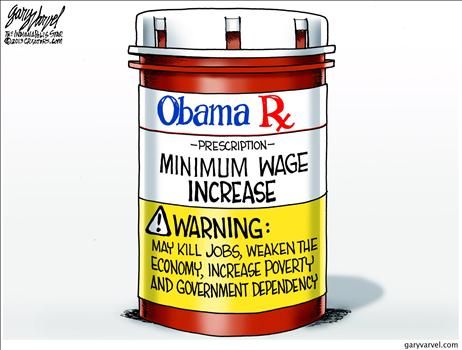


















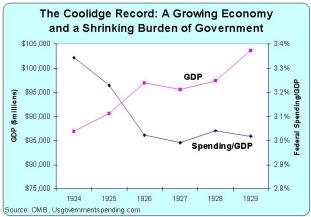


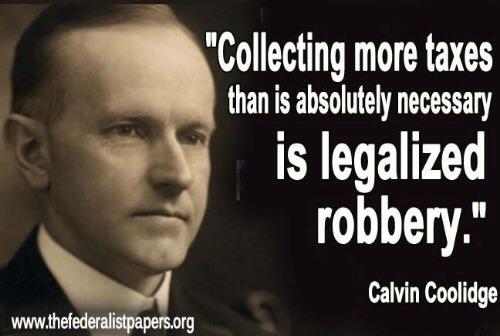


 The Daily Hatch
