What a blessing to be a member of Bellevue Baptist from 1975 to 1983 and participate in many of those years in the Bellevue Baptist Singing Christmas Tree. Jim Whitmire always did a great job of planning and directing and Adrian Rogers always did a super job with the short concise presentation of the gospel presentation. Today Bellevue has continued that tradition with their present pastor Steve Gaines and the Singing Christmas Tree has marched on through the years but it could have not been possible without the dedication of those in the beginning who made it happen through the Lord’s strength and guiding.
Jim Whitmire pictured below:
Adrian Rogers pastor of Bellevue Baptist 1972-2004
Bellevue Baptist Church Holiday HighLights (1995)
Published on Jul 14, 2013
In 1995, Bellevue celebrated 20 years of the Singing Christmas Tree
Continuing my annual fascination with singing Christmas trees here is Bellevue Baptist Church’s beauty – a 44 footer with 100,000 lights and 300 cast members.
There are few things in life that I enjoy more than singing. My mother was not only an incredible pianist, she had a beautiful soprano voice. My brother Mike and sister Holly inherited her piano abilities, while I inherited her love of singing. Let me back up on that: Anyone who plays the piano knows you DON’T inherit that ability, you work for it!
Through the years I’ve sung at church, funerals, weddings and parties. I enjoy singing most when I’m in the shower! I’m not kidding. No one’s looking! The acoustics are good too.
The funniest moment I’ve ever encountered while singing was when I was in college. A couple of friends of mine were getting married and I was singing The Lords Prayer during the ceremony. That song doesn’t really move along at a very fast pace. The groom was kneeling on the little prayer bench when he turned his head toward me and uttered, “hurry up”. It wasn’t an audible command, but I could read his lips very well. He was in a hurry to finish the ceremony. I almost started laughing during the song.
For five years I sang with The River City Trio, a collection of friends from First Evangelical Church in Memphis. We did mostly Gospel music and sang with an incredible guitarist, Bucky Walters. When one of the trio members moved out of town several years ago that opportunity came to a halt. But as they say, there are seasons to life and that season was over.
Our family started attending Bellevue Baptist Church four years ago and I decided to join their choir. I have always admired their professionalism and dedication to excellence. That choir has really become my community of friends.
A former tenor, my voice has changed through the years and I’m very comfortable singing baritone or bass these days. I had the opportunity to sing in the Pit Choir during this year’s performance of The Singing Christmas Tree which just concluded a five night run on December 15th. Pit Choir provides a little extra behind the scenes vocal support. The difference between on stage and off stage–when you’re off stage you have more time to visit and partake of the various snacks that seem readily available during this time of year.
I also had the opportunity to sing in one short scene on stage. I sang in a barber shop quartet with several of my friends, Michael Fields, Lynn Laughter and Len Causie. It took us a couple of nights to deal with struggling voices, but once healing kicked in, I thought it came off very well. We had a wonderful time together and the Pit Choir made some good memories.
The holidays are fast approaching and for our family the Singing Christmas Tree at Bellevue Baptist Church in Memphis, TN is pretty much a tradition. The production is AMAZING! I really don’t know how Broadway could top it.
We received our brochures in the mail yesterday and the story line this year is about an orphanage and is set in 1912 in New York. I cry every year already so the thought of orphaned children is a sure sign to stash the kleenex in my purse.
The nativity scene gets me every time. They go to great lengths to make it as realistic as possible.
It’s absolutely breath taking and for me, it sets the tone of the season.
I look forward to it every year.
I have to say..the angels flying over the audience is one of my favorite parts. I guess it’s the kid in me.
Don’t miss it..go to their website and purchase your tickets..you’ll be glad you did.
Mine are already on their way!
(All photos above were taken by Bellevue Baptist Church)
Uploaded by IBWIV on May 18, 2010 Two scenes from the annual Easter production by Deep Creek Baptist where I serve as Tech Director and video editor. Equipment used: Canon HD cameras, Panasonic switcher, Blackmagic Decklink capture, Final Cut Express editing. Live singers and orchestra recorded through a Yamaha DM2000 digital console. _________________ I got […]
Below is some info I got off of their website: About Year of the Bible During all of 2012, Hickory Grove Baptist Church is embarking on a journey through all of God’s Word, bringing clarity to the Bible – one book, one chapter, one word at a time – in order to understand how it relates […]
This below from the pastor blog (Rob Zinn): 03-12-12 A Right View of Repentance “And we know that the judgment of God rightly falls upon those who practice such things. 3 But do you suppose this, O man, when you pass judgment on those who practice such things and do the same yourself, that you […]
I got this info from their website: Dr. J. Kie Bowman has served as Senior Pastor since joining the Hyde Park Baptist Church staff in 1997. In this position, he serves as the pastoral leader of all ministries of the church. Born in Fairbanks, Alaska in 1956, Dr. Bowman accepted Jesus Christ as a teenager […]
I grew up at Bellevue Baptist in Memphis where Adrian Rogers was the pastor and he used to have Jack Taylor the pastor of Castle Hills First Baptist Church in to speak and the message was always very practical and helpful. Also our youth director, Dan Carter, came from Castle Hills First Baptist Church and […]
Uploaded by ProLifeOnCampus on Jan 29, 2011 The Miracle of Life by Valley Baptist Church of Bakersfield, California _______ Here is some info from their website: What We Believe Valley Baptist Church is affiliated with the Southern Baptist Convention. Valley Baptist, as a church, remains autonomous from the convention. Each church directs its own affairs apart from […]
I grew up at Bellevue Baptist Church in Memphis and Adrian Rogers was my pastor. Therefore, I took notice of this news story below. On the whole, this was not a great week for the Southern Baptist Convention, as one of its leaders appeared to pander to the homosexual lobby and the convention itself pandered […]
________________ Does God Exist? Thomas Warren vs. Antony Flew Published on Jan 2, 2014 Date: September 20-23, 1976 Location: North Texas State University Christian debater: Thomas B. Warren Atheist debater: Antony G.N. Flew For Thomas Warren: http://www.warrenapologeticscenter.org/______________________ Antony Flew and his conversion to theism Uploaded on Aug 12, 2011 Antony Flew, a well known […]
_________ Carl Sagan vs William Lane Craig (Part 1): Cosmos Is, Was, Will Be? Published on Mar 17, 2014 William Lane Craig shows despite Carl Sagan’s self-identity as an agnostic, his viewpoint is really atheistic and naturalistic, especially if you claim “The cosmos is all that is, or ever was, or ever will be.” Furthermore, Craig […]
“Wonderful Christmastime” is a 1979 Christmas song by Paul McCartney. It enjoys significant Christmas time popularity around the world.[1] The song was later added as a bonus track on the 1993 CD reissue of Wings‘ Back to the Egg album.[2]
The track was subsequently added as a bonus track to the 2011 reissue of the McCartney II album, with both full and edited versions included. The track was also mixed in 5.1 surround sound for inclusion on the 2007 DVD release The McCartney Years.
McCartney recorded the song entirely on his own during the sessions for his solo project McCartney II. Although the members of Wings are not on the recording, they do appear in the promotional music video,[3] which was filmed at the Fountain Inn in Ashurst, West Sussex.[4]
Following its release as a stand-alone single in the United Kingdom, “Wonderful Christmastime” peaked at No. 6 on the UK Singles Chart the week ending 5 January 1980.[6] In the United States the single peaked at No. 83 on the Cash Box Top 100 Singles chart and No. 94 on the Record World Singles Chart, but did not chart on the Billboard Hot 100.[7]
In December 1984, the single appeared at No. 10 for two weeks on Billboard‘s Christmas singles chart.[8] It also reached No. 29 on Billboard‘s weekly Hot Adult Contemporary Tracks chart in early January 1996.[8]
The song continues to receive substantial airplay every year, although some music critics consider it to be one of McCartney’s poorest compositions.[9][10][11] Beatles author Robert Rodriguez has written of “Wonderful Christmastime”: “Love it or hate it, few songs within the McCartney oeuvre have provoked such strong reactions.”[10]
Including royalties from cover versions, it is estimated that McCartney makes $400,000 a year from this song, which puts its cumulative earnings at near $15 million.[12]
Demi Lovato did a cover on the 2008 All Wrapped Up album. This version also appears on the 2012 compilation album Now That’s What I Call Today’s Christmas and in trailers for the 2013 film A Madea Christmas.
Eli Young Band covered the song on the 2011 compilation The Country Christmas Collection. Their version peaked at number 33 on the BillboardHot Country Songs chart in January 2012.
The Shins covered the song for the Starbucks 2012 holiday cover album, Holidays Rule (McCartney also appeared on this album).
Chip Madinger & Mark Easter, Eight Arms to Hold You: The Solo Beatles Compendium, 44.1 Productions (Chesterfield, MO, 2000; ISBN 0-615-11724-4), p. 251.
Chip Madinger & Mark Easter, Eight Arms to Hold You: The Solo Beatles Compendium, 44.1 Productions (Chesterfield, MO, 2000; ISBN 0-615-11724-4), p. 254.
__ Bob Dylan Press Conference 1965 Part 2 This is a tribute to Keith Green who died 32 years ago today!!! On July 28, 1983 I was sitting by the radio when CBS radio news came on and gave the shocking news that Keith Green had been killed by an airplane crash in Texas with […]
Bob Dylan Press Conference 1965 Part 1 ___ Bob Dylan played on one of Keith Green’s last albums and on the 6:19 min mark of part 5 it shows Bob Dylan: The Keith Green Story pt 5/7 The Keith Green Story pt 3/7 Keith Green had a major impact on me back in 1978 […]
________ Quinton Aaron of “The Blindside” talks “Greater” and the faith and character of Brandon Burlsworth Published on Oct 28, 2015 Quinton Aaron, star of “The Blindside”, discusses why he is so proud to be a part of “Greater”, and talks about the faith and character of Brandon Burlsworth, the greatest walk-on in college football […]
MUSIC MONDAY “Foreigner Top 10 Songs” Part 3 Top 10 Foreigner Songs By Matt Wardlaw Elsa, Getty Images ‘Waiting for a Girl Like You’ From: ‘4’ (1981) Mick Jones calls “Waiting” the “song that wrote itself,” telling Classic Rock that he felt like the “conduit” for the track and that “something was coming down through […]
MUSIC MONDAY “Foreigner Top 10 Songs” Part 2 Top 10 Foreigner Songs By Matt Wardlaw Elsa, Getty Images 7 ‘Feels Like the First Time’ From: ‘Foreigner’ (1977) “Feels Like the First Time” is a pretty genius name for your first single, and it certainly paid plenty of dividends for Foreigner, striking the Top Five. For […]
__ MUSIC MONDAY “Foreigner Top 10 Songs” Part 1 Top 10 Foreigner Songs By Matt Wardlaw Elsa, Getty Images Read More: Top 10 Foreigner Songs | http://ultimateclassicrock.com/top-10-foreigner-songs/?trackback=tsmclip Foreigner‘s lone remaining founding member, guitarist Mick Jones, has been at the helm of the legendary American rock group since 1976. But if you’ve seen the band […]
__ Glen Campbell’s Greatest Hits Compilation – Complete Set Related posts: MUSIC MONDAY Washed Out: ‘I wish I could have a 9 to 5 life’ Ernest Greene’s debut album confirms his place at the forefront of the chillwave scene. So why is he so worried? August 22, 2016 – 12:36 am _ Washed Out – Life […]
_ Washed Out – Life Of Leisure (Full Album) | HD Washed Out: ‘I wish I could have a 9 to 5 life’ Ernest Greene’s debut album confirms his place at the forefront of the chillwave scene. So why is he so worried? Ernest Greene, aka Washed Out: ‘At no point was I actively […]
__ Washed Out – Within and Without (Full Album) Washed Out’s Ernest Greene Finds Fulfillment in 9-to-5 Grind, ‘Portlandia’ Fame Laura Ferreiro Live Nation•August 27, 2014 On Monday, Sept. 1 at 7:45 p.m. PT/10:45 p.m. ET, Yahoo Live will live stream Washed Out’s concert from First Avenue in Minneapolis. Tune in HERE to watch! Anyone […]
__ Washed Out – Feel it all around Washed Out From Wikipedia, the free encyclopedia “Ernest Greene” redirects here. For the member of the Little Rock Nine, see Ernest Green. This article is about the musician. For the film, see Washed Out (film). Washed Out Washed Out performing in October 2009 Background information Birth name […]
The U.S. Supreme Court indicated it had no interest in intervening in any election result challenge by President Donald Trump’s campaign before the constitutionally mandated swearing-in date, giving Pennsylvania officials until two days after Joe Biden’s scheduled inauguration to respond to the latest lawsuit.
The court has turned away other challenges – such as one out of Texas and joined by 17 other states – on procedural grounds such as “standing,” or the claim of harm. The most recent case out of Pennsylvania disputed Pennsylvania’s Secretary of State’s Kathy Boockvar’s decisions – upheld by the state Supreme Court – that loosened state law with regards to signature verification, canvassing observations and voter requirements on ballots.
“As described above, non-legislative officials, oftentimes at the instigation of partisan third parties, ignored or significantly altered and thereby violated state election law, including, most tremblingly, laws enacted to minimize the risk of fraud in mail voting and thereby protect the integrity of the election process,” the Trump campaign lawsuit reads.
“The decisions of the Pennsylvania Supreme Court, an elected body, also raised serious concerns whether these were partisan attempts to assist the Democratic candidate whose campaign strategy of utilizing mail ballots was well publicized, in comparison to President’s Trump’s well-known strategy to encourage in-person voting.”
The U.S. Supreme Court split 4-4 in October on whether to block another ruling by the Pennsylvania Supreme Court regarding late mail-in ballots, allowing for the Pennsylvania court’s ruling to stand.
The Trump campaign had asked the U.S. Supreme Court to make Boockvar and others named in the latest suit respond by Wednesday and issue a ruling by Jan. 6, the date Congress is set to vote on whether to certify the Electoral College results.
Supporters of the president gather Friday outside the Supreme Court, which later declined to hear a case seeking to overturn the election results in four states. (Photo: Stefani Reynolds/Getty Images)
In a dramatic blow to President Donald Trump’s attempts to challenge the unofficial election results, the Supreme Court on Friday evening rejected a Texas lawsuit seeking to overturn the outcome in four battleground states.
The high court’s one-page opinion said Texas did not have standing to sue over election procedures in Georgia, Michigan, Pennsylvania, and Wisconsin, four closely contested states that Trump won in 2016 but that his Democratic challenger, former Vice President Joe Biden, appeared to win five weeks ago.
Justices Clarence Thomas and Samuel Alito made a nominal dissent in holding that any state has the standing to sue another state, but made clear that doesn’t mean they would rule in favor of Texas.
The left is actively working to undermine the integrity of our elections. Read the plan to stop them now. Learn more now >>
The Trump campaign had filed multiple lawsuits challenging the outcome in the four states as well as in Nevada and Arizona.
By Friday, 18 other states had joined Texas’ lawsuit through friend-of-the-court briefs filed at the Supreme Court. The Trump campaign also supported Texas, as did House Minority Leader Kevin McCarthy, R-Calif., and at least 120 other House Republicans.
In an unsigned opinion, the high court said:
The State of Texas’s motion for leave to file a bill of complaint is denied for lack of standing under Article III of the Constitution. Texas has not demonstrated a judicially cognizable interest in the manner in which another state conducts its elections. All other pending motions are dismissed as moot.
Alito issued a statement, which Thomas joined:
In my view, we do not have discretion to deny the filing of a bill of complaint in a case that falls within our original jurisdiction. See Arizona v. California, 589 U. S. ___ (Feb. 24, 2020) (Thomas, J., dissenting). I would therefore grant the motion to file the bill of complaint but would not grant other relief, and I express no view on any other issue.
Texas Attorney General Ken Paxton, a Republican, announced Tuesday that his state was seeking to take the four states to the Supreme Court. Each of the four went for Trump in 2016.
The 18 states that joined Texas in the case include Alabama, Arizona, Arkansas, Florida, Indiana, Kansas, Louisiana, Mississippi, Missouri, Montana, Nebraska, North Dakota, Oklahoma, South Carolina, South Dakota, Tennessee, Utah, and West Virginia.
Earlier Friday, Trump had tweeted about the case.
The Texas-led lawsuit was an attempt to “disregard the will of the people” and “tear at the fabric of our Constitution,” Michigan Attorney General Dana Nessel, Pennsylvania Attorney General Josh Shapiro, and Wisconsin Attorney General Josh Kaul, all Democrats, said in a joint statement.
Texas alleged that Georgia, Michigan, Pennsylvania, and Wisconsin violated the rights of Texas voters when they changed election ruleswithout authorization by their respective state legislatures.
The suit argued that each of the four states violated the Electors Clause of the Constitution (Article II, Section 1, Clause 2), which Texas argued vests “state legislatures with plenary authority regarding the appointment of presidential electors.”
The lawsuit asked the Supreme Court for a declaratory judgment that Pennsylvania, Michigan, Georgia, and Wisconsin violated election law and thus their electoral votes—as they currently stand—should not be counted.
TITUSVILLE, FL – Placing three justices on the U.S. Supreme Court is among President Trump’s greatest accomplishments during his first term in office, according to Father Frank Pavone, National Director of Priests for Life.
“Tonight’s confirmation of Justice Amy Coney Barrett was a highlight of the most successful four years in office for any U.S. president,” Father Pavone said. “Justice Barrett is a brilliant scholar and will be another vital originalist voice on the Court.”
Father Pavone said that after the confirmation of President Trump’s second nominee, Justice Brett Kavanaugh, in 2018, the name that came up most frequently among pro-life Americans for candidates they would like to see nominated to fill the next vacancy on the court was Amy Coney Barrett.
“Justice Barrett is literally a dream that today became a reality,” he said.
Priests for Life (EndAbortion.US) is the world’s largest Catholic pro-life organization dedicated exclusively to ending abortion.
The issue of Abortion is a very central one in our culture today and I will do a series of posts on my correspondence with Carl Sagan concerning this issue.
Unplanned Official Trailer – In Theaters March 29
___________
I wrote Carl Sagan a letter on 8-30-95 about abortion and he responded by sending me a copy of his article on abortion. In my letter I included this article below by Greg Koukl.
What makes a person a person? Does a fetus qualify?
I’m asking for people just to work hard to get some clarity on this issue. It’s not that hard. If I’ve heard this once, I’ve heard it a dozen times: “This is a difficult issue. It’s a confusing issue. It’s hard to come to a real, proper understanding.” The abortion issue is not a difficult issue. It is not a confusing issue. It is a very simple issue when it comes to the facts themselves. And I’m trying to urge people to have some clarity based on what is true here and what is moral and right; not based on what we want for ourselves. That’s what makes these kind of issues complicated. The truth is self-evident but we don’t like what is true because it makes a moral demand upon us, and that moral demand frequently is uncomfortable and inconveniencing. When we face discomfort and inconvenience, then we want to change the rules; and we try to change the rules by using contorted, disfigured arguments and we claim that it’s a difficult issue. It’s not difficult at all.
I talked with a young lady last night who made the point that she
thinks that. She used the illustration of snapshots. If you took a photo
of the developing fetus at every stage of development you would see
something different; therefore the fetus is a different thing at each
different stage of development. Well, that’s an idea, I guess. That’s a
way of looking at it but it doesn’t make any sense whatsoever. It
doesn’t mean because you can take a picture of me at six, and ten, and
twelve, and twenty-four, and forty-four that I am somehow a different
being. I’m the same being talking on this show right now that graduated
from Simon Greenleaf University two weeks ago, and graduated from York
High School in 1968, even though I don’t look the same as I did back
then. I still have my girlish figure, but I look different.
Does that mean I’m a different person? I’m a different being? All
these gradualism arguments fail because they don’t have a clear fix on
what it means for a thing to be a thing. It sounds like double talk, but
it’s not double talk at all. It’s very simple. A thing is itself and
not something else, and it remains itself as long as it exists.
I am Greg Koukl. I was Greg Koukl when I was born, and I’ll be Greg
Koukl when I die. I am Greg Koukl from beginning to end. I am Greg Koukl
the whole time through even though my body changes form. Beings don’t
transform into different beings. They are what they are.
When does an acorn become an oak? Well, no one knows for sure. Of course we do! An acorn never becomes an oak. An acorn is
an oak. Period. That’s what an acorn is. It’s an oak in immature form.
It can become a mature oak tree. But young or old, it’s an oak. This is
not a matter of opinion, folks. When we get down to it, acorn doesn’t
describe what a thing is, in a sense; it describes the stage of
development of that particular thing. It’s kind of like asking what is a
teenager? Well, a teenager isn’t a particular thing, like there is a
being called teenager. What a teenager is a description of the stage of
development of the human being. It is a human at a certain age. An acorn
is an oak at a certain age. And a fetus is a human being at a certain
age.
Now some people try to get around this by saying, “Okay, I’ll give
in. An unborn child is a human being, but it’s not a person.” And I have
a very simple Columbo for you in that situation. It’s very, very easy
to use. When someone lays this on you, ask them a very fair question:
What’s the difference? They will say absolutely nothing. There will be a
long, embarrassing silence and don’t you dare open your mouth because
what this person has just said is that they are willing to sacrifice the
life of a human child because it’s not a person, yet they are not in
any position whatsoever to tell you the difference between the two.
It’s kind of like saying why are you killing those children? “Well, it’s because they don’t have a high enough I.Q.” Well, how high of an I.Q. do you have to have to live? “Frankly, I don’t have the faintest idea, but I know these kids are pretty dumb.” What is that? That is exactly what this response implies. Nonpersons shouldn’t be allowed to live. What’s a nonperson? “I don’t know, but they’re not one of them.” If a person is willing to sacrifice the life of a child based on its nonpersonhood, it seems to me they ought to have a fairly clear idea of what personhood actually is. But of course nobody does in a clear fashion. It becomes arbitrary at that point.
(Frank Beckwith has written many good pro-life articles)
The fact is that human beings are persons. They are personal kinds of beings whether they are in an early stage of development or a later stage of development. That’s what a human is and it remains itself from the beginning to end. It’s very simple. It’s not hard. It’s not complex. We’ve known it for ages. This personhood argument is only 10-20 years old, since Roe vs. Wade, Frank Beckwithsays. Before then there was never a personhood argument. It was introduced after Roe v. Wade to make the decision to have an abortion a little more palatable. The same thing happened with Dred Scott. He’s not a person, he’s black. He’s not a person, though he’s a human technically; but that’s just a little detail. It’s not significant.
For the complete text, including illustrations, introductory quote,
footnotes, and commentary on the reaction to the originally published
article see Billions and Billions.
The issue had been decided years ago. The court had chosen the middle
ground. You’d think the fight was over. Instead, there are mass
rallies, bombings and intimidation, murders of workers at abortion
clinics, arrests, intense lobbying, legislative drama, Congressional
hearings, Supreme Court decisions, major political parties almost
defining themselves on the issue, and clerics threatening politicians
with perdition. Partisans fling accusations of hypocrisy and murder. The
intent of the Constitution and the will of God are equally invoked.
Doubtful arguments are trotted out as certitudes. The contending
factions call on science to bolster their positions. Families are
divided, husbands and wives agree not to discuss it, old friends are no
longer speaking. Politicians check the latest polls to discover the
dictates of their consciences. Amid all the shouting, it is hard for the
adversaries to hear one another. Opinions are polarized. Minds are
closed.
Is it wrong to abort a pregnancy? Always? Sometimes? Never? How do we
decide? We wrote this article to understand better what the contending
views are and to see if we ourselves could find a position that would
satisfy us both. Is there no middle ground? We had to weigh the
arguments of both sides for consistency and to pose test cases, some of
which are purely hypothetical. If in some of these tests we seem to go
too far, we ask the reader to be patient with us–we’re trying to stress
the various positions to the breaking point to see their weaknesses and
where they fail.
In contemplative moments, nearly everyone recognizes that the issue
is not wholly one-sided. Many partisans of differing views, we find,
feel some disquiet, some unease when confronting what’s behind the
opposing arguments. (This is partly why such confrontations are
avoided.) And the issue surely touches on deep questions: What are our
responses to one another? Should we permit the state to intrude into the
most intimate and personal aspects of our lives? Where are the
boundaries of freedom? What does it mean to be human?
Of the many actual points of view, it is widely held–especially in
the media, which rarely have the time or the inclination to make fine
distinctions–that there are only two: “pro-choice” and “pro-life.” This
is what the two principal warring camps like to call themselves, and
that’s what we’ll call them here. In the simplest characterization, a
pro-choicer would hold that the decision to abort a pregnancy is to be
made only by the woman; the state has no right to interfere. And a
pro-lifer would hold that, from the moment of conception, the embryo or
fetus is alive; that this life imposes on us a moral obligation to
preserve it; and that abortion is tantamount to murder. Both
names–pro-choice and pro-life–were picked with an eye toward influencing
those whose minds are not yet made up: Few people wish to be counted
either as being against freedom of choice or as opposed to life. Indeed,
freedom and life are two of our most cherished values, and here they
seem to be in fundamental conflict.
Let’s consider these two absolutist positions in turn. A newborn baby
is surely the same being it was just before birth. There ‘s good
evidence that a late-term fetus responds to sound–including music, but
especially its mother’s voice. It can suck its thumb or do a somersault.
Occasionally, it generates adult brain-wave patterns. Some people claim
to remember being born, or even the uterine environment. Perhaps there
is thought in the womb. It’s hard to maintain that a transformation to
full personhood happens abruptly at the moment of birth. Why, then,
should it be murder to kill an infant the day after it was born but not
the day before?
As a practical matter, this isn’t very important: Less than 1 percent
of all tabulated abortions in the United States are listed in the last
three months of pregnancy (and, on closer investigation, most such
reports turn out to be due to miscarriage or miscalculation). But
third-trimester abortions provide a test of the limits of the pro-choice
point of view. Does a woman’s “innate right to control her own body”
encompass the right to kill a near-term fetus who is, for all intents
and purposes, identical to a newborn child?
We believe that many supporters of reproductive freedom are troubled
at least occasionally by this question. But they are reluctant to raise
it because it is the beginning of a slippery slope. If it is
impermissible to abort a pregnancy in the ninth month, what about the
eighth, seventh, sixth … ? Once we acknowledge that the state can
interfere at any time in the pregnancy, doesn’t it follow that the state can interfere at all times?
This conjures up the specter of predominantly male, predominantly
affluent legislators telling poor women they must bear and raise alone
children they cannot afford to bring up; forcing teenagers to bear
children they are not emotionally prepared to deal with; saying to women
who wish for a career that they must give up their dreams, stay home,
and bring up babies; and, worst of all, condemning victims of rape and
incest to carry and nurture the offspring of their assailants.
Legislative prohibitions on abortion arouse the suspicion that their
real intent is to control the independence and sexuality of women…
And yet, by consensus, all of us think it proper that there be
prohibitions against, and penalties exacted for, murder. It would be a
flimsy defense if the murderer pleads that this is just between him and
his victim and none of the government’s business. If killing a fetus is
truly killing a human being, is it not the duty of the state to prevent it? Indeed, one of the chief functions of government is to protect the weak from the strong.
If we do not oppose abortion at some stage of pregnancy, is
there not a danger of dismissing an entire category of human beings as
unworthy of our protection and respect? And isn’t that dismissal the
hallmark of sexism, racism, nationalism, and religious fanaticism?
Shouldn’t those dedicated to fighting such injustices be scrupulously
careful not to embrace another?
For the complete text, including illustrations, introductory quote,
footnotes, and commentary on the reaction to the originally published
article see Billions and Billions.
There is no right to life in any society on Earth today, nor has
there been at any former time… : We raise farm animals for slaughter;
destroy forests; pollute rivers and lakes until no fish can live there;
kill deer and elk for sport, leopards for the pelts, and whales for
fertilizer; entrap dolphins, gasping and writhing, in great tuna nets;
club seal pups to death; and render a species extinct every day. All
these beasts and vegetables are as alive as we. What is (allegedly)
protected is not life, but human life.
And even with that protection, casual murder is an urban commonplace,
and we wage “conventional” wars with tolls so terrible that we are,
most of us, afraid to consider them very deeply… That protection, that
right to life, eludes the 40,000 children under five who die on our
planet each day from preventable starvation, dehydration, disease, and
neglect.
Those who assert a “right to life” are for (at most) not just any
kind of life, but for–particularly and uniquely—human life. So they too,
like pro-choicers, must decide what distinguishes a human being from
other animals and when, during gestation, the uniquely human
qualities–whatever they are–emerge.
Despite many claims to the contrary, life does not begin at
conception: It is an unbroken chain that stretches back nearly to the
origin of the Earth, 4.6 billion years ago. Nor does human life
begin at conception: It is an unbroken chain dating back to the origin
of our species, hundreds of thousands of years ago. Every human sperm
and egg is, beyond the shadow of a doubt, alive. They are not human
beings, of course. However, it could be argued that neither is a
fertilized egg.
In some animals, an egg develops into a healthy adult without benefit
of a sperm cell. But not, so far as we know, among humans. A sperm and
an unfertilized egg jointly comprise the full genetic blueprint for a
human being. Under certain circumstances, after fertilization, they can
develop into a baby. But most fertilized eggs are spontaneously
miscarried. Development into a baby is by no means guaranteed. Neither a
sperm and egg separately, nor a fertilized egg, is more than a potential baby or a potential adult.
So if a sperm and egg are as human as the fertilized egg produced by
their union, and if it is murder to destroy a fertilized egg–despite the
fact that it’s only potentially a baby–why isn’t it murder to destroy a sperm or an egg?
Hundreds of millions of sperm cells (top speed with tails lashing:
five inches per hour) are produced in an average human ejaculation. A
healthy young man can produce in a week or two enough spermatozoa to
double the human population of the Earth. So is masturbation mass
murder? How about nocturnal emissions or just plain sex? When the
unfertilized egg is expelled each month, has someone died? Should we
mourn all those spontaneous miscarriages? Many lower animals can be
grown in a laboratory from a single body cell. Human cells can be
cloned… In light of such cloning technology, would we be committing mass
murder by destroying any potentially clonable cells? By shedding a drop
of blood?
All human sperm and eggs are genetic halves of “potential” human
beings. Should heroic efforts be made to save and preserve all of them,
everywhere, because of this “potential”? Is failure to do so immoral or
criminal? Of course, there’s a difference between taking a life and
failing to save it. And there’s a big difference between the probability
of survival of a sperm cell and that of a fertilized egg. But the
absurdity of a corps of high-minded semen-preservers moves us to wonder
whether a fertilized egg’s mere “potential” to become a baby really does
make destroying it murder.
Opponents of abortion worry that, once abortion is permissible
immediately after conception, no argument will restrict it at any later
time in the pregnancy. Then, they fear, one day it will be permissible
to murder a fetus that is unambiguously a human being. Both pro-choicers
and pro-lifers (at least some of them) are pushed toward absolutist
positions by parallel fears of the slippery slope.
Another slippery slope is reached by those pro-lifers who are willing
to make an exception in the agonizing case of a pregnancy resulting
from rape or incest. But why should the right to live depend on the
circumstances of conception? If the same child were to result, can the
state ordain life for the offspring of a lawful union but death for one
conceived by force or coercion? How can this be just? And if exceptions
are extended to such a fetus, why should they be withheld from any other
fetus? This is part of the reason some pro-lifers adopt what many
others consider the outrageous posture of opposing abortions under any
and all circumstances–only excepting, perhaps, when the life of the
mother is in danger.
By far the most common reason for abortion worldwide is birth
control. So shouldn’t opponents of abortion be handing out
contraceptives and teaching school children how to use them? That would
be an effective way to reduce the number of abortions. Instead, the
United States is far behind other nations in the development of safe and
effective methods of birth control–and, in many cases, opposition to
such research (and to sex education) has come from the same people who
oppose abortions.continue on to Part 3
For the complete text, including illustrations, introductory quote,
footnotes, and commentary on the reaction to the originally published
article see Billions and Billions.
The attempt to find an ethically sound and unambiguous judgment on
when, if ever, abortion is permissible has deep historical roots. Often,
especially in Christian tradition, such attempts were connected with
the question of when the soul enters the body–a matter not readily
amenable to scientific investigation and an issue of controversy even
among learned theologians. Ensoulment has been asserted to occur in the
sperm before conception, at conception, at the time of “quickening”
(when the mother is first able to feel the fetus stirring within her),
and at birth. Or even later.
Different religions have different teachings. Among hunter-gatherers,
there are usually no prohibitions against abortion, and it was common
in ancient Greece and Rome. In contrast, the more severe Assyrians
impaled women on stakes for attempting abortion. The Jewish Talmud
teaches that the fetus is not a person and has no rights. The Old and
New Testaments–rich in astonishingly detailed prohibitions on dress,
diet, and permissible words–contain not a word specifically prohibiting
abortion. The only passage that’s remotely relevant (Exodus 21:22)
decrees that if there’s a fight and a woman bystander should
accidentally be injured and made to miscarry, the assailant must pay a
fine.
Neither St. Augustine nor St. Thomas Aquinas considered early-term
abortion to be homicide (the latter on the grounds that the embryo
doesn’t look human). This view was embraced by the Church in
the Council of Vienne in 1312, and has never been repudiated. The
Catholic Church’s first and long-standing collection of canon law
(according to the leading historian of the Church’s teaching on
abortion, John Connery, S.J.) held that abortion was homicide only after
the fetus was already “formed”–roughly, the end of the first trimester.
But when sperm cells were examined in the seventeenth century by the
first microscopes, they were thought to show a fully formed human being.
An old idea of the homunculus was resuscitated–in which within each
sperm cell was a fully formed tiny human, within whose testes were
innumerable other homunculi, etc., ad infinitum. In part
through this misinterpretation of scientific data, in 1869 abortion at
any time for any reason became grounds for excommunication. It is
surprising to most Catholics and others to discover that the date was
not much earlier.
From colonial times to the nineteenth century, the choice in the
United States was the woman’s until “quickening.” An abortion in the
first or even second trimester was at worst a misdemeanor. Convictions
were rarely sought and almost impossible to obtain, because they
depended entirely on the woman’s own testimony of whether she had felt
quickening, and because of the jury’s distaste for prosecuting a woman
for exercising her right to choose. In 1800 there was not, so far as is
known, a single statute in the United States concerning abortion.
Advertisements for drugs to induce abortion could be found in virtually
every newspaper and even in many church publications–although the
language used was suitably euphemistic, if widely understood.
But by 1900, abortion had been banned at any time in pregnancy by
every state in the Union, except when necessary to save the woman’s
life. What happened to bring about so striking a reversal? Religion had
little to do with it. Drastic economic and social conversions were
turning this country from an agrarian to an urban-industrial society.
America was in the process of changing from having one of the highest
birthrates in the world to one of the lowest. Abortion certainly played a
role and stimulated forces to suppress it.
One of the most significant of these forces was the medical
profession. Up to the mid-nineteenth century, medicine was an
uncertified, unsupervised business. Anyone could hang up a shingle and
call himself (or herself) a doctor. With the rise of a new,
university-educated medical elite, anxious to enhance the status and
influence of physicians, the American Medical Association was formed. In
its first decade, the AMA began lobbying against abortions performed by
anyone except licensed physicians. New knowledge of embryology, the
physicians said, had shown the fetus to be human even before quickening.
Their assault on abortion was motivated not by concern for the health
of the woman but, they claimed, for the welfare of the fetus. You had
to be a physician to know when abortion was morally justified, because
the question depended on scientific and medical facts understood only by
physicians. At the same time, women were effectively excluded from the
medical schools, where such arcane knowledge could be acquired. So, as
things worked out, women had almost nothing to say about terminating
their own pregnancies. It was also up to the physician to decide if the
pregnancy posed a threat to the woman, and it was entirely at his
discretion to determine what was and was not a threat. For the rich
woman, the threat might be a threat to her emotional tranquillity or
even to her lifestyle. The poor woman was often forced to resort to the
back alley or the coat hanger.
This was the law until the 1960s, when a coalition of individuals and
organizations, the AMA now among them, sought to overturn it and to
reinstate the more traditional values that were to be embodied in Roe v. Wade.continue on to Part 4
If you deliberately kill a human being, it’s called murder. If you
deliberately kill a chimpanzee–biologically, our closest relative,
sharing 99.6 percent of our active genes–whatever else it is, it’s not
murder. To date, murder uniquely applies to killing human beings.
Therefore, the question of when personhood (or, if we like, ensoulment)
arises is key to the abortion debate. When does the fetus become human?
When do distinct and characteristic human qualities emerge?
We recognize that specifying a precise moment will overlook
individual differences. Therefore, if we must draw a line, it ought to
be drawn conservatively–that is, on the early side. There are people who
object to having to set some numerical limit, and we share their
disquiet; but if there is to be a law on this matter, and it is to
effect some useful compromise between the two absolutist positions, it
must specify, at least roughly, a time of transition to personhood.
Every one of us began from a dot. A fertilized egg is roughly the
size of the period at the end of this sentence. The momentous meeting of
sperm and egg generally occurs in one of the two fallopian tubes. One
cell becomes two, two become four, and so on—an exponentiation of base-2
arithmetic. By the tenth day the fertilized egg has become a kind of
hollow sphere wandering off to another realm: the womb. It destroys
tissue in its path. It sucks blood from capillaries. It bathes itself in
maternal blood, from which it extracts oxygen and nutrients. It
establishes itself as a kind of parasite on the walls of the uterus.By
the third week, around the time of the first missed menstrual period,
the forming embryo is about 2 millimeters long and is developing various
body parts. Only at this stage does it begin to be dependent on a
rudimentary placenta. It looks a little like a segmented worm.By the end
of the fourth week, it’s about 5 millimeters (about 1/5 inch) long.
It’s recognizable now as a vertebrate, its tube-shaped heart is
beginning to beat, something like the gill arches of a fish or an
amphibian become conspicuous, and there is a pronounced tail. It looks
rather like a newt or a tadpole. This is the end of the first month
after conception.By the fifth week, the gross divisions of the brain can
be distinguished. What will later develop into eyes are apparent, and
little buds appear—on their way to becoming arms and legs.By the sixth
week, the embryo is 13 millimeteres (about ½ inch) long. The eyes are
still on the side of the head, as in most animals, and the reptilian
face has connected slits where the mouth and nose eventually will be.By
the end of the seventh week, the tail is almost gone, and sexual
characteristics can be discerned (although both sexes look female). The
face is mammalian but somewhat piglike.By the end of the eighth week,
the face resembles that of a primate but is still not quite human. Most
of the human body parts are present in their essentials. Some lower
brain anatomy is well-developed. The fetus shows some reflex response to
delicate stimulation.By the tenth week, the face has an unmistakably
human cast. It is beginning to be possible to distinguish males from
females. Nails and major bone structures are not apparent until the
third month.By the fourth month, you can tell the face of one fetus from
that of another. Quickening is most commonly felt in the fifth month.
The bronchioles of the lungs do not begin developing until approximately
the sixth month, the alveoli still later.
So, if only a person can be murdered, when does the fetus attain
personhood? When its face becomes distinctly human, near the end of the
first trimester? When the fetus becomes responsive to stimuli–again, at
the end of the first trimester? When it becomes active enough to be felt
as quickening, typically in the middle of the second trimester? When
the lungs have reached a stage of development sufficient that the fetus
might, just conceivably, be able to breathe on its own in the outside
air?
The trouble with these particular developmental milestones is not
just that they’re arbitrary. More troubling is the fact that none of
them involves uniquely humancharacteristics–apart from the
superficial matter of facial appearance. All animals respond to stimuli
and move of their own volition. Large numbers are able to breathe. But
that doesn’t stop us from slaughtering them by the billions. Reflexes
and motion are not what make us human.
Other animals have advantages over us–in speed, strength, endurance,
climbing or burrowing skills, camouflage, sight or smell or hearing,
mastery of the air or water. Our one great advantage, the secret of our
success, is thought–characteristically human thought. We are able to
think things through, imagine events yet to occur, figure things out.
That’s how we invented agriculture and civilization. Thought is our
blessing and our curse, and it makes us who we are.
Thinking occurs, of course, in the brain–principally in the top
layers of the convoluted “gray matter” called the cerebral cortex. The
roughly 100 billion neurons in the brain constitute the material basis
of thought. The neurons are connected to each other, and their linkups
play a major role in what we experience as thinking. But large-scale
linking up of neurons doesn’t begin until the 24th to 27th week of
pregnancy–the sixth month.
By placing harmless electrodes on a subject’s head, scientists can
measure the electrical activity produced by the network of neurons
inside the skull. Different kinds of mental activity show different
kinds of brain waves. But brain waves with regular patterns typical of
adult human brains do not appear in the fetus until about the 30th week
of pregnancy–near the beginning of the third trimester. Fetuses younger
than this–however alive and active they may be–lack the necessary brain
architecture. They cannot yet think.
Acquiescing in the killing of any living creature, especially one
that might later become a baby, is troublesome and painful. But we’ve
rejected the extremes of “always” and “never,” and this puts us–like it
or not–on the slippery slope. If we are forced to choose a developmental
criterion, then this is where we draw the line: when the beginning of
characteristically human thinking becomes barely possible.
It is, in fact, a very conservative definition: Regular brain waves
are rarely found in fetuses. More research would help… If we wanted to
make the criterion still more stringent, to allow for occasional
precocious fetal brain development, we might draw the line at six
months. This, it so happens, is where the Supreme Court drew it in
1973–although for completely different reasons.
Its decision in the case of Roe v. Wade changed American law
on abortion. It permits abortion at the request of the woman without
restriction in the first trimester and, with some restrictions intended
to protect her health, in the second trimester. It allows states to
forbid abortion in the third trimester, except when there’s a serious
threat to the life or health of the woman. In the 1989 Webster decision,
the Supreme Court declined explicitly to overturn Roe v. Wade but in effect invited the 50 state legislatures to decide for themselves.
What was the reasoning in Roe v. Wade? There was no legal
weight given to what happens to the children once they are born, or to
the family. Instead, a woman’s right to reproductive freedom is
protected, the court ruled, by constitutional guarantees of privacy. But
that right is not unqualified. The woman’s guarantee of privacy and the
fetus’s right to life must be weighed–and when the court did the
weighing’ priority was given to privacy in the first trimester and to
life in the third. The transition was decided not from any of the
considerations we have been dealing with so far…–not when “ensoulment”
occurs, not when the fetus takes on sufficient human characteristics to
be protected by laws against murder. Instead, the criterion adopted was
whether the fetus could live outside the mother. This is called
“viability” and depends in part on the ability to breathe. The lungs are
simply not developed, and the fetus cannot breathe–no matter how
advanced an artificial lung it might be placed in—until about the 24th
week, near the start of the sixth month. This is why Roe v. Wade permits the states to prohibit abortions in the last trimester. It’s a very pragmatic criterion.
If the fetus at a certain stage of gestation would be viable outside
the womb, the argument goes, then the right of the fetus to life
overrides the right of the woman to privacy. But just what does “viable”
mean? Even a full-term newborn is not viable without a great deal of
care and love. There was a time before incubators, only a few decades
ago, when babies in their seventh month were unlikely to be viable.
Would aborting in the seventh month have been permissible then? After
the invention of incubators, did aborting pregnancies in the seventh
month suddenly become immoral? What happens if, in the future, a new
technology develops so that an artificial womb can sustain a fetus even
before the sixth month by delivering oxygen and nutrients through the
blood–as the mother does through the placenta and into the fetal blood
system? We grant that this technology is unlikely to be developed soon
or become available to many. But if it were available, does it
then become immoral to abort earlier than the sixth month, when
previously it was moral? A morality that depends on, and changes with,
technology is a fragile morality; for some, it is also an unacceptable
morality.
And why, exactly, should breathing (or kidney function, or the
ability to resist disease) justify legal protection? If a fetus can be
shown to think and feel but not be able to breathe, would it be all
right to kill it? Do we value breathing more than thinking and feeling?
Viability arguments cannot, it seems to us, coherently determine when
abortions are permissible. Some other criterion is needed. Again, we
offer for consideration the earliest onset of human thinking as that
criterion.
Since, on average, fetal thinking occurs even later than fetal lung development, we find Roe v. Wade to be a good and prudent decision addressing a complex and difficult issue. With prohibitions on abortion in the last trimester–except in cases of grave medical necessity–it strikes a fair balance between the conflicting claims of freedom and life.What do you think? What have others said about Carl Sagan’s thoughts on
___________________ ______________ Katha Pollitt gives it her
best try to portray abortion in a positive light while Scott Klusendorf
has pointed that “…when the pro-life debate has faltered, it’s because
the focus has been shifted from the real issue: What is the unborn?”
Katha Pollitt “Pro: Reclaiming Abortion Rights” Published on Nov 4, 2014
http://www.politics-prose.com/event/b… […]
By Everette Hatcher III
|
Posted in Francis Schaeffer
|
Edit
|
Comments (0)
SGT. PEPPER’S had a lot of sad stories on it and many of the
stories including people addicted to drugs and alcohol. Who are the
alcoholics on the cover of Sgt. Pepper’s Lonely Hearts Club Band Album
cover? James Joyce, W.C. Fields, and Tony Curtis are three we can start
off with. W.C.Fields’ said, “I only have […]
By Everette Hatcher III
|
Posted in Current Events
|
Edit
|
Comments (0)
I just wanted to note that I have spoken on the phone several
times and corresponded with Dr. Paul D. Simmons who is very much
pro-choice. (He is quoted in the article below.) He actually helped me
write an article to submit to Americans United for the Separation of
Church and State back in the […]
I read in A PROMISED LAND these words about the transition period for Obama/Biden:
“President Bush would end up doing all he could to make the eleven weeks between my election and his departure go smoothly. Every office in the White House provided my team with detailed ‘how to’ manuals. His staffers made themselves available to meet with their successors, answer questions, and even be shadowed as they carried out their duties. The Bush daughters, Barbara and Jenna, by that time young adults, rearranged their schedules to give Malia and Sasha their own tour of the ‘fun’ parts of the White House. I promised myself that when the time came, I would treat my successor the same way.”
How did you and President Obama treat Donald Trump’s transition to power? Also Bush did not say one thing negative about you and President Obama during your time in White House! Did you and President Obama extend the same courtesy that the President who followed you?
Former Vice President Joe Biden speaks prior to the holiday at The Queen theater Dec. 22, 2020, in Wilmington, Delaware. (Photo: Joshua Roberts/Stringer/Getty Images)
After Nov. 3, the meaning of some words and concepts abruptly changed. Have you noticed how new realities have replaced old ones?
Media cross-examination of the president is now an out-of-date idea. The time for gotcha questions has come and gone. Why ask a president whether he is a traitor or a crook when you can focus on his favorite flavor of milkshake or compliment him on his socks?
The old pre-election truth was that new vaccines take years to develop. The new postelection truth is that it’s no big deal to bring out new vaccines in nine months.
Impeaching a first-term president after his first midterm election—on a strictly partisan vote, for political reasons other than the Constitution’s “treason, bribery, or other high crimes and misdemeanors”—is now a terrible idea.
Stand for your principles in 2021—even in the face of Congress, the media, and the radical Left ganging up on conservatives and our values. Learn more now >>
Worse would be to appoint a special counsel to harass a president on unfounded charges of collusion with China. An even scarier notion would be a conservative dream team of partisan lawyers hounding a President Joe Biden—using a 22-month, $40 million blank check.
It would be unprofessional for university psychologists and physicians from a distance to diagnose, in pop fashion, the mental faculties of a President Biden.
Certainly, there would never be talk about Department of Justice officials contemplating wearing a wire as part of an entrapment scheme to remove a President Biden through the 25th Amendment. That would almost constitute a coup attempt.
Almost as bad would be for the holdover FBI director to start “memorializing” his private conversations with Biden on FBI devices. He might then leak such memos to the press—just in case he were to be fired for secretly investigating Biden for “Chinese collusion” and then lying about such a probe.
What happened to the Logan Act? Not long ago it was assumed to be a critically needed guardrail. Wouldn’t it now ensure that presidential transition team members were not calling foreign leaders while Donald Trump is still president? How has it suddenly become a defunct, ossified relic?
Leaking classified material would be about the worst thing government officials could do. Imagine if a Trump holdover, burrowed into the new Biden administration, released a transcript of Biden’s private conversations with the Mexican president or the Australian prime minister.
Such a breach of trust would be almost as bad as a turncoat anti-Biden mole seeking to resist presidential directives. Imagine if this anonymous staffer were given an op-ed in The New York Times to claim that a cadre of old-time Democrats was shocked by Biden’s cognitive decline and resisting his directives.
Is extending security clearances to former high-level officials-turned-cable TV pundits still a bad idea? Who would wish to see, for instance, former Director of National Intelligence John Ratcliffe issuing warnings each night on Fox News? With a wink-and-nod hat tip to his “confidential sources,” Ratcliffe could spin conspiracy theories that Biden is facing bombshell disclosures about his family misadventures with the Chinese.
Is it still important that we keep the tradition of retired high-ranking military officers—all subject to the requirements of the Uniform Code of Military Justice—not disparaging the president?
Who would want former Pentagon officials, some of them serving on the boards of military contractors, warning us that Biden should be removed because of cognitive challenges? Certainly, generals and admirals should not compare a President Biden’s policies to those of Mussolini or the Nazis.
At least “dark money” no longer exists. The old idea of right-wing billionaires pouring money into candidates’ political campaigns was supposedly a dangerous practice. It would be far more civic-minded for left-wing billionaires to pour hundreds of millions of dollars into the coffers of nonpartisan state bureaucracies entrusted with guaranteeing the sanctity of national elections.
And apparently after, not before, an election is the proper time to announce critically important news.
Like the rollout of a safe and effective COVID-19 vaccine?
Like a $900 billion stimulus package?
Like a revised upward Fannie Mae report on the economy?
Like the ties between a Democratic member of the House Intelligence Committee and a suspected Chinese spy?
Like a federal investigation of Biden’s son and his possible profiteering with rich Chinese elites affiliated with China’s government?
To keep track of our brave new American world is easy.
Just consider everything said to be bad by the “Animal Farm” media before Nov. 3 as now good. And remember that everything said to be good two months ago is now actually bad.
(C)2020 Tribune Content Agency, LLC
________
Thank you so much for your time. I know how valuable it is. I also appreciate the fine family that you have and your commitment as a father and a husband.
Sincerely,
Everette Hatcher III, 13900 Cottontail Lane, Alexander, AR 72002, ph 501-920-5733
ABORTION – THE SILENT SCREAM 1 / Extended, High-Resolution Version (with permission from APF). Republished with Permission from Roy Tidwell of American Portrait Films as long as the following credits are shown: VHS/DVDs Available American Portrait Films Call 1-800-736-4567 http://www.amport.com The Hand of God-Selected Quotes from Bernard N. Nathanson, M.D., Unjust laws exist. Shall we […]
Dr. Bernard N. Nathanson, a leading pro-life advocate and convert to Catholicism, died at the age of 84 on Monday a week ago in his New York home, after a long struggle with cancer. The Hand of God-Selected Quotes from Bernard N. Nathanson, M.D., Chapter 12 is titled To The Thanatoriums, an allusion the Walker […]
Francis Schaeffer: “Whatever Happened to the Human Race” (Episode 1) ABORTION OF THE HUMAN RACE Published on Oct 6, 2012 by AdamMetropolis The 45 minute video above is from the film series created from Francis Schaeffer’s book “Whatever Happened to the Human Race?” with Dr. C. Everett Koop. This book really helped develop my political views […]
E P I S O D E 1 0 Dr. Francis Schaeffer – Episode X – Final Choices 27 min FINAL CHOICES I. Authoritarianism the Only Humanistic Social Option One man or an elite giving authoritative arbitrary absolutes. A. Society is sole absolute in absence of other absolutes. B. But society has to be […]
E P I S O D E 9 Dr. Francis Schaeffer – Episode IX – The Age of Personal Peace and Affluence 27 min T h e Age of Personal Peace and Afflunce I. By the Early 1960s People Were Bombarded From Every Side by Modern Man’s Humanistic Thought II. Modern Form of Humanistic Thought Leads […]
E P I S O D E 8 Dr. Francis Schaeffer – Episode VIII – The Age of Fragmentation 27 min I saw this film series in 1979 and it had a major impact on me. T h e Age of FRAGMENTATION I. Art As a Vehicle Of Modern Thought A. Impressionism (Monet, Renoir, Pissarro, Sisley, […]
E P I S O D E 7 Dr. Francis Schaeffer – Episode VII – The Age of Non Reason I am thrilled to get this film series with you. I saw it first in 1979 and it had such a big impact on me. Today’s episode is where we see modern humanist man act […]
E P I S O D E 6 How Should We Then Live 6#1 Uploaded by NoMirrorHDDHrorriMoN on Oct 3, 2011 How Should We Then Live? Episode 6 of 12 ________ I am sharing with you a film series that I saw in 1979. In this film Francis Schaeffer asserted that was a shift in […]
E P I S O D E 5 How Should We Then Live? Episode 5: The Revolutionary Age I was impacted by this film series by Francis Schaeffer back in the 1970′s and I wanted to share it with you. Francis Schaeffer noted, “Reformation Did Not Bring Perfection. But gradually on basis of biblical teaching there […]
Dr. Francis Schaeffer – Episode IV – The Reformation 27 min I was impacted by this film series by Francis Schaeffer back in the 1970′s and I wanted to share it with you. Schaeffer makes three key points concerning the Reformation: “1. Erasmian Christian humanism rejected by Farel. 2. Bible gives needed answers not only as to […]
Francis Schaeffer’s “How should we then live?” Video and outline of episode 3 “The Renaissance” Francis Schaeffer: “How Should We Then Live?” (Episode 3) THE RENAISSANCE I was impacted by this film series by Francis Schaeffer back in the 1970′s and I wanted to share it with you. Schaeffer really shows why we have so […]
Francis Schaeffer: “How Should We Then Live?” (Episode 2) THE MIDDLE AGES I was impacted by this film series by Francis Schaeffer back in the 1970′s and I wanted to share it with you. Schaeffer points out that during this time period unfortunately we have the “Church’s deviation from early church’s teaching in regard […]
Francis Schaeffer: “How Should We Then Live?” (Episode 1) THE ROMAN AGE Today I am starting a series that really had a big impact on my life back in the 1970′s when I first saw it. There are ten parts and today is the first. Francis Schaeffer takes a look at Rome and why […]
Francis Schaeffer: “Whatever Happened to the Human Race” (Episode 5) TRUTH AND HISTORY Published on Oct 7, 2012 by AdamMetropolis This crucial series is narrated by the late Dr. Francis Schaeffer and former Surgeon General Dr. C. Everett Koop. Today, choices are being made that undermine human rights at their most basic level. Practices once […]
The opening song at the beginning of this episode is very insightful. Francis Schaeffer: “Whatever Happened to the Human Race” (Episode 4) THE BASIS FOR HUMAN DIGNITY Published on Oct 7, 2012 by AdamMetropolis This crucial series is narrated by the late Dr. Francis Schaeffer and former Surgeon General Dr. C. Everett Koop. Today, choices […]
Francis Schaeffer: “Whatever Happened to the Human Race” (Episode 3) DEATH BY SOMEONE’S CHOICE Published on Oct 6, 2012 by AdamMetropolis This crucial series is narrated by the late Dr. Francis Schaeffer and former Surgeon General Dr. C. Everett Koop. Today, choices are being made that undermine human rights at their most basic level. Practices […]
Francis Schaeffer: “Whatever Happened to the Human Race?” (Episode 2) SLAUGHTER OF THE INNOCENTS Published on Oct 6, 2012 by AdamMetropolis This crucial series is narrated by the late Dr. Francis Schaeffer and former Surgeon General Dr. C. Everett Koop. Today, choices are being made that undermine human rights at their most basic level. Practices […]
It is not possible to know where the pro-life evangelicals are coming from unless you look at the work of the person who inspired them the most. That person was Francis Schaeffer. I do care about economic issues but the pro-life issue is the most important to me. Several years ago Adrian Rogers (past president of […]
This essay below is worth the read. Schaeffer, Francis – “Francis Schaeffer and the Pro-Life Movement” [How Should We Then Live?, Whatever Happened to the Human Race?, A Christian Manifesto] Editor note: <p> </p> [The following essay explores the role that Francis Schaeffer played in the rise of the pro-life movement. It examines the place of […]
Great article on Schaeffer. Who was Dr. Francis A. Schaeffer? By Francis Schaeffer The unique contribution of Dr. Francis Schaeffer on a whole generation was the ability to communicate the truth of historic Biblical Christianity in a way that combined intellectual integrity with practical, loving care. This grew out of his extensive understanding of the Bible […]
I have written about 66 heroes of mine in the House of Representatives that voted “no” on the Obama/Biden debt ceiling increase request in 2011. I believe we must have representatives that will vote to restore our freedom and that means voting to cut spending and lower taxes like the Patriots of long ago wanted. Today the Tea Party represented my views the most closely. Lord knows I have written a lot about that in the past. . I have praised over and over and over the 66 House Republicans that voted no on that before. If they did not raise the debt ceiling then we would have a balanced budget instantly. I agree that the Tea Party has made a difference and I have personally posted 49 posts on my blog on different Tea Party heroes of mine.
THIS BRINGS ME TO ONE OF MY BIGGEST ECONOMIC HEROES AND IT IS THE LATE MILTON FRIEDMAN. Friedman had such revolutionary policies such as eliminating welfare and instituting the negative income tax and putting in school vouchers.
The problem in Washington is not lack of revenue but our lack of spending restraint. This video below makes that point.
Though there are currently more students participating in scholarship tax credit (STC) programs than voucher programs nationwide (about151,000 to 104,000), the former have not received nearly as much attention as the latter. That has begun to change in recent years as growth in the number of STC programs has outpaced growth in voucher programs.
Over the past week, I have enjoyed engaging in a spirited debate over STC programs with Professor Kevin Welner of the University of Colorado at Boulder. The debate was sparked by Valerie Strauss’blog postat the Washington Post, which contained several significant errors that I addressedhere. Welner thenrespondedat Strauss’ blog and we continued to sparhereandhere. It is my sincere hope that readers who have followed the debate have found it illuminating.
Though I suspect that Welner might not share my aspiration for universal educational choice, we have a least found common ground in the belief that, given limited resources, such programs should first aid those most in need. I also agree that our three primary areas of contention are: 1) the differences between STC programs and vouchers and their significance; 2) the fiscal impact of STC programs; and 3) who receives tax-credit scholarships. I will address Welner’s latest arguments on these matters below.
First, however, I must make two important corrections to Welner’s last post. In explaining why he did not provide context for some of his remarks, Welner wrote: “Much of this change happened in the aftermath of the 2010 midterm elections, when Republicans swept into state offices in very large numbers.” Actually,only five out of the fourteen STC programs(in Louisiana, New Hampshire, Oklahoma, Virginia and one of the two in Pennsylvania) were adopted in the wake of the 2010 midterm elections. Moreover, there was strong support among Democrats in two of those states. Pennsylvania’s 2012 STC legislation passed with thesupportof 15 of 20 Democrats in the Senate andunanimous supportin the House. In Louisiana, thelegislation passedwith the support of 11 of 15 Senate Democrats (32-7 total) and 32 of 45 House Democrats (66-37 total).
Scholarship Tax Credits vs. Vouchers
Welner wonders why I did not use the term he invented to describe scholarship tax credit programs. “Neovouchers” is a confusing term that appears nowhere in any of the fourteen STC laws. It also blurs the distinctions between STCs and vouchers, which I have described previously. I have likewise avoided the term “opportunity scholarships” because it is essentially meaningless as well. The terms “scholarship tax credits” or “education tax credits” accurately describe a program in which individuals or corporations receive tax credits for donating to scholarship organizations that fund low- and middle-income students attending nonpublic schools. I don’t begrudge Welner for using the term that shares a name with his book, but I also don’t see why he should expect that others should adopt.
In my previous posts, I argued that these two policies have similar ends but very different means and therefore should be called by different names. I then explained how the means are different, particularly their funding (public vs. private money) and administration (government-run/centralized/uniform vs. privately-run/decentralized/diverse). Welner then responds, essentially, “Yes, but their ends are nearly identical!” I would suggest that he misses the point.
Welner also takes issue with the examples I gave of courts that decided the question of whether tax credits constitute public or private money. Welner noted correctly that some of those cases did not pertain directly to scholarship tax credit programs. What he misses is that this fact strengthens my point. State courts have ruled that tax credits do not constitute “public funds” both with regard to STC programs and other forms of tax credits. This consistency shows that STC programs are not merely a legal loophole or “money laundering”, as Welner called it. The freedom of citizens to direct their own money makes such tax credit programs qualitatively different in policy terms and this difference is reflected in the law, not arbitrarily invented by it.
Credible Evidence of Savings
Welner points out that I overinterpreted his statement that he would not be surprised if Florida’s STC program generates savings. Instead, he holds that the available evidence does not support that conclusion. He argues that we do not have all the data necessary for a conclusive determination so he throws up his hands. In fact, there is credible evidence of savings.
The best available estimate of any STC program’s fiscal impact is from Florida’s Office of Program Policy Analysis and Government Accountability (OPPAGA). This is important since Florida’s STC program is the least likely candidate for realizing savings (with the possible exception of Georgia’s). Florida offers the maximum possible tax credit (100%) whereas programs inseven of the other ten statesoffer only partial credits, as low as 50% in Indiana and Oklahoma. Florida has the largest average scholarship size and the highest ratio of scholarship size to average public school operating per pupil expenditures, as shown in the table below. (Note that the National Center for Education Statistics’ calculation of total per pupil expenditures excludes unfunded pension liabilities. Moreover, low-income students generally cost the state more money than average to educate.)
[This chart excludes Arizona’s STC program for special needs students and the STC programs in Louisiana, New Hampshire, Oklahoma, Virginia and Pennsylvania’s corporate program, which were only recently launched or have yet to launch. Table includes the most recent data available in each category.]
Now Welner is certainly correct that savings depend on the ratio of switchers to stayers, but the data I’ve provided thus far indicates that the percentage of switchers does not have to be very high to realize savings in most states. Welner was rightly skeptical of OPPAGA’s2008 report, which made an educated guess that 90% of scholarship recipients were switchers. However, OPPAGA’s2010 reportand2012 revenue estimating conferencerelied on U.S. Census data and found that their previous estimate of switchers had beentoo low, since 94.6% of scholarship-eligible low-income students were attending public schools in the year before the STC program took effect. As Jon East explained inRedefinED, “The estimating conference went even further, combining American Community Survey data from 2005-09 with private school enrollment data to make projections about the actual number of low-income students enrolled in each grade level in private schools in 2012.” The more recent report projected savings of $57.9 million for Florida in 2012-13.
Welner is also correct that the analysis of the total fiscal impact of STC programs should not stop there. States that offer less than Florida’s 100% tax credit should also account for the impact of the deduction of non-credit eligible portion of the donation, as well as the caps on deductions. A complete fiscal analysis would also have to include other government programs or tax credits that are available in a given state. I agree with Welner that in most states, we need more data. However, the evidence of savings in Florida is strong, even accounting for Welner’s caveats. And if there are savings in the least likeliest of states, then there are likely savings elsewhere.
Clear Benefit to Low-Income Families
In my previous posts, I criticized Strauss for claiming that low-income families do not benefit from tax-credit scholarships. Welner admits that STC programs “provide financial assistance to many lower-income families” but says that he “didn’t read [Strauss’] statement to be saying that zero low-income families receive neovouchers. ” Once again, Strauss correctly noted that tax-credit scholarships do not cover the full cost of tuition, then incorrectly concluded: “Poor families can’t make up the difference. Guess who can.” That’s a fairly unambiguous statement. Strauss didn’t even qualify her claim by referring to “most” or “some” low-income families, let alone provide any evidence to support her claim. If she wants to be taken seriously as a responsible commentator, she should correct the record.
Likewise, Strauss has not yet rescinded her fallacious charge that STC programs are “welfare for the rich” because the donors somehow benefit from the tax credits. As I have demonstrated, the donors break even at most. Even Welner abandoned that line of argument in his latest post. Again, Strauss has a duty to correct the record.
In his latest post, Welner conceded that all of the STC programs are means-tested but for Georgia’s and one of Arizona’s two programs. However, Welner expressed skepticism about the organization that issued thestudyshowing that two-thirds of scholarship recipients in Arizona fall under 185% of the federal poverty line. He also noted correctly that the income thresholds in some states allow some middle-income families to qualify as well. That said, it is unclear why he ignored the evidence I provided from state governments showing that the average income of scholarship recipients is far below the means-testing thresholds. For example, the average income of recipient families inPennsylvaniawas only $29,000, just under half of the state’s income threshold at the time. Welner has not explained why we should assume that recipients in other states look significantly different, especially when there is evidence of similar patterns.
Welner calls for more a more comprehensive state-level reporting system. I am sympathetic to this suggestion, though I believe that states should proceed with caution. Scholarship organizations are already more regulated than ordinary nonprofits, like the Salvation Army or Red Cross. While regulations vary by state, STC programs generally have more stringent accounting standards, reporting requirements, and some states even require background checks for employees. Every STC program requires that scholarship organizations spend no more than 10% on administrative costs, the exceptions being Florida’s 3% maximum and Pennsylvania’s unnecessarily high 20% maximum. (It’s important to note that agovernment studyfound that 62% of Pennsylvania scholarship organizations disbursed 100% of their collected funds while only 5% used the maximum administrative expenses.)
Our education system should empower families to choose the education that best meets their kids’ individual needs. Scholarship tax credit programs move our education system toward that goal. As with all government programs, we should constantly reassess whether STC programs are achieving their desired ends and make any necessary changes. I would like to thank Professor Welner for taking the time to discuss this important matter.
[Update: An earlier version of this post incorrectly labeled total per pupil expenditures as operating per pupil expenditures.]
Thank you so much for your time. I know how valuable it is. I also appreciate the fine family that you have and your commitment as a father and a husband.
Sincerely,
Everette Hatcher III, 13900 Cottontail Lane, Alexander, AR 72002, ph 501-920-5733,
Sixty Six who resisted “Sugar-coated Satan Sandwich” Debt Deal (Part 49) This post today is a part of a series I am doing on the 66 Republican Tea Party favorites that resisted eating the “Sugar-coated Satan Sandwich” Debt Deal. Actually that name did not originate from a representative who agrees with the Tea Party, but […]
Sixty Six who resisted “Sugar-coated Satan Sandwich” Debt Deal (Part 48) This post today is a part of a series I am doing on the 66 Republican Tea Party favorites that resisted eating the “Sugar-coated Satan Sandwich” Debt Deal. Actually that name did not originate from a representative who agrees with the Tea Party, but […]
Sixty Six who resisted “Sugar-coated Satan Sandwich” Debt Deal (Part 47) This post today is a part of a series I am doing on the 66 Republican Tea Party favorites that resisted eating the “Sugar-coated Satan Sandwich” Debt Deal. Actually that name did not originate from a representative who agrees with the Tea Party, but […]
Sixty Six who resisted “Sugar-coated Satan Sandwich” Debt Deal (Part 46) This post today is a part of a series I am doing on the 66 Republican Tea Party favorites that resisted eating the “Sugar-coated Satan Sandwich” Debt Deal. Actually that name did not originate from a representative who agrees with the Tea Party, […]
Sixty Six who resisted “Sugar-coated Satan Sandwich” Debt Deal (Part 45) This post today is a part of a series I am doing on the 66 Republican Tea Party favorites that resisted eating the “Sugar-coated Satan Sandwich” Debt Deal. Actually that name did not originate from a representative who agrees with the Tea Party, but […]
Sixty Six who resisted “Sugar-coated Satan Sandwich” Debt Deal (Part 44) This post today is a part of a series I am doing on the 66 Republican Tea Party favorites that resisted eating the “Sugar-coated Satan Sandwich” Debt Deal. Actually that name did not originate from a representative who agrees with the Tea Party, but […]
Sixty Six who resisted “Sugar-coated Satan Sandwich” Debt Deal (Part 43) This post today is a part of a series I am doing on the 66 Republican Tea Party favorites that resisted eating the “Sugar-coated Satan Sandwich” Debt Deal. Actually that name did not originate from a representative who agrees with the Tea Party, but […]
Sixty Six who resisted “Sugar-coated Satan Sandwich” Debt Deal (Part 42) This post today is a part of a series I am doing on the 66 Republican Tea Party favorites that resisted eating the “Sugar-coated Satan Sandwich” Debt Deal. Actually that name did not originate from a representative who agrees with the Tea Party, but […]
Sixty Six who resisted “Sugar-coated Satan Sandwich” Debt Deal (Part 41) This post today is a part of a series I am doing on the 66 Republican Tea Party favorites that resisted eating the “Sugar-coated Satan Sandwich” Debt Deal. Actually that name did not originate from a representative who agrees with the Tea Party, but […]
Sixty Six who resisted “Sugar-coated Satan Sandwich” Debt Deal (Part 40) This post today is a part of a series I am doing on the 66 Republican Tea Party favorites that resisted eating the “Sugar-coated Satan Sandwich” Debt Deal. Actually that name did not originate from a representative who agrees with the Tea Party, but […]
Sixty Six who resisted “Sugar-coated Satan Sandwich” Debt Deal (Part 39) This post today is a part of a series I am doing on the 66 Republican Tea Party favorites that resisted eating the “Sugar-coated Satan Sandwich” Debt Deal. Actually that name did not originate from a representative who agrees with the Tea Party, but […]
Sixty Six who resisted “Sugar-coated Satan Sandwich” Debt Deal (Part 38) This post today is a part of a series I am doing on the 66 Republican Tea Party favorites that resisted eating the “Sugar-coated Satan Sandwich” Debt Deal. Actually that name did not originate from a representative who agrees with the Tea Party, but […]
Sixty Six who resisted “Sugar-coated Satan Sandwich” Debt Deal (Part 37) This post today is a part of a series I am doing on the 66 Republican Tea Party favorites that resisted eating the “Sugar-coated Satan Sandwich” Debt Deal. Actually that name did not originate from a representative who agrees with the Tea Party, but […]
Sixty Six who resisted “Sugar-coated Satan Sandwich” Debt Deal (Part 36) This post today is a part of a series I am doing on the 66 Republican Tea Party favorites that resisted eating the “Sugar-coated Satan Sandwich” Debt Deal. Actually that name did not originate from a representative who agrees with the Tea Party, but […]
Sixty Six who resisted “Sugar-coated Satan Sandwich” Debt Deal (Part 35) This post today is a part of a series I am doing on the 66 Republican Tea Party favorites that resisted eating the “Sugar-coated Satan Sandwich” Debt Deal. Actually that name did not originate from a representative who agrees with the Tea Party, but […]
Sixty Six who resisted “Sugar-coated Satan Sandwich” Debt Deal (Part 34) This post today is a part of a series I am doing on the 66 Republican Tea Party favorites that resisted eating the “Sugar-coated Satan Sandwich” Debt Deal. Actually that name did not originate from a representative who agrees with the Tea Party, but […]
Sixty Six who resisted “Sugar-coated Satan Sandwich” Debt Deal (Part 33) This post today is a part of a series I am doing on the 66 Republican Tea Party favorites that resisted eating the “Sugar-coated Satan Sandwich” Debt Deal. Actually that name did not originate from a representative who agrees with the Tea Party, but […]
Sixty Six who resisted “Sugar-coated Satan Sandwich” Debt Deal (Part 32) This post today is a part of a series I am doing on the 66 Republican Tea Party favorites that resisted eating the “Sugar-coated Satan Sandwich” Debt Deal. Actually that name did not originate from a representative who agrees with the Tea Party, but […]
Congressmen Tim Huelskamp on the debt ceiling Sixty Six who resisted “Sugar-coated Satan Sandwich” Debt Deal (Part 31) This post today is a part of a series I am doing on the 66 Republican Tea Party favorites that resisted eating the “Sugar-coated Satan Sandwich” Debt Deal. Actually that name did not originate from a representative […]
Sixty Six who resisted “Sugar-coated Satan Sandwich” Debt Deal (Part 30) This post today is a part of a series I am doing on the 66 Republican Tea Party favorites that resisted eating the “Sugar-coated Satan Sandwich” Debt Deal. Actually that name did not originate from a representative who agrees with the Tea Party, but […]
Sixty Six who resisted “Sugar-coated Satan Sandwich” Debt Deal (Part 29) This post today is a part of a series I am doing on the 66 Republican Tea Party favorites that resisted eating the “Sugar-coated Satan Sandwich” Debt Deal. Actually that name did not originate from a representative who agrees with the Tea Party, but […]
The Sixty Six who resisted “Sugar-coated Satan Sandwich” Debt Deal (Part 28) This post today is a part of a series I am doing on the 66 Republican Tea Party favorites that resisted eating the “Sugar-coated Satan Sandwich” Debt Deal. Actually that name did not originate from a representative who agrees with the Tea Party, […]
The Sixty Six who resisted “Sugar-coated Satan Sandwich” Debt Deal (Part 27) This post today is a part of a series I am doing on the 66 Republican Tea Party favorites that resisted eating the “Sugar-coated Satan Sandwich” Debt Deal. Actually that name did not originate from a representative who agrees with the Tea Party, […]
The Sixty Six who resisted “Sugar-coated Satan Sandwich” Debt Deal (Part 26) This post today is a part of a series I am doing on the 66 Republican Tea Party favorites that resisted eating the “Sugar-coated Satan Sandwich” Debt Deal. Actually that name did not originate from a representative who agrees with the Tea Party, […]
Uploaded by RepJoeWalsh on Jun 14, 2011 Our country’s debt continues to grow — it’s eating away at the American Dream. We need to make real cuts now. We need Cut, Cap, and Balance. The Sixty Six who resisted “Sugar-coated Satan Sandwich” Debt Deal (Part 25) This post today is a part of a series […]
The Sixty Six who resisted “Sugar-coated Satan Sandwich” Debt Deal (Part 24) This post today is a part of a series I am doing on the 66 Republican Tea Party favorites that resisted eating the “Sugar-coated Satan Sandwich” Debt Deal. Actually that name did not originate from a representative who agrees with the Tea Party, […]
The Sixty Six who resisted “Sugar-coated Satan Sandwich” Debt Deal (Part 23) This post today is a part of a series I am doing on the 66 Republican Tea Party favorites that resisted eating the “Sugar-coated Satan Sandwich” Debt Deal. Actually that name did not originate from a representative who agrees with the Tea Party, […]
The Sixty Six who resisted “Sugar-coated Satan Sandwich” Debt Deal (Part 22) This post today is a part of a series I am doing on the 66 Republican Tea Party favorites that resisted eating the “Sugar-coated Satan Sandwich” Debt Deal. Actually that name did not originate from a representative who agrees with the Tea Party, […]
The Sixty Six who resisted “Sugar-coated Satan Sandwich” Debt Deal (Part 21) This post today is a part of a series I am doing on the 66 Republican Tea Party favorites that resisted eating the “Sugar-coated Satan Sandwich” Debt Deal. Actually that name did not originate from a representative who agrees with the Tea Party, […]
The Sixty Six who resisted “Sugar-coated Satan Sandwich” Debt Deal (Part 20) This post today is a part of a series I am doing on the 66 Republican Tea Party favorites that resisted eating the “Sugar-coated Satan Sandwich” Debt Deal. Actually that name did not originate from a representative who agrees with the Tea Party, […]
The Sixty Six who resisted “Sugar-coated Satan Sandwich” Debt Deal (Part 19) This post today is a part of a series I am doing on the 66 Republican Tea Party favorites that resisted eating the “Sugar-coated Satan Sandwich” Debt Deal. Actually that name did not originate from a representative who agrees with the Tea Party, […]
The Sixty Six who resisted “Sugar-coated Satan Sandwich” Debt Deal (Part 18) This post today is a part of a series I am doing on the 66 Republican Tea Party favorites that resisted eating the “Sugar-coated Satan Sandwich” Debt Deal. Actually that name did not originate from a representative who agrees with the Tea Party, […]
The Sixty Six who resisted “Sugar-coated Satan Sandwich” Debt Deal (Part 17) This post today is a part of a series I am doing on the 66 Republican Tea Party favorites that resisted eating the “Sugar-coated Satan Sandwich” Debt Deal. Actually that name did not originate from a representative who agrees with the Tea Party, […]
The Sixty Six who resisted “Sugar-coated Satan Sandwich” Debt Deal (Part 16) This post today is a part of a series I am doing on the 66 Republican Tea Party favorites that resisted eating the “Sugar-coated Satan Sandwich” Debt Deal. Actually that name did not originate from a representative who agrees with the Tea Party, […]
Sen Obama in 2006 Against Raising Debt Ceiling The Sixty Six who resisted “Sugar-coated Satan Sandwich” Debt Deal (Part 15) This post today is a part of a series I am doing on the 66 Republican Tea Party favorites that resisted eating the “Sugar-coated Satan Sandwich” Debt Deal. Actually that name did not originate from […]
Office of Barack and Michelle Obama P.O. Box 91000 Washington, DC 20066
Dear President Obama,
I wrote you over 700 letters while you were President and I mailed them to the White House and also published them on my blog http://www.thedailyhatch.org .I received several letters back from your staff and I wanted to thank you for those letters.
I have been reading your autobiography A PROMISED LAND and I have been enjoying it.
Let me make a few comments on it, and here is the first quote of yours I want to comment on:
There were other considerations that made Sotomayor a compelling choice. She’d be the first Latina—and only the third woman—to serve on the Supreme Court. And she’d already been confirmed twice by the Senate, once unanimously, making it harder for Republicans to argue that she was an unacceptable choice. Given my high regard for Kagan and Wood, I was still undecided when Judge Sotomayor came to the Oval Office for a get-to-know-you session. She had a broad, kind face and a ready smile. Her manner was formal and she chose her words carefully, though her years at Ivy League schools and on the federal bench hadn’t sanded away the Bronx accent. I’d been warned by my team not to ask candidates their positions on specific legal controversies like abortion (Republicans on the committee were sure to ask about any conversation between me and a nominee to see if I had applied a “litmus test” in making my choice). Instead, the judge and I talked about her family, her work as a prosecutor, and her broad judicial philosophy.
Nat Hentoff is an atheist, but he became a pro-life activist because of the scientific evidence that shows that the unborn child is a distinct and separate human being and even has a separate DNA. His perspective is a very intriguing one that I thought you would be interested in. I have shared before many cases (Bernard Nathanson, Donald Trump, Paul Greenberg, Kathy Ireland) when other high profile pro-choiceleaders have changed their views and this is just another case like those. I have contacted the White House over and over concerning this issue and have even received responses. I am hopeful that people will stop and look even in a secular way (if they are not believers) at this abortion debate and see that the unborn child is deserving of our protection.That is why the writings of Nat Hentoff of the Cato Institute are so crucial.
by Nat Hentoff The Washington Post, October 29, 1994
For years, women who identify themselves as pro-choice have told me with absolute assurance that it is impossible for a woman to be both pro-life and a feminist. Yet, in various parts of the country, I keep meeting women who indeed are both.
Some of them like to quote a heroine of the women’s liberation movement, Elizabeth Cady Stanton, who organized the first women’s rights meeting in 1848. “When we consider that women are treated as property,” Stanton said, “it is degrading to women that we should treat our children as property to be disposed of as we see fit.”
Pro-life feminism has finally achieved mainstream attention in Glamour magazine. Glamour had asked to hear from readers who are pro-life. Three thousand women answered, and as indicated in the February 1994 issue, many of them are feminists who resent the stereotypes of pro-lifers by journalists. Said one of them: “We are painted as fanatical zealots, usually male, and often hung up about sexual matters.”
Also often part of that stereotype is that they are poorly educated. Answering Glamour’s invitation were pro-life women university professors, legal analysts and an organizer of Science Students for Life.
One, a middle-school counselor is “a non-practicing Catholic … who disagrees with her church’s stand against birth control, premarital sex, homosexuality and women as clergy.” She contributes to Amnesty International.
Another voted a straight Democratic ticket until Bill Clinton appeared on the presidential line. (So did a good many pro-choice people I know.) The former Democrat emphasizes that ” abortion denies civil rights to unborn children.”
A woman who became pregnant after being raped at knife point brought the pregnancy to term and then gave the child up for adoption. “It is not a sin to be raped,” she told the magazine, “but it is a sin to kill your child. Killing your child doesn’t help you get over the rape.”
This disdain for self-deception in matters of life and death became familiar to me years ago as I got to know the liveliest group of pro-life feminists in the country — Feminists for Life of America, now headquartered in Washington. Most of those I met in the 1980s were veterans of the civil rights and antiwar movements. One had been arrested 11 times — demonstrating at missile bases and in front of abortion clinics.
With chapters throughout the United States and Canada, Feminists for Life belong to — among other antiviolence organizations — the National Coalition to Abolish the Death Penalty. A few years ago, the Minnesota chapter blocked a death penalty measure in that state’s legislature. (And polls have indicated that a majority of pro-lifers at large are against the death penalty.) The credo of Feminists for Life — which hardly fits the media’s coverage of pro-lifers — is: “We oppose all forms of violence, including abortion, euthanasia and capital punishment, as they are inconsistent with the core feminist principles of justice, non-violence and non-discrimination.”
In their characteristically pungent magazine, the American Feminist, they further define themselves: “We believe in a woman’s right to control her body, and she deserves this right no matter where she lives, even if she’s still living inside her mother’s womb.”
Earlier this year, Feminists for Life joined in an unprecedented coalition with such long-established pro-choice groups as Planned Parenthood, the National Organization for Women, the National Abortion and Reproductive Rights Action League and the ACLU to fight the “child exclusion provision” in the Clinton welfare plan. The provision allows states to cut off any additional benefits to women who have more children while receiving welfare.
NARAL points out that “putting women into circumstances where they are forced to choose abortion is every bit as wrong as denying women access to abortion services.” Speaking from the pro-life position, Serrin Foster, executive director of Feminists for Life, says that the Clinton welfare plan “would force mothers to chose between aborting pregnancies and accepting further impoverishment for their children.”
While this coalition may form again on matters of urgent common ground, the fundamental differences will remain. In a recent issue of the American Feminist, Barbara Newman makes that division clear: “If it is wrong to kill with guns, bombs, or poison, with the electric chair or the noose, it is most tragically wrong to kill with the physician’s tools.”
But is abortion killing? Newman answers: “Euphemism kills.”
I truly believe that many of the problems we have today in the USA are due to the advancement of humanism in the last few decades in our society. Ronald Reagan appointed the evangelical Dr. C. Everett Koop to the position of Surgeon General in his administration. He partnered with Dr. Francis Schaeffer in making the video below. It is very valuable information for Christians to have. Actually I have included a video below that includes comments from him on this subject.
Sincerely,
Everette Hatcher III, 13900 Cottontail Lane, Alexander, AR 72002, ph 501-920-5733 everettehatcher@gmail.com
President Obama c/o The White House 1600 Pennsylvania Avenue NW Washington, DC 20500 Dear Mr. President, I know that you receive 20,000 letters a day and that you actually read 10 of them every day. I really do respect you for trying to get a pulse on what is going on out here. There have […]By Everette Hatcher III | Posted in David Barton, Founding Fathers, President Obama | Edit |Comments (0)
There have been many articles written by evangelicals like me who fear that our founding fathers would not recognize our country today because secular humanism has rid our nation of spiritual roots. I am deeply troubled by the secular agenda of those who are at war with religion in our public life. Lillian Kwon quoted somebody […]By Everette Hatcher III | Posted in David Barton, Founding Fathers | Edit | Comments (0)
There have been many articles written by evangelicals like me who fear that our founding fathers would not recognize our country today because secular humanism has rid our nation of spiritual roots. I am deeply troubled by the secular agenda of those who are at war with religion in our public life. Lillian Kwon quoted somebody […]By Everette Hatcher III | Posted in David Barton, Founding Fathers | Edit | Comments (0)
There have been many articles written by evangelicals like me who fear that our founding fathers would not recognize our country today because secular humanism has rid our nation of spiritual roots. I am deeply troubled by the secular agenda of those who are at war with religion in our public life. Lillian Kwon quoted somebody […]By Everette Hatcher III | Posted in David Barton, Founding Fathers | Edit | Comments (0)
There have been many articles written by evangelicals like me who fear that our founding fathers would not recognize our country today because secular humanism has rid our nation of spiritual roots. I am deeply troubled by the secular agenda of those who are at war with religion in our public life. Lillian Kwon quoted somebody […]By Everette Hatcher III | Posted in David Barton, Founding Fathers | Edit | Comments (0)
There have been many articles written by evangelicals like me who fear that our founding fathers would not recognize our country today because secular humanism has rid our nation of spiritual roots. I am deeply troubled by the secular agenda of those who are at war with religion in our public life. Lillian Kwon quoted somebody […]By Everette Hatcher III | Posted in Founding Fathers | Edit | Comments (0)
President Obama Speaks at The Ohio State University Commencement Ceremony Published on May 5, 2013 President Obama delivers the commencement address at The Ohio State University. May 5, 2013. You can learn a lot about what President Obama thinks the founding fathers were all about from his recent speech at Ohio State. May 7, 2013, […]By Everette Hatcher III | Posted in Founding Fathers, President Obama | Edit | Comments (0)
Dr. C. Everett Koop with Bill Graham. Francis Schaeffer: “Whatever Happened to the Human Race” (Episode 4) THE BASIS FOR HUMAN DIGNITY Published on Oct 7, 2012 by AdamMetropolis The 45 minute video above is from the film series created from Francis Schaeffer’s book “Whatever Happened to the Human Race?” with Dr. C. Everett Koop. This […]By Everette Hatcher III | Posted in Founding Fathers, Francis Schaeffer, Prolife | Edit |Comments (1)
America’s Founding Fathers Deist or Christian? – David Barton 4/6 There have been many articles written by evangelicals like me who fear that our founding fathers would not recognize our country today because secular humanism has rid our nation of spiritual roots. I am deeply troubled by the secular agenda of those who are at […]By Everette Hatcher III | Posted in David Barton, Founding Fathers | Tagged governor of connecticut, john witherspoon, jonathan trumbull | Edit | Comments (1)
3 Of 5 / The Bible’s Influence In America / American Heritage Series / David Barton There were 55 gentlemen who put together the constitution and their church affliation is of public record. Greg Koukl notes: Members of the Constitutional Convention, the most influential group of men shaping the political foundations of our nation, were […]By Everette Hatcher III | Posted in Founding Fathers | Edit | Comments (0)
I do not think that John Quincy Adams was a founding father in the same sense that his father was. However, I do think he was involved in the early days of our government working with many of the founding fathers. Michele Bachmann got into another history-related tussle on ABC’s “Good Morning America” today, standing […]By Everette Hatcher III | Posted in David Barton, Founding Fathers | Edit | Comments (0)
I have gone back and forth and back and forth with many liberals on the Arkansas Times Blog on many issues such as abortion, human rights, welfare, poverty, gun control and issues dealing with popular culture. Here is another exchange I had with them a while back. My username at the Ark Times Blog is Saline […]By Everette Hatcher III | Posted in Arkansas Times, Francis Schaeffer, Prolife | Edit |Comments (0)
I truly believe that many of the problems we have today in the USA are due to the advancement of humanism in the last few decades in our society. Ronald Reagan appointed the evangelical Dr. C. Everett Koop to the position of Surgeon General in his administration. He partnered with Dr. Francis Schaeffer in making the […]By Everette Hatcher III | Posted in Adrian Rogers, Francis Schaeffer | Edit | Comments (0)
Francis Schaeffer: “Whatever Happened to the Human Race” (Episode 4) THE BASIS FOR HUMAN DIGNITY Published on Oct 7, 2012 by AdamMetropolis ____________ The 45 minute video above is from the film series created from Francis Schaeffer’s book “Whatever Happened to the Human Race?” with Dr. C. Everett Koop. This book really helped develop my political […]By Everette Hatcher III | Posted in Francis Schaeffer | Edit | Comments (0)
Francis and Edith Schaeffer at their home in Switzerland with some visiting friends
__
November 10, 2017
Richard Dawkins c/o Richard Dawkins Foundation, Washington, DC 20005
Dear Mr. Dawkins,I noticed that you love the Book of Ecclesiastes!! Did you know that EcclesiastesChapter 1 has some highly advanced scientific knowledge in it concerning hydrology? Take a look at a quote from John MacArthur’s sermon that can be seen on You Tube under the following title, “Biblical Inspiration Validated By Science, Part 2 (Selected Scriptures):”QUOTE FROM JOHN MACARTHUR:Christians believe that God is there and as Francis Schaeffer says…and He is not silent. He has spoken throughout His creation…Let us take some simple categories and look at them. First of all, hydrology…hydrology. This deals with the subject of water…of water, the waters of the earth. You can get all the way in to the seventeenth century, the sixteen hundreds, and you will find scientists puzzled about the source of water, talking about subterranean reservoirs where water is held down in the belly of the earth and comes up from there. But in the seventeenth century, scientists such as Edmé Mariotte, Pierre Perrault, and Edmond Halley, all three in the seventeenth century, opened up the modern understanding of hydrological motion, or the hydrological cycle, how there is only an original mass of water. It is always the same, it always has been the same, it always will be the same. This is the first law of thermodynamics. This same mass of water, this same cycle of the combination of H2O moves continually through a process of evaporation, transportation, precipitation and irrigation, and then run off back to start the process all over again. The Bible is absolutely accurate in the way it presents the hydrological cycle. Listen to the language of Isaiah 55 and verse 10. “For as the rain and snow come down from heaven and do not return there without watering the earth and making it bear and sprout and furnish seed to the sower and bread to the eater, so shall My Word be which goes forth from My mouth. It shall not return to Me empty without accomplishing what I desire and without succeeding in the matter for which I said it.” Now the point of that statement by the prophet is to show that the Word of God always accomplishes its purposes as God sends it forth. But the analogy, and the Bible isn’t a book trying to teach you science, but when it uses a scientific analogy it is an accurate one. It’s as the rain comes down from heaven and returns there but only after its watered the earth that you see the hydrological cycle.If you turn with me for a moment to Ecclesiastes chapter 1, you find again a reference to this. In verse 6 it talks about how the sun rises, the sun sets, hastening to its place. It rises there again, blowing toward the south and turning toward the north. The wind continues swirling along. Talks about wind currents as well. And on its circular courses the wind returns, the wind runs in circles. This is before they knew the earth was a circle. But the wind is running the circle of the earth. You have in verse 7 hydrology, all the rivers flow into the sea yet the sea is not full, or the sea does not overflow. Why? Because when all the water flows into the sea, it evaporates back out of the sea up to the heavens where it is retained in the clouds and then deposited again on the earth and runs the same cycle again and again.In Job, perhaps the first book ever written, talking about the same time as the Pentateuch would be written, you have this in Job 36 verses 27 and 28, “For He draws up the drops of water, He draws them up, they distill rain from the midst which the clouds pour down. They drip upon man abundantly.” Now it’s starting to put together the rain and the snow come out of the sky, they come down, they irrigate the earth, they go into the rivers and the streams, they flow into the sea, the sea never overflows because the water is drawn up and distilled in the clouds. The clouds move over the land and they drip upon man abundantly and the cycle goes on. Psalm 135:7, “He causes the vapors to ascend to the ends of the earth. He makes lightnings for the rain.” There you have all of those elements of evaporation, transportation, precipitation, irrigation and run off and the cycle goes on again.And Scripture speaks about this not infrequently, but quite frequently. Just a couple of other passages that show this. The twenty-sixth chapter of Job verse 8, “He wraps up the waters in His clouds and the cloud does not burst under them.” God collects the evaporated water in the clouds and the clouds as…as thin as they are, as seemingly weak as they are…hold the water. They hold massive, massive amounts of water as we well know who have lived through severe storms when those clouds bring that water, collecting it off the sea as they go and bursting upon the land even to the degree of hurricanes and their horrific deluges.There is in Psalm 33:7, and I don’t want to go to every passage, I’ll skip a few. Psalm 33:7, “He gathers the waters of the sea together as a heap.” This pictures the great ocean reservoir. “He lays up the deeps in storehouses.” God’s storehouse for the water is the deep, is the ocean. In Job 38:22 it says, “Have you entered the storehouses of the snow? Or have you seen the storehouses of the hail?” That is to say, have you ever ascended into heaven and gone into a cloud?Water is an amazing thing. I was reading this week about a mole…m-o-l-e…. It is a collection of molecules and in one mole of water which is 18 grams of water, you have six-hundred-billion-trillion molecules. It is a staggering amount of material in one mole of water. And this massive amount of water moves in this continual cycle that God has designed and simply explained in Scripture not as a scientific explanation but almost in each case either to show the ignorance of man and the inability of man to ascend into the place where God dwells, or to use as an illustration of some spiritual truth.You can see that we evangelicals do actually have evidence to back up the claim that the Bible is both historically and scientifically accurate. Let me quote from Adrian Rogers who was my pastor when I was growing up at Bellevue Baptist Church in Memphis, Tennessee in the 1970’s and you can hear the whole message on You Tube under the title, “Adrian Rogers: How You Can Be Certain the Bible Is the Word of God [#1725] (Audio).”QUOTE FROM ADRIAN ROGERS:Skeptics seem to think that the Bible is full of scientific errors. However, before an individual can make that assertion, they had better make sure they know both science and Scripture. You see, I have heard unbelievers state that the Bible is not a book of science, but a book of religion, which is basically true. It is not written to teach us about science, but to teach us about God. But the God of salvation and the God of creation are the same. Science doesn’t take God by surprise. A close look at Scripture reveals that it is scientifically accurate.Every now and then science may disagree with the Bible, but usually science just needs time to catch up. For example, in 1861 a French scientific academy printed a brochure offering 51 incontrovertible facts that proved the Bible in error. Today there is not a single reputable scientist who would support those supposed “facts,” because modern science has disproved them all!The ancients believed the earth was held up by Atlas, or resting on pillars, or even seated on the backs of elephants. But today we know the earth is suspended in space, a fact the Word of God records in Job 26:7: “He . . . hangeth the earth upon nothing.” God revealed the facts of cosmology long before man had any idea of the truth.For centuries man believed the earth was flat, but now we know the earth is a globe. The prophet Isaiah, writing 750 years before the birth of Christ, revealed that “God sitteth upon the circle of the earth” (Isaiah 40:22). The word translated here as “circle” was more commonly translated “sphere.” In other words, Isaiah explained that the earth was a globe centuries before science discovered it.When Ptolemy charted the heavens, he counted 1026 stars in the sky. But with the invention of the telescope man discovered millions and millions of stars, something that Jeremiah 33:22 revealed nearly three thousand years ago: “The host of heaven cannot be numbered.” How did these men of God know the truth of science long before the rest of the world discovered it? They were moved by the Holy Spirit to write the truth. God’s Word is not filled with errors. It is filled with facts, even scientific facts.When the black plague was killing one quarter of Europe’s population in the fourteenth century, it was the church, not science, that helped overcome the dread disease. The leaders in the church noticed the instructions given by the Lord to Moses in Leviticus 13:46: “All the days wherein the plague shall be in him he shall be defiled; he is unclean: he shall dwell alone; without the camp shall his habitation be.” These early believers did not know microbiology or understand what germs were, but they could understand a clear teaching to quarantine someone who was sick. So they followed the Biblical dictum, quarantined those sick with the plague, and stopped it from spreading. The Bible had its science correct even before man discovered the truth! Don’t accept the charge that the Bible is filled with scientific errors. Modern science seems determined to explain God away, and refuses to acknowledge any evidence of the supernatural. But the science of Scripture is one reason to accept the Bible as God’s word. Sincerely,Everette Hatcher, everettehatcher@gmail.com, cell ph 501-920-5733, P.O. Box 23416, Little Rock, AR 72221
Schaeffer with his wife Edith in Switzerland.
Richard Dawkins and John Lennox
_
_
_
Dawkins, Hitchens, Dennett, Harris
Canary Islands 2014: Harold Kroto and Richard Dawkins
__
Francis Schaeffer pictured below:
—
The Basis of Human Dignity by Francis Schaeffer
Richard Dawkins, founder of the Richard Dawkins Foundation for Reason and Science. Credit: Don Arnold Getty Images
—
Francis Schaeffer in 1984
Christian Manifesto by Francis Schaeffer
Francis Schaeffer in 1982
—-
Whatever Happened to the Human Race? Episode 1
—
—
–
Garik Israelian, Stephen Hawking, Alexey Leonov, Brian May, Richard Dawkins and Harry Kroto
—-
—-
—-
—-
Featured artist is Anselm Kiefer
Anselm Kiefer is a German painter and sculptor. He studied during the 1970s.
His works incorporate mix-media. Anselm Kiefer developed themes of German history and the horror of the Holocaust, the spiritual concepts of Kabbalah. Anselm Kiefer argues with the past and addresses controversial issues from recent histories, like themes from Nazi rule. His works reflect the willingness to confront his culture’s dark past, and unrealized potential. His work has signatures and/or names of people of historical importance, legendary figures or historical places. Anselm Kiefer seeks to process the past, being linked with the movements of New Symbolism and Neo-Expressionism.
On November 21, 2014 I received a letter from Nobel Laureate Harry Kroto and it said: …Please click on this URL http://vimeo.com/26991975 and you will hear what far smarter people than I have to say on this matter. I agree with them. Harry Kroto _________________ Below you have picture of 1996 Chemistry Nobel Prize Winner […]
The Beatles were “inspired by the musique concrète of German composer and early electronic music pioneer Karlheinz Stockhausen…” as SCOTT THILL has asserted. Francis Schaeffer noted that ideas of “Non-resolution” and “Fragmentation” came down German and French streams with the influence of Beethoven’s last Quartets and then the influence of Debussy and later Schoenberg’s non-resolution which is in total contrast […]
_______ On November 21, 2014 I received a letter from Nobel Laureate Harry Kroto and it said: …Please click on this URL http://vimeo.com/26991975 and you will hear what far smarter people than I have to say on this matter. I agree with them. Harry Kroto _________________ Below you have picture of 1996 Chemistry Nobel Prize […]
On November 21, 2014 I received a letter from Nobel Laureate Harry Kroto and it said: …Please click on this URL http://vimeo.com/26991975 and you will hear what far smarter people than I have to say on this matter. I agree with them. Harry Kroto ____________________ Below you have picture of 1996 Chemistry Nobel Prize Winner Dr. […]
For today’s column, let’s focus on item #3 and I want to specifically take this opportunity to explain why we should be aware of how a type of data known as the “Gini coefficient” is used (and sometimes misused).
By way of background, the Gini coefficient measures the distribution of income in a society. As seen in this illustration from Wikipedia, a high coefficient means some people have a lot more income than others and a low coefficient means most people have similar levels of income.
I’ve never been a big fan of the Gini coefficient for three reasons.
First, it’s often used by folks on the left who want higher taxes and more redistribution. Though that’s actually an indictment of how the coefficient is misused.
Second, it doesn’t tell us whether inequality is the result of something good (some people getting rich by providing especially valuable goods and services) or the result of something bad (some people grabbing undeserved loot thanks because of bailouts, subsidies, protectionism, industrial policy, and cronyism).
Third, it does not tell us whether a society is poor or prosperous.
Regarding that final point, Professor Davies pointed out in the video that the most equal nations in the world are Sweden and Afghanistan.
But having similar Gini coefficients is utterly meaningless because it turns out that the similar scores are for radically different reasons – i.e., people in Afghanistan are equally impoverished and people in Sweden are equally prosperous.
And I can’t resist pointing out that Sweden’s superior results are surely correlated with the fact that Swedes enjoy far higher levels of economic liberty (Sweden is #22 and Afghanistan is #136 according to the Heritage Foundation’s Index of Economic Freedom).
You could also do a comparison between nations with very different Gini coefficients.
The United States, for instance, is much more “unequal” than Afghanistan. But I can’t imagine anyone in America wanting to trade places. After all, almost everyone in the U.S. is far richer than almost everyone in Afghanistan.
Or, if you prefer comparing developed nations, I’ve previously noted that poor people in the United States have the same amount of income as middle-class people in nations with lower levels of inequality.
I’ll close with one final bit of data that shows why Gini coefficients should be viewed with caution. Here’s another visual from the Wikipedia page, this one showing how world inequality increased substantially between 1820 and 2002.
And now that developing nations are finally shifting to market-oriented policies, their incomes also are increasing (which, as a side effect, means global inequality is decreasing).
I want to focus on #3 because it’s very distressing that some folks on the left are more interested in hurting the rich rather than helping the poor.
Indeed, some of them are so motivated by spite that they even advocate for policies that will hurt poor people so long as rich people are hurt even more.
I normally try to avoid sounding judgemental, but that’s morally reprehensible.
The decent thing to do is figure out the policies that will help people climb the economic ladder.
With that in mind, here are some highlights from a recent FEE column by Gonzalo Schwarz. He begins with the common-sense observation that it’s best to focus on upward mobility.
…economic mobility, poverty, and income inequality…are not the same, and the policy responses to address them vary. …the income inequality narrativehas come to dominate our current public policy discourse, especially in the United States. …The rich are getting richer, but the poor are getting richer too… Policies that aim to remove the barriers faced by people looking to climb the income ladder should be rigorously discussed and pursued.
He then points out that policies to reduce inequality often backfire.
Schwarz cites the minimum wage as an obvious example since it is a recipe for joblessness when politicians mandate pay levels that exceed the value of many low-skill workers.
But my interest in public finance leads me to share this excerpt.
Policy solutions aimed at reducing income inequality will not necessarily positively impact those looking to escape poverty… Quite often, these goals can come into conflict. …A…popular public policy “solution” to address income inequality is to raise the corporate income tax (CIT) and use the proceeds to fund government programs… A recent Harvard Business School working paper…find that a reduction in state corporate income taxes increases real investment, a key driver of economic growth. This is consistent with data from the Organisation for Economic Cooperation and Development (OECD), which published a wide-ranging 2008 paper that found that taxes on income tend to hamper economic growth significantly more than other tax instruments.
Schwarz’s conclusion is spot on.
Pursuing an agenda focused on boosting upward social mobility is more conducive to the discovery of the barriers in the way of human flourishing and wealth creation. Breaking down these barriers, both artificial and natural, is the best way to ensure that each and every person has the opportunity to achieve their American Dream. Certainly, we don’t need more income inequality to achieve broader prosperity but chasing the inequality red herring puts that goal at risk.
I’ll add my two cents to this discussion by noting that President John F. Kennedy was right to observe that a rising tide lifts all boats.
Data from the Census Bureau shows that all income groups tend to rise and fall together.
In other words, if you’re hurting the rich, you’re probably hurting the poor as well. And vice-versa.
And if you’re enacting policies that help the rich, then incomes for everyone else are probably rising as well.
Today, here’s what I said about the left’s mistaken views on inequality.
—
The fundamental problem is that I think some of our friends on the left are primarily motivated by disdain for the rich.
Indeed, their envy and resentment is so strong that they’re happy to support policies that hurt the poor, so long as the rich suffer a disproportionate amount of harm.
Consider this sarcastic visual.
I hope this visual greatly exaggerates the problem, but I’ve previously shared substantive research suggesting that the folks on the left are fixated on punishing success.
That agenda does not produce good results.
In a thorough article for Reason, David Henderson of the Hoover Institution explores the issues of poverty and inequality.
Most of what is framed as a problem of inequality is better conceived as either a problem of poverty or a problem of unjustly acquired wealth. …It’s important to distinguish the concepts of inequality and poverty. …Many people who worry about income inequality want to tax higher-income people more. Given what economists know about the harmful effects from raising already high marginal tax rates even higher, tax increases could certainly reduce measured inequality—because they would cause higher-income people to reduce their taxable income by working less, by taking more pay in the form of untaxed fringe benefits, or by investing more in municipal bonds, whose interest is not taxable by the feds. Of course, none of this would make lower-income people better off. Indeed, to the extent that higher taxes discourage capital accumulation, they slow the growth of worker productivity. One of the main ways to increase worker productivity is to increase the amount of capital per worker. With a slower growth rate of capital, worker productivity will grow more slowly—and so will real wages. This makes lower-income people worse off than they would have been.
Henderson uses Lydon Johnson as an example of how some people use government favoritism to line their pockets.
But he wisely notes that any inequality that arises from “unjustly acquired wealth” is a symptom of the real problem of cronyism.
Great wealth, meanwhile, is a problem only to the extent that it is unjustly extracted. Government favoritism to politically powerful people may increase income and wealth inequality, as it did in the case of Lyndon Johnson and his wife. But it is the government favoritism, not inequality per se, that is the true problem.
As a quick aside, Lyndon Johnson almost certainly ranks as one of America’s worst presidents (along with failures such as Hoover, Roosevelt, Nixon, and Wilson).
And, having read Henderson’s article, I now have an additional reason to despise LBJ.
Indeed, I sometimes think this theorem is a good way of discerning who is a good person and who is a bad person.
Regarding the latter, we should recognize that some people are simply misguided. These are the folks who actually think that there’s a fixed amount of income and wealth, so they mistakenly believe that if someone like Bill Gates gets rich, the rest of us somehow lose.
Smart folks on the left know that’s not true, so I give them credit for that, but I also think they are reprehensible for being motivated by a desire to hurt the rich, even when that means the rest of us suffer as well.
P.P.P.S. For more wonky readers, I suggest this data and this data about China and this data about the world.
—-
Milton Friedman in his series “Free to Choose” used a pencil as a simple example to should have the “invisible hand” of the freemarket works (phrase originally used by Adam Smith).
“Milton Friedman is a scholar of first rank whose original contributions to economic science have made him one of the greatest thinkers in modern history.” —President Ronald Reagan
“How grateful I have been over the years for the cogency of Friedman’s ideas which have influenced me. Cherishers of freedom will be indebted to him for generations to come.” —Alan Greenspan, former Chairman, Federal Reserve System
“Right at this moment there are people all over the land, I could put dots on the map, who are trying to prove Milton wrong. At some point, somebody else is trying to prove he’s right That’s what I call influence.” —Paul Samuelson, Nobel Laureate in Economic Science
“Friedman’s influence reaches far beyond the academic community and the world of economics. Rather than lock himself in an ivory tower, he has joined the fray to fight for the survival of this great country of ours.” —William E. Simon, former Secretary of the Treasury
“Milton Friedman is the most original social thinker of the era.” —John Kenneth Galbraith, former Professor of Economics, Harvard University
Perhaps Friedman’s greatest success began in 1979 when he and his wife Rose authored the book, Free to Choose, based on the famous ten-part TV series for PBS by the same title. Both the TV program and the book were drawn from an earlier series of lectures presented by Friedman. Because it aired during a period of critical economic distress during the Carter Administration and in the aftermath of the Vietnam War, Watergate scandal, and Richard Nixon’s resignation as President, the program is widely regarded as being a major factor in shifting American public opinion toward appreciating the need to dismantle government largess. The series was shown in England, Japan, Italy, Australia, Germany, Canada, and many other countries, and the book was translated for distribution around the world, selling more than one million copies.
__________
No other issue is more misunderstood today than equality. President Obama has used class warfare over and over the last few months and according to him equality at the finish line is the equality that we should all be talking about. However, socialism has never worked and it has always killed incentive to produce more. Milton Friedman expressed the conversative’s best and I am glad that I had the chance to be studying his work for over 30 years now.
In 1980 when I first sat down and read the book “Free to Choose” I was involved in Ronald Reagan’s campaign for president and excited about the race. Milton Friedman’s books and film series really helped form my conservative views. Take a look at one of my favorite films of his:
Created Equal [1/7]. Milton Friedman’s Free to Choose (1980)
In this program, Milton Friedman visits India, the U.S., and Britain, examining the question of equality. He points out that our society traditionally has embraced two kinds of equality: equality before God and equality of opportunity. The first of these implies that human beings enjoy a certain dignity simply because they are members of the human community. The second suggests societies should allow the talents and inclinations of individuals to unfold, free from arbitrary barriers. Both of these concepts of equality are consistent with the goal of personal freedom.
In recent years, there has been growing support for a third type of equality, which Dr. Friedman calls “equality of outcome.” This concept of equality assumes that justice demands a more equal distribution of the economic fruits of society. While admitting the good intentions of those supporting the idea of equality of outcome, Dr. Friedman points out that government policies undertaken in support of this objective are inconsistent with the ideal of personal freedom. Advocates of equality of outcome typically argue that consumers must be protected by government from the insensitivities of the free market place.
Dr. Friedman demonstrates that in countries where governments have pursued the goal of equality of outcome, the differences in wealth and well being between the top and the bottom are actually much greater than in countries that have relied on free markets to coordinate economic activity. Indeed, says Dr. Friedman, it is the ordinary citizen who benefits most from the free market system. Dr. Friedman concludes that any society that puts equality ahead of freedom will end up with neither. But the society that puts freedom before equality will end up with both greater freedom and great equality.
Friedman: From the Victorian novelists to modern reformers, a favorite device to stir our emotions is to contrast extremes of wealth and of poverty. We are expected to conclude that the rich are responsible for the deprivations of the poor __ that they are rich at the expense of the poor.
Whether it is in the slums of New Delhi or in the affluence of Las Vegas, it simply isn’t fair that there should be any losers. Life is unfair __ there is nothing fair about one man being born blind and another man being born with sight. There is nothing fair about one man being born of a wealthy parent and one of an indigenous parent. There is nothing fair about Mohammed Ali having been born with a skill that enables him to make millions of dollars one night. There is nothing fair about Marleena Detrich having great legs that we all want to watch. There is nothing fair about any of that. But on the other hand, don’t you think a lot of people who like to look at Marleena Detrich’s legs benefited from nature’s unfairness in producing a Marleena Detrich. What kind of a world would it be if everybody was an absolute identical duplicate of anybody else. You might as well destroy the whole world and just keep one specimen left for a museum. In the same way, it’s unfair that Muhammed Ali should be a great fighter and should be able to earn millions. But would it not be even more unfair to the people who like to watch him if you said that in the pursuit of some abstract idea of equality we’re not going to let Muhammed Ali get more for one nights fight than the lowest man on the totem pole can get for a days unskilled work on the docks. You can do that but the result of that would be to deny people the opportunity to watch Mohammad Ali. I doubt very much he would be willing to subject himself to the kind of fights he’s gone through if he were to get the pay of an unskilled docker.
This beautiful estate, its manicured lawns, its trees, its shrubs, was built by men and women who were taken by force in Africa and sold as slaves in America. These kitchen gardens were planted and tended by them to furnish food for themselves and their master, Thomas Jefferson, the Squire of Monticello. It was Jefferson who wrote these words: We hold these truths to be self-evident that all men are created equal. That they are endowed by their creator with certain inalienable rights, that among these are life, liberty and the pursuit of happiness. These words penned by Thomas Jefferson at the age of 33 when he wrote the Declaration of Independence, have served to define a basic ideal of the United States throughout its history.
Much of our history has revolved about the definition and redefinition of the concept of equality, about the intent to translate it into practice. What did Thomas Jefferson mean by the words all men are created equal? He surely did not mean that they were equal and/or identical in what they could do and what they believed. After all, he was himself a most remarkable person. At the age of 26, he designed this beautiful house of Monticello, supervised its construction and indeed is said to have worked on it with his own hands. He was an inventor, a scholar, an author, a statesman, governor of Virginia, President of the United States, minister to France, he helped shape and create the United States. What he meant by the word “equal” can be seen in the phrase “endowed by their creator”. To Thomas Jefferson, all men are equal in the eyes of God. They all must be treated as individuals who have each separately a right to life, liberty and the pursuit of happiness.
Of course, practice did not conform to the ideals. In Jefferson’s life or in ours as a nation, he agonized repeatedly during his lifetime about the conflict between the institution of slavery and the fine words of the declaration. Yet, during his whole life, he was a slave owner.
This is the City Palace in Jaipur, the capitol of the Indian state of Rajasthan, is just one of the elegant houses that were built here 150 years ago by the prince who ruled this land. There are no more princes, no more Maharajas in India today. All titles were swept away by the government of India in its quest for equality. But as you can see, there are still some people here who live a very privileged life. The descendants of the Maharajas financed this kind of life partly by using other palaces as hotels for tourists __ tourists who come to India to see how the other half lives. This side of India, the exotic glamorous side, is still very real. Everywhere in the world there are gross inequalities of income and wealth. They offend most of us.
A myth has grown up that free market capitalism increases such inequalities, that the rich benefit at the expense of the poor. Nothing could be further from the truth. Wherever the free market has been permitted to operate, the ordinary man has been able to attain levels of living never dreamed of before. Nowhere is the gap between rich and poor. Nowhere are the rich richer and the poor poorer than in those societies that do not permit the free market to operate, whether they be feudal societies where status determines position, or modern, centrally-planned economies where access to government determines position.
Central planning was introduced in India in considerable part in the name of equality. The tragedy is that after 30 years, it is hard to see any significant improvement in the lot of the ordinary person.
Liberals like President Obama want to shoot for an equality of outcome. That system does not work. In fact, our free society allows for the closest gap between the wealthy and the poor. Unlike other countries where free enterprise and other freedoms are not present. This is a seven part series. Created Equal [7/7]. Milton Friedman’s Free to Choose […]
Milton Friedman’s solution to limiting poverty Liberals like Michael Cook just don’t get it. They should listen to Milton Friedman (who is quoted in this video below concerning the best way to limit poverty). New Video Shows the War on Poverty Is a Failure Posted by Daniel J. Mitchell The Center for Freedom and Prosperity has […]
Liberals like President Obama want to shoot for an equality of outcome. That system does not work. In fact, our free society allows for the closest gap between the wealthy and the poor. Unlike other countries where free enterprise and other freedoms are not present. This is a seven part series. Created Equal [6/7]. Milton Friedman’s Free to Choose […]
Liberals like President Obama want to shoot for an equality of outcome. That system does not work. In fact, our free society allows for the closest gap between the wealthy and the poor. Unlike other countries where free enterprise and other freedoms are not present. This is a seven part series. Created Equal [5/7]. Milton Friedman’s Free to Choose […]
Republican debate Oct 18, 2011 (last part) with video clips and transcript Below are video clips and the transcript. pt 5 pt 6 pt 7 COOPER: We’re going to move on to an issue very important here in the state of Nevada and throughout the West. We have a question from the hall. QUESTION: Yeah, […]
Uploaded by YAFTV on Aug 19, 2009 Nobel Laureate Dr. Milton Friedman discusses the principles of Ronald Reagan during this talk for students at Young America’s Foundation’s 25th annual National Conservative Student Conference MILTON FRIEDMAN ON RONALD REAGAN In Friday’s WSJ, Milton Friedman reflectedon Ronald Reagan’s legacy. (The link should work for a few more […]
Liberals like President Obama want to shoot for an equality of outcome. That system does not work. In fact, our free society allows for the closest gap between the wealthy and the poor. Unlike other countries where free enterprise and other freedoms are not present. This is a seven part series. Created Equal [4/7]. Milton Friedman’s Free to Choose […]
Friedman Friday” Free to Choose by Milton Friedman: Episode “Created Equal” (Part 3 of transcript and video) Liberals like President Obama want to shoot for an equality of outcome. That system does not work. In fact, our free society allows for the closest gap between the wealthy and the poor. Unlike other countries where free enterprise and other […]
Free to Choose by Milton Friedman: Episode “Created Equal” (Part 2 of transcript and video) Liberals like President Obama want to shoot for an equality of outcome. That system does not work. In fact, our free society allows for the closest gap between the wealthy and the poor. Unlike other countries where free enterprise and other freedoms are […]
Milton Friedman and Ronald Reagan Liberals like President Obama (and John Brummett) want to shoot for an equality of outcome. That system does not work. In fact, our free society allows for the closest gap between the wealthy and the poor. Unlike other countries where free enterprise and other freedoms are not present. This is a seven part series. […]
Dr. Francis schaeffer – The flow of Materialism(from Part 4 of Whatever happened to human race? Co-authored by Francis Schaeffer and Dr. C. Everett Koop)
Edith Schaeffer with her husband, Francis Schaeffer, in 1970 in Switzerland, where they founded L’Abri, a Christian commune.
________________
______________________
March 6, 2021
President Biden c/o The White House
1600 Pennsylvania Avenue NW
Washington, DC 20500
Dear Mr. President,
There have been many articles written by evangelicals like me who fear that our founding fathers would not recognize our country today because secular humanism has rid our nation of spiritual roots. I am deeply troubled by the secular agenda of those who are at war with religion in our public life.
“Most of the founding fathers of this nation … built the worldview of this nation on the authority of the Word of God,” Ken Ham said. “Because of that, there have been reminders in this culture concerning God’s Word, the God of creation.”
___________
Debating the Founding Fathers with Ark Times Bloggers Part 2
Contemporary post-modern critics (including President Obama) who assert that America is not a Christian nation always refrain from offering any definition of what the term “Christian nation” means. So what is an accurate definition of that term as demonstrated by the American experience?
Contrary to what critics imply, a Christian nation is not one in which all citizens are Christians, or the laws require everyone to adhere to Christian theology, or all leaders are Christians, or any other such superficial measurement. As Supreme Court Justice David Brewer (1837-1910) explained:
[I]n what sense can [America] be called a Christian nation? Not in the sense that Christianity is the established religion or that the people are in any manner compelled to support it. On the contrary, the Constitution specifically provides that “Congress shall make no law respecting an establishment of religion, or prohibiting the free exercise thereof.” Neither is it Christian in the sense that all its citizens are either in fact or name Christians. On the contrary, all religions have free scope within our borders. Numbers of our people profess other religions, and many reject all. Nor is it Christian in the sense that a profession of Christianity is a condition of holding office or otherwise engaging in public service, or essential to recognition either politically or socially. In fact, the government as a legal organization is independent of all religions. Nevertheless, we constantly speak of this republic as a Christian nation – in fact, as the leading Christian nation of the world. 8
So, if being a Christian nation is not based on any of the above criterion, then what makes America a Christian nation? According to Justice Brewer, America was “of all the nations in the world . . . most justly called a Christian nation” because Christianity “has so largely shaped and molded it.” 9
Constitutional law professor Edward Mansfield (1801-1880) similarly acknowledged:
In every country, the morals of a people – whatever they may be – take their form and spirit from their religion. For example, the marriage of brothers and sisters was permitted among the Egyptians because such had been the precedent set by their gods, Isis and Osiris. So, too, the classic nations celebrated the drunken rites of Bacchus. Thus, too, the Turk has become lazy and inert because dependent upon Fate, as taught by the Koran. And when in recent times there arose a nation [i.e., France] whose philosophers [e.g. Voltaire, Rousseau, Diderot, Helvetius, etc.] discovered there was no God and no religion, the nation was thrown into that dismal case in which there was no law and no morals. . . . In the United States, Christianity is the original, spontaneous, and national religion. 10
Founding Father and U. S. Supreme Court Chief Justice John Marshall agreed:
[W]ith us, Christianity and religion are identified. It would be strange, indeed, if with such a people our institutions did not presuppose Christianity and did not often refer to it and exhibit relations with it. 11
Christianity is the religion that shaped America and made her what she is today. In fact, historically speaking, it can be irrefutably demonstrated that Biblical Christianity in America produced many of the cherished traditions still enjoyed today, including:
A republican rather than a theocratic form of government;
The institutional separation of church and state (as opposed to today’s enforced institutional secularization of church and state);
Protection for religious toleration and the rights of conscience;
A distinction between theology and behavior, thus allowing the incorporation into public policy of religious principles that promote good behavior but which do not enforce theological tenets (examples of this would include religious teachings such as the Good Samaritan, The Golden Rule, the Ten Commandments, the Sermon on the Mount, etc., all of which promote positive civil behavior but do not impose ecclesiastical rites); and
A free-market approach to religion, thus ensuring religious diversity.
Consequently, a Christian nation as demonstrated by the American experience is a nation founded upon Christian and Biblical principles, whose values, society, and institutions have largely been shaped by those principles. This definition was reaffirmed by American legal scholars and historians for generations 12 but is widely ignored by today’s revisionists.
________________
Thank you so much for your time. I know how valuable it is. I also appreciate the fine family that you have and your commitment as a father and a husband.
Sincerely,
Everette Hatcher III, 13900 Cottontail Lane, Alexander, AR 72002, ph 501-920-5733
David Barton
1 Of 5 / The Bible’s Influence In America / American Heritage Series / David Barton
2 Of 5 / The Bible’s Influence In America / American Heritage Series / David Barton
barton videos
4 Of 5 / The Bible’s Influence In America / American Heritage Series / David Barton
HALT:HaltingArkansasLiberalswithTruth.com Part 5 David Barton: Were the Founding Fathers Deists? First Bible printed in USA was printed by our founding fathers for use in the public schools. 20,000 Bibles. 10 commandments hanging in our courthouses. The last few days I have been looking at this issue of unconfirmed quotes that people think that the Founding […]
Many inauthentic quotes attributed to the Founding Fathers have been in circulation for much of the 20th century. These are still being used frequently, especially by those in the religious right. Fortunately we have many of the letters, diaries, and notes written by the Founding Fathers. Thomas Jefferson wrote many letters daily. John Quincy Adams […]
On the Arkansas Times Blog on June 17, 2012 I noted: Google the phrase ” David Barton fabricated quotes” and you will get many websites that claim this is true and Rob Boston’s 1996 article “consumer alert” in the Church and State Magazine is what prompted this reaction throughout the country. As a journalist you […]
HALT:HaltingArkansasLiberalswithTruth.com Part 6 David Barton:Were the Founding Fathers Deists? In 1988 only 25% of Christians voted but that doubled in 1994. Christians are the salt of the world. The last few days I have been looking at this issue of unconfirmed quotes that people think that the Founding Fathers actually said and the historical evidence […]
HALT:HaltingArkansasLiberalswithTruth.com Part 4 David Barton: Were Founding Fathers Deists? Only 5% of the original 250 founding fathers were not Christians (Ben Franklin, Thomas Jefferson, Aaron Burr, Thomas Paine, Ethan Allen, Joe Barlow, Charles Lee, Henry Dearborn, ect) In the next few weeks I will be looking at this issue of unconfirmed quotes that people think […]
HALT:HaltingArkansasLiberalswithTruth.com Part 3 David Barton: Were Founding Fathers Deists? American Bible Society filled with Founding Fathers Here is another in the series of unconfirmed quotes that people think that the Founding Fathers actually said and the historical evidence concerning them. David Barton has collected these quotes and tried to confirm them over the last 20 […]
HALT:HaltingArkansasLiberalswithTruth.com Part 2 David Barton on Founding Fathers were they deists? Not James Wilson and William Samuel Johnson In the next few weeks I will be looking at this issue of unconfirmed quotes that people think that the Founding Fathers actually said and the historical evidence concerning them. David Barton has collected these quotes and […]
HALT: HaltingArkansasLiberalswithTruth.com Part 1 David Barton: Were the Founding Fathers Deists? Religious holidays, Court cases, punishing kids in school for praying in Jesus name In the next few weeks I will be looking at this issue of unconfirmed quotes that people think that the Founding Fathers actually said and the historical evidence concerning them. David […]
HALT: HaltingArkansasLiberalswith Truth ___ I wanted to thank Gene Lyons for bringing this issue of fake quotes of the Founding Fathers to our attention because it should be addressed. In April 8, 2010 article “Facts Drowning in Disinformation,” he rightly notes that Thomas Jefferson never said, “The democracy will cease to exist when you […]
Uploaded by audotorg on May 13, 2009 Rob Boston of AU debates and defeats Bill Donahue on Obama’s invitation to speak at Notre Dame University. _________________ Rob Boston favored President Obama speaking at Notre Dame but it turned out that after President Obama got the honorary degree he went out and now is going to […]
On the Arkansas Times Blog on June 17, 2012 I noted: Google the phrase ” David Barton fabricated quotes” and you will get many websites that claim this is true and Rob Boston’s 1996 article “consumer alert” in the Church and State Magazine is what prompted this reaction throughout the country. As a journalist you […]
Uploaded by audotorg on Aug 16, 2007 Rob Boston of Americans United debates the Family Research Council’s Sharmane Yost over teaching creationism in public school science courses on CNN’s “Anderson Cooper 360.” _______________ I saw this interview a few years ago and it reminded me of my run in with Rob Boston and how rude […]
President Obama c/o The White House 1600 Pennsylvania Avenue NW Washington, DC 20500 Dear Mr. President, I know that you receive 20,000 letters a day and that you actually read 10 of them every day. I really do respect you for trying to get a pulse on what is going on out here. There have […]
There have been many articles written by evangelicals like me who fear that our founding fathers would not recognize our country today because secular humanism has rid our nation of spiritual roots. I am deeply troubled by the secular agenda of those who are at war with religion in our public life. Lillian Kwon quoted somebody […]
There have been many articles written by evangelicals like me who fear that our founding fathers would not recognize our country today because secular humanism has rid our nation of spiritual roots. I am deeply troubled by the secular agenda of those who are at war with religion in our public life. Lillian Kwon quoted somebody […]
There have been many articles written by evangelicals like me who fear that our founding fathers would not recognize our country today because secular humanism has rid our nation of spiritual roots. I am deeply troubled by the secular agenda of those who are at war with religion in our public life. Lillian Kwon quoted somebody […]
There have been many articles written by evangelicals like me who fear that our founding fathers would not recognize our country today because secular humanism has rid our nation of spiritual roots. I am deeply troubled by the secular agenda of those who are at war with religion in our public life. Lillian Kwon quoted somebody […]
There have been many articles written by evangelicals like me who fear that our founding fathers would not recognize our country today because secular humanism has rid our nation of spiritual roots. I am deeply troubled by the secular agenda of those who are at war with religion in our public life. Lillian Kwon quoted somebody […]
President Obama Speaks at The Ohio State University Commencement Ceremony Published on May 5, 2013 President Obama delivers the commencement address at The Ohio State University. May 5, 2013. You can learn a lot about what President Obama thinks the founding fathers were all about from his recent speech at Ohio State. May 7, 2013, […]
Dr. C. Everett Koop with Bill Graham. Francis Schaeffer: “Whatever Happened to the Human Race” (Episode 4) THE BASIS FOR HUMAN DIGNITY Published on Oct 7, 2012 by AdamMetropolis The 45 minute video above is from the film series created from Francis Schaeffer’s book “Whatever Happened to the Human Race?” with Dr. C. Everett Koop. This […]
America’s Founding Fathers Deist or Christian? – David Barton 4/6 There have been many articles written by evangelicals like me who fear that our founding fathers would not recognize our country today because secular humanism has rid our nation of spiritual roots. I am deeply troubled by the secular agenda of those who are at […]
3 Of 5 / The Bible’s Influence In America / American Heritage Series / David Barton There were 55 gentlemen who put together the constitution and their church affliation is of public record. Greg Koukl notes: Members of the Constitutional Convention, the most influential group of men shaping the political foundations of our nation, were […]
I do not think that John Quincy Adams was a founding father in the same sense that his father was. However, I do think he was involved in the early days of our government working with many of the founding fathers. Michele Bachmann got into another history-related tussle on ABC’s “Good Morning America” today, standing […]
I have gone back and forth and back and forth with many liberals on the Arkansas Times Blog on many issues such as abortion, human rights, welfare, poverty, gun control and issues dealing with popular culture. Here is another exchange I had with them a while back. My username at the Ark Times Blog is Saline […]
I truly believe that many of the problems we have today in the USA are due to the advancement of humanism in the last few decades in our society. Ronald Reagan appointed the evangelical Dr. C. Everett Koop to the position of Surgeon General in his administration. He partnered with Dr. Francis Schaeffer in making the […]
Francis Schaeffer: “Whatever Happened to the Human Race” (Episode 4) THE BASIS FOR HUMAN DIGNITY Published on Oct 7, 2012 by AdamMetropolis ____________ The 45 minute video above is from the film series created from Francis Schaeffer’s book “Whatever Happened to the Human Race?” with Dr. C. Everett Koop. This book really helped develop my political […]
Office of Barack and Michelle Obama P.O. Box 91000 Washington, DC 20066
Dear President Obama,
I wrote you over 700 letters while you were President and I mailed them to the White House and also published them on my blog http://www.thedailyhatch.org .I received several letters back from your staff and I wanted to thank you for those letters.
I have been reading your autobiography A PROMISED LAND and I have been enjoying it.
Let me make a few comments on it, and here is the first quote of yours I want to comment on:
MICHELLE WAS HARDLY oblivious to what was happening. At first she simply ignored the fuss. She stopped watching political news shows and waved off all the overeager questions from friends and co-workers about whether I planned to run. When one evening at home I mentioned the conversation I’d had with Harry, she just shrugged, and I did not press the issue. As the summer wore on, though, the chatter began to seep through the cracks and crevices of our home life. Our evenings and weekends appeared normal so long as Malia and Sasha were swirling about, but I felt the tension whenever Michelle and I were alone. Finally, one night after the girls were asleep, I came into the den where she was watching TV and muted the sound. “You know I didn’t plan any of this,” I said, sitting down next to her on the couch. Michelle stared at the silent screen. “I know,” she said. “I realize we’ve barely had time to catch our breath. And until a few months ago, the idea of me running seemed crazy.” “Yep.” “But given everything that’s happened, I feel like we have to give the idea a serious look. I’ve asked the team to put together a presentation. What a campaign schedule would look like. Whether we could win. How it might affect the family. I mean, if we were ever going to do this—” Michelle cut me off, her voice choked with emotion. “Did you say we?” she said. “You mean you, Barack. Not we. This is your thing. I’ve supported you the whole time, because I believe in you, even though I hate politics. I hate the way it exposes our family. You know that. And now, finally, we have some stability…even if it’s still not normal, not the way I’d choose for us to live…and now you tell me you’re going to run for president?” I reached for her hand. “I didn’t say I am running, honey. I just said we can’t dismiss the possibility. But I can only consider it if you’re on board.” I paused, seeing that none of her anger was dissipating. “If you don’t think we should, then we won’t. Simple as that. You get the final say.” Michelle lifted her eyebrows as if to suggest she didn’t believe me. “If that’s really true, then the answer is no,” she said. “I don’t want you to run for president, at least not now.” She gave me a hard look and got up from the couch. “God, Barack…When is it going to be enough?” Before I could answer, she’d gone into the bedroom and closed the door. How could I blame her for feeling this way? By even suggesting the possibility of a run, by involving my staff before I’d asked for her blessing, I had put her in an impossible spot. For years now, I’d asked Michelle for fortitude and forbearance when it came to my political endeavors, and she’d given it—reluctantly but with love. And then each time I’d come back again, asking for more. Why would I put her through this? Was it just vanity? Or perhaps something darker—a raw hunger, a blind ambition wrapped in the gauzy language of service? Or was I still trying to prove myself worthy to a father who had abandoned me, live up to my mother’s starry-eyed expectations of her only son, and resolve whatever self-doubt remained from being born a child of mixed race? “It’s like you have a hole to fill,” Michelle had told me early in our marriage, after a stretch in which she’d watched me work myself to near exhaustion. “That’s why you can’t slow down.” In truth, I thought I’d resolved those issues long ago, finding affirmation in my work, security and love in my family. But I wondered now if I could ever really escape whatever it was in me that needed healing, whatever kept me reaching for more. Maybe it was impossible to disentangle one’s motives. I recalled a sermon by Dr. Martin Luther King, Jr., called “The Drum Major Instinct.” In it, he talks about how, deep down, we all want to be first, celebrated for our greatness; we all want “to lead the parade.” He goes on to point out that such selfish impulses can be reconciled by aligning that quest for greatness with more selfless aims. You can strive to be first in service, first in love. For me, it seemed a satisfying way to square the circle when it came to one’s baser and higher instincts. Except now I was also confronting the obvious fact that the sacrifices were never mine alone. Family got dragged along for the ride, put in the line of fire. Dr. King’s cause, and his gifts, might have justified such sacrifice. But could mine?
—-
MLK was one of the finest speakers of all time and I have found his sermons based on the truths in the Bible. The problems in the world can easily be traced to the fact that people are sinners and need a savior and MLK preached the good news that Jesus had come to forgive sinners!
I went and listened to this famous sermon and I too found it very inspirational!! Here is the final few moments of that sermon:
Nineteen centuries have come and gone and today he stands as the most influential figure that ever entered human history. All of the armies that ever marched, all the navies that ever sailed, all the parliaments that ever sat, and all the kings that ever reigned put together (Yes) have not affected the life of man on this earth (Amen) as much as that one solitary life. His name may be a familiar one. (Jesus) But today I can hear them talking about him. Every now and then somebody says, “He’s King of Kings.” (Yes) And again I can hear somebody saying, “He’s Lord of Lords.” Somewhere else I can hear somebody saying, “In Christ there is no East nor West.” (Yes) And then they go on and talk about, “In Him there’s no North and South, but one great Fellowship of Love throughout the whole wide world.” He didn’t have anything. (Amen) He just went around serving and doing good.
This morning, you can be on his right hand and his left hand if you serve. (Amen) It’s the only way in.
Every now and then I guess we all think realistically (Yes, sir) about that day when we will be victimized with what is life’s final common denominator—that something that we call death. We all think about it. And every now and then I think about my own death and I think about my own funeral. And I don’t think of it in a morbid sense. And every now and then I ask myself, “What is it that I would want said?” And I leave the word to you this morning.
If any of you are around when I have to meet my day, I don’t want a long funeral. And if you get somebody to deliver the eulogy, tell them not to talk too long. (Yes) And every now and then I wonder what I want them to say. Tell them not to mention that I have a Nobel Peace Prize—that isn’t important. Tell them not to mention that I have three or four hundred other awards—that’s not important. Tell them not to mention where I went to school. (Yes)
I’d like somebody to mention that day that Martin Luther King, Jr., tried to give his life serving others. (Yes)
I’d like for somebody to say that day that Martin Luther King, Jr., tried to love somebody.
I want you to say that day that I tried to be right on the war question. (Amen)
I want you to be able to say that day that I did try to feed the hungry. (Yes)
And I want you to be able to say that day that I did try in my life to clothe those who were naked. (Yes)
I want you to say on that day that I did try in my life to visit those who were in prison. (Lord)
I want you to say that I tried to love and serve humanity. (Yes)
Yes, if you want to say that I was a drum major, say that I was a drum major for justice. (Amen) Say that I was a drum major for peace. (Yes) I was a drum major for righteousness. And all of the other shallow things will not matter. (Yes) I won’t have any money to leave behind. I won’t have the fine and luxurious things of life to leave behind. But I just want to leave a committed life behind. (Amen) And that’s all I want to say.
If I can help somebody as I pass along, If I can cheer somebody with a word or song, If I can show somebody he’s traveling wrong, Then my living will not be in vain. If I can do my duty as a Christian ought, If I can bring salvation to a world once wrought, If I can spread the message as the master taught, Then my living will not be in vain.
—
Let me make a few comments about these 3 lines from MLK’s sermon:
The Book of Ecclesiastes is my favorite book in the Bible because it shows that humanist man can not find any lasting meaning for his life UNDER THE SUN and finally Solomon in the last chapter let’s God back into the picture and he gives the solution to the whole problem and it is the solution of repentance and salvation that MLK also taught in his sermon and without that it is all vanity!!!
—
In 1978 I heard the song “Dust in the Wind” by Kansas when it rose to #6 on the charts. That song told me that Kerry Livgren the writer of that song and a member of Kansas had come to the same conclusion that Solomon had. I remember mentioning to my friends at church that we may soon see some members of Kansas become Christians because their search for the meaning of life had obviously come up empty even though they had risen from being an unknown band to the top of the music business and had all the wealth and fame that came with that. Furthermore, Solomon realized death comes to everyone and there must be something more.
Livgren wrote:
“All we do, crumbles to the ground though we refuse to see, Dust in the Wind, All we are is dust in the wind, Don’t hang on, Nothing lasts forever but the Earth and Sky, It slips away, And all your money won’t another minute buy.”
Take a minute and compare Kerry Livgren’s words to that of the late British humanist H.J. Blackham:
“On humanist assumptions, life leads to nothing, and every pretense that it does not is a deceit. If there is a bridge over a gorge which spans only half the distance and ends in mid-air, and if the bridge is crowded with human beings pressing on, one after the other they fall into the abyss. The bridge leads nowhere, and those who are pressing forward to cross it are going nowhere….It does not matter where they think they are going, what preparations for the journey they may have made, how much they may be enjoying it all. The objection merely points out objectively that such a situation is a model of futility“( H. J. Blackham, et al., Objections to Humanism (Riverside, Connecticut: Greenwood Press, 1967).
_____________________________________
Both Kerry Livgren and the bass player DAVE HOPE of Kansas became Christians eventually. Kerry Livgren first tried Eastern Religions and DAVE HOPE had to come out of a heavy drug addiction. I was shocked and elated to see their personal testimony on The 700 Club in 1981 and that same interview can be seen on youtube today. Livgren lives in Topeka, Kansas today where he teaches “Diggers,” a Sunday school class at Topeka Bible Church. DAVE HOPE is the head of Worship, Evangelism and Outreach at Immanuel Anglican Church in Destin, Florida.
Those who reject God must accept three realities of their life UNDER THE SUN. FIRST, death is the end and SECOND, chance and time are the only guiding forces in this life. FINALLY, power reigns in this life and the scales are never balanced. In contrast, Dave Hope and Kerry Livgren believe death is not the end and the Christian can face death and also confront the world knowing that it is not determined by chance and time alone and finally there is a judge who will balance the scales.
Solomon’s experiment was a search for meaning to life “under the sun.” Then in last few words in the Book of Ecclesiastes he looks above the sun and brings God back into the picture: “The conclusion, when all has been heard, is: Fear God and keep His commandments, because this applies to every person. For God will bring every act to judgment, everything which is hidden, whether it is good or evil.”
Kansas, circa 1973 (Phil Ehart, Kerry Livgren, Steve Walsh, Rich Williams, Robby Steinhardt, Dave Hope) (photo credit: DON HUNSTEIN)
____________
You can hear DAVE HOPE and Kerry Livgren’s stories from this youtube link:
(part 1 ten minutes)
Kerry Livgren
—
—
Sincerely,
Everette Hatcher III, 13900 Cottontail Lane, Alexander, AR 72002, ph 501-920-5733 everettehatcher@gmail.com
President Obama c/o The White House 1600 Pennsylvania Avenue NW Washington, DC 20500 Dear Mr. President, I know that you receive 20,000 letters a day and that you actually read 10 of them every day. I really do respect you for trying to get a pulse on what is going on out here. There have […]By Everette Hatcher III | Posted in David Barton, Founding Fathers, President Obama | Edit |Comments (0)
There have been many articles written by evangelicals like me who fear that our founding fathers would not recognize our country today because secular humanism has rid our nation of spiritual roots. I am deeply troubled by the secular agenda of those who are at war with religion in our public life. Lillian Kwon quoted somebody […]By Everette Hatcher III | Posted in David Barton, Founding Fathers | Edit | Comments (0)
There have been many articles written by evangelicals like me who fear that our founding fathers would not recognize our country today because secular humanism has rid our nation of spiritual roots. I am deeply troubled by the secular agenda of those who are at war with religion in our public life. Lillian Kwon quoted somebody […]By Everette Hatcher III | Posted in David Barton, Founding Fathers | Edit | Comments (0)
There have been many articles written by evangelicals like me who fear that our founding fathers would not recognize our country today because secular humanism has rid our nation of spiritual roots. I am deeply troubled by the secular agenda of those who are at war with religion in our public life. Lillian Kwon quoted somebody […]By Everette Hatcher III | Posted in David Barton, Founding Fathers | Edit | Comments (0)
There have been many articles written by evangelicals like me who fear that our founding fathers would not recognize our country today because secular humanism has rid our nation of spiritual roots. I am deeply troubled by the secular agenda of those who are at war with religion in our public life. Lillian Kwon quoted somebody […]By Everette Hatcher III | Posted in David Barton, Founding Fathers | Edit | Comments (0)
There have been many articles written by evangelicals like me who fear that our founding fathers would not recognize our country today because secular humanism has rid our nation of spiritual roots. I am deeply troubled by the secular agenda of those who are at war with religion in our public life. Lillian Kwon quoted somebody […]By Everette Hatcher III | Posted in Founding Fathers | Edit | Comments (0)
President Obama Speaks at The Ohio State University Commencement Ceremony Published on May 5, 2013 President Obama delivers the commencement address at The Ohio State University. May 5, 2013. You can learn a lot about what President Obama thinks the founding fathers were all about from his recent speech at Ohio State. May 7, 2013, […]By Everette Hatcher III | Posted in Founding Fathers, President Obama | Edit | Comments (0)
Dr. C. Everett Koop with Bill Graham. Francis Schaeffer: “Whatever Happened to the Human Race” (Episode 4) THE BASIS FOR HUMAN DIGNITY Published on Oct 7, 2012 by AdamMetropolis The 45 minute video above is from the film series created from Francis Schaeffer’s book “Whatever Happened to the Human Race?” with Dr. C. Everett Koop. This […]By Everette Hatcher III | Posted in Founding Fathers, Francis Schaeffer, Prolife | Edit |Comments (1)
America’s Founding Fathers Deist or Christian? – David Barton 4/6 There have been many articles written by evangelicals like me who fear that our founding fathers would not recognize our country today because secular humanism has rid our nation of spiritual roots. I am deeply troubled by the secular agenda of those who are at […]By Everette Hatcher III | Posted in David Barton, Founding Fathers | Tagged governor of connecticut, john witherspoon, jonathan trumbull | Edit | Comments (1)
3 Of 5 / The Bible’s Influence In America / American Heritage Series / David Barton There were 55 gentlemen who put together the constitution and their church affliation is of public record. Greg Koukl notes: Members of the Constitutional Convention, the most influential group of men shaping the political foundations of our nation, were […]By Everette Hatcher III | Posted in Founding Fathers | Edit | Comments (0)
I do not think that John Quincy Adams was a founding father in the same sense that his father was. However, I do think he was involved in the early days of our government working with many of the founding fathers. Michele Bachmann got into another history-related tussle on ABC’s “Good Morning America” today, standing […]By Everette Hatcher III | Posted in David Barton, Founding Fathers | Edit | Comments (0)
I have gone back and forth and back and forth with many liberals on the Arkansas Times Blog on many issues such as abortion, human rights, welfare, poverty, gun control and issues dealing with popular culture. Here is another exchange I had with them a while back. My username at the Ark Times Blog is Saline […]By Everette Hatcher III | Posted in Arkansas Times, Francis Schaeffer, Prolife | Edit |Comments (0)
I truly believe that many of the problems we have today in the USA are due to the advancement of humanism in the last few decades in our society. Ronald Reagan appointed the evangelical Dr. C. Everett Koop to the position of Surgeon General in his administration. He partnered with Dr. Francis Schaeffer in making the […]By Everette Hatcher III | Posted in Adrian Rogers, Francis Schaeffer | Edit | Comments (0)
Francis Schaeffer: “Whatever Happened to the Human Race” (Episode 4) THE BASIS FOR HUMAN DIGNITY Published on Oct 7, 2012 by AdamMetropolis ____________ The 45 minute video above is from the film series created from Francis Schaeffer’s book “Whatever Happened to the Human Race?” with Dr. C. Everett Koop. This book really helped develop my political […]By Everette Hatcher III | Posted in Francis Schaeffer | Edit | Comments (0)


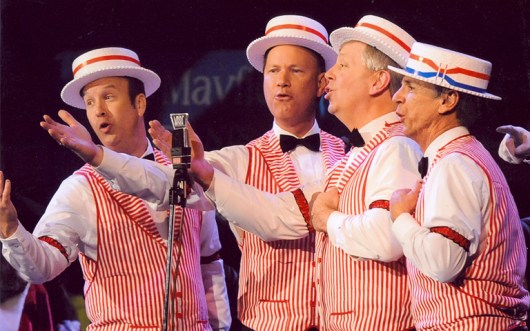













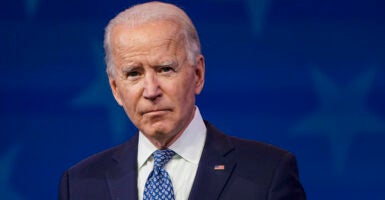


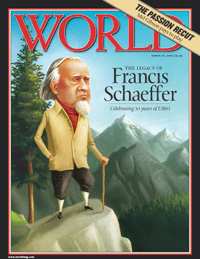









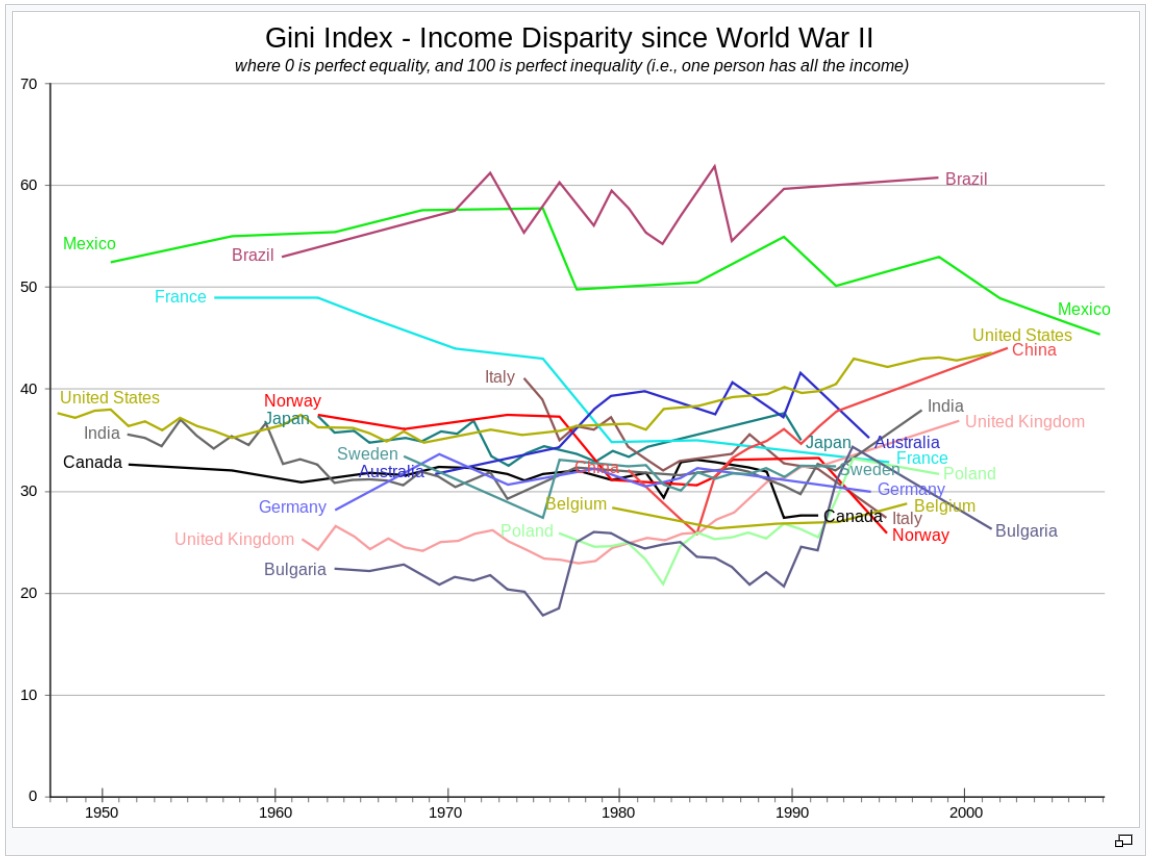







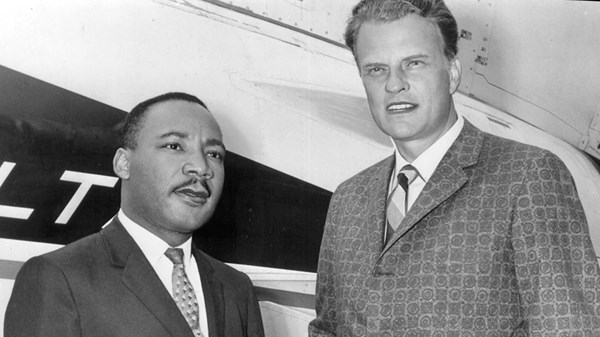


 The Daily Hatch