Mid-May marks the anniversary of Francis Schaffer’s ascent into glory.
This year, however, is somewhat more special as it is the fiftieth anniversary of his acclaimed tome Escape from Reason in which our philosopher defends the thesis that the death of God inevitably leads to the death of modern man.
In spite of the book’s small size (less than 100 pages), its insights are as still as relevant as they were half-a-century ago. Post-modern man (post-1960s) is none the wiser than his modern counterpart.
He continues to feel haunted by the same ruthless meaningless that stems from a sharp division between the empirical and the non-empirical; the objective and the subjective; the rational and the trans-rational.
Such a dualism, of course, is an out-and-out denial of the unified vision of reality offered to us by the biblical God.
He who forgives sins in the spiritual realm is also able to heal the paralytic in the physical world. The good Lord is sovereign over both spheres.
Today, in honour of his legacy, and as a means of getting you all interested in Schaffer; we shall dedicate our weekly article to some marvellous quotes drawn from the aforementioned tome.
ESCAPE FROM REASON QUOTES
Introduction
The responsibility of the Christian church “is not only to hold to the basic, scriptural principles of the Christian faith, but to communicate these unchanging truths into the generation in which it is living” (Introduction).
Chapter 1
“From a biblical viewpoint nature is important because it has been created by God, and is not to be despised. The things of the body are not to be despised when compared with the soul”.
“In Aquinas’s view the will of man was fallen, but the intellect was not. From this incomplete view of the biblical Fall flowed all the subsequent difficulties. Man’s intellect became autonomous. In one realm man was now independent, autonomous”.
“The point to be stressed is that, when nature is made autonomous, it is destructive”.
Chapter 2
“The Reformation accepted the biblical picture of a total Fall. The whole man had been made by God, but now the whole man is fallen, including his intellect and will. In contrast to Aquinas, only God was autonomous”.
“For the Reformation, final and sufficient knowledge rested in the Bible –that is, Scripture alone, in contrast to Scripture plus anything else parallel to the Scriptures, whether it be the church or a natural theology”.
“In the Roman Catholic position there was a divided work of salvation –Christ died for our salvation, but man had to merit the merit of Christ. Thus there was a humanistic element involved. The Reformers said that there is nothing man can do; no autonomous or humanistic, religious or moral effort of man can help. One is saved only on the basis of the finished work of Christ as He died in space and time in history, and the only way to be saved is to raise the empty hands of faith and, by God’s grace, to accept God’s free gift –faith alone”.
“There could have been no Reformation and no Reformation culture in Northern Europe without the realization that God had spoken to man in the Scriptures and that, therefore, we know something truly about God, because God has revealed it to man”.
“On the basis of the Scriptures, while we do not have exhaustive knowledge, we have true and unified knowledge”.
“The Bible says that you are wonderful because you are made in the image of God, but that you are flawed because, at a space-time point of history, man fell”.
“People today are trying to hand on to the dignity of man, and they do not know how to because they have lost the truth that man is made in the image of God”.
“We need to learn that, when we begin to tamper with the scriptural concept of true, moral guilt, whether it be psychological tampering, theological tampering or any other kind of tampering, our view of what Jesus did will no longer be scriptural”.
“The gods of the East are infinite by definition, in the sense that they encompass all –the evil as well as the good- but they are not personal. The gods of the West were personal, but they were very limited. The Teutonic, the Roman and the Greek gods were all the same –personal but not infinite. The Christian God, the God of the Bible, is personal-infinite”.
“God made the whole man and the whole man is important. The doctrine of the bodily resurrection of the dead is not an old-fashioned thing. It tells us that God loves the whole man and the whole man is important”.
Chapter 3
“Christianity was needed to give birth to modern science”.
“The early scientists also shared the outlook of Christianity in believing that there is a reasonable God, who had created a reasonable universe, and thus man, by use of his reason, could find out the universe’s form”.
“Kant’s system broke upon the rock of trying to find a way, any way, to bring the phenomenal world of nature into relationship with the noumenal world of universals”.
“What is autonomous freedom? It means a freedom in which the individual is the centre of the universe”.
“If man is determined, then what is is right”.
“When you tell men long enough that they are machines, it soon begins to show in their actions”.
“What is this despair [of modern man]? It arises from the abandonment of the hope of a unified answer for knowledge and life”.
Chapter 4
“The basic reason that drugs are seriously taken today is not for escape or kicks but because man is desperate”.
“The old mystics said that there was somebody there, but the new mystic says that that does not matter, because faith is the important thing. It is faith in faith, whether expressed in secular or religious terms”.
“Linguistic analysis is an anti-philosophy in the sense that these men have limited themselves in their concept of philosophy”.
Chapter 6
“The new theologian has lost the unique infinite-personal God of biblical revelation and of the Reformation. Liberal theology of the current thinking has only god words as a substitute”.
“Some evangelicals have recently been asserting that what matters is not setting out to prove or disprove propositions; what matters is an encounter with Jesus. When a Christian has made such a statement he has, in an analysed or unanalysed form, moved upstairs”.
“I have with sorrow become more afraid of the word ‘Jesus’ than almost any other word in the modern world. The word is used as a content-less banner, and our generation is invited to follow it. But there is no rational, scriptural content by which to test it, and thus the word is being used to teach the very opposite things from those which Jesus taught”.
“It is now Jesus-like to sleep with a girl or a man, if she or he needs you. As long as you are trying to be human you are being Jesus-like to sleep with the other person, at the cost; be it noted, of breaking the specific morality which Jesus taught”.
“We have come then to this fearsome place where the word ‘Jesus’ has become the enemy of the Person Jesus, and the enemy of what Jesus taught. We must fear this content-less banner of the word ‘Jesus’ not because we do not love Jesus, but because we do love Him. We must fight this content-less banner”.
“Over the last few years the word ‘Jesus’, separated from the content of the Scriptures, has become the enemy of the Jesus of history, the Jesus who died and rose and who is coming again and who is the eternal Son of God. So let us take care”.
Chapter 7
“The whole Reformation system of law was built on the fact that God had revealed something real down into the common things of life”.
“Modern man has not only thrown away Christian theology, he has thrown away the possibility of what our forefathers had as a basis for morality and law”.
“Christianity has the opportunity, therefore, to speak clearly of the fact that its answer has the very thing modern man has despaired of –the unity of thought. It provides a unified answer for the whole of life”.
“I am false or confused if I sing about Christ’s lordship and contrive to retain areas of my own life that are autonomous”.
“Any autonomy is wrong. Autonomous science or autonomous art is wrong, if by autonomous we mean it is free from the content of what God has told us”.
“The universe began in a personal as against an impersonal beginning, and, as such, those longings of love and communication which man has are not contrary to that which intrinsically is. And the world is a real world, because God has created it truly outside of Himself. What He has created is objectively real, thus there is a true historic cause and effect. There is a true history and there is a true me”.
“No humanistic system has provided a justification for man to begin with himself”.
“The fact that man has fallen does not mean that he has ceased to bear God’s image. He has not ceased to be man because he is fallen”.
“The Jewish concept [of truth] is separated from the Greek in that the Jewish was rooted in space-time history”.
“There are certain unchangeable facts which are true. These have no relationship to the shifting tides. They make the Christian system what it is, and if they are altered, Christianity becomes something else”.
“There are evangelical Christians today who, in all sincerity, are concerned with their lack of communication, but in order to bridge the gap they are tending to change what must remain unchangeable. If we do this we are no longer communicating Christianity, and what we have left is no different from the surrounding consensus”.
Escape from Reason, Francis A. Schaeffer, Inter-Varsity Press (1968), 94 pages, $8.00.
What is man, and what is the meaning of life? As Protestant Reformed Christians we believe that these questions are answered in the Bible and articulated in the Three Forms of Unity. We accept the Bible as true. We believe that in the Bible God has revealed himself to us, and therefore we may know him personally. Furthermore, we believe that God has revealed to us in the Bible that he is the creator of the universe, that he is our creator; that we sinned and are in need of redemption through Jesus Christ. This truth that God gave us was developed and articulated in the great movement we call the Reformation. However, another great movement occurred around the same time, the Renaissance. The Renaissance parallels the Reformation in many respects, except that rather than developing the truth of God found in the Bible, men began to seek truth elsewhere.
In his book, Escape from Reason, the Christian philosopher, Francis A. Schaeffer attempts to trace the thought of man from Thomas Aquinas (a philosopher/theologian of the late middle ages), who was a primary developer of the idea of natural theology (that man may know God, prove his existence, and such, through the use of reason and nature alone, i.e. without revelation from God) through his then present 1960s (I realize the book is a bit dated, but not much has changed in secular ‘intellectual’ thought from the 60s to today – then they had ‘hippies,’ today we have ‘hipsters’). Schaeffer shows that when man attempts to know God apart from scripture he ends up where he is today, a naturalist, which is the ground of evolutionism. Naturalism is the idea that space, matter, time…the stuff that we can see and observe, is all that exists. There is no such thing as God or any other supernatural entity. Naturally, if there is no God, if there is nothing spiritual, no soul of man…then man is nothing more than an animal. As Schaeffer puts it, “…on the basis of all reason, man as man is dead. You have simply mathematics, particulars, mechanics. Man has no meaning, no purpose, no significance. There is only pessimism concerning man as man” (46-47). The result of this conclusion of modern man is all of the crazy stuff that exists in modern popular culture and the arts. One example Schaeffer gives is the paintings of Picasso but there are plenty more examples of this sort of thing in modern art.
Many of you reading this are in college or will be in college soon. Escape from Reason is a good book to read if you want a sense of the origins and development of the modern secular worldview. Those who have some introduction to philosophy, particularly with regard to the Modern era, will have a greater appreciation for the book, but Schaeffer’s style is clear and the book is generally quite understandable for any reader. Make no mistake, though the author may be considered a generally more conservative Christian, he is not Protestant Reformed, which means you must read critically. Nevertheless, an understanding of the current thinking in the world is important with regard to understanding the signs of the times, especially with regard to the forces that Satan is using to bring about his kingdom of anti-Christ.
For there shall arise false Christs, and false prophets, and shall shew great signs and wonders; insomuch that, if it were possible, they shall deceive the very elect. Behold, I have told you before. Wherefore if they shall say unto you, Behold, he is in the desert; go not forth: behold, he is in the secret chambers; believe it not. For as the lightning cometh out of the east, and shineth even unto the west; so shall also the coming of the Son of man be. Matthew 24:24-27
_________ This series of posts entitled “FRANCIS SCHAEFFER ANALYZES ART AND CULTURE” touches things that affect our culture today. The first post took a look at the foundations of our modern society today that were set by the Roman Democracy 2000 years ago and then it related it to the art we see today. […]
This series of posts entitled “FRANCIS SCHAEFFER ANALYZES ART AND CULTURE” touches things that affect our culture today. The first post took a look at the foundations of our modern society today that were set by the Roman Democracy 2000 years ago and then it related it to the art we see today. The […]
_________ This series of posts entitled “FRANCIS SCHAEFFER ANALYZES ART AND CULTURE” touches things that affect our culture today. The first post took a look at the foundations of our modern society today that were set by the Roman Democracy 2000 years ago and then it related it to the art we see today. […]
__________ Francis Schaeffer pictured below: ______________ Francis Schaeffer pictured below: _____________ This series of posts entitled “FRANCIS SCHAEFFER ANALYZES ART AND CULTURE” touches things that affect our culture today. The first post took a look at the foundations of our modern society today that were set by the Roman Democracy 2000 years ago and […]
__________ This series of posts entitled “FRANCIS SCHAEFFER ANALYZES ART AND CULTURE” touches things that affect our culture today. The first post took a look at the foundations of our modern society today that were set by the Roman Democracy 2000 years ago and then it related it to the art we see today. […]
___________ Francis Schaeffer pictured below: _____________ Series “FRANCIS SCHAEFFER ANALYZES ART AND CULTURE” traces Schaeffer’s comments on modern culture and can be found weekly onhttp://www.thedailyhatch.org !!!!! Paul Gauguin and his life questions! This series of posts entitled “FRANCIS SCHAEFFER ANALYZES ART AND CULTURE” touches things that affect our culture today. The first post took […]
This series of posts entitled “FRANCIS SCHAEFFER ANALYZES ART AND CULTURE” touches things that affect our culture today. The first post took a look at the foundations of our modern society today that were set by the Roman Democracy 2000 years ago and then it related it to the art we see today. The […]
____________________________________________ “FRANCIS SCHAEFFER ANALYZES ART AND CULTURE” can be found weekly onhttp://www.thedailyhatch.org ! Why Communism catches the attention of young people but never comes through!!! Dr. Francis Schaeffer – Episode 9 – The Age of Personal Peace and Affluence NoMirrorHDDHrorriMoN This series of posts entitled “FRANCIS SCHAEFFER ANALYZES ART AND CULTURE” touches things […]
Seeking freedom and fun the generation of the 1960’s rebelled against their parents’ generation of materialism and that is pictured in the Beatles’ song SHE’S LEAVING HOME. However, was the true answer FREEDOM and FUN and did it bring satisfaction?
On SGT PEP’S we have the song SHE’S LEAVING HOME that ends with the words, “Fun Fun is the one thing that money can’t buy, Something inside that was always denied, For so many years. Bye, Bye, She’s leaving home bye bye.” Basically she is finding freedom and as a result fun by leaving home. She was escaping her parents’ horrible values of PEACE and AFFLUENCE and embracing fun and freedom.
Francis Schaeffer in the 7th episode of HOW SHOULD WE THEN LIVE? discusses the issue of freedom and society:
Jean-Jacques Rousseauphilosopher from Geneva, he lived in the 18th century, he thought that primitive man, the noble savage to be superior to civilized man. He felt that the enlightenment with its emphasis on reason, the arts and the sciences caused man to lose more than he gained.
Rousseau saw the restraints of civilization as evils.
“Man was born free but everywhere he is in chains!” He demanded not just freedom from God or the Bible but freedom from any kind of restraint, freedom from culture, freedom from authority, absolute freedom for the individual with the individual at the center of the universe. When applied to the individual his concept led to the bohemian ideal where the hero was the man who fought all standards, all values and all restraints of society.
When Rousseau applied his concept of autonomous freedom to society his concept would not function. “Whosoever refuses to obey the general shall be compelled to do so by the whole body.” Rousseau wrote this in 1762. This means nothing less than that he will be forced to be free. In other words tyranny. A tyranny that carried its position to its logical conclusion in the reign of terror in the French Revolution. Robespierre, the king of the terror, saw himself putting Rousseau‘s ideas into practice.
Paul Gauguin was a follower of jean Jean-Jacques Rousseau. In his hunt for total freedom he deserted his family. He went to Tahiti hoping to find there the noble savage. There he found the idea of the noble savage to be an illusion.
As he worked in this painting “Where Do We Come From? What Are We? Where Are We Going?” (1897), he also wrote about it. He called it a philosophic work comparable to the gospel, but what a gospel. Gauguin himself said, “Close to the death of an old woman a strange stupid bird concludes, ‘Wince, What, Wither. Oh sorrow thou art my master. Fate how cruel thou art and always vanquished I revolt.‘”
What he found in Tahiti was death and cruelty.
That man is good by nature as Rousseau claimed is no more true of primitive man than of civilized man. When Gauguin finished this painting he tried to commit suicide but he did not succeed.
When you think about the song SHE’S LEAVING HOME (which appeared on Sergeant Pepper’s Lonely Hearts Club Band album) you must come to the conclusion that the Beatles knew exactly what was going through the young person’s mind in the 1960’s. No wonder in the video THE AGE OF NON-REASON Schaeffer noted, “The drug culture and the mentality that went with it had it’s own vehicle that crossed the frontiers of the world which were otherwise almost impassible by other means of communication. This record, Sergeant Pepper’s Lonely Hearts Club Band,became the rallying cry for young people throughout the world. It expressed the essence of their lives, thoughts and their feelings.”
Francis Schaeffer below is holding the album Beatles’ album SGT PEP in the film series HOW SHOULD WE THEN LIVE? episode 7 “The Age of Non-Reason” in which he discusses the Beatles’ 1960’s generation and their search for meanings and values!
__
Melanie Coe ran away from home in 1967 when she was 15. Paul McCartney read about her in the papers and wrote ‘She’s Leaving Home’ for Sgt.Pepper’s.
The subtitles are produced live for The One Show, so some seconds late and with a few mistakes.
Wednesday morning at five o’clock as the day begings
Silently closing her bedroom door
Leaving the note that she hoped would say more
She goes downstairs to the kitchen clutching her hankerchief
Quietly turing the backdoor key
Stepping outside she is free.
She (We gave her most of our lives)
is leaving (Sacraficed most of our lives)
home (We gave her everything money could buy)
She’s leaving home after living alone
For so many years. Bye, bye
Father snores as his wife gets into her dressing gown
Picks up the letter that’s lying there
Standing alone at the top of the stairs
She breaks down and cries to her husband
Daddy our baby’s gone.
Why would she treat us so thoughtlessly
How could she do this to me.
She (We never though of ourselves)
Is leaving (Never a thought for ourselves)
home (We struggled hard all our lives to get by)
She’s leaving home after living alone
For so many years. Bye, bye
Friday morning at nine o’clock she is far away
Waiting to keep the appointment she made
Meeting a man from the motor trade.
She What did we do that was wrong
Is having We didn’t know it was wrong Fun Fun is the one thing that money can’t buy Something inside that was always denied
For so many years. Bye, Bye
She’s leaving home bye bye
While many “Beatlemaniacs” identify “With A Little Help From My Friends” or the catchy “When I’m Sixty-Four” as their favorite tracks, I always believed “She’s Leaving Home” was the most thoughtful track. McCartney was inspired to write the song after reading a newspaper article about a young girl who had disappeared. The tune captures a moment where a girl leaves the home of her parents who tried to give her “everything money could buy” but still left her feeling as if she were alone.
As a Christian listening to Sgt. Pepper’sit is hard not to think of Francis Schaeffer who reportedly cried when the Free Speech movement died despite his conservatism. Schaeffer did not agree with the far left but was pleased to see a generation who, like the girl in “She’s Leaving Home,” was looking for more than just material comfort. Then and now, there is a myth born in the depths of hell that the meaning of life is a comfortable existence with a lot of money and the toys. In fact, life is about a relationship with God through Jesus Christ. Unfortunately, the only one of the Beatles who ever truly investigated the liberation of Christianity was John Lennon who had a regular correspondence with Jerry Falwell up until his death. Sadly, Yoko Ono apparently opposed John’s inquiries.
Regardless, Sgt. Pepper’s is worth your time.
Melanie Coe – She’s Leaving Home – The Beatles
Uploaded on Nov 25, 2010
Why is she leaving home? Francis Schaeffer noted on pages 15-17 in volume 4 of THE COMPLETE WORKS OF FRANCIS SCHAEFFER from the original book “The Church at the end of the 20th Century” the reason she left and it was because of the bankruptcy of the materialistic views of her parents. Schaeffer points that for many years there was one message that the media was promoting and that was since we now believe in the “UNIFORMITY OF NATURAL CAUSES IN A CLOSED SYSTEM we are left with only the impersonal plus time plus chance.” Schaeffer continued:
What is taught is that there is no final truth, no meaning, no absolutes, that it is only that we have not found truth and meaning, but that they do not exist.
The student and the common man may not be able to analyze it, but day after day, day after day, they are being battered by this concept. We have now had several generations exposed to this and we must not be blind to the fact that it is being excepted increasingly.
In contrast, this way of thinking has not had as much influence on the middle class. Many of these keep thinking in the old way as a memory of the time before the Christian base was lost in this post-Christian world. However, the majority in the middle-class have no real basis for their values since so many have given up the Christian viewpoint. They just function on the “memory.” This is why so many young people have felt that the middle class is ugly.They feel middle-class people are plastic, ugly and plastic because they try to tell others what to do on the basis of their own values but with no ground for those values. They have no base and they have no clear categories for their choices of right and wrong. Their choices tend to turn on what is for their material benefit…
When their children crying out, “Yours is a plastic culture.” They are silent. We had the response so beautifully stated in the 1960s in the Beatles’ Sergeant Pepper’s song “She is leaving home.”“We gave her everything money could buy.” This is the only answer many parents can give.
How Should We Then Live – Episode 9 – The Age of Personal Peace & Affluence
RECENT TRENDS IN SECULAR CULTUREFirst, it is necessary to understand the secular side of con-
temporary culture. And here we have to go back, at least brief-
ly, into some of the issues which I discussed in The Church
at the End of the 20th Century. But the cultural situation
described there, especially in chapters one and two, has now
progressed further.
It became obvious to students in the early sixties that we
were living in a post-Christian world. As students in Berkeley
shouted in 1964, we are living in a plastic culture. The beat
generation before them had been saying that, and now an en-
tire student generation had become convinced of it. Students
would return home from the university and ask their parents
questions and would get only superficial answers: You must
work like mad to get into the university. Why? So you can
make money. But why should I want to make money? So you
can send your children to the university. All too often PERSONAL PEACE and AFFLUENCE
were the only values that these young
people saw in their parents, and they rightly were turned off.
Christians should have been glad for what these students
were saying. In fact, they should have been saying it them-
selves, for these young people had put their finger on the situa-
tion as it really was. On the one side, most of the church
bodies were controlled by liberal theology which isn't Chris-
tianity at all. And on the other side, culture in general had
become totally secularized. Not many years before, one could
have said that, while most individuals were not Christians, at
least there was a "Christian" consensus based on the memory
of true Christianity. Men still believed that a truth existed, and,
even if the non-Christians had no real base for it, at least it was
an ideal toward which to aspire. But by the sixties, this had
largely been lost; we were in the post-Christian world; and now
the present generation no longer believes that absolute truth
exists at all. Yet the older generation didn't recognize it until
suddenly their youngsters looked up and declared that the king
didn't have any clothes on, or, as they put it, "We live in a
plastic culture."
One reason I felt close to those who were saying this is that
I wished the Bible-believing church had been saying it long
before. But our evangelical churches, too, had all too often
become plastic and no voice was raised...So two things have to be said here. First, the young people's
analysis of culture was right, and, second, they really thought
they had an answer to the problem. Up through Woodstock
(1969) the young people were optimistic concerning drug-
being the ideological answer. The desire for community and
togetherness that was the impetus for Woodstock was not wrong, of course. God has made us in his own image, and he
means for us to be in a strong horizontal relationship with each
other. While Christianity appeals and applies to the individual,
it is not individualistic. God means for us to have community.
There are really two orthodoxies: an orthodoxy of doctrine
and an orthodoxy of community, and both go together. So the
longing for community in Woodstock was right. But the path
was wrong....The Beatles are a sort of test case.First they were just a
rock group, then they took to drugs and expressed that in such
songs as Sergeant Pepper's Lonely Hearts Club Band. When
drugs didn't pan out, when they saw what was happening in
Haight-Ashbury, they turned to the psychedelic sounds of
Strawberry Fields, and then went further into Eastern religiousexperiences. But that, too, did not work out, and they wound
up their career as a group by making The Yellow Submarine.
When they made this movie, some people said, "The Beatles
are coming back." But of course that was not the case. It was
really 'the sad end of their ideological search as a group. It's
interesting that Erich Segal, the man who wrote the film script
for The Yellow Submarine, then wrote Love Story.
The Beatles – She’s Leaving Home – Lyrics
Published on May 17, 2012
A beautiful Paul McCartney song from the 1967 BEATLES masterpiece SGT. PEPPER’S LONELY HEARTS CLUB BAND.
Francis Schaeffer’s favorite album was SGT. PEPPER”S and he said of the album “Sergeant Pepper’s Lonely Hearts Club Band…for a time it became the rallying cry for young people throughout the world. It expressed the essence of their lives, thoughts and their feelings.” (at the 14 minute point in episode 7 of HOW SHOULD WE THEN LIVE? )
How Should We Then Live – Episode Seven – 07 – Portuguese Subtitles
How Should We then Live Episode 7 small (Age of Nonreason)
Francis Schaeffer ends episode 7 with these words:
When we think of Christ of course we think of his substitutionary death upon the cross when he who claimed to be God died in a substitutionary way and as such his death had infinite value and as we accept that gift raising the empty hands of faith with no humanistic elements we have that which is real life and that is being in relationship to the infinite personal God who is there and being in a personal relationship to Him. But Christ brings life in another way that is not as often clearly thought about perhaps. He connects himself with what the Bible teaches in his teaching and as such he is a prophet as well as a savior. It is upon the basis of what he taught and the Bible teaches because he himself wraps these together that we have life instead of death in the sense of having some knowledge that is more than men can have from himself, beginning from himself alone. Both of these elements are the place where Christ gives us life.
Contemporary Christian Art – The Rt Revd Lord Harries of Pentregarth
Published on Apr 10, 2012
Contrary to much opinion, the current scene of faith-related art is very much alive. There are new commissions for churches and cathedrals, a number of artists pursue their work on the basis of a deeply convinced faith, and other artists often resonate with traditional Christian themes, albeit in a highly untraditional way. The challenge for the artist, stated in the introduction to the course of lectures above, is still very much there: how to retain artistic integrity whilst doing justice to received themes.
This lecture is part of Lord Harries’ series on ‘Christian Faith and Modern Art’. The last century has seen changes in artistic style that have been both rapid and radical. This has presented a particular problem to artists who have wished to express Christian themes.
Forces of nature: Maggi Hambling with ‘Amy Winehouse’, a painting
Gresham College has been giving free public lectures since 1597. This tradition continues today with all of our five or so public lectures a week being made available for free download from our website. http://www.gresham.ac.uk
Head a different way round, ambiguity about whether alive, pink, or dead, blue.
Maggi Hambling studied at art schools in East Anglia then at Camberwell and the Slade. She has become one of the best known of modern British painters, first of all for her portraits in an expressionist style of people like Max Wall and George Melly, then for her controversial public sculpture, including the memorial to Benjamin Brittan on the beach at Aldeburgh, of giant scallop shells. More recently she has turned to landscape and seascape in her native Suffolk. Every Good Friday she spends first reading the Gospels and then contemplating and painting the crucifixion. She began this discipline in 1986 partly as a tribute to her mother who was then very frail. Brought up to go to church every Sunday she says “Consequently it is very difficult for me to think of anything else on Good Friday but the crucifixion. The mystery. The sacrifice. The simultaneous life and death, and vice versa.” She now describes herself as “an optimistic doubter.”[1]
Good Friday, 2002
Loneliness of figure
Good Friday 2007
High and lifted up for contemplation.
Her studies of the crucifixion are all very different, but deeply felt and fresh; some reflecting a recent visit to the continent are more traditional in image, others highly abstract.[2] She says that Good Friday brings out of herself some different image of Christ, which she cannot predict in advance.
[1] Andrew Lambirth, in Cross Purposes, ed. Nathaniel Hepburn, Mascalls Gallery, Ben Uri, London Jewish Museum, , 2010, p.65
[2] Maggi Hambling: Good Friday Gainsborough House, Sudbury and the Bible Society, 2000 with essays by Andrew Lambrith and Tom Devonshire Jones
Hambling’s Scallop (2003) stands on the north end of Aldeburgh beach. It is a tribute to Benjamin Britten and is pierced with the words “I hear those voices that will not be drowned” from his opera Peter Grimes.
Maggi HamblingCBE (born 23 October 1945 in Sudbury, Suffolk[1]) is a British contemporary painter and sculptor. Perhaps her best-known public works are a sculpture for Oscar Wilde in central London and Scallop, a 4-metre-high steel sculpture on Aldeburgh beach dedicated to Benjamin Britten. Both works have attracted a great degree of controversy.[2]
Portraits form part of Hambling’s oeuvre, with several works in the National Portrait Gallery, London.[6] Her wider body of work is held in many public collections including, in the UK, the British Museum, Tate Collection, National Gallery, Scottish Gallery of Modern Art and the Victoria and Albert Museum.
Hambling’s celebrated series of North Sea paintings have continued since late 2002. In 2013, she will again show at Snape during the Aldeburgh festival, and her next solo exhibition will be held at the Hermitage, St Petersburg, opening in June 2013.
In 1995, she was awarded the Jerwood Painting Prize (with Patrick Caulfield). In the same year she was awarded an OBE for her services to painting, followed by a CBE in 2010.
Hambling, A Conversation with Oscar Wilde (1998), green granite and bronze, Adelaide Street, near Trafalgar Square, London
Hambling is openly “lesbionic” (her adjective).[7]
With regard to Scallop the artist describes the sculpture as a conversation with the sea:
“An important part of my concept is that at the centre of the sculpture, where the sound of the waves and the winds are focused, a visitor may sit and contemplate the mysterious power of the sea.”[8]
Hambling gave up smoking in 2004 and was involved in the campaign against the total ban on smoking in public places in England which took effect on 1 July 2007. Speaking at a news conference at the House of Commons on 7 February 2007, she said: “I wholeheartedly support the campaign against a ban on smoking in public places. Just because I gave up at 59, other people may choose not to. There must be freedom of choice, something that is fast disappearing in this so-called free country.”[9]
_____________ The Beatles were looking for lasting satisfaction in their lives and their journey took them down many of the same paths that other young people of the 1960’s were taking. No wonder in the video THE AGE OF NON-REASON Schaeffer noted, ” Sergeant Pepper’s Lonely Hearts Club Band…for a time it became the rallying cry for young people throughout […]
SGT. PEPPER’S LONELY HEARTS CLUB BAND ALBUM was the Beatles’ finest work and in my view it had their best song of all-time in it. The revolutionary song was A DAY IN THE LIFE which both showed the common place part of everyday life and also the sudden unexpected side of life. The shocking […]
_ The Beatles wrote a lot about girls!!!!!! The Beatles – I Want To Hold your Hand [HD] The Beatles – ‘You got to hide your love away’ music video Uploaded on Nov 6, 2007 The Beatles – ‘You got to hide your love away’ music video. The Beatles – Twist and Shout [live] THE […]
__________ Melanie Coe – She’s Leaving Home – The Beatles Uploaded on Nov 25, 2010 Melanie Coe ran away from home in 1967 when she was 15. Paul McCartney read about her in the papers and wrote ‘She’s Leaving Home’ for Sgt.Pepper’s. Melanie didn’t know Paul’s song was about her, but actually, the two did […]
__________________ A Funny Press Interview of The Beatles in The US (1964) Funny Pictures of The Beatles Published on Oct 23, 2012 funny moments i took from the beatles movie; A Hard Days Night ___________________ Scene from Help! The Beatles Funny Clips and Outtakes (Part 1) The Beatles * Wildcat* (funny) Uploaded on Mar 20, […]
_____________________ Great article on Dylan and Sergeant Pepper’s Lonely Hearts Club Band Cover: A famous album by the fab four – The Beatles – is “Sergeant peppers lonely hearts club band“. The album itself is one of the must influential albums of all time. New recording techniques and experiments with different styles of music made this […]
__________________________ Beatles 1966 Last interview 69 THE BEATLES TWO OF US As a university student, Karl Marx (1818-1883) joined a movement known as the Young Hegelians, who strongly criticized the political and cultural establishments of the day. He became a journalist, and the radical nature of his writings would eventually get him expelled by the […]
____________ Aleister Crowley on cover of Stg. Pepper’s: _______________ I have dedicated several posts to this series on the Beatles and I don’t know when this series will end because Francis Schaeffer spent a lot of time listening to the Beatles and talking and writing about them and their impact on the culture of the 1960’s. […]
(HD) Paul McCartney & Ringo Starr – With a Little Help From My Friends (Live) John Lennon The Final Interview BBC Radio 1 December 6th 1980 A young Aldous Huxley pictured below: _______ Much attention in this post is given to the songs LUCY IN THE SKY WITH DIAMONDS and TOMORROW NEVER KNOWS which […]
Supreme Court nominee Amy Coney Barrett signed onto a two-page newspaper ad in 2006 calling for the overturning of Roe v. Wade and slamming the landmark abortion rights case as “barbaric.”
The open letter was published in the South Bend Tribune in the form of full-page advertisements sponsored by the St. Joseph County Right to Life, an anti-abortion group, according to reports from the Guardian and the Daily Beast.
Barrett, then a law professor at Notre Dame, and her husband, Jesse, joined hundreds of people from the border region of northern Indiana and southwest Michigan known as Michiana who signed their names to the statement calling for an end to abortion and to protect the rights of the unborn.
“We, the following citizens of Michiana, oppose abortion on demand and defend the right to life from fertilization to natural death,” the letter states. “Please continue to pray to end abortion.”
The accompanying ad condemned Roe v. Wade as “an exercise of raw judicial power” and mourned the “more than 47 million children dead and counting” from abortions.
“It’s time to put an end to the barbaric legacy of Roe v. Wade and restore laws that protect the lives of unborn children,” the statement concluded.
The ad, which wasn’t included in the reams of documents Barrett turned over to the Senate for her confirmation, brings into clearer focus the jurist’s personal pro-life beliefs.
Barrett, who has the support of anti-abortion and conservative groups, was on Capitol Hill Thursday to continue meeting with senators before her confirmation hearing. She was asked by a reporter about the “barbaric” statement, but she declined to answer.
Democrats and activists who want to preserve abortion rights pounced on the newspaper ad as more evidence that Barrett will overturn Roe v. Wade if confirmed to the high court.
“This is as clear a position as you’ll ever see from a judicial nominee,” tweeted Brian Fallon, executive director of the Demand Justice progressive group that opposes Barrett’s nomination.
—-
—
—-
Amy Coney Barrett Opened Up about Adoption, Pregnancy in 2019 D.C. Talk
While she hasn’t explicitly challenged the precedent established by Roe v. Wade in her capacity as a judge, Amy Coney Barrett — pegged by some as the odds-on favorite to be President Trump’s Supreme Court nominee — has more than demonstrated her commitment to life in the way that she’s formed her family.
While serving as a judge on the Seventh Circuit, Barrett has not questioned Roe’soverall precedent in two separate cases involving abortion. But her legal credentials and personal background — Barrett is a mother of seven, including two adopted children from Haiti and a biological son with Down syndrome — have drawn rave reviews from conservatives and pro-life activists
Marjorie Dannenfelser, the president of the Susan B. Anthony List, told the New York Times that Barrett is “the perfect combination of brilliant jurist and a woman who brings the argument to the court that is potentially the contrary to the views of the sitting women justices.”
A Senate GOP aide said that “the consensus view” among Republicans is that Barrett “would be rock solid” on pro-life issues, according to Politico.
Further proof of Barrett’s strong pro-life credentials comes from the judge herself.
Judge Patrick J. Schiltz, a mentor of Barrett’s, told the Times that Barrett learned of her youngest’s diagnosis in prenatal testing, and chose to keep the pregnancy (the Times later added a correction noting that this was incorrect). And in an interview hosted last year by the Notre Dame alumni club of Washington, D.C., Barrett described how in 2009, she and her husband Jesse — despite having four kids at home already — were trying to adopt a second child from Haiti, a process that seemed destined for failure.
“It looked like it wasn’t going to happen, and then they told us it wasn’t going to happen — paperwork things had just gone south. And so mentally and emotionally, we had closed that door,” Barrett recalled. “ . . . It was right around December and I thought to myself, ‘we should just cut that paperwork, just pull it out and bring it to a close, because they told us that it’s not happening, so we might as well just not have that loose end hanging out there.’ But Christmas came and we didn’t do anything about it.”
After the horrific 7.0 magnitude earthquake that rocked Haiti in January 2010, however, the U.S. State Department eased some adoption requirements to expedite the process, and the Barretts’s case was allowed to proceed.
And as Jesse was figuring out how to pick up their new son in Florida, Barrett suddenly learned that she was pregnant — despite thinking at the time that “for a variety of reasons, we weren’t sure that would happen” — turning everything back on its head.
“We had an intense three-hour period where we had to decide were we going to go forward with going to get John Peter in Florida, because we discovered that Juliette was going to be coming that year too,” Barrett said, recalling the disbelief from adding one child to the family to suddenly having an additional one.
“I walked up to the cemetery on campus and I just sat down on one of the benches and I just thought ‘okay, well if life’s really hard, at least it’s short,’” Barrett recalled joking to herself. “But I thought, ‘what, what greater thing can you do than raise children? That’s where you have your greatest impact on the world.’”
Jesse Barrett ultimately went to Florida and brought home John Peter.
Editor’s Note: This piece has been updated with additional information.
Barrett was born in New Orleans, Louisiana, in 1972.[2] She is the eldest of seven children, with five sisters and a brother. Her father Michael Coney worked as an attorney for Shell Oil Company, and her mother Linda was a homemaker. Barrett grew up in Metairie, a suburb of New Orleans, and graduated from St. Mary’s Dominican High School in 1990.[9]
From 1999 to 2002, she practiced law at Miller, Cassidy, Larroca & Lewin in Washington, D.C.[11][14]
Teaching and scholarship
Barrett served as a visiting associate professor and John M. Olin Fellow in Law at George Washington University Law School for a year before returning to her alma mater, Notre Dame Law School in 2002.[15]At Notre Dame she taught federal courts, constitutional law, and statutory interpretation. Barrett was named a Professor of Law in 2010, and from 2014 to 2017 held the Diane and M.O. Miller Research Chair of Law.[16] Her scholarship focuses on constitutional law, originalism, statutory interpretation, and stare decisis.[12] Her academic work has been published in journals such as the Columbia, Cornell, Virginia, Notre Dame, and TexasLaw Reviews.[15] Some of her most significant publications are Suspension and Delegation, 99 Cornell L. Rev. 251 (2014), Precedent and Jurisprudential Disagreement, 91 Tex. L. Rev. 1711 (2013), The Supervisory Power of the Supreme Court, 106 Colum. L. Rev. 101 (2006), and Stare Decisis and Due Process, 74 U. Colo. L. Rev. 1011 (2003).
At Notre Dame, Barrett received the “Distinguished Professor of the Year” award three times.[15] She taught Constitutional Law, Civil Procedure, Evidence, Federal Courts, Constitutional Theory Seminar, and Statutory Interpretation Seminar.[15] Barrett has continued to teach seminars as a sitting judge.[17]
A hearing on Barrett’s nomination before the Senate Judiciary Committee was held on September 6, 2017.[20] During the hearing, Senator Dianne Feinstein questioned Barrett about a law review article Barrett co-wrote in 1998 with Professor John H. Garvey in which she argued that Catholic judges should in some cases recuse themselves from death penalty cases due to their moral objections to the death penalty. The article concluded that the trial judge should recuse herself instead of entering the order. Asked to “elaborate on the statements and discuss how you view the issue of faith versus fulfilling the responsibility as a judge today,” Barrett said that she had participated in many death-penalty appeals while serving as law clerk to Scalia, adding, “My personal church affiliation or my religious belief would not bear on the discharge of my duties as a judge”[21][22] and “It is never appropriate for a judge to impose that judge’s personal convictions, whether they arise from faith or anywhere else, on the law.”[23] Worried that Barrett would not uphold Roe v. Wade given her Catholic beliefs, Feinstein followed Barrett’s response by saying, “the dogma lives loudly within you, and that is a concern.”[24][25][26] The hearing made Barrett popular with religious conservatives,[11] and in response, the conservative Judicial Crisis Network began to sell mugs with Barrett’s photo and Feinstein’s “dogma” remark.[27]Feinstein’s and other senators’ questioning was criticized by some Republicans and other observers, such as university presidents John I. Jenkins and Christopher Eisgruber, as improper inquiry into a nominee’s religious belief that employed an unconstitutional “religious test” for office;[23][28][29]others, such as Nan Aron, defended Feinstein’s line of questioning.[29]
Lambda Legal, an LGBT civil rights organization, co-signed a letter with 26 other gay rights organizations opposing Barrett’s nomination. The letter expressed doubts about her ability to separate faith from her rulings on LGBT matters.[30][31] During her Senate confirmation hearing, Barrett was questioned about landmark LGBTQ legal precedents such as Obergefell v. Hodges, United States v. Windsor, and Lawrence v. Texas. Barrett said these cases are “binding precedents” that she intended to “faithfully follow if confirmed” to the appeals court, as required by law.[30] The letter co-signed by Lambda Legal said “Simply repeating that she would be bound by Supreme Court precedent does not illuminate—indeed, it obfuscates—how Professor Barrett would interpret and apply precedent when faced with the sorts of dilemmas that, in her view, ‘put Catholic judges in a bind.'”[30] Carrie Severino of the Judicial Crisis Network later said that warnings from LGBT advocacy groups about shortlisted nominees to replace Justice Anthony Kennedy, including Barrett, were “very much overblown” and called them “mostly scare tactics.”[30]
In 2015, Barrett signed a letter in support of the Ordinary Synod of Bishops on the Family that endorsed the Catholic Church’s teachings on human sexuality and its definition of marriage as between one man and one woman. When asked about the letter, she testified that the Church’s definition of marriage is legally irrelevant.[32][33]
Barrett’s nomination was supported by every law clerk she had worked with and all of her 49 faculty colleagues at Notre Dame Law school. 450 former students signed a letter to the Senate Judiciary Committee supporting Barrett’s nomination.[34][35]
On October 5, 2017, the Senate Judiciary Committee voted 11–9 on party lines to recommend Barrett and report her nomination to the full Senate.[36][37] On October 30, the Senate invoked cloture by a vote of 54–42.[38] It confirmed her by a vote of 55–43 on October 31, with three Democrats—Joe Donnelly, Tim Kaine, and Joe Manchin—voting for her.[10] She received her commission two days later.[2] Barrett is the first and to date only woman to occupy an Indiana seat on the Seventh Circuit.[39]
Notable cases
Title IX
In Doe v. Purdue University, 928 F.3d 652 (7th Cir. 2019), the court, in a unanimous decision written by Barrett, reinstated a suit brought by a male Purdue University student (John Doe) who had been found guilty of sexual assault by Purdue University, which resulted in a one-year suspension, loss of his Navy ROTC scholarship, and expulsion from the ROTC affecting his ability to pursue his chosen career in the Navy.[40] Doe alleged the school’s Advisory Committee on Equity discriminated against him on the basis of his sex and violated his rights to due process by not interviewing the alleged victim, not allowing him to present evidence in his defense, including an erroneous statement that he confessed to some of the alleged assault, and appearing to believe the victim instead of the accused without hearing from either party or having even read the investigation report. The court found that Doe had adequately alleged that the university deprived him of his occupational liberty without due process in violation of the Fourteenth Amendment and had violated his Title IX rights “by imposing a punishment infected by sex bias,” and remanded to the District Court for further proceedings.[41][42][43]
Title VII
In EEOC v. AutoZone, the Seventh Circuit considered the federal government’s appeal from a ruling in a suit brought by the Equal Employment Opportunity Commission against AutoZone; the EEOC argued that the retailer’s assignment of employees to different stores based on race (e.g., “sending African American employees to stores in heavily African American neighborhoods”) violated Title VII of the Civil Rights Act. The panel, which did not include Barrett, ruled in favor of AutoZone. An unsuccessful petition for rehearing en banc was filed. Three judges—Chief Judge Diane Wood and Judges Ilana Rovner and David Hamilton—voted to grant rehearing, and criticized the panel decision as upholding a “separate-but-equal arrangement”; Barrett and four other judges voted to deny rehearing.[11]
Immigration
In Cook County v. Wolf, 962 F.3d 208 (7th Cir. 2020), Barrett wrote a 40-page dissent from the majority’s decision to uphold a preliminary injunction on the Trump administration’s controversial “public charge rule“, which heightened the standard for obtaining a green card. In her dissent, she argued that any noncitizens who disenrolled from government benefits because of the rule did so due to confusion about the rule itself rather than from its application, writing that the vast majority of the people subject to the rule are not eligible for government benefits in the first place. On the merits, Barrett departed from her colleagues Wood and Rovner, who held that DHS’s interpretation of that provision was unreasonable under Chevron Step Two. Barrett would have held that the new rule fell within the broad scope of discretion granted to the Executive by Congress through the Immigration and Nationality Act.[44][45][46] The public charge issue is the subject of a circuit split.[44][46][47]
In Yafai v. Pompeo, 924 F.3d 969 (7th Cir. 2019), the court considered a case brought by a Yemeni citizen, Ahmad, and her husband, a U.S. citizen, who challenged a consular officer’s decision to twice deny Ahmad’s visa application under the Immigration and Nationality Act. Yafai, the U.S. citizen, argued that the denial of his wife’s visa application violated his constitutional right to live in the United States with his spouse.[48] In an 2-1 majority opinion authored by Barrett, the court held that the plaintiff’s claim was properly dismissed under the doctrine of consular nonreviewability. She declined to address whether Yafai had been denied a constitutional right (or whether a constitutional right to live in the United States with his spouse existed) because even if a constitutional right was implicated, the court lacked authority to disturb the consular officer’s decision to deny Ahmad’s visa application because that decision was facially legitimate and bona fide. Following the panel’s decision, Yafai filed a petition for rehearing en banc; the petition was denied, with eight judges voting against rehearing and three in favor, Wood, Rovner and Hamilton. Barrett and Judge Joel Flaumconcurred in the denial of rehearing.[48][49]
Second Amendment
In Kanter v. Barr, 919 F.3d 437 (7th Cir. 2019), Barrett dissented when the court upheld a law prohibiting convicted nonviolent felons from possessing firearms. The plaintiffs had been convicted of mail fraud. The majority upheld the felony dispossession statutes as “substantially related to an important government interest in preventing gun violence.” In her dissent, Barrett argued that while the government has a legitimate interest in denying gun possession to felons convicted of violent crimes, there is no evidence that denying guns to nonviolent felons promotes this interest, and that the law violates the Second Amendment.[50][51]
Fourth Amendment
In Rainsberger v. Benner, 913 F.3d 640 (7th Cir. 2019), the panel, in an opinion by Barrett, affirmed the district court’s ruling denying the defendant’s motion for summary judgment and qualified immunity in a 42 U.S.C. § 1983 case. The defendant, Benner, was a police detective who knowingly provided false and misleading information in a probable cause affidavit that was used to obtain an arrest warrant against Rainsberger. (The charges were later dropped and Rainsberger was released.) The court found the defendant’s lies and omissions violated “clearly established law” and thus Benner was not shielded by qualified immunity.[52]
The case United States v. Watson, 900 F.3d 892 (7th Cir. 2018) involved police responding to an anonymous tip that people were “playing with guns” in a parking lot. The police arrived and searched the defendant’s vehicle, taking possession of two firearms; the defendant was later charged with being a felon in possession of a firearm. The district court denied the defendant’s motion to suppress. On appeal, the Seventh Circuit, in a decision by Barrett, vacated and remanded, determining that the police lacked probable cause to search the vehicle based solely upon the tip, when no crime was alleged. Barrett distinguished Navarette v. California and wrote, “the police were right to respond to the anonymous call by coming to the parking lot to determine what was happening. But determining what was happening and immediately seizing people upon arrival are two different things, and the latter was premature…Watson’s case presents a close call. But this one falls on the wrong side of the Fourth Amendment.”[53]
In a 2013 Texas Law Review article, Barrett included as one of only seven Supreme Court “superprecedents“, Mapp vs Ohio (1961); the seminal case where the court found through the doctrine of selective incorporation that the 4th Amendment’s protections against unreasonable searches and seizures was binding on state and local authorities in the same way it historically applied to the federal government.
Civil procedure and standing
In Casillas v. Madison Ave. Associates, Inc., 926 F.3d 329 (7th Cir. 2019), the plaintiff brought a class-action lawsuit against Madison Avenue, alleging that the company violated the Fair Debt Collection Practices Act (FDCPA) when it sent her a debt-collection letter that described the FDCPA process for verifying a debt but failed to specify that she was required to respond in writing to trigger the FDCPA protections. Casillas did not allege that she had tried to verify her debt and trigger the statutory protections under the FDCPA, or that the amount owed was in any doubt. In a decision written by Barrett, the panel, citing the Supreme Court’s decision in Spokeo, Inc. v. Robins, found that the plaintiff’s allegation of receiving incorrect or incomplete information was a “bare procedural violation” that was insufficiently concrete to satisfy the Article III‘s injury-in-fact requirement. Wood dissented from the denial of rehearing en banc. The issue created a circuit split.[54][55][56]
Judicial philosophy and political views
Barrett considers herself an originalist. She is a constitutional scholar with expertise in statutory interpretation.[10] Reuters described Barrett as a “a favorite among religious conservatives,” and said that she has supported expansive gun rights and voted in favor of one of the Trump administration’s anti-immigration policies.[57]
Barrett was one of Justice Antonin Scalia‘s law clerks. She has spoken and written of her admiration of his close attention to the text of statutes. She has also praised his adherence to originalism.[58]
In 2013, Barrett wrote a Texas Law Review article on the doctrine of stare decisis wherein she listed seven cases that should be considered “superprecedents”—cases that the court would never consider overturning. The list included Brown v. Board of Education but specifically excluded Roe v. Wade. In explaining why it was not included, Barrett referenced scholarship agreeing that in order to qualify as “superprecedent” a decision must enjoy widespread support from not only jurists but politicians and the public at large to the extent of becoming immune to reversal or challenge. She argued the people must trust the validity of a ruling to such an extent the matter has been taken “off of the court’s agenda,” with lower courts no longer taking challenges to them seriously. Barrett pointed to Planned Parenthood v. Casey as specific evidence Roe had not yet attained this status.[59] The article did not include any pro-Second Amendment or pro-LGBT cases as “Super-Precedent”.[30][31] When asked during her confirmation hearings why she did not include any pro-LGBT cases as “superprecedent”, Barrett explained that the list contained in the article was collected from other scholars and not a product of her own independent analysis on the subject.[32][33]
Barrett has never ruled directly on a case pertaining to abortion rights, but she did vote to rehear a successful challenge to Indiana’s parental notification law in 2019. In 2018, Barrett voted against striking down another Indiana law requiring burial or cremation of fetal remains. In both cases, Barrett voted with the minority. The Supreme Court later reinstated the fetal remains law and in July 2020 it ordered a rehearing in the parental notification case.[57] At a 2013 event reflecting on the 40th anniversary of Roe v. Wade, she described the decision—in Notre Dame Magazine‘s paraphrase—as “creating through judicial fiat a framework of abortion on demand.”[60][61] She also remarked that it was “very unlikely” the court would overturn the core of Roe v. Wade: “The fundamental element, that the woman has a right to choose abortion, will probably stand. The controversy right now is about funding. It’s a question of whether abortions will be publicly or privately funded.”[62][63] NPR said that those statements were made before the election of Donald Trump and the changing composition of the Supreme Court to the right subsequent to his election, which could make Barrett’s vote pivotal in overturning Roe v. Wade.[64]
Barrett was critical of Chief JusticeJohn Roberts’opinion in the 5–4 decision that upheld the constitutionality of the central provision in the Affordable Care Act (Obamacare) in NFIB vs. Sebelius. Roberts’s opinion defended the constitutionality of the individual mandate of the Affordable Care Act by characterizing it as a “tax.” Barrett disapproved of this approach, saying Roberts pushed the ACA “beyond it’s plausible limit to save it.”[64][65][66][67] She criticized the Obama administration for providing employees of religious institutions the option of obtaining birth controlwithout having the religious institutions pay for it.[65]
Potential Supreme Court nomination
Barrett has been on President Trump’s list of potential Supreme Court nominees since 2017, almost immediately after her court of appeals confirmation. In July 2018, after Anthony Kennedy‘s retirement announcement, she was reportedly one of three finalists Trump considered, along with Judge Raymond Kethledge and Judge Brett Kavanaugh.[16][68] Trump chose Kavanaugh.[69]Reportedly, although Trump liked Barrett, he was concerned about her lack of experience on the bench.[70] In the Republican Party, Barrett was favored by social conservatives.[70]
After Kavanaugh’s selection, Barrett was viewed as a possible Trump nominee for a future Supreme Court vacancy.[71] Trump was reportedly “saving” Ruth Bader Ginsburg‘s seat for Barrett if Ginsburg retired or died during his presidency.[72] Ginsburg died on September 18, 2020, and Barrett has been widely mentioned as the front-runner to succeed her.[73][74][75][76]
Personal life
Judge Barrett with her husband, Jesse
Since 1999, Barrett has been married to fellow Notre Dame Law graduate Jesse M. Barrett, a partner at SouthBank Legal in South Bend, Indiana. Previously, Jesse Barrett worked as an Assistant U.S. Attorneyfor the Northern District of Indiana for 13 years.[77][78][79] They live in South Bend and have seven children, ranging in age from 8-19.[80] Two of the Barrett children are adopted from Haiti. Their youngest biological child has special needs.[79][2][81]Barrett is a practicing Catholic.[82][83]
Amy Coney Barrett was appointed to the U.S. Court of Appeals for the Seventh Circuit in November 2017. She serves on the faculty of the Notre Dame Law School, teaching on constitutional law, federal courts, and statutory interpretation, and previously served on the Advisory Committee for the Federal Rules of Appellate Procedure. She earned her bachelor’s degree from Rhodes College in 1994 and her J.D. from Notre Dame Law School in 1997. Following law school, Barrett clerked for Judge Laurence Silberman of the U.S. Court of Appeals for the D.C. Circuit and for Associate Justice Antonin Scalia of the U.S. Supreme Court. She also practiced law with Washington, D.C. law firm Miller, Cassidy, Larroca & Lewin.
I have gone back and forth and back and forth with many liberals on the Arkansas Times Blog on many issues such as abortion, human rights, welfare, poverty, gun control and issues dealing with popular culture. Here is another exchange I had with them a while back. My username at the Ark Times Blog is Saline […]By Everette Hatcher III | Posted in Francis Schaeffer, Prolife | Edit | Comments (0)
I have gone back and forth and back and forth with many liberals on the Arkansas Times Blog on many issues such as abortion, human rights, welfare, poverty, gun control and issues dealing with popular culture. Here is another exchange I had with them a while back. My username at the Ark Times Blog is Saline […]By Everette Hatcher III | Posted in Francis Schaeffer, President Obama, Prolife | Edit | Comments (0)
I have gone back and forth and back and forth with many liberals on the Arkansas Times Blog on many issues such as abortion, human rights, welfare, poverty, gun control and issues dealing with popular culture. Here is another exchange I had with them a while back. My username at the Ark Times Blog is Saline […]By Everette Hatcher III | Posted in Francis Schaeffer, President Obama, Prolife | Edit | Comments (0)
I have gone back and forth and back and forth with many liberals on the Arkansas Times Blog on many issues such as abortion, human rights, welfare, poverty, gun control and issues dealing with popular culture. Here is another exchange I had with them a while back. My username at the Ark Times Blog is Saline […]By Everette Hatcher III | Posted in Francis Schaeffer, Prolife | Edit | Comments (0)
I have gone back and forth and back and forth with many liberals on the Arkansas Times Blog on many issues such as abortion, human rights, welfare, poverty, gun control and issues dealing with popular culture. Here is another exchange I had with them a while back. My username at the Ark Times Blog is Saline […]By Everette Hatcher III | Posted in Francis Schaeffer, Prolife | Edit | Comments (0)
I have gone back and forth and back and forth with many liberals on the Arkansas Times Blog on many issues such as abortion, human rights, welfare, poverty, gun control and issues dealing with popular culture. Here is another exchange I had with them a while back. My username at the Ark Times Blog is Saline […]By Everette Hatcher III | Posted in Francis Schaeffer, Prolife | Edit | Comments (3)
I have gone back and forth and back and forth with many liberals on the Arkansas Times Blog on many issues such as abortion, human rights, welfare, poverty, gun control and issues dealing with popular culture. Here is another exchange I had with them a while back. My username at the Ark Times Blog is Saline […]By Everette Hatcher III | Posted in Francis Schaeffer, Prolife | Edit | Comments (2)
It is truly sad to me that liberals will lie in order to attack good Christian people like state senator Jason Rapert of Conway, Arkansas because he headed a group of pro-life senators that got a pro-life bill through the Arkansas State Senate the last week of January in 2013. I have gone back and […]By Everette Hatcher III | Posted in Arkansas Times, Francis Schaeffer, Max Brantley, Prolife | Edit | Comments (0)
I have gone back and forth and back and forth with many liberals on the Arkansas Times Blog on many issues such as abortion, human rights, welfare, poverty, gun control and issues dealing with popular culture. Here is another exchange I had with them a while back. My username at the Ark Times Blog is Saline […]By Everette Hatcher III | Posted in Francis Schaeffer, Prolife | Edit | Comments (0)
I have lots of young people and older ones come to us from the ends of the earth. And as they come to us, they have gone to the end of this logically and they are not living in a romantic setting. They realize what the situation is. They can’t find any meaning to life. It’s the meaning to the black poetry. It’s the meaning of the black plays. It’s the meaning of all this. It’s the meaning of the words “punk rock.”
—
It is true that once someone reaches the conclusion that their is no meaning to our that they may turn to a form of escapism through drugs or alcohol but that is not always the case. Take for instance the Punk band Minor Threat and their song Straight Edge:
I’m a person just like you But I’ve got better things to do Than sit around and f$&k my head Hang out with the living dead Snort white s$&t up my nose Pass out at the shows I don’t even think about speed That’s just something I don’t need
I’ve got the Straight Edge!
I’m a person just like you But I’ve got better things to do Than sit around and smoke dope ‘Cause I know that I can cope Laugh at the thought at eating ludes Laugh at the the thought of sniffing glue Always gonna keep in touch Never gonna use a crutch
I’ve got the Straight Edge! I’ve got the Straight Edge! I’ve got the Straight Edge! I’ve got the Straight Edge!
“I’m a person just like you, but I’ve got better things to do, than sit around and [mess up] my head, hang out with the living dead, snort white [coke] up my nose, pass out at the shows, I don’t even think about speed, that’s something I just don’t need, I’ve got the straight edge.”
Those are the words of Ian Mackaye, frontman of the seminal Washington DC hardcore band Minor Threat, in 1981. The loud, pissed off 46-second track, which appeared on the band’s eponymous debut 7”, quickly took on a life of its own, and went on to become the anthem of an international movement.
Straight edge — abstinence from alcohol, drugs, nicotine, and in some cases promiscuous sex — is a self-imposed label that alienated young punks, nerds, and other outcasts have chosen for themselves for more than three decades, starting in the early 1980s and continuing through today. Straight edge kids are recognizable by the letter X, which is often emblazoned on their clothing or Sharpied on the backs of their hands. (It’s a symbol adapted from the pre-wristband era, when doormen at bars and clubs flagged underage patrons by marking their hands with x’s.)
Straight edge kids “x-ed up” with tattoos and marker in the 1990s. (PYMCA/Getty)
——
Many in the Punk Rock movement embraced Evolutionary Humanistic Nihilism, and have turned in their rebellion to sex, drugs, alcohol and other excesses to try to cope with tough realities of life UNDER THE SUN (without God in the picture). However, some have embraced a form of Evolutionary Optimistic Humanism. Even Charles Darwin held unto the ideal of Evolutionary Optimistic Humanism.
“With respect to immortality, nothing shows me [so clearly] how strong and almost instinctive a belief it is as the consideration of the view now held by most physicists, namely, that the sun with all the planets will in time grow too cold for life, unless indeed some great body dashes into the sun and thus gives it fresh life. Believing as I do that man in the distant future will be a far more perfect creature than he now is,”
Francis Schaeffer commented in 1968:
Now you have now the birth of Julian Huxley’s evolutionary optimistic humanism already stated by Darwin. Darwin now has a theory that man is going to be better. If you had lived at 1860 or 1890 and you said to Darwin, “By 1970 will man be better?” He certainly would have the hope that man would be better as Julian Huxley does today. Of course, I wonder what he would say if he lived in our day and saw what has been made of his own views in the direction of (the mass murder) Richard Speck (and deterministic thinking of today’s philosophers). I wonder what he would say. So you have the factor, already the dilemma in Darwin that I pointed out in Julian Huxley and that is evolutionary optimistic humanism rests always on tomorrow. You never have an argument from the present or the past for evolutionary optimistic humanism.
You can have evolutionary nihilism on the basis of the present and the past. Every time you have someone bringing in evolutionary optimistic humanism it is always based on what is going to be produced tomorrow. When is it coming? The years pass and is it coming? Arthur Koestler doesn’t think it is coming. He sees lots of problems here and puts forth for another solution.
—-
Why is Evolutionary Optimistic Humanism hard to maintain? This article demonstrates why it is difficult to pull off:
The title of this paper may catch some off guard. You or someone you know might be an atheist and you feel as though you have no despair when contemplating your death. I don’t doubt that there are many atheist that, in fact, have no despair over death. But, for the atheist to live without despair, they must do so inconsistently. In my paper, I will show why it is logically inconsistent for an atheist to live and face death with happiness.
To do this I want to present two major arguments. The first is from the theist point of view that life is meaningless without God and thus death is hopeless. This is derived from two of the world’s top philosophers, William Lane Craig and Ravi Zacharias (both are theists). It should be noted that this argument will be supplemented with the thoughts of several respected atheistic philosophers so one does not think they are being biased.
The second part of the paper will show why death is a necessary evil within the atheistic world view. To demonstrate this I will be drawing from the works of a major contemporary, atheist philosopher, Thomas Nagel. Both arguments are convincing by themselves, but I hope to show that with the two of them together, it is even more compelling to believe that the atheist must face death with despair. I don’t doubt that many atheist have been able to boldly face death without fear, but I do believe that they were being inconsistent in their world view.
Albert Camus said that death is philosophy’s only problem. That is quite the statement. Not only is death a problem, but a it is a large one. Why is death such a problem for someone like Camus? He was an atheist and I will attempt to show that death is a problem for all atheists.
Atheism cannot offer any comfort in the face of death. You see, everything we do includes some kind of hope. However, what kind of hope can the atheist give in the face of death? One may say that death is the final freeing of all desires and thus is good. Or that one can have hope in death if they are suffering. These really are just false hopes that I hopefully will clearly show.
After the death of his friend, Arthur Hallam, Alfred, Lord Tennyson composed his poem, “In Memorium”. This poem show the struggle he had as he wrestled with grief and the question of what ultimate power manages the fate of man. It shows the struggle he had between his realization of the consequences of his choice between atheism and God. I will quote a lengthy excerpt to feel the full impact.
Thine are these orbs of light and shade Thou madest Life in man and brute; Thou madest death; and Lo, thy foot Is on the skull which thou hast made.
Are God and Nature then at strife That Nature lends such evil dreams? So careful of the type she seems So careless of the single life,…
“So careful of the type?” but no. From scarped cliff and quarried stone She cries a thousand types are gone; I care for nothing, all shall go.
“Thou makest thine appeal to me I bring to life, I bring to death; The spirit does but mean the breath: I know no more.” And he, shall he,
Man her last work who seem’d so fair Such splendid purpose in his eyes, Who rolI’d the psalm to wintry skies, Who built him fanes of fruitless prayers,
Who trusted God was love indeed And love creation’s final law– Tho’ Nature, red in tooth and claw With ravine, shrieked against his creed-
Who loved, who suffer’d countless ills Who battled for the True, the Just, Be blown about the desert dust, Or seal’d within the iron hills?
No more? A monster then, a dream. A discord. Dragons of the prime That tear each other in their slime, Were mellow music match’d with him.
O life as futile, then, as frail! O for thy voice to soothe and bless What hope of answer, or redress? Behind the veil, behind the veil.[1]
Atheism has parented this offspring, and it is her legitimate child–with no mind to look back to for his origin, no law to turn to for guidance, no meaning to cling to for life, and no hope for the future. This is the shattered visage of atheism. It has the stare of death, looking into the barren desert of emptiness and hopelessness. Thus, the Nietzschean dogma, which dawned with the lantern being smashed to the ground, now ends in the darkness of the grave.[2]
Is this true? Is there no hope in atheism? Is there no meaning in a world without God? William Lane Craig offers a resounding yes.
Craig argues that if God doesn’t exist, then man and the universe are doomed to die. There is no hope of immortality. Our lives are but an infinitesimally small point that appears and then vanishes forever.
Jean-Paul Sartre affirmed that death is not-threatening provided we view it in the third person. It isn’t until we face the first person, “I am going to die,my death,” that death becomes threatening. Most, though, never assume first person attitudes during their life. So the question arises, “Why is my death so threatening?”
This is because within an atheistic world view there can be no meaning or purpose. I’m sure that many will be quick to disagree with me because they are an atheist or know an atheist who does ascribe meaning and purpose to their lives. But is this consistent within the atheistic world view? I don’t think so.
If everything is doomed to go out of existence, can there be any ultimate significance? If we are inevitably faced with nonexistence can our lives have any ultimate significance?
Influencing others or influencing history doesn’t give your life ultimate significance. It only gives it relative significance. Your life is important relative to certain events, but there is no ultimate significance to those events if all will die. Ultimately, your life makes no difference.
Even the universe is doomed to die (due to the Second Law of Thermodynamics). So what ultimate difference would it make if the universe never came to exist at all if it is doomed to become dead?
Mankind is thus no more significant than a swarm of mosquitoes or a barnyard of pigs, for their end is all the same. The same blind cosmic process that coughed them up in the first place will eventually swallow them all again.[3]
If one’s destiny is the grave, what ultimate purpose is their for life? The same is true of the universe. If it is doomed to become a forever expanding pile of useless debris, what purpose is there for the universe? To what end is the world or man in existence? There can be no hope, no purpose.
What is true of mankind is true of individuals as well. So there can be no purpose in any individual’s life. My life wouldn’t be qualitatively different than the life of a dog. This thought is expressed by the writer of Ecclesiastes, “The fate of the sons of men and the fate of beasts is the same. As one dies so dies the other; indeed, they all have the same breath and there is no advantage for man over beast, for all is vanity. All go to the same place. All come from the dust and all return to the dust” (Ecc 3:19-20).
The universe and man are cosmic accidents. There is no reason for our existence. Man is a cosmic orphan.
Without God the universe is the result of a cosmic accident, a chance explosion. There is no reason for which it exist. As for man, he is a freak of nature–a blind product of matter plus time plus chance. Man is just a lump of slime that evolved into rationality. There is no more purpose in life for the human race than for a species of insect; for both are the result of the blind interaction of chance and necessity.[4]
If we are only cosmic accidents, how can there be any meaning in our lives? If this is true, which it is in an atheistic world view, our lives are for nothing. It would not matter in the slightest bit if I ever existed. This is why the atheist, if honest and consistent, must face death with despair. Their life is for nothing. Once they are gone, they are gone forever.
Friedrich Nietzsche admitted that with the end of Christianity comes nihilism, which is the “denial of the existence of any basis for knowledge or truth; the general rejection of customary beliefs in morality, religion, etc.; the belief that there is no meaning or purpose in existence.” In “The Will to Power”, Nietzsche says this,
What I relate is the history of the next two centuries. I describe what is coming, what can no longer come differently: the advent of nihilism.. ..Our whole European culture is moving for some time now, with a tortured tension that is growing form decade to decade, as toward a catastrophe: restlessly, violently, headlong, like a river that wants to reach the end, that no longer reflects, that is afraid to reflect.[5]
Bertrand Russell, a famous atheistic philosopher, even admits that life is purposeless. I quote him at length,
That Man is the product of causes which had no prevision of the end they were achieving; that his origin, his growth, his hopes and fears, his loves and his beliefs, are but the outcome of accidental collocations of atoms; that no fire, no heroism, no intensity of thought and feeling, can preserve an individual life beyond the grave; that all the labours of the ages, all the devotion, all the inspiration, all the noonday brightness of human genius, are destined to extinction in the vast death of the solar system, and that the whole temple of Man’s achievement must inevitably be buried beneath the debris of a universe in ruins–all these things, if not quite beyound dispute, are yet so nearly certain, that no philosophy which rejects them can hope to stand. Only within the scaffolding of these truths, only on the firm foundation of unyielding despair, can the soul’s habitation henceforth be safely built.[6]
“Only on the firm foundation of unyielding despair,”? What can be placed on such a foundation?
Even Jean-Paul Sartre affirms the absurdity of life when he says, “Being is without reason, without cause, and without necessity. The very definition of being release its original contingency to us.”[7]
Three of the most important atheistic philosophers, Nietzsche, Russell, and Sartre, all admitted that apart from God life is meaningless and absurd. So how do people live happily with this world view? They live inconsistently. For if one lives consistently, he is unable to live happily
Francis Schaeffer illustrates this problem well. He says that we live in a two story universe. On the first story the world is finite without God. This is what Sartre, Russell, and Nietzsche describe. Life here is absurd, with no meaning or purpose. On the second story life has meaning, value, and purpose. This is the story with God. Modern man resides on the first floor because he believes there is no God. But as we have shown, he cannot live there happily, so he makes a leap of faith to the second story where there is meaning and purpose. The problem is that this leap is unjustified because of his disbelief in God. Man cannot live consistently and happily knowing life is meaningless.
Of course, atheists don’t want to live in this kind of a predicament so they attempt to ascribe meaning to life and value to death. Walter Kaufmann does this in his book, Existentialism. Religion. and Death. The last chapter is entitled, “Death Without Dread”. He quotes several poems from a span of 150 years by poets from many different countries. He shows that death is commonly viewed without fear and he hypothesizes that death is only feared as a result of the impact of Christianity on culture. One of the poems quoted is by Matthias Claudius (1740-1815), it is entitled “Death and the Maiden,” and was eventually set to music by Franz Schubert.
Death and the Maiden
The maiden: Oh, go away, please go, Wild monster, made of bone! I am still young; Oh, no! Oh, please leave me alone!
Death: Give me your hand, my fair and lovely child! A friend I am and bring no harm. Be of good cheer, I am not wild, You shalt sleep gently in my arm.[8]
He goes on to quote Nietzsche from Twilight of the Idols, “To die proudly when it is no longer possible to live proudly. Death freely chosen, death at the right time, brightly and cheerfully accomplished amid children and witnesses.”[9]
Nietzsche saw death as the ultimate liberation. He even emphasises the desire he has to freely choose when he dies. Kaufmann affirms this when he says, “We should also give up the unseemly Christian teachings about suicide and accept it as a dignified and decent way of ending our lives.”[10]
When Sartre, who agreed with Nietzsche, was asked why he didn’t commit suicide, he replied by saying that he didn’t want to use his freedom to take away his freedom. This is an absurd solution though, because they say that freedom is the problem with its aimlessness, pain, and despair.
Kaufmann argues that if we live life richly and not expect to live long lives then when we die we can combat the hopelessness of death because we won’t feel cheated or won’t feel as though we need more time. The problem lies in the fact thay kaufmann makes the jump to the second story. He wants to ascribe meaning to a richly lived life, which I’ve shown can’t be done in a God-less universe. When he says that one won’t feel as though they’ve been deprived of time when they die is wishful thinking. One of his contemporaries, Thomas Nagel (an atheist) shows the falsity in this thinking.
Nagel begins his discussion of death with this statement, “If death is the unequivocal and permanent end of our existence, the question arises whether it is a bad thing to die.”[11]
He argues that if life is all we have, then its loss is the greatest loss we can encounter. Nagel’s goal is to see whether death is in itself an evil, how great of an evil it is, and what kind of evil it is.
If death is an evil, it is because of the loss of life and not the state of being dead, or nonexistant. Some say that dying is the the real evil. But Nagel points out that he wouldn’t really object to dying if it wasn’t followed by death. He says,
If we are to make sense of the view that to die is bad, it must be on the ground that life is a good and death is the corresponding deprivation or loss, bad not because of any positive features but because of the desirability of what it removes.[12]
There are three objections that many have raised about the proposition that death is an evil. 1) One may doubt that there are any evils which solely consist in the deprivation or absence of possible good, particularly when one doesn’t mind the deprivation (because they don’t exist). What you don’t know, can’t hurt you. 2) How is the supposed misfortune assigned to the subject? So long as one exists, he isn’t dead, and once he dies he no longer exist. So there can be no time when death, if it is a misfortune, can be ascribed to the subject. 3) Finally, the asymmetry of our attitudes towards our posthumous and prenatel nonexistence. Why can we view the eternity after our death as bad, but not the eternity before our birth?
He illustrates the errors of the first two objections with a simple illustration that is analogous to death. Imagine an intelligent man being reduced to the mental condition of a content infant. Even though he is content, we pity him. Yet, he doesn’t realize this tragedy, for he is a content infant. Does the phrase, “What we don’t know doesn’t hurt us,” apply to him? If so why do we pity him? Second, it isn’t the content infant who is unfortunate, rather, it is the intelligent adult who has been reduced to this condition.
We shouldn’t and don’t focus on the content infant, instead we consider the person he was and the person he could be now. So his reduction to this state and the premature ending of his adult development is a catastrophe. Just as death is a catastrophe.
What about the problem of our asymmetrical attitudes towards our posthumous and prenatel nonexisetence?
Lucretius was the one who first pointed this out. He recognized that no one finds it disturbing to contemplate the eternity before their birth, which really is the same as the eternity after their death. Thus, it is irrational to fear death.
Nagel disagrees, he argues that the time after death is the time in which nonexistence deprives a person. “Any death entails the loss of some life.”[14] So the eternity after death isn’t the same as the eternity before birth, because one is deprived of life. Some may argue then, that one is deprived of life before birth as well because they could have been born earlier. But Nagel shows the fallacy of this thinking by pointing out that if one is born any earlier (except a few weeks premature), they would not be the same person. So it doesn’t entail the loss of any life. Lucretius, and any one who agrees with him, is wrong in thinking that it is irrational to fear death on the basis that we aren’t bothered by our prenatel eternity.
Life makes known to us the goods of which death deprives us. Death, no matter when it happens deprives us of some continuation of life. While it is tragic for a 17 year old to die, it is just as tragic for a 90 year old to die because both are deprived of life and the good that comes with it.
Viewed in this way, death, no matter how inevitable, is an abrupt cancellation of indefinitely extensive possible goods. Normality seems to have nothing to do with it, for the fact that we will all inevitably die in a few score years cannot by itself imply that it would not be good to live longer. Suppose that we were all inevitably going to die in agony — physical agony lasting six months. Would inevitability make that prospect any less unpleasant? And why should it be different for a deprivation?[14]
Not many atheists are as consistent as Thomas Nagal when they speak on death. Kaufmann says he can face death without hopelessness because he lives richly and that gives meaning to his life. But what kind of meaning is it? If Kaufmann never existed, what ultimate difference would it make? None. If the atheists faces this honestly, how can he view death with anything but despair?
As shown in these two extended arguments, death apart from God cannot be faced with anything but fear and despair if one is to live consistently within their atheistic world view. The only way an atheist can face death without despair is by ascribing ultimate meaning to their life, which is a jump to the second story and is completely inconsistent with atheism.
Certainly it doesn’t follow, then, that theism is true simply because the atheist must face death with despair. If the atheist is right we must follow the instructions of Bertrand Russell and build our lives on the “firm foundation of unyielding despair.” We must look for the truth and then logically structure our lives accordingly. Obtaining hope from religion for the sake of hope, when that religion is not true, is simply obtaining false hope. False hope is no hope at all.
That is why it is crucial to examine our world views to see if they are logically consistent and correspond to reality. It does one no good to put faith and hope into a god who doesn’t exist. However, if a god does exist, we must put our faith and hope into the right one.
We’ve seen that within the atheistic world view there can be no meaning or purpose and this leads to hopelessness. The atheist must choose whether he wants to live consistently or happily. For as long as he is an atheist, he can’t do both.
Notes1. Alfred, Lord Tennyson, In Memorium, (The Macmillan Company: New York, NY, 1906), pp.83-85, 55: 4-5; 56: 1-7. 2. Ravi Zacharias, A Shattered Visage: The Real Face of Atheism. (Baker Books: Grand Rapids, Ml, 1990), p. 105. 3. William Lane Craig, Reasonable Faith: Christian Truth and Apologetics, (Crossway Books: Wheaton, IL, 1984), p. 59. 4. Craig, p.63. 5. Friedrich Nietzsche, “The Will to Power,” trans. W. kaufmann, in <i?existentialism from=”” dostoyevsky=”” to=”” sartre<=”” i=””>, (The World Publishing Company: Cleveland, OH, 1956), pp. 109-110. 6. Bertrand Russell, Mysticism and Logic. (W.W. Norton and Company, Inc.: New York, NY, 1929), pp. 47-49. 7. Jean-Paul Sartre, Being and Nothingness, (Philosophical Library: New York, NY, 1956), p.537. 8. Matthias Claudius, Death and the Maiden. Quoted in Walter kaufmann, Existentialism, Religion and Death (New American Library: New York, NY, 1976), p.228. 9. Friedrich Nietzsche, Twilight of the Idols. Quoted in Walter Kaufmann, Existentialism, Religion, and Death. (New American Library: New York, NY, 1976), p.237. 10. Walter kaufmann, Existentialism, Religion, and Death. (New American Library: New York, NY, 1976), p. 248. 11. Thomas Nagel, Mortal Questions. (Cambridge University Press: Cambridge, 1979), p.1. 12. Nagel, p.4. 13. Nagel, p.7. 14. Nagel, p.10.
__
Francis Schaeffer noted:
I have lots of young people and older ones come to us from the ends of the earth. And as they come to us, they have gone to the end of this logically and they are not living in a romantic setting. They realize what the situation is. They can’t find any meaning to life. It’s the meaning to the black poetry. It’s the meaning of the black plays. It’s the meaning of all this. It’s the meaning of the words “punk rock.”
–
“They are the natural outcome of a change from a Christian World View to a Humanistic one… The result is a relativistic value system. A lack of a final meaning to life — that’s first. Why does human life have any value at all, if that is all that reality is? Not only are you going to die individually, but the whole human race is going to die, someday. It may not take the falling of the atom bombs, but someday the world will grow too hot, too cold. That’s what we are told on this other final reality, and someday all you people not only will be individually dead, but the whole conscious life on this world will be dead, and nobody will see the birds fly. And there’s no meaning to life.
As you know, I don’t speak academically, shut off in some scholastic cubicle, as it were. I have lots of young people and older ones come to us from the ends of the earth. And as they come to us, they have gone to the end of this logically and they are not living in a romantic setting. They realize what the situation is. They can’t find any meaning to life. It’s the meaning to the black poetry. It’s the meaning of the black plays. It’s the meaning of all this. It’s the meaning of the words “punk rock.” And I must say, that on the basis of what they are being taught in school, that the final reality is only this material thing, they are not wrong. They’re right! On this other basis there is no meaning to life and not only is there no meaning to life, but there is no value system that is fixed, and we find that the law is based then only on a relativistic basis and that law becomes purely arbitrary.
—
OUTLINE OF ECCLESIATES BY SCHAEFFER
_______
William Lane Craig on Man’s predicament if God doesn’t exist
Read Waiting for Godot by Samuel Beckett. During this entire play two men carry on trivial conversation while waiting for a third man to arrive, who never does. Our lives are like that, Beckett is saying; we just kill time waiting—for what, we don’t know. In a tragic portrayal of man, Beckett wrote another play in which the curtain opens revealing a stage littered with junk. For thirty long seconds, the audience sits and stares in silence at that junk. Then the curtain closes. That’s all.
Thus, if there is no God, then life itself becomes meaningless. Man and the universe are without ultimate significance.
Francis Schaeffer looks at Nihilism of Solomon and the causes of it!!!
Notes on Ecclesiastes by Francis Schaeffer
Solomon is the author of Ecclesiastes and he is truly an universal man like Leonardo da Vinci.
Two men of the Renaissance stand above all others –Michelangelo and Leonardo da Vinci and it is in them that one can perhaps grasp a view of the ultimate conclusion of humanism for man. Michelangelo was unequaled as a sculptor in the Renaissance and arguably no one has ever matched his talents.
The other giant of the Renaissance period was Leonardo da Vinci – the perfect Renaissance Man, the man who could do almost anything and does it better than most anyone else. As an inventor, an engineer, an anatomist, an architect, an artist, a chemist, a mathematician, he was almost without equal. It was perhaps his mathematics that lead da Vinci to come to his understanding of the ultimate meaning of Humanism. Leonardo is generally accepted as the first modern mathematician. He not only knew mathematics abstractly but applied it in his Notebooks to all manner of engineering problems. He was one of the unique geniuses of history, and in his brilliance he perceived that beginning humanistically with mathematics one only had particulars. He understood that man beginning from himself would never be able to come to meaning on the basis of mathematics. And he knew that having only individual things, particulars, one never could come to universals or meaning and thus one only ends with mechanics. In this he saw ahead to where our generation has come: everything, including man, is the machine.
Leonardo da Vinci compares well to Solomon and they both were universal men searching for the meaning in life. Solomon was searching for a meaning in the midst of the details of life.His struggle was to find the meaning of life. Not just plans in life.Anybody can find plans in life. A child can fill up his time with plans of building tomorrow’s sand castle when today’s has been washed away. There is a difference between finding plans in life and purpose in life. Humanism since the Renaissance and onward has never found it and it has never found it since. Modern man has not found it and it has always got worse and darker in a very real way.
We have here the declaration of Solomon’s universality:
1 Kings 4:30-34
English Standard Version (ESV)
30 so that Solomon’s wisdom surpassed the wisdom of all the people of the east and all the wisdom of Egypt.31 For he was wiser than all other men, wiser than Ethan the Ezrahite, and Heman, Calcol, and Darda, the sons of Mahol, and his fame was in all the surrounding nations.32 He also spoke 3,000 proverbs, and his songs were 1,005.33 He spoke of trees, from the cedar that is in Lebanon to the hyssop that grows out of the wall. He spoke also of beasts, and of birds, and of reptiles, and of fish.34 And people of all nations came to hear the wisdom of Solomon, and from all the kings of the earth, who had heard of his wisdom.
_________________________
Here is the universal man and his genius. Solomon is the universal man with a empire at his disposal. Solomon had it all.
Ecclesiastes 1:3
English Standard Version (ESV)
3 What does man gain by all the toil at which he toils under the sun?
Schaeffer noted that Solomon took a look at the meaning of life on the basis of human life standing alone between birth and death “under the sun.” This phrase UNDER THE SUN appears over and over in Ecclesiastes.
(Added by me:The Christian Scholar Ravi Zacharias noted, “The key to understanding the Book of Ecclesiastes is the term UNDER THE SUN — What that literally means is you lock God out of a closed system and you are left with only this world of Time plus Chance plus matter.” )
Man is caught in the cycle
Ecclesiastes 1:1-7
English Standard Version (ESV)
All Is Vanity
1 The words of the Preacher, the son of David, king in Jerusalem.
2 Vanity of vanities, says the Preacher, vanity of vanities! All is vanity. 3 What does man gain by all the toil at which he toils under the sun? 4 A generation goes, and a generation comes, but the earth remains forever. 5 The sun rises, and the sun goes down, and hastens to the place where it rises. 6 The wind blows to the south and goes around to the north; around and around goes the wind, and on its circuits the wind returns. 7 All streams run to the sea, but the sea is not full; to the place where the streams flow, there they flow again.
8 All things are full of weariness; a man cannot utter it; the eye is not satisfied with seeing, nor the ear filled with hearing. 9 What has been is what will be, and what has been done is what will be done, and there is nothing new under the sun. 10 Is there a thing of which it is said, “See, this is new”? It has been already in the ages before us.
_____________
Solomon is showing a high degree of comprehension of evaporation and the results of it. Seeing also in reality nothing changes. There is change but always in a set framework and that is cycle. You can relate this to the concepts of modern man. Ecclesiastes is the only pessimistic book in the Bible and that is because of the place where Solomon limits himself. He limits himself to the question of human life, life under the sun between birth and death and the answers this would give.
Ecclesiastes 1:4
English Standard Version (ESV)
4 A generation goes, and a generation comes, but the earth remains forever.
___________________
Ecclesiastes 4:16
English Standard Version (ESV)
16 There was no end of all the people, all of whom he led. Yet those who come later will not rejoice in him. Surely this also is vanity and a striving after wind.
__________________________
In verses 1:4 and 4:16 Solomon places man in the cycle. He doesn’t place man outside of the cycle. Man doesn’t escape the cycle. Man is only cycle. Birth and death and youth and old age. With this in mind Solomon makes this statement.
Ecclesiastes 6:12
12 For who knows what is good for a man during his lifetime, during the few years of his futile life? He will spend them like a shadow. For who can tell a man what will be after him under the sun?
____________________
There is no doubt in my mind that Solomon had the same experience in his life that I had as a younger man. I remember standing by the sea and the moon arose and it was copper and beauty. Then the moon did not look like a flat dish but a globe or a sphere since it was close to the horizon. One could feel the global shape of the earth too. Then it occurred to me that I could contemplate the interplay of the spheres and I was exalted because I thought I can look upon them with all their power, might, and size, but they could contempt nothing and I felt as man as God. Then came upon me a horror of great darkness because it suddenly occurred to me that although I could contemplate them and they could contemplate nothing yet they would continue to turn in ongoing cycles when I saw no more forever and I was crushed.
THIS IS SOLOMON’S FEELING TOO. The universal man, Solomon, beyond our intelligence with an empire at his disposal with the opportunity of observation so he could recite these words here in Ecclesiastes 6:12, “For who knows what is good for a man during his lifetime, during the few years of his futile life? He will spend them like a shadow. For who can tell a man what will be after him under the sun?”
Lack of Satisfaction in life
In Ecclesiastes 1:8 he drives this home when he states, “All things are wearisome; Man is not able to tell it. The eye is not satisfied with seeing, Nor is the ear filled with hearing.” Solomon is stating here the fact that there is no final satisfaction because you don’t get to the end of the thing. THERE IS NO FINAL SATISFACTION. This is related to Leonardo da Vinci’s similar search for universals and then meaning in life.
In Ecclesiastes 5:11 Solomon again pursues this theme, “When good things increase, those who consume them increase. So what is the advantage to their owners except to look on?” Doesn’t that sound modern? It is as modern as this evening. Solomon here is stating the fact there is no reaching completion in anything and this is the reason there is no final satisfaction. There is simply no place to stop. It is impossible when laying up wealth for oneself when to stop. It is impossible to have the satisfaction of completion.
Pursuing Learning
Now let us look down the details of his searching.
In Ecclesiastes 1: 13a we have the details of the universal man’s procedure. “And I set my mind to seek and explore by wisdom concerning all that has been done under heaven.”
So like any sensible man the instrument that is used is INTELLECT, and RAITIONALITY, and LOGIC. It is to be noted that even men who despise these in their theories begin and use them or they could not speak. There is no other way to begin except in the way they which man is and that is rational and intellectual with movements of that is logical within him. As a Christian I must say gently in passing that is the way God made him.
So we find first of all Solomon turned to WISDOM and logic. Wisdom is not to be confused with knowledge. A man may have great knowledge and no wisdom. Wisdom is the use of rationality and logic. A man can be very wise and have limited knowledge. Here he turns to wisdom in all that implies and the total rationality of man.
Works of Men done Under the Sun
After wisdom Solomon comes to the great WORKS of men. Ecclesiastes 1:14, “I have seen all the works which have been done under the sun, and behold, all is [p]vanity and striving after wind.” Solomon is the man with an empire at this disposal that speaks. This is the man who has the copper refineries in Ezion-geber. This is the man who made the stables across his empire. This is the man who built the temple in Jerusalem. This is the man who stands on the world trade routes. He is not a provincial. He knew what was happening on the Phonetician coast and he knew what was happening in Egypt. There is no doubt he already knew something of building. This is Solomon and he pursues the greatness of his own construction and his conclusion is VANITY AND VEXATION OF SPIRIT.
Ecclesiastes 2:18-20
18 Thus I hated all the fruit of my labor for which I had labored under the sun, for I must leave it to the man who will come after me.19 And who knows whether he will be a wise man or a fool? Yet he will have control over all the fruit of my labor for which I have labored by acting wisely under the sun. This too is vanity.20 Therefore I completely despaired of all the fruit of my labor for which I had labored under the sun.
He looked at the works of his hands, great and multiplied by his wealth and his position and he shrugged his shoulders.
Ecclesiastes 2:22-23
22 For what does a man get in all his labor and in his striving with which he labors under the sun?23 Because all his days his task is painful and grievous; even at night his mind does not rest. This too is vanity.
Man can not rest and yet he is never done and yet the things which he builds will out live him. If one wants an ironical three phrases these are they. There is a Dutch saying, “The tailor makes many suits but one day he will make a suit that will outlast the tailor.”
God has put eternity in our hearts but we can not know the beginning or the end of the thing from a vantage point of UNDER THE SUN
Ecclesiastes 1:16-18
16 I said to myself, “Behold, I have magnified and increased wisdom more than all who were over Jerusalem before me; and my mind has observed a wealth of wisdom and knowledge.”17 And I set my mind to know wisdom and to know madness and folly; I realized that this also is striving after wind.18 Because in much wisdom there is much grief, and increasing knowledge results in increasing pain.
Solomon points out that you can not know the beginnings or what follows:
Ecclesiastes 3:11
11 He has made everything appropriate in its time. He has also set eternity in their heart, yet so that man will not find out the work which God has done from the beginning even to the end.
Ecclesiastes 1:11
11 There is no remembrance of earlier things; And also of the later things which will occur, There will be for them no remembrance among those who will come later still.
Ecclesiastes 2:16
16 For there is no lasting remembrance of the wise man as with the fool, inasmuch as in the coming days all will be forgotten. And how the wise man and the fool alike die!
You bring together here the factor of the beginning and you can’t know what immediately follows after your death and of course you can’t know the final ends. What do you do and the answer is to get drunk and this was not thought of in the RUBAIYAT OF OMAR KAHAYYAM:
Ecclesiastes 2:1-3
I said to myself, “Come now, I will test you with pleasure. So enjoy yourself.” And behold, it too was futility.2 I said of laughter, “It is madness,” and of pleasure, “What does it accomplish?”3 I explored with my mind how to stimulate my body with wine while my mind was guiding me wisely, and how to take hold of folly, until I could see what good there is for the sons of men to do under heaven the few years of their lives.
You know, my Friends, with what a brave Carouse I made a Second Marriage in my house; Divorced old barren Reason from my Bed, And took the Daughter of the Vine to Spouse.
from the Rubaiyat of Omar Khayyam (Translation by Edward Fitzgerald)
A perfectly good philosophy coming out of Islam, but Solomon is not the first man that thought of it nor the last. In light of what has been presented by Solomon is the solution just to get intoxicated and black the think out? So many people have taken to alcohol and the dope which so often follows in our day. This approach is incomplete, temporary and immature. Papa Hemingway can find the champagne of Paris sufficient for a time, but one he left his youth he never found it sufficient again. He had a lifetime spent looking back to Paris and that champagne and never finding it enough. It is no solution and Solomon says so too.
Ecclesiastes 2:4-11
4 I enlarged my works: I built houses for myself, I planted vineyards for myself;5 I made gardens and parks for myself and I planted in them all kinds of fruit trees;6 I made ponds of water for myself from which to irrigate a forest of growing trees.7 I bought male and female slaves and I had homeborn slaves. Also I possessed flocks and herds larger than all who preceded me in Jerusalem.8 Also, I collected for myself silver and gold and the treasure of kings and provinces. I provided for myself MALE AND FEMALE SINGERS AND THE PLEASURES OF MEN–MANY CONCUBINES.
9 Then I became great and increased more than all who preceded me in Jerusalem. My wisdom also stood by me.10 All that my eyes desired I did not refuse them. I did not withhold my heart from any pleasure, for my heart was pleased because of all my labor and this was my reward for all my labor.11 Thus I considered all my activities which my hands had done and the labor which I had exerted, and behold all was vanity and striving after wind and there was no profit under the sun.
He doesn’t mean there is no temporary profit but there is no real profit. Nothing that lasts. The walls crumble if they are as old as the Pyramids. You only see a shell of the Pyramids and not the glory that they were. This is what Solomon is saying. Look upon Solomon’s wonder and consider the Cedars of Lebanon which were not in his domain but at his disposal.
Ecclesiastes 6:2
2 a man to whom God has given riches and wealth and honor so that his soul lacks nothing of all that he desires; yet God has not empowered him to eat from them, for a foreigner enjoys them. This is vanity and a severe affliction.
Can someone stuff himself with food he can’t digest? Solomon came to this place of strife and confusion when he went on in his search for meaning.
Oppressed have no comforter
Ecclesiastes 4:1
Then I looked again at all the acts of oppression which were being done under the sun. And behold I saw the tears of the oppressed and that they had no one to comfort them; and on the side of their oppressors was power, but they had no one to comfort them.
Between birth and death power rules. Solomon looked over his kingdom and also around the world and proclaimed that right does not rule but power rules.
Ecclesiastes 7:14-15
14 In the day of prosperity be happy, but in the day of adversity consider—God has made the one as well as the other so that man will not discover anything that will be after him.
15 I have seen everything during my lifetime of futility; there is a righteous man who perishes in his righteousness and there is a wicked man who prolongs his life in his wickedness.
Ecclesiastes 8:14
14 There is futility which is done on the earth, that is, there are righteous men to whom it happens according to the deeds of the wicked. On the other hand, there are evil men to whom it happens according to the deeds of the righteous. I say that this too is futility.
We could say it in 20th century language, “The books are not balanced in this life.”
Pursuing Ladies
If one would flee to alcohol, then surely one may choose sexual pursuits to flee to. Solomon looks in this area too.
Ecclesiastes 7:25-28
25 I directed my mind to know, to investigate and to seek wisdom and an explanation, and to know the evil of folly and the foolishness of madness.26 And I discovered more bitter than death the woman whose heart is snares and nets, whose hands are chains. One who is pleasing to God will escape from her, but the sinner will be captured by her.
27 “Behold, I have discovered this,” says the Preacher, “adding one thing to another to find an explanation,28 I have looked for other answers but have found none. I found one man in a thousand that I could respect, but not one woman. (Good News Translation on verse 28)
One can understand both Solomon’s expertness in this field and his bitterness.
I Kings 11:1-3 (New American Standard Bible)
11 Now King Solomon loved many foreign women along with the daughter of Pharaoh: Moabite, Ammonite, Edomite, Sidonian, and Hittite women,2 from the nations concerning which the Lord had said to the sons of Israel, “You shall not associate with them, nor shall they associate with you, for they will surely turn your heart away after their gods.” Solomon held fast to these in love.3 He had seven hundred wives, princesses, and three hundred concubines, and his wives turned his heart away.
An expert but also the reason for his bitterness. Certainly there have been many men over the centuries who have daydreamed of Solomon’s wealth in this area [of women], but at the end it was sorry, not only sorry but nothing and less than nothing. The simple fact is that one can not know woman in the real sense by pursuing 1000 women. It is not possible. Woman is not found this way. All that is left in this setting if one were to pursue the meaning of life in this direction is this most bitter word found in Ecclesiastes 7:28, “I have looked for other answers but have found none. I found one man in a thousand that I could respect, but not one woman.” (Good News Translation on verse 28) He was searching in the wrong way. He was searching for the answer to life in the limited circle of that which is beautiful in itself but not an answer finally in sexual life. More than that he finally tried to find it in variety and he didn’t even touch one woman at the end.
Relative truth/ Chance and time/ death comes to fool and wiseman/ tried pagan religions
He plunged in such a scientific procedure finally into the thought of final relative truth.
Ecclesiastes 8:6-7
6 For there is a time and a way for everything, although man’s trouble lies heavy on him.7 For he does not know what is to be, for who can tell him how it will be?
In such a setting he is led into misery. Relative truth is also expressed in Ecclesiastes 3:1, “For everything there is a season, and a time for every matter under heaven…” He is not saying this in a positive sense, but it is in a negative sense here. Relative truth in light of Ecclesiastes 8:6-7. When you come to the concept of relative truth only one more step remains and that is that chance rules. Chance is king.
__
Ecclesiastes 9:11
11 Again I saw that under the sun the race is not to the swift, nor the battle to the strong, nor bread to the wise, nor riches to the intelligent, nor favor to those with knowledge, but time and chance happen to them all.
Chance rules. If a man starts out only from himself and works outward it must eventually if he is consistent seem so that only chance rules and naturally in such a setting you can not expect him to have anything else but finally a hate of life.
Ecclesiastes 2:17-18a
17 So I hated life, because what is done under the sun was grievous to me, for all is vanity and a striving after wind. 18 I hated all my toil in which I toil under the sun…
That first great cry “So I hated life.” Naturally if you hate life you long for death and you find him saying this in Ecclesiastes 4:2-3:
2 And I thought the dead who are already dead more fortunate than the living who are still alive.3 But better than both is he who has not yet been and has not seen the evil deeds that are done under the sun.
He lays down an order. It is best never have to been. It is better to be dead, and worse to be alive. But like all men and one could think of the face of Vincent Van Gogh in his final paintings as he came to hate life and you watch something die in his self portraits, the dilemma is double because as one is consistent and one sees life as a game of chance, one must come in a way to hate life. Yet at the same time men never get beyond the fear to die. Solomon didn’t either. So you find him in saying this.
Ecclesiastes 2:14-15
14 The wise person has his eyes in his head, but the fool walks in darkness. And yet I perceived that the same event happens to all of them.15 Then I said in my heart, “What happens to the fool will happen to me also. Why then have I been so very wise?” And I said in my heart that this also is vanity.
The Hebrew is stronger than this and it says “it happens EVEN TO ME,” Solomon on the throne, Solomon the universal man. EVEN TO ME, even to Solomon.
Ecclesiastes 3:18-21
18 I said in my heart with regard to the children of man that God is testing them that they may see that they themselves are but beasts.19 For what happens to the children of man and what happens to the beasts is the same; as one dies, so dies the other. They all have the same breath, and man has no advantage over the beasts, for all is vanity.[n]20 All go to one place. All are from the dust, and to dust all return.21 Who knows whether the spirit of man goes upward and the spirit of the beast goes down into the earth?
What he is saying is as far as the eyes are concerned everything grinds to a stop at death.
Ecclesiastes 4:16
16 There was no end of all the people, all of whom he led. Yet those who come later will not rejoice in him. Surely this also is vanity and a striving after wind.
That is true. There is no place better to feel this than here in Switzerland. You can walk over these hills and men have walked over these hills for at least 4000 years and when do you know when you have passed their graves or who cares? It doesn’t have to be 4000 years ago. Visit a cemetery and look at the tombstones from 40 years ago. Just feel it. IS THIS ALL THERE IS? You can almost see Solomon shrugging his shoulders.
Ecclesiastes 8:8
8 There is no man that hath power over the spirit to retain the spirit; neither hath he power in the day of death: and there is no discharge in that war; neither shall wickedness deliver those that are given to it. (King James Version)
A remarkable two phrase. THERE IS NO DISCHARGE IN THAT WAR or you can translate it “no casting of weapons in that war.” Some wars they come to the end. Even the THIRTY YEARS WAR (1618-1648) finally finished, but this is a war where there is no casting of weapons and putting down the shield because all men fight this battle and one day lose. But more than this he adds, WICKEDNESS WON’T DELIVER YOU FROM THAT FIGHT. Wickedness delivers men from many things, from tedium in a strange city for example. But wickedness won’t deliver you from this war. It isn’t that kind of war. More than this he finally casts death in the world of chance.
Ecclesiastes 9:12
12 For man does not know his time. Like fish that are taken in an evil net, and like birds that are caught in a snare, so the children of man are snared at an evil time, when it suddenly falls upon them.
Death can come at anytime. Death seen merely by the eye of man between birth and death and UNDER THE SUN. Death too is a thing of chance. Albert Camus speeding in a car with a pretty girl at his side and then Camus dead. Lawrence of Arabia coming up over a crest of a hill 100 miles per hour on his motorcycle and some boys are standing in the road and Lawrence turns aside and dies.
Surely between birth and death these things are chance. Modern man adds something on top of this and that is the understanding that as the individual man will dies by chance so one day the human race will die by chance!!! It is the death of the human race that lands in the hand of chance and that is why men grew sad when they read Nevil Shute’s book ON THE BEACH. He turns to the religious observation of such in Ecclesiastes 9:2:
2 It is the same for all, since the same event happens to the righteous and the wicked, to the good and the evil, to the clean and the unclean, to him who sacrifices and him who does not sacrifice. As the good one is, so is the sinner, and he who swears is as he who shuns an oath.
Unhappily Solomon was an expert in this field because he built endless [pagan] temples around Israel before he was finished. He was a taster of general religious thought. He was an experimenter with liturgical considerations. He did what God told men not to do which is bring in other wives and follow their [pagan] religions. Solomon was an expert on his wives and their religions. In this verse he was saying that this effort on his part didn’t change anything either.
Conclusions of Solomon, EAT, DRINK AND BE MERRY FOR TOMORROW WE DIE/ We must be sorrowful and repent
Now we are to his conclusions UNDER THE SUN.
Ecclesiastes 9:10
10 Whatsoever thy hand findeth to do, do it with thy might; for there is no work, nor device, nor knowledge, nor wisdom, in the grave, whither thou goest. (King James Version)
What is this? It is as modern today as the left bank of Paris and the Soho of London. It is as modern as the businessman who tries to lose himself in executive detail. It is as modern as the thinking can be. It is as eternal thinking can be if it is framed as only UNDER THE SUN. It is a life, a philosophy of desperation. This is not something grand and glorious. It is accepted as desperation because other things have failed.
Ecclesiastes 7:16-17
16 Be not overly righteous, and do not make yourself too wise. Why should you destroy yourself?17 Be not overly wicked, neither be a fool.Why should you die before your time?
This is a philosophy of desperation. Leonardo never arrived here because he never really accepted the dilemma because he hadn’t been forced to it yet because time hadn’t brought him there, but modern man has came here, the extension of Leonardo. This is existentialism in a very real sense.A philosophy or theology of desperation because nothing else stands.
It is the commitment to absurdity. It is living at this split moment in a vacuum PERIOD FULL STOP!! But it is not new!!! It is the conclusion to which Solomon came: IF THIS IS ALL THERE IS THEN THIS MUST BE ALL THERE IS!
Ecclesiastes 2:24-25
24 There is nothing better for a person than that he should eat and drink and find enjoyment in his toil. This also, I saw, is from the hand of God,25 for apart from him who can eat or who can have enjoyment?
The best translation is “should eat and drink and delight his senses.” Also with the phrase “from the hand of God” Solomon doesn’t really mean this is from God but this is just an expression. This is statement of desperation when he says that one “should eat and drink and delight his senses.”
Ecclesiastes 8:15
15 And I commend joy, for man has nothing better UNDER THE SUN but to eat and drink and be joyful, for this will go with him in his toil through the days of his life that God has given him under the sun.
Ecclesiastes 9:7-12
7 Go, eat your bread with joy, and drink your wine with a merry heart, for God has already approved what you do.
8 Let your garments be always white. Let not oil be lacking on your head.
9 Enjoy life with the wife whom you love, (DOES IT SOUND OPTIMISTIC? NOW COMES THE BACKLASH) all the days of your vain life that he has given you under the sun, because that is your portion in life and in your toil at which you toil under the sun.10 Whatever your hand finds to do, do it with your might, for there is no work or thought or knowledge or wisdom in Sheol, to which you are going.
11 Again I saw that under the sun the race is not to the swift, nor the battle to the strong, nor bread to the wise, nor riches to the intelligent, nor favor to those with knowledge, but time and chance happen to them all.12 For man does not know his time. Like fish that are taken in an evil net, and like birds that are caught in a snare, so the children of man are snared at an evil time, when it suddenly falls upon them.
Solomon when at work takes off his hat and he stands by the grave of man and he says, “ALAS. ALAS. ALAS.”
But interestingly enough the story of Ecclesiastes does not end its message here because in two places in the New Testament it is picked up and carried along and put in its proper perspective.
Luke 12:16-21
16 And he told them a parable, saying, “The land of a rich man produced plentifully,17 and he thought to himself, ‘What shall I do, for I have nowhere to store my crops?’18 And he said, ‘I will do this: I will tear down my barns and build larger ones, and there I will store all my grain and my goods.19 And I will say to my soul, “Soul, you have ample goods laid up for many years; relax,eat, drink, be merry.”’ [ALMOST EVERYONE WHO HAS PROCEEDED HERE HAS FELT CERTAINLY THAT JESUS IS DELIBERATELY REFERRING TO SOLOMON’S SOLUTION.]20 But God said to him, ‘Fool! This night your soul is required of you, and the things you have prepared, whose will they be?’21 So is the one who lays up treasure for himself and is not rich toward God.”
Christ here points out the reason for the failure of the logic that is involved. He points out why it fails in logic and then why it fails in reality. This view of Solomon must end in failure philosophically and also in emotional desperation.
We are not made to live in the shortened environment of UNDER THE SUN in this life only!!! Neither are we made to live only in the environment of a bare concept of afterlife [ignoring trying to make this life better]. We are made to live in the environment of a God who exists and who is the judge. This is the difference and that is what Jesus is setting forth here.
I Corinthians 15:32
32 What do I gain if, humanly speaking, I fought with beasts at Ephesus? If the dead are not raised, “Let us eat and drink, for tomorrow we die.”
There is no doubt here he is reaching back to Solomon again and he is just saying if there isn’t a resurrection of the dead then let’s just follow Solomon and let’s just eat and drink for tomorrow we die!!!! If there isn’t this full structure [including the resurrection of the dead] then just have the courage to follow Solomon and we can eat and drink because tomorrow we die and that is all we have. If the full structure isn’t there then pick up the cup and drink it dry! You can say it a different way in the 20th century: If the full structure is not there then go ahead and be an EXISTENTIALIST, but don’t cheat. Drink the cup to the end. Drink it dry! That is what Paul says. Paul the educated man. Paul the man who knew his Greek philosophy. Paul the man who understood Solomon and the dilemma. Paul said it one way or the other. There is no room for a middle ground. IF CHRISTIANS AREN’T RAISED FROM THE DEAD THEN SOLOMON IS RIGHT IN ECCLESIASTES, BUT ONLY THEN. But if he is right then you should accept all of Solomon’s despair and his conclusions. if they are consistent.
——
ow we die).
I Corinthians 15:21-22
21 For as by a man came death, by a man has come also the resurrection of the dead.22 For as in Adam all die, so also in Christ shall all be made alive.
————-
In 1978 I heard the song “Dust in the Wind” by Kansas when it rose to #6 on the charts. That song told me thatKerry Livgren the writer of that song and a member of Kansas had come to the same conclusion that Solomon had. I remember mentioning to my friends at church that we may soon see some members of Kansas become Christians because their search for the meaning of life had obviously come up empty even though they had risen from being an unknown band to the top of the music business and had all the wealth and fame that came with that. Furthermore, like Solomon and Coldplay, they realized death comes to everyone and “there must be something more.”
Livgren wrote:
“All we do, crumbles to the ground though we refuse to see, Dust in the Wind, All we are is dust in the wind, Don’t hang on, Nothing lasts forever but the Earth and Sky, It slips away, And all your money won’t another minute buy.”
Both Kerry Livgren and Dave Hope of Kansas became Christians eventually. Kerry Livgren first tried Eastern Religions and Dave Hope had to come out of a heavy drug addiction. I was shocked and elated to see their personal testimony on The 700 Club in 1981 and that same interview can be seen on youtube today. Livgren lives in Topeka, Kansas today where he teaches “Diggers,” a Sunday school class at Topeka Bible Church. Hope is the head of Worship, Evangelism and Outreach at Immanuel Anglican Church in Destin, Florida.
The movie maker Woody Allen has embraced the nihilistic message of the song “Dust in the Wind” by Kansas. David Segal in his article, “Things are Looking Up for the Director Woody Allen. No?” (Washington Post, July 26, 2006), wrote, “Allen is evangelically passionate about a few subjects. None more so than the chilling emptiness of life…The 70-year-old writer and director has been musing about life, sex, work, death and his generally futile search for hope…the world according to Woody is so bereft of meaning, so godless and absurd, that the only proper response is to curl up on a sofa and howl for your mommy.”
The song “Dust in the Wind” recommends, “Don’t hang on.” Allen himself says, “It’s just an awful thing and in that context you’ve got to find an answer to the question: ‘Why go on?’ ” It is ironic that Chris Martin the leader of Coldplay regards Woody Allen as his favorite director.
Lets sum up the final conclusions of these gentlemen: Coldplay is still searching for that “something more.” Woody Allen has concluded the search is futile. Livgren and Hope of Kansas have become Christians and are involved in fulltime ministry. Solomon’s experiment was a search for meaning to life “under the sun.” Then in last few words in the Book of Ecclesiastes he looks above the sun and brings God back into the picture: “The conclusion, when all has been heard, is: Fear God and keep His commandments, because this applies to every person. For God will bring every act to judgment, everything which is hidden, whether it is good or evil.”
You can hear Kerry Livgren’s story from this youtube link:
(part 1 ten minutes)
(part 2 ten minutes)
Kansas – Dust In The Wind
Ecclesiastes 1
Published on Sep 4, 2012
Calvary Chapel Spring Valley | Sunday Evening | September 2, 2012 | Pastor Derek Neider
EXCLUSIVE: Republican attorneys general from across the U.S. sent a letter to the Senate Thursday morning urging them to confirm President Trump’s Supreme Court nominee Amy Coney Barrett.
Addressing “those who believe the Senate should not hold a hearing” in their letter, which was obtained by Fox News, they quoted a similar letter that they said Democratic attorneys general (AGs) sent in support of Merrick Garland’s nomination in 2016.
“The Constitution clearly sets out the process for filling a Supreme Court vacancy. The president has a duty to make a nomination,” the Republicans quoted from the 2016 letter, which was signed by AGs from 19 states, including California and New York.
The Republicans went on to quote the Democrats, who said that the Senate “has the responsibility to consider and approve or disapprove the nomination. While simple, this is the law and it should be followed.”
Thursday’s message to the Senate, signed by 22 state attorneys general, also used the Democrats’ reference to historical precedence for confirming a justice in an election year.
“Indeed, as the 2016 letter makes clear, ‘since 1900, six justices have been confirmed during election years, including Justice Anthony Kennedy, who was confirmed in the final year of the Reagan administration.'”
Democrats are insisting that the Republican Senate majority should hold off on the confirmation process so that the winner of November’s presidential election would get to nominate the next justice. In 2016, it was Republicans who made this argument and refused to hold hearings for Garland, who was nominated by President Barack Obama during his final year in office.
Republicans have claimed that this year is different because the Senate and White House are controlled by the same party. President Trump claimed during Tuesday’s debate that if Democrats were in control today, they would confirm a nominee.
“The Democrats, they wouldn’t even think about not doing it. The only difference is they’d try and do it faster,” Trump said. “There’s no way they would give it up.”
The Republican AGs did not just make their case for why the Senate should move forward, they also lauded Barrett as someone they believe “will make an excellent associate justice,” citing her academic and professional credentials, as well as her “unwavering commitment to a judicial philosophy that prioritizes restraint, humility and respect for the rule of law.”
President Donald Trump announced on Saturday that he would nominate a woman to fill the vacancy left by the death of Justice Ruth Bader Ginsburg. According to news reports, Judge Amy Coney Barrett, a judge on the Chicago-based U.S. Court of Appeals for the 7th Circuit, is on the shortlist of candidates whom the president is considering.
Judge Amy Coney Barrett (University of Notre Dame)
This is not the first time that Barrett’s name has been mentioned in connection with a possible Supreme Court seat: Barrett was reportedly also on the shortlist to fill the vacancy created by the retirement of Justice Anthony Kennedy in 2018. Although that seat was eventually filled by now-Justice Brett Kavanaugh, Trump reportedly told advisers that he was “saving” Barrett in case Ginsburg stepped down during his presidency. Barrett became a hero to many religious conservatives after her 2017 confirmation hearing for her seat on the court of appeals, when Democrats on the Senate Judiciary Committee – most notably, Sen. Dianne Feinstein of California – grilled her on the role of her Catholic faith in judging.
Early life and career
The 48-year-old Barrett grew up in Metairie, Louisiana, a suburb of New Orleans, and attended St. Mary’s Dominican High School, a Catholic girls’ school in New Orleans. Barrett graduated magna cum laude from Rhodes College, a liberal arts college in Tennessee affiliated with the Presbyterian Church, in 1994. (Other high-profile alumni of the school include Abe Fortas, who served as a justice on the Supreme Court from 1965 to 1969, and Claudia Kennedy, the first woman to become a three-star general in the U.S. Army.) At Rhodes, she was a member of Phi Beta Kappa and was also recognized as the most outstanding English major and for having the best senior thesis.
After graduating from Rhodes, Barrett went to law school at Notre Dame on a full-tuition scholarship. She excelled there as well: She graduated summa cum laude in 1997, received awards for having the best exams in 10 of her courses and served as executive editor of the school’s law review.
Barrett then held two high-profile conservative clerkships, first with Judge Laurence Silberman of the U.S. Court of Appeals for the District of Columbia Circuit, from 1997 to 1998, and then with the late Justice Antonin Scalia, from 1998 to 1999. After leaving her Supreme Court clerkship, she spent a year practicing law at Miller, Cassidy, Larroca & Lewin, a prestigious Washington, D.C., litigation boutique that also claims as alumni former U.S. solicitor general Seth Waxman, former deputy attorney general Jamie Gorelick, and John Elwood, the head of Arnold & Porter’s appellate practice and a regular contributor to SCOTUSblog. In 2001, Miller Cassidy merged with Baker Botts, a larger, Texas-based firm, and Barrett spent another year there before leaving for academia. To the chagrin of Democratic senators during her confirmation process for the 7th Circuit, Barrett was able to recall only a few of the cases on which she worked, and she indicated that she never argued any appeals while in private practice.
A prolific stint in academia
Barrett spent a year as a law and economics fellow at George Washington University before heading to her alma mater, Notre Dame, in 2002 to teach federal courts, constitutional law and statutory interpretation. Barrett was named a professor of law at the school in 2010; four years later, she became the Diane and M.O. Research Chair of Law. Barrett was named “distinguished professor of the year” three times.
While at Notre Dame, Barrett signed a 2012 “statement of protest” condemning the accommodation that the Obama administration created for religious employers who were subject to the Affordable Care Act’s birth control mandate. The statement lamented that the accommodation “changes nothing of moral substance and fails to remove the assault on individual liberty and the rights of conscience which gave rise to the controversy.” Barrett was also a member of the Federalist Society, the conservative legal group, from 2005 to 2006 and then again from 2014 to 2017. In response to written questions from Democratic senators during her 7th Circuit confirmation process, Barrett indicated that she had rejoined the group because it gave her “the opportunity to speak to groups of interested, engaged students on topics of mutual interest,” but she added that she had never attended the group’s national convention.
During her 15 years as a full-time law professor, Barrett’s academic scholarship was prolific. Several of her articles, however, drew fire at Barrett’s confirmation hearing, with Democratic senators suggesting that they indicate that Barrett would be influenced by her Catholic faith, particularly on the question of abortion.
Barrett co-wrote her first law review article, “Catholic Judges in Capital Cases,” with Notre Dame law professor John Garvey (now the president of the Catholic University of America); the article was published in the Marquette Law Review in 1998, shortly after her graduation from Notre Dame. It explored the effect of the Catholic Church’s teachings on the death penalty on federal judges, and it used the church’s teachings on abortion and euthanasia as a comparison point, describing the prohibitions on abortion and euthanasia as “absolute” because they “take away innocent life.” The article also noted that, when the late Justice William Brennan was asked about potential conflict between his Catholic faith and his duties as a justice, he responded that he would be governed by “the oath I took to support the Constitution and laws of the United States.” Barrett and Garvey observed that they did not “defend this position as the proper response for a Catholic judge to take with respect to abortion or the death penalty.”
When questioned about the article at her 7th Circuit confirmation hearing, Barrett stressed that she did not believe it was “lawful for a judge to impose personal opinions, from whatever source they derive, upon the law,” and she pledged that her views on abortion “or any other question will have no bearing on the discharge of my duties as a judge.” She acknowledged that, if she were instead being nominated to serve as a federal trial judge, she “would not enter an order of execution,” but she assured senators that she did not intend “as a blanket matter to recuse myself in capital cases if I am confirmed” and added that she had “fully participated in advising Justice Scalia in capital cases as a law clerk.”
Barrett’s responses did not mollify Feinstein, who suggested that Barrett had a “long history of believing that religious beliefs should prevail.” In a widely reported exchange, Feinstein told Barrett that, based on Barrett’s speeches, “the conclusion one draws is that the dogma lives loudly within you. And that’s of concern when you come to big issues that large numbers of people have fought for years in this country.”
In another article, “Stare Decisis and Due Process,” published in the University of Colorado Law Review, Barrett discussed the legal doctrine that generally requires courts to follow existing precedent, even if they might believe that it is wrong. Barrett wrote that courts and commentators “have thought about the kinds of reliance interests that justify keeping an erroneous decision on the books”; in a footnote, she cited (among other things) Planned Parenthood v. Casey, the 1992 decision reaffirming Roe v. Wade. Barrett’s detractors characterized the statement as criticism of Roe itself, while supporters such as conservative legal activist Ed Whelan countered that the statement did not reflect Barrett’s views on Roe itself, but instead was just an example of competing opinions on the reliance interests in Roe.
Path to the federal bench
Trump nominated Barrett to the 7th Circuit on May 8, 2017. Despite some criticism from Democrats, she garnered bipartisan support at her confirmation hearing. A group of 450 former students signed a letter to the Senate Judiciary Committee, telling senators that their support was “driven not by politics, but by the belief that Professor Barrett is supremely qualified.” And she had the unanimous support of her 49 Notre Dame colleagues, who wrote that they had a “wide range of political views” but were “united however in our judgment about Amy.”
After Barrett’s confirmation hearing but before the Senate voted on her nomination, The New York Times reported that Barrett was a member of a group called People of Praise. Group members, the Times indicated, “swear a lifelong oath of loyalty to one another, and are assigned and accountable to a personal adviser.” Moreover, the Times added, the group “teaches that husbands are the heads of their wives and should take authority for their family.” The newspaper quoted legal experts who worried that such oaths “could raise legitimate questions about a judicial nominee’s independence and impartiality.”
Barrett declined the Times’ request for an interview about People of Praise, whose website describes the group as an “ecumenical, charismatic, covenant community” modeled on the “first Christian community.” “Freedom of conscience,” the website says, “is a key to our diversity.” In 2018, Slate interviewed the group’s leader, a physics and engineering professor at Notre Dame, who explained that members of the group “often make an effort to live near one another” and agree to donate 5% of their income to the group.
On Oct. 31, 2017, Barrett was confirmed to the 7th Circuit by a vote of 55 to 43. Three Democratic senators – her home state senator, Joe Donnelly; Tim Kaine of Virginia; and Joe Manchin of West Virginia – crossed party lines to vote for her, while two Democratic senators (Claire McCaskill of Missouri and Robert Menendez of New Jersey) did not vote.
Barrett as a judge: Gun rights and abortion
In a story in the National Review in August 2020, conservative legal activist Carrie Severino described Barrett as a “champion of originalism” during her short tenure so far on the 7th Circuit. In the 2019 case Kanter v. Barr, the court of appeals upheld the mail fraud conviction of the owner of an orthopedic footwear company. He argued that federal and state laws that prohibit people convicted of felonies from having guns violate his Second Amendment right to bear arms. The majority rejected that argument. It explained that the government had shown that the laws are related to the government’s important goal of keeping guns away from people convicted of serious crimes.
Barrett dissented. At the time of the country’s founding, she said, legislatures took away the gun rights of people who were believed to be dangerous. But the laws at the heart of Kanter’s case are too broad, she argued, because they ban people like Kanter from having a gun without any evidence that they pose a risk. Barrett stressed that the Second Amendment “confers an individual right, intimately connected with the natural right of self-defense and not limited to civic participation.”
During her time on the court of appeals, Barrett has grappled with the issue of abortion twice – both times in dealing with requests for the full court of appeals to rehear a case, rather than as part of a three-judge panel. In 2018, the full court ordered rehearing en banc in a challenge to an Indiana law requiring fetal remains to be either buried or cremated after an abortion but then vacated that order and reinstated the original opinion blocking the state from enforcing the law.
Barrett joined a dissent from the denial of rehearing en banc written by Judge Frank Easterbrook. Easterbrook began by addressing a separate provision of the law that had also been struck down but was not at issue in the rehearing proceedings: It would bar abortions based on the race, sex or disability (such as Down syndrome) of the fetus. Characterizing the provision as a means of preventing prospective parents from “[u]sing abortion as a way to promote eugenic goals,” Easterbrook expressed doubt that the Constitution bars states from enacting such laws.
Indiana later went to the Supreme Court, which reversed the 7th Circuit’s opinion on the provision governing fetal remains. States have an interest in the proper disposal of fetal remains, the justices reasoned, and this law “is rationally related to” that interest. But the justices did not weigh in on the part of the 7th Circuit’s decision that struck down the ban on abortions based on race, sex or disability, leaving the state unable to enforce that provision.
In 2019, Barrett indicated that she wanted the full 7th Circuit to hear a challenge to an Indiana law requiring young women to notify their parents before obtaining an abortion after a three-judge panel ruled that the law was unconstitutional. She joined a dissent from the denial of rehearing by Judge Michael Kanne, who wrote that “[p]reventing a state statute from taking effect is a judicial act of extraordinary gravity in our federal structure.” The state asked the Supreme Court to weigh in, and the justices sent the case back to the lower courts this summer for another look in light of their ruling in June Medical Services v. Russo, which struck down a Louisiana law that requires doctors who perform abortions to have the right to admit patients at nearby hospitals.
Also in 2019, Barrett joined an opinion that upheld a Chicago ordinance that bars anti-abortion “sidewalk counselors” from approaching women entering an abortion clinic. The Chicago ordinance was modeled after a Colorado law that the Supreme Court upheld in 2000 in Hill v. Colorado, but challengers argued that later decisions by the Supreme Court “have so thoroughly undermined Hill’s reasoning that we need not follow it.” Judge Diane Sykes – who is also on Trump’s list of potential nominees, although now an unlikely candidate at age 62 – wrote that “[t]hat’s a losing argument in the court of appeals. The Court’s intervening decisions have eroded Hill’s foundation, but the case still binds us; only the Supreme Court can say otherwise.” The Supreme Court denied the challengers’ petition for review in July 2020.
Barrett as a judge: Sex discrimination on campus and immigration policy
In Doe v. Purdue University, Barrett wrote for a three-judge panel that reinstated a lawsuit filed against the university and its officials by a student who had been found guilty, through the university’s student discipline program, of sexual violence. One expert who advises colleges and universities on compliance with Title IX, a federal law that bars gender discrimination in education, told The Washington Post that the opinion was a “trendsetter” that would make it easier for students to bring lawsuits against universities to trial.
The student, known as John Doe, was suspended from school, which in turn led to his expulsion from the Navy ROTC program, the loss of his scholarship and the end of his plans to join the Navy after graduation. The court of appeals agreed with the student that he should be allowed to pursue his claim alleging that the process used to determine his guilt or innocence violated the Constitution. “Purdue’s process,” Barrett wrote, “fell short of what even a high school must provide to a student facing a days-long suspension.”
The court also revived the student’s statutory claim under Title IX. Barrett observed that although a 2011 letter from the Department of Education to colleges and universities warning schools to vigorously investigate and punish sexual misconduct or risk losing federal funds would give Doe “a story about why Purdue might have been motivated to discriminate against males accused of sexual assault,” it might not, she observed, standing alone, be enough for his case to go forward. However, she continued, the combination of the letter and facts suggesting that university officials had chosen to believe his alleged victim “because she is a woman and to disbelieve John Doe because he is a man” would suffice for his case to continue.
In June 2020, Barrett dissented from a decision that upheld a district court order blocking the Trump administration from enforcing the “public charge” rule, which bars noncitizens from receiving a green card if the government believes they are likely to rely on public assistance. The district court had put the administration’s 2019 interpretation of the rule on hold, ruling that it likely exceeded the scope of the underlying “public charge” statute, which according to the district court requires a longer and more substantial dependence on government assistance before someone may be considered a “public charge.” In February, a divided Supreme Court issued an emergency order allowing the federal government to begin enforcing the rule while its appeals were pending.
In her dissent, Barrett rejected the challengers’ efforts to portray the public charge statute as narrow. The current law, she explained, “was amended in 1996 to increase the bite of the public charge determination.” As a result, she continued, it is “not unreasonable to describe someone who relies on the government to satisfy a basic necessity for a year, or multiple basic necessities for a period of months, as falling within the definition of a term that denotes a lack of self-sufficiency.” What the challengers are really objecting to, she suggested, is “this policy choice” or even the very idea of excluding legal immigrants who are deemed likely to depend on government assistance. But, she concluded, litigation “is not the vehicle for resolving policy disputes.”
In Yafai v. Pompeo, Barrett wrote for a three-judge panel that agreed that the wife of a U.S. citizen could not challenge the denial of her visa application. A consular officer rejected the application by Zahoor Ahmed, a Yemeni citizen, on the ground that she had attempted to smuggle two children into the United States. Ahmed and her husband told the embassy that the children she was accused of smuggling had died in a drowning accident and provided documentation, at the embassy’s request.
Relying on a doctrine known as consular nonreviewability, which prohibits courts from reviewing visa decisions made by consular officials overseas, Barrett concluded that it was enough that the consular officer cited the provision of federal immigration law on which he relied and the basic facts at the heart of her case. Because Ahmed and her husband did not show that the consular officer had acted in bad faith in denying her visa application, courts could not look behind that decision. If anything, Barrett suggested, the fact that consular officers had asked for additional documents “suggests a desire to get it right,” and she said that an email from an embassy officer to Ahmed’s lawyer “reveals good-faith reasons for rejecting the plaintiffs’ response to the smuggling charge.”
Barrett as a judge: Other cases
One case that would almost certainly draw attention if she were nominated came shortly after she took the bench: EEOC v. AutoZone, in which the federal government asked the full court of appeals to reconsider a ruling against the Equal Employment Opportunity Commission in its lawsuit against AutoZone, an auto parts store. The EEOC had argued that the store violated Title VII of the Civil Rights Act, which bars employees from segregating or classifying employees based on race, when it used race as a determining factor in assigning employees to different stores – for example, sending African American employees to stores in heavily African American neighborhoods. A three-judge panel (that did not include Barrett) ruled for AutoZone; Barrett joined four of her colleagues in voting to deny rehearing by the full court of appeals.
Three judges – Chief Judge Diane Wood and Judges Ilana Diamond Rovner and David Hamilton – would have granted rehearing en banc. Those three also had strong words in the dissenting opinion they filed. They alleged that, under “the panel’s reasoning, this separate-but-equal arrangement is permissible under Title VII as long as the ‘separate’ facilities really are ‘equal’” – a conclusion, they continued, that is “contrary to the position that the Supreme Court has taken in analogous equal protection cases as far back as Brown v. Board of Education.”
In Schmidt v. Foster, Barrett dissented from the panel’s ruling in favor of a Wisconsin man who admitted that he had shot his wife seven times, killing her in their driveway. Scott Schmidt argued that he had been provoked, which would make his crime second-degree, rather than first-degree, homicide. The trial judge in a state court reviewed that claim at a pretrial hearing that prosecutors did not attend, and at which Schmidt’s attorney was not allowed to speak. The judge rejected Schmidt’s claim of provocation, and Schmidt was convicted of first-degree homicide and sentenced to life in prison. When Schmidt sought to overturn his conviction in federal court, the panel agreed that Schmidt had been denied his Sixth Amendment right to counsel, and the court of appeals sent the case back to the lower court.
Barrett disagreed with her colleagues. Her dissent began by emphasizing that the standard for federal post-conviction relief is “intentionally difficult because federal habeas review of state convictions” interferes with the states’ efforts to enforce their own laws. In this case, she contended, the state court’s decision rejecting Schmidt’s Sixth Amendment claim could not have been “contrary to” or “an unreasonable application of” clearly established federal law (the requirement for relief in federal court) because the Supreme Court has never addressed a claim that a defendant has a right to counsel in a pretrial hearing like the one at issue in this case. While acknowledging that “[p]erhaps the right to counsel should extend to a hearing like the one the judge conducted in Schmidt’s case,” she warned that federal law “precludes us from disturbing a state court’s judgment on the ground that a state court decided an open question differently than we would — or, for that matter, differently than we think the [Supreme] Court would.”
In Akin v. Berryhill, Barrett joined an unsigned decision in favor of a woman whose application for Social Security disability benefits had been denied by an administrative law judge. The panel agreed with the woman, Rebecca Akin, that the judge had incorrectly “played doctor” by interpreting her MRI results on his own, and it instructed the judge to take another look at his determination that Akin was not credible. The panel indicated that it was “troubled by the ALJ’s purported use of objective medical evidence to discredit Akin’s complaints of disabling pain,” noting that fibromyalgia (one of Akin’s ailments) “cannot be evaluated or ruled out by using objective tests.” It added that, among other things, the administrative law judge should not have discredited Akin’s choice to go with a more conservative course of treatment when she explained that “she was afraid of needles and that she wanted to wait until her children finished school before trying more invasive treatment.”
Barrett has been married for over 18 years to Jesse Barrett, a partner in a South Bend law firm who spent 13 years as a federal prosecutor in Indiana. They have seven children (only two fewer than her old boss, Scalia). At her 7th Circuit confirmation hearing, Barrett introduced three of her daughters, who were sitting behind her. She told senators that one daughter, then-13-year-old Vivian, was adopted from Haiti at the age of 14 months, weighing just 11 pounds; she was so weak at the time that the Barretts were told she might never walk normally or talk. The Barretts adopted a second child, Jon Peter, from Haiti after the 2011 earthquake, and Barrett described their youngest child, Benjamin, as having special needs that “present unique challenges for all of us.” Since becoming a judge, Barrett has reportedly commuted from her home in South Bend to Chicago, roughly 100 miles away, a few days a week. If she were nominated and confirmed to fill Ginsburg’s seat, she would likely move her family to the Washington, D.C., area and trade that commute for a shorter one to 1 First Street, N.E.
Barrett was born in New Orleans, Louisiana, in 1972.[2] She is the eldest of seven children, with five sisters and a brother. Her father Michael Coney worked as an attorney for Shell Oil Company, and her mother Linda was a homemaker. Barrett grew up in Metairie, a suburb of New Orleans, and graduated from St. Mary’s Dominican High School in 1990.[9]
From 1999 to 2002, she practiced law at Miller, Cassidy, Larroca & Lewin in Washington, D.C.[11][14]
Teaching and scholarship
Barrett served as a visiting associate professor and John M. Olin Fellow in Law at George Washington University Law School for a year before returning to her alma mater, Notre Dame Law School in 2002.[15]At Notre Dame she taught federal courts, constitutional law, and statutory interpretation. Barrett was named a Professor of Law in 2010, and from 2014 to 2017 held the Diane and M.O. Miller Research Chair of Law.[16] Her scholarship focuses on constitutional law, originalism, statutory interpretation, and stare decisis.[12] Her academic work has been published in journals such as the Columbia, Cornell, Virginia, Notre Dame, and TexasLaw Reviews.[15] Some of her most significant publications are Suspension and Delegation, 99 Cornell L. Rev. 251 (2014), Precedent and Jurisprudential Disagreement, 91 Tex. L. Rev. 1711 (2013), The Supervisory Power of the Supreme Court, 106 Colum. L. Rev. 101 (2006), and Stare Decisis and Due Process, 74 U. Colo. L. Rev. 1011 (2003).
At Notre Dame, Barrett received the “Distinguished Professor of the Year” award three times.[15] She taught Constitutional Law, Civil Procedure, Evidence, Federal Courts, Constitutional Theory Seminar, and Statutory Interpretation Seminar.[15] Barrett has continued to teach seminars as a sitting judge.[17]
A hearing on Barrett’s nomination before the Senate Judiciary Committee was held on September 6, 2017.[20] During the hearing, Senator Dianne Feinstein questioned Barrett about a law review article Barrett co-wrote in 1998 with Professor John H. Garvey in which she argued that Catholic judges should in some cases recuse themselves from death penalty cases due to their moral objections to the death penalty. The article concluded that the trial judge should recuse herself instead of entering the order. Asked to “elaborate on the statements and discuss how you view the issue of faith versus fulfilling the responsibility as a judge today,” Barrett said that she had participated in many death-penalty appeals while serving as law clerk to Scalia, adding, “My personal church affiliation or my religious belief would not bear on the discharge of my duties as a judge”[21][22] and “It is never appropriate for a judge to impose that judge’s personal convictions, whether they arise from faith or anywhere else, on the law.”[23] Worried that Barrett would not uphold Roe v. Wade given her Catholic beliefs, Feinstein followed Barrett’s response by saying, “the dogma lives loudly within you, and that is a concern.”[24][25][26] The hearing made Barrett popular with religious conservatives,[11] and in response, the conservative Judicial Crisis Network began to sell mugs with Barrett’s photo and Feinstein’s “dogma” remark.[27]Feinstein’s and other senators’ questioning was criticized by some Republicans and other observers, such as university presidents John I. Jenkins and Christopher Eisgruber, as improper inquiry into a nominee’s religious belief that employed an unconstitutional “religious test” for office;[23][28][29]others, such as Nan Aron, defended Feinstein’s line of questioning.[29]
Lambda Legal, an LGBT civil rights organization, co-signed a letter with 26 other gay rights organizations opposing Barrett’s nomination. The letter expressed doubts about her ability to separate faith from her rulings on LGBT matters.[30][31] During her Senate confirmation hearing, Barrett was questioned about landmark LGBTQ legal precedents such as Obergefell v. Hodges, United States v. Windsor, and Lawrence v. Texas. Barrett said these cases are “binding precedents” that she intended to “faithfully follow if confirmed” to the appeals court, as required by law.[30] The letter co-signed by Lambda Legal said “Simply repeating that she would be bound by Supreme Court precedent does not illuminate—indeed, it obfuscates—how Professor Barrett would interpret and apply precedent when faced with the sorts of dilemmas that, in her view, ‘put Catholic judges in a bind.'”[30] Carrie Severino of the Judicial Crisis Network later said that warnings from LGBT advocacy groups about shortlisted nominees to replace Justice Anthony Kennedy, including Barrett, were “very much overblown” and called them “mostly scare tactics.”[30]
In 2015, Barrett signed a letter in support of the Ordinary Synod of Bishops on the Family that endorsed the Catholic Church’s teachings on human sexuality and its definition of marriage as between one man and one woman. When asked about the letter, she testified that the Church’s definition of marriage is legally irrelevant.[32][33]
Barrett’s nomination was supported by every law clerk she had worked with and all of her 49 faculty colleagues at Notre Dame Law school. 450 former students signed a letter to the Senate Judiciary Committee supporting Barrett’s nomination.[34][35]
On October 5, 2017, the Senate Judiciary Committee voted 11–9 on party lines to recommend Barrett and report her nomination to the full Senate.[36][37] On October 30, the Senate invoked cloture by a vote of 54–42.[38] It confirmed her by a vote of 55–43 on October 31, with three Democrats—Joe Donnelly, Tim Kaine, and Joe Manchin—voting for her.[10] She received her commission two days later.[2] Barrett is the first and to date only woman to occupy an Indiana seat on the Seventh Circuit.[39]
Notable cases
Title IX
In Doe v. Purdue University, 928 F.3d 652 (7th Cir. 2019), the court, in a unanimous decision written by Barrett, reinstated a suit brought by a male Purdue University student (John Doe) who had been found guilty of sexual assault by Purdue University, which resulted in a one-year suspension, loss of his Navy ROTC scholarship, and expulsion from the ROTC affecting his ability to pursue his chosen career in the Navy.[40] Doe alleged the school’s Advisory Committee on Equity discriminated against him on the basis of his sex and violated his rights to due process by not interviewing the alleged victim, not allowing him to present evidence in his defense, including an erroneous statement that he confessed to some of the alleged assault, and appearing to believe the victim instead of the accused without hearing from either party or having even read the investigation report. The court found that Doe had adequately alleged that the university deprived him of his occupational liberty without due process in violation of the Fourteenth Amendment and had violated his Title IX rights “by imposing a punishment infected by sex bias,” and remanded to the District Court for further proceedings.[41][42][43]
Title VII
In EEOC v. AutoZone, the Seventh Circuit considered the federal government’s appeal from a ruling in a suit brought by the Equal Employment Opportunity Commission against AutoZone; the EEOC argued that the retailer’s assignment of employees to different stores based on race (e.g., “sending African American employees to stores in heavily African American neighborhoods”) violated Title VII of the Civil Rights Act. The panel, which did not include Barrett, ruled in favor of AutoZone. An unsuccessful petition for rehearing en banc was filed. Three judges—Chief Judge Diane Wood and Judges Ilana Rovner and David Hamilton—voted to grant rehearing, and criticized the panel decision as upholding a “separate-but-equal arrangement”; Barrett and four other judges voted to deny rehearing.[11]
Immigration
In Cook County v. Wolf, 962 F.3d 208 (7th Cir. 2020), Barrett wrote a 40-page dissent from the majority’s decision to uphold a preliminary injunction on the Trump administration’s controversial “public charge rule“, which heightened the standard for obtaining a green card. In her dissent, she argued that any noncitizens who disenrolled from government benefits because of the rule did so due to confusion about the rule itself rather than from its application, writing that the vast majority of the people subject to the rule are not eligible for government benefits in the first place. On the merits, Barrett departed from her colleagues Wood and Rovner, who held that DHS’s interpretation of that provision was unreasonable under Chevron Step Two. Barrett would have held that the new rule fell within the broad scope of discretion granted to the Executive by Congress through the Immigration and Nationality Act.[44][45][46] The public charge issue is the subject of a circuit split.[44][46][47]
In Yafai v. Pompeo, 924 F.3d 969 (7th Cir. 2019), the court considered a case brought by a Yemeni citizen, Ahmad, and her husband, a U.S. citizen, who challenged a consular officer’s decision to twice deny Ahmad’s visa application under the Immigration and Nationality Act. Yafai, the U.S. citizen, argued that the denial of his wife’s visa application violated his constitutional right to live in the United States with his spouse.[48] In an 2-1 majority opinion authored by Barrett, the court held that the plaintiff’s claim was properly dismissed under the doctrine of consular nonreviewability. She declined to address whether Yafai had been denied a constitutional right (or whether a constitutional right to live in the United States with his spouse existed) because even if a constitutional right was implicated, the court lacked authority to disturb the consular officer’s decision to deny Ahmad’s visa application because that decision was facially legitimate and bona fide. Following the panel’s decision, Yafai filed a petition for rehearing en banc; the petition was denied, with eight judges voting against rehearing and three in favor, Wood, Rovner and Hamilton. Barrett and Judge Joel Flaumconcurred in the denial of rehearing.[48][49]
Second Amendment
In Kanter v. Barr, 919 F.3d 437 (7th Cir. 2019), Barrett dissented when the court upheld a law prohibiting convicted nonviolent felons from possessing firearms. The plaintiffs had been convicted of mail fraud. The majority upheld the felony dispossession statutes as “substantially related to an important government interest in preventing gun violence.” In her dissent, Barrett argued that while the government has a legitimate interest in denying gun possession to felons convicted of violent crimes, there is no evidence that denying guns to nonviolent felons promotes this interest, and that the law violates the Second Amendment.[50][51]
Fourth Amendment
In Rainsberger v. Benner, 913 F.3d 640 (7th Cir. 2019), the panel, in an opinion by Barrett, affirmed the district court’s ruling denying the defendant’s motion for summary judgment and qualified immunity in a 42 U.S.C. § 1983 case. The defendant, Benner, was a police detective who knowingly provided false and misleading information in a probable cause affidavit that was used to obtain an arrest warrant against Rainsberger. (The charges were later dropped and Rainsberger was released.) The court found the defendant’s lies and omissions violated “clearly established law” and thus Benner was not shielded by qualified immunity.[52]
The case United States v. Watson, 900 F.3d 892 (7th Cir. 2018) involved police responding to an anonymous tip that people were “playing with guns” in a parking lot. The police arrived and searched the defendant’s vehicle, taking possession of two firearms; the defendant was later charged with being a felon in possession of a firearm. The district court denied the defendant’s motion to suppress. On appeal, the Seventh Circuit, in a decision by Barrett, vacated and remanded, determining that the police lacked probable cause to search the vehicle based solely upon the tip, when no crime was alleged. Barrett distinguished Navarette v. California and wrote, “the police were right to respond to the anonymous call by coming to the parking lot to determine what was happening. But determining what was happening and immediately seizing people upon arrival are two different things, and the latter was premature…Watson’s case presents a close call. But this one falls on the wrong side of the Fourth Amendment.”[53]
In a 2013 Texas Law Review article, Barrett included as one of only seven Supreme Court “superprecedents“, Mapp vs Ohio (1961); the seminal case where the court found through the doctrine of selective incorporation that the 4th Amendment’s protections against unreasonable searches and seizures was binding on state and local authorities in the same way it historically applied to the federal government.
Civil procedure and standing
In Casillas v. Madison Ave. Associates, Inc., 926 F.3d 329 (7th Cir. 2019), the plaintiff brought a class-action lawsuit against Madison Avenue, alleging that the company violated the Fair Debt Collection Practices Act (FDCPA) when it sent her a debt-collection letter that described the FDCPA process for verifying a debt but failed to specify that she was required to respond in writing to trigger the FDCPA protections. Casillas did not allege that she had tried to verify her debt and trigger the statutory protections under the FDCPA, or that the amount owed was in any doubt. In a decision written by Barrett, the panel, citing the Supreme Court’s decision in Spokeo, Inc. v. Robins, found that the plaintiff’s allegation of receiving incorrect or incomplete information was a “bare procedural violation” that was insufficiently concrete to satisfy the Article III‘s injury-in-fact requirement. Wood dissented from the denial of rehearing en banc. The issue created a circuit split.[54][55][56]
Judicial philosophy and political views
Barrett considers herself an originalist. She is a constitutional scholar with expertise in statutory interpretation.[10] Reuters described Barrett as a “a favorite among religious conservatives,” and said that she has supported expansive gun rights and voted in favor of one of the Trump administration’s anti-immigration policies.[57]
Barrett was one of Justice Antonin Scalia‘s law clerks. She has spoken and written of her admiration of his close attention to the text of statutes. She has also praised his adherence to originalism.[58]
In 2013, Barrett wrote a Texas Law Review article on the doctrine of stare decisis wherein she listed seven cases that should be considered “superprecedents”—cases that the court would never consider overturning. The list included Brown v. Board of Education but specifically excluded Roe v. Wade. In explaining why it was not included, Barrett referenced scholarship agreeing that in order to qualify as “superprecedent” a decision must enjoy widespread support from not only jurists but politicians and the public at large to the extent of becoming immune to reversal or challenge. She argued the people must trust the validity of a ruling to such an extent the matter has been taken “off of the court’s agenda,” with lower courts no longer taking challenges to them seriously. Barrett pointed to Planned Parenthood v. Casey as specific evidence Roe had not yet attained this status.[59] The article did not include any pro-Second Amendment or pro-LGBT cases as “Super-Precedent”.[30][31] When asked during her confirmation hearings why she did not include any pro-LGBT cases as “superprecedent”, Barrett explained that the list contained in the article was collected from other scholars and not a product of her own independent analysis on the subject.[32][33]
Barrett has never ruled directly on a case pertaining to abortion rights, but she did vote to rehear a successful challenge to Indiana’s parental notification law in 2019. In 2018, Barrett voted against striking down another Indiana law requiring burial or cremation of fetal remains. In both cases, Barrett voted with the minority. The Supreme Court later reinstated the fetal remains law and in July 2020 it ordered a rehearing in the parental notification case.[57] At a 2013 event reflecting on the 40th anniversary of Roe v. Wade, she described the decision—in Notre Dame Magazine‘s paraphrase—as “creating through judicial fiat a framework of abortion on demand.”[60][61] She also remarked that it was “very unlikely” the court would overturn the core of Roe v. Wade: “The fundamental element, that the woman has a right to choose abortion, will probably stand. The controversy right now is about funding. It’s a question of whether abortions will be publicly or privately funded.”[62][63] NPR said that those statements were made before the election of Donald Trump and the changing composition of the Supreme Court to the right subsequent to his election, which could make Barrett’s vote pivotal in overturning Roe v. Wade.[64]
Barrett was critical of Chief JusticeJohn Roberts’opinion in the 5–4 decision that upheld the constitutionality of the central provision in the Affordable Care Act (Obamacare) in NFIB vs. Sebelius. Roberts’s opinion defended the constitutionality of the individual mandate of the Affordable Care Act by characterizing it as a “tax.” Barrett disapproved of this approach, saying Roberts pushed the ACA “beyond it’s plausible limit to save it.”[64][65][66][67] She criticized the Obama administration for providing employees of religious institutions the option of obtaining birth controlwithout having the religious institutions pay for it.[65]
Potential Supreme Court nomination
Barrett has been on President Trump’s list of potential Supreme Court nominees since 2017, almost immediately after her court of appeals confirmation. In July 2018, after Anthony Kennedy‘s retirement announcement, she was reportedly one of three finalists Trump considered, along with Judge Raymond Kethledge and Judge Brett Kavanaugh.[16][68] Trump chose Kavanaugh.[69]Reportedly, although Trump liked Barrett, he was concerned about her lack of experience on the bench.[70] In the Republican Party, Barrett was favored by social conservatives.[70]
After Kavanaugh’s selection, Barrett was viewed as a possible Trump nominee for a future Supreme Court vacancy.[71] Trump was reportedly “saving” Ruth Bader Ginsburg‘s seat for Barrett if Ginsburg retired or died during his presidency.[72] Ginsburg died on September 18, 2020, and Barrett has been widely mentioned as the front-runner to succeed her.[73][74][75][76]
Personal life
Judge Barrett with her husband, Jesse
Since 1999, Barrett has been married to fellow Notre Dame Law graduate Jesse M. Barrett, a partner at SouthBank Legal in South Bend, Indiana. Previously, Jesse Barrett worked as an Assistant U.S. Attorneyfor the Northern District of Indiana for 13 years.[77][78][79] They live in South Bend and have seven children, ranging in age from 8-19.[80] Two of the Barrett children are adopted from Haiti. Their youngest biological child has special needs.[79][2][81]Barrett is a practicing Catholic.[82][83]
Amy Coney Barrett was appointed to the U.S. Court of Appeals for the Seventh Circuit in November 2017. She serves on the faculty of the Notre Dame Law School, teaching on constitutional law, federal courts, and statutory interpretation, and previously served on the Advisory Committee for the Federal Rules of Appellate Procedure. She earned her bachelor’s degree from Rhodes College in 1994 and her J.D. from Notre Dame Law School in 1997. Following law school, Barrett clerked for Judge Laurence Silberman of the U.S. Court of Appeals for the D.C. Circuit and for Associate Justice Antonin Scalia of the U.S. Supreme Court. She also practiced law with Washington, D.C. law firm Miller, Cassidy, Larroca & Lewin.
I have gone back and forth and back and forth with many liberals on the Arkansas Times Blog on many issues such as abortion, human rights, welfare, poverty, gun control and issues dealing with popular culture. Here is another exchange I had with them a while back. My username at the Ark Times Blog is Saline […]By Everette Hatcher III | Posted in Francis Schaeffer, Prolife | Edit | Comments (0)
I have gone back and forth and back and forth with many liberals on the Arkansas Times Blog on many issues such as abortion, human rights, welfare, poverty, gun control and issues dealing with popular culture. Here is another exchange I had with them a while back. My username at the Ark Times Blog is Saline […]By Everette Hatcher III | Posted in Francis Schaeffer, President Obama, Prolife | Edit | Comments (0)
I have gone back and forth and back and forth with many liberals on the Arkansas Times Blog on many issues such as abortion, human rights, welfare, poverty, gun control and issues dealing with popular culture. Here is another exchange I had with them a while back. My username at the Ark Times Blog is Saline […]By Everette Hatcher III | Posted in Francis Schaeffer, President Obama, Prolife | Edit | Comments (0)
I have gone back and forth and back and forth with many liberals on the Arkansas Times Blog on many issues such as abortion, human rights, welfare, poverty, gun control and issues dealing with popular culture. Here is another exchange I had with them a while back. My username at the Ark Times Blog is Saline […]By Everette Hatcher III | Posted in Francis Schaeffer, Prolife | Edit | Comments (0)
I have gone back and forth and back and forth with many liberals on the Arkansas Times Blog on many issues such as abortion, human rights, welfare, poverty, gun control and issues dealing with popular culture. Here is another exchange I had with them a while back. My username at the Ark Times Blog is Saline […]By Everette Hatcher III | Posted in Francis Schaeffer, Prolife | Edit | Comments (0)
I have gone back and forth and back and forth with many liberals on the Arkansas Times Blog on many issues such as abortion, human rights, welfare, poverty, gun control and issues dealing with popular culture. Here is another exchange I had with them a while back. My username at the Ark Times Blog is Saline […]By Everette Hatcher III | Posted in Francis Schaeffer, Prolife | Edit | Comments (3)
I have gone back and forth and back and forth with many liberals on the Arkansas Times Blog on many issues such as abortion, human rights, welfare, poverty, gun control and issues dealing with popular culture. Here is another exchange I had with them a while back. My username at the Ark Times Blog is Saline […]By Everette Hatcher III | Posted in Francis Schaeffer, Prolife | Edit | Comments (2)
It is truly sad to me that liberals will lie in order to attack good Christian people like state senator Jason Rapert of Conway, Arkansas because he headed a group of pro-life senators that got a pro-life bill through the Arkansas State Senate the last week of January in 2013. I have gone back and […]By Everette Hatcher III | Posted in Arkansas Times, Francis Schaeffer, Max Brantley, Prolife | Edit | Comments (0)
I have gone back and forth and back and forth with many liberals on the Arkansas Times Blog on many issues such as abortion, human rights, welfare, poverty, gun control and issues dealing with popular culture. Here is another exchange I had with them a while back. My username at the Ark Times Blog is Saline […]By Everette Hatcher III | Posted in Francis Schaeffer, Prolife | Edit | Comments (0)

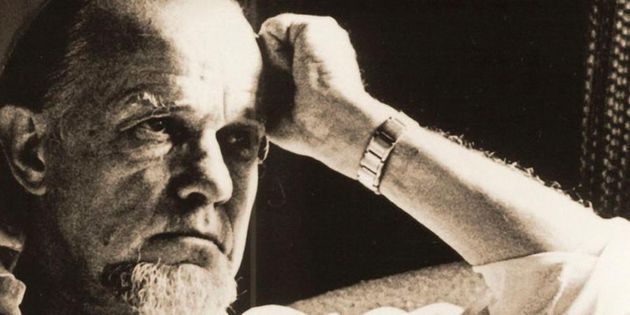
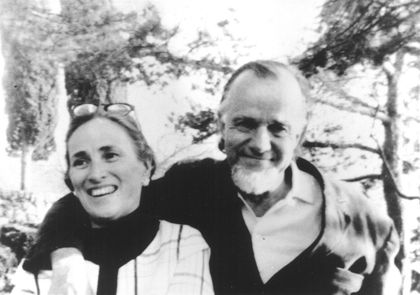
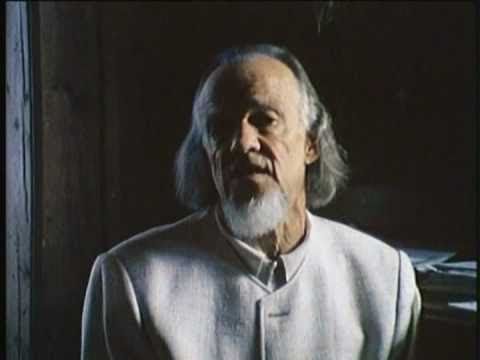


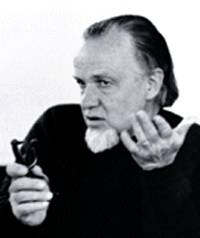
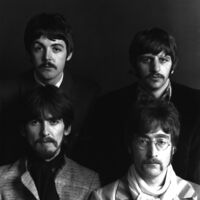
:format(jpeg):mode_rgb():quality(40)/discogs-images/A-82730-1519052220-3776.jpeg.jpg)





 The Daily Hatch