and you will hear what far smarter people than I have to say on this matter. I agree with them.
Harry Kroto
Nick Gathergood, David-Birkett, Harry-Kroto
I have attempted to respond to all of Dr. Kroto’s friends arguments and I have posted my responses one per week for over a year now. Here are some of my earlier posts:
Bertrand Russell, in full Bertrand Arthur William Russell, 3rd Earl Russell of Kingston Russell, Viscount Amberley of Amberley and of Ardsalla (born May 18, 1872, Trelleck, Monmouthshire, Wales—died Feb. 2, 1970, Penrhyndeudraeth, Merioneth), British philosopher, logician, and social reformer, founding figure in the analyticmovement in Anglo-American philosophy, and recipient of the Nobel Prize for Literature in 1950. Russell’s contributions to logic, epistemology, and the philosophy of mathematics established him as one of the foremost philosophers of the 20th century. To the general public, however, he was best known as a campaigner for peace and as a popular writer on social, political, and moral subjects. During a long, productive, and often turbulent life, he published more than 70 books and about 2,000 articles, married four times, became involved in innumerable public controversies, and was honoured and reviled in almost equal measure throughout the world. Russell’s article on the philosophical consequences of relativity appeared in the 13th edition of the Encyclopædia Britannica.
In the first video below in the 14th clip in this series are his words and I will be responding to them in the next few weeks since Sir Bertrand Russell is probably the most quoted skeptic of our time, unless it was someone like Carl Sagan or Antony Flew.
50 Renowned Academics Speaking About God (Part 1)
Another 50 Renowned Academics Speaking About God (Part 2)
A Further 50 Renowned Academics Speaking About God (Part 3)
__
Quote from Bertrand Russell:
Q: Why are you not a Christian?
Russell: Because I see no evidence whatever for any of the Christian dogmas. I’ve examined all the stock arguments in favor of the existence of God, and none of them seem to me to be logically valid.
Q: Do you think there’s a practical reason for having a religious belief, for many people?
Russell: Well, there can’t be a practical reason for believing what isn’t true. That’s quite… at least, I rule it out as impossible. Either the thing is true, or it isn’t. If it is true, you should believe it, and if it isn’t, you shouldn’t. And if you can’t find out whether it’s true or whether it isn’t, you should suspend judgment. But you can’t… it seems to me a fundamental dishonesty and a fundamental treachery to intellectual integrity to hold a belief because you think it’s useful, and not because you think it’s true.
Bertrand Russell, the 19th century British atheist philosopher, mathematician, and Nobel laureate was once asked what he would say if he found himself standing before God on the judgement day and God asked him, “Why didn’t you believe in Me?” Bertrand, without blinking an eye blurted out this response: “I will look God in the eye and tell him that he did not give me enough evidence. Not enough evidence, God! Not enough evidence!” What is interesting about Bertrand’s response is his sheer audacity to think that he can look God in the eyes. “God is like the sun,” G.K. Chesterton asserted, “You cannot look at it, but without it, you cannot look at anything else.”
Bertrand’s admittance that he chose the atheistic path because he couldn’t get enough evidence to the contrary is most unjustifiable and unfounded. My people have a maxim that challenges the tenets of this assertion. To wit: “One does not teach a child the nature of God.” Even people in the secular realm, without prior knowledge in scriptures know for sure that there is a God. Like other religions, their only shortcoming is the means by which they reach God. Jesus stated emphatically:“I am the Way, the Truth, and the Life. No one comes to the Father except through me” (John 14:6).
The Psalmist declares: “The heavens proclaim the glory of God. The skies display his craftsmanship. Day after day they continue to speak; night after night they make him known. They speak without a sound or word; their voice is never heard. Yet their message has gone throughout the earth, and their words to all the world”(Psalm 19 : 1 – 4, NLT). That is why the Apostle Paul, through the inspiration of the Holy Spirit stated in no uncertain terms that, no single human being has an excuse for not knowing God: “But God shows his anger from heaven against all sinful, wicked people who suppress the truth by their wickedness. They know the truth about God because he has made it obvious to them. For ever since the world was created, people have seen the earth and sky. Through everything God made, they can clearly see his invisible qualities – his eternal power and divine nature. So they have no excuse for not knowing God” (Romans 1:18 – 20, NLT).
As a result, it can be stated unequivocally that, it is not the absence of evidence that is causing some to doubt the existence of God but rather the suppression of it. I am a lover of science (especially biology), though I did not read science in high school. I believe one’s study of science and other body of knowledge should not lead one to think that all the wonderful things one sees in the world just happened with a big bang. That man evolved from apes, or amoeba or some primordial slime. Our study of science and nature should rather hold us spellbound about the nature of God and deepen our reverence for God. The hymnist could not have expressed this sense of wonder any better:
There is, beyond the azure blue, a God, concealed from human sight,
He tinted skies with heav’nly hue and framed the worlds with His great might
There is a God, He is alive, in Him we live, and we survive;
From dust our God created man, He is our God, the great I AM.
A. W. Dicus
_
__
___
_
__
Francis Schaeffer on pages 178 to 179 of volume 1 THE GOD WHO IS THERE asserted:
I do not believe that there is a leap of faith needed; there are good and sufficient reasons to know why Christianity is true–and more than that, that is the Bible’s insistence. The Bible’s emphasis is that there are good and sufficient reasons to know Christianity is true, so much so that we are disobedient and guilty if we do not believe it.
The Christian system (what is taught in the whole Bible) is a unity of thought. Christianity is not just a lot of bits and pieces–there is a beginning and an end, a whole system of truth, and this system is the only system that will stand up to all the questions that are presented to us as we face the reality of existence. Some of the other systems answer some of the questions but leave others unanswered. I believe it is only Christianity that gives the answers to all the crucial questions.
What are those questions? The questions are those which are presented to us as we face the reality of existence. God shuts us up to reality. We cannot escape the reality of what is, no matter what we say we believe or think.
This reality of which I speak falls into two parts: the fact that the universe truly exists and it has form, and then what I would call the “mannishness” of man–which is my own term for meaning that man is unique. People have certain qualities that must be explained.
God has shut up all people to these things, and I always like to go back to the statement of Jean-Paul Sartre, though he had no answer for his own statement, and that is that the basic philosophic question is that something is there. Things do exist, and this demands an explanation for their existence. I would then go beyond Sartre’s statement to one by Albert Einstein. Einstein said that the most amazing thing about the universe is that we can know something truly about it.In other words, it has a form that is comprehensible, even though we cannot exhaust it. And then I would say beyond that–no matter what people say they are, they are what they are, that is, man is unique as made in the image of God. Any system of thought, to be taken seriously, has to at least try to explain these two great phenomena of the universe and man. In other words, we are talking about objective truth related to reality and not just something within our own heads.
Now I would like to add a corollary to this: in WHATEVER HAPPENED TO THE HUMAN RACE?, and especially the extensive notes of the fifth chapter, there is a third thing and that is the way the Bible measures up to history. Once we say that, this is very exciting. It is very exciting because other religions are not founded in history, they are “out there” somewhere, or you can think of them as inside of your own head–whichever way you are looking at it. On the other hand, the Bible claims to be rooted in history. Whether we are considering the history of the Old Testament, whether we are considering the history of Christ, including the resurrection, or Paul’s journeys, it is insisted on as real history. So now we have three interwoven parts. Usually I have dealt with the twentieth-century person, but the third is also there. We have to face the reality of the universe and its having an existence and having a form. We have to face the reality in the uniqueness of man. We are able to discuss the fact that the Bible is rooted in history.
____
Schaeffer then points to the historical accuracy of the Bible:
The Bible and Archaeology – Is the Bible from God? (Kyle Butt 42 min)
Today we look at the 3rd letter in the Kroto correspondence and his admiration of Bertrand Russell. (Below The Nobel chemistry laureates Harold Kroto, Robert Curl and Richard Smalley) It is with sadness that I write this post having learned of the death of Sir Harold Kroto on April 30, 2016 at the age of […]
On November 21, 2014 I received a letter from Nobel Laureate Harry Kroto and it said: …Please click on this URL http://vimeo.com/26991975 and you will hear what far smarter people than I have to say on this matter. I agree with them. Harry Kroto _________________ Below you have picture of Dr. Harry Kroto: Gareth Stedman […]
Top 10 Woody Allen Movies __________ John Piippo makes the case that Bertrand Russell would have loved Woody Allen because they both were atheists who don’t deny the ramifications of atheism!!! Monday, August 06, 2012 (More On) Woody Allen’s Atheism As I wrote in a previous post, I like Woody Allen. I have long admired his […]
______ Top 10 Woody Allen Movies PBS American Masters – Woody Allen A Documentary 01 PBS American Masters – Woody Allen A Documentary 02 __________ John Piippo makes the case that Bertrand Russell would have loved Woody Allen because they both were two atheists who don’t deny the ramifications of atheism!!! Monday, August 06, 2012 […]
THE MORAL ARGUMENT BERTRAND RUSSELL But aren’t you now saying in effect, I mean by God whatever is good or the sum total of what is good — the system of what is good, and, therefore, when a young man loves anything that is good he is loving God. Is that what you’re […]
Great debate Fr. Frederick C. Copleston vs Bertrand Russell – Part 1 Uploaded by riversonthemoon on Jul 15, 2009 BBC Radio Third Programme Recording January 28, 1948. BBC Recording number T7324W. This is an excerpt from the full broadcast from cassette tape A303/5 Open University Course, Problems of Philosophy Units 7-8. Older than 50 years, […]
Uploaded by riversonthemoon on Jul 15, 2009 BBC Radio Third Programme Recording January 28, 1948. BBC Recording number T7324W. This is an excerpt from the full broadcast from cassette tape A303/5 Open University Course, Problems of Philosophy Units 7-8. Older than 50 years, out of UK/BBC copyright. Pardon the hissy audio. It was recorded 51 […]
Fr. Frederick C. Copleston vs Bertrand Russell – Part 1 Uploaded by riversonthemoon on Jul 15, 2009 BBC Radio Third Programme Recording January 28, 1948. BBC Recording number T7324W. This is an excerpt from the full broadcast from cassette tape A303/5 Open University Course, Problems of Philosophy Units 7-8. Older than 50 years, out of […]
THE MORAL ARGUMENT BERTRAND RUSSELL But aren’t you now saying in effect, I mean by God whatever is good or the sum total of what is good — the system of what is good, and, therefore, when a young man loves anything that is good he is loving God. Is that what you’re […]
Fr. Frederick C. Copleston vs Bertrand Russell – Part 1 Uploaded by riversonthemoon on Jul 15, 2009 BBC Radio Third Programme Recording January 28, 1948. BBC Recording number T7324W. This is an excerpt from the full broadcast from cassette tape A303/5 Open University Course, Problems of Philosophy Units 7-8. Older than 50 years, out of […]
I am moving the MUSIC MONDAY to a monthly feature on http://www.thedailyhatch.org. My passion has been in the recent years to emphasize the works of Francis Schaeffer in my apologetic efforts and most of those posts are either on Tuesdays or Thursdays.
This was written by Kansas guitarist Kerry Livgren. According to Livgren, the song was not written to express anything specifically religious, though it certainly expresses spiritual searching and other ideas.
Livgren became an evangelical Christian in 1980, and has said that his songwriting to that point was all about “searching.” Regarding this song, he explained: “I felt a profound urge to ‘Carry On’ and continue the search. I saw myself as the ‘Wayward Son,’ alienated from the ultimate reality, and yet striving to know it or him. The positive note at the end (‘Surely heaven waits for you’) seemed strange and premature, but I felt impelled to include it in the lyrics. It proved to be prophetic.”
Carry on my wayward son,
For there’ll be peace when you are done
Lay your weary head to rest
Don’t you cry no more
Once I rose above the noise and confusion
Just to get a glimpse beyond the illusion
I was soaring ever higher, but I flew too high
Though my eyes could see I still was a blind man
Though my mind could think I still was a mad man
I hear the voices when I’m dreamin’, I can hear them say
Carry on my wayward son,
For there’ll be peace when you are done
Lay your weary head to rest
Don’t you cry no more
Masquerading as a man with a reason
My charade is the event of the season
And if I claim to be a wise man, it surely means that I don’t know
On a stormy sea of moving emotion
Tossed about I’m like a ship on the ocean
I set a course for winds of fortune, but I hear the voices say
Carry on my wayward son,
For there’ll be peace when you are done
Lay your weary head to rest
Don’t you cry no more
Carry on, you will always remember
Carry on, nothing equals the splendor
Now your life’s no longer empty
Surely heaven waits for you
Carry on my wayward son, For there’ll be peace when you are done Lay your weary head to rest
Don’t you cry no moreWriter/s: KERRY LIVGREN, KERRY A LIVGREN
Publisher: Sony/ATV Music Publishing LLC
Lyrics licensed and provided by LyricFind
Friedman: Once all of this was a swamp, covered with forest. The Canarce Indians who lived here traded the 22 square miles of soggy Manhattan Island to the Dutch for $24.00 worth of cloth and trinkets. The newcomers founded a city, New Amsterdam at the edge of an empty continent. In the years that followed, it proved a magnet for millions of people from across the Atlantic; people who were driven by fear and poverty; who were attracted by the promise of freedom and plenty. They fanned out over the continent and built a new nation with their sweat, their enterprise and their vision of a better future.
For the first time in their lives, many were truly free to pursue their own objectives. That freedom released the human energies which created the United States. For the immigrants who were welcomed by this statue, America was truly a land of opportunity.
They poured ashore in their best clothes, eager and expectant, carrying what little they owned. They were poor, but they all had a great deal of hope. Once they arrived, they found, as my parents did, not an easy life, but a very hard life. But for many there were friends and relatives to help them get started __ to help them make a home, get a job, settle down in the new country. There were many rewards for hard work, enterprise and ability. Life was hard, but opportunity was real. There were few government programs to turn to and nobody expected them. But also, there were few rules and regulations. There were no licenses, no permits, no red tape to restrict them. They found in fact, a free market, and most of them thrived on it.
Many people still come to the United States driven by the same pressures and attracted by the same promise. You can find them in places like this. It’s China Town in New York, one of the centers of the garment industry __ a place where hundreds of thousands of newcomers have had their first taste of life in the new country. The people who live and work here are like the early settlers. They want to better their lot and they are prepared to work hard to do so.
Although I haven’t often been in factories like this, it’s all very familiar to me because this is exactly the same kind of a factory that my mother worked in when she came to this country for the first time at the age of 14, almost 90 years ago. And if there had not been factories like this here then at which she could have started to work and earn a little money, she wouldn’t have been able to come. And if I existed at all, I’d be a Russian or Hungarian today, instead of an American. Of course she didn’t stay here a long time, she stayed here while she learned the language, while she developed some feeling for the country, and gradually she was able to make a better life for herself.
Similarly, the people who are here now, they are like my mother. Most of the immigrants from the distant countries __ they came here because they liked it here better and had more opportunities. A place like this gives them a chance to get started. They are not going to stay here very long or forever. On the contrary, they and their children will make a better life for themselves as they take advantage of the opportunities that a free market provides to them.
The irony is that this place violates many of the standards that we now regard as every worker’s right. It is poorly ventilated, it is overcrowded, the workers accept less than union rate __ it breaks every rule in the book. But if it were closed down, who would benefit? Certainly not the people here. Their life may seem pretty tough compared to our own, but that is only because our parents or grandparents went through that stage for us. We have been able to start at a higher point.
Frank Visalli’s father was 12 years old when he arrived all alone in the United States. He had come from Sicily. That was 53 years ago. Frank is a successful dentist with a wife and family. They live in Lexington, Massachusetts. There is no doubt in Frank’s mind what freedom combined with opportunity meant to his father and then to him, or what his Italian grandparents would think if they could see how he lives now.
Frank Visalli: They would not believe what they would see __ that a person could immigrate from a small island and make such success out of their life because to them they were mostly related to the fields, working in the field as a peasant. My father came over, he made something for himself and then he tried to build a family structure. Whatever he did was for his family. It was for a better life for his family. And I can always remember him telling me that the number one thing in life is that you should get an education to become a professional person.
Friedman: The Visalli family, like all of us who live in the United States today, owe much to the climate of freedom we inherited from the founders of our country. The climate that gave full scope to the poor from other lands who came here and were able to make better lives for themselves and their children.
But in the past 50 years, we’ve been squandering that inheritance by allowing government to control more and more of our lives, instead of relying on ourselves. We need to rediscover the old truths that the immigrants knew in their bones; what economic freedom is and the role it plays in preserving personal freedom.
That’s why I came here to the South China Sea. It’s a place where there is an almost laboratory experiment in what happens when government is limited to its proper function and leaves people free to pursue their own objectives. If you want to see how the free market really works this is the place to come. Hong Kong, a place with hardly any natural resources. About the only one you can name is a great harbor, yet the absence of natural resources hasn’t prevented rapid economic development. Ships from all nations come here to trade because there are no duties, no tariffs on imports or exports. The power of the free market has enabled the industrious people of Hong Kong to transform what was once barren rock into one of the most thriving and successful places in Asia.
If you enjoyed that then take a look at the other segments:
PETERSON: Well, let me ask you how you would cope with this problem, Dr. Friedman. The people decided that they wanted cool air, and there was tremendous need, and so we built a huge industry, the air conditioning industry, hundreds of thousands of jobs, tremendous earnings opportunities and nearly all of us now have air […]
Part 5 Milton Friedman: I do not believe it’s proper to put the situation in terms of industrialist versus government. On the contrary, one of the reasons why I am in favor of less government is because when you have more government industrialists take it over, and the two together form a coalition against the ordinary […]
The fundamental principal of the free society is voluntary cooperation. The economic market, buying and selling, is one example. But it’s only one example. Voluntary cooperation is far broader than that. To take an example that at first sight seems about as far away as you can get __ the language we speak; the words […]
_________________________ Pt3 Nowadays there’s a considerable amount of traffic at this border. People cross a little more freely than they use to. Many people from Hong Kong trade in China and the market has helped bring the two countries closer together, but the barriers between them are still very real. On this side […]
Aside from its harbor, the only other important resource of Hong Kong is people __ over 4_ million of them. Like America a century ago, Hong Kong in the past few decades has been a haven for people who sought the freedom to make the most of their own abilities. Many of them are […]
“FREE TO CHOOSE” 1: The Power of the Market (Milton Friedman) Free to Choose ^ | 1980 | Milton Friedman Posted on Monday, July 17, 2006 4:20:46 PM by Choose Ye This Day FREE TO CHOOSE: The Power of the Market Friedman: Once all of this was a swamp, covered with forest. The Canarce Indians […]
Henry Louis Mencken (September 12, 1880 – January 29, 1956) was an American journalist, satirist, cultural critic and scholar of American English.[1] Known as the “Sage of Baltimore”, he is regarded as one of the most influential American writers and prose stylists of the first half of the twentieth century. He commented widely on the social scene, literature, music, prominent politicians and contemporary movements. His satirical reporting on the Scopes trial, which he dubbed the “Monkey Trial”, also gained him attention.
As a scholar, Mencken is known for The American Language, a multi-volume study of how the English language is spoken in the United States. As an admirer of the German philosopher Friedrich Nietzsche, he was a detractor of religion, populism and representative democracy, which he believed was a system in which inferior men dominated their superiors.[2] Mencken was a supporter of scientific progress, skeptical of economic theories and critical of osteopathic and chiropractic medicine.
Mencken opposed American entry into World War I and World War II. His diary indicates that he was a racist and privately used coarse language and slurs to describe various ethnic and racial groups.[3] Mencken also at times seemed to show a genuine enthusiasm for militarism, though never in its American form. “War is a good thing,” he once wrote, “because it is honest, it admits the central fact of human nature… A nation too long at peace becomes a sort of gigantic old maid.”[4]
Mencken’s longtime home in the Union Square neighborhood of West Baltimore was turned into a city museum, the H. L. Mencken House. His papers were distributed among various city and university libraries, with the largest collection held in the Mencken Room at the central branch of Baltimore’s Enoch Pratt Free Library.
Mencken was born in Baltimore, Maryland, on September 12, 1880. He was the son of Anna Margaret (Abhau) and August Mencken, Sr., a cigar factory owner. He was of German ancestry and spoke German in his childhood.[5] When Henry was three, his family moved into a new home at 1524 Hollins Street facing Union Square park in the Union Square neighborhood of old West Baltimore. Apart from five years of married life, Mencken was to live in that house for the rest of his life.[6]
In his best-selling memoir Happy Days, he described his childhood in Baltimore as “placid, secure, uneventful and happy.”[7]
When he was nine years old, he read Mark Twain‘s Huckleberry Finn, which he later described as “the most stupendous event in my life”.[8] He became determined to become a writer and read voraciously. In one winter while in high school he read Thackeray and then “proceeded backward to Addison, Steele, Pope, Swift, Johnson and the other magnificos of the Eighteenth century”. He read the entire canon of Shakespeare and became an ardent fan of Kipling and Thomas Huxley.[9] As a boy, Mencken also had practical interests, photography and chemistry in particular, and eventually had a home chemistry laboratory in which he performed experiments of his own devising, some of them inadvertently dangerous.[10]
He began his primary education in the mid-1880s at Professor Knapp’s School, located on the east side of Holliday Street between East Lexington and Fayette Streets, next to the Holliday Street Theatre and across from the newly constructed Baltimore City Hall. The site today is the War Memorial and City Hall Plaza laid out in 1926 in memory of World War I dead. At fifteen, in June 1896, he graduated as valedictorian from the Baltimore Polytechnic Institute. BPI was a mathematics, technical and science-oriented public high school, founded in 1883, which was then located on old Courtland Street just north of East Saratoga Street. This location is today the east side of St. Paul Street in St. Paul Place and east of Preston Gardens.
He worked for three years in his father’s cigar factory. He disliked the work, especially the sales aspect of it, and resolved to leave, with or without his father’s blessing. In early 1898 he took a class in writing at one of the country’s first correspondence schools, the Cosmopolitan University.[11] This was to be the entirety of Mencken’s formal education in journalism, or in any other subject. Upon his father’s death a few days after Christmas in the same year, the business reverted to his uncle, and Mencken was free to pursue his career in journalism. He had applied in February 1899 to the Morning Herald newspaper (which became the Baltimore Morning Herald in 1900) and had been hired as a part-timer there, but still kept his position at the factory for a few months. In June he was hired as a full-time reporter.
Mencken served as a reporter at the Herald for six years. Less than two and a half years after the Great Baltimore Fire, the paper was purchased in June 1906 by Charles H. Grasty, the owner and editor of The News since 1892, and competing owner and publisher Gen. Felix Agnus, of the town’s oldest (since 1773) and largest daily, The Baltimore American. They proceeded to divide the staff, assets and resources of The Herald between them. Mencken then moved to The Baltimore Sun, where he worked for Charles H. Grasty. He continued to contribute to The Sun,The Evening Sun (founded 1910) and The Sunday Sun full-time until 1948, when he stopped writing after suffering a stroke.
Mencken began writing the editorials and opinion pieces that made his name at The Sun. On the side, he wrote short stories, a novel, and even poetry, which he later revealed. In 1908, he became a literary critic for The Smart Set magazine, and in 1924 he and George Jean Nathan founded and edited The American Mercury, published by Alfred A. Knopf. It soon developed a national circulation and became highly influential on college campuses across America. In 1933, Mencken resigned as editor.
In 1930, Mencken married Sara Haardt, a German American professor of English at Goucher College in Baltimore and an author eighteen years his junior. Haardt had led efforts in Alabama to ratify the 19th Amendment.[12] The two met in 1923, after Mencken delivered a lecture at Goucher; a seven-year courtship ensued. The marriage made national headlines, and many were surprised that Mencken, who once called marriage “the end of hope” and who was well known for mocking relations between the sexes, had gone to the altar. “The Holy Spirit informed and inspired me,” Mencken said. “Like all other infidels, I am superstitious and always follow hunches: this one seemed to be a superb one.”[13] Even more startling, he was marrying an Alabama native, despite his having written scathing essays about the American South. Haardt was in poor health from tuberculosis throughout their marriage and died in 1935 of meningitis, leaving Mencken grief-stricken.[14] He had always championed her writing and, after her death, had a collection of her short stories published under the title Southern Album.
During the Great Depression, Mencken did not support the New Deal. This cost him popularity, as did his strong reservations regarding US participation in World War II, and his overt contempt for President Franklin D. Roosevelt. He ceased writing for the Baltimore Sun for several years, focusing on his memoirs and other projects as editor, while serving as an adviser for the paper that had been his home for nearly his entire career. In 1948, he briefly returned to the political scene, covering the presidential election in which President Harry S. Truman faced RepublicanThomas Dewey and Henry A. Wallace of the Progressive Party. His later work consisted of humorous, anecdotal, and nostalgic essays, first published in The New Yorker, then collected in the books Happy Days, Newspaper Days, and Heathen Days.
On November 23, 1948, Mencken suffered a stroke, which left him aware and fully conscious but nearly unable to read or write and able to speak only with difficulty. After his stroke, Mencken enjoyed listening to European classical music and, after some recovery of his ability to speak, talking with friends, but he sometimes referred to himself in the past tense, as if he were already dead. During the last year of his life, his friend and biographer William Manchester read to him daily.[15]
Preoccupied as Mencken was with his legacy, he organized his papers, letters, newspaper clippings and columns, even grade school report cards. After his death, these materials were made available to scholars in stages in 1971, 1981, and 1991, and include hundreds of thousands of letters sent and received; the only omissions were strictly personal letters received from women.
Mencken also published many works under various pseudonyms, including Owen Hatteras, John H Brownell, William Drayham, WLD Bell, and Charles Angoff.[19] As a ghost-writer for the physician Leonard K. Hirshberg, he wrote a series of articles and (in 1910) most of a book about the care of babies.
Mencken admired German philosopher Friedrich Nietzsche—he was the first writer to provide a scholarly analysis in English of Nietzsche’s views and writings—and Joseph Conrad. His humor and satire owe much to Ambrose Bierce and Mark Twain. He did much to defend Dreiser, despite freely admitting his faults, including stating forthrightly that Dreiser often wrote badly and was a gullible man. Mencken also expressed his appreciation for William Graham Sumner in a 1941 collection of Sumner’s essays, and regretted never having known Sumner personally. In contrast, Mencken was scathing in his criticism of the German philosopher Hans Vaihinger whom he described as “an extremely dull author” and whose famous book Philosophy of ‘As If’ he dismissed as an unimportant “foot-note to all existing systems.”[20]
Mencken recommended for publication libertarian philosopher and author Ayn Rand‘s first novel, We the Living, calling it “a really excellent piece of work”. Shortly after, Rand addressed him in correspondence as “the greatest representative of a philosophy” to which she wanted to dedicate her life, “individualism”, and later listed him as her favorite columnist.[21]
For Mencken, Adventures of Huckleberry Finn was the finest work of American literature. Much of that book relates how gullible and ignorant country “boobs” (as Mencken referred to them) are swindled by con men like the (deliberately) pathetic “Duke” and “Dauphin” roustabouts with whom Huck and Jim travel down the Mississippi River. These scam-artists swindle by posing as enlightened speakers on temperance (to obtain the funds to get roaring drunk), as pious “saved” men seeking funds for far off evangelistic missions (to pirates on the high seas, no less), and as learned doctors of phrenology (who can barely spell). Mencken read the novel as a story of America’s hilarious dark side, a place where democracy, as defined by Mencken, is “the worship of jackals by jackasses.”
Such turns of phrase evoked the erudite cynicism and rapier sharpness of language displayed by Bierce in his darkly satiric Devil’s Dictionary. A noted curmudgeon,[22] democratic in subjects attacked, Mencken savaged politics,[23] hypocrisy, and social convention. Master of English, he was given to bombast, once disdaining the lowly hot dog bun’s descent into “the soggy rolls prevailing today, of ground acorns, plaster of paris, flecks of bath sponge and atmospheric air all compact.”[24]
As a nationally syndicated columnist and book author, he commented widely on the social scene, literature, music, prominent politicians and contemporary movements, such as the temperance movement. Mencken was a keen cheerleader of scientific progress, but very skeptical of economic theories and critical of osteopathic/chiropractic medicine.
As a frank admirer of Nietzsche, Mencken was a detractor of populism and representative democracy, which he believed was a system in which inferior men dominated their superiors.[2] As did Nietzsche, he also spoke out against religious belief (and as a fervent nonbeliever, against the very notion of a deity), particularly Christian fundamentalism, Christian Science and creationism, and against the “Booboisie,” his word for the ignorant middle classes.[25][26][27] In the summer of 1925, he attended the famous Scopes “Monkey Trial” in Dayton, Tennessee, and wrote scathing columns for the Baltimore Sun (widely syndicated) and American Mercury mocking the anti-evolution Fundamentalists (especially William Jennings Bryan). The play Inherit the Wind is a fictionalized version of the trial, and, as noted above, the cynical reporter E.K. Hornbeck is based on Mencken. In 1926, he deliberately had himself arrested for selling an issue of The American Mercury that was banned in Boston under the Comstock laws.[28] Mencken heaped scorn not only on the public officials he disliked, but also on the contemporary state of American elective politics itself.
In the summer of 1926, Mencken followed with great interest the Los Angeles grand jury inquiry into the famous Canadian-American evangelist Aimee Semple McPherson. She was accused of faking her reported kidnapping and the case attracted national attention. There was every expectation Mencken would continue his previous pattern of anti-fundamentalist articles, this time with a searing critique of McPherson. Unexpectedly, he came to her defense, identifying various local religious and civic groups which were using the case as an opportunity to pursue their respective ideological agendas against the embattled Pentecostal minister.[29] He spent several weeks in Hollywood, California, and wrote many scathing and satirical columns on the movie industry and the southern California culture. After all charges had been dropped against McPherson, Mencken revisited the case in 1930 with a sarcastically biting and observant article. He wrote that since many of that town’s residents acquired their ideas “of the true, the good and the beautiful” from the movies and newspapers, “Los Angeles will remember the testimony against her long after it forgets the testimony that cleared her.”[30]
In 1931 the Arkansas legislature passed a motion to pray for Mencken’s soul after he had called the state the “apex of moronia.”[31]
In the mid 1930s Mencken feared Franklin Roosevelt and his New Deal liberalism as a powerful force. Mencken, says Charles A. Fecher, was, “deeply conservative, resentful of change, looking back upon the ‘happy days’ of a bygone time, wanted no part of the world that the New Deal promised to bring in.”[32]
Damn! A Book of Calumny, Satire Audiobook, by H. L. Mencken
The striking thing about Mencken’s mind is its ruthlessness and rigidity … Though one of the fairest of critics, he is the least pliant. … [I]n spite of his skepticism, and his frequent exhortations to hold his opinion lightly, he himself has been conspicuous for seizing upon simple dogmas and sticking to them with fierce tenacity … true skeptics … see both truth and weakness in every case.
In addition to his identification of races with castes, Mencken had views about the superior individual within communities. He believed that every community produced a few people of clear superiority. He considered groupings on a par with hierarchies, which led to a kind of natural elitism and natural aristocracy. “Superior” individuals, in Mencken’s view, were those wrongly oppressed and disdained by their own communities, but nevertheless distinguished by their will and personal achievement, not by race or birth.
In 1989, per his instructions, Alfred A. Knopf published Mencken’s “secret diary” as The Diary of H. L. Mencken. According to an Associated Press story, Mencken’s views shocked even the “sympathetic scholar who edited it,” Charles A. Fecher of Baltimore.[35] There is a club in Baltimore called the Maryland Club which had one Jewish member, and that member died. Mencken said, “There is no other Jew in Baltimore who seems suitable,” according to the article. The diary also quoted him as saying of blacks, in September 1943, that “it is impossible to talk anything resembling discretion or judgment to a colored woman. They are all essentially child-like, and even hard experience does not teach them anything.”
However, Mencken opposed lynching. For example, he had this to say about a Maryland incident:
Not a single bigwig came forward in the emergency, though the whole town knew what was afoot. Any one of a score of such bigwigs might have halted the crime, if only by threatening to denounce its perpetrators, but none spoke. So Williams was duly hanged, burned and mutilated.
Mencken also wrote: “I admit freely enough that, by careful breeding, supervision of environment and education, extending over many generations, it might be possible to make an appreciable improvement in the stock of the American Negro, for example, but I must maintain that this enterprise would be a ridiculous waste of energy, for there is a high-caste white stock ready at hand, and it is inconceivable that the Negro stock, however carefully it might be nurtured, could ever even remotely approach it. The educated Negro of today is a failure, not because he meets insuperable difficulties in life, but because he is a Negro. He is, in brief, a low-caste man, to the manner born, and he will remain inert and inefficient until fifty generations of him have lived in civilization. And even then, the superior white race will be fifty generations ahead of him.”[36]
Rather than dismissing democratic governance as a popular fallacy or treating it with open contempt, Mencken’s response to it was a publicized sense of amusement. His feelings on this subject (like his casual feelings on many other such subjects) are sprinkled throughout his writings over the years, very occasionally taking center-stage with the full force of Mencken’s prose:
Democracy gives [the beatification of mediocrity] a certain appearance of objective and demonstrable truth. The mob man, functioning as citizen, gets a feeling that he is really important to the world—that he is genuinely running things. Out of his maudlin herding after rogues and mountebanks there comes to him a sense of vast and mysterious power—which is what makes archbishops, police sergeants, the grand goblins of the Ku Klux and other such magnificoes happy. And out of it there comes, too, a conviction that he is somehow wise, that his views are taken seriously by his betters—which is what makes United States Senators, fortune tellers and Young Intellectuals happy. Finally, there comes out of it a glowing consciousness of a high duty triumphantly done which is what makes hangmen and husbands happy.
This sentiment is fairly consistent with Mencken’s distaste for common notions and the philosophical outlook he unabashedly set down throughout his life as a writer (drawing on Friedrich Nietzsche and Herbert Spencer, among others).[37]
Mencken wrote as follows about the difficulties of good men reaching national office when such campaigns must necessarily be conducted remotely:
The larger the mob, the harder the test. In small areas, before small electorates, a first-rate man occasionally fights his way through, carrying even the mob with him by force of his personality. But when the field is nationwide, and the fight must be waged chiefly at second and third hand, and the force of personality cannot so readily make itself felt, then all the odds are on the man who is, intrinsically, the most devious and mediocre—the man who can most easily adeptly disperse the notion that his mind is a virtual vacuum.
The Presidency tends, year by year, to go to such men. As democracy is perfected, the office represents, more and more closely, the inner soul of the people. We move toward a lofty ideal. On some great and glorious day the plain folks of the land will reach their heart’s desire at last, and the White House will be adorned by a downright moron.[38]
Mencken supported biology and the theory of evolution by Charles Darwin but spoke unfavorably of physics and mathematics. In Charles Angoff’s record, Mencken said:
[Isaac Newton] was a mathematician, which is mostly hogwash, too. Imagine measuring infinity! That’s a laugh.[39]
In response, Angoff said: “Well, without mathematics there wouldn’t be any engineering, no chemistry, no physics.” Mencken responded: “That’s true, but it’s reasonable mathematics. Addition, subtraction, multiplication, fractions, division, that’s what real mathematics is. The rest is baloney. Astrology. Religion. All of our sciences still suffer from their former attachment to religion, and that is why there is so much metaphysics and astrology, the two are the same, in science.”[39]
Elsewhere, he spoke of the nonsense of higher mathematics and “probability” theory, after he read Angoff’s article for Charles S. Peirce in the American Mercury. “So you believe in that garbage, too—theories of knowledge, infinity, laws of probability. I can make no sense of it, and I don’t believe you can either, and I don’t think your god Peirce knew what he was talking about.”[40]
Mencken also repeated these opinions multiple times in articles for the American Mercury. He said mathematics is simply a fiction, compared with individual facts that make up science. In a review for Vaihinger’s The Philosophy of “As If”, he said:
The human mind, at its present stage of development, cannot function without the aid of fictions, but neither can it function without the aid of facts—save, perhaps, when it is housed in the skull of a university professor of philosophy. Of the two, the facts are enormously the more important. In certain metaphysical fields, e.g. those of mathematics, law, theology, osteopathy and ethics—the fiction will probably hold out for many years, but elsewhere the fact slowly ousts it, and that ousting is what is called intellectual progress. Very few fictions remain in use in anatomy, or in plumbing and gas-fitting; they have even begun to disappear from economics.[41]
Mencken repeatedly identified mathematics with metaphysics and theology. According to Mencken, mathematics is necessarily infected with metaphysics because of the tendency of many mathematical people to engage in metaphysical speculation. In a review for A. N. Whitehead’s The Aims of Education, Mencken remarked that despite his agreement with Whitehead’s thesis and approval of his writing style, “now and then he falls into mathematical jargon and pollutes his discourse with equations”, and “[t]here are moments when he seems to be following some of his mathematical colleagues into the gaudy metaphysics which now entertains them”.[42] For Mencken, theology is characterized by the fact that it uses correct reasoning from false premises. Mencken also uses the term “theology” more generally, to refer to the use of logic in science or any other field of knowledge. In a review for both A. S. Eddington’s The Nature of the Physical World and Joseph Needham’s Man a Machine, Mencken forcefully ridiculed the use of reasoning to establish any fact in science, because theologians happen to be masters of “logic” and yet are mental defectives:
Is there anything in the general thinking of theologians which makes their opinion on the point of any interest or value? What have they ever done in other fields to match the fact-finding of the biologists? I can find nothing in the record. Their processes of thought, taking one day with another, are so defective as to be preposterous. True enough, they are masters of logic, but they always start out from palpably false premises.[43]
Mencken also wrote a review for Sir James Jeans’s book, The Mysterious Universe, in which he said that mathematics is not necessary for physics. Instead of mathematical “speculation” (such as quantum theory), Mencken believed physicists should just directly look at individual facts in the laboratory like chemists:
If chemists were similarly given to fanciful and mystical guessing, they would have hatched a quantum theory forty years ago to account for the variations that they observed in atomic weights. But they kept on plugging away in their laboratories without calling in either mathematicians or theologians to aid them, and eventually they discovered the isotopes, and what had been chaos was reduced to the most exact sort of order.[44]
In the same article which he later re-printed in the Mencken Chrestomathy, Mencken primarily contrasts what real scientists do, which is to simply directly look at the existence of “shapes and forces” confronting them instead of (such as in statistics) attempting to speculate and use mathematical models. Physicists and especially astronomers are consequently not real scientists, because when looking at shapes or forces, they do not simply “patiently wait for further light”, but resort to mathematical theory. There is no need for statistics in scientific physics, since one should simply look at the facts while statistics attempts to construct mathematical models. On the other hand, the really competent physicists do not bother with the “theology” or reasoning of mathematical theories (such as in quantum mechanics):
[Physicists] have, in late years, made a great deal of progress, though it has been accompanied by a considerable quackery. Some of the notions which they now try to foist upon the world, especially in the astronomical realm and about the atom, are obviously nonsensical, and will soon go the way of all unsupported speculations. But there is nothing intrinsically insoluble about the problems they mainly struggle with, and soon or late really competent physicists will arise to solve them. These really competent physicists, I predict, will be too busy in their laboratories to give any time to either metaphysics or theology. Both are eternal enemies of every variety of sound thinking, and no man can traffic with them without losing something of his good judgment.[44]
Mencken also ridiculed Einstein’s theory of general relativity, saying “in the long run his curved space may be classed with the psychosomatic bumps of Gall and Spurzheim”.[45] In his private letters, he said:
It is a well known fact that physicists are greatly given to the supernatural. Why this should be I don’t know, but the fact is plain. One of the most absurd of all spiritualists is Sir Oliver Lodge. I have the suspicion that the cause may be that physics itself, as currently practised, is largely moonshine. Certainly there is a great deal of highly dubious stuff in the work of such men as Eddington.[46]
Mencken countered the arguments for Anglo-Saxon superiority prevalent in his time in a 1923 essay entitled “The Anglo-Saxon”, which argued that if there was such a thing as a pure “Anglo-Saxon” race, it was defined by its inferiority and cowardice. “The normal American of the ‘pure-blooded’ majority goes to rest every night with an uneasy feeling that there is a burglar under the bed and he gets up every morning with a sickening fear that his underwear has been stolen.”[47]
The Jews could be put down very plausibly as the most unpleasant race ever heard of. As commonly encountered, they lack many of the qualities that mark the civilized man: courage, dignity, incorruptibility, ease, confidence. They have vanity without pride, voluptuousness without taste, and learning without wisdom. Their fortitude, such as it is, is wasted upon puerile objects, and their charity is mainly a form of display.[48]
That passage was removed from subsequent editions at his express direction.[49]
Author Gore Vidal later deflected claims of anti-Semitism against Mencken:
Far from being an anti-Semite, Mencken was one of the first journalists to denounce the persecution of the Jews in Germany at a time when The New York Times, say, was notoriously reticent. On November 27, 1938, Mencken writes (Baltimore Sun), “It is to be hoped that the poor Jews now being robbed and mauled in Germany will not take too seriously the plans of various politicians to rescue them.” He then reviews the various schemes to “rescue” the Jews from the Nazis, who had not yet announced their own final solution.[50]
As Germany gradually conquered Europe, Mencken attacked President Roosevelt for refusing to admit Jewish refugees into the United States and called for their wholesale admission:
There is only one way to help the fugitives, and that is to find places for them in a country in which they can really live. Why shouldn’t the United States take in a couple hundred thousand of them, or even all of them?[51]
However, Jewish historian Michael Kazin accused Mencken of being “a lifelong anti-Semite with a reverence for German culture so strong it blinded him to the menace of Nazism.”[52]
Inheriting Mencken
Published on Dec 24, 2007
H.L. Mencken was a Baltimore journalist who wrote with wit and passion about the encroaching monopoly state, the suffocation of American liberty under the smothering breasts of Big Mother. In this clip from Inherit the Wind, Gene Kelly gives a charming portrayal of Mencken
Mencken’s home at 1524 Hollins Street in Baltimore’s Union Square neighborhood, where he lived for sixty-seven years before his death in 1956, was bequeathed to the University of Maryland, Baltimore on the death of his younger brother, August, in 1967. The City of Baltimore acquired the property in 1983, and the H. L. Mencken House became part of the City Life Museums. It has been closed to general admission since 1997, but is opened for special events and group visits by arrangement.
Shortly after World War II, Mencken expressed his intention of bequeathing his books and papers to Baltimore‘s Enoch Pratt Free Library. At his death, it was in possession of most of the present large collection. As a result, his papers as well as much of his personal library, which includes many books inscribed by major authors, are held in the Library’s Central Branch on Cathedral Street in Baltimore. The original third floor H. L. Mencken Room and Collection housing this collection was dedicated on April 17, 1956. The new Mencken Room, on the first floor of the Library’s Annex, was opened in November 2003.
The collection contains Mencken’s typescripts, newspaper and magazine contributions, published books, family documents and memorabilia, clipping books, large collection of presentation volumes, file of correspondence with prominent Marylanders, and the extensive material he collected while he was preparing The American Language.
The Sara Haardt Mencken collection at Goucher College includes letters exchanged between Haardt and Mencken and condolences written after her death. Some of Mencken’s vast literary correspondence is held at the New York Public Library. “Gift of HL Mencken 1929” is stamped on the Marriage of Heaven and Hell, Luce 1906 edition of William Blake, which shows up from the Library of Congress online version for reading.
I remember like yesterday hearing my pastor Adrian Rogersin 1979 going through the amazing fulfilled prophecy of Ezekiel 26-28 and the story of the city of Tyre. In 1980 in my senior year (taught by Mark Brink) at Evangelical Christian High School, I watched the film series by Francis Schaeffer called WHATEVER HAPPENED TO THE HUMAN RACE? Later that same year I read the book by the same name and I was amazed at the historical accuracy of the Bible and the many examples from archaeology that Schaeffer gave and recently I have shared several of these in my current series on Schaeffer and the Beatles. The reason I did that was because many people in the 1960’s had taken non-rational leaps into such areas as communism, the occult, drugs, and easternmysticism, but sitting right there in front of them was the historical accurate Bible which contained sufficient evidence to warrant trust.
(Adrian Rogers met with Presidents Jimmy Carter and Ronald Reagan.)
Anyone who has read my blog for any length of time knows that politically Milton Friedman and Ronald Reagan were my heroes. Spiritually my heroes have been both Francis Schaeffer and Adrian Rogers. An interesting fact about both of these two men and that is they both believed the Bible is the inspired and inerrant word of God. Both men defended the historical accuracy of the Bible even though both of the religious denominations they belonged to started to shift to the liberal view that the Bible contains errors in it.
Francis Schaeffer’s battle on this issue came in the 1930’s when he got to know Dr. J. Gresham Machen was involved in a battle with the Presbyterian Church USA over their leftward shift in theology. Francis Schaeffer observed:
H.L. Mencken died when I was a young man and I read some of the stuff he wrote and he came at just the point of the total collapse of the American consensus back in the 1930’s or a little before. H.L.Mencken was very destructive to the American consensus and he was way out. It is he who said the famous thing about Dr. J. Gresham Machen. Dr. Machen was the man who was fighting the battle for historic Christianity against the liberals in the big denominations and expressly the Presbyterian denomination and the liberals were trying to laugh Machen out of court. But H.L. Mencken said a remarkable thing, “Well, if you really want to be a Christian there is only one kind of Christian to be and that is the Machen kind.” This is wonderful. This is exactly where the battlefield is. When you take Christianity and chip away at it like the liberals wanted to do then you don’t have anything left. This is no halfway war. If you are going to be a Christian you have to be a biblical Christian. Machen and Mencken understood this and this is my position too.
Adrian Rogers also was that type of Christian too. Recently a relative told me that his Bible Study Teacher at the church he started attended recently started a series on Genesis and he said on the front end that evolution is true. I encouraged my relative to ask the simple question: DO YOU BELIEVE IN A LITERAL “ADAM AND EVE?” I sent him the sermon on Evolution by Adrian Rogers and here is a portion of it below:
H.G. Wells
H. G. Wells, the brilliant historian who wrote The Outlines of History, said this—and I quote: “If all animals and man evolved, then there were no first parents, and no Paradise, and no Fall. If there had been no Fall, then the entire historic fabric of Christianity, the story of the first sin, and the reason for the atonement, collapses like a house of cards.” H. G. Wells says—and, by the way, I don’t believe that he did believe in creation—but he said, “If there’s no creation, then you’ve ripped away the foundation of Christianity.”
Now, the Bible teaches that man was created by God and that he fell into sin. The evolutionist believes that he started in some primordial soup and has been coming up and up. And, these two ideas are diametrically opposed. What we call sin the evolutionist would just call a stumble up. And so, the evolutionist believes that all a man needs—he’s just going up and up, and better and better—he needs a boost from beneath. The Bible teaches he’s a sinner and needs a birth from above. And, these are both at heads, in collision.
What is evolution? Evolution is man’s way of hiding from God, because, if there’s no creation, there is no Creator. And, if you remove God from the equation, then sinful man has his biggest problem removed—and that is responsibility to a holy God. And, once you remove God from the equation, then man can think what he wants to think, do what he wants to do, be what he wants to be, and no holds barred, and he has no fear of future judgment.
Francis Schaeffer & the SBC
Actually Francis Schaeffer’s good friend Paige Patterson talked Adrian Rogers into running for President of the Southern Baptist Convention in 1979 and the liberal shift was halted. In the article “Francis Schaeffer ‘indispensable’ to SBC,” (Thursday, October 30, 2014,) David Roach wrote:
The late Francis Schaeffer was known to pick up the phone during the early years of the Southern Baptist Convention’s conservative resurgence. Paige Patterson knew to expect a call from Schaeffer around Christmas with the question, “You’re not growing weary in well-doing are you?”
Patterson, a leader in the movement to return the SBC to a high view of Scripture, would reply, “No, Dr. Schaeffer. I’m under fire, but I’m doing fine. And I’m trusting the Lord and proceeding on.”
To some it may seem strange that an international Presbyterian apologist and analyst of pop culture would take such interest in a Baptist controversy over biblical inerrancy.
But to Schaeffer it made perfect sense.
He believed churches were acquiescing to the world, abandoning their belief that the Bible is without error in everything it said. A watered-down theology left the SBC with decreased power to battle cultural evils. To Schaeffer the convention was the last major American denomination with hope for reversing this “great evangelical disaster,” as he put it.
Thirty years after Schaeffer’s death, Baptist leaders still remember how he took time from his speaking, writing and filmmaking schedule to quietly encourage Patterson; Paul Pressler, a judge from Texas with whom Patterson worked closely during the conservative resurgence; Adrian Rogers, a Memphis pastor who served three terms SBC president; and others.
By the early 1990s, conservatives had elected an unbroken string of convention presidents and moved in position to shift the balance of power on all convention boards and committees from the theologically moderate establishment. But at the time of Schaeffer’s annual calls, the outcome of the controversy was still in doubt.
(Paige Patterson)
“I strongly suspect that he was afraid I would not hold strong,” Patterson, now president of Southwestern Baptist Theological Seminary in Texas, told Baptist Press. “He had seen so many people fold up under pressure that he assumed we probably would too. So he would call and ask for a report.”
Schaeffer’s interest in engaging culture made him particularly appealing to Southern Baptist conservatives. He helped provide them with a “battle plan” to fight cultural evils and what they perceived as theological drift in their denomination, Richard Land, president of Southern Evangelical Seminary, told BP.
Along with theologian Carl F.H. Henry, Schaeffer was the key intellectual influence on leaders of the conservative resurgence, Land said. When conservatives started to be elected as the executives of Baptist institutions, Henry spoke at Land’s inauguration at the Christian Life Commission (the ERLC’s precursor), R. Albert Mohler Jr.’s at Southern Baptist Theological Seminary in Kentucky and Timothy George’s at Beeson Divinity School in Alabama.
“If Schaeffer had still been alive, we would have had him come,” Land said. He noted that Schaeffer was “close” to Rogers and “admired” by Bailey Smith, two conservative SBC presidents. Edith Schaeffer and Patterson’s wife Dorothy were close friends and traveled together in the early 1980s speaking on the importance of the home.
Clark Pinnock, a former New Orleans Baptist Theological Seminary professor who mentored conservative resurgence leaders before taking a leftward theological turn in his own thinking, served on Schaeffer’s staff at L’Abri.
(ADRIAN ROGERS, chairman of the committee that drafted changes to the Baptist Faith & Message, joins Al Mohler, Chuck Kelley and Richard Land in a news conference shortly after the new statement of faith was adopted by messengers to the Southern Baptist Convention annual meeting in Orlando, Fla)
Mount Sinai is one of the most important sites of the entire Bible. It was here that the Hebrew people came shortly after their flight from Egypt. Here God spoke to them through Moses, giving them directions for their life as newly formed nation and making a covenant with them.
The thing to notice about this epochal moment for Israel is the emphasis on history which the Bible itself makes. Time and time again Moses reminds the people of what has happened on Mount Sinai:
Deuteronomy 4:11-12New International Version (NIV)
11 You came near and stood at the foot of the mountain while it blazed with fireto the very heavens, with black clouds and deep darkness.12 Then the Lordspoke to you out of the fire. You heard the sound of words but saw no form;there was only a voice.
Moses emphasized that those alive at the time had actually heard God’s voice. They had received God’s direct communication in words. They were eyewitnesses of what had occurred–they saw the cloud and the mountain burning with fire. They saw and they heard. Moses says, on the basis of what they themselves have seen and heard in their own lifetime, they are not to be afraid of their present or future enemies.
On the same basis too, Moses urges them to obey God: “Only be careful, and watch yourselves closely so that you do not forget the things your eyes have seen…” (Deuteronomy 4:9)
Thus the people’s confidence and trust in God and their obedience to Him are alike rooted in truth that is historical and open to observation…The relationship between God and His people was not based on an upward experience inside their own heads, but upon a reality which was seen and heard. They were called to obey God not because of a leap of faith, but because of God’s real acts in history. For God is the LIVING GOD….”Religious Truth” according to the Bible involves the same sort of truth which people operate on in their everyday lives. If something is true, then its opposite cannot also be true.
From the Bible’s viewpoint, all truth finally rests upon the fact that the infinite-personal God exists in contrast to His not existing. This means that God exists objectively. He exists whether or not people say He does. The Bible also teaches that God is personal.
Much of the Bible is in the sphere of normal existence and is observable. God communicated himself in language. This is not surprising for He was the creator of people who use language in communicating with other people.
In the Hebrew (and biblical) view, truth is grounded ultimately in the existence and character of God and what has been given us by God in creation and revelation. Because people are finite, reality cannot be exhausted by human reason.
It is within this Judeo-Christian view of truth that, by its own insistence, we must understand the Bible. Moses could appeal to real historical events as the basis for Israel’s confidence and obedience into the future. He could even pass down to subsequent generations physical reminders of what God had done, so that the people could see them and remember.
________________
Dr. Francis Schaeffer – Faith, Seeing & Believing
John 21:1-14New International Version (NIV)
Jesus and the Miraculous Catch of Fish
21 Afterward Jesus appeared again to his disciples, by the Sea of Galilee.[a] It happened this way:2 Simon Peter, Thomas (also known as Didymus[b]), Nathanael from Cana in Galilee, the sons of Zebedee, and two other disciples were together.3 “I’m going out to fish,” Simon Peter told them, and they said, “We’ll go with you.” So they went out and got into the boat, but that night they caught nothing.
4 Early in the morning, Jesus stood on the shore, but the disciples did not realize that it was Jesus.
5 He called out to them, “Friends, haven’t you any fish?”
“No,” they answered.
6 He said, “Throw your net on the right side of the boat and you will find some.”When they did, they were unable to haul the net in because of the large number of fish.
7 Then the disciple whom Jesus loved said to Peter, “It is the Lord!” As soon as Simon Peter heard him say, “It is the Lord,” he wrapped his outer garment around him (for he had taken it off) and jumped into the water.8 The other disciples followed in the boat, towing the net full of fish, for they were not far from shore, about a hundred yards.[c]9 When they landed, they saw a fire of burning coals there with fish on it, and some bread.
10 Jesus said to them, “Bring some of the fish you have just caught.”11 So Simon Peter climbed back into the boat and dragged the net ashore. It was full of large fish, 153, but even with so many the net was not torn.12 Jesus said to them, “Come and have breakfast.” None of the disciples dared ask him, “Who are you?” They knew it was the Lord.13 Jesus came, took the bread and gave it to them, and did the same with the fish.14 This was now the third time Jesus appeared to his disciples after he was raised from the dead.
__________
The resurrected Christ stood there on the beach of the Sea of Galilee. Before the disciples reached the shore, He had already prepared a fire with fish cooking on it for them to eat. It was a fire that could be seen and felt; the fire cooked the fish, and the fish and bread could be eaten for breakfast.
When the fire died down, it left ashes on the beach; the disciples were well fed with bread and fish and Christ’s footprints would have been visible on the beach…
Thomas, Christ tells us, should have believed the ample evidence given to him of the physical evidence of the resurrection by the other apostles. Christ rebuked him for not accepting this evidence.He at that time and we today have the same sufficient witness of those who have seen and heard and were able to touch the resurrected Christ and were able to observe what He had done.
Because Thomas insisted on seeing and touching we have a more sure witness than we otherwise would have had. In the testimony of those who saw and heard we have a sure witness and this includes Thomas’ doubt and his personal verification which removed that doubt. WE SHOULD BOW BEFORE THE TOTAL WITNESS OF THE RECORD WHICH WE HAVE IN THE BIBLE, OF THE TESTIMONY OF THE EXISTENCE OF THE UNIVERSE AND IT’S FORM AND THE UNIQUENESS OF MAN. IT IS ENOUGH! BELIEVE HE HAS RISEN.
John 20:24-29New International Version (NIV)
Jesus Appears to Thomas
24 Now Thomas (also known as Didymus[a]), one of the Twelve, was not with the disciples when Jesus came.25 So the other disciples told him, “We have seen the Lord!”
But he said to them, “Unless I see the nail marks in his hands and put my finger where the nails were, and put my hand into his side, I will not believe.”
26 A week later his disciples were in the house again, and Thomas was with them. Though the doors were locked, Jesus came and stood among them and said, “Peace be with you!”27 Then he said to Thomas, “Put your finger here; see my hands. Reach out your hand and put it into my side. Stop doubting and believe.”
28 Thomas said to him, “My Lord and my God!”
29 Then Jesus told him, “Because you have seen me, you have believed;blessed are those who have not seen and yet have believed.”
_______________
Dr. Francis Schaeffer – The Biblical flow of Truth & History (intro)
Francis Schaeffer – The Biblical Flow of History & Truth (1)
Dr. Francis Schaeffer – The Biblical Flow of Truth & History (part 2)
In the appendix of his book, He Is There and He Is Not Silent, Francis Schaeffer wrote a little piece called “Is Propositional Revelation Nonsense?” Schaeffer explains that, “To modern man, and much modern theology, the concept of propositional revelation and the historic Christian view of infallibility is not so much mistaken as meaningless” (345). The 20th century came with many challenges to theological formulation, not the least of which was the assault on propositional truth and revelation. Such camps as existentialists and logical positivists attempted to remove religious truth from the reason and revelation while others sought to justify meaning, reality, and truth with other criterion of verification such as experience and perception. However, center to the Christian faith is the belief that God has spoken and revealed himself in the written Word of God. In this revelation, God used language as the medium to carry and convey biblical truths and realities. This is not to say that God has revealed himself exhaustively, but it does mean that he has revealed himself truly and definitively. Schaeffer makes two points which I would like to mention here:
Even communication between one created person and another is not exhaustive; but that does not mean that for that reason it is not true.
If the uncreated Personal really cared for the created personal, it could not be thought unthinkable for him to tell the created personal things of a propositional nature; otherwise, as a finite being, the created personal would have numerous things he could not know if he just began with himself as a limited, finite reference point.
Schaffer makes some salient points here that deserve to be brought up in the 21stcentury. While we do not disagree that revelation is also personal, we cannot flinch on the assault on propositional revelation. God has revealed himself to us, his nature and his acts, through propositional revelation (i.e. the Bible), and the implications of this truth is that we do not have the rights to reinvent or rename the God Who Is There. If we do not begin with God and his revelation, Schaeffer is correct to conclude that there are many things we could not know about God based on such a limited, finite reference point as ourselves. It is no coincidence that, at the time of Schaeffer’s publishing of this book (1972), John Hick was advancing his pluralistic hypothesis which argued for the ineffability of the “Real” which argued that one cannot know anything about God as he is (ding an sich).Adapting the Kantian model of the noumenal and phenomenal worlds, Hick argues that God (“Real”) has not and cannot reveal himself truly and definitely; furthermore, it is impossible to know anything at all about the Real (except that it is ineffable and that it exists which is something he claims to know). The result when God is not the beginning, the reference point, the apriori grounds of knowledge and revelation, then knowing and defining God is a free-for-all to anyone who wants to postulate their phenomenological interpretations as religious truth. Schaeffer concludes his little article with this important paragraph in which he said:
“The importance of all this is that most people today (including some who still call themselves evangelical) who have given up the historical and biblical concept of revelation and infallibility have not done so because of the consideration of detailed problems objectively approached, but because they have accepted, either in analyzed fashion or blindly, the other set of presuppositions. Often this has taken place by means of cultural injection, without their realizing what has happened to them” (349, emphasis added).
In the days ahead, I hope to share how propositional truth is foundational to personal truth and give a few examples of the redefinition of revelation in contemporary contexts.
Long ago, at many times and in many ways, God spoke to our fathers by the prophets, but in these last days he has spoken to us by his Son, whom he appointed the heir of all things, through whom also he created the world.
Hebrews 1:1-2
_____________
The Bible and Archaeology – Is the Bible from God? (Kyle Butt 42 min)
Mark Shapiro: The Ceramic Art of Karen Karnes (at 11 min mark discusses Black Mountain College)
Published on May 23, 2012
Mark Shapiro gave a presentation about the life and work of ceramic artist Karen Karnes at the 2012 American Craft Council Baltimore Show. http://www.craftcouncil.org
An interview of Karen Karnes conducted 2005 Aug. 9-10, by Mark Shapiro, for the Archives of American Art’s Nanette L. Laitman Documentation Project for Craft and Decorative Arts in America, at the artist’s home and studio in Morgan, Vt.
Karnes discusses her childhood in Brooklyn and the Bronx as the daughter of Russian and Polish immigrants working in the garment industry; living in a cooperative housing project built especially for garment workers and their families; attending the High School of Music and Art, New York City; going on to Brooklyn College, and fortuitously landing in the class of Serge Chermayoff, who taught primarily in the Bauhaus style; meeting her first husband, David Weinrib, with whom she eventually moved to Pennsylvania; David bringing home a slab of clay for her to work with, her first experience with the material; traveling to Italy and working in a ceramics factory there; attending a summer session at Black Mountain College in North Carolina and taking a class with Josef Albers; moving to Stony Point, in Rockland County, N.Y., to start Gatehill Community; her first gallery relationship, with Bonniers, New York City; the birth of her son Abel in 1956; the first time she used a salt kiln, while at the Penland School of Arts and Crafts, Penland, NC, in 1967, and its effect on the character of her work; her relationship with the Hadler-Rodriguez Galleries, New York City; the pottery show in Demarest, New Jersey; her teaching philosophy and methods…meeting her life partner, Ann Stannard, in 1970; Ann’s home in Wales, and living there before settling in Vermont; the fire that destroyed their home and studio in 1998; the issues of privacy and isolation in an artists life; her expectations about her career, especially as a Jewish woman; and her feelings on the work of contemporary potters.
Karnes also recalls John Cage, Soetsu Yanagi, Bernard Leach, Shoji Hamada, Charles Olsen, Marguerite Wildenhain, Paul and Vera B. Williams, Mary Caroline Richards, Goren Holmquist, Paul J. Smith, Mikhail Zakin, Jack Lenor Larsen, Isamu Noguchi, D. Hayne Bayless, Zeb Schactel, Warren Mackenzie, Garth Clark, Joy Brown, Robbie Lobell, Paulus Berensohn, and others.
Catalog essay for the show that Mark curated at the Penland Gallery, March 22–May 8, 2011.
People often ask whether I was a student of Karen Karnes. It is always somehow awkward to answer. I first say no, explain that she doesn’t really teach, that I have gotten to know her over the years, that her work and place in the world are deeply important to me. That she is a mentor even though I never actually studied or worked with her.
My hunch is that many potters feel this way. The thirteen artists whose work is represented in Many Paths: A Legacy of Karen Karnes certainly do. In fact, Karnes’s outstanding career of over sixty years has touched several generations of potters. She has inspired many young potters to pursue their unlikely vocation, and artists of her own generation—even those working in other fields—to take up clay. Her influence derives mostly from her quiet personal magnetism, integrity, and the uncanny power of her work. An encounter with Karnes is often a transformational event.
Unlike many of the well-known figures of the studio pottery movement, Karnes never taught for any length of time at a university, influencing students as they passed through. Nor did she have apprentices working in her studio to internalize her attitudes and protocols and carry them forward, nor books extending her following. Many of the prominent mentors in modern ceramics have arisen out of such contexts. For example, the British potters Bernard Leach and his apprentice Michael Cardew not only influenced the many apprentices who worked in their studios, but their seminal writings reached thousands of readers. University professors such as Karnes’s contemporary, Warren MacKenzie (who himself apprenticed with Leach), have had important impacts on younger potters [1].
In the Studio
Karnes has preferred to work in the quiet privacy of her studio, rarely employing assistants, and never directly on her work. Though she did share her studio at several points over her career—at Black Mountain College in 1952–4 with her then-husband sculptor, David Weinrib; and for several years with Weinrib and the poet, painter, and scholar M.C. Richards at the Gate Hill Cooperative in Stony Point, New York—she did so in the spirit of cooperative engagement with partners and peers. (She shared a studio again two decades later when she formed a life-partnership with Ann Stannard, an accomplished educator and artist, this time for a decade or so until Ann’s interests moved on to other areas.) But generally, Karnes fiercely protected the privacy of her studio and worked alone.
Growing up, McKenzie Smith was an occasional visitor to Gate Hill, where Karnes had her studio for 25 years, and Smith’s aunt, Johanna Vanderbeek, was also a resident. He recalls Karnes’s formidable presence, amidst the wildness and freedom of the scene at Gate Hill in the late 1960s—“flat-out naked hippieville,” it seemed to him, in contrast to his more conventional Florida upbringing. Karnes stood apart, literally, as her studio was separated from two clustered hillside quadrangles, and in her serious and disciplined persona. She might indulge the band of roving boys McKenzie was tearing around with by giving them each a small lump of clay, but after a brief time she would indicate clearly that it was time for them to move on so that she could return to work.
Her studio solitude only shifted as she entered her 80s and welcomed Normandy Alden, a student she’d met teaching with me at Haystack School in 2005, to share her studio in northern Vermont. By then Karnes was producing much less work and needed help maintaining her studio and rural homestead.
The Question of Teaching
Karnes is sometimes erroneously described as having been on the faculty at Black Mountain College, but actually she and Weinrib were artists-in-residence and did not officially teach. Curious faculty and students would visit the pot shop; M.C. Richards, for example, began working more seriously in clay there with the couple’s encouragement.
Later, at Gate Hill, after she and Weinrib split up and MC moved back into the city, Karnes taught some classes in her studio, but she strictly limited her teaching to one afternoon a week and stopped when her pots sold more reliably. It was in these studio classes, though, that Mikhail Zakin, who had been working in jewelry and sculpture, took up pottery; eventually she helped Karen build her salt kiln. Zakin, five years Karnes’s senior, might be said to be the earliest and longest bearer of her influence.
In the 1960s, as workshop teaching opportunities expanded with the growth of the craft movement, Karnes taught sporadically, twice at Haystack School and, notably, once here at Penland, where in 1967 she first salt-glazed, a career-changing event. From then on her primary material vocabulary turned to salt surfaces and her work for the next dozen years took on the iconic orange-peel texture and rich tonality that we associate with classic Karnes. But though many studio potters became regulars on the workshop circuit, Karnes did not. She was simply too absorbed with the private pleasures and demands of the studio, now irresistible as she was finding her voice—and market—with this new approach.
Still, one workshop she gave at the Wesleyan Potters studio in Connecticut broke the pattern. It was so compelling that the students arranged to continue meeting every few months on an ongoing basis. The “Continuum,” as they called it, met periodically in different studios over half a dozen years until 1979, mainly under Karnes’s leadership, but also under guest presenters such as British potters Mick Casson and David Leach. It was as a peripheral participant in this group that Malcolm Davis first encountered Karnes.
Old Church
The institution, however, most associated with Karnes’s legacy is the annual pottery show at the Art School at Old Church Cultural Center, in Demarest, New Jersey, just north of Manhattan. The weekend show, which she has curated since 1974, each year features 25 potters from around the country. Potters donate a third of their sales to benefit the art school, which Zakin had founded in an old abandoned church. For years, the show was the main fundraising event for the school. When Zakin originally came to Karnes with the idea of the show, Karnes accepted her curatorial role on condition that the potters be “really treated well”: the school would provide them with housing, food, and prepared display spaces, take care of sales and packing so they could enjoy each other, mingle with the customers, and maybe even spend an afternoon in the city. This was to be a show by potters forpotters. And the potters, Karnes was adamant, would be promptly paid. The atmosphere would be celebratory and coalesce around a festive potter’s dinner on Saturday night. The idealism with which the show was conceived is consistent with Karen’s early history of communitarian self-sufficiency, and reflects the values of mutual aid among the tradespersons living in the Bronx “Coops,” the first worker-owned housing project in New York City, where she grew up with her parents, who were garment workers and socialist union activists.
Each year, Karnes introduces younger potters among the regulars who rotate in and out of the show. A few participants enjoy a kind of tenured status—Zakin, who has participated from the beginning; Rob Sieminski, since 1977; Scott Goldberg since 1980; and Malcolm Davis a few year later. All of the potters in Many Paths (with the exception of Alden, who is currently in graduate school, and Paulus Berensohn, who worked in other media and did not produce pots in quantity) have shown multiple times at Old Church. They all remember feeling honored and encouraged by Karen’s belief in their work, and especially grateful for the sustaining sense of community that she fostered.
For many, the show was their first national professional venue, a chance to put work next to peers and senior practitioners in the field and in front of a savvy public. The event has been a rite of passage for many, myself included. Malcolm Davis’s first experience of the show is typical. As he was just beginning to make pots seriously, Karnes responded to something incipient in his forms, and invited him to exhibit, though he didn’t feel his work yet merited it. “She saw something in my pots and opened a door to professionalism and gave me courage. It was a huge stroke.”
Karnes and Zakin set up the show to give concrete economic support to the potters. Not only did it connect potters to enthusiastic buyers each December, but the invitations dependably went out considerably in advance, and first-time potters were given a several-year commitment. All this meant that the show could be part of a longer-term plan, giving potters a respite from the uncertainties of juried craft shows. Rob Sieminski, knowing he could count on an income stream every December, felt greater freedom to take bolder risks in his work because of this and the sense of Karnes’s unqualified support for his creativity. As he says, “pots with nails fired into them” (a feature of his work for a number of years) “weren’t exactly an obvious popular direction.”
In the case of Robbie Lobell, Karnes’s support extended to the sharing of her pioneering formula for making flameware—low-expansion clay and glazes that could be put directly over a burner. These were the basis of Karnes’s famous line of casseroles that sold so well over almost four decades. Lobell felt the practical intent of Karnes’s generous gesture. “She always talked about how hard it is to be a potter. She was handing me something that would allow me to make a living.”
Bob Briscoe notes, “Karen proved that there is strong support for functional ceramics in the general public. By recognizing and nurturing this support, Karen has shown that it is possible for numerous potters to make their living doing what they love.” In fact, the show has become a model for several others around the country, notably the Northern Clay Center’s American Pottery Festival, which Bob Briscoe and Mathew Metz initiated after brainstorming on their long drive back to Minnesota after participating in Old Church in 1998 [2].
The Woman over Time
From very early on, Karnes was a strong and successful woman, making her living by selling her wares independently and on her own terms, without the backup of a professional spouse’s income. She built her own kiln (with Zakin) and began firing with salt at a time when such activities were quite male-dominated. Mary Barringer and Aysha Peltz, whose sights as young potters were set on making a living from studio production, were particularly encouraged by Karnes’s example as a successful independent craftswoman. Barringer’s words speak for scores of women who encountered Karnes as they were thinking about making a life in clay: “I visited Karen at her Stony Point studio, and I can still recall the impact that seeing her in her own working space had upon me. Seeing with my own eyes the evidence of a working woman potter opened a door in my mind that I had not realized was closed. Karen’s example sent me forth into my working life.”
Karnes’s vitality, continued productivity, and constant creative growth well into her 80s is one of her most admired qualities, remarked on by many but particularly meaningful to younger women. Regardless of the limitations of her body, she has never ceased to make new work, experimented with different firings as a guest in colleague’s kilns—and last year even building a new salt kiln. And she has continued her role as Old Church curator. “As a woman aging in a physically demanding field, Karen is a hero for me,” says Silvie Granatelli. Working alongside Karnes in her Morgan, Vermont, studio, encouraged Normandy Alden to “look expansively at my own life in clay and consider how I might prepare for an aging body that inevitably comes.” Gail Kendall hopes to “match her vigor and engagement in the field over time. She is always changing, growing, and exploring.”
Life and Art
Karnes seems to have achieved an almost perfect merging of life and art, perhaps any artist’s highest aspiration. As Scott Goldberg puts it, “Karen has devoted her life to her work. Through the years, she steadily, self-confidently, invents, and holds to ideals that express exquisite, subtle form and meticulous craftsmanship. Her unwavering approach to the merging of the crafts of life and art has been an inspiration to me.” This seemingly effortless representation of her whole being in her work, the way it encompasses her environment, body image, all the rhythms of her days is truly remarkable. Peltz sees this fluid and peaceful integration of experience and expression at the heart of Karnes’s accomplishment, “her self, sources, and experiences are present in her work with an organic ease that few potters achieve.”
This resonates with my sense of Karnes as an embodiment of the complete artist, one confidently in pursuit of a transformative vision, in harmony with the world, at peace with her refusal of its distractions, organically and inexorably moving with her work into new places. As she says in one of her rare pronouncements about her creative process, “The pots kind of grow from themselves—it’s a feeling. The forms will extend themselves—or contract. I feel my forms live in my body, on my breath.” It is this somatic integration of her creativity, her beautiful embodiment of it that makes her so compelling.
Even her very physical presence carried Karnes’s art. Maren Kloppman remembers the “magical moment” she met Karnes during a thunderstorm. Karnes’s “keen eye and gentle honest criticism inspired ambition and possibility in me,” says Kloppman. For Paulus Berensohn, the encounter was fateful. He was a young New York dancer, was attending an annual picnic at Gate Hill, when he wandered off from his hosts and happened to see Karnes at her wheel—no surprise that she was hard at work even during such an event—through the window of her studio, facing away from him. As he describes it, “she was seated throwing a cylinder her back long straight and beautiful. She reached a graceful arm toward the slip bucket and without for a second taking her eyes off the spinning pot, picked up the waiting sponge. I just had to learn that dance.”
The graceful confidence that she exudes physically flows in part from how completely she is at peace with her choices and accepts their moral implications. She rejects compromise of her artistic intent for worldly gain and eschews any distraction from her muse. I am reminded of a dealer who, knowing of the demand for Karnes’s classic large-scale work, her need for funds, and the limitations of her aging body, suggested that she hire a young thrower to make her forms. Karnes, baffled, responded, “Why would I ever do that?” Zakin sums it up eloquently: “Karen is somebody who lives with total integrity to her value system. That has been the great lesson for me—that it can be done, that you can live that way.”
Mentors and Patrons
These stories focus on Karnes’s influence on and mentorship of other artists, but it seems important to circle back to her early days as an artist, her own experience starting out. I have mentioned how Karnes’s conditions for curating the Old Church show reflected the ameliorative engagement of her childhood milieu, a commitment to helping others that is in her blood. This instinct was also nurtured by mentors and patrons who played different supportive roles in her early career.
As a student in the 1940s, her creative gift was recognized by Serge Chermayeff, the Chechen-born modernist architect and designer who headed the art department at Brooklyn College. Chermayeff believed in her strongly and encouraged her to apply to Harvard in architecture. Though she declined, she is one of the only former students he singles out in his Chicago Architects History Project interview (1986) in which he calls her pot an example of the “brilliant… awfully good” students he taught at Brooklyn [3]. He later arranged for her full fellowship at Alfred University in Charles Harder’s studio. She was again recognized during her stay in the Italian pottery town of Sesto Fiorentino when her work caught the eye of leading designer Gio Ponti. Ponti was so taken with her work that he featured it in his prestigiousDomus magazine. Chermayeff and Ponti were both masters in fields somewhat peripheral to Karnes’s chosen one, and were in positions to offer avenues of advancement to the young Karnes.
At Black Mountain College, Karnes experienced a different kind of a transformational teaching when she encountered a master working in her own material, the legendary Japanese potter, Shoji Hamada, who along with Bernard Leach, Soetsu Yanagi, and Marguerite Widenhain came to the college to give a seminar the first summer of her residence. She describes “breathing in” his spirit as he quietly worked, uncomplaining, with the available clay while Leach went on and on about proper clay, plasticity, etc. She says that whenever she had any doubts about throwing pots in front of a group she would recall Hamada’s peaceful undistracted presence.
At the college she also enjoyed the support of the college’s rector, poet Charles Olsen. While in the 1950s, pottery was somewhat marginal to the heady abstract discourse of the students, Olsen wanted to move the college toward a curriculum based on his “institute model” where students would study consecutively four of bodies of knowledge that would begin with crafts, with pottery enjoying parity with weaving, architecture, and graphics. As he stated in a 1952 letter to Wildenhain (who he tried to recruit to the college before Karnes signed on), “…it damn well interests me as an act, (pots do)” [4].
Finally, the architect Paul Williams extended generous patronage to Karnes (and the other residents at Gate Hill Cooperative), building her house and studio and even providing a VW bug for the community to use, enabling Karen to pursue her passion at a time when she had few material resources at her disposal. The consistent support Karnes has extended to others over her long career, then, is a reciprocation rooted in the legacies and support from which she herself benefited.
The diversity and excellence of the work of the multigenerational assembly of artists in Many Paths and their connections to Karnes and to one another is testimony itself to Karnes’s rich legacy. Though the space here at the Penland Gallery has limited this group to a baker’s dozen, many more in the Penland community and around the country also carry her as a touchstone of excellence and a model of commitment, community, and integrity. Potters everywhere have been transformed by the fierce beauty of her life and work. Karnes is not just essential to the many paths taken by the artists in this show; her presence runs through generations of American ceramists.
Acknowledgments
I am grateful to Karen Karnes for being the inspiring artist and person she is; to Kathryn Gremley at the Penland Gallery for encouragement and putting the exhibition together; to the Penland School for funding this essay; and to the thirteen artists in the show, for their work and their thoughts about Karnes’s influence that are at the heart of Many Paths. Finally I am indebted to my wife Pam Thompson for her incisive editing and unwavering support.
Notes
1 MacKenzie exemplifies this model of mentorship. From his position at the University of Minnesota, he created a vibrant ceramic culture and taught many students, notably an exceptional group of potters in the late 1960s, including Michael and Sandy Simon, Mark Pharis, Randy Johnston, Wayne Branum, and Jeff Oestreich.
2 The highly successful St. Croix Pottery Tour has since extended this legacy. The Tour, a circuit of six host studios north of the Twin Cities, hosts an additional three dozen guest potters and includes social events that reflect the community spirit that Karnes nurtured at Old Church.
3 Serge Chermayeff, interview by Betty J. Blum. Wellfleet, MA, 23–4 May 1985. Chicago Architects Oral History Project. (Chicago: Ernest R. Graham Study Center for Architectural Drawings. Department of Architecture, The Art Institute of Chicago) 26.
4 Charles Olsen, letter to Bernard Leach. 24 May 1952. Black Mountain College Papers, II. 25.
I have gone back and forth and back and forth with many liberals on the Arkansas Times Blog on many issues such as abortion, human rights, welfare, poverty, gun control and issues dealing with popular culture. Here is another exchange I had with them a while back. My username at the Ark Times Blog is Saline […]
I have posted many of the sermons by John MacArthur. He is a great bible teacher and this sermon below is another great message. His series on the Book of Proverbs was outstanding too. I also have posted several of the visits MacArthur made to Larry King’s Show. One of two most popular posts I […]
I have posted many of the sermons by John MacArthur. He is a great bible teacher and this sermon below is another great message. His series on the Book of Proverbs was outstanding too. I also have posted several of the visits MacArthur made to Larry King’s Show. One of two most popular posts I […]
Prophecy–The Biblical Prophesy About Tyre.mp4 Uploaded by TruthIsLife7 on Dec 5, 2010 A short summary of the prophecy about Tyre and it’s precise fulfillment. Go to this link and watch the whole series for the amazing fulfillment from secular sources. http://www.youtube.com/watch?v=qvt4mDZUefo ________________ John MacArthur on the amazing fulfilled prophecy on Tyre and how it was fulfilled […]
John MacArthur on the Bible and Science (Part 2) I have posted many of the sermons by John MacArthur. He is a great bible teacher and this sermon below is another great message. His series on the Book of Proverbs was outstanding too. I also have posted several of the visits MacArthur made to Larry […]
John MacArthur on the Bible and Science (Part 1) I have posted many of the sermons by John MacArthur. He is a great bible teacher and this sermon below is another great message. His series on the Book of Proverbs was outstanding too. I also have posted several of the visits MacArthur made to Larry […]
Adrian Rogers – How you can be certain the Bible is the word of God Great article by Adrian Rogers. What evidence is there that the Bible is in fact God’s Word? I want to give you five reasons to affirm the Bible is the Word of God. First, I believe the Bible is the […]
Is there any evidence the Bible is true? Articles By PleaseConvinceMe Apologetics Radio The Old Testament is Filled with Fulfilled Prophecy Jim Wallace A Simple Litmus Test There are many ways to verify the reliability of scripture from both internal evidences of transmission and agreement, to external confirmation through archeology and science. But perhaps the […]
I have gone back and forth and back and forth with many liberals on the Arkansas Times Blog on many issues such as abortion, human rights, welfare, poverty, gun control and issues dealing with popular culture. Here is another exchange I had with them a while back. My username at the Ark Times Blog is […]
Here is some very convincing evidence that points to the view that the Bible is historically accurate. Archaeological and External Evidence for the Bible Archeology consistently confirms the Bible! Archaeology and the Old Testament Ebla tablets—discovered in 1970s in Northern Syria. Documents written on clay tablets from around 2300 B.C. demonstrate that personal and place […]
I hit a home run when I did a series on Woody Allen’s movie MIDNIGHT IN PARIS. Basically I researched all the historical characters mentioned that in that movie. This theme has been a tremendous success. Let me share with you a list of the most viewed with the links:
and you will hear what far smarter people than I have to say on this matter. I agree with them.
Harry Kroto
__
I have attempted to respond to all of Dr. Kroto’s friends arguments and I have posted my responses one per week for over a year now. Here are some of my earlier posts:
Bertrand Arthur William Russell was born at Trelleck on 18th May, 1872. His parents were Viscount Amberley and Katherine, daughter of 2nd Baron Stanley of Alderley. At the age of three he was left an orphan. His father had wished him to be brought up as an agnostic; to avoid this he was made a ward of Court, and brought up by his grandmother. Instead of being sent to school he was taught by governesses and tutors, and thus acquired a perfect knowledge of French and German. In 1890 he went into residence at Trinity College, Cambridge, and after being a very high Wrangler and obtaining a First Class with distinction in philosophy he was elected a fellow of his college in 1895. But he had already left Cambridge in the summer of 1894 and for some months was attaché at the British embassy at Paris.
In December 1894 he married Miss Alys Pearsall Smith. After spending some months in Berlin studying social democracy, they went to live near Haslemere, where he devoted his time to the study of philosophy. In 1900 he visited the Mathematical Congress at Paris. He was impressed with the ability of the Italian mathematician Peano and his pupils, and immediately studied Peano’s works. In 1903 he wrote his first important book, The Principles of Mathematics, and with his friend Dr. Alfred Whitehead proceeded to develop and extend the mathematical logic of Peano and Frege. From time to time he abandoned philosophy for politics. In 1910 he was appointed lecturer at Trinity College. After the first World War broke out, he took an active part in the No Conscription fellowship and was fined £ 100 as the author of a leaflet criticizing a sentence of two years on a conscientious objector. His college deprived him of his lectureship in 1916. He was offered a post at Harvard university, but was refused a passport. He intended to give a course of lectures (afterwards published in America as Political Ideals, 1918) but was prevented by the military authorities. In 1918 he was sentenced to six months’ imprisonment for a pacifistic article he had written in the Tribunal. His Introduction to Mathematical Philosophy (1919) was written in prison. His Analysis of Mind (1921) was the outcome of some lectures he gave in London, which were organized by a few friends who got up a subscription for the purpose.
In 1920 Russell had paid a short visit to Russia to study the conditions of Bolshevism on the spot. In the autumn of the same year he went to China to lecture on philosophy at the Peking university. On his return in Sept. 1921, having been divorced by his first wife, he married Miss Dora Black. They lived for six years in Chelsea during the winter months and spent the summers near Lands End. In 1927 he and his wife started a school for young children, which they carried on until 1932. He succeeded to the earldom in 1931. He was divorced by his second wife in 1935 and the following year married Patricia Helen Spence. In 1938 he went to the United States and during the next years taught at many of the country’s leading universities. In 1940 he was involved in legal proceedings when his right to teach philosophy at the College of the City of New York was questioned because of his views on morality. When his appointment to the college faculty was cancelled, he accepted a five-year contract as a lecturer for the Barnes foundation, Merion, Pa., but the cancellation of this contract was announced in Jan. 1943 by Albert C. Barnes, director of the foundation.
Russell was elected a fellow of the Royal Society in 1908, and re-elected a fellow of Trinity College in 1944. He was awarded the Sylvester medal of the Royal Society, 1934, the de Morgan medal of the London Mathematical Society in the same year, the Nobel Prize for Literature, 1950.
In a paper “Logical Atomism” (Contemporary British Philosophy. Personal Statements, First series. Lond. 1924) Russell exposed his views on his philosophy, preceded by a few words on historical development.1
Principal publications
German Social Democracy, 1896
Foundations of Geometry, 1897
A Critical Exposition of the Philosophy of Leibniz, 1900
Principles of Mathematics, vol. 1, 1903
Philosophical Essays, 1910
(with Dr. A. N. Whitehead) Principia mathematica, 3 vols, 1910-13
The Problems of Philosophy, 1912
Our Knowledge of the External World as a Field for Scientific Method in Philosophy, 1944
Principles of Social Reconstruction, 1916
Mysticism and Logic and Other Essays, 1918
Roads to Freedom: Socialism, Anarchism and Syndicalism, 1918
Introduction to Mathematical Philosophy, 1919
The Practice and Theory of Bolshevism, 1920
The Analysis of Mind, 1921
The Problem of China, 1922
The ABC of Atoms, 1923
(with Dora Russell) The Prospects of Industrial Civilisation, 1923
Logical Atomism, 1924
The ABC of Relativity, 1925
On Education, 1926
The Analysis of Matter, 1927
An Outline of Philosophy, 1927
Sceptical Essays, 1928
Marriage and Morals, 1929
The Conquest of Happiness, 1930
The Freedom and Organisation 1814-1914, 1934
In Praise of Idleness, 1935
Which Way to Peace?, 1936
(with Patricia Russell editor of) The Amberley Papers, 2 vols, 1937
Power: a new Social Introduction to its Study, 1938
An Inquiry into Meaning and Truth, 1941
History of Western Philosophy, 1946
Human Knowledge, its Scope and Limits, 1948
Authority and the Individual, 1949
Unpopular Essays, 1950
1) The matter for this sketch is taken from general English reference books.
From Les Prix Nobel en 1950, Editor Arne Holmberg, [Nobel Foundation], Stockholm, 1951
This autobiography/biography was written at the time of the award and later published in the book series Les Prix Nobel/Nobel Lectures/The Nobel Prizes. The information is sometimes updated with an addendum submitted by the Laureate.
For more updated biographical information, see:
Russell, Bertrand, The Autobiography of Bertrand Russell. (3 vols.) Allen & Unwin: London, 1967-1969.
Bertrand Russell died on February 2, 1970.
In the first video below in the 14th clip in this series are his words and I will be responding to them in the next few weeks since Sir Bertrand Russell is probably the most quoted skeptic of our time, unless it was someone like Carl Sagan or Antony Flew.
50 Renowned Academics Speaking About God (Part 1)
Another 50 Renowned Academics Speaking About God (Part 2)
A Further 50 Renowned Academics Speaking About God (Part 3)
__
Quote from Bertrand Russell:
Q: Why are you not a Christian?
Russell: Because I see no evidence whatever for any of the Christian dogmas. I’ve examined all the stock arguments in favor of the existence of God, and none of them seem to me to be logically valid.
Q: Do you think there’s a practical reason for having a religious belief, for many people?
Russell: Well, there can’t be a practical reason for believing what isn’t true. That’s quite… at least, I rule it out as impossible. Either the thing is true, or it isn’t. If it is true, you should believe it, and if it isn’t, you shouldn’t. And if you can’t find out whether it’s true or whether it isn’t, you should suspend judgment. But you can’t… it seems to me a fundamental dishonesty and a fundamental treachery to intellectual integrity to hold a belief because you think it’s useful, and not because you think it’s true._
Among the pantheon of world-famous atheists of the 20th century we must admit two of the most intellectual were Anthony Flew and Bertrand Russell. Both were trained in philosophy from Britain’s best universities. Dr. Flew studied at Oxford while Russell was a Cambridge man. Flew renounced his atheism and Russell remained steadfast in his unbelief until his death in 1970. I don’t know much about Flew’s personal life but Russell produced an autobiography in 1975. His daughter, Katharine Tait, told her side of the story in her book, “My Father, Bertrand Russell”, also published in 1975.
It is to her story I’d like to turn. She seems to have a very mature understanding of her life with her father and his four wives. Though we tend to distort of our own past by selective memory, she realizes this tendency and balances her initial judgments with more balanced introspection.
I’ll not bore you with the details of their relationship and her memories of her father. Rather, I think you can gather from her thoughts how things went down. I am specifically interested in her recollections of how God played into (and out of) his and her life.
Bertrand Russell and his wife established the Beacon Hill School in 1927 and their two children, John and Katharine, were among its students. It was a progressive education fostered by Bertrand’s belief that children should be presented all the options of a subject and be left to determine their own minds about it. Stuffy textbooks were not to be found at Beacon Hill (the math text was the only exception).
She recalls, “Besides being difficult, the material was often controversial. My father did not intend his education to be propaganda; he always wanted us to consider both sides and then make up our minds… In practice, at Beacon Hill, ‘making up our own minds’ usually meant agreeing with my father, because he knew so much more and could argue so much better; also because we heard ‘the other side’ only from people who disagreed with it. There was never a cogent presentation of the Christian faith, for instance, from someone who really believed in it.”
Regarding her father’s four marriages, she offers:
“Tongue in cheek, my father later claimed his four marriages as proof that he approved of the institution of marriage…All his life he sought perfection: perfect mathematical truth, perfect philosophical clarify, certainty of God’s existence, a perfect formula for society, a perfect woman to live with in a perfect human relationship. And although he never found them anywhere, he never stopped looking.”
Her thoughts on good and evil:
“I believe that good and evil are essential to one another, that neither of them can exist alone and that there is envy, fear, anger, resentment, in every human heart, no matter how well brought up. My father did not believe this. Though these ugly things exited in our hearts, their existence was always denied in our family relations and they were left to fester like hidden wounds.”
Later, while in college at Radcliffe, she was asked by a fellow student about her thoughts on God. She remembers the incident and recalls:
“One day I sat in he library talking to a handsome young man who was a fellow student in one of my German classes. ‘Don’t you believe in any kind of God?’ he asked, knowing who my father was. ‘No,’ I said, ‘I don’t. It doesn’t seem to me necessary. ‘Then what is the point of living?’ ‘Well, I’ve been born now. I have little choice. Might as well go ahead and make the best of it.’ ‘That seems so bleak. How can you bear it?’ ‘Does it? Maybe. It’s just the way life is, the way the world happens to have developed. Not much use wishing it were otherwise.’ My godless world looked as desolate to him as a lifeless world would to me, but I was used to its impersonal freedom, never having known any other. At the same time, I was well aware that my existential despair was mere self-indulgence and that, God or no God, I would have to return someday to the humdrum world of doing good, helping individuals and mankind to the full extent of my rational benevolence, as I had been taught.”
On her marriage and nagging frustration with life’s big questions:
“I was the fortunate wife of a promising young civil servant with two charming children. I had everything I wanted, yet I was not happy. What was wrong with me? In those years, the constant mental dialogue I carry on with my father took the form of reading The Conquest of Happiness,in the hope that it might help me.
The book promised a cure for ‘the ordinary day-to-day unhappiness from which most people in civilized countries suffer, and which is all the more unbearable because, having no obvious external cause, it appears inescapable.’ It seemed made to order for me, until I discovered that he considered puritan morals the cause of such unhappiness and their rejection its cure. What help was that to me, who had been brought up without this burden? How was I to explain or excuse my steady misery?…I must be a sad failure as a human being. Either that, or my father was mistaken… What could my father tell me about the purpose of living?… I read [my father’s] Sceptical Essays and Unpopular Essays, In Praise of Idleness and Marriage and Morals, but they all offered the same solutions: reason, progress, unselfishness, a wide historical perspective, expansiveness, generosity, enlightened self-interest. I had heard it all my life, and it filled me with despair.”
On her father’s religious upbringing…
“In Grandmother Russell’s religion, the only form of Christianity my father knew well, the life of this world was no more than a gloomy testing ground for future bliss. All hope, all joy, were centered on the life after death and were to be achieved only by unceasing warfare against evil in oneself and others. My father threw this morbid belief out the window…
I believe myself that his whole life was a search for God, or, for those who prefer less personal terms, for absolute certainty…Somewhere at the back of my father’s mind, at the bottom of his heart, in the depths of his soul, there was an empty space that had once been filled by God, and he never found anything else to put in it…”
The religion my parents had grown up in was a dry morality without grace, a series of impossible demands that left them defeated and depressed. They escaped from it joyfully into a free life that affirmed their own goodness and expected their children’s. And yet they passed on to us the same impossible demands from which they had suffered…”
On her conversion to Christianity (Surprise, surprise!)
“Before I started going to church, I had been running about the world, like Christian in Pilgrim’s Progress, looking for a way to escape the burden of my sin, and neither my father nor psychiatry had been able to help me…I remained ‘weary of earth and laden with my sin,’ just like my father in his youth.”
She and her husband began going to church and “as we went on going, Sunday by Sunday, I listened attentively to the hymns, the prayer book, the words of the Bible, even the sermons. As I listened, I began to think that what I heard made sense out of everything…And I found it easier to believe in a universe created by an eternal God than in one that had ‘just happened.’ For me, the belief in forgiveness and grace was like sunshine after long days of rain. No matter what I did, no matter how low I fell, God would be there to forgive, to pick me up and set me on my feet again. Though I could not earn his love, neither could I lose it. It was absolute, not conditional…”
On her desire to share her faith with her father:
“I would have liked to convince my father that I had found what he had been looking for, the ineffable something he had longed for all his life. I would have liked to persuade him that the search for God does not have to be vain. But it was hopeless. He had known too many blind Christians, bleak moralists who sucked the joy from life and persecuted their opponents; he would never have been able to see the truth they were hiding…All I could do was trust him to God’s care, knowing that God loved him more than I did and would do what was best for him.”
Wow. Powerful stuff. No commentary needed. As Jesus said, “He that has ears to hear, let him hear.”
For more of her story, you can find her book on Amazon.
Bertrand Russell pictured above and Francis Schaeffer below:
Francis Schaeffer noted in his book HOW SHOULD WE THEN LIVE? (p. 182 in Vol 5 of Complete Works) in the chapter The Breakdown in Philosophy and Science:
In his lecture at Acapulco, George Wald finished with only one final value. It was the same one with which English philosopher Bertrand Russell (1872-1970) was left. For Wald and Russell and for many other modern thinkers, the final value is the biological continuity of the human race. If this is the only final value, one is left wondering why this then has importance.
Now having traveled from the pride of man in the High Renaissance and the Enlightenment down to the present despair, we can understand where modern people are. They have no place for a personal God. But equally they have no place for man as man, or for love, or for freedom, or for significance. This brings a crucial problem. Beginning only from man himself, people affirm that man is only a machine. But those who hold this position cannot live like machines! If they could, there would have been no tensions in their intellectual position or in their lives. But even people who believe they are machines cannot live like machines, and thus they must “leap upstairs” against their reason and try to find something which gives meaning to life, even though to do so they have to deny their reason.
Francis Schaeffer in another place worded it like this:
The universe was created by an infinite personal God and He brought it into existence by spoken word and made man in His own image. When man tries to reduce [philosophically in a materialistic point of view] himself to less than this [less than being made in the image of God] he will always fail and he will always be willing to make these impossible leaps into the area of nonreason even though they don’t give an answer simply because that isn’t what he is. He himself testifies that this infinite personal God, the God of the Old and New Testament is there.
Instead of making a leap into the area of nonreason the better choice would be to investigate the claims that the Bible is a historically accurate book and that God created the universe and reached out to humankind with the Bible. Below is a piece of that evidence given by Francis Schaeffer concerning the accuracy of the Bible.
TRUTH AND HISTORY (chapter 5 of WHATEVER HAPPENED TO THE HUMAN RACE?)
Now we should Now we should turn to one of the most spectacular of modern archaeological discoveries, Ebla. While digging on an extensive mound forty-four miles south of Aleppo in Syria in 1974/75, an Italian archaeological expedition came across another of the vast libraries to which we referred earlier. A small room within the palace suddenly yielded up a thousand tablets and fragments, while another not far away a further fourteen thousand. There lay row upon row, just where they had fallen from the burning wooden shelves when the palace was destroyed about 2250 B.C.
What secrets did these tablets reveal? Without wishing to seem unnecessarily repetitive, we can say immediately that Ebla represents yet another discovery from the ancient past which does not make it harder for us to believe the Bible, but quite the opposite. And remember, these tablets date from well before the time of Abraham. The implications of this discovery will not be exhausted by even the turn of this century. The translation and publication of such a vast number of tablets will take years and years. It is important to understand that the information we now have from Ebla does not bear directly upon the Bible. As far as has been discovered, there is no certain reference to individuals mentioned in the Bible, though many names are similar, for example, Ishmael, Israel, and so forth. Biblical place names like Megiddo, Hazor, Lachish are also referred to. What is clear, however, is that certain individuals outside the Bible who previously had been considered fictitious by the critical scholars, simply because of their antiquity, are now quite definitely historic characters.
For example, the Assyrian King Tudiya (approximately 2500 B.C.) had already been known from the Assyrian king list composed about 1000 B.C. His name appeared at the head of the list, but his reality was dismissed by many scholars as “free invention, or a corruption.” In fact, he was very much a real king of Ebla. Thus, the genealogical tradition of the earlier parts of the Assyrian king list has been vindicated. It preserves faithfully, over a period of 1,500 years, the memory of real, early people who were Assyrian rulers. What we must learn from this is that when we find similar material in the Old Testament, such as the genealogical list in Genesis 7 or the patriarchal stories, we should be careful not to reject them out of hand, as the scholars have so often done. We must remember that these ancient cultures were just as capable of recording their histories as we are.
The most important aspect of the Ebla discoveries is undoubtedly their language. This has been found to be ancient West-Semitic language to which such languages as Hebrew, Canaanite, Ugaritic, Aramaic, and Moabite are related. Thus we have now, for the first time, the whole “tradition” of West-Semitic language stretching over 2,500 years–something which was previously true only of Egyptian and Akkadian, to which Babylonian and Assyrian belong.
Up until quite recently, therefore, this meant that scholars could argue that many words which appeared in the Hebrew Old Testament were what they called “late.” What they meant by this was that these words indicated a much later authorship than the time stated by the text itself. It would be as if one of us pretended to write a sixteenth-century book using such modern words as AUTOMOBILE and COMPUTER. In the case of the Pentateuch, for example, this was one of the arguments which led some scholars to suggest that it was not Moses who wrote these books, as the Bible says, but anonymous scribes from approximately 1,000 years later. The discoveries at Ebla have shown that many of these words were not late, but very early. Here is yet another example of a claimed “scientific” approach that merely reflects the philosophical prejudices of the scholars involved.
Today we look at the 3rd letter in the Kroto correspondence and his admiration of Bertrand Russell. (Below The Nobel chemistry laureates Harold Kroto, Robert Curl and Richard Smalley) It is with sadness that I write this post having learned of the death of Sir Harold Kroto on April 30, 2016 at the age of […]
On November 21, 2014 I received a letter from Nobel Laureate Harry Kroto and it said: …Please click on this URL http://vimeo.com/26991975 and you will hear what far smarter people than I have to say on this matter. I agree with them. Harry Kroto _________________ Below you have picture of Dr. Harry Kroto: Gareth Stedman […]
Top 10 Woody Allen Movies __________ John Piippo makes the case that Bertrand Russell would have loved Woody Allen because they both were atheists who don’t deny the ramifications of atheism!!! Monday, August 06, 2012 (More On) Woody Allen’s Atheism As I wrote in a previous post, I like Woody Allen. I have long admired his […]
______ Top 10 Woody Allen Movies PBS American Masters – Woody Allen A Documentary 01 PBS American Masters – Woody Allen A Documentary 02 __________ John Piippo makes the case that Bertrand Russell would have loved Woody Allen because they both were two atheists who don’t deny the ramifications of atheism!!! Monday, August 06, 2012 […]
THE MORAL ARGUMENT BERTRAND RUSSELL But aren’t you now saying in effect, I mean by God whatever is good or the sum total of what is good — the system of what is good, and, therefore, when a young man loves anything that is good he is loving God. Is that what you’re […]
Great debate Fr. Frederick C. Copleston vs Bertrand Russell – Part 1 Uploaded by riversonthemoon on Jul 15, 2009 BBC Radio Third Programme Recording January 28, 1948. BBC Recording number T7324W. This is an excerpt from the full broadcast from cassette tape A303/5 Open University Course, Problems of Philosophy Units 7-8. Older than 50 years, […]
Uploaded by riversonthemoon on Jul 15, 2009 BBC Radio Third Programme Recording January 28, 1948. BBC Recording number T7324W. This is an excerpt from the full broadcast from cassette tape A303/5 Open University Course, Problems of Philosophy Units 7-8. Older than 50 years, out of UK/BBC copyright. Pardon the hissy audio. It was recorded 51 […]
Fr. Frederick C. Copleston vs Bertrand Russell – Part 1 Uploaded by riversonthemoon on Jul 15, 2009 BBC Radio Third Programme Recording January 28, 1948. BBC Recording number T7324W. This is an excerpt from the full broadcast from cassette tape A303/5 Open University Course, Problems of Philosophy Units 7-8. Older than 50 years, out of […]
THE MORAL ARGUMENT BERTRAND RUSSELL But aren’t you now saying in effect, I mean by God whatever is good or the sum total of what is good — the system of what is good, and, therefore, when a young man loves anything that is good he is loving God. Is that what you’re […]
Fr. Frederick C. Copleston vs Bertrand Russell – Part 1 Uploaded by riversonthemoon on Jul 15, 2009 BBC Radio Third Programme Recording January 28, 1948. BBC Recording number T7324W. This is an excerpt from the full broadcast from cassette tape A303/5 Open University Course, Problems of Philosophy Units 7-8. Older than 50 years, out of […]

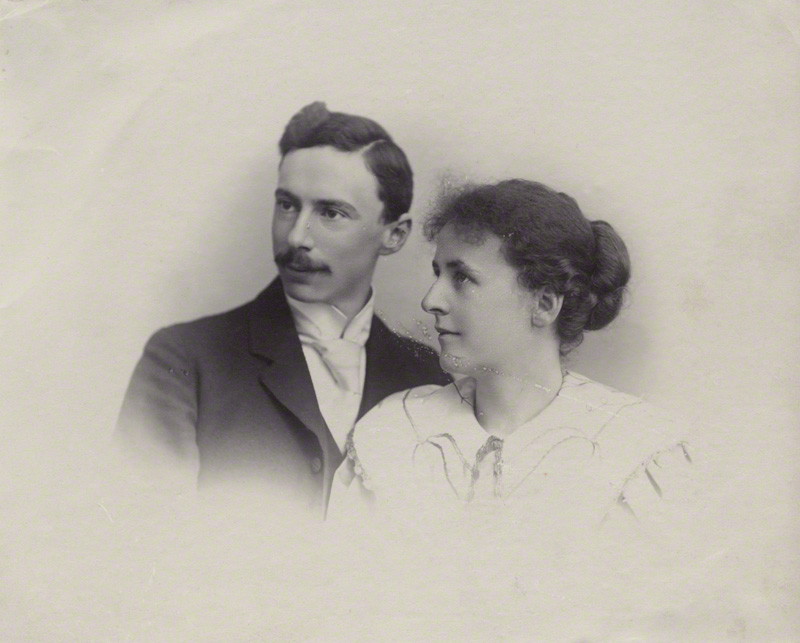


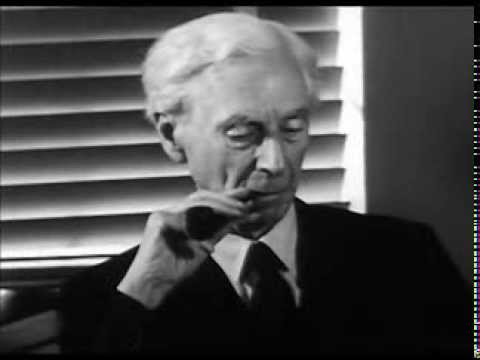
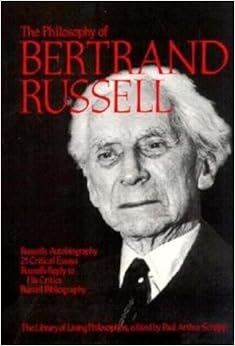


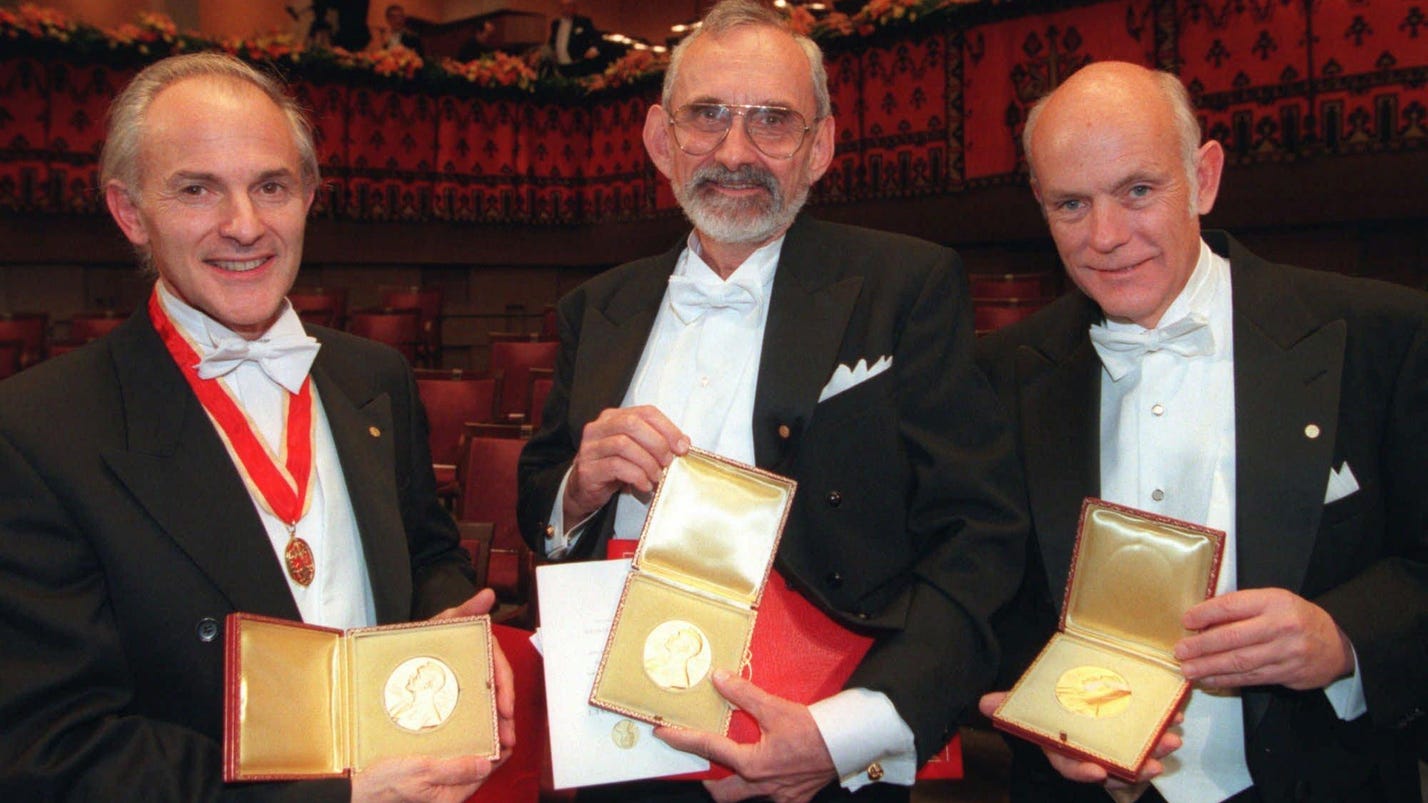
 Bertrand Arthur William Russell was born at Trelleck on 18th May, 1872. His parents were Viscount Amberley and Katherine, daughter of 2nd Baron Stanley of Alderley. At the age of three he was left an orphan. His father had wished him to be brought up as an agnostic; to avoid this he was made a ward of Court, and brought up by his grandmother. Instead of being sent to school he was taught by governesses and tutors, and thus acquired a perfect knowledge of French and German. In 1890 he went into residence at Trinity College, Cambridge, and after being a very high Wrangler and obtaining a First Class with distinction in philosophy he was elected a fellow of his college in 1895. But he had already left Cambridge in the summer of 1894 and for some months was attaché at the British embassy at Paris.
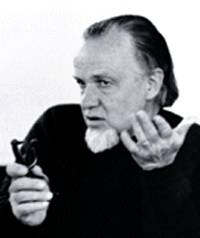


 The Daily Hatch