Mark Richt appeared in the movie “Facing the Giants”
November 30, 2015
Greg McGarity, Athletic Director, University of Georgia
Dear Mr McGarity,
I know that you are in a tough position now since you are trying to get a football coach that can win more than all the other coaches in the country currently. Personally I think you have set the bar too high. You had a coach that is #5 on the list of coaches with the best winning % now but that was not good enough for you.
I remember when LSU went around and collected millions to buy out Les and then the leadership of the university discovered how many Tiger fans loved Les because of his 110 wins in a 11 year period!!! Then the administration backed off.
Richt’s dismissal represented a rarity in that he was let go less than 24 hours after completing a 9-3 season. It also came after winning 49 games in the last five years (9.8 per season), after winning a higher percentage of games (.740) than any coach in modern school history, while sitting fifth in the nation among winningest active coaches and while being one of only four men in NCAA Division I history to record 135 or more wins in his first 14 seasons.
Let me put another fact out there. In January of 2013 Bama beat Nortre Dame 42-14 FOR THE NATIONAL TITLE and just one game earlier that same season Georgia had a first down at the Bama 10 Yard Line with time running out and barely missed an opportunity to represent the SEC in that national title game. IN OTHER WORDS, YOU HAD A COACH THAT WAS COACHING AT A VERY HIGH LEVEL!!! Why did you fire him?
I just wonder why the upper tier of the SEC coaches are getting fired?
Let’s go back to LSU again. They went 13-1 and beat Bama earlier in that same year on the road but lost to Bama in national title game.
Let’s add Auburn to mix. Their coach wins national title with Cam Newton and then is fired a couple of years later.
What is Sabin to make of this? His toughest competition: GA, AUB and LSU all attempt to fire their coaches because their teams are not good enough!!!
Ironic!!!! It’s the world turned upside down. That is not mentioning the fact that Tommy T actually had a winning record over Bama!!!
Thanks for your time and I wish Georgia continued success in the future but only at a lower level. Maybe you can drop from 74% to 72% since Vince Dooley won at that rate and he was able to remain the head coach for 25 years and by the way he was the best speaker we ever had the Little Rock Touchdown Club!!!!
I went to 12 of the Little Rock Touchdown Club Lunches this year and I enjoyed George Schroeder’s talk the most!!! Coach Kevin Kelley (L) of the Pulaski Academy and USA Today writer Goerge Schroeder FWAA president George Schroeder presents the Grantland Rice Trophy to Florida coach Urban Meyer. (Photo: Alex Gort/Orange Bowl) Little Rock […]
______ Tony Bua told some funny stories at LITTLE ROCK TOUCHDOWN CLUB!!!! Little Rock Touchdown Club – November 16, 2015 Tony Bua is shown in this photo. Bua definitely enjoyed his ride with Razorbacks Share on facebookShare on twitterMore Sharing Services0 By Jeremy Muck This article was published November 17, 2015 at 3:28 a.m. […]
______ Brown: It takes a different kind of coach at Texas Share on facebookShare on twitterMore Sharing Services0 By Jeremy Muck This article was published today at 3:14 a.m. Being the head football coach at the University of Texas is no small task. Ask Mack Brown, who was in charge of the Longhorns’ football program […]
_________ Cowboys VP: Don’t be surprised if we change quarterbacks <p>Cowboys vice president Stephen Jones</p> By SportsDayDFW.com Follow @SportsDayDFW websports@dallasnews.com Staff Published: 12 October 2015 05:33 PM Updated: 12 October 2015 10:46 PM Cowboys vice president Stephen Jones spoke at the Little Rock Touchdown Club on Monday. Some highlights via @LRTouchdownClub and â@chase_shannon : On […]
___________ Jones: Cowboys studying options Share on facebookShare on twitterMore Sharing Services1 By Jeremy Muck This article was published today at 3:03 a.m. PHOTO BY MELISSA GERRITS Dallas Cowboys COO Stephen Jones reacts to comments by Rex Nelson before addressing the Little Rock Touchdown Club October 12, 2015 at Embassy Suites. Comments aAFont Size It […]
___________ Stephen Jones did a great job at the Little Rock Touchdown Club today and he told a lot of stories about his dad and Father Tribou of Catholic High of Little Rock. Little Rock Touchdown Club – October 12, 2015 Streamed live on Oct 12, 2015 Stephen Jones speaks to the Touchdown Club _______________ […]
___________ Jay Barker mentioned his wife Sara Evans several times in his talk at Little Rock Touchdown Club so I have included some of her musical videos and more about their relationship below. Little Rock Touchdown Club – October 5, 2015 Streamed live on Oct 5, 2015 Jay Barker speaks to the Touchdown Club _____________________ […]
______________ Jay Barker said that coach Gene Stallings emphasized the THIRD WEEKEND IN OCTOBER series with the Vols when he was the coach at Bama and sure enough those 4 games that Barker started in came down to the wire. Bama tying in 93 and winning the other 3. In 91 Bama won over #8 […]
Jay Barker explained at the Little Rock Touchdown Club what the word CHAMPIONS meant to him and it all started with being Christ-centered and that is the “C” in CHAMPIONS. Barker warned against being self-centered or morality-centered. Little Rock Touchdown Club – October 5, 2015 Streamed live on Oct 5, 2015 Jay Barker speaks to […]
Jay Barker said Sabin will motivate Bama players by saying, “Hogs went into Knoxville and knocked off Vols and now they believe they can come in here and knock us off too!!!!” Little Rock trip not first for Barker By Jeremy Muck This article was published today at 3:11 a.m. Comments aAFont Size PHOTO BY […]
SOMEWHERE HIGH ABOVE Mississippi, the super agent some call the most powerful man in college football is simultaneously clutching his knee with his left hand and an armrest with his right. His eyes are tightly closed.
Jimmy Sexton is riding in a King Air 200, which bounces like a yo-yo through heavy turbulence from a slow-moving thunderstorm. He opens his eyes and shouts at the two pilots in the cockpit.
“Hey, guys, is it going to be like this [the] whole way?” Sexton asks them.
“We hope not,” one of them says. “We’re trying to climb higher to get above it.”
“How long have we been in the air?” Sexton asks out loud to no one in particular.
It had been only 14 minutes.
“Great,” Sexton says. “This is going to be great for your story. The guy whocontrols everything is freaking out at 18,000 feet.”
Indeed, the short flight from Oxford, Mississippi, to Tuscaloosa, Alabama, in the late afternoon on Nov. 7 is one of the rare occasions in which Sexton, the agent behind the careers of many of college football’s most successful coaches, doesn’t seem completely in control.
BEFORE THIS COLLEGE football regular season ended, there were more than a dozen head-coaching openings, including Power 5 jobs at schools such as Miami, Missouri, South Carolina, USC and Virginia Tech. A handful of other jobs opened as soon as the regular season ended, including Georgia, Rutgers and Virginia, in what might be the most active firing-and-hiring season in recent college football history.
While there’s uneasiness at football offices from coast to coast, the one certainty is that the decision-makers at many of them will have Sexton on speed dial. He’s the go-between for many coaches and the athletic directors who want to hire them.
In many ways, Sexton drives the marketplace when it comes to college football coaches. With a roster so deep, there’s a good chance some of his clients are going to be fired and others are going to be hired — sometimes for the same job.
Sexton is the co-head of the football division of Creative Artists Agency, which represents more than 100 professional players and more than 50 FBS coaches. He personally reps more than a dozen FBS coaches, including Alabama’s Nick Saban, Auburn’s Gus Malzahn, Florida State’s Jimbo Fisher and UCLA’s Jim Mora.
That’s why he is considered one of the most powerful people in the sport, even if the 52-year-old single father of three sons doesn’t like the label very much.
“I don’t really understand it,” Sexton said. “I don’t try to be influential. I just try to build good relationships. In this business, it’s all about the relationships you have with your clients and the people who are hiring them.”
Earlier this year, Forbes estimated that Sexton has negotiated about $742.5 million in contracts for NFL players and college coaches, earning about $24.8 million in commissions (the industry average is about 3 to 4 percent). He recently negotiated huge deals for NFL clients including Philip Rivers, Ndamukong Suh and Julio Jones.
“He’s never pissed anybody off,” Saban said. “He’s always done great for me, and I really appreciate it. Not once has somebody been upset about the negotiations. You really don’t want to ruin relationships over those kinds of things.”
Sexton always seems to be on top of everything happening in the coaching world, even if he is rarely in one place for very long. His iPhone is constantly in his hand and his voice mailbox always seems to be full when he doesn’t answer. He has probably accumulated more than one million frequent-flyer miles since football season kicked off in early September.
“He doesn’t slow down,” Malzahn said. “The great thing about Jimmy is that he’s wide awake if you call him at 6 a.m. and he’s wide awake if you call him at 1 a.m. He’s always there.”
Last Saturday, Sexton had clients on opposite sidelines in three of the sport’s biggest rivalries: Alabama (Saban) vs. Auburn (Malzahn), Florida (Jim McElwain) vs. Florida State (Fisher) and UCLA (Mora) vs. USC (Clay Helton).
In those games, Sexton says it’s hard to cheer for one team.
“I think sometimes if you catch yourself rooting for a guy, you’re rooting for the guy who needs it most,” Sexton said. “It’s hard. It’s good for your business, but sometimes they’re beating each other.
“In a perfect world for business, you’d want them all to win enough to where they’d get new deals, but it doesn’t work out that way.”
Sexton works closely with CAA agents Trace Armstrong — who represents Ohio State’s Urban Meyer, Notre Dame’s Brian Kelly and Penn State’s James Franklin — and Walker Jones in managing the firm’s college coaches. They oversee a handful of other junior agents and about 30 employees in offices in Atlanta, Memphis and Nashville.
As the dominoes started to fall in recent days, Sexton was right in the middle of the action, landing the two premier jobs for two of his clients. Helton, who has a 6-2 record in two stints as USC’s interim coach, landed the Trojans’ job, and Alabama defensive coordinator Kirby Smart was tabbed by Georgia to replace Mark Richt, who was fired after 15 seasons. The two biggest openings in the country were filled by clients who had never before been permanent head coaches.
Auburn defensive coordinator Will Muschamp, another Sexton client who was fired as Florida’s head coach last year, is a candidate for the South Carolina job.
“People talk about how we’re going to make so much money because there are so many open jobs and we’re going to move our people around,” Sexton said. “I don’t look at it like that. I look at it like there are going to be a bunch of schools open, and we’re going to place our clients at the best places for them to succeed. That’s really what it’s all about.”
Some of Sexton’s clients are already trying to land the same jobs. For example, Indianapolis Colts associate head coach Rob Chudzinski is a candidate at Miami, along with former Rutgers and Tampa Bay Buccaneers coach Greg Schiano and former Hurricanes coach Butch Davis, both Sexton clients.
In many ways, Sexton’s role as adviser to so many coaches seems like a walking contradiction.
“If a job came open and another one of Jimmy’s guys was up for it, I don’t think he has the power to tell an athletics director, ‘Here’s your guy,'” said Ole Miss coach Hugh Freeze, who is represented by Sexton. “You have to think that he wouldn’t push one over the other and would push both equally.”
SOMETIMES, THE TOPSY-TURVY world of college football puts Sexton in uncomfortable situations. In some instances, he has been accused of having too much influence, as well as having the ability to pull too many strings behind the scenes.
Last year, for instance, Florida fired Muschamp, a Sexton client, and replaced him with McElwain, a Sexton client, then used Sexton’s expertise in negotiating McElwain’s $7 million buyout at Colorado State, a complicated process that included the scheduling of a future game between the schools as compensation. The Gators then paid Muschamp a $6.3 million buyout for the remaining four years on his contract and watched as Sexton landed Muschamp a deal as the defensive coordinator at Auburn for $1.6 million a year, making him the highest-paid assistant in the country.
“Obviously, Jimmy was Will’s agent and he’s Mac’s agent, but he didn’t push Jim McElwain on us,” Florida athletic director Jeremy Foley said. “It’s our job to find the coaches. It’s not Jimmy Sexton’s job. The University of Florida is hiring its coaches, and if they work out great or don’t work out, it’s on us. It’s on nobody else. It’s on me.
“In my dealings with Jimmy, the bottom line is I find him trustable. When he tells you something, it’s the truth. Obviously, he’s an agent and he does what he does. … He’s been a straight shooter and I respect him for that.”
But that wasn’t the extent of Sexton’s involvement.
Freeze was also one of the Gators’ top targets — until he signed a four-year contract extension that boosted his salary from $3 million to $4.5 million annually to stay with the Rebels.
Another example of Sexton’s clout: In 2013, with Mack Brown on the hot seat at Texas, Sexton took a 45-minute phone call with former Texas Regent Tom Hicks and current Regent Wallace Hall Jr. about Saban’s interest in replacing Brown. According to e-mails obtained by the Associated Press in November of that year, Sexton told the Texas officials that Saban would consider leaving Alabama for Texas and that coaching the Crimson Tide had put Saban under “special pressure.”
“I don’t hire the coach. I’ve never hired a coach. Contrary to what people might believe, I never hired a coach at Tennessee.”
Agent Jimmy Sexton, a Tennessee alum.
Saban, who said he was unaware of the meeting, dismissed the idea that he’d leave Alabama and joked that he was too old to start over at another school.
But even so, when Texas eventually fired Brown, Sexton was able to negotiate new contracts for Saban, Fisher, Malzahn and Mora at their current schools after they were linked as potential candidates to coach the Longhorns.
At one point, Tennessee (Sexton’s alma mater) hired three of his clients consecutively. Sexton represented former Volunteers coach Phillip Fulmer, who guided UT to a 1998 national championship and was fired after the 2008 season. Then-UT athletics director Mike Hamilton hired Kiffin to replace Fulmer. Hamilton then hired Derek Dooley when Kiffin bolted for USC after only one season with the Volunteers in 2009.
“I don’t hire the coach. I’ve never hired a coach,” Sexton said. “Contrary to what people might believe, I never hired a coach at Tennessee.
“I remember the Lane Kiffin deal like it was yesterday. They let Fulmer go and there was a two- or three-week gap in between. Mike Hamilton called me and said, ‘I need to go talk to somebody. I can’t go talk to anybody for two or three more weeks because everybody is still playing. Who can I go talk to?’ I told him to fly Lane Kiffin to Atlanta and talk to him there. They hired him and the rest is history.”
While Sexton has some influence in which coaches are hired, he doesn’t have much say in whether they’ll succeed. Some of his clients, such as Saban, have been wildly successful, while others such as Dooley and recently fired Rutgers coach Kyle Flood struggled.
“Bill Parcells used to say to me that they don’t sell insurance for this business,” Sexton said. “In other words, you can’t insure success. Sometimes it works and sometimes it doesn’t.”
Because many of Sexton’s clients compete against one another, he often toes a fine line in regards to what he divulges from his conversations with them. Some of the information his clients share with him might be considered state secrets.
For instance, Sexton was told earlier this season that quarterback Jake Coker wasn’t going to start against Ole Miss on Sept. 19, a decision Saban didn’t tell the media. When Sexton talked to Freeze later in the week, he couldn’t tell him that Crimson Tide backup Cooper Bateman was going to start.
“I’ve been with the guy since 1997 and never once have I felt like I couldn’t trust him with anything,” Saban said. “Anything I’ve ever told him or asked him, even though he represents a lot of guys, I still think I can trust the guy. He never tells me anything about the other guys, and I never ask him. I never put him in that situation. He’s never, ever told me something that I thought I shouldn’t know about somebody else. That’s why you can trust him.”
In the end, both Crimson Tide quarterbacks played in a 43-37 loss to the Rebels, which was Alabama’s only defeat of the regular season.
“I would never expect — and nor would he — ever cross that line,” Freeze said. “I’m totally confident that he would protect anything that I share with him, as he would with his other clients.”
ACTING LIKE SWITZERLAND in many of the sport’s fiercest rivalries isn’t exactly easy. On Nov. 6, the day before Sexton watched a pair of his coaches lead their teams in two of the biggest SEC games of the season, he flew home to Memphis after spending 10 consecutive days on the road.
When Sexton is away, a full-time nanny and assistant manage his house and help care for his two younger sons, Parker, 18, who is headed to the University of Texas on a golf scholarship, and Blake, 14. His oldest son, James III, 20, is a sophomore at Ole Miss.
Sexton is constantly juggling his sons’ activities, along with the needs of his clients. This week, for instance, Sexton was working on job openings while also attending three of his youngest son’s basketball games. When his sons were growing up, he often attended their Pop Warner football games in the morning, and then they jumped on a plane with him to attend a college football game.
“It’s amazing how he juggles everything and cares for his boys,” said Colorado’s Mike MacIntyre, one of Sexton’s clients. “That’s what makes me feel good about him. I trust him a ton, but I even trust him more when I see how he is with his boys.”
After returning from his extended business trip, Sexton planned to spend a rare night at home. He lives in the suburbs of Memphis on an expansive property he shares with the parents of former Alabama and current Chicago Bears offensive lineman Barrett Jones.
But while driving to a restaurant in Memphis, a friend of Sexton’s called from Oxford and urged him to come there for dinner. Sexton had planned to drive to Ole Miss the next morning to watch the Rebels play Arkansas before flying to watch the Crimson Tide play.
After a five-minute phone call, Sexton pulled a U-turn on Poplar Avenue in his Range Rover and headed back to his house. After packing an overnight bag and calling his nanny to make sure she’d be there to care for his chocolate lab, Shaq, he made the 70-mile drive to Oxford.
Soon, Sexton was having dinner with a few close friends at a trendy new restaurant on the square. He mingled with Sean and Leigh Ann Tuohy, the Ole Miss grads made famous in the movie “The Blind Side.” A few minutes later, Heisman Trophy winner Tim Tebow, one of Sexton’s most famous clients and a close friend, stopped by his table to say hello.
Early Saturday, Sexton attended parents’ weekend at his son’s Ole Miss fraternity, purchased a pullover jacket for his youngest son and even took a telephone call from a Power 5 athletic director looking for a new head coach.
He then spent a few hours in the Ole Miss football offices, where he watched Florida struggle to beat Vanderbilt 9-7 to win the SEC East, which, as part of McElwain’s contract, earned the coach a $37,500 bonus in his first season. Then Sexton watched the Rebels play the Hogs from Freeze’s suite at Vaught-Hemingway Stadium. Sexton kept one eye on the TV, watching Fisher’s Florida State team stay close with No. 1 Clemson before the Tigers eventually won the game, 23-13.
Former NFL and USC defensive coordinator Monte Kiffin, whose son, Chris, is the Rebels’ defensive line coach, also watched the game from Freeze’s suite. It was his first time watching the Rebels play in person. When Kiffin mentioned that he’d never watched Alabama play in person, either, Sexton offered him a seat on his plane and a chance to go watch Lane Kiffin, Monte’s oldest son, as well as a return flight after the game.
On the phone before the game, Sexton had jokingly asked Freeze to make sure his team was ahead by three touchdowns at halftime so he wouldn’t miss Alabama’s kickoff. Instead, the Rebels and Razorbacks were tied at 17 at the half when he left the stadium. Once the plane landed in Tuscaloosa more than an hour later, the Hogs and Rebels were deadlocked at 31 heading into the fourth quarter.
After the plane landed on the rain-slicked runway at Tuscaloosa Regional Airport, Sexton and his party climbed into a pickup truck. His son Blake and his friend, who also attended the SEC doubleheader, noticed a gun rack — complete with guns — on the truck’s ceiling.
“Don’t worry,” the driver told them. “They’re not loaded.”
Welcome to Tuscaloosa.
A few minutes later, Sexton was behind the wheel of a rental car, hoping to beat traffic to watch the end of the Ole Miss game. Sexton used several side streets to avoid the crowds on Paul W. Bryant Drive and pulled into a parking space adjacent to Bryant-Denny Stadium.
He was able to watch the end of the Ole Miss game in the North Field Suites. Arkansas tight end Hunter Henry caught a pass on fourth-and-25 and wildly lateraled over his head to tailback Alex Collins, who ran 31 yards for a first down. Meanwhile, Sexton’s assistant, Autumn Clark, was hiding under a table, unable to watch the dramatic ending. Clark played basketball for Freeze in high school and also worked for him at Ole Miss until Sexton hired her.
She might have been the only person in Bryant-Denny Stadium who wasn’t cheering when Arkansas upset Ole Miss 53-52 in overtime. The Razorbacks’ victory meant Alabama would win the SEC West if it won its final three conference games.
Sexton spent the next three hours watching the Crimson Tide dismantle then-No. 2 LSU 30-16 from a luxury suite. He spent much of the night talking to Baltimore Ravens general manager Ozzie Newsome, with whom he’s worked on NFL deals in the past. Sexton also showed plenty of interest in a game on one of the TVs: Auburn and Malzahn were upsetting Texas A&M and Sumlin 26-10 on the road. The Tigers were coming off back-to-back losses and desperately needed a victory.
“We need a couple of our guys to rebound,” Sexton said.
Just before midnight, Sexton made his way through the crowd to wait outside Alabama’s locker room, where he greeted Kiffin and Smart as they made their way off the field. Sexton would have to wait a while to see Saban, who spent more than an hour mingling with recruits and filming his weekly TV show.
Sexton sometimes avoids seeing coaches after games, especially if two of his clients were coaching against each other.
“I don’t love going to the games where I have both coaches,” Sexton said.
SEXTON WASN’T EVEN an agent when he helped negotiate his first deal. He was a 20-year-old equipment manager at Tennessee in 1983, when Volunteers defensive end Reggie White was considered one of the premier prospects in the draft. During a walk-through practice at the Citrus Bowl, two men in trench coats approached Sexton. One of them was Pepper Rodgers, coach of the Memphis Showboats of the up-and-coming United States Football League, and the other was Robert Fraley, an agent. They knew Sexton and White were close friends and shared a dorm suite at UT.
“It was like a scene out of a movie,” Sexton said.
“Do you know how much money Lawrence Taylor makes in the NFL?” Fraley asked Sexton.
“He’s a great player,” Sexton said. “How much does he make?”
“He makes $400,000,” Fraley said. “He’s the highest-paid defensive player in the NFL. We want you to go in there and tell Reggie White we’re going to offer him $1.5 million as soon as the game is over tomorrow night.”
Sexton ran into the locker room and found White.
“Big Dog, you’re about ready to get paid,” Sexton told him.
Later that night, Sexton and White discussed the deal in their hotel room. White told Sexton he’d been contacted by a few agents but didn’t know any of them. He asked Sexton to represent him.
The next day, Sexton called his father, a dentist in Memphis.
“Whatever you do, you better be careful,” his father told him.
After Tennessee defeated Maryland 30-23 in the Citrus Bowl, Rodgers and Fraley found Sexton on the sideline. They handed him a manila envelope that contained a USFL contract.
The next day, Sexton went home to Memphis for the Christmas holidays. Rodgers called him and asked him to invite White to the Liberty Bowl. White agreed to come to the game, but he wanted a date with actress Vanessa Williams, who was singing the national anthem. Their prospective romance ended after a short conversation in a skybox. The date never happened.
Rodgers and Fraley sent Sexton to the Hula Bowl, a college football all-star game in Hawaii, to keep a close eye on White. When Sexton arrived at his hotel, a man approached him in the lobby. The man told Sexton to leave White alone, which Sexton believed was a warning from the NFL.
Eventually, White decided to sign a five-year, $4 million contract with the Showboats, and Sexton had an attorney finalize the deal. White played two seasons in Memphis before the USFL collapsed in 1985, and then he signed a four-year, $1.85 million deal with the Philadelphia Eagles, who held his NFL rights.
“I started to think it was a viable business,” Sexton said.
“Most of these guys can do anything. Nick Saban could run General Motors. He just happens to be a football coach.”
Jimmy Sexton
After finishing his final year at Tennessee in 1984, Sexton planned to attend law school. But Don Kessinger, a former MLB shortstop, and Kyle Rote Jr., a former pro soccer player, offered Sexton a position at their fledgling sports agency. One of Sexton’s first clients was Scottie Pippen, a budding basketball star from Central Arkansas.
Sexton represented NBA players for about 10 years before transitioning to work full-time with NFL players and coaches. His first coaching client was then-Ole Miss coach Tommy Tuberville. He asked Sexton to examine his contract, and Sexton negotiated a clause into the deal that made it easier for Tuberville to leave if the school’s chancellor or athletics director left. In 1999, Tuberville left for Auburn — shortly after he said he’d leave Ole Miss in a “pine box” — and had to pay the Rebels only a $100,000 buyout.
One of the biggest breaks in Sexton’s career came amid tragedy in 1999. Fraley, who had approached Sexton at the Citrus Bowl more than 15 years earlier, died in the same plane accident that also killed PGA golfer Payne Stewart. Fraley represented New York Jets coach Bill Parcells, who soon hired Sexton as his agent. Parcells liked how Sexton negotiated contracts for a handful of players who signed with the Jets.
“Parcells had a huge impact on me, probably more than any other guy in the business,” Sexton said. “He was very much a mentor to me as far as convincing me that this was a huge business. He would tell me, ‘Jimmy, you don’t get it. The players’ business is great, but the coaching side is where nobody is and there’s a huge need for it.’ He really pushed me that way.”
Sexton then landed another big client when Saban hired him to negotiate his contract when he left Michigan State for LSU after the 1999 season. Current NCAA president Mark Emmert, then the LSU chancellor, was on the other end of the negotiating table.
“I remember when I asked Mark Emmert for $1.2 million for Nick Saban in 1999,” Sexton said. “It’s all I could do to hold a straight face. It really was. When he said yes, I was like, ‘Oh, my gosh!’
“That’s not even competitive anymore.”
At a Final Four press conference in 2009, the late Myles Brand, Emmert’s predecessor as NCAA president, questioned schools’ roles in skyrocketing salaries being offered to coaches.
“You have to ask some very hard questions, whether this is really in tune with the academic values, whether we’ve reached a point already that these high salaries and packages for coaches has really extended beyond what’s expected within the academic community,” Brand said.
But Sexton said the market is what has driven the rise in compensation.
“Most of these guys can do anything,” Sexton said. “Nick Saban could run General Motors. He just happens to be a football coach.”
This season, Saban is college football’s highest-paid coach, earning more than $7 million in base salary and outside income.
Sexton negotiated that deal, of course, just like he did when he helped the Crimson Tide land Saban in January 2007. Two years after guiding LSU to the 2003 BCS national championship, Saban left to coach the Miami Dolphins. His two mediocre seasons in the NFL ramped up speculation that Saban would return to college football.
After repeatedly being asked about the Crimson Tide’s opening, Saban famously told reporters, “I guess I have to say it: I’m not going to be the Alabama coach.”
But Sexton had been talking to then-Alabama athletics director Mal Moore behind the scenes. When the Dolphins’ season ended, Moore flew to South Florida. However, Saban refused to meet with him. After spending a couple of days in a hotel room a block from Saban’s house, Moore called Sexton out of desperation.
“Jimmy, we’ve been talking about this for a month,” Moore said. “He won’t even meet with me. We’ve got to make this happen.”
“Mal, just be patient with him,” Sexton said. “You’ve got to hang in there. Do notget on that plane and go back to Tuscaloosa.”
“Don’t worry,” Moore said. “I’m taking this plane to Cuba if Nick Saban isn’t on it.”
The next day, Saban met with Moore and agreed to take the Alabama job.
“Before I ever went to Miami, Jimmy told me, ‘You’ve got to make a decision, man. Is your legacy going to be as a college coach or do you want to take the next step and take a challenge?'” Saban said. “I think he saw after I was in Miami for two years that I was a little frustrated.”
Now in his ninth season at Alabama, Saban has won three national championships and has the Crimson Tide on the brink of reaching the College Football Playoff for the second straight year.
Sexton figures to have his hands in many of the high-profile decisions that are about to be made for schools hoping to land another coach who can be a difference-maker.
FANS WON’T SEE the man working the deals in the background, and Sexton wouldn’t have it any other way.
“The people that think he desires attention or wants it don’t know him at all,” Freeze said. “He’d rather be in a corner unnoticed than to be talked about in that light.”
Sexton is not out front in press conferences announcing the contracts he negotiated. Instead, he prefers for his clients to receive the attention. In fact, a Google images search returns few photographs of him.
“I try to stay back in the weeds,” Sexton said. “Where I see coaches and players have problems is when the agent tries to become part of the show. You’re an agent. You’re only trying to facilitate something for your client, and that’s your job. It’s not to say, ‘Hey, look, I’m Jimmy Sexton.’ I think my clients like the fact that I don’t try to find attention. I want to be the exact opposite of what the stereotype is of an agent.”
But, like on that plane headed for Tuscaloosa, Sexton can’t control everything. As his influence has been felt across the college landscape, his reputation precedes him.
After he wandered onto the field after Saban’s Crimson Tide defeated Georgia 32-28 in the 2012 SEC championship game, fans celebrated the man who brought them the title. Or at least brought them the coach who delivered it.
A chant began to echo across the Alabama student section.
I went to 12 of the Little Rock Touchdown Club Lunches this year and I enjoyed George Schroeder’s talk the most!!! Coach Kevin Kelley (L) of the Pulaski Academy and USA Today writer Goerge Schroeder FWAA president George Schroeder presents the Grantland Rice Trophy to Florida coach Urban Meyer. (Photo: Alex Gort/Orange Bowl) Little Rock […]
______ Tony Bua told some funny stories at LITTLE ROCK TOUCHDOWN CLUB!!!! Little Rock Touchdown Club – November 16, 2015 Tony Bua is shown in this photo. Bua definitely enjoyed his ride with Razorbacks Share on facebookShare on twitterMore Sharing Services0 By Jeremy Muck This article was published November 17, 2015 at 3:28 a.m. […]
______ Brown: It takes a different kind of coach at Texas Share on facebookShare on twitterMore Sharing Services0 By Jeremy Muck This article was published today at 3:14 a.m. Being the head football coach at the University of Texas is no small task. Ask Mack Brown, who was in charge of the Longhorns’ football program […]
_________ Cowboys VP: Don’t be surprised if we change quarterbacks <p>Cowboys vice president Stephen Jones</p> By SportsDayDFW.com Follow @SportsDayDFW websports@dallasnews.com Staff Published: 12 October 2015 05:33 PM Updated: 12 October 2015 10:46 PM Cowboys vice president Stephen Jones spoke at the Little Rock Touchdown Club on Monday. Some highlights via @LRTouchdownClub and â@chase_shannon : On […]
___________ Jones: Cowboys studying options Share on facebookShare on twitterMore Sharing Services1 By Jeremy Muck This article was published today at 3:03 a.m. PHOTO BY MELISSA GERRITS Dallas Cowboys COO Stephen Jones reacts to comments by Rex Nelson before addressing the Little Rock Touchdown Club October 12, 2015 at Embassy Suites. Comments aAFont Size It […]
___________ Stephen Jones did a great job at the Little Rock Touchdown Club today and he told a lot of stories about his dad and Father Tribou of Catholic High of Little Rock. Little Rock Touchdown Club – October 12, 2015 Streamed live on Oct 12, 2015 Stephen Jones speaks to the Touchdown Club _______________ […]
___________ Jay Barker mentioned his wife Sara Evans several times in his talk at Little Rock Touchdown Club so I have included some of her musical videos and more about their relationship below. Little Rock Touchdown Club – October 5, 2015 Streamed live on Oct 5, 2015 Jay Barker speaks to the Touchdown Club _____________________ […]
______________ Jay Barker said that coach Gene Stallings emphasized the THIRD WEEKEND IN OCTOBER series with the Vols when he was the coach at Bama and sure enough those 4 games that Barker started in came down to the wire. Bama tying in 93 and winning the other 3. In 91 Bama won over #8 […]
Jay Barker explained at the Little Rock Touchdown Club what the word CHAMPIONS meant to him and it all started with being Christ-centered and that is the “C” in CHAMPIONS. Barker warned against being self-centered or morality-centered. Little Rock Touchdown Club – October 5, 2015 Streamed live on Oct 5, 2015 Jay Barker speaks to […]
Jay Barker said Sabin will motivate Bama players by saying, “Hogs went into Knoxville and knocked off Vols and now they believe they can come in here and knock us off too!!!!” Little Rock trip not first for Barker By Jeremy Muck This article was published today at 3:11 a.m. Comments aAFont Size PHOTO BY […]
This article was published November 24, 2015 at 3:58 a.m.
USA Today college football reporter George Schroeder follows the sport as close as anyone in the national media.
And the 2015 season, Schroeder said, has unique characteristics.
Schroeder gave his take Monday to members of the Little Rock Touchdown Club.
“It’s been a wild, did-you-see-that-game season,” Schroeder said, speaking at the club’s weekly luncheon at the Embassy Suites Hotel.
Schroeder, who is from Little Rock, mentioned the last-minute finishes for Michigan State at Michigan, the Miami-Duke game and the Arkansas’ 4th-and-25 lateral against Mississippi in overtime.
“Arkansas, it was the wildest lateral that actually worked,” Schroeder, 47, said. “We don’t know what’s going to happen.”
Schroeder revealed a top four of Clemson, Alabama, Iowa and Oklahoma when talking about the weekly College Football Playoff rankings, which will be released tonight.
He ranks Michigan State, Notre Dame and Baylor as Nos. 5-7, respectively.
Iowa, which is 10-0 and the only undefeated team remaining from the Big Ten Conference, has clinched a spot in the Big 10 Championship game Dec. 5. The Hawkeyes are a nice team with a good resume, Schroeder said, but he understands why some national analysts have questioned whether Iowa is a top-four team.
But then again, Schroeder said that there isn’t a great team in college football, calling Alabama “very good” but not great.
“You could draw the top four out of a hat,” Schroeder said.
The College Football Playoff’s four-team structure is in its second season, and Schroeder said that while he’s opposed to increasing the number of teams to 8, he said he does feel that the playoff will have eight teams at some point in the future.
“It’s the best regular-season in sports,” Schroeder said, backing his stance about the merits of a four-team playoff. “But it is going to go to eight sometime.
Regarding Arkansas’ 2015 season, Schroeder said he and several analysts overlooked the Razorbacks’ losses of defensive linemen — Trey Flowers and Darius Philon and linebacker Martrell Spaight — instead believing they could win 9-10 games team this season.
“This is a team, despite what happened [against] Mississippi State, that nobody wants to play right now,” Schroeder said. “They have every shot to be 7-5 and win a bowl game.
“They’ve looked better than the teams they’ve beaten. It’s not a fluke. They’ve just been flat better than Ole Miss and LSU. It should be encouraging to Arkansas fans.”
Schroeder, who has worked at USA Today since 2012, started his career at the Arkansas Democrat-Gazette from 1991 to 1999. He became the Oklahoma football beat reporter at The Oklahoman, where he worked from 1999 to 2007. Schroeder was hired as a sports columnist at The Register Guard in Eugene, Ore., in 2007 and spent five years at that paper before being hired at USA Today.
Schroeder said that if Arkansas (6-5) had three fewer losses, it would hold its own in a bowl game against teams that will play in the New Year’s Six bowls. Instead, the Razorbacks will play in a non-New Year’s Six bowl for the second consecutive season. Arkansas beat Texas in last year’s Texas Bowl to finish 7-6.
“They’re likely to get some opponent who can’t handle them,” Schroeder said. “They’re likely to catch an opponent that they can roll, which is not a bad way to end the season. If you can’t play in the playoff, a New Year’s Six game or in Florida, then go win big.
“If they’re not disappointed in themselves, then they can go do that.”
______ Tony Bua told some funny stories at LITTLE ROCK TOUCHDOWN CLUB!!!! Little Rock Touchdown Club – November 16, 2015 Tony Bua is shown in this photo. Bua definitely enjoyed his ride with Razorbacks Share on facebookShare on twitterMore Sharing Services0 By Jeremy Muck This article was published November 17, 2015 at 3:28 a.m. […]
______ Brown: It takes a different kind of coach at Texas Share on facebookShare on twitterMore Sharing Services0 By Jeremy Muck This article was published today at 3:14 a.m. Being the head football coach at the University of Texas is no small task. Ask Mack Brown, who was in charge of the Longhorns’ football program […]
_________ Cowboys VP: Don’t be surprised if we change quarterbacks <p>Cowboys vice president Stephen Jones</p> By SportsDayDFW.com Follow @SportsDayDFW websports@dallasnews.com Staff Published: 12 October 2015 05:33 PM Updated: 12 October 2015 10:46 PM Cowboys vice president Stephen Jones spoke at the Little Rock Touchdown Club on Monday. Some highlights via @LRTouchdownClub and â@chase_shannon : On […]
___________ Jones: Cowboys studying options Share on facebookShare on twitterMore Sharing Services1 By Jeremy Muck This article was published today at 3:03 a.m. PHOTO BY MELISSA GERRITS Dallas Cowboys COO Stephen Jones reacts to comments by Rex Nelson before addressing the Little Rock Touchdown Club October 12, 2015 at Embassy Suites. Comments aAFont Size It […]
___________ Stephen Jones did a great job at the Little Rock Touchdown Club today and he told a lot of stories about his dad and Father Tribou of Catholic High of Little Rock. Little Rock Touchdown Club – October 12, 2015 Streamed live on Oct 12, 2015 Stephen Jones speaks to the Touchdown Club _______________ […]
___________ Jay Barker mentioned his wife Sara Evans several times in his talk at Little Rock Touchdown Club so I have included some of her musical videos and more about their relationship below. Little Rock Touchdown Club – October 5, 2015 Streamed live on Oct 5, 2015 Jay Barker speaks to the Touchdown Club _____________________ […]
______________ Jay Barker said that coach Gene Stallings emphasized the THIRD WEEKEND IN OCTOBER series with the Vols when he was the coach at Bama and sure enough those 4 games that Barker started in came down to the wire. Bama tying in 93 and winning the other 3. In 91 Bama won over #8 […]
Jay Barker explained at the Little Rock Touchdown Club what the word CHAMPIONS meant to him and it all started with being Christ-centered and that is the “C” in CHAMPIONS. Barker warned against being self-centered or morality-centered. Little Rock Touchdown Club – October 5, 2015 Streamed live on Oct 5, 2015 Jay Barker speaks to […]
Jay Barker said Sabin will motivate Bama players by saying, “Hogs went into Knoxville and knocked off Vols and now they believe they can come in here and knock us off too!!!!” Little Rock trip not first for Barker By Jeremy Muck This article was published today at 3:11 a.m. Comments aAFont Size PHOTO BY […]
__________ Little Rock Touchdown Club – September 28, 2015 I really enjoyed hearing Heath Shuler today at the Little Rock Touchdown Club!!! Q&A: Rep. Heath Shuler Shuler, a Democratic Congressman from North Carolina who ran as a social conservative, defeated a Republican incumbent in 2006. Interview by Collin Hansen/ JUNE 26, 2007 What is the […]
Ernest Hemingway and Scott Fitzgerald left the prohibitionist America for wet Paris in the 1920’s and they both drank a lot. WINE, WOMEN AND SONG was their motto and I am afraid ultimately wine got the best of Fitzgerald and shortened his career. Woody Allen pictures this culture in the first few clips in the movie MIDNIGHT IN PARIS. Solomon also tried this solution of WINE, WOMEN AND SONG in his life. In his talk on ECCLESIASTES Francis Schaeffer commented:
PAPA HEMINGWAY CAN FIND THE CHAMPAGNE OF PARIS SUFFICIENT FOR A TIME, BUT ONCE HE LEFT HIS YOUTH HE NEVER FOUND IT SUFFICIENT AGAIN. HE HAD A LIFETIME SPENT LOOKING BACK TO PARIS AND THAT CHAMPAGNEAND NEVER FINDING IT ENOUGH.
____
In MIDNIGHT IN PARIS Gil becomes good friends with a few of these people, including Ernest Hemingway (Corey Stoll), an interesting representation of the man pictured below.
________
Midnight in Paris clip
Let’s go in. Paris, the city of lights.- Relax! Have some champagne. I do like champagne, yeah.Cheers! Cheers! The night is young. Drink up!- I’m drinking!- Have a drink!Yeah, drink up! (Cole Porter sings “Let’s Do It, Let’s Fallin Love”) Let’s fall in love… In Spain, the best upper-sets do it… Lithuanians and Lets do it. Let’s do it. Let’s fall in love. The Dutch in old Amsterdam do it. Not to mention the Finns Folks in Siam do it- think of Siamese twins..Some Argentines without means do it. People say in Boston even beans do it Let’s do it- Let’s fall in love..Romantic sponges, they say do it… Oysters down in Oyster Bay do it.. Let’s do it- Let’s fall in love…
midnight in paris – Fitzgeralds and Hemingway
ZELDA FITZGERALD: You look lost!-
GIL PENDER: Oh, yeah!-You’re an American?-
ZELDA FITZGERALD:If you count Alabama as America, which I do.I miss the bathtub gin. What do you do?-
GIL PENDER: Me? I’m a writer.-
ZELDA FITZGERALD:Who do you write?-
GIL PENDER: Oh, right now I’m working on a novel.
ZELDA FITZGERALD:- Oh, yes?I’m Zelda, by the way. Oh, Scott! Scott!-
SCOTT FITZGERALD:Yes, what it is, sweetheart?-
ZELDA FITZGERALD:Here’s a writer, from, um… where?- California.–
SCOTT FITZGERALD:Scott Fitzgerald, and who are you, old sport?
GIL PENDER: Gil…the… You havethe same names as…
SCOTT FITZGERALD:As what?Scott Fitzgerald and…
GIL PENDER: Scott and Zelda Fitzgerald.
SCOTT FITZGERALD:TheFitzgeralds. Isn’t she beautiful?
GIL PENDER: Yes. Yes! Yeah, that’s… that’sa coincidence…like….uh…
ZELDA FITZGERALD:You have a glazed look in your eye. Stunned.Stupefied. Anesthetized. Lobotomized.
GIL PENDER: .I...I…keep looking at the man playing piano, and Ibelieve it or not, recognize hisface from some old sheet music.
ZELDA FITZGERALD:I know I can be one of the great writers of musical lyrics- not that I can write melodies, and I try,and then I hear the songs he writes, and then I realize: I’ll never write a great lyric,- and my talent really lies in drinking.-
SCOTT FITZGERALD: Sure does.
GIL PENDER: Yeah, but, he didn’twrite the music, did he?That’s not possible…
SCOTT FITZGERALD:So…um…- What kind of books do you write?-
GIL PENDER: I…I…I’m working on a…um…Where am I?
SCOTT FITZGERALD:Oh, I’m sorry. Don’t you know the host?Some friends have gotten togethera little party for Jean Cocteau.
GIL PENDER: Hey, lady. What… Are you kiddding me?
ZELDA FITZGERALD:I know what you’re thinking.This is boring. I agree!I’m ready to move on.Let’s do Bricktop’s!- Bricktop’s?- I’m bored! He’s bored! We’re all bored.
SCOTT FITZGERALD:We. Are. All. Bored. Let’s do Bricktop’s.Why don’t you tell Cole and Linda to come with, and…um…uh…Gil? You coming?
SCOTT FITZGERALD:This is one of the finest establishments in Paris. They do a diamond whiskey sour.Bon soir, tous le monde!(Good evening, everyone!)Un peu tir de bourbon, s’il vous plaît.(A small shot of bourbon, please.)Greetings and salutations.You’ll forgive me. I’ve been mixing grain and grape.Now, this a writer. uh…Gil. Yes?- Gil…
GIL PENDER: Gil Pender.- Gil Pender.
Hemingway & Fitzgerald Clip – Midnight in Paris
ERNEST HEMINGWAY: Hemingway.
GIL PENDER: Hemingway?
ERNEST HEMINGWAY:You liked my book?
GIL PENDER: Liked? I loved! All your work.
ERNEST HEMINGWAY:Yes, it was a good book,because it was an honest book,and that’s what war does to men.And there’s nothing fine and noble about dying in the mud,unless you die gracefully,and then it’s not only noble, but brave.
ZELDA FITZGERALD:Did you read my story? What’d you think?
ERNEST HEMINGWAY:There was some fine writing in it, but it was unfulfilled.-
ZELDA FITZGERALD: I might’ve known you’d hate it.-
SCOTT FITZGERALD:But darling, you’re too sensitive.
ZELDA FITZGERALD:You liked my story, but he hates me!
SCOTT FITZGERALD:Please, old sport, you makematters extremely difficult.
ZELDA FITZGERALD:I’m jumpy. Suddenly I don’tlike the atmosphere here any more. Ah! Where’re you going?
BULL FIGHTER: Para reunirse con mis amigos en Saint-Germain.(To meet some friends on Saint-Germain.)-
ZELDA FITZGERALD:He’s going to Saint-Germain. I’mgoing with him. –
SCOTT FITZGERALD:Zelda, sweetheart…
ZELDA FITZGERALD:If you’re going to stay here and drink with him, I’m going with the toreador.
SCOTT FITZGERALD:Would you bring her back at a reasonable time?-
ERNEST HEMINGWAY:She’ll drive you crazy, this woman.-
SCOTT FITZGERALD:She’s exciting,and she has talent.
ERNEST HEMINGWAY:This month it’s writing. Lastmonth it was something else.You’re a writer. You need time to write.Not all this fooling around.She’s wasting you because she’sreally a competitor.
___________________
Touring Scott and Zelda Fitzgerald, Cole Porter, Ernst Hemingway, Pablo Picasso, Gertrude Stein and Alice Toklas, Henri Matisse, Salvador Dali, TS Eliot, Djuna Barnes, Josephine Baker, Man Ray and Luis Buñuel – the latter gets a tip for the argument of The Exterminating Angel a brilliant scene
Woody Allen made it known that his pessimistic view on life started at a young age when he learned about man’s mortality. But in the Bible Solomon’s first book was the SONG OF SOLOMON which was written in his early 20’s and is very upbeat. The Book of PROVERBS was written probably when he was in the middle of his life. Finally, the Book of ECCLESIASTES was written at the end of his life and is extremely pessimistic!!
Today we look at Solomon’s views on wine, women and song as presented in the Book of ECCLESIASTES. Solomon knew these very well. He filled his home with the best wine (Eccl 2:3), and like Hugh Hefner he slept with over 1000 women ( Eccl 2:8, I Kings 11:3), and he filled his palace with song (Eccl 2:8).
I will parallel Solomon’s views to those of Woody Allen and some of the characters in the movie MIDNIGHT IN PARIS. Thefirst post I did in this seriesdealt with MAGIC IN THE MOONLIGHT, but the second post and third postmoved on to the movie MIDNIGHT IN PARIS as does the fourth post today.
(In the movie MIDNIGHT IN PARIS you have the may character Gil Pender very interested in Picasso’s mistress Adriana, played by Marion Cotillard. PICTURED ABOVE.)
Francis Schaeffer pictured below:
Concerning the Book of Ecclesiastes Francis Schaeffer noted:
Solomon was searching for a meaning in the midst of the details of life.His struggle was to find the meaning of life. Not just plans in life. Anybody can find plans in life. A child can fill up his time with plans of building tomorrow’s sand castle when today’s has been washed away. There is a difference between finding plans in life and purpose in life. Humanism since the Renaissance and onward has never found it and it has never found it. Modern man has not found it and it has always got worse and darker in a very real way.
Ecclesiastes is the only pessimistic book in the Bible and that is because of the place where Solomon limits himself. He limits himself to the question of human life, life under the sun between birth and death and the answers this would give.
In Ecclesiastes 1:8 he drives this home when he states, “All things are wearisome; Man is not able to tell it. THE EYE IS NOT SATISFIED WITH SEEING. NOR IS THE EAR FILLED WITH HEARING.” Solomon is stating here the fact that there is no final satisfaction because you don’t get to the end of the thing.
What do you do and the answer is to get drunk and this was not thought of in the RUBAIYAT OF OMAR KAHAYYAM:
Ecclesiastes 2:1-3
I said to myself, “Come now, I will test you with pleasure. So enjoy yourself.” And behold, it too was futility.2 I said of laughter, “It is madness,” and of pleasure, “What does it accomplish?”3 I explored with my mind how to stimulate my body with wine while my mind was guiding me wisely, and how to take hold of folly, until I could see what good there is for the sons of men to do under heaven the few years of their lives.
You know, my Friends, with what a brave Carouse I made a Second Marriage in my house; Divorced old barren Reason from my Bed, And took the Daughter of the Vine to Spouse.
from the Rubaiyat of Omar Khayyam (Translation by Edward Fitzgerald)
A perfectly good philosophy coming out of Islam, but Solomon is not the first man that thought of it nor the last. In light of what has been presented by Solomon is the solution just to get intoxicated and black the think out? So many people have taken to alcohol and the dope which so often follows in our day. This approach is incomplete, temporary and immature. PAPA HEMINGWAY CAN FIND THE CHAMPAGNE OF PARIS SUFFICIENT FOR A TIME, BUT ONCE HE LEFT HIS YOUTH HE NEVER FOUND IT SUFFICIENT AGAIN. HE HAD A LIFETIME SPENT LOOKING BACK TO PARIS AND THAT CHAMPAGNEAND NEVER FINDING IT ENOUGH. It is no solution and Solomon says so too.
Ecclesiastes 2:4-11
4 I enlarged my works: I built houses for myself, I planted vineyards for myself;5 I made gardens and parks for myself and I planted in them all kinds of fruit trees;6 I made ponds of water for myself from which to irrigate a forest of growing trees.7 I bought male and female slaves and I had homeborn slaves. Also I possessed flocks and herds larger than all who preceded me in Jerusalem.8 Also, I collected for myself silver and gold and the treasure of kings and provinces. I provided for myself MALE AND FEMALE SINGERS AND THE PLEASURES OF MEN–MANY CONCUBINES.
9 Then I became great and increased more than all who preceded me in Jerusalem. My wisdom also stood by me.10 All that my eyes desired I did not refuse them. I did not withhold my heart from any pleasure…
If one would flee to alcohol, then surely one may choose sexual pursuits to flee to. Solomon looks in this area too.
Ecclesiastes 7:25-28
25 I directed my mind to know, to investigate and to seek wisdom and an explanation, and to know the evil of folly and the foolishness of madness.26 And I discovered more bitter than death the woman whose heart is snares and nets, whose hands are chains. One who is pleasing to God will escape from her, but the sinner will be captured by her.
27 “Behold, I have discovered this,” says the Preacher, “adding one thing to another to find an explanation,28 I have looked for other answers but have found none. I found one man in a thousand that I could respect, but not one woman. (Good News Translation on verse 28)
One can understand both Solomon’s expertness in this field and his bitterness.
I Kings 11:1-3 (New American Standard Bible)
11 Now King Solomon loved many foreign women along with the daughter of Pharaoh: Moabite, Ammonite, Edomite, Sidonian, and Hittite women,2 from the nations concerning which the Lord had said to the sons of Israel, “You shall notassociate with them, nor shall they associate with you, for they will surely turn your heart away after their gods.” Solomon held fast to these in love.3 He had seven hundred wives, princesses, and three hundred concubines, and his wives turned his heart away.
An expert but also the reason for his bitterness. Certainly there have been many men over the centuries who have daydreamed of Solomon’s wealth in this area [of women], but at the end it was sorry, not only sorry but nothing and less than nothing. The simple fact is that one can not know woman in the real sense by pursuing 1000 women. It is not possible. Woman is not found this way. All that is left in this setting if one were to pursue the meaning of life in this direction is this most bitter word found in Ecclesiastes 7:28, “I have looked for other answers but have found none. I found one man in a thousand that I could respect, but not one woman.” (Good News Translation on verse 28) He was searching in the wrong way. He was searching for the answer to life in the limited circle of that which is beautiful in itself but not an answer finally in sexual life. More than that he finally tried to find it in variety and he didn’t even touch one woman at the end.
(Francis Schaeffer on right and his wife Edith pictured below on left)
Ecclesiastes 2:24-25
24 There is nothing better for a person than that he should eat and drink and find enjoymentin his toil. This also, I saw, is from the hand of God,25 for apart from himwho can eat or who can have enjoyment?
The best translation is “should eat and drink and delight his senses.” Also with the phrase “from the hand of God” Solomon doesn’t really mean this is from God but this is just an expression. This is statement of desperation when he says that one “should eat and drink and delight his senses.”
But interestingly enough the story of Ecclesiastes does not end its message here because in two places in the New Testament it is picked up and carried along and put in its proper perspective.
Luke 12:16-21
16 And he told them a parable, saying, “The land of a rich man produced plentifully,17 and he thought to himself, ‘What shall I do, for I have nowhere to store my crops?’18 And he said, ‘I will do this: I will tear down my barns and build larger ones, and there I will store all my grain and my goods.19 And I will say to my soul, “Soul, you have ample goods laid up for many years; relax,eat, drink, be merry.”’ [ALMOST EVERYONE WHO HAS PROCEEDED HERE HAS FELT CERTAINLY THAT JESUS IS DELIBERATELY REFERRING TO SOLOMON’S SOLUTION.]20 But God said to him, ‘Fool! This night your soul is required of you, and the things you have prepared, whose will they be?’21 So is the one who lays up treasure for himself and is not rich toward God.”
Christ here points out the reason for the failure of the logic that is involved. He points out why it fails in logic and then why it fails in reality. This view of Solomon must end in failure philosophically and also in emotional desperation.
We are not made to live in the shortened environment of UNDER THE SUN in this life only!!! Neither are we made to live only in the environment of a bare concept of afterlife [ignoring trying to make this life better]. We are made to live in the environment of a God who exists and who is the judge. This is the difference and that is what Jesus is setting forth here.
I Corinthians 15:32
32 What do I gain if, humanly speaking, I fought with beasts at Ephesus? If the dead are not raised, “Let us eat and drink, for tomorrow we die.”
There is no doubt here he is reaching back to Solomon again and he is just saying if there isn’t a resurrection of the dead then let’s just follow Solomon and let’s just eat and drink for tomorrow we die!!!! If there isn’t this full structure [including the resurrection of the dead] then just have the courage to follow Solomon and we can eat and drink because tomorrow we die and that is all we have. If the full structure isn’t there then pick up the cup and drink it dry! You can say it a different way in the 20th century: If the full structure is not there then go ahead and be an EXISTENTIALIST, but don’t cheat. Drink the cup to the end. Drink it dry! That is what Paul says. Paul the educated man. Paul the man who knew his Greek philosophy. Paul the man who understood Solomon and the dilemma. Paul said it one way or the other. There is no room for a middle ground. IF CHRISTIANS AREN’T RAISED FROM THE DEAD THEN SOLOMON IS RIGHT IN ECCLESIASTES, BUT ONLY THEN. But if he is right then you should accept all of Solomon’s despair and his conclusions.
_________
Brandon Barnard, teaching pastor at Fellowship Bible Church in Little Rock, Arkansas in his July 5, 2015 message noted:
Why does the resurrection matter? Let’s dive into the scriptures and see what Paul has to say about it in I Corinthians 15:12-22:
12 Now if Christ is proclaimed as raised from the dead, how can some of you say that there is no resurrection of the dead?13 But if there is no resurrection of the dead, then not even Christ has been raised.14 And if Christ has not been raised, then our preaching is in vain and your faith is in vain.15 We are even found to be misrepresenting God, because we testified about God that he raised Christ, whom he did not raise if it is true that the dead are not raised.16 For if the dead are not raised, not even Christ has been raised.17 And if Christ has not been raised, your faith is futile and you are still in your sins.18 Then those also who have fallen asleep in Christ have perished.19 If in Christ we have hope[b] in this life only, we are of all people most to be pitied.
20 But in fact Christ has been raised from the dead, the firstfruits of those who have fallen asleep.21 For as by a man came death, by a man has come also the resurrection of the dead.22 For as in Adam all die, so also in Christ shall all be made alive.
Paul lays it out. If Christ was not raised from the dead then my preaching is in vain and your faith is useless and you have been wasting your days. If Christ is not raised from the dead then people should pity you. However, Paul steps in here and says Christ has been raised from the dead. There is proof and evidence. And because Jesus has been raised from the dead no one should pity us!!!
The Bible and Archaeology – Is the Bible from God? (Kyle Butt 42 min)
article, HEAR 2.5 HOURS OF GREAT JAZZ SONGS FEATURED IN WOODY ALLEN FILMS posted on the blog Film, Music on November 16th, 2015, you can hear a lot of those songs.
From “Blue Jasmine” to “Stardust Memories”, from “Midnight in Paris” to “Hannah and her sisters”, from “Radio Days” to “Mighty Aphrodite”, from “Annie Hall” to “Bullets over Broadway”, Woody Allen has always used jazz in his films. The music underlines the storyline and merges beautifully with each scene. Some of the greatest names in jazz and many of the greatest big bands have featured in his creations: Tommy Dorsey, Billie Holiday, Harry James, Django Reinhardt, Glenn Miller, Bix Beiderbecke, Ben Webster, Sidney Bechet, Louis Armstrong, Chick Webb, Lester Young, Erroll Garner, Artie Shaw, King Oliver, Red Garland, Jelly Roll Morton, and many more …
1 – Sidney Bechet “Si tu vois ma mère” (from Midnight in Paris)
2 – Josephine Baker “La Conga Blicoti” (from Midnight in Paris)
3 – Lizzie Miles “A Good Man Is Hard to Find” (from Blue Jasmine)
4 – King Oliver “West End Blues” (from Blue Jasmine)
5 – Louis Armstrong “Back O’ Town Blues (from Blue Jasmine)
6 – The Ink Spots “If I Didn’t Care (from Radio Days) 7 – The Mairy Macs “Mairzy Doats” (from Radio Days)
8 – Tommy Dorsey “I’m Getting Sentimental Over You” (from Radio Days)
9 – Glenn Miller “In the Mood” (from Radio Days)
10- Red Garland “Spring Will Be a Little Late This Year” (from Whatever Works)
11 – Chick Webb “If Dreams Come True” (from Stardust Memories)
12 – Louis Armstrong “Stardust” (from Stardust Memories)
13 – Harry James & Helen Forrest “I’ve Heard That Song Before” (from Hannah & Her Sisters)
14 – Harry James “You Made Me Love You” (from Hannah & Her Sisters)
15 – Artie Shaw “Moonglow” (from Annie Hall)
16 – Fred Astaire “Cheek to Cheek” (from The Purple Rose of Cairo)
17 – Tommy Dorsey “Keepin’ Out of Mischief Now” (from Interiors)
18 – Jelly Roll Morton “Wolverine Blues” (from Interiors)
19 – Benny Goodman “Whispering” (from Mighty Aphrodite)
20 – Erroll Garner “Penthouse Serenade” (from Mighty Aphrodite)
21 – Dooley Wilson “As Time Goes By” (from Play It Again Sam)
22 – Lester Young “I Can’t Get Started” (from Anything Else)
23 – Billie Holiday “Easy to Love” (from Anything Else)
24 – Django Reinhardt “Nagasaki” (from Bullets Over Broadway)
25 – Bix Beiderbecke “At the Jazz Band Ball” (from Bullets Over Broadway)
26 – Glenn Miller “Sunrise Serenade” (from the Curse of the Jade Scorpion)
27 – Duke Ellington “Sophisticated Lady” (from the Curse of the Jade Scorpion)
28 – Django Reinhardt & Stephane Grappelli “Liebstraum # 3” (from Sweet & Lowdown)
29- Ben Webster “My Ideal” (from September)
30 -Teddy Wilson “I Got Rhythm” (from Celebrity)
31 – Coleman Hawkins “Out of Nowhere” (from Deconstructing Harry)
32 – Benny Goodman “Sing Sing Sing” (from Deconstructing Harry)
33 – Benny Goodman “If I Had You” (from You’ll Meet a Tall Dark Stranger)
34 – Duke Ellington “I let a Song Out of My Heart” (Melinda &Melinda)
35 – Artie Shaw “Moonglow” (from Alice)
36 – Erroll Garner “The Way You Look Tonight” (from Alice)
37 – Tommy Dorsey “Opus n°1” (from Radio Days)
38 – Glenn Miller “American Patrol (from Radio Days)
39 – Artie Shaw “Frenesi” (from Radio Days)
40 – The Mills Brothers “Paper Doll” (from Radio Days) – JazzAndBluesExperience – SUBSCRIBE HERE : http://bit.ly/10VoH4l (Re)Discover the Jazz and Blues greatest hits – JazznBluesExperience is your channel for all the best jazz and blues music. Find your favorite songs and artists and experience the best of jazz music and blues music. Subscribe for free to stay connected to our channel and easily access our video updates! – Facebook FanPage: http://www.facebook.com/JazznBluesExp…
______________
It takes no great research pains to find out that Woody Allen loves jazz. He scores most of his movies with the music, never failing to include it at least under their signature simple black-and-white opening titles. He has worked jazz as a theme into some of the films themselves, most notably Sweet and Lowdown, the story of a dissolute 1930s jazz guitarist who heads for Hollywood. He plays the clarinet himself, touring with his jazz band as seen in the documentary Wild Man Blues. He makes no secret of his admiration for fellow clarinetist (and also saxophonist) Sidney Bechet, after whom he named one of his daughters.
Woody Allen’s Stardust Memories
Uploaded on Jun 16, 2009
These scenes make up the ending of Woody Allen’s ‘Stardust Memories’.
It’s a beautiful film, and a wonderful American tribute to Fellini’s 8 1/2. Plus Louis Armstrong’s version of ‘Stardust’ is one of the greatest you’ll ever hear.
It’s hard for a filmmaker to capture the joys of “just sort of sitting around” with someone you’re in love with, and he does it beautifully here. That long, unbroken shot conveys it all.
And then I couldn’t go uploading this without leaving in the train scene, too.
Allen has publicly discussed a dream project called American Blues, a movie about the very beginning of jazz in New Orleans seen through the careers of Bechet and Louis Armstrong. He acknowledges that a story of that scale would require a far larger budget than the more modest films he makes just about every year, and so, in light of the unlikelihood of his commanding that budget, he has evidently contented himself with infusing the work that does come out with as much jazz as possible. You can hear almost two and a half hours of it in the Youtube playlist at the top of this post, which includes cuts from not just Bechet and Armstrong but from Tommy Dorsey, Billie Holiday, Django Reinhardt, Glenn Miller, Lester Young, Jelly Roll Morton, and many other respected players from prewar and wartime America. You can find a list of the songs featured in the jazz playlist, complete with timestamps, in the blurb beneath this YouTube clip.
Midnight in Paris Jazz Score Sidney Bechet Si Tu Vois Ma Mere.
Even apart from what film scholars would call the non-diegetic jazz in Allen’s pictures (i.e., the jazz we hear on the score, but the characters themselves presumably don’t) he also includes some diegetic jazz, as in the ending of Stardust Memories, when Allen’s character puts on a Louis Armstrong record. And isn’t now just the right time to revisit the sequence from Midnight in Paris just above, a montage celebrating life in the City of Lights set to Sidney Bechet’s “Si tu vois ma mère”? After that, have a look at the clip below, in which the man himself plays with the Woody Allen and Eddy Davis New Orleans Jazz Band at New York’s Cafe Carlyle — where you can catch them every Monday night through December 14th.
Woody Allen & Eddy Davis New Orleans Jazz Band no Café Carlyle
The genius of Milton Friedman is that his economic insights are as powerful as they are timeless. Despite the fact that these comments were made more than thirty years ago in 1978 at the Mayo Clinic, they ring as true today as they did then. Milton Friedman’s six-part video series below on the economics of medical care is especially timely, in light of the fact that the Supreme Court ruled in favor of Obamacare this week and Milton Friedman predicted in this lecture that increased government involvement in health care would lead inevitably to completely socialized medicine. This Mayo Clinic lecture is also a testament to Milton Friedman’s effectiveness at delivering the message of individual liberty and limited government in a convincing and non-threatening way, as Milton explains diplomatically to an audience of physicians how the “power of organized medicine” led to significant restrictions on entry to their profession through the American Medical Association’s control over occupational licensing for physicians, which has contributed to the rising costs of medical care.
Milton Friedman: “I’m going to talk today about the economics of medical care. This in an area, in which we all know there has been a trend toward ever-greater government involvement. One step in this area inevitably leads to another. We have had an expansion of government involvement in the spending of money – Medicare, Medicaid funds, expenditures by the Department of Health, Education and Welfare for other medical purposes have been growing by leaps and bounds. They have gone from a very tiny portion of the total national expenditures on medical care to a substantial portion. If this trend continues, it inevitably leads to completely socialized medicine. I believe that this trend is very much against the interest of patients, physicians, and other health care personnel. And in the brief time I have to today, I want to explain why I believe the trend is so much against their interest, why it has occurred, and what, if anything can be done about it.”
I have written about Obamacare over and over again on this blog. Dan Mitchell has shared many funny cartoons about Obamacare too. Milton Friedman has spoken out about government healthcare many times in the past and his film series FREE TO CHOOSE is on You Tube and I encourage you to watch it. It is clear that the federal government debt is growing so much that it is endangering us because if things keep going like they are now we will not have any money left for the national defense because we are so far in debt as a nation.
__________ Enzi statement on the Supreme Court’s King Vs. Burwell decision 5 Takeaways From Today’s Supreme Court Ruling on Obamacare Wicker Comments on King v Burwell Supreme Court Decision Senator Lankford Discusses the King v. Burwell Supreme Court Decision Congressman Steve King Response to SCOTUS King v. Burwell Ruling Obamacare and the Odious Anti-Constitutionalism of […]
Open letter to President Obama (Part 718) (Emailed to White House on 6-25-13.) President Obama c/o The White House 1600 Pennsylvania Avenue NW Washington, DC 20500 Dear Mr. President, I know that you receive 20,000 letters a day and that you actually read 10 of them every day. I really do respect you for trying to get […]
______ Milton Friedman’s Free to Choose (1980), episode 3 – Anatomy of a Crisis. part 1 The Region – Banking and Policy Issues Magazine – Interview with Milton Friedman June 1992 In his new book, Money Mischief, economist Milton Friedman compares inflation to alcoholism; blames the rise of Chinese communism, in large part, on an […]
______ Milton Friedman – A Conversation On Minimum Wage Milton Friedman Interview Milton Friedman is Professor Emeritus of Economics at the University of Chicago and Senior Fellow at the Hoover Institution.Dr. Friedman received the 1976 Nobel Memorial Prize for Economic Science. Member of the research staff of the National Bureau of Economic Research from 1937 […]
________ Milton Friedman on Donahue – 1979 Uploaded on Aug 26, 2009 Dr. Milton Friedman, Nobel Laureate, promoting “Free to Choose” on the show Donahue. Walter E. Williams: Milton Friedman was an economist’s economist Print Font [+] [-] Leave a comment » By Walter E. Williams Published: Wednesday, Dec. 6 2006 12:00 a.m. MST Walter […]
_______ José Niño José Niño is a graduate student based in Santiago, Chile. A citizen of the world, he has lived in Venezuela, Colombia, and the United States. He is currently an international research analyst with the Acton Circle of Chile. Follow@JoseAlNino. 40 Years Later: Milton Friedman’s Legacy in Chile “Chilean Miracle” Struck a Blow […]
____ Milton Friedman – The Negative Income Tax The Conservative Case for a Guaranteed Basic Income NOAH GORDON AUG 6, 2014 Creating a wage floor is an effective way to fight poverty—and it would reduce government spending and intrusion. Swiss backers of a minimum income spread out coins in Bern. Denis Balibouse/Reuters Last week, my […]
________________ Which Fed Bill Would Milton Friedman Have Liked? Posted on March 10, 2015by John Taylor Writing last week on the Cato at Liberty blog, Steve Hanke argued that Milton Friedman would have supported the “Audit the Fed” bill recently introduced in the Senate. Steve’s reasoning is based on Friedman’s 1962 essay “Should there be an […]
A great speech below: Here are the myths:Robber Baron Myth, The Cause of Great Depression Myth, The Demand for Government Service Myth, The Free Lunch Smith, and The Robin Hood Myth. 1) the Robber Baron Myth, 2) the Great Depression Myth, 3) the Demand for Government Service Myth, 4) the Free Lunch Myth, and 5) […]
_______________ FEATURED ARTICLE | SEPTEMBER 4, 2006 An Interview with Milton Friedman Milton Friedman* I recently sat down with Milton Friedman, a few days before his 94th birthday, to discuss the impact of two of his most important contributions to economics and liberty: A Monetary History of the United States, 1870-1960 [co-written] with Anna Schwartz, […]
Milton Friedman on Self-Interest and the Profit Motive 1of2 Milton Friedman on Self-Interest and the Profit Motive 2of2 The Social Responsibility of Business is to Increase its Profits by Milton FriedmanThe New York Times Magazine, September 13, 1970. Copyright @ 1970 by The New York Times Company. When I hear businessmen speak eloquently about the […]
____________ Levin on Milton Friedman: ‘One Thing to Have Free Immigration to Jobs, Another for Welfare’ By Michael Morris | January 16, 2015 | 5:12 PM EST During his show on January 15, 2015, Nationally syndicated radio host Mark Levin recalled the famed economist Milton Friedman and explored an important reason why open immigration, despite […]
Woody Allen believes that we live in a cold, violent and meaningless universe and it seems that his main character (Gil Pender, played by Owen Wilson) in the movie MIDNIGHT IN PARIS shares that view. Pender’s meeting with the Surrealists is by far the best scene in the movie because they are ones who can understand his predicament concerning the absurdity of life UNDER THE SUN (as Solomon used to phrase it.) If we are here as a result of chance then what lasting purpose can be found? The Surrealists truly grasped the problem and it seems that Gil does too realize the full weight of the predicament.
In the movie Gertrude Stein says to Gil, “Now, about your book,it’s very unusual, indeed.I mean, in a way, it’s almost like science fiction.We all fear death, and question our place in the universe.The artist’s job is not to succumb to DESPAIR,but to find an antidote for the emptiness of existence.You have a clear and lively voice. Don’t be such a defeatist.”
Also in the film we find this exchange.
ADRIANA: Tell me more about your book.
GIL PENDER: My book is kind of a…You know what? I couldn’t careless about my book tonight.I just want to walk around Paris with you.
ADRIANA: I keep forgetting you’re just a tourist.
GIL PENDER: That’s putting it mildly.
ADRIANA: I can never decide whether Paris is more beautiful by day or by night.
GIL PENDER: No, you can’t. You couldn’t pick one. I mean,I can give you a checkmate argument for each side.You know, I sometimes think,”How’s anyone gonna come up with a book, or a painting, or a symphony or a sculpture that can compete with a great city?”You can’t, ’cause, like,you look around, every…every street, every boulevardis its own special art form.And when you think that in the cold,violent, meaningless universe,that Paris exists, these lights…I mean, come on, there’s nothing happening on Jupiter or Neptune,but from way out in space you can see these lights, the cafe’s, people drinking, and singing…I mean, for all we know, Paris is the hottest spot in the universe.-
ADRIANA: Vous êtes un poète.(You are a poet.)-
GIL PENDER:Aw, come on.It’s just… You’re very kind, butI wouldn’t call my babbling poetic.Although I was on a pretty good roll there.
Woody Allen’s main character GIL PENDER in the movie MIDNIGHT IN PARIS firmly believes that we live in a cold, violent, and meaningless universe brought to us by Darwinism chance plus time.
Let’s see what King Solomon had to say about that. Solomon said in Ecclesiastes 9:11-13 “I have seen something else UNDER THE SUN: The race is not to the swift or the battle to the strong, nor does food come to the wise or wealth to the brilliant or favor to the learned; but time and chance happen to them all. Moreover, no one knows when their hour will come: As fish are caught in a cruel net, or birds are taken in a snare, so people are trapped by evil times that fall unexpectedly upon them.”
WHY IS SOLOMON CAUGHT IN DESPAIR IN THE BOOK OF ECCLESIASTES? Christian scholar Ravi Zacharias has noted, “The key to understanding the Book of Ecclesiastes is the term ‘UNDER THE SUN.’ What that literally means is you lock God out of a closed system, and you are left with only this world of time plus chance plus matter.” THIS IS EXACT POINT SCHAEFFER SAYS SECULAR ARTISTS ARE PAINTING FROM TODAY BECAUSE THEY BELIEVED ARE A RESULT OF MINDLESS CHANCE.
By the way, the final chapter of Ecclesiastes finishes with Solomon emphasizing that serving God is the only proper response of man. Solomon LOOKS ABOVE THE SUN AND BRINGS GOD BACK INTO THE PICTURE in the final chapter of the book in Ecclesiastes 12:13-14, “ Now all has been heard; here is the conclusion of the matter: Fear God and keep his commandments, for this is the whole duty of man. For God will bring every deed into judgment, including every hidden thing, whether it is good or evil.”
(Francis Schaeffer pictured below)
Francis Schaeffer in Art and the Bible noted, “Many modern artists, it seems to me, have forgotten the value that art has in itself. Much modern art is far too intellectual to be great art. Many modern artists seem not to see the DISTINCTION BETWEEN MAN AND NON-MAN, and it is a part of the lostness of modern man that they no longer see value in the work of art as a work of art.”
Many modern artists are left in this point of desperation that Schaeffer points out and it reminds me of the despair that Solomon speaks of in Ecclesiastes as you looks at life UNDER THE SUN. Another group of artists reached this point of desperation and it is those involved in the Dada movement and then the later Surrealist movement.
Francis Schaeffer noted:
Dada was started in Zurich and came along in modern art. Dada means nothing. The word “Dada” means rocking horse, but it was chosen by chance. The whole concept of Dada is everything means nothing. [In this materialistic mindset Chance and Time have determined the past, and they will determine the future according to Solomon in life UNDER THE SUN]… Dada carried to its logical conclusion the notion of all having come about by chance; the result was the final absurdity of everything, including humanity.
(Surrealists: Man Ray, Jean Arp, Yves Tanguy, André Breton; Tristan Tzara, Salvador Dalí, Paul Eluard, Max Ernst and Rene Clevel, 1930.)
Jean Arp below.
Below is a portion from the Francis Schaeffer book HOW SHOULD WE THEN LIVE?:
Hans (Jean) Arp (1887-1966), an Alsatian sculptor, wrote a poem which appeared in the final issue of the magazine De Stijl (The Style) which was published by the De Stijl group of artists led by Piet Mondrian and Theo van Doesburg. Mondrian (1872-1944) was the best-known artist of this school. He was not of the Dada school which accepted and portrayed absurdity. Rather, Mondrian was hoping to paint the absolute. Hand Arp, however, was a Dadaist artist connected with De Stijl. His power “Für Theo Van Doesburg,” translated from German reads:
the head downward the legs upward he tumbles into the bottomless from whence he came
he has no more honour in his body he bites no more bite of any short meal he answers no greeting and is not proud when being adored
the head downward the legs upward he tumbles into the bottomless from whence he came
like a dish covered with hair like a four-legged sucking chair like a deaf echotrunk half full half empty
the head downward the legs upward he tumbles into the bottomless from whence he came
Jean Arp (Hans Arp)
Jean Arp is associated with the DADA movement. His collages were of torn pieces of paper dropped and affixed where they would land. His use of chance is intended to create free of human intervention. “Dada,” wrote Arp, “wished to destroy the hoaxes of reason and to discover an unreasoned order.”
Collage with Squares Arranged According to the Laws of Chance
Random Collage
Torn Paper and Gouache
Dada carried to its logical conclusion the notion of all having come about by chance; the result was the final absurdity of everything, including humanity.
Pictured below: Salvador Dalí (lower center) and Marcel Duchamp (upper left) attending a bullfight.
_____
Nude Descending a Staircase (1912) by Marcel Duchamp
Francis Schaeffer continues:
The man who perhaps most clearly and consciously showed this understanding of the resulting absurdity fo all things was Marcel Duchamp (1887-1969). He carried the concept of fragmentation further in Nude Descending a Staircase (1912), one version of which is now in the Philadelphia Museum of Art–a painting in which the human disappeared completely. The chance and fragmented concept of what is led to the devaluation and absurdity of all things. All one was left with was a fragmented view of a life which is absurd in all its parts. Duchamp realized that the absurdity of all things includes the absurdity of art itself. His “ready-mades” were any object near at hand, which he simply signed. It could be a bicycle wheel or a urinal. Thus art itself was declared absurd.
_____
(Jackson Pollock pictured below dripping his paint)
Francis Schaeffer in his book HOW SHOULD WE THEN LIVE? noted on pages 200-203:
Jackson Pollock (1912-1956) is perhaps the clearest example in the United States of painting deliberately in order to make the statements that all is chance. He placed canvases horizontally on the floor and dripped paint on them from suspended cans swinging over them. Thus, his paintings were a product of chance. But wait a minute! Is there not an order in the lines of paint on his canvases? Yes, because it was not really chance shaping his canvases! The universe is not a random universe; it has order. Therefore, as the dripping paint from the swinging cans moved over the canvases, the lines of paint were following the order of the universe itself. The universe is not what these painters said it is.
(John Cage pictured above)
(Woody Allen, Peter O’Toole and Capucine)
________
(Marcel Duchamp plays white, John Cage plays black, on a chessboard modified to generate tones depending on where the chess pieces are. Toronto, 1968. Teeny Duchamp at far left, camerman in the background. This was a performance.)
John Cage provides perhaps the clearest example of what is involved in the shift of music. Cage believed the universe is a universe of chance. He tried carrying this out with great consistency. For example, at times he flipped coins to decide what the music should be. At other times he erected a machine that led an orchestra by chance motions so that the orchestra would not know what was coming next. Thus there was no order. Or again, he placed two conductors leading the same orchestra, separated from each other by a partition, so that what resulted was utter confusion. There is a close tie-in again to painting; in 1947 Cage made a composition he called MUSIC FOR MARCEL DUCHAMP. But the sound produced by his music was composed only of silence (interrupted only by random environmental sounds), but as soon as he used his chance methods sheer noise was the outcome.
But Cage also showed that one cannot live on such a base, that the chance concept of the universe does not fit the universe as it is. Cage is an expert in mycology, the science of mushrooms. And he himself said, “I became aware that if I approached mushrooms in the spirit of my chance operation, I would die shortly.” Mushroom picking must be carefully discriminative. His theory of the universe does not fit the universe that exists.
All of this music by chance, which results in noise, makes a strange contrast to the airplanes sitting in our airports or slicing through our skies. An airplane is carefully formed; it is orderly (and many would also think it beautiful). This is in sharp contrast to the intellectualized art which states that the universe is chance. Why is the airplane carefully formed and orderly, and what Cage produced utter noise? Simply because an airplane must fit the orderly flow lines of the universe if it is to fly!
!Midnight in the Paris-best scene of the movie Salvador Dali, Man Ray and Woody Allen
published on Dec 18, 2012
Woody Allen talking with Salvador Dali and Man Ray and Luis Bunuel.
This is the transcript of
DALI: We met, earlier tonight…At the party! Dali.
GIL: I remember!-
DALI: A bottle of red wine!
GIL: It can’t be… Yeah….So?
DALI: Another glass for this man, please. I love the language!The French! The waiters? No.You like the shape of the rhinoceros?
GIL: The rhinoceros? Uh…Haven’t really thought about it.I paint the rhinoceros.
DALI: I paint you. Your sad eyes.Your big lips, melting over the hot sand,with one tear.Yes! And in your tear, another face.The Christ’s face!Yes, in the rhinoceros.
GIL: Yeah. I mean, I probably do look sad. I’m in…a very perplexing situation.
DALI: Diablo…Luis! Oye, Luis!(Damn. Luis! Hey, Luis!)My friends.This… is Luis Bunuel…and…Mr. Man Ray.-
GIL: Man Ray? My Gosh!- How ’bout that?
DALI: This is Pen-der. Pen-der. Pender!- Yes. And I am DalÃ!- DalÃ. Yes.You have to remember. Pender is in a perplexing situation.
GIL: It sounds so crazy to say.You guys are going tothink I’m drunk, but I have to tell someone. I’m…from a…a different time. Another era.The future. OK? I come…from the 2000th millenium to here.I get in a car, and I slide through time.
MAN RAY: Exactly correct.You inhabit two worlds.- So far, I see nothing strange.- Why?
GIL: Yeah, you’re surrealists!But I’m a normal guy. See, in one life,I‘m engaged to marry a woman I love.At least, I think I love her.Christ! I better love her! I’m marrying her!
DALI: The rhinoceros makes love by mounting the female.But…is there a difference in the beauty between two rhinoceroses?
MAN RAY: There is another woman?Adriana. Yes, and I’m…very drawn to her.I find her extremely alluring.The problem is that other men,great artists – geniuses- also find her alluring,and she finds them. So, there’s that…
MAN RAY: A man in love with a woman from a different era.I see a photograph.
LUIS BUNUEL: I see a film.I see an insurmountable problem.I see……a rhinoceros.
Let me make a few points here. We see that Gil Pender’s perplexing problem is that he is in love and this goes against his views that we are not put here for a purpose, but by mindless chance. God created us so we can’t deny that we are created for a purpose and when a person falls truly in love with another person then they have a hard time maintaining this is only just a product of evolution and has no lasting significance.
Solomon wisely noted in Ecclesiastes 3:11 “God has planted eternity in the heart of men…” (Living Bible). No wonder Bertrand Russell wrote in his autobiography, “It is odd, isn’t it? I feel passionately for this worldand many things and people in it, and yet…what is it all? There must be something more important, one feels, though I don’t believe there is. I am haunted. Some ghosts, for some extra mundane regions, seem always trying to tell me something that I am to repeat to the world, but I cannot understand that message.”
Bertrand Russell playing chess with his son (1940).
The Bible teaches that we all know that God exists and has made us in his image and if we deny that then we are suppressing the knowledge of our conscience in unrighteousness. Romans 1:18-19 (Amplified Bible) ” For God’s wrath and indignation are revealed from heaven against all ungodliness and unrighteousness of men, who in their wickedness REPRESSandHINDER the truth and make it inoperative. For that which is KNOWN about God is EVIDENT to them andMADE PLAIN IN THEIR INNER CONSCIOUSNESS, because God has SHOWN IT TO THEM,”(emphasis mine).
Being in Woody’s shoes is not the most cheerful place to be: he sees the universe as a cold place, with no ultimate meaning; transient, unsatisfying; with nothing to hold onto other than temporary distractions from these cold truths. Allen’s favorite distraction is getting absorbed in work (which explains the volume of his creative output). Another distraction we fall into are relationships with other people.
Woody is keenly aware why the life feels unsatisfactory, and he is good at unmasking the fallacies of the usual ‘coping strategies’(such as hoping to achieve satisfaction by leaving something behind which would outlast oneself, or even his self-prescribed absorption in work). Because of this, our life and Allen’s films are full of illusions that we build like walls between ourselves and the reality….At the end, the protagonist gets the point: “That’s what the present is. It’s a little unsatisfying because life is unsatisfying.” The problem is not in the when or where we live, but it is inherent in the experience of living. Allen’s films are moving because there is the realization of the distraction being just that, a distraction, but embracing it never-the-less because it is the best thing we have.
I am grateful for having Allen’s movies as beautiful distractions. It is hard for me to distinguish whether Allen’s worldview happens to coincide with mine, or whether my views were shaped so much by watching and admiring his films since my early teenage years. Where we differ is that I also hope that when we face the cold universe – as we do from time to time whether we want to or not – we can wait a while before blocking it out again, and perhaps discern something that has a real value amidst the fleeting time. But Paris might still be the preferred place for this.
I know that there are many people like Pavel Soukenikout there who do not accept the existence of the supernatural and if there are correct then I would agree with them that all we have left is the “cold universe.” But let me respond further with the words of Francis Schaeffer from his book HE IS THERE AND HE IS NOT SILENT (the chapter is entitled, “Is Propositional Revelation Nonsense?”
Of course, if the infinite uncreated Personal communicated to the finite created personal, he would not exhaust himself in his communication; but two things are clear here:
1. Even communication between once created person and another is not exhaustive, but that does not mean that for that reason it is not true.
2. If the uncreated Personal really cared for the created personal, it could not be thought unexpected for him to tell the created personal things of a propositional nature; otherwise as a finite being the created personal would have numerous things he could not know if he just began with himself as a limited, finite reference point. In such a case, there is no intrinsic reason why the uncreated Personal could communicate some vaguely true things, but could not communicate propositional truth concerning the world surrounding the created personal – for fun, let’s call that science. Or why he could not communicate propositional truth to the created personal concerning the sequence that followed the uncreated Personal making everything he made – let’s call thathistory. There is no reason we could think of why he could not tell these two types of propositional things truly. They would not be exhaustive; but could we think of any reason why they would not be true? The above is, of course, what the Bible claims for itself in regard to propositional revelation.
The only alternative to believing that we were made for a purpose by God is to embrace the chance universe that Woody Allen has demonstrated so well in his films. Below is such a scene from the movie PLAY IT AGAIN SAM.
In 1972’s Play It Again, Sam, Allen plays a film critic trying to get over his wife’s leaving him by dating again. In one scene, Allen tries to pick up a depressive woman in front of the early Jackson Pollock work. This painting, because of its elusive title, has been the subject of much debate as to what it portrays. This makes for a nifty gag when Allen strolls up and asks the suicidal belle, “What does it say to you?”
______________
Woody Allen in Play It Again Sam
Uploaded on May 20, 2009
Scene from ‘Play it Again Sam’ (1972)
____________
Allan: That’s quite a lovely Jackson Pollock, isn’t it?
Museum Girl: It restates the negativeness of the universe. The hideous lonely emptiness of existence. Nothingness. The predicament of Man forced to live in a barren, Godless eternity like a tiny flame flickering in an immense void with nothing but waste, horror and degradation, forming a useless bleak straitjacket in a black absurd cosmos.
Raymond C. TallisF.Med.Sci., FRCP, FRSA (born 10 October 1946[1] in Liverpool, Lancashire) is a philosopher, poet, novelist, cultural critic and a retired medical physician andclinical neuroscientist.[2] Specialising in geriatrics, Tallis served on several UK commissions on medical care of the aged and was an editor or major contributor to two key textbooks in the field, The Clinical Neurology of Old Age and Textbook of Geriatric Medicine and Gerontology.
On leaving Liverpool College, Tallis gained an Open Scholarship to Keble College, Oxford, where he completed a degree in animal physiology in 1967. He completed his medical degreein 1970 at the University of Oxford and St Thomas’ Hospital in London. From 1996 to 2000, he was Consultant Adviser in Care of the Elderly to the Chief Medical Officer. In 1999–2000, he was Vice-Chairman of the Stroke Task Force of the Advisory Group developing the National Service Framework for Older People. He has been on the Standing Medical Advisory Committee and the Council of the Royal College of Physicians and was secretary of the Joint Specialist Committee of the Royal College on Health Care of the Elderly between 1995 and 2003. He was a member of the Joint Task Force on Partnership in Medicine Taking, established by Alan Milburn, the Secretary of State for Health, in 2001. For three years he was a member of one of the appraisal panels of the National Institute of Clinical Excellence. He retired in 2006 as Emeritus Professor of Geriatric Medicine at the University of Manchester.[3]
Tallis attacked post-structuralism in books such as Not Saussure,[4]Theorrhoea and After[5] and rejected the assumptions of much artificial intelligence research in his book Why the Mind is Not a Computer: A Pocket Dictionary on Neuromythology.[6] He denies that our appreciation of art and music can be reduced to scientific terms.[7] His philosophical writings supply an anthropology that acknowledges what is distinctive – and remarkable – about human beings. To this end he has written a trilogy of books entitled The Hand;[8]I Am: A Philosophical Inquiry into First-Person Being;[9] and The Knowing Animal.[10] He has also written extensively about the misuse of scientific language and concepts to explain human experiences.[11]
In 2007 Tallis published Unthinkable Thought: The Enduring Significance of Parmenides. His book The Kingdom of Infinite Space: A Fantastical Journey Around Your Head, which explores the range of activities that go on inside the human head, was published in April 2008.[12] and Michelangelo’s Finger: An Exploration of Everyday Transcendence was published in 2010.[13]
Aping Mankind: Neuromania, Darwinitis and the Misrepresentation of Humanity was published in 2011.[14]In Defence of Wonder and Other Philosophical Reflections, a collection of essays from The Reader and elsewhere, was published in April 2012.[15]
Tallis is among the Distinguished Supporters of the British Humanist Association.[16] Tallis is also a Patron of Dignity in Dying. On 15 September 2010, Tallis, along with 54 other public figures, signed an open letter published inThe Guardian, stating their opposition to Pope Benedict XVI‘s state visit to the UK.[17] In a 2010 interview with author Jesse Horn, Tallis declared that he is an optimistic humanist and an atheist. “Given that I was born a few months after Auschwitz was liberated, it is hardly surprising that I have a strong sense of the evil that humans – individually and collectively – do. My position is that of cautious and chastened optimism, a belief that, if we are ourselves well-treated by others, we will usually treat others reasonably well.”[18]
In the You Tube video “A Further 50 Renowned Academics Speaking About God (Part 3),” Dr. Tallis asserted:
My main reason for being an atheist is that the concept of God is totally illogical. Any attempt to bring together all the qualities that are ascribed to God lead to contradictions. For example, God is separate from His creation but is also infinite and boundless which is contradiction number 1.
There is the obvious contradiction that people have often talked about is that He is omnipotent and all-good and yet allows a world in which terrible things happen. Whatever way you square it the concept of God is a logical impossibility.
Professor Tallis’s other main argument for atheism is that “God is a logically impossible object,” as he puts it in his provocatively titled article, In search of the G-spot. What he particularly objects to, as he writes in his article, “Why I am an atheist,” is the notion of a God who combines in His Being both the unbounded and the specific:
… the notion of a God who is infinite but has specific characteristics; unbounded, but distinct in some sense from His creation; who is a Being that has not been brought into being; who is omniscient, omnipotent and good and yet so constrained as to be unable or unwilling to create a world without evil; who is intelligent and yet has little in common with intelligent beings as we understand them; and so on.
_____________
Dr.Tallis brings up the problem of evil and lays it at the foot of God. In the letter below I answer this objection. Since Dr. Tallis is a secular man and rejects the idea of “blind faith” I have put forth some evidence below that seems to indicate that the Bible is historically accurate.
September 30, 2015
Dr. Raymond Tallis, Emeritus Professor of Geriatric Medicine, The University of Manchester,
Having cleared the table, Tallis puts forward what he considers to be the two best arguments for atheism:first, if a personal God exists, He is a morally capricious Being, which makes His existence implausible; and second, the concept of God is self-contradictory.
On April 28, 2014 I woke up and found out that a family we used to go to church with several years ago had just lost their two oldest daughters and their father the night before in the EF-4 tornado that hit near Little Rock, Arkansas. Actually I coached their oldest daughter in basketball back when she was in the 5th grade in our Upwards Basketball League at Fellowship Bible Church in Little Rock. Later in the day my son Hunter who is in the National Guard told me about his visit in the hospital with his army buddy who was going into surgery and his daughter was also in the hospital and his home was destroyed in Vilonia, Arkansas. After I heard these two pieces of news I turned on the radio and heard the testimony of Kathy Sanders who told of the loss of her two grandchildren Chase and Colton at the Oklahoma City bombing, and that reminded me of my correspondence with 3 signers of Humanist Manifesto 2 back in 1995 after Billy Graham spoke at the Memorial Service in Oklahoma City.
I wanted to write you today for two reasons. First, I wanted to talk to you about the problem of evil since it is probably the number one reason that atheists like you do not consider believing in God. Second, I wanted to point out some scientific evidence that caused Antony Flew to switch from an atheist (as you are now) to a theist. Twenty years I had the opportunity to correspond with two individuals that were regarded as two of the most famous atheists of the 20th Century, Antony Flew and Carl Sagan. (I have enclosed some of those letters between us.) I had read the books and seen the films of the Christian philosopher Francis Schaeffer and he had discussed the works of both of these men. I sent both of these gentlemen philosophical arguments from Schaeffer in these letters and in the first letter I sent a cassette tape of my pastor’s sermon IS THE BIBLE TRUE? (CD is enclosed also.) You may have noticed in the news a few years ago that Antony Flew actually became a theist in 2004 and remained one until his death in 2010. Carl Sagan remained a skeptic until his dying day in 1996.
You will notice in the enclosed letter from June 1, 1994 that Dr. Flew commented, “Thank you for sending me the IS THE BIBLE TRUE? tape to which I have just listened with great interest and, I trust, profit.” It would be a great honor for me if you would take time and drop me a note and let me know what your reaction is to this same message.
One of my favorite songs is called “Before the Morning” and it is by the Christian singer Josh Wilson. The lyrics start out: “Why do you have to feel the things that hurt you? If there’s a God who loves you where is He now?” Over the years I have corresponded with several atheists and many times they confront me on this very issue such as this letter did from Dr. Brian Charlesworth, Dept of Ecology and Evolution, University of Chicago in letter dated May 10, 1994:
Thank you for your various communications. I am afraid that I formed the view many years ago that there is no foundation for any belief in a benevolent creator of the world. For me, there is too much suffering in the world to be compatible with the existence of such a being.
Let me make three points concerning the problem of evil and suffering.First, the problem of evil and suffering hit this world in a big way because of Adam and what happened in Genesis Chapter 3. Second, if there is no God then there is no way to distinguish good from evil and there will be no ultimate punishment for Hitler and Josef Mengele. Third. Christ came and suffered and will destroy all evil from this world eventually forever.
Recently I went to see the movie GOD’S NOT DEAD in a local theater and that prompted me to read the book of the same name by Rice Broocks. In the movie the problem of evil and suffering is discussed just like it is in the book and would love to interact further with anyone who would like to see the film is a big hit in theaters this year. On page 5 on the book you will find these words:
Atheists claim that the universe isn’t what you would expect
if a supernatural God existed. All this death and suffering, they say,
are plain evidence that a loving, intelligent God could not be behind
it all. The truth is that God has created a world where free moral
agents are able to have real choices to do good or evil. If God had
created a world without that fundamental choice and option to do
evil, then we wouldn’t be having this discussion. God made a world
where choices are real and humanity is affected by the choices of
other humans. Drunk drivers kill innocent people. Some murder
and steal from their fellow men. Though God gave clear com-
mandments to humanity, we have for the most part ignored these
directives. The mess that results is not God’s fault. It’s ours.
We are called to follow God and love Him with all our hearts
and minds. This means we have to think and investigate. Truth
is another word for reality. When something is true it’s true
everywhere. The multiplication tables are just as true in China
as they are in America. Gravity works in Africa the way it does
in Asia. The fact that there are moral truths that are true every-
where points to a transcendent morality that we did not invent
and from which we cannot escape (C.S.Lewis, MERE CHRISTIANITY,[1952:
New York: Harper Collins, 2001], p. 35).
As Creator, God has placed not only natural laws in the earth
but also spiritual laws. For instance, lying is wrong everywhere.
So is stealing. Cruelty to children is wrong regardless of what
culture you’re in or country you’re from. When these laws are
broken, people are broken. Not only does violating these spiritual
laws separate us from God, but it causes pain in our lives and
in the lives of those around us. The big question becomes, what
can be done about our condition? When we break these spiritual
laws, whom can we call for help? How can we be reconciled to
God as well as break free from this cycle of pain and dysfunction?
“the True Christian position is that, in space and time and history, there was an unprogrammed man who made a choice, and actually rebelled against God…without Christianity’s answer that God made a significant man in a significant history with evil being the result of Satan’s and then man’s historic space-time revolt, there is no answer but to accept Baudelaire’s answer [‘If there is a God, He is the devil’] with tears. Once the historic Christian answer is put away, all we can do is to leap upstairs and say that against all reason God is good.”(pg. 81)
Someone I knew in 1985 grew up in Germany and was part of the Hitler Youth Program, Was he wrong in his beliefs?
On what basis does the atheist have to say “Hitler was wrong!!!”
My friend who grew up in Germany believed until his dying day that Hitler was right. I had a basis for knowing that Hitler was wrong and here it is below.
It is my view that according the Bible all men are created by God and are valuable. However, the atheist has no basis for coming to this same conclusion. Francis Schaeffer put it this way:
We cannot deal with people like human beings, we cannot deal with them on the high level of true humanity, unless we really know their origin—who they are. God tells man who he is. God tells us that He created man in His image. So man is some- thing wonderful.
In 1972 Schaeffer wrote the book “He is There and He is Not Silent.” Here is the statement that sums up that book:
One of philosophy’s biggest problems is that anything exists at all and has the form that it does. Another is that man exists as a personal being and makes true choices and has moral responsibility. The Bible gives sufficient answers to these problems. In fact, the only sufficient answer is that the infinite-personal triune God is there and He is not silent. He has spoken to man in the Bible.
In the movie CRIMES AND MISDEMEANORS the basic question Woody Allen is presenting to his own agnostic humanistic worldview is: If you really believe there is no God there to punish you in an afterlife, then why not murder if you can get away with it? The secular humanist worldview that modern man has adopted does not work in the real world that God has created. God “has planted eternity in the human heart…” (Ecclesiastes 3:11). This is a direct result of our God-given conscience. The apostle Paul said it best in Romans 1:19, “For that which is known about God is evident to them and made plain in their inner consciousness, because God has shown it to them” (Amplified Version).
It’s no wonder, then, that one of Allen’s fellow humanists would comment, “Certain moral truths — such as do not kill, do not steal, and do not lie — do have a special status of being not just ‘mere opinion’ but bulwarks of humanitarian action. I have no intention of saying, ‘I think Hitler was wrong.’ Hitler WAS wrong.” (Gloria Leitner, “A Perspective on Belief,” The Humanist, May/June 1997, pp.38-39). Here Leitner is reasoning from her God-given conscience and not from humanist philosophy. It wasn’t long before she received criticism.
Humanist Abigail Ann Martin responded, “Neither am I an advocate of Hitler; however, by whose criteria is he evil?” (The Humanist, September/October 1997, p. 2.). Humanists don’t really have an intellectual basis for saying that Hitler was wrong, but their God-given conscience tells them that they are wrong on this issue.
Also here is the link for another fine article on this same issue by Chuck Colson.
Let us take a close look at how you are going to come up with morality as an atheist. When you think about it there is no way around the final conclusion that it is just your opinion against mine concerning morality. There is no final answers. However, if God does exist and he has imparted final answers to us then everything changes.
What doesn’t make sense is to look at the existence of evil and question the existence of God. The reason is that atheism turns out being a self-defeating philosophic solution to this problem of evil. Think of what evil is for a minute when we make this kind of objection. Evil is a value judgment that must be measured against a morally perfect standard in order to be meaningful. In other words, something is evil in that it departs from a perfect standard of good. C.S. Lewis made the point, “My argument against God was that the universe seemed so cruel and unjust. But how had I got this idea of just and unjust? A man does not call something crooked unless he has some idea of a straight line.”[ 1 ] He also goes on to point out that a portrait is a good or a bad likeness depending on how it compares with the “perfect” original. So to talk about evil, which is a departure from good, actually presumes something that exists that is absolutely good. If there is no God there’s no perfect standard, no absolute right or wrong, and therefore no departure from that standard. So if there is no God, there can’t be any evil, only personal likes and dislikes–what I prefer morally and what I don’t prefer morally.
This is the big problem with moral relativism as a moral point of view when talking about the problem of evil. If morality is ultimately a matter of personal taste–that’s what most people hold nowadays–then it’s just your opinion what’s good or bad, but it might not be my opinion. Everybody has their own view of morality and if it’s just a matter of personal taste–like preferring steak over broccoli or Brussels sprouts–the objection against the existence of God based on evil actually vanishes because the objection depends on the fact that some things are intrinsically evil–that evil isn’t just a matter of my personal taste, my personal definition. But that evil has absolute existence and the problem for most people today is that there is no thing that is absolutely wrong. Premarital sex? If it’s right for you. Abortion? It’s an individual choice. Killing? It depends on the circumstances. Stealing? Not if it’s from a corporation.
The fact is that most people are drowning in a sea of moral relativism. If everything is allowed then nothing is disallowed. Then nothing is wrong. Then nothing is ultimately evil. What I’m saying is that if moral relativism is true, which it seems like most people seem to believe–even those that object against evil in the world, then the talk of objective evil as a philosophical problem is nonsense. To put it another way, if there is no God, then morals are all relative. And if moral relativism is true, then something like true moral evil can’t exist because evil becomes a relative thing.
An excellent illustration of this point comes from the movie The Quarrel . In this movie, a rabbi and a Jewish secularist meet again after the Second World War after they had been separated. They had gotten into a quarrel as young men, separated on bad terms, and then had their village and their family and everything destroyed through the Second World War, both thinking the other was dead. They meet serendipitously in Toronto, Canada in a park and renew their friendship and renew their old quarrel.
Rabbi Hersch says to the secularist Jew Chiam, “If a person does not have the Almighty to turn to, if there’s nothing in the universe that’s higher than human beings, then what’s morality? Well, it’s a matter of opinion. I like milk; you like meat. Hitler likes to kill people; I like to save them. Who’s to say which is better? Do you begin to see the horror of this? If there is no Master of the universe then who’s to say that Hitler did anything wrong? If there is no God then the people that murdered your wife and kids did nothing wrong.”
That is a very, very compelling point coming from the rabbi. In other words, to argue against the existence of God based on the existence of evil forces us into saying something like this: Evil exists, therefore there is no God. If there is no God then good and evil are relative and not absolute, so true evil doesn’t exist, contradicting the first point. Simply put, there cannot be a world in which it makes any sense to say that evil is real and at the same time say that God doesn’t exist. If there is no God then nothing is ultimately bad, deplorable, tragic or worthy of blame. The converse, by the way, is also true. This is the other hard part about this, it cuts both ways. Nothing is ultimately good, honorable, noble or worthy of praise. Everything is ultimately lost in a twilight zone of moral nothingness. To paraphrase the late Dr. Francis Schaeffer, the person who argues against the existence of God based on the existence of evil in the world has both feet firmly planted in mid-air.
_____________
Ricky Gervais in a You Tube clip from the show Piers Morgan Tonight on 1-20-2011 said that he embraced the golden rule because it made sense to him to be good to others so they would be good to you. However, how would that work if there is no ultimate lawmaker that also is our final judge? Rabbi Hersch’s argument to the secularist Jew Chiam seems to point out that without God in the picture it really does come to : “If a person does not have the Almighty to turn to, if there’s nothing in the universe that’s higher than human beings, then what’s morality? Well, it’s a matter of opinion. I like milk; you like meat. Hitler likes to kill people; I like to save them. Who’s to say which is better?”
Many crime victims feel forsaken by God. So do many divorced people, war prisoners, and starving refugees. But this young man’s cry of desperation carried added significance because of its historical allusion.
The words had appeared about a thousand years earlier in a song written by a king. The details of the song are remarkably similar to the suffering the young man endured. It said, “All who see me mock me; they hurl insults, shaking their heads …. They have pierced my hands and my feet…. They divide my garments among them and cast lots for my clothing.”{2}
Historians record precisely this behavior during the young man’s execution.{3} It was as if a divine drama were unfolding as the man slipped into death.
Researchers have uncovered more than 300 predictions or prophesies literally fulfilled in the life and death of this unique individual. Many of these statements written hundreds of years before his birth-were beyond his human control. One correctly foretold the place of his birth. {4} Another said he would be born of a virgin. {5} He would be preceded by a messenger who would prepare the way for his work, {6} He would enter the capital city as a king but riding on a donkeys back {7} He would be betrayed for thirty pieces of Silver, {8} pierced, {9} executed among thieves, {10} and yet, though wounded, {11} he would suffer no broken bones.{12}
Peter Stoner, a California mathematics professor, calculated the chance probability of just eight of these 300 prophecies coming true in one person. Using conservative estimates, Stoner concluded that the probability is 1 in 10 to the 17th power that those eight could be fulfilled by a fluke.
He says 1017silver dollars would cover the state of Texas two feet deep. Mark one coin with red fingernail polish. Stir the whole batch thoroughly. What chance would a blindfolded person have of picking the marked coin on the first try? One in 1017, the same chance that just eight of the 300 prophecies “just happened” to come true in this man, Jesus. {13}
In his dying cry from the cross Jesus reminded His hearers that His life and death precisely fulfilled God’s previously stated plan. According to the biblical perspective, at the moment of death Jesus experienced the equivalent of eternal separation from God in our place so that we might be forgiven and find new life.
He took the penalty due for all the crime, injustice, evil, sin, and shortcomings of the world-including yours and mine.
Though sinless Himself, He likely felt guilty and abandoned. Then-again in fulfillment of prophecy{14} and contrary to natural law-He came back to life. As somewhat of a skeptic I investigated the evidence for Christ’s resurrection and found it to be one of the best-attested facts in history. {15} To the seeker Jesus Christ offers true inner peace, forgiveness, purpose, and strength for contented living.
SO WHAT?
“OK, great,” you might say, “but what hope does this give the crime or divorce victim, the hungry and bleeding refugee, the citizen paralyzed by a world gone bad?” Will Jesus prevent every crime, reconcile every troubled marriage, restore every refugee, stop every war? No. God has given us free will. Suffering–even unjust suffering–is a necessary consequence of sin.
Sometimes God does intervene to change circumstances. (I’m glad my assailant became nervous and left.) Other times God gives those who believe in Him strength to endure and confidence that He will see them through. In the process, believers mature.
Most significantly we can hope in what He has told us about the future. Seeing how God has fulfilled prophecies in the past gives us confidence to believe those not yet fulfilled. Jesus promises eternal life to all who trust Him for it: “Whoever hears my word and believes him who sent me has eternal life and will not be condemned; he has crossed over from death to life.”{16}
He promised He would return to rescue people from this dying planet.{17}
Finally justice will prevail. Those who have chosen to place their faith in Him will know true joy: “He shall wipe away every tear from their eyes; and there shall no longer be any death; there shall no longer be any mourning, or crying, or pain.”{19}
Does God intend that we ignore temporal evil and mentally float off into unrealistic ethereal bliss? Nor at all. God is in the business of working through people to turn hearts to Him, resolve conflicts, make peace. After my assailant went to prison, I felt motivated to tell him that I forgave him because of Christ. He apologized, saying he, too, has now come to believe in Jesus.
But through every trial, every injustice you suffer, you can know that God is your friend and that one day He will set things right. You can know that He is still on the throne of the universe and that He cares for you. You can know this because His Son was born (Christmas is, of course, a celebration of His birth), lived, died, and came back to life in fulfillment of prophecy. Because of Jesus, if you personally receive His free gift of forgiveness, you can have hope!
Will you trust Him?
Notes
1. Matthew 27:46.
2. Psalm 22.
3. Matthew 27:35-44; John 20:25.
4. Micah 5:2; Matthew 2:1.
5. Isaiah 7:14; Matthew 1:18, 24-25; Luke 1:26-35.
6. Malachi 3:1; Isaiah 40:3; Matthew 3:1-2.
7. Zechariah 9:9; John 12:15; Matthew 21: 1-9.
8. Zechariah 11:12; Matthew 26:15.
9. Zechariah 12:10; John 19:34, 37.
10. Isaiah 53:12.
11. Matthew 27:38; Isaiah 53:5; Zechariah 13:6; Matthew 27:26.
12. Psalm 34:20; John 19:33, 36.
13. Peter Stoner, Science Speaks, pp. 99-112.
14. Psalm 6:10; Acts 2:31-32.
15. Josh McDowell, Evidence That Demands a Verdict, pp. 185-273.
Rusty Wright, former associate speaker and writer with Probe Ministries, is an international lecturer, award-winning author, and journalist who has spoken on six continents. He holds Bachelor of Science (psychology) and Master of Theology degrees from Duke and Oxford universities, respectively. http://www.rustywright.com/
At my church in Little Rock which is Fellowship Bible our Teaching Pastor Bill Parkinson in his sermon on 4-19-09 noted:
Jesus told his disciples, “These things I have spoken to you, so that in Me you may have peace. In the world you have tribulation, but take courage; I have overcome the world.” If there is one thing that Jesus’ life teaches us it is that life is hard and God is good. Life is hard if the only sinless perfect man can be crucified, but if God can take that crucifixion and bring resurrection not only for Him, but take hundreds of millions out of that into a personal relationship with Him then God is good. Jesus says to take heart in knowing that I have overcome the world and I have given you promises that help you overcome the world as well. Romans 8:28 says, “All things work together for good for those who love God and are called according to His purpose.” God causes everything that is allowed into your life to work for good IF you are called according to his purpose. That purpose is in verse 29 “to become conformed to the image of His Son (Jesus Christ).”
Thank you so much for taking time to read my letter because I know how busy you are.
The Bible and Archaeology – Is the Bible from God? (Kyle Butt 42 min)
Below is a piece of that evidence given by Francis Schaeffer concerning the accuracy of the Bible.
TRUTH AND HISTORY (chapter 5 of WHATEVER HAPPENED TO THE HUMAN RACE?, under footnote #96)
Now we should Now we should turn to one of the most spectacular of modern archaeological discoveries, Ebla. While digging on an extensive mound forty-four miles south of Aleppo in Syria in 1974/75, an Italian archaeological expedition came across another of the vast libraries to which we referred earlier. A small room within the palace suddenly yielded up a thousand tablets and fragments, while another not far away a further fourteen thousand. There lay row upon row, just where they had fallen from the burning wooden shelves when the palace was destroyed about 2250 B.C.
What secrets did these tablets reveal? Without wishing to seem unnecessarily repetitive, we can say immediately that Ebla represents yet another discovery from the ancient past which does not make it harder for us to believe the Bible, but quite the opposite. And remember, these tablets date from well before the time of Abraham. The implications of this discovery will not be exhausted by even the turn of this century. The translation and publication of such a vast number of tablets will take years and years. It is important to understand that the information we now have from Ebla does not bear directly upon the Bible. As far as has been discovered, there is no certain reference to individuals mentioned in the Bible, though many names are similar, for example, Ishmael, Israel, and so forth. Biblical place names like Megiddo, Hazor, Lachish are also referred to. What is clear, however, is that certain individuals outside the Bible who previously had been considered fictitious by the critical scholars, simply because of their antiquity, are now quite definitely historic characters.
For example, the Assyrian King Tudiya (approximately 2500 B.C.) had already been known from the Assyrian king list composed about 1000 B.C. His name appeared at the head of the list, but his reality was dismissed by many scholars as “free invention, or a corruption.” In fact, he was very much a real king of Ebla. Thus, the genealogical tradition of the earlier parts of the Assyrian king list has been vindicated. It preserves faithfully, over a period of 1,500 years, the memory of real, early people who were Assyrian rulers. What we must learn from this is that when we find similar material in the Old Testament, such as the genealogical list in Genesis 7 or the patriarchal stories, we should be careful not to reject them out of hand, as the scholars have so often done. We must remember that these ancient cultures were just as capable of recording their histories as we are.
The most important aspect of the Ebla discoveries is undoubtedly their language. This has been found to be ancient West-Semitic language to which such languages as Hebrew, Canaanite, Ugaritic, Aramaic, and Moabite are related. Thus we have now, for the first time, the whole “tradition” of West-Semitic language stretching over 2,500 years–something which was previously true only of Egyptian and Akkadian, to which Babylonian and Assyrian belong.
Up until quite recently, therefore, this meant that scholars could argue that many words which appeared in the Hebrew Old Testament were what they called “late.” What they meant by this was that these words indicated a much later authorship than the time stated by the text itself. It would be as if one of us pretended to write a sixteenth-century book using such modern words as AUTOMOBILE and COMPUTER. In the case of the Pentateuch, for example, this was one of the arguments which led some scholars to suggest that it was not Moses who wrote these books, as the Bible says, but anonymous scribes from approximately 1,000 years later. The discoveries at Ebla have shown that many of these words were not late, but very early. Here is yet another example of a claimed “scientific” approach that merely reflects the philosophical prejudices of the scholars involved.
Oftentimes people are not told about the archaeological discoveries that document the truths written in the Bible. We are told that science and the Bible disagree. But as is really the case: True science and the Bible do not contradict each other. We supply many short articles which show that archaeology confirms God’s Written Word, The Bible.
The below articles are excerpted from various Archaeological trade journals and publications including Light on Archaeology magazine, and Associates for Biblical Research.
Archaeology: The study of human antiquities – usually as
discovered by excavation. (Chambers English Dictionary)
Below we supply articles from the Associates for Biblical Research and Light on Archaeology to point the reader to the wealth of information that has literally been unearthed by the spades of patient, dedicated people which helps to confirm the historical accuracy of the Bible – God’s Word. Many sights exist in the lands mentioned in the Bible where artifacts of many kinds reveal the life and customs of the people who lived there many centuries earlier.
The Bible has been ridiculed and dismissed in recent times as inaccurate and unreliable. However, students of Biblical Archaeology have found that as the science of archaeology becomes more sophisticated, much more evidence is coming to light regularly that says just the opposite! Finds have been made that show us how historically accurate God’s Word really is.
For those of us who have been privileged to visit Israel – God’s Land, it is thrilling to look down and examine the shaft that Joab climbed up to take the city of Jebus (later Jerusalem) for King David.[2 Sam 5.7-9 : 1 Chron 11.5-7] It is exciting to wade through King Hezekiah’s tunnel, from the spring of Gihon to the pool of Siloam (Silwan). [2 Kings 20.20] It is fascinating to examine the actual scrolls found at Qumram by the Dead Sea and to walk around the Citadel of Jerusalem; the remains of Herod’s fortress palace where Christ was paraded, mocked and then condemned by Pilate.[ Luke 23.1-25] All of these places give us visible evidence of the accuracy of the Biblical record.
The following series of articles are only a small sample of the information available, but, hopefully, the object will be achieved to direct the reader to further studies of the deeper truths revealed in the Bible.
So with your Bible in hand, you are invited to examine the evidence to see whether the work of the archaeologist confirms or denies God’s Word.
NOTE: We supply the below articles with the gracious permission of Bible Archeology. They also provide a free magazine as well, the address for signing up for that is supplied at the end of this study.
TEL MARDIKH:Have you heard of the Empire of Ebla? It is not surprising if you have not – for modern history text books make no references to this kingdom, which existed from approximately 2,300 B.C. to 1,700 B.C.
In fact, only students of ancient Middle East history are likely to have come across the name of Ebla, and even then, only in passing – not realizing the extent and power of this empire which stretched around the shores of the eastern Mediterranean for nearly 600 years. Now the re-writing of our history books will again be necessary to fill the gaps in our knowledge of the past; for there has been a remarkable archaeological discovery in Syria between Aleppo and Damascus, on the site of Tel Mardikh.
On this site of a 4,000 year old fortification, perhaps the most remarkable ‘find’ of the century has been uncovered – 18,000 fired clay and rock tablets relating to the economy, administration and international dealings of this once great empire of Ebla.
Popular history of the third millennium B.C. is taught with little regard for the Biblical account of the customs, manners, social behavior and level of education of the people of this period.
Now for the first time it appears that there exists a record contemporary with the Biblical account of the times, and so different is the picture it reveals from that of accepted historical suppositions, that the linguist in charge of the tablets, Dr Pettinato, has claimed that this discovery calls for a fundamental revision of third millennium B.C. culture and history.
The tablets were discovered in some out-buildings of a palace situated within the vast fortifications around the top of the tel. Many of the buildings, due to their solid roofs of some two feet in thickness, are intact and free of debris. Most of the walls are plastered a gray-green color, with murals in good condition. The two rooms in which the tablets were discovered had been shelved with wood but, due to time and the weight of the tablets, this shelving had collapsed with some breakages; but the tablets, many containing 3,000 lines of cuneiform writing, are in readable condition.
The tablets tell of an ’empire’ and names many areas under the control of Ebla, such as Sinai, Assyria, Lebanon, Cyprus, Carchemish, Lachish, Gaza, Hazor and others. Bible students will readily recognize that many of these names appear in the Old Testament record and it is interesting to note that of the three languages of the tablets, an hitherto unknown tongue, closely resembling Hebrew is prevalent and many common names recorded by the people of Ebla are easily recognizable to Bible readers.
AB-RA-MU – (ABRAM)
E-SA-UM – (ESAU)
IS-MA-EL – (ISHMAEL)
IS-RA-EL – (ISRAEL)
MI-KA-EL – (MICHAEL)
MI-KA-YAH – (MICAIAH)
YE-RU-SA-LU-UM – (JERUSALEM)
Further, many common Ebla words are the same as Hebrew, such as ‘and’ (WA), ‘perfect’ (TAMMIN), ‘fall’ (NAPAL) and ‘good’ (TOB).
But perhaps most interesting of all are the quite extensive descriptions of the Creation and of the Flood, so often derided by modern historians.
The tablets are being translated and published and their contents will be invaluable in enlarging our understanding of the world of 2,000 BC; for they reveal a sophisticated system of international and civil law, including treaties of trade between Ebla and her neighbors within the framework of political agreements. These have been likened to the present-day Treaty of Rome between the EC members.
In addition, long lists of zoological, geographic and mathematical material have been found and there are weather forecasts in some meteorological texts. Records were made of visiting Mesopotamian scribes and mathematicians.
Proverbs and literary works are also preserved, including a set of bilingual tablets for the purpose of teaching translation, besides thousands of matching words. There seems no doubt that the tablets of Tel Mardikh contain the worlds oldest vocabulary lists – a source of no little consternation to students of ancient languages; for it is widely held that Biblical Hebrew is an evolved language, used during the first millennium BC Isaiah, the Hebrew prophet however, had indicated that his language was ‘the language of Canaan’, [Isaiah 19v18] and the Tel Mardikh tablets now support the Biblical reference – Hebrew has now to be recognized as one of the world’s oldest languages (and perhaps the language spoken by Noah, Canaan being the grandson of Noah through Ham). [ Genesis 10v6]
Interesting for Bible students is the fact that the Bible records that Abram, together with his father Terah, left the city of Ur in southern Mesopotamia to go into Canaan. They traveled as far as Haran and dwelt there. [Genesis 11v31,32] Haran was some 300 miles north east from the site at Tell Mardikh and appears to be named after Haran, Abram’s brother. [ Genesis 11v27 ] On his journey to Canaan, Abram in all probability, passed through Tel Mardikh, the then centre of trade and commerce, and of course, the language of Abram would be that of Ebla and of Canaan.
The other two languages written in cuneiform and discovered at Tel Mardikh are Sumerian and Akkadian. It had previously been assumed that the earliest cuneiform languages, were these two languages, developed in east and south Mesopotamia and the possibility that Syrian and Canaanite communications existed in cuneiform had been ruled out (with the exception of Ugaritic texts). But the Tel Mardikh tablets now reveal Sumerian scripts pre-dating those found in eastern Mesopotamia – throwing accepted theories of language origins to the winds. The Akkadian scripts found at Tel Mardikh refer mainly to the later period of the history of Ebla. One of the deities worshipped at Mardikh was Marduk or the Merodak of the Bible. It appears to be basically the same name as Nimrod, the ‘mighty hunter before the Lord’ mentioned in Genesis 10v9 Nimrod, who founded the city of Babel, appears to have been deified and the cult continued long after Ebla had ceased. The main consonants of Nimrod are M R D, hence:
N i M R o D
M a R D ikh
M e R o D ak
Tel Mardikh was then the place of worship for Mardikh.
The finds of Tel Mardikh and the Empire of Ebla, so far have only revealed confirmation of the scriptural narrative.
The John Lennon and the Beatles really were on a long search for meaning and fulfillment in their lives just like King Solomon did in the Book of Ecclesiastes. Solomon looked into learning (1:12-18, 2:12-17), laughter, ladies, luxuries, and liquor (2:1-2, 8, 10, 11), and labor (2:4-6, 18-20). He fount that without God in the picture all […]
______________ George Harrison Swears & Insults Paul and Yoko Lucy in the Sky with Diamonds- The Beatles The Beatles: I have dedicated several posts to this series on the Beatles and I don’t know when this series will end because Francis Schaeffer spent a lot of time listening to the Beatles and talking […]
The Beatles in a press conference after their Return from the USA Uploaded on Nov 29, 2010 The Beatles in a press conference after their Return from the USA. The Beatles: I have dedicated several posts to this series on the Beatles and I don’t know when this series will end because Francis […]
__________________ Beatles 1966 Last interview I have dedicated several posts to this series on the Beatles and I don’t know when this series will end because Francis Schaeffer spent a lot of time listening to the Beatles and talking and writing about them and their impact on the culture of the 1960’s. In this […]
_______________ The Beatles documentary || A Long and Winding Road || Episode 5 (This video discusses Stg. Pepper’s creation I have dedicated several posts to this series on the Beatles and I don’t know when this series will end because Francis Schaeffer spent a lot of time listening to the Beatles and talking and writing about […]
_______________ Francis Schaeffer pictured below: _____________________ I have included the 27 minute episode THE AGE OF NONREASON by Francis Schaeffer. In that video Schaeffer noted, ” Sergeant Pepper’s Lonely Hearts Club Band…for a time it became the rallying cry for young people throughout the world. It expressed the essence of their lives, thoughts and their feelings.” How Should […]
Crimes and Misdemeanors: A Discussion: Part 1 ___________________________________ Today I will answer the simple question: IS IT POSSIBLE TO BE AN OPTIMISTIC SECULAR HUMANIST THAT DOES NOT BELIEVE IN GOD OR AN AFTERLIFE? This question has been around for a long time and you can go back to the 19th century and read this same […]
____________________________________ Francis Schaeffer pictured below: __________ Francis Schaeffer has written extensively on art and culture spanning the last 2000years and here are some posts I have done on this subject before : Francis Schaeffer’s “How should we then live?” Video and outline of episode 10 “Final Choices” , episode 9 “The Age of Personal Peace and Affluence”, episode 8 […]
Love and Death [Woody Allen] – What if there is no God? [PL] ___________ _______________ How Should We then Live Episode 7 small (Age of Nonreason) #02 How Should We Then Live? (Promo Clip) Dr. Francis Schaeffer 10 Worldview and Truth Two Minute Warning: How Then Should We Live?: Francis Schaeffer at 100 Francis Schaeffer […]
___________________________________ Francis Schaeffer pictured below: ____________________________ Francis Schaeffer “BASIS FOR HUMAN DIGNITY” Whatever…HTTHR Dr. Francis schaeffer – The flow of Materialism(from Part 4 of Whatever happened to human race?) Dr. Francis Schaeffer – The Biblical flow of Truth & History (intro) Francis Schaeffer – The Biblical Flow of History & Truth (1) Dr. Francis Schaeffer […]
The Bible and Archaeology – Is the Bible from God? (Kyle Butt 42 min)
Why Can’t Morals Be Grounded In Society?
Published on Aug 31, 2012
Dr William Lane Craig was invited by the School of Oriental and African Studies (SOAS) Christian Union, London to give a lecture titled “Can we be good without God?” In this video Dr Craig answers a question about the objectivity of morality. Should we consider morals to be objective? If so, why can’t morals be “abiding” and objectively grounded in society?
The lecture formed part of the Reasonable Faith Tour in October 2011. The Tour was sponsored by Damaris Trust, UCCF and Premier Christian Radio.
(Samuel Beckett example: Life is meaningless, live in tension with reality)
(Modern man sees no hope for the future and has deluded himself by appealing to nonreason to stay sane. Look at the example of the lady tied to the railroad tracks in this above video as a example.)
Francis and Edith Schaeffer pictured below:
HOW SHOULD WE THEN LIVE? was both a book and a film series.
I have discussed many subjects with my liberal friends over at the Ark Times Blog in the past and I have taken them on now on the subject of the absurdity of life without God in the picture. Most of my responses included quotes from William Lane Craig’s book THE ABSURDITY OF LIFE WITHOUT GOD. Here is the result of one of those encounters from June of 2013:
I wrote:
Steven E you are right that atheists can live a moral life. I personally know of many atheists who are very fine moral people who have a wonderful marriage and a great family life. I could go on and name a bunch of names. However, I will mention my good friend John George who passed away a couple of years ago after a battle with cancer.
He wrote a book published by Prometheus which was started by Paul Kurtz. Kurtz was the originator of the Humanist Manifesto II. I have corresponded in the past with him and I have found him to be a very kind man. I highly recommend his debate concerning humanism on the John Ankerberg Show.
I do not question the fact that many atheists live moral lives. However, this idea that humanists and atheists can come up with a logical moral system that rules out murder is not realistic. Rationally they can not do it. Without God in the picture then you only have this world of time and chance. If evolution teaches us the survival of the fittest then why would “might makes right” ever be wrong?
I am not going to repeat what I have said in the past about the movie “Crimes and Misdemeanors” but atheists can not come up with a rational reason not to murder in the same circumstances that Woody Allen presents in that movie. Here is the link:
If I am right, NO ATHEIST OR AGNOSTIC REALLY LIVES CONSISTENTLY WITH HIS WORLDVIEW. IN SOME WAY HE AFFIRMS MEANING, VALUE, OR PURPOSE WITHOUT AN ADEQUATE BASIS. It is our job to discover those areas and lovingly show him where those beliefs are groundless. We need not attack his values themselves—for they are probably largely correct—but we may agree with him concerning them, and then point out only that he lacks any foundation for those values, whereas the Christian has a foundation. Thus, we need not make him defensive by a frontal attack on his personal values; rather we offer him a foundation for the values he already possesses.
I have found the appeal to moral values to be an especially powerful apologetic to university students. Although students may give lip service to relativism, my experience is that 95 percent can be very quickly convinced that objective moral values do exist after all. All you have to do is produce a few illustrations and let them decide for themselves. Ask what they think of the Hindu practice of suttee (burning widows alive on the funeral pyres of their husbands) or the ancient Chinese custom of crippling women for life by tightly binding their feet from childhood to resemble lotus-blossoms. Point out that without God to provide a transcultural basis for moral values, we’re left with socio-cultural relativism, so that such practices are morally unobjectionable—which scarcely anyone can sincerely accept….We believe certain acts to be genuinely wrong or right. Therefore, one ought to respond to the unbeliever on this score by saying, “You’re exactly right: if God does not exist, then values are merely social conventions. But the point I’m trying to make is that it’s impossible to live consistently and happily with such a worldview.” Push him on the Holocaust or some issue of popular concern like ethnic cleansing, apartheid, or child abuse. Bring it home to him personally, and if he’s honest and you are not threatening, I think he will admit that he does hold to some absolutes. Thus, it’s very important to analyze exactly what the unbeliever’s objection actually attacks before we answer.
I believe that this mode of apologetics can be very effective in helping to bring people to Christ because it does not concern neutral matters but cuts to the heart of the unbeliever’s own existential situation. I remember once, when I was delivering a series of talks at the University of Birmingham in England, that the audience the first night was very hostile and aggressive. The second night I spoke on the absurdity of life without God. This time the largely same audience was utterly subdued: the lions had turned to lambs, and now their questions were no longer attacking but sincere and searching. The remarkable transformation was due to the fact that the message had penetrated their intellectual facade and struck at the core of their existence. I would encourage you to employ this material in evangelistic dorm meetings and fraternity/sorority meetings, where you can compel people to really think about the desperate human predicament in which we all find ourselves.
E P I S O D E 1 0 Dr. Francis Schaeffer – Episode X – Final Choices 27 min FINAL CHOICES I. Authoritarianism the Only Humanistic Social Option One man or an elite giving authoritative arbitrary absolutes. A. Society is sole absolute in absence of other absolutes. B. But society has to be […]
E P I S O D E 9 Dr. Francis Schaeffer – Episode IX – The Age of Personal Peace and Affluence 27 min T h e Age of Personal Peace and Afflunce I. By the Early 1960s People Were Bombarded From Every Side by Modern Man’s Humanistic Thought II. Modern Form of Humanistic Thought Leads […]
E P I S O D E 8 Dr. Francis Schaeffer – Episode VIII – The Age of Fragmentation 27 min I saw this film series in 1979 and it had a major impact on me. T h e Age of FRAGMENTATION I. Art As a Vehicle Of Modern Thought A. Impressionism (Monet, Renoir, Pissarro, Sisley, […]
E P I S O D E 7 Dr. Francis Schaeffer – Episode VII – The Age of Non Reason I am thrilled to get this film series with you. I saw it first in 1979 and it had such a big impact on me. Today’s episode is where we see modern humanist man act […]
E P I S O D E 6 How Should We Then Live 6#1 Uploaded by NoMirrorHDDHrorriMoN on Oct 3, 2011 How Should We Then Live? Episode 6 of 12 ________ I am sharing with you a film series that I saw in 1979. In this film Francis Schaeffer asserted that was a shift in […]
E P I S O D E 5 How Should We Then Live? Episode 5: The Revolutionary Age I was impacted by this film series by Francis Schaeffer back in the 1970′s and I wanted to share it with you. Francis Schaeffer noted, “Reformation Did Not Bring Perfection. But gradually on basis of biblical teaching there […]
Dr. Francis Schaeffer – Episode IV – The Reformation 27 min I was impacted by this film series by Francis Schaeffer back in the 1970′s and I wanted to share it with you. Schaeffer makes three key points concerning the Reformation: “1. Erasmian Christian humanism rejected by Farel. 2. Bible gives needed answers not only as to […]
Francis Schaeffer’s “How should we then live?” Video and outline of episode 3 “The Renaissance” Francis Schaeffer: “How Should We Then Live?” (Episode 3) THE RENAISSANCE I was impacted by this film series by Francis Schaeffer back in the 1970′s and I wanted to share it with you. Schaeffer really shows why we have so […]
Francis Schaeffer: “How Should We Then Live?” (Episode 2) THE MIDDLE AGES I was impacted by this film series by Francis Schaeffer back in the 1970′s and I wanted to share it with you. Schaeffer points out that during this time period unfortunately we have the “Church’s deviation from early church’s teaching in regard […]
Francis Schaeffer: “How Should We Then Live?” (Episode 1) THE ROMAN AGE Today I am starting a series that really had a big impact on my life back in the 1970′s when I first saw it. There are ten parts and today is the first. Francis Schaeffer takes a look at Rome and why […]
Francis Schaeffer: “Whatever Happened to the Human Race” (Episode 5) TRUTH AND HISTORY Published on Oct 7, 2012 by AdamMetropolis This crucial series is narrated by the late Dr. Francis Schaeffer and former Surgeon General Dr. C. Everett Koop. Today, choices are being made that undermine human rights at their most basic level. Practices once […]
The opening song at the beginning of this episode is very insightful. Francis Schaeffer: “Whatever Happened to the Human Race” (Episode 4) THE BASIS FOR HUMAN DIGNITY Published on Oct 7, 2012 by AdamMetropolis This crucial series is narrated by the late Dr. Francis Schaeffer and former Surgeon General Dr. C. Everett Koop. Today, choices […]
Francis Schaeffer: “Whatever Happened to the Human Race” (Episode 3) DEATH BY SOMEONE’S CHOICE Published on Oct 6, 2012 by AdamMetropolis This crucial series is narrated by the late Dr. Francis Schaeffer and former Surgeon General Dr. C. Everett Koop. Today, choices are being made that undermine human rights at their most basic level. Practices […]
Francis Schaeffer: “Whatever Happened to the Human Race?” (Episode 2) SLAUGHTER OF THE INNOCENTS Published on Oct 6, 2012 by AdamMetropolis This crucial series is narrated by the late Dr. Francis Schaeffer and former Surgeon General Dr. C. Everett Koop. Today, choices are being made that undermine human rights at their most basic level. Practices […]
It is not possible to know where the pro-life evangelicals are coming from unless you look at the work of the person who inspired them the most. That person was Francis Schaeffer. I do care about economic issues but the pro-life issue is the most important to me. Several years ago Adrian Rogers (past president of […]
Ecclesiastes 2-3 Published on Sep 19, 2012 Calvary Chapel Spring Valley | Sunday Evening | September 16, 2012 | Derek Neider _____________________________ I have written on the Book of Ecclesiastes and the subject of the meaning of our lives on several occasions on this blog. In this series on Ecclesiastes I hope to show how secular […]
Ecclesiastes 1 Published on Sep 4, 2012 Calvary Chapel Spring Valley | Sunday Evening | September 2, 2012 | Pastor Derek Neider _____________________ I have written on the Book of Ecclesiastes and the subject of the meaning of our lives on several occasions on this blog. In this series on Ecclesiastes I hope to show how […]
Ecclesiastes 8-10 | Still Searching After All These Years Published on Oct 9, 2012 Calvary Chapel Spring Valley | Sunday Evening | October 7, 2012 | Pastor Derek Neider _______________________ Ecclesiastes 11-12 | Solomon Finds His Way Published on Oct 30, 2012 Calvary Chapel Spring Valley | Sunday Evening | October 28, 2012 | Pastor Derek Neider […]
Ecclesiastes 6-8 | Solomon Turns Over a New Leaf Published on Oct 2, 2012 Calvary Chapel Spring Valley | Sunday Evening | September 30, 2012 | Pastor Derek Neider _____________________ I have written on the Book of Ecclesiastes and the subject of the meaning of our lives on several occasions on this blog. In this series […]
Ecclesiastes 4-6 | Solomon’s Dissatisfaction Published on Sep 24, 2012 Calvary Chapel Spring Valley | Sunday Evening | September 23, 2012 | Pastor Derek Neider ___________________ I have written on the Book of Ecclesiastes and the subject of the meaning of our lives on several occasions on this blog. In this series on Ecclesiastes I hope […]
Overview of the Book of Ecclesiastes Overview of the Book of EcclesiastesAuthor: Solomon or an unknown sage in the royal courtPurpose: To demonstrate that life viewed merely from a realistic human perspective must result in pessimism, and to offer hope through humble obedience and faithfulness to God until the final judgment.Date: 930-586 B.C. Ecclesiastes 2-3 Published on Sep 19, […]
Ecclesiastes 1 Published on Sep 4, 2012 Calvary Chapel Spring Valley | Sunday Evening | September 2, 2012 | Pastor Derek Neider _____________________ I have written on the Book of Ecclesiastes and the subject of the meaning of our lives on several occasions on this blog. In this series on Ecclesiastes I hope to show how […]
Ecclesiastes 8-10 | Still Searching After All These Years Published on Oct 9, 2012 Calvary Chapel Spring Valley | Sunday Evening | October 7, 2012 | Pastor Derek Neider _______________________ Ecclesiastes 11-12 | Solomon Finds His Way Published on Oct 30, 2012 Calvary Chapel Spring Valley | Sunday Evening | October 28, 2012 | Pastor Derek Neider […]

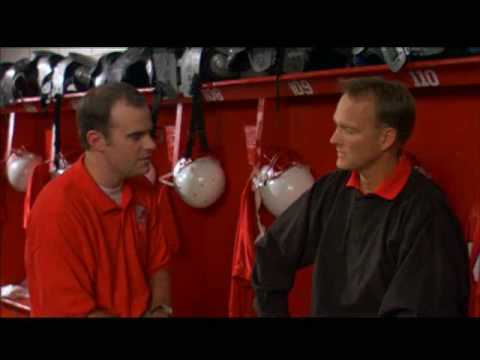






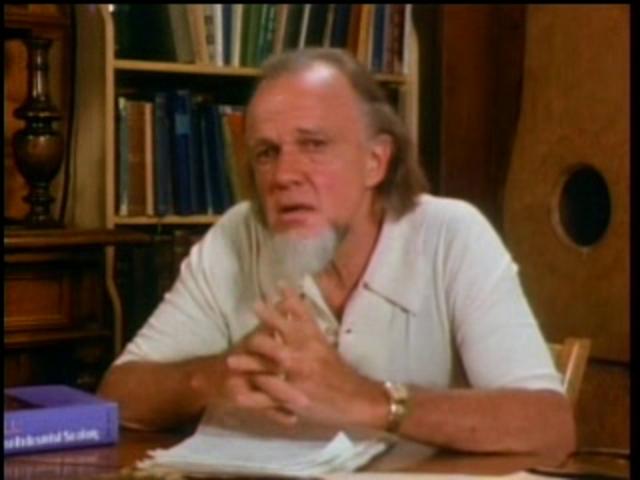










 The Daily Hatch