Monthly Archives: December 2015

Examining STAR WARS: THE FORCE AWAKENS from a Christian Perspective!!!!

Hinduism tells us good and evil come from the same impersonal force and that is exactly the lesson from STAR WARS:THE FORCE AWAKENS. There is a lot of talk of a “balance needed in the force” but should there be a balance between light and darkness or good and evil?

________

Star Wars: The Force Awakens Official Teaser Trailer #1 (2015) – J.J. Abrams Movie HD


__________

Star Wars: The Force Awakens Official Teaser #2


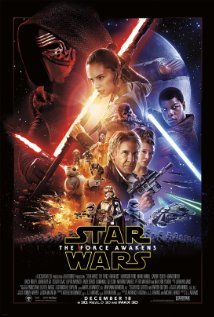
STAR WARS: THE FORCE AWAKENS

Wonderfully Familiar AND Fresh with the same false worldview
None Light Moderate Heavy
Language        
Violence        
Sex        
Nudity        
© Baehr, 2015

Starring: Harrison Ford, Carrie Fisher,
Mark Hamill, Daisy Ridley,
John Boyega, Adam Driver,
Oscar Isaac, Anthony Daniels,
Peter Mayhew, Andy Serkis,
Domnhall Gleeson, Lupita
Nyong’o, Gwendolyn Christie

Genre: Science Fiction

Audience: Teenagers and adults

Rating: PG-13

Runtime: 135 minutes

Distributor: Lucasfilm/Walt Disney Company

Director: J.J. Abrams

Executive Producer: Tommy Harper, Jason McGatlin

Producer: Kathleen Kennedy, J.J. Abrams,
Bryan Burk

Writer: Lawrence Kasdan, J.J. Abrams,
Michael Arndt

Address Comments To:

Robert Iger, President/CEO, The Walt Disney Company (Walt Disney Pictures, Pixar, Marvel Studios, Lucasfilm, Touchstone Pictures)
Alan Horn, Chairman, Walt Disney Studios
500 South Buena Vista Street
Burbank, CA 91521
Phone: (818) 560-1000; Website: http://www.disney.com

Content:

(PaPaPa, FRFR, O, Ro, BB, C, ACAC, L, VV, A, M) Strong pagan, somewhat mixed, worldview with New Age monism regarding the impersonal and all-encompassing Force, (including confusing talk about restoring “balance” to the Force although it’s clear that the “good side” of the Force must overcome and perhaps even destroy the “dark side” of the Force), characters use the occult power of the Force to control minds and move objects and people without physically touching them, some pagan mysticism includes mystical visions, but mitigated by strong moral elements and some redemptive elements including strong anti-totalitarian message, villains try to control people and make them conform, but one character resists, doing the right thing is explicitly extolled, strong pro-family sentiments expressed, and sacrifice and repentance promoted; two “h” obscenities; strong, exciting action violence includes explosions, laser gunfights, lightsaber battles, people killed, spaceships flying about and chasing one another, fighting, character thrown against tree, characters wounded, large monsters attack people, brief images of blood, and character apparently has been beaten up, and villain tries to torture characters to talk; no sexual content, but some implied romance and hugs; no nudity; implied alcohol use; no smoking or drugs; and, brief lying but exposed and lead villain gets uncontrollably angry when things don’t go his way.

Summary:

STAR WARS: THE FORCE AWAKENS combines some old familiar faces with some new ones in a story about a hunt for Luke Skywalker, who has disappeared but is desperately needed to train some new Jedi warriors to fight a new threat to the peace of the galaxy. STAR WARS: THE FORCE AWAKENS provides nearly constant, inspiring fun in a new battle of good versus evil, but it’s marred by a little too much New Age paganism and unbiblical monism. Parents please teach your children to be media wise.

Review:

First, the good news. STAR WARS: THE FORCE AWAKENS is the best, most exciting, and best written, directed and acted STAR WARS movie since the first trilogy, probably since THE EMPIRE STRIKES BACK. It also has some strong moral content, redemptive moments and pro-family sentiments. However, although it only lags a couple brief moments during its 132 minutes, the movie sometimes could use a little bit better dialogue (especially during the second half) and a stronger, slightly more satisfying redemptive climax, which is always the key to making a really great movie.

Above all, though, the movie’s biggest problem has nothing to do with bad storytelling or bad filmmaking, or even a better climax. Far from it! The biggest problem is that the movie has a very strong New Age pagan worldview promoting impersonal Eastern monism, a worldview that, ultimately, is irrational and warrants strong caution.

The setup for the story is that a new threat to the new republic has arisen. A group of really bad guys calling themselves the First Order (and still using the old empire’s cloned storm troopers) is trying to destroy the republic. Meanwhile, General Leia Organa has sent her best pilot, Poe Dameron, to find her brother, Luke Skywalker, who disappeared years ago. Poe is headed to see a man who might have a map to Luke’s whereabouts. If the republic’s resistance fighters can find Luke, perhaps he can raise up a new Jedi order to defeat the First Order.

Eventually, everything depends on a repentant storm trooper whom Poe names Finn and a feisty female scavenger named Rey. Will the ambivalent Force be with them?

STAR WARS: THE FORCE AWAKENS is, in many ways, the STAR WARS movie that fans and moviegoers have been longing to see. With STAR WARS screenwriting veteran Lawrence Kasdan (SILVERADO) and Director J.J. Abrams (STAR TREK) on board, THE FORCE AWAKENS has a tight script with lots of exciting action and great characterizations. The movie makes excellent use of veteran STAR WARS performers Harrison Ford, Carrie Fisher and Mark Hamill. After all, the story’s premise involves the hunt for the missing Luke Skywalker, Hamill’s iconic hero. That said, the movie relies the most on Harrison Ford’s lovable rogue, Han Solo, and his trusty companion, Chewbacca (Peter Mayhew). Their appearance early in the movie will get a big cheer not only from STAR WARS fans but also from movie lovers everywhere.

Also holding the film together are newcomers Daisy Ridley and John Boyega, who play Rey and Finn. Daisy Ridley in particular is a real find. Her appearance is one of the most striking first appearances in a major movie role since . . . well, since Harrison Ford first donned the persona of Han Solo in the original STAR WARS in 1977. As for Boyega, he easily fits in well with whoever is onscreen, whether it’s Daisy Ridley, Harrison Ford, Oscar Isaac as Poe, or even Chewbacca. To top it all, Adam Driver makes an imposing antagonist as the lead villain, even when he takes off his mask.

Director J.J. Abrams is one of the best action directors around. THE FORCE AWAKENS is his best movie since MISSION: IMPOSSIBLE III. He also does very well with all the actors. A few lines of expository dialogue occasionally let him down, John Williams’ newer music is sometimes a little repetitive, and the script should have developed Oscar Isaac’s character a bit better. Still, THE FORCE AWAKENS has plenty of nifty twists, exhilarating action, nostalgic moments, clever one-liners, and emotional scenes to help Abrams keep things moving and keep viewers engaged.

All in all, therefore, STAR WARS: THE FORCE AWAKENS is clearly one of the better popcorn movies of the year. However, despite its strong moral elements and lightly conservative, but strong, opposition to totalitarian bullies, THE FORCE AWAKENS has a strong New Age pagan worldview overall.

For instance, the movie has a couple mystical moments where characters establish an emotional connection to the Force or through it. In regard to the infamous Force, the movie also promotes modern monism, a New Age theology claiming that there’s a universal, but impersonal, energy or “Force” that is part of everything and surrounds everyone. This is typical STAR WARS mythology. However, in THE FORCE AWAKENS, it’s suggested a couple times that there must be a “balance” not only in the Force but also between the “good side” and the “dark side” of the Force. This is Non-Christian Eastern monism and moral dualism.

In this light, it’s interesting to note that these lines in the movie logically contradict the rest of the story, which clearly and strongly says the good must defeat and overcome, if not destroy, the dark side. The movie also suggests, in a redemptive way, that characters who succumb to the dark side can actually redeem themselves by rejecting the dark side and coming into the light. That’s not really “balance.” It also reflects an ethical monotheistic theology, not a monistic, pantheistic one where morality is “maya,” or an illusion.

Thus, Christians, and especially Christian parents and grandparents, should teach their children and other people about the logical contradictions and irrational mysticism of the STAR WARS movies, including THE FORCE AWAKENS. They should also note how such New Age thinking differs from the ethical monotheism and redemption of the Gospel of Jesus Christ and the enlightenment and divine fellowship or communion that comes from a personal relationship with Jesus and from the power of the Holy Spirit.

MOVIEGUIDE® recommends people focus on the positive moral and redemptive content or messages in STAR WARS: THE FORCE AWAKENS. Strong or extreme caution is warranted when it comes to the movie’s confused, impersonal, pagan monism. Christians have a better, more personal “Force” – our Lord and Savior, Jesus Christ, who created everything and redeems us and comes to us through the personal, divine power of the Holy Spirit.

Parents please teach your children to be media wise. A great way to learn how to teach them to keep the faith and be media-wise is by reading THE CULTURE-WISE FAMILY®.

Star Wars: The Force Awakens Trailer (Official)

In Brief:

STAR WARS: THE FORCE AWAKENS combines old familiar faces with new ones. A new group of bad guys called the First Order is threatening the new republic. General Leia Organa has sent her best pilot to obtain a map revealing the whereabouts of her brother, Luke Skywalker, who disappeared years ago. The republic needs Luke to train new Jedi knights to save the galaxy. Han Solo and Chewbacca team up with a repentant storm trooper and a female scavenger to get the map to Leia and her resistance fighters.

STAR WARS: THE FORCE AWAKENS is the STAR WARS movie that fans and moviegoers have been longing to see. It’s exciting, emotional and well made, with standout performances by Harrison Ford and newcomer Daisy Ridley. It also has some strong moral content, redemptive moments and pro-family sentiments. However, the movie’s pagan, somewhat mixed worldview contains some New Age mysticism and a renewed, rather contradictory, monistic take on the Force and the morality behind it. So, MOVIEGUIDE® advises strong or extreme caution for THE FORCE AWAKENS. Parents please teach your children to be media wise.

(HD 1080p) Anakin Skywalker vs. Obi-Wan Kenobi

__________


Obi-Wan Kenobi: Let her go, Anakin!

Padmé: [struggling to breathe] Anakin…

Obi-Wan: Let… her… go.[Vader releases Padmé; she collapses into unconsciousness]

Vader: You turned her against me!

Obi-Wan: You have done that yourself!

Vader: YOU WILL NOT TAKE HER FROM ME!!

Obi-Wan: Your anger and your lust for power have already done that. You have allowed this Dark Lord to twist your mind, until now…until now you have become the very thing you swore to destroy.

Vader: Don’t lecture me, Obi-Wan! I see through the lies of the Jedi! I do not fear the Dark Side as you do! I have brought peace, freedom, justice, and security to my new Empire!

Obi-Wan: [incredulously] Your new Empire?

Vader: Don’t make me kill you.

Obi-Wan: Anakin, my allegiance is to the Republic! To democracy!!

Vader: If you’re not with me, then you’re my enemy!

Obi-Wan: Only a Sith deals in absolutes. I will do what I must.

Vader: You will try.[They duel]

LET ME GIVE THE SHORT ANSWER TO THIS FIRST:

Philosopher and Theologian, Francis A. Schaeffer has argued, “If there are no absolutes by which to judge society, then society is absolute.” Francis Schaeffer, How Shall We Then Live? (Old Tappan NJ: Fleming H Revell Company, 1976), p. 224.

Star Culture Wars

While tweaking the original Star Wars movie for re-release, director George Lucas decided that he needed to clarify the status of pilot Han Solo’s soul.

In the old version, Solo shot first in his cantina showdown with a bounty hunter. But in the new one, Lucas addressed this moral dilemma with a slick edit that showed Greedo firing first. Thus, Solo was not a murderer, but a mere scoundrel on the way to redemption.

“Lucas wanted to make sure that people knew that Han didn’t shoot someone in cold blood,” said broadcaster Dick Staub. “That would raise serious questions about his character, because we all know that murder if absolutely wrong.”

The Star Wars films do, at times, have a strong sense of good and evil.

Yet in the climactic scene of the new “Revenge of the Sith,” the evil Darth Vader warns his former master: “If you’re not with me, you’re my enemy.” Obi-Wan Kenobi replies, “Only a Sith deals in absolutes.”

Say what? If that is true, how did Lucas decide it was wrong for Solo to gun down a bounty hunter? Isn’t that a moral absolute? If so, why are absolutes absolutely wrong in the saga’s latest film? Good questions, according to Staub.

While we’re at it, the Jedi knights keep saying they must resist the “dark side” of the mysterious, deistic Force. But they also yearn for a “chosen one” who will “bring balance” to the Force, a balance between good and evil.

“There is this amazing internal inconsistency in Lucas that shows how much conflict there is between the Eastern religious beliefs that he wants to embrace and all those Judeo-Christian beliefs that he grew up with,” said Staub, author of a book for young people entitled “Christian Wisdom of the Jedi Masters.”

“I mean, you’re supposed balance the light and the dark? How does that work?”

The key is that Lucas — who calls himself a “Buddhist Methodist” — believes all kinds of things, even when the beliefs clash. This approach allows the digital visionary to take chunks of the world’s major religions and swirl them in the blender of his imagination. Thus, the Force contains elements of Judaism, Christianity, Animism, Hinduism, Buddhism, Taoism and even Islam.

Is Jesus a Sith?

OK, it’s finally over. My childhood movie fascination is now complete—I’ve seen “Episode Three.” I have in many ways “grown-up” with Star Wars. I was six when the first (I mean the fourth) movie came out, and I saw all of the original three (Episodes 4, 5, and 6) in the theater when they first came out. I had all the Star Wars figures, the Death Star, the Millennium Falcon, the Land Speeder—you name it, I had it. All of my friends had them too…we were the Star Wars generation.

Incredibly though, the new trilogy of movies (Episodes 1, 2, and 3) has captured the imagination of a whole new generation. My son was more excited to see the movie than I was. He wore his Darth Vader tee shirt and sat in patient anticipation through the obligatory “coming attractions.” And it was interesting to observe the reactions of people as they were walking out of the theater two and a half hours later. For the fathers and mothers, it was sort of like a sigh of relief, a moment of closure. They weren’t so much energized by the movie as they were contemplating it. You could see wheels turning and brains buzzing putting all of the Star Wars pieces together. The kids on the other hand were all ablaze with what they just witnessed, they were talking about their favorite parts and “Anakin this” and “Yoda that.” One movie—two very different reactions.

Being a parent and well on the “contemplative” side of the age gap, I found myself mulling over what I had just seen as we walked to the car. With my son talking a mile a minute about his favorite parts, I kept replaying a certain scene in my mind. If you’ve seen the movie you’ll remember the scene, if not, let me try to paint the picture. Anakin (Darth Vader) and Obi-Wan are fighting. They stop fighting to discuss why they’re fighting (in typical Hollywood style). After voicing his displeasure with the Jedi (the “good” side), Anakin turns his back to the audience and tells Obi-Wan, “Whoever is not with me is my enemy.” Obi-Wan looks at Anakin unbelievingly and states emphatically, “Only the Sith deal in absolutes.” The Sith are the Dark Side’s equivalent of the Jedi. Obi-Wan is saying that Anakin is now a full-fledged “bad guy.” This scene took the magic of the whole Star Wars series that has been building ever since I was six and instantly deflated it. The whole “good vs. evil” story that had been the staple of all of the Star Wars episodes was a sham. I had been had.

I realized at this point in the movie that Darth Vader wasn’t the “bad guy” because he was on the bad side of the force, it was because he was so sure he was right. Obi-Wan and Yoda constantly lament Anakin’s association with the Chancellor of the Senate, Palpatine (who becomes the Emperor). They begin to fear that Palpatine is a Sith. About this they are right, Palpatine is a Sith and he is slowly turning Anakin against his former mentors. The turning point for Anakin comes when a member of the Jedi council, Mace Windu, is ready to kill Palpatine because he is “too dangerous” to leave alive. Anakin tells Windu that this is not the Jedi way (which it’s not), but situational ethics are the name of the game for Windu. Anakin sees the hypocrisy in this and his view of the Jedi instantly changes, and he does nothing as Palpatine (now the Emperor) proceeds to kill Windu. Anakin becomes Palpatine’s disciple—and consequently, Darth Vader—on the spot.

The troubling part about all of this for me was the post-modern double standard that we are faced with in our own day and galaxy. You see, Anakin is constantly counseled in all of the first three episodes that the Dark Side of the force is bad and the Jedi are good. But we get to the real deal in Episode Three when Obi-Wan makes this revealing statement about only the Sith dealing in absolutes. What does the Jedi deal in then? Feelings, emotions, hopes? On what basis does Obi-Wan make his assessment that the Dark Side and the Emperor are “evil?” This is exactly the same dilemma that the court at the Nuremberg Trial found itself in. The Nazis argued that they acted in accord with the laws of Germany and were simply following orders, yet were on trial for crimes against humanity. The “sovereign nation” ideal had its limits. Obi-Wan wants the same thing here. It’s easy enough to proclaim that the Dark Side is evil, but it’s really another thing to prove it when the Jedi are also out trying to eliminate those that they deem “dangerous.” It all becomes relative; the only true “bad guy” is one who “deals in absolutes.”

What would Obi-Wan have said to Jesus, who said much the same thing as Anakin in Matthew 12:30, “He who is not with Me is against Me; and he who does not gather with Me scatters.” Jesus makes an emphatic statement here. He is declaring for all who read and hear that there is no middle-ground, there is no neutrality. As much as our post-modern world would like to have each viewpoint as valid as the next, they can’t live this way. Obi-Wan couldn’t live this way either. If Anakin’s absolutist worldview was just another valid viewpoint (presumably Obi-Wan doesn’t deal in absolutes), then why bother fighting him. Why not shake hands and wish him well in his future galaxy-conquesting endeavors? Why not? Because Obi-Wan is an absolutist too, he just doesn’t want to admit it.

As I said, this scene revealed the whole Star Wars series for what it really was. George Lucas showed his true colors here. He was not making a grand good vs. evil epic. He was making a modern commentary, complete with double-standards and non-sequiturs. Lucas was simply toeing the line of modern politics. The only real enemy in today’s world is the one who thinks in terms of black and white—the fundamentalist. Whether they are Christian, Muslim, Democrat or Republican, the only one who is wrong, is the one who thinks he’s right. But we, as Christians, must remember Jesus’ (and Anakin’s) words. There is a war of ideas going on, and you must fall on one side or the other. Neutrality is not an option…as much as we would like it to be.

All Seven Star Wars Teaser Trailers

In the article, “Star Wars: The Religion,” from the August 1999  Trumpet  Print Edition » by DENNIS LEAP we read:

In the second produced film, The Empire Strikes Back, Yoda, the little green 900-year-old Jedi master, describes the Force to a troubled, weak-in-faith Luke Skywalker. He explains, “For my ally is the Force. And a powerful ally it is. Life creates it and makes it grow. Its energy surrounds us and binds us. Luminous beings are we, not this crude matter. You must feel the Force around you. You—between you and me—the tree—the rock—everywhere. Yes, even between the land and the ship.” If the Force represents God, then the Star Wars God is very impersonal!

Let’s be honest. The Force represents evolution and nature worship far better than the worship of a personal God. Did you realize that people who practice witchcraft love the concept of the Force? Why? They believe it represents nature worship!

‘Star Wars’ SPOILER: Watch a Major Scene From the Movie

This entire post is one big spoiler, so if you don’t want to hear about a major moment in Star Wars history, stop reading. Star Wars: The Force Awakens brings about the end of an era with the sad, yet heroic death of Han Solo. Harrison Ford returns to the franchise, reprising his role as Han Solo, and we are introduced to his son Kylo Ren (aka Ben Solo), played by actor Adam Driver. Han Solo’s son Kylo is actually the one who kills him, as Kylo needs to cut off his last emotional tie in order to fully join the Dark Side. This may sound familiar as it is the same kind of idea that Luke Skywalker and Darth Vader battled with years ago.

The death scene occurs in the third act of the movie with Kylo stabbing Han Solo with his lightsaber before Solo falls off of a bridge. Here is a Twit pic of the scene below.

Han Solo, Han Solo Dies, Han Solo Death Scene, Han Solo Dead, Han Solo Star Wars The Force Awakens, Han Solo Dies In Force Awakens, Star Wars The Force Awakens Spoilers, Force Awakens Ending

(Twitter)

Solo confronts his son and tries to convince him that Snoke is just using him for his power, but Kylo stands firm. Solo tells Kylo that when Snoke gets what he wants, he’ll crush him. Both men’s eyes well up with tears as Solo pleads with his son to return home. Kylo tells him that it’s too late and that he wants to be “free of this pain.” Kylo says he knows what he has to do but he doesn’t know if he has the strength to do it. He then asks his father to help him and Solo says he’ll do anything for him. Kylo pulls out the lightsaber and the two share a long last look at each other. Kylo suddenly stabs his father with tears in his eyes and tells him, “Thank you.” Solo then reaches out to lovingly touch his son’s face before he falls limply off the bridge. As Solo is stabbed to death, Chewbacca and main character Rey cry out in upset. It is a truly heartbreaking scene.

Top 15 Star Wars The Force Awakens Facts You Should Know

Take a look at this excellent article by Steven J. Rosen on Hinduism and Star Wars:

Yoda and Yoga

The Bhagavad-Gita may well have been Yoda’s manual for teaching Luke Skywalker the way of the Jedi.

BY: Steven J. Rosen

At first glance, it might seem that “Star Wars” and Hinduism have little in common. The “Star Wars” films are modern science-fiction classics, created as entertainment. They make use of futuristic spaceships and imaginative weapons that the real world has not yet seen. Hinduism, for its part, is an ancient religious tradition-or, more explicitly, a family of religious traditions, such as Vaishnavism, Shaivism, and Shaktism–meant for spiritual enhancement and personal fulfillment. What, if anything, do the films have to do with the religion?

My thesis is simple. Lucas, the creator of “Star Wars,” was heavily influenced by Joseph Campbell, the famed mythologist. Campbell’s preferred stock of philosophical stories comes from India. This is well known. Campbell explained the Mahabharata and the Ramayana, the principal epics of contemporary Hinduism, to Lucas, who digested their many stories and gave them back to us as “Star Wars.” Lucas himself says that he was “influenced by Eastern myths.” Here’s one example I use in my forthcoming book, drawing on the first film of the series, which was released in 1977:

A beautiful princess is kidnapped by a powerful but evil warlord. With determined urgency, a mysterious non-human entity delivers a distress call to a budding young hero. The youthful hero, a prince, comes to the princess’s rescue, aided by a noble creature that is half-man and half-animal. In the end, after a war that epitomizes the perennial battle between good and evil, the beautiful maiden returns home. The valiant efforts of the prince and his comrade, who were assisted by an army of anthropomorphic bears in the fight to return the princess to safety, are duly rewarded, and peace and righteousness once again engulf the kingdom.

In the Eastern part of the world, the story evokes memories of the Ramayana, an ancient epic from which many of India’s myths and religious traditions originate: The princess is Sita, kidnapped by the power-mad Ravana. Her loving husband Rama, the archetypal hero who, as the story goes, is Vishnu (God) in human form, soon becomes aware of her plight and anxiously pursues her.

How did he learn of Ravana’s nefarious deed? The good-hearted Jatayu, a talking vulture-like creature, sworn to protect the princess, sees the demon-king abduct Sita. He attempts to rescue her on his own, but Ravana mercilessly cuts him down. Luckily, Rama happens upon the dying Jatayu, who manages to recount all that has taken place before he expires.

After a period of intense grieving, Rama engages his devoted half-human/half monkey companion, Hanuman, in a lengthy search for the princess and, after a complex series of events, they wage war to get Sita back. Aided by an army of Vanaras (bears and monkeys who have anthropomorphic characteristics), Rama rescues Sita from Ravana. The forces of the underworld defeated, Rama-raja (the kingdom of truth and righteousness) reigns supreme.

In Western countries, the story would remind most readers of the first “Star Wars” movie. Here, too, the princess–this time, Princess Leia–is kidnapped. In the “Star Wars” universe, evil incarnates as Darth Vader, who holds Leia against her will. Artoo-Deetoo (R2-D2), an android, carries a desperate cry for help. The princess, just before being captured, managed to conceal a holographic message in the droid’s memory banks. Thus, through this futuristic robot, she asks for the assistance of Obi-Wan Kenobi, a master among the mystical Jedi knights, hoping he would come to her aid.

Luke Skywalker, a farm boy from the planet Tatooine, is the one who first receives this message, however, and it is he who turns to the retired Obi-Wan to alert him to the princess’s plight. Luke himself is reluctant to travel into unknown territory, into a world of action and intrigue. But Obi-Wan convinces him to go, telling him that “the Force” will protect him.

The two team up with Han Solo, a renegade space cowboy, and Chewbacca, a “half-man/ half-monkey” creature who devotedly assists them. By the end of the original “Star Wars” trilogy, in the company of legions of bear soldiers, they wage a war to end all wars–Darth Vader and his evil empire are defeated and the princess is returned to safety.

Is it a stretch to say that Lucas was directly and/ or indirectly influenced by the Ramayana? This author, obviously, thinks not. And there are many other parallels between Star Wars and Hindu tradition as well. Consider the example of the relationship between Yoda and Luke–a dead-ringer for the traditional Guru/ disciple relationship, especially as depicted in the ancient Hindu text, the Bhagavad-gita.

Yoda teaches Luke self-control, the importance of restraining the senses. Every Jedi, he says, must overcome desire and anger. The Gita must have been Yoda’s sourcebook: “A faithful man who is dedicated to the pursuit of knowledge–and who subdues his senses–is eligible to achieve such knowledge, and having achieved it he quickly attains the supreme spiritual peace.” (4.39) Again, “By the time death arrives, one must be able to tolerate the urges of the material senses and overcome the force of desire and anger. If one does so, he will be well situated and able to leave his body without regret.” (5.23)

It is interesting, too, that Yoda locates the source of the Jedis’ strength as flowing from “the Force,” which he essentially defines as the ground of all being. Indeed, Yoda tells Luke that all ability comes from the Force, but that this is especially true of the Jedis’ supernatural powers. The Gita also says that all power flows from the “Force,” i.e., the metaphysical source of all that is: “Of all that is material and all that is spiritual, know for certain that I am both the origin and dissolution. . . .Everything rests upon Me, as pearls are strung on a thread. . . . I am the ability in man.” (7.6-8)

Yoda’s name is closely linked to the Sanskrit “yuddha,” which means “war.” Accordingly, he teaches a chivalrous form of warfare, imbued with ethics and spirituality, to the Jedi knights. The non-aggressive but valiant ways of these knights are exactly like those of Kshatriyas, ancient Indian warriors who emphasized yogic codes and the art of protective combat. In this, Yoda resembles Dronacharya from the Mahabharata, who, in the forest (again like Yoda), trains the Pandava heroes to be righteous protectors of the innocent.

In the Ramayana, Vishvamitra Muni, as Rama’s spiritual master, teaches the great avatar (incarnation of God) to be adept in the art of war, but he also teaches him that fighting must always be based on yogic principles–he teaches Rama while they are living in the forest as well. Both Dronacharya and Vishvamitra seem like earlier incarnations of Yoda.

In this sense, and in many others, the Hindu scriptures may be the ultimate guidebooks for aspiring Jedis: Consider the Bhagavad-gita yet again: Lust, anger, and greed, the Gita tells us, are deeply embedded in our consciousness. Just ask Anakin. And deep-rooted habits are not always easy to overcome. Nonetheless, in the Gita, Krishna helps us through the darkest of battles by explaining the source of our dilemma, the gradual steps by which we delude ourselves, and by putting us in touch with the spiritual element lying dormant within our hearts. He tells us that those who are enamored by materialistic life begin simply by contemplating the objects of the senses.

Again, just ask Anakin. Such contemplation naturally leads to self-interested action and, finally, attachment. This, in turn, gives rise to anger. Why anger? Because everything in the world is temporary, and so we eventually lose the objects of our attachment. Anger, Krishna says, leads to bewilderment, and bewilderment to loss of memory. At this point, intelligence is lost. We can watch this happening to Anakin in “Attack of the Clones” and, further, in the latest film, “Revenge of the Sith.”

Other connections to Hinduism are also apparent in the prequels. For example, the idea of midi-chlorians, or living cells found in high concentration in Jedi blood, resonates with the idea of Paramatma, or the Lord in the Heart. Vaishnava Hinduism uses this concept to explain how God (the Force?) exists inside our bodies as a symbiont, as it were, allowing living entities to commune with Him. Also, young Anakin Skywalker, a Jedi priest, wears a shikha, or a tuft of hair, on the back of his head. While this religious symbolism is found in several ancient monastic traditions, it is nowhere as pronounced as in the Vaishnava Hindu tradition. In the Bhagavad-Gita, Krishna teaches that intelligence means good memory and fine discretion–both of which fall away when we adopt a materialistic and self-centered approach to life. This vicious cycle puts us in a non-spiritual frame of mind, in which we forget who we are and what life is really all about. Krishna refers to this as “a material whirlpool” that drags people ever lower; it is a complex downward spiral that begins, as He says in the Gita, simply by one’s contemplating the objects of the senses. (2.61-64) Krishna thus tells Arjuna not to be fooled by sensual stimulation and, instead, to control his senses for a higher purpose. This, indeed, is the teaching of the Jedi and a lesson that is valuable to each and every one of us.

Can people learn this Hindu wisdom from watching “Star Wars”? Most likely not. They’ll have to go to established religious texts and the paths traversed by the sages. But something is definitely afoot here. More than 70,000 people in Australia, in a census poll, declared that they are followers of the Jedi faith, the “religion” engendered by the “Star Wars” films. Despite the extremism and absurdity of this statistic-of people adhering to a faith concocted in a fictional film series-experts see in it a manifestation of the movies’ spiritual dimension.

In light of this enthusiasm, it’s not surprising that the “Star Wars” universe continues to grow. Lucas is now re-mastering the entire series into special 3-D versions, updated for modern times. New TV shows based on “Star Wars” are planned for upcoming seasons. And you now learn of parallels between this consequential film epic and one of the earliest religious traditions known to humankind. What’s next?! Only the Force is likely to know!

Francis Schaeffer “BASIS FOR HUMAN DIGNITY” Whatever…HTTHR

At the 20:15 mark in the above video Francis Schaeffer discusses how Eastern Religions unsuccessfully attempt to relieve the tension.

Relieving the Tension in the East
Within Eastern thinking, attempts to relieve the tension have been made by introducing “personal gods.” To the uninitiated these gods seem to be real persons; they are said to appear to human beings and even have sexual intercourse with them. But they are not really personal. Behind them their source is the “impersonal everything” of which they are simply emanations. We find a multitude of gods and goddesses with their attendant mythologies, like the Ramayana, which then give the simple person a “feeling” of personality in the universe. People need this, because it is hard to live as if there is nothing out there in or beyond the universe to which they can relate personally. The initiated, however, understand. They know that ultimate reality is impersonal. So they submit themselves to the various techniques of the Eastern religions to eliminate their “personness.” Their goal is to achieve a state of consciousness not bounded by the body and the senses or even by such ideals as “love” or “good.”
Probably the most sophisticated Eastern attempt to deal with the tension we are considering is the Bhagavad-Gita. This is a religious writing probably produced around 200 B.C. in India. It has been the inspiration for multitudes of Hindus through the centuries and most notably for Indian spiritual and political leader Mahatma Gandhi. In it the individual is urged to participate in acts of charity. At the same time, however, the individual is urged to enter into these acts in “a spirit of detachment.” Why? Because the proper attitude is to understand that none of these experiences really matter. It is the state of consciousness that rises above personality which is important, for personality is, after all, an abnormality within the impersonal universe.
Alternatively, the East proposes a system of “endless cycles” to try to give some explanation for things which exist about us. This has sometimes been likened to the ocean. The ocean casts up waves for a time, but the waves are still a part of the ocean, and then the waves pull back into the ocean and disappear. Interestingly enough, the Western materialist also tries to explain the form of the universe by a theory of endless cycles. He says that impersonal material or energy always exists, but that this goes through endless cycles, taking different forms – the latest of which began with the “big bang” which spawned the present expanding universe. Previously, billions and billions of years ago, this eternal material or energy had a different form and had contracted into the heavy mass from which came the present cycle of our universe. Both the Eastern thought and the Western put forth this unproven idea of endless cycles because their answers finally answer nothing.
We have emphasized the problems involved in these two alternatives because they are real. It is helpful to see that the only serious intellectual alternatives to the Christian position have such endless difficulties that they actually are non-answers. We do it, too, because we find people in the West who imagine that Christianity has nothing to say on these big issues and who discard the Bible without ever considering it. This superior attitude, as we said earlier, is quite unfounded. The real situation is very different. The humanists of the Enlightenment acted as if they would conquer all before them, but two centuries have changed that.
One would have imagined at this point that Western man would have been glad for a solution to the various dilemmas facing him and would have welcomed answers to the big questions. But people are not as eager to find the truth as is sometimes made out. The history of Western thought during the past century confirms this.

Star Wars: The Force Awakens [All 3 trailers.]

Related posts:

FRANCIS SCHAEFFER ANALYZES ART AND CULTURE PART 85 (Breaking down the song “When I’m Sixty-Four” Part B) Featured Photographer and Journalist is Bill Harry

One would think that the young people of the 1960’s thought little of death but is that true? The most successful song on the  SGT PEPPER’S album was about the sudden death of a close friend and the album cover was pictured in front of a burial scene.   Francis Schaeffer’s favorite album was SGT. […]

FRANCIS SCHAEFFER ANALYZES ART AND CULTURE PART 84 (Breaking down the song “When I’m Sixty-Four”Part A) Featured Photographer is Annie Leibovitz

_________ I think it is revolutionary for a 18 year old Paul McCartney to write a song about an old person nearing death. This demonstrates that the Beatles did really think about the process of life and its challenges from birth to day in a  complete way and the possible answer. Solomon does that too […]

FRANCIS SCHAEFFER ANALYZES ART AND CULTURE Part 83 THE BEATLES (Why was Karlheinz Stockhausen on the cover of Sgt. Pepper’s? ) (Feature on artist Nam June Paik )

_____________ Karlheinz Stockhausen was friends with both Lennon and McCartney and he influenced some of their music. Today we will take a close look at his music and his views and at some of the songs of the Beatles that he influenced.   Dr. Francis Schaeffer: How Should We Then Live? Episode 9 (Promo Clip) […]

FRANCIS SCHAEFFER ANALYZES ART AND CULTURE Part 82 THE BEATLES, Breaking down the song DEAR PRUDENCE (Photographer featured is Bill Eppridge)

Mia and Prudence Farrow both joined the Beatles in their trip to India to check out Eastern Religions. Francis Schaeffer noted, ” The younger people and the older ones tried drug taking but then turned to the eastern religions. Both drugs and the eastern religions seek truth inside one’s own head, a negation of reason. […]

FRANCIS SCHAEFFER ANALYZES ART AND CULTURE Part 81 THE BEATLES Why was Dylan Thomas put on the cover of SGT PEPPERS? (Featured artist is sculptor David Wynne)

    Dylan Thomas was included on SGT PEPPER’S cover because of words like this, “Too proud to cry, too frail to check the tears, And caught between two nights, blindness and death.” Francis Schaeffer noted: This is sensitivity crying out in darkness. But it is not mere emotion; the problem is not on this […]

FRANCIS SCHAEFFER ANALYZES ART AND CULTURE Part 80 THE BEATLES (breaking down the song “Lucy in the Sky with Diamonds” ) (Featured artist is Saul Steinberg)

John Lennon was writing about a drug trip when he wrote the song LUCY IN THE SKY WITH DIAMONDS and Paul later confirmed that many years later. Francis Schaeffer correctly noted that the Beatles’ album Sgt. Pepper’s brought the message of drugs and Eastern Religion to the masses like no other means of communication could. Today […]

FRANCIS SCHAEFFER ANALYZES ART AND CULTURE Part 79 THE BEATLES (Why was William Burroughs on Sgt. Pepper’s cover? ) (Feature on artist Brion Gysin)

______________ Why was William S. Burroughs put on the cover of Sgt. Pepper’s Lonely Hearts Club Band? Burroughs was challenging the norms of the 1960’s but at the same time he was like the Beatles in that he was also searching for values and he never found the solution. (In the last post in this […]

FRANCIS SCHAEFFER ANALYZES ART AND CULTURE PART 78 THE BEATLES (Breaking down the song TOMORROW NEVER KNOWS) Featured musical artist is Stuart Gerber

The Beatles were “inspired by the musique concrète of German composer and early electronic music pioneer Karlheinz Stockhausen…”  as SCOTT THILL has asserted. Francis Schaeffer noted that ideas of  “Non-resolution” and “Fragmentation” came down German and French streams with the influence of Beethoven’s last Quartets and then the influence of Debussy and later Schoenberg’s non-resolution which is in total contrast […]

FRANCIS SCHAEFFER ANALYZES ART AND CULTURE Part 77 THE BEATLES (Who got the Beatles talking about Vietnam War? ) (Feature on artist Nicholas Monro )

It was the famous atheist Bertrand Russell who pointed out to Paul McCartney early on that the Beatles needed to bring more attention to the Vietnam war protests and Paul promptly went back to the group and reported Russell’s advice. We will take a closer look at some of Russell’s views and break them down […]

FRANCIS SCHAEFFER ANALYZES ART AND CULTURE Part 76 THE BEATLES (breaking down the song STRAWBERRY FIELDS FOREVER) (Artist featured is Jamie Wyeth)

Francis Schaeffer correctly noted: In this flow there was also the period of psychedelic rock, an attempt to find this experience without drugs, by the use of a certain type of music. This was the period of the Beatles’ Revolver (1966) and Strawberry Fields Forever (1967). In the same period and in the same direction […]

_______________


______________

Article by Peter Robinson 6/19/2009 @ 12:01AM Medical Analysis By Milton Friedman

Milton Friedman on Medical Care (Full Lecture)

Published on Feb 2, 2014

I have written about Obamacare over and over again on this blog. Dan Mitchell has shared many funny cartoons about Obamacare too. Milton Friedman has spoken out about government healthcare many times in the past and his film series FREE TO CHOOSE is on You Tube and I encourage you to watch it. It is clear that the federal government debt is growing so much that it is endangering us because if things keep going like they are now we will not have any money left for the national defense because we are so far in debt as a nation.

We have been spending so much on our welfare state through food stamps and other programs that I am worrying that many of our citizens are becoming more dependent on government and in many cases they are losing their incentive to work hard because of the welfare trap the government has put in place. Other nations in Europe have gone down this road and we see what mess this has gotten them in. People really are losing their faith in big government and they want more liberty back. It seems to me we have to get back to the founding  principles that made our country great.  We also need to realize that a big government will encourage waste and corruption. Also raising taxes on the job creators is a very bad idea too. The Laffer Curve clearly demonstrates that when the tax rates are raised many individuals will move their investments to places where they will not get taxed as much.

In 1980 I read the book FREE TO CHOOSE by Milton Friedman and it really enlightened me a tremendous amount.  I suggest checking out these episodes and transcripts of Milton Friedman’s film series FREE TO CHOOSE: “The Failure of Socialism” and “The Anatomy of a Crisis” and “What is wrong with our schools?”  and “Created Equal”  and  From Cradle to Grave, and – Power of the Market.

Milton Friedman – Health Care Reform (1992) pt 1/4

6/19/2009 @ 12:01AM

Medical Analysis By Milton Friedman

President Obama, the press, all the Democrats and a fair number of the Republicans in Congress share the same assumption about health care. Whatever you believe should be done about the problem, it sure is complicated.

Yet one man figured it out.

In 2001 the economist Milton Friedman read up on health care, discovered that the inefficiencies in our system trace back to a single policy mistake, worked out a policy test that would help us correct it and then described his findings in a few thousand words of plain English.

Since the end of the Second World War, Friedman explained, medical care in the U.S. has displayed three features: technological advances, increases in spending and rising dissatisfaction.

The first of the three was common to one sector of the economy after another. Agriculture, manufacturing, electronics, communications–all had experienced technological progress. Yet the two final features proved unique to health care. While we were paying less and getting more when buying food or computers, in health care the opposite was happening.

Why?

Because, Friedman saw, most payments for medical care are made not by the patients who receive the care but by third parties, typically employers. Since, in Friedman’s phrase, “nobody spends somebody else’s money as wisely as he spends his own,” this third-payer system by its very nature introduces inefficiencies throughout the health care system.

The reason for this wasteful third-party system? The tax code. Money spent on health care is exempt from the income tax only if the health care is provided through an employer. “We have become so accustomed to employer-provided medical care,” Friedman wrote, “that we regard it as part of the natural order. Yet it is thoroughly illogical.”

The policy mistake that produced this illogical mess took place during World War II, when the government imposed wage controls. Unable to compete for workers by paying them more, employers began providing medical care, and the new benefit spread rapidly.

When the Internal Revenue Service caught on, requiring employers to include the value of medical benefits as part of the wages they reported, workers, who had grown accustomed to the benefits, protested. Congress responded with legislation that made employer-provided medical benefits tax-exempt.

By the time the 1960s arrived, Americans were used to having third parties pay their medical bills. Thus the enactment of Medicare and Medicaid–under which the government, rather than employers, acted as the third party–seemed perfectly reasonable.

Friedman wrote: “Third-party payment has required the bureaucratization of medical care. … A medical transaction is not simply between a caregiver and a patient; it has to be approved as ‘covered’ by a bureaucrat. … The patient has little … incentive to be concerned about the cost since it’s somebody else’s money. The caregiver has become, in effect, an employee of the insurance company or, in the case of Medicare and Medicaid, of the government. … An inescapable result is that the interest of the patient is often in direct conflict with the interest of the caregiver’s ultimate employer.”

In that one paragraph of under 100 words, a diagnosis of our ailment.

What should we do about it? Ideally, Friedman argued, we should reverse the mistake that started all the trouble, repealing the tax exemption of employer-provided medical care. Yet Friedman was a realist. Vested interests, he recognized, would make such a radical reform impossible. Instead he believed we should seek incremental changes, asking of each proposal simply whether it would move health care “in the right direction.”

Expanding savings accounts that allow individuals control over relevant spending, Friedman argued, would move health care in the right direction. So would extending the tax exemption to all medical expenses, whether they are paid by employers or individuals. A “sweeping socialization of medicine [such as that] proposed by Hilary Clinton”–and, now, by Barack Obama–would not.

Wherever possible, reduce the role of third parties. Increase the autonomy of individuals. Get the government and vast, bureaucratic insurance companies out of the way, permitting the free market to work its effects in health care, just as it does in virtually every other sector of the economy.

That’s not too complicated, now, is it?

Peter Robinson, a research fellow at the Hoover Institution at Stanford University and contributor to RobinsonandLong.com, writes a weekly column for Forbes.

Milton Friedman – Health Care Reform (1992) pt 2/4

Milton Friedman – Health Care Reform (1992) pt 3/4

Milton Friedman – Health Care Reform (1992) pt 4/4

_____________________

Related posts:

Dan Mitchell on Obamacare Supreme Court Decision: “I’m disgusted that the Supreme Court once again has decided to put politics above the Constitution!” (Includes lots of videos and cartoons)

__________ Enzi statement on the Supreme Court’s King Vs. Burwell decision 5 Takeaways From Today’s Supreme Court Ruling on Obamacare Wicker Comments on King v Burwell Supreme Court Decision Senator Lankford Discusses the King v. Burwell Supreme Court Decision Congressman Steve King Response to SCOTUS King v. Burwell Ruling Obamacare and the Odious Anti-Constitutionalism of […]

Open letter to President Obama (Part 718) Cartoonists Go to War against Obamacare

Open letter to President Obama (Part 718) (Emailed to White House on 6-25-13.) President Obama c/o The White House 1600 Pennsylvania Avenue NW Washington, DC 20500 Dear Mr. President, I know that you receive 20,000 letters a day and that you actually read 10 of them every day. I really do respect you for trying to get […]

The Region – Banking and Policy Issues Magazine – Interview with Milton Friedman June 1992

______ Milton Friedman’s Free to Choose (1980), episode 3 – Anatomy of a Crisis. part 1 The Region – Banking and Policy Issues Magazine – Interview with Milton Friedman June 1992 In his new book, Money Mischief, economist Milton Friedman compares inflation to alcoholism; blames the rise of Chinese communism, in large part, on an […]

NEW RIVER MEDIA INTERVIEW WITH: MILTON FRIEDMAN Professor Emeritus of Economics, University of Chicago Senior Fellow, Hoover Institution

______ Milton Friedman – A Conversation On Minimum Wage Milton Friedman Interview Milton Friedman is Professor Emeritus of Economics at the University of Chicago and Senior Fellow at the Hoover Institution.Dr. Friedman received the 1976 Nobel Memorial Prize for Economic Science. Member of the research staff of the National Bureau of Economic Research from 1937 […]

Walter E. Williams: “Milton Friedman was an economist’s economist” Wednesday, Dec. 6 2006 1

________ Milton Friedman on Donahue – 1979 Uploaded on Aug 26, 2009 Dr. Milton Friedman, Nobel Laureate, promoting “Free to Choose” on the show Donahue. Walter E. Williams: Milton Friedman was an economist’s economist Print Font [+] [-] Leave a comment » By Walter E. Williams Published: Wednesday, Dec. 6 2006 12:00 a.m. MST Walter […]

FRIEDMAN FRIDAY 40 Years Later: Milton Friedman’s Legacy in Chile “Chilean Miracle” Struck a Blow against Communism When Needed Most José Niño April 22, 2015

_______ José Niño José Niño is a graduate student based in Santiago, Chile. A citizen of the world, he has lived in Venezuela, Colombia, and the United States. He is currently an international research analyst with the Acton Circle of Chile. Follow@JoseAlNino. 40 Years Later: Milton Friedman’s Legacy in Chile “Chilean Miracle” Struck a Blow […]

FRIEDMAN FRIDAY Milton Friedman came up with the NEGATIVE INCOME TAX

____ Milton Friedman – The Negative Income Tax The Conservative Case for a Guaranteed Basic Income NOAH GORDON AUG 6, 2014 Creating a wage floor is an effective way to fight poverty—and it would reduce government spending and intrusion. Swiss backers of a minimum income spread out coins in Bern. Denis Balibouse/Reuters Last week, my […]

FRIEDMAN FRIDAY Which Fed Bill Would Milton Friedman Have Liked? Posted on March 10, 2015by John Taylor

________________ Which Fed Bill Would Milton Friedman Have Liked? Posted on March 10, 2015by John Taylor Writing last week on the Cato at Liberty blog, Steve Hanke argued that Milton Friedman would have supported the “Audit the Fed” bill recently introduced in the Senate.  Steve’s reasoning is based on Friedman’s 1962 essay “Should there be an […]

5 myths that conceal reality by Milton Friedman

A great speech below: Here are the myths:Robber Baron Myth, The Cause of Great Depression Myth, The Demand for Government Service Myth, The Free Lunch Smith, and The Robin Hood Myth. 1) the Robber Baron Myth, 2) the Great Depression Myth, 3) the Demand for Government Service Myth, 4) the Free Lunch Myth, and 5) […]

FRIEDMAN FRIDAY SEPTEMBER 4, 2006 An Interview with Milton Friedman

_______________ FEATURED ARTICLE | SEPTEMBER 4, 2006 An Interview with Milton Friedman Milton Friedman* I recently sat down with Milton Friedman, a few days before his 94th birthday, to discuss the impact of two of his most important contributions to economics and liberty: A Monetary History of the United States, 1870-1960 [co-written] with Anna Schwartz, […]

FRIEDMAN FRIDAY The Social Responsibility of Business is to Increase its Profits by Milton Friedman The New York Times Magazine, September 13, 1970.

Milton Friedman on Self-Interest and the Profit Motive 1of2 Milton Friedman on Self-Interest and the Profit Motive 2of2 The Social Responsibility of Business is to Increase its Profits by Milton FriedmanThe New York Times Magazine, September 13, 1970. Copyright @ 1970 by The New York Times Company. When I hear businessmen speak eloquently about the […]

FRIEDMAN FRIDAY Levin on Milton Friedman: ‘One Thing to Have Free Immigration to Jobs, Another for Welfare’ By Michael Morris | January 16, 2015

____________ Levin on Milton Friedman: ‘One Thing to Have Free Immigration to Jobs, Another for Welfare’ By Michael Morris | January 16, 2015 | 5:12 PM EST During his show on January 15, 2015, Nationally syndicated radio host Mark Levin recalled the famed economist Milton Friedman and explored an important reason why open immigration, despite […]

FRIEDMAN FRIDAY Milton Friedman would oppose bailouts, Obamacare Robert Enlow | Tuesday Jul 31, 2012 6:02 PM

Milton Friedman on Medical Care (Full Lecture)

Published on Feb 2, 2014

I have written about Obamacare over and over again on this blog. Dan Mitchell has shared many funny cartoons about Obamacare too. Milton Friedman has spoken out about government healthcare many times in the past and his film series FREE TO CHOOSE is on You Tube and I encourage you to watch it. It is clear that the federal government debt is growing so much that it is endangering us because if things keep going like they are now we will not have any money left for the national defense because we are so far in debt as a nation.

We have been spending so much on our welfare state through food stamps and other programs that I am worrying that many of our citizens are becoming more dependent on government and in many cases they are losing their incentive to work hard because of the welfare trap the government has put in place. Other nations in Europe have gone down this road and we see what mess this has gotten them in. People really are losing their faith in big government and they want more liberty back. It seems to me we have to get back to the founding  principles that made our country great.  We also need to realize that a big government will encourage waste and corruption. Also raising taxes on the job creators is a very bad idea too. The Laffer Curve clearly demonstrates that when the tax rates are raised many individuals will move their investments to places where they will not get taxed as much.

In 1980 I read the book FREE TO CHOOSE by Milton Friedman and it really enlightened me a tremendous amount.  I suggest checking out these episodes and transcripts of Milton Friedman’s film series FREE TO CHOOSE: “The Failure of Socialism” and “The Anatomy of a Crisis” and “What is wrong with our schools?”  and “Created Equal”  and  From Cradle to Grave, and – Power of the Market.

Milton Friedman would oppose bailouts, Obamacare

Milton Friedman would oppose bailouts, Obamacare

The United States a century ago was a highly charged magnet for immigrants around the world. Thousands entered Ellis Island each day on the hope of making a better life for themselves and their families. Two of those immigrants were Jeno and Sara Friedman; they would become the parents of Milton Friedman, one of the most influential and important economists of the 20th century.

Dubbed the “grandmaster of free-market economic theory” by the New York Times, Friedman’s writings, especially his 1980 book “Free to Choose” authored with his wife, Rose, refuted popular claims that “more government” would improve the quality of our lives. Milton Friedman was the most ardent spokesperson advocating the complete opposite. Voluntary choices of individuals rather than arbitrary dictates of the state, he argued, should be the default mode of human life. Government is justified only insofar as it preserves, protects, and defends individual liberty.

On [last] week’s 100th anniversary of his birth, one may wonder what the Nobel laureate would say about the more controversial policies now unfolding across America. What would Dr. Friedman have thought about the recent advances in school choice, the idea he developed in 1955? How would he react to government’s decision to tax Americans who do not purchase health care?

Would Dr. Friedman take a position regarding the financial impact of soaring public union pensions on state economies? As an expert on monetary policy, certainly Dr. Friedman would have an opinion regarding the federal government’s bailout of the financial industry and its impact on our personal freedom.

On school choice – the principle that all parents should have access to their child’s education funding so that they may choose whatever learning environment is best for their child – I believe Milton would say we’ve come a long way, but not nearly far enough.

Today there are 39 voucher and tax-credit programs in 21 states and the District of Columbia, offering more than 200,000 children educational freedom. In the past two years, more advancement has been made in school choice than in the previous 20 years. Yet most American parents still are not free to choose their child’s school. Limited by financial resources of their parents, children living within arbitrarily drawn boundaries are assigned to government-run institutions. The competitive, diverse, and innovative system of high-quality educational options Dr. Friedman advocated is not yet a reality.

On health care centralization

On health care, Milton likely would have disagreed with the massive centralization of an industry – a consequence of the Affordable Care Act. Moreover, its central tenet – that Americans are forced through taxation to engage in certain behaviors – resembles what Milton’s parents tried to escape when coming to the U.S. in 1894. The results, Friedman might have said, would be a lowering of quality accompanied by a significant increase in cost.

Friedman was particularly dismayed at how much unions continue to drive up taxpayer costs in places like California. Today, public employee unions and their largess have contributed to multiple cities to filing for bankruptcy. Friedman believed a free nation should never be held hostage to monopolies, including trade unions. He would have been heartened by progress made by strong leaders in several states to bring the public sector more in line with the private sector, yet Dr. Friedman would likely have agreed that much more needs to be done as teacher pension liabilities alone approach $1 trillion.

As for those bailouts, it is highly doubtful Dr. Friedman would support propping up any institution that cannot compete in the free market. Milton’s writings on monetary policy were sternly against actions that could cause inflation. But he also did not favor “easy money,” which has become the worldwide solution to the ongoing financial crisis. Friedman believed banks, governments, and individuals must keep their fiscal house in order.

Ultimately, we can rely only on Dr. Friedman’s writings to determine what he might have said to the issues we face today. Yet we can rest assured; at the core of his work was a commitment to the freedom of individuals over the collective force of a centralized government.

Just like in the early and mid-20th century, today the threat of central power and planning is threatening Americans’ freedom and quality of life. And although Milton Friedman is no longer with us, the vision he expressed through his writings endures.

Since his death in 2006, the Friedman Foundation has sponsored annual events around the world to spread the ideas espoused by Milton Friedman. On July 31, more than 140 events will be held in 50 states and in 44 counties honoring the life and legacy of Dr. Friedman, on what would have been his 100th birthday. From California to Chile, Vermont to Venezuela, Pennsylvania to Pakistan, and Illinois to Iran, thousands will gather to remember Milton Friedman and to keep his work alive.

These events are reminders that free markets are about much more than economics. As Friedman wrote in his book, “Capitalism and Freedom:” “Underlying most arguments against the free market is a lack of belief in freedom itself.”

Economic freedom lies at the heart of liberty; to live with the freedom to choose, to build our own lives, is what motivated people like Dr. Friedman’s parents to seek America’s shores many years ago.

_____________________

Related posts:

Dan Mitchell on Obamacare Supreme Court Decision: “I’m disgusted that the Supreme Court once again has decided to put politics above the Constitution!” (Includes lots of videos and cartoons)

__________ Enzi statement on the Supreme Court’s King Vs. Burwell decision 5 Takeaways From Today’s Supreme Court Ruling on Obamacare Wicker Comments on King v Burwell Supreme Court Decision Senator Lankford Discusses the King v. Burwell Supreme Court Decision Congressman Steve King Response to SCOTUS King v. Burwell Ruling Obamacare and the Odious Anti-Constitutionalism of […]

Open letter to President Obama (Part 718) Cartoonists Go to War against Obamacare

Open letter to President Obama (Part 718) (Emailed to White House on 6-25-13.) President Obama c/o The White House 1600 Pennsylvania Avenue NW Washington, DC 20500 Dear Mr. President, I know that you receive 20,000 letters a day and that you actually read 10 of them every day. I really do respect you for trying to get […]

The Region – Banking and Policy Issues Magazine – Interview with Milton Friedman June 1992

______ Milton Friedman’s Free to Choose (1980), episode 3 – Anatomy of a Crisis. part 1 The Region – Banking and Policy Issues Magazine – Interview with Milton Friedman June 1992 In his new book, Money Mischief, economist Milton Friedman compares inflation to alcoholism; blames the rise of Chinese communism, in large part, on an […]

NEW RIVER MEDIA INTERVIEW WITH: MILTON FRIEDMAN Professor Emeritus of Economics, University of Chicago Senior Fellow, Hoover Institution

______ Milton Friedman – A Conversation On Minimum Wage Milton Friedman Interview Milton Friedman is Professor Emeritus of Economics at the University of Chicago and Senior Fellow at the Hoover Institution.Dr. Friedman received the 1976 Nobel Memorial Prize for Economic Science. Member of the research staff of the National Bureau of Economic Research from 1937 […]

Walter E. Williams: “Milton Friedman was an economist’s economist” Wednesday, Dec. 6 2006 1

________ Milton Friedman on Donahue – 1979 Uploaded on Aug 26, 2009 Dr. Milton Friedman, Nobel Laureate, promoting “Free to Choose” on the show Donahue. Walter E. Williams: Milton Friedman was an economist’s economist Print Font [+] [-] Leave a comment » By Walter E. Williams Published: Wednesday, Dec. 6 2006 12:00 a.m. MST Walter […]

FRIEDMAN FRIDAY 40 Years Later: Milton Friedman’s Legacy in Chile “Chilean Miracle” Struck a Blow against Communism When Needed Most José Niño April 22, 2015

_______ José Niño José Niño is a graduate student based in Santiago, Chile. A citizen of the world, he has lived in Venezuela, Colombia, and the United States. He is currently an international research analyst with the Acton Circle of Chile. Follow@JoseAlNino. 40 Years Later: Milton Friedman’s Legacy in Chile “Chilean Miracle” Struck a Blow […]

FRIEDMAN FRIDAY Milton Friedman came up with the NEGATIVE INCOME TAX

____ Milton Friedman – The Negative Income Tax The Conservative Case for a Guaranteed Basic Income NOAH GORDON AUG 6, 2014 Creating a wage floor is an effective way to fight poverty—and it would reduce government spending and intrusion. Swiss backers of a minimum income spread out coins in Bern. Denis Balibouse/Reuters Last week, my […]

FRIEDMAN FRIDAY Which Fed Bill Would Milton Friedman Have Liked? Posted on March 10, 2015by John Taylor

________________ Which Fed Bill Would Milton Friedman Have Liked? Posted on March 10, 2015by John Taylor Writing last week on the Cato at Liberty blog, Steve Hanke argued that Milton Friedman would have supported the “Audit the Fed” bill recently introduced in the Senate.  Steve’s reasoning is based on Friedman’s 1962 essay “Should there be an […]

5 myths that conceal reality by Milton Friedman

A great speech below: Here are the myths:Robber Baron Myth, The Cause of Great Depression Myth, The Demand for Government Service Myth, The Free Lunch Smith, and The Robin Hood Myth. 1) the Robber Baron Myth, 2) the Great Depression Myth, 3) the Demand for Government Service Myth, 4) the Free Lunch Myth, and 5) […]

FRIEDMAN FRIDAY SEPTEMBER 4, 2006 An Interview with Milton Friedman

_______________ FEATURED ARTICLE | SEPTEMBER 4, 2006 An Interview with Milton Friedman Milton Friedman* I recently sat down with Milton Friedman, a few days before his 94th birthday, to discuss the impact of two of his most important contributions to economics and liberty: A Monetary History of the United States, 1870-1960 [co-written] with Anna Schwartz, […]

FRIEDMAN FRIDAY The Social Responsibility of Business is to Increase its Profits by Milton Friedman The New York Times Magazine, September 13, 1970.

Milton Friedman on Self-Interest and the Profit Motive 1of2 Milton Friedman on Self-Interest and the Profit Motive 2of2 The Social Responsibility of Business is to Increase its Profits by Milton FriedmanThe New York Times Magazine, September 13, 1970. Copyright @ 1970 by The New York Times Company. When I hear businessmen speak eloquently about the […]

FRIEDMAN FRIDAY Levin on Milton Friedman: ‘One Thing to Have Free Immigration to Jobs, Another for Welfare’ By Michael Morris | January 16, 2015

____________ Levin on Milton Friedman: ‘One Thing to Have Free Immigration to Jobs, Another for Welfare’ By Michael Morris | January 16, 2015 | 5:12 PM EST During his show on January 15, 2015, Nationally syndicated radio host Mark Levin recalled the famed economist Milton Friedman and explored an important reason why open immigration, despite […]

TAKING ON PETER SINGER WITH WILLIAM CRAIG’S 4 PROPOSITIONS: 1. If God does not exist, objective moral values do not exist 2. However, evil exists 3. Therefore objective moral values exist – namely, some things are evil 4. Therefore God exists

Peter May rightly notes, “Peter Singer is arguably the most famous and influential modern philosopher, offering the most radical challenge to traditional Judeo-Christian values.”

Francis Schaeffer “BASIS FOR HUMAN DIGNITY” Whatever…HTTHR

Dr. Francis Schaeffer: Whatever Happened to the Human Race Episode 1 ABORTION

Published on Jan 10, 2015

Whatever Happened to the Human Race?
Abortion
Dr. Francis Schaeffer

Dr. Francis schaeffer – The flow of Materialism(from Part 4 of Whatever happened to human race?)

Peter Singer pictured below:

Life after God? – The Ethics of Peter Singer

Peter May

Peter Singer is arguably the most famous and influential modern philosopher, offering the most radical challenge to traditional Judeo-Christian values. It has been said of him, that as an original and influential moral pioneer, he surpasses any philosopher since Bertrand Russell. On his website he says, ‘My work is based on the assumption that clarity and consistency in our moral thinking is likely, in the long run, to lead us to hold better views on ethical issues.’

Born in Australia in 1946, Peter Singer is the son of Jews who fled from Vienna to avoid persecution from the Nazis. His grandparents and other relatives, who stayed behind, were killed. His mother was a doctor. His father, a keen animal lover, was a businessman. Studying initially in Melbourne, Singer went on to obtain a B.Phil in Philosophy at Oxford, where he also developed his concerns for the well-being of animals. Subsequently, he taught in Oxford, New York, Colorado and California. He then returned to Melbourne to become Professor in Human Bioethics. In 1999 then became Professor of Bioethics at the Centre for Human Values at Princeton University.

Peter Singer is influential, not least because he is a prolific writer on his subject of ethics and related areas of philosophy. His best known book, Animal Liberation: A New Ethic for Our Treatment of Animals (1976),[1] gave birth to the worldwide animal rights movement. Widespread contemporary interest in vegetarianism and in militant animal rights campaigning has flowed from it. He has written many other books, a major entry on ethics in Encyclopaedia Britannica and countless journal and review articles, as well as editing influential journals. Much of what follows is focused on his book How Are We To Live?[2] with various references to other writings.

His broad perspective

Singer is an atheist who very easily dismisses Judeo-Christian ethics as being out of date and irrelevant: ‘We have no need to postulate gods who hand down commandments to us because we understand ethics as a natural phenomenon.’[3]He asks, ‘What do I think of as a good life in the fullest sense of that term? This is an ultimate question.’[4] The choice is ours because, in Singer’s view, ethical principles are not laws written up in heaven. Nor are they absolute truths about the universe, known by intuition. The principles of ethics come from our own nature as social, reasoning beings. So he writes, ‘We are free to choose what we are to be, because we have no essential nature, that is, no given purpose outside ourselves. Unlike say, an apple tree that has come into existence as a result of someone else’s plan, we simply exist, and the rest is up to us’.[5]

His principle reason for rejecting the Christian God is the existence of suffering in the world. In particular, he dismisses the idea that mankind is distinct from other animals by being ‘made in the image of God’. Hence the ‘Sanctity of Human Life’ argument, which hangs on that distinctive, goes out of the window. All that remains are ‘Quality of Life’ issues. This leads him to the utilitarian principle of ‘The greatest happiness for the greatest number’, which undergirds so much modern political thought.[6] Pleasure (or, rather, ‘preference satisfaction’) becomes the greatest good; suffering and pain the only evils. Utilitarianism, therefore, invites an examination of the consequences of our actions, studying the effects of our choices on others. Our actions themselves have no intrinsic moral value – what matters is what happens. Our intentions count for nothing; the starting point is preference not idealistic motivation. Reducing ethical choices to a concern for personal preferences and useful consequences sounds like a simplification of life’s moral dilemmas. However, the ethical process involved in arriving at such a decision can be extremely complicated. He writes:

I must, if I am thinking ethically, imagine myself in the situation of all those affected by my action (with the preferences that they have). I must consider the interests of my enemies as well as my friends, and of strangers as well as family. Only if, after taking fully into account the interests and preferences of all these people, I still think the action is better than any alternative open to me, can I genuinely say that I ought to do it. At the same time I must not ignore the long-term effects of fostering family ties, of establishing and promoting reciprocal relationships, and of allowing wrongdoers to benefit from their wrong doing. [7]

Abortion and infanticide

Suffering is, of course, more than just the experience of pain. It has to do with self-conscious awareness of suffering, involving the memory of past freedom from suffering, understanding the causes of suffering, and anticipating the future implications and possible options. An unborn child cannot suffer in this way – and, of course, cannot be said to have personal preferences, whether or not they could ever be expressed. If other people have preferences that the unborn child should not survive, and assuming the procedure can be done painlessly, there remains no moral barrier to terminating the pregnancy. So in his view:

Those who regard the interests of women as overriding the merely potential interests of the foetus are taking their stand on a morally impregnable position.[8]

Furthermore, the situation is essentially unchanged for the newborn child, who does not understand what life is about and therefore can have no preference in the matter. If no one else has a preference that the child should live, infanticide within the first month of life can be morally justified. Here Singer introduces his ethic ofreplaceability. A child may not be wanted for various reasons, such as timing, gender or congenital disease. The decision-making process can be profoundly influenced if the death of an unwanted child subsequently allows the parents the freedom to have a wanted child who would replace it. Such ethics have not endeared him to the disabled community in general. They fear that his views support discrimination against them. Neither have they gone down well in Germany with its painful memories of the eugenics movement for genetic purity.

Euthanasia – voluntary & non-voluntary

Singer’s overthrow of the ‘Sanctity of Human Life Ethic’, replacing it with a ‘Quality of Life Ethic’, comes most sharply into focus when considering voluntary euthanasia. This is most fully discussed in his book, Rethinking Life and Death, where he offers some new rules:[9]

Firstly, we should not see all human lives as of equal worth but recognise that some are more valuable than others. Such judgements should be made on the basis of the individual’s capacity to think, relate and experience. Patients in a persistent vegetative state have none of these faculties. Without consciousness, life has no value. In cases of brain damage making it impossible for the patient to express a preference, this principle obviously opens the door to non-voluntary euthanasia.

Secondly, the taking of human life is not a moral issue in itself; the consequences of the action determine the ethical rightness of it. The preferences of the individual – if they can be expressed – are of central importance.

Thirdly, suicide is not intrinsically wrong. An individual’s desire to die should be respected. Hence, it is ethical for a doctor to assist a suicide in fulfilling the patient’s considered preference.

Animal liberation and vegetarianism

Singer distinguishes human beings in the biological sense from persons, who are rational and self conscious beings. He has no basis for seeing human beings in a different category from other animals. In general, humans have more intelligence and greater self-awareness, but some humans lack these faculties. In the newborn they are undeveloped; in the severely brain damaged they are lost; and in the dementing they are fading day by day. They are humans, but not persons. Some adult animals, however, are remarkably intelligent. They are persons, though not human.

More important for Singer is the division between sentient creatures, which can experience pleasure and suffering, and non-sentient creatures which cannot. Most – but not all – humans come in the first category, as do many animals. Hence the protection afforded to persons should be extended to such non-humans. The division between these categories is not always obvious.[10] Some animals even seem to demonstrate a moral awareness by altruistic behaviour. He cites dolphins helping injured dolphins to breathe, wolves taking food back to the pack, chimpanzees calling others when they find ripe fruit, and gazelles putting their own lives at risk by warning of predators.[11]

The focus of Singer’s concern about animals is the human tendency to think in terms of species. While sexism and racism assert the superiority of one sex or race over another, speciesism asserts that humans are superior to other animals. Such discrimination, in Singer’s view, is indefensible.[12] His philosophy not only rules out all cruelty to self-conscious, sentient beings, which includes adult mammals, but also rules out their killing. Fur coats and leather shoes cannot then be justified, and neither, in general, can eating meat.[13] If animal experimentation can ever be justified, then it must be equally justifiable to perform such experiments on severely mentally-retarded human adults, or normal infants who are not aware of what is being done to them. [14]

Sexuality

‘The moral case for acceptance of sexual relationships between consenting adults that do not harm others is … clear-cut,’ he writes.[15] As long as the consequences of sexual acts fulfil the preferences of those involved and do not harm others, sexual ethics are of little or no importance. In his view, the important ethical issues in the world today are the fact that racial hatred stops people living together, that people are starving in an affluent world, that animals are bred in factory farms, and that we are damaging the ecological system of our planet. He writes:

Once it is generally understood that ethics has no necessary connection with the sexually-obsessed morality of conservative Christianity, a humane and positive ethic could be the basis for a renewal of our social, political and ecological life.[16]

In a review article entitled Heavy Petting,[17] Singer asks what is wrong with human sexual activity with animals. The argument that bestiality is unnatural because it cannot lead to procreation is not good enough, he says, because many widely practised sexual activities, which are seen to be natural, cannot lead to procreation either. Isn’t bestiality cruel and harmful? Not necessarily. Can animals meaningfully give consent to sex? Well, sometimes they initiate it, as for instance a dog rubbing its genitals against a human leg. If the animal shows a preference and there are no harmful consequences, there appear to be no grounds in Singer’s ethical framework to object.

World poverty

Singer castigates Christians for their attitude to world poverty.[18] He sees a major discrepancy between their passion for the sanctity of life argument as it relates to the embryo, the unwanted infant and the terminally ill, and their failure to take seriously – in his view – Christ’s teaching about possessions and the needs of the poor. He sees Christians being concerned for those who express no desire to live while ignoring the lives of countless people who long to hang on to life. Christ’s teaching to the rich young ruler is certainly stark, and the wealth of western Christians is disturbingly great.

Critique of Singer on Christianity

Singer finds it easy not to take Christianity seriously, He writes:

Once we admit that Darwin was right when he argued that human ethics evolved from the social instincts that we inherited from our non-human ancestors, we can put aside the hypothesis of a divine origin for ethics.[19]

He has not written a substantial critique of Christianity, but his general antipathy is clear. He does not understand the dynamics of the gospel of grace, and so has a ‘salvation by works’ understanding of Christian theology, where ethical behaviour is driven by self-interest in rewards [20] and fear of punishments.[21] He is left with ‘a man of straw’ to knock down – or rather, marginalise.

As we have seen, central to his concerns is speciesism and the Judeo-Christian view that mankind is made uniquely in the image of God. He emphasises the Bible’s view that humanity has been given dominion over the animals. This he always describes in terms of dominating rule, never as responsible, caring stewardship. Christians, however, do not believe that animals are their possession, to do with as they think fit. Singer emphasises Genesis 1:28 which speaks of ‘rule’ but ignores Genesis 2 which introduces the ideas of a ‘duty of care’ and also companionship. In fact, there are many references in the Bible to the well-being of animals, which Singer chooses to ignore. These passages qualify and describe how ‘dominion’ over the animals is to be expressed.[22]

In the New Testament, Jesus pointed to God’s provision for the birds, but in saying that people are more valuable than they are, he is clearly not saying that they are without value before God.[23] Singer clearly does not like the way that Jesus cast out demons and sent them into a herd of pigs,[24] but he ignores the significance of Christ challenging the legalism of the Pharisees by asking, ‘If one of you has a son or an ox that falls into a well on the Sabbath day, will you not immediately pull him out?’[25] Graham Cole comments that juxtaposing a child at risk and an ox at risk indicates the expanse of Christ’s circle of compassion.[26] Cole also notes that in his letters, Paul describes God’s ultimate purposes for the whole of creation[27] which Singer fails to consider. In other words, Singer’s treatment of Scripture is misleading and unbalanced, if not unethical. He selects proof texts to support his argument, without trying to see them in their wider context.

Critique of Singer’s utilitarianism

There are several well-documented difficulties with utilitarian philosophy.[28]

1. Consequences

The intellectual challenge of chess is to think through the consequences of a move and predict the knock-on effects. A move you think is brilliant may prove a short cut to being caught in checkmate. The game must be played slowly. The difficulty is that we cannot cope with too many possible alternatives, which is why most of us play chess badly! Only God can see the future; the rest of us have to settle for shrewd guesses. One amusing story about Singer is that he fed a vegetarian diet to his cat – with the result that the cat became very skilled at catching mice! According to Craig and Moreland, the consequences by which the action is to be judged have, ‘an uncertainty that paralyses moral decision-making.’ Furthermore, it ‘brings to centre stage a tentativeness about duty that is not conducive to the development of conviction and character’.[29]

Consider the consequences of sexual activity. Commonly regarded as harmless pleasure, it is far from easy to predict the implications of a given sexual encounter, either emotionally, physically or socially. The consequences of an unwanted pregnancy should be obvious enough, but are frequently overlooked. Many, presumably to their great surprise, have found themselves quickly addicted to a new sexual partner or a new sexual behaviour that becomes very destructive to them and their families. Sexually transmitted diseases – often leading to infertility or cervical cancer – occur commonly and may be incurable, but they rarely seem to be anticipated. The single greatest cause of pain and suffering in the world today is due to the devastation brought by the sexual transmission of HIV, which does not even feature in Singer’s list of ‘the crucial moral questions of our day’.[30] How could he overlook it? We do not know how the virus crossed from monkeys to humans – it could even have occurred through bestiality; whatever happened, the consequences could not have been imagined. Less surprising is his failure to even begrudgingly acknowledge that the only practice that could resolve the HIV epidemic (and do so largely within a generation) is the biblical ideal of one sexual partner for life. How can he think that sexual ethics are irrelevant?

2. Happiness

Each attempt to explain the principle of utilitarianism presents its own difficulties. The best known description is that it seeks ‘the greatest happiness for the greatest number’. Two issues immediately arise that may well be in conflict.

Imagine that I have £1,000,000 to give away. If I was concerned for the greatest happiness, I might decide to give it all to one person and make him very happy indeed. However, if I was concerned for the greatest number, I might give £1 to each of a million people. Many would not even consider thanking me! Yet one might think that giving away money would be among the simpler moral decisions.

But there is a second, more fundamental problem. What exactly is happiness? And if I knew, how might I obtain it and then hold on to it? Those who experience the most intense happiness find they cannot maintain it. It inevitably fades. Similarly, those who experience the deepest tragedies seem, in the passage of time, to recover and once more find things to smile about. It is an extraordinary feature of life that some of the poorest people are among the most contented, while some of the wealthiest are among the most wretched. This is true of individuals, but it is also true of societies: ‘Ghana, Mexico, Sweden, the United Kingdom and the United States all share similar life satisfaction scores despite per capita income varying ten-fold between the richest and the poorest country’.[31] If happiness is so poorly correlated to wealth, the same study, among others, shows that it is strongly correlated to the traditional family unit. The divorce rate in Britain has quadrupled since 1970, and currently 40,000 children a year are prescribed anti-depressants. Therefore, one might suppose that the morality of actions that undermine the family unit, cannot be advocated on utilitarian grounds – again underlining the central importance of sexual ethics for human well-being.

3. Reductionism

Preference consequentialism seems a flat earth way of doing ethics. The whole process is reduced to a two-dimensional view of life: our actions are evaluated only in terms of preferences and consequences (whether or not they are actually predictable or measurable). There is no recognition of ultimate goodness, no acknowledgement of the importance of motive and intent, no significance attached to the agonies of conscience or the depths of moral revulsion, no sense of overall meaning and purpose, no exploration of the nature of self-denying love rather than ‘preference satisfaction’, no realisation of the need for forgiveness, no understanding of the fallibility of human moral character and no basis for considering justice. Nor does Singer allow the subtle influences of our relationships in moral decision making, even though his own rationality proved an insufficient guide in dealing with his mother’s death from Alzheimer’s disease.[32] His tough talk about euthanasia evaporated in the face of the personal reality. Morality is evaluated only on our preferences and the consequences of our actions, butmost of us realize that there is rather more going on here as we make our choices.

4. The Yuk Factor[33]

In his letter to the Romans, Paul teaches that certain truths about right behaviour are instinctive. We don’t need to be taught them, but if we suppress such intuitive awareness, it will affect our rational grasp of ethical judgements.[34] In Paul’s phrase, we will become ‘futile in our thinking.’

Several aspects of Singer’s teaching cause deep intuitive revulsion – not just in Christians, but in people who make many different assumptions about the nature of truth and ethics. Singer claims the taboos are falling one by one [35] (late abortion, infanticide in the first month of life, non-voluntary euthanasia and bestiality are four such categories, which he clearly advocates). However, there are some taboos he seems reluctant to discuss. Given his grounds for justifying sexual activities between consenting adults, how can he raise adequate objections to promiscuity or, indeed, prostitution?[36] And what about incest, if there are no harmful consequences and both parties desire it? As there is no internationally agreed age at which children become adults, he is also left without strong grounds for condemning paedophilia. Why is he so quiet about that explosive subject? Is it not another major, modern, ethical issue? What has he got to say about it? Chuck Colson has written:

Every rationale that Singer employs to justify (sexual) activities with animals can be applied to relations with children. Actually, the case is stronger since the “physical similarities” Singer identifies are greater in the case of children.[37]

5. Is it liveable?

Gordon Preece maintains that preference utilitarianism is actually unliveable: Singer’s demanding universal utilitarianism is much more opposed to individual pleasure and almost infinitely guilt-inducing compared to Christianity.[38] The problems of the entire world are set before us. And it is not just the greatest happiness for the greatest number of humans which must direct our moral choices, but of all sentient mammals. The task is overwhelming.

Of course, the demands of world poverty distress us all. Historically, however, it has never been like this. In apostolic times, for instance, a church community might learn from a traveller about a distant fellowship experiencing hard times, and collect some money to help them. In general, they remained entirely ignorant of the human condition worldwide. For the most part, people lived in small, self-contained communities within which they learned to carry one another’s burdens.[39] In such communities, the New Testament asserts our primary responsibility for our immediate family,[40] but then to care for widows and orphans,[41] to show hospitality to strangers[42] and, as opportunity arises, to do good to everyone.[43]But in all this, the family is central. As the fundamental building block of society, it is without rival. Certainly states should provide welfare, but who would prefer institutionalized care? Any philosophy or political policy which damages or undermines the integrity of the family unit, as Singer does in dismissing the importance of sexual ethics, undermines the central structure of care in the community throughout the world. (I think immediately of my patients: a man struck blind in his 30s from Multiple Sclerosis, cared for by his wife and 10 yr old daughter; a single mother helped by her grand-parents to care for her teenage daughter with Cystic Fibrosis; the mutual care a 90 yr old couple give to each other, supported by their children; an awkward old man living alone in a caravan, scooped up and taken home by his caring nephew.) Singer’s quest for a renewal of our social and political life, disconnected from traditional sexual ethics, is a pipe-dream.[44]

Today, however, the tragedies of the world find their way onto the screens in our living rooms. We are not absolved responsibility for how we respond,[45] but the New Testament is realistic saying that we should ‘not grow weary of doing good … as we have opportunity.’[46] We are not to lay up treasures on earth but in heaven,[47] and hard choices face each of us. For all that Christians say in criticizing our consumerist society, we still drive expensive cars, make our homes very comfortable and fly around the world for pleasure with seemingly little concern. So we should take note of Singer’s serious challenge for Christians to behave Christianly.[48]

Yet utilitarianism gives us no respite. If we were to take Singer at face value, our lives would be minimalist. We could hardly waste money buying books of any sort; education would be basic and presumably prevent the sort of expensive researches which might lead to significant benefits for the world’s poor. We could forget about the arts and entertainment – luxuries no one should afford. In order to remain sane with such pressing demands, Singer apparently gives away 20% of his income. This is impressive, and certainly puts many Christians to shame. [49] But given the needs of the world, the figure is quite arbitrary. If you have a large income, far more than enough to supply your basic needs, why not make it 50%? However, on consequentialist thinking, any such self-inflicted poverty/misery is endured to bring the greatest amount of happiness to the greatest number. Is it defeating the primary objective of happiness to advocate miserly restraint? So we return to some very basic questions. Perhaps we should not give away more than we are happy to give, so that we don’t add to the pot of suffering. We are told, ‘God loves a cheerful giver’.[50]

At the end of the day, we can understand the idea of acting morally towards the people we meet. It is quite possible, if more difficult, to act morally to those we do not know. Acting morally to everyone in the world is quite beyond us, but acting morally and equally to every sentient mammal robs morality of any real meaning. The best we can do is respond as and when we have the opportunity. Christians have grounds for believing that God is ultimately responsible for his world, but has put us in caring and supportive family units so that we might be agents of his mercy and compassion.

The point of view of the universe

Jesus took as the central plank of his ethical teaching, the Old Testament commandment, ‘You should love your neighbour as yourself.’[51] Not surprisingly, he was then asked the crucial question, ‘Who is my neighbour?’ In answering it, Jesus told one of the world’s greatest stories: ‘A certain man went down from Jerusalem to Jericho …’[52] The despised foreigner from Samaria is cast as the rescuer, going out of his way to help the injured man at significant personal inconvenience, risk and cost – he is the true neighbour. Singer sees the commandment, with Christ’s explanation as to who our neighbour is, as a universal ethic. It is also expressed as Christ’s ‘golden rule’ that you should, ‘Do to others what you would have them do to you.’[53] Singer claims it lifts us from our subjective, personal point of view to a wider, objective perspective, encouraging equal consideration of interests, ultimately even what he calls ‘the point of view of the universe’.[54] In supporting this idea, he appeals to ‘all the major ethical traditions’, naming Rabbinic Judaism, Hinduism and the teaching of Confucius, whom he claims ‘appear to have reached the same position independently of each other.’[55] He does not mention the Koran, which has no similar statement, nor any other religion.

What he fails to notice is that Christ alone puts the golden rule in the positive form. The other three all say in effect that you should not do to others what you would notwant them to do to you.[56] The Rabbinic version says, “Do not do to your neighbour what is hateful to you; this is the whole law, all the rest is commentary”, which seems a far cry from the tone and intention of the Old Testament commandment. Confucius justified his saying with self-interest: “What you do not wish upon yourself, extend not to others. Then there will be no resentment against you, either in the family or in the state.” This, it seems, is the wisdom of the world. It is a recipe for detachment. It concerns what you shouldn’t do, not what you should do. It presumably, in Christ’s story of the Good Samaritan, enabled the priest and the Levite to pass by on the other side. What Christ taught was quite unique. We cannot pass by. We are under obligation to treat others as we would wish to be treated.

In the modern world of instant communications about the most awful disasters, Christ’s golden rule may seem overwhelming. However, acknowledging our failings before a merciful God, finding his forgiveness, realising that he understands our limitations, opening our selves up to his good purposes, realizing, as Jesus taught, that ‘each day has enough trouble of its own’,[57] and also that this is God’s world and not ours, the Christian is not overwhelmed – either by guilt or the size of the task. We are called to do good according to the opportunity we have, knowing that ‘to him whom much is given, much is required.’[58] So Christ’s way is quite possible, but Singer’s is crushing.

Conclusion

In dismissing Christianity, Singer recognises that he has been unable to find a higher ethic than Christ’s, but is less than persuaded that he has found a compelling alternative as a basis for such ethical thinking. He writes:

Ethical truths are not written into the fabric of the universe … If there were no beings with desires or preferences of any kind, nothing would be of value and ethics would lack all content.[59]

However, there are not only the subjective values of each individual. He writes:

The possibility of being led, by reasoning,[60] to the point of view of the universe [i.e. Christ’s golden rule] provides as much ‘objectivity’ as there can be … it is as close to an objective basis for ethics as there is to find.[61]

Again he concedes:

It would be nice to be able to reach a stronger conclusion than this about the basis for ethics.[62]

Unfortunately, he does not explore the objective, rational evidence that an ultimate moral being exists, who has uniquely revealed his own character as the basis for our ethics. The existence of God, for instance, can be argued on the basis of the very existence of moral values. As philosopher William Lane Craig expresses it:[63]

  • If God does not exist, objective moral values do not exist.
  • However, evil exists
  • Therefore objective moral values exist – namely, some things are evil
  • Therefore God exists

By creating humans in his image, God not only gives us an inherent foundation for our moral values, he also equips us with the intelligence we need to make moral and rational choices. Had Singer acknowledged the uniqueness of Christ’s golden rule, seeing it as ‘the point of view of the universe’ just might have been a clue to the unique authority of Christ the Teacher! Without such an understanding, Singer is left floundering when he writes about the meaning and significance of human life:

The possibility of taking the point of view of the universe overcomes the problem of finding meaning in our lives.[64]

He concludes:

Most important of all, you will know that you have not lived and died for nothing, because you will have become part of the great tradition of those who have responded to the amount of pain and suffering in the universe by trying to make the world a better place.[65]

As the violins fade, we might well ask, ‘Is that enough to live by?’


References

[1] He has recently updated the subject in In Defence of Animals: The Second Wave (Blackwells, 2005)

[2] Peter Singer, How Are We To Live? (Oxford University Press, 1993)

[3] Peter Singer, Ethics, (Oxford Readers (OUP), 1994) p.5

[4] Peter Singer, How are we to live? (Opus (OUP), 1993) p.9

[5] Singer, How are we to live? p.5

[6] Singer stands in the tradition of the utilitarianism of Jeremy Bentham (1748-1832) and John Stuart Mill (1806-73). For more information, see New Dictionary of Christian Ethics and Pastoral Theology under ‘Bentham’ and ‘Mill’, or http://www.wikipedia.org/wiki/Jeremy_Bentham and www. wikipedia.org/wiki/John_Stuart_Mill (accessed on 25 January 2006)

[7] Singer, How are we to live? p. 206

[8] Singer, How are we to live? p. 18

[9] Peter Singer, Rethinking Life and Death. (Melbourne 1994) pp. 190–198

[10] Singer says that people write to him with their questions – ‘whether I think prawns can feel pain,’ for example (Singer, How are we to live? p. 191

[11] Singer, How are we to live? p. 102

[12] Peter Singer, Animal Liberation 2nd ed. (Jonathan Cape, 1990) p. 243

[13] He allows that the Inuit, for example, may be able to justify eating animals, as they have no other option. (Practical Ethics (CUP 1993) p. 59ff)

[14] Singer, Practical Ethics, p. 59ff

[15] Singer, How are we to live? p. 18–19

[16] Singer, How are we to live? p.18–19.

[17] Peter Singer, ‘Heavy Petting’, nerve.com, 2001 –http://www.utilitarian.net/singer/by/2001—-.htm(accessed on 25 January 2006)

[18] Peter Singer, Christians, Riches and Camels, (Free Inquiry, Summer 2002)

[19] Singer, Ethics, p.6

[20] Singer, How are we to live? pp. 212–213

[21] Singer, How are we to live? p. 20f

[22] For instance, there are laws for the well-being of animals (e.g. Deut. 25:4). The wisdom literature teaches that, ‘A righteous man cares for the needs of his animal’ (Prov. 12:10). Singer also fails to notice God’s compassion expressed in the story of Jonah: ‘Nineveh has more than 120,000 people living in spiritual darkness, not to mention all the animals. Shouldn’t I feel sorry for such a great city?’ (Jon. 4:11).

[23] Matthew 6:26

[24] Matthew 8:28–34

[25] Luke 14:5

[26] Graham Cole in Gordon Preece (ed), Rethinking Peter Singer (IVP 2002) p. 102

[27] See, for example, Romans 8:19–25; Colossians 1:15–23

[28] e.g. New Dictionary of Christian Ethics and Pastoral Theology (IVP 1995) underConsequentialism

[29] J.P. Moreland and William Lane Craig, Philosophical Foundations For A Christian Worldview (IVP, 2003) p. 438

[30] Peter Singer, How are we to live? p.18–19.

[31] E. Crooks and S. Briscoe, ‘How to be Happy’, Financial Times, 27 December 2003, as reported by Dean Giustini, British Medical Journal, 24 December 2005

[32] Apparently, when Singer’s mother was suffering from advanced Alzheimer’s Disease, he paid for her nursing care himself but did not advise euthanasia. He defended this by saying that his sister’s preferences had been an important factor. See Stuart Jeffries, ‘Moral Maze’, The Observer, 23 July 2005 –books.guardian.co.uk/review/story/0,12084,1533705,00.html (accessed on 30 January 2006)

[33] Gordon Preece, Rethinking Peter Singer p. 26

[34] Romans 1:18–32

[35] Singer, Heavy Petting, http://www.nerve.com

[36] The use of prostitutes in UK has apparently doubled in the past 10 years, especially among young men who buy sex much as they would any other leisure activity. (Survey reported in Journal of Sexually Transmitted Diseases, December 2005)

[37] Colson, A Beast of a Theory, www.boundless.org

[38] Preece, Rethinking Peter Singer p. 25

[39] Galatians 6:2

[40] 1 Timothy 5:8

[41] James 1:27

[42] Hebrews 13:2

[43] Galatians 6:9–10

[44] Singer, How are we to live? p. 19

[45] 1 John 3:17–18

[46] Galatians 6:9–10

[47] Matt. 6:20

[48] Peter Singer, Christians, Riches and Camels

[49] Recent evidence has shown that Christians are not as mean as Singer implies. A survey of 1,200 evangelical Christians shows that they give away nine times as much as the average householder in the UK, donating, on average, 12% of their net income annually (reported by Ruth Gledhill, The Times, 4 January 2006)

[50] 2 Corinthians 9:7

[51] Lev. 19:18, Luke 10:25–28

[52] Luke 10:30–35

[53] Matt. 7:12

[54] Singer, How are we to live? p. 272

[55] Actually he names only those three of the major traditions: he cannot, for instance, find this teaching in the Koran.

[56] Hindu, Mahabharata XXIII:5571,  Rabbi Hillel, Talmud Shabbat 3,  Confucius Analects 12:2

[57] Matt. 6:34

[58] Luke 12:48

[59] Singer, How are we to live? p. 275

[60] Singer wrongly asserts that others got there by reasoning. Jesus said he taught what the Father gave him to say (John 12: 49), and Christians, too, understand it by revelation through the Spirit-inspired gospel accounts of Jesus’s life and teaching. No-one, it seems, got there by reason alone.

[61] Singer, How are we to live? p. 275

[62] Singer, How are we to live? p. 277

[63] William Lane Craig, God? (OUP, 2004) p. 126

[64] Singer, How are we to live? p. 274

[65] Singer, How are we to live? p. 280

© 2006 Peter May
This is a sample chapter from the book, ‘Playing God: Talking About Ethics in Medicine and Technology‘ which is from the Damaris’ Talking About… series

CulturewatchLogo© 1997-2004 Damaris Trust
This article is reproduced from Damaris’ Culturewatch website by the kind permission of the Damaris Trust.
Opinions expressed in Culturewatch articles are those of the author, and are not necessarily representative of the views of Damaris Trust.
Click here for information about republishing copyright material.

Dr. Francis Schaeffer – The Biblical flow of Truth & History (intro)

Related posts:

SANCTITY OF LIFE SATURDAY Francis Schaeffer predicted July 21, 2015 would come when the video “Second Planned Parenthood Senior Executive Haggles Over Baby Parts Prices, Changes Abortion Methods” would be released!!!!

Francis Schaeffer predicted July 21, 2015 would come when the video “Second Planned Parenthood Senior Executive Haggles Over Baby Parts Prices, Changes Abortion Methods” would be released!!!! Al Mohler wrote the article ,”FIRST-PERSON: They indeed were prophetic,” Jan 29, 2004, and in this great article he noted:   . “We stand today on the edge of a […]

“Schaeffer Sunday” Liberals at Ark Times can not stand up to Scott Klusendorf’s pro-life arguments (Part 4) Liberal blogger says “…you don’t get to force your beliefs on me (concerning abortion)…”

I just wanted to note that I have spoken on the phone several times and corresponded with Dr. Paul D. Simmons who is very much pro-choice. (He is quoted in the article below.) He actually helped me write an article to submit to Americans United for the Separation of Church and State back in the […]

RESPONDING TO HARRY KROTO’S BRILLIANT RENOWNED ACADEMICS!! Peter Singer, Professor of Bioethics at Princeton University, THE PROBLEM OF EVIL

On November 21, 2014 I received a letter from Nobel Laureate Harry Kroto and it said: …Please click on this URL http://vimeo.com/26991975 and you will hear what far smarter people than I have to say on this matter. I agree with them. Harry Kroto _________________ Below you have picture of 1996 Chemistry Nobel Prize Winner Dr. […]

Very good article on Francis Schaeffer. Tom Wolfe and Peter Singer!! by Dr. Steven Garber from on November 19, 2013

_______________________ Very good article on Francis Schaeffer. Tom Wolfe. Peter Singer!! Presuppositional Life and Learning Posted on November 19, 2013 by Dr. Steven Garber   Francis Schaeffer. Tom Wolfe. Peter Singer. I spent the morning with the Capitol Fellows thinking about these three men, and their ideas. The first one I studied and studied with many […]

MUSIC MONDAY The Staple Singers Part 1

The Staple Singers Part 1     click to enlarge Mavis Staples   From Wikipedia, the free encyclopedia   Jump to: navigation, search   Mavis Staples Staples performing in Brooklyn, New York in 2007 Background information Birth name Mavis Staples Born July 10, 1939 (age 74) Origin Chicago, Illinois, U.S. Genres Rhythm and blues, soul, gospel […]

FRANCIS SCHAEFFER ANALYZES ART AND CULTURE Part 50 THE BEATLES (Part B, The Psychedelic Music of the Beatles) (Feature on artist Peter Blake )

Francis Schaeffer noted, “In this flow there was also the period of psychedelic rock, an attempt to find this experience without drugs, by the use of a certain type of music. This was the period of the Beatles’ Revolver (1966) and Strawberry Fields Forever (1967)…The psychedelic began with their records REVOLVER, STRAWBERRY FIELDS FOREVER, AND […]

The Staple Singers Part 1 (Mavis Staples in Concert in Little Rock on Oct 11th

The Staple Singers Part 1 Mavis Staples to give concert at Christ Church in Little Rock Posted by Lindsey Millar on Fri, Sep 6, 2013 at 2:48 PM click to enlarge Whoa. One of the greatest soul divas OF ALL TIME is coming to Little Rock next month. Christ Church Little Rock is hosting Mavis […]

FRANCIS SCHAEFFER ANALYZES ART AND CULTURE PART THE BEATLES Part 87 George Bernard Shaw Part B “Why was Shaw on the cover of SGT. PEPPER’S?” Featured Photographer is Henry Grossman

In my last post I demonstrated that George Bernard Shaw was a vocal communist and that probably had a lot to do with his inclusion on the cover of SGT PEPPER’S but today I will look more into more this great playwright’s views. Did you know that Shaw wrote the play that MY FAIR LADY […]

SANCTITY OF LIFE SATURDAY Transcript and Video of Francis Schaeffer speech in 1983 on the word “Evangelical”

Transcript and Video of Francis Schaeffer speech in 1983 on the word “Evangelical” _____________ SOUNDWORD LABRI CONFERENCE VIDEO – Names and Issues – Francis A. Schaeffer Published on Apr 20, 2014 This video is from the 1983 L’Abri Conference in Atlanta. The full lecture with Q&A time has been included. The lecture was also previously […]

“Schaeffer Sunday” Debating Kermit Gosnell Trial, Abortion and infanticide with Ark Times Bloggers Part 2

Surgeon General of the United States In office January 21, 1982 – October 1, 1989 President Ronald Reagan George H. W. Bush Francis Schaeffer Founder of the L’Abri community Born Francis August Schaeffer January 30, 1912 Died May 15, 1984 (aged 72) I truly believe that many of the problems we have today in the USA are […]

THE SERMON ON EVOLUTION BY ADRIAN ROGERS THAT I SENT TO OVER 250 ATHEIST SCIENTISTS FROM 1992 TO 2015!

My good friend Rev. Sherwood Haisty Jr. and I used to discuss which men were the ones who really influenced our lives  and Adrian Rogers had influenced us both more than anybody else. During the 1990′s I actually made it a practice to write famous atheists and scientists that were mentioned by Adrian Rogers and […]

FRANCIS SCHAEFFER ANALYZES ART AND CULTURE PART 90 (WHY WAS H.G.WELLS ON THE COVER OF SGT. PEPPERS? Part A) Featured Artist is Ellsworth Kelly

Why was H.G.Wells chosen to be on the cover of SGT PEPPERS? Like many of the Beatles he had been raised in Christianity but had later rejected it in favor of an atheistic, hedonistic lifestyle that many people in the 1960’s moved towards.  Wells had been born 100 years before the release of SGT PEPPERS but many of his views influenced people in the 1960’s and we will take a look at some of his ideas too in the second post about him next week.

Great article breaking down who is on the cover of SGT PEPPERS


# Marilyn Monroe (actress) # William S. Burroughs (writer) # Sri Mahavatar Babaji (Hindu guru) # Stan Laurel (actor/comedian) # Richard Lindner (artist) # Oliver Hardy (actor/comedian) # Karl Marx (political philosopher) # H. G. Wells (writer) # Sri Paramahansa Yogananda (Hindu guru) # Sigmund Freud (psychiatrist) – barely visible below Bob Dylan # Anonymous (hairdresser’s wax dummy)

Top 10 Sex Songs

#5 ‘I Want You (She’s So Heavy)’

From: ‘Abbey Road’ (1969)
We just had to include the Beatles somewhere on our list of Top 10 Sex Songs, and while so many of the Fab Four’s tunes engaged in unrequited love or, at most, very discreet erotic wordplay, they sure let it ALL hang out on ‘I Want You (She’s so Heavy).’ Indeed, over the course of these eight, tension-filled minutes, John Lennon’s exasperated vocal leaves no doubt about the depths of his attraction to Yoko Ono, so can you really blame Paul, George and Ringo for often wishing they’d just get a room, already?

Read More: Top 10 Sex Songs | http://ultimateclassicrock.com/sex-songs/?trackback=tsmclip

10 Famous Songs That Are Secretly Dirty

AMANDA MANNEN OCTOBER 25, 2013

The history of pop music is littered with lyrics that are absolutely filthy. After all, sex and rock and roll go together almost as well as drugs and rock and roll. Most songs about sex, however, are laughably transparent. These songs hid their salacious intent so well that they fooled just about everyone.

Beatles – Ticket to Ride (Live at Wembley Stadium 1965)


The Beatles – I Want You (She’s So Heavy) HQ (Original)

Paul McCartney – Maxwell’s Silver Hammer/ Why Don’t We Do It In The Road (reading)

Why Don’t We Do It In The Road?

sgt pepper’s // Art-directed by Robert Fraser, designed by Peter Blake and his wife Jann Haworth, and photographed by Michael Cooper.

Grateful Dead “Why don’t we do it in the road” SBD – Beatles

The Beatles-Why don’t we do it in the Road.mp4

The sordid secret life of HG Wells

GRAHAM BALL examines a new biography that reveals the science fiction author was a magnet to many women, whose adulterous passions would lead them to almost die for him.

PUBLISHED: 00:00, Tue, Mar 30, 2010
HG Wells with his wife Jane in 1895

HG Wells with his wife Jane in 1895 []

Herbert George Wells was one of modern Britain’s greatest writers. He was a prolific author finding a huge readership for his science fiction novels, The Time Machine, The War Of The Worlds and The Invisible Man. He also wrote best-selling contemporary works and dozens of short stories.He was a passionate believer in progressive politics and his success as a writer turned him into an international celebrity who became a close friend of world leaders and intellectuals.However, unknown to his adoring readers, Wells’s extraordinary literary output was matched by his overactive libido. Despite an unprepossessing appearance (he was short, tubby and had a high-pitched voice), Wells was an unrivalled champion of illicit affairs.Author Michael Sherborne has spent more than 30 years researching the life of Wells. His new biography, HG Wells: Another Kind Of Life, explores aspects of the writer’s life that have been kept under wraps since Wells died in 1946.
HG Wells with Russian writer Maxim Gorky and mistress Moura Benckendorf

HG Wells with Russian writer Maxim Gorky and mistress Moura Benckendorf

Here he discusses three of HG Wells’s most important affairs.Amber Reeves was the daughter of William Pember Reeves, High Commissioner for New Zealand, and his suffragist wife Maud.Amber met Wells through her parents when she was 17 or 18. Wells records that she had a “sharp, bright” face, “a shock of very fine, abundant black hair, a slender, nimble body very much alive, and a quick, greedy mind”.A brilliant student, Amber entered Newnham College, Cambridge, to study Politics, Philosophy and Economics, emerging with the equivalent of a double first.
Fiercely intelligent and a tireless admirer who shared Wells’s opinions and enthusiastically read his books, Amber was Wells’s ideal come to life. Whatever feelings he may have been experiencing about his young fan, however, he had his hands more than full in dealing with his other lovers Dorothy Richardson, Violet Hunt and Rosamund Bland.Wells claims that for a long time the relationship with Amber remained above board. Nevertheless, their frequent close contact and enjoyment of one another’s company developed step by step towards intimacy.Inevitably, Wells tells us that the shift in the relationship was Amber’s doing and he makes the affair sound romantically spontaneous: he was swept away by Amber’s youthful enthusiasm.
Once she had completed her degree, Amber moved back to her parents’ home in Kensington. Every eight or 10 days, however, she would go off to a room that Wells had rented in Warwick Street, behind Victoria Station, where they were known as “Mr and Mrs Graham Wells”.Using the room as their base, they would go for long walks, dine at restaurants or eat chicken salad in the room “like two buff savages”. Sometimes they roved further afield, making love “among bushes in a windy twilight near Hythe” and asking a sexton if they could inspect a belfry but instead enjoying sex inside the church, then again in the woods on the way home.
Wells tells us they relished the sense of sin and, looking back a quarter of a century later, he still felt “unregretted exhilaration and happiness” at what they got up to in the summer of 1908.It was inevitable that such an affair should become a public scandal. Wells blamed Amber for telling some of her lecturers at Newnham, her mother and her student friends. Amber’s decisive attitude produced a swift response to all the attempts by family and friends to part her from Wells.She phoned her lover and arranged a final meeting at Warwick Street. “Give me a child,” said Amber, “whatever happens.”
At this point Wells might reasonably have replied that he was married to second wife Jane, with two children, who had a career as an author and as an intellectual journalist and whom he valued enormously. His marriage and career would very likely be destroyed if Amber became pregnant, along with her own chance to achieve such things for herself. That was not, however, Wells’s response. He complied enthusiastically.Wells sent several affectionate notes, one addressing baby Anna-Jane as “Dear Pup” and assuring her, “Your daddy adores you”.Some 20 years later Wells visited the esteemed Russian writer Maxim Gorky, where the author’s official guide and interpreter, Moura Benckendorf, made a major impact. She was to become the most enigmatic of his mistresses.
She had married an Estonian aristocrat and while her husband was away fighting in the Great War, threw parties at their estate that drew many officials from the British embassy and had a love affair with British master spy Robert Bruce Lockhart. She found Wells engaging and his potential use to her as an influential foreign contact would have done nothing to diminish his charm.Even after she had become his chief mistress, Wells found Moura elusive and full of disturbing surprises. At one point she wrote to announce that she would be able to join him in Portmeirion for only two weeks of a promised four because she had discovered she was pregnant with his child and had arranged an abortion. The pregnancy, however, suggests it was a cover story for one of Moura’s clandestine journeys.Their relationship is epitomised by an ambiguous event held at the Quo Vadis restaurant in Soho. Invitations went out to many eminent acquaintances, announcing a dinner party to celebrate Wells and Moura’s union. The recipients were expecting an engagement party but discovered the event merely marked the permanence of the open liaison. It seems that Wells himself had not realised this: some accounts claim he actually proposed to Moura in front of the whole company and was ignominiously refused.Some years later Wells met Odette Keun, a Wells fan, socialist travel writer and daughter of a Dutch diplomat. Hearing he was in Geneva, she moved into a hotel there and phoned him with an invitation. On arrival he was shown up to a dimly lit room, where a “dark slender young woman in a flimsy wrap and an aroma of jasmine flung herself upon me with protests of adoration”.She turned out to be an animated, eccentric and entertaining character and within a short time they were living together in France, at a farmhouse near Grasse, which soon became Wells’s winter residence. Wells was frequently aghast at her antics though, which included recounting intimate details of their sex life to visitors, using the f-word in polite company, then blaming him for teaching it to her.Despite his fixation on Moura, on whom he had settled £200 per year, Wells could not bring himself to leave Odette. At a meeting in the Queen’s restaurant, Sloane Square, she told Wells that if he did not agree to her terms, she would write a book exposing his private life and publish the hundreds of letters he had sent her, often indecent.Though inwardly disturbed, Wells shrugged off the threats. If the book found a publisher, he would sue. If the letters appeared in print, he would rather enjoy his reputation as a ladies’ man.On one occasion Odette turned up at Amber’s house with her revolver and proposed the pair of them set off to avenge themselves on the man who had wronged them. Most likely this was a theatrical gesture intended to give Wells a nasty shock.Wells laughed off the episode with the comment: “And to think she has the nerve to call me a comedian.”In the late Twenties Wells was at the height of his reputation and despite his squeaky voice, thinning hair, short stature and increasingly stout shape, he remained irresistible to literary groupies. By their nature the brief episodes of casual sex that he called “passades” went largely undocumented.The most notable exception, however, is his involvement with an Austrian journalist in her late 20s called Hedwig Gatternigg. She contacted him to discuss developments in her native country and visited Wells and his wife Jane and volunteered to translate some of his work into German.Wells found Hedy “an extremely appetizing young woman” and one thing soon led to another. Before long he was worried that her obsession with him was out of control but by his own account he could not resist her advances.She turned up at Wells’s home one evening in a determined mood. Wells had left instructions that she was not to be admitted but she managed to get through to his study.When Wells entered the room, he found her stretched out on the hearth rug in a mac, which she flung open to reveal herself naked except for stockings and shoes. She demanded that he make love to her then and there or she would kill herself and produced a razor from her pocket to emphasize the point.For once Wells did not rise to the occasion. Not only was she armed and dangerous, he was about to go for dinner with the secretary of state for India. Feeling a need for witnesses, he opened the door wide and shouted for the maid to get the hall porter.Slashing her arms, the hapless Hedy yelled, “Let me die!” and, “I love him!” but was soon bundled off to Charing Cross Hospital by the porter and two policemen.Wells, having recovered sufficiently from the shock, contacted his solicitor, who had her swiftly and discreetly transferred at his client’s expense to a private ward at the Westminster Infirmary.HG Wells: Another Kind Of Life by Michael Sherborne is published by Peter Owen Ltd, priced £25. To order your copy with free UK delivery, send a cheque or PO made payable to Sunday Express Bookshop to PO Box 200, Falmouth TR11 4WJ, or call 0871 988 8366 (calls cost 10p per minute from UK landlines), or order online atwww.expressbookshop.co.uk

_____

Francis Schaeffer and Dr. C. Everett Koop both authored the book and film series WHATEVER HAPPENED TO THE HUMAN RACE? In Episode 4 of film series is the episode THE BASIS OF HUMAN DIGNITY and you will find these words:

People act in general upon their worldview and their worldview rests upon what to them is the ultimate truth. Whether or not they are aware of it the way a person looks at the world influences the way he sees things, the way he thinks and his day by day behavior. This is what I call a worldview. 
The Beatles Started a Cultural Revolution
by John W. Whitehead
10/31/2005
It seemed to me a definite line was being drawn. This was something that never happened before.—Bob DylanTo celebrate its 100th anniversary, Variety, considered the premiere entertainment magazine, recently picked the top 100 entertainment icons of the century. These are the men and women who have had the greatest impact on the world of entertainment in the last 100 years.On the list are film actors, directors, screenwriters, musicians, television performers, animals, comedians, even cartoon characters. Named the top entertainers were the Beatles—over such icons as Elvis, Humphrey Bogart, Bob Dylan, Alfred Hitchcock and Rogers and Hammerstein, among others. According to the article, the Beatles sit at the top because they transformed pop music.However, their impact was much greater than that. In fact, John, Paul, George and Ringo unknowingly set in motion forces that made an entire era what it was and, by extension, what it is today. The Beatles “presided over an epochal shift comparable in scale to that bridging Classical Antiquity and the Middle Ages,” writes professor Henry Sullivan, “or the transition from the Middle Ages to the Renaissance.” Indeed, they played a central role in catalyzing a transition from the Modern to the post-Modern Age.Beatlemania hit the United States with full force in 1964. When the nation tuned in to the Ed Sullivan Show, some 70 million Americans got their first glimpse of the Beatles—the streets emptied and crime stopped.It was February 9, and four English lads were singing to an assassination-wearied country. That night, along with the Beatles, the guests on the popular Sullivan show included Georgia Brown singing a Broadway tune, several comedians, an Olympic athlete and an acrobatic act. Amid this series of well-worn, non-controversial vaudeville acts came the Beatles. With their mop-top haircuts and original music, they seemed like visitors from another planet. Obviously, a cultural revolution was at hand.There are several important ways the Beatles altered western history. First, perhaps unintentionally, the Beatles helped feminize the culture. Presley may have been revolutionary, but there was no gender revolution until the Beatles came along. With the prominence they accorded women in their songs and lives and the way they spoke to millions of young teenage girls about new possibilities, the Beatles tapped into something much larger than themselves. It eventually led to the empowerment of young women.The implications of the Beatles’ relatively androgynous appearance had a far more profound effect on sexual and women’s liberation than anyone could have guessed at the time. “The Beatles set the tone for feminism,” according to professor Elaine Tyler May.Moreover, as Steven Stark points out in his insightful book on the group, Meet The Beatles, the Beatles also “challenged the definition that existed during their time of what it meant to be a man.” This ultimately allowed them to help change the way men feel and look. The Beatles, as Dr. Joyce Brothers recognized at the time, “display a few mannerisms which almost seem a shade on the feminine side, such as tossing of their long manes of hair. Very young ‘women’ are still a little frightened of the idea of sex. Therefore they feel safer worshipping idols who don’t seem too masculine, or too much the ‘he-man’.” To this effeminacy should be added the early Beatles’ preference for high falsetto leaps in their vocals.Second, the Beatles converged with their era—the sixties generation—in an almost unprecedented way. At no other time in history, or since, has a generation been so connected. The vehicle was rock music. And the Beatles helped create an aural culture.American demographics also played a major role in what was happening with the emerging generation. The baby boom began in 1946 and lasted until 1964, producing 78 million children. In the first years of American Beatlemania, these boomers were aged from 18 on down to a couple of days old. This represented a tremendous concentration of the population—over a third of the nation’s total—in the teen and sub-teen bracket. This was a vast army of potential Beatle fans hooked on music.This fascination with music brought the sixties generation into a collective whole. “Perhaps the most important aspect of the Beatles’ attraction,” writes Stark, “during that influential era was their collective synergy.” In other words, the Beatles popularized the sanctity of “the group.” With the Beatles, the whole, thus, was always greater than the sum of the parts. This gave them a dazzling appeal to millions who worshipped them.

Third, the religious allure of the Beatles was a vital factor in allowing the group to endure. John Lennon was onto something in 1966 when he compared the group’s popularity with that of Jesus Christ. Multitudes flocked to them and even brought sick children to see if the Beatles could somehow heal them. Thus, those who have seen elements of religious ecstasy in Beatlemania are not wrong.

Religion, it must not be forgotten, has its roots in spiritual bonding. And the Beatles had a powerful appeal to a generation in calling forth a spiritual bonding. It was so intoxicating that it created mass hysteria. In this way, the Beatles—especially with their elevation to a kind of sainthood—have become modern counterparts to the religious figures of the past.

As such, the Beatles, as new spiritual leaders, came to embody the values of the counterculture in its challenge to “the Establishment.” They celebrated an alternative worldview. It was a vision of a new possibility. And they sang and lived this vision for others.

Finally, the Beatles had a worldwide power over millions of people that was singular in history among artists. In 1967, with the release of their Sgt. Peppers Lonely Hearts Club Band album, as one critic noted, it was the closest Europe had been to unification since the Congress of Vienna in 1815. Most thought North America could have been included as well. And the Beatles became the embodiment of the Summer of Love with their live global BBC television broadcast of “All You Need Is Love” in June 1967. Approximately 400 million people across five continents tuned in.

This type of power was something new. Before, only popes, kings and perhaps a few intellectuals could hope to wield such influence in their lifetimes: “Only Hitler ever duplicated their power over crowds,” said Sid Bernstein, the promoter who set up some of their first concerts in America.

The Beatles had the good fortune to emerge at a unique time when musicians could become forces for social change. It was a time when music was the most vital force in young people’s lives—something that will never happen again and something that was never intended by the Beatles themselves. As George Harrison said: “We were four relatively sane people in the middle of madness.”

Constitutional attorney and author John W. Whitehead is founder and president of The Rutherford Institute. He can be contacted at johnw@rutherford.org. Information about the Institute is available at www.rutherford.org.Copyright © by John W. Whitehead and The Rutherford Institute, 2005. Ottawa Beatles publication, November 2, 2005. Used with permission with our sincere thanks!

American History – Part 208 – All about the 1960s –

________

Today, we tell about life in the United States during the 1960s.

The 1960s began with the election of the first president born in the twentieth century — John Kennedy. For many Americans, the young president was the symbol of a spirit of hope for the nation. When Kennedy was murdered in 1963, many felt that their hopes died, too. This was especially true of young people, and members and supporters of minority groups.

A time of innocence and hope soon began to look like a time of anger and violence. More Americans protested to demand an end to the unfair treatment of black citizens. More protested to demand an end to the war in Vietnam. And more protested to demand full equality for women.

By the middle of the 1960s, it had become almost impossible for President Lyndon Johnson to leave the White House without facing protesters against the war in Vietnam. In March of 1968, he announced that he would not run for another term.

In addition to President John Kennedy, two other influential leaders were murdered during the 1960s.  Civil rights leader Martin Luther King Junior was shot in Memphis, Tennessee in 1968.  Several weeks later, Robert Kennedy–John Kennedy’s brother–was shot in Los Angeles, California.  He was campaigning to win his party’s nomination for president.  Their deaths resulted in riots in cities across the country.

The unrest and violence affected many young Americans. The effect seemed especially bad because of the time in which they had grown up. By the middle 1950s, most of their parents had jobs that paid well. They expressed satisfaction with their lives. They taught their children what were called “middle class” values. These included a belief in God, hard work, and service to their country.

Later, many young Americans began to question these beliefs. They felt that their parents’ values were not enough to help them deal with the social and racial difficulties of the 1960s. They rebelled by letting their hair grow long and by wearing strange clothes. Their dissatisfaction was strongly expressed in music.

Rock-and-roll music had become very popular in America in the 1950s. Some people, however, did not approve of it. They thought it was too sexual. These people disliked the rock-and-roll of the 1960s even more. They found the words especially unpleasant.

The musicians themselves thought the words were extremely important. As singer and song writer Bob Dylan said, “There would be no music without the words,” Bob Dylan produced many songs of social protest. He wrote anti-war songs before the war in Vietnam became a violent issue. One was called Blowin’ in the Wind.

In addition to songs of social protest, rock-and-roll music continued to be popular in America during the 1960s. The most popular group, however, was not American. It was British — the Beatles — four rock-and-roll musicians from Liverpool.

That was the Beatles’ song I Want to Hold Your Hand.  It went on sale in the United States at the end of 1963. Within five weeks, it was the biggest-selling record in America.

Other songs, including some by the Beatles, sounded more revolutionary. They spoke about drugs and sex, although not always openly. “Do your own thing” became a common expression. It meant to do whatever you wanted, without feeling guilty.

Five hundred thousand young Americans “did their own thing” at the Woodstock music festival in 1969. They gathered at a farm in New York State. They listened to musicians such as Jimi Hendrix and Joan Baez, and to groups such as The Who and Jefferson Airplane. Woodstock became a symbol of the young peoples’ rebellion against traditional values. The young people themselves were called “hippies.” Hippies believed there should be more love and personal freedom in America.

In 1967, poet Allen Ginsberg helped lead a gathering of hippies in San Francisco. No one knows exactly how many people considered themselves hippies. But twenty thousand attended the gathering.

Another leader of the event was Timothy Leary. He was a former university professor and researcher. Leary urged the crowd in San Francisco to “tune in and drop out”. This meant they should use drugs and leave school or their job. One drug that was used in the 1960s was lysergic acid diethylamide, or L-S-D. L-S-D causes the brain to see strange, colorful images. It also can cause brain damage. Some people say the Beatles’ song Lucy in the Sky with Diamonds was about L-S-D.

As many Americans were listening to songs about drugs and sex, many others were watching television programs with traditional family values. These included The Andy Griffith Show and The Beverly Hillbillies.  At the movies, some films captured the rebellious spirit of the times. These includedDoctor Strangelove and The Graduate.  Others offered escape through spy adventures, like the James Bond films.

Many Americans refused to tune in and drop out in the 1960s. They took no part in the social revolution. Instead, they continued leading normal lives of work, family, and home. Others, the activists of American society, were busy fighting for peace, and racial and social justice. Women’s groups, for example, were seeking equality with men. They wanted the same chances as men to get a good education and a good job. They also demanded equal pay for equal work.

A widely popular book on women in modern America was called The Feminine Mystique. It was written by Betty Friedan and published in 1963. The idea known as the feminine mystique was the traditional idea that women have only one part to play in society. They are to have children and stay at home to raise them. In her book, Mizz Friedan urged women to establish professional lives of their own.

That same year, a committee was appointed to investigate the condition of women. It was led by Eleanor Roosevelt. She was a former first lady. The committee’s findings helped lead to new rules and laws. The 1964 civil rights act guaranteed equal treatment for all groups. This included women. After the law went into effect, however, many activists said it was not being enforced. The National Organization for Women — NOW — was started in an effort to correct the problem.

The movement for women’s equality was known as the women’s liberation movement. Activists were called “women’s libbers.” They called each other “sisters.” Early activists were usually rich, liberal, white women. Later activists included women of all ages, women of color, rich and poor, educated and uneducated. They acted together to win recognition for the work done by all women in America.

Amber Reeves

From Wikipedia, the free encyclopedia

Amber Reeves, with daughter by H G Wells, Anna-Jane. Photograph taken in 1910.

Amber Blanco White [née Amber Reeves] (1 July 1887 – 26 December 1981) was a British feminist writer and scholar.

Relationship with H.G Wells[edit]

H. G. Wells had been a friend of Amber’s parents and one of the most popular speakers to address the CUFS. After Amber’s address to the Philosophical Society it was rumoured that she and Wells, one of the most prominent and prolific writers of the first half of the twentieth century, had gone to Paris for a weekend. Their appearance together at a supper party thrown for fellow Fabian and Governor of Jamaica Sir Sydney Olivier, 1st Baron Olivier was the first open declaration of the romantic relationship between the pair. Wells claimed that Reeves responded to his taste for adventurous eroticism, and the “sexual imaginativess” that his wife Jane could not cope with. Wells maintained that their relationship be kept silent, though Reeves saw no reason their exciting affair be kept a secret. Once their relationship became well known there were numerous attempts to break it up, particularly from Amber’s mother and from George Rivers Blanco White, a lawyer who would later marry her.

Reeves was anxious not to break up Wells’s marriage, though she wanted to have his child. The news that she was pregnant in the spring of 1909 shocked the Reeves family, and the couple fled to Le Touquet-Paris-Plage where they attempted domestic life together. Neither of them did well with domesticity; loneliness and anxiety concerning her pregnancy, as well as the complexity of the situation drove her to depression, and after three months they decided to leave Le Touquet. Wells took her toBoulogne and put her on the ferry to England, while he stayed to continue his writing. Reeves went to stay with Wells and his wife Jane when they returned to Sandgate. But then on 7 May 1909 she was married to Rivers Blanco White. In her latter life she wrote “I did not arrange to marry Rivers, he arranged it with H.G, but I have always thought it the best that could possibly have happened”.

Wells wrote the roman à clef, Ann Veronica based on his relationship with Reeves. The novel was rejected by his publisher, Frederick Macmillan, because of the possible damage it would do; however, T. Fisher Unwin published it in the autumn of 1909, when gossip concerning Wells was rampant. Wells later wrote that while the character of Ann Veronica was based on Amber, the character he believed came closest to her was Amanda in his novel The Research Magnificent. On 31 December 1909 she bore a daughter, Anna-Jane, who did not learn that her real father was H. G. Wells until she was 18.[1]

Work and family life[edit]

Amber was employed by the Ministry of Labour, in charge of a section that dealt with the employment of women. Part of her job was encouraging workers and employers to see that women were capable of a much wider range of tasks than was usually expected. She later took responsibility for women’s wages at the Ministry of Munitions. In 1919 she was appointed to the Whitley Council, but in that same year her appointment was terminated. Humber Wolfe, a public servant, wrote to Matthew Nathan, the secretary of the council, pointing out that Amber’s termination was chiefly on the grounds that she was a married woman, and that letting her go from the public service was “really stupid”.

By 1921 her vigour in the women workers’ cause had led her to come up against ex-servicemen who exercised considerable power through their associations. She was told a deputation of MPs had approached the minister and claimed that no ex-serviceman could sleep in peace while she remained in the civil service. She received a dismissal notice and, aside from time with the Ministry of Labour in 1922, that was the end of her civil service career. She began to work on her book Give and Take, which was published in 1923. Amber didn’t take well to being a housewife; at one point she wrote:

“The life of washing up dishes in little separate houses and being necessarily subordinate in everything to the wage-earning man is I think very destructive to the women and to any opinion they may influence. It is humiliating and narrowing and there is nothing to be said in its favour… …Oh how I should like some hard work again that brought one up against outside life.”

There was some strain in her marriage with George Rivers Blanco White. In their youth they had both adopted positive attitudes toward the free expression of love that were common in the literary, intellectual and left-wing society at the time, but as they grew older these attitudes were beginning to change. Writing of marriage in her book Worry in Women, she stated that if people choose to break ethical codes they had to be prepared to cope with guilt. She also stated that if a wife was unfaithful, she should not tell her husband, writing, “if ever there is a case for a downright lie, this is it”[1]

In addition to Anna-Jane, Reeves had two children, Thomas and Justin. Her daughter, Justin, who married the biologist Conrad Hal Waddington, is the mother of mathematician Dusa McDuff.

Writings[edit]

Amber Reeves published four novels and four non-fiction works, dealing with a variety of subjects, but all sharing a common socialist and feminist critique of capitalist society. These are:

  • The Reward of Virtue (1911)
  • A Lady and her Husband (1914)
  • Helen in Love (1916)
  • Give and Take: A Novel of Intrigue (1923)
  • The Nationalisation of Banking (1934)
  • The New Propaganda (1938)
  • Worry in Women (1941)
  • Ethics for Unbelievers (1949)

She also wrote book reviews for Queen and Vogue, as well as articles for the Saturday Review. For some time she was the editor of the Townswomen’s Guild paper Townswoman.

Reeves collaborated with Wells on The Work, Wealth and Happiness of Mankind (1931). in this book, she researched and put together material on the devastation of the rubber trade on the native populations of Putumayo Department, Peru, and Belgian Congo (see the Casement Report for an account of the tremendous human rights abuses in the latter). She also contributed to a section on how wealth is accumulated by supplying case histories of new powers and forces “running wild and crazy in a last frenzy for private and personal gain”. The chapter “The Role of Women in the World’s Work” was included by Wells at Amber’s suggestion, though after reading the chapter she asked him to include a disclaimer that she did not necessarily agree with what he said.[1]

Political career[edit]

During the 1924 election campaign, Reeves was asked to speak on behalf of both the Liberal and Labour Party candidates. She choose to support Labour: “The Liberal audiences were nice narrow decent people. They sat upright in rows and clapped their cotton gloves… But when I got to the Labour meetings in the slums, among the costers and the railway men and the women in tenth hand velvet hats – when I saw their pinched grey-and-yellow faces in those steamy halls, I knew all of a sudden that they were my people”. She soon became a member of the party and supported her husband as the Labour Party candidate for Holland-with-Boston in Lincolnshire. The seat had gone to the Liberals in a by election earlier that year and Rivers failed to win it back. Amber attempted to get her theories on currency, later brought together in her book The Nationalisation of Banking, adopted by the Labour Party, and she and Rivers became responsible for a party publication called Womens Leader. Amber remained active in the Fabian Society, and by this time many Fabians agreed that there was a need to work through the parliamentary Labour Party. She stood twice as a candidate for Hendon, in 1933 and 1935[1]

Teaching[edit]

For some time Reeves taught at Morley College in London. Initially invited by her friend from Cambridge Eva Hubback to help out, she became part of a team of lecturers in 1928, giving twice weekly classes on ethics and psychology. In 1929 (the year after the passing of the Equal Franchise Act which gave women the vote) she was billed by the Fabian Society to lecture on “The New Woman Voters and the Coming Election”. However, she withdrew from this lecture to work on a by-election campaign for her husband in Holland-with-Boston. She lectured at Morley for thirty-seven years, regularly revising her courses to incorporate an increased body of psychological thought. In 1946 she became acting principal after the death of Eva Hubback. When a new principal was appointed in 1947 she returned to lecturing and writing her book Ethics for Unbelievers[1]

Later life[edit]

In July 1960 Rivers suffered from a stroke which left him paralysed down his right side. Amber was distraught and during the last years of his life she worried a lot and became depressed. She wrote to her daughter Anna-Jane, who was in Singapore at the time, “If there is a Confucian temple in K.L., you might make a little offering (if he does like offerings)… …I have more faith in him now than in our own deity who seems to be letting us down all round.” When Rivers died on 28 March 1966, Amber was determined to keep living as normally as possible. She was visited by New Zealand historian Keith Sinclair who was writing a biography of her father, and twice by interviewers from the BBC. Although she enjoyed discussing politics and world affairs, she felt disillusioned about the socialist hopes of her youth, and supported the Conservatives in the 1970 election. She believed that the wrong people were leading the left and that only diehards would vote for them.

In December 1981 she was admitted to a hospital in St John’s Wood and died on 26 December.[1]

ellsworth-kelly_spectrum-iv-in-thirteen-parts1

Ellsworth Kelly

ellsworth kelly

Ellsworth Kelly

Featured artist today is Ellsworth Kelly

Interview with Visual Artist Ellsworth Kelly at Art Basel

Uploaded on Jun 4, 2008

http://www.vernissage.tv | In honor of Ellsworth Kelly’s 85th birthday, Matthew Marks Gallery presents a one-person exhibition by the artist at Art 39 Basel. On display at the gallery’s booth at Art Basel are 20 works by Ellsworth Kelly made over the course of his nearly 60 year career. VernissageTV correspondent Sabine Trieloff met Ellsworth Kelly on the occasion of his exhibition. In this conversation, Ellsworth Kelly talks about his work and present and future projects. Ellsworth Kelly is also featured in the Fernand Léger exhibition at the Fondation Beyeler in Basel (on view through September 7, 2008). Basel, June 3, 2008.

American Abstraction Since Ellsworth Kelly

Great article on Ellsworth Kelly:

Ellsworth Kelly

American Painter and Sculptor

Movements: Minimalism, Hard-edge Painting

Born: May 31, 1923 – Newburgh, New York


“I have worked to free shape from its ground, and then to work the shape so that it has a definite relationship to the space around it; so that it has a clarity and a measure within itself of its parts (angles, curves, edges and mass); and so that, with color and tonality, the shape finds its own space and always demands its freedom and separateness.”

Synopsis

Ellsworth Kelly has been a widely influential force in the post-war art world. He first rose to critical acclaim in the 1950s with his bright, multi-paneled and largely monochromatic canvases. Maintaining a persistent focus on the dynamic relationships between shape, form and color, Kelly was one of the first artists to create irregularly shaped canvases. His subsequent layered reliefs, flat sculptures, and line drawings further challenged viewers’ conceptions of space. While not adhering to any one artistic movement, Kelly vitally influenced the development of Minimalism, Hard-edge painting, Color Field, and Pop art.

Key Ideas

Kelly intends for viewers to experience his artwork with instinctive, physical responses to the work’s structure, color, and surrounding space rather than with contextual or interpretive analysis. He encourages a kind of silent encounter, or bodily participation by the viewer with the artwork, chiefly by presenting bold and contrasting colors free of gestural brushstrokes or recognizable imagery, panels protruding gracefully from the wall, and irregular forms inhabiting space as confidently as the viewer before them.
Real-life observations are the backbone of Kelly’s abstraction works, which are replications of the shapes, shadows, and other visual sensations he experiences in the world around him. As did the early twentieth century Dadaists, Kelly delights in the spontaneous, the casual, and the ephemeral means of finding such “readymade” subjects.
The subtle fluctuation between the meditative, decorative and industrial in much of Kelly’s work can be traced in part to this design training in art school. In this sense, Kelly continuesHenri Matisse’s lyrical and decorative ideal of creating an art of visual serenity, even as the painted motif is now reduced to its simplest and sometimes most mysterious configuration. The special camouflage unit of which Kelly was a part during his service in World War II, and the principles of visual scrambling he undertook, has also contributed greatly to Kelly’s intense visual motifs.

Most Important Art

Red Blue Green (1963)
Kelly put great emphasis on the tensions between the ‘figure’ and the ‘ground’ in his paintings, aiming to establish dynamism within otherwise flat surfaces. In Red Blue Green, part of his crucial series exploring this motif, Kelly’s sharply delineated, bold red and blue shapes both contrast and resonate with the solid green background, taking natural forms as inspiration. The relationship between the two balanced forms and the surrounding color anticipates the powerful depth that defined Kelly’s later relief paintings. Therefore, these works serve an important bridge connecting his flat, multi-panel paintings to his sculptural, layered works.
Oil on canvas. Dimensions: 83 5/8 x 135 7/8 inches. Photo courtesy of the artist. ©Estate of Ellsworth Kelly – The Museum of Contemporary Art San Diego, gift of Dr. and Mrs. Jack M. Farris

More Art Works

By submitting above you agree to the ArtStory privacy policy.

Biography

Childhood

Born in Newburgh, New York in 1923, Ellsworth Kelly was the second of three boys. He grew up in northern New Jersey, where he spent much of his time alone, often watching birds and insects. These observations of nature would later inform his unique way of creating and looking at art. After graduating from high school, he studied technical art and design at the Pratt Institute from 1941-1942. His parents, an insurance company executive and a teacher, were practical and supported his art career only if he pursued this technical training. In 1943, Kelly enlisted in the army and joined the camouflage unit called “the Ghost Army,” which had among its members many artists and designers. The unit’s task was to misdirect enemy soldiers with inflatable tanks. While in the army, Kelly served in France, England and Germany, including a brief stay in Paris. His visual experiences with camouflage and shadows, as well as his short time in Paris strongly impacted Kelly’s aesthetic and future career path.

Early Training

After his army discharge in 1945, Kelly studied at the Boston Museum of the Fine Arts School for two years, where his work was largely figurative and classical. In 1948, with support from the G.I. Bill, he returned to Paris and began a six-year stay. Abstract Expressionism was taking shape in the U.S., but Kelly’s physical distance allowed him to develop his style away from its dominating influence. He enrolled at the Ecole des Beaux-Arts, saying at that point, “I wasn’t interested in abstraction at all. I was interested in Picasso, in the Renaissance.” Romanesqueand Byzantine art appealed to him, as did the Surrealist method of automatic drawing and the concept of art dictated by chance.

While absorbing the work of these many movements and artists, Kelly has said, “I was deciding what I didn’t want in a painting, and just kept throwing things out – like marks, lines and the painted edge.” During a visit to the Musee d’Art Moderne in Paris, he paid more attention to the museum’s windows than to the art on display. Directly inspired by this observation, he created his own version of these windows. After that point, he has said, “Painting as I had known it was finished for me. Everywhere I looked, everything I saw, became something to be made, and it had to be made exactly as it was, with nothing added.” This view shaped what would become Kelly’s overarching artistic perspective throughout his career, and his way of transforming what he saw in reality into the abstracted content, form, and colors of his art.

Mature Period

Ellsworth Kelly Biography

After being well received within the Paris art world, Kelly left for New York in 1954, at the height of Abstract Expressionism. While his work markedly differed from that of his New York colleagues, he said, “By the time I got to New York I felt like I was already through with gesture. I wanted something more subdued, less conscious.. I didn’t want my personality in it. The space I was interested in was not the surface of the painting, but the space between you and the painting.” Although his work was not a reaction to Abstract Expressionism, Kelly did find inspiration in the large scale of the Abstract Expressionist works and continued creating ever-larger paintings and sculptures.

In New York City, while creating canvases with precise blocks of solid color, he lived in a community with such artists as James Rosenquist, Jack Youngerman, and Agnes Martin. The Betty Parsons Gallery gave Kelly his first solo show in 1956. In 1959, he was part of the Museum of Modern Art’s major Sixteen Americans exhibition, alongside Jasper Johns, Frank Stella and Robert Rauschenberg.

His rectangular panels gave way to unconventionally shaped canvases, painted in bold, monochromatic colors. At the same time, Kelly was making sculptures comprised of flat shapes and bright color. His sculptures were largely two-dimensional and shallow, more so than his paintings. Conversely, in the paintings he was experimenting with relief. During the 1960s, Kelly began printmaking as well. Throughout his career, frequent subjects for his lithographs and drawings have been simple, lined renditions of plants, leaves and flowers. In these works, as with his abstracted paintings, Kelly placed primary importance in form and shape.

Late Period

In 1970, Kelly moved to upstate New York, where he continues to reside and work today. Over the next two decades, he made use of his bigger studio space by creating even larger multi-panel works and outdoor steel, aluminum and bronze sculptures. He also adopted more curved forms in both canvas shapes and areas of precisely painted color. In addition to creating totemic sculptures, Kelly began making publicly commissioned artwork, including a sculpture for the city of Barcelona in 1978 and an installation for the United States Holocaust Memorial Museum in Washington, D.C. in 1993. He continues to make new paintings, sculptures, drawings and lithographs, even re-visiting older collages and drawings and turning them into new works. The more recent creations have expanded his use of relief and layering, while continuing to utilize brightly colored, abstracted shapes. Kelly is currently represented by Matthew Marks Gallery in New York City.

Legacy

Ellsworth Kelly Photo

When Kelly returned to the United States from Paris in 1954, he joined a new wave of American painters coming of age in the wake of Abstract Expressionism, many wishing to turn away from the New York School’s preoccupation with inner, ego-based psychological expression toward a new mode of working with broad fields of color, the empirical observation of nature, and the referencing of everyday life. Kelly was increasingly influential during the early 1960s and 1970s among his own circle, including Robert Indiana, Agnes Martin, and James Rosenquist. He also provided an example of abstract, scaled-down visual reflection to evolving Minimalist sculptors such as Donald Judd, Carl Andre, and Richard Serra. More recently, Donald Sultan’s schematic, abstract still lives of fruit, flowers, and other everyday subjects clearly owe a debt to Kelly’s example, as does the work of many graphic designers of the postwar period.

NEW YORK – ELLSWORTH KELLY: “AT NINETY” AT MATTHEW MARKS GALLERY THROUGH JUNE 29TH, 2013

June 28th, 2013

Ellsworth Kelly, Curves on White (Four Panels) (2011), via Matthew Marks Gallery

Capping off a trio of New York shows this spring, Ellsworth Kelly has brought a his work to Matthew Marks Gallery, taking up all three of the gallery’s New York City locations with a series of new paintings and sculptures that illustrate the artist’s continued interest in location, color and form.

Ellsworth Kelly, At Ninety (Installation View), via Matthew Marks Gallery

Having recently celebrated his 90th birthday, Kelly’s near ubiquity this year serves as an emphatic reappraisal of the artist’s impact on contemporary art, while offering a studied, near-linear perspective on his work.  With his early examinations on view at Mnuchin last month, and his groundbreaking Chatham Series on view at MoMA this summer, Kelly’s new work at Matthew Marks illustrates the artist’s highly refined creative language, and his increasingly diversified approaches to the color field and shaped canvas throughout his career.

Ellsworth Kelly, White Relief Over Black (2012), via Matthew Marks Gallery

Perpetually evolving in his approach to the wall mounted work, Kelly’s pieces on view delve into the paint itself as an element to both the canvas and its surroundings.  Varying the levels of reflectivity from piece to piece, Kelly makes explicit use of the work’s environment to create new elements in their exhibition.  Works cast pale, colored shadows on the floors, or gleam with sharp beams of light bouncing off the brightly painted works.  Driving directly at elements of difference and interaction between elements, the work welcomes an open dialogue, based on the movement between forms, colors and light.

Ellsworth Kelly, Gray Curved Relief (2012), via Matthew Marks Gallery

In other works, Kelly experiments with joining and fixing canvases together, creating layered explorations of color and contrast that combine the artist’s early explorations with shaped works with his later investigations into the powerful contrasts of absolute color (as documented in the previously mentioned Chatham Series).  Throughout several of the works, Kelly’s geometrical intrusions and interactions toy with the perception of the canvas at large, slowly moving out towards the viewer as its elliptical lines and vibrant surfaces redefine the painted space.  It’s almost as if Kelly, by stacking his canvases, is only able to complete the work by filling its space completely, redefining the act of painting as a condition of the canvas and its shape.

Ellsworth Kelly, At Ninety (Installation View), via Matthew Marks Gallery
Ellsworth Kelly, At Ninety (Installation View), via Matthew Marks Gallery

As his works have evolved, Kelly seems to have adopted a new sense of delicacy in his practice.  The soft contours and unassuming shades of Gray Curved Relief (2012) go beyond much of Kelly’s boldfaced palettes, using the work’s milky white surface to add a certain ephemeral quality rarely seen in the artist’s work.  In another canvas, Gold with Orange Reliefs, Kelly uses the color contrast and a slight manipulation of shading to create a subtle gradient on canvas.  Masterfully wrought, these minimalist exercises in color and tone signal a new direction for Kelly’s work.

Ellsworth Kelly, Gold with Orange Reliefs (2013), via Matthew Marks Gallery

Working between subdued exercises in shading and vibrant floods of color, Ellsworth Kelly continues his pioneering practice, showcasing the artist’s ever-changing body of work almost 60 years after his first exhibition.  At Ninety is on view until June 29th.

Ellsworth Kelly, Four Panels (2012), via Matthew Marks Gallery

Ellsworth Kelly, At Ninety (Installation View), via Matthew Marks Gallery
Ellsworth Kelly, At Ninety (Installation View), via Matthew Marks Gallery

—D. Creahan

Read more:
Exhibition Site [Matthew Marks]
Kelly’s Colors Only Get Brighter With Time [Wall Street Journal]

– See more at: http://artobserved.com/2013/06/new-york-ellsworth-kelly-at-ninety-at-matthew-marks-gallery-through-june-29th-2013/#sthash.F1M08pZ2.dpuf

Related posts:

FRANCIS SCHAEFFER ANALYZES ART AND CULTURE PART 85 (Breaking down the song “When I’m Sixty-Four” Part B) Featured Photographer and Journalist is Bill Harry

One would think that the young people of the 1960’s thought little of death but is that true? The most successful song on the  SGT PEPPER’S album was about the sudden death of a close friend and the album cover was pictured in front of a burial scene.   Francis Schaeffer’s favorite album was SGT. […]

FRANCIS SCHAEFFER ANALYZES ART AND CULTURE PART 84 (Breaking down the song “When I’m Sixty-Four”Part A) Featured Photographer is Annie Leibovitz

_________ I think it is revolutionary for a 18 year old Paul McCartney to write a song about an old person nearing death. This demonstrates that the Beatles did really think about the process of life and its challenges from birth to day in a  complete way and the possible answer. Solomon does that too […]

FRANCIS SCHAEFFER ANALYZES ART AND CULTURE Part 83 THE BEATLES (Why was Karlheinz Stockhausen on the cover of Sgt. Pepper’s? ) (Feature on artist Nam June Paik )

_____________ Karlheinz Stockhausen was friends with both Lennon and McCartney and he influenced some of their music. Today we will take a close look at his music and his views and at some of the songs of the Beatles that he influenced.   Dr. Francis Schaeffer: How Should We Then Live? Episode 9 (Promo Clip) […]

FRANCIS SCHAEFFER ANALYZES ART AND CULTURE Part 82 THE BEATLES, Breaking down the song DEAR PRUDENCE (Photographer featured is Bill Eppridge)

Mia and Prudence Farrow both joined the Beatles in their trip to India to check out Eastern Religions. Francis Schaeffer noted, ” The younger people and the older ones tried drug taking but then turned to the eastern religions. Both drugs and the eastern religions seek truth inside one’s own head, a negation of reason. […]

FRANCIS SCHAEFFER ANALYZES ART AND CULTURE Part 81 THE BEATLES Why was Dylan Thomas put on the cover of SGT PEPPERS? (Featured artist is sculptor David Wynne)

    Dylan Thomas was included on SGT PEPPER’S cover because of words like this, “Too proud to cry, too frail to check the tears, And caught between two nights, blindness and death.” Francis Schaeffer noted: This is sensitivity crying out in darkness. But it is not mere emotion; the problem is not on this […]

FRANCIS SCHAEFFER ANALYZES ART AND CULTURE Part 80 THE BEATLES (breaking down the song “Lucy in the Sky with Diamonds” ) (Featured artist is Saul Steinberg)

John Lennon was writing about a drug trip when he wrote the song LUCY IN THE SKY WITH DIAMONDS and Paul later confirmed that many years later. Francis Schaeffer correctly noted that the Beatles’ album Sgt. Pepper’s brought the message of drugs and Eastern Religion to the masses like no other means of communication could. Today […]

FRANCIS SCHAEFFER ANALYZES ART AND CULTURE Part 79 THE BEATLES (Why was William Burroughs on Sgt. Pepper’s cover? ) (Feature on artist Brion Gysin)

______________ Why was William S. Burroughs put on the cover of Sgt. Pepper’s Lonely Hearts Club Band? Burroughs was challenging the norms of the 1960’s but at the same time he was like the Beatles in that he was also searching for values and he never found the solution. (In the last post in this […]

FRANCIS SCHAEFFER ANALYZES ART AND CULTURE PART 78 THE BEATLES (Breaking down the song TOMORROW NEVER KNOWS) Featured musical artist is Stuart Gerber

The Beatles were “inspired by the musique concrète of German composer and early electronic music pioneer Karlheinz Stockhausen…”  as SCOTT THILL has asserted. Francis Schaeffer noted that ideas of  “Non-resolution” and “Fragmentation” came down German and French streams with the influence of Beethoven’s last Quartets and then the influence of Debussy and later Schoenberg’s non-resolution which is in total contrast […]

FRANCIS SCHAEFFER ANALYZES ART AND CULTURE Part 77 THE BEATLES (Who got the Beatles talking about Vietnam War? ) (Feature on artist Nicholas Monro )

It was the famous atheist Bertrand Russell who pointed out to Paul McCartney early on that the Beatles needed to bring more attention to the Vietnam war protests and Paul promptly went back to the group and reported Russell’s advice. We will take a closer look at some of Russell’s views and break them down […]

FRANCIS SCHAEFFER ANALYZES ART AND CULTURE Part 76 THE BEATLES (breaking down the song STRAWBERRY FIELDS FOREVER) (Artist featured is Jamie Wyeth)

Francis Schaeffer correctly noted: In this flow there was also the period of psychedelic rock, an attempt to find this experience without drugs, by the use of a certain type of music. This was the period of the Beatles’ Revolver (1966) and Strawberry Fields Forever (1967). In the same period and in the same direction […]


_______________

HUMAN DIGNITY IS INHERENT ACCORDING TO FRANCIS SCHAEFFER!!!


Francis Schaeffer “BASIS FOR HUMAN DIGNITY” Whatever…HTTHR

Dr. Francis Schaeffer: Whatever Happened to the Human Race Episode 1 ABORTION

Published on Jan 10, 2015

Whatever Happened to the Human Race?
Abortion
Dr. Francis Schaeffer

Dr. Francis schaeffer – The flow of Materialism(from Part 4 of Whatever happened to human race?)

January 20, 2008

Dr. Francis Schaeffer – The Biblical flow of Truth & History (intro)

Related posts:

SANCTITY OF LIFE SATURDAY Francis Schaeffer predicted July 21, 2015 would come when the video “Second Planned Parenthood Senior Executive Haggles Over Baby Parts Prices, Changes Abortion Methods” would be released!!!!

Francis Schaeffer predicted July 21, 2015 would come when the video “Second Planned Parenthood Senior Executive Haggles Over Baby Parts Prices, Changes Abortion Methods” would be released!!!! Al Mohler wrote the article ,”FIRST-PERSON: They indeed were prophetic,” Jan 29, 2004, and in this great article he noted:   . “We stand today on the edge of a […]

“Schaeffer Sunday” Liberals at Ark Times can not stand up to Scott Klusendorf’s pro-life arguments (Part 4) Liberal blogger says “…you don’t get to force your beliefs on me (concerning abortion)…”

I just wanted to note that I have spoken on the phone several times and corresponded with Dr. Paul D. Simmons who is very much pro-choice. (He is quoted in the article below.) He actually helped me write an article to submit to Americans United for the Separation of Church and State back in the […]

RESPONDING TO HARRY KROTO’S BRILLIANT RENOWNED ACADEMICS!! Peter Singer, Professor of Bioethics at Princeton University, THE PROBLEM OF EVIL

On November 21, 2014 I received a letter from Nobel Laureate Harry Kroto and it said: …Please click on this URL http://vimeo.com/26991975 and you will hear what far smarter people than I have to say on this matter. I agree with them. Harry Kroto _________________ Below you have picture of 1996 Chemistry Nobel Prize Winner Dr. […]
Very good article on Francis Schaeffer. Tom Wolfe and Peter Singer!! by Dr. Steven Garber from on November 19, 2013

_______________________ Very good article on Francis Schaeffer. Tom Wolfe. Peter Singer!! Presuppositional Life and Learning Posted on November 19, 2013 by Dr. Steven Garber   Francis Schaeffer. Tom Wolfe. Peter Singer. I spent the morning with the Capitol Fellows thinking about these three men, and their ideas. The first one I studied and studied with many […]

MUSIC MONDAY The Staple Singers Part 1

The Staple Singers Part 1     click to enlarge Mavis Staples   From Wikipedia, the free encyclopedia   Jump to: navigation, search   Mavis Staples Staples performing in Brooklyn, New York in 2007 Background information Birth name Mavis Staples Born July 10, 1939 (age 74) Origin Chicago, Illinois, U.S. Genres Rhythm and blues, soul, gospel […]

FRANCIS SCHAEFFER ANALYZES ART AND CULTURE Part 50 THE BEATLES (Part B, The Psychedelic Music of the Beatles) (Feature on artist Peter Blake )

Francis Schaeffer noted, “In this flow there was also the period of psychedelic rock, an attempt to find this experience without drugs, by the use of a certain type of music. This was the period of the Beatles’ Revolver (1966) and Strawberry Fields Forever (1967)…The psychedelic began with their records REVOLVER, STRAWBERRY FIELDS FOREVER, AND […]

The Staple Singers Part 1 (Mavis Staples in Concert in Little Rock on Oct 11th

The Staple Singers Part 1 Mavis Staples to give concert at Christ Church in Little Rock Posted by Lindsey Millar on Fri, Sep 6, 2013 at 2:48 PM click to enlarge Whoa. One of the greatest soul divas OF ALL TIME is coming to Little Rock next month. Christ Church Little Rock is hosting Mavis […]

FRANCIS SCHAEFFER ANALYZES ART AND CULTURE PART THE BEATLES Part 87 George Bernard Shaw Part B “Why was Shaw on the cover of SGT. PEPPER’S?” Featured Photographer is Henry Grossman

In my last post I demonstrated that George Bernard Shaw was a vocal communist and that probably had a lot to do with his inclusion on the cover of SGT PEPPER’S but today I will look more into more this great playwright’s views. Did you know that Shaw wrote the play that MY FAIR LADY […]

SANCTITY OF LIFE SATURDAY Transcript and Video of Francis Schaeffer speech in 1983 on the word “Evangelical”

Transcript and Video of Francis Schaeffer speech in 1983 on the word “Evangelical” _____________ SOUNDWORD LABRI CONFERENCE VIDEO – Names and Issues – Francis A. Schaeffer Published on Apr 20, 2014 This video is from the 1983 L’Abri Conference in Atlanta. The full lecture with Q&A time has been included. The lecture was also previously […]

“Schaeffer Sunday” Debating Kermit Gosnell Trial, Abortion and infanticide with Ark Times Bloggers Part 2

Surgeon General of the United States In office January 21, 1982 – October 1, 1989 President Ronald Reagan George H. W. Bush Francis Schaeffer Founder of the L’Abri community Born Francis August Schaeffer January 30, 1912 Died May 15, 1984 (aged 72) I truly believe that many of the problems we have today in the USA are […]

THE SERMON ON EVOLUTION BY ADRIAN ROGERS THAT I SENT TO OVER 250 ATHEIST SCIENTISTS FROM 1992 TO 2015!

My good friend Rev. Sherwood Haisty Jr. and I used to discuss which men were the ones who really influenced our lives  and Adrian Rogers had influenced us both more than anybody else. During the 1990′s I actually made it a practice to write famous atheists and scientists that were mentioned by Adrian Rogers and […]

“Woody Wednesday” ECCLESIASTES AND WOODY ALLEN’S FILMS: SOLOMON “WOULD GOT ALONG WELL WITH WOODY!” (Part 6 MIDNIGHT IN PARIS Part E, A FURTHER LOOK AT T.S. Eliot’s DESPAIR AND THEN HIS SOLUTION)

In the last post I pointed out how King Solomon in Ecclesiastes painted a dismal situation for modern man in life UNDER THE SUN  and that Bertrand Russell, and T.S. Eliot and  other modern writers had agreed with Solomon’s view. However, T.S. Eliot had found a solution to this problem and put his faith in Christ. We will take a further look at Eliot’s faith in this post.

In the film MIDNIGHT IN PARIS the main character has this short encounter with T.S. Eliot and he tells Eliot of his admiration for the poem “The Love Song of J. Alfred Prufrock,” and Gil Pender also comments on Californians inclination to take drugs. 

GIL PENDER WHILE GETTING INTO CAR: Gil Pender.-

T.S.EILIOT: Tom Eliot.

GIL PENDER: Tom Eliot? Tom Stearns Eliot? T.S Eliot?  T.S. Eliot?

T.S.EILIOT: – Pender.-

GIL PENDER: PRUFROCK’S like my mantra! OK. Sorry. Sorry. Listen. Where I come from,people measure out their lives with COKE SPOONS.

In June of 2011 Betty Casey wrote in her article, “I’ll Take Paris,” these words:

At one point, Gil tells T.S. Eliot that Californians measure out their lives in cocaine spoons, an allusion, of course, to “The Lovesong of J. Alfred Prufrock.”

Californians  were also caught in this predicament because they were looking for lasting meaning in their lives and they were doing it in the same 6 areas that King Solomon did in what I call the 6 big L words. He looked into  learning (1:16-18), laughter, ladies, luxuries,  and liquor (2:1-3, 8, 10, 11), and labor (2:4-6, 18-20). They didn’t have drugs 3000 years ago but liquor was the closest thing they had to it.

Solomon exclaims in Ecclesiastes 2:3, “I searched in my mind how to cheer my body with wine…” Later in this chapter Solomon came to the same conclusion that T.S. Eliot did earlier in his life and that conclusion is that LIFE WAS USELESS AND UNPRODUCTIVE. Solomon asserted in Ecclesiastes 2:17, “ So I hated life, because what is done under the sun was grievous to me; for all is vanity and a striving after the wind.”

Solomon’s experiment was a search for meaning to life “UNDER THE SUN.” Then in last few words in the Book of Ecclesiastes he looks ABOVE THE SUN and brings God back into the picture: “The conclusion, when all has been heard, is: Fear God and keep His commandments, because this applies to every person. For God will bring every act to judgment, everything which is hidden, whether it is good or evil.” THIS TOO IS THE CONCLUSION THAT T.S. ELIOT COMES TO IN HIS LATER LIFE.

Also in the movie MIDNIGHT IN PARIS we see the foreshadowing of how alcohol abuse would later ruin the lives of the Fitzgerald family:

ZELDA FITZGERALD: You look lost!-

GIL PENDER: Oh, yeah!- You’re an American?-

ZELDA FITZGERALD: If you count Alabama as America, which I do.I miss the bathtub gin. What do you do?-

GIL PENDER: Me? I’m a writer.-

ZELDA FITZGERALD: Who do you write?-

GIL PENDER: Oh, right now I’m working on a novel.- Oh, yes?

ZELDA FITZGERALD: I’m Zelda, by the way. Oh, Scott! Scott!- Yes, what it is, sweetheart?- Here’s a writer, from, um… where?-

GIL PENDER: California.

SCOTT FITZGERALD: Scott Fitzgerald, and who are you, old sport?

GIL PENDER: Gil…the… You havethe same names as…As what? Scott Fitzgerald and…Scott and Zelda Fitzgerald.

SCOTT FITZGERALD:The Fitzgeralds. Isn’t she beautiful?

GIL PENDER: Yes. Yes! Yeah, that’s… that’sa coincidence…like….uh…

ZELDA FITZGERALD: You have a glazed look in your eye. Stunned.Stupefied. Anesthetized. Lobotomized

GIL PENDER: I…I…keep looking at the man playing piano, and I believe it or not, recognize hisface from some old sheet music.

ZELDA FITZGERALD: I know I can be one of the great writers of musical lyrics- not that I can write melodies, and I try,and then I hear the songs he writes, and thenI realize: I’ll never write a great lyric,- and my talent really lies in drinking.-

SCOTT FITZGERALD: Sure does.

GIL PENDER: Yeah, but, he didn’twrite the music, did he?That’s not possible…

SCOTT FITZGERALD: So…um…- What kind of books do you write?- I…I…I’m working on a…um…Where am I?

SCOTT FITZGERALD:Oh, I’m sorry. Don’t you know the host?Some friends have gotten together a little party for Jean Cocteau.

GIL PENDER: Hey, lady. What… Are you kiddding me?

ZELDA FITZGERALD: I know what you’re thinking.This is boring. I agree!I’m ready to move on.Let’s do Bricktop’s!- Bricktop’s?-

SCOTT FITZGERALD: I’m bored! He’s bored! We’re all bored.We. Are. All. Bored.Let’s do Bricktop’s.Why don’t you tell Cole and Linda to come with, and…um…uh…Gil? You coming?

(Francis Schaeffer pictured below)

Francis Schaeffer in his book HOW SHOULD WE THEN LIVE? noted:

The fourth vehicle for these ideas is what I will call general culture. By this, I mean poetry, the novel, drama, and cinema. In the Anglo-Saxon world, the introduction in poetry came with T.S.Eliot’s (1888-1965) “The Waste Land,” which was published in 1922. Here he matched a fragmented message to a fragmented form of poetry. The end of the fifth (and last) section of “The Waste Land” reads:

Le Prince d’Aquitaine à la tour abolie
These fragments I have shored against my ruins
Why then Ile fit you. Hieronymo’s mad againe.
Datta. Dayadhvam. Damyata.
                  Shantih     shantih     shantih
In this poem he opened the door to modern poetry the way Picasso opened the way to a fragmented concept of life in his painting LES DEMOISELLES D’AVIGNON. It is interesting that later when Eliot became a Christian, his form of writing, although it did not become “old-fashioned,” did change. We will pick up elements of general culture later in this chapter, especially the uniquely twentieth-century art form–the cinema. Popular music, such as some elements of rock, brought to the young people of the entire world the concept of a fragmented world–and optimism only in the area of nonreason. And poetry, drama, the novel, and especially films carried these ideas to the mass of people in a way that went beyond the other vehicles we have considered.


T.S. Eliot
Modernist poet
Friday, August 8, 2008

“The only hope, or else despair
Lies in the choice of pyre or pyre—
To be redeemed from fire by fire.”

The man who wrote the most despairing poem of the twentieth century is today mostly remembered as the author of doggerel verse made popular in the hit musical Cats. Besides his poetry (the serious, the light, and the profoundly Christian), he produced literary criticism and drama so fine he was awarded the 1948 Nobel Prize for Literature and the British Order of Merit.

Timeline
1867 The Dominion of Canada is Established
1876 Alexander Grahm Bell invents the telephone
1882 Formation of Standard Oil Company
1888 T.S. Eliot born
1965 T.S. Eliot dies
1966 Chinese Cultural Revolution

Brooding masterpiece
Thomas Stearns Eliot was born in St. Louis to a family descended from New England stock. There was no smoking or drinking in the Eliot household, and the literary-minded family—Tom, his brother, five sisters, and mother—would gather around his father, a wholesale grocer, as he read Dickens aloud. In fact, frail Tom spent much of his childhood curled up in a big leather armchair reading.

He was sent to New England to private schools and was accepted at Harvard University, where he studied under the likes of philosopher and poet George Santayana and completed his degree in three years. Though naturally shy, he gained a reputation as a dancer and party-goer, and when he decided he was too puny, he took boxing lessons.

Eliot won a traveling fellowship to Germany in 1914; he barely escaped getting caught by the war and made his way to Britain. It turned out to be a long stay. He never returned to take his oral examination, which was all that stood between him and a Harvard Ph.D.

After a year at Oxford University, then a stint at teaching history, Latin, French, German, arithmetic, drawing, and swimming in English schools, he became a banker with Lloyds of London. Later he became an editor with Faber and Faber (where he eventually became known as a prolific writer of blurbs for book jackets).

Meanwhile he brooded over the crumbling of European civilization.

His first masterpiece, the first “modernist” poem in English, was “The Love Song of J. Alfred Prufrock,” a portrait of an aging man reviewing a life frittered away between timid hopes and lost opportunities:

For I have known them all already, known them all
Have known the evenings, mornings, afternoons
I have measured out my life with coffee spoons …

With the publication of “The Waste Land” in 1922, he came to international attention. The poem begins,

April is the cruelest month, breeding
Lilacs out of the dead land, mixing
Memory and desire, stirring
Dull roots with spring rain.

It expresses the disillusionment and disgust after World War I, portraying a fearful world pursuing barren lusts, yearning desperately for any sign of redemption. It is considered by many to be the most influential poem of the twentieth century.

Redeemed from fire
Eliot’s despair, however, was short-lived. After reading agnostic Bertrand Russell’s essay “A Free Man’s Worship,” essentially an argument that man must worship man, Eliot decided its reasoning was shallow. He moved in the opposite direction and in 1927 was confirmed in the Church of England. The same year, he also gave up his American citizenship and became a British subject.

His faith became more widely known with the publication of “Ash Wednesday” in 1930, a poem showing the difficult search for truth (“Where shall the word be found, where will the word / Resound? Not here, there is not enough silence”) and the discovery of a faith that will last, expressed in the repeated phrase, “Because I do not hope to turn again.” Though criticized sharply by the literati for his turn to Christianity, he continued to express his faith in his poetry.

Eliot believed his finest achievement was writing the broadly religious poem “Four Quartets” (1943). It deals with the themes of incarnation, time and eternity, spiritual insight and revelation, culminating in an allusion to Pentecost:

The dove descending breaks the air
With flame of incandescent terror
Of which the tongues declare
The one discharge from sin and error.
The only hope, or else despair
Lies in the choice of pyre or pyre—
To be redeemed from fire by fire.

In The Idea of a Christian Society (1939), as well as other works, Eliot argued that the humanist attempt to form a non-Christian, “rational” civilization was doomed. “The experiment will fail,” he wrote, “but we must be very patient in awaiting its collapse; meanwhile redeeming the time: so that the Faith may be preserved alive through the dark ages before us; to renew and rebuild civilization, and save the world from suicide.”

He didn’t believe society should be ruled by the church, only by Christian principles, with Christians being “the conscious mind and the conscience of the nation.”

Eliot turned to writing plays in the 1930s and ’40s because he believed drama attracts people who unconsciously seek a religion. The year 1935 saw the premiere of Murder in the Cathedral, a play based on the martyrdom of Thomas Becket, in which Eliot reiterates that faith can live only if the faithful are ready to die for it. It was followed by The Family Reunion (1939) and The Cocktail Party(1949), his greatest theatrical success. In his plays, he managed to handle complex moral and religious themes while entertaining audiences with farcical plots and keen social satire.

Verse to the postman
More personally, Eliot’s first marriage was a disaster: his wife became increasingly unstable until she had to spend her last days in a mental institution. He then shared a flat with writer-critic John Hayward (who was almost completely paralyzed) until he married again in 1957.

Eliot enjoyed children, was a fan of Sherlock Holmes detective stories, addressed letters in verse (“Postman, propel thy feet / And take this note to greet / The Mrs. Hutchinson / Who lives on Charlotte Street … “), and made up rhymes about cats, which turned into his Old Possum’s Book of Practical Cats (1939). He was an Anglican of Anglo-Catholic persuasion and served for a time as church warden at his local parish.

_______________________________________

What Became of T.S. Eliot? [The Common Room]

Published on Aug 4, 2015

Torrey Common Room discussion with Joe Henderson, Matt Jenson, and Melissa Schubert

The impact of T.S. Eliot’s Christianity on his poetry

By Barry Spurr
ABC Religion and Ethics | 16 Aug 2010

By the time that T.S. Eliot, aged 39, was baptised and confirmed in the Church of England in 1927, his reputation as the leading Modernist poet had been secured by the publication of the revolutionary collection, Prufrock and Other Observations (1917) and The Waste Land in (1922).

These presented confronting analyses of the human condition in contemporary Western society which was emerging from the bloodbath of the Great War, in which the opposing sides had claimed the support of God.

Eliot focused on individual lives (in the monologues of such despairing figures as Prufrock, in his ironically-titled “Love Song,” and Gerontion, the little old man in the poem of that name). But he also criticised civilisation at large in the epic range of The Waste Land, where the title introduces the principal metaphor of the hopelessness it describes.

Eliot presented a post-Christian world, despairing of human and divine love or redemption from its despair. The best expression of this diagnosis, in his verse, came in “The Hollow Men” (1925), where Eliot’s speakers are discovered hopelessly – but, paradoxically, with an extraordinary lyrical beauty – on the brink of Hell.

Here was a poet, according to Eliot’s contemporaries, who had evoked the nihilism of modern lives and societies. Phrases from these poems still resonate powerfully, nearly a century later: “I have measured out my life with coffee spoons,” “This is the way the world ends / Not with a bang but a whimper,” “After such knowledge, what forgiveness?” and so on.

It might have been expected, after Eliot’s conversion a few years later, that his recognition of the promise of salvation which Christianity proposes would have been reflected in revolutionary changes in his poetic subjects and techniques.

Instead, it is the consistency of Eliot’s poetry, from 1927 onwards, with what he had been writing before that most often strikes us.

Several powerful metaphors remain, such as, for example, that of the journey (which we encounter, for instance, in “Prufrock” and in the quest-motif in The Waste Land).

Indeed, Eliot’s first “Christian” poem is called “Journey of the Magi” (1927). What is notable about this work is the perilousness of the undertaking (“A cold coming we had of it”), underlined by the contingency of the outcome and the lack of final resolution as a single Magus meditates upon the journey at the end.

These wise men, while recalling the biblical figures who were drawn to the Christ-child, are more tellingly interpreted as the worldly-wise men of modern life – people much like Eliot himself – who must struggle to reclaim the experience of faith and cannot even be sure of the character or implications of that experience when they have had it.

His Magi travel backwards through time, past the scene of suffering at the crucifixion (dimly represented as “three trees on the low sky”), to the baby at Bethlehem.

It is an encounter with the source of faith – “it was (you may say) satisfactory,” they note flatly – apprehended after intense and protracted personal and universal suffering and attended by the ever-present temptations of worldliness (“silken girls bringing sherbet”) and in the face of contemporary, irreligious derision – “with the voices ringing in our ears, saying / That this was all folly.”

This was precisely how Eliot’s conversion was regarded by many of his friends and literary associates in these years.

The Magi return from their encounter with the Incarnation to a now-alien people, “clutching their gods.” Incompleteness closes the poem as one of them yearns for a further dying to worldliness – “I should be glad of another death.”

For all its negativity, the poem is rich in Christian symbolism and, for the first time, there is at least the sense that the journey is not absolutely pointless, but, rather, a challenging experience.

Moreover, as it is undeniably focused on the Lord’s birth, it presents, in Eliot’s first recognizably Christian poem, that emphasis on the Word made flesh – the doctrine of the Incarnation – which is central to Anglo-Catholic theological, liturgical and spiritual life.

From this still point of “intersection of the timeless / With time” (as Eliot was later to put it, in Four Quartets) was derived the richly sacramental rule and practice of faith which dominated the rest of Eliot’s life, particularly in the Mass and in recourse to the sacrament of penance.

In “Journey of the Magi,” there is the symbol of a “water-mill beating the darkness.” It speaks of rejuvenation, conquering the darkness of sin and, sacramentally, of baptism. It has the potential to revive the desert landscape of The Waste Land where there “is no water.”

In 1930, in his most liturgical poem, Ash-Wednesday, Eliot presents an extended meditation on that aspect of spirituality which inspired his own quest for transcendence of the world of the wastelanders and the hollow men, and which had its source in his own abiding sense of unworthiness. This is his preoccupation with sin and purification.

In the liturgical calendar, Ash Wednesday is the first day of the penitential season of Lent. So, in this Lenten poem, Eliot’s speaker embarks on yet another journey – but this time, of renunciation and penitence.

Again, in its six sections, there is the dominant sense of the difficulty of the process, in the midst of worldliness, a condition characterised here as a “time of tension between dying and birth.”

One of the reasons that Eliot’s poetry of his “Christian” period speaks as strongly to the contemporary world as his earlier nihilistic works – which seem more aligned to its values – is that he never imagines that religious belief, or the behaviour which that belief entails, makes life or the acceptance of oneself, with all its demons, easier.

On the contrary, it is a more difficult journey. In Ash-Wednesday, scepticism about faith and lack of faith in the penitent’s own ability to rise to the demands of belief dramatically bedevil him as he makes his painful way through those several weeks to Easter and the mystery of the resurrection.

Typically, the poem only looks forward to this theological resolution, finding its centre, rather, in “this brief transit where the dreams cross,” the temporal dispensation of past, present and future which the speaker aspires to transcend now that he has recognized a higher reality beyond that dream-time.

His glimpses of the beatific vision – Ash-Wednesday is much indebted to Dante for several of its references – encourage the speaker at the end, in quotation from the old prayer, Anima Christi, to plead, “Suffer me not to be separated / And let my cry come unto Thee.”

This “cry” is a prayer coming out of suffering. Such was Eliot’s faith.

Barry Spurr is Associate Professor in the Department of English at the University of Sydney. His most recent book is “Anglo-Catholic in Religion”: T.S. Eliot and Christianity (Lutterworth, 2010).

Below is an excellent article from Breakpoint.org:

A Costly Journey Print
threekings

By Diane Singer|Published Date: November 29, 2010

Now after Jesus was born in Bethlehem of Judea in the days of Herod the king, behold, wise men from the east came to Jerusalem, saying, “Where is he who has been born king of the Jews? For we saw his star when it rose and have come to worship him.”
-–Matthew 2:1-2

Before he became a Christian in 1927, Nobel laureate T.S. Eliot wrote poems – such as The Waste Land and “The Love Song of J. Alfred Prufrock”– which characterized the despair, disillusionment, and nihilist spirit of the post-World War I period. But not long after his conversion and his confirmation in the Anglican Church, Eliot published “Journey of the Magi” [1] – a poem which imagines events from the viewpoint of one of wise men who followed the Christmas star in search of the king of the Jews. Eliot used the form of a dramatic monologue to reveal what the magi endured as they made the arduous journey toJudea, and how their encounter with the Christ child impacted their lives.

In the first twenty lines, the speaker is remembering – and not fondly – the difficult trek from their home in the east (tradition says they came from Persia) to Bethlehem. It’s a litany of complaints about the cold, the long distance, the stubbornness of the camels, the unreliability and crudeness of the camel drivers, and the filth and corruption they found in every village and town they passed through. On too many nights and days, they had good reason to regret their decision to undertake the journey, and reason enough to call themselves every kind of fool for leaving “the summer palaces” and “silken girls bringing sherbet” back home.

In the second stanza (lines 21-31), the speaker describes their disappointing arrival in Bethlehem. Despite the warmer climate, their mood is somber and puzzled because none of the locals seemed aware that something momentous has just occurred, the arrival of their long-awaited Messiah (Genesis 3:15; Jeremiah 23:5-6; Micah 5:2; Daniel 9:25).

Significantly, Eliot packs this section with images that foreshadow not the birth of Christ, but the agony of His death, such as “three trees on the low sky” and “[s]ix hands at an open door dicing for pieces of silver” – images which remind readers that Jesus was a newborn destined for a very particular kind of death (Psalm 22:17-18). And it is this juxtaposition of birth and death which leaves the speaker, decades after he sees the baby Jesus, longing for his own death.

In the last stanza (lines 32 -43), the setting shifts from the distant past to the aged speaker’s present as he mulls over the journey and tries to puzzle out what it meant. Rather than glowing words expressing joy, as we might expect, his words are uncertain, tentative, even pained. They found this infant’s birth “[h]ard and bitter agony for us, like Death, our death” (ll. 38-39). Though they left their gifts and returned to their homeland, they never again felt at home: “We returned to our places, these Kingdoms, / But no longer at ease here, in the old dispensation, / With an alien people clutching their gods” (ll. 40-42). He then ends his musings on a sigh, a longing: “I should be glad of another death” (l. 43).

“The Journey of the Magi” is an unusual Christmas poem in that it lacks the seasonal cheerfulness and celebratory mood that we generally expect from such fare. Instead, Eliot’s poem reveals the paradoxical nature of our Lord and of our own faith journey. While Jesus is the Prince of Peace (Isaiah 9:6) who came to reconcile God and man through His death on the Cross (Colossians 1:19-20), He is also the One who brought “a sword” (Matthew 10:34-39) that inevitably divides families, friends, and peers – as Eliot discovered when he converted, much to the disdain of his fellow members of the intelligentsia.

While Jesus offers His disciples abundant life, it comes at the cost of our old life, our old way of thinking, and our old values. And while He guarantees us a heavenly home, He leaves us with a nagging sense of alienation in our earthly ones. Therefore, like the magi, we may one day look back on our journey of faith and see much that disappoints and confuses us. But also like the magi, we can anticipate the day we will die and come face to face with our Lord. Then, we will understand that though it was a costly journey, it was well worth the price.

at_the_cross
For more insight to this topic, get the book,
Christians at the Cross, by N. T. Wright, from our online store. Or read the article, “The Humanity of Christmas: The Nativity Story,” by Charles Colson.


[1] The poem may be found at http://www.poetryarchive.org/poetryarchive/singlePoem.do?poemId=7070 where you can both read the text and hear Eliot reading the poem.

Comments: All comments are approved before posting.

Copyright © 2011 Prison Fellowship. All Rights Reserved

Lea Seydoux as Gabrielle and Owen Wilson as Gil in "Midnight in Paris." 2011 Roger Arpajou / Sony Pictures Classics

Lea Seydoux as Gabrielle and Owen Wilson as Gil in “Midnight in Paris.”

Owen Wilson portrays Gil Pender, a Hollywood screenwriter on holiday in Paris with his fiancée, Inez (Rachel McAdams) and her parents.  Gil is on vacation from being a Hollywood Hack and in the process of writing his “Great American Novel;” the theme of which is being enamored of the past.  You can tell from the beginning that he is not happy with either his life or his fiancé and wishes to be part of a better generation and era.

Inez, the direct opposite of Gil, is a materialistic ambitious character who is pretty much unlikable from the beginning.  Her mother is such a bitch that you cannot help but expect the same of her.  Her father is portrayed as a right-wing “tea bagger” who is constantly getting into arguments with the liberal Gil, mostly over politics.  There is never a point in the film when you feel the slightest sympathy for anyone in Inez’s family.  You just simply know that Inez will do something during the course of the film that will allow Gil to get out of the engagement and relationship.

There is not much more I can say without giving the major plot twist away.  However, I will say that the majority of  jokes and dialogue require the viewer to have a strong background in the material.  Anything short of that will leave the viewer perplexed and completely out of touch with the plot.  In fact, when I saw the film, there were many jokes where only about five people in the audience were laughing hysterically.  The remainder of the sold-out crowd just didn’t get it.

This is where the elitism and self-indulgent nature of Woody Allen shines.  If you are not part of the inside joke and well aware of the literary and artistic references throughout, you will be lost.  And, this, unfortunately, will be what kills this film commercially.  It will play very well in intellectual centers and areas where elitism shines.  But the mass general public throughout the world will almost definitely never see it.  In fact, I was mentioning this film to a Thai friend this morning and we were both sure that it will never see the light of day there.

As is always the case in Woody Allen films, the acting is outstanding.  Although, in my opinion, Owen Wilson tries a little too hard to play the nebbish character that Woody Allen himself has portrayed in all of his movies prior to the turn of the Century.

The Paris locales shine under the cinematography of Darius Khondji.  The use of rain and earth tones gives this film the feel needed to transport the viewer to another world.  The Costume and Set Design is also outstanding.

Three stars out of five.

____________________________________

How Should We Then Live – Episode 8 – The Age of Fragmentation

Published on Aug 6, 2015

Francis Shaeffer

__________

The above clip is from the film series by Francis Schaeffer “How should we then live?” Below is an outline of the 8th episode on the Impressionists and the age of Fragmentation and he spends some time on T.S. Eliot’s “The Wasteland.”

AGE OF FRAGMENTATION

I. Art As a Vehicle Of Modern Thought

A. Impressionism (Monet, Renoir, Pissarro, Sisley, Degas) and Post-Impressionism (Cézanne, Van Gogh, Gauguin, Seurat): appearance and reality.

1. Problem of reality in Impressionism: no universal.

2. Post-Impression seeks the universal behind appearances.

3. Painting expresses an idea in its own terms as a work of art; to discuss the idea in a painting is not to intellectualize art.

4. Parallel search for universal in art and philosophy; Cézanne.

B. Fragmentation.

1. Extremes of ultra-naturalism or abstraction: Wassily Kandinsky.

2. Picasso leads choice for abstraction: relevance of this choice.

3. Failure of Picasso (like Sartre, and for similar reasons) to be fully consistent with his choice.

C. Retreat to absurdity.

1. Dada , and Marcel Duchamp: art as absurd. (Dada gave birth to Surrealism).

2. Art followed philosophy but came sooner to logical end.

3. Chance in his art technique as an art theory impossible to practice: Pollock.

II. Music As a Vehicle of Modern Thought

A. Non-resolution and fragmentation: German and French streams.

1. Influence of Beethoven’s last Quartets.

2. Direction and influence of Debussy.

3. Schoenberg’s non-resolution; contrast with Bach.

4. Stockhausen: electronic music and concern with the element of change.

B. Cage: a case study in confusion.

1. Deliberate chance and confusion in Cage’s music.

2. Cage’s inability to live the philosophy of his music.

C. Contrast of music-by-chance and the world around us.

1. Inconsistency of indulging in expression of chaos when we acknowledge order for practical matters like airplane design.

2. Art as anti-art when it is mere intellectual statement, divorced from reality of who people are and the fullness of what the universe is.

III. General Culture As the Vehicle of Modern Thought

A. Propagation of idea of fragmentation in literature.

1. Effect of Eliot’s Wasteland and Picasso’s Demoiselles d’ Avignon

compared; the drift of general culture.

2. Eliot’s change in his form of writing when he became a Christian.

3. Philosophic popularization by novel: Sartre, Camus, de Beauvoir.

B. Cinema as advanced medium of philosophy.

1. Cinema in the 1960s used to express Man’s destruction: e.g. Blow-up.

2. Cinema and the leap into fantasy:

The Hour of the Wolf, Belle de Jour, Juliet of the Spirits, The Last Year at Marienbad.

3. Bergman’s inability to live out his philosophy (see Cage):

Silence and The Hour of the Wolf.

IV. Only on Christian Base Can Reality Be Faced Squarely

Related posts:

The Characters referenced in Woody Allen’s “Midnight in Paris” (Part 8, Henri Toulouse Lautrec)

The Characters referenced in Woody Allen’s “Midnight in Paris” (Part 7 Paul Gauguin)

The Characters referenced in Woody Allen’s “Midnight in Paris” (Part 6 Gertrude Stein)

The Characters referenced in Woody Allen’s “Midnight in Paris” (Part 5 Juan Belmonte)

The Characters referenced in Woody Allen’s “Midnight in Paris” (Part 4 Ernest Hemingway)

The Characters referenced in Woody Allen’s “Midnight in Paris” (Part 3 Scott and Zelda Fitzgerald)

The Characters referenced in Woody Allen’s “Midnight in Paris” (Part 2 Cole Porter)

The Characters referenced in Woody Allen’s “Midnight in Paris” (Part 1 William Faulkner)

JERRAM BARRS TALKS ABOUT HIS MENTOR FRANCIS SCHAEFFER!!!!

JERRAM BARRS TALKS ABOUT HIS MENTOR FRANCIS SCHAEFFER!!!! In the 1960’s Schaeffer came along and rightly tied together the prolife view from the Bible to the prolife political view. Some in the church like to deny that but even Peter Singer of Princeton can see the powerful impact of such a move and Singer has even pulled out of debates when he realizes that his opponent has that view.

Francis Schaeffer “BASIS FOR HUMAN DIGNITY” Whatever…HTTHR

Dr. Francis Schaeffer: Whatever Happened to the Human Race Episode 1 ABORTION

Published on Jan 10, 2015

Whatever Happened to the Human Race?
Abortion
Dr. Francis Schaeffer

Francis Schaeffer: The Man and His Message
Jerram Barrs 

Professor of Christian Studies and Contemporary Culture and
Resident Scholar of the Francis A. Schaeffer Institute 

Introduction 

Francis Schaeffer never presented himself as an academic apologist, as a philosopher, as a theologian, or as a scholar. Instead, he spoke of himself as an evangelist and a pastor, and this truly is how he thought about the ministry that God had graciously given him. I felt it might be useful to begin with a somewhat personal account of factors that contributed to his theological development.

Conversion 

Francis Schaeffer was converted at the age of 17 in 1930 while he was a junior in high school. I heard him tell the story on several occasions, but here I will use his wife Edith’s account from The Tapestry, her autobiographical account of their life together. Edith recounts how, by “accident,”

Fran was sent home from a bookstore with a book on Greek philosophy, when he had in fact entered the shop to buy a beginner’s English reading book to help him teach English to a Russian. In God’s providence reading this book on Greek philosophy set his mind on fire—but he soon discovered that the philosophers asked many questions, yet seemed to have no answers to the basic problems of the human condition. Reflecting on this he recognized that the preaching he heard on Sundays in the liberal church he attended was just as devoid of answers. “I wonder,” he mused to himself, “whether I should stop calling myself a Christian, and discard the Bible?” Then he reconsidered, and faced the fact that he had never read the Bible in his life. Since at this time he was reading Ovid, he decided that before discarding the Bible, he’d read some of Ovid and some of the Bible night by night. Gradually he put aside Ovid altogether and spent all the time he had on reading the Bible.

How did he read it? Who helped him to understand? No one gave him any suggestions. He wouldn’t have known who to ask, and in any case, he had no idea that there was any way to read it other than to read it in the same way as any other book. He started at the beginning of Genesis and read to the end. If you want to know why Fran has such high regard for the Bible and feels it is adequate in answering the questions of life, the answer is right here. As a seventeen-year-old boy with a thirst for the answers to life’s questions, he began to discover for himself the existence of adequate and complete answers right in the Bible. . . .

Sometime in the next six months Francis Schaeffer became a Christian. He believed and bowed before God, accepting Christ as his Savior, having come to an understanding directly from the Word of God itself. He thought he had discovered something no one else knew about. He thought what he had found was unique, and that he alone had found it. If what he had discovered was being a Christian, then he thought he was the only one. But—he didn’t call himself that. It was a transforming reality that changed his whole outlook; it began to change his marks at school and the way he looked at the world. But, for a time, he did not know that there was anyone else who shared this truth he felt he had discovered. You see, he thought that Christianity was what he heard preached by an old-fashioned liberal who gave ethical talks and who did not preach Biblical truth. At that time Fran was totally ignorant of the fact that there was any other kind of preaching.

This beginning to his Christian life was, as Edith says, and as he would say himself repeatedly, foundational to his approach to the Bible. He discovered that in following what he was later to call “the flow of biblical history,” the answers to the most fundamental questions and problems of human existence were to be found. In the unfolding biblical account of creation, fall, and redemption God answered his questions through his Word. Long before he had ever heard of such a term, Schaeffer was beginning to develop what theologians today would call a biblical theology, and what many Christians would describe as a biblical world and life view.

Creation in God’s Image 

Scaheffer saw our creation as God’s image-bearers as foundational to everything else that Scripture reveals about human persons. Where many Christians today want to begin with the sin and the fallenness of people around us in our secular society, Schaeffer insisted that the fall did not “stop anyone from being human.”9 The same point is made repeatedly in his study on Genesis, Genesis in Space and Time. See, for example, his account of the creation of human persons in chapter 2: “For twentieth-century man this phrase, the image of God, is as important as anything in Scripture, because men today can no longer answer that crucial question, ‘Who am I?’”10 Or again: “That which differentiates man from the machine is that his basic relationship is upward rather than downward or horizontal. He is created to relate to God in a way that none of the other created beings are. . . . This differentiation makes genuine love possible. . . . Furthermore, if we are made in the image of God, we are not confused as to the possibility of communication; and we are not confused as to the possibility of revelation, for God can reveal propositional truth to me as I am made in his image.”11

This recognition of human uniqueness at the heart of all that Scripture reveals about who we are also marked Schaeffer’s approach to the Christian life and true spirituality. He believed that Christian growth is restoration to the image of God, that is, to true humanness. It was his lead in this area, and his personal encouragement that stands behind the book Ranald Macaulay and I wrote together: Being Human: The Nature of Spiritual Experience.12

Human Life 

This approach of always going back to biblical foundations enabled Schaeffer to have the freedom to think about subjects that were not normally matters of discussion or concern among evangelical Christians. This is true with regard to human life issues. He began to address the problems of abortion, infanticide, and euthanasia long before most other evangelicals. The reason for this was his deep sense that human persons are made in the image of God and are therefore to be treasured by us.

Just two years before his death, Schaeffer said in a lecture entitled “Priorities”: “We must understand that human life stands at a unique place. Human life stands at a crucial place because there is an unbreakable link between the existence of the infinite personal God and the unique dignity, intrinsic dignity of people. If God does not exist and he has not made people in his own image, there is no basis for an intrinsic, unique dignity of human life.”13 For Schaeffer, his conviction that Scripture teaches that we are God’s image-bearers continually fed his passion to help alienated young people see that they had dignity and value, and also challenged him to speak up for the unborn, for the newborn, for the handicapped, and for the elderly.

8 See Reclaiming the World, a video series and accompanying handbook in which Schaeffer sets out his apologetic methodology. Richard B. Sherman, Reclaiming the World: Comprehensive Leader’s Guide (Los Gatos, CA: Schaeffer V Productions, 1982), contains a transcript of the text of the videos.

9 Francis A. Schaeffer, The Finished Work of Christ: The Truth of Romans 1–8 (Wheaton, IL: Crossway, 1998), 32. 10 Schaeffer, Genesis in Space and Time, 46. 11 Ibid., 47.

10 Schaeffer, Genesis in Space and Time, 46.

11 Ibid., 47.

12 Ranald Macaulay and Jerram Barrs, Being Human: The Nature of Spiritual Experience (Downers Grove, IL: Inter-Varsity Press, 1978).

13 See also Francis A. Schaeffer, The Great Evangelical Disaster (Westchester, IL: Crossway, 1984), chapter 4, in which he quotes Peter Singer, the Australian ethicist now at Princeton. Singer recognizes that once the tie between the personal God of the Bible and human persons has been cut, then there is no basis for protecting the life of the unborn, newborn, or elderly and infirm. One of Singer’s more recent books is, consequently, entitled Unsanctifying Human Life. I was once scheduled to debate with Singer on Australian television, but when he learned of my connection to Schaeffer, he withdrew, saying there was no point in our meeting to discuss on the same panel as we would have nothing in common. I must confess that I was relieved by his withdrawal because of his evident brilliance, but also saddened to lose the opportunity to try to appeal to his humanity.)

Peter Singer below.

Dr. Francis schaeffer – The flow of Materialism(from Part 4 of Whatever happened to human race?)

Dr. Francis Schaeffer – The Biblical flow of Truth & History (intro)

Related posts:

SANCTITY OF LIFE SATURDAY Francis Schaeffer predicted July 21, 2015 would come when the video “Second Planned Parenthood Senior Executive Haggles Over Baby Parts Prices, Changes Abortion Methods” would be released!!!!

Francis Schaeffer predicted July 21, 2015 would come when the video “Second Planned Parenthood Senior Executive Haggles Over Baby Parts Prices, Changes Abortion Methods” would be released!!!! Al Mohler wrote the article ,”FIRST-PERSON: They indeed were prophetic,” Jan 29, 2004, and in this great article he noted:   . “We stand today on the edge of a […]

“Schaeffer Sunday” Liberals at Ark Times can not stand up to Scott Klusendorf’s pro-life arguments (Part 4) Liberal blogger says “…you don’t get to force your beliefs on me (concerning abortion)…”

I just wanted to note that I have spoken on the phone several times and corresponded with Dr. Paul D. Simmons who is very much pro-choice. (He is quoted in the article below.) He actually helped me write an article to submit to Americans United for the Separation of Church and State back in the […]

RESPONDING TO HARRY KROTO’S BRILLIANT RENOWNED ACADEMICS!! Peter Singer, Professor of Bioethics at Princeton University, THE PROBLEM OF EVIL

On November 21, 2014 I received a letter from Nobel Laureate Harry Kroto and it said: …Please click on this URL http://vimeo.com/26991975 and you will hear what far smarter people than I have to say on this matter. I agree with them. Harry Kroto _________________ Below you have picture of 1996 Chemistry Nobel Prize Winner Dr. […]

Very good article on Francis Schaeffer. Tom Wolfe and Peter Singer!! by Dr. Steven Garber from on November 19, 2013

_______________________ Very good article on Francis Schaeffer. Tom Wolfe. Peter Singer!! Presuppositional Life and Learning Posted on November 19, 2013 by Dr. Steven Garber   Francis Schaeffer. Tom Wolfe. Peter Singer. I spent the morning with the Capitol Fellows thinking about these three men, and their ideas. The first one I studied and studied with many […]

MUSIC MONDAY The Staple Singers Part 1

The Staple Singers Part 1     click to enlarge Mavis Staples   From Wikipedia, the free encyclopedia   Jump to: navigation, search   Mavis Staples Staples performing in Brooklyn, New York in 2007 Background information Birth name Mavis Staples Born July 10, 1939 (age 74) Origin Chicago, Illinois, U.S. Genres Rhythm and blues, soul, gospel […]

FRANCIS SCHAEFFER ANALYZES ART AND CULTURE Part 50 THE BEATLES (Part B, The Psychedelic Music of the Beatles) (Feature on artist Peter Blake )

Francis Schaeffer noted, “In this flow there was also the period of psychedelic rock, an attempt to find this experience without drugs, by the use of a certain type of music. This was the period of the Beatles’ Revolver (1966) and Strawberry Fields Forever (1967)…The psychedelic began with their records REVOLVER, STRAWBERRY FIELDS FOREVER, AND […]

The Staple Singers Part 1 (Mavis Staples in Concert in Little Rock on Oct 11th

The Staple Singers Part 1 Mavis Staples to give concert at Christ Church in Little Rock Posted by Lindsey Millar on Fri, Sep 6, 2013 at 2:48 PM click to enlarge Whoa. One of the greatest soul divas OF ALL TIME is coming to Little Rock next month. Christ Church Little Rock is hosting Mavis […]

FRANCIS SCHAEFFER ANALYZES ART AND CULTURE PART THE BEATLES Part 87 George Bernard Shaw Part B “Why was Shaw on the cover of SGT. PEPPER’S?” Featured Photographer is Henry Grossman

In my last post I demonstrated that George Bernard Shaw was a vocal communist and that probably had a lot to do with his inclusion on the cover of SGT PEPPER’S but today I will look more into more this great playwright’s views. Did you know that Shaw wrote the play that MY FAIR LADY […]

SANCTITY OF LIFE SATURDAY Transcript and Video of Francis Schaeffer speech in 1983 on the word “Evangelical”

Transcript and Video of Francis Schaeffer speech in 1983 on the word “Evangelical” _____________ SOUNDWORD LABRI CONFERENCE VIDEO – Names and Issues – Francis A. Schaeffer Published on Apr 20, 2014 This video is from the 1983 L’Abri Conference in Atlanta. The full lecture with Q&A time has been included. The lecture was also previously […]

“Schaeffer Sunday” Debating Kermit Gosnell Trial, Abortion and infanticide with Ark Times Bloggers Part 2

Surgeon General of the United States In office January 21, 1982 – October 1, 1989 President Ronald Reagan George H. W. Bush Francis Schaeffer Founder of the L’Abri community Born Francis August Schaeffer January 30, 1912 Died May 15, 1984 (aged 72) I truly believe that many of the problems we have today in the USA are […]

THE SERMON ON EVOLUTION BY ADRIAN ROGERS THAT I SENT TO OVER 250 ATHEIST SCIENTISTS FROM 1992 TO 2015!

My good friend Rev. Sherwood Haisty Jr. and I used to discuss which men were the ones who really influenced our lives  and Adrian Rogers had influenced us both more than anybody else. During the 1990′s I actually made it a practice to write famous atheists and scientists that were mentioned by Adrian Rogers and […]

Taxmageddon and Obamacare: What Would Milton Friedman Say? Rich Tucker / @RichardBTucker / July 31, 2012

Milton Friedman on Medical Care (Full Lecture)

Published on Feb 2, 2014

Taxmageddon and Obamacare: What Would Milton Friedman Say?

“I am in favor of cutting taxes under any circumstances and for any excuse, for any reason, whenever it’s possible,” economist Milton Friedman once said. So the Nobel Prize winner would undoubtedly be concerned this year asTaxmageddon, the one-year $494 billion tax increase that is poised to strike the economy in January approaches.

Friedman’s opposition to taxes was based on the idea that governments were inefficient in everything they did. “If you put the federal government in charge of the Sahara Desert, in five years there’d be a shortage of sand,” he quipped. By limiting government resources, he hoped to limit the size and scope of government.

Instead, the coming of Taxmageddon would make the federal government even more intrusive and influential. As such, it’s already slowing job creation, generating economic uncertainty, and reducing productive investment.

Friedman would also warn us about the dangers of Obamacare.

“The great achievements of civilization have not come from government bureaus,” he explained. “There is no alternative way so far discovered at improving the lot of ordinary people that can hold a candle to the productive activities that are unleashed by a free enterprise system.”

Yet Obamacare takes our health care system in exactly the wrong direction. Instead of putting people in charge of their own health care decisions, “it imposes several costly new mandates and restrictions on health insurers and providers that will raise health care costs and therefore premiums.” Further,“Obamacare raises taxes and adds 17 new taxes or penalties that will affect all Americans.”

Friedman warned that government involvement would lead to socialized medicine and that it would be “very much against the interests of patients, of physicians, and of other health care personnel.” Why? Because “you invariably get lower quality and a lower quantity of medical care.”

In one of his most famous quotes, Friedman pointed out that “there’s no free lunch.” Every government “benefit” is paid for by somebody.

Friedman would have been 100 years old today. His wise counsel is missed, but the lessons he taught apply just as much to today’s debates as they did during his lifetime.

___________

I have written about Obamacare over and over again on this blog. Dan Mitchell has shared many funny cartoons about Obamacare too. Milton Friedman has spoken out about government healthcare many times in the past and his film series FREE TO CHOOSE is on You Tube and I encourage you to watch it. It is clear that the federal government debt is growing so much that it is endangering us because if things keep going like they are now we will not have any money left for the national defense because we are so far in debt as a nation.

We have been spending so much on our welfare state through food stamps and other programs that I am worrying that many of our citizens are becoming more dependent on government and in many cases they are losing their incentive to work hard because of the welfare trap the government has put in place. Other nations in Europe have gone down this road and we see what mess this has gotten them in. People really are losing their faith in big government and they want more liberty back. It seems to me we have to get back to the founding  principles that made our country great.  We also need to realize that a big government will encourage waste and corruption. Also raising taxes on the job creators is a very bad idea too. The Laffer Curve clearly demonstrates that when the tax rates are raised many individuals will move their investments to places where they will not get taxed as much.

In 1980 I read the book FREE TO CHOOSE by Milton Friedman and it really enlightened me a tremendous amount.  I suggest checking out these episodes and transcripts of Milton Friedman’s film series FREE TO CHOOSE: “The Failure of Socialism” and “The Anatomy of a Crisis” and “What is wrong with our schools?”  and “Created Equal”  and  From Cradle to Grave, and – Power of the Market.

Milton Friedman – Health Care Reform (1992) pt 1/4

Milton Friedman – Health Care Reform (1992) pt 2/4

Milton Friedman – Health Care Reform (1992) pt 3/4

Milton Friedman – Health Care Reform (1992) pt 4/4

_____________________

Related posts:

Dan Mitchell on Obamacare Supreme Court Decision: “I’m disgusted that the Supreme Court once again has decided to put politics above the Constitution!” (Includes lots of videos and cartoons)

__________ Enzi statement on the Supreme Court’s King Vs. Burwell decision 5 Takeaways From Today’s Supreme Court Ruling on Obamacare Wicker Comments on King v Burwell Supreme Court Decision Senator Lankford Discusses the King v. Burwell Supreme Court Decision Congressman Steve King Response to SCOTUS King v. Burwell Ruling Obamacare and the Odious Anti-Constitutionalism of […]

Open letter to President Obama (Part 718) Cartoonists Go to War against Obamacare

Open letter to President Obama (Part 718) (Emailed to White House on 6-25-13.) President Obama c/o The White House 1600 Pennsylvania Avenue NW Washington, DC 20500 Dear Mr. President, I know that you receive 20,000 letters a day and that you actually read 10 of them every day. I really do respect you for trying to get […]

The Region – Banking and Policy Issues Magazine – Interview with Milton Friedman June 1992

______ Milton Friedman’s Free to Choose (1980), episode 3 – Anatomy of a Crisis. part 1 The Region – Banking and Policy Issues Magazine – Interview with Milton Friedman June 1992 In his new book, Money Mischief, economist Milton Friedman compares inflation to alcoholism; blames the rise of Chinese communism, in large part, on an […]

NEW RIVER MEDIA INTERVIEW WITH: MILTON FRIEDMAN Professor Emeritus of Economics, University of Chicago Senior Fellow, Hoover Institution

______ Milton Friedman – A Conversation On Minimum Wage Milton Friedman Interview Milton Friedman is Professor Emeritus of Economics at the University of Chicago and Senior Fellow at the Hoover Institution.Dr. Friedman received the 1976 Nobel Memorial Prize for Economic Science. Member of the research staff of the National Bureau of Economic Research from 1937 […]

Walter E. Williams: “Milton Friedman was an economist’s economist” Wednesday, Dec. 6 2006 1

________ Milton Friedman on Donahue – 1979 Uploaded on Aug 26, 2009 Dr. Milton Friedman, Nobel Laureate, promoting “Free to Choose” on the show Donahue. Walter E. Williams: Milton Friedman was an economist’s economist Print Font [+] [-] Leave a comment » By Walter E. Williams Published: Wednesday, Dec. 6 2006 12:00 a.m. MST Walter […]

FRIEDMAN FRIDAY 40 Years Later: Milton Friedman’s Legacy in Chile “Chilean Miracle” Struck a Blow against Communism When Needed Most José Niño April 22, 2015

_______ José Niño José Niño is a graduate student based in Santiago, Chile. A citizen of the world, he has lived in Venezuela, Colombia, and the United States. He is currently an international research analyst with the Acton Circle of Chile. Follow@JoseAlNino. 40 Years Later: Milton Friedman’s Legacy in Chile “Chilean Miracle” Struck a Blow […]

FRIEDMAN FRIDAY Milton Friedman came up with the NEGATIVE INCOME TAX

____ Milton Friedman – The Negative Income Tax The Conservative Case for a Guaranteed Basic Income NOAH GORDON AUG 6, 2014 Creating a wage floor is an effective way to fight poverty—and it would reduce government spending and intrusion. Swiss backers of a minimum income spread out coins in Bern. Denis Balibouse/Reuters Last week, my […]

FRIEDMAN FRIDAY Which Fed Bill Would Milton Friedman Have Liked? Posted on March 10, 2015by John Taylor

________________ Which Fed Bill Would Milton Friedman Have Liked? Posted on March 10, 2015by John Taylor Writing last week on the Cato at Liberty blog, Steve Hanke argued that Milton Friedman would have supported the “Audit the Fed” bill recently introduced in the Senate.  Steve’s reasoning is based on Friedman’s 1962 essay “Should there be an […]

5 myths that conceal reality by Milton Friedman

A great speech below: Here are the myths:Robber Baron Myth, The Cause of Great Depression Myth, The Demand for Government Service Myth, The Free Lunch Smith, and The Robin Hood Myth. 1) the Robber Baron Myth, 2) the Great Depression Myth, 3) the Demand for Government Service Myth, 4) the Free Lunch Myth, and 5) […]

FRIEDMAN FRIDAY SEPTEMBER 4, 2006 An Interview with Milton Friedman

_______________ FEATURED ARTICLE | SEPTEMBER 4, 2006 An Interview with Milton Friedman Milton Friedman* I recently sat down with Milton Friedman, a few days before his 94th birthday, to discuss the impact of two of his most important contributions to economics and liberty: A Monetary History of the United States, 1870-1960 [co-written] with Anna Schwartz, […]

FRIEDMAN FRIDAY The Social Responsibility of Business is to Increase its Profits by Milton Friedman The New York Times Magazine, September 13, 1970.

Milton Friedman on Self-Interest and the Profit Motive 1of2 Milton Friedman on Self-Interest and the Profit Motive 2of2 The Social Responsibility of Business is to Increase its Profits by Milton FriedmanThe New York Times Magazine, September 13, 1970. Copyright @ 1970 by The New York Times Company. When I hear businessmen speak eloquently about the […]

FRIEDMAN FRIDAY Levin on Milton Friedman: ‘One Thing to Have Free Immigration to Jobs, Another for Welfare’ By Michael Morris | January 16, 2015

____________ Levin on Milton Friedman: ‘One Thing to Have Free Immigration to Jobs, Another for Welfare’ By Michael Morris | January 16, 2015 | 5:12 PM EST During his show on January 15, 2015, Nationally syndicated radio host Mark Levin recalled the famed economist Milton Friedman and explored an important reason why open immigration, despite […]

RESPONDING TO HARRY KROTO’S BRILLIANT RENOWNED ACADEMICS!! Part 56 Psychologist Bruce Hood on mind body dualism


On November 21, 2014 I received a letter from Nobel Laureate Harry Kroto and it said:

…Please click on this URL http://vimeo.com/26991975

and you will hear what far smarter people than I have to say on this matter. I agree with them.

Harry Kroto

_________________

Below you have picture of Dr. Harry Kroto:

____________

Dawkins and Bruce Hood – Vitalism in Children

Bruce M. Hood – Why We Believe in the Unbelievable | For Good Reason

Bruce Hood (psychologist)

From Wikipedia, the free encyclopedia
Bruce Hood
BruceHoodAtQEDcon2015-1.jpg

Bruce Hood giving his Why We Fail to Reason & How to Speak Easily talk at QED 2015
Born Toronto, Canada
Citizenship British
Nationality British
Institutions University of Bristol, University of Cambridge, University of Dundee,Harvard University,Massachusetts Institute of Technology
Thesis Development of visual selective attention (1991)
Website
brucemhood.wordpress.com

Bruce MacFarlane Hood is a Canadian-born British experimental psychologist who specialises in developmental cognitive neuroscience. He is currently based at the University of Bristol and his major research interests include the cognitive processes behind adult magical thinking.

Biography[edit]

Bruce Hood completed undergraduate studies in psychology, then received a Master of Arts and a Master of Philosophy from the University of Dundee.[1] He received a PhD fromUniversity of Cambridge in 1991, studying the visual development of infants.[2] After moving to the USA he took a place as a visiting professor at MIT and faculty professor atHarvard University.[3] He is currently a professor at the University of Bristol, where he conducts research at the School of Experimental Psychology and teaches the Developmental Psychology modules.[4]

Work[edit]

Cognitive development in childhood[edit]

In his research, Hood investigates various aspects of cognitive development in children. He is most known for looking at the origins of superstitious beliefs in children. Most notably, his research showed that children inherently prefer ‘their’ individual objects over duplicated ones,[5] a behaviour which persists into adulthood.[6]

Further, he investigates how children use the gaze to infer about the mental states of humans they are interacting with.[7][8] Hood also studies how children form theories, for example about gravity[9] and spatial representations.[10]

Public engagement[edit]

Hood has been engaging in science outreach since the beginning of his career. In 2006, he appeared on the BBC Radio 4 show Material World[11] and also presented his research at the British Science Association Science Festival later in the same year.[12] Hood argues that humans evolved to “detect patterns in the world” and defines the supersense as the “inclination to infer that there are hidden forces that create the patterns that we think we detect”.[13]

He reappeared at the same event three years later in 2009[14] and published his popular science book SuperSense: Why We Believe in the Unbelievable in the same year. The book tackles how the human brain generates superstitious beliefs.[15]

In 2011, Hood appeared on BBC Radio 4‘s The Infinite Monkey Cage show to talk about the science of superstition[16][17] and also participated in the live performance event Uncaged Monkeys in Bristol.[18] Later the same year, he held the prestigious Royal Institution Christmas Lectures titled ‘Meet Your Brain’.[19][20] Organized in three parts, they explored the structure of the brain, how the brain controls behaviours and thoughts and how brains allow humans to function in a social context.[21]

In 2012, Hood published his second popular science book The Self Illusion: Why there is no ‘you’ inside your head (published under the alternative title The Self Illusion: How the social brain creates identity in America). In this book, he argues that the human sense of self is a construct of the brain which facilitates experiencing and interacting with the world.[22] Later the same year, Hood devised the world’s largest simultaneous memory experiment for the Society of Biology involving 2000 participants to demonstrate the phenomenon of false memories.[23] This was officially recognised by the Guinness Book of Records in 2013.[24]

Hood’s third popular science book, The Domesticated Brain, was published in 2014 and explores the neuro-cognitive origins and consequences of social behaviour in humans. The book’s thesis is that “over the most recent evolution, the last 20,000 years”, humans have been “selecting each other for prosocial behaviour and that has changed our brains and the way we’ve become more codependent”.[25] He presented this topic at The Royal Society of Arts,[26] The Royal Society[27] and the 2014 Cheltenham Science Festival.[28]

Skepticism[edit]

Professor Bruce Hood at the QED conference in Manchester 2011

Hood played a key part in exposing the ADE 651 bogus bomb detector and similar devices in January 2010. He got involved in exposing the scam upon realising that the devices were produced locally in Somerset (UK) and challenged the creator of the devices, Jim McCormick, to demonstrate their validity. Even though McCormick initially agreed to this, the demonstration was then delayed and McCormick later required Hood to sign a non-disclosure statement concerning their meeting. Hood had also contacted the BBC about McCormick and his fraudulent products, which ultimately resulted in the production of a BBC Newsnight documentary about ADE 651 and a related device, the GT200.[29][30] In this documentary, Hood demonstrates that the perceived effect of the devices can be explained by the ideomotor phenomenon, which had fooled naive users.[31]

Contrary to prominent skeptics such as Richard Dawkins, Hood is convinced that superstitious beliefs are inevitable and even beneficial to humans. For instance, he argues thatessentialism is beneficial to social interactions, since it allows humans to overcome objectification and attribute uniqueness to other humans. However, Hood clearly differentiates between secular and religious beliefs, where secular supernatural beliefs are universally applicable across cultures and religious beliefs are culturally specific. He also argues that secular superstitious beliefs do predispose humans to religious beliefs.[32]

Speakezee[edit]

The home page of Speakezee.org

In 2015 Hood founded Speakezee,[33] an academic speaking platform which can be used by institutions and organisations to find speakers for their events and vice versa.

“I got the idea after being invited to give too many talks than I could possibly accept, so this system should make it easier to find others who are just as good”.[34]

Speakers are able to create profiles detailing their subject expertise and speaking experience. Organisers are then able to find and short list speakers and contact them directly to discuss speaking at their event.[33] It also allows academics to advertise their specialist talks to other academics who organise departmental seminars.[35]

“At its heart is the desire to help more academics engage with the public and to make it easier for organisers to find relevant experts to talk at their event, whatever the size.”[33]

A platform that is free to use, Speakezee is currently in its first phase and primarily focused in the UK. More functionality and new features are planned for the future, making it more useful for a wider audience and with a view to ultimately expanding the site’s use internationally.[33][34] Hood hopes “it will stimulate a café culture of intellectual exchange”.[25]

Awards and recognition[edit]

He was awarded a Sloan Fellowship in neuroscience in 1997,[36] a Young Investigator Award from the International Society for Infant Studies and the Robert L. Fantz prize in 1999.[37]He was also elected to fellow status by the American Psychological Association and is a fellow of The Society for Biology and The Royal Institution of Great Britain.[38][39]

He won the 2011/12 University of Bristol individual engagement award, specifically for his local science engagement activity with the group At-Bristol.[40] In 2013, Hood received the Public Engagement and Media Awards from The British Psychological Society for his commitment to public engagement through public lectures, media appearances, pub events and science festivals.[41]

Bruce Hood: think you don’t believe in the supernatural? Think again – Full WIRED2014 talk

Published on Nov 3, 2014

In  the second video below in the 68th clip in this series are his words and  my response is below them. 

50 Renowned Academics Speaking About God (Part 1)

Another 50 Renowned Academics Speaking About God (Part 2)

A Further 50 Renowned Academics Speaking About God (Part 3)

I grew up at Bellevue Baptist Church under the leadership of our pastor Adrian Rogers and I read many books by the Evangelical Philosopher Francis Schaeffer and have had the opportunity to contact many of the evolutionists or humanistic academics that they have mentioned in their works. Many of these scholars have taken the time to respond back to me in the last 20 years and some of the names  included are  Ernest Mayr (1904-2005), George Wald (1906-1997), Carl Sagan (1934-1996),  Robert Shapiro (1935-2011), Nicolaas Bloembergen (1920-),  Brian Charlesworth (1945-),  Francisco J. Ayala (1934-) Elliott Sober (1948-), Kevin Padian (1951-), Matt Cartmill (1943-) , Milton Fingerman (1928-), John J. Shea (1969-), , Michael A. Crawford (1938-), Paul Kurtz (1925-2012), Sol Gordon (1923-2008), Albert Ellis (1913-2007), Barbara Marie Tabler (1915-1996), Renate Vambery (1916-2005), Archie J. Bahm (1907-1996), Aron S “Gil” Martin ( 1910-1997), Matthew I. Spetter (1921-2012), H. J. Eysenck (1916-1997), Robert L. Erdmann (1929-2006), Mary Morain (1911-1999), Lloyd Morain (1917-2010),  Warren Allen Smith (1921-), Bette Chambers (1930-),  Gordon Stein (1941-1996) , Milton Friedman (1912-2006), John Hospers (1918-2011), Michael Martin (1932-), John R. Cole  (1942-),   Wolf Roder,  Susan Blackmore (1951-),  Christopher C. French (1956-)  Walter R. Rowe Thomas Gilovich (1954-), Paul QuinceyHarry Kroto (1939-), Marty E. Martin (1928-), Richard Rubenstein (1924-), James Terry McCollum (1936-), Edward O. WIlson (1929-), Lewis Wolpert (1929), Gerald Holton (1922-), Martin Rees (1942-), Alan Macfarlane (1941-),  Roald Hoffmann (1937-), Herbert Kroemer (1928-), Thomas H. Jukes (1906-1999), Glenn BranchGeoff Harcourt (1931-), and  Ray T. Cragun (1976-).

QUOTE FROM Bruce Hood:

“The idea of the mind being separate from the body, technically we call this mind/body dualism and this is something that most people assume without ever questioning it. They assume the mind is somewhat independent of the body. They experience that everyday. We have a thought about having a cup of coffee, then we move our hand to pick it up. We never really question that idea of how somehow the mind can control a physical system. So mind/body dualism is a fascinating area both in science and in philosophy. This assumption that the mind is separate from the body is something that children at 4 or 5 years of age will spontaneously think about, but if you then make that assumption then that means the mind is not constrained by the same laws that constrain the physical body which then allows for the possibility of an afterlife, the mind somehow existing once the body is gone. So you can see very easily how that kind of notion could underpin notions of the afterlife, ghosts and spirits and so forth.”

 My response was in this letter below:

October 12, 2015

Dr. Bruce Hood, Professor of Developmental Psychology in Society, University of Bristol,

Dear Dr. Hood,

In the popular You Tube video “Renowned Academics Speaking About God” you made the following statement:

“The idea of the mind being separate from the body, technically we call this mind/body dualism and this is something that most people assume without ever questioning it. They assume the mind is somewhat independent of the body. They experience that everyday. We have a thought about having a cup of coffee, then we move our hand to pick it up. We never really question that idea of how somehow the mind can control a physical system. So mind/body dualism is a fascinating area both in science and in philosophy. This assumption that the mind is separate from the body is something that children at 4 or 5 years of age will spontaneously think about, but if you then make that assumption then that means the mind is not constrained by the same laws that constrain the physical body which then allows for the possibility of an afterlife, the mind somehow existing once the body is gone. So you can see very easily how that kind of notion could underpin notions of the afterlife, ghosts and spirits and so forth.”

J.P. Moreland concludes that if you are right about physicalism then three things must follow:

First, if physicalism is true, then consciousness doesn’t really exist, because there would be no such thing as conscious states that must be described from a first-person point of view…The second implication is that there would be no free will….Third, if physicalism were true, there would be no disembodied intermediate state. According to Christianity, when we die, our souls leave our bodies and await the later resurrection of our bodies from the dead. We don’t cease to exist when we die.

Here is a portion of the article where I got that quote from, “Do We Have Souls? Lee Strobel interviews Dr. J.P. Moreland:”

Lee Strobel comments first on J.P. Moreland:

Moreland’s science training came at the University of Missouri, where he received a degree in chemistry. He was subsequently awarded the top fellowship for a doctorate in nuclear chemistry at the University of Colorado but declined the honor to pursue a different career path. He then earned a master’s degree in theology at Dallas Theological Seminary and a doctorate in philosophy at the University of Southern California. Moreland developed an early interest in issues relating to human consciousness, returning to that theme time after time in his various books….As we began our interview, I thought it would be a good idea to get straight on some key definitions—something that’s not always easy when discussing consciousness.

WHAT FOLLOWS IS A PORTION OF THE INTERVIEW:

 REGAINING CONSCIOUSNESS

U.S. Supreme Court Justice Potter Stewart once said it may be difficult to define pornography, “but I know it when I see it” (Justice Potter Stewart [concurring], Jacobellis v. Ohio, 378 U.S. 198,1964). Similarly, consciousness can be a challenging concept to describe, even though our own conscious thoughts are quite tangible to ourselves. As J. R. Smythies of the University of Edinburgh put it: “The consciousness of other people may be for me an abstraction, but my own consciousness is for me a reality” (J. R. Smythies, “Some Aspects of Consciousness,” in Arthur Koestler and J. R. Smythies, editors, Beyond Reductionism. London: Hutchinson, 1969, 235, quoted in Arthur C. Custance, The Mysterious Matter of Mind, 35).

“What is consciousness?” Moreland said, echoing the opening question that I had just posed to him. “Well, a simple definition is that consciousness is what you’re aware of when you introspect. When you pay attention to what’s going on inside of you, that’s consciousness.” He looked at me and apparently could see from my expression that I needed a fuller description. “Think of it like this,” he continued. “Suppose you were having an operation on your leg, and suddenly you begin to be aware of people talking about you. Someone says, ‘I think he’s recovering.’ You start to feel an ache in your knee. You say to yourself, ‘Where am I? What’s going on?’ And you start to remember you were operated on. What you’re doing is regaining consciousness. In short, consciousness consists of sensations, thoughts, emotions, desires, beliefs, and free choices that make us alive and aware.”

“What if consciousness didn’t exist in the world?” I asked. “I’ll give you an example,” Moreland replied. “Apples would still be red, but there would be no awareness of red or any sensations of red.” “What about the soul?” I asked. “How would you define that?” “The soul is the ego, the ‘I,’ or the self, and it contains our consciousness. It also animates our body. That’s why when the soul leaves the body, the body becomes a corpse. The soul is immaterial and distinct from the body.” “At least,” I observed, “that’s what the Bible teaches.” “Yes, Christians have understood this for twenty centuries,” he said. “For example, when Jesus was on the cross, he told the thief being crucified next to him that he would be with Jesus immediately after his death and before the final resurrection of his body (Luke 23:43: “Today you will be with me in paradise”).

Jesus described the body and soul as being separate entities when he said, ‘Do not be afraid of those who kill the body but cannot kill the soul’ (Matthew 10:28). The apostle Paul says that “to be absent from the body is to be present with the Lord” (2 Corinthians 5:8).

I was curious about whether belief in the soul is a universal phenomenon. “What about beyond Christianity?” I asked. “Is this concept present in other cultures as well?” “We know that dualism was taught by the ancient Greeks, although, unlike Christians, they believed the body and soul were alien toward each other,” he explained. “In contemporary terms, I’d agree with physicalist Jaegwon Kim, who acknowledged that ‘something like this dualism of personhood, I believe, is common lore shared across most cultures and religious traditions’” (Jaegwon Kim, “Lonely Souls: Causality and Substance Dualism,” in Kevin Corcoran, editor, Soul, Body, and Survival. Ithica, NY: Cornell Univ. Press, 2001).

Still, there are those who deny dualism and instead believe we are solely physical beings who are, as geneticist Francis Crick said, “no more than the behavior of a vast assembly of nerve cells and their associated molecules” (Francis Crick, The Astonishing Hypothesis. New York: Scribner’s, 1994, 3). To explore this issue, I decided to take an unusual approach in my interview with Moreland by asking him to imagine—for just a few minutes—that these physicalists are right.

 WHAT IF PHYSICALISM IS TRUE?

“Let’s face it,” I said, “some people flatly deny that we have an immaterial soul. John Searle said, ‘In my worldview, consciousness is caused by brain processes’ (“What Is Consciousness?” in Closer to Truth).  In other words, they believe consciousness is purely a product of biology. As brain scientist Barry Beyerstein said, just as the kidneys produce urine, the brain produces consciousness” (“Do Brains Make Minds?” onCloser to Truth).

Moreland was listening carefully as I spoke, his head slightly cocked. I continued by saying, “Do me a favor, J. P. —assume for a moment that the physicalists are right. What are the logical implications if physicalism is true?” His eyes widened. “Oh, there would be several key ones,” he replied.

“Give me three,” I said. Moreland was more than willing. “First, if physicalism is true, then consciousness doesn’t really exist, because there would be no such thing as conscious states that must be described from a first-person point of view,” he said. “You see, if everything were matter, then you could capture the entire universe on a graph—you could locate each star, the moon, every mountain, Lee Strobel’s brain, Lee Strobel’s kidneys, and so forth. That’s because if everything is physical, it could be described entirely from a third-person point of view. And yet we know that we have first-person, subjective points of view—so physicalism can’t be true.” Clearly, Moreland was warming up to this exercise.

“The second implication,” he continued, “is that there would be no free will. That’s because matter is completely governed by the laws of nature. Take any physical object,” he said as he glanced out the window, where the fog was breaking up. “For instance, a cloud,” he said. “It’s just a material object, and its movement is completely governed by the laws of air pressure, wind movement, and the like. So if I’m a material object, all of the things I do are fixed by my environment, my genetics, and so forth. “That would mean I’m not really free to make choices. Whatever’s going to happen is already rigged by my makeup and environment. So how could you hold me responsible for my behavior if I wasn’t free to choose how I would act? This is one of the reasons we lost the Vietnam War.” I was following him until that last statement, which seemed oddly incongruous to me. “What has this got to do with Vietnam?” I asked. Moreland explained: “I heard a former advisor to the president say that B. F. Skinner’s behaviorism influenced the Pentagon’s strategy. Skinner believed that we’re just physical objects, so you can condition people, just like you can condition a laboratory animal by applying electric shocks. Keep doing certain things over and over, and you can change behavior. So in Vietnam, we bombed, we came back, we bombed, we came back, we bombed, and so forth. We assumed that after we gave the North Vietnamese shock after shock, pretty soon we could manipulate their behavior. After all, they’re just physical objects responding to stimuli. Eventually they had to give in.” “But they didn’t,” I said. “That’s right. It didn’t work.” “Why?” “Because there was more to the Vietnamese than their physical brains responding to stimuli. They have souls, desires, feelings, and beliefs, and they could make free choices to suffer and to stand firm for their convictions despite our attempt to condition them by our bombing.

“So if the materialists are right, kiss free will good-bye. In their view, we’re just very complicated computers that behave according to the laws of nature and the programming we receive. But, Lee, obviously they’re wrong—we do have free will. We all know that deep down inside. We’re more than just a physical brain.

“Third, if physicalism were true, there would be no disembodied intermediate state. According to Christianity, when we die, our souls leave our bodies and await the later resurrection of our bodies from the dead. We don’t cease to exist when we die. Our souls are living on. “This happens in near-death experiences. People are clinically dead, but sometimes they have a vantage point from above, where they look down at the operating table that their body is on. Sometimes they gain information they couldn’t have known if this were just an illusion happening in their brain. One woman died and she saw a tennis shoe that was on the roof of the hospital. How could she have known this? “If I am just my brain, then existing outside the body is utterly impossible. When people hear of near-death experiences, they don’t think that if they looked up at the hospital ceiling, they’d see a pulsating brain with a couple of eyeballs dangling down, right? When people hear near-death stories, Lee, they are intuitively attributing to that person a soul that could leave the body. And clearly these stories make sense, even if we’re not sure they’re true. We’ve got to be more than our bodies or else these stories would be ludicrous to us.” Moreland seemed to be sidestepping this issue a bit. “How about you personally?” I asked. “Do you think near-death experiences are true?” “We have to be careful with the data and not overstate things, but I do think they provide at least a minimalist case for consciousness surviving death,” he said. “In fact, as far back as 1965, psychologist John Beloff wrote in The Humanist that the evidence of near-death experiences already indicates ‘a dualistic world where mind or spirit has an existence separate from the world of material things.’ He conceded that this could ‘present a challenge to humanism as profound in its own way as that which Darwinian evolution did to Christianity a century ago.’ ” (Cited in David Winter, Hereafter: What Happens after Death? Wheaton, Ill.: Harold Shaw, 1972, 33–34).

Moreland paused before adding one other comment. “Regardless of what anyone thinks about near-death experiences, we do have confirmation that Jesus was put to death and was later seen alive by credible eyewitnesses,” he said. “Not only does this provide powerful historical corroboration that it’s possible to survive after the death of our physical body, but it also gives Jesus great credibility when he teaches that we have both a body and an immaterial spirit” (For a short description of the evidence for the Resurrection, see Gary R. Habermas and J. P. Moreland, Beyond Death, 111–54).

THE REALITY OF THE SOUL

For centuries, the human soul has enchanted poets, intrigued theologians, challenged philosophers, and dumbfounded scientists. Mystics, like Teresa of Åvila in the sixteenth century, have described it eloquently: “I began to think of the soul as if it were a castle made of a single diamond or of very clear crystal, in which there are many rooms, just as in heaven there are many mansions” (Mark Water, compiler, The New Encyclopedia of Christian Quotations.Grand Rapids, Mich.: Baker, 2000), 972. Teresa’s reference to mansions is an allusion to John 14:2).

Moreland was understandably more precise in analyzing the soul, though unfortunately less poetic. He had already clarified that the soul contains our consciousness. Still, he hadn’t offered any reason to believe that the soul is an actual entity. It was time, I felt, to press him on this
issue. “What makes you think that the soul is real?” I asked….I remember the time when my daughter was in the fifth grade and we were having family prayers. She said, ‘Dad, if I could see God, it would help me believe in him.’ I said, ‘Well, honey, the problem isn’t that you’ve never seen God. The problem is that you’ve never seen your mother.’ And her mother was sitting right next to her! “My daughter said, ‘What do you mean, Dad?’ I said, ‘Suppose without hurting your mom, we were able to take her apart cell by cell and peek

inside each one of them. We would never come to a moment where we would say, ‘Look—here’s what Mommy’s thinking about doing the rest of the day.’ Or ‘Hey, this cell contains Mommy’s feelings.’ Or ‘So this is what Mom believes about pro football.’ We couldn’t find Mommy’s thoughts, beliefs, desires, or her feelings. “‘Guess what else we would never find? We’d never find Mommy’s ego or her self. We would never say, ‘Finally, in this particular brain cell, there’s Mommy. There’s her ego, or self.’ That’s because Mommy is a person, and persons are invisible. Mommy’s ego and her conscious life are invisible. Now, she’s small enough to have a body, while God is too big to have a body—so let’s pray!’ “The point is this, Lee: I am a soul, and I have a body. We don’t learn about people by studying their bodies. We learn about people by finding out how they feel, what they think, what they’re passionate about, what their worldview is, and so forth. Staring at their body might tell us whether they like exercise, but that’s not very helpful. That’s why we want to get ‘inside’ people to learn about them. “So my conclusion is that there’s more to me than my conscious life and my body. In fact, I am a ‘self,’ or an ‘I,’ that cannot be seen or touched unless I manifest myself through my behavior or my talk. I have free will because I’m a ‘self,’ or a soul, and I’m not just a brain.”

CONSCIOUSNESS AND EVOLUTION

Moreland had made a cogent case for consciousness and the soul being independent of our brain and body. “How does this present a problem for Darwinists?” I asked. Moreland glanced down at some notes he had brought along. “As philosopher Geoffrey Medell said, ‘The emergence of consciousness, then, is a mystery, and one to which materialism fails to provide an answer.’ Atheist Colin McGinn agrees. He asks, ‘How can mere matter originate consciousness? How did evolution convert the water of biological tissue into the wine of consciousness? Consciousness seems like a radical novelty in the universe, not prefigured by the aftereffects of the Big Bang. So how did it contrive to spring into being from what preceded it?’ ”

Moreland looked squarely at me. “Here’s the point: you can’t get something from nothing,” he declared. “It’s as simple as that. If there were no God, then the history of the entire universe, up until the appearance of living creatures, would be a history of dead matter with no consciousness. You would not have any thoughts, beliefs, feelings, sensations, free actions, choices, or purposes. There would be simply one physical event after another physical event, behaving according to the laws of physics and chemistry.”

Moreland stopped for a moment to make sure this picture was vivid in my mind. Then he leaned forward and asked pointedly: “How, then, do you get something totally different—conscious, living, thinking, feeling, believing creatures—from materials that don’t have that? That’s getting something from nothing! And that’s the main problem. “If you apply a physical process to physical matter, you’re going to get a different arrangement of physical materials. For example, if you apply the physical process of heating to a bowl of water, you’re going to get a new product—steam—which is just a more complicated form of water, but it’s still physical. And if the history of the universe is just a story of physical processes being applied to physical materials, you’d end up with increasingly complicated arrangements of physical materials, but you’re not going to get something that’s completely nonphysical. That is a jump of a totally different kind. “At the end of the day, as Phillip Johnson put it, you either have ‘In the beginning were the particles,’ or ‘In the beginning was the Logos,’ which means ‘divine mind.’ If you start with particles, and the history of the universe is just a story about the rearrangement of particles, you may end up with a more complicated arrangement of particles, but you’re still going to have particles. You’re not going to have minds or consciousness.

“However—and this is really important—if you begin with an infinite mind, then you can explain how finite minds could come into existence. That makes sense. What doesn’t make sense—and which many atheistic evolutionists are conceding—is the idea of getting a mind to squirt into existence by starting with brute, dead, mindless matter. That’s why some of them are trying to get rid of consciousness by saying it’s not real and that we’re just computers.” He smiled after that last statement, then added: “However, that’s a pretty difficult position to maintain while you’re conscious!”

___________________

Let me respond further with the words of Francis Schaeffer from his book HE IS THERE AND HE IS NOT SILENT (the chapter is entitled, “Is Propositional Revelation Nonsense?”

Of course, if the infinite uncreated Personal communicated to the finite created personal, he would not exhaust himself in his communication; but two things are clear here:
 
1. Even communication between once created person and another is not exhaustive, but that does not mean that for that reason it is not true. 
 
2. If the uncreated Personal really cared for the created personal, it could not be thought unexpected for him to tell the created personal things of a propositional nature; otherwise as a finite being the created personal would have numerous things he could not know if he just began with himself as a limited, finite reference point. In such a case, there is no intrinsic reason why the uncreated Personal could communicate some vaguely true things, but could not communicate propositional truth concerning the world surrounding the created personal – for fun, let’s call that science. Or why he could not communicate propositional truth to the created personal concerning the sequence that followed the uncreated Personal making everything he made – let’s call that history. There is no reason we could think of why he could not tell these two types of propositional things truly. They would not be exhaustive; but could we think of any reason why they would not be true? The above is, of course, what the Bible claims for itself in regard to propositional revelation.
DOES THE BIBLE ERR IN THE AREA OF SCIENCE AND HISTORY? The Bible is true from cover to cover and can be trusted. Charles Darwin himself longed for evidence to come forward from the area of  Biblical Archaeology  but so much has  advanced  since Darwin wrote these words in the 19th century! Here are some of the posts I have done in the past on the subject and if you like you could just google these subjects: 1. The Babylonian Chronicleof Nebuchadnezzars Siege of Jerusalem, 2. Hezekiah’s Siloam Tunnel Inscription.13. The Pilate Inscription14. Caiaphas Ossuary14 B Pontius Pilate Part 214c. Three greatest American Archaeologists moved to accept Bible’s accuracy through archaeology.

Recently I had the opportunity to come across a very interesting article by Michael Polanyi,LIFE TRANSCENDING PHYSICS AND CHEMISTRY, in the magazine CHEMICAL AND ENGINEERING NEWS, August 21, 1967, and I also got hold of a 1968 talk by Francis Schaeffer based on this article. Polanyi’s son John actually won the 1986 Nobel Prize for Chemistry. This article by Michael Polanyi concerns Francis Crick and James Watson and their discovery of DNA in 1953. Polanyi noted:

Mechanisms, whether man-made or morphological, are boundary conditions harnessing the laws of in
animate nature, being themselves irreducible to those laws. The pattern of organic bases in DNA which functions as a genetic code is a boundary condition irreducible to physics and chemistry. Further controlling principles of life may be represented as a hierarchy of boundary conditions extending, in the case of man, to consciousness and responsibility.

I would like to send you a CD copy of this talk because I thought you may find it very interesting. It includes references to not only James D. Watson, and Francis Crick but also  Maurice Wilkins, Erwin Schrodinger, J.S. Haldane (his son was the famous J.B.S. Haldane), Peter Medawar, and Barry Commoner. I WONDER IF YOU EVER HAD THE OPPORTUNITY TO RUN ACROSS THESE MEN OR ANY OF THEIR FORMER STUDENTS?

Below is a portion of the transcript from the CD and Michael Polanyi’s words are in italics while Francis Schaeffer’s words are not:

During the past 15 years, I have worked on these questions, achieving gradually stages of the argument presented in this paper. These are:

  1. Machines are not formed by physical and chemical equilibration. 
  2. The functional terms needed for characterizing a machine cannot for defined in terms of physics and chemistry. 

Polanyi is talking about specific machines but I would include the great cause and effect machine of the external universe that functions on a cause and effect basis. So if this is true of the watch,  then you have to ask the same question about the total machine that Sartre points out that is there, and that is the cause and effect universe.Polanyi doesn’t touch on this and he doesn’t have an answer, and I know people who know him. Yet nevertheless he sees the situation exactly as it is. And I would point out what  Alfred North Whitehead (1861–1947) and J. Robert Oppenheimer (1904–1967) said and that it needed a Christian consensus to produce modern science because it was the Christian consensus that gave the concept that the world being created by a reasonable God and that it could be found out and discovered by reason. So the modern science when it began with Copernicus and Galileo and all these men conceived that the cause and effect system of the universe would be there on the basis that it was created by a reasonable God, and that is Einstein’s big dilemma and that is why he became a mystic at the end of life…What Polanyi says here can be extended to the watch, and the bridge and the automobile but also to the big cause and effect universe.You have to give some kind of answer to this too and I would say this to Michael Polanyi if Iever have a chance to talk to him.You need another explanation too Polanyi.

3. No physical chemical topography will tell us that we have a machine before us and what its functions are. 

In other words, if you only know the chemicals and the physics you don’t know if you have a machine. It may just be junk. So nobody in the world could tell if it was a machine from merely the “physical chemical-topography.” You have to look at the machineness of the machine to say it is a machine. You could take an automobile and smash it into a small piece of metal with a giant press and it would have the same properties of the automobile, but the automobile would have disappeared. The automobile-ness of the automobile is something else than the physical chemical-topography.

4. Such a topography can completely identify one particular specimen of a machine, but can tell us nothing about a class of machines. 

5. And if we are asked how the same solid system can be subject to control by two independent principles, the answer is: The boundary conditions of the system are free of control by physics and can be controlled therefore by nonphysical, purely technical, principles. 

In other words you have to explain the engineering by something other than merely physical principles and of course it is. You can’t explain the watchness of the watch merely by this. You can explain it on the basis of engineering principles in which the human mind conceives of a use for the machine and produces the machine. But notice where Polanyi is and that is in our argument of a need of personality in the universe though Polanyi doesn’t draw this final conclusion, though I thought that is the only explanation.

If you look at the watch a man has made it for the purpose of telling time. When you see the automobile a man has made it for the purpose of locomotion and the explanation of the difference is not in the chemical and physical properties but in the personality of a man to make these two different machines for two different purposes out of the same material. So what you are left here is the need of personality in the universe.

____

Thank you for your time. I know how busy you are and I want to thank you for taking the time to read this letter.

Sincerely,

Everette Hatcher,

P.O. Box 23416, Little Rock, AR 72221, United States, cell ph 501-920-5733, everettehatcher@gmail.com

______

Below is a piece of that evidence given by Francis Schaeffer concerning the accuracy of the Bible.

TRUTH AND HISTORY (chapter 5 of WHATEVER HAPPENED TO THE HUMAN RACE?, under footnote #94)

We looked earlier at the city of Lachish. Let us return to the same period in Israel’s history when Lachich was besieged and captured by the Assyrian King Sennacherib. The king of Judah at the time was Hezekiah.

Perhaps you remember the story of how Jesus healed a blind man and told him to go and wash in the Pool of Siloam. It is the same place known by King Hezekiah, approximately 700 years earlier. One of the remarkable things about the flow of the Bible is that historical events separated by hundreds of years took place in the same geographic spots, and standing in these places today, we can feel that flow of history about us. The crucial archaeological discovery which relates the Pool of Siloam is the tunnel which lies behind it.

One day in 1880 a small Arab boy was playing with his friend and fell into the pool. When he clambered out, he found a small opening about two feet wide and five feet high. On examination, it turned out to be a tunnel reaching  back into the rock. But that was not all. On the side of the tunnel an inscribed stone (now kept in the museum in Istanbul) was discovered, which told how the tunnel had been built originally. The inscription in classical Hebrew reads as follows:

The boring through is completed. And this is the story of the boring: while yet they plied the pick, each toward his fellow, and while there were yet three cubits [4 14 feet] to be bored through, there was heard the voice of one calling to the other that there was a hole in the rock on the right hand and on the left hand. And on the day of the boring through the workers on the tunnel struck each to meet his fellow, pick upon pick. Then the water poured from the source to the Pool 1,200 cubits [about 600 yards] and a 100 cubits was the height of the rock above the heads of the workers in the tunnel. 

We know this as Hezekiah’s Tunnel. The Bible tells us how Hezekiah made provision for a better water supply to the city:Now the rest of the acts of Hezekiah and all his might, and how he made the pool and the conduit and brought water into the city, are they not written in the Book of the Chronicles of the Kings of Judah?(II Kings 20:20). We know here three things: the biblical account, the tunnel itself of which the Bible speaks, and the original stone with its inscription in classical Hebrew.

From the Assyrian side, there is additional confirmation of the incidents mentioned in the Bible. There is a clay prism in the British Museum called the Taylor Prism (British Museum, Ref. 91032). It is only fifteen inches high and was discovered in the Assyrian palace at Nineveh. This particular prism dates from about 691 B.C. and tells about Sennacherib’s exploits. A section from the prism reads, “As for Hezekiah,  the Jew, who did not submit to my yoke, forty-six of his strong walled cities, as well as small cities  in their neighborhood I have besieged and took…himself like a caged bird, I shut up in Jerusalem, his royal city. Earthworks I threw up against him,” Thus, there is a three-way confirmation concerning Hezekiah’s tunnel from the Hebrew side and this amazing confirmation from the Assyrian side.

Hezekiah’s Tunnel

Gihon Spring

The Gihon Spring

The only spring in Jerusalem, the Gihon is a siphonic, karstic spring, and its name means “gushing”; it surges and the sound can be easily heard. It is estimated that the Gihon could have supported a population of about 2,500. The cave is a natural one, but it has been widened. Solomon was anointed at the Gihon Spring while his brother, Adonijah, was attempting to take the throne through a surreptitious coronation at En Rogel (1 Kgs 1).

The Tunnel

A 1750-foot (530m) tunnel carved during the reign of Hezekiah to bring water from one side of the city to the other, Hezekiah’s Tunnel together with the 6th c. tunnel of Euphalios in Greece are considered the greatest works of water engineering technology in the pre-Classical period.  Had it followed a straight line, the length would have been 1070 ft (335m) or 40% shorter.

Hezekiah's Tunnel

Hezekiah's Tunnel

The Construction

2 Kings 20:20 “As for the other events of Hezekiah’s reign, all his achievements and how he made the pool and the tunnel by which he brought water into the city…”

2 Chr 32:30 “It was Hezekiah who blocked the upper outlet of the Gihon spring and channeled the water down to the west side of the City of David.”

The Meeting Point

Why is the tunnel S-shaped?

R. A. S. Macalister said the tunnel was a “pathetically helpless piece of engineering.”

Henry Sulley in 1929 first suggested that Hezekiah’s tunnel followed a natural crack in the rock.

Dan Gill argues that the two crews of diggers followed a natural karstic dissolution channel.

Hezekiah's Tunnel meeting point

Place of Siloam Inscription in Hezekiah's Tunnel

The Location of the Siloam Inscription

“[…when] (the tunnel) was driven through.  And this was the way in which it was cut through:  While […] (were) still […] axe(s), each man toward his fellow, and while there were still three cubits to be cut through, [there was heard] the voice of a man calling to his fellows, for there was an overlap in the rock on the right [and on the left].  And when the tunnel was driven through, the quarrymen hewed (the rock), each man toward his fellow, axe against axe; and the water flowed from the spring toward the reservoir for 1200 cubits, and the height of the rock above the head(s) of the quarrymen was 100 cubits.”

____


Related posts:

FRANCIS SCHAEFFER ANALYZES ART AND CULTURE Part 53 THE BEATLES (Part E, Stg. Pepper’s and John Lennon’s search in 1967 for truth was through drugs, money, laughter, etc & similar to King Solomon’s, LOTS OF PICTURES OF JOHN AND CYNTHIA) (Feature on artist Yoko Ono)

The John Lennon and the Beatles really were on a long search for meaning and fulfillment in their lives  just like King Solomon did in the Book of Ecclesiastes. Solomon looked into learning (1:12-18, 2:12-17), laughter, ladies, luxuries, and liquor (2:1-2, 8, 10, 11), and labor (2:4-6, 18-20). He fount that without God in the picture all […]

FRANCIS SCHAEFFER ANALYZES ART AND CULTURE Part 52 THE BEATLES (Part D, There is evidence that the Beatles may have been exposed to Francis Schaeffer!!!) (Feature on artist Anna Margaret Rose Freeman )

______________   George Harrison Swears & Insults Paul and Yoko Lucy in the Sky with Diamonds- The Beatles The Beatles:   I have dedicated several posts to this series on the Beatles and I don’t know when this series will end because Francis Schaeffer spent a lot of time listening to the Beatles and talking […]

FRANCIS SCHAEFFER ANALYZES ART AND CULTURE Part 51 THE BEATLES (Part C, List of those on cover of Stg.Pepper’s ) (Feature on artist Raqib Shaw )

  The Beatles in a press conference after their Return from the USA Uploaded on Nov 29, 2010 The Beatles in a press conference after their Return from the USA. The Beatles:   I have dedicated several posts to this series on the Beatles and I don’t know when this series will end because Francis […]

FRANCIS SCHAEFFER ANALYZES ART AND CULTURE Part 50 THE BEATLES (Part B, The Psychedelic Music of the Beatles) (Feature on artist Peter Blake )

__________________   Beatles 1966 Last interview I have dedicated several posts to this series on the Beatles and I don’t know when this series will end because Francis Schaeffer spent a lot of time listening to the Beatles and talking and writing about them and their impact on the culture of the 1960’s. In this […]

FRANCIS SCHAEFFER ANALYZES ART AND CULTURE Part 49 THE BEATLES (Part A, The Meaning of Stg. Pepper’s Cover) (Feature on artist Mika Tajima)

_______________ The Beatles documentary || A Long and Winding Road || Episode 5 (This video discusses Stg. Pepper’s creation I have dedicated several posts to this series on the Beatles and I don’t know when this series will end because Francis Schaeffer spent a lot of time listening to the Beatles and talking and writing about […]

FRANCIS SCHAEFFER ANALYZES ART AND CULTURE PART 48 “BLOW UP” by Michelangelo Antonioni makes Philosophic Statement (Feature on artist Nancy Holt)

_______________ Francis Schaeffer pictured below: _____________________ I have included the 27 minute  episode THE AGE OF NONREASON by Francis Schaeffer. In that video Schaeffer noted,  ” Sergeant Pepper’s Lonely Hearts Club Band…for a time it became the rallying cry for young people throughout the world. It expressed the essence of their lives, thoughts and their feelings.” How Should […]

FRANCIS SCHAEFFER ANALYZES ART AND CULTURE Part 47 Woody Allen and Professor Levy and the death of “Optimistic Humanism” from the movie CRIMES AND MISDEMEANORS Plus Charles Darwin’s comments too!!! (Feature on artist Rodney Graham)

Crimes and Misdemeanors: A Discussion: Part 1 ___________________________________ Today I will answer the simple question: IS IT POSSIBLE TO BE AN OPTIMISTIC SECULAR HUMANIST THAT DOES NOT BELIEVE IN GOD OR AN AFTERLIFE? This question has been around for a long time and you can go back to the 19th century and read this same […]

FRANCIS SCHAEFFER ANALYZES ART AND CULTURE PART 46 Friedrich Nietzsche (Featured artist is Thomas Schütte)

____________________________________ Francis Schaeffer pictured below: __________ Francis Schaeffer has written extensively on art and culture spanning the last 2000years and here are some posts I have done on this subject before : Francis Schaeffer’s “How should we then live?” Video and outline of episode 10 “Final Choices” , episode 9 “The Age of Personal Peace and Affluence”, episode 8 […]

FRANCIS SCHAEFFER ANALYZES ART AND CULTURE Part 45 Woody Allen “Reason is Dead” (Feature on artists Allora & Calzadilla )

Love and Death [Woody Allen] – What if there is no God? [PL] ___________ _______________ How Should We then Live Episode 7 small (Age of Nonreason) #02 How Should We Then Live? (Promo Clip) Dr. Francis Schaeffer 10 Worldview and Truth Two Minute Warning: How Then Should We Live?: Francis Schaeffer at 100 Francis Schaeffer […]

FRANCIS SCHAEFFER ANALYZES ART AND CULTURE Part 44 The Book of Genesis (Featured artist is Trey McCarley )

___________________________________ Francis Schaeffer pictured below: ____________________________ Francis Schaeffer “BASIS FOR HUMAN DIGNITY” Whatever…HTTHR Dr. Francis schaeffer – The flow of Materialism(from Part 4 of Whatever happened to human race?) Dr. Francis Schaeffer – The Biblical flow of Truth & History (intro) Francis Schaeffer – The Biblical Flow of History & Truth (1) Dr. Francis Schaeffer […]