Mavis Staples began her career with her family group in 1950. Initially singing locally at churches and appearing on a weekly radio show, the Staples scored a hit in 1956 with “Uncloudy Day” for the Vee-Jay label. When Mavis graduated from what is now Paul Robeson High School in 1957, The Staple Singers took their music on the road. Led by family patriarch Roebuck “Pops” Staples on guitar and including the voices of Mavis and her siblings Cleotha, Yvonne, and Purvis, the Staples were called “God’s Greatest Hitmakers.”
With Mavis’ voice and Pops’ songs, singing, and guitar playing, the Staples evolved from enormously popular gospel singers (with recordings on United and Riverside as well as Vee-Jay) to become the most spectacular and influential spirituality-based group in America. By the mid-1960s The Staple Singers, inspired by Pops’ close friendship with Martin Luther King, Jr., became the spiritual and musical voices of the civil rights movement. They covered contemporary pop hits with positive messages, including Bob Dylan‘s “A Hard Rain’s a-Gonna Fall” and a version of Stephen Stills’ “For What It’s Worth.”
During a December 20, 2008 appearance on National Public Radio’s news show “Wait Wait…Don’t Tell Me,” when Staples was asked about her past personal relationship with Dylan, she admitted they “were good friends, yes indeed” and that he had asked her father for her hand in marriage.[1]
The Staples sang “message” songs like “Long Walk to D.C.” and “When Will We Be Paid?,” bringing their moving and articulate music to a huge number of young people. The group signed to Stax Records in 1968, joining their gospel harmonies and deep faith with musical accompaniment from members of Booker T. and the MGs. The Staple Singers hit the Top 40 eight times between 1971 and 1975, including two No. 1 singles, “I’ll Take You There” and “Let’s Do It Again,” and a No. 2 single “Who Took the Merry Out of Christmas?”
Staples made her first solo foray while at Epic Records with The Staple Singers releasing a lone single “Crying in the Chapel” to little fanfare in the late 1960s.[2] The single was finally re-released on the 1994 Sony Music collection Lost Soul. Her first solo album would not come until a 1969 self-titled release for the Stax label. After another Stax release, Only for the Lonely, in 1970, she released a soundtrack album, A Piece of the Action, on Curtis Mayfield‘s Curtom label. A 1984 album (also self-titled) preceded two albums under the direction of rock star Prince; 1989’s Time Waits for No One, followed by 1993’s The Voice, which People magazine named one of the Top Ten Albums of 1993. Her recent 1996 release, Spirituals & Gospels: A Tribute to Mahalia Jackson was recorded with keyboardist Lucky Peterson. The recording honours Mahalia Jackson, a close family friend and a significant influence on Mavis Staples’ life.
Staples singing during the 2006 NEA National Heritage Fellows concert.
Staples made a major national return with the release of the album Have a Little Faith on Chicago’s Alligator Records, produced by Jim Tullio, in 2004. The album featured spiritual music, some of it semi-acoustic.
In 2004, Staples contributed to a Verve release by legendary jazz/rock guitarist, John Scofield. The album entitled, That’s What I Say, was a tribute to the great Ray Charles, and led to a live tour featuring Mavis, John Scofield, pianist Gary Versace, drummer Steve Hass, and bassist Rueben Rodriguez. A new album for Anti- Records entitled We’ll Never Turn Back was released on April 24, 2007. The Ry Cooder-produced concept album focuses on Gospel songs of the civil rights movement and also included two new original songs by Cooder.[3]
In 2003, Staples performed in Memphis at the Orpheum Theater alongside a cadre of her fellow former Stax Records stars during “Soul Comes Home,” a concert held in conjunction with the grand opening of the Stax Museum of American Soul Music at the original site of Stax Records, and appears on the CD and DVD that were recorded and filmed during the event. In 2004, she returned as guest artist for the Stax Music Academy’s SNAP! Summer Music Camp and performed, again at the Orpheum and to rave reviews,[who?] with 225 of the academy’s students. In June 2007, she again returned to the venue to perform at the Stax 50th Anniversary Concert to Benefit the Stax Museum of American Soul Music, produced by Concord Records, who now owns and has revived the Stax Records label.
On February 13, 2011, Mavis Staples won her first Grammy award in the category for Best Americana Album for You Are Not Alone. In her acceptance speech, a shocked and crying Staples said “This has been a long time coming.”[6]
On May 6, 2012, Mavis was awarded an honorary doctorate, and performed “I’ll Take You There” with current and graduating students at Columbia College Chicago‘s 2012 Commencement Exercise in Chicago, Illinois at the historic Chicago Theatre.
Mavis headlined on June 10th, 2012 at Chicago’s Annual Blues Festival in Grant Park.
To me this song below sums up Keith Green’s life best. 2nd Chapter of Acts – Make My Life A Prayer to You Make my life a prayer to You I want to do what You want me to No empty words and no white lies No token prayers, no compromise I want to shine […]
Keith Green – Easter Song (live) Uploaded by monum on May 25, 2008 Keith Green performing “Easter Song” live from The Daisy Club — LA (1982) ____________________________ Keith Green was a great song writer and performer. Here is his story below: The Lord had taken Keith from concerts of 20 or less — to stadiums […]
Keith Green – Asleep In The Light Uploaded by keithyhuntington on Jul 23, 2006 keith green performing Asleep In The Light at Jesus West Coast 1982 __________________________ Keith Green was a great song writer and performer and the video clip above includes my favorite Keith Green song. Here is his story below: “I repent of […]
Keith Green – Your Love Broke Through Here is something I got off the internet and this website has lots of Keith’s great songs: Keith Green: His Music, Ministry, and Legacy My mom hung up the phone and broke into tears. She had just heard the news of Keith Green’s death. I was only ten […]
Coldplay Max Masters – Part 3 of 7 Here is message from Highfield church where Will Champion grew up going to church. do all religions lead to God? “It doesn’t matter what you believe as long as you’re sincere.” It’s said that all the religions in the world could be wrong, but only one can […]
Coldplay Max Masters – Part 1 of 7 Uploaded on May 6, 2009 The ASTRA Award winning music documentary – Max Masters Coldplay – was voted MOST OUTSTANDING MUSIC PROGRAM for 2009. Sarah Linton Productions and The Post Box produced the Max Masters documentary to coincide with the album release of ‘Viva la Vida’. __________ […]
The Killers – Human The Killers – Read My Mind The Killers – All These Things That I’ve Done The Killers – Spaceman I have really enjoyed the music of The Killers band. The Killers From Wikipedia, the free encyclopedia Jump to: navigation, search Not to be confused with The Kills. For other uses, see […]
Skillet – Awake and Alive Uploaded on Sep 27, 2010 I really have enjoyed reading about this band from Memphis. Skillet (band) From Wikipedia, the free encyclopedia Jump to: navigation, search Skillet Skillet performing at a promotional acoustic show in Denton, TX in 2006 Background information Origin Memphis, Tennessee, U.S. Genres Rock,[1] Christian rock/metal,[2][3] alternative […]
I truly believe that many of the problems we have today in the USA are due to the advancement of humanism in the last few decades in our society. Ronald Reagan appointed the evangelical Dr. C. Everett Koop to the position of Surgeon General in his administration. He partnered with Dr. Francis Schaeffer in making the video below. It is very valuable information for Christians to have. Actually I have included a video below that includes comments from him on this subject.
Olphart wrote, “The fact is that you’ve already lost the war but don’t realize it.”
I tend to agree with your opinion that the public has become so selfish today that they want the opportunity to have abortion in order to continue on with their selfish pursuits.
These words below seem to back up your view.
David Gibson wrote:
Even before rogue abortionist Kermit Gosnell was convicted in Philadelphia on Monday (May 13) of delivering and then killing late-term infants, abortion opponents were convinced they had a case that could reshape an abortion debate that has remained static over the years. RNS photo courtesy Shutterstock.com
After the verdict, they were even more confident.
“Dr. Gosnell is only the front man; and the real trial has only just begun. The defendant is the abortion license in America,” Robert P. George, a Princeton law professor and leading conservative activist, wrote after a jury convicted Gosnell of three counts of first-degree murder for snipping the spines of babies after botched abortions.
Yet the fervent prayers for a game-changing impact from the Gosnell conviction may go unanswered for a variety of reasons.
One is that Gosnell is an equal-opportunity icon: Abortion rights supporters also believe they can make a powerful argument out of the Gosnell case for greater and more affordable access to safe abortion services.
A second factor working against prospects for a major shift is that most Americans, like the courts, are so settled in their views on abortion that it’s hard for anything — even the gruesome Gosnell story — to change their minds.
A Gallup Poll taken weeks into the Gosnell trial and a few days before the verdict found public opinion virtually unchanged: 26 percent of Americans said abortion should be legal under any circumstances, 20 percent said it should be illegal in all circumstances, and more than half — 52 percent — opted for something in between, as has been the case since 1975.
The Gallup survey also showed that few people were even paying attention to the case; conservative activists accused the media of downplaying the trial due to a liberal bias, but it turns out that conservative media also did not cover the case very much in part because the details were so horrific that the audience would likely tune those stories out.
Overtaken by events
A third reason that the Gosnell case is probably not “the trial of the century,” as one abortion foe claimed, is simply bad timing: Benghazi, the IRS investigations of Tea Party groups, and reports that the Justice Department had snooped on journalists’ phone records all overshadowed the Gosnell story.
Those other controversies not only gave the public something less gruesome to focus on, but they gave conservatives too many targets all at once.
‘Safe, legal and rare’ but still legal
Finally, it may well be that the Gosnell case seemed like such a slam-dunk for abortion opponents that they overreached in arguing that Gosnell showed why every abortion is always and everywhere wrong.
Yet by a wide margin, most Americans are not willing to make such sweeping judgments on legalized abortion, whatever their views on Gosnell. What many might support, however, are measures to provide greater oversight of abortion clinics and perhaps some limits on relatively rare late-term abortions.
Still, the more pragmatic activists in the movement seem to recognize that the momentum from the Gosnell moment is likely to fade as quickly as it does for gun control advocates after a deadly shooting massacre. So if they don’t seize this moment for what they can get, they may wind up leaving loyalists in both camps energized, but the center as ambivalent as ever.
Many in the world today are taking a long look at the abortion industry because of the May 14, 2013 guilty verdict and life term penalty handed down by a jury (which included 9 out of 12 pro-choice jurors) to Dr. Kermit Gosnell. During this time of reflection I wanted to put forth some of the […]
Many in the world today are taking a long look at the abortion industry because of the May 14, 2013 guilty verdict and life term penalty handed down by a jury (which included 9 out of 12 pro-choice jurors) to Dr. Kermit Gosnell. During this time of reflection I wanted to put forth some of the […]
Many in the world today are taking a long look at the abortion industry because of the May 14, 2013 guilty verdict and life term penalty handed down by a jury (which included 9 out of 12 pro-choice jurors) to Dr. Kermit Gosnell. During this time of reflection I wanted to put forth some of the […]
Many in the world today are taking a long look at the abortion industry because of the May 14, 2013 guilty verdict and life term penalty handed down by a jury (which included 9 out of 12 pro-choice jurors) to Dr. Kermit Gosnell. During this time of reflection I wanted to put forth some of the […]
Many in the world today are taking a long look at the abortion industry because of the May 14, 2013 guilty verdict and life term penalty handed down by a jury (which included 9 out of 12 pro-choice jurors) to Dr. Kermit Gosnell. During this time of reflection I wanted to put forth some of the […]
Many in the world today are taking a long look at the abortion industry because of the May 14, 2013 guilty verdict and life term penalty handed down by a jury (which included 9 out of 12 pro-choice jurors) to Dr. Kermit Gosnell. During this time of reflection I wanted to put forth some of the […]
Many in the world today are taking a long look at the abortion industry because of the May 14, 2013 guilty verdict and life term penalty handed down by a jury (which included 9 out of 12 pro-choice jurors) to Dr. Kermit Gosnell. During this time of reflection I wanted to put forth some of the […]
Many in the world today are taking a long look at the abortion industry because of the May 14, 2013 guilty verdict and life term penalty handed down by a jury (which included 9 out of 12 pro-choice jurors) to Dr. Kermit Gosnell. During this time of reflection I wanted to put forth some of the […]
Many in the world today are taking a long look at the abortion industry because of the May 14, 2013 guilty verdict and life term penalty handed down by a jury (which included 9 out of 12 pro-choice jurors) to Dr. Kermit Gosnell. During this time of reflection I wanted to put forth some of the […]
Many in the world today are taking a long look at the abortion industry because of the May 14, 2013 guilty verdict and life term penalty handed down by a jury (which included 9 out of 12 pro-choice jurors) to Dr. Kermit Gosnell. During this time of reflection I wanted to put forth some of the […]
Many in the world today are taking a long look at the abortion industry because of the May 14, 2013 guilty verdict and life term penalty handed down by a jury (which included 9 out of 12 pro-choice jurors) to Dr. Kermit Gosnell. During this time of reflection I wanted to put forth some of the […]
Many in the world today are taking a long look at the abortion industry because of the May 14, 2013 guilty verdict and life term penalty handed down by a jury (which included 9 out of 12 pro-choice jurors) to Dr. Kermit Gosnell. During this time of reflection I wanted to put forth some of the […]
Many in the world today are taking a long look at the abortion industry because of the May 14, 2013 guilty verdict and life term penalty handed down by a jury (which included 9 out of 12 pro-choice jurors) to Dr. Kermit Gosnell. During this time of reflection I wanted to put forth some of the […]
Many in the world today are taking a long look at the abortion industry because of the May 14, 2013 guilty verdict and life term penalty handed down by a jury (which included 9 out of 12 pro-choice jurors) to Dr. Kermit Gosnell. During this time of reflection I wanted to put forth some of the […]
Many in the world today are taking a long look at the abortion industry because of the May 14, 2013 guilty verdict and life term penalty handed down by a jury (which included 9 out of 12 pro-choice jurors) to Dr. Kermit Gosnell. During this time of reflection I wanted to put forth some of the […]
Many in the world today are taking a long look at the abortion industry because of the May 14, 2013 guilty verdict and life term penalty handed down by a jury (which included 9 out of 12 pro-choice jurors) to Dr. Kermit Gosnell. During this time of reflection I wanted to put forth some of the […]
Francis Schaeffer: “Whatever Happened to the Human Race” (Episode 1) ABORTION OF THE HUMAN RACE Published on Oct 6, 2012 by AdamMetropolis ________________ What a great article below: Dr. Alveda King: Guilty Gosnell Verdict May Spark More Justice for Women and Babies Contact: Eugene Vigil, King for America, 470-244-3302 PHILADELPHIA, May 13, 2013 /Christian Newswire/ […]
Many in the world today are taking a long look at the abortion industry because of the May 14, 2013 guilty verdict and life term penalty handed down by a jury (which included 9 out of 12 pro-choice jurors) to Dr. Kermit Gosnell. During this time of reflection I wanted to put forth some of the […]
Francis Schaeffer: “Whatever Happened to the Human Race” (Episode 1) ABORTION OF THE HUMAN RACE Published on Oct 6, 2012 by AdamMetropolis ________________ May 14, 2013 Murdered Thousands, Convicted for Three: The Kermit Gosnell Verdict By Drew Belsky Read more: http://www.americanthinker.com/2013/05/murdered_thousands_convicted_for_three_the_kermit_gosnell_verdict.html#ixzz2TMstLk1c Follow us: @AmericanThinker on Twitter | AmericanThinker on FacebookPhiladelphia abortionist Kermit Gosnell was convicted […]
Many in the world today are taking a long look at the abortion industry because of the May 14, 2013 guilty verdict and life term penalty handed down by a jury (which included 9 out of 12 pro-choice jurors) to Dr. Kermit Gosnell. During this time of reflection I wanted to put forth some of the […]
Francis Schaeffer: “Whatever Happened to the Human Race” (Episode 1) ABORTION OF THE HUMAN RACE Published on Oct 6, 2012 by AdamMetropolis ________________ A Verdict Doesn’t End the Gosnell Story By: Chairman Reince Priebus (Diary) | May 13th, 2013 at 03:27 PM | 28 RESIZE: AAA The horrors that unfolded in the clinic of Dr. […]
Many in the world today are taking a long look at the abortion industry because of the May 14, 2013 guilty verdict and life term penalty handed down by a jury (which included 9 out of 12 pro-choice jurors) to Dr. Kermit Gosnell. During this time of reflection I wanted to put forth some of the […]
Francis Schaeffer: “Whatever Happened to the Human Race” (Episode 1) ABORTION OF THE HUMAN RACE Published on Oct 6, 2012 by AdamMetropolis ________________ All-American Horror Story: Top 10 Kermit Gosnell Trial Revelations by Kristan Hawkins | Washington, DC | LifeNews.com | 4/12/13 3:38 PM Since so many in the media have failed/refused to report on […]
Many in the world today are taking a long look at the abortion industry because of the May 14, 2013 guilty verdict and life term penalty handed down by a jury (which included 9 out of 12 pro-choice jurors) to Dr. Kermit Gosnell. During this time of reflection I wanted to put forth some of the […]
Francis Schaeffer: “Whatever Happened to the Human Race” (Episode 1) ABORTION OF THE HUMAN RACE Published on Oct 6, 2012 by AdamMetropolis _____________ Tony Perkins: Gosnell Trial – FOX News Published on May 13, 2013 Tony Perkins: Gosnell Trial – FOX News ________________ Hey Obama, Kermit Gosnell Is What a Real War on Women Looks Like […]
Many in the world today are taking a long look at the abortion industry because of the May 14, 2013 guilty verdict and life term penalty handed down by a jury (which included 9 out of 12 pro-choice jurors) to Dr. Kermit Gosnell. During this time of reflection I wanted to put forth some of the […]
Francis Schaeffer: “Whatever Happened to the Human Race” (Episode 1) ABORTION OF THE HUMAN RACE Published on Oct 6, 2012 by AdamMetropolis ___ _____________ Tony Perkins: Gosnell Trial – FOX News Published on May 13, 2013 Tony Perkins: Gosnell Trial – FOX News ________________ Family Research Council Praises Jury for Bringing Justice to Victims of Abortionist […]
Many in the world today are taking a long look at the abortion industry because of the May 14, 2013 guilty verdict and life term penalty handed down by a jury (which included 9 out of 12 pro-choice jurors) to Dr. Kermit Gosnell. During this time of reflection I wanted to put forth some of the […]
Many in the world today are taking a long look at the abortion industry because of the May 14, 2013 guilty verdict and life term penalty handed down by a jury (which included 9 out of 12 pro-choice jurors) to Dr. Kermit Gosnell. During this time of reflection I wanted to put forth some of the […]
Francis Schaeffer: “Whatever Happened to the Human Race” (Episode 1) ABORTION OF THE HUMAN RACE Published on Oct 6, 2012 by AdamMetropolis ________________ _____________ Tony Perkins: Gosnell Trial – FOX News Published on May 13, 2013 Tony Perkins: Gosnell Trial – FOX News ________________ Kermit Gosnell and the Logic of “Pro-Choice” by Matthew J. Franck within […]
Many in the world today are taking a long look at the abortion industry because of the May 14, 2013 guilty verdict and life term penalty handed down by a jury (which included 9 out of 12 pro-choice jurors) to Dr. Kermit Gosnell. During this time of reflection I wanted to put forth some of the […]
Many in the world today are taking a long look at the abortion industry because of the May 14, 2013 guilty verdict and life term penalty handed down by a jury (which included 9 out of 12 pro-choice jurors) to Dr. Kermit Gosnell. During this time of reflection I wanted to put forth some of the […]
Francis Schaeffer: “Whatever Happened to the Human Race” (Episode 1) ABORTION OF THE HUMAN RACE Published on Oct 6, 2012 by AdamMetropolis ________________ Fr. Pavone: Right to choose must yield to right to life STATEN ISLAND, NY — Father Frank Pavone, National Director of Priests for Life, had the following comment on the verdict in […]
Many in the world today are taking a long look at the abortion industry because of the May 14, 2013 guilty verdict and life term penalty handed down by a jury (which included 9 out of 12 pro-choice jurors) to Dr. Kermit Gosnell. During this time of reflection I wanted to put forth some of the […]
Francis Schaeffer: “Whatever Happened to the Human Race” (Episode 1) ABORTION OF THE HUMAN RACE Published on Oct 6, 2012 by AdamMetropolis ________________ The truth of abortion … the hope for Gosnell’s repentance A conviction in the murder trial of Philadelphia abortionist Kermit Gosnell has boosted the efforts of pro-lifers to demonstrate what abortion really […]
The Selfishness of Chris Evert Part 2 (Includes videos and Pictures) _________________________________ _____________________ _______________________ __________________________ Tennis – Wimbledon 1974 [ Official Film ] – 05/05 Published on May 1, 2012 John Newcombe, Ken Rosewall, Bjor Borg, Jimmy Connors, Cris Evert… ___________________ Jimmy Connors Reflects Published on May 13, 2013 Jimmy Connors visits “SportsCenter” to discuss his memoir, […]
The Declaration of Independence draws a very clear line between sanity and insanity by proclaiming the existence of certain self-evident truths that all rational men should recognize: “We hold these truths to be self-evident, that all men are created equal, that they are endowed by their Creator with certain unalienable Rights, that among these are Life, Liberty and the pursuit of Happiness.”
A self-evident truth is, by definition, evident to anyone who is sane. Persons who do not accept that all human beings are endowed with an inalienable right to life—for example, the 82 percent of Americans who think abortion should be legal—are, by this definition, insane.
The right to life is inalienable because it is not of human, but of divine origin. 1 Because man does not create himself, he cannot deprive himself of the primary goods that are inherent to human existence: life, freedom and happiness. Just as no government can deny its citizens these inalienable rights, neither can a man deprive himself of these rights. The “inalienable” right to life thus precludes abortion as well as suicide.2
A Closer Look at Roe
But what about Roe vs. Wade? Does a “penumbra,” or shadow, of the 14th Amendment guarantee a right to privacy that includes the right to an abortion?
The fact is, as Justice Byron White’s dissenting opinion in Roe vs. Wade concluded, there is “nothing in the language or history of the Constitution to support the Court’s judgement.” Indeed, just as the logical development of the Declaration’s recognition of man’s inherent liberty required federal intervention to abolish slavery, the Declaration’s acknowledgment of the inalienable right to life would seem to favor federal intervention to end abortion. 3
James Wilson’s “Lectures on Law,” given at what eventually was to become the University of Pennsylvania, clearly affirm that the right to life encompasses the unborn. Wilson was one of only six men to sign both the Declaration and the Constitution, and was a Supreme Court justice from 1789 to 1798. Recognized as “the most learned and profound legal scholar of his generation,” Wilson’s lectures were attended by President George Washington, Vice President John Adams, Secretary of State Thomas Jefferson and a “galaxy of other republican worthies.” For this reason, as constitutional scholar Walter Berns states, “Wilson, when speaking on the law, might be said to be speaking for the Founders generally.” So what do the Founders say about the right to life?
Wilson clearly answers this question: “With consistency, beautiful and undeviating, human life from its commencement to its close, is protected by the common law. In the contemplation of law, life begins when the infant is first able to stir in the womb. By the law, life is protected not only from immediate destruction, but from every degree of actual violence, and in some cases, from every degree of danger.”4
Given Wilson’s exegesis, one cannot doubt that the Founders recognized that unborn infants are owed the full protection of the law. The key question thus becomes the point at which the unborn fetus becomes an unborn child.
Wilson, in agreement with the limited medical jurisprudence of his time, assumed that life begins with the “quickening” of the infant in his mother’s womb. As taught by Aristotle, the quickening was the point at which the fetus was infused with a human, rational soul. John Bouvier’s Law Dictionary, first printed in 1839, defines the quickening as follows: “The motion of the foetus, when felt by the mother, is called quickening, and the mother is then said to be quick with child. This happens at different periods of pregnancy in different women, and in different circumstances, but most usually about the fifteenth or sixteenth week after conception….”
One of the sources of both Wilson’s and Bouvier’s opinion is William Blackstone’s widely read Commentaries on the Laws of England (1765-1769). Blackstone’s discussion of the quickening observes: “Life is the immediate gift of God, a right inherent by nature in every individual; and it begins in contemplation of law as soon as an infant is able to stir in the mother’s womb. For if a woman is quick with child, and by a potion, or otherwise, killeth it in her womb… this, though not murder, was by the ancient law homicide or manslaughter. But at present it is not looked upon in quite so atrocious a light, though it remains a very heinous misdemeanor…”
The ancient law referred to by Blackstone is best articulated by Henry Bracton (1216-1272), the renowned “Father of the Common Law.”5 As Roe reluctantly admits, Bracton categorized the abortion of a “formed or quickened” fetus as a form of homicide, “the slaying of man by man.” Wilson seems to agree with Bracton on this issue, and thus affirmed that the inalienable right to life applies just as much to unborn, quickened human beings as it does to any other human beings. The fact that Blackstone emphatically characterizes abortion as “a very heinous” crime suggests he may sympathize with the ancient law on this matter.
Needless to say, the Founders undoubtedly recognized that unborn infants older than 15 weeks possess a constitutionally protected and inalienable right to life. Given that, according to Planned Parenthood, at least 90 percent of all abortions occur in the first trimester, this conclusion seems almost irrelevant. To begin with, however, the obvious intentions of the Founders as well as the weight of the common law compel the Congress and the courts to prohibit abortion—for any reason—in the second and third trimesters. Abortions performed during these late stages are clearly murder—and cannot be justified by a penumbra of the 14th Amendment, the mother’s health or a woman’s “right to choose.”
Pro-abortionists assert that any restrictions on access to abortion in even the second and third trimesters are bound to result in the prohibition of abortion altogether. By the same logic, however, society would have no right to forbid any crime. The reason abortionists claim that women have an absolute right to an abortion at any time is because they recognize that even the right to an abortion during the first trimester is arbitrary. Douglas Kmiec, professor of constitutional law at the University of Notre Dame, discussed this point in his 22 April 1996 statement before the House Committee on the Judiciary. Kmiec’s analysis of internal Supreme Court memoranda related to Roe vs. Wade revealed that Justice Harry A. Blackmun, author of the Roe majority opinion, even admitted to his fellow justices that “you will observe that I have concluded that the end of the first trimester is critical. This is arbitrary, but perhaps any other selected point…is equally arbitrary…” (emphasis added).
What are we to make of this shocking statement? Perhaps the justices did not know that an infant’s heart begins beating at five weeks or that at eight weeks brain waves can be measured or that at 12 weeks the child can and does cry and sometimes sucks his thumb.
Abortion is legal today not because the justices did not know when life begins, but because the justices—as well as the 82 percent of Americans cited earlier—do not know what liberty is. For most Americans, liberty is the subjectively defined right to do whatever you can get away with. Sandra Day O’Connor memorialized this faulty conception of freedom in her 1992 Planned Parenthood vs. Casey decision, which claimed that “at the heart of liberty is the right to define one’s own concept of existence, of meaning, of the universe, and of the mystery of human life.”
America’s Founding Fathers would have condemned such an opinion as madness. Because both life and liberty are “endowments” or “gifts” from God, the proper exercise of liberty requires that man adhere to the “laws of God and Nature’s God” in the use of his freedom. When James Wilson stated that life begins with the infant’s “quickening,” he was not making an “arbitrary” decision as to who is human and who is not. Wilson’s opinion was based upon a reasonable assessment of the best scientific, legal and philosophical opinions available at the time.
Had Wilson and the Founders had access to the discoveries of modern biology, they certainly would have agreed that life begins at conception. Medical discoveries in the years following the American Revolution increasingly encouraged American and English lawmakers to come to this conclusion. In 1803, for example, England adopted a law known as Lord Ellenborough’s Act that made it a capital offense to “cause and procure the Miscarriage of any Woman quick with child.” The law established severe penalties for aborting infants in the first trimester as well: “…if any Person or Persons…shall procure to be used or employed, any Instrument or other Means whatsoever, with Intent thereby to cause or procure the Miscarriage of any Woman not being, or not being proved to be, quick with Child at the Time of administering…that then and in every such Case the Person or Persons so offending, their Counsellors, Aiders, and Abettors, knowing of and privy to such Offence, shall be and are hereby declared to be guilty of Felony, and shall be liable to be fined, imprisoned, set in and upon the Pillory, publickly or privately whipped. …”
Bouvier, citing Theodric and John Beck’s 1835 Elements of Medical Jurisprudence, himself questions the age-old idea of the quickening, noting that “physiologists, perhaps with reason, think that the child is a living being from the moment of conception.” More to the point, Bouvier’s entry, “Foeticide,” comments that “recently, this term has been applied to designate the act by which criminal abortion is procured.” Such scholarship soon bore fruit, with Maine, in 1840, becoming the first state to ban the abortion of infants “quick or not.”6
Subsequent federal and state laws banning abortion altogether were a logical development of the Founding Fathers’ absolute reverence for the self-evident and inalienable right to life. It is no accident that the Declaration, as written by Thomas Jefferson, characterizes the right to life as the first of those three foundational rights for the sake of which government itself is instituted. Where there is no guarantee of the right to life, legitimate political authority simply does not exist. Where there is no guarantee to life for both the weak and the strong, the rights to liberty and the pursuit of happiness for all are themselves at risk. The “New Freedom” heralded by the Supreme Court and other partisans of the Sexual Revolution has thus turned into nothing less than a new enslavement. Only when we as a nation return to our faith in the Creator who gives us life and liberty will we again be truly free.
Footnotes
1 “Our liberties do not come from charters; for these are only the declaration of pre-existing rights. They do not depend on parchments or seals, but come from the king of kings and the Lord of all the earth.” John Dickinson, Founding Father and author of the Articles of Confederation. [Back]
2 “Nobody can give more power than he has himself, and he that cannot take away his own life cannot give another power over it.” English philosopher John Locke, II Treatise, iv. [Back]
3 As recognized in Holy Trinity vs. U.S. (1892), the Declaration is part of the “organic” or “fundamental” law that provides the context within which the Constitution must be interpreted.[Back]
4 “Lectures on Law,” Ch. 12, p. 597 in The Works of James Wilson. ed. Robert G. McCloskey (1967).[Back]
5 Joseph Story, Supreme Court justice from 1811-1845, states that at the time of the Founding, “the common law of England [was] the fundamental law of all the Colonies.” See also Ex Parte Grossman, 267 U.S. 87, 108.[Back]
6 Justice Rehnquist’s dissent in Roe vs. Wade mentions that by the time the 14th Amendment was adopted in 1868, 36 states and territories had enacted abortion laws. The Maine statute of 1840 is referenced in Brian Young’s “A Brief Survey of U.S. Abortion Law Before the 1973 Decision.”[Back]
_____________________________________
Francis Schaeffer “BASIS FOR HUMAN DIGNITY” Whatever…HTTHR
Dr. Francis schaeffer – The flow of Materialism(from Part 4 of Whatever happened to human race?)
Dr. Francis Schaeffer – The Biblical flow of Truth & History (intro)
Francis Schaeffer – The Biblical Flow of History & Truth (1)
Dr. Francis Schaeffer – The Biblical Flow of Truth & History (part 2)
Open letter to President Obama (Part 641) (Emailed to White House on 6-12-13.) President Obama c/o The White House 1600 Pennsylvania Avenue NW Washington, DC 20500 Dear Mr. President, I know that you receive 20,000 letters a day and that you actually read 10 of them every day. I really do respect you for trying to get […]
I have debated with Ark Times Bloggers many times in the past on many different subjects. Abortion is probably the most often debated subject and I have noticed that many pro-life individuals are now surfacing on the Arkansas Times Blog. Here are some examples. Arhogfan501 asserted: This is the beginning of the end for recreational abortion […]
Pro-life Pamphlet “ABORTION: AVENUES FOR ACTION ” was influenced by Koop and Schaeffer Francis Schaeffer Whatever Happened to the Human Race (Episode 1) ABORTION Francis Schaeffer “BASIS FOR HUMAN DIGNITY” Whatever…HTTHR I read lots of Francis Schaeffer and Dr. C. Everett Koop’s books and watched their films in the late 1970’s and early 1980’s as did […]
Pro-life Pamphlet “The Crime of Being Alive: Abortion, Euthanasia, & Infanticide” was influenced by Koop and Schaeffer Francis Schaeffer Whatever Happened to the Human Race (Episode 1) ABORTION Francis Schaeffer “BASIS FOR HUMAN DIGNITY” Whatever…HTTHR I read lots of Francis Schaeffer and Dr. C. Everett Koop’s books and watched their films in the late […]
I have debated with Ark Times Bloggers many times in the past on many different subjects. Abortion is probably the most often debated subject and I have noticed that many pro-life individuals are now surfacing on the Arkansas Times Blog. Here are some examples. Arhogfan501 asserted: This is the beginning of the end for recreational abortion […]
The pro-life atheist Nat Hentoff wrote a fine article below I wanted to share with you. Nat Hentoff is an atheist, but he became a pro-life activist because of the scientific evidence that shows that the unborn child is a distinct and separate human being and even has a separate DNA. His perspective is a […]
Open letter to President Obama (Part 633) (Emailed to White House on 6-12-13.) President Obama c/o The White House 1600 Pennsylvania Avenue NW Washington, DC 20500 Dear Mr. President, I know that you receive 20,000 letters a day and that you actually read 10 of them every day. I really do respect you for trying to get […]
I have debated with Ark Times Bloggers many times in the past on many different subjects. Abortion is probably the most often debated subject and I have noticed that many pro-life individuals are now surfacing on the Arkansas Times Blog. Here are some examples. Arhogfan501 asserted: This is the beginning of the end for recreational abortion […]
I have debated with Ark Times Bloggers many times in the past on many different subjects. Abortion is probably the most often debated subject and I have noticed that many pro-life individuals are now surfacing on the Arkansas Times Blog. Here are some examples. Arhogfan501 asserted: This is the beginning of the end for recreational abortion […]
Open letter to President Obama (Part 621) (Emailed to White House on 6-12-13.) President Obama c/o The White House 1600 Pennsylvania Avenue NW Washington, DC 20500 Dear Mr. President, I know that you receive 20,000 letters a day and that you actually read 10 of them every day. I really do respect you for trying to get […]
José Niño is a graduate student based in Santiago, Chile. A citizen of the world, he has lived in Venezuela, Colombia, and the United States. He is currently an international research analyst with the Acton Circle of Chile. Follow@JoseAlNino.
EspañolThe power of ideas to help shape political movements has been grossly underestimated over the years. In truth, some of the largest political transformations in human history have come from ideas that were developed in the secluded confines of an intellectual’s home or in obscure academic institutes. Regardless of the origins, ideas can snowball into powerful vehicles of social change.+
As Friedrich Hayek noted in one of his most powerful works, Intellectuals and Socialism,the triumph of socialist ideas can largely be attributed to the ideas first put forward by various intellectuals. They began with relatively well-off intellectuals and then made their way to “second-hand dealers” — journalists, scientists, doctors, teachers, ministers, lecturers, radio commentators, fiction writers, cartoonists, and artists — who then spread those ideas to the masses.+
Intellectuals like Milton Friedman took it upon themselves to reverse this trend and create an environment that was more favorable to free markets. Steadfast in his beliefs in the power of ideas, Friedman knew that big changes usually start out in small venues.+
It was in Chile where Friedman’s vision was first implemented on a large scale. The results were nothing short of spectacular, as Chile was able to escape a veritable economic collapse and experience an unprecedented boom.+
Chile’s economic success was no mere coincidence; it was the product of ideas that Milton Friedman put forward in the 1950s. To understand how such a radical change was brought about, one must first look at the origins of the Chicago Boys, the group of Chilean economists that played a pivotal role in the transformation of Chile’s economy during the 1970s and 1980s.+
The Chicago Boys
Under the tutelage of the United States Agency for International Development (USAID), the University of Chicago signed a modest agreement with the Pontifical Catholic University of Chile in the 1950s to provide a group of Chilean students training in economics.+
In exchange, the University of Chicago would send four faculty members to help the Catholic University build up their economics department. Of these four faculty members, Arnold Harberger would serve as the Chicago Boys’ principal mentor.+
What at first looked liked just another exchange program between universities would play a substantial role in Chile’s economic rise.+
A Country Mired By Statism
At the start of this program, Chile’s economy was in the doldrums. Another victim of Raúl Prebisch’s Import Substitution Industrialization (ISI) policy, Chile had a very loose central banking policy, featured 15 different exchange rates, heavy tariffs, and a number of import and export controls. Subsequent governments maintained the same neo-mercantilist structure up until the 1970s.+
During this era of economic malaise, the Chicago Boys constructed El Ladrillo(The Brick), a text primarily shaped by economist Sergio de Castro which advocated for economic liberalization in all sectors of the Chilean economy. Sadly, this text was largely ignored at that time.+
It wasn’t until the presidency of Salvador Allende that the Chicago Boys’ talents would be desperately needed.+
On the Road to Cuba 2.0
Though democratically elected by a narrow margin in 1970, Salvador Allende was determined to turn Chile into the next Cuba by undermining all of its democratic institutions. Through price controls, arbitrary expropriations, and lax monetary policy, Allende put the Chilean economy on the verge of collapse. By 1973, inflation reached 606 percent and per capita GDP dropped 7.14 percent.+
Under the command of General Augusto Pinochet, the military deposed Allende’s government. Despite this tumultuous change, the military ruler did not have a clear economic vision for Chile.+
Enter Milton Friedman
Milton Friedman’s visit to Chile in March 1975 proved to be quite fateful. Friedman was on a week-long lecture tour for various think thanks. Eventually, Friedman sat down with the general himself for 45 minutes. Right off the bat, Friedman recognized that Pinochet had very little knowledge of economics. After their meeting, Friedman sent Pinochet a letter with a list of policy recommendations.+
Friedman was blunt is his diagnosis of Chile’s economy: for the country to recover, it had to truly embrace free-market measures.+
Ideas Put in Action
Cooler heads prevailed and Pinochet let the Chicago School disciples occupy various posts in the military government. In April 1975, El Plan de Recuperación Económica (The Economic Recovery Plan) was implemented. Soon Chile curbed its inflation, opened up its markets, privatized state-owned industries, and cut government spending. By the 1990s, Chile was experiencing the largest economic boom in its history.+
A principled libertarian, Friedman criticized Pinochet’s repressive political measures. Friedman understood that economic and political freedoms are not mutually exclusive. The principles laid in Friedman’s book Capitalism and Freedom inspired José Piñera, a notable Chilean reformer, to become a part of Chile’s classical liberal revolution.+
Like Friedman, Piñera understood the link between economic and political freedom. This motivated him to help ratify the Chilean Constitution of 1980. The most classically liberal constitution in Latin America’s history, it established the transition towards free elections and Chile’s return to democracy.+
Additionally, Piñera was the architect of Chile’s private social security system that empowered millions of workers and has fostered the growth of an ownership society. This model has been exported to dozens of countries abroad and has served as a market-based alternative to government-run pension systems.+
The “Chilean Miracle” represented the first major triumph against communism during the Cold War. Chile’s classical-liberal revolution subsequently inspired the Thatcher Revolution of 1979 and the Reagan Revolution of 1980. These ideas had resounding effects all over the globe and marked the beginning of the end for Soviet-style models of economic organization.+
There is still much work to do, as the illegitimate children of Marxist and Keynesian thought still run loose these days throughout Latin America. But one thing is absolutely certain: an idea whose time has come is unstoppable.+
RIP Milton Friedman
Milton Friedman is the short one!!!
Milton Friedman’s Free to Choose (1980), episode 3 – Anatomy of a Crisis. part 1
Milton Friedman The Power of the Market 5-5 How can we have personal freedom without economic freedom? That is why I don’t understand why socialists who value individual freedoms want to take away our economic freedoms. I wanted to share this info below with you from Milton Friedman who has influenced me greatly over the […]
Why was William S. Burroughs put on the cover of Sgt. Pepper’s Lonely Hearts Club Band? Burroughs was challenging the norms of the 1960’s but at the same time he was like the Beatles in that he was also searching for values and he never found the solution. (In the last post in this series I will talk about the one person on the cover of Sgt. Pepper’s that did have access to the answer of values.) WHY DID THE “BEATLES” PUT BURROUGHS ON THE COVER? Francis Schaeffer hit the nail on the head when he said of Burroughs and those of the BEAT GENERATION:
These men are like John Osborne. They are idealists without an ideal. An idealist for which no ideal exist as far as they are concerned. So you can say they are puritanical in the sense they are furious simply because they want values and they can’t find them, so they are smashing…I will say two things about these men. It is always the same. FIRST, aren’t they horrible? We are at war with these men. They are trying to destroy us….It is like a real breath from the devil and they are destructive and then SECONDLY, they are really seeking purpose and they are really seeking values. They are not nobody. You can say they are horrible, but you can’t say they are nobody.
SCHAEFFER WAS RIGHT TO COMPARE BURROUGHS TO JOHN OSBORNE. CHECK OUT THIS SMALL PORTION OF THIS ARTICLE BELOW WHERE OSBORNE ATTACKS THE IDEA OF FIXED VALUES:
Music and The General Culture’s Shift Away From Absolute Truth
By
Pastor Stephen Feinstein
Next Schaeffer moves onto drama and focuses in on John Osborne (1929-1980). As brilliant as a playwright as this man was, he too was part of this movement towards absurdity. In his famous play Martin Luther, he deliberately distorts history to promote his view of truth. Luther was a man that was absolutely committed to truth and he was convinced that he was right in his doctrinal stances against the Roman Catholic Church. Well, in Osborne’s play, the story ends with one of Luther’s old Catholic mentors asking, “Martin, do you know you are right?” And contrary to all history, Osborne has Luther answer, “Let’s hope so.” The curtain rolls, and the audience is left with the mood that nothing is certain. What a moving way to end a play! If someone missed the point in a philosophy textbook, they certainly would have gotten it from the emotional pit in their stomach after watching the play. This is how drama works. It has the unique power, like music, to bypass the intellect and go straight for the emotions.
The Beatles were looking for lasting satisfaction in their lives and their journey took them down many of the same paths that other young people of the 1960’s were taking. No wonder in the video THE AGE OF NON-REASON Schaeffer noted, ” Sergeant Pepper’s Lonely Hearts Club Band…for a time it became the rallying cry for young people throughout the world. It expressed the essence of their lives, thoughts and their feelings.”
(Francis Schaeffer pictured below)
__
William S. Burroughs introduced by Lauren Hutton on Saturday Night Live November 7, 1981:
Timothy Leary with William Burroughs
William S. Burroughs: The Possessed
Published on Jan 29, 2015
Thelema Now! host Frater Puck discusses William S. Burroughs, possession, synchronicities and chaos magick.
William Burroughs was an American novelist, short story writer, essayist and spoken word performer. A primary figure of the Beat Generation, he is considered to be “one of the most politically trenchant, culturally influential, and innovative artists of the 20th century.” In the music industry he is a cultural legend, having influenced several generations musicians. He is on the album cover of The Beatles “Sgt. Pepper’s Lonely Hearts Club Band“, he is in the video for the U2 song “Last Night on Earth“, he released a collaboration with Kurt Cobain and his writings even inspired the band name Steely Dan.
His cult like status in the music industry is evident in these photos of Burroughs with some of the musicians he has inspired. Remember, these musicians wanted to meet him, not the other way around…
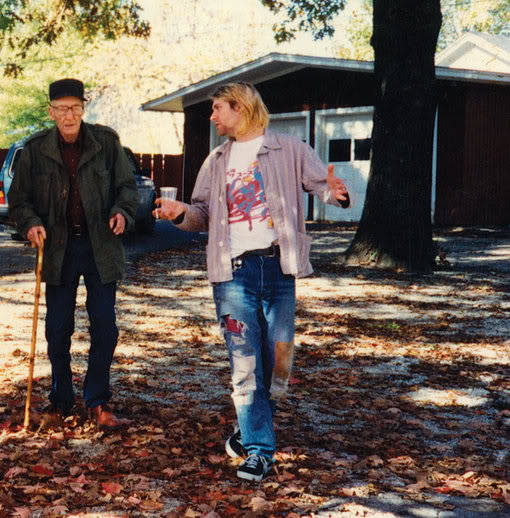
And finally Kurt Cobain, who even collaborated with his idol Burroughs on a lengthy 9:42 song titled The “Priest” They Called Him (1992) in which Cobain provided a distorted guitar backing track behind Burroughs spoken word. The two did not meet in person during the collaboration but they did meet a year later at Burroughs home in Lawrence, Kansas in October of 1993.
As Kurt drove away, Burroughs remarked to his assistant,
“There’s something wrong with that boy; he frowns for no good reason.”
The “Priest” They Called Him (1992)
Francis Schaeffer comments on William Burroughs:
I am going to read first from Douglas M. Davis article, “The New Mood: An Obsession with the Absurd.” National Observer (February 1965), and then comment on it.
“William Burroughs, 50, is the most controversial of them all, former drug addict, he wrote an impressionistic intensely detailed account of his experience and published it in 1962 under the title NAKED LUNCH.”
If there is anything that guarantees to make you nauseated it is NAKED LUNCH, and that is anybody, not just Christians.
“The book provoked a lively debate that is still in progress filled with pages and pages of what seemed to be gratuitous pornography. Critic John Wayne labeled NAKED LUNCH the merest trash, not worth a second glance. Mary McCarthy didn’t agree. She called it the most important novel of the age and the epic of the century.”
That is because Mary McCarthy really belongs in the same thing. I saw Mary McCarthy on the BBC-3 television program when we were in England coming back from my last lecture time in the States. It was a discussion on censorship with Kenneth Tynan on November 13, 1965 and suddenly while discussing censorship Tynan used the most famous of all four letter words on TV and Mary McCarthy just laughed. I was fascinated and I thought the BBC was further along than I thought it was. Then the war started in Parliament the next day, embarrassment and finally apologies for the use of the famous four letter word on the BBC. Why do these men smash things this way? Mary McCarthy would think NAKED LUNCH is a good book because she belongs in the same black bath.
“Mr. Burroughs new novel NOVA EXPRESS will hardly settle matters. Like NAKED LUNCH it is impressionistic although not filled with pornography but with rough brutal language. If ever a book was written with rage it is this one. One doesn’t have to be a psychologist to perceive the moralist behind the mask of William Burroughs. Indeed, it is puritanical anger in the man that both saves the books from the charge of depravity and makes them unreadable.”
I would say that is right. These men are not cabbages. These men are like John Osborne. They are idealists without an ideal. An idealist for which no ideal exist as far as they are concerned. So you can say they are puritanical in the sense they are furious simply because they want values and they can’t find them, so they are smashing. And again we ask why do they smash things so? I will say two things about these men. It is always the same. FIRST, aren’t they horrible? We are at war with these men. They are trying to destroy us. If I am a Christian and I’m reading in an uncritical way and naive fashion they will destroy us. They will destroy everything they touch. It is like a real breath from the devil and they are destructive and then SECONDLY, they are really seeking purpose and they are really seeking values. They are not nobody. You can say they are horrible, but you can’t say they are nobody.
Biografilm 2014 – Burroughs: The Movie – Official Trailer
William Burroughs is featured at the end of this music video by U2
U2 – Last Night on Earth
Terry Southern with William S. Burroughs, Allen Ginsberg and Jean Genet at the 1968 Democratic Convention in Chicago.
Junkie author William S. Burroughs on heroin addiction: CBC Archives
Published on Dec 5, 2012
In this clip from 1977, the renowned William S. Burroughs, the author of ‘Naked Lunch’ and ‘Junkie’, talks about his addiction to heroin. He says it didn’t cause any real damage to his health and he has no regrets. For more classic clips, go to http://www.cbc.ca/archives
_____________
Kurt Cobain & William S Burroughs – The Priest They Called Him
Let’s rewind the videotape to November 7, 1981. That’s when Beat writer William S. Burroughs made his first appearance on American national television. Appropriately, it was on the irreverent, late-night comedy show, Saturday Night Live. Actress Lauren Hutton makes the introduction, setting up Burroughs to read from Naked Lunch (1959) and Nova Express (1964). You can watch the action above, which happens to be the opening scene of Burroughs, a 1983 documentary by Howard Brookner. The complete film is listed in our collection of 450 Free Movies Online (look under Documentaries), along with a 1997 BBC documentary on the author. For more good video dedicated to Burroughs, don’t miss the following:
The “Priest” They Called Him is a collaboration between the American novelist William S. Burroughs and musician Kurt Cobain. Cobain provides dissonant guitar backing based on “Silent Night” and “To Anacreon in Heaven” to Burroughs’ deadpan reading. Originally released as a limited edition 10-inch picture disc on Tim/Kerr Records in 1993, it was subsequently re-released on CD and 10-inch vinyl.
This short piece read was first published in Exterminator! The titular “Priest” is the protagonist, an otherwise nameless heroin addict trying to score on Christmas Eve. After selling a leather suitcase filled with a pair of severed legs (and subsequently visiting the ubiquitous crooked doctor), the Priest returns to a boarding house with a fix. While preparing, the Priest is interrupted by muffled moans from the next room. He knocks and finds a crippled Mexican boy in the throes of agonizing withdrawal. After giving the boy his drugs as an act of charity, the Priest returns to his room, reclines on his bed and dies, in what Burroughs calls “the immaculate fix.” Another reading of this piece was also used in The Junky’s Christmas, a short animated film in 1990.
The cover image and treatment was by Mark Trunz, who also took the picture of Cobain. The picture of Burroughs was taken by Gus Van Sant for his book 108 Photographs. Steve Connell created the jacket design. Kurt Cobain’s friend and bandmate Krist Novoselic is featured on the cover as the Priest.
The original 10-inch record is one-sided, with cover art completely covering the disc along with a hand written number, while the flip-side features etched autographs of Cobain and Burroughs: “William S. Burroughs” and “Kurtis Donald Cȯhbaine”. The release details “TK 92-10044” are etched in the inner groove of Side A.
The 10-inch vinyl reissue has cover art in black and white in the center on side one, which contains the audio. Side two has their autographs.
Wiliam Burroughs recorded at Red House Studios in Lawrence, Kansas, on September 25, 1992. It was engineered by Brad Murphy. Cobain’s guitar part was recorded in November 1992. Barrett Jones pushed the record button straight to DAT at Laundry Room Studios in Seattle, Washington. The mixdown was engineered by Ed Rose with James Grauerholz at Red House Studios; Grauerholtz also produced. Thor Lindsay served as executive producer.
Writer, philosopher, artist, and co-founder of the Beat Generation, William S. Burroughs — who died in 1997 at the age of 83 — continues to be a vital cultural force today. The author of books like Junky, Queer, and Naked Lunch, Burroughs forged the cornerstone of a modern American cultural movement with Jack Kerouac, Allen Ginsberg, and other visionary writers and artists. His buttoned-up, three-piece exterior cloaked a dark genius that hungered for hustlers and heroin — way back in the 1940s. On February 5, William S. Burroughs would have been 97, but his spirit undoubtedly lives on, with more about him still coming out.
Yony Leyser’s documentary William Burroughs: A Man Within is due on DVD February 15, filled with Burroughs rarities and interviews with everyone from John Waters, Laurie Anderson, and Patti Smith to Gus Van Sant, Iggy Pop, and Thurston Moore. Slated to be published this summer, Ah Pook Is Here is a collaboration between William S. Burroughs and artist Malcolm McNeill. The “word/image novel” predicted the emergence of the ever-popular modern literary genre, the graphic novel. So if you have $260,000 laying around, you could do worse than invest in the William S. Burroughs Word Horde 2.0, considering the potential publishing rights. But for the rest of us, we’ll just celebrate by pulling out a big, sweet, flaming sheet-cake of love with words instead of candles, each representing one small piece of Burroughs’ life before he finally succumbed to his biggest obsession: death.
1. William S. Burroughs’ uncle was Ivy Lee, the godfather of modern public relations and a publicist for the Rockefellers.
2. His mother, Laura Lee Burroughs, came from a prominent Southern family, and claimed to be related to Robert E. Lee.
3. William S. Burroughs’ dad’s first name was Mortimer. He was the owner of a plate-glass company.
4. Their family fortune came from the Burroughs Adding Machine.
5. Burroughs’ parents sold their stock for $200,000 in 1929 — right before the stock market crash.
6. Burroughs used his first gun at age eight.
7. The same year, he wrote his first short story, “The Autobiography of a Wolf.”
8. Burroughs was introduced to opium by his family’s housekeeper.
9. Later in life, he thought he might have been sexually abused by a family relative.
10. From age 12 to 15, William S. Burroughs went to John Burroughs School in St. Louis. John and William were not related.
Junkie, 1953 [via]
11. He discovered the counterculture lifestyle at age 13 after reading You Can’t Win, the autobiography of Jack Black. It was around this time that he first began experimenting with drugs.
12. His short essay “Personal Magnetism” was published in the John Burroughs Review in 1929.
13. He learned about sex from studying classics.
14. Burroughs’ parents sent him to the Los Alamos Boys School in New Mexico, a boarding school for the wealthy, when he was 15. He was later expelled after taking chloral hydrate with another student.
15. At 16, he lost his virginity to a boy in the next bunk bed.
16. He destroyed all his diaries from this period.
William S. Burroughs [via]
17. Burroughs graduated with a degree in English literature from Harvard University in 1936. He was known for keeping to himself, and spent most of his free time with a .32 revolver and his pet ferret.
18. His parents gave him an allowance of $200 a month after graduation. $200 in 1936 was roughly equivalent to $3000 in 2011.
19. Burroughs worked as a cub reporter for the St. Louis Post-Dispatch, but disliked the job and refused to cover certain stories.
20. Burroughs was turned down four times by the military.
21. He moved to Vienna to study medicine at age 22.
22. In Europe, Burroughs married a Jewish woman named Ilse Klapper in order for her to escape Nazi occupation and obtain a visa to the United States.
23. They divorced, but remained close friends for decades.
24. He purposely cut off his left pinky at age 25.
William S. Burroughs’ left hand [via]
25. He brought his severed finger to his psychiatrist Herbert Wiggers, who admitted him to a mental hospital.
26. Burroughs said that cutting off his little finger was part of “an initiation ceremony into the Crow Indian tribe.”
27. He later wrote a short story about the experience called “The Finger.”
28. Burroughs moved to Chicago in 1942 and got a job as an exterminator.
29. He also worked as an employee-fraud detective.
30. In Chicago, Burroughs became friends with Lucien Carr and Dave Kammerer; both men were also from St. Louis.
31. Burroughs moved to New York City in 1943, where he became friends with Allen Ginsberg and Jack Kerouac.
32. In 1944, their friend Lucien Carr murdered Dave Kammerer for making sexual advances.
33. Burroughs and Kerouac were arrested as material witnesses to the crime.
34. The two collaborated on a novel based on the event, And the Hippos Were Boiled in Their Tanks.
35. While the book was completed in 1945, it remained unpublished until 2008.
36. Burroughs met his future common-law wife Joan Vollmer through Jack Kerouac, who was dating her roommate, Edie Parker.
Joan Vollmer
37. The four of them moved in together in 1944.
38. Joan was the first girl Edie knew who practiced birth control with a diaphragm.
39. Kerouac introduced Burroughs’ wife Joan to Benzedrine inhalers.
40. In 1946, Burroughs was arrested for forging narcotics prescriptions.
41. At the same time, Joan was committed to a mental hospital for acute amphetamine-induced psychosis.
42. Burroughs and his wife moved to Texas and grew marijuana.
43. They had a son, William Burroughs III, aka Bill, Jr., born in 1947 in Conroe, Texas.
44. After being arrested for drugs in New Orleans, Burroughs and his family moved to Mexico City in 1949.
45. He studied Anthropology as a graduate student at Mexico City College.
46. In 1951, Burroughs killed Joan after shooting her in the head while playing William Tell.
47. They used a highball glass, not an apple.
48. Right before she was killed, Joan allegedly said, “I can’t watch this — you know I can’t stand the sight of blood.”
49. The police officially ruled it an accident, and Burroughs never served time for the crime.
50. In his book Queer, Burroughs wrote: “I am forced to the appalling conclusion that I would never have become a writer but for Joan’s death, and to a realization of the extent to which this event has motivated and formulated my writing.”
51. Though it was written between 1951 and 1953, Queer wasn’t published until 1985.
52. Burroughs moved to Colombia in search of the entheogenic vine yagé (ayahuasca) in 1953.
53. He corresponded with Ginsberg about his experiences; their exchange was published in 1963 as The Yage Letters.
54. Junkie was first published in 1953 under Burroughs’ pen name, William Lee.55. Burroughs met his future collaborator Brion Gysin and author Paul Bowles in Tangier in 1954.
56. Kerouac, Ginsberg, and Ginsberg’s lover Peter Orlovsky visited Burroughs in Morocco in 1956 and helped him to organize Naked Lunch.
David Woodard, William Burroughs, and Brion Gysin’s dream machine
57. Naked Lunch was rejected for publication by City Lights Books.
58. Chicago Review editor Irving Rosenthal was fired for publishing excerpts of the book.
59. Burroughs lived with Ginsberg in Paris, where he met Maurice Girodias of Olympia Press, who published Naked Lunch in 1959.
60. Burroughs had a bad trip on psychedelic mushrooms that Timothy Leary gave him in 1961.
61. After it was published in the US in 1962, Naked Lunch was officially declared obscene by the Commonwealth of Massachusetts. Allen Ginsberg and Norman Mailer testified in defense of the book.
Naked Lunch, 1968 [via]
62. In 1966, courts rejected the obscenity charges against Naked Lunch. The case marked the last major censorship hearing against written literature in America.
63. “I do definitely mean what I say to be taken literally, yes, to make people aware of the true criminality of our times, to wise up to the marks,” Burroughs told an interviewer in 1970. He described Naked Lunch as ”a frozen moment when everyone sees what is on the end of every fork.”
64. While living in London, he reportedly sold his typewriter to buy heroin.
65. Burroughs appeared on the cover of the Sgt. Pepper’s Lonely Hearts Club Band. (He’s next to Marilyn Monroe in the middle.)
66. He attended the 1968 Democratic convention in Chicago with Jean Genet, Terry Southern, Allen Ginsberg, Richard Seaver, and John Berendt, where he witnessed police riots against demonstrators.
67. Burroughs lived abroad for 24 years before returning to NYC in 1974.
68. He taught at City College of New York from January to May of 1974.
69. Patti Smith had a huge crush on Burroughs (“He’s like another kind of Bible,” is how she once described him); he encouraged her to sing.
Patti Smith and William Burroughs, photo by Allen Ginsberg [via]
70. Burroughs’ son was one of the first people in the US to get a liver transplant in 1976.
71. William S. Burroughs worked as adjunct faculty at the Jack Kerouac School of Disembodied Poetics of Naropa Institute in Boulder, Colorado from 1976 to 1978.
72. While he was one of the pioneers of gay liberation movement, Burroughs said, “I have never been gay a day in my life.”
The Soft Machine, 1967 [via]
73. He wrote for High Times magazine.
74. He loved snakes.
75. He always carried a gun, even in bed.
Photo by Jon Blumb [via]
76. He’d also carry a custom-made sword-cane and a switchblade.
77. His physician’s name was Dr. Harvey Carcass.
78. He loved cats, having as many as six at a time.
79. Burroughs’ son Bill, Jr. died from a hemorrhage at age 33 on March 3, 1981.
80. Bill Burroughs, Jr. wrote two autobiographical novels before his death: Speed (1970) and Kentucky Ham (1973).
81. William S. Burroughs moved to Lawrence, Kansas in 1981 with his life manager James Grauerholz, who helped him organize and publish his works.
Early Routines, 1982 [via]
82. He made paintings using bullets from shotguns.
83. He was inducted into the American Academy and Institute of Arts and Letters.
84. The Ministry of Culture of France gave him the order of Commandeur del’Ordre des Arts et des Lettres.
85. During his life, Burroughs painted over 600 Manila file folders featuring “automatic calligraphy,” which he called his “life files.”
86. His first solo art exhibition was in December 1987 at Tony Shafrazi Gallery in NYC.
87. Burroughs was a regular on the set of David Cronenberg’s 1991 film adaptation of Naked Lunch.
88. He had triple bypass surgery at age 77 and quit smoking after the operation.
89. He was in a GAP commercial in 1993.
90. Kurt Cobain visited Burroughs six months before committing suicide. The pair had collaborated on Burroughs’ spoken word EP The “Priest” They Called Him.
91. Burroughs was featured in a Nike ad campaign in 1994.
92. He is considered the godfather of punk, even though he resisted the title.
93. He recorded a song with Ministry called “Quick Fix.” He also appeared in the music video for their song “Just One Fix.”
William S. Burroughs in 1983
94. He has a drink named after him: “The Burroughs” is made with vodka and Coke.
95. Burroughs died of a heart attack in Lawrence, Kansas at age 83. His epitaph reads: “American Writer.”
96. He died five months after Allen Ginsberg passed away. In a 1961 interview Ginsberg asked Burroughs “What is death?” His response: “A gimmick. It’s the time-birth-death gimmick. Can’t go on much longer, too many people are wising up.”
97. William S. Burroughs’ final words in his last journal entry were: “Love? What is it? Most natural painkiller what there is. Love.”
Tags:Allen Ginsberg, Beat Generation, Jack Kerouac, Junky, Queer, William S Burroughs
Kurt Cobain & William S Burroughs, Claude Debussy & Erik Satie, Gene Kelly & Fred Astaire, Paul McCartney & Jeff Buckley, James Brown, Brian Jones, Keith Richards & Mick Jagger, Mick Jagger, Catherine Deneuve & Andy Warhol
The Burroughs Guy: An interview with James Grauerholz by Tom King
James Grauerholz is heir and executor of the estate of William S. Burroughs-maestro of the Beats, writer of “Naked Lunch,” international queer, academic junkie, wife-shooter, Harvard graduate, an undeniably American artist. Grauerholz lived 30 years with Burroughs. Street Level joins Grauerholz in a booth at Pachamama‘s for a moseying reminiscence of Burroughs and the Beats…
James Grauerholz and William Burroughs. Photo by Tom Peschio
A brief history of James Grauerholz…
Grauerholz: I’m a Kansas boy from Coffeyville. Came here to KU in the late ’60s, went off to New York in the early ’70s. Began working with William Burroughs in 1974 and continued until he passed away in ’97. Came back to Lawrence in 1979 and here you find me now.You were responsible for bringing William Burroughs to Lawrence.(laughs) Responsible? Am I to credit or to blame? It seemed like a good idea at the time. I left New York because I’m not down with glamour-the whole phenomenon of celebrity and fame, and how distorting that is to the famous individual’s life. And even though I have some responsibility-or credit, or blame-for helping make William more famous, I got fed up with how delusional people become with their mental image of Burroughs, someone that they have to talk to.
What did you do to enhance Burroughs’ fame?Again, I don’t know how much credit I can take. When he came back to the United States in January 1974 : he had pretty much been in London for 14 years or so.When he got back to New York, he was in the category of: “Oh, him? Is he still alive?” Burroughs’ fame was not recent in 1974. Only a few people really noticed that he had come back. He came back to do a semester’s residency at CCNY (City College of New York)-Allen Ginsberg fixed him up with this appointment. It was a bit of money-which he needed-and it was a bit of work, and engagement with younger people, and so forth. It was also a getaway from London. I guess Allen had decided, in his opinion, that William’s life in London was kind of a dead-end. William was drinking a lot, and he was preoccupied with Piccadilly Circus-they’re called Dilly Boys, you know: hustlers. I mean, he had relationships too, but:He was partying hard.He was. It sounds funny to say about William Burroughs, but he was a disciplined person. He did work hard to write every day. But sometimes he was working too hard, and the writing wasn’t : it became formulaic. He himself thought he was in a dead-end.
Photos of James Grauerholz and William Burroughs when they first met in New York City, 1974. Photo courtesy James Grauerholz
Here’s a story you might like: When I met William, I had been given his number to make a dinner date by Allen Ginsberg-I had just arrived in New York, in February 1974. I had met Allen a year before on a visit to New York. I had written fan letters to each of them back in ’72 from here in Lawrence. So Allen said: “Burroughs is here [in New York].” And I didn’t even know it when I headed to New York. I was 21 at the time. I was excited to meet him. Ginsberg knew that I was a fan of Burroughs foremost of all the Beats and that I was a self-educated scholar of the Beats and their writings, and their lives. So I went over to meet William, and, when you look back on it, everything started up very quickly. We went out to dinner and had drinks. I visited again with him in a few days. And it was in a couple of weeks or less that he invited me to stay with him in the loft at 452 Broadway that he was subletting from the late painter Michael Balog. It was a huge loft. : So it turned out that I became William Burroughs’ roommate. And we were very close-that was my domicile for a couple of months. Here are two anecdotes:City College is way up in Washington Heights-Upper West Side. And to get there on the subway William had to get up at o’dark-thirty. Of course, he drank every night. He drank chilled Dewar’s scotch and chilled soda-no ice. So I would sleep in, of course. Actually, I was working-I don’t remember how many days a week-at Gotham Book Mart. Andreas Brown had hired me, just one of many young cataloguer types that Andy Brown helped. But I would sleep in when I could and I remember William coming back from Washington Heights and saying: “I feel like bitching you out, because here you’re sleeping while I have to get up and get my ass out of here at six in the morning.” Then he added: “But I realize I’m the one whose job it is, not you.”And the other anecdote is:He once told me that he thought his : how did he put it? I’d like to get it right : He thought his talent was gone; he couldn’t write another real book.To you, who were the Beats?Ginsberg, [Jack] Kerouac and Burroughs, not necessarily in that order. The friendships they formed, and the circle that coalesced around them at Columbia in ’43, ’44 and ’45-during World War II-was a serendipitous combination of social backgrounds, of ethnic and cultural backgrounds. They self-consciously intended to start a school, or a movement, or a literary wave.Why are they called Beats? “We are the Beat Generation”-Kerouac was the one who popularized that, though John Clellon Holmes was probably one who shares credit in coming up with it. Herbert Huncke, the junkie raconteur, probably was the pathway of that expression into their circle. It’s a street expression: “Man, I’m really beat”; or “A guy walked in with a beat bennie”-which means his overcoat is really worn out; or “He beat me for my change”-which means he took the money and went into the place to see the dealer and went out the back door of that hotel, never to be seen again. Or beat as in “beat down”-there are acres of speculation about what it means and where it comes from. And then, of course, Kerouac famously ex post facto comes in and says: “Well, it’s beat like ‘beatitude.’ It’s beatified, it’s a beatification.”Around Christmas of 1943, they all have met-and I’ll spare you the begats and how they actually connected-but they met from three different worlds. Ginsberg was 17, from Paterson, New Jersey, and Jewish-an intellectual with strong labor-lawyer, socialist leanings: his Communist mother Naomi Ginsberg, and so forth. Kerouac was from Lowell, Massachusetts. He was Catholic, of French-Canadian extraction, and his early literary influences would certainly include Thomas Wolfe-that would be the kind of thing he was trying to do. Ginsberg was 17, Jack was 21 and William was about to turn 30, in February 1944. He was considerably older. …Burroughs invented what became known as the Beats. He was the main vector of what went into that-and I don’t mean to minimize the contributions of Kerouac and Ginsberg, or any of the wider circle of arguably Beat-termed people. But William had a classical education: he was a graduate of Harvard, he’d done graduate studies in Vienna-well, that was kind of laughable-in medicine, and at Harvard in anthropology, and at Columbia in psychology. He brought to the table the left-handed path in Western letters and philosophy. He brought the Voltaire, the Jonathan Swift, the Petronius Arbiter-The Satyricon-Thomas Nashe-The Unfortunate Traveller-and, of course, Shakespeare by the yard.Burroughs studied under Kittredge and Lowe at Harvard, major scholars of Shakespeare and Chaucer. He brought this left-handed path: satire and : sort of like the book of Ecclesiastes-it stands out from all the other books in the Bible because it basically says: “You know all that stuff about human nature being basically good, or at least perfectible? Hogwash.” Human nature, apparently-at least on the record-is wicked and contemptibly stupid. And that’s amusing, in a bitter way-what later was called black humor.In what ways did the Beats influence or impact American letters?Let me say first that I have a little problem with the concept of “the Beats.” They really are so different in the end. They were only grouped together by factors like their own deliberate self-legendarization-they were legends in their own minds. They had the vanity and the grandiosity of youth. Immortality, ambition-they weren’t aware of the limitations of life. American letters at the time were in the condition where any change would be in the direction of freedom-any change.Were you a fan of Burroughs’ writing, initially?I stumbled across “Naked Lunch” at the age of 14. And it wasn’t the first bitingly satirical, black-humorish thing I had read, but it was far and away the best. I loved it. It changed my life. I knew it was changing my life as I read it.Later in life, Burroughs became a kind of patron saint to a certain breed of rock and roller: Patti Smith, Michael Stipe:There was a time when Burroughs was just Burroughs. The time when that changes is November 1959, when Life Magazine comes out with their article about the Beats, which they called “The Only Rebellion Around”-a rather dismissive, snotty, but sensational and kind of intriguing article about Ginsberg, Kerouac and Burroughs, but also others, very important, who’ll have to forgive me for not mentioning them, as there are too many.And then once he was Burroughs, this icon began to be built up around him. That’s a collaborative creation, and it remains so. Who Burroughs was becomes a projection. Kerouac puts a Burroughs character in his books, under different names-that’s his take on William. Ginsberg-not so much in his poems but in general-talks about Burroughs and promotes Burroughs. He was Burroughs’ agent; he got him his first book deal for “Junkie.” And I would have to say that, in a way, Burroughs starts to play into his own legend at some point-maybe not until the early ’60s in London. How self-conscious it was, I don’t know, I wasn’t there. :The Swingin’ ’60s. The youth culture was strongly related to bands, and the bands were not, by and large, what we think of as ’60s bands from a U.S. point of view. A lot of it was coming out of Cambridge where you had sound experiment composers. Even McCartney used to attend concerts by Karlheinz Stockhausen. McCartney was interested in found music, in John Cage and Robert Wyatt’s Soft Machine-which was named after an early ’60s Burroughs novel. They were coming from prog rock avant la letter-before it had that name-and also psychedelic, before it had that name. It was trippy; Pink Floyd was trippy. So there was a music scene, and Burroughs was on the scene, and he was photogenic. His writing was influential and he was considered, as the saying goes, “mad, bad and dangerous to know.”All of which was exciting and alluring. He began to be a name check, actually-by the same token that a lot of people say they love “Naked Lunch” but, really, they didn’t actually read it-which is fine with me, by the way. There’s a new edition out, people. You can buy it and not read it, too. Pick it up.The point is good. If you professed a certain kind of cool, you had to bring up Burroughs.
Burroughs in the collage by Peter Blake on the cover of the Beatles’ album, “Sgt. Pepper’s Lonely Hearts Club Band.”
It was a name check. The perfect example of this is the cover of “Sgt. Pepper’s Lonely Hearts Club Band.” There’s the collage with the 150 little faces of people, and William is one of the prominent ones. And there are a lot of relevant people – Terry Southern comes to mind. [William] brought a lot of ideas. And let’s not leave out a very, very important part of this-both as to the icon of Burroughs’ persona and the façade, the concept, the edifice of Burroughs’ work and what was in it, what it stood for, and the music scene in Europe, particularly London, at this time-and that is Brion Gysin.Who was a dear friend of Burroughs.Well, yes-he became a dear friend. Gysin was two years younger. Burroughs met Gysin in Tangier in 1954, when he first got to Morocco. Their encounters were few and mediated mostly by their mutual friend, Paul Bowles. They weren’t that fond of each other. They were suspicious and dismissive of each other. But then it came to pass that Gysin and Burroughs were both in Paris in early 1958 and they became fast friends. They both lived in the so-called Beat Hotel at 9 Rue Git-le-CÅur in Paris. August of 1959 is when “Naked Lunch” was published, suddenly. Years of writing were suddenly under pressure from the publisher, Maurice Girodias, and was put together into the final book and was printed.Did it come out in the U.S. at that time?No. It had to be smuggled in, until there were some cases filed [in court]. Banned in Boston -the famous Boston case on “Naked Lunch,” which the customs office claimed was contraband because it was obscene. That didn’t stand. The first American edition of “Naked Lunch” was technically published in 1962, three years later, though it wasn’t actually distributed until 1966 because of the court cases. Barney Rosset and Grove Press fought the good fight, speaking of literary censorship.But Brion Gysin is in London now, in the early 1960s. He’s a very flamboyant character who knew everybody-in a way, a kind of Truman Capote: completely different height and appearance, vocal timbre and background, but the same kind of charisma. And also, a storyteller, a raconteur extraordinaire. Also, a very important person in this part of the music answer is Barry Miles, because Miles was involved with the International Times, an underground newspaper with the Indica Bookshop, which was also an art gallery-where Miles introduced John Lennon to Yoko Ono, who was having a show there. Miles had a role with Paul McCartney’s financing a recording studio for projects by Ian Sommerville, Burroughs’ Cambridge student boyfriend at the time, whom he had met right after “Naked Lunch” came out.But I started to mention November 1959 because the same day Burroughs gave his interview to the Life Magazine reporter, Gysin discovered, or re-discovered, the cut-up technique. Collage and the random factor, aleatory and chance operations have a long history. I can show you them in Swift and in Dodson-I mean Lewis Carroll-and, of course, Dada and surrealism.When Gysin found it he thought it was a fantastic idea-chance operations in writing. It was a very pregnant idea. John Cage, Earl Brown, and Marcel Duchamp are a few who stand for chance operations in music and the arts. And those ideas were very, very influential-and are to this day. And they were a little bit branded by Burroughs and Gysin, but at some point the brand wears off. At some point these ideas that were branded, “That’s a Burroughs,” became associated with the artists in different fields who picked up on it, who adopted it :As Burroughs receives this credit, he also receives the attention of a new generation of rebels in rock music.So here he is in New York in 1974, 1975, and it dawns on people by degrees that Burroughs is there. And the cognoscenti are burning up the phone lines to each other: “Burroughs is here!” And people wanted to come see him and meet him. And he started giving readings.I remember reading Victor Bockris‘ book, “With William Burroughs: Report from the Bunker,” nearly 30 years ago. Bockris has taken some criticism not only for his style, but also for a certain amount of self-aggrandizement. The way he portrayed the Bunker was like the Factory updated.
Burroughs and James Grauerholz via the lens of Wayne Propst – Photo by Frank Tankard
William Seward Burroughs II (/ˈbʌroʊz/; also known by his pen nameWilliam Lee; February 5, 1914 – August 2, 1997) was an American novelist, short story writer, essayist, painter, and spoken word performer. A primary figure of the Beat Generation and a major postmodernist author, he is considered to be “one of the most politically trenchant, culturally influential, and innovative artists of the 20th century”.[1] His influence is considered to have affected a range of popular culture as well as literature. Burroughs wrote 18 novels and novellas, six collections of short stories and four collections of essays. Five books have been published of his interviews and correspondences. He also collaborated on projects and recordings with numerous performers and musicians, and made many appearances in films.
_____
Lennon, Warhol and Yoko below:
Lucy in the Sky With Diamonds- The Beatles (Yellow Submarine)
My absolute favorite albums are Rubber Soul and Revolver. On both records you can hear references to other music — R&B, Dylan, psychedelia — but it’s not done in a way that is obvious or dates the records. When you picked up Revolver, you knew it was something different. Heck, they are wearing sunglasses indoors in the picture on the back of the cover and not even looking at the camera . . . and the music was so strange and yet so vivid. If I had to pick a favorite song from those albums, it would be “And Your Bird Can Sing” . . . no, “Girl” . . . no, “For No One” . . . and so on, and so on. . . .
Their breakup album, Let It Be, contains songs both gorgeous and jagged. I suppose ambition and human frailty creeps into every group, but they delivered some incredible performances. I remember going to Leicester Square and seeing the film of Let It Be in 1970. I left with a melancholy feeling.
Because – The Beatles
77
‘Because’
Tom Hanley/Redferns
Main Writer: Lennon Recorded: August 1, 4 and 5, 1969 Released: October 1, 1969 Not released as a single
Lennon wrote the sweet, dreamy melody after hearing Yoko Ono playing Beethoven’s “Moonlight Sonata” on the couple’s piano; he asked if she could play the chords backward, and he based the song on those changes. McCartney assumed that Ono also had a hand in crafting the song’s lyrics. “It’s rather her kind of writing,” McCartney said. “Wind, sky and earth are recurring. . . . John was heavily influenced by her at the time.”
George Martin arranged a nine-part harmony for the song, but there were only five tracks on which to record the vocals. So Lennon, McCartney and Harrison sang the three-part harmony live, then overdubbed it twice. This approach took extensive rehearsal, and more than five hours of extremely focused recording, to capture correctly. But the resulting song was stunning: a gorgeous, richly layered daydream that McCartney and Harrison both said was their favorite track on Abbey Road. “They knew they were doing something special,” said engineer Geoff Emerick, “and they were determined to get it right.”
Francis Schaeffer’s favorite album was SGT. PEPPER”S and he said of the album “Sergeant Pepper’s Lonely Hearts Club Band…for a time it became the rallying cry for young people throughout the world. It expressed the essence of their lives, thoughts and their feelings.” (at the 14 minute point in episode 7 of HOW SHOULD WE THEN LIVE? )
How Should We Then Live – Episode Seven – 07 – Portuguese Subtitles
John Lennon, Eric Clapton, Keith Richards, Mitch Mitchell, Jimi Hendrix
Uploaded on Jul 1, 2010
John Lennon (Beatles), Eric Clapton (Cream), Keith Richards (Rolling Stones), Mitch Mitchell (Jimi Hendrix Experience) – Yer Blues
76
‘Yer Blues’
Gamma-Keystone via Getty Images
Main Writer: Lennon Recorded: August 13, 14 and 20, 1968 Released: November 25, 1968 Not released as a single
Lennon had the bad kind of blues in India. He’d felt suicidal there, he later said, and searching for cosmic awareness in the Maharishi’s camp made him feel like the clueless Mr. Jones from Bob Dylan’s “Ballad of a Thin Man.” Lennon channeled his misery into one of his most scalding performances, although he told Rolling Stone that he had “a self-consciousness about singing blues. . . . We were all listening to Sleepy John Estes and all that in art school, like everybody else. But to sing it was something else.”
To re-create the vibe of its early years, Lennon had the band record the basic track of “Yer Blues” elbow-to-elbow in a closet next to the main Abbey Road studio. A few weeks after the White Album was released, Lennon played “Yer Blues” with one-off supergroup the Dirty Mac (featuring Eric Clapton, Keith Richards and Mitch Mitchell) for the Rolling Stones’ Rock and Roll Circus. It was also the only Beatles song he played at the Plastic Ono Band gig a year later, released as Live Peace in Toronto 1969.
Appears On:The Beatles
William Burroughs and Brion Gysin
Brion Gysin Teaching
Published on Jul 30, 2013
cut ups slightly modified by modern means with lecture by Bryon Gysin track 04 called “Teaching” from LP, live London 1982
New York Museum retrospectives can either serve as tributes to well-known artists or offer reevaluations of under-recognized figures. This survey of some 300 works by Brion Gysin (1916-1986), including paintings, photo-collages, audio pieces, films and a sculptural installation, is a rare event that posthumously establishes a reputation that eluded the artist in his lifetime. A peripatetic man, with wide-ranging interests in poetry, music, film and performance, Gysin worked on the fringes of the art world for most of his life. He was a cult figure to some—Keith Haring, Patti Smith, Sue de Beer and Cerith Wyn Evans, for instance, have cited him as an important influence. And he is known in literary circles for his long association and collaborations with William S. Burroughs. Using a collage technique of randomly cut and reassembled texts, Gysin developed the so-called Cut-Ups, which Burroughs then adopted for several of his novels. Despite the fact that Burroughs always credited Gysin for the idea, the innovative process remains widely attributed to the writer. Among the highlights of the show are Gysin’s Cut-Ups from the early 1960s, which incorporate Burroughs’s texts for Naked Lunch (1959); especially outstanding are intricate compositions comprising passages from The Third Mind (1965) and Wild Boys: A Book of the Dead (1971).
Brion Gysin: Self-Portrait, 1961. Photo: Courtesy of Musée D’art Moderne De La Ville De Paris
“Here-to-go – Planet R 101” Brion Gysin
___________
From the New Museum’s Press Release: The New Museum will present “Brion Gysin: Dream Machine,” the first US retrospective of the work of the painter, performer, poet, and writer Brion Gysin (born 1916, Taplow, UK–died 1986, Paris). Working simultaneously in a variety of mediums, Gysin was an irrepressible inventor, serial collaborator, and subversive spirit whose considerable innovations continue to influence musicians and writers, as well as visual and new media artists today. The exhibition will include over 300 drawings, books, paintings, photo-collages, films, slide projections, and sound works, as well as an original Dreamachine—a kinetic light sculpture that utilizes the flicker effect to induce visions when experienced with closed eyes. “Brion Gysin: Dream Machine” is curated by Laura Hoptman, Kraus Family Senior Curator, and will be on view in the New Museum’s second floor gallery.
“An exhibition of an artist who died more than twenty years ago represents an approach to the notion of the new that is somewhat different from the Museum’s standard—one that emphasizes relevance and fresh information over chronology, and brings to the fore a relatively neglected yet very influential innovator who continues to have a strong impact on artists working today,” said Laura Hoptman.
In 1959, Gysin created the Cut-Up Method, in which words and phrases were literally cut up into pieces and then rearranged to untether them from their received meanings and reveal new ones. His Cut-Up experiments, which he shared with his lifelong friend and collaborator William S. Burroughs, culminated in Burroughs and Gysin’s The Third Mind, a book-length collage manifesto on the Cut-Up Method and its uses. Transferring this notion to experimenting with tape-recorded poems manipulated by a computer algorithm, Gysin created sound poetry and was among the earliest users of the computer in art. At the same creative moment, Gysin conceived of the Dreamachine. During the ’60s, ’70s, and ’80s, Gysin would continue his collaborations, and prove to be a mentor for myriad artists, poets, and musicians, from John Giorno to Brian Jones, to David Bowie and Patti Smith, to Genesis Breyer P-Orridge and Keith Haring, among many others.
(Photo: Loomis Dean/Time Life Pictures/Getty Images )
The New Museum’s “Brion Gysin: Dream Machine” is intended as New York’s reintroduction to this painter, poet, innovator, and total subversive, and that it will be. Gysin was the artist’s artist among the Beats, the man who invented William S. Burroughs’s favorite writing technique—the cut-up, in which newspapers or other printed materials are sliced and reassembled to make unexpected new connections—and is a key figure in the development of postmodern literature, Kinetic art, street art, spoken-word poetry, and experimental punk, rock, and pop. Yet outside the art world, he’s been almost totally unknown, at least until now.
But there’s another story underlying the exhibit. It’s the first major tribute to the artistic subculture rooted just across the street from the museum, at 222 Bowery. Together with the Hotel Chelsea, the building was to New York what the Beat Hotel was to Paris: the spot where artists and writers hung out, crossed paths, misbehaved, hooked up. Burroughs lived there; it was Gysin’s crash pad when he was in town. And unlike the Beat Hotel, it’s still an artist enclave.
The building itself is a sturdy-looking brick chunk, built in 1884, that would blend into nearly any downtown block. In its early decades, it was home to the first modern YMCA. During and after World War II, the artists started to move in. First came the French Cubist Fernand Léger; painters James Brooks and Wynn Chamberlain arrived soon after. In 1958, Mark Rothko leased the building’s huge gymnasium to work on his murals for The Four Seasons, the ones whose story is told in the Broadway show Red. Rothko handed down his space to the second-generation Abstract Expressionist Michael Goldberg in 1962. Lynda Benglis, whose own retrospective opens at the New Museum in February, secured her loft in 1974; the sculptor and painter Lynn Umlauf, who later married Goldberg, came in 1977. (Both women still live and work there.)
The real social butterfly of 222, though, was Gysin’s former lover, the poet and artist John Giorno, who followed Chamberlain there in 1966. Giorno remembers one of Gysin’s long-ago visits vividly. It was 1978, and their affair had long since fizzled. Gysin was in town for the Nova Convention, a poetry festival co-produced by Giorno and dedicated to Gysin and Burroughs—who had moved into his own loft at 222, which he famously called “the Bunker.” Gysin was used to Parisian garrets, and loft life, with its high ceilings and few walls, was a revelation. He took one look at Giorno’s space, cluttered with Oriental rugs and piles of poems, and remarked, in his particular British-Canadian cadence, “You all live like bohemians!” Which they did.
What followed was typical of Giorno and Burroughs’s interlaced lifestyle. They escorted Gysin (and others, like Burroughs’s longtime companion James Grauerholz) down to the Bunker, where Burroughs drank (vodka) and Giorno cooked (bacon-wrapped chicken was a Burroughs favorite). Guests were always high and liquored up by the time dinner was served, at a conference table surrounded by orange vinyl chairs. Drinking and smoking would continue until 10 p.m. or so, when Burroughs would retreat to bed, after engaging his guests in some convivial target practice with his blowgun.
Things were always a little more intense when Gysin was in town. There were visits with Allen Ginsberg and Blondie. Keith Haring and Jean-Michel Basquiat were always around, stopping by with their expensive pot after dinner, getting Gysin high, and hanging on his every word. But it was Burroughs who was most affected by Gysin’s presence. The two had known each other for decades, going back to their time as expats in Tangier in the fifties, and “Brion brought out a very somber, self-conscious Burroughs,” says Stewart Meyer, a novelist and Bunker habitué. Giorno agrees: “When William was asked, ‘Did you ever love somebody?,’ he always said, ‘I’ve never respected anybody more than Brion Gysin in my life.’ That was his word for love. He had lovers, but somehow Brion was on another level. They were gay and never had sex together, but in a certain way Brion was William’s lover.” Meyer says Burroughs was painfully concerned with Gysin’s perception of him. “William could not paint while Brion was alive, though he had wanted to. He did not want to overshadow Brion in that area, because he had already overshadowed him in every other area.”
That continued up to Gysin’s death at 70, in 1986. He’d never become well known and never saw full publication of The Third Mind, the instructional tome (created with Burroughs) that meant to introduce the world to the cut-up. (Burroughs’s own cut-ups, the “Nova” trilogy, were not only published but are still in print.) “Brion knew it wasn’t William’s fault. But in terms of the general popular culture not recognizing the importance of his contribution, there was a little bitterness,” says the artist Genesis Breyer P-Orridge, who befriended Gysin in the late seventies and credits him with inspiring the project he undertook with his late wife, Lady Jaye. (The two literally cut themselves up via plastic surgery to form the “third being,” with matching lips, eyes, beauty marks, and breasts. Gysin’s methods taken to the extreme.)
The building at 222 retains vestiges of that era. Burroughs returned yearly until his death in 1997, and since then, Giorno has preserved the Bunker, adding a Buddhist meditation shrine opposite the kitchen. Burroughs’s typewriter is still here, as are the Gysin paintings he prized. Giorno accumulated three apartments in the building, and he and his partner, the artist Ugo Rondinone (whose HELL, YES! sculpture hangs on the New Museum’s façade), still hold eccentric, intimate dinners. But their world is vanishing fast. The top two floors have been bought and are rented out at market rate. Green Depot, an ecofriendly home-goods chain, occupies the storefront, and Goldberg’s (and thus Rothko’s) old space is changing hands at year’s end, its hardwood floor still caked with traces of both artists’ paint.


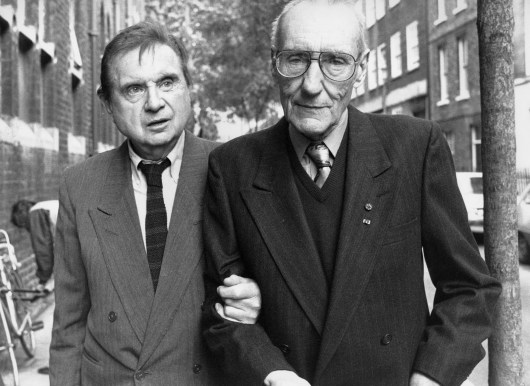


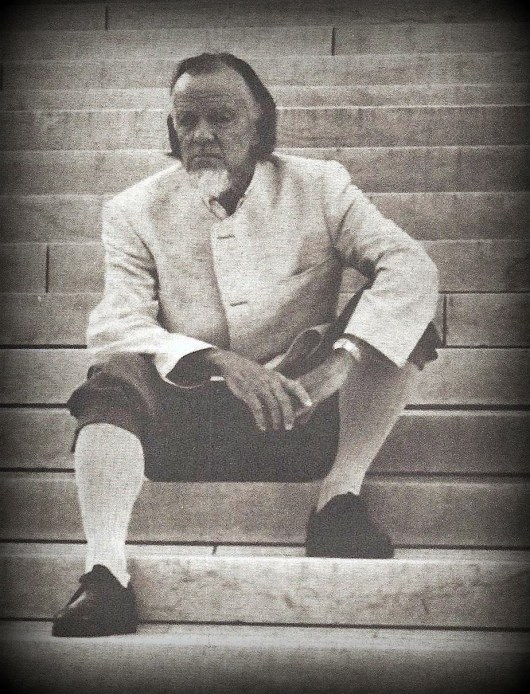


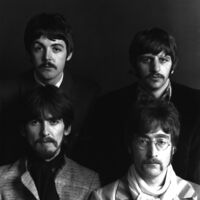
:format(jpeg):mode_rgb():quality(40)/discogs-images/A-82730-1519052220-3776.jpeg.jpg)


 The Daily Hatch