Nat Hentoff is an atheist, but he became a pro-life activist because of the scientific evidence that shows that the unborn child is a distinct and separate human being and even has a separate DNA. His perspective is a very intriguing one that I thought you would be interested in. I have shared before many cases (Bernard Nathanson, Donald Trump, Paul Greenberg, Kathy Ireland) when other high profile pro-choice leaders have changed their views and this is just another case like those. I have contacted the White House over and over concerning this issue and have even received responses. I am hopeful that people will stop and look even in a secular way (if they are not believers) at this abortion debate and see that the unborn child is deserving of our protection.That is why the writings of Nat Hentoff of the Cato Institute are so crucial.
I truly believe that many of the problems we have today in the USA are due to the advancement of humanism in the last few decades in our society. Ronald Reagan appointed the evangelical Dr. C. Everett Koop to the position of Surgeon General in his administration. He partnered with Dr. Francis Schaeffer in making the video below. It is very valuable information for Christians to have. Actually I have included a video below that includes comments from him on this subject.
_____________________________________
Francis Schaeffer “BASIS FOR HUMAN DIGNITY” Whatever…HTTHR
Dr. Francis schaeffer – The flow of Materialism(from Part 4 of Whatever happened to human race?)
Dr. Francis Schaeffer – The Biblical flow of Truth & History (intro)
Francis Schaeffer – The Biblical Flow of History & Truth (1)
Dr. Francis Schaeffer – The Biblical Flow of Truth & History (part 2)
__________
________________
On June 7, 201o John Whitehead wrote this article:
Last Tuesday, a friend, an inveterate civil libertarian, called me as broken bodies were still being placed on stretchers. ‘This is going to cause a surge by government — local, state, and federal — to shred the Bill of Rights,’ he said. ‘And it will be cheered by an enthusiastic, indignant public.’ If he’s right, and American history would indicate he is, the relatively few uncompromising civil libertarians among us will again be regarded with contempt and continuous suspicion by both the authorities and the populace.”
–Nat Hentoff, following the 9/11 attacksAt the age of 85, Hentoff is a radical in the best sense of the word — a true freedom fighter and warrior journalist with a deep-seated intolerance of injustice. His integrity and willingness to buck the trends have earned him the well-deserved reputation of being one of our nation’s most respected, controversial and uncompromising writers.Armed with a keen understanding of the law and an enviable way with words, brandishing a rapier wit and teeming with moral outrage, Nat has never been one to back down from a fight, and there have been many over the course of his lifetime — one marked by controversy and fueled by his passion for the protection of civil liberties and human rights. There was the time Nat testified for stand-up comic and political satirist Lenny Bruce during his obscenity trial; stood up for a woman rejected from law school for being white; called into Oliver North’s talk show to voice his agreement about liberal intolerance for free speech; and resigned from the ACLU in protest of their position on assisted suicide, as well as their position against revealing the results of HIV tests on newborn babies.This is also a man who has walked among political and cultural giants and lived to tell the tale. He was friends with Malcolm X, was labeled “the Antichrist” by Louis Farrakhan, and came to know some of the most talented jazz musicians of all time — Duke Ellington, Thelonious Monk, Charles Mingus, and Dizzy Gillespie, to name a few. He also wrote liner notes for such musical greats as Bob Dylan, Billie Holiday, and Aretha Franklin.A self-described uncategorizable libertarian, Hentoff adds he is also a “Jewish atheist, civil libertarian, pro-lifer.” Born in Boston on June 10, 1925, Hentoff received a B.A. with honors from Northeastern University and did graduate work at Harvard. From 1953 to 1957, he was associate editor of Down Beat magazine. He has written many books on jazz, biographies and novels, including children’s books. His articles have appeared in the Wall Street Journal, New York Times, Commonwealth, the New Republic, the Atlantic and the New Yorker, where he was a staff writer for more than 25 years. In 1980, he was awarded a Guggenheim Fellowship in Education and an American Bar Association Silver Gavel Award for his coverage of the law and criminal justice in his columns. In 1985, he was awarded an Honorary Doctorate of Laws by Northeastern University. For 50 years, Hentoff wrote a weekly column for the Village Voice. When that position was terminated on December 31, 2008, Hentoff joined the Cato Institute as a Senior Fellow.Despite an illustrious career as a journalist, there has been no shortage of derogatory labels applied to Nat by his critics, including, as he notes in his memoir, Speaking Freely:
A radical (according to the FBI): an “enslaver of women” (according to pro-choicers); a suspiciously unpredictable civil-libertarian (according to the ACLU); a dangerous defender of alleged pornography (according to my friend Catherine MacKinnon); an irrelevant, anachronistic integrationist (according to assorted black nationalists); and, as an editor at the Washington Post once said, not unkindly–“a general pain in the ass.”
Indeed, in keeping with his role as a socio-political gadfly, Nat has managed to anger nearly every political faction by sticking to his principles, regardless of the trouble it stirs up. When Nat first declared himself a pro-lifer, women in his Village Voice office actually stopped speaking to him. Likewise, although ACLU affiliates around the country had for years invited him to speak at fundraising dinners, after declaring himself a pro-lifer, all such invitations stopped. His outspoken denunciation of President Clinton only increased his isolation in liberal circles (he said that Clinton had “done more harm to the Constitution than any president in American history,” and called him “a serial violator of our liberties”).
Even his forced departure from the Village Voice could not dampen Nat’s zeal nor temper his voice. Most recently, Hentoff has been an outspoken critic of Barack Obama’s presidency:
Obama has little, if any, principles except to aggrandize and make himself more and more important. You see that in his foreign policy. Obama lacks a backbone — both a constitutional backbone and a personal backbone. This is a man who is causing us and will cause us a great deal of harm constitutionally and personally. This is the first administration that has scared me.
At the end of the day, what sets Hentoff apart is the fact that he has never lost his sense of rage, nor his eternal optimism.
“Nat Hentoff has never allowed his thought to harden into ideology,” writes Allen Barra for the Village Voice. “He’s never lost his talent to agitate us and make us rethink our own positions–to make sure that our minds watch ourselves.”
It’s people like Nat Hentoff who keep us honest, inspire us, and push us to think. As he once told me:
I am optimistic. I have to be optimistic, as I know you are. That is why you keep writing and keep doing what you do. You have to do this because we have been through very dark periods before. There are enough people who are starting to be actively involved that we can turn things around. And we need to encourage others to become involved.
Nat Hentoff, thanks for being “a general pain in the ass.” We’ve all been the better for it.
Francis Schaeffer: “Whatever Happened to the Human Race” (Episode 1) ABORTION OF THE HUMAN RACE Published on Oct 6, 2012 by AdamMetropolis ________________ Picture of Francis Schaeffer and his wife Edith from the 1930′s above. I was sad to read about Edith passing away on Easter weekend in 2013. I wanted to pass along this fine […]
I have gone back and forth and back and forth with many liberals on the Arkansas Times Blog on many issues such as abortion, human rights, welfare, poverty, gun control and issues dealing with popular culture. Here is another exchange I had with them a while back. My username at the Ark Times Blog is Saline […]
I have gone back and forth and back and forth with many liberals on the Arkansas Times Blog on many issues such as abortion, human rights, welfare, poverty, gun control and issues dealing with popular culture. Here is another exchange I had with them a while back. My username at the Ark Times Blog is Saline […]
It is truly sad to me that liberals will lie in order to attack good Christian people like state senator Jason Rapert of Conway, Arkansas because he headed a group of pro-life senators that got a pro-life bill through the Arkansas State Senate the last week of January in 2013. I have gone back and […]
I have gone back and forth and back and forth with many liberals on the Arkansas Times Blog on many issues such as abortion, human rights, welfare, poverty, gun control and issues dealing with popular culture. Here is another exchange I had with them a while back. My username at the Ark Times Blog is Saline […]
I have gone back and forth and back and forth with many liberals on the Arkansas Times Blog on many issues such as abortion, human rights, welfare, poverty, gun control and issues dealing with popular culture. Here is another exchange I had with them a while back. My username at the Ark Times Blog is Saline […]
I have gone back and forth and back and forth with many liberals on the Arkansas Times Blog on many issues such as abortion, human rights, welfare, poverty, gun control and issues dealing with popular culture. Here is another exchange I had with them a while back. My username at the Ark Times Blog is Saline […]
Sometimes you can see evidences in someone’s life of how content they really are. I saw something like that on 2-8-13 when I confronted a blogger that goes by the name “AngryOldWoman” on the Arkansas Times Blog. See below. Leadership Crisis in America Published on Jul 11, 2012 Picture of Adrian Rogers above from 1970′s […]
In the film series “WHATEVER HAPPENED TO THE HUMAN RACE?” the arguments are presented against abortion (Episode 1), infanticide (Episode 2), euthenasia (Episode 3), and then there is a discussion of the Christian versus Humanist worldview concerning the issue of “the basis for human dignity” in Episode 4 and then in the last episode a close […]
I have gone back and forth and back and forth with many liberals on the Arkansas Times Blog on many issues such as abortion, human rights, welfare, poverty, gun control and issues dealing with popular culture. Here is another exchange I had with them a while back. My username at the Ark Times Blog is Saline […]
I have gone back and forth and back and forth with many liberals on the Arkansas Times Blog on many issues such as abortion, human rights, welfare, poverty, gun control and issues dealing with popular culture. Here is another exchange I had with them a while back. My username at the Ark Times Blog is Saline […]
I have gone back and forth and back and forth with many liberals on the Arkansas Times Blog on many issues such as abortion, human rights, welfare, poverty, gun control and issues dealing with popular culture. Here is another exchange I had with them a while back. My username at the Ark Times Blog is Saline […]
E P I S O D E 1 0 Dr. Francis Schaeffer – Episode X – Final Choices 27 min FINAL CHOICES I. Authoritarianism the Only Humanistic Social Option One man or an elite giving authoritative arbitrary absolutes. A. Society is sole absolute in absence of other absolutes. B. But society has to be […]
E P I S O D E 9 Dr. Francis Schaeffer – Episode IX – The Age of Personal Peace and Affluence 27 min T h e Age of Personal Peace and Afflunce I. By the Early 1960s People Were Bombarded From Every Side by Modern Man’s Humanistic Thought II. Modern Form of Humanistic Thought Leads […]
E P I S O D E 8 Dr. Francis Schaeffer – Episode VIII – The Age of Fragmentation 27 min I saw this film series in 1979 and it had a major impact on me. T h e Age of FRAGMENTATION I. Art As a Vehicle Of Modern Thought A. Impressionism (Monet, Renoir, Pissarro, Sisley, […]
E P I S O D E 7 Dr. Francis Schaeffer – Episode VII – The Age of Non Reason I am thrilled to get this film series with you. I saw it first in 1979 and it had such a big impact on me. Today’s episode is where we see modern humanist man act […]
E P I S O D E 6 How Should We Then Live 6#1 Uploaded by NoMirrorHDDHrorriMoN on Oct 3, 2011 How Should We Then Live? Episode 6 of 12 ________ I am sharing with you a film series that I saw in 1979. In this film Francis Schaeffer asserted that was a shift in […]
E P I S O D E 5 How Should We Then Live? Episode 5: The Revolutionary Age I was impacted by this film series by Francis Schaeffer back in the 1970′s and I wanted to share it with you. Francis Schaeffer noted, “Reformation Did Not Bring Perfection. But gradually on basis of biblical teaching there […]
Dr. Francis Schaeffer – Episode IV – The Reformation 27 min I was impacted by this film series by Francis Schaeffer back in the 1970′s and I wanted to share it with you. Schaeffer makes three key points concerning the Reformation: “1. Erasmian Christian humanism rejected by Farel. 2. Bible gives needed answers not only as to […]
Francis Schaeffer’s “How should we then live?” Video and outline of episode 3 “The Renaissance” Francis Schaeffer: “How Should We Then Live?” (Episode 3) THE RENAISSANCE I was impacted by this film series by Francis Schaeffer back in the 1970′s and I wanted to share it with you. Schaeffer really shows why we have so […]
Francis Schaeffer: “How Should We Then Live?” (Episode 2) THE MIDDLE AGES I was impacted by this film series by Francis Schaeffer back in the 1970′s and I wanted to share it with you. Schaeffer points out that during this time period unfortunately we have the “Church’s deviation from early church’s teaching in regard […]
Francis Schaeffer: “How Should We Then Live?” (Episode 1) THE ROMAN AGE Today I am starting a series that really had a big impact on my life back in the 1970′s when I first saw it. There are ten parts and today is the first. Francis Schaeffer takes a look at Rome and why […]
The essence of what Milton Friedman is saying in this episode is found in this statement:
“The situation of immigration restrictions really has to do with the question of a welfare state. As I say in the film, I would favor completely free immigration in a society which does not have a welfare system. With a welfare system of the kind we have, you have the problem that people immigrate in order to get welfare, not in order to get employment. You know, it’s a very interesting thing, if you would ask anybody before 1914 the U.S. had no immigration restrictions whatsoever, I’m exaggerating a little bit, there were some immigration restrictions on orientals, but it was essentially, mainly free. If you ask anybody, any American economic historian was that a good thing for America, everybody will say yes it was a wonderful thing for America that we had free immigration. If you ask anybody today, should we have free immigration today, everybody will __ almost everybody will say no. What’s the difference? I think there’s only one difference and that is that when we had free immigration it was immigration of jobs in which everybody benefited. The people who were already here benefited because they got complementary workers, workers who could work with them, make their productivity better, enable them to develop and use the resources of the country better, but today, if you have a system under which you have essentially a governmental guarantee of relief in case of distress, you have a very, very real problem.”
Pt 5
L. WILLIAMS: Dr. Friedman and Walter Williams go back in history and they take a look at a situation where America was empty, where we didn’t have anything like the sophisticated industrial economy we have today, but had a much more agricultural and rural kind of economy and of course when the __ when the impoverished peasants of Europe, my ancestors and most of our ancestors, except for the slaves, which is another situation, but when these people came from Europe and came to a wide open continent with the most fertile soil then available to anyone in the world, naturally there was progress; and I or any of us would be mad to deny progress. But as that developed and as population increased and as we moved into a much more sophisticated industrial economy, we moved then into the situation in the 1930s, or earlier than that , at the end of the century. As some of the more skilled jobs came along, the labor movement didn’t happen by accident. Didn’t happen because there wasn’t a need there. The results of this development, even with all the wealth available in America, the results of this development was that many working people were not having anything like, by standards of civilization or whatever, anything like their fair share in this progress.
MCKENZIE: Now you’re arguing that in a free market, for labor, everyone benefits. Does that mean that you would favor abolition of all immigration restrictions?
FRIEDMAN: The situation of immigration restrictions really has to do with the question of a welfare state. As I say in the film, I would favor completely free immigration in a society which does not have a welfare system. With a welfare system of the kind we have, you have the problem that people immigrate in order to get welfare, not in order to get employment. You know, it’s a very interesting thing, if you would ask anybody before 1914 the U.S. had no immigration restrictions whatsoever, I’m exaggerating a little bit, there were some immigration restrictions on orientals, but it was essentially, mainly free. If you ask anybody, any American economic historian was that a good thing for America, everybody will say yes it was a wonderful thing for America that we had free immigration. If you ask anybody today, should we have free immigration today, everybody will __ almost everybody will say no. What’s the difference? I think there’s only one difference and that is that when we had free immigration it was immigration of jobs in which everybody benefited. The people who were already here benefited because they got complementary workers, workers who could work with them, make their productivity better, enable them to develop and use the resources of the country better, but today, if you have a system under which you have essentially a governmental guarantee of relief in case of distress, you have a very, very real problem.
MCKENZIE: But this is true of every western industrialized country.
FRIEDMAN: That’s right and that’s why today __
MCKENZIE: Yeah.
FRIEDMAN: __ under current circumstances you cannot, unfortunately have free immigration. Not because there’s anything wrong with free immigration, but because we have other policies which make it impossible to adopt free immigration.
MCKENZIE: Well I’d like other reactions. Is it at all feasible to open the door of the labor market internationally now? Bill Brady?
BRADY: I would __ I would say yes providing they open the door to us. I think that the door to not only the labor market, the door to all markets should be __ should be open. That is the product markets.
W. WILLIAMS: My feelings about the undocumented workers of Mexican-Americans are inscribed at the foot of the Statue of Liberty. I think that the people should have the right to come to this country. Now, those who would say, you know, I hear a number of people saying that, well the immigrants are contributing to our unemployment problem. And I point this out to some people, I said, “look, you know, this is the same rhetoric that the Irish used when the blacks were coming up from the north, ” you know, they’re using blacks as scapegoats. They’re saying, “get those people back where they came from so that our members can get jobs, ” you know. Unions were as well doing this, you know, they called them scabs, strikebreakers, etcetera, etcetera. So I do not wish for Mexican-Americans to become the new scapegoats of our particular national problems. They are not the problem, and our nation benefits to the extent that these people come here and work. And to that extent __ to that extent__ so it’s kind of good for them to remain illegal aliens as opposed to being legal aliens where they’re subject to our welfare programs, so that we don’t want them to come here to __
(Several people talking at once.)
GREEN: I think that this country cannot have a group of workers to remain outside the framework of our laws and our protection. And as long as we have workers who are attracted to the United States because of the standards of living; and I think minimum wages play a part in that as part of that attraction. But it seems to me to have undocumented workers without providing either a means of protection for them and it seems to me that we’ve got to go to the question of providing the amnesty for those generations of workers who have come here over a period of time, now two, three, maybe four generations. We have to see that they have the same rights and protection of all other workers. And as it stands now, large numbers of them live outside the framework of the laws and statutes that we have on the __ on our books.
MCKENZIE: Comment Milton.
FRIEDMAN: They do and the tragedy of the situation, as what Walter Williams point out, that as long as they are undocumented and illegal they are a clear net gain, the nation benefits and they benefit. They wouldn’t be here if they didn’t. The tragedy is that we’ve adopted all these other policies so that if we convert them into legal residents it’s no longer clear that we benefit. They may benefit, but it’s no longer clear that we do. What Lynn Williams said before is again a travesty on what was actually going on. The real boost to the trade union movement came after the Great Depression of the 1930s; that Great Depression was not a failure of capitalism; it was not a failure of the private market system as we pointed out in another one of the programs in this series; it was a failure of government. It was not the case that somehow or other there was a decline in the conditions of the working class that produced a great surge of unionism. On the contrary __ unions have never accounted for more than one out of four or one out of five of American workers. The American worker benefited not out of unions, he benefited in spite of unions. He benefited because there was greater opportunity because there were people who were willing to invest their money because there was an opportunity for people to work, to save, to invest. That’s still the case today. You say, we have to provide them with something or other Ernest. Who are the “we”?
GREEN: We the people.
FRIEDMAN: How do we the people __ but how do we the people do it?
GREEN: And it seems __ we the people provide them the protection by seeing that their safety __
MCKENZIE: You’re talking about the immigration population now.
GREEN: __ and occupational health codes that protects the environment that they work in, see that they have civil rights laws that protect their own person. See that they have civil liberties laws that protect them further. We the people of this country provide that protection.
W. WILLIAMS: Why are they coming here it’s so bad? If they don’t have, you know, you’re kind of painting an image, you know. Why are these people coming? We’re not pulling them here by chains.
GREEN: It’s obvious why people come here; it’s one of the wealthiest nations in the world.
(Several talking at once.)
MCKENZIE: Gentlemen, don’t all talk at once. Lynn, and then __
W. WILLIAMS: So what are you talking about protecting them?
GREEN: Why did you leave Little Rock, Arkansas to go to Philadelphia? It seems to point__
L. WILLIAMS: It seems to me that it’s obvious __
W. WILLIAMS: Would you extend the courtesy to finish. Look, look, first thing, look, let me say the following things: There’s some basic things that we need to know.
L. WILLIAMS: Well now are you going to say the thing I was interrupting and then say five more things. I mean there isn’t all afternoon.
W. WILLIAMS: You know, labor unions, and minimum wages for that case cannot improve the condition of the working people of the country.
L. WILLIAMS: We do it everyday.
W. WILLIAMS: Because if__ are you suggesting __
L. WILLIAMS: We improve the working conditions of working people in countries all around the world, everyday.
W. WILLIAMS: Well you know this __ you know what you’re telling the audience, you’re saying that you can solve the problems in Bangladesh. You can make them a rich country if you tell them to unionize like we are __
L. WILLIAMS: I didn’t say that.
W. WILLIAMS: __and demand high wages.
L. WILLIAMS: No, I didn’t say anything remotely like that.
W. WILLIAMS: It’s productivity that keeps income low.
MCKENZIE: Lynn, let him finish.
BRADY: I come back to my initial question: why are so many leaving the union?
L. WILLIAMS: There aren’t very many leaving the union.
BRADY: Oh, there are too. I’ve given you the statistics.
L. WILLIAMS: Ah, now, do you think I’m __ you grind off some percentages. I live in the labor movement.
BRADY: You __ do you have other percentages?
FRIEDMAN: In or on?
L. WILLIAMS: In, with and on. And of course they pay me, of course, and I don’t have any objection to that at all.
FRIEDMAN: Neither do I.
L. WILLIAMS: At least we got you a few minutes ago __ we got you to get the labor movement up into this century. And I agree with the observation you made __
(Laughter)
L. WILLIAMS: I agree with the observation you made that the industrial union movement __ that there was a union movement came out of the, out of the dirty ’30s and out of the depression and grew and that was essentially and industrial union movement. But I wonder if __ I wonder when I hear your commentary on the film and so on about unions and restricting practices and restricting access to industry and all of this, I really __ I don’t mean it disrespectfully, but I really wonder __
FRIEDMAN: Don’t mind being disrespectful, it’s all right. I’m used to it.
L. WILLIAMS: I really wonder if you, if you do understand how the industrial union movement, which is __ the more recent part of the union, how it really operates. We’re not telling anybody who they have to hire.
Milton Friedman The Power of the Market 1-5 How can we have personal freedom without economic freedom? That is why I don’t understand why socialists who value individual freedoms want to take away our economic freedoms. I wanted to share this info below with you from Milton Friedman who has influenced me greatly over the […]
Milton Friedman: Free To Choose – The Failure Of Socialism With Ronald Reagan (Full) Published on Mar 19, 2012 by NoNationalityNeeded Milton Friedman’s writings affected me greatly when I first discovered them and I wanted to share with you. We must not head down the path of socialism like Greece has done. Abstract: Ronald Reagan […]
Worse still, America’s depression was to become worldwide because of what lies behind these doors. This is the vault of the Federal Reserve Bank of New York. Inside is the largest horde of gold in the world. Because the world was on a gold standard in 1929, these vaults, where the U.S. gold was stored, […]
George Eccles: Well, then we called all our employees together. And we told them to be at the bank at their place at 8:00 a.m. and just act as if nothing was happening, just have a smile on their face, if they could, and me too. And we have four savings windows and we […]
Milton Friedman’s Free to Choose (1980), episode 3 – Anatomy of a Crisis. part 1 FREE TO CHOOSE: Anatomy of Crisis Friedman Delancy Street in New York’s lower east side, hardly one of the city’s best known sites, yet what happened in this street nearly 50 years ago continues to effect all of us today. […]
Friedman Friday” Free to Choose by Milton Friedman: Episode “What is wrong with our schools?” (Part 3 of transcript and video) Here is the video clip and transcript of the film series FREE TO CHOOSE episode “What is wrong with our schools?” Part 3 of 6. Volume 6 – What’s Wrong with our Schools Transcript: If it […]
Here is the video clip and transcript of the film series FREE TO CHOOSE episode “What is wrong with our schools?” Part 2 of 6. Volume 6 – What’s Wrong with our Schools Transcript: Groups of concerned parents and teachers decided to do something about it. They used private funds to take over empty stores and they […]
Here is the video clip and transcript of the film series FREE TO CHOOSE episode “What is wrong with our schools?” Part 1 of 6. Volume 6 – What’s Wrong with our Schools Transcript: Friedman: These youngsters are beginning another day at one of America’s public schools, Hyde Park High School in Boston. What happens when […]
Friedman Friday” Free to Choose by Milton Friedman: Episode “Created Equal” (Part 3 of transcript and video) Liberals like President Obama want to shoot for an equality of outcome. That system does not work. In fact, our free society allows for the closest gap between the wealthy and the poor. Unlike other countries where free enterprise and other […]
Free to Choose by Milton Friedman: Episode “Created Equal” (Part 2 of transcript and video) Liberals like President Obama want to shoot for an equality of outcome. That system does not work. In fact, our free society allows for the closest gap between the wealthy and the poor. Unlike other countries where free enterprise and other freedoms are […]
Milton Friedman and Ronald Reagan Liberals like President Obama (and John Brummett) want to shoot for an equality of outcome. That system does not work. In fact, our free society allows for the closest gap between the wealthy and the poor. Unlike other countries where free enterprise and other freedoms are not present. This is a seven part series. […]
I am currently going through his film series “Free to Choose” which is one the most powerful film series I have ever seen. PART 3 OF 7 Worse still, America’s depression was to become worldwide because of what lies behind these doors. This is the vault of the Federal Reserve Bank of New York. Inside […]
I am currently going through his film series “Free to Choose” which is one the most powerful film series I have ever seen. For the past 7 years Maureen Ramsey has had to buy food and clothes for her family out of a government handout. For the whole of that time, her husband, Steve, hasn’t […]
Friedman Friday:(“Free to Choose” episode 4 – From Cradle to Grave, Part 1 of 7) Volume 4 – From Cradle to Grave Abstract: Since the Depression years of the 1930s, there has been almost continuous expansion of governmental efforts to provide for people’s welfare. First, there was a tremendous expansion of public works. The Social Security Act […]
_________________________ Pt3 Nowadays there’s a considerable amount of traffic at this border. People cross a little more freely than they use to. Many people from Hong Kong trade in China and the market has helped bring the two countries closer together, but the barriers between them are still very real. On this side […]
Aside from its harbor, the only other important resource of Hong Kong is people __ over 4_ million of them. Like America a century ago, Hong Kong in the past few decades has been a haven for people who sought the freedom to make the most of their own abilities. Many of them are […]
“FREE TO CHOOSE” 1: The Power of the Market (Milton Friedman) Free to Choose ^ | 1980 | Milton Friedman Posted on Monday, July 17, 2006 4:20:46 PM by Choose Ye This Day FREE TO CHOOSE: The Power of the Market Friedman: Once all of this was a swamp, covered with forest. The Canarce Indians […]
Milton Friedman: Free To Choose – The Failure Of Socialism With Ronald Reagan (Full) Published on Mar 19, 2012 by NoNationalityNeeded Milton Friedman’s writings affected me greatly when I first discovered them and I wanted to share with you. We must not head down the path of socialism like Greece has done. Abstract: Ronald Reagan […]
Milton Friedman: Free To Choose – The Failure Of Socialism With Ronald Reagan (Full) Published on Mar 19, 2012 by NoNationalityNeeded Milton Friedman’s writings affected me greatly when I first discovered them and I wanted to share with you. We must not head down the path of socialism like Greece has done. Abstract: Ronald Reagan […]
President Obama c/o The White House 1600 Pennsylvania Avenue NW Washington, DC 20500
Dear Mr. President,
I know that you receive 20,000 letters a day and that you actually read 10 of them every day. I really do respect you for trying to get a pulse on what is going on out here. I know that you don’t agree with my pro-life views but I wanted to challenge you as a fellow Christian to re-examine your pro-choice view.
___________________
Many in the world today are taking a long look at the abortion industry because of the May 14, 2013 guilty verdict and life term penalty handed down by a jury (which included 9 out of 12 pro-choice jurors) to Dr. Kermit Gosnell. During this time of reflection I wanted to put forth some of the pro-life’s best arguments.
I truly believe that many of the problems we have today in the USA are due to the advancement of humanism in the last few decades in our society. Ronald Reagan appointed the evangelical Dr. C. Everett Koop to the position of Surgeon General in his administration. He partnered with Dr. Francis Schaeffer in making the video below. It is very valuable information for Christians to have. Actually I have included a video below that includes comments from him on this subject.
Francis Schaeffer Whatever Happened to the Human Race (Episode 1) ABORTION
_____________________________________
Francis Schaeffer “BASIS FOR HUMAN DIGNITY” Whatever…HTTHR
Dr. Francis schaeffer – The flow of Materialism(from Part 4 of Whatever happened to human race?)
Dr. Francis Schaeffer – The Biblical flow of Truth & History (intro)
Francis Schaeffer – The Biblical Flow of History & Truth (1)
Dr. Francis Schaeffer – The Biblical Flow of Truth & History (part 2)
Infant beheadings. Severed baby feet in jars. A child screaming after it was delivered alive during an abortion procedure. Haven’t heard about these sickening accusations?
It’s not your fault. Since the murder trial of Pennsylvania abortion doctor Kermit Gosnell began March 18, there has been precious little coverage of the case that should be on every news show and front page. The revolting revelations of Gosnell’s former staff, who have been testifying to what they witnessed and did during late-term abortions, should shock anyone with a heart.
Philadelphia abortionist Kermit Gosnell is accused of killing seven born-alive babies (many more actually died — hundreds more) and one grown woman in his abortion clinic. Testimony from former employees in recent days has included descriptions of literal beheadings, as Gosnell and his staff rushed from room to room using scissors to sever the spinal cords of minute-old infants. One woman died at the hands of his ill-equipped, unqualified medical staff. Jars of severed baby feet served as macabre decorations at Gosnell’s office, some have said.
Joe Carter has given a brief overview of this murderer and the grisly ways in which he and his staff treated women and murdered babies. Trevin Wax does a similar thing while addressing reasons why the media has said nothing about it. Another has also pointed out the silence of media, which is appalling. As one noted, “The dead babies. The exploited women. The racism. The numerous governmental failures. It just is insanely newsworthy.”
There has also been a 21 minute documentary,“3801 Lancaster,” exposing Kermit Gosnell by explaining the horrific acts committed against women and children at this abortuary, the Philadelphia Women’s Medical Society, and the cover-up by state and local oversight agencies. It is almost beyond belief! Please be discerning before you watch this as it contains graphic pictures of aborted babies and tragic testimonies from some of those who were abused. It is not necessarily something everyone should watch or hear, but some must. It is factual and these atrocities cannot and should not be hidden, particularly since we hear nothing from the media.
For regular updates on the court proceedings, Andrée Seu Peterson has been writing summaries.
On the one hand, this silence of the media ought not to surprise us. It reflects the culture in which we live where they will promote their agenda and, often, attack Christians and Christianity. But on the other hand, we can be grateful that this sort of barbarism committed against humanity, specifically exploiting those who may be considered marginal and most needy, still offends consciences. Unlike the silence of the media, we must not to be silent. In love and with justice, we will stand with and for those fellow image bearers, and we will stand, in love and with justice, against those who exploit them for their own gain.
Lord, have mercy
_____________
Tony Perkins: Gosnell Trial – FOX News
Published on May 13, 2013
Tony Perkins: Gosnell Trial – FOX News
______________________
Thank you so much for your time. I know how valuable it is. I also appreciate the fine family that you have and your commitment as a father and a husband. I also respect you for putting your faith in Christ for your eternal life. I am pleading to you on the basis of the Bible to please review your religious views concerning abortion. It was the Bible that caused the abolition movement of the 1800’s and it also was the basis for Martin Luther King’s movement for civil rights and it also is the basis for recognizing the unborn children.
Sincerely,
Everette Hatcher III, 13900 Cottontail Lane, Alexander, AR 72002, ph 501-920-5733, lowcostsqueegees@yahoo.com
Francis Schaeffer: “Whatever Happened to the Human Race” (Episode 1) ABORTION OF THE HUMAN RACE Published on Oct 6, 2012 by AdamMetropolis ________________ Picture of Francis Schaeffer and his wife Edith from the 1930′s above. I was sad to read about Edith passing away on Easter weekend in 2013. I wanted to pass along this fine […]
I have gone back and forth and back and forth with many liberals on the Arkansas Times Blog on many issues such as abortion, human rights, welfare, poverty, gun control and issues dealing with popular culture. Here is another exchange I had with them a while back. My username at the Ark Times Blog is Saline […]
I have gone back and forth and back and forth with many liberals on the Arkansas Times Blog on many issues such as abortion, human rights, welfare, poverty, gun control and issues dealing with popular culture. Here is another exchange I had with them a while back. My username at the Ark Times Blog is Saline […]
It is truly sad to me that liberals will lie in order to attack good Christian people like state senator Jason Rapert of Conway, Arkansas because he headed a group of pro-life senators that got a pro-life bill through the Arkansas State Senate the last week of January in 2013. I have gone back and […]
I have gone back and forth and back and forth with many liberals on the Arkansas Times Blog on many issues such as abortion, human rights, welfare, poverty, gun control and issues dealing with popular culture. Here is another exchange I had with them a while back. My username at the Ark Times Blog is Saline […]
I have gone back and forth and back and forth with many liberals on the Arkansas Times Blog on many issues such as abortion, human rights, welfare, poverty, gun control and issues dealing with popular culture. Here is another exchange I had with them a while back. My username at the Ark Times Blog is Saline […]
I have gone back and forth and back and forth with many liberals on the Arkansas Times Blog on many issues such as abortion, human rights, welfare, poverty, gun control and issues dealing with popular culture. Here is another exchange I had with them a while back. My username at the Ark Times Blog is Saline […]
Sometimes you can see evidences in someone’s life of how content they really are. I saw something like that on 2-8-13 when I confronted a blogger that goes by the name “AngryOldWoman” on the Arkansas Times Blog. See below. Leadership Crisis in America Published on Jul 11, 2012 Picture of Adrian Rogers above from 1970′s […]
In the film series “WHATEVER HAPPENED TO THE HUMAN RACE?” the arguments are presented against abortion (Episode 1), infanticide (Episode 2), euthenasia (Episode 3), and then there is a discussion of the Christian versus Humanist worldview concerning the issue of “the basis for human dignity” in Episode 4 and then in the last episode a close […]
I have gone back and forth and back and forth with many liberals on the Arkansas Times Blog on many issues such as abortion, human rights, welfare, poverty, gun control and issues dealing with popular culture. Here is another exchange I had with them a while back. My username at the Ark Times Blog is Saline […]
I have gone back and forth and back and forth with many liberals on the Arkansas Times Blog on many issues such as abortion, human rights, welfare, poverty, gun control and issues dealing with popular culture. Here is another exchange I had with them a while back. My username at the Ark Times Blog is Saline […]
I have gone back and forth and back and forth with many liberals on the Arkansas Times Blog on many issues such as abortion, human rights, welfare, poverty, gun control and issues dealing with popular culture. Here is another exchange I had with them a while back. My username at the Ark Times Blog is Saline […]
E P I S O D E 1 0 Dr. Francis Schaeffer – Episode X – Final Choices 27 min FINAL CHOICES I. Authoritarianism the Only Humanistic Social Option One man or an elite giving authoritative arbitrary absolutes. A. Society is sole absolute in absence of other absolutes. B. But society has to be […]
E P I S O D E 9 Dr. Francis Schaeffer – Episode IX – The Age of Personal Peace and Affluence 27 min T h e Age of Personal Peace and Afflunce I. By the Early 1960s People Were Bombarded From Every Side by Modern Man’s Humanistic Thought II. Modern Form of Humanistic Thought Leads […]
E P I S O D E 8 Dr. Francis Schaeffer – Episode VIII – The Age of Fragmentation 27 min I saw this film series in 1979 and it had a major impact on me. T h e Age of FRAGMENTATION I. Art As a Vehicle Of Modern Thought A. Impressionism (Monet, Renoir, Pissarro, Sisley, […]
E P I S O D E 7 Dr. Francis Schaeffer – Episode VII – The Age of Non Reason I am thrilled to get this film series with you. I saw it first in 1979 and it had such a big impact on me. Today’s episode is where we see modern humanist man act […]
E P I S O D E 6 How Should We Then Live 6#1 Uploaded by NoMirrorHDDHrorriMoN on Oct 3, 2011 How Should We Then Live? Episode 6 of 12 ________ I am sharing with you a film series that I saw in 1979. In this film Francis Schaeffer asserted that was a shift in […]
E P I S O D E 5 How Should We Then Live? Episode 5: The Revolutionary Age I was impacted by this film series by Francis Schaeffer back in the 1970′s and I wanted to share it with you. Francis Schaeffer noted, “Reformation Did Not Bring Perfection. But gradually on basis of biblical teaching there […]
Dr. Francis Schaeffer – Episode IV – The Reformation 27 min I was impacted by this film series by Francis Schaeffer back in the 1970′s and I wanted to share it with you. Schaeffer makes three key points concerning the Reformation: “1. Erasmian Christian humanism rejected by Farel. 2. Bible gives needed answers not only as to […]
Francis Schaeffer’s “How should we then live?” Video and outline of episode 3 “The Renaissance” Francis Schaeffer: “How Should We Then Live?” (Episode 3) THE RENAISSANCE I was impacted by this film series by Francis Schaeffer back in the 1970′s and I wanted to share it with you. Schaeffer really shows why we have so […]
Francis Schaeffer: “How Should We Then Live?” (Episode 2) THE MIDDLE AGES I was impacted by this film series by Francis Schaeffer back in the 1970′s and I wanted to share it with you. Schaeffer points out that during this time period unfortunately we have the “Church’s deviation from early church’s teaching in regard […]
Francis Schaeffer: “How Should We Then Live?” (Episode 1) THE ROMAN AGE Today I am starting a series that really had a big impact on my life back in the 1970′s when I first saw it. There are ten parts and today is the first. Francis Schaeffer takes a look at Rome and why […]
Michael Singletary has his priorities right. 1. Faith, 2. Family 3. Football. You can see that both from the talk at the Little Rock Touchdown Club and his talk on Father’s Day in 2010 in Chicago.
Chicago Bears great and Hall of Famer, Mike Singletary, was in town over the weekend and gave and inspirational speech to the congregation at Willow Creek Community Church in South Barrington.
On forgiving his father:
“I just didn’t like him. I didn’t like being around him.
I didn’t like the way he did things. I really didn’t like the way he
treated Mom,” he said.
But the decision to forgive him turned out to be the
greatest thing he could do, he said.
“All that stuff and all that hate, I would have passed
that on to my kids. Because I wouldn’t have been free to give them what
God was giving me for them. It is one of the greatest decisions I have
ever made as a father,” he said.
Turning to God for wisdom and guidance:
“He knows my kids. He knew them before I did. He knows how they’re
bent,” Singletary said. “I’m always reminded, ‘No, Mike, do it according
to my word. Don’t manipulate them. Don’t make them feel guilty. Don’t
try to make them do it the way you would do it. They’re not like you.
God created them. And he knows. He has the script. And I just need to
follow it.”
Loving his wife unconditionally:
“If I can love my wife, if I can love her the way Christ loved the
church, if I can love her that way and get myself out of way, that’s the
blueprint. Somehow, for all the things that I get wrong as a father,
somehow, some way, my kids will pick it up, because of the way I treat
my wife. They will get it,” he said.
On a father’s job that never ends:
“When our kids are out of the house, we can’t just say, ‘OK. That’s it. I
paid for this. I paid for that. Go get it. Go live life. That’s when
they need us the most,” he said. “No, it doesn’t mean we have to tell
them how to live. No, it doesn’t mean that we have to live their life
for them. No it doesn’t mean we have to live our life through them. But
what it does mean is that we’re there and we’re constantly praying for
them,” he said.
________ Little Rock Touchdown Club – September 2, 2014 Published on Sep 3, 2014 ESPN’s Mark May addresses the Touchdown Club _______________ Mark May was asked about the toughest players that he played against and he said they both were NFL Hall of Famers and he got to play them in college too and they […]
LRTDC scores big with who’s who of speakers Share on facebookShare on twitterMore Sharing Services1 By Wally Hall This article was published August 7, 2014 at 3:26 a.m. PHOTO BY RICK MCFARLAND David Bazzel, president of the Little Rock Touchdown Club, announces the club’s lineup of speakers Wednesday in the lobby of the Simmons Tower […]
Rex Nelson impersonates Houston Nutt at LRTC 08 27 12 Published on Oct 2, 2012 Little Rock Touchdown Club has Rex Nelson do the stats for the games played that week. Rex does a lot of impersonations of different people but I like his Houston Nutt the best. Video by Popeye Video – Mrpopeyevideo […]
Mitch Mustain I really enjoyed hearing Mitch speak at the Little Rock Touchdown Club on 10-14-13 and he did a great job. I really liked the story he told about always dreaming about playing for the Razorbacks when he grew up and constantly listening to Paul call the games on the Razorback Radio Network. Paul […]
2005 Springdale Bulldogs Arkansas State Champs I thought that Mitch Mustain did a great job at the Little Rock Touchdown Club the other day and he came across as humble. He was part of one of the most talented Arkansas teams ever assembled. I give Houston Nutt credit for bringing together players like Peyton Hillis, […]
2010: Notre Dame vs. USC Below in this article you will see that Mitch Mustain did not say it was wrong to pull him. I am glad that he did not say that because we were winning with him but it was because we had the best two running backs that ever played together. He […]
USC QB #16 Mitch Mustain Highlights 2010 I remember thinking that Arkansas’ best victory in 2006 was over the ranked Tennessee Vols in Fayetteville. It was a very exciting game and Arkansas held on at the end and won. Mitch Mustain actually did not play in that game. That was the first game that he […]
Notre Dame USC 2010 Football Highlights Mitch said that he went to USC because he thought that they were great at developing NFL quarterbacks and he did not like the direction the hogs offensive was headed. He had been promised that the offensive would become more open but that did not happen and that is […]
Mitch Mustain – Fighting Back From a Fumble I was very pleased with Mitch Mustain’s talk at the Little Rock Touchdown Club on 10-14-13. There was a time for questions and someone asked the question that I wanted answered: “What do you think of Lane Kiffin?” Mitch said that some coaches are excellent at knowing […]
Gene Chizik does a great job at Little Rock Touchdown Club Part 5 Gene Chizik did a great job at the Little Rock Touchdown Club on Sept 30, 2013. He told a story that was very emotional about his father’s involvement in the Battle of Sugar Loaf Hill. Auburn Tigers coach Gene Chizik achieves thanks […]
J.I.PACKER WROTE OF SCHAEFFER, “His communicative style was not that of a cautious academic who labors for exhaustive coverage and dispassionate objectivity. It was rather that of an impassioned thinker who paints his vision of eternal truth in bold strokes and stark contrasts.Yet it is a fact that MANY YOUNG THINKERS AND ARTISTS…HAVE FOUND SCHAEFFER’S ANALYSES A LIFELINE TO SANITY WITHOUT WHICH THEY COULD NOT HAVE GONE ON LIVING.”
Francis Schaeffer in Art and the Bible noted, “Many modern artists, it seems to me, have forgotten the value that art has in itself. Much modern art is far too intellectual to be great art. Many modern artists seem not to see the distinction between man and non-man, and it is a part of the lostness of modern man that they no longer see value in the work of art as a work of art.”
Many modern artists are left in this point of desperation that Schaeffer points out and it reminds me of the despair that Solomon speaks of in Ecclesiastes. Christian scholar Ravi Zacharias has noted, “The key to understanding the Book of Ecclesiastes is the term ‘under the sun.’ What that literally means is you lock God out of a closed system, and you are left with only this world of time plus chance plus matter.” THIS IS EXACT POINT SCHAEFFER SAYS SECULAR ARTISTS ARE PAINTING FROM TODAY BECAUSE THEY BELIEVED ARE A RESULT OF MINDLESS CHANCE.
How Should We then Live Episode 7 small (Age of Nonreason)
#02 How Should We Then Live? (Promo Clip) Dr. Francis Schaeffer
The clip above is from episode 9 THE AGE OF PERSONAL PEACE AND AFFLUENCE
10 Worldview and Truth
In above clip Schaeffer quotes Paul’s speech in Greece from Romans 1 (from Episode FINAL CHOICES)
Two Minute Warning: How Then Should We Live?: Francis Schaeffer at 100
A Christian Manifesto Francis Schaeffer
Published on Dec 18, 2012
A video important to today. The man was very wise in the ways of God. And of government. Hope you enjoy a good solis teaching from the past. The truth never gets old.
Francis Schaeffer “BASIS FOR HUMAN DIGNITY” Whatever…HTTHR
Ballad Of A Thin Man
_________
Francis Schaeffer noted:
I want to give you an illustration of the Theatre of the Absurd from the back of Bob Dylan’s record Highway 61 revisited. Language becomes junk but once you have finished you have had a communication. It is really the same as a drug experience. Let me read this:
On the slow train time does not interfere & at the Arabian crossing waits White Heap, the man from the newspaper & behind him the hundred Inevitables made of solid rock & stone — the Cream Judge & the Clown — the doll house where Savage Rose & Fixable live simply in their wild animal luxury . . . . Autumn, with two zeros above her nose arguing over the sun being dark or Bach is as famous as its commotion & that she herself — not Orpheus — is the logical poet “I am the logical poet” she screams “Spring? Spring is only the beginning!” she attempts to make Cream Judge jealous by telling him of down-to-earth people & while the universe is erupting, she points to the slow train & prays for rain and for time to interfere — she is not extremely fat but rather progressively unhappy . . . . the hundred Inevitables hide their predictions & go to bars & drink & get drunk in their very special conscious way & when tom dooley, the kind of person you think you’ve seen before, comes strolling in with White Heap, the hundred Inevitables all say “who’s that man who looks so white?” & the bartender, a good boy & one who keeps the buffalo in his mind, says, “I don’t know, but I’m sure I’ve seen the other fellow someplace” & when Paul Sargent, a plainclothes man from 4th street, comes in at three in the morning & busts everybody for being incredible, nobody really gets angry — just a little illiterate most people get & Rome, one of the hundred Inevitables whispers “I told you so” to Madam John . . . Savage Rose & Fixable are bravely blowing kisses to the Jade Hexagram Carnaby Street & to all the mysterious juveniles & the Cream Judge is writing a book on the true meaning of a pear — last year. he wrote one on famous dogs of the civil war & now he has false teeth & no children . . . . when the Cream met Savage Rose & Fixable, he was introduced to them by none other than Lifelessness — Lifelessness is the Great Enemy & always wears a hip guard — he is very hipguard . . . . Lifelessness said when introducing everybody “go save the world” & “involvement! that’s the issue” & things like that & Savage Rose winked at Fixable & the Cream went off with his arm in a sling singing “summertime & the livin is easy” . . . . the Clown appears — puts a gag over Autumn’s mouth and says “there are two kinds of people — simple people & normal people” this usually gets a big laugh from the sandpit & White Heap sneezes — passes out & rips open Autumn’s gag & says “What do you mean you’re Autumn and without you there’d be no spring! you fool! without spring, there’d be no you! what do you think of that???.” then Savage Rose & Fixable come by & kick him in the brains & color him pink for being a phony philosopher — then the Clown comes by and screams “You phony philosopher!” & jumps on his head — Paul Sargent comes by again in an umpire’s suit & some college kid who’s read all about Nietzsche comes by & says “Neitzsche never wore an umpire’s suit” & Paul says “You wanna buy some cloths, kid?” & then Rome & John come out of the bar & they’re going up to Harlem . . . . we are singing today of the WIPE-OUT GANG — the WIPE-OUT GANG buys, owns & operates the Insanity Factory — if you do not know where the Insanity Factory is located, you should hereby take two steps to the right, paint your teeth & go to sleep . . . . the songs on this specific record are not so much songs but rather exercises in tonal breath control. . . . the subject matter — though meaningless as it is — has something to do with the beautiful strangers . . . . the beautiful strangers, Vivaldi’s green jacket & the holy slow train
you are right john cohen — quazimodo was right — mozart was right. . . . I cannot say the word eye any more . . . . when I speak this word eye, it is as if I am speaking of somebody’s eye that I faintly remember . . . . there is no eye — there is only a series of mouths — long live the mouths — your rooftop — if you don’t already know — has been demolished . . . . eye is plasma & you are right about that too — you are lucky — you don’t have to think about such things as eye & rooftops & quazimodo.
Notes By Bob Dylan
_____________
Francis Schaeffer comments:
If you don’t feel dead there is something wrong with you. You really are dead. This isn’t the Theartre of the Absurd, but it is the same exact technique. Everything is killed, but don’t think for a moment that communication is dead. It isn’t. It is a tremendous tool for a communication after all the rational logical controls are down and out of the way. And all I can say is that the kids that listen to this stuff and have nothing to anchor to you can’t for a moment think that they aren’t infiltrated by this. So I would not tie this very closely to the Theartre of the Absurd.
The Theartre of the Absurd does smash normal communication, but it doesn’t smash communication. It throws wide open a first order experience to speak of destruction to give this vague idea of hope in other forms. Then it leads to pantheism.
Jean Arp (Hans Arp)
Jean Arp is associated with the DADA movement. His collages were of torn pieces of paper dropped and affixed where they would land. His use of chance is intended to create free of human intervention. “Dada,” wrote Arp, “wished to destroy the hoaxes of reason and to discover an unreasoned order.”
Collage with Squares Arranged According to the Laws of Chance
Highway 61 Revisited is the sixth studio album by the American singer-songwriterBob Dylan, released by Columbia Records in August 1965. Having until then recorded mostly acoustic music, Dylan used rock musicians as his backing band on every track of the album, except for the closing 11-minute ballad, “Desolation Row.” Critics have focused on the innovative way in which Dylan combined driving, blues-based music with the subtlety of poetry to create songs that captured the political and cultural chaos of contemporary America. Author Michael Gray has argued that in an important sense the 1960s “started” with this album.[1]
Highway 61 Revisited peaked at number three in the United States charts and number four in the United Kingdom. The album was ranked number four on Rolling Stone‘s “500 Greatest Albums of All Time“. “Like a Rolling Stone” was a top-10 hit in several countries, and was listed at number one on Rolling Stone‘s 500 Greatest Songs of All Time list. Two other songs, “Desolation Row” and “Highway 61 Revisited,” were listed at number 187 and number 373 respectively.
In his memoir Chronicles: Volume One, Dylan described the kinship he felt with the route that supplied the title of his sixth album: “Highway 61, the main thoroughfare of the country blues, begins about where I began. I always felt like I’d started on it, always had been on it and could go anywhere, even down in to the deep Delta country. It was the same road, full of the same contradictions, the same one-horse towns, the same spiritual ancestors … It was my place in the universe, always felt like it was in my blood.”[2]
While he was growing up in the 1950s, Highway 61 stretched from Duluth, where Dylan was born, through St. Paul, and down to the Mississippi delta. Along the way, the route passed near the birthplaces and homes of influential musicians such as Muddy Waters, Son House, Elvis Presley, and Charley Patton. The “empress of the blues”, Bessie Smith, died after sustaining serious injuries in an automobile accident on Highway 61. Critic Mark Polizzotti points out that blues legend Robert Johnson is alleged to have sold his soul to the devil at the highway’s crossroads with Route 49.[3] The highway had also been the subject of several blues recordings, notably Roosevelt Sykes‘ “Highway 61 Blues” (1932) and Mississippi Fred McDowell‘s “61 Highway” (1964).[4]
Dylan has stated that he had to overcome considerable resistance at Columbia Records to give the album its title. He told biographer Robert Shelton: “I wanted to call that album Highway 61 Revisited. Nobody understood it. I had to go up the fucking ladder until finally the word came down and said: ‘Let him call it what he wants to call it’.”[5] Michael Gray has suggested that the very title of the album represents Dylan’s insistence that his songs are rooted in the traditions of the blues: “Indeed the album title Highway 61 Revisited announces that we are in for a long revisit, since it is such a long, blues-travelled highway. Many bluesmen had been there before [Dylan], all recording versions of a blues called ‘Highway 61’.”[6]
Recording sessions
Background
In May 1965, Dylan returned from his tour of England feeling tired and dissatisfied with his material. He told journalist Nat Hentoff: “I was going to quit singing. I was very drained.” The singer added, “It’s very tiring having other people tell you how much they dig you if you yourself don’t dig you.”[7]
As a consequence of his dissatisfaction, Dylan wrote 20 pages of verse he later described as a “long piece of vomit”.[8] He reduced this to a song with four verses and a chorus—”Like a Rolling Stone”.[9] He told Hentoff that writing and recording the song washed away his dissatisfaction, and restored his enthusiasm for creating music.[7] Describing the experience to Robert Hilburn in 2004, nearly 40 years later, Dylan said: “It’s like a ghost is writing a song like that … You don’t know what it means except the ghost picked me to write the song.”[10]
Highway 61 Revisited was recorded in two blocks of recording sessions that took place in Studio A of Columbia Records, located in Midtown Manhattan.[11] The first block, June 15 and June 16, was produced by Tom Wilson and resulted in the single “Like a Rolling Stone”.[12] On July 25, Dylan performed his controversial electric set at the Newport Folk Festival, where some of the crowd booed his performance.[13] Four days after Newport, Dylan returned to the recording studio. From July 29 to August 4, he and his band completed recording Highway 61 Revisited, but under the supervision of a new producer, Bob Johnston.[14]
Al Kooper’s improvised organ riff on “Like a Rolling Stone” has been described as “one of the great moments of pop music serendipity”.[15]
Tom Wilson produced the initial recording sessions for Highway 61 Revisited on June 15–16, 1965. Dylan was backed by Bobby Gregg on drums, Joe Macho, Jr. on bass, Paul Griffin on piano, and Frank Owens on guitar.[16] For lead guitar, the singer recruited Michael Bloomfield of the Paul Butterfield Blues Band.[17] The musicians began the June 15 session by recording a fast version of “It Takes a Lot to Laugh, It Takes a Train to Cry” and the song “Sitting on a Barbed Wire Fence”, which was omitted from the Highway 61 album.[18] Dylan and his band next attempted to record “Like a Rolling Stone”;[19] at this early stage, Dylan’s piano dominated the backing, which was in 3/4 time.[20] “Barbed Wire Fence”, the fast version of “It Takes a Lot to Laugh”, and an early take of “Like a Rolling Stone” were eventually released on The Bootleg Series Volumes 1–3 (Rare & Unreleased) 1961–1991.[21]
The musicians returned to Studio A the following day, when they devoted almost the entire session to recording “Like a Rolling Stone”. Present on this occasion was Al Kooper, a young musician invited by Wilson to observe, but who wanted to play on the session.[22] Kooper managed to sit in on the session, and he improvised an organ riff that, critics Greil Marcus and Mark Polizzotti argue, became a crucial element of the recording.[23][24] The fourth take was ultimately selected as the master, but Dylan and the band recorded eleven more takes.[25] After “Like a Rolling Stone” had been completed, he improvised a short unreleased song,[26] bootlegged under the title “Lunatic Princess Revisited”,[25] but copyrighted as “Why Do You Have to Be So Frantic?”.[27] Critic Clinton Heylin calls the song a “weird little one-verse fragment”, but claims that the riff is the blueprint of the singer’s 1979 evangelical composition, “Slow Train”.[26]
Recording sessions, July 29 – August 4
To create the material for Highway 61 Revisited, Dylan spent a month writing in his new home in the Byrdcliffe artists’ colony of Woodstock in upstate New York.[28] When he returned to Studio A on July 29, he was backed by the same musicians as the previous session, but his producer had changed from Wilson to Johnston.[29][a 1]
Nashville sessions musician Charlie McCoy’s chance visit to New York resulted in the guitar flourishes accompanying “Desolation Row”, the last track on the album.[30]
Their first session together was devoted to three songs. After recording several takes each of “Tombstone Blues“, “It Takes a Lot to Laugh” and “Positively 4th Street“, masters were successfully recorded.[31] “Tombstone Blues” and “It Takes a Lot to Laugh” were included in the final album, but “Positively 4th Street” was issued as a single-only release. At the close of the July 29 session, Dylan attempted to record “Desolation Row”, accompanied by Al Kooper on electric guitar and Harvey Brooks on bass. There was no drummer, as the drummer had gone home.[32] This electric version was eventually released in 2005, on The Bootleg Series Vol. 7.[33]
On July 30, Dylan and his band returned to Studio A and recorded three songs. A master take of “From a Buick 6” was recorded and later included on the final album, but most of the session was devoted to “Can You Please Crawl Out Your Window?” Dylan was unsatisfied with the results and set the song aside for a later date; it was eventually re-recorded with the Hawks in October.[34]
One final session was held on August 4, again at Studio A. Most of the session was devoted to completing “Desolation Row”. Johnston has related that Nashville musician Charlie McCoy was visiting New York, and he invited McCoy to play guitar at the session.[30] According to some sources, seven takes of “Desolation Row” were recorded, and takes six and seven were spliced together for the master recording.[41]
The resulting album, Highway 61 Revisited, has been described as “Dylan’s first purely ‘rock’ album”,[42] a realization of his wish to leave his old music format behind and move on from his all-acoustic first four albums and half-acoustic, half-electric fifth album, Bringing It All Back Home. Documentary director D. A. Pennebaker, who filmed Dylan on his acoustic UK tour in May 1965, has said: “I didn’t know that he was going to leave acoustic. I did know that he was getting a little dragged by it.”[43]
___________________
My favorite performance by Bob Dylan was when he played on this song below:
I pledge my head to heaven
R-0153Pledge My Head To Heaven (Keith Green) – Bob plays harmonica for Keith Green on this track from his gospel album So You Wanna Go Back To Egypt, Pretty Good Records, 1980
In 2004, Rolling Stone magazine declared “Like a Rolling Stone” to be “the greatest song of all time”, and noted “the impressionist voltage of Dylan’s language, the intensely personal accusation in his voice (‘Ho-o-o-ow does it fe-e-e-el?’)” and “the apocalyptic charge of Kooper’s garage-gospel organ”.[44]
Highway 61 Revisited opens with “Like a Rolling Stone”, which has been described as revolutionary in its combination of electric guitar licks, organ chords, and Dylan’s voice, “at once so young and so snarling … and so cynical”.[45] Michael Gray characterized “Like a Rolling Stone” as “a chaotic amalgam of blues, impressionism, allegory, and an intense directness: ‘How does it feel?'”[45] Polizzotti writes that the composition is notable for avoiding traditional themes of popular music, such as romance, and instead expresses resentment and a yearning for revenge.[46][47] It has been suggested that Miss Lonely, the song’s central character, is based on Edie Sedgwick, a socialite and actress in the Factory scene of pop artistAndy Warhol.[48] Critic Mike Marqusee has written that this composition is “surely a Dylan cameo”, and that its full poignancy becomes apparent upon the realization that “it is sung, at least in part, to the singer himself: he’s the one ‘with no direction home’.”[49] “Like A Rolling Stone” reached number two in the Billboard Hot 100 in the summer of 1965,[50] and was a top-10 hit in Australia, Canada, the Netherlands, New Zealand, and the United Kingdom.[51][52]
The fast-paced blues song “Tombstone Blues”, driven by Michael Bloomfield’s lead guitar, uses a parade of historical characters—outlaw Belle Starr, biblical temptress Delilah, Jack the Ripper (represented in this song as a successful businessman), John the Baptist (described here as a torturer), and blues singer Ma Rainey whom Dylan humorously suggests shared a sleeping bag with composer Beethoven—to sketch an absurdist account of contemporary America.[53] For critics Mark Polizzotti and Andy Gill, the reality behind the song is the then-escalating Vietnam War; both writers hear the “king of the Philistines” who sends his slaves “out to the jungle” as a reference to President Lyndon B. Johnson.[53][54]
According to critic Andy Gill, “It Takes A Lot To Laugh” illustrates Dylan’s creativity, both in the way it adapts an old blues song, and in the way Dylan recorded two radically different versions of the song: the first, fast and guitar-driven; in his second version, released on Highway 61, Dylan transformed the song into a “slow, loping, piano-based blues”.[55]
On July 29, 1965, Dylan and his band resumed recording “It Takes a Lot to Laugh, It Takes a Train to Cry”.[56]Tony Glover, who observed the recording session, has recalled that Dylan re-worked on the song at the piano while the other musicians took a lunch break.[57] Critic Sean Egan writes that by slowing down the tempo, Dylan transformed the song from an “insufferably smart-alec number into a slow, tender, sensual anthem”.[58] Gill points out that the lyrics reveal the singer’s talent for borrowing from old blues numbers, adapting the lines “Don’t the clouds look lonesome shining across the sea/ Don’t my gal look good when she’s coming after me” from “Solid Road” by bluesmen Brownie McGhee and Leroy Carr.[55]
Allmusic critic Bill Janovitz describes “From a Buick 6” as a “raucous, up-tempo blues”, which is played “almost recklessly”.[59] The song opens with a snare shot similar to the beginning of “Like a Rolling Stone”.[60] Partially based on Sleepy John Estes‘ 1930 song “Milk Cow Blues“,[59] the guitar part is patterned after older blues riffs by Robert Johnson, Charlie Patton and Big Joe Williams.[61] Robert Shelton hears the song as “an earthy tribute to another funky earth-mother”,[61] while for Heylin it is close to filler material; he argues that only through the musicians’ performance is Dylan able to “convince us he is doing more than just listing the number of ways in which this ‘graveyard woman’ is both a lifesaver and a death-giver”.[62]
“Ballad of a Thin Man” is driven by Dylan’s piano, which contrasts with “the spooky organ riffs” played by Al Kooper.[63] Marqusee describes the song as one of “the purest songs of protest ever sung”, as it looks at the media and its inability to understand both the singer and his work. He writes that the song became the anthem of an in-group, “disgusted by the old, excited by the new … elated by their discovery of others who shared their feelings”, with its refrain “Something is happening here/ But you don’t know what it is/ Do you, Mr Jones?” epitomizing the “hip exclusivity” of the burgeoning counterculture.[63] Robert Shelton describes the song’s central character, Mr Jones, as “one of Dylan’s greatest archetypes”, characterizing him as “a Philistine … superficially educated and well bred but not very smart about the things that count”.[61]
Side two
Polizzotti, in his study of Highway 61 Revisited, writes that the opening track of Side Two, “Queen Jane Approximately” is in a similar vein to “Like a Rolling Stone”, but the song offers “a touch of sympathy and even comfort in place of relentless mockery”.[64] The song is structured as a series of ABAB quatrain verses, with each verse followed by a chorus that is simply a repeat of the last line of each verse: “Won’t you come see me Queen Jane?”.[65] Gill calls this song “the least interesting track” on Highway 61, but praises the piano ascending the scale during the harmonica break as an evocation of “the stifling nature of an upper class existence”.[66] “Queen Jane Approximately” was released as the B-side of Dylan’s “One of Us Must Know (Sooner or Later)” single in early 1966.[67]
Dylan commences the title song of his album, “Highway 61 Revisited”, with the words “Oh God said to Abraham, ‘Kill me a son’/Abe says, ‘Man, you must be puttin’ me on'”.[68] As Gill has pointed out, Abraham was the name of Dylan’s father, which makes the singer the son whom God wants killed.[69] Gill comments that it is befitting that this song, celebrating a highway central to the history of the blues, is a “raucous blues boogie”.[69] He notes that the scope of the song broadens to make the highway a road of endless possibilities, peopled by dubious characters and culminating in a promoter who “seriously considers staging World War III out on Highway 61”.[69] The song is punctuated by the sound of a police siren. (On the album cover, Dylan is credited with playing “Police Car”.)[70] Highway 61 Revisited” was released as the B-side of his “Can You Please Crawl Out Your Window?” single on November 30, 1965.[71]
“Just Like Tom Thumb’s Blues” has six verses and no chorus.[72] The lyrics describe a nightmarish experience in Juarez, Mexico, where, in Shelton’s words, “our anti-hero stumbles amid sickness, despair, whores and saints.”[73] He battles with corrupt authorities, alcohol and drugs before resolving to return to New York City.[73][74][75] In this song, critics have heard literary references to Malcolm Lowry‘s Under the Volcano, Edgar Allan Poe‘s “The Murders in the Rue Morgue” and Jack Kerouac‘s Desolation Angels.[73][76][77] The backing musicians, Bobby Gregg on drums, Mike Bloomfield on electric guitar, and two pianists, Paul Griffin on tack piano and Al Kooper on Hohner Pianet, produce a mood that, for Gill, perfectly complements the “enervated tone” of the lyrics.[38][78] Heylin notes that Dylan took great care—sixteen takes—to get the effect he was after, with lyrics that subtly “[skirt] the edge of reason”.[36]
Featuring a “courtly, flamenco-tinged guitar backing”,[79] it has been suggested that in “Desolation Row”, Dylan combined the cultural chaos of mid-1960s America with sepia-tinged TV westerns he remembered from his youth, such as Rawhide and Gunsmoke.[80]
Dylan concludes Highway 61 Revisited with the sole acoustic exception to his rock album. Gill has characterized “Desolation Row” as “an 11-minute epic of entropy, which takes the form of a Fellini-esque parade of grotesques and oddities featuring a huge cast of iconic characters”. These include historical celebrities such as Einstein and Nero, the biblical characters Noah and Cain and Abel, the Shakespearian figures of Ophelia and Romeo, ending with literary titans T.S. Eliot and Ezra Pound.[79] The song opens with a report that “they’re selling postcards of the hanging”, and adds “the circus is in town”.[81] Polizzotti connects this song with the lynching of three black circus workers in Duluth, Minnesota, which was Dylan’s birthplace, and describes “Desolation Row” as a cowboy song, “the ‘Home On The Range’ of the frightening territory that was mid-sixties America”.[80] In the penultimate verse, the passengers on the Titanic are shouting “Which side are you on?”.[82] Shelton suggests Dylan is asking, “What difference which side you’re on if you’re sailing on the Titanic?” and is thus satirizing “simpleminded political commitment”.[82]
Outtakes
Eleven outtakes from the Highway 61 Revisited sessions have subsequently been released on the Columbia and Legacy record labels. The first proper non-album release from the sessions was the single “Positively 4th Street”,[83] although on an early pressing of the single Columbia used another Highway 61 outtake, “Can You Please Crawl Out Your Window?”, by mistake.[84] “Crawl Out Your Window” was subsequently re-recorded with the Hawks in October, and released as a single in November 1965.[34] Columbia accidentally released an alternate take of “From a Buick 6” on an early pressing of Highway 61 Revisited, and this version continued to appear on the Japanese release for several years.[62] Other officially released outtakes include alternate takes of “Like a Rolling Stone” and “It Takes a Lot to Laugh, It Takes a Train to Cry”, and a previously unreleased song, “Sitting on a Barbed Wire Fence”, on The Bootleg Series Volumes 1–3 (Rare & Unreleased) 1961–1991.[21] Alternate takes of “Desolation Row”, “Highway 61 Revisited”, “Just Like Tom Thumb’s Blues”, “Tombstone Blues” and a still different take of “It Takes a Lot to Laugh, It Takes a Train to Cry” were released on The Bootleg Series Volume 7.[33] Excerpts from several different takes of “Like a Rolling Stone” appeared on the Highway 61 Interactive CD-ROM,[85] released in February 1995.[86] Several other alternate takes of various songs were recorded during the Highway 61 sessions but remain unreleased,[87] as does the composition “Why Do You Have to Be So Frantic?”.[26]
Packaging
The cover artwork was photographed by Daniel Kramer several weeks before the recording sessions. Kramer captured Dylan sitting on the stoop of the apartment of his manager, Albert Grossman, located in Gramercy Park, New York, placing Dylan’s friend Bob Neuwirth behind Dylan “to give it extra color”.[88] Dylan wears a Triumph motorcycle T-shirt under a blue and purple silk shirt, holding his Ray-Ban sunglasses in his right hand.[88] Photographer Kramer commented in 2010 on the singer’s expression: “He’s hostile, or it’s a hostile moodiness. He’s almost challenging me or you or whoever’s looking at it: ‘What are you gonna do about it, buster?‘“[89]
As he had on his previous three albums, Dylan contributed his own writing to the back cover of Highway 61 Revisited, in the shape of freeform, surrealist prose: “On the slow train time does not interfere & at the Arabian crossing waits White Heap, the man from the newspaper & behind him the hundred inevitable made of solid rock & stone.”[70] One critic has pointed out the close similarity of these notes to the stream of consciousness, experimental novel Tarantula, which Dylan was writing during 1965 and 1966.[58]
In the British music press, initial reviews of Highway 61 expressed both bafflement and admiration for the record. New Musical Express critic Allen Evans wrote: “Another set of message songs and story songs sung in that monotonous and tuneless way by Dylan which becomes quite arresting as you listen.”[97] The Melody Maker LP review section, by an anonymous critic, commented: “Bob Dylan’s sixth LP, like all others, is fairly incomprehensible but nevertheless an absolute knock-out.”[98] The English poet Philip Larkin, reviewing the album for The Daily Telegraph, wrote that he found himself “well rewarded” by the record: “Dylan’s cawing, derisive voice is probably well suited to his material … and his guitar adapts itself to rock (‘Highway 61’) and ballad (‘Queen Jane’). There is a marathon ‘Desolation Row’ which has an enchanting tune and mysterious, possibly half-baked words.”[99]
In September 1965, the US trade journal Billboard also praised the album, and predicted big sales for it: “Based upon his singles hit ‘Like a Rolling Stone’, Dylan has a top-of-the-chart-winner in this package of his off-beat, commercial material.”[100] The album peaked at number three on the US Billboard 200 chart of top albums,[50] and number four on the UK albums charts.[101] In the US, Highway 61 was certificated as a gold record in August 1967,[102] and platinum in August 1997.[103]
Highway 61 Revisited has remained among the most highly acclaimed of Dylan’s works. Biographer Anthony Scaduto praises its rich imagery, and describes it as “one of the most brilliant pop records ever made. As rock, it cuts through to the core of the music—a hard driving beat without frills, without self-consciousness.”[104] Michael Gray calls Highway 61 “revolutionary and stunning, not just for its energy and panache but in its vision: fusing radical, electrical music … with lyrics that were light years ahead of anyone else’s; Dylan here unites the force of blues-based rock’n’roll with the power of poetry. The whole rock culture, the whole post-Beatle pop-rock world, and so in an important sense the 1960s started here.”[1]
Among Dylan’s contemporaries, Phil Ochs was impressed by Highway 61, explaining: “It’s the kind of music that plants a seed in your mind and then you have to hear it several times. And as you go over it you start to hear more and more things. He’s done something that’s left the whole field ridiculously in the back of him.”[105] In 2003, Rolling Stone magazine described Highway 61 as “one of those albums that changed everything”, and placed it at number four in its list of “The 500 Greatest Albums of All Time“.[106] The Rolling Stone list of “The 500 Greatest Songs of All Time” ranked “Highway 61 Revisited”, “Desolation Row” and “Like a Rolling Stone” at number 373,[107] number 187,[108] and number one, respectively.[44] In 2012, The Best 100 Albums of All Time book ranked Highway 61 Revisited as the greatest album of all time.[109]
Having toured continuously since the inception of his Never Ending Tour in June 1988,[110] Dylan has performed “Like a Rolling Stone” more than 2,000 times in concert.[111]
Most of the songs on Highway 61 Revisited have remained important, in varying degrees, to Dylan’s live performances since 1965. According to his website, he has played “Like a Rolling Stone” over 2,000 times, “Highway 61 Revisited” more than 1,700 times, “Ballad of a Thin Man” over 1,000 times, and most of the other songs between 150 and 500 times.[111]
Episode #099: Filmed at her home and studio in New Mexico, artist Susan Rothenberg explains how she transforms personal experiences and feelings into works that can become an “emotional moment” for the viewer. While discussing the loss of her dog, Rothenberg describes the process of recovering a memory of her pet through the act of painting.
Susan Rothenberg’s early work—large acrylic, figurative paintings—came to prominence in the 1970s New York art world, a time and place almost completely dominated and defined by Minimalist aesthetics and theories. The first body of work for which she became known centered on life-sized images of horses. Glyph-like and iconic, these images are not so much abstracted as pared down to their most essential elements. The horses, along with fragmented body parts (heads, eyes, and hands) are almost totemic, like primitive symbols, and serve as formal elements through which Rothenberg investigated the meaning, mechanics, and essence of painting. Rothenbergs paintings since the 1990s reflect her move from New York to New Mexico, her adoption of oil painting, and her new-found interest in using the memory of observed and experienced events (a riding accident, a near-fatal bee sting, walking the dog, a game of poker or dominoes) as an armature for creating a painting. These scenes excerpted from daily life, whether highlighting an untoward event or a moment of remembrance, come to life through Rothenbergs thickly layered and nervous brushwork. A distinctive characteristic of these paintings is a tilted perspective in which the vantage point is located high above the ground. A common experience in the New Mexico landscape, this unexpected perspective invests the work with an eerily objective psychological edge.
VIDEO | Producer: Wesley Miller & Nick Ravich. Interview: Susan Sollins. Camera: Dyanna Taylor. Sound: Jim Gallup. Editor: Paulo Padilha. Artwork Courtesy: Susan Rothenberg.
__________________________
Susan Rothenberg: Bruce & the Studio | Art21 “Exclusive”
Uploaded on May 7, 2010
Episode #105: Susan Rothenberg describes the blend of studio time and ranch work that she shares with her husband, the artist Bruce Nauman, at their New Mexico home.
Susan Rothenberg’s early work—large acrylic, figurative paintings—came to prominence in the 1970s New York art world, a time and place almost completely dominated and defined by Minimalist aesthetics and theories. The first body of work for which she became known centered on life-sized images of horses. Glyph-like and iconic, these images are not so much abstracted as pared down to their most essential elements. The horses, along with fragmented body parts (heads, eyes, and hands) are almost totemic, like primitive symbols, and serve as formal elements through which Rothenberg investigated the meaning, mechanics, and essence of painting. Rothenbergs paintings since the 1990s reflect her move from New York to New Mexico, her adoption of oil painting, and her new-found interest in using the memory of observed and experienced events (a riding accident, a near-fatal bee sting, walking the dog, a game of poker or dominoes) as an armature for creating a painting. These scenes excerpted from daily life, whether highlighting an untoward event or a moment of remembrance, come to life through Rothenbergs thickly layered and nervous brushwork. A distinctive characteristic of these paintings is a tilted perspective in which the vantage point is located high above the ground. A common experience in the New Mexico landscape, this unexpected perspective invests the work with an eerily objective psychological edge.
VIDEO | Producer: Wesley Miller & Nick Ravich. Interview: Susan Sollins. Camera: Robert Elfstrom & Dyanna Taylor. Sound: Jim Gallup & Ray Day. Editor: Paulo Padilha. Artwork Courtesy: Bruce Nauman & Susan Rothenberg. Special Thanks: Bruce Nauman.
Sperone Westwater is pleased to announce an exhibition of ten new paintings by Susan Rothenberg.
In these new works on canvas, Rothenberg has created compositions with fragmented images of the body. Acting as surrogates for the human form, Rothenberg uses these disembodied puppet legs, heads and arms to demonstrate how the representation of the figure can be transformed into a study of space and form. Unlike other recent paintings in which much of the imagery was drawn from Rothenberg’s physical surroundings in the New Mexico desert, this new group of work uses the body as its primary subject. This series is the latest example of Rothenberg’s longtime ability to challenge and extend painterly conventions in her distinctive way of organizing pictorial space and her exploration of light, color, form and movement.
In these paintings, boldly colored shapes are juxtaposed against a textured and heavily worked white/grey/putty background – a technique that can be traced back to Rothenberg’s radical Horse Paintings of the 1970s. Although the shapes of body parts represented in these new paintings are familiar, all sense of narrative is lost by their dispersion across the picture plane and the composition as a whole becomes abstract.
Rothenberg’s first solo exhibition in New York in 1975, consisting of three large-scale painting of horses, was heralded for introducing imagery into minimalist abstraction and bringing a new sensitivity to figuration. Peter Schjeldahl called the show “a eureka,” stating that “the large format of the pictures was a gesture of ambition” and that “the mere reference to something really existing was astonishing.” Since then, Rothenberg has had numerous solo exhibitions and her work has been exhibited extensively throughout the United States and abroad. Her work is in the collections of over forty major public institutions worldwide. Recent important exhibitions include a retrospective at the Albright-Knox Art Gallery in Buffalo, New York that traveled to Washington, D.C., St. Louis, Chicago, and Seattle (1992); a retrospective at the Museo de Arte Contemporáneo in Monterrey, Mexico (1996); a show of paintings from the nineties at The Museum of Fine Arts, Boston (1999), and an exhibition of drawings and prints at the Museum of Art at Cornell University that traveled to The Contemporary Museum in Honolulu, and the Museum of Fine Arts, Santa Fe (1998-99). Forthcoming important exhibitions for Rothenberg include a group show titled “Paint Made Flesh” at the Frist Art Center in Nashville, Tennessee from 23 January – 10 May 2009, and a solo survey of twenty-five paintings presented by the Modern Art Museum of Fort Worth and the Georgia O’Keeffe Museum in Santa Fe, New Mexico. “Susan Rothenberg: Moving in Place” will open at the Modern Art Museum of Fort Worth (15 October 2009 – 4 January 2010), and travel to the Georgia O’Keeffe Museum in Santa Fe, New Mexico (22 January – 16 May 2010), The Phillips Collection in Washington D.C. (15 June – 30 September 2010), and the Miami Art Museum (15 October 2010 – 9 January 2011).
A catalogue with full-page color reproductions accompanies the exhibition. For more information as well as photographic images, please contact Maryse Brand at Sperone Westwater at (212) 999-7337, ormaryse@speronewestwater.com.
Since the mid-1970s, Rothenberg has been recognized as one of the most innovative and independent artists of the contemporary period; in 2010, New York Times art critic David Belcher wrote that comparisons between Rothenberg and Georgia O’Keeffe had “become hard to avoid.”[1] From her early years in SoHo through her move to New Mexico’s desert landscape, Rothenberg has remained as influenced and challenged by her physical surroundings as she is by artistic issues and personal experiences. In addition to her earliest horse paintings, Rothenberg has taken on numerous forms as subject matter, such as dancing figures, heads and bodies, animals, and atmospheric landscapes. Rothenberg’s visceral canvases have continued to evolve, as she explores the boundary between figural representation and abstraction; her work also examines the role of color and light, and the translation of her personal experience to a painterly surface.
Rothenberg’s first solo exhibition in New York in 1975, consisting of three large-scale paintings of horses, was heralded for introducing imagery into minimalist abstraction, while bringing a new sensitivity to figuration. Critic Peter Schjeldahl called the show “a eureka,” stating that “the large format of the pictures was a gesture of ambition,” and that “the mere reference to something really existing was astonishing.”
Later career
Although best-knownt as a painter, Rothenberg has also made crucial contributions to the medium of drawing. On the occasion of her 2004 exhibition of drawings at Sperone Westwater, Robert Storr wrote, “…fundamentally, drawing is as much a matter of evocation as it is of depiction, of identifying the primary qualities of things in the world and transposing them without a loss of quiddity. This at any rate is what drawing has been for Rothenberg.”
Rothenberg married the artist Bruce Nauman in 1989.
Museum exhibitions
1978 “Susan Rothenberg, Recent Work,” Walker Art Center, Minneapolis, Minnesota, 20 May – 2 July (catalogue)
1981–1982 “Susan Rothenberg,” Kunsthalle Basel, Switzerland, 3 October – 15 November; Frankfurter Kunstverein, Frankfurt, 7 December – 31 January; Louisiana Museum, Humlebaek, Denmark, 13 March – 2 May (catalogue); “Susan Rothenberg,” Akron Art Museum, Ohio, 21 November – 10 January
1982 “Susan Rothenberg: Recent Paintings,” Stedelijk Museum, Amsterdam, 14 October – 29 November (catalogue)
1983–1985 “Susan Rothenberg,” Los Angeles County Museum of Art, California, 1 September – 16 October; San Francisco Museum of Art, California, 10 November – 25 December; Museum of Art, Carnegie Institute, Pittsburgh, 18 January – 18 March 1984; Institute of Contemporary Art, Boston, 10 April – 3 June; Aspen Center for the Visual Arts, Colorado, 1 July – 19 August; Detroit Institute of Arts, Michigan, 9 September – 21 October; Tate Gallery, London, 21 November – 20 January 1985; Virginia Museum of Fine Arts, Richmond, 26 February – 27 March (catalogue); “Currents,” ICA, Boston, April.
1985 “Centric 13: Susan Rothenberg—Works on Paper,” University Art Museum, California State Center, Long Beach, 12 March – 21 April; Des Moines Art Center, Iowa, 21 June – 28 July (catalogue); “Susan Rothenberg, Prints,” Des Moines Art Center, Iowa, September – October
1988 “Drawing Now: Susan Rothenberg,” Baltimore Museum of Art, Maryland, 23 February – 4 April
1990 “Susan Rothenberg,” Rooseum Center for Contemporary Art, Malmo, Sweden, 30 June – 17 August 1990 (catalogue)
1992–94 “Susan Rothenberg, Paintings and Drawings, 1974–1992,” Albright Knox Art Gallery, Buffalo, 14 November 1992 – 3 January *1993; Hirshhorn Museum and Sculpture Garden, Washington, D.C., 10 February – 9 May 1993: The Saint Louis Art Museum, Saint Louis, MO., 27 May – 25 July 1993; Museum of Contemporary Art, Chicago, 20 August – 24 October 1993; Seattle Art Museum, Seattle, WA., 17 November – 9 January 1994; The Dallas Museum of Art, Dallas, TX, 30 January – 27 March 1994 (catalogue)
1995 “Focus Series,” Virginia Museum of Fine Arts, Richmond, VA, 18 February – 2 July
1996–97 “Susan Rothenberg,” MARCO, Museo de Arte Contemporaneo de Monterrey, Monterrey, Mexico, 4 October 1996 – 19 January 1997 (catalogue)
1998–99 “Susan Rothenberg: Drawings and Prints,” Herbert F. Johnson Museum of Art, Cornell University, Ithaca, NY, 22 August – 25 October; The Contemporary Museum, Honolulu, HI, 15 January–14 March; Museum of Fine Arts, Santa Fe, NM, 21 March – 24 May (catalogue)
1999–2000 “Susan Rothenberg: Paintings from the 90’s,” Museum of Fine Arts, Boston, MFA, 18 November 1999 – 17 January 2000 (Catalogue)
2009–2010 “Susan Rothenberg: Moving In Place,” Modern Art Museum of Fort Worth, TX, 18 October 2009 – 3 January 2010
References
Jump up ^David Belcher, “Another Painter in O’Keefe Territory,” The New York Times, 8 April 2010.
Sources
Harry N. Abrams, Inc., published a major monograph on Rothenberg written by Joan Simon (Simon, Joan, Susan Rothenberg, New York: Harry N. Abrams, Inc., 1991).
Susan Rothenberg was born in Buffalo, New York, in 1945. She received a BFA from Cornell University. Her early work—large acrylic, figurative paintings—came to prominence in the 1970s New York art world, a time and place almost completely dominated and defined by Minimalist aesthetics and theories. The first body of work for which Rothenberg became known centered on life-size images of horses. Glyph-like and iconic, these images are not so much abstracted as pared down to their most essential elements. The horses, along with fragmented body parts (heads, eyes, and hands) are almost totemic, like primitive symbols, and serve as formal elements through which Rothenberg investigated the meaning, mechanics, and essence of painting. Rothenberg’s paintings since the 1990s reflect her move from New York to New Mexico, her adoption of oil painting, and her new-found interest in using the memory of observed and experienced events (a riding accident, a near-fatal bee sting, walking the dog, a game of poker or dominoes) as an armature for creating a painting. These scenes excerpted from daily life, whether highlighting an untoward event or a moment of remembrance, come to life through Rothenberg’s thickly layered and nervous brushwork. A distinctive characteristic of these paintings is a tilted perspective, in which the vantage point is located high above the ground. A common experience in the New Mexico landscape, this unexpected perspective invests the work with an eerily objective psychological edge. Susan Rothenberg received a fellowship from the National Endowment for the Arts and the Skowhegan Medal for Painting. She has had one-person exhibitions at Museum of Fine Arts, Boston; Dallas Museum of Art; Hirshhorn Museum and Sculpture Garden, Washington, DC; Los Angeles County Museum of Art; Museum of Contemporary Art, Chicago; Walker Art Center, Minneapolis; and Tate Gallery, London; among others.
E P I S O D E 1 0 Dr. Francis Schaeffer – Episode X – Final Choices 27 min FINAL CHOICES I. Authoritarianism the Only Humanistic Social Option One man or an elite giving authoritative arbitrary absolutes. A. Society is sole absolute in absence of other absolutes. B. But society has to be […]
E P I S O D E 9 Dr. Francis Schaeffer – Episode IX – The Age of Personal Peace and Affluence 27 min T h e Age of Personal Peace and Afflunce I. By the Early 1960s People Were Bombarded From Every Side by Modern Man’s Humanistic Thought II. Modern Form of Humanistic Thought Leads […]
E P I S O D E 8 Dr. Francis Schaeffer – Episode VIII – The Age of Fragmentation 27 min I saw this film series in 1979 and it had a major impact on me. T h e Age of FRAGMENTATION I. Art As a Vehicle Of Modern Thought A. Impressionism (Monet, Renoir, Pissarro, Sisley, […]
E P I S O D E 7 Dr. Francis Schaeffer – Episode VII – The Age of Non Reason I am thrilled to get this film series with you. I saw it first in 1979 and it had such a big impact on me. Today’s episode is where we see modern humanist man act […]
E P I S O D E 6 How Should We Then Live 6#1 Uploaded by NoMirrorHDDHrorriMoN on Oct 3, 2011 How Should We Then Live? Episode 6 of 12 ________ I am sharing with you a film series that I saw in 1979. In this film Francis Schaeffer asserted that was a shift in […]
E P I S O D E 5 How Should We Then Live? Episode 5: The Revolutionary Age I was impacted by this film series by Francis Schaeffer back in the 1970′s and I wanted to share it with you. Francis Schaeffer noted, “Reformation Did Not Bring Perfection. But gradually on basis of biblical teaching there […]
Dr. Francis Schaeffer – Episode IV – The Reformation 27 min I was impacted by this film series by Francis Schaeffer back in the 1970′s and I wanted to share it with you. Schaeffer makes three key points concerning the Reformation: “1. Erasmian Christian humanism rejected by Farel. 2. Bible gives needed answers not only as to […]
Francis Schaeffer’s “How should we then live?” Video and outline of episode 3 “The Renaissance” Francis Schaeffer: “How Should We Then Live?” (Episode 3) THE RENAISSANCE I was impacted by this film series by Francis Schaeffer back in the 1970′s and I wanted to share it with you. Schaeffer really shows why we have so […]
Francis Schaeffer: “How Should We Then Live?” (Episode 2) THE MIDDLE AGES I was impacted by this film series by Francis Schaeffer back in the 1970′s and I wanted to share it with you. Schaeffer points out that during this time period unfortunately we have the “Church’s deviation from early church’s teaching in regard […]
Francis Schaeffer: “How Should We Then Live?” (Episode 1) THE ROMAN AGE Today I am starting a series that really had a big impact on my life back in the 1970′s when I first saw it. There are ten parts and today is the first. Francis Schaeffer takes a look at Rome and why […]
College Football Free Picks: Tennessee vs Oklahoma
ESPN reaction to Stoops quote on SEC
Oklahoma was very impressive in their first two games and they could attempt to make a statement with a blow out for this game according to some of their players. I am picking Tennessee to keep the game close but Oklahoma will come out with a win.
Last year Oklahoma coach Bob Stoops slammed the power of the SEC and now he is playing another SEC team this week. Yesterday I compared the Big 12 to the SEC according the final polls from last year and the verdict was clear with only 3 Big 12 schools ranked and 7 of the SEC teams. In fact, 4 of the SEC teams were ranked in the top 10 and only one team from the Big 12.
Now looking at another argument and that is looking at this year’s current poll. There you have Okahoma ranked 4, Baylor 8, and Kansas St 19 and in the SEC you have Bama 3, Auburn 5, Georgia 6,Texas A&M 7, Ole Miss 14, Missouri 20 and South Carolina 24.
The conference that has the potential this year of dethroning the SEC is the PAC 12. Oregon looks very good and USC is also in the top 10 and soon UCLA and Stanford may climb their way into the top 10. Arizona St is also ranked and Washington and Arizona are showing lots of potential.
UCLA may be over ranked though as demonstrated by their close call against Memphis this week.
NORMAN — Tennessee has been far from a model of consistency recently.
The Volunteers have had four consecutive losing seasons. They’ve gone through four coaches since 2008 after having just two since 1977 before Phillip Fulmer’s departure.
Butch Jones is in his second season trying to turn around the Tennessee program after three seasons at Cincinnati—which included coaching the Bearcats to a near-upset of Oklahoma.
Jones said Monday the Sooners were one of the teams he was modeling his rebuilding process around.
“Coach (Bob) Stoops has done a tremendous, tremendous job and that was a program that had so much tradition, and it does, but they were down a little bit and he came in and got it back going the right way.
“So yeah, that’s one of the programs I look at of doing things the right way and building it the right way and developing your players.”
The biggest challenge about a rebuilding process, Oklahoma coaches said Monday, was getting players to believe that they could win.
“I can’t speak to Tennessee, but it’s still fresh on my mind how shockingly down our program was when I walked in,” Stoops said. “From the feel of the players, their confidence, their attitude, the vibe around the team, around the community, around the school and how negatively we were looked upon.
“We weren’t looked upon as winners. We were looked upon really the other way — as losers — and it shocked me. To me, it was getting the attitude and the expectations set first — the expectations of what we are to be like and building the players up to patting them on the rear end and putting your arm around them and telling them, ‘You can do this.’ They were capable, and I think they were told a lot from everybody that they weren’t capable for whatever reasons.”
Jones hasn’t had the instant success Stoops had at Oklahoma. The Sooners made a two-win jump from the last year under John Blake to Stoops’ first year in 1999. Tennessee finished with a third consecutive 5-7 record in Jones’ first season taking over for Derek Dooley.
There has clearly been progress, though.
Tennessee still has plenty of progress to make on the field, but it is having success in recruiting toe-to-toe with the SEC’s best.
The Volunteers had the No. 5 recruiting class in the nation in 2014, according to Rivals.com. Tennessee is No. 7 so far based on its 2015 commitments.
“We’re in the infant stages of our football program and I’m excited of where we’re going because we’re jumping the learning curve,” Jones said. “We’re going to be fine, and we’re going to win, and we’re going to continue to win.
“You just have to keep that narrow focus, that one mindset, and keep working every day just like other programs have done as well.”
The season is still young — Tennessee opened with an impressive 38-7 win over a Utah State team that was expected to be a handful and last week beat Arkansas State 38-19.
The Volunteers are looking for their first 3-0 start since 2004.
“This is a dangerous team,” OU co-offensive coordinator Jay Norvell said. “They have a lot of good athletes. They’re not very experienced, some of them, but they’re dangerous.
“We have to worry about our execution, our preparation, but we have a lot of respect for Tennessee and the type of athletes they recruit and the guys they’re putting on the field.”
Photo by Saul Young Former UT quarterback Peyton Manning, center, is congratulated by head coach Phil Fulmer as his jersey is retired Saturday before the South Carolina game in 2005. The hogs made the list twice: Tennessee Football’s 10 Most Heartbreaking Losses, 1989-2007 By Will Shelton (Senior Analyst) on August 12, 2008 2,722 reads 25 […]
Photo by BYRON SMALL/KNOXVILLE NEWS SENTINEL Septermber 2, 1997 – University of tennessee football Coach Phillip Fulmer announced Monday, Nov, 3, 2008, his plans to step down. Here’s Fulmer talks with then UT quarterback Peyton Manning on the sidelines. The hogs made the list twice: Tennessee Football’s 10 Most Heartbreaking Losses, 1989-2007 By Will Shelton […]
___________ I was shocked to learn that both Arkansas and Tennessee pay their football coaches top 4 salaries!!!Everybody knows that when Texas and Alabama won the national titles they raised their coaches up to the highest paid football coaches in the nation and who could blame them? Also you can not blame Oklahoma, Ohio State, […]
Photo by Amy Smotherman Burgess Tennessee wide receiver Justin Hunter (11) reaches for a catch under pressure from North Carolina State defensive back Juston Burris (11) during the Chick-Fil-A Kick Off Game at the Georgia Dome in Atlanta on Friday, Aug. 31, 2012. Tennessee won the game 35-21. (AMY SMOTHERMAN BURGESS/NEWS SENTINEL STAFF) ____________ Tennessee […]
____________ I saw the Tennessee v. Utah State game last night on TV and I must say that the Vols look better than I thought they would this year. This is an Utah State team that won 9 games last year and they were manhandled by the Vols. However, I must point out that Arkansas […]
__________ Frank Broyles, Barry Switzer, and Bobby Burnett (L-R) (1965 Cotton Bowl) The 1964 football Hog football team: Arkansas Photos Picture – 1964 Arkansas Football Team 1000 x 750426.9KBcollegeheroes.com A great picture: 1964 Arkansas Football Roster 1965 1963 Players No. Name Height Weight Hometown High school 79 Dick AllenTackle […]
I am going against the tide and picking Florida to lose to Dayton and Tennessee and Louisville to make final four!!!! And then there were 12 left. Florida won yesterday and so did Dayton in their sweet sixteen games in Memphis. Everybody on the talk radio show in Little Rock was saying that Dayton is […]
_________ It is plain to me that Arkansas (29), Missouri (35), Miss St (41) and Vandy (50) were the biggest disappointments in SEC recruiting and Tennessee was the biggest surprise in SEC recruiting. Alabama was number 1 and No. 2 LSU, No. 5 Texas A&M, No. 6 Auburn, No. 7 Tennessee, No. 8 Georgia and No. […]
_________ Arkansas vs. Tennessee Men’s Basketball Highlights Published on Jan 22, 2014 The University of Tennessee defeated Arkansas 81-74 in Thompson Boling Arena. Jordan McRae scored a season-high 34 points and Jeronne Maymon added 17 to lead the Vols to victory. _________________ Cuonzo Martin was gracious in the post game press conference after the victory over […]
In this episode “How to Stay Free” Friedman makes the statement “What we need is widespread public recognition that the central government should be limited to its basic functions: defending the nation against foreign enemies, preserving order at home, and mediating our disputes. We must come to recognize that voluntary cooperation through the market and in other ways is a far better way to solve our problems than turning them over to the government.”
When there is a high rate of taxation then you have people cheating on their taxes and you can see that in England today.
Pt 3
As Adam Smith wrote over 200 years ago, in the economic market people who intend to serve only their own private interests are led by an invisible hand to serve public interests where there was no part of their intention to promote. In the political market, there is an invisible hand operating as well. But unfortunately it operates in the opposite direction. People who intend only to serve the public interest are led by an invisible hand to serve private interests that was not part of their intention to promote. The reason is simple, as we have seen in case after case, the general interest is diffused among millions and millions of people with special interest its concentrated. When reformers get a measure through they go on to their next crusade leaving no one behind to protect the public interest. But they do leave behind some money and some power and the special interests that can benefit from that money and from that power are quick to gain it at the expense of most of the rest of us. By now, after 50 years of experience, it is clear that it doesn’t really matter who lives in that house. Government will continue to grow so long as the rest of us believe that the way to solve our problems is to turn them over to government.
Yet there are many people who want to solve their own problems, who want to use their own skills and energy and resources. We found such a person here in southern California.
John McCalm, a fireman, was planning his retirement. He decided to fulfill his life’s ambition, he built his own house with his own hands. He bought a site with a magnificent view, cleared the ground and realized that he was the first man who ever cultivated this land. It made him feel good. He pulled a trailer on to the edge of his plot and moved in with his wife to live there while they worked on the house. He made his own adobe bricks, he planted avocado trees, learned about carpentry and plumbing. It was going well when one day a local official arrived with a warning. It was alright to build a house he said, but it was against regulations to live in the trailer any longer. The McCalms thought that the rules were bureaucratic and foolish and they resented them. They decided to leave the trailer exactly where it was and defy the authorities.
Pat Brennan became something of a celebrity in 1978 because she was delivering mail in competition with the United States Post Office. With her husband she set up business in a basement in Rochester, NY. Soon it was thriving. They charged less than the post office and they guaranteed delivery the same day of parcels and letters in downtown Rochester. There is no doubt now that they were breaking the law as it stood. The post office took them to court. The case against them was simply that they should not be handling letters. The Brennan’s decided to fight and local businessmen provided the financial backing.
Pat Brennan: I think there’s going to be a quiet revolt and perhaps we’re the beginning of it. That you see people bucking the bureaucrats where years ago you wouldn’t dream of doing that because you’d be squelched. Now, with tax revolts and with what we’re doing, people are deciding that their fates are their own and not up to somebody in Washington who has no interest in them whatsoever. So, it’s not a question of anarchy, but it’s a questions of people rethinking the power of the bureaucrats and rejecting it.
Friedman: The Brennan customers were clear about one thing. After all, the Brennan’s service was cheaper than the regular mail.
Thomas O’Donaghue (storekeeper): We’re not sure that they have done anything illegal and I’d like to know more about this and I hope that this gets further into the courts than it has already. And someone will listen to their appeal because when we use the Brennan’s we know for a fact that same day delivery is going to be happening day after day after day, whereas with the other guy, you’re not sure and you’re sure what kind of shape it’s going to get there in. So I am behind the Brennan’s 100% and anything I can do to help them, I will.
Pat Brennan: Well, the questions of freedom comes up in any kind of a business. Whether you have the right to pursue it and the right to decide what you are going to do. There is also the question of the freedom of the consumers to utilize the service that they find is inexpensive and far superior. And according to the federal government and the body of laws called the Private Express Statutes, I don’t have a freedom to start a business and the consumer does not have the freedom to use it. Which seems very strange in a country like this that the entire context of the country is based on freedom and free enterprise.
Friedman: The post office won the case. It went all the way to the State Supreme Court and the Brennan’s were closed down. Put out of the business of delivering mail.
What we’ve been looking at is a natural human reaction to the attempt by other people to control your life when you think it’s none of their business. The first reaction is resentment. The second is to attempt to get around it. And finally there comes a decline in respect for law in general. There’s nothing especially American about this. It happens all over the world whenever some people try to control other people. For example, take a look at what’s happening to the British.
For most of the past century Britain was known throughout the world for the respect which its citizens gave to the law, but no longer. Graham Turner (Author “Business in Britain) Nothing is perfect that we have become in the course of the last ten or fifteen years, a nation of fiddlers. How do they do it? They do it in a colossal variety of ways. Lets take it right at the lowest level. Take a small grocer in a country area, say Devon. Very small turnover. How does he make money? He finds out that by buying through regular wholesalers he’s always got to use invoices. But if he goes to the cash and carry and buys his goods from there, and the profit margin on those goods can be untaxed because the tax inspector simply don’t know he’s had those goods. That’s the way he does it. Then if you take it to the top end, if you take a company director, well there’s all kinds of ways they can do it. They buy their food through the company, they have their holidays on the company, the put their wives as company directors even though they never visit the factory. They build their houses on the company by a very simple device of building a factory at the same time as a house, it goes absolutely right through the range from the ordinary person, the ordinary working class person, doing quite menial jobs right to the top end, businessmen, senior politicians, members of the Cabinet, members of the Shadow Cabinet, they all do it. I think almost everybody now feels the tax system is basically unfair. And, everybody who can tries to find a way around that tax system. Now, once that happens, once there is a consensus that the tax system is unfair, the country in effect becomes a kind of conspiracy. And everybody helps each other to fiddle. You’ve no difficulty fiddling in this country because other people actually want to help you. Now 15 years ago that would have been quite different. People would have said, hey, you know, this is not quite as it should be. So that’s the first reason. A very high level of taxation. But I think personally there’s another fact that comes into it. And that is that over the years we’ve had a huge growth in bureaucracy, government expenditure, cotton wool, if you like, to protect people from the slings and arrow of ordinary life, you know, health service, all kinds of benefits of one sort or another. And I think this comes into the consciousness of people almost a sort of new factor feeling that things don’t quite have the value that they did that money is not a thing of value, if your short you get it from some government body or other.
___________________________
Thank you so much for your time. I know how valuable it is. I also appreciate the fine family that you have and your commitment as a father and a husband.
Sincerely,
Everette Hatcher III, 13900 Cottontail Lane, Alexander, AR 72002, ph 501-920-5733, lowcostsqueegees@yahoo.com
Milton Friedman The Power of the Market 1-5 How can we have personal freedom without economic freedom? That is why I don’t understand why socialists who value individual freedoms want to take away our economic freedoms. I wanted to share this info below with you from Milton Friedman who has influenced me greatly over the […]
Milton Friedman: Free To Choose – The Failure Of Socialism With Ronald Reagan (Full) Published on Mar 19, 2012 by NoNationalityNeeded Milton Friedman’s writings affected me greatly when I first discovered them and I wanted to share with you. We must not head down the path of socialism like Greece has done. Abstract: Ronald Reagan […]
Worse still, America’s depression was to become worldwide because of what lies behind these doors. This is the vault of the Federal Reserve Bank of New York. Inside is the largest horde of gold in the world. Because the world was on a gold standard in 1929, these vaults, where the U.S. gold was stored, […]
George Eccles: Well, then we called all our employees together. And we told them to be at the bank at their place at 8:00 a.m. and just act as if nothing was happening, just have a smile on their face, if they could, and me too. And we have four savings windows and we […]
Milton Friedman’s Free to Choose (1980), episode 3 – Anatomy of a Crisis. part 1 FREE TO CHOOSE: Anatomy of Crisis Friedman Delancy Street in New York’s lower east side, hardly one of the city’s best known sites, yet what happened in this street nearly 50 years ago continues to effect all of us today. […]
Friedman Friday” Free to Choose by Milton Friedman: Episode “What is wrong with our schools?” (Part 3 of transcript and video) Here is the video clip and transcript of the film series FREE TO CHOOSE episode “What is wrong with our schools?” Part 3 of 6. Volume 6 – What’s Wrong with our Schools Transcript: If it […]
Here is the video clip and transcript of the film series FREE TO CHOOSE episode “What is wrong with our schools?” Part 2 of 6. Volume 6 – What’s Wrong with our Schools Transcript: Groups of concerned parents and teachers decided to do something about it. They used private funds to take over empty stores and they […]
Here is the video clip and transcript of the film series FREE TO CHOOSE episode “What is wrong with our schools?” Part 1 of 6. Volume 6 – What’s Wrong with our Schools Transcript: Friedman: These youngsters are beginning another day at one of America’s public schools, Hyde Park High School in Boston. What happens when […]
Friedman Friday” Free to Choose by Milton Friedman: Episode “Created Equal” (Part 3 of transcript and video) Liberals like President Obama want to shoot for an equality of outcome. That system does not work. In fact, our free society allows for the closest gap between the wealthy and the poor. Unlike other countries where free enterprise and other […]
Free to Choose by Milton Friedman: Episode “Created Equal” (Part 2 of transcript and video) Liberals like President Obama want to shoot for an equality of outcome. That system does not work. In fact, our free society allows for the closest gap between the wealthy and the poor. Unlike other countries where free enterprise and other freedoms are […]
Milton Friedman and Ronald Reagan Liberals like President Obama (and John Brummett) want to shoot for an equality of outcome. That system does not work. In fact, our free society allows for the closest gap between the wealthy and the poor. Unlike other countries where free enterprise and other freedoms are not present. This is a seven part series. […]
I am currently going through his film series “Free to Choose” which is one the most powerful film series I have ever seen. PART 3 OF 7 Worse still, America’s depression was to become worldwide because of what lies behind these doors. This is the vault of the Federal Reserve Bank of New York. Inside […]
I am currently going through his film series “Free to Choose” which is one the most powerful film series I have ever seen. For the past 7 years Maureen Ramsey has had to buy food and clothes for her family out of a government handout. For the whole of that time, her husband, Steve, hasn’t […]
Friedman Friday:(“Free to Choose” episode 4 – From Cradle to Grave, Part 1 of 7) Volume 4 – From Cradle to Grave Abstract: Since the Depression years of the 1930s, there has been almost continuous expansion of governmental efforts to provide for people’s welfare. First, there was a tremendous expansion of public works. The Social Security Act […]
_________________________ Pt3 Nowadays there’s a considerable amount of traffic at this border. People cross a little more freely than they use to. Many people from Hong Kong trade in China and the market has helped bring the two countries closer together, but the barriers between them are still very real. On this side […]
Aside from its harbor, the only other important resource of Hong Kong is people __ over 4_ million of them. Like America a century ago, Hong Kong in the past few decades has been a haven for people who sought the freedom to make the most of their own abilities. Many of them are […]
“FREE TO CHOOSE” 1: The Power of the Market (Milton Friedman) Free to Choose ^ | 1980 | Milton Friedman Posted on Monday, July 17, 2006 4:20:46 PM by Choose Ye This Day FREE TO CHOOSE: The Power of the Market Friedman: Once all of this was a swamp, covered with forest. The Canarce Indians […]
Milton Friedman: Free To Choose – The Failure Of Socialism With Ronald Reagan (Full) Published on Mar 19, 2012 by NoNationalityNeeded Milton Friedman’s writings affected me greatly when I first discovered them and I wanted to share with you. We must not head down the path of socialism like Greece has done. Abstract: Ronald Reagan […]
Over and over in Proverbs you hear the words “fear the Lord.” In fact, some of he references are Proverbs 1:7, 29; 2:5; 8:13; 9:10;14:26,27; 15:16 and many more. Below is a sermon by John MacArthur from the Book of Luke on 3 reasons we should fear the Lord.
THOUGHTFUL THURSDAY King Solomon’s Proverbs on the Keys to Success Part 1
The wisdom of Solomon is there for those who want it.
You can prosper! With God, and in your finances, relationships, health, and soul! And you do not need to “sow a seed” by buying a televangelist’s overpriced DVD telling you to sow another seed! God inspired the most successful King by many measures to teach you some simple rules that will bring blessing on your life and keep trouble away.
Proverbs 3:16 (Speaking of Wisdom) Long life is in her right hand; in her left hand are riches and honor.
Success is taught in Proverbs! If you count long life, riches, and honor to be success! Solomon offers these and many other blessings as the result of wisdom. As the wisest man in human history, he taught wisdom in Proverbs.
__________________________
Proverbs 15:17Better a small serving of vegetables with love than a fattened calf with hatred.
Priorities provide success for even the poor. When the history’s richest man tells you so, you should believe him. He said a simple meal with love is better than a feast with hatred. Note it well – a poor man can be successful!
Proverbs 28:13Whoever conceals their sins does not prosper, but the one who confesses and renounces them finds mercy.
Repentance opens doors to prosperity. If you hide sins, God sees each one and blows against your efforts. You will not get ahead in any part of life. Confess and forsake them right now. He will mercifully forgive you and bless you.
Proverbs 22:11One who loves a pure heart and who speaks with grace will have the king for a friend.
Graciousness can take you to the top! Great men demand gracious colleagues. It begins in the heart, and it is most evident by speech. Solomon had closely observed the best, and this rule is essential for rising fast and far.
Proverbs 16:20Whoever gives heed to instruction prospers,[b] and blessed is the one who trusts in the Lord.
A good and happy life is before you. Most miss both by foolish choices. The formula for this measure of success is easy, and it is taught right here. You face decisions and dilemmas daily – two needful solutions are freely offered.
Proverbs 22:4Humility is the fear of the Lord; its wages are riches and honor and life.
Riches, honor, and life are right here! God promises them, and His promises are surer than any offer you have ever read. All you need is humility and the fear of the Lord. You can learn the blessings and conditions in one verse.
Proverbs 27:18The one who guards a fig tree will eat its fruit, and whoever protects their master will be honored.
Professional advancement is easy, even for lowly and simple persons. Take good care of a rising manager, and he will take care of you. Bet on this rule. Make your boss so happy he cannot resist cutting you in on the real action.
_______________________________________________
Proverbs 15:22Plans fail for lack of counsel, but with many advisers they succeed.
A multitude of counselors can save you from you! Solomon repeatedly called for testing ideas by others. It is easy to be too emotional about your ideas, miss the forest for the trees, or lack others’ expertise and experiences.
__________________________________
Proverbs 28:20A faithful person will be richly blessed, but one eager to get rich will not go unpunished.
Could you handle abounding with blessings? It is offered right here by combining faithfulness with contentment. Haste makes waste in many ways; slow down and do everything right, and blessings will pour in.
Proverbs 31:12She brings him good, not harm, all the days of her life.
A perfect wife makes everything wonderful! She can enhance all parts of your life. You can prosper in every area. Is there such a woman? Yes, indeed. Can she be found? Yes, again. A foolproof criterion is introduced here.
Ecclesiastes 8-10 | Still Searching After All These Years Published on Oct 9, 2012 Calvary Chapel Spring Valley | Sunday Evening | October 7, 2012 | Pastor Derek Neider _______________________ Ecclesiastes 11-12 | Solomon Finds His Way Published on Oct 30, 2012 Calvary Chapel Spring Valley | Sunday Evening | October 28, 2012 | Pastor Derek Neider […]
Over and over in Proverbs you hear the words “fear the Lord.” In fact, some of he references are Proverbs 1:7, 29; 2:5; 8:13; 9:10;14:26,27; 15:16 and many more. Below is a sermon by John MacArthur from the Book of Luke on 3 reasons we should fear the Lord. (I have posted John MacArthur’s amazing […]
Over and over in Proverbs you hear the words “fear the Lord.” In fact, some of he references are Proverbs 1:7, 29; 2:5; 8:13; 9:10;14:26,27; 15:16 and many more. Below is a sermon by John MacArthur from the Book of Luke on 3 reasons we should fear the Lord. (I have posted John MacArthur’s amazing […]
Over and over in Proverbs you hear the words “fear the Lord.” In fact, some of he references are Proverbs 1:7, 29; 2:5; 8:13; 9:10;14:26,27; 15:16 and many more. Below is a sermon by John MacArthur from the Book of Luke on 3 reasons we should fear the Lord. (I have posted John MacArthur’s amazing […]
Over and over in Proverbs you hear the words “fear the Lord.” In fact, some of he references are Proverbs 1:7, 29; 2:5; 8:13; 9:10;14:26,27; 15:16 and many more. Below is a sermon by John MacArthur from the Book of Luke on 3 reasons we should fear the Lord. (I have posted John MacArthur’s amazing […]
Over and over in Proverbs you hear the words “fear the Lord.” In fact, some of he references are Proverbs 1:7, 29; 2:5; 8:13; 9:10;14:26,27; 15:16 and many more. Below is a sermon by John MacArthur from the Book of Luke on 3 reasons we should fear the Lord. (I have posted John MacArthur’s amazing […]
Over and over in Proverbs you hear the words “fear the Lord.” In fact, some of he references are Proverbs 1:7, 29; 2:5; 8:13; 9:10;14:26,27; 15:16 and many more. Below is a sermon by John MacArthur from the Book of Luke on 3 reasons we should fear the Lord. (I have posted John MacArthur’s amazing […]
Over and over in Proverbs you hear the words “fear the Lord.” In fact, some of he references are Proverbs 1:7, 29; 2:5; 8:13; 9:10;14:26,27; 15:16 and many more. Below is a sermon by John MacArthur from the Book of Luke on 3 reasons we should fear the Lord. (I have posted John MacArthur’s amazing […]
Over and over in Proverbs you hear the words “fear the Lord.” In fact, some of he references are Proverbs 1:7, 29; 2:5; 8:13; 9:10;14:26,27; 15:16 and many more. Below is a sermon by John MacArthur from the Book of Luke on 3 reasons we should fear the Lord. It is tough to guard your […]
Over and over in Proverbs you hear the words “fear the Lord.” In fact, some of he references are Proverbs 1:7, 29; 2:5; 8:13; 9:10;14:26,27; 15:16 and many more. Below is a sermon by John MacArthur from the Book of Luke on 3 reasons we should fear the Lord. What does it mean to fear […]
Ecclesiastes 6-8 | Solomon Turns Over a New Leaf Published on Oct 2, 2012 Calvary Chapel Spring Valley | Sunday Evening | September 30, 2012 | Pastor Derek Neider _____________________ I have written on the Book of Ecclesiastes and the subject of the meaning of our lives on several occasions on this blog. In this series on Ecclesiastes I […]
Ecclesiastes 1 Published on Sep 4, 2012 Calvary Chapel Spring Valley | Sunday Evening | September 2, 2012 | Pastor Derek Neider _____________________ I have written on the Book of Ecclesiastes and the subject of the meaning of our lives on several occasions on this blog. In this series on Ecclesiastes I hope to show how […]
Ecclesiastes 1 Published on Sep 4, 2012 Calvary Chapel Spring Valley | Sunday Evening | September 2, 2012 | Pastor Derek Neider _____________________ I have written on the Book of Ecclesiastes and the subject of the meaning of our lives on several occasions on this blog. In this series on Ecclesiastes I hope to show how […]
Ecclesiastes 8-10 | Still Searching After All These Years Published on Oct 9, 2012 Calvary Chapel Spring Valley | Sunday Evening | October 7, 2012 | Pastor Derek Neider _______________________ Ecclesiastes 11-12 | Solomon Finds His Way Published on Oct 30, 2012 Calvary Chapel Spring Valley | Sunday Evening | October 28, 2012 | Pastor Derek Neider […]
Ecclesiastes 6-8 | Solomon Turns Over a New Leaf Published on Oct 2, 2012 Calvary Chapel Spring Valley | Sunday Evening | September 30, 2012 | Pastor Derek Neider _____________________ I have written on the Book of Ecclesiastes and the subject of the meaning of our lives on several occasions on this blog. In this series […]
Ecclesiastes 4-6 | Solomon’s Dissatisfaction Published on Sep 24, 2012 Calvary Chapel Spring Valley | Sunday Evening | September 23, 2012 | Pastor Derek Neider ___________________ I have written on the Book of Ecclesiastes and the subject of the meaning of our lives on several occasions on this blog. In this series on Ecclesiastes I hope […]
Ecclesiastes 8-10 | Still Searching After All These Years Published on Oct 9, 2012 Calvary Chapel Spring Valley | Sunday Evening | October 7, 2012 | Pastor Derek Neider _______________________ Ecclesiastes 11-12 | Solomon Finds His Way Published on Oct 30, 2012 Calvary Chapel Spring Valley | Sunday Evening | October 28, 2012 | Pastor Derek Neider […]
Ecclesiastes 8-10 | Still Searching After All These Years Published on Oct 9, 2012 Calvary Chapel Spring Valley | Sunday Evening | October 7, 2012 | Pastor Derek Neider _______________________ Ecclesiastes 11-12 | Solomon Finds His Way Published on Oct 30, 2012 Calvary Chapel Spring Valley | Sunday Evening | October 28, 2012 | Pastor Derek Neider […]
Tom Brady “More than this…” Uploaded by EdenWorshipCenter on Jan 22, 2008 EWC sermon illustration showing a clip from the 2005 Tom Brady 60 minutes interview. _______________________ Tom Brady ESPN Interview Tom Brady has famous wife earned over 76 million dollars last year. However, has Brady found lasting satifaction in his life? It does not […]
Adrian Rogers: How to Be a Child of a Happy Mother Published on Nov 13, 2012 Series: Fortifying Your Family (To read along turn on the annotations.) Adrian Rogers looks at the 5th commandment and the relationship of motherhood in the commandment to honor your father and mother, because the faith that doesn’t begin at home, […]
Ecclesiastes 1 Published on Sep 4, 2012 Calvary Chapel Spring Valley | Sunday Evening | September 2, 2012 | Pastor Derek Neider _____________________ I have written on the Book of Ecclesiastes and the subject of the meaning of our lives on several occasions on this blog. In this series on Ecclesiastes I hope to show how secular humanist man […]
Adrian Rogers – How to Cultivate a Marriage Another great article from Adrian Rogers. Are fathers necessary? “Artificial insemination is the ideal method of producing a pregnancy, and a lesbian partner should have the same parenting rights accorded historically to biological fathers.” Quoted from the United Nations Fourth World Conference on Women, summer of 1995. […]
Tom Brady “More than this…” Uploaded by EdenWorshipCenter on Jan 22, 2008 EWC sermon illustration showing a clip from the 2005 Tom Brady 60 minutes interview. To Download this video copy the URL to http://www.vixy.net ________________ Obviously from the video clip above, Tom Brady has realized that even though he has won many Super Bowls […]
I am going to try and be objective although I am a SEC man through and through. About twenty years ago I started attending a nationwide convention of Hardware Stores twice a year and one of the times we met was in August right before the football season would start and everyone would have their favorite college shirt on. I would ask them, “What is the best college football conference in the country?” If they were wearing a Texas shirt they would say the Big 12 or if they had a Stanford shirt on they would say the Pac 12 and so on.
Something radically changed about 3 years ago. Now they all drop their heads and say “SEC.” However, if they said another conference all the people they were with would just bust out into laughter.
This argument has resurfaced in recent days since Oklahoma is taking on the Tennessee Vols in Norman this Saturday. The article below has a very interesting quote in it.
Oklahoma linebacker Geneo Grissom was more direct about his coach’s thoughts.
”We all know coach Stoops’ feelings about the SEC,” Grissom said. ”As his guys, we’re 100 percent behind him. We’re going to make sure we help him out there and make a statement in that aspect.”
Is Oklahoma going to try and run up the score in Tennessee? I don’t even know if they will win this game. Tennessee is very young but they do have some weapons. I am picking the Sooners to win but I don’t think they will cover.
Now back to the issue of the Big 12 versus the SEC. Let’s look at the final top ten poll from last year and see where the teams finished. Here is what we have:
SEC with 4 in top 10
ACC with 2 in top 10
Big 12 with 1 in top 10
Big 10 with 1 in top 10
Pac 12 with 1 in top 10
American with 1 in top 10
It could be argued that the top 25 should be weighed too and if that is the case then we have:
By CLIFF BRUNT (AP Sports Writer)September 8, 2014 10:33 PM
.
View photo
Oklahoma head coach Bob Stoops, right, greets quarterback Trevor Knight (9) as he returns to the bench following a touchdown by tight end Blake Bell in the first quarter of an NCAA college football game against Tulsa in Tulsa, Okla., Saturday, Sept. 6, 2014. (AP Photo/Sue Ogrocki)
NORMAN, Okla. (AP) — Bob Stoops toned it down, at least for a day.
Oklahoma’s coach knew questions about his vocal disdain for the Southeastern Conference’s perceived superiority were coming Monday as his fourth-ranked Sooners prepared for SEC member Tennessee. He shook most of them off, but when asked about the SEC’s supposed belief that its athletes are a cut above, Stoops delivered the closest thing to a quip he would offer.
”I don’t know,” he said. ”That hasn’t been the case in our experience. Whoever we’ve played, that hasn’t been much of a difference.”
Oklahoma linebacker Geneo Grissom was more direct about his coach’s thoughts.
”We all know coach Stoops’ feelings about the SEC,” Grissom said. ”As his guys, we’re 100 percent behind him. We’re going to make sure we help him out there and make a statement in that aspect.”
Stoops has criticized the SEC as far back as the spring of 2013, when he called some of the stories about the league’s supremacy ”propaganda.” He had little to go on because his Sooners had lost three straight against SEC opponents and had just been routed by Johnny Manziel and SEC member Texas A&M 41-13 in the Cotton Bowl.
Stoops got some ammunition when Oklahoma stunned Alabama 45-31 in the Sugar Bowl and took significant momentum into the offseason. This past summer, Stoops took exception to Alabama coach Nick Saban’s comment that the Sugar Bowl was a consolation game. On Oklahoma’s media day, when asked about his initial response to Saban, he replied: ”Oh, get over it. Again, where am I lying?”
Even in weeks the Sooners don’t play SEC teams, Stoops gets questions about the conference. A week ago, when asked if Alabama’s close call against West Virginia was another example of the SEC struggling to stop a Big 12 spread offense, he wouldn’t get into it.
”I’m not gonna sit here and talk about that,” he said. ”You guys are more than capable of doing that without me. I cause enough waves. This isn’t the out-of-season where I cause waves.”
While Stoops isn’t necessarily a fan of the SEC’s hype, he’s fine with Tennessee and coach Butch Jones.
”We’ve got respect for the program,” Stoops said. ”The coach is getting in their second season now. They’re a better football team than they were a year ago. They’ve recruited really well in the last couple of years. They’re 2-0, and they’ve looked really good to this point.”
The players know that the game is important because of the matchup of the conferences, but they also say they need to focus on themselves to be at their best so they can make the right impression.
”These are the games that most people are going to sit down and watch,” Grissom said.
Photo by Saul Young Former UT quarterback Peyton Manning, center, is congratulated by head coach Phil Fulmer as his jersey is retired Saturday before the South Carolina game in 2005. The hogs made the list twice: Tennessee Football’s 10 Most Heartbreaking Losses, 1989-2007 By Will Shelton (Senior Analyst) on August 12, 2008 2,722 reads 25 […]
Photo by BYRON SMALL/KNOXVILLE NEWS SENTINEL Septermber 2, 1997 – University of tennessee football Coach Phillip Fulmer announced Monday, Nov, 3, 2008, his plans to step down. Here’s Fulmer talks with then UT quarterback Peyton Manning on the sidelines. The hogs made the list twice: Tennessee Football’s 10 Most Heartbreaking Losses, 1989-2007 By Will Shelton […]
___________ I was shocked to learn that both Arkansas and Tennessee pay their football coaches top 4 salaries!!!Everybody knows that when Texas and Alabama won the national titles they raised their coaches up to the highest paid football coaches in the nation and who could blame them? Also you can not blame Oklahoma, Ohio State, […]
Photo by Amy Smotherman Burgess Tennessee wide receiver Justin Hunter (11) reaches for a catch under pressure from North Carolina State defensive back Juston Burris (11) during the Chick-Fil-A Kick Off Game at the Georgia Dome in Atlanta on Friday, Aug. 31, 2012. Tennessee won the game 35-21. (AMY SMOTHERMAN BURGESS/NEWS SENTINEL STAFF) ____________ Tennessee […]
____________ I saw the Tennessee v. Utah State game last night on TV and I must say that the Vols look better than I thought they would this year. This is an Utah State team that won 9 games last year and they were manhandled by the Vols. However, I must point out that Arkansas […]
__________ Frank Broyles, Barry Switzer, and Bobby Burnett (L-R) (1965 Cotton Bowl) The 1964 football Hog football team: Arkansas Photos Picture – 1964 Arkansas Football Team 1000 x 750426.9KBcollegeheroes.com A great picture: 1964 Arkansas Football Roster 1965 1963 Players No. Name Height Weight Hometown High school 79 Dick AllenTackle […]
I am going against the tide and picking Florida to lose to Dayton and Tennessee and Louisville to make final four!!!! And then there were 12 left. Florida won yesterday and so did Dayton in their sweet sixteen games in Memphis. Everybody on the talk radio show in Little Rock was saying that Dayton is […]
_________ It is plain to me that Arkansas (29), Missouri (35), Miss St (41) and Vandy (50) were the biggest disappointments in SEC recruiting and Tennessee was the biggest surprise in SEC recruiting. Alabama was number 1 and No. 2 LSU, No. 5 Texas A&M, No. 6 Auburn, No. 7 Tennessee, No. 8 Georgia and No. […]
_________ Arkansas vs. Tennessee Men’s Basketball Highlights Published on Jan 22, 2014 The University of Tennessee defeated Arkansas 81-74 in Thompson Boling Arena. Jordan McRae scored a season-high 34 points and Jeronne Maymon added 17 to lead the Vols to victory. _________________ Cuonzo Martin was gracious in the post game press conference after the victory over […]
When I was growing up with three younger sisters I was tempted to hit them when they got on my nerves but my father let me know real fast that is not going to happen because you NEVER HIT A LADY EVER!!!! That message came through loud and clear yesterday at the Little Rock Touchdown Club with the speaker Michael Singletary.
Mike Singletary, the Pro Football Hall of Fame member and former Chicago Bear, told the Little Rock Touchdown Club on Tuesday that domestic violence isn’t just a problem in the NFL, “it’s all over the country.”
Mike Singletary says the domestic violence controversy surrounding former Baltimore Ravens running back Ray Rice shouldn’t be an issue involving just the NFL.
Domestic violence is a societal issue, the former Chicago Bears and Pro Football Hall of Fame linebacker told members of the Little Rock Touchdown Club on Tuesday afternoon at the Little Rock Marriott.
“When you talk about domestic violence, it’s a sad thing that we just talk about the NFL,” Singletary said.
Rice, 27, was cut by the Ravens on Monday afternoon, hours after celebrity gossip website TMZ.com posted a video of the running back punching his then-fiancee in February during an altercation in an elevator in an Atlantic City, N.J., casino. NFL Commissioner Roger Goodell announced later Monday that the league had suspended Rice indefinitely.
Originally, the league suspended Rice for only two games after the initial video release of the incident showed Rice dragging his fiancee — who is now his wife — off the elevator. Goodell said Tuesday that no NFL official had seen the video of Rice striking his fiancee before its release Monday.
Singletary, 55, recalled a domestic dispute involving his father, Charles, and his mother, Rudell, while growing up in Houston. Singletary said the relationship between his mother and father, who divorced when he was 12, opened his eyes.
“Being a kid, there’s nothing you can do except stand and watch,” said Singletary, who spent his entire 12-year NFL career (1981-1992) with the Chicago Bears, where he was a 10-time Pro Bowl selection, an eight-time All-Pro and helped lead the Bears to their first and only Super Bowl championship in 1985. “I made a decision as a young boy, and my mother always told me, ‘Son, if it ever crosses your mind that you need to hit a woman, just get the heck out. Nobody deserves that. Be a man. Real men don’t hit women.’ ”
Singletary and his wife Kim have seven children. He said he sympathizes with men who have made mistakes in the past, including Rice, but he is concerned about how younger men often fail to control their emotion and anger.
“I am from the old school,” said Singletary, the youngest of 10 siblings. “There are boundaries. There is right and wrong. There is yes and there is no. There is a law. What’s even more important is there is dignity and respect, and we all have to live by it. All of us. I don’t care who we are. None of us should ever be above the law.
“So when you say what do you think about domestic violence in the NFL, it’s all over the country. It just happened to be in an elevator that day. Whether it’s Ray Rice or any other person, I feel the same way.
“Unfortunately, some of these kids, some of these men, have never had the opportunity and sit down with a man who loved them enough and told them this is what men do. We don’t do this. It’s as simple as that.”
Singletary, who was 18-22 in two-plus seasons (2008-2010) as coach of the San Francisco 49ers and was a linebackers coach with the Minnesota Vikings the past three seasons, currently serves with the NFL as a senior adviser to Troy Vincent, the NFL’s executive vice president of football operations.
When asked how he would have handled the Rice situation if he were still coaching, Singletary said it was tough to say without knowing all the facts.
“Without being there, being in their room when they’re talking about it, I have no idea what their stance was,” he said. “I’m sure they had a lack of knowledge just like everybody else. Until you see the video, it’s up to the imagination when they come out of the elevator.”
Sports on 09/10/2014
Print Headline: Singletary’s view: Men don’t do this
Mike Singletary: Christ Means Everything – CBN.com
________ Little Rock Touchdown Club – September 2, 2014 Published on Sep 3, 2014 ESPN’s Mark May addresses the Touchdown Club _______________ Mark May was asked about the toughest players that he played against and he said they both were NFL Hall of Famers and he got to play them in college too and they […]
LRTDC scores big with who’s who of speakers Share on facebookShare on twitterMore Sharing Services1 By Wally Hall This article was published August 7, 2014 at 3:26 a.m. PHOTO BY RICK MCFARLAND David Bazzel, president of the Little Rock Touchdown Club, announces the club’s lineup of speakers Wednesday in the lobby of the Simmons Tower […]
Rex Nelson impersonates Houston Nutt at LRTC 08 27 12 Published on Oct 2, 2012 Little Rock Touchdown Club has Rex Nelson do the stats for the games played that week. Rex does a lot of impersonations of different people but I like his Houston Nutt the best. Video by Popeye Video – Mrpopeyevideo […]
Mitch Mustain I really enjoyed hearing Mitch speak at the Little Rock Touchdown Club on 10-14-13 and he did a great job. I really liked the story he told about always dreaming about playing for the Razorbacks when he grew up and constantly listening to Paul call the games on the Razorback Radio Network. Paul […]
2005 Springdale Bulldogs Arkansas State Champs I thought that Mitch Mustain did a great job at the Little Rock Touchdown Club the other day and he came across as humble. He was part of one of the most talented Arkansas teams ever assembled. I give Houston Nutt credit for bringing together players like Peyton Hillis, […]
2010: Notre Dame vs. USC Below in this article you will see that Mitch Mustain did not say it was wrong to pull him. I am glad that he did not say that because we were winning with him but it was because we had the best two running backs that ever played together. He […]
USC QB #16 Mitch Mustain Highlights 2010 I remember thinking that Arkansas’ best victory in 2006 was over the ranked Tennessee Vols in Fayetteville. It was a very exciting game and Arkansas held on at the end and won. Mitch Mustain actually did not play in that game. That was the first game that he […]
Notre Dame USC 2010 Football Highlights Mitch said that he went to USC because he thought that they were great at developing NFL quarterbacks and he did not like the direction the hogs offensive was headed. He had been promised that the offensive would become more open but that did not happen and that is […]
Mitch Mustain – Fighting Back From a Fumble I was very pleased with Mitch Mustain’s talk at the Little Rock Touchdown Club on 10-14-13. There was a time for questions and someone asked the question that I wanted answered: “What do you think of Lane Kiffin?” Mitch said that some coaches are excellent at knowing […]
Gene Chizik does a great job at Little Rock Touchdown Club Part 5 Gene Chizik did a great job at the Little Rock Touchdown Club on Sept 30, 2013. He told a story that was very emotional about his father’s involvement in the Battle of Sugar Loaf Hill. Auburn Tigers coach Gene Chizik achieves thanks […]


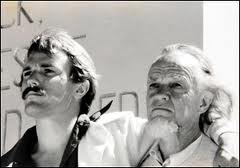


 The Daily Hatch