I truly believe that many of the problems we have today in the USA are due to the advancement of humanism in the last few decades in our society. Ronald Reagan appointed the evangelical Dr. C. Everett Koop to the position of Surgeon General in his administration. He partnered with Dr. Francis Schaeffer in making the video below. It is very valuable information for Christians to have. Actually I have included a video below that includes comments from him on this subject.
Francis Schaeffer Whatever Happened to the Human Race (Episode 1) ABORTION
Francis Schaeffer: What Ever Happened to the Human Race? (Full-Length Documentary)
Part 1 on abortion runs from 00:00 to 39:50, Part 2 on Infanticide runs from 39:50 to 1:21:30, Part 3 on Youth Euthanasia runs from 1:21:30 to 1:45:40, Part 4 on the basis of human dignity runs from 1:45:40 to 2:24:45 and Part 5 on the basis of truth runs from 2:24:45 to 3:00:04
NAMECALLING IS ALWAYS THE EASY WAY OUT. ATTACKING LOGICAL ARGUMENTS IS MUCH MORE DIFFICULT!!!
Vanessa suggested that I don’t have a place at the table in this debate about abortion because I am a man.
Arguments do not have genders and there were 9 men on the Supreme Court that decided the Roe v. Wade case if I remember correctly. Does that make that decision bad law?
Can only Generals who fought in wars discuss the morality of war? Attacking me personally may get you lots of “likes” on the Ark Times Blog but how about attacking the logic of my pro-life arguments?
Matthew Everhard is the Senior Pastor of Faith Evangelical Presbyterian Church in Brooksville, Florida. Here are some of her observations about the Gosnell trial and I would love to get your response to her logical conclusions.
1. Gosnell exposed the true horrors of abortion. 2. The power of conservative social media. 3. Our existing laws are in serious need of revision. Roe vs. Wade made the rubric of dividing pregnancy into trimesters the universal language of our medical system. Unfortunately, most states’ abortion laws are governed by medical science and knowledge that is decades old. Today, premature children are able to live outside the womb weeks–or even months–earlier than they were in the 1970′s. A child that was considered “viable” then, may be viable much earlier today.
Although I consider life to begin at the moment of conception, (as do most serious Bible-believing Christians), even those who do not share our conviction must now reckon with the fact that a baby is clearly alive–by any medical, philosophical, or theological standard–long before 39-weeks.
That this is the case cannot seriously be disputed by any rational thinker. Today’s 3D ultrasound technology is a major player in convincing our society of the true miracle of life in the womb.
4. These horrible acts are likely to be much more widespread than we are ready to admit. Already–just a week later–there are allegations of another case in Texas that may be even worse than the Gosnell case. The practice of “snipping” live-born children was apparently not restricted to an obscure location in inner-city Philly, as many would have us believe. The reports of one Dr. Douglas Karpen are rumored to be more despicable than Gosnell, if that is even possible. This case, if reports by observers and witnesses are to be believed, also includes the decapitation of infant children.
5. The failure of federal and state governments to regulate the entire industry of abortion providers is a disgrace. Gosnell got away with his murderous rampage for years, decades even. No regulator would touch his so called “medical” practice. Sadly, he was never brought down by the incidents and reports related to infanticide; it was drug charges that eventually brought investigators looking. Our societal reluctance to regulate abortion providers because it seems to violate a “right” to abortion-on-demand is heinous indeed.
Many in the world today are taking a long look at the abortion industry because of the May 14, 2013 guilty verdict and life term penalty handed down by a jury (which included 9 out of 12 pro-choice jurors) to Dr. Kermit Gosnell. During this time of reflection I wanted to put forth some of the […]
Many in the world today are taking a long look at the abortion industry because of the May 14, 2013 guilty verdict and life term penalty handed down by a jury (which included 9 out of 12 pro-choice jurors) to Dr. Kermit Gosnell. During this time of reflection I wanted to put forth some of the […]
Many in the world today are taking a long look at the abortion industry because of the May 14, 2013 guilty verdict and life term penalty handed down by a jury (which included 9 out of 12 pro-choice jurors) to Dr. Kermit Gosnell. During this time of reflection I wanted to put forth some of the […]
Many in the world today are taking a long look at the abortion industry because of the May 14, 2013 guilty verdict and life term penalty handed down by a jury (which included 9 out of 12 pro-choice jurors) to Dr. Kermit Gosnell. During this time of reflection I wanted to put forth some of the […]
Many in the world today are taking a long look at the abortion industry because of the May 14, 2013 guilty verdict and life term penalty handed down by a jury (which included 9 out of 12 pro-choice jurors) to Dr. Kermit Gosnell. During this time of reflection I wanted to put forth some of the […]
Many in the world today are taking a long look at the abortion industry because of the May 14, 2013 guilty verdict and life term penalty handed down by a jury (which included 9 out of 12 pro-choice jurors) to Dr. Kermit Gosnell. During this time of reflection I wanted to put forth some of the […]
Many in the world today are taking a long look at the abortion industry because of the May 14, 2013 guilty verdict and life term penalty handed down by a jury (which included 9 out of 12 pro-choice jurors) to Dr. Kermit Gosnell. During this time of reflection I wanted to put forth some of the […]
Many in the world today are taking a long look at the abortion industry because of the May 14, 2013 guilty verdict and life term penalty handed down by a jury (which included 9 out of 12 pro-choice jurors) to Dr. Kermit Gosnell. During this time of reflection I wanted to put forth some of the […]
Many in the world today are taking a long look at the abortion industry because of the May 14, 2013 guilty verdict and life term penalty handed down by a jury (which included 9 out of 12 pro-choice jurors) to Dr. Kermit Gosnell. During this time of reflection I wanted to put forth some of the […]
Many in the world today are taking a long look at the abortion industry because of the May 14, 2013 guilty verdict and life term penalty handed down by a jury (which included 9 out of 12 pro-choice jurors) to Dr. Kermit Gosnell. During this time of reflection I wanted to put forth some of the […]
Many in the world today are taking a long look at the abortion industry because of the May 14, 2013 guilty verdict and life term penalty handed down by a jury (which included 9 out of 12 pro-choice jurors) to Dr. Kermit Gosnell. During this time of reflection I wanted to put forth some of the […]
Many in the world today are taking a long look at the abortion industry because of the May 14, 2013 guilty verdict and life term penalty handed down by a jury (which included 9 out of 12 pro-choice jurors) to Dr. Kermit Gosnell. During this time of reflection I wanted to put forth some of the […]
Many in the world today are taking a long look at the abortion industry because of the May 14, 2013 guilty verdict and life term penalty handed down by a jury (which included 9 out of 12 pro-choice jurors) to Dr. Kermit Gosnell. During this time of reflection I wanted to put forth some of the […]
Many in the world today are taking a long look at the abortion industry because of the May 14, 2013 guilty verdict and life term penalty handed down by a jury (which included 9 out of 12 pro-choice jurors) to Dr. Kermit Gosnell. During this time of reflection I wanted to put forth some of the […]
Many in the world today are taking a long look at the abortion industry because of the May 14, 2013 guilty verdict and life term penalty handed down by a jury (which included 9 out of 12 pro-choice jurors) to Dr. Kermit Gosnell. During this time of reflection I wanted to put forth some of the […]
Many in the world today are taking a long look at the abortion industry because of the May 14, 2013 guilty verdict and life term penalty handed down by a jury (which included 9 out of 12 pro-choice jurors) to Dr. Kermit Gosnell. During this time of reflection I wanted to put forth some of the […]
Francis Schaeffer: “Whatever Happened to the Human Race” (Episode 1) ABORTION OF THE HUMAN RACE Published on Oct 6, 2012 by AdamMetropolis ________________ What a great article below: Dr. Alveda King: Guilty Gosnell Verdict May Spark More Justice for Women and Babies Contact: Eugene Vigil, King for America, 470-244-3302 PHILADELPHIA, May 13, 2013 /Christian Newswire/ […]
Many in the world today are taking a long look at the abortion industry because of the May 14, 2013 guilty verdict and life term penalty handed down by a jury (which included 9 out of 12 pro-choice jurors) to Dr. Kermit Gosnell. During this time of reflection I wanted to put forth some of the […]
Francis Schaeffer: “Whatever Happened to the Human Race” (Episode 1) ABORTION OF THE HUMAN RACE Published on Oct 6, 2012 by AdamMetropolis ________________ May 14, 2013 Murdered Thousands, Convicted for Three: The Kermit Gosnell Verdict By Drew Belsky Read more: http://www.americanthinker.com/2013/05/murdered_thousands_convicted_for_three_the_kermit_gosnell_verdict.html#ixzz2TMstLk1c Follow us: @AmericanThinker on Twitter | AmericanThinker on FacebookPhiladelphia abortionist Kermit Gosnell was convicted […]
Many in the world today are taking a long look at the abortion industry because of the May 14, 2013 guilty verdict and life term penalty handed down by a jury (which included 9 out of 12 pro-choice jurors) to Dr. Kermit Gosnell. During this time of reflection I wanted to put forth some of the […]
Francis Schaeffer: “Whatever Happened to the Human Race” (Episode 1) ABORTION OF THE HUMAN RACE Published on Oct 6, 2012 by AdamMetropolis ________________ A Verdict Doesn’t End the Gosnell Story By: Chairman Reince Priebus (Diary) | May 13th, 2013 at 03:27 PM | 28 RESIZE: AAA The horrors that unfolded in the clinic of Dr. […]
Many in the world today are taking a long look at the abortion industry because of the May 14, 2013 guilty verdict and life term penalty handed down by a jury (which included 9 out of 12 pro-choice jurors) to Dr. Kermit Gosnell. During this time of reflection I wanted to put forth some of the […]
Francis Schaeffer: “Whatever Happened to the Human Race” (Episode 1) ABORTION OF THE HUMAN RACE Published on Oct 6, 2012 by AdamMetropolis ________________ All-American Horror Story: Top 10 Kermit Gosnell Trial Revelations by Kristan Hawkins | Washington, DC | LifeNews.com | 4/12/13 3:38 PM Since so many in the media have failed/refused to report on […]
Many in the world today are taking a long look at the abortion industry because of the May 14, 2013 guilty verdict and life term penalty handed down by a jury (which included 9 out of 12 pro-choice jurors) to Dr. Kermit Gosnell. During this time of reflection I wanted to put forth some of the […]
Francis Schaeffer: “Whatever Happened to the Human Race” (Episode 1) ABORTION OF THE HUMAN RACE Published on Oct 6, 2012 by AdamMetropolis _____________ Tony Perkins: Gosnell Trial – FOX News Published on May 13, 2013 Tony Perkins: Gosnell Trial – FOX News ________________ Hey Obama, Kermit Gosnell Is What a Real War on Women Looks Like […]
Many in the world today are taking a long look at the abortion industry because of the May 14, 2013 guilty verdict and life term penalty handed down by a jury (which included 9 out of 12 pro-choice jurors) to Dr. Kermit Gosnell. During this time of reflection I wanted to put forth some of the […]
Francis Schaeffer: “Whatever Happened to the Human Race” (Episode 1) ABORTION OF THE HUMAN RACE Published on Oct 6, 2012 by AdamMetropolis ___ _____________ Tony Perkins: Gosnell Trial – FOX News Published on May 13, 2013 Tony Perkins: Gosnell Trial – FOX News ________________ Family Research Council Praises Jury for Bringing Justice to Victims of Abortionist […]
Many in the world today are taking a long look at the abortion industry because of the May 14, 2013 guilty verdict and life term penalty handed down by a jury (which included 9 out of 12 pro-choice jurors) to Dr. Kermit Gosnell. During this time of reflection I wanted to put forth some of the […]
Many in the world today are taking a long look at the abortion industry because of the May 14, 2013 guilty verdict and life term penalty handed down by a jury (which included 9 out of 12 pro-choice jurors) to Dr. Kermit Gosnell. During this time of reflection I wanted to put forth some of the […]
Francis Schaeffer: “Whatever Happened to the Human Race” (Episode 1) ABORTION OF THE HUMAN RACE Published on Oct 6, 2012 by AdamMetropolis ________________ _____________ Tony Perkins: Gosnell Trial – FOX News Published on May 13, 2013 Tony Perkins: Gosnell Trial – FOX News ________________ Kermit Gosnell and the Logic of “Pro-Choice” by Matthew J. Franck within […]
Many in the world today are taking a long look at the abortion industry because of the May 14, 2013 guilty verdict and life term penalty handed down by a jury (which included 9 out of 12 pro-choice jurors) to Dr. Kermit Gosnell. During this time of reflection I wanted to put forth some of the […]
Many in the world today are taking a long look at the abortion industry because of the May 14, 2013 guilty verdict and life term penalty handed down by a jury (which included 9 out of 12 pro-choice jurors) to Dr. Kermit Gosnell. During this time of reflection I wanted to put forth some of the […]
Francis Schaeffer: “Whatever Happened to the Human Race” (Episode 1) ABORTION OF THE HUMAN RACE Published on Oct 6, 2012 by AdamMetropolis ________________ Fr. Pavone: Right to choose must yield to right to life STATEN ISLAND, NY — Father Frank Pavone, National Director of Priests for Life, had the following comment on the verdict in […]
Many in the world today are taking a long look at the abortion industry because of the May 14, 2013 guilty verdict and life term penalty handed down by a jury (which included 9 out of 12 pro-choice jurors) to Dr. Kermit Gosnell. During this time of reflection I wanted to put forth some of the […]
Francis Schaeffer: “Whatever Happened to the Human Race” (Episode 1) ABORTION OF THE HUMAN RACE Published on Oct 6, 2012 by AdamMetropolis ________________ The truth of abortion … the hope for Gosnell’s repentance A conviction in the murder trial of Philadelphia abortionist Kermit Gosnell has boosted the efforts of pro-lifers to demonstrate what abortion really […]
The Selfishness of Chris Evert Part 2 (Includes videos and Pictures) _________________________________ _____________________ _______________________ __________________________ Tennis – Wimbledon 1974 [ Official Film ] – 05/05 Published on May 1, 2012 John Newcombe, Ken Rosewall, Bjor Borg, Jimmy Connors, Cris Evert… ___________________ Jimmy Connors Reflects Published on May 13, 2013 Jimmy Connors visits “SportsCenter” to discuss his memoir, […]
Photo taken in 1944 after a reading of Picasso’s play El deseo pillado por la cola: Standing from left to right: Jacques Lacan, Cécile Éluard, Pierre Reverdy, Louise Leiris, Pablo Picasso, Zanie de Campan, Valentine Hugo, Simone de Beauvoir, Brassaï. Sitting, from left to right: Jean-Paul Sartre, Albert Camus, Michel Leiris, Jean Aubier. Photo by Brassaï. –
Today we are going to look at the philosopher Jean Paul Sartre and will feature the work of the artist David Hooker.
The beautiful Portland Head Lighthouse on the Maine coast.
It was the flash from this lighthouse I could see from the
balcony of my hotel in Ogunquit, far to the south.
No finite point has meaning without an infinite reference point.
Jean-Paul Sartre
I am the light of the world.
Jesus Christ (Matthew 5:14)
I stood outside on the deck of my hotel listening to the surf quietly lap the beach. It was a beautiful Maine evening, with stars blazing overhead and a gentle breeze blowing warm for early October. Out in the darkness my eyes traced a dim line of lights running along the shore of the peninsula that jutted far out to sea. Where the lights ended, I assumed, was lands end and where the open sea began. I was curious then, when I saw a light flash much farther out to sea. It didn’t take long to realize that the flash was from a lighthouse, which marked the true end of land. It was plain to me then how a lighthouse could make the difference between life and death to a ship sailing off the coast.
My friends and I had to laugh when
we saw this sign in Beijing, China,
north of the Forbidden City. It reminded
us all about the perilous journey of life.
A Point of Reference
As I thought about a ship sailing along the coast in rough waters without a reference point to warn it where it could run aground, it occurred to me how similar this is to navigating through life. Who could argue that life is not perilous? And how many lives have been shattered on the rocks of despair, meaninglessness, alcohol and drug addiction, bitterness, anxiety, etc.
How helpful it would be to have a point of reference to warn us of the dangers in life.
Even John-Paul Sartre (quoted above), a famous atheist existentialist, recognized that we finite human beings need an infinite reference point in order to have meaning. However, because Sartre didn’t believe there was an infinite reference point (God), he concluded that life is meaningless. “Man is absurd”, he said, “but he must grimly act as if he were not”. Sartre had worked through the implications of life without God, and his conclusion perfectly illustrates the hopelessness of the atheistic and secularist worldview.
The flash of the lighthouse interrupted my thoughts. Each time I saw it, I was amazed at how far out the shore really ran.
Worldview
All of us have worldviews that, consciously or unconsciously, guide us through life and affect our daily decisions…decisions that could move us closer to or farther away from dangers that could destroy our lives. Francis Schaeffer noted that our worldviews are based on “presuppositions” (1). For example, the presupposition that is championed at the secular university (and widely in our culture) today is the “uniformity of natural causes in a closed system”. Because, it is believed, the system is closed, then there can be nothing outside the system (i.e., God) and therefore, intervention from the outside (miracles or revelation from God) is impossible. With this presupposition, as Oxford mathematician John Lennox so eloquently stated, “we can’t even answer the simple questions of a child: Why am I here? What’s the meaning of life? And so on” (2). This is why Sartre, who believed in the closed system model, concluded that man is absurd.
If, on the other hand, you believe in the “uniformity of natural causes in an open system”, into which God can act, then revelation and miracles are entirely possible. We can receive answers to the simple questions of a child because there is a God who can speak into our system (such as through the Bible). He is our lighthouse.Then the statement by Jesus Christ that he is the light of the world (quoted above) makes sense.
View from my hotel balcony on the coast of Ogunquit, Maine.
At night I could see the Portland Head Lighthouse flashing in
the distance at the far right.
A North Star Francis Schaeffer went on to say that the Bible gives us an adequate reference point, a North Star for our lives in the infinite-personal God. God is infinite (and thus, provides us a needed infinite reference point), and at the same time personal. How was he personal? The apostle John wrote that God came into the world as a human, a person, whose name was Jesus Christ (3). Jesus reached out and touched the lepers (4), which everyone else was afraid to do because they didn’t want to catch leprosy! He restored the lame (5) and even brought the dead back to life (6). Its hard to imagine getting more personal than that. In fact, read the New Testament and you will learn of many broken lives that, when touched by him, were healed and restored. Truly his mission had profound implications for those whose lives had been shattered on the jagged rocks of life.
Amazingly, the good news for us is that Jesus is still at work, healing and restoring life to all who accept him! (7)
The lighthouse flashed again. Its no accident that Jesus described himself as the light of the world, or that John called him “the true light that gives light to everyone” (8).
It was getting late and I was growing tired. But I went back into my hotel room with a supernatural assurance that God was with me. As John wrote about Jesus: “The light shines in the darkness, and the darkness has not overcome it.” (9)
Footnotes:
(1) He is There He is not Silent, by Francis Schaeffer
(2) An interview with John Lennox, Professor Lennox discusses Christianity, atheism, and science
(3) John 1:1,14,17.
(4) Matthew 8:1-3.
(5) Mark 3:1-6.
(6) Mark 5:21-43; John 11:1-44.
(7) Romans 8:10-11.
(8) John 1:9.
(9) John 1:5.
J.I.PACKER WROTE OF SCHAEFFER, “His communicative style was not that of a cautious academic who labors for exhaustive coverage and dispassionate objectivity. It was rather that of an impassioned thinker who paints his vision of eternal truth in bold strokes and stark contrasts.Yet it is a fact that MANY YOUNG THINKERS AND ARTISTS…HAVE FOUND SCHAEFFER’S ANALYSES A LIFELINE TO SANITY WITHOUT WHICH THEY COULD NOT HAVE GONE ON LIVING.”
Francis Schaeffer in Art and the Bible noted, “Many modern artists, it seems to me, have forgotten the value that art has in itself. Much modern art is far too intellectual to be great art. Many modern artists seem not to see the distinction between man and non-man, and it is a part of the lostness of modern man that they no longer see value in the work of art as a work of art.”
Sartre’s worldview is discussed in the film series “How should we then live?” by Francis Schaeffer below.
Transcript from “How Should we then live?”:
Humanist man beginning only from himself has concluded that he is only a machine. Humanist man has no place for a personal God, but there is also no place for man’s significance as man and no place for love, no place for freedom.
Man is only a machine, but the men who hold this position could not and can not live like machines. If they could then modern man would not have his tensions either in his intellectual position or in his life, but he can’t. So they leap away from reason to try to find something that gives meaning to their lives, to life itself, even though to do so they deny their reason.
Once this is done any type of thing could be put there. Because in the area of nonreason, reason gives no basis for a choice. This is the hallmark of modern man. How did it happen? It happened because proud humanist man, though he was finite, insisted in beginning only from himself and only from what he could learn and not from other knowledge, he did not succeed. Perhaps the best known of existentialist philosophers was Jean Paul Sartre. He used to spend much of his time here in Paris at the Les Deux Magots.
Sartre’s position is in the area of reason everything is absurd, but one can authenticate himself, that is give validity to his existence by an act of the will. In Sartre’s position one could equally help an old woman across the street or run her down.
Reason was not involved, and there was nothing to show the direction this authentication by an act of the will should take. But Sartre himself could live consistantly with his own position. At a certain point he signed the Algerian Manifesto which declared that the Algerian war was a dirty war. This action meant that man could use his reason to decide that some things were right and some things were wrong and so he destroyed his own system.
How Should We then Live Episode 7 small (Age of Nonreason)
#02 How Should We Then Live? (Promo Clip) Dr. Francis Schaeffer
10 Worldview and Truth
Two Minute Warning: How Then Should We Live?: Francis Schaeffer at 100
Francis Schaeffer Whatever Happened to the Human Race (Episode 1) ABORTION
Francis Schaeffer “BASIS FOR HUMAN DIGNITY” Whatever…HTTHR
The unity and true knowledge of reality defined as starting from Man alone.
II. Shift in Modern Philosophy
A. Eighteenth century as the vital watershed.
B. Rousseau: ideas and influence.
1. Rousseau and autonomous freedom.
2. Personal freedom and social necessity clash in Rousseau.
3. Rousseau’s influence.
a) Robespierre and the ideology of the Terror.
b) Gauguin, natural freedom, and disillusionment.
C. DeSade: If nature is the absolute, cruelty equals non-cruelty.
D. Impossible tension between autonomous freedom and autonomous reasons conclusion that the universe and people are a part of the total cosmic machine.
E. Kant, Hegel, and Kierkegaard and their followers sought for a unity but they did not solve the problem.
1. After these men and their followers, there came an absolute break between the area of meaning and values, and the area of reason.
2. Now humanistic philosophy sees reason as always leading to pessimism; any hope of optimism lies in non-reason.
III. Existentialism and Non-Reason
A. French existentialism.
1. Total separation of reason and will: Sartre.
2. Not possible to live consistently with this position.
B. German existentialism.
1. Jaspers and the “final experience.”
2. Heidegger and angst.
C. Influence of existentialism.
1. As a formal philosophy it is declining.
2. As a generalized attitude it dominates modern thought.
IV. Forms of Popularization of Nonrational Experience
A. Drug experience.
1. Aldous Huxley and “truth inside one’s head.”
2. Influence of rock groups in spreading the drug culture; psychedelic rock.
B. Eastern religious experience: from the drug trip to the Eastern religious trip.
C. The occult as a basis for “hope” in the area of non-reason.
V. Theological Liberalism and Existentialism
A. Preparation for theological existentialism.
1. Renaissance’s attempt to “synthesize” Greek philosophers and Christianity; religious liberals’ attempt to “synthesize” Enlightenment and Christianity.
2. Religious liberals denied supernatural but accepted reason.
3. Schweitzer’s demolition of liberal aim to separate the natural from the supernatural in the New Testament.
B. Theological existentialism.
1. Intellectual failure of rationalist theology opened door to theological existentialism.
2. Barth brought the existential methodology into theology.
a) Barth’s teaching led to theologians who said that the Bible is not true in the areas of science and history, but they nevertheless look for a religious experience from it.
b) For many adherents of this theology, the Bible does not give absolutes in regard to what is right or wrong in human behavior.
3. Theological existentialism as a cul-de-sac.
a) If Bible is divorced from its teaching concerning the cosmos and history, its values can’t be applied to a historic situation in either morals or law; theological pronouncements
about morals or law are arbitrary.
b) No way to explain evil or distinguish good from evil. Therefore, these theologians are in same position as Hindu philosophers (as illustrated by Kali).
c) Tillich, prayer as reflection, and the deadness of “god.”
d) Religious words used for manipulation of society.
VI. Conclusion
With what Christ and the Bible teach, Man can have life instead of death—in having knowledge that is more than finite Man can have from himself.
The Deux Magots literary prize has been awarded to a French novel every year since 1933.
The name originally belonged to a fabric and novelty shop at nearby 23 Rue de Buci. The shop sold silk lingerie and took its name from a popular play of the moment (1800s) entitled Les Deux Magots de la Chine (Two Figurines from China.)[2] In 1873 the business transferred to its current location in the Place Saint-Germain-des-Prés. In 1884 the business changed to a café and liquoriste, keeping the name.
Auguste Boulay bought the business in 1914, when it was on the brink of bankruptcy, for 400,000 francs (anciens). The present manager, Catherine Mathivat, is his great-great-granddaughter.
Jean Paul Sartre was a militant atheist most of his life. In fact he and his lover, Simone de Beauvoir, became two of the 20th century’s foremost atheists. Though de Beauvoir remained an atheist until the very end, Sartre appears to have come to the realization that he had been wrong — to the shock and dismay of all his followers and admirers.
The one who revealed Sartre’s astonishing change was his friend and ex-Maoist, Pierre Victor (A.k.a. Benny Levy), who spent much of his time with the dying Sartre and interviewed him on several of his views. According to Victor, Sartre had a drastic change of mind about the existence of God and started gravitating toward Messianic Judaism. This is Sartre’s before-death profession, according to Pierre Victor: “I do not feel that I am the product of chance, a speck of dust in the universe, but someone who was expected, prepared, prefigured. In short, a being whom only a Creator could put here; and this idea of a creating hand refers to God.”[i]
This statement effectively closes Sartre’s existential phase to the consternation of his followers and his lover, Simone de Beauvoir, in particular. During Sartre’s funeral, De Beauvoir reportedly behaved like a bereaved widow, but later became quite critical of Sartre in her “Cérémonie Des Adieux.” Later on, she revealed her anger at his change of mind by stating,“How should one explain this senile act of a turncoat? All my friends, all the Sartreans, and the editorial team of Les Temps Modernes supported me in my consternation.”[ii]
Further evidence that supports Sartre’s move toward belief in God is found in an unlikely source, “theinfidels.org.” This fanatical atheist web site, tells us that in 1980, about a month before Sartre’s death, he was interviewed by one of his assistants, Benny Lévy, and within these interviews he expressed interest in Messianic Judaism. The web site again adds that Sartre was only interested in the “metaphysical” aspects of Judaism, but that he continued to reject the idea of an existing God.[iii]
In the next paragraph they admit that in a 1974, in an interview with Simone de Beauvoir, Sartre said that at times he saw himself “as a being that could, it seems, only come from a creator.” However, they point out, he added that “this is not a clear, exact idea…” As expected, they then proceed to assure us that before and after these statements Sartre makes clear that he was and remained an atheist. [iv]
Finally they admit that Sartre’s supporters were upset about Sartre’s acceptance of “something” in Judaism, which was a clear rejection of Marxism, a philosophy which had been a huge and central part of his philosophical thoughts. Unfortunately for them, Sartre confirmed that Levy’s interviews were authentic.[v]
One cannot but smile at the reticence on the part of these atheists to admit that the evidence betrays that something “major” was happening in Sartre’s thinking. By putting two and two together it appears that Sartre did not have a last minute conversion at all, but that over several years there was a gradual transformation in his thinking that he “hesitantly” admitted to in 1974, probably so as not to upset De Beauvoir and his followers, and that he finally appears to have fully confessed his transformation to his dear friend Victor before his death. The fact that he confirmed that Victor’s interviews were genuine adds plenty of support to this conclusion. Thus, the fanatical atheist, Jean Paul Sartre, appears to have seen the light toward the last years of his life — unfortunately after having influenced many around the world into accepting the philosophy of Atheism.
This statement effectively closes Sartre’s existential phase to the consternation of his followers and his lover, Simone de Beauvoir, in particular. During Sartre’s funeral, De Beauvoir reportedly behaved like a bereaved widow, but later became quite critical of Sartre in her “Cérémonie Des Adieux.” Later on, she revealed her anger at his change of mind by stating,“How should one explain this senile act of a turncoat? All my friends, all the Sartreans, and the editorial team of Les Temps Modernes supported me in my consternation.”[ii]
Further evidence that supports Sartre’s move toward belief in God is found in an unlikely source, “theinfidels.org.” This fanatical atheist web site, tells us that in 1980, about a month before Sartre’s death, he was interviewed by one of his assistants, Benny Lévy, and within these interviews he expressed interest in Messianic Judaism. The web site again adds that Sartre was only interested in the “metaphysical” aspects of Judaism, but that he continued to reject the idea of an existing God.[iii]
In the next paragraph they admit that in a 1974, in an interview with Simone de Beauvoir, Sartre said that at times he saw himself “as a being that could, it seems, only come from a creator.” However, they point out, he added that “this is not a clear, exact idea…” As expected, they then proceed to assure us that before and after these statements Sartre makes clear that he was and remained an atheist. [iv]
Finally they admit that Sartre’s supporters were upset about Sartre’s acceptance of “something” in Judaism, which was a clear rejection of Marxism, a philosophy which had been a huge and central part of his philosophical thoughts. Unfortunately for them, Sartre confirmed that Levy’s interviews were authentic.[v]
One cannot but smile at the reticence on the part of these atheists to admit that the evidence betrays that something “major” was happening in Sartre’s thinking. By putting two and two together it appears that Sartre did not have a last minute conversion at all, but that over several years there was a gradual transformation in his thinking that he “hesitantly” admitted to in 1974, probably so as not to upset De Beauvoir and his followers, and that he finally appears to have fully confessed his transformation to his dear friend Victor before his death. The fact that he confirmed that Victor’s interviews were genuine adds plenty of support to this conclusion. Thus, the fanatical atheist, Jean Paul Sartre, appears to have seen the light toward the last years of his life — unfortunately after having influenced many around the world into accepting the philosophy of Atheism.
David J.P.Hooker, Wheaton College assoc. professor of art, works in his studio on his sculpture he calls “Corpus,” on Feb. 25, 2013. He is covering the five-foot-tall plaster corpus with vacuumed dust collected by the college’s custodial staff. (Chuck Berman, Chicago Tribune)
Today our featured artist is the sculptor David Hooker of Chicago where he is associate professor of art at Wheaton College. I learned about Wheaton back around 1975 when my Bible teacher Mark Brink told me that he graduated there. Mr. Brink is the one who introduced me in a big way to the works of Francis Schaeffer.
David Hooker is a ceramicist and sculptor living in the Chicago area where he is associate professor of art at Wheaton College. He grew up on South Carolina, and he received an MFA in Ceramics from Kent State. He blogs at Hooker’s Ramblings, and you can view much of his work at his website.
Hooker writes:
My artistic practice explores my fascination with objects, places, history and memory through ritual actions, looking for ways in which ritual can have a positive influence in our understanding of our environments and ourselves.
This description is particularly appropriate for his recent project Corpus (see above). Currently on display in the Bible and Theology Department of Wheaton College, Corpus is an antique body of Christ that Hooker found and then covered with dust. Hooker acquired the dust from the vacuum bags of Wheaton College’s custodial staff. The work draws our attention to numerous rituals: the regularly cleaning of the college, the rhythmic flux of students that moves dirt and dust into the college, the Eucharist, and Hooker’s own process of layering the dust over Jesus’ body. By drawing attention to these rituals, Corpus also draws the community together. As Hooker points out in a Chicago Tribune article, ”Literally, this dirt contains skin cells from the community. The idea is that our bodies are now connected to the body of Christ. At first, some might find it disgusting, or even sacrilegious, but I hope people can get past that and see the meaning behind it.”
Rituals are constructs, ways of ordering and structuring our lives, that shape the way we see and understand the world. This constructed, and mediated, way of encountering the world is reflected in much of Hooker’s work. For example, in Pilgrim Construction with Zepplin (see below), objects from the “real” world are lifted out of their normal contexts and placed within a new construction. Doing so asks us to relate the objects to each other in new ways, and it also questions whether the way we see these objects in “real life” is natural or cultural.
One significant social construct that Hooker’s work explores is race. His most recent project, The Sweep Project, aims to explore the history and memory of racial tension in Will County, Illinois. By literally sweeping along known Underground Railroad routes and to known Underground Railroad destinations, Hooker will retrieve and uncover, if only ephemerally, the memory of a courageous and desperate ritual that marks a moment in America’s troubled past of slavery and the struggle for civil rights. In addition to sweeping many miles himself, Hooker plans to incorporate the help of the wider community by, for example, working with local high school students to build a 1.2 mile trail of sugar cubes from the Lincolnway Central High School to the Old Brick Tavern marker. If you are interested in learning more about the project and supporting it financially, please look at Hooker’s kickstarter campaign. For a very small donation, you can receive an original Cyanotype print made from elements found during the project.
For more information about Hooker’s work, pleas visit his website. I have copied some images of his work below:
‘Corpus’ (Detail). 2013.
Example of Cyanotype for ‘The Sweep Project’.
‘Sheep and Goats.’
‘Pilgrim Construction with Zepplin’.
______________
David Hooker on why he’s excited about JUSTart
Published on May 22, 2013
I’m really looking forward to the exhibitions! We’re working to make Adams Hall itself, our art building, a kind of art explosion.
When I’ve been to CIVA conferences, I usually come back overwhelmed and energized…
E P I S O D E 1 0 Dr. Francis Schaeffer – Episode X – Final Choices 27 min FINAL CHOICES I. Authoritarianism the Only Humanistic Social Option One man or an elite giving authoritative arbitrary absolutes. A. Society is sole absolute in absence of other absolutes. B. But society has to be […]
E P I S O D E 9 Dr. Francis Schaeffer – Episode IX – The Age of Personal Peace and Affluence 27 min T h e Age of Personal Peace and Afflunce I. By the Early 1960s People Were Bombarded From Every Side by Modern Man’s Humanistic Thought II. Modern Form of Humanistic Thought Leads […]
E P I S O D E 8 Dr. Francis Schaeffer – Episode VIII – The Age of Fragmentation 27 min I saw this film series in 1979 and it had a major impact on me. T h e Age of FRAGMENTATION I. Art As a Vehicle Of Modern Thought A. Impressionism (Monet, Renoir, Pissarro, Sisley, […]
E P I S O D E 7 Dr. Francis Schaeffer – Episode VII – The Age of Non Reason I am thrilled to get this film series with you. I saw it first in 1979 and it had such a big impact on me. Today’s episode is where we see modern humanist man act […]
E P I S O D E 6 How Should We Then Live 6#1 Uploaded by NoMirrorHDDHrorriMoN on Oct 3, 2011 How Should We Then Live? Episode 6 of 12 ________ I am sharing with you a film series that I saw in 1979. In this film Francis Schaeffer asserted that was a shift in […]
E P I S O D E 5 How Should We Then Live? Episode 5: The Revolutionary Age I was impacted by this film series by Francis Schaeffer back in the 1970′s and I wanted to share it with you. Francis Schaeffer noted, “Reformation Did Not Bring Perfection. But gradually on basis of biblical teaching there […]
Dr. Francis Schaeffer – Episode IV – The Reformation 27 min I was impacted by this film series by Francis Schaeffer back in the 1970′s and I wanted to share it with you. Schaeffer makes three key points concerning the Reformation: “1. Erasmian Christian humanism rejected by Farel. 2. Bible gives needed answers not only as to […]
Francis Schaeffer’s “How should we then live?” Video and outline of episode 3 “The Renaissance” Francis Schaeffer: “How Should We Then Live?” (Episode 3) THE RENAISSANCE I was impacted by this film series by Francis Schaeffer back in the 1970′s and I wanted to share it with you. Schaeffer really shows why we have so […]
Francis Schaeffer: “How Should We Then Live?” (Episode 2) THE MIDDLE AGES I was impacted by this film series by Francis Schaeffer back in the 1970′s and I wanted to share it with you. Schaeffer points out that during this time period unfortunately we have the “Church’s deviation from early church’s teaching in regard […]
Francis Schaeffer: “How Should We Then Live?” (Episode 1) THE ROMAN AGE Today I am starting a series that really had a big impact on my life back in the 1970′s when I first saw it. There are ten parts and today is the first. Francis Schaeffer takes a look at Rome and why […]
Both Charles Darwin and Chris Martin abandoned their earlier Christian views and left the church. Charles Darwin later became an agnostic while Chris Martin is still wrestling with his earlier Christian views and seems to have not come to a total conclusion what to do with them.
During these two years [OCTOBER 1936 to January 1839] I was led to think much about religion. Whilst on board the Beagle I was quite orthodox, and I remember being heartily laughed at by several of the officers (although themselves orthodox) for quoting the Bible as an unanswerable authority on some point of morality. I suppose it was the novelty of the argument that amused them. But I had gradually come by this time, i.e., 1836 to 1839, to see that the Old Testament from its manifestly false history of the world, with the Tower of Babel, the rainbow at sign, &c., &c., and from its attributing to God the feelings of a revengeful tyrant, was no more to be trusted than the sacred books of the Hindoos, or the beliefs of any barbarian. The question then continually rose, before my mind and would not be banished, is it credible that if God were now to make a revelation to the Hindoos, he would permit it to be connected with the belief in Vishnu, Siva, &c., as Christianity is connected with the Old Testament? This appeared to me utterly incredible.
By further reflecting that the clearest evidence would be requisite to make any sane man believe in the miracles by which Christianity is supported, (and that the more we know of the fixed laws of nature the more incredible do miracles become), that the men at that time were ignorant and credulous to a degree almost uncomprehensible by us, that the Gospels cannot be proved to have been written simultaneously with the events, that they differ in many important details, far too important, as it seemed to me, to be admitted as the usual inaccuracies of eyewitnesses; by such reflections as these, which I give not as having the least novelty or value, but as they influenced me,I gradually came to disbelieve in Christianity as a divine revelation. The fact that many false religions have spread over large portions of the earth like wild-fire had some weight with me. Beautiful as is the morality of the New Testament, it can be hardly denied that its perfection depends in part on the interpretation which we now put on metaphors and allegories.
But I was very unwilling to give up my belief; I feel sure of this, for I can well remember often and often inventing day-dreams of old letters between distinguished Romans, and manuscripts being discovered at Pompeii or elsewhere, which confirmed in the most striking manner all that was written in the Gospels. But I found it more and more difficult, with free scope given to my imagination, to invent evidence which would suffice to convince me. Thus disbelief crept over me at a very slow rate, but was at last complete. The rate was so slow that I felt no distress, and have never since doubted even for a single second that my conclusion was correct. I can indeed hardly see how anyone ought to wish Christianity to be true; for if so the plain language of the text seems to show that the men who do not believe, and this would include my Father, Brother and almost all of my friends, will be everlastingly punished.
And this is a damnable doctrine.
Although I did not think much about the existence of a personal God until a considerably later period of my life, I will here give the vague conclusions to which I have been driven. The old argument from design in Nature, as given by Paley, which formerly seemed to me so conclusive, fails, now that the law of natural selection has been discovered. We can no longer argue that, for instance, the beautiful hinge of a bivalve shell must have been made by an intelligent being. like the hinge of a door by man. There seems to be no more design in the variability of organic beings, and in the action of natural selection, than in the course which the wind blows. Everything in nature is the result of fixed laws. But I have discussed this subject at the end of my book on the ‘Variations of Domesticated Animals and Plants,’ and the argument there given has never, as far as I can see, been answered.
But passing over the endless beautiful adaptations which we everywhere meet with, it may be asked how can the generally beneficent arrangement of the world be accounted for? Some writers indeed are so much impressed with the amount of suffering in the world, that they doubt, if we look to all sentient beings, whether there is more of misery or of happiness; whether the world as a whole is a good or bad one. According to my judgment happiness decidedly prevails, though this would be very difficult to prove. If the truth of this conclusion be granted, it harmonizes well with the effects which we might expect from natural selection. If all the individuals of any species were habitually to suffer to an extreme degree, they would neglect to propagate their kind; but we have no reason to believe that this has ever, or at least often occurred. Some other considerations, moreover, lead to the belief that all sentient beings have been formed so as to enjoy, as a general rule, happiness.
Every one who believes, as I do, that all the corporeal and mental organs (excepting those which are neither advantageous nor disadvantageous to the possessor) of all beings have been developed through natural selection, or the survival of the fittest, together with use or habit, will admit that these organs have been formed so that their possessors may compete successfully with other beings, and thus increase in number. Now an animal may be led to pursue that course of action which is most beneficial to the species by suffering, such as pain, hunger, thirst, and fear; or by pleasure, as in eating and drinking, and in the propagation of the species, &c., or by both means combined, as in the search for food. But pain or suffering of any kind, if long continued, causes depression and lessens the power of action, yet is well adapted to make a creature guard itself against any great or sudden evil. Pleasurable sensations, on the other hand, may be long continued without any depressing effect; on the contrary, they stimulate the whole system to increased action. Hence it has come to pass that most or all sentient beings have been developed in such a manner, through natural selection, that pleasurable sensations serve as their habitual guides. We see this in the pleasure from exertion, even occasionally from great exertion of the body or mind, (in the pleasure of our daily meals, and especially in the pleasure derived from sociability, and from loving our families). The sum of such pleasures as these, which are habitual or frequently recurrent, give, as I can hardly doubt, to most sentient beings an excess of happiness over misery, although many occasionally suffer much. Such suffering is quite compatible with the belief in Natural Selection, which is not perfect in its action, but tends only to render each species as successful as possible in the battle for life with other species, in wonderfully complex and changing circumstances.
That there is much suffering in the world no one disputes. Some have attempted to explain this with reference to man by imagining that it serves for his moral improvement. But the number of men in the world is as nothing compared with that of all other sentient beings, and they often suffer greatly without any moral improvement. A being so powerful and so full of knowledge as a God who could create the universe, is to our finite minds omnipotent and omniscient, and it revolts our understanding to suppose that his benevolence is not unbounded, for what advantage can there be in the suffering of millions of the lower animals throughout almost endless time? This very old argument from the existence of suffering against the existence of an intelligent First Cause seems to me a strong one; whereas, as just remarked, the presence of much suffering agrees well with the view that all organic beings have been developed through variation and natural selection.
At the present day the most usual argument for the existence of an intelligent God is drawn from the deep inward conviction and feelings which are experienced by most persons. But it cannot be doubted that Hindoos, Mahomadans and others might argue in the same manner and with equal force in favour of the existence of one God, or of many Gods, or as with the Buddhists of no God. There are also many barbarian tribes who cannot be said with any truth to believe in what we call God: they believe indeed in spirits or ghosts, and it can be explained, as Tyler and Herbert Spencer have shown, how such a belief would be likely to arise.
Formerly I was led by feelings such as those just referred to (although I do not think that the religious sentiment was ever very strongly developed in me), to the firm conviction of the existence of God, and of the immortality of the soul. In my Journal I wrote that whilst standing in the midst of the grandeur of a Brazilian forest, “it is not possible to give an adequate idea of the higher feelings of wonder, admiration, and devotion, which fill and elevate the mind.” I well remember my conviction that there is more in man than the mere breath of his body. But now the grandest scenes would not cause any such convictions and feelings to rise in my mind. It may be truly said that I am like a man who has become colour-blind, and the universal belief by men of the existence of redness makes my present loss of perception of not the least value as evidence. This argument would be a valid one if all men of all races had the same inward conviction of the existence of one God; but we know that this is very far from being the case. Therefore I cannot see that such inward convictions and feelings are of any weight as evidence of what really exists. The state of mind which grand scenes formerly excited in me. and which was intimately connected with a belief in God, did not essentially differ from that which is often called the sense of sublimity; and however difficult it may be to explain the genesis of this sense, it can hardly be advanced as an argument for the existence of God, any more than the powerful though vague and similar feelings excited by music.
With respect to immortality, nothing shows me (so clearly) how strong and almost instinctive a belief it is, as the consideration of the view now held by most physicists, namely, that the sun with all the planets will in time grow too cold for life, unless indeed some great body dashes into the sun, and thus gives it fresh life. Believing as I do that man in the distant future will be a far more perfect creature than he now is, it is an intolerable thought that he and all other sentient beings are doomed to complete annihilation after such long-continued slow progress. To those who fully admit the immortality of the human soul, the destruction of our world will not appear so dreadful.
Another source of conviction in the existence of God, connected with the reason, and not with the feelings, impresses me as having much more weight. This follows from the extreme difficulty or rather impossibility of conceiving this immense and wonderful universe, including man with his capacity of looking far backwards and far into futurity, as the result of blind chance or necessity. When thus reflecting I feel compelled to look to a First Cause having an intelligent mind in some degree analogous to that of man; and I deserve to be called a Theist. This conclusion was strong in my mind about the time, as far as I can remember, when I wrote the ‘Origin of Species;’ and it is since that time that it has very gradually, with many fluctuations, become weaker. But then arises the doubt;– can the mind of man, which has, as I fully believe, been developed from a mind as low as that possessed by the lowest animals, be trusted when it draws such grand conclusions? May not these be the result of the connection between cause and effect which strikes us as a necessary one, but probably depends merely on inherited experience? Nor must we overlook the probability of the constant inculcation in a belief in God on the minds of children producing so strong and perhaps an inherited effect on their brains not fully developed, that it would be as difficult for them to throw off their belief in God, as for the monkey to throw off its instinctive fear and hatred of a snake.
I cannot pretend to throw the least light on such abstruse problems. The mystery of the beginning of all things is insoluble by us; and I for one must be content to remain an Agnostic.
Interestingly, Darwin’s firm agnosticism expressed in the Autobiography appeared to weaken during the final years of his life. In an 1879 letter addressed to James Fordyce, he wrote:
What my own (religious) views may be is a question of no consequence to any one but myself. But, as you asked, I may state that my judgment often fluctuates. . . . In my most extreme fluctuations I have never been an Atheist in the sense of denying the existence of a God. I think that generally (and more and more as I grow older), but not always, that an Agnostic would be the more correct description of my state of mind. (F. Darwin 1888, I: 304;).
_____________
Chris Martin was brought up as an evangelical Christian but he left the faith once he left his childhood home. However, there are been some actions in his life in the last few years that demonstrate that he still is grappling with his childhood Chistian beliefs. Let us take look at a few verses in the Book of Romans chapter one and we will see how they are relevant to a song written by Coldplay.
On June 23, 2012 my son Wilson and I got to attend a Coldplay Concert in Dallas. It was great. I wish they had played “Cemeteries of London” at the Dallas concert since I like that song a lot. Let me show you two points from the Book of Romans:
God reveals Himself in two Ways
Lets take a look at the lyrics from the song “Cemeteries of London:”
God is in the houses
And God is in my head
And all the cemeteries of London
I see God come in my garden
But I don’t know what He said
For my heart, it wasn’t open
Not open
Romans chapter one clearly points out that God has revealed Himself through both the created world around us and also in a God-given conscience that testifies to each person that God exists.
Notice in this song that the song writer notes, “I see God come in my garden” and “God is in my head.” These are the exact two places mentioned by the scripture. Romans 1:18-20 (Amplified version)
18For God’s [holy] wrath and indignation are revealed from heaven against all ungodliness and unrighteousness of men, who in their wickedness repress and hinder the truth and make it inoperative.
19For that which is known about God is evident to them and made plain in their inner consciousness, because God [Himself] has shown it to them.
20For ever since the creation of the world His invisible nature and attributes, that is, His eternal power and divinity, have been made intelligible and clearly discernible in and through the things that have been made (His handiworks). So [men] are without excuse [altogether without any defense or justification],(B)
Concerning these verses Francis Schaeffer said:
The world is guilty of suppressing God’s truth and living accordingly. The universe and its form and the mannishness of Man speak the same truth that the Bible gives in greater detail.
This is what Chris Martin is having to deal with and he is clearly searching for spiritual answers but it seems he have not found them quite yet. The song “42“: “Time is so short and I’m sure, There must be something more.” Then in the song “Lost” Martin sings these words: “Every river that I tried to cross, Every door I ever tried was locked..”
Solomon went to the extreme in his searching in the Book of Ecclesiastes for this “something more” that Coldplay is talking about, but he found riches (2:8-11), pleasure (2:1), education (2:3), fame (2:9) and his work (2:4) all “meaningless” and “vanity” and “a chasing of the wind.” Every door he tried was locked.
Solomon is searching for the meaning of life in the Book of Ecclesiastes and that reminds me a lot of the search that Chris Martin is currently in. By the way, the final chapter of Ecclesiastes finishes with Solomon emphasizing that serving God is the only proper response of man. My prediction: I am hoping that Coldplay’s next album will also come to that same conclusion that Solomon came to in Ecclesiastes 12:13-14:
13 Now all has been heard;
here is the conclusion of the matter:
Fear God and keep his commandments,
for this is the whole duty of man.
14 For God will bring every deed into judgment,
including every hidden thing,
whether it is good or evil.
Kerry Livgren of Kansas found Christ eventually after first trying some Eastern Religions. I remember telling my friends in 1978 when “Dust in the Wind” was the number 6 song in the USA that Kansas had written a philosophical song that came to the same conclusion about humanistic man as Solomon did so long ago and I predicted that some members of that band would come to know the Christ of the Bible in a personal way.
You can hear Kerry Livgren’s story from this youtube link:
Francis Schaeffer gave a great talk on Charles Darwin’s slide toward agnosticism. I will see if I can dig up the notes from Schaeffer’s talk. I have talked about evolution a lot in the past on this blog. Here are some of the same points that Schaeffer made below in this article by Dr. John […]
On June 9th Max Brantley on the Arkansas Times Blog referred to a Mother Jones Article that noted: On Wednesday, Right Wing Watch flagged a recent interview Barton gave with an evangelcial talk show, in which he argues that the Founding Fathers had explicitly rejected Charles Darwin’s theory of evolution. Yes, that Darwin. The one whose seminal work, On the Origin of Species, wasn’t even published […]
Coldplay Live in Dallas – Lover’s in Japan Ball Drop Published on Jun 23, 2012 by TheRyanj64 Live From the American Airlines Center in Dallas Texas June 22, 2012 Coldplay – Lover’s in Japan Ball Drop Coldplay brought confetti, lights and thousands of fans to the American Airlines Center; see photos from their colorful show […]
Coldplay – Yellow (Live) @ American Airlines Center Published on Jun 23, 2012 by Crwdickerson Coldplay Performing Yellow @ American Airlines Center Dallas June 22, 2012 Coldplay brought confetti, lights and thousands of fans to the American Airlines Center; see photos from their colorful show Photo Gallery News Sports Lifestyles Comments (0) 3/11 Chris […]
THE FRANCIS SCHAEFFER CENTENNIAL – INVOCATION – PASTOR TONY FELICH Uploaded by schaefferstudies on Feb 3, 2012 Pastor Tony Felich of Redeemer Presbyterian Church in Overland Park, KS gives the invocation to the mini conference event in honor of Francis Schaeffer’s 100th Birthday. __________________________ This year Francis Schaeffer would have turned 100 on Jan 30, […]
Coldplay “paradise” Dallas Texas 6/22/12 ( Floor View ) Published on Jun 23, 2012 by ccam cher Awesome concert Coldplay brought confetti, lights and thousands of fans to the American Airlines Center; see photos from their colorful show Photo Gallery News Sports Lifestyles Comments (0) 9/11 Chris Martin was brought up as an […]
Coldplay – In My Place (Live in Dallas) June 22 2012 Published on Jun 24, 2012 by maimiaa Coldplay performing at American Airlines Center in Dallas, TX Coldplay brought confetti, lights and thousands of fans to the American Airlines Center; see photos from their colorful show Photo Gallery News Sports Lifestyles Comments (0) […]
Coldplay – Mylo Xyloto/Hurts Like Heaven (Live) @ American Airlines Center Coldplay brought confetti, lights and thousands of fans to the American Airlines Center; see photos from their colorful show Photo Gallery News Sports Lifestyles Comments (0) 2/11 Published on Jun 24, 2012 by Crwdickerson Coldplay Performing Mylo Xyloto/Hurts Like Heaven @ […]
President Obama c/o The White House 1600 Pennsylvania Avenue NW Washington, DC 20500
Dear Mr. President,
I know that you receive 20,000 letters a day and that you actually read 10 of them every day. I really do respect you for trying to get a pulse on what is going on out here. I know that you don’t agree with my pro-life views but I wanted to challenge you as a fellow Christian to re-examine your pro-choice view.
___________________
I have debated with Ark Times Bloggers many times in the past on many different subjects. Abortion is probably the most often debated subject and I have noticed that many pro-life individuals are now surfacing on the Arkansas Times Blog. Here are some examples. Arhogfan501 asserted: This is the beginning of the end for recreational abortion in Arkansas. Songbird777 noted: Babies have a right to live and not be chopped up for someone else’s convenience. The person using the username “baker” commented: Planned Parenthood (PPA) does not nor cannot provide mammograms, indeed no affiliate has the necessary license. PPA is an abortion provider and at some 900 plus killings a day rather prolific.
Here is another debate I got into recently on the Arkansas Times Blog and I go by the username “Saline Republican”:
First protest I’ve been involved in in probably 30 years. Glad to say I was there. Glad to see the huge range of ages. Loved the family with the t-shirts — Mom by Choice, Dad by Choice, Born by Choice. Personal favorite sign — “If you don’t want an abortion, don’t have one.”
This follows the statements “Dad by choice and Mom by choice.”
I can only wish that unborn babies could be born if they chose to be. Unfortunately their parents choose selfishly to end their hopes of being born way too often.
Bluesyoucanuse was born not by her choice. It was not possible, but I am glad her parents made the prolife choice!!!!!!!!!
_________
Bluesyoucanuse says, “If you don’t want an abortion, don’t have one.”
Deanna Gandler responded to this question with this reasoned response:
What if Abraham Lincoln had told the North – ‘Don’t like Slavery? Don’t own slaves.’?”
Slavery was the defining issue of the day during that time period, and there were many citizens in America who truly believed that an African American was not a person, but a belonging, a piece of property to be disposed of as their owners saw fit. The Supreme Court of the United States had even ruled in the Dred Scott case that they were property and not citizens. The Supreme Court chose to uphold slavery, and claimed Constitutional authority in their decision.
Much like the Dred Scott ruling was overturned by the refusal of brave men and women in our country to merely turn a blind eye to the injustice going on all around them- the unconstitutional Roe v Wade can be overturned one day as well. But we must not give up on this fight. We must follow the example of Lincoln, and continue to fight for the rights of our fellow man.
“Four score and seven years ago our fathers brought forth on this continent, a new nation, conceived in Liberty, and dedicated to the proposition that all men are created equal.” Abraham Lincoln, in The Gettysburg Address
______
I truly believe that many of the problems we have today in the USA are due to the advancement of humanism in the last few decades in our society. Ronald Reagan appointed the evangelical Dr. C. Everett Koop to the position of Surgeon General in his administration. He partnered with Dr. Francis Schaeffer in making the video below. It is very valuable information for Christians to have. Actually I have included a video below that includes comments from him on this subject.
Former Surgeon General C. Everett Koop and Christian apologist Francis A. Schaeffer issue a stern warning concerning the devaluing of life in America. They quote Psychiatrist Leo Alexander, who served with the office of Chief of Counsel for War Crimes in Nuremberg:
It started with the acceptance of the attitude basic in the euthanasia movement, that there is such a thing as life not worthy to be lived…. …. The first direct order for euthanasia was issued by Hitler on Sept. 1, 1939…. All state institutions were required to report on patients who had been ill for five years or more or who were unable to work, by filling out questionnaires giving name, race, marital status, nationality, next of kin, whether regularly visited and by whom, who bore the financial responsibility and so forth. The decision regarding which patients should be killed was made entirely on the basis of this brief information by expert consultants, most of whom were professors of psychiatry in the key universities. These consultants never saw the patients themselves.
The Nazis set up an organization specifically for the killing of children, which they called, “Realm’s Committee for Scientific Approach to Severe Illness Due to Heredity and Constitution.” Children were transported to the killing centers by “The Charitable Transport Company for the Sick.” “The Charitable Foundation for Institutional Care” collected the cost of killing the children from the relatives, who did not know that they were paying to kill their own kinfolk. The cause of death was falsified on the death certificates. [Francis A. Schaeffer and C. Everett Koop, M.D., Whatever Happened to the Human Race? (Old Tappan, NJ: Fleming H. Revell Company, 1979), pp. 103-107].
It hasn’t been too far back in the history of the United States, that black people were sold like cattle in our slave markets. For economic reasons, white society had classified them as “nonhuman.” The U S Supreme Court upheld this lie in its infamous Dred Scott Decision.
Jesse L. Jackson, in 1977, tied the prior treatment of blacks with our present treatment of the preborn:
You could not protest the existence or treatment of slaves on the plantation because that was private and therefore outside your right to be concerned…. The Constitution called us three-fifths human and the whites further dehumanized us by calling us `niggers.’ It was part of the dehumanizing process…. These advocates taking life prior to birth do not call it killing or murder, they call it abortion. They further never talk about aborting a baby because that would imply something human…. Fetus sounds less than human and therefore can be justified…. What happens to the mind of a person, and the moral fabric of a nation, that accepts the aborting of the life of a baby without a pang of conscience? What kind of a person and what kind of a society will we have twenty years hence if life can be taken so casually? It is that question, the question of our attitude, our value system, and our mind set with regard to the nature and the worth of life itself that is the central question confronting mankind. Failure to answer that question affirmatively may leave us with a hell right here on earth. [Francis A. Schaeffer and C. Everett Koop, M.D., Whatever Happened to the Human Race? (Old Tappan, NJ: Fleming H. Revell Company, 1979), p. 209.]
Twenty-five years after Rev. Jackson’s prediction, we have seen 45,000,000 preborn children killed for convenience and money. There is no telling how many newborns have been sedated and deliberately left to die of starvation.
For a former “insider” expose of the brutal and woman-exploiting abortion industry, read Carol Everett’s book, Blood Money (Sisters, OR: Multnomah Press Books, 1992). Her book tore at my heart. It spoke of how degenerate a part of the medical community had become. Carol Everett later found Christ and now ministers hope and healing.
The infamous pathologist Jack Kevorkian has grabbed headlines by murdering sick people. But, secretly in the hospitals, how many old and sick people have been “put to sleep” by other physicians simply by administering an overdose of medication, or by withholding needed medication?
I was touched, influenced and inspired by the ideas of Bill Bennett. See William J. Bennett, The De-Valuing of America—The Fight for Our Culture and Our Children (New York: Simon and Schuster, 1992).
___
It is a sad fact that so many unborn babies have been aborted in the last 40 years and this editorial cartoon touches on that fact:
_
______________________
Thank you so much for your time. I know how valuable it is. I also appreciate the fine family that you have and your commitment as a father and a husband. I also respect you for putting your faith in Christ for your eternal life. I am pleading to you on the basis of the Bible to please review your religious views concerning abortion. It was the Bible that caused the abolition movement of the 1800’s and it also was the basis for Martin Luther King’s movement for civil rights and it also is the basis for recognizing the unborn children.
Sincerely,
Everette Hatcher III, 13900 Cottontail Lane, Alexander, AR 72002, ph 501-920-5733, lowcostsqueegees@yahoo.com
Francis Schaeffer: “Whatever Happened to the Human Race” (Episode 1) ABORTION OF THE HUMAN RACE Published on Oct 6, 2012 by AdamMetropolis The 45 minute video above is from the film series created from Francis Schaeffer’s book “Whatever Happened to the Human Race?” with Dr. C. Everett Koop. This book really helped develop my political views […]
E P I S O D E 1 0 Dr. Francis Schaeffer – Episode X – Final Choices 27 min FINAL CHOICES I. Authoritarianism the Only Humanistic Social Option One man or an elite giving authoritative arbitrary absolutes. A. Society is sole absolute in absence of other absolutes. B. But society has to be […]
E P I S O D E 9 Dr. Francis Schaeffer – Episode IX – The Age of Personal Peace and Affluence 27 min T h e Age of Personal Peace and Afflunce I. By the Early 1960s People Were Bombarded From Every Side by Modern Man’s Humanistic Thought II. Modern Form of Humanistic Thought Leads […]
E P I S O D E 8 Dr. Francis Schaeffer – Episode VIII – The Age of Fragmentation 27 min I saw this film series in 1979 and it had a major impact on me. T h e Age of FRAGMENTATION I. Art As a Vehicle Of Modern Thought A. Impressionism (Monet, Renoir, Pissarro, Sisley, […]
E P I S O D E 7 Dr. Francis Schaeffer – Episode VII – The Age of Non Reason I am thrilled to get this film series with you. I saw it first in 1979 and it had such a big impact on me. Today’s episode is where we see modern humanist man act […]
E P I S O D E 6 How Should We Then Live 6#1 Uploaded by NoMirrorHDDHrorriMoN on Oct 3, 2011 How Should We Then Live? Episode 6 of 12 ________ I am sharing with you a film series that I saw in 1979. In this film Francis Schaeffer asserted that was a shift in […]
E P I S O D E 5 How Should We Then Live? Episode 5: The Revolutionary Age I was impacted by this film series by Francis Schaeffer back in the 1970′s and I wanted to share it with you. Francis Schaeffer noted, “Reformation Did Not Bring Perfection. But gradually on basis of biblical teaching there […]
Dr. Francis Schaeffer – Episode IV – The Reformation 27 min I was impacted by this film series by Francis Schaeffer back in the 1970′s and I wanted to share it with you. Schaeffer makes three key points concerning the Reformation: “1. Erasmian Christian humanism rejected by Farel. 2. Bible gives needed answers not only as to […]
Francis Schaeffer’s “How should we then live?” Video and outline of episode 3 “The Renaissance” Francis Schaeffer: “How Should We Then Live?” (Episode 3) THE RENAISSANCE I was impacted by this film series by Francis Schaeffer back in the 1970′s and I wanted to share it with you. Schaeffer really shows why we have so […]
Francis Schaeffer: “How Should We Then Live?” (Episode 2) THE MIDDLE AGES I was impacted by this film series by Francis Schaeffer back in the 1970′s and I wanted to share it with you. Schaeffer points out that during this time period unfortunately we have the “Church’s deviation from early church’s teaching in regard […]
Francis Schaeffer: “How Should We Then Live?” (Episode 1) THE ROMAN AGE Today I am starting a series that really had a big impact on my life back in the 1970′s when I first saw it. There are ten parts and today is the first. Francis Schaeffer takes a look at Rome and why […]
Francis Schaeffer: “Whatever Happened to the Human Race” (Episode 5) TRUTH AND HISTORY Published on Oct 7, 2012 by AdamMetropolis This crucial series is narrated by the late Dr. Francis Schaeffer and former Surgeon General Dr. C. Everett Koop. Today, choices are being made that undermine human rights at their most basic level. Practices once […]
The opening song at the beginning of this episode is very insightful. Francis Schaeffer: “Whatever Happened to the Human Race” (Episode 4) THE BASIS FOR HUMAN DIGNITY Published on Oct 7, 2012 by AdamMetropolis This crucial series is narrated by the late Dr. Francis Schaeffer and former Surgeon General Dr. C. Everett Koop. Today, choices […]
Francis Schaeffer: “Whatever Happened to the Human Race” (Episode 3) DEATH BY SOMEONE’S CHOICE Published on Oct 6, 2012 by AdamMetropolis This crucial series is narrated by the late Dr. Francis Schaeffer and former Surgeon General Dr. C. Everett Koop. Today, choices are being made that undermine human rights at their most basic level. Practices […]
Francis Schaeffer: “Whatever Happened to the Human Race?” (Episode 2) SLAUGHTER OF THE INNOCENTS Published on Oct 6, 2012 by AdamMetropolis This crucial series is narrated by the late Dr. Francis Schaeffer and former Surgeon General Dr. C. Everett Koop. Today, choices are being made that undermine human rights at their most basic level. Practices […]
It is not possible to know where the pro-life evangelicals are coming from unless you look at the work of the person who inspired them the most. That person was Francis Schaeffer. I do care about economic issues but the pro-life issue is the most important to me. Several years ago Adrian Rogers (past president of […]
This essay below is worth the read. Schaeffer, Francis – “Francis Schaeffer and the Pro-Life Movement” [How Should We Then Live?, Whatever Happened to the Human Race?, A Christian Manifesto] Editor note: <p> </p> [The following essay explores the role that Francis Schaeffer played in the rise of the pro-life movement. It examines the place of […]
Great article on Schaeffer. Who was Dr. Francis A. Schaeffer? By Francis Schaeffer The unique contribution of Dr. Francis Schaeffer on a whole generation was the ability to communicate the truth of historic Biblical Christianity in a way that combined intellectual integrity with practical, loving care. This grew out of his extensive understanding of the Bible […]
Francis August Schaeffer IV (1912-1984) was one of the most beloved Christian apologists of the twentieth century. His influence was so great that Newsweek once called him “the guru of fundamentalism.”21 There are many reasons for Schaeffer’s popularity, but two stand out.
First and foremost, Schaeffer embodied the ideal of an apologist who sought to “speak the truth in love” (Ephesians 4:15). He talked to people, showed a genuine interest in them, and in his teaching on apologetics emphasized the importance of approaching non-Christians with compassion as individuals in God’s image. L’Abri, his retreat center in the Swiss Alps that has been duplicated in several countries, was a place where people in spiritual and intellectual anguish could go and be heard and helped.
Second, Schaeffer inspired evangelical Christians to broaden their approach to apologetics beyond the usual disciplines of philosophy, theology, science, and history—which have dominated our own discussion in this book—to encompass ethics and the arts. “Cultural apologetics” touches most people more profoundly than traditional forms, because it connects with them in those areas of life in which personality is more deeply involved.
Francis Schaeffer22 grew up in a blue-collar family in Germantown, Pennsylvania, a suburb of Philadelphia. The son of liberal Presbyterians, he read the Bible as a teenager and was surprised to find that it contained answers to the most momentous questions in life. He gave his life to Christ and decided, against his father’s wishes, to pursue the ministry. While in college he began spending Sunday afternoons teaching children at a nearby African-American church. While visiting home on one occasion, he attended his family’s church, where a guest minister was openly attacking the Bible and the deity of Christ. Schaeffer stood up to protest, and then a young woman named Edith Seville also stood up and offered an intelligent defense of the Christian position. Edith, the daughter of missionaries to China, introduced Francis to the apologetic writings of J. Gresham Machen and other professors at Westminster Theological Seminary whom she had met in her parents’ home.
After college Francis married Edith and enrolled at Westminster Seminary in 1935. There he studied under Cornelius Van Til, who was still developing his presuppositional system of apologetics. The following year the newly formed Presbyterian Church in America (now known as the Orthodox Presbyterian Church), which Machen had founded after he was ousted from the mainline Presbyterian church, suffered a split. The splinter group, which was called the Bible Presbyterian Church, favored a premillennial eschatology and differed in other ways from the more staunchly Calvinist parent body. Schaeffer transferred to the new group’s Faith Theological Seminary. He was a member of its first graduating class in 1938 and became its first ordained minister, serving as a pastor for several years in Pennsylvania and Missouri. In St. Louis he and Edith established Children for Christ, which eventually became a worldwide ministry.
In 1948 the Schaeffers moved to Switzerland to serve as missionaries. Postwar Europe was in spiritual crisis, and in 1951 Francis experienced his own spiritual crisis, reexamining the truth claims of Christianity and gaining a more profound realization of the importance of holiness and love in the Christian life. During the next few years young people began coming to Schaeffer’s home to discuss their doubts and to learn about Christianity. As they returned home, they spread the word, and soon the Schaeffers found themselves engaged full-time in a ministry of personal evangelism and apologetics from their home, which they called l’Abri (“the Shelter”), to people from all over the world.
Beginning in the 1960s Francis was invited to speak at conferences and at leading colleges and universities in Europe and America. Out of his lectures were developed his most influential books, beginning with Escape from Reason and The God Who Is There, both of which were published in 1968 by InterVarsity Press. Schaeffer regarded these two books and the 1972 book He Is There and He Is Not Silent as a trilogy that formed the foundation of his published work. He published ten other books during this period, and went on to publish six more in the next four years, culminating in How Should We Then Live? (1976). This book, which was also made into a film series, offered a sweeping overview of the history of culture and the different worldviews that emerged from the ancient Greeks, the early Christian church, the medieval church, the Renaissance and Reformation, and the modern West.
Schaeffer published just two more books, and because of them he is remembered as a prophetic voice of protest as much as he is an apologist or evangelist. In Whatever Happened to the Human Race? (1979), co-authored with C. Everett Koop, Schaeffer lamented the evil of abortion in America and warned that euthanasia was not far behind. Schaeffer was one of the principal figures who made abortion a central issue for American evangelicals during the last two decades of the twentieth century. In A Christian Manifesto (1981) he warned that America had moved so far away from a Christian worldview that Christians might find themselves in situations where they had to practice civil disobedience. Some evangelicals in the pro-life movement concluded that the time Schaeffer had spoken about had arrived, and that belief led to the practice of civil disobedience in their protests at abortion clinics.
These last two books were written and published while Schaeffer was battling cancer. Realizing that his life was coming to an end, he reedited his books into a five-volume set published in 1982 entitled The Complete Works of Francis A. Schaeffer.23 His final literary effort was Great Evangelical Disaster, published just before he died in 1984. In this book he delivered a stinging indictment of the state of the evangelical church in America, warning that ethical and theological compromise was becoming the order of the day.
Schaeffer’s apologetic method has been the subject of considerable debate, and was even while he was alive. Near the end of his life he commented ruefully, “I have been mystified at times about what has been said concerning ‘Schaeffer’s apologetics’” (1:176). Within three years of his death, four major books appeared evaluating his thought and offering markedly different analyses of his apologetic approach.24 This diversity may best be explained on the view that Schaeffer had developed a distinctive apologetic that has important affinities with more than one of the four standard approaches.
Schaeffer and Classical Apologetics
Schaeffer distinguished his approach from classical apologetics but did not criticize that approach. As he saw it, classical apologetics was effective because most non-Christians accepted the elemental laws of logic and the reality of absolutes (though not the true absolute of God). Modern man’s lack of confidence in logic and his relativistic view of truth make it ineffective to conduct apologetics without challenging such epistemological issues. “The use of classical apologetics before this shift took place was effective only because non-Christians were functioning, on the surface, on the same presuppositions, even if they had an inadequate base for them. In classical apologetics though, presuppositions were rarely analyzed, discussed or taken into account” (1:7).
Schaeffer’s apologetic retained some elements of the classical model. As in classical apologetics, he advocated a two-stage defense that moves from God as Creator to Christ as Savior. “We must never forget that the first part of the gospel is not ‘Accept Christ as Savior,’ but ‘God is there’” (1:144). Modern people are lost in two senses: they are “lost evangelically” in the sense that they are sinners without Christ, but they are also “lost in the modern sense” that their lives are without meaning. “This lostness is answered by the existence of a Creator. So Christianity does not begin with ‘accept Christ as Savior.’ Christianity begins with ‘In the beginning God created the heavens (the total of the cosmos) and the earth.’ That is the answer to the twentieth century and its lostness. At this point we are then ready to explain the second lostness (the original cause of all lostness) and the answer in the death of Christ” (1:181).
Schaeffer’s argument for the existence of a Creator is most fully set out in He Is There and He Is Not Silent. His starting point in this book, which argues for “the philosophic necessity of God’s being there and not being silent,” is basically the same as in the cosmological argument. “No one said it better than Jean-Paul Sartre, who said that the basic philosophic question is that something is there rather than nothing being there” (1:277). As in classical apologetics, Schaeffer analyzes this question in terms of the basic alternative worldviews and the answers they give to the question of existence or being.
One might conclude “that there is no logical, rational answer—all is finally chaotic, irrational, and absurd” (1:280). Schaeffer points out that any attempt to express this view is self-defeating: one cannot make a meaningful statement about all being meaningless, or communicate the idea that there is nothing to communicate (1:281). So this is really a non-answer to the problem.
The possible answers to why something rather than nothing is there boil down logically to four. “(1) Once there was absolutely nothing, and now there is something; (2) everything began with an impersonal something; (3) everything began with a personal something; and (4) there is and always has been a dualism” (2:10; cf. 1:282-284). The first answer is actually quite rare once the point is pressed that the beginning must be from an absolute nothing—what Schaeffer calls “nothing nothing” (1:282). One is reminded of Norman Geisler’s version of the cosmological argument in which he emphasizes that “nothing comes from nothing.” Schaeffer also dismisses dualism as an answer, since it inevitably reduces to one of the other two remaining options (1:284 n. 1; 2:10).
By far the most popular answer among non-Christians is that everything began from some impersonal beginning. Often this is articulated as pantheism, but Schaeffer argues that this term is misleading because it smuggles in the idea of a personal God (“theism”) when in fact the pantheist actually holds to an impersonal view of the beginning. He prefers to call this answer “pan-everythingism” (1:283). Pan-everythingism is thus the same view, whether it is expressed in mystical religious terms or in modern scientific terms in which everything is reduced to fundamental physical particles. This view founders because it leaves us with no basis for attributing purpose or meaning to anything, including man: “If we begin with an impersonal, we cannot then have some form of teleological concept. No one has ever demonstrated how time plus chance, beginning with an impersonal, can produce the needed complexity of the universe, let alone the personality of man. No one has given us a clue to this” (1:283).
As Clark Pinnock points out, this appears to be “a rudimentary form of the teleological argument.”25 Schaeffer’s argument here broadens beyond the usual confines of both the cosmological and teleological arguments, integrating into one argument the need to account for the origin of diversity, meaning, and morality as well as being.
This leaves as the only remaining possible answer that ultimately everything owes its existence to “a personal beginning” (1:284). This is an answer that gives meaning to ourselves as persons (1:285). This personal beginning cannot be finite gods (they are not “big enough” to provide an adequate answer), but must be a personal-infinite God (1:286-287). Schaeffer here follows a strategy similar to that employed by Geisler: set forth the basic worldviews (atheism, dualism, pantheism, finite theism, theism) and show that all of them except theism are irrational. As in classical apologetics, Schaeffer concludes that a worldview in which everything was created by an infinite-personal God is the only worldview that provides a rationally adequate answer to the question of why there is something (1:288).
We may represent the structure of Schaeffer’s argument as follows:
The similarities to the cosmological argument are apparent. It is with some justice that Robert L. Reymond calls it “the old cosmological argument of Thomas in new garb.”26 In addition, the argument is structured using the law of noncontradiction as the basic principle, a feature characteristic of the classical approach.
Schaeffer and Evidentialism
While few if any students of Schaeffer would conclude that the classical model dominated his approach to apologetics, some do contend that he is properly identified as an evidentialist. Reymond includes Schaeffer (as well as Carnell) in his chapter on “empirical apologetics.” He recognizes that Schaeffer’s apologetic has presuppositional elements (of which Reymond approves), but concludes that he compromised that approach by using “an empiricist verification test of truth.”27
There is indeed some basis for interpreting Schaeffer as advocating a verificational approach to defending Christian belief. The premise here is that Scripture deals with not only “religious” matters “but also the cosmos and history, which are open to verification” (1:120). He suggests “that scientific proof, philosophical proof and religious proof follow the same rules.”
After the question has been defined, in each case proof consists of two steps:
A. The theory must be noncontradictory and must give an answer to the phenomenon in question.
B. We must be able to live consistently with our theory. (1:121)
Christianity is proved by the fact that it, and it alone, “does offer a nonself-contradictory answer which explains the phenomena and which can be lived with, both in life and in scholarly pursuits” (1:122).
A couple of key elements of the evidentialist approach are present in this passage. First, Schaeffer claims that proof in apologetics should follow the same rules as in science. Second, he specifies that for a theory to be considered proved it must not only be logically self-consistent but also consistent with the “phenomenon in question.”
Schaeffer invites non-Christians to examine the Christian worldview in the light of every kind of phenomenon, including nature, history, human nature, culture, and ethics, confident that Christianity will be proved consistent with the facts. We can only do this, he contends, if we “have faced the question, ‘Is Christianity true?’ for ourselves” (1:140). On the basis of John 20:30-31 Schaeffer affirms, “we are not asked to believe until we have faced the question as to whether this is true on the basis of the space-time evidence.” Likewise, the prologue to Luke’s Gospel (Luke 1:1-4) shows that its “history is open to verification by eyewitnesses” (1:154). Schaeffer argues that if we deny that the Scriptures are “open to verification,” we have no basis to say that people should choose to believe Christianity rather than something else (1:259). Christianity, he affirms, offers to modern man “a unified answer to life on the basis of what is open to verification and discussion” (1:263).
The non-Christian who denies that God can speak to us as he has done in the Bible must, Schaeffer warns, “hold to the uniformity of natural causes in the closed system, against all the evidence (and I do insist it is against the evidence)” (1:325). Such a presupposition is not “viable in the light of what we know. . . . It fails to explain man. It fails to explain the universe and its form. It fails to stand up in the area of epistemology.” On the other hand, Schaeffer affirms that the Christian presupposition that God can and has spoken to man is reasonable in light of what we already know. “In my earlier books and in the previous chapters of this book we have considered whether this presupposition is in fact acceptable, or even reasonable, not upon the basis of Christian faith, but upon the basis of what we know concerning man and the universe as it is” (1:326).
Schaeffer therefore invites people to consider both the closed-system and open-system views of the universe, “and to consider which of these fits the facts of what is” (1:326). This “is a question of which of these two sets of presuppositions really and empirically meets the facts as we look about us in the world” (1:327).
Gordon Lewis argues that we need to distinguish between an inductive, empirical approach, exemplified by Montgomery, Pinnock, and others, and a verificational approach, exemplified above all by Carnell. According to Lewis, Schaeffer employed such a verificational method. “The verificational, or scientific, method addresses a problem by starting with tentative hypotheses. . . . Then the verification method subjects these hypotheses to testing and confirmation or disconfirmation by the coherence of their account with the relevant lines of data.”28
We would contend that Lewis’s verificationalism is just as much a type of evidentialism as the inductivism of such apologists as Montgomery and Pinnock. Few if any evidentialists operate according to the naive inductivism that supposes the apologist can begin with only the bare facts and no epistemology or hypothesis as to how the facts are to be explained. As we saw when we analyzed evidentialism, its essential feature is not a pure inductivism but an approach to justifying truth claims based primarily on empirical facts.
There is, however, one major difference between Schaeffer’s apologetic and both Lewis’s verificationalism and other forms of evidentialism. All evidentialists agree that the Christian apologetic properly concludes with the claim that the Christian beliefs defended have been shown to be probable, not certain. To be sure, Lewis argues that Schaeffer did hold to this probabilistic understanding of apologetics, even if he did not articulate it as clearly as he might: “No, Schaeffer’s conclusion is not justified by a technically logical implication, but by a highly probable practical necessity, given the alleged lack of other hypotheses to test and the improbabilities of the non-Christian options. . . . A more precisely worded verificationalist like Trueblood or Carnell would state the point in terms of probabilities.”29
However, Lewis’s interpretation is rather difficult to sustain in the light of some specific statements Schaeffer made about probability.
Those who object to the position that there are good, adequate, and sufficient reasons to know with our reason that Christianity is true are left with a probability position at some point. At some point and in some terminology they are left with a leap of faith. This does not mean that they are not Christians, but it means that they are offering one more probability to twentieth-century relativistic people to whom everything is only probability. They are offering one more leap of faith without reason (or with the severe diminishing of reason) to a generation that has heard a thousand leaps of faith proposed in regard to the crucial things of human life. I would repeat that what is left is that Christianity is a probability. (1:181)
Note that according to Schaeffer, if one concludes that reason can only show that Christianity is probable, the lack of certainty that results must be compensated with “a leap of faith.” Clearly, Schaeffer saw this as unacceptable. By “good, adequate, and sufficient reasons” he did not mean arguments sufficient to convince one that Christianity was likely or probably true, but sufficient “to know with our reason that Christianity is true” (emphasis added). Apologists must maintain that Christianity is not merely the best answer to the big questions of life, but that it is the only answer.
Schaeffer’s rejection of probability and his frequent reference to presuppositions suggest that he might have some affinity with presuppositionalism, to which we turn next.
Schaeffer and Reformed Apologetics
Like Carnell, Schaeffer was a student of Van Til, and like Carnell, he is commonly identified as a presuppositionalist by classical and evidential apologists and as an evidentialist by Reformed apologists. On the one hand, Schaeffer sometimes seems to express himself as only a presuppositionalist would. For example, speaking of the growing difficulty of communicating the gospel in a relativistic culture, Schaeffer states in a subheading, “Presuppositional Apologetics Would Have Stopped the Decay” (1:7). The question, of course, is what Schaeffer meant by “presuppositional.” On the other hand, Schaeffer denied being either a presuppositionalist or an evidentialist: “I’m neither. I’m not an evidentialist or a presuppositionalist. You’re trying to press me into the category of a theological apologist, which I’m not. I’m not an academic, scholastic apologist. My interest is in evangelism.”30
The issue, though, is not in what setting Schaeffer employs his apologetic method, but rather what that apologetic method is. For that reason the above answer (which, it should be noted, was an off-the-cuff reply to a question in a public meeting) is less than satisfying. Still, it is clear enough that Schaeffer was unwilling to be classified as a presuppositionalist without qualification, and that fact should be taken into account. Evidently what he meant was that he did not wish to limit himself exclusively to the presuppositional approach. On one occasion he met with Van Til and Edmund Clowney, then president of Westminster Seminary, in Clowney’s office to discuss their differences. Clowney reported that Schaeffer agreed with Van Til at every turn, even praising Van Til’s summary of his apologetic as “the most beautiful statement on apologetics I’ve ever heard. I wish there had been a tape recorder here. I would make it required listening for all l’Abri workers.”31
Schaeffer seems to have been indebted to at least three streams of Reformed thought. The first is the theology of Old Princeton. Forrest Baird (who seems generally critical of this influence) has pointed out that Schaeffer followed Hodge and the other Old Princetonians in their emphasis on the inerrancy of Scripture, their critical stance toward revivalism and pietism, and their opposition to liberalism.32
The second is the analysis of Western history and culture produced by the Kuyperian philosopher Herman Dooyeweerd, according to whom the biblical “ground motive” of creation-fall-redemption was supplanted in medieval thought by an irrational dualism between nature and grace. The biblical motive was revived in Reformation theology, the rejection of which led to the irrational dualism in modern thought between nature and freedom.33 This analysis of the history of Western thought underlies Schaeffer’s own sweeping treatments, notably in The God Who Is There, Escape from Reason, and How Should We Then Live?
Schaeffer’s use of Dooyeweerd’s analysis is creative and distinctive: according to Schaeffer, the modern dualism eventually broke down and resulted in modern man crossing what he calls the line of despair. This line represents the transition from a culture in which people lived “with their romantic notions of absolutes (though with no sufficient logical basis)” to one in which many people have abandoned belief in absolutes and so have despaired of finding any rational basis for meaning or purpose in life. “This side of the line, all is changed” (1:8).
Europe before 1890 and the
U.S. before 1935
The line of despair__________________________________________
Europe after 1890
U.S. after 1935
Schaeffer qualifies this schema, explaining that the shift across the line of despair “spread gradually” in three ways. First, it spread from one geographical area to another—from the Continent to Britain to America. Second, it spread from one segment of society to another—from the intellectuals to the workers to the middle class. Third, it spread from one discipline to another—from philosophy to the arts to theology (1:8-9).
Schaeffer argues that modern man, having crossed the line of despair, takes a leap of faith to affirm that life has meaning and purpose because human beings cannot live without such meaning (1:61). This “leap” results in a two-storied view of the world. The “downstairs” is the world of rationality, logic, and order; it is the realm of fact, in which statements have content. The “upstairs” is the world of meaning, value, and hope; it is the realm of faith, in which statements express a blind, contentless optimism about life (1:57-58, 63-64). “The downstairs has no relationship to meaning: the upstairs has no relationship to reason” (1:58). The downstairs is studied in science and history; the upstairs is considered in theology (1:83-85). According to Schaeffer, this two-storied view of the world is what makes liberal theology possible: the liberal excuses theological statements from any normal expectation that they will satisfy rational criteria of meaning and truth because they are upper-story statements.
The third stream of Reformed influence on Schaeffer is the presuppositional apologetics of Van Til.34 While Van Til himself seems to have regarded his influence on Schaeffer as less than adequate, there is clear evidence that Schaeffer learned a great deal from him. Recently William Edgar—who was converted to Christ in a conversation with Schaeffer at L’Abri, later studied apologetics under Van Til, and is now a professor of apologetics at Westminster Seminary—argued that Schaeffer was much closer to Van Til’s position than Van Til recognized.35 He notes that both apologists
emphasized presuppositions,
argued that non-Christians could not give a unified account of reality,
opposed both rationalism and irrationalism but not rationality,
diagnosed man’s ignorance of the truth as a moral rather than a metaphysical problem,
advocated an indirect method of apologetics in which one assumes the non-Christian’s position for the sake of argument, and
affirmed both divine sovereignty and human responsibility.36
But Edgar also sees two crucial differences between the two. The first is Schaeffer’s emphasis (which we have previously considered) that Christianity’s consistency with the way things are provides verification of its truth. Edgar agrees with Van Til that in this regard Schaeffer was naively assuming that non-Christians agree with Christians as to the way things are and as to what is consistent with things as they are. However, Edgar qualifies this criticism by suggesting that Schaeffer’s intent was not to concede to non-Christians that they had an adequate understanding of the way things are, but to acknowledge that by God’s “common grace” non-Christians are enabled to express some truth.37
Second, according to Edgar, “presuppositions” are not understood in Schaeffer’s system in the same way as in Van Til’s. This is a more important question, since if Schaeffer means something different by the term presuppositionalism he cannot properly be termed a presuppositionalist in Van Til’s line.
Edgar points out that for Van Til the unbeliever’s presuppositions in every age and culture are radically different from those of believers. For Schaeffer, on the other hand, premodern unbelievers and believers had the “shared presupposition” that there are absolutes. Modern unbelievers no longer share this presupposition with believers, now that they have crossed “the line of despair.”38 However, this is not exactly what Schaeffer says. He says that before the line of despair, “everyone [that is, all non-Christians] would have been working on much the same presuppositions, which in practice seemed to accord with the Christian’s own presuppositions” (1:6, emphasis added). Note that Schaeffer does not actually say that non-Christians had the same presuppositions as Christians, but that their presuppositions “in practice seemed to accord” with those of Christians. What Schaeffer appears to be saying is that non-Christians and Christians before the line of despair had different presuppositions, but in practice these did not seem to interfere with communication in the way the non-Christian presupposition of relativism does today.
Edgar also repeats Van Til’s criticism that for Schaeffer a presupposition “is nothing much more than a hypothesis, or a starting point.” That is, Edgar understands Schaeffer to view Christian presuppositions as hypotheses regarded as possibly true and subject to verification rather than, as Van Til held, transcendental truths to be defended by showing “the impossibility of the contrary.” Edgar writes, “At bottom, then, Schaeffer’s view of presuppositions does not allow him truly to be transcendental. Rather, he uses presuppositions as a kind of adjunct to various traditional methods in apologetic argument.”39
What Van Til and Edgar identify as a weakness in Schaeffer’s apologetic, Gordon Lewis identifies as a strength. As we saw earlier, Lewis also understands Schaeffer to present the Christian position as a tentative hypothesis verified by its internal and factual coherence. Schaeffer’s emphasis on the verifiability of Christianity does lend some support to this interpretation. However, in general he presented Christianity as anything but a tentatively held position. His consistent claim is that no one can even make sense of being, truth, rationality, knowledge, personality, or morality on any other basis than that of the infinite-personal God revealed in the Bible. “No one stresses more than I that people have no final answers in regard to truth, morals or epistemology without God’s revelation in the Bible” (1:184).
For Schaeffer the (transcendentally) necessary truth of Christianity is not incompatible with its verifiability. Although Christianity is absolutely true, non-Christians must still move in their minds from rejection of Christian presuppositions to acceptance of them. When Schaeffer assures non-Christians that they are not expected to believe and accept those presuppositions until they have verified them, by “verify” he means precisely to look and see that Christianity does give the only adequate answers to the big questions.
Schaeffer and Fideism
Like most conservative evangelicals, Francis Schaeffer was very critical of the philosophy of Kierkegaard and the theology of Barth and contemporary neoevangelicals. In particular, he frequently criticized the Kierkegaardian notion of a “leap” of faith. The index to Schaeffer’s complete works lists over fifty references to the term in the foundational trilogy of books, and it appears sporadically throughout the other volumes (5:555). One might expect, then, that he would have little or no affinity for the fideist approach to apologetics. Yet in fact there is a strong element of fideism (as we have defined it) in Schaeffer’s method.
First of all, it is worth noting that Schaeffer qualified his criticisms of both Kierkegaard and Barth. Kierkegaard is an important figure because he is the father of both secular and religious existentialism (1:14-16). Yet his writings, Schaeffer observed, “are often very helpful,” and Bible-believing Christians in Denmark still use them (1:15). “I do not think that Kierkegaard would be happy, or would agree, with that which has developed from his thinking in either secular or religious existentialism. But what he wrote gradually led to the absolute separation of the rational and logical from faith” (1:16, emphasis added).
Likewise, Schaeffer acknowledged that Barth did not agree with much of what neo-orthodox theologians taught in his wake. “But as Kierkegaard, with his leap, opened the door to existentialism in general, so Karl Barth opened the door to the existentialist leap in theology” (1:55). Elsewhere Schaeffer expresses “profound admiration for Karl Barth” because of his “public stand against Nazism in the Barmen Declaration of 1934” (5:189).
While Schaeffer’s theology and theory of apologetics differ significantly from those of the fideists, his method of apologetics has some striking similarities. Like both Pascal and Kierkegaard, Schaeffer sought to dislodge his hearers from their comfortable delusions through indirect argument. The delusions were different—Kierkegaard mainly combated nominal Christianity, Schaeffer mainly struggled against atheism and liberalism—but the goal was the same.
The key to Schaeffer’s “method” is to find what he calls “the point of tension” (1:129-135). The basis of this method is the principle that “no non-Christian can be consistent to the logic of his [non-Christian] presuppositions.” That is, people cannot live in a way that is consistent with unrealistic presuppositions about the world in which they live or about themselves. “Non-Christian presuppositions simply do not fit into what God has made, including what man is. This being so, every man is in a point of tension. Man cannot make his own universe and live in it” (1:132). “Therefore, the first consideration in our apologetics for modern man, whether factory-hand or research student, is to find the place where his tension exists. We will not always find it easy to do this” (1:135). We will have to invest ourselves in the person, get to know him, and help him discover the point of tension between his theory and his life. This point of tension is the place from which we can begin to communicate with him.
In order to enable the non-Christian to see the point of tension, we must help him realize the logical implications of his presuppositions. This means that we should not start out by trying to change his mind about his presuppositions, but rather to think more deeply about them. “We ought not to try first to move a man away from the logical conclusion of his position but toward it” (1:138). We must do this cautiously and lovingly. “Pushing him towards the logic of his positions is going to cause him pain; therefore, I must not push any further than I need to” (1:138-139). Exposing the point of tension entails what Schaeffer memorably termed “taking the roof off” (1:140), the “roof” being whatever rationale the non-Christian uses to excuse the disparity between what he believes and how he lives. The Christian must lovingly “remove the shelter and allow the truth of the external world and of what man is, to beat upon him” (1:140). The non-Christian must be helped to see his need before he is ready to accept the solution: “The truth that we let in first is not a dogmatic statement of the truth of the Scriptures, but the truth of the external world and the truth of what man himself is. This is what shows him his need. The Scriptures then show him the real nature of his lostness and the answer to it. This, I am convinced, is the true order for our apologetics in the second half of the twentieth century for people living under the line of despair” (1:140-141).
Schaeffer’s reference to “the truth of the external world” should not be construed as a call for empirical investigation into nature or history as a means of establishing rational evidence for the truth of Christianity. While he does not seem to have been opposed to such lines of argument, that is not the direction he is taking here. Rather, he is saying that we need to confront the non-Christian with the truth about the world in which he lives and about what he is and what has gone wrong. This line of argument proves directly that we have a need but cannot identify or prove what the solution to that need is. For Schaeffer the answer to our need is only indirectly supported or verified by the argument, insofar as the answer given in Scripture—reconciliation with God through Jesus Christ—can be shown to meet the need.
Schaeffer’s apologetic method shows affinities to fideism in its focus on the human condition and need as the point at which non-Christian beliefs are critiqued and the truth of the Christian faith is presented. Schaeffer also sounds a fideist note when he warns fellow Christians that a valid and effective apologetic must include the practice of the truth and not merely its rational defense.
Christian apologetics must be able to show intellectually that Christianity speaks of true truth; but it must also exhibit that it is not just a theory. . . . The world has a right to look upon us and make a judgment. We are told by Jesus that as we love one another the world will judge, not only whether we are His disciples, but whether the Father sent the Son [John 13:34-35; 17:21]. The final apologetic, along with the rational, logical defense and presentation, is what the world sees in the individual Christian and in our corporate relationships together. (1:163, 165)
There must be an individual and corporate exhibition that God exists in our century, in order to show that historic Christianity is more than just a superior dialectic or a better point of psychological integration. (1:189)
We may summarize those aspects of Schaeffer’s apologetic that resonate with fideism as follows: (1) the non-Christian must be shown that he cannot consistently live with his non-Christian presuppositions, and (2) the Christian must show that he can live consistently with his presuppositions.
Schaeffer and Integration
Schaeffer’s formal method of apologetics was shaped primarily, though not exclusively, by Reformed apologetics, including the presuppositionalism of Van Til. However, his actual argument for the existence of the God of the Bible closely follows the classical approach, and he affirmed the verifiability of biblical Christianity in terms compatible with some forms of evidentialism. The practical application of his apologetic, on the other hand, assumes the central fideist contention that the truth must be lived and not merely affirmed.
It is no wonder that Schaeffer avoided being labeled an advocate of any one school of apologetic theory. He did believe there were certain guiding principles that should be followed, but he rejected the idea of an apologetic system that could be applied in all cases. He emphasizes that in evangelism and apologetics “we cannot apply mechanical rules. . . . We can lay down some general principles, but there can be no automatic application.” Thus “each person must be dealt with as an individual, not as a case or statistic or machine” (1:130). “I do not believe there is any one apologetic which meets the needs of all people. . . . I do not believe that there is any one system of apologetics that meets the needs of all people, any more than I think there is any one form of evangelism that meets the need of all people. It is to be shaped on the basis of love for the person as a person” (1:176, 177).
I have gone back and forth and back and forth with many liberals on the Arkansas Times Blog on many issues such as abortion, human rights, welfare, poverty, gun control and issues dealing with popular culture. Here is another exchange I had with them a while back. My username at the Ark Times Blog is Saline […]
It is not possible to know where the pro-life evangelicals are coming from unless you look at the work of the person who inspired them the most. That person was Francis Schaeffer. I do care about economic issues but the pro-life issue is the most important to me. Several years ago Adrian Rogers (past president of […]
I got this off a Christian blog spot. This person makes some good points and quotes my favorite Christian philosopher Francis Schaeffer too. Prostitution, Chaos, and Christian Art The newest theatrical release of Victor Hugo’s 1862 novel “Les Miserables” was released on Christmas, but many Christians are refusing to see the movie. The reason simple — […]
Francis Schaeffer was truly a great man and I enjoyed reading his books. A theologian #2: Rev. Francis Schaeffer Duriez, Colin. Francis Schaeffer: An Authentic Life. Wheaton, IL: Crossway Books, 2008. Pp. 240. Francis Schaeffer is one of the great evangelical theologians of our modern day. I was already familiar with some of his books and his […]
Francis Schaeffer: “Whatever Happened to the Human Race?” (Episode 2) SLAUGHTER OF THE INNOCENTS Published on Oct 6, 2012 by AdamMetropolis ___________ The 45 minute video above is from the film series created from Francis Schaeffer’s book “Whatever Happened to the Human Race?” with Dr. C. Everett Koop. This book really helped develop my political views […]
The Francis and Edith Schaeffer Story Pt.1 – Today’s Christian Videos The Francis and Edith Schaeffer Story – Part 3 of 3 Francis Schaeffer: “Whatever Happened to the Human Race” (Episode 1) ABORTION OF THE HUMAN RACE Published on Oct 6, 2012 by AdamMetropolis ________________ Picture of Francis Schaeffer and his wife Edith from the […]
THE MARK OF A CHRISTIAN – CLASS 1 – Introduction Published on Mar 7, 2012 This is the introductory class on “The Mark Of A Christian” by Francis Schaeffer. The class was originally taught at Redeemer Presbyterian Church in Overland Park, KS by Dan Guinn from FrancisSchaefferStudies.org as part of the adult Sunday School hour […]
Francis Schaeffer: “Whatever Happened to the Human Race?” (Episode 2) SLAUGHTER OF THE INNOCENTS Published on Oct 6, 2012 by AdamMetropolis The 45 minute video above is from the film series created from Francis Schaeffer’s book “Whatever Happened to the Human Race?” with Dr. C. Everett Koop. This book really helped develop my political views concerning […]
Francis Schaeffer: “Whatever Happened to the Human Race” (Episode 1) ABORTION OF THE HUMAN RACE Published on Oct 6, 2012 by AdamMetropolis The 45 minute video above is from the film series created from Francis Schaeffer’s book “Whatever Happened to the Human Race?” with Dr. C. Everett Koop. This book really helped develop my political views […]
I have gone back and forth and back and forth with many liberals on the Arkansas Times Blog on many issues such as abortion, human rights, welfare, poverty, gun control and issues dealing with popular culture. Here is another exchange I had with them a while back. My username at the Ark Times Blog is Saline […]
Francis Schaeffer: “Whatever Happened to the Human Race” (Episode 5) TRUTH AND HISTORY Published on Oct 7, 2012 by AdamMetropolis The 45 minute video above is from the film series created from Francis Schaeffer’s book “Whatever Happened to the Human Race?” with Dr. C. Everett Koop. This book really helped develop my political views concerning abortion, […]
Copleston clearly wins this round. Russell is certainly right, indeed it is an anthropological truism that norms vary across cultures. However, Copleston’s claim is that those who reject the prevailing norms of their own time and place in the name of a higher morality, and these have included some of history’s great spirits, do so by appealing to ideals of goodness and justice that transcend particular, culturally-specific codes. Further, some acts, like Nazi atrocities, are clearly intrinsically reprehensible, regardless of whether any person or society endorses them (Seckel, p. 143). Copleston therefore holds that we do acknowledge some objective, trans-cultural moral standards, and Russell never addresses this claim directly.
On his Dangerous Idea blog, Vic Reppert asks for comments on who won the famous debate between Bertrand Russell and Frederick Copleston, S.J. on the existence of God, broadcast by the B.B.C. in 1948. I recently commented on this debate in the chapter “Bertrand Russell” in Icons of Unbelief, edited by S.T. Joshi and recently published (2008) by Greenwood Press. My scorecard is: Russell clearly won the first round on the argument from contingency. The second argument, on religious experience, is not argued well by either side, but I give a slight edge to Russell. The moral argument is clearly won by Copleston. Here is a quote from Icons, pp. 365-366:
COPLESTON: The vast majority of the human race will make, and always have made, some distinction between right and wrong. The vast majority I think has some consciousness of an obligation in the moral sphere. It’s my opinion that the perception of values and the consciousness of moral law and obligation are best explained through the hypothesis of a transcendent ground and an author of the moral law (Seckel, p. 141).
Here again Copleston is offering an inference to the best explanation.
Russell’s reply is, first, that there is no identifiable universal or absolute moral law (Seckel, p. 141). If there were such a universal law, it would have to have some specifiable content, but when we look across cultures and through history we find a great multiplicity of contradictory norms. For instance, at one time cannibalism was acceptable (Seckel, p. 141). Copleston replies that the fact of historical and cultural diversity in moral judgments does not mean that there is no true absolute law (Seckel, p. 141). Russell scoffs that, in that case, the true moral law has been revealed to only a small portion of humanity, coincidentally including Copleston (Seckel, p. 141). Copleston admits that societal norms will reflect particular cultural and historical contexts, but he counters that when individuals criticize the accepted moral code of their own societies, which they sometimes do, they must appeal to an objective standard (Seckel, pp. 141-142).
Russell thinks that there is a naturalistic explanation of the sense of moral obligation: It is merely the inner sense of imagined approval or disapproval that we get by internalizing the teachings of parents and nurses (Seckel, p. 141-142). Copleston replies that moral obligation is a unique and basic concept that cannot be reduced to any other terms. For Copleston (Seckel, p. 142), moral obligation takes the form of what Kant called a “categorical imperative”—the recognition that we are bound by universal and unconditional moral duties. Therefore, attempting to explain our sense of moral obligation as “really” something else is not to explain it at all, but to explain it away, to turn it into something else, like a feeling of guilt or shame.
Copleston clearly wins this round. Russell is certainly right, indeed it is an anthropological truism that norms vary across cultures. However, Copleston’s claim is that those who reject the prevailing norms of their own time and place in the name of a higher morality, and these have included some of history’s great spirits, do so by appealing to ideals of goodness and justice that transcend particular, culturally-specific codes. Further, some acts, like Nazi atrocities, are clearly intrinsically reprehensible, regardless of whether any person or society endorses them (Seckel, p. 143). Copleston therefore holds that we do acknowledge some objective, trans-cultural moral standards, and Russell never addresses this claim directly. Also, Russell fails to recognize that Copleston is not speaking of a feeling of moral obligation, like a sense of guilt or shame—which we might explain away in psychological terms—but is alleging an intellectual recognition of pure and unconditional duties, i.e., that, as Kant claimed, we are aware of being bound by categorical imperatives.
“Seckel” refers to Seckel, A., ed., Bertrand Russell on God and Religion, Buffalo, NY: Prometheus Books, 1986.
THE MORAL ARGUMENT BERTRAND RUSSELL But aren’t you now saying in effect, I mean by God whatever is good or the sum total of what is good — the system of what is good, and, therefore, when a young man loves anything that is good he is loving God. Is that what you’re […]
Fr. Frederick C. Copleston vs Bertrand Russell – Part 1 Uploaded by riversonthemoon on Jul 15, 2009 BBC Radio Third Programme Recording January 28, 1948. BBC Recording number T7324W. This is an excerpt from the full broadcast from cassette tape A303/5 Open University Course, Problems of Philosophy Units 7-8. Older than 50 years, out of […]
Uploaded by riversonthemoon on Jul 15, 2009 BBC Radio Third Programme Recording January 28, 1948. BBC Recording number T7324W. This is an excerpt from the full broadcast from cassette tape A303/5 Open University Course, Problems of Philosophy Units 7-8. Older than 50 years, out of UK/BBC copyright. Pardon the hissy audio. It was recorded 51 […]
Fr. Frederick C. Copleston vs Bertrand Russell – Part 1 Uploaded by riversonthemoon on Jul 15, 2009 BBC Radio Third Programme Recording January 28, 1948. BBC Recording number T7324W. This is an excerpt from the full broadcast from cassette tape A303/5 Open University Course, Problems of Philosophy Units 7-8. Older than 50 years, out of […]
THE MORAL ARGUMENT BERTRAND RUSSELL But aren’t you now saying in effect, I mean by God whatever is good or the sum total of what is good — the system of what is good, and, therefore, when a young man loves anything that is good he is loving God. Is that what you’re […]
Fr. Frederick C. Copleston vs Bertrand Russell – Part 1 Uploaded by riversonthemoon on Jul 15, 2009 BBC Radio Third Programme Recording January 28, 1948. BBC Recording number T7324W. This is an excerpt from the full broadcast from cassette tape A303/5 Open University Course, Problems of Philosophy Units 7-8. Older than 50 years, out of […]
Fr. Frederick C. Copleston vs Bertrand Russell – Part 1 Uploaded by riversonthemoon on Jul 15, 2009 BBC Radio Third Programme Recording January 28, 1948. BBC Recording number T7324W. This is an excerpt from the full broadcast from cassette tape A303/5 Open University Course, Problems of Philosophy Units 7-8. Older than 50 years, out of […]
Uploaded by riversonthemoon on Jul 15, 2009 BBC Radio Third Programme Recording January 28, 1948. BBC Recording number T7324W. This is an excerpt from the full broadcast from cassette tape A303/5 Open University Course, Problems of Philosophy Units 7-8. Older than 50 years, out of UK/BBC copyright. Pardon the hissy audio. It was recorded 51 […]
Ecclesiastes 2-3 Published on Sep 19, 2012 Calvary Chapel Spring Valley | Sunday Evening | September 16, 2012 | Derek Neider _____________________________ I have written on the Book of Ecclesiastes and the subject of the meaning of our lives on several occasions on this blog. In this series on Ecclesiastes I hope to show how secular […]
Ecclesiastes 2-3 Published on Sep 19, 2012 Calvary Chapel Spring Valley | Sunday Evening | September 16, 2012 | Derek Neider _____________________________ I have written on the Book of Ecclesiastes and the subject of the meaning of our lives on several occasions on this blog. In this series on Ecclesiastes I hope to show how secular […]
Philip Seymour Hoffman, the stage and screen actor who progressed from scene-stealing supporting roles to an Oscar-winning portrayal of writer Truman Capote in “Capote,” has died. He was 46.
Mr. Hoffman was found dead in his apartment in Lower Manhattan shortly before noon Sunday, and his death is being investigated as a possible drug overdose, said Detective James Duffy, a spokesman for the New York Police Department. The New York City medical examiner’s office is expected to perform an autopsy as early as Monday, and that examination will include a toxicology report.
Police said they received a 911 call about 11:36 a.m. Sunday. When they arrived at the apartment, they found Mr. Hoffman unconscious and unresponsive on the floor of a bathroom. According to an unnamed police official who was not authorized to comment publicly, Mr. Hoffman was found with a needle in his arm and several bags of what appeared to be heroin. The official said Mr. Hoffman was supposed to meet a colleague Sunday morning and did not show. An associate went to his home and found him there. Police were still at the scene Sunday afternoon.
In interviews, Mr. Hoffman acknowledged a history of drug abuse.
“I got sober when I was 22 years old” and went into a drug rehabilitation program at the time, Mr. Hoffman told CBS’s “60 Minutes” in 2006. Asked whether he abused drugs or alcohol, Mr. Hoffman said: “It was all that stuff. Yeah. It was anything I could get my hands on. Yeah. I liked it all.”
Mr. Hoffman went on to say in the interview: “I have so much empathy for these young actors that are 19 and all of a sudden they’re beautiful and famous and rich,” Hoffman said. “I’m like, ‘Oh my God. I’d be dead.’ You know what I mean? I’d be 19, beautiful, famous and rich. That would be it. I think back at that time. I think if I had the money, that kind of money and stuff. So, yeah [I would have died].”
In other interviews, he indicated that he had remained clean for more than two decades before relapsing in 2012, when he again entered a drug rehabilitation program, according to published reports.
Mr. Hoffman, who specialized in off-kilter roles, won the best-actor Oscar for his 2005 portrayal of Capote in the biographical film that chronicled the writer’s research — and ethical transgressions — for the nonfiction crime novel “In Cold Blood.”
It was one of four performances that earned Mr. Hoffman an Oscar nomination. He was nominated for best supporting actor three times: for playing a CIA agent in “Charlie Wilson’s War,” an abusive priest in “Doubt” and Lancaster Dodd, a character loosely based on Church of Scientology founder L. Ron Hubbard, in “The Master.”
His work in “The Master,” released in 2012, was for director Paul Thomas Anderson. In total, the actor appeared in five Anderson films — all but one of the director’s six feature-length films.
“He was an extraordinary actor with tremendous range and the gift of fully and deeply realizing his amazing characters in films from ‘Magnolia’ and ‘Capote’ to ‘Charlie Wilson’s War’ and ‘Doubt,’ ” said Ken Howard, president of the Screen Actors Guild-American Federation of Television and Radio Artists. “He was such a great talent and his loss is just deeply sad. On behalf of his fellow actors and all members of SAG-AFTRA, our condolences go out to his family and friends.”
Mr. Hoffman got his start in Hollywood playing supporting roles in several movies in the 1990s, including “Twister,” “Patch Adams” and “Magnolia.” His breakthrough roles came as a gay member of a porn film crew in Anderson’s “Boogie Nights” and as an obscene phone caller in director Todd Solondz’s “Happiness.”
Most recently, Mr. Hoffman played Plutarch Heavensbee in the “Hunger Games” movies and appeared at the Sundance Film Festival last month to talk about his role in the film “God’s Pocket,” slated for release later this year.
In many of his performances, Hoffman’s characters bordered on either the manic or depressive, but he brought a depth and intellectual honesty to each of them beyond the lines of the script.
In his starring roles, his characters often took a darker course, in many cases being the antihero.
“Hoffman isn’t someone we want to be,” Claire Dederer wrote of Mr. Hoffman’s roles in Salon. “He’s someone we want to be better than. Here is an actor whose entire oeuvre can be described in one sentence: ‘At least I’m not that guy.’ ”
On Broadway, Mr. Hoffman was nominated three times for a Tony award, including for his portrayal of the worn traveling salesman Willy Loman in an acclaimed 2012 revival of Arthur Miller’s “Death of a Salesman.” His other Broadway roles included the oldest son of the Tyrone family in a 2003 production of Eugene O’Neill’s “Long Day’s Journey Into Night.”
Mr. Hoffman, who frequently dyed his hair and lost or gained weight for parts, was known for a sometimes painful dedication to his craft.
“With Capote, the part required me to be a little unbalanced, and that wasn’t really good for my mental health,” he told the New York Times in 2008. “It was also a technically difficult part. Because I was holding my body in a way it doesn’t want to be held and because I was speaking in a voice that my vocal cords did not want to do, I had to stay in character all day.
“Otherwise, I would give my body the chance to bail on me.”
Philip Seymour Hoffman was born July 23, 1967, in Fairport, N.Y., near Rochester. His father worked for Xerox and his mother was a lawyer, civil rights activist and, later, a family-court judge. His parents divorced while he was in his teens.
Mr. Hoffman wrestled in high school until a neck injury forced him to quit contact sports. He discovered acting almost by accident when he followed a young woman — one he had a crush on — to an audition and wound up joining the school’s drama club.
At 17, he was selected for New York State Summer School of the Arts in Saratoga Springs where he met director Bennett Miller and writer Dan Futterman, who later worked with him on “Capote.” He received a bachelor’s degree in drama from New York University.
Survivors include his partner of 15 years, Mimi O’Donnell; three children; two sisters; and his older brother, screenwriter and director Gordy Hoffman.
“We are devastated by the loss of our beloved Phil and appreciate the outpouring of love and support we have received from everyone,” Mr. Hoffman’s family said in a statement. They asked that the public keep Mr. Hoffman “in your thoughts and prayers.”
Mr. Hoffman fully immersed himself in his craft and took pride in its creative challenge. “In my mid-20s, an actor told me, ‘Acting ain’t no puzzle,’ Mr. Hoffman once said. “I thought: ‘Ain’t no puzzle?’ You must be bad! You must be really bad, because it is a puzzle. . . . You start stabbing out, and you make a mistake, and it’s not right, and then you try again and again.
“The key is you have to commit. And that’s hard because you have to find what it is you are committing to.”
Greg Miller and Eddy Palanzo contributed to this report.
___________
Reggie “Fieldy” Arvizu of Korn and his Christian conversion and deliverance from drugs Part 1
Reggie “Fieldy” Arvizu of Korn Tells How He Found Jesus and Stayed With Korn!!
Uploaded on Nov 15, 2010
Reggie “Fieldy” Arvizu started drinking when he was 5 or 6, because his dad gave him the booze! His room was decorated with all sorts of beer symbols. After he began his rock music career, a lot of his life was women, with one night stands to groupies. He became really mean, and he could be triggered easy to become violent. See his story about how he came to know Jesus Christ as his Lord and Savior, and how it changed him totally! http://www.cbn.com/700club
800-759-0700 – Toll Free Prayer Line
If you would like to read my detailed Born Again Information, here is the link to the introductory message. The information is in a .pdf file, so you will need to have the FREE Adobe Reader installed on your computer.
I wrote of series of four posts on the conversion to Christ of Brian Walsh of the heavy metal band Korn and that was because my son Hunter told me about Walsh’s Christian testimony. Then I stumbled on the Christian testimony of Reggie “Fieldy” Arvizu of Korn. This subject has always interested me and I have written about Lou Graham of Foreigner, and Kerry Livgren and Dave Hope and their similar experiences. In all of these cases they convert to Christianity and give their lives totally to Christ and then they are delivered from drugs.
By Tim Branson with Zsa Zsa Palagyi The 700 Club 4 Comment(s)
CBN.com – Tim Branson [reporting]: His name is Reggie Arvizu, but most people know him as “Fieldy”, bass player for the multi-platinum rock band Korn.
Reggie “Fieldy” Arvizu: A lot of it was women. One night stands to groupies and all of that. I became really mean, and I was triggered easy to become violent. I could kill people.
Branson [reporting]: I recently talked with Fieldy about his rock’n’roll lifestyle and some of the more difficult choices he’s made in his life, including his decision to follow Christ and stay with the band.
Branson: You started drinking at a very early age. How did that happen?
Fieldy: I was probably 5 or 6. My parents would tuck me into bed, and my mom’d be like, “I love you,” and my dad would be like, “Dream about Budweisers.” That’s what he knew.
Branson: And that kind of set you up, didn’t it?
Fieldy: Had my big Budweiser pillows in my room. I was destined to be a partier, I guess.
Branson: So your parents both were partying all the time. How did that affect your family?
Fieldy: It starts out, they start drinking and partying. Towards the end of the night, it was always the same thing. There would be dishes flying, screaming, yelling to violence to abuse. It’s like they loved each other, [but] that’s what happens.
Branson: Alcohol and drugs has a way of doing that.
Fieldy: Yep, brings out that other side.
Branson [reporting]: When Fieldy’s parents divorced, that other side blew up. He was heartbroken. So he did what any teenager might do to block the pain — he shut down.
Fieldy: I was like, this is not going to hurt me. That’s what I told my dad. “I’m moving in with you. Let’s get a keg, and let’s throw a party and make music,” and I put a wall up to not feel the emotions. That’s when it became full-on drinking and a way that nobody’s going to hurt me. From that moment on, I never had a sober day.
Branson [reporting]: Fieldy formed the band Pierced with some high school friends. He started using speed.
Fieldy: When we were in these younger bands, they were like hair metal bands, you know? The whole image was to be really skinny, like a Q-Tip, big hair, little stick body, tight pants and all. If you take these speed pills right here, you won’t be hungry. So I started getting into that. I went to jail a few time, but looking back I should have been in jail like every day. I just didn’t get caught.
Branson [reporting]: Pierced fell apart, as did other bands that followed. Then, in 1993, Fieldy and friends came up with a new name, Korn. With a new sound and a new lead singer, the band took off and so did Fieldy’s party life.
Fieldy: I had my nights of being in hotel rooms and destroying them by myself, crying because I’d wake up in the morning feeling so bad from partying. I’d be shaking. I’d wake up and throw up in the morning. I’m like, “Man, I can’t handle this.” So I would just take some Xanax or Adavan and let that kick in and I’d just be wasted again. It’d bring you so down, then [I would] smoke weed after that. Then night would come, and I could start drinking.
Branson: The goal was basically to stay buzzed.
Fieldy: All day.
Branson [reporting]: Korn was huge, playing in sold-out arenas around the world. In the midst of it all, Fieldy married and divorced twice.
Branson: You had a very specific view about women. How did you see women in your life?
Fieldy: I would bash on them, say women are just sluts, no good. I was really mean to women to where I could make almost any woman cry, any time. I guess that’s what I did to keep from getting hurt.
Branson [reporting]: Fieldy was still dealing with the pain of his parents’ divorce.
Branson: You spent a lot of time and effort building up walls around your heart.
Fieldy: That was a full-time job for like 20 years. One heartbreak, 20 years. I mean, most people I think get over a heartbreak in a like a year. But 20 years destroying myself? It’s a vicious cycle. You’re living inside a tornado spinning. It’s fast, and it ends up killing you.
Branson: Did you ever come to a point and say this has gotta stop?
Fieldy: I don’t think I did. I always made a joke out of everything. If my hands are shaking and I’m throwing up, I’d make a joke. “Hey, everybody watch this.”
Branson [reporting]: It was no joke when Fieldy’s father was diagnosed with cancer.
Fieldy: To me, my dad was kind of like a superhero. There’s no way this could happen. Even to the point where he got sick and [I] had to move him over to the top doctors in the world, I’m like, “They’re going to fix it. I got money. They’re going to fix it. I got the best insurance in the world. He’s gonna be fine.”
Branson [reporting]: But he wasn’t. His father died with one last wish.
Fieldy: He wished that I’d be saved.
Branson [reporting]: That’s because years earlier Fieldy’s father had become a Christian and so had his wife. So, when she asked Fieldy to pray the salvation prayer at the hospital, he did.
Fieldy: I just did it, because everyone was freaking out. It didn’t mean much. I was so out of my mind at the moment. I came back to the house, and that’s when I went through a deep dark moment. I just started thinking about everything — from what I’m doing to myself to his death to what I’m leaving behind. I don’t know. I couldn’t take it anymore.
Branson [reporting]: That led Fieldy to a sincere prayer of commitment that changed his life.
Fieldy: I had chills throughout my whole body, almost like a coldness. I was crying. I tell a lot of people that you can do the prayer with your brain, but that’s not going to do anything. You have to do it with your heart. When I accepted Christ, now I’m like, “Okay, I’m going to pray for some of these things that I’m a slave to.” It went in steps. So that I was set free with no withdrawals. No craving. I stopped everything down to weed to the pills. I just stopped.
Branson [reporting]: Over time he became more aware of his need for God’s forgiveness.
Fieldy: I’d walk into the bathroom, put my face on the floor and just say, “Forgive me, man,” because some of the things I did were so bad. I just knew He said, “I forgive you, son.”
Branson [reporting]: Fieldy spent a year apologizing to everyone he could think of that he’d hurt. The hardest person to apologize to was his girlfriend at the time, Dena.
Fieldy: I was going to be heartbroken if she left me. I was like, I’ve really got to take a chance here of her leaving me after I tell her I’ve been cheating on her. I took the chance.
Branson [reporting]: Dena was furious, but she forgave him. The two married and started a family. As far as his career, he’s still with Korn. I asked him about his decision to stay with the band. He believes it’s for a good reason.
Fieldy: There’s just so much power of being used in Korn. I can reach so many people and know what I’m about, not what Korn’s about. I want to try to follow the Bible the best I can, because I know it’s going to give me the best life.
Branson [reporting]: Now that he’s “got the life” and has written a book about it. He says his message is really pretty simple.
Fieldy: People think, “I’m not good enough to have the Lord come into my life.” People have got to know all you’ve got to do is know what Jesus did for you. He died for your sins, died on the cross and came back three days later. If you ask Him into your heart, it’s for life. He’s going to be with you forever.
Jim Morrison’s sad drug death was followed by Pamela Courson’s sad story!!! pamela courson/ jim morrison interview Interview with Jim Morrison’s father and sister Uploaded on Aug 9, 2010 This interview is from “When You’re Strange” DVD bonus material. I do not own this video and own no rights to it! Pamela Courson Uploaded […]
__________ NICO – I’m Waiting For The Man – (1982, Warehouse, Preston, UK) One of the top 10 songs from The Velvet Underground and Nico is the song “I’m Waiting for the Man I’m Waiting for the Man From Wikipedia, the free encyclopedia Jump to: navigation, search “I’m Waiting for the Man” Song by […]
The life of Lou Reed (includes videos from 1960′s and 1970′s) ____________ Rock & Roll – Velvet Underground The Velvet Underground – Venus in Furs – Live 1) Lou Reed – Sweet Jane – live in Paris, 1974 Velvet Underground-”Sunday Morning” from “Velvet Underground and Nico” LP Lou Reed From Wikipedia, the free encyclopedia Jump […]
Jim Morrison’s relationship with Nico Nico Icon documentary part 1. Nico Icon documentary part 2. ______________ Jim Morrison at Andy Warhol’s Party.wmv (with Nico) Uploaded on Apr 26, 2010 From the Oliver Stone movie. The Doors. _______________________ nico discusses jim morrison. Uploaded on Jan 2, 2008 nico discusses jim, and how he impacted her […]
I really enjoyed the movie “Savannah Smiles” last night and afterwards I looked up what happened to Bridgette Andersen and where she is today. IMDB notes: Bridgette Andersen was born on July 11, 1975 to Frank Glass and Teresa Andersen in Inglewood, California and grew up in Malibu. She always considered it good luck to […]
Today I heard Tim Todd’s testimony about drugs. Related posts: Whitney Houston dead at 48, long history of drugs and alcohol February 11, 2012 – 8:31 pm Sad news about Whitney Houston’s death tonight. I have included some earlier posts about drugs and alcohol and rock stars. LOS ANGELES (AP) — Whitney Houston, who ruled as […]
I have written about the “27 Club” several times in the past and I have got a lot of hits in the last 30 days on these blog posts below that deal with Rock and Rollers and drugs. Keith Richards’ wife is a bible believing christian Pete de Freitas of Echo and the Bunnymen is a […]
I’m In A Rock ‘N’ Roll Band – The Singer (Part 1) Jim Morrison – books on tape – w subtitles Light My Fire – The Doors The Rolling Stones – Satisfaction ________________________ The Rolling Stones – The Breakthrough The Rolling Stones – Brian Jones The Rolling Stones- Paint it Black Nirvana – Smells Like […]
Amy Winehouse died last week and she joined the “27 club.” Pete de Freitas of Echo and the Bunnymen is also a member of the “27 Club.” This is group of rockers that have died at age 27. A tribute to the amazing drummer of one of our biggest influences, Echo & The Bunnymen. We […]
cc ‘Janis Joplin’ 2/5 from True Hollywood Story (Janis was having affair with Pigpen) Jerry Garcia (guitar, vocals), Ron “Pigpen” McKernan (vocals, harmonica), Bob Weir (guitar, vocals), Phil Lesh (bass), Mickey Hart (drums), Bill Kreutzman (drums). Grateful Dead “Don’t Ease Me In” Live @ Canadian National Exhibition Hall Toronto, CA June 27th, 1970 Grateful Dead […]
Amy Winehouse died last week and joined the “27 club” which is a group of rockers that died at age 27. Gary Thain also joined that same group long ago and I wanted to look at his life today. Uriah Heep – Wizard bb By Sean Nelson, Special to MSN Music , July 23, 2011 […]
Recently Amy Winehouse joined the “27 Club” when she died of a drug overdose. The “27 Club” is a group of rockers that died at age 27. Unfortunately Jimi Hendrix died at age 27 in 1970 and Janis Joplin did the same three weeks later. Today we are going to look at her life and […]
JIMI HENDRIX : FINAL INTERVIEW . The other day when Amy Winehouse died she joined the “27 Club” which includes other famous rockers who died at age 27. Most of them died because of drugs. Unfortunately Jimi Hendrix joined the club for the same reason. Something special for all music and Beat Club-Lovers on YouTube: […]
Amy Winehouse died at age 27 and unfornately joined the “27 club” which is made of famous rockers that died at age 27. Pete Ham was a member of Bad Finger which was one of my favorite groups that I followed. “Come and get it” was my favorite song of theirs. ___________________________________ Badfinger perform a […]
Brian’s Blues, Brian Jones on guitar in the early stones years. unreleased track Brian Jones died at age 27 just like Amy Winehouse did. I remember like yesterday when I first heard the song “I can’t get no satisfaction” by the Rolling Stones. I immediately thought about Solomon’s search for satisfaction in the Book of […]
The Rise And Rise Of Kurt Cobain part 1/3 Amy Winehouse joined the “Club 27 the other day with her early death. I am going through the others one by one. Today is Kurt Cobain. 7. Kurt Cobain very rarely does an artist come along and not just upset the “apple cart” but drops […]
Pictures and Videos of Edie Sedgwick and the story of her losing battle against drugs and alcohol Part 2 Drugs and alcohol have taken the life of many people and I have posted many times about their unfortunate deaths. Whitney Houston, Amy Winehouse, Gary Thain, Janis Joplin, Jimi Hendrix, Brian Jones, Kurt Cobain, and Jim […]
Pictures and Videos of Edie Sedgwick and the story of her losing battle against drugs and alcohol Part 1 Factory Girl – The Real Edie Uploaded on Aug 30, 2011 Friends and family of Edie Sedgwick discuss what the factory girl was really like, and the battles and relationships she went through _____________ Edie Sedgwick Excerpt […]
Around 4 years ago I was in Philadelphia and the local radio station had a talk show that was blasting Alice Walton for coming into town and buying the 1876 Thomas Eakins’ masterpiece “The Gross Clinic” which was hanging at the Jefferson Medical College. However, the people of Philadelphia were given 45 days to […]
Evie Tornquist – It Only Takes A Spark † Pass It On ( 1976 )
Uploaded on Sep 25, 2011
Evie Tornquist – It Only Takes A Spark † Pass It On ( 1976 )
____________
Evie Tornquist Karlsson on Billy Graham Crusade singing her hit song Born Again
EvieComeOnRingBells.avi
EVIE MY TRIBUTE CROUCH
Evie – Shine (1979)
Evie Tornquist-Karlsson – Never The Same Again
Evie Tornquist Karlsson and her husband Pelle sing “United We Stand”
Uploaded on Apr 26, 2011
Evie Tornquist-Karlsson was Christian Music’s greatest sweetheart , she took the world by storm with her sweet angelic face & voice that touched everyone’s heart with her love for Jesus. She will forever be known as the girl who sang her songs for Jesus Christ. She was born 1957 in Rahway, New Jersey, professionally known as Evie, is a Contemporary Christian music singer who was known in the late 1970s and early 1980s for songs such as “Say I Do”, “My Tribute”, “Live For Jesus”, “Pass It On”, “Never The Same”, “Mirror”, “Born Again”, “Come On Ring Those Bells”, “Step Into The Sunshine” and “Four Feet Eleven”.
Born in the United States to Norwegian immigrants, Evie began her singing career as a young teenager while visiting her parents’ homeland. She released her English language debut album at the age of 16 in 1974, and went on to release more than 30 albums, including several in various Scandinavian languages. Evie was recognized as the Dove Award recipient of Female Vocalist of the Year for 1977 and 1978. She married Swedish pastor and musician Pelle Karlsson in 1979 and retired from performing music in 1981 to pursue other avenues of ministry, such as Sky Angel.
In the early 1980s Pelle and Evie Karlsson felt the Lord’s leading to join the “SKY ANGEL DOMINION NETWORK”. The Lord used them both in a might way for the Lord’s glory. While there, they recorded a few other albums. Evie and her husband has since left the SKY ANGEL NETWORK a number of years ago. Although Evie is “officially” retired from performing and doing concerts all the time on a regular basis since 1981 – she is still pursuing her music ministry with White Field Music, (owned by Pelle and Evie Karlsson) in Florida and very much involved in missions work with Back to Jerusalem. A vital, encouraging work. They also produce a wonderful outstanding 30 minute weekly series for Back To Jerusalem which can be viewed online. The weekly broadcast can be viewed her which is hosted by Pelle & Evie –http://www.backtojerusalem.com/video/…
All of the past episodes of the broadcast can be featured for downloading / viewing here – http://www.backtojerusalem.com/btjPag…
Evie still does some concerts in Churches and in other venues and is also still on tour. She also tours to different venues with Rebecca St. James in a Mother and Daughter outreach series of programs they put on called, the “SHE” events. The SHE event tour with Evie for dates, and locations and more info please visit the SHE event tour dates – http://www.sheevent.com/events.html
Evie currently resides with her husband Pelle in Florida. Their two children, Kris and Jenny Karlsson are now out of high school. Jenny is already now very recently married and is a school teacher. Evie and her music is still loved today more then ever, and Evie albums are still being hunted down and collected by her fans. I had the wonderful privilege of having a very special invitation to a Concert that Evie was able to take part of, in September of 2005. Earlier, that year in February Evie was officially inducted into the Gospel Music Hall of Fame on February 22, 2005. Some of Evie’s best selling LP’S include:
2008 – Jul med Evie (Nyutgivning på CD av LP-skivorna “Jul med Evie” från -74 “Julens
klockor ring” från -78)
— Christmas with Evie (republication of CDs of LPs “Christmas with Evie” from -74 and “Christmas bells ring” from -78)
2006 – Evie På Svenska – 15 Önskesånger
2006 – Evie In Swedish – 15 Wishful Songs
1998 Day by Day (Word UK)
1996 Songs for his family
1993*Exact date unknown- Evie’s Special Christmas Delivery Album
1989 Spirit Song (as Evie Karlsson – Cedited)
Maranatha! Singers, The – Praise 3 Album
1987 Christmas Memories
1986 When all is said and done
1985 Loving Promises – 2 LP Set
1984 Christmas a happy time
1983 Restoration
1983 Evie – Hymns
1982 Evie – PA SVENSKA VOL II
1981 – The Very Best Of Evie (WORD – Release Through Word Austerila with Endeavour)
1981 – Unfailing Love
1980 Teach us your way
1980 – Evie Favourites Vol 1
1979 Never the Same
1978 A little song for my little friends
1977 Come on ring those bells
1977 JULENS KLOCKOR, RING! (Come on ring those bells SWEDISH VERSION)
1977 – Mirror
1977 TILL MINA SMA VANNER (SWEDISH VERSION Little Song Of Joy For My Little Friends
1976 Gentle Moments
1975 FAVORITTER (1971-73) (ENGLISH/NORWEGIAN MIX)
1975 Evie Again (2 Release album covers) WORD
1975 Du skulle vara med i sången (1975 You would be part of the song)
1974 – Evie (1st American Release)
1973 – Jag kommer till dig (1973 – I come to you)
1972 – Evie på svenska (1972 – Evie in Swedish)
1971 Evie Sings Gospel
1971 Evie Synger
1970s Everything Is Beautiful
1970 A song for Everyone (First Album)
If you were an Evie fan back in her heyday…basically, the mid to late ’70’s…you’ve probably wondered whatever happened to the pretty, petite blonde with the golden voice. In fact, it always amazes me that many hits on my website are from people looking for info on Evie (I mention her in my article on Christmas music.)
Well, CCM Magazine actually has an article about Evie in its June issue (although I wasn’t able to find it on the magazine’s website…you’ll have to get a physical copy of the mag to read the story.)
Just thinking about Evie brings back memories of my days at Baptist Bible College in Springfield, Missouri. I don’t think there was a red-blooded guy on campus who didn’t have a crush on the little Norwegian songbird. And I just about wore out the 8-track of her “Mirror” album…come on, there were some really good songs on that album! We’re talking “Lord Send that Morning,” “If Heaven was Never Promised to Me,” “Jesus Was There All the Time,” and more.
According to the CCM article, Evie left the Christian music scene in 1981, while she was still quite popular. She told CCM in 1996, “Interestingly, people think I got out of it because I started having kids. But toward the end of that time, ’79 or ’80, I felt somewhat uncomfortable with what was happening. I felt as though my hands were tied in terms of ministry. I wanted more freedom to pursue ministry; but when people pay to hear you sing, you have a responsibility to do what they paid you to do.” Evie does say she looks back on that time with pleasant memories, calling them “wonderful experiences.”
Evie is 48 now, and lives in Florida with her husband Pelle Karlsson and their children, Kris and Jenny. Says CCM: “The Karlssons have continued their musical ministry as a family over the years, largely out of the limelight.”
Evie did appear with Mark Lowry at a concert here a couple of years ago, sponsored by Radio 91. Although I didn’t make it to the concert, I saw pics that were taken there, and Evie looked as lovely as ever…and I understand she’s still in fine voice.
Keith Green – Asleep In The Light (live) Uploaded on May 25, 2008 Keith Green performing “Asleep In The Light” live from Estes Park ’78 Russ Taff – Praise The Lord 1983 (Live) For Those Tears I Died – Children of the Day Uploaded on Apr 22, 2007 Children of the Day singing For […]
My favorite Christian music artist of all time is Keith Green. Sunday, May 5, 2013 You Are Celled To Go – Keith Green Keith Green – (talks about) Jesus Commands Us To Go! (live) Uploaded on May 26, 2008 Keith Green talks about “Jesus Commands Us To Go!” live at Jesus West Coast ’82 You can find […]
AMY GRANT tekstovi 800 x 533 | 127KB | tekstovi-pesama.com Michael W. Smith & Amy Grant – El Shaddai – (Live) Uploaded on Feb 15, 2011 MICHAEL W. SMITH with AMY GRANT – EL SHADDAI – (LIVE) — From the album “LIVE IN CONCERT – A 20 YEAR CELEBRATION 2004″ — The View Chatting with Amy Grant in […]
Don Francisco – He’s Alive Adam Where Are You w/ASl & Lyrics – Don Francisco Gotta Tell Somebody Don Francisco In South Africa – “Jehoshaphat” I Could Never Promise You w/ASL – Don Francisco Dolly Parton – He´s alive (Full song) I saw Don Francisco in concert in Memphis in the late 70′s with my good […]
RISE AGAIN – DALLAS HOLM Dallas Holm Harvest Interview 2008 Come unto Jesus My friend David Rogers invited to a concert at First Assembly of God church in Memphis in the late 1970′s and we got to hear Dallas Holm sing and David Wilkerson speak. Here is some info on Dallas Holm from his website: […]
I saw Petra in concert in North Little Rock in the 1980′s. Here is the link for the bio. Classic Petra – 2011 – DVD Documentary Uploaded on Sep 17, 2011 The videos published here are for pure enjoyment, these videos are very inferior quality to the quality of the original DVD, please let us bless […]
Why not try and seriously cut spending so you can balance the budget?
What Can We Cut to Balance the Budget
Published on Oct 16, 2012
If the U.S. government cut all government services except Social Security, Medicare, Medicaid, and payments on the debt, federal spending would still outpace revenues. Prof. Antony Davies argues that there are not specific cuts that will enable government to balance the budget. He says, “Nothing less than a redesign will solve this problem.” That redesign should begin by determining what the proper role of government is.
Anyhow, much of Washington is buzzing about what might be in the President’s proposal.
Well, time to sate your curiosity. I have a leaked copy of the budget for your enjoyment.
We won’t see actual numbers until tomorrow, but I’m guessing that I’ll be sharing something very similar to the analysis I provided last year and the year before.
P.S. If you enjoy political humor, the Glenn McCoy cartoon in this post is a pretty good summary of what Obama will say in his budget message.
______________________
Thank you so much for your time. I know how valuable it is. I also appreciate the fine family that you have and your commitment as a father and a husband.
Sincerely,
Everette Hatcher III, 13900 Cottontail Lane, Alexander, AR 72002, ph 501-920-5733, lowcostsqueegees@yahoo.com
Max Brantley is wrong about Tom Cotton’s accusation concerning the rise of welfare spending under President Obama. Actually welfare spending has been increasing for the last 12 years and Obama did nothing during his first four years to slow down the rate of increase of welfare spending. Rachel Sheffield of the Heritage Foundation has noted: […]
I have put up lots of cartoons from Dan Mitchell’s blog before and they have got lots of hits before. Many of them have dealt with the economy, eternal unemployment benefits, socialism, Greece, welfare state or on gun control. I think Max Brantley of the Arkansas Times Blog was right to point out on 2-6-13 that Hillary […]
I thought it was great when the Republican Congress and Bill Clinton put in welfare reform but now that has been done away with and no one has to work anymore it seems. In fact, over 40% of the USA is now on the government dole. What is going to happen when that figure gets over […]
Again we have another shooting and the gun control bloggers are out again calling for more laws. I have written about this subject below and on May 23, 2012, I even got a letter back from President Obama on the subject. Now some very interesting statistics below and a cartoon follows. (Since this just hit the […]
watch?v=llQUrko0Gqw] The federal government spends about 10% on roads and public goods but with the other money in the budget a lot of harm is done including excessive regulations on business. That makes Obama’s comment the other day look very silly. A Funny Look at Obama’s You-Didn’t-Build-That Comment July 28, 2012 by Dan Mitchell I made […]
I have written a lot about this in the past and sometimes you just have to sit back and laugh. Laughing at Obama’s Bumbling Class Warfare Agenda July 13, 2012 by Dan Mitchell We know that President Obama’s class-warfare agenda is bad economic policy. We know high tax rates undermine competitiveness. And we know tax increases […]
Dan Mitchell Discussing Dishonest Budget Numbers with John Stossel Uploaded by danmitchellcato on Feb 11, 2012 No description available. ______________ Dan Mitchell of the Cato Institute has shown before how excessive spending at the federal level has increased in recent years. A Humorous Look at Obama’s Screwy Budget Math May 31, 2012 by Dan Mitchell I’ve […]
Sometimes it is so crazy that you just have to laugh a little. The European Mess, Captured by a Cartoon June 22, 2012 by Dan Mitchell The self-inflicted economic crisis in Europe has generated some good humor, as you can see from these cartoons by Michael Ramirez and Chuck Asay. But for pure laughter, I don’t […]
Another great cartoon on President Obama’s efforts to create jobs!!! A Simple Lesson about Job Creation for Barack Obama December 7, 2011 by Dan Mitchell Even though leftist economists such as Paul Krugman and Larry Summers have admitted that unemployment insurance benefits are a recipe for more joblessness, the White House is arguing that Congress should […]
Dan Mitchell hits the nail on the head and sometimes it gets so sad that you just have to laugh at it like Conan does. In order to correct this mess we got to get people off of government support and get them in the private market place!!!! Chuck Asay’s New Cartoon Nicely Captures Mentality […]
Cato Institute scholar Dan Mitchell is right about Greece and the fate of socialism: Two Pictures that Perfectly Capture the Rise and Fall of the Welfare State July 15, 2011 by Dan Mitchell In my speeches, especially when talking about the fiscal crisis in Europe (or the future fiscal crisis in America), I often warn that […]
John Stossel report “Myth: Gun Control Reduces Crime Sheriff Tommy Robinson tried what he called “Robinson roulette” from 1980 to 1984 in Central Arkansas where he would put some of his men in some stores in the back room with guns and the number of robberies in stores sank. I got this from Dan Mitchell’s […]
I have put up lots of cartons and posters from Dan Mitchell’s blog before and they have got lots of hits before. Many of them have dealt with the economy, eternal unemployment benefits, socialism, Greece, welfare state or on gun control. Amusing Gun Control Picture – Circa 1999 April 3, 2010 by Dan Mitchell Dug this gem out […]
We got to cut spending and stop raising the debt ceiling!!! When Governments Cut Spending Uploaded on Sep 28, 2011 Do governments ever cut spending? According to Dr. Stephen Davies, there are historical examples of government spending cuts in Canada, New Zealand, Sweden, and America. In these cases, despite popular belief, the government spending […]
I have put up lots of cartons and posters from Dan Mitchell’s blog before and they have got lots of hits before. Many of them have dealt with the economy, eternal unemployment benefits, socialism, Greece, welfare state or on gun control. On 2-6-13 the Arkansas Times Blogger “Sound Policy” suggested, “All churches that wish to allow concealed […]
Gun Free Zones???? Stalin and gun control On 1-31-13 ”Arkie” on the Arkansas Times Blog the following: “Remember that the biggest gun control advocate was Hitler and every other tyrant that every lived.” Except that under Hitler, Germany liberalized its gun control laws. __________ After reading the link from Wikipedia that Arkie provided then I responded: […]
On 1-31-13 I posted on the Arkansas Times Blog the following: I like the poster of the lady holding the rifle and next to her are these words: I am compensating for being smaller and weaker than more violent criminals. __________ Then I gave a link to this poster below: On 1-31-13 also I posted […]
One of the great blind spots of a philosophy that attempts to disavow God is its unwillingness to look into the face of the monster it has begotten and own up to being its creator. It is here that living without God meets its first insurmountable obstacle, the inability to escape the infinite reach of a moral law. Across scores of campuses in our world I have seen outraged students or faculty members waiting with predatorial glee to pounce upon religion, eager to make the oft-repeated but ill-understood charge: What about the thousands who have been killed in the name of religion?
The emotion-laden question is not nearly as troublesome to answer if the questioner first explains all the killing that has resulted from those who have lived without God, such as Hitler, Stalin, Mussolini, Mao, et al. The antitheist is quick to excoriate all religious belief by generically laying the blame at the door of all who claim to be religious, without distinction. By the same measure, why is there not an equal enthusiasm to distribute blame for violence engendered by some of the irreligious?
But the rub goes even deeper than that. The attackers of religion have forgotten that these large-scale slaughters at the hands of antitheists were the logical outworking of their God-denying philosophy. Contrastingly, the violence spawned by those who killed in the name of Christ would never have been sanctioned by the Christ of the Scriptures. Those who killed in the name of God were clearly self-serving politicizers of religion, an amalgam Christ ever resisted in His life and teaching. Their means and their message were in contradiction to the gospel. Atheism, on the other hand provides the logical basis for an autonomous, domineering will, expelling morality. Darwin himself predicted this slippery slope of violence if evolutionary theory were translated into a philosophy of life. Nietzche talked of the enshrouding darkness that had fallen over mankind–he saw its ramifications. The Russian novelist Fyodor Dostoevski repeatedly wrote of the hell that is let loose when man comes adrift from his Creators moorings and himself becomes god–he understood the consequences. Now, asproof positive, we witness our culture as a whole in a mindless drift toward lawlessness–we live with the inexorable result of autonomies in collision.
In case you fear that I am carrying this too far, I present the following for your consideration. It is not always easy in life to pinpoint moments that dramatically change you for the future. Sometimes, however, in retrospect we are able to look back upon such a moment and say, “For me, that was it.” Let me introduce you to one such experience for me.
A few years ago when I was speaking in Poland I was taken to the Nazi death camps of Auschwitz and Birkenau. I shall never be the same. Many, many times in silence I have reflected upon my first visit there, where the words of Hitler envisioning a generation of young people without a conscience are aptly hung on a wall, grimly reminding the visitor of the hell unleashed when his goal was realized.
I freed Germany from the stupid and degrading fallacies of conscience and morality…. We will train young people before whom the world will tremble. I want young people capable of violence–imperious, relentless and cruel.
On display for all to behold are thousands of pounds of women’s hair, retrieved and marketed as a commodity by the Nazi exterminators, architects of the final solution that sent multitudes to the gas ovens. The incredible reminders–from rooms filled with pictures of abused and castrated children to the toiletries and clothing that are stacked to the ceiling–cast an overwhelming pall of somberness upon the visitor.
That this was conceived and nurtured in the mind of the most educated nation at that time in history and brought forth on the soil that had also given birth to the Enlightenment almost defies belief. But it was atheism’s legitimate offspring. Man was beginning to live without God.
“Can Man Live Without God” by Ravi Zacharias can be found in Christian book stores.


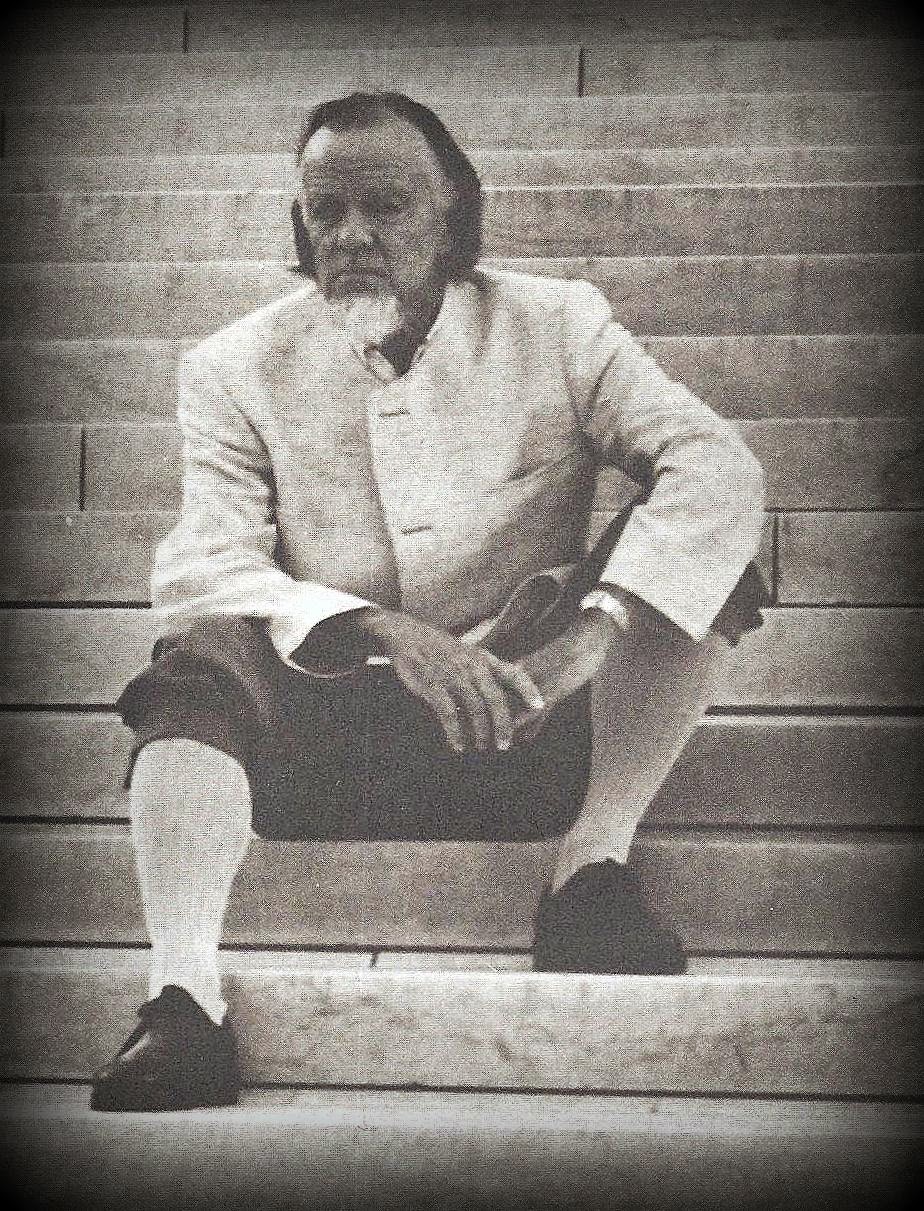










 The Daily Hatch
