In this video, Professor Steve Horwitz advocates for free market economic policy. He refutes the often recited claim that “What is good for General Motors is good for America” by explaining that pro-business legislation encourages behavior that is not beneficial to society or the business itself. He suggests that, in a free market, factors such as profit and competition encourage behavior that ultimately benefits society. Professor Horwitz illustrates that pro-business legislation restricts progress and therefore caters to the interests of industry rather than to consumers, whereas “supporters of free markets are ultimately pro-human and pro-people because it is through markets that we get the most innovation and we get the most goods and the cheapest prices.”
But some folks reflexively think that wealth is bad and they would like us to believe that the economy is a fixed pie, meaning that the rich have more money because the poor have less money.
If you think I’m exaggerating, check out a new report from Oxfam, a UK-based group that was created to alleviate poverty but has largely morphed into a left-wing pressure group.
The folks at Oxfam complain about the supposed “capture of opportunities by the rich at the expense of the poor and middle classes” and that “tax rates for the richest have fallen in 29 of the 30 countries.”
As the world’s richest and most powerful men and women prepare to meet in the Swiss resort of Davos for the annual World Economic Forum on Wednesday (22 January), the British development charity, Oxfam, has issued a new report on global inequality. According to its findings, the wealth of the world’s 85 richest people – €81.2 trillion – amounts to that of the poorest half of the world population, or 3.5 billion people. …”In Europe, austerity has been imposed on the poor and middle classes under huge pressure from financial markets whose wealthy investors have benefited from state bailouts of financial institutions,” the charity said. Financial deregulation in the US has contributed to the situation, in which the richest one percent of the population has more money than ever since 1933. …The charity said Davos participants should reverse the trend and pledge to support higher taxes for the rich, while refraining from using their wealth to seek political favours.
There are several parts of this excerpt that deserve attention, including passages that are correct (such as bailouts giving undeserved money to the rich) and passages that are nonsensical (the financial crisis was caused by intervention, not deregulation).
But I want to focus solely on the inequality issue. Let’s assume Oxfam is right and that the world’s 85 richest people have $81.2 trillion of wealth. The group obviously wants us to think this accumulation of wealth is bad and that it somehow comes at the expense of the rest of us.
Tim Carney of the Washington Examiner hits the nail on the head, explaining that there’s a big difference between honest wealth and riches obtained through government coercion.
…is it a bad thing for a country to have some really rich people? Again, it depends on how they got rich. Sutirtha Bagchi of the University of Michigan’s business school and Jan Svejnar of Columbia’s School of International and Public Affairs studied how inequality correlates with economic growth. In general, more inequality meant slower growth, and less inequality meant faster growth. But in many countries, over various time periods, growing inequality had no effect on economic growth. The new study suggests that an increase in inequality hurt the economy when the rich were getting rich through political connections. That is, inequality hurts the economy when “a large share of the national wealth is held by a small number of politically connected families,” as the authors put it. …Bagchi and Svenjar took pains to classify political billionaires as narrowly as possible. …The political billionaires were only people who “would not have become a billionaire in the absence of political connections that resulted in favoritism and/or explicit government support.”
The oft-missed lesson here is that undeserving wealth generally is obtained because of big government.
Which reminds me of a very astute observation by a former Cato colleague, who wrote that, “…the more power the government has to pick winners and losers, the more power rich people will have relative to poor people.”
Carney continues, pointing out that wealth obtained through markets is good. Such success creates a bigger pie and helps boost living standards for everyone.
But wealth achieved via government is cronyism, and that contributes to economic stagnation.
When a country’s wealthiest got wealthy through market means, the resulting inequality has no negative effect on economic growth. This jibes with what we know about free markets. If people can get rich by providing valuable things at good prices, then society will get more valuable things at good prices—and people across the income spectrum benefit. But if people get rich by pocketing subsidies and using the state to crush competitors, then they gained their wealth at the expense of everyone else. Bill Gates became a billionaire by making and selling something that makes regular people more productive and more connected. Buffett got rich largely by providing capital to underfunded but well-run businesses. If Bagchi’s and Svejnar’s findings are correct, then the bottom line is this: Inequality itself doesn’t hurt the economy. Cronyism hurts the economy.
I fully agree with Tim’s analysis, though I would have drawn a distinction between the younger Warren Buffett, who was a savvy investor and the older Buffett, who has climbed into bed with the political elite.
The bottom line is that the poor aren’t poor because of honest rich people. The poor are suffering because of big government, including the cronyism that lines the pockets of dishonest companies and individuals that feed at the public trough.
Unfortunately, many insider leftists are perfectly content with those policies and they use inequality to distract voters from the real problem.
There are honest leftists, of course, and they presumably would be outraged by the sleaze in national capitals. Their problem is that they genuinely think the economic is fixed pie. Or they think that inequality is such a bad thing that they would be willing to reduce incomes for the poor if it meant the rich suffered even more.
P.S. In its report on inequality, Oxfam also went after tax havens and said more revenue for government would help reduce poverty.
Oxfam also estimated that €15.5 trillion of the wealth is hidden from the taxman in offshore accounts, at a time when governments are cutting public spending. …tax avoidance by EU and US corporations in Africa is depriving its governments from resources which could be use to fight poverty.
I wrote a study years ago exposing Oxfam’s sloppy methodology on tax competition issues. No wonder they’ve been labeled as being part of the “tax taliban.”
But what really irks me about that passage is the assumption that bigger government reduces poverty. That’s nonsense. The data shows that growth is the best way of helping the poor.
P.S. I wrote yesterday about Chris Christie’s problems in New Jersey. I said his real challenge was the need to reduce the burden of government, not the bridge scandal.
But I’m a sucker for good political humor, so enjoy this image that appeared in my inbox.
P.P.S. Since Oxfam criticized tax havens, I can’t resist calling your attention to my video tutorial on tax competition and tax haven.
Simply stated, we need some external check on the greed of the political class.
________ Dan Mitchell is right and we must reduce the size and power of Government!!!! Thanks to Obamacare and the IRS, You’re at Risk of Having Your Identity Stolen and Your Bank Account Emptied December 3, 2013 by Dan Mitchell There are many reason I don’t like Obamacare, including its punitive impact on taxpayers and the […]
________ Dan Mitchell of the Cato Institute has noted, “I’m all in favor of bringing federal government spending back down to about 18 percent of GDP, which is where it was when Bill Clinton left office.” The Rise (and Upcoming Fall) of the Welfare State in the Western World November 12, 2013 by Dan Mitchell I […]
I have put up lots of cartoons from Dan Mitchell’s blog before and they have got lots of hits before. Many of them have dealt with the economy, eternal unemployment benefits, socialism, Greece, welfare state or on gun control. It is sad to see our federal government spend away our children’s future but when some of the states are doing that […]
I have put up lots of cartoons from Dan Mitchell’s blog before and they have got lots of hits before. Many of them have dealt with the economy, eternal unemployment benefits, socialism, Greece, welfare state or on gun control. Government Stupidity Defies Satire When a $50 Light Bulb Wins an Affordability Prize March 16, 2012 by Dan Mitchell I’ve written about the […]
I have put up lots of cartoons from Dan Mitchell’s blog before and they have got lots of hits before. Many of them have dealt with the economy, eternal unemployment benefits, socialism, Greece, welfare state or on gun control. Two More Excellent Political Cartoons April 26, 2011 by Dan Mitchell I praised Michael Ramirez a few days ago for his clever political cartoons, […]
I have put up lots of cartoons from Dan Mitchell’s blog before and they have got lots of hits before. Many of them have dealt with the economy, eternal unemployment benefits, socialism, Greece, welfare state or on gun control. A Humorous Look at Obama’s Green-Energy Boondoggle March 12, 2012 by Dan Mitchell Actually, I’m not sure this is humorous. Whether we’re looking […]
I have put up lots of cartoons from Dan Mitchell’s blog before and they have got lots of hits before. Many of them have dealt with the economy, eternal unemployment benefits, socialism, Greece, welfare state or on gun control. I thought it was great when the Republican Congress and Bill Clinton put in welfare reform but now that has been done […]
I have put up lots of cartoons from Dan Mitchell’s blog before and they have got lots of hits before. Many of them have dealt with the economy, eternal unemployment benefits, socialism, Greece, welfare state or on gun control. When I think of President Obama’s “you didn’t build that” comment it makes me think of this cartoon below. Sure enough he […]
I have put up lots of cartoons from Dan Mitchell’s blog before and they have got lots of hits before. Many of them have dealt with the economy, eternal unemployment benefits, socialism, Greece, welfare state or on gun control. Concerning the French overspending problem Dan Mitchell states, “There are obvious lessons from Europe for the United States. If politicians don’t reform […]
I have put up lots of cartoons from Dan Mitchell’s blog before and they have got lots of hits before. Many of them have dealt with the economy, eternal unemployment benefits, socialism, Greece, welfare state or on gun control. When Government Replaces Santa Claus December 25, 2011 by Dan Mitchell Chuck Asay is a superb cartoonist, and he produced one of my […]
I truly believe that many of the problems we have today in the USA are due to the advancement of humanism in the last few decades in our society. Ronald Reagan appointed the evangelical Dr. C. Everett Koop to the position of Surgeon General in his administration. He partnered with Dr. Francis Schaeffer in making the video below. It is very valuable information for Christians to have. Actually I have included a video below that includes comments from him on this subject.
Francis Schaeffer Whatever Happened to the Human Race (Episode 1) ABORTION
Francis Schaeffer: What Ever Happened to the Human Race? (Full-Length Documentary)
Part 1 on abortion runs from 00:00 to 39:50, Part 2 on Infanticide runs from 39:50 to 1:21:30, Part 3 on Youth Euthanasia runs from 1:21:30 to 1:45:40, Part 4 on the basis of human dignity runs from 1:45:40 to 2:24:45 and Part 5 on the basis of truth runs from 2:24:45 to 3:00:04
“The main issue” is the ownership of the reproductive organs.
If the state has ownership then forced birth, abortion, or sterilization are beyond the citizen’s legal control. Furthermore, if the state can claim ownership of females’ reproductive organs, then the state can claim ownership of other organs & of either sex.
____________________
Zatharus, YOUR SIDE WON IN THE LAST TWO ELECTIONS AND WE ARE GETTING THE SUPREME COURT JUSTICES THAT YOUR PRESIDENT IS CHOOSING!!!!
Murray Vasser who is a Physics Instructor at Biola University wrote:
If you really believe that late-term abortion is a victory for women, and if you really believe that laws which ban late-term abortions are a violation of reproductive rights, then you should like Dr. Gosnell. Maybe his clinic was a little too dirty, but aside from these janitorial concerns, he was a hero for freedom and choice.
All in all, the blustering moral outrage from American voters rings a little hollow, to say the least. In two landslide elections, you voted into office Barack Obama, a man who has stridently fought to keep late term abortion legal before, during, and after birth. (Click here if you do not believe me.)
You asked for it. Twice. Is this not what you wanted?
Many in the world today are taking a long look at the abortion industry because of the May 14, 2013 guilty verdict and life term penalty handed down by a jury (which included 9 out of 12 pro-choice jurors) to Dr. Kermit Gosnell. During this time of reflection I wanted to put forth some of the […]
Many in the world today are taking a long look at the abortion industry because of the May 14, 2013 guilty verdict and life term penalty handed down by a jury (which included 9 out of 12 pro-choice jurors) to Dr. Kermit Gosnell. During this time of reflection I wanted to put forth some of the […]
Many in the world today are taking a long look at the abortion industry because of the May 14, 2013 guilty verdict and life term penalty handed down by a jury (which included 9 out of 12 pro-choice jurors) to Dr. Kermit Gosnell. During this time of reflection I wanted to put forth some of the […]
Many in the world today are taking a long look at the abortion industry because of the May 14, 2013 guilty verdict and life term penalty handed down by a jury (which included 9 out of 12 pro-choice jurors) to Dr. Kermit Gosnell. During this time of reflection I wanted to put forth some of the […]
Many in the world today are taking a long look at the abortion industry because of the May 14, 2013 guilty verdict and life term penalty handed down by a jury (which included 9 out of 12 pro-choice jurors) to Dr. Kermit Gosnell. During this time of reflection I wanted to put forth some of the […]
Many in the world today are taking a long look at the abortion industry because of the May 14, 2013 guilty verdict and life term penalty handed down by a jury (which included 9 out of 12 pro-choice jurors) to Dr. Kermit Gosnell. During this time of reflection I wanted to put forth some of the […]
Many in the world today are taking a long look at the abortion industry because of the May 14, 2013 guilty verdict and life term penalty handed down by a jury (which included 9 out of 12 pro-choice jurors) to Dr. Kermit Gosnell. During this time of reflection I wanted to put forth some of the […]
Many in the world today are taking a long look at the abortion industry because of the May 14, 2013 guilty verdict and life term penalty handed down by a jury (which included 9 out of 12 pro-choice jurors) to Dr. Kermit Gosnell. During this time of reflection I wanted to put forth some of the […]
Many in the world today are taking a long look at the abortion industry because of the May 14, 2013 guilty verdict and life term penalty handed down by a jury (which included 9 out of 12 pro-choice jurors) to Dr. Kermit Gosnell. During this time of reflection I wanted to put forth some of the […]
Many in the world today are taking a long look at the abortion industry because of the May 14, 2013 guilty verdict and life term penalty handed down by a jury (which included 9 out of 12 pro-choice jurors) to Dr. Kermit Gosnell. During this time of reflection I wanted to put forth some of the […]
Many in the world today are taking a long look at the abortion industry because of the May 14, 2013 guilty verdict and life term penalty handed down by a jury (which included 9 out of 12 pro-choice jurors) to Dr. Kermit Gosnell. During this time of reflection I wanted to put forth some of the […]
Many in the world today are taking a long look at the abortion industry because of the May 14, 2013 guilty verdict and life term penalty handed down by a jury (which included 9 out of 12 pro-choice jurors) to Dr. Kermit Gosnell. During this time of reflection I wanted to put forth some of the […]
Many in the world today are taking a long look at the abortion industry because of the May 14, 2013 guilty verdict and life term penalty handed down by a jury (which included 9 out of 12 pro-choice jurors) to Dr. Kermit Gosnell. During this time of reflection I wanted to put forth some of the […]
Many in the world today are taking a long look at the abortion industry because of the May 14, 2013 guilty verdict and life term penalty handed down by a jury (which included 9 out of 12 pro-choice jurors) to Dr. Kermit Gosnell. During this time of reflection I wanted to put forth some of the […]
Many in the world today are taking a long look at the abortion industry because of the May 14, 2013 guilty verdict and life term penalty handed down by a jury (which included 9 out of 12 pro-choice jurors) to Dr. Kermit Gosnell. During this time of reflection I wanted to put forth some of the […]
Many in the world today are taking a long look at the abortion industry because of the May 14, 2013 guilty verdict and life term penalty handed down by a jury (which included 9 out of 12 pro-choice jurors) to Dr. Kermit Gosnell. During this time of reflection I wanted to put forth some of the […]
Francis Schaeffer: “Whatever Happened to the Human Race” (Episode 1) ABORTION OF THE HUMAN RACE Published on Oct 6, 2012 by AdamMetropolis ________________ What a great article below: Dr. Alveda King: Guilty Gosnell Verdict May Spark More Justice for Women and Babies Contact: Eugene Vigil, King for America, 470-244-3302 PHILADELPHIA, May 13, 2013 /Christian Newswire/ […]
Many in the world today are taking a long look at the abortion industry because of the May 14, 2013 guilty verdict and life term penalty handed down by a jury (which included 9 out of 12 pro-choice jurors) to Dr. Kermit Gosnell. During this time of reflection I wanted to put forth some of the […]
Francis Schaeffer: “Whatever Happened to the Human Race” (Episode 1) ABORTION OF THE HUMAN RACE Published on Oct 6, 2012 by AdamMetropolis ________________ May 14, 2013 Murdered Thousands, Convicted for Three: The Kermit Gosnell Verdict By Drew Belsky Read more: http://www.americanthinker.com/2013/05/murdered_thousands_convicted_for_three_the_kermit_gosnell_verdict.html#ixzz2TMstLk1c Follow us: @AmericanThinker on Twitter | AmericanThinker on FacebookPhiladelphia abortionist Kermit Gosnell was convicted […]
Many in the world today are taking a long look at the abortion industry because of the May 14, 2013 guilty verdict and life term penalty handed down by a jury (which included 9 out of 12 pro-choice jurors) to Dr. Kermit Gosnell. During this time of reflection I wanted to put forth some of the […]
Francis Schaeffer: “Whatever Happened to the Human Race” (Episode 1) ABORTION OF THE HUMAN RACE Published on Oct 6, 2012 by AdamMetropolis ________________ A Verdict Doesn’t End the Gosnell Story By: Chairman Reince Priebus (Diary) | May 13th, 2013 at 03:27 PM | 28 RESIZE: AAA The horrors that unfolded in the clinic of Dr. […]
Many in the world today are taking a long look at the abortion industry because of the May 14, 2013 guilty verdict and life term penalty handed down by a jury (which included 9 out of 12 pro-choice jurors) to Dr. Kermit Gosnell. During this time of reflection I wanted to put forth some of the […]
Francis Schaeffer: “Whatever Happened to the Human Race” (Episode 1) ABORTION OF THE HUMAN RACE Published on Oct 6, 2012 by AdamMetropolis ________________ All-American Horror Story: Top 10 Kermit Gosnell Trial Revelations by Kristan Hawkins | Washington, DC | LifeNews.com | 4/12/13 3:38 PM Since so many in the media have failed/refused to report on […]
Many in the world today are taking a long look at the abortion industry because of the May 14, 2013 guilty verdict and life term penalty handed down by a jury (which included 9 out of 12 pro-choice jurors) to Dr. Kermit Gosnell. During this time of reflection I wanted to put forth some of the […]
Francis Schaeffer: “Whatever Happened to the Human Race” (Episode 1) ABORTION OF THE HUMAN RACE Published on Oct 6, 2012 by AdamMetropolis _____________ Tony Perkins: Gosnell Trial – FOX News Published on May 13, 2013 Tony Perkins: Gosnell Trial – FOX News ________________ Hey Obama, Kermit Gosnell Is What a Real War on Women Looks Like […]
Many in the world today are taking a long look at the abortion industry because of the May 14, 2013 guilty verdict and life term penalty handed down by a jury (which included 9 out of 12 pro-choice jurors) to Dr. Kermit Gosnell. During this time of reflection I wanted to put forth some of the […]
Francis Schaeffer: “Whatever Happened to the Human Race” (Episode 1) ABORTION OF THE HUMAN RACE Published on Oct 6, 2012 by AdamMetropolis ___ _____________ Tony Perkins: Gosnell Trial – FOX News Published on May 13, 2013 Tony Perkins: Gosnell Trial – FOX News ________________ Family Research Council Praises Jury for Bringing Justice to Victims of Abortionist […]
Many in the world today are taking a long look at the abortion industry because of the May 14, 2013 guilty verdict and life term penalty handed down by a jury (which included 9 out of 12 pro-choice jurors) to Dr. Kermit Gosnell. During this time of reflection I wanted to put forth some of the […]
Many in the world today are taking a long look at the abortion industry because of the May 14, 2013 guilty verdict and life term penalty handed down by a jury (which included 9 out of 12 pro-choice jurors) to Dr. Kermit Gosnell. During this time of reflection I wanted to put forth some of the […]
Francis Schaeffer: “Whatever Happened to the Human Race” (Episode 1) ABORTION OF THE HUMAN RACE Published on Oct 6, 2012 by AdamMetropolis ________________ _____________ Tony Perkins: Gosnell Trial – FOX News Published on May 13, 2013 Tony Perkins: Gosnell Trial – FOX News ________________ Kermit Gosnell and the Logic of “Pro-Choice” by Matthew J. Franck within […]
Many in the world today are taking a long look at the abortion industry because of the May 14, 2013 guilty verdict and life term penalty handed down by a jury (which included 9 out of 12 pro-choice jurors) to Dr. Kermit Gosnell. During this time of reflection I wanted to put forth some of the […]
Many in the world today are taking a long look at the abortion industry because of the May 14, 2013 guilty verdict and life term penalty handed down by a jury (which included 9 out of 12 pro-choice jurors) to Dr. Kermit Gosnell. During this time of reflection I wanted to put forth some of the […]
Francis Schaeffer: “Whatever Happened to the Human Race” (Episode 1) ABORTION OF THE HUMAN RACE Published on Oct 6, 2012 by AdamMetropolis ________________ Fr. Pavone: Right to choose must yield to right to life STATEN ISLAND, NY — Father Frank Pavone, National Director of Priests for Life, had the following comment on the verdict in […]
Many in the world today are taking a long look at the abortion industry because of the May 14, 2013 guilty verdict and life term penalty handed down by a jury (which included 9 out of 12 pro-choice jurors) to Dr. Kermit Gosnell. During this time of reflection I wanted to put forth some of the […]
Francis Schaeffer: “Whatever Happened to the Human Race” (Episode 1) ABORTION OF THE HUMAN RACE Published on Oct 6, 2012 by AdamMetropolis ________________ The truth of abortion … the hope for Gosnell’s repentance A conviction in the murder trial of Philadelphia abortionist Kermit Gosnell has boosted the efforts of pro-lifers to demonstrate what abortion really […]
The Selfishness of Chris Evert Part 2 (Includes videos and Pictures) _________________________________ _____________________ _______________________ __________________________ Tennis – Wimbledon 1974 [ Official Film ] – 05/05 Published on May 1, 2012 John Newcombe, Ken Rosewall, Bjor Borg, Jimmy Connors, Cris Evert… ___________________ Jimmy Connors Reflects Published on May 13, 2013 Jimmy Connors visits “SportsCenter” to discuss his memoir, […]
You have raised taxes several times but have you calculated the fact that revenues may go down?
The Laffer Curve, Part I: Understanding the Theory
Uploaded onJan 28, 2008
The Laffer Curve charts a relationship between tax rates and tax revenue. While the theory behind the Laffer Curve is widely accepted, the concept has become very controversial because politicians on both sides of the debate exaggerate. This video shows the middle ground between those who claim “all tax cuts pay for themselves” and those who claim tax policy has no impact on economic performance. This video, focusing on the theory of the Laffer Curve, is Part I of a three-part series. Part II reviews evidence of Laffer-Curve responses. Part III discusses how the revenue-estimating process in Washington can be improved. For more information please visit the Center for Freedom and Prosperity’s web site: http://www.freedomandprosperity.org
If I live to be 100 years old, I suspect I’ll still be futilely trying to educate politicians that there’s not a simplistic linear relationship between tax rates and tax revenue.
You can’t double tax rates, for instance, and expect to double tax revenue. Simply stated, there’s another variable – called taxable income – that needs to be added to the equation.This simple insight is what gives usthe Laffer Curve.
This is common sense in the business community. No restaurant owner would ever be foolish enough to think that revenues will double if all prices increase by 100 percent. People in the real world know that this would mean lower sales.
At best, revenues will rise by much less than 100 percent in that scenario. And if sales drop by enough, revenues may actually fall.
Perhaps because so few of them have business experience, it seems that politicians have a hard time grasping this simple concept.
The latest examples come from Europe, where the never-ending greed for more revenue has resulted in the imposition offinancial transaction taxes.
So how’s that working out? Are politicians collecting the revenue they expected?
…taxes on financial transactions across Europe have devastated market activity and failed to raise as much as politicians hoped, according to new figures out yesterday.
The article cites three powerful examples, starting with Hungary.
Hungary implemented a 0.1 per cent tax at the start of the year. But it raised less than half the revenue the state had hoped for, bringing in 13bn Hungarian Forints (£36m) in January.
Wow, less than 50 percent of the revenue that politicians were expecting. But the politicians probably don’t care about the collateral damage they’re imposing on the economy because they’ll get to buy votes with another 13 billion Forints (about $55 million).
Now let’s see how the French are doing.
France forged ahead on its own, introducing a 0.2 per cent tax on sales of shares of major firms. But that only raised €200m (£169.4m) from August to November, well below to €530m expected.
Gee, what a shame, the politicians in Paris are only getting about one-third as much money as they were expecting. That’s even worse than Hungary.
But they’ll surely squander that bit of cash as fast as possible.
Our last example comes from Italy. There are no revenue numbers yet, but the decline in financial activity suggests this tax also will be a flop.
And Italy launched its FTT this month. Figures from TMF Group suggest it has cut trading volumes by 38 per cent already
Though politicians may decide it’s a success since they may get more than 50 percent of what they were originally estimating.
That kind of forecasting error would get somebody fired at any private business, but being a politician means never having to say you’re sorry.
Thank you so much for your time. I know how valuable it is. I also appreciate the fine family that you have and your commitment as a father and a husband.
Sincerely,
Everette Hatcher III, 13900 Cottontail Lane, Alexander, AR 72002, ph 501-920-5733, lowcostsqueegees@yahoo.com
Max Brantley is wrong about Tom Cotton’s accusation concerning the rise of welfare spending under President Obama. Actually welfare spending has been increasing for the last 12 years and Obama did nothing during his first four years to slow down the rate of increase of welfare spending. Rachel Sheffield of the Heritage Foundation has noted: […]
I have put up lots of cartoons from Dan Mitchell’s blog before and they have got lots of hits before. Many of them have dealt with the economy, eternal unemployment benefits, socialism, Greece, welfare state or on gun control. I think Max Brantley of the Arkansas Times Blog was right to point out on 2-6-13 that Hillary […]
I thought it was great when the Republican Congress and Bill Clinton put in welfare reform but now that has been done away with and no one has to work anymore it seems. In fact, over 40% of the USA is now on the government dole. What is going to happen when that figure gets over […]
Again we have another shooting and the gun control bloggers are out again calling for more laws. I have written about this subject below and on May 23, 2012, I even got a letter back from President Obama on the subject. Now some very interesting statistics below and a cartoon follows. (Since this just hit the […]
watch?v=llQUrko0Gqw] The federal government spends about 10% on roads and public goods but with the other money in the budget a lot of harm is done including excessive regulations on business. That makes Obama’s comment the other day look very silly. A Funny Look at Obama’s You-Didn’t-Build-That Comment July 28, 2012 by Dan Mitchell I made […]
I have written a lot about this in the past and sometimes you just have to sit back and laugh. Laughing at Obama’s Bumbling Class Warfare Agenda July 13, 2012 by Dan Mitchell We know that President Obama’s class-warfare agenda is bad economic policy. We know high tax rates undermine competitiveness. And we know tax increases […]
Dan Mitchell Discussing Dishonest Budget Numbers with John Stossel Uploaded by danmitchellcato on Feb 11, 2012 No description available. ______________ Dan Mitchell of the Cato Institute has shown before how excessive spending at the federal level has increased in recent years. A Humorous Look at Obama’s Screwy Budget Math May 31, 2012 by Dan Mitchell I’ve […]
Sometimes it is so crazy that you just have to laugh a little. The European Mess, Captured by a Cartoon June 22, 2012 by Dan Mitchell The self-inflicted economic crisis in Europe has generated some good humor, as you can see from these cartoons by Michael Ramirez and Chuck Asay. But for pure laughter, I don’t […]
Another great cartoon on President Obama’s efforts to create jobs!!! A Simple Lesson about Job Creation for Barack Obama December 7, 2011 by Dan Mitchell Even though leftist economists such as Paul Krugman and Larry Summers have admitted that unemployment insurance benefits are a recipe for more joblessness, the White House is arguing that Congress should […]
Dan Mitchell hits the nail on the head and sometimes it gets so sad that you just have to laugh at it like Conan does. In order to correct this mess we got to get people off of government support and get them in the private market place!!!! Chuck Asay’s New Cartoon Nicely Captures Mentality […]
Cato Institute scholar Dan Mitchell is right about Greece and the fate of socialism: Two Pictures that Perfectly Capture the Rise and Fall of the Welfare State July 15, 2011 by Dan Mitchell In my speeches, especially when talking about the fiscal crisis in Europe (or the future fiscal crisis in America), I often warn that […]
John Stossel report “Myth: Gun Control Reduces Crime Sheriff Tommy Robinson tried what he called “Robinson roulette” from 1980 to 1984 in Central Arkansas where he would put some of his men in some stores in the back room with guns and the number of robberies in stores sank. I got this from Dan Mitchell’s […]
I have put up lots of cartons and posters from Dan Mitchell’s blog before and they have got lots of hits before. Many of them have dealt with the economy, eternal unemployment benefits, socialism, Greece, welfare state or on gun control. Amusing Gun Control Picture – Circa 1999 April 3, 2010 by Dan Mitchell Dug this gem out […]
We got to cut spending and stop raising the debt ceiling!!! When Governments Cut Spending Uploaded on Sep 28, 2011 Do governments ever cut spending? According to Dr. Stephen Davies, there are historical examples of government spending cuts in Canada, New Zealand, Sweden, and America. In these cases, despite popular belief, the government spending […]
I have put up lots of cartons and posters from Dan Mitchell’s blog before and they have got lots of hits before. Many of them have dealt with the economy, eternal unemployment benefits, socialism, Greece, welfare state or on gun control. On 2-6-13 the Arkansas Times Blogger “Sound Policy” suggested, “All churches that wish to allow concealed […]
Gun Free Zones???? Stalin and gun control On 1-31-13 ”Arkie” on the Arkansas Times Blog the following: “Remember that the biggest gun control advocate was Hitler and every other tyrant that every lived.” Except that under Hitler, Germany liberalized its gun control laws. __________ After reading the link from Wikipedia that Arkie provided then I responded: […]
On 1-31-13 I posted on the Arkansas Times Blog the following: I like the poster of the lady holding the rifle and next to her are these words: I am compensating for being smaller and weaker than more violent criminals. __________ Then I gave a link to this poster below: On 1-31-13 also I posted […]
I have spent alot of time talking about Woody Allen films on this blog and looking at his worldview. He has a hopeless, meaningless, nihilistic worldview that believes we are going to turn to dust and there is no afterlife. Even though he has this view he has taken the opportunity to look at the weaknesses of his own secular view. I salute him for doing that. That is why I have returned to his work over and over and presented my own Christian worldview as an alternative.
Film Info: With Cate Blanchett, Bobby Cannavale, Alec Baldwin A woman has a breakdown while visiting her sister. Director: Woody Allen (1:38). PG-13: Language. Angelika, BAM, Lincoln Plaza, City Cinemas 1 2 3.
Artists can get their inspiration from anywhere — including, of course, from other great works. So it is with Woody Allen’s dazzling tightrope-walk of a drama, “Blue Jasmine,” which seemingly riffs on Tennessee Williams’ “A Streetcar Named Desire” while finding grace notes of its own.
Cate Blanchett is Jasmine, first seen jabbering to a stranger on a plane. Jasmine is in the midst of a dialogue with herself and with the ghosts of her past, turning what soon becomes clear is inner turmoil into a stream of words trailing behind her.
Jasmine is arriving in San Francisco, where her sister Ginger (Sally Hawkins) lives. The siblings, both of whom were adopted, are totally dissimilar. Lower middle-class Ginger works proudly as a grocery-store clerk, and has a construction worker ex-husband (Andrew Dice Clay). Jasmine is — was — well-tended-to, a New York socialite with her nose, and her attitude, in the air.
Sally Hawkins and Bobby Cannavale in “Blue Jasmine”
Until things came crashing down. In a series of flashbacks, Jasmine’s investment broker ex-husband Hal (Alec Baldwin) is revealed as a philandering sneak. His Hamptons home and Park Avenue life were paid for via Bernie Madoff-style schemes.
After Hal commits suicide in prison, Jasmine, who’s been wandering the streets, winds up at Ginger’s. But Ginger’s fiancé Chili (Bobby Cannavale), a speak-the-truth mechanic with a rough persona, sees Jasmine for what she is, throwing her even deeper into her mental crisis.
A lot could have gone wrong with “Blue Jasmine,” especially given Allen’s late-era tendency to have actors adhere to an unrealistic style. Yet the Brooklyn-born filmmaker can still produce work that’s terrifically entertaining (“Midnight in Paris”) or catnip for the right performers (like Javier Bardem and Penelope Cruz in “Vicky Cristina Barcelona”).
Cate Blanchett and Alec Baldwin in “Blue Jasmine”
This one works, and in spades. While Allen’s female actresses are often heralded, the men of “Jasmine” are worth praising. Cannavale, a sparkplug whether on Broadway or in bit roles (including the upcoming “Lovelace”), keeps Chili, a Stanley Kowalski homage, from ever tipping into parody. You believe this guy. He embodies Allen’s appreciation for, and satire of, class differences, making up for Hawkins’ slight overreach.
Clay is, amazingly, also terrific in his brief scenes, nailing the kind of turn that echoes the ones Danny Aiello and Nick Apollo Forte gave in Allen’s “Purple Rose of Cairo” and “Broadway Danny Rose,” respectively. And Baldwin — who first worked for Allen in 1990’s underseen “Alice” — gives his usual funny-gruff gloss to a puffed-up financial wolf.
Equally impressive, and doing a lot in small roles, are Louis C.K., Peter Sarsgaard and Alden Ehrenreich, as Jasmine and Hal’s grown son.
While “Jasmine” is spiced with light comedy, and splinters some of Williams’ characters into two, Blanchett has the toughest task: making Blanche Dubois into a modern Woody Allen heroine. The Australian Oscar-winner knows the terrain — she’s led a “Streetcar” production in the U.S. and Down Under — and as her twitchiness turns to anger and panic, what seems like a sketch becomes a mosaic. The way she anchors this superb dramedy is a thing of beauty.
Catch “Joe Neumaier’s Movie Minute” throughout the day Thurs.-Sun. on New York’s WOR 710-AM, and at wor710.com
I love the movie “Midnight in Paris” by Woody Allen and I have done over 30 posts on the historical characters mentioned in the film. Take a look below:
I have spent alot of time talking about Woody Allen films on this blog and looking at his worldview. He has a hopeless, meaningless, nihilistic worldview that believes we are going to turn to dust and there is no afterlife. Even though he has this view he has taken the opportunity to look at the weaknesses of […]
I have spent alot of time talking about Woody Allen films on this blog and looking at his worldview. He has a hopeless, meaningless, nihilistic worldview that believes we are going to turn to dust and there is no afterlife. Even though he has this view he has taken the opportunity to look at the weaknesses of […]
Woody Allen video interview in France Related posts: “Woody Wednesdays” Woody Allen on God and Death June 6, 2012 – 6:00 am Good website on Woody Allen How can I believe in God when just last week I got my tongue caught in the roller of an electric typewriter? If Jesus Christ came back today and […]
I have spent alot of time talking about Woody Allen films on this blog and looking at his worldview. He has a hopeless, meaningless, nihilistic worldview that believes we are going to turn to dust and there is no afterlife. Even though he has this view he has taken the opportunity to look at the weaknesses of […]
A surprisingly civil discussion between evangelical Billy Graham and agnostic comedian Woody Allen. Skip to 2:00 in the video to hear Graham discuss premarital sex, to 4:30 to hear him respond to Allen’s question about the worst sin and to 7:55 for the comparison between accepting Christ and taking LSD. ___________________ The Christian Post > […]
Crimes and Misdemeanors: A Discussion: Part 1 If you like Woody Allen films as much as I do then join me every Wednesday for another look the man and his movies. Below are some of the posts from the past: “Woody Wednesday” How Allen’s film “Crimes and Misdemeanors makes the point that hell is necessary […]
I really enjoyed this documentary on Woody Allen from PBS. Woody Allen: A Documentary, Part 1 Published on Mar 26, 2012 by NewVideoDigital Beginning with Allen’s childhood and his first professional gigs as a teen – furnishing jokes for comics and publicists – WOODY ALLEN: A DOCUMENTARY chronicles the trajectory and longevity of Allen’s career: […]
Crimes and Misdemeanors: A Discussion: Part 3 Uploaded by camdiscussion on Sep 23, 2007 Part 3 of 3: ‘Is Woody Allen A Romantic Or A Realist?’ A discussion of Woody Allen’s 1989 movie, Crimes and Misdemeanors, perhaps his finest. By Anton Scamvougeras. http://camdiscussion.blogspot.com/antons@mail.ubc.ca ______________ One of my favorite Woody Allen movies and I reviewed […]
Crimes and Misdemeanors: A Discussion: Part 2 Uploaded by camdiscussion on Sep 23, 2007 Part 2 of 3: ‘What Does The Movie Tell Us About Ourselves?’ A discussion of Woody Allen’s 1989 movie, perhaps his finest. By Anton Scamvougeras. http://camdiscussion.blogspot.com/antons@mail.ubc.ca _________________- One of my favorite Woody Allen movies and I reviewed it earlier but […]
I have spent alot of time talking about Woody Allen films on this blog and looking at his worldview. He has a hopeless, meaningless, nihilistic worldview that believes we are going to turn to dust and there is no afterlife. Even though he has this view he has taken the opportunity to look at the weaknesses of […]
Crimes and Misdemeanors: A Discussion: Part 1 If you like Woody Allen films as much as I do then join me every Wednesday for another look the man and his movies. Below are some of the posts from the past: “Woody Wednesday” How Allen’s film “Crimes and Misdemeanors makes the point that hell is necessary […]
I have spent alot of time talking about Woody Allen films on this blog and looking at his worldview. He has a hopeless, meaningless, nihilistic worldview that believes we are going to turn to dust and there is no afterlife. Even though he has this view he has taken the opportunity to look at the weaknesses of […]
Crimes and Misdemeanors: A Discussion: Part 1 Uploaded by camdiscussion on Sep 23, 2007 Part 1 of 3: ‘What Does Judah Believe?’ A discussion of Woody Allen’s 1989 movie, perhaps his finest. By Anton Scamvougeras. http://camdiscussion.blogspot.com/antons@mail.ubc.ca _____________ One of my favorite films is this gem by Woody Allen “Crimes and Misdemeanors”: Film Review By […]
Crimes and Misdemeanors: A Discussion: Part 3 Uploaded by camdiscussion on Sep 23, 2007 Part 3 of 3: ‘Is Woody Allen A Romantic Or A Realist?’ A discussion of Woody Allen’s 1989 movie, Crimes and Misdemeanors, perhaps his finest. By Anton Scamvougeras. http://camdiscussion.blogspot.com/antons@mail.ubc.ca ______________ One of my favorite Woody Allen movies and I reviewed […]
Crimes and Misdemeanors: A Discussion: Part 2 Uploaded by camdiscussion on Sep 23, 2007 Part 2 of 3: ‘What Does The Movie Tell Us About Ourselves?’ A discussion of Woody Allen’s 1989 movie, perhaps his finest. By Anton Scamvougeras. http://camdiscussion.blogspot.com/antons@mail.ubc.ca _________________- One of my favorite Woody Allen movies and I reviewed it earlier but […]
Crimes and Misdemeanors: A Discussion: Part 1 Uploaded by camdiscussion on Sep 23, 2007 Part 1 of 3: ‘What Does Judah Believe?’ A discussion of Woody Allen’s 1989 movie, perhaps his finest. By Anton Scamvougeras. http://camdiscussion.blogspot.com/antons@mail.ubc.ca _____________ Today I am starting a discusssion of the movie “Crimes and Misdemeanors” by Woody Allen. This 1989 […]
J.I.PACKER WROTE OF SCHAEFFER, “His communicative style was not that of a cautious academic who labors for exhaustive coverage and dispassionate objectivity. It was rather that of an impassioned thinker who paints his vision of eternal truth in bold strokes and stark contrasts.Yet it is a fact that MANY YOUNG THINKERS AND ARTISTS…HAVE FOUND SCHAEFFER’S ANALYSES A LIFELINE TO SANITY WITHOUT WHICH THEY COULD NOT HAVE GONE ON LIVING.”
In this video below at 13:00 Anderson talks about John Cage:
[ARTS 315] Robert Rauschenberg and Jasper Johns – Jon Anderson
Published on Apr 5, 2012
Contemporary Art Trends [ARTS 315], Jon Anderson
Working in the Gap Between Art and Life: Robert Rauschenberg and Jasper John
September 23, 2011
John Cage and Merce Cunningham pictured below:
__________________________________________
__________
__________
What is John Cage trying to demonstrate with his music? Here are comments from two bloggers that take a look at what Cage is trying to put forth.
____________________________
DESCRIBING THE STORM CHAPTER FOUR If there is no God, there can be no meaning for man except that which he creates for himself. Modern music
has expressed this concept in a most powerful way. One might well say that the history of modern music is the
story of man’s failure to attain to anything solid or permanent as he has sought to create his own meaning. We
look, then, at Modern Music…At this point we will quote from a European writer. He is discussing the work of a well-known symphonic composer, Mr. John Cage. Here it will become clear that the
new framework of thinking does indeed explain some of the strange “happenings” in great concert halls of the
world. The power of art to communicate ideas and emotions to organize life into meaningful patterns, and to realize universal truths through the self-expressed individuality of the artist are only three of the assumptions that Cage challenges.In place of a self-expressive art created by the imagination, tastes, and desires of the artist, Cage proposes an art, born of chance and indeterminacy. Back in the Chinese culture long ago the Chinese had worked out a system of tossing coins or yarrow sticks by means of which the spirits would speak. The complicated method which they developed made
sure that the person doing the tossing would not allow his own personality to intervene. Self expression
was eliminated so that the spirits could speak.
Cage picks up this same system and uses it. He too seeks to get rid of any individual expression in his
music. But there is a very great difference. As far as Cage is concerned there is nobody there to speak. There is only an impersonal universe speaking through blind chance.
Cage began to compose his music through the tossing of coins. It is said that for some of his pieces lasting
only twenty minutes he has tossed the coin thousands of times. This is pure chance, but apparently not pure enough, he wanted still more chance. So he devised a mechanical conductor. It was a machine working on cams, the motion of which cannot be determined ahead of time, and the musicians just followed this. Or, as an alternative to this, sometimes he employed two conductors who could not see each
other, both conducting simultaneously; anything, in fact, to produce pure chance. But in Cage’s universe nothing comes through in the music except noise and confusion or total silence.
There is a story that once, after the musicians had played Cage’s total chance music, as he was bowing
to acknowledge the applause, there was a noise behind him. He thought it sounded like steam escaping
from somewhere, but then to his dismay realized it was the musicians behind him who were hissing. Often his works have been booed. However, when the audience members boo at him they are, if they are modern men, in reality booing the logical conclusion of their own position as it strikes their ears in music.
We might add that one of the “compositions” of John Cage is called “Silence.” It consists of precisely that: four
and a half minutes of total silence! One could almost laugh, if it were not so sad—and serious. But it is. When
man rejects God, and God’s word revelation to man, he ends up here—doomed to silence. For what can man say
(musically, or in any other way) in a universe that has no meaning? When man refuses to think—and speak — God’s thoughts after Him, he is consigned to this predicament.
_____________
John Cage at Black Mountain College pictured on right.
In The God Who Is There, Francis Schaeffer refers to the American composer John Cage who believes that the universe is impersonal by nature and that it originated only through pure chance. In an attempt to live consistently with this personal philosophy, Cage composes all of his music by various chance agencies. He uses, among other things, the tossing of coins and the rolling of dice to make sure that no personal element enters into the final product. The result is music that has no form, no structure and, for the most part, no appeal. Though Cage’s professional life accurately reflects his belief in a universe that has no order, his personal life does not, for his favorite pastime is mycology, the collecting of mushrooms, and because of the potentially lethal results of picking a wrong mushroom, he cannot approach it on a purely by-chance basis. Concerning that, he states: “I became aware that if I approached mushrooms in the spirit of my chance operations, I would die shortly.” John Cage “believes” one thing, but practices another. In doing so, he is an example of the person described in Romans 1:18 who “suppresses the truth of God,” for when faced with the certainty of order in the universe, he still clings to his theory of randomness.
______________
02 How Should We Then Live? (Promo Clip) Dr. Francis Schaeffer
10 Worldview and Truth
Two Minute Warning: How Then Should We Live?: Francis Schaeffer at 100
Francis Schaeffer “BASIS FOR HUMAN DIGNITY” Whatever…HTTHR
John Cage first visited Black Mountain College, in Asheville, North Carolina, in April 1948, while on his way to the West Coast with choreographer Merce Cunningham. Though he only stayed in Asheville for a few days—premiering his composition Sonatas and Interludes—the visit proved formative. Cage periodically returned to the college between 1948 and 1953, a time of enormous artistic growth that, with little coincidence, aligned with the conceptual development of his 4′33″ and the hand-drawn score currently on view in There Will Never Be Silence: Scoring John Cage’s 4′33″.
Founded in 1933, Black Mountain College was one of the leading experimental art schools in America until its closure in 1957. When Philip Johnson, MoMA’s first curator of architecture, learned that Black Mountain College was searching for a professor of art, he suggested Josef Albers, an artist whom he had recently met at the Bauhaus in Germany. Only a few months prior, the Bauhaus had closed its doors due to mounting antagonism from the Nazi Party, and Josef and his wife, the preeminent textile artist Anni Albers, readily accepted the offer to join the Black Mountain College faculty. During their 16-year tenure in North Carolina, the Alberses helped model the college’s interdisciplinary curriculum on that of the Bauhaus, attracting such notable students and teachers as R. Buckminster Fuller, Elaine and Willem de Kooning, John Cage, and Robert Rauschenberg.
There Will Never Be Silence: Scoring John Cage’s 4′33″ features a number of seminal works made by artists Cage came to know and admire during his visits to Black Mountain College. The woodcut print Tlaloc (1944) and the linen-and-cotton weaving Tapestry (1948) were created by Josef and Anni Albers, respectively, who became close friends with and proponents of Cage throughout his career. The third work in the exhibition that was created at Black Mountain College, This Is the First Half of a Print Designed to Exist in Passing Time (c. 1948–49), was made by a then little-known artist, Robert Rauschenberg, whose influence on Cage in the early 1950s proved immeasurable. Though Cage and Rauschenberg both attended Black Mountain College in 1948, their visits did not coincide and they weren’t formally introduced until three years later.
In the fall of 1948, Rauschenberg, drawn to Josef Albers’s rigorous curriculum—Rauschenberg regarded Albers as “the greatest disciplinarian in the United States”—enrolled in Black Mountain College with his future wife Susan Weil. In Asheville, Rauschenberg experienced a surge of artistic growth. Considered his earliest mature work, This Is the First Half of a Print Designed to Exist in Passing Time represents Rauschenberg’s first foray into printmaking. Rauschenberg studied closely with Albers and would have been aware of his instructor’s return to woodcut printing during the 1940s. To create the 14-page album, Rauschenberg used a single wood block. For the first page, he inked the unadorned block and printed a solid black square. For each subsequent page, Rauschenberg incised a new line into the block’s surface. As observed by Walter Hopps in the exhibition catalogue Robert Rauschenberg: The Early 1950s, should the sequence of images have continued beyond 14—which the title encourages us to imagine—eventually only a white field would have remained.
As in the 1953 score for 4′33″, which Cage created approximately four years later, Rauschenberg used a single line to represent the passage of time. (The original score for 4′33″, now lost, used conventional musical notation; the following year Cage created the hand-drawn score for Irwin Kremen—which is currently on view—composed of a series of vertical lines.) The 14 prints are stapled together along the top and bound with twine to form a book, thereby encouraging viewers to experience the work by flipping through each page in sequence. Where Josef Albers drew inspiration from art of the ancient Americas in Tlaloc, whose title is a reference to the Aztec rain god, Rauschenberg’s album looked toward the future, presaging the evolution of his own work. Following the creation of This Is the First Half of a Print Designed to Exist in Passing Time, Rauschenberg began to translate the reductive language of printmaking into other mediums. His continued progression toward minimalist form—later epitomized by his 1953 work Erased de Kooning—soon brought the album to its logical conclusion: a monochromatic field.
In the summer of 1951 at Black Mountain College, Rauschenberg began a series of entirely white paintings. (His 1965 instructions for the White Paintings are on view adjacent to the album in the exhibition.) Only a few months prior, Cage was introduced to Rauschenberg at Betty Parsons Gallery in New York, initiating a period of close exchange that lasted throughout both artists’ lives. Upon witnessing the development of the White Paintings, Cage was taken aback by the younger artist’s bold abandonment of figuration. He recognized that the White Paintings were not, in fact, devoid of form, but rather served, in his words, as “mirrors of the air” and “airports for the lights, shadows, and particles.” As early as February 1948, Cage introduced the theoretical foundations for 4′33″—to “compose a piece of uninterrupted silence”—during a lecture at Vassar College. However, he claimed that it was not until seeing Rauschenberg’s White Paintings that he had the courage to explore silence within his own work.
In August 1952, Cage returned to Black Mountain College and organized Theater Piece No. 1, an unscripted performance considered by many to be the first Happening. The event took place in the college dining hall and included Rauschenberg, Cunningham, and Cage’s frequent collaborator, the young pianist David Tudor, among others. As Kyle Gann described in his book No Such Thing as Silence: John Cage’s 4′33″, the audience was seated in four triangular sections, while Cage stood on a ladder at the center. From his elevated position, Cage delivered a lecture as artists, musicians, and dancers moved freely through the space—which featured at least one of Rauschenberg’s White Paintings—deflecting attention from any single narrative and complicating the distinction between art and life. Just weeks after the production of Theater Piece No. 1, David Tudor encouraged Cage that the timing was right for Tudor to publicly perform Cage’s “silent” piece during his upcoming program at the Maverick Concert Hall in Woodstock, New York.
There Will Never Be Silence: Scoring John Cage’s 4′33″ reunites many of the figures and works that influenced Cage between 1948—the year in which he first discussed his idea for 4′33″—and its premiere on August 29, 1952. It is no coincidence that the work’s four-year incubation period coincided with Cage’s visits to Black Mountain College, a place where nascent ideas and emerging artists seemed to effortlessly cross-pollinate, inspiring Cage to finally introduce 4′33″ to the world.
Today I am looking at the artist Gerhard Richter because his views are very much like those of John Cage. In fact, he has painted many paintings in Cage’s honor and after he painted them he used a squeegee and went over the paintings.
Gerhard Richter (born 9 February 1932) is a German visual artist. Richter has simultaneously produced abstract and photorealistic painted works, as well as photographs and glass pieces. His art follows the examples…wikipedia.org
Gerhard Richter (born 9 February 1932) is a German visual artist and one of the pioneers of the New European Painting that has emerged in the second half of the twentieth century. Richter has produced abstract as well as photorealistic paintings, and also photographs and glass pieces. His art follows the examples of Picasso and Jean Arp in undermining the concept of the artist’s obligation to maintain a single cohesive style.
In October 2012, Richter’s Abstraktes Bild set an auction record price for a painting by a living artist at £21m ($34m).[4] This was exceeded in May 2013 when his 1968 piece Domplatz, Mailand (Cathedral square, Milan) was sold for $37.1 million (£24.4 million) in New York.[5]
Richter was born in Dresden, Saxony, and grew up in Reichenau, Lower Silesia, and in Waltersdorf (Zittauer Gebirge), in the Upper Lusatian countryside. He left school after 10th grade and apprenticed as an advertising and stage-set painter, before studying at the Dresden Academy of Fine Arts. In 1948, he finished higher professional school in Zittau, and, between 1949 and 1951, successively worked as an apprentice with a sign painter, a photographer and as a painter.[6] In 1950 his application for tuition in the Dresden Academy of Fine Arts was rejected as “too bourgeois”.[6] He finally began his studies at the Dresden Academy of Fine Arts in 1951. His teachers were Karl von Appen, Heinz Lohmar (de) and Will Grohmann.
In the early days of his career, he prepared a wall painting (Communion with Picasso, 1955) for the refectory of his Academy of Arts as part of his B.A. Another mural followed at the German Hygiene Museum entitled Lebensfreude (Joy of life), for his diploma and intended to produce an effect “similar to that of wallpaper or tapestry”.[7]
Both paintings were painted over for ideological reasons after Richter escaped from East to West Germany two months before the building of the Berlin Wall in 1961; after German reunification two “windows” of the wall painting Joy of life (1956) were uncovered in the stairway of the German Hygiene Museum, but these were later covered over when it was decided to restore the Museum to its original 1930 state. From 1957 to 1961 Richter worked as a master trainee in the academy and took commissions for the then state of East Germany. During this time, he worked intensively on murals likeArbeiterkampf (Workers’ struggle), on oil paintings (e.g. portraits of the East German actress Angelica Domröse and of Richter’s first wife Ema), on various self-portraits and furthermore, on a panorama of Dresden with the neutral name Stadtbild (Townscape, 1956).
When he escaped to West Germany, Richter began to study at the Kunstakademie Düsseldorf under Karl Otto Götz. With Sigmar Polke and Konrad Fischer (de) (pseudonym Lueg) he introduced the term Kapitalistischer Realismus (Capitalistic Realism)[8] as an anti-style of art, appropriating the pictorial shorthand of advertising. This title also referred to the realist style of art known as Socialist Realism, then the official art doctrine of the Soviet Union, but it also commented upon the consumer-driven art doctrine of western capitalism.
In 1983, Richter resettled from Düsseldorf to Cologne, where he still lives and works today.[9] In 1996, he moved into a studio designed by architect Thiess Marwede.[10]
Richter married Marianne Eufinger in 1957; she gave birth to his first daughter. He married his second wife, the sculptor Isa Genzken, in 1982. Richter had a son and daughter with his third wife,Sabine Moritz after they were married in 1995.
In a series of completely abstract works of the early 1990s, Richter challenges the eye of the viewer to detect anything in the field of vision other than the pure elements of his art: color, gesture, the layering of pasty materials, and the artist’s impersonal raking of these concoctions in various ways that allow chance combinations to emerge from the surface. Richter suggests only a shallow space akin to that of a mirror. The viewer is finally coaxed to set aside all searches for “content” that might originate from outside these narrow parameters and find satisfaction in the object’s beauty in and of itself, as though one were relishing a fine textile. One thus appreciates the numerous colors and transitions that occur in this painting, many having been created outside the complete control of the artist much as nature often creates wondrous optical pleasures partly by design, and partly by accident.
Gerhard Richter at Tate Modern
Published on Oct 17, 2011
Art critic Adrian Searle considers the mysterious paintings of German artist Gerhard Richter at London’s Tate Modern, whose work deals with subjects as diverse as photorealistic family portraits to a blurred vision of September 11
NS: What was the motivation when you made the ‘4 Panes of Glass’ (1967)?
GR: I wanted to show the glass itself. It was a fairly naive attempt to show that you can also touch these panes. That’s why they were revolvable … but at the same time you then also see that being able to touch them isn’t actually any help, you still can’t understand them. And, yes, it does also faintly have something to do with Duchamp. It was a polemic against Duchamp. He scratched such mysterious little ägures into the dust …
NS: So you wanted to tackle Duchamp?
GR: Yes, a bit, similar to ‘Ema’ [an image of Richter’s naked wife painted in 1966]. I remember his ‘Nude Descending a Staircase’ was thought of as the end of painting.
NS: So you wanted to show that painting was still possible in spite of Duchamp?
GR: Yes, and without abandoning representational painting. I wanted what you might call ‘retina art’ – painterly, beautiful, and if needs be, even sentimental. That wasn’t ‘in’ back then – it was kitsch.
NS: So you were interested in emotion even in the mid-1960s?
GR: Yes, without really being aware of what I was doing. In those days people didn’t see it like that, paintings after photographs of tragic events were a source of amusement, were seen as insolent and provocative, stunts. Which wasn’t that far off the mark.
NS: So you wanted painting to be capable of dealing with human emotion, and therefore in a way not the language of international abstraction.
GR: Yes.
NS: So you are sceptical about ideologies, but does painting still have a moral purpose? Let’s deal with ideologies ärst.
GR: That’s easy – if you grow up ärst in a Nazi system and then under a Communist system. And then there were other reasons too. It was a generation without fathers, and that went for me too. That’s enough to make anyone sceptical.
NS: Yes, you were without a father metaphorically, but almost without a father literally.
GR: Yes, I had neither: neither a role-model father nor the resistance of a father. A father draws boundaries and calls a halt, whenever necessary. As I didn’t have that, I was able to stay childishly naÔve that much longer – so I did what I liked, because there was nobody stopping me, even when I got it wrong. That somewhat undisciplined behaviour was not unlike what [Sigmar] Polke was doing, too.
NS: So, if you are sceptical about ideology, where do you änd your faith? Not in the Church.
GR: Not in the Church, not literally, but in other ways, yes, also in Church. It’s an old tradition and we can’t exist without some form of belief in things. We need it.
NS: Has your belief developed as you have grown older?
GR: No, I’ve always believed.
NS: It’s how you construct your world?
GR: It’s our culture, Christian history, that’s what formed me. Even as an atheist, I believe. We’re just built that way.
NS: Yes, everyone has to develop their own value system, but for a painter, sometimes, this value system is also expressed in work, so for Rothko there might be an expression in the paintings of a belief in a transcendent world.
GR:I can relate to that. And art is the ideal medium for making contact with the transcendental, or at least for getting close to it
NS: So how would you describe yourself? I don’t mean in political terms, I mean … I think you said that you don’t believe in religion.
GR:I don’t believe in God.
NS: If you don’t believe in God, what do you believe in?
GR: Well, in the ärst place, I believe that you always have to believe. It’s the only way; after all we both believe that we will do this exhibition. But I can’t believe in God, as such, he’s either too big or too small for me, and always incomprehensible, unbelievable.
NS: So what is the purpose of art?
GR: For surviving this world. One of many, many … like bread, like love.
NS: And what does it give you?
GR: [laughs] Well, certainly something you can hold on to … it has the measure of all the infathomable, senseless things, the incessant ruthlessness of our world. And art shows us how to see things that are constructive and good, and to be an active part of that.
NS: So it gives a structure to the world?
GR:Yes, comfort, hope, so it makes sense to be part of that.
NS: But that participation is not through religion?
GR: Not for me, nevertheless I am thankful that the church exists, thankful that it has done such great things, giving us laws, for instance – ‘thou shalt’ and ‘thou shalt not’, and established Goodness and Evil. That’s what all religions do, and as soon as we try to replace them, worldly religions like fascism and communism take over.
___________
Gerhard Richter: The Cage Paintings (2008)
Published on Jun 29, 2012
Gerhard Richter’s Cage Paintings at Tate Modern, London, UK
2008.
Das Video zeigt Gerhard Richters Cage-Bilder in der Tate Modern, London, Großbritannien.
In this interview below he responds to his own quote:”Picturing things, taking a view, is what makes us human; art is making sense and giving shape to that sense. It is like the religious search for God.”
For most of his career, Richter avoided political motifs in his work. A notable exception is the series October 18, 1977, in which he depicts radical Baader-Meinhof terrorists who inexplicably died in jail (it remains unclear to this day whether these young radicals committed suicide or were murdered by the police). In Erschossener 1 (Man Shot Down 1), Richter has used a photographic reference to create a blurred, monochromatic painting of a dead inmate. The morbid scene might be said to exemplify the vanity behind the terrorists’ actions; at the same time, the persistent obscurity of the image replicates the eternal mystery behind the inmates’ deaths, as well as the impossibility of securely capturing truth in any one canvas.
Gerhard Richter’s paintings of the dead RAF members caused critical reactions, as did the publication of the source photographs in the German magazine Stern in October 1980. However, the reactions differ from each other according to Richter: “I’d say the photograph provokes horror, and the painting – with the same motif – something more like grief. That comes very close to what I intended.” (Conversation with Jan Thorn-Prikker concerning the 18 October 1977, 1989, p. 229) Gerhard Richter’s artistic adaptation creates a distance from the events and enables the beholder to reflect on the terrorists’ deaths on a judgement-free level, without taking sides.
“Picturing things, taking a view, is what makes us human; art is making sense and giving shape to that sense. It is like the religious search for God.”
__________
It bears noting that the German painter Gerhard Richter once asserted, “Art is not a substitute for religion: it is a religion. The Church is no longer adequate as a means of affording experience of the transcendental, and of making religion real – and so art has been transformed from a means to a sole provider of religion.”
_____________
Tell Me Whom You Haunt | Marcel Duchamp And The Contemporary Readymade
Published on Aug 21, 2013
Film on the 2013 group show at Blain|Southern ‘Tell Me Whom You Haunt’, which explored the legacy of Marcel Duchamp through the readymades of various contemporary artists. Includes interviews with David Batchelor and Valentin Ruhry.
Produced by Clear Island. Copyright Blain|Southern, 2013.
Gerhard Richter’s retrospective in the Tate Modern in London from 6 October 2011 – 8 January 2012
Pick Up Your Brush
by Alissa Wilkinson
Last Thursday I was at the Tate Modern in London for the highly-lauded retrospective of the work of Gerhard Richter, the German painter. Born in 1932 Richter has been working for nearly five decades in a variety of mediums and styles—from colour grids to highly detailed realism to total abstraction, and even some glass sculptures. The earliest works in the show are paintings of photographs; Richter painted the photos, then dry-brushed them to achieve a blurry effect. The show continues right into the present day with his marvelous, enormous series of ‘Cage’ paintings named for the composer John Cage. In between these are sculptures of glass, monochromatics that play with texture, neon abstractions, and a lot more. Richter could hardly be accused of sticking to a single style (as opposed to, for instance, the work at the MoMA’s retrospective of Dutch-born painter Willem de Kooning, in which de Kooning largely sticks to the same abstract expressionist style even as it evolves and changes).
While Richter doesn’t have a single cohesive style—though he returns to certain techniques over and over—he does have a single force behind his work that fascinated me. From the very beginning of his work, Richter has always been dialogueing with the past. The second room in the exhibit is dedicated to work that Richter produced after seeing a touring show of French bad-boy artist Marcel Duchamp, he of the urinal titled Fountain. In response to Fountain Richter created a painting of a roll of toilet paper using his signature blurry style. Duchamp had painted Nude Descending a Staircase, No. 2 (1912), then decided painting was over and there was nothing left to do. In response Richter painted a soft, realistic, and quite lovely painting of his own wife descending a staircase. Painting, Richter was saying, has not ended. There is much more left to do.
Each of the rooms in the exhibit helped draw the link between Richter’s work and history—whether it was the history of art, artistic techniques or Richter’s own conflicted relationship with his country’s and family’s history in the wake of World War II. What was clear was this: Richter spends a great deal of time thinking about the history in which he finds himself. He is not the sort of painter who wants to do a new thing and therefore ignores the old. Yet he’s also not content to merely react or to rant; Richter dialogues with history and then pushes it forward. He looks backward, he looks forward, and then he picks up a brush.
That is, I think, exemplary behaviour for those who would pursue cultural change. It is not enough to want something new and just do it; we must know from where we come. We must read and pursue our histories. But to stop there, to either cling to or rebel against history, is insufficient. Pick up the brush.
*******
Alissa Wilkinson is co-editor of Comment. She teaches English and humanities on the full-time faculty at The King’s College in New York City. Her work on pop culture, philosophy, and fine art appears in publications including Christianity Today, Books & Culture, the Globe & Mail, WORLD, and Paste. In 2008, she founded The Curator and served as editor while on staff with International Arts Movement until 2010. Her current research interests include art’s role in postmodern public life; the relationship between contemporary fiction and religion; Christianity and millenials; and technology and human flourishing.
This article was first published on January 9, 2012 on the website of Cardus, www.cardus.ca. Cardus is a think tank dedicated to the renewal of North American social architecture. Drawing on more than 2000 years of Christian social thought, we work to enrich and challenge public debate through research, events and publications, for the common good.
Gerhard Richter Cages – review of the new Tate gallery
Visiting the new Transformed Visions gallery at the Tate Modern, I came to the last room and was surprised to see the Gerhard Richter “Cage” paintings just as they’d been shown at the retrospective last year (in a slightly different room).I’d enjoyed the Richter exibition, not knowing about his work previously, and liked the “Cage” paintings best, along with the iceberg painting.My reaction this time was even stronger.
The Richter cage paintings are like strange damaged landscapes. Like old suburban photos that were trapped in a flood, water damaged. Almost fragmented except the composition still hints at borders and horizons, but some lost familiar image is softened beyond recognition. Being alien and new as paintwork but at the same time mundane and nostalgic like captured memories.
One makes me think of 80s Chicago backyard barbecues, while another takes me to rainy Glasgow canals. Oddly, despite their vastness, none of these makes me think of the sea or a landscape – something I generally see in most abstract paintings.
Also, looking without my glasses actually dilutes the entire experience; usually when I do that it’s an enjoyable reduction to pure elements. But here the paintings need all the marks, both sharp and dragged. They’re like little scars and bruises that are what the painting is about. A pain in the pleasure. The yellow-green one makes me think of sunlight and spring (someone behind me says “sunflowers”) but at the same time the green is slightly wrong, too acidic, and its like sludge at the top. Of course this is exactly what the Glasgow canals are like.
I realise I don’t want to leave this room.
Then wandering back through the gallery rooms there is a Turner in front of me, and I realise the marks there are also little scars.
If you missed the Gerhard Richter: Panorama retrospective in 2011-2012 the Tate do have an excellentRichter app with the paintings, the blog, and the audio tour.
_____________________________
Both John Cage during his whole life held to the view that we are living in a chance universe with no personal infinite God in existence. Gerhard Richter today holds this same view and he in fact is a big fan of Cage’s work as can be seen in the above paintings. I want to challenge anyone who believes that God does not exist to examine the information below.
Psalms 22 was written 1000 years before Christ’s birth but yet it describes exactly how the Messiah was to be killed. Take at look at some of the amazing Bible prophecies that have been fulfilled in history:
For years I have been quoting a book by Peter Stoner called Science Speaks. I like to use a remarkable illustration from it to show how Bible prophecy proves that Jesus was truly God in the flesh.
I decided that I would try to find a copy of the book so that I could discover all that it had to say about Bible prophecy. The book was first published in 1958 by Moody Press. After considerable searching on the Internet, I was finally able to find a revised edition published in 1976.
Peter Stoner was chairman of the mathematics and astronomy departments at Pasadena City College until 1953 when he moved to Westmont College in Santa Barbara, California. There he served as chairman of the science division. At the time he wrote this book, he was professor emeritus of science at Westmont.
In the edition I purchased, there was a foreword by Dr. Harold Hartzler, an officer of the American Scientific Affiliation. He wrote that the manuscript had been carefully reviewed by a committee of his organization and that “the mathematical analysis included is based upon principles of probability which are thoroughly sound.” He further stated that in the opinion of the Affiliation, Professor Stoner “has applied these principles in a proper and convincing way.”
The book is divided into three sections. Two relate directly to Bible prophecy. The first section deals with the scientific validity of the Genesis account of creation.
Part One: The Genesis Record
Stoner begins with a very interesting observation. He points out that his copy of Young’s General Astronomy, published in 1898, is full of errors. Yet, the Bible, written over 2,000 years ago is devoid of scientific error. For example, the shape of the earth is mentioned in Isaiah 40:22. Gravity can be found in Job 26:7. Ecclesiastes 1:6 mentions atmospheric circulation. A reference to ocean currents can be found in Psalm 8:8, and the hydraulic cycle is described in Ecclesiastes 1:7 and Isaiah 55:10. The second law of thermodynamics is outlined in Psalm 102:25-27 and Romans 8:21. And these are only a few examples of scientific truths written in the Scriptures long before they were “discovered” by scientists.
Stoner proceeds to present scientific evidence in behalf of special creation. For example, he points out that science had previously taught that special creation was impossible because matter could not be destroyed or created. He then points out that atomic physics had now proved that energy can be turned into matter and matter into energy.
He then considers the order of creation as presented in Genesis 1:1-13. He presents argument after argument from a scientific viewpoint to sustain the order which Genesis chronicles. He then asks, “What chance did Moses have when writing the first chapter [of Genesis] of getting thirteen items all accurate and in satisfactory order?” His calculations conclude it would be one chance in 31,135,104,000,000,000,000,000 (1 in 31 x 1021). He concludes, “Perhaps God wrote such an account in Genesis so that in these latter days, when science has greatly developed, we would be able to verify His account and know for a certainty that God created this planet and the life on it.”
The only disappointing thing about Stoner’s book is that he spiritualizes the reference to days in Genesis, concluding that they refer to periods of time of indefinite length. Accordingly, he concludes that the earth is approximately 4 billion years old. In his defense, keep in mind that he wrote this book before the foundation of the modern Creation Science Movement which was founded in the 1960′s by Dr. Henry Morris. That movement has since produced many convincing scientific arguments in behalf of a young earth with an age of only 6,000 years.
Peter Stoner’s Calculations Regarding Messianic Prophecy
Peter Stoner calculated the probability of just 8 Messianic prophecies being fulfilled in the life of Jesus. As you read through these prophecies, you will see that all estimates were calculated as conservatively as possible.
The Messiah will be born in Bethlehem (Micah 5:2).
The average population of Bethlehem from the time of Micah to the present (1958) divided by the average population of the earth during the same period = 7,150/2,000,000,000 or 2.8×10⁵.
A messenger will prepare the way for the Messiah (Malachi 3:1).
One man in how many, the world over, has had a forerunner (in this case, John the Baptist) to prepare his way?
Estimate: 1 in 1,000 or 1×10³.
The Messiah will enter Jerusalem as a king riding on a donkey (Zechariah 9:9).
One man in how many, who has entered Jerusalem as a ruler, has entered riding on a donkey?
Estimate: 1 in 100 or 1×10².
The Messiah will be betrayed by a friend and suffer wounds in His hands (Zechariah 13:6).
One man in how many, the world over, has been betrayed by a friend, resulting in wounds in his hands?
Estimate: 1 in 1,000 or 1×10³.
The Messiah will be betrayed for 30 pieces of silver (Zechariah 11:12).
Of the people who have been betrayed, one in how many has been betrayed for exactly 30 pieces of silver?
Estimate: 1 in 1,000 or 1×10³.
The betrayal money will be used to purchase a potter’s field (Zechariah 11:13).
One man in how many, after receiving a bribe for the betrayal of a friend, has returned the money, had it refused, and then experienced it being used to buy a potter’s field?
Estimate: 1 in 100,000 or 1×10⁵.
The Messiah will remain silent while He is afflicted (Isaiah 53:7).
One man in how many, when he is oppressed and afflicted, though innocent, will make no defense of himself?
Estimate: 1 in 1,000 or 1×10³.
The Messiah will die by having His hands and feet pierced (Psalm 22:16).
One man in how many, since the time of David, has been crucified?
Estimate: 1 in 10,000 or 1×10⁴.
Multiplying all these probabilities together produces a number (rounded off) of 1×1028. Dividing this number by an estimate of the number of people who have lived since the time of these prophecies (88 billion) produces a probability of all 8 prophecies being fulfilled accidently in the life of one person. That probability is 1in 1017 or 1 in 100,000,000,000,000,000. That’s one in one hundred quadrillion!
Part Two: The Accuracy of Prophecy
The second section of Stoner’s book, is entitled “Prophetic Accuracy.” This is where the book becomes absolutely fascinating. One by one, he takes major Bible prophecies concerning cities and nations and calculates the odds of their being fulfilled. The first is a prophecy in Ezekiel 26 concerning the city of Tyre. Seven prophecies are contained in this chapter which was written in 590 BC:
Nebuchadnezzar shall conquer the city (vs. 7-11).
Other nations will assist Nebuchadnezzar (v. 3).
The city will be made like a bare rock (vs. 4 & 14).
It will become a place for the spreading of fishing nets (vs. 5 & 14).
Its stones and timbers will be thrown into the sea (v. 12).
Other cities will fear greatly at the fall of Tyre (v. 16).
The old city of Tyre will never be rebuilt (v. 14).
Four years after this prophecy was given, Nebuchadnezzar laid siege to Tyre. The siege lasted 13 years. When the city finally fell in 573 BC, it was discovered that everything of value had been moved to a nearby island.
Two hundred and forty-one years later Alexander the Great arrived on the scene. Fearing that the fleet of Tyre might be used against his homeland, he decided to take the island where the city had been moved to. He accomplished this goal by building a causeway from the mainland to the island, and he did that by using all the building materials from the ruins of the old city. Neighboring cities were so frightened by Alexander’s conquest that they immediately opened their gates to him. Ever since that time, Tyre has remained in ruins and is a place where fishermen spread their nets.
Thus, every detail of the prophecy was fulfilled exactly as predicted. Stoner calculated the odds of such a prophecy being fulfilled by chance as being 1 in 75,000,000, or 1 in 7.5×10⁷. (The exponent 7 indicates that the decimal is to be moved to the right seven places.)
Stoner proceeds to calculate the probabilities of the prophecies concerning Samaria, Gaza and Ashkelon, Jericho, Palestine, Moab and Ammon, Edom, and Babylon. He also calculates the odds of prophecies being fulfilled that predicted the closing of the Eastern Gate (Ezekiel 44:1-3), the plowing of Mount Zion (Micah 3:12), and the enlargement of Jerusalem according to a prescribed pattern (Jeremiah 31:38-40).
Combining all these prophecies, he concludes that “the probability of these 11 prophecies coming true, if written in human wisdom, is… 1 in 5.76×1059. Needless to say, this is a number beyond the realm of possibility.
Part Three: Messianic Prophecy
The third and most famous section of Stoner’s book concerns Messianic prophecy. His theme verse for this section is John 5:39 — “Search the Scriptures because… it is these that bear witness of Me.”
Stoner proceeds to select eight of the best known prophecies about the Messiah and calculates the odds of their accidental fulfillment in one person as being 1 in 1017.
I love the way Stoner illustrated the meaning of this number. He asked the reader to imagine filling the State of Texas knee deep in silver dollars. Include in this huge number one silver dollar with a black check mark on it. Then, turn a blindfolded person loose in this sea of silver dollars. The odds that the first coin he would pick up would be the one with the black check mark are the same as 8 prophecies being fulfilled accidentally in the life of Jesus.
The point, of course, is that when people say that the fulfillment of prophecy in the life of Jesus was accidental, they do not know what they are talking about. Keep in mind that Jesus did not just fulfill 8 prophecies, He fulfilled 108. The chances of fulfilling 16 is 1 in 1045. When you get to a total of 48, the odds increase to 1 in 10157. Accidental fulfillment of these prophecies is simply beyond the realm of possibility.
When confronted with these statistics, skeptics will often fall back on the argument that Jesus purposefully fulfilled the prophecies. There is no doubt that Jesus was aware of the prophecies and His fulfillment of them. For example, when He got ready to enter Jerusalem the last time, He told His disciples to find Him a donkey to ride so that the prophecy of Zechariah could be fulfilled which said,“Behold, your King is coming to you, gentle, and mounted on a donkey” (Matthew 21:1-5 andZechariah 9:9).
But many of the prophecies concerning the Messiah could not be purposefully fulfilled — such as the town of His birth (Micah 5:2) or the nature of His betrayal (Psalm 41:9), or the manner of His death (Zechariah 13:6 and Psalm 22:16).
One of the most remarkable Messianic prophecies in the Hebrew Scriptures is the one that precisely states that the Messiah will die by crucifixion. It is found in Psalm 22 where David prophesied the Messiah would die by having His hands and feet pierced (Psalm 22:16). That prophecy was written 1,000 years before Jesus was born. When it was written, the Jewish method of execution was by stoning. The prophecy was also written many years before the Romans perfected crucifixion as a method of execution.
Even when Jesus was killed, the Jews still relied on stoning as their method of execution, but they had lost the power to implement the death penalty due to Roman occupation. That is why they were forced to take Jesus to Pilate, the Roman governor, and that’s how Jesus ended up being crucified, in fulfillment of David’s prophecy.
The bottom line is that the fulfillment of Bible prophecy in the life of Jesus proves conclusively that He truly was God in the flesh. It also proves that the Bible is supernatural in origin.
Note: A detailed listing of all 108 prophecies fulfilled by Jesus is contained in Dr. Reagan’s book,Christ in Prophecy Study Guide. It also contains an analytical listing of all the Messianic prophecies in the Bible — both Old and New Testaments — concerning both the First and Second comings of the Messiah.
For creation science resources see the following websites:
E P I S O D E 1 0 Dr. Francis Schaeffer – Episode X – Final Choices 27 min FINAL CHOICES I. Authoritarianism the Only Humanistic Social Option One man or an elite giving authoritative arbitrary absolutes. A. Society is sole absolute in absence of other absolutes. B. But society has to be […]
E P I S O D E 9 Dr. Francis Schaeffer – Episode IX – The Age of Personal Peace and Affluence 27 min T h e Age of Personal Peace and Afflunce I. By the Early 1960s People Were Bombarded From Every Side by Modern Man’s Humanistic Thought II. Modern Form of Humanistic Thought Leads […]
E P I S O D E 8 Dr. Francis Schaeffer – Episode VIII – The Age of Fragmentation 27 min I saw this film series in 1979 and it had a major impact on me. T h e Age of FRAGMENTATION I. Art As a Vehicle Of Modern Thought A. Impressionism (Monet, Renoir, Pissarro, Sisley, […]
E P I S O D E 7 Dr. Francis Schaeffer – Episode VII – The Age of Non Reason I am thrilled to get this film series with you. I saw it first in 1979 and it had such a big impact on me. Today’s episode is where we see modern humanist man act […]
E P I S O D E 6 How Should We Then Live 6#1 Uploaded by NoMirrorHDDHrorriMoN on Oct 3, 2011 How Should We Then Live? Episode 6 of 12 ________ I am sharing with you a film series that I saw in 1979. In this film Francis Schaeffer asserted that was a shift in […]
E P I S O D E 5 How Should We Then Live? Episode 5: The Revolutionary Age I was impacted by this film series by Francis Schaeffer back in the 1970′s and I wanted to share it with you. Francis Schaeffer noted, “Reformation Did Not Bring Perfection. But gradually on basis of biblical teaching there […]
Dr. Francis Schaeffer – Episode IV – The Reformation 27 min I was impacted by this film series by Francis Schaeffer back in the 1970′s and I wanted to share it with you. Schaeffer makes three key points concerning the Reformation: “1. Erasmian Christian humanism rejected by Farel. 2. Bible gives needed answers not only as to […]
Francis Schaeffer’s “How should we then live?” Video and outline of episode 3 “The Renaissance” Francis Schaeffer: “How Should We Then Live?” (Episode 3) THE RENAISSANCE I was impacted by this film series by Francis Schaeffer back in the 1970′s and I wanted to share it with you. Schaeffer really shows why we have so […]
Francis Schaeffer: “How Should We Then Live?” (Episode 2) THE MIDDLE AGES I was impacted by this film series by Francis Schaeffer back in the 1970′s and I wanted to share it with you. Schaeffer points out that during this time period unfortunately we have the “Church’s deviation from early church’s teaching in regard […]
Francis Schaeffer: “How Should We Then Live?” (Episode 1) THE ROMAN AGE Today I am starting a series that really had a big impact on my life back in the 1970′s when I first saw it. There are ten parts and today is the first. Francis Schaeffer takes a look at Rome and why […]
President Obama c/o The White House 1600 Pennsylvania Avenue NW Washington, DC 20500
Dear Mr. President,
I know that you receive 20,000 letters a day and that you actually read 10 of them every day. I really do respect you for trying to get a pulse on what is going on out here. I have a pro-life point of view because I am a Christian and I base my views on an interpretation of the Bible. Francis Schaeffer’s teachings probably influenced more in this area than any other person. In 1979 he teamed up with Dr. C. Everett Koop and put together the film series WHATEVER HAPPENED TO THE HUMAN RACE? and here is the first episode with covers the issue of abortion. Since you are also a Christian Mr. President I thought would take a great interest in what they had to say.
Francis Schaeffer Whatever Happened to the Human Race (Episode 1) ABORTION
Francis Schaeffer: What Ever Happened to the Human Race? (Full-Length Documentary)
Part 1 on abortion runs from 00:00 to 39:50, Part 2 on Infanticide runs from 39:50 to 1:21:30, Part 3 on Youth Euthanasia runs from 1:21:30 to 1:45:40, Part 4 on the basis of human dignity runs from 1:45:40 to 2:24:45 and Part 5 on the basis of truth runs from 2:24:45 to 3:00:04
Below you will see more about my pro-life views.
____________________
Francis Schaeffer: A Mind and Heart for God by Bruce Little
Episode 8: The Age Of Fragmentation
Published on Jul 24, 2012
Dr. Schaeffer’s sweeping epic on the rise and decline of Western thought and Culture
On January 30, 2012, had Francis A. Schaeffer still been living he would have celebrated his 100th birthday. In recognition of this fact a number of Christian organizations have been paying tribute Schaeffer as one of the great evangelical Christian thinkers of the 20th Century. One of those is the Center for Faith and Culture at Southeastern Baptist Theological Seminary, of which I am director.
There is a growing consensus among older evangelicals that Schaeffer must not be forgotten. So, efforts such as this are important as today many under the age of 40 have little awareness of Schaeffer’s impact on the evangelical world. It has been most encouraging to see the 100th anniversary of his life used as an opportunity to reacquaint the evangelical world with the life and ministry of Francis Schaeffer. Happily, there are a good number of evangelical notables who remember and understand the importance of Schaeffer’s legacy, not only as something to be remembered, but to be followed.
Schaeffer was a Christian theologian, philosopher and Presbyterian pastor (maybe a pastor first and foremost) who spent most of his adult life in Switzerland with his wife Edith and their four children. His insightful mind disturbed the evangelical conscience with his penetrating analysis of culture. In the 1960s he taught evangelicals to take seriously the questions brought to the surface by the anti-authority cultural revolution.
One of his major contributions was that he taught Christians the importance of worldview thinking both in living the Christian life and evangelizing the lost. I believe a strong case can be made that Schaeffer’s thinking, passion, and ministry are still able to inform present-day evangelicals on engaging culture and defending the Faith.
In 1948 Schaeffer moved to Switzerland to begin a children’s ministry (Children for Christ) in worn-torn Europe under the Independent Board of Presbyterian Foreign Missions. In time, however, his ministry developed beyond a children’s ministry to university students. Eventually, the Schaeffer’s purchased a chalet in Huemoz where eventually the ministry known as L’Abri (Fr. Shelter) was birthed 1955 (the story of the L’Abri ministry can be found in Edith Schaeffer’s wonderful book, The Tapestry). Truly it was a shelter for many who were thrown into intellectual and spiritual chaos by the anti-establishment forces of the 1960s encouraged by existentialism. In 1960, Time magazine took note of Schaeffer’s ministry in the Swiss mountains and referred to it as a unique ministry to the European intellectual.
Over the years, hundreds (probably thousands) of people came (some for days others for months) to L’Abri where many found Christ as Savior. This was especially true in the 60s and 70s and those of us who lived through those times remember the political and social upheaval as students on both sides of the Atlantic went into a rebellious mode full throttle. Many in evangelicalism merely condemned the senseless destruction (of course, in one sense it needed to be condemned) and ignored the legitimate questions being asked by the students.
Schaeffer, on the other hand, listened carefully to their questions and helped them to see how historic Christianity answered those questions consistently within the reality all lived. While it was a time of entrenchment for many in evangelicalism, Schaeffer engaged the young people and the intellectuals (many were existentialists) on their own terms. He showed them that their explanation of the world was inconsistent with and insufficient for the world in which they lived. Then he would show how Christianity answered those questions.
A hallmark of Schaeffer’s apologetic was that it was driven by a deep and abiding love for humanity. He truly empathized with those who were struggling with life in a world that was terribly out of joint. I am told that Schaeffer would spend hours with one person asking questions until the individual had sufficient information to think further on the matter.
To understand Schaeffer’s approach to evangelism and his apologetic thought one must give attention to the three works that reveal the foundation of his understanding of man, reality, and the Bible. These three books serve as the foundation for all his other books, forming a trilogy: The God Who Is There, Escape from Reason, and He Is There and He Is Not Silent. According to Schaeffer all his other books fit into these as “spokes of the wheel into the hub”. In 1982, the works of Francis Schaeffer were edited by Schaeffer and published in a five-volume set in which the books in the trilogy are in the order in which they were written. This order reveals the development of his thinking apologetically and is essential to understanding Schaeffer and his apologetic method.
In these three books, one learns how Schaeffer’s view of man shaped his apologetic approach (which for him was part and parcel of his evangelism). Historic Christianity, according to Schaeffer, was creation centered and central to creation was that God created man in his image. The first apologetic implication of creation was that man had intrinsic worth which meant he was to be treated with respect and love. This truth shaped Schaeffer’s life and ministry as he was motivated and directed by love and compassion for man as a person. Apologetics, he urged, must be “shaped on the basis of love for the person as a person.”
While Schaeffer did not minimize the historic fall recorded in Genesis, he argued that the fall “did not lead to machineness, but to fallen-manness.” There was a greatness to man even though he could also be very cruel. He spoke of man being noble, not because of his achievements, but because of who he was as a creation of God—man was not a zero, to use Schaeffer’s words. Only Christianity, Schaeffer said, could explain both the greatness and the cruelty of man. This truth moved Schaeffer to take all men seriously and to answer the honest questions of fallen man. Furthermore, he argued that the Christian must take care to understand the person by looking carefully at cultural artifacts (especially the arts) to understand the underlying worldviews and presuppositions revealed in them.
The second apologetic implication of creation for Schaeffer was the intelligibility of creation. The categories of the mind of man correspond to the structure of the world as God had created both. The result, Schaeffer argued, was that common ground existed between the Christian and the non-Christian. This is not something man put upon the universe; it is simply the way it is. Man lives in a morally structured, rational universe and no matter how he might try to live against the way the universe is, Schaeffer was sure it would push back at him and create tension for his non-Christian presuppositions. Of course this was not a game for Schaeffer and he urged the Christian always to give the answer as understood in light of historic Christianity and to do so in a loving and compassionate tone.
He was convinced that when speaking to the non-Christian the first truth to present was that of the truth of the real world and the reality of man himself. For Schaeffer, the real point of contact with the modern (and post modern mind) was reality. Regardless what presuppositions a man claims as grounds for his worldview, Schaeffer showed how they can be tested for truthfulness when pressed against the reality in which every person must live.
In 1978 Schaeffer learned that he had lymphoma cancer succumbing to it in May 1984. However, almost until his death he maintained an active speaking schedule. During his life time he carried on a voluminous correspondence with many of the great evangelical minds of the day. Most of this correspondence is in the Francis A. Schaeffer Collection (of which I am director) given by the Francis Schaeffer Foundation which is now under the custodianship of the library at Southeastern Baptist Theological Seminary.
He wrote 27 books (and many pamphlets), and produced two films with his son Frank. Of the two films, the most well-known is How Should We then Live? which is a companion to the book by the same title. The second film, Whatever Happened to the Human Race with Everett Koop, Schaeffer shows the social and philosophical consequences of abortion. He wrote on responsible stewardship of creation long before others were talking about it. Schaeffer not only could think with the best minds of his day, he lived out his Christianity in very practical ways and urged all in the church to do the same.
The concluding thought is that Schaeffer remains an important apologetic resource for Christians in the 21st century. It goes without saying that the evangelical world owes much to the life and ministry of Francis Schaeffer. Every now and then, God gives His Church a unique voice for His people—Schaeffer was such a voice. It is without fear of contradiction to say that Schaeffer was one of the evangelical giants of the latter half of the 20th century. We will do well to listen, for to do otherwise will deny that which was intended for our profit.
______________________
Thank you so much for your time. I know how valuable it is. I also appreciate the fine family that you have and your commitment as a father and a husband.
Sincerely,
Everette Hatcher III, 13900 Cottontail Lane, Alexander, AR 72002, ph 501-920-5733, lowcostsqueegees@yahoo.com
The Francis and Edith Schaeffer Story Pt.1 – Today’s Christian Videos The Francis and Edith Schaeffer Story – Part 3 of 3 Francis Schaeffer: “Whatever Happened to the Human Race” (Episode 1) ABORTION OF THE HUMAN RACE Published on Oct 6, 2012 by AdamMetropolis ________________ Picture of Francis Schaeffer and his wife Edith from the […]
THE MARK OF A CHRISTIAN – CLASS 1 – Introduction Published on Mar 7, 2012 This is the introductory class on “The Mark Of A Christian” by Francis Schaeffer. The class was originally taught at Redeemer Presbyterian Church in Overland Park, KS by Dan Guinn from FrancisSchaefferStudies.org as part of the adult Sunday School hour […]
The Francis and Edith Schaeffer Story Pt.1 – Today’s Christian Videos The Francis and Edith Schaeffer Story – Part 3 of 3 Francis Schaeffer: “Whatever Happened to the Human Race” (Episode 1) ABORTION OF THE HUMAN RACE Published on Oct 6, 2012 by AdamMetropolis ________________ Picture of Francis Schaeffer and his wife Edith from the […]
The Francis and Edith Schaeffer Story Pt.1 – Today’s Christian Videos The Francis and Edith Schaeffer Story – Part 3 of 3 Francis Schaeffer: “Whatever Happened to the Human Race” (Episode 1) ABORTION OF THE HUMAN RACE Published on Oct 6, 2012 by AdamMetropolis ________________ Picture of Francis Schaeffer and his wife Edith from the […]
The Francis and Edith Schaeffer Story Pt.1 – Today’s Christian Videos The Francis and Edith Schaeffer Story – Part 3 of 3 Francis Schaeffer: “Whatever Happened to the Human Race” (Episode 1) ABORTION OF THE HUMAN RACE Published on Oct 6, 2012 by AdamMetropolis ________________ Picture of Francis Schaeffer and his wife Edith from the […]
The Francis and Edith Schaeffer Story Pt.1 – Today’s Christian Videos The Francis and Edith Schaeffer Story – Part 3 of 3 Francis Schaeffer: “Whatever Happened to the Human Race” (Episode 1) ABORTION OF THE HUMAN RACE Published on Oct 6, 2012 by AdamMetropolis ________________ Picture of Francis Schaeffer and his wife Edith from the […]
Francis Schaeffer: “Whatever Happened to the Human Race?” (Episode 2) SLAUGHTER OF THE INNOCENTS Published on Oct 6, 2012 by AdamMetropolis The 45 minute video above is from the film series created from Francis Schaeffer’s book “Whatever Happened to the Human Race?” with Dr. C. Everett Koop. This book really helped develop my political views concerning […]
Francis Schaeffer: “Whatever Happened to the Human Race” (Episode 1) ABORTION OF THE HUMAN RACE Published on Oct 6, 2012 by AdamMetropolis The 45 minute video above is from the film series created from Francis Schaeffer’s book “Whatever Happened to the Human Race?” with Dr. C. Everett Koop. This book really helped develop my political views […]
I have gone back and forth and back and forth with many liberals on the Arkansas Times Blog on many issues such as abortion, human rights, welfare, poverty, gun control and issues dealing with popular culture. Here is another exchange I had with them a while back. My username at the Ark Times Blog is Saline […]
Francis Schaeffer: “Whatever Happened to the Human Race” (Episode 5) TRUTH AND HISTORY Published on Oct 7, 2012 by AdamMetropolis The 45 minute video above is from the film series created from Francis Schaeffer’s book “Whatever Happened to the Human Race?” with Dr. C. Everett Koop. This book really helped develop my political views concerning abortion, […]
From Reflections on Francis Schaeffer, Ronald W. Ruegsegger, Editor,
(Grand Rapids: Zondervan, 1986) pp. 7-17
He was physically small, with a bulging forehead, furrowed brow, and goatee beard. Alpine knee-breeches housed his American legs, his head sank into his shoulders, and his face bore a look of bright abstraction. Nothing special there, you would think; a serious, resolute man, no doubt, maybe a bit eccentric, but hardly unique on that account. When he spoke, his English though clear was not elegant, and his voice had no special charm; British ears found it harsh, and if stirred he would screech from the podium in a way that was hard to enjoy. Nevertheless, what he said was arresting, however he might look or sound while saying it. It had firmness, arguing vision; gentleness, arguing strength; simple clarity, arguing mental mastery; and compassion, arguing an honest and good heart. There was no guile in it, no party narrowness, no manipulation, only the passionate persuasiveness of the prophet who hurries in to share with others what he himself sees.
I knew him slightly, and admired him tremendously. I remember him as a great man, and wish I could have spent more time in his company. Yet anyone who reads his books ends up knowing him pretty well, and that at least I have done.
Francis Schaeffer was an important evangelical: that is, an evangelical of importance to evangelicals, as well as to others. He saw himself, so he tells us, as an evangelist. He has been accused (I think, unjustly) of trying to be a pioneer theoretician in philosophy and apologetics. He has been applauded (again, I think, unjustly) for trying to foster a Christian renewal of the fine arts, as if a program in aesthetics was the heart of his work. But his concern under God, it seems to me, was for people as people rather than for procedures or products. Therefore I think it is truest to call him a prophet-pastor, a well-informed Bible-based visionary who by the light of his vision sought out and shepherded the Lord’s sheep.
In that role he had influence. Under God, he changed people. Among evangelicals he became an opinion-maker, a consciousness-raiser, and a conscience-stirrer, particularly regarding abortion on demand, for which the Roe v. Wade decision laid the foundation in 1973. More than three million books have been sold, and his complete works in five volumes, first published in 1982, have gone through five printings in three years. L’Abri (French for “the shelter”), the international study center that he founded in Switzerland, has replicated itself in England, France, Sweden, the Netherlands, and the United States, and L’Abri seminars and conferences, plus the showing of L’Abri films made by his son Franky, have become a regular part of today’s Christian scene. Schaeffer himself spoke frequently to prestigious gatherings in prestigious places, and was noticed outside evangelical circles as an evangelical leader.
What gave Schaeffer his importance among evangelicals? The brief answer is that he embodied to an outstanding degree qualities of which mid-twentieth-century English-speaking evangelicalism was very short, and so brought a measure of depth to themes on which in that era of English-speaking evangelicalism was very shallow. He was not original in any far-reaching sense; he was a conservative Presbyterian who professed what was in essence the old-Princeton system of theology, with some garnishings of detail from Gordon Clark and Cornelius Van Til, and he had no fault to find with any part of this doctrinal heritage.
But Schaeffer was felt to be original because he did seven things (at least) that other evangelicals, by and large, were not doing.
First, with his flair for didactic communication he coined some new and pointed ways of expressing old thoughts (the “true truth” or revelation, the “mannishness” of human beings, the “upper story” and “lower story” of the divided Western mind, etc.).
Second, with his gift of empathy he listened to and dialogued with the modern secular world as it expressed itself in literature and art, which most evangelicals were too cocooned in their own subculture to do.
Third, he threw light on the things that today’s secularists take for granted by tracing them, however sketchily, to their source in the historyof thought, a task for which few evangelicals outside the seminaries had the skill.
Fourth, he cherished a vivid sense of the ongoing historical process of which we are all part, and offered shrewd analysis of the Megatrends-Future Shock type concerning the likely effect of current Christian and secular developments.
Fifth, he felt, focused, and dwelt on the dignity and tragedy of sinful human beings rather than their grossness and nastiness.
Sixth, he linked the passion for orthodoxy with a life of love to others as the necessary expression of gospel truth, and censured the all-too-common unlovingness of front-line fighters for that truth, including the Presbyterian separatists with whom in the thirties he had thrown in his lot.
Seventh, he celebrated the wholeness of created reality under God, and stressed that the Christian life must be a corresponding whole—that is, a life in which truth, goodness, and beauty are valued together and sought with equal zeal. Having these emphases institutionally incarnated at L’Abri, his ministry understandably attracted attention. For it was intrinsically masterful, and it was also badly needed.
Evangelicalism (by which I mean the position of all Protestants, of whatever stripe, who combine belief in the divine truth and authority of Holy Scripture with the Reformational-Puritan-Pietist understanding of justification by faith and the new birth) reached the mid-twentieth century in a somewhat battered condition. Liberal bureaucrats and boards in most major denominations and older educational institutions had given evangelicals a bad beating, leaving them sore and suspicious, anti-intellectual and defensive, backward-looking and culturally negative, enmeshed in ideological isolationism with regard to the world of thought, and lacking all vision for the future of the church save the defiant hope that a faithful remnant would survive somewhere. Evangelism, nurture, and evangelical church life were set in a distinctly old-fashioned mold.
Evangelicals as a body seemed to their peers to be superficial, sentimental, and sometimes smug, certainly strong-minded but often shallow, apathetic on social issues, pharisaic on personal morality, philistine toward the arts, and apt to regard religion as one compartment of life rather than as a way of living it all. Young people were conditioned to believe that only overseas missionary service and full-time pastoral ministry were fully worthwhile vocations; the value of other employments was merely that the money you made could be used to support missions and churches. Beyond this, let the world go by! Separation, understood as uninterested detachment, was the only proper Christian stance in relation to it.
The upshot of all this, not surprisingly, was that young people were rebelling, congregations were aging, and despite some impressive evangelistic efforts, evangelical credibility was diminishing overall. The crude conversionist folk-religion of America, especially of its Bible Belt, and the simplistic Moodyesque pietism of England, seemed to have had their day. As a significant force in the community, evangelicalism, so it seemed, was finished.
The funeral orations that some meditated and others actually delivered proved, however, to be premature. Into this degenerate situation God sent renewers of evangelicalism, men like Martyn Lloyd-Jones and John Stott in Britain, Carl Henry and Harold Ockenga in the United States, and with them, operating from his Swiss base, Francis Schaeffer.
Schaeffer was a reading, listening, thinking man who lived in the present, learned from the past, and looked to the future, and who had an unusual gift for communicating ideas at a nontechnical level. His communicative style was not that of the cautious academic who labors for a complete coverage that never exaggerates or gets proportions wrong. It was rather that of the crusading “cartoonist” whose simple sketches leave behind photographic rectitude and embrace a measure of the grotesque in order to ram home a judgment. Academics censured Schaeffer for communicating this way, but his informal cartoonist’s style was apt enough for what he was trying to do.
His complete works are subtitled “A Christian Worldview,” and the title of each separate volume is “A Christian View of” some great reality—(1) Philosophy and Culture; (2) the Bible as Truth; (3) Spirituality; (4) the Church; (5) the West. All of them offer genetic and homiletic analyses of the relativism, irrationalism, fragmentation, and incipient nihilism of our culture and community today, with an equally comprehensive recall to the absolutes of God’s revealed truth as the only road to rationality. In these volumes Schaeffer the prophet-pastor is preaching to the post-Christian Protestant West, diagnosing its deep existential questions, detecting its drift from its former creedal moorings, and delineating the desert lands into which today’s trends have led us; after which he points up in each area the true way back—belief of the biblical system, commitment to the biblical Christ, and the hallowing of all relationships and life-activities by the light of the value-pattern revealed in creation and reinforced by redemption. It is all-compassionate, well-informed, popularly phrased pastoral evangelism, with a remarkably wide range and a very probing thrust.
Determining the shape of this one-man literary mission to the Western world was a set of perceptions which it may be helpful to list at this point.
First, Schaeffer vividly perceived the wholeness of created reality, of human life, of each person’s thinking, and of God’s revealed truth. He had a mind for first principles, for systems, and for totalities, and he would never discuss issues in isolation or let a viewpoint go till he had explored and tested its implications as a total account of reality and life. He saw fundamental analysis of this kind as clarifying, for, as he often pointed out, there are not many basic world views, and we all need to realize how much our haphazard, surface-level thoughts are actually taking for granted. Exposure of presuppositions was thus central to Schaeffer’s method of encounter with all opinions on any subject, and he always presented Christianity in terms of its own presuppositions and in theologically systematic form, as the revealed good news of our rational and holy Creator becoming our gracious and merciful redeemer within the space-time continuum of this world’s history and life.
Second, Schaeffer perceived the primacy of reason in each individual’s makeup and hence the potency of ideas in the human mind. He saw that, as it has been put, ideas have legs, so that how we think determines what we are. So the first task in evangelism, in the modern West or anywhere else, is to persuade the other person that he ought to embrace the Christian’s view of reality, and the first step in doing this would be to convince him of the nonviability of all other views, including whatever form of non-Christianity is implicit in his own thinking up to this point. This is to treat him, not as an intellectual in the sociocultural sense (he might or might not be that), but as the human being that he undoubtedly is. To address his mind in this way is to show respect for him as a human being, made for truth because he is made in God’s image.
At this point Schaeffer’s enterprise was in direct continuity with the lesson in basic theism that was Paul’s first move in his attempt to evangelize the Athenian Areopagites, before they howled him down (Acts 17:22-34). For only when a theistic frame of reference has been established can words like sin, guilt, redemption, faith, repentance, creativity, and love bear their authentic Christian meaning. One must begin at the beginning.
Third, Schaeffer perceived the Western mind as adrift on a trackless sea of relativism and irrationalism just because the notion of truth as involving exclusion of untruth, and of value as involving exclusion of dysvalue, had perished in both sophisticated and popular thinking. Into its place had crept the idea of ongoing synthesis, the idea, that is, that anything may eventually prove to be an aspect of anything else to which at present it seems to be opposed, so that infinite openness to everything, with negation of nothing and no value judgments, is the only appropriate way for anyone to go.
Now, as a result most mainstream Westerners, religious and irreligious alike, whether intellectual, anti-intellectual, or merely conventional, were held more or less firmly in the grip of this category-less “pan-everythingism” (as Schaeffer called it), from which they need to be rescued. To make people realize how this viewpoint has victimized them across the board, and thus to free them from it, Schaeffer regularly introduced all topics by a genetic historical analysis showing how Western thought about it had reached its current state of delirium. The aim of these analyses was to reestablish the notion that there is an absolute antithesis between truth and error, good and evil, beauty and the obscenely ugly, and so to refurnish our ravaged and pillaged minds in a way that makes significant thinking about life, death, personhood, and God possible for us once more.
It is a fact that many younger thinkers and artists, whose “mannishness” (instinctual craving for the absolutes of personal reality, rationality, significance, and love) was in outraged agony at fashions in their professional fields that were tyrannizing them to destruction, have found in Schaeffer’s analyses a lifeline to sanity without which they literally could not have gone on living. This fact should be borne in mind when academic criticisms of these nonacademic genetic “cartoons” are brought forward. Whether or not the cartoons satisfy the fastidious, they have in case after case spoken to the condition of real people in real trouble, and thus done the pastoral job that they were created to do. What more, one wonders, should one ask?
Fourth, Schaeffer perceived the importance of identifying in all apologetic and evangelistic discussion, and all teaching on what being a Christian involves, that which he called the antithesis and the point of tension. The antithesis is between truth and untruth, right and wrong, good and evil, the meaningful and the meaningless, Christian and non-Christian value systems, secular relativism and Christian absolutism; the point of tension is between clashing elements in incoherent world views and between the logical implications of non-Christian ontologies on the one hand and the demands of our inalienable “mannishness” on the other. He made it his business on every topic he handled to cover the “either-or” choices that have to be made (and, whether consciously or not, actually are made) at the level of first principles and to show that the biblical-Christian options for personal and community life are the only ones that are consistently rational and satisfyingly human. In this way he sought to remake disordered and disorderly minds, with regard both to ontological options facing the individual and to ethical options facing the contemporary West.
To him, as must now be evident, these two fields for persuasion ran into each other and belonged together, both historically (because, as he saw it, the West of today grew out of the Christian West as shaped by the Reformation, and the America of today grew out of Christian America as defined by the Constitution) and also theologically (because biblical truths and values derive from a single whole, a transcript of the declared thoughts of the infinite-personal, triune God).
Schaeffer’s fiercest polemics were accordingly launched against professed Christians who seemed to him to have lost sight of the true antithesis between what God tells us in the Bible and the false alternatives developed by fanciedly autonomous man in the folly of his fallenness. He berated, for instance, liberal and neo-orthodox Protestants who, as he saw it, took faith out of the realm of “true truth” into that of blind mysticism and reduced “Christ” to a vacuous “connotation word.” He was sharply critical of non-inerrantist students of Scripture who, as he thought, claimed to believe biblically while evading part of the Bible’s witness to space-time realities, thus in principle disjoining the “upper story” of faith from the “lower story” of fact just as ruinously as the liberals and neo-orthodox did. He assailed evangelicals who in his view compromised truth by declining to apply and obey it in a radical way, but instead accommodated themselves to craven unfaithfulness on the ecclesiastical front and to the cruel and callous lifestyle of the secular world.
Settling for peace at any price was never to Schaeffer’s mind a Christian way to go. The prophet-pastor could find in himself much compassion for victims of modern madness who had never encountered anything else, but little for those who, having been shown the light, dehumanized themselves to a degree by backing off from it into mental or moral semi-darkness. In his attempts to stir Christians to stand in particular for the sanctity of human life, and to pray and fight appropriately against the abortion industry, this became very plain. The broken-hearted scorn that marked his manner on these occasions made one think of Jeremiah: which statement (let my reader note) I mean as a compliment. For Schaeffer the most tragic—because the most anti-human—thing in life was willful refusal by a human being to face the antithesis, or rather the series of antitheses, with which God in Holy Scripture confronts us, and in this perception I think he was right.
Fifth, Schaeffer perceived the need to live truth as well as think it, and to demonstrate to the world through the transformed lifestyle of believing groups that—as he himself put it in the foreword to his wife Edith’s narrative L’Abri—”the Personal-Infinite God is really there in our generation.” Hence the emergence of the parent L’Abri in Huemoz, Switzerland, and of the satellite L’Abris around the Western world. Each L’Abri is study center, rescue mission, extended family, clinic, spiritual convalescent home, monastery, and local church rolled into one: a milieu where visitors learn to be both Christian and human through being part of a community that trusts God the Creator and worships him through Christ the Redeemer.
Ordinarily truth and love must combine for effective evangelism and nurture. The testimony of twenty years is that in the world of L’Abri they do, and lives have been transformed as a result. Schaeffer’s varied books, as preaching on paper, show him as one who always remembered that the proof of the pudding is in the eating and that Christians living with God are the final proof of Christian truth about God. Here too his sense of wholeness and his refusal to separate what God has joined were in full evidence. Christian credibility, he saw, requires that truth be not merely defended, but practiced; not just debated, but done. The knowledge that God’s truth was being done at L’Abri sustained his boldness as he called for that same truth to be done elsewhere.
Schaeffer has been criticized as a grandiose guru, but the criticism is inept. It assumes a degree of egoism and calculation that was simply not there. Schaeffer was no more, just as he was no less, than a sensitive man of God who sought to minister the everlasting gospel to twentieth-century people, showing what it means in our time to believe it, to think it through, and to live it out. There was no grand strategy in his ministry; everything developed in a relatively haphazard way as needs, applications, and insights became clear one after another. The needs of bemused young people in the 1950s and 1960s produced L’Abri and the first books; the needs of drifting America in the 1970s and 1980s produced the seminars recalling to spiritual roots and the later books and films.
Edith Schaeffer indicated this developing, responsive quality of her husband’s ministry in 1968 as she answered the question, “Where did your husband get all this?” God, she affirmed, brought a variety of people to L’Abri not just for their own sakes but also
as a training-ground and as a means of developing, in the arena of live conversation, that which Fran is giving in his apologetic today. Rather than studying volumes in an ivory tower separated from life, and developing a theory separated from the thinking and struggling of men, Fran has been talking for thirteen years now to men and women in the very midst of their struggles. He has talked to existentialists, logical positivists, Hindus, Buddhists, liberal Protestants, liberal Roman Catholics, Reformed Jews and atheistic Jews, Muslims, members of occult cults, and people of a wide variety of religions and philosophies, as well as atheists of a variety of types. He has talked to brilliant professors, brilliant students and brilliant drop-outs! He has talked to beatniks, hippies, drug addicts, homosexuals and psychologically disturbed people. He has talked to Africans, Indians, Chinese, Koreans, Japanese, South Americans, people from the islands of the sea, from Australia and New Zealand and from all the European countries as well as from America and Canada. He has talked to people of many different political colours. He has talked to doctors, lawyers, scientists, artists, writers, engineers, research men in many fields, philosophers, businessmen, newspaper-men and actors, famous people and peasants. He has talked to both generations!
In it all God has been giving him an education which it is not possible for many people to have. The answers have been given, not out of academic research (although he does volumes of reading constantly to keep up) but out of this arena of live conversation. He answers real questions with carefully thought out answers which are the real answers. He gets excited himself as he comes to me often saying, “It really is the answer, Edith; it fits, it really fits. It really is truth, and because it is true it fits what is really there.” The excitement is genuine. This is what I mean when I say that God has given him an education in addition to unfolding a work in these past thirteen years. 1
What long-term significance has Schaeffer for the Christian cause? Neither this foreword nor the book that it introduces can answer that question; it is far too soon to tell. Schaeffer’s basic books still sell and are presumably being read. He left a team of trained helpers who now run the various L’Abris and who publish on their own account within what might be called Schaefferian Christian-humanist parameters. His son Franky, a self-styled activist agitator, carries the torch, rather raucously it must be said, for a Schaefferian sociocultural shift in the United States; what will come of that remains to be seen.
Perhaps the clique for whom “Schaeffer says” has long been the last word in human wisdom will disperse; or perhaps its members will now labor to build the prophet’s tomb, embalming into hallowed irrelevance thoughts that were once responses to the desperations of our time. We wait to see. The law of human fame will no doubt treat Schaeffer as it has treated others, eclipsing him temporarily now that he is dead and only allowing us to see his real stature ten or twenty years down the road; and probably then some of the things he said will seem more significant than others. My guess is that his verbal and visual cartoons, simplistic but brilliant as they appear to me to be, will outlive everything else, but I may be wrong. I am sure, however, that I shall not be at all wrong when I hail Francis Schaeffer, the little Presbyterian pastor who saw so much more of what he was looking at and agonized over it so much more tenderly than the rest of us do, as one of the truly great Christians of my time.
There’s an old joke about two guys camping in the woods, when suddenly they see a hungry bear charging over a hill in their direction. One of the guys starts lacing up his sneakers and his friend says, “What are you doing? You can’t outrun a bear.” The other guys says, I don’t have to outrun the bear, I just need to outrun you.”
That’s reasonably amusing, but it also provides some insight into national competitiveness. In the battle for jobs and investments, nations can change policy to impact their attractiveness, but they also can gain ground or lose ground because of what happens in other nations.
Courtesy of a report in the UK-basedTelegraph, here’s another example of how relative policy changes can impact growth and competitiveness.
The paper looks at changes in the burden of welfare spending over the past 14 years. The story understandably focuses on how the United Kingdom is faring compared to other European nations.
Welfare spending in Britain has increased faster than almost any other country in Europe since 2000, new figures show. The cost of unemployment benefits, housing support and pensions as share of the economy has increased by more than a quarter over the past thirteen years – growing at a faster rate than in most of the developed world. Spending has gone up from 18.6 per cent of GDP to 23.7 per cent of GDP – an increase of 27 per cent, according to figures from the OECD, the club of most developed nations. By contrast, the average increase in welfare spending in the OECD was 16 per cent.
This map from the story shows how welfare spending has changed in various nations, with darker colors indicating a bigger expansion in the welfare state.
American readers, however, may be more interested in this excerpt.
In the developed world, only the United States and the stricken eurozone states of Ireland, Portugal and Spain – which are blighted by high unemployment – have increased spending quicker than Britain.
Yes, you read correctly. The United States expanded the welfare state faster than almost every European nation.
Here’s another map, but I’ve included North America and pulled out the figures for the countries that suffered the biggest increases in welfare spending. As you can see, only Ireland and Portugal were more profligate than the United States.
Needless to say, this is not a good sign for the United States.
But the situation is not hopeless. The aforementioned numbers simply tell us the rate of change in welfare spending. But that doesn’t tell us whether countries have big welfare states or small welfare states.
That’s why I also pulled out the numbers showing the current burden of welfare spending – measured as a share of economic output – for countries in North America and Western Europe.
This data is more favorable to the United States. As you can see, America still has one of the lowest overall levels of welfare spending among developed nations.
Ireland also is in a decent position, so the real lesson of the data is that the United States and Ireland must have been in relatively strong shape back in 2000, but the trend over the past 14 years has been very bad.
Let’s close by seeing if any nations have been good performers. The Telegraphdoes note that Germany has done a good job of restraining spending. The story even gives a version of Mitchell’s Golden Rule by noting that good policy happens when spending grows slower than private output.
Over the thirteen years from 2000, Germany has cut welfare spending as a share of GDP by 1.5 per cent… Such reductions are possible by increasing welfare bills at a lower rate than growth in the economy.
But the more important question is whether there are nations that get good scores in both categories. In other words, have they controlled spending since 2000 while also having a comparatively low burden of welfare outlays?
Here are the five nations with the smallest increases in welfare spending since 2000. You can see that Germany had the best relative performance, but you’ll notice from the previous table that Germany is not on the list of five nations with the smallest overall welfare burdens. Indeed, German welfare spending consumes 26.2 percent of GDP, so Germany still has a long way to go.
The nation that does show up on both lists for frugality is Switzerland. Spending has grown relatively slowly since 2000 and the Swiss also have the third-lowest overall burdens of welfare spending.
By the way, Canada deserves honorable mention. It has the second-lowest overall burden of welfare spending, and it had the sixth-best performance in controlling spending since 2000. Welfare outlays in our northern neighbor grew by 10 percent since 2000, barely one-fourth as fast as the American increase during the reckless Bush-Obama years.
______________ If you want to cut government waste then stop allowing people to get addicted to government programs!!!! November 3, 2013 1:07PM Lindbeck’s Law: The Self-Destructive Nature of Expanding Government Benefits By Alan Reynolds Share Relevant foresight from Swedish economist Assar Lindbeck, “Hazardous Welfare State Dynamics,” American Economic Review, May 1995: The basic dilemma of […]
We got to shutdown government waste now!!! October 2, 2013 11:16AM Shutdown Could Shut Down Waste By Chris Edwards Share A benefit of the government shutdown may be that it slows the stream of waste and bad behavior flowing from the federal bureaucracy. Catching up on my reading, I noticed these items in just the […]
(Emailed to White House on 3-15-13.) President Obama c/o The White House 1600 Pennsylvania Avenue NW Washington, DC 20500 Dear Mr. President, I know that you receive 20,000 letters a day and that you actually read 10 of them every day. I really do respect you for trying to get a pulse on what is […]
(Emailed to White House on 3-15-13.) President Obama c/o The White House 1600 Pennsylvania Avenue NW Washington, DC 20500 Dear Mr. President, I know that you receive 20,000 letters a day and that you actually read 10 of them every day. I really do respect you for trying to get a pulse on what is […]
(Emailed to White House on 3-15-13.) President Obama c/o The White House 1600 Pennsylvania Avenue NW Washington, DC 20500 Dear Mr. President, I know that you receive 20,000 letters a day and that you actually read 10 of them every day. I really do respect you for trying to get a pulse on what is […]
(Emailed to White House on 3-15-13.) President Obama c/o The White House 1600 Pennsylvania Avenue NW Washington, DC 20500 Dear Mr. President, I know that you receive 20,000 letters a day and that you actually read 10 of them every day. I really do respect you for trying to get a pulse on what is […]
(Emailed to White House on 3-15-13.) President Obama c/o The White House 1600 Pennsylvania Avenue NW Washington, DC 20500 Dear Mr. President, I know that you receive 20,000 letters a day and that you actually read 10 of them every day. I really do respect you for trying to get a pulse on what is […]
(Emailed to White House on 3-15-13.) President Obama c/o The White House 1600 Pennsylvania Avenue NW Washington, DC 20500 Dear Mr. President, I know that you receive 20,000 letters a day and that you actually read 10 of them every day. I really do respect you for trying to get a pulse on what is […]
We need to stop wasteful government spending by privatizing the post office!! Postal Service Won’t Shut Down but Will Default on Its Debt James Gattuso October 1, 2013 at 9:30 am Newscom The U.S. Postal Service (USPS) defaulted on its debt last night. No, it has nothing to do with the partial shutdown of the […]
I wish President Obama would try to cut spending instead of increasing spending and our debt. Two Very Good GSA Waste Cartoons April 21, 2012 by Dan Mitchell One of my first blog posts back in 2009 featured a column about the Social Security Administration squandering $750,000 on a “conference” at a fancy golf resort in […]
Photo credit: House Committee on Oversight and Government Reform
In my testimony last week to the House Oversight Committee, I focused on aid-to-state programs as a major source of waste in the federal budget.
The federal government spent about $560 billion on aid to the states in 2013, making it the third largest item in the budget after Social Security and defense.The aid system includes more than 1,100 different programs for education, housing, community development, and many other things.
The aid-to-state system is rife with waste and inefficiency. So I was not surprised to see that many of the 100 programs in Senator Tom Coburn’s new wastebook are aid programs. Federal aid stimulates overspending by state and local governments and encourages them to put money into dubious projects that they would not spend their own money on.
Here are some of the wasteful aid-to-state projects profiled by Coburn and his expert staff:
$1 million for a gold-plated bus stop in Arlington, Virginia
$50 million for a fancy parking lot (“transit center”) in Maryland that has quintupled in cost
$65 million for New York and New Jersey to advertise that they are (supposedly) good places to do business
$3.5 million for a New Hampshire airport to buy solar panels, which will save less than the cost of the project, and which are creating dangerous glare for pilots
$67 million for the Alaska Bridge to Nowhere
$195,000 from a substance-abuse program to throw a Hollywood party
$8 million for an unfinished, unneeded, and overbudget transportation conference center—which is named after a congressman—at South Carolina State University
$140,000 in housing aid to fix up some random house in Patterson, New Jersey, on which the city already spent $260,000, and which is only worth $171,000
$3.9 million on a tiny airport in St. Cloud, Minnesota, which has no daily commercial service
$1.25 million for the State of Florida to settle a lawsuit with one of its contractors
$532,000 to beautify one block on main street in Rossville, Kansas (pop. 1,150), which Google streetview indicates is a rather empty place
$30 million for “coastal conservation” in Mississippi, which is partly being spent on non-conservation items such as an art museum
$800,000 for Las Vegas to award a prize to someone who has a good economic development idea
$368,000 of “community development” money to an electric golf cart maker in Montana.
The money for all of these projects initially flows to Washington from taxpayers who live in the 50 states. It travels through the federal bureaucracies and funds generous salaries for many paper pushers, and then a reduced amount flows back to chosen state and local governments. Those governments treat the funding coming from the distant national capital as free, and they proceed to fritter it away on low-value and often hare-brained public and private schemes.
The bottom line is that the federal aid system is a roundabout and inefficient funding method for state, local, and private activities. Cutting aid programs would be a great way to reduce government waste.
______________ If you want to cut government waste then stop allowing people to get addicted to government programs!!!! November 3, 2013 1:07PM Lindbeck’s Law: The Self-Destructive Nature of Expanding Government Benefits By Alan Reynolds Share Relevant foresight from Swedish economist Assar Lindbeck, “Hazardous Welfare State Dynamics,” American Economic Review, May 1995: The basic dilemma of […]
____________ Lots of Waste at the Federal Mediation and Conciliation Service!!!! November 5, 2013 12:50PM ICYMI: FMCS By Jim Harper Share During the hullaballoo around the government shutdown, the Washington Examiner published a jaw-dropping series of stories about blatant waste in an obscure federal agency called the Federal Mediation and Conciliation Service. These stories shouldn’t […]
(Emailed to White House on 3-15-13.) President Obama c/o The White House 1600 Pennsylvania Avenue NW Washington, DC 20500 Dear Mr. President, I know that you receive 20,000 letters a day and that you actually read 10 of them every day. I really do respect you for trying to get a pulse on what is […]
Citing the analysis of America’s former Ambassador to the United Nations, I wrote last year about a treaty being concocted at the United Nations that would threaten our right to keep and bear arms.
Well, with the aid of the Obama Administration, this new treaty has been approved. Fortunately, there probably are not 67 votes in the Senate to ratify the measure.
And that’s a good thing. The Wall Street Journal has a column by John Bolton and John Yoo explaining why the new U.N . treaty is so misguided and dangerous.
…the new treaty also demands domestic regulation of “small arms and light weapons.” The treaty’s Article 5 requires nations to “establish and maintain a national control system,” including a “national control list.” …Gun-control advocates will use these provisions to argue that the U.S. must enact measures such as a national gun registry, licenses for guns and ammunition sales, universal background checks, and even a ban of certain weapons. The treaty thus provides the Obama administration with an end-run around Congress to reach these gun-control holy grails.
But doesn’t the Second Amendment protect our rights, regardless?
Unfortunately, that’s not clearly the case, as Bolton and Yoo note.
The Constitution establishes treaties in Article II (which sets out the president’s executive powers), rather than in Article I (which defines the legislature’s authority)—so treaties therefore aren’t textually subject to the limits on Congress’s power. Treaties still receive the force of law under the Supremacy Clause, which declares that “This Constitution, and the Laws of the United States which shall be made in Pursuance thereof; and all Treaties made, or which shall be made, under the Authority of the United States, shall be the supreme Law of the Land.” …this difference in language between laws and treaties allows the latter to sweep more broadly than the former.
One thing we can state with certainty is that opponents of individual rights will use the treaty to push an anti-gun agenda inside the United States. And since the Supreme Court has upheld the Second Amendment by only one vote, I’m not overly confident that we can rely on the judiciary anyhow.
Ultimately, our fundamental rights to protect ourselves and our families only exist because politicians are scared of getting voted out of office and losing the best job most of them will ever have.
And remember that the “slippery slope” is a very relevant concern. Many anti-gun activists think only government should have the right to possess guns, and they view incremental gun control measures as building blocks to that ultimate goal.
But regardless of why you believe in the Second Amendment, this U.N. treaty would be a very bad development.
______________________
Thank you so much for your time. I know how valuable it is. I also appreciate the fine family that you have and your commitment as a father and a husband.
Sincerely,
Everette Hatcher III, 13900 Cottontail Lane, Alexander, AR 72002, ph 501-920-5733, lowcostsqueegees@yahoo.com
Sometimes you just have to look at the facts!!! An Inside Look at Left-Wing Social Science Gun Research March 20, 2013 by Dan Mitchell In a presumably futile effort to change their minds by learning how they think, I periodically try to figure out the left-wing mind. Why, for instance, do some people believe in Keynesian […]
I do love Michael Moore’s movie “Canadian Bacon” and I have blogged about it before. However, I am not a big Michael Moore fan. Take a look at this excellent article by Trevor Burrus of the Cato Institute on Moore’s latest stupid claim. March 15, 2013 3:50PM Some Pictures for Michael Moore By Trevor Burrus […]
(This letter was mailed before October 1, 2012) President Obama c/o The White House 1600 Pennsylvania Avenue NW Washington, DC 20500 Dear Mr. President, I know that you receive 20,000 letters a day and that you actually read 10 of them every day. I really do respect you for trying to get a pulse on what […]
Great yardsign on gun control from Dan Mitchell’s blog. Here’s a quiz. What do you do after seeing this sign? Letter to Senator Cruz on constitutional issues in federal gun control proposals David Kopel • February 11, 2013 2:25 pm On Tuesday, the U.S. Senate Judiciary Committee Subcommittee on the Constitution, Civil Rights and Human […]
The rear of the Bath School after the May 18, 1927 bombing. Wikimedia Commons ___________ I have put up lots of cartoons and posters from Dan Mitchell’s blog before and they have got lots of hits before. Many of them have dealt with the economy, eternal unemployment benefits, socialism, Greece, welfare state or on gun control. Did […]
I have put up lots of cartons and posters from Dan Mitchell’s blog before and they have got lots of hits before. Many of them have dealt with the economy, eternal unemployment benefits, socialism, Greece, welfare state or on gun control. There is no doubt that Hitler took away guns from those he wanted to persecute and […]
Max Brantley of The Arkansas Times again on 2-18-13 is complaining about those who believe strongly in the 2nd amendment. Another good cartoon from Dan Mitchell’s blog on gun control. It seems that Colorado is the only state that has passed sensible gun control laws after a gun tragedy and that was after the […]
I have put up lots of cartoons and posters from Dan Mitchell’s blog before and they have got lots of hits before. Many of them have dealt with the economy, eternal unemployment benefits, socialism, Greece, welfare state or on gun control. Raising My Daughter Right March 26, 2010 by Dan Mitchell I got her this t-shirt at the […]
I have put up lots of cartons and posters from Dan Mitchell’s blog before and they have got lots of hits before. Many of them have dealt with the economy, eternal unemployment benefits, socialism, Greece, welfare state or on gun control. Amusing Gun Control Picture – Circa 1999 April 3, 2010 by Dan Mitchell Dug this gem out […]
I have put up lots of cartons and posters from Dan Mitchell’s blog before and they have got lots of hits before. Many of them have dealt with the economy, eternal unemployment benefits, socialism, Greece, welfare state or on gun control. On 2-6-13 the Arkansas Times Blogger “Sound Policy” suggested, “All churches that wish to allow concealed […]

 This upsets many people, and perhaps with some justification. After all, bad things often happen when big business and big government intersect.
 Unfortunately, many insider leftists are perfectly content with those policies and they use inequality to distract voters from the real problem.
 P.S. I wrote yesterday about Chris Christie’s problems in New Jersey. I said his real challenge was the need to reduce the burden of government, not the bridge scandal.





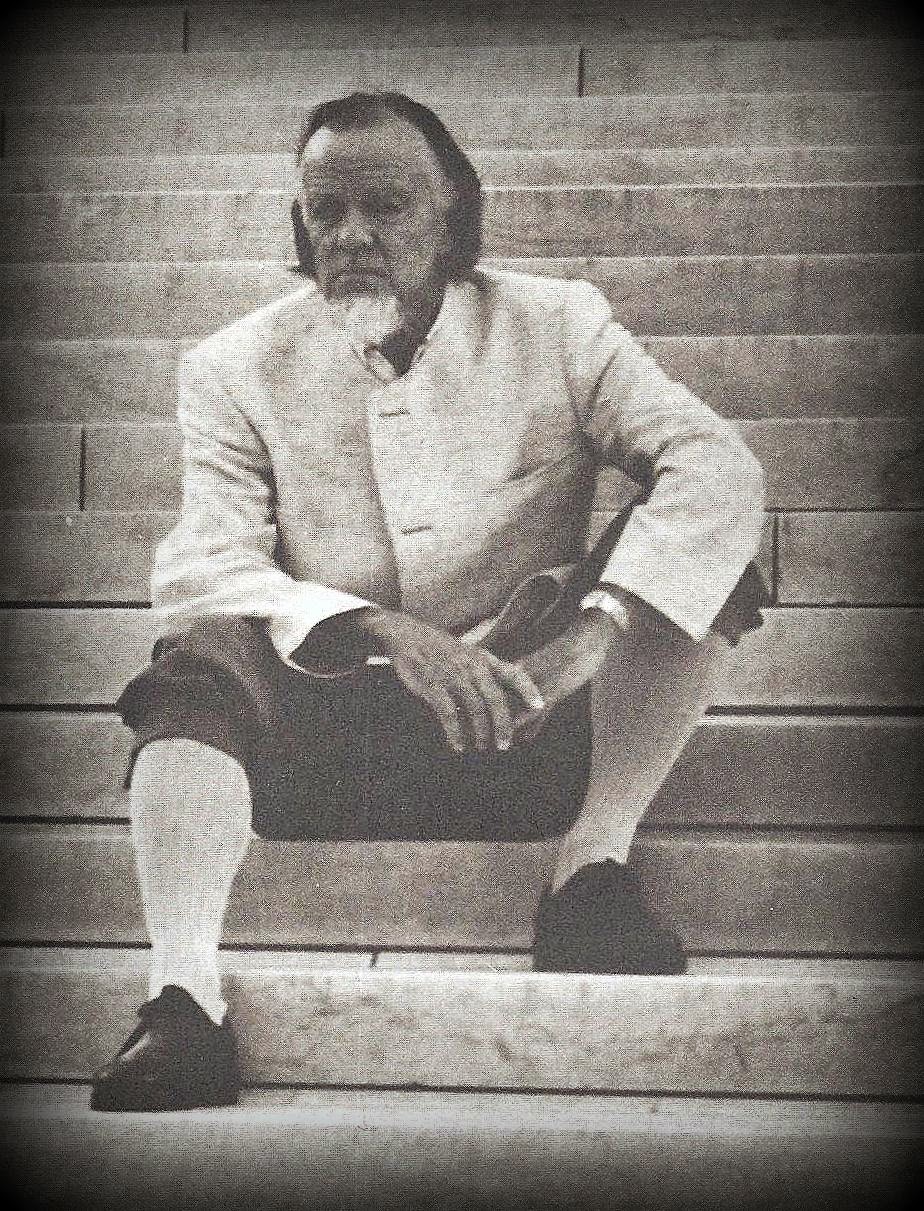


 There Will Never Be Silence: Scoring John Cage’s 4’33″, The Museum of Modern Art, New York, October 12, 2013–June 22, 2014″ width=”643″ height=”429″ />


 Gerhard Richter and Sir Nicholas Serota, 2011 – © Photo Rob Greig












 Photo credit: House Committee on Oversight and Government Reform


 The Daily Hatch