Senator John Boozman, 320 Hart Senate Office Building Washington, DC 20510 Phone: (202) 224-4843 Fax: (202) 228-1371
Dear Senator Boozman,
I want to thank you for taking the time out of your busy day to respond to my earlier letter to you on this same subject. I have always TRIED TO CONTACT THE REPRESENTATIVES AND SENATORS ABOUT THEIR RESPONSIBILITY TO BALANCE OUR BUDGET AND CUT SPENDING WHENEVER POSSIBLE.
House, Senate Budget chairs reach deal to preempt another gov t shutdown
Paul Ryan has been fighting for sequestration for years(1 yr ago)
_____________________________
THE NEW BUDGET DEAL OF DEC 2013 IS: Promises of fictitious spending now instead of real spending caps!!!
Many had high hopes that the first budget conference in four years would make a substantial down payment toward fixing the U.S. spending and debt crisis. The new “Bipartisan Budget Act” thoroughly disappoints. While we dig through the details for a more complete assessment, here are three key facts on the sour deal:
1. It busts through supposed spending “caps.” The way Congress operates, it’s ridiculous for Members to set spending caps. They just keep busting right through them.The deal announced yesterday raises discretionary spending above the bipartisan spending agreement forged in 2011 as part of the Budget Control Act. Spending for defense and non-defense domestic programs would be raised by $45 billion in 2014 and by $18 billion in 2015.
Once again, Congress has fallen into its old and destructive habit of trading more spending in one area for more spending in another. This is a bad “compromise” that keeps increasing spending, when just a little more effort to eliminate bad government programs and reduce wasteful spending could have saved taxpayers money instead.
2. It taxes and spends. The agreement says that the increased spending is fully offset elsewhere in the budget, using a mix of spending cuts and non-tax revenue. Make no mistake, raising revenue to spend more is simply taxing and spending. If anything, automatic spending cuts could be exchanged for targeted spending cuts. Trading spending cuts for more revenue, however, grows the burden of government. After all, Washington suffers from a spending problem, not a revenue one.
3. It spends now and delays savings till later. The budget deal would spend $63 billion more over the next two years—but take 10 years to make up for this splurge. This is a common Washington gimmick. To the conferees’ credit, the deal suggests one-third in additional deficit reduction—the details of which remain to be evaluated.
The budget conferees failed to make substantive reforms to the real drivers of spending and debt: the entitlement programs. Representative Paul Ryan (R-WI) and Senator Patty Murray (D-WA) forged a deal that would increase spending immediately, while delaying deficit reduction till later and trading spending cuts for more revenue. Far from simply being another missed opportunity, this deal keeps the nation on its fiscal collision course.
________________________ Senator John Boozman, 320 Hart Senate Office Building Washington, DC 20510 Phone: (202) 224-4843 Fax: (202) 228-1371 Dear Senator Boozman, I want to thank you for taking the time out of your busy day to respond to my earlier letter to you on this same subject. I have always TRIED TO CONTACT THE REPRESENTATIVES AND SENATORS ABOUT THEIR RESPONSIBILITY […]
Senator John Boozman, 320 Hart Senate Office Building Washington, DC 20510 Phone: (202) 224-4843 Fax: (202) 228-1371 Dear Senator Boozman, I want to thank you for taking the time out of your busy day to respond to my earlier letter to you on this same subject. It is obvious to me that if President Obama […]
It is obvious to me that if President Obama gets his hands on more money then he will continue to spend away our children’s future. He has already taken the national debt from 11 trillion to 16 trillion in just 4 years. Over, and over, and over, and over, and over and over I have written […]
___ Corker Says President’s 2012 Budget Proposal Shows “Lack of Urgency” on Spending Uploaded by senatorcorker on Feb 14, 2011 In remarks on the Senate floor today, U.S. Senator Bob Corker, R-Tenn., expressed disappointment in President Obama’s 2012 budget proposal, saying it displayed a “lack of urgency” to get federal spending under control. Corker has introduced the […]
From a lecture given by Dr. Milton Friedman in Erie, Pennsylvania (1978). Steve Brawner in his article “Safer roads and balanced budgets,” Arkansas News Bureau, April 13, 2011, noted: The disagreement is over the solutions — on what spending to cut; what taxes to raise (basically none ever, according to Boozman); whether or not to […]
Dan Mitchell Discussing Food Stamps, Dependency and Faux Compassion on Kudlow’s CNBC Show
________________
Agriculture: Downsizing The Federal Government
Uploaded on Dec 19, 2008
Agriculture is easily the most distorted sector, with high tariffs and, in developed countries at least, large amounts of government subsidies through price supports and direct payments. On the other hand, developing countries, who have a comparative advantage in these products, cannot afford to subsidize their agriculture sector and face prohibitive tariffs for their products abroad. The powerful agriculture lobby groups, particularly in the large developed countries, make reform politically difficult. Chris Edwards, Sallie James and Dan Ikenson discuss the inequities of American farm policies.
Food stamp spending is at historic highs—it has doubled twice since 2000. Now some on Capitol Hill say the House is trying to make major cuts to the program, but they’re really making some much-needed policy reforms that would achieve modest savings.
The House bill proposes a small 5 percent reduction, while the Senate proposes a mere one-half of 1 percent. Even if the House’s reforms are accepted, food stamp spending is projected to be nearly double 2008 levels. It is also projected to remain at or near historical highs into the foreseeable future.
The House’s savings come from closing loopholes and ending policies that are currently undermining the integrity of the program. These policies have allowed states to artificially boost food stamp levels and expand the program beyond its intended population. While the House takes steps in the right direction to reform food stamps, the Senate does hardly anything.
Food stamps should be reformed to ensure that the program is serving those it is intended to serve. It should also be reformed to promote self-sufficiency through work, thus helping those who are able by encouraging self-sufficiency.
____________ Americans know that we must have work requirements for food stamps!!!! Americans Support Stronger Work Requirements for Food Stamps Rachel Sheffield October 30, 2013 at 12:02 pm Newscom Nearly three-quarters of Americans believe that the food stamps program should include stronger work requirements, according to the October Food Demand Survey (FooDS) out of Oklahoma […]
The Dysfunction in Washington is Republicans and Democrats that are unwilling to cut spending in order to vote for more programs (Democrats want more food stamps etc but Republicans vote for their pet programs and wars too like No Child Left Behind Act, the Iraq war, the prescription drug entitlement, and the TARP bailout). If […]
We don’t need to recruit people to be on food stamps but kick people off!!! Seven Reasons to Reform Food Stamps T. Elliot Gaiser July 4, 2013 at 12:00 pm Newscom Food stamps were a popular topic of conversation last month as Congress debated the farm bill. This decades-old Great Society program is in much […]
If the increase in food stamps was just because of the recession then why did the spending go from $19.8 billion in 2000 to $37.9 billion in 2007? The Facts about Food Stamps Everyone Should Hear Rachel Sheffield and T. Elliot Gaiser May 27, 2013 at 12:00 pm (7) Newscom A recent US News & […]
Welfare Can And Must Be Reformed Uploaded on Jun 29, 2010 If America does not get welfare reform under control, it will bankrupt America. But the Heritage Foundation’s Robert Rector has a five-step plan to reform welfare while protecting our most vulnerable. __________________________ We got to slow down the growth of Food Stamps. One […]
We have too many people getting dependent on food stamps. WSJ: Food Stamp Rolls Remain High Despite Economic Improvement Rachel Sheffield April 4, 2013 at 2:30 pm Newscom The Wall Street Journal (WSJ) reported last week that even with improvements in the economy, food stamp participation rates have reached all-time highs. Since 2008, enrollment has […]
Eight Reasons Why Big Government Hurts Economic Growth __________________ We got to cut spending and we must first start with food stamp program and we need some Senators that are willing to make the tough cuts. Food Stamp Republicans Posted by Chris Edwards Newt Gingrich had fun calling President Obama the “food stamp president,” but […]
Milton Friedman’s negative income tax explained by Friedman in 1968: We need to cut back on the Food Stamp program and not try to increase it. What really upsets me is that when the government gets involved in welfare there is a welfare trap created for those who become dependent on the program. Once they […]
Welfare Can And Must Be Reformed Uploaded by HeritageFoundation on Jun 29, 2010 If America does not get welfare reform under control, it will bankrupt America. But the Heritage Foundation’s Robert Rector has a five-step plan to reform welfare while protecting our most vulnerable. __________________________ If welfare increases as much as it has in the […]
The food stamp bill would be more costly than the Obama Stimulus!!!!! Farm Bills Would Cost More Than Obama Stimulus Daren Bakst October 28, 2013 at 3:56 pm The House and Senate are considering farm bill legislation this week whose costs should raise red flags for all Americans. In fact, the House and Senate versions […]
This week, House Republican freshmen Members held a press conference to discuss the importance of passing a balanced budget amendment to the United States Constitution and how now is the time for a permanent solution to our nation’s spending-driven debt crisis. We need a balanced budget amendment to ensure a prosperous future for our children and grandchildren. It’s the right thing to do.
______________
Over and over in the past Milton Friedman pleaded for restraint in our federal spending. Below you will see a fine article supporting the Balanced Budget Amendment and it points out that Friedman favored this mechanism to control our spending.
The question is how to solve our problem of unsustainable debt.
The United States of America is on the road to bankruptcy, with a federal debt of more than $14.2 trillion, almost half of which is owned by foreign countries. (Communist China alone owns fully a quarter of the foreign-held portion). The problem is so well known that it almost came as an anticlimax when Standard & Poor’s recently downgraded U.S. debt from its coveted AAA rating to an unheard-of AA+. As for the budget deficit, it is expected to total $1.3 trillion for this year alone, with tax revenues of about $2.3 trillion and total expenditures of about $3.6 trillion. If a household ran its budget like that, we would say it was headed for a rude shock.
Making matters worse is that our debt is structural rather than cyclical: the federal budget is in deficit both in good economic times and bad. When George W. Bush took office in 2001, the gross federal debt was $5.76 trillion. When he left eight years later, the debt was up to $10.626 trillion, an increase of $607 billion a year. During Barack Obama’s presidency it has risen by $1.7 trillion a year and now almost 40 percent higher than when he took office. Deficits of this size are quite simply unsustainable.
The only way to fix this mess is to radically cut federal spending, cap the budget with pay-as-you-go spending rules, and then enact a balanced budget amendment (BBA).
The most important point is that we need to cut spending, not raise taxes. Total federal spending as a percentage of Gross Domestic Product (GDP) has skyrocketed from around 18 percent, when George W. Bush became president, to more than 25 percent today. This shows that our current deficit problem is entirely due to overspending. If tomorrow we cut spending back to the levels of January 20, 2001, when Bush took office, the deficit would almost disappear.
Then we need to cap and balance the budget, once we’ve cut overall spending back to 2001 levels. To do this effectively, we need to enact a federal BBA to the U.S. Constitution. This amendment should have several features.
First, it should require that the president submit to Congress each year a balanced federal budget with no fiscal gimmicks. Presidential failure to do so would be an impeachable offense. Congress should be constitutionally required to hold a vote in both houses on the president’s proposed budget within three months, with the president and Congress having up to six months to adopt a final budget in any given calendar year (this requirement should be waivable during any time of declared war for up to two years). If they fail to do that, all federal spending except for payments on the debt should be frozen at levels 10 percent lower than in the preceding fiscal year. To help impose this, any one of the several states should have standing to sue in the Supreme Court’s original jurisdiction for enforcement of this requirement.
Second, the BBA should cap federal spending at 18 percent of GDP. A spending cap of this proportion would keep the federal government at the size it was under President Bill Clinton — hardly onerous or severe. The amendment should require a two-thirds vote of both houses of Congress to enact any new taxes or to raise tax rates. Votes to raise the national debt limit should also require a two-thirds majority. These provisions are essential to prevent a BBA from becoming just an excuse to raise taxes.
THE USUAL RESPONSE to calls for such an amendment is that we ought not tamper with the Constitution. Critics of a BBA also claim it is not needed since a majority of Congress could balance the budget today if it really wanted to. There are at least five reasons why those critics are dead wrong.
First, it is a core principle of American constitutionalism that there be no taxation without representation. The American Revolution was fought in part to prevent taxation by a British Parliament in which Americans were not represented. When Congress borrows 40 cents of every dollar it spends, as it is doing today, it passes the burden of paying for current spending on to our children and grandchildren who cannot vote right now — nothing less than taxation without representation.
Second, a core purpose of the Constitution is to protect fundamental principles like freedom of speech and of the press from being whittled away during moments of legislative passion. Exactly the same argument holds true with respect to spending more money than the government collects in tax revenue. Constitutionalizing the balanced budget requirement is as necessary as constitutionalizing the protection of freedom of speech and of the press. This is an argument that was first made more than 30 years ago by Noble Prize laureate Milton Friedman. It is just as true today as it was then.
Third, there is an economic reason why it is easier to assemble lobbies for government spending than it is to assemble a nationwide lobby for a balanced budget. Consider the farm lobby that argues for agricultural price supports, or the AARP that lobbies for benefits for the elderly. It is cheaper and easier for small groups with a shared common interest to lobby Congress than for a large, diffuse majority of the American population to do the same. That’s why the silent majority is silent. A BBA in the Constitution would prevent the special interests from ripping off the children and grandchildren of the silent majority. James Madison wrote in The Federalist No. 51 that the secret of constitutional government was to make ambition counteract ambition. The way to check and balance over-spending is to constitutionalize a pay-as-you-go rule while making tax increases hard to enact.
Fourth, yet another economic reason for a BBA is that it would reduce risk and thereby promote investment. When people are looking for a place to invest, one of their first questions is how risky is the investment and how large is the potential reward. Foreign and American investors since World War II have invested in the U.S. and in its debt because our Constitution of checks and balances makes it hard to do crazy things like nationalize industries or set up a single payer health insurance monopoly.
A BBA would reduce further the risk of investing in the U. S., and that would promote investment and economic growth by constitutionally committing itself not to overspend. The risk of inflationary devaluation of the dollar would thus go way down. This in turn would bolster the dollar as the world’s reserve currency. It would also prevent federal borrowing from crowding out private sector borrowing in the U.S. This would free up a capital for investment in job-creating ventures.
A fifth argument for the BBA paradoxically grows out of one of the arguments commonly made against it: it would be purely symbolic. Or as James Madison would have said, “a mere parchment barrier” against overspending.
This criticism fails for many reasons. A BBA of the kind I argue for would have enforcement teeth. Presidential failure to submit a good-faith balanced budget would be a specific ground for impeachment. Then too, if Congress failed to enact a balanced budget, state governments could sue for an across theboard spending cut of 10 percent.
But suppose Congress wimps out and enacts a BBA without teeth. Would such a symbolic victory be worth anything? The answer again is clearly yes. Almost every state has some form of a balanced budget requirement in its constitution or law. The fact is that balanced budget requirements actually do work at the state level. This strongly suggests they would work at the federal level as well.
CONSTITUTIONAL PROVISIONS, even symbolic ones, set the agenda of political debate. The Second and Tenth Amendments clearly do that in the U.S. today, even though the federal courts almost never enforce them. A BBA would work very much the same way.
The case for a BBA is so powerful that Germany and Switzerland — both models of fiscal sobriety — actually require a balanced budget in their own constitutions. And now Germany and France have actually proposed requiring that all Eurozone countries amend their national constitutions to require a balanced budget. What is good enough for almost every state in the Union and for many countries of Europe is certainly worth trying at the federal level here.
So what harm could come from enacting a BBA to the U.S. Constitution? Is there any argument against such an amendment that outweighs the arguments in favor of it?
One concern conservatives have is that it might lead to tax increases. I share that concern and therefore would couple it with a super-majority requirement for tax increases. That should make a BBA clearly appealing to conservatives of all stripes. But what if such an amendment gets ratified that does not protect against tax increases? Would we then be worse off?
I think the answer is no. It is harder politically for Congress to tax real people living today than it is to borrow money from the children and grandchildren of the silent majority. People living today will mobilize in many ways against tax increases. The correct solution is to cut, cap, and balance, but I would not let concerns about tax increases stop us from doing what virtually every state constitution does.
Another real concern for conservatives is that a BBA could lead to dangerous cuts in spending on national defense. This concern I share. The U.S. is a world leader and the greatest force for liberty and economic opportunity in history. We must always be ready to defend liberty worldwide.
The problem is, however, that current levels of deficit spending — almost half of which is financed by foreign countries — is itself a threat to U.S. global might. We simply cannot defend liberty in Asia, for example, if we continue to borrow massively from the Chinese. We cannot defend freedom in Arab countries while being so dependent on Saudi Arabia and others for imported oil and purchases of our debt. The status quo is at least as threatening to America’s military might as is living under a BBA, for the status quo is not sustainable.
Finally, some conservatives argue that the solution to congressional deficit spending is a line item veto amendment giving the president the same power over spending enjoyed by a majority of state governors. I am quite skeptical about such an amendment because of the enormous power it would shift from Congress to the president. Imagine for a moment that President Obama could threaten senators or representatives with line item vetoes of locally important spending projects unless they voted his way on socialized medicine. Or on a card check law reform making it easy to fraudulently form a union. Do we really want to cede that much power from Congress to the president? I do not think so.
In sum, we need to cut, cap, and balance. To do that permanently, we must enact a BBA. Nothing less than the future of government of the people, by the people, and for the people is at stake.
Does Government Have a Revenue or Spending Problem?
People say the government has a debt problem. Debt is caused by deficits, which is the difference between what the government collects in tax revenue and the amount of government spending. Every time the government runs a deficit, the government debt increases. So what’s to blame: too much spending, or too little tax revenue? Economics professor Antony Davies examines the data and concludes that the root cause of the debt is too much government spending.
Taking from the rich and giving to the poor is no way to grow the economy and running up our national debt doesn’t help either.
Here’s a Gary Varvel cartoon with the exact same message.
Instead of great minds thinking alike, this is a case of great cartoonists thinking alike. Though they probably have great minds as well.
But I don’t want to make too many fawning comments since I would modify both of these cartoons so that the kids were looking at papers that said “Medicare” and “Social Security” instead of “debt.”
It’s always important to focus first and foremost on the disease of spending, after all, andnot the symptom of red ink.
Last but not least, I can’t resistlinking to this comedian’s video, which includes some very good economic insights about work incentives.
Thank you so much for your time. I know how valuable it is. I also appreciate the fine family that you have and your commitment as a father and a husband.
Sincerely,
Everette Hatcher III, 13900 Cottontail Lane, Alexander, AR 72002, ph 501-920-5733, lowcostsqueegees@yahoo.com
Max Brantley is wrong about Tom Cotton’s accusation concerning the rise of welfare spending under President Obama. Actually welfare spending has been increasing for the last 12 years and Obama did nothing during his first four years to slow down the rate of increase of welfare spending. Rachel Sheffield of the Heritage Foundation has noted: […]
I have put up lots of cartoons from Dan Mitchell’s blog before and they have got lots of hits before. Many of them have dealt with the economy, eternal unemployment benefits, socialism, Greece, welfare state or on gun control. I think Max Brantley of the Arkansas Times Blog was right to point out on 2-6-13 that Hillary […]
I thought it was great when the Republican Congress and Bill Clinton put in welfare reform but now that has been done away with and no one has to work anymore it seems. In fact, over 40% of the USA is now on the government dole. What is going to happen when that figure gets over […]
Again we have another shooting and the gun control bloggers are out again calling for more laws. I have written about this subject below and on May 23, 2012, I even got a letter back from President Obama on the subject. Now some very interesting statistics below and a cartoon follows. (Since this just hit the […]
watch?v=llQUrko0Gqw] The federal government spends about 10% on roads and public goods but with the other money in the budget a lot of harm is done including excessive regulations on business. That makes Obama’s comment the other day look very silly. A Funny Look at Obama’s You-Didn’t-Build-That Comment July 28, 2012 by Dan Mitchell I made […]
I have written a lot about this in the past and sometimes you just have to sit back and laugh. Laughing at Obama’s Bumbling Class Warfare Agenda July 13, 2012 by Dan Mitchell We know that President Obama’s class-warfare agenda is bad economic policy. We know high tax rates undermine competitiveness. And we know tax increases […]
Dan Mitchell Discussing Dishonest Budget Numbers with John Stossel Uploaded by danmitchellcato on Feb 11, 2012 No description available. ______________ Dan Mitchell of the Cato Institute has shown before how excessive spending at the federal level has increased in recent years. A Humorous Look at Obama’s Screwy Budget Math May 31, 2012 by Dan Mitchell I’ve […]
Sometimes it is so crazy that you just have to laugh a little. The European Mess, Captured by a Cartoon June 22, 2012 by Dan Mitchell The self-inflicted economic crisis in Europe has generated some good humor, as you can see from these cartoons by Michael Ramirez and Chuck Asay. But for pure laughter, I don’t […]
Another great cartoon on President Obama’s efforts to create jobs!!! A Simple Lesson about Job Creation for Barack Obama December 7, 2011 by Dan Mitchell Even though leftist economists such as Paul Krugman and Larry Summers have admitted that unemployment insurance benefits are a recipe for more joblessness, the White House is arguing that Congress should […]
Dan Mitchell hits the nail on the head and sometimes it gets so sad that you just have to laugh at it like Conan does. In order to correct this mess we got to get people off of government support and get them in the private market place!!!! Chuck Asay’s New Cartoon Nicely Captures Mentality […]
Cato Institute scholar Dan Mitchell is right about Greece and the fate of socialism: Two Pictures that Perfectly Capture the Rise and Fall of the Welfare State July 15, 2011 by Dan Mitchell In my speeches, especially when talking about the fiscal crisis in Europe (or the future fiscal crisis in America), I often warn that […]
John Stossel report “Myth: Gun Control Reduces Crime Sheriff Tommy Robinson tried what he called “Robinson roulette” from 1980 to 1984 in Central Arkansas where he would put some of his men in some stores in the back room with guns and the number of robberies in stores sank. I got this from Dan Mitchell’s […]
I have put up lots of cartons and posters from Dan Mitchell’s blog before and they have got lots of hits before. Many of them have dealt with the economy, eternal unemployment benefits, socialism, Greece, welfare state or on gun control. Amusing Gun Control Picture – Circa 1999 April 3, 2010 by Dan Mitchell Dug this gem out […]
We got to cut spending and stop raising the debt ceiling!!! When Governments Cut Spending Uploaded on Sep 28, 2011 Do governments ever cut spending? According to Dr. Stephen Davies, there are historical examples of government spending cuts in Canada, New Zealand, Sweden, and America. In these cases, despite popular belief, the government spending […]
I have put up lots of cartons and posters from Dan Mitchell’s blog before and they have got lots of hits before. Many of them have dealt with the economy, eternal unemployment benefits, socialism, Greece, welfare state or on gun control. On 2-6-13 the Arkansas Times Blogger “Sound Policy” suggested, “All churches that wish to allow concealed […]
Gun Free Zones???? Stalin and gun control On 1-31-13 ”Arkie” on the Arkansas Times Blog the following: “Remember that the biggest gun control advocate was Hitler and every other tyrant that every lived.” Except that under Hitler, Germany liberalized its gun control laws. __________ After reading the link from Wikipedia that Arkie provided then I responded: […]
On 1-31-13 I posted on the Arkansas Times Blog the following: I like the poster of the lady holding the rifle and next to her are these words: I am compensating for being smaller and weaker than more violent criminals. __________ Then I gave a link to this poster below: On 1-31-13 also I posted […]
Senator John Boozman, 320 Hart Senate Office Building Washington, DC 20510 Phone: (202) 224-4843 Fax: (202) 228-1371
Dear Senator Boozman,
I want to thank you for taking the time out of your busy day to respond to my earlier letter to you on this same subject. I have always TRIED TO CONTACT THE REPRESENTATIVES AND SENATORS ABOUT THEIR RESPONSIBILITY TO BALANCE OUR BUDGET AND CUT SPENDING WHENEVER POSSIBLE.
House, Senate Budget chairs reach deal to preempt another gov t shutdown
Paul Ryan has been fighting for sequestration for years(1 yr ago)
_____________________________
We got to cut spending increases like the Sequester was doing in order to control government spending!!!
Republicans in Congress have put in a dismal fiscal performance in 2013. The party could not come together to defund the disastrous Obamacare law. No progress was made tackling entitlements or eliminating programs. Republicans joined with Democrats to move ahead the wasteful farm bill. And the year began with a large income tax increase.
Yesterday, Republican leaders reached a discretionary spending deal with the Democrats for 2014 and 2015 that blows up the 2011 Budget Control Act. That Act had been the GOP’s only major spending accomplishment in years.
The 2011 Act and related sequester have been bearing fruit and providing discretionary spending control the last two years. Now Republican leaders are throwing it away in return for revenue increases and spending trims that are mainly tiny and phony. The largest trim is a health care provider reduction that is supposed to take place a decade from now. Why should anyone consider that a real cut given that party leaders showed with this deal that they could not even stick to the BCA cuts for more than two years?
Before the new agreement, current law set discretionary spending at $967 billion in 2014. The new budget deal would raise that cap to $1.012 trillion, which is a spending hike of $45 billion. Why would Republican leaders agree to that? They’re the ones who always claim that it’s the Democrats who are the big spenders. America’s Founders planned for the House to be the body defending the people from a big-spending Senate and president, but today’s House is completely falling down on the job.On paper, the new budget deal only lifts current spending caps for 2014 and 2015, and the caps in later years remain in place. The problem is that appropriators of both parties never sleep; they are not going to go into hibernation for the next decade contented with current spending limits.
Instead, it’s a sporting challenge for appropriators to try and raise spending every single year. The ten-year numbers mean nothing to them — especially now that they know Republican leaders will probably cave in easily next time. That’s why Rep. Paul Ryan’s comment yesterday that the new deal “reduces the deficit” is meaningless.
The deal does not reduce the deficit this year — it hikes it $45 billion, give or take some change in the unlikely event first-year savings do materialize.
If this deal is enacted, a precedent will have been set, and the big spenders in both parties will sadly gain even more clout going into future budget negotiations. Blowing through existing budget caps by $45 billion this year could set the stage for spending hundreds of billions of dollars more over the coming decade.
________________________ Senator John Boozman, 320 Hart Senate Office Building Washington, DC 20510 Phone: (202) 224-4843 Fax: (202) 228-1371 Dear Senator Boozman, I want to thank you for taking the time out of your busy day to respond to my earlier letter to you on this same subject. I have always TRIED TO CONTACT THE REPRESENTATIVES AND SENATORS ABOUT THEIR RESPONSIBILITY […]
Senator John Boozman, 320 Hart Senate Office Building Washington, DC 20510 Phone: (202) 224-4843 Fax: (202) 228-1371 Dear Senator Boozman, I want to thank you for taking the time out of your busy day to respond to my earlier letter to you on this same subject. It is obvious to me that if President Obama […]
It is obvious to me that if President Obama gets his hands on more money then he will continue to spend away our children’s future. He has already taken the national debt from 11 trillion to 16 trillion in just 4 years. Over, and over, and over, and over, and over and over I have written […]
___ Corker Says President’s 2012 Budget Proposal Shows “Lack of Urgency” on Spending Uploaded by senatorcorker on Feb 14, 2011 In remarks on the Senate floor today, U.S. Senator Bob Corker, R-Tenn., expressed disappointment in President Obama’s 2012 budget proposal, saying it displayed a “lack of urgency” to get federal spending under control. Corker has introduced the […]
From a lecture given by Dr. Milton Friedman in Erie, Pennsylvania (1978). Steve Brawner in his article “Safer roads and balanced budgets,” Arkansas News Bureau, April 13, 2011, noted: The disagreement is over the solutions — on what spending to cut; what taxes to raise (basically none ever, according to Boozman); whether or not to […]
Dan Mitchell Discussing Food Stamps, Dependency and Faux Compassion on Kudlow’s CNBC Show
________________
Agriculture: Downsizing The Federal Government
Uploaded on Dec 19, 2008
Agriculture is easily the most distorted sector, with high tariffs and, in developed countries at least, large amounts of government subsidies through price supports and direct payments. On the other hand, developing countries, who have a comparative advantage in these products, cannot afford to subsidize their agriculture sector and face prohibitive tariffs for their products abroad. The powerful agriculture lobby groups, particularly in the large developed countries, make reform politically difficult. Chris Edwards, Sallie James and Dan Ikenson discuss the inequities of American farm policies.
Rep. Frank Lucas (R-OK) (Bill Clark/CQ Roll Call/Newscom)
The House and Senate farm bills would repeal the costly and indefensible direct payment program, which sends taxpayer dollars to people who don’t even plant a seed.
But instead of just getting rid of direct payments, Congress has felt the need to add new programs that could be even costlier. Various commodity groups—e.g., corn, cotton, sugar—want their subsidies.
According to Politico, Frank Lucas (R–OK), chairman of the House Agriculture Committee, appears to view himself as the parental figure making sure everyone gets their slice of the subsidy pie:
For some folks [commodity special interest groups] to believe they don’t have to be part of the family anymore makes it a little difficult.… As chairman, I’m kind of like a parent sitting at the table. I’m trying to make sure everybody gets their fair portion [of subsidies] as the plates go around. I’m trying to make sure the biggest kid doesn’t shove all the little kids off the bench.
The groups that aren’t represented at this metaphorical table are taxpayers and consumers. If they were, subsidies wouldn’t be served.
This entire push for new subsidies is emblematic of the farm bill. There’s never any real reform to agriculture policy because in Washington, the concerns of special interests trump those of taxpayers and consumers. Subsidies and central planning are presumed to be proper policy.
Even many who claim to be in favor of limited government and free markets ignore these critical principles when it comes to the farm bill. They take a holiday from sound policy.
Congress isn’t bothering to ask whether there should even be new subsidies. Instead, the focus is on how new subsidy programs should work and how many billions of taxpayer dollars should be handed over to special interest groups—the “little kids.”
This may be the season of giving, but Congress shouldn’t dole out any new subsidies to special interests. They should be developing real agriculture reform.
Food stamp reform must be done in order to cut bloated spending in Washington!! Farm Bill: A Response to President Obama Daren Bakst October 17, 2013 at 5:31 pm In his recent remarks, President Obama made a push to get a new farm bill enacted by the end of the year. Sound agriculture and food […]
I am glad that my state of Arkansas is not the leader in food stamps!!! Mirror, Mirror, on the Wall, Which State Has the Highest Food Stamp Usage of All? March 19, 2013 by Dan Mitchell The food stamp program seems to be a breeding ground of waste, fraud, and abuse. Some of the horror stories […]
Lawmakers need to encourage self-sufficiency and work through food assistance programs and not laziness. 101 Million Americans Received Food Aid Last Year T. Elliot Gaiser July 18, 2013 at 5:35 pm Newscom Nearly one-third of Americans received government-funded food aid in 2012, according to a new report from the U.S. Department of Agriculture (USDA). As […]
Why can’t we cut the Food Stamp budget? Should Food Stamps Be in Farm Bill? Congressman Seeks to Split Legislation Kelsey Harris June 17, 2013 at 10:38 pm Bill Clark/Roll Call Photos/Newscom Representative Marlin Stutzman (R-IN), a fourth-generation farmer, is asking his House colleagues to separate the food stamp program from the “farm” bill. Stutzman […]
The sad fact is that Food stamp spending has doubled under the Obama Administration. A Bumper Crop of Food Stamps Amy Payne May 21, 2013 at 7:01 am Tweet this Where do food stamps come from? They come from taxpayers—certainly not from family farms. Yet the “farm” bill, a recurring subsidy-fest in Congress, is actually […]
I am glad that my state of Arkansas is not the leader in food stamps!!! Mirror, Mirror, on the Wall, Which State Has the Highest Food Stamp Usage of All? March 19, 2013 by Dan Mitchell The food stamp program seems to be a breeding ground of waste, fraud, and abuse. Some of the horror stories […]
Government Must Cut Spending Uploaded by HeritageFoundation on Dec 2, 2010 The government can cut roughly $343 billion from the federal budget and they can do so immediately. __________ We are becoming a country filled with people that dependent on the federal government when we should be growing our economy by lowering taxes and putting […]
Uploaded by oversightandreform on Mar 6, 2012 Learn More at http://oversight.house.gov The Oversight Committee is examining reports of food stamp merchants previously disqualified who continue to defraud the program. According to a Scripps Howard News Service report, food stamp fraud costs taxpayers hundreds of millions every year. Watch the Oversight hearing live tomorrow at 930 […]
Open letter to President Obama (Part 468) (Emailed to White House on 4-9-13.) President Obama c/o The White House 1600 Pennsylvania Avenue NW Washington, DC 20500 Dear Mr. President, I know that you receive 20,000 letters a day and that you actually read 10 of them every day. I really do respect you for trying […]
_____ The bigger government gets the sloppier it acts!!!! November 22, 2013 3:43PM Why We Shouldn’t Expand Government By David Boaz Share Fareed Zakaria’s new column is titled (at least on the Washington Post website) “Why Americans Hate Their Government” or (in the paper) “Why We Hate our Government.” But some of the points he […]
Why do I keep writing and email Senator Pryor suggestions on how to cut our budget? I gave him hundreds of ideas about how to cut spending and as far as I can tell he has taken none of my suggestions. You can find some of my suggestions here, here, here, here, here, here, here, here, here, here, here, here, here, here, here, here, here, here, here, here, and here, and they all were emailed to him. In fact, I have written 13 posts pointing out reasons why I believe Senator Pryor’s re-election attempt will be unsuccessful. HERE I GO AGAIN WITH ANOTHER EMAIL I JUST SENT TO SENATOR PRYOR!!!
Dear Senator Pryor,
Why not pass the Balanced Budget amendment? As you know that federal deficit is at all time high (1.6 trillion deficit with revenues of 2.2 trillion and spending at 3.8 trillion).
On my blog www.thedailyhatch.org . I took you at your word and sent you over 100 emails with specific spending cut ideas. (Actually there were over 160 emails with specific spending cut suggestions.) However, I did not see any of them in the recent debt deal that Congress adopted although you did respond to me several times. Now I am trying another approach. Every week from now on I will send you an email explaining different reasons why we need the Balanced Budget Amendment or I send you specific spending cut suggestions. It will appear on my blog on “Thirsty Thursday” because the government is always thirsty for more money to spend.
IF YOU TRULY WANT TO CUT THE BUDGET AND BALANCE THE BUDGET THEN SUBMIT THESE POTENTIAL BUDGET CUTS PRESENTED BELOW!!
_______________
When Governments Cut Spending
Uploaded on Sep 28, 2011
Do governments ever cut spending? According to Dr. Stephen Davies, there are historical examples of government spending cuts in Canada, New Zealand, Sweden, and America. In these cases, despite popular belief, the government spending cuts did not cause economic stagnation. In fact, the spending cuts often accelerated economic growth by freeing up resources for the private sector.
The U.S. Department of Agriculture distributes between $10 billion and $30 billion in cash subsidies to farmers and owners of farmland each year..1 The particular amount depends on market prices for crops, the level of disaster payments, and other factors. More than 90 percent of agriculture subsidies go to farmers of five crops—wheat, corn, soybeans, rice, and cotton.2 More than 800,000 farmers and landowners receive subsidies, but the payments are heavily tilted toward the largest producers.3
In addition to routine cash subsidies, the USDA provides subsidized crop insurance, marketing support, and other services to farm businesses. The USDA also performs extensive agricultural research and collects statistical data for the industry. These indirect subsidies and services cost taxpayers about $5 billion each year, putting total farm support at between $15 billion and $35 billion annually.
Agriculture has long attracted federal government support. One of the first subsidy programs for agriculture was the Morrill Act of 1862, which established the land-grant colleges. That was followed by the Hatch Act of 1887, which funded agricultural research, and by the Smith-Lever Act of 1914, which funded agricultural education. In 1916, the Federal Farm Loan Act created cooperative “land banks” to provide loans to farmers. That developed into today’s Farm Credit System, which is a 50-state network of financial cooperatives with assets of $90 billion.
Nonetheless, federal subsidies to agriculture were still quite small going into the 1920s. The USDA was focused on producing statistics, funding research, and responding to problems such as pest infestations. But calls for direct subsidies to farmers began to intensify, and in 1929 the Agricultural Marketing Act created the Federal Farm Board, which tried to raise commodity prices by stockpiling production. After spending $500 million, this first major farm boondoggle was abolished in 1933.
A large array of farm subsidies were enacted during the 1930s, beginning with the Agricultural Adjustment Act of 1933. New Deal programs included commodity price supports and production controls, marketing orders to limit competition, import barriers, and crop insurance. The particular features of farm programs have changed over the past seven decades, but the central planning philosophy behind them has not. While many other industries have been deregulated, agricultural policies remain stuck in the past, despite the high costs and ongoing economic damage.
Between the 1940s and the 1980s, Congress occasionally considered farm reforms, usually when commodity prices were high, but then it reverted to subsidy increases when market conditions were less favorable.4 In the 1980s, the Reagan administration proposed major cuts to farm subsidies, but farm finances were in bad shape at the time, which prompted Congress to increase farm support, not reduce it.
Agriculture subsidies have never made economic sense, but since the 1930s farmers have resisted reductions to subsidies, and they have generally held sway in Congress. While farmers represent a smaller share of the population today than in the 1930s, the farm lobby is as strong as ever. One reason is that farm-state legislators have co-opted the support of urban legislators, who seek increased subsidies in agriculture bills for programs such as food stamps. Legislators in favor of environmental subsidies have also been co-opted as supporters of farm bills. As a result, many legislators have an interest in increasing the USDA’s budget, but few come to the defense of taxpayers who foot the bills.
In 1996, Congress finally enacted some pro-market agriculture reforms under the “Freedom to Farm” law. The law allowed farmers greater flexibility in their planting decisions and moved toward greater reliance on market supply and demand. However, the law did not end up cutting farm subsidies, as Congress expanded support in a series of large supplemental farm bills in the late 1990s. When the 1996 law was passed, subsidies were expected to cost $47 billion in total from 1996 to 2002, but ended up costing $121 billion.5
Sadly, federal farm policies have been a long-standing rip off of American taxpayers, which continues into the 21st century. In 2002, Congress and the George W. Bush administration agreed to farm legislation that partly reversed the reforms of 1996. The 2002 law increased projected subsidy payments by 74 percent over 10 years.6 It added new crops to the subsidy rolls, and it created a new price-guarantee scheme called the “countercyclical” program.
In 2008, Congress overrode a presidential veto to enact farm legislation that extended existing supports and created new subsidy programs. The legislation added a “permanent disaster” program for areas often hit by adverse conditions, and it added a revenue protection program designed to lock in 2008’s high commodity prices. It also aided producers of specialty crops, such as fruits and vegetables, with various new programs.
The 2008 farm bill added a new sugar-to-ethanol program under which the government buys excess imported sugar that might put downward pressure on inflated domestic sugar prices. The program defends domestic sugar growers’ 85 percent of the U.S. sugar market, and it provides for the government to sell excess sugar, at a loss if need be, to ethanol producers.
The extensive federal welfare system for farm businesses is costly to taxpayers and it creates distortions in the economy. Subsidies induce farmers to overproduce, which pushes down prices and creates political demands for further subsidies. Subsidies inflate land prices in rural America. And the flow of subsidies from Washington hinders farmers from innovating, cutting costs, diversifying their land use, and taking the actions needed to prosper in a competitive global economy.
The distortions caused by federal farm policies have long been recognized. In 1932, a member of Congress noted that the Agriculture Department spent “hundreds of millions a year to stimulate the production of farm products by every method, from irrigating waste lands to loaning and even giving money to the farmers, and simultaneously advising them that there is no adequate market for their crops, and that they should restrict production.”7The folly is the same seven decades later, except that subsidies have increased from “hundreds of millions” to tens of billions of dollars.
1. Farm Subsidies Redistribute Wealth. Farm subsidies transfer the earnings of taxpayers to a small group of fairly well-off farm businesses and landowners. USDA figures show that the average income of farm households has been consistently higher than the average of all U.S. households. In 2007, the average income of farm households was $86,223, or 28 percent higher than the $67,609 average of all U.S. households.19 When large-scale federal farm subsidies began in the 1930s, farm incomes were only half the national average.
Although policymakers love to discuss the plight of the small farmer, the bulk of federal farm subsidies goes to the largest farms.20 For example, the largest 10 percent of recipients have received 72 percent of all subsidy payments in recent years.21 Numerous large corporations and even some wealthy celebrities receive farm subsidies because they are the owners of farmland. It is landowners, not tenant farmers or farm workers, who benefit from subsidies. And one does not even have to be the owner of farmland to receive subsidies: Since 2000 the USDA has paid $1.3 billion in farm subsidies to people who own land that is no longer used for farming.22
2. Farm Subsidies Damage the Economy. The extent of federal micromanagement of the agriculture sector is probably unique in American industry. In most industries, market prices balance supply and demand, profit levels signal investment opportunities, market downturns lead to cost cutting, and entrepreneurs innovate to provide better products at lower prices. All of those market mechanisms are blunted or nonexistent in government-controlled agriculture markets. As a result, federal agricultural policies produce substantial “deadweight losses” and reduced U.S. incomes.
Farm programs result in overproduction, overuse of marginal farmland, and land price inflation, which results from subsidies being capitalized into land values. Subsidy programs create less efficient planting, induce excess borrowing by farmers, cause insufficient attention to cost control, and result in less market innovation. And policies often work against the claimed goals of Congress. As an example, while members of Congress say that they support small farms, owners of large farms receive the largest subsidies, which has given them the financing they need to purchase smaller farms.23
In 2006 the Congressional Budget Office reviewed major studies that examined the repeal of U.S. and foreign agricultural subsidies and trade barriers.24 The CBO found that all the studies they reviewed showed that both the U.S. and global economies would gain from the repeal of subsidies and trade barriers.
3. Farm Programs Are Prone to Scandal. Like most federal subsidy programs, farm programs are subject to bureaucratic inefficiencies, recipient fraud, and congressional pork-barrel politics. The Government Accountability Office found that as much as half a billion dollars in farm subsidies are paid improperly or fraudulently each year.25 Farmers create complex legal structures to get around legal subsidy limits.26 And many farmers decide not to pay back their USDA loans: in 2001 the GAO found that more than $2 billion in farm loans were delinquent.27
Congress and the USDA distribute payments for farm emergencies carelessly. Disaster payments often go to farmers who have no need for them, and in many cases have not even asked for them.28 To receive benefits, some farmers claim to have experienced damage even when they haven’t.
A powdered milk scandal in 2003 illustrates the USDA’s bureaucratic ineptitude. That year, the government decided to give some of its massive stockpile of powdered milk to cattle ranchers for feed after a drought. But much of the milk ended up being illegally diverted to other uses, which allowed speculators to earn large profits at taxpayers’ expense.29
Perhaps the biggest scandal with regard to farm subsidies is that congressional agriculture committees are loaded with members who are active farmers and farmland owners. Those members have a direct financial stake whenever Congress votes to increase subsidies, which is an obvious conflict of interest.
4. Farm Subsidies Damage U.S. Trade Relations. Global stability and U.S. security are enhanced when less developed countries achieve stronger economic growth. America can further that end by encouraging the reduction of trade barriers. However, U.S. and European farm subsidies and agricultural import barriers are a serious hurdle to making progress in global trade agreements. U.S. sugar protections, for example, benefit only a very small group of U.S. growers but are blocking broader free trade within the Americas.
The World Trade Organization estimates that even a one-third drop in all tariffs around the world would boost global output by $686 billion, including $164 billion for the United States.30 Trade liberalization would boost the exports of U.S. goods that are competitive on world markets, including many agricultural products, but U.S. farm subsidies and protections stand in the way of that goal.
5. Farm Programs Damage the Environment. Federal farm policies are thought to damage the natural environmental in numerous ways. Subsidy programs can cause overproduction, which draws marginal farmland into active production. Similarly, trade barriers induce agriculture production on land that is less naturally productive. As a result, marginal lands that might otherwise be used for parks or forests are locked into farm use because farm subsidy payments get capitalized into higher prices for land.
Subsidies are also thought to induce excessive use of fertilizers and pesticides. Producers in regions that have better soils and climates tend to use less fertilizers and pesticides than do producers in less favorable climates, who can only afford to farm in the poor locations because of subsidies. An excessive use of chemicals can contaminate lakes, rivers, and other water systems.
Florida sugar provides a good example. Large areas of wetlands have been converted to cane sugar production because of artificially high domestic sugar prices. Unfortunately, the phosphorous in fertilizers used by sugar farmers has caused substantial damage to the Everglades. Farming, like any industry, can cause negative environmental effects, but it is misguided for federal policies to exacerbate those problems.
Federal subsidies for irrigation have also been a cause of environmental concerns. The Bureau of Reclamation runs a vast water empire in the western United States, which sells water to farmers at a fraction of the market cost. The resulting overuse could lead to a water crisis as the West’s population continues to rise.31 The solution is to move water into the free market and allow prices to rise to efficient and environmentally sound levels.
6. Agriculture Would Thrive without Subsidies. It is normal for people to fear economic change, but many industries have been radically reformed in recent decades with positive results, including the airline, trucking, telecommunications, and energy industries. If farm subsidies were ended, and agriculture markets deregulated and open to entrepreneurs, farming would change—different crops would be planted, land usage would change, and some farms would go bankrupt. But a stronger and more innovative industry would likely emerge having greater resilience to shocks and downturns.
Interestingly, producers of most U.S. agricultural commodities do not receive regular subsidies from the federal government. In fact, commodities that are eligible for federal subsidies account for 36 percent of U.S. farm production, while commodities that generally survive without subsidies, including meats, poultry, fruits, and vegetables, account for 64 percent of production.32 And, of course, most other U.S. industries prosper without the sort of government coddling that farmers receive.
Another point to consider is that farm households are much more diversified today and better able to deal with market fluctuations. Many farm households these days earn the bulk of their income from nonfarm sources, which creates financial stability. USDA figures show that only 38 percent of farm households consider farming their primary occupation33
Some USDA programs provide useful commercial services such as insurance. The USDA says that its insurance services are “market-based,” but if that were true, there would be no need for subsidies and the services ought to be privatized. After all, most U.S. industries pay for their own commercial services. Also, financial markets offer a wide range of tools, such as hedging and forward contracting, which can help farmers survive cycles in markets without government subsidies.
An interesting example of farmers prospering without subsidies is in New Zealand.34 That nation ended its farm subsidies in 1984, which was a bold stroke because the country is four times more dependent on farming than is the United States. The changes were initially met with fierce resistance, but New Zealand farm productivity, profitability, and output have soared since the reforms.35 New Zealand’s farmers have cut costs, diversified their land use, sought nonfarm income, and developed niche markets such as kiwifruit.
Today, data from the Organization for Economic Cooperation and Development show that farm subsidies in New Zealand represent just 1 percent of the value of farm production, which compares to 11 percent in the United States.36 New Zealand’s main farm organization argues that the nation’s experience “thoroughly debunked the myth that the farming sector cannot prosper without government subsidies.”37 That myth needs to be debunked in the United States as well.
1 Budget of the United States Government: FY2010, Historical Tables, Table 3.2. This is spending on budget function 351, which peaked at $33 billion in 2000..
2 Chris Edwards and Tad DeHaven, “Farm Subsidies at Record Levels As Congress Considers New Farm Bill,” Cato Institute Briefing Paper no. 70, October 18, 2001..
4 David Orden, Robert Paarlberg, and Terry Roe, Policy Reform in American Agriculture(Chicago: University of Chicago Press, 1999)..
5 Congressional Budget Office estimates cited in David Orden, Robert Paarlberg, and Terry Roe, Policy Reform In American Agriculture, 1999, pp. 152, 164..
6 Budget of the United States Government: FY2006, p. 61.
7 James M. Beck, Our Wonderland of Bureaucracy (New York: Macmillan, 1932), p. viii.
8 Dan Morgan, Gilbert M. Gaul, and Sarah Cohen, “Farm Program Pays $1.3 Billion to People Who Don’t Farm,” Washington Post, July 2, 2006, p. A1.
9 Dan Morgan, Sarah Cohen, and Gilbert M. Gaul, “Growers Reap Benefits Even in Good Years,” Washington Post, July 3, 2006, p. A1.
10 U.S. Department of Agriculture, “Structure and Finances of U.S. Farms: Family Farm Report 2007,” Economic Information Bulletin no. 24, June 2007.
21 Environmental Working Group, Farm Subsidy Database, www.ewg.org/farm. This is a nine-year average, 1995 to 2003..
22 Dan Morgan, Gilbert M. Gaul, and Sarah Cohen, “Farm Program Pays $1.3 Billion to People Who Don’t Farm,” Washington Post, July 2, 2006, p. A1.
23 Gilbert M. Gaul, Sarah Cohen, and Dan Morgan, “Federal Subsidies Turn Farms Into Big Business,” Washington Post, December 21, 2006, p. A1.
24 Congressional Budget Office, “Agricultural Trade Liberalization,” November 20, 2006.
25 Brian Faler, “Farm Subsidy Rules Called Too Vague; Money Going to Undeserving, GAO Says,” Washington Post, July 1, 2004, p. A21.
26 Gilbert M. Gaul, “Too Big for Disaster Aid, Farmer Chooses to Divide and Conquer,”Washington Post, October 15, 2006, p. A1.
27 Government Accountability Office, “Farm Loan Programs: Improvements in the Loan Portfolio but Continued Monitoring Needed,” GAO-01-732T, May 16, 2001, p. 1.
28 Gilbert M. Gaul, Dan Morgan, and Sarah Cohen, “No Drought Required for Federal Drought Aid,” Washington Post, July 18, 2006, p. A1. See also Gilbert M. Gaul, Dan Morgan, and Sarah Cohen, “Aid is a Bumper Crop for Farmers,” Washington Post, October 15, 2006, p. A.
29 Gilbert M. Gaul, Sarah Cohen, and Dan Morgan, “Aid to Ranchers Was Diverted for Big Profits,” Washington Post, July 19, 2006, p. A1.
30 Drusilla Brown, Alan Deardorff, and Robert Stern, “Multilateral, Regional and Bilateral Trade Policy Options for the United States,” World Economy 26, no. 6 (June 2003): 810.
31 Jim Carlton, “Is Water Too Cheap?” Wall Street Journal, March 17, 2004, p. B1.
32 Geoffrey S. Becker, “Farm Community Programs: A Short Primer,” Congressional Research Service, March 19, 2001.
33 Mitchell Morehart, James Ryan, and Robert Green, “Farm Income and Finance: The Importance of Government Payments,” Agricultural Outlook Forum 2001, U.S. Department of Agriculture, February 22, 2001, p. 17.
34 Chris Edwards and Tad DeHaven, “Save the Farms—End the Subsidies,” op-ed, Washington Post, March 3, 2002.
35 Vaudine England, “Shorn of Subsidies, New Zealand Farmers Thrive,” International Herald Tribune, July 2, 2005.
36 Organization for Economic Cooperation and Development, “Agriculture Policies in OECD Countries: Monitoring and Evaluation 2007,” October 2007.
37 Quoted in Chris Edwards and Tad DeHaven, “Save the Farms—End the Subsidies,” op-ed,Washington Post, March 3, 2002.
The Balanced Budget Amendment is the only thing I can think of that would force Washington to cut spending. We have only a handful of balanced budgets in the last 60 years, so obviously what we are doing is not working. We are passing along this debt to the next generation. YOUR APPROACH HAS BEEN TO REJECT THE BALANCED BUDGET “BECAUSE WE SHOULD CUT THE BUDGET OURSELF,” WELL THEN HERE IS YOUR CHANCE!!!! SUBMIT THESE CUTS!!!!
Thank you for this opportunity to share my ideas with you.
The problem with the debt ceiling is very clear to me. We need to get serious about cutting federal spending. I am so upset about it that I have emailed over 100 emails to Senator Pryor concerning specific spending suggestions. I get emails from back from Senator Pryor like the one below. This means that […]
Senator Pryor asks for Spending Cut Suggestions! Here are a few!(Part 164) Senator Mark Pryor wants our ideas on how to cut federal spending. Take a look at this video clip below: Senator Pryor has asked us to send our ideas to him at cutspending@pryor.senate.gov and I have done so in the past and will continue to […]
Senator Pryor asks for Spending Cut Suggestions! Here are a few!(Part 163) Senator Mark Pryor wants our ideas on how to cut federal spending. Take a look at this video clip below: Senator Pryor has asked us to send our ideas to him at cutspending@pryor.senate.gov and I have done so in the past and will continue to […]
Senator Pryor asks for Spending Cut Suggestions! Here are a few!(Part 162) Senator Mark Pryor wants our ideas on how to cut federal spending. Take a look at this video clip below: Senator Pryor has asked us to send our ideas to him at cutspending@pryor.senate.gov and I have done so in the past and will continue to […]
Three very good video tours below from Senator Mark Pryor. Published on Jun 13, 2012 by SenatorPryor Episode 1: Arkansans in the Capitol Published on Jul 9, 2012 by SenatorPryor Episode 2: The Crypt and the Old Supreme Court Published on Aug 20, 2012 by SenatorPryor Episode 3: The Senate Chamber If you want to […]
Senator Pryor asks for Spending Cut Suggestions! Here are a few!(Part 161) Senator Mark Pryor wants our ideas on how to cut federal spending. Take a look at this video clip below: Senator Pryor has asked us to send our ideas to him at cutspending@pryor.senate.gov and I have done so in the past and will continue to […]
Senator Mark Pryor wants our ideas on how to cut federal spending and I sent them to him but he didn’t take any of my suggestions. However, he did take time to get back to me today, but I am not too impressed with Senator Pryor’s response. I gave him hundreds of ideas about how […]
Senator Pryor asks for Spending Cut Suggestions! Here are a few!(Part 160) Senator Mark Pryor wants our ideas on how to cut federal spending. Take a look at this video clip below: Senator Pryor has asked us to send our ideas to him at cutspending@pryor.senate.gov and I have done so in the past and will continue to […]
Senator Pryor asks for Spending Cut Suggestions! Here are a few!(Part 159) Senator Mark Pryor wants our ideas on how to cut federal spending. Take a look at this video clip below: Senator Pryor has asked us to send our ideas to him at cutspending@pryor.senate.gov and I have done so in the past and will continue to […]
Senator Mark Pryor wants our ideas on how to cut federal spending. Take a look at this video clip below: Senator Pryor has asked us to send our ideas to him at cutspending@pryor.senate.gov and I have done so in the past and will continue to do so in the future. On May 11, 2011, I emailed to […]
Office of the Majority Whip | Balanced Budget Amendment Video In 1995, Congress nearly passed a constitutional amendment mandating a balanced budget. The Balanced Budget Amendment would have forced the federal government to live within its means. This Balanced Budget Amendment failed by one vote. 16 years later, Congress has the chance to get it […]
Sadly Senator Pryor has voted against the Balanced Budget Amendment over and over in his long time in the Senate. Senator Pryor: “There are a lot of people who think a balanced-budget amendment solves all the fiscal problems. I completely disagree.” (Peter Urban, Pryor Tilts Balanced Budget, Southwest Times Record, 11/17/11) Dear Senator Pryor, Why […]
Mark Levin and Senator Hatch discuss the balanced budget amendment and it’s importance. Uploaded by loveconstitution on Jan 28, 2011 Mark Levin interviews Senator Hatch 1/27/2011 about the balanced budget amendment. Mark is very excited about the balanced budget amendment being proposed by Senator Orin Hatch and John Cornyn and he discusses the amendment with […]
Dr. Jay Barth with Hendrix College comments on our latest poll results on Arkansas politics (clip from Talkbusiness) Talk Business reported today in the article “Poll Shows Beebe Strength, Pryor Shaky,” the following: A new Talk Business-Hendrix College Poll shows Gov. Mike Beebe (D) maintaining his high job approval rating, while Sen. Mark Pryor (D) […]
U.S. Sen. Mark Pryor at the 2009 Democratic Party Jefferson Jackson Dinner, Arkansas’s largest annual political event. Mark Pryor is up for re-election to the Senate in 2014. It is my opinion that the only reason he did not have an opponent in 2008 was because the Republicans in Arkansas did not want to go […]
Michael Tanner, a senior fellow at the CATO institute, explains that the rate of return on social security will be much lower for todays youth. Steve Brawner wrote in his article “Tiptoeing toward the third rail,” (Arkansas News Bureau, Jan 9,): Social Security has long been considered the “third rail” for American politicians, meaning it’s […]
HALT:HaltingArkansasLiberalswithTruth.com CBS — October 19, 2010 — New York Times’ Jeff Zeleny talks to Jan Crawford about the state of Democrats in the South… Are they a dying species? In the article “Southern Democrat much closer to extinction after GOP wave,” (Washington Times, Nov 4, 2010), Ben Evans notes: After this week’s elections, the […]
HALT:HaltingArkansasLiberalswithTruth.com Roland Martin appears on Rick’s List with Rick Sanchez and the Best Political Team on television (Candy Crowley, John King, Jeffery Toobin, Ed Rollins, Gloria Borger and Victoria Toensing) to discuss day two of the Elena Kagan Supreme Court confirmation hearings. During the analysis, Senator Graham and Elena Kagan had an interesting exchange over […]
If government employees can enjoy a stay in a luxury hotel made famous on The Bachelor, then surely Congress could find somewhere to make spending cuts.
In November, a group of federal government employees connected with the U.S. Coral Reef Task Force enjoyed a trip to St. Croix, courtesy of taxpayers. Though no reports of long bar tabs and souvenir receipts have surfaced—as what happened when the General Services Administration held a conference in Las Vegas—a few details have raised eyebrows.
Government employees stayed in the Buccaneer Hotel, a beachfront resort made famous by the television show The Bachelor. At a time of supposedly tight budgets, the task force could have at least proposed a more modest way to hear from regional governors and others about the status of the coral reefs.
Further, the trip itself did nothing directly to improve the environment. Taxpayers can only hope the week of lecturers and public events along with the annual business meeting will eventually produce something in the way of improved environmental quality.
Perhaps no obscenely wasteful spending took place over the week—that much is unclear. But also unclear is why this program exists in the first place. With the task force spread across 11 different federal agencies, it is difficult to understand how much it costs taxpayers and whether it is successful or not. There are many nonprofit organizations, research institutes, universities, clubs, community groups, networking coalitions, and businesses in the Caribbean alone working to improve coral reefs and educate the public. The Coral Reef Alliance lists 10 pages worth of organizations working on coral reef issues in the U.S. With such a clear and committed effort, why are taxpayers footing the bill (the size and effectiveness of which is unclear) for the federal government to join the party?
Even with a national debt of $17 trillion and counting, some in Congress are maneuvering to replace spending cuts from sequestration with even more spending. But stories of wasteful spending cropping up now and then make clear that if the federal government can “afford” such questionable purchases, clearly there is room to cut. The longer Congress waits to budget, the more important cutting wasteful spending and tackling the nation’s debt becomes. The budget conference presents a unique opportunity to do just that.
______________ If you want to cut government waste then stop allowing people to get addicted to government programs!!!! November 3, 2013 1:07PM Lindbeck’s Law: The Self-Destructive Nature of Expanding Government Benefits By Alan Reynolds Share Relevant foresight from Swedish economist Assar Lindbeck, “Hazardous Welfare State Dynamics,” American Economic Review, May 1995: The basic dilemma of […]
We got to shutdown government waste now!!! October 2, 2013 11:16AM Shutdown Could Shut Down Waste By Chris Edwards Share A benefit of the government shutdown may be that it slows the stream of waste and bad behavior flowing from the federal bureaucracy. Catching up on my reading, I noticed these items in just the […]
(Emailed to White House on 3-15-13.) President Obama c/o The White House 1600 Pennsylvania Avenue NW Washington, DC 20500 Dear Mr. President, I know that you receive 20,000 letters a day and that you actually read 10 of them every day. I really do respect you for trying to get a pulse on what is […]
(Emailed to White House on 3-15-13.) President Obama c/o The White House 1600 Pennsylvania Avenue NW Washington, DC 20500 Dear Mr. President, I know that you receive 20,000 letters a day and that you actually read 10 of them every day. I really do respect you for trying to get a pulse on what is […]
(Emailed to White House on 3-15-13.) President Obama c/o The White House 1600 Pennsylvania Avenue NW Washington, DC 20500 Dear Mr. President, I know that you receive 20,000 letters a day and that you actually read 10 of them every day. I really do respect you for trying to get a pulse on what is […]
(Emailed to White House on 3-15-13.) President Obama c/o The White House 1600 Pennsylvania Avenue NW Washington, DC 20500 Dear Mr. President, I know that you receive 20,000 letters a day and that you actually read 10 of them every day. I really do respect you for trying to get a pulse on what is […]
(Emailed to White House on 3-15-13.) President Obama c/o The White House 1600 Pennsylvania Avenue NW Washington, DC 20500 Dear Mr. President, I know that you receive 20,000 letters a day and that you actually read 10 of them every day. I really do respect you for trying to get a pulse on what is […]
(Emailed to White House on 3-15-13.) President Obama c/o The White House 1600 Pennsylvania Avenue NW Washington, DC 20500 Dear Mr. President, I know that you receive 20,000 letters a day and that you actually read 10 of them every day. I really do respect you for trying to get a pulse on what is […]
We need to stop wasteful government spending by privatizing the post office!! Postal Service Won’t Shut Down but Will Default on Its Debt James Gattuso October 1, 2013 at 9:30 am Newscom The U.S. Postal Service (USPS) defaulted on its debt last night. No, it has nothing to do with the partial shutdown of the […]
I wish President Obama would try to cut spending instead of increasing spending and our debt. Two Very Good GSA Waste Cartoons April 21, 2012 by Dan Mitchell One of my first blog posts back in 2009 featured a column about the Social Security Administration squandering $750,000 on a “conference” at a fancy golf resort in […]
I have debated with Ark Times Bloggers many times in the past on many different subjects. Abortion is probably the most often debated subject and I have noticed that many pro-life individuals are now surfacing on the Arkansas Times Blog. Here are some examples. Arhogfan501 asserted: This is the beginning of the end for recreational abortion in Arkansas. Songbird777 noted: Babies have a right to live and not be chopped up for someone else’s convenience. The person using the username “baker” commented: Planned Parenthood (PPA) does not nor cannot provide mammograms, indeed no affiliate has the necessary license. PPA is an abortion provider and at some 900 plus killings a day rather prolific.
Here is another debate I got into recently on the Arkansas Times Blog and I go by the username “Saline Republican”:
A popular sign at the pro-choice march in Little Rock on Saturday: “If you don’t like abortion, don’t have one.”
Frank Pavone responded to that statement:
How many would say, “If you don’t like child abuse, don’t abuse your child, but if someone else wants to do it, let them?” This slogan ignores the victim.
If we’re going to think this way about abortion, then we ask why the reasoning is not applied to the unborn child. Each time the woman has an abortion, so does her baby – and it seems quite unlikely that the baby likes abortion. So if the mother is given the option of not having an abortion, why not give that same option to the child?
This also raises the question of what abortion advocates would think about choice if they were the ones being chosen. Every abortion advocate, after all, is someone who’s already been born.
_____________
Ironically Jesse Jackson back in his pro-life days used to use this same argument that abortion advocates have already been born. However, when Jesse decided to run for the Democratic Nomination he quickly adopted the prochoice view.
Your reasoning only works if one believes that the fetus is a child. For those of us for don’t, and who value the life and well being of the woman, your example is meaningless.
And your belief about the personhood of the fetus, is just that a belief. And, I assume, a religious belief. My religious beliefs are different. Why should your religious beliefs be imposed on my family?
The stunning illogic and stupidity of the troll named for contact lens solution rolls on (as does his citation of the equally absurd and idiotic Frank Pavone).
Yet it’s illustrative of the all-too-successful appeal to other unthinking idiots on the matter of abortion.
A fetus is not a child, not a baby, no matter how misogynist religious bigots conflate them.
Abortion and child abuse are entirely separate and unrelated issues, no matter how misogynist religious bigots, etc.
Ignored, as usual, is that “God” (read nature) spontaneously “aborts” some 60% of all pregnancies; many before the woman is even aware she’s pregnant.
The attempt to link child abuse (there are laws requiring reporting of known child abuse) with abortion is a cheap appeal to false sentiment, because neither medical science nor reason nor logic supports patriarchal religionists’ objections to abortions, nor their determination to legislate control over women’s choices.
Were they honest, that would be one thing. Then they’d simply say, “We oppose abortion for religious reasons,” and that would be that. Those who agree wouldn’t have abortions. Those who disagree would be free to choose (as would physicians).
Of course, that’s not their agenda. Which is why they have to lie and concoct false equivalencies. Their agenda, like all fascists, is to dictate laws based on their dogma, founded on falsehoods though it is.
Ron Paul’s book ABORTION AND LIBERTY says on pages 34 and 35:
Senator Jesse Helms [1921-2008] has written and introduced a Human Life Amendment. He contends that: “A constitutional amendment must be worded, like the Constitution itself, in terms of general principles.”
Conforming to this, the amendment he wrote is brief and general in nature:
“The paramount right to life is vested in each human being from the moment of fertilization without regard to age, health, or condition of dependency.”
_________________
I wish Ron Paul’s supporters were pro-life but I am told that a majority of them were prochoice….
Arkie stated, “And your belief about the personhood of the fetus, is just that a belief. And, I assume, a religious belief. My religious beliefs are different. Why should your religious beliefs be imposed on my family?”
My friend Dr. Kevin Henke is an atheist and a scientist (btw he is an evolutionist too). Interestingly enough he told me that he was pro-life because the unborn baby has all the genetic code at the time of conception that they will have for the rest of their life. Below are some other comments by other scientists:
Dr. Hymie Gordon (Mayo Clinic): “By all criteria of modern molecular biology, life is present from the moment of conception.”
Dr. Micheline Matthews-Roth (Harvard University Medical School): “It is scientifically correct to say that an individual human life begins at conception.”
Dr. Alfred Bongioanni (University of Pennsylvania): “I have learned from my earliest medical education that human life begins at the time of conception.”
Dr. Jerome LeJeune, “the Father of Modern Genetics” (University of Descartes, Paris): “To accept the fact that after fertilization has taken place a new human has come into being is no longer a matter of taste or opinion . . . it is plain experimental evidence.”…
Norma Bates asserts, “A fetus is not a child, not a baby, no matter how misogynist religious bigots conflate them.”
_______
There have been some one on this blog that have admitted that the unborn child exists at conception but they think that we should have our rights trump theirs. Some have said that life begins at 3 months and some have said life begins at breathing. I am glad that you have not avoided taking a stand Norma. Let me share a story with you.
Back on April 27, 2009 Fox News ran a story by Hollie McKay(“Supermodel Kathy Ireland Lashes Out Against Pro Choice,”) on Jill Ireland.
It’s no secret that the majority of Hollywood stars are strong advocates for a woman’s right to choose whether or not she wants to terminate a pregnancy, however former “Sports Illustrated” supermodel-turned-entrepreneur-turned-author Kathy Ireland has gone against the grain of the glitterati and spoken out against abortion.
“My entire life I was pro-choice — who was I to tell another woman what she could or couldn’t do with her body? But when I was 18, I became a Christian and I dove into the medical books, I dove into science,” Ireland told Tarts while promoting her insightful new book “Real Solutions for Busy Mom: Your Guide to Success and Sanity.”
“What I read was astounding and I learned that at the moment of conception a new life comes into being. The complete genetic blueprint is there, the DNA is determined, the blood type is determined, the sex is determined, the unique set of fingerprints that nobody has had or ever will have is already there.”
However Ireland admitted that she did everything she could to avoid becoming a believer in pro-life.
“I called Planned Parenthood and begged them to give me their best argument and all they could come up with that it is really just a clump of cells and if you get it early enough it doesn’t even look like a baby. Well, we’re all clumps of cells and the unborn does not look like a baby the same way the baby does not look like a teenager, a teenager does not look like a senior citizen. That unborn baby looks exactly the way human beings are supposed to look at that stage of development. It doesn’t suddenly become a human being at a certain point in time,” Ireland argued. “I’ve also asked leading scientists across our country to please show me some shred of evidence that the unborn is not a human being. I didn’t want to be pro-life, but this is not a woman’s rights issue but a human rights issue.”
So, Norma, is there any point before birth where this fetus is alive? Your lies and ignorance of science is as stunning as your defense of child rape.
Is there not some acknowledgement, among the pro choice, that even inside the womb, the fetus is a living being deserving of consideration before having a scalpel shoved in its spine and its life ended?
This shows the dichotomy of the abortion debate. You have the religious wingnuts who claim life begins at conception, and the other idiots on the far left spectrum who would make the claim that a fetus is not a bay, or a life until it is out of the womb. Both are stupendously wrong.
Does the Roe v. Wade ruling not make noted of viability? I know it would be anethem to some of your folks, but there is quite a time when that fetus is a baby, it is a living thing, and all the lies and mewling will not change that simply scientific fact.
So we are left with the hypocrisy of the left that will excoriate the religious taliban for ignoring science for religious sake, and the left will do the same for dogma’s sake
_________________
I truly believe that many of the problems we have today in the USA are due to the advancement of humanism in the last few decades in our society. Ronald Reagan appointed the evangelical Dr. C. Everett Koop to the position of Surgeon General in his administration. He partnered with Dr. Francis Schaeffer in making the video below. It is very valuable information for Christians to have. Actually I have included a video below that includes comments from him on this subject.
Francis Schaeffer Whatever Happened to the Human Race (Episode 1) ABORTION
Francis Schaeffer: What Ever Happened to the Human Race? (Full-Length Documentary)
Part 1 on abortion runs from 00:00 to 39:50, Part 2 on Infanticide runs from 39:50 to 1:21:30, Part 3 on Youth Euthanasia runs from 1:21:30 to 1:45:40, Part 4 on the basis of human dignity runs from 1:45:40 to 2:24:45 and Part 5 on the basis of truth runs from 2:24:45 to 3:00:04
Francis Schaeffer and, former Surgeon General, C. Everette Koop deal directly with the devaluing of human life and its results in our society. It did not take place in a vacuum. It is a direct result of a worldview that has rejected the doctrine of man being created in the image of God. Man as a product of the impersonal, plus time and chance has no sufficient basis for worth.
Quotes From The Book
The thinkables of the eighties and nineties will certainly include things which most people today find unthinkable and immoral, even unimaginable and too extreme to suggest. Yet — since they do not have some overriding principle that takes them beyond relativistic thinking — when these become thinkable and acceptable in the eighties and nineties, most people will not even remember that they were unthinkable in the seventies. They will slide into each new thinkable without a jolt.
(Francis A. Schaeffer and C. Everette Koop, Whatever Happened to the Human Race?, Ch. 1)
In our time, humanism has replaced Christianity as the consensus of the west. This has had many results, not the least of which is to change people’s view of themselves and their attitudes toward other human beings. Here is how the change came about. Having rejected God, humanistic scientists, philosophers and professors began to teach that only what can be mathematically measured is real and that all reality is like a machine. Man is only one part of the larger cosmic machine. Man is more complicated than the machines people make, but is still a machine, nevertheless.
(Francis A. Schaeffer and C. Everette Koop, Whatever Happened to the Human Race?, Ch. 1)
For a while, Western culture — from sheer inertia — continued to live by the old Christian ethics while increasingly embracing the mechanistic, time-plus-chance view of people. People came more and more to hold that the universe is intrinsically and originally impersonal — as a stone is impersonal. Thus, by chance, life began on the earth and then, through long, long periods of time, by chance, life became more complex, until man with his special brain came into existence. By “chance” is meant that there was no reason for these things to occur; they just happened that way. No matter how loftily it is phrased, this view drastically reduces our view of self-worth as well as our estimation of the worth of others, for we are viewing ourselves as mere accidents of the universe.
(Francis A. Schaeffer and C. Everette Koop, Whatever Happened to the Human Race?, Ch. 1)
The Bible teaches that man is made in the image of God and therefore is unique. Remove that teaching, as humanism has done on both sides of the Iron Curtain, and there is no adequate basis for treating people well.
(Francis A. Schaeffer and C. Everette Koop, Whatever Happened to the Human Race?, Ch. 1)
…because the Christian consensus has been put aside, we are faced today with a flood of personal cruelty. As we have noted, the Christian consensus gave great freedoms without leading to chaos — because society in general functioned within the values given in the Bible, especially the unique value of human life. Now that humanism has taken over, the former freedoms run riot, and individuals, acting on what they are taught, increasingly practice their cruelties without restraint. And why shouldn’t they? If the modern humanistic view of man is correct and man is only a product of chance in a universe that has no ultimate values, why should an individual refrain from being cruel to another person, if that person seems to be standing in his or her way? (Francis A. Schaeffer and C. Everette Koop, Whatever Happened to the Human Race?, Ch. 1)
Modern humanism has an inherent need to manipulate and tinker with the natural processes, including human nature [through genetics], because humanism:
1. Rejects the doctrine of Creation.
2. Therefore rejects the idea that there is anything stable or “given” about human nature.
3. Sees human nature as part of a long, unfolding process of development in which everything is changing.
4. Casts around for some solution to the problem of despair that this determinist-evolutionist vision induces.
5. Can only find a solution in the activity of the human will, which — in opposition to its own system — it hopes can transcend the inexorable flow of nature and act upon nature.
6. Therefore encourages manipulation of nature, including tinkering with people, as the only way of escaping from nature’s bondage. But this manipulation cannot have any certain criteria to guide it because, with God abolished, the only remaining criterion is nature (which is precisely what humanist man wants to escape from) and nature is both noncruel and cruel.
(Francis A. Schaeffer and C. Everette Koop, Whatever Happened to the Human Race?, Ch. 1)
With nothing higher than human opinion upon which to base judgments and with ethics equaling no ethics, the justification for seeing crime and cruelty as disturbing is destroyed. The very word crime and even the word cruelty lose meaning. There is no final reason on which to forbid anything — “If nothing is forbidden, then anything is possible.”
(Francis A. Schaeffer and C. Everette Koop, Whatever Happened to the Human Race?, Ch. 1)
If man is not made in the image of God, nothing then stands in the way of inhumanity. There is no good reason why mankind should be perceived as special. Human life is cheapened. We can see this in many of the major issues being debated in our society today: abortion, infanticide, euthanasia, the increase of child abuse and violence of all kinds, pornography (and its particular kinds of violence as evidenced in sadomasochism), the routine torture of political prisoners in many parts of the world, the crime explosion, and the random violence which surrounds us.
(Francis A. Schaeffer and C. Everette Koop, Whatever Happened to the Human Race?, Ch. 1)
Francis Schaeffer: “Whatever Happened to the Human Race” (Episode 1) ABORTION OF THE HUMAN RACE Published on Oct 6, 2012 by AdamMetropolis The 45 minute video above is from the film series created from Francis Schaeffer’s book “Whatever Happened to the Human Race?” with Dr. C. Everett Koop. This book really helped develop my political views […]
E P I S O D E 1 0 Dr. Francis Schaeffer – Episode X – Final Choices 27 min FINAL CHOICES I. Authoritarianism the Only Humanistic Social Option One man or an elite giving authoritative arbitrary absolutes. A. Society is sole absolute in absence of other absolutes. B. But society has to be […]
E P I S O D E 9 Dr. Francis Schaeffer – Episode IX – The Age of Personal Peace and Affluence 27 min T h e Age of Personal Peace and Afflunce I. By the Early 1960s People Were Bombarded From Every Side by Modern Man’s Humanistic Thought II. Modern Form of Humanistic Thought Leads […]
E P I S O D E 8 Dr. Francis Schaeffer – Episode VIII – The Age of Fragmentation 27 min I saw this film series in 1979 and it had a major impact on me. T h e Age of FRAGMENTATION I. Art As a Vehicle Of Modern Thought A. Impressionism (Monet, Renoir, Pissarro, Sisley, […]
E P I S O D E 7 Dr. Francis Schaeffer – Episode VII – The Age of Non Reason I am thrilled to get this film series with you. I saw it first in 1979 and it had such a big impact on me. Today’s episode is where we see modern humanist man act […]
E P I S O D E 6 How Should We Then Live 6#1 Uploaded by NoMirrorHDDHrorriMoN on Oct 3, 2011 How Should We Then Live? Episode 6 of 12 ________ I am sharing with you a film series that I saw in 1979. In this film Francis Schaeffer asserted that was a shift in […]
E P I S O D E 5 How Should We Then Live? Episode 5: The Revolutionary Age I was impacted by this film series by Francis Schaeffer back in the 1970′s and I wanted to share it with you. Francis Schaeffer noted, “Reformation Did Not Bring Perfection. But gradually on basis of biblical teaching there […]
Dr. Francis Schaeffer – Episode IV – The Reformation 27 min I was impacted by this film series by Francis Schaeffer back in the 1970′s and I wanted to share it with you. Schaeffer makes three key points concerning the Reformation: “1. Erasmian Christian humanism rejected by Farel. 2. Bible gives needed answers not only as to […]
Francis Schaeffer’s “How should we then live?” Video and outline of episode 3 “The Renaissance” Francis Schaeffer: “How Should We Then Live?” (Episode 3) THE RENAISSANCE I was impacted by this film series by Francis Schaeffer back in the 1970′s and I wanted to share it with you. Schaeffer really shows why we have so […]
Francis Schaeffer: “How Should We Then Live?” (Episode 2) THE MIDDLE AGES I was impacted by this film series by Francis Schaeffer back in the 1970′s and I wanted to share it with you. Schaeffer points out that during this time period unfortunately we have the “Church’s deviation from early church’s teaching in regard […]
Francis Schaeffer: “How Should We Then Live?” (Episode 1) THE ROMAN AGE Today I am starting a series that really had a big impact on my life back in the 1970′s when I first saw it. There are ten parts and today is the first. Francis Schaeffer takes a look at Rome and why […]
Francis Schaeffer: “Whatever Happened to the Human Race” (Episode 5) TRUTH AND HISTORY Published on Oct 7, 2012 by AdamMetropolis This crucial series is narrated by the late Dr. Francis Schaeffer and former Surgeon General Dr. C. Everett Koop. Today, choices are being made that undermine human rights at their most basic level. Practices once […]
The opening song at the beginning of this episode is very insightful. Francis Schaeffer: “Whatever Happened to the Human Race” (Episode 4) THE BASIS FOR HUMAN DIGNITY Published on Oct 7, 2012 by AdamMetropolis This crucial series is narrated by the late Dr. Francis Schaeffer and former Surgeon General Dr. C. Everett Koop. Today, choices […]
Francis Schaeffer: “Whatever Happened to the Human Race” (Episode 3) DEATH BY SOMEONE’S CHOICE Published on Oct 6, 2012 by AdamMetropolis This crucial series is narrated by the late Dr. Francis Schaeffer and former Surgeon General Dr. C. Everett Koop. Today, choices are being made that undermine human rights at their most basic level. Practices […]
Francis Schaeffer: “Whatever Happened to the Human Race?” (Episode 2) SLAUGHTER OF THE INNOCENTS Published on Oct 6, 2012 by AdamMetropolis This crucial series is narrated by the late Dr. Francis Schaeffer and former Surgeon General Dr. C. Everett Koop. Today, choices are being made that undermine human rights at their most basic level. Practices […]
It is not possible to know where the pro-life evangelicals are coming from unless you look at the work of the person who inspired them the most. That person was Francis Schaeffer. I do care about economic issues but the pro-life issue is the most important to me. Several years ago Adrian Rogers (past president of […]
This essay below is worth the read. Schaeffer, Francis – “Francis Schaeffer and the Pro-Life Movement” [How Should We Then Live?, Whatever Happened to the Human Race?, A Christian Manifesto] Editor note: <p> </p> [The following essay explores the role that Francis Schaeffer played in the rise of the pro-life movement. It examines the place of […]
Great article on Schaeffer. Who was Dr. Francis A. Schaeffer? By Francis Schaeffer The unique contribution of Dr. Francis Schaeffer on a whole generation was the ability to communicate the truth of historic Biblical Christianity in a way that combined intellectual integrity with practical, loving care. This grew out of his extensive understanding of the Bible […]
President Obama c/o The White House 1600 Pennsylvania Avenue NW Washington, DC 20500
Dear Mr. President,
I know that you receive 20,000 letters a day and that you actually read 10 of them every day. I really do respect you for trying to get a pulse on what is going on out here. I have a pro-life point of view because I am a Christian and I base my views on an interpretation of the Bible. Francis Schaeffer’s teachings probably influenced me more in this area than any other person. In 1979 he teamed up with Dr. C. Everett Koop and put together the film series WHATEVER HAPPENED TO THE HUMAN RACE? and here is the first episode with covers the issue of abortion. Since you are also a Christian Mr. President I thought would take a great interest in what they had to say.
Francis Schaeffer Whatever Happened to the Human Race (Episode 1) ABORTION
Francis Schaeffer: What Ever Happened to the Human Race? (Full-Length Documentary)
Part 1 on abortion runs from 00:00 to 39:50, Part 2 on Infanticide runs from 39:50 to 1:21:30, Part 3 on Youth Euthanasia runs from 1:21:30 to 1:45:40, Part 4 on the basis of human dignity runs from 1:45:40 to 2:24:45 and Part 5 on the basis of truth runs from 2:24:45 to 3:00:04
Below you will see more about my pro-life views and what it means to live in a “post Christian world.”
In my opinion whatever we may have to go through now is less than nothing compared with the magnificent future God has planned for us. The whole creation is on tiptoe to see the wonderful sight of the sons of God coming into their own. The world of creation cannot as yet see reality, not because it chooses to be blind, but because in God’s purpose it has been so limited – yet it has been given hope. And the hope is that in the end the whole of created life will be rescued from the tyranny of change and decay, and have its share in that magnificent liberty which can only belong to the children of God!(Romans 8:18-21J. B. Phillips paraphrase)
I remember keenly the era that gave birth to the modern environmental movement. Those memories are often poignant and painful—memories of protest songs and protest marches; of “liberation” from the establishment and its values; of a bloody, frustrating, no-win war; of naked Woodstock revelers; of unkempt, barefoot hippies storming the fences of nuclear power plants, and of radical college professors excoriating Christianity for bringing civilization to the eve of doomsday.
It was an agonizing time of soul-searching for the church, and one of the important commentators of the time was Francis Schaeffer. Thousands of Christians pored over his books todiscover the reason for unreasonand to understand why Western civilization had come to such a state.At the end of the process, we all asked with Schaeffer, “How should we then live?” Much of what this philosopher/theologian said about the demise of Christianity in the West was quickly understood and accepted as the basis upon which a revitalized Church could once again make its message heard in a “post-Christian” world.
Curiously, however, one of Schaeffer’s books was overlooked or, perhaps more correctly, ignored as an aberration of an otherwise astute thinker: it was titledPollution and the Death of Man: A Christian View of Ecology. The book title and the cover itself—a photograph of a skull on a pile of dirt— likely added to its lack of popularity: Were not therants of “Hanoi” Jane Fonda and Tom Haydenenough? Did we really need another negative message to add to our burden of bad news? We had ministries to run and families to raise; how could we be expected to be enthusiastic about another message of impending disaster?
Those who took the time to readPollution and the Death of Man(published in 1970) discovered, however, that its message was not just another commentary on the decline of Christianity, but it was a challenge to the church to apply biblical principles to the world’s environmental crises.
What follows is the core of Schaeffer’s theological argument:
What Paul says [in today’s passage from Romans] is that when our bodies—bodies of men—are raised from the dead, at that time nature, too, will be redeemed. The blood of the Lamb will redeem man and nature together, as it did in Egypt at the time of the Passover, when the blood applied to the doorposts saved not only the sons of the Hebrews, but also their animals. . . . As Christ’s death redeems men, including their bodies, from the consequences of the Fall, so His death will redeem all nature from its evil consequences at the time when we are raised from the dead.
Now in Romans 6 Paul applies this future principle to our present situation. It is the great principle of Christian spirituality. Christ died, Christ is your Savior, Christ is coming back again to raise you from the dead. So by faith—because this is true to what has been in Christ’s death and to what will be when He comes again, by faith in the power of the Holy Spirit—you are to live this way substantially now. “Now if we be dead with Christ, we believe that we shall also live with him . . . . Likewise reckon ye also yourselves to be dead indeed unto sin, but alive unto God through Jesus Christ our Lord” (Romans 6:9,11). So we look forward to this, and one day it will be perfect. But we should be looking now, on the basis of the work of Christ, for substantial healing in every place affected by the Fall.
Now we must understand that even in our relationship with God a distinction has to be made here. By justification our guilt was completely removed, in a forensic way, as God declared our guilt gone when we accepted Christ as our Savior. But in practice, in our lives between becoming a Christian and the Second Coming of Christ or our death, we are not in a perfect relationship to God. Therefore real spirituality lies in the . . . moment-by-moment looking to the blood of Christ, and upon the basis of the work of Christ seeking and asking God in faith for a substantial reality in our relationship with Him at the existential moment. I must be doing this so that substantially, in practice, at this moment, there will be a reality in my relationship withthe personal God who is there.. . .
What we should have, individually and corporately, is a situation where, on the basis of the work of Christ, Christianity is seen to be not just “pie in the sky,” but something that has in it the possibility of substantial healing now in every area where there are divisions because of the Fall. First of all, my division from God is healed by justification, but then there must be the “existential reality” of this, moment by moment; second, there is the psychological division of man from himself; third, there are the sociological divisions of man from other men; and last, there is the division of man from nature, and nature from nature. In all of these areas we should expect to see substantial healing.
I took a long while to settle on that word “substantial,” but it is, I think, the right word. It conveys the idea of a healing that is not perfect, but that is real, evident, and substantial. Because of past history and future history, we are called upon to live this way now by faith.
When we carry these ideas over into the area of our relationship to nature, there is an exact parallel. On the basis of the fact that there is going to be total redemption in the future, not only of man but of all creation,the Christian who believes the Bible should be the man who—with God’s help and in the power of the Holy Spirit—is treating nature now in the direction of the way nature will be then. It will not now be perfect, but it must be substantial, or we have missed our calling. God’s calling to the Christian now, and to the Christian community, in the area of nature— just as it is in the area of personal Christian living in true spirituality—is that we should exhibit a substantial healing here and now, between man and nature and nature and itself, as far as Christians can bring it to pass.
______________________
Thank you so much for your time. I know how valuable it is. I also appreciate the fine family that you have and your commitment as a father and a husband.
Sincerely,
Everette Hatcher III, 13900 Cottontail Lane, Alexander, AR 72002, ph 501-920-5733, lowcostsqueegees@yahoo.com
I have gone back and forth and back and forth with many liberals on the Arkansas Times Blog on many issues such as abortion, human rights, welfare, poverty, gun control and issues dealing with popular culture. Here is another exchange I had with them a while back. My username at the Ark Times Blog is Saline […]
It is not possible to know where the pro-life evangelicals are coming from unless you look at the work of the person who inspired them the most. That person was Francis Schaeffer. I do care about economic issues but the pro-life issue is the most important to me. Several years ago Adrian Rogers (past president of […]
I got this off a Christian blog spot. This person makes some good points and quotes my favorite Christian philosopher Francis Schaeffer too. Prostitution, Chaos, and Christian Art The newest theatrical release of Victor Hugo’s 1862 novel “Les Miserables” was released on Christmas, but many Christians are refusing to see the movie. The reason simple — […]
Francis Schaeffer was truly a great man and I enjoyed reading his books. A theologian #2: Rev. Francis Schaeffer Duriez, Colin. Francis Schaeffer: An Authentic Life. Wheaton, IL: Crossway Books, 2008. Pp. 240. Francis Schaeffer is one of the great evangelical theologians of our modern day. I was already familiar with some of his books and his […]
Francis Schaeffer: “Whatever Happened to the Human Race?” (Episode 2) SLAUGHTER OF THE INNOCENTS Published on Oct 6, 2012 by AdamMetropolis ___________ The 45 minute video above is from the film series created from Francis Schaeffer’s book “Whatever Happened to the Human Race?” with Dr. C. Everett Koop. This book really helped develop my political views […]
The Francis and Edith Schaeffer Story Pt.1 – Today’s Christian Videos The Francis and Edith Schaeffer Story – Part 3 of 3 Francis Schaeffer: “Whatever Happened to the Human Race” (Episode 1) ABORTION OF THE HUMAN RACE Published on Oct 6, 2012 by AdamMetropolis ________________ Picture of Francis Schaeffer and his wife Edith from the […]
THE MARK OF A CHRISTIAN – CLASS 1 – Introduction Published on Mar 7, 2012 This is the introductory class on “The Mark Of A Christian” by Francis Schaeffer. The class was originally taught at Redeemer Presbyterian Church in Overland Park, KS by Dan Guinn from FrancisSchaefferStudies.org as part of the adult Sunday School hour […]
Francis Schaeffer: “Whatever Happened to the Human Race?” (Episode 2) SLAUGHTER OF THE INNOCENTS Published on Oct 6, 2012 by AdamMetropolis The 45 minute video above is from the film series created from Francis Schaeffer’s book “Whatever Happened to the Human Race?” with Dr. C. Everett Koop. This book really helped develop my political views concerning […]
Francis Schaeffer: “Whatever Happened to the Human Race” (Episode 1) ABORTION OF THE HUMAN RACE Published on Oct 6, 2012 by AdamMetropolis The 45 minute video above is from the film series created from Francis Schaeffer’s book “Whatever Happened to the Human Race?” with Dr. C. Everett Koop. This book really helped develop my political views […]
I have gone back and forth and back and forth with many liberals on the Arkansas Times Blog on many issues such as abortion, human rights, welfare, poverty, gun control and issues dealing with popular culture. Here is another exchange I had with them a while back. My username at the Ark Times Blog is Saline […]
Francis Schaeffer: “Whatever Happened to the Human Race” (Episode 5) TRUTH AND HISTORY Published on Oct 7, 2012 by AdamMetropolis The 45 minute video above is from the film series created from Francis Schaeffer’s book “Whatever Happened to the Human Race?” with Dr. C. Everett Koop. This book really helped develop my political views concerning abortion, […]


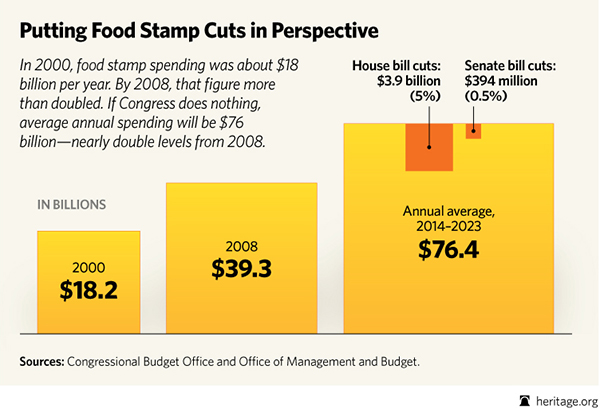


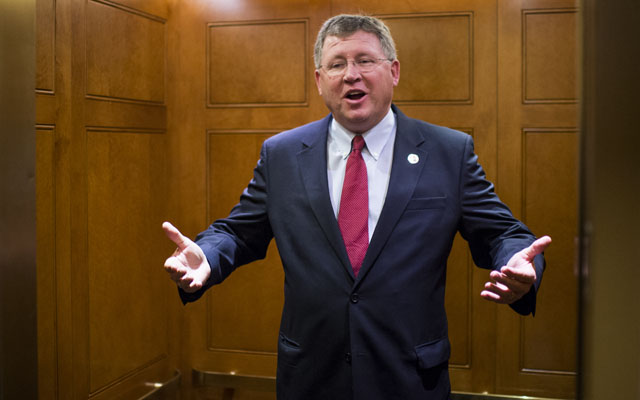




 I remember keenly the era that gave birth to the modern environmental movement. Those memories are often poignant and painful—memories of protest songs and protest marches; of “liberation” from the establishment and its values; of a bloody, frustrating, no-win war; of naked Woodstock revelers; of unkempt, barefoot hippies storming the fences of nuclear power plants, and of radical college professors excoriating Christianity for bringing civilization to the eve of doomsday.
 At the end of the process, we all asked with Schaeffer, “
 Those who took the time to read
 the Christian who believes the Bible should be the man who—with God’s help and in the power of the Holy Spirit—is treating nature now in the direction of the way nature will be then. It will not now be perfect, but it must be substantial, or we have missed our calling. God’s calling to the Christian now, and to the Christian community, in the area of nature— just as it is in the area of personal Christian living in true spirituality—is that we should exhibit a substantial healing here and now, between man and nature and nature and itself, as far as Christians can bring it to pass.


 The Daily Hatch
