“Schaeffer Sunday” Bill Muehlenberg’s review of Schaeffer biography (includes video SLAUGHTER OF THE INNOCENTS)

I truly believe that many of the problems we have today in the USA are due to the advancement of humanism in the last few decades in our society. Ronald Reagan appointed the evangelical Dr. C. Everett Koop to the position of Surgeon General in his administration. He partnered with Dr. Francis Schaeffer in making the video below. It is very valuable information for Christians to have.  Actually I have included a video below that includes comments from him on this subject.

In the film series “WHATEVER HAPPENED TO THE HUMAN RACE?” the arguments are presented  against abortion (Episode 1),  infanticide (Episode 2),   euthenasia (Episode 3), and then there is a discussion of the Christian versus Humanist worldview concerning the issue of “the basis for human dignity” in Episode 4 and then in the last episode a close look at the truth claims of the Bible.

Francis Schaeffer Whatever Happened to the Human Race (Episode 1) ABORTION

Francis Schaeffer: What Ever Happened to the Human Race? (Full-Length Documentary)


Part 1 on abortion runs from 00:00 to 39:50, Part 2 on Infanticide runs from 39:50 to 1:21:30, Part 3 on Youth Euthanasia runs from 1:21:30 to 1:45:40, Part 4 on the basis of human dignity runs from 1:45:40 to 2:24:45 and Part 5 on the basis of truth runs from 2:24:45 to 3:00:04


_______________

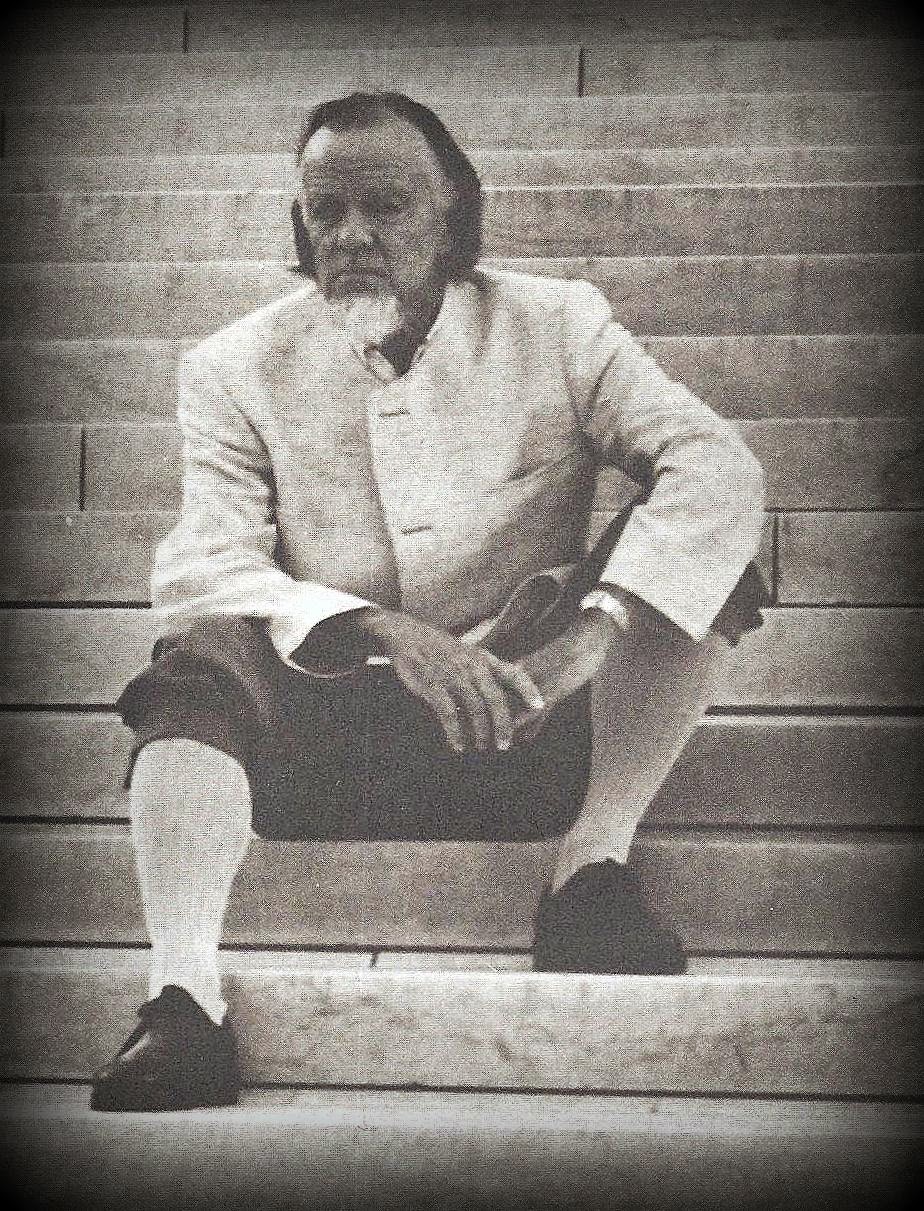
Francis Schaeffer pictured above. I really have so much respect for Francis Schaeffer and the way he taught so many people about the importance of getting involved in the pro-life movement.

Notable Christians: Francis Schaeffer

By: Bill Muehlenberg
Christian Today Australia Columnist
Friday, 16 October 2009, 11:16 (EST)
Font Scale:A A A
This pastor, apologist and writer had a profound impact on evangelicalism in the second half of the twentieth century, and his impact is still very much felt today. Although he has been dead now for a quarter of a century (he died in 1984), this great Christian continues to influence believers around the world.Born in 1912, he studied under Cornelius Van Til and J. Gresham Machen at Westminster Theological Seminary. He became a Presbyterian pastor in the US. But his global impact took off when he went to Europe in 1948.In Holland he met art historian Hans Rookmaaker, and was introduced to the thinking of Abraham Kuyper and Dutch neo-Calvinism. Thus the presuppositional apologetics and worldview thinking he learned at Westminster was further augmented in Europe.He and his wife Edith soon settled in Switzerland, and established a ministry which would influence millions of people. In 1955 they started L’Abri (French for ’shelter’) in the Swiss Alps. There he taught Christian truths to anyone who would listen, and soon travellers worldwide were coming to the Swiss chalets to hear and learn and work.This ministry became especially vital during the counterculture of the 60s. Westerners seeking truth and gurus in the East would often travel along the “hippy trail”. From London and Amsterdam, Western young people would travel through Europe to India, Nepal and other exotic locations hoping to find truth in the wisdom of the East.As they often stopped at L’Abri along the way, they were exposed to the truth about Jesus Christ and biblical Christianity. The routine there was fairly simple. They could stay at the chalets, do some work during the day, and study and listen to lectures by Schaeffer, Rookmaaker, Oz Guinness and others during evenings and weekends.

Edith Schaeffer especially developed a hospitality ministry (which she wrote up in Hidden Art and L’Abri). Sure, people would throw up on the carpets and cause other headaches for the Schaeffers, but they loved these young people and were intent on reaching them with the Gospel of Christ.

The evening lectures and debates were the highlight of life at L’Abri. Many young intellectuals and seekers were warmly yet forthrightly confronted with the logical contradictions of their own non-Christian thought systems, and the coherence and beauty of the Christian worldview. Many people were saved through this ministry, and countless others were strongly influenced by it.

The core of his thought appeared in his first three works: Escape from Reason (1968), The God Who is There (1968), and He is There and He is Not Silent (1972). This trilogy serves as the basis of all his other thought. In it he lays out the case for the biblical worldview, and offers penetrating critiques of non-Christian philosophies and worldviews.

His apologetic method was full-orbed, with many discussions of art, film, literature, culture, sociology, philosophy, theology and history along the way. He firmly believed that Christianity spoke to every area of life, and that believers must love God with their minds as well as the rest of their being.

He insisted that Christians develop a complete biblical worldview, and see how their faith impacts on all aspects of life. He said, “The basic problem of the Christians in this country in the last eighty years or so is that they have seen things in bits and pieces instead of totals.”

And his apologetics was not just about right thinking. He was a pastor, and he knew that right behaviour was also critical. This was a constant theme in his writings, especially in his The Mark of the Christian (1970) and True Spirituality (1971). He insisted that we not only defend the truthfulness of the Gospel, but that we live the truth of the Gospel as well.

As he said in his important 1976 volume How Should We Then Live?, “As Christians we are not only to know the right worldview, the worldview that tells us the truth of what is, but consciously to act upon that worldview so as to influence society in all its parts and facets across the whole spectrum of life, as much as we can.”

He was certainly no mere egghead. All his learning and brilliance was aimed only at one thing: to help people come to know Christ, and to make Christianity known as the sole answer to mankind’s problems. He engaged with all the important thinkers and philosophers of the day, not as a simple academic exercise, but so that he could effectively speak to them and their followers about the truth claims of Christianity.

Consider an illustration of his real heart on this: after delivering a learned lecture on a deep philosophical and apologetic topic, he said in the ensuing question time that he was ‘just a plain old evangelist’. The audience broke into laughter, trying to square this with his eloquent discourse. But deep down that was what Schaeffer was all about: an evangelist.

Schaeffer was greatly concerned that the church was just not doing its job in terms of having a holistic witness to the surrounding culture: “Our culture, society, government, and law are in the condition they are in, not because of a conspiracy, but because the church has forsaken its duty to be the salt of the culture.”

Thus he wrote books on a wide variety of themes, including Art and the Bible (1973), and Pollution and the Death of Man: The Christian View of Ecology (1970). Toward the latter part of his career he made two important series of videos dealing with contemporary issues: How Should We Then Live? and Whatever Happened to the Human Race?

His concerns especially moved in the direction of the life issues, and he became an outspoken critic of the culture of death, taking a strong stand against abortion and euthanasia at a time when few other evangelicals were concerned about such matters.

Indeed, he became increasingly concerned about the state of evangelical Christianity, and how it had in so many ways simply followed the dead-end paths of the surrounding culture. His last book, The Great Evangelical Disaster, written the year he died (1984), was a clarion call for the church to rouse from its slumbers, and become a true beacon of hope, truth and light in a dark and broken world.

He was greatly concerned about the erosion of truth and the collapse of moral absolutes, and offered a genuine prophetic voice to a dying world. His works and influence were enormous, and he was one of the great Christian apologists and activists of last century.

No committed Christian should be ignorant of his life and work. For those who want to go further with Schaeffer, his twenty or so books can still be found, but a 5-volume Complete Works of Francis Schaeffer came out in 1985 and is still widely available. It is well worth getting if you don’t have his original volumes.

Also, helpful works about Schaeffer include:

Scott Burson and Jerry Walls, CS Lewis & Francis Schaeffer (IVP, 1998).
Colin Duriez, Francis Schaeffer: An Authentic Life (IVP, 2008).
Bryan Follis, Truth and Love: The Apologetics of Francis Schaeffer. (Crossway, 2006).
Barry Hankins, Francis Schaeffer and the Shaping of Evangelical America. (Eerdmans, 2008).

Schaeffer was a prophetic voice, both to the non-Christian culture around him, and to the church as well. He took his faith seriously, and wanted all believers to engage with their culture in order to reach it for Christ and his Kingdom. We will all benefit greatly by reading – or re-reading – the works of this great Christian thinker, pastor, evangelist and apologist.

____________

Related posts:

What is faith all about according to Francis Schaeffer

___________________


What is Faith?

Posted on July 29, 2012by 

What is faith?  Faith is often characterized as blind belief just because we want it to be true.  It’s sometimes thought to be belief in spite of evidence to the contrary.  But is that really what Biblical faith is like or is it a strawman argument that’s easily knocked down to make a point errantly?

Francis Schaeffer presents this story about faith:

Suppose we are climbing in the Alps and are very high on the bare rock, and suddenly the fog rolls in. The guide turns to us and says that the ice is forming and that there is no hope; before morning we will all freeze to death here on the shoulder of the mountain. Simply to keep warm the guide keeps us moving in the dense fog further out on the shoulder until none of us have any idea where we are. After an hour or so, someone says to the guide, “Suppose I dropped and hit a ledge ten feet down in the fog. What would happen then?” The guide would say that you might make it until the morning and thus live. So, with absolutely no knowledge or any reason tosupport his action, one of the group hangs and drops into the fog. This would be one kind of faith, a leap of faith.

Suppose, however, after we have worked out on the shoulder in the midst of the fog and the growing ice on the rock, we had stopped and we heard a voice which said, “You cannot see me, but I know exactly where you are from your voices.  I am on another ridge. I have lived in these mountains, man and boy, for over sixty years and I know every foot of them. I assure you that ten feet below you there is a ledge. If you hang and drop, you can make it through the night and I will get you in the morning.

I would not hang and drop at once, but would ask questions to try to ascertain if the man knew what he was talking about and it he was not my enemy. In the Alps, for example, I would ask him his name. If the name he gave me was the name of a family from that part of the mountains, it would count a great deal to me. In the Swiss Alps there are certain family names that indicate mountain families of that area. In my desperate situation, even though time would be running out, I would ask him what to me would be the adequate and sufficient questions, and when I became convinced by his answers, then I would hang and drop.

Schaeffer’s story captures the idea that faith is not blind.  It is based on reason, logic, information, but lives in a situation where a gap exists.  Faith bridges the gap by trusting in someone or something in a better position than yourself.  In this story, faith was put in the knowledge of the man who grew up in the Alps.  It was a rational, tested faith based on questioning the man’s knowledge, but it was still faith because the ledge below couldn’t be seen, touched or definitively known.  This idea that faith is well informed and not irrational is the first point to keep in mind.

The second point is about the object of faith.  When you walk across ice, your trust is put in the ice to hold your weight.  Ice is the object of your faith.  If your trust is misplaced, you’ll quickly be wet, cold and in significant danger.  It wouldn’t have mattered whether you have a little faith in the ice or trust it fully.  The strength of the object of faith is what counts.  It the story it was the knowledge of the guide in the fog.

Christian faith captures both of these ideas.  First, God provides evidence of Himself in creation, in prophecy, in archeology, in Scripture’s consistency across 40+ authors and in the life of Jesus.  He doesn’t leave us without witness or guidance.  Second, He then requires us to make Jesus the object of our faith.  Jesus’ sinless life, substitutionary death and bodily resurrection are what matter.  As Paul said, if Jesus didn’t rise from the dead our faith is in vain (1 Corinthians 15:17). Putting trust in the Creator of the universe rather than our own feeble attempts to be good doesn’t seem like much of a stretch when you look at the history of mankind’s failures an our own individual struggles.  We have all sinned and fall short of the glory of God and must put our faith in Jesus’ work to wash our sin away so we can enter God’s presence.


Related posts:

Francis Schaeffer’s “How should we then live?” Video and outline of episode 10 “Final Choices” (Schaeffer Sundays)

E P I S O D E 1 0   Dr. Francis Schaeffer – Episode X – Final Choices 27 min FINAL CHOICES I. Authoritarianism the Only Humanistic Social Option One man or an elite giving authoritative arbitrary absolutes. A. Society is sole absolute in absence of other absolutes. B. But society has to be […]


Francis Schaeffer’s “How should we then live?” Video and outline of episode 9 “The Age of Personal Peace and Affluence” (Schaeffer Sundays)

E P I S O D E 9 Dr. Francis Schaeffer – Episode IX – The Age of Personal Peace and Affluence 27 min T h e Age of Personal Peace and Afflunce I. By the Early 1960s People Were Bombarded From Every Side by Modern Man’s Humanistic Thought II. Modern Form of Humanistic Thought Leads […]


Francis Schaeffer’s “How should we then live?” Video and outline of episode 8 “The Age of Fragmentation” (Schaeffer Sundays)

E P I S O D E 8 Dr. Francis Schaeffer – Episode VIII – The Age of Fragmentation 27 min I saw this film series in 1979 and it had a major impact on me. T h e Age of FRAGMENTATION I. Art As a Vehicle Of Modern Thought A. Impressionism (Monet, Renoir, Pissarro, Sisley, […]


Francis Schaeffer’s “How should we then live?” Video and outline of episode 7 “The Age of Non-Reason” (Schaeffer Sundays)

E P I S O D E 7 Dr. Francis Schaeffer – Episode VII – The Age of Non Reason I am thrilled to get this film series with you. I saw it first in 1979 and it had such a big impact on me. Today’s episode is where we see modern humanist man act […]


Francis Schaeffer’s “How should we then live?” Video and outline of episode 6 “The Scientific Age” (Schaeffer Sundays)

E P I S O D E 6 How Should We Then Live 6#1 Uploaded by NoMirrorHDDHrorriMoN on Oct 3, 2011 How Should We Then Live? Episode 6 of 12 ________ I am sharing with you a film series that I saw in 1979. In this film Francis Schaeffer asserted that was a shift in […]


Francis Schaeffer’s “How should we then live?” Video and outline of episode 5 “The Revolutionary Age” (Schaeffer Sundays)

E P I S O D E 5 How Should We Then Live? Episode 5: The Revolutionary Age I was impacted by this film series by Francis Schaeffer back in the 1970′s and I wanted to share it with you. Francis Schaeffer noted, “Reformation Did Not Bring Perfection. But gradually on basis of biblical teaching there […]


Francis Schaeffer’s “How should we then live?” Video and outline of episode 4 “The Reformation” (Schaeffer Sundays)

Dr. Francis Schaeffer – Episode IV – The Reformation 27 min I was impacted by this film series by Francis Schaeffer back in the 1970′s and I wanted to share it with you. Schaeffer makes three key points concerning the Reformation: “1. Erasmian Christian humanism rejected by Farel. 2. Bible gives needed answers not only as to […]


“Schaeffer Sundays” Francis Schaeffer’s “How should we then live?” Video and outline of episode 3 “The Renaissance”

Francis Schaeffer’s “How should we then live?” Video and outline of episode 3 “The Renaissance” Francis Schaeffer: “How Should We Then Live?” (Episode 3) THE RENAISSANCE I was impacted by this film series by Francis Schaeffer back in the 1970′s and I wanted to share it with you. Schaeffer really shows why we have so […]


Francis Schaeffer’s “How should we then live?” Video and outline of episode 2 “The Middle Ages” (Schaeffer Sundays)

  Francis Schaeffer: “How Should We Then Live?” (Episode 2) THE MIDDLE AGES I was impacted by this film series by Francis Schaeffer back in the 1970′s and I wanted to share it with you. Schaeffer points out that during this time period unfortunately we have the “Church’s deviation from early church’s teaching in regard […]


Francis Schaeffer’s “How should we then live?” Video and outline of episode 1 “The Roman Age” (Schaeffer Sundays)

Francis Schaeffer: “How Should We Then Live?” (Episode 1) THE ROMAN AGE   Today I am starting a series that really had a big impact on my life back in the 1970′s when I first saw it. There are ten parts and today is the first. Francis Schaeffer takes a look at Rome and why […]

“Sanctity of Life Saturday” Francis Schaeffer’s wife Edith passes away on Easter weekend 2013 Part 15 (includes pro-life editorial cartoon and article by from Udo Middelmann)

Francis Schaeffer Whatever Happened to the Human Race (Episode 1) ABORTION

Francis Schaeffer: What Ever Happened to the Human Race? (Full-Length Documentary)


Part 1 on abortion runs from 00:00 to 39:50, Part 2 on Infanticide runs from 39:50 to 1:21:30, Part 3 on Youth Euthanasia runs from 1:21:30 to 1:45:40, Part 4 on the basis of human dignity runs from 1:45:40 to 2:24:45 and Part 5 on the basis of truth runs from 2:24:45 to 3:00:04

________________

Picture of Francis Schaeffer and his wife Edith from the 1930′s above. I was sad to read about Edith passing away on Easter weekend in 2013. I wanted to pass along this fine article below.

Sunday, March 31, 2013

Edith Schaeffer, RIP

(from Udo Middelmann)
Edith Rachel Merritt Seville Schaeffer died on March 30, 2013 in her home in Gryon, Switzerland, where she had moved 13 years ago to be surrounded by memories, her music, her son’s paintings and the detailed care organized daily by her daughter Deborah Middelmann. She was born on November 3, 1914 as the third daughter of Dr. George Hugh and Jessie Maude Seville in Wenchau, China, where her parents ran a school for girls and taught the Bible in Mandarin.
Edith Schaeffer marked her life with the expression of rich ideas, often rebellious against the staid and superficial life she saw among Christians. The oldest sister became a communist in New York of the 30ies, the second eloped.  Edith Seville married Francis August Schaeffer in 1935 and in no way was she the typical pastor’s or missionary wife. She turned her active mind to work with her husband, teaching first seminary wives to think and to question, to create and make of life something of integrity, as her husband so wanted her to do.
To put her husband through 3 years of seminary she tailored men’s suits, made ball room gowns and wedding dresses for private clients. From whole cow skins she made belts sold in New York stores. With very little money she prepared tasteful and varied meals. She painted a fresco on the ceiling of the vestibule in the little church her husband pastored in Grove City, while he attached a steeple to it with the elders’ help. They lectured together and encouraged many to use their minds to understand what they believed and how to respond to the intellectual and cultural ideas around them. Together they travelled and taught in churches and university halls from Finland to Portugal, helping people understand Christianity as the truth of the universe, not a personal faith, and pointing out the cultural and philosophical pitfalls in everyone’s way.
She lived her life as a work of art, an exhibition of true significance and a portrait of a generous, stunning and creative personality. She always sought ways to draw on life’s opportunities to show that human beings are made for the enrichment of everyone’s life, for the encouragement of people. This was a central part of the work she and her husband engaged in from the very start of their life together. She was in all things generous. When books provided royalties she used all of it to give her four children and their families annual reunions for the cousins to know each other.
When she left the work of L’Abri after her husband’s death she started the Francis A Schaeffer Foundation with Udo and Deborah Middelmann to safeguard his papers and the ideas that underline their life, to make them available for a wider audience. She found people interesting anywhere, engaged in conversation and so met the most amazing individuals. She talked, for instance, with the author Andre Aciman, standing in line for tickets to Carnegie Hall in NY and found out that he had had our village doctor, Dr. Gandur, as his pediatrician in Alexandria, Egypt. He was so grateful to be in touch through her with his old doctor.
She enjoyed people in the streets, in airplanes and over the phone, wherever she found them or when they could reach her. She stayed up nights to help someone out of their distress or need. With much imagination she served her meals with stunning decorations made from twigs and moss, field flowers and stones. Duncan from Kenya once remarked: “This is the first place where I see the beauty of the truth of the Bible consistently carried over into all areas of life.”
After the death of her husband in 1984 Edith Schaeffer added a whole new chapter to her life. She continued to write books, lectured widely and returned twice to her place of birth in China. She investigated the making the Baby Grand Piano she had received as a gift at the Steinway factory in New York and presented “Forever Music” in a concert at Alice Tully Hall in New York with the Guarneri Quartet. Through Franz Mohr, the chief piano voicer at Steinway she came to know musicians like Rostropovich, the pianists Horowitz and Rudoph Serkin, the Cellists YoYo Ma and Ya Ya Ling, and also the guitarist Christopher Parkening. She organized concerts and elaborate receptions for musicians and friends in her home in Rochester, MN. When she met B. B. King at the International Jazz Festival in Montreux he gave her his pass to the evening’s concert. Once on vacations on the island of Elba, Sonny Rollins noticed her beauty and rhythm in the audience as she danced during his concert, came off the stage and danced with her.
Today she “slipped into the nearer presence of Jesus”, her Lord, from whom she awaits the promised resurrection to continue her life on earth and to dance once again with a body restored to wholeness.
If you wish to honor Edith Schaeffer’s life you can support her intense commitment to the work of the Francis Schaeffer Foundation, Jermintin 3, CH -1882 Gryon, Switzerland

I was saved at 25 out of a life of debauchery, perversion, and rebellion. As a revolutionary and active organizing communist, I was Damascus roaded.
The Bible became my only truth, and the Schaeffers taught me how to live it with my gifts and calling.
One quote, in particular, from Edith changed my life forever. To wit, “We may live in a pluralistic society, but we do not live in a pluralistic universe.”

Easter 2013 will forever be remembered with her passing.

_____________

Planned Parenthood is the leading abortion provider in the USA and this editorial cartoon touches on this:

(Francis did a great job in his film series “How Should we then live?” in looking at how humanism has affected art and culture in the Western World in the last 2000 years. My favorite episodes include his study of the Renaissance, the Revolutionary age, the age of Nonreason, and the age of Fragmentation.)

Related posts:

Francis Schaeffer’s “How should we then live?” Video and outline of episode 10 “Final Choices” (Schaeffer Sundays)

E P I S O D E 1 0   Dr. Francis Schaeffer – Episode X – Final Choices 27 min FINAL CHOICES I. Authoritarianism the Only Humanistic Social Option One man or an elite giving authoritative arbitrary absolutes. A. Society is sole absolute in absence of other absolutes. B. But society has to be […]

Francis Schaeffer’s “How should we then live?” Video and outline of episode 9 “The Age of Personal Peace and Affluence” (Schaeffer Sundays)

E P I S O D E 9 Dr. Francis Schaeffer – Episode IX – The Age of Personal Peace and Affluence 27 min T h e Age of Personal Peace and Afflunce I. By the Early 1960s People Were Bombarded From Every Side by Modern Man’s Humanistic Thought II. Modern Form of Humanistic Thought Leads […]

Francis Schaeffer’s “How should we then live?” Video and outline of episode 8 “The Age of Fragmentation” (Schaeffer Sundays)

E P I S O D E 8 Dr. Francis Schaeffer – Episode VIII – The Age of Fragmentation 27 min I saw this film series in 1979 and it had a major impact on me. T h e Age of FRAGMENTATION I. Art As a Vehicle Of Modern Thought A. Impressionism (Monet, Renoir, Pissarro, Sisley, […]

Francis Schaeffer’s “How should we then live?” Video and outline of episode 7 “The Age of Non-Reason” (Schaeffer Sundays)

E P I S O D E 7 Dr. Francis Schaeffer – Episode VII – The Age of Non Reason I am thrilled to get this film series with you. I saw it first in 1979 and it had such a big impact on me. Today’s episode is where we see modern humanist man act […]

Francis Schaeffer’s “How should we then live?” Video and outline of episode 6 “The Scientific Age” (Schaeffer Sundays)

E P I S O D E 6 How Should We Then Live 6#1 Uploaded by NoMirrorHDDHrorriMoN on Oct 3, 2011 How Should We Then Live? Episode 6 of 12 ________ I am sharing with you a film series that I saw in 1979. In this film Francis Schaeffer asserted that was a shift in […]

Francis Schaeffer’s “How should we then live?” Video and outline of episode 5 “The Revolutionary Age” (Schaeffer Sundays)

E P I S O D E 5 How Should We Then Live? Episode 5: The Revolutionary Age I was impacted by this film series by Francis Schaeffer back in the 1970′s and I wanted to share it with you. Francis Schaeffer noted, “Reformation Did Not Bring Perfection. But gradually on basis of biblical teaching there […]

Francis Schaeffer’s “How should we then live?” Video and outline of episode 4 “The Reformation” (Schaeffer Sundays)

Dr. Francis Schaeffer – Episode IV – The Reformation 27 min I was impacted by this film series by Francis Schaeffer back in the 1970′s and I wanted to share it with you. Schaeffer makes three key points concerning the Reformation: “1. Erasmian Christian humanism rejected by Farel. 2. Bible gives needed answers not only as to […]

“Schaeffer Sundays” Francis Schaeffer’s “How should we then live?” Video and outline of episode 3 “The Renaissance”

Francis Schaeffer’s “How should we then live?” Video and outline of episode 3 “The Renaissance” Francis Schaeffer: “How Should We Then Live?” (Episode 3) THE RENAISSANCE I was impacted by this film series by Francis Schaeffer back in the 1970′s and I wanted to share it with you. Schaeffer really shows why we have so […]

Francis Schaeffer’s “How should we then live?” Video and outline of episode 2 “The Middle Ages” (Schaeffer Sundays)

  Francis Schaeffer: “How Should We Then Live?” (Episode 2) THE MIDDLE AGES I was impacted by this film series by Francis Schaeffer back in the 1970′s and I wanted to share it with you. Schaeffer points out that during this time period unfortunately we have the “Church’s deviation from early church’s teaching in regard […]

Francis Schaeffer’s “How should we then live?” Video and outline of episode 1 “The Roman Age” (Schaeffer Sundays)

Francis Schaeffer: “How Should We Then Live?” (Episode 1) THE ROMAN AGE   Today I am starting a series that really had a big impact on my life back in the 1970′s when I first saw it. There are ten parts and today is the first. Francis Schaeffer takes a look at Rome and why […]

Hobby Lobby: A Family Business

Hobby Lobby: A Family Business

Published on Jan 30, 2014

On March 25, 2014, the U.S. Supreme Court will hear Sebelius v. Hobby Lobby Stores Inc., a case arising out of the commitment of Hobby Lobby owners David and Barbara Green and their family to live out their deeply held religious convictions by “operating their company in a manner consistent with biblical principles.”

The family believes that this commitment is the reason that Hobby Lobby, which began out of the garage, has grown from one 300-square-foot store to one of the nation’s leading arts and crafts retailers with more than 550 stores in 45 states.

For information and updates about this important case, and to share your support, please visit http://hobbylobbycase.com.

__________________

Rand Paul rightly notes, “The Fourth Amendment requires an individualized warrant based on probable cause before the government can search phone records and e-mails”

_________

Reclaiming Our Rights in the 21st Century (Sen. Rand Paul)

Published on Aug 1, 2013

Full event:
http://www.cato.org/cato-university/2…

Limiting government means expanding the sphere of the individual. And given recent scandals with the NSA and IRS, the struggle for liberty clearly continues. At Cato University, Kentucky’s Junior Senator Rand Paul addressed the crowd, covering NSA surveillance, the misunderstood Lochner decision and natural rights.

________________

Rand Paul rightly notes, “The Fourth Amendment requires an individualized warrant based on probable cause before the government can search phone records and e-mails.”

Rand Paul on Obama on NSA: “The Same Unconstitutional Program with a New Configuration”

|Jan. 17, 2014 12:15 pm


Look for much more coverage of Obama’s NSA speech this morning as the day rolls on here at Hit and Run, but Kentucky Sen. Rand Paul’s reaction is worth a quick note, via a press release:

“While I am encouraged the President is addressing the NSA spying program because of pressure from Congress and the American people, I am disappointed in the details. The Fourth Amendment requires an individualized warrant based on probable cause before the government can search phone records and e-mails. President Obama’s announced solution to the NSA spying controversy is the same unconstitutional program with a new configuration,” Sen. Paul said. “I intend to continue the fight to restore Americans rights through my Fourth Amendment Restoration Act and my legal challenge against the NSA. The American people should not expect the fox to guard the hen house.”


Related posts:

Rand Paul puts the Senate in their place!!!!

Rand Paul puts the Senate in their place!!!! Rand Paul Debunks the Shameful Demagoguery against Apple May 22, 2013 by Dan Mitchell Senator Rand Paul is perhaps even better than I thought he would be. The Founding Fathers would be proud He already is playing a very substantive role on policy, ranging from his actions of big-picture […]

Transcript and Video of Rand Paul at 2013 CPAC

___________________ Rand Paul’s CPAC 2013 Speech – 3/14/2013 Published on Mar 14, 2013 Senator Rand Paul of Kentucky speaks at the 2013 Conservative Political Action Conference hosted by the American Conservative Union on March 14, 2013. What a great speech by Rand Paul: Senator Rand Paul (R-KY) who is a prospective 2016 presidential candidate spoke […]

Is Senator Ted Cruz from Texas going to be another Rand Paul?

Ronald Reagan pictured above.   Ted Cruz has the right idea about cutting the size of government. He has some good ideas and he reminds me a lot of Rand Paul. He also has a great role model in Ronald Reagan who he quotes in the video clip below. Senator Cruz Identifies the Wrong Vehicle, […]

Rand Paul’s plan more popular than Obama’s?

Sen. Rand Paul Urges Colleagues to Vote for his Budget Resolution – 05/16/12 What are our choices here in the USA with our huge budget deficit? We could head to Greece or cut our budget until we have it balanced. Obama would never even consider getting close to a balanced budget while Paul would put […]

Rand Paul v. President Obama

Sen. Rand Paul Urges Colleagues to Vote for his Budget Resolution – 05/16/12 What are our choices here in the USA with our huge budget deficit? We could head to Greece or cut our budget until we have it balanced. Obama would never even consider getting close to a balanced budget while Paul would put […]

HERITAGE FOUNDATION INTERVIEW:Sen. Rand Paul on Occupy Wall Street, Repealing No Child Left Behind

Sen. Rand Paul on Occupy Wall Street, Repealing No Child Left Behind Uploaded by HeritageFoundation on Oct 18, 2011 The latest iteration of No Child Left Behind comes before a Senate committee tomorrow with bipartisan support. But if Sen. Rand Paul (R-KY) has anything to say about it, the bill won’t go anywhere fast. Paul […]

Ryan’s plan better than Democrat’s plan but not as good as Rand Paul’s

Promote Federalism and Replicate the Success of Welfare Reform with Medicaid Block Grants Uploaded by afq2007 on Jun 26, 2011 The Medicaid program imposes high costs while generating poor results. This Center for Freedom and Prosperity Foundation video explains how block grants, such as the one proposed by Congressman Paul Ryan, will save money and […]

Rand Paul against debt deal

John Brummett entitled his article “It is a crafty deal — good too,” Arkansas News Bureau, August 2, 2011, and that is because this deal DOES NOT INCLUDE ANY REAL CUTS TO THE BUDGET IN 2011. IN FACT, IT CUTS 22 BILLION OUT OF THE PROJECTED INCREASE IN THE 3.6 TRILLION BUDGET THAT WILL HAVE A […]

Ecclesiastes, Purpose, Meaning, and the Necessity of God by Suiwen Liang (Quotes Will Durant, Madalyn Murray O’Hair, Stephen Jay Gould,Richard Dawkins, Jean-Paul Sartre,Bertrand Russell, Leo Tolstoy, Loren Eiseley,Aldous Huxley, G.K. Chesterton, Ravi Zacharias, and C.S. Lewis.)

Ecclesiastes 2-3 Published on Sep 19, 2012 Calvary Chapel Spring Valley | Sunday Evening | September 16, 2012 | Derek Neider _____________________________ I have written on the Book of Ecclesiastes and the subject of the meaning of our lives on several occasions on this blog. In this series on Ecclesiastes I hope to show how secular […]

Romney must embrace some of Ron Paul’s ideas or take Rand as VP

There is no other way around this problem for Romney. If he wins the Republican Nomination for President then the must embrace some of Paul’s ideas (as suggested below by Senator Demint) or get Rand Paul to be the VP candidate. GOP Should Heed Ron Paul by Michael D. Tanner Michael Tanner is a senior […]

FRANCIS SCHAEFFER ANALYZES ART AND CULTURE Part 6 The Adoration of the Lamb by Jan Van Eyck which was saved by MONUMENT MEN IN WW2 (Feature on artist Makoto Fujimura)

_________________________________________

Christians used to be the ones who were responsible for the best art in the culture. Will there ever be a day that happens again?

The Gospel of John Chapter 1 verse 29:

The next day John saw Jesus coming toward him and said, “Look, the Lamb of God, who takes away the sin of the world!” (Speaking of Christ).

At the 5 minute mark in the above video clip you see Francis Schaeffer analyse this painting below:

Artist: Jan van Eyck

Start Date: 1425

Completion Date:1429

Style: Northern Renaissance

Genre: religious painting

Technique: oil

Material: wood

Dimensions: 137.7 x 242.3 cm

Gallery: Koninklijk Museum voor Schone Kunsten

Image dimension 500x272px, View All Sizes

This artwork is in the public domain.
___________________________________________

The Church’s One Foundation

Uploaded on Aug 16, 2009

“The Lamb of God” – The Ghent altar piece is in St. Bavo Cathedral in Ghent, Belgium. Hubert van Eyck began creating the altar piece. Jan van Eyck, his brother, completed the the beautiful painting which Hubert left unfinished (1425-1429). The music is from Hymns Triumphant II and includes, “The Church’s One Foundation”, “We’re Marching to Zion”, and “I Love Thy Kingdom, Lord”. The hymns were performed by the Amen Choir. Orchestration is by the London National Philharmonic Orchestra. The musical score was arranged and conducted by Lee Holdridge.

_____________________________________________

CATHEDRAL OF ST BAVON, GHENT , BELGIUM
JAN VAN EYCK
1390 – 1441
The Painting
This is an altarpiece containing panels of several different paintings. They include Mary, Jesus, Adam and Eve,and singing angels. Notice the beauty and intricacies.
The central part of this painting is in the lower panels. Focus your study on these panels. Notice that there are several groups coming to the center.
The Principle
Dr. Francis Schaeffer explains that “most impressive is the central theme: the rich, the poor – people of all classes and backgrounds – coming to Christ. And who is this Christ? Van Eyck comprehended the Biblical understanding of Christ as the Lamb of God who died on the cross to take away the moral guilt of those who accept Him as
Savior. But this Christ is not now dead. He stands upright and alive on the altar, symbolizing that He died as the substitute, sacrificed, but He now lives! As van Eyck painted this, almost certainly he had Jesus’ own words in mind, as Christ speaks in the Apocalypse, the last book in the Bible: ‘I am the living one that became dead, and behold, I am alive for evermore, Amen; and I have the keys of death and Hades.’” (How Should We Then Live?, page 66).
The Painter
While Masaccio was working out techniques of perspective for the Italian Renaissance painters, Jan van Eyck was working in Northern Europe under the influence of Reformation thought. He too painted people and objects in their proper place – just as if you could see into the painting. If Masaccio is ‘The Father of Renaissance Art’, Jan
van Eyck is ‘The Father of Reformation Art.’ Van Eyck mastered light and landscape as well as discovering oil painting, a technique in which linseed oil serves as the solvent for pigment rather than egg, which was used in the Italian technique of tempera. This technique allows for greater beauty and delicacy in art.

________________


Monuments Men – Examining the Ghent Altarpiece

(Click image for full resolution version)

January 15, 2014
Monuments - Examining the Ghent Altarpiece

Photo courtesy of Archives of American Art, Smithsonian Institution

Lt. Daniel J. Kern and German conservator Karl Sieber examining Jan van Eyck’s Adoration of the Mystic Lamb, also known as the Ghent Altarpiece (1432).

Thomas Carr Howe papers, Archives of American Art, Smithsonian Institution

The Monuments Men – Official Trailer (2013) [HD] George Clooney, Matt Damon

Published on Aug 8, 2013

Subscribe to FilmTrailerZone: http://ow.ly/adpvg
Like us on Facebook: http://ow.ly/rduc2
Follow us on Twitter: http://ow.ly/ay0gU

The Monuments Men – Official Trailer (2013)

Release Date: December 18, 2013
Genre: Action, Thriller
Director: George Clooney
Writer: George Clooney, Grant Heslov
Starring: George Clooney, Matt Damon, Bill Murray
Studio: Columbia Pictures (Sony)

Plot: Based on the true story of the greatest treasure hunt in history, “The Monuments Men” is an action-thriller focusing on an unlikely World War II platoon, tasked by FDR with going into Germany to rescue artistic masterpieces from Nazi thieves and returning them to their rightful owners. It would be an impossible mission: with the art trapped behind enemy lines, and with the German army under orders to destroy everything as the Reich fell, how could these guys — seven museum directors, curators, and art historians, all more familiar with Michelangelo than the M-1 — possibly hope to succeed? But as the Monuments Men, as they were called, found themselves in a race against time to avoid the destruction of 1000 years of culture, they would risk their lives to protect and defend mankind’s greatest achievements.

___________________

____________

Francis Schaeffer pictured below:

________________________________________________________________________________________________________________________________

_________

Francis Schaeffer has written extensively on art and culture spanning the last 2000 years and here are some posts I have done on this subject before : Francis Schaeffer’s “How should we then live?” Video and outline of episode 10 “Final Choices” , episode 9 “The Age of Personal Peace and Affluence”, episode 8 “The Age of Fragmentation”, episode 7 “The Age of Non-Reason” , episode 6 “The Scientific Age” , episode 5 “The Revolutionary Age” ,  episode 4 “The Reformation”,  episode 3 “The Renaissance”, episode 2 “The Middle Ages,”, and  episode 1 “The Roman Age,” . My favorite episodes are number 7 and 8 since they deal with modern art and culture primarily.(Joe Carter rightly noted, “Schaeffer—who always claimed to be an evangelist and not a philosopher—was often criticized for the way his work oversimplified intellectual history and philosophy.” To those critics I say take a chill pill because Schaeffer was introducing millions into the fields of art and culture!!!! !!! More people need to read his works and blog about them because they show how people’s worldviews affect their lives!

J.I.PACKER WROTE OF SCHAEFFER, “His communicative style was not that of a cautious academic who labors for exhaustive coverage and dispassionate objectivity. It was rather that of an impassioned thinker who paints his vision of eternal truth in bold strokes and stark contrasts.Yet it is a fact that MANY YOUNG THINKERS AND ARTISTS…HAVE FOUND SCHAEFFER’S ANALYSES A LIFELINE TO SANITY WITHOUT WHICH THEY COULD NOT HAVE GONE ON LIVING.”

Francis Schaeffer’s works  are the basis for a large portion of my blog posts and they have stood the test of time. In fact, many people would say that many of the things he wrote in the 1960’s  were right on  in the sense he saw where our western society was heading and he knew that abortion, infanticide and youth enthansia were  moral boundaries we would be crossing  in the coming decades because of humanism and these are the discussions we are having now!)

There is evidence that points to the fact that the Bible is historically true as Schaeffer pointed out in episode 5 of WHATEVER HAPPENED TO THE HUMAN RACE? There is a basis then for faith in Christ alone for our eternal hope. This link shows how to do that.

Francis Schaeffer in Art and the Bible noted, “Many modern artists, it seems to me, have forgotten the value that art has in itself. Much modern art is far too intellectual to be great art. Many modern artists seem not to see the distinction between man and non-man, and it is a part of the lostness of modern man that they no longer see value in the work of art as a work of art.”

Francis and Edith Schaeffer

____________________

Francis Schaeffer with his son Franky pictured below. Francis and Edith (who passed away in 2013) opened L’ Abri in 1955 in Switzerland.

_________________

The first episode in this series included a feature on Tracey Emin of England and the second post featured Peter Howson of Scotland, and the third and fourth posts were  extensive pieces on the art and writings of Mike Kelley of LA (sadly Kelley committed suicide in 2012). The fifth post featured the german painter Gerhard Richter and  sixth post today featured Makoto Fujimura who was born in Boston  to Japanese parents, but now lives in New York City.

__________________________________

Makoto Fujimura pictured below:

A Conversation with Makoto Fujimura

Published on Jul 31, 2012

Dean of the School of Divinity at Cairn Univeristy, and Director of the Center for University Studies, Dr. Jonathan Master, sat down for a conversation with artist Makoto Fujimura to discuss his life and work, and his thoughts on the intersection of art, culture, and the Christian life.

_____________

Highlights of Encounter 11: Mako Fujimura on Being Generative

Published on May 30, 2012

“Being Generative” is the theme of Encounter 11. Makoto Fujimura invites us to consider that “being generative” means dwelling in the liminal spaces of culture. He suggests that the poet Emily Dickinson best exemplifies this generative quality through her use of dashes that humanize her poetry.

View full video here at http://vimeo.com/25191805

More of Mako on Emily Dickinson at: http://www.makotofujimura.com/writing…

Bio:
Makoto Fujimura is an artist, writer, and speaker who is recognized worldwide as a cultural influencer by both faith-based and secular media. A Presidential appointee to the National Council on the Arts (2003-2009), Fujimura has contributed internationally as an advocate for the arts, speaking with decision makers and advising governmental policies on the arts. Fujimura’s second book, Refractions: A Journey of Faith, Art and Culture, is a collection of essays bringing people of all backgrounds together in conversation and meditation on culture, art, and humanity. Fujimura founded International Arts Movement in 1991.

________________________________________

Fujimura, Makoto – VM – Cisca Ireland-Verwoerd

Golden Pines-Gordon by Makoto Fujimura
Visual Poetry
by Cisca Ireland-Verwoerd
Makoto Fujimura (1960) was born in Boston to Japanese parents. He was educated in the US (Bucknell University) and Japan, where he studied traditional Japanese art. Fujimura’s work reflects two cultures, as he combines the medieval technique of Nihonga (using ground minerals and precious metals in hide glue) with abstract expressionism. Just as in Asian art, nature and human experience are often suggested with colors and vague forms rather than with explicit outline. This makes the world of Fujimura one of mystery. We can only enter this world when we take the time to stand still and look and meditate.
Fujimura’s paintings change over time. For instance, he uses silver that will tarnish and become cloudy and dark, and gold leaves that become more transparent as the minerals “settle.” Fujimura uses natural materials. He grinds up minerals and metals and combines them with a glue of animal hide. This painstaking process and the visible effects of aging tell us of Fujimura’s philosophy: art reflects the materiality of the created world, as well as the reality of suffering (crushing and aging). At the same time, his work also tells us of the transcendent splendor of God and his creation. We see the metals and minerals refracting light in ever-changing ways, and we think of the subtleties and enchantment of life. Slowly, Fujimura draws us into his deeply spiritual visual poetry and we marvel at the ethereal beauty that can be present in the midst of life’s darkness and destruction.
Golden Pines-Gordon was commissioned by Gordon College, a Christian College in Massachusetts, for their new Science Center (2008). When Fujimura visited the yet unfinished building, he was inspired by two pine trees outside in front of the Coy Pond. Today the same trees and pond are still visible through the window left of the painting. The real trees and the painting exist side by side, just as science and art exist in close relationship. Science and art both describe and explore God’s creation, only expressed in different “languages.”
The painting is fairly large (48×60 inches, 122×152 cm) and is almost entirely covered by thin squares of gold leaf. We associate gold with spirituality and eternity; it reminds us of the golden backgrounds of icons and illustrated manuscripts. Fujimura uses layers of gold and vibrant, earth-bound colors. Alternatively, they hide and reveal each other.
In the middle of the painting we see a large tree that refers to the mystery of creation. The silvery trunk with its shadow are planted in a layer of unpainted kumohada (Japanese rag paper). It stretches out its branches and clusters of pines throughout the expanse of gold. We notice some brush strokes, but much of the tree is suggested by dripped splotches of deep blue azurite and blue-green malachite. Diagonally on the right we see several trunks with leaves that suggest the receding line of trees on the other side of the college’s Coy Pond. This perspective creates a depth between the large tree in the middle and the trees on the right.
A small tree on the lower right stretches out its main bare branch toward the large tree, as in deference. This tree connotes the scientific realm, bound to the closed system of nature. If we look carefully, we see golden squiggles under the small pine, as if forming its foundation. Only when we are familiar with the text from Ps. 19:1-2 can we decipher it: “The heavens declare the glory of God; the skies proclaim the works of his hands. Day after day they pour forth speech. For Gordon College.” In Fujimura’s visual poetry science and creation express the same: we experience the glorious presence of God.
——-
More about Makoto Fujimura: For Fujimura, art is not something he “produces,” but a process that reveals the core of his humanity. This is why his activities are not limited to studio painting. Fujimura also makes video installations, writes, lectures, collaborates with musicians, mentors art students, and helps with church planting activities. Based in New York City, two blocks from “Ground Zero,” he initiated the TriBeCa Temporary project to provide a place of healing for local artists after 9/11. In 1990, Fujimura founded the non-profit organization IAM (International Arts Movement), whose mission is to “gather artists and creative catalysts to wrestle with the deep questions of art, faith and humanity in order to inspire the creative community to engage the culture that is and create the world that ought to be.” www.makotofujimura.com and www.iamny.org
 
Books
– Refractions: A Journey of Faith, Art, and Culture, Makoto Fujimura and Tim Keller (Colorado Springs: NavPress, 2009)
– Objects of Grace: Conversations on Creativity and Faith, James Romaine (Baltimore: Square Halo Books, 2002), p 150-173.
– English Standard Version of the Bible, to be released by Crossway in January 2011 to commemorate the four hundred year anniversary of the King James Bible, will have five works of Fujimura illustrating the four gospels.
Gallery
Fujimura’s main exhibitor is the Dillon Gallery in New York City.
Cisca Ireland-Verwoerd resides in Boston, MA, with her husband and son. She lectures and writes about her two favorite topics: mission and theology in art.
ArtWay Visual Meditation August 15, 2010

__________________________________

Evangelicals start push in the arts

By Eric Gorski, AP Religion Writer  |  July 26, 2007

There are no crosses in Makoto Fujimura’s paintings. No images of Jesus gazing into the distance, or serene scenes of churches in a snow-cloaked wood.

Fujimura’s abstract works speak to his evangelical Christian faith. But to find it takes some digging.

After the 2001 terrorist strikes on the World Trade Center, three blocks from Fujimura’s home, his work explored the power of fire to both destroy and purify, themes drawn from the Christian Gospels and Dante’s “The Divine Comedy.”

“I am a Christian,” says Fujimura, 46, who founded the nonprofit International Arts Movement to help bridge the gap between the religious and art communities. “I am also an artist and creative, and what I do is driven by my faith experience.

“But I am also a human being living in the 21st century, struggling with a lot of brokenness — my own, as well as the world’s. I don’t want to use the term ‘Christian’ to shield me away from the suffering or evil that I see, or to escape in some nice ghetto where everyone thinks the same.”

By making a name for himself in the secular art world, Fujimura has become a role model for creatively wired evangelicals. They believe that their churches have forsaken the visual arts for too long — and that a renaissance has begun.

On the grass-roots and institutional level, evidence is mounting to support that view: Art galleries are opening in churches; prominent seminaries are investing in new centers exploring theology and the arts; and, graduates from evangelical film schools are making Hollywood movies.

These artistic evangelicals, though still relatively small in number, are striving to be creators of culture rather than imitators, said Dick Staub, a Seattle-based radio talk show host and author of “The Culturally Savvy Christian: A Manifesto for Deepening Faith and Enriching Popular Culture In an Age of Christianity-Lite.” There is a desire, he said, to avoid inventing a parallel arts universe with Christian knockoffs for Christian audiences.

“They want to make art that connects to everybody,” Staub said. “The call is first and foremost to make good art.”

That doesn’t necessarily mean overtly religious art, but rather art informed by faith. Fujimura, for example, shares more with abstract expressionist Jackson Pollock than with Thomas Kinkade, a self-described devout Christian whose brushwork of idyllic landscapes, crosses and churches are big sellers.

As a result, Fujimura — whose work has been displayed at museums in Tokyo and Washington, D.C. — gets questions from his fellow believers dubious about abstract and modern art.

“The Bible is full of abstraction,” said Fujimura, an elder at a Greenwich Village church he helped start. “Think about this God who created the universe, the heavens and the earth from nothing. In order to have faith you have to reach out to something, to a mystery.”

It isn’t always an easy sell.

Evangelical unease with the visual arts dates to the Protestant Reformation of the 16th century. Andy Crouch, editorial director for Christianity Today’s Christian Vision Project, which examines how evangelicals intersect with the broader culture, notes that Protestantism traces its origins to an era when noses were snapped off sculptures in a rejection of Catholic visual tradition while the word of God was elevated.

Attitudes began to change in the 1960s and 1970s, when Christian theologian Francis Schaeffer and Dutch art historian Hans Rookmaaker challenged believers to emerge from their cocoons and engage the culture, including in the arts.

Now, Crouch said, those ideas are resonating with a younger generation of believers who live in an image-saturated culture. They sense a disconnect worshipping in churches bare of anything that’s visually arresting.

“The very parched nature of evangelical visual culture is making people who have grown up in this culture thirsty for beauty,” he said.

Increasingly, that ground is being explored on seminary campuses. One of the most ambitious examples is the Brehm Center for Worship, Theology, and the Arts at Fuller Theological Seminary in Pasadena, Calif., founded in 2001 and bankrolled by a $15 million donation from a Virginia couple that earned a fortune in information technology.

The center aspires to be an evangelical arts think tank, with five stand-alone institutes focused upon worship and music, film and moving images, art and architecture, drama, journalism and creative writing, preaching and the study of the “emerging church,” which incorporates painting, dance and other fine arts into worship.

Craig Detweiler, co-director of the center’s Reel Spirituality Institute, said students are fascinated with finding the sacred in the mundane and exploring life’s mysteries. In other words, themes with far-reaching appeal.

“Maybe 20 years ago, young filmmakers wanted to tell stories for their own audience,” said Detweiler, a screenwriter. “Today’s young filmmakers … find holy moments within mainstream movies and want to create more of the same.

“For too long, Christian art has implied pale imitation,” Detweiler said. “We’re trying to get back to the days of the Renaissance, where the church was the patron of the finest art.”

In another sign that institutional evangelicalism is taking the arts seriously, a Center for Theology and the Arts was founded last year at the flagship seminary of the nation’s largest Protestant denomination: Southern Baptist Theological Seminary in Louisville, Ky. The center’s work begins modestly this summer with a workshop drawing parallels between the art of drawing and Bible study, arguing both are about seeing and observing.

“If we as Christians believe that creativity and imagination is a gift from God, why have we neglected it for so many years?” said center director Steve Halla, a former Dallas Theological Seminary professor and a woodcut artist.

Already, evangelicals are exerting greater influence in the film industry.

Even before the success of Mel Gibson’s “The Passion of the Christ,” Southern California was home to a Christian screenwriting factory called Act One, an on-the-rise film school at the evangelical Biola University and a film studies center sponsored by the Council for Christian Colleges & Universities.

More recently, evangelicals have turned their attention to the contemporary art world. For the past two years, students primarily from Christian colleges and universities have studied and interned at galleries and graphic-design firms through the New York Center for Art and Media Studies, a satellite of Bethel University in St. Paul, Minn.

“We are not trying to recruit missionaries into New York City or anything like that,” said James Romaine, an art historian and the center’s director. “We’re helping young artists grow and become the best artists they can be.”

Echoing others, Romaine describes an evolution in evangelical thinking about the arts.

“For people of my parents’ generation, there was always a question of, ‘Can you be a Christian and an artist?'” he said. “When I was a student, the question was, `How can I be a Christian and an artist, in a philosophical sense?’ Now, there’s a sense of, ‘Let’s get to it. How can I be a part of this art world?'”

© Copyright 2007 Associated Press. All rights reserved. This material may not be published, broadcast, rewritten, or redistributed.

___________

The painting “White Tree”

_______________

Related posts:

FRANCIS SCHAEFFER ANALYZES ART AND CULTURE Part 3 PAUL GAUGUIN’S 3 QUESTIONS: “Where do we come from? What art we? Where are we going? and his conclusion was a suicide attempt” (Feature on artist Mike Kelley Part A)

___________________ How Should we then live Part 7 Dr. Francis Schaeffer examines the Age of Non-Reason and he mentions the work of Paul Gauguin. Paul Gauguin October 12, 2012 by theempireoffilms Paul Gauguin was born in Paris, France, on June 7, 1848, to a French father, a journalist from Orléans, and a mother of Spanish Peruvian descent. When […]

FRANCIS SCHAEFFER ANALYZES ART AND CULTURE Part 2 “A look at how modern art was born by discussing Monet, Renoir, Pissaro, Sisley, Degas,Cezanne, Van Gogh, Gauguin, Seurat, and Picasso” (Feature on artist Peter Howson)

__________________________ Today I am posting my second post in this series that includes over 50 modern artists that have made a splash. Last time it was Tracey Emin of England and today it is Peter Howson of Scotland. Howson has overcome alcoholism in order to continue his painting. Many times in the past great painters […]

Francis Schaeffer’s “How should we then live?” Video and outline of episode 10 “Final Choices” (Schaeffer Sundays)

E P I S O D E 1 0   Dr. Francis Schaeffer – Episode X – Final Choices 27 min FINAL CHOICES I. Authoritarianism the Only Humanistic Social Option One man or an elite giving authoritative arbitrary absolutes. A. Society is sole absolute in absence of other absolutes. B. But society has to be […]

Francis Schaeffer’s “How should we then live?” Video and outline of episode 9 “The Age of Personal Peace and Affluence” (Schaeffer Sundays)

E P I S O D E 9 Dr. Francis Schaeffer – Episode IX – The Age of Personal Peace and Affluence 27 min T h e Age of Personal Peace and Afflunce I. By the Early 1960s People Were Bombarded From Every Side by Modern Man’s Humanistic Thought II. Modern Form of Humanistic Thought Leads […]

Francis Schaeffer’s “How should we then live?” Video and outline of episode 8 “The Age of Fragmentation” (Schaeffer Sundays)

E P I S O D E 8 Dr. Francis Schaeffer – Episode VIII – The Age of Fragmentation 27 min I saw this film series in 1979 and it had a major impact on me. T h e Age of FRAGMENTATION I. Art As a Vehicle Of Modern Thought A. Impressionism (Monet, Renoir, Pissarro, Sisley, […]

Francis Schaeffer’s “How should we then live?” Video and outline of episode 7 “The Age of Non-Reason” (Schaeffer Sundays)

E P I S O D E 7 Dr. Francis Schaeffer – Episode VII – The Age of Non Reason I am thrilled to get this film series with you. I saw it first in 1979 and it had such a big impact on me. Today’s episode is where we see modern humanist man act […]

Francis Schaeffer’s “How should we then live?” Video and outline of episode 6 “The Scientific Age” (Schaeffer Sundays)

E P I S O D E 6 How Should We Then Live 6#1 Uploaded by NoMirrorHDDHrorriMoN on Oct 3, 2011 How Should We Then Live? Episode 6 of 12 ________ I am sharing with you a film series that I saw in 1979. In this film Francis Schaeffer asserted that was a shift in […]

Francis Schaeffer’s “How should we then live?” Video and outline of episode 5 “The Revolutionary Age” (Schaeffer Sundays)

E P I S O D E 5 How Should We Then Live? Episode 5: The Revolutionary Age I was impacted by this film series by Francis Schaeffer back in the 1970′s and I wanted to share it with you. Francis Schaeffer noted, “Reformation Did Not Bring Perfection. But gradually on basis of biblical teaching there […]

Francis Schaeffer’s “How should we then live?” Video and outline of episode 4 “The Reformation” (Schaeffer Sundays)

Dr. Francis Schaeffer – Episode IV – The Reformation 27 min I was impacted by this film series by Francis Schaeffer back in the 1970′s and I wanted to share it with you. Schaeffer makes three key points concerning the Reformation: “1. Erasmian Christian humanism rejected by Farel. 2. Bible gives needed answers not only as to […]

“Schaeffer Sundays” Francis Schaeffer’s “How should we then live?” Video and outline of episode 3 “The Renaissance”

Francis Schaeffer’s “How should we then live?” Video and outline of episode 3 “The Renaissance” Francis Schaeffer: “How Should We Then Live?” (Episode 3) THE RENAISSANCE I was impacted by this film series by Francis Schaeffer back in the 1970′s and I wanted to share it with you. Schaeffer really shows why we have so […]

Francis Schaeffer’s “How should we then live?” Video and outline of episode 2 “The Middle Ages” (Schaeffer Sundays)

  Francis Schaeffer: “How Should We Then Live?” (Episode 2) THE MIDDLE AGES I was impacted by this film series by Francis Schaeffer back in the 1970′s and I wanted to share it with you. Schaeffer points out that during this time period unfortunately we have the “Church’s deviation from early church’s teaching in regard […]

Francis Schaeffer’s “How should we then live?” Video and outline of episode 1 “The Roman Age” (Schaeffer Sundays)

Francis Schaeffer: “How Should We Then Live?” (Episode 1) THE ROMAN AGE   Today I am starting a series that really had a big impact on my life back in the 1970′s when I first saw it. There are ten parts and today is the first. Francis Schaeffer takes a look at Rome and why […]

By Everette Hatcher III | Posted in Francis Schaeffer | Edit | Comments (0)

____________

Open letter to President Obama (Part 509) (This article takes a close look at Obama’s use of the word “hope”)

Open letter to President Obama (Part 509)

(Emailed to White House on 5-3-13.)

President Obama c/o The White House 1600 Pennsylvania Avenue NW Washington, DC 20500

Dear Mr. President,

I know that you receive 20,000 letters a day and that you actually read 10 of them every day. I really do respect you for trying to get a pulse on what is going on out here. I have a pro-life point of view because I am a Christian and I base my views on an interpretation of the Bible. Francis Schaeffer’s teachings probably influenced more in this area more than any other person. In 1979 he teamed up with Dr. C. Everett Koop and put together the film series WHATEVER HAPPENED TO THE HUMAN RACE? and here is the first episode with covers the issue of abortion. Since you are also a Christian Mr. President I thought would take a great interest in what they had to say.

_______________________

I love the works of Francis Schaeffer and I have been on the internet reading several blogs that talk about Schaeffer’s work and the work below   was really helpful. Schaeffer’s film series “How should we then live?  Wikipedia notes, “According to Schaeffer, How Should We Then Live traces Western history from Ancient Rome until the time of writing (1976) along three lines: the philosophic, scientific, and religious.[3] He also makes extensive references to art and architecture as a means of showing how these movements reflected changing patterns of thought through time. Schaeffer’s central premise is: when we base society on the Bible, on the infinite-personal God who is there and has spoken,[4] this provides an absolute by which we can conduct our lives and by which we can judge society.  Here are some posts I have done on this series: Francis Schaeffer’s “How should we then live?” Video and outline of episode 10 “Final Choices” , episode 9 “The Age of Personal Peace and Affluence”, episode 8 “The Age of Fragmentation”, episode 7 “The Age of Non-Reason” , episode 6 “The Scientific Age” ,  episode 5 “The Revolutionary Age” , episode 4 “The Reformation”,  episode 3 “The Renaissance”, episode 2 “The Middle Ages,”, and  episode 1 “The Roman Age,” .

In the film series “WHATEVER HAPPENED TO THE HUMAN RACE?” the arguments are presented  against abortion (Episode 1),  infanticide (Episode 2),   euthanasia (Episode 3), and then there is a discussion of the Christian versus Humanist worldview concerning the issue of “the basis for human dignity” in Episode 4 and then in the last episode a close look at the truth claims of the Bible.

Francis Schaeffer

On Courage, Existential Philosophy, and the Audacity of Truth

Written by Jeremy Livermore on 14 February 2009. Posted in Blogs – Jeremy Livermore

“I love the man that can smile in trouble, that can gather strength from distress, and grow brave by reflection. ‘Tis the business of little minds to shrink; but he whose heart is firm, and whose conscience approves his conduct, will pursue his principles unto death.” – Thomas Paine, The Crisis

What the deist Thomas Paine wrote better describes the measure of Biblical courage– the ability to advance what one reasonably knows is true when doubt weighs heavy and there is seemingly only hopelessness to embrace. To have this courage is essential to a mature Christian faith. It takes courage-to-be a Christian thinker while the world moves in and out of philosophical belief systems. Courage is necessary to face the onslaught of non-Christian worldviews and philosophies that pop-up again and again in everyday conversations. Moreover, because philosophy changes culture like nothing else can, I believe that the courage-to-be Christian in spite of the philosophical pluralism that abounds today is necessary for cultural change.

Just realizing that we live in a post-modern Western world is too shallow of an analyses. The truth is that there is a plethora of worldviews from strong philosophical systems of ages ago still to grapple with in the public square today. That is, Obama is half-black and president. But this does not mean we are in a post-racial world where racism is triumphed because a half-black man is the highest public office. No racism still abounds today. Likewise, Western societies are still negotiating with existential anxiety, lostness, and dread. We may not be living in such a post-existential world just yet. Among the many philosophical systems that abound today, it seems that there is a lurking existentialism that persists, virtually shadowed by other worldviews. Taken down to the individual level, the existential worldview for a non-believer seems to be the crux of the matter for a person to live for Jesus. After much truth is conveyed in an appropriate apologetic fashion, he/she typically contends “Even if Jesus is not a fairytale, what will he do for me? I already have sufficient reasons for my existence in this world!”

Additionally, one of the ultimate tasks of apologetics is to help remove the intellectual barriers and road blocks that a person has which keeps them from coming face to face with Jesus. At the heart of apologetics is Jesus. Once the struggles of doubt, competing worldviews, and falsities are removed, the soul has nowhere to hide. Light encounters darkness. A decision must be made. Apologetical truth and diplomacy can do nothing efficient at this point because this is where the pure and unadulterated gospel (good news) is timely and poignant. This is the point of conversion or rejection. The soul needs at this moment courage to face the truth of his existential lostness. It is at this moment a person can introspectively turn towards Jesus for healing & the satisfying meaning for his existence or continue to subjectively search for his existential meaning elsewhere.

This persistent existential search is comfortable for the rejecting soul and makes sense when one considers the humanistic backdrop of mankind’s history without God. People from the tower of Babel till now subjectively and objectively acknowledge that life apart from an ultimate higher purpose tends towards abstraction and hedonism. So where does that lead one to? – anxiety, despair, loneliness, dread, fear, and hopelessness. So man must have an alternate meaning to live for, a reason for being that is Godless but necessarily courageous. So man tends to get creative and build. Societies, infrastructure, and development begin. Man is in control of his own fate. Man creates meaning for his being.

About the middle of the last century, the existentialist movement of Western philosophy was flourishing. Thinkers such as Nietzsche, Jon Paul Sartre, Albert Camus, and others courageously led the dreadful charge into the realms of death, nothingness, and absurdity. Man’s existence was wrought with tragedy, purposelessness, and hopelessness because man is alone in the universe and there is nothing else like him in it. But out of this nothingness and lostness, man creates something and goes somewhere. Existential hope emerges. There can be courage to live another day. Perhaps, in another blog more existentialist points of view can be developed.

While some of this train of thought eventually morphed and declined away into other philosophical genres during the latter part of the century, much remains at the heart of our current cultural milieu. Now, interestingly, the writings of Paul Tillich, a notable theologian during the 1950’s who responded to the governing voices of humanist existential thinkers, influenced President Obama. Obama’s book, The Audacity of Hope, is undergirded by the courage-to-be that Tillich resolutely declares is necessary for hopelessness. Hope without courage is unsavory and useless.

But more importantly, and I think Obama knows this, hope without truth is dangerous. Although it can lead to powerful optimism, when tried repeatedly, it will fatigue. Hope needs substance beyond the subject – a transcendent reality in which hope is grounded.

For the soul who rejects Jesus after truths are provided, it is clear that truth is more audacious than Obama’s audacious hope. In response to this existential rejection, Francis Schaeffer contended that “Man cannot make his own universe and then live in it.” There is a house bigger and better than the fort in the backyard. The audacious truth is: a habited un-lonely mansion awaits us post-death.

Overall, in terms of academic philosophy, existentialism has been tried and found wanting. Most of academia does not interact with it. But how existentialism was so and is still so courageously embraced (sometimes unknowingly) by many average persons and great thinkers alike fascinates me. And this is the point – even secular thinkers displayed great courage to think well and advance their humanist thought, even if that thought has to do with hope in spite of nothingness and creating one’s own existential meaning in the universe.

Unfortunately, Christian courage-to-be and think cogently about Christianity is what I find sadly missing from most Western Christians. As so many Christian young people lose their faith due to questions that seem to have no answers, I stagger in disbelief and shake my head in frustration.

Moreover, the pervasive decline in general intellectualism by many adult believers is just as surprising. Christians struggle to have any courage-to-be smart in a world pluralized with strange existentialist meanings & worldviews. This is a heartbreaking reality of our present church. Why do most Christians not even know what apologetics is? And where is the Christian courage to advance our hope? For the most part, courage just is appallingly lacking in many Christians. Courage to share one’s faith with a non-believer, courage to face one’s family of origin issues with a professional counselor, or courage to learn some apologetic type truth and exercise those brain muscles is at best dormant in many believers.

But the Bible is full of heroes who lived lives with courage. There were many heroes like Moses, David, Gideon, Daniel, Nehemiah, & Paul who experienced and exhibited the power and the boldness of the Holy Spirit. But more importantly, they were not just action heroes, they were people of fortitude and being. They were heroes “who, contrary to hope, in hope believed.” (Romans 4:18) These heroes had what Paul Tillich called the “courage-to-be.” This is a type of courage that is rooted in a reasoned filled faith which allowed them to look into the face of the anxiety and despair to find God’s purpose. It came from “being” in-spite of “non-being” –living in spite of death. The courage I am advocating is that which attacks on offense in spite of life’s failures and fears.

I’m reminded of playing quarterback in high school. Because my team was small in numbers, I had to play both offense and defense. Also, because my school had a small student body, in both numbers and size, my offensive line could only amount to an average 5’-5” tall 200 lb each. So needless to say, due to the onslaught of the defense, I scrambled and was sacked often. It forced me to learn the hard way how to have poise in the pocket and see down field to complete a pass when several hungry linebackers wanted to eat a quarterback sandwich. This is the kind of courage-to-be that Tillich is talking about. It’s the ability to look the world of despair straight in the eye and in spite of it, still be.

When thinking about the dread, despair, and loneliness that Sarte, Camus, and others wrote of, the competitiveness in me is fired up. If they can find a way to achieve meaning and hope, we ought to be able to do it and do it better. It is the Christian who has a better hope in the midst of hopelessness and has a better courage in the midst of fear, dread, and anxiety. “Where O death where is your victory?” Where O death where is your sting?” (1 Cor 15:55 & Hosea 13:14)

The striking, blinding, and deafening hope of a Christian is that Jesus is the hero of existentialism. He accounted for the anxiety, fear, and despair of the abyss. “He is not a refuge from reality, but a way into its depths.” (Brennan Manning, Abba’s Child) “Death has been swallowed up in Victory?” (1 Cor 15:54) Jesus did as it was prophesied, “He will swallow up death forever. The Sovereign Lord will wipe away the tears from all faces.” (Isaiah 25:8) Deep in the heart of man’s lostness and loneliness, Jesus appears.

The courage we need to face the demands of our intellectual drought & the dread of our own existential journey is not elated passion or desperate clinging to Jesus during a trial or tribulation. It’s not the highs that come from an intense worship song or a spiritual retreat. This courage is the existential aliveness, awakening, and awareness of the present risenness of Jesus. Courage that is grounded in His presence and His rock solid systematic theological belief system of truths continually built – plateau over plateau by the illuminating power of the Holy Spirit.

Moreover, in terms of our need for rediscovering Christian intellectualism, it is not dull or passive. The insightful Brennan Manning states that “In this decade of much empty religious talk and proliferating Bible studies, idle intellectual curiosity, and pretensions of importance, intelligence without courage is bankrupt. The truth of faith has little value when it is not also the life of the heart.” This truth really needs a courageous heart. This is the intelligence that pursues truth for one’s own meaning sake, which is a worthy task, as Jesus says, “The truth shall set you free.”

Lastly, Christians must be thinkers who stand firm with courage emerging from the inside out. Francis Schaeffer further responded to this cultural drama saying “If it is true that evil is evil, that God hates it to the point of the cross and that there is a moral law fixed in what God is in Himself, then Christians should be the first into the field against what is wrong – including man’s inhumanity to man.” Paul says in 1 Corinthians 16:13 “Be on your guard; stand firm in the faith; be men of courage; be strong.” These are strong words, but we can do it Paul, maybe one day as you did, when you literally did face death for your beliefs. We can have the courage to “fight the good fight” and “contend for the faith” even in spite of fear, anxiety, and despair.

By remaining true to Truth and advancing with such courage, the better Hope will last unto death.

____________________

Thank you so much for your time. I know how valuable it is. I also appreciate the fine family that you have and your commitment as a father and a husband.

Sincerely,

Everette Hatcher III, 13900 Cottontail Lane, Alexander, AR 72002, ph 501-920-5733, lowcostsqueegees@yahoo.com

Related posts:

Francis Schaeffer’s wife Edith passes away on Easter weekend 2013 Part 7 (includes pro-life editorial cartoon)

The Francis and Edith Schaeffer Story Pt.1 – Today’s Christian Videos The Francis and Edith Schaeffer Story – Part 3 of 3 Francis Schaeffer: “Whatever Happened to the Human Race” (Episode 1) ABORTION OF THE HUMAN RACE Published on Oct 6, 2012 by AdamMetropolis ________________ Picture of Francis Schaeffer and his wife Edith from the […]

The Mark of the Christian by Francis Schaeffer Part 1

  THE MARK OF A CHRISTIAN – CLASS 1 – Introduction Published on Mar 7, 2012 This is the introductory class on “The Mark Of A Christian” by Francis Schaeffer. The class was originally taught at Redeemer Presbyterian Church in Overland Park, KS by Dan Guinn from FrancisSchaefferStudies.org as part of the adult Sunday School hour […]

Francis Schaeffer’s wife Edith passes away on Easter weekend 2013 Part 6 (includes pro-life editorial cartoon and tribute from son-in-law Ranald Macaulay)

The Francis and Edith Schaeffer Story Pt.1 – Today’s Christian Videos The Francis and Edith Schaeffer Story – Part 3 of 3 Francis Schaeffer: “Whatever Happened to the Human Race” (Episode 1) ABORTION OF THE HUMAN RACE Published on Oct 6, 2012 by AdamMetropolis ________________ Picture of Francis Schaeffer and his wife Edith from the […]

Francis Schaeffer’s wife Edith passes away on Easter weekend 2013 Part 5 (includes pro-life editorial cartoon)

The Francis and Edith Schaeffer Story Pt.1 – Today’s Christian Videos The Francis and Edith Schaeffer Story – Part 3 of 3 Francis Schaeffer: “Whatever Happened to the Human Race” (Episode 1) ABORTION OF THE HUMAN RACE Published on Oct 6, 2012 by AdamMetropolis ________________ Picture of Francis Schaeffer and his wife Edith from the […]

Francis Schaeffer’s wife Edith passes away on Easter weekend 2013 Part 4 (includes pro-life editorial cartoon)

The Francis and Edith Schaeffer Story Pt.1 – Today’s Christian Videos The Francis and Edith Schaeffer Story – Part 3 of 3 Francis Schaeffer: “Whatever Happened to the Human Race” (Episode 1) ABORTION OF THE HUMAN RACE Published on Oct 6, 2012 by AdamMetropolis ________________ Picture of Francis Schaeffer and his wife Edith from the […]

Francis Schaeffer’s wife Edith passes away on Easter weekend 2013 Part 3 (includes pro-life editorial cartoon)

The Francis and Edith Schaeffer Story Pt.1 – Today’s Christian Videos The Francis and Edith Schaeffer Story – Part 3 of 3 Francis Schaeffer: “Whatever Happened to the Human Race” (Episode 1) ABORTION OF THE HUMAN RACE Published on Oct 6, 2012 by AdamMetropolis ________________ Picture of Francis Schaeffer and his wife Edith from the […]

“Schaeffer Sundays” Francis Schaeffer’s own words concerning humanist dominated public schools in USA even though country was founded on a Christian base

Francis Schaeffer: “Whatever Happened to the Human Race?” (Episode 2) SLAUGHTER OF THE INNOCENTS Published on Oct 6, 2012 by AdamMetropolis The 45 minute video above is from the film series created from Francis Schaeffer’s book “Whatever Happened to the Human Race?” with Dr. C. Everett Koop. This book  really helped develop my political views concerning […]

“Schaeffer Sundays” Francis Schaeffer’s own words concerning where the Bible-believing Christians been the last few decades

Francis Schaeffer: “Whatever Happened to the Human Race” (Episode 1) ABORTION OF THE HUMAN RACE Published on Oct 6, 2012 by AdamMetropolis The 45 minute video above is from the film series created from Francis Schaeffer’s book “Whatever Happened to the Human Race?” with Dr. C. Everett Koop. This book  really helped develop my political views […]

Taking on Ark Times Bloggers on various issues Part E “Moral absolutes and abortion” Francis Schaeffer Quotes part 5(includes the film SLAUGHTER OF THE INNOCENTS) (editorial cartoon)

I have gone back and forth and back and forth with many liberals on the Arkansas Times Blog on many issues such as abortion, human rights, welfare, poverty, gun control  and issues dealing with popular culture. Here is another exchange I had with them a while back. My username at the Ark Times Blog is Saline […]

“Schaeffer Sundays” Francis Schaeffer’s own words concerning religious liberals and humanists

Francis Schaeffer: “Whatever Happened to the Human Race” (Episode 5) TRUTH AND HISTORY Published on Oct 7, 2012 by AdamMetropolis The 45 minute video above is from the film series created from Francis Schaeffer’s book “Whatever Happened to the Human Race?” with Dr. C. Everett Koop. This book  really helped develop my political views concerning abortion, […]

______________________

“Friedman Friday” Voucher System

The Machine: The Truth Behind Teachers Unions

Published on Sep 4, 2012 by

America’s public education system is failing. We’re spending more money on education but not getting better results for our children.

That’s because the machine that runs the K-12 education system isn’t designed to produce better schools. It’s designed to produce more money for unions and more donations for politicians.

For decades, teachers’ unions have been among our nation’s largest political donors. As Reason Foundation’s Lisa Snell has noted, the National Education Association (NEA) alone spent $40 million on the 2010 election cycle (source: http://reason.org/news/printer/big-education-and-big-labor-electio). As the country’s largest teachers union, the NEA is only one cog in the infernal machine that robs parents of their tax dollars and students of their futures.

Students, teachers, parents, and hardworking Americans are all victims of this political machine–a system that takes money out of taxpayers’ wallets and gives it to union bosses, who put it in the pockets of politicians.

Our kids deserve better.

“The Machine” is 4:17 minutes.

Written and narrated by Evan Coyne Maloney. Produced by the Moving Picture Institute in partnership with Reason TV.

Visit http://www.MovingPictureInstitute.org to learn more.

________________

Milton Friedman: Education (Part One)

Milton Friedman on Vouchers

CNBC interview, March 24, 2003.

Michelle: you are the grandfather of school vouchers do you feel victorious?

Mr. Friedman: Far from victorious, but very optimistic and hopeful. We are at the beginning of the task because as of the moment vouchers are available to only a very small amount of children. Our goal is to have a system in which every family in the U.S. will be able to choose for itself the school to which its children go we are far from that ultimate result. If we had that a system of free choice we would also have a system of competition, innovation which would change the character of education. You know our educational system is one of the most backwards things in our society in the may we teach people they did 200 years ago there is a person in the front of the room there are children sitting down at the bottom and they are being talked to can you name any other industry in the U.S. which is as technologically backward I can name one and only one..the legislature for the same reason. Both are monopolies the elementary and secondary school system is the single most Socialist industry in the U.S. leaving aside the military, but aside from the military its a major socialist industry, it is centralized and the control comes from the center and the difficulty of having a monopoly in which people cannot choose has been exacerbated by the fact that it has been largely taken over by teachers unions, the national education association and the american federation of teachers and the unions. Understandably I do not blame them but they are interested in the welfare of their members not the welfare of the children and the result is they have introduced a degree of rigidity which makes it impossible to reform the public school system from within. Reform has to come through competition from the outside and the only way you can get competition is by making it possible for parents to have the ability to choose.

Michelle: Give to me a model, an example of how it would work

Mr. Friedman: Very simple, take the extreme the government says we are willing to finance schooling for every child. The government compels children. If you look at the role of government in education there are 3 different levels there is a level of compulsory the government says every child must go to school until such and such and age. That is the equivalent of saying if you are going to drive a car you must have a license. The second stage is funding not only do we require you to have an education but the government is willing to pay for that schooling. That would be equivalent to saying the government is willing to pay for your car that you drive. The third level is running the educational industry that would be the equivalent of the government manufacturing the automobile or to put it in a different image consider food stamps today. Food stamps are funds provided by the government but if that were to be runned like the schools they would say everybody has to use these food stamps at a government grocery and each person with food stamps is assigned to a particular government grocers so the only way you can get your food stamps is by going to that grocer do you think those groceries would be very good? We know what the situation is in schooling people say why now and not 50-75 years ago? Well, when I went to high school t hat was a long time ago in the 1920s there were a 150,000 school districts in the U.S and the population was half what it is now. Today, there are fewer than 15,000 school districts. So it used to be that you really did have competition cause you had small school districts and parents had a good deal of control over those school districts, but increasingly we have shifted to very large school districts, to centralized control, to a system in which the governmental officials in which the educational professionals control it and like every socialist industry it produces a product that is very expensive and of very low quality. Of course it is not uniform there are some very good schools do not misunderstand me, but there are also some very bad ones.

Michelle: I interviewed some folks who are against school vouchers and they say that if you really want to help out a school what you should do is provide high quality early childhood education, small classes, small schools, summer school available to children who want it. Put money to those items which they claim would work.

Mr. Friedman: They don’t, we have been doing that. The amount of money spent per child adjusted for inflation has something like doubled or tripled over the last 20 years. Twenty years ago we had this report A Nation at Risk that pointed out all of the difficulties I just referred to and which pointed out this was a first generation that was going to be less schooled then its parents. We are now in the next generation and will be even less well schooled. We have had every possible effort you could have from reform from within. It is not just in schools it is in any area reform has to come from outside it has to come from competition. Let me illustrate that from within the school system. the united states from all accounts ranks #1 in higher education people from all over the world regard the United States colleges and universities the best and most varied. On the other hand in every other international comparison we rank near the bottom in elementary and secondary education why the difference?…one word..choice. The elementary and secondary education the school picks the child it picks its customer. In higher education the customer picks its school, you have choice that makes all the difference in the world. It means competition forces product. Look over the rest of the economy is there any area in the u.s. in which progress has not required progress from the outside. Look at the telephone industry when it was broken down into the little bells and opened up the competition it started a period of rapid innovation and development the key word is competition and the question is how can you get competition. only by having the customer choosing.

Michelle: There is concern that money is going to religious schools. That the majority of the students in voucher programs that exist use them to attend schools with religious affiliation?

Mr. Friedman: Why? Because the vouchers are so small in some cases. It is true that of the private schools in the u.s the great bulk of them are religious. that is for one simple reason here is someone selling something for nothing somebody down the street is giving away chocolate and you want to get into the business of selling chocolate that is kind of tough isn’t it here at schools children can attend them they are not free they are paying for it in the form of taxes but there is no specific charge for going to that school somebody else is going to offer it. The churches, the religious organizations have had a real advantage in that they were the only ones around who were in a position to subsidize the education and keep the fees down low. If you open it wide the most recent case was Ohio, cleveland case. The voucher that they had had a max value of $2,500 now it is not easy to provide a decent education at $2,500 and make money at it make it pay at the same time the state of Ohio was spending something like over $7,000 per child on schooling if that voucher had been $7,000 instead of $2,500 I have no doubt that there would have been a whole raft of new private, non-profit both profit and non-profit schools. That is what has happened in Milwaukee. Milwaukee has a voucher system and today the fraction of the voucher users in Milwaukee going to religious schools is less than the fraction going to religious schools was before this system started because there have been new schools developed and some of them have been religious but many of them are not. In any event, the Supreme Court has settled that issue they have said that if it is the choice of the parent if there are alternatives available there are government schools, charter schools, private non-denominational schools, private denominational schools so long as the choice is in the hands of the parent that is not a violation of the 1st amendment.

Michelle: You have a friend and an ally in the White House when it comes to vouchers

Mr. Friedman: I should say. Mr. Bush has always been in favor. He is in favor of free choice. Remember vouchers are a means not an end the purpose of vouchers is to enable parents to have free choice and the purpose of having free choice is to provide competition and allow the educational industry to get out of the 17th century and get into the 21st century and have more innovation and more evolvement. There is no reason why you cannot have the same kind of change in the provision of education as you have had in industries like the computer industry, the television industry and other things.

Michelle: Is it refreshing to have a President that, Bill Clinton was firmly against vouchers.

Mr. Friedman: No, it is a case of circumstances when he was Governor of Arkansas he was not against vouchers. He was in favor, but when he became President he came out against vouchers. I should say he did not oppose vouchers as Governor and he did as President and that was for political reasons. People don’t recognize how powerful politically the teachers unions are. Something like a quarter of all the delegates at the democratic national convention are from the teachers union. They are probably the most powerful pressure group in the U.S… very large funds, very large number of people and very active politically.

Michelle: We talk in the office about how President Bush has some very Friedmanesq ideas.

Mr. Friedman: They are not freidmanesq they are just good ideas. I hope that is true anyway. I think very highly of President Bush and I think in these areas don’t misunderstand me that is not a blanket statement there are some things he has done that I disagree with, but taken as a whole he has been moving in the right direction of trying to move toward a smaller more limited government trying to provide more freedom and more initiative in all areas. His philosophy on Medicare is the same as his philosophy in schools.

Michelle: Is that refreshing?

Mr. Friedman: It is an interesting thing, if you look at the facts the one area the area in which the low income people of this country, the blacks and the minority are most disadvantaged is with respect with the kinds of schools they can send their children to. The people who live in Harlem or the slums or the corresponding areas in LA or San Francisco they can go to the same stores, shop in the same stores everybody else can, they can buy the same automobiles, they can go to supermarket but they have very limited choice of schools everybody agrees that the schools in those areas are the worst they are poor. Yet, here you have a Democrat who allege their interest is to help the poor and the low income people here you have to take a different point every poll has shown that the strongest supporters of vouchers are the low income blacks and yet hardly a single black leader has been willing to come out for vouchers there were some exceptions Paul Williams in Milwaukee who was responsible for that…and a few others

Michelle: Why do you think that is?

Mr. Friedman: For obvious reasons, political. It has been to the self interest to the leaders the school system as long as its governmental its a source of power and jobs to hand around and funds to dispose of. If it is privatized that disappears and the other aspect of it is the power of the teachers unions. Right now those of us that are in the upper income classes have freedom of choice for our children in various ways we can decide where to live and we can choose places to live that have good schools or we can afford to pay twice for schooling once by taxes and once by paying tuition at a private school. It seems to me utterly unfair that those opportunities should not be open to everybody at all levels of income. If you had a system the kind I would like to see the government would say we require every child to get a certain number of years of schooling and in order to make that possible we are going to provide for every parent a voucher equal to a certain number of dollars which they can use only for schooling can’t use it for anything else. They can add to it, but they cannot subtract from it. Those will be those can be used in government schools let the government run the school but force them to be in competition so that all government schools charge tuition, but can be paid for by that voucher but that same voucher can also be used in private schools of all kinds and then you would have an open the teachers union complained and they insist they are doing a good job. if they are doing a good job then why are they so afraid of some competition?

Copyright: MSNBC, Inc. 2003

Milton Friedman On Education (Part Six)

Uploaded by on Sep 2, 2007

Milton Friedman on education.
freetochoose.com

Related posts:

Milton Friedman’s passion was to make a difference in the lives of young people

No one did more to advance the cause of school vouchers than Milton and Rose Friedman. Friedman made it clear in his film series “Free to Choose” how sad he was that young people who live in the inner cities did not have good education opportunities available to them. Remembering Milton Friedman’s School Choice Legacy […]

Listing of transcripts and videos of Free to Choose by Milton Friedman: Episode “What is wrong with our schools?” on www.theDailyHatch.org

Everywhere school vouchers have been tried they have been met with great success. Why do you think President Obama got rid of them in Washington D.C.? It was a political disaster for him because the school unions had always opposed them and their success made Obama’s allies look bad. In 1980 when I first sat […]

Milton Friedman remembered at 100 years from his birth (Part 4)

I ran across this very interesting article about Milton Friedman from 2002: Friedman: Market offers poor better learningBy Tamara Henry, USA TODAY By Doug Mills, AP President Bush honors influential economist Milton Friedman for his 90th birthday earlier this month. About an economist Name:Milton FriedmanAge: 90Background: Winner of the 1976 Nobel Prize for economic science; […]

Open letter to President Obama (Part 117.3)

A Taxing Distinction for ObamaCare Published on Jun 28, 2012 by catoinstitutevideo http://www.cato.org/publications/commentary/it-now-falls-congress http://www.cato.org/publications/commentary/taxing-decision http://www.cato-at-liberty.org/supreme-court-unlawfully-rewrites-obamacare-to… http://www.cato-at-liberty.org/congress-its-not-a-tax-scotus-yes-it-is/ The Cato Institute’s Roger Pilon, Ilya Shapiro, Michael F. Cannon, Michael D. Tanner and Trevor Burrus evaluate today’s ruling on ObamaCare at the Supreme Court. Video produced by Caleb O. Brown and Austin Bragg. ____________ President Obama c/o The […]

Dan Mitchell’s article on Chili and video clip on Milton Friedman’s influence

Milton Friedman and Chile – The Power of Choice Uploaded by FreeToChooseNetwork on May 13, 2011 In this excerpt from Free To Choose Network’s “The Power of Choice (2006)”, we set the record straight on Milton Friedman’s dealings with Chile — including training the Chicago Boys and his meeting with Augusto Pinochet. Was the tremendous […]

Lack of Confidence in Public Schools at an All-Time High

The True Cost of Public Education Uploaded by catoinstitutevideo on Mar 5, 2010 What is the true cost of public education? According to a new study by the Cato Institute, some of the nation’s largest public school districts are underreporting the true cost of government-run education programs. http://www.cato.org/pub_display.php?pub_id=11432 Cato Education Analyst Adam B. Schaeffer explains […]

Obama’s solution to our healthcare problems: MORE FEDERAL OVERSIGHT!!!

A Taxing Distinction for ObamaCare Published on Jun 28, 2012 by catoinstitutevideo http://www.cato.org/publications/commentary/it-now-falls-congress http://www.cato.org/publications/commentary/taxing-decision http://www.cato-at-liberty.org/supreme-court-unlawfully-rewrites-obamacare-to… http://www.cato-at-liberty.org/congress-its-not-a-tax-scotus-yes-it-is/ The Cato Institute’s Roger Pilon, Ilya Shapiro, Michael F. Cannon, Michael D. Tanner and Trevor Burrus evaluate today’s ruling on ObamaCare at the Supreme Court. Video produced by Caleb O. Brown and Austin Bragg. ____________ When I think about […]

Milton Friedman on school voucher system

Max Brantley of the Arkansas Times Blog reports today that Mitt Romney is for school vouchers. I am glad to hear that. Over and over we hear that the reason private schools are better is because they don’t have to keep the troubling making kids. It reminds me of this short film that I saw many […]

Brummett wants Charter schools to show public schools how to do it”Friedman Friday”

John Brummett (10-26-11, Arkansas Democrat-Gazette online edition) does not want charter schools to put public schools out of business but he wants them to show public schools how to do it. (Paywall) I seek in these matters a kind of Clintonian third-way finesse: I support charter schools only to the extent that they should be […]

Why did the Founding Fathers fear giving so much power to a king?

Sen. Rand Paul: Obama’s Executive Orders Are ‘Abuse of Power’

When I was young in Elementary School I learned about the separation of powers and the three branches of government and the separation of powers. HOWEVER, RECENTLY WE HAVE SEEN OUR PRESIDENT HAS TAKEN POWERS UNTO HIM THAT ARE CLEARLY NOT GIVEN TO THE EXECUTIVE BRANCH SUCH AS POSTPONING OBAMACARE FOR BUSINESSES WITHOUT THE APPROVAL OF CONGRESS!!!

We are not ruled by a king. Why did the Founding Fathers fear giving so much power to a king?

David Barton notes:

What does Jeremiah 17: 9 have to do with the separation of powers between the three branches of government?
The Founders’ desire to separate and check governmental power was rooted in the principle in Jeremiah 17:9: “The heart is deceitful above all things and desperately wicked; who can know it?” This verse encapsulated a prominent theological teaching among Puritans, Calvinists, and most other Christian movements and denominations: the “depravity of man”; that is, that the unrestrained heart of man moves naturally toward moral and civil degradation unless directly acted upon by the positive influence of God and religion. Because of this harmful tendency of man (especially when power is placed in his hands), the Founders believed that society would be much safer if all power did not repose in the same authority. Many of the Founders specifically cited this Biblical principle as the source of their reasoning on this aspect of our government.
For more on this issue, see the WallBuilders Summer 1996 newsletter.

______

I am glad that Rand Paul is very concerned about the President’s recent “tyrannical” actions and is looking for an solution.

“But to me it’s one of the fundamental tenets of our country is the separation of powers, that legislature — in fact, Montesquieu said, if you allow the executive to legislate you’re essentially allowing him to become tyrannical. So we have to do something about it. I think there should be an avenue to the Supreme Court, but so far I haven’t discovered how we would do it.”


Rand Paul: Obama’s Attempts to Fix Obamacare Are ‘Unconstitutional’

November 19, 2013


(CNSNews.com) – Obamacare is not “fixable,” and the president’s administrative attempts to fix it are “unconstitutional,” Sen. Rand Paul (R-Ky.) told Fox News on Monday.

“One of the clear separations of powers was that the legislature was supposed to legislate and the president wasn’t. He’s essentially amended Obamacare maybe 20- some-odd times, and I don’t think he’s allowed to. And so I think it needs to be decided in court,” Paul said.

President Obama announced last week that insurance companies may voluntarily continue selling policies that don’t meet the standards set by the law. Earlier, he bypassed Congress by suspending Obamacare’s employer mandate for one year.

[video:1]

Paul said he keeps asking constitutional lawyers, “how do we get standing to adjudicate” the question of executive branch overreach. “Most of them say it’s very difficult, if not impossible,” Paul said.

“But to me it’s one of the fundamental tenets of our country is the separation of powers, that legislature — in fact, Montesquieu said, if you allow the executive to legislate you’re essentially allowing him to become tyrannical. So we have to do something about it. I think there should be an avenue to the Supreme Court, but so far I haven’t discovered how we would do it.”

The Hill newspaper reported on Tuesday that other Republicans also are looking at ways to curb President Obama’s use of executive power to bypass various laws, ranging from health care to immigration to intervention in Libya and (almost) Syria.

“I know there’s a lot of discussion about the validity of the president just unilaterally changing the law. … There are a lot of us that are very concerned about it,” Rep. Jason Chaffetz (R-Utah) said in an interview with The Hill.

Rep. Trent Franks (R-Ariz.) told The Hill, “We’re exploring options to try to somehow try to rein in this president’s total disregard for the Constitution.”

Franks said he thinks Republicans should challenge Obama’s administrative actions in court. He said although Republicans have been talking about it, they are still not clear on what they’re going to do.

Related posts:

Rand Paul puts the Senate in their place!!!!

Rand Paul puts the Senate in their place!!!! Rand Paul Debunks the Shameful Demagoguery against Apple May 22, 2013 by Dan Mitchell Senator Rand Paul is perhaps even better than I thought he would be. The Founding Fathers would be proud He already is playing a very substantive role on policy, ranging from his actions of big-picture […]

Transcript and Video of Rand Paul at 2013 CPAC

___________________ Rand Paul’s CPAC 2013 Speech – 3/14/2013 Published on Mar 14, 2013 Senator Rand Paul of Kentucky speaks at the 2013 Conservative Political Action Conference hosted by the American Conservative Union on March 14, 2013. What a great speech by Rand Paul: Senator Rand Paul (R-KY) who is a prospective 2016 presidential candidate spoke […]

Is Senator Ted Cruz from Texas going to be another Rand Paul?

Ronald Reagan pictured above.   Ted Cruz has the right idea about cutting the size of government. He has some good ideas and he reminds me a lot of Rand Paul. He also has a great role model in Ronald Reagan who he quotes in the video clip below. Senator Cruz Identifies the Wrong Vehicle, […]

Rand Paul’s plan more popular than Obama’s?

Sen. Rand Paul Urges Colleagues to Vote for his Budget Resolution – 05/16/12 What are our choices here in the USA with our huge budget deficit? We could head to Greece or cut our budget until we have it balanced. Obama would never even consider getting close to a balanced budget while Paul would put […]

Rand Paul v. President Obama

Sen. Rand Paul Urges Colleagues to Vote for his Budget Resolution – 05/16/12 What are our choices here in the USA with our huge budget deficit? We could head to Greece or cut our budget until we have it balanced. Obama would never even consider getting close to a balanced budget while Paul would put […]

HERITAGE FOUNDATION INTERVIEW:Sen. Rand Paul on Occupy Wall Street, Repealing No Child Left Behind

Sen. Rand Paul on Occupy Wall Street, Repealing No Child Left Behind Uploaded by HeritageFoundation on Oct 18, 2011 The latest iteration of No Child Left Behind comes before a Senate committee tomorrow with bipartisan support. But if Sen. Rand Paul (R-KY) has anything to say about it, the bill won’t go anywhere fast. Paul […]

Ryan’s plan better than Democrat’s plan but not as good as Rand Paul’s

Promote Federalism and Replicate the Success of Welfare Reform with Medicaid Block Grants Uploaded by afq2007 on Jun 26, 2011 The Medicaid program imposes high costs while generating poor results. This Center for Freedom and Prosperity Foundation video explains how block grants, such as the one proposed by Congressman Paul Ryan, will save money and […]

Rand Paul against debt deal

John Brummett entitled his article “It is a crafty deal — good too,” Arkansas News Bureau, August 2, 2011, and that is because this deal DOES NOT INCLUDE ANY REAL CUTS TO THE BUDGET IN 2011. IN FACT, IT CUTS 22 BILLION OUT OF THE PROJECTED INCREASE IN THE 3.6 TRILLION BUDGET THAT WILL HAVE A […]

Ecclesiastes, Purpose, Meaning, and the Necessity of God by Suiwen Liang (Quotes Will Durant, Madalyn Murray O’Hair, Stephen Jay Gould,Richard Dawkins, Jean-Paul Sartre,Bertrand Russell, Leo Tolstoy, Loren Eiseley,Aldous Huxley, G.K. Chesterton, Ravi Zacharias, and C.S. Lewis.)

Ecclesiastes 2-3 Published on Sep 19, 2012 Calvary Chapel Spring Valley | Sunday Evening | September 16, 2012 | Derek Neider _____________________________ I have written on the Book of Ecclesiastes and the subject of the meaning of our lives on several occasions on this blog. In this series on Ecclesiastes I hope to show how secular […]

Romney must embrace some of Ron Paul’s ideas or take Rand as VP

There is no other way around this problem for Romney. If he wins the Republican Nomination for President then the must embrace some of Paul’s ideas (as suggested below by Senator Demint) or get Rand Paul to be the VP candidate. GOP Should Heed Ron Paul by Michael D. Tanner Michael Tanner is a senior […]

Open letter to President Obama (Part 508) (Margaret Thatcher and the Battle of the 364 Keynesians)

Open letter to President Obama (Part 508)

(Emailed to White House on 4-15-13.)

President Obama c/o The White House 1600 Pennsylvania Avenue NW Washington, DC 20500

Dear Mr. President,

I know that you receive 20,000 letters a day and that you actually read 10 of them every day. I really do respect you for trying to get a pulse on what is going on out here.

___________________

You can not stimulate the economy by spending more money. The only way you can is by cutting spending and cutting tax rates on the job creators.

Does Stimulus Spending Work?

After the housing bubble burst, the Bush and Obama administrations turned to stimulus in an effort to “create jobs.” Does such spending lead to economic improvement? Prof. Antony Davies examines the data to see how increases in federal spending relate to economic growth from 1955 to the present. The evidence shows that there is no connection between federal spending and economic improvement; instead, stimulus money only increases government debt. After three years of stimulus spending, the unemployment rate remains at 9 percent. “One thing that has changed,” Davies says, “is that our government is now $4.6 trillion further in debt than it was before the stimulus efforts.”

__________________________

The stimulus program was a failure here in America and you should have known better than to try that. You should have been a better student of history like Margaret Thatcher was.

APRIL 9, 2013 3:24PM

Margaret Thatcher and the Battle of the 364 Keynesians

With the death of Margaret Thatcher, and the ensuing profusion of commentary on her legacy, it is worth looking back at an overlooked chapter in the Thatcher story. I am referring to her 1981 showdown with the Keynesian establishment—a showdown that the Iron Lady won handily. Before getting caught up with the phony “austerity vs. fiscal stimulus” debate, the chattering classes should take note of how Mrs. Thatcher debunked the Keynesian “fiscal factoid.”

According to the Oxford English Dictionary, a factoid is “an item of unreliable information that is reported and repeated so often that it becomes accepted as fact.” The standard Keynesian fiscal policy prescription for the maintenance of non-inflationary full employment is a fiscal factoid. The chattering classes can repeat this factoid on cue: to stimulate the economy, expand the government’s deficit (or shrink its surplus); and to rein in an overheated economy, shrink the government’s deficit (or expand its surplus).

Even the economic oracles embrace the fiscal factoid. That, of course, is one reason that the Keynesians’ fiscal mantra has become a factoid. No less than Nobelist Paul Krugman repeats it ad nauseam. Now, the new secretary of the treasury, Jack Lew (who claims no economic expertise), is in Europe peddling the fiscal factoid.

Unfortunately, the grim reaper finally caught up with Margaret Thatcher—but not before she laid waste to 364 wrong-headed British Keynesians.

In 1981, Prime Minister Thatcher made a dash for confidence and growth via a fiscal squeeze. To restart the economy, Mrs. Thatcher instituted a fierce attack on the British fiscal deficit, coupled with an expansionary monetary policy. Her moves were immediately condemned by 364 distinguished economists. In a letter to The Times, they wrote a knee-jerk Keynesian response: “Present policies will deepen the depression, erode the industrial base of our economy and threaten its social and political stability.”

Mrs. Thatcher was quickly vindicated. No sooner had the 364 affixed their signatures to that letter than the economy boomed. Confidence in the British economy was restored, and Mrs. Thatcher was able to introduce a long series of deep, free-market reforms.

As for the 364 economists (who included seventy-six present or past professors, a majority of the Chief Economic Advisors to the Government in the post-WWII period, and the president, as well as nine present or past vice-presidents, and the secretary general of the Royal Economic Society), they were not only wrong, but also came to look ridiculous.

In the United States, the peddlers of the fiscal factoid have never suffered the intellectual humiliation of their British counterparts. In consequence, American Keynesians can continue to peddle snake oil with reckless abandon and continue to influence policy in Washington, D.C., and elsewhere.

_________________

I have put up lots of cartoons from Dan Mitchell’s blog before and they have got lots of hits before. Many of them have dealt with the economy, eternal unemployment benefits, socialism,  Greece,  welfare state or on gun control.

Classic Cartoon on So-Called Stimulus Is Amusing and Economically Accurate

February 6, 2012 by Dan Mitchell

People often ask why I put so much political humor on this site. The easy answer is that I like a good joke.

But I also find that some cartoons and jokes do a very good job of helping people understand economics. I’ve always liked this cartoon, for instance, because it cleverly illustrates the impact of government handouts on the labor market. And looking at that cartoon is a lot quicker than taking a class about labor economics.

Well, you can also skip the class about public finance. Here’s a cartoon that shows the economic burden of government “stimulus” spending.

Very funny and very intellectually sound. Indeed, the only thing that would have made the cartoon even better would have been showing that the jockey became bloated by eating the horse’s food. But I reckon it’s not easy making multiple points with one picture.

Anyhow, I’m disappointed that I didn’t notice it at Reason.com a couple of years ago when the debate on the faux stimulus was taking place. It probably would have helped more people understand that you don’t boost economic performance by draining resources from the productive sector of the economy to finance a larger government.

By the way, if you want to understand in greater detail why the cartoon is accurate, this video on Keynesian economics is helpful, as is this video explaining the failure of Obama’s $1 trillion boondoggle.

______________________

Thank you so much for your time. I know how valuable it is. I also appreciate the fine family that you have and your commitment as a father and a husband.

Sincerely,

Everette Hatcher III, 13900 Cottontail Lane, Alexander, AR 72002, ph 501-920-5733, lowcostsqueegees@yahoo.com

Related posts:

Cartoons from Dan Mitchell’s blog that demonstrate what Obama is doing to our economy Part 2

Max Brantley is wrong about Tom Cotton’s accusation concerning the rise of welfare spending under President Obama. Actually welfare spending has been increasing for the last 12 years and Obama did nothing during his first four years to slow down the rate of increase of welfare spending. Rachel Sheffield of the Heritage Foundation has noted: […]

Cartoons from Dan Mitchell’s blog that demonstrate what Obama is doing to our economy Part 1

  I have put up lots of cartoons from Dan Mitchell’s blog before and they have got lots of hits before. Many of them have dealt with the economy, eternal unemployment benefits, socialism,  Greece,  welfare state or on gun control. I think Max Brantley of the Arkansas Times Blog was right to point out on 2-6-13 that Hillary […]

Great cartoon from Dan Mitchell’s blog on government moochers

I thought it was great when the Republican Congress and Bill Clinton put in welfare reform but now that has been done away with and no one has to work anymore it seems. In fact, over 40% of the USA is now on the government dole. What is going to happen when that figure gets over […]

Gun Control cartoon hits the internet

Again we have another shooting and the gun control bloggers are out again calling for more laws. I have written about this subject below  and on May 23, 2012, I even got a letter back from President Obama on the subject. Now some very interesting statistics below and a cartoon follows. (Since this just hit the […]

“You-Didn’t-Build-That” comment pictured in cartoons!!!

watch?v=llQUrko0Gqw] The federal government spends about 10% on roads and public goods but with the other money in the budget a lot of harm is done including excessive regulations on business. That makes Obama’s comment the other day look very silly. A Funny Look at Obama’s You-Didn’t-Build-That Comment July 28, 2012 by Dan Mitchell I made […]

Cartoons about Obama’s class warfare

I have written a lot about this in the past and sometimes you just have to sit back and laugh. Laughing at Obama’s Bumbling Class Warfare Agenda July 13, 2012 by Dan Mitchell We know that President Obama’s class-warfare agenda is bad economic policy. We know high tax rates undermine competitiveness. And we know tax increases […]

Cartoons on Obama’s budget math

Dan Mitchell Discussing Dishonest Budget Numbers with John Stossel Uploaded by danmitchellcato on Feb 11, 2012 No description available. ______________ Dan Mitchell of the Cato Institute has shown before how excessive spending at the federal level has increased in recent years. A Humorous Look at Obama’s Screwy Budget Math May 31, 2012 by Dan Mitchell I’ve […]

Funny cartoon from Dan Mitchell’s blog on Greece

Sometimes it is so crazy that you just have to laugh a little. The European Mess, Captured by a Cartoon June 22, 2012 by Dan Mitchell The self-inflicted economic crisis in Europe has generated some good humor, as you can see from these cartoons by Michael Ramirez and Chuck Asay. But for pure laughter, I don’t […]

Obama on creating jobs!!!!(Funny Cartoon)

Another great cartoon on President Obama’s efforts to create jobs!!! A Simple Lesson about Job Creation for Barack Obama December 7, 2011 by Dan Mitchell Even though leftist economists such as Paul Krugman and Larry Summers have admitted that unemployment insurance benefits are a recipe for more joblessness, the White House is arguing that Congress should […]

Get people off of government support and get them in the private market place!!!!(great cartoon too)

Dan Mitchell hits the nail on the head and sometimes it gets so sad that you just have to laugh at it like Conan does. In order to correct this mess we got to get people off of government support and get them in the private market place!!!! Chuck Asay’s New Cartoon Nicely Captures Mentality […]

2 cartoons illustrate the fate of socialism from the Cato Institute

Cato Institute scholar Dan Mitchell is right about Greece and the fate of socialism: Two Pictures that Perfectly Capture the Rise and Fall of the Welfare State July 15, 2011 by Dan Mitchell In my speeches, especially when talking about the fiscal crisis in Europe (or the future fiscal crisis in America), I often warn that […]

Cartoon demonstrates that guns deter criminals

John Stossel report “Myth: Gun Control Reduces Crime Sheriff Tommy Robinson tried what he called “Robinson roulette” from 1980 to 1984 in Central Arkansas where he would put some of his men in some stores in the back room with guns and the number of robberies in stores sank. I got this from Dan Mitchell’s […]

Gun control posters from Dan Mitchell’s blog Part 2

I have put up lots of cartons and posters from Dan Mitchell’s blog before and they have got lots of hits before. Many of them have dealt with the economy, eternal unemployment benefits, socialism,  Greece,  welfare state or on gun control. Amusing Gun Control Picture – Circa 1999 April 3, 2010 by Dan Mitchell Dug this gem out […]

We got to cut spending and stop raising the debt ceiling!!!

  We got to cut spending and stop raising the debt ceiling!!! When Governments Cut Spending Uploaded on Sep 28, 2011 Do governments ever cut spending? According to Dr. Stephen Davies, there are historical examples of government spending cuts in Canada, New Zealand, Sweden, and America. In these cases, despite popular belief, the government spending […]

Gun control posters from Dan Mitchell’s blog Part 1

I have put up lots of cartons and posters from Dan Mitchell’s blog before and they have got lots of hits before. Many of them have dealt with the economy, eternal unemployment benefits, socialism,  Greece,  welfare state or on gun control. On 2-6-13 the Arkansas Times Blogger “Sound Policy” suggested,  “All churches that wish to allow concealed […]

Taking on Ark Times bloggers on the issue of “gun control” (Part 3) “Did Hitler advocate gun control?”

Gun Free Zones???? Stalin and gun control On 1-31-13 ”Arkie” on the Arkansas Times Blog the following: “Remember that the biggest gun control advocate was Hitler and every other tyrant that every lived.” Except that under Hitler, Germany liberalized its gun control laws. __________ After reading the link  from Wikipedia that Arkie provided then I responded: […]

Taking on Ark Times bloggers on the issue of “gun control” (Part 2) “Did Hitler advocate gun control?”

On 1-31-13 I posted on the Arkansas Times Blog the following: I like the poster of the lady holding the rifle and next to her are these words: I am compensating for being smaller and weaker than more violent criminals. __________ Then I gave a link to this poster below: On 1-31-13 also I posted […]

By Everette Hatcher III | Posted in Arkansas Times, Gun Control | Edit | Comments (0)