FRIEDMAN: In the first course in economics at the University of Chicago in 1932. We took the same course. It was Jacob Viner’s Economic Theory, and, as it happened, Jacob Viner seated his students alphabetically in order to be able to remember their names, and so Rose Director, which was her name, sat next to Milton Friedman. In addition, as Rose always says, she was the only girl in the class at the time.
LAMB: When did you decide to write books together, and how did you separate the responsibility?
FRIEDMAN: Well, that’s very hard to answer. We were married in 1938, six years after we first met, and then we had children. Rose did a wonderful job in really taking care of the house, raising children and being an inspiration to me. But she had a professional career before that. She had written some things and worked in research organizations before that. But it wasn’t until the kids were grown up and off to college that she was able, really, to spend the time working with me. Capitalism and Freedom was based on a series of lectures that I had given at a kind of summer school, and she took those lectures and reworked them into the book, so really she should have been a joint author on that as well.
LAMB: Janet and David?
FRIEDMAN: They’re my children.
LAMB: You dedicate Capitalism and Freedom to them. Where are they?
FRIEDMAN: Janet’s at Davis, Calif. She’s a lawyer, but her husband is a computer specialist who teaches at the Davis Branch of the University of California. My son David is now — well, he’s had a checkered career in the sense that he got a degree in physics, a Ph.D. in physics, but he’s become an economist. He never took a course in economics except over the dinner table.
LAMB: Where is he?
FRIEDMAN: He’s at the University of Chicago in the law school where he does research in law and economics.
LAMB: When did you win the Nobel Prize and for what?
FRIEDMAN: I won the Nobel Prize in 1976, and I won it for none of those things, but for Monetary History of the United States and an earlier book of mine called A Theory of the Consumption Function, which, I may say, are funny things. A Theory of the Consumption Function is, in my mind, the best thing I ever did as a piece of science. Monetary History is undoubtedly the most influential, and Free to Choose is the best selling, so they are not similarly characterized.
LAMB: I’m going to take it even a step lower, if you will. I want you to tell a little bit of the pencil story.
FRIEDMAN: Oh, sure. I’d be delighted to.
LAMB: Your picture on this book has you with a pencil in your hand.
FRIEDMAN: That didn’t originate with me. I got it from Leonard Read, who was the head of the Foundation for Economic Education. It’s used to tell how the market works, and it’s used to tell how people can work together without knowing one another, without being of the same religion or anything. The story starts like this: Leonard Read and I held up a lead pencil — so-called, one of these yellow pencils — and we said, “Nobody knows how to make a pencil. There’s not a single person in the world who knows how to make a pencil.” In order to make a pencil, you have to get wood for the outside. In order to get wood, you have to have logging; you have to have somebody who can manufacture saws. No single person knows how to do all that. What’s called lead inside isn’t lead. It’s graphite. It comes from some mines in Latin America. In order to be able to make a pencil, you’d have to be able to get the lead. The rubber at the tip isn’t really. Nowadays it isn’t even natural rubber, but at the time I was talking, it was natural rubber. It comes from Malaysia, although the rubber tree is not native to Malaysia but was imported into Malaysia by some English botanists. So in order to know how to make a pencil, you would have to be able to do all of these things. There are probably thousands of people who have cooperated together to make that pencil. Somehow or other, the people in South America who dug out the graphite cooperated with the people in Malaysia who tapped the rubber trees, cooperated with maybe the people in Oregon who cut down the trees. These thousands of people don’t know one another. They speak different languages. They come from different religions. They might hate one another if they saw them. What is it that enabled them to cooperate together? The answer is the existence of a market. The answer is the people in Latin America were led to dig out the graphite because somebody was willing to pay them. They didn’t have to know who was paying them; they didn’t have to know what it was going to be used for. All they had to know was somebody was going to pay them. Indeed, going back to Hayek, one of the most important articles he ever wrote — it doesn’t show up in the book — was about the way in which prices are an information mechanism, the role of prices in transmitting information. Let’s suppose there’s a great increase in the demand for graphite. How do people find out about that? Because the people who want more graphite offer a higher price for it. The price of graphite tends to go up. The people in Latin America don’t have to know anything about why the demand went up. Who is it who’s willing to pay the higher price? The price itself transmits the information that graphite is scarcer than it was and more in demand. If you go back to the pencil thing, what brought all these people together was an enormous complex structure of prices — the price of graphite, the price of lumber, the price of rubber, the wages paid to the laborer who did this and so on. It’s a marvelous example of how you can get a complex structure of cooperation and coordination which no individual planned. There was nobody who sat in a central office and sent an order out to Malaysia, “Produce one more thimble of rubber,” or sent a signal. It was the market that coordinated all of this without anybody having to know all of the people involved.
LAMB: How many times have you told that pencil story?
FRIEDMAN: Well, I really haven’t told it that many times. I told it in the TV program and then I told it in the book, but I think this is the third time.
LAMB: You’re living in San Francisco, where we are. What brought you here?
FRIEDMAN: When I reached the age of 65 — I was at that time living in Chicago and teaching in Chicago — I decided I had graded all the exam papers I was going to grade. My wife grew up in Portland, Ore., and she was in love with San Francisco. She tried to move us out here many times during our life together, but she never succeeded until I decided I was going to retire from active teaching. Fortunately, the Hoover Institution at Stanford University offered me the opportunity to be a fellow at Hoover so I could continue my research and writing without doing any teaching.
LAMB: Peter Robinson, who is a “Booknotes” that people will see at another time, said that he got an MBA from Stanford and never once did anybody bring up Adam Smith or Milton Friedman.
FRIEDMAN: I can believe that.
LAMB: Why would that be?
FRIEDMAN: Because you still have, although it’s not the same as it was in 1963 — there’s more tolerance for the kind of ideas I am in favor of. The general academic community is very much socialist in the sense in which Hayek speaks of the socialists. The general academic community, nowadays it’s labeled political correctness. The ideas of Adam Smith, the ideas of Friedrich Hayek, of Milton Friedman are not very congenial to those who believe that the way in which you get things done is by having government come in and do them.
LAMB: You said earlier that you’re an old man. Do you feel like an old man?
FRIEDMAN: Physically at the moment I do, but not intellectually.
LAMB: Why physically?
FRIEDMAN: I recently had an operation on my back, which had some side effects from which I’ve been very slow in recovering.
LAMB: How old are you now?
FRIEDMAN: I’m 82 years old.
LAMB: Other than this operation, do you think differently because you’re an older person?
FRIEDMAN: No, no.
LAMB: Do you have things you want to accomplish?
FRIEDMAN: Absolutely. My wife and I are in the process of trying to write our memoirs.
LAMB: What in that process are you finding? Is it hard?
FRIEDMAN: Yes, because when you start digging back into your past, you find that you’ve forgotten so much and there’s so much to dig out.
LAMB: What’s the purpose of the memoir?
FRIEDMAN: Well, that’s hard to answer. The purpose of the memoirs is we have been very fortunate people. In fact, our tentative title for it is Two Lucky People. We’ve been very fortunate in our life. We’ve had a great deal of activity. We’ve spent a long time. We’ve been able to be at the center. For example, we spent years with the New Deal in Washington. I was involved in wartime research during the war. We’ve lived through and been associated with a lot that has gone on, and we believe that people have forgotten that story. We’re not mostly interested in telling about ourselves, but we want to tell about the world in which we grew up and the world which enabled us, both of whom came from families which by any standard of today would have been regarded as below the poverty level, but neither her family nor mine ever thought of themselves as poor. They weren’t poor. They didn’t have a very high level of income, but they weren’t poor. Unfortunately, the world is moving in a way in which that is no longer likely to be the case. We think maybe we have a story to tell that will be of interest to the public people at large.
LAMB: How are you going about it?
FRIEDMAN: By writing it.
LAMB: Separately, together? Do you dictate?
FRIEDMAN: No, no. In a word processor mostly. Sometimes by hand, but mostly in a word processor. But the way we’ve always done it. We each write parts of it, and then we share it and so on. I don’t believe the problem of collaboration is a very difficult one.
LAMB: How far away are you from completing it?
FRIEDMAN: We’re about halfway through.
LAMB: What size will it be when it’s finished?
FRIEDMAN: I don’t know. At the moment, it’s about their big, but how big it’ll be, I don’t know. We’re up into the 1950s.
LAMB: As you look around today and watch the world move, where are the influences in the society today? Do books influence? Newspapers? Television?
FRIEDMAN: I would say the television has a tremendous influence, but I think books also have an influence. It’s not easy to answer that question. That’s a very sophisticated and subtle question, and I don’t have an easy answer to it. I think experience plays an enormous role. The collapse of the Berlin Wall, for example, was undoubtedly the most influential action for the last hundred years because it put finis to an attitude. The general attitude had been that the future was the future of government, that the way in which you got good things done was by having government do it. I believe the collapse of the Berlin Wall and the exposure of what was happening in Russia, the contrast between East Germany and West Germany has been made a lesson; more recently, the experience of East Asia, of Hong Kong, of Singapore. Today people may not behave in accordance with their knowledge, but everybody knows that the way to develop and to improve the lot of people is through private markets, free enterprise and small government. We’re not practicing what we should be preaching. I’ve been saying that the former communist states are trying as hard as they can to go to where we were 50 years ago, whereas we’re trying as hard as we can to go to where they were 10 years ago.
LAMB: Why?
FRIEDMAN: Because of the inertia and the drive for power. It’s very hard to turn things around. The big problem with government, as Hayek points out, is that once you start doing something, you establish vested interests, and it’s extremely difficult to stop and turn that around. Look at our school system. How is it our school system is worse today than it was 50 years ago? Look at the welfare state. We’ve spent trillions of dollars without any success. But unsuccessful experiments in government — I’ve said if an experiment in private enterprise is unsuccessful, people lose money and they have to close it down. If an experiment in government is unsuccessful, it’s always expanded.
LAMB: What is it that government does that you like?
FRIEDMAN: I would like government to enforce law and order. I would like government to provide the rules, effectively, that guide our life, that determine what’s proper and to do very little other than that.
LAMB: What kind of a grade do you give to the American system of government today? How is it working?
FRIEDMAN: As it was in 1928 or as it is in 1994? It’s a great system. The fundamental system is great, but it hasn’t been working in the last 30 years.
LAMB: Why not?
FRIEDMAN: Because we’ve been departing from its fundamental principles. The founders of country believed in individual freedom, believed in leaving people be, letting them be alone to do whatever they wanted to do. But our government has been increasingly departing from those constitutional principles. You know, there’s a provision in the constitution that Congress shall not interfere with interstate commerce. That provision had some meaning at one time, but it has no meaning now at all. Our courts have ruled that anything you can think of is interstate commerce, and so the government exercises extensive control over things that it has no business interfering with.
LAMB: What do you think of the Federal Reserve Board today?
FRIEDMAN: I’ve long been in favor of abolishing it. There’s no institution in the United States that has such a high public standing and such a poor record of performance.
LAMB: What did Arthur Burns think of that?
FRIEDMAN: He didn’t like that very much, but, needless to say, I didn’t hesitate to say it to him. Look, the federal reserve system was established in 1914, started operation in 1914. It presided over a doubling of prices during World War I. It produced a major collapse in 1921. It had a good period from about 1922 to about 28. Then it undertook actions which led to a recession in 1929 and 30, and it converted that recession by its actions into the Great Depression. The major villain in the Great Depression was, in my opinion, unquestionably the federal reserve system. Since that time, it presided over a doubling of prices during World War II. It financed the inflation of the 1970s. On the whole, it has a very poor record. It’s done far more harm than good.
LAMB: What do you say to the people who say and write that it’s just a matter of time until it all comes tumbling down, meaning the tremendous debt we have in this country will catch up with us.
FRIEDMAN: The debt is not the problem. The debt is not the problem. You’ve got to compare a debt with the assets which correspond to it. It need not come tumbling down. Whether it comes tumbling down will depend on what we do. If we continue to expand the role of government, if we let government grow beyond limit, it will come tumbling down. But that isn’t going to happen. The attitudes of the American people have changed, and they’ve become aware of the fact that government is too big, too intrusive, too extensive, and I have a great deal of confidence in the American people that they’re going to see to it that doesn’t happen.
LAMB: But if you were sitting around with experts in a room and they said, “Let’s look at the future,” where are the problems? We listen every day on the radio and read in the newspapers that it’s just a matter of time.
FRIEDMAN: I think that’s wrong. Fundamentally, what’s been happening is that in the period I talked about from 1928 to now, we have been starving the successful part of our society, namely, the free private enterprise system, and we have been feeding the failure. Government controls over 50 percent of the output of the country, but thank God government is not efficient. Most of that is wasted.
LAMB: Another one of our “Booknotes” guests in this series is John Kenneth Galbraith. If you put the two of you in a room together, which one’s the happiest with what’s happened over the last 50 years?
FRIEDMAN: Ken would be much happier than I would be.
LAMB: Why would he be?
FRIEDMAN: Because he’s a socialist.
LAMB: Why do you think he’s happier and why do you think his side’s been more successful?
FRIEDMAN: Because the story they tell is a very simple story, easy to sell. If there’s something bad, it must be an evil person who’s done it. If you want something done, you’ve got to do it. You’ve got to have government step in and do it. The story Hayek and I want to tell is a much more sophisticated and complicated story, that somehow or other there exists this subtle system in which, without any individual trying to control it, there is a system under which people in seeking to promote their own interests will also promote the well-being of the country — Adam Smith’s invisible hand. Now, that’s a very sophisticated story. It’s hard to understand how you can get a complex interrelated system without anybody controlling it. Moreover, the benefits from government tend to be concentrated; the costs tend to be disbursed. To each farmer, the subsidy he gets from the government means a great deal. To each of a much larger number of consumers, it costs very little. Consequently, those who feed at the trough of government tend to be politically much more powerful than those who provide it with the wherewithal.
LAMB: During your lifetime, who are the leaders you think have been the most loyal to their beliefs and have done the best job?
FRIEDMAN: I would certainly put Ronald Reagan high on that list.
LAMB: What do you say to David Frum’s thesis? Have you read Dead Right?
FRIEDMAN: Yes. He’s quite right. I agree with it.
LAMB: That conservatives basically buy off now . . .
FRIEDMAN: I’m not a conservative. I never have been a conservative. Hayek was not a conservative. The book that follows this one in Hayek’s list was The Constitution of Liberty, a great book, and he has an appendix to it entitled “Why I Am not a Conservative.” We are radicals. We want to get to the root of things. We are liberals in the true meaning of that term — of and concerned with freedom. We are not liberals in the current distorted sense of the term — people who are liberal with other people’s money.
LAMB: You write about Thomas Jefferson. What was he?
FRIEDMAN: I would certainly put him very high on the list. He was a great man. There’s no question about that, and he was certainly a believer in freedom. He was not a conservative.
LAMB: Would he have been a liberal?
FRIEDMAN: Yes, in my sense, not in the corrupted sense of today.
LAMB: But what’s confusing as you watch today’s people who embrace him, you have the Jefferson-Jackson dinners every year for the Democratic Party, and Lincoln is embraced by both sides. What was he?
FRIEDMAN: He’s much more difficult to characterize because his role in our history had to do with the Civil War, and that’s not something to be characterized in terms of socialist or liberal or conservative.
LAMB: Is Thomas Jefferson a Democrat as we know the Democratic Party today?
FRIEDMAN: No, he would not.
LAMB: What would he be today?
FRIEDMAN: He would be a libertarian.
LAMB: A member of the Libertarian Party?
FRIEDMAN: Not necessarily. See, I’m a libertarian in philosophy, but, as I say, I’m a libertarian with a small “l” and a Republican with a capital “r.”
LAMB: You supported and were close to Barry Goldwater.
FRIEDMAN: Yes, I was.
LAMB: What was he?
FRIEDMAN: A libertarian in philosophy, not in party.
LAMB: What is Bill Clinton?
FRIEDMAN: Oh, he’s a socialist.
LAMB: Defined as being what?
FRIEDMAN: As somebody who believes that the way to achieve good things is to have government do it. You can’t think of a more socialist program than the health care program that he tried to get us to adopt.
LAMB: You said earlier in the discussion when we were talking about Rutgers that the worst way to go is to take care of the bottom up. Explain that.
FRIEDMAN: Not to take care of them in the sense of giving them a minimum income, but to believe that the progress of society is going to come from the bottom.
LAMB: So how do you take care of someone who is in the lower third?
FRIEDMAN: In my book Capitalism and Freedom I propose something called a negative income tax, of getting rid of all of the welfare programs we now have, but replace them by essentially a minimum income.
LAMB: But you also say that’s not going to happen very quickly.
FRIEDMAN: Well, we’re moving toward that. The earned income credit is in that line.
LAMB: What will that do?
FRIEDMAN: What we’re not going to move toward, the place we’re wrong is with all of the special welfare programs we have — food stamps, aid to families with dependent children. There are probably a hundred such programs, and what I’ve argued is that we ought to replace that whole ragbag of programs with a single negative income tax.
LAMB: In your lifetime, have you ever had a theory that proved to be wrong? Do you ever go back and say, “I was wrong”?
FRIEDMAN: Oh, yes, sure.
LAMB: What was it?
FRIEDMAN: During World War II when I was at the Treasury, I was essentially a Keynesian, as I believed that the way to control inflation was by controlling government spending. I paid very little attention to money. Only after World War II when I started to work in the field of money did I come to a different conclusion. Now, I believe Keynes was a great man. He was a great economist, but I think his theory is wrong.
LAMB: And his theory, basically stated, is?
FRIEDMAN: Basically stated, the fundamental element of it, is that what matters is spending and what matters in particular is government spending and that government must play a major role in guiding the society. He was a liberal in the 19th century sense, but he was also an elitist, and he believed that there was a group of able public-spirited intellectuals who should be given charge of society.
LAMB: When people look at Milton Friedman 25 years from now — you’ll probably still be here . . .
FRIEDMAN: I won’t be here.
LAMB: What do you want them to remember? Do you want them to remember you as a writer, as a teacher, as a philosopher, as an economist?
FRIEDMAN: Again, I want them to remember me as an economist.
LAMB: And what principle do you want them to remember the most?
FRIEDMAN: That’s hard to say because there are quite a number. I mentioned The Theory of the Consumption Function, which is a very technical book but which yet, I believe, has had a good deal of influence within the discipline of economics. But I really don’t know how to answer that question. I think that people 25 years from now will have to answer it, not me.
LAMB: Milton Friedman has been our guest, and he wrote the introduction of this 50th anniversary edition of F. A. Hayek’s book The Road to Serfdom, and he has a few books of his own. We thank you very much for joining us.
Milton Friedman The Power of the Market 5-5 How can we have personal freedom without economic freedom? That is why I don’t understand why socialists who value individual freedoms want to take away our economic freedoms. I wanted to share this info below with you from Milton Friedman who has influenced me greatly over […]
Open letter to President Obama (Part 578) (Emailed to White House on 6-10-13.) President Obama c/o The White House 1600 Pennsylvania Avenue NW Washington, DC 20500 Dear Mr. President, I know that you receive 20,000 letters a day and that you actually read 10 of them every day. I really do respect you for trying to get […]
Milton Friedman The Power of the Market 4-5 How can we have personal freedom without economic freedom? That is why I don’t understand why socialists who value individual freedoms want to take away our economic freedoms. I wanted to share this info below with you from Milton Friedman who has influenced me greatly over the […]
Milton Friedman The Power of the Market 3-5 How can we have personal freedom without economic freedom? That is why I don’t understand why socialists who value individual freedoms want to take away our economic freedoms. I wanted to share this info below with you from Milton Friedman who has influenced me greatly over the […]
Milton Friedman The Power of the Market 2-5 How can we have personal freedom without economic freedom? That is why I don’t understand why socialists who value individual freedoms want to take away our economic freedoms. I wanted to share this info below with you from Milton Friedman who has influenced me greatly over the […]
Milton Friedman The Power of the Market 1-5 How can we have personal freedom without economic freedom? That is why I don’t understand why socialists who value individual freedoms want to take away our economic freedoms. I wanted to share this info below with you from Milton Friedman who has influenced me greatly over the […]
Milton Friedman: Free To Choose – The Failure Of Socialism With Ronald Reagan (Full) Published on Mar 19, 2012 by NoNationalityNeeded Milton Friedman’s writings affected me greatly when I first discovered them and I wanted to share with you. Abstract: Ronald Reagan introduces this program, and traces a line from Adam Smith’s “The Wealth of […]
Milton Friedman: Free To Choose – The Failure Of Socialism With Ronald Reagan (Full) Published on Mar 19, 2012 by NoNationalityNeeded Milton Friedman’s writings affected me greatly when I first discovered them and I wanted to share with you. Abstract: Ronald Reagan introduces this program, and traces a line from Adam Smith’s “The Wealth of […]
In 1980 I read the book FREE TO CHOOSE by Milton Friedman and it really enlightened me a tremendous amount. I suggest checking out these episodes and transcripts of Milton Friedman’s film series FREE TO CHOOSE: “The Failure of Socialism” and “What is wrong with our schools?” and “Created Equal” and From Cradle to Grave, […]
Friedman on Reagan Uploaded by YAFTV on Aug 19, 2009 Nobel Laureate Dr. Milton Friedman discusses the principles of Ronald Reagan during this talk for students at Young America’s Foundation’s 25th annual National Conservative Student Conference _______________ Passing the Balanced Budget Amendment would be what the founding fathers would have wanted. Look at what my […]
In 1980 I read the book FREE TO CHOOSE by Milton Friedman and it really enlightened me a tremendous amount. I suggest checking out these episodes and transcripts of Milton Friedman’s film series FREE TO CHOOSE: “The Failure of Socialism” and “What is wrong with our schools?” and “Created Equal” and From Cradle to Grave, […]
In 1980 I read the book FREE TO CHOOSE by Milton Friedman and it really enlightened me a tremendous amount. I suggest checking out these episodes and transcripts of Milton Friedman’s film series FREE TO CHOOSE: “The Failure of Socialism” and “The Anatomy of a Crisis” and “What is wrong with our schools?” and “Created […]
In 1980 I read the book FREE TO CHOOSE by Milton Friedman and it really enlightened me a tremendous amount. I suggest checking out these episodes and transcripts of Milton Friedman’s film series FREE TO CHOOSE: “The Failure of Socialism” and “The Anatomy of a Crisis” and “What is wrong with our schools?” and “Created […]
In 1980 I read the book FREE TO CHOOSE by Milton Friedman and it really enlightened me a tremendous amount. I suggest checking out these episodes and transcripts of Milton Friedman’s film series FREE TO CHOOSE: “The Failure of Socialism” and “The Anatomy of a Crisis” and “What is wrong with our schools?” and “Created […]
Bob Chitester Discusses Milton Friedman and ‘Free to Choose’ Published on Jul 30, 2012 by LibertarianismDotOrg “There are very few people over the generations who have ideas that are sufficiently original to materially alter the direction of civilization. Milton is one of those very few people.” That is how former Federal Reserve Chairman Alan Greenspan […]
published Tuesday, July 31st, 2012 Chattanooga Times Free Press Milton Friedman at 100 Milton Friedman Photo by Associated Press /Chattanooga Times Free Press. enlarge photo One hundred years ago today, the most powerful defender of economic liberty in American history was born in Brooklyn to poor Jewish immigrants. Though he stood barely five […]
FREE TO CHOOSE “Who protects the worker?” Video and Transcript Part 3 of 7 In 1980 I read the book FREE TO CHOOSE by Milton Friedman and it really enlightened me a tremendous amount. I suggest checking out these episodes and transcripts of Milton Friedman’s film series FREE TO CHOOSE: “The Failure of Socialism” and […]
Posted on November 7, 2010 by Micah ThorntonDoes God exist? Can we ever know God? How can we know? These are the questions addressed by Francis Schaeffer in He Is There and He Is Not Silent. In the book, Schaeffer presents the Christian worldview by systematically arguing for the necessity of the existence of God. Schaffer’s thesis in the book is that the existence of God and the fact that he has spoken to man is a philosophical necessity and is demonstrated in the areas of metaphysics, morals, and epistemology.
The first chapter deals with the metaphysical necessity. This is the basic philosophical question of being that stems from the fact that something is there rather than nothing. Schaeffer presents the metaphysical dilemma of man: Man is personal, as opposed to impersonal and he is finite. This is what Schaeffer calls the “mannishness” of man. Schaeffer asserts that there are only three possible logical answers in the area of being: Everything that exists came out of absolutely nothing, all that now is had an impersonal beginning, or all that now is had a personal beginning. Looking at the first possible answer, for everything to come from nothing, you literally have to begin with absolutely nothing, or what Schaeffer calls “nothing-nothing” to hold to this view. Schaeffer writes that this argument is unsustainable because it is “unthinkable that all that now is has come out of utter nothing” (7).
Examining the second possible answer in the area of existence, the impersonal beginning, Schaeffer writes that what you are really faced with is reductionism. To start with an impersonal beginning means that everything that is in the universe is finally reduced to the original factor or factors, whether it is energy, mass, or motion. Schaeffer concludes an impersonal beginning cannot explain the complexity of existence or the personality of man.
Finally, Schaeffer presents and argues for the third possible answer, the personal beginning. With a personal beginning, the mannishness of man does have meaning and a solution to explain it. In order to have a personal beginning, there must be a personal-infinite God, and a personal unity and diversity in God. Only a personal-infinite God is big enough for there to be absolutes to give any particulars meaning. Furthermore, the personal-infinite God is personal unity and diversity in the Trinity. In the Trinity, we have “three Persons in existence, loving each other, and in communication with each other, before all else was” (14). This is the answer not only to the philosophic need of unity and diversity, but also personal unity and diversity, which cannot exist before or behind God, because God exists before all things. This answer points to Schaeffer’s first major premise: God is there.
Leading into chapter two, Schaeffer writes that the reason we have the answer is because God has spoken, which is the other major premise of the book: God is not silent. Building on his thesis that God is there and not silent, Schaeffer writes about the moral necessity for God. The moral dilemma of man is the nobility of man, contrasted with man’s cruelty. Man has moral motions, yet he is still prone to cruel actions. If we have a personal beginning and look at man as he now is, what is the explanation for man’s cruelty? Schaeffer presents two possibilities: Man in his cruelty is was he has always intrinsically been, or man as he is now is not what he was; he has changed and is now abnormal. Schaeffer argues for the latter. If man is intrinsically cruel, then the conclusion is that God who made man is himself bad and cruel. The Christian position, Schaeffer says, is that man, created by God as personal, has changed himself by choice. God is not a bad God; he has not changed man and made him cruel. Man by choice turned away from how God created him. And so we have a moral situation on our hands: morals suddenly exist (27). As the personal creator, God himself and his character is the moral absolute of the universe. This is the answer to man’s moral dilemma: God is there and he is not silent. He has spoken in verbal, propositional form and has told us what his character is, which has become our moral law and standard. And so man has a standard of morality of which he has fallen short and needs a solution for it, which shows the need for and the meaning of the substitutionary atonement of Christ.
Chapters three and four deal with the epistemological necessity for God. In chapter three, Schaeffer takes the reader through a history lesson of epistemological thought to show man’s current dilemma of knowing. Schaffer reminds the reader that there must be more than particulars if there is to be meaning. There must be universals that give meaning to the particulars. Schaeffer demonstrates through the history of epistemology that at the heart of modern man’s problem of knowing is the absence of those universals. As a result, man is unable to discern reality from non-reality. He is left in a world without categories in regard to human values, moral values, or the difference between reality and fantasy (52).
In chapter four, Schaeffer explains the Christian answer to the epistemological problem. First, the infinite personal God who created the universe and man, created man to live in that universe, and has spoken in the Bible to tell us about the universe. Once again, the answer is that God is there and he is not silent. Because of this, the Christian has a basis for true knowledge. “The Christian has certainty right from the start that there is an external world that is there, created by God as an objective reality” (66). Next, the Christian can truly know other people. Even if the non-Christian does not know who he is, the Christian can relate to the non-Christian because they are both made in the image of God. “We know that beyond the façade there is the person who is a verbalizer and who loves and wants to be loved. And no matter how often he says he is amoral, in reality he has moral motions” (73). Furthermore, among Christians, there is a more profound way to truly know each other. As we allow the norms of God in values and knowing bind the inward man as well as the outward man, there will be less discrepancy between the inward man and the outward man (73-74). Finally, the Christian has the freedom to discern reality from fantasy. “Being a Christian and knowing that God has made the external world, there is no confusion for me between that which is imaginary and that which is real” (75). Man’s dilemma of knowing is because of his attempted autonomy, he is robbed of any certain reality. The Christian epistemology brings an end to this confusion because his certainty of reality comes from the fact that God is there is he is not silent.
Overall, this book, while it is short in length, is a challenging read. There are portions in the book, especially in chapter three, where the reader must take the time to read slowly and thoughtfully. In chapter three, a reader who is not already well read in the areas of philosophy and epistemology will likely encounter unfamiliar vocabulary and schools of thought and he will need to spend additional time looking up definitions and background information on various theological systems in order to fully understand what the author is communicating. However, this is not a weakness in the book, as it is not the author’s purpose to teach an introduction to philosophy but to make a philosophical argument for the necessity of the existence of God. Having said that, the rest of the book follows a logical flow of thought in which the author makes a strong, convincing argument for his thesis.
Clearly, the book is well researched. This is particularly evident as the author presents the history of epistemological thought. Schaeffer’s expert knowledge of these various schools of thought allows him to understand the dilemma of man and demonstrate how the personal God who is there and who speaks to man is the only answer to that dilemma. The author is also fair in presenting other viewpoints that are opposed to the Christian worldview. Schaeffer does not berate, belittle, or in any put down those who hold to these viewpoints such as positivism or existentialism, for example. Rather, he simply and logically shows how these viewpoints are inadequate in answering the dilemma of man. In fact, he shows genuine compassion for those who are looking for the answers in themselves and cannot find them. He truly longs for them to look to the infinite, personal God, discover who he is and in turn, learn who they themselves are.
It can be said with confidence that Schaeffer accomplished his intended purpose of the book. In the early pages of the book Schaeffer laments that he has grown tired of being asked why he does not just preach the “simple gospel”. Schaeffer reminds us that for the most part, we are dealing with a generation whose basic presupposition is that the universe had an impersonal beginning. Before you can even share the “simple gospel”, you have to make the case for the necessity for the existence of the infinite, personal God who is there and who speaks. You first have to answer the questions of the existence, personality, and morality of man, and show how these things only find their answer and meaning in the God who is there and is not silent, before you can even demonstrate the need for the substitutionary atonement of Christ; which is precisely what Schaeffer has accomplished with this book.
He Is There and He Is Not Silent is a book that can be beneficial to a variety of people. For the non-Christian who is trying to answer the questions of his existence and wonders if it has any meaning, this book can help guide him to the answer. For the Christian, it can give him a more solid foundation in his faith. For the evangelist, the missionary, or the pastor, it can be a valuable tool for ministering to non-Christians and leading them to Christ. To that end, this book is a valuable resource.
I have gone back and forth and back and forth with many liberals on the Arkansas Times Blog on many issues such as abortion, human rights, welfare, poverty, gun control and issues dealing with popular culture. Here is another exchange I had with them a while back. My username at the Ark Times Blog is Saline […]
It is not possible to know where the pro-life evangelicals are coming from unless you look at the work of the person who inspired them the most. That person was Francis Schaeffer. I do care about economic issues but the pro-life issue is the most important to me. Several years ago Adrian Rogers (past president of […]
I got this off a Christian blog spot. This person makes some good points and quotes my favorite Christian philosopher Francis Schaeffer too. Prostitution, Chaos, and Christian Art The newest theatrical release of Victor Hugo’s 1862 novel “Les Miserables” was released on Christmas, but many Christians are refusing to see the movie. The reason simple — […]
Francis Schaeffer was truly a great man and I enjoyed reading his books. A theologian #2: Rev. Francis Schaeffer Duriez, Colin. Francis Schaeffer: An Authentic Life. Wheaton, IL: Crossway Books, 2008. Pp. 240. Francis Schaeffer is one of the great evangelical theologians of our modern day. I was already familiar with some of his books and his […]
Francis Schaeffer: “Whatever Happened to the Human Race?” (Episode 2) SLAUGHTER OF THE INNOCENTS Published on Oct 6, 2012 by AdamMetropolis ___________ The 45 minute video above is from the film series created from Francis Schaeffer’s book “Whatever Happened to the Human Race?” with Dr. C. Everett Koop. This book really helped develop my political views […]
The Francis and Edith Schaeffer Story Pt.1 – Today’s Christian Videos The Francis and Edith Schaeffer Story – Part 3 of 3 Francis Schaeffer: “Whatever Happened to the Human Race” (Episode 1) ABORTION OF THE HUMAN RACE Published on Oct 6, 2012 by AdamMetropolis ________________ Picture of Francis Schaeffer and his wife Edith from the […]
THE MARK OF A CHRISTIAN – CLASS 1 – Introduction Published on Mar 7, 2012 This is the introductory class on “The Mark Of A Christian” by Francis Schaeffer. The class was originally taught at Redeemer Presbyterian Church in Overland Park, KS by Dan Guinn from FrancisSchaefferStudies.org as part of the adult Sunday School hour […]
Francis Schaeffer: “Whatever Happened to the Human Race?” (Episode 2) SLAUGHTER OF THE INNOCENTS Published on Oct 6, 2012 by AdamMetropolis The 45 minute video above is from the film series created from Francis Schaeffer’s book “Whatever Happened to the Human Race?” with Dr. C. Everett Koop. This book really helped develop my political views concerning […]
Francis Schaeffer: “Whatever Happened to the Human Race” (Episode 1) ABORTION OF THE HUMAN RACE Published on Oct 6, 2012 by AdamMetropolis The 45 minute video above is from the film series created from Francis Schaeffer’s book “Whatever Happened to the Human Race?” with Dr. C. Everett Koop. This book really helped develop my political views […]
I have gone back and forth and back and forth with many liberals on the Arkansas Times Blog on many issues such as abortion, human rights, welfare, poverty, gun control and issues dealing with popular culture. Here is another exchange I had with them a while back. My username at the Ark Times Blog is Saline […]
Francis Schaeffer: “Whatever Happened to the Human Race” (Episode 5) TRUTH AND HISTORY Published on Oct 7, 2012 by AdamMetropolis The 45 minute video above is from the film series created from Francis Schaeffer’s book “Whatever Happened to the Human Race?” with Dr. C. Everett Koop. This book really helped develop my political views concerning abortion, […]
President Obama c/o The White House 1600 Pennsylvania Avenue NW Washington, DC 20500
Dear Mr. President,
I know that you receive 20,000 letters a day and that you actually read 10 of them every day. I really do respect you for trying to get a pulse on what is going on out here. I know that you don’t agree with my pro-life views but I wanted to challenge you as a fellow Christian to re-examine your pro-choice view.
___________________
Many in the world today are taking a long look at the abortion industry because of the May 14, 2013 guilty verdict and life term penalty handed down by a jury (which included 9 out of 12 pro-choice jurors) to Dr. Kermit Gosnell. During this time of reflection I wanted to put forth some of the pro-life’s best arguments.
I truly believe that many of the problems we have today in the USA are due to the advancement of humanism in the last few decades in our society. Ronald Reagan appointed the evangelical Dr. C. Everett Koop to the position of Surgeon General in his administration. He partnered with Dr. Francis Schaeffer in making the video below. It is very valuable information for Christians to have. Actually I have included a video below that includes comments from him on this subject.
___________________
Francis Schaeffer Whatever Happened to the Human Race (Episode 1) ABORTION
_____________________________________
Francis Schaeffer “BASIS FOR HUMAN DIGNITY” Whatever…HTTHR
Dr. Francis schaeffer – The flow of Materialism(from Part 4 of Whatever happened to human race?)
Dr. Francis Schaeffer – The Biblical flow of Truth & History (intro)
Francis Schaeffer – The Biblical Flow of History & Truth (1)
Dr. Francis Schaeffer – The Biblical Flow of Truth & History (part 2)
I am vehemently against the death penalty. Now stay with me…this is not a post about my opinion regarding that. You can disagree or agree with me on that some other time. I did want to share a little bit about why I take the words of prolifers so seriously. I have heard so much vitriol spewed from the mouths of “Christian prolifers” since the Gosnell trial has concluded. I feel like I must address it.
When I was confirmed as a Catholic, I chose Mary Magdalene as my confirmation saint. I felt an immediate connection to her. She had sinned so much…and was forgiven in even greater amounts. She knew she didn’t deserve forgiveness…but she received it anyway. And because of this, she clung to Christ. She knew she was nothing without Him.
I have also done my fair share of sinning. And I have also been forgiven much more than I deserve. I abused and betrayed women in the worst possible way. I convinced them to kill their children. Did I slit the necks of children after they were born? No. But, I was an accomplice to murder. Thousands of times…women I knew, women I didn’t, my friends, even my family. I lied to people. I lied to women when they came to me for accurate information. I was among the worst sinners…those that help to take and destroy life. I am no better than Kermit Gosnell.
I took my own children’s lives…twice. Not because I was coerced. Not because I didn’t know better. But because I thought children would be an inconvenience to my lifestyle. I am responsible for their deaths…no one else.
So when someone talks about Gosnell and says things like, “murderers and people like him don’t deserve to breathe the same air as I do,” or “I hope he burns in hell,” it hurts a little. Because that was me. But I am still here…breathing that same air…and trying to spend my life righting my wrongs. And it’s not just me. I know they hurt others like me, as well. People who have left the abortion industry and will work every day to recover from their sins. People who are still in the industry and think they will be shunned by the pro-life movement…maybe they would reach out to us if they knew we would accept them. I am always terrified that clinic workers will see some of the words from prolifers. I have been told by several former workers that they will NEVER come forward with their stories because they are so scared of how they will be treated by us…by US…the supposed “Christian” movement. Their fears are real AND legitimate.
I know some will say, “but you repented, that is the difference.” But what if I hadn’t…not yet. What if I was still inside the abortion industry? What if I was still an accomplice to murder? What if it took me longer to realize the truth? Do I deserve to die? Are we saying repentance is about our timing? Certainly, it is not about us. It about God and His perfect timing.
Right now, I shouldn’t be in this movement. I should be the COO of the 4th largest revenue generating Planned Parenthood affiliate in the country. I should be overseeing the largest abortion facility in the Western Hemisphere. I should be making 6 times the amount of money that I make in the pro-life movement. But I’m not. Why? Because of forgiveness. Because of mercy. Because of grace. Because of God. And because of REAL pro-lifers. The people I turned to accepted me for me…baggage and all. They knew that I was a broken person, and they loved me anyway. They knew I needed significant healing, and they helped to provide it.
I remember one story in particular which always makes me tear up when I think about it. One of the ladies, Karen, that immediately befriended me after I left Planned Parenthood was asked a question by a reporter. He asked her, “So, what was Abby like before she became pro-life? I mean, how nasty was she?” Karen’s answer was so genuine, and so Christ-like. She simply said, “I don’t remember that person. She is a new creation in Christ. I won’t talk about her past, I only want to talk about her future.” Wow. What grace. What forgiveness. She could have really spilled the beans on me, but she chose not to. Why? Because she truly loved me…and she always had, even while I was working at Planned Parenthood. She always believed the best in me, always believed that my conversion would happen.
It was Christ who changed me. It was the merciful and compassionate words of His people. It was no condemnation. It was not prayers that I would burn in hell. It was not those who yelled and called me names. It was the words of people like Karen. Those who prayed that I would, one day, walk out of that clinic. Those who had constant faith…even when that faith was a struggle to have. I am here because of THEM and because of their Christ-like witness.
Don’t we want that for every abortion clinic worker and abortion provider? Don’t we want that for Kermit Gosnell? I smile every time I imagine his conversion. What a heavenly victory that will be! Can it happen? If you say no, then you do not know the God that I do. My God is in the business of miracles. And my God does not want anyone to suffer in hell. He wants ALL of his children to come to him…yes, even those of us “monsters” that are in or have been in the abortion industry.
Hate comes from hell. Mercy comes from Christ. When we have hate in our hearts, our spirits are damaged. Be careful with your words. Not only are you a living witness of Christ and His truth, but you could put your own soul at risk. “Anyone who hates a brother or sister is a murderer, and you know that no murderer has eternal life residing in him.” 1 John 3:15 When we hate, we are no better than those who kill.
I am not the sweetest person. I’m not the one who catches all the flies with honey…sometimes I am all vinegar. What do you expect? You expect the most tender hearted to work in the abortion industry? Maybe we aren’t like all of you. Maybe we aren’t the most kind-hearted. Maybe you don’t understand how we could do what we have done. But those of us that leave…we are fighters. We are willing to take hits for our former sins. We are willing to stand up in places that are uncomfortable. We are willing to be bruised by others because we know that we have to…we know that will be the price we pay…it just hurts more when the bruises come from those who should be rejoicing in our repentance. We are passionate. We don’t waste time beating around the bush…not when it comes to life…especially the lives that we helped take.
Those of us that have worked in the industry all live our lives with a constant burden. One that will not be free from us until we reach heaven. We can’t let our burden slide off of our shoulders…it is what keeps us on fire. It reminds us of why we fight so hard. We have seen death and evil in a way that most haven’t…and we participated. We are forgiven.
So, should I be able to “breathe the same air as you?” That’s not really up to me to decide. But if you say things like that, know that a small piece of our heart is broken, and I have to believe that it grieves Christ. But even if you break our hearts, we forgive you. Even if you bruise us, we forgive you. He who has been forgiven much, loves much. And we love a lot. I am eagerly awaiting the day when I can call Kermit Gosnell a former and REPENTANT abortion provider.
Thank you for a breathe of sanity and compassion. I’m glad the man was convicted but sad that our society can come up with nothing better than the death penalty for him. He deserves to have a chance to make peace with God. I don’t know if he’ll take it, sadly. I also don’t know what’s in store since the opposition is already disowning him and using his crimes as “the reason abortion should remain safe and legal.” The devil is truly running amok in all of this. I’ll continue to pray prayers of thanksgiving that you’re out there and brave enough to say what needs to be said. Hang in there. God won’t ask us if we won. He’ll ask us if we kept the faith.
Thanks for posting this here!! I don’t like commenting on Facebook
Good, honest, caring and compassionate Christians can disagree on capital punishment (they probably have for centuries) Why is this a deal-breaker for you? It’s not about hate or wishing harm on another person. Most people who are in favor of it see it as a justice issue. If a person schemes pre-meditatively to wantonly take the life of another human being (understanding the complete nature of their action), the Old Testament civil law requires that person to give their life in return. Our justice system is based largely on biblical definitions of justice and that is what is…a person gives what they took…they gave themselves the death sentence. It can be viewed as a pro-life position because it makes an unequivocal societal statement as to the value of the life that was taken. It’s not unreasonable or incongruent with the Christian faith or pro-life values.
The killing of those babies was first degree murder and so capital punishment is reasonable. I hope and pray Kermit Gosnell repents and receives the full and complete forgiveness that Jesus Christ died to give him and all the rest of us sinners who deserve nothing but death and hell. Jesus Christ mediates between us and God, so our debt has been paid in the eternal sense; but when it comes to civil accountability (man to man), he instituted the law/government to be arbiter.
Thank you so much for your time. I know how valuable it is. I also appreciate the fine family that you have and your commitment as a father and a husband. I also respect you for putting your faith in Christ for your eternal life. I am pleading to you on the basis of the Bible to please review your religious views concerning abortion. It was the Bible that caused the abolition movement of the 1800’s and it also was the basis for Martin Luther King’s movement for civil rights and it also is the basis for recognizing the unborn children.
Sincerely,
Everette Hatcher III, 13900 Cottontail Lane, Alexander, AR 72002, ph 501-920-5733, lowcostsqueegees@yahoo.com
Francis Schaeffer: “Whatever Happened to the Human Race” (Episode 1) ABORTION OF THE HUMAN RACE Published on Oct 6, 2012 by AdamMetropolis ________________ Picture of Francis Schaeffer and his wife Edith from the 1930′s above. I was sad to read about Edith passing away on Easter weekend in 2013. I wanted to pass along this fine […]
I have gone back and forth and back and forth with many liberals on the Arkansas Times Blog on many issues such as abortion, human rights, welfare, poverty, gun control and issues dealing with popular culture. Here is another exchange I had with them a while back. My username at the Ark Times Blog is Saline […]
I have gone back and forth and back and forth with many liberals on the Arkansas Times Blog on many issues such as abortion, human rights, welfare, poverty, gun control and issues dealing with popular culture. Here is another exchange I had with them a while back. My username at the Ark Times Blog is Saline […]
It is truly sad to me that liberals will lie in order to attack good Christian people like state senator Jason Rapert of Conway, Arkansas because he headed a group of pro-life senators that got a pro-life bill through the Arkansas State Senate the last week of January in 2013. I have gone back and […]
I have gone back and forth and back and forth with many liberals on the Arkansas Times Blog on many issues such as abortion, human rights, welfare, poverty, gun control and issues dealing with popular culture. Here is another exchange I had with them a while back. My username at the Ark Times Blog is Saline […]
I have gone back and forth and back and forth with many liberals on the Arkansas Times Blog on many issues such as abortion, human rights, welfare, poverty, gun control and issues dealing with popular culture. Here is another exchange I had with them a while back. My username at the Ark Times Blog is Saline […]
I have gone back and forth and back and forth with many liberals on the Arkansas Times Blog on many issues such as abortion, human rights, welfare, poverty, gun control and issues dealing with popular culture. Here is another exchange I had with them a while back. My username at the Ark Times Blog is Saline […]
Sometimes you can see evidences in someone’s life of how content they really are. I saw something like that on 2-8-13 when I confronted a blogger that goes by the name “AngryOldWoman” on the Arkansas Times Blog. See below. Leadership Crisis in America Published on Jul 11, 2012 Picture of Adrian Rogers above from 1970′s […]
In the film series “WHATEVER HAPPENED TO THE HUMAN RACE?” the arguments are presented against abortion (Episode 1), infanticide (Episode 2), euthenasia (Episode 3), and then there is a discussion of the Christian versus Humanist worldview concerning the issue of “the basis for human dignity” in Episode 4 and then in the last episode a close […]
I have gone back and forth and back and forth with many liberals on the Arkansas Times Blog on many issues such as abortion, human rights, welfare, poverty, gun control and issues dealing with popular culture. Here is another exchange I had with them a while back. My username at the Ark Times Blog is Saline […]
I have gone back and forth and back and forth with many liberals on the Arkansas Times Blog on many issues such as abortion, human rights, welfare, poverty, gun control and issues dealing with popular culture. Here is another exchange I had with them a while back. My username at the Ark Times Blog is Saline […]
I have gone back and forth and back and forth with many liberals on the Arkansas Times Blog on many issues such as abortion, human rights, welfare, poverty, gun control and issues dealing with popular culture. Here is another exchange I had with them a while back. My username at the Ark Times Blog is Saline […]
E P I S O D E 1 0 Dr. Francis Schaeffer – Episode X – Final Choices 27 min FINAL CHOICES I. Authoritarianism the Only Humanistic Social Option One man or an elite giving authoritative arbitrary absolutes. A. Society is sole absolute in absence of other absolutes. B. But society has to be […]
E P I S O D E 9 Dr. Francis Schaeffer – Episode IX – The Age of Personal Peace and Affluence 27 min T h e Age of Personal Peace and Afflunce I. By the Early 1960s People Were Bombarded From Every Side by Modern Man’s Humanistic Thought II. Modern Form of Humanistic Thought Leads […]
E P I S O D E 8 Dr. Francis Schaeffer – Episode VIII – The Age of Fragmentation 27 min I saw this film series in 1979 and it had a major impact on me. T h e Age of FRAGMENTATION I. Art As a Vehicle Of Modern Thought A. Impressionism (Monet, Renoir, Pissarro, Sisley, […]
E P I S O D E 7 Dr. Francis Schaeffer – Episode VII – The Age of Non Reason I am thrilled to get this film series with you. I saw it first in 1979 and it had such a big impact on me. Today’s episode is where we see modern humanist man act […]
E P I S O D E 6 How Should We Then Live 6#1 Uploaded by NoMirrorHDDHrorriMoN on Oct 3, 2011 How Should We Then Live? Episode 6 of 12 ________ I am sharing with you a film series that I saw in 1979. In this film Francis Schaeffer asserted that was a shift in […]
E P I S O D E 5 How Should We Then Live? Episode 5: The Revolutionary Age I was impacted by this film series by Francis Schaeffer back in the 1970′s and I wanted to share it with you. Francis Schaeffer noted, “Reformation Did Not Bring Perfection. But gradually on basis of biblical teaching there […]
Dr. Francis Schaeffer – Episode IV – The Reformation 27 min I was impacted by this film series by Francis Schaeffer back in the 1970′s and I wanted to share it with you. Schaeffer makes three key points concerning the Reformation: “1. Erasmian Christian humanism rejected by Farel. 2. Bible gives needed answers not only as to […]
Francis Schaeffer’s “How should we then live?” Video and outline of episode 3 “The Renaissance” Francis Schaeffer: “How Should We Then Live?” (Episode 3) THE RENAISSANCE I was impacted by this film series by Francis Schaeffer back in the 1970′s and I wanted to share it with you. Schaeffer really shows why we have so […]
Francis Schaeffer: “How Should We Then Live?” (Episode 2) THE MIDDLE AGES I was impacted by this film series by Francis Schaeffer back in the 1970′s and I wanted to share it with you. Schaeffer points out that during this time period unfortunately we have the “Church’s deviation from early church’s teaching in regard […]
Francis Schaeffer: “How Should We Then Live?” (Episode 1) THE ROMAN AGE Today I am starting a series that really had a big impact on my life back in the 1970′s when I first saw it. There are ten parts and today is the first. Francis Schaeffer takes a look at Rome and why […]
So you won’t be surprised that I’ve called for the abolition of the Department of Transportation. On more than one occasion.
But when you’re trying to convince politicians to give up power and money, it takes a lot repetition. So, to paraphrase what Ronald Reagan said to Jimmy Carter, here we go again.
Dan Mitchell Urging Abolition of Department of Transportation
I want to emphasize one part of the interview. I’m agnostic on the issue of whether America as a whole needs more infrastructure spending, but I’m sure some parts of the nation could use more roads.
But that doesn’t mean that Washington should be in charge of that spending.
My colleague at Cato, Chris Edwards, is an expert on these issues. Here’s what he recently wrote about the various schemes in DC to fund more transportation spending with higher taxes.
HTF spending on highways and urban transit adds up to $53 billion a year, while the HTF rakes in $39 billion in revenues, mainly from the federal gasoline tax. That leaves a gap of $14 billion. President Obama wants to fill the gap with corporate tax revenues, but that bad idea is dead on arrival in Congress. Senator Bob Corker (R., Tenn.) has a different idea. His bill, co-sponsored by Senator Chris Murphy (D., Conn.), would hike the federal gas tax by 12 cents per gallon. …Corker’s position is the opposite of conservative. If Tennessee needs more money for roads, it can raise its own gas tax any time it wants.
And here are some of the numbers that Chris put together showing that highway spending has been rising rather than falling.
About 27 percent of highway and transit spending currently comes from the federal government, via the HTF, while states kicking in about 38 percent and 35 percent coming from municipalities. The HTF isn’t set to “run dry” in August, as many are reporting, but it did tell states to expect an average 28 percent reduction in aid at that point unless Congress acts. …there’s nothing stopping states from taking this matter into their own hands. Since 2013, seven states have raised fuel levies, reports Reuters… When left a little more to their own devices, it seems states get innovative. They develop localized solutions. They experiment.
Let’s close with one interesting piece of data. The International Institute for Management Development recently published its World Competitiveness Yearbook.
The good news is that the United States maintained its hold on first place. That’s a lot better than we’re doing in the Economic Freedom of the World rankings.
But what’s particularly relevant and fascinating is to see America’s scores in the various sub-components of the Yearbook. The United States may rank only 22 out of 60 nations for government effectiveness, but we beat every nation for infrastructure.
So if we have an “infrastructure crisis” in the United States, it certainly doesn’t show up in either the hard data or the business leader opinion survey that generate those rankings.
Sometimes it is tragic that you got to laugh about it. Dear Conan, Reckless Government Spending Is Worse Than You Think Brandon Stewart August 10, 2011 at 7:31 pm Late-night comedian Conan O’Brien’s blog has a new post parodying Washington’s excessive spending. “Team Coco has found out why our government is so broke,” the blog explains, “They’ve […]
If you want to cut wasteful spending then the disability program must be reformed radically!!! October 7, 2013 1:19PM 60 Minutes Disability Investigation By Chris Edwards Share The abuse and overspending in government disability programs is so bad that even National Public Radio and 60 Minutes have taken notice. On the heels of this excellent […]
Sometimes it is tragic that you got to laugh about it. Dear Conan, Reckless Government Spending Is Worse Than You Think Brandon Stewart August 10, 2011 at 7:31 pm Late-night comedian Conan O’Brien’s blog has a new post parodying Washington’s excessive spending. “Team Coco has found out why our government is so broke,” the blog explains, “They’ve […]
_____________ Shouldn’t we cut subsidy programs that are exploded the debt? July 3, 2014 2:02PM Independence in 1776; Dependence in 2014 By Chris Edwards Share Since the 1960s, the Catalog of Federal Domestic Assistance (CFDA) has provided a list of all federal subsidy programs. That includes subsidies to individuals, businesses, nonprofit groups, and state and […]
___________ We must cut the size of Government because the number of federal subsidy programs has almost doubled since 1990, reaching 2,282 today!!!! July 3, 2014 2:02PM Independence in 1776; Dependence in 2014 By Chris Edwards Share Since the 1960s, the Catalog of Federal Domestic Assistance (CFDA) has provided a list of all federal subsidy […]
The Milwaukee school choice program increased academic performance, graduation rates and college enrollment and was half the cost per pupil! February 25, 2014 9:01AM Pounding the Table, Not the Facts, on School Choice By Jason Bedrick Share Tweet Like Share Plus There’s an old legal proverb about how to win a court case: […]
National Flood Insurance Program (NFIP) has encouraged people to build in flood-prone areas! This is a program that needs to be eliminated. February 26, 2014 11:29AM Folly of Federal Flood Insurance By Chris Edwards Share Tweet Like Share Plus Subsidized flood insurance is one of the many federal programs that is counter to […]
______________________________ Cutting aid programs would be a great way to reduce government waste!!! JANUARY 14, 2014 10:52AM Wasteful Federal Aid to the States By CHRIS EDWARDS SHARE Photo credit: House Committee on Oversight and Government Reform In my testimony last week to the House Oversight Committee, I focused on aid-to-state programs as a major source of waste in […]
______________ It’s time for citizens to hold elected officials accountable about spending – even if that means their favorite government-funded program gets axed Want Spending Reduced? Support Cutting Your Favorite Government Program Genevieve Wood January 14, 2014 at 9:30 am Credit: SHAWN THEW/EPA/Newscom It’s time for citizens to hold elected officials accountable about spending – […]
_____________ The Sugar Program costs our customers money and should be eliminated!!! November 7, 2013 5:15PM The Sugar Program Is Central Planning By Chris Edwards Share House and Senate negotiators are working out details of a big farm bill that may pass this year. No industry in America is as coddled as farming, and no […]
On Friday July 18, 2014 I had the opportunity to visit personally with Bill Kristol who is the founder of THE WEEKLY STANDARD MAGAZINE. I told him that I had the privilege to correspond with both his father, Irving Kristol, and his father’s good friend Daniel Bell back in 1995. I actually gave him a copy of both letters I received back from them and he read them both as we stood there. I told him that those copies were his to keep, and he thanked me for that. (Actually just a few moments after Bill Kristol left the arena, I ran into our friend from church Dr. Jack J. Sternberg, who told me he wanted to tell Bill about his journey from Judaism to Christianity!I wish I had seen him 10 minutes earlier!)
I went on to explain how the correspondence started. I had come across several quotes from Daniel Bell when I was reading the books HOW SHOULD WE THEN LIVE? and WHATEVER HAPPENED TO THE HUMAN RACE? by Francis Schaeffer (and this second book was co-authored by Dr. C. Everett Koop). Dr. Koop’s name caught Mr. Kristol’s attention and he said he found that interesting. I pointed out those quotes by Bell led me to eventually begin a correspondence with both Bell and Kristol’s father Irving on the subject of what the Old Testament scriptures have to say about the Jews being returned from all over the world back to the land of Israel.
Finally, I asked how his mother was doing and he said that she was doing very well in fact. I told him how much I respected her work as a historian.
Let me make a few observations about Irving Kristol who I was very fascinated with because of some of his comments in the 1990′s. First, isn’t it worth noting that the Old Testament predicted that the Jews would regather from all over the world and form a new reborn nation of Israel.Second, it was also predicted that the nation of Israel would become a stumbling block to the whole world. Third, it was predicted that the Hebrew language would be used again as the Jews first language even though we know in 1948 that Hebrew at that time was a dead language!!!Fourth, it was predicted that the Jews would never again be removed from their land.
The Weekly Standard founder, publisher and editor Bill Kristol says Arkansas is “almost” a must-win for Republicans if they are to take back the U.S. Senate. Appearing on this week’s Talk Business & Politics TV program, Kristol said the Mark Pryor-Tom Cotton U.S. Senate battle is high on national political watch lists and that a Cotton victory is crucial to GOP ambitions. “If Republicans want to win the Senate in November, this one is almost a must-win,” said Kristol, who was in Arkansas as a keynote speaker at the Arkansas GOP’s Reagan-Rockefeller dinner. Kristol said he expects a close race this fall in the high-profile match-up and that there are two reasons why the contest is so tight. “Incumbents are hard to beat and, I gather from my friends in Arkansas, that a Pryor is hard to beat,” Kristol said. He added that outside Democratic group attacks have been effective in tainting Cotton, although he disagrees with their accuracy. Kristol offered his take on why Arkansas has not shifted into a Republican stronghold like other Southern states such as Mississippi, Alabama or Texas. One reason, he said, is the political power of Bill Clinton whom he described as a “very different kind of Democrat” as governor and as president. Clinton “tacked to the center” often unlike President Barack Obama. “Barack Obama is not the kind of Democrat that traditional Arkansas Democrats are interested in supporting,” Kristol said, citing Clinton’s bipartisan budget deals, welfare reforms, and foreign policy efforts. ARKANSAS IMPORTANCE Kristol also said that Arkansas has always carried much sway in U.S. politics owing to its larger-than-life, influential state politicians who’ve made big impacts on the national stage. “Arkansas has always been a state of outsized interest and importance nationally,” he said. Kristol grew up studying Sen. J. William Fulbright, and he’s long watched the careers of other politicians like Bill Clinton and Mike Huckabee. “For a small state, it has always produced nationally significant politicians. I think people in Washington kind of remember that,” said Kristol.
While 2014 will be a monumental election year, it’s hard not to think about 2016. Kristol said it’s too early to predict the GOP Presidential nominee, but he sees a reversal of fortunes in what he describes as a “wide-open” Republican field. “Republicans used to nominate the next in line, the second place finisher from four or eight years before. Democrats usually have interesting wide-open races,” he said. “It looks like this time, the Democrats are nominating the next in line — the person who ran second in 2008, Hillary Clinton. Republicans are having more of what looks like a classic Democratic primary — governors, senators, former candidates. A lot of them young, a lot of them untested nationally. As a Republican, I like that.”
Advertisement:
While he voted for Dole, McCain and Romney, he said those Presidential nominees weren’t the best match-ups versus Bill Clinton and Barack Obama. “The irony in 2016 is the Republicans will have the younger, fresher face and the Democrats will be nominating someone whose been around for awhile,” he said.
___________________ Dr. Francis schaeffer – The flow of Materialism(from Part 4 of Whatever happened to human race?) Norman Podhoretz – Reflections of a Jewish Neoconservative Jews and Christians should both support the State of Israel and also the pro-life view!!!! I understand that Francis and Edith Schaeffer were good friends with like minded Jews such as Norman […]
____________ __________________________________ ___________________________________ In light of recent developments in the news the future fulfillment of Revelation chapter 12 does not look so far-fetched. Obviously Israel is the mother that produced the Messiah (verse 1) and Satan is the dragon that dragged 1/3 of the angels out of heaven with him. Jesus is the child who […]
Zechariah 12:3 (KJV) notes, “And in that day will I make Jerusalem a burdensome stone for all people: all that burden themselves with it shall be cut in pieces, though all the people of the earth be gathered together against it.” It is amazing how up to date the Bible can be in many ways. […]
Irving Kristol pictured below: In 1980 I read the books HOW SHOULD WE THEN LIVE? by Francis Schaeffer and WHATEVER HAPPENED TO THE HUMAN RACE? by both Schaeffer and Dr. C. Everett Koop and I saw the film series by the same names. In those two books Daniel Bell was quoted. In HOW SHOULD WE […]
The Birth Of Israel (2008) – Part 1/8 I can’t say I agree with every word from Chuck Colson’s words below but it is a good article though. Covenant and Conflict Israel’s Place in the World Today By Chuck Colson|Published Date: February 18, 2003 When our BreakPoint Managing Editor Jim Tonkowich returned from this year’s […]
One News Now reports on Friday Obama’s comments a ‘gross error’ GOP lawmaker and Tea Party Caucus founder Michele Bachmann says President Obama has defined his Middle East policy: “blame Israel first.” Supporters of Israel are expressing outrage over President Barack Obama’s call yesterday that Israel give back territory it gained when attacked by Arabs […]
Michele Bachmann released this statement yesterday: Washington, May 19 – Congresswoman Michele Bachmann (MN-06) released the following response after President Obama’s speech today on his Middle East policy, which included a dramatic shift away from support of Israel: “Today President Barack Obama has again indicated that his policy towards Israel is to blame Israel first. […]
“Drink Your Energy Drink & Away We Go!” Michele Bachmann Federal Spending & Jobs Summit Michele Bachmann Wikipedia notes: She married Marcus Bachmann in 1978.[17] They have five children (Lucas, Harrison, Elisa, Caroline, and Sophia), and have also provided foster care for 23 other children.[18][19] Bachmann and her husband own a Christian counseling practice in […]
President Barack Obama addresses an audience during a campaign fundraising event, in Boston, May 18, 2011. (AP Photo/Steven Senne) Secretary of State Hillary Rodham Clinton greets President Obama before his speech at the State Department. Clinton introduced Obama, who joked that she has been accruing quite a few frequent-flier miles. Below is […]
BRIAN LAMB, HOST: Dr. Milton Friedman, why did you choose or why did they ask you to write the introduction to the F. A. Hayek Road to Freedom 50th anniversary . . .
FRIEDMAN: Road to Serfdom.
LAMB: Yes, that’s your title on your book. Why did you do it?
FRIEDMAN: The reason they asked me was very clear, because Hayek and I had been associated for a very long time, in particular in an organization called the Mont Pelerin Society that he founded. The charter meeting was in 1947 in Switzerland. Hans Morgenthau, who was a professor at the University of Chicago when I was there, a political scientist, when I came back from the meeting, he asked me where I had been, and I told him that I had been to a meeting that had been called by Hayek to try to bring together the believers in a free, open society and enable them to have some interchange, one with another. He said, “Oh, a meeting of the veterans of the wars of the 19th century!” I thought that was a wonderful description of the Mont Pelerin Society. Well, Hayek and I worked together in the Mont Pelerin Society and we were fostering essentially the same set of ideas. His Road to Serfdom book, the one you have there, which was published 50 years ago, was really an amazing event when it came out. It’s very hard to remember now what the attitude was in 1944-45. Throughout the Western world, the movement was toward centralization, planning, government control. That movement had started already before World War II. It started, really with the Fabian Society back in the late 19th century-George Bernard Shaw, the Webbs and so on. But the war itself and the fact that in war you do have to have an enormous amount of government control greatly strengthened the idea that after the war what you needed was to have a rational, planned, organized, centralized society and that you had to get rid of the wastes of competition. That was the atmosphere. Those of us who didn’t agree believed in what we would call a liberal society, a free society — 19th century liberalism. There were quite a number of us in the United States and in Britain, but in the rest of the world they were very isolated, indeed. Hayek’s idea was to bring them together and enable them to get comfort and encouragement from one another without having to look around to see who was trying to stab them in the back, which was the situation in their home countries.
LAMB: The New York Times put on the op-ed page your introduction to this edition. Do you know why they did that? What got their attention?
FRIEDMAN: I can’t answer that. You’d have to ask the people at the New York Times. On the whole, they have in the past not been very favorable to these ideas — quite the contrary — but they’ve been changing. About two or three years ago, they published — they’ve turned many an op-ed piece from me, which I subsequently published in the Wall Street Journal or somewhere else. But a couple of years ago, they did publish an op-ed piece from me about the situation after the fall of the Berlin Wall, in which my thesis was a very simple one. Everybody agrees, as a result of the experience in the West, that socialism has been a failure. Everybody agrees that capitalism has been a success, that wherever you have had an improvement in the conditions of the ordinary people over any lengthy time, it’s been in a capitalist society, and yet everybody is extending socialism. After the fall of the Berlin Wall, there were no summits in Washington about how we cut down government. The lesson from the fall of the Berlin Wall was that we have too extensive a government and we ought to cut it down. Everybody agrees, but yet wherever you go, we have to extend socialism. The summit in Washington was about how you enable government to get more revenue in order for government to be more important, which is exactly the opposite. So socialism guides our behavior in strict contrast to what we believe to be the facts of the world.
LAMB: Let me ask you a little bit more about Friedrich Hayek. Who was he?
FRIEDMAN: Fritz Hayek was an economist. He was born in Vienna. He started his professional career in Vienna. In the late 1920s, some people in Britain at the London School of Economics were very greatly impressed with the book he had written and with the work he had done, and they invited him to come to the London School. At a relatively young age, he became a professor at the London School of Economics. He spent the 30s and most of the 40s there. Early in the 1950s, he left London and came to the University of Chicago where he was a professor for about 10 years, and then he went back to Germany. He essentially retired to the University of Freiberg in Germany.
LAMB: How long has he been dead?
FRIEDMAN: He’s been dead about two years now, I think. He lived to be 90, and he has an enormous list of books and articles and so on he has published. The Road to Serfdom, the one we’re showing here, was a sort of manifesto and a call to arms to prevent the accumulation of a totalitarian state. One of the interesting things about that book is whom it’s dedicated to. It’s dedicated “to the socialists of all parties,” because the thesis of the book is that socialism is paving the way toward totalitarianism and that Socialist Russia, at the time, is not different from Nazi Germany. Indeed, it was national socialism — that’s where “nazi” comes from. This was a kind of manifesto and had a very unexpected effect. It was turned down by several publishers in the United States before the University of Chicago published it, and both in Britain and the United States, it created something of a sensation. It was a best-seller. The Reader’s Digest published a condensation of it and distributed 600,000 copies. You had a big argument raising about people who were damning it as reactionary against all the good things of the world and people who were praising it and showing what the real status was. It’s a book well worth reading by anybody because there’s a very subtle analysis of why it is that well-meaning people who intend only to improve the lot of their fellows tend to favor courses of action which have exactly the opposite effect. I think from my point of view the most interesting chapter in that book is one labeled “Why the Worst Get on Top.” It’s, in a way, another example of the famous statement of Lord Acton that “power corrupts and absolute power corrupts absolutely.”
LAMB: Lord Acton’s quoted several times in the book.
FRIEDMAN: Oh, sure. Lord Acton was a great defender of a free society. The way the worst rise to the top is that if you’re given power and you have to exercise it, you are driven by that necessity to do things that many people really would object to doing. Only those people who are willing to behave in a public capacity differently than they would behave in their private capacity are ever going to make it to the top.
LAMB: Who was Lord Acton? G: Lord Acton was an English Catholic who was a great historian. He was a professor at Oxford. He had a named professorship, which I’ve forgotten. He wrote A History of Liberty, which was very famous and very important. He also was very much involved — this has nothing to do with this, really — in the dispute within the Catholic church about the infallibility of the pope. What do they call it when they call one of these . . .
LAMB: Encyclical?
FRIEDMAN: It’s a meeting which establishes a policy.
LAMB: Like Vatican II?
FRIEDMAN: Right. One of those in the end of the 19th century was the one at which they declared the doctrine of the infallibility of the pope, and he fought very hard against that because he was a believer in liberty and freedom and tolerance and did not believe that you should declare any man to be infallible.
LAMB: Why is it that so many conservatives today will cite you but also cite Hayek?
FRIEDMAN: Because, as I said in that introduction, over the years I’ve gone around and asked people who had shifted from a belief in central government and socialism and what today goes by the name of liberalism what led them to shift, what led them to an understanding that that was a wrong road. Over and over again, the answer has been The Road to Serfdom.
LAMB: You wrote an introduction in 1971?
FRIEDMAN: I wrote an introduction to a German edition 25 years ago. It was the 25th anniversary. My introduction here is primarily the same one. It’s just as applicable now as it was then. The really troublesome thing is what I mentioned earlier. Everybody is persuaded that socialism is a failure, and yet in practice we keep moving down the socialist road. When Hayek’s book was published in 1944 — or let’s take not 44, but take 46 or 50 just after the end of the war — government was much smaller in the United States than it is today. If I remember the numbers, government spending at all levels, for federal, state and local, was about 25 percent of the national income. Today it’s 45 percent. That doesn’t allow for the effect, not of spending, but of regulations — the Clean Air Act, the Aid to Disabilities Act and so on — so that, in fact, we are more than half socialist today; that is, more than half of the total output of the country is being distributed in a way that is determined by the government. That’s the regulations. We pride ourselves on being a free society and having a great deal of liberty. We do, compared to many countries of the world. But just consider the limitations on our freedom. You can’t choose what profession to go into. You can’t become a lawyer just because you want to become a lawyer. You have to get approval from the government. You have to get a license. That’s true for beauticians; it’s true for plumbers. It’s true in New York City and most big cities for taxicab drivers. There are enormous limitations on what we can do, and this goes much beyond the direct economic sphere. Consider the question of freedom of speech. During the 1950s, 60s and 70s when there was a big problem of inflation, the government was making a big push about selling savings bonds. They were a gyp. The amount you paid for the savings bond you would never get back in purchasing power. If you held a savings bond for 25 years, at the end of the time when you turned it in, not only was the purchasing power because of inflation less than it had been, but to add insult to injury, you had to pay a tax on the so-called income from it. At the same time, leading bankers would join in advertisements in the newspapers telling everybody to buy savings bonds. I went around and asked bank presidents that I knew why they did that. I asked them first, “Do you buy savings bonds for yourself?” “Oh, no.” “Is it a good investment?” “No.” “Why do you tell the public it is?” “Because the Treasury wouldn’t like it if we didn’t.” They’re not free to speak. I know from experience — I happen to be opposed to tenure in universities. But the only academics who are free to speak that way are people who have permanent tenure and on the verge of retirement. If you look at it from that point of view, there are enormous restrictions on what we can do and say, all imposed by the government. That doesn’t count the loss of freedom from the fact that they take money away from hard-working, productive people who are producing this national income and give it to people who are out of work, who are on welfare, or in prisons for that matter. It doesn’t include the corruption in our personal property rights that arises through the attempt to prohibit drugs, which has led to tremendous invasions on our liberty. You can have a drug enforcement person come to your door and knock on you because some unknown person has said you’re dealing with drugs. There are many absolutely heartbreaking cases of innocent people whose rights have been violated in this way, whose property has been taken away and who have been unable to regain it. I’m a very old man, and I was graduated from high school in 1928. That’s a long time ago. Now, if you look at the situation in 1928, we were much poorer in terms of physical goods. We didn’t have microwave, we didn’t have washing machines — you can go down the line. There’s no question that we’re enormously wealthier today in that sense and enormously have a higher standard of living from that point of view. On the other hand, we were safer, more secure, freer in 1928 than we are now. As of that time, government was spending something like 10 to 15 percent of the national income; the private sector, 85 to 90. Today, government controls over half the national income and private enterprise controls only the rest. Where have all these good things come from? Can you name any of those additions to our well-being that have come from government? It wasn’t government that produced the microwave. It wasn’t government that produced the improved automobiles. It wasn’t government that produced computers that led to the information age. On the other hand, consider our problems. Our major problems are not economic. Our major problems are social. Our major problems are the underclass in the center cities, the development of crime so that today we’re much less safe than we were when I graduated high school. We have much less feeling of security, much less optimism about what the future’s going to be like, and all of the problems have been produced but government. Consider the schools. The quality of schooling I got in a public high school in 1928 was almost surely a great deal higher than you can get in any but a small number of schools now. You have the dropouts, you have the decline in scores on SAT and the like. Why? Because education is the most socialized industry in the United States. Ninety percent of our kids are in public schools, ten percent in private, and education is a completely centralized, socialized system, and it behaves just the way every other socialized system does. It produces a low-quality output, benefits a small number of people — currently mostly those who are associated with the National Education Association, the American Federation of Teachers — and does a great deal of harm to a lot of people.
LAMB: Let me ask you about your own beginning. Where were you born?
FRIEDMAN: I was born in Brooklyn, but I had sense enough to move out when I was 13 months old.
LAMB: What did your parents do then?
FRIEDMAN: My parents moved to Rahway, N.J., and they were small-scale businessmen who never had an income and by today’s standard would have exceeded the poverty standard. They moved to Rahway, N.J., where they at first had a small textile factory, and then that wasn’t very successful and so they opened a small retail store and that was the source of their income.
LAMB: What influence did they have on what you decided to do for college?
FRIEDMAN: Very little, except for the fact that they encouraged me to want to go to college. As it happened, my father died before I had graduated from high school. I had three sisters and myself. I was the youngest, and I was the only one of the four who went to college.
LAMB: Where did you go?
FRIEDMAN: Rutgers University.
LAMB: A state school.
FRIEDMAN: No, at that time it was not. Rutgers is a very old institution that was established before the Revolution by the Dutch Reform Church, and at the time I went to it, it was really entirely a private school. Only subsequently was it converted into one of the mega state universities.
LAMB: What did you study?
FRIEDMAN: Hold on. However, I was able to go to it because of an action of the state. The state of New Jersey at that time offered scholarships on a competitive basis. Had a series of exams, and the people who succeeded in those exams and who could demonstrate financial need received free tuition at Rutgers. It was because of that that I was able to go to Rutgers. Now, the tragedy. At the time, that was a very valuable thing. The tragedy is that the state of New Jersey in their new incarnation now has a similar program, but the qualification for getting a scholarship is below average academic quality. It’s a program to raise the lesser qualified. It typifies what’s happened in our society. Instead of emphasizing strengthening the opportunities open to the able, we have tended increasingly to shift into a state of victims in which the emphasis is on raising the people at the bottom. Now, no social progress has ever come from the bottom up. It’s always come from the top small number pulling up the society as a whole and raising it.
LAMB: When did you first get into economics?
FRIEDMAN: I went to Rutgers and I did a joint major at the time in economics and mathematics.
LAMB: Why did you pick it? Do you remember?
FRIEDMAN: No. I liked mathematics and I was good at mathematics and I wanted to be able to earn an income. I may say, I worked my way through school, of course. I earned my own income. I wanted to be able to earn an income. As an innocent youth, the only way I knew that you could use mathematics to earn an income was in actuarial work for insurance companies, and so that was my initial objective. How I got into economics, I don’t know, but somehow or other I did get into economics. Now, by the time I graduated in 1932, the situation was very different. We were in the midst of the worst depression we’ve ever had. The major problems of the country were economic, and it’s natural that I would have been interested. As it happened, I was very lucky. When I graduated in 32, I was able to get the offer of two tuition scholarships, one from Brown University in applied mathematics and one from University of Chicago in economics, and it’s easy to know why I took the economics at that time.
LAMB: How many books have you written?
FRIEDMAN: Oh, I don’t know, 15.
LAMB: The best seller?
FRIEDMAN: The best seller is undoubtedly Free To Choose, which was written by myself and my wife. It was based on the TV program of the same title. It was a 10-part TV program that was shown in 1980 on PBS. In reverse of the usual procedure, the TV program wasn’t based on the book; the book was based on the TV program, because I insisted that I was not going to talk to a written script for the TV program but I was just going to talk. Then from the transcript of the TV program, we developed the book. It’s undoubtedly the best seller, although the other you have there, Capitalism and Freedom — again, this is a very interesting contrast. That back was published in 1963. At the time it was published, it was so out of favor, so much outside the intellectual atmosphere of the time that it was not reviewed in any major paper or magazine, other than the Economist in London. It was not reviewed by the New York Times, by the then Herald Tribune, Time, Newsweek. None of them reviewed it, and yet over the subsequent 30 years, it has sold something like a half a million copies.
LAMB: The tie you have on . . .
FRIEDMAN: That’s Adam Smith’s tie.
LAMB: Adam Smith comes up in all your books.
FRIEDMAN: Oh, of course. Adam Smith was the founder of modern economics.
LAMB: When did he live?
FRIEDMAN: In the 18th century. Adam Smith’s great book The Wealth of Nations was published in 1776, the same year as the Declaration of Independence.
LAMB: When did you first read it?
FRIEDMAN: In college as an undergraduate.
LAMB: Is he the guy who’s most important in your education?
FRIEDMAN: Well, that’s very hard to say. He certainly had a major influence on all of us, but after all, I think the influence when you get an education comes from people who are living people, not from books. Books influence you. There’s no doubt about it. They make a great difference. But the person who is probably most important in my education — there are several. One is Arthur Burns, who was subsequently chairman of the Federal Reserve System and so on. He was at Rutgers, and he taught me as an undergraduate and he was really my mentor for a large part of my professional career. I owe a great deal to Arthur. But then I went to the University of Chicago and there was a group of teachers at the University of Chicago — Jacob Viner, Frank Knight, Henry Simons — who played a major influence in shaping my views and attitudes.
LAMB: When did you think you had enough independent thought to start writing books like Free to Choose and Capitalism and Freedom?
FRIEDMAN: That was very late. Up until that point, prior to that, my writings were scientific. See, these books give a misleading impression of my publications. Most of my publications are technical, scientific, economic publications, which really do not have any great interest to the public at large. That’s a best-seller, Free to Choose, but there’s no question that the most influential book I’ve written is not Free to Choose, but a book that sold probably one-twentieth as many, 5 percent as many copies, namely A Monetary History of the United States, which I wrote jointly with Anna Schwartz. So I really had a fairly large body of technical economic literature before I started writing on public policy.
Milton Friedman The Power of the Market 5-5 How can we have personal freedom without economic freedom? That is why I don’t understand why socialists who value individual freedoms want to take away our economic freedoms. I wanted to share this info below with you from Milton Friedman who has influenced me greatly over […]
Open letter to President Obama (Part 578) (Emailed to White House on 6-10-13.) President Obama c/o The White House 1600 Pennsylvania Avenue NW Washington, DC 20500 Dear Mr. President, I know that you receive 20,000 letters a day and that you actually read 10 of them every day. I really do respect you for trying to get […]
Milton Friedman The Power of the Market 4-5 How can we have personal freedom without economic freedom? That is why I don’t understand why socialists who value individual freedoms want to take away our economic freedoms. I wanted to share this info below with you from Milton Friedman who has influenced me greatly over the […]
Milton Friedman The Power of the Market 3-5 How can we have personal freedom without economic freedom? That is why I don’t understand why socialists who value individual freedoms want to take away our economic freedoms. I wanted to share this info below with you from Milton Friedman who has influenced me greatly over the […]
Milton Friedman The Power of the Market 2-5 How can we have personal freedom without economic freedom? That is why I don’t understand why socialists who value individual freedoms want to take away our economic freedoms. I wanted to share this info below with you from Milton Friedman who has influenced me greatly over the […]
Milton Friedman The Power of the Market 1-5 How can we have personal freedom without economic freedom? That is why I don’t understand why socialists who value individual freedoms want to take away our economic freedoms. I wanted to share this info below with you from Milton Friedman who has influenced me greatly over the […]
Milton Friedman: Free To Choose – The Failure Of Socialism With Ronald Reagan (Full) Published on Mar 19, 2012 by NoNationalityNeeded Milton Friedman’s writings affected me greatly when I first discovered them and I wanted to share with you. Abstract: Ronald Reagan introduces this program, and traces a line from Adam Smith’s “The Wealth of […]
Milton Friedman: Free To Choose – The Failure Of Socialism With Ronald Reagan (Full) Published on Mar 19, 2012 by NoNationalityNeeded Milton Friedman’s writings affected me greatly when I first discovered them and I wanted to share with you. Abstract: Ronald Reagan introduces this program, and traces a line from Adam Smith’s “The Wealth of […]
In 1980 I read the book FREE TO CHOOSE by Milton Friedman and it really enlightened me a tremendous amount. I suggest checking out these episodes and transcripts of Milton Friedman’s film series FREE TO CHOOSE: “The Failure of Socialism” and “What is wrong with our schools?” and “Created Equal” and From Cradle to Grave, […]
Friedman on Reagan Uploaded by YAFTV on Aug 19, 2009 Nobel Laureate Dr. Milton Friedman discusses the principles of Ronald Reagan during this talk for students at Young America’s Foundation’s 25th annual National Conservative Student Conference _______________ Passing the Balanced Budget Amendment would be what the founding fathers would have wanted. Look at what my […]
In 1980 I read the book FREE TO CHOOSE by Milton Friedman and it really enlightened me a tremendous amount. I suggest checking out these episodes and transcripts of Milton Friedman’s film series FREE TO CHOOSE: “The Failure of Socialism” and “What is wrong with our schools?” and “Created Equal” and From Cradle to Grave, […]
In 1980 I read the book FREE TO CHOOSE by Milton Friedman and it really enlightened me a tremendous amount. I suggest checking out these episodes and transcripts of Milton Friedman’s film series FREE TO CHOOSE: “The Failure of Socialism” and “The Anatomy of a Crisis” and “What is wrong with our schools?” and “Created […]
In 1980 I read the book FREE TO CHOOSE by Milton Friedman and it really enlightened me a tremendous amount. I suggest checking out these episodes and transcripts of Milton Friedman’s film series FREE TO CHOOSE: “The Failure of Socialism” and “The Anatomy of a Crisis” and “What is wrong with our schools?” and “Created […]
In 1980 I read the book FREE TO CHOOSE by Milton Friedman and it really enlightened me a tremendous amount. I suggest checking out these episodes and transcripts of Milton Friedman’s film series FREE TO CHOOSE: “The Failure of Socialism” and “The Anatomy of a Crisis” and “What is wrong with our schools?” and “Created […]
Bob Chitester Discusses Milton Friedman and ‘Free to Choose’ Published on Jul 30, 2012 by LibertarianismDotOrg “There are very few people over the generations who have ideas that are sufficiently original to materially alter the direction of civilization. Milton is one of those very few people.” That is how former Federal Reserve Chairman Alan Greenspan […]
published Tuesday, July 31st, 2012 Chattanooga Times Free Press Milton Friedman at 100 Milton Friedman Photo by Associated Press /Chattanooga Times Free Press. enlarge photo One hundred years ago today, the most powerful defender of economic liberty in American history was born in Brooklyn to poor Jewish immigrants. Though he stood barely five […]
FREE TO CHOOSE “Who protects the worker?” Video and Transcript Part 3 of 7 In 1980 I read the book FREE TO CHOOSE by Milton Friedman and it really enlightened me a tremendous amount. I suggest checking out these episodes and transcripts of Milton Friedman’s film series FREE TO CHOOSE: “The Failure of Socialism” and […]
In 1980 I read the book FREE TO CHOOSE by Milton Friedman and it really enlightened me a tremendous amount. I suggest checking out these episodes and transcripts of Milton Friedman’s film series FREE TO CHOOSE: “The Failure of Socialism” and “What is wrong with our schools?” and “Created Equal” and From Cradle to Grave, and – Power of the Market. In this episode “The Tyranny of Controls” Milton Friedman shows how government planning and detailed control of economic activity lessens productive innovation and consumer choice.
In this first episode Milton Friedman asserts, “Adam Smith’s flash of genius was to see how prices that emerged in the market, the prices of goods, the wages of labor, the cost of transport, could coordinate the activities of millions of independent people, strangers to one another, without anybody telling them what to do. His key idea was that self-interest could produce an orderly society benefiting everybody. It was as though there were an invisible hand at work. The invisible hand is a phrase that was introduced by Adam Smith in his great book, The Wealth of Nations, in which he talked about the way in which individuals, who intended only to pursue their own interests, were led by an invisible hand to promote the public welfare which was no part of their intention. He was talking about the economic market. About the market in which people buy and sell. He was pointing out that in order for a butcher or a baker or a candlestick maker to make an income, he had to produce something that somebody wanted to buy. Therefore, in the process of promoting his own interests and looking to his own profit, he ended up serving the interests of his customers.”
Milton Friedman’s Free to Choose – Ep.2 (1/7) – The Tyranny of Control
Last week in this film series the distinguished economist Milton Friedman took us to Hong Kong to see a free market system in which he had a great deal of confidence and faith. This week he takes us traveling again to India, Japan and to Europe to see what happens in his view when governments think they can plan and control the economic activities of their peoples.
FREE TO CHOOSE 2: “Tyranny of Control” (Milton Friedman)Free to Choose ^ | 1980 | Milton Friedman
Posted on Tuesday, July 18, 2006 3:02:09 PM by Choose Ye This Day
FREE TO CHOOSE: Tyranny of Control
Friedman: It is harvest time and Japanese farmers gather their crops for the rice market in Kyoto. Of course, they will try to get as much for it as possible and the buyer’s will try to buy it as cheaply as possible. That is how markets are supposed to work. That is what Adam Smith, the Scotsman who turned economics into a modern science, observed 200 years ago. He observed something else too.
Adam Smith: In every country it is always and must be in the interest of the great body of people to buy whatever they want of those who set it cheapest. The proposition is so very manifest that it seems ridiculous to take any pains to prove it. Nor could it ever have been called in question had not the interested sophistry of merchants and manufacturers, confounded common sense of mankind. Their interest is, in this respect, directly opposite to that of the great body of people.
Friedman: Adam Smith’s flash of genius was to see how prices that emerged in the market, the prices of goods, the wages of labor, the cost of transport, could coordinate the activities of millions of independent people, strangers to one another, without anybody telling them what to do.
His key idea was that self-interest could produce an orderly society benefiting everybody. It was as though there were an invisible hand at work.
The invisible hand is a phrase that was introduced by Adam Smith in his great book, The Wealth of Nations, in which he talked about the way in which individuals, who intended only to pursue their own interests, were led by an invisible hand to promote the public welfare which was no part of their intention. He was talking about the economic market. About the market in which people buy and sell. He was pointing out that in order for a butcher or a baker or a candlestick maker to make an income, he had to produce something that somebody wanted to buy. Therefore, in the process of promoting his own interests and looking to his own profit, he ended up serving the interests of his customers.
When Adam Smith published The Wealth Of Nations, Britain was still a largely rural and placid place. But the Industrial Revolution was already getting started and standards of life were beginning to rise. One obstacle was that trade with other nations was still tightly controlled. Merchants in the home market had persuaded the government of the day to impose heavy duties and taxes on all foreign imports in order to insure themselves a protected market.
One of the results was to turn Britain into a nation of lawbreakers. Smuggling was a national past time: brandy, wines, tobacco, anything with a heavy customs duty on it. For years, the revenue men fought a losing battle along the shores and inlets of the British Isles.
In 1846, after years of argument and partial success, the followers of Adam Smith finally persuaded the British Parliament to remove all duties on goods imported from abroad. Britain embarked on complete free trade, giving a further push to the rising standard of life.
What happened in Britain as a consequence of releasing the tremendous force of self-interest, had the unintended effect of benefiting millions of people all over the world, and by 1851 the evidence was proudly on show at the great Crystal Palace Exhibition.
Free trade enabled Britain to become the work place of the world. But was it all an accident? I don’t think it was. Consider what happened in 1868 on the other side of the world in Japan. For the preceding 300 years, the Japanese had lived in almost complete isolation. They had discouraged visitors from other nations, especially from the West. The result was that by the standards of the West, Japan was backward. It was a feudal society with lords and serfs and woe betide anyone who tried to change the order of things. Women were third class citizens.
In 1868, a new generation of rulers decided that the time had come for Japan to make contact with the outside world. And with the arrival of the first foreign traders from the West, things began to change. The Japanese followed the British trading pattern because Britain was a leading nation of the world. So free trade came to Japan. Japan became a magnet for other people’s ideas and developments.
One of the first traditional industries to feel the effects was weaving. From Europe, the Japanese imported the jacquard method __ a way of programming a loom to control the accuracy of the weave, and so the standardized output. Workers did well in the new atmosphere and so did their employers. The adoption of mass production techniques meant that workers were able to move out of the traditional industries and into the new industries, which all added to the trade boom. None of us can help being effected by the intellectual atmosphere that we breathe. In the middle of the 19th century, when Japan ended her self-imposed isolation and entered the modern age, it never occurred to her leaders to follow any other course than that of free enterprise and free markets. That was the intellectual atmosphere of the time, created by Britain’s success in applying the principles of Adam Smith.
In 1948, when India achieved independence, her leaders had all been trained in Great Britain. They had sat at the feet of Harold Laski and his associates at the London School of Economics, or of their counterparts at Oxford and Cambridge. It never occurred to them to follow any other course than that of central planning and government control. That was the intellectual atmosphere of the time. The intellectual seed took root. As it grew, it needed to be honored, even worshiped.
Every year on the anniversary of Gandhi’s birth, people all over India do just that __ in homage to the great Mahatma, they sit and spin using methods handed down through the centuries.
_________________
___________________________
Thank you so much for your time. I know how valuable it is. I also appreciate the fine family that you have and your commitment as a father and a husband.
Sincerely,
Everette Hatcher III, 13900 Cottontail Lane, Alexander, AR 72002, ph 501-920-5733, lowcostsqueegees@yahoo.com
Milton Friedman The Power of the Market 1-5 How can we have personal freedom without economic freedom? That is why I don’t understand why socialists who value individual freedoms want to take away our economic freedoms. I wanted to share this info below with you from Milton Friedman who has influenced me greatly over the […]
Milton Friedman: Free To Choose – The Failure Of Socialism With Ronald Reagan (Full) Published on Mar 19, 2012 by NoNationalityNeeded Milton Friedman’s writings affected me greatly when I first discovered them and I wanted to share with you. We must not head down the path of socialism like Greece has done. Abstract: Ronald Reagan […]
Worse still, America’s depression was to become worldwide because of what lies behind these doors. This is the vault of the Federal Reserve Bank of New York. Inside is the largest horde of gold in the world. Because the world was on a gold standard in 1929, these vaults, where the U.S. gold was stored, […]
George Eccles: Well, then we called all our employees together. And we told them to be at the bank at their place at 8:00 a.m. and just act as if nothing was happening, just have a smile on their face, if they could, and me too. And we have four savings windows and we […]
Milton Friedman’s Free to Choose (1980), episode 3 – Anatomy of a Crisis. part 1 FREE TO CHOOSE: Anatomy of Crisis Friedman Delancy Street in New York’s lower east side, hardly one of the city’s best known sites, yet what happened in this street nearly 50 years ago continues to effect all of us today. […]
Friedman Friday” Free to Choose by Milton Friedman: Episode “What is wrong with our schools?” (Part 3 of transcript and video) Here is the video clip and transcript of the film series FREE TO CHOOSE episode “What is wrong with our schools?” Part 3 of 6. Volume 6 – What’s Wrong with our Schools Transcript: If it […]
Here is the video clip and transcript of the film series FREE TO CHOOSE episode “What is wrong with our schools?” Part 2 of 6. Volume 6 – What’s Wrong with our Schools Transcript: Groups of concerned parents and teachers decided to do something about it. They used private funds to take over empty stores and they […]
Here is the video clip and transcript of the film series FREE TO CHOOSE episode “What is wrong with our schools?” Part 1 of 6. Volume 6 – What’s Wrong with our Schools Transcript: Friedman: These youngsters are beginning another day at one of America’s public schools, Hyde Park High School in Boston. What happens when […]
Friedman Friday” Free to Choose by Milton Friedman: Episode “Created Equal” (Part 3 of transcript and video) Liberals like President Obama want to shoot for an equality of outcome. That system does not work. In fact, our free society allows for the closest gap between the wealthy and the poor. Unlike other countries where free enterprise and other […]
Free to Choose by Milton Friedman: Episode “Created Equal” (Part 2 of transcript and video) Liberals like President Obama want to shoot for an equality of outcome. That system does not work. In fact, our free society allows for the closest gap between the wealthy and the poor. Unlike other countries where free enterprise and other freedoms are […]
Milton Friedman and Ronald Reagan Liberals like President Obama (and John Brummett) want to shoot for an equality of outcome. That system does not work. In fact, our free society allows for the closest gap between the wealthy and the poor. Unlike other countries where free enterprise and other freedoms are not present. This is a seven part series. […]
I am currently going through his film series “Free to Choose” which is one the most powerful film series I have ever seen. PART 3 OF 7 Worse still, America’s depression was to become worldwide because of what lies behind these doors. This is the vault of the Federal Reserve Bank of New York. Inside […]
I am currently going through his film series “Free to Choose” which is one the most powerful film series I have ever seen. For the past 7 years Maureen Ramsey has had to buy food and clothes for her family out of a government handout. For the whole of that time, her husband, Steve, hasn’t […]
Friedman Friday:(“Free to Choose” episode 4 – From Cradle to Grave, Part 1 of 7) Volume 4 – From Cradle to Grave Abstract: Since the Depression years of the 1930s, there has been almost continuous expansion of governmental efforts to provide for people’s welfare. First, there was a tremendous expansion of public works. The Social Security Act […]
_________________________ Pt3 Nowadays there’s a considerable amount of traffic at this border. People cross a little more freely than they use to. Many people from Hong Kong trade in China and the market has helped bring the two countries closer together, but the barriers between them are still very real. On this side […]
Aside from its harbor, the only other important resource of Hong Kong is people __ over 4_ million of them. Like America a century ago, Hong Kong in the past few decades has been a haven for people who sought the freedom to make the most of their own abilities. Many of them are […]
“FREE TO CHOOSE” 1: The Power of the Market (Milton Friedman) Free to Choose ^ | 1980 | Milton Friedman Posted on Monday, July 17, 2006 4:20:46 PM by Choose Ye This Day FREE TO CHOOSE: The Power of the Market Friedman: Once all of this was a swamp, covered with forest. The Canarce Indians […]
Milton Friedman: Free To Choose – The Failure Of Socialism With Ronald Reagan (Full) Published on Mar 19, 2012 by NoNationalityNeeded Milton Friedman’s writings affected me greatly when I first discovered them and I wanted to share with you. We must not head down the path of socialism like Greece has done. Abstract: Ronald Reagan […]
Milton Friedman: Free To Choose – The Failure Of Socialism With Ronald Reagan (Full) Published on Mar 19, 2012 by NoNationalityNeeded Milton Friedman’s writings affected me greatly when I first discovered them and I wanted to share with you. We must not head down the path of socialism like Greece has done. Abstract: Ronald Reagan […]
By Jason Lipshutz, New York | November 04, 2013 4:33 PM EST
“A first taste like honey, you were so yum/Can’t wait for a second, cause it’s so fun,” is a line from the song “You Ain’t Seen Nothin’ Yet,” off Avril Lavigne’s self-titled fifth studio album. It’s a line that’s cutesy and cloying, but look, if you can, beyond it, and soak in the beautifully crafted pop song that houses it. From “Sk8er Boi” to “Girlfriend” to the underrated “What The Hell,” Lavigne has always released pop music that defies dissection, ruffling the feathers of scholars with cries of “Hey, hey! You, you! I don’t like your girlfriend,” and disregarding high art for a meaty chorus. The thing is, Lavigne has always been highly skilled at this practice — ever since she began spitting the polysyllabic pile-up of the “Complicated” chorus, Lavigne has stayed in her lane, cranked out an album’s worth of enjoyable pop-rock every three years or so, and kept her image and integrity intact. For someone who often focuses on the irresponsibilities of youth, Lavigne has proven herself as one of mainstream music’s most reliable personalities; her commitment to bestowing us with impudent anthems is almost workmanlike.
There are new faces on “Avril Lavigne” — notably her husband, Nickelback’s Chad Kroeger, who co-wrote most of the album and sings with Lavigne on “Let Me Go.” There is a new label, Epic Records, which reunites Lavigne with Antonio “L.A.” Reid, who helped bring her music to the masses. But for the most part, Lavigne’s fifth full-length encapsulates everything worth loving about the 29-year-old’s long-running artistry. There are zero attempts at growing up, but instead there is “Here’s To Never Growing Up,” the album’s marvelous lead single, as well as a kick in the groin called “Bad Girl,” featuring Marilyn Manson; “Bitchin’ Summer,” about how awesome the summer is going to be; and “Falling Fast,” a love song that could soundtrack a flurry of proms come springtime. In spite of the subject matter, the songwriting has never been sharper, and unlike 2011’s “Goodbye Lullaby,” which featured moments in which Lavigne sounded unsure of herself, the singer is fully in control here. When she concludes that line from “You Ain’t Seen Nothin’ Yet” with “Third base, I’m headed for a home run/Don’t stop baby, don’t stop baby now,” she tries to sell her words with the most charming of poses. Needless to say, she succeeds.
Which songs on “Avril Lavigne” are worth adding to your hottest playlist? Check out our track-by-track breakdown of Avril Lavigne’s new album.
_______________
7. Bad Girl feat. Marilyn Manson – The high-profile collaboration with Marilyn Manson is salacious, sloppy, muddied rock music — as it damn well should be. As Lavigne writhes in the spotlight, Manson shrieks his encouragement, and the rubber-necking audience is treated to a spitballing session that turned into glorious chaos.
8. Hello Kitty – As compelling of a car-crash “Bad Girl” was, “Hello Kitty” has the opposite effect: it’s a bold stab at a genre outside of Lavigne’s oeuvre (here, dark-edged techno-pop), but it never comes together. By the 20th time “Hello Kitty, you’re so pretty” is declared, the listener’s attention is already on the next track.
9. You Ain’t Seen Nothin’ Yet – Lavigne travels back to her well-worn pop-rock path and spins a tale of quickly forged romance that could have easily fit in on “The Best Damn Thing.” “You Ain’t Seen Nothin’ Yet” is not quite as solid as “Avril Lavigne’s” uptempo singles, but it’s almost there, and the unabashedly joyful bridge is worth a listen on its own.
10. Sippin’ on Sunshine – The first song on the album to shove the bass to the forefront, “Sippin’ on Sunshine” is a light, surprisingly funky hoedown that translates the echoing chorus of “Here’s To Never Growing Up” to a lyrics sheet that could play well on adult contemporary radio.
11. Hello Heartache – “I was champagne/You were Jameson,” Lavigne laments on this straightforward breakup track. The ghouls crowing “la-la-la” in the background amplify Lavigne’s pain, and although the sentiment at the heart of “Hello Heartache” is a simple one, it’s no less impactful.
12. Falling Fast – There are moments on “Avril Lavigne” that the singer seems primed for a country-pop makeover, and “Falling Fast” is the clearest, and best, example of Lavigne’s subtle shift toward Nashville’s biggest genre. The song’s breathy delivery, hushed rock elements and crystallized melody would all be at home on a Taylor Swift album.
13. Hush Hush – The great thing about the songwriting on “Avril Lavigne” is that it always conveys a deeper meaning without overreaching or busting out the thesaurus. The piano-driven “Hush Hush” emits a rush of feelings — regret, anger, desperation, nakedness, and finally, faint hopefulness — and unpacks them tidily while presenting Lavigne as a pop artist one can still trust to handle the job.
Little Rock native David Hodges co-wrote the Avril Lavigne song “Give you what you like” Give You What You Like – Avril Lavigne (Sub. English-Español) Here are the lyrics: If you give me what I want Then Ill give you what you like When you turn off the lights I get stars in my eyes […]
Little Rock native David Hodges co-wrote Avril Lavigne song “Let Me Go” Avril Lavigne – Let Me Go ft. Chad Kroeger Let Me Go (Avril Lavigne song) From Wikipedia, the free encyclopedia Jump to: navigation, search “Let Me Go” Single by Avril Lavigne featuring Chad Kroeger from the album Avril Lavigne Released 15 October 2013 Format Digital download […]
Little Rock native David Hodges co-wrote many of the songs on Avril Lavigne’s new album Preview “Avril Lavigne” iTunes 30 Second Snippets According to Wikipedia: Avril Lavigne (album) From Wikipedia, the free encyclopedia Jump to: navigation, search Avril Lavigne Studio album by Avril Lavigne Released 1 November 2013 Recorded 2011–2013 Length 46:07 Label Epic Producer Rickard B. […]
David Archuleta – Crush Crush (David Archuleta song) From Wikipedia, the free encyclopedia “Crush” Single by David Archuleta from the album David Archuleta Released August 12, 2008 (See release history) Format CD single, digital download Recorded 2008 Genre Pop Length 3:33 Label Jive Writer(s) Jess Cates, David Hodges, Emanuel Kiriakou Producer Emanuel Kiriakou David Archuleta singles chronology “Crush“ (2008) “A Little Too Not Over You“ […]
Uploaded on May 11, 2011 “What About Now” is the seventh single from American rock band Daughtry’s eponymous debut album. The song is a ballad, that was written by Ben Moody, David Hodges (both former members of Evanescence), and Josh Hartzler, who is married to Amy Lee (the lead singer of Evanescence) It is one of […]
Evanescence – Bring Me To Life From David Hodges website: David Hodges is a Grammy award-winning writer/producer/artist hailing from Little Rock, AR. As the former writer and keyboardist of the band Evanescence, he and his band mates took home Best New Artist as well as the Best Hard Rock Performance trophy for their hit “Bring […]
Carrie Underwood | There’s A Place For Us | Music Video Uploaded on Dec 27, 2010 Music Video of Carrie Underwood – There’s A Place For Us – The Chronicles Of Narnia – Voyage Of The Dawn Treader Soundtrack This video is created using various trailers from the film The Chronicles Of Narnia – Voyage Of The […]
Evanescence – My Immortal From David Hodges website: David Hodges is a Grammy award-winning writer/producer/artist hailing from Little Rock, AR. As the former writer and keyboardist of the band Evanescence, he and his band mates took home Best New Artist as well as the Best Hard Rock Performance trophy for their hit “Bring Me To […]
Christina Perri- The Lonely (official music video) Distance (Christina Perri song) From Wikipedia, the free encyclopedia “Distance” Single by Christina Perri featuring Jason Mraz from the album lovestrong. Released March 20, 2012 Format Digital download Recorded 2011 Genre Pop Length 3:55 Label Atlantic Writer(s) Christina Perri, David Hodges Christina Perri singles chronology “A Thousand Years“ (2011) “Distance“ (2012) Jason Mraz singles chronology “I […]
Evanescence – Going Under From David Hodges website: David Hodges is a Grammy award-winning writer/producer/artist hailing from Little Rock, AR. As the former writer and keyboardist of the band Evanescence, he and his band mates took home Best New Artist as well as the Best Hard Rock Performance trophy for their hit “Bring Me To […]
Kelly Clarkson – Because Of You From David Hodges website: David Hodges is a Grammy award-winning writer/producer/artist hailing from Little Rock, AR. As the former writer and keyboardist of the band Evanescence, he and his band mates took home Best New Artist as well as the Best Hard Rock Performance trophy for their hit “Bring […]
On June 28, 2013 Underwood was back on top with a song that Little Rock native David Hodges who graduated at Arkansas Baptist High School help write. Carrie Underwood “Sees” No. 1 Again onTop 20 By Sarah Wyland | Leave a Comment Carrie Underwood photo courtesy of Sony Music Nashville. Carrie Underwood current single title is prophetic. She makes […]
Christina Perri ‘Safe Haven’ Interview- New Album Coming! Published on Feb 6, 2013 http://bit.ly/ClevverMusic – Subscribe to ClevverMusic! We caught up with “Jar of Hearts” singer Christina Perri at the Safe Haven movie premiere where her song “Arms” is featured on the soundtrack. We chatted with her on the red carpet about the song, and […]
David Hodges is a graduate of Arkansas Baptist High School in Little Rock and he co-wrote the song “A Thousand Years,”with Christina Perri. It was featured in the movie “Breaking Dawn Part 2.” David is one of the three founding members of Evanescence and he has written for Kelly Clarkson, Celine Dion, Reba McEntire, Carrie Underwood, […]
The “American Idol” contestant-turned-actress is getting positive reviews for her role in “Smash.” The singer plays an actress who is competing for the part of Marilyn Monroe in a Broadway show. The Hollywood Reporter calls it “‘Glee’ for grownups” and Entertainment Weekly calls McPhee “mediocre” but “very likable.” Great song: Uploaded by KatharineMcPheeVEVO on Nov […]
Little Rock native and Arkansas Baptist High School graduate David Hodges co-wrote a song for the blockbuster movie “Breaking Dawn” that comes out this Friday. Interview: Breaking Dawn’s Christina Perri Twi’s Hard, Dreams Big By Leah Collins, Dose.ca Nov 1, 2011 More Images » OMG. Christina Perri went from a […]
James Garner as private eye Jim Rockford in the series “The Rockford Files” (1974-80), and returned to the character in several TV movies in the 1990s.
Garner won the first of his two Emmy Awards for “Rockford Files,” and received 12 other acting Emmy nominations.
CREDIT: NBC
______________________________
My four favorite movies that James Garner starred in are these four below:
James Garner (as “The Scrounger”) and Donald Pleasance (“The Forger”) take part in a daring break from a World War II prisoner of war camp, in the 1963 adventure, “The Great Escape.”
James Garner and Gena Rowlands in “The Notebook” (2004). Garner received a SAG Award nomination for Best Supporting Actor for his performance as an elderly man relating the tale of a wartime romance.
Tommy Lee Jones, Clint Eastwood, James Garner and Donald Sutherland are the aging pilots who will save the world in the 20o0 sci-fi flick, “Space Cowboys.”
In the late 1970s and early ’80s, Garner teamed up with Mariette Hartley in a series of popular TV commercials for Polaroid cameras. Their comfortable banter led many to believe they were actually married.
James Garner received his first and only Oscar nomination for Best Actor for the 1985 romantic comedy “Murphy’s Romance,” playing a pharmacist whose courting of a divorced mother (Sally Field) is interrupted by the return of her ex-husband (Brian Kerwin).
At 83, James Garner pulls no punches in this candid account of his acting care
By Mary McNamara, Los Angeles TimesNovember 1, 2011
Many actors have breathed life into a memorable or even iconic role but only a few are capable of reconstructing an archetype. In “Maverick” and then again “The Rockford Files,” James Garner stepped into two of TV’s most calcified genres — the western and the detective series — and set a new standard that others have been chasing down since. Bret Maverick and Jim Rockford were different in many ways — Maverick was a fast-talking con man in the Old West, Rockford a modern L.A. private investigator with motivation issues — but they shared an important trait: They were reluctant heroes. Each would much rather wisecrack his way out of a jam, but if you pushed him hard enough, you would invariably find yourself counting angels on the ceiling.
So it’s not surprising that it’s taken Garner, now 83, this long to write a memoir. But having made up his mind to write it, with the help of Jon Winokur, Garner follows his own heroic dictum: Plenty of self-deprecating, humor, a general air of live-and-let-live, but when it comes down to it, no pulled punches.
For Garner fans, “The Garner Files” is catnip; Winokur perfectly captures and sustains the actor’s voice, which includes a penchant for digression, intentional understatement and occasional declarations of war (against bullies; against studio bookkeeping; against certain directors, certain actors and certain studio heads). For industry aficionados, it is a candid accounting, sometimes literally, of a process that is too often over-glamorized and under-chronicled. Two of the most fascinating chapters involve his suits against Universal over syndication of “The Rockford Files” and a description of the physical damage caused by being an action star (he eventually had to have both knees replaced).
For the rest of the world, including and especially those too young to remember even “The Rockford Files,” Garner’s memoir offers a rare glimpse of a certain type of man, an archetype in itself. In her introduction, Julie Andrews describes Garner as a “man’s man,” but that has too brutish a connotation. Garner, like his characters, is first and foremost a gentleman, the sort who lives by a personal code that preaches patience and tolerance, up to a point. “When I’m pushed, I shove,” Garner writes, quoting one of his own characters, Murphy Jones of the movie “Murphy’s Romance.”
There are more than a few fistfights in “The Garner Files,” as well as thrown furniture and golf clubs, but usually there’s a reason, as when costar Tony Franciosa actually punched stuntmen during fight scenes: “… he kept doing it despite my warnings to stop … so I had to pop him one.”
Garner comes by his voice and his persona naturally enough. Born James Baumgarner in Norman, Okla., he lost his mother when he was 4; he and his two brothers were split up among relatives. The Baumgarners survived the Depression better than many Oklahomans, but when James’ father, Weldon, remarried and reunited the family, the result was disaster. Weldon drank and his new wife Wilma beat the children viciously. Finally, James fought back. The marriage fell apart, but Weldon left again. James was 14.
After working a series of jobs, he joined the Merchant Marine; undone by chronic seasickness, he headed to California to live with his aunt, Grace Baumgarner, and enrolled at Hollywood High, where he was recommended for a Jantzen bathing suit ad. “I wasn’t interested until I heard they were paying $25 an hour. That was more than the principal made!” He was soon kicked out of high school (“There was a slight problem: I never went to classes”), drafted into the Army and headed to Korea, where he was wounded twice and developed an antiwar mentality that would later make Charlie Madison, the dog robber in “The Americanization of Emily,” his favorite role.
Garner became an actor the old-fashioned way — a soda jerk he met while working at a Shell station once told him that with his good looks he could be a big star. By the time Garner returned from Korea, that soda jerk was a stage producer, who quickly gave him a non-speaking role in the stage production of “The Caine Mutiny Court Martial.” There, Garner sat as part of the jury, night after night watching Henry Fonda and learning how to act.
“The Garner Files” tells the story of Garner’s career with many entertaining backstage stories and Garner’s opinion of his luminous costars, but the kid who survived his own childhood is always present and accounted for. After falling in love with Lois, his wife of 55 years, at first sight and marrying her almost as quickly, he accepted a contract with Warner Bros. at a less than commensurate salary because he had a family to support.
That contract took him off the big screen and into “Maverick,” a move he was not thrilled with, partly because it was so ill paid. When it became a hit, he dug his heels in and after he was laid off because a writers strike shut down production on “Maverick,” he dug them in further. He and his lawyer, a young man by the name of Frank Wells (who would eventually run Disney), sued Warner Bros. for breach of contract. The judge ruled in his favor and despite all the predictably dire warnings, he did work, and sue, in this town again.
Garner is a self-described curmudgeon and there are times when “The Garner Files” wobbles dangerously toward the querulous. But it never topples because he is unfailingly candid about his own desires — which are to make money and do the roles he believes he is best suited to do.
By those standards, he is a wildly successful man, and by more ephemeral ones as well. Thirty pages at the end of the book are titled “Outtakes” and filled with anecdotes, memories and testimonials from Garner’s friends, family and colleagues, including Lauren Bacall, Doris Day, James Woods and David Chase (who got his start on “The Rockford Files”). Although there is an air of Tom Sawyer creeping back to hear his own funeral about this chapter, it is a fine, frank and fun collection.
More than that, it provides proof that the man the reader has just spent several hours listening to does actually exist outside his own narrative. Just in case you were wondering. Like James Garner knew you were.
I have debated with Ark Times Bloggers many times in the past on many different subjects. Abortion is probably the most often debated subject and I have noticed that many pro-life individuals are now surfacing on the Arkansas Times Blog. Here are some examples. Arhogfan501 asserted: This is the beginning of the end for recreational abortion in Arkansas. Songbird777 noted: Babies have a right to live and not be chopped up for someone else’s convenience. The person using the username “baker” commented: Planned Parenthood (PPA) does not nor cannot provide mammograms, indeed no affiliate has the necessary license. PPA is an abortion provider and at some 900 plus killings a day rather prolific.
Here is another debate I got into recently on the Arkansas Times Blog and I go by the username “Saline Republican”:
The Principles of Medical Ethics of the AMA do not prohibit a physician from performing an abortion in accordance with good medical practice and under circumstances that do not violate the law.
Arkie, your AMA link is short, and old, but still valid. It also states that will not violate the law. So far, the law, which I agree with, is set by Roe v. Wade, which acknowledges the issue of viability, and give the legal protection infantcidal crones like Norma refuse to accept….Except for one uncomfortable fact, the science of life. It is nice to go off on tangents, and even include the relevance of the religious zealots who claim life begins at conception, and for some, even BOEFORE conception.
What about objective science which shows that despite your assertive lies, that fetus is a life, is a human, is a baby. Before it is out of the womb, it is a human life, and there fore some small consideration shuold be shown for its welfare.
Not snarky and unsubstantiated lunacy as stating that it is not life, or whatever nonsense you spouted.
It is fine to go after those that spout only from faith, but what about biology?
Arkie you had a reply that would seem to make a lot of sense when you asserted:
SalineRepublican
I see your five doctors and raise you the AMA.
The Principles of Medical Ethics of the AMA do not prohibit a physician from performing an abortion in accordance with good medical practice and under circumstances that do not violate the law.
___________________________
However, I wonder how respected that organization is today when they have turned their back on the Hippocratic oath. Francis Schaeffer and Dr. C. Everett Koop (who was praised by several on this blog recently) wrote in there book WHATEVER HAPPENED TO THE HUMAN RACE?(published in 1979):
The graduates of American medical schools have traditionally taken the Hippocratic oath, which goes back more than two thousand years at the time of their commencement. The Declaration of Geneva (adopted in September 1948 by the General Assembly of the World Medical Organization and modeled closely on the Hippocratic oath) became used as the graduation oath by more and more medical schools. It includes, “I will maintain the utmost respect for human life; from the time of conception.” This concept for the preservation of human life has been the basis of the medical profession and society in general. It is significant that, when the University of Pittsburgh changed from the Hippocratic oath to the Declaration of Geneva in 1971, the students deleted “from the time of conception” from the clause beginning “I will maintain the utmost respect for human life.” The University of Toronto School of Medicine has also removed the phrase “from the time of conception” from the form of oath it now uses.
____________________
I truly believe that many of the problems we have today in the USA are due to the advancement of humanism in the last few decades in our society. Ronald Reagan appointed the evangelical Dr. C. Everett Koop to the position of Surgeon General in his administration. He partnered with Dr. Francis Schaeffer in making the video below. It is very valuable information for Christians to have. Actually I have included a video below that includes comments from him on this subject.
This article from the UK Telegraph from late February summarizes (and links to) an article in the Journal of Medical Ethics which argues that “newborn babies are not ‘actual persons’ and do not have a ‘moral right to life’. The academics [Alberto Giubilini and Francesca Minerva] also argue that parents should be able to have their baby killed if it turns out to be disabled when it is born.” Giubilini and Minerva “use the phrase ‘after-birth abortion’ rather than ‘infanticide’ to ‘emphasise that the moral status of the individual killed is comparable with that of a fetus’.”
So less than 40 years after abortion on-demand was legalized in the US, we see an article in an academic journal making the argument that because abortion is morally acceptable, infanticide is also morally acceptable. For Christians who have opposed abortion for decades, this development is not surprising.
In their 1979 book Whatever Happened to the Human Race?, Francis Schaeffer and C. Everett Koop wrote:
At a population control conference in Washington DC, as reported by editor-writer Norman Podhoretz, one speaker saw “no reason why anyone who accepted abortion should balk at infanticide.” Another urged certain medical qualifying tests for all newborns. These would determine their genetic characteristics and, thus, whether their right to life should for forfeited. Of course, at present only a few hold these ideas, but unfortunately they are presenting these ideas again and again. Taken a little more seriously each time, they become a little more thinkable each time….
Without the Judeo-Christian base which gives every individual an intrinsic dignity as made in the image of the personal-infinite Creator, each successive horror falls naturally in place. Combine arbitrary law (in which a small group of people may decide what is good for society at that moment of history) with the Supreme Court ruling on arbitrary abortion and the gates are opened for many kinds of killing under the guise of social good.
In his 1980 book The Right to Live, The Right to Die, Koop wrote:
It is, further, absolutely astounding to me that Justice Blackmun could have included the following sentence in his decision: “We need not resolve the question of when life begins.” Where does this lead? It leads to infanticide and eventually to euthanasia. If the law will not protect the life of a normal, unborn child, what chance does a newborn infant have after birth, if in the eyes of Justice Blackmun, he might be less than normal?…
Koop quoted James Watson, who wrote in an American Medical Association publication (in 1973): “If a child were not declared alive until three days after birth, then all parents could be allowed the choice only a few are given in the present system.” Koop also quoted Francis Crick (in a 1978 interview): “No newborn infant should be declared human until it has passed certain tests regarding its genetic endowment and that if it fails these tests, it forfeits the right to live.” So we can see scientific voices (Watson and Crick were Nobel laureates) arguing for infanticide decades ago.
In the US, we have seen our laws become increasingly arbitrary. In some states, euthanasia has been legalized. The Obama administration has given federal funding to embryonic stem cell research, where embryos are destroyed in the hope of finding medical cures. Perhaps a state will legalize infanticide, probably in limited circumstances at first. If this occurs, and the statute is challenged in the courts, how would the Supreme Court would rule on it? In all likelihood, the Court would make another arbitrary ruling.
Our nation has drifted further and further from a fundamental commitment to a God-given right to life, which we had recognized in our Declaration of Independence. If we continue on this path, we can anticipate successive horrors falling naturally in place.
Francis Schaeffer and his wife Edith pictured below.
___________________
Francis Schaeffer Whatever Happened to the Human Race (Episode 1) ABORTION
_____________________________________
Francis Schaeffer “BASIS FOR HUMAN DIGNITY” Whatever…HTTHR
Dr. Francis schaeffer – The flow of Materialism(from Part 4 of Whatever happened to human race?)
Dr. Francis Schaeffer – The Biblical flow of Truth & History (intro)
Francis Schaeffer – The Biblical Flow of History & Truth (1)
Dr. Francis Schaeffer – The Biblical Flow of Truth & History (part 2)
Francis Schaeffer: “Whatever Happened to the Human Race” (Episode 1) ABORTION OF THE HUMAN RACE Published on Oct 6, 2012 by AdamMetropolis The 45 minute video above is from the film series created from Francis Schaeffer’s book “Whatever Happened to the Human Race?” with Dr. C. Everett Koop. This book really helped develop my political views […]
E P I S O D E 1 0 Dr. Francis Schaeffer – Episode X – Final Choices 27 min FINAL CHOICES I. Authoritarianism the Only Humanistic Social Option One man or an elite giving authoritative arbitrary absolutes. A. Society is sole absolute in absence of other absolutes. B. But society has to be […]
E P I S O D E 9 Dr. Francis Schaeffer – Episode IX – The Age of Personal Peace and Affluence 27 min T h e Age of Personal Peace and Afflunce I. By the Early 1960s People Were Bombarded From Every Side by Modern Man’s Humanistic Thought II. Modern Form of Humanistic Thought Leads […]
E P I S O D E 8 Dr. Francis Schaeffer – Episode VIII – The Age of Fragmentation 27 min I saw this film series in 1979 and it had a major impact on me. T h e Age of FRAGMENTATION I. Art As a Vehicle Of Modern Thought A. Impressionism (Monet, Renoir, Pissarro, Sisley, […]
E P I S O D E 7 Dr. Francis Schaeffer – Episode VII – The Age of Non Reason I am thrilled to get this film series with you. I saw it first in 1979 and it had such a big impact on me. Today’s episode is where we see modern humanist man act […]
E P I S O D E 6 How Should We Then Live 6#1 Uploaded by NoMirrorHDDHrorriMoN on Oct 3, 2011 How Should We Then Live? Episode 6 of 12 ________ I am sharing with you a film series that I saw in 1979. In this film Francis Schaeffer asserted that was a shift in […]
E P I S O D E 5 How Should We Then Live? Episode 5: The Revolutionary Age I was impacted by this film series by Francis Schaeffer back in the 1970′s and I wanted to share it with you. Francis Schaeffer noted, “Reformation Did Not Bring Perfection. But gradually on basis of biblical teaching there […]
Dr. Francis Schaeffer – Episode IV – The Reformation 27 min I was impacted by this film series by Francis Schaeffer back in the 1970′s and I wanted to share it with you. Schaeffer makes three key points concerning the Reformation: “1. Erasmian Christian humanism rejected by Farel. 2. Bible gives needed answers not only as to […]
Francis Schaeffer’s “How should we then live?” Video and outline of episode 3 “The Renaissance” Francis Schaeffer: “How Should We Then Live?” (Episode 3) THE RENAISSANCE I was impacted by this film series by Francis Schaeffer back in the 1970′s and I wanted to share it with you. Schaeffer really shows why we have so […]
Francis Schaeffer: “How Should We Then Live?” (Episode 2) THE MIDDLE AGES I was impacted by this film series by Francis Schaeffer back in the 1970′s and I wanted to share it with you. Schaeffer points out that during this time period unfortunately we have the “Church’s deviation from early church’s teaching in regard […]
Francis Schaeffer: “How Should We Then Live?” (Episode 1) THE ROMAN AGE Today I am starting a series that really had a big impact on my life back in the 1970′s when I first saw it. There are ten parts and today is the first. Francis Schaeffer takes a look at Rome and why […]
Francis Schaeffer: “Whatever Happened to the Human Race” (Episode 5) TRUTH AND HISTORY Published on Oct 7, 2012 by AdamMetropolis This crucial series is narrated by the late Dr. Francis Schaeffer and former Surgeon General Dr. C. Everett Koop. Today, choices are being made that undermine human rights at their most basic level. Practices once […]
The opening song at the beginning of this episode is very insightful. Francis Schaeffer: “Whatever Happened to the Human Race” (Episode 4) THE BASIS FOR HUMAN DIGNITY Published on Oct 7, 2012 by AdamMetropolis This crucial series is narrated by the late Dr. Francis Schaeffer and former Surgeon General Dr. C. Everett Koop. Today, choices […]
Francis Schaeffer: “Whatever Happened to the Human Race” (Episode 3) DEATH BY SOMEONE’S CHOICE Published on Oct 6, 2012 by AdamMetropolis This crucial series is narrated by the late Dr. Francis Schaeffer and former Surgeon General Dr. C. Everett Koop. Today, choices are being made that undermine human rights at their most basic level. Practices […]
Francis Schaeffer: “Whatever Happened to the Human Race?” (Episode 2) SLAUGHTER OF THE INNOCENTS Published on Oct 6, 2012 by AdamMetropolis This crucial series is narrated by the late Dr. Francis Schaeffer and former Surgeon General Dr. C. Everett Koop. Today, choices are being made that undermine human rights at their most basic level. Practices […]
It is not possible to know where the pro-life evangelicals are coming from unless you look at the work of the person who inspired them the most. That person was Francis Schaeffer. I do care about economic issues but the pro-life issue is the most important to me. Several years ago Adrian Rogers (past president of […]
This essay below is worth the read. Schaeffer, Francis – “Francis Schaeffer and the Pro-Life Movement” [How Should We Then Live?, Whatever Happened to the Human Race?, A Christian Manifesto] Editor note: <p> </p> [The following essay explores the role that Francis Schaeffer played in the rise of the pro-life movement. It examines the place of […]
Great article on Schaeffer. Who was Dr. Francis A. Schaeffer? By Francis Schaeffer The unique contribution of Dr. Francis Schaeffer on a whole generation was the ability to communicate the truth of historic Biblical Christianity in a way that combined intellectual integrity with practical, loving care. This grew out of his extensive understanding of the Bible […]


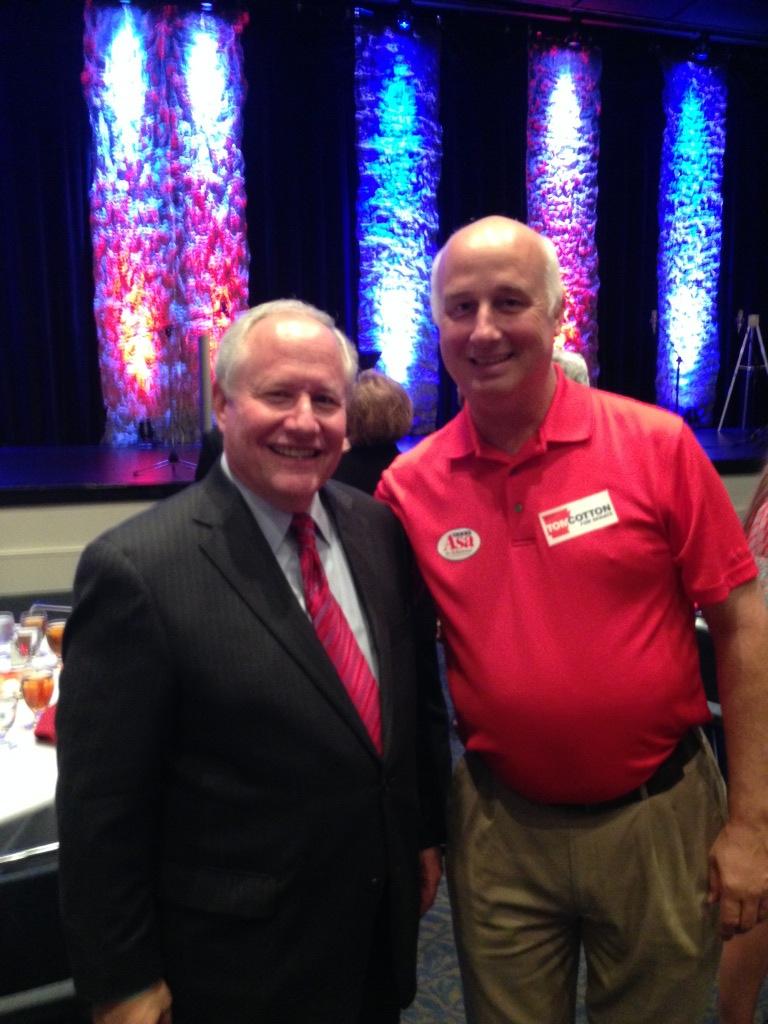


5 thoughts on “Tell Me…What Do I Deserve?”
Thank you for a breathe of sanity and compassion. I’m glad the man was convicted but sad that our society can come up with nothing better than the death penalty for him. He deserves to have a chance to make peace with God. I don’t know if he’ll take it, sadly. I also don’t know what’s in store since the opposition is already disowning him and using his crimes as “the reason abortion should remain safe and legal.” The devil is truly running amok in all of this. I’ll continue to pray prayers of thanksgiving that you’re out there and brave enough to say what needs to be said. Hang in there. God won’t ask us if we won. He’ll ask us if we kept the faith.
Hi Abby,
Thanks for posting this here!! I don’t like commenting on Facebook
Good, honest, caring and compassionate Christians can disagree on capital punishment (they probably have for centuries) Why is this a deal-breaker for you? It’s not about hate or wishing harm on another person. Most people who are in favor of it see it as a justice issue. If a person schemes pre-meditatively to wantonly take the life of another human being (understanding the complete nature of their action), the Old Testament civil law requires that person to give their life in return. Our justice system is based largely on biblical definitions of justice and that is what is…a person gives what they took…they gave themselves the death sentence. It can be viewed as a pro-life position because it makes an unequivocal societal statement as to the value of the life that was taken. It’s not unreasonable or incongruent with the Christian faith or pro-life values.
The killing of those babies was first degree murder and so capital punishment is reasonable. I hope and pray Kermit Gosnell repents and receives the full and complete forgiveness that Jesus Christ died to give him and all the rest of us sinners who deserve nothing but death and hell. Jesus Christ mediates between us and God, so our debt has been paid in the eternal sense; but when it comes to civil accountability (man to man), he instituted the law/government to be arbiter.