Open letter to President Obama (Part 632) People’s faith in big government is dropping fast!!

Open letter to President Obama (Part 632)

(Emailed to White House on 6-10-13.)

President Obama c/o The White House 1600 Pennsylvania Avenue NW Washington, DC 20500

Dear Mr. President,

I know that you receive 20,000 letters a day and that you actually read 10 of them every day. I really do respect you for trying to get a pulse on what is going on out here.

The federal government debt is growing so much that it is endangering us because if things keep going like they are now we will not have any money left for the national defense because we are so far in debt as a nation. We have been spending so much on our welfare state through food stamps and other programs that I am worrying that many of our citizens are becoming more dependent on government and in many cases they are losing their incentive to work hard because of the welfare trap the government has put in place. Other nations in Europe have gone down this road and we see what mess this has gotten them in. People really are losing their faith in big government and they want more liberty back. It seems to me we have to get back to the founding  principles that made our country great.  We also need to realize that a big government will encourage waste and corruption. The recent scandals in our government have proved my point. In fact, the jokes you made at Ohio State about possibly auditing them are not so funny now that reality shows how the IRS was acting more like a monster out of control. Also raising taxes on the job creators is a very bad idea too. The Laffer Curve clearly demonstrates that when the tax rates are raised many individuals will move their investments to places where they will not get taxed as much.

______________________

Will Rogers has a great quote that I love. He noted, “Lord, the money we do spend on Government and it’s not one bit better than the government we got for one-third the money twenty years ago”(Paula McSpadden Love, The Will Rogers Book, (1972) p. 20.)

People’s faith in big government is dropping fast!!

I was very pleased to report the other day that the people of France overwhelmingly favor spending cuts, even when they were asked a biased question that presupposed that Keynesian-style spending increases would “stimulate” the economy.

Now I have some polling data about British voters, though I confess I’m not sure whether to be pleased or worried.

You’ll see below two slides that were presented earlier today at the Bucharest stop on the Free Market Road Show. They’re not from my presentation, but rather from the speech by Matthew Sinclair of the UK-based Taxpayers Alliance.

As you can see from this first slide, the good news is that only 12 percent of British people think government taxes and spends too little.

Sinclair 1

On the other hand, it’s a bit worrisome that nearly 1-in-5 Brits believe in UFOs.

What a bunch of idiots.

Then again, nearly 1-in-3 Americans believe that higher taxes would be used for deficit reduction instead of more spending, and that’s an even more preposterous conclusion.

So I shouldn’t make fun of our English cousins.

Here’s some more good-news/bad-news polling data.

The good news is that only 12 percent of Brits think that the government can pay promised benefits (and I bet that number would fall even lower if they saw this shocking data on the U.K.’s long-run fiscal outlook).

Sinclair 2

The bad news is that 13 percent of Brits think the moon landings were faked.

But since 17 percent of Americans actually admit to having positive feelings about the federal government, I’m reluctant to throw stones since my country is a glass house.

Let me close on a positive note. I’ve expressed considerable pessimism about the future of the United Kingdom, and I think the current leadership of the supposed Conservative Party is terrible.

But maybe there’s reason to hope. It wasn’t that long ago that I shared a very encouraging story from England about civil disobedience against a revenue-hungry government.

And now we know from Matthew’s data that the British people have appropriately jaundiced views of their government.

So perhaps if they ever find another Margaret Thatcher, there’s a 5-percent chance that they can pull themselves back from the fiscal abyss.


_____________

Thank you so much for your time. I know how valuable it is. I also appreciate the fine family that you have and your commitment as a father and a husband.

Sincerely,

Everette Hatcher III, 13900 Cottontail Lane, Alexander, AR 72002, ph 501-920-5733, lowcostsqueegees@yahoo.com

Related posts:

IRS cartoons from Dan Mitchell’s blog

Get Ready to Be Reamed May 17, 2013 by Dan Mitchell With so many scandals percolating, there are lots of good cartoons being produced. But I think this Chip Bok gem deserves special praise. It manages to weave together both the costly Obamacare boondoggle with the reprehensible politicization of the IRS. So BOHICA, my friends. If […]

Dan Mitchell explains what happened in Cyprus

Dan Mitchell explains what happened in Cyprus.   What Really Happened in Cyprus? April 14, 2013 by Dan Mitchell Did Cyprus become an economic basket case because it is a tax haven, as some leftists have implied? Did it get in trouble because the government overspent, which I have suggested? The answers to those questions are […]

Dan Mitchell on Obamacare (includes cartoons on Obamacare)

Some very good points by Dan Mitchell of the Cato Institute on Obamacare: Why We Should Be Optimistic about Repealing Obamacare and Fixing the Healthcare System April 10, 2013 by Dan Mitchell I’m going to make an assertion that seems utterly absurd. The enactment of Obamacare may have been good news. Before sending a team of medical […]

Dan Mitchell’s blog has great cartoon that demonstrates what President Obama has been doing the last 4 years!!!

I have put up lots of cartoons from Dan Mitchell’s blog before and they have got lots of hits before. Many of them have dealt with the economy, eternal unemployment benefits, socialism,  Greece,  welfare state or on gun control.     I’ve Obtained a Secret Pre-Release Copy of Obama’s Budget April 9, 2013 by Dan Mitchell The President is supposed to release […]

Dan Mitchell’s tribute to Margaret Thatcher

Very well said by Dan Mitchell. A Tribute to Margaret Thatcher April 8, 2013 by Dan Mitchell The woman who saved the United Kingdom has died. A Great Woman I got to meet Margaret Thatcher a couple of times and felt lucky each time that I was in the presence of someone who put her nation’s […]

Dan Mitchell, Ron Paul, and Milton Friedman on Immigration Debate (includes editorial cartoon)

I like Milton Friedman’s comments on this issue of immigration   and Ron Paul and Dan Mitchell do well on the issue too. Question of the Week: What’s Your Take on the Immigration Debate? April 7, 2013 by Dan Mitchell A reader from overseas wonders about my views on immigration, particularly amnesty. I confess that this is one of […]

Dan Mitchell on Texas v. California (includes editorial cartoon)

We should lower federal taxes because jobs are going to states like Texas that have low taxes. What Can We Learn by Comparing the Employment Situation in Texas vs. California? April 3, 2013 by Dan Mitchell One of the great things about federalism, above and beyond the fact that it both constrains the power of governments […]

Cartoons from Dan Mitchell’s blog on Obamacare

Third-Party Payer is the Biggest Economic Problem With America’s Health Care System Published on Jul 10, 2012 This mini-documentary from the Center for Freedom and Prosperity Foundation explains that “third-party payer” is the main problem with America’s health care system. This is why undoing Obamacare, while desirable, is just a small first step if we […]

Obamacare cartoons from Dan Mitchell’s blog

I have put up lots of cartoons from Dan Mitchell’s blog before and they have got lots of hits before. Many of them have dealt with the economy, eternal unemployment benefits, socialism,  Greece,  welfare state or on gun control. The funniest cartoon is the one with “Nurse Sebelius” stuffing the huge capsule down the kid’s throat!!! Obamacare […]

Editorial cartoon from Dan Mitchell’s blog on California’s sorry state of affairs

I have put up lots of cartoons from Dan Mitchell’s blog before and they have got lots of hits before. Many of them have dealt with the sequester, economy, eternal unemployment benefits, socialism,  minimum wage laws, tax increases, social security, high taxes in California, Obamacare,  Greece,  welfare state or on gun control. President Obama’s favorite state must be California because […]

Review and Pictures and Video Clips of Woody Allen’s movie “MAGIC IN THE MOONLIGHT” Part 2

David Letterman – Emma Stone on Colin Firth

Review and Pictures and Video Clips of Woody Allen’s movie “MAGIC IN THE MOONLIGHT” Part 2

‘Magic in the Moonlight’: Film Review

Woody Allen’s wanly whimsical latest is a very minor entry in the prolific director’s string of Europe-set films. A minute after it’s over, you don’t care.

At one point in the American Masters biography Woody Allen: A Documentary that aired on PBS in 2011, the endlessly prolific writer-director empties a box of paper scraps on which he’s jotted down assorted movie ideas over the years; when he finds one he still likes, he explains, he embarks upon his next screenplay. Would that he had tossed aside the “master magician falls in love with the lovely clairvoyant he’s trying to expose” concept that drives the plot of Magic in the Moonlight, a fugacious bit of whimsy that can only be judged minor Woody Allen.

From the 1920s French setting to the dreamily romantic title, this feels like a pale attempt to recapture a portion of the public that made “Midnight in Paris” by far Allen’s biggest hit ever. There’s a reason the film didn’t premiere at Cannes last May, just down the road from where it was shot.

PHOTOS Hollywood’s 100 Favorite Films

Set in an F. Scott Fitzgerald-esque Cote d’Azur populated by rich Brits and Yanks, this story of an imperious maestro’s plan to cut off an alluring arriviste at the knees could have been filmed in 1935 by George Cukor, Frank Borzage or Gregory La Cava, starred John Barrymore and Carole Lombard and probably would have been the better for it. It certainly would have more comfortably fit the Depression-era zeitgeist, as well as the public’s ready acceptance of fluffy, patently absurd comic premises.

There’s the strangely uneasy shadow of Pygmalion hanging overMagic in the Moonlight. Colin Firth’s Stanley Crawford, Europe’s most celebrated magician, who secretly performs in the guise of a “Chinese” conjuror, is just as arrogant, domineering and ultimately susceptible as Henry Higgins. But he simultaneously enacts the role of Higgins’ nemesis, Karpathy, in his determination to unmask the young woman as a fraud. His high-handed, bombastic nature, combined with a nasty destructive streak, makes Stanley rather unpleasant company altogether.

Stanley is lured to the Riviera by old pal and fellow magician Howard (Simon McBurney), whose friends are currently hosting the red-haired, blue-eyed Sophie Baker (Emma Stone), a young American woman of supposedly unerring clairvoyant powers. Posing as a businessman, Stanley accepts the lavish hospitality of gullible matron Grace Catledge (Jacki Weaver), who is keen to reconnect with her late husband via séances conducted by Sophie.

PHOTOS ‘Magic in the Moonlight’: Emma Stone, Colin Firth and Anna Wintour Hit the New York Premiere

It’s taken all of three seconds for Grace’s presumptuous son Brice (Hamish Linklater) to decide he will marry Sophie. But while idle, rich Brice serenades the low-born Sophie with insipid ditties on the ukulele, Stanley marvels as the young woman reveals astonishing, nay, impossible powers of insight and deduction that chip away at his malignant desire to prove her a fake. Driving with her along the dirt roads lining the coast and, in one scene, sheltering her from the rain in the magnificent, 127-year-old Nice Observatory (designed by Gustave Eiffel, as in Tower), Stanley begins to fall for Sophie.

Lushly shot on film and in widescreen by Midnight in Paris DP Darius Khondji, sumptuously decked out with period costumes by Sonia Grande and upper-crust settings by production designerAnne Seibel and awash in upbeat period ditties on the soundtrack, Magic in the Moonlight does have a not-disagreeable expensive-vacation vibe to it. But the one-dimensional characters are mostly ones you’d want to avoid rather than spend a holiday with.

In most Allen films, such as his last, Blue Jasmine, any number of supporting roles are deftly drawn and linger in the mind. Such is not the case here; as Sophie’s mother, for example, Marcia Gay Harden has absolutely nothing to do, while McBurney’s role is that of a mere facilitator.

PHOTOS 10 Highest Grossing Movie Sequels

With Firth looking uncomfortable most of the time, as if unable to settle upon the precise level of misanthropic disdain to express while still engaging the audience, it’s up to Stone to save the day. She does what she can. Her giant eyes suggesting the possibility that she really can see more than ordinary mortals do, Stone is lively, spontaneous when called upon to peer into the future or past and, appropriately, given Stanley’s difficulty in cracking her nut, hard to read. Maybe too hard, as it’s tough to decide what her game really is and what one wishes for her. Just as George Bernard Shaw felt one way about whether Higgins and Eliza Doolittle should end up together in Pygmalion while most of his stage and screen interpreters have tilted the other way, so is one highly ambivalent about what should happen at the end of Magic in the Moonlight.

But so ephemeral is it all that a minute after it’s over, you don’t care.

Production: Dippermouth Productions
Cast: Eileen Atkins, Colin Firth, Marcia Gay Harden, Hamish Linklater,
Simon McBurney, Emma Stone, Jacki Weaver, Erica Leerhsen, Catherine
McCormack, Jeremy Shamos
Director: Woody Allen
Screenwriter: Woody Allen
Producers: Letty Aronson, Stephen Tenenbaum, Edward Walson
Executive producer: Ronald L. Chez
Director of photography: Darius Khondji
Production designer: Anne Seibel
Costume designer: Sonia Grande
Editor: Alisa Lepselter

Rated PG-13, 96 minutes


___________

MAGIC IN THE MOONLIGHT – Official Trailer (2014) [HD] Emma Stone, Colin Firth

Published on May 21, 2014

Release Date: July 25, 2014 (limited)
Studio: Sony Pictures Classics
Director: Woody Allen
Screenwriter: Woody Allen
Starring: Emma Stone, Colin Firth, Marcia Gay Harden, Hamish Linklater, Simon McBurney, Eileen Atkins, Jacki Weaver, Erica Leerhsen, Catherine McCormack, Paul Ritter, Jeremy Shamos
Genre: Comedy, Drama
MPAA Rating: PG-13 (for a brief suggestive comment, and smoking throughout)

Official Websites: https://www.facebook.com/MagicInTheMo…

Plot Summary:
“Magic in the Moonlight” is a romantic comedy about an Englishman brought in to help unmask a possible swindle. Personal and professional complications ensue. The film is set in the south of France in the 1920s against a backdrop of wealthy mansions, the Cфte d’Azur, jazz joints and fashionable spots for the wealthy of the Jazz Age.

Related posts:

WOODY WEDNESDAY Woody Allen on the issue of the meaning of life and death

I have written about Woody Allen and the meaning of life several times before. King Solomon took a long look at this issue in the Book of Ecclesiastes and so did Kerry Livgren in his song “Dust in the Wind” for the rock band Kansas in 1978. He later put his faith in Christ. Love […]

WOODY WEDNESDAY Woody Allen’s funniest scene in “Play it again Sam” deals with the meaning of life

  I have written about Woody Allen and the meaning of life several times before. King Solomon took a long look at this issue in the Book of Ecclesiastes and so did Kerry Livgren in his song “Dust in the Wind” for the rock band Kansas in 1978. He later put his faith in Christ. […]

Review of Woody Allen’s latest movie MAGIC IN THE MOONLIGHT (Part 1)

__________ Review of Woody Allen’s latest movie MAGIC IN THE MOONLIGHT (Part 1) Emma Stone stars in the new Woody Allen movie ‘Magic in the Moonlight’ – here’s the trailer Emma Stone and Colin Firth star in ‘Magic in the Moonlight,’ which is directed by Woody Allen. Emma Stone recently starred in ‘The Amazing Spider-Man […]

WOODY WEDNESDAY Woody Allen on the meaning of life and why should we even go on

  I have written about Woody Allen and the meaning of life several times before. King Solomon took a long look at this issue in the Book of Ecclesiastes and so did Kerry Livgren in his song “Dust in the Wind” for the rock band Kansas in 1978. He later put his faith in Christ. […]

WOODY WEDNESDAY A Documentary on Woody Allen and the meaning of life

A Documentary on Woody Allen and the meaning of life I have written about Woody Allen and the meaning of life several times before. King Solomon took a long look at this issue in the Book of Ecclesiastes and so did Kerry Livgren in his song “Dust in the Wind” for the rock band Kansas […]

WOODY WEDNESDAY Review of Woody Allen’s latest movie “Blue Jasmine” Part 26

  I have spent alot of time talking about Woody Allen films on this blog and looking at his worldview. He has a hopeless, meaningless, nihilistic worldview that believes we are going to turn to dust and there is no afterlife. Even though he has this view he has taken the opportunity to look at the weaknesses of his own secular view. […]

A Christian’s review of Ayn Rand’s Philosophy Part 2

A Christian’s review of Ayn Rand’s Philosophy Part 2

AYN RAND ON JOHNNY CARSON part 1 of 2

Published on Jul 22, 2012

Ayn Rand on The Tonight Show Starring Johnny Carson ( 1967 ) part 1 of 2

_________________________

The Ethics of Ayn Rand

Appreciation and Critique

Revised October 9, 2007

In the late seventies, I went on an Ayn Rand craze. I read most of her works, fiction and non-fiction. I recall sitting in the student center at Bethel College as a young professor of Bible reading Atlas Shrugged. An Old Testament professor from the seminary walked by and saw what I was reading. He paused and said, “That stuff is incredibly dangerous.” He was right. For a certain mindset, she is addicting and remarkably compelling in her atheistic rationalism.

To this day, I find her writings paradoxically attractive. I am a Christian Hedonist. This is partly why her work is alluring to me. She had her own brand of hedonism. It was not traditional hedonism that says whatever gives you pleasure is right. Hers was far more complex than that. It seems so close and yet so far to what I find in the Bible. So in this essay, my goals are to introduce Ayn Rand, to describe briefly her impact as a novelist and philosopher, and to assess her ethical theory from a Christian perspective—specifically from the perspective of Christian Hedonism. Though the original form of this essay was written almost thirty years ago, I have had to change very little.

Cogent Christian responses to Ayn Rand are few. Positive Christian assessments are almost non-existent. I aim for this treatment to be both Christian and primarily positive, even though Ayn Rand was an atheist and outspokenly anti-Christian. I trust I will be forgiven the presumption of stepping outside my own specialty: My field is neither literary criticism nor philosophy but biblical, theological and pastoral. I write this because I take pleasure in extending to others the delight I have had in learning from Ayn Rand.

Who Is Ayn Rand?1

Ayn (rhymes with “pine”) Rand was best known as the author of the novels Atlas Shrugged (1957), The Fountainhead (1943), and We the Living (1936) which together sold over twelve million copies.2 She was born in St. Petersburg, Russia, in 1905, graduated with a degree in history from the University of Leningrad in 1924, and emigrated to the United States in 1926. “I am an American by choice and conviction,” she wrote, “I was born in Europe, but I came to America because this was the country based on my moral premises and the only country where I could be fully free to write.”3 In 1929, she married Frank O’Connor whom she had met (ironically) at Cecil B. de Mille’s Hollywood Studio during the production of The King of Kings. Until The Fountainhead established her as a novelist, Ayn Rand worked as a screenwriter, a filing clerk, a typist, a script reader, and a freelance writer.

In 1958, soon after the publication of Atlas Shrugged, Nathaniel Branden, whom Ayn Rand calls her “intellectual heir,”4 began to offer a periodic series of lectures on the basic principles of Objectivism—the philosophy which Ayn Rand had developed in her novels. Together Rand and Branden published The Objectivist Newsletter from 1962 to 1968. This periodical, which applied Rand’s philosophy to contemporary events, was selling over 60,000 copies monthly before Branden ceased to be associated with the project in 1968. From 1968 to 1976, Rand produced a monthly four-page tract called The Ayn Rand Letter which reached a circulation of 15,000. She announced her decision to stop publishing the Letter with these words, “I intend to return, full time to my primary work: writing books. The state of today’s culture is so low that I do not care to spend my time watching and discussing it.”5

The Impact of Ayn Rand

Dr. Ruth Alexander once said in The New York Mirror, “Ayn Rand is destined to rank in history as [an] outstanding novelist and profound philosopher of the twentieth century.”6 Whether or not this historical judgment will prove true in the long run, we may surely say with M. Stanton Evans that the sheer success of her novels in the book market (over twelve million sold) “suggests she has touched some vital nerve deep within the exhausted tissue of our culture. . . .”7

Despite her success the literary establishment considers her an outsider. Almost to a man critics have either ignored or denounced the Book [Atlas Shrugged]. She is in exile among the philosophers too . . . . [L]iberals glower at the very mention of her name, but conservatives too swallow hard when she begins to speak. For Ayn Rand whether anyone likes it or not is sui generis: indubitably, irrevocably, intransigently individual.8

These words of Alvin Toffler were confirmed when one surveyed the critical opinions of Rand’s work. While Nathaniel Branden declared Atlas Shrugged to be “the most original and challenging novel of our age,”9 Newsweek branded the book “a masochist’s lollipop which runs to 1168 pages.”10 Other critics were just as negative, if not as creative: “execrable claptrap,” “a pitiful exercise in something akin to paranoia,” “longer than life and twice as preposterous,” “the worse piece of fiction since The Fountainhead.”11 James Collins, professor of philosophy at St. Louis University, regarded Rand’s writing as “free-floating harangue.”12 Perhaps the most wholesale condemnation came from freelance critic Bruce Cook in The Catholic World:

Miss Rand is a profoundly poor writer. To say that her plots are absurdly tendentious, her characters no more than wooden puppets and her diction utterly without grace or beauty (all of which is quite true) is to give no real idea of the quality of her novels, they are completely bad from conception to expression.13

Not only her fiction but also her underlying philosophy, Objectivism, received mainly negative criticism (except at the grassroots, see below). Besides Branden’s sympathetic “Analysis of the Novels of Ayn Rand,”14 there were two major studies on Objectivism both of which were almost entirely negative. Albert Ellis wrote Is Objectivism a Religion? to show that any resemblance between Objectivism and a truly rational approach to human existence is purely coincidental; that Objectivist teachings are unrealistic, dogmatic, and religious; that unless they are greatly modified in their tone and their content they are likely to create more harm than good for the believer in their way of life; and that they result in a system of psychotherapy that is inefficient and unhelpful.15

William F. O’Niell wrote the most detailed and scholarly critique of Objectivism called With Charity Toward None: An Analysis of Ayn Rand’s Philosophy. While his conclusions were negatively critical, he did grant that “whatever else Miss Rand may have achieved, she continues to serve as a useful intellectual catalyst in a society which frequently suffers from philosophical ‘tired blood.’”16

Probably more indicative of establishment sentiments, however, were the philosophical potshots taken in the popular press. Charles Shroder, in a typically vague and platitudinous critique said that “Miss Rand’s ideas appear to be a century or so out of date” and “her philosophical system is just another philosophy of retarded conservatism.”17 Joel Rosenbloon accused her of a “sophomoric analysis of the history of Western philosophy” and added that her own philosophy is “largely pretentious nonsense.”18 Miss Rand’s thought was described as “a sort of Nietzscheism-gone-rabid”19 and she was attacked as an anarchist and an incipient Hitler20 whose “grasp of logic is uncertain” and whose philosophy “is nearly perfect in its immorality.”21

But at the grassroots level, the story of Ayn Rand’s impact was different. All over the country, Randian enthusiasts discussed her books with an almost religious fervor. They still do in 2007. In business luncheons and dormitory bull sessions and neighborhood conversations, the glories of John Galt, Howard Roark, and Leo Kovalensky (Rand’s three heroes) were extolled, and the philosophy they embodied was applied to American culture. Typical conversion stories would include the following. A student recalls, “I was born a Catholic, but I just can’t believe in the gaudiness and fanciness of the Catholic church. I like Howard Roark’s worship of man much better.” A coed in the Midwest who didn’t say what church she had formerly belonged to remarked proudly, “It was only a few weeks after I read Atlas Shrugged that I left the church.”22 A Manhattan retail store executive described his experience after reading The Fountainhead: “I had found my spiritual home.”23 How much Ayn Rand’s philosophy had grown up from the grassroots into the minds of those with governmental power was hard to say. But in September, 1974, Time reported that Alan Greenspan, the Chairman of the President’s Council of Economic Advisers, was a longtime friend and disciple of Ayn Rand.24

In my judgment, Ayn Rand was a very important intellectual voice in America and must be seriously reckoned with if for no other reason than the wide readership her novels have received and are still receiving in the 21st century. But there are other reasons. When first reading Atlas Shrugged and especially the speech of John Galt, which Rand says is the briefest summary of her philosophy,25 I was continually provoked to deeper and clearer perception and thought. I did not share the undifferentiated condemnations against her fiction, which was the among most enthralling I had ever read, or her philosophy, which as O’Neill said was at least “refreshingly abrasive.”26 But even more, Ayn Rand was right on some fundamental issues. The reason I have written this essay is to distinguish between some of the basic truths and errors in her teaching. Or to put it another way, I wanted to ferret out why I was both attracted and repulsed by her philosophy. I choose to focus on her ethics for two reasons: First, because as Toffler says, “Her philosophy . . . encompasses more than economics or politics. Primarily it sets forth a new kind of ethics . . .”27 Second, because her essay, “The Objectivist Ethics,” was the best distillation of her philosophy I read.

The Ethics of Ayn Rand: Restatement

The best one sentence summary of Ayn Rand’s thought came from the appendix to her greatest novel, Atlas Shrugged: “My philosophy in essence is the concept of man as a heroic being, with his own happiness as the moral purpose of his life, with productive achievement as his noblest activity and reason as his only absolute” (1085). As an atheist and a thoroughgoing laissez-faire capitalist (F, viii),28 she opposed all philosophies and ethical systems based on supernaturalism or collectivism. The one opposes and destroys man’s life on earth by calling for self-sacrifice in hope of a non-existent future life; the other opposes and destroys man’s life by demanding his self-immolation for the sake of an ethereal entity called society. For Ayn Rand, all the emotions of exaltation, worship, reverence, grandeur, and nobility which religion arrogated to God, and collectivism arrogated to society, belonged in fact to man as a rational individual. Thus she said in a commencement address in 1963, “This is the motive and purpose of my writing: the projection of an ideal man.”29 She wanted to portray her characters so that “the pleasure of contemplating these characters is an end in itself” (F, vii). Accordingly, she designated “the sense of life dramatized in The Fountainhead as man-worship” (F, ix).

Ayn Rand’s most fundamental premise was, in the words of John Galt, “The axiom that existence exists” (FNI, 124; AS, 942). Then a corollary premise was that man is a conscious being who perceives this existing reality. These two, existence and consciousness, were fundamental, inescapable axioms in any action we undertake: “Whether you know the shape of a pebble or the structure of a solar system, the axioms remain the same: that it exists and that you know it” (FNI, 125; AS, 942). Implied in these two axioms was the law of identity and the law of non-contradiction. A is A; a stone is a stone and not a flower; a thing is what it is and not something else; you cannot have your cake and eat it too. That is the law of identity. Existence is not wishy-washy but a firm base for epistemology. The law of non-contradiction then is the epistemological form of the law of identity: You cannot know A to be A and at the same time know A to be not-A. Two mutually exclusive assertions cannot both be known to be true at the same time. “A contradiction does not exist . . . . To arrive at a contradiction is to confess an error in one’s thinking; to maintain a contradiction is to abdicate one’s mind and to evict oneself from the realm of reality” (FNI, 126; AS, 943).

Thus for Ayn Rand, existence and consciousness were coordinate, so that existence or reality was always the standard by which the validity of the judgments of consciousness was measured. To put it another way, metaphysics (“that which pertains to reality, to the nature of things, to existence,” VS, 14) is the foundation and arbiter of epistemology. (See her critique of Kant’s bifurcation of phenomenal and noumenal, FNI, 30f.)

In a similar way, metaphysics functioned as the basis of Rand’s axiology, her system of values. Just as being is the foundation of knowing, so it is the foundation of duty. What is prescribes what ought to be. As she said in “The Objectivist Ethics,” “The validation of value judgments is to be achieved by reference to the facts of reality. The fact that a living entity is determines what it ought to do.” This premise must be grasped to understand Rand’s ethical system.

Rand argued that “life is the only phenomenon that is an end in itself” (VS, 17). She did not mean mere existence, but rather the life appropriate to the nature of the organism. No more ultimate value than life can be conceived for any given organism when life is defined as the fullness of existence appropriate to one’s nature. But not only is life the highest value of any given organism; life is also that alone which makes the concept of values possible (VS, 16). For, since a “value is that which one acts to gain and/or keep . . . it presupposes an entity capable of acting to achieve a goal in the face of an alternative” (VS, 15). Therefore, without life values are not possible, and so life must be valuable since on it hangs the very validity of the concept of values. If one is to conceive of values at all, he must ascribe value to life or else contradict himself by devaluing that which makes his very devaluation possible.

It follows from this that “an organism’s life is its standard of value: that which furthers its life is the good, that which threatens it is the evil” (VS, 17). Or, to be more specific with regard to man, “The standard of value of the Objectivist ethics . . . is man’s life, or: that which is required for man’s survival qua man.” (VS, 23). Again, it is not mere survival, but survival proper to man’s nature. What is this nature?

Man’s distinction from the lower forms of life is this: “his consciousness is volitional” (VS, 20) and the knowledge upon which his survival as man depends and which he must achieve by the use of his volition is conceptual rather than merely perceptual (VS, 20). The uniquely human method of using consciousness Rand called “conceptualizing” and describes like this:

It is not a passive state of registering random impressions. It is an actively sustained process of identifying one’s impressions in conceptual terms, of integrating every event, and every observation into a conceptual context, of grasping relationships, differences, similarities in one’s perceptual material and of abstracting them into new concepts, of drawing inferences, of making deductions, of reaching conclusions, of asking new questions, and discovering new answers and expanding one’s knowledge into an ever-growing sum. The faculty that directs this process, the faculty that works by means of concepts, is: reason. The process is thinking (VS, 20).

If man is to be man he must will to think. His basic means of survival is reason. “No percepts and no instincts will tell him how to light a fire, how to weave a cloth, how to forge tools, how to make a wheel, how to make an airplane, how to perform an appendectomy, how to produce an electric light bulb or an electronic tube or a cyclotron or a box of matches. Yet his life depends on such knowledge—and only a volitional act of his consciousness, a process of thought, can provide it” (VS, 21).

The next step in Rand’s ethics was this: Since man’s uniqueness consists in, and his survival depends on, the volitional use of his reason, therefore “that which is proper to the life of a rational being is the good; and that which negates, opposes or destroys it is the evil” (VS, 23). The standard by which every man determines good and evil is the survival or fulfillment of his own life as a rational being. The basic ethical commitment of Ayn Rand was to be rational. That is, she sought a life that accorded with the fact that A is A, and no contradiction in one’s thinking or acting is to be tolerated. Thus in designating her standard of ethics as “rational self-interest,” the emphasis had to fall on the word “rational.”

All the virtues follow from this rationality. I will cite several examples. Independence: This is your commitment to think for yourself and to accept the burden and responsibility of your own rational life (FNI, 128).

Integrity: This is the conviction that man is an indivisible entity and that no breach can be permitted between body and mind, between action and thought, between his life and his convictions (FNI, 129; AS, 945). To forsake integrity is to try to fake your own consciousness, to think yes and do no, to live a contradiction.

Honesty: “This is the recognition of the fact that the unreal is unreal and can have no value, that neither love nor fame nor cash is a value if obtained by fraud . . . honesty . . . is the most profoundly selfish virtue man can practice: his refusal to sacrifice the reality of his own existence to the deluded consciousness of others” (FNI, 129; AS, 945).

Justice: This is the recognition of the fact that you cannot fake the character of men. A is A and you cannot identify a person as A and treat him as non-A. “Every man must be judged for what he is and treated accordingly . . . just as you do not pay a higher price for a rusty chunk of scrap than for a piece of shining metal, so you do not value a rotter above a hero . . . To withhold your contempt from men’s vices is an act of moral counterfeiting, and to withhold your admiration from their virtues is an act of moral embezzlement” (FNI, 129; AS, 946).

The virtue of justice has vast implications for inter-human relations. It affirms that “the principle of trade is the only rational ethical principle for all human relationships, personal and social, private and public, spiritual and material” (VS, 31). Justice means that “one must never seek or grant the unearned and undeserved, neither in matter nor in spirit” (VS, 26). Hence, the heroes of Atlas Shrugged take this oath: “I swear by my life and my love of it that I will never live for the sake of another man, nor ask another man to live for mine” (AS, 680, 993).

All self-sacrifice is evil because “sacrifice is the surrender of a greater value for the sake of a lesser one or of non-value. Thus altruism gauges a man’s virtue by the degree to which he surrenders, renounces or betrays his values (since help to a stranger or an enemy is regarded as more virtuous, less ‘selfish’ than help to those one loves). The rational principle of conduct is the exact opposite: always act in accordance with the hierarchy of your values and never sacrifice a greater value to a lesser one” (VS, 44). To forsake this ambition is to forsake the only standard by which rational choices can be made. The man who loses his ambition to achieve his own values loses his ambition to live (FNI, 130; AS, 946). He thus forsakes the ground and standard of any rational ethics and must opt for some mystic (God), social (society), or subjectivist (desire) theory of ethics (VS, 34).

In this way Ayn Rand provides the philosophical underpinnings of her ethics. To sum it up again in her words: “My philosophy in essence is the concept of man as a heroic being, with his own happiness as the moral purpose of his life, with productive achievement as his noblest activity and reason as his only absolute” (AS, 1085).

The Ethics of Ayn Rand: Appreciation

I agree with Ayn Rand that if man is to survive and live as man, he must live by his reason. That is he must think clearly about reality and make judgments on the basis of what he perceives to be real. “Why do you not judge for yourselves what is right?” Jesus asked (Luke 12:57; see 1 Corinthians 10:15; 11:13). It is true that whatever negates, opposes, or destroys rationality or logic is evil. Blind faith is not a virtue. John Galt, the hero of Atlas Shrugged, is right when he says:

Do not say that you’re afraid to trust your mind because you know so little. Are you safer in surrendering to mystics and discarding the little you do know? Live and act within the limit of your knowledge and keep expanding it to the limit of your life. Redeem your mind from the hock-shops of authority. Accept the fact that you are not omniscient, but playing a zombie will not give you omniscience—that your mind is fallible but becoming mindless will not make you infallible—that an error made on your own is safer than ten truths accepted on faith, because the first leaves you the means to correct it, but the second destroys your capacity to distinguish truth from error. (FNI, 178; AS, 982)

No concept man forms is valid unless he integrates it without contradiction into the total sum of his knowledge. To arrive at a contradiction is to confess an error in one’s thinking; to maintain a contradiction is to abdicate one’s mind and to evict oneself from the realm of reality (FNI, 126; AS, 943).

The necessity and rightness of rationality is, so far as I can see, unimpeachable. Accordingly, I am willing to follow her defense of the virtues of independence (making one’s own judgments), integrity (practicing what you preach), honesty (maintaining a freedom from contradiction between your words and your convictions), and productivity (the ambitious struggle to achieve your values). I agree without reserve that one should “always act in accordance with the hierarchy of one’s values and never sacrifice a greater value to a lesser one” (VS, 44). And so long as Rand defines self-sacrifice as “the surrender of a greater value for the sake of a lesser one” (VS, 44), I will agree that all self-sacrifice is evil. She was right that the rational man should be dedicated to “the goal of reshaping the earth in the image of his values” (VS, 26).

Since your values are determined by the reality of who you are as a rational man, the struggle to achieve your values is the struggle to live. But the ambition and effort to experience life as a man is merely the existential form of the ambition (in psychological form) to be happy (VS, 29). Rand makes it very clear that by happiness she does not mean just any kind of pleasure. Self-interest must be qualified by “rational” (VS, 60): only that which is proper to a rational being is good and the ground of true happiness (VS, 23). This is why she opposes traditional hedonism which declares that “the proper value is whatever gives you pleasure” (VS, 30).

Happiness, for Ayn Rand, “is a state of non-contradictory joy—a joy without penalty or guilt, a joy that does not clash with any of your values and does not work for your own destruction” (VS, 29). On the basis of this definition, I am willing to say yes to the following sentence: “The achievement of his own happiness is man’s highest moral purpose” (VS, 27). The meaning of this sentence is not that a feeling is exalted above the nature of reality in guiding our choices. The sentence rests on the conviction that reality is such that true happiness—“non-contradictory joy”—is the inevitable outcome of a life devoted to the principle that A is A, and that there is no true joy to be found in faking reality in any way. For the rational man, the aim to be happy is the aim to realize his values, and the aim to realize his values is the aim to live as a man, and the aim to live as a man is an effort to take reality seriously, to respond properly to the axiom A is A, Man is Man (FNI, 125; AS, 942). I cannot fault the basic validity of this approach to ethics. It is my own, as far as it goes.

The Ethics of Ayn Rand: Critique

It may have been noticed that in the list of Rand’s virtues above, which I condoned, justice and pride were omitted. This is not because I disagree with everything she said about them, but because the Christian cannot follow her consistently at these points. Rand argued that one must never “grant the unearned or undeserved, neither in matter nor in spirit” (VS, 26). Men must deal with each other as traders not as looters and parasites. The Christian, on the other hand, is instructed: “bless those who curse you” (Luke 6:28). In short, Ayn Rand has no place for mercy, whereas Christianity has mercy at its heart.

Why was there this conflict here? I think it was due to Rand’s thoroughgoing immanentalism: the complete rejection of a divine or supernatural dimension to reality. If she was right in her atheism and naturalism, then I think her system was consistent at the point of demanding only justice. Given the scope of reality that Ayn Rand took into account, the axiom A is A demands that men always trade value for value.

But if Ayn Rand was wrong about God, if he exists, and, as St. Paul said, “made the world and everything in it . . . and is not served by human hands, as though he needed anything, since he himself gives to all men life and breath and everything” (Acts 17:24f), if such a God exists (and Ayn Rand offered no argument to the contrary, only the assertion),30 then a radically new dimension of reality must be reckoned with and a corresponding new value should guide man’s behavior.

The new fact of reality is that God cannot be traded with as a man. There is nothing that man can offer to God that is not already his. You cannot exchange value for value with one from whom you have life, breath, and everything. You must, as a creature, own up to your total dependence on mercy and be content with it or, by an act of irrational rebellion, evict yourself from the realm of reality and try to live a contradiction.

In view of the nature of reality, the rational man’s highest value will be the admiration and enjoyment of his Maker and Redeemer. This value implies at least three others: First, it implies the value of knowing and being with God. The virtues that aim to achieve this value are study of and meditation upon divine realities. The second value implied in my admiration of God is the value of summoning others to see how valuable God is so that they can admire and enjoy his excellence. This is implied because it is a psychological necessity to want to increase my joy in God’s beauty by admiring it in another’s admiration for it. When the beauty of God is reflected in my neighbor’s delight in that beauty, my joy in that beauty is compounded. The virtue which aims to achieve this value is called evangelism or witness or apologetics. The third value implied in my admiration and enjoyment of God is a style of behavior in inter-human relationships which advertises the value I place upon the mercy of God. It is precisely here where Ayn Rand’s contempt for mercy would have to be altered. If I am to be true to my highest value—the excellence of God including his mercy—my behavior will have to reflect it in merciful acts.

Ayn Rand’s devastating criticism of altruism missed the point of Christian mercy.31 She could only conceive of mercy in terms of our sacrificing our greater values to lesser ones. The Christian sacrifices no values in blessing those who curse him, nor is his behavior causeless or aimless. It is an achievement of his own dependence on and love for the merciful God. It is caused by God’s mercy, and it aims to transform the enemy into one who treasures God above all things. It is thus a self-benefiting act, compounding, as it does, the joy of the believer.

What Ayn Rand means by altruism is indeed ugly and can be seen best in the words of Lillian Rearden to her husband in Atlas Shrugged. Here is the essence of the evil of altruism, as Rand saw it:

If you tell a beautiful woman that she is beautiful, what have you given her? It’s no more than a fact and it costs you nothing. But if you tell an ugly woman that she is beautiful you offer her the great homage of corrupting the concept of beauty. To love a woman for her virtues is meaningless. She’s earned it, it’s a payment, not a gift. But to love her for her vices is to defile all virtue for her sake—and that is a real tribute of love, because you sacrifice your conscience, your reason, your integrity and your invaluable self-esteem (AS, 290).

Since Ayn Rand had no place for a sovereign all-sufficient God who cannot be traded with, she did not reckon with any righteous form of mercy. All the antagonists of her books were corrupt by almost any standard and surely by a Christian one. It is indeed evil to love a person “for their vices”; it is evil “to give unearned respect” (AS, 367). But mercy in the Christian sense is not respect, nor is it a payment for someone’s vices. It is not “because of” vices, but “in spite of” vices. It is not intended to reward evil, but to reveal the bounty of God who cannot be traded with but only freely admired and enjoyed. It aims not to corrupt or compromise integrity, but to transform the values of the enemy into the values of Christ. While it may mean the sacrifice of some temporal pleasures, it is never the sacrifice of my values and so is never self-less. But the sacrifice of lower values to higher ones—a night’s rest for the timely delivery of a steel shipment—such sacrifice Ayn Rand believed in deeply.

Therefore, Ayn Rand’s philosophy did not need to be entirely scrapped. Rather, it needed to take all of reality into account, including the infinite God. In this case her own premise—A is A—would have demand an alteration in what she conceived as rational and how she evaluated mercy. Since she claimed to “provide men . . . with an integrated and consistent view of life,” this alteration would have meant a rebuilding of the whole structure. No detail of her philosophy would have been left untouched. But enough has been said here. That reconstruction is the job of a lifetime.

That is where the original essay ended. She was living at the time. She died on March 6, 1982. I sent her a copy with a personal letter, pleading that she rethink her ethics by taking all of reality into account, namely, the all-embracing reality of God. I don’t know if she ever received or read the letter or the essay. Her way of looking at the world strikes me still today in 2007 as amazingly perceptive and tragically provincial. So much in the world is seen so with a kind of truncated accuracy. But leaving God out of account distorts all reality. May the Lord give us eyes to see the world with as much sharpness as Ayn Rand, and with far more fullness and truth.


Footnotes

1 The only authorized biography of Ayn Rand is “A Biographical Essay” in Nathaniel Branden and Barbara Branden, Who is Ayn Rand?, (New York: Random House, 1962), pp. 149-239. It is an interesting but idealized portrait that reads just like a Rand novel.

2 “The Chairman’s Favorite Author,” Time, 104 (1974), p. 87. These numbers continue to climb and Atlas Shrugged is ranked #222 today (10-9-07) on Amazon.

3 “About the Author” in appendix to Atlas Shrugged, (New York: Signet, 1957), p. 1085.

4 John Kobler, “The Curious Cult of Ayn Rand,” Saturday Evening Post, 11 November, 1961, p. 91.

5 Time, 107 (1976), p. 32.

6 Cited in Bruce Cook, “Ayn Rand: A Voice in the Wilderness,” Catholic World, 201 (May, 1965), p. 119.

7 “The Gospel According to Ayn Rand,” National Review, 19 (October 3, 1967), p. 1060. In 1991 there was a wide-ranging survey that ranked Atlas Shrugged only behind the Bible as the book people said influenced them most. Most consider the claim exaggerated, but it points to a very significant impact (http://en.wikipedia.org/wiki/Ayn_rand#_note-17).

8 Alvin Toffler, “Ayn Rand: A Candid Conversation with the ‘Fountainhead’ of ‘Objectivism,’“ Playboy, 11 (March, 1964), p. 35.

9 Who is Ayn Rand?, p. 5

10 “Born Eccentric,” Newsweek, 21 (March 27, 1961), p. 104.

11 “The Curious Cult of Ayn Rand,” p. 99.

12 “The State of the Question,” America, (July 29, 1961), p. 569.

13 “Ayn Rand: A Voice in the Wilderness,” p. 122.

14 Who is Ayn Rand?, pp. 1-148.

15 Is Objectivism a Religion? (New York: Lyle Stuart, Inc., 1968), p. 11.

16 With Charity Toward None, (New York: Philosophical Library, 1971), p. 14.

17 “Ayn Rand: Far Right Prophetess,” Christian Century, 78 (December 13, 1961), p. 1494.

18 “The Ends and Means of Ayn Rand,” The New Republic, 144 (October 24, 1961), p. 29. (For a perceptive and balanced critique of her understanding of history see M. Stanton Evans, “The Gospel According to Ayn Rand.”)

19 “Ayn Rand: A Voice in the Wilderness,” p. 123.

20 “The Gospel According to Ayn Rand,” p. 1059.

21 Gore Vidal, “Comment,” Esquire, 56 (July, 1961), p. 27. This attack was effectively answered in a following issue: Leonard Peikopf, “Atlas Shrieked,” Esquire, 56 (October, 1961), p. 20.

22 Originally told by Robert L. White in New University Thought (Autumn, 1962). These and other accounts are recounted in “Ayn Rand: A Voice in the Wilderness.”

23 Dora J. Hamblin, “The Cult of Ayn Rand,” Life, 62 (April 7, 1967), p. 95.

24 “The Chairman’s Favorite Author,” p. 87.

25 The speech is printed separately in For the New Intellectual (New York: Signet, 1961), pp. 117-192.

26 With Charity Toward None, p. 15.

27 “Ayn Rand: A Candid Conversation,” p. 35.

28 In the rest of the essay, I will use the following abbreviations of the Signet paperback editions of her works: Atlas Shrugged (AS), The Fountainhead (F), For the New Intellectual (FNI), The Virtue of Selfishness (VS).

29 The Romantic Manifesto: A Philosophy of Literature, (New York: World Pub. Co., 1969), p. 160.

30 That is, in all the works I have read, atheism is assumed. If she argued for this position, I am not aware of it.

31 This problem of shooting down a bogus altruism is addressed by William O’Neill in With Charity Toward None, pp. 201ff, but not from a Christian perspective.

Related posts:


Christian view versus Ayn Rand on altruism (Part 4)

Ayn Rand on the Purpose of Life Uploaded by prosumption on Apr 27, 2010 Ayn Rand on the Purpose of Life _________________ I ran across a fine article that takes a look at Ayn Rand’s view of capitalism and selfishness and compares it to the Christian view found in the Bible. I have decided to […]


Christians welcome nonbelievers like Dan Mitchell in their criticism of Ayn Rand’s view of altruism

Nonbelievers like Rand really do not have an answer to the question “What is the meaning of life?” Ayn Rand on the Purpose of Life Christians are commanded to help others by Christ. However, many Christians do believe in the free market and think that system best suits the ideas that flow from Christianity. (Doug […]

Christian view versus Ayn Rand on altruism (Part 3)

Uploaded by MetrazolElectricity on Oct 30, 2010 Talking to Rose, patron-saint of the conservative movement , Bill buckley chats about ayn and her magnum opus atlas shrugged. On atlas shrugged, WFB:”I had to flog myself to read it.” On ayn, WFB : “Her scorn for charity,for altruism was such as to build up an unfeeling […]

Christian view versus Ayn Rand on altruism (Part 2)

Uploaded by LibertyPen on Jul 17, 2009 Questioned by Mike Wallace, Ayn Rand explains her philosophy of objective reality and contrasts it with altruism. _________________ I ran across a fine article that takes a look at Ayn Rand’s view of capitalism and selfishness and compares it to the Christian view found in the Bible. I […]

Christian view versus Ayn Rand on altruism (Part 1)

Uploaded by LibertyPen on Oct 26, 2009 Ayn Rand makes the case that altruism is evil. ___________________  I ran across a fine article that takes a look at Ayn Rand’s view of capitalism and selfishness and compares it to the Christian view found in the Bible. I have decided to start a series on this […]

By Everette Hatcher III | Posted in Current Events | Edit | Comments (0)

My favorite M TV videos from 1980’s

My favorite M TV videos from 1980’s


All Those Years Ago – John Lennon & George Harrison

Michael Jackson – Beat It (Digitally Restored Version)

Uploaded on Apr 11, 2011

Music video by Michael Jackson performing Beat It. © 1982 MJJ Productions Inc.

Abba – Super Trouper

Van Halen – Jump (HQ music video)

Naked Eyes – Always Something There

Modern English – I Melt With You

A Flock Of Seagulls – I Ran

Published on Apr 11, 2013

Music video by A Flock Of Seagulls performing I Ran. (c) 1982 Zomba Productions Limited

The beach boys – Kokomo

The Moody Blues – Your Wildest Dreams

Men At Work – Down Under

Published on Feb 7, 2013

Music video by Men At Work performing Down Under. (C) 1981 Sony Music Entertainment Inc.

The Rolling Stones – Waiting On A Friend – OFFICIAL PROMO

Published on Sep 11, 2012

WAITING ON A FRIEND
(M. Jagger/K. Richards)

Watching girls go passing by
It ain’t the latest thing
I’m just standing in a doorway
I’m just trying to make some sense
Out of these girls go passing by
The tales they tell of men
I’m not waiting on a lady
I’m just waiting on a friend

A smile relieves a heart that grieves
Remember what I said
I’m not waiting on a lady
I’m just waiting on a friend

Don’t need a whore
I don’t need no booze
Don’t need a virgin priest
But I need someone I can cry to
I need someone to protect
Making love and breaking hearts
It is a game for youth
But I’m not waiting on a lady
I’m just waiting on a friend

_____________________

Come Dancing – The Kinks

Uploaded on Oct 10, 2008

Groovy!

Come Dancing is a 1982 song performed by British Rock group The Kinks, released as a single in that year in the UK and 1983 in the US and included on their album State of Confusion.

The song is a nostalgic look back at childhood memories of writer Ray Davies, remembering his older sister going on dates to the local Palais dance hall where big bands would play. The lyrics tell how the Palais has been demolished and his sister now has her own daughters who are going on dates.

The song was something of a comeback for The Kinks, being their first UK top 20 hit in over ten years (reaching number 11) and its number 6 peak on the US chart was their highest there since “Tired of Waiting for You” made the same position in 1965. It also made the top 10 in Canada (#6) and the top 20 in Sweden and Belgium. Such success was most likely spurred on in the US by the accompanying MTV Music Video, which was continually pushed and broadcast (in the style of early MTV). The song has, over the years, become one of the most popular songs on Classic Rock Radio, and remains so today.

Elton John – I’m Still Standing

Uploaded on Sep 1, 2010

Music video by Elton John performing I’m Still Standing. (C) 1983 Mercury Records Limited

The Police – Every Breath You Take

Uploaded on Feb 23, 2010

Music video by The Police performing Every Breath You Take (Black and White Version). (C) 1983 A&M Records Ltd.

Flashdance What A Feeling – Irene Cara Official Video

Uploaded on Feb 3, 2010

DOWNLOAD SONG
http://bit.ly/9os7DL
Flashdance What a Feeling Irene Cara
© 1983 Unidisc Music Group

Go-Go’s – Our Lips Are Sealed (Extended 12″ Version) (Music Video)

Blondie – Heart Of Glass

Rock Me Amadeus by Falco

Golden earring – Twilight zone

Uploaded on Jan 4, 2007

It’s 2 am
The fear is gone
I’m sitting here waiting
The gun’s still warm
Maybe my connection
Is tired of taking chances

Yeah, there’s a storm on the loose
Sirens in my head
Wrapped up in silence
All circuits are dead
Cannot decode
My whole life spins into a frenzy

Help, I’m steppin’ into the Twilight Zone
Place is a madhouse
Feels like being cloned
My beacons been moved
Under moon and star
Where am I to go Now that I’ve gone too far

Soon you will come to know
When the bullet hits the bone

Soon you will come to know
When the bullet hits the bone

I’m fallin’ down a spiral
Destination unknown
Double-crossed messenger
All alone
Can’t get no connection
Can’t get through; where are you?

Well the night weighs heavy
On his guilty mind
This far from the border line
When the hit man comes
He knows damn well he has been cheated

Help I’m steppin’ into the Twilight Zone
Place is a madhouse
Feels like being cloned
My beacons been moved
Under moon and star
Where am I to go Now that I’ve gone too far

_____________________

Men At Work – Who Can It Be Now?

Published on Feb 5, 2013

Music video by Men At Work performing Who Can It Be Now?. (C) 1981 Sony Music Entertainment (Australia) Pty Ltd

_________________

Scandal;Patty Smyth – Goodbye To You

Uploaded on Oct 25, 2009

Music video by Scandal;Patty Smyth performing Goodbye To You. (C) 1982 SONY BMG MUSIC ENTERTAINMENT

_______________

Abba – The Winner Takes It All

Uploaded on Oct 7, 2009

Music video by Abba performing The Winner Takes It All. (C) 1980 Polar Music International AB

______________________________

John Lennon – Watching The Wheels

Daryl Hall & John Oates – You’ve Lost That Loving Feeling

The Rolling Stones – Start Me Up – Official Promo

Published on Oct 2, 2012

The official promo video for the Rolling Stones’ ‘Start Me Up’, directed by Michael Lindsay-Hogg.

Released in 1981, the song was a number one hit and the lead single from Tattoo You.

The song was written by Jagger/ Richards, produced by the Glimmer Twins and features Mick Jagger on lead vocals, Keith Richards and Ronnie Wood on guitars, Charlie Watts on drums and Bill Wyman on bass.

_____________________

Blondie – The Tide Is High

Uploaded on Dec 15, 2007

The tide is high (1980) from the album autoamerican

_________

Vacation – The Go-go’s

Uploaded on Mar 4, 2011

Vacation – The Go-go’s, all female post-punk, new wave, pop rock band of the 80’s. This song is from their 1982album “Vacation”.

___________________

The Bangles – Manic Monday HD

Steve Winwood – While You See A Chance

Men At Work – Overkill

Published on May 23, 2013

Music video by Men At Work performing Overkill. (C) 1982

________________
Related posts:

MUSIC MONDAY: Keith Green Story (Part 2)

The Keith Green Story pt 3/7 Keith Green had a major impact on me back in 1978 when I first heard him. Here is his story below: Spiritual Conversion Keith had a Jewish and Christian Science background, but grew up reading the New Testament. He called it “an odd combination” that left him open minded […]

MUSIC MONDAY:Foreigner’s connection to Amy Winehouse (Great song by Lou)

The Lou Gramm Band – You Saved Me (great song) Uploaded by SacredWarrior1991 on May 2, 2011 This song is taken from The Lou Gramm Band (LGB – 2009). ______________________________________ The Lou Gramm Band – I Wanna Testify (great song) Uploaded by SacredWarrior1991 on May 2, 2011 This song is taken from The Lou Gramm […]

MUSIC MONDAY: Lou Graham knows what love is

Double Vision – Foreigner Foreigner- Urgent Foreigner – Cold As Ice _____________________________ The Lou Gramm Band – Redeemer (great song) Uploaded by SacredWarrior1991 on May 2, 2011 This song is taken from The Lou Gramm Band (LGB – 2009). ____________________________________ Lou Gramm Knows What Love Is – CBN.com Uploaded by CBNonline on Nov 4, 2009 […]

“Music Monday” Katy Perry

    Katy Perry Dedicates Song to Tim Tebow at Super Bowl Party Sun, Feb. 05, 2012 Posted: 07:01 PM EDT Flamboyant pop star Katy Perry dedicated suggestive song “Peacock” to evangelical quarterback Tim Tebow at a pre-Super Bowl party Saturday night. Perry, the daughter of Christian ministers, said “This one goes out to Tim […]

“Music Monday” Blondie

Wikipedia reported: Blondie Chris Stein and Deborah Harry in 2008 Background information Origin New York City, US Genres New Wave punk rock[1][2] dance-rock[3] pop punk[3][4] post-punk power pop Years active 1974–1982 1997–present Labels Chrysalis/EMI Beyond/BMG Epic Sanctuary Private Stock Website http://www.blondie.net Members Debbie Harry Chris Stein Clem Burke Leigh Foxx Matt Katz-Bohen Tommy Kessler Jimmy […]

MUSIC MONDAY:Chynna Phillips is open about her Christian faith

Chynna Phillips is open about her Christian faith jh31 “Dancing with the Stars” (DWTS) is a  very popular show.  I have only watched it a little, but I am a big fan of Chynna Phillips. I love a lot of her music. Dancing With the Stars: Chynna Phillips Speaks Openly About Her Christian Faith Actress […]

“Music Monday” Avril Lavigne’s best songs

“Keep holding on” is my favorite Avril Lavigne song. Enjoy this clip of it followed by a 2007 interview of Lavigne.

“Music Monday” All-American Rejects Part 4 (Leadsingers Tyson Ritter and Gene Simmons have something in common)

In-Studio Interviews – Tyson Ritter ‘The All American Rejects’ Interview: Kids In The Street I enjoyed the concert in Little Rock on 12-13-12, and lead singer Tyson Ritter wrote a song on his latest cd that we should all pay attention to because it covers an issue that both him and many other lead singers […]

A Christian’s review of Ayn Rand’s Philosophy Part 1

A Christian’s review of Ayn Rand’s Philosophy Part 1

Nathaniel Branden on “My Years With Ayn Rand”

Uploaded on Nov 11, 2009

Throughout Ayn Rand’s career, no collaborator was closer to her than Nathaniel Branden, whom she once named her “intellectual heir.” 

In Rand, Branden found a fearless advocate of individualism and of man as a heroic being. In Branden, Rand saw her vision come to life in flesh and blood. “She gave people a sense that they could be effective. That if they would persevere, stick by their standards, work hard, you could achieve something you can be proud of. Find that part in you—she would say the hero in your own soul’—and work towards that,” says Branden.

After a decade at the center of Rand’s inner circle, Branden founded the Nathaniel Branden Institute with the goal of promoting her philosophy. The Institute was largely responsible for the spread of Rand’s ideas during the 1960s, but came to an abrupt end when romantic conflict between Branden and Rand tore apart their professional association.

Despite the official and unreconciled split between the two, the 79-year-old Branden has remained true to the spirit of Rand’s work during his prolific career as a psychologist of self-esteem. To this day, their legacies remain inseparable and in 2000, Branden authored My Years with Ayn Rand, his second memoir of his relationship to the author of The Fountainhead and Atlas Shrugged.

Approximately 10 minutes. Nathaniel Branden was interviewed by David Nott, filmed by Alex Manning, and edited by Hawk Jensen and Alex Manning. 

This video is part of the Reason.tv series Radicals For Capitalism: Celebrating the Ideas of Ayn Rand.

__________________________

Was Ayn Rand Right?

  • Article ID: JAF1324
  • By: Jay W. Richards

Synopsis

In response to the critics of capitalism, many conservative Christians turn to philosopher Ayn Rand for ammunition. Rand was a staunch defender of capitalism, but also an anti-Christian atheist who argued that capitalism was based on greed. Greed, for Rand, is good. But if Rand is right, then Christians can’t be capitalists, because greed is a sin. Fortunately, Rand was wrong. She missed the subtleties of capitalism. First, we should distinguish self-interest from selfishness. Adam Smith, the father of capitalism, famously wrote, “It is not from the benevolence of the butcher, the brewer, or the baker, that we expect our dinner, but from their regard to their own interest.” True enough; but that alone isn’t a problem. Every time you wash your hands or look both ways before you cross the street, you’re pursuing your self-interest—but neither activity is selfish. Second, Smith never argued that the more selfish we are, the better a market works. His point, rather, is that in a free market, each of us can pursue ends within our narrow sphere of competence and concern—our “self-interest”—and yet an order will emerge that vastly exceeds anyone’s deliberations. Finally, Smith argued that capitalism channels greed, which is a good thing. The point is that even if the butcher is selfish, he can’t make you buy his meat. He has to offer you meat at a price you’ll willingly buy. So capitalism doesn’t need greed. What it does need is rule of law, freedom, and human creativity and initiative. And we can point that out without any help from Ayn Rand.


If you’re over forty, you probably remember the 1987 movie Wall Street. Kirk Douglas played the key role, a ruthless corporate raider named Gordon Gekko. Gekko is famous for his defense of selfishness: “Greed…is good,” he tells a young broker. “Greed is right. Greed works. Greed clarifies, cuts through and captures the essence of the evolutionary spirit. Greed, in all its forms…has marked the upward surge of mankind.” Gekko embodies the enduring stereotype of the greedy businessman.

Given the coverage of the current financial crisis, it’s no surprise that Twentieth Century Fox is now producing a sequel. Many people, including many Christians, believe that the crisis is the product of greedy capitalism—pure and simple. Others, including many Christians, want to defend capitalism, but end up drawing on the work of philosopher and playwright Ayn Rand, who called greed a virtue. That puts most of us between the proverbial rock and the hard place.

As if in response, some prominent evangelicals such as Tony Campolo, Jim Wallis, and Ron Sider have criticized capitalism as based on the “greed principle” (to quote Campolo).1 And it’s hard to blame them, since even many fans of capitalism, such as Rand, seem to agree. And certainly for Christians, greed is not good. Greed, selfishness, or “avarice” is one of the seven deadly sins, and the Bible has nothing good to say about it. In the Gospels, when Jesus was asked to settle an inheritance dispute, He responded: “Watch Out! Be on your guard against all kinds of greed; life does not consist in an abundance of possessions” (Luke 12:15 TNIV). The Tenth Commandment says, “Do not covet,” which no doubt applies to greed as well. Jesus includes greed with murder and adultery in a long list of sins (Mark 7:21– 22). Paul tells the Ephesians that no greedy person—“that is, an idolater,” he explains—will inherit the kingdom of God (Eph. 5:5 ESV). These are just a few of the dozens of biblical passages condemning greed.

So what do we do? Must we embrace Rand’s anti-Christian philosophy to defend capitalism? Or must we reject capitalism because it’s based on greed? I don’t think we have to do either. The truth is much more interesting, and much more encouraging.

THE BEEHIVE

Rand wasn’t the first one to identify capitalism with greed. That honor goes to a Dutchman named Bernard Mandeville. In 1705, he wrote a poem called The Fable of the Bees. Nobody noticed it. So in 1714, he republished it with a lengthy commentary explaining that the poem was a metaphor for English society. Mandeville saw humans and bees as little more than bundles of vicious passions. The Parable reflected that belief.

In the beehive, different bees do different tasks, but they all have the same motivation—vice. The poem describes avarice, pride, and vanity as producing great wealth for the hive. The bees, however, are discontent. They grumble at the lack of virtue around them. They gripe so incessantly that Jove eventually gives them what they ask for. Honesty and virtue now fill the hive. And everything collapses. The bees’ virtuous actions led to disaster whereas the individual acts of evil had led to social good.

Taken literally, Mandeville’s claim is ridiculous. Good doesn’t come from evil. Virtue isn’t born from vice. Virtue doesn’t destroy society. Still, he did get one thing right: bad intentions don’t always yield bad results. Recall that the Apostle Paul once delighted that some were preaching the gospel out of envy of him. He didn’t delight in the envy, but in the preaching. So even private sinful acts may lead to a social good.

THE VIRTUE OF SELFISHNESS?

After Mandeville came the Scottish philosopher Adam Smith, who in 1776 wrote the most famous book in the history of economics, The Wealth of Nations. Though the book is long on pages and detail, its basic purpose was simple. Smith wanted to defend what he called the natural system of liberty: rule of law, unobtrusive government, private property, specialization of labor, and free trade. To prosper, a society needed “little else,” he said, “but peace, easy taxes, and a tolerable administration of justice.”2 But so far from flattering the business class, Smith famously said that “people of the same trade seldom meet together, even for merriment and diversion, but the conversation ends in a conspiracy against the public, or in some contrivance to raise prices.”3 Not exactly a ringing endorsement.

Smith never credited the happy outcomes of trade and business to the virtues of business people. “It is not from the benevolence of the butcher, the brewer, or the baker,” he wrote, only to be quoted by every economics textbook ever written, “that we expect our dinner, but from their regard to their own interest.”4 Nevertheless, through the invisible hand of the market, individuals will “promote an end which is no part of [their] intention.”5 That end often benefits society overall.

If you don’t read Smith carefully, you might think that he’s making the same argument as Mandeville: individual greed is good for society. That’s a misreading of Smith, which was made wildly popular by Ayn Rand.

THEN COMES RAND

Perhaps more than anyone else, Ayn Rand not only identified capitalism with greed, but defended it in those terms. She even wrote a book called The Virtue of Selfishness.6 For Rand, greed was the basis for a free economy. Capitalism and greed go together like fat cats and big cigars. To prevent readers from thinking she was using hyperbole, Rand went out of her way to espouse atheism and stridently denounce Christian altruism as antithetical to capitalism: “Capitalism and altruism are incompatible,” she said, “they are philosophical opposites; they cannot co-exist in the same man or in the same society.”7 In fact, she had a hard time distinguishing Christian altruism from socialism.

Rand was born in Russia in 1905 as Alisa Zinov’yevna Rosenbaum, and immigrated to the United States in 1925, just as communism was securing its stranglehold on the Soviet Union. Her hatred of the collectivism she saw in her youth was etched into her worldview, her writings, even her strange personality. After coming to the U.S., she worked as a script writer in various Hollywood studios. The release of her novel The Fountainhead in 1943 made her famous. Atlas Shrugged, published in 1957, made her a sensation.

In her novels, she developed characters that expressed her philosophy “of man as a heroic being, with his own happiness as the moral purpose of his life, with productive achievement as his noblest activity, and reason as his only absolute.”8 Her books read more like tracts for her philosophy of “objectivism” than ordinary novels. As Daniel Flynn puts it, “The themes of Rand’s four novels—We the Living, Anthem, The Fountainhead, Atlas Shrugged—are identical. As far as the philosophy of her novels goes, to read one is to read them all.”9

But for millions of readers, her books still inspire. I discovered Rand during my senior year in college. Her books were like a blow to the chest. She mercilessly skewered every leftist cliché that I had taken for granted. I found her bracing prose and iconic heroes attractive and repellant at the same time. For a few months, she seized me. I frittered away a week of my senior year reading Atlas Shrugged rather than studying for a German final.

The book tells about an elite group of creative entrepreneurs and inventors, “individuals of the mind,” who go on strike against a state that implements the communist principle “from each according to his ability, to each according to his need.” For Rand, these entrepreneurial heroes, like Atlas in Greek mythology, hold up the world. By pursuing their long-term self-interest, they create value for everyone. So when they shrug—that is, strike—society begins to decay.

The hero of Atlas Shrugged, John Galt, founds a secret community off the collectivist grid, called Galt’s Gulch. Here in this New Jerusalem, individuality and self-interest are prized above all else. One long chapter of the book, “This is John Galt Speaking,” is nothing but a speech by Galt. It’s the perfect distillation of Rand’s philosophy.

Despite Rand’s official praise of selfishness, however, John Galt doesn’t look anything like Ebenezer Scrooge or that fat, cigar-smoking, tuxedo-clad guy in Monopoly. On the contrary, Galt is a pioneer, a brave creator of wealth who pursues his vision despite powerful obstacles, including a malevolent state bent on destroying him. In fact, although Rand despised Christian self-sacrifice, Galt is suspiciously Christ-like. He preaches a message of salvation, founds a community, challenges the status quo and official powers-that-be, who hunt him down, torture him, but ultimately fail to conquer him.

To be sure, there are dissonant notes. His symbol is not a cross, but the dollar sign. The book ends with Galt and his lover tracing the sign of the dollar across a dry valley. But insofar as Galt’s character works, it’s because he contradicts the miserly stereotype that Rand’s philosophy leads the reader to expect. In fact, not one of Rand’s best fictional characters fits her philosophy very well.

Rand convinced me that collectivism was a false moral pretense. She also taught me the importance of entrepreneurs in creating wealth. Rand knew, better than some economists, that you can’t have capitalism without capitalists. Rand continues to be popular with some conservatives, including some Christians. Based on my brief description of her work, that might seem unlikely. But the lack of robust moral defenses of capitalism has left a void. And for many, Rand has filled it.

That’s a problem, of course, since her philosophy as a whole is clearly incompatible with the Christian worldview. Fortunately, we don’t need Rand’s philosophy to defend capitalism. Capitalism and Rand’s defense of it are two different things. This is clear once you realize that Rand bought into a myth more common among critics of capitalism, that the essence of capitalism is greed.

SELFISHNESS AND SELF-INTEREST

Some thirty million books by Rand have been sold, and more than five-hundred thousand copies of her books are still sold every year. In a poll conducted by the Library of Congress and the Book of the Month Club in the 1990s, Atlas Shrugged came in second behind the Bible as the most influential book. Although her work is best known in the U.S., it’s read around the world.

Perhaps it’s not surprising that many conservatives, including many Christians, embrace her: they think they have nowhere else to go. Who but Rand made industrialists the heroes of novels? Whatever the reasons for her popularity, however, she completely missed the subtleties of capitalism. Her hatred of Marxism and collectivism led her to defend a caricature of capitalism more grotesque than anything Marx imagined.

Her praise of “greed” is the reduction to the absurd of a bad interpretation of Adam Smith’s concept of self-interest. Smith, a moral philosopher, didn’t goad butchers, brewers, and bakers to be more selfish.10 He believed that normal adults aren’t self-absorbed monads but have a natural sympathy for their fellow human beings. His point about self-interest is that, in a rightly ordered market economy, you’re usually better off appealing to someone’s self-love than to their kindness. The butcher is more likely to give you meat if it’s a win-win trade, for example, than if you’re reduced to begging. Smith isn’t suggesting that butchers should never help beggars.11

Smith was a realist. He wasn’t naïve about the motives of merchants and everyone else. In fact, like most academics, he harbored snobbish prejudices against business. He knew the difference, however, between self-interest and mere selfishness.12 Smith believed humans are a mixed breed. We are pulled to and fro by our whims and passions, but we’re not a slave to them, since our passions can be checked by the “impartial spectator” of reason. We are capable of vices such as greed and virtues such as sympathy.

Unlike Mandeville, moreover, Smith didn’t view all our passions as vicious. We may be passionately committed to a just cause, for instance. At the same time, he saw greed as a vice. So while he agreed with Mandeville that private vices could lead to public goods, he was an ardent critic of the Dutchman. “There is,” he said, “another system which seems to take away altogether the distinction between vice and virtue, and of which the tendency is, upon that account, wholly pernicious: I mean the system of Dr. Mandeville.”13 You’d never catch Smith endorsing Ayn Rand.

For Smith, pursuing your self-interest was not in itself immoral. Every second of the day, you act in your own interest. Every time you take a breath, wash your hands, eat your fiber, take your vitamins, look both ways before crossing the street, take a shower, pay your bills, go to the doctor, read a book, and pray for God’s forgiveness, you’re pursuing your self-interest. That’s not just okay. In most cases, you ought to do these things.

In fact, proper self-interest is the basis for the “Golden Rule,” which Jesus called the second greatest commandment, after the command to love God: “In everything do to others as you would have them do to you, for this sums up the Law and the Prophets” (Matt. 7:12 NIV). I’m supposed to use my rightful concern for myself as a guide in how I treat others. This makes sense, since I know best what I need. “Every man is, no doubt, by nature,” Smith said, “first and principally recommended to his own care; and as he is fitter to take care of himself than of any other person, it is fit and right that it should be so.”14

Self-interest isn’t just looking out for number one at everyone else’s expense. Since we’re social beings, our self-interest includes our friends, families, communities, coworkers, coreligionists, and others.15 When I pay my bills, I’m not just pursuing my narrow interest, but the interests of my family, my bank, my community, and whomever I’m paying. I chose my church and my neighborhood and my car not just for myself, but for my children. (Mostly for them, in fact. If I were childless, do you think I’d drive a grey Honda Accord?)

Most of your choices involve the interests of others, too. Self-interest has to do with those things we know, value, and have some control over. I’m most responsible for what I do. Smith’s point was not that the more selfish we are, the better a market works. His point, rather, is that in a free market, each of us can pursue ends within our narrow sphere of competence and concern—our “self-interest”—and yet an order will emerge that vastly exceeds anyone’s deliberations.16 The same would be true, even if we did everything with godly rather than mixed motives. The central point is not our greed, but the limits to our knowledge. The market is a higher-level order that exceeds the knowledge of any and all of us.

FALLING INTO CAPITALISM

So, contrary to Rand, capitalism doesn’t need greed. At the same time, it can channel greed, which is all to the good. We should want a social order that channels proper self-interest as well as selfishness into socially desirable outcomes. Any system that requires everyone always to act selflessly is doomed to failure because it’s utopian. That’s the problem with socialism: it doesn’t fit the human condition. It alienates people from their rightful self-interest and channels selfishness into socially destructive behavior such as stealing, hoarding, and getting the government to steal for you.

In contrast, capitalism is fit for real, fallen, limited human beings. “In spite of their natural selfishness and rapacity,” Adam Smith wrote, business people “are led by an invisible hand…and thus without intending it, without knowing it, advance the interest of the society.”17 Notice he says “in spite of.” His point isn’t that the butcher should be selfish, or even that his selfishness is particularly helpful. His point is rather that even if the butcher is selfish, even if the butcher would love nothing more than to sell you a spoiled chunk of grisly beef in exchange for your worldly goods and leave you homeless, the butcher can’t make you buy his meat in a free economy. He has to offer you meat you’ll freely buy. The cruel, greedy butcher, in other words, has to look for ways to set up win-win scenarios. Even to satisfy his greed, he has to meet your desires. The market makes this happen. That’s making the best of a bad situation, and of a bad butcher.

DOES CAPITALISM MAKE PEOPLE GREEDY?

Even if capitalism doesn’t need greed, doesn’t it feed greed? Many religious scholars don’t even distinguish capitalism and greed.18 Capitalism is just greed elevated to economics, or so they think. And if you happen to catch Donald Trump on The Apprentice, you might suspect they’re on to something.

To be sure, Rand and other champions of capitalism appeal to greed, even glory in it. There’s no evidence, however, that citizens of capitalist countries in general, or Americans in particular, are more greedy than average. In fact, the evidence suggests just the opposite.19

Of course Americans should be more generous, more loving, more thankful, more thoughtful, and less sinful. If you look, you can find greed all across the fruited plains and in every human heart. That’s because we’re fallen human beings, not because we’re Americans or capitalists. Every culture and walk of life has heaping helpings of greedy people. There are greedy doctors, greedy social workers, greedy teachers, politicians, park rangers, and youth pastors. That’s why greed can explain why capitalism works no better than it can explain the universal thirst for, say, well-synchronized traffic lights: greed is universal. Capitalism is not.

THE GIFT GIVERS

Think of a stereotypical miser like Ebenezer Scrooge (as opposed to the ordinary greedy person). Misers hoard their wealth. They hole up in their bedrooms, counting their gold bullion and hiding it in their mattresses. “Do not store up for yourselves treasures on earth, where moth and rust destroy, and where thieves break in and steal,” Jesus commanded His disciples, “but store up for yourselves treasures in heaven….For where your treasure is, there your heart will be also.” Jesus is talking about the person who hoards, who trusts his possessions rather than God. “You cannot serve both God and money” (Matt. 6:19–21, 24 NIV). The Apostle Paul said that greed is idolatry (Eph. 5:5). If religion involves our “ultimate concern,” as Paul Tillich said, then the miser is an idolater. He worships his money. That’s because you can only have one ultimate concern.

Many of the biblical warnings seem to apply to misers, but how many misers have you met? Do you know anyone who keeps a bag of money in his mattress, where he can count it? Probably not. We see misers on TV, read about them in children’s books and in Dickens. In capitalist societies, however, misers are in very short supply. That’s because capitalism discourages miserliness, and encourages its near-opposite: enterprise.

“The grasping or hoarding rich man is the antithesis of capitalism, not its epitome,” writes George Gilder, “more a feudal figure than a bourgeois one.”20 The miser prefers the certainty and security of his booty. Entrepreneurs, in contrast, assume risk. They cast their bread on the waters of uncertainty, hoping that the bread will return with fish. They delay whatever gratification their wealth might provide now for the hope of future gain. The miser treats his bullion as an end in itself. The entrepreneur, whatever his motives—including the desire for more money—uses money as a tool. The carpenter uses hammer and saw; the doctor, scalpel and stethoscope; the entrepreneur, cash and credit.

Only by the constant din of stereotype could we come to mistake the entrepreneur for the miser. In his modern classic, Wealth and Poverty, George Gilder explores a surprising feature of enterprise: supply precedes demand. After all, before you can exchange, you must first have something to exchange. I must have a good or service, a coconut or a potholder or an iPod that someone wants in order for trade to ever get started. Right off the bat, if I’m an entrepreneur, I have to think about the wants and needs of others. In a free economy, great entrepreneurs, including greedy ones, succeed by anticipating and meeting the desires of others. In that sense, Gilder argues, they are altruistic—alter in Latin means “other.” Entrepreneurial investments, he argues, are like gifts, since they are made without a predetermined return.21 Competition between entrepreneurs in a free economy thus becomes an altruistic competition, not because the entrepreneurs have warm fuzzies in their hearts, or are unconcerned with personal wealth, but because they seek to meet the desires of others better than their competitors do.22

Not for nothing did Ayn Rand dedicate her final lecture to a tirade against Gilder. But her view of the capitalist, in the end, was skewed by the Marxist stereotype she had officially rejected. Gilder’s view captures much better the nature and subtlety of entrepreneurial capitalism.

Far from requiring vice, entrepreneurial capitalism requires a whole host of virtues. Before entrepreneurs can invest capital, for instance, they must first accumulate it. So unlike gluttons and hedonists, entrepreneurs set aside rather than consume much of their wealth. Unlike misers and cowards, they risk rather than hoard what they have saved, providing stability for those employed by their endeavors. Unlike skeptics, they have faith in their neighbors, their partners, their society, their employees, “in the compensatory logic of the cosmos.”23 Unlike the self-absorbed, they anticipate the needs of others, even needs that no one else may have imagined. Unlike the impetuous, they make disciplined choices. Unlike the automaton, they freely discover new ways of creating and combining resources to meet the needs of others. This cluster of virtues, not the vice of greed, is the essence of what Rev. Robert Sirico calls the “entrepreneurial vocation.”24

I’m convinced that Ayn Rand continues to be popular, in part, because she dared to make entrepreneurs the heroes of her novels. Whatever her other failings, this was a keen insight. Without entrepreneurs, very little of what we take for granted in our economy and our everyday lives would exist. Here in my office, the concrete forms of entrepreneurial imagination are everywhere: paper, scissors, pens, highlighters, ink, CDs, an empty Tupperware container that held the pork loin I ate for lunch, a flat-screen monitor, fonts, lamps, light bulbs, Post-it notes, windows, sheet rock, speakers, a laptop computer, and an optical mouse. Behind all these visible objects lay real but less visible innovations in finance, manufacturing, and transport that I scarcely comprehend. All of these things are gifts of entrepreneurs. Only the most miserly moralizer could look at this mysterious efflorescence of cooperation, competition, and creativity—of entrepreneurial capitalism—and see only the dead hand of greed.

Does this mean that if you’re a Christian, you must embrace capitalism? No. But it does mean that Christians don’t need to adopt Ayn Rand’s anti-Christian philosophy to defend the morality of capitalism. Once we comprehend the nature of entrepreneurial capitalism, we see that it has fit within the Christian worldview all along.

Jay W. Richards is the author of Money, Greed, and God: Why Capitalism Is the Solution and Not the Problem (HarperOne, 2009). He has held leadership positions at Discovery Institute and the Acton Institute for the Study of Religion & Liberty, and is currently a Visiting Fellow at the Heritage Foundation and a Senior Fellow at Discovery Institute.

notes

1 Tony Campolo, Letters to a Young Evangelical (New York: Basic Books, 2006), 142.

2 Adam Smith, An Inquiry into the Nature and Causes of the Wealth of Nations, ed. Edwin Cannan (New York: Modern Library, 1994), xliii.

3 Ibid., 148.

4 Ibid., 15.

5 Ibid., 485.

6 With Nathaniel Branden (New York: Signet, 1964).

7 Ayn Rand, Capitalism: The Unknown Ideal (New York: Signet, 1967), 195.

8 Ayn Rand, Atlas Shrugged (New York: Random House, 1957), appendix.

9 Daniel J. Flynn, Intellectual Morons: How Ideology Makes Smart People Fall for Stupid Ideas (New York: Crown Forum, 2004), 200–201.

10 See the excellent article on this point by Robert A. Black, “What Did Adam Smith Say about Self-Love?” Journal of Markets and Morality 9, 1 (Spring 2006): 7–34.

11 The “butcher, brewer, baker” quote is notoriously misinterpreted when pulled out of context. For context, see Wealth of Nations, 15.

12 So Smith, in his Theory of Moral Sentiments, says: “It is the great fallacy of Dr. Mandeville’s book to represent every passion as wholly vicious which is so in any degree and in any direction.” Quoted in F. B. Kaye’s commentary to Bernard Mandeville, Fable of the Bees, vol. 2 (Oxford: Oxford University Press, 1924; repr. Indianapolis: Liberty Fund, 1988), 414.

13 Adam Smith, The Theory of Moral Sentiments, ed. D. D. Raphael and A. L. Macfie (Oxford: Oxford University Press, 1976; reprint Indianapolis: Liberty Fund, 1981). Quoted in P. J. O’Rourke, On the Wealth of Nations (New York: Atlantic Monthly Press, 2007), 157.

14 Smith, Theory of Moral Sentiments.

15 Smith understood this, but he is often misinterpreted by later economists working in a more thoroughgoing utilitarian and individualistic mindset. As James Halterman puts it, “Clearly Smith’s notion of self-interest is not expressed as the isolated preference of an independent economic agent, but, rather, as the conditioned response of an interdependent participant in a social process.” In “Is Adam Smith’s Moral Philosophy an Adequate Foundation for the Market Economy?” Journal of Markets and Morality 6, 2 (Fall 2003): 459.

16 Robin Klay and John Lunn develop this idea in their excellent article, “The Relationship of God’s Providence to Market Economies and Economic Theory,” Journal of Markets and Morality 6, 2 (Fall 2003): 547–59.

17 Adam Smith, The Theory of Moral Sentiments, Part Four, chap. 1.

18 See, for instance, the edited collection by Paul Knitter and Chandra Musaffar, Subverting Greed: Religious Perspectives on the Global Economy (Maryknoll, NY: Orbis, 2002).

19 For statistical evidence, see International Comparisons of Charitable Giving (Kent, UK: Charities Aid Foundation, November, 2006), http://www.cafonline.org/research. See also Arthur C. Brookes, Who Really Cares: The Surprising Truth about Compassionate Conservatism (New York: Basic Books, 2006).

20 George Gilder, Wealth and Poverty (San Francisco: ICS Press, 1993), 30.

21 Ibid., 27.

22 Ibid., 20–24.

23 Ibid., 37.

24 Robert A. Sirico, The Entrepreneurial Vocation (Grand Rapids: Acton Institute, 2001).

Related posts:

Christian view versus Ayn Rand on altruism (Part 4)

Ayn Rand on the Purpose of Life Uploaded by prosumption on Apr 27, 2010 Ayn Rand on the Purpose of Life _________________ I ran across a fine article that takes a look at Ayn Rand’s view of capitalism and selfishness and compares it to the Christian view found in the Bible. I have decided to […]

Christians welcome nonbelievers like Dan Mitchell in their criticism of Ayn Rand’s view of altruism

Nonbelievers like Rand really do not have an answer to the question “What is the meaning of life?” Ayn Rand on the Purpose of Life Christians are commanded to help others by Christ. However, many Christians do believe in the free market and think that system best suits the ideas that flow from Christianity. (Doug […]

Christian view versus Ayn Rand on altruism (Part 3)

Uploaded by MetrazolElectricity on Oct 30, 2010 Talking to Rose, patron-saint of the conservative movement , Bill buckley chats about ayn and her magnum opus atlas shrugged. On atlas shrugged, WFB:”I had to flog myself to read it.” On ayn, WFB : “Her scorn for charity,for altruism was such as to build up an unfeeling […]

Christian view versus Ayn Rand on altruism (Part 2)

Uploaded by LibertyPen on Jul 17, 2009 Questioned by Mike Wallace, Ayn Rand explains her philosophy of objective reality and contrasts it with altruism. _________________ I ran across a fine article that takes a look at Ayn Rand’s view of capitalism and selfishness and compares it to the Christian view found in the Bible. I […]

Christian view versus Ayn Rand on altruism (Part 1)

Uploaded by LibertyPen on Oct 26, 2009 Ayn Rand makes the case that altruism is evil. ___________________  I ran across a fine article that takes a look at Ayn Rand’s view of capitalism and selfishness and compares it to the Christian view found in the Bible. I have decided to start a series on this […]

By Everette Hatcher III | Posted in Current Events | Edit | Comments (0)

Interviews with Andrae Crouch

The Bully! Pulpit Show: Mark Joseph Interviews Andrae Crouch

Published on Mar 24, 2012

No description available.

Hans Zimmer – The Once and Future King

Uploaded on Dec 25, 2008

This is the full unreleased score for the Lion King.
Music Composed by Hans Zimmer
Music Recorded and mixed by Jay Rifkin Orchestra Conducted by Nick Glennie-Smith Orchestrations by Bruce Fowler and Nick Glennie-Smith South African Voices by Committed Artists Choir and Friends Choir Master: Lebo M., Mbongeni Ngema, Nick Glennie-Smith, and Andrae Crouch
Music owned by Buena Vista Home Entertainment
Note: For some reason my other uploads aren’t going into HD. So watch it in HQ instead by putting &fmt=18 at the end of the URL.

  • Category

  • License

    Standard YouTube License

    Show less

    Andrae Crouch Medley on PTL Club

    Uploaded on Dec 16, 2007

    This is Andrae and group in the mid 80s on PTL Club. A truly great moment!

    __________________

    My Tribute

    Related posts:

    Christian music from the 1970′s and 80′s

    Keith Green – Asleep In The Light (live) Uploaded on May 25, 2008 Keith Green performing “Asleep In The Light” live from Estes Park ’78 Russ Taff – Praise The Lord 1983 (Live)   For Those Tears I Died – Children of the Day Uploaded on Apr 22, 2007 Children of the Day singing For […]

    My favorite Christian music artist of all time is Keith Green.

    My favorite Christian music artist of all time is Keith Green. Sunday, May 5, 2013 You Are Celled To Go – Keith Green Keith Green – (talks about) Jesus Commands Us To Go! (live) Uploaded on May 26, 2008 Keith Green talks about “Jesus Commands Us To Go!” live at Jesus West Coast ’82 You can find […]

    Amy Grant

    AMY GRANT tekstovi 800 x 533 | 127KB | tekstovi-pesama.com Michael W. Smith & Amy Grant – El Shaddai – (Live) Uploaded on Feb 15, 2011 MICHAEL W. SMITH with AMY GRANT – EL SHADDAI – (LIVE) — From the album “LIVE IN CONCERT – A 20 YEAR CELEBRATION 2004″ — The View Chatting with Amy Grant in […]

    Don Francisco

    Don Francisco – He’s Alive Adam Where Are You w/ASl & Lyrics – Don Francisco Gotta Tell Somebody Don Francisco In South Africa – “Jehoshaphat” I Could Never Promise You w/ASL – Don Francisco Dolly Parton – He´s alive (Full song) I saw Don Francisco in concert in Memphis in the late 70′s with my good […]

    Dallas Holm

    RISE AGAIN – DALLAS HOLM Dallas Holm Harvest Interview 2008 Come unto Jesus   My friend David Rogers invited to a concert at First Assembly of God church in Memphis in the late 1970′s and we got to hear Dallas Holm sing and David Wilkerson speak. Here is some info on Dallas Holm from his website: […]

    Petra

    I saw Petra in concert in North Little Rock in the 1980′s. Here is the link for the bio. Classic Petra – 2011 – DVD Documentary Uploaded on Sep 17, 2011 The videos published here are for pure enjoyment, these videos are very inferior quality to the quality of the original DVD, please let us bless […]

    Skillet is a Christian Heavy Metal Band from Memphis Part 1

    Skillet – Monster (Video) Uploaded on Oct 2, 2009 © 2009 WMG Monster (Video) A good friend of our family told us back in the 1990′s that her cousin was part of a new group called Skillet and we had no idea that the group would grow into such a big national hit. The song […]

    John MacArthur on a visit to heaven

    A Trip to Heaven, Part 3

    Revelation 4:6b-11 May 24, 1992 66-18

    I want you to turn in your Bible for our time in the Word of God tonight to the fourth chapter of the book of Revelation. I want to finish up this tremendous, tremendous chapter we’ve entitled “A visit to the heavenly throne.”

    In the wonderful text of Revelation chapter 4 we are taken to heaven. We are taken there by the Apostle John to see the throne of God. And by the way, this is an experience that very few have had. Isaiah had such an experience in a vision when he saw God on a throne high and lifted up, recorded in Isaiah chapter 6. Ezekiel had such a vision which he records in the first chapter of his prophecy, and there he tells us the majesty and the wonder and the splendor and the glory of his vision of the throne and of God.

    And then John has this experience. It says in verse 1, “Behold, a door standing open in heaven, the first voice which I heard like the sound of a trumpet speaking with me said, `Come up here and I will show you what must take place after these things.'” And John then is transformed, as it were, beyond time and space to ascend past all of the heavens that we’re familiar with as we look up into the heaven of heavens and the very throne room of God. He is going to find out what is going to take place in the future. That begins to unfold in chapter 6. Before the actual unfolding of what is going to take place after these things we find in chapters 4 and 5 his experience of viewing the throne of God. And so on the wings of the words penned under the inspiration of the Holy Spirit by the Apostle John here, we take with him this incredible trip to the throne of God.

    Now I remind you of what we’ve already learned, the central piece, as it were, in this scene of heaven is the throne. In verse 2 John says, “Immediately I was in the Spirit and behold, a throne was standing in heaven.” This is a set throne. On it sits the ruler of the universe, namely Almighty God.

    And then we went through a series of prepositions and we noted that John speaks of “on the throne.” He says in verse 2, “One sitting on the throne, and He who was sitting was like a jasper stone,” that’s a diamond-like stone, you remember, “and a sardius,” that’s a ruby-like stone, “in appearance and there was a rainbow around the throne like an emerald in appearance.” So he tells us who was on the throne. It was none other than Almighty God, shining in brilliant diamond glory with the red representing, no doubt, His provision of sacrifice as well as the flaming fiery judgment that proceeds from the throne against unbelievers.

    And then John noted not only what was on the throne, or who was on the throne, but what was “around the throne.” And he says, “Around the throne was a rainbow, not a usual rainbow but one like an emerald in appearance.” Ezekiel, by the way, in his vision saw the same rainbow. We noted for you that it’s probably a symbol of grace and mercy, a symbol of faithfulness for God gave a rainbow to Noah to demonstrate His grace and mercy toward mankind that He would not drown them again and to be a symbol of that promise. So around the throne, first of all, we see a rainbow, symbolizing God’s faithfulness and His grace and mercy.

    And then we noted also around the throne in verse 4, twenty-four thrones and upon those thrones twenty-four elders sitting, clothed in white garments and golden crowns on their head. We suggested to you that the twenty-four elders are most likely representatives of the church. We said that this, of course, is symbolic then of a glorified and coronated church. The church now is present in heaven, symbolically seated on thrones represented by the twenty-four elders, and thus we can assume that if the church is in heaven now, there has been a Rapture that has taken place. And so we see then around the throne, a rainbow, and around the throne those coronated saints who have triumphed and are now crowned and wearing the robes that symbolized their eternal righteousness. The fact that they are sitting also indicates that their work is done, unlike the angels who have yet much to do, they have reached the point of their rest.

    And then the fourth thing we noted was what was coming “from the throne.” Verse 5 says, “From the throne proceed flashes of lightning and sounds and peals of thunder,” emblems of God’s fiery judgment which is about to break out as we will note in chapter 6. John is caught up, he’s to see what’s about to take place and what is about to take place is fiery furnace judgment, a series of holocausts that break out on the earth as God begins to display His wrath against sin.

    And then we noted fifthly another preposition “before the throne.” We find that in verse 5 there were seven lamps of fire burning before the throne and they represent the seven-fold Spirit of God. We also noted that before the throne there was, as it were, a sea of glass like crystal. This was a base upon which the throne was set. That crystal platform was there to reflect the glory of God, to refract it like a prism and send His blazing glory through all of the universe.

    And so we see the heaven and we see in the heaven of heavens the throne and on the throne is God and around the throne the manifestation of His grace and mercy and faithfulness and the coronated and elevated saints. And from the throne comes the emblems of His fiery judgment and before the throne is the Spirit of God and as well, a platform of crystal that can cause His glory to be reflected. So we see God in His universe rule. We see Him in His glory and His splendor and His beauty and His majesty and His sovereignty and His power and His holiness and His wrath. They’re all on display.

    The scene then is the scene of the throne of the glory of Almighty God as He begins to unleash His judgments for the purpose that His Son may take over the earth. The Son, you remember, has the right to the earth. He, after all, is its King of kings and Lord of lords. It has been man’s day but it is about to be the Lord’s day and He will take the earth and give it to His Son who is its rightful heir. And that’s what happens during the time we call the Tribulation, the Great Tribulation, the day of the Lord.

    So this incredible vision shows us what is on, around, from and before the throne. We go one step further, as we pick up the text tonight, and that is in verse 6 we see two prepositions combined. It says, “And in the center and around the throne, four living creatures.”

    Now here we see four living beings that are both in and around the throne. In the center or in the middle of the throne and around it. It gives the sense of an inner circle moving through and around the throne very close to the presence of God. They’re in it and they’re around it all at the same time in motion, surrounding God and moving. Ezekiel describes them very vividly. They are called the four living creatures from the Greek verb zao, to live. They are living ones, not…not really animals. They shouldn’t probably be called beasts or creatures, that would be a different word, theria, but they are living ones, living beings.

    Let me take you to Ezekiel for a moment so you can see the description that Ezekiel gives. In verse 4 he says, “As I looked, behold a storm wind was coming from the north, a great cloud with fire flashing forth continually, and a bright light around it. And in its midst something like glowing metal in the midst of the fire. And within it there were figures resembling four living beings.” And as he describes them, listen to what he says, verse 5, Ezekiel 1, “And this was their appearance. They had human form, each of them had four faces and four wings. Their legs were straight and their feet were like a calf’s hoof. And they gleamed like burnished bronze. Under their wings on their four sides were human hands. As for the faces and wings of the four of them, their wings touched one another, their faces did not turn when they moved, each went straight forward. As for the form of their faces, each had the face of a man, all four had a face of a lion on the right and a face of a bull on the left, and all four had the face of an eagle. Such were their faces. Their wings were spread out above, each had two touching another being, and two covering their bodies. And each went straight forward wherever the Spirit was about to go they would go and without turning as they went. In the midst of the living beings there was something that looked like burning coals of fire, like torches darting back and forth among the living beings. The fire was bright and lightning was flashing from the fire. And the living beings ran two and fro like bolts of lightning.” And that, of course, gives us the picture that John saw when he said they were in and then they were around and we see them in motion.

    “Now as I looked at the living beings, behold there was one wheel on the earth beside the living beings for each of the four of them. The appearance of the wheels and their workmanship was like sparkling beryl. And all four of them had the same form. Their appearance and workmanship being as if one wheel were within another. Whenever they moved they moved in any of their four directions without turning as they moved. As for their rims, that is the wheels, they were lofty and awesome and the rims of all four of them were full of eyes round about. And whenever the living beings moved, the wheels moved with them. And whenever the living beings rose from the earth, the wheels rose also. Wherever the Spirit was about to go, they would go in that direction. And the wheels rose close beside them for the spirit of the living beings was in the wheels. Whenever those went, these went, and whenever those stood still, these stood still. And whenever those rose from the earth, the wheels rose close beside them for the spirit of the living beings was in the wheels.

    “Now over the heads of the living beings there was something like an expanse, like the awesome gleam of crystal extended over their heads. And under the expanse their wings were stretched out straight, one toward the other. Each one also had two wings covering their bodies on the one side and on the other.

    “I also heard the sound of their wings like the sound of abundant waters as they went. Like the voice of the Almighty. A sound of tumult, like the sound of an army camp. Whenever they stood still they dropped their wings. And there came a voice from above the expanse that was over their heads. Whenever they stood still, they dropped their wings.”

    You say, “What does all that mean?” Well I’m not sure about the details. But I’ll tell you one thing, he saw something spectacular. He saw these four living creatures with all of these various faces and manifestations. And he saw the spirit of those living creatures in some kind of wheels that were moving and those wheels seemed to be bright and flashing and it was all in motion. This was the original light show, believe me. This was…this was supernatural lasers flashing and refracting through the prisms of these very beings.

    Now who are they? Who are these living creatures? These incredibly beautiful and glorious beings who were so utterly indescribable? Don’t try to take everything in Ezekiel chapter 1 and comprehend it, it is just a grandiose description of the indescribable. But we know who they are. Chapter 10 of Ezekiel and verse 15, “Then the cherubim rose up, they are the living

    beings that I saw by the river Chebar. Now when the cherubim moved the wheels would go beside them. So when the cherubim lifted up their wings to rise from the ground, the wheels would not turn from beside them. When the cherubim stood still, the wheels would stand still, and when they rose the wheels would rise with them for the spirit of the living beings was in them.”

    He’s simply saying that these living beings were the cherubim in blazing light and glory and movement and flashing brilliance, cherubim. Cherubim are angels, that’s the plural of cherub, cherubim are angels frequently referred to in the Old Testament in connection with God’s divine power. For example, in Psalm 80 verse 1, Psalm 99 verse 1 and elsewhere we find the cherubim associated with the power of God.

    We also can note that they appear also to be concerned about the holiness of God. They then are in God’s presence and they are guarding His holiness. And they are there for the purpose of expressing His power when He bids them to do that.

    In 1 Kings chapter 6 verse 23, “In the inner sanctuary, the building of the temple, he made two cherubim of olive wood, each one ten cubits high. And five cubits was the one wing of the cherub and five cubits the other wing of the cherub.” A cubit is about 18 inches, from the tip of your fingers to your elbow. “The other cherub was ten cubits, both the cherubim were of the same measure and the same form. The height of the one cherub was ten cubits and so was the other cherub. And he placed the cherubim in the midst of the inner house and the wings of the cherubim were spread out so that the wing of the one was touching the one wall and the wing of the other cherub was touching the other wall, so their wings were touching each other in the center of the house. He also overlaid the cherubim with gold.”

    Now you know, in the inner sanctuary the Holy of Holies, the cherubim were spread out over the Mercy Seat in the ark of the covenant. And there they are, the symbols guarding the holiness of God, the symbols representing the power of God as He acts against sin. They then are the living creatures. They are most beautiful, they are most magnificent. They are most glorious. They are most indescribable.

    I think it might be worth just a moment, in Ezekiel 28 we read more about this kind of angel. You might be surprised to meet one who is described in very similar terms. It says in Ezekiel 28:11, “Again the Word of the Lord came to me saying, `Son of man, take up a lamentation over the king of Tyre and say to him…Thus says the Lord God, you had the seal of perfection, full of wisdom and perfect in beauty. You were in Eden, the Garden of God. Every precious stone was your covering, the ruby, the topaz, and the diamond, the beryl, the onyx and the jasper, the lapis lazuli, a beautiful blue stone, the turquoise and the emerald and the gold, the workmanship of your settings and sockets was in you on the day that you were created. They were prepared.”

    Now listen to verse 14, “You were the anointed…what?…cherub who covers, who’s there to guard God, as it were, to guard His holiness. And I placed you there, you were on the holy mountain of God, you walked in the midst of the stones of fire, you were blameless in your ways from the day you were created.” Who’s he talking about? Satan. “Until unrighteousness was found in you.” One of those living creatures, one of those cherubim who may, by the way, be the same as the seraphim, one of them was Lucifer, son of the morning.

    These angelic beings are unique. They are elevated. We know there are ranks of angels and they must have been at the top. In the third chapter in the book of Genesis when the man and woman were cast out of the Garden of Eden, it was cherubim who were placed on the east side of the Garden to guard and keep the tree of life, to keep man from eating the tree of life and living forever and ever in his fallenness.

    In the building of the tabernacle, the pattern of which God gave to Moses from heaven, there were cherubim interwoven into the fabric of the veil…the ten curtains that covered the tabernacle. Above the ark of the covenant, as I just noted for you, that contained the Ten Commandments which if a man kept he should live, and if a man broke he will die. There they were, over that solid-gold lid, the cherubim. Throughout the Old Testament Jehovah God is called “The One who dwells between the cherubim.” And so, they were very special angels.

    What they look like is very hard to describe and very, very hard to understand. Let’s go back to Revelation and see what we can see and grasp what we can grasp. He says about them, “The four living creatures were full of eyes in front and behind,” and that is precisely what Ezekiel said, he said they were like a wheel, their spirit was like a wheel full of eyes. They are an exalted order of angels. That’s seen by their closeness to the throne, they were in and around it. They certainly are to be distinguished from perhaps what we could call more common angels. There were, for example, in Revelation chapter 7 verse 11, “All the angels standing around the throne and the elders and the four living creatures.”

    So they are even sorted out from just the rest of the angels as very special exalted angels. Their task, their duty makes them more elevated, more responsible, more unique if not at all more righteous for all the angels are equally holy.

    What sets them apart we find out here. They have eyes everywhere. What does that mean? Their awareness, their alertness. Apparently that’s indicative of their comprehensive knowledge and their ability to see and perceive things. They’re not omniscient, that’s reserved for God alone, but they’re aware of whatever pertains to their duty, to protect and serve holy God and to express His power. Nothing apparently escapes their scrutiny. Again he says down in verse 8, “They had six wings and are full of eyes around and within.” Twice he reminds us that there are eyes everywhere. That’s speaks of their knowledge. They are very knowledgeable. They are the most knowledgeable of angels. And they are aware of the most.

    The second thing he says about them in verse 7 has to do with their responsibility. “And the first creature was like a lion and the second creature like a calf and the third creature had a face like that of a man and the fourth creature was like a flying eagle.” Now this is similar to what Ezekiel saw. We don’t expect it to be exact because it is a vision and it is an indescribable one at that, but it’s very, very close. Ezekiel’s cherubim resembled human beings, generally and then had these same kind of characteristics of the lion, the calf, the man and the eagle. And John gives us a simpler description from his viewpoint. Ezekiel’s cherubim had four facial appearances. But as John looks, he only sees one of each of their four faces. He sees the face of a lion or calf, or as Ezekiel says a bull or an ox, a bovine animal. He sees the face of a man and the face of an eagle.

    Now what do these faces on these cherubim mean? Ezekiel tells us they all had all the faces, but the way they were turned when John saw them, he saw the one with one face, the other with another and another and another. What does it mean? What do they represent?

    Well some have suggested that the lion speaks of untamed creatures, the calf or the bull of domestic creatures, the man of the greatest of all creatures, the eagle representing all the flying creatures. And that the angels are seen in their relation to the created world. That they have some duty and responsibility on behalf of God to tend to the created world.

    It is also possible that the lion symbolizes strength and power, the calf symbolizes service, the man symbolizes reason and the eagle symbolizes speed. It may well be then that what you have here are cherubim that are represented as being able to see and be aware of vast amounts of information and action. And that these angels are powerful, dutiful serving, rational, swift beings in discharging their duty. I like to think that they are symbolic in that regard. Again the lion symbolizing strength and power, the calf service rendered, the man reason and the eagle speed. They are swift, they are rational, they are service oriented and they are powerful.

    In the Talmud the rabbis wrote, “There are four primary forms of life in God’s creation…man, calf, lion and eagle.” And they felt that creation was represented in those four. In the camp of Israel, three tribes gathered under each of these four banners…several tribes gathered with Reuben, symbolized by a man, several tribes gathered with Dan symbolized by an eagle, several tribes gathered with Ephraim symbolized by the ox or the calf, and several tribes gathered with Judah symbolized by the lion.

    So, not only could they represent all of the created order, not only could they represent certain characteristics and attributes of the angels themselves, but it is also reasonable to say that they may even have represented God’s people because in the past God collected His people under the banner of these four. Perhaps these angels then have some special role in the life of Israel.

    But for now, they are involved in judgment. And they are very involved in it. In chapter 6 verse 1, “I saw when the Lamb broke one of the seven seals,” the judgment begins with the breaking of the first seal, “and I heard one of the four living creatures saying as with a voice of thunder, `Come.'” And it is this cherub, this one cherub that calls the rider on the white horse that starts the judgments. In chapter 15 of the book of Revelation and verse 7, “One of the four living creatures gave to the seven angels seven golden bowls full of the wrath of God who lives forever and ever.” When it comes time for the bowl judgments and these rapid fire wrath judgments are poured out and the final holocaust takes place in a very brief time as all seven are poured out rapidly, it is the cherubim, one of them who hands over, as it were, the bowl to pour out the final wrath of God.

    And so, they are very involved in judgment. They may well have been involved and still may be in some way with the nation Israel who was at one time under their banner, as it were. They may be made manifest here with the various attributes that we noted and they may even have some responsibility over the created order. All of those are possibilities and it’s difficult to be dogmatic and so it’s best perhaps to see them all.

    There’s a third element, we see not only something about their…their personal nature or their personal knowledge, something about their responsibility, but thirdly, we note their worship. He says, verse 8, “The four living creatures, each one of them having six wings and then are full of eyes around and within.” Each of them having six wings. That is reminiscent of Isaiah 6 where he sees the seraphim and each of them had six wings. With two they covered their face, remember that, Isaiah 6:2, with two they covered their feet and with two they hovered. And the Hebrew word is like something like a celestial helicopter, just staying in motion. Here the highest order of heavenly beings had six wings…two to cover their face. Why? Because they were created beings and couldn’t look on the full glory of God without being consumed. Two to cover their feet because the very crystal platform on which they stand is holy ground. And with two they hover, ready to do His bidding.

    You might note that four of their six wings are related to worship. And only two are related to service. Because worship is always the priority.

    And so they have these six wings, just like the seraphim in Isaiah 6:2. They are there in the presence of God and they are adoring and they are worshiping His majesty and His glory. In fact, it tells us about their worship. It says in verse 8, “And day and night they do not cease to say, `Holy, holy, holy is the Lord God, the Almighty, who was and who is and who is to come.'” It is their constant occupation day and night in the eternal sphere to offer God eternal worship. This is their privilege. This is their calling. This is their permanent occupation.

    So, we looked at on the throne and we saw and we saw God. We looked around the throne and we saw a rainbow and twenty-four elders. We looked from the throne and lightning flashing, beginning the mood of judgment. We looked before the throne and we saw the Holy Spirit and a crystal platform. We looked in and around the throne and we saw these angelic creatures moving and they’re worshiping and praising God and adoring Him. And also, ready to do His bidding in regard to the created order, in regard to the people of Israel, in regard to judgment.

    And that leads us to a final note. Another preposition that I’ll have to insert, let’s call it “toward the throne…toward the throne.” We already saw it in verse 8, “The four living creatures day and night do not cease to say, `Holy, holy, holy is the Lord God, the Almighty who was and who is and who is to come.'” This is toward the throne and they direct worship.

    In this chapter, beloved, in this chapter and the next, chapter 5, there are five hymns of praise…five of them in which, now listen carefully, the size of the choir gradually increases. It gradually increases. First here in verse 8 you have a quartet…a quartet of four living beings. You move down in to verse 10 and you add twenty-four elders and you’ve got a choir of twenty-eight voices. You move in to chapter 5 of verse 8 and you’ve got twenty-eight voices but added to them, according to verses 8 to 10, are harps, the orchestration comes in. You go down in to chapter 5 verse 11 and added to the twenty-eight voices and the orchestration come all the angels. And then by the time you get to verse 13, every created thing in heaven on earth and under the earth, on the sea and all things in them is added to it. So here the music begins, praise to God.

    There are two parts to this oratorio, this crescendo of music. In chapter 4 you have an oratorio of creation. The Lord God, the Almighty, who was, who is, who is to come…the One who lives forever,” in verse 9. Verse 10, “The One who lives forever.” And then verse 11, “Worthy art Thou to receive,” and so forth, “glory and honor and power, for Thou didst create all things. And because of Thy will they existed and were created.” Here is the music that is the oratorio of creation.

    In chapter 5 you have the oratorio of redemption…of redemption. Beyond creation to recreation, “Worthy is the Lamb that was slain, to receive power and riches and wisdom and might and honor and glory and blessing.” And so, you have starting here in verse 8 this thrilling crescendo of praise directed toward the throne…a quartet; twenty-eight voices; twenty-eight voices with instruments; twenty-eight voices, added instruments and all the angels; and to all the angels, every created being in the universe. And first, they praise God for creation, and then they praise God for redemption.

    When we pick up this study next time we’re going to go in to all of this glorious crescendo of praise. Suffice it to say for now, we’ve seen the throne, we know who’s on it, we know who’s before it, in and around it, we know what’s coming from it and we know what’s being directed at it. This is a true visit to heaven. And may I suggest to you the proper response…the proper response? It doesn’t tell us what happened to John here, but back in chapter 1, the first time he had a vision it says in verse 17, “I fell at His feet as a dead man.” That is very reminiscent of the experience of Isaiah because back in Isaiah chapter 6 when Isaiah had his vision of heaven, he had a similar response. “Then I said…verse 5, Isaiah 6…Woe is me, I am destroyed for I am a man of unclean lips and I live among a people of unclean lips.”

    When John had his first vision, he went into a coma out of sheer fright, panic set in because he knew that if he saw God in His throne, holy God, holy, holy, holy God, that God saw him and God saw his sin and it frightened him into a paralysis. Isaiah had the same response. Woe is me, I am damned, I am ruined, I am sentenced to hell. I have seen God and God has seen me. And if God has seen me, I am done. Ezekiel, “When I saw it,” he says, “I fell on my face.”

    It’s the right response. They all had it, same response…fell over in absolute fear. You can’t just take a trip to heaven like this and walk away. You’ve got to realize this is holy God that you have seen. And it ought to shake all of us to the core to realize that He sees us and sees our sin and our iniquity. He is infinitely holy. The holy angels are there, surrounding Him. His holiness blazes forth in judgment. And that should put fear in all of us. But in every case, He manifested His grace. To a frightened panicked Isaiah who thought he was about to be sent to hell, the Lord sent an angel with a coal from off the altar to touch his lips and said your sins are forgiven. To a panicked Ezekiel lying in the dirt face down, He said get up…get up. To John in chapter 1 who had fainted in fear, the hand of the Son of God reached out and touched him and said, “Don’t be afraid.” That’s the wonderful balance.

    Let me tell you something, folks. The world is full of people who when confronted by the holiness of God will be consumed. The first time they take a visit to the throne room, they will be consumed because when they get there it’s going to be called the Great White Throne. And all of the ungodly of all of the ages are going to come to that throne and be cast in to the lake of fire which burns with fire and brimstone forever. It’s only when those of us who have been redeemed come into the throne room that we can walk back out. And though we may be frightened, to be exposed to a holy God because of our sin, it is His mercy and grace granted us in Christ that allows him to reach out and say, “Get up, you’re forgiven.” We must have that balance of fear and assurance.

    John learned his lesson in chapter 1 and didn’t fall over in chapter 4. How we should rejoice that our God is absolutely holy and yet He is loving and gracious to those who are protected by the righteousness of His Son.

    John MacArthur on Isaiah 53 (April 16, 2012)

    The Astonishing Servant of Jehovah (Isaiah 53) John MacArthur

    Published on Apr 16, 2012 by

    http://www.gty.org/resources/sermons/90-435

    Now for this morning, I finally want you to open your Bible to the fifty-third chapter of Isaiah, Isaiah chapter 53, and we are about to embark on a study of this immensely important portion of the Old Testament as we begin our series in the Old Testament, Finding Christ There.

    The reality this morning is, folks, I give you sort of fair warning. The reality is you’re going to think you’re in an upper division class in the Master’s Seminary because it is essential to me to give you the ground work and the foundation and something of the structure of this section of Holy Scripture. You need to understand its character, its context so that you can be able to draw all the richness that is in this chapter. I have heard sermons on Isaiah 53 but you’re going to get more than that, you’re going to get a series that could last as long as a couple of months. And in order to make that all that it should be and for you to be able to see what is really in this incredible section of Scripture, I’m going to have to give you an introductory message this morning. And so you need to put on your scholastic cap and think carefully and thoughtfully about this, expect to be on overload a little bit. We’re going to test your gigabyte capacity this morning, how much you can handle. But we’re going to lay this one down on CD, if you will, or on MP3 file for the future, it will be the kind of thing you’ll probably want to go back to and listen and absorb in the future….

    __________

    Here is the transcript:

    Now for this morning, I finally want you to open your Bible to the fifty-third chapter of Isaiah, Isaiah chapter 53, and we are about to embark on a study of this immensely important portion of the Old Testament as we begin our series in the Old Testament, Finding Christ There.

    The reality this morning is, folks, I give you sort of fair warning. The reality is you’re going to think you’re in an upper division class in the Master’s Seminary because it is essential to me to give you the ground work and the foundation and something of the structure of this section of Holy Scripture. You need to understand its character, its context so that you can be able to draw all the richness that is in this chapter. I have heard sermons on Isaiah 53 but you’re going to get more than that, you’re going to get a series that could last as long as a couple of months. And in order to make that all that it should be and for you to be able to see what is really in this incredible section of Scripture, I’m going to have to give you an introductory message this morning. And so you need to put on your scholastic cap and think carefully and thoughtfully about this, expect to be on overload a little bit. We’re going to test your gigabyte capacity this morning, how much you can handle. But we’re going to lay this one down on CD, if you will, or on MP3 file for the future, it will be the kind of thing you’ll probably want to go back to and listen and absorb in the future.

    As we come to Isaiah chapter 53, I have to say that the beginning of the passage is really in chapter 52, verse 13. So when I make reference in general to a study of Isaiah 53, I’m actually including 52 verse 13 through 53 verse 12, that entire section of 15 verses, starting in 52:13. It all belongs as one. I could only wish that when the scholars had labeled chapter 53, they had actually started it at verse 13 because verse 13 sets up what is detailed in the fifty-third chapter.

    Now if you’ve been a Christian for any time at all, you’re very familiar with this section of Holy Scripture, and you should be. It has been called by some scholars in the past, “The Fifth Gospel…The Fifth Gospel,” to be added to Matthew, Mark, Luke and John. It was Augustine who said way back in the fifth century, “It is not a prophecy, it is a gospel.” It was Polycarp, the student and friend of the Apostle John who called this section of Scripture “The Golden Passional of the Old Testament. Martin Luther himself said, “Every Christian ought to be able to repeat it by heart.” So, that is going to be your assignment, to memorize Isaiah 52:13 through 53:12, and you will draw on it the rest of your life. It is very likely that you already know most of it if you have been a student of Scripture for any length of time.

    A couple of German scholars writing in 1866 said, “It looks as if it had been written beneath the cross of Golgotha. They further said, “Many an Israelite has had it melt the crust of his heart.” The same German scholars went on to say this, “This chapter is the most central, the deepest and the loftiest thing that Old Testament prophecy out stripping itself has ever achieved,” end quote.

    You’re going to find in this section of Holy Scripture the root of Christian thinking, even though it is Old Testament. You’re going to find here phraseology that has entered and remained in Christian speech and conversation. You’re going to find in this section of Scripture the text that has been used by more gospel preachers and writers through history than any other portion of the Old Testament. In fact, Isaiah 53 is the heart of Hebrew writings. It is the epoch messianic, prophetic Scripture that stands above all others in the Old Testament.

    Now the luster of this prophetic gem is intensified by its setting. So get your Bible handy because you’re going to have to grasp this with me. I want to give you the sense of what we’re dealing with here, starting with a bit of a wider panorama.

    Isaiah is divided into two sections, chapters 1 through 39 and chapter 40 through verse 66. Obviously a long and very detailed and magnificent Old Testament book. It was written about 680 B.C. or seven hundred years before Christ. The first half of the book, chapters 1 through 39, speak of coming judgment and captivity—thirty-nine chapters where God speaks through the prophet Isaiah, speaking of judgment, judgment on Israel to come immediately. And it did come, it came less than a hundred years after it was written in the beginning of the Babylonian Captivity when the whole Southern Kingdom of Judah, the only part that remained, the Northern Kingdom already had gone into captivity some years earlier, 720. The captivity of the Southern Kingdom is the target of the first 39 chapters. And beyond that, there are warnings about divine judgment on sinners of all ages and all time and even indications of a final, terminal, eschatological day of great judgment. But the chapters 1 through 39 are about judgment and captivity in terms of the Babylonian Captivity and the greater issue of judgment on sinners and even the greater issue of final judgment at the end of human history.

    So that chapter 39 ends with a pronunciation of the judgment that’s going to come on Israel in the Babylonian Captivity, when they will be taken away by the powers of Babylon. Listen to verses 6 and 7, “The days are coming—verse 6 of chapter 39—when all that is in your house and all that your fathers have laid up on store to this day will be carried to Babylon, “Nothing will be left,” says the Lord, “and some of your sons who will issue from you whom you will beget will be taken away and they will become officials in the palace of the King of Babylon.” This is a specific prophecy about the Babylonian Captivity which began in 603 about 80 years after Isaiah wrote it. He prophesied that would happen, it did happen, there were three deportations, 603, 597 and 586 the final one and they didn’t return until 70 years after that final captivity. So the first section can be verified as divinely authored because history proved its fulfillment to the letter.

    That brings you to the second section, 27 chapters remain, chapters 40 through 66. The theme of the second section is grace and salvation…grace and salvation. These 27 chapters, starting in chapter 40, are the most sublime and rich portion of Old Testament prophecy. It really is a single prophecy, one glorious vision, one majestic revelation of salvation through the coming Messiah. It is sublime, it is sweeping, it is comprehensive. It encompasses not only the deliverance of Israel from Babylon, not only the deliverance of sinners from sin, but the deliverance of the nations from the curse into the Kingdom of Messiah. So it has those same elements. The first part talks about judgment on Israel, it talks about judgment on sinners, and it talks about final judgment. The second half talks about deliverance for Israel, deliverance for sinners, and a final deliverance into the messianic Kingdom.

    Most interestingly the second half, which is what we’re going to be looking at, 40 to 66, begins where the New Testament begins. I want you to look at chapter 40 for just a brief moment and the parallel is quite interesting. In chapter 40 we read, “Comfort, O comfort My people, says your God.” And that’s the turn in the book of Isaiah from the pronunciation of judgment in the first 39 to comfort in the back half because of grace and salvation. Speak kindly to Jerusalem. And then comes the prophecy in verse 3 of John the Baptist. “A voice is calling, clear the way for the Lord in the wilderness, make smooth in the desert a highway for our God.” And, of course, it was John the Baptist who came, who was the fulfillment of that prophecy, he was the forerunner of Messiah, he was the voice crying in the wilderness, “Prepare the way of the Lord, making the desert a highway for our God.” So, that’s where the New Testament begins, the New Testament begins with John the Baptist, and that’s where the back half of Isaiah begins. So this so-called gospel section of Isaiah begins where the actual New Testament gospel begins.

    Now this section of Isaiah ends where the New Testament ends as well. And that is another remarkable feature in the 65th chapter of Isaiah, as you’re getting to the very end and verse 17 we read this, “For behold, I create new heavens and a new earth.” The new heavens and the new earth, chapter 65 verse 17. Then in the final chapter, chapter 66 verse 22, almost at the very end, “For just as the new heavens and the new earth which I make will endure before Me, declares the Lord,” and so forth. Guess where the New Testament ends? It ends in Revelation 21 and 22 with the new heavens and the new earth.

    So this section of Isaiah begins where the New Testament begins, with the arrival of John the Baptist. It ends where the New Testament ends, with the new heaven and the new earth. And thus we see the magnificent way in which this incredible prophecy parallels the New Testament. And all of it is written 700 years before Messiah comes to begin to fulfill it.

    Now, who is going to bring this grace and salvation? Who is going to be the one to provide this deliverance? The answer is the servant of the Lord…the servant of the Lord. That is how He’s designated. The Hebrew word is ebed and it means slave or servant. It’s used many hundreds of times in the Old Testament. It is the Hebrew word for slave as well as servant. The Slave of Jehovah, the Servant of Jehovah, He is the one who will bring salvation. He is the one who will bring comfort. He is the one who will bring the forgiveness of sins. He becomes then the theme of this final section of the book of Isaiah.

    Now let’s go to chapter 53 for a moment, with just that kind of broad picture, and you will find in verse 13 of 52, “Behold My servant…Behold My servant,” My ebed, My slave. This is the same designation that has been indicated much earlier in this section of the book of Isaiah. This is the fourth of specific prophecies of the servant. Chapter 42 is one, chapter 49 is another, and chapter 50 verses 4 to 11 is the third. This is the fourth of what we would call Isaiah’s servant songs, or servant prophecies.

    Now in this presentation of the servant before us, the prophet calls on us to look at this servant and be astonished. If I were to title this message, I would entitle it, “The Astonishing Servant of Jehovah.” I don’t know what they put in the Grace Today but I would entitle it, “The Astonishing Servant of Jehovah.” This is the most complete, most powerful, most important revelation of the Messiah in the entire Old Testament, right here in front of us.

    Now a little more background on this. If you go back to Samuel, let’s say, you sort of begin to have the revelation of God coming through prophets. Moses was a prophet, in a sense, he did give divine prophecy, he did predict even the Messiah, a prophet who would come. He identified Him. But really the prophetic office as we know it begins with Samuel. Others, of course, spoke for God and that would be a prophetic ministry. But the prophetic office sort of begins with Samuel. That’s about a thousand B.C. so 300 years say before Isaiah. And the prophets were regularly told that there would be an age when God would rule and reign in Israel and from Israel over the world. Okay, that’s just basic. There would be an age when God would reign and rule from Israel over the world. This, of course, had connections to the promises to Abraham and to David, as you well know. God would reign and rule in Israel over the world, and here’s the key, through a righteous king, through a righteous king called in the Abrahamic Covenant the seed, and in the Davidic Covenant, the Son of David, a righteous King. This King would deliver Israel from its enemies, as we saw in Zacharias benedictus, this King would deliver Israel from its sins.

    So it would be a temporal deliverance, and more importantly a spiritual deliverance. Since the promises of the Seed and the King and the righteous King who would come and bring salvation and bring deliverance for Israel and through Israel for the world, the hopes of the Jews had been high. They wanted that King. They looked for that King. And, of course, you can go all the way back into the era of Samuel and you will remember that they wanted a king so they chose a king by the name of Saul. They put their hopes in Saul and maybe they actually assumed that Saul would be that one king who would come and bring salvation and make Israel the gem of the world and reign from Israel over the whole world, and bring a Kingdom of Righteousness and Peace. Saul, however, was rejected, he was rejected by God for his gross intrusion into the priestly function, his overreaching and overstepping his bounds. He was a sinful man.

    Not only was he rejected, but his line was cut off from ever reigning again in Israel. Hopes then shifted to David. But David had his own problems. And David was such a sinful man and such a bloody man, that God didn’t even allow David to be the one to build the temple. You remember David said to Nathan, the prophet, “I’m going to build the temple.” And Nathan said, “Go for it, do it.” And God came to Nathan at night and said, “Why did you tell him that? You didn’t ask Me, I don’t want him to build that. He’s a man of blood.” David had his issues and David was sinful and David wasn’t going to be that righteous King. But the promise came in 2 Samuel 7 that it would be a son of David and hopes must have set immediately on Solomon and it must have looked really good when Solomon came along because he enlarged the Kingdom vastly and he became the wealthiest person in the world by a large margin.

    And not only that, because at the sort of beginning of his reign he asked for wisdom, God gave him abundant wisdom and so he was able to be successful in everything he did. But it turned out that Solomon was a total tragedy. Solomon had his heart turned away from God because he married so many wives and had so many concubines; he was engaging himself in physical relationships with hundreds of women. He was a very debauched man. He was not going to be the righteous king. By the time you come to the end of his Kingdom, the whole Kingdom splits in pieces and the Northern Kingdom goes away, and every king after that in the Northern Kingdom is wretched and corrupt and vile and wicked. There’s not one good one. And the Southern Kingdom struggles to survive with a long list of mostly corrupt kings and a few decent ones sprinkled in. People were beginning to lose hope in the human king, even out of the loins of David. In fact, the line of David was so bad that at one point, one of David’s descendants by the name of Manasseh became king. You probably remember King Manasseh. Let me give you the post-mortem on Manasseh and this is all you need to know. Second Chronicles 33:9, “Manasseh mislead Judah and the inhabitants of Jerusalem to do more evil than the nations whom the Lord destroyed before the sons of Israel.” A son of David led Israel to do more evil than the Canaanites had done whom Israel displaced and the Canaanites were a vile, idolatrous, pagan people. That’s how bad it got.

    All the kings in the north are corrupt. Virtually the kings in the south are corrupt, with a few exceptions. They all fail to fulfill the possibilities of being a righteous king. They’re all failures at one degree or another. There were a few noble kings in the south, as you know. But no human king seemed to be capable to fulfill this anticipated promise. In fact, Isaiah’s life comes to an end during the reign of Manasseh. Isaiah’s life comes to an end during the reign of Manasseh when Manasseh has Isaiah sawn in half with a wooden saw. And that’s what tradition tells us and it’s consistent with Hebrews 11:36 and 37 which refers to Old Testament heroes being sawn in half. That was Isaiah. How bad was it? No human king was a hope. It is just before Isaiah is sawn in half, just at the time of Manasseh taking over, Isaiah actually prophesied during the reign of four kings. If I remember right, Ahaziah, Joram, Ahaz, Hezekiah…Ahaziah, Joram, Ahaz, Hezekiah. You remember in the year Uzziah died I saw the Lord…chapter 6. And those other three. And it was his prophesying during those years that is recorded in his prophecy. But it was when Manasseh came in, as best we can tell historically, that he was sawn in half in about 686 B.C., and probably wrote Isaiah just prior to that.

    So he wrote this prophecy of hope and grace and salvation at a moment in the history of Judah which was as dark as any moment had ever been. They had Manasseh as a king and they were going into captivity. It couldn’t get any worse than that. Their temple would be destroyed, their capital would be destroyed, the Northern Kingdom was gone permanently never to return, and they were next. In a time when the line of David was the most corrupt and the most vile, and the most wicked, God steps in and gives to Isaiah a dramatic new revelation about the righteous King…a dramatic new revelation about the righteous King. If ever there was a time in their history they needed it, it was then, right? When all hope was gone. I mean, they were gone, they were leaving. It was over. And it was a bloody massacre when the Babylonians came. And here was the news, the shocking news, the astonishing news. He would not be only a reigning King; he would be a suffering Slave. He would not only be a reigning King, he would be a suffering Slave and His glory would not come until He had suffered. And further, He would not suffer for any evil that He had done because He would be a righteous king, but rather He would suffer for the evil that others had done. He would suffer vicariously.

    This is a new revelation. The righteous King would suffer. The righteous King would die. But He would not die for His own sin, He would die for the sins of the people. He would die in paying the penalty for the sins of His people. He would be a substitute who died in His people’s place. And though that reality is pictured in the animal sacrifice system, right? It’s pictured there, it wasn’t until this prophecy that it was made clear.

    Now let’s meet this suffering Servant. Let me read, starting in verse 13. “Behold, My Servant will prosper. He will be high and lifted up and greatly exalted. Just as many were astonished at You, so His appearance was marred more than any man and His form more than the sons of men. Thus He will sprinkle, or startle, many nations.

    “Kings will shut their mouths on account of Him, for what had not been told them, they will see. And what they had not heard, they will understand. Who has believed our message? And to whom has the arm of the Lord been revealed? For He grew up before Him like a tender shoot, and like a root out of parched ground. He has no stately form or majesty that we should look upon Him, or appearance that we should be attracted to Him. He was despised and forsaken of men, a man of sorrows and acquainted with grief. And like one from whom men hide their face, He was despised and we did not esteem Him. Surely our grieves He Himself bore. And our sorrows He carried.

    “Yet we ourselves esteemed Him stricken, smitten by God and afflicted. But He was pierced through for our transgression. He was crushed for our iniquities. The chastening for our well-being fell on Him and by His scourging we are healed. All of us like sheep have gone astray; each of us has turned to his own way. But the Lord has caused the iniquity of us all to fall on Him. He was oppressed and He was afflicted, yet He didn’t open His mouth.

    “Like a lamb that is led to slaughter, and like a sheep that is silent before its shearers, so He did not open His mouth. By oppression and judgment He was taken away, and as for His generation, who consider that He was cut off out of the land of the living for the transgression of My people to whom the stroke was due. His grave was assigned with wicked men, yet He was with a rich man in His death because He had done no violence, nor was there any deceit in His mouth. But the Lord was pleased to crush Him, putting Him to grief. If He would render Himself as a guilt offering, He will see His offspring, He will prolong His days and the good pleasure of the Lord will prosper in His hand. As a result of the anguish of His soul, He will see it and be satisfied.

    “By His knowledge, the righteous One, My Servant will justify many as He will bear their iniquities. Therefore I will allot Him a portion with the great and He will divide the booty with the strong because He poured out Himself to death and was numbered with the transgressors, yet He Himself bore the sins of many and interceded for the transgressors.”

    Do you see Christ there? Proof that God is the author of Scripture and Jesus its fulfillment is found in that one chapter alone, in the minute essential details exactly fulfilled in the death, burial, resurrection, ascension, intercession, coronation and salvation provided through Jesus Christ. Jesus Himself, the Apostles of the New Testament, the writers of the New Testament in proclaiming the gospel point back to Isaiah 53 many, many times. Jesus referred to it, the Apostles referred to it, the New Testament writers referred to it again and again and again. There are references to Isaiah 53 in Matthew, Mark, Luke, John, Acts, Romans, 1 Corinthians, 2 Corinthians, Galatians, Ephesians, 1 Timothy, Titus, Hebrews, 1 Peter and 1 John. No Old Testament Scripture so often and so convincingly is applied to Jesus Christ by the New Testament as this one. The New Testament writers refer to virtually every verse in the fifty-third chapter. It contains the sum and substance of the gospel and to reject Christ is to reject the clear testimony of history, fulfilling every detail in this prophecy.

    But, on a bigger scale than the history and the fulfillment as vital and important and wonderful as it is, is this question: what does that mean to me? That’s the big issue. You could be in awe of the history. You could be amazed that detailed prophecies concerning a person’s life and death and resurrection could be predicted 700 years before the person arrived, and you should be. You could be in awe of the fact that no man could know that and therefore Scripture is authored by the only one who knows the future and that’s God, who not only knows it but determines it. You should be in awe of the divine nature of Holy Scripture, you should be.

    But that’s not where you want to stop, because there’s a bigger, grander question than that—what does it mean to you? What does it mean to me and everybody else?

    So let me talk about that for a minute. The truth of this ancient prophecy and its fulfillment in Jesus Christ answers the most crucial, essential, critical question that can ever be asked by any human being. I’m going to pile up the adjectives on you. This passage answers the most significant question any person can ask, the primary question, the principle question, the most vital question, the most weighty question, the most serious question, the most monumental question, the most meaningful question, the paramount question and that has nothing to do with health, nothing to do with wealth, nothing to do with success, education, morality, well-being, philosophy, sociology, politics, the most important question that any human being will ever ask and have answered has nothing to do with the issues that occupy people’s minds.

    I suppose if you could Google on your computer—what are the most asked questions?, you would go through thousands of them before you would ever, ever, if you ever did discover the appearance of this question. But it should be first. It is the most necessary question, it is the most essential question, it is the most determinative question, and it is, frankly, the most avoided question. It transcends all other questions infinitely—infinitely and yet it is almost non-existent on people’s priority list.

    What is the question? Here is the question. How can a sinner be right with God so as to escape hell and enter heaven? That’s the most important question. How can a sinner be right with God so as to escape eternal hell and enter eternal heaven? That’s the question. How can a man be made right with God? How can a holy God declare a sinner righteous? That’s the question. This is the great moral dilemma that exists in the world. This is the great moral dilemma that exists in the world. Listen, it is precisely to answer that question that the Bible was written. Did you get that? It is precisely to answer that question that the Bible was written. It is precisely to answer that question that Isaiah 53 was written. That is THE question.

    In the New Testament era there were millions of slaves and there was an awful lot of abuse of slaves. The numbers are sometimes astronomical, some say fifteen million slaves, some saysixty million slaves. People would assume, people who are socially sensitive, that the New Testament probably should have taken on the issue of human trafficking, human slavery, ’cause they had their sex slaves, as you well know if you know anything about ancient history. And they had all the abuses of slavery. But it fascinates me that the Apostle Paul who writes thirteen books of the twenty-seven in the New Testament, the Apostle Paul never wrote about the social injustices of slavery. What he did do was write a massive treatment on how a sinner can be right with God and escape eternal hell and enter eternal heaven, and it’s called the book of Romans. Isaiah 53 is the Romans of the Old Testament. Romans is the greatest New Testament revelation answering that question. Everything else in the New Testament also is part of the answer to that question, of course. But Romans pulls it all together and focuses specifically on answering the question and Isaiah 53 is the greatest Old Testament revelation on the same question.

    Both Isaiah and Paul, by the way, give the same answer. They both give the same answer. A sinner—here it is—can be right with God and escape eternal hell and enter eternal heaven because the Servant of Jehovah became a substitute and suffered the judgment of God in the sinner’s place. That’s the message of Romans, and that’s the message of Isaiah. God spent His wrath toward sinners on the Servant substitute.

    Now this is the heart of the section from 40 to 66, I’m going to show you how interesting just this little aspect of it is. There are 27 chapters, take my word for it, 40 to 66, that’s 27 chapters. They’re divided into three sections 9, 9 and 9 in terms of subject…terms of subject. The first section ends with this statement, “There is no peace to the wicked.” The second nine ends with this statement, “There is no peace to the wicked.” The third section ends, chapter 66 verse 24, with a similar judgment statement. Each of the three sections ends with a warning of judgment on the wicked. But all three sections promise salvation. They’re very evangelistic. They promise salvation and they end with a warning if you reject it. All three feature blessing and peace to the righteous and no peace and judgment to the wicked. All three determine that righteousness and wickedness is fixed forever. Destiny is not to be altered.

    Section one talks about salvation from the Babylonian captivity. Section two talks about salvation from sin. And section three, the last nine, salvation from the cursed earth. So the first has to do with the deliverance of Israel from Babylon. The middle one, as I said a lot earlier, has to do with the deliverance of sinners from sin. And the third one, the deliverance of the earth from the curse, the glorious coming Kingdom of Messiah.

    So the middle one is the one we’re in. The middle section that we’re in runs from 49 to 57. And this middle one is the issue of forgiveness of sins and it asks the question about salvation from sin, not temporal deliverance from Babylon, and not the eschatological Kingdom to come in the future, but deliverance from sin. Now that poses a very important question. Don’t miss this; this would be worth waiting for.

    Why does God need to save His people from their sins? This is huge. This is huge. And this was the issue with the Jews. They were not convinced that they needed—listen—a Savior. They thought they just needed a righteous King. They thought that by virtue of their Abrahamic descent, by virtue of the Covenants and the promises and all of that, that they were in the place of blessing by virtue of their goodness and their religiosity by virtue of their efforts at religious activities, ceremonies, rituals, the attempts to obey the Law of God they had earned their favor with God so they had it by race and they had it by merit.

    So this message about a Savior to deliver us from our sins so that we escape eternal hell and enter eternal heaven, this is a foreign language to them. It shouldn’t have been. Go back to the first chapter of Isaiah. Isaiah is trying to communicate the message to them, chapter 1 verse 4, “Alas, sinful nation, people weighed down with iniquity, offspring of evil doers, just like your parents, sons who act corruptly. They have abandoned the Lord, they’ve despised the Holy One of Israel. They’ve turned away from Him. Where will you be stricken again as you continue in your rebellion?” Then this, “The whole head is sick and the whole heart is faint, or weak,” like Jeremiah 17. “The heart of man is deceitful above all things and desperately wicked.”

    From the soul of the foot to the head, there’s nothing sound in it, only bruises, welts, raw wounds, not pressed out or bandaged nor softened with oil. Your land is desolate. Your cites are burned with fire. Your fields, strangers are devouring them in your presence.” He talks about desolation. “Hear the Word of the Lord,” verse 10, “you rulers of Sodom. Give ear to the instruction of our God, you people of Gomorrah. What are your multiplied sacrifices to Me? Your phony religions, says the Lord. I’ve had enough of burnt offerings of rams and the fat of fed cattle. I take no pleasure in the blood of bulls, lambs, or goats. All your religion is hypocritical and useless. When you come to appear before Me, who requires of you this trampling of My courts? Bring your worthless offerings no longer. Incense is an abomination to Me. New moon and Sabbath, the calling of assemblies, which, by the way, God ordained. I cannot endure iniquity in the solemn assembly. I hate your new moon festivals, your appointed feasts. They become a burden to Me, I’m weary of bearing them. So when you spread out your hands in prayer, I’ll hide My eyes from you even though you multiply prayers. I will not listen, your hands are covered with blood. Wash yourselves, make yourselves clean. Remove the evil of your deeds from My sight. Cease to do evil. Learn to do good. Seek justice. Reprove the ruthless. Defend the orphan. Plead for the widow. Come now, let us reason together,” says the Lord, “though your sins are as scarlet, they will be as white as snow, though they are red like crimson, they will be like wool.”

    They needed salvation. They desperately needed salvation. They were a wicked people. And as I said, right at this juncture of the reign of Manasseh, the worst of them leaving them to behave like Canaanites, they desperately needed salvation and redemption.

    So when you come to the servant songs of Isaiah chapter 42, the promises that He’s going to bring salvation—chapter 42, I wish I could read it all to you, but “Thus says the Lord God,” verse 5, “who created the heavens and stretched them out, spread out the earth and its offspring, gives breath to the people on it and spirit to those who walk in it. I am the Lord, I’ve called You in righteousness. I’ll hold You by the hand. I’ll watch over You. I will appoint You as a covenant to the people, as a light to the nations.” He’s talking to the Servant. He’s talking to the Messiah. “I’m going to make You the covenant to the people. I’m going to make You the light to the nations. I’m going to have You open blind eyes, bring prisoners out of the dungeon. Sing to the Lord—verse 10—a new song. Sing His praise from the end of the earth. The Lord is going to bring salvation to His people.”

    Chapter 43, verse 1, “Thus says the Lord, your Creator, O Jacob, He who formed you, O Israel, don’t fear for I have redeemed you. I’ve called you by My name. You’re mine. When you pass through the waters I’ll be with you and through the rivers they’ll not overflow you. When you walk through the fire, you’ll not be scorched. The flame won’t burn you. I am the Lord your God, the Holy One of Israel—what’s the next line? Your what? Your Savior. I’m your Savior…I’m your Savior.” Verse 11. “I, even I the Lord and there is no Savior besides Me. It is I who have declared and saved. Thus says the Lord—verse 14—your Redeemer, the Holy One of Israel.” I’m going to be your Savior. I’m going to be your Redeemer. And that’s why this section begins comfort, in chapter 40, comfort…comfort My people, speak kindly to Jerusalem, call out to her. Her warfare has ended, her iniquity has been removed. She’s already received double from the hand of the Lord for all of her evil. Salvation is coming.

    Did they need salvation? Yes, the diagnosis that’s given in chapter 1 is reiterated in brief in chapter 6 when Isaiah has a vision of God. And he says, “I’m a man with unclean lips and I dwell amidst a people of unclean lips.” Isaiah understood the need for salvation, the need for cleansing.

    So the centerpiece section of these three nines, the first has to do with salvation from Babylon; the last eschatological kingdom salvation; the middle one, salvation from sin for the people of God, Jew and Gentile, and it’s going to come through the Servant who will be the Savior sent from God.

    So, the middle section—listen—chapter 49 to 57, the middle chapters are 52 and 53. And the middle verse of 53 is verse 5, “He was pierced through for our transgressions, He was crushed for our iniquities, the chastening for our well-being fell on Him and by His scourging we are healed.” Middle section, middle chapters, middle of the chapter, middle verse. Everything just focuses down on the substitutionary piercing of the Servant of Jehovah for us.

    By what means will God save His people? By what means will He forgive their sins? By the substitutionary vicarious death of His Servant, His Slave, the Messiah, the righteous King. And that one will fulfill this prophecy. This text, dear friends, points to the Lord Jesus Christ, is so clear as to be unmistakable.

    Now let me give you a little history. Ancient Jews interpreted this prophecy as messianic originally, okay? In all the ancient Jewish literature, this chapter 53, this whole area, whole section, mid-section of the final 27, it was all messianic. All of it was messianic, though they were not clear on how the Messiah would suffer. When they came to chapter 53, they wrote this, the rabbis wrote this, “That He will be compassionate, that He will sympathetically feel our pain,” and that’s as far as they would go. They understood that He would be a sympathetic Messiah, that He would be a righteous King, put it another way, who felt so sorry that such a noble people had suffered so greatly that He felt their pain. They saw no messianic substitutionary death in spite of the fact that every day of their history animals were dying, portraying substitutionary death. All they saw in their writing was sympathy…sympathy. This messianic view of this section, by the way, shows up in the Jewish liturgy for the Day of Atonement. This is a quote what they would say. “Horror has seized upon us. We have none to deliver us. He has born the yoke of our iniquities and our transgressions, is wounded because of our transgression. He bears our sin on His shoulder that He may find pardon for our iniquities. We are healed by His wound at the time the eternal will create Him as a new creation. O bring Him up from the circle of the earth. Raise Him up from sear to assemble in the second time on Mount Lebanon by the hand of Yenon.” Yenon is a Hebrew word for Messiah. So they literally at the Day of atonement event paraphrased Isaiah 53 and then back away from it and say it simply means He’ll be sympathetic toward us. The idea of Messiah Himself dying? Not possible, unacceptable. That’s why Jesus went to the Old Testament to speak of His necessary suffering and the apostles even preached that. They had no interest in that.

    Listen, here’s the point. This is very important. They had no need of a Savior. They had no need of a sacrifice for sin. Nobody in a works system needs a Savior. They needed a sympathizer. They welcomed a sympathesizer. They wanted a King who was sympathetic to their plight and thus would come out of sympathy and compassion and give them what they actually deserved. That was the view of ancient Judaism. That was the view of New Testament Judaism. That was the view of Post-New Testament Judaism. That is the view of modern Judaism. Judaism would never define itself in the terms of Isaiah 1, sick from head to toe. They don’t need a Savior. You see, if you don’t understand the doctrine of depravity, and you don’t understand that you are unable to save yourself by anything you do, then you don’t need a Savior to save you. You achieve salvation. And any system that has any achievement that saves, has no place for a vicarious, substitutionary atonement.

    After the Lord Jesus came, and the church was born, the church clearly interpreted Isaiah 53, all the New Testament writers, as I said, did, the church began to preach to the Jews that Jesus is the fulfillment of Isaiah 53. They didn’t want to hear that, so they persecuted the church, they killed the Christians, as you know. And even to this day, Judaism as an institution rejects Jesus Christ and rejects Jesus Christ as the fulfillment of Isaiah 53. When I read it to you earlier, it was a moving experience, wasn’t it?, just to hear it read because every Christian reader feels the power of this description of Jesus Christ. You feel the power of His sin-bearing work on your behalf on the cross. On the other hand, a Jew reading that sees something completely different. He sees—this is the common interpretation—Israel there. This is suffering Israel. Israel is the suffering servant who has suffered and suffered and suffered and will one day enter in to glory. The glory of Israel is coming but right now they’re going through suffering, unfair, maybe unjust. This is a flattering Jewish view of Isaiah 53, that they as a noble people are suffering unjustly, going through agonies. But some day they will emerge into the glory promised to them and they will become THE supreme nation and bless the whole world. They will earn their glory by their religion, by their self-righteousness, and listen, by their suffering, but Jesus isn’t in Isaiah 53.

    Well, that’s why Isaiah 53 has been called The Torture Chamber of the Rabbis. Isaiah 53 has been called the guilty conscience of the rabbis because you can’t put Israel in here. Israel was not a humble…is not a humble sufferer; Israel is not a voluntary sufferer. Israel is not a righteous, sinless people suffering unjustly in one sense and yet vicariously for anyone else. There is no way in the world to make Israel the object of Isaiah 53. This has to be Jesus.

    But at this point, I just want to mark out for you something that will be helpful. Israel then, Israel at the time of Jesus, and Israel now has no need for a substitutionary sacrifice. They have no need for a vicarious Savior. They have no need for a Mediator to die for them. All they need is a sympathizing King. They just want a ruler. They just need a King. No need for a Savior to bear their sins. No need for a Savior to take the wrath of God for them. They just need a King to rescue them from all the suffering and all the injustice, and the pain and give them the exaltation that they’re entitled to by virtue of their Abrahamic descent, Davidic promise, and their own goodness.

    So, whenever you talk to a Jew, the question to ask them is, “Do you need a Savior? Do you need a Savior?” Christianity offers you a Savior. Do you need a substitute to die in your place? Do you need someone to bear the wrath of God against your sin? That’s the question and that goes back to the question of all questions: How can a sinner be right with God so as to escape eternal hell and enter eternal heaven? And the only answer is, “If that sinner has had his sins completely paid for and the only one that can do that is the chosen vicariously substituted sacrifice, Jesus Christ Himself. The fundamental, and it is a critical thing, the fundamental difference between Judaism and Christianity is this; Judaism is a religion that magnifies human effort and doesn’t need a Savior. Christianity is a religion that depreciates human effort and desperately needs a Savior. That’s the difference. Jews don’t need a substitute to bear the penalty for their sins. God will accept them based on Abraham and based on their goodness and their privileges and their promises. That’s the difference. Don’t for a minute think that there’s not a massive gulf fix between those two. Jews don’t need a Savior to save them from their sins personally; they just need a deliverer to rescue them from their enemies and their difficulties. Christians need a Savior to save them from their personal transgressions, iniquities and sins.

    So, the question to ask any Jew is, “Do you personally need a Savior to take your place and die under the judgment of God for your sins? Do you need a Savior?” That’s the question. And that is the moral problem of all human existence.

    My Servant, verse 11 of 53, “My Servant will justify the many, He’ll make them right with God—how?—He will bear—what?—their iniquities.” In the atonement, the Servant of Jehovah justifies many. He’s promised in the Old Testament to come from the nation of Israel, descend from Abraham, to come down through the family of David. The Old Testament says He’ll be born in Bethlehem, Isaiah said He’d be born of a virgin. But it’s not until He arrives that we know who He is. They couldn’t know who He is. But when He arrived, we know who He is because at His baptism from heaven, the voice of the Father, “This is My beloved Son in whom I am well-pleased.” What was God saying there? He was echoing Isaiah 42:1, “Behold My Servant whom I uphold, My chosen One in whom My soul delights. I have put My Spirit upon Him.” That’s what happened at the baptism, the Spirit descended like a dove.

    The sufficient Servant by the very testimony of God and the arrival of the Holy Spirit, is none other than Jesus. He is the Lamb of God who takes away the sin of the world. So in closing, turn to Acts 8. I did pretty good, I thought I’d be an hour and a half, this morning. I’m going to close with Acts 8. There’s no way around this. The rest won’t be this long. You remember Philip and the eunuch in Acts 8? And Philip is led by the Spirit to go to the chariot of this man who is an official in the court and he comes to this man, he’s…he’s a Gentile proselyte to Judaism, he’s been to Jerusalem, he’s reading Isaiah…he’s reading Isaiah, the prophet. And he asks him in verse 30, “Do you know what you’re reading?” And he says, “How can I unless someone guides me.” So Philip got up into the chariot and the passage he was reading, “He was led as a sheep to slaughter as a lamb before its shearers is silent so He doesn’t open His mouth. In humiliation His judgment was taken away. Who will relate His generation for His life is removed from the earth?” Right out of Isaiah 53. “And the eunuch answered and Philip said, ‘Please tell me of whom does the prophet say this, of himself or of someone else?’” Who’s he talking about? I love this. “Philip opened his mouth and beginning from this Scripture he preached Jesus to him.”

    Folks, that’s what we’re going to do. We’re going to preach Jesus from that same Scripture.

    Father, we thank You for our time, this morning, a time to celebrate, time to rejoice, a time to worship, a time to contemplate the greatness of Your Word and Your Son and our Savior. Be with us to bless us, we pray today in His wonderful name we pray. Amen.


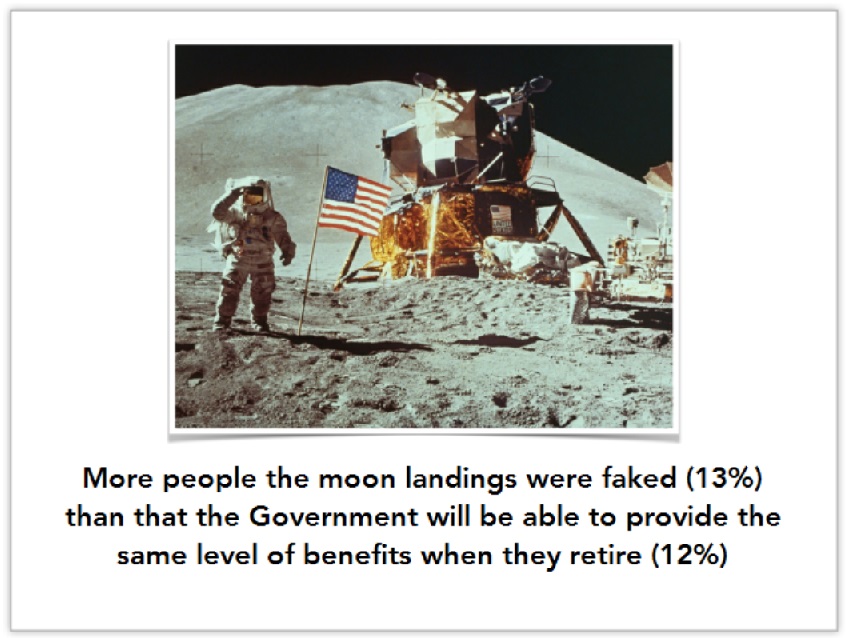
    Michael F. Cannon of the Cato Institute takes a look at Obamacare and the Halbig v. Burwell decision!!!

    Open letter to President Obama (Part 454) Michael Cannon of Cato Institute speaks to Arkansas Senators (Part 3 includes editorial cartoon)

      (Emailed to White House on 3-20-13.) President Obama c/o The White House 1600 Pennsylvania Avenue NW Washington, DC 20500 Dear Mr. President, I know that you receive 20,000 letters a day and that you actually read 10 of them every day. I really do respect you for trying to get a pulse on what […]

    Open letter to President Obama (Part 448) Michael Cannon of Cato Institute speaks to Arkansas Senators (Part 2 includes editorial cartoon)

      (Emailed to White House on 3-20-13.) President Obama c/o The White House 1600 Pennsylvania Avenue NW Washington, DC 20500 Dear Mr. President, I know that you receive 20,000 letters a day and that you actually read 10 of them every day. I really do respect you for trying to get a pulse on what […]

    Open letter to President Obama (Part 442) Michael Cannon of Cato Institute speaks to Arkansas Senators (Part 1, includes editorial cartoon)

      (Emailed to White House on 3-20-13.) President Obama c/o The White House 1600 Pennsylvania Avenue NW Washington, DC 20500 Dear Mr. President, I know that you receive 20,000 letters a day and that you actually read 10 of them every day. I really do respect you for trying to get a pulse on what […]

    Great article by Michael Cannon on Arkansas Medicaid expansion plan

    CATO Institute Michael Cannon on the OReilly Factor Published on Mar 19, 2013 The CATO Institute’s Michael Cannon spoke at the Arkansas Conservative Caucus on Tuesday March 19th. Several conservatives were present. Cannon talked about how to defeat Obamacare in Arkansas & how the states can stop Obamacare on a national level. __________________ CATO Institute […]

    Michael Cannon of Cato Institute speaks to Arkansas Senators (Part 3 includes editorial cartoon)

    Jacque Martin asks CATO Institute Michael Cannon about Obamacare Published on Mar 19, 2013 The CATO Institute’s Michael Cannon spoke at the Arkansas Conservative Caucus on Tuesday March 19th. Several conservatives were present. Cannon talked about how to defeat Obamacare in Arkansas & how the states can stop Obamacare on a national level. Jacque Martin […]

    After visit to Arkansas Cato’s Michael Cannon puts out new article

      After a visit to Arkansas on March 19, 2013 the Cato Institute’s Michael Cannon published another article claiming that “To date, 34 states, accounting for roughly two-thirds of the U.S. population, have refused to create Exchanges. Under the statute, this shields employers in those states from a $2,000 per worker tax that will apply […]

    Michael Cannon of Cato Institute speaks to Arkansas Senators (Part 2 includes editorial cartoon)

    Representative Doug House asks CATO Institute Michael Cannon about Obamacare Published on Mar 19, 2013 The CATO Institute’s Michael Cannon spoke at the Arkansas Conservative Caucus on Tuesday March 19th. Several conservatives were present. Cannon talked about how to defeat Obamacare in Arkansas & how the states can stop Obamacare on a national level. Representative […]

    Michael Cannon on Obamacare (editorial cartoons on Judge Roberts and Obamacare)

    Representative Bollinger asks CATO Institute Michael Cannon about Obamacare Published on Mar 19, 2013 The CATO Institute’s Michael Cannon spoke at the Arkansas Conservative Caucus on Tuesday March 19th. Several conservatives were present. Cannon talked about how to defeat Obamacare in Arkansas & how the states can stop Obamacare on a national level. Representative Bollinger […]

    Michael Cannon of Cato Institute speaks to Arkansas Senators (Part 1, includes editorial cartoon)

    An ObamaCare Debate Challenge (Michael F. Cannon) CATO Institute Michael Cannon at the Arkansas Conservative Caucus Published on Mar 19, 2013 The CATO Institute’s Michael Cannon spoke at the Arkansas Conservative Caucus on Tuesday March 19th. Several conservatives were present. Cannon talked about how to defeat Obamacare in Arkansas & how the states can stop […]

    Max Brantley of the Ark Times takes on Michael Cannon of the Cato Institute today concerning Obamacare

    Max Brantley of the Ark Times takes on Michael Cannon of the Cato Institute today concerning Obamacare. I have posted many links to Cannon’s articles in the past on my blog and on the Arkansas Times liberal blog. The finest article written in my estimation was written on Nov 20, 2012 and here is a […]

    Review and Pictures and Video Clips of Woody Allen’s movie “MAGIC IN THE MOONLIGHT” Part 1

    David Letterman – Dave Tells Emma Stone About His Metaphysical Encounter


    Review and Pictures and Video Clips of Woody Allen’s movie “MAGIC IN THE MOONLIGHT” Part 1

    BY ERIC KOHN
    JULY 18, 2014 7:02 AM

    Review: Woody Allen’s ‘Magic in the Moonlight’ is Exactly What It Looks Like

    “The gullible are so stupid they deserve it,” says Stanley Crawford (Colin Firth), the cocky stage magician devoted to debunking spiritualists in Woody Allen’s “Magic in the Moonlight.” Allen has built a career around cheeky one-liners, but with this one he’s practically thumbing his nose at the audience. There’s no mistaking “Magic in the Moonlight,” which takes place in the jazz age, features plenty of witty repartee and the shadings of an old school Hollywood romance, as the kind of blithe, talky comedy that Allen produces on autopilot. But 48 years since Allen’s first feature “What’s Up, Tiger Lily,” there’s a clean distinction between endearing Allen comedies and afterthoughts. “Magic in the Moonlight” unquestionably falls into the latter category.

    The director, who turns 80 next year, cranks out a movie per year with an arbitrary track record that often depends on whether the material provides enough substance for his cast to do something interesting with it. “Magic in the Moonlight” belongs to the pool of lesser Allen comedies, yet Firth and Emma Stone — as the alleged necromancer Sophie Baker, the object of Stanley’s scrutiny and eventually his affections — bring all the zany energy they can muster. Unfortunately, unlike Cate Blanchett’s remarkable capacity to wrestle the material of last year’s “Blue Jasmine” into her own furious showcase, the actors are provided with a limited range of options.

    That being said, this is no travesty of “Scoop”-level proportions, nor does it show the markings of clumsy storytelling like Allen’s most recent misfire, “To Rome With Love.” Instead, “Magic in the Moonlight” offers a half-baked scenario and follows through on it with largely unmemorable results. But maybe that’s worst: it’s simultaneously possible to detect Allen’s voice in every scene and recognize the sheer lack of ambition behind it.

    Anyone familiar with Robert B. Weide’s 2012 “American Masters” documentary on Allen knows that he keeps a small box filled with scraps of paper on which he jots down brief ideas for projects. Sometimes, that’s just enough to provide a foundation for his traditional storytelling to gel with the actors eager to inhabit his stylish world. “Magic in the Moonlight,” however, registers as more paper scrap than movie. Within the opening minutes, when Stanley’s old magician pal Howard (Simon McBurney) beckons Stanley to the south of France so he can scrutinize Sophie’s seances, viewers may be able to relate to her supernatural claims by predicting plot’s future direction: Naturally, the skeptically-minded Stanley is entranced by Sophie’s abilities — in addition to her physical appearance, of course.

    But forget about the 28-year age difference between the pair. This is a Woody Allen movie! Their romantic attraction marks one element this feature gets right, once again because Allen apparently cedes control to his cast. Firth and Stone generate terrific onscreen chemistry, as the older actor’s leery expression clashes nicely with Stone’s wide-eyed reactions whenever she claims to have received a premonition. It’s obvious that not every motive comes from a sincere place, but given those expectations, Firth and Stone are pleasant enough to watch.

    If only Allen gave them more to wade through. It’s no major huge spoiler to reveal that after hearing Sophie make psychic pronouncements about his past, he grows abruptly convinced of her powers — so much so that he even calls for a press conference to denounce his atheistic point of view. Would someone dedicated to the pursuit of scientific evidence give up so easily? Or did Allen, sitting at his typewriter, shrug and decide to just speed things up for the final act?

    Such questions would be moot if “Magic in the Moonlight” didn’t place them front and center. Unlike “Curse of the Jade Scorpion” or “Midnight in Paris,” Allen’s latest playful treatment of supernatural events deals more with its characters’ philosophical relationship to otherworldly phenomena rather than their ramifications for the plot. Yet it offers only one truly satisfying investigation into crises of faith: a single shot in which Firth’s character, faced with sudden catastrophe, unleashes a makeshift prayer before changing his tune. Watching him come to his senses is akin to witnessing the movie itself smarten up.

    That single late-in-the-game scene nearly saves the movie. Even as it arrives at a rather basic climax, “Magic in the Moonlight” conveys the shadings of a nimble romcom with keen existential undertones. Per usual at this juncture, cinematographer Darius Khonji gives the period a bright, detailed palette that matches the sparkly quality of Allen’s sensibilities. But as a whole, his screenplay feels oddly toothless, as if the filmmaker hopes to relish in the humor of his scenario but failed to come up with enough punchlines to carry it out.

    Whenever Allen makes a bad or even just a mediocre movie, it begs the question of whether he’s lost his comedic touch. Certainly his movies lack the smarmy, vulgar polish of earlier efforts, and there are plenty other directors well-positioned to take the mantle of refined comedic filmmaking he’s dominated for so long.

    With the success of “The Grand Budapest Hotel,” Wes Anderson has firmly entered Woody Allen territory by making delightfully eccentric comedies with blend goofy antics with serious undertones. Michel Gondry, whose stylish “Mood Indigo” opens this week, also brings a degree of visual invention to comedy that hasn’t manifested to a satisfying degree in Allen’s movies for ages.

    Still, Allen’s been playing his game for a long time, and his track record can’t be discounted, especially since it directly informs the work. There are just enough cheery quips and verbal asides to allow “Magic in the Moonlight” to accrue the precise appeal of its creator.

    But there’s also just enough to make its shortcomings clear: The pratfall of Allen’s ridiculous output is that every misstep suffers from comparison to better versions from the same director. He’s become so prolific that even his true believers must experience the occasional crisis of faith, but with production already underway for his next feature, it won’t take long before he gets another chance to win us back again.

    Grade: C+

    “Magic in the Moonlight” opens in New York, Los Angeles and Chicago on July 25 followed by a nationwide expansion.

    ___________

    MAGIC IN THE MOONLIGHT – Official Trailer (2014) [HD] Emma Stone, Colin Firth

    Published on May 21, 2014

    Release Date: July 25, 2014 (limited)
    Studio: Sony Pictures Classics
    Director: Woody Allen
    Screenwriter: Woody Allen
    Starring: Emma Stone, Colin Firth, Marcia Gay Harden, Hamish Linklater, Simon McBurney, Eileen Atkins, Jacki Weaver, Erica Leerhsen, Catherine McCormack, Paul Ritter, Jeremy Shamos
    Genre: Comedy, Drama
    MPAA Rating: PG-13 (for a brief suggestive comment, and smoking throughout)

    Official Websites: https://www.facebook.com/MagicInTheMo…

    Plot Summary:
    “Magic in the Moonlight” is a romantic comedy about an Englishman brought in to help unmask a possible swindle. Personal and professional complications ensue. The film is set in the south of France in the 1920s against a backdrop of wealthy mansions, the Cфte d’Azur, jazz joints and fashionable spots for the wealthy of the Jazz Age.

    Related posts:

    WOODY WEDNESDAY Woody Allen on the issue of the meaning of life and death

    I have written about Woody Allen and the meaning of life several times before. King Solomon took a long look at this issue in the Book of Ecclesiastes and so did Kerry Livgren in his song “Dust in the Wind” for the rock band Kansas in 1978. He later put his faith in Christ. Love […]

    WOODY WEDNESDAY Woody Allen’s funniest scene in “Play it again Sam” deals with the meaning of life

      I have written about Woody Allen and the meaning of life several times before. King Solomon took a long look at this issue in the Book of Ecclesiastes and so did Kerry Livgren in his song “Dust in the Wind” for the rock band Kansas in 1978. He later put his faith in Christ. […]

    Review of Woody Allen’s latest movie MAGIC IN THE MOONLIGHT (Part 1)

    __________ Review of Woody Allen’s latest movie MAGIC IN THE MOONLIGHT (Part 1) Emma Stone stars in the new Woody Allen movie ‘Magic in the Moonlight’ – here’s the trailer Emma Stone and Colin Firth star in ‘Magic in the Moonlight,’ which is directed by Woody Allen. Emma Stone recently starred in ‘The Amazing Spider-Man […]

    WOODY WEDNESDAY Woody Allen on the meaning of life and why should we even go on

      I have written about Woody Allen and the meaning of life several times before. King Solomon took a long look at this issue in the Book of Ecclesiastes and so did Kerry Livgren in his song “Dust in the Wind” for the rock band Kansas in 1978. He later put his faith in Christ. […]

    WOODY WEDNESDAY A Documentary on Woody Allen and the meaning of life

    A Documentary on Woody Allen and the meaning of life I have written about Woody Allen and the meaning of life several times before. King Solomon took a long look at this issue in the Book of Ecclesiastes and so did Kerry Livgren in his song “Dust in the Wind” for the rock band Kansas […]

    WOODY WEDNESDAY Review of Woody Allen’s latest movie “Blue Jasmine” Part 26

      I have spent alot of time talking about Woody Allen films on this blog and looking at his worldview. He has a hopeless, meaningless, nihilistic worldview that believes we are going to turn to dust and there is no afterlife. Even though he has this view he has taken the opportunity to look at the weaknesses of his own secular view. […]