During his show on January 15, 2015, Nationally syndicated radio host Mark Levin recalled the famed economist Milton Friedman and explored an important reason why open immigration, despite what many now think, is not in the best interest of the United States and its citizenry.
“I want to talk about what’s about to happen,” said Levin, “and it’s going to upset you and disappoint you. I have no control over that.”
You aren’t going to be happy about it, Levin suggests.
Levin continued:
“I want to remind you of something – what Milton Friedman said many years ago about what he called free immigration to jobs and welfare. I played this some time ago, as well as many other clips, and we’ve dug deeply into this subject. You know more about the issue of immigration and illegal immigration and amnesty than the average political hack voter.”
I want to remind you about what Milton Friedman said about all of this, “because this whole notion that you can have open borders or you can pretend you are going to secure the border, and then, immediately after passing that bill, you’re passing a wide range of other bills, which all add up to so-called comprehensive immigration reform,” says Levin. “There’s nothing reformist about it.”
Milton Friedman had the following to say about immigration:
“I have always been amused by kind of a paradox. Suppose you go around and ask people: ‘The United States, as you know, before 1914 had completely free immigration. Anybody could get on a boat and come to these shores. If you landed on Ellis Island, it was an immigrant. Was that a good thing or a bad thing?’ You will find hardly a soul who will say it was a bad thing. Almost everybody will say it was a good thing.
“But then, suppose I say to the same people: ‘But now, what about today? Do you think we should have free immigration?’
“’Oh no,’ they’ll say. ‘We couldn’t possibly have free immigration today. Boy that would, uhh, that would flood us with immigrants from India and God knows where. We’d be driven down to a bare subsistence level.’
“What’s the difference? How can people be so inconsistent? Why is it that free immigration was a good thing before 1914 and free immigration is a bad thing today?
“Well, there is a sense in which that answer is right. There is a sense in which free immigration, in the same sense in which we had it before 1914, is not possible today.
“Why not? Because it is one thing to have free immigration to jobs. It is another thing to have free immigration to welfare.”
“It is one thing to have free immigration to jobs, which is what the radical amnesty crowd argues for, including many in the Republican Party, and another thing to have free amnesty or free immigration to welfare,” repeated Levin.
“And look how Obama is handling this issue, in addition to his lawlessness,” remarked Levin.
“He’s immediately trying to sign people up for social security, many of whom haven’t paid a penny into it. He’s immediately trying to sign people up to Medicaid, for all kinds of benefits.
“And this is, really, one of the key issues,” said Levin. It’s ignored by many. It is argued that it will benefit the U.S. economically; it is said that the people coming here do so because they love this country; and these people reject Milton Friedman’s words.
“You have a massive welfare state. We have too many American citizens, who are dipping into our welfare system and are encouraged to do it,” said Levin.
Mark Levin then finished with this query, followed by Milton Friedman’s answer:
“What do you think dirt poor people from overseas, aliens, are going to do when they come into this country – when they’re encouraged to do this by our own government and politicians?
“So it’s one thing to come to America, it’s one thing to immigrate for jobs, it’s another for welfare.”
_________________
Milton Friedman is the short one!!!
Milton Friedman’s Free to Choose (1980), episode 3 – Anatomy of a Crisis. part 1
Milton Friedman The Power of the Market 5-5 How can we have personal freedom without economic freedom? That is why I don’t understand why socialists who value individual freedoms want to take away our economic freedoms. I wanted to share this info below with you from Milton Friedman who has influenced me greatly over the […]
She’s not a girl who misses much
Do do do do do do do do, oh yeah
She’s well acquainted with the touch of the velvet hand
Like a lizard on a window pane
The man in the crowd with the multicoloured mirrors
On his hobnail boots
Lying with his eyes while his hands are busy
Working overtime
A soap impression of his wife which he ate
And donated to the National TrustDown
I need a fix ’cause I’m going down
Down to the bits that I left uptown
I need a fix ’cause I’m going downMother Superior jump the gun
Mother Superior jump the gun
Mother Superior jump the gun
Mother Superior jump the gun
Mother Superior jump the gun
Mother Superior jump the gunHappiness is a warm gun (Happiness bang, bang, shoot, shoot)
Happiness is a warm gun, mama (Happiness bang, bang, shoot, shoot)
When I hold you in my arms (Oo-oo oh yeah)
And I feel my finger on your trigger (Oo-oo oh yeah)
I know nobody can do me no harm (Oo-oo oh yeah)Because happiness is a warm gun, mama (Happiness bang, bang, shoot, shoot)
Happiness is a warm gun, yes it is (Happiness bang, bang, shoot, shoot)
Happiness is a warm, yes it is, gun (Happiness bang, bang, shoot, shoot)
Well, don’t you know that happiness is a warm gun, mama? (Happiness is a warm gun, yeah)^ Nice pictures. Here are some of John and Yoko.
Featuring one of John Lennon’s best vocals on the White Album, Happiness Is A Warm Gun was made up of four distinct song fragments, and took its title from a gun magazine, The American Rifleman, which John Lennon saw in the studio at Abbey Road.
George Martin showed me the cover of a magazine that said, ‘Happiness is a warm gun’. I thought it was a fantastic, insane thing to say. A warm gun means you’ve just shot something.
John Lennon
Anthology
The first section of the song was made up of phrases thought up by Lennon and Apple’s publicist Derek Taylor during an acid trip the pair experienced along with Neil Aspinall and Lennon’s childhood friend Pete Shotton.
The opening line was a Liverpudlian expression of approval, and the ‘velvet hand’ line was inspired by a fetishist Taylor and his wife met on the Isle of Man.
I told a story about a chap my wife Joan and I met in the Carrick Bay Hotel on the Isle of Man. It was late one night drinking in the bar and this local fellow who liked meeting holiday makers and rapping to them suddenly said to us, ‘I like wearing moleskin gloves you know. It gives me a little bit of an unusual sensation when I’m out with my girlfriend.’ He then said, ‘I don’t want to go into details.’ So we didn’t. But that provided the line, ‘She’s well acquainted with the touch of the velvet hand’.
Derek Taylor
A Hard Day’s Write, Steve Turner
The lizard on the window pane was a recollection from Taylor’s days living in Los Angeles. The man in the crowd, meanwhile, was from a newspaper report about a Manchester City football fan who had been arrested after inserting mirrors into his footwear in order to see up the skirts of women during matches.
The hands busy working overtime… referred to a story heard by Taylor about a man who used false hands as an elaborate shoplifting technique.
The final part of the verse was perhaps the most abstract, but came from earthy origins.
I don’t know where the ‘soap impression of his wife’ came from but the eating of something and then donating it to the National Trust came from a conversation we’d had about the horrors of walking in public spaces on Merseyside, where you were always coming across the evidence of people having crapped behind bushes and in old air raid shelters. So to donate what you’ve eaten to the National Trust was what would now be known as ‘defecation on common land owned by the National Trust.’ When John put it all together, it created a series of layers of images. It was like a whole mess of colour.
Derek Taylor
A Hard Day’s Write, Steve Turner
The second part of the song (‘I need a fix ’cause I’m going down’) contains Lennon’s clearest reference to heroin while in The Beatles, although he later denied the line was about drugs.
Happiness Is A Warm Gun was another one which was banned on the radio – they said it was about shooting up drugs. But they were advertising guns and I thought it was so crazy that I made a song out of it. It wasn’t about ‘H’ at all.
John Lennon
Anthology
The double-speed ‘Mother Superior jump the gun’ section, meanwhile, was inspired by his infatuation with Yoko Ono. Mother Superior was a name he used for her, and ‘jump the gun’ could be interpreted as a sexual metaphor.
On, well, by then I’m into double meanings. The initial inspiration was from the magazine cover. But that was the beginning of my relationship with Yoko and I was very sexually oriented then. When we weren’t in the studio, we were in bed.
John Lennon
All We Are Saying, David Sheff
An early acoustic version of the song, recorded at George Harrison’s home in Esher, Surrey in May 1968 found Lennon reworking the words and chords of this section, at one point simply singing Ono’s name.
The final part introduces the title phrase over the conventional doo-wop chord sequence (I-vi-IV-V) and a number of changes between 2/4, 3/4 and 4/4 time signatures. The song’s complexity led to The Beatles spending 15 hours and recording 95 takes before being satisfied.
In the studio
On 23 September 1968 The Beatles began recording the song, with the working title Happiness Is A Warm Gun In Your Hand. They taped the first 45 takes of the song, with Lennon on lead guitar and guide vocals, McCartney on bass, Harrison on fuzz lead guitar and Starr playing drums.
The following day the group recorded takes 46-70. At the end of these it was decided that the first half of take 53 and the second half of take 65 were the best, and the two were edited together on the evening of 25 September.
With the edit in place, the group began overdubbing later that night. Lennon’s lead vocals were supported by backing vocals from Lennon, McCartney and Harrison. Other additions were an organ, piano, snare drum, tambourine and bass.
During the mixing stage it was decided that the first instance of the ‘I need a fix’ line should be left out. The word ‘down’ can be heard on the final version, however, when the vocals were faded up slightly too early.
___________
John Lennon’s “Lost Weekend” lasted 14 months in Los Angeles and was filled with many nights of sex and drugs:
The Beatles really were on a long search for happiness, meaning and fulfillment in their lives just like King Solomondid in the Book of Ecclesiastes. He looked into learning (1:12-18, 2:12-17), laughter, ladies, luxuries, and liquor (2:1-2, 8, 10, 11), and labor (2:4-6, 18-20). Obviously the Beatles went through this list of “L” words pretty fast and the song HAPPINESS IS A WARM GUM is filled with references to drugs and sex which Solomon tried a lot too in his day (I imagine getting drunk 3000 years ago is the only thing that could be compared to a drug trip in modern times and in the area of sexual exploits nobody could compare to Solomon’s fathering over 1000 children). The true secret of happiness and satisfaction is not found in drugs or sex but in a relationship with the Christ of Christmas and Charles Schulz emphasized that in his film A CHARLIE BROWN CHRISTMAS. Below is the tie in with the title of HAPPINESS IS A WARM GUN to Charles Schulz.
According to Lennon, the title came from a magazine cover that producer George Martin showed him: “I think he showed me a cover of a magazine that said ‘Happiness Is a Warm Gun.’ It was a gun magazine. I just thought it was a fantastic, insane thing to say. A warm gun means you just shot something.”[2] The title is one of many 1960s riffs onCharles M. Schulz‘s axiom that “happiness is a warm puppy”, which began in the Peanuts comic strip and became the title of a related book.[citation needed]
“Peanuts” creator Charles M. Schulz’s small book of gentle joys is published by Determined Productions. It took its title and concept from the last panel of his daily comic strip of April 25, 1960. The book quickly became a best-seller.
* “Special Report on Happiness” (Life magazine, December 14, page 23): @
* “Schulz and Peanuts” (David Michaelis, 2008): @ * Charles M. Schulz Museum: @
On Tuesday, countless households tuned in to watch as Charlie Brown and the rest of the Peanuts gang pondered the meaning of Christmas. I admit that I have watched the show from my youth, and have always enjoyed both the characters and the special, “A Charlie Brown Christmas.”
The Christmas special, originally believed to be a failure in the minds of those bankrolling the project back in 1965, has become as much a part of “Christmas Americana” as other well known favorites like, “It’s a Wonderful Life,” “Rudolph the Red-Nosed Reindeer,” and “How the Grinch Stole Christmas.”
Even conservative Christians who believe the Bible to be the divinely inspired, plenary (look it up), infallible, authoritative Word of God show excitement when this favorite returns to the airwaves. How can this be, you ask, when these people are typically known for having a disdain for most things secular? I believe it all hinges on 60 seconds of footage toward the end of the cartoon.
After being terribly frustrated with the consumer mentalities around him, not to mention how badly things are going with the Christmas play, blockhead-turned-director Charlie Brown asks the pivotal question: “Isn’t there anyone who knows what Christmas is all about?”
To the credit of Charles Schulz and Bill Melendez, the show’s main creative forces, Linus responds by stepping onto the stage, and reciting Luke 2:8-14 from his King James Bible, reminding us of the true “Reason for the Season,” that being the virgin birth of the promised One, the Messiah, the Lamb of God: Jesus Christ.
And there were in the same country shepherds abiding in the field, keeping watch over their flock by night.
And, lo, the angel of the Lord came upon them, and the glory of the Lord shone round about them: and they were sore afraid.
And the angel said unto them, Fear not: for, behold, I bring you good tidings of great joy, which shall be to all people.
For unto you is born this day in the city of David a Savior, which is Christ the Lord.
And this shall be a sign unto you; Ye shall find the babe wrapped in swaddling clothes, lying in a manger.
And suddenly there was with the angel a multitude of the heavenly host praising God, and saying,
Glory to God in the highest, and on earth peace, good will toward men.
I still get shivers up and down my spine when Linus shares the gospel with his cartoon friends. While I do have some sentimental feelings toward this classic, I have to press a hard question: So what? What good came out of Linus sharing the truth of the coming Messiah to Charlie Brown and the rest of the gang?
The rest of the story shows that little to no change of heart happened in the lives of his friends. Sure, there was renewed hope for the little tree, and they sang, “Hark the Herald Angels Sing” together as the credits rolled, but no one responded biblically to the gospel. No one repented of their sins. No one accepted the reality of their lost condition before a holy and righteous God. Sadly, no one was saved by grace through faith in Jesus.
We can be sure that Schulz and Melendez did all they could to bring these biblical truths to their Christmas special. Under the conditions in which they were working, it is surprising that any Scripture made it to the viewers at home. Turning people away from their “consumer Christmas” mentality, though, isn’t enough. We need to remember that, unless our loved ones understand of their great need of the Savior, and turn to faith in Christ, a fiery eternity apart from God awaits them.
The beloved “Charlie Brown Christmas” special has once again come and gone, but the Great Commission is still before us. May we, like little Linus Van Pelt, be faithful to proclaim the good news of Jesus Christ to our family and friends. May we be committed to the hard thing, the uncomfortable thing – for the sake of He who was committed to the most difficult of things when He allowed Himself to be scourged and slain so that sinners might be saved – and share the Father’s wonderful plan of salvation with our loved ones this Christmas season.
Charles Schulz’s ‘Peanuts’ characters have become timeless classics, thanks to their long-lasting presence in newspapers and their many animated TV specials. (“It’s Arbor Day Again, Charlie Brown!”) A big part of the characters’ success is thanks to the classic ‘A Charlie Brown Christmas’ TV special.
Since it first aired in 1965, the beloved special has practically become required viewing for families celebrating the holiday season. Its message of anti-commercialism and good will towards man mixed with Schulz’s trademark humor of caustic kids in a cynical world is a perfect remedy for the holidays that can get sappier than your aunt’s homemade egg nog.
At the time of its airing, ‘A Charlie Brown Christmas’ received rave reviews, record ratings and an annual presence on television and home video for decades to come. And yet 46 years later, few fans know about its rocky beginnings that were fraught with much frustration and cynicism by the network executives who commissioned it and the producers who fought so hard to preserve Schulz’s humor and pathos. In celebration of the special’s annual TV airing, here are some things you might not know about ‘A Charlie Brown Christmas.’
Hulu
Hulu
5
Linus’ “True Meaning of Christmas” speech was almost cut
Sparky was also a religious man and, according to his biography, “the life of Jesus remained for him a consuming subject.” He also insisted in the early days of production that the script feature some religious overtones, particularly a passage from the St. Luke gospel about the birth of Jesus Christ, to bring some meaning to the holiday that “had been lost in the general good-time frivolity.” The producers agreed to include a Nativity scene to represent Sparky’s feelings, but by the time the script was finished, Mendelson realized he had included an entire minute-long speech directly from the New Testament. This led to the biggest arguments between Sparky and the producers, with Mendelson insisting that the special was an “entertainment show” and the speech would scare off advertisers by narrowing its audience. Thankfully, the now iconic speech survived the final cut and has aired in the special every year since.
Hulu
6
The network execs and sponsors hated the special and wanted to bury it
Linus’ famous speech was just one of the complaints the network executives and Coca-Cola, the special’s chief sponsor, had with the final cut of the cartoon. They expected a TV comedy with a laugh track, and got instead a wry, melancholy commentary on the holiday season. (The network also objected to real children voicing all of the characters.) The brass was particularly wary of the religious overtones that Sparky insisted the special carry on the air. According to Mendelson, the executives agreed to air it “once and that will be all.” Of course, we all know what happened next.
Hulu
7
The producers thought it would be a flop and that they “ruined Charlie Brown forever”
If the network executives were a tad bit too hard on their first screening of ‘A Charlie Brown Christmas,’ the show’s producers were downright cynical. Mendelson and Melendez were more pleased with the final product than the network, but they feared the public would not embrace it, let alone watch it. They also thought it would forever tarnish Sparky’s characters and comic strip. Mendelson said in an interview, “We kind of agreed with the network. One of the animators stood up in the back of the room – he had had a couple of drinks – and he said, ‘It’s going to run for a hundred years,’ and then fell down. We all thought he was crazy.”
______
Hulu
10
It is the second longest-running Christmas special of all time
The drunken animator turned out to be the smartest person in the screening room. The first broadcast on Dec. 9, 1965 garnered more than 15.4 million viewers, received rave reviews by almost every major television critic and earned Schulz and Mendelson an Emmy for Outstanding Children’s Program. CBS immediately commissioned more ‘Peanuts’ specials. Since then, ‘A Charlie Brown Christmas’ has aired every year during the holidays on CBS and ABC, who scored the rights in 2001. The broadcasts still earn the highest ratings in their time slot. Even more impressive, it has become the second longest-running Christmas special of all time behind ‘Rudolph the Red Nosed Reindeer.’ Poor Charlie Brown never comes in first.
A Charlie Brown Christmas (The Meaning of Christmas)
Peanuts had become a phenomenon worldwide by the mid-1960s, and the special was commissioned and sponsored by The Coca-Cola Company. It was written over a period of several weeks, and animated on a shoestring budget in only six months. In casting the characters, the producers went an unconventional route, hiring child actors. The program’s soundtrack was similarly unorthodox: it features a jazz score by pianist Vince Guaraldi. Its absence of a laugh track (a staple in television animation in this period), in addition to its tone, pacing, music, and animation, led both the producers and network to wrongly envision the project as a disaster preceding its broadcast.
A Charlie Brown Christmas received high ratings and acclaim from critics. It has since been honored with both an Emmy and Peabody Award. It became an annual broadcast in the United States, and has been aired during the Christmas season traditionally every year since its premiere. Its jazz soundtrack also achieved commercial success, going triple platinum in the US. Live theatrical versions of A Charlie Brown Christmas have been staged. ABC currently holds the rights to the special, and broadcasts it at least twice during the weeks leading up to Christmas.
The special begins on a frozen pond, put to use as an ice rink by the Peanuts cast, who skate and sing “Christmas Time Is Here” over the opening credits.
It’s Christmas season, and Charlie Brown is depressed. He confides in Linus this fact, citing his dismay with the over-commercialization of Christmas and his inability to grasp what Christmas is all about; Linus dismisses it as typical Charlie Brown behavior at first. Brown’s depression and aggravation only get exacerbated by the goings-on in the neighborhood. Though his mailbox is empty, he tries sarcastically to thank Violet for the card she “sent” him, though Violet just uses the opportunity to put Brown down again. Eventually, Charlie Brown visits Lucy in her psychiatric booth. Deciding that he needs more involvement, she recommends that he direct a Christmas play, to which he agrees. On his way to the auditorium, he finds his dog Snoopy decorating his doghouse for a neighborhood lights and display contest. En route to the rehearsals, he runs into his sister Sally, who asks him to write her letter to Santa Claus. When she tells him to put in a request for money (“tens and twenties“), Charlie Brown becomes even more dismayed.
Charlie Brown arrives at the rehearsals, but he is unable to control the situation as the uncooperative kids are more interested in modernizing the play with dancing and lively music, mainly Schroeder‘s rendition of “Linus and Lucy.” Thinking the play requires “the proper mood,” Charlie Brown decides they need a Christmas tree. Lucy takes over the crowd and dispatches Charlie Brown to get a “big, shiny aluminum tree.” With Linus in tow, Charlie Brown sets off on his quest. When they get to the tree market, filled with numerous trees fitting Lucy’s description, Charlie Brown zeroes in on a small sapling which is the only real tree on the lot. Linus is reluctant about Charlie Brown’s choice, but Charlie Brown is convinced that after decorating it, it will be just right for the play. They return to the auditorium with the tree, at which point the children (particularly the girls and Snoopy) ridicule, then laugh at Charlie Brown before walking away. In desperation, Charlie Brown loudly asks if anybody really knows what Christmas is all about. Linus, standing alone on the stage, states he can tell him, and recites the annunciation to the shepherds scene from the Gospel of Luke, chapter 2, verses 8 through 14, as translated by the Authorized King James Version:
“8And there were in the same country shepherds abiding in the field, keeping watch over their flock by night. 9And, lo, the angel of the Lord came upon them, and the glory of the Lord shone round about them: and they were sore afraid. 10And the angel said unto them, Fear not; for, behold, I bring you tidings of great joy, which shall be to all people. 11For unto you is born this day in the city of David a Savior, which is Christ the Lord. 12And this shall be a sign unto you: Ye shall find the babe wrapped in swaddling clothes, lying in a manger. 13And suddenly there was with the angel a multitude of the heavenly host praising God, and saying, 14Glory to God in the highest, and on earth peace and goodwill towards men.”
“…That’s what Christmas is all about, Charlie Brown.”[2]
Charlie Brown quietly picks up the little tree and walks out of the auditorium, intending to take the tree home to decorate and show the others it will work in the play as an “O Tannenbaum” instrumental plays in the background. On the way, he stops at Snoopy’s decorated doghouse, which now sports a first prize blue ribbon for winning the display contest. He puts an ornamental ball on the top of his tree; the branch, with the ball still on it, promptly flops over to one side instead of remaining upright, prompting him to declare “I’ve killed it” and run off in disgust at his perpetual failure. The rest of the gang, Linus included, have quietly arrived outside Snoopy’s doghouse. Linus goes up to the tree and gently props the drooping branch back to its upright position, wrapping his security blanket around the tree. After they reconsider their previous stance, they add the remaining decorations from Snoopy’s doghouse to the tree and start humming “Hark! The Herald Angels Sing.” When Charlie Brown sees what they have done with the tree, he is surprised and the kids give him a Christmas greeting before singing the song, as Charlie Brown joins in. The closing credits then roll.
By the early 1960s, Charles M. Schulz’s comic strip Peanuts had become a sensation worldwide.[3] Television producer Lee Mendelson acknowledged the strip’s cultural impression and had an idea for a documentary on its success, phoning Schulz to propose the idea. Schulz, an avid baseball fan, recognized Mendelson from his documentary on ballplayer Willie Mays, A Man Named Mays, and invited him to his home in Sebastopol, California to discuss the project.[4]Their meeting was cordial, with the plan to produce a half-hour documentary set. Mendelson wanted to feature roughly “one or two” minutes of animation, and Schulz suggested animator Bill Melendez, with whom he collaborated some years before on a spot for the Ford Motor Company.[5]
Charles M. Schulz in 1956. His goal for the special was to focus on the “true meaning of Christmas.”
Schulz’s main goal for a Peanuts-based Christmas special was to focus on what he deemed “the true meaning of Christmas.”[8] He desired to juxtapose this theme with interspersed shots of snow and ice-skating, perhaps inspired by his own childhood growing up in St. Paul, Minnesota.[8] He also created the idea for the school play, and mixing jazz with traditional Christmas carols.[8] Schulz was adamant about Linus’s reading of the Bible, despite Mendelson and Melendez’s concerns that religion was a controversial topic, especially on television.[10] Melendez recalled Schulz turned to him and remarked “If we don’t do it, who will?”[3] Schulz’s estimation proved accurate, and in the 1960s, less than 9 percent of television Christmas episodes contained a substantive reference to religion, according to university researcher Stephen Lind.[11]
Schulz’s faith in the Bible stemmed from his Midwest background…
Although originally broadcast on the CBS network from 1965 until December 25, 2000, in January 2000, the broadcast rights were acquired by ABC, which is where the special currently airs, usually twice, in December.
The original broadcasts included references to the sponsor, Coca-Cola.[35][36] Subsequent broadcasts and home media releases have excised all references to Coca-Cola products.
On December 6, 2001, a half-hour documentary on the special titled The Making of ‘A Charlie Brown Christmas’ (hosted by Whoopi Goldberg) aired on ABC. This documentary has been released as a special feature on the DVD and Blu-ray editions of the special.
The show’s 40th anniversary broadcast on Tuesday, December 6, 2005, had the highest ratings in its time slot.
A Charlie Brown Christmas became a Christmas staple in the United States for several decades afterward. Within the scope of future Peanuts specials, it established their style, combining thoughtful themes, jazzy scores, and simple animation.[38] It also, according to author Charles Solomon, established the half-hour animated special as a television tradition, inspiring the creation of numerous others, including How the Grinch Stole Christmas! (1966) and Frosty the Snowman.[38]USA Today summarized the program’s appeal upon its 40th anniversary in 2005: “Scholars of pop culture say that shining through the program’s skeletal plot is the quirky and sophisticated genius that fueled the phenomenal popularity of Schulz’s work.”[14] Beyond its references to religion, unheard of on television at the time, the special also marked the first time children voiced animated characters.[14]
My absolute favorite albums are Rubber Soul and Revolver. On both records you can hear references to other music — R&B, Dylan, psychedelia — but it’s not done in a way that is obvious or dates the records. When you picked up Revolver, you knew it was something different. Heck, they are wearing sunglasses indoors in the picture on the back of the cover and not even looking at the camera . . . and the music was so strange and yet so vivid. If I had to pick a favorite song from those albums, it would be “And Your Bird Can Sing” . . . no, “Girl” . . . no, “For No One” . . . and so on, and so on. . . .
Their breakup album, Let It Be, contains songs both gorgeous and jagged. I suppose ambition and human frailty creeps into every group, but they delivered some incredible performances. I remember going to Leicester Square and seeing the film of Let It Be in 1970. I left with a melancholy feeling.
Stereophonics with Oasis – I’m Only Sleeping (Live Beatles Cover)
The Beatles -I’m Only Sleeping – (REVOLVER) Remastered
57
‘I’m Only Sleeping’
Keystone Features/Getty Images
Main Writer: Lennon Recorded: April 27 and 29, May 5 and 6, 1966 Released: June 20, 1966 Not released as a single
Though some hear “I’m Only Sleeping” as another drug ode, Lennon may have simply been expressing irritation at being woken up by McCartney for a songwriting session. Lennon was known to be a sedentary sort. In March 1966, he confessed that “sex is the only physical thing I can be bothered with anymore.”
Harrison’s eight-measure guitar solo on “I’m Only Sleeping” was inspired by a mistake — after an engineer threaded the multitrack tape incorrectly, the musicians heard that now-familiar blurred, slurping sound. McCartney recalled later that everyone was floored: “‘My God, that is fantastic! Can we do that for real?'”
Harrison played a line inspired by Indian music and asked George Martin to transcribe it in reverse. Martin had to conduct Harrison beat by beat, resulting in what engineer Geoff Emerick described as “an interminable day,” lasting nine hours. “I can still picture George hunched over his guitar for hours on end,” Emerick wrote in 2006, “headphones clamped on, brows furrowed in concentration.”
Appears On:Revolver
I’m Down- The Beatles
56
‘I’m Down’
Michael Ochs Archives/Getty Images
Main Writer: McCartney Recorded: June 14, 1965 Released: July 19, 1965 Did not chart (b side)
“I’m Down” is one of the Beatles’ most energetic tracks, a simple rocker that they captured in three hours the same day they recorded “I’ve Just Seen a Face” and began recording “Yesterday” — a session that demonstrates McCartney’s extraordinary range. “I’m Down,” the B side to “Help!,” reflects McCartney’s fondness for Little Richard-style ravers. “I used to sing his stuff,” McCartney said, “but there came a point where I wanted one of my own, so I wrote ‘I’m Down.'”
The song became a live favorite, serving as the concert closer throughout the group’s 1965 American tour. The performance of “I’m Down” at Shea Stadium is a collage of indelible images: McCartney growing so excited that he starts to twirl; Lennon and Harrison laughing so much that they muff their background vocals; Starr bashing away — even though you can barely hear his drums amid the screams — and Lennon playing electric piano with his elbow. It’s the Beatles free of Beatlemania — four guys in a band, rocking their asses off and loving it.
Painter Andrew Wyeth passed away in his sleep today. He died in his home in Chadd’s Ford, PA. He was 91.The NY Times has a lengthy appreciation of the man and his philosophy here.Mr. Wyeth’s mention in a PEANUTS strip, above, nicked from Comics Reporter.
The youngest of five children born to illustrator N. C. Wyeth and his wife, Andrew came equipped with a bad hip and frequent bouts with illnesses. His parents decided that he was too fragile to attend school, so instead hired tutors. (Yes. Andrew Wyeth was home schooled.)
While aspects of this childhood were rather solitary, for the most part life in the Wyeth home was filled with art, music, literature, story telling, a never-ending succession of props and costumes that N. C. used to compose his paintings and, of course, the large Wyeth family.
His Start in Art:
Andrew began drawing a very early age. N. C. (who taught many students, including daughters Henriette and Carolyn) wisely did not attempt to instruct “Andy” until he’d reached the age of 15 and had some inkling of his own style. For two years, the younger Wyeth received rigorous academic training in draftsmanship and painting technique from his father.
Turned loose from the studio Wyeth also turned his back on oils as a painting medium, choosing less-forgiving watercolors instead. Those familiar with later works are often surprised at his early “wet brush” numbers: quickly executed, broad strokes and full of color.
N. C. was so enthusiastic about these early works that he showed them to Robert Macbeth, a New York City art dealer.
No less enthusiastic, Macbeth staged a solo exhibition for Andrew. Most enthusiastic of all were the crowds who flocked to look and buy. The entire show sold within two days and, at the age of 20, Andrew Wyeth was a rising star in the art world.
Turning Point:
Throughout his 20s Wyeth began painting more slowly, with greater attention to detail and composition, and less emphasis on color. He had learned to paint with egg tempera, and alternated between it and the “dry brush” watercolor method.
His art underwent a dramatic shift after October, 1945 when N. C. was struck and killed at a railway crossing. One of his two pillars in life (the other being wife Betsy) was gone–and it showed in his paintings. Landscapes became more barren, their palettes muted, and the occasional figures that appeared seemed enigmatic, poignant and “sentimental” (an art-critical word the artist came to loathe). Wyeth later said that his father’s death “made him,” meaning that grief caused him to focus intensely, and forced him to paint with deep emotion going forward from the mid-1940s.
Mature Work:
Though Wyeth did a lot of portraiture, he is best known for interiors, still lifes and landscapes in which figures are largely absent–Christina’s World being the most notable exception. As the years passed his palette lightened up somewhat and late works contain hints of vibrant color.
Certain art professionals decry Andrew Wyeth’s work as mediocre at best, even as a growing segment champions it. “The People’s Painter’s” output is beloved by an overwhelming majority of art fans, though, and please know this as well: there are noartists who wouldn’t have jumped at the chance to observe his working technique.
Important Works:
Winter 1946, 1946
Christina’s World, 1948
Groundhog Day, 1959
Master Bedroom, 1965
Maga’s Daughter, 1966
Helga series, 1971-85
Snow Hill, 1989
Date and Place of Death:
January 16, 2009, Chadds Ford, Pennsylvania
According to a spokesperson, Mr. Wyeth died in his sleep, at his home, after an unspecified brief illness.
Quotes From Andrew Wyeth:
I prefer winter and fall, when you feel the bone structure of the landscape–the loneliness of it, the dead feeling of winter. Something waits beneath it; the whole story doesn’t show.
If you display yourself completely, all your inner soul disappears. You have to keep something to your imagination, to yourself.
I get letters from people about my work. The thing that pleases me most is that my work touches their feelings. In fact, they don’t talk about the paintings. They end up telling me the story of their life or how their father died.
Mississippi Museum of Art presents the premiere of Andrew Wyeth: Close Friends, an exhibition of 74 original works depicting the world of Wyeth’s African-American friends and neighbors. The exhibition of works by America’s most celebrated living artist opens February 3 and continues through May 13, 2001.
Andrew Wyeth, known for his realistic depiction of everyday America, is generally regarded as “America’s Painter,” and is perhaps the most well known of the artistic Wyeth family, which includes his father N. C., sisters Henriette and Carolyn, and son Jamie. Since the early 1950s, critics worldwide have both lionized and criticized Andrew Wyeth. His inimitable style, however, has become a favorite of people from all ends of the human spectrum, not only in the United States but around the globe. (left: And Bells on Her Toes, 1997, drybrush and watercolor on paper, 22 x 29 3/4 inches, Collection of William and KathleenPowell)
Organized by Mississippi Museum of Art Director R. Andrew Maass and Chief Curator René Paul Barilleaux in close cooperation with the artist and his wife, Betsy James Wyeth, Andrew Wyeth: Close Friends is the first critical look at a significant body of paintings depicting the artist’s African-American friends and neighbors in Chadds Ford, Pennsylvania, from 1933 to the present. This rare and remarkable survey explores the world just over the ridge from Wyeth’s studio in Chadds Ford. Documented here are the lives of a proud and strong people, as seen through the eyes of the artist, who grew up with, knows and loves them. It is a study of warm friendships and the strokes of genius that fly like sparks from Wyeth’s pencils and brushes. Said Andrew Wyeth, “I think one’s art goes as far and as deep as one’s love goes. I see no reason for painting but that. If I have anything to offer, it is my emotional contact with the place where I live and the people I do.” (left: Alexander Chandler, 1995, drybrush on paper, 21 1/2 x 15 inches, Private collection)
Although most recent Wyeth exhibitions have focused on the works of the entire Wyeth family or Andrew Wyeth’s Helga paintings, this unique project chronicles seven decades of an under-appreciated yet historically relevant aspect of the artist’s relationship to his home and his community. It is a theme that resonates with dignity, diversity and inclusiveness — very important issues in Mississippi, throughout the Deep South and indeed, throughout America.
“These works are, perhaps, among the artist’s purest paintings, ones that are virtually devoid of metaphor and symbolism,” explains Mississippi Museum of Art Director R. Andrew Maass. “The subjects are real. To Wyeth, they are the earth; they are nature itself, not metaphors for something else. Here, color is everything. These are works, and a life, where the only distinctions between black and white are the hues and colors on a piece of paper or panel. These drawings, watercolors, and temperas document his friends while he explores color, texture and nature. This lifetime of work is about Andrew Wyeth’s home and community — the world in which he really lives. As an exhibition, Andrew Wyeth: Close Friends reveals an artist who reveres and respects his world — a world that is inclusive and without bias. It just is.” (left: The Drifter, 1964, drybrush and watercolor on paper, 22 1/2 x 28 1/2 inches, Collection of Mr. and Mrs. Andrew Wyeth)
Included in the exhibition are oil paintings, major tempera paintings, watercolors and graphite drawings from numerous lenders, including major U.S. museums and private collectors across the country, as well as thirty works from the personal collection of Mr. and Mrs. Andrew Wyeth. Many of these works have rarely been publicly displayed, and Wyeth’s first painting of the millennium, an African-American female figure entitled Dryad, is being displayed in this exhibition for the first time. (left: Granddaughter, 1956, drybrush and watercolor on paper, 15 3/4 x 22 1/2 inches, Collection of Wadsworth Athenium, Hartford, Connecticut, Gift of Mrs. Robert Montgomery, 1991.79)
“Andrew Wyeth’s world is unique and his work so original, yet there are few opportunities to bring them together in any new way,” shared Maass about the accompanying publication. “We appreciate that without Andrew Wyeth’s works and words there would be no book and no exhibition. Yet, it was Betsy Wyeth who culled the works, determined their order, tamed the words, and organized this book, creating a collectors’ piece of significant importance documenting this fascinating body of work.” (left: Adam, 1963, tempera on panel, 24 1/4 x 48 inches, Private collection)
Andrew Newell Wyeth (/ˈwaɪ.ɛθ/wy-eth;[1] July 12, 1917 – January 16, 2009) was a visual artist, primarily a realist painter, working predominantly in a regionalist style. He was one of the best-known U.S. artists of the middle 20th century.
In his art, Wyeth’s favorite subjects were the land and people around him, both in his hometown of Chadds Ford, Pennsylvania, and at his summer home in Cushing, Maine. Wyeth often noted: “I paint my life.” One of the best-known images in 20th-century American art is his painting Christina’s World, currently in the collection of the Museum of Modern Art in New York City. This tempera was painted in 1948, when Wyeth was 31 years old.
Andrew was the youngest of the five children of illustrator and artist N.C. (Newell Convers) Wyeth and his wife, Carolyn Bockius Wyeth. He was born July 12, 1917, on Henry Thoreau’s 100th birthday. Due to N.C.’s fond appreciation of Henry Thoreau, he found this both coincidental and exciting. N.C. was an attentive father, fostering each of the children’s interests and talents. The family was close, spending time reading together, taking walks, fostering “a closeness with nature” and developing a feeling for Wyeth family history.[2]
Andrew was home-tutored because of his frail health. Like his father, the young Wyeth read and appreciated the poetry of Robert Frost and the writings of Henry Thoreau and studied their relationships with nature. Music and movies also heightened his artistic sensitivity.[3] One major influence, discussed at length by Wyeth himself, was King Vidor‘s The Big Parade.[4][5] He claimed to have seen the film, which depicted family dynamics similar to his own, “a hundred-and-eighty-times” and believed it had the greatest influence on his work. Vidor later made a documentary, Metaphor, where he and Wyeth discuss the influence of the film on his paintings, including Winter 1946, Snow Flurries, Portrait of Ralph Kline and Afternoon Flight of a Boy up a Tree.[4][6]
Wyeth’s father was the only teacher that he had. Due to being schooled at home, he led both a sheltered life and one that was “obsessively focused”. Wyeth recalled of that time: “Pa kept me almost in a jail, just kept me to himself in my own world, and he wouldn’t let anyone in on it. I was almost made to stay in Robin Hood‘s Sherwood Forest with Maid Marion and the rebels.”[7]
In the 1920s, Wyeth’s father had become a celebrity, and the family often had celebrities as guests, such as F. Scott Fitzgerald and Mary Pickford. The home bustled with creative activity and competition.[7] N.C. and Carolyn’s five children were all talented. Henriette Wyeth Hurd, the eldest, became a well-known painter of portraits and still lifes. Carolyn, the second child, was also a painter.Nathaniel Wyeth, the third child, was a successful inventor. Ann was a musician at a young age and became a composer as an adult. Andrew was the youngest child.[2]
Wyeth started drawing at a young age. He was a draftsman before he could read.[7] By the time he was a teenager, his father brought him into his studio for the only art lessons he ever had. N.C. inspired his son’s love of rural landscapes, sense of romance, and artistic traditions.[2] Although creating illustrations was not a passion he wished to pursue, Wyeth produced illustrations under his father’s name while in his teens.[7]
With his father’s guidance, he mastered figure study and watercolor, and later learned egg tempera from his brother-in-law Peter Hurd. He studied art history on his own, admiring many masters ofRenaissance and American painting, especially Winslow Homer.[3]
N.C. also fostered an inner self-confidence to follow one’s own talents without thought of how the work is received. N.C. wrote in a letter to Wyeth in 1944:[8]
The great men [ Thoreau, Goethe, Emerson, Tolstoy] forever radiate a sharp sense of that profound requirement of an artist, to fully understand that consequences of what he creates are unimportant. Let the motive for action be in the action itself and not in the event. I know from my own experience that when I create with any degree of strength and beauty I have no thought of consequences. Anyone who creates for effect—to score a hit—does not know what he is missing!
In the same letter, N.C. correlates being a great man with being a great painter: To be a great artist, he described, requires emotional depth, an openness to look beyond self to the subject, and passion. A great painting then is one that enriches and broadens one’s perspective.[8]
In October 1945, his father and his three-year-old nephew, Newell Convers Wyeth II (b. 1941), were killed when their car stalled on railroad tracks near their home and was struck by a train. Wyeth referred to his father’s death as a formative emotional event in his artistic career, in addition to being a personal tragedy.[9] Shortly afterwards, Wyeth’s art consolidated into his mature and enduring style.[10]
In 1940, Wyeth married Betsy James,[5] whom he met in 1939 in Maine.[11] Christina Olson, who would become the model for the iconic Christina’s World, met Wyeth through an introduction by Betsy.[11] His wife, Betsy, had an influence on Andrew as strong as that of his father. She played an important role managing his career. She was once quoted as saying, “I am a director and I had the greatest actor in the world.”[7]
Their first child, Nicholas, was born in 1943, followed by James (“Jamie”) three years later. Wyeth painted portraits of both children (Nicholas of his older son and Faraway of his younger son).
His son Jamie Wyeth followed his father’s and grandfather’s footsteps, becoming the third generation of Wyeth artists.[12]
N.C. Wyeth was an illustrator famous for his work portrayed in magazines, posters and advertisements. He also created illustrations for books such as Treasure Island and The Last of the Mohicans“. Andrew would be the role model and teacher to his son Jamie that his father, N.C., had been to him.[7] Their story and artistic history is told in James H. Duff’s An American Vision: Three Generations of Wyeth Art.[12]
On January 16, 2009, Andrew Wyeth died in his sleep in Chadds Ford, Pennsylvania, after a brief illness. He was 91 years old.[13] Wyeth is buried in the Olson family plot in Cushing, Maine.[citation needed]
In 1937, at age twenty, Wyeth had his first one-man exhibition of watercolors at the Macbeth Gallery in New York City. The entire inventory of paintings sold out, and his life path seemed certain. His style was different from his father’s: more spare, “drier,” and more limited in color range. He stated his belief that “the great danger of the Pyle school is picture-making.”[3] He did some book illustrations in his early career, but not to the extent that N.C. Wyeth did.[7]
Wyeth was a visual artist, primarily classified as a realist painter, like Winslow Homer or Eakins. In a Life Magazine article in 1965, Wyeth said that although he was thought of as a realist, he thought of himself as an abstractionist: “My people, my objects breathe in a different way: there’s another core—an excitement that’s definitely abstract. My God, when you really begin to peer into something, a simple object, and realize the profound meaning of that thing—if you have an emotion about it, there’s no end.”[10]
He worked predominantly in a regionalist style.[14] In his art, Wyeth’s favorite subjects were the land and people around him, both in his hometown of Chadds Ford, Pennsylvania, and at his summer home in Cushing, Maine.[7]
Dividing his time between Pennsylvania and Maine, Wyeth maintained a realist painting style for over seventy years. He gravitated to several identifiable landscape subjects and models. His solitary walks were the primary means of inspiration for his landscapes. He developed an extraordinary intimacy with the land and sea and strove for a spiritual understanding based on history and unspoken emotion. He typically created dozens of studies on a subject in pencil or loosely brushed watercolor before executing a finished painting, either in watercolor, drybrush (a watercolor style in which the water is squeezed from the brush), or egg tempera.[2][7][10]
It was at the Olson farm in Cushing, Maine, that he painted Christina’s World (1948). Perhaps his most famous image, it depicts his neighbor, Christina Olson, sprawled on a dry field facing her house in the distance. Wyeth was inspired by Christina, who, crippled from an undiagnosed chronic condition and unable to walk, spent most of her time at home.[5][15]
The Olson house has been preserved, renovated to match its appearance in Christina’s World. It is open to the public as a part of the Farnsworth Art Museum.[11]
Wyeth created nearly 300 drawings, watercolors and tempera paintings at Olson’s from 1937 to the late 1960s. Because of Wyeth’s popularity, the property was designated a National Historic Landmark in June 2011.[16]
A short distance from the house near the water is the Hathorn family cemetery, which includes the burial place of Christina Olson, her brother Alvaro, the Olson family and Andrew Wyeth. In a 2007 interview, Wyeth’s granddaughter, Victoria, revealed that he wanted to be buried near Christina and the spot where he painted Christina’s World.[17]
In the early 1930s, Wyeth began painting Anna and Karl Kuerner, his neighbors in Chadds Ford. Like the Olsons, the Kuerners and their farm were one of Wyeth’s most important subjects for nearly 50 years. As a teenager, Wyeth would walk the hills of the Kuerner Farm. Soon, he became close friends with Karl and Anna. Eventually, they invited Wyeth into their house. Inside, Wyeth documented the Kuerners, their home, and their life.
Wyeth stated about the Kuerner Farm, “I didn’t think it a picturesque place. It just excited me, purely abstractly and purely emotionally.”[18]
Wyeth’s art has long been controversial. He developed technically beautiful works, had a large following and developed a considerable fortune as a result. Yet there have been conflicting views by critics, curators and historians about the importance of his work. Art historian Robert Rosenblum was asked in 1977 to identify the “most overrated and underrated” artists of the 20th century. He provided one name for both categories: Andrew Wyeth.[29]
Admirers of Wyeth’s art believe that his paintings, in addition to their pictorial formal beauty, contain strong emotional currents, symbolic content, and underlying abstraction. Most observers of his art agree that he is skilled at handling the media of egg tempera (which uses egg yolk as its medium) and watercolor. Wyeth avoided using traditional oil paints. His use of light and shadow lets the subjects illuminate the canvas. His paintings and titles suggest sound, as is implied in many paintings, including Distant Thunder (1961) and Spring Fed (1967).[30]Christina’s World became an iconic image, a status unmet to even the best paintings, “that registers as an emotional and cultural reference point in the minds of millions.”[29]
Wyeth created work in sharp contrast to abstraction, which gained currency in American art and critical thinking in the middle of the 20th century.[29]
Museum exhibitions of Wyeth’s paintings have set attendance records, but many art critics have evaluated his work less favorably. Peter Schjeldahl, art critic for The Village Voice, derided his paintings as “Formulaic stuff, not very effective even as illustrational ‘realism’.”[31] Some found Wyeth’s art of rural subject matter tired and oversweet.[29]
N.C. advised Wyeth to work from one’s own perspective and imagination; to work for “effect” means the artist is not fully exploring their artistic abilities and, as a result, the artist will not realize their potential.[8]
The Helga series of paintings was the inspiration for the 1987 album Man of Colours by the Australian band Icehouse.[48]
In “Springfield Up”, a 2007 episode of The Simpsons, Mr. Burns has a painting of Christina’s World in his den, except he is pictured instead.
In his autobiography, Man With A Camera, cinematographer Nestor Almendros cites Wyeth as one of the inspirations for the look of the film Days of Heaven.[49][50]
In the graphic novel series Preacher (comics), issue 43 is named after the painting Christina’s World. The painting is also referenced throughout the series.[51]
The street names of the neighborhood of Thunder Hill, in the village of Oakland Mills in the city of Columbia, Maryland, are derived from the paintings of Wyeth.[52]
In the 2013 film Oblivion, Christina’s World is featured as the fantasy image of the world.[53]
Michael Palin in Wyeth’s World, a BBC programme, was broadcast on 20 December 2013. Presenter Michael Palin examines the life and work of the artist.[54]_____
I have gone back and forth and back and forth with many liberals on the Arkansas Times Blog on many issues such as abortion, human rights, welfare, poverty, gun control and issues dealing with popular culture. Here is another exchange I had with them a while back. My username at the Ark Times Blog is Saline […]
I have posted many of the sermons by John MacArthur. He is a great bible teacher and this sermon below is another great message. His series on the Book of Proverbs was outstanding too. I also have posted several of the visits MacArthur made to Larry King’s Show. One of two most popular posts I […]
I have posted many of the sermons by John MacArthur. He is a great bible teacher and this sermon below is another great message. His series on the Book of Proverbs was outstanding too. I also have posted several of the visits MacArthur made to Larry King’s Show. One of two most popular posts I […]
Schellenberg’s early development of an argument from divine hiddenness for atheism has been influential.[2] In a subsequent series of books he has arrived at a form of religion called ‘skeptical religion’ which he regards as being compatible with atheism.[3] In 2013 the Cambridge University Press journal Religious Studies published a special issue devoted to critical discussion of Schellenberg’s philosophy of religion.[4]
_____________________________
In the third video below in the 127th clip in this series are his words and my response is below them.
50 Renowned Academics Speaking About God (Part 1)
Another 50 Renowned Academics Speaking About God (Part 2)
A Further 50 Renowned Academics Speaking About God (Part 3)
Quote from J. L. Schellenberg on the program CLOSER TO TRUTH:
That is the starting point for the hiddenness argument It starts with the claim that if God exists then God is unsurprisingly loving or perfectly loving and we are talking about the personal idea of an ultimate Divine reality. So if God exists, God is perfectly loving, So if God is perfectly loving then if anyone that is capable of a relationship with God and is not resisting a relationship will be in the position to participate in a relationship with God. To be in the position you have to believe that God exists and so anyone who is capable and non-resistant will believe that God exists, but yet that is not the case. You have plenty of non-resistant non-belief. Therefore, there is no perfectly loving God. Therefore, there is no God.
___
I think that God has imprinted on our souls a conviction that God exists and that is the reason so many people have tried to get a relationship with the creator and that is why we have found that every society acts with moral motions. I expanded on this in my letter to Dr. Schellenberg which is shown below:
February 23, 2015
J.L. Schellenberg, dept of Philosophy, Mount Saint Vincent University,
I just finished reading the online addition of the book Darwin, Francis ed. 1892. Charles Darwin: his life told in an autobiographical chapter, and in a selected series of his published letters [abridged edition]. London: John Murray. There are several points that Charles Darwin makes in this book that were very wise, honest, logical, shocking and some that were not so wise. The Christian Philosopher Francis Schaeffer once said of Darwin’s writings, “Darwin in his autobiography and in his letters showed that all through his life he never really came to a quietness concerning the possibility that chance really explained the situation of the biological world. You will find there is much material on this [from Darwin] extended over many many years that constantly he was wrestling with this problem.”
Recently I ran across the following quote from you:
That is the starting point for the hiddenness argument It starts with the claim that if God exists then God is unsurprisingly loving or perfectly loving and we are talking about the personal idea of an ultimate Divine reality. So if God exists, God is perfectly loving, So if God is perfectly loving then if anyone that is capable of a relationship with God and is not resisting a relationship will be in the position to participate in a relationship with God. To be in the position you have to believe that God exists and so anyone who is capable and nonresistant will believe that God exists, but yet that is not the case. You have plenty of nonresistant non-belief. Therefore, there is no perfectly loving God. Therefore, there is no God.
——–
Let make 2 points here. First, the Bible teaches that everyone knows in their heart that God exists because of the beauty of God’s creation and the conscience that God has planted in everyone’s heart (Romans 1).
“[in Christianity] there is a sufficient basis for morals. Nobody has ever discovered a way of having real “morals” without a moral absolute. If there is no moral absolute, we are left with hedonism (doing what I like) or some form of the social contract theory (what is best for society as a a hole is right). However, neither of these alternative corresponds to the moral motions that men have. Talk to people long enough and deeply enough, and you will find that they consider some things are really right and something are really wrong. Without absolutes, morals as morals cease to exist, and humanistic mean starting from himself is unable to find the absolute he needs. But because the God of the Bible is there, real morals exist. Within this framework I can say one action is right and another wrong, without talking nonsense.” 117
Romans 1:18-19 (Amplified Bible) ” For God’s wrath and indignation are revealed from heaven against all ungodliness and unrighteousness of men, who in their wickedness REPRESSandHINDER the truth and make it inoperative. For that which is KNOWN about God is EVIDENT to them andMADE PLAIN IN THEIR INNER CONSCIOUSNESS, because God has SHOWN IT TO THEM,”(emphasis mine).At the 37 minute mark on the CD that I sent you today Adrian Rogers noted,”“There is no such thing anywhere on earth as a true atheist. If a man says he doesn’t believe in God, then he is lying. God has put his moral consciousness into every man’s heart, and a man has to try to kick his conscience to death to say he doesn’t believe in God.”
ROMANS CHAPTER ONE IS RIGHT WHEN IT SAYS THAT GOD PUT THAT CONSCIENCE IN EVERYONE’S HEART THAT BEARS WITNESS THAT HE CREATED THEM FOR A PURPOSE AND THAT IS WHY THE VAST MAJORITY OF PEOPLE IN THE WORLD ARE ATTEMPTING TO SEEK OUT GOD!!!!
Instead of addressing the issue of which morality is right today, I just what to ask you why you think materialist anthropologists are not able to explain why humans always have a sense of moral motions? No tribe of people have ever been found without moral motions!!!!!
But now the grandest scenes would not cause any such convictions and feelings to rise in my mind. It may be truly said that I am like a man who has become colour-blindand the universal belief by men of the existence of redness makes my present loss of perception of not the least value as evidence. This argument would be a valid one if all men of all races had the same inward conviction of the existence of one God; but we know that this is very far from being the case. Therefore I cannot see that such inward convictions and feelings are of any weight as evidence of what really exists. The state of mind which grand scenes formerly excited in me, and which was intimately connected with a belief in God, did not essentially differ from that which is often called the sense of sublimity; and however difficult it may be to explain the genesis of this sense, it can hardly be advanced as an argument for the existence of God, any more than the powerful though vague and similar feelings excited by music.
Francis Schaeffer observed:
You notice that Darwin had already said he had lost his sense of music [appreciation]. However, he brings forth what I think is a false argument. I usually use it in the area of morality. I mention that materialistic anthropologists point out that different people have different moral [systems] and this is perfectly true, but what the materialist anthropologist can never point out is why man has a sense of moral motion and that is the problem here. Therefore, it is perfectly true that men have different concepts of God and different concepts of moral motion, but Darwin himself is not satisfied in his own position and WHERE DO THEY [MORAL MOTIONS] COME FROM AT ALL? So you are wrestling with the same dilemma here in this reference as you do in the area of all things human. For these men it is not the distinction that raises the problem, but it is the overwhelming factor of the existence of the humanness of man, the mannishness of man. The simple fact is he saw that you are shut up to either God or chance, and he said basically “I don’t see how it could be chance” and at the same time he looks at a mountain or listens to a piece of music it is a testimony that really chance isn’t sufficient enough. So gradually with the sensitivity of his own inborn self conscience he kills it. He deliberately kills the beauty so it doesn’t argue with his theory. Maybe I am being false to Darwin here. Who can say about Darwin’s subconscious thoughts? It seems to me though this is exactly the case. What you find is a man who can’t stand the argument of the external beauty and the mannishness of man so he just gives it up in this particular place.
As a secularist you believe that it is sad indeed that millions of Christians are hoping for heaven but no heaven is waiting for them. Paul took a close look at this issue too:
I Corinthians 15 asserts:
12 But if it is preached that Christ has been raised from the dead, how can some of you say that there is no resurrection of the dead?13 If there is no resurrection of the dead, then not even Christ has been raised.14 And if Christ has not been raised, our preaching is useless and so is your faith.15 More than that, we are then found to be false witnesses about God, for we have testified about God that he raised Christ from the dead. But he did not raise him if in fact the dead are not raised.16 For if the dead are not raised, then Christ has not been raised either.17 And if Christ has not been raised, your faith is futile; you are still in your sins.18 Then those also who have fallen asleep in Christ are lost.19 If only for this life we have hope in Christ, we are of all people most to be pitied.
I sent you a CD that starts off with the song DUST IN THE WIND by Kerry Livgren of the group KANSAS which was a hit song in 1978 when it rose to #6 on the charts because so many people connected with the message of the song. It included these words, “All we do, crumbles to the ground though we refuse to see, Dust in the Wind, All we are is dust in the wind, Don’t hang on, Nothing lasts forever but the Earth and Sky, It slips away, And all your money won’t another minute buy.”
Kerry Livgren himself said that he wrote the song because he saw where man was without a personal God in the picture. Solomon pointed out in the Book of Ecclesiastes that those who believe that God doesn’t exist must accept three things. FIRST, death is the end and SECOND, chance and time are the only guiding forces in this life. FINALLY, power reigns in this life and the scales are never balanced. The Christian can face death and also confront the world knowing that it is not determined by chance and time alone and finally there is a judge who will balance the scales.
Both Kerry Livgren and the bass player Dave Hope of Kansas became Christians eventually. Kerry Livgren first tried Eastern Religions and Dave Hope had to come out of a heavy drug addiction. I was shocked and elated to see their personal testimony on The 700 Club in 1981 and that same interview can be seen on You Tube today. Livgren lives in Topeka, Kansas today where he teaches “Diggers,” a Sunday school class at Topeka Bible Church. DAVE HOPE is the head of Worship, Evangelism and Outreach at Immanuel Anglican Church in Destin, Florida.
About the film:
In 1973, six guys in a local band from America’s heartland began a journey that surpassed even their own wildest expectations, by achieving worldwide superstardom… watch the story unfold as the incredible story of the band KANSAS is told for the first time in the DVD Miracles Out of Nowhere.
_____________________________
Adrian Rogers on Darwinism
_________________
The Bible and Archaeology – Is the Bible from God? (Kyle Butt 42 min)
The John Lennon and the Beatles really were on a long search for meaning and fulfillment in their lives just like King Solomon did in the Book of Ecclesiastes. Solomon looked into learning (1:12-18, 2:12-17), laughter, ladies, luxuries, and liquor (2:1-2, 8, 10, 11), and labor (2:4-6, 18-20). He fount that without God in the picture all […]
______________ George Harrison Swears & Insults Paul and Yoko Lucy in the Sky with Diamonds- The Beatles The Beatles: I have dedicated several posts to this series on the Beatles and I don’t know when this series will end because Francis Schaeffer spent a lot of time listening to the Beatles and talking […]
The Beatles in a press conference after their Return from the USA Uploaded on Nov 29, 2010 The Beatles in a press conference after their Return from the USA. The Beatles: I have dedicated several posts to this series on the Beatles and I don’t know when this series will end because Francis […]
__________________ Beatles 1966 Last interview I have dedicated several posts to this series on the Beatles and I don’t know when this series will end because Francis Schaeffer spent a lot of time listening to the Beatles and talking and writing about them and their impact on the culture of the 1960’s. In this […]
_______________ The Beatles documentary || A Long and Winding Road || Episode 5 (This video discusses Stg. Pepper’s creation I have dedicated several posts to this series on the Beatles and I don’t know when this series will end because Francis Schaeffer spent a lot of time listening to the Beatles and talking and writing about […]
_______________ Francis Schaeffer pictured below: _____________________ I have included the 27 minute episode THE AGE OF NONREASON by Francis Schaeffer. In that video Schaeffer noted, ” Sergeant Pepper’s Lonely Hearts Club Band…for a time it became the rallying cry for young people throughout the world. It expressed the essence of their lives, thoughts and their feelings.” How Should […]
Crimes and Misdemeanors: A Discussion: Part 1 ___________________________________ Today I will answer the simple question: IS IT POSSIBLE TO BE AN OPTIMISTIC SECULAR HUMANIST THAT DOES NOT BELIEVE IN GOD OR AN AFTERLIFE? This question has been around for a long time and you can go back to the 19th century and read this same […]
____________________________________ Francis Schaeffer pictured below: __________ Francis Schaeffer has written extensively on art and culture spanning the last 2000years and here are some posts I have done on this subject before : Francis Schaeffer’s “How should we then live?” Video and outline of episode 10 “Final Choices” , episode 9 “The Age of Personal Peace and Affluence”, episode 8 […]
Love and Death [Woody Allen] – What if there is no God? [PL] ___________ _______________ How Should We then Live Episode 7 small (Age of Nonreason) #02 How Should We Then Live? (Promo Clip) Dr. Francis Schaeffer 10 Worldview and Truth Two Minute Warning: How Then Should We Live?: Francis Schaeffer at 100 Francis Schaeffer […]
___________________________________ Francis Schaeffer pictured below: ____________________________ Francis Schaeffer “BASIS FOR HUMAN DIGNITY” Whatever…HTTHR Dr. Francis schaeffer – The flow of Materialism(from Part 4 of Whatever happened to human race?) Dr. Francis Schaeffer – The Biblical flow of Truth & History (intro) Francis Schaeffer – The Biblical Flow of History & Truth (1) Dr. Francis Schaeffer […]
This article includes a list of references, related reading or external links, but its sources remain unclear because it lacks inline citations. Please improve this article by introducing more precise citations.(January 2013)
In the second video below in the 70th clip in this series are his words and my response is below them.
50 Renowned Academics Speaking About God (Part 1)
Another 50 Renowned Academics Speaking About God (Part 2)
A Further 50 Renowned Academics Speaking About God (Part 3)
Quote from Herman Philipse:
It was very clear there was a fierce battle between science and religion and that scientific advances showed that all so called sources of religious knowledge were not valid sources of religious knowledge at all.
I just finished reading the online addition of the book Darwin, Francis ed. 1892. Charles Darwin: his life told in an autobiographical chapter, and in a selected series of his published letters [abridged edition]. London: John Murray. There are several points that Charles Darwin makes in this book that were very wise, honest, logical, shocking and some that were not so wise. The Christian Philosopher Francis Schaeffer once said of Darwin’s writings, “Darwin in his autobiography and in his letters showed that all through his life he never really came to a quietness concerning the possibility that chance really explained the situation of the biological world. You will find there is much material on this [from Darwin] extended over many many years that constantly he was wrestling with this problem.”
I recently ran across this quote from you:
It was very clear there was a fierce battle between science and religion and that scientific advances showed that all so called sources of religious knowledge were not valid sources of religious knowledge at all.
“Mr. Darwin begs me to say that he receives so many letters, that he cannot answer them all.He considers that the theory of Evolution is quite compatible with the belief in a God; but that you must remember that different persons have different definitions of what they mean by God.”
Francis Schaeffer commented:
You find a great confusion in his writings although there is a general structure in them. Here he says the word “God” is alright but you find later what he doesn’t take is a personal God. Of course, what you open is the whole modern linguistics concerning the word “God.” is God a pantheistic God? What kind of God is God? Darwin says there is nothing incompatible with the word “God.”
“I am much engaged, an old man, and out of health, and I cannot spare time to answer your questions fully,—nor indeed can they be answered. Science has nothing to do with Christ, except in so far as the habit of scientific research makes a man cautious in admitting evidence. For myself, I do not believe that there ever has been any revelation.As for a future life, every man must judge for himself between conflicting vague probabilities.”
Francis Schaeffer observed:
So he has come to the place as an old man that he doesn’t believe there has been any revelation. In his younger years he held a different position. He lost his position not on the basis of reason but simply that it disagreed with his theory and his presuppositions and he was forced to give it up.
So you find that as a younger man he did accept the Bible. As an older man he has given up revelation but he is not satisfied with his own answers. He is caught in the tension that modern man is caught in. He is a prefiguration of the modern man and he himself contributed to. Then Darwin goes on and tells us why he gave up the Bible.
I suppose it was the novelty of the argument that amused them. But I had gradually come by this time, i.e. 1836 to 1836, to see that the Old Testament was no more to be trusted than the sacred books of the Hindoos. The question then continually rose before my mind and would not be banished,—is it credible that if God were now to make a revelation to the Hindoos, he would permit it to be connected with the belief in Vishnu, Siva, &c., as Christianity is connected with the Old Testament? This appeared to me utterly incredible.
Francis Schaeffer asserted:
Darwin is saying that he gave up the New Testament because it was connected to the Old Testament. He gave up the Old Testament because it conflicted with his own theory. Did he have a real answer himself and the answer is no. At the end of his life we see that he is dehumanized by his position and on the other side we see that he never comes to the place of intellectual satisfaction for himself that his answers were sufficient.
“But I was very unwilling to give up my belief; I feel sure of this, for I can well remember often and often inventing day-dreams of old letters between distinguished Romans, and manuscripts being discovered at Pompeii or elsewhere, which confirmed in the most striking manner all that was written in the Gospels.
Francis Schaeffer commented:
This is very sad. He lies on his bunk and the Beagle tosses and turns and he makes daydreams, and his dreams and hopes are that someone would find in Pompeii or some place like this, an old manuscript by a distinguished Roman that would put his stamp of authority on it, which would be able to show that Christ existed. This is undoubtedly what he is talking about. Darwin gave up this hope with great difficulty. I think he didn’t want to come to the position where his accepted presuppositions were driving him. He didn’t want to give it up, just as an older man he understood where it would lead and “man can do his duty.” Instinctively this of brains understood where this whole thing was going to eventually go…
SINCE CHARLES DARWIN’S DEATH WE NOW HAVE LOTS OF HISTORICAL RECORDS AND MUCH EVIDENCE FROM THE FIELD OF ARCHAEOLOGY THAT SHOW THE BIBLE IS HISTORICALLY ACCURATE.
**************TAKE TIME TO CONSIDER THIS EVIDENCE BELOW********************
Many times it has been alleged that the author of the Book of Danielwas from a later period but how did a later author know these 5 HISTORICAL FACTS? How did he know [1] that Belshazzar was ruling during the last few years of the Babylonian Empire when the name “Belshazzar” was lost to history until 1853 when it was uncovered in the monuments? [2] The author also knew that the Babylonians executed individuals by casting them into fire, and that the Persians threw the condemned to the lions. [3] He knew the practice in the 6th Century was to mention first the Medes, then the Persians and not the other way around. [4] Plus he knew the laws made by Persian kings could not be revoked and [5] he knew that in the sixth century B.C., Susa was in the province of Elam (Dan. 8:2). Of course, the Book of Daniel (2:37-42) clearly predicted the rise of the 4 world empires in the correct order of Babylon, Medo-Persia, Greece, and Rome.
a) That King Nebuchadnezzar of Babylon would destroy the mainland city of Tyre (26:7-8).
b) That many nations would rise up against Tyre. These nations would come like waves of the sea, one after another (26:3- 4).
c) That Tyre will be made like a flat rock (26:4, 14).
d) That fisherman will dry their nets there (26:5, 14).
e) That the rubble of the city would be cast into the sea (26:12).
f) That Tyre would never be rebuilt (26:14).
2. The setting
Tyre was a great city. It was one of the largest and most powerful cities of Phoenicia, which is modern day Lebanon.
It was well fortified. A great wall protected the city from land attacks while their world-renowned fleet protected them from attack by sea.
Tyre was a flourishing city during the time when Joshua led Israel into the Promised Land. King Hiram, who began his reign during the rule of David, offered David cedars from Tyre to build his palace. He also loaned David his artisans to craft parts of the great palace (1 Chron. 14:1). Hiram also helped Solomon build the Temple by floating cedars down the shoreline to be picked up and hauled to Jerusalem (2 Chron. 2:16). So Tyre was a great city, and both David and Solomon looked to it for aid.
B. The Fulfillment
1. The prophetic call
a) To Nebuchadnezzar
Not long after the prophecy given by Ezekiel, Nebuchadnezzar did exactly what had been predicted–he laid siege against the city in 585 B.C. For thirteen years Nebuchadnezzar cut off the flow of supplies into the city. In 537 B.C. he finally succeeded in breaking the gates down, but found the city almost empty.
During the thirteen-year siege, the people of Tyre moved all their possessions by ship to an island one-half mile offshore. So Nebuchadnezzar gained no plunder (Ezek. 29:17- 20). Although he destroyed the mainland city (Ezek. 26:8), the new city offshore continued to flourish for 250 years. The prophecy of Ezekiel 26:12–“they shall lay thy stones and thy timber and thy dust in the midst of the water”–remained unfulfilled.
b) To Alexander the Great
At age twenty-two, Alexander the Great came east conquering the known world with an army of between thirty and forty thousand men. Having defeated the Persians under Darius III, Alexander was on the march toward Egypt.
(1) The dilemma
Alexander arrived in the Phoenician territory and demanded that the cities open their gates to him. The citizens of Tyre refused, feeling they were secure on their island with their superior fleet.
(2) The decision
Realizing he did not have a fleet that could match Tyre’s, Alexander decided to build a causeway to the island using the ruins from the mainland city. It was about two hundred feet wide. The prophet said that the city would be thrown into the water, and that’s exactly what happened.
(3) The details
Arrian, a Greek historian, wrote about the overthrow of Tyre and how it was accomplished (The Campaigns of Alexander [New York: Penquin, 1958], pp. 132-43). The fortification of Tyre resembled Alcatraz. The city sat offshore like a rock with walls that came down to the edge of the water. Alexander set out to build the only means to approach the city–a land peninsula. Soldiers started pitching rubble into the water, leveling it off as they went so they could march on it. The water got deeper as they approached the island, and to make their task even more difficult, the people of Tyre bombarded them with missiles.
Werner Keller in The Bible as History tells us that to safeguard the operation, Alexander built mobile shields called “tortoises” (New York: Bantam, 1956], p. 361). Knowing that when they reached the city they would have to scale the walls, Alexander built “Hele-poleis,” which were mobile siege towers 160 foot high. The idea was to roll these structures across the causeway and push them up against the walls. A drawbridge on the front of the towers enabled the soldiers to march across the top of the walls and into the city.
Alexander’s men were under constant attack from people within the city and from the Tyrian navy. Realizing that he needed ships to defend his flanks, Alexander returned to the cities he had conquered and demanded their assistance. That fulfilled the prophecy that God “will cause many nations to come up against thee, as the sea causeth its waves to come up” (Ezek. 26:3).
(4) The destruction
Alexander’s plan succeeded. Eight thousand people were slain and thirty thousand were sold into slavery. It took Alexander seven months to conquer Tyre. The causeway he built can be seen to this day.
2. The prophetic result
How did Ezekiel know all those things would happen? The only explanation is he expressed the mind of God. Historian Philip Myers said, “Alexander the Great reduced it [Tyre] to ruins (332 B.C.). She recovered in a measure from this blow, but never regained the place she had previously held in the world. The larger part of the site … is now as bare as the top of a rock–a place where the fishermen that still frequent the spot spread their nets to dry” (General History for Colleges and High Schools [Boston: Ginn and Co., 1889], p. 55). That fulfills the prophecies of Ezekiel 26:4-5, 14. The island city was repopulated, later to be destroyed by the Moslems in A.D. 1281. However, God said the mainland city would never be rebuilt–and it never has. Jerusalem has been rebuilt many times but Tyre will never be rebuilt because a prophet in Babylon said twenty-five centuries ago, “Thou shalt be built no more” (Ezek. 26:14).
___________________
ANY HISTORIAN CAN HAVE ACCESS TO ALL OF THESE RECORDS. WHY NOT TAKE A FEW MOMENTS AND CHECK OUT THESE FACTS YOURSELF? As a secularist you believe that it is sad indeed that millions of Christians are hoping for heaven but no heaven is waiting for them. Paul took a close look at this issue too:
I Corinthians 15 asserts:
12 But if it is preached that Christ has been raised from the dead, how can some of you say that there is no resurrection of the dead?13 If there is no resurrection of the dead, then not even Christ has been raised.14 And if Christ has not been raised, our preaching is useless and so is your faith.15 More than that, we are then found to be false witnesses about God, for we have testified about God that he raised Christ from the dead. But he did not raise him if in fact the dead are not raised.16 For if the dead are not raised, then Christ has not been raised either.17 And if Christ has not been raised, your faith is futile; you are still in your sins.18 Then those also who have fallen asleep in Christ are lost.19 If only for this life we have hope in Christ, we are of all people most to be pitied.
I sent you a CD that starts off with the song DUST IN THE WIND by Kerry Livgren of the group KANSAS which was a hit song in 1978 when it rose to #6 on the charts because so many people connected with the message of the song. It included these words, “All we do, crumbles to the ground though we refuse to see, Dust in the Wind, All we are is dust in the wind, Don’t hang on, Nothing lasts forever but the Earth and Sky, It slips away, And all your money won’t another minute buy.”
Kerry Livgren himself said that he wrote the song because he saw where man was without a personal God in the picture. Solomon pointed out in the Book of Ecclesiastes that those who believe that God doesn’t exist must accept three things. FIRST, death is the end and SECOND, chance and time are the only guiding forces in this life. FINALLY, power reigns in this life and the scales are never balanced. The Christian can face death and also confront the world knowing that it is not determined by chance and time alone and finally there is a judge who will balance the scales.
Both Kerry Livgren and the bass player Dave Hope of Kansas became Christians eventually. Kerry Livgren first tried Eastern Religions and Dave Hope had to come out of a heavy drug addiction. I was shocked and elated to see their personal testimony on The 700 Club in 1981 and that same interview can be seen on You Tube today. Livgren lives in Topeka, Kansas today where he teaches “Diggers,” a Sunday school class at Topeka Bible Church. DAVE HOPE is the head of Worship, Evangelism and Outreach at Immanuel Anglican Church in Destin, Florida.
About the film:
In 1973, six guys in a local band from America’s heartland began a journey that surpassed even their own wildest expectations, by achieving worldwide superstardom… watch the story unfold as the incredible story of the band KANSAS is told for the first time in the DVD Miracles Out of Nowhere.
_____________________________
Adrian Rogers on Darwinism
The Bible and Archaeology – Is the Bible from God? (Kyle Butt 42 min)
The John Lennon and the Beatles really were on a long search for meaning and fulfillment in their lives just like King Solomon did in the Book of Ecclesiastes. Solomon looked into learning (1:12-18, 2:12-17), laughter, ladies, luxuries, and liquor (2:1-2, 8, 10, 11), and labor (2:4-6, 18-20). He fount that without God in the picture all […]
______________ George Harrison Swears & Insults Paul and Yoko Lucy in the Sky with Diamonds- The Beatles The Beatles: I have dedicated several posts to this series on the Beatles and I don’t know when this series will end because Francis Schaeffer spent a lot of time listening to the Beatles and talking […]
The Beatles in a press conference after their Return from the USA Uploaded on Nov 29, 2010 The Beatles in a press conference after their Return from the USA. The Beatles: I have dedicated several posts to this series on the Beatles and I don’t know when this series will end because Francis […]
__________________ Beatles 1966 Last interview I have dedicated several posts to this series on the Beatles and I don’t know when this series will end because Francis Schaeffer spent a lot of time listening to the Beatles and talking and writing about them and their impact on the culture of the 1960’s. In this […]
_______________ The Beatles documentary || A Long and Winding Road || Episode 5 (This video discusses Stg. Pepper’s creation I have dedicated several posts to this series on the Beatles and I don’t know when this series will end because Francis Schaeffer spent a lot of time listening to the Beatles and talking and writing about […]
_______________ Francis Schaeffer pictured below: _____________________ I have included the 27 minute episode THE AGE OF NONREASON by Francis Schaeffer. In that video Schaeffer noted, ” Sergeant Pepper’s Lonely Hearts Club Band…for a time it became the rallying cry for young people throughout the world. It expressed the essence of their lives, thoughts and their feelings.” How Should […]
Crimes and Misdemeanors: A Discussion: Part 1 ___________________________________ Today I will answer the simple question: IS IT POSSIBLE TO BE AN OPTIMISTIC SECULAR HUMANIST THAT DOES NOT BELIEVE IN GOD OR AN AFTERLIFE? This question has been around for a long time and you can go back to the 19th century and read this same […]
____________________________________ Francis Schaeffer pictured below: __________ Francis Schaeffer has written extensively on art and culture spanning the last 2000years and here are some posts I have done on this subject before : Francis Schaeffer’s “How should we then live?” Video and outline of episode 10 “Final Choices” , episode 9 “The Age of Personal Peace and Affluence”, episode 8 […]
Love and Death [Woody Allen] – What if there is no God? [PL] ___________ _______________ How Should We then Live Episode 7 small (Age of Nonreason) #02 How Should We Then Live? (Promo Clip) Dr. Francis Schaeffer 10 Worldview and Truth Two Minute Warning: How Then Should We Live?: Francis Schaeffer at 100 Francis Schaeffer […]
___________________________________ Francis Schaeffer pictured below: ____________________________ Francis Schaeffer “BASIS FOR HUMAN DIGNITY” Whatever…HTTHR Dr. Francis schaeffer – The flow of Materialism(from Part 4 of Whatever happened to human race?) Dr. Francis Schaeffer – The Biblical flow of Truth & History (intro) Francis Schaeffer – The Biblical Flow of History & Truth (1) Dr. Francis Schaeffer […]
I am here at the Cannes Film Festival this week and filing film reviews of some of the more significant titles on display. If you haven’t already, I highly urge you to check out my colleague Mike Fleming Jr’s sensational in-depth interview with Woody Allen. It opens a whole new window on the unique creative process of this remarkable filmmaker.
This year marked his 45th film as a director with Irrational Man, a dramedy in which a college professor played by Joaquin Phoenix goes off the deep end, personally and professionally. It may not be Annie Hall level, but it is also not at the bottom of the Woody scale either. In fact, it rests somewhere comfortably in the middle — maybe a little higher and comparable to Crimes And Misdemeanors and a little of Match Point.But as I say in my video review above, it has got a lighter touch than the latter. Woody is always well-received in Cannes and was again last week when this, his 12th film in the official lineup, premiered.
Phoenix plays a professor who is at the flame-out stage, not really sure of who he is or what he wants to be. Oddly for such a morose guy he is pursued by one of his students (the wonderful Emma Stone) as well as a bored campus housewife (the equally wonderful Parker Posey). Regarding the latter, Allen said at his Cannes news conference that he always wanted to work with Posey because he liked the idea of calling her name. At any rate, one day he overhears a woman in a restaurant say she would like to kill a judge in her child custody case. For some reason this re-invigorates him on every level and he embarks on a personally chose mission to kill the judge. The film has a few twists and turns from there, but is still pure Woody Allen.
Phoenix is perfect casting as the prof, while Stone is clearly the latest muse for Allen. Posey is also queen of the indies for good reason. Producers are Letty Aronson, Stephen Tenenbaum and Edward Walson. Sony Pictures Classics releases stateside on July 17. It premiered in an out-of-competition berth here.
Do you plan to see Irrational Man? Let us know what you think.
Irrational Man: Is It Any Good? (Cannes 2015)
Cannes 2015 – IRRATIONAL MAN by Woody ALLEN (Press conference)
___________ Fifty Years Ago, Woody Allen PlottedMidnight in Paris in This Stand-up Routine By Kyle Buchanan Follow @kylebuchanan 341Shares Share254Tweet70Share8EmailPrint When Woody Allen won the Best Original Screenplay Oscar this year for writing Midnight in Paris, he set a record at age 76 as the oldest person to ever triumph in that category. Turns out, […]
_____ _______ Woody Allen Stand Up Comic 1964 1968 09 The Science Fiction Film Woody Allen’s stand-up comedy albums reissued in new box set BY JOSH TERRY ON DECEMBER 16, 2014, 12:10PM 1 COMMENT FACEBOOK TWITTER TUMBLR STUMBLEUPON REDDIT Before Woody Allen became the prolific director responsible for such classics as Manhattan and Annie Hall, he was a […]
Woody Allen Stand Up Comic 1964 1968 15 Brooklyn Separating The Art From the Artist With Woody Allen: The Stand-Up Years By Samantha Allen January 20, 2015 | 11:30am Share Tweet Share In the liner notes for Woody Allen: The Stand-Up Years 1964-1968, longtime director and producer Robert B. Weide (Curb Your Enthusiasm) waxes nostalgic […]
_ The first picture from Woody Allen’s new movie confirms that Joaquin Phoenix and Emma Stone are its stars. But what do we know about the bigger picture? Not saying much … Emma Stone and Joaquin Phoenix in Woody Allen’s Irrational Man. Photograph: PR Andrew Pulver @Andrew_Pulver Monday 13 April 2015 08.27 EDTLast modified on Monday […]
I love it when I find someone else who has a love for Woody Allen movies like I do. Evidently Paul Semel is person like that. Below is Paul Semel’s fine review: Woody Allen Stand Up Comic 1964 1968 01 The Vodka Ad JANUARY 12, 2015 Woody Allen The Stand-Up Years 1964-1968 Review Given that he’s […]
Woody Allen Stand Up Comic 1964 1968 05 Mechanical Objects Standing Up and Floating Out Our favorite things this week include Woody Allen’s “The Stand-Up Years,” “Inherent Vice” by Thomas Pynchon not Paul Thomas Anderson, and “Saga” by Brian K. Vaughan. MILK & HONEY Email this page Posted January 14, 2015 Allen’s Stand-Up Roots: On […]
____ Woody Allen’s past movies and the subject of the Meaning of Life examined!!! Out of the Past: Woody Allen, Nostalgia, the Meaning of Life, and Radio Days Kyle Turner Jul 25, 2014 Film, Twilight Time 1 Comment “I firmly believe, and I don’t say this as a criticism, that life is meaningless.” – Woody […]
Woody Allen Should Have Quoted Pascal: “Magic in the Moonlight” January 7, 2015 by Roger E. Olson 9 Comments Woody Allen Should Have Quoted Pascal: “Magic in the Moonlight” I am no Roger Ebert and don’t watch that many movies, but in my opinion, for what it’s worth, Woody Allen’s 2014 film “Magic in […]
______________ If anyone has read my blog for any length of time they know that I am the biggest Woody Allen fan of all time. No one except maybe Bergman has attacked the big questions in life as well as Woody Allen. Furthermore, Francis Schaeffer is my favorite Christian Philosopher and he spent a lot […]
___________ Woody Allen to make first TV series for Amazon Prime ‘I’m not sure where to begin,’ says 79-year-old Oscar-winner about his small screen debut, as streaming TV service seeks to gain march on rivals with exclusive content Comment: in signing Woody Allen, Amazon Prime has delivered a nuclear blast to the competition Woody […]
— Working out before 8 a.m. Monday, a regular at the neighborhood gym planned to complete his routine, clean up, and then hightail it downtown to grab a parking spot before the flood of people for Bret Bielema’s appearance at the Little Rock Touchdown Club.
“Upbeat,” is what the man expected from the Arkansas coach and Bielema delivered. He also entertained the sellout crowd of more than 700 with humor and homespun stories, reviewed lessons learned during tough losses to Texas A&M, Alabama, and Mississippi State, and never missed a beat when his friend, country music singer Justin Moore, made a surprise appearance.
Moore, who grew up less than an hour southwest of Little Rock, got the crowd on its feet, by moving up a riser and referencing his 5-foot-7 frame with a “Let me stand up here you might see me” and then leading an enthusiastic “Woo Pig Sooie.”
Bielema said Moore had agreed to sing with him on stage “as soon as we win a SEC championship” and later mentioned Brad Paisley’s free concert after the Toledo game in Little Rock, glancing at Moore while calling Paisley a “good country singer, but not a great one.”
Club president David Bazzel set the table for Bielema, saying the Razorback program was in shambles when Bielema arrived and complimenting him for never throwing his players under the bus as the losses piled up.
Among the positives cited by Bielema:
—His assistants are the “best group of coaches I’ve had in a long time,” mentioning offensive coordinator Dan Enos and defensive coordinator Robb Smith by name. This year alone, he added Enos, linebacker coach Vernon Hargreaves, and special teams coordinator/running backs coach Jemal Singleton.
—Fifth-year senior quarterback Brandon Allen should be better because “he has got a lot of really good players around him.” This year, he said, Allen can throw the ball to the wide receivers and they “actually catch it.”
—The players did unbelievable work under strength and conditioning coach Ben Herbert and NFL scouts noticed, telling him the Razorbacks “look like an SEC football team.” Thanks he told them, “Just leave them alone.”
—Depth in the defensive line was the biggest surprise of fall practice. Arkansas had a good defensive line last year, he said, “it was called Trey Flowers and Darius Philon.” This year, he said, there are four who can play and four behind them who can play.
—Not once in his snapshot of the cornerbacks, the safeties, and the linebackers was there a negative. In each group, he cited newcomers expected to contribute.
During a brief news conference prior to the program, Bielema shared some interesting math concerning distribution of the football in light of the season-ending injury to running back Jonathan Williams.
My quick assumption was that Alex Collins’ carries would increase. Not so, said Bielema. For the past two years, the plan has been for Collins to get 15-20 carries per game. “I don’t see that changing,” the coach said.
Instead, he surmised that Kody Walker would split the load with Collins, much like Williams did, and would be eligible for 15-20 carries per game. In addition, he said freshman Rawleigh Williams could get 12-15 carries per game a few weeks into the season.
He surprised me when he told the TD Club crowd that there is no doubt in his mind that Walker can rush for 1,000 yards in Arkansas’ system.
Bielema’s analysis of touches is based on 80 plays a game, he said, adding that tight end Hunter Henry and wide receiver Keon Hatcher each deserve to be targeted for 10 passes per game and that Dominique Reed and other receivers should be in line for 6-10 passes per game.
Forty-five minutes before the doors opened, more than a dozen people were in line, all of them convinced Bielema is the right man for the job. Nothing he said changed their opinion.
Harry King is sports columnist for GateHouse Media’s Arkansas News Bureau. Email: hleonk42@gmail.com
Andrews supports athletes Share on facebook Share on twitter More Sharing Services0 By Jeff Halpern This article was published November 25, 2014 at 2:37 a.m. PHOTO BY JEFF HALPERN Former Arkansas offensive lineman Shawn Andrews was the guest at the Little Rock Touchdown Club on Nov. 24, 2014. Comments aAFont Size It’s been 11 years […]
_______ Little Rock Touchdown Club – November 3, 2014 I really enjoyed the stories that Rocket told about Lou Holtz. I noticed another big crowd today at the lunch when I looked around at the audience. Lou told Rocket to make the play Share on facebookShare on twitterMore Sharing Services0 By Jeremy Muck This article […]
________ SEC Network Analyst Dari Nowkah said at the Little Rock Touchdown Club that those outside the SEC say the conference is overrated but that obviously is not true!!!! With SEC teams winning seven consecutive national championships in 2006-2012 and having at least one team in each of the past eight BCS Championship Games, Nowkah […]
___________ Little Rock Touchdown Club – October 6 2014 This is what the Arkansas Democrat-Gazette had to say about Lee Roy: After last season, Alabama lost a three-year starter at quarterback, AJ McCarron, who led the Crimson Tide to national championships after the 2011 and 2012 seasons, and was a fifth-round draft pick of the […]
Little Rock Touchdown Club Ed Orgeron Published on Sep 29, 2014 Ed Orgeron speaks to the Little Rock Touchdown Club. ____________________________________ Coach O did a great job speaking at our luncheon on Monday. Former USC, Ole Miss coach Ed Orgeron enjoys being with family after years on the road Ed Orgeron, center, is happy to […]
Little Rock Touchdown Club Ed Orgeron Published on Sep 29, 2014 Ed Orgeron speaks to the Little Rock Touchdown Club. ____________________________________ I enjoyed hearing Coach Orgeron at luncheon this week. Ed Orgeron covets Kansas job 9h ago Charlie Weis had barely been gone as head coach of the Kansas Jayhawks for 24 hours when former […]
Little Rock Touchdown Club Ed Orgeron Published on Sep 29, 2014 Ed Orgeron speaks to the Little Rock Touchdown Club. ____________________________________ I always enjoy going to the Little Rock Touchdown Club and hearing Rex Nelson go through the SEC Roundup of the previous week is usually one of the highlights. He started off by saying: […]
Little Rock Touchdown Club Ed Orgeron Published on Sep 29, 2014 Ed Orgeron speaks to the Little Rock Touchdown Club. ____________________________________ I really enjoyed hearing Ed Orgeron speak at the Little Rock Touchdown Club yesterday and Little Rock native George Schroeder got to interview him afterwards and his is the result below. Ed Orgeron, college […]
________________ I really enjoyed hearing Jerry Jones’ daughter speak at the Little Rock Touchdown Club this week. Like it is Savvy Anderson graces Jerry’s Cowboys Share on facebookShare on twitterMore Sharing Services1 By Wally Hall This article was published September 23, 2014 at 2:31 a.m. Comments aAFont Size Looks like Jane, plays like Tarzan. Charlotte […]
___________ Today downtown at the Little Rock Touchdown Club Mike Singletary is speaking. Mike Singletary: Christ Means Everything – CBN.com SPORTS Mike Singletary: ‘Christ Means Everything’ By Shawn BrownThe 700 Club CBN.com – Mike Singletary spent 12 seasons as a key member of the celebrated Chicago Bears defense of the 1980s. This NFL Hall of […]
I have discussed many subjects with my liberal friends over at the Ark Times Blog in the past and I have taken them on now on the subject of the absurdity of life without God in the picture. Most of my responses included quotes fromWilliam Lane Craig’sbookTHE ABSURDITY OF LIFE WITHOUT GOD. Here is the result of one ofthose encounters from June of 2013:
Hackett you said that I have despair and that despair requires faith and belief, I would like to make it clear that I do not have despair because I know where I am going and I have good historical evidence that backs up my Christian worldview.
The ironic thing is that eveout bough you make that accusation to me it is your secularist views that must be based on “unyielding despair” as Bertrand Russell pointed. William Lane Craig takes that issue and runs with it:
——–
About the only solution the atheist can offer is that we face the absurdity of life and live bravely. Bertrand Russell, for example, wrote that we must build our lives upon “the firm foundation of unyielding despair.”16 Only by recognizing that the world really is a terrible place can we successfully come to terms with life. Camus said that we should honestly recognize life’s absurdity and then live in love for one another.
The fundamental problem with this solution, however, is that it is impossible to live consistently and happily within such a worldview. If one lives consistently, he will not be happy; if one lives happily, it is only because he is not consistent. Francis Schaeffer has explained this point well. Modern man, says Schaeffer, resides in a two-story universe. In the lower story is the finite world without God; here life is absurd, as we have seen. In the upper story are meaning, value, and purpose. Now modern man lives in the lower story because he believes there is no God. But he cannot live happily in such an absurd world; therefore, he continually makes leaps of faith into the upper story to affirm meaning, value, and purpose, even though he has no right to, since he does not believe in God. Modern man is totally inconsistent when he makes this leap, because these values cannot exist without God, and man in his lower story does not have God.
E P I S O D E 1 0 Dr. Francis Schaeffer – Episode X – Final Choices 27 min FINAL CHOICES I. Authoritarianism the Only Humanistic Social Option One man or an elite giving authoritative arbitrary absolutes. A. Society is sole absolute in absence of other absolutes. B. But society has to be […]
E P I S O D E 9 Dr. Francis Schaeffer – Episode IX – The Age of Personal Peace and Affluence 27 min T h e Age of Personal Peace and Afflunce I. By the Early 1960s People Were Bombarded From Every Side by Modern Man’s Humanistic Thought II. Modern Form of Humanistic Thought Leads […]
E P I S O D E 8 Dr. Francis Schaeffer – Episode VIII – The Age of Fragmentation 27 min I saw this film series in 1979 and it had a major impact on me. T h e Age of FRAGMENTATION I. Art As a Vehicle Of Modern Thought A. Impressionism (Monet, Renoir, Pissarro, Sisley, […]
E P I S O D E 7 Dr. Francis Schaeffer – Episode VII – The Age of Non Reason I am thrilled to get this film series with you. I saw it first in 1979 and it had such a big impact on me. Today’s episode is where we see modern humanist man act […]
E P I S O D E 6 How Should We Then Live 6#1 Uploaded by NoMirrorHDDHrorriMoN on Oct 3, 2011 How Should We Then Live? Episode 6 of 12 ________ I am sharing with you a film series that I saw in 1979. In this film Francis Schaeffer asserted that was a shift in […]
E P I S O D E 5 How Should We Then Live? Episode 5: The Revolutionary Age I was impacted by this film series by Francis Schaeffer back in the 1970′s and I wanted to share it with you. Francis Schaeffer noted, “Reformation Did Not Bring Perfection. But gradually on basis of biblical teaching there […]
Dr. Francis Schaeffer – Episode IV – The Reformation 27 min I was impacted by this film series by Francis Schaeffer back in the 1970′s and I wanted to share it with you. Schaeffer makes three key points concerning the Reformation: “1. Erasmian Christian humanism rejected by Farel. 2. Bible gives needed answers not only as to […]
Francis Schaeffer’s “How should we then live?” Video and outline of episode 3 “The Renaissance” Francis Schaeffer: “How Should We Then Live?” (Episode 3) THE RENAISSANCE I was impacted by this film series by Francis Schaeffer back in the 1970′s and I wanted to share it with you. Schaeffer really shows why we have so […]
Francis Schaeffer: “How Should We Then Live?” (Episode 2) THE MIDDLE AGES I was impacted by this film series by Francis Schaeffer back in the 1970′s and I wanted to share it with you. Schaeffer points out that during this time period unfortunately we have the “Church’s deviation from early church’s teaching in regard […]
Francis Schaeffer: “How Should We Then Live?” (Episode 1) THE ROMAN AGE Today I am starting a series that really had a big impact on my life back in the 1970′s when I first saw it. There are ten parts and today is the first. Francis Schaeffer takes a look at Rome and why […]
Francis Schaeffer: “Whatever Happened to the Human Race” (Episode 5) TRUTH AND HISTORY Published on Oct 7, 2012 by AdamMetropolis This crucial series is narrated by the late Dr. Francis Schaeffer and former Surgeon General Dr. C. Everett Koop. Today, choices are being made that undermine human rights at their most basic level. Practices once […]
The opening song at the beginning of this episode is very insightful. Francis Schaeffer: “Whatever Happened to the Human Race” (Episode 4) THE BASIS FOR HUMAN DIGNITY Published on Oct 7, 2012 by AdamMetropolis This crucial series is narrated by the late Dr. Francis Schaeffer and former Surgeon General Dr. C. Everett Koop. Today, choices […]
Francis Schaeffer: “Whatever Happened to the Human Race” (Episode 3) DEATH BY SOMEONE’S CHOICE Published on Oct 6, 2012 by AdamMetropolis This crucial series is narrated by the late Dr. Francis Schaeffer and former Surgeon General Dr. C. Everett Koop. Today, choices are being made that undermine human rights at their most basic level. Practices […]
Francis Schaeffer: “Whatever Happened to the Human Race?” (Episode 2) SLAUGHTER OF THE INNOCENTS Published on Oct 6, 2012 by AdamMetropolis This crucial series is narrated by the late Dr. Francis Schaeffer and former Surgeon General Dr. C. Everett Koop. Today, choices are being made that undermine human rights at their most basic level. Practices […]
It is not possible to know where the pro-life evangelicals are coming from unless you look at the work of the person who inspired them the most. That person was Francis Schaeffer. I do care about economic issues but the pro-life issue is the most important to me. Several years ago Adrian Rogers (past president of […]
Ecclesiastes 2-3 Published on Sep 19, 2012 Calvary Chapel Spring Valley | Sunday Evening | September 16, 2012 | Derek Neider _____________________________ I have written on the Book of Ecclesiastes and the subject of the meaning of our lives on several occasions on this blog. In this series on Ecclesiastes I hope to show how secular […]
Ecclesiastes 1 Published on Sep 4, 2012 Calvary Chapel Spring Valley | Sunday Evening | September 2, 2012 | Pastor Derek Neider _____________________ I have written on the Book of Ecclesiastes and the subject of the meaning of our lives on several occasions on this blog. In this series on Ecclesiastes I hope to show how […]
Ecclesiastes 8-10 | Still Searching After All These Years Published on Oct 9, 2012 Calvary Chapel Spring Valley | Sunday Evening | October 7, 2012 | Pastor Derek Neider _______________________ Ecclesiastes 11-12 | Solomon Finds His Way Published on Oct 30, 2012 Calvary Chapel Spring Valley | Sunday Evening | October 28, 2012 | Pastor Derek Neider […]
Ecclesiastes 6-8 | Solomon Turns Over a New Leaf Published on Oct 2, 2012 Calvary Chapel Spring Valley | Sunday Evening | September 30, 2012 | Pastor Derek Neider _____________________ I have written on the Book of Ecclesiastes and the subject of the meaning of our lives on several occasions on this blog. In this series […]
Ecclesiastes 4-6 | Solomon’s Dissatisfaction Published on Sep 24, 2012 Calvary Chapel Spring Valley | Sunday Evening | September 23, 2012 | Pastor Derek Neider ___________________ I have written on the Book of Ecclesiastes and the subject of the meaning of our lives on several occasions on this blog. In this series on Ecclesiastes I hope […]
Overview of the Book of Ecclesiastes Overview of the Book of EcclesiastesAuthor: Solomon or an unknown sage in the royal courtPurpose: To demonstrate that life viewed merely from a realistic human perspective must result in pessimism, and to offer hope through humble obedience and faithfulness to God until the final judgment.Date: 930-586 B.C. Ecclesiastes 2-3 Published on Sep 19, […]
Ecclesiastes 1 Published on Sep 4, 2012 Calvary Chapel Spring Valley | Sunday Evening | September 2, 2012 | Pastor Derek Neider _____________________ I have written on the Book of Ecclesiastes and the subject of the meaning of our lives on several occasions on this blog. In this series on Ecclesiastes I hope to show how […]
Ecclesiastes 8-10 | Still Searching After All These Years Published on Oct 9, 2012 Calvary Chapel Spring Valley | Sunday Evening | October 7, 2012 | Pastor Derek Neider _______________________ Ecclesiastes 11-12 | Solomon Finds His Way Published on Oct 30, 2012 Calvary Chapel Spring Valley | Sunday Evening | October 28, 2012 | Pastor Derek Neider […]
Entrepreneur and Co-Founder, Amadeus Capital Partners
Dr Hermann Hauser CBE is a serial entrepreneur, in his successful history he has founded and co-founded over 20 technology companies in a wide range of technology industries; including Amadeus Capital Partners, Acorn Computers – where he led the development of the BBC Microcomputor, Active Book Company, Virata, Net Products, NetChannel and Cambridge Network Limited. He was also the Vice President of Research at Olivetti and during his tenure there, established a global network of research laboratories.
_____________________________
In the third video below in the 130th clip in this series are his words and my response is below them.
50 Renowned Academics Speaking About God (Part 1)
Another 50 Renowned Academics Speaking About God (Part 2)
A Further 50 Renowned Academics Speaking About God (Part 3)
An interview of the scientist and entrepreneur – and one of the main figures in the ‘Cambridge Phenomenon’ – Hermann Hauser. Interviewed on 3rd September 2008 by Alan Macfarlane. For a higher quality, downloadable version, with a summary, please see http://www.alanmacfarlane.com
Interview of Hermann Hauser – part 2
Quote from Hermann Hauser (taken from interviewer Alan Macfarlane):
My parents were originally religious in the way that all Austrians were and it was part of our social fabric that we go to church on Sundays; later, as was the case in my school, the Gymnasium in Kufstein, there was a dramatic change in ordinary Austrians’ attitude to religion which also affected the way my parents lived their religious life; during the eight year period that I was at the Gymnasium there was a change from the dominant position of the Catholic church, where the most important person in the school was the priest, not the Head, but who was an irrelevance by the end of that period; people did not become anti-religious but it just disappeared from their live; we stopped going to church but no one really talked about this change; I recently read both Dawkins ‘The God Delusion’ and ‘The Dawkins Delusion?’ which was interesting because it reminded me of my own thoughts in regard to religion; on one hand I found the former quite liberating to say one is an atheist, which I suppose I am, on the other hand I felt he was overdoing it by suggesting one had to fight religion which I could not identify with; I suppose I became a little disillusioned with religion in Austria as it had become social habit rather than something that was thought through; I remember meeting Steve Furber, one of the brightest people who ever worked for me, one of the inventors of the ARM, now Professor at Manchester; he is religious, he is clearly a lot smarter than I am, so if somebody as smart as him believe then it must be valuable to him and I have to respect that…
______________
My first response is to recount my correspondence with the famous evolutionist Ernst Mayr (1904-2005) of Harvard. In his letter to me he basically said that there are many chemists and molecular biologists who find the story of gradual evolution of life totally convincing and that he is sticking with them. NOTICE IN THE STATEMENT BY HERMANN HAUSER THAT HE IS PERPLEXED AT HOW A BRILLIANT MAN LIKE STEVE FURBER CAN BELIEVE IN GOD!!!! Basically Dr. Mayr’s approach is an appeal to authority in that he is suggesting that we just accept the brilliant scientists’ point of view because they are brilliant scientists and they are smarter than the rest of us.THERE IS A SIMPLE ANSWER THAT I COULD GIVE to both Dr. Mayr and Dr. Hauser which is a quote from Adrian Rogers which clarifies the situation a great deal:
Did you know that all atheists are not atheists because of intellectual problems? They’re atheists because of moral problems. You say, “But I know some brilliant people who are atheists.” Well, that may be so, but I know some brilliant people who are not. You say, “I know some foolish people who believe in God.” Well, I know everyone who doesn’t believe in God is foolish.
In other words there are brilliant and stupid people on both sides of the fence and it is not an intellectual issue but a moral one. Let’s take a look at the history of science that was handled down to us from Western Europe and take a closer examination of those great men’s religious views and if their religious views were corrosive to their scientific pursuits? This is the accusation of many modern day evolutionists and I discussed this issue at length in my letter below to Dr. Hauser:
December 25, 2014
Dr. Hermann Hauser,
Dear Dr. Hauser,
I spent a whole summer in England in 1979 and it was a very interesting experience for several reasons. I was part of the organization OPERATION MOBILIZATION and we were an Christian Evangelical group that in that summer went to the homes of Muslims and Hindus and shared the gospel with them in the Manchester area. I also spent some time and London and got to attend All Souls Church, Langham Place, and hear the famous John Stott preach and I got to meet Michael Baughen who was the pastor (or Rector as you would say in England) at the time. Three noteworthy events during that time and one was attending a MANCHESTER UNITED soccer game. Secondly, I met several people who had recently visited with Cat Stevens and they told me he had recently converted to Islam and changed with name to Yusuf Islam.Cat Stevens had performed the song “Morning Has Broken” a few years earlier and it was one of my favorite songs. Thirdly, I got depressed in August because the sun only came out about 4 or 5 times that whole summer in England.
SINCE YOU ARE INTO SOCCER (BRITISH FOOTBALL LIKE ALL BRITS ARE) THEN YOU MAY BE FAMILIAR WITH “EVERTON GOAL KEEPER TIM HOWARD?” He lives in Collierville, Tennessee in his off season time and my niece often sees him at the fitness club where they both belong. We are big fans of the sport. YOU NEED TO GET OUT AND SEE THAT MOVIE about Stephen Hawking called THE THEORY OF EVERYTHING because it was really good!!!
On November 21, 2014 I received a letter from Nobel Laureate Harry Kroto who I have been corresponding with and it said:
and you will hear what far smarter people than I have to say on this matter. I agree with them.
Harry Kroto
__________________________
There are 3 videos in this series and they have statements by 150 academics and scientists and I saw that you were featured in this film series. I have been responding to some of the statements concerning God and I plan on responding to what you have said on this issue too.
Now on to the other topics I wanted to discuss with you today. I wanted to write you today for two reasons. First, do you believe that evangelicals should have a place at the table when it comes to science even though we believe in a personal Creator? Second, I wanted to point out some scientific evidence that caused Antony Flew to switch from an atheist (as you are now) to a theist. Twenty years I had the opportunity to correspond with two individuals that were regarded as two of the most famous atheists of the 20th Century, Antony Flew and Carl Sagan. (I have enclosed some of those letters between us.) I had read the books and seen the films of the Christian philosopher Francis Schaeffer and he had discussed the works of both of these men. I sent both of these gentlemen philosophical arguments from Schaeffer in these letters and in the first letter I sent a cassette tape of my pastor’s sermon IS THE BIBLE TRUE? (CD is enclosed also.) You may have noticed in the news a few years ago that Antony Flew actually became a theist in 2004 and remained one until his death in 2010. Carl Sagan remained a skeptic until his dying day in 1996.
You will notice in the enclosed letter from June 1, 1994 that Dr. Flew commented, “Thank you for sending me the IS THE BIBLE TRUE? tape to which I have just listened with great interest and, I trust, profit.” It would be a great honor for me if you would take time and drop me a note and let me know what your reaction is to this same message.
In 1994 and 1995 I had the opportunity to correspond with the famous evolutionist Dr. Ernst Mayr of Harvard. He stated in his letter of 10-3-94, “Owing to your ideological commitments, it is only natural that you cannot accept the cogency of the scientific evidence. However, to a person such as myself without such commitments, the story of the gradual evolution of life as reconstructed by chemists and molecular biologists is totally convincing.”
I responded by pointing out three points. First, Scientific Naturalism is atheistic by definition. Second, many great scientists of the past were Christians, and that did not disqualify their observations and discoveries. Third, the fact that evolution is true does not rule out God’s existence (Harvard’s own Owen Gingerich and many others such as Francis Collins hold to a Creator and evolution).
Let me just spend some time on my second point. Francis Schaeffer in his book “HOW SHOULD WE THEN LIVE?” stated that according to Alfred North Whitehead and J. Robert Oppenheimer, both renowned philosophers and scientists of our era (but not Christians themselves), modern science was born out of the Christian world view. Whitehead said that Christianity is the “mother of science” because of the insistence on the rationality of God. In the article, “Christianity and Technological Advance – The Astonishing Connection,” by T. V. Varughese, Ph.D, he observed:
Without question, “technology” has now become the new magic word in place of the word “science.” Since technology represents the practical applications of science, it is clearly consumer-oriented. Herein is bright economic promise to all who can provide technology.
In terms of technology, our present world can be divided into at least three groups: countries that are strong providers of technology, both original and improved; countries that are mass producers because of cheaper labor; and countries that are mostly consumers. Without a doubt, being in the position of “originating” superior technology should be a goal for any major country. The difficult question, however, is “how.”
An obvious place to start suggests itself. Why not begin with the countries that have established themselves as strong originators of technology and see if there is a common thread between them? The western nations, after the Renaissance and the Reformation of the 16th century, offer a ready example. Any book on the history of inventions, such as the Guinness Book of Answers, will reveal that the vast majority of scientific inventions have originated in Europe (including Britain) and the USA since the dawn of the 17th century. What led to the fast technological advances in the European countries and North America around that time?
The answer is that something happened which set the stage for science and technology to emerge with full force. Strange as it may seem, that event was the return to Biblical Christianity in these countries.
The Epistemological Foundation of Technology
According to Alfred North Whitehead and J. Robert Oppenheimer, both renowned philosophers and scientists of our era (but not Christians themselves), modern science was born out of the Christian world view. Whitehead said that Christianity is the “mother of science” because of the insistence on the rationality of God.[1] Entomologist Stanley Beck,though not a Christian himself, acknowledged the corner-stone premises of science which the Judeo-Christian world view offers: “The first of the unprovable premises on which science has been based is the belief that the world is real and the human mind is capable of knowing its real nature. The second and best-known postulate underlying the structure of scientific knowledge is that of cause and effect. The third basic scientific premise is that nature is unified.”[2] In other words, the epistemological foundation of technology has been the Judeo-Christian world view presented in the Bible…
Perhaps the most obvious affirmation that Biblical Christianity and science are friends and not foes comes from the fact that most of the early scientists after the Renaissance were also strong believers in the Bible as the authoritative source of knowledge concerning the origin of the universe and man’s place in it.[4] The book of Genesis, the opening book of the Bible, presents the distinctly Judeo-Christian world view of a personal Creator God behind the origin and sustenance of the universe (Genesis 1:1; Colossians 1:17; etc.).
Among the early scientists of note who held the Biblical creationist world view are Blaise Pascal (1623-1662), Sir Isaac Newton (1642-1727), and Samuel Morse (1791-1872) – what motivated them was a confidence in the “rationality” behind the universe and the “goodness” of the material world. The creation account in Genesis presents an intelligent, purposeful Creator, who, after completing the creation work, declared it to be very good (Genesis 1:31). That assures us that the physical universe operates under reliable laws which may be discovered by the intelligent mind and used in practical applications. The confidence in the divinely pronounced goodness of the material world removed any reluctance concerning the development of material things for the betterment of life in this world. The spiritual world and the material world can work together in harmony.
References –
Francis A. Schaeffer: How Should We Then Live (Revell, 1976), p. 132.
Henry M. Morris, Biblical Basis for Modern Science (Baker, 1991), p. 30.
Schaeffer, p. 131.
Henry M. Morris, Men of Science, Men of God (Master Books, CA, 1988), 107 pp.
Many of these great scientists of the past were before Darwin, but not all of them. However, all of them were acquainted with secular philosophies and some were in fact opponents of Darwinism (Agassiz, Pasteur, Lord Kelvin, Maxwell, Dawson, Virchow, Fabre, Fleming, etc). Many of them believed in the inspiration and authority of the Bible, as well as in the deity and saving work of Jesus Christ. They believed that God had supernaturally created all things, each with its own complex structure for its own unique purpose. They believed that, as scientists, they were “thinking God’s thoughts after Him,” learning to understand and control the laws and processes of nature for God’s glory and man’s good. They believed and practiced science in exactly the same way that modern creationist scientists do.
And somehow this attitude did not hinder them in their commitment to the “scientific method.” In fact one of them, Sir Francis Bacon, is credited with formulating and establishing the scientific method! They seem also to have been able to maintain a proper “scientific attitude,” for it was these men (Newton, Pasteur, Linnaeus, Faraday, Pascal, Lord Kelvin, Maxwell, Kepler, etc.) whose researches and analyses led to the very laws and concepts of science which brought about our modern scientific age….
To illustrate the caliber and significance of these great scientists of the past, Tables I and II have been prepared. These tabulations are not complete lists, of course, but at least are representative and they do point up the absurdity of modern assertions that no true scientist can be a creationist and Bible-believing Christian.
Table I lists the creationist “fathers” of many significant branches of modern science. Table II lists the creationist scientists responsible for various vital inventions, discoveries, and other contributions to mankind. These identifications are to some degree oversimplified, of course, for even in the early days of science every new development involved a number of other scientists, before and after. Nevertheless, in each instance, a strong case can be made for attributing the chief responsibility to the creationist scientist indicated. At the very least, his contribution was critically important and thus supports our contention that belief in creation and the Bible helps, rather than hinders, scientific discovery.
_______________
My relatives live 3 miles from Spring Hill, Tennessee. When the new General Motors plant opened there I got to go see it. What if I had said, “The assembly line created a beautiful Saturn automobile!” Hopefully, some would have corrected me by responding, “The assembly line did not create the automobile. It was first designed by the General Motors engineers in Detroit.” ASSUMING EVOLUTION IS TRUE, IT WOULD STILL ONLY BE THE MECHANISM. DOES EVOLUTION ACCOUNT FOR THE DESIGNER?
Thank you again for your time and I know how busy you are.
The John Lennon and the Beatles really were on a long search for meaning and fulfillment in their lives just like King Solomon did in the Book of Ecclesiastes. Solomon looked into learning (1:12-18, 2:12-17), laughter, ladies, luxuries, and liquor (2:1-2, 8, 10, 11), and labor (2:4-6, 18-20). He fount that without God in the picture all […]
______________ George Harrison Swears & Insults Paul and Yoko Lucy in the Sky with Diamonds- The Beatles The Beatles: I have dedicated several posts to this series on the Beatles and I don’t know when this series will end because Francis Schaeffer spent a lot of time listening to the Beatles and talking […]
The Beatles in a press conference after their Return from the USA Uploaded on Nov 29, 2010 The Beatles in a press conference after their Return from the USA. The Beatles: I have dedicated several posts to this series on the Beatles and I don’t know when this series will end because Francis […]
__________________ Beatles 1966 Last interview I have dedicated several posts to this series on the Beatles and I don’t know when this series will end because Francis Schaeffer spent a lot of time listening to the Beatles and talking and writing about them and their impact on the culture of the 1960’s. In this […]
_______________ The Beatles documentary || A Long and Winding Road || Episode 5 (This video discusses Stg. Pepper’s creation I have dedicated several posts to this series on the Beatles and I don’t know when this series will end because Francis Schaeffer spent a lot of time listening to the Beatles and talking and writing about […]
_______________ Francis Schaeffer pictured below: _____________________ I have included the 27 minute episode THE AGE OF NONREASON by Francis Schaeffer. In that video Schaeffer noted, ” Sergeant Pepper’s Lonely Hearts Club Band…for a time it became the rallying cry for young people throughout the world. It expressed the essence of their lives, thoughts and their feelings.” How Should […]
Crimes and Misdemeanors: A Discussion: Part 1 ___________________________________ Today I will answer the simple question: IS IT POSSIBLE TO BE AN OPTIMISTIC SECULAR HUMANIST THAT DOES NOT BELIEVE IN GOD OR AN AFTERLIFE? This question has been around for a long time and you can go back to the 19th century and read this same […]
____________________________________ Francis Schaeffer pictured below: __________ Francis Schaeffer has written extensively on art and culture spanning the last 2000years and here are some posts I have done on this subject before : Francis Schaeffer’s “How should we then live?” Video and outline of episode 10 “Final Choices” , episode 9 “The Age of Personal Peace and Affluence”, episode 8 […]
Love and Death [Woody Allen] – What if there is no God? [PL] ___________ _______________ How Should We then Live Episode 7 small (Age of Nonreason) #02 How Should We Then Live? (Promo Clip) Dr. Francis Schaeffer 10 Worldview and Truth Two Minute Warning: How Then Should We Live?: Francis Schaeffer at 100 Francis Schaeffer […]
___________________________________ Francis Schaeffer pictured below: ____________________________ Francis Schaeffer “BASIS FOR HUMAN DIGNITY” Whatever…HTTHR Dr. Francis schaeffer – The flow of Materialism(from Part 4 of Whatever happened to human race?) Dr. Francis Schaeffer – The Biblical flow of Truth & History (intro) Francis Schaeffer – The Biblical Flow of History & Truth (1) Dr. Francis Schaeffer […]
Arkansas coach Bret Bielema addressed a sold-out meeting of the Little Rock Touchdown Club on Monday, speaking on prospects for the coming season.
Bielema said the team’s efforts have improved since last season.
“We look like a [Southeastern Conference] football team, and we’re beginning to perform like it. Began to act like it a little bit at the end of last year, and I think it’s only been enhanced since then,” he said.
Part of that effort, he said, comes from a challenge he is working with the team to overcome: Getting his players to think alike.
“You don’t know what you don’t know,” Bielema said, adding that no matter where a player comes from, he and teammates have to learn how to adapt and become unified.
The Razorbacks’ head football coach said his team has increasingly embraced the Bielema vision.
“Those kids are doing things that they know we want them to do without asking, and that’s probably the No. 1 thing that gets me excited,” Bielema said.
Bielema said Week 6 in October will have the Razorbacks up against “one of the toughest environments in college football” at the University of Alabama.
“The thing that we try to stress to our guys is, what we do in Week 3 and Week 4 on a Tuesday night, Wednesday night and a Thursday night, and specifically on Saturday night, is going to have a great effect on where you are in Week 6,” he said.
Bielema also spoke on hardships and highlights from last season, including a victory over Louisiana State University in which the Razorbacks won 17-0 last November.
To see the faces of the players after that LSU win was “magical,” he said.
Bielema said other moments last fall weren’t as easy on the team, which ended the season 7-6, 2-6, at No. 7 in SEC play.
In a preseason poll released Sunday, the Associated Press ranked the Razorbacks at No. 18.
Country musician Justin Moore spoke to the full room of attendees before Bielema took the stage at the Little Rock Marriott.
The Razorbacks’ fall football season starts at 2:30 p.m. Sept. 5 against the University of Texas at El Paso. The game will be televised on ESPNU.
Read Tuesday’s Arkansas Democrat-Gazette for full details.
Bret Bielema is first speaker in 2015
Tom Osborne below:
_____________
Little Rock Touchdown Club founder David Bazzel announced the club’s new awards and 2013 speakers Tuesday
Andrews supports athletes Share on facebook Share on twitter More Sharing Services0 By Jeff Halpern This article was published November 25, 2014 at 2:37 a.m. PHOTO BY JEFF HALPERN Former Arkansas offensive lineman Shawn Andrews was the guest at the Little Rock Touchdown Club on Nov. 24, 2014. Comments aAFont Size It’s been 11 years […]
_______ Little Rock Touchdown Club – November 3, 2014 I really enjoyed the stories that Rocket told about Lou Holtz. I noticed another big crowd today at the lunch when I looked around at the audience. Lou told Rocket to make the play Share on facebookShare on twitterMore Sharing Services0 By Jeremy Muck This article […]
________ SEC Network Analyst Dari Nowkah said at the Little Rock Touchdown Club that those outside the SEC say the conference is overrated but that obviously is not true!!!! With SEC teams winning seven consecutive national championships in 2006-2012 and having at least one team in each of the past eight BCS Championship Games, Nowkah […]
___________ Little Rock Touchdown Club – October 6 2014 This is what the Arkansas Democrat-Gazette had to say about Lee Roy: After last season, Alabama lost a three-year starter at quarterback, AJ McCarron, who led the Crimson Tide to national championships after the 2011 and 2012 seasons, and was a fifth-round draft pick of the […]
Little Rock Touchdown Club Ed Orgeron Published on Sep 29, 2014 Ed Orgeron speaks to the Little Rock Touchdown Club. ____________________________________ Coach O did a great job speaking at our luncheon on Monday. Former USC, Ole Miss coach Ed Orgeron enjoys being with family after years on the road Ed Orgeron, center, is happy to […]
Little Rock Touchdown Club Ed Orgeron Published on Sep 29, 2014 Ed Orgeron speaks to the Little Rock Touchdown Club. ____________________________________ I enjoyed hearing Coach Orgeron at luncheon this week. Ed Orgeron covets Kansas job 9h ago Charlie Weis had barely been gone as head coach of the Kansas Jayhawks for 24 hours when former […]
Little Rock Touchdown Club Ed Orgeron Published on Sep 29, 2014 Ed Orgeron speaks to the Little Rock Touchdown Club. ____________________________________ I always enjoy going to the Little Rock Touchdown Club and hearing Rex Nelson go through the SEC Roundup of the previous week is usually one of the highlights. He started off by saying: […]
Little Rock Touchdown Club Ed Orgeron Published on Sep 29, 2014 Ed Orgeron speaks to the Little Rock Touchdown Club. ____________________________________ I really enjoyed hearing Ed Orgeron speak at the Little Rock Touchdown Club yesterday and Little Rock native George Schroeder got to interview him afterwards and his is the result below. Ed Orgeron, college […]
________________ I really enjoyed hearing Jerry Jones’ daughter speak at the Little Rock Touchdown Club this week. Like it is Savvy Anderson graces Jerry’s Cowboys Share on facebookShare on twitterMore Sharing Services1 By Wally Hall This article was published September 23, 2014 at 2:31 a.m. Comments aAFont Size Looks like Jane, plays like Tarzan. Charlotte […]
___________ Today downtown at the Little Rock Touchdown Club Mike Singletary is speaking. Mike Singletary: Christ Means Everything – CBN.com SPORTS Mike Singletary: ‘Christ Means Everything’ By Shawn BrownThe 700 Club CBN.com – Mike Singletary spent 12 seasons as a key member of the celebrated Chicago Bears defense of the 1980s. This NFL Hall of […]




 Here are some of John and Yoko.


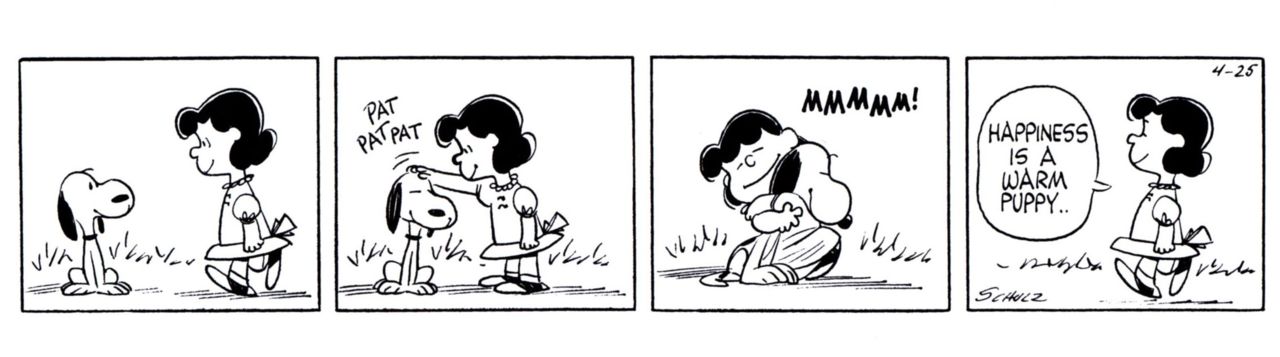



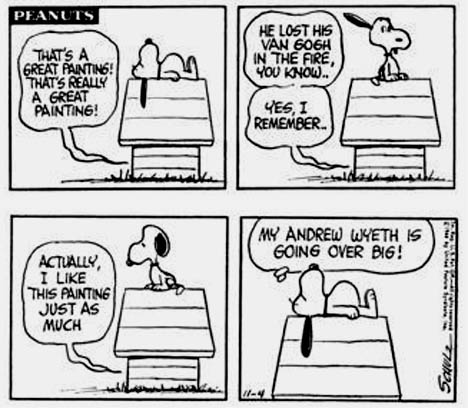


 professor played by


