Milton Friedman – A Conversation On Minimum Wage FREE TO CHOOSE
April 2, 2021
Office of Barack and Michelle Obama P.O. Box 91000 Washington, DC 20066
Dear President Obama,
I wrote you over 700 letters while you were President and I mailed them to the White House and also published them on my blog http://www.thedailyhatch.org .I received several letters back from your staff and I wanted to thank you for those letters.
There are several issues raised in your book that I would like to discuss with you such as the minimum wage law, the liberal press, the cause of 2007 financial meltdown, and especially your pro-choice (what I call pro-abortion) view which I strongly object to on both religious and scientific grounds, Two of the most impressive things in your book were your dedication to both the National Prayer Breakfast (which spoke at 8 times and your many visits to the sides of wounded warriors!!
I have been reading your autobiography A PROMISED LAND and I have been enjoying it.
Let me make a few comments on it, and here is the first quote of yours I want to comment on:
I was campaigning to push the country in the opposite direction. I didn’t think America could roll back automation or sever the global supply chain (though I did think we could negotiate stronger labor and environmental provisions in our trade agreements). But I was certain we could adapt our laws and institutions, just as we’d done in the past, to make sure that folks willing to work could get a fair shake. At every stop I made, in every city and small town, my message was the same. I promised to raise taxes on high-income Americans to pay for vital investments in education, research, and infrastructure. I promised to strengthen unions and raise the minimum wage as well as to deliver universal healthcare and make college more affordable. I wanted people to understand that there was a precedent for bold government action. FDR had saved capitalism from itself, laying the foundation for a post–World War II boom.
—-
The minimum wage has hurt young people as they seek to enter the job market and prove themselves and start heading up the financial ladder of opportunity and by cutting the bottom of the ladder off it is difficult for the most unskilled and disadvantaged to compete!
But this cartoon may be a more effective argument for getting government out of the business of interfering with market forces. It’s simple, direct, and gets the point across. I’m not sure that always happens with my writing.
Sincerely,
Everette Hatcher III, 13900 Cottontail Lane, Alexander, AR 72002, ph 501-920-5733 everettehatcher@gmail.com
President Obama c/o The White House 1600 Pennsylvania Avenue NW Washington, DC 20500 Dear Mr. President, I know that you receive 20,000 letters a day and that you actually read 10 of them every day. I really do respect you for trying to get a pulse on what is going on out here. There have […]By Everette Hatcher III | Posted in David Barton, Founding Fathers, President Obama | Edit |Comments (0)
There have been many articles written by evangelicals like me who fear that our founding fathers would not recognize our country today because secular humanism has rid our nation of spiritual roots. I am deeply troubled by the secular agenda of those who are at war with religion in our public life. Lillian Kwon quoted somebody […]By Everette Hatcher III | Posted in David Barton, Founding Fathers | Edit | Comments (0)
There have been many articles written by evangelicals like me who fear that our founding fathers would not recognize our country today because secular humanism has rid our nation of spiritual roots. I am deeply troubled by the secular agenda of those who are at war with religion in our public life. Lillian Kwon quoted somebody […]By Everette Hatcher III | Posted in David Barton, Founding Fathers | Edit | Comments (0)
There have been many articles written by evangelicals like me who fear that our founding fathers would not recognize our country today because secular humanism has rid our nation of spiritual roots. I am deeply troubled by the secular agenda of those who are at war with religion in our public life. Lillian Kwon quoted somebody […]By Everette Hatcher III | Posted in David Barton, Founding Fathers | Edit | Comments (0)
There have been many articles written by evangelicals like me who fear that our founding fathers would not recognize our country today because secular humanism has rid our nation of spiritual roots. I am deeply troubled by the secular agenda of those who are at war with religion in our public life. Lillian Kwon quoted somebody […]By Everette Hatcher III | Posted in David Barton, Founding Fathers | Edit | Comments (0)
There have been many articles written by evangelicals like me who fear that our founding fathers would not recognize our country today because secular humanism has rid our nation of spiritual roots. I am deeply troubled by the secular agenda of those who are at war with religion in our public life. Lillian Kwon quoted somebody […]By Everette Hatcher III | Posted in Founding Fathers | Edit | Comments (0)
President Obama Speaks at The Ohio State University Commencement Ceremony Published on May 5, 2013 President Obama delivers the commencement address at The Ohio State University. May 5, 2013. You can learn a lot about what President Obama thinks the founding fathers were all about from his recent speech at Ohio State. May 7, 2013, […]By Everette Hatcher III | Posted in Founding Fathers, President Obama | Edit | Comments (0)
Dr. C. Everett Koop with Bill Graham. Francis Schaeffer: “Whatever Happened to the Human Race” (Episode 4) THE BASIS FOR HUMAN DIGNITY Published on Oct 7, 2012 by AdamMetropolis The 45 minute video above is from the film series created from Francis Schaeffer’s book “Whatever Happened to the Human Race?” with Dr. C. Everett Koop. This […]By Everette Hatcher III | Posted in Founding Fathers, Francis Schaeffer, Prolife | Edit |Comments (1)
America’s Founding Fathers Deist or Christian? – David Barton 4/6 There have been many articles written by evangelicals like me who fear that our founding fathers would not recognize our country today because secular humanism has rid our nation of spiritual roots. I am deeply troubled by the secular agenda of those who are at […]By Everette Hatcher III | Posted in David Barton, Founding Fathers | Tagged governor of connecticut, john witherspoon, jonathan trumbull | Edit | Comments (1)
3 Of 5 / The Bible’s Influence In America / American Heritage Series / David Barton There were 55 gentlemen who put together the constitution and their church affliation is of public record. Greg Koukl notes: Members of the Constitutional Convention, the most influential group of men shaping the political foundations of our nation, were […]By Everette Hatcher III | Posted in Founding Fathers | Edit | Comments (0)
I do not think that John Quincy Adams was a founding father in the same sense that his father was. However, I do think he was involved in the early days of our government working with many of the founding fathers. Michele Bachmann got into another history-related tussle on ABC’s “Good Morning America” today, standing […]By Everette Hatcher III | Posted in David Barton, Founding Fathers | Edit | Comments (0)
I have gone back and forth and back and forth with many liberals on the Arkansas Times Blog on many issues such as abortion, human rights, welfare, poverty, gun control and issues dealing with popular culture. Here is another exchange I had with them a while back. My username at the Ark Times Blog is Saline […]By Everette Hatcher III | Posted in Arkansas Times, Francis Schaeffer, Prolife | Edit |Comments (0)
I truly believe that many of the problems we have today in the USA are due to the advancement of humanism in the last few decades in our society. Ronald Reagan appointed the evangelical Dr. C. Everett Koop to the position of Surgeon General in his administration. He partnered with Dr. Francis Schaeffer in making the […]By Everette Hatcher III | Posted in Adrian Rogers, Francis Schaeffer | Edit | Comments (0)
Francis Schaeffer: “Whatever Happened to the Human Race” (Episode 4) THE BASIS FOR HUMAN DIGNITY Published on Oct 7, 2012 by AdamMetropolis ____________ The 45 minute video above is from the film series created from Francis Schaeffer’s book “Whatever Happened to the Human Race?” with Dr. C. Everett Koop. This book really helped develop my political […]By Everette Hatcher III | Posted in Francis Schaeffer | Edit | Comments (0)
As progressives push hard for Democrats to eliminate the legislative filibuster after gaining control of the Senate, House and the presidency, many Democratic senators are distancing themselves from a letter they signed in 2017 backing the procedure.
Sens. Susan Collins, R-Maine, and Chris Coons, D-Del., led a letter in 2017 that asked Republican Leader Mitch McConnell, R-Ky., and Democratic Leader Chuck Schumer, D-N.Y., to preserve the legislative filibuster. As it’s existed for decades, the filibuster requires 60 votes in order to end debate on a bill and proceed to a final vote.
“We are writing to urge you to support our efforts to preserve existing rules, practices, and traditions” on the filibuster, the letter said.
Besides Collins and Coons, 59 other senators joined on the letter. Of that group, 27 Democratic signatories still hold federal elected office. Twenty-six still hold their Senate seats, and Vice President Harris assumed her new job on Jan. 20, vacating her former California Senate seat.
Sen. Chris Coons, D-Del., speaks as the Senate Judiciary Committee hears from legal experts on the final day of the confirmation hearing for Supreme Court nominee Amy Coney Barrett, on Capitol Hill in Washington, Thursday, Oct. 15, 2020. Coons has softened his support for the legislative filibuster in recent years after leading an effort to protect it in 2017. (AP Photo/J. Scott Applewhite)
But now, the momentum among Senate Democrats is for either full abolition of the filibuster or significantly weakening it. President Biden endorsed the latter idea Tuesday, announcing his support for a “talking filibuster.”
“I don’t think that you have to eliminate the filibuster, you have to do it what it used to be when I first got to the Senate back in the old days,” Biden told ABC. “You had to stand up and command the floor, you had to keep talking.”
The legislative filibuster has been a 60-vote threshold for what is called a “cloture vote” — or a vote to end debate on a bill — meaning that any 41 senators could prevent a bill from getting to a final vote. If there are not 60 votes, the bill cannot proceed.
The “talking filibuster” — as it was most recently seriously articulated by Sen. Jeff Merkley, D-Ore., in 2012 — would allow 41 senators to prevent a final vote by talking incessantly, around-the-clock, on the Senate floor. But once those senators stop talking, the threshold for a cloture vote is lowered to 51.
Harris’ office confirmed to Fox News Wednesday that she is now aligned with Biden on the filibuster issue. She’d previously taken an even more hostile position to the filibuster, saying she would fully “get rid” of it “to pass a Green New Deal” at a CNN town hall in 2019.
The legislative filibuster has been a 60-vote threshold for what is called a “cloture vote” — or a vote to end debate on a bill — meaning that any 41 senators could prevent a bill from getting to a final vote. If there are not 60 votes, the bill cannot proceed.
The “talking filibuster” — as it was most recently seriously articulated by Sen. Jeff Merkley, D-Ore., in 2012 — would allow 41 senators to prevent a final vote by talking incessantly, around-the-clock, on the Senate floor. But once those senators stop talking, the threshold for a cloture vote is lowered to 51.
Harris’ office confirmed to Fox News Wednesday that she is now aligned with Biden on the filibuster issue. She’d previously taken an even more hostile position to the filibuster, saying she would fully “get rid” of it “to pass a Green New Deal” at a CNN town hall in 2019.
Coons, who led the 2017 letter along with Collins, has also distanced himself from his previous stance.
Vice President Kamala Harris attends a ceremonial swearing-in for Sen. Patrick Leahy, D-Vt., as President Pro Tempore of the Senate on Capitol Hill in Washington, Thursday, Feb. 4, 2021. Harris has changed her stance on the legislative filibuster since signing a letter in 2017 backing it. (Michael Reynolds/Pool via AP) (AP)
“I’m going to try my hardest, first, to work across the aisle,” he said in September when asked about ending the filibuster. “Then, if, tragically, Republicans don’t change the tune or their behavior at all, I would.”
Fox News reached out to all of the other 26 Democratic signatories of the 2017 letter, and they all either distanced themselves from that position or did not respond to Fox News’ inquiry.
“Less than four years ago, when Donald Trump was President and Mitch McConnell was the Majority Leader, 61 Senators, including more than 25 Democrats, signed their names in opposition to any efforts that would curtail the filibuster,” a GOP aide told Fox News. “Other than the occupant of the White House, and the balance of power in the Senate, what’s changed?”
“I’m interested in getting results for the American people, and I hope we will find common ground to advance key priorities,” Sen. Tim Kaine. D-Va., said in a statement. “If Republicans try to use arcane rules to block us from getting results for the American people, then we’ll have a conversation at that time.”
Added Sen. Mark Warner, D-Va: “I am still hopeful that the Senate can work together in a bipartisan way to address the enormous challenges facing the country. But when it comes to fundamental issues like protecting Americans from draconian efforts attacking their constitutional right to vote, it would be a mistake to take any option off the table.”
“Senator Stabenow understands the urgency of passing important legislation, including voting rights, and thinks it warrants a discussion about the filibuster if Republicans refuse to work across the aisle,” Robyn Bryan, a spokesperson for Sen. Debbie Stabenow, D-Mich., said.
FILE – In this Oct. 26, 2018, file photo, Sen.Bob Casey, D-Pa., speaks to reporters in the studio of KDKA-TV in Pittsburgh. Casey has reversed his stance on the legislative filibuster since signing a 2017 letter in support of it. (AP Photo/Gene J. Puskar, File)
Representatives for Sen. Bob Casey, D-Pa., pointed to recent comments he made on MSNBC.
“Yes, absolutely,” Casey said when asked if he would support a “talking filibuster” or something similar. “Major changes to the filibuster for someone like me would not have been on the agenda even a few years ago. But the Senate does not work like it used to.”
“I hope any Democratic senator who’s not currently in support of changing the rules or altering them substantially, I hope they would change their minds,” Casey added.
Representatives for Sen. Angus King, I-Vt., who caucuses with Democrats, meanwhile, references a Bangor Daily News editorial that said King was completely against the filibuster in 2012 but now believes it’s helpful in stopping bad legislation. It said, however, that King is open to “modifications” similar to a talking filibuster.
The senators who did not respond to questions on their 2017 support of the filibuster were Sens. Joe Manchin. D-W.Va.; Patrick Leahy, D-Vt.; Amy Klobuchar, D-Minn.; Jeanne Shaheen, D-N.H.; Michael Bennet, D-Colo.; Martin Heinrich, D-N.M.; Sherrod Brown, D-Ohio; Dianne Feinstein, D-Calif.; Kirsten Gillibrand, D-N.Y.; Brian Schatz, D-Hawaii; Cory Booker, D-N.J.; Maria Cantwell, D-Wash.; Maize Hirono, D-Hawaii; John Tester, D-Mont.; Tom Carper, D-Del.; Maggie Hassan, D-N.H.; Tammy Duckworth, D-Ill.; Jack Reed, D-R-I.; Ed Markey, D-Mass.; Sheldon Whitehouse, D-R.I.; and Bob Menendez, D-N.J.
Some of these senators, however, have addressed the filibuster in other recent comments.
Sen. Dianne Feinstein, D-Calif., on Wednesday was asked if she supported changing the filibuster threshold by CNN and said she is still opposed to the idea. “Not at this time,” Feinstein said.
Sen. Mazie Hirono, D-Hawaii, speaks to reporters on Capitol Hill in Washington, Thursday, Jan. 30, 2020, during the impeachment trial of President Donald Trump on charges of abuse of power and obstruction of Congress. Hirono has changed her opinion on the legislative filibuster since signing a 2017 letter supporting it. (AP Photo/Julio Cortez)
Sen. Maize Hirono, D-Hawaii, meanwhile said last week she is already for getting rid of the current 60-vote threshold and thinks other Democrats will sign on soon.
“If Mitch McConnell continues to be totally an obstructionist, and he wants to use the 60 votes to stymie everything that President Biden wants to do and that we Democrats want to do that will actually help people,” Hirono said, “then I think the recognition will be among the Democrats that we’re gonna need to.”
The most recent talk about either removing or significantly weakening the filibuster was spurred by comments from Manchin that appeared to indicate he would be open to a talking filibuster. He said filibustering a bill should be more “painful” for a minority.
Manchin appeared to walk back any talk of a talking filibuster on Wednesday, however.
“You know where my position is,” he said. “There’s no little bit of this and a little bit — there’s no little bit here. You either protect the Senate, you protect the institution and you protect democracy or you don’t.”
Manchin and Sen. Kyrsten Sinema, D-Ariz., both committed to supporting the current form of the filibuster earlier this year. Sinema was not in the Senate in 2017.
Senate Minority Mitch McConnell, R-Ky., said their comments gave him the reassurance he needed to drop a demand that Senate Majority Leader Chuck Schumer, D-N.Y., put filibuster protections into the Senate’s organizing resolution.
But with Manchin seeming to flake at least in the eyes of some, other Democrats are beginning to push harder for filibuster changes.
The Born-Alive Survivors Protection Act failed in a 53-44 vote. Sixty votes were needed to end a filibuster and bring forward the measure, which Sasse’s press office said was co-sponsored by half the Senate. Among the 44 voting against the measure were Delaware’s Chris Coons and Tom Carper and Maryland’s Ben Cardin and Chris Van Hollen.
“I want to ask each and every one of my colleagues whether we’re OK with infanticide,” Sasse said ahead of the vote. “This language is blunt. I recognize that and it’s too blunt for many people in this body. But frankly, that is what we’re talking about here today. Infanticide is what the Born-Alive Abortion Survivors Protection Act is actually about.”
Protecting babies who “are alive, born outside the womb after having survived a botched abortion … is what this is about,” he said.
Kristan Hawkins, president for Students for Life of America, called Sasse’s bill “the bare minimum standard for valuing infant life, as everyone should be able to look at a baby born during an abortion and understand that a humane response is required.”
“Too many important votes are forgotten, but this one won’t be,” she said in a statement issued after the vote. “These kinds of tactics in which a win is a loss can disillusion voters, but allowing infants to die after being born alive will rally pro-life Americans when it counts.”
On Feb. 4, Sasse had called for unanimous consent on his Born-Alive Abortion Survivors Protection Act. “Everyone in the Senate ought to be able to say unequivocally that killing that little baby is wrong. This doesn’t take any political courage,” he said from the floor.
In response, Sen. Patty Murray, D-Washington, blocked unanimous consent by objecting to the bill.
The next day the chairman of the U.S. bishops’ Committee on Pro-Life Activities called it “unconscionable” that the U.S. Senate failed to “unanimously declare to the nation that infanticide is objectively wrong.”
Archbishop Joseph F. Naumann of Kansas City, Kan. (CNS photo/Tyler Orsburn)
“No newborn should be left to suffer or die without medical care. It is barbaric and merciless to leave these vulnerable infants without any care or rights,” Archbishop Joseph F. Naumann of Kansas City, Kansas, said in a Feb. 5 statement.
Senator I wanted to talk to you about abortion.
Adrian Rogers comments:
Some Pro-Abortion Arguments and My Answers to Them:
“It’s not human.”
Scripture has already settled this, but you may hear the following argument.
Someone wrote “Dear Abby” saying they were a pro-choice because “to believe the ovum and sperm united are human life would like believing a vehicle was in existence after a nut and bolt were joined together at the beginning of an auto assembly line.” So if you have an egg and sperm come together, that’s no more life, they say, than a nut and bolt in a car factory is a car.
What convoluted logic! There is a great difference. A nut and bolt are only a nut and bolt. They will not one day become a Cadillac! But when the egg and sperm come together, that is a human life, and no carburetor, fender, steering wheel or engine is added. Everything is already there! All that little life needs is nutrition and water to grow. You don’t add anything. It’s a human being already.
A young man, John de Haas, was the object of an attempted abortion in Korea. But they bungled the procedure. The little baby came out, his body injured, his head, because they had scraped and twisted and torn it, was bent out of shape, but he was breathing. When they took this baby from his mother’s womb and he was laid there, cast aside, they noticed that there was still life. Someone in the operatory there had compassion on this so-called “aborted fetus” and said, “No! You’ll not continue to commit this murder,” and stood between John and further harm. His body was mangled. His arms were twisted and mutilated. But they went to work. By a miraculous sequence of events, Reverend and Mrs. John DeHaas, missionaries in Korea, found that little Korean boy, adopted him, raised him, and now he’s perfectly healthy. As a little boy, John gave his testimony on Jerry Falwell’s television program. He quoted Scripture verses, sang songs, and he loves the Lord Jesus Christ. How glad he is to be alive! Don’t let anyone tell you that these little ones are not human beings. John was a baby!
Sincerely,
Everette Hatcher III, 13900 Cottontail Lane, Alexander, AR 72002, ph 501-920-5733 everettehatcher@gmail.com
(Emailed to White House on 12-21-12.) President Obama c/o The White House 1600 Pennsylvania Avenue NW Washington, DC 20500 Dear Mr. President, I know that you receive 20,000 letters a day and that you actually read 10 of them every day. I really do respect you for trying to get a pulse on […]By Everette Hatcher III | Posted in Milton Friedman, President Obama, spending out of control, Taxes | Edit | Comments (0)
(Emailed to White House on 12-21-12.) President Obama c/o The White House 1600 Pennsylvania Avenue NW Washington, DC 20500 Dear Mr. President, I know that you receive 20,000 letters a day and that you actually read 10 of them every day. I really do respect you for trying to get a pulse on what is […]By Everette Hatcher III | Posted in Milton Friedman, President Obama, Ronald Reagan, spending out of control, Taxes | Edit | Comments (0)
(Emailed to White House on 12-21-12) President Obama c/o The White House 1600 Pennsylvania Avenue NW Washington, DC 20500 Dear Mr. President, I know that you receive 20,000 letters a day and that you actually read 10 of them every day. I really do respect you for trying to get a pulse on what is […]By Everette Hatcher III | Posted in President Obama, Ronald Reagan, spending out of control, Taxes | Edit | Comments (0)
The federal government has a spending problem and Milton Friedman came up with the negative income tax to help poor people get out of the welfare trap. It seems that the government screws up about everything. Then why is President Obama wanting more taxes? _______________ Milton Friedman – The Negative Income Tax Published on […]By Everette Hatcher III | Posted in President Obama, spending out of control, Taxes | Edit | Comments (0)
I was sad to read that the Speaker John Boehner has been involved in punishing tea party republicans. Actually I have written letters to several of these same tea party heroes telling them that I have emailed Boehner encouraging him to listen to them. Rep. David Schweikert (R-AZ),Justin Amash (R-MI), and Tim Huelskamp (R-KS). have been contacted […]By Everette Hatcher III | Posted in Current Events, Speaker of the House John Boehner, spending out of control | Edit | Comments (0)
Michael Tanner of the Cato Institute in his article, “Hitting the Ceiling,” National Review Online, March 7, 2012 noted: After all, despite all the sturm und drang about spending cuts as part of last year’s debt-ceiling deal, federal spending not only increased from 2011 to 2012, it rose faster than inflation and population growth combined. […]By Everette Hatcher III | Posted in spending out of control, Taxes| Edit | Comments (0)
Michael Tanner of the Cato Institute in his article, “Hitting the Ceiling,” National Review Online, March 7, 2012 noted: After all, despite all the sturm und drang about spending cuts as part of last year’s debt-ceiling deal, federal spending not only increased from 2011 to 2012, it rose faster than inflation and population growth combined. […]By Everette Hatcher III | Posted in spending out of control, Taxes| Edit | Comments (0)
Some of the heroes are Mo Brooks, Martha Roby, Jeff Flake, Trent Franks, Duncan Hunter, Tom Mcclintock, Devin Nunes, Scott Tipton, Bill Posey, Steve Southerland and those others below in the following posts. THEY VOTED AGAINST THE DEBT CEILING INCREASE IN 2011 AND WE NEED THAT TYPE OF LEADERSHIP NOW SINCE PRESIDENT OBAMA HAS BEEN […]By Everette Hatcher III | Posted in spending out of control, Taxes| Edit | Comments (0)
I hated to see that Allen West may be on the way out. ABC News reported: Nov 7, 2012 7:20am What Happened to the Tea Party (and the Blue Dogs?) Some of the Republican Party‘s most controversial House members are clinging to narrow leads in races where only a few votes are left to count. […]By Everette Hatcher III | Posted in Current Events | Edit | Comments (0)
Rep Himes and Rep Schweikert Discuss the Debt and Budget Deal Michael Tanner of the Cato Institute in his article, “Hitting the Ceiling,” National Review Online, March 7, 2012 noted: After all, despite all the sturm und drang about spending cuts as part of last year’s debt-ceiling deal, federal spending not only increased from 2011 […]By Everette Hatcher III | Posted in spending out of control, Taxes| Edit | Comments (0)
Francis and Edith Schaeffer at their home in Switzerland with some visiting friends
__
Schaeffer with his wife Edith in Switzerland.
Richard Dawkins and John Lennox
_
_
_
Dawkins, Hitchens, Dennett, Harris
Canary Islands 2014: Harold Kroto and Richard Dawkins
__
Francis Schaeffer pictured below:
—
The Basis of Human Dignity by Francis Schaeffer
Richard Dawkins, founder of the Richard Dawkins Foundation for Reason and Science. Credit: Don Arnold Getty Images
—
Francis Schaeffer in 1984
Christian Manifesto by Francis Schaeffer
Francis Schaeffer in 1982
—-
Whatever Happened to the Human Race? Episode 1
—
—
–
Garik Israelian, Stephen Hawking, Alexey Leonov, Brian May, Richard Dawkins and Harry Kroto
—-
—-
—-
—-
July 3, 2019
Richard Dawkins c/o Richard Dawkins Foundation, Washington, DC 20005
Dear Mr. Dawkins,
It was a year ago after been disinvited to speech in Berkeley that you rightly stated:
I am known as a frequent critic of Christianity and have never been de-platformed for that. Why do you give Islam a free pass? Why is it fine to criticise Christianity but not Islam?
I agree that it was extremely sad that you were disinvited.
Since you are a Humanist, and in fact the Humanist of the Year in 2016, so I wanted to ask you about this idea of Evolution by Chance.
Manifesto I: Humanism believes that man is a part of nature and that he has emerged as a result of a continuous process.
Manifesto II: Rather, science affirms that the human species is an emergence from natural evolutionary forces.
Manifesto III: Humans are an integral part of nature, the result of unguided evolutionary change.
Did you know that Charles Darwin himself struggled until his his dying day with this idea of evolution by chance. (I am not referring to the now debunked deathbed confession spread by his wife.)
The Genius of Charles Darwin (A film that Richard Dawkinswrote and narrated.) Part 1 (37th min):
(Richard Dawkins) I’ve come to meet Randal Keynes, Darwin’s great-great-grandson to try to understand Darwin’s frame of mind as he finished his book.
(Randal Keynes) This is a book about geology by Mr Greenough. It has this wonderful inscription – “Charles Darwin, Buenos Aires, October 1832.” So he’s on the Beagle, really getting into his stride as a geologist. This is a scrapbook, a children’s scrapbook that belonged to Darwin’s daughter Annie.
(Richard Dawkins) Darwin was no aggressive polemicist. He didn’t take to the stage to publicise his work, but sought to influence leading thinkers behind the scenes, by sending them proof copies of the book with apologetic letters attached.’ He would write things like, “This vile rag of a theory of mine.” Was that genuine modesty or was there an element of false modesty about it?
(Randal Keynes) It was entirely real, um, and this is a very strange point about him. Through the years when he was steeling himself for publication, um, he was, at different times, enormously confident in it, and at other times, he was utterly uncertain.He had a deep fear, I think, that one species would be discovered that had some element of its make-up that could only have been designed.
(Richard Dawkins) Doubts may have lingered in Darwin’s mind, but finally, 150 years ago, he set out his ideas on evolution and how it worked in The Origin Of Species. The book sold out its first run of 1,250 copies within two days. has never been out of print since. The Origin turned our world upside down…..
—
The case is clear that Darwin did turn the world upside down, but is also true that he had deep doubts about his theory throughout his whole life.
In 1968, Francis Schaeffer (January 30, 1912 – May 15, 1984[1]) got a hold of an unabridged autobiography of Darwin that Nora Barlow has edited. Wikipedia noted concerning Barlow:
Here are Schaeffer’s comments on the autobiography:
Darwin in his autobiography Darwin, Francis ed. 1892. Charles Darwin: his life told in an autobiographical chapter, and in a selected series of his published letters [abridged edition]. London: John Murray, and in his letters showed that all through his life he NEVER really came to a QUIETNESS concerning the possibility that chance really explained the situation of the biological world. You will find there is much material on this [from Darwin] extended over many many years that constantly he was wrestling with this problem. Darwin never came to a place of satisfaction. You have philosophically ONLY TWO possible beginnings. The first would be a PERSONAL beginning and the other would be an IMPERSONEL beginning plus time plus CHANCE. There is no other possible alternative except the alternative that everything comes out of nothing and that has to be a total nothing and that has to be a total nothing without mass, energy or motion existing. No one holds this last view because it is unthinkable. Darwin understood this and therefore until his death he was uncomfortable with the idea of CHANCE producing the biological variation.
Nevertheless you have EXPRESSED MY INWARD CONVICTION, though far more vividly and clearly than I could have done, that the Universe is NOT THE RESULT OF CHANCE.* But THEN with me the HORRID DOUBT ALWAYS ARISES whether the convictions of man’s mind, which has been developed from the mind of the lower animals, are of any value or at all trustworthy. Would any one trust in the convictions of a monkey’s mind, if there are any convictions in such a mind?
Francis Schaeffer comments:
Can you feel this man? He is in real agony. You can feel the whole of modern man in this tension with Darwin. My mind can’t accept that ultimate of chance, that the universe is a result of chance. He has said 3 or 4 times now that he can’t accept that it all happened by chance and then he will write someone else and say something different. How does he say this (about the mind of a monkey) and then put forth this grand theory? Wrong theory I feel but great just the same. Grand in the same way as when I look at many of the paintings today and I differ with their message but you must say the mark of the mannishness of man are one those paintings titanic-ally even though the message is wrong and this is the same with Darwin. But how can he say you can’t think, you come from a monkey’s mind, and you can’t trust a monkey’s mind, and you can’t trust a monkey’s conviction, so how can you trust me? Trust me here, but not there is what Darwin is saying. In other words it is very selective.
Do you think Darwin was right to spend so much time exploring his doubts on this issue of Evolution by Chance?
The answer to find meaning in life is found in putting your faith and trust in Jesus Christ. The Bible is true from cover to cover and can be trusted. The world is not a result of blind chance, but we all were put here for a purpose by God. If you want to investigate the evidence concerning the accuracy of the Bible then I suggest you read Psalms 22 which was written about a thousand years before the crucifixion events it described. Furthermore, when King David wrote those words the practice of stoning was the primary way of executing someone in Israel. Thank you for your time.
Sean Scully is an American artist. Born on June 30, 1945, in Ireland, Scully went to London to study art at the Central School of Art and Croydon College of Art. He followed his BA from Newcastle University in 1972.
He is known to the world for his abstract paintings composed of brushy layers and alternating colored squares or stripes. Sean’s works do not have a reference. He draws from specific memories of places and objects. From my studio south of Munich I often get in the car and drive a few hours down to Venice. It was the impressions from these trips that I brought back into the studio; I was painting the memories of Venice into the works. Scully went to the United States in 1975. He lives and works between New York, NY, Barcelona, Spain, and Munich, Germany. His works are held in the collections of the Tate Gallery in London, The Museum of Modern Art in New York, the Reina Sofia National Museum in Madrid, and the Walker Art Center in Minneapolis.
On November 21, 2014 I received a letter from Nobel Laureate Harry Kroto and it said: …Please click on this URL http://vimeo.com/26991975 and you will hear what far smarter people than I have to say on this matter. I agree with them. Harry Kroto _________________ Below you have picture of 1996 Chemistry Nobel Prize Winner […]
The Beatles were “inspired by the musique concrète of German composer and early electronic music pioneer Karlheinz Stockhausen…” as SCOTT THILL has asserted. Francis Schaeffer noted that ideas of “Non-resolution” and “Fragmentation” came down German and French streams with the influence of Beethoven’s last Quartets and then the influence of Debussy and later Schoenberg’s non-resolution which is in total contrast […]
_______ On November 21, 2014 I received a letter from Nobel Laureate Harry Kroto and it said: …Please click on this URL http://vimeo.com/26991975 and you will hear what far smarter people than I have to say on this matter. I agree with them. Harry Kroto _________________ Below you have picture of 1996 Chemistry Nobel Prize […]
On November 21, 2014 I received a letter from Nobel Laureate Harry Kroto and it said: …Please click on this URL http://vimeo.com/26991975 and you will hear what far smarter people than I have to say on this matter. I agree with them. Harry Kroto ____________________ Below you have picture of 1996 Chemistry Nobel Prize Winner Dr. […]
Office of Barack and Michelle Obama P.O. Box 91000 Washington, DC 20066
Dear President Obama,
I wrote you over 700 letters while you were President and I mailed them to the White House and also published them on my blog http://www.thedailyhatch.org .I received several letters back from your staff and I wanted to thank you for those letters.
I have been reading your autobiography A PROMISED LAND and I have been enjoying it.
Let me make a few comments on it, and here is the first quote of yours I want to comment on:
But with that came a corollary lesson: an awareness of what we risked when our actions failed to live up to our image and our ideals, the anger and resentment this could breed, the damage that was done. When I heard Indonesians talk about the hundreds of thousands slaughtered in a coup—widely believed to have CIA backing—that had brought a military dictatorship to power in 1967, or listened to Latin American environmental activists detailing how U.S. companies were befouling their countryside, or commiserated with Indian American or Pakistani American friends as they chronicled the countless times that they’d been pulled aside for “random” searches at airports since 9/11, I felt America’s defenses weakening, saw chinks in the armor that I was sure over time made our country less safe. That dual vision, as much as my skin color, distinguished me from previous presidents. For my supporters, it was a defining foreign policy strength, enabling me to amplify America’s influence around the world and anticipate problems that might arise from ill-considered policies. For my detractors, it was evidence of weakness, raising the possibility that I might hesitate to advance American interests because of a lack of conviction, or even divided loyalties. For some of my fellow citizens, it was far worse than that. Having the son of a black African with a Muslim name and socialist ideas ensconced in the White House with the full force of the U.S. government under his command was precisely the thing they wanted to be defended against.
—
The WASHINGTON FREE BEACON STAFF rightly noted:Obama repeatedly did speak of America’s past mistakes in a series of appearances, several of which fell in foreign countries!
–
Five Times Obama Has Apologized for America
In his acceptance speech at the Republican National Convention, Mitt Romney said:
“I will begin my presidency with a jobs tour. President Obama began with an apology tour. America, he said, had dictated to other nations. No Mr. President, America has freed other nations from dictators.”
The Obama campaign and notoriously liberal “fact-check” websites such as factcheck.org, Politifact, and the Washington Post‘s “Fact Checker” said President Obama never went on an “apology tour” and has never apologized for American actions.
However, in the first few months of the president’s term, Obama repeatedly did speak of America’s past mistakes in a series of appearances, several of which fell in foreign countries. It was also revealed in a top secret cable published in 2011 by Wikileaks that the Japanese government vetoed the idea of President Obama visiting Hiroshima in September 2009 and apologizing for the atomic bomb.
Here are five examples of Obama apologizing for America, first collected in 2009 by “Hannity,” which occurred in quick succession during Obama’s April 2009 tour of foreign countries and in two speeches in the United States shortly thereafter.
“In America, there’s a failure to appreciate Europe’s leading role in the world. Instead of celebrating your dynamic union and seeking to partner with you to meet common challenges, there have been times where America has shown arrogance and been dismissive, even derisive.”
“Another issue that confronts all democracies as they move to the future is how we deal with the past. The United States is still working through some of our own darker periods in our history.”
“While the United States has done much to promote peace and prosperity in the hemisphere, we have at times been disengaged, and at times we sought to dictate our terms.”
“Unfortunately, faced with an uncertain threat, our government made a series of hasty decisions. … I also believe that all too often our government made decisions based on fear rather than foresight; that all too often our government trimmed facts and evidence to fit ideological predispositions. Instead of strategically applying our power and our principles, too often we set those principles aside as luxuries that we could no longer afford. And during this season of fear, too many of us — Democrats and Republicans, politicians, journalists, and citizens — fell silent. In other words, we went off course.”
Sincerely,
Everette Hatcher III, 13900 Cottontail Lane, Alexander, AR 72002, ph 501-920-5733 everettehatcher@gmail.com
President Obama c/o The White House 1600 Pennsylvania Avenue NW Washington, DC 20500 Dear Mr. President, I know that you receive 20,000 letters a day and that you actually read 10 of them every day. I really do respect you for trying to get a pulse on what is going on out here. There have […]By Everette Hatcher III | Posted in David Barton, Founding Fathers, President Obama | Edit |Comments (0)
There have been many articles written by evangelicals like me who fear that our founding fathers would not recognize our country today because secular humanism has rid our nation of spiritual roots. I am deeply troubled by the secular agenda of those who are at war with religion in our public life. Lillian Kwon quoted somebody […]By Everette Hatcher III | Posted in David Barton, Founding Fathers | Edit | Comments (0)
There have been many articles written by evangelicals like me who fear that our founding fathers would not recognize our country today because secular humanism has rid our nation of spiritual roots. I am deeply troubled by the secular agenda of those who are at war with religion in our public life. Lillian Kwon quoted somebody […]By Everette Hatcher III | Posted in David Barton, Founding Fathers | Edit | Comments (0)
There have been many articles written by evangelicals like me who fear that our founding fathers would not recognize our country today because secular humanism has rid our nation of spiritual roots. I am deeply troubled by the secular agenda of those who are at war with religion in our public life. Lillian Kwon quoted somebody […]By Everette Hatcher III | Posted in David Barton, Founding Fathers | Edit | Comments (0)
There have been many articles written by evangelicals like me who fear that our founding fathers would not recognize our country today because secular humanism has rid our nation of spiritual roots. I am deeply troubled by the secular agenda of those who are at war with religion in our public life. Lillian Kwon quoted somebody […]By Everette Hatcher III | Posted in David Barton, Founding Fathers | Edit | Comments (0)
There have been many articles written by evangelicals like me who fear that our founding fathers would not recognize our country today because secular humanism has rid our nation of spiritual roots. I am deeply troubled by the secular agenda of those who are at war with religion in our public life. Lillian Kwon quoted somebody […]By Everette Hatcher III | Posted in Founding Fathers | Edit | Comments (0)
President Obama Speaks at The Ohio State University Commencement Ceremony Published on May 5, 2013 President Obama delivers the commencement address at The Ohio State University. May 5, 2013. You can learn a lot about what President Obama thinks the founding fathers were all about from his recent speech at Ohio State. May 7, 2013, […]By Everette Hatcher III | Posted in Founding Fathers, President Obama | Edit | Comments (0)
Dr. C. Everett Koop with Bill Graham. Francis Schaeffer: “Whatever Happened to the Human Race” (Episode 4) THE BASIS FOR HUMAN DIGNITY Published on Oct 7, 2012 by AdamMetropolis The 45 minute video above is from the film series created from Francis Schaeffer’s book “Whatever Happened to the Human Race?” with Dr. C. Everett Koop. This […]By Everette Hatcher III | Posted in Founding Fathers, Francis Schaeffer, Prolife | Edit |Comments (1)
America’s Founding Fathers Deist or Christian? – David Barton 4/6 There have been many articles written by evangelicals like me who fear that our founding fathers would not recognize our country today because secular humanism has rid our nation of spiritual roots. I am deeply troubled by the secular agenda of those who are at […]By Everette Hatcher III | Posted in David Barton, Founding Fathers | Tagged governor of connecticut, john witherspoon, jonathan trumbull | Edit | Comments (1)
3 Of 5 / The Bible’s Influence In America / American Heritage Series / David Barton There were 55 gentlemen who put together the constitution and their church affliation is of public record. Greg Koukl notes: Members of the Constitutional Convention, the most influential group of men shaping the political foundations of our nation, were […]By Everette Hatcher III | Posted in Founding Fathers | Edit | Comments (0)
I do not think that John Quincy Adams was a founding father in the same sense that his father was. However, I do think he was involved in the early days of our government working with many of the founding fathers. Michele Bachmann got into another history-related tussle on ABC’s “Good Morning America” today, standing […]By Everette Hatcher III | Posted in David Barton, Founding Fathers | Edit | Comments (0)
I have gone back and forth and back and forth with many liberals on the Arkansas Times Blog on many issues such as abortion, human rights, welfare, poverty, gun control and issues dealing with popular culture. Here is another exchange I had with them a while back. My username at the Ark Times Blog is Saline […]By Everette Hatcher III | Posted in Arkansas Times, Francis Schaeffer, Prolife | Edit |Comments (0)
I truly believe that many of the problems we have today in the USA are due to the advancement of humanism in the last few decades in our society. Ronald Reagan appointed the evangelical Dr. C. Everett Koop to the position of Surgeon General in his administration. He partnered with Dr. Francis Schaeffer in making the […]By Everette Hatcher III | Posted in Adrian Rogers, Francis Schaeffer | Edit | Comments (0)
Francis Schaeffer: “Whatever Happened to the Human Race” (Episode 4) THE BASIS FOR HUMAN DIGNITY Published on Oct 7, 2012 by AdamMetropolis ____________ The 45 minute video above is from the film series created from Francis Schaeffer’s book “Whatever Happened to the Human Race?” with Dr. C. Everett Koop. This book really helped develop my political […]By Everette Hatcher III | Posted in Francis Schaeffer | Edit | Comments (0)
Multitrillion-dollar spending program would reverse Reagan-era tacit understanding that public sector is less efficient than the private in allocating resources
WASHINGTON—President Biden envisions long-term federal spending claiming its biggest share of the American economy in decades. He wants to pay for that program in part by charging the highest-earning Americans the biggest tax rates they’ve faced in years.
The Biden economic team’s ambitions go beyond size to scope. The centerpiece of their program—a multitrillion-dollar proposal to be rolled out starting Wednesday, less than a month after a $1.9 trillion stimulus—seeks to give Washington a new commercial role in matters ranging from charging stations for electric vehicles to child care, and more responsibility for underwriting education, incomes and higher-paying jobs.
It all marks a major turning point for economic policy. The gamble underlying the agenda is a belief that government can be a primary driver for growth. It’s an attempt to recalibrate assumptions that have shaped economic policy of both parties since the 1980s: that the public sector is inherently less efficient than the private, and bureaucrats should generally defer to markets.
The administration’s sweeping plans reflect a calculation that “the risk of doing too little outweighs the risk of doing too much,” said White House National Economic Council Director Brian Deese. “We’re going to be unapologetic about that,” he said. “Government must be a powerful force for good in the lives of Americans.”
The pandemic and lockdown measures that followed have become a Rorschach test for the new economic debate. Former President Donald Trumpargued that the booming economy of 2019 and early 2020 was proof his tax-cutting, deregulating agenda was the best for spurring broadly shared prosperity, and he portrayed the coronavirus and lockdowns as a temporary disruption. The Biden team sees the pandemic as exposing myriad flaws and fragilities that liberals had long identified in the economy, masked by prosperity.
Mr. Biden himself casts his program as a throwback to Lyndon B. Johnson’s 1960s Great Society and Franklin D. Roosevelt’s 1930s New Deal. “This is the first time we’ve been able to, since the Johnson administration and maybe even before that, to begin to change the paradigm,” he said at a White House event in mid-March. Mr. Biden recently spoke with a group of prominent American historians, and his aides have studied FDR’s presidency as they plan his economic agenda.
Mr. Biden’s big plans raise big questions, and big risks. He faces an uphill battle to win over a narrowly divided Congress, with solid Republican opposition plus hesitancy among Democratic moderates who blanch at higher taxes and more spending following nearly $5 trillion in coronavirus relief outlays over the past year.
Conservative-tilting courts, increasingly skeptical of executive authority, might block some of his initiatives. Already, a coalition of Republican state attorneys general has sued to challenge some provisions of the stimulus program and some of his executive orders.
Some economists consider the latest spending plan an overkill response to the temporary, albeit severe, hit from the pandemic and lockdowns. They call recent stirrings in the bond market a warning that the vast increase in government spending and borrowing might prompt a return to the high-inflation/high-interest-rate stagnation of the late 1970s and early 1980s—conditions that fed the long-lasting backlash to expansive FDR-LBJ policies in the first place.
“They’re creating too much demand when it’s not needed. When demand runs away from supply, you get inflation,” said Kevin Hassett, a former Trump chief economic adviser now at Stanford University’s Hoover Institution. “The laws of economics can’t be repealed,” he said.
The Biden agenda rests on the notion those laws have evolved. “There appear to have been a broad-based set of structural changes that have had a very significant effect on how the economy works,” Treasury Secretary Janet Yellen said. “There are a lot of ways in which I think our understanding of the economy has shifted.”
She cited persistently low interest rates and low inflation, defying many conventional forecasts, as reasons to feel more relaxed than before about federal borrowing and low unemployment rates. Ms. Yellen says there’s little sign inflation is in danger of escalating, and is confident that if it does, the Federal Reserve has the tools to contain it.
The administration’s policies are rooted in economic research focused on perceived free-market flaws, much of it conducted and funded by young, left-leaning economists and activists now scattered throughout the administration. Much of the Biden economic agenda is built around the conclusion that climate change in particular is a private-sector breakdown requiring extensive government intervention.
Before joining the Biden Council of Economic Advisers, Heather Boushey ran the Washington Center for Equitable Growth, a think tank devoted to persuading economists and policy makers to take action reducing income inequality. To her and many of her colleagues, the pandemic validates their studies on market failures.
“We’ve talked about inequality—it seems like an abstract concept, but in 2020, this notion of the K-shaped economy became so real,” Ms. Boushey said. She was referring to a recovery where the fortunes of upper-income families—able to keep their jobs, work from home and enjoy gains in their stock portfolios—rose like the letter’s upward-sloping part, while lower-income families were unable to keep jobs in hard-hit service industries such as restaurants.
Plans for selling the administration proposals lean heavily on fears of losing out to China’s model of state-driven capitalism, a concern that resonates across the political spectrum. “China is out-investing us by a long shot, because their plan is to own that future,” Mr. Biden said recently in previewing his program.
In a Wednesday speech in Pittsburgh, the president is preparing to unveil the first part of an economic proposal that would cost $3 trillion or more over 10 years and might be split into multiple pieces of legislation, with more coming in April. The first measure will focus on infrastructure, climate change, domestic manufacturing and research and development. Mr. Biden will find ways to pay for the full cost of the first measure, the White House has said. The second measure will center on child care, healthcare and education.
‘There are a lot of ways in which I think our understanding of the economy has shifted,’ said Treasury Secretary Janet Yellen.
PHOTO: DREW ANGERER/GETTY IMAGES
The multipart package would include higher taxes on corporations, upper-income households and investors. It will call for huge investments in infrastructure and climate programs and provide for universal prekindergarten and tuition-free community college, people familiar with the plan said.
Most Republicans are expected to oppose it, and the president’s advisers are already discussing options for continuing to move some of his proposals without GOP support, including through the process known as budget reconciliation.
Mike Donilon, one of Mr. Biden’s closest advisers, acknowledged the challenges but argued the public supports action. “I don’t think the country is in much mood for relentless obstructionism,” he said.
Critics of big-government projects have long argued that bureaucrats are less skilled than market forces in allocating resources. “What they’re trying to do is re-establish government as a major positive force in the economy, and I believe government is a massive negative force” in it, said Stephen Moore, a former Trump economic adviser. “There really is a micromanagement of the economy from the left.”
Presidents of both parties, hesitant to micromanage, have long steered away from anything smacking of an industrial policy that attempts to bolster specific industries. Biden aides are more willing to target and support certain industries such as the health and high-tech sectors. “We are committed to using the levers of government to encourage more domestic production,” Mr. Deese said.
President Biden held notes on infrastructure while speaking during a news conference in the East Room of the White House on March 25.
PHOTO: OLIVER CONTRERAS/PRESS POOL
The president’s budget and regulatory proposals could disrupt major industries, boosting renewable-energy companies over fossil-fuel firms and expanding markets for emerging technologies. Business groups and Republicans warn that new regulations could stifle growth.
Mr. Biden’s stimulus bill added to federal debt that had already hit peacetime records under Mr. Trump. Mr. Biden has said his full agenda will ultimately be aimed at curbing government borrowing, through tax increases and savings in medical spending.
That will be a challenge. Federal debt, which reached 100% of gross domestic product last fiscal year for the first time since 1946, is expected to rise to a record 107% of economic output by 2031, according to the Congressional Budget Office, fueling concerns that future generations will get stuck with the bill. Fed Chairman Jerome Powell said in March that the federal government can manage its debt at current levels, but policy makers should seek to slow its growth once the economy is stronger.
The long-dominant paradigm Mr. Biden and aides want to change is one widely branded neoliberalism, framed by Ronald Reagan, who declared in his 1981 inaugural address that “government is not the solution to our problem; government is the problem.” He ushered in an era of tax cuts, deregulation and federal programs increasingly designed to work through market forces. That was followed by two of the longest expansions in American history, in the 1980s and the 1990s.
Ronald Reagan speaking at his inauguration on Jan. 20, 1981.
PHOTO: AGENCE FRANCE-PRESSE/GETTY IMAGES
While Democrats controlled the White House for nearly half the time since then, their policies often were constrained by the core Reagan principles, in the view of many progressives. Bill Clinton tried to juggle liberal goals with a focus on balancing the budget, expanding free trade, and deregulating the financial sector. Barack Obama created a new government health program, but to the chagrin of the left, worked through private insurers. His 2009 program to fight the recession was constrained by fears of big deficits.
“For decades now, people have talked about economics as running against government, ignoring how much we need government to be able to build out opportunities,” said Massachusetts Democratic Sen. Elizabeth Warren, who, as an Obama adviser, often tangled with his aides over how aggressively to rein in Wall Street and support homeowners slammed by the 2008-2009 financial crisis.
A confluence of forces since the turn of the century has shaken support for the market-oriented economic model. A sharp increase in income and wealth inequality, combined with longtime wage stagnation that ended just before the pandemic hit, raised questions about how broadly prosperity gets shared absent government intervention. The swift loss of manufacturing jobs undermined support for free trade. China’s success and Wall Street’s collapse in the financial crisis further sowed doubts about free markets.
Those trends animated critics on the left, fueling the 2016 presidential campaigns of self-proclaimed Democratic Socialist Sen. Bernie Sanders of Vermont and the rise to prominence of his allies such as New York Rep. Alexandria Ocasio-Cortez.
Republicans, too, have faced internal challenges to the party’s free-market orientation. Mr. Trump won the presidency in part by attacking bipartisan support for globalization. In office, he launched a trade war with China, regularly criticized big business and intervened to force domestic investments and pressure companies to relocate manufacturing to the U.S. and cut prices of drugs.
“Some establishment Republicans are too willing to do nothing at all with government. They see an all-natural, organic market having its way,” said Missouri GOP Sen. Josh Hawley. Mr. Hawley, a Trump supporter and possible presidential contender, has called for tougher antitrust laws to break up big tech companies and co-sponsored a bill last year with Mr. Sanders to give households $1,200 direct payments.
The first-term senator voted against the latest stimulus bill and opposes many of Mr. Biden’s policies, but he also says that “old-style conservatives have been too quick to wave away policies to strengthen American workers and promote competition rather than monopolies.”
Trends such as wealth disparities and wage stagnation animated the presidential candidacy of Sen. Bernie Sanders of Vermont, seen here speaking at a rally in Manchester, N.H., in August 2015.
PHOTO: RICK FRIEDMAN/CORBIS/GETTY IMAGES
While many of those urging an economic rethink are relatively new voices in the debate, some pillars of the establishment have evolved, including former senior economic aides in the Clinton and George W. Bush administrations. Another Washington veteran whose positions have changed: Joe Biden.
Elected to the Senate in 1972 at age 29, Mr. Biden ousted a Republican incumbent in part by casting himself as more attuned to the needs of the middle class, a theme that became a through-line of his career. He has long espoused the importance of unions, small businesses and a strong working class.
Mr. Biden juggled those causes with a belief in the need to curb government spending and cut taxes. He voted for Mr. Reagan’s historic 1981 tax cuts and backed spending ceilings for most agencies through the 1980s and a balanced-budget constitutional amendment in the 1990s. He regularly floated the idea of limiting Social Security and Medicare.
“For years, a lot of us subscribed to the notion that Milton Friedman warned us about,” that government would harm the economy if it didn’t take a light-touch approach to business, said former Connecticut Democratic Sen. Chris Dodd, a longtime Biden friend, referring to the economist who helped define the small-government neoliberal philosophy.
As Mr. Obama’s vice president during the financial crisis, Mr. Biden walked a tightrope between pushing for spending, especially on infrastructure, and taking the lead in negotiating with Republicans to limit the extent of government expansion. Toward the end of his term, the persistently slow recovery prompted the vice president and his aides to launch a study of wage stagnation, income inequality and ways the government could steer business to do more for workers. That work planted the seeds for his current program.
Joe Biden was first elected to the Senate from Delaware in 1972 after a campaign in which he cast himself as attuned to the needs of the working class.
PHOTO: HENRY GRIFFIN/ASSOCIATED PRESS
Mr. Biden started his 2019 presidential bid determined to lay out more of a big-government agenda than recent Democrats had espoused. But much of the primary field had moved even farther left. He emerged once again as the fiscal scold warning of excessive spending.
The arrival of the pandemic and the killing of George Floyd marked a turning point for Mr. Biden, according to his advisers, bringing into focus what his aides describe as his longstanding desire to “go big.”
Mr. Biden tapped his longtime friend and successor as Delaware senator, Ted Kaufman, to run the transition, and in helping assemble the economic team, Mr. Kaufman said his team focused on people steeped in new economic thinking and steered away from business executives.
“I looked at people who had internalized what Joe Biden’s policy was about, and Joe Biden’s policy was not about taking care of Wall Street or people making over $400,000 a year,” Mr. Kaufman said.
The middle ranks of the administration are filled with academics and activists who have spent the past few years honing a framework for progressive economic policy-making. In March 2019, many of them gathered at a Washington conference called “Bold v. Old.” A panel on toughening antitrust enforcement was led by Jennifer Harris, an official with the Hewlett Foundation—a philanthropy created by one of the founders of Hewlett-PackardCo. —overseeing a program funding researchers seeking to replace the neoliberal paradigm. She was joined by Lina Khan, a young law professor known for laying out the case for breaking upAmazon.com Inc., and Sabeel Rahman, president of Demos, a progressive think tank.
Ms. Harris has joined the Biden National Economic Council. Ms. Khan has been nominated to the Federal Trade Commission. Mr. Rahman works at the Office of Management and Budget.
President Biden at his first press conference as president on March 25.
PHOTO: OLIVER CONTRERAS/PRESS POOL
A change in the Biden approach to economics is a re-evaluation of the costs of government action, which his team says have receded or always been exaggerated. And on the other side of the equation: an assertion that the cost of inaction is greater than previously estimated.
Progressive economists have generated rafts of research, often contested by conservatives, challenging the links between higher tax rates and lower economic activity. “The evidence suggests that the impact of marginal tax rates on labor supply is not as big as we may have once feared,” said Cecilia Rouse, chair of the Council of Economic Advisers.
SHARE YOUR THOUGHTS
Does the government try to do too much or not enough? Join the conversation below.
Liberal academics have produced studies examining the costs to the economy’s productive capacity from inequality and long-term unemployment, work invoked by the Biden team to justify spending big and fast to try to return to full employment as soon as next year. Some critics, including former Clinton and Obama economic adviser Lawrence Summers, have said that spending too aggressively to drive down unemployment could backfire, possibly prompting the Fed to raise interest rates and trigger a recession.
This more relaxed view of previous economic limits has freed the Biden team to plan on a grand scale. They designed a two-step strategy that began with the $1.9 trillion coronavirus relief package, which provided $1,400 direct payments to many Americans, extended a $300 weekly jobless-aid supplement, expanded the child tax credit to provide periodic payments and dropped requirements that recipients work.
That was a symbolically significant shift from the Clinton-era move to tie welfare to work and a nod to the burgeoning progressive demands for a no-strings-attached guaranteed government income floor, at least for families with children.
Biden aides are also preparing an aggressive plan of new regulations and enforcement that can be implemented without Congress.
“The president campaigned on concerns about big tech, about labor market competition, about making sure small businesses can compete with the bigger guys,” Mr. Ramamurti said. “The president has a clear agenda there.”
It appears that only a fraction of the spending proposed in a new $3 trillion to $4 trillion bill would go toward an already too-expansive definition of infrastructure. Pictured: Engineers discuss the progress of an infrastructure construction project. (Photo: Sornranison Prakittrakoon/ Moment/Getty Images)
The media were flooded Monday with news that the Biden administration is working on a colossal new $3 trillion to $4 trillion spending plan.
While full details are not available yet, the plan appears to be another left-wing grab bag of big-government proposals. Rather than stimulating the economy, it would stimulate bigger government while funneling unprecedented amounts of power and money through the hands of politicians in Washington.
All this comes on the heels of President Joe Biden signing into law on March 11 a badly flawed $1.9 trillion legislative package that was originally marketed as a COVID-19 response, but which was more focused on left-wing pet causes, such as bailouts for union pension plans and unnecessary handouts for state governments.
Just a day later, House Speaker Nancy Pelosi, D-Calif., released a statement calling for bipartisan work on legislation that would focus on infrastructure. While there were good reasons to question how beneficial or “bipartisan” such legislation would be, there was at least a chance of finding some across-the-aisle support.
Want to keep up with the 24/7 news cycle? Want to know the most important stories of the day for conservatives? Need news you can trust? Subscribe to The Daily Signal’s email newsletter. Learn more >>
But the potential for bipartisanship was quickly scuttled by news of the latest multitrillion-dollar plan.
It would be bad enough if the latest plan was just a big-spending infrastructure package. However, it appears that only a fraction of the new spending would go toward an already too-expansive definition of infrastructure.
Instead, most of the new spending and tax subsidies would go toward expanding the welfare state, including “free” tuition for community colleges, “free” child care, and other handouts that lack right-of-center support.
This would likely be the largest expansion of the federal government since the “Great Society” of the 1960s, even eclipsing Obamacare in scope.
Reports indicate that Democrats might attempt to split the plan into two bills—one focused on social spending that passes narrowly along party lines, the other focused on actual infrastructure aimed at winning bipartisan support.
However, it’s clear that the $3 trillion-plus total price tag is already souring prospects for bipartisan infrastructure legislation.
House Republicans boycotted the annual Ways and Means Committee “Member’s Day” hearing on Tuesday in the wake of news reports on the plan, since they indicated that Democrats have already made up their minds to pursue as much spending as possible through the legislative procedure known as reconciliation.
Coincidentally, two respected nonpartisan groups released reports this week that show why Biden and Pelosi should pause their aggressive agenda.
First, the Congressional Budget Office published a paper demonstrating what would happen if a sustained increase in federal spending were coupled with big tax increases to pay for the spending.
While the analysis points to different long-term effects from different types of taxes, any tax-and-spend approach would lead to reductions in economic growth and personal income that are larger than the size of the tax hikes.
For example, the analysis found that having 10% more federal government would mean a 12% to 19% reduction in personal consumption.
And that’s a conservative estimate. Most estimates show tax hikes shrink the economy by two to three times more than the revenues they raise.
That doesn’t mean Congress could escape the consequences of a continued spending spree by simply adding to the national debt. The CBO paper cautions that that would not only impose significant costs and divert resources away from the private sector, but it also would be unsustainable and increase the risk of a devastating financial crisis.
Along the same lines, the Government Accountability Office released a sobering reporton the nation’s poor financial health.
Now that Congress has passed a combined total of $6 trillion in legislation in the aftermath of the COVID-19 pandemic (more than $48,000 per household), it must quickly address the unsustainable growth of major benefit programs, such as Social Security, Medicare, and Medicaid.
Even before the pandemic struck, these programs were on a path to bankruptcy. Addressing these shortfalls in a way that is fair to both current retirees and future generations who will have to foot the bill is one of the greatest policy challenges facing the nation.
Unfortunately, Washington is exacerbating the problem by adding excessively to the national debt and potentially stunting economic growth with higher taxes.
While the Biden administration has repeatedly claimed that it will only seek to raise taxes on the wealthy, a government of the size that it’s seeking would require amounts of money that can only be generated through steep across-the-board tax increases on middle-class Americans.
Regardless of whether those taxes are levied tomorrow or in a few years, they would be an inevitable part of expanding the size and scope of the federal government.
Rather than continuing down the path of centralized power and socialism, lawmakers should recognize the costs associated with endless federal spending and chart a course toward financial responsibility and prosperity.
If they don’t, it will be the public’s duty to hold them accountable.
Have an opinion about this article? To sound off, please email letters@DailySignal.com and we will consider publishing your remarks in our regular “We Hear You” feature.
—
March 31, 2021
President Biden c/o The White House
1600 Pennsylvania Avenue NW
Washington, DC 20500
Dear Mr. President,
Please explain to me if you ever do plan to balance the budget while you are President? I have written these things below about you and I really do think that you don’t want to cut spending in order to balance the budget. It seems you ever are daring the Congress to stop you from spending more.
“The credit of the United States ‘is not a bargaining chip,’ Obama said on 1-14-13. However, President Obama keeps getting our country’s credit rating downgraded as he raises the debt ceiling higher and higher!!!!
Washington Could Learn a Lot from a Drug Addict
Just spend more, don’t know how to cut!!! Really!!! That is not living in the real world is it?
Making more dependent on government is not the way to go!!
Why is our government in over 16 trillion dollars in debt? There are many reasons for this but the biggest reason is people say “Let’s spend someone else’s money to solve our problems.” Liberals like Max Brantley have talked this way for years. Brantley will say that conservatives are being harsh when they don’t want the government out encouraging people to be dependent on the government. The Obama adminstration has even promoted a plan for young people to follow like Julia the Moocher.
Imagine standing a baby carrot up next to the 25-story Stephens building in Little Rock. That gives you a picture of the impact on the national debt that federal spending in Arkansas on Medicaid expansion would have, while here at home expansion would give coverage to more than 200,000 of our neediest citizens, create jobs, and save money for the state.
Here’s the thing: while more than a billion dollars a year in federal spending would represent a big-time stimulus for Arkansas, it’s not even a drop in the bucket when it comes to the national debt.
Currently, the national debt is around $16.4 trillion. In fiscal year 2015, the federal government would spend somewhere in the neighborhood of $1.2 billion to fund Medicaid expansion in Arkansas if we say yes. That’s about 1/13,700th of the debt.
It’s hard to get a handle on numbers that big, so to put that in perspective, let’s get back to the baby carrot. Imagine that the height of the Stephens building (365 feet) is the $16 trillion national debt. That $1.2 billion would be the length of a ladybug. Of course, we’re not just talking about one year if we expand. Between now and 2021, the federal government projects to contribute around $10 billion. The federal debt is projected to be around $25 trillion by then, so we’re talking about 1/2,500th of the debt. Compared to the Stephens building? That’s a baby carrot.
______________
Here is how it will all end if everyone feels they should be allowed to have their “baby carrot.”
How sad it is that liberals just don’t get this reality.
While living in Europe in the 1760s, Franklin observed: “in different countries … the more public provisions were made for the poor, the less they provided for themselves, and of course became poorer. And, on the contrary, the less was done for them, the more they did for themselves, and became richer.”
Alexander Fraser Tytler, Lord Woodhouselee(15 October 1747 – 5 January 1813) was a Scottish lawyer, writer, and professor. Tytler was also a historian, and he noted, “A democracy cannot exist as a permanent form of government. It can only exist until the majority discovers it can vote itself largess out of the public treasury. After that, the majority always votes for the candidate promising the most benefits with the result the democracy collapses because of the loose fiscal policy ensuing, always to be followed by a dictatorship, then a monarchy.”
[Jefferson affirms that the main purpose of society is to enable human beings to keep the fruits of their labor.— TGW]
To take from one, because it is thought that his own industry and that of his fathers has acquired too much, in order to spare to others, who, or whose fathers have not exercised equal industry and skill, is to violate arbitrarily the first principle of association, “the guarantee to every one of a free exercise of his industry, and the fruits acquired by it.” If the overgrown wealth of an individual be deemed dangerous to the State, the best corrective is the law of equal inheritance to all in equal degree; and the better, as this enforces a law of nature, while extra taxation violates it.
[From Writings of Thomas Jefferson, ed. Albert E. Bergh (Washington: Thomas Jefferson Memorial Association, 1904), 14:466.]
_______
Jefferson pointed out that to take from the rich and give to the poor through government is just wrong. Franklin knew the poor would have a better path upward without government welfare coming their way. Milton Friedman’s negative income tax is the best method for doing that and by taking away all welfare programs and letting them go to the churches for charity.
_____________
_________
Thank you so much for your time. I know how valuable it is. I also appreciate the fine family that you have and your commitment as a father and a husband.
Sincerely,
Everette Hatcher III, 13900 Cottontail Lane, Alexander, AR 72002, ph 501-920-5733
We got to act fast and get off this path of socialism. Morning Bell: Welfare Spending Shattering All-Time Highs Robert Rector and Amy Payne October 18, 2012 at 9:03 am It’s been a pretty big year for welfare—and a new report shows welfare is bigger than ever. The Obama Administration turned a giant spotlight […]
We need to cut Food Stamp program and not extend it. However, it seems that people tell the taxpayers back home they are going to Washington and cut government spending but once they get up there they just fall in line with everyone else that keeps spending our money. I am glad that at least […]
Government Must Cut Spending Uploaded by HeritageFoundation on Dec 2, 2010 The government can cut roughly $343 billion from the federal budget and they can do so immediately. __________ Liberals argue that the poor need more welfare programs, but I have always argued that these programs enslave the poor to the government. Food Stamps Growth […]
Milton Friedman – The Negative Income Tax Published on May 11, 2012 by LibertyPen In this 1968 interview, Milton Friedman explained the negative income tax, a proposal that at minimum would save taxpayers the 72 percent of our current welfare budget spent on administration. http://www.LibertyPen.com Source: Firing Line with William F Buckley Jr. ________________ Milton […]
Dan Mitchell Commenting on Obama’s Failure to Propose a Fiscal Plan Published on Aug 16, 2012 by danmitchellcato No description available. ___________ After the Welfare State Posted by David Boaz Cato senior fellow Tom G. Palmer, who is lecturing about freedom in Slovenia and Tbilisi this week, asked me to post this announcement of his […]
Is President Obama gutting the welfare reform that Bill Clinton signed into law? Morning Bell: Obama Denies Gutting Welfare Reform Amy Payne August 8, 2012 at 9:15 am The Obama Administration came out swinging against its critics on welfare reform yesterday, with Press Secretary Jay Carney saying the charge that the Administration gutted the successful […]
Thomas Sowell – Welfare Welfare reform was working so good. Why did we have to abandon it? Look at this article from 2003. The Continuing Good News About Welfare Reform By Robert Rector and Patrick Fagan, Ph.D. February 6, 2003 Six years ago, President Bill Clinton signed legislation overhauling part of the nation’s welfare system. […]
Uploaded by ForaTv on May 29, 2009 Complete video at: http://fora.tv/2009/05/18/James_Bartholomew_The_Welfare_State_Were_In Author James Bartholomew argues that welfare benefits actually increase government handouts by ‘ruining’ ambition. He compares welfare to a humane mousetrap. —– Welfare reform was working so good. Why did we have to abandon it? Look at this article from 2003. In the controversial […]
Thomas Sowell If the welfare reform law was successful then why change it? Wasn’t Bill Clinton the president that signed into law? Obama Guts Welfare Reform Robert Rector and Kiki Bradley July 12, 2012 at 4:10 pm Today, the Obama Department of Health and Human Services (HHS) released an official policy directive rewriting the welfare […]
I have been writing President Obama letters and have not received a personal response yet. (He reads 10 letters a day personally and responds to each of them.) However, I did receive a form letter in the form of an email on July 10, 2012. I don’t know which letter of mine generated this response so I have […]
Moving against a Ukrainian oligarch may indicate the Biden administration won’t risk interfering in legal matters that could lead back to President Joe Biden’s son, Hunter. Pictured: Hunter Biden and sister Ashley Biden arrive Jan. 20 for their father’s swearing in as president at the Capitol. (Photo: Win McNamee/AFP/ Getty Images)
The Ukrainian oligarch whom the Biden administration banned from the United States this month previously had overlapping financial interests with President Joe Biden’s son Hunter, according to government documents and earlier news reports.
Igor Kolomoisky, a Ukrainian billionaire known for hardball actions against competing companies, is a former government official in Ukraine and also used to be an owner of one of that nation’s largest financial institutions, PrivatBank.
Last year, under the Trump administration, as the Justice Department investigated Kolomoisky’s U.S. assets, the FBI raided Optima Management Group, a U.S. real estate company that Kolomoisky has a stake in.
The Biden administration has cranked matters up, with Secretary of State Antony Blinken announcing March 6 that the U.S. would freeze Kolomoisky’s U.S. assets and ban him from reentering the country.
Want to keep up with the 24/7 news cycle? Want to know the most important stories of the day for conservatives? Need news you can trust? Subscribe to The Daily Signal’s email newsletter. Learn more >>
Moving against Kolomoisky could indicate the Biden administration won’t take the political risk of interfering in legal matters that could lead back to the younger Biden, said Peter Flaherty, chairman of the National Legal and Policy Center, a conservative government watchdog group.
“The investigation into Kolomoisky proves that the administration isn’t just going to make this [investigation] go away, and that is a good thing,” Flaherty told The Daily Signal in a statement.
Flaherty said it is “almost impossible” to operate in Ukraine’s business environment without the oligarch. Still, Flaherty said, he has not seen evidence that Hunter Biden and Kolomoisky directly met.
“Clearly, their interests overlapped,” Flaherty said. “Even if there was not conspiracy or coordination between the two, Hunter was clearly in Kolomoisky’s web.”https://platform.twitter.com/embed/Tweet.html?creatorScreenName=dailysignal&dnt=true&embedId=twitter-widget-0&frame=false&hideCard=false&hideThread=false&id=1377330978574626816&lang=en&origin=https%3A%2F%2Fwww.dailysignal.com%2F2021%2F03%2F31%2Fhow-hunter-bidens-interests-overlapped-with-banned-ukrainian-oligarch%2F&siteScreenName=dailysignal&theme=light&widgetsVersion=e1ffbdb%3A1614796141937&width=500px
Government records also refer to Kolomoisky as Kolomoyskyy. These records spell his first name as Ihor, but many media reports refer to him as Igor.
Connections at a Glance
Among the indirect connections between Kolomoisky and the younger Biden:
Kolomoisky had a “controlling interest” in Burisma Holdings, the New York Post reported. Burisma employed Hunter Biden as a board member for a widely reported salary of $50,000 per month. Russian media, quoted in State Department emails, referred to Burisma as “part of Kolomoisky’s financial empire.”
Kolomoisky publicly said in 2019 that he refused to cooperate with efforts by President Donald Trump’s personal lawyer, Rudy Giuliani, to get his help in investigating Hunter Biden and Burisma—and potentially Joe Biden, multiplenews outlets reported. House Democrats’ impeachment report on Trump also cited the incident in late 2019.
Emails from 2015, published last year by the New York Post, show a Kolomoisky protegecommunicated with Hunter Biden about a meeting between the protege and Joe Biden, then vice president under President Barack Obama.
Court filings from 2019 by a private investigatory firm allege that legally obtained bank records of Hunter Biden show payments to him from the Kolomoisky-owned PrivatBank.
Kolomoisky’s U.S.-based lawyer, Michael Sullivan of the Ashcroft Law Firm, did not respond to phone and email inquiries from The Daily Signal about this report.
Ukrainian billionaire Igor Kolomoisky speaks March 2015 during a Ukrainian Football Federation session in Kyiv. (Photo: Vladyslav Musienko/UNIAN/AFP/Getty Images)
Kolomoisky used to run PrivatBank, a major Ukrainian financial institution, which reportedlyhad a controlling interest in Burisma Holdings, which employed the younger Biden.
Other media outlets have questioned whether PrivatBank had a stake in Burisma.
In 2016, Ukraine nationalized PrivatBank from Kolomoisky and his business partner, Gennadiy Boholiubov.
A U.S. Justice Department civil forfeiture complaint from December said the two men “embezzled and defrauded the bank of billions of dollars.” The complaint, the third filed that year against Kolomoisky’s U.S. associates, alleges that money used by the associates to buy commercial real estate in Cleveland was acquired using funds misappropriated from PrivatBank.
Emails of Interest
Kolomoisky’s financial interests in the United States had a detrimental impact on several American communities, according to a detailed report from the International Consortium of Investigative Journalists published in September.
After Ukraine took over PrivatBank, Kolomoisky self-exiled in Switzerland and later moved to Israel before returning to Ukraine, according to The New York Times.
State Department emails from 2015 between State Department officials and officials in the office of then-Vice President Biden refer to a Russian media outlet that called Hunter Biden an employee of “Burisma Holdings, part of Kolomoisky’s financial empire.”
The emails were obtained last year by the Senate Committee on Homeland Security and Governmental Affairs, which investigatedBurisma.
Separate emails published in the New York Post in October indicate that Hunter Biden introduced—or wanted to introduce—his father to Burisma’s No. 3 official, Vadym Pozharskyi, whom the newspaper identified as a “fixer” for Kolomoisky.
An email from Pozharskyi to the younger Biden in April 2015 reportedly said: “Dear Hunter, thank you for inviting me to DC and giving an opportunity to meet your father and spent [sic] some time together. It’s realty [sic] an honor and pleasure.”
The talk of a meeting between Joe Biden and Pozharskyi occurred before Biden, as vice president, pressured Ukrainian officials with the loss of a $1 billion U.S. loan if they didn’t fire a chief prosecutor who said he was investigating Burisma for corruption.
Kolomoisky’s former bank, PrivatBank, also came up in court filings in a 2019 lawsuit involving Hunter Biden in Arkansas.
D&A Investigations, a private firm, said it legally obtained Hunter Biden’s bank records showing payments from Kolomoisky’s PrivatBank, among others, Fox News reported.
The firm’s court filing says bank records “provide the source and destination bank account numbers of Burisma Holdings Limited, PrivatBank, Bank of China, [Hunter Biden’s] business partners, Rosemont Seneca Bohai,” and others.
Hunter Biden’s legal team denied the unverified claim and decried a “scheme by a nonparty simply to make scandalous allegations in the pending suit to gain media attention without any material or pertinent material.”
Kolomoisky is a citizen of Israel and Cyprus as well as Ukraine. With a net worth of $1.2 billion, he deploys a private army for business interests and also has used the thousands of fighters to go after Russian separatists at war in Ukraine.
In June 2014, someone set a large fire at a Lisichansk refinery owned by Rosneft, a company owned by Russia. Some Russians reportedly suspected that Kolomoisky’s army started the fire to increase his share of the energy market, according to Russian media. No formal charges were brought.
‘Corrupt Acts’
Blinken said the U.S. sanctions reflect Kolomoisky’s tenure in public office in Ukraine.
“In his official capacity as a governor of Ukraine’s Dnipropetrovsk Oblast from 2014 to 2015, Kolomoyskyy was involved in corrupt acts that undermined rule of law and the Ukrainian public’s faith in their government’s democratic institutions and public processes, including using his political influence and official power for his personal benefit,” the secretary of state said in his March 6 public statement, adding:
While this designation is based on acts during his time in office, I also want to express concern about Kolomoyskyy’s current and ongoing efforts to undermine Ukraine’s democratic processes and institutions, which pose a serious threat to its future.
This designation is made under Section 7031(c) of the Department of State, Foreign Operations, and Related Programs Appropriations Act, 2020.
In addition to Ihor Kolomoyskyy, I am publicly designating the following members of Ihor Kolomoyskyy’s immediate family: his wife, Iryna Kolomoyska, his daughter, Angelika Kolomoyska, and his son, Israel Zvi Kolomoyskyy. This action renders Ihor Kolomoyskyy and each of these members of his immediate family ineligible for entry into the United States.
In May 2019, Kolomoisky had his own bombshell for Ukrainian media, months before a U.S. scandal broke that led to Trump’s first impeachment over a phone call with Zelenskyy.
Kolomoisky told Ukrainian media that Lev Parnasand Igor Fruman visited him to “demand” that he set up a meeting between Zelenskyy and Giuliani, Trump’s onetime lawyer and a former New York mayor. At the time, the two men worked for Giuliani.
“A big scandal may break out, and not only in Ukraine, but in the United States,” Kolomoisky reportedly said. “That is, it may turn out to be a clear conspiracy against [Joe] Biden.”
The incident in which Kolomoisky declined to help Giuliani’s associates also was detailed in the “Trump-Ukraine Impeachment Inquiry Report” issued in December 2019 by Democrats on the House Select Committee on Intelligence.
A law enforcement agency in Latvia launched an investigation into Burisma and $16.6 million allegedly routed to the energy producer through PrivatBank from companies in Belize and the United Kingdom between 2012 and 2015, Just The News reported in September. The Latvian agency is called the Office for the Prevention of Laundering of Proceeds Derived from Criminal Activity.
Since becoming president Jan. 20, Biden has kept his distance from Ukraine and reportedly has not made a call to Zelenskyy.
In the July 25, 2019, phone call between Trump and Zelenskyy, the two leaders talked about the fired Ukrainian prosecutor who had been investigating Burisma, and the possible role Joe Biden played in that firing.
They also discussed U.S. security aid to Ukraine. That phone call became the predicate for the Democrat-controlled House to impeach Trump in late 2019 on charges of abuse of power and obstruction of Congress. The Republican-controlled Senate acquitted Trump of the charges in early 2020.
Have an opinion about this article? To sound off, please email letters@DailySignal.com and we will consider publishing your remarks in our regular “We Hear You” feature.
MEDIAPublished December 10, 2020Last Update a minute ago
The Daily Beast drew heavy fire for suggesting that Hunter Biden‘s shady foreign business dealings which appear to be a part of a broad federal investigation in his taxes went “largely unnoticed” ahead of the election.
The Biden transition on Wednesday issued a press release with a statement from Hunter Biden acknowledging that the U.S. Attorney’s Office in Delaware was investigating his “tax affairs,” but sources told Fox News that his financial links to China are also part of the probe, which began in 2018. Fox News first reported in October that the FBI subpoenaed a laptop and hard drive purportedly belonging to Hunter Biden in connection with a money-laundering investigation in late-2019.
However, despite the mainstream media’s refusal to dig into the New York Post reporting from October that shed light on Hunter Biden’s overseas ventures, The Daily Beast raised eyebrows when it alluded to the emails that were previously published.
“It damn did not go ‘unnoticed,'” The Federalist correspondent David Marcus scolded Stein’s tweet. “It was reported by one of the biggest newspapers in the country, then promptly censored by big tech to the applause of supposed journalists in the corporate media.”
“‘Unnoticed’ or actively suppressed?” Spectator USA Washington editor Amber Athey asked.
“’but went largely unnoticed’ = intentionally covered up the story so it would not hurt Biden’s chances against Trump,” Daily Wire reporter Ryan Saavedra tweeted.
“‘largely unnoticed’ = ignored by most of the mainstream media,” Trump campaign communications director Tim Murtaugh similarly wrote.
“‘largely unnoticed’ should be revised to read ‘purposefully unnoticed,'” Babylon Bee CEO Seth Dillon said.
The mainstream media finally began taking Hunter Biden seriously, at least now that his father has already won the presidential election.
After the New York Post’s reporting was dismissed and characterized by members of the media as a “baseless conspiracy theory,” a “smear campaign,” and “Russian disinformation,” Wednesday’s announcement from Hunter Biden was ultimately too much for the media to ignore, earning coverage on all the major broadcast and cable news networks.
—-
ELECTIONSPublished October 19, 2020Last Update 13 hrs ago
Ratcliffe says Hunter Biden laptop, emails ‘not part of some Russian disinformation campaign’
‘There is no intelligence that supports that,’ Director of National Intelligence Ratcliffe says
Director of National Intelligence John Ratcliffe on Monday said that Hunter Biden’s laptop “is not part of some Russian disinformation campaign,” amid claims from House Intelligence Committee Chairman Adam Schiff suggesting otherwise.
Ratcliffe, during an exclusive interview on FOX Business’ “Mornings with Maria,” was asked about the allegations from Schiff, D-Calif., who over the weekend said that the Hunter Biden emails suggesting Democratic presidential nominee Joe Biden had knowledge of, and was allegedly involved in, his son’s foreign business dealings.
“It’s funny that some of the people who complain the most about intelligence being politicized are the ones politicizing the intelligence,” Ratcliffe said. “Unfortunately, it is Adam Schiff who said the intelligence community believes the Hunter Biden laptop and emails on it are part of a Russian disinformation campaign.”
He added: “Let me be clear: the intelligence community doesn’t believe that because there is no intelligence that supports that. And we have shared no intelligence with Adam Schiff, or any member of Congress.”
Ratcliffe went on to say that it is “simply not true.”
WFP USA Board Chair Hunter Biden introduces his father Vice President Joe Biden during the World Food Program USA’s 2016 McGovern-Dole Leadership Award Ceremony at the Organization of American States on April 12, 2016, in Washington, D.C. (Kris Connor/WireImage)
“Hunter Biden’s laptop is not part of some Russian disinformation campaign,” Ratcliffe said, adding again that “this is not part of some Russian disinformation campaign.”
Ratcliffe’s comments come after Schiff over the weekend described the emails as being part of a smear coming “from the Kremlin,” amid claims the revelations are part of a Russian disinformation campaign.
“We know that this whole smear on Joe Biden comes from the Kremlin,” Schiff said on CNN. “That’s been clear for well over a year now that they’ve been pushing this false narrative about this vice president and his son.”
A senior intelligence official backed up Ratcliffe’s assessment.
“Ratcliffe is 100% correct,” the senior intelligence official told Fox News. “There is no intelligence at this time to support Chairman Schiff’s statement that recent stories on Biden’s foreign business dealings are part of a smart campaign that ‘comes from the Kremlin.’ Numerous foreign adversaries are seeking to influence American politics, policies, and media narratives. They don’t need any help from politicians who spread false information under the guise of intelligence.”
Ratcliffe went on to say that the laptop is “in the jurisdiction of the FBI.”
“The FBI has had possession of this,” he said. “Without commenting on any investigation that they may or may not have, their investigation is not centered around Russian disinformation and the intelligence community is not playing any role with respect to that.”
He added: “The intelligence community has not been involved in Hunter Biden’s laptop.”
A senior Trump administration official, however, told Fox News that the FBI was not investigating the emails as Russian disinformation.
The FBI declined to confirm or deny the existence of an investigation, as is standard practice.
Meanwhile, the Senate Homeland Security and Governmental Affairs Committee is investigating Hunter Biden’s emails which reveal that he introduced his father, the former vice president, to a top executive at Ukrainian natural gas firm Burisma Holdings in 2015.
Ratcliffe went on to say that his role as director of National Intelligence, which he assumed earlier this year, is “to not allow people to leverage the intelligence community for a political narrative that’s not true.”
“In this case, Adam Schiff saying this is part of a disinformation campaign and that the intelligence community has assessed and believes that — that is simply not true,” he said. “Whether its Republicans or Democrats, if they try to leverage the intelligence community for political gain, I won’t allow it.”
Meanwhile, the Senate Homeland Security and Governmental Affairs Committee is investigating Hunter Biden’s emails.
The emails in question were first obtained by the New York Post and, in part, revealed that Hunter Biden introduced the then-vice president to a top executive at Ukrainian natural gas firm Burisma Holdings less than a year before he pressured government officials in Ukraine to fire prosecutor Viktor Shokin, who was investigating the company.
“We regularly speak with individuals who email the committee’s whistleblower account to determine whether we can validate their claims,” Johnson told Fox News. “Although we consider those communications to be confidential, because the individual in this instance spoke with the media about his contact with the committee, we can confirm receipt of his email complaint, have been in contact with the whistleblower, and are in the process of validating the information he provided.”
The Post report revealed that Biden, at Hunter’s request, met with Vadym Pozharskyi in April 2015 in Washington, D.C.
The meeting was mentioned in an email of appreciation, according to the Post, that Pozharskyi sent to Hunter Biden on April 17, 2015 — a year after Hunter took on his lucrative position on the board of Burisma.
“Dear Hunter, thank you for inviting me to DC and giving an opportunity to meet your father and spent [sic] some time together. It’s realty [sic] an honor and pleasure,” the email read.
But Biden campaign spokesman Andrew Bates last week hit back against the New York Post story, saying: “Investigations by the press, during impeachment, and even by two Republican-led Senate committees whose work was decried as ‘not legitimate’ and political by a GOP colleague have all reached the same conclusion: that Joe Biden carried out official U.S. policy toward Ukraine and engaged in no wrongdoing. Trump administration officials have attested to these facts under oath.”
“The New York Post never asked the Biden campaign about the critical elements of this story. They certainly never raised that Rudy Giuliani—whose discredited conspiracy theories and alliance with figures connected to Russian intelligence have been widely reported—claimed to have such materials,” Bates continued. “Moreover, we have reviewed Joe Biden’s official schedules from the time and no meeting, as alleged by the New York Post, ever took place.”
The Biden campaign also told Fox News Sunday that the former vice president “never had a meeting” with Pozharskyi.
Biden, prior to the emails surfacing, repeatedly has claimed he’s “never spoken to my son about his overseas business dealings.”
Hunter Biden’s business dealings, and role on the board of Burisma, emerged during the Trump impeachment inquiry in 2019.
Biden once famously boasted on camera that when he was vice president and spearheading the Obama administration’s Ukraine policy, he successfully pressured Ukraine to fire Shokin, who was the top prosecutor at the time. He had been investigating the founder of Burisma.
“I looked at them and said: I’m leaving in six hours. If the prosecutor is not fired, you’re not getting the money,” Biden infamously said to the Council on Foreign Relations in 2018.
“Well, son of a b—,” he continued. “He got fired.”
Biden and Biden allies have maintained, though, that his intervention prompting the firing of Shokin had nothing to do with his son, but rather was tied to corruption concerns.
Meanwhile, the Post reported Wednesday the emails were part of a trove of data recovered from a laptop which was dropped off at a repair shop in Delaware in April 2019.
The Post reported that other material turned up on the laptop, including a video, which they described as showing Hunter smoking crack while engaged in a sexual act with an unidentified woman, as well as other sexually explicit images.
The FBI reportedly seized the computer and hard drive in December 2019. The shop owner, though, said he made a copy of the hard drive and later gave it to former Mayor Rudy Giuliani’s lawyer, Robert Costello.
The Post reported that the FBI referred questions about the hard drive and laptop to the Delaware U.S. Attorney’s Office, where a spokesperson told the outlet that the office “can neither confirm nor deny the existence of an investigation.”
A lawyer for Hunter Biden did not comment on specifics, but instead told the Post that Giuliani “has been pushing widely discredited conspiracy theories about the Biden family, openly relying on actors tied to Russian intelligence.”
Giuliani did not respond to Fox News’ requests for comment.
Another email, dated May 13, 2017, and obtained by Fox News, includes a discussion of “renumeration packages” for six people in a business deal with a Chinese energy firm. The email appeared to identify Hunter Biden as “Chair/ Vice Chair depending on an agreement with CEFC,” in an apparent reference to now-bankrupt CEFC China Energy Co.
The email includes a note that “Hunter has some office expectations he will elaborate.” A proposed equity split references “20” for “H” and “10 held by H for the big guy?” with no further details.
Fox News spoke to one of the people who was copied on the email, who confirmed its authenticity.
Sources also told Fox News that “the big guy” was a reference to the former vice president. The New York Post initially published the emails, and others, that Fox News has also obtained.
While Biden has not commented on that email, or his alleged involvement in any deals with the Chinese Energy firm, his campaign said it released the former vice president’s tax documents and returns, which do not reflect any involvement with Chinese investments.
Fox News also obtained an email last week that revealed an adviser of Burisma Holdings, Vadym Pozharskyi, wrote an email to Hunter Biden on May 12, 2014, requesting “advice” on how he could use his “influence to convey a message” to “stop” what the company considers to be “politically motivated actions.”
“We urgently need your advice on how you could use your influence to convey a message / signal, etc .to stop what we consider to be politically motivated actions,” Pozharskyi wrote.
The email, part of a longer email chain obtained by Fox News, appeared to be referencing the firm’s founder, Mykola Zlochevsky, being under investigation.
Editor’s Note: This article was adapted from Tucker Carlson’s opening commentary on the Oct. 15, 2020 edition of “Tucker Carlson Tonight.”
Tom Cotton said it best below:
We knew Joe Biden’s son Hunter pocketed $50,000 a month for a job with a Ukrainian gas company. Joe Biden allowed his son to make millions in Ukraine and China while Joe was Vice President.
Now, the New York Post is reporting that Vice President Biden may have been introduced to some of the corrupt Ukrainian businessmen paying Hunter… at the same time Vice President Biden was supposed to be overseeing our policy towards Ukraine.
Not everything you hear is untrue and not every story is complex. At the heart of the growing Biden-Ukrainescandal, for example, is a very straightforward question: Did Joe Biden subvert American foreign policy in order to enrich his own family?
In 2015, Joe Biden was the sitting vice president of the United States. Included in his portfolio were U.S. relations with the nation of Ukraine. At that moment, Vice President Joe Biden had more influence over the Ukrainian government and the Ukrainian economy than any other person on the globe outside of Eastern Europe.
Biden’s younger son, Hunter, knew that and hoped to get rich from his father’s influence. Emails published Wednesday by The New York Post, documents apparently taken directly from Hunter Biden’s own laptop, tell some of that story.
“Tucker Carlson Tonight” have obtained another batch of emails, some exclusively. We believe they also came from Hunter Biden’s laptop. We can’t prove that they did, we haven’t examined that computer. But every detail that we could check, including Hunter Biden’s personal email address at the time, suggests they are authentic.
If these emails are fake, this is the most complex and sophisticated hoax in history. It almost seems beyond human capacity. The Biden campaign clearly believes these emails are real. They have not said otherwise. We sent the body of them to Hunter Biden’s attorney and never heard back. So with that in mind, here’s what we have learned.
On Nov. 2, 2015, at 4:36 p.m., a Burisma executive called Vadym Pozharskyi emailed Hunter Biden and his business partner, Devon Archer. The purpose of the email, Pozharskyi explains, is to “be on the same page re our final goals … including, but not limited to: a concrete course of actions.”
So what did Burisma want, exactly? Well, good PR, for starters. Pozharskyi wanted “high-ranking US [sic] officials” to express their “positive opinion” of Burisma, and then he wanted the administration to act on Burisma’s behalf.
“The scope of work should also include organization of a visit of a number of widely recognized and influential current and/or former US [sic] policy-makers to Ukraine in November, aiming to conduct meetings with and bring positive signal/message and support” to Burisma.
The goal, Pozharskyi explained, was to “close down for [sic] any cases/pursuits” against the head of Burisma in Ukraine.
It couldn’t be clearer what they wanted. Burisma wanted Huter Biden’s father to get their company out of legal trouble with the Ukrainian government. And that’s exactly what happened. One month later to the day, on Dec. 2, 2015, Hunter Biden received a notice from a Washington PR firm called Blue Star Strategies, which apparently had been hired to lobby the Obama administration on Ukraine. “Tucker Carlson Tonight” have exclusively obtained that email.
“Hello all …” it began. “This morning, the White House hosted a conference call regarding the Vice President’s upcoming trip to Ukraine. Attached is a memo from the Blue Star Strategies team with the minutes of the call, which outlined the trip’s agenda and addressed several questions regarding U.S. policy toward Ukraine.”
So here you have a PR firm involved in an official White House foreign policy call. How could that happen? Good question. But it worked.
Days later, Joe Biden flew to Ukraine and did exactly what his son wanted. The vice president gave a speech slamming the very Ukrainian law enforcement official who was tormenting Burisma. If the Ukrainian government didn’t fire its top prosecutor, a man called Viktor Shokin, Biden explained, the administration would withhold a billion dollars in American aid. Now, Ukraine is a poor country, so they had no choice but to obey. Biden’s bullying worked. He bragged about it later.
The obvious question: Why was the vice president of the United States threatening a tiny country like Ukraine to fire its top prosecutor? That doesn’t seem like a vice president’s role. Well, now we know why.
Viktor Shokin has signed an affidavit affirming that he was, in fact, investigating Burisma at the moment Joe Biden had him removed. Shokin said that before he was fired, administration officials pressured him to drop the case against Burisma. He would not do that, so Joe Biden canned him
That’s how things really work in Washington. Your son’s got a lucrative consulting deal with a Ukrainian energy company, you tailor American foreign policy — our foreign policy– to help make him rich. Even at the State Department, possibly the most cynical agency in government, this seemed shockingly brazen.
During the impeachment proceedings last fall, a State Department official named George Kent said it was widely known in Washington that the Bidens were up to something sleazy in Ukraine.
“I was on a call with somebody on the vice president’s staff and … I raised my concerns that I had heard that Hunter Biden was on the board” of Burisma, Kent recalled. This, he noted, could create a perception of a conflict of interest.
So how did the vice president’s office respond to this concern? According to George Kent, “The message that I recall hearing back was that the vice president’s son, Beau, was dying of cancer and there was no further bandwidth to deal with family-related issues at the time.”
Family-related issues? This was America’s foreign policy being tailored to Joe Biden’s son. Five years later, Joe Biden still has not been forced to explain why he fired Ukraine’s top prosecutor at precisely the moment his son was being paid to get him to fire Ukraine’s top prosecutor, nor has Joe Biden addressed whether or not he personally benefited from the Burisma contract.
But there are tantalizing hints. On Wednesday, former New York City Mayor Rudy Giuliani published what he said was yet another email from Hunter Biden’s laptop. It’s a note to one of his children. At the end of the email, there’s this quote: “But dont [sic] worry unlike Pop I won’t make you give me half your salary.”
What does that mean, exactly? Well, we don’t know. There may be more detail on the laptop, but unfortunately, we don’t have access to that. But the question remains, how has Joe Biden lived in extravagance all these years on a government salary? No one has ever answered that question. And the tech monopolies are working hard to make certain no one ever does.
Thursday morning, the New York Post published another story based on the emails. This one describes a business venture Hunter Biden was working on in China. One email describes a “provisional agreement that the equity will be distributed as follows … 10 held by H for the big guy?”
The big guy? Is the big guy Joe Biden? If so, how much did Joe Biden get and how much of that came from the Communist Chinese government? Those are real questions, this man could be elected president in three weeks. But Twitter doesn’t want you to wonder. It won’t allow you to ask those questions. Twitter restricted the New York Post story as “unsafe,” like it was a lawn dart or a defective circular saw. And that was enough for the Biden campaign.
All day Thursday, they deflected questions about Joe Biden’s subversion of our country’s foreign policy by invoking Twitter’s ban on the New York Post story. So the tech monopoly censors information to help their candidate, that candidate uses that censorship to dismiss the story. One hand washes the other.
It doesn’t matter who you plan to vote for Nov. 3, you should be terrified. Democracies cannot exist and never will be able to exist without the free flow of information. That is a prerequisite and without it, we’re done. But companies like Facebook and Google and Twitter do not care because they don’t believe in democracy. They worship power and they don’t need to be consistent. Melania Trump’s private phone conversations, the president’s stolen tax returns, they were happy to publish all of that. But if you criticize the Democratic candidate, their candidate, you are banned.
“Facebook and Twitter have policies to not spread things that are utterly unreliable, that have been debunked, and where their origin is untrustworthy,” Sen. Chris Coons, D-Del., said Thursday. “They’re practicing their own internal controls, as I wish they had over the past four years … An active Russian disinformation campaign in 2016 had an influence on that election. They are trying even harder in this election. I’m glad that they are managing the content on their own websites.”
Chris Coons is a liar.
Not one word of this story has been debunked, not one word in those emails has been “debunked.” And if it is debunked, we’ll be the first to report it because we’re not liars. But did you catch the phrase he wanted you to hear: “Russian disinformation”? That’s what they’re claiming these emails are. And it’s all over the Internet, in fact-free, conspiracy-laden conjecture crazier than anything the QAnon people ever thought of.
But none of their garbage, their lunatic lies about Russia is ever censored by the tech monopolies. It’s not “unsafe” because it helps Joe Biden. Therefore, you can read it.
And where are the real journalists, now that we need them more than ever? They’re gone. They’re cowering. They’re afraid. They don’t want to upset power. Jake Sherman of Politico, who claims to be a news reporter, actually apologized on Twitter for asking the Biden campaign about Hunter Biden’s emails. These people are craven. They have no standards. They have no self-respect. Like their masters in Silicon Valley, they worship power alone.
—-
Twitter, Facebook Suppress New York Post Report on Hunter Biden
Andrew Kerr4 hours ago
Twitter on Wednesday afternoon began blocking tweets from being posted that contained links to the New York Post’s report on alleged emails that purportedly show Hunter Biden offered to introduce then-Vice President Joe Biden to an executive of the Ukrainian gas company Burisma.
“We can’t complete this request because this link has been identified by Twitter or our partners as being potentially harmful,” Twitter told users who attempted to post a tweet containing a link to the Post’s story.
A Twitter spokesperson told the Daily Caller News Foundation that the platform took action to limit the spread of the Post’s report because of the lack of authoritative reporting on the origins of the materials cited by the outlet.
“In line with our Hacked Materials Policy, as well as our approach to blocking URLs, we are taking action to block any links to or images of the material in question on Twitter,” the spokesperson said.
There’s no evidence at the moment the Post relied on hacked materials for its report.
According to the Post, the email was part of a “massive trove of data recovered from a laptop computer” that was dropped off at a Delaware computer repair shop in April 2019. The owner of the repair shop said the customer never came back to pay for the service and retrieve the computer, the Post reported.
The Post uploaded an invoice signed by the customer that states that equipment left with the repair shop “after 90 days of notification of completed service will be treated as abandoned.”
The repair shop owner later alerted the FBI to the existence of the laptop and its hard drive after it went unclaimed, both of which were seized by federal authorities in December, according to a federal subpoena obtained by the Post.
Before the laptop was seized, however, the shop owner reportedly made a copy of its hard drive and turned it over to a lawyer for former New York Mayor Rudy Giuliani, who in turn provided a copy of the hard drive’s contents to the Post.
The Daily Caller News Foundation has not confirmed the authenticity of the emails reported by the Post, and the Biden campaign issued a statement on Wednesday denying that Biden met with the Burisma executive in 2015 as alleged in the Post’s report.
Link to New York Post story blocked by Twitter. (Screenshot: Andrew Kerr)
Also on Wednesday afternoon, Twitter began blocking any tweet from being posted that contained links to one of the two documents the Post uploaded to document sharing platform Scribd.
One of the documents depicts an alleged email sent by Hunter Biden in April 2014 to his former business partner Devon Archer, and the other is an alleged email that Vadym Pozharsky, an advisor to Burisma’s board of directors, sent to Hunter Biden and Archer in May 2014.
Link to New York Post Scribd document titled, “Email from Vadim Pozharskyi to Devon Archer and Hunter Biden” blocked by Twitter. (Screenshot: Andrew Kerr)
Link to New York Post Scribd document titled, “Email from Robert Biden to Devon Archer” blocked by Twitter. (Screenshot:Andrew Kerr)
Facebook spokesman Andy Stone, a former staffer for the Democratic House Majority PAC and former California Democratic Sen. Barbara Boxer, announced earlier Wednesday it would reduce the distribution of the Post’s report despite the lack of any fact-checks against the story.
During the vice presidential debate Wednesday night, Sen. Kamala Harris, D-Calif., and Vice President Mike Pence sparred over a variety of policies, revealing significant differences on several issues.
The debate, which was moderated by USA Today Washington bureau chief Susan Page, featured the two contenders discussing issues ranging from climate change and COVID-19 to abortion and the Supreme Court.
Here are six highlights from the debate:
1) COVID-19
Harris aggressively attacked the Trump administration’s handling of the COVID-19 pandemic. After the opening question, she laid out what could be called a prosecutor’s case. How are socialists deluding a whole generation? Learn more now >>
“The American people have witnessed what is the greatest failure of any presidential administration in the history of our country,” the California senator said. “And here are the facts: 210,000 dead people in our country in just the last several months, over 7 million people who have contracted this disease, 1 in 5 businesses closed. We are looking at frontline workers treated like sacrificial workers. We are looking at 30 million people who in the last several months had to file for unemployment.”
That was in response to a question from Page about what the Biden administration would have done differently than Trump to address the COVID-19 pandemic. Harris then went on to summarize the Biden-Harris plan.
“Our plan is about what we need to do around a national strategy, for contact tracing, for testing, for administration of a vaccine, and make sure it’s free,” Harris said.
Pence, who headed the White House coronavirus task force, defended the administration’s record.
“I want the American people to know that from the very first day, President Donald Trump has put the health of America first,” the vice president said. “Before there were more than five cases in the United States—all people who had returned from China—President Donald Trump did what no other American had ever done. That was, he suspended all travel from China, the second-largest economy in the world.”
Pence added: “Joe Biden opposed that decision.”
“He said it was xenophobic and hysterical. I can tell you, having led the White House coronavirus task force that decision alone by President Trump gave us invaluable time to set up the greatest mobilization since World War II,” Pence said. “I believe it saved hundreds of thousands of American lives.”
As for the Biden plan, Pence said, the Trump administration was already doing much of what it recommends. He also took a shot at a Biden scandal that effectively ended his 1988 presidential bid.
“The reality is, when you look at the Biden plan, it looks an awful lot like what President Trump and I and our task force have been doing every step of the way,” he said. “ … It looks a little bit like plagiarism, something Joe Biden knows a little bit about.”
In September 1987, Biden came in for withering criticism for borrowing lines from a speech by then-British Labor Party leader Neil Kinnock without attribution, knocking him out of the race when it was subsequently revealed to be part of a larger pattern of borrowing lines from other politicians without credit.
Asked about the race to develop a vaccine, Harris said she wouldn’t trust a Trump-endorsed vaccine, but would take one approved by Dr. Anthony Fauci, the director of the National Institutes of Allergy and Infectious Diseases.
“If the public health professionals, if Dr. Fauci, if the doctors tell us that we should take it, I’ll be the first in line to take it. Absolutely,” Harris said. “But if Donald Trump tells us that we should take it, I’m not taking it.”
Pence fired back that the California senator was politicizing the vaccine.
“The fact that you continue to undermine public confidence in a vaccine, if a vaccine emerges during the Trump administration, I think, is unconscionable,” the vice president said. “Senator, I just ask you, stop playing politics with people’s lives. The reality is, we will have a vaccine by the end of this year, and it will continue to save countless American lives.”
2) Taxes and the Economy
Harris and Pence sparred over the tax cuts passed by Congress in 2017 and debated Biden’s tax plan.
Harris said that the Biden administration would repeal the 2017 tax cuts “on Day One,” and that they were passed to benefit the “rich.”
“Joe Biden believes you measure the health and strength of America’s economy based on the health and strength of the American worker and the American family,” Harris said. “On the other hand, you have Donald Trump, who measures the strength of the economy based on how rich people are doing.”
Pence defended the tax cuts and said: “Joe Biden said twice in the debate last week that he’s going to repeal the Trump tax cuts,” Pence said. “That was tax cuts that gave the average working family $2,000 with a tax break.”
In 2017, Congress passed the Tax Cuts and Jobs Act, which reduced federal income taxes and made various other changes to the U.S. tax code.
Following the tax cut, the American economy experienced record low unemployment, wage growth, and an overall increase in business investment, according to Adam Michel, a specialist on tax policy and the federal budget as a policy analyst in the Thomas A. Roe Institute for Economic Policy Studies at The Heritage Foundation.
Harris said that Biden’s tax plan would end tax breaks for the wealthy but wouldn’t raise taxes on American making under $400,000.
“He has been very clear about that,” Harris said, adding, “Joe Biden is the one who, during the Great Recession, was responsible for the Recovery Act that brought America back, and now the Trump and Pence administration wants to take credit for Joe Biden’s success for the economy that they had at the beginning of their term.”
According to The Washington Post, “most Americans received a tax” cut in 2017, not just the rich.
Biden’s tax proposal would raise taxes about $3 trillion over the next decade, according to the nonpartisan Tax Foundation.
“… The Biden tax plan would reduce [gross domestic product] by 1.47 percent over the long term,” according to the Tax Foundation’s General Equilibrium Model. “On a conventional basis, the Biden tax plan by 2030 would lead to about 6.5 percent less after-tax income for the top 1 percent of taxpayers and about a 1.7 percent decline in after-tax income for all taxpayers on average.”
According to the left-leaning Tax Policy Center, Biden’s proposal “would increase taxes on average on all income groups, but the highest-income households would see substantially larger increases, both in dollar amounts and as a share of their incomes.”
3) Climate Change and Fracking
Harris said a Biden administration would grow the economy through green energy, but she also denied past support for banning fracking.
“Joe Biden will not ban fracking. That is a fact. I will repeat that Joe Biden has been very clear that he thinks about growing jobs,” Harris said, adding, “Part of those jobs that will be created by Joe Biden are going to be about clean energy and renewable energy, because Joe understands that the West Coast of our country is burning, including my home state of California.”
Harris also spoke about climate-related problems in the Southeast and in the Midwest.
“Joe sees what is happening in the Gulf states, which are being battered by storms. Joe has seen and talked with the farmers in Iowa, whose entire crops have been destroyed because of floods,” she said. “So, Joe believes again in science. … We have seen a pattern with this administration, which is, they don’t believe in science. Joe’s plan is about saying we are going to deal with it, but we are going to create jobs.”
Pence addressed the issue of climate change, but also attacked the Biden campaign’s promises for the environment.
“As I said, Susan, the climate is changing. We’ll follow the science,” he said.
“With regard to banning fracking, I just recommend people look at the record. You yourself said repeatedly you would ban fracking,” Pence said of Harris. “You were the first Senate co-sponsor of the Green New Deal.
“While Joe Biden denied support for the Green New Deal, Susan, thank you for pointing out the Green New Deal is on [the Biden-Harris] website. As USA Today said, it’s essentially the same plan as you co-sponsored with AOC.”
That was a reference to Rep. Alexandria Ocasio-Cortez, D-N.Y., the main sponsor of the Green New Deal in the House.
“You just heard the senator say she was going to resubmit America to the Paris Climate Accord. The American people have always cherished our environment, and we’ll continue to cherish it,” Pence said. “We’ve made great progress reducing [carbon dioxide] emissions through American innovation and the development of natural gas through fracking.
“We don’t need a massive $2 trillion Green New Deal that would impose all new mandates on American businesses and American families. … It makes no sense. It will cost jobs.”
4) China
Pence and Harris sparred over U.S. relations with China, including its role in the outbreak of the COVID-19 pandemic.
“China and the World Health Organization did not play straight with the American people,” Pence said. “They did not let our personnel into China … until the middle of February.”
The vice president defended the administration’s aggressive trade policy with Beijing. “But China has been taking advantage of the United States for decades, in the wake of Biden cheerleading for China,” he said.
Harris said that the Trump administration had “lost” the trade war with China. “What ended up happening because of a so-called “trade war” with China? America lost 300,000 manufacturing jobs,” she said.
Pence countered that a Biden administration would go soft on the communist country.
“Joe Biden has been a cheerleader for communist China over the last several decades,” he said.
The vice president criticized the record of the administration of Biden’s boss, President Barack Obama, saying that it had dismissed the idea that manufacturing jobs could ever come back to America.
“In our first three years, this administration saw 500,000 manufacturing jobs created, and that’s the type of growth we’re going to see,” Pence said.
5) Supreme Court and Abortion
With the nomination of federal appeals court Judge Amy Coney Barrett to the Supreme Court, Page asked both candidates what they would want their respective states of Indiana and California to do if the high court were to overturn the 1973 Roe v. Wade decision that legalized abortion nationwide and sent the matter back to the states to decide for themselves.
Neither candidate directly addressed the question, but both spoke of the abortion issue in the context of the Supreme Court.
“The issues before us couldn’t be more serious,” Harris said. “There is the issue of choice, and I will always fight for a woman’s right to make a decision about her own body. It should be her decision and not that of Donald Trump and the vice president, Michael Pence.”
Pence reiterated his pro-life stance, and called out the Biden-Harris ticket.
“I couldn’t be more proud to serve as vice president to a president who stands unapologetically for the sanctity of human life. I will not apologize for it,” he said. “This is another one of those cases where there is such a dramatic contrast. Joe Biden and Kamala Harris support taxpayer funding of abortion all the way up to the moment of birth, late-term abortion.”
Pence asked Harris at one point if she would support packing the courts, meaning increasing the number of Supreme Court justices to 10 or more, and then he accused her of not answering the question.
“Once again you gave a non-answer, Joe Biden gave a non-answer,” Pence said. “The American people deserve a straight answer.”
In his remarks, Pence noted the Supreme Court has had nine justices for the past 150 years.
6) Race Relations
The vice presidential candidates also had a heated exchange on race relations amid social unrest in major American cities.
Harris called out Trump for what she claimed was his reluctance to condemn white supremacists, referring to last week’s presidential debate between Trump and Biden.
“Last week, the president of the United States took a debate stage in front of 70 million Americans and refused to condemn white supremacists,” Harris said. “It wasn’t like he wasn’t given a chance. He didn’t do it, and then he doubled down. Then he said, when pressed, ‘Stand back, stand by.’ This is part of a pattern with Donald Trump.”
She also cited the deadly 2017 Charlottesville, Va., Unite the Right rally.
Pence countered by citing Trump’s comments regarding the Charlottesville violence.
“This is one of the things that makes people dislike the media so much in this country, that you selectively edit so much,” Pence said, arguing that the media had distorted what Trump had said about there being “very fine people” on both sides in Charlottesville.
“After President Trump made comments about people on either side of the debate over monuments, he condemned the KKK, neo-Nazis and white supremacists,” the vice president said.
“He has done so repeatedly. Your concern that he doesn’t condemn neo-Nazis, President Trump has Jewish grandchildren. His daughter and son-in-law are Jewish. This is a president who respects and cherishes all of the American people.”
Pence then went on offense about Harris’ prosecution record as a district attorney in San Francisco.
“When you were D.A. in San Francisco, African Americans were 19 times more likely to be prosecuted for minor drug offenses than whites and Hispanics,” Pence said to Harris. “You increased the disproportionate incarceration. You did nothing on criminal justice reform in California. You didn’t lift a finger to pass the First Step Act on Capitol Hill.”
The First Step Act is a bipartisan criminal justice reform bill signed into law by Trump in December 2018.
Harris didn’t directly defend her record as district attorney of San Francisco, but pivoted to her record as California attorney general.
“Having served as the attorney general of California, the work I did is a model of what our nation needs to do and what we will be able to do,” she said, adding, “I was the first statewide officer to institute a requirement that my agents would wear body cameras and keep them on full time. We were the first to initiate that there would be training for law enforcement on implicit bias.”
——
I grew up and went to EVANGELICAL CHRISTIAN SCHOOL in Memphis and ran some of our track meets at RHODES COLLEGE and I know that campus well and I even was contacted by a official at Rhodes with some recruiting material after a good performance in my sophomore year in my mile run there in 1978. Also during the late 1970’s I helped my friends Byron Tyler and David Rogers in a Christian Rock Saturday morning show on Rhodes’s radio station!!! My brother-in-law graduated from Rhodes but I graduated from University of Memphis in 1982.
President Trump is going to announce his nomination for the Supreme Court later this week, and all the talk is about Amy Coney Barrett, currently a Notre Dame professor of law and a judge on the Seventh Circuit Court of Appeals. As it happens, Amy was a classmate of mine at Rhodes College, a small (1,400 students at the time) liberal-arts school in Memphis. I didn’t know her well, but she was a friend of other friends, and we were acquainted a bit through being in a club together.
I can tell you a few things about her, though. For one thing, she did not have a wild reputation, so I think that if she’s nominated, the Senate hearings will have to find something else to complain about. She was an English major and served on the Honor Council, a student body that enforced our honor code against lying and cheating (a great feature of academics at Rhodes that allowed us take-home tests in many classes). We were both in Mortar Board, an honor society. She wasn’t a political activist and was never a member of the College Republicans (I was, and we had a much larger membership than the College Democrats).Amy at the homecoming game senior year
Popular, as far as I knew, and by our senior year, she shows up in the yearbook’s candid photos taken around campus.Candid photo in the social room (the ironing board refers to another picture)
I hadn’t thought about her for a long time, until three years ago when friends were pointing out she’d been nominated for the Seventh Circuit, and Sen. Dianne Feinstein grilled her over her religion, proclaiming that “the dogma lives loudly within you.” At the time, I thought that was a rough Senate hearing.
My daughter was a Notre Dame student, and two years ago, I stopped by to visit Amy at her home in South Bend and catch up. She had been listed as being on the president’s shortlist for a Supreme Court seat, and Kavanaugh was going through his own nomination process at that time.L to R: Me, Amy Barrett, and my daughter
My daughter had been treating the accusations against him as probably true by default and took an unconcerned view towards the behavior of the press. Amy knows Kavanaugh, spoke well of him, and described what it was like seeing the press contacting her and digging through rumors about him. That changed my daughter’s opinion of how these things go, she told me. I meant to ask her if she were named to the Supreme Court if she’d be willing to go through all of the hatred and attacks on her reputation that would surely be a part of it. But I can’t remember if I did. I reckon we’ll all find out soon enough, though.
As a footnote, if Amy is confirmed to the court, she would be the second Supreme Court justice to come from Rhodes. Our first was Abe Fortas (class of 1930), who was named by President Johnson in 1965. Fortas resigned in 1969 after a series of ethics scandals, but the college gives out the Abe Fortas Award for Excellence in Legal Studies each year. Quite understandable; we’re a small school, and we should still be proud one of our own was elevated to the Supreme Court. May Amy Barrett bring us more honor.Published in LawTags: SCOTUS; SUPREME COURT; Amy Coney Barrett
Barrett was born in New Orleans, Louisiana, in 1972.[2] She is the eldest of seven children, with five sisters and a brother. Her father Michael Coney worked as an attorney for Shell Oil Company, and her mother Linda was a homemaker. Barrett grew up in Metairie, a suburb of New Orleans, and graduated from St. Mary’s Dominican High School in 1990.[9]
From 1999 to 2002, she practiced law at Miller, Cassidy, Larroca & Lewin in Washington, D.C.[11][14]
Teaching and scholarship
Barrett served as a visiting associate professor and John M. Olin Fellow in Law at George Washington University Law School for a year before returning to her alma mater, Notre Dame Law School in 2002.[15]At Notre Dame she taught federal courts, constitutional law, and statutory interpretation. Barrett was named a Professor of Law in 2010, and from 2014 to 2017 held the Diane and M.O. Miller Research Chair of Law.[16] Her scholarship focuses on constitutional law, originalism, statutory interpretation, and stare decisis.[12] Her academic work has been published in journals such as the Columbia, Cornell, Virginia, Notre Dame, and TexasLaw Reviews.[15] Some of her most significant publications are Suspension and Delegation, 99 Cornell L. Rev. 251 (2014), Precedent and Jurisprudential Disagreement, 91 Tex. L. Rev. 1711 (2013), The Supervisory Power of the Supreme Court, 106 Colum. L. Rev. 101 (2006), and Stare Decisis and Due Process, 74 U. Colo. L. Rev. 1011 (2003).
At Notre Dame, Barrett received the “Distinguished Professor of the Year” award three times.[15] She taught Constitutional Law, Civil Procedure, Evidence, Federal Courts, Constitutional Theory Seminar, and Statutory Interpretation Seminar.[15] Barrett has continued to teach seminars as a sitting judge.[17]
A hearing on Barrett’s nomination before the Senate Judiciary Committee was held on September 6, 2017.[20] During the hearing, Senator Dianne Feinstein questioned Barrett about a law review article Barrett co-wrote in 1998 with Professor John H. Garvey in which she argued that Catholic judges should in some cases recuse themselves from death penalty cases due to their moral objections to the death penalty. The article concluded that the trial judge should recuse herself instead of entering the order. Asked to “elaborate on the statements and discuss how you view the issue of faith versus fulfilling the responsibility as a judge today,” Barrett said that she had participated in many death-penalty appeals while serving as law clerk to Scalia, adding, “My personal church affiliation or my religious belief would not bear on the discharge of my duties as a judge”[21][22] and “It is never appropriate for a judge to impose that judge’s personal convictions, whether they arise from faith or anywhere else, on the law.”[23] Worried that Barrett would not uphold Roe v. Wade given her Catholic beliefs, Feinstein followed Barrett’s response by saying, “the dogma lives loudly within you, and that is a concern.”[24][25][26] The hearing made Barrett popular with religious conservatives,[11] and in response, the conservative Judicial Crisis Network began to sell mugs with Barrett’s photo and Feinstein’s “dogma” remark.[27]Feinstein’s and other senators’ questioning was criticized by some Republicans and other observers, such as university presidents John I. Jenkins and Christopher Eisgruber, as improper inquiry into a nominee’s religious belief that employed an unconstitutional “religious test” for office;[23][28][29]others, such as Nan Aron, defended Feinstein’s line of questioning.[29]
Lambda Legal, an LGBT civil rights organization, co-signed a letter with 26 other gay rights organizations opposing Barrett’s nomination. The letter expressed doubts about her ability to separate faith from her rulings on LGBT matters.[30][31] During her Senate confirmation hearing, Barrett was questioned about landmark LGBTQ legal precedents such as Obergefell v. Hodges, United States v. Windsor, and Lawrence v. Texas. Barrett said these cases are “binding precedents” that she intended to “faithfully follow if confirmed” to the appeals court, as required by law.[30] The letter co-signed by Lambda Legal said “Simply repeating that she would be bound by Supreme Court precedent does not illuminate—indeed, it obfuscates—how Professor Barrett would interpret and apply precedent when faced with the sorts of dilemmas that, in her view, ‘put Catholic judges in a bind.'”[30] Carrie Severino of the Judicial Crisis Network later said that warnings from LGBT advocacy groups about shortlisted nominees to replace Justice Anthony Kennedy, including Barrett, were “very much overblown” and called them “mostly scare tactics.”[30]
In 2015, Barrett signed a letter in support of the Ordinary Synod of Bishops on the Family that endorsed the Catholic Church’s teachings on human sexuality and its definition of marriage as between one man and one woman. When asked about the letter, she testified that the Church’s definition of marriage is legally irrelevant.[32][33]
Barrett’s nomination was supported by every law clerk she had worked with and all of her 49 faculty colleagues at Notre Dame Law school. 450 former students signed a letter to the Senate Judiciary Committee supporting Barrett’s nomination.[34][35]
On October 5, 2017, the Senate Judiciary Committee voted 11–9 on party lines to recommend Barrett and report her nomination to the full Senate.[36][37] On October 30, the Senate invoked cloture by a vote of 54–42.[38] It confirmed her by a vote of 55–43 on October 31, with three Democrats—Joe Donnelly, Tim Kaine, and Joe Manchin—voting for her.[10] She received her commission two days later.[2] Barrett is the first and to date only woman to occupy an Indiana seat on the Seventh Circuit.[39]
Notable cases
Title IX
In Doe v. Purdue University, 928 F.3d 652 (7th Cir. 2019), the court, in a unanimous decision written by Barrett, reinstated a suit brought by a male Purdue University student (John Doe) who had been found guilty of sexual assault by Purdue University, which resulted in a one-year suspension, loss of his Navy ROTC scholarship, and expulsion from the ROTC affecting his ability to pursue his chosen career in the Navy.[40] Doe alleged the school’s Advisory Committee on Equity discriminated against him on the basis of his sex and violated his rights to due process by not interviewing the alleged victim, not allowing him to present evidence in his defense, including an erroneous statement that he confessed to some of the alleged assault, and appearing to believe the victim instead of the accused without hearing from either party or having even read the investigation report. The court found that Doe had adequately alleged that the university deprived him of his occupational liberty without due process in violation of the Fourteenth Amendment and had violated his Title IX rights “by imposing a punishment infected by sex bias,” and remanded to the District Court for further proceedings.[41][42][43]
Title VII
In EEOC v. AutoZone, the Seventh Circuit considered the federal government’s appeal from a ruling in a suit brought by the Equal Employment Opportunity Commission against AutoZone; the EEOC argued that the retailer’s assignment of employees to different stores based on race (e.g., “sending African American employees to stores in heavily African American neighborhoods”) violated Title VII of the Civil Rights Act. The panel, which did not include Barrett, ruled in favor of AutoZone. An unsuccessful petition for rehearing en banc was filed. Three judges—Chief Judge Diane Wood and Judges Ilana Rovner and David Hamilton—voted to grant rehearing, and criticized the panel decision as upholding a “separate-but-equal arrangement”; Barrett and four other judges voted to deny rehearing.[11]
Immigration
In Cook County v. Wolf, 962 F.3d 208 (7th Cir. 2020), Barrett wrote a 40-page dissent from the majority’s decision to uphold a preliminary injunction on the Trump administration’s controversial “public charge rule“, which heightened the standard for obtaining a green card. In her dissent, she argued that any noncitizens who disenrolled from government benefits because of the rule did so due to confusion about the rule itself rather than from its application, writing that the vast majority of the people subject to the rule are not eligible for government benefits in the first place. On the merits, Barrett departed from her colleagues Wood and Rovner, who held that DHS’s interpretation of that provision was unreasonable under Chevron Step Two. Barrett would have held that the new rule fell within the broad scope of discretion granted to the Executive by Congress through the Immigration and Nationality Act.[44][45][46] The public charge issue is the subject of a circuit split.[44][46][47]
In Yafai v. Pompeo, 924 F.3d 969 (7th Cir. 2019), the court considered a case brought by a Yemeni citizen, Ahmad, and her husband, a U.S. citizen, who challenged a consular officer’s decision to twice deny Ahmad’s visa application under the Immigration and Nationality Act. Yafai, the U.S. citizen, argued that the denial of his wife’s visa application violated his constitutional right to live in the United States with his spouse.[48] In an 2-1 majority opinion authored by Barrett, the court held that the plaintiff’s claim was properly dismissed under the doctrine of consular nonreviewability. She declined to address whether Yafai had been denied a constitutional right (or whether a constitutional right to live in the United States with his spouse existed) because even if a constitutional right was implicated, the court lacked authority to disturb the consular officer’s decision to deny Ahmad’s visa application because that decision was facially legitimate and bona fide. Following the panel’s decision, Yafai filed a petition for rehearing en banc; the petition was denied, with eight judges voting against rehearing and three in favor, Wood, Rovner and Hamilton. Barrett and Judge Joel Flaumconcurred in the denial of rehearing.[48][49]
Second Amendment
In Kanter v. Barr, 919 F.3d 437 (7th Cir. 2019), Barrett dissented when the court upheld a law prohibiting convicted nonviolent felons from possessing firearms. The plaintiffs had been convicted of mail fraud. The majority upheld the felony dispossession statutes as “substantially related to an important government interest in preventing gun violence.” In her dissent, Barrett argued that while the government has a legitimate interest in denying gun possession to felons convicted of violent crimes, there is no evidence that denying guns to nonviolent felons promotes this interest, and that the law violates the Second Amendment.[50][51]
Fourth Amendment
In Rainsberger v. Benner, 913 F.3d 640 (7th Cir. 2019), the panel, in an opinion by Barrett, affirmed the district court’s ruling denying the defendant’s motion for summary judgment and qualified immunity in a 42 U.S.C. § 1983 case. The defendant, Benner, was a police detective who knowingly provided false and misleading information in a probable cause affidavit that was used to obtain an arrest warrant against Rainsberger. (The charges were later dropped and Rainsberger was released.) The court found the defendant’s lies and omissions violated “clearly established law” and thus Benner was not shielded by qualified immunity.[52]
The case United States v. Watson, 900 F.3d 892 (7th Cir. 2018) involved police responding to an anonymous tip that people were “playing with guns” in a parking lot. The police arrived and searched the defendant’s vehicle, taking possession of two firearms; the defendant was later charged with being a felon in possession of a firearm. The district court denied the defendant’s motion to suppress. On appeal, the Seventh Circuit, in a decision by Barrett, vacated and remanded, determining that the police lacked probable cause to search the vehicle based solely upon the tip, when no crime was alleged. Barrett distinguished Navarette v. California and wrote, “the police were right to respond to the anonymous call by coming to the parking lot to determine what was happening. But determining what was happening and immediately seizing people upon arrival are two different things, and the latter was premature…Watson’s case presents a close call. But this one falls on the wrong side of the Fourth Amendment.”[53]
In a 2013 Texas Law Review article, Barrett included as one of only seven Supreme Court “superprecedents“, Mapp vs Ohio (1961); the seminal case where the court found through the doctrine of selective incorporation that the 4th Amendment’s protections against unreasonable searches and seizures was binding on state and local authorities in the same way it historically applied to the federal government.
Civil procedure and standing
In Casillas v. Madison Ave. Associates, Inc., 926 F.3d 329 (7th Cir. 2019), the plaintiff brought a class-action lawsuit against Madison Avenue, alleging that the company violated the Fair Debt Collection Practices Act (FDCPA) when it sent her a debt-collection letter that described the FDCPA process for verifying a debt but failed to specify that she was required to respond in writing to trigger the FDCPA protections. Casillas did not allege that she had tried to verify her debt and trigger the statutory protections under the FDCPA, or that the amount owed was in any doubt. In a decision written by Barrett, the panel, citing the Supreme Court’s decision in Spokeo, Inc. v. Robins, found that the plaintiff’s allegation of receiving incorrect or incomplete information was a “bare procedural violation” that was insufficiently concrete to satisfy the Article III‘s injury-in-fact requirement. Wood dissented from the denial of rehearing en banc. The issue created a circuit split.[54][55][56]
Judicial philosophy and political views
Barrett considers herself an originalist. She is a constitutional scholar with expertise in statutory interpretation.[10] Reuters described Barrett as a “a favorite among religious conservatives,” and said that she has supported expansive gun rights and voted in favor of one of the Trump administration’s anti-immigration policies.[57]
Barrett was one of Justice Antonin Scalia‘s law clerks. She has spoken and written of her admiration of his close attention to the text of statutes. She has also praised his adherence to originalism.[58]
In 2013, Barrett wrote a Texas Law Review article on the doctrine of stare decisis wherein she listed seven cases that should be considered “superprecedents”—cases that the court would never consider overturning. The list included Brown v. Board of Education but specifically excluded Roe v. Wade. In explaining why it was not included, Barrett referenced scholarship agreeing that in order to qualify as “superprecedent” a decision must enjoy widespread support from not only jurists but politicians and the public at large to the extent of becoming immune to reversal or challenge. She argued the people must trust the validity of a ruling to such an extent the matter has been taken “off of the court’s agenda,” with lower courts no longer taking challenges to them seriously. Barrett pointed to Planned Parenthood v. Casey as specific evidence Roe had not yet attained this status.[59] The article did not include any pro-Second Amendment or pro-LGBT cases as “Super-Precedent”.[30][31] When asked during her confirmation hearings why she did not include any pro-LGBT cases as “superprecedent”, Barrett explained that the list contained in the article was collected from other scholars and not a product of her own independent analysis on the subject.[32][33]
Barrett has never ruled directly on a case pertaining to abortion rights, but she did vote to rehear a successful challenge to Indiana’s parental notification law in 2019. In 2018, Barrett voted against striking down another Indiana law requiring burial or cremation of fetal remains. In both cases, Barrett voted with the minority. The Supreme Court later reinstated the fetal remains law and in July 2020 it ordered a rehearing in the parental notification case.[57] At a 2013 event reflecting on the 40th anniversary of Roe v. Wade, she described the decision—in Notre Dame Magazine‘s paraphrase—as “creating through judicial fiat a framework of abortion on demand.”[60][61] She also remarked that it was “very unlikely” the court would overturn the core of Roe v. Wade: “The fundamental element, that the woman has a right to choose abortion, will probably stand. The controversy right now is about funding. It’s a question of whether abortions will be publicly or privately funded.”[62][63] NPR said that those statements were made before the election of Donald Trump and the changing composition of the Supreme Court to the right subsequent to his election, which could make Barrett’s vote pivotal in overturning Roe v. Wade.[64]
Barrett was critical of Chief JusticeJohn Roberts’opinion in the 5–4 decision that upheld the constitutionality of the central provision in the Affordable Care Act (Obamacare) in NFIB vs. Sebelius. Roberts’s opinion defended the constitutionality of the individual mandate of the Affordable Care Act by characterizing it as a “tax.” Barrett disapproved of this approach, saying Roberts pushed the ACA “beyond it’s plausible limit to save it.”[64][65][66][67] She criticized the Obama administration for providing employees of religious institutions the option of obtaining birth controlwithout having the religious institutions pay for it.[65]
Potential Supreme Court nomination
Barrett has been on President Trump’s list of potential Supreme Court nominees since 2017, almost immediately after her court of appeals confirmation. In July 2018, after Anthony Kennedy‘s retirement announcement, she was reportedly one of three finalists Trump considered, along with Judge Raymond Kethledge and Judge Brett Kavanaugh.[16][68] Trump chose Kavanaugh.[69]Reportedly, although Trump liked Barrett, he was concerned about her lack of experience on the bench.[70] In the Republican Party, Barrett was favored by social conservatives.[70]
After Kavanaugh’s selection, Barrett was viewed as a possible Trump nominee for a future Supreme Court vacancy.[71] Trump was reportedly “saving” Ruth Bader Ginsburg‘s seat for Barrett if Ginsburg retired or died during his presidency.[72] Ginsburg died on September 18, 2020, and Barrett has been widely mentioned as the front-runner to succeed her.[73][74][75][76]
Personal life
Judge Barrett with her husband, Jesse
Since 1999, Barrett has been married to fellow Notre Dame Law graduate Jesse M. Barrett, a partner at SouthBank Legal in South Bend, Indiana. Previously, Jesse Barrett worked as an Assistant U.S. Attorneyfor the Northern District of Indiana for 13 years.[77][78][79] They live in South Bend and have seven children, ranging in age from 8-19.[80] Two of the Barrett children are adopted from Haiti. Their youngest biological child has special needs.[79][2][81]Barrett is a practicing Catholic.[82][83]
Amy Coney Barrett was appointed to the U.S. Court of Appeals for the Seventh Circuit in November 2017. She serves on the faculty of the Notre Dame Law School, teaching on constitutional law, federal courts, and statutory interpretation, and previously served on the Advisory Committee for the Federal Rules of Appellate Procedure. She earned her bachelor’s degree from Rhodes College in 1994 and her J.D. from Notre Dame Law School in 1997. Following law school, Barrett clerked for Judge Laurence Silberman of the U.S. Court of Appeals for the D.C. Circuit and for Associate Justice Antonin Scalia of the U.S. Supreme Court. She also practiced law with Washington, D.C. law firm Miller, Cassidy, Larroca & Lewin.
I have gone back and forth and back and forth with many liberals on the Arkansas Times Blog on many issues such as abortion, human rights, welfare, poverty, gun control and issues dealing with popular culture. Here is another exchange I had with them a while back. My username at the Ark Times Blog is Saline […]By Everette Hatcher III | Posted in Francis Schaeffer, Prolife | Edit | Comments (0)
I have gone back and forth and back and forth with many liberals on the Arkansas Times Blog on many issues such as abortion, human rights, welfare, poverty, gun control and issues dealing with popular culture. Here is another exchange I had with them a while back. My username at the Ark Times Blog is Saline […]By Everette Hatcher III | Posted in Francis Schaeffer, President Obama, Prolife | Edit | Comments (0)
I have gone back and forth and back and forth with many liberals on the Arkansas Times Blog on many issues such as abortion, human rights, welfare, poverty, gun control and issues dealing with popular culture. Here is another exchange I had with them a while back. My username at the Ark Times Blog is Saline […]By Everette Hatcher III | Posted in Francis Schaeffer, President Obama, Prolife | Edit | Comments (0)
I have gone back and forth and back and forth with many liberals on the Arkansas Times Blog on many issues such as abortion, human rights, welfare, poverty, gun control and issues dealing with popular culture. Here is another exchange I had with them a while back. My username at the Ark Times Blog is Saline […]By Everette Hatcher III | Posted in Francis Schaeffer, Prolife | Edit | Comments (0)
I have gone back and forth and back and forth with many liberals on the Arkansas Times Blog on many issues such as abortion, human rights, welfare, poverty, gun control and issues dealing with popular culture. Here is another exchange I had with them a while back. My username at the Ark Times Blog is Saline […]By Everette Hatcher III | Posted in Francis Schaeffer, Prolife | Edit | Comments (0)
I have gone back and forth and back and forth with many liberals on the Arkansas Times Blog on many issues such as abortion, human rights, welfare, poverty, gun control and issues dealing with popular culture. Here is another exchange I had with them a while back. My username at the Ark Times Blog is Saline […]By Everette Hatcher III | Posted in Francis Schaeffer, Prolife | Edit | Comments (3)
I have gone back and forth and back and forth with many liberals on the Arkansas Times Blog on many issues such as abortion, human rights, welfare, poverty, gun control and issues dealing with popular culture. Here is another exchange I had with them a while back. My username at the Ark Times Blog is Saline […]By Everette Hatcher III | Posted in Francis Schaeffer, Prolife | Edit | Comments (2)
It is truly sad to me that liberals will lie in order to attack good Christian people like state senator Jason Rapert of Conway, Arkansas because he headed a group of pro-life senators that got a pro-life bill through the Arkansas State Senate the last week of January in 2013. I have gone back and […]By Everette Hatcher III | Posted in Arkansas Times, Francis Schaeffer, Max Brantley, Prolife | Edit | Comments (0)
I have gone back and forth and back and forth with many liberals on the Arkansas Times Blog on many issues such as abortion, human rights, welfare, poverty, gun control and issues dealing with popular culture. Here is another exchange I had with them a while back. My username at the Ark Times Blog is Saline […]By Everette Hatcher III | Posted in Francis Schaeffer, Prolife | Edit | Comments (0)
I wrote one week ago about a big victory for education in West Virginia. The Mountain State arguably now has the most extensive system of school choice in the country.
Kentucky legislators have just overridden the governor’s veto, meaning that students in the state will now have expanded educational opportunities. Eric Boehm of Reasonhas some of the details.
The new law, originally House Bill 563, allows students in Kentucky public schools to switch school districts, and it creates a new tax-advantaged education savings program for families to use for private school tuition, to pay for tutoring, or to cover other educational expenses. The most controversial part of the proposal was the creation of a $25 million scholarship fund—to be filled by donations from private businesses, for which they would receive state tax credits—that students in Kentucky’s largest counties can tap to help pay for private school tuition. …With the passage of the first school choice bill in state history, Kentucky is now the 28th state with some form of school choice.
Speaking of other states, the Wall Street Journaleditorializedabout the beginning of a very good trend.
The pandemic has been a revelation for many Americans about union control of public schools… That awakening is helping to spur some welcome reform progress as several state legislatures are moving to expand school choice. One breakthrough is in West Virginia, where the Legislature passed a bill creating the state’s first education savings account (ESA) program. …Meanwhile in Georgia, the House passed a bill last week that would expand eligibility for the state’s voucher program for special-education students. The Senate, which had already passed the legislation, voted to approve House amendments on Monday and the bill is headed to Republican Gov. Brian Kemp’s desk. In South Dakota this month, Republican Gov. Kristi Noem signed a bill that expands eligibility for the state’s tax-credit scholarship program to students already enrolled in private schools. …in Kentucky, where Democratic Gov. Andy Beshear vetoed a bill last week that would establish a new tax-credit scholarship program. But the state legislature voted late Monday to override the veto… Nearly 50 school-choice bills have been introduced this year in 30 states. It’s a testament to how school shutdowns have made the advantage of education choice more evident, and its need more urgent.
By the way, school choice has existed for a long time in Vermont. Yes, the state that regularly reelects Crazy Bernie has dozens of small towns that give vouchers to students. Laura Williams explains in an article for the Foundation for Economic Education.
Vermont’s “tuition towns”…distribute government education funds to parents, who choose the educational experience that is best suited to their family’s needs. If the school doesn’t perform up to parents’ expectations, they can take their children, and the tuition dollars they control, elsewhere. …Ninety-three Vermont towns (36 percent of its 255 municipalities) have no government-run school at all. …the funds local governments expect to spend per pupil are instead given directly to the parents of school-age children. This method gives lower- and middle-income parents the same superpower wealthy families have always had: school choice. …parents have the ability to put their kids in school anywhere, to buy the educational experience best suited to each child. …A variety of schools has arisen to compete for these tuition dollars. …Eligibility for tuition vouchers actually increased home values in towns that closed their public schools. Outsiders were eager to move to these areas… Having watched these models develop nearby, two more Vermont towns voted in 2013 to close their government-run schools and become “tuition towns” instead.
Rhode Island is another unexpected example. That deep-blue state recently expanded charter schools in Providence.
That’s not as good a genuine school choice, but it gives parents some ability to escape traditional government schools. The Wall Street Journalopined last year on this development.
…this particular hell may have frozen over, as last week the state’s education council voted to expand and open more charter schools to rescue students in the district. About 13% of Providence’s 30,000 students attend 28 charter schools, some in other districts. But demand far exceeds supply. Only 18% of the 5,000 or so charter school applicants were offered a seat this school year,according to the state education department. …The state education council last week gave preliminary approval for more than 5,700 new charter seats in Providence and other districts. Three of four new charters that applied got a green-light to open, pending final approval in the spring, and three existing charters (two of which serve Providence) are expanding. …The teachers union isn’t happy. In a letter to Gov. Gina Raimondo, three union leaders including American Federation of Teachers President Randi Weingarten complained… This is the usual rhetorical union trick. Charters are public schools, albeit without the barnacles and costs of union control.
Let’s now add to our collection of evidence about the benefits of school choice.
In an article for National Review, James Piereson and Noami Schaefer Riley discuss the track record of the Children’s Scholarship Fund.
Children’s Scholarship Fund enables low-income children to attend private schools — and thrive. …parents who receive financial aid from the organization…send their children to inner-city private (mostly Catholic) schools. …When it came to how satisfied they were with their children’s education, almost 90 percent graded their school a 4 or 5 out of 5. …Since its inception in 1998, the fund has helped more than 180,000 children attend private schools.CSF’s high-school graduation and college matriculation rates far surpass those of the urban public schools that surround them. In Philadelphia, for instance, 96 percent of CSF eighth-graders graduated from high school on schedule — compared with Philadelphia’s public-school graduation rate of only 62 percent. A study of CSF in Baltimore found that 84 percent of scholarship recipients were enrolled in college five to ten years after completing eighth grade, compared with fewer than half of students from local public schools. Nor are these high-priced private schools. The average tuition at these schools is about $5,300 per year, and the average scholarship award is $2,200.
Because they have to deliver a good product. Either that, or parents will take their money elsewhere.
It’s a simple question of incentives, as illustrated by this meme about why private schools have been much better than government schools during the pandemic.
While the obvious argument for school choice is that it delivers better educational outcomes (and at lower cost), it’s worth noting that there are all sorts of secondary benefits.
As explained by W. Bradford Wilcox in an article for the American Enterprise Institute, private schools produce better families.
The public debate surrounding the efficacy of private versus public schools tends to revolve around their relative success in boosting test scores, graduation rates, and college admissions. …But there is more to life than excelling at school and work. For instance, there is the opportunity to be formed into a woman or man of good character, a good citizen, or a good partner and parent. …Until now, however, we have known little about how different types of schools are linked to students’ family life as adults. …In this report, we examine how enrollment in American Catholic, Protestant, secular private, and public schools is associated with different family outcomes later in life. …Adults who attended Protestant schools are more than twice as likely to be in an intact marriage as those who attended public schools. They are also about 50% less likely than public-school attendees to have a child out of wedlock. …Compared with public-school attendees, ever-married adults who attended a secular private school are about 60% less likely to have ever divorced. Catholic-school attendees are about 30% less likely to have had a child out of wedlock than those who attended public schools.
And the Wall Street Journaleditorialized last December about school choice improving mental health.
Teachers unions have pushed to shut down schools during the pandemic no matter the clear harm to children, just as they oppose charters and vouchers. Now comes a timely study suggesting school choice improves student mental health. Several studies have found that school choice reduces arrests and that private-school students experience less bullying. One reason is that charter and private schools enforce stricter discipline than traditional public schools. …The new study in the journal “School Effectiveness and School Improvement” is the first to…analyze the correlation between adolescent suicide rates and the enactment of private-school voucher and charter programs over the last several decades. They find that states that enacted charter school laws witnessed a 10% decrease in suicide rates among 15- to 19-year-olds. Private-school voucher laws were also associated with fewer suicides, though the change was not statistically significant. The effect would likely be larger if more students received vouchers. …The researchers also looked for any correlation between students who attended private school as teenagers and their mental health as adults. …individuals who attended private schools were two percentage-points less likely to report a mental health condition when they were roughly 30 years old.
Let’s conclude with some excerpts from a strong editorial from National Review. The magazine points out that teacher unions wield power in blue parts of the nation and schools are run for their benefit rather than for the best interests of children.
…the interests of children and their families take a distant second place to the desires of the public-sector unions that dominate Democratic politics around the country and run the show practically unopposed in California. …unionized teachers…have turned up their nosesat the children they are supposed to be serving and looked instead to their own two-point agenda: (1) not going to work; (2) getting paid. Randi Weingarten exercises more real practical political power than any senator or cabinet secretary, and her power is exercised exclusively in the interest of public-sector workers and the Democratic Party, which they effectively control. Perhaps it is time for Americans to take back some of that power.
And what’s the way to take back power?
It’s possible to reform labor laws so teachers don’t have out-sized influence. That sort of happened in Wisconsin under Governor Scott Walker.
But that’s difficult to achieve and difficult to maintain.
Michelle: You are the grandfather of school vouchers. Do you feel victorious?
Mr. Friedman: Far from victorious, but very optimistic and hopeful. We are at the beginning of the task because as of the moment vouchers are available to only a very small amount of children. Our goal is to have a system in which every family in the U.S. will be able to choose for itself the school to which its children go. We are far from that ultimate result. If we had that, a system of free choice, we would also have a system of competition, innovation, which would change the character of education. You know our educational system is one of the most backwards things in our society in the way we teach people they did 200 years ago. There is a person in the front of the room. There are children sitting down at the bottom, and they are being talked to. Can you name any other industry in the U.S. which is as technologically backward? I can name one and only one: the legislature for the same reason. Both are monopolies. The elementary and secondary school system is the single most socialist industry in the U.S. leaving aside the military, but aside from the military it’s a major socialist industry; it is centralized and the control comes from the center and the difficulty of having a monopoly in which people cannot choose has been exacerbated by the fact that it has been largely taken over by teachers’ unions, the National Education Association and the American Federation of Teachers and the unions. Understandably, I do not blame them, but they are interested in the welfare of their members, not the welfare of the children, and the result is they have introduced a degree of rigidity, which makes it impossible to reform the public school system from within. Reform has to come through competition from the outside and the only way you can get competition is by making it possible for parents to have the ability to choose.
Michelle: Give to me a model, an example of how it would work.
Mr. Friedman: Very simple, take the extreme the government says we are willing to finance schooling for every child. The government compels children. If you look at the role of government in education there are three different levels. There is a level of compulsory. The government says every child must go to school until such and such and age. That is the equivalent of saying if you are going to drive a car you must have a license. The second stage is funding. Not only do we require you to have an education, but the government is willing to pay for that schooling. That would be equivalent to saying the government is willing to pay for your car that you drive. The third level is running the educational industry. That would be the equivalent of the government manufacturing the automobile or, to put it in a different image, consider food stamps today. Food stamps are funds provided by the government. But if that were to be runned (sic) like the schools, they would say everybody has to use these food stamps at a government grocery and each person with food stamps is assigned to a particular government grocer. So the only way you can get your food stamps is by going to that grocer. Do you think those groceries would be very good? We know what the situation is in schooling. People say why now and not 50-75 years ago? Well, when I went to high school that was a long time ago. In the 1920s there were 150,000 school districts in the U.S and the population was half what it is now. Today, there are fewer than 15,000 school districts. So it used to be that you really did have competition cause you had small school districts and parents had a good deal of control over those school districts, but increasingly we have shifted to very large school districts, to centralized control, to a system in which the governmental officials, in which the educational professionals control it. And like every socialist industry, it produces a product that is very expensive and of very low quality. Of course it is not uniform. There are some very good schools do not misunderstand me, but there are also some very bad ones.
Michelle: I interviewed some folks who are against school vouchers and they say that if you really want to help out a school what you should do is provide high-quality early childhood education, small classes, small schools, summer school available to children who want it. Put money to those items, which they claim would work.
Mr. Friedman: They don’t, we have been doing that. The amount of money spent per child adjusted for inflation has something like doubled or tripled over the last 20 years. Twenty years ago we had this report A Nation at Risk that pointed out all of the difficulties I just referred to and which pointed out this was a first generation that was going to be less schooled than its parents. We are now in the next generation and will be even less well schooled. We have had every possible effort you could have from reform from within. It is not just in schools; it is in any area. Reform has to come from outside. It has to come from competition. Let me illustrate that from within the school system. The United States from all accounts ranks number one in higher education. People from all over the world regard the United States’ colleges and universities the best and most varied. On the other hand in every other international comparison we rank near the bottom in elementary and secondary education. Why the difference? One word: choice. The elementary and secondary education, the school picks the child; it picks its customer. In higher education, the customer picks its school, you have choice that makes all the difference in the world. It means competition forces product. Look over the rest of the economy. Is there any area in the U.S. in which progress has not required progress from the outside? Look at the telephone industry when it was broken down into the little bells and opened up the competition. It started a period of rapid innovation and development. The key word is competition and the question is how can you get competition. Only by having the customer choosing.
Michelle: There is concern that money is going to religious schools. That the majority of the students in voucher programs that exist use them to attend schools with religious affiliation?
Mr. Friedman: Why? Because the vouchers are so small in some cases. It is true that of the private schools in the U.S. the great bulk of them are religious. That is for one simple reason. Here is someone selling something for nothing. Somebody down the street is giving away chocolate and you want to get into the business of selling chocolate. That is kind of tough isn’t it? Here at schools, children can attend them. They are not free. They are paying for it in the form of taxes, but there is no specific charge for going to that school. Somebody else is going to offer it. The churches, the religious organizations have had a real advantage in that they were the only ones around who were in a position to subsidize the education and keep the fees down low. If you open it wide, the most recent case was Ohio, Cleveland case. The voucher that they had had a max value of $2,500. Now it is not easy to provide a decent education at $2,500 and make money at it. Make it pay. At the same time the state of Ohio was spending something like over $7,000 per child on schooling. If that voucher had been $7,000 instead of $2,500 I have no doubt that there would have been a whole raft of new private, non-profit, both profit and non-profit schools. That is what has happened in Milwaukee. Milwaukee has a voucher system and today the fraction of the voucher users in Milwaukee going to religious schools is less than the fraction going to religious schools was before this system started because there have been new schools developed and some of them have been religious but many of them are not. In any event, the Supreme Court has settled that issue. They have said that if it is the choice of the parent, if there are alternatives available, there are government schools, charter schools, private non-denominational schools, private denominational schools, so long as the choice is in the hands of the parent that is not a violation of the First Amendment.
Michelle: You have a friend and an ally in the White House when it comes to vouchers.
Mr. Friedman: I should say. Mr. Bush has always been in favor. He is in favor of free choice. Remember vouchers are a means not an end. The purpose of vouchers is to enable parents to have free choice, and the purpose of having free choice is to provide competition and allow the educational industry to get out of the 17th century and get into the 21st century and have more innovation and more evolvement. There is no reason why you cannot have the same kind of change in the provision of education as you have had in industries like the computer industry, the television industry and other things.
Michelle: Is it refreshing to have a president that, Bill Clinton was firmly against vouchers.
Mr. Friedman: No, it is a case of circumstances. When he was governor of Arkansas, he was not against vouchers. He was in favor, but when he became president he came out against vouchers. I should say he did not oppose vouchers as governor and he did as president and that was for political reasons. People don’t recognize how powerful politically the teachers’ unions are. Something like a quarter of all the delegates at the Democratic National Convention are from the teachers’ union. They are probably the most powerful pressure group in the U.S., very large funds, very large number of people and very active politically.
Michelle: We talk in the office about how President Bush has some very Friedmanesqe ideas.
Mr. Friedman: They are not Freidmanesqe. They are just good ideas. I hope that is true anyway. I think very highly of President Bush, and I think in these areas, don’t misunderstand me, that is not a blanket statement. There are some things he has done that I disagree with, but taken as a whole he has been moving in the right direction of trying to move toward a smaller more limited government, trying to provide more freedom and more initiative in all areas. His philosophy on Medicare is the same as his philosophy in schools.
Michelle: Is that refreshing?
Mr. Friedman: It is an interesting thing, if you look at the facts, the one area, the area in which the low-income people of this country, the blacks and the minority, are most disadvantaged is with respect with the kinds of schools they can send their children to. The people who live in Harlem or the slums or the corresponding areas in LA or San Francisco, they can go to the same stores, shop in the same stores everybody else can, they can buy the same automobiles, they can go to supermarket, but they have very limited choice of schools. Everybody agrees that the schools in those areas are the worst. They are poor. Yet, here you have a Democrat who allege their interest is to help the poor and the low-income people. Here you have to take a different point. Every poll has shown that the strongest supporters of vouchers are the low-income blacks, and yet hardly a single black leader has been willing to come out for vouchers. There were some exceptions, Paul Williams in Milwaukee who was responsible for that, and a few others.
Michelle: Why do you think that is?
Mr. Friedman: For obvious reasons, political. It has been to the self interest to the leaders. The school system, as long as it’s governmental it’s a source of power and jobs to hand around and funds to dispose of. If it is privatized that disappears. And the other aspect of it is the power of the teachers’ unions. Right now those of us that are in the upper-income classes have freedom of choice for our children in various ways. We can decide where to live and we can choose places to live that have good schools or we can afford to pay twice for schooling once by taxes and once by paying tuition at a private school. It seems to me utterly unfair that those opportunities should not be open to everybody at all levels of income. If you had a system, the kind I would like to see, the government would say we require every child to get a certain number of years of schooling and in order to make that possible we are going to provide for every parent a voucher equal to a certain number of dollars, which they can use only for schooling, can’t use it for anything else. They can add to it, but they cannot subtract from it. Those will be, those can be used in government schools. Let the government run the school, but force them to be in competition so that all government schools charge tuition, but can be paid for by that voucher. But that same voucher can also be used in private schools of all kinds and then you would have an open; the teachers’ union complained and they insist they are doing a good job. If they are doing a good job then why are they so afraid of some competition?
Michael Harrington: If you don’t have the expertise, the knowledge technology today, you’re out of the debate. And I think that we have to democratize information and government as well as the economy and society. FRIEDMAN: I am sorry to say Michael Harrington’s solution is not a solution to it. He wants minority rule, I […]
By Everette Hatcher III | Posted in Current Events, Milton Friedman | Edit | Comments (0)
PETERSON: Well, let me ask you how you would cope with this problem, Dr. Friedman. The people decided that they wanted cool air, and there was tremendous need, and so we built a huge industry, the air conditioning industry, hundreds of thousands of jobs, tremendous earnings opportunities and nearly all of us now have air […]
By Everette Hatcher III | Posted in Current Events, Milton Friedman | Edit | Comments (0)
Part 5 Milton Friedman: I do not believe it’s proper to put the situation in terms of industrialist versus government. On the contrary, one of the reasons why I am in favor of less government is because when you have more government industrialists take it over, and the two together form a coalition against the ordinary […]
By Everette Hatcher III | Posted in Current Events, Milton Friedman | Edit | Comments (0)
The fundamental principal of the free society is voluntary cooperation. The economic market, buying and selling, is one example. But it’s only one example. Voluntary cooperation is far broader than that. To take an example that at first sight seems about as far away as you can get __ the language we speak; the words […]
By Everette Hatcher III | Posted in Current Events, Milton Friedman | Edit | Comments (0)
_________________________ Pt3 Nowadays there’s a considerable amount of traffic at this border. People cross a little more freely than they use to. Many people from Hong Kong trade in China and the market has helped bring the two countries closer together, but the barriers between them are still very real. On this side […]
By Everette Hatcher III | Posted in Current Events, Milton Friedman | Edit | Comments (0)
Aside from its harbor, the only other important resource of Hong Kong is people __ over 4_ million of them. Like America a century ago, Hong Kong in the past few decades has been a haven for people who sought the freedom to make the most of their own abilities. Many of them are […]
By Everette Hatcher III | Posted in Current Events, Milton Friedman | Edit | Comments (0)
“FREE TO CHOOSE” 1: The Power of the Market (Milton Friedman) Free to Choose ^ | 1980 | Milton Friedman Posted on Monday, July 17, 2006 4:20:46 PM by Choose Ye This Day FREE TO CHOOSE: The Power of the Market Friedman: Once all of this was a swamp, covered with forest. The Canarce Indians […]
If you would like to see the first three episodes on inflation in Milton Friedman’s film series “Free to Choose” then go to a previous post I did. Ep. 9 – How to Cure Inflation [4/7]. Milton Friedman’s Free to Choose (1980) Uploaded by investbligurucom on Jun 16, 2010 While many people have a fairly […]
Charlie Rose interview of Milton Friedman My favorite economist: Milton Friedman : A Great Champion of Liberty by V. Sundaram Milton Friedman, the Nobel Prize-winning economist who advocated an unfettered free market and had the ear of three US Presidents – Nixon, Ford and Reagan – died last Thursday (16 November, 2006 ) in San Francisco […]
By Everette Hatcher III | Posted in Milton Friedman | Edit | Comments (0)
Stearns Speaks on House Floor in Support of Balanced Budget Amendment Uploaded by RepCliffStearns on Nov 18, 2011 Speaking on House floor in support of Balanced Budget Resolution, 11/18/2011 ___________ Below are some of the main proposals of Milton Friedman. I highly respected his work. David J. Theroux said this about Milton Friedman’s view concerning […]
By Everette Hatcher III | Posted in Milton Friedman | Edit | Comments (0)
Milton Friedman: Free To Choose – The Failure Of Socialism With Ronald Reagan (Full) Published on Mar 19, 2012 by NoNationalityNeeded Milton Friedman’s writings affected me greatly when I first discovered them and I wanted to share with you. We must not head down the path of socialism like Greece has done. Abstract: Ronald Reagan […]
By Everette Hatcher III | Posted in Milton Friedman, President Obama | Edit | Comments (1)
What a great defense of Milton Friedman!!!! Defaming Milton Friedman by Johan Norberg This article appeared in Reason Online on September 26, 2008 PRINT PAGE CITE THIS Sans Serif Serif Share with your friends: ShareThis In the future, if you tell a student or a journalist that you favor free markets and limited government, there is […]
Here’s a look at the key myths vs. facts about Georgia’s election reforms, which Gov. Brian Kemp, a Republican, signed into law. Pictured: Demonstrators inside the Georgia State Capitol in Atlanta show their support March 8 for the legislation. (Photo: Megan Varner/Getty Images)
President Joe Biden and other Democrats, without offering evidence, equate Georgia’s new election law with the Jim Crow era, while many media outlets obliginglyrepeatDemocratictalkingpoints about it.
A headline over a March 25 news report in The New York Times, not an opinion piece, referred to the legislation as a “major law to limit voting.”
Among the most vocal opponents is Stacey Abrams, Georgia Democrats’ 2018 candidate for governor, who now heads a group called Fair Fight Action, which describes itself as a voting rights organization.
Want to keep up with the 24/7 news cycle? Want to know the most important stories of the day for conservatives? Need news you can trust? Subscribe to The Daily Signal’s email newsletter. Learn more >>
“From passage of the #SB202 voter suppression bill targeted at Black and brown voters to the arrest of a Black legislator who was advocating for the voting rights of her constituents, today was a reminder of Georgia’s dark past,” Abrams wrote last week in a tweet. “We must fight for the future of our democracy #gapol.”
The Washington Post stands almost alone in the ocean of mainstream media outlets, noting in a fact-check analysis that Biden earned “four Pinocchios” for making misleading comments about Georgia’s new election law both during his first press conference and in an official presidential statement.
Here’s a look at the key myths vs. facts about Georgia’s election legislation, which Gov. Brian Kemp, a Republican, signed into law last Thursday.
1. ‘Restrictions on Casting Absentee Ballots’
In his written statement, Biden said of the new law: “It adds rigid restrictions on casting absentee ballots that will effectively deny the right to vote to countless voters.”
The term “rigid restrictions” is a matter for debate, so a ruling of true or false is difficult here.
The law does require voter ID for individuals who are casting absentee ballots, which previously was not the case. A voter would need to provide a driver’s license number or another state identification number on the absentee ballot form.
The law also requires voters to request absentee ballots 11 days before the election. In its previous form, the law allowed voters to request ballots by the Friday before Election Day.
The deadline is still before Election Day. But the new law allows voters to return applications for absentee ballots online, through the Secretary of State’s Office.
The earliest that Georgia voters may request an application for an absentee ballot will be 77 days before Election Day, down from 180 days, according to Georgia Public Broadcasting.
Kemp said that 96% of Georgia voters already have suitable voter ID, and alternative identification would be provided at no charge to those who need it.
“In order to verify that the absentee ballot was voted by the elector who requested the ballot, the elector shall print the number of his or her Georgia driver’s license number or identification card,” the law states, referring to a voter as “elector” and adding: “The elector shall also print his or her date of birth in the space provided in the outer oath envelope.”
The law goes on to state:
If the elector does not have a Georgia driver’s license or state identification card issued pursuant to Article 5 of Chapter 5 of Title 40, the elector shall so affirm in the space provided on the outer oath envelope and print the last four digits of his or her Social Security number in the space provided on the outer oath envelope.
If the elector does not have a Georgia driver’s license, identification card issued pursuant to Article 5 of Chapter 5 of Title 40, or a Social Security number, the elector shall so affirm in the space provided on the outer oath envelope and place a copy of one of the forms of identification set forth in subsection (c) of Code Section 21-2-417 in the outer envelope.
For its part, Fair Fight Action, the group run by Abrams, asserts: “Over 200,000 Georgians lack the appropriate ID under SB 202.”
2. ‘Crime to Provide Water’
Georgia’s law prohibits campaign workers from distributing food or drink, or anything else of value, to waiting voters, and from setting up a table within 150 feet of the building or 25 feet of a voter.
The most prominent talking point to emerge from Biden and other Democrats has been regarding water bottles.
“It makes it a crime to provide water to voters while they wait in line—lines Republican officials themselves have created by reducing the number of polling sites across the state, disproportionately in Black neighborhoods,” Biden said of the new law in his formal statement.
This is false, because the law specifically allows official poll workers, as opposed to campaign workers, to provide water to voters.
Specifically, the law says:
No person shall solicit votes in any manner or by any means or method, nor shall any person distribute or display any campaign material, nor shall any person give, offer to give, or participate in the giving of any money or gifts, including, but not limited to, food and drink, to an elector, nor shall any person solicit signatures for any petition, nor shall any person, other than election officials discharging their duties, establish or set up any tables or booths on any day in which ballots are being cast: (1) Within 150 feet of the outer edge of any building within which a polling place is established; (2) Within any polling place; or (3) Within 25 feet of any voter standing in line to vote at any polling place.
The law goes on to state:
This Code section shall not be construed to prohibit a poll officer from distributing materials, as required by law, which are necessary for the purpose of instructing electors or from distributing materials prepared by the Secretary of State which are designed solely for the purpose of encouraging voter participation in the election being conducted or from making available self-service water from an unattended receptacle to an elector waiting in line to vote.
A practice known as the “line warming loophole,” in which campaign operatives provide giveaways to voters while they stand in line, is not a new controversy.
Last year, Georgia Secretary of State Brad Raffensperger warned against tolerating the practice.
“The right to vote is sacred and fundamental to our democracy, and I am committed to upholding that right for all Georgians,” Raffensperger said in a formal statement. “Political organizations looking to game the system should be forewarned that we will not tolerate efforts to electioneer near polling sites in violation of the law.”
As for Biden’s charge that Republicans are creating long lines to vote, the new law provides “additional voting equipment or poll workers to precincts containing more than 2,000 electors.”
Kemp said this change would lead to shorter lines.
3. ‘It Ends Voting Hours Early’
In his written statement Friday, Biden said: “Among the outrageous parts of this new state law, it ends voting hours early so working people can’t cast their vote after their shift is over.”
This assertion about voting hours is false.
The new Georgia law does nothing to change Election Day voting hours from 7 a.m to 7 p.m., although it expands weekend voting before Election Day.
The law adds early voting on two Saturdays and one Sunday that previously were not available to Georgians.
Georgia Public Broadcasting, the state affiliate of the left-leaning Public Broadcasting Service (which includes National Public Radio), did an explanatory piece that said: “One of the biggest changes in the bill would expand early voting access for most counties, adding an additional mandatory Saturday and formally codifying Sunday voting hours as optional.”
The law itself states:
Requiring two Saturday voting days and two optional Sunday voting days will dramatically increase the total voting hours for voters across the State of Georgia, and all electors in Georgia will have access to multiple opportunities to vote in person on the weekend for the first time.
The Georgia Public Broadcasting story also says: “Counties can have early voting open as long as 7 a.m. to 7 p.m., or 9 a.m. to 5 p.m. at minimum.”
Previously, some rural counties in Georgia didn’t provide for early voting for eight hours on a work day, the Post reported.
The legislation signed into law by Kemp does limit the time for runoff campaigns from nine weeks after Election Day to four weeks. But it says early voting in these runoff elections should begin “as soon as possible prior to a runoff from any other general primary.”
The law reads:
Voting shall be conducted during normal business hours beginning at 9:00 A.M. and ending at 5:00 P.M. on weekdays, other than observed state holidays, during such period and shall be conducted on the second Saturday and third Saturdays during the hours of 9:00 A.M. through 5:00 P.M. and, if the registrar or absentee ballot clerk so chooses, the second Sunday, the third Sunday, or both the second and third Sundays prior to a primary or election during the hours of 9:00 A.M. through 4:00 P.M. determined by the registrar or absentee ballot clerk, but no longer than 7:00 A.M. through 7:00 P.M.
4. ‘Render Drop Boxes Useless’
Abrams’ Fair Fight Action organization said the law, known as Senate Bill 202, would “render drop boxes ‘useless’ and otherwise harm voters across the state.”
The New York Times, in a March 30 story, referred to the legislation as a “GOP-backed bill that prohibits the use of drop boxes.”
The law actually codifies use of drop boxes. Election officials provided drop boxes for ballots in the presidential election in Georgia based on Kemp’s emergency order to address voting concerns during the COVID-19 pandemic.
But for SB 202, drop boxes would not have to be used in any future Georgia elections.
That said, fewer drop boxes will be available in future elections—presumably operating in the absence of a pandemic—than in the 2020 election.
Each county in Georgia must provide at least one drop box. But boxes will have to be located near early-voting sites and be accessible for dropping off absentee ballots when these polling locations are open.
The law states:
A board of registrars or absentee ballot clerk shall establish at least one drop box as a means for absentee by mail electors to deliver their ballots to the board of registrars or absentee ballot clerk.
A board of registrars or absentee ballot clerk may establish additional drop boxes, subject to the limitations of this Code section, but may only establish additional drop boxes totaling the lesser of either one drop box for every 100,000 active registered voters in the county or the number of advance voting locations in the county. Any additional drop boxes shall be evenly geographically distributed by population in the county.
5. ‘Jim Crow 2.0’?
One’s tolerance for hypercharged political rhetoric—and decision to accept something as literal or serious—may determine whether it’s justifiable to claim the new law imposes modern Jim Crow-style restrictions on voting rights.
Upon the Georgia Legislature’s passage of the bill, Abrams, the losing 2018 gubernatorial candidate, said in a public statement:
Republican state leaders willfully undermine democracy by giving themselves authority to overturn results they do not like. Now, more than ever, Americans must demand federal action to protect voting rights as we continue to fight against these blatantly unconstitutional efforts that are nothing less than Jim Crow 2.0.
During his press conference Thursday, Biden appeared to make false assertions about the Georgia legislation that were repeated in his official statement.
“Deciding in some states that you cannot bring water to people standing in line, waiting to vote; deciding that you’re going to end voting at 5 o’clock when working people are just getting off work; deciding that there will be no absentee ballots under the most rigid circumstances,” Biden said at one point to reporters.
The president added: “This makes Jim Crow look like Jim Eagle. I mean, this is gigantic what they’re trying to do, and it cannot be sustained.”
Biden later tweeted a similar assertion.
“It’s Jim Crow in the 21st Century—and it must end,” Biden said in the tweet.
Sen. Elizabeth Warren, D-Mass., tweeted of Kemp: “The Republican who is sitting in Stacey Abrams’ chair just signed a despicable voter suppression bill into law to take Georgia back to Jim Crow.”
Tweets from some reporters and media outlets expressed the same line.
Putting aside what is or isn’t acceptable political hyperbole, Jim Crow has a literal historical legacy.
With regard to voting, these laws included requiring poll tests for black voters before they could cast a ballot. These overtly racist laws also restricted employment and educational opportunities for black Americans.
Schools, parks, recreation facilities, and other public buildings routinely were segregatedthroughout the South, as were public restrooms and water fountains. The Jim Crow era included terrorist activity by the Ku Klux Klan, which committed violent and deadly acts against blacks such as lynchings, often with impunity.
“It’s an outrageous historical lie and insulting to those who actually suffered under Jim Crow election laws in the old South, to compare providing ID on absentee ballots with Jim Crow,” Hans von Spakovsky, manager of the Election Law Reform Initiative at The Heritage Foundation, told The Daily Signal.
6. ‘Legislative Takeover’
Abrams’ Fair Fight Action says Georgia’s new law would “allow legislative takeovers of local boards of elections, and much more.”
This is a dubious political characterization.
The Associated Press reported: “One of the biggest changes [in the law] gives the GOP-controlled legislature more control over election administration. That has raised alarms about potential greater partisan influence.”
The fact is that under the new law, the state Legislature does indeed have an increased role in the State Election Board under the new law.
Meanwhile, Georgia’s secretary of state will have a diminished role. This is the basis for the claim that partisan politics could play a role.
“The secretary of state will no longer chair the State Election Board, becoming instead a non-voting ex-officio member,” Georgia Public Broadcasting explained. “The new chair would be nonpartisan but appointed by a majority of the state House and Senate.”
“The chair would not be allowed to have been a candidate, participate in a political party organization or campaign or [have] made campaign contributions for two years prior to being appointed.”
Have an opinion about this article? To sound off, please email letters@DailySignal.com and we will consider publishing your remarks in our regular “We Hear You” feature.
Georgia Gov. Brian Kemp, seen here Dec. 15 at a COVID-19 vaccination event in Savannah, signed into law an election security bill last week. (Photo: Sean Rayford/Getty Images)
The state of Georgia enacted election reform legislation, signed into law last week, that has drawn harsh criticism from the left. President Joe Biden and others have likened it to the Jim Crow era.
What does the election law accomplish, and how is Georgia Gov. Brian Kemp responding to the criticism?
“The bill makes it easy to vote and hard to cheat,” he said. “It replaces an arbitrary signature match on absentee ballots by mail with the voter ID, which is free in Georgia.”
Kemp joins “The Daily Signal Podcast” to discuss what’s in the new law, and contrary to what its critics claim, what’s not.
We also cover these stories:
Kemp says calls to boycott businesses in Georgia over the newly passed election law, which strengthens voting regulations, are “ridiculous.”
The United States has signed on with 13 other countries indicating concerns about a report from the World Health Organization regarding where the coronavirus came from.
The Biden administration announced Tuesday that it plans to take action to combat anti-Asian violence in America.
Fred Lucas: We are joined today by Georgia Gov. Brian Kemp to talk about the new Georgia voting law. It’s come under a lot of intense scrutiny at the national level.
And Governor, I wanted to ask you specifically about what President [Joe] Biden said last week—he and others have made this comparison to the Jim Crow era—and first get your response to that. I mean, did you anticipate that the bill would come under that kind of rhetorical criticism?
Gov. Brian Kemp: Well, Fred, thanks for having me on. I just appreciate all the work that [The Heritage Foundation] is doing on this right now and their support to really push what the truth is out there, that obviously the president doesn’t know what that is.
I don’t think he has any idea what’s in this bill and really, the people driving this narrative that are benefiting financially off of it don’t really care what’s in the bill. They had their narrative written over a month ago before we worked the final details out.
But it’s really pretty simple, the bill makes it easy to vote and hard to cheat. It replaces an arbitrary signature match on absentee ballots by mail with the voter ID, which is free in Georgia. It secures ballot drop boxes. It makes sure that the county election officials continuously tabulate all the votes until they’re all counted, don’t take any breaks overnight and things of that nature.
And then believe it or not, I think unbeknownst to the president, it expands early voting opportunities here in Georgia, especially on the weekends.
So it’s pretty comical the outrage that we’re seeing from the left, but it’s really just driving a narrative and it’s gotten so bad that even The Washington Post has given President Biden the four Pinocchios on their fact check on this.
Lucas: Do you think the particular demonizing of this legislation at the state level is to boost the Democrats’ chances of passing HR 1 at the federal level?
Kemp: I don’t think there’s any doubt about this. I think this is part of the playbook. If you look and see when the domain name Jim Crow 2.0 was reserved, it was long before they ever knew what was going to be in the final version of the bill. It was all part of the narrative to say, “Hey, Georgia did this.”
And if it had been another state, they’d be targeting them and making the same case for passing HR 1, which, as you know, Fred, is an unconstitutional power grab by the Democrats. And now Joe Biden’s labeling the filibuster Jim Crow as well.
But I’ll tell you, I think the other thing he’s doing is trying to distract from the problem he has on the border. His reversal of President [Donald] Trump’s policies down there, people are flooding across the border kids and women being trafficked. And I think they’re just trying to distract from that and drive their takeover bid in Washington, D.C., that’s unconstitutional.
Lucas: You mentioned that had this been any other state—[The] Washington Post article you mentioned brought up that Delaware probably has more strict early voting laws than Georgia at this point.
Kemp: I was just actually looking at a comparison of the two states that somebody did, [that] one of our legislators … sent out. It’s really interesting, especially when you look at the opportunities to vote early in our state versus Delaware. I mean, it’s a world of difference. The president should be worried about his own state, not the great state of Georgia.
Lucas: I wanted to ask, there’s been a lot said about the drop boxes and what’s different about drop boxes under this law than in the 2020 election. But the fact is this law codifies drop boxes. I mean, drop boxes would not be in future elections but for this law, is that correct?
Kemp: Absolutely, which is really what’s so ridiculous about their argument about the drop boxes being taken away or the use of drop boxes as being suppressed. They never have been in the law, at least in recent years. They were a tool to use with the pandemic, when we had problems with the post office across the country.
People worried about so many votes by mail. To alleviate that situation, the secretary of state and the State Election Board used the emergency powers that they had under the public health state of emergency that existed in Georgia to allow drop boxes.
Now, they were supposed to be secured with cameras and other things, which didn’t happen, that upset a lot of people. You had other counties that didn’t use drop boxes at all.
And basically the Legislature said, “We got to have an orderly process for drop boxes, we think it’s a good option, but they need to be in a secure environment where people can simply drop their ballot off, if they don’t trust the mail,” which I don’t have a problem with and that’s what we’ve done in this bill.
And now all 159 counties will have to be required to have at least one drop box that will be available during working hours inside a voting location, so it can be properly monitored, where people can go drop their ballot off.
To make the case that this was taken away is ridiculous. If we hadn’t included it in the bill, once the public health emergency goes away, the drop boxes would have gone away as well. Because, as you said, it was never in the law to start with.
Lucas: There has been a good deal of news coverage out there looking into money that came in that was funded by Mark Zuckerberg grants, just outside institutes in general that were putting money into local counties. Could you talk a little bit about how this bill addresses that outside money coming in for election administration?
Kemp: Yeah, that was something I think frustrated a lot of people because it was obviously targeted, I think, for a reason, or a lot of people felt it was. This will really just do away with that and treat all counties fairly.
The thing about elections is you want them to be secure, accessible, and fair. And they should be, in my opinion, consistent all across our state—from the opportunity for people to be able to vote, but also being able to secure the ballot—and for certain counties to have private resources that other counties don’t have is really not equitable in that process.
And that was something that the General Assembly weighed on in the legislation and that was what was in the final version that I signed
Lucas: After going through many iterations of attacking this bill, it seemed like the left has sort of settled on water bottles as the main rallying cry in this. Why do you think that is? Do you think that’s a lack of substance on the voter ID issues that they have to rely on this?
Kemp: Yeah. I guess that’s all they’ve got left, Fred, is water. Even the president mentioned that. The only water he should be concerned with is the water that’s leaking from that dam that’s broken on the southern border right now.
But people can still get water. Obviously, a voter can bring a bottle of water, bring a drink, they can bring food with them to the location.
The counties can provide a water station that voters need, but we’re not going to allow electioneering and allow campaign staff, third-party groups, candidates themselves to hand out water or snacks or goodies while people are within that 150-foot buffer of the precinct or 25 feet within the end of the line.
You can still set up outside that buffer and sign, wave, and cook hamburgers, and hand out pamphlets.
The Democratic Party can set up, the Republican Party can set up, but when you’re inside that buffer, voters don’t need to be intimidated. They need to be left alone where it’s an orderly process and they’re not being pulled one way or another, they can vote their conscience and do it in a secure way and move on. But that whole argument about taking water away is comical, quite honestly.
But I’ve also told people, Fred, why are people standing in line that long? They should be outraged that in these counties, mainly run by Democrats, where you have long lines, why is the process not more efficient? Why don’t they have more people working there? Why isn’t there more equipment there?
Well, this bill actually addresses that to speed up the voting process for people.
Of course, the left is not mentioning that, they’re only mentioning that their third-party groups and others now can’t go hand out goodies to try to sway people when they’re standing in line. And this is something that’s been in place for a long time and exists in almost every other state.
Lucas: To address this point, they could be hanging out there. Of course, immediately after the presidential election, former President Trump had criticized you. Just to be clear on this point, support for this bill, does that relate or in any way question the legitimacy of the Georgia outcome in 2020?
Kemp: Well, to me, this is just about addressing problems that we had in this year’s election. And this has been done many times in the past with other elections, when things come up, the General Assembly would address it.
There’s actually provisions in this bill that the Democrats and these people that are talking about boycotting Georgia businesses, which is ridiculous, and saying all these things, how bad this bill is, there’s democratic provisions that were added to this bill to help the mechanics of the process that we saw that didn’t work very well on Election Day.
I’ve said, and I said this when I was secretary of state, and I’ll say it today, there’s fraud in every election. How much of it, that is determined after the election, when the full investigations are being done.
That’s ongoing in the state of Georgia and you would have thought the secretary of state and his investigators about that—even though I’ve allowed the Georgia Bureau of Investigation to help them with that this year, just to make sure that we can get confidence back into our elections and that these things are being thoroughly vetted.
But a lot of the problem is how long it took the count to take place because of the arbitrary signature match. The voter ID, which is free in Georgia, will help address that, streamline the process.
The continuous counting, where people aren’t taking breaks and monitors are having to leave and then they start counting before they come back or whatever the allegation was, that’ll resolve that issue.
Making sure that people can watch that process, that are monitoring the elections, that weren’t allowed to do that or it was done so in a way that they were so far away that they couldn’t properly see what was going on.
I mean, the ability to watch the logic and accuracy testing before the election, a lot of those nuts and bolts things are addressed in this bill to really help with things that we did see that were definitely problems on Election Day [and] I think will help us run more efficient elections in the future.
There’s still going to be, in many ways, even not only accessible, but even more accessible with more opportunities for weekend voting in Georgia. But because of these things, it’s also going to be very secure, which is what people should want. And the majority of Georgians support the voter ID requirement and a lot of the other things that we have going on here in our state.
Lucas: And just real quick, circling back to the line about the water and so forth, that is something that’s not entirely new. I mean, I did see that [Georgia Secretary of State Brad] Raffensperger had actually tried to address that during the 2020 election process and the early voting, looking into how to avoid people handing out goodies and so forth on the voting lines.
Kemp: Yeah. That was in place every year that I was secretary of state. I mean, we would always have problems in Georgia.
The county sheriff is a constitutional officer. They’re in charge of making sure that courthouses are secure and securing voting locations. And we always had issues with, if the sheriff’s going to a precinct the same year they’re up for election to do their official duties, there’s that gray line there, but we’ve always had that issue.
And I’ve had this for myself, when I was secretary of state, I used to visit precincts all the time during the election to just go in and see how it was going, see how the lines were moving, see if the equipment was working correctly. But like the years I was on the ballot, I did not do that because I would have been in that boundary, even if I wasn’t campaigning. I just felt like that was improper.
And part of our process, and has been for over a decade, is you have to put those signs up, marking that line. So people know, if they want to put signs up outside a precinct, they got to be outside that boundary. If they want to sign and wave to people that are driving in or walking into the precinct, they have to be outside that boundary.
So this is nothing new. It is just addressing, I think, a specific problem or problems that people got complaints about in this last cycle.
Lucas: With the new ID requirement replacing signature verification, that seems on some level, it could be easier to verify. Also, with more resources addressing long lines, have the local election officials been supportive of this?
Kemp: I mean, you’d probably be better asking legislators about that because they’re the ones that were lobbying on the bill.
I will tell you this, I’ve talked to several folks that I’ve worked with over the years that are either election superintendents or elected probate judges that run elections in our counties. In some counties, the probate judge does it; in some counties, we have an election superintendent and a local elections board that does that.
And several of them, I asked them about the ID requirement or either a photocopy, putting the numbers down—last four of your social, your free voter ID card that will give you a state-issued ID card here in Georgia. Very easy to get that ID, 97% of the people are already voting with that here in our state, prior to this election, because most people voted in person, only a few voted absentee.
They feel like this will speed up the process. It will make it more efficient. And it takes out the arbitrary nature of a signature match and trying to say, “Well, yeah, this is close,” or, “It’s not close enough.” I mean, if the numbers match, the numbers match on your driver’s license; if they don’t, they don’t.
And I think it’s going to be a big help and it’s in no way going to alienate or disallow someone from the opportunity to vote because most people have these IDs. If they don’t, we’ll give them one for free. And even if you don’t have that, there’s provisions in the bill where you can still get an absentee ballot by submitting other documents that are listed out in the legislation.
Lucas: And on one point, you do have to return those absentee ballots earlier. Could these critics, I mean, is it reasonable for them to say that that is a restriction at least, that you have to return them earlier than previously?
Kemp: I guess you could make that case, but you also have the United States post office saying that you should do that 14 days before an election. I think this bill has 11 days, so we’re not as stringent as what the United States post office is saying.
So if they’re saying that while Joe Biden is president, then I think that pours cold water on that argument.
But I’m pretty sure this provision, too, is one of the ones that the Democrats supported. And I think it’s also one that the association of county elections officials of Georgia—which has all the county commissioners across our state—supported as well.
The reason this is being done is to make sure that people get their ballot back in time, so it doesn’t miss the deadline to be counted and come in after the election’s over and that vote gets thrown out.
So it will help with that. But also, codifying the drop boxes allows people, even if they’re worried about the mail, they can drop it in a drop box. And even, like the last few days of the election or on Election Day, that voter can still deliver that ballot to an election clerk to make sure that vote is counted. So I don’t think that argument really holds a whole lot of water.
Lucas: All right. Is there anything else you would like to add?
Kemp: Well, I just appreciate all the work that you guys are doing and really helping us get the truth out there. I’ve been telling a lot of people, “Look, don’t just believe me, go fact-check it for yourself. Look at a lot of the things.” Even The Washington Post now, that’s fact-checking this.
This is a good bill, it fixes a lot of issues that we had. It continues to make it easy to vote and hard to cheat in Georgia. And I just appreciate you having me on.
As progressives push hard for Democrats to eliminate the legislative filibuster after gaining control of the Senate, House and the presidency, many Democratic senators are distancing themselves from a letter they signed in 2017 backing the procedure.
Sens. Susan Collins, R-Maine, and Chris Coons, D-Del., led a letter in 2017 that asked Republican Leader Mitch McConnell, R-Ky., and Democratic Leader Chuck Schumer, D-N.Y., to preserve the legislative filibuster. As it’s existed for decades, the filibuster requires 60 votes in order to end debate on a bill and proceed to a final vote.
“We are writing to urge you to support our efforts to preserve existing rules, practices, and traditions” on the filibuster, the letter said.
Besides Collins and Coons, 59 other senators joined on the letter. Of that group, 27 Democratic signatories still hold federal elected office. Twenty-six still hold their Senate seats, and Vice President Harris assumed her new job on Jan. 20, vacating her former California Senate seat.
Sen. Chris Coons, D-Del., speaks as the Senate Judiciary Committee hears from legal experts on the final day of the confirmation hearing for Supreme Court nominee Amy Coney Barrett, on Capitol Hill in Washington, Thursday, Oct. 15, 2020. Coons has softened his support for the legislative filibuster in recent years after leading an effort to protect it in 2017. (AP Photo/J. Scott Applewhite)
But now, the momentum among Senate Democrats is for either full abolition of the filibuster or significantly weakening it. President Biden endorsed the latter idea Tuesday, announcing his support for a “talking filibuster.”
“I don’t think that you have to eliminate the filibuster, you have to do it what it used to be when I first got to the Senate back in the old days,” Biden told ABC. “You had to stand up and command the floor, you had to keep talking.”
The legislative filibuster has been a 60-vote threshold for what is called a “cloture vote” — or a vote to end debate on a bill — meaning that any 41 senators could prevent a bill from getting to a final vote. If there are not 60 votes, the bill cannot proceed.
The “talking filibuster” — as it was most recently seriously articulated by Sen. Jeff Merkley, D-Ore., in 2012 — would allow 41 senators to prevent a final vote by talking incessantly, around-the-clock, on the Senate floor. But once those senators stop talking, the threshold for a cloture vote is lowered to 51.
Harris’ office confirmed to Fox News Wednesday that she is now aligned with Biden on the filibuster issue. She’d previously taken an even more hostile position to the filibuster, saying she would fully “get rid” of it “to pass a Green New Deal” at a CNN town hall in 2019.
The legislative filibuster has been a 60-vote threshold for what is called a “cloture vote” — or a vote to end debate on a bill — meaning that any 41 senators could prevent a bill from getting to a final vote. If there are not 60 votes, the bill cannot proceed.
The “talking filibuster” — as it was most recently seriously articulated by Sen. Jeff Merkley, D-Ore., in 2012 — would allow 41 senators to prevent a final vote by talking incessantly, around-the-clock, on the Senate floor. But once those senators stop talking, the threshold for a cloture vote is lowered to 51.
Harris’ office confirmed to Fox News Wednesday that she is now aligned with Biden on the filibuster issue. She’d previously taken an even more hostile position to the filibuster, saying she would fully “get rid” of it “to pass a Green New Deal” at a CNN town hall in 2019.
Coons, who led the 2017 letter along with Collins, has also distanced himself from his previous stance.
Vice President Kamala Harris attends a ceremonial swearing-in for Sen. Patrick Leahy, D-Vt., as President Pro Tempore of the Senate on Capitol Hill in Washington, Thursday, Feb. 4, 2021. Harris has changed her stance on the legislative filibuster since signing a letter in 2017 backing it. (Michael Reynolds/Pool via AP) (AP)
“I’m going to try my hardest, first, to work across the aisle,” he said in September when asked about ending the filibuster. “Then, if, tragically, Republicans don’t change the tune or their behavior at all, I would.”
Fox News reached out to all of the other 26 Democratic signatories of the 2017 letter, and they all either distanced themselves from that position or did not respond to Fox News’ inquiry.
“Less than four years ago, when Donald Trump was President and Mitch McConnell was the Majority Leader, 61 Senators, including more than 25 Democrats, signed their names in opposition to any efforts that would curtail the filibuster,” a GOP aide told Fox News. “Other than the occupant of the White House, and the balance of power in the Senate, what’s changed?”
“I’m interested in getting results for the American people, and I hope we will find common ground to advance key priorities,” Sen. Tim Kaine. D-Va., said in a statement. “If Republicans try to use arcane rules to block us from getting results for the American people, then we’ll have a conversation at that time.”
Added Sen. Mark Warner, D-Va: “I am still hopeful that the Senate can work together in a bipartisan way to address the enormous challenges facing the country. But when it comes to fundamental issues like protecting Americans from draconian efforts attacking their constitutional right to vote, it would be a mistake to take any option off the table.”
“Senator Stabenow understands the urgency of passing important legislation, including voting rights, and thinks it warrants a discussion about the filibuster if Republicans refuse to work across the aisle,” Robyn Bryan, a spokesperson for Sen. Debbie Stabenow, D-Mich., said.
FILE – In this Oct. 26, 2018, file photo, Sen.Bob Casey, D-Pa., speaks to reporters in the studio of KDKA-TV in Pittsburgh. Casey has reversed his stance on the legislative filibuster since signing a 2017 letter in support of it. (AP Photo/Gene J. Puskar, File)
Representatives for Sen. Bob Casey, D-Pa., pointed to recent comments he made on MSNBC.
“Yes, absolutely,” Casey said when asked if he would support a “talking filibuster” or something similar. “Major changes to the filibuster for someone like me would not have been on the agenda even a few years ago. But the Senate does not work like it used to.”
“I hope any Democratic senator who’s not currently in support of changing the rules or altering them substantially, I hope they would change their minds,” Casey added.
Representatives for Sen. Angus King, I-Vt., who caucuses with Democrats, meanwhile, references a Bangor Daily News editorial that said King was completely against the filibuster in 2012 but now believes it’s helpful in stopping bad legislation. It said, however, that King is open to “modifications” similar to a talking filibuster.
The senators who did not respond to questions on their 2017 support of the filibuster were Sens. Joe Manchin. D-W.Va.; Patrick Leahy, D-Vt.; Amy Klobuchar, D-Minn.; Jeanne Shaheen, D-N.H.; Michael Bennet, D-Colo.; Martin Heinrich, D-N.M.; Sherrod Brown, D-Ohio; Dianne Feinstein, D-Calif.; Kirsten Gillibrand, D-N.Y.; Brian Schatz, D-Hawaii; Cory Booker, D-N.J.; Maria Cantwell, D-Wash.; Maize Hirono, D-Hawaii; John Tester, D-Mont.; Tom Carper, D-Del.; Maggie Hassan, D-N.H.; Tammy Duckworth, D-Ill.; Jack Reed, D-R-I.; Ed Markey, D-Mass.; Sheldon Whitehouse, D-R.I.; and Bob Menendez, D-N.J.
Some of these senators, however, have addressed the filibuster in other recent comments.
Sen. Dianne Feinstein, D-Calif., on Wednesday was asked if she supported changing the filibuster threshold by CNN and said she is still opposed to the idea. “Not at this time,” Feinstein said.
Sen. Mazie Hirono, D-Hawaii, speaks to reporters on Capitol Hill in Washington, Thursday, Jan. 30, 2020, during the impeachment trial of President Donald Trump on charges of abuse of power and obstruction of Congress. Hirono has changed her opinion on the legislative filibuster since signing a 2017 letter supporting it. (AP Photo/Julio Cortez)
Sen. Maize Hirono, D-Hawaii, meanwhile said last week she is already for getting rid of the current 60-vote threshold and thinks other Democrats will sign on soon.
“If Mitch McConnell continues to be totally an obstructionist, and he wants to use the 60 votes to stymie everything that President Biden wants to do and that we Democrats want to do that will actually help people,” Hirono said, “then I think the recognition will be among the Democrats that we’re gonna need to.”
The most recent talk about either removing or significantly weakening the filibuster was spurred by comments from Manchin that appeared to indicate he would be open to a talking filibuster. He said filibustering a bill should be more “painful” for a minority.
Manchin appeared to walk back any talk of a talking filibuster on Wednesday, however.
“You know where my position is,” he said. “There’s no little bit of this and a little bit — there’s no little bit here. You either protect the Senate, you protect the institution and you protect democracy or you don’t.”
Manchin and Sen. Kyrsten Sinema, D-Ariz., both committed to supporting the current form of the filibuster earlier this year. Sinema was not in the Senate in 2017.
Senate Minority Mitch McConnell, R-Ky., said their comments gave him the reassurance he needed to drop a demand that Senate Majority Leader Chuck Schumer, D-N.Y., put filibuster protections into the Senate’s organizing resolution.
But with Manchin seeming to flake at least in the eyes of some, other Democrats are beginning to push harder for filibuster changes.
JEFF LASZLOFFY and MARJORIE DANNENFELSERFeb 24, 2018
U.S. Sen. Jon Tester presents himself as a champion of Montana families and a voice of moderation in Congress, paying lip service to bipartisanship and compromise. He puts on a good show — but Tester is an extremist who supports abortion on demand up until birth, and he should be worried about the political consequences.
Last month the U.S. Senate had a chance to put an end to a practice so barbaric, most Americans are shocked to find out it’s legal. The Pain-Capable Unborn Child Protection Act, or “Micah’s Law,” would protect unborn children from late-term abortion after five months of pregnancy, a point by which science shows they can feel pain. It would save 12,000 to 18,000 lives each year.
The cruelty of abortions after five months can hardly be overstated. WebMD tells us the developing baby’s “eyelids, eyebrows, eyelashes, nails, and hair are formed… Your baby can even suck his or her thumb, yawn, stretch, and make faces.” Doctors perform astounding surgeries right in the womb, using anesthesia as standard procedure. Preemies born at this age increasingly have a fighting chance of surviving and thriving with proper care. Just ask the family of Micah Pickering, who once was a sickly baby battling for life in intensive care and now is a healthy, happy little boy.
One recent study showed that 5-month-old unborn babies kick with 6.5 pounds of force. But abortionists describe a different force — the force it takes to tear them apart in the womb with surgical implements. In the words of one former Planned Parenthood medical director, “Oh, I have to hit the gym for this!” Sometimes, she explains, the abortion doesn’t kill them and she has to “worry about my staff and people’s feelings about it coming out looking like a baby.”
Senator I wanted to talk about the issue of abortion.
Carl Sagan noted: “Roe v. Wade…permits abortion at the request of the woman without restriction in the first trimester.”
223 × 373Images may be subject to copyright. Learn More
Adrian Rogers responds to this type of thinking with these comments:
14. What is the heart of the Lord toward these little ones? Turn to Isaiah 40:10-12:
See the strength of Almighty God in this passage. Contrast it with His gentleness in the middle verse. Ponder this carefully and slowly:
10 Behold, the Lord God will come with strong hand, and His arm shall rule for Him: behold, His reward is with Him, and His work before Him.
11 He shall feed His flock like a shepherd: He shall gather the lambs with His arm, and carry them in His bosom, and shall gently lead those that are with young.
12 Who hath measured the waters in the hollow of His hand, and meted out Heaven with the span, and comprehended the dust of the earth in a measure, and weighed the mountains in scales, and the hills in a balance?
a. In verse 11, we see the Good Shepherd contrasted with the omnipotent God, the mighty Creator of the universe. How does our Lord treat the most vulnerable among His flock?
b. Circle these verbs in v. 11: feed, gather, carry, lead. How does He lead?
As Isaiah 58:1 commands, we need to speak with the voice of a trumpet. No stutter, no stammer, no apology, and no fear. No let-up, back-up, or shut-up until we’re taken up.
We are at the close of the biblical passage portion of this Digging Deeper study. If you would like to know more of what Dr. Rogers said on this subject, the following are his additional thoughts when he preached this message:
On the day you are reading this, in America 3,000-4,000 lives will be snuffed out. They’ve not had the benefit of a trial; they’ll have no counsel to represent them. They’ll be executed in a cruel, inhumane way. Though they’ve committed no crime, one will die about every 21 seconds.
Who are the co-conspirators of this atrocity? Who is putting the unborn to death?
Supreme Court justices. Six of them, high priests of humanism, wrapped in their robes, sided with Justice Harry Blackmun to rule this.
Governmental social planners. Some like Planned Parenthood receive your tax dollars and mine.
Willing physicians.
The willing mother or father of the child.
Abortion clinics, getting wealthy on the death of the unborn.
Many others who are silent and unconcerned. Or too timid to speak out.
Politicians who put self-interest and re-election above the lives of innocent children.
January 22, 1973, was a day which will live in infamy, one of the darkest in American history, like 9/11 or Pearl Harbor. In America it is now legal to kill a baby. That probably just went right past you. It is now legal to kill a baby.
The only requirements are:
1. The baby still lives inside the mother, at least a portion of the baby. (Part of the baby can now be outside the mother.) 2. The mother wants the baby killed. 3. A doctor is willing to do the killing.
The Court ruled in 1973: “A state is forbidden to proscribe (forbid) abortion any time prior to the birth if in the opinion of one licensed physician an abortion is necessary to preserve the life or the health of the mother.”
Few would argue about “life of the mother.” But note that key word “health of the mother.” The court elaborated: “All factors, physical, emotional, psychological, familial and the woman’s age, relevant to the wellbeing of the patient” could legally justify the taking of an innocent human life.
Roe ruled abortion is permitted if the woman says it would (1) distress her (2) produce psychological harm (3) tax her mental and physical health by child care, or (4) bring distress associated with an unwanted child. That is, “If I don’t want this child, then that’s my mental health condition that okays the child being put to death.” Or, “We can’t take of the baby; kill it.” Or, “We didn’t get married. We are pregnant. Kill the baby.”
Most people are aware of Roe v. Wade, but few of Doe v. Bolton, companion piece to Roe v. Wade, legalizing any abortionist to kill a baby through all nine months of pregnancy. It is even legal to kill a baby while the mother is in labor and the baby is partially delivered, partially out of the birth canal.
In America, if you crush a bald eagle’s egg you can be fined $5,000 and spend a year in jail, but you can make a handsome living killing babies in the mother’s womb. Pharaoh and Herod must now take second place to America. Pharaoh, who murdered the little babies, and Hitler, who slaughtered millions in his gas chambers, are going to have to take a back seat; they’ve fallen back into the shadows.
In America, a teenage girl can receive amoral sex education in school and be given contraceptives with government money, and if she comes up pregnant, she can be taken to a Planned Parenthood clinic without her parents’ knowledge or consent, where she can have the baby killed. Yet many of these same schools would not dare give an aspirin without parental consent. That is barbaric. It is also crazy.
Sincerely,
Everette Hatcher III, 13900 Cottontail Lane, Alexander, AR 72002, ph 501-920-5733 everettehatcher@gmail.com
(Emailed to White House on 12-21-12.) President Obama c/o The White House 1600 Pennsylvania Avenue NW Washington, DC 20500 Dear Mr. President, I know that you receive 20,000 letters a day and that you actually read 10 of them every day. I really do respect you for trying to get a pulse on […]By Everette Hatcher III | Posted in Milton Friedman, President Obama, spending out of control, Taxes | Edit | Comments (0)
(Emailed to White House on 12-21-12.) President Obama c/o The White House 1600 Pennsylvania Avenue NW Washington, DC 20500 Dear Mr. President, I know that you receive 20,000 letters a day and that you actually read 10 of them every day. I really do respect you for trying to get a pulse on what is […]By Everette Hatcher III | Posted in Milton Friedman, President Obama, Ronald Reagan, spending out of control, Taxes | Edit | Comments (0)
(Emailed to White House on 12-21-12) President Obama c/o The White House 1600 Pennsylvania Avenue NW Washington, DC 20500 Dear Mr. President, I know that you receive 20,000 letters a day and that you actually read 10 of them every day. I really do respect you for trying to get a pulse on what is […]By Everette Hatcher III | Posted in President Obama, Ronald Reagan, spending out of control, Taxes | Edit | Comments (0)
The federal government has a spending problem and Milton Friedman came up with the negative income tax to help poor people get out of the welfare trap. It seems that the government screws up about everything. Then why is President Obama wanting more taxes? _______________ Milton Friedman – The Negative Income Tax Published on […]By Everette Hatcher III | Posted in President Obama, spending out of control, Taxes | Edit | Comments (0)
I was sad to read that the Speaker John Boehner has been involved in punishing tea party republicans. Actually I have written letters to several of these same tea party heroes telling them that I have emailed Boehner encouraging him to listen to them. Rep. David Schweikert (R-AZ),Justin Amash (R-MI), and Tim Huelskamp (R-KS). have been contacted […]By Everette Hatcher III | Posted in Current Events, Speaker of the House John Boehner, spending out of control | Edit | Comments (0)
Michael Tanner of the Cato Institute in his article, “Hitting the Ceiling,” National Review Online, March 7, 2012 noted: After all, despite all the sturm und drang about spending cuts as part of last year’s debt-ceiling deal, federal spending not only increased from 2011 to 2012, it rose faster than inflation and population growth combined. […]By Everette Hatcher III | Posted in spending out of control, Taxes| Edit | Comments (0)
Michael Tanner of the Cato Institute in his article, “Hitting the Ceiling,” National Review Online, March 7, 2012 noted: After all, despite all the sturm und drang about spending cuts as part of last year’s debt-ceiling deal, federal spending not only increased from 2011 to 2012, it rose faster than inflation and population growth combined. […]By Everette Hatcher III | Posted in spending out of control, Taxes| Edit | Comments (0)
Some of the heroes are Mo Brooks, Martha Roby, Jeff Flake, Trent Franks, Duncan Hunter, Tom Mcclintock, Devin Nunes, Scott Tipton, Bill Posey, Steve Southerland and those others below in the following posts. THEY VOTED AGAINST THE DEBT CEILING INCREASE IN 2011 AND WE NEED THAT TYPE OF LEADERSHIP NOW SINCE PRESIDENT OBAMA HAS BEEN […]By Everette Hatcher III | Posted in spending out of control, Taxes| Edit | Comments (0)
I hated to see that Allen West may be on the way out. ABC News reported: Nov 7, 2012 7:20am What Happened to the Tea Party (and the Blue Dogs?) Some of the Republican Party‘s most controversial House members are clinging to narrow leads in races where only a few votes are left to count. […]By Everette Hatcher III | Posted in Current Events | Edit | Comments (0)
Rep Himes and Rep Schweikert Discuss the Debt and Budget Deal Michael Tanner of the Cato Institute in his article, “Hitting the Ceiling,” National Review Online, March 7, 2012 noted: After all, despite all the sturm und drang about spending cuts as part of last year’s debt-ceiling deal, federal spending not only increased from 2011 […]By Everette Hatcher III | Posted in spending out of control, Taxes| Edit | Comments (0)



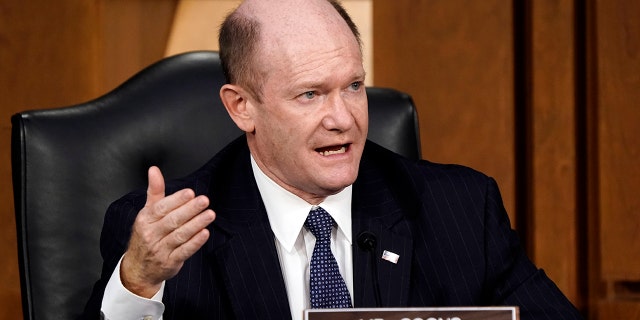
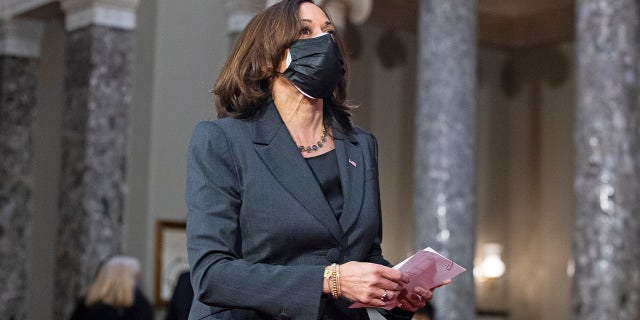
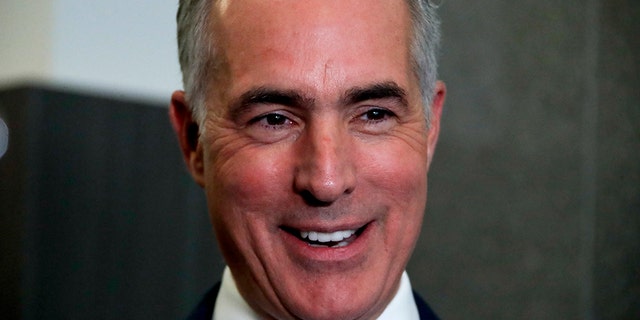
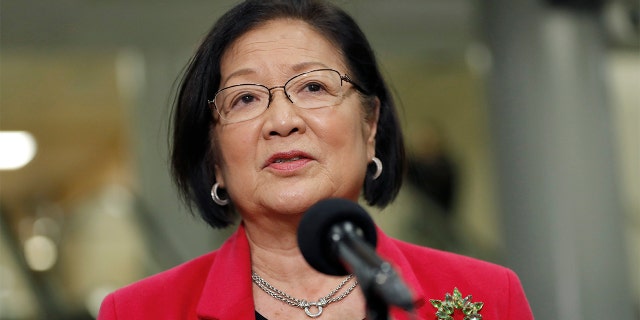
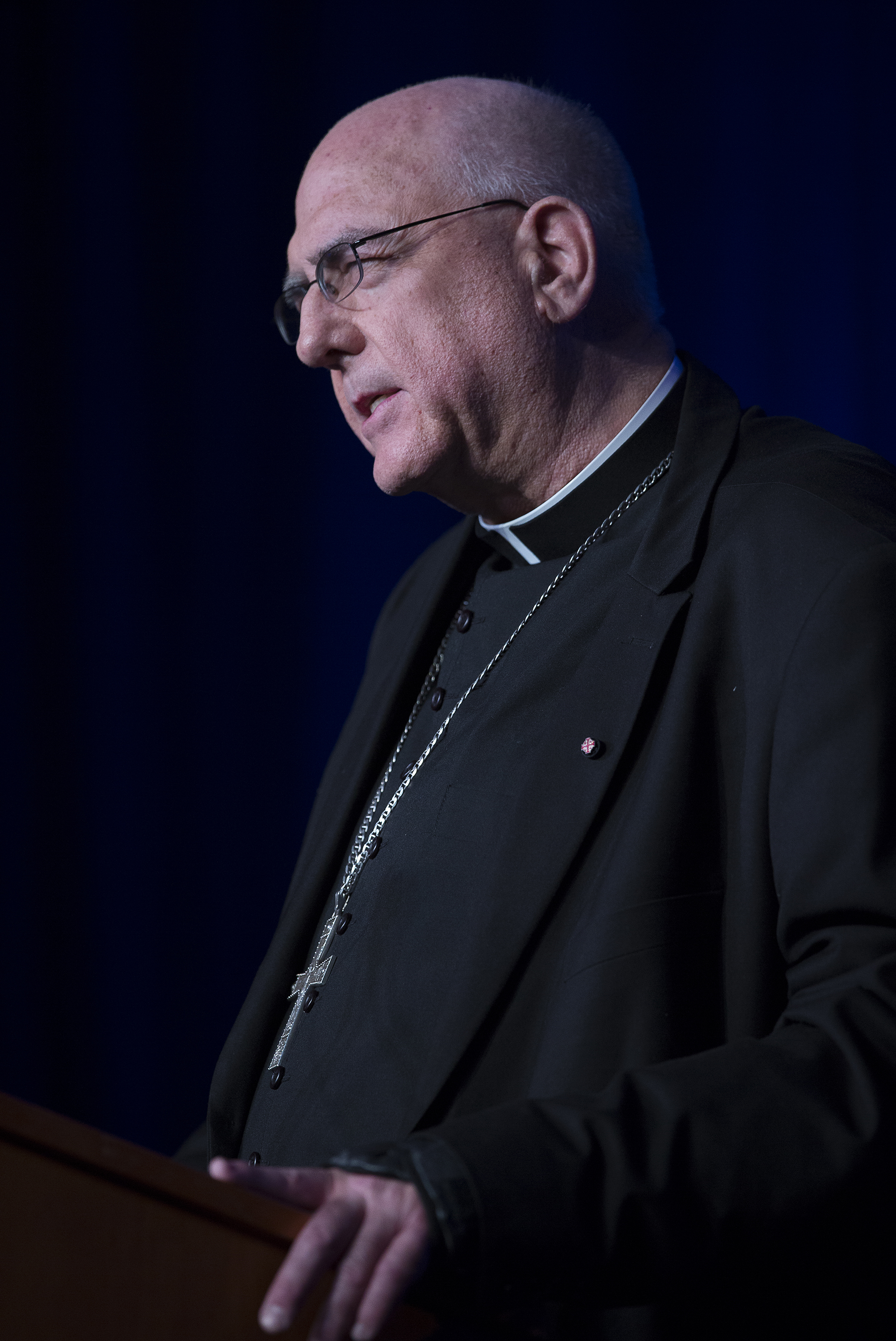



















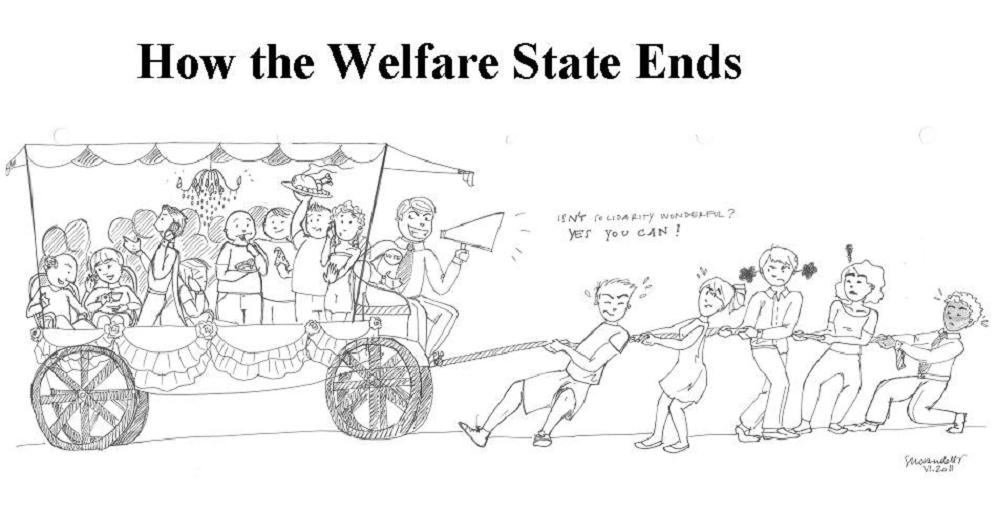







 I can tell you a few things about her, though. For one thing, she did not have a wild reputation, so I think that if she’s nominated, the Senate hearings will have to find something else to complain about. She was an English major and served on the Honor Council, a student body that enforced our honor code against lying and cheating (a great feature of academics at Rhodes that allowed us take-home tests in many classes). We were both in Mortar Board, an honor society. She wasn’t a political activist and was never a member of the College Republicans (I was, and we had a much larger membership than the College Democrats).
 Amy at the homecoming game senior year
 Candid photo in the social room (the ironing board refers to another picture)
 L to R: Me, Amy Barrett, and my daughter