Daniel J. Mitchell on Obama’s Economic Stimulus Plan
Dan Mitchell discusses Ineffectiveness of Stimulus Spending
March 31, 2021
Office of Barack and Michelle Obama P.O. Box 91000 Washington, DC 20066
Dear President Obama,
I wrote you over 700 letters while you were President and I mailed them to the White House and also published them on my blog http://www.thedailyhatch.org .I received several letters back from your staff and I wanted to thank you for those letters.
There are several issues raised in your book that I would like to discuss with you such as the minimum wage law, the liberal press, the cause of 2007 financial meltdown, and especially your pro-choice (what I call pro-abortion) view which I strongly object to on both religious and scientific grounds, Two of the most impressive things in your book were your dedication to both the National Prayer Breakfast (which spoke at 8 times and your many visits to the sides of wounded warriors!!
I have been reading your autobiography A PROMISED LAND and I have been enjoying it.
Let me make a few comments on it, and here is the first quote of yours I want to comment on:
Page 244
We proposed that nearly $800 billion be divided into three buckets of roughly equal size. In bucket one, emergency payments like supplementary unemployment insurance and direct aid to states to slow further mass layoffs of teachers, police officers, and other public workers. In bucket two, tax cuts targeted at the middle class, as well as various business tax breaks that gave companies a big incentive to invest in new plants or equipment now instead of later. Both the emergency payments and the tax cuts had the advantage of being easy to administer; we could quickly get money out the door and into the pockets of consumers and businesses. Tax cuts also had the added benefit of potentially attracting Republican support. The third bucket, on the other hand, contained initiatives that were harder to design and would take longer to implement but might have a bigger long-term impact: not just traditional infrastructure spending like road construction and sewer repair but also high-speed rail, solar and wind power installation, broadband lines for underserved rural areas, and incentives for states to reform their education systems—all intended not only to put people to work but to make America more competitive. Considering how many unmet needs there were in communities all across the country, I was surprised by how much work it took for our team to find worthy projects of sufficient scale for the Recovery Act to fund. Some promising ideas we rejected because they would take too long to stand up or required a huge new bureaucracy to manage. Others missed the cut because they wouldn’t boost demand sufficiently. Mindful of accusations that I planned to use the economic crisis as an excuse for an orgy of wasteful liberal boondoggles (and because I in fact wanted to prevent Congress from engaging in wasteful boondoggles, liberal or otherwise), we put in place a series of good-government safeguards: a competitive application process for state and local governments seeking funding; strict audit and reporting requirements; and, in a move we knew would draw howls from Capitol Hill, a firm policy of no “earmarks”—to use the innocuous name for a time-honored practice in which members of Congress insert various pet projects (many dubious) into must-pass legislation.
PAGE 257
I stepped up to speak. It was my first time at a House Republicans gathering, and it was hard not to be struck by the room’s uniformity: row after row of mostly middle-aged white men, with a dozen or so women and maybe two or three Hispanics and Asians. Most sat stone-faced as I briefly made the case for stimulus—citing the latest data on the economy’s meltdown, the need for quick action, the fact that our package contained tax cuts Republicans had long promoted, and our commitment to long-term deficit reduction once the crisis had passed. The audience did perk up when I opened the floor for a series of questions (or, more accurately, talking points pretending to be questions), all of which I cheerfully responded to as if my answers mattered.
—
A stimulus does nothing constructive and this Carrio below demonstrates that accurately!!!!!!
President Obama c/o The White House 1600 Pennsylvania Avenue NW Washington, DC 20500 Dear Mr. President, I know that you receive 20,000 letters a day and that you actually read 10 of them every day. I really do respect you for trying to get a pulse on what is going on out here. There have […]By Everette Hatcher III | Posted in David Barton, Founding Fathers, President Obama | Edit |Comments (0)
There have been many articles written by evangelicals like me who fear that our founding fathers would not recognize our country today because secular humanism has rid our nation of spiritual roots. I am deeply troubled by the secular agenda of those who are at war with religion in our public life. Lillian Kwon quoted somebody […]By Everette Hatcher III | Posted in David Barton, Founding Fathers | Edit | Comments (0)
There have been many articles written by evangelicals like me who fear that our founding fathers would not recognize our country today because secular humanism has rid our nation of spiritual roots. I am deeply troubled by the secular agenda of those who are at war with religion in our public life. Lillian Kwon quoted somebody […]By Everette Hatcher III | Posted in David Barton, Founding Fathers | Edit | Comments (0)
There have been many articles written by evangelicals like me who fear that our founding fathers would not recognize our country today because secular humanism has rid our nation of spiritual roots. I am deeply troubled by the secular agenda of those who are at war with religion in our public life. Lillian Kwon quoted somebody […]By Everette Hatcher III | Posted in David Barton, Founding Fathers | Edit | Comments (0)
There have been many articles written by evangelicals like me who fear that our founding fathers would not recognize our country today because secular humanism has rid our nation of spiritual roots. I am deeply troubled by the secular agenda of those who are at war with religion in our public life. Lillian Kwon quoted somebody […]By Everette Hatcher III | Posted in David Barton, Founding Fathers | Edit | Comments (0)
There have been many articles written by evangelicals like me who fear that our founding fathers would not recognize our country today because secular humanism has rid our nation of spiritual roots. I am deeply troubled by the secular agenda of those who are at war with religion in our public life. Lillian Kwon quoted somebody […]By Everette Hatcher III | Posted in Founding Fathers | Edit | Comments (0)
President Obama Speaks at The Ohio State University Commencement Ceremony Published on May 5, 2013 President Obama delivers the commencement address at The Ohio State University. May 5, 2013. You can learn a lot about what President Obama thinks the founding fathers were all about from his recent speech at Ohio State. May 7, 2013, […]By Everette Hatcher III | Posted in Founding Fathers, President Obama | Edit | Comments (0)
Dr. C. Everett Koop with Bill Graham. Francis Schaeffer: “Whatever Happened to the Human Race” (Episode 4) THE BASIS FOR HUMAN DIGNITY Published on Oct 7, 2012 by AdamMetropolis The 45 minute video above is from the film series created from Francis Schaeffer’s book “Whatever Happened to the Human Race?” with Dr. C. Everett Koop. This […]By Everette Hatcher III | Posted in Founding Fathers, Francis Schaeffer, Prolife | Edit |Comments (1)
America’s Founding Fathers Deist or Christian? – David Barton 4/6 There have been many articles written by evangelicals like me who fear that our founding fathers would not recognize our country today because secular humanism has rid our nation of spiritual roots. I am deeply troubled by the secular agenda of those who are at […]By Everette Hatcher III | Posted in David Barton, Founding Fathers | Tagged governor of connecticut, john witherspoon, jonathan trumbull | Edit | Comments (1)
3 Of 5 / The Bible’s Influence In America / American Heritage Series / David Barton There were 55 gentlemen who put together the constitution and their church affliation is of public record. Greg Koukl notes: Members of the Constitutional Convention, the most influential group of men shaping the political foundations of our nation, were […]By Everette Hatcher III | Posted in Founding Fathers | Edit | Comments (0)
I do not think that John Quincy Adams was a founding father in the same sense that his father was. However, I do think he was involved in the early days of our government working with many of the founding fathers. Michele Bachmann got into another history-related tussle on ABC’s “Good Morning America” today, standing […]By Everette Hatcher III | Posted in David Barton, Founding Fathers | Edit | Comments (0)
I have gone back and forth and back and forth with many liberals on the Arkansas Times Blog on many issues such as abortion, human rights, welfare, poverty, gun control and issues dealing with popular culture. Here is another exchange I had with them a while back. My username at the Ark Times Blog is Saline […]By Everette Hatcher III | Posted in Arkansas Times, Francis Schaeffer, Prolife | Edit |Comments (0)
I truly believe that many of the problems we have today in the USA are due to the advancement of humanism in the last few decades in our society. Ronald Reagan appointed the evangelical Dr. C. Everett Koop to the position of Surgeon General in his administration. He partnered with Dr. Francis Schaeffer in making the […]By Everette Hatcher III | Posted in Adrian Rogers, Francis Schaeffer | Edit | Comments (0)
Francis Schaeffer: “Whatever Happened to the Human Race” (Episode 4) THE BASIS FOR HUMAN DIGNITY Published on Oct 7, 2012 by AdamMetropolis ____________ The 45 minute video above is from the film series created from Francis Schaeffer’s book “Whatever Happened to the Human Race?” with Dr. C. Everett Koop. This book really helped develop my political […]By Everette Hatcher III | Posted in Francis Schaeffer | Edit | Comments (0)
Judeo-Christian values are essentially another term for biblical values. Judaism and Christianity are both based on the Old Testament—its God, its Ten Commandments, its admonition to love one’s neighbor as oneself, to love God, to lead a holy life, etc. (Photo: Tetra Images/Getty Images)
Conservatives often speak of Judeo-Christian values and how the current civil war in the United States and the rest of the West is essentially a battle between those values and the left, which rejects Judeo-Christian values.
They are right.
But they rarely explain what Judeo-Christian values are. Yet, without an explanation, mentioning Judeo-Christian values is useless.
So, let me do that now.
Want to keep up with the 24/7 news cycle? Want to know the most important stories of the day for conservatives? Need news you can trust? Subscribe to The Daily Signal’s email newsletter. Learn more >>
First, a word about the term. Some Jews and Christians find the term confusing, if not objectionable, since Judaism and Christianity have different theologies. But no one speaks of Judeo-Christian theology, only of Judeo-Christian values.
Judeo-Christian values are essentially another term for biblical values. Judaism and Christianity are both based on the Old Testament—its God, its Ten Commandments, its admonition to love one’s neighbor as oneself, to love God, to lead a holy life, etc.
Christians also believe in the New Testament, but only an opponent of Christianity would argue that the New Testament negates the values of the Old.
Here they are:
1. Objective moral standards come from God. As I have written and spoken about in a PragerU videoand elsewhere, if there is no God who declares murder wrong, murder can be subjectively wrong but not objectively wrong.
So, while there can certainly be nonbelievers who hold murder, stealing, and other actions wrong, without God, those are opinions, not moral facts. Without the God of the Bible, there are no moral facts.
2. God judges our behavior, and we are therefore accountable to God for our behavior. Outside of a religious worldview, there is no higher being to whom we are morally accountable.
3. Just as morality derives from God, so do rights. All men “are endowed by their Creator with certain unalienable Rights,” declares the Declaration of Independence.
4. The human being is uniquely precious. While the Bible repeatedly forbids cruel behavior to animals (cutting or tearing off the limb of a living animal to eat it as a means of preserving the rest of the animal, not allowing an animal a day of rest, not allowing an animal to eat while working in the field), only human beings are created in God’s image.
5. The world is based on a divine order, meaning divinely ordained distinctions. Among these divine distinctions are: God and man, man and woman, human and animal, good and evil, and nature and God.
6. Human beings are not basically good. Therefore, the most important moral endeavor is making good people. Religious Jews and Christians understand that the greatest battle in life is with one’s nature. For the opponents of Judeo-Christian values, the greatest moral battle is not with one’s nature; it is with society (specifically, American society).
7. Precisely because we are not basically good, we must not trust our hearts to lead us to proper behavior. The road to hell is paved with good hearts. Feelings make us human, but they cannot direct our lives. This alone divides the Bible-based from those on the left.
8. All human beings are created in God’s image. Therefore, race is of no significance. We all emanate from Adam and Eve, whose race is never mentioned. That many religious people held racist views only testifies to the almost infinite ability of people to distort what is good.
9. Fear God, not man. Fear of God is a foundation of morality. In the Book of Exodus, Egyptian midwives were ordered by the Pharaoh to kill all newborn Hebrew boys. They disobeyed the divine king of Egypt. Why? Because “the midwives feared God.” In America today, more people fear the print, electronic, and social media than fear God.
10. Human beings have free will. In the secular world, there is no free will because all human behavior is attributed to genes and environment. Only a religious worldview, which posits the existence of a divine soul—something independent of genes and environment—allows for free will.
11. Liberty. America was founded on the belief that God wants us to be free. On the Liberty Bell is inscribed just one thing (aside from the name of the company that manufactured the bell). It is a verse from the Bible: “Proclaim Liberty Throughout All the Land Unto All the Inhabitants thereof.”
The current assaults on personal liberty—unprecedented in American history—emanate from those who reject the Bible as their moral guide (including more than a few Jews and Christians who have joined the assault, having been indoctrinated with anti-religious views in high school and college).
When Judeo-Christian principles are abandoned, evil eventually ensues. One doesn’t have to be a believer to acknowledge this. Many secular conservatives recognize that the end of religion in the West leads to moral chaos—which is exactly what we are witnessing today and exactly what we witnessed in Europe last century.
When Christianity died in Europe, we got communism, fascism, and Nazism. What will we get in America if Christianity and Judeo-Christian values die?
COPYRIGHT 2021 CREATORS.COM
Dr. C. Everett Koop with Bill Graham.
Pt 1 of 2 Listen to this Important Message by Francis Schaeffer
Published on Sep 30, 2013
This message “A Christian Manifesto” was given in 1982 by the late Christian Philosopher Francis Schaeffer when he was age 70 at D. James Kennedy’s Corral Ridge Presbyterian Church.
Listen to this important message where Dr. Schaeffer says it is the duty of Christians to disobey the government when it comes in conflict with God’s laws. So many have misinterpreted Romans 13 to mean unconditional obedience to the state. When the state promotes an evil agenda and anti-Christian statues we must obey God rather than men. Acts
I use to watch James Kennedy preach from his TV pulpit with great delight in the 1980’s. Both of these men are gone to be with the Lord now. We need new Christian leaders to rise up in their stead.
To view Part 2 See Francis Schaeffer Lecture- Christian Manifesto Pt 2 of 2 video
The religious and political freedom’s we enjoy as Americans was based on the Bible and the legacy of the Reformation according to Francis Schaeffer. These freedoms will continue to diminish as we cast off the authority of Holy Scripture.
In public schools there is no other view of reality but that final reality is shaped by chance.
Likewise, public television gives us many things that we like culturally but so much of it is mere propaganda shaped by a humanistic world and life view.
_____________________________
I was able to watch Francis Schaeffer deliver a speech on a book he wrote called “A Christian Manifesto” and I heard him in several interviews on it in 1981 and 1982. I listened with great interest since I also read that book over and over again. Below is a portion of one of Schaeffer’s talks on a crucial subject that is very important today too.
This address was delivered by the late Dr. Schaeffer in 1982 at the Coral Ridge Presbyterian Church, Fort Lauderdale, Florida. It is based on one of his books, which bears the same title.
Founding fathers believed gave us inalienable rights
———-
It should be noticed that this new dominant world view is a view which is exactly opposite from that of the founding fathers of this country. Now, not all the founding fathers were individually, personally, Christians. That certainly is true. But, nevertheless, they founded the country on the base that there is a God who is the Creator (now I come to the next central phrase) who gave the inalienable rights.
We must understand something very thoroughly. If society — if the state gives the rights, it can take them away — they’re not inalienable. If the states give the rights, they can change them and manipulate them. But this was not the view of the founding fathers of this country. They believed, although not all of them were individual Christians, that there was a Creator and that this Creator gave the inalienable rights — this upon which our country was founded and which has given us the freedoms which we still have — even the freedoms which are being used now to destroy the freedoms.
The reason that these freedoms were there is because they believed there was somebody who gave the inalienable rights. But if we have the view that the final reality is material or energy which has existed forever in some form, we must understand that this view never, never, never would have given the rights which we now know and which, unhappily, I say to you (those of you who are Christians) that too often you take all too much for granted. You forget that the freedoms which we have in northern Europe after the Reformation (and the United States is an extension of that, as would be Australia or Canada, New Zealand, etc.) are absolutely unique in the world.
Occasionally, some of you who have gone to universities have been taught that these freedoms are rooted in the Greek city-states. That is not the truth. All you have to do is read Plato’s Republic and you understand that the Greek city-states never had any concept of the freedoms that we have. Go back into history. The freedoms which we have (the form / freedom balance of government) are unique in history and they are also unique in the world at this day.
A fairly recent poll of the 150 some countries that now constitute the world shows that only 25 of these countries have any freedoms at all. What we have, and take so poorly for granted, is unique. It was brought forth by a specific world view and that specific world view was the Judeo-Christian world view especially as it was refined in the Reformation, putting the authority indeed at a central point — not in the Church and the state and the Word of God, but rather the Word of God alone. All the benefits which we know — I would repeat — which we have taken so easily and so much for granted, are unique. They have been grounded on the certain world view that there was a Creator there to give inalienable rights. And this other view over here, which has become increasingly dominant, of the material-energy final world view (shaped by pure chance) never would have, could not, has, no basis of values, in order to give such a balance of freedom that we have known so easily and which we unhappily, if we are not careful, take so for granted.
Francis Schaeffer: “Whatever Happened to the Human Race” (Episode 1) ABORTION OF THE HUMAN RACE Published on Oct 6, 2012 by AdamMetropolis The 45 minute video above is from the film series created from Francis Schaeffer’s book “Whatever Happened to the Human Race?” with Dr. C. Everett Koop. This book really helped develop my political views […]
E P I S O D E 1 0 Dr. Francis Schaeffer – Episode X – Final Choices 27 min FINAL CHOICES I. Authoritarianism the Only Humanistic Social Option One man or an elite giving authoritative arbitrary absolutes. A. Society is sole absolute in absence of other absolutes. B. But society has to be […]
E P I S O D E 9 Dr. Francis Schaeffer – Episode IX – The Age of Personal Peace and Affluence 27 min T h e Age of Personal Peace and Afflunce I. By the Early 1960s People Were Bombarded From Every Side by Modern Man’s Humanistic Thought II. Modern Form of Humanistic Thought Leads […]
E P I S O D E 8 Dr. Francis Schaeffer – Episode VIII – The Age of Fragmentation 27 min I saw this film series in 1979 and it had a major impact on me. T h e Age of FRAGMENTATION I. Art As a Vehicle Of Modern Thought A. Impressionism (Monet, Renoir, Pissarro, Sisley, […]
E P I S O D E 7 Dr. Francis Schaeffer – Episode VII – The Age of Non Reason I am thrilled to get this film series with you. I saw it first in 1979 and it had such a big impact on me. Today’s episode is where we see modern humanist man act […]
E P I S O D E 6 How Should We Then Live 6#1 Uploaded by NoMirrorHDDHrorriMoN on Oct 3, 2011 How Should We Then Live? Episode 6 of 12 ________ I am sharing with you a film series that I saw in 1979. In this film Francis Schaeffer asserted that was a shift in […]
E P I S O D E 5 How Should We Then Live? Episode 5: The Revolutionary Age I was impacted by this film series by Francis Schaeffer back in the 1970′s and I wanted to share it with you. Francis Schaeffer noted, “Reformation Did Not Bring Perfection. But gradually on basis of biblical teaching there […]
Dr. Francis Schaeffer – Episode IV – The Reformation 27 min I was impacted by this film series by Francis Schaeffer back in the 1970′s and I wanted to share it with you. Schaeffer makes three key points concerning the Reformation: “1. Erasmian Christian humanism rejected by Farel. 2. Bible gives needed answers not only as to […]
Francis Schaeffer’s “How should we then live?” Video and outline of episode 3 “The Renaissance” Francis Schaeffer: “How Should We Then Live?” (Episode 3) THE RENAISSANCE I was impacted by this film series by Francis Schaeffer back in the 1970′s and I wanted to share it with you. Schaeffer really shows why we have so […]
Francis Schaeffer: “How Should We Then Live?” (Episode 2) THE MIDDLE AGES I was impacted by this film series by Francis Schaeffer back in the 1970′s and I wanted to share it with you. Schaeffer points out that during this time period unfortunately we have the “Church’s deviation from early church’s teaching in regard […]
Francis Schaeffer: “How Should We Then Live?” (Episode 1) THE ROMAN AGE Today I am starting a series that really had a big impact on my life back in the 1970′s when I first saw it. There are ten parts and today is the first. Francis Schaeffer takes a look at Rome and why […]
Francis Schaeffer: “Whatever Happened to the Human Race” (Episode 5) TRUTH AND HISTORY Published on Oct 7, 2012 by AdamMetropolis This crucial series is narrated by the late Dr. Francis Schaeffer and former Surgeon General Dr. C. Everett Koop. Today, choices are being made that undermine human rights at their most basic level. Practices once […]
The opening song at the beginning of this episode is very insightful. Francis Schaeffer: “Whatever Happened to the Human Race” (Episode 4) THE BASIS FOR HUMAN DIGNITY Published on Oct 7, 2012 by AdamMetropolis This crucial series is narrated by the late Dr. Francis Schaeffer and former Surgeon General Dr. C. Everett Koop. Today, choices […]
Francis Schaeffer: “Whatever Happened to the Human Race” (Episode 3) DEATH BY SOMEONE’S CHOICE Published on Oct 6, 2012 by AdamMetropolis This crucial series is narrated by the late Dr. Francis Schaeffer and former Surgeon General Dr. C. Everett Koop. Today, choices are being made that undermine human rights at their most basic level. Practices […]
Francis Schaeffer: “Whatever Happened to the Human Race?” (Episode 2) SLAUGHTER OF THE INNOCENTS Published on Oct 6, 2012 by AdamMetropolis This crucial series is narrated by the late Dr. Francis Schaeffer and former Surgeon General Dr. C. Everett Koop. Today, choices are being made that undermine human rights at their most basic level. Practices […]
It is not possible to know where the pro-life evangelicals are coming from unless you look at the work of the person who inspired them the most. That person was Francis Schaeffer. I do care about economic issues but the pro-life issue is the most important to me. Several years ago Adrian Rogers (past president of […]
This essay below is worth the read. Schaeffer, Francis – “Francis Schaeffer and the Pro-Life Movement” [How Should We Then Live?, Whatever Happened to the Human Race?, A Christian Manifesto] Editor note: <p> </p> [The following essay explores the role that Francis Schaeffer played in the rise of the pro-life movement. It examines the place of […]
Great article on Schaeffer. Who was Dr. Francis A. Schaeffer? By Francis Schaeffer The unique contribution of Dr. Francis Schaeffer on a whole generation was the ability to communicate the truth of historic Biblical Christianity in a way that combined intellectual integrity with practical, loving care. This grew out of his extensive understanding of the Bible […]
After public schools and teachers unions proved that they could not or would not meet the needs of students during the pandemic, multiple state legislatures are collectively undertaking one of the biggest expansions of school choice in history. (Photo: Klaus Vedfelt/Getty Images)
Lindsey M. Burke researches and writes on federal and state education issues as the Will Skillman fellow in education policy at The Heritage Foundation. Read her research.
School districts are slowly beginning to reopen in-person instruction after being closed for nearly a year—or, in many places, for over a year. While this is a wonderful development, it will never erase what parents experienced last year: uncertainty, inconsistency, and, in some cases, ineptitude from public schools.
The events of the last year have demonstrated to many families that public schools are not always the reliable institutions many thought they were. It also opened their eyes to just how powerful the teachers unions are, and revealed what many already suspected: that their modus operandi is not to support teachers who want to teach but to score political wins.
Thankfully, in response to these disappointments, multiple state legislatures are undertaking one of the biggest expansions of school choice in history. Here are some states to watch:
West Virginia. On March 29, West Virginia Gov. Jim Justice signed into law the most expansive school choice program in the country, a nearly universal option for education savings accounts.
Want to keep up with the 24/7 news cycle? Want to know the most important stories of the day for conservatives? Need news you can trust? Subscribe to The Daily Signal’s email newsletter. Learn more >>
This is monumental. It is the nation’s first universal education savings account program open to all children in the state. Students who choose to participate in the education savings account option will receive 100% of what the state would have spent on their education in their prior public school—or approximately $4,600 per year—which they can then use to pay for private school tuition, online learning, private tutoring, and a variety of other education services, products, and providers.
All incoming kindergarteners will be eligible for an education savings account, as will all first through 12th graders, with the condition that they have previously been enrolled in a West Virginia public school for 45 days.
Kentucky. Kentucky followed suit this week with the Legislature overriding Gov. Andy Beshear’s veto of a bill to create the Bluegrass State’s first school choice program—a tax credit-funded education savings account.
Known as Education Opportunity Accounts, students from families with incomes below 175% of the federal poverty line will have access to education savings accounts. The program is available to students living in counties with more than 90,000 residents and will initially be capped at $25 million.
South Dakota. On March 18, Gov. Kristi Noem signed into law an expansion of South Dakota’s tax credit scholarship program, which provides tax credits to insurance companies that provide donations to scholarship-granting organizations, which in turn provide scholarships to eligible students to offset the cost of private school tuition.
Students from families whose income does not exceed 150% of the qualifying amount for free and reduced-price lunch eligibility (approximately $73,000 for a family of four) are eligible. The Legislature expanded the program to now include students who already attend private school.
Georgia. Gov. Brian Kemp will soon have on his desk a bill that expands eligibility for the state’s existing voucher program for students with special needs. The proposal would expand eligibility to students in public schools with 504 plans (meaning they may need additional help in school due to learning impediments).
Approximately 58,000 Georgia students currently have 504 plans and would be eligible for the expanded voucher program.
Florida. The Florida Legislature is considering a proposal to consolidate the state’s five existing school choice programs into two streamlined education savings account options. One of the education savings account programs would be geared toward students with special needs, and the other would be available to the broader student population.
This proposal would fold the McKay Scholarship Program, a voucher program for children with special needs; the Florida Tax Credit Scholarship Program, which provides scholarships to income-eligible students; the Hope Scholarship, which allows individuals to redirect their car sales tax to private school scholarships; and the Family Empowerment Scholarship, which provides scholarships to students to attend a private school of choice who were on the waitlist for the state’s popular tax credit scholarship program, into the existing education savings account structure.
The proposal would bring the flexibility and customization of education savings accounts to the existing voucher and tax credit scholarship programs, updating the current school choice programs.
The proposal also grows program eligibility by eliminating the prior public school attendance requirements and opening the education savings account program to low-income homeschooled students in the state.
Arizona. In Arizona, the Legislature is considering an expansion of the state’s existing (first-in-the-nation) education savings account program to include students who attend a low-income school.
It would also make students who live in the attendance zone boundary of a Title I school eligible for the accounts. An estimated 65% of school districts in Arizona are home to Title I schools.
Missouri. Missouri lawmakers have introduced a bill to create a tax credit-funded education savings account program with broad eligibility. The program would be open to all students who previously attended public school in Missouri, or are entering kindergarteners, or who have an active-duty military parent. The program would initially be capped at $50 million.
New Hampshire. New Hampshire officials are likewise considering an education savings account program that would provide eligible families with $4,500 per year. The education savings accounts would be available to students from families earning less than $77,000 per year for a family of four.
Indiana. In Indiana, policymakers have introduced a measure that would expand eligibility for the state’s existing school voucher program and would create education savings accounts.
Children with special needs, from military families, or from foster families would be eligible for an education savings account worth 90% of what the state would have spent on that child in their public school.
In addition to these nine states, dozens of others are considering measures to expand education freedom and opportunity to students. An unprecedented 29 states have already introduced similar measures this year that will create or expand vouchers, tax credit scholarships, and education savings accounts, according to the Educational Freedom Institute.
According to EdChoice, more than 20 of those states have introduced education savings account options specifically. For families, these proposals represent lifelines to opportunities previously unavailable to them in their public school.
These measures are a swift rebuke to the teachers unions, who have not only stood in the way of education access during the pandemic, but have been the primary obstacles to education choice for decades.
Have an opinion about this article? To sound off, please email letters@DailySignal.com and we will consider publishing your remarks in our regular “We Hear You” feature.
Michelle: You are the grandfather of school vouchers. Do you feel victorious?
Mr. Friedman: Far from victorious, but very optimistic and hopeful. We are at the beginning of the task because as of the moment vouchers are available to only a very small amount of children. Our goal is to have a system in which every family in the U.S. will be able to choose for itself the school to which its children go. We are far from that ultimate result. If we had that, a system of free choice, we would also have a system of competition, innovation, which would change the character of education. You know our educational system is one of the most backwards things in our society in the way we teach people they did 200 years ago. There is a person in the front of the room. There are children sitting down at the bottom, and they are being talked to. Can you name any other industry in the U.S. which is as technologically backward? I can name one and only one: the legislature for the same reason. Both are monopolies. The elementary and secondary school system is the single most socialist industry in the U.S. leaving aside the military, but aside from the military it’s a major socialist industry; it is centralized and the control comes from the center and the difficulty of having a monopoly in which people cannot choose has been exacerbated by the fact that it has been largely taken over by teachers’ unions, the National Education Association and the American Federation of Teachers and the unions. Understandably, I do not blame them, but they are interested in the welfare of their members, not the welfare of the children, and the result is they have introduced a degree of rigidity, which makes it impossible to reform the public school system from within. Reform has to come through competition from the outside and the only way you can get competition is by making it possible for parents to have the ability to choose.
Michelle: Give to me a model, an example of how it would work.
Mr. Friedman: Very simple, take the extreme the government says we are willing to finance schooling for every child. The government compels children. If you look at the role of government in education there are three different levels. There is a level of compulsory. The government says every child must go to school until such and such and age. That is the equivalent of saying if you are going to drive a car you must have a license. The second stage is funding. Not only do we require you to have an education, but the government is willing to pay for that schooling. That would be equivalent to saying the government is willing to pay for your car that you drive. The third level is running the educational industry. That would be the equivalent of the government manufacturing the automobile or, to put it in a different image, consider food stamps today. Food stamps are funds provided by the government. But if that were to be runned (sic) like the schools, they would say everybody has to use these food stamps at a government grocery and each person with food stamps is assigned to a particular government grocer. So the only way you can get your food stamps is by going to that grocer. Do you think those groceries would be very good? We know what the situation is in schooling. People say why now and not 50-75 years ago? Well, when I went to high school that was a long time ago. In the 1920s there were 150,000 school districts in the U.S and the population was half what it is now. Today, there are fewer than 15,000 school districts. So it used to be that you really did have competition cause you had small school districts and parents had a good deal of control over those school districts, but increasingly we have shifted to very large school districts, to centralized control, to a system in which the governmental officials, in which the educational professionals control it. And like every socialist industry, it produces a product that is very expensive and of very low quality. Of course it is not uniform. There are some very good schools do not misunderstand me, but there are also some very bad ones.
Michelle: I interviewed some folks who are against school vouchers and they say that if you really want to help out a school what you should do is provide high-quality early childhood education, small classes, small schools, summer school available to children who want it. Put money to those items, which they claim would work.
Mr. Friedman: They don’t, we have been doing that. The amount of money spent per child adjusted for inflation has something like doubled or tripled over the last 20 years. Twenty years ago we had this report A Nation at Risk that pointed out all of the difficulties I just referred to and which pointed out this was a first generation that was going to be less schooled than its parents. We are now in the next generation and will be even less well schooled. We have had every possible effort you could have from reform from within. It is not just in schools; it is in any area. Reform has to come from outside. It has to come from competition. Let me illustrate that from within the school system. The United States from all accounts ranks number one in higher education. People from all over the world regard the United States’ colleges and universities the best and most varied. On the other hand in every other international comparison we rank near the bottom in elementary and secondary education. Why the difference? One word: choice. The elementary and secondary education, the school picks the child; it picks its customer. In higher education, the customer picks its school, you have choice that makes all the difference in the world. It means competition forces product. Look over the rest of the economy. Is there any area in the U.S. in which progress has not required progress from the outside? Look at the telephone industry when it was broken down into the little bells and opened up the competition. It started a period of rapid innovation and development. The key word is competition and the question is how can you get competition. Only by having the customer choosing.
Michelle: There is concern that money is going to religious schools. That the majority of the students in voucher programs that exist use them to attend schools with religious affiliation?
Mr. Friedman: Why? Because the vouchers are so small in some cases. It is true that of the private schools in the U.S. the great bulk of them are religious. That is for one simple reason. Here is someone selling something for nothing. Somebody down the street is giving away chocolate and you want to get into the business of selling chocolate. That is kind of tough isn’t it? Here at schools, children can attend them. They are not free. They are paying for it in the form of taxes, but there is no specific charge for going to that school. Somebody else is going to offer it. The churches, the religious organizations have had a real advantage in that they were the only ones around who were in a position to subsidize the education and keep the fees down low. If you open it wide, the most recent case was Ohio, Cleveland case. The voucher that they had had a max value of $2,500. Now it is not easy to provide a decent education at $2,500 and make money at it. Make it pay. At the same time the state of Ohio was spending something like over $7,000 per child on schooling. If that voucher had been $7,000 instead of $2,500 I have no doubt that there would have been a whole raft of new private, non-profit, both profit and non-profit schools. That is what has happened in Milwaukee. Milwaukee has a voucher system and today the fraction of the voucher users in Milwaukee going to religious schools is less than the fraction going to religious schools was before this system started because there have been new schools developed and some of them have been religious but many of them are not. In any event, the Supreme Court has settled that issue. They have said that if it is the choice of the parent, if there are alternatives available, there are government schools, charter schools, private non-denominational schools, private denominational schools, so long as the choice is in the hands of the parent that is not a violation of the First Amendment.
Michelle: You have a friend and an ally in the White House when it comes to vouchers.
Mr. Friedman: I should say. Mr. Bush has always been in favor. He is in favor of free choice. Remember vouchers are a means not an end. The purpose of vouchers is to enable parents to have free choice, and the purpose of having free choice is to provide competition and allow the educational industry to get out of the 17th century and get into the 21st century and have more innovation and more evolvement. There is no reason why you cannot have the same kind of change in the provision of education as you have had in industries like the computer industry, the television industry and other things.
Michelle: Is it refreshing to have a president that, Bill Clinton was firmly against vouchers.
Mr. Friedman: No, it is a case of circumstances. When he was governor of Arkansas, he was not against vouchers. He was in favor, but when he became president he came out against vouchers. I should say he did not oppose vouchers as governor and he did as president and that was for political reasons. People don’t recognize how powerful politically the teachers’ unions are. Something like a quarter of all the delegates at the Democratic National Convention are from the teachers’ union. They are probably the most powerful pressure group in the U.S., very large funds, very large number of people and very active politically.
Michelle: We talk in the office about how President Bush has some very Friedmanesqe ideas.
Mr. Friedman: They are not Freidmanesqe. They are just good ideas. I hope that is true anyway. I think very highly of President Bush, and I think in these areas, don’t misunderstand me, that is not a blanket statement. There are some things he has done that I disagree with, but taken as a whole he has been moving in the right direction of trying to move toward a smaller more limited government, trying to provide more freedom and more initiative in all areas. His philosophy on Medicare is the same as his philosophy in schools.
Michelle: Is that refreshing?
Mr. Friedman: It is an interesting thing, if you look at the facts, the one area, the area in which the low-income people of this country, the blacks and the minority, are most disadvantaged is with respect with the kinds of schools they can send their children to. The people who live in Harlem or the slums or the corresponding areas in LA or San Francisco, they can go to the same stores, shop in the same stores everybody else can, they can buy the same automobiles, they can go to supermarket, but they have very limited choice of schools. Everybody agrees that the schools in those areas are the worst. They are poor. Yet, here you have a Democrat who allege their interest is to help the poor and the low-income people. Here you have to take a different point. Every poll has shown that the strongest supporters of vouchers are the low-income blacks, and yet hardly a single black leader has been willing to come out for vouchers. There were some exceptions, Paul Williams in Milwaukee who was responsible for that, and a few others.
Michelle: Why do you think that is?
Mr. Friedman: For obvious reasons, political. It has been to the self interest to the leaders. The school system, as long as it’s governmental it’s a source of power and jobs to hand around and funds to dispose of. If it is privatized that disappears. And the other aspect of it is the power of the teachers’ unions. Right now those of us that are in the upper-income classes have freedom of choice for our children in various ways. We can decide where to live and we can choose places to live that have good schools or we can afford to pay twice for schooling once by taxes and once by paying tuition at a private school. It seems to me utterly unfair that those opportunities should not be open to everybody at all levels of income. If you had a system, the kind I would like to see, the government would say we require every child to get a certain number of years of schooling and in order to make that possible we are going to provide for every parent a voucher equal to a certain number of dollars, which they can use only for schooling, can’t use it for anything else. They can add to it, but they cannot subtract from it. Those will be, those can be used in government schools. Let the government run the school, but force them to be in competition so that all government schools charge tuition, but can be paid for by that voucher. But that same voucher can also be used in private schools of all kinds and then you would have an open; the teachers’ union complained and they insist they are doing a good job. If they are doing a good job then why are they so afraid of some competition?
Michael Harrington: If you don’t have the expertise, the knowledge technology today, you’re out of the debate. And I think that we have to democratize information and government as well as the economy and society. FRIEDMAN: I am sorry to say Michael Harrington’s solution is not a solution to it. He wants minority rule, I […]
By Everette Hatcher III | Posted in Current Events, Milton Friedman | Edit | Comments (0)
PETERSON: Well, let me ask you how you would cope with this problem, Dr. Friedman. The people decided that they wanted cool air, and there was tremendous need, and so we built a huge industry, the air conditioning industry, hundreds of thousands of jobs, tremendous earnings opportunities and nearly all of us now have air […]
By Everette Hatcher III | Posted in Current Events, Milton Friedman | Edit | Comments (0)
Part 5 Milton Friedman: I do not believe it’s proper to put the situation in terms of industrialist versus government. On the contrary, one of the reasons why I am in favor of less government is because when you have more government industrialists take it over, and the two together form a coalition against the ordinary […]
By Everette Hatcher III | Posted in Current Events, Milton Friedman | Edit | Comments (0)
The fundamental principal of the free society is voluntary cooperation. The economic market, buying and selling, is one example. But it’s only one example. Voluntary cooperation is far broader than that. To take an example that at first sight seems about as far away as you can get __ the language we speak; the words […]
By Everette Hatcher III | Posted in Current Events, Milton Friedman | Edit | Comments (0)
_________________________ Pt3 Nowadays there’s a considerable amount of traffic at this border. People cross a little more freely than they use to. Many people from Hong Kong trade in China and the market has helped bring the two countries closer together, but the barriers between them are still very real. On this side […]
By Everette Hatcher III | Posted in Current Events, Milton Friedman | Edit | Comments (0)
Aside from its harbor, the only other important resource of Hong Kong is people __ over 4_ million of them. Like America a century ago, Hong Kong in the past few decades has been a haven for people who sought the freedom to make the most of their own abilities. Many of them are […]
By Everette Hatcher III | Posted in Current Events, Milton Friedman | Edit | Comments (0)
“FREE TO CHOOSE” 1: The Power of the Market (Milton Friedman) Free to Choose ^ | 1980 | Milton Friedman Posted on Monday, July 17, 2006 4:20:46 PM by Choose Ye This Day FREE TO CHOOSE: The Power of the Market Friedman: Once all of this was a swamp, covered with forest. The Canarce Indians […]
If you would like to see the first three episodes on inflation in Milton Friedman’s film series “Free to Choose” then go to a previous post I did. Ep. 9 – How to Cure Inflation [4/7]. Milton Friedman’s Free to Choose (1980) Uploaded by investbligurucom on Jun 16, 2010 While many people have a fairly […]
Charlie Rose interview of Milton Friedman My favorite economist: Milton Friedman : A Great Champion of Liberty by V. Sundaram Milton Friedman, the Nobel Prize-winning economist who advocated an unfettered free market and had the ear of three US Presidents – Nixon, Ford and Reagan – died last Thursday (16 November, 2006 ) in San Francisco […]
By Everette Hatcher III | Posted in Milton Friedman | Edit | Comments (0)
Stearns Speaks on House Floor in Support of Balanced Budget Amendment Uploaded by RepCliffStearns on Nov 18, 2011 Speaking on House floor in support of Balanced Budget Resolution, 11/18/2011 ___________ Below are some of the main proposals of Milton Friedman. I highly respected his work. David J. Theroux said this about Milton Friedman’s view concerning […]
By Everette Hatcher III | Posted in Milton Friedman | Edit | Comments (0)
Milton Friedman: Free To Choose – The Failure Of Socialism With Ronald Reagan (Full) Published on Mar 19, 2012 by NoNationalityNeeded Milton Friedman’s writings affected me greatly when I first discovered them and I wanted to share with you. We must not head down the path of socialism like Greece has done. Abstract: Ronald Reagan […]
By Everette Hatcher III | Posted in Milton Friedman, President Obama | Edit | Comments (1)
What a great defense of Milton Friedman!!!! Defaming Milton Friedman by Johan Norberg This article appeared in Reason Online on September 26, 2008 PRINT PAGE CITE THIS Sans Serif Serif Share with your friends: ShareThis In the future, if you tell a student or a journalist that you favor free markets and limited government, there is […]
My response is easy. I care about results rather than rhetoric. And while GOP politicians often pay lip service to the principles of limited government,they usually increase spending even faster than Democrats.
This is bad news because it means the burden of government expands when Republicans are in charge.
And, as Gary Abernathy points out in a column for the Washington Post, Republicans then don’t have the moral authority to complain when Democrats engage in spending binges.
President Biden is proposing another $3 trillion in spending… There are objections, but none that can be taken seriously. …Republicans had lost their standing as the party of fiscal responsibility when most of them succumbed to the political virus of covid fever and rubber-stamped around $4 trillion in “covid relief,”… With Trump out and Biden in, Republicans suddenly pretended that their 2020 spending spree happened in some alternate universe.But the GOP’s united opposition to Biden’s $1.9 trillion package won’t wash off the stench of the hypocrisy. …I noted a year ago that we had crossed the Rubicon, that our longtime flirtation with socialism had become a permanent relationship. Congratulations, Bernie Sanders. The GOP won’t become irrelevant because of its association with Trump, as some predict. It will diminish because it is bizarrely opposing now that which it helped make palatable just last year. Fiscal responsibility is dead, and Republicans helped bury it. Put the shovels away, there’s no digging it up now.
For what it’s worth, I hope genuine fiscal responsibility isn’t dead.
Maybe it’s been hibernating ever since Reagan left office (like Pepperidge Farm, I’m old enough to remember those wonderful years).
Subsequent Republican presidents liked to copy Reagan’s rhetoric, but they definitely didn’t copy his policies.
Spending restraint was hibernating during the presidency of George H.W. Bush.
Spending restraint also was hibernating during the presidency of George W. Bush.
And spending restraint was hibernating during the presidency of Donald Trump.
I’m not the only one to notice GOP hypocrisy.
Here are some excerpts from a 2019 column in the Washington Post by Fareed Zakaria.
In what Republicans used to call the core of their agenda — limited government — Trump has been profoundly unconservative. …Trump has now added more than $88 billion in taxes in the form of tariffs, according to the right-leaning Tax Foundation. (Despite what the president says, tariffs are taxes on foreign goods paid by U.S. consumers.) This has had the effect of reducing gross domestic product and denting the wages of Americans.…For decades, conservatives including Margaret Thatcher and Ronald Reagan preached to the world the virtues of free trade. But perhaps even more, they believed in the idea that governments should not pick winners and losers in the economy… Yet the Trump administration…behaved like a Central Planning Agency, granting exemptions on tariffs to favored companies and industries, while refusing them to others. …In true Soviet style, lobbyists, lawyers and corporate executives now line up to petition government officials for these treasured waivers, which are granted in an opaque process… On the core issue that used to define the GOP — economics — the party’s agenda today is state planning and crony capitalism.
Zakaria is right about Republicans going along with most of Trump’s bad policies (as illustrated by this cartoon strip).*
The bottom line is that Republicans would be much more effective arguing against Biden’s spending orgy had they also argued for spending restraint when Trump was in the White House.
If they make the wrong choice (anything other than Reaganism), Margaret Thatcher has already warned us about the consequences.
*To be fair, Republicans also went along with Trump’s good policies. It’s just unfortunate that spending restraint wasn’t one of them.
—-
March 31, 2021
President Biden c/o The White House
1600 Pennsylvania Avenue NW
Washington, DC 20500
Dear Mr. President,
Please explain to me if you ever do plan to balance the budget while you are President? I have written these things below about you and I really do think that you don’t want to cut spending in order to balance the budget. It seems you ever are daring the Congress to stop you from spending more.
“The credit of the United States ‘is not a bargaining chip,’ Obama said on 1-14-13. However, President Obama keeps getting our country’s credit rating downgraded as he raises the debt ceiling higher and higher!!!!
Washington Could Learn a Lot from a Drug Addict
Just spend more, don’t know how to cut!!! Really!!! That is not living in the real world is it?
Making more dependent on government is not the way to go!!
Why is our government in over 16 trillion dollars in debt? There are many reasons for this but the biggest reason is people say “Let’s spend someone else’s money to solve our problems.” Liberals like Max Brantley have talked this way for years. Brantley will say that conservatives are being harsh when they don’t want the government out encouraging people to be dependent on the government. The Obama adminstration has even promoted a plan for young people to follow like Julia the Moocher.
Imagine standing a baby carrot up next to the 25-story Stephens building in Little Rock. That gives you a picture of the impact on the national debt that federal spending in Arkansas on Medicaid expansion would have, while here at home expansion would give coverage to more than 200,000 of our neediest citizens, create jobs, and save money for the state.
Here’s the thing: while more than a billion dollars a year in federal spending would represent a big-time stimulus for Arkansas, it’s not even a drop in the bucket when it comes to the national debt.
Currently, the national debt is around $16.4 trillion. In fiscal year 2015, the federal government would spend somewhere in the neighborhood of $1.2 billion to fund Medicaid expansion in Arkansas if we say yes. That’s about 1/13,700th of the debt.
It’s hard to get a handle on numbers that big, so to put that in perspective, let’s get back to the baby carrot. Imagine that the height of the Stephens building (365 feet) is the $16 trillion national debt. That $1.2 billion would be the length of a ladybug. Of course, we’re not just talking about one year if we expand. Between now and 2021, the federal government projects to contribute around $10 billion. The federal debt is projected to be around $25 trillion by then, so we’re talking about 1/2,500th of the debt. Compared to the Stephens building? That’s a baby carrot.
______________
Here is how it will all end if everyone feels they should be allowed to have their “baby carrot.”
How sad it is that liberals just don’t get this reality.
While living in Europe in the 1760s, Franklin observed: “in different countries … the more public provisions were made for the poor, the less they provided for themselves, and of course became poorer. And, on the contrary, the less was done for them, the more they did for themselves, and became richer.”
Alexander Fraser Tytler, Lord Woodhouselee(15 October 1747 – 5 January 1813) was a Scottish lawyer, writer, and professor. Tytler was also a historian, and he noted, “A democracy cannot exist as a permanent form of government. It can only exist until the majority discovers it can vote itself largess out of the public treasury. After that, the majority always votes for the candidate promising the most benefits with the result the democracy collapses because of the loose fiscal policy ensuing, always to be followed by a dictatorship, then a monarchy.”
[Jefferson affirms that the main purpose of society is to enable human beings to keep the fruits of their labor.— TGW]
To take from one, because it is thought that his own industry and that of his fathers has acquired too much, in order to spare to others, who, or whose fathers have not exercised equal industry and skill, is to violate arbitrarily the first principle of association, “the guarantee to every one of a free exercise of his industry, and the fruits acquired by it.” If the overgrown wealth of an individual be deemed dangerous to the State, the best corrective is the law of equal inheritance to all in equal degree; and the better, as this enforces a law of nature, while extra taxation violates it.
[From Writings of Thomas Jefferson, ed. Albert E. Bergh (Washington: Thomas Jefferson Memorial Association, 1904), 14:466.]
_______
Jefferson pointed out that to take from the rich and give to the poor through government is just wrong. Franklin knew the poor would have a better path upward without government welfare coming their way. Milton Friedman’s negative income tax is the best method for doing that and by taking away all welfare programs and letting them go to the churches for charity.
_____________
_________
Thank you so much for your time. I know how valuable it is. I also appreciate the fine family that you have and your commitment as a father and a husband.
Sincerely,
Everette Hatcher III, 13900 Cottontail Lane, Alexander, AR 72002, ph 501-920-5733
We got to act fast and get off this path of socialism. Morning Bell: Welfare Spending Shattering All-Time Highs Robert Rector and Amy Payne October 18, 2012 at 9:03 am It’s been a pretty big year for welfare—and a new report shows welfare is bigger than ever. The Obama Administration turned a giant spotlight […]
We need to cut Food Stamp program and not extend it. However, it seems that people tell the taxpayers back home they are going to Washington and cut government spending but once they get up there they just fall in line with everyone else that keeps spending our money. I am glad that at least […]
Government Must Cut Spending Uploaded by HeritageFoundation on Dec 2, 2010 The government can cut roughly $343 billion from the federal budget and they can do so immediately. __________ Liberals argue that the poor need more welfare programs, but I have always argued that these programs enslave the poor to the government. Food Stamps Growth […]
Milton Friedman – The Negative Income Tax Published on May 11, 2012 by LibertyPen In this 1968 interview, Milton Friedman explained the negative income tax, a proposal that at minimum would save taxpayers the 72 percent of our current welfare budget spent on administration. http://www.LibertyPen.com Source: Firing Line with William F Buckley Jr. ________________ Milton […]
Dan Mitchell Commenting on Obama’s Failure to Propose a Fiscal Plan Published on Aug 16, 2012 by danmitchellcato No description available. ___________ After the Welfare State Posted by David Boaz Cato senior fellow Tom G. Palmer, who is lecturing about freedom in Slovenia and Tbilisi this week, asked me to post this announcement of his […]
Is President Obama gutting the welfare reform that Bill Clinton signed into law? Morning Bell: Obama Denies Gutting Welfare Reform Amy Payne August 8, 2012 at 9:15 am The Obama Administration came out swinging against its critics on welfare reform yesterday, with Press Secretary Jay Carney saying the charge that the Administration gutted the successful […]
Thomas Sowell – Welfare Welfare reform was working so good. Why did we have to abandon it? Look at this article from 2003. The Continuing Good News About Welfare Reform By Robert Rector and Patrick Fagan, Ph.D. February 6, 2003 Six years ago, President Bill Clinton signed legislation overhauling part of the nation’s welfare system. […]
Uploaded by ForaTv on May 29, 2009 Complete video at: http://fora.tv/2009/05/18/James_Bartholomew_The_Welfare_State_Were_In Author James Bartholomew argues that welfare benefits actually increase government handouts by ‘ruining’ ambition. He compares welfare to a humane mousetrap. —– Welfare reform was working so good. Why did we have to abandon it? Look at this article from 2003. In the controversial […]
Thomas Sowell If the welfare reform law was successful then why change it? Wasn’t Bill Clinton the president that signed into law? Obama Guts Welfare Reform Robert Rector and Kiki Bradley July 12, 2012 at 4:10 pm Today, the Obama Department of Health and Human Services (HHS) released an official policy directive rewriting the welfare […]
I have been writing President Obama letters and have not received a personal response yet. (He reads 10 letters a day personally and responds to each of them.) However, I did receive a form letter in the form of an email on July 10, 2012. I don’t know which letter of mine generated this response so I have […]
To address that question, let’s start with this video from Prager University, which is narrated by Professor Paul Kengor of Grove City College.
At the risk of understatement, the video is a damning indictment of Marx’s legacy.
His political ideas provided the justification for the genocides of dictators such as Stalin, Mao, and Pol Pot.
His economic ideas led to policies that produced mass deprivation, starvation, and immense human suffering.
Now let’s take a closer look at Marx rather than just his ideas.
Was he a good person who simply had some horribly misguided ideals?
Hardly. Everything we know suggests he was a sickeningly despicable excuse for a human being.
Professor Richard Ebeling has some of the sordid details in an article for Intellectual Takeout.
Karl Marx was born on May 5, 1818, in the Rhineland town of Trier. …he was generally a lazy and good-for-nothing student. …Marx’s only real jobs during his lifetime were as occasional reporters for or editors of newspapers and journals most of which usually closed in a short period of time…He had sex enough times with the family maid that she bore him an illegitimate son… He often used racial slurs and insulting words to describe the mannerisms or appearance of his opponents in the socialist movement. …In Marx’s mind, the Jew in bourgeois society encapsulated the essence of everything he considered despicable in the capitalist system… Marx’s caricaturing description of the asserted “Jewish mindset” rings amazingly similar to those that were later written by the Nazi “race-scientists” of the 1930s.
All told, it appears that Marx lacked a single redeeming feature. He was a very bad person with very bad ideas.
P.S. For those seeking more economic analysis, Marx advocated for the pure version of socialism, meaning government ownership of the means of production (state factories, collective farms, etc).
P.P.S. It’s disgusting that there’s a statue of Marx in his birth city and it’s equally disgusting that the former President of the European Commission went there to celebrate the 200th anniversary of his birth.
P.P.P.S. Marx gets featured frequently in my collection of jokes mocking communism.
The Beatles were good friends of Allen Ginsberg and Terry Southern and many others who were involved in the FREE SPEECH MOVEMENT in Berkeley in the 1960’s. The movement started off just being about FREE SPEECH, but then it turned quickly to the New Left and the Marxist-Leninist point of view. It was in this atmosphere in the mid-sixties that caused KARL MARX to be a logical choice to be on the cover of Sgt. Pepper’s.
Beatles 1966 Last interview
69 THE BEATLES TWO OF US
As a university student, Karl Marx (1818-1883) joined a movement known as the Young Hegelians, who strongly criticized the political and cultural establishments of the day. He became a journalist, and the radical nature of his writings would eventually get him expelled by the governments of Germany, France and Belgium. In 1848, Marx and fellow German thinker Friedrich Engels published “The Communist Manifesto,” which introduced their concept of socialism as a natural result of the conflicts inherent in the capitalist system. Marx later moved to London, where he would live for the rest of his life. In 1867, he published the first volume of “Capital” (Das Kapital), in which he laid out his vision of capitalism and its inevitable tendencies toward self-destruction, and took part in a growing international workers’ movement based on his revolutionary theories.
#02 How Should We Then Live? (Promo Clip) Dr. Francis Schaeffer
1. Sri Yukteswar (Indian Guru)
2. Aleister Crowley (black magician)
3. Mae West
4. Lenny Bruce
5. Stockhausen (modern German composer)
6. W.C. Fields
7. Carl Jung (psychologist)
8. Edgar Allen Poe
9. Fred Astaire
10. Merkin (American artist)
12. Huntz Hall (Bowery Boy)
13. Simon Rodia (creater of Watts Towers)
14. Bob Dylan
15. Aubrey Beardsly (Victorian artist)
16. Sir Robert Peel (Police pioneer)
17. Aldous Huxley (philosopher)
18. Dylan Thomas (Welsh poet)
19. Terry Southern (author)
20. Dion (American pop singer)
21. Tony Curtis
22. Wallace Berman (Los Angeles artist)
23. Tommy Handley (wartime comedian)
24. Marilyn Monroe
25. William Buroughs (author)
26. Mahavatar Babaji (Indian Guru)
27. Stan Laurel
28. Richard Lindner (New York artist)
29. Oliver Hardy 30. Karl Marx
31. H.G. Wells
32. Paramhansa Yogananda (Indian Guru)
33. Stuart Sutcliffe
35. Max Muller
37. Marlon Brando
38. Tom Mix (cowboy film star)
39. Oscar Wilde
40. Tyrone Power
41. Larry Bell (modern painter)
42. Dr. Livingstone
43. Johnny Weissmuller (Tarzan)
44. Stephen Crane (American writer)
45. Issy Bonn (comedian)
46. George Bernard Shaw
47. Albert Stubbins (Liverpool footballer)
49. Lahiri Mahasaya (Indian Guru)
50. Lewis Carol
51. Sonny Liston (boxer)
52 – 55. The Beatles (in wax)
57. Marlene Dietrich
58. Diana Dors
59. Shirley Temple
60. Bobby Breen (singing prodigy)
61. T.E. Lawrence (Lawrence of Arabia)
In these pics from alternate shots of the cover photo, you can still see Leo Gorcey, who was removed because he requested a fee, next to his fellow Bowery Boy pal Huntz Hal, and Ghandi, who was removed because EMI felt his inclusion might offend record buyers in India. http://www.beatlesagain.com/btsgtppr.html
1969 was the year that John & Yoko intensified their long running campaign for World Peace.
They approached the task with the same entrepreneurial expertise as an advertising agency selling a brand of soap powder to the masses. John & Yoko’s product however was PEACE, not soft soap, and they were determined to use any slogan, event and gimmick in order to persuade the World to buy it.
BED PEACE (directed by Yoko & John and filmed by Nic Knowland) is a document of the Montreal events and features John & Yoko in conversation with, amongst others, The World Press, satirist Al Capp, activist Dick Gregory, comedian Tommy Smothers,
Featured songs are Plastic Ono Band’s GIVE PEACE A CHANCE & INSTANT KARMA, Yoko’s REMEMBER LOVE & WHO HAS SEEN THE WIND & John’s acoustic version of BECAUSE.
WHY WAS KARL MARX ON THE COVER? The answer is very simple. Back in Berkeley in 1964 there were the riots that broke out and the Free Speech Movement and this movement was encouraged later by John Lennon and Yoko as they spoke with the protesters by phone in the above video. Also Allen Ginsberg and Terry Southern were good friends with Paul McCartney and they were involved in the Free Speech Movement. The movement started off just being about FREE SPEECH, but then it turned quickly to the New Left and the Marxist-Leninist point of view. It was in this atmosphere in the mid-sixties that caused Karl Marx to be a logical choice to be on the cover.
Jean Genet, Allen Ginsberg, William Burroughs, Terry Southern
Chicago, 1968
_______________
John Lennon with Allen Ginsberg below:
Paul and Linda McCartney with Allen Ginsberg below:
___________
Francis Schaeffer asserted:
In some places the Marxist-Leninist line or the Maoist line took over…But the Marxist-Leninism is another leap into the area of nonreason-as idealistic as drug-taking was in the early days. The young followed Marxism in spite of clear evidence that oppression was not an excess of Stalin, but was and is an integral part of the system of communism.
First, the area of meaning. We saw that without God, life has no meaning. Yet philosophers continue to live as though life does have meaning. For example, Sartre argued that one may create meaning for his life by freely choosing to follow a certain course of action. Sartre himself chose Marxism.
Now this is utterly inconsistent. It is inconsistent to say that life is objectively absurd and then to say that one may create meaning for his life. If life is really absurd, then man is trapped in the lower story. To try to create meaning in life represents a leap to the upper story. But Sartre has no basis for this leap. Without God, there can be no objective meaning in life. Sartre’s program is actually an exercise in self-delusion. For the universe does not really acquire meaning just because I happen to give it one. This is easy to see: for suppose I give the universe one meaning, and you give it another. Who is right? The answer, of course, is neither one. For the universe without God remains objectively meaningless, no matter how we regard it. Sartre is really saying, “Let’s pretend the universe has meaning.” And this is just fooling ourselves.
The point is this: if God does not exist, then life is objectively meaningless; but man cannot live consistently and happily knowing that life is meaningless; so in order to be happy he pretends that life has meaning. But this is, of course, entirely inconsistent—for without God, man and the universe are without any real significance.
Sartre’s worldview is discussed in the film series “How should we then live?” by Francis Schaeffer below.
Transcript from “How Should we then live?”:
Humanist man beginning only from himself has concluded that he is only a machine. Humanist man has no place for a personal God, but there is also no place for man’s significance as man and no place for love, no place for freedom.
Man is only a machine, but the men who hold this position could not and can not live like machines. If they could then modern man would not have his tensions either in his intellectual position or in his life, but he can’t. So they leap away from reason to try to find something that gives meaning to their lives, to life itself, even though to do so they deny their reason.
Once this is done any type of thing could be put there. Because in the area of nonreason, reason gives no basis for a choice. This is the hallmark of modern man. How did it happen? It happened because proud humanist man, though he was finite, insisted in beginning only from himself and only from what he could learn and not from other knowledge, he did not succeed. Perhaps the best known of existentialist philosophers was Jean Paul Sartre. He used to spend much of his time here in Paris at the Les Deux Magots.
Sartre’s position is in the area of reason everything is absurd, but one can authenticate himself, that is give validity to his existence by an act of the will. In Sartre’s position one could equally help an old woman across the street or run her down.
Reason was not involved, and there was nothing to show the direction this authentication by an act of the will should take. But Sartre himself could live consistantly with his own position. At a certain point he signed the Algerian Manifesto which declared that the Algerian war was a dirty war. This action meant that man could use his reason to decide that some things were right and some things were wrong and so he destroyed his own system.
Berkeley’s Campus Free Speech Movement at 50
The Free Speech Movement: civil disobedience in Berkeley 1964
Mario Savio, leader of the Free Speech Movement at UC Berkeley (1964) – from THE EDUCATION ARCHIVE
I have dedicated several posts to this series on the Beatles and I don’t know when this series will end because Francis Schaeffer spent a lot of time listening to the Beatles and talking and writing about them and their impact on the culture of the 1960’s. In this series we have looked at several areas in life where the Beatles looked for meaning and hope but also we have examined some of the lives of those writers, artists, poets, painters, scientists, athletes, models, actors, religious leaders, musicians, comedians, and philosophers that were put on the cover of Sergeant Pepper’s Lonely Hearts Club Band album. We have discovered that many of these individuals on the cover have even taken a Kierkegaardian leap into the area of nonreason in order to find meaning for their lives and that is the reason I have included the 27 minute episode THE AGE OF NONREASON by Francis Schaeffer. In that video Schaeffer noted, ” Sergeant Pepper’s Lonely Hearts Club Band…for a time it became the rallying cry for young people throughout the world. It expressed the essence of their lives, thoughts and their feelings.”
Sergeant Pepper’s Lonely Hearts Club Band Albumreally did look at every potential answer to meaning in life and to as many people as the Beatles could imagine had the answers to life’s big questions. One of the persons on the cover did have access to those answers and I am saving that person for last in this series on the Beatles.
During this long series on the Beatles it has become quite evident that there were reasons why certain writers, artists, poets, painters, scientists, athletes, models, actors, religious leaders, musicians, comedians, and philosophers were put on the cover of Sergeant Pepper’s Lonely Hearts Club Band and that is the Beatles had made it to the top of the world but they were still searching for purpose and lasting meaning for their lives. They felt they were in the same boat as those pictured on the cover and so they called it appropriately Sergeant Pepper’s Lonely Hearts Club Band. In his article “Philosophy and its Effect on Society Robert A. Sungenis, notes that all these individuals “are all viewing the burial scene of the Beatles, which, in the framework we are using here, represents the passing of idealistic innocence and the failure to find a rational answer and meaning to life, an answer to love, purpose, significance and morals. They instead were leaping into the irrational, whether it was by drugs, the occult, suicide, or the bizarre.”
Communism catches the attention of the young at heart but it has always brought repression wherever it is tried. “True Communism has never been tried” is something I was told just a few months ago by a well meaning young person who was impressed with the ideas of Karl Marx. I responded that there are only 5 communist countries in the world today and they lack political, economic and religious freedom.
Hope in Marxism-Leninism is a leap in the area of nonreason. From the Russian Revolution until 1959 a total of 66 million prisoners died. This was deemed acceptable to the leaders because internal security was to be gained at any cost. The ends justified the means. The materialism of Marxism gives no basis for human dignity or rights. These hold to their philosophy against all reason and close their eyes to the oppression of the system.
WHY DOES COMMUNISM FAIL?
Communism has always failed because of its materialist base. Francis Schaeffer does a great job of showing that in this clip below. Also Schaeffer shows that there were lots of similar things about the basis for both the French and Russia revolutions and he exposes the materialist and humanist basis of both revolutions.
Schaeffer compares communism with French Revolution and Napoleon.
1. Lenin took charge in Russia much as Napoleon took charge in France – when people get desperate enough, they’ll take a dictator.
Other examples: Hitler, Julius Caesar. It could happen again.
2. Communism is very repressive, stifling political and artistic freedom. Even allies have to be coerced. (Poland).
Communists say repression is temporary until utopia can be reached – yet there is no evidence of progress in that direction. Dictatorship appears to be permanent.
3. No ultimate basis for morality (right and wrong) – materialist base of communism is just as humanistic as French. Only have “arbitrary absolutes” no final basis for right and wrong.
How is Christianity different from both French Revolution and Communism?
Contrast N.T. Christianity – very positive government reform and great strides against injustice. (especially under Wesleyan revival).
Bible gives absolutes – standards of right and wrong. It shows the problems and why they exist (man’s fall and rebellion against God).
WHY DOES THE IDEA OF COMMUNISM CATCH THE ATTENTION OF SO MANY IDEALISTIC YOUNG PEOPLE? The reason is very simple.
In HOW SHOULD WE THEN LIVE? The Rise and Decline of Western Thought and Culture, the late Francis A. Schaeffer wrote:
Materialism, the philosophic base for Marxist-Leninism, gives no basis for the dignity or rights of man. Where Marxist-Leninism is not in power it attracts and converts by talking much of dignity and rights, but its materialistic base gives no basis for the dignity or rights of man. Yet is attracts by its constant talk of idealism.
To understand this phenomenon we must understand that Marx reached over to that for which Christianity does give a base–the dignity of man–and took the words as words of his own. The only understanding of idealistic sounding Marxist-Leninism is that it is (in this sense) a Christian heresy. Not having the Christian base, until it comes to power it uses the words for which Christianity does give a base. But wherever Marxist-Leninism has had power, it has at no place in history shown where it has not brought forth oppression. As soon as they have had the power, the desire of the majority has become a concept without meaning.
Is Christianity at all like Communism?
Sometimes Communism sounds very “Christian” – desirable goals of equality, justice, etc but these terms are just borrowed from the New Testament. Schaeffer elsewhere explains by saying Marxism is a Christian heresy.
Below is a great article. Free-lance columnist Bradley R. Gitz, who lives and teaches in Batesville, received his Ph.D. in political science from the University of Illinois.
This article was published January 30, 2011 at 2:28 a.m. Here is a portion of that article below:
A final advantage is the mutation of socialism into so many variants over the past century or so. Precisely because Karl Marx was unclear as to how it would work in practice, socialism has always been something of an empty vessel into which would be revolutionaries seeking personal meaning and utopian causes to support can pour pretty much anything.
A desire to increase state power, soak the rich and expand the welfare state is about all that is left of the original vision. Socialism for young lefties these days means “social justice” and compassion for the poor, not the gulag and the NKVD.
In the end, the one argument that will never wash is that communismcan’t be said to have failed because it was never actually tried. This is a transparent intellectual dodge that ignores the fact that “people’s democracies” were established all over the place in the first three decades after World War II.
Such sophistry is resorted to only because communism in all of those places produced hell on earth rather than heaven.
That the attempts to build communism in a remarkable variety of different geographical regions led to only tyranny and mass bloodshed tells us only that it was never feasible in the first place, and that societies built on the socialist principle ironically suffer from the kind of “inner contradictions” that Marx mistakenly predicted would destroy capitalism.
Yes, all economies are mixed in nature, and one could plausibly argue that the socialist impulse took the rough edges off of capitalism by sponsoring the creation of welfare-state programs that command considerable public support.
But the fact remains that no society in history has been able to achieve sustained prosperity without respect for private property and market forces of supply and demand. Nations, therefore, retain their economic dynamism only to the extent that they resist the temptation to travel too far down the socialist road.
Francis Schaeffer notes:
At Berkeley the Free Speech Movement arose simultaneously with the hippie world of drugs. At first it was politically neither left nor right, but rather a call for the freedom to express any political views on Sproul Plaza. Then soon the Free Speech Movement became the Dirty Speech Movement, in which freedom was seen as shouting four-letter words into a mike. Soon after, it became the platform for the political New Left which followed the teaching of Herbert Marcuse. Marcuse was a German professor of philosophy related to the neo-Marxist teaching of the “Frankfurt School,” along with...Jurgen Habermas (1929-).
Herbert Marcuse, “Liberation from the Affluent Society” (1967)
Brannon Howse talks some about the Frankfurt School in some of his publications too.
During the 1960’s many young people were turning to the New Left fueled by Marcuse and Habermas but something happened to slow many young people’s enthusiasm for that movement.
1970 bombing took away righteous standing of Anti-War movement
Francis Schaeffer mentioned the 1970 bombing in his film series “How should we then live?” and I wanted to give some more history on it. Schaeffer asserted:
In the United States the New Left also slowly ground down,losing favor because of the excesses of the bombings, especially in the bombing of the University of Wisconsin lab in 1970, where a graduate student was killed. This was not the last bomb that was or will be planted in the United States. Hard-core groups of radicals still remain and are active, and could become more active, but the violence which the New Left produced as its natural heritage (as it also had in Europe) caused the majority of young people in the United States no longer to see it as a hope. So some young people began in 1964 to challenge the false values of personal peace and affluence, and we must admire them for this. Humanism, man beginning only from himself, had destroyed the old basis of values, and could find no way to generate with certainty any new values. In the resulting vacuum the impoverished values of personal peace and affluence had comes to stand supreme. And now, for the majority of the young people, after the passing of the false hopes of drugs as an ideology and the fading of the New Left, what remained? Only apathy was left. In the United States by the beginning of the seventies, apathy was almost complete. In contrast to the political activists of the sixties, not many of the young even went to the polls to vote, even though the national voting age was lowered to eighteen. Hope was gone.
After the turmoil of the sixties, many people thought that it was so much the better when the universities quieted down in the early seventies. I could have wept. The young people had been right in their analysis, though wrong in their solutions. How much worse when many gave up hope and simply accepted the same values as their parents–personal peace and affluence. (How Should We Then Live, pp. 209-210
Aug. 24 marked the 41st anniversary of the Sterling Hall bombing on the University of Wisconsin-Madison campus.
Four men planned the bomb at the height of the student protests over the Vietnam War. Back then, current Madison Mayor Paul Soglin was one of the leaders of those student protests in the capitol city. This weekend, Soglin recalled the unrest felt by UW-Madison students.
“The anti-war movement adopted a lot of its tactics and strategies from the civil rights movement which was about ten years older,” said Soglin. “It was one of picketing, demonstration, and passive resistance.”
The four men who planned the bombing focused on the Army Mathematics Research Center housed in Sterling Hall because it was funded by the U.S. Department of Defense and therefore, worked on weapons technology. Karl Armstrong was one of the four men and he recently spoke with CBS News in his first television interview detailing the moments right before the bomb was set off.
“He asked me, he says, ‘Should we go ahead? Are we gonna do this?’ I think I made a comment to him about something like, ‘Now, I know what war is about,'” remembered Armstrong. “And I told him to light it.”
The bomb killed one researcher and father of three, 33-year-old Robert Fassnacht, although Armstrong maintains they planned the attack thinking no one would get hurt. The four men heard about the death as they were in their getaway car after the bomb went off.
“I felt good about doing the bombing, the bombing per se, but not taking someone’s life,” recalled Armstrong.
The researcher’s wife told CBS News that she harbors no ill will toward Armstrong and the other bombers. Three of the four men were captured and served time in prison. Armstrong served eight years of a 23-year sentence.
The fourth man, Leo Burt, was last seen in the fall of 1970 in Ontario and is to this day, still wanted by the FBI, with a $150,000 reward for his capture.
E P I S O D E 9
T h e Age of Personal Peace and Affluence
I. By the Early 1960s People Were Bombarded From Every Side by Modern Man’s Humanistic Thought
II. Modern Form of Humanistic Thought Leads to Pessimism
Regarding a Meaning for Life and for Fixed Values
A. General acceptance of selfish values (personal peace and affluence) accompanied rejection of Christian consensus.
1. Personal peace means: I want to be left alone, and I don’t care what happens to the man across the street or across the world. I want my own life-style to be undisturbed regardless of what it will mean — even to my own children and grandchildren.
2. Affluence means things, things, things, always more things — and success is seen as an abundance of things.
B. Students wish to escape meaninglessness of much of adult society.
1. Watershed was Berkeley in 1964.
2. Drug Taking as an ideology: “turning on” the world.
3. Free Speech Movement on Sproul Plaza.
a) At first neither Left nor Right.
b) Soon became the New Left.
(1) Followed Marcuse and Habermas.
(2) Paris riots.
4. Student analysis of problem was right, but solution wrong.
5. Woodstock, Altamont, and the end of innocence.
6. Drug taking survives the death of ideology but as an escape.
7. Demise of New Left: radical bombings.
8. Apathy supreme. The young accept values of the older generation: their own idea of personal peace and affluence, even though adopting a different life-style.
C. Marxism and Maoism as pseudo-ideals.
1. Vogue for idealistic communism which is another form of leap into the area of non-reason.
2. Solzhenitsyn: violence and expediency as norms of communism.
3. Communist repression in Hungary and Czechoslovakia.
4. Communism has neither philosophic nor historic base for freedom. There is no base for “Communism with a human face.”
5. Utopian Marxism steals its talk of human dignity from Christianity.
6. But when it comes to power, the desire of majority has no meaning.
7. Two streams of communism.
a) Those who hold it as an idealistic leap.
b) Old-line communists who hold orthodox communist ideology and bureaucratic structure as it exists in Russia.
8. Many in West might accept communism if it seemed to give peace and affluence.
III. Legal and Political Results of Attempted Human Autonomy
A. Relativistic law.
1. Base for nonarbitrary law gone; only inertia allows a few principles to survive.
2. Holmes and sociological (variable) law.
3. Sociological law comes from failure of natural law (see evolution of existential from rationalistic theology).
4. Courts are now generating law.
5. Medical, legal, and historical arbitrariness of Supreme Court ruling on abortion and current abortion practice.
B. Sociological law opens door to racism, abrogation of freedoms, euthanasia, and so on.
IV. Social Alternatives After Death of Christian Consensus
A. Hedonism? But might is right when pleasures conflict.
B. Without external absolute, majority vote is absolute. But this justifies a Hitler.
V. Conclusion
A. If there is no absolute by which to judge society, then society is absolute.
B. Humanist thinking—making the individual and mankind the center of all things (autonomous) — has led to death in our culture and in our political life.
Note: Social alternatives after the death of Christian consensus are continued in Episode Ten.
Questions
1. What was the basic cause of campus unrest in the sixties? What has happened to the campus scene since, and why?
2. What elements — in the life and thought of the communist and noncommunist world alike — suggest a possible base for world agreement?
3. “To prophesy doom about Western society is premature. We are, like all others who have lived in times of great change, too close to the details to see the broader picture. One thing we do know:
Society has always gone on, and the most wonderful epochs have followed the greatest depressions. To suggest that our day is the exception says more about our headache than it does about our head.” Debate.
4. As Dr. Schaeffer shows, many apparently isolated events and options gain new meaning when seen in the context of the whole. How far does your own involvement in business, law, financing, and so on reveal an acquiescence to current values?
Key Events and Persons
Oliver Wendell Holmes: 1841-1935
Herbert Marcuse: 1898-1979
Jurgen Habermas 1929-
Alexander Solzhenitsyn: 1917-
Hungarian Revolution: 1956
Free Speech Movement: 1964
Czechoslovakian repression: 1968
Woodstock and Altamont: 1969
Radical bombings: 1970
Supreme Court abortion ruling: 1973
Solzhenitsyn’s The Gulag Archipelago: 1973-74
Further Study
Keeping one’s eyes and ears open is the most useful study project: the prevalence of pornographic films and books, more and more suggestive advertising and TV shows, and signs of arbitrary absolutes.
The following books will repay careful reading, and Solzhenitsyn, though long and horrifying, should not be skipped.
Os Guinness, The Dust of Death (1973).
Alexander Solzhenitsyn, The Gulag Archipelago: Parts I-II (1973), Parts III-IV (1974).
_____________
A Christian Manifesto Francis Schaeffer
Published on Dec 18, 2012
A video important to today. The man was very wise in the ways of God. And of government. Hope you enjoy a good solis teaching from the past. The truth never gets old.
The Roots of the Emergent Church by Francis Schaeffer
#02 How Should We Then Live? (Promo Clip) Dr. Francis Schaeffer
10 Worldview and Truth
Two Minute Warning: How Then Should We Live?: Francis Schaeffer at 100
Francis Schaeffer “BASIS FOR HUMAN DIGNITY” Whatever…HTTHR
_______________________
Karl Marx’s most important work was THE COMMUNIST MANIFESTO and ironically Francis Schaeffer’s most popular book was A CHRISTIAN MANIFESTO in 1981 and A.T.Coates in a review noted:
It’s more than a catchy title: A Christian Manifesto. On a flyleaf, Schaeffer names his book’s predecessors to mark his as a Christian political document: “The Communist Manifesto, 1848/ Humanist Manifesto I, 1933/ Humanist Manifesto II, 1973.” Keeping in mind that this book came out in 1981, it’s clear that this move serves two purposes: 1) it places Schaeffer’s book both in the tradition of and in opposition to these other manifestos, and 2) it posits a genealogical connection between communism and humanism—even in the capitalist world, Schaeffer implies, “humanism” springs from Marxism. For Schaeffer, Christianity and “humanism” are mutually incompatible “world views.” A “world view” describes “the overall way people think and view the world and life as a whole” (17). According to Schaeffer, humanism considers ultimate reality to be a random flux of energy and matter, our world to be nothing but the result of pure chance. In the period from 1933-1973, this world view took over American culture, which was founded on “Judeo-Christian” values (55).
_______
EARLIER IN THIS POST I NOTED THAT Francis Schaeffer asserted:
In some places the Marxist-Leninist line or the Maoist line took over…But the Marxist-Leninism is another leap into the area of nonreason-as idealistic as drug-taking was in the early days. The young followed Marxism in spite of clear evidence that oppression was not an excess of Stalin, but was and is an integral part of the system of communism….
The universe was created by an infinite personal God and He brought it into existence by spoken word and made man in His own image. When man tries to reduce [philosophically in a materialistic point of view] himself to less than this [less than being made in the image of God] he will always fail and he will always be willing to make these impossible leaps into the area of nonreason even though they don’t give an answer simply because that isn’t what he is. He himself testifies that this infinite personal God, the God of the Old and New Testament is there.
Instead of making a leap into the area of nonreason the better choice would be to investigate the claims that the Bible is a historically accurate book and that God created the universe and reached out to humankind with the Bible. Below is a piece of that evidence given by Francis Schaeffer concerning the accuracy of the Bible.
The Bible and Archaeology – Is the Bible from God? (Kyle Butt 42 min)
TRUTH AND HISTORY (chapter 5 of WHATEVER HAPPENED TO THE HUMAN RACE?, under footnote #94)
There is also a confirmation of what the Bible says concerning the Egyptian King Tirhakah who came up to oppose the Assyrians. Confirmation of his reality is typified by a sphinx-ram in the British Museum (British Museum Ref. B.B.1779). The small figure between the legs of the ram is a representation of King Tirhakah. The Bible says that when Sennacherib heard that Tirhakah, king of Eqypt, was coming to fight against him, he sent messengers to tell Hezekiah that help from Egypt would be of no use to him.
2 Kings 19:9, 109 Now the king heard concerning Tirhakah king of Cush, “Behold, he has set out to fight against you.” So he sent messengers again to Hezekiah, saying,10 “Thus shall you speak to Hezekiah king of Judah: ‘Do not let your God in whom you trust deceive you by promising that Jerusalem will not be given into the hand of the king of Assyria. (Isaiah 37:9-10 also says about the same thing.)
The date of Sennacherib’s campaign in Palestine is 701 B.C., and something which has often puzzled historians is the role of Tirhakah, who was not king of Egypt and Ethiopia until 690 B.C. But the solution to this problem is simple. In 701 B.C. Tirhakah was only a prince at the side of his military brother, the new Pharaoh Shebitku, who sent Tirhakah with an army to help Hezekiah fend off the Assyrian advance. But the story in Kings and Isaiah does not end in 701 B.C. It carries right through to the death of Sennacherib in 681 B.C., which is nine years after Tirhakah had become king of Egypt and Ethiopia. In other words, the biblical narrative, from the standpoint of 681 B.C., mentions Tirhakah by the title he bore at that time (that is, 681 B.C.), not as he was in 701 B.C. This is still done today, using a man’s title as he is known at the time of writing even it one is speaking of a previous time in his personal history.
Unaware of the the importance of these facts, and falling into wrong interpretations of some of Tirhakah’s inscriptions, some Old Testament scholars have stumbled over each in their eagerness to diagnose historical errors in the Books of the Kings and Isaiah. But as the archaeological confirmation shows, they were quite mistaken. What is striking about these archaeological finds is the way they often converge; there is often not just one line of evidence but several in which the biblical account is confirmed. We do not have confirmation of every single detail in the biblical account, by any means. Nor do we need such total confirmation in view of the amount of evidence there is. To insist on confirmation at every point would be to treat the Bible in a prejudiced way, simply because it is the Bible. The fact that is a religious book does not mean that it cannot also be true when it deals with history.
Not all archaeological finds have a convergence of many different interrelated lines like these around the life of Hezekiah, but they are no less striking. For example, take the “ration tablets” discovered in the ruins of Bablyon. The Bible tells us that after the Assyrians had destroyed the nothern kingdom of Samaria (around 721 B.C.), the southern kingdom, Judah, survived for almost another 150 years until approximately 586 B.C. By this time Assyria, one of the greatest military powers of the ancient world, had been defeated by Bablyon, a neighboring state to the east. That was in 609 B.C. Four years later the Babylonian general, Nebuchadnezzar–then the crown prince–came west and completely defeated Necho II, king of Egypt, at the battle of Carchemish. As a result of this victory he laid claim to Judah, which had previously been in the sphere of influence of Egypt. King Jehoiakim of Judah thus now paid tribute to the Babylonians. The Bible tells us that Jehoiakim rebelled three years later: “During Jehoiakim’s reign Nebuchadnezzar king of Bablyon invaded the land, and Jehoiakim became his vassal for three years. But then he changed his mind and rebelled against Nebuchnezzar” (II Kings 24:1).
The political background for this step can be understood from the Babylonian Chronicles (British Museum, Ref. 21946, records events from 597 B.C. down to 594). These were a compressed chronological summary of the principal events from the Babylonian court. There had been a crucial battle in 601 B.C. between the Egyptians and the Babylonians. This had left both sides weakened, and Jehoiakim took this opportunity to declare his independence of the Babylonian king. His independence, or rather Judah’s independence, did not last long, for Jehoiakim himself died in 598 B.C., leaving his throne and the crisis to his son, Jehoiachin. Second Kings (II Kings 24:10-12, 17) tells us what happened:
10 At that time the servants of Nebuchadnezzar king of Babylon came up to Jerusalem, and the city was besieged.11 And Nebuchadnezzar king of Babylon came to the city while his servants were besieging it,12 and Jehoiachin the king of Judah gave himself up to the king of Babylon, himself and his mother and his servants and his officials and his palace officials. The king of Babylon took him prisoner in the eighth year of his reign. 17 And the king of Babylon made Mattaniah, Jehoiachin’s uncle, king in his place, and changed his name to Zedekiah.
The story of Jehoiachin does not end there, however. The royal family were kept at the court of Nebuchadnezzar, and the Bible says that they , like other royal captives, were provided for by the king with rations of grain and oil (II Kings 25:27-30):
27 And in the thirty-seventh year of the exile of Jehoiachin king of Judah, in the twelfth month, on the twenty-seventh day of the month, Evil-merodach king of Babylon, in the year that he began to reign, graciously freed[a] Jehoiachin king of Judah from prison.28 And he spoke kindly to him and gave him a seat above the seats of the kings who were with him in Babylon.29 So Jehoiachin put off his prison garments. And every day of his life he dined regularly at the king’s table,30 and for his allowance, a regular allowance was given him by the king, according to his daily needs, as long as he lived.
The records of these allowances referred to in the Bible were unearthed in excavations in Babylon in basement storerooms of the royal palace (in Staat-Liches Museum, East Berlin, Vorderas Abteilung; Babylon 28122 and 28126). These are known as the “ration tablets” and they record who received such “rations.” In these, Jehoiachin is mentioned by name.
We also have confirmation of the Babylonian advance towards Judah in Nebuchadezzar’s first campaign. Among the ruins of Lachish were discovered a number of ostraca. Ostraca are broken pieces of earthenware called postherds, which were used for writing on in ink. (The Lachish ostraca are in the Palestinian Archaeological Museum, Jerusalem.) These brief letters reveal the increasing tensions within the growing state of Judah and tie in well with the picture given in the Bible by the Book of Jeremiah the Prophet. In Ostracon VI, the princes are accused of “weakening our hands” (that is, discouraging the writers), which is the very phraseology used in the Bible by the Judean princes against Jeremiah. Also, the use of fire beacons for signaling is found in both Ostracon IV and Jeremiah 6:1, each using the same terminology.
These events took place around the year 600 B.C. Events we considered earlier in relation to the capture of Lachish by Sennacherib during the reign of Hezekiah were around the year 700 B.C.
Owen Jarus reports in The Independent the discovery of a massive statue of Pharaoh Taharqa [English Bible: Tirhakah] deep in Sudan.
No statue of a pharaoh has ever been found further south of Egypt than this one. At the height of his reign, King Taharqa controlled an empire stretching from Sudan to the Levant.
A massive, one ton, statue of Taharqa that was found deep in Sudan. Taharqa was a pharaoh of the 25th dynasty of Egypt and came to power ca. 690 BC, controlling an empire stretching from Sudan to the Levant. The pharaohs of this dynasty were from Nubia – a territory located in modern day Sudan and southern Egypt.
The Nubian pharaohs tried to incorporate Egyptian culture into their own. They built pyramids in Sudan – even though pyramid building in Egypt hadn’t been practised in nearly 800 years. Taharqa’s rule was a high water mark for the 25th dynasty. By the end of his reign a conflict with the Assyrians had forced him to retreat south, back into Nubia – where he died in 664 BC. Egypt became an Assyrian vassal – eventually gaining independence during the 26th dynasty. Taharqa’s successors were never able to retake Egypt.
In addition to Taharqa’s statue, those of two of his successors – Senkamanisken and Aspelta – were found alongside. These two rulers controlled territory in Sudan, but not Egypt.
. . .
While this is the furthest south that a pharaoh’s statue has been found, it doesn’t necessarily mean that Dangeil is the southern border of Taharqa’s empire. It’s possible that he controlled territory further up the Nile.
The statue of Taharqa is truly monumental. “It’s a symbol of royal power,” said Dr. Anderson, an indicator that Dangeil was an “important royal city.”
It’s made of granite and weighs more than one ton. It stood about 2.6 meters (8.5 feet) when it had its head. In ancient times it was smashed into several pieces on purpose. This was also done to the two other statues. It’s not known who did this or why. It happened “a long time after Taharqa,” said Anderson.
. . .
The largest piece of Taharqa’s statue is the torso and base. This part of the statue is so heavy that the archaeological team had to use 18 men to move it onto a truck.
“We had trouble moving him a couple hundred meters,” said Anderson. The move was “extremely well planned,” with the team spending eight to nine days figuring out how to accomplish it without the statue (or the movers) getting damaged.
The full account from The Independent may be read here. A longer article by Jarus, with several photos, may be found in Heritage Key.
After the Assyrian king Sennacherib captured Lachish, he headed for Jerusalem. On the way he heard that King Tirhakah of Ethiopia (Cush) had come out to fight against him.
The king heard that King Tirhakah of Ethiopia was marching out to fight him. He again sent messengers to Hezekiah, ordering them: “Tell King Hezekiah of Judah this: ‘Don’t let your God in whom you trust mislead you when he says, “Jerusalem will not be handed over to the king of Assyria.” Certainly you have heard how the kings of Assyria have annihilated all lands. Do you really think you will be rescued? (2 Kings 19:9-11 NET; cf. Isaiah 37:9)
Hezekiah was king of Judah from 716/15 – 687/86 B.C. (Thiele). The events recorded in the Bible took place shortly before 700 B.C. Tirhakah evidently came to power before 690 B.C., was already a leading commander of the army, or there may be another solution to the problem.
My absolute favorite albums are Rubber Soul and Revolver. On both records you can hear references to other music — R&B, Dylan, psychedelia — but it’s not done in a way that is obvious or dates the records. When you picked up Revolver, you knew it was something different. Heck, they are wearing sunglasses indoors in the picture on the back of the cover and not even looking at the camera . . . and the music was so strange and yet so vivid. If I had to pick a favorite song from those albums, it would be “And Your Bird Can Sing” . . . no, “Girl” . . . no, “For No One” . . . and so on, and so on. . . .
Their breakup album, Let It Be, contains songs both gorgeous and jagged. I suppose ambition and human frailty creeps into every group, but they delivered some incredible performances. I remember going to Leicester Square and seeing the film of Let It Be in 1970. I left with a melancholy feeling.
PAUL McCARTNEY & WINGS – LIVE 1976 – “Lady Madonna”
86
‘Lady Madonna’
Michael Ochs Archives/Getty Images
Main Writer: McCartney Recorded: February 3 and 6, 1968 Released: March 18, 1968 11 weeks; No. 4
Like many of McCartney’s finest songs, “Lady Madonna” is a tribute to working-class womanhood, expressed through Irish-Catholic imagery. “‘Lady Madonna’ started off as the Virgin Mary, then it was a working-class woman, of which obviously there’s millions in Liverpool,” he later said. “There are a lot of Catholics in Liverpool because of the Irish connection.” The Madonna of the song is a long-suffering but indestructible matriarch, as tough as the title character of “Eleanor Rigby,” yet as comforting as Mother Mary from “Let It Be.”
Musically, “Lady Madonna” has an earthier inspiration: the New Orleans piano boogie of Fats Domino. McCartney called it “a Fats Domino impression,” composed while trying to play something bluesy on the piano. The recorded version is a full-on tribute to the New Orleans R&B sound, with tootling saxophones. Domino must have taken it as a compliment. A few months after the song came out, he released his own cover version, which became the last Top 100 hit of his career.
Appears On:Past Masters
Paul McCartney — Back In The USSR (Live in Kiev 2008)
Uploaded on Jun 15, 2008
Paul McCartney’s “Back In The USSR” in Kiev’s historic Independence Square
14.06.2008
Main Writer: McCartney Recorded: August 22 and 23, 1968 Released: November 25, 1968 Not released as a single
The witty opening track to the White Album got a helping hand from one of the American rock stars it parodied: In February 1968, McCartney played his variation on Chuck Berry’s “Back in the U.S.A.” for Beach Boys vocalist Mike Love while the two were visiting India. Love suggested that McCartney add a “California Girls”-style section about the women of the Soviet Union. McCartney then recorded a loose, jovial demo of the song in May.
By the time they started work on the album version on August 22nd, though, the Beatles were at each other’s throats. When McCartney criticized Starr’s drumming on “USSR,” Starr announced he was quitting the band, walked out and headed off for a Mediterranean vacation. The other three Beatles got back to work, recording the basic track with McCartney on drums and Lennon playing six-string bass. They finished it the next day with jet-airplane noise from a sound-effects collection. When Starr returned two weeks later, they covered his drum kit in flowers to welcome him back.
George Petty is most famous for his pin-up drawings that appeared in Esquire magazine in the 1930’s and the covers for many Ice Capades programs. There is an excellent 1997 book on him, Petty – The Classic Pin-Up Art of George Petty. It’s worth getting and I hereby credit it as my main source of information on Petty.
Petty was born in 1894 in Louisiana, the son of a photographer, also named George, who moved his family to the potentially more prosperous Chicago around 1900. George survived traditional schooling, though he thrived at evening classes at the Chicago Art Institute. He spent a great deal of time in his father’s photography studio where he mastered the airbrush, a tool invented around 1889 and used solely to retouch photographs (or their negatives). Petty would help change that.
Prior to World War I, study in Europe was de rigueur for the aspiring artist. After his graduation from high school, Petty’s mother took George and his sister to Paris where he was enrolled at the Académie Julian. This art school was quite famous and had such illustrious alumni as John Singer Sargent, Alfonse Mucha, Matisse, and, most significant to Petty, J.C. Leyendecker. George studied in Paris until 1916, then returned to Chicago. At the age of 18, he should have been prime fodder for the War, but shortly after Petty’s return from Europe, his father died, leaving George the head of the family and so exempt from service.
Not wanting to be a photographer or a photo-retoucher, he closed his father’s studio and went to work for an ad agency, where his first published work was a stylish ice skater on the cover of the 1920 Marshall Field catalog (at right). Ice skaters were to figure prominently in his future. At the agencies, Petty excelled at retouching and his skill with the airbrush was prodigious. He did lots and lots of retouching, all the while focusing his efforts on breaking into the illustration market. There were plenty of advertisements, but his few covers and magazine assignments led nowhere. He began using the airbrush in his drawings, not a common medium at the time, but the results were stunning, like the poster at left that won Petty first prize in the 1933 Chicago World’s Fair poster contest.
In the early Thirties, George opened his own studio and started to get more and more work that relied on pretty women. His daughter Marjorie Jule, born in 1919, was modeling for him and her body topped with an endless variety of faces would appear in many of these ads. In 1933, the depths of the depression, Esquire Magazine was started. At a time when The Saturday Evening Post was a nickel, The Ladies Home Journal a dime, and Good Housekeeping and Cosmopolitan a quarter, Esquiredebuted at 50 cents. Only Fortune, started in 1930, just three months after the stock market crash, was priced higher at $1. And just as Fortune had confounded the prophets by being successful, Esquire‘s first issue sold out – even with a print run of 100,000.
Petty’s work was in that first issue, a cartoon. He wasn’t a cartoonist, but that’s what the magazine needed and they were willing to supply him with situations and gags. The drawings he submitted were printed full page on good paper and the magazine’s 10″x14″ format was perfect for the slick, well-rendered images George was capable of. With his command of the airbrush, a strong foundation in drawing, plenty of practice drawing lissome women, and a willing model, Petty had assembled the components of a meteoric career. His cartoons appeared in seven of the first dozen issues and were thinly disguised excuses for rendering the female body. Even when they were fully clothed, his women looked like, if you’ll pardon the expression, their clothes were airbrushed on.Witness the “cartoon” at above right from a 1935 issue and also issued as part of a spiral-bound portfolio of Petty cartoons from 1937 titled aptly enough, Petty – A Portfolio. Click for larger image.
The exposure brought Petty to the attention of national ad agencies and within two years George was doing monthly ads for Old Gold Cigarettes and Jantzen Swim Wear as well as others, many of which appeared in the same issues of Esquire as his cartoons.The cartoons were a huge success. Quickly dubbed The Petty Girl, the public clamored for more of her and Esquire was more than happy to oblige. With its high production values, the magazine was able to add fold-outs as a design feature. In the Christmas, 1939 issue, one (of four) of these was devoted to the largest Petty Girl yet seen. That’s about 1/2 of her at the right. Fully 30″ long, the modern pin-up was born and Esquire‘s circulation soared yet again.
It’s rather difficult to convey just how famous Petty became – and how fast! This rather obscure Chicago commercial artist was suddenly thrust upon the national stage, literally, overnight. His signature was prominently displayed in all of his advertising work. Jantzen created the “Petty Girl” swimsuit in 1940. Old Gold offered prints of the Petty Girls in their ads. His hands, a brush, and Petty Girl appeared in a watch ad. He was given highly publicized commissions to paint posters for films. The aforementioned portfolio was released. In 1942, when 3700 Chicago high school art students cast their votes for most important artist from their three years of art studies, Petty won first place – as a write-in. He did a cover for Time in 1942 as well as the first in a line of covers for the annual Ice Capades revue. And it would be incorrect to attribute all the fame to the Esquire pin-ups. If anything, it was his national advertising images that got him the most attention – and money.
It was money that finally severed the Esquire relationship. The money Esquire paid bought less and less of Petty’s time as his advertising career soared. Alberto Vargas had been brought in as a replacement during negotiations and in 1942, after a year of uneasy coexistence, the Petty Girl made way for the Varga Girl in Esquire, anyway. Petty continued his high-profile commercial art and spent the war years doing ads and posters (see “It’s for YOU…” below). In 1945, he began a three year alliance with little-known True Magazine and helped them double their circulation. While many of the images still retained his trademark telephone, he was beginning to branch out into more lively poses as the True page above left and “The Panther Girl” (at right) done for the 1946 Ziegfield Follies clearly show.
Petty had always been a sharp businessman and insisted on retaining all secondary rights to his images as well as the return of his original paintings. He licensed their use on playing cards, on drinking glasses, and elsewhere. At left is from an ad I just found in a 1943 issue of The American Weeklywherein for $2 sent directly to Petty, you’d get a set of four 12″x18″ posters printed in six colors!
And he never ceased working. He did a calendar for Ridge Tools in 1953. He returned to Esquire with a 1955 calendar, designed the hood ornaments for the 1954 and 1955 Nash automobiles and in the early Sixties was back doing paintings for The Ice Capades. Petty died in 1975 after witnessing a minor revival of his work, including a new pin-up for the 40th anniversary issue of Esquire.
George Brown Petty IV (April 27, 1894 – July 21, 1975) was an American pin-up artist. His pin-up art appeared primarily in Esquire and Fawcett Publications’s True but was also in calendars marketed by Esquire,True and Ridgid Tool Company. Petty’s Esquire gatefolds originated and popularized the magazine device of centerfold spreads. Reproductions of his work were widely rendered by military artists as nose artdecorating warplanes during the Second World War, including the Memphis Belle, known as “Petty Girls”.
George Petty was born in Abbeville, the seat of Vermilion Parish in south Louisiana to George Brown Petty III and his wife, Sarah. George, IV, was the couple’s second child; his sister Elizabeth had been born in 1891. The Petty family moved to Chicago, Illinois, just before the turn of the century, where George, III, a photographer of some note, enjoyed considerable success with images of young women, madonnas, and nudes.
Petty was not a particularly good student in high school, spending a great deal of time on extracurricular activities instead of schoolwork. His artistic bent first became obvious in high school, where he was the staff artist for the school newspaper.
During his high school years, he enrolled in evening classes at Chicago Academy of Fine Arts under the tutoring of Ruth VanSickle Ford, where he taught his own art course, charging classmates $5.00 per session. He also worked in his father’s photo shop where he learned how to use an airbrush. Petty studied art at the Académie Julian with Jean-Paul Laurens and others until 1916, when World War I caused Joseph P. Herrick, ambassador at that time, to order all Americans to return home.
Petty returned to Chicago, and worked as an airbrush retoucher for a local printing company. He was able to establish himself as a freelance artist, painting calendar girls and magazine covers for The Household. By 1926, he was able to open his own studio.
George Petty never discussed in detail those artists who influenced him, other than J. C. Leyendecker (an artist for The Saturday Evening Post during George’s high school days) for his interpretation of men, Coles Phillips for his technique, and Maxfield Parrish for his use of light. However, it can be inferred from his later work that other influences included artists who were extremely popular in Paris at the time, such as Alfons Mucha, George Barbier and, in particular, the watercolor technique of England’sWilliam Russell Flint.
Petty is especially known for “the Petty Girl”, a series of pin-up paintings of women done for Esquire from the autumn of 1933 until 1956. Petty frequently depicted these women with the relative lengths of their legs being longer—and the relative sizes of their heads being smaller—than those of his actual models.
Petty appeared as a guest on the popular TV program What’s My Line.
Robert Cummings portrayed George Petty in the imaginary musical comedy The Petty Girl (Columbia, 1950), directed by Henry Levin and featuring the film debut of Tippi Hedren as one of the Petty Girls. Nat Perrin‘s screenplay was based on a story by Mary McCarthy. The film is also notable for several lilting, lighthearted songs composed by Harold Arlen (music) and Johnny Mercer (lyrics), including “Fancy Free” and “I Loves Ya”. The large production number at the finale is “The Petty Girl” by Arlen and Mercer, performed by Joan Caulfield (dubbed by Carole Richards), the Petty Girls and a male quartet.
Reid Stewart Austin (The Best of Gil Elvgren) examined the life and art of George Petty in the 192-page Petty: The Classic Pin-Up Art of George Petty. Published by Gramercy in 1997, the lavish volume features a foreword by Hugh Hefner and an introductory essay by Petty’s daughter, Marjorie Petty, who was his main model. In The New York Times Book Review, famed designer George Lois praised this collection of Petty’s creations, commenting:
Just as the cool, unapproachable Gibson Girl was the feminine ideal of young men at the turn of the century, the voluptuous Petty Girl became the ideal of their wide-eyed sons. I’m going on the record to swear that George Brown Petty IV consistently created better-designed women than God, and now I’ve got a big beautiful book to prove it.
As progressives push hard for Democrats to eliminate the legislative filibuster after gaining control of the Senate, House and the presidency, many Democratic senators are distancing themselves from a letter they signed in 2017 backing the procedure.
Sens. Susan Collins, R-Maine, and Chris Coons, D-Del., led a letter in 2017 that asked Republican Leader Mitch McConnell, R-Ky., and Democratic Leader Chuck Schumer, D-N.Y., to preserve the legislative filibuster. As it’s existed for decades, the filibuster requires 60 votes in order to end debate on a bill and proceed to a final vote.
“We are writing to urge you to support our efforts to preserve existing rules, practices, and traditions” on the filibuster, the letter said.
Besides Collins and Coons, 59 other senators joined on the letter. Of that group, 27 Democratic signatories still hold federal elected office. Twenty-six still hold their Senate seats, and Vice President Harris assumed her new job on Jan. 20, vacating her former California Senate seat.
Sen. Chris Coons, D-Del., speaks as the Senate Judiciary Committee hears from legal experts on the final day of the confirmation hearing for Supreme Court nominee Amy Coney Barrett, on Capitol Hill in Washington, Thursday, Oct. 15, 2020. Coons has softened his support for the legislative filibuster in recent years after leading an effort to protect it in 2017. (AP Photo/J. Scott Applewhite)
But now, the momentum among Senate Democrats is for either full abolition of the filibuster or significantly weakening it. President Biden endorsed the latter idea Tuesday, announcing his support for a “talking filibuster.”
“I don’t think that you have to eliminate the filibuster, you have to do it what it used to be when I first got to the Senate back in the old days,” Biden told ABC. “You had to stand up and command the floor, you had to keep talking.”
The legislative filibuster has been a 60-vote threshold for what is called a “cloture vote” — or a vote to end debate on a bill — meaning that any 41 senators could prevent a bill from getting to a final vote. If there are not 60 votes, the bill cannot proceed.
The “talking filibuster” — as it was most recently seriously articulated by Sen. Jeff Merkley, D-Ore., in 2012 — would allow 41 senators to prevent a final vote by talking incessantly, around-the-clock, on the Senate floor. But once those senators stop talking, the threshold for a cloture vote is lowered to 51.
Harris’ office confirmed to Fox News Wednesday that she is now aligned with Biden on the filibuster issue. She’d previously taken an even more hostile position to the filibuster, saying she would fully “get rid” of it “to pass a Green New Deal” at a CNN town hall in 2019.
The legislative filibuster has been a 60-vote threshold for what is called a “cloture vote” — or a vote to end debate on a bill — meaning that any 41 senators could prevent a bill from getting to a final vote. If there are not 60 votes, the bill cannot proceed.
The “talking filibuster” — as it was most recently seriously articulated by Sen. Jeff Merkley, D-Ore., in 2012 — would allow 41 senators to prevent a final vote by talking incessantly, around-the-clock, on the Senate floor. But once those senators stop talking, the threshold for a cloture vote is lowered to 51.
Harris’ office confirmed to Fox News Wednesday that she is now aligned with Biden on the filibuster issue. She’d previously taken an even more hostile position to the filibuster, saying she would fully “get rid” of it “to pass a Green New Deal” at a CNN town hall in 2019.
Coons, who led the 2017 letter along with Collins, has also distanced himself from his previous stance.
Vice President Kamala Harris attends a ceremonial swearing-in for Sen. Patrick Leahy, D-Vt., as President Pro Tempore of the Senate on Capitol Hill in Washington, Thursday, Feb. 4, 2021. Harris has changed her stance on the legislative filibuster since signing a letter in 2017 backing it. (Michael Reynolds/Pool via AP) (AP)
“I’m going to try my hardest, first, to work across the aisle,” he said in September when asked about ending the filibuster. “Then, if, tragically, Republicans don’t change the tune or their behavior at all, I would.”
Fox News reached out to all of the other 26 Democratic signatories of the 2017 letter, and they all either distanced themselves from that position or did not respond to Fox News’ inquiry.
“Less than four years ago, when Donald Trump was President and Mitch McConnell was the Majority Leader, 61 Senators, including more than 25 Democrats, signed their names in opposition to any efforts that would curtail the filibuster,” a GOP aide told Fox News. “Other than the occupant of the White House, and the balance of power in the Senate, what’s changed?”
“I’m interested in getting results for the American people, and I hope we will find common ground to advance key priorities,” Sen. Tim Kaine. D-Va., said in a statement. “If Republicans try to use arcane rules to block us from getting results for the American people, then we’ll have a conversation at that time.”
Added Sen. Mark Warner, D-Va: “I am still hopeful that the Senate can work together in a bipartisan way to address the enormous challenges facing the country. But when it comes to fundamental issues like protecting Americans from draconian efforts attacking their constitutional right to vote, it would be a mistake to take any option off the table.”
“Senator Stabenow understands the urgency of passing important legislation, including voting rights, and thinks it warrants a discussion about the filibuster if Republicans refuse to work across the aisle,” Robyn Bryan, a spokesperson for Sen. Debbie Stabenow, D-Mich., said.
FILE – In this Oct. 26, 2018, file photo, Sen.Bob Casey, D-Pa., speaks to reporters in the studio of KDKA-TV in Pittsburgh. Casey has reversed his stance on the legislative filibuster since signing a 2017 letter in support of it. (AP Photo/Gene J. Puskar, File)
Representatives for Sen. Bob Casey, D-Pa., pointed to recent comments he made on MSNBC.
“Yes, absolutely,” Casey said when asked if he would support a “talking filibuster” or something similar. “Major changes to the filibuster for someone like me would not have been on the agenda even a few years ago. But the Senate does not work like it used to.”
“I hope any Democratic senator who’s not currently in support of changing the rules or altering them substantially, I hope they would change their minds,” Casey added.
Representatives for Sen. Angus King, I-Vt., who caucuses with Democrats, meanwhile, references a Bangor Daily News editorial that said King was completely against the filibuster in 2012 but now believes it’s helpful in stopping bad legislation. It said, however, that King is open to “modifications” similar to a talking filibuster.
The senators who did not respond to questions on their 2017 support of the filibuster were Sens. Joe Manchin. D-W.Va.; Patrick Leahy, D-Vt.; Amy Klobuchar, D-Minn.; Jeanne Shaheen, D-N.H.; Michael Bennet, D-Colo.; Martin Heinrich, D-N.M.; Sherrod Brown, D-Ohio; Dianne Feinstein, D-Calif.; Kirsten Gillibrand, D-N.Y.; Brian Schatz, D-Hawaii; Cory Booker, D-N.J.; Maria Cantwell, D-Wash.; Maize Hirono, D-Hawaii; John Tester, D-Mont.; Tom Carper, D-Del.; Maggie Hassan, D-N.H.; Tammy Duckworth, D-Ill.; Jack Reed, D-R-I.; Ed Markey, D-Mass.; Sheldon Whitehouse, D-R.I.; and Bob Menendez, D-N.J.
Some of these senators, however, have addressed the filibuster in other recent comments.
Sen. Dianne Feinstein, D-Calif., on Wednesday was asked if she supported changing the filibuster threshold by CNN and said she is still opposed to the idea. “Not at this time,” Feinstein said.
Sen. Mazie Hirono, D-Hawaii, speaks to reporters on Capitol Hill in Washington, Thursday, Jan. 30, 2020, during the impeachment trial of President Donald Trump on charges of abuse of power and obstruction of Congress. Hirono has changed her opinion on the legislative filibuster since signing a 2017 letter supporting it. (AP Photo/Julio Cortez)
Sen. Maize Hirono, D-Hawaii, meanwhile said last week she is already for getting rid of the current 60-vote threshold and thinks other Democrats will sign on soon.
“If Mitch McConnell continues to be totally an obstructionist, and he wants to use the 60 votes to stymie everything that President Biden wants to do and that we Democrats want to do that will actually help people,” Hirono said, “then I think the recognition will be among the Democrats that we’re gonna need to.”
The most recent talk about either removing or significantly weakening the filibuster was spurred by comments from Manchin that appeared to indicate he would be open to a talking filibuster. He said filibustering a bill should be more “painful” for a minority.
Manchin appeared to walk back any talk of a talking filibuster on Wednesday, however.
“You know where my position is,” he said. “There’s no little bit of this and a little bit — there’s no little bit here. You either protect the Senate, you protect the institution and you protect democracy or you don’t.”
Manchin and Sen. Kyrsten Sinema, D-Ariz., both committed to supporting the current form of the filibuster earlier this year. Sinema was not in the Senate in 2017.
Senate Minority Mitch McConnell, R-Ky., said their comments gave him the reassurance he needed to drop a demand that Senate Majority Leader Chuck Schumer, D-N.Y., put filibuster protections into the Senate’s organizing resolution.
But with Manchin seeming to flake at least in the eyes of some, other Democrats are beginning to push harder for filibuster changes.
Sen. Mazie Hirono (D., Hawaii) told a crowd of protesters in front of the Supreme Court on Tuesday that she informed a group of eighth graders at a public school in Hawaii that “we have to fight for abortion rights.”
“I asked the girls in that group of eighth graders, ‘How many of you girls think that government should be telling us women and if we should be having babies?’ Not a single one of them raised their hands,” Hirono said.
Hirono also said she lectured the boys present at the public school gathering.
“To the boys who were there, among the 60, I said, ‘You know, it’s kind of hard for a woman to get pregnant without you guys.’ They got it,” she said. “‘How many of you boys think government should be telling girls and women when if we’re going to be having babies?’ And not a single one of them raised their hands.”
“I hope supporters of the bills that we’re talking about today, both in the states and in Congress, turn their efforts to improving the lives of the children who are very much here already and who are so poorly served by the Trump administration and its policies,” Hirono said in opposition to Sen. Ben Sasse’s (R., Neb.) Born-Alive Abortion Survivors Protection Act in February.
Senator I wanted to talk about abortion.
Francis Schaeffer noted:
Abortion is not a “Roman Catholic issue.” This must be emphasized. Those who oppose it by conveying the idea that only the Roman Catholic Church is against abortion. We must indeed be glad for the Roman Catholics who have spoken out, but we must not allow the position to be minimized as though it is a “religious” issue. It is not a religious issue.
This line of attack has been carried so far that some lawyers want to rule out discussion at all, on the basis that it is only a Roman Catholic issue and therefore a violation of the separation of church and state. The issue, however, is not “divided along religious lines,” and it has nothing to do with the separation of church and state.
(Under footnote 36)
Harold O.J. Brown has this to say about the separation of church and state: “No American historian would seriously contend that the phrase ‘regarding an establishment of religion’ in the First Amendment means anything other than what it says:it forbids the establishment of state churches, as both Massachusetts and Connecticut had them at the time of the amendment’s adoption and retained them for many years to come. The limitations of federal power contained in the Bill of Rights have subsequently been extended to apply to the individual states as well. Yet even when applied to the states, the First Amendment means only that no state may establish a state church, just as the federal government may not establish a national church. It certainly did not mean, in its conception, that nothing in public law or policy may reflect the convictions or insights of any church or of the Christian religion [see Harold O.J. Brown, “The Passivity of American Christians,” CHRISTIANITY TODAY, January 16, 1976].
(End of footnote #36)
The issue of the humanness of the unborn child is one raised by many people across a vast spectrum of religious backgrounds, and, happily, also by thousands who have not religion at all. A picture in the INTERNATIONAL HERALD TIMES of January 25, 1978, showed a Washington protest march on the fifth anniversary of the Supreme Court decision that restricted the rights of states to regulate and thereby curtail the spread of abortion. The most outstanding sign being carried read: IF MY MOM DIDN’T CARE–I MIGHT NOT BE HERE–THANKS MOM! The young girl carrying that sign did not have to be religious to paint and carry it; all she needed was to be glad she was not aborted. And the right of that girl to express her views on life and death to those who represent here in the democratic process and to be heard in the courts depends only on her being a citizen of the United States. Abortion is not a religious issue. It is a human issue!
Nor is abortion a feminist issue, any more than slavery was only a slave owner’s issue. Abortion has been tacked onto the feminist issue, with the feminist issue being used to carry abortion. But there is no intrinsic relationship between them. The fate of the unborn is a question of the fate of the human race. We are one human family. If the rights of one part of that family are denied, it is of concern to each of us. What is at stake is no less than the essence of what freedom and rights are all about.
(Under footnote 37)
More and more feminists are disgusted with the realities of the abortion situation. One such group is known as Women Exploited. Their leader, Sandra Haun, testified before the Pennsylvania legislature as follows: “The members of our organization have all had abortions and have come to realize, too late, that our decision was wrong. We were encouraged and pushed into a hasty decision that now we find impossible to live with. We were lied to and deliberately misinformed.”
(End of footnote 37)
Francis Schaeffer
Sincerely,
Everette Hatcher III, 13900 Cottontail Lane, Alexander, AR 72002, ph 501-920-5733 everettehatcher@gmail.com
(Emailed to White House on 12-21-12.) President Obama c/o The White House 1600 Pennsylvania Avenue NW Washington, DC 20500 Dear Mr. President, I know that you receive 20,000 letters a day and that you actually read 10 of them every day. I really do respect you for trying to get a pulse on […]By Everette Hatcher III | Posted in Milton Friedman, President Obama, spending out of control, Taxes | Edit | Comments (0)
(Emailed to White House on 12-21-12.) President Obama c/o The White House 1600 Pennsylvania Avenue NW Washington, DC 20500 Dear Mr. President, I know that you receive 20,000 letters a day and that you actually read 10 of them every day. I really do respect you for trying to get a pulse on what is […]By Everette Hatcher III | Posted in Milton Friedman, President Obama, Ronald Reagan, spending out of control, Taxes | Edit | Comments (0)
(Emailed to White House on 12-21-12) President Obama c/o The White House 1600 Pennsylvania Avenue NW Washington, DC 20500 Dear Mr. President, I know that you receive 20,000 letters a day and that you actually read 10 of them every day. I really do respect you for trying to get a pulse on what is […]By Everette Hatcher III | Posted in President Obama, Ronald Reagan, spending out of control, Taxes | Edit | Comments (0)
The federal government has a spending problem and Milton Friedman came up with the negative income tax to help poor people get out of the welfare trap. It seems that the government screws up about everything. Then why is President Obama wanting more taxes? _______________ Milton Friedman – The Negative Income Tax Published on […]By Everette Hatcher III | Posted in President Obama, spending out of control, Taxes | Edit | Comments (0)
I was sad to read that the Speaker John Boehner has been involved in punishing tea party republicans. Actually I have written letters to several of these same tea party heroes telling them that I have emailed Boehner encouraging him to listen to them. Rep. David Schweikert (R-AZ),Justin Amash (R-MI), and Tim Huelskamp (R-KS). have been contacted […]By Everette Hatcher III | Posted in Current Events, Speaker of the House John Boehner, spending out of control | Edit | Comments (0)
Michael Tanner of the Cato Institute in his article, “Hitting the Ceiling,” National Review Online, March 7, 2012 noted: After all, despite all the sturm und drang about spending cuts as part of last year’s debt-ceiling deal, federal spending not only increased from 2011 to 2012, it rose faster than inflation and population growth combined. […]By Everette Hatcher III | Posted in spending out of control, Taxes| Edit | Comments (0)
Michael Tanner of the Cato Institute in his article, “Hitting the Ceiling,” National Review Online, March 7, 2012 noted: After all, despite all the sturm und drang about spending cuts as part of last year’s debt-ceiling deal, federal spending not only increased from 2011 to 2012, it rose faster than inflation and population growth combined. […]By Everette Hatcher III | Posted in spending out of control, Taxes| Edit | Comments (0)
Some of the heroes are Mo Brooks, Martha Roby, Jeff Flake, Trent Franks, Duncan Hunter, Tom Mcclintock, Devin Nunes, Scott Tipton, Bill Posey, Steve Southerland and those others below in the following posts. THEY VOTED AGAINST THE DEBT CEILING INCREASE IN 2011 AND WE NEED THAT TYPE OF LEADERSHIP NOW SINCE PRESIDENT OBAMA HAS BEEN […]By Everette Hatcher III | Posted in spending out of control, Taxes| Edit | Comments (0)
I hated to see that Allen West may be on the way out. ABC News reported: Nov 7, 2012 7:20am What Happened to the Tea Party (and the Blue Dogs?) Some of the Republican Party‘s most controversial House members are clinging to narrow leads in races where only a few votes are left to count. […]By Everette Hatcher III | Posted in Current Events | Edit | Comments (0)
Rep Himes and Rep Schweikert Discuss the Debt and Budget Deal Michael Tanner of the Cato Institute in his article, “Hitting the Ceiling,” National Review Online, March 7, 2012 noted: After all, despite all the sturm und drang about spending cuts as part of last year’s debt-ceiling deal, federal spending not only increased from 2011 […]By Everette Hatcher III | Posted in spending out of control, Taxes| Edit | Comments (0)
Office of Barack and Michelle Obama P.O. Box 91000 Washington, DC 20066
Dear President Obama,
I wrote you over 700 letters while you were President and I mailed them to the White House and also published them on my blog http://www.thedailyhatch.org .I received several letters back from your staff and I wanted to thank you for those letters.
There are several issues raised in your book that I would like to discuss with you such as the minimum wage law, the liberal press, the cause of 2007 financial meltdown, and especially your pro-choice (what I call pro-abortion) view which I strongly object to on both religious and scientific grounds, Two of the most impressive things in your book were your dedication to both the National Prayer Breakfast (which spoke at 8 times and your many visits to the sides of wounded warriors!!
I have been reading your autobiography A PROMISED LAND and I have been enjoying it.
Let me make a few comments on it, and here is the first quote of yours I want to comment on:
WHEN IT CAME to immigration, everyone agreed that the system was broken. The process of immigrating legally to the United States could take a decade or longer, often depending on what country you were coming from and how much money you had.Meanwhile, the economic gulf between us and our southern neighbors drove hundreds of thousands of people to illegally cross the 1,933-mile U.S.-Mexico border each year, searching for work and a better life. Congress had spent billions to harden the border, with fencing, cameras, drones, and an expanded and increasingly militarized border patrol. But rather than stop the flow of immigrants, these steps had spurred an industry of smugglers—coyotes—who made big money transporting human cargo in barbaric and sometimes deadly fashion. And although border crossings by poor Mexican and Central American migrants received most of the attention from politicians and the press, about 40 percent of America’s unauthorized immigrants arrived through airports or other legal ports of entry and then overstayed their visas. By 2010, an estimated eleven million undocumented persons were living in the United States, in large part thoroughly woven into the fabric of American life.Many were longtime residents, with children who either were U.S. citizens by virtue of having been born on American soil or had been brought to the United States at such an early age that they were American in every respect except for a piece of paper. Entire sectors of the U.S. economy relied on their labor, as undocumented immigrants were often willing to do the toughest, dirtiest work for meager pay—picking the fruits and vegetables that stocked our grocery stores, mopping the floors of offices, washing dishes at restaurants, and providing care to the elderly. But although American consumers benefited from this invisible workforce, many feared that immigrants were taking jobs from citizens, burdening social services programs, and changing the nation’s racial and cultural makeup, which led to demands for the government to crack down on illegal immigration. This sentiment was strongest among Republican constituencies, egged on by an increasingly nativist right-wing press. However, the politics didn’t fall neatly along partisan lines: The traditionally Democratic trade union rank and file, for example, saw the growing presence of undocumented workers on co nstruction sites as threatening their livelihoods, while Republican-leaning business groups interested in maintaining a steady supply of cheap labor (or, in the case of Silicon Valley, foreign-born computer programmers and engineers) often took pro-immigration positions. Back in 2007, the maverick version of John McCain, along with his sidekick Lindsey Graham, had actually joined Ted Kennedy to put together a comprehensive reform bill that offered citizenship to millions of undocumented immigrants while more tightly securing our borders. Despite strong support from President Bush, it had failed to clear the Senate. The bill did, however, receive twelve Republican votes, indicating the real possibility of a future bipartisan accord. I’d pledged during the campaign to resurrect similar legislation once elected, and I’d appointed former Arizona governor Janet Napolitano as head of the Department of Homeland Security—the agency that oversaw U.S. Immigration and Customs Enforcement (ICE) and U.S. Customs and Border Protection—partly because of her knowledge of border issues and her reputation for having previously managed immigration in a way that was both compassionate and tough. My hopes for a bill had thus far been dashed. With the economy in crisis and Americans losing jobs,few in Congress had any appetite to take on a hot-button issue like immigration. Kennedy was gone. McCain, having been criticized by the right flank for his relatively moderate immigration stance, showed little interest in taking up the banner again. Worse yet, my administration was deporting undocumented workers at an accelerating rate. This wasn’t a result of any directive from me, but rather it stemmed from a 2008 congressional mandate that both expanded ICE’s budget and increased collaboration between ICE and local law enforcement departments in an effort to deport more undocumented immigrants with criminal records. My team and I had made a strategic choice not to immediately try to reverse the policies we’d inherited in large part because we didn’t want to provide ammunition to critics who claimed that Democrats weren’t willing to enforce existing immigration laws—a perception that we thought could torpedo our chances of passing a future reform bill. But by 2010, immigrant-rights and Latino advocacy groups were criticizing our lack of progress..And although I continued to urge Congress to pass immigration reform, I had no realistic path for delivering a new comprehensive law before the midterms.
Milton Friedmanwisely noted, “It’s just obvious you can’t have free immigration and a welfare state,” Is it prudent to allow illegal immigrants (60 percent of whom are high-school dropouts) access to Social Security, Medicare, and, over time, to 60 federal means-tested welfare programs? I don’t think so either!
A reader from overseas wonders about my views on immigration, particularly amnesty.
I confess that this is one of those issues where I’m conflicted.
On the general topic of immigration, I think the United States has benefited in the past – and can benefit in the future – from newcomers. And I express that position in this interview for Fox Business News.
But the real issue, which isn’t addressed in the interview, is magnitude. I assume almost nobody wants zero immigration. On the other hand, I also assume that very few people favor totally open borders.
So where do we draw the line? I think we should welcome lots of immigration, particularly people with skills, education, and money. This is the approach that is used to varying degrees by nations such as Australia, Canada, and Switzerland, and I wrote favorably about a similar proposal by Congressman Jared Polis, a Democrat from Colorado.
And I think substantial numbers of low-skilled people who want to work also should be welcome, but I don’t think everybody in the world who wants to come to America should have that right. I haven’t met more than a tiny handful of folks who disagree with Walter Williams’ assertion that, “not…everyone on the planet had a right to live in the U.S.”
Particularly since politicians have redistribution systems that can lure people into a life of dependency. Which is presumably why Milton Friedman warned, to the dismay of some other libertarians, “You cannot simultaneously have free immigration and a welfare state.”
Even the Wall Street Journal, which is a leading voice for both increased immigration and amnesty for existing illegals, also is concerned that a growing welfare state could attract immigrants for the wrong reasons.
Speaking of amnesty, I suppose I should answer the question of how I would deal with people who are in the country illegally? And my response probably depends whether I answer with my heart or my head.
My heart tells me to give these people the benefit of the doubt. Every illegal I’ve met seems to be a good person. And I know if I lived someplace like Mexico, Somalia, or Honduras, I almost certainly would want to improve my family’s position by getting to America, legally or illegally.
On the other hand, I believe in the rule of law and I’m a bit uncomfortable rewarding those who jumped the line at the expense of those who followed the rules.
And to be perfectly honest, I also worry about the political implications of any policy that increases the number of people who – on net – will vote for redistribution. I could do without the partisan implications, but this Chuck Asay cartoon captures my concerns.
I also think that people respond to incentives. Another round of amnesty almost surely will encourage further illegal immigration. Putting myself in the position of a poor person in the developing world, I would logically conclude that it would just be a matter of time, so I would sneak across the border in order to take advantage of that future amnesty.
That doesn’t strike me as a good approach. Far better to figure out how to genuinely reform the system.
By the way, a senior staffer on Capitol Hill floated to me the idea of a new status that enables illegals to stay in the country, but bars them from citizenship unless they get in line and follow the rules. I’m definitely not familiar with the fault lines on these issues, but perhaps that could be a good compromise.
And it goes without saying that I want the strictest possible limits on access to welfare programs and other government handouts for immigrants, regardless of their status.
So, like everybody else, I want border security and some form of legalization as part of a new system that brings people to America for the right reason. See, I’m the epitome of reasonableness.
President Obama c/o The White House 1600 Pennsylvania Avenue NW Washington, DC 20500 Dear Mr. President, I know that you receive 20,000 letters a day and that you actually read 10 of them every day. I really do respect you for trying to get a pulse on what is going on out here. There have […]By Everette Hatcher III | Posted in David Barton, Founding Fathers, President Obama | Edit |Comments (0)
There have been many articles written by evangelicals like me who fear that our founding fathers would not recognize our country today because secular humanism has rid our nation of spiritual roots. I am deeply troubled by the secular agenda of those who are at war with religion in our public life. Lillian Kwon quoted somebody […]By Everette Hatcher III | Posted in David Barton, Founding Fathers | Edit | Comments (0)
There have been many articles written by evangelicals like me who fear that our founding fathers would not recognize our country today because secular humanism has rid our nation of spiritual roots. I am deeply troubled by the secular agenda of those who are at war with religion in our public life. Lillian Kwon quoted somebody […]By Everette Hatcher III | Posted in David Barton, Founding Fathers | Edit | Comments (0)
There have been many articles written by evangelicals like me who fear that our founding fathers would not recognize our country today because secular humanism has rid our nation of spiritual roots. I am deeply troubled by the secular agenda of those who are at war with religion in our public life. Lillian Kwon quoted somebody […]By Everette Hatcher III | Posted in David Barton, Founding Fathers | Edit | Comments (0)
There have been many articles written by evangelicals like me who fear that our founding fathers would not recognize our country today because secular humanism has rid our nation of spiritual roots. I am deeply troubled by the secular agenda of those who are at war with religion in our public life. Lillian Kwon quoted somebody […]By Everette Hatcher III | Posted in David Barton, Founding Fathers | Edit | Comments (0)
There have been many articles written by evangelicals like me who fear that our founding fathers would not recognize our country today because secular humanism has rid our nation of spiritual roots. I am deeply troubled by the secular agenda of those who are at war with religion in our public life. Lillian Kwon quoted somebody […]By Everette Hatcher III | Posted in Founding Fathers | Edit | Comments (0)
President Obama Speaks at The Ohio State University Commencement Ceremony Published on May 5, 2013 President Obama delivers the commencement address at The Ohio State University. May 5, 2013. You can learn a lot about what President Obama thinks the founding fathers were all about from his recent speech at Ohio State. May 7, 2013, […]By Everette Hatcher III | Posted in Founding Fathers, President Obama | Edit | Comments (0)
Dr. C. Everett Koop with Bill Graham. Francis Schaeffer: “Whatever Happened to the Human Race” (Episode 4) THE BASIS FOR HUMAN DIGNITY Published on Oct 7, 2012 by AdamMetropolis The 45 minute video above is from the film series created from Francis Schaeffer’s book “Whatever Happened to the Human Race?” with Dr. C. Everett Koop. This […]By Everette Hatcher III | Posted in Founding Fathers, Francis Schaeffer, Prolife | Edit |Comments (1)
America’s Founding Fathers Deist or Christian? – David Barton 4/6 There have been many articles written by evangelicals like me who fear that our founding fathers would not recognize our country today because secular humanism has rid our nation of spiritual roots. I am deeply troubled by the secular agenda of those who are at […]By Everette Hatcher III | Posted in David Barton, Founding Fathers | Tagged governor of connecticut, john witherspoon, jonathan trumbull | Edit | Comments (1)
3 Of 5 / The Bible’s Influence In America / American Heritage Series / David Barton There were 55 gentlemen who put together the constitution and their church affliation is of public record. Greg Koukl notes: Members of the Constitutional Convention, the most influential group of men shaping the political foundations of our nation, were […]By Everette Hatcher III | Posted in Founding Fathers | Edit | Comments (0)
I do not think that John Quincy Adams was a founding father in the same sense that his father was. However, I do think he was involved in the early days of our government working with many of the founding fathers. Michele Bachmann got into another history-related tussle on ABC’s “Good Morning America” today, standing […]By Everette Hatcher III | Posted in David Barton, Founding Fathers | Edit | Comments (0)
I have gone back and forth and back and forth with many liberals on the Arkansas Times Blog on many issues such as abortion, human rights, welfare, poverty, gun control and issues dealing with popular culture. Here is another exchange I had with them a while back. My username at the Ark Times Blog is Saline […]By Everette Hatcher III | Posted in Arkansas Times, Francis Schaeffer, Prolife | Edit |Comments (0)
I truly believe that many of the problems we have today in the USA are due to the advancement of humanism in the last few decades in our society. Ronald Reagan appointed the evangelical Dr. C. Everett Koop to the position of Surgeon General in his administration. He partnered with Dr. Francis Schaeffer in making the […]By Everette Hatcher III | Posted in Adrian Rogers, Francis Schaeffer | Edit | Comments (0)
Francis Schaeffer: “Whatever Happened to the Human Race” (Episode 4) THE BASIS FOR HUMAN DIGNITY Published on Oct 7, 2012 by AdamMetropolis ____________ The 45 minute video above is from the film series created from Francis Schaeffer’s book “Whatever Happened to the Human Race?” with Dr. C. Everett Koop. This book really helped develop my political […]By Everette Hatcher III | Posted in Francis Schaeffer | Edit | Comments (0)
The problem is much bigger than the humorous/irritating example discussed above.
In a column for the Foundation for Economic Education, Brad Polumbo shares some big-picture data on how politicians have squandered our money.
Whenever the government spends money, a significant portion is lost to bureaucracy, waste, and fraud. But the…unprecedented scope of federal spending in response to the COVID-19 pandemic—an astounding $6 trillion total—has led to truly unthinkable levels of fraud. Indeed, a new report shows that the feds potentially lost $200 billion in unemployment fraud alone.…More than $200 billion of unemployment benefits distributed in the pandemic may have been pocketed by thieves… To put that $200 billion figure in context, it is equivalent to $1,400 lost to fraud per federal taxpayer. (There goes your stimmy check!) Or, comparing it to the $37 billion the federal government spent on vaccine and treatment development, it’s more than five times more lost to fraud than went to arguably the most crucial COVID initiative of all. That’s just scratching the surface. According to the American Enterprise Institute, “unemployment fraud” now ranks as the 4th biggest federal COVID expenditure out of more than 17 different categories.
If you’re a taxpayer, hundreds of billions of dollars in fraud sounds like a bad outcome.
But if you’re a Keynesian economist, it’s not a problem. All they care about is having the government borrow and spend a bunch of money. They think that making government biggerautomatically generates benefit for the economy, even if the money goes to thieves and crooks.
I’m not joking. This is why people like Paul Krugman said a fake attack by space aliens would be good for the economy because Washington would spend a bunch of money in response.
And it’s why Nancy Pelosi actually said the economy benefits if we subsidize joblessness.
Waiving PAYGO on $1.9T ‘Stimulus’ Is Reckless. There Are Better Ways to Go.
Rep. John Yarmuth, D-Ky., seen here July 10, 2019, is calling for pretending that the deficit-financed spending spree for special interests in the $1.9 trillion so-called American Rescue Plan never occurred for PAYGO purposes. (Photo: Bill Clark/CQ-Roll Call/Getty Images)
President Joe Biden’s $1.9 trillion “American Rescue Plan” was passed under the guise of responding to COVID-19. In reality, less than 10% of the bill was for public health.
The massive “stimulus” package was stuffed with partisan special-interest payoffs for liberal priorities and other wasteful spending.
Significantly, the law will spend nearly $1.9 trillion without a plan to pay for it. That means that, unless Congress passes new laws with equal or greater reductions in spending by the end of the year, statutory pay-as-you-go (aka “PAYGO”) enforcement will kick in.
The basic premise of statutory PAYGO is straightforward. In the words of former President Barack Obama, who championed the policy and signed it into law, it tells Congress: “You can’t spend a dollar unless you cut a dollar elsewhere.”
Want to keep up with the 24/7 news cycle? Want to know the most important stories of the day for conservatives? Need news you can trust? Subscribe to The Daily Signal’s email newsletter. Learn more >>
If, over the course of a year, laws are enacted that are projected to increase the deficit, statutory PAYGO requires that deficit increase to be paid for by automatic spending reductions (known as sequestration) over the next several years.
However, most spending accounts and programs are exempt from sequestration.
The law has fairly significant flaws, and it would be better to replace it with a more robust fiscal rule that more effectively restrains excessive spending. Politicians of both parties have abused loopholes, adding higher spending without paying for it.
The Congressional Budget Office estimated that because of the large amount of spending in the stimulus law, statutory PAYGO would require a sequestration order to reduce spending by $381 billion next January.
That actually exceeds the total amount of the spending accounts that are subject to sequestration because most major programs are exempted or are capped.
Now that Democrats have enacted their $1.9 trillion spending binge, they do not want to pay for it.
Rep. John Yarmuth, D-Ky., chairman of the House Budget Committee, has introduced a bill that would declare that the stimulus bill “shall not be counted” on the PAYGO scorecard. In effect, it would attempt to pretend that the deficit-financed spending spree for special interests never occurred.
The bill is pitched as a “legislative fix to avert sequestration.” It isn’t a “fix.” It is fiscal recklessness.
Yarmuth said, “If Republicans play political games and don’t do their jobs, Medicare and the seniors that depend on it will pay the price.”
Of course, nothing could be further from the truth.
Not a single Republican voted for the stimulus. The limited reductions in Medicare spending as a result of the Democrats’ overspending would be enforced by the terms of Obama’s statutory PAYGO law and carried out by Biden’s director of the Office of Management and Budget.
Members of Congress who voted against the irresponsible $1.9 trillion spending bill should not feel pressured to excuse that fiscal recklessness by voting to waive statutory PAYGO enforcement. Simply waiving it retroactively would be just as irresponsible as the spending bill itself.
The potential of sequestration does, however, present an opportunity to implement much-needed fiscal responsibility in a more thoughtful way.
There are a number of smart policy alternatives to achieve spending reductions of equal or greater amounts of savings over time than would the blunt instrument of a sequestration order:
The Heritage Foundation’s “Blueprint for a Responsible Post-COVID-19 Budget” and “Blueprint for Balance” both provide a menu of policy options to eliminate programs that do not carry out proper constitutional powers, and to cut waste and achieve better results for the taxpayers.
It’s vital that policymakers start to turn the tide against overspending. Even before the outbreak of COVID-19, the federal budget was on an unsustainable path due to the growth of spending outpacing the growth of the economy.
The CBO’s “Long-Term Budget Outlook” showsthat even though tax revenues are projected to rise above normal historical levels, spending will continue to grow out of control.
The national debt has skyrocketed to $28 trillion, about $225,000 per American household. The public debt is already at its highest level relative to the national economy since World War II, but unlike the postwar period when spending fell back to more normal levels, spending and debt are projected to only continue rising.
The CBO says that the current fiscal trajectory would “reduce business investment and slow the growth of economic output,” and would “increase the risk of a fiscal crisis.” But more important are the negative consequences of government that grow too large and burdensome for families and communities.
When the federal government grows beyond its proper limits, and spends and taxes too much, it stifles prosperity, infringes on liberty, and makes it more difficult to live the American dream.
Given all that is at stake, pretending the $1.9 trillion spending bill never happened and retroactively waiving statutory PAYGO enforcement would be beyond irresponsible. However, Congress can and should take advantage of the opportunity to implement thoughtful fiscal responsibility.
Have an opinion about this article? To sound off, please email letters@DailySignal.com and we will consider publishing your remarks in our regular “We Hear You” feature.
—
March 31, 2021
President Biden c/o The White House
1600 Pennsylvania Avenue NW
Washington, DC 20500
Dear Mr. President,
Please explain to me if you ever do plan to balance the budget while you are President? I have written these things below about you and I really do think that you don’t want to cut spending in order to balance the budget. It seems you ever are daring the Congress to stop you from spending more.
“The credit of the United States ‘is not a bargaining chip,’ Obama said on 1-14-13. However, President Obama keeps getting our country’s credit rating downgraded as he raises the debt ceiling higher and higher!!!!
Washington Could Learn a Lot from a Drug Addict
Just spend more, don’t know how to cut!!! Really!!! That is not living in the real world is it?
Making more dependent on government is not the way to go!!
Why is our government in over 16 trillion dollars in debt? There are many reasons for this but the biggest reason is people say “Let’s spend someone else’s money to solve our problems.” Liberals like Max Brantley have talked this way for years. Brantley will say that conservatives are being harsh when they don’t want the government out encouraging people to be dependent on the government. The Obama adminstration has even promoted a plan for young people to follow like Julia the Moocher.
Imagine standing a baby carrot up next to the 25-story Stephens building in Little Rock. That gives you a picture of the impact on the national debt that federal spending in Arkansas on Medicaid expansion would have, while here at home expansion would give coverage to more than 200,000 of our neediest citizens, create jobs, and save money for the state.
Here’s the thing: while more than a billion dollars a year in federal spending would represent a big-time stimulus for Arkansas, it’s not even a drop in the bucket when it comes to the national debt.
Currently, the national debt is around $16.4 trillion. In fiscal year 2015, the federal government would spend somewhere in the neighborhood of $1.2 billion to fund Medicaid expansion in Arkansas if we say yes. That’s about 1/13,700th of the debt.
It’s hard to get a handle on numbers that big, so to put that in perspective, let’s get back to the baby carrot. Imagine that the height of the Stephens building (365 feet) is the $16 trillion national debt. That $1.2 billion would be the length of a ladybug. Of course, we’re not just talking about one year if we expand. Between now and 2021, the federal government projects to contribute around $10 billion. The federal debt is projected to be around $25 trillion by then, so we’re talking about 1/2,500th of the debt. Compared to the Stephens building? That’s a baby carrot.
______________
Here is how it will all end if everyone feels they should be allowed to have their “baby carrot.”
How sad it is that liberals just don’t get this reality.
While living in Europe in the 1760s, Franklin observed: “in different countries … the more public provisions were made for the poor, the less they provided for themselves, and of course became poorer. And, on the contrary, the less was done for them, the more they did for themselves, and became richer.”
Alexander Fraser Tytler, Lord Woodhouselee(15 October 1747 – 5 January 1813) was a Scottish lawyer, writer, and professor. Tytler was also a historian, and he noted, “A democracy cannot exist as a permanent form of government. It can only exist until the majority discovers it can vote itself largess out of the public treasury. After that, the majority always votes for the candidate promising the most benefits with the result the democracy collapses because of the loose fiscal policy ensuing, always to be followed by a dictatorship, then a monarchy.”
[Jefferson affirms that the main purpose of society is to enable human beings to keep the fruits of their labor.— TGW]
To take from one, because it is thought that his own industry and that of his fathers has acquired too much, in order to spare to others, who, or whose fathers have not exercised equal industry and skill, is to violate arbitrarily the first principle of association, “the guarantee to every one of a free exercise of his industry, and the fruits acquired by it.” If the overgrown wealth of an individual be deemed dangerous to the State, the best corrective is the law of equal inheritance to all in equal degree; and the better, as this enforces a law of nature, while extra taxation violates it.
[From Writings of Thomas Jefferson, ed. Albert E. Bergh (Washington: Thomas Jefferson Memorial Association, 1904), 14:466.]
_______
Jefferson pointed out that to take from the rich and give to the poor through government is just wrong. Franklin knew the poor would have a better path upward without government welfare coming their way. Milton Friedman’s negative income tax is the best method for doing that and by taking away all welfare programs and letting them go to the churches for charity.
_____________
_________
Thank you so much for your time. I know how valuable it is. I also appreciate the fine family that you have and your commitment as a father and a husband.
Sincerely,
Everette Hatcher III, 13900 Cottontail Lane, Alexander, AR 72002, ph 501-920-5733
We got to act fast and get off this path of socialism. Morning Bell: Welfare Spending Shattering All-Time Highs Robert Rector and Amy Payne October 18, 2012 at 9:03 am It’s been a pretty big year for welfare—and a new report shows welfare is bigger than ever. The Obama Administration turned a giant spotlight […]
We need to cut Food Stamp program and not extend it. However, it seems that people tell the taxpayers back home they are going to Washington and cut government spending but once they get up there they just fall in line with everyone else that keeps spending our money. I am glad that at least […]
Government Must Cut Spending Uploaded by HeritageFoundation on Dec 2, 2010 The government can cut roughly $343 billion from the federal budget and they can do so immediately. __________ Liberals argue that the poor need more welfare programs, but I have always argued that these programs enslave the poor to the government. Food Stamps Growth […]
Milton Friedman – The Negative Income Tax Published on May 11, 2012 by LibertyPen In this 1968 interview, Milton Friedman explained the negative income tax, a proposal that at minimum would save taxpayers the 72 percent of our current welfare budget spent on administration. http://www.LibertyPen.com Source: Firing Line with William F Buckley Jr. ________________ Milton […]
Dan Mitchell Commenting on Obama’s Failure to Propose a Fiscal Plan Published on Aug 16, 2012 by danmitchellcato No description available. ___________ After the Welfare State Posted by David Boaz Cato senior fellow Tom G. Palmer, who is lecturing about freedom in Slovenia and Tbilisi this week, asked me to post this announcement of his […]
Is President Obama gutting the welfare reform that Bill Clinton signed into law? Morning Bell: Obama Denies Gutting Welfare Reform Amy Payne August 8, 2012 at 9:15 am The Obama Administration came out swinging against its critics on welfare reform yesterday, with Press Secretary Jay Carney saying the charge that the Administration gutted the successful […]
Thomas Sowell – Welfare Welfare reform was working so good. Why did we have to abandon it? Look at this article from 2003. The Continuing Good News About Welfare Reform By Robert Rector and Patrick Fagan, Ph.D. February 6, 2003 Six years ago, President Bill Clinton signed legislation overhauling part of the nation’s welfare system. […]
Uploaded by ForaTv on May 29, 2009 Complete video at: http://fora.tv/2009/05/18/James_Bartholomew_The_Welfare_State_Were_In Author James Bartholomew argues that welfare benefits actually increase government handouts by ‘ruining’ ambition. He compares welfare to a humane mousetrap. —– Welfare reform was working so good. Why did we have to abandon it? Look at this article from 2003. In the controversial […]
Thomas Sowell If the welfare reform law was successful then why change it? Wasn’t Bill Clinton the president that signed into law? Obama Guts Welfare Reform Robert Rector and Kiki Bradley July 12, 2012 at 4:10 pm Today, the Obama Department of Health and Human Services (HHS) released an official policy directive rewriting the welfare […]
I have been writing President Obama letters and have not received a personal response yet. (He reads 10 letters a day personally and responds to each of them.) However, I did receive a form letter in the form of an email on July 10, 2012. I don’t know which letter of mine generated this response so I have […]
In Part I of this series, I explained why it’s absurd to think illegal immigration can be stopped by sending foreign aid to less-developed countries, such as many of those in Central America.
Like most libertarians, I want to solve the problem by getting rid of the welfare state.
Immigrants are a big net plus so long as they are coming to work and be productive.
Indeed, because of their entrepreneurial skills and work ethic, immigrants from many nations wind up earning more than native-born Americans.
That’s something to celebrate. The American Dream in action!
But will that story of success continue if the welfare state is expanded?
Two advocates of increased immigration are worried. First, Jason Riley of the Wall Street Journalrecently explained that Biden’s agenda is a recipe for immigrant dependency.
…it is a growing belief on the political left that people should be allowed to enter the U.S. on their terms rather than ours, and that it is our collective responsibility to take care of them if they can’t take care of themselves. Milton Friedman said that open immigration and large welfare states are incompatible, and today’s progressives in Congress and the White House are eager to test that proposition.…Another concern is the left’s determination to sever any connection between work and benefits, something all the more worrisome since it is occurring while destitute foreign nationals with little education are being lured here en masse. …Earlier this month, the Biden administration quietly announced that it would no longer enforce a policy that limited the admission of immigrants who were deemed likely to become overly dependent on government benefits. What could go wrong? …In countries like Italy and France, generous aid programs have attracted poor migrants who are more likely than natives to be heavy users of welfare and less likely to be working. It’s a mistake to think it can’t happen here.
In a column last year for Reason, Shikha Dalmia warned that welfare programs undermine support for immigration.
…economists Alberto Alesina, Armando Miano, and Stefanie Stantcheva…administered online questionnaires to 24,000 respondents in six countries: U.S., U.K., France, Germany, Italy, and Sweden. The explicit aim was to study attitudes toward legal, not illegal, immigration. …restrictionists have succeeded most spectacularly is in depicting immigrants as welfare queens. …In America, over 25 percent of respondents said the person with the ..immigrant-sounding name would pay less in taxes than he collected in welfare… The study’s findings pose a particular dilemma for Democrats like Sen. Elizabeth Warren (D–Mass.), who wants to combine grandiose welfare schemes like free health care, pre-K, and college for everyone with generous immigration policies, because the mere mention of immigration reduces support for such schemes. Respondents who were asked about immigration became less concerned about inequality and less supportive of soak-the-rich schemes. …as long as immigrants are seen as succeeding through their own grit, natives may have no real objection to them. What is most likely to sour the public on immigration are the grandiose universal freebies… Immigrants should be wary of Democrats bearing gifts.
Both Riley and Dalmia raise good points.
My modest contribution to this discussion is to provide a practical example.
In his so-called American Rescue Plan, Joe Biden included a huge giveaway program that will shower $3,000-$3,600 to non-rich households for every kid they have.
This is a one-year, one-time handout, but many Democrats (and some Republicans!) want to make these enormous per-child payments a permanent part of America’s welfare state.
If that happens, the incentive to move to the United States almost surely will skyrocket.
Here’s a map I made, showing the annual handout for two children in the United States and the average per-capita incomein some nearby nations.
At the risk of stating the obvious, there will be a huge incentive to migrate to America – but not for the right reasons. And my little example doesn’t include the value of any of the dozens of other redistribution programs in Washington.
The bottom line is that we shouldn’t have a welfare system that rewards dependency, whether for people in the country legally or illegally.
And if you like immigration in theory, you should be especially opposed to handouts that will undermine public support for newcomers in practice.
Office of Barack and Michelle Obama P.O. Box 91000 Washington, DC 20066
Dear President Obama,
I wrote you over 700 letters while you were President and I mailed them to the White House and also published them on my blog http://www.thedailyhatch.org .I received several letters back from your staff and I wanted to thank you for those letters.
There are several issues raised in your book that I would like to discuss with you such as the minimum wage law, the liberal press, the cause of 2007 financial meltdown, and especially your pro-choice (what I call pro-abortion) view which I strongly object to on both religious and scientific grounds, Two of the most impressive things in your book were your dedication to both the National Prayer Breakfast (which spoke at 8 times and your many visits to the sides of wounded warriors!!
I have been reading your autobiography A PROMISED LAND and I have been enjoying it.
Let me make a few comments on it, and here is the first quote of yours I want to comment on:
WHEN IT CAME to immigration, everyone agreed that the system was broken. The process of immigrating legally to the United States could take a decade or longer, often depending on what country you were coming from and how much money you had.Meanwhile, the economic gulf between us and our southern neighbors drove hundreds of thousands of people to illegally cross the 1,933-mile U.S.-Mexico border each year, searching for work and a better life. Congress had spent billions to harden the border, with fencing, cameras, drones, and an expanded and increasingly militarized border patrol. But rather than stop the flow of immigrants, these steps had spurred an industry of smugglers—coyotes—who made big money transporting human cargo in barbaric and sometimes deadly fashion. And although border crossings by poor Mexican and Central American migrants received most of the attention from politicians and the press, about 40 percent of America’s unauthorized immigrants arrived through airports or other legal ports of entry and then overstayed their visas. By 2010, an estimated eleven million undocumented persons were living in the United States, in large part thoroughly woven into the fabric of American life.Many were longtime residents, with children who either were U.S. citizens by virtue of having been born on American soil or had been brought to the United States at such an early age that they were American in every respect except for a piece of paper. Entire sectors of the U.S. economy relied on their labor, as undocumented immigrants were often willing to do the toughest, dirtiest work for meager pay—picking the fruits and vegetables that stocked our grocery stores, mopping the floors of offices, washing dishes at restaurants, and providing care to the elderly. But although American consumers benefited from this invisible workforce, many feared that immigrants were taking jobs from citizens, burdening social services programs, and changing the nation’s racial and cultural makeup, which led to demands for the government to crack down on illegal immigration. This sentiment was strongest among Republican constituencies, egged on by an increasingly nativist right-wing press. However, the politics didn’t fall neatly along partisan lines: The traditionally Democratic trade union rank and file, for example, saw the growing presence of undocumented workers on co nstruction sites as threatening their livelihoods, while Republican-leaning business groups interested in maintaining a steady supply of cheap labor (or, in the case of Silicon Valley, foreign-born computer programmers and engineers) often took pro-immigration positions. Back in 2007, the maverick version of John McCain, along with his sidekick Lindsey Graham, had actually joined Ted Kennedy to put together a comprehensive reform bill that offered citizenship to millions of undocumented immigrants while more tightly securing our borders. Despite strong support from President Bush, it had failed to clear the Senate. The bill did, however, receive twelve Republican votes, indicating the real possibility of a future bipartisan accord. I’d pledged during the campaign to resurrect similar legislation once elected, and I’d appointed former Arizona governor Janet Napolitano as head of the Department of Homeland Security—the agency that oversaw U.S. Immigration and Customs Enforcement (ICE) and U.S. Customs and Border Protection—partly because of her knowledge of border issues and her reputation for having previously managed immigration in a way that was both compassionate and tough. My hopes for a bill had thus far been dashed. With the economy in crisis and Americans losing jobs,few in Congress had any appetite to take on a hot-button issue like immigration. Kennedy was gone. McCain, having been criticized by the right flank for his relatively moderate immigration stance, showed little interest in taking up the banner again. Worse yet, my administration was deporting undocumented workers at an accelerating rate. This wasn’t a result of any directive from me, but rather it stemmed from a 2008 congressional mandate that both expanded ICE’s budget and increased collaboration between ICE and local law enforcement departments in an effort to deport more undocumented immigrants with criminal records. My team and I had made a strategic choice not to immediately try to reverse the policies we’d inherited in large part because we didn’t want to provide ammunition to critics who claimed that Democrats weren’t willing to enforce existing immigration laws—a perception that we thought could torpedo our chances of passing a future reform bill. But by 2010, immigrant-rights and Latino advocacy groups were criticizing our lack of progress..And although I continued to urge Congress to pass immigration reform, I had no realistic path for delivering a new comprehensive law before the midterms.
Milton Friedmanwisely noted, “It’s just obvious you can’t have free immigration and a welfare state,” Is it prudent to allow illegal immigrants (60 percent of whom are high-school dropouts) access to Social Security, Medicare, and, over time, to 60 federal means-tested welfare programs? I don’t think so either!
FREE TO CHOOSE “Who protects the worker?” Video and Transcript Part
The essence of what Milton Friedman is saying in this episode is found in this statement:
“The situation of immigration restrictions really has to do with the question of a welfare state. As I say in the film, I would favor completely free immigration in a society which does not have a welfare system. With a welfare system of the kind we have, you have the problem that people immigrate in order to get welfare, not in order to get employment. You know, it’s a very interesting thing, if you would ask anybody before 1914 the U.S. had no immigration restrictions whatsoever, I’m exaggerating a little bit, there were some immigration restrictions on orientals, but it was essentially, mainly free. If you ask anybody, any American economic historian was that a good thing for America, everybody will say yes it was a wonderful thing for America that we had free immigration. If you ask anybody today, should we have free immigration today, everybody will __ almost everybody will say no. What’s the difference? I think there’s only one difference and that is that when we had free immigration it was immigration of jobs in which everybody benefited. The people who were already here benefited because they got complementary workers, workers who could work with them, make their productivity better, enable them to develop and use the resources of the country better, but today, if you have a system under which you have essentially a governmental guarantee of relief in case of distress, you have a very, very real problem.”
L. WILLIAMS: Dr. Friedman and Walter Williams go back in history and they take a look at a situation where America was empty, where we didn’t have anything like the sophisticated industrial economy we have today, but had a much more agricultural and rural kind of economy and of course when the __ when the impoverished peasants of Europe, my ancestors and most of our ancestors, except for the slaves, which is another situation, but when these people came from Europe and came to a wide open continent with the most fertile soil then available to anyone in the world, naturally there was progress; and I or any of us would be mad to deny progress. But as that developed and as population increased and as we moved into a much more sophisticated industrial economy, we moved then into the situation in the 1930s, or earlier than that , at the end of the century. As some of the more skilled jobs came along, the labor movement didn’t happen by accident. Didn’t happen because there wasn’t a need there. The results of this development, even with all the wealth available in America, the results of this development was that many working people were not having anything like, by standards of civilization or whatever, anything like their fair share in this progress.
MCKENZIE: Now you’re arguing that in a free market, for labor, everyone benefits. Does that mean that you would favor abolition of all immigration restrictions?
FRIEDMAN: The situation of immigration restrictions really has to do with the question of a welfare state. As I say in the film, I would favor completely free immigration in a society which does not have a welfare system. With a welfare system of the kind we have, you have the problem that people immigrate in order to get welfare, not in order to get employment. You know, it’s a very interesting thing, if you would ask anybody before 1914 the U.S. had no immigration restrictions whatsoever, I’m exaggerating a little bit, there were some immigration restrictions on orientals, but it was essentially, mainly free. If you ask anybody, any American economic historian was that a good thing for America, everybody will say yes it was a wonderful thing for America that we had free immigration. If you ask anybody today, should we have free immigration today, everybody will __ almost everybody will say no. What’s the difference? I think there’s only one difference and that is that when we had free immigration it was immigration of jobs in which everybody benefited. The people who were already here benefited because they got complementary workers, workers who could work with them, make their productivity better, enable them to develop and use the resources of the country better, but today, if you have a system under which you have essentially a governmental guarantee of relief in case of distress, you have a very, very real problem.
MCKENZIE: But this is true of every western industrialized country.
FRIEDMAN: That’s right and that’s why today __
MCKENZIE: Yeah.
FRIEDMAN: __ under current circumstances you cannot, unfortunately have free immigration. Not because there’s anything wrong with free immigration, but because we have other policies which make it impossible to adopt free immigration.
MCKENZIE: Well I’d like other reactions. Is it at all feasible to open the door of the labor market internationally now? Bill Brady?
BRADY: I would __ I would say yes providing they open the door to us. I think that the door to not only the labor market, the door to all markets should be __ should be open. That is the product markets.
W. WILLIAMS: My feelings about the undocumented workers of Mexican-Americans are inscribed at the foot of the Statue of Liberty. I think that the people should have the right to come to this country. Now, those who would say, you know, I hear a number of people saying that, well the immigrants are contributing to our unemployment problem. And I point this out to some people, I said, “look, you know, this is the same rhetoric that the Irish used when the blacks were coming up from the north, ” you know, they’re using blacks as scapegoats. They’re saying, “get those people back where they came from so that our members can get jobs, ” you know. Unions were as well doing this, you know, they called them scabs, strikebreakers, etcetera, etcetera. So I do not wish for Mexican-Americans to become the new scapegoats of our particular national problems. They are not the problem, and our nation benefits to the extent that these people come here and work. And to that extent __ to that extent__ so it’s kind of good for them to remain illegal aliens as opposed to being legal aliens where they’re subject to our welfare programs, so that we don’t want them to come here to __
(Several people talking at once.)
GREEN: I think that this country cannot have a group of workers to remain outside the framework of our laws and our protection. And as long as we have workers who are attracted to the United States because of the standards of living; and I think minimum wages play a part in that as part of that attraction. But it seems to me to have undocumented workers without providing either a means of protection for them and it seems to me that we’ve got to go to the question of providing the amnesty for those generations of workers who have come here over a period of time, now two, three, maybe four generations. We have to see that they have the same rights and protection of all other workers. And as it stands now, large numbers of them live outside the framework of the laws and statutes that we have on the __ on our books.
MCKENZIE: Comment Milton.
FRIEDMAN: They do and the tragedy of the situation, as what Walter Williams point out, that as long as they are undocumented and illegal they are a clear net gain, the nation benefits and they benefit. They wouldn’t be here if they didn’t. The tragedy is that we’ve adopted all these other policies so that if we convert them into legal residents it’s no longer clear that we benefit. They may benefit, but it’s no longer clear that we do. What Lynn Williams said before is again a travesty on what was actually going on. The real boost to the trade union movement came after the Great Depression of the 1930s; that Great Depression was not a failure of capitalism; it was not a failure of the private market system as we pointed out in another one of the programs in this series; it was a failure of government. It was not the case that somehow or other there was a decline in the conditions of the working class that produced a great surge of unionism. On the contrary __ unions have never accounted for more than one out of four or one out of five of American workers. The American worker benefited not out of unions, he benefited in spite of unions. He benefited because there was greater opportunity because there were people who were willing to invest their money because there was an opportunity for people to work, to save, to invest. That’s still the case today. You say, we have to provide them with something or other Ernest. Who are the “we”?
Sincerely,
Everette Hatcher III, 13900 Cottontail Lane, Alexander, AR 72002, ph 501-920-5733 everettehatcher@gmail.com
President Obama c/o The White House 1600 Pennsylvania Avenue NW Washington, DC 20500 Dear Mr. President, I know that you receive 20,000 letters a day and that you actually read 10 of them every day. I really do respect you for trying to get a pulse on what is going on out here. There have […]By Everette Hatcher III | Posted in David Barton, Founding Fathers, President Obama | Edit |Comments (0)
There have been many articles written by evangelicals like me who fear that our founding fathers would not recognize our country today because secular humanism has rid our nation of spiritual roots. I am deeply troubled by the secular agenda of those who are at war with religion in our public life. Lillian Kwon quoted somebody […]By Everette Hatcher III | Posted in David Barton, Founding Fathers | Edit | Comments (0)
There have been many articles written by evangelicals like me who fear that our founding fathers would not recognize our country today because secular humanism has rid our nation of spiritual roots. I am deeply troubled by the secular agenda of those who are at war with religion in our public life. Lillian Kwon quoted somebody […]By Everette Hatcher III | Posted in David Barton, Founding Fathers | Edit | Comments (0)
There have been many articles written by evangelicals like me who fear that our founding fathers would not recognize our country today because secular humanism has rid our nation of spiritual roots. I am deeply troubled by the secular agenda of those who are at war with religion in our public life. Lillian Kwon quoted somebody […]By Everette Hatcher III | Posted in David Barton, Founding Fathers | Edit | Comments (0)
There have been many articles written by evangelicals like me who fear that our founding fathers would not recognize our country today because secular humanism has rid our nation of spiritual roots. I am deeply troubled by the secular agenda of those who are at war with religion in our public life. Lillian Kwon quoted somebody […]By Everette Hatcher III | Posted in David Barton, Founding Fathers | Edit | Comments (0)
There have been many articles written by evangelicals like me who fear that our founding fathers would not recognize our country today because secular humanism has rid our nation of spiritual roots. I am deeply troubled by the secular agenda of those who are at war with religion in our public life. Lillian Kwon quoted somebody […]By Everette Hatcher III | Posted in Founding Fathers | Edit | Comments (0)
President Obama Speaks at The Ohio State University Commencement Ceremony Published on May 5, 2013 President Obama delivers the commencement address at The Ohio State University. May 5, 2013. You can learn a lot about what President Obama thinks the founding fathers were all about from his recent speech at Ohio State. May 7, 2013, […]By Everette Hatcher III | Posted in Founding Fathers, President Obama | Edit | Comments (0)
Dr. C. Everett Koop with Bill Graham. Francis Schaeffer: “Whatever Happened to the Human Race” (Episode 4) THE BASIS FOR HUMAN DIGNITY Published on Oct 7, 2012 by AdamMetropolis The 45 minute video above is from the film series created from Francis Schaeffer’s book “Whatever Happened to the Human Race?” with Dr. C. Everett Koop. This […]By Everette Hatcher III | Posted in Founding Fathers, Francis Schaeffer, Prolife | Edit |Comments (1)
America’s Founding Fathers Deist or Christian? – David Barton 4/6 There have been many articles written by evangelicals like me who fear that our founding fathers would not recognize our country today because secular humanism has rid our nation of spiritual roots. I am deeply troubled by the secular agenda of those who are at […]By Everette Hatcher III | Posted in David Barton, Founding Fathers | Tagged governor of connecticut, john witherspoon, jonathan trumbull | Edit | Comments (1)
3 Of 5 / The Bible’s Influence In America / American Heritage Series / David Barton There were 55 gentlemen who put together the constitution and their church affliation is of public record. Greg Koukl notes: Members of the Constitutional Convention, the most influential group of men shaping the political foundations of our nation, were […]By Everette Hatcher III | Posted in Founding Fathers | Edit | Comments (0)
I do not think that John Quincy Adams was a founding father in the same sense that his father was. However, I do think he was involved in the early days of our government working with many of the founding fathers. Michele Bachmann got into another history-related tussle on ABC’s “Good Morning America” today, standing […]By Everette Hatcher III | Posted in David Barton, Founding Fathers | Edit | Comments (0)
I have gone back and forth and back and forth with many liberals on the Arkansas Times Blog on many issues such as abortion, human rights, welfare, poverty, gun control and issues dealing with popular culture. Here is another exchange I had with them a while back. My username at the Ark Times Blog is Saline […]By Everette Hatcher III | Posted in Arkansas Times, Francis Schaeffer, Prolife | Edit |Comments (0)
I truly believe that many of the problems we have today in the USA are due to the advancement of humanism in the last few decades in our society. Ronald Reagan appointed the evangelical Dr. C. Everett Koop to the position of Surgeon General in his administration. He partnered with Dr. Francis Schaeffer in making the […]By Everette Hatcher III | Posted in Adrian Rogers, Francis Schaeffer | Edit | Comments (0)
Francis Schaeffer: “Whatever Happened to the Human Race” (Episode 4) THE BASIS FOR HUMAN DIGNITY Published on Oct 7, 2012 by AdamMetropolis ____________ The 45 minute video above is from the film series created from Francis Schaeffer’s book “Whatever Happened to the Human Race?” with Dr. C. Everett Koop. This book really helped develop my political […]By Everette Hatcher III | Posted in Francis Schaeffer | Edit | Comments (0)
The Beatles A Hard Day’s Night sottotitolato in italiano
—
—
—
—-
—-
Pardon me for asking, but who’s that little old man?
-What little old man? -That little old man.
-Oh, that one. That’s my grandfather. -Your grandfather?
-That’s not your grandfather. -It is, you know.
But I’ve seen your grandfather. He lives in your house.
That’s my other grandfather, but he’s my grandfather as well.
How do you reckon that one out?
Everyone’s entitled to two, aren’t they? And that’s my other one.
We know all that, but what’s he doing here?
-Mother thought the trip’d do him good. -How’s that?
He’s nursing a broken heart.
Poor old thing.
Are you nursing a broken heart?
He’s a nice old man, isn’t he?
He’s very clean.
-Hello, Grandfather. -Hello.
He can talk then, can he?
Of course. He’s a human being, isn’t he?
If he’s your grandfather, who knows?
-And we’re looking after him, are we? -I’ll look after meself.
Yeah, that’s what I’m afraid of.
He’s got you worried, then?
Him? He’s a villain, a real mixer.
And he’ll cost you a fortune in breach of promise cases.
-Get on. -No, straight up.
-Hello, Shake. -Hello, Shake.
You got on all right, then?
No.
We’re here. Norm will be along in a minute with the tickets.
Who’s the little old man?
It’s Paul’s grandfather.
-But I thought– -No, That’s his other one.
Oh, that’s all right, then.
Clean though, isn’t he?
Aye. He’s very clean.
Thank God, you all got here. I’ve had a marvelous idea.
Once, let’s all try to behave like ordinary respectable citizens.
Let’s not cause trouble or pull any strokes.
Or do anything I’d be sorry for inj that television theater.*
Are you listening to me, Lennon?
You’re a swine. Isn’t he, George?
Yeah, a swine.
Thanks.
Hey!
Who’s that little old man?
-Well, who is he? -He belongs to Paul.
I’m going down for a cup of coffee. Anyone coming?
We’ll follow you down.
-I want me coffee. -You can come with Shake and me.
And look after him. I don’t want to find you’ve lost him.
Don’t be cheeky. I’ll bind him to me with promises.
Very clean, isn’t he?
Come on, Granddad.
Make up your mind, will you?
Hello. Morning.
All right.
Do you mind if we have it open?
Yes, I do.
Four of us want it open, if it’s all the same to you.
It isn’t. I travel on this train regularly twice a week…
…so I suppose I have some rights.
So have we.
We’ll have that thing off as well.
Knowledge of the Railway Acts tell you I’m within my rights.
But we want to hear it.
We’re a community, majority vote, up the workers and all that stuff.
Then I suggest you take that damn thing into the corridor…
…or some other part of the train where you obviously belong.
Give us a kiss.
Look, we paid for our seats too, you know.
I travel on this train regularly, twice a week.
Knock it off, Paul. You can’t win with his sort.
After all, it’s his train. Isn’t it, mister?
And don’t take that tone with me, young man.
I fought the war for your sort.
I bet you’re sorry you won.
-I shall call the guard. -Ah, but what?
They don’t take kindly to insults, you know.
Let’s go have some coffee and leave the kennel to Lassie.
Hey, mister, can we have our ball back?
Look, mister!
Mister, can we have our ball back?
-You want to watch it! -Well, it’s not my fault.
-You stick to that story, son. -I can’t help it. I’m taller than you.
They always say that.
I’ve got me eye on you.
I’m sorry, Norm. I can’t help being taller than you.
Don’t rub it in. I’ve a good mind to thump you, Shake.
If you have a barney, can I hold your coat?
-He started it. -I did not, you did.
What happened?
The old fellow said could he have these pictures and Norm said no.
I said “Why not be big about it?”
And?
Your grandfather said that Shake was always being taller just to spite me.
I knew it. He started it.
-I should’ve known. -You what?
You two never argue and in two minutes flat he’s got you at it.
He’s a king mixer.
He hates group unity, so he gets everyone at it.
I suggest you just give him the photos and have done with it.
All right, you old devil. Here you are.
Hey, Pauly, would you ever sign one of them for us?
Come on, Shake.
Hey, look at the talent.
-Let’s give them a pull. -Should l?
Don’t rush. None of your five-bar gate jumps.
What’s that supposed to mean?
I don’t know. I thought it just sounded distinguished.
George Harrison, The Scouse of Distinction.
Excuse me, madam.
These young men I’m with wondered if two of us could come over and join you.
I’d ask you meself only I’m shy.
I’m sorry, miss. You mustn’t fraternize with me prisoners.
-Prisoners? -Convicts in transit.
-Typical old lags, the lot of them. -You what?
Get out, ladies! Get out, while you can!
SON OF MAD
He’s been gone a long time.
-Who? -Paul’s grandfather.
-I didn’t notice. Where did he go? -Down the, uh….
-Oh, down the, uh…. -Yeah. Down the, uh….
Give him a couple of minutes, then.
Hey, have you seen Paul’s grandfather?
Of course. He’s concealed about me person.
He must have slipped off somewhere.
-Have you lost him? -Don’t exaggerate.
-You’ve lost him! -Look, put it this way, Pauly….
He’s mislaid him.
Honest, you can’ t trust you with anything, Norm.
-If you’ve lost him, I’ll cripple you. -He can’t have gone far.
Come, lads, let’s look up the sharp end.
What’s the matter with you, then?
It’s his grandfather. He doesn’t like me ’cause I’m little.
You’ve got an inferiority complex.
That’s why I play the drums. It’s me active compensatory factor.
Going in, then?
No. She’ll only reject me in the end and I’ll be frustrated.
You may be lucky this time.
No, I know the psychological pattern. It plays havoc with me drum skins.
-You seen that old man we were with? -We’ve broken out!
The blessed freedom of it all.
Have you got a nail file? These handcuffs are killing me.
I was framed. I’m innocent.
Sorry for disturbing you girls.
I bet you can’t guess what I was in for.
Should we go in here?
No, it’s probably a honeymoon couple or a company director.
I don’t care. I’m going to broaden me outlook.
-Congratulate me, boys. I’m engaged. -Oh, no you’re not.
And to think me own grandson would’ve let them put me behind bars.
Don’t dramatize. You’re lucky to be here.
If they’d have had their own way you’d have been dropped off already.
You’ve got to admit you’ve upset a lot of people.
At least I can keep my eye on you while you’re stuck in here.
Shove up.
-Odds or evens? -Odds.
Don’t worry, son. We’ll get the best lawyer green stamps can buy.
It’s a laugh a line with Lennon.
-Anyway, it’s your fault. -Why me?
Why not you?
God, it’s depressing in here, isn’t it?
Funny. They usually reckon dogs more than people in England.
You’d expect something more palatial.
-Let’s do something, then. -Like what?
Okay.
There’s the girls.
I’ll deal.
The Liverpool Shuffle.
1 for you, 2 for me, 3 for him.
-He’s wearing his lucky rings. -All mine.
They won’t buy you happiness, my son.
Hey! Don’t move, any of you.
They’ve gone potty out there. The place is surging with girls.
Please, sir, can I have one?
No, you can’t.
When I tell you, get out through this door into that big car that’s waiting.
Come on, lads! Go ahead!
-I don’t snore. -You do. Repeatedly.
-Do I snore, John? -Yeah. You’re a window rattler, son.
It’s just your opinion. Do I snore, Paul?
With a trombone hooter like yours it would be unnatural if you didn’t.
No, Pauly. Don’t mock the afflicted.
Come off it. It’s only a joke.
It may be a joke, but it’s his nose.
He can’t help having a hideous, great hooter.
And the poor little head trembling under the weight of it.
John, Paul, George, come on.
Get at it.
The income tax caught up with us at last.
-None for me, then? -Sorry.
This will keep you busy.
It’s your nose, you know. Fans are funny that way.
They take a dislike to things. They’ll pick on a nose.
You pick on your own.
Here.
-Are those yours? -No. They’re for Ringo.
It must have cost you a fortune in stamps, Ringo.
He comes from a large family.
Well.
What’s The Circle Club?
“The Circle Club requests the company of Mr. Richard Starkey”…that’s you–
“…to their gaming rooms. Chemin de fer, baccarat and champagne buffet.”
-They want me. -It’s got round you’re a big spender.
You’re not going.
Quite right. Invites to gambling dens full of easy money and fast women…
…chicken sandwiches and cornets of caviar. Disgusting.
That’s mine.
Get your pens out.
Why?
It’s homework time for you load of college puddings.
I want this lot answered tonight.
I want to go out.
‘ll brook no denial.
You couldn’t get a pen in your foot, you swine.
Chatter on, son, chatter on.
A touch of the writer’s cramp will soon sort you out. Come on, Shake.
For now, then.
-Where you going, then? -He told us to stay, didn’t he?
-Come, lad. -What?
I just got to get me jacket.
-Couldn’t we get a taxi? -No, we couldn’t get a taxi.
Come in.
I’ll clear up, sir.
Suivez.
Alors, monsieur?
Soufflé.
I bet you’re a great swimmer.
My turn?
Bingo!
Pas “Bingo”, monsieur. “Banco.”
I’ll take the little darlings anyway.
Two and one are three, carry one is four.
Bingo!
The manager!
Come on!
Now, come on you lot, get on with it.
-We were gonna do them, but you know. -Aye. Well, now, now, now!
I’m starting.
Hey? Any of you lot put a man in the cupboard?
No.
Well, somebody did.
He’s right, you know.
There you go.
Hey?
What’s all this?
Oh, him. He’s been lurking.
He looks a right lurker, doesn’t he?
You’re undressed. Where are your clothes?
Well, the old gentlemen, he borrowed them to go gambling at the Circ’.
-He’s gone to my club, has he? -Yeah. It’s all your fault.
-What? -Getting invites to gambling clubs.
He’s probably in the middle of some orgy by now.
Orgy!
-Yeah, but what about me? -You’re too old.
Encore du champagne, monsieur?
Oh, yeah. And I’ll have some more champagne as well.
Lord John McCartney, millionaire, lrish peer, filthy rich, of course.
I don’t know. He looks quite clean to me.
Try to act with a bit of decorum. This is a posh place.
We know how to behave. We’ve had lessons.
I’m sorry, sir, members and invited guests only.
Aye, well, uh….
I’m with them. I’m Ringo’s sister.
-Have you got a little old man here? -Do you mean Lord McCartney?
He’s at it again. I’m his grandfather. I mean….
It must be the dolly floor show.
Put me down!
Who are these ruffians?
Before you go, gentlemen, there’s the little matter of the bill.
I’ll take care of that.
-A hundred and eighty pounds?! -I beg your pardon, guineas.
Your winnings, my Lord, one hundred and ninety pounds.
-What about me change? -Cloak room charge.
Ah, well, easy come, easy go.
Well?
Ah, the filthy Englander.
Keep boating, Tiny.
-Go on, George. -Don’t be ridiculous.
-But you said I could. -Me mind boggles at the very idea.
A grown man and you haven’t shaved with a safety razor.
It’s not my fault. I come from a long line of electricians.
-Well, you’re not practicing on me. -All right, then. But show us.
Come on, then.
Rule Britannia! Britannia, rule the–
Put your tongue away. It looks disgusting hanging there.
One slip of the razor and….
Henreich! Headphones!
Help!
Torpedoed again, eh?
The car’s waiting to take you to the studio. Where’s John?
In the bath.
All right, Lennon, let’s have you.
Come on, John, stop larking about.
John?
John? John?
What are you messing around with that boat for?
There’s a car waiting. Come on!
Ready, John? As soon as we draw up, open that door and straight in.
-Can’t be waiting much longer. -I knew they’d be late.
It’s your press conference.
Where have you been?
Give us a couple of shakes to get our breath.
Give us a shout when it’s over.
I have a suit just like him, you know.
This lot means it. They’re even taking hostages.
I don’t like the handkerchief. I have it in me trouser pocket.
You can’t blow your nose on it up there, can you, mister?
No, you can’t.
I’ve always liked that question.
I never notice his nose till about six months ago.
Me mother asked me before we left for America if we wanted any sandwiches.
And when I plugged her in she just blew up.
Tell me, how did you find America?
Turn left at Greenland.
-Has success changed your life? -Yes.
I’d like to keep Britain tidy.
Are you a mod or a rocker?
Um, no. I’m a mocker.
Have you any hobbies?
No, actually we’re just good friends.
Do you think these haircuts have come to stay?
Well, this one has, you know, it’s stuck on good and proper now.
Frightfully nice.
-What would you call that hairstyle? -Arthur.
No, actually we’re just good friends.
Yours are brown, aren’t they?
What do you call that collar?
Oh, a collar.
-Do you often see your father? -No, actually we’re just good friends.
How do you like your girlfriends to dress?
That was a drag. I’m starving.
-Didn’t even get a jam butty. Did you? -No.
Anything left?
We just finished, Pauly.
Hey, George, give us your John Henry on that picture.
-Look at that! -What’s there?
-It’s our set down there. -Should we go down and have a go?
-There’s trees and everything. -That’s a lot of fellows for one set.
-That’s not a tree. -It is.
It’s a bird.
Just passing through.
-Where are they? -On the stage. Down here.
Leave them drums alone.
Surely, I could have just a little touch.
You so much as breathe, I’m out on strike.
Aren’t you being rather arbitrary?
There you go. Hiding behind a smoke screen of bourgeois clichés.
I don’t go messing about with your earphones, do l?
Spoilsport.
Well.
He’s very fussy about his drums, you know. They loom large in his legend.
-What’s up? -He’s sulking again.
I’ll show him.
Pardon, Tiny. I’d like more drums there.
-I think it’s on the third bit. -It sounds like a cover.
On the third bit, more bang!
All right, let’s hear no more about it. You’re probably right.
Look.
If you think I’m unsuitable, let’s be open. I can’t stand backstage politics.
Aren’t you tending to black-and-white the situation somewhat?
Well, quite honestly, I wasn’t expecting a musical arranger…
…to question my ability picture- wise.
I could listen to him for hours.
What’s all this about a musical arranger?
Mr. McCartney, Sr.
Pauly, they’re trying to fob you off with this musical charlatan…
…but I gave him the test.
I’m quite happy to be replaced.
He’s a typical buck-passer.
-I won an award. -A likely story.
It’s on the wall in my office.
Hello, our lot. Everybody happy?
All right. If you don’t need them, I’ll lock them up in the dressing room.
Please do. I’ll not need them for half an hour. Thank you.
Get me a bottle of milk and some tranquilizers.
It’s a I see it all now. It’s a plot.
Tranquilizers.
Come on, I’ve got the key.
Come on, Ringo.
Come on.
Leslie Jackson?
I saw your father in the old Empire in 1 909.
If you’re as good as him, son, you’re all right.
Gear costume.
-Swap? -Cheeky.
Come on, lads. No messing about.
Lennon, put them girls down or I’ll tell your mother.
Stop messing about.
Stay in here until that rehearsal.
If I have to, I’ll put the key in the lock and turn it.
We’re out!
I suppose you realize this is private property.
Sorry we hurt your field, mister.
Not here. Hello, Dicky.
Probably gone to the canteen.
No, that’s too easy for Lennon.
He’s out there somewhere causing trouble, just to upset me.
You’re imagining it, letting it prey on your mind.
No, this is a battle of nerves between John and me.
John hasn’t got any.
-What? -Nerves.
No, that’s just the trouble.
I’ve toyed with the idea of a ball and chain…
…but he’d just rattle them at me.
Sometimes I think he enjoys seeing me suffer.
-Hello! -Hello.
-Don’t tell me you’re– -No, I’m not.
-You are. -I’m not.
I know you are.
I’m not, no.
-You look just like him. -Do l?
You’re the first one that’s said that, ever.
Yes, you do. Look.
No, my eyes are lighter. All right, Noddy.
-The nose. -Yes, your nose is, very.
-Is it? -I would have said so.
-You know him better. -He’s only a casual acquaintance.
-That’s what you say. -What have you heard?
-It’s all over the place. -Is it really?
But I wouldn’t have it. I stuck up for you.
-I knew I could rely on you. -Thanks.
You don’t look like him at all.
She looks more like him than I do.
There will be a full rehearsal in ten minutes.
Ten minutes from now, a full rehearsal.
There you are.
Sorry, I must have made a mistake.
No, you’re just late. Actually, I think he’ll be very pleased with you.
-Really? -You’re quite a feather in the cap.
I’ve got one.
I think so.
Yes, he can talk.
No, and I think you ought to see him.
All right.
Come on.
Sorry.
You don’t see many of these nowadays, do you?
Come on.
Simon, will this do?
Not bad, dolly, not really bad. Turn around, chicky baby.
He’s a definite poss. He’ll look good alongside Susan.
This will be quite painless. Don’t breathe on me, Adrian.
I’m terribly sorry, but there seems to be some sort of misunderstanding.
You can come off it with us.
Don’t do all the old adenoidal glottal stop and carry on for our benefit.
I’m afraid I don’t understand.
-My God, he’s a natural. -I told them not to send real ones.
They know by now, the phonies are much easier to handle.
Still, he’s a good type.
We’d like you to give us your opinion on some clothes for teenagers.
By all means, I’d be quite prepared for that eventuality.
Not your real opinion. You’ll learn it.
-Can he read? -Of course I can.
I mean lines. Can you handle lines?
I’ll have a bash.
Give him whatever it is they drink, a cokerama?
Ta.
At least he’s polite.
Show him the shirts. Adrian.
You’ll like these.
You’ll really dig them. They’re fab and all the other pimply hyperboles.
I wouldn’t be seen dead in them. They’re dead grotty.
-Grotty? -Yeah, grotesque.
Make a note of that word and give it to Susan.
It’s rather touching, really.
This kid is trying to give me his utterly valueless opinion…
…when I know that within a month…
…he’ll be suffering from a violent inferiority complex…
…and loss of status because he isn’t wearing one of these nasty things.
Of course they’re grotty, you wretched nit! That’s why they were designed.
-But that’s what you’ll want. -I won’t.
-You can be replaced, chicky baby. -I don’t care.
And that pose is out too, Sunny Jim.
The new thing is to care passionately and be right wing.
Anyway, if you don’t cooperate, you won’t meet Susan.
And who’s this Susan when she’s at home?
Only Susan Campey, our resident teenager.
You’ll have to love her. She’s your symbol.
You mean that posh bird who gets everything wrong?
I beg your pardon?
The lads frequently sit round the television and watch her for a giggle.
Once we wrote these letters saying how gear she was and all that rubbish.
She’s a trendsetter. It’s her profession.
She’s a drag. A well-known drag.
We turn the sound down on her and say rude things.
-Get him out of here. -Have I said something amiss?
He’s mocking the program’s image.
-Sorry about the shirts. -Get him out!
You don’t think he’s a new phenomenon, do you?
You mean an early clue to the new direction?
Where’s the calendar?
No. It’s all right. He’s just a troublemaker.
The change isn’t due for three weeks yet.
All the same, make a note not to extend Susan’s contract.
Let’s not take any unnecessary chances.
So I explained to my mommy he was a very clean man.
There’s no one here.
Where have they gone?
Surely, that’s wrong, isn’t it? Not you.
Get him out!
Someone’s coming! Quick, hide!
Stop being taller than me.
It’s not my fault.
Right on time.
-What are you doing here? -Hiding.
-You must be soft or something. -We weren’t hiding. We were resting.
I thought I told you lot to stay here.
When I say stay put, I mean stay put.
Don’t cane me, sir. I was led astray.
Shut up, John. They’re waiting for you in the studio.
Gear, I’m dying to do a bit of work.
God bless you, Ringo.
-Teacher’s pet. -Crawler.
-Betrayed the class, eh? -Lay off.
-Temper! -Well!
Get a move on, they’re waiting for you!
Sorry.
I now declare this bridge open.
Where are they?
Where are they?
Where are they?
They’re coming.
They’re coming. I promise you.
If they’re not on this floor in thirty seconds there’ll be trouble.
Understand me?
Trouble.
Standing about?
-Some people have it dead easy. -Once your over thirty, your past it.
It’s a young man’s medium. I just can’t stand the pace.
-As young as that, then? -I was.
There he goes. Look at him. Bet his wife doesn’t know about her.
If he’s got one. Look at his sweater.
You never know. She might have knitted it.
She knitted him.
Run through your number and try not to jiggle out of position.
Hello, three? Coming to you.
Three? Three? Coming to you. Three?
We are on three.
-What? -We’re on three.
Oh, yes.
Music.
Thank you. Very nice.
-Make-up? -Not really. They don’t need any.
-We’ll powder them off for the shine. -Yes.
Norm, take them down to Make-up and powder them off. The shine, you know.
Sure.
You blinked!
Your grandfather’s not talking to me. I think he’s got a sulk on.
It must be catching on. He’s given it to Ringo here.
-Stop picking on him. -I don’t need you to protect me.
Got a touch of the swine fever, haven’t you?
Come on, lads. Sit down.
This is impossible. We’ll never get them all done in time.
Then do us first. It doesn’t matter to them whether they’re made up or not.
By the way, what’s that?
My name’s Betty.
Do you want a punch up your frogged tunic?
John, behave yourself or I’ll murder you.
Shake, take that wig off. It suits you.
Ringo, what are you up to?
Page five.
You always fancied yourself as a guardsman, didn’t you?
“That this too too solid flesh would melt.”
You won’t interfere with the rugged concept of my personality, will you?
QUEEN
He’s reading “The Queen”. That’s an in-joke, you know.
It’s my considered opinion that you’re a bunch of sissies.
You’re just jealous.
Leave him alone, Lennon, or I’ll tell them all the truth about you.
-You wouldn’t. -I would, though.
Lookit, I thought I was supposed to be getting a change of scenery…
…and so far I’ve been in a train and a room…
…and a car and a room and a room and a room.
Maybe that’s all right for a bunch of powdered gewgaws like you.
But I’m feeling decidedly straight-jacketed.
What a clean old man.
Don’t press your luck.
He’s sex-obsessed. The older generation leading this country to galloping ruin.
What’s a pretty girl like you doing in a place like this?
They’re nearly ready for you, lads. Just finishing the band call.
I say, did you go to Harrod’s?
I was there in fifty-eight, you know.
-I can get you on the stage. -How?
Turn right at the corridor and go past the fireplace.
I don’t like yours.
Kids, I got an idea.
Why don’t we do the show right here?
Two, three, four.
Very good, that, George.
We’re trying.
-You’re trying. Let’s go. -That was great, lads.
You’ve got about an hour, but don’t leave the theater.
Where are you going, John?
She’s gonna show me her stamp collection.
So’s mine.
John, I’m talking to you.
This final run-through is important, understand? lmportant!
I want a cup of tea!
Shake?
I gotta adjust the decibels on the imbalance, Norm.
Clever. George?
Ringo, look after him, will you?
Aw, Norm!
Do I have to raise my voice?
All right. Come on, Granddad.
I’m a drummer, not a wet nurse. Why does it have to be me?
Look at him sitting there with his hooter scraping away at that book.
Well, what’s the matter with that?
Have you no natural resources of your own?
Have they even robbed you of that?
You can learn from books.
You can, can you?
Sheeps heads!
You could learn more by getting out there and living.
Out where?
Any old where!
But not our little Richard. Oh, no.
When you’re not thumping them pagan skins…
…you’re tormenting your eyes with that rubbish.
Books are good.
Parading’s better.
Parading?
Parading the streets…
…trailing your coat, bowling along, living!
-Well, I am living. -You? Living?
When was the last time you gave a girl a pink-edged daisy?
When did you last embarrass a sheila with your…
…cool appraising stare?
You’re a bit old for that sort of chat, aren’t you?
At least I’ve got a backlog of memories.
All you’ve got is that book!
Stop picking on me. You’re as bad as the rest of them.
So you are a man after all!
What’s that mean?
Do you think I haven’t noticed?
Do you think I wasn’t aware of the drift?
You poor, unfortunate scruff.
They’ve driven you into books with their cruel, unnatural treatment…
…exploiting your good nature.
I don’t know.
Sure, that lot’s never happier unless they’re jeering you.
Where’d they be without the steady support of your drum beat…
…that’s what I’d like to know.
Yeah, that’s right.
And what’s it all come to in the end?
Yeah, what’s in it for me?
A book.
Yeah, a blooming book!
When you could be out there betraying a rich American widow…
…or sipping palm wine in Tahiti before you’re too old like me.
Funny, being middle-aged and old…
…takes up most of your time, doesn’t it?
You’re only right.
Where are you going?
I’m going parading before it’s too late.
-Do you know what just happened to me? -No, I don’t.
Stop looking so scornful. It’s twisting your face.
Tell you about–
Here he is, the middle-aged boy wonder.
I thought you were looking after the old man.
We’ve only half an hour till the final run-through. He can’t walk out on us.
Can’t he? He’s done it, son.
-You know what happened? -We know.
-Your grandfather stirred him up. -He hasn’t.
Yeah, he filled his head with notions, seemingly.
The old mixer! Come on, we’ll have to put him right.
Can we have all dancers on stage for rehearsal, please?
Split up and look for him.
We’ve become a limited company.
I’ll look in here again.
WE BUY ANYTHING
-Hello, there. -Get out of it, Shorty.
You should have more sense than to go round chucking bricks about!
Southerner!
That’s my hoop! Stop playing with it!
That no hoop, it’s a lethal weapon. Have you got a license for it?
Don’t be so stroppy!
A boy your age bowling hoops at people.
-How old are you? -Eleven.
I bet you’re only ten and a half.
Ten and two-thirds.
There you are, then, and don’t be bowling people.
You can have it. I’m packing it in. It depresses me.
-You what? -It gets on me wick.
-Why aren’t you at school? -I’m a deserter.
Are you, now?
-I’ve blown school out. -Just you?
No. Ginger, Eddie Fallon and Ding Dong.
-Ding Dong bell, eh? -That’s right.
They were supposed to come with us, but they chickened.
They’re your mates?
-Not much cop without them, is it? -It’s all right.
What’re they like?
Ginger’s mad. He says things all the time.
-Eddie’s good at spitting and punching. -How about Ding Dong?
He fancies himself. It’s all right though, he’s one of the gang.
Why aren’t you at work?
I’m a deserter, too.
Charlie!
See you.
Come in, number seven, your time’s up!
I’m sorry, boys. I didn’t mean it, honest.
If he says that again, I’ll strike him.
They’re good lads. They’ll be back.
Yes, but we’ve only twenty minutes to the final run-through.
I meant no harm. I was trying to encourage Ringo to enjoy himself.
God knows what you’ve unleashed on the unsuspecting South.
It’ll be wine, women and song all the way when he gets the taste for it.
That was fresh this morning. Two and nine.
Right! On your way!
-You what? -You heard.
On your way, troublemaker.
Watch it!
-What? -Worry, will you?
That’s it, two minutes to the final run-through.
-They’re bound to miss it now. -I’ll murder that Lennon!
-We could survive a missed run-through. -As long as they head up for the show?
You’re right, I wouldn’t do to miss the show.
Shut up, cheerful.
You don’t think–
-Don’t worry. -They can’t do this to me!
It’s all your fault.
-Me? -Yes, it is.
If they don’t turn up, I wouldn’t be in your shoes–
For all the tea in China. Neither would l.
-You dirty traitor! -Well, of course.
Yes, of course.
-Did you want something? -I could eat the lot of you.
You’d look great with an apple in your gob.
Do you realize you could have missed the final run-through?
We’re sorry about that.
Norm? There’s only three of them.
We were looking for Ringo, but we realized he must have come back here.
Would you realize that we’re on the air…
…live, in front of an audience in 45 minutes and you’re one short?
Control yourself. He must be here somewhere.
We’ll look in the dressing room.
Yes, to the dressing rooms.
Where’s me grandfather?
-He can look after himself. -I suppose so.
Personally signed and hand-written by your own sweet boys!
The chance of a lifetime!
Be the envy of your less fortunate sisters!
Me photos! Where’s me hat?
Break it up! Move up!
Come on, move along.
Why don’t you go?
-Will you just move along? -They’ll take you apart if you stay.
I’ll have the law on you!
Let’s take you in.
Thank you.
Got you! You nasty little person, you.
You what?
I’m Ringo Starr! I’ve got a show to do. I’m on in a few minutes.
You’ve got to let me go. I’m Ringo!
That’s what they all say.
I don’t care who you are. You can save that for the stipendiary.
Here you are, Sarge.
-What is he? -I’ve got a little list here.
“Wandering abroad, malicious intent, acting in a suspicious manner…
…conduct liable to cause a breach of the peace.”
-You name it, he’s done it. -A little savage, is he?
-A proper little aborigine. -I demand to see my solicitor.
What’s his name?
If you’re going to get technical about it.
It’s going to be one of those nights, is it?
Sit Charlie Peace down over there.
You got me here, so do your worst!
But by God, I’ll take one of you with me.
I know your game!
You’ll get me into tiled room and then out come the rubber hoses!
There’s a fire, is there?
You ugly, great brute!
You have sadism stamped all over your bloated British kisser!
I’ll go on hunger strike!
I know your caper.
The kidney punch and the rabbit-clout…
…and the size twelve boot ankle-tap.
What’s he on about?
I’m a soldier of the Republic!
You’ll need a mahogany truncheon on this boy-o.
A nation once again
A nation once again
Get Lloyd George over there next to the mechanic in the cloth cap…
…and I’ll sort this lot out.
Come on, Dad. Sit down over here.
Ringo, me old scout, they grabbed your leg for the iron too.
I’m not exactly a voluntary patient.
Have they roughed you up yet? -What?
They’re a desperate crew of drippings and they’ve fists like matured hams…
…for pounding poor, defenseless lads like you.
One of us has got to escape. I’ll get the boys.
-Hold on, son, I’ll be back for you. -For me?
And if they get you on the floor, watch out for your brisket.
They seem all right to me.
That’s what they want you to think. All coppers are villains.
Would you two like a cup of tea?
You see? Sly villains.
No, thank you, Mister Sergeant, sir.
No, not for me. Please, don’t.
So you just brought the old chap out of the crowd for his own good?
He was getting a bit nasty, so we had to bring him in.
He can’t stop here.
This is the stuff he’s been hawking round?
-Yes, Sarge. Photographs. -Photographs.
Well, son, it’s now or never.
Johnny McCartney will give you a run for your threepence ha’penny!
You forgot your photographs.
Only half an hour and you’re on.
-Can I say something? -Yes, anything.
It seems highly unlikely we’ll be on.
I mean, the law of averages are against it.
If you could get the juggler on with a couple more clubs…
…that would fill in a bit of time.
You can’t go in here.
I’ll have the hides of you lot.
You ought to be ashamed of yourself. Go home.
-I must see Pauly. -Go home and see him on the telly.
-Can you fix him for me? -Yeah.
Sixpence.
-Each. -In advance.
Mercenaries.
It’s all right. Leave him alone.
What’s happening here?
Paul, where are you?
Granddad, where’s Ringo?
The police have the poor, unfortunate lad in the Bridewell.
-The police station! -He’ll be pulp by now.
-Go get him! -We’ll get him. We’ll fix it, Norm.
We’ve only got twenty minutes.
What is all this?
Hold on until we get our breath.
Are you all right now?
Yeah.
-Yeah? -See you.
Quick, follow them!
I’d have to laugh even when they kick the stool away.
Lads! You’re back, thank goodness. Where’s Ringo?
-There he is. We got him. -Great!
If you hadn’t come back it would have meant…
…the epilogue or the news in Welsh for life.
Aren’t you supposed to be in that box?
Where’s the old mixer?
Here, Pauly.
I’ve got a few words to say to you, two-faced John McCartney.
Leave him alone. He’s back, isn’t he? It’s not his fault he’s old.
What’s old got to do with it? He’s a troublemaker and a mixer.
You’re right, but he’s only asking for attention.
Your trouble is you should have gone west to America.
You would have been a senior citizen of Boston.
You took a wrong turn and you’re a lonely old man from Liverpool.
Well, I’m clean.
Are you?
-Norm? -What?
-I’ve been thinking, it’s not my fault. -What isn’t?
I’m not taller than you are. You’re smaller than I am.
Anyone at home?
Shake, where’s me boot?
-Will you get us some tea? -All right.
Lads, get changed. We’re going out in five minutes.
I’ve got the stuff. Come on, lads.
Aren’t we going–
The office thinks it’s best if we go to Wolverhampton straight away.
-Tonight? We’ll never make it. -You’ve got a midnight matinee.
There’s only one thing I’ve got to say to you, John Lennon.
-What? -You’re a swine.
Come on, you’re hanging up the parade!
Get rid of those things.

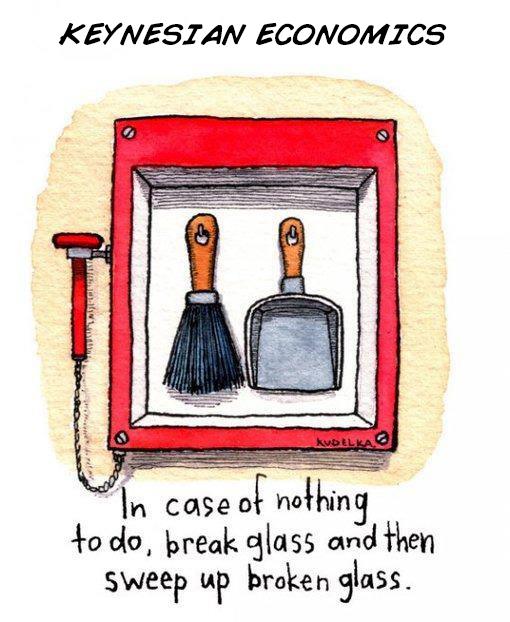











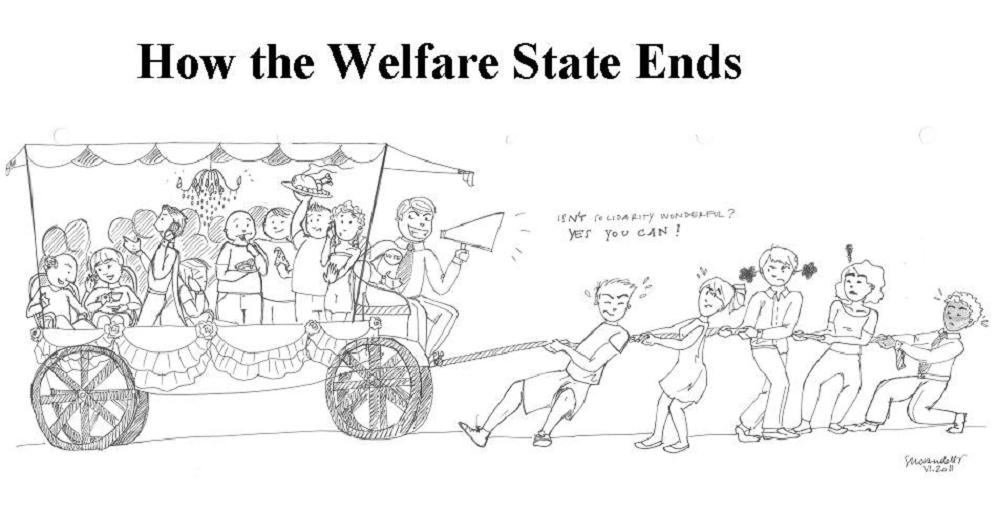



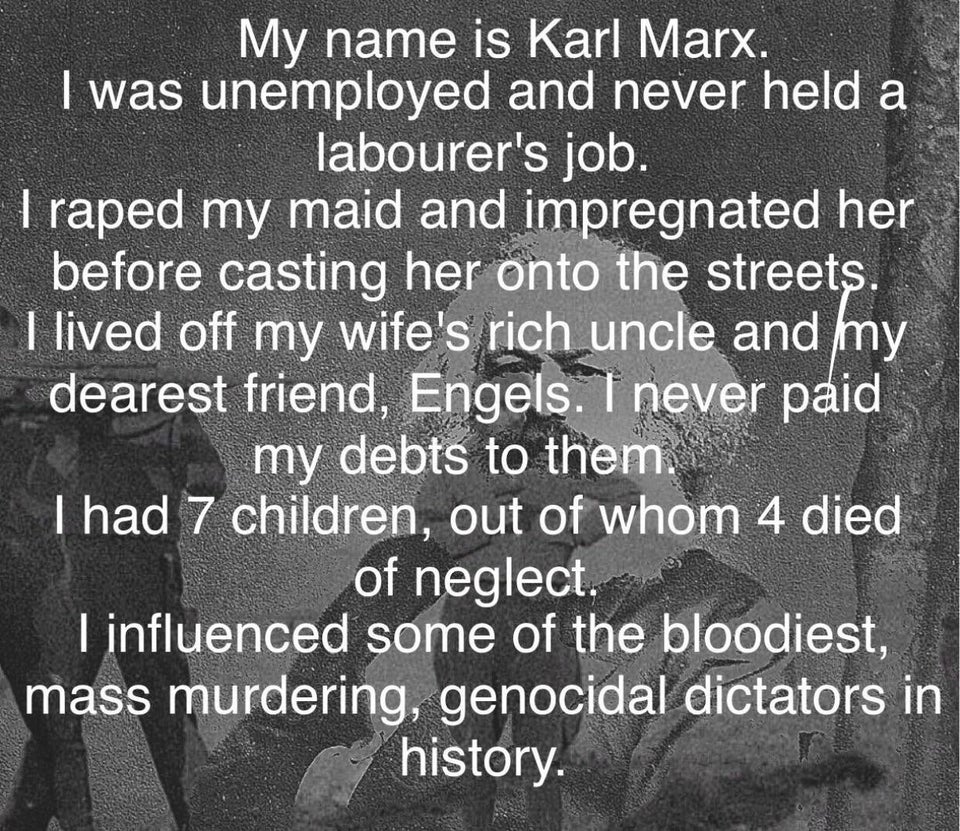



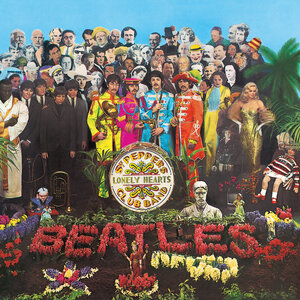


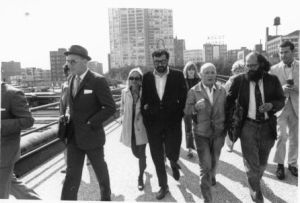





 It’s rather difficult to convey just how famous Petty became – and how fast! This rather obscure Chicago commercial artist was suddenly thrust upon the national stage, literally, overnight. His signature was prominently displayed in all of his advertising work. Jantzen created the “Petty Girl” swimsuit in 1940. Old Gold offered prints of the Petty Girls in their ads. His hands, a brush, and Petty Girl appeared in a watch ad. He was given highly publicized commissions to paint posters for films. The aforementioned portfolio was released. In 1942, when 3700 Chicago high school art students cast their votes for most important artist from their three years of art studies, Petty won first place – as a write-in. He did a cover for Time in 1942 as well as the first in a line of covers for the annual Ice Capades revue. And it would be incorrect to attribute all the fame to the Esquire pin-ups. If anything, it was his national advertising images that got him the most attention – and money.
 It was money that finally severed the Esquire relationship. The money Esquire paid bought less and less of Petty’s time as his advertising career soared.
  Petty had always been a sharp businessman and insisted on retaining all secondary rights to his images as well as the return of his original paintings. He licensed their use on playing cards, on drinking glasses, and elsewhere. At left is from an ad I just found in a 1943 issue of




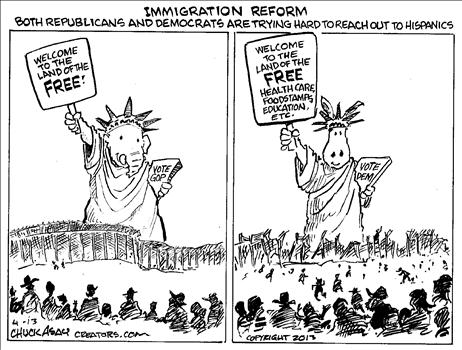

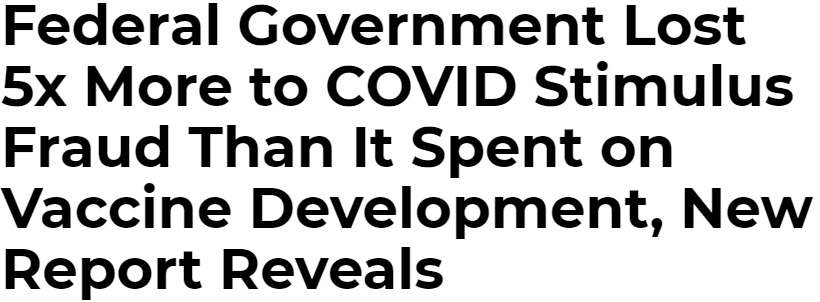
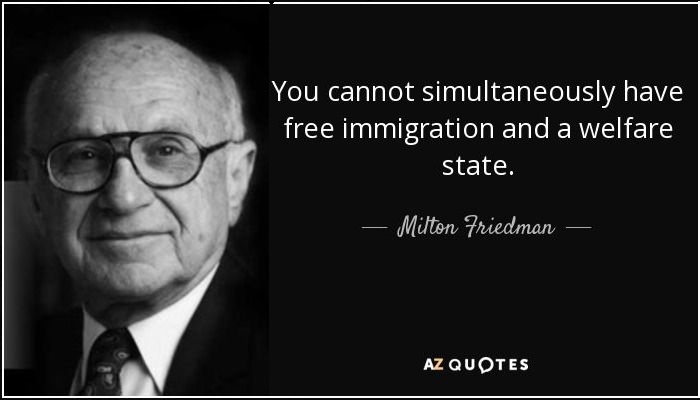


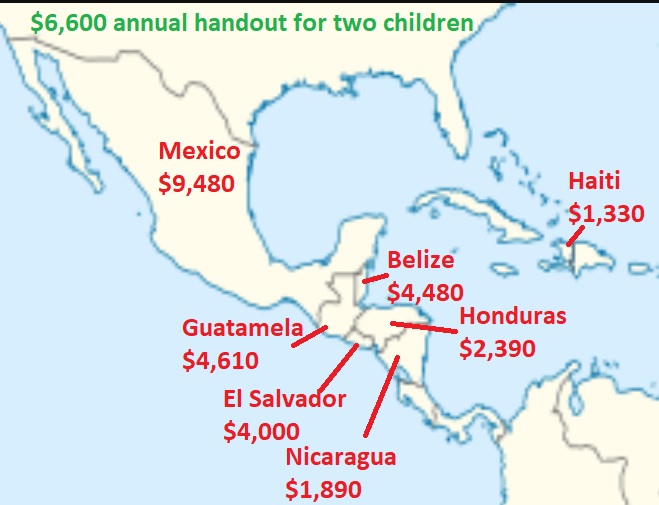


 The Daily Hatch
