Brian Welch of Korn and his Christian conversion and deliverance from drugs Part 2
Brian Welch: From Korn to Jesus
Uploaded on Aug 22, 2008
Former guitarist and co-founder of heavy rock group Korn, Brian Welch talks about the amazing turn his life took when he accepted God for who He is. Saved from drugs and addiction, Welch tells his amazing testimony of Jesus’ love and salvation.
CBN.com – On a peaceful Arizona afternoon, Brian Welch and his daughter Jeanea share a mutual love for music. But just a couple of years ago, Brian would have given anything for just a few minutes of peace.
“I want to be here for Jeanea,” Brian says. “She lost her mom to drugs. I need your help. ‘Help me, help me God.’ I said it from my heart.”
Brian, known around the world to his friends and fans as “Head,” made it big – multi–platinum big – as co-founder and lead guitarist of the band Korn.
“The second record came out, number three on the billboard chart. What’s up with that! We’re some heavy band,” Brian says. “We go to the third album…the album starts going 100,000 copies a week, we start selling. We kept climbing; we kept selling records, more videos, more fame, huge shows.”
The band’s unique sound, called nu-metal, is a mixture of heavy metal and alternative rock, and it catapulted these five friends from Bakersfield, California, into super stardom. And while most of the world saw Brian the rock star, the man who had it all, Brian tells a different story of how he was dying inside and attempted to kill the pain with drugs and alcohol.
“I’d go back on the road, starting drinking. ‘OK, guys let’s party.’ Sweeping the pain under the rug,” Brian says.
While it didn’t seem to affect his music, it had a devastating effect on his marriage.
“I’d go home and me and my ex-wife would do drugs and fight,” he says.
Brian tried several times to quit the drugs, but he felt powerless to fight them. Then, the arrival of his daughter Jeanea changed everything. Brian and his wife, Rebekah, went on the straight and narrow – at least for awhile.
“And that was like the best thing, I said, ‘Life is going to be good. Life is going to be good. I’ve got my band. I’ve got my wife. I’ve got my baby.’ We’re still climbing up and then I go back on tour. I got clean when she was born, and I go back on tour. Open a beer for the first show, instantly hooked again. Rebekah starts doing ‘speed’ at home with the baby and I’m still climbing success. And home is just terrible. Rebekah is missing. I’m missing my baby so bad. When I come home, I’m so drunk or hung over. Then, I spend a couple of days with my kid. I bump into someone who does speed. I do speed at home with my kid and it just gets worse at home as the success grows,” Brian says.
Then, his wife left him and Jeanea, and they eventually divorced.
“I panicked. My rock star dream, my money, nothing, none of my power, none of my gangster friends could stop that trauma from happening,” he says.
Brian won custody of Jeanea. And here began that tug of war in his heart. He wanted to care for his daughter, but hated exposing her to the wild party life of Korn.
“How can you leave a huge band that’s like one of the biggest bands that’s come around, rock bands, that changed music, how can you leave that?,” Brian asks. “But how can I not be there for my daughter?”
As Brian agonized over this decision, he dove deeper and deeper into drugs and alcohol. One day, he heard his daughter singing a Korn song.
“I heard Jeanea singing a Korn song called “Adidas.” It means all day long I dream about sex. It’s a party song. And I felt like a loser. I’m no good for this kid,” Brian says.
During that time, Brian went into real estate with two partners who happened to be Christians. They never troubled Brian with their faith. But, at one point they reached out to him through an e-mail. Brian had mentioned to his partners how his life was falling apart. Their reply — “Come to me, all you who are weary and I will give you rest.” (Matthew 11:28)
Brian began to question, “‘Could Jesus be real?’ I was thinking in my mind, was this guy not just a goody, goody? Could there really be a God, and is He calling me? I looked up that scripture and I wanted it to be true.”
Eventually, Brian went to church with them.
“So we went to the service. And the music came on and all these people went up to the front and started praying. And I was like, that is just weird. But I was drawn, I felt something going on,” Brian says. “He said, ‘Does anybody want to accept Christ?’ And I did it for myself. I said the prayer and went home rolled up a hundred dollar bill, laid out a big line of ‘speed’, snorted it. And I said…I remember perfectly. I was clear…I said, ‘Lord, If you’re real like that guy says, please take these drugs from me. I can’t quit, I don’t want to do them, but I can’t stop. I want to be here for Jeanea. She lost her mom to drugs. I need your help, Just help me. Help, help me God.’ I said it from my heart.”
Brian snorted “speed” and read the Bible for a week, searching for the answers. Then one day…
“I felt this peaceful presence and I started shaking a little bit and I got goose bumps everywhere. And the first thing I felt was ‘I love you.’ And I was like, ‘Father?’ I was frozen. ‘Father?’ This was God and then it went away. But, it was so real. It took over the high. And when it went away the drugs said, ‘That’s just drugs. That’s not real.’ So I did drugs all night long. And the next day I woke up and I had the feeling to go to my Bible. I opened it up and pointed, the soul who sins is the soul who dies. And to me, right then, it was like God told me I revealed myself to you last night. It’s time for you to stop the drugs. It’s time for you to be done. And I was consumed with fear and I went and grabbed all my drugs and threw them in the toilet and I said, ‘I’m done God. I’m yours now. I’m yours.’ That’s the last time I did drugs.
According to Brian, the fact that he could become clean after being in drugs for so many years was a miracle.
At the same time, in 2005, Brian split from Korn and sent the heavy metal world into a spin. On the other hand, Brian was baptized in the Jordan River and started his new journey.
“To tell you the truth, God was real,” Brian says. “He revealed himself to me, kept revealing Himself to me, and I felt his presence at my house. He’s speaking to my kid and all this crazy stuff is happening, and that’s all that mattered to me. I was OK. This band stuff, the stardom, I mean everything, it doesn’t matter anymore. It’s God. He’s so real. I don’t care what I do the rest of my life.”
Brian has taken his responsibility as a father head on. Instead of lewd lyrics, Jeanea hears her dad talk about the love of God.
Brian’s music career also has taken on a new direction. His music now reflects his journey from self–destruction into the loving arms of God.
“He put me on Earth to have fellowship and intimacy with Him,” Brian says. “And I’m going to spend as much time I can possibly spend getting to know him everyday. I don’t want to waste any time. I’ve wasted enough time. That’s what I’m put on Earth to do. Be intimate with God. Get to know Him as much as I can. Let Him fill me with His spirit so He can do the work by bringing people into the Kingdom.”
Jim Morrison’s sad drug death was followed by Pamela Courson’s sad story!!! pamela courson/ jim morrison interview Interview with Jim Morrison’s father and sister Uploaded on Aug 9, 2010 This interview is from “When You’re Strange” DVD bonus material. I do not own this video and own no rights to it! Pamela Courson Uploaded […]
__________ NICO – I’m Waiting For The Man – (1982, Warehouse, Preston, UK) One of the top 10 songs from The Velvet Underground and Nico is the song “I’m Waiting for the Man I’m Waiting for the Man From Wikipedia, the free encyclopedia Jump to: navigation, search “I’m Waiting for the Man” Song by […]
The life of Lou Reed (includes videos from 1960′s and 1970′s) ____________ Rock & Roll – Velvet Underground The Velvet Underground – Venus in Furs – Live 1) Lou Reed – Sweet Jane – live in Paris, 1974 Velvet Underground-”Sunday Morning” from “Velvet Underground and Nico” LP Lou Reed From Wikipedia, the free encyclopedia Jump […]
Jim Morrison’s relationship with Nico Nico Icon documentary part 1. Nico Icon documentary part 2. ______________ Jim Morrison at Andy Warhol’s Party.wmv (with Nico) Uploaded on Apr 26, 2010 From the Oliver Stone movie. The Doors. _______________________ nico discusses jim morrison. Uploaded on Jan 2, 2008 nico discusses jim, and how he impacted her […]
I really enjoyed the movie “Savannah Smiles” last night and afterwards I looked up what happened to Bridgette Andersen and where she is today. IMDB notes: Bridgette Andersen was born on July 11, 1975 to Frank Glass and Teresa Andersen in Inglewood, California and grew up in Malibu. She always considered it good luck to […]
Today I heard Tim Todd’s testimony about drugs. Related posts: Whitney Houston dead at 48, long history of drugs and alcohol February 11, 2012 – 8:31 pm Sad news about Whitney Houston’s death tonight. I have included some earlier posts about drugs and alcohol and rock stars. LOS ANGELES (AP) — Whitney Houston, who ruled as […]
I have written about the “27 Club” several times in the past and I have got a lot of hits in the last 30 days on these blog posts below that deal with Rock and Rollers and drugs. Keith Richards’ wife is a bible believing christian Pete de Freitas of Echo and the Bunnymen is a […]
I’m In A Rock ‘N’ Roll Band – The Singer (Part 1) Jim Morrison – books on tape – w subtitles Light My Fire – The Doors The Rolling Stones – Satisfaction ________________________ The Rolling Stones – The Breakthrough The Rolling Stones – Brian Jones The Rolling Stones- Paint it Black Nirvana – Smells Like […]
Amy Winehouse died last week and she joined the “27 club.” Pete de Freitas of Echo and the Bunnymen is also a member of the “27 Club.” This is group of rockers that have died at age 27. A tribute to the amazing drummer of one of our biggest influences, Echo & The Bunnymen. We […]
cc ‘Janis Joplin’ 2/5 from True Hollywood Story (Janis was having affair with Pigpen) Jerry Garcia (guitar, vocals), Ron “Pigpen” McKernan (vocals, harmonica), Bob Weir (guitar, vocals), Phil Lesh (bass), Mickey Hart (drums), Bill Kreutzman (drums). Grateful Dead “Don’t Ease Me In” Live @ Canadian National Exhibition Hall Toronto, CA June 27th, 1970 Grateful Dead […]
Amy Winehouse died last week and joined the “27 club” which is a group of rockers that died at age 27. Gary Thain also joined that same group long ago and I wanted to look at his life today. Uriah Heep – Wizard bb By Sean Nelson, Special to MSN Music , July 23, 2011 […]
Recently Amy Winehouse joined the “27 Club” when she died of a drug overdose. The “27 Club” is a group of rockers that died at age 27. Unfortunately Jimi Hendrix died at age 27 in 1970 and Janis Joplin did the same three weeks later. Today we are going to look at her life and […]
JIMI HENDRIX : FINAL INTERVIEW . The other day when Amy Winehouse died she joined the “27 Club” which includes other famous rockers who died at age 27. Most of them died because of drugs. Unfortunately Jimi Hendrix joined the club for the same reason. Something special for all music and Beat Club-Lovers on YouTube: […]
Amy Winehouse died at age 27 and unfornately joined the “27 club” which is made of famous rockers that died at age 27. Pete Ham was a member of Bad Finger which was one of my favorite groups that I followed. “Come and get it” was my favorite song of theirs. ___________________________________ Badfinger perform a […]
Brian’s Blues, Brian Jones on guitar in the early stones years. unreleased track Brian Jones died at age 27 just like Amy Winehouse did. I remember like yesterday when I first heard the song “I can’t get no satisfaction” by the Rolling Stones. I immediately thought about Solomon’s search for satisfaction in the Book of […]
The Rise And Rise Of Kurt Cobain part 1/3 Amy Winehouse joined the “Club 27 the other day with her early death. I am going through the others one by one. Today is Kurt Cobain. 7. Kurt Cobain very rarely does an artist come along and not just upset the “apple cart” but drops […]
Pictures and Videos of Edie Sedgwick and the story of her losing battle against drugs and alcohol Part 2 Drugs and alcohol have taken the life of many people and I have posted many times about their unfortunate deaths. Whitney Houston, Amy Winehouse, Gary Thain, Janis Joplin, Jimi Hendrix, Brian Jones, Kurt Cobain, and Jim […]
Pictures and Videos of Edie Sedgwick and the story of her losing battle against drugs and alcohol Part 1 Factory Girl – The Real Edie Uploaded on Aug 30, 2011 Friends and family of Edie Sedgwick discuss what the factory girl was really like, and the battles and relationships she went through _____________ Edie Sedgwick Excerpt […]
Around 4 years ago I was in Philadelphia and the local radio station had a talk show that was blasting Alice Walton for coming into town and buying the 1876 Thomas Eakins’ masterpiece “The Gross Clinic” which was hanging at the Jefferson Medical College. However, the people of Philadelphia were given 45 days to […]
In 1963, with their celebrity rising thanks to a nationwide folk and blues revival, the Staple Singers delivered a concert in Montgomery, Alabama, that was attended by Reverend Martin Luther King, Jr., and they had the opportunity to speak with the civil rights leader after the show. The meeting had a profound effect on the group’s direction,
and for the next several years they wrote songs exclusively in support of the American civil rights movement.
“I really like this man’s message,” Pops Staples said of King. “And I think if he can preach it, we can sing it.” The Staple Singers’ civil rights songs included “March Up Freedom’s Highway,” about the 1965 Selma-to-Montgomery marches, “Washington We’re Watching You,” “It’s a Long Walk to D.C.” and “Why Am I Treated So Bad,” in honor of the Little Rock Nine. “We sing about what’s happening in the world today, and whatever’s wrong we try to fix it through a song,” Staples recalled her father explaining. “We’re living in dark times, troubled times; we wanted to spread a ray of light on the world.”
Romantic Relationships
Around the same time, Mavis Staples carried on a romance with folk legend Bob Dylan. Dylan had long admired The Staple Singers, covering their song “Dying Man’s Prayer” in 1962, and the Staple Singers had in turn recorded several Dylan compositions. In the late 1960s, Dylan proposed marriage to Staples; although they had dated for seven years, she turned him down.
Although Staples has since come to regret her decision not to marry Dylan, she explained her reasoning at the time: “We had gotten with Dr. King and I was young and stupid, and I was thinking Dr. King wouldn’t want me to marry a white guy.” Dylan has referred to Staples ever since as “the love that I lost.”
Staples was briefly married to a mortician named A.R. Leak, Sr. in the early 1970s, but the pair divorced when Leak demanded that she give up her music career to stay home. “He wanted me to stop singing!” Staples recalled with incredulity. “And I told him I was singing before I met him. It was just a man thing, just want me at home. No way! I keep my songs and I continue to sing, and I let you go.”
Commercial Success
The Staple Sisters achieved their greatest success in the early 1970s as they moved away from traditional gospel and protest songs to record empowerment anthems such as “Respect Yourself” and “I’ll Take You There” and soulful R&B love songs like “Let’s Do It Again,” their only song to reach No. 1 on the Billboard Hot 100 Singles chart.
Although their popularity waned somewhat in the late 1970s and early 1980s, the Staple Singers continued to score modest R&B hits with songs like “I Honestly Love You,” “H-A-T-E (Don’t Live Here Anymore),” “Slippery People” and “Nobody Can Make It on Their Own.”
Solo Career
Beginning with her 1969 self-titled debut solo album, Mavis Staples also maintained a solo career simultaneously while she worked with the Staple Singers. And while she released eight solo albums during the 1970s, 1980s and 1990s, all of which received high praise from those critics who noticed, none of her solo material found much of an audience.
To me this song below sums up Keith Green’s life best. 2nd Chapter of Acts – Make My Life A Prayer to You Make my life a prayer to You I want to do what You want me to No empty words and no white lies No token prayers, no compromise I want to shine […]
Keith Green – Easter Song (live) Uploaded by monum on May 25, 2008 Keith Green performing “Easter Song” live from The Daisy Club — LA (1982) ____________________________ Keith Green was a great song writer and performer. Here is his story below: The Lord had taken Keith from concerts of 20 or less — to stadiums […]
Keith Green – Asleep In The Light Uploaded by keithyhuntington on Jul 23, 2006 keith green performing Asleep In The Light at Jesus West Coast 1982 __________________________ Keith Green was a great song writer and performer and the video clip above includes my favorite Keith Green song. Here is his story below: “I repent of […]
Keith Green – Your Love Broke Through Here is something I got off the internet and this website has lots of Keith’s great songs: Keith Green: His Music, Ministry, and Legacy My mom hung up the phone and broke into tears. She had just heard the news of Keith Green’s death. I was only ten […]
Coldplay Max Masters – Part 3 of 7 Here is message from Highfield church where Will Champion grew up going to church. do all religions lead to God? “It doesn’t matter what you believe as long as you’re sincere.” It’s said that all the religions in the world could be wrong, but only one can […]
Coldplay Max Masters – Part 1 of 7 Uploaded on May 6, 2009 The ASTRA Award winning music documentary – Max Masters Coldplay – was voted MOST OUTSTANDING MUSIC PROGRAM for 2009. Sarah Linton Productions and The Post Box produced the Max Masters documentary to coincide with the album release of ‘Viva la Vida’. __________ […]
The Killers – Human The Killers – Read My Mind The Killers – All These Things That I’ve Done The Killers – Spaceman I have really enjoyed the music of The Killers band. The Killers From Wikipedia, the free encyclopedia Jump to: navigation, search Not to be confused with The Kills. For other uses, see […]
Skillet – Awake and Alive Uploaded on Sep 27, 2010 I really have enjoyed reading about this band from Memphis. Skillet (band) From Wikipedia, the free encyclopedia Jump to: navigation, search Skillet Skillet performing at a promotional acoustic show in Denton, TX in 2006 Background information Origin Memphis, Tennessee, U.S. Genres Rock,[1] Christian rock/metal,[2][3] alternative […]
“Nothing’s Gonna Stop Us Now” is a No. 1 hit song co-written by Albert Hammond and Diane Warren,[2] recorded by the American rock band Starship. It is a duet featuring Starship vocalists Mickey Thomas and Grace Slick. Featured as the theme to the romantic comedy film Mannequin,[3][4] it hit No. 1 in the Billboard Hot 100 on April 4, 1987 and reached No. 1 on the UK Singles Chart for four weeks the following month and became the UK’s 2nd biggest selling single of 1987. At the time, it made Grace Slick the oldest female artist to have a number one single in the United States[5] though the record was later broken by Cher‘s “Believe” in 1999. The song also received an Oscar nomination for “Best Original Song” at the 60th Academy Awards. In addition to appearing on the Mannequin soundtrack, the song was also released on Starship’s album No Protection in July 1987.
In a radio interview, Albert Hammond said that the idea for the song came from his impending marriage to his live-in girlfriend of seven years, after his divorce from his previous wife was finalized. He had said to Diane Warren, “It’s almost like they’ve stopped me from marrying this woman for seven years, and they haven’t succeeded. They’re not gonna stop me doing it.”[6] The song in recent years has been played as a “backing song” on the show The X Factor when reviewing some of acts back to the viewers. The song has been considered “feel good” propelled by a strong synthesizer beat while the lyrics “banal yet effective.”[7]
A music video was produced for the song. It shows Mickey Thomas pursuing a mannequin come to life, played by Grace Slick, wrapped around footage from the film. Meshach Taylor, who plays window dresser Hollywood Montrose in the film, makes a cameo.
The song had played a major role in 1993 for the Montreal CanadiensNHL team during their 24th conquest of the Stanley Cup. While driving home after a lost game, head coach Jacques Demers heard the song playing on the radio and realised it was an empowering song. The next day, he brought to the Montreal Forum a cassette tape with the song on it and distributed among players a small card saying “We’re on a mission, nothing’s gonna stop us”. They soon started to win. He played the song throughout all the playoff games and they eventually won the Stanley Cup that year.[8]
The song was also used frequently during the Portland Trail Blazer’s 1990 NBA playoff run to the NBA finals. It was usually played during critical time outs during the 4th quarter of home games at the Portland Memorial Coliseum.
In 2013, the song was used in an advertising campaign by UK telecommunication company Talk Talk. As a result on Sunday 8 September 2013, it charted at number 39 on the Official UK Chart.[9]
The song was used in the final scene of the 2014 Korean film Hot Young Bloods.
In the 2014 film, The Skeleton Twins, Bill Hader and Kristen Wiig have an epic and powerful scene together where they lip-sync Starship’s “Nothing’s Gonna To Stop Us Now” to each other. [10][11]
In the episode of the television show Family Guy titled “The Ring”, Peter Griffin is told that if he watches a certain video, “you will die!” Peter watches it anyway, and the video shows a scene (animated) from the movie “Mannequin” with the song playing, and Peter is shown lying on the floor, apparently dead, after watching the video for a moment.
Katy Perry and the material from the Prism Album!!!! Part 4 Katy Perry On Bonnie McKee, John Mayer & New Album, “Prism” in 92.3 NOW Interview Published on Aug 13, 2013 Katy Perry talks to 92.3 NOW’s Ty Bentli in NYC about her new music, working with Bonnie McKee and not dating Robert Pattinson. __________________________ […]
Katy Perry and the material from the Prism Album!!!! Part 3 Katy Perry – Roar (Official) Last Friday Katy Perry and Russell Brand’s divorce rumors came true when Brand reportedly filed for divorce in Los Angeles citing, “irreconcilable differences.” TMZ met up with Perry’s father, Keith Hudson, as he was out shopping and when they […]
Katy Perry and the material from the Prism Album!!!! Part 2 Katy Perry, Britney Spears, Neil Patrick Harris Interviewed at ‘The Smurfs 2′ World premiere From Wikipedia: Katy Perry From Wikipedia, the free encyclopedia Jump to: navigation, search “Katy Hudson” redirects here. For the album, see Katy Hudson (album). For the Australian fashion designer, see […]
Katy Perry and the material from the Prism Album!!!! Part 1 Katy Perry – Roar (Official) Katy Perry on Her Strict Evangelical Upbringing: ‘I Didn’t Have a Childhood’ By Alison Matheson, Christian Post Correspondent May 5, 2011|2:37 am Pop star Katy Perry isn’t shy when it comes to flaunting her body and strutting her […]
GRACE UNPLUGGED Add To My Top 10 Prodigal Daughter Content +4 Quality None Light Moderate Heavy Language Violence Sex Nudity What the Ratings Mean 24 Release Date: October 04, 2013 Starring: AJ Michalka, James Denton, Kevin Pollak, Michael […]
Little Rock native David Hodges co-wrote Avril Lavigne song “Hush Hush” Avril Lavigne – Hush Hush (Official Video) Avril Lavigne, ‘Avril Lavigne’: Track-By-Track Review Articles Reviews By Jason Lipshutz, New York | November 04, 2013 4:33 PM EST “A first taste like honey, you were so yum/Can’t wait for a second, cause it’s so fun,” […]
Little Rock native David Hodges co-wrote Avril Lavigne song “Hello Kitty” Avril Lavigne – Hello Kitty (Lyric Video) Avril Lavigne, ‘Avril Lavigne’: Track-By-Track Review Articles Reviews By Jason Lipshutz, New York | November 04, 2013 4:33 PM EST “A first taste like honey, you were so yum/Can’t wait for a second, cause it’s so fun,” […]
Avril Lavigne – Let Me Go ft. Chad Kroeger Let Me Go (Avril Lavigne song) From Wikipedia, the free encyclopedia Jump to: navigation, search “Let Me Go” Single by Avril Lavigne featuring Chad Kroeger from the album Avril Lavigne Released 15 October 2013 Format Digital download Recorded 2013 Genre Pop rock, alternative rock, soft rock Length 4:29 […]
Little Rock native David Hodges co-wrote many of the songs on Avril Lavigne’s new album Preview “Avril Lavigne” iTunes 30 Second Snippets According to Wikipedia: Avril Lavigne (album) From Wikipedia, the free encyclopedia Jump to: navigation, search Avril Lavigne Studio album by Avril Lavigne Released 1 November 2013 Recorded 2011–2013 Length 46:07 Label Epic Producer Rickard B. […]
Moreover, I’ve quoted him many times (here, here, here, here, here, and here) to help explain why higher taxes simply lead to more government spending rather than deficit reduction.
But I’ve never once shared an interview of Friedman, which is a big oversight because of his incredible ability to advocate for economic liberty.
So let’s rectify this mistake. A reader emailed me this video, which purports to show Professor Friedman jousting with a young Michael Moore (yes, supposedly that Michael Moore, though I don’t know if it’s actually him).
But the identity of the questioner isn’t what’s important. Listen to Friedman explain the merits of cost-benefit analysis and consumer choice.
Moreover, I’ve quoted him many times (here, here, here, here, here, and here) to help explain why higher taxes simply lead to more government spending rather than deficit reduction.
But I’ve never once shared an interview of Friedman, which is a big oversight because of his incredible ability to advocate for economic liberty.
So let’s rectify this mistake. A reader emailed me this video, which purports to show Professor Friedman jousting with a young Michael Moore (yes, supposedly that Michael Moore, though I don’t know if it’s actually him).
But the identity of the questioner isn’t what’s important. Listen to Friedman explain the merits of cost-benefit analysis and consumer choice.
Amen. I love what he said about letting people make their own decisions about how much risk they wish to accept given relative prices.
P.S. I do have one small disagreement with Milton Friedman. He supported the notion of a negative income tax/guaranteed annual income. His goal was noble, to replace the plethora of counterproductive welfare programs run from Washington, but I think a better approach is to get the federal government totally out of the business of income redistribution.
P.P.S. As I already stated, I don’t know if that was the (in)famous Michael Moore jousting with Friedman, but I can say that the Michael Moore of today is a big hypocrite when it comes to inequality.
Milton Friedman – Power of Choice (Biography) Part 3 Published on May 21, 2012 by BasicEconomics Tribute to Milton Friedman English Pages, 8. 9. 2008 Dear colleagues, dear friends, (1) It is a great honor for me to be asked to say a few words to this distinguished and very knowledgeable audience about one of our greatest […]
Milton Friedman – Power of Choice (Biography) Part 2 Published on May 21, 2012 by BasicEconomics My Tribute to Milton Friedman: The Little Giant of Free Market Economics By: admin- 11/17/2006 09:49 AM RESIZE: AAA Milton Friedman, the intellectual architect of the free-market reforms of the post-World War II era, was a dear friend. I […]
Milton Friedman – Power of Choice – Biography (Part 1) Published on May 20, 2012 by BasicEconomics David R. Henderson The Pursuit of Happiness ~ Milton Friedman: A Personal Tribute May 2007 • Volume: 57 • Issue: 4 David Henderson (davidrhenderson1950@gmail.com) is a research fellow with the Hoover Institution and an economics professor at […]
Milton Friedman and Chile – The Power of Choice Uploaded on May 13, 2011 In this excerpt from Free To Choose Network’s “The Power of Choice (2006)”, we set the record straight on Milton Friedman’s dealings with Chile — including training the Chicago Boys and his meeting with Augusto Pinochet. Was the tremendous prosperity unleashed […]
RARE Friedman Footage – On Keys to Reagan and Thatcher’s Success Margaret Thatcher and Milton Friedman were two of my heroes. Thatcher praises Friedman, her freedom fighter By George Jones, Political Editor 12:01AM GMT 17 Nov 2006 A tireless champion of the free market Let’s not get misty eyed over the Friedman legacy Milton Friedman, […]
Milton Friedman was a great economist and a fine speaker. ___________________ I have written before about Milton Friedman’s influence on the economy of Chile. Now I saw this fine article below from http://www.heritage.org and below that article I have included an article from the Wall Street Journal that talks about Milton Friedman’s influence on Chile. I […]
December 06, 2011 03:54 PM Milton Friedman Explains The Negative Income Tax – 1968 0 comments By Gordonskene enlarge Milton Friedman and friends.DOWNLOADS: 36 PLAYS: 35 Embed The age-old question of Taxes. In the early 1960′s Economist Milton Friedman adopted an idea hatched in England in the 1950′s regarding a Negative Income Tax, to […]
RARE Friedman Footage – On Keys to Reagan and Thatcher’s Success Margaret Thatcher and Milton Friedman were two of my heroes. Milton Friedman on How Francois Mitterrand (and Failed Lefty Economics) Helped Re-elect Margaret Thatcher Matt Welch|Apr. 10, 2013 9:37 am Yesterday I wrote a column about how Margaret Thatcher liberated Western Europe from the […]
I have written about the tremendous increase in the food stamp program the last 9 years before and that means that both President Obama and Bush were guilty of not trying to slow down it’s growth. Furthermore, Republicans have been some of the biggest supporters of the food stamp program. Milton Friedman had a […]
Milton Friedman, Ronald Reagan And William F. Buckley Jr. Peter Robinson, 12.12.08, 12:01 AM EST In a time of crisis, don’t forget what they had to say. As the federal deficit surpasses $1 trillion, Congress debates a bailout for the Detroit automakers and President-elect Barack Obama draws up plans for a vast new stimulus package, […]
Ark Times blogger gets abortion for selfish reasons, Schaeffer points out that abortion is being performed for own hedonistic happiness reasons today” (includes film ABORTION OF THE HUMAN RACE)
You are right about many people getting abortions have been Christians.
From the website Lifewatch.org this is testimony from Cindy Evans:
In 1973 I was a middle-class, single, 23-year-old college student. After a “one night stand,” I learned that I was pregnant. There was no one to whom I could turn. Alone, I went to the university medical center and had a D&C abortion. Afterwards, I walked home—again, alone…
A year later, despite precautions, I was pregnant again. My boyfriend wanted nothing to do with the whole situation, so he gave me half the abortion fee. I drove myself to a clinic an hour away, had the abortion, and drove home alone. That was the end of the relationship with that man. And that was the end of my problem, I thought.
In 1976 I married and settled in another state. We joined a United Methodist church, and I became active in its UMW. At a UMW meeting in the early 1980s, during a discussion of abortion, I admitted, even bragged about, my two abortions. I did not mention any details, or that my thoughts and feelings were eating away at my insides.
Months later, I shared my experiences of abortion – and the pain, guilt, and fears they caused – with a friend. I was convinced that God hated me and would punish me with no more children. My friend listened and cared. In the midst of many tears, we prayed for God’s forgiveness. And forgiveness came. I remember that moment as if it happened yesterday.
From personal experience, I know that abortion virtually guarantees the “devastating damage” our Social Principles say we want to avoid.
If I were the only woman to experience these consequences of abortion, then my testimony could be ignored. Unfortunately, there are millions of women, like me, who have had abortions and who have suffered similar, or worse, consequences. Even Planned Parenthood’s Alan Guttmacher Institute admits that 90% of the women who have had abortions would not have done so if they had believed they had another option. All women who face unplanned pregnancies need people who will care about them and their long-term welfare. As followers of Jesus Christ, as The United Methodist Church, we can and we should love them both.
The person using the username “arhogfan501” stated, “Pathetic! Got to love the selfishness. This baby will wreck my career and social plans. I’ll just go have it sucked out. Good thing our mothers took on the responsibility when they got pregnant or none of us would be here. That’s what’s wrong with society today, no one takes responsibility for their actions.”
The person using the username “Couldn’t be better” responded, “arhogfan, no one, NO ONE, has mentioned anything about abortion related to career.”
@couldn’t be better. She mentions the word “job” twice, you’re right, I’m sure her JOB (career) had no influence. You’re a pathetic individual when you feel abortion is just another form of birth control, equal to buying a box of condoms at Wal-Mart. You say “the State has shown no interest in helping families”. Are you one of those worthless parents who teach your kids to rely on the “State” for their every need? When this bill becomes law, maybe it will force people like you to take responsibility for your actions and have to endure the consequences of such actions. Sorry, if I’m not sympathetic to the I’m only 23, my mommy is going to kill me and I just got my first job crap. Back at you, how about you take take vacuum hose you love so much and stick it where the sun doesn’t shine!
“Arhogfan501” brought up the subject of selfishness. That reminds me of a story about Hillary Clinton, who I admit probably will be our next president. I got this off of Doug Lawrence’s blog:
Hillary Clinton’s encounter with Mother Teresa began, it just so happens, at the National Prayer Breakfast, way back in 1994. That year, the keynoter was a special guest: Mother Teresa. Nearly 3,000 packed a huge room. Near the dais were the president and first lady—the Clintons.
Unlike in typical years, where the keynoter sits among the assembled waiting for others to finish speaking, Mother Teresa appeared from behind a curtain only when called to the platform, and then slowly hunched toward the microphone. She began talking about Jesus and John the Baptist in their wombs, about their mothers, and how the “unborn child” in the womb of Elizabeth—John—leapt with joy, heralding the arrival of Christ as Mary neared Elizabeth, a moment known as “The Visitation.”
Mother Teresa next spoke of love, of selfishness, of a lack of love for the unborn—and a lack of want of the unborn because of selfishness. Then, the gentle sister made this elite group uncomfortable: “But I feel that the greatest destroyer of peace today is abortion, because Jesus said, ‘If you receive a little child, you receive me.’ So every abortion is the denial of receiving Jesus.”
After an awkward silence, the entire ballroom erupted in a standing ovation that seemed to last minutes. It felt even longer to the embarrassed Clintons (and Al and Tipper Gore), who remained seated and did not clap.
Undeterred by the Clintons’ coldness, the tiny, aged lady was only warming up. Abortion was, said Mother, “really a war against the child, and I hate the killing of the innocent child, murder by the mother herself. And if we accept that the mother can kill even her own child, how can we tell other people not to kill one another? … This is why the greatest destroyer of love and peace is abortion.”
The January 11 Newsweek has an article about the baby in the womb. The first 5 or 6 pages are marvelous. If you haven’t seen it, you should see if you can get that issue. It’s January 11 and about the first 5 or 6 pages show conclusively what every biologist has known all along, and that is that human life begins at conception. There is no other time for human life to begin, except at conception. Monkey life begins at conception. Donkey life begins at conception. And human life begins at conception. Biologically, there is no discussion — never should have been — from a scientific viewpoint. I am not speaking of religion now. And this 5 or 6 pages very carefully goes into the fact that human life begins at conception. But you flip the page and there is this big black headline, “But is it a person?” And I’ll read the last sentence, “The problem is not determining when actual human life begins, but when the value of that life begins to out weigh other considerations, such as the health or even the happiness of the mother.”
We are not just talking about the health of the mother (it’s a propaganda line), or even the happiness of the mother. Listen! Spell that out! It means that the mother, for her own hedonistic happiness — selfish happiness — can take human life by her choice, by law. Do you understand what I have said? By law, on the basis of her individual choice of what makes her happy. She can take what has been declared to be, in the first five pages [of the article], without any question, human life. In other words, they acknowledge that human life is there, but it is an open question as to whether it is not right to kill that human life if it makes the mother happy.
Dr. C. Everett Koop is pictured above.
Dr. Francis Schaeffer: Whatever Happened to the Human Race Episode 1 ABORTION
Francis Schaeffer “BASIS FOR HUMAN DIGNITY” Whatever…HTTHR
Dr. Francis schaeffer – The flow of Materialism(from Part 4 of Whatever happened to human race?)
Dr. Francis Schaeffer – The Biblical flow of Truth & History (intro)
Francis Schaeffer – The Biblical Flow of History & Truth (1)
Francis Schaeffer and, former Surgeon General, C. Everette Koop deal directly with the devaluing of human life and its results in our society. It did not take place in a vacuum. It is a direct result of a worldview that has rejected the doctrine of man being created in the image of God. Man as a product of the impersonal, plus time and chance has no sufficient basis for worth.
In our time, humanism has replaced Christianity as the consensus of the west. This has had many results, not the least of which is to change people’s view of themselves and their attitudes toward other human beings. Here is how the change came about. Having rejected God, humanistic scientists, philosophers and professors began to teach that only what can be mathematically measured is real and that all reality is like a machine. Man is only one part of the larger cosmic machine. Man is more complicated than the machines people make, but is still a machine, nevertheless.
(Francis A. Schaeffer and C. Everette Koop, Whatever Happened to the Human Race?, Ch. 1)
January 22 marked the 40th sobering anniversary of the Supreme Court’s Roe v. Wade decision, which legalized abortion-on-demand nationwide. Now, many Americans are looking closer at the trends surrounding the practice of abortion.
Today, half of all abortions are performed on minority women, according to the latest official figures published by the Centers for Disease Control and Prevention.
(article continues below chart)
Since the 1970s, the share of abortions performed on white women in America has decreased by 24 percent, while the share performed on African American women has increased by 34 percent. And while African Americans are 13 percent of the population, they account for over 42 percent of the abortions.
After 40 years of our nation devaluing life, our leaders in Washington should advocate policies that would allow each new life to flourish to its full potential.
You can listen to this Family Facts radio feature here. Radio stations interested in airing the daily Family Facts Radio Feature can learn more here. Family Facts charts are also delivered weekly in Heritage’s Culture Watch e-newsletter.
Dr Richard Land discusses abortion and slavery – 10/14/2004 – part 3 The best pro-life film I have ever seen below by Francis Schaeffer and Dr. C. Everett Koop “Whatever happened to the human race?” Over the years I have taken on the Ark Times liberal bloggers over and over and over concerning the issue […]
The best pro-life film I have ever seen below by Francis Schaeffer and Dr. C. Everett Koop “Whatever happened to the human race?” Francis Schaeffer pictured above._________ The 45 minute video above is from the film series created from Francis Schaeffer’s book “Whatever Happened to the Human Race?” with Dr. C. Everett Koop. This book really […]
The best pro-life film I have ever seen below by Francis Schaeffer and Dr. C. Everett Koop “Whatever happened to the human race?” Over the years I have taken on the Ark Times liberal bloggers over and over and over concerning the issue of abortion. I asked over and over again for one liberal blogger […]
Francis Schaeffer pictured above._________ The best pro-life film I have ever seen below by Francis Schaeffer and Dr. C. Everett Koop “Whatever happened to the human race?” Over the years I have taken on the Ark Times liberal bloggers over and over and over concerning the issue of abortion. I asked over and over again […]
The best pro-life film I have ever seen below by Francis Schaeffer and Dr. C. Everett Koop “Whatever happened to the human race?” On 1-24-13 I took on the child abuse argument put forth by Ark Times Blogger “Deathbyinches,” and the day before I pointed out that because the unborn baby has all the genetic code […]
PHOTO BY STATON BREIDENTHAL from Pro-life march in Little Rock on 1-20-13. Tim Tebow on pro-life super bowl commercial. Over the years I have taken on the Ark Times liberal bloggers over and over and over concerning the issue of abortion. Here is another encounter below. On January 22, 2013 (on the 40th anniversary of the […]
Dr Richard Land discusses abortion and slavery – 10/14/2004 – part 3 The best pro-life film I have ever seen below by Francis Schaeffer and Dr. C. Everett Koop “Whatever happened to the human race?” Over the years I have taken on the Ark Times liberal bloggers over and over and over concerning the issue […]
In this first episode Milton Friedman asserts, “Adam Smith’s flash of genius was to see how prices that emerged in the market, the prices of goods, the wages of labor, the cost of transport, could coordinate the activities of millions of independent people, strangers to one another, without anybody telling them what to do. His key idea was that self-interest could produce an orderly society benefiting everybody. It was as though there were an invisible hand at work. The invisible hand is a phrase that was introduced by Adam Smith in his great book, The Wealth of Nations, in which he talked about the way in which individuals, who intended only to pursue their own interests, were led by an invisible hand to promote the public welfare which was no part of their intention. He was talking about the economic market. About the market in which people buy and sell. He was pointing out that in order for a butcher or a baker or a candlestick maker to make an income, he had to produce something that somebody wanted to buy. Therefore, in the process of promoting his own interests and looking to his own profit, he ended up serving the interests of his customers.”
Milton Friedman’s Free to Choose – Ep.2 (1/7) – The Tyranny of Control
Last week in this film series the distinguished economist Milton Friedman took us to Hong Kong to see a free market system in which he had a great deal of confidence and faith. This week he takes us traveling again to India, Japan and to Europe to see what happens in his view when governments think they can plan and control the economic activities of their peoples.
FREE TO CHOOSE 2: “Tyranny of Control” (Milton Friedman)Free to Choose ^ | 1980 | Milton Friedman
Posted on Tuesday, July 18, 2006 3:02:09 PM by Choose Ye This Day
FREE TO CHOOSE: Tyranny of Control
Friedman: It is harvest time and Japanese farmers gather their crops for the rice market in Kyoto. Of course, they will try to get as much for it as possible and the buyer’s will try to buy it as cheaply as possible. That is how markets are supposed to work. That is what Adam Smith, the Scotsman who turned economics into a modern science, observed 200 years ago. He observed something else too.
Adam Smith: In every country it is always and must be in the interest of the great body of people to buy whatever they want of those who set it cheapest. The proposition is so very manifest that it seems ridiculous to take any pains to prove it. Nor could it ever have been called in question had not the interested sophistry of merchants and manufacturers, confounded common sense of mankind. Their interest is, in this respect, directly opposite to that of the great body of people.
Friedman: Adam Smith’s flash of genius was to see how prices that emerged in the market, the prices of goods, the wages of labor, the cost of transport, could coordinate the activities of millions of independent people, strangers to one another, without anybody telling them what to do.
His key idea was that self-interest could produce an orderly society benefiting everybody. It was as though there were an invisible hand at work.
The invisible hand is a phrase that was introduced by Adam Smith in his great book, The Wealth of Nations, in which he talked about the way in which individuals, who intended only to pursue their own interests, were led by an invisible hand to promote the public welfare which was no part of their intention. He was talking about the economic market. About the market in which people buy and sell. He was pointing out that in order for a butcher or a baker or a candlestick maker to make an income, he had to produce something that somebody wanted to buy. Therefore, in the process of promoting his own interests and looking to his own profit, he ended up serving the interests of his customers.
When Adam Smith published The Wealth Of Nations, Britain was still a largely rural and placid place. But the Industrial Revolution was already getting started and standards of life were beginning to rise. One obstacle was that trade with other nations was still tightly controlled. Merchants in the home market had persuaded the government of the day to impose heavy duties and taxes on all foreign imports in order to insure themselves a protected market.
One of the results was to turn Britain into a nation of lawbreakers. Smuggling was a national past time: brandy, wines, tobacco, anything with a heavy customs duty on it. For years, the revenue men fought a losing battle along the shores and inlets of the British Isles.
In 1846, after years of argument and partial success, the followers of Adam Smith finally persuaded the British Parliament to remove all duties on goods imported from abroad. Britain embarked on complete free trade, giving a further push to the rising standard of life.
What happened in Britain as a consequence of releasing the tremendous force of self-interest, had the unintended effect of benefiting millions of people all over the world, and by 1851 the evidence was proudly on show at the great Crystal Palace Exhibition.
Free trade enabled Britain to become the work place of the world. But was it all an accident? I don’t think it was. Consider what happened in 1868 on the other side of the world in Japan. For the preceding 300 years, the Japanese had lived in almost complete isolation. They had discouraged visitors from other nations, especially from the West. The result was that by the standards of the West, Japan was backward. It was a feudal society with lords and serfs and woe betide anyone who tried to change the order of things. Women were third class citizens.
In 1868, a new generation of rulers decided that the time had come for Japan to make contact with the outside world. And with the arrival of the first foreign traders from the West, things began to change. The Japanese followed the British trading pattern because Britain was a leading nation of the world. So free trade came to Japan. Japan became a magnet for other people’s ideas and developments.
One of the first traditional industries to feel the effects was weaving. From Europe, the Japanese imported the jacquard method __ a way of programming a loom to control the accuracy of the weave, and so the standardized output. Workers did well in the new atmosphere and so did their employers. The adoption of mass production techniques meant that workers were able to move out of the traditional industries and into the new industries, which all added to the trade boom. None of us can help being effected by the intellectual atmosphere that we breathe. In the middle of the 19th century, when Japan ended her self-imposed isolation and entered the modern age, it never occurred to her leaders to follow any other course than that of free enterprise and free markets. That was the intellectual atmosphere of the time, created by Britain’s success in applying the principles of Adam Smith.
In 1948, when India achieved independence, her leaders had all been trained in Great Britain. They had sat at the feet of Harold Laski and his associates at the London School of Economics, or of their counterparts at Oxford and Cambridge. It never occurred to them to follow any other course than that of central planning and government control. That was the intellectual atmosphere of the time. The intellectual seed took root. As it grew, it needed to be honored, even worshiped.
Every year on the anniversary of Gandhi’s birth, people all over India do just that __ in homage to the great Mahatma, they sit and spin using methods handed down through the centuries.
_________________
In this episode Milton Friedman asserted, “Central planning, in practice, has condemned India’s masses to poverty and misery. We know what has happened in Japan. Free trade set off a process that revolutionized Japan and the lives of its people. Improvements in material well-being went hand in hand with the elimination of the rigid social structure of a century ago. It’s no accident. As always, economic freedom promotes human freedom.”
Milton Friedman’s Free to Choose – Ep.2 (2/7) – The Tyranny of Control
But it is more than just a symbol of honoring the past. It typifies the policy that they are actually following.
The new government in 1948 decided that India’s traditional weaving industry and its workers should be protected from 20th century industrialization. What were the consequences of that policy? This is India today, 30 years after winning independence. These are scenes of a very typical Indian community __ one of thousands. It is called “Anicaputar” and it is about 1,000 miles south of the capital, New Delhi. This is not the kind of life the government intended to perpetuate. But it is one result of their policy. By subsidizing the cotton that the villagers spin and the cloth that they weave, they made it difficult for modern industry to develop.
This is sizing. It’s an essential technique in cloth production where the yarn is smoothed clean. A modern machine could do the same thing in a hundredth of the time. The result of government planning to modernize industry is that the number of hand looms roughly doubled in the first thirty years after India’s independence. Today, in thousands of villages throughout India, the sound of hand looms can be heard from early in the morning until late at night. In this village alone, there are more than 3,000 hand looms in operation.
Since 1948, three generations of villagers have sat at these looms making cloth with patterns that never vary, using methods that never change. There is nothing wrong with this activity, provided it survives the test of the market, provided it is the way in which these people can use their abilities and their energies most effectively. After all, in Japan, where the government has not specially encouraged the hand loom industry, there remains a very small, but very productive hand loom segment. The trouble here is that this industry exists only because the government has subsidized and supported it because it has in effect imposed taxes, direct and indirect, on the rest of the people of India, people who are no better off than these people are in order to enable this activity to continue.
Other industries, both textile industries and industries of a variety of kinds, have been restricted, explicitly kept back, prevented from providing more productive employment in order to make room for this industry. The effect has been to inhibit the development, to prevent the growth, to prevent the dynamic activity that could otherwise develop out of the energies and the abilities to the people of India. This looks like a factory, but it is also home for the people who work here. When they are not sitting at their looms, they eat and sleep in a corner of this hut.
Throughout the world, governments always profess to be forward-looking. In practice, they are always backward-looking. Either protecting the industries that exist, or making sure that whatever ventures they have decided to undertake, are encouraged and developed. This occurs at the expense of the kind of healthy development of new, dynamic, adapted industries that would surely occur if the market were allowed to operate freely. If it were allowed to separate out the unsuccessful ventures from the successful ones. Discouraging the unsuccessful and encouraging the successful.
India has tremendous economic and human potential, every bit as much as Japan had a century ago. The human tragedy is that in India, that potential has been stifled by the straightjacket imposed by an all-wise and paternalistic government.
Central planning, in practice, has condemned India’s masses to poverty and misery. We know what has happened in Japan. Free trade set off a process that revolutionized Japan and the lives of its people. Improvements in material wellbeing went hand in hand with the elimination of the rigid social structure of a century ago. It’s no accident. As always, economic freedom promotes human freedom.
And in the meantime, what has happened to the Japanese weaving industry? This is how textiles start life in a Japanese weaving shed today. A design for cloth is placed on a drum. As it revolves, it is scanned by an electric eye. Each color, each variation in the pattern and texture is transmitted faithfully to a computer. It’s all that the modern loom of Japan requires. This loom is fitted with electronics that make it one of the most sophisticated of its sort in the world. The fabric that it produces is the best silk of its kind.
Thanks to the speed and efficiency of these machines, the price of the silk is competitive. The workers are highly skilled and well paid. With the new technology, there is very little __ a loom like this cannot produce. This piece will become the sash of a traditional bridal gown. These are machine-made products. But by any standards, they are beautiful. They can stand comparison with the very finest work of the hand loom. And it’s not merely the end product itself that is remarkable. The sophisticated technology which was developed to make all of this possible, has been adapted to other processes. Part of the self-generating development under free enterprise, and it all stems from an ancient, traditional industry __ weaving __ that imported a new method for controlling its looms when Japan turned to free trade more than a century ago.
Yet, believe it or not, many still maintain today that markets cannot be left to operate freely. That they must be controlled by government. This dockside is in Scotland, a British government, a socialist government decided that its role was to protect the workers here from competition. So down there in governed shipyards, they are building these vessels for the Polish government. To get the order, the British government is using the money of British taxpayers to subsidize the work. In other words, British people are making these ships in order to sell them at a loss to the Poles. Not only the Poles, but we also in America benefit from this kind of philanthropy.
The steel industry in the United States makes a fine profit. Other countries do too. And their steel is often cheaper, sometimes because their taxpayers subsidize it. So, why shouldn’t the American consumer buy steel wherever he can get it cheapest __ at home or abroad. The American steel industry works very hard trying to persuade us that it’s not in our self-interest to buy in the cheapest market. They urge the government to restrict what they call unfair competition, though, of course, they recognize that there are dangers in this.
_______________________
In this episode Milton Friedman asserts, “When anyone complains about unfair competition, consumers beware. That is really a cry for special privilege always at the expense of the consumer. What we needed in this country is free competition. As consumers, buying in an international market, the more unfair the competition the better. That means lower prices and better quality for us. If foreign governments want to use their taxpayers money to sell people in the United States goods below cost, why should we complain? Their own taxpayers will complain soon enough and it will not last for very long.”
_______________________________________
Milton Friedman’s Free to Choose – Ep.2 (3/7) – The Tyranny of Control
Richard P. Simmons, Industry Specializing Steel Committee: The dilemma of asking our government for assistance in this problem of unfair competition bothers many of us because the sword does cut both ways. But we believe that what we have attempted to do is far different than the kinds of direct government involvement that occur in many of the foreign nations around the world where the governments provide direct financial assistance in the form of either ownership or loans or subsidies in some fashion or another.
What we have attempted to do is simply to get our government to enforce the United States laws against unfair competition that have been on the United States’ books. We draw clear distinction between that and, for example, the several hundred million dollars that the French government has granted to the French steel companies, or that the British Steel Corporation has received $1.3 billion for capital investment this year. So that while we are uneasy in any way interfacing with our government in what we traditionally believe are the free enterprise prerogatives, yet what we are only asking for is that the government enforce the laws that our Congress has passed. I’m not sure that’s really any different than asking someone to arrest someone that commits a crime. I don’t think we would be accused of being reactionary if we reported somebody who was stealing, to the police if it were in violation of a U.S. law. We think that we’re doing exactly the same thing when we bring cases against foreign producers who we believe are violating U.S. laws.
Friedman: The fallacy with that argument is that it begs the real question. Why should there be laws that in effect prevent you and me from buying in the cheapest market?
When anyone complains about unfair competition, consumers beware. That is really a cry for special privilege always at the expense of the consumer. What we needed in this country is free competition. As consumers, buying in an international market, the more unfair the competition the better. That means lower prices and better quality for us. If foreign governments want to use their taxpayers money to sell people in the United States goods below cost, why should we complain? Their own taxpayers will complain soon enough and it will not last for very long.
History provides lots of evidence on what happens when government protected industries compete with industries who have the operate in an open and free market. It’s almost always the government protected industries that come out second best.
Ask Sir Freddy Laker, the Englishman who introduced low cost air traffic across the Atlantic. Who were his chief competitors? They were all government protected, government financed, government regulated airlines. He came out very well, made a mint of money. And you and I have gotten cheaper travel across the Atlantic.
Nothing would promote the long run health of the steel industry, make it into a more efficient, profitable and productive industry than for the U.S. government to keep its hands off, neither providing special privileges, nor imposing special restraints. And what is true for the steel industry is true for every other industry in the country.
These women work in an industry that so far hasn’t asked for special protection __ the silicon chip industry. Every one of these small squares on this disk is a highly complicated and integrated micro circuit. An American technician examines them for defects. It is highly skilled work and she’s had a lot of training. When she has done her job, the rejects will be separated from the rest and the good circuits will be packed up and sent half way around the world to Malaysia. The product of American technological skills returns looking like this. Each micro circuit has been enclosed in ceramic by a Malaysian worker who is highly productive at this sort of work. But, the Malaysians are not able to test their product so back they come here to America to be fed into these machines.
American engineers are good at producing sophisticated machines. In an operation that lasts a fraction of a second, these machines can test every circuit, can grade it for quality, and then can sort it into one of six different categories of reliability. The invisible hand in this free market has done wonders for both the American girls and their Malaysian counterparts. And that’s not the end yet because American silicon chips are exported to many countries where foreign workers assemble them. The final product is then returned to our stores so that you and I, the consumers, can benefit from $10.00 calculators, as well as from a lot of other electronic devices that not long ago simply did not exist. When this Hi-Fi equipment first came on the market, only the rich could afford it.
But even when the international market and labor seem to work to everyone’s advantage, people still put up arguments against it. The usual argument against complete free trade is that cheap labor from abroad will take jobs away from workers at home. Well, what is cheap? A Japanese worker is paid in yen and American workers paid in dollars. How do we compare the yen with the dollars? We need some way of transforming the one into the other. That is where the exchange rate enters in __ the price of yen in terms of the dollar.
Suppose that some exchange rate, Japanese goods are in general cheaper than American goods, and we will be buying much from Japan and selling little to them. But what will the Japanese do with the extra dollars they earn? They don’t want to buy American goods. By assumption, those are all dear. They want to buy Japanese goods. But to buy Japanese goods, they need yen. Calls will come in from all over the world to places like this, offering to buy yen for dollars. But there will be more offers to buy yen than to sell yen. In order to get customers, those offering to buy will have to raise the price. The price of yen in terms of dollars will go up.
As you remember, that is what happened in 1977 and 1978. By late 1978, it took 50% more dollars to buy a given amount of yen than it had taken a year earlier. But what happens when the price of yen in terms of dollars goes up? Japanese labor is no longer so cheap. Japanese goods are no longer so attractive to American consumers. On the other hand, American labor is no longer so dear to Japanese. American goods are more attractive to the Japanese. We will export more to them. We will import less from them. New jobs will be created in export industries to replace any jobs that might have been lost in industries competing with imports. That is how a free market and foreign exchange balances trade around the world when it is permitted to operate. The problem is that more often than not free market is not permitted to operate. For reasons that seem to make sense if you don’t examine them carefully, government insists on interfering, but when they do it’s not possible to hide the harmful effects for very long.
________________
In this episode Milton Friedman asserts, ” What we need are constitutional restraints on the power of government to interfere with free markets in foreign exchange, in foreign trade, and in many other aspects of our lives.”
Milton Friedman’s Free to Choose – Ep.2 (4/7) – The Tyranny of Control
The main reason why the Japanese yen went up so sharply in price in 1977 and 1978 was because the Japanese government had been trying to prevent the yen from going up in price. In the process what might have been small disturbances were allowed to accumulate into a major gap in trade. As a result when market forces were finally permitted to operate, as sooner or later they must be, it took a major change in the yen exchange rate to bring things back into life. Why don’t governments learn, because governments never learn, only people learn, and the people who learn today may not be the people in charge of economic policy tomorrow.
As you contemplate this, you may come to agree with me, that what we need are constitutional restraints on the power of government to interfere with free markets in foreign exchange, in foreign trade, and in many other aspects of our lives.
DISCUSSION
Participants: Robert McKenzie, Moderator; Milton Friedman; Richard Deason, International Brotherhood of Electrical Workers; Donald Rumsfeld, President, G.D. Searle & Company; Helen Hughes, Director of Economic Studies, World Bank; Jagdish Bhagwati, Professor of Economics, MIT
McKENZIE: Now, here in Chicago, the special guests who have been watching that film have their say.
DEASON: This film has set me on edge. There is political, social, ethical considerations which do not reflect in the economic philosophy put out. There is a pervading feeling in this that the individual worker is to be totally sacrificed for the overall good of society. I see __ I don’t see how possibly you can sacrifice individuals’ for overall good of society because society is nothing but those millions and millions of individuals, put together. And nowhere is there any consideration given to the social and the ethical aspects of the free trade formula that you advocate.
McKENZIE: Let’s get other views now, around the group. What’s your reaction, Don Rumsfeld, as a businessman, to the idea that Milton Friedman’s advanced, that America ought to buy in the cheapest markets, the cheapest goods, without protecting against them?
RUMSFELD: I swore I would never even try to defend Milton Friedman. And I won’t. But let me comment, first, on Dick’s comment. It bothers me to hear social and moral arguments invoked in an issue like this, because it seems to me the measure is what actually happens to human beings. Each individual ought to be concerned about humanity. For a single individual who is unemployed, that’s a hundred percent unemployment.
DEASON: Absolutely.
RUMSFELD: And we recognize that. I recognize that. But the real world is, if you, as the film did, go to India, if you want to see things that one can describe as inhumane, and poverty, and problems of human beings, they exist. And the test ought to be, what works? What, in fact, will provide a circumstance that will be more than dynamic, and more productive in the world?
HUGHES: It is true that in the long run we would all be better off with free trade. I agree with Milton. But it’s the short run that matters, and in the short run there are serious adjustment problems. Now there’s no question that the developing countries need access to markets such as American markets. And America needs them to export so that they can export more to developing countries. American exports to developing countries have moved from something like twenty percent of total exports to thirty percent over the last ten years. But the adjustment is important, because what is happening at present is that it’s not just a random group of workers that is affected by this trade, it’s the most disadvantaged and underprivileged workers in America which are being affected; and they are, by and large, women, and members of minorities; in garments, in electronics. And I think that the adjustment consists of action on both the developing and the developed country sides. From the __ let’s take the American side. On the American side, the unions and industry, I think, have to get off discussion about moral issues and get their act in order.
BHAGWATI: I couldn’t agree more with Helen. I think there is a very valid income distributional problem involved here. Certainly society gets better off, consumers get better off as a result of cheaper imports, and I’m all for that, and there I agree completely with Milton. But if the incidence of the adjustment falls on disadvantaged groups, then you would want to do something about it, if this really becomes an ethical issue. But the other thing which I think Milton does bring up, which I disagree sharply with is: Suppose the foreign governments do subsidize and actively promote exports to you. Should you just sit back and just say, “Well, we’re going to be better off as a result of this”? I don’t think that takes into account the fact of the whole international system can break down as a result of what people perceive in pluralist economics as unfair competition emerging. And I think this is really what you’re beginning to see. So we do need some sanctions. I mean, I may receive stolen property, and I’m better off. Of course I’m better off. But if, as a result of this, I encourage theft, I think few people would agree that was something one did want to worry about.
McKENZIE: Before I call in Milton Friedman on this, a reaction to the comments?
DEASON: Yes. Really to Don and to Helen. Don, you choose to set aside, or you appear to choose to set aside the social and the ethical considerations. And __
RUMSFELD: Not at all, what I said was: You have to put the fact on a scale, that there are social and ethical considerations with a free market or without one. And the tendency is for people to invoke morality only on their side, and not to recognize that there are problems of human beings in this world that are going to occur in each case. And the measure, or the test ought to be, what actually happens out there and address that question.
DEASON: But you must, you must also very much consider the social aspect of this situation. Helen’s comment, the short-term displacement. I have a question for Milton at this point: How long do you put as a timetable on the displacement of these people, of these workers? Five years, ten years, a generation? How long will it be before overall society, you know, balances itself out and the individual is no longer hurt?
FRIEDMAN: Let me take your first __ your last question first and then go to your basic question. I have always been in favor of phasing out tariffs over a five year period, a twenty percent reduction a year for five years to give people time to adjust. Now to your fundamental issue. I thought I had heard every objection to my views imaginable, but you are the first one who has ever accused me of putting the interests of society as a whole ahead of the interests of individuals. If there is one element in my social philosophy, in my ethical philosophy that’s predominant, it is that the ultimate unit is the human being, the individual, and that society is a means whereby we jointly achieve our objectives. I would argue that the social and moral issues are all on the side of free trade, that it is you, and people like you, who introduce protection, who are the ones who are violating fundamental social and moral issues. Tell me, what trade union represents the workers who are displaced because high tariffs reduce exports from this country? Because high tariffs make steel, for example, or other goods, more expensive, as a result, those industries which use steel have fewer __ have to charge higher prices, they have fewer employees, the export industries that would grow up to balance the imports __ tell me, what union represents them? What moral and ethical view do you have about their interests?
McKENZIE: Richard Deason.
DEASON: You still haven’t answered my basic question: How long of a time period, how long of a frame __ five years, ten years, a generation? You still haven’t answered it.
FRIEDMAN: I said __ I said five years.
DEASON: Five years __
McKENZIE: Could we be clear, Milton, on this point. You’re saying, though, that tariffs should be phased out over five years regardless of the action of other countries. It’s not a sort of negotiation or anything else?
FRIEDMAN: Regardless. Regardless of the actions of other countries. So far, obviously, I would prefer to have other countries reduce their tariffs __
McKENZIE: But if they don’t move, America should move?
FRIEDMAN: Absolutely.
McKENZIE: Do you go along with that, Don Rumsfeld?
RUMSFELD: In others words, you’re against reciprocal __
FRIEDMAN: I’m not against __
RUMSFELD: __ you favor getting to truly reciprocal trade, but you’re willing to get there unilaterally?
FRIEDMAN: Yeah.
RUMSFELD: Yeah. It seems to me that it’s probably worth moving in that direction. I don’t know where I would stop. I am not __
McKENZIE: Well, it’s a five year program. Will you buy that?
RUMSFELD: Well, it seems to me that you get action, reaction. To the extent you’re doing something that makes sense for human beings, presumably, that would be persuasive with others. Presumably there would be a logical sequence where other countries would begin to sense that had a certain degree of validity in the world.
McKENZIE: Will that happen, Helen Hughes?
HUGHES: Providing you do something for the displaced workers in the country in which they’re displaced. Because if you don’t do something, if you don’t take some action, and it’s generally got to be government action, you will get such a backlash that you’ll be back in the thirties with the sort of thing that happened with high unemployment.”
_____________________________
In this episode Milton Friedman asserts, “The best way to limit the control of a few is free trade on a worldwide basis. There is no measure whatsoever that would do more to prevent private monopoly development than complete free trade. It would do __ be far more effective than all the antitrust suite in the world.
Milton Friedman’s Free to Choose – Ep.2 (5/7) – The Tyranny of Control
McKENZIE: Could we go __ Milton. There’s a direct challenge. What would you do about displaced workers, or let the slack be taken up by other __
FRIEDMAN: I believe that you have to separate, and should separate sharply the issue of what you do about people in distress, from how you handle the industrial system. I do not believe you ought to have a special program for displaced workers. What you ought to have, and what all societies do have, is some mechanism, voluntary or governmental, which will assist people in distress. We have another program in this series which deals with exactly that issue, in which I come out, as you know, in favor of a negative income tax as a way to do it. But I think it’s a great mistake to try to link it directly with tariffs. And the reason is that many people who are displaced are not in trouble. Many of those have good alternatives. Some of them will benefit from it. There are some who will be in distress, of course, but there are always people who are in distress for all sorts of reasons. In a dynamic society, demands are going up here, demands are going up there, there is no more reason in my opinion to have a special program for those who are displaced because of the changes in demand and supply in the international scene, than because of the changes on the domestic scene.
McKENZIE: A quick reaction to that __
DEASON: Why would you want to return to a concept that this country exists, you know, had in 1900? Why would you want to return to where a few control the economic destiny of every working man and woman?
FRIEDMAN: It’s exactly the other way, Mr. Deason. The best way to limit the control of a few is free trade on a worldwide basis. There is no measure whatsoever that would do more to prevent private monopoly development than complete free trade. It would do __ be far more effective than all the antitrust suite in the world.
DEASON: I totally disagree. You would wind up with a situation like in the movie Rollerball, where corporations carved out their spheres of economic influence throughout the world, and controlled everything. It would be controlled by corporations __
FRIEDMAN: You saw the __
DEASON: __ in its entirety.
FRIEDMAN: Excuse me. You saw the picture of Hong Kong, didn’t you?
DEASON: Yes.
FRIEDMAN: Where are those corporations there?
McKENZIE: We might get down that alley and have difficulty in finding our way out of it. Could we move to another big theme in the film: that is, that the third world countries have, broadly speaking, made a very serious error in moving into planned economies, from beginning to end, and you use a phrase in the case of India, “Central planning has condemned the Indian masses to poverty and misery.” Now, what’s your reaction to that, sir?
BHAGWATI: I partly agree with Milton as well as I largely disagree with him. I think it is true that the invisible hand ought to be seen more in the poor countries, (Laughter) than it is, and I would like to see the iron fist disappear. Unfortunately, it’s the other way around. On the other hand, I think it cannot be maintained that laissez faire is the answer, either that it’s a necessary or a sufficient condition for development. Let me go to Milton’s examples and, you know, refer to Japan. Japan is a prime example, actually, of where the visible hand is invisible to everybody who is outside of Japan. But it’s writ large on the wall for the Japanese. The Japanese government, right from the major restoration, has taken a very active interest in the development of the country. It has regulated technology and imports. Even to this date the government and business have a strong symbiotic relationship. I think it’s just __
McKENZIE: Highly paternalistic.
BHAGWATI: __ and business is highly paternalistic. I don’t think it’s a valid example at all of what I believe was the implication of Milton’s program.
McKENZIE: Let’s bring in Helen Hughes. On this theme, has the third world made a disastrous mistake in almost unanimously moving into planned economies rather than the free market?
HUGHES: Well, first of all, it hasn’t almost unanimously moved into planned economies.
McKENZIE: Overwhelmingly so.
HUGHES: Not even overwhelmingly. I mean, India is a large country, but the majority of developing countries are not centrally planned. They have some sort of planning, and secondly, some of the countries which have been most successful have had the highest government intervention. The best examples are Taiwan, Korea, Brazil, Singapore. And even in Hong Kong, which is often held up as an example of no government intervention, I mean this is just not true. The Hong Kong government has provided the infrastructure. It has provided the roads and the ports and schools. And it’s been very important. But when you move to a country like Malawi or Papua New Guinea, you can’t do without government intervention. There is nothing there. There are no entrepreneurs in place, and the American entrepreneurs are not interested in small places like that.
FRIEDMAN: I’m not in favor of no government intervention. I never have been. I point out in the film that what the government did in Hong Kong was very important. The question is: What kind of intervention? And in the states you’ve described, in the places you have described where you’ve had success, governmental intervention has been of a rather special kind. It has provided infrastructure. It has not tried to determine the outline of industrial production, the areas in which industry should go, exactly what the allocation of __ it has not gone in for central planning.
HUGHES: Well that’s just not true in Korea. I mean, you are factually wrong because in Korea the government has actually __
FRIEDMAN: Oh, it is true in Taiwan.
HUGHES: It’s fairly true in Taiwan, but not in Korea, which has grown faster than any other country. Where Korean exports have been determined to a very large extent, by direct government intervention. I think your point is, what sort of government intervention, what for, and what are the tradeoffs between government intervention and the free market. These are the relevant issues.
McKENZIE: What is the role of government in relation to the market economy? How do you see it performing, Don Rumsfeld, do you want to see government, as it were, enforcing competition by chasing down monopoly, restrictive practices, and all the rest of it in the society?
RUMSFELD: The record’s clear that they don’t do it well. They can’t manage the __
McKENZIE: But does that mean they shouldn’t do it at all, or do it better?
RUMSFELD: Take the wage price controls in the United States of America, I happen to have been involved, and I don’t say it with any great pride. The real world is __ I don’t care about good intentions, I don’t care about brains, I don’t care about integrity, the fact of the matter is they’re not smart enough to manage the wages and prices of every American, 215 million strong. They can’t do it well. They do it poorly. And the weight of that is harmful. It’s graphically shown in every document issued by the Council of Economic Advisors in the United States.
McKENZIE: But what about the additional question, though, does the government properly, in this or elsewhere, insure competition by other devices. I’m not talking now about price control, wage control, but insuring competition rather than permitting price fixing or agreements and monopoly. What do you feel about it?
DEASON: I feel the government properly acts in that area. It must __ the government must be there to insure competition.
RUMSFELD: The government’s not smart enough __ look at the Antitrust Law. You talk about a patch __ the implementation of antitrust regulations in the United States, between the Department of Justice and the FTC. It’s a __ it’s a patchwork mess. There isn’t any logic to it. People don’t know what to do. They don’t __ they can’t get answers. They’re inhibited from mergers and consolidations that would make a lot of sense from the standpoint of the consumer.
DEASON: And would make even more sense from the point of multinational corporations.
HUGHES: I think that one of the points you’re making is that it’s very hard for the government to intervene in a very large country, like India or the United States. But compare government intervention in some of the small, homogenous countries of Europe or Singapore, and I think that’s very important. Switzerland has a great deal of government intervention. Sweden, Denmark, Norway __ I’ve just quoted you the four highest income countries in the world. They do have intervention to try and protect the functioning of the market system, and to make it more efficient.
BHAGWATI: Milton is absolutely right, that if you’re talking about central planning that has been disastrous. Absolutely, in terms of having targeted industrial allocations and so on; I mean there’s absolutely no doubt in anybody’s mind who has studied the problem over the last twenty years.
McKENZIE: Disasters in India, too.
BHAGWATI: In India as well, very definitely.
McKENZIE: You advised on that, didn’t you?
BHAGWATI: No, not on centralized planning, no. (Laughing)
RUMSFELD: That wasn’t a clear question anyway. (Laughter)
FRIEDMAN: That’s all right. I was over there as an advisor, too.
BHAGWATI: I’m on the side of the angels on that. For a number of years __ I’m supposed to be a friend of Milton’s there, which is disastrous. (Laughing)
DEASON: To give advice is one thing. To have it taken is a different one.
FRIEDMAN: I agree very much with what Helen Hughes has said, that the more homogenous the country, the less harm the government will do by intervening. I don’t believe it does positive good. I just simply believe it does less harm. But, as to antitrust __
McKENZIE: Yeah.
FRIEDMAN: I am in favor of the laws which make agreements and restraint of trade illegal.
McKENZIE: Yes.
FRIEDMAN: Most of the rest of the antitrust apparatus has promoted monopoly instead of hindered monopoly. If you look at where there are monopolistic elements in the world, and in the United States, including the multinationals you want to refer to, in almost every case that monopoly derived from a special grant by government. And therefore, the problem is not how does government enforce competition, how do you keep government from setting up monopolies? That’s the real problem, if you look at the real world, and not at the preamble, the language, of antitrust measures and similar laws.
___________________-
In this episode Milton Friedman asserts:
I think the United States would prosper in a way that is hardly imaginable today. It would be an example and a beacon to the rest of the world. What kind of sense does it make, here we are supposedly the leaders of the world. We are the ones who promote freedom, and free enterprise, and individual initiative. And what do we do? We force puny little Hong Kong to impose limits, restrictions on its exports at tariffs, in order to protect our textile workers. We go to Japan, and we say to Japan, “For God sakes, you got to limit the number of television sets you come out.” Instead of doing that, we ought to be setting an example to the world, and if we set the kind of an example to the world that Great Britain set to the world in the 19th century, it would be a tremendous __ it would have a tremendous impact, it would strengthen our moral position in the world, it would strengthen our ethical position in the world.
________________________________
Milton Friedman’s Free to Choose – Ep.2 (6/7) – The Tyranny of Control
McKENZIE: How close are you to what Deason was saying a moment ago in this area? He would seem to be arguing with you that there was a responsibility to make competition work.
FRIEDMAN: The responsibility is to set up a framework of laws and of arrangements, under which competition will flourish. And the most __
McKENZIE: Inevitably flourish? I mean, or __
FRIEDMAN: Well, so far as I know, I don’t know of any case in history in which monopolies have been able to maintain themselves for very long without having government assistance directly come in on their side. The trade union monopolies that Mr. Deason represents would never have the kind of power they do now if it weren’t for the special privileges which government has granted to them. I can perfectly well understand his being in favor of such action, of antitrust action by the government, because it really is pro-monopoly action, in the main.
DEASON: Why were those exemptions to monopoly laws given to unions?
FRIEDMAN: Because of the political power of unions, of course. I’m not questioning that.
DEASON: and because __ and because of the tremendous imbalance of power of companies at the time that unions were getting their start.
McKENZIE: There’s one concluding idea toward the end of your script that I’d like to look at, because it seemed to me to be most provocative. You talked about the need for constitutional restraints on governments to prevent them interfering in foreign exchange free markets, and in foreign trade. Now what have you in mind, Milton, when you say “constitutional restraints”?
FRIEDMAN: I __ no doubt what I have in mind if I, if I could persuade the public, I would like it to adopt a constitutional amendment strictly parallel to the constitutional prohibition in the text of the constitution, against the central government __ I’m sorry, against state governments imposing tariffs on imports. I would like to have a constitutional amendment which would read, “The Congress shall not impose any taxes, any taxes on imports, or give any subsidies to exports, except such as may be necessary,” I think the wording of the constitution is that the states are permitted to do it if it’s necessary for inspection. That’s the excuse under which California inspects you every time you drive past to see whether you’re carrying any plants or fruits or vegetables.
DEASON: Milton, let me ask you a question: How long do you think that the United States would survive if the United States enacted what you would like to have?
FRIEDMAN: I think the United States would prosper in a way that is hardly imaginable today. It would be an example and a beacon to the rest of the world. What kind of sense does it make, here we are supposedly the leaders of the world. We are the ones who promote freedom, and free enterprise, and individual initiative. And what do we do? We force puny little Hong Kong to impose limits, restrictions on its exports at tariffs, in order to protect our textile workers. We go to Japan, and we say to Japan, “For God sakes, you got to limit the number of television sets you come out.” Instead of doing that, we ought to be setting an example to the world, and if we set the kind of an example to the world that Great Britain set to the world in the 19th century, it would be a tremendous __ it would have a tremendous impact, it would strengthen our moral position in the world, it would strengthen our ethical position in the world. Instead of giving money to underdeveloped countries to produce products which we then refuse to buy and don’t let them export to us, we would be saying to the rest of the world, “If you produce anything, if you can produce anything and have a market here, come, we’re delighted to buy it, and we’ll produce things for you to buy.” That’s the kind of a pattern I would like to see the United States establish.
McKENZIE: Would your members buy that?
DEASON: Never. That’s a __
FRIEDMAN: Never is a long word, sir.
DEASON: Yes, you’re right.
FRIEDMAN: __ and you must distinguish between __
DEASON: And one should never say never.
FRIEDMAN: Your union officials would not buy it. But I am not sure your members wouldn’t.
DEASON: My members would not. No. My members would never buy it either. I cannot conceive of the United States setting itself up to become a target for the rest of the world.
FRIEDMAN: It’s not a target.
DEASON: There would be absolutely nothing that would require or compel any other country to enact any reciprocal agreements relative to tariffs__
FRIEDMAN: That’s right.
DEASON: __ and until such time as they have succeeded in dumping in the United States __ and I used dumping in the broadest sense of the word __ any and every product, either government subsidized by a foreign government, either put there because of multinational corporations manufacturing facilities in a foreign country, until they have succeeded in absolutely draining us dry __
FRIEDMAN: Draining us dry of what?
DEASON: Of every __ of every asset.
FRIEDMAN: How?
DEASON: Of every __
FRIEDMAN: What would they do with the dollars they got?
DEASON: They’d probably buy up, as they are now, as they __
FRIEDMAN: If they bought up __
RUMSFELD: The choice farmland.
FRIEDMAN: Yes. Yes.
McKENZIE: Let’s broaden this. On this very argument, now and a constitutional amendment argument. We’ve learned from our union friend he would __ can’t sell it and won’t sell it. Would business buy it?
RUMSFELD: Oh, no! They __ speaking __ (Several people talking at once.)
RUMSFELD: I’m not saying whether I’d buy it. No, no, but if business would help, which is the question. No, when I __ I speak not as a businessman, but as an ex-government employee, whenever proposals like that came up, one of the first things people see happen is government __ business and labor come in in lockstep, saying, “Horrors, horrors, the sky is falling.” There’s a commonality of interests there and people get used to what is, they get terribly conservative, and they know how to work the system the way it exists, and particularly the big unions and the big business, and they get very satisfied with it, they can manage it pretty well, and any time you try to unravel any kind of regulation or restriction or government intrusion, they’re philosophically for it, but in the practical world, they don’t want you to change the drill, they just figured out how to work this. Why should you then change it and make it all the more complicated. No, I think you’d get a good deal of reaction, just like you did out of the steel company in your television show.
McKENZIE: And what would the international reaction, do you think, as an international economist. Supposing Milton got his amendment, constitutional amendment, which had that effect, how would other countries react to it?
_____________________________
In this episode Milton Friedman asserts, “I’m not pro business. I’m pro free enterprise, which is a very different thing, and the reason I’m pro free enterprise.”
Milton Friedman’s Free to Choose – Ep.2 (7/7) – The Tyranny of Control
HUGHES: Well, I think Milton’s fundamental example of why not be like Britain in the 19th century is wrong. Britain in the 19th century was THE industrialized country; it was well ahead of everybody else __
McKENZIE: Many decades ahead.
HUGHES: __ many decades ahead of everybody else, and it was making larger profits, larger economic rents on its production, and it was doing it at very great cost to the workers in Britain. The workers in Britain were greatly exploited under those circumstances, and we don’t want to go back to that. The international situation is much more complex, and countries __ there are countries at different levels of development, countries with different social systems, and countries with different social objectives, so I think that the solution, you know, is wrongly founded, and it’s millenarian, it’s utopian. I think that we have to think of a much more realistic process of discussions, negotiation, such as has taken place through that, to get to where we’re going, without hurting the people who pay for the adjustment, and that is basically the workers, not the economists.
RUMSFELD: Could I just comment briefly?
McKENZIE: Yeah.
RUMSFELD: I worry about the argument that because of the complexities of international relations, that therefore they must be planned and managed. By definition, we’re not capable of managing the world economy. Each instance when we try to do it, it doesn’t work out quite the way we intended.
FRIEDMAN: I don’t apologize for a moment for setting __ for being millenarian; because I think unless we know where we want to go, the timid steps that we take in that direction will go in the wrong direction. And if we’re gonna go in the right direction, we ought to have a view. But I want to be sure to get down on the record a very strong objection to the statement of fact by Helen Hughes about 19th century Britain. I believe it is simply wrong. The workers were not exploited. The studies that have been done recently have shown over and over again that the 19th century was a period in which the ordinary English worker experienced a very rapid and very substantial rise in his standard of life. England did not stand alone. Japan had complete free trade for thirty years after the major restoration. Japan in more recent years has not. Japan in more recent years is not an example I would cite. But in its early years it had complete free trade. So I don’t believe England stands alone. Now on the more __
McKENZIE: Politics of it.
FRIEDMAN: On the politics of it, of course it’s not politically feasible, why? Because it’s only in the general interest and in nobody’s special interest. Each of us is fundamentally __ has more concern with our role as a producer of one product than we have as a consumer of a thousand and one products. The benefits of a tariff are visible. Mr. Deason can see that his workers are quote “protected.” The harm which a tariff does is invisible. It’s spread widely. There are people who don’t have jobs because of the tariff, but they don’t know they don’t have jobs. There’s nobody who can organize them. Consumers all over are paying a little more for this, that and the other thing. They don’t recognize that the reason they’re paying for it is because of the tariff. The businessmen? I have never been in __ I’m not pro business. I’m pro free enterprise, which is a very different thing, and the reason I’m pro free enterprise __
RUMSFELD: Don’t point at me when you say that. (Laughter)
FRIEDMAN: No, no. I don’t mean to point to you, Don. I point to the business community, because you are an exception. Because that __
McKENZIE: But he conceded there was a tacit alliance because that way __
FRIEDMAN: Oh there’s __
McKENZIE: __to prevent you from achieving your purpose.
FRIEDMAN: Oh, there’s no doubt that there’s such an alliance. In my opinion, the strongest argument for free enterprise is that it prevents anybody from having too much power. Whether that person is a government official, a trade union official, or a business executive. It forces them to put up or shut up. They either have to deliver the goods, produce something that people are willing to pay for, willing to buy, or else they have to go into a different business.
McKENZIE: Well, there we must leave the argument for this week, and I hope you’ll join us again for the next episode of Free to Choose.
Milton Friedman The Power of the Market 1-5 How can we have personal freedom without economic freedom? That is why I don’t understand why socialists who value individual freedoms want to take away our economic freedoms. I wanted to share this info below with you from Milton Friedman who has influenced me greatly over the […]
Milton Friedman: Free To Choose – The Failure Of Socialism With Ronald Reagan (Full) Published on Mar 19, 2012 by NoNationalityNeeded Milton Friedman’s writings affected me greatly when I first discovered them and I wanted to share with you. We must not head down the path of socialism like Greece has done. Abstract: Ronald Reagan […]
Worse still, America’s depression was to become worldwide because of what lies behind these doors. This is the vault of the Federal Reserve Bank of New York. Inside is the largest horde of gold in the world. Because the world was on a gold standard in 1929, these vaults, where the U.S. gold was stored, […]
George Eccles: Well, then we called all our employees together. And we told them to be at the bank at their place at 8:00 a.m. and just act as if nothing was happening, just have a smile on their face, if they could, and me too. And we have four savings windows and we […]
Milton Friedman’s Free to Choose (1980), episode 3 – Anatomy of a Crisis. part 1 FREE TO CHOOSE: Anatomy of Crisis Friedman Delancy Street in New York’s lower east side, hardly one of the city’s best known sites, yet what happened in this street nearly 50 years ago continues to effect all of us today. […]
Friedman Friday” Free to Choose by Milton Friedman: Episode “What is wrong with our schools?” (Part 3 of transcript and video) Here is the video clip and transcript of the film series FREE TO CHOOSE episode “What is wrong with our schools?” Part 3 of 6. Volume 6 – What’s Wrong with our Schools Transcript: If it […]
Here is the video clip and transcript of the film series FREE TO CHOOSE episode “What is wrong with our schools?” Part 2 of 6. Volume 6 – What’s Wrong with our Schools Transcript: Groups of concerned parents and teachers decided to do something about it. They used private funds to take over empty stores and they […]
Here is the video clip and transcript of the film series FREE TO CHOOSE episode “What is wrong with our schools?” Part 1 of 6. Volume 6 – What’s Wrong with our Schools Transcript: Friedman: These youngsters are beginning another day at one of America’s public schools, Hyde Park High School in Boston. What happens when […]
Friedman Friday” Free to Choose by Milton Friedman: Episode “Created Equal” (Part 3 of transcript and video) Liberals like President Obama want to shoot for an equality of outcome. That system does not work. In fact, our free society allows for the closest gap between the wealthy and the poor. Unlike other countries where free enterprise and other […]
Free to Choose by Milton Friedman: Episode “Created Equal” (Part 2 of transcript and video) Liberals like President Obama want to shoot for an equality of outcome. That system does not work. In fact, our free society allows for the closest gap between the wealthy and the poor. Unlike other countries where free enterprise and other freedoms are […]
Milton Friedman and Ronald Reagan Liberals like President Obama (and John Brummett) want to shoot for an equality of outcome. That system does not work. In fact, our free society allows for the closest gap between the wealthy and the poor. Unlike other countries where free enterprise and other freedoms are not present. This is a seven part series. […]
I am currently going through his film series “Free to Choose” which is one the most powerful film series I have ever seen. PART 3 OF 7 Worse still, America’s depression was to become worldwide because of what lies behind these doors. This is the vault of the Federal Reserve Bank of New York. Inside […]
I am currently going through his film series “Free to Choose” which is one the most powerful film series I have ever seen. For the past 7 years Maureen Ramsey has had to buy food and clothes for her family out of a government handout. For the whole of that time, her husband, Steve, hasn’t […]
Friedman Friday:(“Free to Choose” episode 4 – From Cradle to Grave, Part 1 of 7) Volume 4 – From Cradle to Grave Abstract: Since the Depression years of the 1930s, there has been almost continuous expansion of governmental efforts to provide for people’s welfare. First, there was a tremendous expansion of public works. The Social Security Act […]
_________________________ Pt3 Nowadays there’s a considerable amount of traffic at this border. People cross a little more freely than they use to. Many people from Hong Kong trade in China and the market has helped bring the two countries closer together, but the barriers between them are still very real. On this side […]
Aside from its harbor, the only other important resource of Hong Kong is people __ over 4_ million of them. Like America a century ago, Hong Kong in the past few decades has been a haven for people who sought the freedom to make the most of their own abilities. Many of them are […]
“FREE TO CHOOSE” 1: The Power of the Market (Milton Friedman) Free to Choose ^ | 1980 | Milton Friedman Posted on Monday, July 17, 2006 4:20:46 PM by Choose Ye This Day FREE TO CHOOSE: The Power of the Market Friedman: Once all of this was a swamp, covered with forest. The Canarce Indians […]
Milton Friedman: Free To Choose – The Failure Of Socialism With Ronald Reagan (Full) Published on Mar 19, 2012 by NoNationalityNeeded Milton Friedman’s writings affected me greatly when I first discovered them and I wanted to share with you. We must not head down the path of socialism like Greece has done. Abstract: Ronald Reagan […]
“Nothing’s Gonna Stop Us Now” is a No. 1 hit song co-written by Albert Hammond and Diane Warren,[2] recorded by the American rock band Starship. It is a duet featuring Starship vocalists Mickey Thomas and Grace Slick. Featured as the theme to the romantic comedy film Mannequin,[3][4] it hit No. 1 in the Billboard Hot 100 on April 4, 1987 and reached No. 1 on the UK Singles Chart for four weeks the following month and became the UK’s 2nd biggest selling single of 1987. At the time, it made Grace Slick the oldest female artist to have a number one single in the United States[5] though the record was later broken by Cher‘s “Believe” in 1999. The song also received an Oscar nomination for “Best Original Song” at the 60th Academy Awards. In addition to appearing on the Mannequin soundtrack, the song was also released on Starship’s album No Protection in July 1987.
In a radio interview, Albert Hammond said that the idea for the song came from his impending marriage to his live-in girlfriend of seven years, after his divorce from his previous wife was finalized. He had said to Diane Warren, “It’s almost like they’ve stopped me from marrying this woman for seven years, and they haven’t succeeded. They’re not gonna stop me doing it.”[6] The song in recent years has been played as a “backing song” on the show The X Factor when reviewing some of acts back to the viewers. The song has been considered “feel good” propelled by a strong synthesizer beat while the lyrics “banal yet effective.”[7]
A music video was produced for the song. It shows Mickey Thomas pursuing a mannequin come to life, played by Grace Slick, wrapped around footage from the film. Meshach Taylor, who plays window dresser Hollywood Montrose in the film, makes a cameo.
The song had played a major role in 1993 for the Montreal CanadiensNHL team during their 24th conquest of the Stanley Cup. While driving home after a lost game, head coach Jacques Demers heard the song playing on the radio and realised it was an empowering song. The next day, he brought to the Montreal Forum a cassette tape with the song on it and distributed among players a small card saying “We’re on a mission, nothing’s gonna stop us”. They soon started to win. He played the song throughout all the playoff games and they eventually won the Stanley Cup that year.[8]
The song was also used frequently during the Portland Trail Blazer’s 1990 NBA playoff run to the NBA finals. It was usually played during critical time outs during the 4th quarter of home games at the Portland Memorial Coliseum.
In 2013, the song was used in an advertising campaign by UK telecommunication company Talk Talk. As a result on Sunday 8 September 2013, it charted at number 39 on the Official UK Chart.[9]
The song was used in the final scene of the 2014 Korean film Hot Young Bloods.
In the 2014 film, The Skeleton Twins, Bill Hader and Kristen Wiig have an epic and powerful scene together where they lip-sync Starship’s “Nothing’s Gonna To Stop Us Now” to each other. [10][11]
In the episode of the television show Family Guy titled “The Ring”, Peter Griffin is told that if he watches a certain video, “you will die!” Peter watches it anyway, and the video shows a scene (animated) from the movie “Mannequin” with the song playing, and Peter is shown lying on the floor, apparently dead, after watching the video for a moment.
Katy Perry and the material from the Prism Album!!!! Part 4 Katy Perry On Bonnie McKee, John Mayer & New Album, “Prism” in 92.3 NOW Interview Published on Aug 13, 2013 Katy Perry talks to 92.3 NOW’s Ty Bentli in NYC about her new music, working with Bonnie McKee and not dating Robert Pattinson. __________________________ […]
Katy Perry and the material from the Prism Album!!!! Part 3 Katy Perry – Roar (Official) Last Friday Katy Perry and Russell Brand’s divorce rumors came true when Brand reportedly filed for divorce in Los Angeles citing, “irreconcilable differences.” TMZ met up with Perry’s father, Keith Hudson, as he was out shopping and when they […]
Katy Perry and the material from the Prism Album!!!! Part 2 Katy Perry, Britney Spears, Neil Patrick Harris Interviewed at ‘The Smurfs 2′ World premiere From Wikipedia: Katy Perry From Wikipedia, the free encyclopedia Jump to: navigation, search “Katy Hudson” redirects here. For the album, see Katy Hudson (album). For the Australian fashion designer, see […]
Katy Perry and the material from the Prism Album!!!! Part 1 Katy Perry – Roar (Official) Katy Perry on Her Strict Evangelical Upbringing: ‘I Didn’t Have a Childhood’ By Alison Matheson, Christian Post Correspondent May 5, 2011|2:37 am Pop star Katy Perry isn’t shy when it comes to flaunting her body and strutting her […]
GRACE UNPLUGGED Add To My Top 10 Prodigal Daughter Content +4 Quality None Light Moderate Heavy Language Violence Sex Nudity What the Ratings Mean 24 Release Date: October 04, 2013 Starring: AJ Michalka, James Denton, Kevin Pollak, Michael […]
Little Rock native David Hodges co-wrote Avril Lavigne song “Hush Hush” Avril Lavigne – Hush Hush (Official Video) Avril Lavigne, ‘Avril Lavigne’: Track-By-Track Review Articles Reviews By Jason Lipshutz, New York | November 04, 2013 4:33 PM EST “A first taste like honey, you were so yum/Can’t wait for a second, cause it’s so fun,” […]
Little Rock native David Hodges co-wrote Avril Lavigne song “Hello Kitty” Avril Lavigne – Hello Kitty (Lyric Video) Avril Lavigne, ‘Avril Lavigne’: Track-By-Track Review Articles Reviews By Jason Lipshutz, New York | November 04, 2013 4:33 PM EST “A first taste like honey, you were so yum/Can’t wait for a second, cause it’s so fun,” […]
Avril Lavigne – Let Me Go ft. Chad Kroeger Let Me Go (Avril Lavigne song) From Wikipedia, the free encyclopedia Jump to: navigation, search “Let Me Go” Single by Avril Lavigne featuring Chad Kroeger from the album Avril Lavigne Released 15 October 2013 Format Digital download Recorded 2013 Genre Pop rock, alternative rock, soft rock Length 4:29 […]
Little Rock native David Hodges co-wrote many of the songs on Avril Lavigne’s new album Preview “Avril Lavigne” iTunes 30 Second Snippets According to Wikipedia: Avril Lavigne (album) From Wikipedia, the free encyclopedia Jump to: navigation, search Avril Lavigne Studio album by Avril Lavigne Released 1 November 2013 Recorded 2011–2013 Length 46:07 Label Epic Producer Rickard B. […]
In 1980 I read the book FREE TO CHOOSE by Milton Friedman and it really enlightened me a tremendous amount. I suggest checking out these episodes and transcripts of Milton Friedman’s film series FREE TO CHOOSE: “The Failure of Socialism” and “What is wrong with our schools?” and “Created Equal” and From Cradle to Grave, and – Power of the Market.“If we could just stop the printing presses, we would stop inflation,” Milton Friedman says in “How to Cure Inflation” from the Free To Choose series. Now as then, there is only one cause of inflation, and that is when governments print too much money. Milton explains why it is that politicians like inflation, and why wage and price controls are not solutions to the problem.
In this episode Friedman notes, “And therefore the crucial thing is to cut down total government spending from the point of view of inflation. From the point of view of productivity, some of the other measures you were talking about are far more important.”
BROWN
Pt 7
BROWN: But, Dr. Friedman, let me __
(Applause)
BROWN: Let me differ with you to this extent. I think it is important that at the time you are trying to get inflation out of the economy that you also give the man in the street, the common man, the opportunity to have a little bit more of his own resources to spend. And if you can reduce his taxes at that time and then reduce government in that process, you give him his money to spend rather than having to yield up all that money to government. If you cut his taxes in a way to encourage it, to putting that money into savings, you can encourage the additional savings in a private sense to finance the debt that you have to carry, and you can also encourage the stimulation of growth in the society, that is the investment into the capital improvements of modernization of plant, make the U.S. more competitive with other countries. And we can try to do it without as much painful unemployment as we can get by with. Don’t you think that has some merit?
FRIEDMAN: The only way __ I am all in favor, as you know, of cutting government spending. I am all in favor of getting rid of the counterproductive government regulation that reduces productivity and disrupts investment. But __
BROWN: And we do that, we can cut taxes some, can we not?
FRIEDMAN: We should __ taxes __ but you are introducing a confusion that has confused the American people. And that is the confusion between spending and taxes. The real tax on the American people is not what you label taxes. It’s total spending. If Congress spends fifty billion dollars more than it takes in, if government spends fifty billion dollars, who do you suppose pays that fifty billion dollars?
BROWN: Of course, of course.
FRIEDMAN: The Arab Sheiks aren’t paying it. Santa Claus isn’t paying it. The Tooth Fairy isn’t paying it. You and I as taxpayers are paying it indirectly through hidden taxation.
MCKENZIE: Your view __
FRIEDMAN: And therefore the crucial thing is to cut down total government spending from the point of view of inflation. From the point of view of productivity, some of the other measures you were talking about are far more important.
BROWN: But if you concede that inflation and taxes are both part and parcel of the same thing, and if you cut spending __
FRIEDMAN: They’re not part and parcel of the same thing.
BROWN: If you cut spending you __ well, but, you take the money from them in one way or another. The average citizen.
FRIEDMAN: Absolutely.
BROWN: To finance the growth of government.
FRIEDMAN: That’s right.
BROWN: So if you cut back the size of government, you can cut both their inflation and their taxes.
FRIEDMAN: That’s right.
BROWN: If you __
FRIEDMAN: I am all in favor of that.
BROWN: All right.
FRIEDMAN: All I am saying is don’t kid yourself into thinking that there is some painless way to do it. There just is not.
BROWN: One other way is productivity. If you can __ if you can increase production, then the impact of inflation is less because you have more goods chasing __
FRIEDMAN: Absolutely, but you have to have a sense of proportion. From the point of view of the real income of the American people, nothing is more important than increasing productivity. But from the point of view of inflation, it’s a bit actor. It would be a miracle if we could raise our productivity from three to five percent a year, that would reduce inflation by two percent.
BROWN: No question, it won’t happen overnight, but it’s part of the __ it’s part of a long range squeezing out of inflation.
FRIEDMAN: There is only one way to ease the __ in my opinion there is only one way to ease the pains of curing inflation and that way is not available. That way is to make it credible to the American people that you are really going to follow the policy you say you’re going to follow. Unfortunately I don’t see any way we can do that.
(Several people talking at once.)
EMMINGER: Professor Friedman, that’s exactly the point which I wanted to illustrate by our own experience. We also had to squeeze out inflation and there was a painful time of one-and-a-half years, but after that we had a continuous lowering of the inflation rate with a slow upward movement in the economy since 1975. Year by year inflation went down and we had a moderate growth rate which has led us now to full employment.
FRIEDMAN: That’s what __
EMMINGER: So you can shorten this period by just this credibility and by a consensus you must have, also with the trade unions, with the whole population that they acknowledge that policy and also play their part in it. Then the pains will be much less.
SPRINKEL: You see in our case, expectations are that inflation’s going to get worse because it always has. This means we must disappoint in a very painful way those expectations and it’s likely to take longer, at least the first time around. Now our real problem has not been that we haven’t tried. We have tried and brought inflation down. Our real problem was, we didn’t stick to it. And then you have it all to do over.
BROWN: Well I would __ I would concede that psychology plays a great, perhaps even the major part, but I do believe that if you have private savings stimulated by your tax system, rather than discouraged by your tax system, you can finance some of that public debt by private savings rather than by inflation and the result will be to ease to some degree the paint of that heavy unemployment that you seem to suggest is the only way to deal with the problem.
FRIEDMAN: The talk is fine, but the problem is that it’s used to evade the key issue: How do you make it credible to the public that you are really going to stick to a policy? Four times we’ve tried it and four times we’ve stopped before we’ve run the course.
(Several people talking at once.)
MCKENZIE: There we leave the matter for tonight, and next week’s concluding program in this series is not to be missed.
Milton Friedman The Power of the Market 1-5 How can we have personal freedom without economic freedom? That is why I don’t understand why socialists who value individual freedoms want to take away our economic freedoms. I wanted to share this info below with you from Milton Friedman who has influenced me greatly over the […]
Milton Friedman: Free To Choose – The Failure Of Socialism With Ronald Reagan (Full) Published on Mar 19, 2012 by NoNationalityNeeded Milton Friedman’s writings affected me greatly when I first discovered them and I wanted to share with you. We must not head down the path of socialism like Greece has done. Abstract: Ronald Reagan […]
Worse still, America’s depression was to become worldwide because of what lies behind these doors. This is the vault of the Federal Reserve Bank of New York. Inside is the largest horde of gold in the world. Because the world was on a gold standard in 1929, these vaults, where the U.S. gold was stored, […]
George Eccles: Well, then we called all our employees together. And we told them to be at the bank at their place at 8:00 a.m. and just act as if nothing was happening, just have a smile on their face, if they could, and me too. And we have four savings windows and we […]
Milton Friedman’s Free to Choose (1980), episode 3 – Anatomy of a Crisis. part 1 FREE TO CHOOSE: Anatomy of Crisis Friedman Delancy Street in New York’s lower east side, hardly one of the city’s best known sites, yet what happened in this street nearly 50 years ago continues to effect all of us today. […]
Friedman Friday” Free to Choose by Milton Friedman: Episode “What is wrong with our schools?” (Part 3 of transcript and video) Here is the video clip and transcript of the film series FREE TO CHOOSE episode “What is wrong with our schools?” Part 3 of 6. Volume 6 – What’s Wrong with our Schools Transcript: If it […]
Here is the video clip and transcript of the film series FREE TO CHOOSE episode “What is wrong with our schools?” Part 2 of 6. Volume 6 – What’s Wrong with our Schools Transcript: Groups of concerned parents and teachers decided to do something about it. They used private funds to take over empty stores and they […]
Here is the video clip and transcript of the film series FREE TO CHOOSE episode “What is wrong with our schools?” Part 1 of 6. Volume 6 – What’s Wrong with our Schools Transcript: Friedman: These youngsters are beginning another day at one of America’s public schools, Hyde Park High School in Boston. What happens when […]
Friedman Friday” Free to Choose by Milton Friedman: Episode “Created Equal” (Part 3 of transcript and video) Liberals like President Obama want to shoot for an equality of outcome. That system does not work. In fact, our free society allows for the closest gap between the wealthy and the poor. Unlike other countries where free enterprise and other […]
Free to Choose by Milton Friedman: Episode “Created Equal” (Part 2 of transcript and video) Liberals like President Obama want to shoot for an equality of outcome. That system does not work. In fact, our free society allows for the closest gap between the wealthy and the poor. Unlike other countries where free enterprise and other freedoms are […]
Milton Friedman and Ronald Reagan Liberals like President Obama (and John Brummett) want to shoot for an equality of outcome. That system does not work. In fact, our free society allows for the closest gap between the wealthy and the poor. Unlike other countries where free enterprise and other freedoms are not present. This is a seven part series. […]
I am currently going through his film series “Free to Choose” which is one the most powerful film series I have ever seen. PART 3 OF 7 Worse still, America’s depression was to become worldwide because of what lies behind these doors. This is the vault of the Federal Reserve Bank of New York. Inside […]
I am currently going through his film series “Free to Choose” which is one the most powerful film series I have ever seen. For the past 7 years Maureen Ramsey has had to buy food and clothes for her family out of a government handout. For the whole of that time, her husband, Steve, hasn’t […]
Friedman Friday:(“Free to Choose” episode 4 – From Cradle to Grave, Part 1 of 7) Volume 4 – From Cradle to Grave Abstract: Since the Depression years of the 1930s, there has been almost continuous expansion of governmental efforts to provide for people’s welfare. First, there was a tremendous expansion of public works. The Social Security Act […]
_________________________ Pt3 Nowadays there’s a considerable amount of traffic at this border. People cross a little more freely than they use to. Many people from Hong Kong trade in China and the market has helped bring the two countries closer together, but the barriers between them are still very real. On this side […]
Aside from its harbor, the only other important resource of Hong Kong is people __ over 4_ million of them. Like America a century ago, Hong Kong in the past few decades has been a haven for people who sought the freedom to make the most of their own abilities. Many of them are […]
“FREE TO CHOOSE” 1: The Power of the Market (Milton Friedman) Free to Choose ^ | 1980 | Milton Friedman Posted on Monday, July 17, 2006 4:20:46 PM by Choose Ye This Day FREE TO CHOOSE: The Power of the Market Friedman: Once all of this was a swamp, covered with forest. The Canarce Indians […]
Milton Friedman: Free To Choose – The Failure Of Socialism With Ronald Reagan (Full) Published on Mar 19, 2012 by NoNationalityNeeded Milton Friedman’s writings affected me greatly when I first discovered them and I wanted to share with you. We must not head down the path of socialism like Greece has done. Abstract: Ronald Reagan […]
I have been dropping in to see Melvin Pickens since he hasn’t been able to get out the last year or so because of the stroke he had a while back. However, he is out selling brooms again and he will be 83 yrs old on July 14th this year he told me this morning when he came by the factory with his son John to pick up some brooms and mops. If anyone would like to get a hold of him then they can call John at 501-541-9277 and the back up number is 501-838-9348 for Carolyn who is Melvin’s helper. Below is the CBS segment done about Melvin in September of 2013:
Melvin Pickens,
On the Road: 81-year-old salesman sweeps customers off their feet
Published on Sep 20, 2013
As part of our continuing series “On the Road,” Steve Hartman meets an 81-year-old salesman who’s been in business for over six decades selling one simple product that everyone needs.
(CBS News) LITTLE ROCK, Ark. – Do you need a new broom? A lot of folks who don’t think they do wind up buying one anyway from the man we met…”on the road.”
“Yeah, I’m doing real good this morning,” said Melvin Pickens, who, at 81, doesn’t need to work. Being legally blind, he never had to work much.
But Melvin still works — as a traveling salesman. “I just can’t sit around and not do nothing,” he explained.
According to family, Melvin Pickens, now 81, started selling brooms around 1950 — worked six days a week to support his wife and their four children at the time.
/CBS News
With the help of a caretaker friend, Melvin goes around to businesses in Little Rock, Arkansas, asking the owners and their customers to buy one of his brooms. That’s basically all he sells — $10 brooms.
“I’d say about 20-25 years,” said Melvin of the number of years he’s been doing this. “Well, I’m just estimating.
However, it may be that Melvin is estimating way off because we heard he’s been doing this 63 years. “It’s hard to say,” said Melvin. “I’ve been doing it so long.”
According to family, Melvin started selling brooms around 1950 and worked six days a week to support his wife and their four children. His wife has since died and the kids are grown, but that work ethic just will not go away.
In fact, some people say he’s the best salesman they’ve ever seen. “He’s got a special magic about him,” said one customer.
One of Melvin Pickens’ customers.
/CBS News
“You just can hardly turn him down,” said another.
Not that people don’t try to say no — they just rarely get away with it.
“I don’t need one today because I’ve already got one,” Mary Clare Brierley told Melvin. “But I may need one next week.”
“You know what, you ought to just buy today,” Melvin told her. “I might not see you next week.”
Sale closed.
“I don’t think you can approach him and not buy one,” Brierley later told us.
She got one and so did another person. At this point, Little Rock has got to be the best swept city in America or maybe just one the kindest.
Or maybe people here simply like having him around as a living example.
“You can’t quit,” said Melvin. “A quitter never wins and a winner never quits, you know.”
To contact On the Road, or to send us a story idea, e-mail us.
I couldn’t be more proud of my good friend Melvin Pickens tonight. He showed how people with handicaps can overcome huge odds and work hard with a positive attitude and do amazing things in their life. At age 81 Melvin is still working hard. Not many people know that he is a cancer survivor too. […]
Lots of people across the USA are wondering what red handle broom Melvin Pickens sells in Little Rock and it is the Airlight made by Little Rock Broom Works! There is a website, http://www.theairlightbroom.com that tells all about the Airlight Broom. Melvin’s family has set up an email for Melvin for those who want brooms […]
Melvin Pickens was featured on CBS EVENING NEWS tonight and he did a great job. Lots of people across the USA are wondering what red handle broom Melvin Pickens sells in Little Rock and it is the Airlight made by Little Rock Broom Works! There is a website, http://www.theairlightbroom.com that tells all about the Airlight […]
Another article on Melvin Pickens the Little Rock Broom Man: Broom Man Talk Business Quarterly 2nd Quarter 2009 By eric Francis TBQ Contributing Writer His name is Melvin Pickins. Many of his most loyal customers don’t even know that. To them he’s the Broom Man. Or the Broom Guy. Or Mister B. “They call me […]
Here is a picture that appeared in Ark Times today: Brian Chilson ON THE JOB: Melvin Pickens strolls Kavanaugh in a 2011 photo. Melvin Pickens has shown up at Little Rock Broom Works almost every afternoon for about 60 years to purchase brooms and then a few months ago he went into the hospital. I […]
Grady Fish Fry Published on Aug 15, 2013 We visit the annual fish fry at Hardin Farms in Grady, Ark., where the hushpuppies are popping, the Cummins band is playing and the politicians are plentiful. We have brief chat with Arkansas House District 16 candidate Ken Ferguson. ____________________ I had a good visit down at the […]
We have written about our friend Melvin Pickens several times before and this article below shows how positive Melvin is. He has gone through so many challenges but he has always looked for the sunny day. Here is a story from channel 11 in Little Rock: Finding the Broom Man; where is he […]
42 Interview – Chadwick Boseman (2013) – Jackie Robinson Movie HD 42 Trailer 42 Interview – Harrison Ford (2013) Jackie Robinson Movie HD 42 Official Trailer #2 You can find more movies and pictures from this link: http://42movie.warnerbros.com/ ’42′ Jackie Robinson Movie Releases New Images Posted on March 22, 2013 by Shawn S. Lealos Great […]
Rice 27 BYU 14 (1997 2nd half) Here is a list of the top football stadiums in the country. Power Ranking All 124 College Football Stadiums By Alex Callos (Featured Columnist) on April 19, 2012 When it comes to college football stadiums, for some teams, it is simply not fair. Home-field advantage is a big […]
This is the pregame broadcast of the Arkansas-Texas game at Razorback Stadium in 1985. It features both the Razorback and Lonhorn bands and the 1964 punt return by Ken Hatfield. I got to hear former Arkansas Razorback Football Coach Ken Hatfield speak and it was very encouraging and enjoyable. The “Zone Luncheon” is held the […]
Woody Allen said that “80% of success is showing up.” By that standard, President Obama is a failure when it comes to fighting jihadists.
The leaders of the world gathered in Paris this past weekend to stand in solidarity against the kind of savage murders that occurred last week in Paris and the kind that we’ve seen on our own US soil, such as the massacre at Ft. Hood by a radicalized soldier. But wait, in the years after the attack, President Obama’s administration insisted that the Ft. Hood shootings were an act of “workplace violence,” and not terrorism. Certainly not radical Islamic terrorism, even though the shooter screamed “Allah Akbar!” as he mowed down unarmed soldiers and a pregnant woman, and declared that his actions were jihad.
In Paris, Israeli Prime Minister Benjamin Netanyahu and Palestinian President Mahmoud Abbas displayed solidarity against such animal behavior by marching with the over 1 million people who gathered. So did British Prime Minister David Cameron and German Chancellor Angela Merkel.
We didn’t even bother to send Vice-President Joe Biden who would have been a safe choice since he wouldn’t have had a speaking role. America has gone from having a president who is unquestionably the leader of the free world to one whose face is on a milk carton as we wonder where he is. Belatedly, the Obama administration hasadmitted its mistake and decided to send Secretary of State John Kerry.
Yes, there were some great football playoffs on TV, so maybe that is what kept Air Force One in the hangar. When our president is absent from the battle for the very soul of civilization, then the American people must take up the slack.
It all starts with “showing up.”
Former Arkansas Governor Mike Huckabee was a Republican presidential candidate in 2008 and is the former host of “Huckabee” on Fox News Channel.
Who are the good guys: Hamas or Israel? ___________________ Zechariah 12:3 (KJV) notes, “And in that day will I make Jerusalem a burdensome stone for all people: all that burden themselves with it shall be cut in pieces, though all the people of the earth be gathered together against it.” It is amazing how up […]
Zechariah 12:3 (KJV) notes, “And in that day will I make Jerusalem a burdensome stone for all people: all that burden themselves with it shall be cut in pieces, though all the people of the earth be gathered together against it.” It is amazing how up to date the Bible can be in many ways. […]
___________________ Dr. Francis schaeffer – The flow of Materialism(from Part 4 of Whatever happened to human race?) Norman Podhoretz – Reflections of a Jewish Neoconservative Jews and Christians should both support the State of Israel and also the pro-life view!!!! I understand that Francis and Edith Schaeffer were good friends with like minded Jews such as Norman […]
____________ __________________________________ ___________________________________ In light of recent developments in the news the future fulfillment of Revelation chapter 12 does not look so far-fetched. Obviously Israel is the mother that produced the Messiah (verse 1) and Satan is the dragon that dragged 1/3 of the angels out of heaven with him. Jesus is the child who […]
Irving Kristol pictured below: In 1980 I read the books HOW SHOULD WE THEN LIVE? by Francis Schaeffer and WHATEVER HAPPENED TO THE HUMAN RACE? by both Schaeffer and Dr. C. Everett Koop and I saw the film series by the same names. In those two books Daniel Bell was quoted. In HOW SHOULD WE […]
One News Now reports on Friday Obama’s comments a ‘gross error’ GOP lawmaker and Tea Party Caucus founder Michele Bachmann says President Obama has defined his Middle East policy: “blame Israel first.” Supporters of Israel are expressing outrage over President Barack Obama’s call yesterday that Israel give back territory it gained when attacked by Arabs […]
President Barack Obama addresses an audience during a campaign fundraising event, in Boston, May 18, 2011. (AP Photo/Steven Senne) Secretary of State Hillary Rodham Clinton greets President Obama before his speech at the State Department. Clinton introduced Obama, who joked that she has been accruing quite a few frequent-flier miles. Below is […]
Is God a Delusion? – William Lane Craig vs Lewis Wolpert Published on Apr 30, 2012 Professor Craig debated Professor Wolpert at Central Hall, Westminster, Feb. 28, 2007, with John Humphrys in the chair. Professor Wolpert is Professor of Biology as Applied to Medicine at University College, London and is well known for his atheistic […]
Interview of the scientist Herbert Huppert – part one Uploaded on Jul 22, 2010 An Interview on the life and work of Herbert Huppert, made on 25th May 2009 by Alan Macfarlane and edited by Sarah Harrison. For a higher quality, downloadable version with detailed summary, please see http://www.alanmacfarlane.com_________________ On November 21, 2014 I […]
_________________ On November 21, 2014 I received a letter from Nobel Laureate Harry Kroto and it said: …Please click on this URLhttp://vimeo.com/26991975 and you will hear what far smarter people than I have to say on this matter. I agree with them. Harry Kroto __________________________ There are 3 videos in this series and they have […]
______ Ben Parkinson pictured below: On November 9, 2014 at Fellowship Bible Church, Ben Parkinson noted in his sermon that Jesus claimed to be the Messiah and that the Jewish leaders knew what Jesus was claiming when Jesus referred to himself as “I AM.” John 8:57-59 New American Standard Bible (NASB) 57 So the Jews said to […]
The Atheism Tapes – Steven Weinberg [2/6] Published on Sep 25, 2012 Jonathan Miller in conversation with American physicist and Nobel laureate Steven Weinberg ___________________________ I have posted many times in the past about Steven Weinberg on my blog and I have always found his works very engaging. It is true that he is a […]


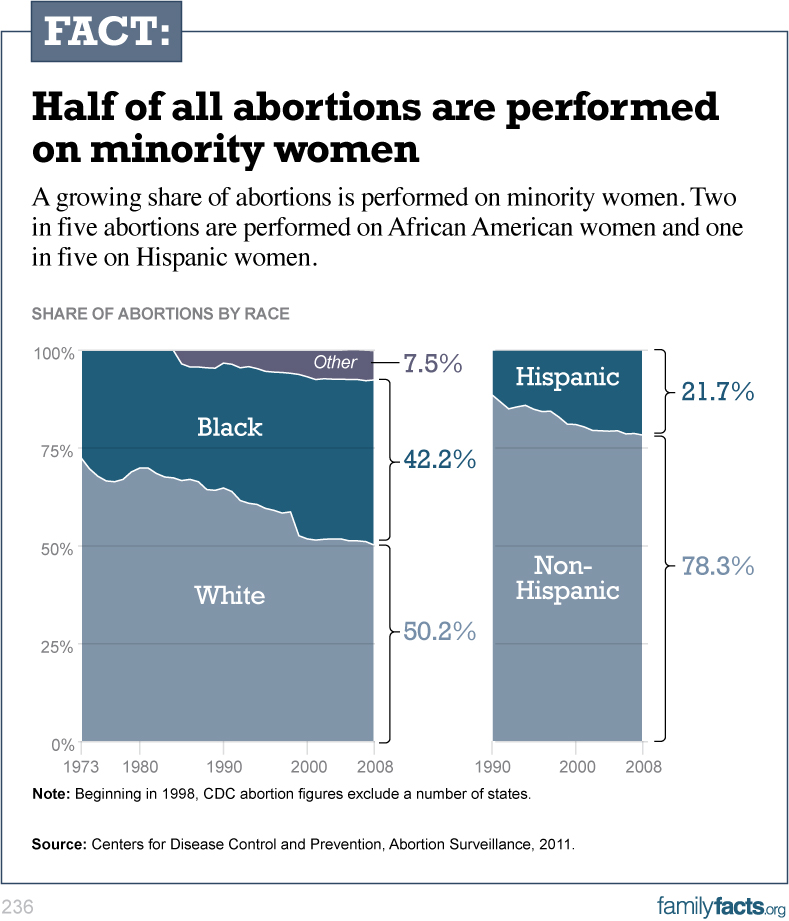


 Melvin Pickens,


 The Daily Hatch