Office of Barack and Michelle Obama P.O. Box 91000 Washington, DC 20066
Dear President Obama,
I wrote you over 700 letters while you were President and I mailed them to the White House and also published them on my blog http://www.thedailyhatch.org .I received several letters back from your staff and I wanted to thank you for those letters.
I have been reading your autobiography A PROMISED LAND and I have been enjoying it.
Let me make a few comments on it, and here is the first quote of yours I want to comment on:
The story of how this postwar consensus broke down—starting with LBJ’s signing of the Civil Rights Act of 1964 and his prediction that it would lead to the South’s wholesale abandonment of the Democratic Party—has been told many times before. The realignment Johnson foresaw ended up taking longer than he had expected. But steadily, year by year—through Vietnam, RIOTS…and Nixon’s southern strategy; through busing, Roe v. Wade, urban crime, and white flight; through affirmative action, the Moral Majority, union busting, and Robert Bork; through assault weapons bans and the rise of Newt Gingrich…and the Clinton impeachment—America’s voters and their representatives became more and more polarized.
During 2020 I have noticed lots of riots and looting across the USA and I wanted to ask you why it is always the liberals doing that? AND WHY DIDN’T ANYONE CONDEMN THESE ACTIONS AT THE 2020 CONVENTION AND DIDN’T YOU SPEAK AT THE CONVENTION TOO?
In Kenosha, Portland, Seattle, and Chicago, city officials have tolerated criminal activity performed by mobs for politically motivated reasons. Philadelphia appears to be the next hotspot for mob violence to go unchecked. Pictured: A barricade is set on fire during a night of looting and violence in Philadelphia on Oct. 27. (Photo: Gabriella Audi/AFP/Getty Images)
James Jay Carafano, a leading expert in national security and foreign policy challenges, is The Heritage Foundation’s vice president for foreign and defense policy studies, E. W. Richardson fellow, and director of the Kathryn and Shelby Cullom Davis Institute for International Studies. Read his research.
Like the replay of a bad movie, a law enforcement incident in Philadelphia triggered an excuse for violence and looting. It remains to be seen whether the City of Brotherly Love will become the next “Kenosha,” where city officials moved quickly to restore order and seek state and federal support—though sadly after 48 hours of opportunistic looting, violence, and destruction devastated the city.
Or perhaps Philadelphia will be the next Portland, Seattle, or Chicago, where systemic attacks seem to be a daily occurrence.
Police in Philadelphia are fully capable of restoring peace. The open question is whether the mayor and Larry Krasner, the former defense attorney-turned elected rogue prosecutor, will do their job and hold people accountable for their crimes.
When local, state, and federal governments work together, act quickly, and demonstrate no tolerance for organized violence to advance radical agendas, communities are kept safe and equal protection under the law is afforded for all citizens.
The left is actively working to undermine the integrity of our elections. Read the plan to stop them now. Learn more now >>
On the other hand, when local officials, the media, and politicians ignore, excuse, normalize, and enable violence, everyday Americans pay the price.
There is a plague sweeping this country that many don’t want to talk about: The deliberate use of street violence to advance radical political agendas, often under a smoke screen of campaigning for civil liberties. The evidence of organized criminal activity at the root of the outbreaks in American cities is mounting.
The list of people enabling this violence sadly includes some public officials, who are principally responsible for ensuring public safety. For example, a growing threat to peaceful communities is “rogue prosecutors,” former criminal defense attorneys recruited and funded by liberal billionaire backers, who—once elected—abuse their office by refusing to prosecute entire categories of crimes.
These rogue prosecutors are usurping the power of the legislature in the process, and ignoring victim’s rights—all to advance their politics.
Baltimore is a perfect example. Since being sworn into office, under the watch of Baltimore City State’s Attorney Marilyn J. Mosby.
Rogue prosecutors fuel street violence by refusing to prosecute rioters and looters. When confronted with the rising crimes rates, Mosby called the statistics “rhetoric.”
The only way to break the cycle of violence is for local and state officials to work with each other, and if necessary, the federal government. They need to stop enabling the destruction of property and lives on their streets, and start investigating and prosecuting the individuals (and organizations) behind the riots.
It’s time to start shaming and calling out the media, politicians, and advocates who excuse and normalize the violence.
There is a proven action plan for making our streets safe. It is past time for officials to start following this blueprint.
There is no time—zero time to waste. There are already fears of more violence in our streets, regardless of the outcome of the national elections.
In my hometown of Washington, D.C., downtown buildings are already boarding up in anticipation of violence on our streets after the election. If Trump wins, violence. If Biden wins, violence. This makes no sense, and it’s time for it to stop.
It is time for every official and public figure, every political party, in every part of the country to publically reject violence on American streets as a legitimate form of protected speech. Violence is not protected speech, period.
The notion of deliberately destroying the lives and property of our neighbors to advance a radical political agenda is abhorrent. American leaders—of all stripes—should stand up now as one and reject these violent acts. It has gone on for too long, well before the death of George Floyd.
Leaders in Philadelphia and across America must take a principled stand to demand the end to this violence, and they need to do it before the election. In one voice, they should demand: “Leave our streets alone.”
Sincerely,
Everette Hatcher III, 13900 Cottontail Lane, Alexander, AR 72002, ph 501-920-5733 everettehatcher@gmail.com
President Obama c/o The White House 1600 Pennsylvania Avenue NW Washington, DC 20500 Dear Mr. President, I know that you receive 20,000 letters a day and that you actually read 10 of them every day. I really do respect you for trying to get a pulse on what is going on out here. There have […]By Everette Hatcher III | Posted in David Barton, Founding Fathers, President Obama | Edit |Comments (0)
There have been many articles written by evangelicals like me who fear that our founding fathers would not recognize our country today because secular humanism has rid our nation of spiritual roots. I am deeply troubled by the secular agenda of those who are at war with religion in our public life. Lillian Kwon quoted somebody […]By Everette Hatcher III | Posted in David Barton, Founding Fathers | Edit | Comments (0)
There have been many articles written by evangelicals like me who fear that our founding fathers would not recognize our country today because secular humanism has rid our nation of spiritual roots. I am deeply troubled by the secular agenda of those who are at war with religion in our public life. Lillian Kwon quoted somebody […]By Everette Hatcher III | Posted in David Barton, Founding Fathers | Edit | Comments (0)
There have been many articles written by evangelicals like me who fear that our founding fathers would not recognize our country today because secular humanism has rid our nation of spiritual roots. I am deeply troubled by the secular agenda of those who are at war with religion in our public life. Lillian Kwon quoted somebody […]By Everette Hatcher III | Posted in David Barton, Founding Fathers | Edit | Comments (0)
There have been many articles written by evangelicals like me who fear that our founding fathers would not recognize our country today because secular humanism has rid our nation of spiritual roots. I am deeply troubled by the secular agenda of those who are at war with religion in our public life. Lillian Kwon quoted somebody […]By Everette Hatcher III | Posted in David Barton, Founding Fathers | Edit | Comments (0)
There have been many articles written by evangelicals like me who fear that our founding fathers would not recognize our country today because secular humanism has rid our nation of spiritual roots. I am deeply troubled by the secular agenda of those who are at war with religion in our public life. Lillian Kwon quoted somebody […]By Everette Hatcher III | Posted in Founding Fathers | Edit | Comments (0)
President Obama Speaks at The Ohio State University Commencement Ceremony Published on May 5, 2013 President Obama delivers the commencement address at The Ohio State University. May 5, 2013. You can learn a lot about what President Obama thinks the founding fathers were all about from his recent speech at Ohio State. May 7, 2013, […]By Everette Hatcher III | Posted in Founding Fathers, President Obama | Edit | Comments (0)
Dr. C. Everett Koop with Bill Graham. Francis Schaeffer: “Whatever Happened to the Human Race” (Episode 4) THE BASIS FOR HUMAN DIGNITY Published on Oct 7, 2012 by AdamMetropolis The 45 minute video above is from the film series created from Francis Schaeffer’s book “Whatever Happened to the Human Race?” with Dr. C. Everett Koop. This […]By Everette Hatcher III | Posted in Founding Fathers, Francis Schaeffer, Prolife | Edit |Comments (1)
America’s Founding Fathers Deist or Christian? – David Barton 4/6 There have been many articles written by evangelicals like me who fear that our founding fathers would not recognize our country today because secular humanism has rid our nation of spiritual roots. I am deeply troubled by the secular agenda of those who are at […]By Everette Hatcher III | Posted in David Barton, Founding Fathers | Tagged governor of connecticut, john witherspoon, jonathan trumbull | Edit | Comments (1)
3 Of 5 / The Bible’s Influence In America / American Heritage Series / David Barton There were 55 gentlemen who put together the constitution and their church affliation is of public record. Greg Koukl notes: Members of the Constitutional Convention, the most influential group of men shaping the political foundations of our nation, were […]By Everette Hatcher III | Posted in Founding Fathers | Edit | Comments (0)
I do not think that John Quincy Adams was a founding father in the same sense that his father was. However, I do think he was involved in the early days of our government working with many of the founding fathers. Michele Bachmann got into another history-related tussle on ABC’s “Good Morning America” today, standing […]By Everette Hatcher III | Posted in David Barton, Founding Fathers | Edit | Comments (0)
I have gone back and forth and back and forth with many liberals on the Arkansas Times Blog on many issues such as abortion, human rights, welfare, poverty, gun control and issues dealing with popular culture. Here is another exchange I had with them a while back. My username at the Ark Times Blog is Saline […]By Everette Hatcher III | Posted in Arkansas Times, Francis Schaeffer, Prolife | Edit |Comments (0)
I truly believe that many of the problems we have today in the USA are due to the advancement of humanism in the last few decades in our society. Ronald Reagan appointed the evangelical Dr. C. Everett Koop to the position of Surgeon General in his administration. He partnered with Dr. Francis Schaeffer in making the […]By Everette Hatcher III | Posted in Adrian Rogers, Francis Schaeffer | Edit | Comments (0)
Francis Schaeffer: “Whatever Happened to the Human Race” (Episode 4) THE BASIS FOR HUMAN DIGNITY Published on Oct 7, 2012 by AdamMetropolis ____________ The 45 minute video above is from the film series created from Francis Schaeffer’s book “Whatever Happened to the Human Race?” with Dr. C. Everett Koop. This book really helped develop my political […]By Everette Hatcher III | Posted in Francis Schaeffer | Edit | Comments (0)
Former NFL coach Tony Dungy is a man who takes his Christian faith very seriously, and when it comes to Rev. Raphael Warnock, who is running for U.S. Senate in Georgia, he wasn’t so sure about him.
Warnock, a Democrat and pastor at Ebenezer Baptist Church, is in the middle of a runoff election against Sen. Kelly Loeffler, R-Ga.
Warnock tweeted Tuesday he was a “pro-choice pastor,” which inherently goes against the pro-life views of most Christians.
When a Twitter user pointed out on Wednesday that “pro-choice pastors” do exist, the Super Bowl champion head coach appeared skeptical.
“Rev Warner may be a pastor. My question would be ‘Is he a Christian?’ That is, does he follow the teachings of Jesus and does he believe that the Bible is the absolute word of God?” tweeted, who is a football commentaror for NBC.
He added: “I would think it would be difficult for someone who believes that God sees us when we are in the womb (Psalm 139:13-16) to think that it is OK to choose not to bring that life to fruition.”
On Thursday, another Twitter user said being pro-choice didn’t mean that a person was pro-abortion. Dungy replied, “Please read Psalm 139:13-16. Then tell me if you think God puts babies in the womb or man does? If you believe they randomly get there then I have no argument. But if you believe God puts them there, then how does anyone have a right to ‘choose’ which ones survive?”
“What if I was advocating for the right to kill someone who was already born? Would that be morally OK? Of course not. The only question in this debate is what we think of the unborn baby? Is it a life or is it not?”
Dungy is not one to shy away from his faith. In 2006, it was noted that Dungy nearly put his football career on pause to join the prison ministry. And over the course of his career he worked in community service organizations and was a public speaker for the Fellowship of Christian Athletes.
Everyone has an opportunity to influence others. We all need to lo0k at what kind of impact we are having on those closest to us.(My father got his picture taken with Tony Dungy and Ken Whitten at a golf tournament in Memphis when Dungy spoke to a group at Bellevue Baptist a few years ago.)
WISDOM Tony Dungy, host of NBC’s “Football Night in America,” and member of Central Baptist Church in Tampa, joins Ken Whitten, senior pastor of Idlewild Baptist Church in Tampa, where he was formerly a member, and Mac Brunsoon, senior pastor of First Baptist Church in Jacksonville, for an Impact for Living men’s conference at First Baptist April 20-21. Photo courtesy Sarah Orgunov/FBC
JACKSONVILLE (FBW)—More than 2,000 men gathered at Jacksonville’s First Baptist Church April 20-21 to hear football coaching legend Tony Dungy and host of “The NFL Today” James Brown talk about how they hope to finish strong—“Living a Legacy of Eternal Impact.”
Another local sport’s personality Tony Boselli, former NFL Jaguar and broadcast analyst, joined the church’s senior pastor, Mac Brunson; Ken Whitten senior pastor of Idlewild Baptist Church in Lutz; Daniel Crews, popular vocalist in residence from First Baptist Church in Atlanta; and others for the two-day Impact for Living conference.
Dungy, a member of Central Tampa Baptist Church and host of NBC’s “Football Night in America,” asked participants, “What is your platform?”
While it might be tempting to wish for a large platform like those of megachurch pastors like Brunson or Whitten, or to be on television like James Brown—or to have a voice like Daniel Crews—Dungy told the men each has a platform.
“Your platform may not be like theirs, but you certainly have one already,” Dungy said, asking who has family, job or friends. “God has given you one.”
Figuring out your own platform is important, he said, as is asking yourself whom you impact and how you impact them. If you are a Christian, your platform is “huge,” he said.
“It really is—God expects big things,” Dungy said.
Quoting from Acts 1:8, Dungy said Jesus was telling the disciples what would happen once He left the earth. “You will receive power when the Holy Spirit comes on you. You will be my witnesses,” Dungy quoted.
The disciples’ platform can be referenced by a modern day comparison to Jerusalem, Judea, Samaria, and the ends of the earth, Dungy said.
Jerusalem for Dungy was his like home. “My father made a tremendous impact on me,” he recalled, describing the older Dungy as an example of James 1. He was slow to get angry and he advised his son to not complain, but instead to solve problems. Dungy said he didn’t know his father was a Tuskeegee Airman until his funeral. “He has a Ph.D in biology, but he seldom talked.”
Dungy said words matter, and told of getting into a debate with a colleague a few years ago who uses profanity. “I agree to disagree on this point,” Dungy said. “When I get mad, I say, ‘You got to be kidding.’”
Dungy recalled an incident when his 11-year-old son was upset about a Hot Wheel car and sputtered, “You’ve GOT to be kidding!”
“I was so pleased. Why did he say that? He thinks that’s what you are supposed to say when you get mad,” Dungy laughed.
Reminiscing about another sweet family moment, Dungy said one of his biggest thrills came after watching his son Eric throw a touchdown pass at the University of Oregon last year. Responding to a newspaper reporter for this school who asked him what was the best thing his dad ever told him about football, Dungy said Eric told the reporter, “What does it profit a man to gain the whole world and forfeit his soul.”
“How well are you doing in Jerusalem, in your home? You have a platform. What will your kids say 40 years from now?” Dungy asked.
Judea is your surrounding area, your neighborhood, Dungy told the men. Naming people in his life who encouraged him when he was raising young children, Dungy said he was too focused on himself earlier in his life, but has since begun teaching a Bible study for couples in his home. “I feel better about what I am doing in Judea right now.”
There has been plenty of criticism in recent days of the mainstream media’s refusal to cover the New York Post’s bombshell reporting on Hunter Bidenever since the Biden transition issued a press release acknowledging that he was under investigation over his so-called “tax affairs,” but the media went far beyond simply ignoring the controversy.
Washington Post columnist Greg Sargent quickly declared the day after the New York Post first began reporting on the alleged contents of Hunter Biden’s laptop that it was “Trump’s fake new Biden scandal,” calling the allegations “laughably weak.”
“While Trump and his propagandists would surely prefer to have a more compelling scandal to tout, the thinness of this new gruel is largely secondary,” Sargent wrote on Oct. 15, stressing Steve Bannon’s involvement in the distribution of the laptop’s contents. “Trump’s last-ditch hope is to cast a vague pall of corruption over Biden… But plainly, the mere fact of covering smears and disinformation, even negatively, itself rewards their purveyors.”
That same day, The New York Times ran a report sounding the alarm about “Russian disinformation,” claiming that President Trump was warned that Russians were “using” his personal attorney Rudy Giuliani, who was given the laptop before providing its contents to the press, to spread false claims about the Bidens.
“The intelligence agencies warned the White House late last year that Russian intelligence officers were using President Trump’s personal lawyer Rudolph W. Giuliani as a conduit for disinformation aimed at undermining Joseph R. Biden Jr.’s presidential run, according to four current and former American officials,” the Times reported at the time.
It is not clear whether the ongoing taxes probe is in any way connected to the laptop’s contents.
Back in October, Politico published a joint letter signed by “more than 50 former senior intelligence officials,” who insist that the published emails that allegedly came from Hunter Biden’s laptop had “all the classic earmarks of a Russian information operation.”
The letter, which was parroted by much of the mainstream media, baselessly suggested that the emails were hacked and that they could have been tampered with by the Kremlin in order to make its contents look incriminating.
Signatories of that letter included outspoken Trump critics John Brennan, James Clapper, Michael Hayden, Leon Panetta, and Jeremy Bash, many of whom work as on-air analysts on MSNBC and CNN.
NPR public editor Kelly McBride addressed a listener’s question about the news outlet’s blackout of the Hunter Biden story. After claiming that the Post’s reporting had “many, many red flags,” including its potential ties to Russia, NPR apparently determined that the “assertions don’t amount to much.”
“We don’t want to waste our time on stories that are not really stories, and we don’t want to waste the listeners’ and readers’ time on stories that are just pure distractions,” NPR managing editor Terence Samuel told McBride. “And quite frankly, that’s where we ended up, this was … a politically driven event and we decided to treat it that way.”
Unlike NPR, CNN wasn’t nearly as transparent with its efforts to spike the Hunter Biden story. Last week, Project Veritas leaked audio recordings of conference calls featuring CNN’s top executives urging staff to avoid the Biden scandal during the election.
“Obviously, we’re not going with the New York Post story right now on Hunter Biden,” CNN political director David Chalian said during a conference call on Oct. 14, the same day the Post published its first story on Hunter Biden’s emails. Chalian later insisted the report was “giving its marching orders” to the “right-wing echo chamber about what to talk about today.”
“The Trump media, you know, moves immediately from — OK, well, never mind — the [Michael Flynn] unmasking was, you know, found to be completely nonsensical to the latest alleged scandal and expects everybody to just follow suit,” CNN president Jeff Zucker told his staff on Oct. 16. “So, I don’t think that we should be repeating unsubstantiated smears just because the right-wing media suggests that we should.”
Apparently such messaging was received by CNN star anchor Jake Tapper, who dismissed the allegations against Hunter Biden as “too disgusting” to repeat on-air and that the “rightwing is going crazy.”
CNN’s discomfort in covering the Hunter Biden story was put on full display when GOP spokesperson Elizabeth Harrington challenged CNN chief international anchor Christiane Amanpour to dig into the Biden family’s foreign ties during a heated exchange.
“As you know perfectly well, I’m a journalist and a reporter and I follow the facts and there has never been any issues in terms of corruption,” Amanpour asserted.
“Wait, wait, wait, how do you know that?!?” Harrington pushed back.
“I’m talking about reporting and any evidence,” Amanpour responded.
“OK, I would love if you guys would start doing that digging and start doing that verification,” Harrington said, referring to the published Hunter Biden emails.
“No, we’re not going to do your work for you,” Amanpour scolded the GOP spokesperson.
“That’s a journalist’s job!” Harrington exclaimed. “It’s a journalist’s job to find out if this is verified.”
Of all the media deceit and propagndizing disseminated in the lead-up to the election to justify their refusal to report on the Hunter Biden documents — despite knowing they were genuine and not from Russia — this on CNN from @camanpour may be the most amazing:
A similar exchange took place on “60 Minutes,” when veteran journalist Lesley Stahl laughed off President Trump’s claim that Biden was “in the midst of a scandal” in an interview that aired just days before the election.
“Of course he is, Lesley,” Trump sternly doubled down.
“No, c’mon,” Stahl continued to reject the president’s claim, before lecturing him, “This is ’60 Minutes’ and we can’t put on things that we can’t verify.”
During the campaign, Joe Biden was mostly successful at avoiding the Post’s report as the pool reporters who followed him on the campaign trail refrained from asking him about it. However, the one reporter who did, CBS News correspondent Bo Erickson, faced hostile pushback by other journalists, including one of his own colleagues.
“My @CBSEveningNews report clearly lays out warnings about Giuliani & Russian disinformation,” CBS News White House correspondent Paula Reid tweeted, attempting to undercut the legitimacy of Erickson’s question to Biden.
“The View” co-host Sunny Hostin attempted to comfort Dr. Jill Biden during an interview on the ABC daytime program while tip-toeing around the subject, accusing President Trump of “disrespecting” her family with “personal attacks.”
MSNBC anchor Katy Tur mocked the Post’s story, saying it “dropped like a bomb,” but to “wither under scrutiny, not really dropping like a bomb.” NBC News national security correspondent Ken Dilanian called it a “fishy story” despite acknowledging that various emails and images that came from the laptop looked “legitimate.”
“We have no idea, and neither does the New York Post, whether any of it was doctored or forged or faked. And that’s why the mainstream news media has declined to really touch the story because it just lacks credibility,” Dilanian told Tur. “We now know that Russian disinformation… is as dangerous to our democracy as anything exposed in these emails.”
Ahead of the final presidential debate, where President Trump hammered his Democratic rival on his son’s business dealings, NBC News correspondent Hallie Jackson offered a slanted preview of what was to come in the political showdown.
“The President’s also expected to bring up Hunter Biden and unverified emails of his business dealings, described by many intelligence experts as having hallmarks of a foreign disinformation campaign,” Jackson reported. “The Biden campaign says they’re ready for the attack, hoping to flip the script to argue the President’s more obsessed with Biden’s family than American families.”
Jackson also made an effort to degrade President Trump’s debate guest, former Hunter Biden associate Tony Bobulinski, who claimed the former VP was directly involved with his son’s business dealings.
“While President Trump is expected to bring a former business associate of Hunter Biden’s, Joe Biden is expected to bring small business owners struggling in this pandemic,” Jackson told NBC’s Lester Holt.
Following the debate, CBS political analyst John Dickerson pointed out that Biden “has an ally in the news cycle,” suggesting that media’s coverage of the ongoing coronavirus pandemic will bury the scandal, which would benefit the former VP.
“If President Trump tries to shift the turf onto the Biden family for the purposes of muddying Joe Biden, the news cycle keeps returning to the central piece of this campaign, which is the coronavirus and the president’s response to it and the country has a very negative view on that,” Dickerson explained to “CBS This Morning” co-host Anthony Mason. “And as these numbers continue, it keeps voters focused on that very bad issue for the president.”
MSNBC anchor Stephanie Ruhle attacked those who were covering the Hunter Biden controversy, referring to it as a “so-called story” with “unverified claims.”
“We are now four days away from the election and the truth is more important than ever,” Ruhle told her viewers. “The truth is that we’re in the middle of a pandemic. The truth is that millions of Americans are out of work. The truth is we have to listen to science. And in these final days, instead of debating crowd size or unverified claims or conspiracy theories, we should be talking about policy, values, and ideas.”
Sen Roger Wicker, R-Miss., chairman of the Senate Commerce, Science, and Transportation Committee, listens Wednesday as Twitter CEO Jack Dorsey appears on a monitor while testifying remotely during the panel’s hearing. (Photo: Michael Reynolds-Pool/Getty Images)
The CEOs of Twitter, Facebook, and Google defended themselves Wednesday on Capitol Hill from charges of political bias in how they share news and other information.
They testified before a Senate committee roughly a week after Twitter and Facebook suppressed a New York Post expose on the lucrative foreign business dealings of Hunter Biden, son of former Vice President Joe Biden.
But the hearing went well beyond the Post’s coverage two weeks ago of the files contained in a laptop computer purportedly belonging to Hunter Biden, delving into what Republicans called a consistent double standard in blocking content on the digital platforms.
Twitter CEO Jack Dorsey, Google CEO Sundar Pichai, and Facebook CEO Mark Zuckerberg testified under oath before the Senate Commerce, Science and Transportation Committee. The three agreed to appear voluntarily and remotely to avoid a subpoena during what has become a hot issue this election year.
The left is actively working to undermine the integrity of our elections. Read the plan to stop them now. Learn more now >>
Several Republicans have talked about revoking the protection from litigation that social media platforms enjoy under Section 230 of the Communications Decency Act. The provision exempts the companies from being sued for published content they didn’t originate–such as the New York Post’s coverage of the Hunter Biden scandal.
If the companies are blocking or suppressing online content based on political leaning, some lawmakers have argued, they are functionally publishers and not neutral platforms, and can be exposed to the same defamation laws as news organizations such as the Post.
Section 230 should be “carefully refined” to fit the law’s original intent but not scrapped, even if social media giants and other tech firms have squandered the public’s trust, contends Klon Kitchen, director of the Center for Technology Policy at The Heritage Foundation, in a reportpublished Tuesday.
“Section 230 of the Communications Decency Act has been critical to the development of today’s Internet and Internet services,” the report’s summary states, adding:
But the expanding presence of these services in the lives of Americans and a growing political distrust of the companies providing these services highlight the need to refine the scope and language of Section 230 to better fit the statute’s original intent and to assuage these concerns. Such refinement is the best way to fan the flames of economic freedom and creativity while protecting individual and corporate freedom of speech.
Here are four key takeaways from the Senate committee’s hearing on the perceived bias of tech firms such as Facebook, Google, and Twitter.
1. ‘Just One Example?’
Sen. Mike Lee, R-Utah, noted several cases in which digital platforms put restrictions on conservative politicians and media outlets, and pressed the CEOs to name one example of a liberal individual or entity that got the same scrutiny. Only Google’s CEO was able to give a specific answer.
“I see these quotes where each of you tell consumers about your business practices. Then you seem to do the opposite and take censorship-related actions against the president, against members of his administration, against the New York Post, the Babylon Bee, The Federalist, pro-life groups, and there are countless other exammples,” Lee said.
The Utah Republican clarified what he meant.
“When I use the word ‘censor,’ I mean block content, fact check, or label content or demonetize websites of conservative, Republican, or pro-life individuals or groups or companies, contradicting your commercial policies,” Lee said. “But I don’t see this suppression of high-profile liberal commentators.”
Facebook’s Zuckerberg said examples exist, but he just couldn’t think of any.
“There are certainly many examples that your Democratic colleagues object to when a fact-checker might label something as false that they disagree with,” Zuckerberg said.
Lee responded: “I get that. I’m just asking if you can name one high-profile liberal person or company who you have censored. One name.”
Zuckerberg replied, “I’d need to think about it and get you a list.”
Dorsey of Twitter responded, “We can give a more exhaustive list.”
Lee reiterated, “I’m not asking for an exhaustive list, just one example, one entity. Anyone.”
Twitter’s Dorsey said, “Two Democratic Congress people. … I’ll get those names to you.”
By contrast, Google’s Pichai seemed prepared for the question.
“We have turned down ads from Priorities USA, from Vice President Biden’s campaign,” the Google chief said. “We have had compliance issues with World Socialist Review, which is a left-leaning publication. We can give you several examples. We have a violent graphic content policy.”
Lee said the tech companies have the right to set their own terms of service.
“But given the disparate impact of who gets censored on your platforms, it seems that one, you are to enforce your terms of service equally, or two, you’re writing your standards to target conservative viewpoints,” Lee said.
2. Who Elected You?
Sen. Ted Cruz, R-Texas, didn’t mince words, declaring: “The three witnesses we have before this committee collectively pose, I believe, the single greatest threat to free speech in America and the greatest threat we have to free and fair elections.”
Cruz jumped into the example of the New York Post’s explosive Oct. 14 story on Hunter Biden. Twitter blocked the Post’s Twitter account after the newspaper posted the story, and prevented Twitter users from sharing it.Twitter also blocked the account of a Politico reporter who tweeted the story until he removed it from his feed, the Texas Republican said.
“You forced a Politico reporter to take down his post about the New York Post as well. Is that correct?” Cruz asked.
Dorsey said the company changed its policy on the story.
“Within that 24-hour period, yes. But as the policy has changed,” Dorsey said.
Dorsey said if the New York Post deleted the story it would have the account back, and would be free to re-pose the story.
Cruz responded by talking about the power of Twitter’s platform:
So Twitter can censor Politico, you can censor the New York Post. Presumably you can censor The New York Times or any other media outlet. Mr. Dorsey, who the hell elected you and put you in charge of what the media are allowed to report and what the American people are allowed to hear? And why do you persist in behaving as a Democratic super PAC, silencing views to the contrary of your political beliefs?
Dorsey defended his company, stating it plans to publish the process for content moderation and provide greater transparency to gain public trust.
“We’re not doing that [censoring the media]. That is why I opened this hearing with calls for more transparency,” Dorsey said. “We realize we need to earn trust more. We realize that more accountability is needed to show our intentions and to show the outcomes. So I hear the concerns and acknowledge them. But we want to fix it with more transparency.”
3. Sticking Up for Tech Giants
Democratic senators on the committee generally denied any anti-conservative bias on social media, and in some cases said there should be more censorship.
Sen. Brian Schatz, D-Hawaii, went a step further than colleagues by casting the three CEOs as victims who were being bullied by Republicans on the committee.
“We never do this and there is a good reason we do not haul people before us to yell at them for not doing our bidding during an election,” Schatz said. “It is a misuse of taxpayer dollars.”
Schatz added:
What we are seeing today is an attempt to bully CEOs of private companies into carrying out a hit job on a presidential candidate by making sure that they push out foreign and domestic misinformation meant to influence the election.
To our witnesses today, you and other tech leaders need to stand up to this immoral behavior. The truth is that because some of my colleagues accuse you, your companies, and your employees of being biased or liberal, you have institutionally bent over backwards and overcompensated. You’ve hired Republican operatives, hosted private dinners with Republcian leaders, and in contravention of your terms of service, given special dispensation to right-wing voices and even throttled progressive journalism.
Schatz cited no examples of such “throttled” news sites.
4. Tweets by Iran, China, Trump
Committee Chairman Roger Wicker, R-Miss., first called out Dorsey about a Chinese government official’s tweet that the U.S. Army created COVID-19, the disease caused by the new coronavirus that originated in China.
Wicker asked about a disclaimer that Twitter quickly attached to a Trump tweet about problems with mail-in ballots, in which Twitter claimed there is no security problem. By contrast, when a Chinese official tweeted that the U.S. created COVID-19, it took two months for Twitter to add a similar disclaimer.
“How does a claim by Chinese communists that the U.S. military is to blame for COVID remain up for two months without a fact check, and the president’s tweet about the security of mail-in ballots gets labeled instantly?”
Twitter’s Dorsey responded that he didn’t know exactly how long the Chinese tweet on COVID-19 remained up, but said Twitter’s gatekeepers decided that Trump’s tweet on mail-in ballots would misinform the public.
Wicker also asked about tweets from Iranian Supreme Leader Ayatollah Ali Khamenei that promised or advocated violence.
“These tweets are still up, Mr. Dorsey. How is it that they are acceptable based on your policies at Twitter?” Wicker asked.
Dorsey responded: “We believe it’s important for everyone to hear from global leaders.”
“We have policies around world leaders,” the Twitter CEO continued. “We want to make sure we are respecting their right to speak and to publish what they need. But, if there is a violation of our terms of service, we want to label it.”
Wicker: “They are still up. Do they violate your terms of service?”
Dorsey: “We did not find those to violate our terms of service because we considered them saber rattling, which is part of the speech of world leaders in concert with other countries.”
Later in the hearing, Sen. Cory Gardner, R-Colo., expressed caution about making changes to Section 230 of the Communications Decency Act.
“I don’t like the idea of unelected elites in San Francisco or Silicon Valley deciding whether my speech is permissible on their platforms,” Gardner said, adding:
But I like even less the idea of unelected Washington, D.C., bureaucrats trying to enforce some kind of political neutral content moderation. We have to be very careful and not rush to legislate in ways that stifle speech. You can delete Facebook, turn off Twitter, and ditch Google. But you cannot unsubscribe from government censors.
Still, Gardner was tough on Dorsey, asking why the platform didn’t delete tweets by the Iranian leader that denied the Holocaust, yet flagged tweets by Trump.
“It’s strange to me that you flagged the tweets from the president but haven’t hidden the ayatollah’s tweets on Holocaust denial or calls to wipe Israel off the map?”
Dorsey said it is a different type of misinformation.
“We do have other policies around incitement to violence,” Dorsey said. “Some of the tweets that you mentioned are examples that might fall afoul of that.”
Gardner: “So, somebody who denies the Holocaust happened is not [spreading] misinformation?”
Dorsey: “It’s misleading information, but we don’t have a policy against that type of misleading information.”
Sen. Ted Cruz of Texas slammed Twitter CEO Jack Dorsey for his company’s censorship of the New York Post and the bombshell Hunter Biden story published two weeks ago.
“Mr. Dorsey, who the hell elected you and put you in charge of what the media are allowed to report and what the American people are allowed to hear?” Cruz asked. “Why do you persist in behaving as a Democratic super PAC, silencing views to the contrary of your political views?”
Twitter previously blocked verified and unverified users from sharing the Post’s article link. Instead, users were met with a message stating that the Post’s story link “has been identified by Twitter or our partners as being potentially harmful.”
Twitter also locked the New York Post’s account, which still is unable to post 14 daysafter they published their story.
Dorsey defended Twitter’s actions by continuing to echo the big tech company’s claims that the article violated their hacked materials policy. He then went on to claim that for the New York Post to regain access to posting from their account, they have to log in and delete their original content, saying that Twitter’s policy was reworked to avoid bad enforcement.
“Anyone can tweet, we are not blocking their post,” Dorsey claimed.
Cruz, however, continued to grill Dorsey about Twitter’s censorship, saying that “Twitter’s conduct is by far the most egregious” of all the big tech companies.
“The New York Post is not some random guy tweeting. It is the fourth-highest circulation of any newspaper in America. It is 200 years old and founded by Alexander Hamilton,” Cruz said. “And it is your position is that you can sit in Silicon Valley and demand of the media that you can tell them what stories they can publish and the American people what reporting they can hear, is that right?”
Cruz also pointed out that Twitter’s censorship of the New York Post was hypocritical and that their claims about “hacked material” were not applied to the New York Times’s story publishing President Donald Trump’s tax returns.
“They purported to publish federally published material. It’s a federal felony to distribute someone’s tax returns against their knowledge,” Cruz said. “So that material was based on something distributed in violation of federal law, and yet Twitter gleefully allowed people to circulate that.”
“But when an article was critical of Joe Biden, Twitter engaged in rampant censorship and silencing,” Cruz continued.
Cruz’s questioning comes as members of the Senate Committee on Commerce, Science, and Transportation questioned Facebook CEO Mark Zuckerberg, Dorsey, and Alphabet Inc., Google CEO Sundar Pichai over the companies’ content moderation policies. The hearing entitled “Does Section 230’s sweeping immunity enable big tech bad behavior?” was called in response to repeated calls for Section 230 reform by members on both sides of the political aisle.
“The three witnesses we have before this committee collectively pose, I believe, the single greatest threat to free speech in America and the greatest threat we have to free and fair elections,” Cruz stated. Jordan Davidson is a staff writer at The Federalist. She graduated from Baylor University where she majored in political science and minored in journalism.
—
2 years ago
today
Silicon Valley an ‘extremely left-leaning place,’ admits Zuckerberg
Facebook CEO Mark Zuckerberg reacts to a question about the hotel he stayed in last night as he testifies before a joint hearing of the Commerce and Judiciary Committees on Capitol Hill in Washington, Tuesday, April 10, 2018, about the …
By Dan Boylan– The Washington Times – Tuesday, April 10, 2018
Facebook CEO Mark Zuckerberg acknowledged that Silicon Valley is an “extremely left-leaning place” but said he tries to make sure his firm doesn’t “have bias in the work that we do.”
Sen. Ted Cruz, Texas Republican, questioned the social-media mogul about a long-running concern conservatives have that Facebook and other Silicon Valley tech firms have a clear bias against users on the right side of the political spectrum.
“A great many Americans are deeply concerned Facebook and other tech companies are engaged in a pervasive pattern of bias and political censorship,” Mr. Cruz said.
Appearing before a joint hearing of the Senate Judiciary and Commerce committees to explore the massive social networking company’s recent failures protecting private data and inability to stop the spread of fake news during the 2016 presidential election — Mr. Zuckerbergcountered that Facebook was “a platform for all ideas.”
But Mr. Cruz interrupted and argued content from more conservative companies, including Chik-fil-A, had been removed whereas posts from Planned Parenthood and other progressive outfits, had not.
Mr. Zuckerberg replied that he was unaware of the deleted posts and explained that Facebookregularly removed content related to terrorism or hate speech or self harm.
Mr. Cruz, who ran for the Republican presidential nomination in 2016, has argued in the past the Facebook has policies and algorithms that effectively “shadow ban” conservatives.
On Tuesday, the Texas Republican also grilled Mr. Zuckerberg over Facebook’s hiring policies, pressing the CEO to explain the firing of Palmer Luckey — a virtual-realty executive who supported Donald Trump.
Mr. Zuckerberg explained Mr. Luckey’s departure had nothing to do with politics and was a personnel matter.
Adriana Cohen: Censorship of conservatives proves Twitter & Facebook are enemies of free speech, free press
Twitter is not keeping ‘all voices on the platform’ — far from it
Big Tech titans Twitter CEO Jack Dorsey and Facebook’s Mark Zuckerberg better lawyer up. These enemies of free speech and a free press will be hauled in to testify before the Senate Judiciary Committee to explain their brazen censorship of conservatives. The ever-growing list of those censored includes the president of the United States, his White House press secretary and the New York Post, whose account was locked for posting a credible story about Joe Biden and his son during an election.
In light of Twitter’s unprecedented and willful censorship, Jack Dorsey could also be facing charges for lying to Congress in 2018.
While testifying before the House Committee on Energy and Commerce Dorsey told lawmakers: “Let me be clear about one important and foundational fact: Twitter does not use political ideology to make any decisions, whether related to ranking content on our service or how we enforce our rules.”
That’s an outright lie, given the overwhelming and well-documented evidence of the social network’s extreme bias and disproportionate censorship against conservatives over the years.
The Media Research Center, a watchdog group, released a study earlier this month that showed Twitter and Facebook have censored President Trump and his campaign 65 times. His political opponent, Joe Biden, hasn’t been censored once.
Hardly impartial, wouldn’t you say?
Yet, that’s not what Dorsey told Congress. He said: “We believe strongly in being impartial, and we strive to enforce our rules impartially. We do not shadow ban anyone based on political ideology. In fact, from a simple business perspective and to serve the public conversation, Twitter is incentivized to keep all voices on the platform.”
Is that a joke?
First off, scores of conservatives, including myself, are being shadow-banned on Twitter, something I testified about in 2018 before Congress alongside other leading conservative voices being wrongfully censored.
So, no, Twitter is not keeping “all voices on the platform” — far from it. Recently it locked the White House press secretary’s Twitter account for simply posting a link to the New York Post’s verified story on Hunter Biden’s explosive emails.
Twitter locked the New York Post’s account for doing its job — reporting on a presidential candidate’s sketchy foreign business dealings and an alleged influence-peddling scheme. Amid other instances of censorship, Twitter also blocked the House Judiciary GOP from posting a link to the Post’s story to a government website.
There’s nothing impartial about this un-American suppression of information, especially if one considers that Twitter and Facebook gave Democratic Rep. Adam Schiff of California, legacy media outlets and scores of blue-check “journos” the green light to peddle stories about the fake dossier and Russia collusion hoax against President Trump and his administration the past four years. This five-alarm conspiracy theory has since been debunked by Special Counsel Robert Mueller’s investigation and various congressional probes.
Twitter permitted China’s mouthpiece, the World Health Organization, to tweet last January that the coronavirus wasn’t transmittable between humans — false information that put millions of lives at risk worldwide. And yet it routinely silences right-leaning accounts such as Dr. Scott Atlas, a member of the White House Coronavirus Task Force, for what it considers to be misleading information about the virus.
Atlas, the former chief of neuroradiology at Stanford University Medical Center and a fellow at the Hoover Institution, was censored by the oligarchs at Twitter this month for simply questioning the efficacy of masks when data shows that infection rates soared in Japan, the Philippines, Hawaii, Miami and Los Angeles and elsewhere despite mask mandates.
The frightening reality is the social media speech police won’t even allow health care medical experts, like Atlas, to question anything that strays from their narrow point of view. The rest of us must regurgitate the approved left-wing talking points or risk being silenced or deplatformed from these almighty digital monopolies.
Congress must stop these rampant abuses once and for all.
Hunter Biden’s ex-business partner Tony Bobulinski claimed Joe Biden’s brother, Jim, said that he and Biden’s son were relying upon “plausible deniability” as they pursued a lucrative deal with a Chinese Communist Party-linked company.
During an hour-long interview with Tucker Carlson of Fox News conducted exactly one week before Election Day, Bobulinski, a Navy veteran, insisted he had firsthand knowledge that the former vice president was aware of the Biden family’s Chinese endeavors, contrary to the 2020 Democratic nominee’s claims.
After meeting with Joe Biden the evening of May 2, 2017 at the Beverly Hills Hilton and then briefly again the following day after the former vice president spoke at the Milken Institute Global Conference, Bobulinski said on Tuesday that he had a two-hour conversation with Biden’s brother at the Peninsula Hotel. Bobulinksi said he thought to himself, “How are they doing this? I know Joe decided not to run in 2016, but what if he ran in the future? Aren’t they taking political risk or headline risk? … How are you guys doing this? Aren’t you concerned that you’re going to put your brother’s future presidential campaign at risk? You know, the Chinese, the stuff that you guys have been doing already in 2015 and 2016 around the world?”
Bobulonski said he asked Jim Biden directly, “How are you guys getting away with this? Like, aren’t you concerned?”
“He looked at me and he laughed a little bit and said, ‘Plausible deniability.’ … Anyone watching this interview can look up what plausible deniability, what he means, and the definition is very distinct,” Bobulinski said.
Newly released texts from Bobulinski back up his claims that Joe Biden met with him in 2017. At the time, Hunter, James, and their associates were pursuing a lucrative deal with a Chinese tycoon, complicating claims from the former vice president that he never discussed business dealings with his son.
The texts are part of a trove of hundreds of documents from Bobulinski obtained by the Washington Examiner, including dozens of WhatsApp messages, emails, letters, and business proposals. The records show that James Biden planned outreach to a host of Democratic politicians and world leaders as the group pursued business deals with China in 2017, and that Hunter Biden aimed to avoid having to register as a foreign agent. Bobulinski has provided the records to the Senate Homeland Security and Governmental Affairs Committee and to the FBI. Bobulinski did a sit-down interview with the bureau on Friday. His records are separate from those purportedly on Hunter Biden’s laptop.
“So I initially was sitting — because I got there a little earlier — was sitting with Jim Biden and Hunter Biden. And Joe came through the lobby with his security and Hunter basically said, ‘Hey, give me a second, I’ll go over and give me 10 minutes to brief my dad and read him in on things.’ And so then Hunter and his father and security came through the bar and I was just stood up out of respect to shake his hand,” Bobulinski said. “And Hunter introduced me as, ‘This is Tony, Dad, the individual I told you about that’s helping us with the business that we’re working on and the Chinese.’ … You know, we didn’t go into too much detail on business because prior to Joe showing up, Hunter and Jim had coached me. ‘Listen, we won’t go into too much detail here. This is just a high level discussion and meeting.’ So it’s not like I was drilling down with Joe about cap tables and details.”
Carlson asked if it was clear to him that the Biden family had told Joe Biden about his business, and Bobulinski replied, “Crystal clear.”
In September 2019, after being pressed by Fox News, Joe Biden said, “I have never spoken to my son about his overseas business dealings.”
Joe Biden denied during the final debate last week that he has been involved in any family business dealings or any overseas deals, saying, “I have not taken a penny from any foreign source ever in my life.”
“Yeah, that’s a blatant lie,” Bobulinski said. “When he states that that is a blatant lie. Obviously, the world is aware that I attended the debate last Thursday. And in that debate, he made a specific statement around questions around this from the president. And I’ll be honest with you, I almost stood up and screamed liar and walked out because I was shocked that after four days or five days that they prep for this, that the Biden family is taking that position to the world.”
Bobulinski, a former Navy lieutenant who has done business around the world, is listed as one of the recipients of a May 13, 2017, email detailing a business deal between a Chinese company and Hunter Biden.
“I am the CEO of Sinohawk Holdings, which was a partnership between the Chinese operating through CEFC/Chairman Ye and the Biden family. I was brought into the company to be the CEO by James Gilliar and Hunter Biden. The reference to ‘the Big Guy’ in the much-publicized May 13, 2017, email is, in fact, a reference to Joe Biden,” Bobulinski said on Thursday, adding, “Hunter Biden called his dad ‘the Big Guy’ or ‘my chairman’ and frequently referenced asking him for his sign-off or advice on various potential deals that we were discussing.”
The “big guy” email is from Gilliar to Hunter Biden and others, sent May 13, 2017, and it says, “We have discussed and agreed the following renumeration packages.” The email noted that Hunter Biden would receive “850” ($850,000) and lists him as “Chair/Vice Chair depending on agreement with CEFC” — the China Energy Fund Committee.
“Hunter and everyone was in town and they wanted to coordinate me meeting with Joe. And so it was set up for the night of May 2 at the Beverly Hilton,” Bobulinski said on Tuesday. “I met first met with Hunter Biden and Jim Biden and just had a light discussion where they briefed me that, ‘Listen, you know, my dad’s on the way and we won’t go into too much detail on the business front, but we’ll just spend time talking at a high level about you, your background, the Biden family. And then, you know, he’s got to get some rest because he’s speaking at the conference in the morning.’ … Because they were sort of wining and dining me and presenting the strength of the Biden family to get me more engaged and want to take on the CEO role. And, you know, develop SinoHawk both in the United States and around the world in partnership with CEFC.”
Carlson pressed him for further details about the purpose behind that discussion.
“As you can imagine, I’ve been asked by one hundred people over the last month, you know, ‘Why would you be meeting with Joe Biden?’ And I sort of turn the question around to the people that asked me why at 10:30 on the night of May 2, would Joe Biden take time out of his schedule to sit down with me in a dark bar at the Beverly Hilton sort of positioned behind a column so people can’t see us to have a discussion about his family and my family and business at a very high level where Jim Biden sat and Hunter Biden participated?” Bobulinski said. “And I’m irrelevant in the story. They weren’t raising money from me. There was no other reason for me to be in that bar meeting Joe Biden other than to discuss what I was doing with his family’s name with the Chinese CEFC.”
During a brief second meeting with Joe Biden after the former vice president’s speech at the conference, Bobulinski said Biden “just sort of asked me to keep an eye on his son and his brother.”
“Joe Biden has never even considered being involved in business with his family nor in any overseas business whatsoever,” Biden campaign spokesman Andrew Bates told the Washington Examiner last week. “He has never held stock in any such business arrangements nor has any family member or any other person ever held stock for him.”
The former vice president has repeatedly denied any wrongdoing by him or his son and dismissed the Hunter Biden laptop story as part of a “Russian plan.” Director of National Intelligence John Ratcliffe said that “Hunter Biden’s laptop is not part of some Russian disinformation campaign.”
ELECTIONSPublished October 19, 2020Last Update 13 hrs ago
Ratcliffe says Hunter Biden laptop, emails ‘not part of some Russian disinformation campaign’
‘There is no intelligence that supports that,’ Director of National Intelligence Ratcliffe says
Director of National Intelligence John Ratcliffe on Monday said that Hunter Biden’s laptop “is not part of some Russian disinformation campaign,” amid claims from House Intelligence Committee Chairman Adam Schiff suggesting otherwise.
Ratcliffe, during an exclusive interview on FOX Business’ “Mornings with Maria,” was asked about the allegations from Schiff, D-Calif., who over the weekend said that the Hunter Biden emails suggesting Democratic presidential nominee Joe Biden had knowledge of, and was allegedly involved in, his son’s foreign business dealings.
“It’s funny that some of the people who complain the most about intelligence being politicized are the ones politicizing the intelligence,” Ratcliffe said. “Unfortunately, it is Adam Schiff who said the intelligence community believes the Hunter Biden laptop and emails on it are part of a Russian disinformation campaign.”
He added: “Let me be clear: the intelligence community doesn’t believe that because there is no intelligence that supports that. And we have shared no intelligence with Adam Schiff, or any member of Congress.”
Ratcliffe went on to say that it is “simply not true.”
WFP USA Board Chair Hunter Biden introduces his father Vice President Joe Biden during the World Food Program USA’s 2016 McGovern-Dole Leadership Award Ceremony at the Organization of American States on April 12, 2016, in Washington, D.C. (Kris Connor/WireImage)
“Hunter Biden’s laptop is not part of some Russian disinformation campaign,” Ratcliffe said, adding again that “this is not part of some Russian disinformation campaign.”
Ratcliffe’s comments come after Schiff over the weekend described the emails as being part of a smear coming “from the Kremlin,” amid claims the revelations are part of a Russian disinformation campaign.
“We know that this whole smear on Joe Biden comes from the Kremlin,” Schiff said on CNN. “That’s been clear for well over a year now that they’ve been pushing this false narrative about this vice president and his son.”
A senior intelligence official backed up Ratcliffe’s assessment.
“Ratcliffe is 100% correct,” the senior intelligence official told Fox News. “There is no intelligence at this time to support Chairman Schiff’s statement that recent stories on Biden’s foreign business dealings are part of a smart campaign that ‘comes from the Kremlin.’ Numerous foreign adversaries are seeking to influence American politics, policies, and media narratives. They don’t need any help from politicians who spread false information under the guise of intelligence.”
Ratcliffe went on to say that the laptop is “in the jurisdiction of the FBI.”
“The FBI has had possession of this,” he said. “Without commenting on any investigation that they may or may not have, their investigation is not centered around Russian disinformation and the intelligence community is not playing any role with respect to that.”
He added: “The intelligence community has not been involved in Hunter Biden’s laptop.”
A senior Trump administration official, however, told Fox News that the FBI was not investigating the emails as Russian disinformation.
The FBI declined to confirm or deny the existence of an investigation, as is standard practice.
Meanwhile, the Senate Homeland Security and Governmental Affairs Committee is investigating Hunter Biden’s emails which reveal that he introduced his father, the former vice president, to a top executive at Ukrainian natural gas firm Burisma Holdings in 2015.
Ratcliffe went on to say that his role as director of National Intelligence, which he assumed earlier this year, is “to not allow people to leverage the intelligence community for a political narrative that’s not true.”
“In this case, Adam Schiff saying this is part of a disinformation campaign and that the intelligence community has assessed and believes that — that is simply not true,” he said. “Whether its Republicans or Democrats, if they try to leverage the intelligence community for political gain, I won’t allow it.”
Meanwhile, the Senate Homeland Security and Governmental Affairs Committee is investigating Hunter Biden’s emails.
The emails in question were first obtained by the New York Post and, in part, revealed that Hunter Biden introduced the then-vice president to a top executive at Ukrainian natural gas firm Burisma Holdings less than a year before he pressured government officials in Ukraine to fire prosecutor Viktor Shokin, who was investigating the company.
“We regularly speak with individuals who email the committee’s whistleblower account to determine whether we can validate their claims,” Johnson told Fox News. “Although we consider those communications to be confidential, because the individual in this instance spoke with the media about his contact with the committee, we can confirm receipt of his email complaint, have been in contact with the whistleblower, and are in the process of validating the information he provided.”
The Post report revealed that Biden, at Hunter’s request, met with Vadym Pozharskyi in April 2015 in Washington, D.C.
The meeting was mentioned in an email of appreciation, according to the Post, that Pozharskyi sent to Hunter Biden on April 17, 2015 — a year after Hunter took on his lucrative position on the board of Burisma.
“Dear Hunter, thank you for inviting me to DC and giving an opportunity to meet your father and spent [sic] some time together. It’s realty [sic] an honor and pleasure,” the email read.
But Biden campaign spokesman Andrew Bates last week hit back against the New York Post story, saying: “Investigations by the press, during impeachment, and even by two Republican-led Senate committees whose work was decried as ‘not legitimate’ and political by a GOP colleague have all reached the same conclusion: that Joe Biden carried out official U.S. policy toward Ukraine and engaged in no wrongdoing. Trump administration officials have attested to these facts under oath.”
“The New York Post never asked the Biden campaign about the critical elements of this story. They certainly never raised that Rudy Giuliani—whose discredited conspiracy theories and alliance with figures connected to Russian intelligence have been widely reported—claimed to have such materials,” Bates continued. “Moreover, we have reviewed Joe Biden’s official schedules from the time and no meeting, as alleged by the New York Post, ever took place.”
The Biden campaign also told Fox News Sunday that the former vice president “never had a meeting” with Pozharskyi.
Biden, prior to the emails surfacing, repeatedly has claimed he’s “never spoken to my son about his overseas business dealings.”
Hunter Biden’s business dealings, and role on the board of Burisma, emerged during the Trump impeachment inquiry in 2019.
Biden once famously boasted on camera that when he was vice president and spearheading the Obama administration’s Ukraine policy, he successfully pressured Ukraine to fire Shokin, who was the top prosecutor at the time. He had been investigating the founder of Burisma.
“I looked at them and said: I’m leaving in six hours. If the prosecutor is not fired, you’re not getting the money,” Biden infamously said to the Council on Foreign Relations in 2018.
“Well, son of a b—,” he continued. “He got fired.”
Biden and Biden allies have maintained, though, that his intervention prompting the firing of Shokin had nothing to do with his son, but rather was tied to corruption concerns.
Meanwhile, the Post reported Wednesday the emails were part of a trove of data recovered from a laptop which was dropped off at a repair shop in Delaware in April 2019.
The Post reported that other material turned up on the laptop, including a video, which they described as showing Hunter smoking crack while engaged in a sexual act with an unidentified woman, as well as other sexually explicit images.
The FBI reportedly seized the computer and hard drive in December 2019. The shop owner, though, said he made a copy of the hard drive and later gave it to former Mayor Rudy Giuliani’s lawyer, Robert Costello.
The Post reported that the FBI referred questions about the hard drive and laptop to the Delaware U.S. Attorney’s Office, where a spokesperson told the outlet that the office “can neither confirm nor deny the existence of an investigation.”
A lawyer for Hunter Biden did not comment on specifics, but instead told the Post that Giuliani “has been pushing widely discredited conspiracy theories about the Biden family, openly relying on actors tied to Russian intelligence.”
Giuliani did not respond to Fox News’ requests for comment.
Another email, dated May 13, 2017, and obtained by Fox News, includes a discussion of “renumeration packages” for six people in a business deal with a Chinese energy firm. The email appeared to identify Hunter Biden as “Chair/ Vice Chair depending on an agreement with CEFC,” in an apparent reference to now-bankrupt CEFC China Energy Co.
The email includes a note that “Hunter has some office expectations he will elaborate.” A proposed equity split references “20” for “H” and “10 held by H for the big guy?” with no further details.
Fox News spoke to one of the people who was copied on the email, who confirmed its authenticity.
Sources also told Fox News that “the big guy” was a reference to the former vice president. The New York Post initially published the emails, and others, that Fox News has also obtained.
While Biden has not commented on that email, or his alleged involvement in any deals with the Chinese Energy firm, his campaign said it released the former vice president’s tax documents and returns, which do not reflect any involvement with Chinese investments.
Fox News also obtained an email last week that revealed an adviser of Burisma Holdings, Vadym Pozharskyi, wrote an email to Hunter Biden on May 12, 2014, requesting “advice” on how he could use his “influence to convey a message” to “stop” what the company considers to be “politically motivated actions.”
“We urgently need your advice on how you could use your influence to convey a message / signal, etc .to stop what we consider to be politically motivated actions,” Pozharskyi wrote.
The email, part of a longer email chain obtained by Fox News, appeared to be referencing the firm’s founder, Mykola Zlochevsky, being under investigation.
Editor’s Note: This article was adapted from Tucker Carlson’s opening commentary on the Oct. 15, 2020 edition of “Tucker Carlson Tonight.”
Tom Cotton said it best below:
We knew Joe Biden’s son Hunter pocketed $50,000 a month for a job with a Ukrainian gas company. Joe Biden allowed his son to make millions in Ukraine and China while Joe was Vice President.
Now, the New York Post is reporting that Vice President Biden may have been introduced to some of the corrupt Ukrainian businessmen paying Hunter… at the same time Vice President Biden was supposed to be overseeing our policy towards Ukraine.
Not everything you hear is untrue and not every story is complex. At the heart of the growing Biden-Ukrainescandal, for example, is a very straightforward question: Did Joe Biden subvert American foreign policy in order to enrich his own family?
In 2015, Joe Biden was the sitting vice president of the United States. Included in his portfolio were U.S. relations with the nation of Ukraine. At that moment, Vice President Joe Biden had more influence over the Ukrainian government and the Ukrainian economy than any other person on the globe outside of Eastern Europe.
Biden’s younger son, Hunter, knew that and hoped to get rich from his father’s influence. Emails published Wednesday by The New York Post, documents apparently taken directly from Hunter Biden’s own laptop, tell some of that story.
“Tucker Carlson Tonight” have obtained another batch of emails, some exclusively. We believe they also came from Hunter Biden’s laptop. We can’t prove that they did, we haven’t examined that computer. But every detail that we could check, including Hunter Biden’s personal email address at the time, suggests they are authentic.
If these emails are fake, this is the most complex and sophisticated hoax in history. It almost seems beyond human capacity. The Biden campaign clearly believes these emails are real. They have not said otherwise. We sent the body of them to Hunter Biden’s attorney and never heard back. So with that in mind, here’s what we have learned.
On Nov. 2, 2015, at 4:36 p.m., a Burisma executive called Vadym Pozharskyi emailed Hunter Biden and his business partner, Devon Archer. The purpose of the email, Pozharskyi explains, is to “be on the same page re our final goals … including, but not limited to: a concrete course of actions.”
So what did Burisma want, exactly? Well, good PR, for starters. Pozharskyi wanted “high-ranking US [sic] officials” to express their “positive opinion” of Burisma, and then he wanted the administration to act on Burisma’s behalf.
“The scope of work should also include organization of a visit of a number of widely recognized and influential current and/or former US [sic] policy-makers to Ukraine in November, aiming to conduct meetings with and bring positive signal/message and support” to Burisma.
The goal, Pozharskyi explained, was to “close down for [sic] any cases/pursuits” against the head of Burisma in Ukraine.
It couldn’t be clearer what they wanted. Burisma wanted Huter Biden’s father to get their company out of legal trouble with the Ukrainian government. And that’s exactly what happened. One month later to the day, on Dec. 2, 2015, Hunter Biden received a notice from a Washington PR firm called Blue Star Strategies, which apparently had been hired to lobby the Obama administration on Ukraine. “Tucker Carlson Tonight” have exclusively obtained that email.
“Hello all …” it began. “This morning, the White House hosted a conference call regarding the Vice President’s upcoming trip to Ukraine. Attached is a memo from the Blue Star Strategies team with the minutes of the call, which outlined the trip’s agenda and addressed several questions regarding U.S. policy toward Ukraine.”
So here you have a PR firm involved in an official White House foreign policy call. How could that happen? Good question. But it worked.
Days later, Joe Biden flew to Ukraine and did exactly what his son wanted. The vice president gave a speech slamming the very Ukrainian law enforcement official who was tormenting Burisma. If the Ukrainian government didn’t fire its top prosecutor, a man called Viktor Shokin, Biden explained, the administration would withhold a billion dollars in American aid. Now, Ukraine is a poor country, so they had no choice but to obey. Biden’s bullying worked. He bragged about it later.
The obvious question: Why was the vice president of the United States threatening a tiny country like Ukraine to fire its top prosecutor? That doesn’t seem like a vice president’s role. Well, now we know why.
Viktor Shokin has signed an affidavit affirming that he was, in fact, investigating Burisma at the moment Joe Biden had him removed. Shokin said that before he was fired, administration officials pressured him to drop the case against Burisma. He would not do that, so Joe Biden canned him
That’s how things really work in Washington. Your son’s got a lucrative consulting deal with a Ukrainian energy company, you tailor American foreign policy — our foreign policy– to help make him rich. Even at the State Department, possibly the most cynical agency in government, this seemed shockingly brazen.
During the impeachment proceedings last fall, a State Department official named George Kent said it was widely known in Washington that the Bidens were up to something sleazy in Ukraine.
“I was on a call with somebody on the vice president’s staff and … I raised my concerns that I had heard that Hunter Biden was on the board” of Burisma, Kent recalled. This, he noted, could create a perception of a conflict of interest.
So how did the vice president’s office respond to this concern? According to George Kent, “The message that I recall hearing back was that the vice president’s son, Beau, was dying of cancer and there was no further bandwidth to deal with family-related issues at the time.”
Family-related issues? This was America’s foreign policy being tailored to Joe Biden’s son. Five years later, Joe Biden still has not been forced to explain why he fired Ukraine’s top prosecutor at precisely the moment his son was being paid to get him to fire Ukraine’s top prosecutor, nor has Joe Biden addressed whether or not he personally benefited from the Burisma contract.
But there are tantalizing hints. On Wednesday, former New York City Mayor Rudy Giuliani published what he said was yet another email from Hunter Biden’s laptop. It’s a note to one of his children. At the end of the email, there’s this quote: “But dont [sic] worry unlike Pop I won’t make you give me half your salary.”
What does that mean, exactly? Well, we don’t know. There may be more detail on the laptop, but unfortunately, we don’t have access to that. But the question remains, how has Joe Biden lived in extravagance all these years on a government salary? No one has ever answered that question. And the tech monopolies are working hard to make certain no one ever does.
Thursday morning, the New York Post published another story based on the emails. This one describes a business venture Hunter Biden was working on in China. One email describes a “provisional agreement that the equity will be distributed as follows … 10 held by H for the big guy?”
The big guy? Is the big guy Joe Biden? If so, how much did Joe Biden get and how much of that came from the Communist Chinese government? Those are real questions, this man could be elected president in three weeks. But Twitter doesn’t want you to wonder. It won’t allow you to ask those questions. Twitter restricted the New York Post story as “unsafe,” like it was a lawn dart or a defective circular saw. And that was enough for the Biden campaign.
All day Thursday, they deflected questions about Joe Biden’s subversion of our country’s foreign policy by invoking Twitter’s ban on the New York Post story. So the tech monopoly censors information to help their candidate, that candidate uses that censorship to dismiss the story. One hand washes the other.
It doesn’t matter who you plan to vote for Nov. 3, you should be terrified. Democracies cannot exist and never will be able to exist without the free flow of information. That is a prerequisite and without it, we’re done. But companies like Facebook and Google and Twitter do not care because they don’t believe in democracy. They worship power and they don’t need to be consistent. Melania Trump’s private phone conversations, the president’s stolen tax returns, they were happy to publish all of that. But if you criticize the Democratic candidate, their candidate, you are banned.
“Facebook and Twitter have policies to not spread things that are utterly unreliable, that have been debunked, and where their origin is untrustworthy,” Sen. Chris Coons, D-Del., said Thursday. “They’re practicing their own internal controls, as I wish they had over the past four years … An active Russian disinformation campaign in 2016 had an influence on that election. They are trying even harder in this election. I’m glad that they are managing the content on their own websites.”
Chris Coons is a liar.
Not one word of this story has been debunked, not one word in those emails has been “debunked.” And if it is debunked, we’ll be the first to report it because we’re not liars. But did you catch the phrase he wanted you to hear: “Russian disinformation”? That’s what they’re claiming these emails are. And it’s all over the Internet, in fact-free, conspiracy-laden conjecture crazier than anything the QAnon people ever thought of.
But none of their garbage, their lunatic lies about Russia is ever censored by the tech monopolies. It’s not “unsafe” because it helps Joe Biden. Therefore, you can read it.
And where are the real journalists, now that we need them more than ever? They’re gone. They’re cowering. They’re afraid. They don’t want to upset power. Jake Sherman of Politico, who claims to be a news reporter, actually apologized on Twitter for asking the Biden campaign about Hunter Biden’s emails. These people are craven. They have no standards. They have no self-respect. Like their masters in Silicon Valley, they worship power alone.
—-
Twitter, Facebook Suppress New York Post Report on Hunter Biden
Andrew Kerr4 hours ago
Twitter on Wednesday afternoon began blocking tweets from being posted that contained links to the New York Post’s report on alleged emails that purportedly show Hunter Biden offered to introduce then-Vice President Joe Biden to an executive of the Ukrainian gas company Burisma.
“We can’t complete this request because this link has been identified by Twitter or our partners as being potentially harmful,” Twitter told users who attempted to post a tweet containing a link to the Post’s story.
A Twitter spokesperson told the Daily Caller News Foundation that the platform took action to limit the spread of the Post’s report because of the lack of authoritative reporting on the origins of the materials cited by the outlet.
“In line with our Hacked Materials Policy, as well as our approach to blocking URLs, we are taking action to block any links to or images of the material in question on Twitter,” the spokesperson said.
There’s no evidence at the moment the Post relied on hacked materials for its report.
According to the Post, the email was part of a “massive trove of data recovered from a laptop computer” that was dropped off at a Delaware computer repair shop in April 2019. The owner of the repair shop said the customer never came back to pay for the service and retrieve the computer, the Post reported.
The Post uploaded an invoice signed by the customer that states that equipment left with the repair shop “after 90 days of notification of completed service will be treated as abandoned.”
The repair shop owner later alerted the FBI to the existence of the laptop and its hard drive after it went unclaimed, both of which were seized by federal authorities in December, according to a federal subpoena obtained by the Post.
Before the laptop was seized, however, the shop owner reportedly made a copy of its hard drive and turned it over to a lawyer for former New York Mayor Rudy Giuliani, who in turn provided a copy of the hard drive’s contents to the Post.
The Daily Caller News Foundation has not confirmed the authenticity of the emails reported by the Post, and the Biden campaign issued a statement on Wednesday denying that Biden met with the Burisma executive in 2015 as alleged in the Post’s report.
Link to New York Post story blocked by Twitter. (Screenshot: Andrew Kerr)
Also on Wednesday afternoon, Twitter began blocking any tweet from being posted that contained links to one of the two documents the Post uploaded to document sharing platform Scribd.
One of the documents depicts an alleged email sent by Hunter Biden in April 2014 to his former business partner Devon Archer, and the other is an alleged email that Vadym Pozharsky, an advisor to Burisma’s board of directors, sent to Hunter Biden and Archer in May 2014.
Link to New York Post Scribd document titled, “Email from Vadim Pozharskyi to Devon Archer and Hunter Biden” blocked by Twitter. (Screenshot: Andrew Kerr)
Link to New York Post Scribd document titled, “Email from Robert Biden to Devon Archer” blocked by Twitter. (Screenshot:Andrew Kerr)
Facebook spokesman Andy Stone, a former staffer for the Democratic House Majority PAC and former California Democratic Sen. Barbara Boxer, announced earlier Wednesday it would reduce the distribution of the Post’s report despite the lack of any fact-checks against the story.
During the vice presidential debate Wednesday night, Sen. Kamala Harris, D-Calif., and Vice President Mike Pence sparred over a variety of policies, revealing significant differences on several issues.
The debate, which was moderated by USA Today Washington bureau chief Susan Page, featured the two contenders discussing issues ranging from climate change and COVID-19 to abortion and the Supreme Court.
Here are six highlights from the debate:
1) COVID-19
Harris aggressively attacked the Trump administration’s handling of the COVID-19 pandemic. After the opening question, she laid out what could be called a prosecutor’s case. How are socialists deluding a whole generation? Learn more now >>
“The American people have witnessed what is the greatest failure of any presidential administration in the history of our country,” the California senator said. “And here are the facts: 210,000 dead people in our country in just the last several months, over 7 million people who have contracted this disease, 1 in 5 businesses closed. We are looking at frontline workers treated like sacrificial workers. We are looking at 30 million people who in the last several months had to file for unemployment.”
That was in response to a question from Page about what the Biden administration would have done differently than Trump to address the COVID-19 pandemic. Harris then went on to summarize the Biden-Harris plan.
“Our plan is about what we need to do around a national strategy, for contact tracing, for testing, for administration of a vaccine, and make sure it’s free,” Harris said.
Pence, who headed the White House coronavirus task force, defended the administration’s record.
“I want the American people to know that from the very first day, President Donald Trump has put the health of America first,” the vice president said. “Before there were more than five cases in the United States—all people who had returned from China—President Donald Trump did what no other American had ever done. That was, he suspended all travel from China, the second-largest economy in the world.”
Pence added: “Joe Biden opposed that decision.”
“He said it was xenophobic and hysterical. I can tell you, having led the White House coronavirus task force that decision alone by President Trump gave us invaluable time to set up the greatest mobilization since World War II,” Pence said. “I believe it saved hundreds of thousands of American lives.”
As for the Biden plan, Pence said, the Trump administration was already doing much of what it recommends. He also took a shot at a Biden scandal that effectively ended his 1988 presidential bid.
“The reality is, when you look at the Biden plan, it looks an awful lot like what President Trump and I and our task force have been doing every step of the way,” he said. “ … It looks a little bit like plagiarism, something Joe Biden knows a little bit about.”
In September 1987, Biden came in for withering criticism for borrowing lines from a speech by then-British Labor Party leader Neil Kinnock without attribution, knocking him out of the race when it was subsequently revealed to be part of a larger pattern of borrowing lines from other politicians without credit.
Asked about the race to develop a vaccine, Harris said she wouldn’t trust a Trump-endorsed vaccine, but would take one approved by Dr. Anthony Fauci, the director of the National Institutes of Allergy and Infectious Diseases.
“If the public health professionals, if Dr. Fauci, if the doctors tell us that we should take it, I’ll be the first in line to take it. Absolutely,” Harris said. “But if Donald Trump tells us that we should take it, I’m not taking it.”
Pence fired back that the California senator was politicizing the vaccine.
“The fact that you continue to undermine public confidence in a vaccine, if a vaccine emerges during the Trump administration, I think, is unconscionable,” the vice president said. “Senator, I just ask you, stop playing politics with people’s lives. The reality is, we will have a vaccine by the end of this year, and it will continue to save countless American lives.”
2) Taxes and the Economy
Harris and Pence sparred over the tax cuts passed by Congress in 2017 and debated Biden’s tax plan.
Harris said that the Biden administration would repeal the 2017 tax cuts “on Day One,” and that they were passed to benefit the “rich.”
“Joe Biden believes you measure the health and strength of America’s economy based on the health and strength of the American worker and the American family,” Harris said. “On the other hand, you have Donald Trump, who measures the strength of the economy based on how rich people are doing.”
Pence defended the tax cuts and said: “Joe Biden said twice in the debate last week that he’s going to repeal the Trump tax cuts,” Pence said. “That was tax cuts that gave the average working family $2,000 with a tax break.”
In 2017, Congress passed the Tax Cuts and Jobs Act, which reduced federal income taxes and made various other changes to the U.S. tax code.
Following the tax cut, the American economy experienced record low unemployment, wage growth, and an overall increase in business investment, according to Adam Michel, a specialist on tax policy and the federal budget as a policy analyst in the Thomas A. Roe Institute for Economic Policy Studies at The Heritage Foundation.
Harris said that Biden’s tax plan would end tax breaks for the wealthy but wouldn’t raise taxes on American making under $400,000.
“He has been very clear about that,” Harris said, adding, “Joe Biden is the one who, during the Great Recession, was responsible for the Recovery Act that brought America back, and now the Trump and Pence administration wants to take credit for Joe Biden’s success for the economy that they had at the beginning of their term.”
According to The Washington Post, “most Americans received a tax” cut in 2017, not just the rich.
Biden’s tax proposal would raise taxes about $3 trillion over the next decade, according to the nonpartisan Tax Foundation.
“… The Biden tax plan would reduce [gross domestic product] by 1.47 percent over the long term,” according to the Tax Foundation’s General Equilibrium Model. “On a conventional basis, the Biden tax plan by 2030 would lead to about 6.5 percent less after-tax income for the top 1 percent of taxpayers and about a 1.7 percent decline in after-tax income for all taxpayers on average.”
According to the left-leaning Tax Policy Center, Biden’s proposal “would increase taxes on average on all income groups, but the highest-income households would see substantially larger increases, both in dollar amounts and as a share of their incomes.”
3) Climate Change and Fracking
Harris said a Biden administration would grow the economy through green energy, but she also denied past support for banning fracking.
“Joe Biden will not ban fracking. That is a fact. I will repeat that Joe Biden has been very clear that he thinks about growing jobs,” Harris said, adding, “Part of those jobs that will be created by Joe Biden are going to be about clean energy and renewable energy, because Joe understands that the West Coast of our country is burning, including my home state of California.”
Harris also spoke about climate-related problems in the Southeast and in the Midwest.
“Joe sees what is happening in the Gulf states, which are being battered by storms. Joe has seen and talked with the farmers in Iowa, whose entire crops have been destroyed because of floods,” she said. “So, Joe believes again in science. … We have seen a pattern with this administration, which is, they don’t believe in science. Joe’s plan is about saying we are going to deal with it, but we are going to create jobs.”
Pence addressed the issue of climate change, but also attacked the Biden campaign’s promises for the environment.
“As I said, Susan, the climate is changing. We’ll follow the science,” he said.
“With regard to banning fracking, I just recommend people look at the record. You yourself said repeatedly you would ban fracking,” Pence said of Harris. “You were the first Senate co-sponsor of the Green New Deal.
“While Joe Biden denied support for the Green New Deal, Susan, thank you for pointing out the Green New Deal is on [the Biden-Harris] website. As USA Today said, it’s essentially the same plan as you co-sponsored with AOC.”
That was a reference to Rep. Alexandria Ocasio-Cortez, D-N.Y., the main sponsor of the Green New Deal in the House.
“You just heard the senator say she was going to resubmit America to the Paris Climate Accord. The American people have always cherished our environment, and we’ll continue to cherish it,” Pence said. “We’ve made great progress reducing [carbon dioxide] emissions through American innovation and the development of natural gas through fracking.
“We don’t need a massive $2 trillion Green New Deal that would impose all new mandates on American businesses and American families. … It makes no sense. It will cost jobs.”
4) China
Pence and Harris sparred over U.S. relations with China, including its role in the outbreak of the COVID-19 pandemic.
“China and the World Health Organization did not play straight with the American people,” Pence said. “They did not let our personnel into China … until the middle of February.”
The vice president defended the administration’s aggressive trade policy with Beijing. “But China has been taking advantage of the United States for decades, in the wake of Biden cheerleading for China,” he said.
Harris said that the Trump administration had “lost” the trade war with China. “What ended up happening because of a so-called “trade war” with China? America lost 300,000 manufacturing jobs,” she said.
Pence countered that a Biden administration would go soft on the communist country.
“Joe Biden has been a cheerleader for communist China over the last several decades,” he said.
The vice president criticized the record of the administration of Biden’s boss, President Barack Obama, saying that it had dismissed the idea that manufacturing jobs could ever come back to America.
“In our first three years, this administration saw 500,000 manufacturing jobs created, and that’s the type of growth we’re going to see,” Pence said.
5) Supreme Court and Abortion
With the nomination of federal appeals court Judge Amy Coney Barrett to the Supreme Court, Page asked both candidates what they would want their respective states of Indiana and California to do if the high court were to overturn the 1973 Roe v. Wade decision that legalized abortion nationwide and sent the matter back to the states to decide for themselves.
Neither candidate directly addressed the question, but both spoke of the abortion issue in the context of the Supreme Court.
“The issues before us couldn’t be more serious,” Harris said. “There is the issue of choice, and I will always fight for a woman’s right to make a decision about her own body. It should be her decision and not that of Donald Trump and the vice president, Michael Pence.”
Pence reiterated his pro-life stance, and called out the Biden-Harris ticket.
“I couldn’t be more proud to serve as vice president to a president who stands unapologetically for the sanctity of human life. I will not apologize for it,” he said. “This is another one of those cases where there is such a dramatic contrast. Joe Biden and Kamala Harris support taxpayer funding of abortion all the way up to the moment of birth, late-term abortion.”
Pence asked Harris at one point if she would support packing the courts, meaning increasing the number of Supreme Court justices to 10 or more, and then he accused her of not answering the question.
“Once again you gave a non-answer, Joe Biden gave a non-answer,” Pence said. “The American people deserve a straight answer.”
In his remarks, Pence noted the Supreme Court has had nine justices for the past 150 years.
6) Race Relations
The vice presidential candidates also had a heated exchange on race relations amid social unrest in major American cities.
Harris called out Trump for what she claimed was his reluctance to condemn white supremacists, referring to last week’s presidential debate between Trump and Biden.
“Last week, the president of the United States took a debate stage in front of 70 million Americans and refused to condemn white supremacists,” Harris said. “It wasn’t like he wasn’t given a chance. He didn’t do it, and then he doubled down. Then he said, when pressed, ‘Stand back, stand by.’ This is part of a pattern with Donald Trump.”
She also cited the deadly 2017 Charlottesville, Va., Unite the Right rally.
Pence countered by citing Trump’s comments regarding the Charlottesville violence.
“This is one of the things that makes people dislike the media so much in this country, that you selectively edit so much,” Pence said, arguing that the media had distorted what Trump had said about there being “very fine people” on both sides in Charlottesville.
“After President Trump made comments about people on either side of the debate over monuments, he condemned the KKK, neo-Nazis and white supremacists,” the vice president said.
“He has done so repeatedly. Your concern that he doesn’t condemn neo-Nazis, President Trump has Jewish grandchildren. His daughter and son-in-law are Jewish. This is a president who respects and cherishes all of the American people.”
Pence then went on offense about Harris’ prosecution record as a district attorney in San Francisco.
“When you were D.A. in San Francisco, African Americans were 19 times more likely to be prosecuted for minor drug offenses than whites and Hispanics,” Pence said to Harris. “You increased the disproportionate incarceration. You did nothing on criminal justice reform in California. You didn’t lift a finger to pass the First Step Act on Capitol Hill.”
The First Step Act is a bipartisan criminal justice reform bill signed into law by Trump in December 2018.
Harris didn’t directly defend her record as district attorney of San Francisco, but pivoted to her record as California attorney general.
“Having served as the attorney general of California, the work I did is a model of what our nation needs to do and what we will be able to do,” she said, adding, “I was the first statewide officer to institute a requirement that my agents would wear body cameras and keep them on full time. We were the first to initiate that there would be training for law enforcement on implicit bias.”
——
I grew up and went to EVANGELICAL CHRISTIAN SCHOOL in Memphis and ran some of our track meets at RHODES COLLEGE and I know that campus well and I even was contacted by a official at Rhodes with some recruiting material after a good performance in my sophomore year in my mile run there in 1978. Also during the late 1970’s I helped my friends Byron Tyler and David Rogers in a Christian Rock Saturday morning show on Rhodes’s radio station!!! My brother-in-law graduated from Rhodes but I graduated from University of Memphis in 1982.
President Trump is going to announce his nomination for the Supreme Court later this week, and all the talk is about Amy Coney Barrett, currently a Notre Dame professor of law and a judge on the Seventh Circuit Court of Appeals. As it happens, Amy was a classmate of mine at Rhodes College, a small (1,400 students at the time) liberal-arts school in Memphis. I didn’t know her well, but she was a friend of other friends, and we were acquainted a bit through being in a club together.
I can tell you a few things about her, though. For one thing, she did not have a wild reputation, so I think that if she’s nominated, the Senate hearings will have to find something else to complain about. She was an English major and served on the Honor Council, a student body that enforced our honor code against lying and cheating (a great feature of academics at Rhodes that allowed us take-home tests in many classes). We were both in Mortar Board, an honor society. She wasn’t a political activist and was never a member of the College Republicans (I was, and we had a much larger membership than the College Democrats).Amy at the homecoming game senior year
Popular, as far as I knew, and by our senior year, she shows up in the yearbook’s candid photos taken around campus.Candid photo in the social room (the ironing board refers to another picture)
I hadn’t thought about her for a long time, until three years ago when friends were pointing out she’d been nominated for the Seventh Circuit, and Sen. Dianne Feinstein grilled her over her religion, proclaiming that “the dogma lives loudly within you.” At the time, I thought that was a rough Senate hearing.
My daughter was a Notre Dame student, and two years ago, I stopped by to visit Amy at her home in South Bend and catch up. She had been listed as being on the president’s shortlist for a Supreme Court seat, and Kavanaugh was going through his own nomination process at that time.L to R: Me, Amy Barrett, and my daughter
My daughter had been treating the accusations against him as probably true by default and took an unconcerned view towards the behavior of the press. Amy knows Kavanaugh, spoke well of him, and described what it was like seeing the press contacting her and digging through rumors about him. That changed my daughter’s opinion of how these things go, she told me. I meant to ask her if she were named to the Supreme Court if she’d be willing to go through all of the hatred and attacks on her reputation that would surely be a part of it. But I can’t remember if I did. I reckon we’ll all find out soon enough, though.
As a footnote, if Amy is confirmed to the court, she would be the second Supreme Court justice to come from Rhodes. Our first was Abe Fortas (class of 1930), who was named by President Johnson in 1965. Fortas resigned in 1969 after a series of ethics scandals, but the college gives out the Abe Fortas Award for Excellence in Legal Studies each year. Quite understandable; we’re a small school, and we should still be proud one of our own was elevated to the Supreme Court. May Amy Barrett bring us more honor.Published in LawTags: SCOTUS; SUPREME COURT; Amy Coney Barrett
Barrett was born in New Orleans, Louisiana, in 1972.[2] She is the eldest of seven children, with five sisters and a brother. Her father Michael Coney worked as an attorney for Shell Oil Company, and her mother Linda was a homemaker. Barrett grew up in Metairie, a suburb of New Orleans, and graduated from St. Mary’s Dominican High School in 1990.[9]
From 1999 to 2002, she practiced law at Miller, Cassidy, Larroca & Lewin in Washington, D.C.[11][14]
Teaching and scholarship
Barrett served as a visiting associate professor and John M. Olin Fellow in Law at George Washington University Law School for a year before returning to her alma mater, Notre Dame Law School in 2002.[15]At Notre Dame she taught federal courts, constitutional law, and statutory interpretation. Barrett was named a Professor of Law in 2010, and from 2014 to 2017 held the Diane and M.O. Miller Research Chair of Law.[16] Her scholarship focuses on constitutional law, originalism, statutory interpretation, and stare decisis.[12] Her academic work has been published in journals such as the Columbia, Cornell, Virginia, Notre Dame, and TexasLaw Reviews.[15] Some of her most significant publications are Suspension and Delegation, 99 Cornell L. Rev. 251 (2014), Precedent and Jurisprudential Disagreement, 91 Tex. L. Rev. 1711 (2013), The Supervisory Power of the Supreme Court, 106 Colum. L. Rev. 101 (2006), and Stare Decisis and Due Process, 74 U. Colo. L. Rev. 1011 (2003).
At Notre Dame, Barrett received the “Distinguished Professor of the Year” award three times.[15] She taught Constitutional Law, Civil Procedure, Evidence, Federal Courts, Constitutional Theory Seminar, and Statutory Interpretation Seminar.[15] Barrett has continued to teach seminars as a sitting judge.[17]
A hearing on Barrett’s nomination before the Senate Judiciary Committee was held on September 6, 2017.[20] During the hearing, Senator Dianne Feinstein questioned Barrett about a law review article Barrett co-wrote in 1998 with Professor John H. Garvey in which she argued that Catholic judges should in some cases recuse themselves from death penalty cases due to their moral objections to the death penalty. The article concluded that the trial judge should recuse herself instead of entering the order. Asked to “elaborate on the statements and discuss how you view the issue of faith versus fulfilling the responsibility as a judge today,” Barrett said that she had participated in many death-penalty appeals while serving as law clerk to Scalia, adding, “My personal church affiliation or my religious belief would not bear on the discharge of my duties as a judge”[21][22] and “It is never appropriate for a judge to impose that judge’s personal convictions, whether they arise from faith or anywhere else, on the law.”[23] Worried that Barrett would not uphold Roe v. Wade given her Catholic beliefs, Feinstein followed Barrett’s response by saying, “the dogma lives loudly within you, and that is a concern.”[24][25][26] The hearing made Barrett popular with religious conservatives,[11] and in response, the conservative Judicial Crisis Network began to sell mugs with Barrett’s photo and Feinstein’s “dogma” remark.[27]Feinstein’s and other senators’ questioning was criticized by some Republicans and other observers, such as university presidents John I. Jenkins and Christopher Eisgruber, as improper inquiry into a nominee’s religious belief that employed an unconstitutional “religious test” for office;[23][28][29]others, such as Nan Aron, defended Feinstein’s line of questioning.[29]
Lambda Legal, an LGBT civil rights organization, co-signed a letter with 26 other gay rights organizations opposing Barrett’s nomination. The letter expressed doubts about her ability to separate faith from her rulings on LGBT matters.[30][31] During her Senate confirmation hearing, Barrett was questioned about landmark LGBTQ legal precedents such as Obergefell v. Hodges, United States v. Windsor, and Lawrence v. Texas. Barrett said these cases are “binding precedents” that she intended to “faithfully follow if confirmed” to the appeals court, as required by law.[30] The letter co-signed by Lambda Legal said “Simply repeating that she would be bound by Supreme Court precedent does not illuminate—indeed, it obfuscates—how Professor Barrett would interpret and apply precedent when faced with the sorts of dilemmas that, in her view, ‘put Catholic judges in a bind.'”[30] Carrie Severino of the Judicial Crisis Network later said that warnings from LGBT advocacy groups about shortlisted nominees to replace Justice Anthony Kennedy, including Barrett, were “very much overblown” and called them “mostly scare tactics.”[30]
In 2015, Barrett signed a letter in support of the Ordinary Synod of Bishops on the Family that endorsed the Catholic Church’s teachings on human sexuality and its definition of marriage as between one man and one woman. When asked about the letter, she testified that the Church’s definition of marriage is legally irrelevant.[32][33]
Barrett’s nomination was supported by every law clerk she had worked with and all of her 49 faculty colleagues at Notre Dame Law school. 450 former students signed a letter to the Senate Judiciary Committee supporting Barrett’s nomination.[34][35]
On October 5, 2017, the Senate Judiciary Committee voted 11–9 on party lines to recommend Barrett and report her nomination to the full Senate.[36][37] On October 30, the Senate invoked cloture by a vote of 54–42.[38] It confirmed her by a vote of 55–43 on October 31, with three Democrats—Joe Donnelly, Tim Kaine, and Joe Manchin—voting for her.[10] She received her commission two days later.[2] Barrett is the first and to date only woman to occupy an Indiana seat on the Seventh Circuit.[39]
Notable cases
Title IX
In Doe v. Purdue University, 928 F.3d 652 (7th Cir. 2019), the court, in a unanimous decision written by Barrett, reinstated a suit brought by a male Purdue University student (John Doe) who had been found guilty of sexual assault by Purdue University, which resulted in a one-year suspension, loss of his Navy ROTC scholarship, and expulsion from the ROTC affecting his ability to pursue his chosen career in the Navy.[40] Doe alleged the school’s Advisory Committee on Equity discriminated against him on the basis of his sex and violated his rights to due process by not interviewing the alleged victim, not allowing him to present evidence in his defense, including an erroneous statement that he confessed to some of the alleged assault, and appearing to believe the victim instead of the accused without hearing from either party or having even read the investigation report. The court found that Doe had adequately alleged that the university deprived him of his occupational liberty without due process in violation of the Fourteenth Amendment and had violated his Title IX rights “by imposing a punishment infected by sex bias,” and remanded to the District Court for further proceedings.[41][42][43]
Title VII
In EEOC v. AutoZone, the Seventh Circuit considered the federal government’s appeal from a ruling in a suit brought by the Equal Employment Opportunity Commission against AutoZone; the EEOC argued that the retailer’s assignment of employees to different stores based on race (e.g., “sending African American employees to stores in heavily African American neighborhoods”) violated Title VII of the Civil Rights Act. The panel, which did not include Barrett, ruled in favor of AutoZone. An unsuccessful petition for rehearing en banc was filed. Three judges—Chief Judge Diane Wood and Judges Ilana Rovner and David Hamilton—voted to grant rehearing, and criticized the panel decision as upholding a “separate-but-equal arrangement”; Barrett and four other judges voted to deny rehearing.[11]
Immigration
In Cook County v. Wolf, 962 F.3d 208 (7th Cir. 2020), Barrett wrote a 40-page dissent from the majority’s decision to uphold a preliminary injunction on the Trump administration’s controversial “public charge rule“, which heightened the standard for obtaining a green card. In her dissent, she argued that any noncitizens who disenrolled from government benefits because of the rule did so due to confusion about the rule itself rather than from its application, writing that the vast majority of the people subject to the rule are not eligible for government benefits in the first place. On the merits, Barrett departed from her colleagues Wood and Rovner, who held that DHS’s interpretation of that provision was unreasonable under Chevron Step Two. Barrett would have held that the new rule fell within the broad scope of discretion granted to the Executive by Congress through the Immigration and Nationality Act.[44][45][46] The public charge issue is the subject of a circuit split.[44][46][47]
In Yafai v. Pompeo, 924 F.3d 969 (7th Cir. 2019), the court considered a case brought by a Yemeni citizen, Ahmad, and her husband, a U.S. citizen, who challenged a consular officer’s decision to twice deny Ahmad’s visa application under the Immigration and Nationality Act. Yafai, the U.S. citizen, argued that the denial of his wife’s visa application violated his constitutional right to live in the United States with his spouse.[48] In an 2-1 majority opinion authored by Barrett, the court held that the plaintiff’s claim was properly dismissed under the doctrine of consular nonreviewability. She declined to address whether Yafai had been denied a constitutional right (or whether a constitutional right to live in the United States with his spouse existed) because even if a constitutional right was implicated, the court lacked authority to disturb the consular officer’s decision to deny Ahmad’s visa application because that decision was facially legitimate and bona fide. Following the panel’s decision, Yafai filed a petition for rehearing en banc; the petition was denied, with eight judges voting against rehearing and three in favor, Wood, Rovner and Hamilton. Barrett and Judge Joel Flaumconcurred in the denial of rehearing.[48][49]
Second Amendment
In Kanter v. Barr, 919 F.3d 437 (7th Cir. 2019), Barrett dissented when the court upheld a law prohibiting convicted nonviolent felons from possessing firearms. The plaintiffs had been convicted of mail fraud. The majority upheld the felony dispossession statutes as “substantially related to an important government interest in preventing gun violence.” In her dissent, Barrett argued that while the government has a legitimate interest in denying gun possession to felons convicted of violent crimes, there is no evidence that denying guns to nonviolent felons promotes this interest, and that the law violates the Second Amendment.[50][51]
Fourth Amendment
In Rainsberger v. Benner, 913 F.3d 640 (7th Cir. 2019), the panel, in an opinion by Barrett, affirmed the district court’s ruling denying the defendant’s motion for summary judgment and qualified immunity in a 42 U.S.C. § 1983 case. The defendant, Benner, was a police detective who knowingly provided false and misleading information in a probable cause affidavit that was used to obtain an arrest warrant against Rainsberger. (The charges were later dropped and Rainsberger was released.) The court found the defendant’s lies and omissions violated “clearly established law” and thus Benner was not shielded by qualified immunity.[52]
The case United States v. Watson, 900 F.3d 892 (7th Cir. 2018) involved police responding to an anonymous tip that people were “playing with guns” in a parking lot. The police arrived and searched the defendant’s vehicle, taking possession of two firearms; the defendant was later charged with being a felon in possession of a firearm. The district court denied the defendant’s motion to suppress. On appeal, the Seventh Circuit, in a decision by Barrett, vacated and remanded, determining that the police lacked probable cause to search the vehicle based solely upon the tip, when no crime was alleged. Barrett distinguished Navarette v. California and wrote, “the police were right to respond to the anonymous call by coming to the parking lot to determine what was happening. But determining what was happening and immediately seizing people upon arrival are two different things, and the latter was premature…Watson’s case presents a close call. But this one falls on the wrong side of the Fourth Amendment.”[53]
In a 2013 Texas Law Review article, Barrett included as one of only seven Supreme Court “superprecedents“, Mapp vs Ohio (1961); the seminal case where the court found through the doctrine of selective incorporation that the 4th Amendment’s protections against unreasonable searches and seizures was binding on state and local authorities in the same way it historically applied to the federal government.
Civil procedure and standing
In Casillas v. Madison Ave. Associates, Inc., 926 F.3d 329 (7th Cir. 2019), the plaintiff brought a class-action lawsuit against Madison Avenue, alleging that the company violated the Fair Debt Collection Practices Act (FDCPA) when it sent her a debt-collection letter that described the FDCPA process for verifying a debt but failed to specify that she was required to respond in writing to trigger the FDCPA protections. Casillas did not allege that she had tried to verify her debt and trigger the statutory protections under the FDCPA, or that the amount owed was in any doubt. In a decision written by Barrett, the panel, citing the Supreme Court’s decision in Spokeo, Inc. v. Robins, found that the plaintiff’s allegation of receiving incorrect or incomplete information was a “bare procedural violation” that was insufficiently concrete to satisfy the Article III‘s injury-in-fact requirement. Wood dissented from the denial of rehearing en banc. The issue created a circuit split.[54][55][56]
Judicial philosophy and political views
Barrett considers herself an originalist. She is a constitutional scholar with expertise in statutory interpretation.[10] Reuters described Barrett as a “a favorite among religious conservatives,” and said that she has supported expansive gun rights and voted in favor of one of the Trump administration’s anti-immigration policies.[57]
Barrett was one of Justice Antonin Scalia‘s law clerks. She has spoken and written of her admiration of his close attention to the text of statutes. She has also praised his adherence to originalism.[58]
In 2013, Barrett wrote a Texas Law Review article on the doctrine of stare decisis wherein she listed seven cases that should be considered “superprecedents”—cases that the court would never consider overturning. The list included Brown v. Board of Education but specifically excluded Roe v. Wade. In explaining why it was not included, Barrett referenced scholarship agreeing that in order to qualify as “superprecedent” a decision must enjoy widespread support from not only jurists but politicians and the public at large to the extent of becoming immune to reversal or challenge. She argued the people must trust the validity of a ruling to such an extent the matter has been taken “off of the court’s agenda,” with lower courts no longer taking challenges to them seriously. Barrett pointed to Planned Parenthood v. Casey as specific evidence Roe had not yet attained this status.[59] The article did not include any pro-Second Amendment or pro-LGBT cases as “Super-Precedent”.[30][31] When asked during her confirmation hearings why she did not include any pro-LGBT cases as “superprecedent”, Barrett explained that the list contained in the article was collected from other scholars and not a product of her own independent analysis on the subject.[32][33]
Barrett has never ruled directly on a case pertaining to abortion rights, but she did vote to rehear a successful challenge to Indiana’s parental notification law in 2019. In 2018, Barrett voted against striking down another Indiana law requiring burial or cremation of fetal remains. In both cases, Barrett voted with the minority. The Supreme Court later reinstated the fetal remains law and in July 2020 it ordered a rehearing in the parental notification case.[57] At a 2013 event reflecting on the 40th anniversary of Roe v. Wade, she described the decision—in Notre Dame Magazine‘s paraphrase—as “creating through judicial fiat a framework of abortion on demand.”[60][61] She also remarked that it was “very unlikely” the court would overturn the core of Roe v. Wade: “The fundamental element, that the woman has a right to choose abortion, will probably stand. The controversy right now is about funding. It’s a question of whether abortions will be publicly or privately funded.”[62][63] NPR said that those statements were made before the election of Donald Trump and the changing composition of the Supreme Court to the right subsequent to his election, which could make Barrett’s vote pivotal in overturning Roe v. Wade.[64]
Barrett was critical of Chief JusticeJohn Roberts’opinion in the 5–4 decision that upheld the constitutionality of the central provision in the Affordable Care Act (Obamacare) in NFIB vs. Sebelius. Roberts’s opinion defended the constitutionality of the individual mandate of the Affordable Care Act by characterizing it as a “tax.” Barrett disapproved of this approach, saying Roberts pushed the ACA “beyond it’s plausible limit to save it.”[64][65][66][67] She criticized the Obama administration for providing employees of religious institutions the option of obtaining birth controlwithout having the religious institutions pay for it.[65]
Potential Supreme Court nomination
Barrett has been on President Trump’s list of potential Supreme Court nominees since 2017, almost immediately after her court of appeals confirmation. In July 2018, after Anthony Kennedy‘s retirement announcement, she was reportedly one of three finalists Trump considered, along with Judge Raymond Kethledge and Judge Brett Kavanaugh.[16][68] Trump chose Kavanaugh.[69]Reportedly, although Trump liked Barrett, he was concerned about her lack of experience on the bench.[70] In the Republican Party, Barrett was favored by social conservatives.[70]
After Kavanaugh’s selection, Barrett was viewed as a possible Trump nominee for a future Supreme Court vacancy.[71] Trump was reportedly “saving” Ruth Bader Ginsburg‘s seat for Barrett if Ginsburg retired or died during his presidency.[72] Ginsburg died on September 18, 2020, and Barrett has been widely mentioned as the front-runner to succeed her.[73][74][75][76]
Personal life
Judge Barrett with her husband, Jesse
Since 1999, Barrett has been married to fellow Notre Dame Law graduate Jesse M. Barrett, a partner at SouthBank Legal in South Bend, Indiana. Previously, Jesse Barrett worked as an Assistant U.S. Attorneyfor the Northern District of Indiana for 13 years.[77][78][79] They live in South Bend and have seven children, ranging in age from 8-19.[80] Two of the Barrett children are adopted from Haiti. Their youngest biological child has special needs.[79][2][81]Barrett is a practicing Catholic.[82][83]
Amy Coney Barrett was appointed to the U.S. Court of Appeals for the Seventh Circuit in November 2017. She serves on the faculty of the Notre Dame Law School, teaching on constitutional law, federal courts, and statutory interpretation, and previously served on the Advisory Committee for the Federal Rules of Appellate Procedure. She earned her bachelor’s degree from Rhodes College in 1994 and her J.D. from Notre Dame Law School in 1997. Following law school, Barrett clerked for Judge Laurence Silberman of the U.S. Court of Appeals for the D.C. Circuit and for Associate Justice Antonin Scalia of the U.S. Supreme Court. She also practiced law with Washington, D.C. law firm Miller, Cassidy, Larroca & Lewin.
I have gone back and forth and back and forth with many liberals on the Arkansas Times Blog on many issues such as abortion, human rights, welfare, poverty, gun control and issues dealing with popular culture. Here is another exchange I had with them a while back. My username at the Ark Times Blog is Saline […]By Everette Hatcher III | Posted in Francis Schaeffer, Prolife | Edit | Comments (0)
I have gone back and forth and back and forth with many liberals on the Arkansas Times Blog on many issues such as abortion, human rights, welfare, poverty, gun control and issues dealing with popular culture. Here is another exchange I had with them a while back. My username at the Ark Times Blog is Saline […]By Everette Hatcher III | Posted in Francis Schaeffer, President Obama, Prolife | Edit | Comments (0)
I have gone back and forth and back and forth with many liberals on the Arkansas Times Blog on many issues such as abortion, human rights, welfare, poverty, gun control and issues dealing with popular culture. Here is another exchange I had with them a while back. My username at the Ark Times Blog is Saline […]By Everette Hatcher III | Posted in Francis Schaeffer, President Obama, Prolife | Edit | Comments (0)
I have gone back and forth and back and forth with many liberals on the Arkansas Times Blog on many issues such as abortion, human rights, welfare, poverty, gun control and issues dealing with popular culture. Here is another exchange I had with them a while back. My username at the Ark Times Blog is Saline […]By Everette Hatcher III | Posted in Francis Schaeffer, Prolife | Edit | Comments (0)
I have gone back and forth and back and forth with many liberals on the Arkansas Times Blog on many issues such as abortion, human rights, welfare, poverty, gun control and issues dealing with popular culture. Here is another exchange I had with them a while back. My username at the Ark Times Blog is Saline […]By Everette Hatcher III | Posted in Francis Schaeffer, Prolife | Edit | Comments (0)
I have gone back and forth and back and forth with many liberals on the Arkansas Times Blog on many issues such as abortion, human rights, welfare, poverty, gun control and issues dealing with popular culture. Here is another exchange I had with them a while back. My username at the Ark Times Blog is Saline […]By Everette Hatcher III | Posted in Francis Schaeffer, Prolife | Edit | Comments (3)
I have gone back and forth and back and forth with many liberals on the Arkansas Times Blog on many issues such as abortion, human rights, welfare, poverty, gun control and issues dealing with popular culture. Here is another exchange I had with them a while back. My username at the Ark Times Blog is Saline […]By Everette Hatcher III | Posted in Francis Schaeffer, Prolife | Edit | Comments (2)
It is truly sad to me that liberals will lie in order to attack good Christian people like state senator Jason Rapert of Conway, Arkansas because he headed a group of pro-life senators that got a pro-life bill through the Arkansas State Senate the last week of January in 2013. I have gone back and […]By Everette Hatcher III | Posted in Arkansas Times, Francis Schaeffer, Max Brantley, Prolife | Edit | Comments (0)
I have gone back and forth and back and forth with many liberals on the Arkansas Times Blog on many issues such as abortion, human rights, welfare, poverty, gun control and issues dealing with popular culture. Here is another exchange I had with them a while back. My username at the Ark Times Blog is Saline […]By Everette Hatcher III | Posted in Francis Schaeffer, Prolife | Edit | Comments (0)
Supporters of the president gather Friday outside the Supreme Court, which later declined to hear a case seeking to overturn the election results in four states. (Photo: Stefani Reynolds/Getty Images)
In a dramatic blow to President Donald Trump’s attempts to challenge the unofficial election results, the Supreme Court on Friday evening rejected a Texas lawsuit seeking to overturn the outcome in four battleground states.
The high court’s one-page opinion said Texas did not have standing to sue over election procedures in Georgia, Michigan, Pennsylvania, and Wisconsin, four closely contested states that Trump won in 2016 but that his Democratic challenger, former Vice President Joe Biden, appeared to win five weeks ago.
Justices Clarence Thomas and Samuel Alito made a nominal dissent in holding that any state has the standing to sue another state, but made clear that doesn’t mean they would rule in favor of Texas.
The left is actively working to undermine the integrity of our elections. Read the plan to stop them now. Learn more now >>
The Trump campaign had filed multiple lawsuits challenging the outcome in the four states as well as in Nevada and Arizona.
By Friday, 18 other states had joined Texas’ lawsuit through friend-of-the-court briefs filed at the Supreme Court. The Trump campaign also supported Texas, as did House Minority Leader Kevin McCarthy, R-Calif., and at least 120 other House Republicans.
In an unsigned opinion, the high court said:
The State of Texas’s motion for leave to file a bill of complaint is denied for lack of standing under Article III of the Constitution. Texas has not demonstrated a judicially cognizable interest in the manner in which another state conducts its elections. All other pending motions are dismissed as moot.
Alito issued a statement, which Thomas joined:
In my view, we do not have discretion to deny the filing of a bill of complaint in a case that falls within our original jurisdiction. See Arizona v. California, 589 U. S. ___ (Feb. 24, 2020) (Thomas, J., dissenting). I would therefore grant the motion to file the bill of complaint but would not grant other relief, and I express no view on any other issue.
Texas Attorney General Ken Paxton, a Republican, announced Tuesday that his state was seeking to take the four states to the Supreme Court. Each of the four went for Trump in 2016.
The 18 states that joined Texas in the case include Alabama, Arizona, Arkansas, Florida, Indiana, Kansas, Louisiana, Mississippi, Missouri, Montana, Nebraska, North Dakota, Oklahoma, South Carolina, South Dakota, Tennessee, Utah, and West Virginia.
Earlier Friday, Trump had tweeted about the case.
The Texas-led lawsuit was an attempt to “disregard the will of the people” and “tear at the fabric of our Constitution,” Michigan Attorney General Dana Nessel, Pennsylvania Attorney General Josh Shapiro, and Wisconsin Attorney General Josh Kaul, all Democrats, said in a joint statement.
Texas alleged that Georgia, Michigan, Pennsylvania, and Wisconsin violated the rights of Texas voters when they changed election ruleswithout authorization by their respective state legislatures.
The suit argued that each of the four states violated the Electors Clause of the Constitution (Article II, Section 1, Clause 2), which Texas argued vests “state legislatures with plenary authority regarding the appointment of presidential electors.”
The lawsuit asked the Supreme Court for a declaratory judgment that Pennsylvania, Michigan, Georgia, and Wisconsin violated election law and thus their electoral votes—as they currently stand—should not be counted.
TITUSVILLE, FL – Placing three justices on the U.S. Supreme Court is among President Trump’s greatest accomplishments during his first term in office, according to Father Frank Pavone, National Director of Priests for Life.
“Tonight’s confirmation of Justice Amy Coney Barrett was a highlight of the most successful four years in office for any U.S. president,” Father Pavone said. “Justice Barrett is a brilliant scholar and will be another vital originalist voice on the Court.”
Father Pavone said that after the confirmation of President Trump’s second nominee, Justice Brett Kavanaugh, in 2018, the name that came up most frequently among pro-life Americans for candidates they would like to see nominated to fill the next vacancy on the court was Amy Coney Barrett.
“Justice Barrett is literally a dream that today became a reality,” he said.
Priests for Life (EndAbortion.US) is the world’s largest Catholic pro-life organization dedicated exclusively to ending abortion.
The issue of Abortion is a very central one in our culture today and I will do a series of posts on my correspondence with Carl Sagan concerning this issue.
Unplanned Official Trailer – In Theaters March 29
___________
I wrote Carl Sagan a letter on 8-30-95 about abortion and he responded by sending me a copy of his article on abortion. In my letter I included this article below by Greg Koukl.
What makes a person a person? Does a fetus qualify?
I’m asking for people just to work hard to get some clarity on this issue. It’s not that hard. If I’ve heard this once, I’ve heard it a dozen times: “This is a difficult issue. It’s a confusing issue. It’s hard to come to a real, proper understanding.” The abortion issue is not a difficult issue. It is not a confusing issue. It is a very simple issue when it comes to the facts themselves. And I’m trying to urge people to have some clarity based on what is true here and what is moral and right; not based on what we want for ourselves. That’s what makes these kind of issues complicated. The truth is self-evident but we don’t like what is true because it makes a moral demand upon us, and that moral demand frequently is uncomfortable and inconveniencing. When we face discomfort and inconvenience, then we want to change the rules; and we try to change the rules by using contorted, disfigured arguments and we claim that it’s a difficult issue. It’s not difficult at all.
I talked with a young lady last night who made the point that she
thinks that. She used the illustration of snapshots. If you took a photo
of the developing fetus at every stage of development you would see
something different; therefore the fetus is a different thing at each
different stage of development. Well, that’s an idea, I guess. That’s a
way of looking at it but it doesn’t make any sense whatsoever. It
doesn’t mean because you can take a picture of me at six, and ten, and
twelve, and twenty-four, and forty-four that I am somehow a different
being. I’m the same being talking on this show right now that graduated
from Simon Greenleaf University two weeks ago, and graduated from York
High School in 1968, even though I don’t look the same as I did back
then. I still have my girlish figure, but I look different.
Does that mean I’m a different person? I’m a different being? All
these gradualism arguments fail because they don’t have a clear fix on
what it means for a thing to be a thing. It sounds like double talk, but
it’s not double talk at all. It’s very simple. A thing is itself and
not something else, and it remains itself as long as it exists.
I am Greg Koukl. I was Greg Koukl when I was born, and I’ll be Greg
Koukl when I die. I am Greg Koukl from beginning to end. I am Greg Koukl
the whole time through even though my body changes form. Beings don’t
transform into different beings. They are what they are.
When does an acorn become an oak? Well, no one knows for sure. Of course we do! An acorn never becomes an oak. An acorn is
an oak. Period. That’s what an acorn is. It’s an oak in immature form.
It can become a mature oak tree. But young or old, it’s an oak. This is
not a matter of opinion, folks. When we get down to it, acorn doesn’t
describe what a thing is, in a sense; it describes the stage of
development of that particular thing. It’s kind of like asking what is a
teenager? Well, a teenager isn’t a particular thing, like there is a
being called teenager. What a teenager is a description of the stage of
development of the human being. It is a human at a certain age. An acorn
is an oak at a certain age. And a fetus is a human being at a certain
age.
Now some people try to get around this by saying, “Okay, I’ll give
in. An unborn child is a human being, but it’s not a person.” And I have
a very simple Columbo for you in that situation. It’s very, very easy
to use. When someone lays this on you, ask them a very fair question:
What’s the difference? They will say absolutely nothing. There will be a
long, embarrassing silence and don’t you dare open your mouth because
what this person has just said is that they are willing to sacrifice the
life of a human child because it’s not a person, yet they are not in
any position whatsoever to tell you the difference between the two.
It’s kind of like saying why are you killing those children? “Well, it’s because they don’t have a high enough I.Q.” Well, how high of an I.Q. do you have to have to live? “Frankly, I don’t have the faintest idea, but I know these kids are pretty dumb.” What is that? That is exactly what this response implies. Nonpersons shouldn’t be allowed to live. What’s a nonperson? “I don’t know, but they’re not one of them.” If a person is willing to sacrifice the life of a child based on its nonpersonhood, it seems to me they ought to have a fairly clear idea of what personhood actually is. But of course nobody does in a clear fashion. It becomes arbitrary at that point.
(Frank Beckwith has written many good pro-life articles)
The fact is that human beings are persons. They are personal kinds of beings whether they are in an early stage of development or a later stage of development. That’s what a human is and it remains itself from the beginning to end. It’s very simple. It’s not hard. It’s not complex. We’ve known it for ages. This personhood argument is only 10-20 years old, since Roe vs. Wade, Frank Beckwithsays. Before then there was never a personhood argument. It was introduced after Roe v. Wade to make the decision to have an abortion a little more palatable. The same thing happened with Dred Scott. He’s not a person, he’s black. He’s not a person, though he’s a human technically; but that’s just a little detail. It’s not significant.
For the complete text, including illustrations, introductory quote,
footnotes, and commentary on the reaction to the originally published
article see Billions and Billions.
The issue had been decided years ago. The court had chosen the middle
ground. You’d think the fight was over. Instead, there are mass
rallies, bombings and intimidation, murders of workers at abortion
clinics, arrests, intense lobbying, legislative drama, Congressional
hearings, Supreme Court decisions, major political parties almost
defining themselves on the issue, and clerics threatening politicians
with perdition. Partisans fling accusations of hypocrisy and murder. The
intent of the Constitution and the will of God are equally invoked.
Doubtful arguments are trotted out as certitudes. The contending
factions call on science to bolster their positions. Families are
divided, husbands and wives agree not to discuss it, old friends are no
longer speaking. Politicians check the latest polls to discover the
dictates of their consciences. Amid all the shouting, it is hard for the
adversaries to hear one another. Opinions are polarized. Minds are
closed.
Is it wrong to abort a pregnancy? Always? Sometimes? Never? How do we
decide? We wrote this article to understand better what the contending
views are and to see if we ourselves could find a position that would
satisfy us both. Is there no middle ground? We had to weigh the
arguments of both sides for consistency and to pose test cases, some of
which are purely hypothetical. If in some of these tests we seem to go
too far, we ask the reader to be patient with us–we’re trying to stress
the various positions to the breaking point to see their weaknesses and
where they fail.
In contemplative moments, nearly everyone recognizes that the issue
is not wholly one-sided. Many partisans of differing views, we find,
feel some disquiet, some unease when confronting what’s behind the
opposing arguments. (This is partly why such confrontations are
avoided.) And the issue surely touches on deep questions: What are our
responses to one another? Should we permit the state to intrude into the
most intimate and personal aspects of our lives? Where are the
boundaries of freedom? What does it mean to be human?
Of the many actual points of view, it is widely held–especially in
the media, which rarely have the time or the inclination to make fine
distinctions–that there are only two: “pro-choice” and “pro-life.” This
is what the two principal warring camps like to call themselves, and
that’s what we’ll call them here. In the simplest characterization, a
pro-choicer would hold that the decision to abort a pregnancy is to be
made only by the woman; the state has no right to interfere. And a
pro-lifer would hold that, from the moment of conception, the embryo or
fetus is alive; that this life imposes on us a moral obligation to
preserve it; and that abortion is tantamount to murder. Both
names–pro-choice and pro-life–were picked with an eye toward influencing
those whose minds are not yet made up: Few people wish to be counted
either as being against freedom of choice or as opposed to life. Indeed,
freedom and life are two of our most cherished values, and here they
seem to be in fundamental conflict.
Let’s consider these two absolutist positions in turn. A newborn baby
is surely the same being it was just before birth. There ‘s good
evidence that a late-term fetus responds to sound–including music, but
especially its mother’s voice. It can suck its thumb or do a somersault.
Occasionally, it generates adult brain-wave patterns. Some people claim
to remember being born, or even the uterine environment. Perhaps there
is thought in the womb. It’s hard to maintain that a transformation to
full personhood happens abruptly at the moment of birth. Why, then,
should it be murder to kill an infant the day after it was born but not
the day before?
As a practical matter, this isn’t very important: Less than 1 percent
of all tabulated abortions in the United States are listed in the last
three months of pregnancy (and, on closer investigation, most such
reports turn out to be due to miscarriage or miscalculation). But
third-trimester abortions provide a test of the limits of the pro-choice
point of view. Does a woman’s “innate right to control her own body”
encompass the right to kill a near-term fetus who is, for all intents
and purposes, identical to a newborn child?
We believe that many supporters of reproductive freedom are troubled
at least occasionally by this question. But they are reluctant to raise
it because it is the beginning of a slippery slope. If it is
impermissible to abort a pregnancy in the ninth month, what about the
eighth, seventh, sixth … ? Once we acknowledge that the state can
interfere at any time in the pregnancy, doesn’t it follow that the state can interfere at all times?
This conjures up the specter of predominantly male, predominantly
affluent legislators telling poor women they must bear and raise alone
children they cannot afford to bring up; forcing teenagers to bear
children they are not emotionally prepared to deal with; saying to women
who wish for a career that they must give up their dreams, stay home,
and bring up babies; and, worst of all, condemning victims of rape and
incest to carry and nurture the offspring of their assailants.
Legislative prohibitions on abortion arouse the suspicion that their
real intent is to control the independence and sexuality of women…
And yet, by consensus, all of us think it proper that there be
prohibitions against, and penalties exacted for, murder. It would be a
flimsy defense if the murderer pleads that this is just between him and
his victim and none of the government’s business. If killing a fetus is
truly killing a human being, is it not the duty of the state to prevent it? Indeed, one of the chief functions of government is to protect the weak from the strong.
If we do not oppose abortion at some stage of pregnancy, is
there not a danger of dismissing an entire category of human beings as
unworthy of our protection and respect? And isn’t that dismissal the
hallmark of sexism, racism, nationalism, and religious fanaticism?
Shouldn’t those dedicated to fighting such injustices be scrupulously
careful not to embrace another?
For the complete text, including illustrations, introductory quote,
footnotes, and commentary on the reaction to the originally published
article see Billions and Billions.
There is no right to life in any society on Earth today, nor has
there been at any former time… : We raise farm animals for slaughter;
destroy forests; pollute rivers and lakes until no fish can live there;
kill deer and elk for sport, leopards for the pelts, and whales for
fertilizer; entrap dolphins, gasping and writhing, in great tuna nets;
club seal pups to death; and render a species extinct every day. All
these beasts and vegetables are as alive as we. What is (allegedly)
protected is not life, but human life.
And even with that protection, casual murder is an urban commonplace,
and we wage “conventional” wars with tolls so terrible that we are,
most of us, afraid to consider them very deeply… That protection, that
right to life, eludes the 40,000 children under five who die on our
planet each day from preventable starvation, dehydration, disease, and
neglect.
Those who assert a “right to life” are for (at most) not just any
kind of life, but for–particularly and uniquely—human life. So they too,
like pro-choicers, must decide what distinguishes a human being from
other animals and when, during gestation, the uniquely human
qualities–whatever they are–emerge.
Despite many claims to the contrary, life does not begin at
conception: It is an unbroken chain that stretches back nearly to the
origin of the Earth, 4.6 billion years ago. Nor does human life
begin at conception: It is an unbroken chain dating back to the origin
of our species, hundreds of thousands of years ago. Every human sperm
and egg is, beyond the shadow of a doubt, alive. They are not human
beings, of course. However, it could be argued that neither is a
fertilized egg.
In some animals, an egg develops into a healthy adult without benefit
of a sperm cell. But not, so far as we know, among humans. A sperm and
an unfertilized egg jointly comprise the full genetic blueprint for a
human being. Under certain circumstances, after fertilization, they can
develop into a baby. But most fertilized eggs are spontaneously
miscarried. Development into a baby is by no means guaranteed. Neither a
sperm and egg separately, nor a fertilized egg, is more than a potential baby or a potential adult.
So if a sperm and egg are as human as the fertilized egg produced by
their union, and if it is murder to destroy a fertilized egg–despite the
fact that it’s only potentially a baby–why isn’t it murder to destroy a sperm or an egg?
Hundreds of millions of sperm cells (top speed with tails lashing:
five inches per hour) are produced in an average human ejaculation. A
healthy young man can produce in a week or two enough spermatozoa to
double the human population of the Earth. So is masturbation mass
murder? How about nocturnal emissions or just plain sex? When the
unfertilized egg is expelled each month, has someone died? Should we
mourn all those spontaneous miscarriages? Many lower animals can be
grown in a laboratory from a single body cell. Human cells can be
cloned… In light of such cloning technology, would we be committing mass
murder by destroying any potentially clonable cells? By shedding a drop
of blood?
All human sperm and eggs are genetic halves of “potential” human
beings. Should heroic efforts be made to save and preserve all of them,
everywhere, because of this “potential”? Is failure to do so immoral or
criminal? Of course, there’s a difference between taking a life and
failing to save it. And there’s a big difference between the probability
of survival of a sperm cell and that of a fertilized egg. But the
absurdity of a corps of high-minded semen-preservers moves us to wonder
whether a fertilized egg’s mere “potential” to become a baby really does
make destroying it murder.
Opponents of abortion worry that, once abortion is permissible
immediately after conception, no argument will restrict it at any later
time in the pregnancy. Then, they fear, one day it will be permissible
to murder a fetus that is unambiguously a human being. Both pro-choicers
and pro-lifers (at least some of them) are pushed toward absolutist
positions by parallel fears of the slippery slope.
Another slippery slope is reached by those pro-lifers who are willing
to make an exception in the agonizing case of a pregnancy resulting
from rape or incest. But why should the right to live depend on the
circumstances of conception? If the same child were to result, can the
state ordain life for the offspring of a lawful union but death for one
conceived by force or coercion? How can this be just? And if exceptions
are extended to such a fetus, why should they be withheld from any other
fetus? This is part of the reason some pro-lifers adopt what many
others consider the outrageous posture of opposing abortions under any
and all circumstances–only excepting, perhaps, when the life of the
mother is in danger.
By far the most common reason for abortion worldwide is birth
control. So shouldn’t opponents of abortion be handing out
contraceptives and teaching school children how to use them? That would
be an effective way to reduce the number of abortions. Instead, the
United States is far behind other nations in the development of safe and
effective methods of birth control–and, in many cases, opposition to
such research (and to sex education) has come from the same people who
oppose abortions.continue on to Part 3
For the complete text, including illustrations, introductory quote,
footnotes, and commentary on the reaction to the originally published
article see Billions and Billions.
The attempt to find an ethically sound and unambiguous judgment on
when, if ever, abortion is permissible has deep historical roots. Often,
especially in Christian tradition, such attempts were connected with
the question of when the soul enters the body–a matter not readily
amenable to scientific investigation and an issue of controversy even
among learned theologians. Ensoulment has been asserted to occur in the
sperm before conception, at conception, at the time of “quickening”
(when the mother is first able to feel the fetus stirring within her),
and at birth. Or even later.
Different religions have different teachings. Among hunter-gatherers,
there are usually no prohibitions against abortion, and it was common
in ancient Greece and Rome. In contrast, the more severe Assyrians
impaled women on stakes for attempting abortion. The Jewish Talmud
teaches that the fetus is not a person and has no rights. The Old and
New Testaments–rich in astonishingly detailed prohibitions on dress,
diet, and permissible words–contain not a word specifically prohibiting
abortion. The only passage that’s remotely relevant (Exodus 21:22)
decrees that if there’s a fight and a woman bystander should
accidentally be injured and made to miscarry, the assailant must pay a
fine.
Neither St. Augustine nor St. Thomas Aquinas considered early-term
abortion to be homicide (the latter on the grounds that the embryo
doesn’t look human). This view was embraced by the Church in
the Council of Vienne in 1312, and has never been repudiated. The
Catholic Church’s first and long-standing collection of canon law
(according to the leading historian of the Church’s teaching on
abortion, John Connery, S.J.) held that abortion was homicide only after
the fetus was already “formed”–roughly, the end of the first trimester.
But when sperm cells were examined in the seventeenth century by the
first microscopes, they were thought to show a fully formed human being.
An old idea of the homunculus was resuscitated–in which within each
sperm cell was a fully formed tiny human, within whose testes were
innumerable other homunculi, etc., ad infinitum. In part
through this misinterpretation of scientific data, in 1869 abortion at
any time for any reason became grounds for excommunication. It is
surprising to most Catholics and others to discover that the date was
not much earlier.
From colonial times to the nineteenth century, the choice in the
United States was the woman’s until “quickening.” An abortion in the
first or even second trimester was at worst a misdemeanor. Convictions
were rarely sought and almost impossible to obtain, because they
depended entirely on the woman’s own testimony of whether she had felt
quickening, and because of the jury’s distaste for prosecuting a woman
for exercising her right to choose. In 1800 there was not, so far as is
known, a single statute in the United States concerning abortion.
Advertisements for drugs to induce abortion could be found in virtually
every newspaper and even in many church publications–although the
language used was suitably euphemistic, if widely understood.
But by 1900, abortion had been banned at any time in pregnancy by
every state in the Union, except when necessary to save the woman’s
life. What happened to bring about so striking a reversal? Religion had
little to do with it. Drastic economic and social conversions were
turning this country from an agrarian to an urban-industrial society.
America was in the process of changing from having one of the highest
birthrates in the world to one of the lowest. Abortion certainly played a
role and stimulated forces to suppress it.
One of the most significant of these forces was the medical
profession. Up to the mid-nineteenth century, medicine was an
uncertified, unsupervised business. Anyone could hang up a shingle and
call himself (or herself) a doctor. With the rise of a new,
university-educated medical elite, anxious to enhance the status and
influence of physicians, the American Medical Association was formed. In
its first decade, the AMA began lobbying against abortions performed by
anyone except licensed physicians. New knowledge of embryology, the
physicians said, had shown the fetus to be human even before quickening.
Their assault on abortion was motivated not by concern for the health
of the woman but, they claimed, for the welfare of the fetus. You had
to be a physician to know when abortion was morally justified, because
the question depended on scientific and medical facts understood only by
physicians. At the same time, women were effectively excluded from the
medical schools, where such arcane knowledge could be acquired. So, as
things worked out, women had almost nothing to say about terminating
their own pregnancies. It was also up to the physician to decide if the
pregnancy posed a threat to the woman, and it was entirely at his
discretion to determine what was and was not a threat. For the rich
woman, the threat might be a threat to her emotional tranquillity or
even to her lifestyle. The poor woman was often forced to resort to the
back alley or the coat hanger.
This was the law until the 1960s, when a coalition of individuals and
organizations, the AMA now among them, sought to overturn it and to
reinstate the more traditional values that were to be embodied in Roe v. Wade.continue on to Part 4
If you deliberately kill a human being, it’s called murder. If you
deliberately kill a chimpanzee–biologically, our closest relative,
sharing 99.6 percent of our active genes–whatever else it is, it’s not
murder. To date, murder uniquely applies to killing human beings.
Therefore, the question of when personhood (or, if we like, ensoulment)
arises is key to the abortion debate. When does the fetus become human?
When do distinct and characteristic human qualities emerge?
We recognize that specifying a precise moment will overlook
individual differences. Therefore, if we must draw a line, it ought to
be drawn conservatively–that is, on the early side. There are people who
object to having to set some numerical limit, and we share their
disquiet; but if there is to be a law on this matter, and it is to
effect some useful compromise between the two absolutist positions, it
must specify, at least roughly, a time of transition to personhood.
Every one of us began from a dot. A fertilized egg is roughly the
size of the period at the end of this sentence. The momentous meeting of
sperm and egg generally occurs in one of the two fallopian tubes. One
cell becomes two, two become four, and so on—an exponentiation of base-2
arithmetic. By the tenth day the fertilized egg has become a kind of
hollow sphere wandering off to another realm: the womb. It destroys
tissue in its path. It sucks blood from capillaries. It bathes itself in
maternal blood, from which it extracts oxygen and nutrients. It
establishes itself as a kind of parasite on the walls of the uterus.By
the third week, around the time of the first missed menstrual period,
the forming embryo is about 2 millimeters long and is developing various
body parts. Only at this stage does it begin to be dependent on a
rudimentary placenta. It looks a little like a segmented worm.By the end
of the fourth week, it’s about 5 millimeters (about 1/5 inch) long.
It’s recognizable now as a vertebrate, its tube-shaped heart is
beginning to beat, something like the gill arches of a fish or an
amphibian become conspicuous, and there is a pronounced tail. It looks
rather like a newt or a tadpole. This is the end of the first month
after conception.By the fifth week, the gross divisions of the brain can
be distinguished. What will later develop into eyes are apparent, and
little buds appear—on their way to becoming arms and legs.By the sixth
week, the embryo is 13 millimeteres (about ½ inch) long. The eyes are
still on the side of the head, as in most animals, and the reptilian
face has connected slits where the mouth and nose eventually will be.By
the end of the seventh week, the tail is almost gone, and sexual
characteristics can be discerned (although both sexes look female). The
face is mammalian but somewhat piglike.By the end of the eighth week,
the face resembles that of a primate but is still not quite human. Most
of the human body parts are present in their essentials. Some lower
brain anatomy is well-developed. The fetus shows some reflex response to
delicate stimulation.By the tenth week, the face has an unmistakably
human cast. It is beginning to be possible to distinguish males from
females. Nails and major bone structures are not apparent until the
third month.By the fourth month, you can tell the face of one fetus from
that of another. Quickening is most commonly felt in the fifth month.
The bronchioles of the lungs do not begin developing until approximately
the sixth month, the alveoli still later.
So, if only a person can be murdered, when does the fetus attain
personhood? When its face becomes distinctly human, near the end of the
first trimester? When the fetus becomes responsive to stimuli–again, at
the end of the first trimester? When it becomes active enough to be felt
as quickening, typically in the middle of the second trimester? When
the lungs have reached a stage of development sufficient that the fetus
might, just conceivably, be able to breathe on its own in the outside
air?
The trouble with these particular developmental milestones is not
just that they’re arbitrary. More troubling is the fact that none of
them involves uniquely humancharacteristics–apart from the
superficial matter of facial appearance. All animals respond to stimuli
and move of their own volition. Large numbers are able to breathe. But
that doesn’t stop us from slaughtering them by the billions. Reflexes
and motion are not what make us human.
Other animals have advantages over us–in speed, strength, endurance,
climbing or burrowing skills, camouflage, sight or smell or hearing,
mastery of the air or water. Our one great advantage, the secret of our
success, is thought–characteristically human thought. We are able to
think things through, imagine events yet to occur, figure things out.
That’s how we invented agriculture and civilization. Thought is our
blessing and our curse, and it makes us who we are.
Thinking occurs, of course, in the brain–principally in the top
layers of the convoluted “gray matter” called the cerebral cortex. The
roughly 100 billion neurons in the brain constitute the material basis
of thought. The neurons are connected to each other, and their linkups
play a major role in what we experience as thinking. But large-scale
linking up of neurons doesn’t begin until the 24th to 27th week of
pregnancy–the sixth month.
By placing harmless electrodes on a subject’s head, scientists can
measure the electrical activity produced by the network of neurons
inside the skull. Different kinds of mental activity show different
kinds of brain waves. But brain waves with regular patterns typical of
adult human brains do not appear in the fetus until about the 30th week
of pregnancy–near the beginning of the third trimester. Fetuses younger
than this–however alive and active they may be–lack the necessary brain
architecture. They cannot yet think.
Acquiescing in the killing of any living creature, especially one
that might later become a baby, is troublesome and painful. But we’ve
rejected the extremes of “always” and “never,” and this puts us–like it
or not–on the slippery slope. If we are forced to choose a developmental
criterion, then this is where we draw the line: when the beginning of
characteristically human thinking becomes barely possible.
It is, in fact, a very conservative definition: Regular brain waves
are rarely found in fetuses. More research would help… If we wanted to
make the criterion still more stringent, to allow for occasional
precocious fetal brain development, we might draw the line at six
months. This, it so happens, is where the Supreme Court drew it in
1973–although for completely different reasons.
Its decision in the case of Roe v. Wade changed American law
on abortion. It permits abortion at the request of the woman without
restriction in the first trimester and, with some restrictions intended
to protect her health, in the second trimester. It allows states to
forbid abortion in the third trimester, except when there’s a serious
threat to the life or health of the woman. In the 1989 Webster decision,
the Supreme Court declined explicitly to overturn Roe v. Wade but in effect invited the 50 state legislatures to decide for themselves.
What was the reasoning in Roe v. Wade? There was no legal
weight given to what happens to the children once they are born, or to
the family. Instead, a woman’s right to reproductive freedom is
protected, the court ruled, by constitutional guarantees of privacy. But
that right is not unqualified. The woman’s guarantee of privacy and the
fetus’s right to life must be weighed–and when the court did the
weighing’ priority was given to privacy in the first trimester and to
life in the third. The transition was decided not from any of the
considerations we have been dealing with so far…–not when “ensoulment”
occurs, not when the fetus takes on sufficient human characteristics to
be protected by laws against murder. Instead, the criterion adopted was
whether the fetus could live outside the mother. This is called
“viability” and depends in part on the ability to breathe. The lungs are
simply not developed, and the fetus cannot breathe–no matter how
advanced an artificial lung it might be placed in—until about the 24th
week, near the start of the sixth month. This is why Roe v. Wade permits the states to prohibit abortions in the last trimester. It’s a very pragmatic criterion.
If the fetus at a certain stage of gestation would be viable outside
the womb, the argument goes, then the right of the fetus to life
overrides the right of the woman to privacy. But just what does “viable”
mean? Even a full-term newborn is not viable without a great deal of
care and love. There was a time before incubators, only a few decades
ago, when babies in their seventh month were unlikely to be viable.
Would aborting in the seventh month have been permissible then? After
the invention of incubators, did aborting pregnancies in the seventh
month suddenly become immoral? What happens if, in the future, a new
technology develops so that an artificial womb can sustain a fetus even
before the sixth month by delivering oxygen and nutrients through the
blood–as the mother does through the placenta and into the fetal blood
system? We grant that this technology is unlikely to be developed soon
or become available to many. But if it were available, does it
then become immoral to abort earlier than the sixth month, when
previously it was moral? A morality that depends on, and changes with,
technology is a fragile morality; for some, it is also an unacceptable
morality.
And why, exactly, should breathing (or kidney function, or the
ability to resist disease) justify legal protection? If a fetus can be
shown to think and feel but not be able to breathe, would it be all
right to kill it? Do we value breathing more than thinking and feeling?
Viability arguments cannot, it seems to us, coherently determine when
abortions are permissible. Some other criterion is needed. Again, we
offer for consideration the earliest onset of human thinking as that
criterion.
Since, on average, fetal thinking occurs even later than fetal lung development, we find Roe v. Wade to be a good and prudent decision addressing a complex and difficult issue. With prohibitions on abortion in the last trimester–except in cases of grave medical necessity–it strikes a fair balance between the conflicting claims of freedom and life.What do you think? What have others said about Carl Sagan’s thoughts on
___________________ ______________ Katha Pollitt gives it her
best try to portray abortion in a positive light while Scott Klusendorf
has pointed that “…when the pro-life debate has faltered, it’s because
the focus has been shifted from the real issue: What is the unborn?”
Katha Pollitt “Pro: Reclaiming Abortion Rights” Published on Nov 4, 2014
http://www.politics-prose.com/event/b… […]
By Everette Hatcher III
|
Posted in Francis Schaeffer
|
Edit
|
Comments (0)
SGT. PEPPER’S had a lot of sad stories on it and many of the
stories including people addicted to drugs and alcohol. Who are the
alcoholics on the cover of Sgt. Pepper’s Lonely Hearts Club Band Album
cover? James Joyce, W.C. Fields, and Tony Curtis are three we can start
off with. W.C.Fields’ said, “I only have […]
By Everette Hatcher III
|
Posted in Current Events
|
Edit
|
Comments (0)
I just wanted to note that I have spoken on the phone several
times and corresponded with Dr. Paul D. Simmons who is very much
pro-choice. (He is quoted in the article below.) He actually helped me
write an article to submit to Americans United for the Separation of
Church and State back in the […]
Ronald Reagan Bill Clinton with a jar of jelly beans in November of 1992.
December 12, 2020
Office of Barack and Michelle Obama P.O. Box 91000 Washington, DC 20066
Dear President Obama,
I wrote you over 700 letters while you were President and I mailed them to the White House and also published them on my blog http://www.thedailyhatch.org .I received several letters back from your staff and I wanted to thank you for those letters.
I have been reading your autobiography A PROMISED LAND and I have been enjoying it.
Let me make a few comments on it, and here is the first quote of yours I want to comment on:
The financial system was in a meltdown and taking the American economy with it. Although Iraq had been the biggest issue at the start of our campaign, I had always made the need for more progressive economic policies a central part of my argument for change. As I saw it, the combination of globalization and revolutionary new technologies had been fundamentally altering the American economy for at least two decades. U.S. manufacturers had shifted production overseas, taking advantage of low-cost labor and shipping back cheap goods to be sold by big-box retailers against which small businesses couldn’t hope to compete. More recently, the internet had wiped out entire categories of office work and, in some cases, whole industries. In this new, winner-take-all economy, those controlling capital or possessing specialized, high-demand skills—whether tech entrepreneurs, hedge fund managers, LeBron James, or Jerry Seinfeld—could leverage their assets, market globally, and amass more wealth than any group in human history. But for ordinary workers, capital mobility and automation meant an ever-weakening bargaining position. Manufacturing towns lost their lifeblood. Low inflation and cheap flat-screen TVs couldn’t compensate for layoffs, fewer hours and temp work, stagnant wages and reduced benefits, especially when both healthcare and education costs (two sectors less subject to cost-saving automation) kept soaring. Inequality also had a way of compounding itself. Even middle-class Americans found themselves increasingly priced out of neighborhoods with the best schools or cities with the best job prospects. They were unable to afford the extras—SAT prep courses, computer camps, invaluable but unpaid internships—that better-off parents routinely provided their kids. By 2007, the American economy was not only producing greater inequality than almost every other wealthy nation but also delivering less upward mobility. I believed that these outcomes weren’t inevitable, but rather were the result of political choices dating back to Ronald Reagan. Under the banner of economic freedom—an “ownership society” was the phrase President Bush used—Americans had been fed a steady diet of tax cuts for the wealthy and seen collective bargaining laws go unenforced. There had been efforts to privatize or cut the social safety net, and federal budgets had consistently underinvested in everything from early childhood education to infrastructure. All this further accelerated inequality, leaving families ill-equipped to navigate even minor economic turbulence. I was campaigning to push the country in the opposite direction. I didn’t think America could roll back automation or sever the global supply chain (though I did think we could negotiate stronger labor and environmental provisions in our trade agreements). But I was certain we could adapt our laws and institutions, just as we’d done in the past, to make sure that folks willing to work could get a fair shake. At every stop I made, in every city and small town, my message was the same. I promised to raise taxes on high-income Americans to pay for vital investments in education, research, and infrastructure. I promised to strengthen unions and raise the minimum wage as well as to deliver universal healthcare and make college more affordable. I wanted people to understand that there was a precedent for bold government action. FDR had saved capitalism from itself, laying the foundation for a post–World War II boom.
—
Joel Griffith rightly points out that the cause of the housing bubble that burst was practices started in the 1990’s under Bill Clinton’s administration and can’t be blamed on Reagan’s policies:
In reality, the cause of the crisis was government housing policies, implemented principally by Fannie Mae and Freddie Mac, two government-sponsored enterprises that dominated the housing finance market.
Ten years have now passed since reaching the depths of the housing finance crisis. Vivid memories of a cratering stock market, a sea of foreclosures, plunging home values, insolvent banks, and rocketing unemployment remain seared in our collective memory. Sadly, little has been done to fix the underlying causes of the crisis. Conventional wisdom places the blame for the boom and the bust on the failure to bail out Lehman Brothers, a lack of regulation, rampant greed, and corruption. But a close look at the facts identifies another culprit: the use of federal rules, mandates, and subsidies to spur risky lending to benefit politicians and certain special interests.
The Community Reinvestment Act (CRA) as initially passed in 1977 instructs federal financial supervisory agencies to encourage lenders to meet the credit needs of their local communities. Regulators evaluate the success of lenders in accomplishing this mission when considering approvals of mergers, acquisitions, and other business decisions. Yet, the quantifiable goals were vague. The relative lack of additional credit extended by these lenders failed to satisfy politicians catering to a plethora of special interest groups.
That began to change in the early 1990s, as regulators and politicians embarked on a mission to make home ownership affordable to a much larger portion of the population. Two government-sponsored enterprises (GSEs)—Fannie Mae and Freddie Mac—led the way by loosening their underwriting standards for mortgages purchased from private lenders. Regulators also began seriously using the CRA as leverage to spur mortgage lenders to lower their lending standards. Investors funneled trillions of dollars to the GSEs, enabling trillions of dollars of credit to flow to those with lower credit scores, minimal income documentation, less stable employment scores, and scant down payments. Investors understood that the federal government would ultimately guarantee their investments in GSE securities in the event borrowers failed to repay.
Unsurprisingly, home prices surged in response, along with the homeownership rate. But the violent end to the extended boom demonstrated the fragility of the system.
As the crisis unfolded, the Federal Reserve compounded the turmoil by engaging in credit allocation rather than providing system-wide credit liquidity. The central bank purchased trillions of dollars of government debt along with mortgage-backed securities (MBSs). Ultimately, much of this capital ended up deposited at banks. To prevent the banks from investing this new capital in securities or issuing new loans, the Federal Reserve instituted a new policy: interest payments on excess banking reserves deposited with the Federal Reserve. This policy distorted market signals and diverted capital from business expansion to the housing sector.
In reality, the cause of the crisis was government housing policies, implemented principally by Fannie Mae and Freddie Mac, two government-sponsored enterprises that dominated the housing finance market.
Ten years later, harmful incentives related to GSEs remain pervasive throughout financial markets. The government backstop to more than $5 trillion in GSE liabilities, persistent affordable housing goals, and the Federal Reserve’s monetary experimentation continue to distort the market. Mandates and federal guarantees of home mortgage securities are fueling unaffordability even for those attaining homeownership. Home prices have surged more than 60 percent since 2012, surpassing the bubble peak.
It’s time to fix the underlying cause of the crises by gradually removing the taxpayer guarantees, eliminating the mandates, improving regulatory incentives, and limiting the Federal Reserve’s monetary experimentation.
Mr. Griffith is a research fellow at The Heritage Foundation.
Pet
Sincerely,
Everette Hatcher III, 13900 Cottontail Lane, Alexander, AR 72002, ph 501-920-5733 everettehatcher@gmail.com
President Obama c/o The White House 1600 Pennsylvania Avenue NW Washington, DC 20500 Dear Mr. President, I know that you receive 20,000 letters a day and that you actually read 10 of them every day. I really do respect you for trying to get a pulse on what is going on out here. There have […]By Everette Hatcher III | Posted in David Barton, Founding Fathers, President Obama | Edit |Comments (0)
There have been many articles written by evangelicals like me who fear that our founding fathers would not recognize our country today because secular humanism has rid our nation of spiritual roots. I am deeply troubled by the secular agenda of those who are at war with religion in our public life. Lillian Kwon quoted somebody […]By Everette Hatcher III | Posted in David Barton, Founding Fathers | Edit | Comments (0)
There have been many articles written by evangelicals like me who fear that our founding fathers would not recognize our country today because secular humanism has rid our nation of spiritual roots. I am deeply troubled by the secular agenda of those who are at war with religion in our public life. Lillian Kwon quoted somebody […]By Everette Hatcher III | Posted in David Barton, Founding Fathers | Edit | Comments (0)
There have been many articles written by evangelicals like me who fear that our founding fathers would not recognize our country today because secular humanism has rid our nation of spiritual roots. I am deeply troubled by the secular agenda of those who are at war with religion in our public life. Lillian Kwon quoted somebody […]By Everette Hatcher III | Posted in David Barton, Founding Fathers | Edit | Comments (0)
There have been many articles written by evangelicals like me who fear that our founding fathers would not recognize our country today because secular humanism has rid our nation of spiritual roots. I am deeply troubled by the secular agenda of those who are at war with religion in our public life. Lillian Kwon quoted somebody […]By Everette Hatcher III | Posted in David Barton, Founding Fathers | Edit | Comments (0)
There have been many articles written by evangelicals like me who fear that our founding fathers would not recognize our country today because secular humanism has rid our nation of spiritual roots. I am deeply troubled by the secular agenda of those who are at war with religion in our public life. Lillian Kwon quoted somebody […]By Everette Hatcher III | Posted in Founding Fathers | Edit | Comments (0)
President Obama Speaks at The Ohio State University Commencement Ceremony Published on May 5, 2013 President Obama delivers the commencement address at The Ohio State University. May 5, 2013. You can learn a lot about what President Obama thinks the founding fathers were all about from his recent speech at Ohio State. May 7, 2013, […]By Everette Hatcher III | Posted in Founding Fathers, President Obama | Edit | Comments (0)
Dr. C. Everett Koop with Bill Graham. Francis Schaeffer: “Whatever Happened to the Human Race” (Episode 4) THE BASIS FOR HUMAN DIGNITY Published on Oct 7, 2012 by AdamMetropolis The 45 minute video above is from the film series created from Francis Schaeffer’s book “Whatever Happened to the Human Race?” with Dr. C. Everett Koop. This […]By Everette Hatcher III | Posted in Founding Fathers, Francis Schaeffer, Prolife | Edit |Comments (1)
America’s Founding Fathers Deist or Christian? – David Barton 4/6 There have been many articles written by evangelicals like me who fear that our founding fathers would not recognize our country today because secular humanism has rid our nation of spiritual roots. I am deeply troubled by the secular agenda of those who are at […]By Everette Hatcher III | Posted in David Barton, Founding Fathers | Tagged governor of connecticut, john witherspoon, jonathan trumbull | Edit | Comments (1)
3 Of 5 / The Bible’s Influence In America / American Heritage Series / David Barton There were 55 gentlemen who put together the constitution and their church affliation is of public record. Greg Koukl notes: Members of the Constitutional Convention, the most influential group of men shaping the political foundations of our nation, were […]By Everette Hatcher III | Posted in Founding Fathers | Edit | Comments (0)
I do not think that John Quincy Adams was a founding father in the same sense that his father was. However, I do think he was involved in the early days of our government working with many of the founding fathers. Michele Bachmann got into another history-related tussle on ABC’s “Good Morning America” today, standing […]By Everette Hatcher III | Posted in David Barton, Founding Fathers | Edit | Comments (0)
I have gone back and forth and back and forth with many liberals on the Arkansas Times Blog on many issues such as abortion, human rights, welfare, poverty, gun control and issues dealing with popular culture. Here is another exchange I had with them a while back. My username at the Ark Times Blog is Saline […]By Everette Hatcher III | Posted in Arkansas Times, Francis Schaeffer, Prolife | Edit |Comments (0)
I truly believe that many of the problems we have today in the USA are due to the advancement of humanism in the last few decades in our society. Ronald Reagan appointed the evangelical Dr. C. Everett Koop to the position of Surgeon General in his administration. He partnered with Dr. Francis Schaeffer in making the […]By Everette Hatcher III | Posted in Adrian Rogers, Francis Schaeffer | Edit | Comments (0)
Francis Schaeffer: “Whatever Happened to the Human Race” (Episode 4) THE BASIS FOR HUMAN DIGNITY Published on Oct 7, 2012 by AdamMetropolis ____________ The 45 minute video above is from the film series created from Francis Schaeffer’s book “Whatever Happened to the Human Race?” with Dr. C. Everett Koop. This book really helped develop my political […]By Everette Hatcher III | Posted in Francis Schaeffer | Edit | Comments (0)
Office of Barack and Michelle Obama P.O. Box 91000 Washington, DC 20066
Dear President Obama,
I wrote you over 700 letters while you were President and I mailed them to the White House and also published them on my blog http://www.thedailyhatch.org .I received several letters back from your staff and I wanted to thank you for those letters.
I have been reading your autobiography A PROMISED LAND and I have been enjoying it.
Let me make a few comments on it, and here is the first quote of yours I want to comment on:
TED KENNEDY DIED on August 25. The morning of his funeral, the skies over Boston darkened, and by the time our flight landed the streets were shrouded in thick sheets of rain. The scene inside the church befitted the largeness of Teddy’s life: the pews packed with former presidents and heads of state, senators and members of Congress, hundreds of current and former staffers, the honor guard, and the flag-draped casket. But it was the stories told by his family, most of all his children, that mattered most that day. Patrick Kennedy recalled his father tending to him during crippling asthma attacks, pressing a cold towel to his forehead until he fell asleep. He described how his father would take him out to sail, even in stormy seas. Teddy Jr. told the story of how, after he’d lost his leg to cancer, his father had insisted they go sledding, trudging with him up a snowy hill, picking him up when he fell, and wiping away his tears when he wanted to give up, the two of them eventually getting to the top and racing down the snowy banks. It had been proof, Teddy Jr. said, that his world had not stopped. Collectively, it was a portrait of a man driven by great appetites and ambitions but also by great loss and doubt. A man making up for things. “My father believed in redemption,” Teddy Jr. said. “And he never surrendered, never stopped trying to right wrongs, be they the results of his own failings or of ours.”
—
Sadly Ted Kennedy was a very influential proponent of abortion instead of being a moderate such as JFK.
Former Surgeon General C. Everett Koop and Christian apologist Francis A. Schaeffer issue a stern warning concerning the devaluing of life in America. They quote Psychiatrist Leo Alexander, who served with the office of Chief of Counsel for War Crimes in Nuremberg:
It started with the acceptance of the attitude basic in the euthanasia movement, that there is such a thing as life not worthy to be lived…. …. The first direct order for euthanasia was issued by Hitler on Sept. 1, 1939…. All state institutions were required to report on patients who had been ill for five years or more or who were unable to work, by filling out questionnaires giving name, race, marital status, nationality, next of kin, whether regularly visited and by whom, who bore the financial responsibility and so forth. The decision regarding which patients should be killed was made entirely on the basis of this brief information by expert consultants, most of whom were professors of psychiatry in the key universities. These consultants never saw the patients themselves.
The Nazis set up an organization specifically for the killing of children, which they called, “Realm’s Committee for Scientific Approach to Severe Illness Due to Heredity and Constitution.” Children were transported to the killing centers by “The Charitable Transport Company for the Sick.” “The Charitable Foundation for Institutional Care” collected the cost of killing the children from the relatives, who did not know that they were paying to kill their own kinfolk. The cause of death was falsified on the death certificates. [Francis A. Schaeffer and C. Everett Koop, M.D., Whatever Happened to the Human Race? (Old Tappan, NJ: Fleming H. Revell Company, 1979), pp. 103-107].
It hasn’t been too far back in the history of the United States, that black people were sold like cattle in our slave markets. For economic reasons, white society had classified them as “nonhuman.” The U S Supreme Court upheld this lie in its infamous Dred Scott Decision.
Jesse L. Jackson, in 1977, tied the prior treatment of blacks with our present treatment of the preborn:
You could not protest the existence or treatment of slaves on the plantation because that was private and therefore outside your right to be concerned…. The Constitution called us three-fifths human and the whites further dehumanized us by calling us `niggers.’ It was part of the dehumanizing process…. These advocates taking life prior to birth do not call it killing or murder, they call it abortion. They further never talk about aborting a baby because that would imply something human…. Fetus sounds less than human and therefore can be justified…. What happens to the mind of a person, and the moral fabric of a nation, that accepts the aborting of the life of a baby without a pang of conscience? What kind of a person and what kind of a society will we have twenty years hence if life can be taken so casually? It is that question, the question of our attitude, our value system, and our mind set with regard to the nature and the worth of life itself that is the central question confronting mankind. Failure to answer that question affirmatively may leave us with a hell right here on earth. [Francis A. Schaeffer and C. Everett Koop, M.D., Whatever Happened to the Human Race? (Old Tappan, NJ: Fleming H. Revell Company, 1979), p. 209.]
Twenty-five years after Rev. Jackson’s prediction, we have seen 45,000,000 preborn children killed for convenience and money. There is no telling how many newborns have been sedated and deliberately left to die of starvation.
For a former “insider” expose of the brutal and woman-exploiting abortion industry, read Carol Everett’s book, Blood Money (Sisters, OR: Multnomah Press Books, 1992). Her book tore at my heart. It spoke of how degenerate a part of the medical community had become. Carol Everett later found Christ and now ministers hope and healing.
The infamous pathologist Jack Kevorkian has grabbed headlines by murdering sick people. But, secretly in the hospitals, how many old and sick people have been “put to sleep” by other physicians simply by administering an overdose of medication, or by withholding needed medication?
I was touched, influenced and inspired by the ideas of Bill Bennett. See William J. Bennett, The De-Valuing of America—The Fight for Our Culture and Our Children (New York: Simon and Schuster, 1992).
___
It is a sad fact that so many unborn babies have been aborted in the last 40 years and this editorial cartoon touches on that fact:
_____
Sincerely,
Everette Hatcher III, 13900 Cottontail Lane, Alexander, AR 72002, ph 501-920-5733 everettehatcher@gmail.com
President Obama c/o The White House 1600 Pennsylvania Avenue NW Washington, DC 20500 Dear Mr. President, I know that you receive 20,000 letters a day and that you actually read 10 of them every day. I really do respect you for trying to get a pulse on what is going on out here. There have […]By Everette Hatcher III | Posted in David Barton, Founding Fathers, President Obama | Edit |Comments (0)
There have been many articles written by evangelicals like me who fear that our founding fathers would not recognize our country today because secular humanism has rid our nation of spiritual roots. I am deeply troubled by the secular agenda of those who are at war with religion in our public life. Lillian Kwon quoted somebody […]By Everette Hatcher III | Posted in David Barton, Founding Fathers | Edit | Comments (0)
There have been many articles written by evangelicals like me who fear that our founding fathers would not recognize our country today because secular humanism has rid our nation of spiritual roots. I am deeply troubled by the secular agenda of those who are at war with religion in our public life. Lillian Kwon quoted somebody […]By Everette Hatcher III | Posted in David Barton, Founding Fathers | Edit | Comments (0)
There have been many articles written by evangelicals like me who fear that our founding fathers would not recognize our country today because secular humanism has rid our nation of spiritual roots. I am deeply troubled by the secular agenda of those who are at war with religion in our public life. Lillian Kwon quoted somebody […]By Everette Hatcher III | Posted in David Barton, Founding Fathers | Edit | Comments (0)
There have been many articles written by evangelicals like me who fear that our founding fathers would not recognize our country today because secular humanism has rid our nation of spiritual roots. I am deeply troubled by the secular agenda of those who are at war with religion in our public life. Lillian Kwon quoted somebody […]By Everette Hatcher III | Posted in David Barton, Founding Fathers | Edit | Comments (0)
There have been many articles written by evangelicals like me who fear that our founding fathers would not recognize our country today because secular humanism has rid our nation of spiritual roots. I am deeply troubled by the secular agenda of those who are at war with religion in our public life. Lillian Kwon quoted somebody […]By Everette Hatcher III | Posted in Founding Fathers | Edit | Comments (0)
President Obama Speaks at The Ohio State University Commencement Ceremony Published on May 5, 2013 President Obama delivers the commencement address at The Ohio State University. May 5, 2013. You can learn a lot about what President Obama thinks the founding fathers were all about from his recent speech at Ohio State. May 7, 2013, […]By Everette Hatcher III | Posted in Founding Fathers, President Obama | Edit | Comments (0)
Dr. C. Everett Koop with Bill Graham. Francis Schaeffer: “Whatever Happened to the Human Race” (Episode 4) THE BASIS FOR HUMAN DIGNITY Published on Oct 7, 2012 by AdamMetropolis The 45 minute video above is from the film series created from Francis Schaeffer’s book “Whatever Happened to the Human Race?” with Dr. C. Everett Koop. This […]By Everette Hatcher III | Posted in Founding Fathers, Francis Schaeffer, Prolife | Edit |Comments (1)
America’s Founding Fathers Deist or Christian? – David Barton 4/6 There have been many articles written by evangelicals like me who fear that our founding fathers would not recognize our country today because secular humanism has rid our nation of spiritual roots. I am deeply troubled by the secular agenda of those who are at […]By Everette Hatcher III | Posted in David Barton, Founding Fathers | Tagged governor of connecticut, john witherspoon, jonathan trumbull | Edit | Comments (1)
3 Of 5 / The Bible’s Influence In America / American Heritage Series / David Barton There were 55 gentlemen who put together the constitution and their church affliation is of public record. Greg Koukl notes: Members of the Constitutional Convention, the most influential group of men shaping the political foundations of our nation, were […]By Everette Hatcher III | Posted in Founding Fathers | Edit | Comments (0)
I do not think that John Quincy Adams was a founding father in the same sense that his father was. However, I do think he was involved in the early days of our government working with many of the founding fathers. Michele Bachmann got into another history-related tussle on ABC’s “Good Morning America” today, standing […]By Everette Hatcher III | Posted in David Barton, Founding Fathers | Edit | Comments (0)
I have gone back and forth and back and forth with many liberals on the Arkansas Times Blog on many issues such as abortion, human rights, welfare, poverty, gun control and issues dealing with popular culture. Here is another exchange I had with them a while back. My username at the Ark Times Blog is Saline […]By Everette Hatcher III | Posted in Arkansas Times, Francis Schaeffer, Prolife | Edit |Comments (0)
I truly believe that many of the problems we have today in the USA are due to the advancement of humanism in the last few decades in our society. Ronald Reagan appointed the evangelical Dr. C. Everett Koop to the position of Surgeon General in his administration. He partnered with Dr. Francis Schaeffer in making the […]By Everette Hatcher III | Posted in Adrian Rogers, Francis Schaeffer | Edit | Comments (0)
Francis Schaeffer: “Whatever Happened to the Human Race” (Episode 4) THE BASIS FOR HUMAN DIGNITY Published on Oct 7, 2012 by AdamMetropolis ____________ The 45 minute video above is from the film series created from Francis Schaeffer’s book “Whatever Happened to the Human Race?” with Dr. C. Everett Koop. This book really helped develop my political […]By Everette Hatcher III | Posted in Francis Schaeffer | Edit | Comments (0)
Amid allegations of voter fraud, litigation in key states, and state legislative hearings, Americans are more focused than in past presidential election years on the gathering of electors set for Monday. Pictured: Rudy Giuliani, lawyer for President Donald Trump, conducts a Nov. 19 press conference at the Republican National Committee. (Photo: Tom Williams/CQ-Roll Call/Getty Images)
Monday essentially will be the real presidential Election Day, or is scheduled to be, as electors gather in their respective state capitols to cast votes.
When voters pick their candidate for president on Election Day every four years, as well as in early and mail-in voting this year, they actually choose a slate of electors associated with a candidate.
Each of those electors later casts his or her vote for president on behalf of the state and according to its election results.
In past presidential election years, the day the Electoral College convenes to vote goes largely ignored, as most of the public stops paying attention after Election Day.
The left is actively working to undermine the integrity of our elections. Read the plan to stop them now. Learn more now >>
This year is different. Amid allegations of voter fraud, litigation in key states, and state legislative hearings, the public is more focused on the electors’ voting set for Monday.
In 2016, some Democrats attempted to raise the prospect of a Electoral College revolt to overturn the state results in the presidential election, but the haphazard effort was unsuccessful.
Major media outlets projected beginning Nov. 7 that former Vice President Joe Biden won the election by 306 electoral votes to President Donald Trump’s 232 electoral votes, with 270 needed to win. Trump hasn’t conceded, but has said he would do so if the Electoral College votes for Biden.
Here are seven things to know before the Electoral College meets, what’s different about this year, and what past controversies looked like.
1. Is Electoral College Sure to Vote Dec. 14?
It’s likely but not certain that electors will meet in each state Monday, as is the custom, to cast votes for president and vice president.
“Yes, there is time [to pursue legal issues],” Trump campaign lawyer Joe diGenova, a former U.S. attorney for the District of Columbia, said at a virtual press conference Tuesday, the deadline for states to certify electors.
DiGenova said that Dec. 14 is “not set in constitutional stone,” but “statutory stone,” adding:
They can be bent because if the Supreme Court were to find that there was fraud, that there were illegal ballots, that states violated their own constitutions allowing mail-in ballots, and the court were to nullify those votes, it could take enough time to have an oral argument in those matters and could issue an order saying the Electoral College would be postponed for a week or so. There is nothing in the Constitution that would prevent them from doing that. The dates for the Electoral College are not in the Constitution.
Texas sued Pennsylvania, Georgia, Wisconsin, and Michigan on Tuesday, alleging the four states imposed unconstitutional election rules and asking the high court to order them to conduct new elections.
All four states made changes to the election laws without the approval of their legislatures, either through the state bureaucracy or state courts.
The high court was set to review the matter Thursday before deciding whether to hear or dismiss the Texas case. Briefs in the case were due at 3 p.m.
Should Texas prevail, the result would by necessity at least delay certification of electors from Georgia, Michigan, Pennsylvania, and Wisconsin
2. How Does the Electoral College Meet?
Traditionally meeting in their respective state capitols, electors in each state record their voteon six Certificates of Vote. Those will be paired Monday with six Certificates of Ascertainment, according to the National Archives and Records Administration, the agency that coordinates certain Electoral College functions between the states and Congress.
The electors then sign, seal, and certify the electoral votes.
A set of electoral votes consists of one Certificate of Ascertainment and one Certificate of Vote, according to NARA.
The certificates of results from each state are sent to multiple offices: Vice President Mike Pence, in his role as president of the Senate; each state’s secretary of state; the National Archives and Records Administration, and the presiding federal judge in the district where the electors meet.
The votes are provided to the judge as a backup copy to replace the official copy sent to the president of the Senate if votes are lost or destroyed, according to the National Conference of State Legislatures.
After that, all of the total electoral votes, or Certificates of Vote, must reach the president of the Senate and the National Archives and Records Administration no later than nine days after each state’s electors meet. This would be Dec. 23, two days before Christmas.
3. Can State Legislatures Appoint New Electors?
The Trump legal team has appealed to Republican-controlled state legislatures to appoint a new slate of electors in battleground states where they allege fraud occurred.
At this juncture, if any legislature acted to do this, it would delay voting by electors in that state.
The U.S. Supreme Court rejected an appeal Tuesday by Rep. Mike Kelly, R-Pa., seeking to disqualify mail-in votes received in Pennsylvania after Election Day or that were suspicious for other reasons.
Before the high court announced that ruling, diGenova had expressed hope that a victory in Pennsylvania would prompt state legislators there and in other battleground states to act.
“We hope that the momentum created by that decision will in fact wake up some state legislatures and make them have what are called electoral sessions,” diGenova said.
“Not joint sessions, not special sessions, but sessions the legislators themselves can call without the governor, without the secretary of state, and either give their electoral votes to Trump or deny either candidate the electoral votes—thus denying each candidate the necessary 270 electoral votes,” the former U.S. attorney and Trump lawyer said. “That’s what we’re shooting for. I think everything is proceeding in every other state.”
Each state legislature has the legal and constitutional power to appoint a new slate of electors that might contradict the popular vote count in that state, Hans von Spakovsky, a senior legal fellow in The Heritage Foundation’s Edwin Meese III Center for Legal and Judicial Studies and manager of Heritage’s Election Law Reform Initiative, said in an interview.
Depending on the state, it likely would require a change in state law before appointing new electors if the existing statute specifies that the popular vote determines the slate of electors.
“The U.S. Constitution gives state legislatures the power to appoint electors, but the state constitutions would specify how they go about doing that,” von Spakovsky told The Daily Signal.
Nevertheless, von Spakovsky said there is a slim chance that state legislatures would follow through on this strategy.
“I’m sure there would be all kinds of political consequences, no matter whether legislators did or didn’t do it,” von Spakovsky said. “Unless state legislators are presented with incontrovertible evidence the election was stolen in their state, I wouldn’t expect lawmakers to do anything like that.”
Legislatures absolutely have the right to appoint electors, but doing so after the popular vote is cast would raise numerous issues, said Jason Snead, executive director of the Honest Elections Project.
“The reality is the legislatures have the authority,” Snead told The Daily Signal. “But if you reverse the slate of electors after Election Day, that would raise legal and constitutional questions and lead to a vitriolic fight in Congress, where they would probably debate over two sets of electors.”
4. Does COVID-19 Change Anything?
Each state is taking its own measures regarding social distancing as electors prepare to meet.
Nevada, one of the closely contested states where the Trump legal team sued, is going to virtual voting. Secretary of State Barbara Cegavske, a Republican, will preside at a meeting conducted over Zoom. Nevada has six electoral votes.
A spokeswoman for the Nevada Secretary of State’s Office, Jennifer Russell, confirmed Thursday to The Daily Signal that the state plans to hold a virtual vote.
Some states have considered instituting remote processes and then having electors cast their ballots in person.
Small states such as Wyoming and Rhode Island have few electors (three and four, respectively) and social distancing inside a legislative chamber would not be a problem. States with many electors could have a bigger challenge.
For a state such as New York, with 29 electoral votes and one of the hardest hit in the country by the COVID-19 pandemic, remote voting by electors is not an option, New York Gov. Andrew Cuomo has said.
“We’re actually going to have to convene people in the Capitol in the midst of this situation. It’s not a large group, but you can’t do it virtually or we don’t believe, legally, you can do it virtually,” Cuomo said, adding: “I don’t want to give anyone an opportunity to legally challenge the actions of the electors. … They’re going to have to come assemble in the Capitol.”
Some states are restricting their gatherings to electors, with no family or other outside guests.
Alabama, Maine, and Rhode Island will livestream their respective meetings Monday for public viewing, but the electors will meet in person.
Larger states such as Florida and Pennsylvania will hold in-person meetings of electors, but the events have been scaled back with precautions such as social distancing requirements, according to one election administration expert.
5. What’s Next After Electoral College Vote?
It won’t entirely be over procedurally after Monday. The next big date will be Jan. 6, when the matter moves to Congress.
And, if the election still isn’t settled, it could spill over to the House of Representatives, where each state’s delegation would get one vote.
On Nov. 27, a reporter asked Trump: “If the Electoral College does elect President-elect Joe Biden, are you not going to leave this building?”
Trump responded: “Certainly, I will. Certainly, I will, and you know that. But I think that there will be a lot of things happening between now and the 20th of January. A lot of things. Massive fraud has been found. We’re like a Third World country.”
Trump didn’t specify whether that meant he would concede the race after the Electoral College votes, or would wait until Jan. 20, the day Biden would be inaugurated as president presuming he wins the Electoral College vote, as expected.
But what other options does Trump have?
The states have until Dec. 23 to submit their electors’ votes to Congress, which is scheduled to convene to count the votes in a joint session Jan. 6.
This event will make it official. Pence, in the vice president’s role as president of the Senate, will preside over the counting.
At this point, at least one member of the House and Senate may make an objection to certification of the Electoral College count as an attempt to prevent it.
Presuming Biden wins the count, Pence will play a role similar to that of then-Vice Presidents Dan Quayle in 1993 and Walter Mondale in 1981, by certifying the defeat of his own ticket.
Vice Presidents Al Gore in 2001, Hubert Humphrey in 1969, and Richard Nixon in 1961 were among presidential candidates who presided over the certification of their own losses.
Pence, as president of the Senate, will declare the winner of the election after the counting concludes.
6. Could Congress Decide the Results?
In 2017, numerous House Democrats objected to the results of the presidential election pitting Trump against Democrat Hillary Clinton. However, an objection requires a sponsor from both the House and the Senate, and no Senate Democrats participated.
Likewise, should any congressional Republicans want to challenge the apparent 2020 outcome, they would need support from members in both the House and Senate.
Any objection to electoral votes must be submitted in writing and signed by at least one House member and one senator.
“If objections are presented, the House and Senate withdraw to their respective chambers to consider the merits of the objection(s) under procedures set out in Federal law,” according to the National Archives and Records Administration.
In theory, an objection at this point could prevent certification of the presidential election. That’s because, under the Constitution’s 12th Amendment, if no presidential candidate wins at least 270 electoral votes then the House would decide the election, according to the National Archives.
Democrats have a House majority, but Republicans hold a majority in more state delegations. And in the House, each state—not each member—gets one vote. This would give Trump a partisan advantage and possibly one last chance to hold on to the presidency.
In this case, the District of Columbia, which has three electoral votes, would not vote because it doesn’t have voting members in the House.
Also, presuming the same stalemate occurs in the contest for vice president, the Senate would elect a vice president by majority vote. Unlike in the House, each senator would have one vote.
In U.S. history, two presidential elections ultimately were decided by the House.
In 1824, four candidates divided the Electoral College vote and no one had a majority. The House elected John Quincy Adams over Andrew Jackson.
In 1800, the House decided the election after both Thomas Jefferson and his disloyal running mate, Aaron Burr, got the same number of electoral votes, 73.
Although the Democratic-Republican Party had clearly designated Jefferson as its presidential candidate and Burr as the vice presidential candidate, Burr didn’t yield. The lame-duck Federalist-controlled House considered making mischief and making Burr the president, but backed away from this idea.
7. Is This Post-Election Dispute Unprecedented?
Election-related litigation, making the case to state legislatures, and potential activity in Congress most certainly have precedent in presidential elections.
The elections of 2000, 1876, and 1824 come to mind, but it’s not necessary to go back that far.
“Four years ago, the shoe was on the other foot when the left went into overtime to delegitimize the election and open calls to throw the Electoral College to Hillary Clinton after Election Day,” said Snead, of the Honest Elections Project. “We risk the country on both parties’ only viewing an election as legitimate if their candidate wins.”
After Trump won the 2016 election, several Democrats pushed movements to encourage Republican electors to vote for either Democratic candidate Hillary Clinton or someone other than Trump to deny him the presidency.
After that election, Rep. Jim Himes, D-Conn., said:
I do think the Electoral College should choose someone other than Donald Trump to be president. That will lead to a fascinating legal issue … but I would rather have a legal problem — a constitutional legal problem—then to find out the White House was now the Kremlin’s chief ally.
Also in 2016, Democratic elector Christine Pelosiof California, daughter of House Speaker Nancy Pelosi, led a letter signed by 53 other electors asking then-Director of National Intelligence James Clapper for a briefing on Russian interference for the full Electoral College before the electors convened in their respective states.
The Democratic electors’ letter said that the Constitution “envisions the Electoral College as a deliberative body that plays a critical role in our system of government—ensuring that the American people elect a president who is constitutionally qualified and fit to serve.”
A group calling itself the Hamilton Electors, founded by Democratic electors Bret Chiafalo of Washington state and Michael Baca of Colorado, pushed for a revolt in the Electoral College. It sought at first to unite 135 Republicans and 135 Democrats behind a compromise Republican candidate for president such as 2012 GOP nominee Mitt Romney or Ohio Gov. John Kasich.
Chiafalo and Baca eventually backed away and tried to convince 37 Republican electors to stray from Trump, bringing his total below the needed 270 electoral votes and sending the election to the House. Neither gambit worked.
The two founders of Hamilton Electors challenged state laws against faithless electors and lost in the Supreme Court earlier this year.
Harvard Law professor Lawrence Lessig and Boston lawyer R.J. Lyman founded the Electors Trust after the 2016 election to provide legal advice to electors who might stray from their state’s winner.
Another group, United For America, sponsored commercials featuring celebrities who pleaded with Republican electors to switch their votes.
Actor Martin Sheen, who played a president on the NBC series “The West Wing,” joined other Hollywood actors such as Debra Messing, Richard Schiff, and Bob Odenkirk for a political ad aimed at Republican electors.
In the ad, each actor stated, “I’m not asking you to vote for Hillary Clinton.” But they urged Republicans in the Electoral College to become an “American hero” by keeping Trump out of the White House.
On Dec. 19, 2016, a total of seven electors bolted from either Trump or Clinton, but the defections did not change the outcome.
As for other overtime elections, Republican George W. Bush and Democrat Al Gore took their 2000 fight for Florida’s electoral votes to the Supreme Court, which ruled in favor of Bush.
In 1876, during Reconstruction, the presidential election was disputed in the Southern states of South Carolina, Florida, and Louisiana, as was one of Oregon’s electoral votes.
At first it appeared that Democrat Samuel Tilden carried the three Southern states, but Republicans alleged election fraud.
To settle the matter, Congress created an Electoral Commission with five House members, five senators, and five Supreme Court justices. The panel eventually ruled 8-7 to give the electoral votes in each of the states to Republican Rutherford B. Hayes, who became president
Pro-Trump protesters rally Nov. 18 outside the Georgia State Capitol in Atlanta. (Photo: Elijah Nouvelage/Getty Images)
The Trump campaign’s legal team described suitcases full of ballots Thursday in presentations to Georgia state lawmakers that included a video and a call for the legislators to appoint electors to vote for the president.
Other Georgia state and local officials, meanwhile, said the Nov. 3 election ran smoothly in the Peach State, with no widespread voter fraud.
In back-to-back hearings at the Capitol in Atlanta, the state Senate’s Government Oversight and Judiciary committees sorted through controversies and allegations that emerged from the voting.
State legislators in closely contested Pennsylvania, Arizona, and Michigan also held election-related hearings this week. The Trump legal team has filed court challenges in those states as well as in Wisconsin and Nevada.
The left is actively working to undermine the integrity of our elections. Read the plan to stop them now. Learn more now >>
Trump campaign lawyers also made arguments Thursday in a Nevada court, challenging the results in that state and calling witnesses to present evidence.
Here are highlights from the two Georgia hearings.
1. Suitcases Full of Ballots?
Major media outlets on Nov. 7 projected Joe Biden as the winner of the election, saying the former vice president had garnered more than the necessary 270 electoral votes. But President Donald Trump hasn’t conceded as his campaign pursues legal options.
The Electoral College votes Dec. 14, and those electoral votes are set to be counted officially by Congress on Jan. 6.
The Trump legal team made a video presentation of what the lawyers described as—and what appeared to be—continued vote counting after the process supposedly had stopped.
An election worker told count observers and the press to clear out of State Farm Arena in Atlanta on election night for more than two hours, saying that counting of Fulton County ballots would temporarily stop, said Jackie Pick, who narrated the Trump team’s video presentation to the Judiciary Committee.
The video seemed to show that after the volunteer observers and reporters were gone, several election workers stayed behind and continued counting votes unobserved until early the next morning, Nov. 4.
The video appeared to show election workers—evidently unaware or not caring that cameras were still running—pulling four suitcases out from under tables after the others left the room.
“These machines can process about 3,000 ballots per hour. You have multiple machines there. They are there for two hours. So you do the math,” Pick said, adding:
How many ballots went through those machines in those two hours when there was no one there to supervise, to be present, consistent with your statutes and rules, to supervise the tabulation? We believe that could easily be and probably is certainly beyond the margin of victory in this race.
2. About That Water Leak
Fulton County, the largest of Georgia’s 159 counties, ran an exemplary election, argued Robb Pitts, chairman of the Fulton County Board of Commissioners.
“I can tell you beyond a shadow of a doubt, there has been no instance of any unusual activity within Fulton County. I have been personally involved in it,” Pitts told the Government Oversight Committee, adding:
Has there been a situation from time to time where there is an issue with technology? Yes. Has there been a situation where there may have been human error? As far as an orchestrated effort to manipulate the votes in Fulton County, that’s not the case. I have challenged anyone who has made those allegations, come forward, bring that information to me, and I will take it seriously and we will get to the bottom of it.
Much news out of Georgia on Election Day had to do with a water leak that resulted in a temporary halt to activity by election workers.
State Senate President Pro Tem Butch Miller, a Republican, asked Pitts about this.
“People are seeing ghosts in the shadows and we need you to expand on that, if you don’t mind,” Miller said.
Pitts said rumors about the incident took on a life of their own, and assured the committee that it was no problem.
“There was a leak in the floor above where we were counting ballots at State Farm Arena, according to Steve Koonin, CEO of the Atlanta Hawks, that occurred at 6:07 a.m. [Nov. 3],” Pitts said. “At 8:07 a.m., it was repaired within two hours.”
“No ballots were damaged,” he said. “No equipment was damaged. End of story. How this has gotten to be what it is, I have no idea.”
3. Call to Appoint Electors
Biden won Georgia by only about 12,500 votes, Ray Smith, the Trump team’s lead counsel in the state, reminded the Judiciary Committee.
However, 2,506 felons voted illegally in Georgia, Smith told the committee. He said another 2,423 voters weren’t registered to vote; 1,043 of those who cast ballots registered at a post office box; and 4,926 voted despite registering to vote after the deadline.
On Nov. 20, Georgia certified results showing the state went for Biden.
“Because of the irregularities and abject failure of the secretary of state of this state and the counties to properly conduct the election, it is impossible to certify the results of the 2020 presidential election,” Smith told the lawmakers.
Georgia Secretary of State Brad Raffensperger is a Republican, but has drawn fire from Trump supporters for saying the state’s election operations went smoothly.
Smith said 10,315 ballots appeared to be cast by voters who were dead by Election Day, and another 395 voters cast ballots in Georgia and another state—which if true would violate at least two state laws.
Smith also asserted that 15,700 individuals had filed a change of address with the U.S. Postal Service before Nov. 3, and 40,279 voted after moving across county lines at least 30 days before Election Day without reregistering in their new county.
The Trump campaign’s legal team filed suit in Fulton County Superior Court contesting the outcome in Georgia, he said.
“Normally in an election contest under Georgia law, the remedy is a new election. That would certainly be a possible remedy in the instance,” Smith said. “We are asking the court to order a new election.”
But, he said the Legislature must act to appoint electors, citing the U.S. Constitution’s provision that “each state shall appoint, in such manner as the Legislature thereof may direct, a number of electors equal to the whole number of senators and representatives to which the state may be entitled in Congress.”
Georgia has 16 electoral votes.
“However, because the presidential election is actually a delegation of your constitutional duties as a Legislature, you as a Georgia Legislature are the body that is to choose the presidential electors,” Smith said.
State Sen. Elena Parent, a Democrat, objected to the idea of the Legislature’s taking advantage of its ability to name a new set of electors, presumably for Trump and not Biden.
“I think the courts can handle this once you’ve presented your evidence to them,” Parent said. “As I’m aware, there have been about 40 lawsuits dismissed already, and according to the law of the state of Georgia, we do not have the power to submit alternate electors. The provision in the law is quite clear.”
4. ‘No Evidence Wrong Winner Was Declared?’
Georgia has some of the strongest election laws in the United States, including laws against ballot harvesting and accepting votes after Election Day, Ryan Germany, general counsel for the Georgia Secretary of State’s Office, told the Government Oversight Committee.
Germany said the COVID-19 pandemic created a massive spike in absentee ballots, which became a major burden on local election workers.
However, he said, the Secretary of State’s Office didn’t find worrisome problems.
“We have not seen anything that would suggest widespread fraud or widespread problems with the voting system,” Germany told the committee.
The office has 230 open election-related investigations, he said.
“I don’t think fraud is the right word. I like to think about it more as legal votes or illegal votes,” Germany said.
He gave numbers that were significantly lower than those cited by the Trump campaign lawyer.
“We have about 300 instances of alleged double-voting, people that voted absentee and on Election Day,” Germany said, adding:
We are looking at that. That’s significantly down from what happened in the primary, based on some protections we put into place. We have about 70 instances of potential felon voting. So that’s what we’re looking at. We have not seen anything to suggest widespread fraud or widespread problems with the voting system.
Parent asked: “No evidence the machine switched votes?”
Germany answered, “Correct.”
“No evidence that the wrong winner was declared of the presidential election in Georgia?” Parent asked.
“Correct,” Germany responded.
Germany noted that voter drop boxes included cameras that election officials could review to ensure that no fraud was occurring.
The Trump campaign has asked for an audit of signatures to verify the legitimacy of Georgia’s absentee ballots.
Germany said investigations occur based on complaints that cite evidence. So, he said, the Secretary of State’s Office would not conduct a statewide audit of signatures on all absentee ballots.
“We are looking at that from any individualized, specific complaint that we get. I think what people are asking us to do is look at all of them, all 1.6 million, because some [absentee ballots] weren’t returned,” Germany said.
“Frankly, I’m not sure that’s something we have the authority to do,” he said. “I’m not sure that’s appropriate. We open our investigation based on actionable complaints.”
But state Sen. Steve Gooch, a Republican, had a concern.
“We just elected the most powerful person in the world,” Gooch said. “How can we certify this election this week knowing that a fourth of the ballots haven’t been verified by professionals or audited?”
Germany expressed support for requiring voters to provide a photo ID, but turned this question on lawmakers for the Legislature’s passage of no-excuse absentee voting—meaning a person doesn’t have to provide a reason for not voting in person.
“In 2005, when we moved to photo ID, this body on a party-line vote went to no-excuse absentee voting that did not require ID,” Germany told senators. “So that’s our law. So that’s how we certify it, because it followed the law.”
It’s time to debunk another bogus claim. In looking for fraud or misconduct in an election, we sometimes assume that “where there’s smoke, there’s fire.” But that too often leads people to assume there must be fire when, on closer inspection, there is not even smoke. Disappointed Trump supporters looking to cast doubt on the legitimacy of the 2020 vote counts have spread an unfortunate profusion of viral claims since the election pointing to apparently suspicious or inexplicable patterns in the reported vote tallies. As I have previously noted here and here, however, many of these patterns have entirely rational explanations, or are framed in ways that are outright false or misleading. This is not a reason to ignore hard evidence of actual fraud or misconduct in the election. But patterns in the voting are, at most, smoke; and if there is nothing suspicious about the pattern, we should be all the more demanding of proof of fire.
How curious that, as Baris notes, “Trump won the largest non-white vote share for a Republican presidential candidate in 60 years. Biden underperformed Hillary Clinton in every major metro area around the country, save for Milwaukee, Detroit, Atlanta and Philadelphia.” Robert Barnes, the foremost election analyst, observes in these “big cities in swing states run by Democrats…the vote even exceeded the number of registered voters.” Trump’s victories in Pennsylvania, Michigan, and Wisconsin were on target until, in the middle of the night, counting was arbitrarily halted. Miraculously, several hundred thousand votes – all for Biden – were mysteriously ‘found’; Trump’s real leads subsequently vanished. (Emphasis added).
The reader is left to believe that Joe Biden did unusually well in these four particular cities compared to 2016. These cities are all in key swing states that flipped narrowly to Biden, all traditionally provide a crucial source of votes to Democrats in their states, and Detroit, Atlanta, and Philadelphia in particular have extremely long-entrenched, notoriously corrupt one-party Democratic governments (Milwaukee may be run by Democrats, but it was only a decade ago that the county executive was Scott Walker). Those three are also, although this is never quite stated out loud, cities dominated by their African-American populations, and Milwaukee is almost 40 percent black. Now, the fact that these are heavily black cities should not blind us to the well-known and well-documented flaws of their governments, but there is certainly at least a whiff of racial appeal in efforts to convince white audiences that these particular cities must have stolen the election. In some quarters, that whiff is more like a reek.
The problem, if you look at the cities themselves, is that the facts do not fit the story. I took a look across the 36 largest U.S. cities outside of California and New York where Biden beat Trump by at least 10,000 votes, as measured by county-wide vote totals (admittedly, some cities cross county lines or have suburban voters within county lines, and Maricopa County, Ariz., has two large cities in a single county). I excluded California and New York only because they are still counting votes so slowly that it is not yet possible to fairly compare their vote totals to 2016. I also excluded four cities where Trump either won or lost by a tiny margin: Colorado Springs, Fort Worth, Oklahoma City, and Tulsa. That leaves us with a comparison across the major American Democrat-voting cities. Is it true that Joe Biden underperformed Hillary Clinton in 32 out of 36, and overperformed in Milwaukee, Detroit, Atlanta, and Philadelphia? No, it is not. It is emphatically false:
__
Biden improved his margin of victory compared to Hillary in 31 out of 36 urban counties — and Philadelphia was one of the five in which he didn’t. In 29 of the cities, the Democratic margin of victory grew on a percentage basis. Of the twelve cities in which Biden overperformed Hillary by enough that his margin of victory grew by 10 percent or more (as a percentage of the 2016 electorate), only one (Atlanta) was in a swing state, and one other (Omaha) in a swing district. Biden’s improvements in Milwaukee and Detroit were distinctly subpar, and in Detroit, Trump improved his own share of the vote enough to be the first Republican to break 30 percent of the vote in Wayne County, Mich., in 32 years.
Yes, Biden had some really striking “metro area” improvements over Hillary in key states, but other than Atlanta, many of those came either in the surrounding suburbs (the election was really won in the suburbs, most of all around Philadelphia) or in counties such as Maricopa County, Ariz., (which contains both Phoenix and Mesa and was won by Trump four years ago) and Douglas County, Neb.,(which contains Omaha and swung one electoral vote). But those are not counties run by infamously corrupt Democratic local parties, and “voter fraud in the suburbs” is neither as sexy nor as plausible as fraud by the kinds of urban machines that gave us 100,000 fraudulent votes in Chicago in the 1982 Illinois governor’s race. Biden turned out tons of additional votes in Austin, Denver, San Antonio, Albuquerque, Portland, and Nashville, too, but none of those mattered to the outcome.
If you are still looking for proof that Joe Biden did not legitimately win the 2020 election, nearly two weeks after Election Day, you will need to do better than this.
“Interesting . . . Trump margin of “defeat” in 4 states occurred in 4 data dumps between 1:34-6:31 AM,” the Republican Senator tweeted. “Statistical anomaly? Fraud? Look at the evidence and decide for yourself. (That is, if Big Tech allows u to read this)”
By Sunday afternoon, the tweet was flagged with the warning: “This claim about election fraud is disputed.”
The tweet included a link to an article, “Anomalies in Vote Counts and Their Effects on Election 2020,” which aimed to demonstrate how Democratic candidate Joe Biden supposedly received “vote spikes” in the early hours of Nov. 4, 2020.
These supposed “vote spikes” occurred in Michigan, Wisconsin, and Georgia, according to the analysis. It goes on to argue, that these vote spikes in favor of Biden cut into Trump’s lead – claims that echo the president’s own unsubstantiated claims.
Biden earned 306 electoral votes to Trump’s 232, the same margin that Trump had when he beat Hillary Clinton in 2016, which he repeatedly described as a “landslide.” (Trump ended up with 304 electoral votes because two electors defected.) Biden achieved victory by prevailing in key states such as Pennsylvania, Michigan, Wisconsin, Arizona and Georgia.
Trump’s allegations of massive voting fraud have been refuted by a variety of judges, state election officials and an arm of his own administration’s Homeland Security Department. Many of his campaign’s lawsuits across the country have been thrown out of court.
No case has established irregularities of a scale that would change the outcome. Lawsuits that remain do not contain evidence that would flip the result.
An elections worker takes a short break Wednesday while processing absentee ballots at the Detroit Department of Elections’ counting center at TCF Center. (Photo: Kent Nishimura/Los Angeles Times/Getty Images)
As might be expected during the undecided presidential contest between Donald Trump and Joe Biden, pundits and typical voters alike are voicing more concerns about voter fraud and unfair election practices.
Already numerous internet rumors have been proven wrong or lack evidence. That doesn’t mean every assertion will prove to be without merit, however.
Conversely, some legitimate questions about ballot counting have enough evidence behind them to support litigation. That doesn’t mean such questions won’t ultimately have satisfactory answers.
Here’s a sampling—based on what currently is known—of seven claims in the postelection chaos.
The left is actively working to undermine the integrity of our elections. Read the plan to stop them now. Learn more now >>
1. Wisconsin Votes vs. Registered Voters?
One popular claim circulating on social media and at least one viral email goes like this: “Wisconsin magically now has more votes than registered voters.”
That essentially is a “fake” claim, said J. Christian Adams, president of the conservative-leaning election integrity watchdog group Public Interest Legal Foundation.
“Wisconsin has same-day voter registration, so you are obviously always going to have more voters than registered voters,” Adams told The Daily Signal.
Adams noted that by Thursday afternoon, he had gotten at least 20 emails calling for investigations into bogus rumors floating on the internet.
FactCheck.org determined that the number of registered voters as of Nov. 1 actually exceeded the actual voters Nov. 3 by 388,000.
2. No Sharpies in Arizona?
An example of a legitimate problem is in Maricopa County, Arizona, Adams said, where 11 voters are suing the county for not “curing” their vote, meaning not providing a new ballot when a ballot is somehow spoiled.
The lead client in the case, Laurie Aguilera, represented by the Public Interest Legal Foundation, is asking a court to vindicate her voting rights. Aguilera is joined by 10 unnamed plaintiffs, dubbed “Does I-X.”
The lawsuit asks the court to order that election officials identify and correct all ballots that were denied because poll workers had required voters to use Sharpie markers in filling out ballots.
Aguilera was issued a Sharpie to mark up her ballot on Election Day, according to the lawsuit. That’s despite established state guidance that felt-tip writing utensils not be used.
Aguilera said she became alarmed when she noticed ink bleeding to the other side of her ballot, according to the lawsuit. Election officials instructed her to feed her ballot through the counting machine.
When the machine failed to accept her ballot, the attending poll worker cancelled the ballot and Aguilera’s request for a replacement ballot was denied, according to the lawsuit.
“These voters were denied the right to vote. Arizona election officials allegedly were part of the problem, and denial of the right to vote should not occur because of failures in the process of casting a ballot,” Adams said in a public statement.
The suit asks that ballots denied because of the supplied Sharpies be identified and allowed to be cured; that voters who were given felt-tip markers be given the chance to be present to observe the handling and adjudication of their ballots; and that the court order their votes to be tabulated.
Maricopa County officials pushed back, saying that Sharpies in fact may be used, referring to an Election Day video that said ink could not bleed through ballots.
3. Wisconsin Ballot Dump?
Another claim about Wisconsin is that someone discovered more than 112,000 ballots marked for Biden between 3:30 and 4:30 a.m. Wednesday morning.
The left-leaning PolitiFact identified a Facebook post as being the source of this rumor, which the social media site flagged.
PolitiFact called this claim “false,” quoting Reid Magney, a spokesman for the Wisconsin Elections Commission, as stating, “Absolutely no ballots were ‘found.’”
Magney added: “All of the election results that were reported in the early morning hours of Wednesday were valid ballots that were received by 8 p.m. on Election Day according to the law.”
Aside from social media and a blog post, no major Republican or conservative figures have made a case for this claim.
4. Who’s Counting in Michigan?
A lawsuit filed Wednesday in Detroit asserts that Democratic observers are reviewing thousands of spoiled ballots without an Republican observer present, as required by law.
About 100 counting groups operating in Wayne County determined that ballots rejected by voting machines had to be reviewed.
State law allows a Democrat and Republican election observer to review each ineligible ballot and make a mutual determination of the voter’s intent. However, several witnesses allege that only Democratic observers were correcting such ballots in violation of state law, the lawsuit says.
“The law in Michigan requires Republican and Democrat observers,” Phill Kline, a former Kansas attorney general who now directs the Amistad Project and represents the plaintiffs in the case, told The Daily Signal.
Kline said every ballot could be perfectly legitimate, but the public needs to have confidence in the process and so far, Wayne County has not been transparent.
“The lawsuit is only asking to open the record to the public. We need to know how the votes are being counted,” Kline said. “We know they are violating state law. That makes fraud easier.”
The suit calls for officials to quarantine the ballots until representatives of both parties have evaluated them.
Biden supporters assert that the charge of no Republican observers is “unfounded.”
5. 138,000 for Biden, 0 for Trump?
Another claim stated that Michigan at one point gained 138,339 ballots, all marked for Biden and none for Trump.
This didn’t require hostile fact-checking. The person who first made the assertion admits it is false.
The Detroit Free Press reported that this rumor began when Matt Mackowiak, chairman of Texas’ Travis County Republican Party, first tweeted that Biden received 100% of newly counted votes. An attachment showed two election maps.
But Mackowiak deleted the tweet and posted another tweet saying: “I have now learned the MI update referenced was a typo in one county.”
It’s nearly impossible for such a thing to happen anywhere, said Hans von Spakovsky, manager of the Election Law Reform Initiative at The Heritage Foundation.
“There are a lot of stories and rumors that turn out not to be true,” von Spakovsky told The Daily Signal. “If it was true that tens of thousands of votes appeared and every single one was for one candidate, that would of course raise grave suspicions, particularly this year when even black and Hispanic voters supported Trump in surprisingly high numbers.
6. Huge Biden Flip of Trump County?
In 2016, Trump won 62% of the vote in Antrim County, Michigan, in his race against Democrat Hillary Clinton. Yet, when the county tabulated votes this week, Biden reportedly beat Trump by 3,000 votes.
Republicans at the local and national level, including American Conservative Union President Matt Schlapp, flagged this development as unusual.
The questions got results when the Antrim County Clerk’s Office announced it would count the ballots manually. The county has about 24,000 residents.
“There is no way that we flipped from 62% Trump in 2016 to upside-down this time around,” saidstate Rep. Triston Cole, a Republican, according to Interlochen Public Radio.
7. Dead Voters?
The Public Interest Legal Foundation also filed a lawsuit against the state of Pennsylvania for failing to maintain and update voter rolls after finding 21,000 apparently deceased voters still on the rolls.
That does not mean anyone was falsely voting under the names. However, critics have said unclean voter rolls present the opportunity for fraud.
The lawsuit in Pennsylvania states:
As of October 7, 2020, at least 9,212 registrants have been dead for at least five years, at least 1,990 registrants have been dead for at least ten years, and at least 197 registrants have been dead for at least twenty years. …
Pennsylvania still left the names of more than 21,000 dead individuals on the voter rolls less than a month before one of the most consequential general elections for federal officeholders in many years.
Wisconsin’s voter turnout, with 98 percent of precincts reporting, indicates that nearly 9-in-10 registered voters cast ballots in the 2020 presidential election.
While Democrat presidential candidate Joe Biden leads President Trump in Wisconsin by about 20,510 votes, voter turnout across the state is at a nearly unprecedented level, according to calculations.
With almost all the votes tallied, more than 89 percent of all 3,684,726 registered voters in the state of Wisconsin apparently voted in the election. So far, 3,297,137 votes have been tallied in Wisconsin.
Such a turnout would be a more than 46 percent increase compared to turnout 32 years ago in 1988, when turnout hovered around 61 percent. Likewise, the turnout would shatter the 2004 turnout tota, when more than 73 percent of Wisconsin voters cast ballots.
Below is a breakdown of voter turnout in Wisconsin dating back to the 1988 election:
2020: 89.26 percent
2016: 67.34 percent
2012: 70.14 percent
2008: 69.20 percent
2004: 73.24 percent
2000: 67.01 percent
1996: 58 percent
1992: 68.99 percent
1988: 61 percent
Wisconsin is one of many states that allows eligible voters to register to vote on the day of the election so long as they provide proof of residency documents and a photo ID.
The Wall Street Journal’s Kimberly Strassel questioned the Wisconsin turnout in a series of posts:
9)One thing that makes more sense is if MSP number of 71% if referring to voting-eligible population (rather than registered voters). But still, wow–89% turnout of registered voters….
Wisconsin has 3,684,726 active registered voters.
They counted 3,288,771 votes.
That’s, um, a bit unbelievable.
89% turnout? Ok sure. 🙄
2) The Milwaukee Journal Sentinel is claiming a 71% state turnout. I’m not sure where it gets this, but that would make more sense, given even populous Milwaukee didn’t exceed 83% turnout, and Dane lower. (Do math on what rest of state wud need to bump up state avg to 89)
John Binder is a reporter for Breitbart News. Follow him on Twitter at @JxhnBinder.
—-
FAKE NEWS is what the President calls the mainstream press and is this article below the perfect example?
If the polls are right, Joe Biden could post the most decisive victory in a presidential election in three and a half decades, surpassing Bill Clinton’s win in 1996.
That’s a big “if.”
The indelible memory of 2016’s polling misfire, when Donald J. Trump trailed in virtually every pre-election poll and yet swept the battleground states and won the Electoral College, has hovered over the 2020 campaign. Mr. Biden’s unusually persistent lead has done little to dispel questions about whether the polls could be off again.
President Trump needs a very large polling error to have a hope of winning the White House. Joe Biden would win even if polls were off by as much as they were in 2016.Polling averages as of 10 p.m. on Nov. 1, 2020
POLLING LEADER
IF POLLS ARE AS WRONG AS THEY WERE IN…
2016
2012
U.S.
+9 Biden
+7
+12
N.H.
+11 Biden
+8
+15
Wis.
+10 Biden
+4
+14
Minn.
+10 Biden
+4
+12
Mich.
+8 Biden
+4
+14
Nev.
+6 Biden
+8
+9
Pa.
+6 Biden
+1
+7
Neb. 2*
+5 Biden
+9
<1
Maine 2*
+4 Biden
+9
+9
Ariz.
+4 Biden
+2
+2
Fla.
+2 Biden
<1
+4
N.C.
+2 Biden
+3
+3
Ga.
+2 Biden
<1
+2
Ohio
<1 Trump
+6
<1
Iowa
+2 Trump
+6
+3
Texas
+2 Trump
+4
+1
Electoral votes if polling leads translate perfectly to results (they won’t):
TOTALS BASED ON 2020 POLLS
IF POLLS ARE AS WRONG AS THEY WERE IN…
E.V.
351 Biden
335
But while President Trump’s surprising victory has imbued him with an aura of political invincibility, the polls today put him in a far bigger predicament than the one he faced heading into Election Day in 2016. The polls show Mr. Biden with a far more significant lead than the one held by Hillary Clinton, and many of the likeliest explanations for the polling misfire do not appear to be in play today.
Of course, it’s possible the polls could be off by even more than they were four years ago. But to win, that’s exactly what Mr. Trump needs. He would need polls to be even worse than they were in the Northern battleground states four years ago. Crucially, he would also need polls to be off to a far greater extent at the national level as well as in the Sun Belt — and those polls have been relatively accurate in recent contests.
Another way to think of it: Pollsters would have far fewer excuses than they did for missing the mark four years ago. Mr. Trump’s upset victory was undoubtedly a surprise, but pollsters argued, with credibility, that the polling wasn’t quite as bad as it seemed. Mrs. Clinton did win the national vote, as polls suggested she would, and even the state polls weren’t so bad outside of a handful of mostly white working-class states where there were relatively few high-quality polls late in the election.
In post-election post-mortems, pollsters arrived at a series of valid explanations for what went wrong. None of those would hold up if Mr. Trump won this time.
Here are the many ways the polls are different today than they were in 2016.
The national polls show a decisive Biden win. Four years ago, the national polls showed Mrs. Clinton with a lead of around four percentage points, quite close to her eventual 2.1-point margin in the national vote. This year, the national polls show Mr. Biden up by 8.5 percentage points, according to our average. The higher-quality national surveys generally show him ahead by even more.
Unlike in 2016, the national polls do not foreshadow the gains Mr. Trump made in the Northern battleground states.
Four years ago, national polls showed Mr. Trump making huge gains among white voters without a college degree. It hinted that he was within striking distance of winning in the Electoral College, with possible victories in relatively white working-class states like Wisconsin, even though the state polls still showed Mrs. Clinton ahead.Election 2020 ›
This year, the national polls have consistently shown Mr. Biden making big gains among white voters and particularly among white voters without a degree. In this respect, the national polls are quite similar to state polls showing Mr. Biden running well in relatively white Northern battleground states like Wisconsin and Michigan. The national pollsters won’t be able to sidestep blame while pointing fingers at the state pollsters.
There are far fewer undecided or minor-party voters. Four years ago, polls showed a large number of voters who were either undecided or backing a minor-party candidate, and it was always an open question how these voters would break at the end.
Over all, Mrs. Clinton led Mr. Trump, 45.7 to 41.8, in the FiveThirtyEight average, and 12.5 percent of voters were either undecided or supporting a minor-party candidate like Gary Johnson or Jill Stein.
There’s significant evidence that undecided and minor-party voters shifted to Mr. Trump in 2016. The exit polls found that late deciders broke toward him, 45-42 — but by even higher margins in the states where the polling error was worst, like Wisconsin, where late deciders broke toward him, 59-30, in the last week. Post-election surveys, which sought to re-contact voters reached in pre-election polls, found voters drifting to Mr. Trump. And all of this was foreshadowed by pre-election polls, which showed the race tightening after the third debate and the Comey letter. It doesn’t explain the whole polling error four years ago, but it probably does explain part of it.
This year, just 4.6 percent are undecided or backing a minor-party candidate, according to the FiveThirtyEight average. Even if these voters broke unanimously to Mr. Trump, he would be far short of victory across the battleground states and nationwide.
Some pollsters — including the New York Times/Siena poll — do show more undecided voters, voters backing a minor-party candidate, or voters who simply refuse to state whom they’ll back for president. Yet there’s little evidence that they’re poised to break unanimously for the president.
In the final Times/Siena polls of the six battleground states likeliest to decide the election, the 8 percent of likely voters who didn’t back either Mr. Trump or Mr. Biden were slightly likelier than average to be young, nonwhite, less educated and male. They were slightly likelier than average to be registered Democrats. They disapproved of the president’s performance by the same modest margin as voters over all, and didn’t have a favorable view of either Mr. Biden or Mr. Trump. They were far less likely to have voted in a recent election. One wonders whether many of these voters will ultimately turn out at all, even though they say they will.
Many more state pollsters now properly represent voters without a college degree. The failure of many state pollsters to do so four years ago is probably one of the biggest reasons the polls underestimated Mr. Trump. It’s not 100 percent solved in 2020, but it’s a lot better.
The issue is simple: Voters without a college degree are less likely to respond to telephone surveys. To compensate, pollsters need to weight by education, which means giving more weight to certain respondents to ensure that less educated voters represent the appropriate share of a survey.
This has been true for decades, but Democrats and Republicans used to fare about the same among white voters in both groups, so many political pollsters glossed over whether their samples had too many college graduates. That changed in 2016: Mr. Trump fared far better among white voters without a degree, and suddenly polls that had been accurate for years were woefully biased against Mr. Trump.
By Upshot estimates, failing to weight by education would have biased a national survey by four points against Mr. Trump in 2016. It would have had no effect at all in 2012.
Importantly, most national surveys in recent cycles weighted by education. There’s an arcane reason: They mainly sample all adults, and adjust their samples to match census demographic variables — like educational attainment. Many state polls, in contrast, called voters from lists of registered voters and adjusted their samples to match variables that voters provided when they registered to vote, like their party registration or age — but not their educational attainment.
Fortunately, most state pollsters now weight by education. There are a couple of exceptions, but they’re generally not polls that get talked about too much anyway. Virtually all of the polling you’re looking at shows white voters without a degree as a very large share of the electorate. They’re just supporting Mr. Biden in far greater numbers than four years ago.
No guaranteed improvement. There’s no reason to assume the polls will be very accurate this year. There’s not even reason to be sure that the polls will be better than they were in 2016, which wasn’t exactly the worst polling error of all time. In fact, the polls were even worse in 2014 and quite bad in 2012 — though few cared, since they erred in understating the winner’s eventual margin of victory. The polls could easily be worse than last time.
Even if the polls do fare better than they did in 2016, they might still be off in ways that matter. In the 2018 midterms, the polls were far more accurate than they were in 2016, but the geographic distribution of the polling error was still highly reminiscent of the error in the presidential election.
Today, polls show Mr. Biden faring best in many of the same states where the polls were off by the most four years ago. Take Wisconsin. It was the highest-profile miss of 2016; now, it’s a battleground state that Mr. Biden seems to have put away.
We won’t know until Election Day whether that simply reflects real strength among white voters, as shown repeatedly in national polls, or whether it’s an artifact of an underlying bias in polls of states. Four years ago, undecided voters broke to Mr. Trump at the end, leading to an error in his direction; today, perhaps they’ve swung back to Mr. Biden.
The survey research industry faces real challenges. Response rates to telephone polls are in decline. More and more polls are conducted online, and it’s still hard to collect a representative sample from the internet. Polling has always depended on whether a pollster can design a survey that yields an unbiased sample, but now it increasingly depends on whether a pollster can identify and control for a source of bias.
Nonetheless, pollsters emerged from the 2016 election mostly if not completely convinced that the underestimation of Mr. Trump was either circumstantial — like the late movement among a large number of undecided voters — or could be fixed if pollsters adhered to traditional survey research standards like weighting by education. If Mr. Trump wins this time, they will be in for a whole new round of self-examination. This time, they might not find a satisfactory answer.
President Donald Trump and his challenger, former Vice President Joe Biden, clashed Thursday night in the second and final presidential debate before the Nov. 3 election.
Trump and Biden traded boasts and criticisms in a meeting that began at 9 p.m. at Belmont University in Nashville, Tennessee, after officials said both men tested negative for COVID-19.
What follows are eight highlights from the 90-minute debate moderated by NBC News White House correspondent Kristen Welker.
1. Reopening Schools, Businesses
The first debate between Trump and Biden took place Sept. 29. The Commission on Presidential Debatescanceled the originally scheduled second of three debates, set for Oct. 15, after Trump objected to a format in which the candidates would appear in separate “town hall” settings.
The commission announced the change in format Oct. 8, the day after Vice President Mike Pence and Biden’s running mate, Sen. Kamala Harris of California, met in their only debate. At the time, Trump was recovering from COVID-19 after a three-day stay at Walter Reed National Military Medical Center.
In their second debate, Republican Trump and Democrat Biden differed on the issue of shutdowns during the pandemic, especially in terms of reopening schools safely as soon as possible.
Trump said that although Americans will continue to deal with COVID-19, the country can’t stay closed and must continue the process of reopening.
“We can’t close up our nation, or you’re not going to have a nation,” Trump said.
Biden said that he did not aim to keep the country shut down.
“I’m going to shut down the virus, not the country,” Biden said.
However, Biden expressed a greater willingness to keep lockdowns in place until certain needs are met.
“I’m not shutting down today, but look, you need standards,” Biden said. “If you have a [virus] reproduction rate above a certain level, everybody says slow down, do not open bars and gymnasiums, until you get this under more control.”
He wants schools to reopen, Biden said, but more needs to be done to get them into a place to do so, such as better ventilation.
“Schools, they need a lot of money to open,” Biden said. “They need to deal with smaller classrooms.”
>>> What’s the best way for America to reopen and return to business? The National Coronavirus Recovery Commission, a project of The Heritage Foundation, assembled America’s top thinkers to figure that out. So far, it has made more than 260 recommendations. Learn more here.
Biden’s reopening plan stipulates: “Emergency funding needs have been met so that schools have the resources to reconfigure classrooms, kitchens, and other spaces, improve ventilation, and take other necessary steps to make it easier to physically distance and minimize risk of spread.”
Biden also said Trump had failed to negotiate a new coronavirus relief package with the Democrat-controlled House.
The president countered that House Speaker Nancy Pelosi, D-Calif., doesn’t want to make a deal before the election.
“We are ready, willing, and able to do something,” Trump said.
2. COVID-19 Vaccine and China
Trump repeated his prediction that a COVID-19 vaccine will be approved by the end of this year.
Trump said several companies–including Johnson & Johnson, Moderna, and Feiser–are “doing very well” in developing a vaccine, adding that the U.S. also is working with European nations to produce a vaccine as quickly as possible.
Welker questioned Trump about his vaccine timeline, noting that his own health officials have said it may be well into 2021 before a vaccine is generally available.
“I think my timeline is going to be more accurate,” Trump said, adding:
I don’t know that they [health officials] are counting on the military the way I do, but we have our generals lined up. One in particular that’s the head of logistics, and this is a very easy distribution for him. He is ready to go. As soon as we have the vaccine–and we expect to have 100 million vials–as soon as we have the vaccine, he is ready to go.
Biden fired back at Trump, criticizing the president’s handling of the virus.
“We are about to go into a dark winter,” Biden said. “And he has no clear plan and there is no prospect that there is going to be a vaccine available for the majority of the American people before the middle of next year.”
Asked to respond, the president said he acted quickly in response to the spread of the virus and closed down flights from China in January, an action that he says Biden called him “xenophobic” for taking.
Biden retorted that Trump had closed the border to China only after other countries already had done so.
Trump said Biden’s handling of the H1N1 swine flu was “a total disaster.”
“Had that had this kind of numbers, 700,000 people would be dead right now, but [swine flu] was a far less lethal disease.”
Trump denied saying that the virus is going to be “over soon,” but said Americans are “learning to live with it.” He added: “We can’t lock ourselves up in a basement like Joe does.”
The president said 99% of those who contract the disease caused by the new coronavirus recover.
“People are learning to die with it,” the former vice president fired back, adding that the president has not taken responsibility for the virus.
“I take full responsibility. It is not my fault that it came here. It’s China’s fault. And you know what? It’s not Joe’s fault that it came here, either. It is China’s fault,” Trump said.
Biden also said, referring to COVID-19, “Two hundred and twenty thousand Americans dead. If you hear nothing else I say tonight …anyone who is responsible for that many deaths should not remain as president of the United States.”
3. Fracking, Climate Change, and the Oil Industry
When it came to climate change and the energy industry, the two candidates had notable differences.
“I will not sacrifice tens of millions of jobs, thousands and thousands of companies, because of the Paris accord,” Trump said, referring to the international climate agreement the United States joined under President Barack Obama with Biden as vice president.
Six months into his presidency, Trump announced that the U.S. would withdraw from the climate agreement.
“We have the cleanest air, the cleanest water, and the best carbon emissions standards that we’ve seen in many, many years. And we haven’t destroyed our industries,” Trump said.
He said the climate accord was too easy on nations such as China, Russia, and India that have “filthy” air.
“Climate change, climate warming, global warming is an existential threat to humanity. We have a moral obligation to deal with it,” Biden said, adding that it was crucial to act in the next eight to 10 years.
Referring to his climate plan, which includes adding charging machines for electric cars to U.S. highways and retrofitting buildings to be more energy-efficient, Biden said: “It will create millions of new, good-paying jobs.”
Fracking was another topic of contention between the two candidates.
“I have never said I oppose fracking,” Biden said, accusing Trump of “lying.”
“I do rule out banning fracking,” he said, although he later said he had called for banning fracking on federal lands.
Welker said “people of color” are more likely to live near chemical plants and oil refineries, and that Texans living in such areas are concerned the proximity is making them sick.
“The families that we’re talking about are employed heavily and they’re making a lot of money, more money than they’ve ever made,” Trump said, noting his administration’s record jobs numbers among Hispanic, Asian, and black Americans.
He added, “I have not heard the numbers or the statistics that you’re saying, but they’re making a tremendous amount of money.”
“Those frontline communities, it doesn’t matter what you’re paying them, it matters how you keep them safe,” Biden said, talking about the need to regulate pollutants.
Trump asked BIden: “Would you close down the oil industry?”
Biden responded: “I would transition from the oil industry, yes … because the oil industry pollutes significantly. … It has to be replaced by renewable energy over time, over time. And I’d stop giving to the oil industry, I’d stop giving them federal subsidies.”
4. Improving Health Care
Trump said that the Affordable Care Act, passed in 2009-10 during the Obama administration, was “no good.” He said that’s why the law, popularly known as Obamacare, is still being challenged in court.
The president said his administration ended the individual mandate requiring Americans to buy health insurance and is overseeing what remains of Obamacare.
“We’re running it as well as we can, but it’s no good,” he said.
Trump said Biden and the Democrats would push the country toward “socialized medicine” and government-run health care, as promoted by Sen. Bernie Sanders, I-Vt.
Biden said that, unlike all his competitors in the Democrats’ primary race—a list that included both Sanders and his running mate, Harris—he would not advocate a “Medicare for All” plan.
“He’s a very confused guy,” Biden said. “He thinks he’s running against somebody else. He’s running against Joe Biden. I beat all those other people because I disagreed with them.”
Instead, Biden said, he wants “Bidencare,” which includes a “public option” for health insurance. A public option is when the government offers subsidized plans that are less expensive than those offered by insurance companies.
Biden said he supports private insurance and insisted that “not one single person with private insurance would lose their insurance under my plan, nor did they under Obamacare.”
“When he says ‘public option,’ he’s talking about socialized medicine and health care,” Trump said. “When he talks about a public option, he’s talking about destroying your Medicare and destroying your Social Security. This whole country will come down.”
Biden contended that Trump would not make sure that Americans with preexisting health conditions could get insurance coverage, but the president reiterated that he would.
Trump also disputed Biden’s claim that he would not move toward socialized medicine.
“It’s not that he wants it—his vice president, I mean, [Harris] is more liberal than Bernie Sanders and wants it even more,” Trump said. “Bernie Sanders wants it. The Democrats want it. You’re going to have socialized medicine.”
5. Who’s Tougher on Russia
Trump and Biden sparred over America’s relationship with Russia and their respective ability to deal with Russian President Vladimir Putin.
On the subject of election integrity, Biden said it is clear that Russia has tried to influence the 2020 election, as it did in 2016. The former vice president warned that Russia “will pay a price if I am elected.”
Biden said that Trump’s personal attorney, former New York Mayor Rudy Giuliani, “is being used as a Russian pawn”:
He’s being fed information that is Russian, that is not true. And then what happens? Nothing happens. And then you find out that everything [that] is going on here about Russia is wanting to make sure that I do not get elected the next president of the United States, because they know I know them, and they know me.
The owner of a computer repair shop that believed he had an unclaimed laptop originally dropped off by Biden’s son, Hunter, eventually put it in the hands of the FBI and got a copy of the hard drive to Giuliani. He turned it over to the New York Post.
The New York Post last week reported on some of the emails on the laptop, including one suggesting that the elder Biden met Vadym Pozharskyi, an adviser to Burisma, the Ukrainian energy company that at the time reportedly was paying Hunter Biden $50,000 a month.
Biden said it is worth asking why Trump has not been tougher on Putin.
“Joe got three and half million dollars from Russia,” the president responded. “And it came through Putin, because he was very friendly with the former mayor of Moscow…. Someday, you are going to have to explain why you got three and a half million dollars.”
Trump’s comments appeared to be a reference to areport from Senate Republicans that states: “On Feb. 14, 2014, [Elena] Baturina wired $3.5 million to a Rosemont Seneca Thornton LLC (Rosemont Seneca Thornton) bank account for a “Consultancy Agreement DD12.02.2014.” Rosemont Seneca Thornton is an investment firm co-founded by Hunter Biden that was incorporated on May 28, 2013 in Wilmington, Del.”
Baturina is married to Yury Luzkhkov, formerly mayor of Moscow.
But George Mesires, a lawyer for Hunter Biden, told PolitiFact in an email: “Hunter Biden had no interest in and was not a co-founder of Rosemont Seneca Thornton, so the claim that he was paid $3.5 million is false.”
PolitiFact said Mesires “did not respond” to a request that he “share documents to show that Hunter Biden was not a co-founder.”
One of the most dramatic moments of the debate came when Bided stated flatly: “I have not taken a penny from any foreign source ever in my life.”
The president drew a link between Biden and Putin, saying that John Ratcliffe, director of national intelligence, believes the Russian president wants Trump to lose the election because “there has been nobody tougher on Russia than Donald Trump.”
Trump also criticized Biden for allowing Russia’s invasion of Ukraine and its seizing of the Crimea region during his time as Obama’s vice president.
Trump said of Biden: ”While he was selling pillows and sheets, I sold tank-busters to Ukraine.”
6. Illegal Immigration and Border Enforcement
Trump and Biden had a sharp disagreement about enforcing immigration law, in particular the Trump administration’s early policy of separating children from adults when they come across the southern border and placing children in detention centers with “cages.”
“The children are brought here by coyotes and lots of bad people, cartels, and they’re brought here and they used to use them to get into our country,” Trump said. “We now have as strong a border as we’ve ever had. We’re over 400 miles of brand new wall. You see the numbers. We let people in, but they have to come in legally,”
Biden said that the policy of separating children from adults who crossed the border “violates every notion of who we are as a nation.”
He said the policy was used as a disincentive for more illegal immigration.
But Trump said his administration actually inherited the Obama policy of putting children in cages.
“We changed the policy. They did it. We changed—they built the cages,” Trump said. “Who built the cages, Joe?”
According to The Associated Press, placing migrant children in cages began in 2014 under the Obama administration:
At the height of the controversy over Trump’s zero-tolerance policy at the border, photos that circulated online of children in the enclosures generated great anger. But those photos–by The Associated Press–were taken in 2014 and depicted some of the thousands of unaccompanied children held by President Barack Obama.
Biden admitted that the Obama administration got some things wrong on immigration enforcement, in particular on detaining children, but said his own administration would do better.
“We made a mistake. It took too long to get it right,” Biden said. “I’ll be president of the United States, not vice president of the United States.”
7. Black Lives Matter and Racism
When the issue of race came up in the debate, Trump defended his reputation, saying, “I am the least racist person in this room.”
Asked about some of his past comments, including on Black Lives Matter, Trump said: “The first time I ever heard of Black Lives Matter, they were chanting, ‘Pigs in a blanket,’ talking about police …[chanting] ‘Pigs in a blanket, fry ’em like bacon.’ I said, that’s a horrible thing.”
He also referred several times to record low unemployment rates for blacks and Hispanics before the pandemic.
Asked again about his rhetoric on race, Trump said, “I got criminal justice reform done, and prison reform, and opportunity zones. I took care of black colleges and universities. I don’t know what to say. They can say anything … It makes me sad.”
Trump signed the First Step Act, a major criminal justice reform bill, into law at the end of 2018. Opportunity zones are designated low-income areas where investors can get certain tax advantages in exchange for investing there.
In remarks in September, Trump noted what his administration had done for historically black colleges and universities, saying, “Last year … I was proud to highlight an increase of more than 13% in federal funding for HBCUs under my administration. In addition, I signed into law the FUTURE Act, which reauthorized more than $85 million in funding for HBCUs.”
Biden called Trump “one of the most racist presidents we’ve had in modern history. He pours fuel on every single racist fire.”
“This guy is a dog whistle about as big as a foghorn,” Biden added.
8. Increasing the Minimum Wage
Amid a discussion of the economy and the impact of COVID-19, Biden argued that the federal minimum wage should be raised from $7.25 an hour to $15 an hour.
“People are making six, seven, eight bucks an hour,” Biden said, adding:
These first responders we all clap for as they come down the street because they have allowed us to make it. What’s happening? They deserve a minimum wage of $15, and anything below that puts you below the poverty level. And there is no evidence that when you raise the minimum wage businesses go out of business. That is simply not true.
Trump said he would consider raising the federal minimum wage, but “not to a level that’s going to put all these businesses out of business.”
The president went on to argue that the minimum wage should be decided by state governments.
“Some places, $15 is not so bad. In other places, other states, $15 would be ruinous,” Trump said, referring to restaurants and other businesses.
Katrina Trinko and Ken McIntyre contributed to this report.
Joe Biden is a career liar and he lied some more in the debate, for instance when he dismissed the now well-supported New York Post story about Hunter Biden’s business dealing as “a Russian plant.” There is zero evidence for this. He offered this line:
There are 50 former national intelligence folks who said what he’s accusing me of is a Russian plant. Five former heads of the CIA — both parties — say what he’s saying is a bunch of garbage. Nobody believes it except him and his good friend Rudy Giuliani.”
There were some headlines from Biden-friendly media to this effect, but this is a gross mischaracterization of the letter from ex-CIA chief John Brennan et al, which merely asserted that the Hunter Biden story sounded like a Russian disinformation op, not that there was any evidence for this. The relevant portion reads:
We want to emphasize that we do not know if the emails, provided to the New York Post by President Trump’s personal attorney Rudy Giuliani, are genuine or not and that we do not have evidence of Russian involvement” [But] there are a number of factors that make us suspicious of Russian involvement.
Biden’s lie about fracking — “I never said I opposed fracking” — was so egregious that even CNN’s Daniel Dale mentioned it in his after-action report. Biden has repeatedly suggested banning fracking, sometimes specifying new fracking, sometimes specifying on federal lands (where a lot of fracking takes place), and has even promised to “get rid of fossil fuels.”
Director of National Intelligence John Ratcliffe on Monday said that Hunter Biden’s laptop “is not part of some Russian disinformation campaign,” amid claims from House Intelligence Committee Chairman Adam Schiff suggesting otherwise.
Ratcliffe, during an exclusive interview on FOX Business’ “Mornings with Maria,” was asked about the allegations from Schiff, D-Calif., who over the weekend said that the Hunter Biden emails suggesting Democratic presidential nominee Joe Biden had knowledge of, and was allegedly involved in, his son’s foreign business dealings.
“It’s funny that some of the people who complain the most about intelligence being politicized are the ones politicizing the intelligence,” Ratcliffe said. “Unfortunately, it is Adam Schiff who said the intelligence community believes the Hunter Biden laptop and emails on it are part of a Russian disinformation campaign.”
He added: “Let me be clear: the intelligence community doesn’t believe that because there is no intelligence that supports that. And we have shared no intelligence with Adam Schiff, or any member of Congress.”
Ratcliffe went on to say that it is “simply not true.”
WFP USA Board Chair Hunter Biden introduces his father Vice President Joe Biden during the World Food Program USA’s 2016 McGovern-Dole Leadership Award Ceremony at the Organization of American States on April 12, 2016, in Washington, D.C. (Kris Connor/WireImage)
“Hunter Biden’s laptop is not part of some Russian disinformation campaign,” Ratcliffe said, adding again that “this is not part of some Russian disinformation campaign.”
Ratcliffe’s comments come after Schiff over the weekend described the emails as being part of a smear coming “from the Kremlin,” amid claims the revelations are part of a Russian disinformation campaign.
“We know that this whole smear on Joe Biden comes from the Kremlin,” Schiff said on CNN. “That’s been clear for well over a year now that they’ve been pushing this false narrative about this vice president and his son.”
A senior intelligence official backed up Ratcliffe’s assessment.
“Ratcliffe is 100% correct,” the senior intelligence official told Fox News. “There is no intelligence at this time to support Chairman Schiff’s statement that recent stories on Biden’s foreign business dealings are part of a smart campaign that ‘comes from the Kremlin.’ Numerous foreign adversaries are seeking to influence American politics, policies, and media narratives. They don’t need any help from politicians who spread false information under the guise of intelligence.”
Ratcliffe went on to say that the laptop is “in the jurisdiction of the FBI.”
“The FBI has had possession of this,” he said. “Without commenting on any investigation that they may or may not have, their investigation is not centered around Russian disinformation and the intelligence community is not playing any role with respect to that.”
He added: “The intelligence community has not been involved in Hunter Biden’s laptop.”
A senior Trump administration official, however, told Fox News that the FBI was not investigating the emails as Russian disinformation.
The FBI declined to confirm or deny the existence of an investigation, as is standard practice.
Meanwhile, the Senate Homeland Security and Governmental Affairs Committee is investigating Hunter Biden’s emails which reveal that he introduced his father, the former vice president, to a top executive at Ukrainian natural gas firm Burisma Holdings in 2015.
Ratcliffe went on to say that his role as director of National Intelligence, which he assumed earlier this year, is “to not allow people to leverage the intelligence community for a political narrative that’s not true.”
“In this case, Adam Schiff saying this is part of a disinformation campaign and that the intelligence community has assessed and believes that — that is simply not true,” he said. “Whether its Republicans or Democrats, if they try to leverage the intelligence community for political gain, I won’t allow it.”
Meanwhile, the Senate Homeland Security and Governmental Affairs Committee is investigating Hunter Biden’s emails.
The emails in question were first obtained by the New York Post and, in part, revealed that Hunter Biden introduced the then-vice president to a top executive at Ukrainian natural gas firm Burisma Holdings less than a year before he pressured government officials in Ukraine to fire prosecutor Viktor Shokin, who was investigating the company.
“We regularly speak with individuals who email the committee’s whistleblower account to determine whether we can validate their claims,” Johnson told Fox News. “Although we consider those communications to be confidential, because the individual in this instance spoke with the media about his contact with the committee, we can confirm receipt of his email complaint, have been in contact with the whistleblower, and are in the process of validating the information he provided.”
The Post report revealed that Biden, at Hunter’s request, met with Vadym Pozharskyi in April 2015 in Washington, D.C.
The meeting was mentioned in an email of appreciation, according to the Post, that Pozharskyi sent to Hunter Biden on April 17, 2015 — a year after Hunter took on his lucrative position on the board of Burisma.
“Dear Hunter, thank you for inviting me to DC and giving an opportunity to meet your father and spent [sic] some time together. It’s realty [sic] an honor and pleasure,” the email read.
But Biden campaign spokesman Andrew Bates last week hit back against the New York Post story, saying: “Investigations by the press, during impeachment, and even by two Republican-led Senate committees whose work was decried as ‘not legitimate’ and political by a GOP colleague have all reached the same conclusion: that Joe Biden carried out official U.S. policy toward Ukraine and engaged in no wrongdoing. Trump administration officials have attested to these facts under oath.”
“The New York Post never asked the Biden campaign about the critical elements of this story. They certainly never raised that Rudy Giuliani—whose discredited conspiracy theories and alliance with figures connected to Russian intelligence have been widely reported—claimed to have such materials,” Bates continued. “Moreover, we have reviewed Joe Biden’s official schedules from the time and no meeting, as alleged by the New York Post, ever took place.”
The Biden campaign also told Fox News Sunday that the former vice president “never had a meeting” with Pozharskyi.
Biden, prior to the emails surfacing, repeatedly has claimed he’s “never spoken to my son about his overseas business dealings.”
Hunter Biden’s business dealings, and role on the board of Burisma, emerged during the Trump impeachment inquiry in 2019.
Biden once famously boasted on camera that when he was vice president and spearheading the Obama administration’s Ukraine policy, he successfully pressured Ukraine to fire Shokin, who was the top prosecutor at the time. He had been investigating the founder of Burisma.
“I looked at them and said: I’m leaving in six hours. If the prosecutor is not fired, you’re not getting the money,” Biden infamously said to the Council on Foreign Relations in 2018.
“Well, son of a b—,” he continued. “He got fired.”
Biden and Biden allies have maintained, though, that his intervention prompting the firing of Shokin had nothing to do with his son, but rather was tied to corruption concerns.
Meanwhile, the Post reported Wednesday the emails were part of a trove of data recovered from a laptop which was dropped off at a repair shop in Delaware in April 2019.
The Post reported that other material turned up on the laptop, including a video, which they described as showing Hunter smoking crack while engaged in a sexual act with an unidentified woman, as well as other sexually explicit images.
The FBI reportedly seized the computer and hard drive in December 2019. The shop owner, though, said he made a copy of the hard drive and later gave it to former Mayor Rudy Giuliani’s lawyer, Robert Costello.
The Post reported that the FBI referred questions about the hard drive and laptop to the Delaware U.S. Attorney’s Office, where a spokesperson told the outlet that the office “can neither confirm nor deny the existence of an investigation.”
A lawyer for Hunter Biden did not comment on specifics, but instead told the Post that Giuliani “has been pushing widely discredited conspiracy theories about the Biden family, openly relying on actors tied to Russian intelligence.”
Giuliani did not respond to Fox News’ requests for comment.
Another email, dated May 13, 2017, and obtained by Fox News, includes a discussion of “renumeration packages” for six people in a business deal with a Chinese energy firm. The email appeared to identify Hunter Biden as “Chair/ Vice Chair depending on an agreement with CEFC,” in an apparent reference to now-bankrupt CEFC China Energy Co.
The email includes a note that “Hunter has some office expectations he will elaborate.” A proposed equity split references “20” for “H” and “10 held by H for the big guy?” with no further details.
Fox News spoke to one of the people who was copied on the email, who confirmed its authenticity.
Sources also told Fox News that “the big guy” was a reference to the former vice president. The New York Post initially published the emails, and others, that Fox News has also obtained.
While Biden has not commented on that email, or his alleged involvement in any deals with the Chinese Energy firm, his campaign said it released the former vice president’s tax documents and returns, which do not reflect any involvement with Chinese investments.
Fox News also obtained an email last week that revealed an adviser of Burisma Holdings, Vadym Pozharskyi, wrote an email to Hunter Biden on May 12, 2014, requesting “advice” on how he could use his “influence to convey a message” to “stop” what the company considers to be “politically motivated actions.”
“We urgently need your advice on how you could use your influence to convey a message / signal, etc .to stop what we consider to be politically motivated actions,” Pozharskyi wrote.
The email, part of a longer email chain obtained by Fox News, appeared to be referencing the firm’s founder, Mykola Zlochevsky, being under investigation.
Editor’s Note: This article was adapted from Tucker Carlson’s opening commentary on the Oct. 15, 2020 edition of “Tucker Carlson Tonight.”
Tom Cotton said it best below:
We knew Joe Biden’s son Hunter pocketed $50,000 a month for a job with a Ukrainian gas company. Joe Biden allowed his son to make millions in Ukraine and China while Joe was Vice President.
Now, the New York Post is reporting that Vice President Biden may have been introduced to some of the corrupt Ukrainian businessmen paying Hunter… at the same time Vice President Biden was supposed to be overseeing our policy towards Ukraine.
Not everything you hear is untrue and not every story is complex. At the heart of the growing Biden-Ukrainescandal, for example, is a very straightforward question: Did Joe Biden subvert American foreign policy in order to enrich his own family?
In 2015, Joe Biden was the sitting vice president of the United States. Included in his portfolio were U.S. relations with the nation of Ukraine. At that moment, Vice President Joe Biden had more influence over the Ukrainian government and the Ukrainian economy than any other person on the globe outside of Eastern Europe.
Biden’s younger son, Hunter, knew that and hoped to get rich from his father’s influence. Emails published Wednesday by The New York Post, documents apparently taken directly from Hunter Biden’s own laptop, tell some of that story.
“Tucker Carlson Tonight” have obtained another batch of emails, some exclusively. We believe they also came from Hunter Biden’s laptop. We can’t prove that they did, we haven’t examined that computer. But every detail that we could check, including Hunter Biden’s personal email address at the time, suggests they are authentic.
If these emails are fake, this is the most complex and sophisticated hoax in history. It almost seems beyond human capacity. The Biden campaign clearly believes these emails are real. They have not said otherwise. We sent the body of them to Hunter Biden’s attorney and never heard back. So with that in mind, here’s what we have learned.
On Nov. 2, 2015, at 4:36 p.m., a Burisma executive called Vadym Pozharskyi emailed Hunter Biden and his business partner, Devon Archer. The purpose of the email, Pozharskyi explains, is to “be on the same page re our final goals … including, but not limited to: a concrete course of actions.”
So what did Burisma want, exactly? Well, good PR, for starters. Pozharskyi wanted “high-ranking US [sic] officials” to express their “positive opinion” of Burisma, and then he wanted the administration to act on Burisma’s behalf.
“The scope of work should also include organization of a visit of a number of widely recognized and influential current and/or former US [sic] policy-makers to Ukraine in November, aiming to conduct meetings with and bring positive signal/message and support” to Burisma.
The goal, Pozharskyi explained, was to “close down for [sic] any cases/pursuits” against the head of Burisma in Ukraine.
It couldn’t be clearer what they wanted. Burisma wanted Huter Biden’s father to get their company out of legal trouble with the Ukrainian government. And that’s exactly what happened. One month later to the day, on Dec. 2, 2015, Hunter Biden received a notice from a Washington PR firm called Blue Star Strategies, which apparently had been hired to lobby the Obama administration on Ukraine. “Tucker Carlson Tonight” have exclusively obtained that email.
“Hello all …” it began. “This morning, the White House hosted a conference call regarding the Vice President’s upcoming trip to Ukraine. Attached is a memo from the Blue Star Strategies team with the minutes of the call, which outlined the trip’s agenda and addressed several questions regarding U.S. policy toward Ukraine.”
So here you have a PR firm involved in an official White House foreign policy call. How could that happen? Good question. But it worked.
Days later, Joe Biden flew to Ukraine and did exactly what his son wanted. The vice president gave a speech slamming the very Ukrainian law enforcement official who was tormenting Burisma. If the Ukrainian government didn’t fire its top prosecutor, a man called Viktor Shokin, Biden explained, the administration would withhold a billion dollars in American aid. Now, Ukraine is a poor country, so they had no choice but to obey. Biden’s bullying worked. He bragged about it later.
The obvious question: Why was the vice president of the United States threatening a tiny country like Ukraine to fire its top prosecutor? That doesn’t seem like a vice president’s role. Well, now we know why.
Viktor Shokin has signed an affidavit affirming that he was, in fact, investigating Burisma at the moment Joe Biden had him removed. Shokin said that before he was fired, administration officials pressured him to drop the case against Burisma. He would not do that, so Joe Biden canned him
That’s how things really work in Washington. Your son’s got a lucrative consulting deal with a Ukrainian energy company, you tailor American foreign policy — our foreign policy– to help make him rich. Even at the State Department, possibly the most cynical agency in government, this seemed shockingly brazen.
During the impeachment proceedings last fall, a State Department official named George Kent said it was widely known in Washington that the Bidens were up to something sleazy in Ukraine.
“I was on a call with somebody on the vice president’s staff and … I raised my concerns that I had heard that Hunter Biden was on the board” of Burisma, Kent recalled. This, he noted, could create a perception of a conflict of interest.
So how did the vice president’s office respond to this concern? According to George Kent, “The message that I recall hearing back was that the vice president’s son, Beau, was dying of cancer and there was no further bandwidth to deal with family-related issues at the time.”
Family-related issues? This was America’s foreign policy being tailored to Joe Biden’s son. Five years later, Joe Biden still has not been forced to explain why he fired Ukraine’s top prosecutor at precisely the moment his son was being paid to get him to fire Ukraine’s top prosecutor, nor has Joe Biden addressed whether or not he personally benefited from the Burisma contract.
But there are tantalizing hints. On Wednesday, former New York City Mayor Rudy Giuliani published what he said was yet another email from Hunter Biden’s laptop. It’s a note to one of his children. At the end of the email, there’s this quote: “But dont [sic] worry unlike Pop I won’t make you give me half your salary.”
What does that mean, exactly? Well, we don’t know. There may be more detail on the laptop, but unfortunately, we don’t have access to that. But the question remains, how has Joe Biden lived in extravagance all these years on a government salary? No one has ever answered that question. And the tech monopolies are working hard to make certain no one ever does.
Thursday morning, the New York Post published another story based on the emails. This one describes a business venture Hunter Biden was working on in China. One email describes a “provisional agreement that the equity will be distributed as follows … 10 held by H for the big guy?”
The big guy? Is the big guy Joe Biden? If so, how much did Joe Biden get and how much of that came from the Communist Chinese government? Those are real questions, this man could be elected president in three weeks. But Twitter doesn’t want you to wonder. It won’t allow you to ask those questions. Twitter restricted the New York Post story as “unsafe,” like it was a lawn dart or a defective circular saw. And that was enough for the Biden campaign.
All day Thursday, they deflected questions about Joe Biden’s subversion of our country’s foreign policy by invoking Twitter’s ban on the New York Post story. So the tech monopoly censors information to help their candidate, that candidate uses that censorship to dismiss the story. One hand washes the other.
It doesn’t matter who you plan to vote for Nov. 3, you should be terrified. Democracies cannot exist and never will be able to exist without the free flow of information. That is a prerequisite and without it, we’re done. But companies like Facebook and Google and Twitter do not care because they don’t believe in democracy. They worship power and they don’t need to be consistent. Melania Trump’s private phone conversations, the president’s stolen tax returns, they were happy to publish all of that. But if you criticize the Democratic candidate, their candidate, you are banned.
“Facebook and Twitter have policies to not spread things that are utterly unreliable, that have been debunked, and where their origin is untrustworthy,” Sen. Chris Coons, D-Del., said Thursday. “They’re practicing their own internal controls, as I wish they had over the past four years … An active Russian disinformation campaign in 2016 had an influence on that election. They are trying even harder in this election. I’m glad that they are managing the content on their own websites.”
Chris Coons is a liar.
Not one word of this story has been debunked, not one word in those emails has been “debunked.” And if it is debunked, we’ll be the first to report it because we’re not liars. But did you catch the phrase he wanted you to hear: “Russian disinformation”? That’s what they’re claiming these emails are. And it’s all over the Internet, in fact-free, conspiracy-laden conjecture crazier than anything the QAnon people ever thought of.
But none of their garbage, their lunatic lies about Russia is ever censored by the tech monopolies. It’s not “unsafe” because it helps Joe Biden. Therefore, you can read it.
And where are the real journalists, now that we need them more than ever? They’re gone. They’re cowering. They’re afraid. They don’t want to upset power. Jake Sherman of Politico, who claims to be a news reporter, actually apologized on Twitter for asking the Biden campaign about Hunter Biden’s emails. These people are craven. They have no standards. They have no self-respect. Like their masters in Silicon Valley, they worship power alone.
—-
Twitter, Facebook Suppress New York Post Report on Hunter Biden
Andrew Kerr4 hours ago
Twitter on Wednesday afternoon began blocking tweets from being posted that contained links to the New York Post’s report on alleged emails that purportedly show Hunter Biden offered to introduce then-Vice President Joe Biden to an executive of the Ukrainian gas company Burisma.
“We can’t complete this request because this link has been identified by Twitter or our partners as being potentially harmful,” Twitter told users who attempted to post a tweet containing a link to the Post’s story.
A Twitter spokesperson told the Daily Caller News Foundation that the platform took action to limit the spread of the Post’s report because of the lack of authoritative reporting on the origins of the materials cited by the outlet.
“In line with our Hacked Materials Policy, as well as our approach to blocking URLs, we are taking action to block any links to or images of the material in question on Twitter,” the spokesperson said.
There’s no evidence at the moment the Post relied on hacked materials for its report.
According to the Post, the email was part of a “massive trove of data recovered from a laptop computer” that was dropped off at a Delaware computer repair shop in April 2019. The owner of the repair shop said the customer never came back to pay for the service and retrieve the computer, the Post reported.
The Post uploaded an invoice signed by the customer that states that equipment left with the repair shop “after 90 days of notification of completed service will be treated as abandoned.”
The repair shop owner later alerted the FBI to the existence of the laptop and its hard drive after it went unclaimed, both of which were seized by federal authorities in December, according to a federal subpoena obtained by the Post.
Before the laptop was seized, however, the shop owner reportedly made a copy of its hard drive and turned it over to a lawyer for former New York Mayor Rudy Giuliani, who in turn provided a copy of the hard drive’s contents to the Post.
The Daily Caller News Foundation has not confirmed the authenticity of the emails reported by the Post, and the Biden campaign issued a statement on Wednesday denying that Biden met with the Burisma executive in 2015 as alleged in the Post’s report.
Link to New York Post story blocked by Twitter. (Screenshot: Andrew Kerr)
Also on Wednesday afternoon, Twitter began blocking any tweet from being posted that contained links to one of the two documents the Post uploaded to document sharing platform Scribd.
One of the documents depicts an alleged email sent by Hunter Biden in April 2014 to his former business partner Devon Archer, and the other is an alleged email that Vadym Pozharsky, an advisor to Burisma’s board of directors, sent to Hunter Biden and Archer in May 2014.
Link to New York Post Scribd document titled, “Email from Vadim Pozharskyi to Devon Archer and Hunter Biden” blocked by Twitter. (Screenshot: Andrew Kerr)
Link to New York Post Scribd document titled, “Email from Robert Biden to Devon Archer” blocked by Twitter. (Screenshot:Andrew Kerr)
Facebook spokesman Andy Stone, a former staffer for the Democratic House Majority PAC and former California Democratic Sen. Barbara Boxer, announced earlier Wednesday it would reduce the distribution of the Post’s report despite the lack of any fact-checks against the story.
During the vice presidential debate Wednesday night, Sen. Kamala Harris, D-Calif., and Vice President Mike Pence sparred over a variety of policies, revealing significant differences on several issues.
The debate, which was moderated by USA Today Washington bureau chief Susan Page, featured the two contenders discussing issues ranging from climate change and COVID-19 to abortion and the Supreme Court.
Here are six highlights from the debate:
1) COVID-19
Harris aggressively attacked the Trump administration’s handling of the COVID-19 pandemic. After the opening question, she laid out what could be called a prosecutor’s case. How are socialists deluding a whole generation? Learn more now >>
“The American people have witnessed what is the greatest failure of any presidential administration in the history of our country,” the California senator said. “And here are the facts: 210,000 dead people in our country in just the last several months, over 7 million people who have contracted this disease, 1 in 5 businesses closed. We are looking at frontline workers treated like sacrificial workers. We are looking at 30 million people who in the last several months had to file for unemployment.”
That was in response to a question from Page about what the Biden administration would have done differently than Trump to address the COVID-19 pandemic. Harris then went on to summarize the Biden-Harris plan.
“Our plan is about what we need to do around a national strategy, for contact tracing, for testing, for administration of a vaccine, and make sure it’s free,” Harris said.
Pence, who headed the White House coronavirus task force, defended the administration’s record.
“I want the American people to know that from the very first day, President Donald Trump has put the health of America first,” the vice president said. “Before there were more than five cases in the United States—all people who had returned from China—President Donald Trump did what no other American had ever done. That was, he suspended all travel from China, the second-largest economy in the world.”
Pence added: “Joe Biden opposed that decision.”
“He said it was xenophobic and hysterical. I can tell you, having led the White House coronavirus task force that decision alone by President Trump gave us invaluable time to set up the greatest mobilization since World War II,” Pence said. “I believe it saved hundreds of thousands of American lives.”
As for the Biden plan, Pence said, the Trump administration was already doing much of what it recommends. He also took a shot at a Biden scandal that effectively ended his 1988 presidential bid.
“The reality is, when you look at the Biden plan, it looks an awful lot like what President Trump and I and our task force have been doing every step of the way,” he said. “ … It looks a little bit like plagiarism, something Joe Biden knows a little bit about.”
In September 1987, Biden came in for withering criticism for borrowing lines from a speech by then-British Labor Party leader Neil Kinnock without attribution, knocking him out of the race when it was subsequently revealed to be part of a larger pattern of borrowing lines from other politicians without credit.
Asked about the race to develop a vaccine, Harris said she wouldn’t trust a Trump-endorsed vaccine, but would take one approved by Dr. Anthony Fauci, the director of the National Institutes of Allergy and Infectious Diseases.
“If the public health professionals, if Dr. Fauci, if the doctors tell us that we should take it, I’ll be the first in line to take it. Absolutely,” Harris said. “But if Donald Trump tells us that we should take it, I’m not taking it.”
Pence fired back that the California senator was politicizing the vaccine.
“The fact that you continue to undermine public confidence in a vaccine, if a vaccine emerges during the Trump administration, I think, is unconscionable,” the vice president said. “Senator, I just ask you, stop playing politics with people’s lives. The reality is, we will have a vaccine by the end of this year, and it will continue to save countless American lives.”
2) Taxes and the Economy
Harris and Pence sparred over the tax cuts passed by Congress in 2017 and debated Biden’s tax plan.
Harris said that the Biden administration would repeal the 2017 tax cuts “on Day One,” and that they were passed to benefit the “rich.”
“Joe Biden believes you measure the health and strength of America’s economy based on the health and strength of the American worker and the American family,” Harris said. “On the other hand, you have Donald Trump, who measures the strength of the economy based on how rich people are doing.”
Pence defended the tax cuts and said: “Joe Biden said twice in the debate last week that he’s going to repeal the Trump tax cuts,” Pence said. “That was tax cuts that gave the average working family $2,000 with a tax break.”
In 2017, Congress passed the Tax Cuts and Jobs Act, which reduced federal income taxes and made various other changes to the U.S. tax code.
Following the tax cut, the American economy experienced record low unemployment, wage growth, and an overall increase in business investment, according to Adam Michel, a specialist on tax policy and the federal budget as a policy analyst in the Thomas A. Roe Institute for Economic Policy Studies at The Heritage Foundation.
Harris said that Biden’s tax plan would end tax breaks for the wealthy but wouldn’t raise taxes on American making under $400,000.
“He has been very clear about that,” Harris said, adding, “Joe Biden is the one who, during the Great Recession, was responsible for the Recovery Act that brought America back, and now the Trump and Pence administration wants to take credit for Joe Biden’s success for the economy that they had at the beginning of their term.”
According to The Washington Post, “most Americans received a tax” cut in 2017, not just the rich.
Biden’s tax proposal would raise taxes about $3 trillion over the next decade, according to the nonpartisan Tax Foundation.
“… The Biden tax plan would reduce [gross domestic product] by 1.47 percent over the long term,” according to the Tax Foundation’s General Equilibrium Model. “On a conventional basis, the Biden tax plan by 2030 would lead to about 6.5 percent less after-tax income for the top 1 percent of taxpayers and about a 1.7 percent decline in after-tax income for all taxpayers on average.”
According to the left-leaning Tax Policy Center, Biden’s proposal “would increase taxes on average on all income groups, but the highest-income households would see substantially larger increases, both in dollar amounts and as a share of their incomes.”
3) Climate Change and Fracking
Harris said a Biden administration would grow the economy through green energy, but she also denied past support for banning fracking.
“Joe Biden will not ban fracking. That is a fact. I will repeat that Joe Biden has been very clear that he thinks about growing jobs,” Harris said, adding, “Part of those jobs that will be created by Joe Biden are going to be about clean energy and renewable energy, because Joe understands that the West Coast of our country is burning, including my home state of California.”
Harris also spoke about climate-related problems in the Southeast and in the Midwest.
“Joe sees what is happening in the Gulf states, which are being battered by storms. Joe has seen and talked with the farmers in Iowa, whose entire crops have been destroyed because of floods,” she said. “So, Joe believes again in science. … We have seen a pattern with this administration, which is, they don’t believe in science. Joe’s plan is about saying we are going to deal with it, but we are going to create jobs.”
Pence addressed the issue of climate change, but also attacked the Biden campaign’s promises for the environment.
“As I said, Susan, the climate is changing. We’ll follow the science,” he said.
“With regard to banning fracking, I just recommend people look at the record. You yourself said repeatedly you would ban fracking,” Pence said of Harris. “You were the first Senate co-sponsor of the Green New Deal.
“While Joe Biden denied support for the Green New Deal, Susan, thank you for pointing out the Green New Deal is on [the Biden-Harris] website. As USA Today said, it’s essentially the same plan as you co-sponsored with AOC.”
That was a reference to Rep. Alexandria Ocasio-Cortez, D-N.Y., the main sponsor of the Green New Deal in the House.
“You just heard the senator say she was going to resubmit America to the Paris Climate Accord. The American people have always cherished our environment, and we’ll continue to cherish it,” Pence said. “We’ve made great progress reducing [carbon dioxide] emissions through American innovation and the development of natural gas through fracking.
“We don’t need a massive $2 trillion Green New Deal that would impose all new mandates on American businesses and American families. … It makes no sense. It will cost jobs.”
4) China
Pence and Harris sparred over U.S. relations with China, including its role in the outbreak of the COVID-19 pandemic.
“China and the World Health Organization did not play straight with the American people,” Pence said. “They did not let our personnel into China … until the middle of February.”
The vice president defended the administration’s aggressive trade policy with Beijing. “But China has been taking advantage of the United States for decades, in the wake of Biden cheerleading for China,” he said.
Harris said that the Trump administration had “lost” the trade war with China. “What ended up happening because of a so-called “trade war” with China? America lost 300,000 manufacturing jobs,” she said.
Pence countered that a Biden administration would go soft on the communist country.
“Joe Biden has been a cheerleader for communist China over the last several decades,” he said.
The vice president criticized the record of the administration of Biden’s boss, President Barack Obama, saying that it had dismissed the idea that manufacturing jobs could ever come back to America.
“In our first three years, this administration saw 500,000 manufacturing jobs created, and that’s the type of growth we’re going to see,” Pence said.
5) Supreme Court and Abortion
With the nomination of federal appeals court Judge Amy Coney Barrett to the Supreme Court, Page asked both candidates what they would want their respective states of Indiana and California to do if the high court were to overturn the 1973 Roe v. Wade decision that legalized abortion nationwide and sent the matter back to the states to decide for themselves.
Neither candidate directly addressed the question, but both spoke of the abortion issue in the context of the Supreme Court.
“The issues before us couldn’t be more serious,” Harris said. “There is the issue of choice, and I will always fight for a woman’s right to make a decision about her own body. It should be her decision and not that of Donald Trump and the vice president, Michael Pence.”
Pence reiterated his pro-life stance, and called out the Biden-Harris ticket.
“I couldn’t be more proud to serve as vice president to a president who stands unapologetically for the sanctity of human life. I will not apologize for it,” he said. “This is another one of those cases where there is such a dramatic contrast. Joe Biden and Kamala Harris support taxpayer funding of abortion all the way up to the moment of birth, late-term abortion.”
Pence asked Harris at one point if she would support packing the courts, meaning increasing the number of Supreme Court justices to 10 or more, and then he accused her of not answering the question.
“Once again you gave a non-answer, Joe Biden gave a non-answer,” Pence said. “The American people deserve a straight answer.”
In his remarks, Pence noted the Supreme Court has had nine justices for the past 150 years.
6) Race Relations
The vice presidential candidates also had a heated exchange on race relations amid social unrest in major American cities.
Harris called out Trump for what she claimed was his reluctance to condemn white supremacists, referring to last week’s presidential debate between Trump and Biden.
“Last week, the president of the United States took a debate stage in front of 70 million Americans and refused to condemn white supremacists,” Harris said. “It wasn’t like he wasn’t given a chance. He didn’t do it, and then he doubled down. Then he said, when pressed, ‘Stand back, stand by.’ This is part of a pattern with Donald Trump.”
She also cited the deadly 2017 Charlottesville, Va., Unite the Right rally.
Pence countered by citing Trump’s comments regarding the Charlottesville violence.
“This is one of the things that makes people dislike the media so much in this country, that you selectively edit so much,” Pence said, arguing that the media had distorted what Trump had said about there being “very fine people” on both sides in Charlottesville.
“After President Trump made comments about people on either side of the debate over monuments, he condemned the KKK, neo-Nazis and white supremacists,” the vice president said.
“He has done so repeatedly. Your concern that he doesn’t condemn neo-Nazis, President Trump has Jewish grandchildren. His daughter and son-in-law are Jewish. This is a president who respects and cherishes all of the American people.”
Pence then went on offense about Harris’ prosecution record as a district attorney in San Francisco.
“When you were D.A. in San Francisco, African Americans were 19 times more likely to be prosecuted for minor drug offenses than whites and Hispanics,” Pence said to Harris. “You increased the disproportionate incarceration. You did nothing on criminal justice reform in California. You didn’t lift a finger to pass the First Step Act on Capitol Hill.”
The First Step Act is a bipartisan criminal justice reform bill signed into law by Trump in December 2018.
Harris didn’t directly defend her record as district attorney of San Francisco, but pivoted to her record as California attorney general.
“Having served as the attorney general of California, the work I did is a model of what our nation needs to do and what we will be able to do,” she said, adding, “I was the first statewide officer to institute a requirement that my agents would wear body cameras and keep them on full time. We were the first to initiate that there would be training for law enforcement on implicit bias.”
——
I grew up and went to EVANGELICAL CHRISTIAN SCHOOL in Memphis and ran some of our track meets at RHODES COLLEGE and I know that campus well and I even was contacted by a official at Rhodes with some recruiting material after a good performance in my sophomore year in my mile run there in 1978. Also during the late 1970’s I helped my friends Byron Tyler and David Rogers in a Christian Rock Saturday morning show on Rhodes’s radio station!!! My brother-in-law graduated from Rhodes but I graduated from University of Memphis in 1982.
President Trump is going to announce his nomination for the Supreme Court later this week, and all the talk is about Amy Coney Barrett, currently a Notre Dame professor of law and a judge on the Seventh Circuit Court of Appeals. As it happens, Amy was a classmate of mine at Rhodes College, a small (1,400 students at the time) liberal-arts school in Memphis. I didn’t know her well, but she was a friend of other friends, and we were acquainted a bit through being in a club together.
I can tell you a few things about her, though. For one thing, she did not have a wild reputation, so I think that if she’s nominated, the Senate hearings will have to find something else to complain about. She was an English major and served on the Honor Council, a student body that enforced our honor code against lying and cheating (a great feature of academics at Rhodes that allowed us take-home tests in many classes). We were both in Mortar Board, an honor society. She wasn’t a political activist and was never a member of the College Republicans (I was, and we had a much larger membership than the College Democrats).Amy at the homecoming game senior year
Popular, as far as I knew, and by our senior year, she shows up in the yearbook’s candid photos taken around campus.Candid photo in the social room (the ironing board refers to another picture)
I hadn’t thought about her for a long time, until three years ago when friends were pointing out she’d been nominated for the Seventh Circuit, and Sen. Dianne Feinstein grilled her over her religion, proclaiming that “the dogma lives loudly within you.” At the time, I thought that was a rough Senate hearing.
My daughter was a Notre Dame student, and two years ago, I stopped by to visit Amy at her home in South Bend and catch up. She had been listed as being on the president’s shortlist for a Supreme Court seat, and Kavanaugh was going through his own nomination process at that time.L to R: Me, Amy Barrett, and my daughter
My daughter had been treating the accusations against him as probably true by default and took an unconcerned view towards the behavior of the press. Amy knows Kavanaugh, spoke well of him, and described what it was like seeing the press contacting her and digging through rumors about him. That changed my daughter’s opinion of how these things go, she told me. I meant to ask her if she were named to the Supreme Court if she’d be willing to go through all of the hatred and attacks on her reputation that would surely be a part of it. But I can’t remember if I did. I reckon we’ll all find out soon enough, though.
As a footnote, if Amy is confirmed to the court, she would be the second Supreme Court justice to come from Rhodes. Our first was Abe Fortas (class of 1930), who was named by President Johnson in 1965. Fortas resigned in 1969 after a series of ethics scandals, but the college gives out the Abe Fortas Award for Excellence in Legal Studies each year. Quite understandable; we’re a small school, and we should still be proud one of our own was elevated to the Supreme Court. May Amy Barrett bring us more honor.Published in LawTags: SCOTUS; SUPREME COURT; Amy Coney Barrett
Barrett was born in New Orleans, Louisiana, in 1972.[2] She is the eldest of seven children, with five sisters and a brother. Her father Michael Coney worked as an attorney for Shell Oil Company, and her mother Linda was a homemaker. Barrett grew up in Metairie, a suburb of New Orleans, and graduated from St. Mary’s Dominican High School in 1990.[9]
From 1999 to 2002, she practiced law at Miller, Cassidy, Larroca & Lewin in Washington, D.C.[11][14]
Teaching and scholarship
Barrett served as a visiting associate professor and John M. Olin Fellow in Law at George Washington University Law School for a year before returning to her alma mater, Notre Dame Law School in 2002.[15]At Notre Dame she taught federal courts, constitutional law, and statutory interpretation. Barrett was named a Professor of Law in 2010, and from 2014 to 2017 held the Diane and M.O. Miller Research Chair of Law.[16] Her scholarship focuses on constitutional law, originalism, statutory interpretation, and stare decisis.[12] Her academic work has been published in journals such as the Columbia, Cornell, Virginia, Notre Dame, and TexasLaw Reviews.[15] Some of her most significant publications are Suspension and Delegation, 99 Cornell L. Rev. 251 (2014), Precedent and Jurisprudential Disagreement, 91 Tex. L. Rev. 1711 (2013), The Supervisory Power of the Supreme Court, 106 Colum. L. Rev. 101 (2006), and Stare Decisis and Due Process, 74 U. Colo. L. Rev. 1011 (2003).
At Notre Dame, Barrett received the “Distinguished Professor of the Year” award three times.[15] She taught Constitutional Law, Civil Procedure, Evidence, Federal Courts, Constitutional Theory Seminar, and Statutory Interpretation Seminar.[15] Barrett has continued to teach seminars as a sitting judge.[17]
A hearing on Barrett’s nomination before the Senate Judiciary Committee was held on September 6, 2017.[20] During the hearing, Senator Dianne Feinstein questioned Barrett about a law review article Barrett co-wrote in 1998 with Professor John H. Garvey in which she argued that Catholic judges should in some cases recuse themselves from death penalty cases due to their moral objections to the death penalty. The article concluded that the trial judge should recuse herself instead of entering the order. Asked to “elaborate on the statements and discuss how you view the issue of faith versus fulfilling the responsibility as a judge today,” Barrett said that she had participated in many death-penalty appeals while serving as law clerk to Scalia, adding, “My personal church affiliation or my religious belief would not bear on the discharge of my duties as a judge”[21][22] and “It is never appropriate for a judge to impose that judge’s personal convictions, whether they arise from faith or anywhere else, on the law.”[23] Worried that Barrett would not uphold Roe v. Wade given her Catholic beliefs, Feinstein followed Barrett’s response by saying, “the dogma lives loudly within you, and that is a concern.”[24][25][26] The hearing made Barrett popular with religious conservatives,[11] and in response, the conservative Judicial Crisis Network began to sell mugs with Barrett’s photo and Feinstein’s “dogma” remark.[27]Feinstein’s and other senators’ questioning was criticized by some Republicans and other observers, such as university presidents John I. Jenkins and Christopher Eisgruber, as improper inquiry into a nominee’s religious belief that employed an unconstitutional “religious test” for office;[23][28][29]others, such as Nan Aron, defended Feinstein’s line of questioning.[29]
Lambda Legal, an LGBT civil rights organization, co-signed a letter with 26 other gay rights organizations opposing Barrett’s nomination. The letter expressed doubts about her ability to separate faith from her rulings on LGBT matters.[30][31] During her Senate confirmation hearing, Barrett was questioned about landmark LGBTQ legal precedents such as Obergefell v. Hodges, United States v. Windsor, and Lawrence v. Texas. Barrett said these cases are “binding precedents” that she intended to “faithfully follow if confirmed” to the appeals court, as required by law.[30] The letter co-signed by Lambda Legal said “Simply repeating that she would be bound by Supreme Court precedent does not illuminate—indeed, it obfuscates—how Professor Barrett would interpret and apply precedent when faced with the sorts of dilemmas that, in her view, ‘put Catholic judges in a bind.'”[30] Carrie Severino of the Judicial Crisis Network later said that warnings from LGBT advocacy groups about shortlisted nominees to replace Justice Anthony Kennedy, including Barrett, were “very much overblown” and called them “mostly scare tactics.”[30]
In 2015, Barrett signed a letter in support of the Ordinary Synod of Bishops on the Family that endorsed the Catholic Church’s teachings on human sexuality and its definition of marriage as between one man and one woman. When asked about the letter, she testified that the Church’s definition of marriage is legally irrelevant.[32][33]
Barrett’s nomination was supported by every law clerk she had worked with and all of her 49 faculty colleagues at Notre Dame Law school. 450 former students signed a letter to the Senate Judiciary Committee supporting Barrett’s nomination.[34][35]
On October 5, 2017, the Senate Judiciary Committee voted 11–9 on party lines to recommend Barrett and report her nomination to the full Senate.[36][37] On October 30, the Senate invoked cloture by a vote of 54–42.[38] It confirmed her by a vote of 55–43 on October 31, with three Democrats—Joe Donnelly, Tim Kaine, and Joe Manchin—voting for her.[10] She received her commission two days later.[2] Barrett is the first and to date only woman to occupy an Indiana seat on the Seventh Circuit.[39]
Notable cases
Title IX
In Doe v. Purdue University, 928 F.3d 652 (7th Cir. 2019), the court, in a unanimous decision written by Barrett, reinstated a suit brought by a male Purdue University student (John Doe) who had been found guilty of sexual assault by Purdue University, which resulted in a one-year suspension, loss of his Navy ROTC scholarship, and expulsion from the ROTC affecting his ability to pursue his chosen career in the Navy.[40] Doe alleged the school’s Advisory Committee on Equity discriminated against him on the basis of his sex and violated his rights to due process by not interviewing the alleged victim, not allowing him to present evidence in his defense, including an erroneous statement that he confessed to some of the alleged assault, and appearing to believe the victim instead of the accused without hearing from either party or having even read the investigation report. The court found that Doe had adequately alleged that the university deprived him of his occupational liberty without due process in violation of the Fourteenth Amendment and had violated his Title IX rights “by imposing a punishment infected by sex bias,” and remanded to the District Court for further proceedings.[41][42][43]
Title VII
In EEOC v. AutoZone, the Seventh Circuit considered the federal government’s appeal from a ruling in a suit brought by the Equal Employment Opportunity Commission against AutoZone; the EEOC argued that the retailer’s assignment of employees to different stores based on race (e.g., “sending African American employees to stores in heavily African American neighborhoods”) violated Title VII of the Civil Rights Act. The panel, which did not include Barrett, ruled in favor of AutoZone. An unsuccessful petition for rehearing en banc was filed. Three judges—Chief Judge Diane Wood and Judges Ilana Rovner and David Hamilton—voted to grant rehearing, and criticized the panel decision as upholding a “separate-but-equal arrangement”; Barrett and four other judges voted to deny rehearing.[11]
Immigration
In Cook County v. Wolf, 962 F.3d 208 (7th Cir. 2020), Barrett wrote a 40-page dissent from the majority’s decision to uphold a preliminary injunction on the Trump administration’s controversial “public charge rule“, which heightened the standard for obtaining a green card. In her dissent, she argued that any noncitizens who disenrolled from government benefits because of the rule did so due to confusion about the rule itself rather than from its application, writing that the vast majority of the people subject to the rule are not eligible for government benefits in the first place. On the merits, Barrett departed from her colleagues Wood and Rovner, who held that DHS’s interpretation of that provision was unreasonable under Chevron Step Two. Barrett would have held that the new rule fell within the broad scope of discretion granted to the Executive by Congress through the Immigration and Nationality Act.[44][45][46] The public charge issue is the subject of a circuit split.[44][46][47]
In Yafai v. Pompeo, 924 F.3d 969 (7th Cir. 2019), the court considered a case brought by a Yemeni citizen, Ahmad, and her husband, a U.S. citizen, who challenged a consular officer’s decision to twice deny Ahmad’s visa application under the Immigration and Nationality Act. Yafai, the U.S. citizen, argued that the denial of his wife’s visa application violated his constitutional right to live in the United States with his spouse.[48] In an 2-1 majority opinion authored by Barrett, the court held that the plaintiff’s claim was properly dismissed under the doctrine of consular nonreviewability. She declined to address whether Yafai had been denied a constitutional right (or whether a constitutional right to live in the United States with his spouse existed) because even if a constitutional right was implicated, the court lacked authority to disturb the consular officer’s decision to deny Ahmad’s visa application because that decision was facially legitimate and bona fide. Following the panel’s decision, Yafai filed a petition for rehearing en banc; the petition was denied, with eight judges voting against rehearing and three in favor, Wood, Rovner and Hamilton. Barrett and Judge Joel Flaumconcurred in the denial of rehearing.[48][49]
Second Amendment
In Kanter v. Barr, 919 F.3d 437 (7th Cir. 2019), Barrett dissented when the court upheld a law prohibiting convicted nonviolent felons from possessing firearms. The plaintiffs had been convicted of mail fraud. The majority upheld the felony dispossession statutes as “substantially related to an important government interest in preventing gun violence.” In her dissent, Barrett argued that while the government has a legitimate interest in denying gun possession to felons convicted of violent crimes, there is no evidence that denying guns to nonviolent felons promotes this interest, and that the law violates the Second Amendment.[50][51]
Fourth Amendment
In Rainsberger v. Benner, 913 F.3d 640 (7th Cir. 2019), the panel, in an opinion by Barrett, affirmed the district court’s ruling denying the defendant’s motion for summary judgment and qualified immunity in a 42 U.S.C. § 1983 case. The defendant, Benner, was a police detective who knowingly provided false and misleading information in a probable cause affidavit that was used to obtain an arrest warrant against Rainsberger. (The charges were later dropped and Rainsberger was released.) The court found the defendant’s lies and omissions violated “clearly established law” and thus Benner was not shielded by qualified immunity.[52]
The case United States v. Watson, 900 F.3d 892 (7th Cir. 2018) involved police responding to an anonymous tip that people were “playing with guns” in a parking lot. The police arrived and searched the defendant’s vehicle, taking possession of two firearms; the defendant was later charged with being a felon in possession of a firearm. The district court denied the defendant’s motion to suppress. On appeal, the Seventh Circuit, in a decision by Barrett, vacated and remanded, determining that the police lacked probable cause to search the vehicle based solely upon the tip, when no crime was alleged. Barrett distinguished Navarette v. California and wrote, “the police were right to respond to the anonymous call by coming to the parking lot to determine what was happening. But determining what was happening and immediately seizing people upon arrival are two different things, and the latter was premature…Watson’s case presents a close call. But this one falls on the wrong side of the Fourth Amendment.”[53]
In a 2013 Texas Law Review article, Barrett included as one of only seven Supreme Court “superprecedents“, Mapp vs Ohio (1961); the seminal case where the court found through the doctrine of selective incorporation that the 4th Amendment’s protections against unreasonable searches and seizures was binding on state and local authorities in the same way it historically applied to the federal government.
Civil procedure and standing
In Casillas v. Madison Ave. Associates, Inc., 926 F.3d 329 (7th Cir. 2019), the plaintiff brought a class-action lawsuit against Madison Avenue, alleging that the company violated the Fair Debt Collection Practices Act (FDCPA) when it sent her a debt-collection letter that described the FDCPA process for verifying a debt but failed to specify that she was required to respond in writing to trigger the FDCPA protections. Casillas did not allege that she had tried to verify her debt and trigger the statutory protections under the FDCPA, or that the amount owed was in any doubt. In a decision written by Barrett, the panel, citing the Supreme Court’s decision in Spokeo, Inc. v. Robins, found that the plaintiff’s allegation of receiving incorrect or incomplete information was a “bare procedural violation” that was insufficiently concrete to satisfy the Article III‘s injury-in-fact requirement. Wood dissented from the denial of rehearing en banc. The issue created a circuit split.[54][55][56]
Judicial philosophy and political views
Barrett considers herself an originalist. She is a constitutional scholar with expertise in statutory interpretation.[10] Reuters described Barrett as a “a favorite among religious conservatives,” and said that she has supported expansive gun rights and voted in favor of one of the Trump administration’s anti-immigration policies.[57]
Barrett was one of Justice Antonin Scalia‘s law clerks. She has spoken and written of her admiration of his close attention to the text of statutes. She has also praised his adherence to originalism.[58]
In 2013, Barrett wrote a Texas Law Review article on the doctrine of stare decisis wherein she listed seven cases that should be considered “superprecedents”—cases that the court would never consider overturning. The list included Brown v. Board of Education but specifically excluded Roe v. Wade. In explaining why it was not included, Barrett referenced scholarship agreeing that in order to qualify as “superprecedent” a decision must enjoy widespread support from not only jurists but politicians and the public at large to the extent of becoming immune to reversal or challenge. She argued the people must trust the validity of a ruling to such an extent the matter has been taken “off of the court’s agenda,” with lower courts no longer taking challenges to them seriously. Barrett pointed to Planned Parenthood v. Casey as specific evidence Roe had not yet attained this status.[59] The article did not include any pro-Second Amendment or pro-LGBT cases as “Super-Precedent”.[30][31] When asked during her confirmation hearings why she did not include any pro-LGBT cases as “superprecedent”, Barrett explained that the list contained in the article was collected from other scholars and not a product of her own independent analysis on the subject.[32][33]
Barrett has never ruled directly on a case pertaining to abortion rights, but she did vote to rehear a successful challenge to Indiana’s parental notification law in 2019. In 2018, Barrett voted against striking down another Indiana law requiring burial or cremation of fetal remains. In both cases, Barrett voted with the minority. The Supreme Court later reinstated the fetal remains law and in July 2020 it ordered a rehearing in the parental notification case.[57] At a 2013 event reflecting on the 40th anniversary of Roe v. Wade, she described the decision—in Notre Dame Magazine‘s paraphrase—as “creating through judicial fiat a framework of abortion on demand.”[60][61] She also remarked that it was “very unlikely” the court would overturn the core of Roe v. Wade: “The fundamental element, that the woman has a right to choose abortion, will probably stand. The controversy right now is about funding. It’s a question of whether abortions will be publicly or privately funded.”[62][63] NPR said that those statements were made before the election of Donald Trump and the changing composition of the Supreme Court to the right subsequent to his election, which could make Barrett’s vote pivotal in overturning Roe v. Wade.[64]
Barrett was critical of Chief JusticeJohn Roberts’opinion in the 5–4 decision that upheld the constitutionality of the central provision in the Affordable Care Act (Obamacare) in NFIB vs. Sebelius. Roberts’s opinion defended the constitutionality of the individual mandate of the Affordable Care Act by characterizing it as a “tax.” Barrett disapproved of this approach, saying Roberts pushed the ACA “beyond it’s plausible limit to save it.”[64][65][66][67] She criticized the Obama administration for providing employees of religious institutions the option of obtaining birth controlwithout having the religious institutions pay for it.[65]
Potential Supreme Court nomination
Barrett has been on President Trump’s list of potential Supreme Court nominees since 2017, almost immediately after her court of appeals confirmation. In July 2018, after Anthony Kennedy‘s retirement announcement, she was reportedly one of three finalists Trump considered, along with Judge Raymond Kethledge and Judge Brett Kavanaugh.[16][68] Trump chose Kavanaugh.[69]Reportedly, although Trump liked Barrett, he was concerned about her lack of experience on the bench.[70] In the Republican Party, Barrett was favored by social conservatives.[70]
After Kavanaugh’s selection, Barrett was viewed as a possible Trump nominee for a future Supreme Court vacancy.[71] Trump was reportedly “saving” Ruth Bader Ginsburg‘s seat for Barrett if Ginsburg retired or died during his presidency.[72] Ginsburg died on September 18, 2020, and Barrett has been widely mentioned as the front-runner to succeed her.[73][74][75][76]
Personal life
Judge Barrett with her husband, Jesse
Since 1999, Barrett has been married to fellow Notre Dame Law graduate Jesse M. Barrett, a partner at SouthBank Legal in South Bend, Indiana. Previously, Jesse Barrett worked as an Assistant U.S. Attorneyfor the Northern District of Indiana for 13 years.[77][78][79] They live in South Bend and have seven children, ranging in age from 8-19.[80] Two of the Barrett children are adopted from Haiti. Their youngest biological child has special needs.[79][2][81]Barrett is a practicing Catholic.[82][83]
Amy Coney Barrett was appointed to the U.S. Court of Appeals for the Seventh Circuit in November 2017. She serves on the faculty of the Notre Dame Law School, teaching on constitutional law, federal courts, and statutory interpretation, and previously served on the Advisory Committee for the Federal Rules of Appellate Procedure. She earned her bachelor’s degree from Rhodes College in 1994 and her J.D. from Notre Dame Law School in 1997. Following law school, Barrett clerked for Judge Laurence Silberman of the U.S. Court of Appeals for the D.C. Circuit and for Associate Justice Antonin Scalia of the U.S. Supreme Court. She also practiced law with Washington, D.C. law firm Miller, Cassidy, Larroca & Lewin.
I have gone back and forth and back and forth with many liberals on the Arkansas Times Blog on many issues such as abortion, human rights, welfare, poverty, gun control and issues dealing with popular culture. Here is another exchange I had with them a while back. My username at the Ark Times Blog is Saline […]By Everette Hatcher III | Posted in Francis Schaeffer, Prolife | Edit | Comments (0)
I have gone back and forth and back and forth with many liberals on the Arkansas Times Blog on many issues such as abortion, human rights, welfare, poverty, gun control and issues dealing with popular culture. Here is another exchange I had with them a while back. My username at the Ark Times Blog is Saline […]By Everette Hatcher III | Posted in Francis Schaeffer, President Obama, Prolife | Edit | Comments (0)
I have gone back and forth and back and forth with many liberals on the Arkansas Times Blog on many issues such as abortion, human rights, welfare, poverty, gun control and issues dealing with popular culture. Here is another exchange I had with them a while back. My username at the Ark Times Blog is Saline […]By Everette Hatcher III | Posted in Francis Schaeffer, President Obama, Prolife | Edit | Comments (0)
I have gone back and forth and back and forth with many liberals on the Arkansas Times Blog on many issues such as abortion, human rights, welfare, poverty, gun control and issues dealing with popular culture. Here is another exchange I had with them a while back. My username at the Ark Times Blog is Saline […]By Everette Hatcher III | Posted in Francis Schaeffer, Prolife | Edit | Comments (0)
I have gone back and forth and back and forth with many liberals on the Arkansas Times Blog on many issues such as abortion, human rights, welfare, poverty, gun control and issues dealing with popular culture. Here is another exchange I had with them a while back. My username at the Ark Times Blog is Saline […]By Everette Hatcher III | Posted in Francis Schaeffer, Prolife | Edit | Comments (0)
I have gone back and forth and back and forth with many liberals on the Arkansas Times Blog on many issues such as abortion, human rights, welfare, poverty, gun control and issues dealing with popular culture. Here is another exchange I had with them a while back. My username at the Ark Times Blog is Saline […]By Everette Hatcher III | Posted in Francis Schaeffer, Prolife | Edit | Comments (3)
I have gone back and forth and back and forth with many liberals on the Arkansas Times Blog on many issues such as abortion, human rights, welfare, poverty, gun control and issues dealing with popular culture. Here is another exchange I had with them a while back. My username at the Ark Times Blog is Saline […]By Everette Hatcher III | Posted in Francis Schaeffer, Prolife | Edit | Comments (2)
It is truly sad to me that liberals will lie in order to attack good Christian people like state senator Jason Rapert of Conway, Arkansas because he headed a group of pro-life senators that got a pro-life bill through the Arkansas State Senate the last week of January in 2013. I have gone back and […]By Everette Hatcher III | Posted in Arkansas Times, Francis Schaeffer, Max Brantley, Prolife | Edit | Comments (0)
I have gone back and forth and back and forth with many liberals on the Arkansas Times Blog on many issues such as abortion, human rights, welfare, poverty, gun control and issues dealing with popular culture. Here is another exchange I had with them a while back. My username at the Ark Times Blog is Saline […]By Everette Hatcher III | Posted in Francis Schaeffer, Prolife | Edit | Comments (0)
The Daily Beast drew heavy fire for suggesting that Hunter Biden‘s shady foreign business dealings which appear to be a part of a broad federal investigation in his taxes went “largely unnoticed” ahead of the election.
The Biden transition on Wednesday issued a press release with a statement from Hunter Biden acknowledging that the U.S. Attorney’s Office in Delaware was investigating his “tax affairs,” but sources told Fox News that his financial links to China are also part of the probe, which began in 2018. Fox News first reported in October that the FBI subpoenaed a laptop and hard drive purportedly belonging to Hunter Biden in connection with a money-laundering investigation in late-2019.
However, despite the mainstream media’s refusal to dig into the New York Post reporting from October that shed light on Hunter Biden’s overseas ventures, The Daily Beast raised eyebrows when it alluded to the emails that were previously published.
“It damn did not go ‘unnoticed,'” The Federalist correspondent David Marcus scolded Stein’s tweet. “It was reported by one of the biggest newspapers in the country, then promptly censored by big tech to the applause of supposed journalists in the corporate media.”
“‘Unnoticed’ or actively suppressed?” Spectator USA Washington editor Amber Athey asked.
“’but went largely unnoticed’ = intentionally covered up the story so it would not hurt Biden’s chances against Trump,” Daily Wire reporter Ryan Saavedra tweeted.
“‘largely unnoticed’ = ignored by most of the mainstream media,” Trump campaign communications director Tim Murtaugh similarly wrote.
“‘largely unnoticed’ should be revised to read ‘purposefully unnoticed,'” Babylon Bee CEO Seth Dillon said.
The mainstream media finally began taking Hunter Biden seriously, at least now that his father has already won the presidential election.
After the New York Post’s reporting was dismissed and characterized by members of the media as a “baseless conspiracy theory,” a “smear campaign,” and “Russian disinformation,” Wednesday’s announcement from Hunter Biden was ultimately too much for the media to ignore, earning coverage on all the major broadcast and cable news networks.
—-
ELECTIONSPublished October 19, 2020Last Update 13 hrs ago
Ratcliffe says Hunter Biden laptop, emails ‘not part of some Russian disinformation campaign’
‘There is no intelligence that supports that,’ Director of National Intelligence Ratcliffe says
Director of National Intelligence John Ratcliffe on Monday said that Hunter Biden’s laptop “is not part of some Russian disinformation campaign,” amid claims from House Intelligence Committee Chairman Adam Schiff suggesting otherwise.
Ratcliffe, during an exclusive interview on FOX Business’ “Mornings with Maria,” was asked about the allegations from Schiff, D-Calif., who over the weekend said that the Hunter Biden emails suggesting Democratic presidential nominee Joe Biden had knowledge of, and was allegedly involved in, his son’s foreign business dealings.
“It’s funny that some of the people who complain the most about intelligence being politicized are the ones politicizing the intelligence,” Ratcliffe said. “Unfortunately, it is Adam Schiff who said the intelligence community believes the Hunter Biden laptop and emails on it are part of a Russian disinformation campaign.”
He added: “Let me be clear: the intelligence community doesn’t believe that because there is no intelligence that supports that. And we have shared no intelligence with Adam Schiff, or any member of Congress.”
Ratcliffe went on to say that it is “simply not true.”
WFP USA Board Chair Hunter Biden introduces his father Vice President Joe Biden during the World Food Program USA’s 2016 McGovern-Dole Leadership Award Ceremony at the Organization of American States on April 12, 2016, in Washington, D.C. (Kris Connor/WireImage)
“Hunter Biden’s laptop is not part of some Russian disinformation campaign,” Ratcliffe said, adding again that “this is not part of some Russian disinformation campaign.”
Ratcliffe’s comments come after Schiff over the weekend described the emails as being part of a smear coming “from the Kremlin,” amid claims the revelations are part of a Russian disinformation campaign.
“We know that this whole smear on Joe Biden comes from the Kremlin,” Schiff said on CNN. “That’s been clear for well over a year now that they’ve been pushing this false narrative about this vice president and his son.”
A senior intelligence official backed up Ratcliffe’s assessment.
“Ratcliffe is 100% correct,” the senior intelligence official told Fox News. “There is no intelligence at this time to support Chairman Schiff’s statement that recent stories on Biden’s foreign business dealings are part of a smart campaign that ‘comes from the Kremlin.’ Numerous foreign adversaries are seeking to influence American politics, policies, and media narratives. They don’t need any help from politicians who spread false information under the guise of intelligence.”
Ratcliffe went on to say that the laptop is “in the jurisdiction of the FBI.”
“The FBI has had possession of this,” he said. “Without commenting on any investigation that they may or may not have, their investigation is not centered around Russian disinformation and the intelligence community is not playing any role with respect to that.”
He added: “The intelligence community has not been involved in Hunter Biden’s laptop.”
A senior Trump administration official, however, told Fox News that the FBI was not investigating the emails as Russian disinformation.
The FBI declined to confirm or deny the existence of an investigation, as is standard practice.
Meanwhile, the Senate Homeland Security and Governmental Affairs Committee is investigating Hunter Biden’s emails which reveal that he introduced his father, the former vice president, to a top executive at Ukrainian natural gas firm Burisma Holdings in 2015.
Ratcliffe went on to say that his role as director of National Intelligence, which he assumed earlier this year, is “to not allow people to leverage the intelligence community for a political narrative that’s not true.”
“In this case, Adam Schiff saying this is part of a disinformation campaign and that the intelligence community has assessed and believes that — that is simply not true,” he said. “Whether its Republicans or Democrats, if they try to leverage the intelligence community for political gain, I won’t allow it.”
Meanwhile, the Senate Homeland Security and Governmental Affairs Committee is investigating Hunter Biden’s emails.
The emails in question were first obtained by the New York Post and, in part, revealed that Hunter Biden introduced the then-vice president to a top executive at Ukrainian natural gas firm Burisma Holdings less than a year before he pressured government officials in Ukraine to fire prosecutor Viktor Shokin, who was investigating the company.
“We regularly speak with individuals who email the committee’s whistleblower account to determine whether we can validate their claims,” Johnson told Fox News. “Although we consider those communications to be confidential, because the individual in this instance spoke with the media about his contact with the committee, we can confirm receipt of his email complaint, have been in contact with the whistleblower, and are in the process of validating the information he provided.”
The Post report revealed that Biden, at Hunter’s request, met with Vadym Pozharskyi in April 2015 in Washington, D.C.
The meeting was mentioned in an email of appreciation, according to the Post, that Pozharskyi sent to Hunter Biden on April 17, 2015 — a year after Hunter took on his lucrative position on the board of Burisma.
“Dear Hunter, thank you for inviting me to DC and giving an opportunity to meet your father and spent [sic] some time together. It’s realty [sic] an honor and pleasure,” the email read.
But Biden campaign spokesman Andrew Bates last week hit back against the New York Post story, saying: “Investigations by the press, during impeachment, and even by two Republican-led Senate committees whose work was decried as ‘not legitimate’ and political by a GOP colleague have all reached the same conclusion: that Joe Biden carried out official U.S. policy toward Ukraine and engaged in no wrongdoing. Trump administration officials have attested to these facts under oath.”
“The New York Post never asked the Biden campaign about the critical elements of this story. They certainly never raised that Rudy Giuliani—whose discredited conspiracy theories and alliance with figures connected to Russian intelligence have been widely reported—claimed to have such materials,” Bates continued. “Moreover, we have reviewed Joe Biden’s official schedules from the time and no meeting, as alleged by the New York Post, ever took place.”
The Biden campaign also told Fox News Sunday that the former vice president “never had a meeting” with Pozharskyi.
Biden, prior to the emails surfacing, repeatedly has claimed he’s “never spoken to my son about his overseas business dealings.”
Hunter Biden’s business dealings, and role on the board of Burisma, emerged during the Trump impeachment inquiry in 2019.
Biden once famously boasted on camera that when he was vice president and spearheading the Obama administration’s Ukraine policy, he successfully pressured Ukraine to fire Shokin, who was the top prosecutor at the time. He had been investigating the founder of Burisma.
“I looked at them and said: I’m leaving in six hours. If the prosecutor is not fired, you’re not getting the money,” Biden infamously said to the Council on Foreign Relations in 2018.
“Well, son of a b—,” he continued. “He got fired.”
Biden and Biden allies have maintained, though, that his intervention prompting the firing of Shokin had nothing to do with his son, but rather was tied to corruption concerns.
Meanwhile, the Post reported Wednesday the emails were part of a trove of data recovered from a laptop which was dropped off at a repair shop in Delaware in April 2019.
The Post reported that other material turned up on the laptop, including a video, which they described as showing Hunter smoking crack while engaged in a sexual act with an unidentified woman, as well as other sexually explicit images.
The FBI reportedly seized the computer and hard drive in December 2019. The shop owner, though, said he made a copy of the hard drive and later gave it to former Mayor Rudy Giuliani’s lawyer, Robert Costello.
The Post reported that the FBI referred questions about the hard drive and laptop to the Delaware U.S. Attorney’s Office, where a spokesperson told the outlet that the office “can neither confirm nor deny the existence of an investigation.”
A lawyer for Hunter Biden did not comment on specifics, but instead told the Post that Giuliani “has been pushing widely discredited conspiracy theories about the Biden family, openly relying on actors tied to Russian intelligence.”
Giuliani did not respond to Fox News’ requests for comment.
Another email, dated May 13, 2017, and obtained by Fox News, includes a discussion of “renumeration packages” for six people in a business deal with a Chinese energy firm. The email appeared to identify Hunter Biden as “Chair/ Vice Chair depending on an agreement with CEFC,” in an apparent reference to now-bankrupt CEFC China Energy Co.
The email includes a note that “Hunter has some office expectations he will elaborate.” A proposed equity split references “20” for “H” and “10 held by H for the big guy?” with no further details.
Fox News spoke to one of the people who was copied on the email, who confirmed its authenticity.
Sources also told Fox News that “the big guy” was a reference to the former vice president. The New York Post initially published the emails, and others, that Fox News has also obtained.
While Biden has not commented on that email, or his alleged involvement in any deals with the Chinese Energy firm, his campaign said it released the former vice president’s tax documents and returns, which do not reflect any involvement with Chinese investments.
Fox News also obtained an email last week that revealed an adviser of Burisma Holdings, Vadym Pozharskyi, wrote an email to Hunter Biden on May 12, 2014, requesting “advice” on how he could use his “influence to convey a message” to “stop” what the company considers to be “politically motivated actions.”
“We urgently need your advice on how you could use your influence to convey a message / signal, etc .to stop what we consider to be politically motivated actions,” Pozharskyi wrote.
The email, part of a longer email chain obtained by Fox News, appeared to be referencing the firm’s founder, Mykola Zlochevsky, being under investigation.
Editor’s Note: This article was adapted from Tucker Carlson’s opening commentary on the Oct. 15, 2020 edition of “Tucker Carlson Tonight.”
Tom Cotton said it best below:
We knew Joe Biden’s son Hunter pocketed $50,000 a month for a job with a Ukrainian gas company. Joe Biden allowed his son to make millions in Ukraine and China while Joe was Vice President.
Now, the New York Post is reporting that Vice President Biden may have been introduced to some of the corrupt Ukrainian businessmen paying Hunter… at the same time Vice President Biden was supposed to be overseeing our policy towards Ukraine.
Not everything you hear is untrue and not every story is complex. At the heart of the growing Biden-Ukrainescandal, for example, is a very straightforward question: Did Joe Biden subvert American foreign policy in order to enrich his own family?
In 2015, Joe Biden was the sitting vice president of the United States. Included in his portfolio were U.S. relations with the nation of Ukraine. At that moment, Vice President Joe Biden had more influence over the Ukrainian government and the Ukrainian economy than any other person on the globe outside of Eastern Europe.
Biden’s younger son, Hunter, knew that and hoped to get rich from his father’s influence. Emails published Wednesday by The New York Post, documents apparently taken directly from Hunter Biden’s own laptop, tell some of that story.
“Tucker Carlson Tonight” have obtained another batch of emails, some exclusively. We believe they also came from Hunter Biden’s laptop. We can’t prove that they did, we haven’t examined that computer. But every detail that we could check, including Hunter Biden’s personal email address at the time, suggests they are authentic.
If these emails are fake, this is the most complex and sophisticated hoax in history. It almost seems beyond human capacity. The Biden campaign clearly believes these emails are real. They have not said otherwise. We sent the body of them to Hunter Biden’s attorney and never heard back. So with that in mind, here’s what we have learned.
On Nov. 2, 2015, at 4:36 p.m., a Burisma executive called Vadym Pozharskyi emailed Hunter Biden and his business partner, Devon Archer. The purpose of the email, Pozharskyi explains, is to “be on the same page re our final goals … including, but not limited to: a concrete course of actions.”
So what did Burisma want, exactly? Well, good PR, for starters. Pozharskyi wanted “high-ranking US [sic] officials” to express their “positive opinion” of Burisma, and then he wanted the administration to act on Burisma’s behalf.
“The scope of work should also include organization of a visit of a number of widely recognized and influential current and/or former US [sic] policy-makers to Ukraine in November, aiming to conduct meetings with and bring positive signal/message and support” to Burisma.
The goal, Pozharskyi explained, was to “close down for [sic] any cases/pursuits” against the head of Burisma in Ukraine.
It couldn’t be clearer what they wanted. Burisma wanted Huter Biden’s father to get their company out of legal trouble with the Ukrainian government. And that’s exactly what happened. One month later to the day, on Dec. 2, 2015, Hunter Biden received a notice from a Washington PR firm called Blue Star Strategies, which apparently had been hired to lobby the Obama administration on Ukraine. “Tucker Carlson Tonight” have exclusively obtained that email.
“Hello all …” it began. “This morning, the White House hosted a conference call regarding the Vice President’s upcoming trip to Ukraine. Attached is a memo from the Blue Star Strategies team with the minutes of the call, which outlined the trip’s agenda and addressed several questions regarding U.S. policy toward Ukraine.”
So here you have a PR firm involved in an official White House foreign policy call. How could that happen? Good question. But it worked.
Days later, Joe Biden flew to Ukraine and did exactly what his son wanted. The vice president gave a speech slamming the very Ukrainian law enforcement official who was tormenting Burisma. If the Ukrainian government didn’t fire its top prosecutor, a man called Viktor Shokin, Biden explained, the administration would withhold a billion dollars in American aid. Now, Ukraine is a poor country, so they had no choice but to obey. Biden’s bullying worked. He bragged about it later.
The obvious question: Why was the vice president of the United States threatening a tiny country like Ukraine to fire its top prosecutor? That doesn’t seem like a vice president’s role. Well, now we know why.
Viktor Shokin has signed an affidavit affirming that he was, in fact, investigating Burisma at the moment Joe Biden had him removed. Shokin said that before he was fired, administration officials pressured him to drop the case against Burisma. He would not do that, so Joe Biden canned him
That’s how things really work in Washington. Your son’s got a lucrative consulting deal with a Ukrainian energy company, you tailor American foreign policy — our foreign policy– to help make him rich. Even at the State Department, possibly the most cynical agency in government, this seemed shockingly brazen.
During the impeachment proceedings last fall, a State Department official named George Kent said it was widely known in Washington that the Bidens were up to something sleazy in Ukraine.
“I was on a call with somebody on the vice president’s staff and … I raised my concerns that I had heard that Hunter Biden was on the board” of Burisma, Kent recalled. This, he noted, could create a perception of a conflict of interest.
So how did the vice president’s office respond to this concern? According to George Kent, “The message that I recall hearing back was that the vice president’s son, Beau, was dying of cancer and there was no further bandwidth to deal with family-related issues at the time.”
Family-related issues? This was America’s foreign policy being tailored to Joe Biden’s son. Five years later, Joe Biden still has not been forced to explain why he fired Ukraine’s top prosecutor at precisely the moment his son was being paid to get him to fire Ukraine’s top prosecutor, nor has Joe Biden addressed whether or not he personally benefited from the Burisma contract.
But there are tantalizing hints. On Wednesday, former New York City Mayor Rudy Giuliani published what he said was yet another email from Hunter Biden’s laptop. It’s a note to one of his children. At the end of the email, there’s this quote: “But dont [sic] worry unlike Pop I won’t make you give me half your salary.”
What does that mean, exactly? Well, we don’t know. There may be more detail on the laptop, but unfortunately, we don’t have access to that. But the question remains, how has Joe Biden lived in extravagance all these years on a government salary? No one has ever answered that question. And the tech monopolies are working hard to make certain no one ever does.
Thursday morning, the New York Post published another story based on the emails. This one describes a business venture Hunter Biden was working on in China. One email describes a “provisional agreement that the equity will be distributed as follows … 10 held by H for the big guy?”
The big guy? Is the big guy Joe Biden? If so, how much did Joe Biden get and how much of that came from the Communist Chinese government? Those are real questions, this man could be elected president in three weeks. But Twitter doesn’t want you to wonder. It won’t allow you to ask those questions. Twitter restricted the New York Post story as “unsafe,” like it was a lawn dart or a defective circular saw. And that was enough for the Biden campaign.
All day Thursday, they deflected questions about Joe Biden’s subversion of our country’s foreign policy by invoking Twitter’s ban on the New York Post story. So the tech monopoly censors information to help their candidate, that candidate uses that censorship to dismiss the story. One hand washes the other.
It doesn’t matter who you plan to vote for Nov. 3, you should be terrified. Democracies cannot exist and never will be able to exist without the free flow of information. That is a prerequisite and without it, we’re done. But companies like Facebook and Google and Twitter do not care because they don’t believe in democracy. They worship power and they don’t need to be consistent. Melania Trump’s private phone conversations, the president’s stolen tax returns, they were happy to publish all of that. But if you criticize the Democratic candidate, their candidate, you are banned.
“Facebook and Twitter have policies to not spread things that are utterly unreliable, that have been debunked, and where their origin is untrustworthy,” Sen. Chris Coons, D-Del., said Thursday. “They’re practicing their own internal controls, as I wish they had over the past four years … An active Russian disinformation campaign in 2016 had an influence on that election. They are trying even harder in this election. I’m glad that they are managing the content on their own websites.”
Chris Coons is a liar.
Not one word of this story has been debunked, not one word in those emails has been “debunked.” And if it is debunked, we’ll be the first to report it because we’re not liars. But did you catch the phrase he wanted you to hear: “Russian disinformation”? That’s what they’re claiming these emails are. And it’s all over the Internet, in fact-free, conspiracy-laden conjecture crazier than anything the QAnon people ever thought of.
But none of their garbage, their lunatic lies about Russia is ever censored by the tech monopolies. It’s not “unsafe” because it helps Joe Biden. Therefore, you can read it.
And where are the real journalists, now that we need them more than ever? They’re gone. They’re cowering. They’re afraid. They don’t want to upset power. Jake Sherman of Politico, who claims to be a news reporter, actually apologized on Twitter for asking the Biden campaign about Hunter Biden’s emails. These people are craven. They have no standards. They have no self-respect. Like their masters in Silicon Valley, they worship power alone.
—-
Twitter, Facebook Suppress New York Post Report on Hunter Biden
Andrew Kerr4 hours ago
Twitter on Wednesday afternoon began blocking tweets from being posted that contained links to the New York Post’s report on alleged emails that purportedly show Hunter Biden offered to introduce then-Vice President Joe Biden to an executive of the Ukrainian gas company Burisma.
“We can’t complete this request because this link has been identified by Twitter or our partners as being potentially harmful,” Twitter told users who attempted to post a tweet containing a link to the Post’s story.
A Twitter spokesperson told the Daily Caller News Foundation that the platform took action to limit the spread of the Post’s report because of the lack of authoritative reporting on the origins of the materials cited by the outlet.
“In line with our Hacked Materials Policy, as well as our approach to blocking URLs, we are taking action to block any links to or images of the material in question on Twitter,” the spokesperson said.
There’s no evidence at the moment the Post relied on hacked materials for its report.
According to the Post, the email was part of a “massive trove of data recovered from a laptop computer” that was dropped off at a Delaware computer repair shop in April 2019. The owner of the repair shop said the customer never came back to pay for the service and retrieve the computer, the Post reported.
The Post uploaded an invoice signed by the customer that states that equipment left with the repair shop “after 90 days of notification of completed service will be treated as abandoned.”
The repair shop owner later alerted the FBI to the existence of the laptop and its hard drive after it went unclaimed, both of which were seized by federal authorities in December, according to a federal subpoena obtained by the Post.
Before the laptop was seized, however, the shop owner reportedly made a copy of its hard drive and turned it over to a lawyer for former New York Mayor Rudy Giuliani, who in turn provided a copy of the hard drive’s contents to the Post.
The Daily Caller News Foundation has not confirmed the authenticity of the emails reported by the Post, and the Biden campaign issued a statement on Wednesday denying that Biden met with the Burisma executive in 2015 as alleged in the Post’s report.
Link to New York Post story blocked by Twitter. (Screenshot: Andrew Kerr)
Also on Wednesday afternoon, Twitter began blocking any tweet from being posted that contained links to one of the two documents the Post uploaded to document sharing platform Scribd.
One of the documents depicts an alleged email sent by Hunter Biden in April 2014 to his former business partner Devon Archer, and the other is an alleged email that Vadym Pozharsky, an advisor to Burisma’s board of directors, sent to Hunter Biden and Archer in May 2014.
Link to New York Post Scribd document titled, “Email from Vadim Pozharskyi to Devon Archer and Hunter Biden” blocked by Twitter. (Screenshot: Andrew Kerr)
Link to New York Post Scribd document titled, “Email from Robert Biden to Devon Archer” blocked by Twitter. (Screenshot:Andrew Kerr)
Facebook spokesman Andy Stone, a former staffer for the Democratic House Majority PAC and former California Democratic Sen. Barbara Boxer, announced earlier Wednesday it would reduce the distribution of the Post’s report despite the lack of any fact-checks against the story.
During the vice presidential debate Wednesday night, Sen. Kamala Harris, D-Calif., and Vice President Mike Pence sparred over a variety of policies, revealing significant differences on several issues.
The debate, which was moderated by USA Today Washington bureau chief Susan Page, featured the two contenders discussing issues ranging from climate change and COVID-19 to abortion and the Supreme Court.
Here are six highlights from the debate:
1) COVID-19
Harris aggressively attacked the Trump administration’s handling of the COVID-19 pandemic. After the opening question, she laid out what could be called a prosecutor’s case. How are socialists deluding a whole generation? Learn more now >>
“The American people have witnessed what is the greatest failure of any presidential administration in the history of our country,” the California senator said. “And here are the facts: 210,000 dead people in our country in just the last several months, over 7 million people who have contracted this disease, 1 in 5 businesses closed. We are looking at frontline workers treated like sacrificial workers. We are looking at 30 million people who in the last several months had to file for unemployment.”
That was in response to a question from Page about what the Biden administration would have done differently than Trump to address the COVID-19 pandemic. Harris then went on to summarize the Biden-Harris plan.
“Our plan is about what we need to do around a national strategy, for contact tracing, for testing, for administration of a vaccine, and make sure it’s free,” Harris said.
Pence, who headed the White House coronavirus task force, defended the administration’s record.
“I want the American people to know that from the very first day, President Donald Trump has put the health of America first,” the vice president said. “Before there were more than five cases in the United States—all people who had returned from China—President Donald Trump did what no other American had ever done. That was, he suspended all travel from China, the second-largest economy in the world.”
Pence added: “Joe Biden opposed that decision.”
“He said it was xenophobic and hysterical. I can tell you, having led the White House coronavirus task force that decision alone by President Trump gave us invaluable time to set up the greatest mobilization since World War II,” Pence said. “I believe it saved hundreds of thousands of American lives.”
As for the Biden plan, Pence said, the Trump administration was already doing much of what it recommends. He also took a shot at a Biden scandal that effectively ended his 1988 presidential bid.
“The reality is, when you look at the Biden plan, it looks an awful lot like what President Trump and I and our task force have been doing every step of the way,” he said. “ … It looks a little bit like plagiarism, something Joe Biden knows a little bit about.”
In September 1987, Biden came in for withering criticism for borrowing lines from a speech by then-British Labor Party leader Neil Kinnock without attribution, knocking him out of the race when it was subsequently revealed to be part of a larger pattern of borrowing lines from other politicians without credit.
Asked about the race to develop a vaccine, Harris said she wouldn’t trust a Trump-endorsed vaccine, but would take one approved by Dr. Anthony Fauci, the director of the National Institutes of Allergy and Infectious Diseases.
“If the public health professionals, if Dr. Fauci, if the doctors tell us that we should take it, I’ll be the first in line to take it. Absolutely,” Harris said. “But if Donald Trump tells us that we should take it, I’m not taking it.”
Pence fired back that the California senator was politicizing the vaccine.
“The fact that you continue to undermine public confidence in a vaccine, if a vaccine emerges during the Trump administration, I think, is unconscionable,” the vice president said. “Senator, I just ask you, stop playing politics with people’s lives. The reality is, we will have a vaccine by the end of this year, and it will continue to save countless American lives.”
2) Taxes and the Economy
Harris and Pence sparred over the tax cuts passed by Congress in 2017 and debated Biden’s tax plan.
Harris said that the Biden administration would repeal the 2017 tax cuts “on Day One,” and that they were passed to benefit the “rich.”
“Joe Biden believes you measure the health and strength of America’s economy based on the health and strength of the American worker and the American family,” Harris said. “On the other hand, you have Donald Trump, who measures the strength of the economy based on how rich people are doing.”
Pence defended the tax cuts and said: “Joe Biden said twice in the debate last week that he’s going to repeal the Trump tax cuts,” Pence said. “That was tax cuts that gave the average working family $2,000 with a tax break.”
In 2017, Congress passed the Tax Cuts and Jobs Act, which reduced federal income taxes and made various other changes to the U.S. tax code.
Following the tax cut, the American economy experienced record low unemployment, wage growth, and an overall increase in business investment, according to Adam Michel, a specialist on tax policy and the federal budget as a policy analyst in the Thomas A. Roe Institute for Economic Policy Studies at The Heritage Foundation.
Harris said that Biden’s tax plan would end tax breaks for the wealthy but wouldn’t raise taxes on American making under $400,000.
“He has been very clear about that,” Harris said, adding, “Joe Biden is the one who, during the Great Recession, was responsible for the Recovery Act that brought America back, and now the Trump and Pence administration wants to take credit for Joe Biden’s success for the economy that they had at the beginning of their term.”
According to The Washington Post, “most Americans received a tax” cut in 2017, not just the rich.
Biden’s tax proposal would raise taxes about $3 trillion over the next decade, according to the nonpartisan Tax Foundation.
“… The Biden tax plan would reduce [gross domestic product] by 1.47 percent over the long term,” according to the Tax Foundation’s General Equilibrium Model. “On a conventional basis, the Biden tax plan by 2030 would lead to about 6.5 percent less after-tax income for the top 1 percent of taxpayers and about a 1.7 percent decline in after-tax income for all taxpayers on average.”
According to the left-leaning Tax Policy Center, Biden’s proposal “would increase taxes on average on all income groups, but the highest-income households would see substantially larger increases, both in dollar amounts and as a share of their incomes.”
3) Climate Change and Fracking
Harris said a Biden administration would grow the economy through green energy, but she also denied past support for banning fracking.
“Joe Biden will not ban fracking. That is a fact. I will repeat that Joe Biden has been very clear that he thinks about growing jobs,” Harris said, adding, “Part of those jobs that will be created by Joe Biden are going to be about clean energy and renewable energy, because Joe understands that the West Coast of our country is burning, including my home state of California.”
Harris also spoke about climate-related problems in the Southeast and in the Midwest.
“Joe sees what is happening in the Gulf states, which are being battered by storms. Joe has seen and talked with the farmers in Iowa, whose entire crops have been destroyed because of floods,” she said. “So, Joe believes again in science. … We have seen a pattern with this administration, which is, they don’t believe in science. Joe’s plan is about saying we are going to deal with it, but we are going to create jobs.”
Pence addressed the issue of climate change, but also attacked the Biden campaign’s promises for the environment.
“As I said, Susan, the climate is changing. We’ll follow the science,” he said.
“With regard to banning fracking, I just recommend people look at the record. You yourself said repeatedly you would ban fracking,” Pence said of Harris. “You were the first Senate co-sponsor of the Green New Deal.
“While Joe Biden denied support for the Green New Deal, Susan, thank you for pointing out the Green New Deal is on [the Biden-Harris] website. As USA Today said, it’s essentially the same plan as you co-sponsored with AOC.”
That was a reference to Rep. Alexandria Ocasio-Cortez, D-N.Y., the main sponsor of the Green New Deal in the House.
“You just heard the senator say she was going to resubmit America to the Paris Climate Accord. The American people have always cherished our environment, and we’ll continue to cherish it,” Pence said. “We’ve made great progress reducing [carbon dioxide] emissions through American innovation and the development of natural gas through fracking.
“We don’t need a massive $2 trillion Green New Deal that would impose all new mandates on American businesses and American families. … It makes no sense. It will cost jobs.”
4) China
Pence and Harris sparred over U.S. relations with China, including its role in the outbreak of the COVID-19 pandemic.
“China and the World Health Organization did not play straight with the American people,” Pence said. “They did not let our personnel into China … until the middle of February.”
The vice president defended the administration’s aggressive trade policy with Beijing. “But China has been taking advantage of the United States for decades, in the wake of Biden cheerleading for China,” he said.
Harris said that the Trump administration had “lost” the trade war with China. “What ended up happening because of a so-called “trade war” with China? America lost 300,000 manufacturing jobs,” she said.
Pence countered that a Biden administration would go soft on the communist country.
“Joe Biden has been a cheerleader for communist China over the last several decades,” he said.
The vice president criticized the record of the administration of Biden’s boss, President Barack Obama, saying that it had dismissed the idea that manufacturing jobs could ever come back to America.
“In our first three years, this administration saw 500,000 manufacturing jobs created, and that’s the type of growth we’re going to see,” Pence said.
5) Supreme Court and Abortion
With the nomination of federal appeals court Judge Amy Coney Barrett to the Supreme Court, Page asked both candidates what they would want their respective states of Indiana and California to do if the high court were to overturn the 1973 Roe v. Wade decision that legalized abortion nationwide and sent the matter back to the states to decide for themselves.
Neither candidate directly addressed the question, but both spoke of the abortion issue in the context of the Supreme Court.
“The issues before us couldn’t be more serious,” Harris said. “There is the issue of choice, and I will always fight for a woman’s right to make a decision about her own body. It should be her decision and not that of Donald Trump and the vice president, Michael Pence.”
Pence reiterated his pro-life stance, and called out the Biden-Harris ticket.
“I couldn’t be more proud to serve as vice president to a president who stands unapologetically for the sanctity of human life. I will not apologize for it,” he said. “This is another one of those cases where there is such a dramatic contrast. Joe Biden and Kamala Harris support taxpayer funding of abortion all the way up to the moment of birth, late-term abortion.”
Pence asked Harris at one point if she would support packing the courts, meaning increasing the number of Supreme Court justices to 10 or more, and then he accused her of not answering the question.
“Once again you gave a non-answer, Joe Biden gave a non-answer,” Pence said. “The American people deserve a straight answer.”
In his remarks, Pence noted the Supreme Court has had nine justices for the past 150 years.
6) Race Relations
The vice presidential candidates also had a heated exchange on race relations amid social unrest in major American cities.
Harris called out Trump for what she claimed was his reluctance to condemn white supremacists, referring to last week’s presidential debate between Trump and Biden.
“Last week, the president of the United States took a debate stage in front of 70 million Americans and refused to condemn white supremacists,” Harris said. “It wasn’t like he wasn’t given a chance. He didn’t do it, and then he doubled down. Then he said, when pressed, ‘Stand back, stand by.’ This is part of a pattern with Donald Trump.”
She also cited the deadly 2017 Charlottesville, Va., Unite the Right rally.
Pence countered by citing Trump’s comments regarding the Charlottesville violence.
“This is one of the things that makes people dislike the media so much in this country, that you selectively edit so much,” Pence said, arguing that the media had distorted what Trump had said about there being “very fine people” on both sides in Charlottesville.
“After President Trump made comments about people on either side of the debate over monuments, he condemned the KKK, neo-Nazis and white supremacists,” the vice president said.
“He has done so repeatedly. Your concern that he doesn’t condemn neo-Nazis, President Trump has Jewish grandchildren. His daughter and son-in-law are Jewish. This is a president who respects and cherishes all of the American people.”
Pence then went on offense about Harris’ prosecution record as a district attorney in San Francisco.
“When you were D.A. in San Francisco, African Americans were 19 times more likely to be prosecuted for minor drug offenses than whites and Hispanics,” Pence said to Harris. “You increased the disproportionate incarceration. You did nothing on criminal justice reform in California. You didn’t lift a finger to pass the First Step Act on Capitol Hill.”
The First Step Act is a bipartisan criminal justice reform bill signed into law by Trump in December 2018.
Harris didn’t directly defend her record as district attorney of San Francisco, but pivoted to her record as California attorney general.
“Having served as the attorney general of California, the work I did is a model of what our nation needs to do and what we will be able to do,” she said, adding, “I was the first statewide officer to institute a requirement that my agents would wear body cameras and keep them on full time. We were the first to initiate that there would be training for law enforcement on implicit bias.”
——
I grew up and went to EVANGELICAL CHRISTIAN SCHOOL in Memphis and ran some of our track meets at RHODES COLLEGE and I know that campus well and I even was contacted by a official at Rhodes with some recruiting material after a good performance in my sophomore year in my mile run there in 1978. Also during the late 1970’s I helped my friends Byron Tyler and David Rogers in a Christian Rock Saturday morning show on Rhodes’s radio station!!! My brother-in-law graduated from Rhodes but I graduated from University of Memphis in 1982.
President Trump is going to announce his nomination for the Supreme Court later this week, and all the talk is about Amy Coney Barrett, currently a Notre Dame professor of law and a judge on the Seventh Circuit Court of Appeals. As it happens, Amy was a classmate of mine at Rhodes College, a small (1,400 students at the time) liberal-arts school in Memphis. I didn’t know her well, but she was a friend of other friends, and we were acquainted a bit through being in a club together.
I can tell you a few things about her, though. For one thing, she did not have a wild reputation, so I think that if she’s nominated, the Senate hearings will have to find something else to complain about. She was an English major and served on the Honor Council, a student body that enforced our honor code against lying and cheating (a great feature of academics at Rhodes that allowed us take-home tests in many classes). We were both in Mortar Board, an honor society. She wasn’t a political activist and was never a member of the College Republicans (I was, and we had a much larger membership than the College Democrats).Amy at the homecoming game senior year
Popular, as far as I knew, and by our senior year, she shows up in the yearbook’s candid photos taken around campus.Candid photo in the social room (the ironing board refers to another picture)
I hadn’t thought about her for a long time, until three years ago when friends were pointing out she’d been nominated for the Seventh Circuit, and Sen. Dianne Feinstein grilled her over her religion, proclaiming that “the dogma lives loudly within you.” At the time, I thought that was a rough Senate hearing.
My daughter was a Notre Dame student, and two years ago, I stopped by to visit Amy at her home in South Bend and catch up. She had been listed as being on the president’s shortlist for a Supreme Court seat, and Kavanaugh was going through his own nomination process at that time.L to R: Me, Amy Barrett, and my daughter
My daughter had been treating the accusations against him as probably true by default and took an unconcerned view towards the behavior of the press. Amy knows Kavanaugh, spoke well of him, and described what it was like seeing the press contacting her and digging through rumors about him. That changed my daughter’s opinion of how these things go, she told me. I meant to ask her if she were named to the Supreme Court if she’d be willing to go through all of the hatred and attacks on her reputation that would surely be a part of it. But I can’t remember if I did. I reckon we’ll all find out soon enough, though.
As a footnote, if Amy is confirmed to the court, she would be the second Supreme Court justice to come from Rhodes. Our first was Abe Fortas (class of 1930), who was named by President Johnson in 1965. Fortas resigned in 1969 after a series of ethics scandals, but the college gives out the Abe Fortas Award for Excellence in Legal Studies each year. Quite understandable; we’re a small school, and we should still be proud one of our own was elevated to the Supreme Court. May Amy Barrett bring us more honor.Published in LawTags: SCOTUS; SUPREME COURT; Amy Coney Barrett
Barrett was born in New Orleans, Louisiana, in 1972.[2] She is the eldest of seven children, with five sisters and a brother. Her father Michael Coney worked as an attorney for Shell Oil Company, and her mother Linda was a homemaker. Barrett grew up in Metairie, a suburb of New Orleans, and graduated from St. Mary’s Dominican High School in 1990.[9]
From 1999 to 2002, she practiced law at Miller, Cassidy, Larroca & Lewin in Washington, D.C.[11][14]
Teaching and scholarship
Barrett served as a visiting associate professor and John M. Olin Fellow in Law at George Washington University Law School for a year before returning to her alma mater, Notre Dame Law School in 2002.[15]At Notre Dame she taught federal courts, constitutional law, and statutory interpretation. Barrett was named a Professor of Law in 2010, and from 2014 to 2017 held the Diane and M.O. Miller Research Chair of Law.[16] Her scholarship focuses on constitutional law, originalism, statutory interpretation, and stare decisis.[12] Her academic work has been published in journals such as the Columbia, Cornell, Virginia, Notre Dame, and TexasLaw Reviews.[15] Some of her most significant publications are Suspension and Delegation, 99 Cornell L. Rev. 251 (2014), Precedent and Jurisprudential Disagreement, 91 Tex. L. Rev. 1711 (2013), The Supervisory Power of the Supreme Court, 106 Colum. L. Rev. 101 (2006), and Stare Decisis and Due Process, 74 U. Colo. L. Rev. 1011 (2003).
At Notre Dame, Barrett received the “Distinguished Professor of the Year” award three times.[15] She taught Constitutional Law, Civil Procedure, Evidence, Federal Courts, Constitutional Theory Seminar, and Statutory Interpretation Seminar.[15] Barrett has continued to teach seminars as a sitting judge.[17]
A hearing on Barrett’s nomination before the Senate Judiciary Committee was held on September 6, 2017.[20] During the hearing, Senator Dianne Feinstein questioned Barrett about a law review article Barrett co-wrote in 1998 with Professor John H. Garvey in which she argued that Catholic judges should in some cases recuse themselves from death penalty cases due to their moral objections to the death penalty. The article concluded that the trial judge should recuse herself instead of entering the order. Asked to “elaborate on the statements and discuss how you view the issue of faith versus fulfilling the responsibility as a judge today,” Barrett said that she had participated in many death-penalty appeals while serving as law clerk to Scalia, adding, “My personal church affiliation or my religious belief would not bear on the discharge of my duties as a judge”[21][22] and “It is never appropriate for a judge to impose that judge’s personal convictions, whether they arise from faith or anywhere else, on the law.”[23] Worried that Barrett would not uphold Roe v. Wade given her Catholic beliefs, Feinstein followed Barrett’s response by saying, “the dogma lives loudly within you, and that is a concern.”[24][25][26] The hearing made Barrett popular with religious conservatives,[11] and in response, the conservative Judicial Crisis Network began to sell mugs with Barrett’s photo and Feinstein’s “dogma” remark.[27]Feinstein’s and other senators’ questioning was criticized by some Republicans and other observers, such as university presidents John I. Jenkins and Christopher Eisgruber, as improper inquiry into a nominee’s religious belief that employed an unconstitutional “religious test” for office;[23][28][29]others, such as Nan Aron, defended Feinstein’s line of questioning.[29]
Lambda Legal, an LGBT civil rights organization, co-signed a letter with 26 other gay rights organizations opposing Barrett’s nomination. The letter expressed doubts about her ability to separate faith from her rulings on LGBT matters.[30][31] During her Senate confirmation hearing, Barrett was questioned about landmark LGBTQ legal precedents such as Obergefell v. Hodges, United States v. Windsor, and Lawrence v. Texas. Barrett said these cases are “binding precedents” that she intended to “faithfully follow if confirmed” to the appeals court, as required by law.[30] The letter co-signed by Lambda Legal said “Simply repeating that she would be bound by Supreme Court precedent does not illuminate—indeed, it obfuscates—how Professor Barrett would interpret and apply precedent when faced with the sorts of dilemmas that, in her view, ‘put Catholic judges in a bind.'”[30] Carrie Severino of the Judicial Crisis Network later said that warnings from LGBT advocacy groups about shortlisted nominees to replace Justice Anthony Kennedy, including Barrett, were “very much overblown” and called them “mostly scare tactics.”[30]
In 2015, Barrett signed a letter in support of the Ordinary Synod of Bishops on the Family that endorsed the Catholic Church’s teachings on human sexuality and its definition of marriage as between one man and one woman. When asked about the letter, she testified that the Church’s definition of marriage is legally irrelevant.[32][33]
Barrett’s nomination was supported by every law clerk she had worked with and all of her 49 faculty colleagues at Notre Dame Law school. 450 former students signed a letter to the Senate Judiciary Committee supporting Barrett’s nomination.[34][35]
On October 5, 2017, the Senate Judiciary Committee voted 11–9 on party lines to recommend Barrett and report her nomination to the full Senate.[36][37] On October 30, the Senate invoked cloture by a vote of 54–42.[38] It confirmed her by a vote of 55–43 on October 31, with three Democrats—Joe Donnelly, Tim Kaine, and Joe Manchin—voting for her.[10] She received her commission two days later.[2] Barrett is the first and to date only woman to occupy an Indiana seat on the Seventh Circuit.[39]
Notable cases
Title IX
In Doe v. Purdue University, 928 F.3d 652 (7th Cir. 2019), the court, in a unanimous decision written by Barrett, reinstated a suit brought by a male Purdue University student (John Doe) who had been found guilty of sexual assault by Purdue University, which resulted in a one-year suspension, loss of his Navy ROTC scholarship, and expulsion from the ROTC affecting his ability to pursue his chosen career in the Navy.[40] Doe alleged the school’s Advisory Committee on Equity discriminated against him on the basis of his sex and violated his rights to due process by not interviewing the alleged victim, not allowing him to present evidence in his defense, including an erroneous statement that he confessed to some of the alleged assault, and appearing to believe the victim instead of the accused without hearing from either party or having even read the investigation report. The court found that Doe had adequately alleged that the university deprived him of his occupational liberty without due process in violation of the Fourteenth Amendment and had violated his Title IX rights “by imposing a punishment infected by sex bias,” and remanded to the District Court for further proceedings.[41][42][43]
Title VII
In EEOC v. AutoZone, the Seventh Circuit considered the federal government’s appeal from a ruling in a suit brought by the Equal Employment Opportunity Commission against AutoZone; the EEOC argued that the retailer’s assignment of employees to different stores based on race (e.g., “sending African American employees to stores in heavily African American neighborhoods”) violated Title VII of the Civil Rights Act. The panel, which did not include Barrett, ruled in favor of AutoZone. An unsuccessful petition for rehearing en banc was filed. Three judges—Chief Judge Diane Wood and Judges Ilana Rovner and David Hamilton—voted to grant rehearing, and criticized the panel decision as upholding a “separate-but-equal arrangement”; Barrett and four other judges voted to deny rehearing.[11]
Immigration
In Cook County v. Wolf, 962 F.3d 208 (7th Cir. 2020), Barrett wrote a 40-page dissent from the majority’s decision to uphold a preliminary injunction on the Trump administration’s controversial “public charge rule“, which heightened the standard for obtaining a green card. In her dissent, she argued that any noncitizens who disenrolled from government benefits because of the rule did so due to confusion about the rule itself rather than from its application, writing that the vast majority of the people subject to the rule are not eligible for government benefits in the first place. On the merits, Barrett departed from her colleagues Wood and Rovner, who held that DHS’s interpretation of that provision was unreasonable under Chevron Step Two. Barrett would have held that the new rule fell within the broad scope of discretion granted to the Executive by Congress through the Immigration and Nationality Act.[44][45][46] The public charge issue is the subject of a circuit split.[44][46][47]
In Yafai v. Pompeo, 924 F.3d 969 (7th Cir. 2019), the court considered a case brought by a Yemeni citizen, Ahmad, and her husband, a U.S. citizen, who challenged a consular officer’s decision to twice deny Ahmad’s visa application under the Immigration and Nationality Act. Yafai, the U.S. citizen, argued that the denial of his wife’s visa application violated his constitutional right to live in the United States with his spouse.[48] In an 2-1 majority opinion authored by Barrett, the court held that the plaintiff’s claim was properly dismissed under the doctrine of consular nonreviewability. She declined to address whether Yafai had been denied a constitutional right (or whether a constitutional right to live in the United States with his spouse existed) because even if a constitutional right was implicated, the court lacked authority to disturb the consular officer’s decision to deny Ahmad’s visa application because that decision was facially legitimate and bona fide. Following the panel’s decision, Yafai filed a petition for rehearing en banc; the petition was denied, with eight judges voting against rehearing and three in favor, Wood, Rovner and Hamilton. Barrett and Judge Joel Flaumconcurred in the denial of rehearing.[48][49]
Second Amendment
In Kanter v. Barr, 919 F.3d 437 (7th Cir. 2019), Barrett dissented when the court upheld a law prohibiting convicted nonviolent felons from possessing firearms. The plaintiffs had been convicted of mail fraud. The majority upheld the felony dispossession statutes as “substantially related to an important government interest in preventing gun violence.” In her dissent, Barrett argued that while the government has a legitimate interest in denying gun possession to felons convicted of violent crimes, there is no evidence that denying guns to nonviolent felons promotes this interest, and that the law violates the Second Amendment.[50][51]
Fourth Amendment
In Rainsberger v. Benner, 913 F.3d 640 (7th Cir. 2019), the panel, in an opinion by Barrett, affirmed the district court’s ruling denying the defendant’s motion for summary judgment and qualified immunity in a 42 U.S.C. § 1983 case. The defendant, Benner, was a police detective who knowingly provided false and misleading information in a probable cause affidavit that was used to obtain an arrest warrant against Rainsberger. (The charges were later dropped and Rainsberger was released.) The court found the defendant’s lies and omissions violated “clearly established law” and thus Benner was not shielded by qualified immunity.[52]
The case United States v. Watson, 900 F.3d 892 (7th Cir. 2018) involved police responding to an anonymous tip that people were “playing with guns” in a parking lot. The police arrived and searched the defendant’s vehicle, taking possession of two firearms; the defendant was later charged with being a felon in possession of a firearm. The district court denied the defendant’s motion to suppress. On appeal, the Seventh Circuit, in a decision by Barrett, vacated and remanded, determining that the police lacked probable cause to search the vehicle based solely upon the tip, when no crime was alleged. Barrett distinguished Navarette v. California and wrote, “the police were right to respond to the anonymous call by coming to the parking lot to determine what was happening. But determining what was happening and immediately seizing people upon arrival are two different things, and the latter was premature…Watson’s case presents a close call. But this one falls on the wrong side of the Fourth Amendment.”[53]
In a 2013 Texas Law Review article, Barrett included as one of only seven Supreme Court “superprecedents“, Mapp vs Ohio (1961); the seminal case where the court found through the doctrine of selective incorporation that the 4th Amendment’s protections against unreasonable searches and seizures was binding on state and local authorities in the same way it historically applied to the federal government.
Civil procedure and standing
In Casillas v. Madison Ave. Associates, Inc., 926 F.3d 329 (7th Cir. 2019), the plaintiff brought a class-action lawsuit against Madison Avenue, alleging that the company violated the Fair Debt Collection Practices Act (FDCPA) when it sent her a debt-collection letter that described the FDCPA process for verifying a debt but failed to specify that she was required to respond in writing to trigger the FDCPA protections. Casillas did not allege that she had tried to verify her debt and trigger the statutory protections under the FDCPA, or that the amount owed was in any doubt. In a decision written by Barrett, the panel, citing the Supreme Court’s decision in Spokeo, Inc. v. Robins, found that the plaintiff’s allegation of receiving incorrect or incomplete information was a “bare procedural violation” that was insufficiently concrete to satisfy the Article III‘s injury-in-fact requirement. Wood dissented from the denial of rehearing en banc. The issue created a circuit split.[54][55][56]
Judicial philosophy and political views
Barrett considers herself an originalist. She is a constitutional scholar with expertise in statutory interpretation.[10] Reuters described Barrett as a “a favorite among religious conservatives,” and said that she has supported expansive gun rights and voted in favor of one of the Trump administration’s anti-immigration policies.[57]
Barrett was one of Justice Antonin Scalia‘s law clerks. She has spoken and written of her admiration of his close attention to the text of statutes. She has also praised his adherence to originalism.[58]
In 2013, Barrett wrote a Texas Law Review article on the doctrine of stare decisis wherein she listed seven cases that should be considered “superprecedents”—cases that the court would never consider overturning. The list included Brown v. Board of Education but specifically excluded Roe v. Wade. In explaining why it was not included, Barrett referenced scholarship agreeing that in order to qualify as “superprecedent” a decision must enjoy widespread support from not only jurists but politicians and the public at large to the extent of becoming immune to reversal or challenge. She argued the people must trust the validity of a ruling to such an extent the matter has been taken “off of the court’s agenda,” with lower courts no longer taking challenges to them seriously. Barrett pointed to Planned Parenthood v. Casey as specific evidence Roe had not yet attained this status.[59] The article did not include any pro-Second Amendment or pro-LGBT cases as “Super-Precedent”.[30][31] When asked during her confirmation hearings why she did not include any pro-LGBT cases as “superprecedent”, Barrett explained that the list contained in the article was collected from other scholars and not a product of her own independent analysis on the subject.[32][33]
Barrett has never ruled directly on a case pertaining to abortion rights, but she did vote to rehear a successful challenge to Indiana’s parental notification law in 2019. In 2018, Barrett voted against striking down another Indiana law requiring burial or cremation of fetal remains. In both cases, Barrett voted with the minority. The Supreme Court later reinstated the fetal remains law and in July 2020 it ordered a rehearing in the parental notification case.[57] At a 2013 event reflecting on the 40th anniversary of Roe v. Wade, she described the decision—in Notre Dame Magazine‘s paraphrase—as “creating through judicial fiat a framework of abortion on demand.”[60][61] She also remarked that it was “very unlikely” the court would overturn the core of Roe v. Wade: “The fundamental element, that the woman has a right to choose abortion, will probably stand. The controversy right now is about funding. It’s a question of whether abortions will be publicly or privately funded.”[62][63] NPR said that those statements were made before the election of Donald Trump and the changing composition of the Supreme Court to the right subsequent to his election, which could make Barrett’s vote pivotal in overturning Roe v. Wade.[64]
Barrett was critical of Chief JusticeJohn Roberts’opinion in the 5–4 decision that upheld the constitutionality of the central provision in the Affordable Care Act (Obamacare) in NFIB vs. Sebelius. Roberts’s opinion defended the constitutionality of the individual mandate of the Affordable Care Act by characterizing it as a “tax.” Barrett disapproved of this approach, saying Roberts pushed the ACA “beyond it’s plausible limit to save it.”[64][65][66][67] She criticized the Obama administration for providing employees of religious institutions the option of obtaining birth controlwithout having the religious institutions pay for it.[65]
Potential Supreme Court nomination
Barrett has been on President Trump’s list of potential Supreme Court nominees since 2017, almost immediately after her court of appeals confirmation. In July 2018, after Anthony Kennedy‘s retirement announcement, she was reportedly one of three finalists Trump considered, along with Judge Raymond Kethledge and Judge Brett Kavanaugh.[16][68] Trump chose Kavanaugh.[69]Reportedly, although Trump liked Barrett, he was concerned about her lack of experience on the bench.[70] In the Republican Party, Barrett was favored by social conservatives.[70]
After Kavanaugh’s selection, Barrett was viewed as a possible Trump nominee for a future Supreme Court vacancy.[71] Trump was reportedly “saving” Ruth Bader Ginsburg‘s seat for Barrett if Ginsburg retired or died during his presidency.[72] Ginsburg died on September 18, 2020, and Barrett has been widely mentioned as the front-runner to succeed her.[73][74][75][76]
Personal life
Judge Barrett with her husband, Jesse
Since 1999, Barrett has been married to fellow Notre Dame Law graduate Jesse M. Barrett, a partner at SouthBank Legal in South Bend, Indiana. Previously, Jesse Barrett worked as an Assistant U.S. Attorneyfor the Northern District of Indiana for 13 years.[77][78][79] They live in South Bend and have seven children, ranging in age from 8-19.[80] Two of the Barrett children are adopted from Haiti. Their youngest biological child has special needs.[79][2][81]Barrett is a practicing Catholic.[82][83]
Amy Coney Barrett was appointed to the U.S. Court of Appeals for the Seventh Circuit in November 2017. She serves on the faculty of the Notre Dame Law School, teaching on constitutional law, federal courts, and statutory interpretation, and previously served on the Advisory Committee for the Federal Rules of Appellate Procedure. She earned her bachelor’s degree from Rhodes College in 1994 and her J.D. from Notre Dame Law School in 1997. Following law school, Barrett clerked for Judge Laurence Silberman of the U.S. Court of Appeals for the D.C. Circuit and for Associate Justice Antonin Scalia of the U.S. Supreme Court. She also practiced law with Washington, D.C. law firm Miller, Cassidy, Larroca & Lewin.
I have gone back and forth and back and forth with many liberals on the Arkansas Times Blog on many issues such as abortion, human rights, welfare, poverty, gun control and issues dealing with popular culture. Here is another exchange I had with them a while back. My username at the Ark Times Blog is Saline […]By Everette Hatcher III | Posted in Francis Schaeffer, Prolife | Edit | Comments (0)
I have gone back and forth and back and forth with many liberals on the Arkansas Times Blog on many issues such as abortion, human rights, welfare, poverty, gun control and issues dealing with popular culture. Here is another exchange I had with them a while back. My username at the Ark Times Blog is Saline […]By Everette Hatcher III | Posted in Francis Schaeffer, President Obama, Prolife | Edit | Comments (0)
I have gone back and forth and back and forth with many liberals on the Arkansas Times Blog on many issues such as abortion, human rights, welfare, poverty, gun control and issues dealing with popular culture. Here is another exchange I had with them a while back. My username at the Ark Times Blog is Saline […]By Everette Hatcher III | Posted in Francis Schaeffer, President Obama, Prolife | Edit | Comments (0)
I have gone back and forth and back and forth with many liberals on the Arkansas Times Blog on many issues such as abortion, human rights, welfare, poverty, gun control and issues dealing with popular culture. Here is another exchange I had with them a while back. My username at the Ark Times Blog is Saline […]By Everette Hatcher III | Posted in Francis Schaeffer, Prolife | Edit | Comments (0)
I have gone back and forth and back and forth with many liberals on the Arkansas Times Blog on many issues such as abortion, human rights, welfare, poverty, gun control and issues dealing with popular culture. Here is another exchange I had with them a while back. My username at the Ark Times Blog is Saline […]By Everette Hatcher III | Posted in Francis Schaeffer, Prolife | Edit | Comments (0)
I have gone back and forth and back and forth with many liberals on the Arkansas Times Blog on many issues such as abortion, human rights, welfare, poverty, gun control and issues dealing with popular culture. Here is another exchange I had with them a while back. My username at the Ark Times Blog is Saline […]By Everette Hatcher III | Posted in Francis Schaeffer, Prolife | Edit | Comments (3)
I have gone back and forth and back and forth with many liberals on the Arkansas Times Blog on many issues such as abortion, human rights, welfare, poverty, gun control and issues dealing with popular culture. Here is another exchange I had with them a while back. My username at the Ark Times Blog is Saline […]By Everette Hatcher III | Posted in Francis Schaeffer, Prolife | Edit | Comments (2)
It is truly sad to me that liberals will lie in order to attack good Christian people like state senator Jason Rapert of Conway, Arkansas because he headed a group of pro-life senators that got a pro-life bill through the Arkansas State Senate the last week of January in 2013. I have gone back and […]By Everette Hatcher III | Posted in Arkansas Times, Francis Schaeffer, Max Brantley, Prolife | Edit | Comments (0)
I have gone back and forth and back and forth with many liberals on the Arkansas Times Blog on many issues such as abortion, human rights, welfare, poverty, gun control and issues dealing with popular culture. Here is another exchange I had with them a while back. My username at the Ark Times Blog is Saline […]By Everette Hatcher III | Posted in Francis Schaeffer, Prolife | Edit | Comments (0)
Tapper was the first anchor on CNN to address the statement released by the president-elect’s son revealing his “tax affairs” were being investigated by the Delaware U.S. Attorney’s Office.
Tapper shared a CNN report about the investigation on Twitter, which caught Grenell’s attention.
“This story broke in October. You didn’t do it then,” said Grenell, who then asked Tapper point-blank: “Were you instructed to ignore it until after the election?”
CNN did not immediately respond to Fox News’ request for comment.
Grenell’s question appears to be valid after recordings leaked by Project Veritas last week revealed that CNN President Jeff Zucker and Political Director David Chalian urged staff back in October not to cover the explosive New York Post report that shed light on Hunter Biden’s shady business dealings overseas.
“Obviously, we’re not going with the New York Post story right now on Hunter Biden,” Chalian is heard saying during a conference call on Oct. 14, the same day the Post published its first Hunter Biden story.
“The Trump media, you know, moves immediately from — OK, well, never mind — the [Michael Flynn] unmasking was, you know, found to be completely nonsensical to the latest alleged scandal and expects everybody to just follow suit,” Zucker told his staff on Oct. 16. “So, I don’t think that we should be repeating unsubstantiated smears just because the right-wing media suggests that we should.”
Chalian and Zucker’s messages appeared to have later resonated with Tapper, who said Oct. 22 that the allegations against Biden’s son were “too disgusting” to repeat on air and that the “right wing is going crazy.”
However, since the election, Tapper has struck a vastly different tone when it comes to Hunter Biden’s potential business conflicts. Last week, the CNN anchor even asked Joe Biden about it during an interview.
“When your son came under scrutiny during the campaign, you vowed ‘No one in my family or associated with me will be involved in any foreign operations whatsoever. Period. End of story,'” Tapper began. “Will your brothers, will your son take leave from any business interests, not just foreign but any business interests, that might create any even an appearance of impropriety?”
“My son, my family will not be involved in any business, any enterprise that is in conflict with or appears to be in conflict with an appropriate distance from the presidency and government,” Biden responded.
Tapper quickly moved on to another topic without any follow-up questions.
On Twitter, however, Tapper scolded the Biden transition team over Wednesday’s press release, apparently spoiling CNN’s own reporting about the younger Biden’s legal troubles in the process.
“CNN’s @evanperez was working on the story about the US [sic] Attorney investigation and reached out to Hunter’s legal team for comment Monday. They spoke on Tuesday and said they would get back to him today. They didn’t. Instead the transition team issued a press release,” Tapper tweeted.
He later wrote, “Note to Biden transition team: if your strategy to deal with bad news is to falsely promise a comment to journalists operating in good faith then issue a press release, you will end up getting called late in the process.”
—-
ELECTIONSPublished October 19, 2020Last Update 13 hrs ago
Ratcliffe says Hunter Biden laptop, emails ‘not part of some Russian disinformation campaign’
‘There is no intelligence that supports that,’ Director of National Intelligence Ratcliffe says
Director of National Intelligence John Ratcliffe on Monday said that Hunter Biden’s laptop “is not part of some Russian disinformation campaign,” amid claims from House Intelligence Committee Chairman Adam Schiff suggesting otherwise.
Ratcliffe, during an exclusive interview on FOX Business’ “Mornings with Maria,” was asked about the allegations from Schiff, D-Calif., who over the weekend said that the Hunter Biden emails suggesting Democratic presidential nominee Joe Biden had knowledge of, and was allegedly involved in, his son’s foreign business dealings.
“It’s funny that some of the people who complain the most about intelligence being politicized are the ones politicizing the intelligence,” Ratcliffe said. “Unfortunately, it is Adam Schiff who said the intelligence community believes the Hunter Biden laptop and emails on it are part of a Russian disinformation campaign.”
He added: “Let me be clear: the intelligence community doesn’t believe that because there is no intelligence that supports that. And we have shared no intelligence with Adam Schiff, or any member of Congress.”
Ratcliffe went on to say that it is “simply not true.”
WFP USA Board Chair Hunter Biden introduces his father Vice President Joe Biden during the World Food Program USA’s 2016 McGovern-Dole Leadership Award Ceremony at the Organization of American States on April 12, 2016, in Washington, D.C. (Kris Connor/WireImage)
“Hunter Biden’s laptop is not part of some Russian disinformation campaign,” Ratcliffe said, adding again that “this is not part of some Russian disinformation campaign.”
Ratcliffe’s comments come after Schiff over the weekend described the emails as being part of a smear coming “from the Kremlin,” amid claims the revelations are part of a Russian disinformation campaign.
“We know that this whole smear on Joe Biden comes from the Kremlin,” Schiff said on CNN. “That’s been clear for well over a year now that they’ve been pushing this false narrative about this vice president and his son.”
A senior intelligence official backed up Ratcliffe’s assessment.
“Ratcliffe is 100% correct,” the senior intelligence official told Fox News. “There is no intelligence at this time to support Chairman Schiff’s statement that recent stories on Biden’s foreign business dealings are part of a smart campaign that ‘comes from the Kremlin.’ Numerous foreign adversaries are seeking to influence American politics, policies, and media narratives. They don’t need any help from politicians who spread false information under the guise of intelligence.”
Ratcliffe went on to say that the laptop is “in the jurisdiction of the FBI.”
“The FBI has had possession of this,” he said. “Without commenting on any investigation that they may or may not have, their investigation is not centered around Russian disinformation and the intelligence community is not playing any role with respect to that.”
He added: “The intelligence community has not been involved in Hunter Biden’s laptop.”
A senior Trump administration official, however, told Fox News that the FBI was not investigating the emails as Russian disinformation.
The FBI declined to confirm or deny the existence of an investigation, as is standard practice.
Meanwhile, the Senate Homeland Security and Governmental Affairs Committee is investigating Hunter Biden’s emails which reveal that he introduced his father, the former vice president, to a top executive at Ukrainian natural gas firm Burisma Holdings in 2015.
Ratcliffe went on to say that his role as director of National Intelligence, which he assumed earlier this year, is “to not allow people to leverage the intelligence community for a political narrative that’s not true.”
“In this case, Adam Schiff saying this is part of a disinformation campaign and that the intelligence community has assessed and believes that — that is simply not true,” he said. “Whether its Republicans or Democrats, if they try to leverage the intelligence community for political gain, I won’t allow it.”
Meanwhile, the Senate Homeland Security and Governmental Affairs Committee is investigating Hunter Biden’s emails.
The emails in question were first obtained by the New York Post and, in part, revealed that Hunter Biden introduced the then-vice president to a top executive at Ukrainian natural gas firm Burisma Holdings less than a year before he pressured government officials in Ukraine to fire prosecutor Viktor Shokin, who was investigating the company.
“We regularly speak with individuals who email the committee’s whistleblower account to determine whether we can validate their claims,” Johnson told Fox News. “Although we consider those communications to be confidential, because the individual in this instance spoke with the media about his contact with the committee, we can confirm receipt of his email complaint, have been in contact with the whistleblower, and are in the process of validating the information he provided.”
The Post report revealed that Biden, at Hunter’s request, met with Vadym Pozharskyi in April 2015 in Washington, D.C.
The meeting was mentioned in an email of appreciation, according to the Post, that Pozharskyi sent to Hunter Biden on April 17, 2015 — a year after Hunter took on his lucrative position on the board of Burisma.
“Dear Hunter, thank you for inviting me to DC and giving an opportunity to meet your father and spent [sic] some time together. It’s realty [sic] an honor and pleasure,” the email read.
But Biden campaign spokesman Andrew Bates last week hit back against the New York Post story, saying: “Investigations by the press, during impeachment, and even by two Republican-led Senate committees whose work was decried as ‘not legitimate’ and political by a GOP colleague have all reached the same conclusion: that Joe Biden carried out official U.S. policy toward Ukraine and engaged in no wrongdoing. Trump administration officials have attested to these facts under oath.”
“The New York Post never asked the Biden campaign about the critical elements of this story. They certainly never raised that Rudy Giuliani—whose discredited conspiracy theories and alliance with figures connected to Russian intelligence have been widely reported—claimed to have such materials,” Bates continued. “Moreover, we have reviewed Joe Biden’s official schedules from the time and no meeting, as alleged by the New York Post, ever took place.”
The Biden campaign also told Fox News Sunday that the former vice president “never had a meeting” with Pozharskyi.
Biden, prior to the emails surfacing, repeatedly has claimed he’s “never spoken to my son about his overseas business dealings.”
Hunter Biden’s business dealings, and role on the board of Burisma, emerged during the Trump impeachment inquiry in 2019.
Biden once famously boasted on camera that when he was vice president and spearheading the Obama administration’s Ukraine policy, he successfully pressured Ukraine to fire Shokin, who was the top prosecutor at the time. He had been investigating the founder of Burisma.
“I looked at them and said: I’m leaving in six hours. If the prosecutor is not fired, you’re not getting the money,” Biden infamously said to the Council on Foreign Relations in 2018.
“Well, son of a b—,” he continued. “He got fired.”
Biden and Biden allies have maintained, though, that his intervention prompting the firing of Shokin had nothing to do with his son, but rather was tied to corruption concerns.
Meanwhile, the Post reported Wednesday the emails were part of a trove of data recovered from a laptop which was dropped off at a repair shop in Delaware in April 2019.
The Post reported that other material turned up on the laptop, including a video, which they described as showing Hunter smoking crack while engaged in a sexual act with an unidentified woman, as well as other sexually explicit images.
The FBI reportedly seized the computer and hard drive in December 2019. The shop owner, though, said he made a copy of the hard drive and later gave it to former Mayor Rudy Giuliani’s lawyer, Robert Costello.
The Post reported that the FBI referred questions about the hard drive and laptop to the Delaware U.S. Attorney’s Office, where a spokesperson told the outlet that the office “can neither confirm nor deny the existence of an investigation.”
A lawyer for Hunter Biden did not comment on specifics, but instead told the Post that Giuliani “has been pushing widely discredited conspiracy theories about the Biden family, openly relying on actors tied to Russian intelligence.”
Giuliani did not respond to Fox News’ requests for comment.
Another email, dated May 13, 2017, and obtained by Fox News, includes a discussion of “renumeration packages” for six people in a business deal with a Chinese energy firm. The email appeared to identify Hunter Biden as “Chair/ Vice Chair depending on an agreement with CEFC,” in an apparent reference to now-bankrupt CEFC China Energy Co.
The email includes a note that “Hunter has some office expectations he will elaborate.” A proposed equity split references “20” for “H” and “10 held by H for the big guy?” with no further details.
Fox News spoke to one of the people who was copied on the email, who confirmed its authenticity.
Sources also told Fox News that “the big guy” was a reference to the former vice president. The New York Post initially published the emails, and others, that Fox News has also obtained.
While Biden has not commented on that email, or his alleged involvement in any deals with the Chinese Energy firm, his campaign said it released the former vice president’s tax documents and returns, which do not reflect any involvement with Chinese investments.
Fox News also obtained an email last week that revealed an adviser of Burisma Holdings, Vadym Pozharskyi, wrote an email to Hunter Biden on May 12, 2014, requesting “advice” on how he could use his “influence to convey a message” to “stop” what the company considers to be “politically motivated actions.”
“We urgently need your advice on how you could use your influence to convey a message / signal, etc .to stop what we consider to be politically motivated actions,” Pozharskyi wrote.
The email, part of a longer email chain obtained by Fox News, appeared to be referencing the firm’s founder, Mykola Zlochevsky, being under investigation.
Editor’s Note: This article was adapted from Tucker Carlson’s opening commentary on the Oct. 15, 2020 edition of “Tucker Carlson Tonight.”
Tom Cotton said it best below:
We knew Joe Biden’s son Hunter pocketed $50,000 a month for a job with a Ukrainian gas company. Joe Biden allowed his son to make millions in Ukraine and China while Joe was Vice President.
Now, the New York Post is reporting that Vice President Biden may have been introduced to some of the corrupt Ukrainian businessmen paying Hunter… at the same time Vice President Biden was supposed to be overseeing our policy towards Ukraine.
Not everything you hear is untrue and not every story is complex. At the heart of the growing Biden-Ukrainescandal, for example, is a very straightforward question: Did Joe Biden subvert American foreign policy in order to enrich his own family?
In 2015, Joe Biden was the sitting vice president of the United States. Included in his portfolio were U.S. relations with the nation of Ukraine. At that moment, Vice President Joe Biden had more influence over the Ukrainian government and the Ukrainian economy than any other person on the globe outside of Eastern Europe.
Biden’s younger son, Hunter, knew that and hoped to get rich from his father’s influence. Emails published Wednesday by The New York Post, documents apparently taken directly from Hunter Biden’s own laptop, tell some of that story.
“Tucker Carlson Tonight” have obtained another batch of emails, some exclusively. We believe they also came from Hunter Biden’s laptop. We can’t prove that they did, we haven’t examined that computer. But every detail that we could check, including Hunter Biden’s personal email address at the time, suggests they are authentic.
If these emails are fake, this is the most complex and sophisticated hoax in history. It almost seems beyond human capacity. The Biden campaign clearly believes these emails are real. They have not said otherwise. We sent the body of them to Hunter Biden’s attorney and never heard back. So with that in mind, here’s what we have learned.
On Nov. 2, 2015, at 4:36 p.m., a Burisma executive called Vadym Pozharskyi emailed Hunter Biden and his business partner, Devon Archer. The purpose of the email, Pozharskyi explains, is to “be on the same page re our final goals … including, but not limited to: a concrete course of actions.”
So what did Burisma want, exactly? Well, good PR, for starters. Pozharskyi wanted “high-ranking US [sic] officials” to express their “positive opinion” of Burisma, and then he wanted the administration to act on Burisma’s behalf.
“The scope of work should also include organization of a visit of a number of widely recognized and influential current and/or former US [sic] policy-makers to Ukraine in November, aiming to conduct meetings with and bring positive signal/message and support” to Burisma.
The goal, Pozharskyi explained, was to “close down for [sic] any cases/pursuits” against the head of Burisma in Ukraine.
It couldn’t be clearer what they wanted. Burisma wanted Huter Biden’s father to get their company out of legal trouble with the Ukrainian government. And that’s exactly what happened. One month later to the day, on Dec. 2, 2015, Hunter Biden received a notice from a Washington PR firm called Blue Star Strategies, which apparently had been hired to lobby the Obama administration on Ukraine. “Tucker Carlson Tonight” have exclusively obtained that email.
“Hello all …” it began. “This morning, the White House hosted a conference call regarding the Vice President’s upcoming trip to Ukraine. Attached is a memo from the Blue Star Strategies team with the minutes of the call, which outlined the trip’s agenda and addressed several questions regarding U.S. policy toward Ukraine.”
So here you have a PR firm involved in an official White House foreign policy call. How could that happen? Good question. But it worked.
Days later, Joe Biden flew to Ukraine and did exactly what his son wanted. The vice president gave a speech slamming the very Ukrainian law enforcement official who was tormenting Burisma. If the Ukrainian government didn’t fire its top prosecutor, a man called Viktor Shokin, Biden explained, the administration would withhold a billion dollars in American aid. Now, Ukraine is a poor country, so they had no choice but to obey. Biden’s bullying worked. He bragged about it later.
The obvious question: Why was the vice president of the United States threatening a tiny country like Ukraine to fire its top prosecutor? That doesn’t seem like a vice president’s role. Well, now we know why.
Viktor Shokin has signed an affidavit affirming that he was, in fact, investigating Burisma at the moment Joe Biden had him removed. Shokin said that before he was fired, administration officials pressured him to drop the case against Burisma. He would not do that, so Joe Biden canned him
That’s how things really work in Washington. Your son’s got a lucrative consulting deal with a Ukrainian energy company, you tailor American foreign policy — our foreign policy– to help make him rich. Even at the State Department, possibly the most cynical agency in government, this seemed shockingly brazen.
During the impeachment proceedings last fall, a State Department official named George Kent said it was widely known in Washington that the Bidens were up to something sleazy in Ukraine.
“I was on a call with somebody on the vice president’s staff and … I raised my concerns that I had heard that Hunter Biden was on the board” of Burisma, Kent recalled. This, he noted, could create a perception of a conflict of interest.
So how did the vice president’s office respond to this concern? According to George Kent, “The message that I recall hearing back was that the vice president’s son, Beau, was dying of cancer and there was no further bandwidth to deal with family-related issues at the time.”
Family-related issues? This was America’s foreign policy being tailored to Joe Biden’s son. Five years later, Joe Biden still has not been forced to explain why he fired Ukraine’s top prosecutor at precisely the moment his son was being paid to get him to fire Ukraine’s top prosecutor, nor has Joe Biden addressed whether or not he personally benefited from the Burisma contract.
But there are tantalizing hints. On Wednesday, former New York City Mayor Rudy Giuliani published what he said was yet another email from Hunter Biden’s laptop. It’s a note to one of his children. At the end of the email, there’s this quote: “But dont [sic] worry unlike Pop I won’t make you give me half your salary.”
What does that mean, exactly? Well, we don’t know. There may be more detail on the laptop, but unfortunately, we don’t have access to that. But the question remains, how has Joe Biden lived in extravagance all these years on a government salary? No one has ever answered that question. And the tech monopolies are working hard to make certain no one ever does.
Thursday morning, the New York Post published another story based on the emails. This one describes a business venture Hunter Biden was working on in China. One email describes a “provisional agreement that the equity will be distributed as follows … 10 held by H for the big guy?”
The big guy? Is the big guy Joe Biden? If so, how much did Joe Biden get and how much of that came from the Communist Chinese government? Those are real questions, this man could be elected president in three weeks. But Twitter doesn’t want you to wonder. It won’t allow you to ask those questions. Twitter restricted the New York Post story as “unsafe,” like it was a lawn dart or a defective circular saw. And that was enough for the Biden campaign.
All day Thursday, they deflected questions about Joe Biden’s subversion of our country’s foreign policy by invoking Twitter’s ban on the New York Post story. So the tech monopoly censors information to help their candidate, that candidate uses that censorship to dismiss the story. One hand washes the other.
It doesn’t matter who you plan to vote for Nov. 3, you should be terrified. Democracies cannot exist and never will be able to exist without the free flow of information. That is a prerequisite and without it, we’re done. But companies like Facebook and Google and Twitter do not care because they don’t believe in democracy. They worship power and they don’t need to be consistent. Melania Trump’s private phone conversations, the president’s stolen tax returns, they were happy to publish all of that. But if you criticize the Democratic candidate, their candidate, you are banned.
“Facebook and Twitter have policies to not spread things that are utterly unreliable, that have been debunked, and where their origin is untrustworthy,” Sen. Chris Coons, D-Del., said Thursday. “They’re practicing their own internal controls, as I wish they had over the past four years … An active Russian disinformation campaign in 2016 had an influence on that election. They are trying even harder in this election. I’m glad that they are managing the content on their own websites.”
Chris Coons is a liar.
Not one word of this story has been debunked, not one word in those emails has been “debunked.” And if it is debunked, we’ll be the first to report it because we’re not liars. But did you catch the phrase he wanted you to hear: “Russian disinformation”? That’s what they’re claiming these emails are. And it’s all over the Internet, in fact-free, conspiracy-laden conjecture crazier than anything the QAnon people ever thought of.
But none of their garbage, their lunatic lies about Russia is ever censored by the tech monopolies. It’s not “unsafe” because it helps Joe Biden. Therefore, you can read it.
And where are the real journalists, now that we need them more than ever? They’re gone. They’re cowering. They’re afraid. They don’t want to upset power. Jake Sherman of Politico, who claims to be a news reporter, actually apologized on Twitter for asking the Biden campaign about Hunter Biden’s emails. These people are craven. They have no standards. They have no self-respect. Like their masters in Silicon Valley, they worship power alone.
—-
Twitter, Facebook Suppress New York Post Report on Hunter Biden
Andrew Kerr4 hours ago
Twitter on Wednesday afternoon began blocking tweets from being posted that contained links to the New York Post’s report on alleged emails that purportedly show Hunter Biden offered to introduce then-Vice President Joe Biden to an executive of the Ukrainian gas company Burisma.
“We can’t complete this request because this link has been identified by Twitter or our partners as being potentially harmful,” Twitter told users who attempted to post a tweet containing a link to the Post’s story.
A Twitter spokesperson told the Daily Caller News Foundation that the platform took action to limit the spread of the Post’s report because of the lack of authoritative reporting on the origins of the materials cited by the outlet.
“In line with our Hacked Materials Policy, as well as our approach to blocking URLs, we are taking action to block any links to or images of the material in question on Twitter,” the spokesperson said.
There’s no evidence at the moment the Post relied on hacked materials for its report.
According to the Post, the email was part of a “massive trove of data recovered from a laptop computer” that was dropped off at a Delaware computer repair shop in April 2019. The owner of the repair shop said the customer never came back to pay for the service and retrieve the computer, the Post reported.
The Post uploaded an invoice signed by the customer that states that equipment left with the repair shop “after 90 days of notification of completed service will be treated as abandoned.”
The repair shop owner later alerted the FBI to the existence of the laptop and its hard drive after it went unclaimed, both of which were seized by federal authorities in December, according to a federal subpoena obtained by the Post.
Before the laptop was seized, however, the shop owner reportedly made a copy of its hard drive and turned it over to a lawyer for former New York Mayor Rudy Giuliani, who in turn provided a copy of the hard drive’s contents to the Post.
The Daily Caller News Foundation has not confirmed the authenticity of the emails reported by the Post, and the Biden campaign issued a statement on Wednesday denying that Biden met with the Burisma executive in 2015 as alleged in the Post’s report.
Link to New York Post story blocked by Twitter. (Screenshot: Andrew Kerr)
Also on Wednesday afternoon, Twitter began blocking any tweet from being posted that contained links to one of the two documents the Post uploaded to document sharing platform Scribd.
One of the documents depicts an alleged email sent by Hunter Biden in April 2014 to his former business partner Devon Archer, and the other is an alleged email that Vadym Pozharsky, an advisor to Burisma’s board of directors, sent to Hunter Biden and Archer in May 2014.
Link to New York Post Scribd document titled, “Email from Vadim Pozharskyi to Devon Archer and Hunter Biden” blocked by Twitter. (Screenshot: Andrew Kerr)
Link to New York Post Scribd document titled, “Email from Robert Biden to Devon Archer” blocked by Twitter. (Screenshot:Andrew Kerr)
Facebook spokesman Andy Stone, a former staffer for the Democratic House Majority PAC and former California Democratic Sen. Barbara Boxer, announced earlier Wednesday it would reduce the distribution of the Post’s report despite the lack of any fact-checks against the story.
During the vice presidential debate Wednesday night, Sen. Kamala Harris, D-Calif., and Vice President Mike Pence sparred over a variety of policies, revealing significant differences on several issues.
The debate, which was moderated by USA Today Washington bureau chief Susan Page, featured the two contenders discussing issues ranging from climate change and COVID-19 to abortion and the Supreme Court.
Here are six highlights from the debate:
1) COVID-19
Harris aggressively attacked the Trump administration’s handling of the COVID-19 pandemic. After the opening question, she laid out what could be called a prosecutor’s case. How are socialists deluding a whole generation? Learn more now >>
“The American people have witnessed what is the greatest failure of any presidential administration in the history of our country,” the California senator said. “And here are the facts: 210,000 dead people in our country in just the last several months, over 7 million people who have contracted this disease, 1 in 5 businesses closed. We are looking at frontline workers treated like sacrificial workers. We are looking at 30 million people who in the last several months had to file for unemployment.”
That was in response to a question from Page about what the Biden administration would have done differently than Trump to address the COVID-19 pandemic. Harris then went on to summarize the Biden-Harris plan.
“Our plan is about what we need to do around a national strategy, for contact tracing, for testing, for administration of a vaccine, and make sure it’s free,” Harris said.
Pence, who headed the White House coronavirus task force, defended the administration’s record.
“I want the American people to know that from the very first day, President Donald Trump has put the health of America first,” the vice president said. “Before there were more than five cases in the United States—all people who had returned from China—President Donald Trump did what no other American had ever done. That was, he suspended all travel from China, the second-largest economy in the world.”
Pence added: “Joe Biden opposed that decision.”
“He said it was xenophobic and hysterical. I can tell you, having led the White House coronavirus task force that decision alone by President Trump gave us invaluable time to set up the greatest mobilization since World War II,” Pence said. “I believe it saved hundreds of thousands of American lives.”
As for the Biden plan, Pence said, the Trump administration was already doing much of what it recommends. He also took a shot at a Biden scandal that effectively ended his 1988 presidential bid.
“The reality is, when you look at the Biden plan, it looks an awful lot like what President Trump and I and our task force have been doing every step of the way,” he said. “ … It looks a little bit like plagiarism, something Joe Biden knows a little bit about.”
In September 1987, Biden came in for withering criticism for borrowing lines from a speech by then-British Labor Party leader Neil Kinnock without attribution, knocking him out of the race when it was subsequently revealed to be part of a larger pattern of borrowing lines from other politicians without credit.
Asked about the race to develop a vaccine, Harris said she wouldn’t trust a Trump-endorsed vaccine, but would take one approved by Dr. Anthony Fauci, the director of the National Institutes of Allergy and Infectious Diseases.
“If the public health professionals, if Dr. Fauci, if the doctors tell us that we should take it, I’ll be the first in line to take it. Absolutely,” Harris said. “But if Donald Trump tells us that we should take it, I’m not taking it.”
Pence fired back that the California senator was politicizing the vaccine.
“The fact that you continue to undermine public confidence in a vaccine, if a vaccine emerges during the Trump administration, I think, is unconscionable,” the vice president said. “Senator, I just ask you, stop playing politics with people’s lives. The reality is, we will have a vaccine by the end of this year, and it will continue to save countless American lives.”
2) Taxes and the Economy
Harris and Pence sparred over the tax cuts passed by Congress in 2017 and debated Biden’s tax plan.
Harris said that the Biden administration would repeal the 2017 tax cuts “on Day One,” and that they were passed to benefit the “rich.”
“Joe Biden believes you measure the health and strength of America’s economy based on the health and strength of the American worker and the American family,” Harris said. “On the other hand, you have Donald Trump, who measures the strength of the economy based on how rich people are doing.”
Pence defended the tax cuts and said: “Joe Biden said twice in the debate last week that he’s going to repeal the Trump tax cuts,” Pence said. “That was tax cuts that gave the average working family $2,000 with a tax break.”
In 2017, Congress passed the Tax Cuts and Jobs Act, which reduced federal income taxes and made various other changes to the U.S. tax code.
Following the tax cut, the American economy experienced record low unemployment, wage growth, and an overall increase in business investment, according to Adam Michel, a specialist on tax policy and the federal budget as a policy analyst in the Thomas A. Roe Institute for Economic Policy Studies at The Heritage Foundation.
Harris said that Biden’s tax plan would end tax breaks for the wealthy but wouldn’t raise taxes on American making under $400,000.
“He has been very clear about that,” Harris said, adding, “Joe Biden is the one who, during the Great Recession, was responsible for the Recovery Act that brought America back, and now the Trump and Pence administration wants to take credit for Joe Biden’s success for the economy that they had at the beginning of their term.”
According to The Washington Post, “most Americans received a tax” cut in 2017, not just the rich.
Biden’s tax proposal would raise taxes about $3 trillion over the next decade, according to the nonpartisan Tax Foundation.
“… The Biden tax plan would reduce [gross domestic product] by 1.47 percent over the long term,” according to the Tax Foundation’s General Equilibrium Model. “On a conventional basis, the Biden tax plan by 2030 would lead to about 6.5 percent less after-tax income for the top 1 percent of taxpayers and about a 1.7 percent decline in after-tax income for all taxpayers on average.”
According to the left-leaning Tax Policy Center, Biden’s proposal “would increase taxes on average on all income groups, but the highest-income households would see substantially larger increases, both in dollar amounts and as a share of their incomes.”
3) Climate Change and Fracking
Harris said a Biden administration would grow the economy through green energy, but she also denied past support for banning fracking.
“Joe Biden will not ban fracking. That is a fact. I will repeat that Joe Biden has been very clear that he thinks about growing jobs,” Harris said, adding, “Part of those jobs that will be created by Joe Biden are going to be about clean energy and renewable energy, because Joe understands that the West Coast of our country is burning, including my home state of California.”
Harris also spoke about climate-related problems in the Southeast and in the Midwest.
“Joe sees what is happening in the Gulf states, which are being battered by storms. Joe has seen and talked with the farmers in Iowa, whose entire crops have been destroyed because of floods,” she said. “So, Joe believes again in science. … We have seen a pattern with this administration, which is, they don’t believe in science. Joe’s plan is about saying we are going to deal with it, but we are going to create jobs.”
Pence addressed the issue of climate change, but also attacked the Biden campaign’s promises for the environment.
“As I said, Susan, the climate is changing. We’ll follow the science,” he said.
“With regard to banning fracking, I just recommend people look at the record. You yourself said repeatedly you would ban fracking,” Pence said of Harris. “You were the first Senate co-sponsor of the Green New Deal.
“While Joe Biden denied support for the Green New Deal, Susan, thank you for pointing out the Green New Deal is on [the Biden-Harris] website. As USA Today said, it’s essentially the same plan as you co-sponsored with AOC.”
That was a reference to Rep. Alexandria Ocasio-Cortez, D-N.Y., the main sponsor of the Green New Deal in the House.
“You just heard the senator say she was going to resubmit America to the Paris Climate Accord. The American people have always cherished our environment, and we’ll continue to cherish it,” Pence said. “We’ve made great progress reducing [carbon dioxide] emissions through American innovation and the development of natural gas through fracking.
“We don’t need a massive $2 trillion Green New Deal that would impose all new mandates on American businesses and American families. … It makes no sense. It will cost jobs.”
4) China
Pence and Harris sparred over U.S. relations with China, including its role in the outbreak of the COVID-19 pandemic.
“China and the World Health Organization did not play straight with the American people,” Pence said. “They did not let our personnel into China … until the middle of February.”
The vice president defended the administration’s aggressive trade policy with Beijing. “But China has been taking advantage of the United States for decades, in the wake of Biden cheerleading for China,” he said.
Harris said that the Trump administration had “lost” the trade war with China. “What ended up happening because of a so-called “trade war” with China? America lost 300,000 manufacturing jobs,” she said.
Pence countered that a Biden administration would go soft on the communist country.
“Joe Biden has been a cheerleader for communist China over the last several decades,” he said.
The vice president criticized the record of the administration of Biden’s boss, President Barack Obama, saying that it had dismissed the idea that manufacturing jobs could ever come back to America.
“In our first three years, this administration saw 500,000 manufacturing jobs created, and that’s the type of growth we’re going to see,” Pence said.
5) Supreme Court and Abortion
With the nomination of federal appeals court Judge Amy Coney Barrett to the Supreme Court, Page asked both candidates what they would want their respective states of Indiana and California to do if the high court were to overturn the 1973 Roe v. Wade decision that legalized abortion nationwide and sent the matter back to the states to decide for themselves.
Neither candidate directly addressed the question, but both spoke of the abortion issue in the context of the Supreme Court.
“The issues before us couldn’t be more serious,” Harris said. “There is the issue of choice, and I will always fight for a woman’s right to make a decision about her own body. It should be her decision and not that of Donald Trump and the vice president, Michael Pence.”
Pence reiterated his pro-life stance, and called out the Biden-Harris ticket.
“I couldn’t be more proud to serve as vice president to a president who stands unapologetically for the sanctity of human life. I will not apologize for it,” he said. “This is another one of those cases where there is such a dramatic contrast. Joe Biden and Kamala Harris support taxpayer funding of abortion all the way up to the moment of birth, late-term abortion.”
Pence asked Harris at one point if she would support packing the courts, meaning increasing the number of Supreme Court justices to 10 or more, and then he accused her of not answering the question.
“Once again you gave a non-answer, Joe Biden gave a non-answer,” Pence said. “The American people deserve a straight answer.”
In his remarks, Pence noted the Supreme Court has had nine justices for the past 150 years.
6) Race Relations
The vice presidential candidates also had a heated exchange on race relations amid social unrest in major American cities.
Harris called out Trump for what she claimed was his reluctance to condemn white supremacists, referring to last week’s presidential debate between Trump and Biden.
“Last week, the president of the United States took a debate stage in front of 70 million Americans and refused to condemn white supremacists,” Harris said. “It wasn’t like he wasn’t given a chance. He didn’t do it, and then he doubled down. Then he said, when pressed, ‘Stand back, stand by.’ This is part of a pattern with Donald Trump.”
She also cited the deadly 2017 Charlottesville, Va., Unite the Right rally.
Pence countered by citing Trump’s comments regarding the Charlottesville violence.
“This is one of the things that makes people dislike the media so much in this country, that you selectively edit so much,” Pence said, arguing that the media had distorted what Trump had said about there being “very fine people” on both sides in Charlottesville.
“After President Trump made comments about people on either side of the debate over monuments, he condemned the KKK, neo-Nazis and white supremacists,” the vice president said.
“He has done so repeatedly. Your concern that he doesn’t condemn neo-Nazis, President Trump has Jewish grandchildren. His daughter and son-in-law are Jewish. This is a president who respects and cherishes all of the American people.”
Pence then went on offense about Harris’ prosecution record as a district attorney in San Francisco.
“When you were D.A. in San Francisco, African Americans were 19 times more likely to be prosecuted for minor drug offenses than whites and Hispanics,” Pence said to Harris. “You increased the disproportionate incarceration. You did nothing on criminal justice reform in California. You didn’t lift a finger to pass the First Step Act on Capitol Hill.”
The First Step Act is a bipartisan criminal justice reform bill signed into law by Trump in December 2018.
Harris didn’t directly defend her record as district attorney of San Francisco, but pivoted to her record as California attorney general.
“Having served as the attorney general of California, the work I did is a model of what our nation needs to do and what we will be able to do,” she said, adding, “I was the first statewide officer to institute a requirement that my agents would wear body cameras and keep them on full time. We were the first to initiate that there would be training for law enforcement on implicit bias.”
——
I grew up and went to EVANGELICAL CHRISTIAN SCHOOL in Memphis and ran some of our track meets at RHODES COLLEGE and I know that campus well and I even was contacted by a official at Rhodes with some recruiting material after a good performance in my sophomore year in my mile run there in 1978. Also during the late 1970’s I helped my friends Byron Tyler and David Rogers in a Christian Rock Saturday morning show on Rhodes’s radio station!!! My brother-in-law graduated from Rhodes but I graduated from University of Memphis in 1982.
President Trump is going to announce his nomination for the Supreme Court later this week, and all the talk is about Amy Coney Barrett, currently a Notre Dame professor of law and a judge on the Seventh Circuit Court of Appeals. As it happens, Amy was a classmate of mine at Rhodes College, a small (1,400 students at the time) liberal-arts school in Memphis. I didn’t know her well, but she was a friend of other friends, and we were acquainted a bit through being in a club together.
I can tell you a few things about her, though. For one thing, she did not have a wild reputation, so I think that if she’s nominated, the Senate hearings will have to find something else to complain about. She was an English major and served on the Honor Council, a student body that enforced our honor code against lying and cheating (a great feature of academics at Rhodes that allowed us take-home tests in many classes). We were both in Mortar Board, an honor society. She wasn’t a political activist and was never a member of the College Republicans (I was, and we had a much larger membership than the College Democrats).Amy at the homecoming game senior year
Popular, as far as I knew, and by our senior year, she shows up in the yearbook’s candid photos taken around campus.Candid photo in the social room (the ironing board refers to another picture)
I hadn’t thought about her for a long time, until three years ago when friends were pointing out she’d been nominated for the Seventh Circuit, and Sen. Dianne Feinstein grilled her over her religion, proclaiming that “the dogma lives loudly within you.” At the time, I thought that was a rough Senate hearing.
My daughter was a Notre Dame student, and two years ago, I stopped by to visit Amy at her home in South Bend and catch up. She had been listed as being on the president’s shortlist for a Supreme Court seat, and Kavanaugh was going through his own nomination process at that time.L to R: Me, Amy Barrett, and my daughter
My daughter had been treating the accusations against him as probably true by default and took an unconcerned view towards the behavior of the press. Amy knows Kavanaugh, spoke well of him, and described what it was like seeing the press contacting her and digging through rumors about him. That changed my daughter’s opinion of how these things go, she told me. I meant to ask her if she were named to the Supreme Court if she’d be willing to go through all of the hatred and attacks on her reputation that would surely be a part of it. But I can’t remember if I did. I reckon we’ll all find out soon enough, though.
As a footnote, if Amy is confirmed to the court, she would be the second Supreme Court justice to come from Rhodes. Our first was Abe Fortas (class of 1930), who was named by President Johnson in 1965. Fortas resigned in 1969 after a series of ethics scandals, but the college gives out the Abe Fortas Award for Excellence in Legal Studies each year. Quite understandable; we’re a small school, and we should still be proud one of our own was elevated to the Supreme Court. May Amy Barrett bring us more honor.Published in LawTags: SCOTUS; SUPREME COURT; Amy Coney Barrett
Barrett was born in New Orleans, Louisiana, in 1972.[2] She is the eldest of seven children, with five sisters and a brother. Her father Michael Coney worked as an attorney for Shell Oil Company, and her mother Linda was a homemaker. Barrett grew up in Metairie, a suburb of New Orleans, and graduated from St. Mary’s Dominican High School in 1990.[9]
From 1999 to 2002, she practiced law at Miller, Cassidy, Larroca & Lewin in Washington, D.C.[11][14]
Teaching and scholarship
Barrett served as a visiting associate professor and John M. Olin Fellow in Law at George Washington University Law School for a year before returning to her alma mater, Notre Dame Law School in 2002.[15]At Notre Dame she taught federal courts, constitutional law, and statutory interpretation. Barrett was named a Professor of Law in 2010, and from 2014 to 2017 held the Diane and M.O. Miller Research Chair of Law.[16] Her scholarship focuses on constitutional law, originalism, statutory interpretation, and stare decisis.[12] Her academic work has been published in journals such as the Columbia, Cornell, Virginia, Notre Dame, and TexasLaw Reviews.[15] Some of her most significant publications are Suspension and Delegation, 99 Cornell L. Rev. 251 (2014), Precedent and Jurisprudential Disagreement, 91 Tex. L. Rev. 1711 (2013), The Supervisory Power of the Supreme Court, 106 Colum. L. Rev. 101 (2006), and Stare Decisis and Due Process, 74 U. Colo. L. Rev. 1011 (2003).
At Notre Dame, Barrett received the “Distinguished Professor of the Year” award three times.[15] She taught Constitutional Law, Civil Procedure, Evidence, Federal Courts, Constitutional Theory Seminar, and Statutory Interpretation Seminar.[15] Barrett has continued to teach seminars as a sitting judge.[17]
A hearing on Barrett’s nomination before the Senate Judiciary Committee was held on September 6, 2017.[20] During the hearing, Senator Dianne Feinstein questioned Barrett about a law review article Barrett co-wrote in 1998 with Professor John H. Garvey in which she argued that Catholic judges should in some cases recuse themselves from death penalty cases due to their moral objections to the death penalty. The article concluded that the trial judge should recuse herself instead of entering the order. Asked to “elaborate on the statements and discuss how you view the issue of faith versus fulfilling the responsibility as a judge today,” Barrett said that she had participated in many death-penalty appeals while serving as law clerk to Scalia, adding, “My personal church affiliation or my religious belief would not bear on the discharge of my duties as a judge”[21][22] and “It is never appropriate for a judge to impose that judge’s personal convictions, whether they arise from faith or anywhere else, on the law.”[23] Worried that Barrett would not uphold Roe v. Wade given her Catholic beliefs, Feinstein followed Barrett’s response by saying, “the dogma lives loudly within you, and that is a concern.”[24][25][26] The hearing made Barrett popular with religious conservatives,[11] and in response, the conservative Judicial Crisis Network began to sell mugs with Barrett’s photo and Feinstein’s “dogma” remark.[27]Feinstein’s and other senators’ questioning was criticized by some Republicans and other observers, such as university presidents John I. Jenkins and Christopher Eisgruber, as improper inquiry into a nominee’s religious belief that employed an unconstitutional “religious test” for office;[23][28][29]others, such as Nan Aron, defended Feinstein’s line of questioning.[29]
Lambda Legal, an LGBT civil rights organization, co-signed a letter with 26 other gay rights organizations opposing Barrett’s nomination. The letter expressed doubts about her ability to separate faith from her rulings on LGBT matters.[30][31] During her Senate confirmation hearing, Barrett was questioned about landmark LGBTQ legal precedents such as Obergefell v. Hodges, United States v. Windsor, and Lawrence v. Texas. Barrett said these cases are “binding precedents” that she intended to “faithfully follow if confirmed” to the appeals court, as required by law.[30] The letter co-signed by Lambda Legal said “Simply repeating that she would be bound by Supreme Court precedent does not illuminate—indeed, it obfuscates—how Professor Barrett would interpret and apply precedent when faced with the sorts of dilemmas that, in her view, ‘put Catholic judges in a bind.'”[30] Carrie Severino of the Judicial Crisis Network later said that warnings from LGBT advocacy groups about shortlisted nominees to replace Justice Anthony Kennedy, including Barrett, were “very much overblown” and called them “mostly scare tactics.”[30]
In 2015, Barrett signed a letter in support of the Ordinary Synod of Bishops on the Family that endorsed the Catholic Church’s teachings on human sexuality and its definition of marriage as between one man and one woman. When asked about the letter, she testified that the Church’s definition of marriage is legally irrelevant.[32][33]
Barrett’s nomination was supported by every law clerk she had worked with and all of her 49 faculty colleagues at Notre Dame Law school. 450 former students signed a letter to the Senate Judiciary Committee supporting Barrett’s nomination.[34][35]
On October 5, 2017, the Senate Judiciary Committee voted 11–9 on party lines to recommend Barrett and report her nomination to the full Senate.[36][37] On October 30, the Senate invoked cloture by a vote of 54–42.[38] It confirmed her by a vote of 55–43 on October 31, with three Democrats—Joe Donnelly, Tim Kaine, and Joe Manchin—voting for her.[10] She received her commission two days later.[2] Barrett is the first and to date only woman to occupy an Indiana seat on the Seventh Circuit.[39]
Notable cases
Title IX
In Doe v. Purdue University, 928 F.3d 652 (7th Cir. 2019), the court, in a unanimous decision written by Barrett, reinstated a suit brought by a male Purdue University student (John Doe) who had been found guilty of sexual assault by Purdue University, which resulted in a one-year suspension, loss of his Navy ROTC scholarship, and expulsion from the ROTC affecting his ability to pursue his chosen career in the Navy.[40] Doe alleged the school’s Advisory Committee on Equity discriminated against him on the basis of his sex and violated his rights to due process by not interviewing the alleged victim, not allowing him to present evidence in his defense, including an erroneous statement that he confessed to some of the alleged assault, and appearing to believe the victim instead of the accused without hearing from either party or having even read the investigation report. The court found that Doe had adequately alleged that the university deprived him of his occupational liberty without due process in violation of the Fourteenth Amendment and had violated his Title IX rights “by imposing a punishment infected by sex bias,” and remanded to the District Court for further proceedings.[41][42][43]
Title VII
In EEOC v. AutoZone, the Seventh Circuit considered the federal government’s appeal from a ruling in a suit brought by the Equal Employment Opportunity Commission against AutoZone; the EEOC argued that the retailer’s assignment of employees to different stores based on race (e.g., “sending African American employees to stores in heavily African American neighborhoods”) violated Title VII of the Civil Rights Act. The panel, which did not include Barrett, ruled in favor of AutoZone. An unsuccessful petition for rehearing en banc was filed. Three judges—Chief Judge Diane Wood and Judges Ilana Rovner and David Hamilton—voted to grant rehearing, and criticized the panel decision as upholding a “separate-but-equal arrangement”; Barrett and four other judges voted to deny rehearing.[11]
Immigration
In Cook County v. Wolf, 962 F.3d 208 (7th Cir. 2020), Barrett wrote a 40-page dissent from the majority’s decision to uphold a preliminary injunction on the Trump administration’s controversial “public charge rule“, which heightened the standard for obtaining a green card. In her dissent, she argued that any noncitizens who disenrolled from government benefits because of the rule did so due to confusion about the rule itself rather than from its application, writing that the vast majority of the people subject to the rule are not eligible for government benefits in the first place. On the merits, Barrett departed from her colleagues Wood and Rovner, who held that DHS’s interpretation of that provision was unreasonable under Chevron Step Two. Barrett would have held that the new rule fell within the broad scope of discretion granted to the Executive by Congress through the Immigration and Nationality Act.[44][45][46] The public charge issue is the subject of a circuit split.[44][46][47]
In Yafai v. Pompeo, 924 F.3d 969 (7th Cir. 2019), the court considered a case brought by a Yemeni citizen, Ahmad, and her husband, a U.S. citizen, who challenged a consular officer’s decision to twice deny Ahmad’s visa application under the Immigration and Nationality Act. Yafai, the U.S. citizen, argued that the denial of his wife’s visa application violated his constitutional right to live in the United States with his spouse.[48] In an 2-1 majority opinion authored by Barrett, the court held that the plaintiff’s claim was properly dismissed under the doctrine of consular nonreviewability. She declined to address whether Yafai had been denied a constitutional right (or whether a constitutional right to live in the United States with his spouse existed) because even if a constitutional right was implicated, the court lacked authority to disturb the consular officer’s decision to deny Ahmad’s visa application because that decision was facially legitimate and bona fide. Following the panel’s decision, Yafai filed a petition for rehearing en banc; the petition was denied, with eight judges voting against rehearing and three in favor, Wood, Rovner and Hamilton. Barrett and Judge Joel Flaumconcurred in the denial of rehearing.[48][49]
Second Amendment
In Kanter v. Barr, 919 F.3d 437 (7th Cir. 2019), Barrett dissented when the court upheld a law prohibiting convicted nonviolent felons from possessing firearms. The plaintiffs had been convicted of mail fraud. The majority upheld the felony dispossession statutes as “substantially related to an important government interest in preventing gun violence.” In her dissent, Barrett argued that while the government has a legitimate interest in denying gun possession to felons convicted of violent crimes, there is no evidence that denying guns to nonviolent felons promotes this interest, and that the law violates the Second Amendment.[50][51]
Fourth Amendment
In Rainsberger v. Benner, 913 F.3d 640 (7th Cir. 2019), the panel, in an opinion by Barrett, affirmed the district court’s ruling denying the defendant’s motion for summary judgment and qualified immunity in a 42 U.S.C. § 1983 case. The defendant, Benner, was a police detective who knowingly provided false and misleading information in a probable cause affidavit that was used to obtain an arrest warrant against Rainsberger. (The charges were later dropped and Rainsberger was released.) The court found the defendant’s lies and omissions violated “clearly established law” and thus Benner was not shielded by qualified immunity.[52]
The case United States v. Watson, 900 F.3d 892 (7th Cir. 2018) involved police responding to an anonymous tip that people were “playing with guns” in a parking lot. The police arrived and searched the defendant’s vehicle, taking possession of two firearms; the defendant was later charged with being a felon in possession of a firearm. The district court denied the defendant’s motion to suppress. On appeal, the Seventh Circuit, in a decision by Barrett, vacated and remanded, determining that the police lacked probable cause to search the vehicle based solely upon the tip, when no crime was alleged. Barrett distinguished Navarette v. California and wrote, “the police were right to respond to the anonymous call by coming to the parking lot to determine what was happening. But determining what was happening and immediately seizing people upon arrival are two different things, and the latter was premature…Watson’s case presents a close call. But this one falls on the wrong side of the Fourth Amendment.”[53]
In a 2013 Texas Law Review article, Barrett included as one of only seven Supreme Court “superprecedents“, Mapp vs Ohio (1961); the seminal case where the court found through the doctrine of selective incorporation that the 4th Amendment’s protections against unreasonable searches and seizures was binding on state and local authorities in the same way it historically applied to the federal government.
Civil procedure and standing
In Casillas v. Madison Ave. Associates, Inc., 926 F.3d 329 (7th Cir. 2019), the plaintiff brought a class-action lawsuit against Madison Avenue, alleging that the company violated the Fair Debt Collection Practices Act (FDCPA) when it sent her a debt-collection letter that described the FDCPA process for verifying a debt but failed to specify that she was required to respond in writing to trigger the FDCPA protections. Casillas did not allege that she had tried to verify her debt and trigger the statutory protections under the FDCPA, or that the amount owed was in any doubt. In a decision written by Barrett, the panel, citing the Supreme Court’s decision in Spokeo, Inc. v. Robins, found that the plaintiff’s allegation of receiving incorrect or incomplete information was a “bare procedural violation” that was insufficiently concrete to satisfy the Article III‘s injury-in-fact requirement. Wood dissented from the denial of rehearing en banc. The issue created a circuit split.[54][55][56]
Judicial philosophy and political views
Barrett considers herself an originalist. She is a constitutional scholar with expertise in statutory interpretation.[10] Reuters described Barrett as a “a favorite among religious conservatives,” and said that she has supported expansive gun rights and voted in favor of one of the Trump administration’s anti-immigration policies.[57]
Barrett was one of Justice Antonin Scalia‘s law clerks. She has spoken and written of her admiration of his close attention to the text of statutes. She has also praised his adherence to originalism.[58]
In 2013, Barrett wrote a Texas Law Review article on the doctrine of stare decisis wherein she listed seven cases that should be considered “superprecedents”—cases that the court would never consider overturning. The list included Brown v. Board of Education but specifically excluded Roe v. Wade. In explaining why it was not included, Barrett referenced scholarship agreeing that in order to qualify as “superprecedent” a decision must enjoy widespread support from not only jurists but politicians and the public at large to the extent of becoming immune to reversal or challenge. She argued the people must trust the validity of a ruling to such an extent the matter has been taken “off of the court’s agenda,” with lower courts no longer taking challenges to them seriously. Barrett pointed to Planned Parenthood v. Casey as specific evidence Roe had not yet attained this status.[59] The article did not include any pro-Second Amendment or pro-LGBT cases as “Super-Precedent”.[30][31] When asked during her confirmation hearings why she did not include any pro-LGBT cases as “superprecedent”, Barrett explained that the list contained in the article was collected from other scholars and not a product of her own independent analysis on the subject.[32][33]
Barrett has never ruled directly on a case pertaining to abortion rights, but she did vote to rehear a successful challenge to Indiana’s parental notification law in 2019. In 2018, Barrett voted against striking down another Indiana law requiring burial or cremation of fetal remains. In both cases, Barrett voted with the minority. The Supreme Court later reinstated the fetal remains law and in July 2020 it ordered a rehearing in the parental notification case.[57] At a 2013 event reflecting on the 40th anniversary of Roe v. Wade, she described the decision—in Notre Dame Magazine‘s paraphrase—as “creating through judicial fiat a framework of abortion on demand.”[60][61] She also remarked that it was “very unlikely” the court would overturn the core of Roe v. Wade: “The fundamental element, that the woman has a right to choose abortion, will probably stand. The controversy right now is about funding. It’s a question of whether abortions will be publicly or privately funded.”[62][63] NPR said that those statements were made before the election of Donald Trump and the changing composition of the Supreme Court to the right subsequent to his election, which could make Barrett’s vote pivotal in overturning Roe v. Wade.[64]
Barrett was critical of Chief JusticeJohn Roberts’opinion in the 5–4 decision that upheld the constitutionality of the central provision in the Affordable Care Act (Obamacare) in NFIB vs. Sebelius. Roberts’s opinion defended the constitutionality of the individual mandate of the Affordable Care Act by characterizing it as a “tax.” Barrett disapproved of this approach, saying Roberts pushed the ACA “beyond it’s plausible limit to save it.”[64][65][66][67] She criticized the Obama administration for providing employees of religious institutions the option of obtaining birth controlwithout having the religious institutions pay for it.[65]
Potential Supreme Court nomination
Barrett has been on President Trump’s list of potential Supreme Court nominees since 2017, almost immediately after her court of appeals confirmation. In July 2018, after Anthony Kennedy‘s retirement announcement, she was reportedly one of three finalists Trump considered, along with Judge Raymond Kethledge and Judge Brett Kavanaugh.[16][68] Trump chose Kavanaugh.[69]Reportedly, although Trump liked Barrett, he was concerned about her lack of experience on the bench.[70] In the Republican Party, Barrett was favored by social conservatives.[70]
After Kavanaugh’s selection, Barrett was viewed as a possible Trump nominee for a future Supreme Court vacancy.[71] Trump was reportedly “saving” Ruth Bader Ginsburg‘s seat for Barrett if Ginsburg retired or died during his presidency.[72] Ginsburg died on September 18, 2020, and Barrett has been widely mentioned as the front-runner to succeed her.[73][74][75][76]
Personal life
Judge Barrett with her husband, Jesse
Since 1999, Barrett has been married to fellow Notre Dame Law graduate Jesse M. Barrett, a partner at SouthBank Legal in South Bend, Indiana. Previously, Jesse Barrett worked as an Assistant U.S. Attorneyfor the Northern District of Indiana for 13 years.[77][78][79] They live in South Bend and have seven children, ranging in age from 8-19.[80] Two of the Barrett children are adopted from Haiti. Their youngest biological child has special needs.[79][2][81]Barrett is a practicing Catholic.[82][83]
Amy Coney Barrett was appointed to the U.S. Court of Appeals for the Seventh Circuit in November 2017. She serves on the faculty of the Notre Dame Law School, teaching on constitutional law, federal courts, and statutory interpretation, and previously served on the Advisory Committee for the Federal Rules of Appellate Procedure. She earned her bachelor’s degree from Rhodes College in 1994 and her J.D. from Notre Dame Law School in 1997. Following law school, Barrett clerked for Judge Laurence Silberman of the U.S. Court of Appeals for the D.C. Circuit and for Associate Justice Antonin Scalia of the U.S. Supreme Court. She also practiced law with Washington, D.C. law firm Miller, Cassidy, Larroca & Lewin.
I have gone back and forth and back and forth with many liberals on the Arkansas Times Blog on many issues such as abortion, human rights, welfare, poverty, gun control and issues dealing with popular culture. Here is another exchange I had with them a while back. My username at the Ark Times Blog is Saline […]By Everette Hatcher III | Posted in Francis Schaeffer, Prolife | Edit | Comments (0)
I have gone back and forth and back and forth with many liberals on the Arkansas Times Blog on many issues such as abortion, human rights, welfare, poverty, gun control and issues dealing with popular culture. Here is another exchange I had with them a while back. My username at the Ark Times Blog is Saline […]By Everette Hatcher III | Posted in Francis Schaeffer, President Obama, Prolife | Edit | Comments (0)
I have gone back and forth and back and forth with many liberals on the Arkansas Times Blog on many issues such as abortion, human rights, welfare, poverty, gun control and issues dealing with popular culture. Here is another exchange I had with them a while back. My username at the Ark Times Blog is Saline […]By Everette Hatcher III | Posted in Francis Schaeffer, President Obama, Prolife | Edit | Comments (0)
I have gone back and forth and back and forth with many liberals on the Arkansas Times Blog on many issues such as abortion, human rights, welfare, poverty, gun control and issues dealing with popular culture. Here is another exchange I had with them a while back. My username at the Ark Times Blog is Saline […]By Everette Hatcher III | Posted in Francis Schaeffer, Prolife | Edit | Comments (0)
I have gone back and forth and back and forth with many liberals on the Arkansas Times Blog on many issues such as abortion, human rights, welfare, poverty, gun control and issues dealing with popular culture. Here is another exchange I had with them a while back. My username at the Ark Times Blog is Saline […]By Everette Hatcher III | Posted in Francis Schaeffer, Prolife | Edit | Comments (0)
I have gone back and forth and back and forth with many liberals on the Arkansas Times Blog on many issues such as abortion, human rights, welfare, poverty, gun control and issues dealing with popular culture. Here is another exchange I had with them a while back. My username at the Ark Times Blog is Saline […]By Everette Hatcher III | Posted in Francis Schaeffer, Prolife | Edit | Comments (3)
I have gone back and forth and back and forth with many liberals on the Arkansas Times Blog on many issues such as abortion, human rights, welfare, poverty, gun control and issues dealing with popular culture. Here is another exchange I had with them a while back. My username at the Ark Times Blog is Saline […]By Everette Hatcher III | Posted in Francis Schaeffer, Prolife | Edit | Comments (2)
It is truly sad to me that liberals will lie in order to attack good Christian people like state senator Jason Rapert of Conway, Arkansas because he headed a group of pro-life senators that got a pro-life bill through the Arkansas State Senate the last week of January in 2013. I have gone back and […]By Everette Hatcher III | Posted in Arkansas Times, Francis Schaeffer, Max Brantley, Prolife | Edit | Comments (0)
I have gone back and forth and back and forth with many liberals on the Arkansas Times Blog on many issues such as abortion, human rights, welfare, poverty, gun control and issues dealing with popular culture. Here is another exchange I had with them a while back. My username at the Ark Times Blog is Saline […]By Everette Hatcher III | Posted in Francis Schaeffer, Prolife | Edit | Comments (0)
I noticed your state voted for Donald Trump for President but yet you haven’t joined the Texas suit against Pennsylvania, Georgia, Michigan and Wisconsin in order to protect the integrity of our elections. WHY HAVEN’T YOU DONE SO?
Missouri led a group of 17 states that Wednesday afternoon filed a brief with the Supreme Courtsupporting the Texas lawsuit aimed at delaying the appointment of presidential electors from Georgia, Pennsylvania, Michigan and Wisconsin.
The brief mirrors the argument of the Texas suit in saying that the states acted unconstitutionally when either their judiciaries or executive branches changed their elections laws. The Texas suit, and the states that support it, say that only state legislatures may set laws regarding how states appoint their presidential electors.
“The integrity of our elections is of critical importance to maintaining our republic, both today and in future elections,” Missouri Attorney General Eric Schmitt said in a statement. “The stakes of protecting our Constitution, defending our liberty and ensuring that all votes are counted fairly couldn’t be higher. With this brief, we are joining the fight.”
The Trump campaign also filed a brief asking to join on the Texas suit on Wednesday.
“The illegal suspension or violation of state law thus calls directly into question the certification of the results of the elections in Defendant States for Vice President Joe Biden, Proposed Plaintiff in Intervention’s opponent in the election,” its brief said. “President Trump’s interest in the outcome of this litigation could therefore not be more acute.”
The brief filed by Missouri and the other states, which is officially a motion for leave to file a bill of complaint, also warns that the changes enacted by the state executives and judicial branches opened the states’ elections up to potential fraud.
Missouri Attorney General Eric Schmitt led a group of 17 state attorneys general Wednesday in supporting the Texas lawsuit which aims to block electors from Michigan, Wisconsin, Pennsylvania and Georgia. (Reuters)
“The Bill of Complaint alleges that non-legislative actors in each Defendant State unconstitutionally abolished or diluted statutory safeguards against fraud enacted by their state Legislatures, in violation of the Presidential Electors Clause,” the brief states.
It continues: “All the unconstitutional changes to election procedures identified in the Bill of Complaint have two common features: (1) They abrogated statutory safeguards against fraud that responsible observers have long recommended for voting by mail, and (2) they did so in a way that predictably conferred partisan advantage on one candidate in the Presidential election.”
—
If we don’t make every attempt to stop fraud now then what do you think will happen in the Georgia Senate races? We will be turning our government over to the radical portion of the Democratic Party and they will pack the Supreme Court and make Washington D.C. a state along with several other liberal causes of theirs being crammed through Congress with Biden. and Harris being all to willing to push our country over the cliff!!!
Thank you for your time and I appreciate the good work you are doing!!!
Sincerely,
Everette Hatcher III, 13900 Cottontail Lane, Alexander, AR 72002, ph 501-920-5733 everettehatcher@gmail.com
—
Former abortion supporter who became pro-life leader, has died at 84
December 9, 2020
Office of Barack and Michelle Obama P.O. Box 91000 Washington, DC 20066
Dear President Obama,
I wrote you over 700 letters while you were President and I mailed them to the White House and also published them on my blog http://www.thedailyhatch.org .I received several letters back from your staff and I wanted to thank you for those letters.
I have been reading your autobiography A PROMISED LAND and I have been enjoying it.
Let me make a few comments on it, and here is the first quote of yours I want to comment on:
So far so good. Except I then added, “So it’s not surprising then that they get bitter, they cling to guns or religion or antipathy toward people who aren’t like them, or anti-immigrant sentiment, or anti-trade sentiment as a way to explain their frustrations.” I can provide the exact quote here, because in the audience that night was a freelance writer who was recording me. To her mind, my answer risked reinforcing negative stereotypes some Californians already had about working-class white voters and was therefore worth blogging about on Huffington Post. (It’s a decision I respect, by the way, though I wish she had talked to me about it before writing the story. This is what separates even the most liberal writers from their conservative counterparts—the willingness to flay politicians on their own side.) Even today, I want to take that sentence back and make a few simple edits. “So it’s not surprising then that they get frustrated,” I would say in my revised version, “and they look to the traditions and way of life that have been constants in their lives, whether it’s their faith, or hunting, or blue-collar work, or more traditional notions of family and community. And when Republicans tell them we Democrats despise these things—or when we give these folks reason to believe that we do—then the best policies in the world don’t matter to them.
It seems your policies are inspired by secular humanism and those are the worst policies such as free abortions!
LifeNews.com Note: Robert P. George is McCormick Professor of Jurisprudence and Director of the James Madison Program in American Ideals and Institutions at Princeton University. He is a member of the President’s Council on Bioethics and previously served on the United States Commission on Civil Rights. This article previously appeared in Public Discourse:
A man who made a career of death and lies became a hero for life and truth.
This morning in St. Patrick’s Cathedral, Archbishop Timothy Dolan will celebrate a Mass of Christian Burial for a giant of the pro-life movement: Dr. Bernard Nathanson.
Few people, if any, did more than Bernard Nathanson to undermine the right to life of unborn children by turning abortion from an unspeakable crime into a constitutionally protected liberty. Someday, when our law is reformed to honor the dignity and protect the right to life of every member of the human family, including children in the womb, historians will observe that few people did more than Bernard Nathanson to achieve that reversal.
Dr. Nathanson, the son of a distinguished medical practitioner and professor who specialized in obstetrics and gynecology, had his first involvement with abortion as a medical student at McGill University in Montreal. Having impregnated a girlfriend, he arranged and paid for her illegal abortion. Many years later, he would mark this episode as his “introductory excursion into the satanic world of abortion.”
In the meantime, however, Nathanson would become a nearly monomaniacal crusader for abortion and campaigner for its legalization. And he would himself become an abortionist.
By his own estimate, he presided over more than 60,000 abortions as Director of the Center for Reproductive and Sexual Health, personally instructed medical students and practitioners in the performance of about 15,000 more, and performed 5,000 abortions himself. In one of those abortions, he took the life of his own son or daughter–a child conceived with a girlfriend after he had established his medical practice. Writing with deep regret in his moving autobiography The Hand of God (1996), Nathanson confessed his own heartlessness in performing that abortion: “I swear to you, I had no feelings aside from the sense of accomplishment, the pride of expertise.”
_________________________________Nathanson later in his life became a pro-life advocate.In 1985, Nathanson employed the new fetal imaging technology to produce a documentary film, “The Silent Scream,” which energized the pro-life movement and threw the pro-choice side onto the defensive by showing in graphic detail the killing of a twelve-week-old fetus in a suction abortion. Nathanson used the footage to describe the facts of fetal development and to make the case for the humanity and dignity of the child in the womb. At one point, viewers see the child draw back from the surgical instrument and open his mouth: “This,” Nathanson says in the narration, “is the silent scream of a child threatened imminently with extinction.” Publicity for “The Silent Scream” was provided by no less a figure than President Ronald Reagan, who showed the film in the White House and touted it in speeches.
Dr. Bernard Nathanson’s classic video that shocked the world. He explains the procedure of a suction abortion, followed by an actual first trimester abortion as seen through ultrasound. The viewer can see the child’s pathetic attempts to escape the suction curette as her heart rate doubles, and a “silent scream” as her body is torn apart. A great tool to help people see why abortion is murder. The most important video on abortion ever made. This video changed opinion on abortion to many people. Introduction by Dr. Bernard Nathanson, host. Describes the technology of ultrasound and how, for the first time ever, we can actually see inside the womb. Dr. Nathanson further describes the ultrasound technique and shows examples of babies in the womb. Three-dimensional depiction of the developing fetus, from 4 weeks through 28 weeks. Display and usage of the abortionists’ tools, plus video of an abortionist performing a suction abortion. Dr. Nathanson discusses the abortionist who agreed to allow this abortion to be filmed with ultrasound. The abortionist was quite skilled, having performed more than 10,000 abortions. We discover that the resulting ultrasound of his abortion so appalled him that he never again performed another abortion. The clip begins with an ultrasound of the fetus (girl) who is about to be aborted. The girl is moving in the womb; displays a heartbeat of 140 per minute; and is at times sucking her thumb. As the abortionist’s suction tip begins to invade the womb, the child rears and moves violently in an attempt to avoid the instrument. Her mouth is visibly open in a “silent scream.” The child’s heart rate speeds up dramatically (to 200 beats per minute) as she senses aggression. She moves violently away in a pathetic attempt to escape the instrument. The abortionist’s suction tip begins to rip the baby’s limbs from its body, ultimately leaving only her head in the uterus (too large to be pulled from the uterus in one piece). The abortionist attempts to crush her head with his forceps, allowing it to be removed. In an effort to “dehumanize” the procedure, the abortionist and anesthesiologist refer to the baby’s head as “number 1.” The abortionist crushes “number 1” with the forceps and removes it from the uterus. Abortion statistics are revealed, as well as who benefits from the enormously lucrative industry that has developed. Clinics are now franchised, and there is ample evidence that many are controlled by organized crime. Women are victims, too. They haven’t been told about the true nature of the unborn child or the facts about abortion procedures. Their wombs have been perforated, infected, destroyed, and sterilized. All as a result of an operation about which they they have had no true knowledge. Films like this must be made part of “informed consent.” NARAL (National Abortion Rights Action League) and Planned Parenthood are accused of a conspiracy of silence, of keeping women in the dark about the reality of abortion. Finally, Dr. Nathanson discusses his credentials. He is a former abortionist, having been the director of the largest clinic in the Western world.
Sincerely,
Everette Hatcher III, 13900 Cottontail Lane, Alexander, AR 72002, ph 501-920-5733 everettehatcher@gmail.com
President Obama c/o The White House 1600 Pennsylvania Avenue NW Washington, DC 20500 Dear Mr. President, I know that you receive 20,000 letters a day and that you actually read 10 of them every day. I really do respect you for trying to get a pulse on what is going on out here. There have […]By Everette Hatcher III | Posted in David Barton, Founding Fathers, President Obama | Edit |Comments (0)
There have been many articles written by evangelicals like me who fear that our founding fathers would not recognize our country today because secular humanism has rid our nation of spiritual roots. I am deeply troubled by the secular agenda of those who are at war with religion in our public life. Lillian Kwon quoted somebody […]By Everette Hatcher III | Posted in David Barton, Founding Fathers | Edit | Comments (0)
There have been many articles written by evangelicals like me who fear that our founding fathers would not recognize our country today because secular humanism has rid our nation of spiritual roots. I am deeply troubled by the secular agenda of those who are at war with religion in our public life. Lillian Kwon quoted somebody […]By Everette Hatcher III | Posted in David Barton, Founding Fathers | Edit | Comments (0)
There have been many articles written by evangelicals like me who fear that our founding fathers would not recognize our country today because secular humanism has rid our nation of spiritual roots. I am deeply troubled by the secular agenda of those who are at war with religion in our public life. Lillian Kwon quoted somebody […]By Everette Hatcher III | Posted in David Barton, Founding Fathers | Edit | Comments (0)
There have been many articles written by evangelicals like me who fear that our founding fathers would not recognize our country today because secular humanism has rid our nation of spiritual roots. I am deeply troubled by the secular agenda of those who are at war with religion in our public life. Lillian Kwon quoted somebody […]By Everette Hatcher III | Posted in David Barton, Founding Fathers | Edit | Comments (0)
There have been many articles written by evangelicals like me who fear that our founding fathers would not recognize our country today because secular humanism has rid our nation of spiritual roots. I am deeply troubled by the secular agenda of those who are at war with religion in our public life. Lillian Kwon quoted somebody […]By Everette Hatcher III | Posted in Founding Fathers | Edit | Comments (0)
President Obama Speaks at The Ohio State University Commencement Ceremony Published on May 5, 2013 President Obama delivers the commencement address at The Ohio State University. May 5, 2013. You can learn a lot about what President Obama thinks the founding fathers were all about from his recent speech at Ohio State. May 7, 2013, […]By Everette Hatcher III | Posted in Founding Fathers, President Obama | Edit | Comments (0)
Dr. C. Everett Koop with Bill Graham. Francis Schaeffer: “Whatever Happened to the Human Race” (Episode 4) THE BASIS FOR HUMAN DIGNITY Published on Oct 7, 2012 by AdamMetropolis The 45 minute video above is from the film series created from Francis Schaeffer’s book “Whatever Happened to the Human Race?” with Dr. C. Everett Koop. This […]By Everette Hatcher III | Posted in Founding Fathers, Francis Schaeffer, Prolife | Edit |Comments (1)
America’s Founding Fathers Deist or Christian? – David Barton 4/6 There have been many articles written by evangelicals like me who fear that our founding fathers would not recognize our country today because secular humanism has rid our nation of spiritual roots. I am deeply troubled by the secular agenda of those who are at […]By Everette Hatcher III | Posted in David Barton, Founding Fathers | Tagged governor of connecticut, john witherspoon, jonathan trumbull | Edit | Comments (1)
3 Of 5 / The Bible’s Influence In America / American Heritage Series / David Barton There were 55 gentlemen who put together the constitution and their church affliation is of public record. Greg Koukl notes: Members of the Constitutional Convention, the most influential group of men shaping the political foundations of our nation, were […]By Everette Hatcher III | Posted in Founding Fathers | Edit | Comments (0)
I do not think that John Quincy Adams was a founding father in the same sense that his father was. However, I do think he was involved in the early days of our government working with many of the founding fathers. Michele Bachmann got into another history-related tussle on ABC’s “Good Morning America” today, standing […]By Everette Hatcher III | Posted in David Barton, Founding Fathers | Edit | Comments (0)
I have gone back and forth and back and forth with many liberals on the Arkansas Times Blog on many issues such as abortion, human rights, welfare, poverty, gun control and issues dealing with popular culture. Here is another exchange I had with them a while back. My username at the Ark Times Blog is Saline […]By Everette Hatcher III | Posted in Arkansas Times, Francis Schaeffer, Prolife | Edit |Comments (0)
I truly believe that many of the problems we have today in the USA are due to the advancement of humanism in the last few decades in our society. Ronald Reagan appointed the evangelical Dr. C. Everett Koop to the position of Surgeon General in his administration. He partnered with Dr. Francis Schaeffer in making the […]By Everette Hatcher III | Posted in Adrian Rogers, Francis Schaeffer | Edit | Comments (0)
Francis Schaeffer: “Whatever Happened to the Human Race” (Episode 4) THE BASIS FOR HUMAN DIGNITY Published on Oct 7, 2012 by AdamMetropolis ____________ The 45 minute video above is from the film series created from Francis Schaeffer’s book “Whatever Happened to the Human Race?” with Dr. C. Everett Koop. This book really helped develop my political […]By Everette Hatcher III | Posted in Francis Schaeffer | Edit | Comments (0)

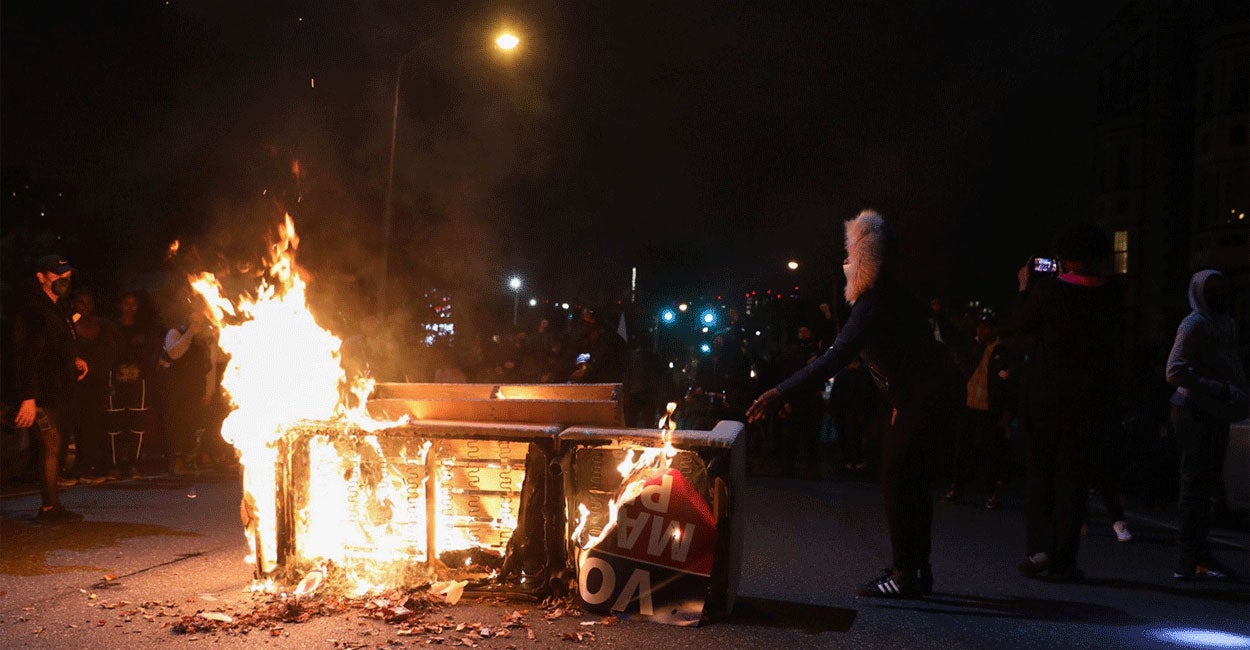

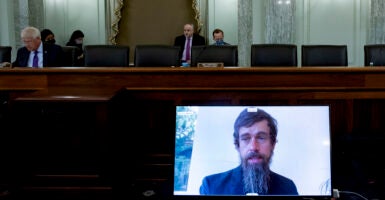


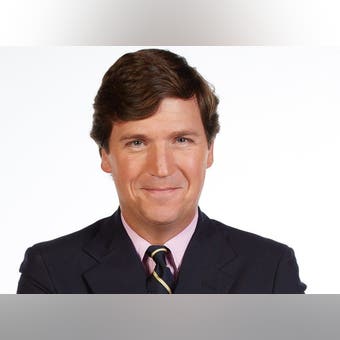


 I can tell you a few things about her, though. For one thing, she did not have a wild reputation, so I think that if she’s nominated, the Senate hearings will have to find something else to complain about. She was an English major and served on the Honor Council, a student body that enforced our honor code against lying and cheating (a great feature of academics at Rhodes that allowed us take-home tests in many classes). We were both in Mortar Board, an honor society. She wasn’t a political activist and was never a member of the College Republicans (I was, and we had a much larger membership than the College Democrats).
 Amy at the homecoming game senior year
 Candid photo in the social room (the ironing board refers to another picture)
 L to R: Me, Amy Barrett, and my daughter