In the French Revolution, human reason was made supreme and christianity was pushed aside. In 1789, with the French Revolution at its height, the members of the National Assembly swore to establish a constitution: The Declaration of the Rights of Man. To make their outlook clear, the French changed the calendar and called 1792 the “year one,” and destroyed many of the things of the past, even suggesting the destruction of the cathedral at Chartres. They proclaimed the goddess of Reason in Notre-Dame Cathedral in Paris and in other churches in France, including Chartres. In Paris, the goddess was personified by an actress, Demoiselle Candeille, carried shoulder high into the cathedral by men dressed in Roman costumes. Like the humanists of the Renaissance, the men of the Enlightenment pushed aside the Christian base and heritage and looked back to the old pre-Christian times. When the French Revolution tried to reproduce the English conditions without the Reformation base, but rather on Voltaire’s humanistic base, the result was a bloodbath and a rapid breakdown into the authoritarian rule of Napoleon Bonaparte (1769-1821).
In Sept. 1792 began the massacre in which some 1,300 prisoners were killed. Before it was all over, the government and its agents killed 40,000 people, many of them peasants. Maximilien Robespierre (1758-1794), the revolutionary leader, was himself executed in July 1794. This destruction came not from outside the system; it was produced by the system. The influence of the Declaration of the Rights of Man, as seen within the context of the French Revolution, can hardly be overestimated. Within a period of two years, an extreme form of democracy had been established and all titles of privilege abolished. In subsequent decades, based on the achievements of the revolution, political theorists began suggesting even more dramatic changes in government–changes that in the 20th century are called socialism, Communism, and anarchism. It is no exaggeration to say that subsequent revolutions in Europe, especially the Russian Revolution of 1917, had their antecedent in the ideas and practices that were spawned by the French Revolution.
Welcome to the age of revolution! In this lesson, we will look at five of the most important revolutions in modern history through the lenses of the Renaissance and the Reformation. We have looked at both the Renaissance and the Reformation in our previous two session and now it is time to begin assessing the impact each has made on history. By looking at the results of the English “Bloodless Revolution,” the American Revolution, the French Revolution, the Russian Revolution and the Industrial Revolution we will briefly trace how the Renaissance and the Reformation and the world views formed by them have contributed to influence the development of the modern world.
One of the most significant impacts of the Reformation tends to be virtually unnoticed in our current view of the world. Political freedom in the modern world can be traced back to the biblical freedom which was a result of the Reformation. “The Reformation did not bring social or political perfection, but it did gradually bring forth a vast and unique improvement. What the Reformation’s return to biblical teaching gave society was the opportunity for tremendous freedom, but without chaos.” True individual freedom came about when a society or culture accepted the absolutes of the Bible as foundation of their government and law. These biblical values gave man freedom without that freedom leading to chaos.
Freedom is something that is not associated with the Bible. We are not taught that true freedom can only be achieved by the acceptance of biblical absolutes as governing principles. Many would claim that freedom was handed down to us from the Greeks or from Roman Law while ignoring the fact that no previous society came close to providing the world with what was produced by the Reformation. It was the Reformation that gave us “the basis for freedom without chaos.”
Francis Schaeffer cites the mural, Justice Lifts the Nations by Paul Robert, as an example of what the Reformation gave us. “Robert wanted to remind them that the place which the Reformation gave to the Bible provided a basis not only for morals but for law. Robert pictured many types of legal cases in the foreground and the judges in their black robes standing behind the judges’ bench. The problem is neatly posed: How shall the judges judge? On what basis shall they proceed so that their judgment will not be arbitrary? Above them Robert painted justice standing un-blindfolded, with her sword pointed not vertically upward but downward toward a book, and on the book is written – The Law of God. This painting expressed the sociological base, the legal base, in northern Europe after the Reformation. Paul Robert understood what the Reformation was all about in the area of law. It is the Bible which gives a base to law.” Schaeffer goes on to quote Alexandre Vinet (1797-1847) who was a leading representative of French Protestantism in his day as saying, “Christianity is the immortal seed of freedom of the world.” This is a thought that is hardly expressed today in Christian circles let alone in our culture.
The impact of the Bible on law is not limited to courtrooms but rather it impacts “the entire structure of a society, including the government.” The Bible’s influence on the governments of the Reformation countries is the greatest impact of the Reformation. What has come to be called the “constitutionalist model of government” was “implicit in Presbyterian church government” and highlighted the “principle of political limitation.” The principle of political limitation allowed Reformation countries, most noticeably England, and its citizens to enjoy freedom “from arbitrary governmental power in an age when in other countries the advance toward absolutist political options was restricting liberty of expression.”
It was the biblical concept of the responsibility of the people, including its kings and leaders, to be obedient to the laws of God, to laws that were established by a higher authority, laws that were absolute if you will, that came to separate the governments of the Reformation countries from those governments ruling by authoritarian control over its citizens. This was the principle of the Samuel Rutherford’s (1600-1661) book Lex Rex, Law is King. The book, published in 1644, based its concept of government on a biblical foundation “rather than of the arbitrary decisions of men – because the Bible as the final authority was there as the base. This went beyond the Conciliar Movement and early medieval parliaments, for these had no base beyond inconsistent church pronouncements and the changing winds of political events.” It was only where the Bible was the foundation of law that man was able to enjoy “freedom without chaos.”
Rutherford and his book, Rex Lex., had a great influence on the development of the United States Constitution. This influence came about through the personage of John Witherspoon and the writings of English philosopher John Locke. Witherspoon (1723-1794), a Presbyterian clergyman, President of Princeton University (then known as the College of New Jersey) was the only clergyman to sign the Declaration of Independence. He was instrumental in incorporating the principles of Rex Lex into the Constitution as he was an influential member of a number committees of the Continental Congress.
John Locke’s (1632-1704) writings, while “secularizing the Presbyterian tradition,” emphasized several of its key features. “He stressed inalienable rights, government by consent, separation of powers, and the right of revolution. But the biblical base for these is discovered in Rutherford’s work. Without this biblical background, the whole system would be without a foundation.” It was Thomas Jefferson who incorporated much of Locke’s secularized form of Rex Lex into the Constitution. It is worth noting that while Locke stated many of the results of which come from Christianity in his writings but he clearly never grasped the understanding of the Bible that produced them.
It is clear that the United States Constitution owes much to Reformation and to the basis, the authority of the Bible, upon which the Reformation was built. It is likely with the Constitution in mind that Schaeffer concludes “To whatever degree a society allows the teaching of the Bible to bring forth its natural conclusions, it is able to have form and freedom in society and government.”
The Reformation’s emphasis on the Bible brought to light two significant items that would provide a profound impact on society and government. The first was the idea that man does not need to be governed by consensus or by popular vote if the absolutes of the Bible provide the foundation for judgement. In the words of Schaeffer, “51 percent of the vote never becomes the final source of right and wrong in government because the absolutes of the Bible are available to judge a society. The ‘little man,’ the private citizen, can at any time stand up and, on the basis of biblical teaching, say that the majority is wrong.” By practicing biblical teaching “one can control the despotism of the majority vote or the despotism of one person or group.”
The second important item that Reformation thinking helped refine was that of the need for “checks and balances in government.” The reformer’s understanding that with the fall of man and all men are sinners the needs for a strong system of checks and balances in government, for the people in power. While the methods and types of checks and balances differed in each Reformation country, they all adopted a system of checks and balances. One only needs to look at the one that our founders developed for the United States as an example. “The White House covers the executive administration; Congress, in two balanced parts, is the legislature; the Supreme Court embodies the judiciary.”
These two items did much to provide a viable form of government that reduced or eliminated the chaos that comes with a society that is without absolutes, or the recognition of the corruptibility of man.
The Reformation made a significant contribution to political reform. Like Charles Dickens’ Tale of Two Cities (1859), most modern governments can trace their roots either to the Renaissance or the Reformation. Governments follow after either the Goddess of Reason as France did, or they adopt a form of government with Reformation roots.
If one does a Goggle search on the phrase “bloodless revolution,” one will find many hits for a popular book on vegetarianism. However, the true bloodless revolution was a term that historians have applied to the revolution that took place in England in 1688. It was at this time that Parliament and the English monarchy became equal partners. “This arrangement brought about the deliberate control of the monarchy within specific legal bounds.” Schaeffer, quoting the French Philosopher Voltaire, points to this event as the first time that a monarchy was constrained to do good and not evil by law and that a government was established with powers that delineated the role of the monarchy and the people. “The English are the only people upon earth who have been able to prescribe limits to the power of Kings by resisting them, and who, by a series of struggles, have at last established . . . that wise government where the prince is all powerful to do good, and at the same time is restrained from committing evil . . . and where the people share in the government without confusion.”
In contrast to England’s “bloodless revolution, France when it tried to bring about a similar change experienced a bloody revolution that resulted in the death of more than forty thousand of its citizens and ended with the authoritarian rule of Napoleon Bonaparte. France attempted to achieve political change along the lines of the English but it did so on an Enlightenment base rather than a Reformation base. The Enlightenment evolved from the Renaissance and rested on humanist elements from the Renaissance. “The humanistic elements which had risen during the Renaissance came to flood tide in the Enlightenment. Here was man starting from himself absolutely. And if the humanistic elements of the Renaissance stand in sharp contrast to the Reformation, the Enlightenment was in total antithesis to it. The two stood for and were based upon absolutely different things in an absolute way, and they produced absolutely different results.”
The world view of the Enlightenment thinkers was that “man and society were perfectible.” Ironically even with the period of the French Revolution known as the “Reign of Terror” leaders of the Enlightenment period clung to the “idea of the limitless perfectibility of the human species . . . ” As Schaeffer tells us: “The utopian dream of the Enlightenment can be summed up by five words: reason, nature, happiness, progress, and liberty. It was thoroughly secular in its thinking.” And unlike the English, the French without a Christian base could build only on man and that was not enough. The French Revolution brought about a bloodbath and another authoritarian leader. “How quickly all the humanist ideals came to grief. In September 1792 began the massacre in which some 1,300 prisoners were killed. Before it was all over, the government and its agents killed 40,000 people, many of them peasants. Maximilien Robespierre (1758-1794), the revolutionary leader, was himself executed in July 1794. This destruction came not from outside the system; it was produced by the system.”
The French Revolution, which came shortly on the heels of the American Revolution, has mistakenly been compared with it. In reality, there are more similarities between the American Revolution and the Bloodless Revolution of the English than there are between the American and French Revolutions. But there are strong parallels between the French revolution and the later Russian Revolution.
Even a cursory historical glance at the political fortunes of those countries that came under the influence of the biblically based Reformation shows a remarkable difference between those countries that did not. The results that were produced from the Reformation are in great contrast with those that have been produced from countries that have adopted a “humanist” world view. The humanist world view can best be identified, at least initially, with modern-day socialism or Communism.
The countries of the Reformation were able to experience freedom without chaos. The countries that fell under Communist influence were not as fortunate. “Marxist-Leninist Communists have a great liability in arguing their case because so far in no place have the Communists gained and continued in power, building on their materialistic base, without repressive policies. And they have not only stifled political freedom but freedom in every area of life, including the arts.”
The Russian writer Alexander Solzhenitsyn is quoted by Schaeffer as saying in Communism: A Legacy of Terror (1975), “I repeat, this was March 1918 – only four months after the October Revolution – all the representatives of the Petrograd factories were cursing the Communists, who had deceived them in all their promises. What is more, not only had they abandoned Petrograd to cold and hunger, themselves having fled from Petrograd to Moscow, but had given orders to machine gun the crowds of workers in the courtyards of the factories who were demanding the election of independent factory committees.” The Humanistic ideal of utopia and the perfectability of man and society, once again, ended in bloodshed and authoritarian rule.
“Communists speak about ‘socialism’ and ‘communism,’ maintaining that socialism is only the temporary stage, with a utopian communism ahead. . . . and not only have they not achieved the goal of ‘communism’ anywhere, they have not even come to a free socialism.” It is no accident that Socialism and Communism have led to government by dictatorship, by a ruling elite, that is not only not temporary, but that it is without freedom. One cannot find the freedom of the Reformation in any government built on the platform of humanism.
Has the world so quickly forgotten the millions of Russians that died by “internal repression?” Do we remember the repressions of Lenin, the purges of Stalin, “the Berlin Wall built in 1961 to confine the people of East Germany by force, or the disappearance of freedom in China?” If we can detect anything of the difference between the Reformation countries and the countries whose roots have been firmly planted in Humanism, how can we continue to “minimize the riches in government and society which came forth from the Reformation?” Granting the fact that countries with Reformation roots have not been perfect, how can we continue to deny the biblical basis of the Reformation has produced the only world view that has granted man the experience of Freedom without chaos or tyranny.
“Even in those places where the Reformation consensus was less consistent than it should have been, on the basis of the biblical view there were absolutes on which to combat injustice. Men like Shaftesbury, Wilberforce, and Wesley could say that the evils and injustices which they fought were absolutely wrong. And even if we must say with sorrow that all too often Christians were silent when they should have spoken out, especially in the areas of race and the compassionate use of accumulated wealth, the Christians who were silent were inconsistent with their position.”
Why do we continue to chase after the Goddess of Humanism, who says that there are no absolutes, that whether or not things are right or wrong is all relative? What is so attractive about an impersonal universe that leaves the determination of right or wrong, cruel or un cruel to each individual? Humanism without a way to provide absolutes can only lead man, ultimately to despondency and death.
Why can we not recognize and accept that it is only on a biblical basis, with its absolutes that man say “that certain things are right or wrong, including racial discrimination and social injustice?” Why can man not grasp that because “ . . . God exists and there are absolutes, justice can be seen as absolutely good and not as merely expedient.” When will man learn that freedom can only come from God, and that all our efforts to build the “tower of Babel,” to exert our own will always end in despondency and death? Not matter how romantically we paint the picture of man without God – man without God is a man without Freedom.
___________________
Martha Colburn Brings the War Home | “New York Close Up” | Art21
Martha Colburn was born in 1971 in Gettysburg, Pennsylvania, formerly lived and worked in New York, and currently lives between Amsterdam and Lisbon.
Colburn began working with film in the ’90s when she acquired a used projector and began splicing found footage into her works. Now, she works for years on a single project, and her films result from intensive research and meticulously rendered stop-motion animations that include photography, collage, and painting.
The artist’s vibrant imagery can belie the seriousness of the themes she addresses, which include America’s history of war and violence, and crystal-meth addiction in rural areas. While her work is viewed in both film and art contexts, she has said that the individual films are secondary to the ideas and images behind her work.
The John Lennon and the Beatles really were on a long search for meaning and fulfillment in their lives just like King Solomon did in the Book of Ecclesiastes. Solomon looked into learning (1:12-18, 2:12-17), laughter, ladies, luxuries, and liquor (2:1-2, 8, 10, 11), and labor (2:4-6, 18-20). He fount that without God in the picture all […]
______________ George Harrison Swears & Insults Paul and Yoko Lucy in the Sky with Diamonds- The Beatles The Beatles: I have dedicated several posts to this series on the Beatles and I don’t know when this series will end because Francis Schaeffer spent a lot of time listening to the Beatles and talking […]
The Beatles in a press conference after their Return from the USA Uploaded on Nov 29, 2010 The Beatles in a press conference after their Return from the USA. The Beatles: I have dedicated several posts to this series on the Beatles and I don’t know when this series will end because Francis […]
__________________ Beatles 1966 Last interview I have dedicated several posts to this series on the Beatles and I don’t know when this series will end because Francis Schaeffer spent a lot of time listening to the Beatles and talking and writing about them and their impact on the culture of the 1960’s. In this […]
_______________ The Beatles documentary || A Long and Winding Road || Episode 5 (This video discusses Stg. Pepper’s creation I have dedicated several posts to this series on the Beatles and I don’t know when this series will end because Francis Schaeffer spent a lot of time listening to the Beatles and talking and writing about […]
_______________ Francis Schaeffer pictured below: _____________________ I have included the 27 minute episode THE AGE OF NONREASON by Francis Schaeffer. In that video Schaeffer noted, ” Sergeant Pepper’s Lonely Hearts Club Band…for a time it became the rallying cry for young people throughout the world. It expressed the essence of their lives, thoughts and their feelings.” How Should […]
Crimes and Misdemeanors: A Discussion: Part 1 ___________________________________ Today I will answer the simple question: IS IT POSSIBLE TO BE AN OPTIMISTIC SECULAR HUMANIST THAT DOES NOT BELIEVE IN GOD OR AN AFTERLIFE? This question has been around for a long time and you can go back to the 19th century and read this same […]
____________________________________ Francis Schaeffer pictured below: __________ Francis Schaeffer has written extensively on art and culture spanning the last 2000years and here are some posts I have done on this subject before : Francis Schaeffer’s “How should we then live?” Video and outline of episode 10 “Final Choices” , episode 9 “The Age of Personal Peace and Affluence”, episode 8 […]
Love and Death [Woody Allen] – What if there is no God? [PL] ___________ _______________ How Should We then Live Episode 7 small (Age of Nonreason) #02 How Should We Then Live? (Promo Clip) Dr. Francis Schaeffer 10 Worldview and Truth Two Minute Warning: How Then Should We Live?: Francis Schaeffer at 100 Francis Schaeffer […]
___________________________________ Francis Schaeffer pictured below: ____________________________ Francis Schaeffer “BASIS FOR HUMAN DIGNITY” Whatever…HTTHR Dr. Francis schaeffer – The flow of Materialism(from Part 4 of Whatever happened to human race?) Dr. Francis Schaeffer – The Biblical flow of Truth & History (intro) Francis Schaeffer – The Biblical Flow of History & Truth (1) Dr. Francis Schaeffer […]
Yesterday I shared Francis Schaeffer’s 7 perspectives in which Christians should consider art. Today I want to share his 5th perspective at more length. In this perspective, Schaeffer discusses how a Christian should judge a work of art. I believe this to be a profitable discussion in light the desperate need among Christians to interact intelligently and sensitively with culture and art. Once again, please take a look at Francis Schaeffer’s book, Art and the Bible. It is well worth your time.
FOUR STANDARDS OF JUDGMENT
What kind of judgment does one apply, then, to a work of art? I believe that there are four basic standards:
1. Technical excellence
I will discuss technical excellence in relationship to painting because it is easy to point out through this medium what I mean. Here one considers the use of color, form, balance, the texture of the paint, the handling of lines, the unity of the canvas and so forth. In each of these there can be varying degrees of technical excellence. By recognizing technical excellence as an aspect of an art work, we are often able to say that while we do not agree with such and such an artist’s world view, he is nonetheless a great artist.
We are not being true to the artist as a man if we consider his art work junk simply because we differ with his outlook on life. Christian schools, Christian parents and Christian pastors often have turned off young people at just this point. Because the schools, the pastors and the parents did not make a distinction between technical excellence and content, the whole of much great art has been rejected by scorn or ridicule. Instead, if the artist’s technical excellence is high, he is to be praised for this, even if we differ with his world view. Man must be treated fairly as man.
2. Validity
Validity is the second criterion. By validity I mean whether an artist is honest to himself and to his world view or whether he makes his art only for money or for the sake of being accepted.
To bring it down to earth, let’s see what happens in the art form of preaching. There is many a pastor who does not have validity. Some preach for material gain and others in order to be accepted by their congregation. It is so easy to play to the audience, to adjust what one says or the way one says it to produce the kind of effect which will be most beneficial to the preacher himself. And when one sees the issue in relationship to the gospel, the force of the dishonesty is especially obvious.
3. Intellectual content, the world view which comes through
The third criterion for the judgment of a work of art is its content, that which reflects the world view of the artist.
The artist’s world view is not to be free from the judgment of the Word of God.
We should realize that if something untrue or immoral is stated in great art it can be far more destructive and devastating than if it is expressed in poor art or prosaic statement.
But the greater the artistic expression, the more important it is to consciously bring it and its world view under the judgment of Christ and the Bible.
It is possible for a non-Christian writer or painter to write and paint according to a Christian world view even though he himself is not a Christian.
4. The integration of content and vehicle
The fourth criterion for judging a work of art involves how well the artist has suited the vehicle to the message. For those art works which are truly great, there is a correlation between the style and the content. The greatest art fits the vehicle that is being used to the world view that is being presented.
All quotes from Francis A. Schaeffer. Art and the Bible (pgs.62- 69). Kindle Edition.
Mel Chin was born in Houston to Chinese parents in 1951, the first of his family born in the United States, and was reared in a predominantly African-American and Latino neighborhood. He worked in his family’s grocery store, and began making art at an early age. Though Chin is classically trained, his art is both analytical and poetic and evades easy classification. Alchemy, botany, and ecology are but a few of the disciplines that intersect in his work. He insinuates art into unlikely places, including destroyed homes, toxic landfills, and even popular television, investigating how art can provoke greater social awareness and responsibility. Unconventional and politically engaged, his projects also challenge the idea of the artist as the exclusive creative force behind an artwork.
“The survival of my own ideas may not be as important as a condition I might create for others’ ideas to be realized,” says Chin, who often enlists entire neighborhoods or groups of students in creative partnerships. In Knowmad, Chin worked with software engineers to create a video game based on rug patterns of nomadic peoples facing persecution. Chin also promotes works of art that have the ultimate effect of benefiting science or rejuvenating the economies of inner-city neighborhoods. In Revival Field, Chin worked with scientists to create sculpted gardens of hyperaccumulators—plants that can draw heavy metals from contaminated areas—in some of the most polluted sites in the world.
Chin received a BA from Peabody College in Nashville, Tennessee, in 1975, and fellowships from the National Endowment for the Arts in 1988 and 1990. He lives in North Carolina.
I want to make two points today. First, Greg Koukl has rightly noted that the nudity of a ten year old girl in the art of Robert Mapplethorpe is not defensible, and it demonstrates where our culture is morally. It the same place morally where Rome was 2000 years ago as Francis Schaeffer has demonstrated […]
E P I S O D E 1 0 Dr. Francis Schaeffer – Episode X – Final Choices 27 min FINAL CHOICES I. Authoritarianism the Only Humanistic Social Option One man or an elite giving authoritative arbitrary absolutes. A. Society is sole absolute in absence of other absolutes. B. But society has to be […]
E P I S O D E 9 Dr. Francis Schaeffer – Episode IX – The Age of Personal Peace and Affluence 27 min T h e Age of Personal Peace and Afflunce I. By the Early 1960s People Were Bombarded From Every Side by Modern Man’s Humanistic Thought II. Modern Form of Humanistic Thought Leads […]
E P I S O D E 8 Dr. Francis Schaeffer – Episode VIII – The Age of Fragmentation 27 min I saw this film series in 1979 and it had a major impact on me. T h e Age of FRAGMENTATION I. Art As a Vehicle Of Modern Thought A. Impressionism (Monet, Renoir, Pissarro, Sisley, […]
E P I S O D E 7 Dr. Francis Schaeffer – Episode VII – The Age of Non Reason I am thrilled to get this film series with you. I saw it first in 1979 and it had such a big impact on me. Today’s episode is where we see modern humanist man act […]
E P I S O D E 6 How Should We Then Live 6#1 Uploaded by NoMirrorHDDHrorriMoN on Oct 3, 2011 How Should We Then Live? Episode 6 of 12 ________ I am sharing with you a film series that I saw in 1979. In this film Francis Schaeffer asserted that was a shift in […]
E P I S O D E 5 How Should We Then Live? Episode 5: The Revolutionary Age I was impacted by this film series by Francis Schaeffer back in the 1970′s and I wanted to share it with you. Francis Schaeffer noted, “Reformation Did Not Bring Perfection. But gradually on basis of biblical teaching there […]
Dr. Francis Schaeffer – Episode IV – The Reformation 27 min I was impacted by this film series by Francis Schaeffer back in the 1970′s and I wanted to share it with you. Schaeffer makes three key points concerning the Reformation: “1. Erasmian Christian humanism rejected by Farel. 2. Bible gives needed answers not only as to […]
Francis Schaeffer’s “How should we then live?” Video and outline of episode 3 “The Renaissance” Francis Schaeffer: “How Should We Then Live?” (Episode 3) THE RENAISSANCE I was impacted by this film series by Francis Schaeffer back in the 1970′s and I wanted to share it with you. Schaeffer really shows why we have so […]
Francis Schaeffer: “How Should We Then Live?” (Episode 2) THE MIDDLE AGES I was impacted by this film series by Francis Schaeffer back in the 1970′s and I wanted to share it with you. Schaeffer points out that during this time period unfortunately we have the “Church’s deviation from early church’s teaching in regard […]
Francis Schaeffer: “How Should We Then Live?” (Episode 1) THE ROMAN AGE Today I am starting a series that really had a big impact on my life back in the 1970′s when I first saw it. There are ten parts and today is the first. Francis Schaeffer takes a look at Rome and why […]
Known for its slashing wah-wah guitar solo, pounding drums and halting drug-inspired lyrics, “White Room” remains one of Cream’s heavily trafficked songs.
Although the wah-wah pedal effect on Eric Clapton’s guitar marks it as a product of the late 1960s, “White Room” feels as contemporary as anything in the Cream catalog. The rock song is marked by an unusual sophistication in the lyrics and musical structure. It also expresses the psychedelic aesthetic in a radio-friendly serving, and audiences of the day ate it up.
Lyricist Pete Brown wrote “White Room” with bassist/singer Jack Bruce. Brown’s carefully measured poetry (doled out in four-syllable phrases) lifts this above so many trippy-nonsense lyrics of the era:
In the white room, with black curtains, near the station/
Black roof country, no gold pavements, tired starlings
The “White Room” was a new flat (apartment) inhabited by Brown, a place where “the shadows run from themselves.” Before long, Brown must confront “the station,” perhaps the London Tube, where pain awaits as a lover departs:
You said no strings could secure you at the station/
Platform ticket, restless diesels, goodbye windows
Brown said years later: “It was a miracle it worked, considering it was me writing a monologue about a new flat.”
While drugs reportedly came into play in the song’s creation, this is a fine example of a psychedelic song working within the temporal confines of a rock single. In the U.S., a 3-minute single version spent several weeks in the top 10 during the fall of 1968. The full 5-minute song provided a dramatic opening to Cream’s “Wheels of Fire” double album.
Despite Clapton’s brilliant solo (and celebrity), “White Room” also serves as evidence that vocalist Bruce was very much Cream’s front man.
“White Room” remained a can’t-miss concert staple for both Bruce and Clapton in their solo careers, although Clapton did resist playing it for many years. It was the penultimate song performed at Cream’s 2005 reunion shows.
Cream – White Room – Lyrics
630 × 400Images may be subject to copyright. Learn More
In his book HOW SHOULD WE THEN LIVE? Francis Schaeffer noted:
The man who followed on from that point was English–Aldous Huxley (1894-1963). He proposed drugs as a solution. We should, he said, give healthy people drugs and they can then find truth inside their own heads. All that was left for Aldous Huxley and those who followed him was truth inside a person’s own head. With Huxley’s idea, what began with the existential philosophers – man’s individual subjectivity attempting to give order as well as meaning, in contrast to order being shaped by what is objective or external to oneself – came to its logical conclusion. Truth is in one’s own head. The ideal of objective truth was gone.
This emphasis on hallucinogenic drugs brought with it many rock groups–for example, Cream, Jefferson Airplane, Grateful Dead, Incredible String Band, Pink Floyd, and Jimi Hendrix. Most of their work was from 1965-1958. The Beatles’Sergeant Pepper’s Lonely Hearts Club Band (1967) also fits here. This disc is a total unity, not just an isolated series of individual songs, and for a time it became the rallying cry for young people throughout the world. As a whole, this music was the vehicle to carry the drug culture and the mentality which went with it across frontiers which were almost impassible by other means of communication.
Together with the advent of the “drug Age” was the increased interest in the West in the religious experience of Hinduism and Buddhism. Schaeffer tells us that: “This grasping for a nonrational meaning to life and values is the central reason that these Eastern religions are so popular in the West today.” Drugs and Eastern religions came like a flood into the Western world. They became the way that people chose to find meaning and values in life. By themselves or together, drugs and Eastern religion became the way that people searched inside themselves for ultimate truth.
Along with drugs and Eastern religions there has been a remarkable increase “of the occult appearing as an upper-story hope.” As modern man searches for answers it “many moderns would rather have demons than be left with the idea that everything in the universe is only one big machine.” For many people having the “occult in the upper story of nonreason in the hope of having meaning” is better than leaving the upper story of nonreason empty. For them horror or the macabre are more acceptable than the idea that they are just a machine.
Francis Schaeffer has correctly argued:
The universe was created by an infinite personal God and He brought it into existence by spoken word and made man in His own image. When man tries to reduce [philosophically in a materialistic point of view] himself to less than this [less than being made in the image of God] he will always fail and he will always be willing to make these impossible leaps into the area of nonreason even though they don’t give an answer simply because that isn’t what he is. He himself testifies that this infinite personal God, the God of the Old and New Testament is there.
Instead of making a leap into the area of nonreason the better choice would be to investigate the claims that the Bible is a historically accurate book and that God created the universe and reached out to humankind with the Bible. Below is a piece of that evidence given by Francis Schaeffer concerning the accuracy of the Bible.
TRUTH AND HISTORY (chapter 5 of WHATEVER HAPPENED TO THE HUMAN RACE?,
___
In the previous chapter we saw that the Bible gives us the explanation for the existence of the universe and its form and for the mannishness of man. Or, to reverse this, we came to see that the universe and its form and the mannishness of man are a testimony to the truth of the Bible. In this chapter we will consider a third testimony: the Bible’s openness to verification by historical study.
Christianity involves history. To say only that is already to have said something remarkable, because it separates the Judeo-Christian world-view from almost all other religious thought. It is rooted in history.
The Bible tells us how God communicated with man in history. For example, God revealed Himself to Abraham at a point in time and at a particular geographical place. He did likewise with Moses, David, Isaiah, Daniel and so on. The implications of this are extremely important to us. Because the truth God communicated in the Bible is so tied up with the flow of human events, it is possible by historical study to confirm some of the historical details.
It is remarkable that this possibility exists. Compare the information we have from other continents of that period. We know comparatively little about what happened in Africa or South America or China or Russia or even Europe. We see beautiful remains of temples and burial places, cult figures, utensils, and so forth, but there is not much actual “history” that can be reconstructed, at least not much when compared to that which is possible in the Middle East.
When we look at the material which has been discovered from the Nile to the Euphrates that derives from the 2500-year span before Christ, we are in a completely different situation from that in regard to South America or Asia. The kings of Egypt and Assyria built thousands of monuments commemorating their victories and recounting their different exploits. Whole libraries have been discovered from places like Nuzu and Mari and most recently at Elba, which give hundreds of thousands of texts relating to the historical details of their time. It is within this geographical area that the Bible is set. So it is possible to find material which bears upon what the Bible tells us.
The Bible purports to give us information on history. Is the history accurate? The more we understand about the Middle East between 2500 B.C. and A.D. 100, the more confident we can be that the information in the Bible is reliable, even when it speaks about the simple things of time and place.
The site of the biblical city called Lachish is about thirty miles southwest of Jerusalem. This city is referred to on a number of occasions in the Old Testament. Imagine a busy city with high walls surrounding it, and a gate in front that is the only entrance to the city. We know so much about Lachish from archaeological studies that a reconstruction of the whole city has been made in detail. This can be seen at the British Museum in the Lachish Room in the Assyrian section.
There is also a picture made by artists in the eighth century before Christ, the Lachish Relief, which was discovered in the city of Nineveh in the ancient Assyria. In this picture we can see the Jewish inhabitants of Lachish surrendering to Sennacherib, the king of Assyria. The details in the picture and the Assyrian writing on it give the Assyrian side of what the Bible tells us in Second Kings:
2 Kings 18:13-16
New American Standard Bible (NASB)
13 Now in the fourteenth year of King Hezekiah, Sennacherib king of Assyria came up against all the fortified cities of Judah and seized them. 14 Then Hezekiah king of Judah sent to the king of Assyria at Lachish, saying, “I have done wrong. Withdraw from me; whatever you impose on me I will bear.” So the king of Assyria required of Hezekiah king of Judah three hundred talents of silver and thirty talents of gold. 15 Hezekiah gave him all the silver which was found in the house of the Lord, and in the treasuries of the king’s house. 16 At that time Hezekiah cut off the gold from the doors of the temple of the Lord, and from the doorposts which Hezekiah king of Judah had overlaid, and gave it to the king of Assyria.
________
We should notice two things about this. First, this is a real-life situation–a real siege of a real city with real people on both sides of the war–and it happened at a particular date in history, near the turn of the eighth century B.C. Second, the two accounts of this incident in 701 B.C. (the account from the Bible and the Assyrian account from Nineveh) do not contradict, but rather confirm each other. The history of Lachish itself is not so important for us, but some of its smaller historical details.
1200 × 877Images may be subject to copyright. Learn More
Featured artist today is Peter Eugene Ball
Contemporary Christian Art – The Rt Revd Lord Harries of Pentregarth
Published on Apr 10, 2012
Contrary to much opinion, the current scene of faith-related art is very much alive. There are new commissions for churches and cathedrals, a number of artists pursue their work on the basis of a deeply convinced faith, and other artists often resonate with traditional Christian themes, albeit in a highly untraditional way. The challenge for the artist, stated in the introduction to the course of lectures above, is still very much there: how to retain artistic integrity whilst doing justice to received themes.
This lecture is part of Lord Harries’ series on ‘Christian Faith and Modern Art’. The last century has seen changes in artistic style that have been both rapid and radical. This has presented a particular problem to artists who have wished to express Christian themes.
Gresham College has been giving free public lectures since 1597. This tradition continues today with all of our five or so public lectures a week being made available for free download from our website. http://www.gresham.ac.uk
_________________________
Pièta, Winchester Cathedral, 2011
Peter Ball was born and brought up in Coventry and was much influenced by teachers at his local school. He trained at Coventry School of Art and has worked full time as a sculptor from 1968. His secular work has often been described as witty, and he usually begins there, as in his religious commissions, with a piece of driftwood. He must be the most commissioned of all contemporary artists, with over 60 commissions from churches or cathedrals. This popularity is no doubt related to that fact that he has said that a work in a church setting. “Has to be a devotional object not an architectural set piece”
Christus from the Flames, Cotgrave, 1998
The first word that comes to mind on seeing one of these religious commissions is “Romanesque”. Pamela Tudor Craig, after describing the drift wood and copper plate materials of his work says “So his Christus has, in the nature of its composition the battle-scarred endurance of a time-worn Romanesque Christus” and continues.
The large eyed narrow bearded heads of Romanesque art come naturally to Peter Ball. He is not the heir of the comely Gothic but of the tormented prophets of Souillac, or even further back, of Celtic spirit figures. His way of seeing is most suited, perhaps, to commissions for the Hanging Rood, or for a gaunt Pietà, but there is a tenderness in his treatment of
Peter Eugene Ball was born in Coventry, Warwickshire on 19 March 1943. He was educated at a local boys’ school and from 1957 to 1962 attended Coventry College of Art.
The powerful visual images of paintings, sculptures and architecture made a deep impression on the sculptor as a child. Enlightened history teachers brought their subject alive for him and one of his earliest memories is of a visit to Southwell Minster, Nottinghamshire at the age of 11, which, by coincidence, many years later, became the first cathedral to commission a major work by him. He also acquired much first hand knowledge whilst accompanying Geoffrey Saunders, an art history tutor, on numerous trips around the British Isles during the 1960s and together they made a photographic survey of village Romanesque carvings and prehistoric monuments throughout England, Scotland and Wales. From this Peter developed a life-long passion for Celtic and Romanesque carvings, both religious and secular.
He joined the Marjorie Parr Gallery, King’s Road, Chelsea in 1961 where he had his first one-man exhibition in 1967. During this time Peter took on a factory job to supplement his income but in 1968 decided to make sculpture his full-time occupation.
In 1974 he sold his first religious piece to a Monsignor at Westminster Cathedral and in 1975 an exhibition of his sculptures took place at Southwark Cathedral in London. Solo exhibitions at the Gilbert-Parr Gallery were supplemented by major showings every year at the Gallery’s stand at the International Art Fair in Basel. The next few years were very productive with sculpture being shown at gallery exhibitions in London, Holland and Switzerland, and at international art fairs in Basel, Dϋsseldorf, New York and Chicago. He also designed and made sculpture, masks and armour for ‘War Music’, Christopher Logue’s adaptation of Homer’s ‘Iliad’, for the Prospect Theatre at the Old Vic, London in 1977. Then in 1978 Peter obtained his first church commission: a memorial crucifix at Preston-on-Stour, Warwickshire.
1982 brought a number of changes to the artist’s life. The Gilbert-Parr Gallery in London closed and thereafter his exhibitions took place at the Galerie Gilbert in Remetschwiel, South Germany and at the Basel Art Fair, the Alwin Gallery on Grafton Street, London and the McMurtrey Gallery in Houston, Texas. He was also producing paintings, drawings, etchings and painted ceramics during this period. In 1986 he was commissioned to make a crucifix and altar pieces for Birmingham Cathedral and in 1987 a large Christus Rex for the nave of Southwell Minster.
Peter’s reputation for his religious work began to spread and over the next few years, as well as exhibiting his secular work, he made various pieces for churches, including a Virgin and Child for Southwark Cathedral and a Crucifix and Pieta for Winchester Cathedral. In 1993 his work was included in the exhibition ‘Images of Christ : Religious Iconography in Twentieth Century British Art’ in Northampton and St Paul’s Cathedral, London. In the same year, he held a solo exhibition in Winchester Cathedral for its 900th anniversary.
‘A Kind of Madness’, an account of the secular work of Peter Eugene Ball by Inga Gilbert, was also published in 1993 and throughout the nineties he continued to exhibit his work in various galleries and, in particular, enjoyed great success at the Galerie Husstege in S’Hertogenbosch, Holland. During this period he accepted various religious commissions and in 1999 was given a solo exhibition at Southwell Minster and another at Ely Cathedral the following year. ‘Icons of the Invisible God’, an analysis of a selected collection of his religious sculptures by Elaine Kazimierczuk, was also published at this time.
The new millennium heralded a regular stream of religious commissions, including two pieces for Romsey Abbey and a Christus Rex and Welcoming Christ for the newly refurbished church of St Barnabas in Erdington. He continued to hold exhibitions, often in cathedral settings such as Lichfield, Salisbury and Chichester, where he exhibited a mix of both religious and secular work. In 2010 he was commissioned to make a Mother and Child for St Michael’s Church at Winchester College and went on to produce several other pieces for the school, including a large Crucifix for the main chapel. In 2013 he was invited to hold a major exhibition of his work there which proved to be a great success.
Peter now lives in Newark in Nottinghamshire with his wife, Jane Warner, and continues to work from his studio at home. He currently has more than seventy religious sculptures in churches and cathedrals throughout England and Wales and his secular work can be seen at various galleries and private exhibitions. He has recently completed a major work for Merton College, Oxford: a Madonna and Child, and he is currently working towards his next exhibition which will take place in Oxford Cathedral, Christ Church College, Oxford next year. He laughs a lot and curses when things go wrong. His sculpture continues to be idiosyncratic and uncompromising, defying the changing fashions of the art world and remaining true to the spirit of the man.
Peter Eugene Ball – Artist & Sculptor
Virgin and Child
Crucifix, Winchester Cathedral, 1990
Christus Rex, Southwell Minster, 1987
Hope, St Martha the housewife, Broxtow, Nottingham, 1997
Peter Eugene Ball (19 March 1943) is an English sculptor. He is best known for his religious work which can be seen in churches and cathedrals throughout Britain. He also produces secular sculpture using predominantly driftwood and found objects.
Born on 19 March 1943 in Coventry, Warwickshire, Peter Eugene Ball attended Coventry College of Art from 1957 until 1962 where he obtained the National Diploma of Design. By 1963 his sculptures were already included in mixed exhibitions in the Midlands and at the Marjorie Parr Gallery, London, where he had his first one-man exhibition in 1967. However, it wasn’t until 1968 that making sculpture became his full-time occupation, and since that time he has devoted himself to producing both religious work for churches and cathedrals throughout the country and exhibiting and selling his secular work in galleries across Europe and in America.
The John Lennon and the Beatles really were on a long search for meaning and fulfillment in their lives just like King Solomon did in the Book of Ecclesiastes. Solomon looked into learning (1:12-18, 2:12-17), laughter, ladies, luxuries, and liquor (2:1-2, 8, 10, 11), and labor (2:4-6, 18-20). He fount that without God in the picture all […]
______________ George Harrison Swears & Insults Paul and Yoko Lucy in the Sky with Diamonds- The Beatles The Beatles: I have dedicated several posts to this series on the Beatles and I don’t know when this series will end because Francis Schaeffer spent a lot of time listening to the Beatles and talking […]
The Beatles in a press conference after their Return from the USA Uploaded on Nov 29, 2010 The Beatles in a press conference after their Return from the USA. The Beatles: I have dedicated several posts to this series on the Beatles and I don’t know when this series will end because Francis […]
__________________ Beatles 1966 Last interview I have dedicated several posts to this series on the Beatles and I don’t know when this series will end because Francis Schaeffer spent a lot of time listening to the Beatles and talking and writing about them and their impact on the culture of the 1960’s. In this […]
_______________ The Beatles documentary || A Long and Winding Road || Episode 5 (This video discusses Stg. Pepper’s creation I have dedicated several posts to this series on the Beatles and I don’t know when this series will end because Francis Schaeffer spent a lot of time listening to the Beatles and talking and writing about […]
_______________ Francis Schaeffer pictured below: _____________________ I have included the 27 minute episode THE AGE OF NONREASON by Francis Schaeffer. In that video Schaeffer noted, ” Sergeant Pepper’s Lonely Hearts Club Band…for a time it became the rallying cry for young people throughout the world. It expressed the essence of their lives, thoughts and their feelings.” How Should […]
Crimes and Misdemeanors: A Discussion: Part 1 ___________________________________ Today I will answer the simple question: IS IT POSSIBLE TO BE AN OPTIMISTIC SECULAR HUMANIST THAT DOES NOT BELIEVE IN GOD OR AN AFTERLIFE? This question has been around for a long time and you can go back to the 19th century and read this same […]
____________________________________ Francis Schaeffer pictured below: __________ Francis Schaeffer has written extensively on art and culture spanning the last 2000years and here are some posts I have done on this subject before : Francis Schaeffer’s “How should we then live?” Video and outline of episode 10 “Final Choices” , episode 9 “The Age of Personal Peace and Affluence”, episode 8 […]
Love and Death [Woody Allen] – What if there is no God? [PL] ___________ _______________ How Should We then Live Episode 7 small (Age of Nonreason) #02 How Should We Then Live? (Promo Clip) Dr. Francis Schaeffer 10 Worldview and Truth Two Minute Warning: How Then Should We Live?: Francis Schaeffer at 100 Francis Schaeffer […]
___________________________________ Francis Schaeffer pictured below: ____________________________ Francis Schaeffer “BASIS FOR HUMAN DIGNITY” Whatever…HTTHR Dr. Francis schaeffer – The flow of Materialism(from Part 4 of Whatever happened to human race?) Dr. Francis Schaeffer – The Biblical flow of Truth & History (intro) Francis Schaeffer – The Biblical Flow of History & Truth (1) Dr. Francis Schaeffer […]
Bernard Berenson: A Life in the Picture Trade, by Rachel Cohen, 2013, Yale University Press. The Jewish Lives Book Series. The fascinating life of Bernard Berenson. Trailer includes an interview with the author. Webvideo by Nick Davis Productions.
__
___
Francis Schaeffer in the book THE GOD WHO IS THERE asserted:
There is a real tension in being a modern man because no one can live at ease in the area of despair. A Christian know’s that this is because a man has been made in the image of God and though man is fallen, separated from God by his true guilt, yet nevertheless he has not become a machine. The fallenness of man does not lead to machiness, but to fallen-manness. Therefore, when people feel this utter despair, there is a titanic pressure, like being extruded against all the long history of reasoned thinking to accept a dichotomy, and then later to accept some mysticism which gives an illusion of unity to the whole.
Dr. Robert A. Sungenis discussed Schaeffer’s works extensively in his paper “Philosophy and its Effect on Society,” and he related this illustration Schaeffer used concerning Bernard Berenson:.
Bernard Berenson (d. 1959) professor at Harvard, was the world’s greatest expert on Renaissance art in his day. He was sought out for his ability to date and price any Renaissance piece of art. He loved the beauty of Renaissance art, so much so that when he compared it to the ugliness of modern art, in his own words, modern art was “bestial.” Berenson was also a Roman Catholic, at least by name. In one of his own ugly moments, he took a married woman, Mary Costelloe, away from her husband, living with her for years and then marrying her when her husband died (since as a Catholic, Mary could not divorce her husband). But when Berenson married her, they forged an agreement that each would be allowed to have extra-marital affairs, and they lived this way for 45 years. When Berenson was admonished for this, he would simply say: “You are forgetting the animal basis of our nature,” the same thing he said about modern art. Obviously, Berenson could not live within his own system of philosophy.
Francis Schaeffer in the book THE GOD WHO IS THERE noted:
No man like Berensoncan live with his system. Every truly modern man is forced to accept some sort of leap in theory or practice, because the pressure of his own humanity demands it. He can say what he will concerning what he himself is; but no matter what he says he is, he still is man.
These kinds of leaps, produced in desperation as an act of blind faith, are totally different from the faith of historic Christianity. On the basis of biblical Christianity a rational discussion and consideration can take place, because it is fixed in the stuff of history. When Paul was asked whether Jesus was raised from the dead, he gave a completely nonreligious answer, in the twentieth-century sense. He said, “There are almost 500 living witnesses; go and ask them!” (I Corinthians 15:6). This is the faith that involves the whole man, including his reason; it does not ask for a belief into this void. As the twentieth-century mentality would understand the concept of religion, the Bible is a nonreligious book.
___
David Steele noted concerning Francis Schaeffer:
…One must understand the concept he calls “mannishness” or the tension of being a man. The idea is essentially that no man can live at ease in the area of despair. His significance, ability to love and be loved, and his capacity for rationality distinguish him from machines and animals and give evidence to this fact: Man is made in the image of God. Modern man has been forced to accept the false dichotomy between nature and grace and consequently takes a leap of faith to the upper story and embraces some form of mysticism, which gives an illusion of unity to the whole. But as Schaeffer points out, “The very ‘mannishness’ of man refuses to live in the logic of the position to which his humanism and rationalism have brought him. To say that I am only a machine is one thing; to live consistently as if this were true is quite another” (The God Who Is There, 68). Schaeffer continues, “Every truly modern man is forced to accept some sort of leap in theory or practice, because the pressure of his own humanity demands it. He can say what he will concerning what he himself is; but no matter what he says he is, he is still a man” (The God Who Is There, 69).
The decisive result of falling below the line of despair is a pitting of rationality against faith. Schaeffer sees this as an enormous problem and details four consequences in his book, Escape From Reason.
First, when rationality contends against faith, one is not able to establish a system of morality. It is simply impossible to have an “upstairs morality” that is unrelated to matters of everyday living.
Second, when rationality and faith are dichotomized, there is no adequate basis for law. “The whole Reformation system of law was built on the fact that God had revealed something real down into the common things of life” (Escape From Reason, 261). But when rationality and faith are pitted against one another, all hope for law is obliterated.
The third consequence is that this scheme throws away the answer to the problem of evil. Christianity’s answer rests in the historic, space-time, real and complete Fall of man who rebelled and made a choice against God. “Once the historic Christian answer is put away, all we can do is to leap upstairs and say that against all reason God is good” (Escape From Reason, 262).
Finally, when one accepts this unbiblical dichotomy he loses the opportunity to evangelize people at their real point of despair. Schaeffer makes it clear that modern man longs for answers. “He did not accept the line of despair and the dichotomy because he wanted to. He accepted it because, on the basis of the natural development of his rationalistic presuppositions, he had to. He may talk bravely at times, but in the end it is despair” (Escape From Reason, 262). It is at this point that Schaeffer believes the Christian apologist has a golden opportunity to make an impact. “Christianity has the opportunity, therefore, to say clearly that its answer has the very thing modern man has despaired of – the unity of thought. It provides a unified answer for the whole of life. True, man has to renounce his rationalism; but then, on the basis of what can be discussed, he has the possibility of recovering his rationality” (Escape From Reason, 262).
Schaeffer challenges us, “Let us Christians remember, then, that if we fall into the trap against which I have been warning, what we have done, among other things, is to put ourselves in the position where in reality we are only saying with evangelical words what the unbeliever is saying with his words. In order to confront modern man effectively, we must not have this dichotomy. You must have the Scriptures speaking truth both about God Himself and about the area where the Bible touches history and the cosmos” (Escape From Reason, 263).
The Tension of Being a Man
Before proceeding to Dr. Schaeffer’s basic approach to apologetics one must understand the concept he calls “mannishness” or the tension of being a man. The idea is essentially that no man can live at ease in the area of despair. His significance, ability to love and be loved, and his capacity for rationality distinguish him from machines and animals and give evidence to this fact: Man is made in the image of God. Modern man has been forced to accept the false dichotomy between nature and grace and consequently takes a leap of faith to the upper story and embraces some form of mysticism, which gives an illusion of unity to the whole. But as Schaeffer points out, “The very ‘mannishness’ of man refuses to live in the logic of the position to which his humanism and rationalism have brought him. To say that I am only a machine is one thing; to live consistently as if this were true is quite another” (The God Who Is There, 68). Schaeffer continues, “Every truly modern man is forced to accept some sort of leap in theory or practice, because the pressure of his own humanity demands it. He can say what he will concerning what he himself is; but no matter what he says he is, he is still a man” (The God Who Is There, 69).
Thus, the foundation for Francis Schaeffer’s basic approach to apologetics is simply to recognize that man is an image-bearer. Man even in his sin has personality, significance, and worth. Therefore, the apologist should approach him in those terms. The apologist must not only recognize that man is made in the image of God; he must also love him in word and deed. Finally, the apologist must speak to the man as a unit; he must reach the whole man (for faith truly does involve the whole man) and refuse to buy into the popularized Platonic idea that man’s soul is more important than the body.
Dr. Schaeffer’s epistemology is integral to his approach to apologetics and may be described simply as follows. First, one must understand that pagan thought endorses a belief in the uniformity of natural causes in a closed system. Propositional and verbal revelation is nonsense in this scheme. Christian epistemology stands in stark contrast to the non-Christian worldview. The presupposition of Christianity begins with the God who is there. God is the infinite-personal Being who has made man in His image. God made man a verbalizer in the area of propositions in his horizontal communications with other men. Thus God communicates to us on the basis of verbalizations and propositions by means of the written Word of God (He Is There And He Is Not Silent, 326-327).
Thus the Christian epistemological system brings three things together in a unified whole; the unified field of knowledge that modern man has given up on. “The infinite personal God who made the universe; and man, whom he made to live in that universe; and the Bible, which He has given us to tell us about that universe” (He Is There And He Is Not Silent, 329).
Schaeffer goes one step further by noting that the presuppositions of Christianity is in line with every man’s experience. “The fact is that if we are going to live in this world at all, we must live in it acting on a correlation of ourselves and the thing that is there, even if we have a philosophy that says there is no correlation . . . In other words, all men constantly and consistently act as though Christianity is true” (He Is There And He Is Not Silent, 330).
The reason for the shift in society leading to despair comes as a result of buying the lie of the uniformity of natural causes in a closed system. The result delivers a deathblow to any possibility of epistemology. Schaeffer adds, “Man’s attempted autonomy has robbed him of reality. He has nothing to be sure of when his imagination soars beyond the stars, if there is nothing to guarantee a distinction between reality and fantasy. But on the basis of the Christian epistemology, this confusion is ended, the alienation is healed. This is the heart of the problem of knowing, and it is not solved until our knowledge fits under the apex of the infinite-personal, Triune God who is there and who is not silent” (He Is There And He Is Not Silent, 343-344).
Therefore, there are only two alternatives in the search for the source of knowledge according to Dr. Schaeffer. Either a person attempts to find the answers to all his questions alone (autonomously) or he seeks truths from God and His revealed Word (the biblical world-view).
The former view mandates that a person begin with himself. However, as Schaeffer notes, “Starting with himself, a person cannot establish an adequate explanation for the amazing possibility that he can observe the world around him and be assured that his observations have a correspondence with reality” (Whatever Happened To The Human Race, 365). Herein lies the problem: Sinful man is forced to provide the answers to the ultimate metaphysical questions, but because they have limited experience they can know nothing with a high degree of certainty. The end result is a hellish tension which leads down the road of meaninglessness and the relativity of morals: “The truth is that everyone who rejects the biblical world-view must live in a state of tension between ideas about reality and reality itself” (Whatever Happened To The Human Race, 369).
The later view that derives truth from God’s Word is the only sure way to engage in epistemology. Dr. Schaeffer gives three testimonies found in the Scripture. First, the Bible gives us the explanation for the universe. Second, the Bible explains the mannishness of man (which is described below) and third, the Bible is open to verification by historical study. “From the Bible’s viewpoint, all truth finally rests upon the fact that the infinite-personal God exists in contrast to His not existing” (Whatever Happened To The Human Race, 393).
I first read He is There and He is Not Silent by Francis Schaeffer in 1992. Multiple readings have ensued and I turn back to Schaeffer’s book again and again for help with apologetics.
Schaeffer argues for three basic areas of philosophical thought: metaphysics (being or existence), morals (the dilemma of man), and epistemology (the problem of knowing). Philosophy and religion are essentially devoted to the same questions, namely, metaphysics, morals, and epistemology.
Philosophy is concerned with either an academic subject or a person’s worldview. It is the later, that Schaeffer is concerned with in this volume. Schaeffer contends that every man is a philosopher of sorts because it is impossible for humans to live without a worldview.
METAPHYSICS
There are three basic answers to the question of metaphysics. The first answer is that “everything that exists has come out of absolutely nothing.” Naturalism’s answer suggests no energy, no mass, no motion, and no personality. This answer is, as Schaeffer calls it, “nothing, nothing.”
The second answer is that everything had an impersonal beginning. This answer leads automatically to reductionism. “Beginning with the impersonal must be explained in terms of the impersonal plus time plus chance,” writes Schaeffer. This answer poses many problem. But the two primary problems fail to answer the major philosophical question: the need for unity and the need for diversity.
The third answer is the biblical answer. The third answer is the only rational and satisfying answer. This answer suggests that we must begin with a personal beginning. And to have an adequate answer of a personal beginning, one must have a personal infinite God, and personal unity and diversity in God (found the holy Trinity).
Schaeffer concludes: “The reason we have the metaphysical answer is because the infinite-personal God, the full Trinitarian God is there and he is not silent.”
MORALS
There are only two basic answers to the question of morals. The first: Everything had an impersonal beginning. The is the answer of atheism. Schaeffer never minces words. He writes, “Beginning with the impersonal, there is no explanation for the complexity of the universe or the personality of man.” When one begins with the impersonal, one eliminates the possibility of morals or ethics.
The second answer is the biblical reality of a personal beginning. Man was created by an infinite-personal God. Man sinned or “made a decision to change himself” as Schaeffer notes.
“The starting point,” writes Schaeffer “to the answer (of the question of morals) as with metaphysics is the fact that God is there and he is not silent.”
EPISTEMOLOGY
Schaeffer concludes by setting forth the problem concerning epistemology and the epistemological answer.
The epistemological problem concerns the tension between nature (particulars) and grace (universals). When nature becomes autonomous, the universal is lost with the hope of giving the particulars meaning. The problem is that when nature becomes autonomous, nature “eats up” grace. Schaeffer argues that when we are left with only particulars, we become lost in the areas of metaphysics, morality, and epistemology.
The epistemological answer was summarized by the Reformers. The Reformers did not allow for a dichotomy between nature and grace. The reason: they had verbal propositional revelation. The Reformers were vocal about the reality of God’s existence and the reality of his revelation. Schaeffer popularized this view in the title of his book,He is There and He is Not Silent. God has spoken truly about himself. However, he has not spoken exhaustively about himself.
Schaeffer urges readers to come face to face with two gigantic presuppositions – “the uniformity of natural causes in a closed system and the uniformity of natural causes in an open system and in a limited time span.” Ultimately, readers must determine which worldview fits with the facts.
Schaeffer summarizes, then, the basic presuppositions in historic Christianity.
1. God is there.
2. God is the infinite-personal God who has made man in his image.
3. God made man a verbalizer in the area of propositions in his horizontal communications with other men.
4. God communicates to us on the basis of propositions, viz, he is there and his is not silent.
Schaeffer maintains, “Under the unity of the apex of the infinite-personal God, in all of these areas we can have meaning, we can have reality, and we can have beauty.”
He is There and He is Not Silent is an essential work of apologetics. It should be required reading for every Bible College/Seminary student. Schaeffer put his finger on the essential issues of the day – even in the early 70’s and especially in our day.
Francis Schaeffer sets the tone for his apologetical procedure by explaining the crisis of truth in America: “We are fundamentally affected by a new way of looking at truth. This change in the concept of the way we come to knowledge and truth is the most crucial problem facing America today” (The God Who Is There, 6). He believes a paradigm shift occurred around 1935 when the American attitude toward truth changed. Prior to this time, American’s were devoted to thinking about presuppositions, namely, the existence of absolutes, particularly in the areas of morals (ethics) and knowledge (epistemology). But the average American took it for granted that if a certain idea was true, it’s opposite was false. In other words, “absolutes imply antithesis.” The working antithesis is that God exists objectively (in antithesis) to his not existing.
Schaeffer believes that presuppositional apologetics would have stopped the decay. Incidentally, he maintains that the use of classical apologetics was effective prior to the shift because non-Christians were functioning on the surface with the same presuppositions, even though they did not have an adequate base for them.
The Role of Thomas Aquinas
Dr. Schaeffer maintains that Aquinas opened the way for the discussion of what is usually called the “nature and grace” controversy (Escape From Reason, 209). He contends that Aquinas set up a dichotomy of grace versus nature.
Aquinas taught that the will of man was fallen, but the intellect was not. The net result, according to Schaeffer, is that man’s intellect is seen as autonomous. Schaeffer maintains that the teaching of Aquinas led to the development of the so-called Natural Theology where theology could be pursued independent of the Scriptures. The vital principle to understand according to Schaeffer is that “as nature was made autonomous, nature began to ‘eat up’ grace” (Escape From Reason, 212).
Anthropology
Schaeffer militates against this so-called “grace/nature” dichotomy and insists that Christ is equally Lord in both areas. He suggests that God made the whole man and is consequently interested in the whole man. When the historic space-time Fall took place, it affected the whole man, not merely the will as Aquinas taught. Thus, Schaeffer taught that the whole man is saved and the whole man will eventually be glorified and perfectly redeemed.
Since God made man in His own image, man is not caught in the wheels of determinism: “The Christian position is that since man is made in the image of God and even though he is a sinner, he can do those things that are tremendous – he can influence history for this life and the life to come, for himself and others” (Death In The City, 258).
Schaeffer argues that Evangelicals have such a strong tendency to combat humanism that they end up making man a “zero.” He adds, “Man is indeed lost but that does not mean he is nothing . . . From the biblical viewpoint, man is lost, but great” (Death In The City, 258-259). Therefore, Schaeffer’s anthropological position is that man is sinful, yet he is significant because he is made in the image of God. And regenerate man is, as the Reformers emphasized, simul iustus et peccator – simultaneously righteous and sinful.
By Cris Putnam The God Who Is There in The Francis A. Schaeffer Trilogy: Three Essential Books in One Volume by Francis A. Schaeffer. Wheaton, Ill: Crossway, 1990, 199 out of 361 pages, $16.95The God Who Is There by Francis Schaeffer is a seminal work in twentieth century apologetics. Inspiring generations to follow, Schaeffer, an American philosopher, theologian and Presbyterian pastor, is one of the most recognized and respected Christian authors of all time. As his first book, The God Who Is There is one among an essential reading list including Escape From Reason, True Spirituality, How Should We Then Live and A Christian Manifesto. The four volume set, The Complete Works of Francis Schaeffer, is part of this reviewer’s Logos Bible software library. This presentation will give a broad overview and summary of the book, and offer several key points of analysis. The first point of analysis will be the line of despair, which naturally leads to discussion of propositional truth because it is the delineating factor. The steady progression of relativism and irrationality through various disciplines will be discussed with particular attention to theology and the implications to ecumenism. Schaeffer’s tactic of “taking the roof off” will be examined on the basis of the unbeliever’s inevitable leap into irrationality. Finally, the importance of compassion and consistency is emphasized. The review will attempt to show that the book is valuable for its prescient analysis of modern culture and powerful apologetic approach.
Schaeffer’s genius was his capacity to communicate difficult philosophical and theological issues to the average Christian. He begins by exposing the problem as a widening gulf growing between the older and the younger generations concerning the knowledge of truth or epistemology. In so doing, he rightly bemoans the mounting acceptance of relativism over antithesis. Of course, the book was first published in 1968 so that younger generation is now mature and relativism is deeply embedded in the public psyche. His analysis was prescient, because today there is an institutionalized divide where scientific truths are held as absolute but morals, values and religion are all relative and preference based. The book is divided into six sections of several chapters. In the first section dealing with the intellectual climate of the late twentieth century, Schaeffer demarcates a major shift in thought by “a line of despair” around 1935 (for the U.S.) which descends step wise through the disciplines of philosophy, the arts, general culture and finally theology.
In philosophy, Schaeffer was largely lamenting the then popular existentialist movement with its relativizing of truth. Even so, his critique applies equally to twenty-first century postmodernism. He draws the line of despair at Hegel with his dialectical synthesis but also traces the problem back to Aquinas with his division of “nature and grace” and an incomplete view of the biblical fall which held that man had an autonomous intellect.[1] He moves from Hegel to Kierkegaard who was the first under the line by asserting that a leap of blind faith was necessary to becoming a Christian. With this leap into non-reason, Schaeffer posits him as the father of modern existential thought.
The epistemological jump into subjective non-reason is the cause for the despair and the crux of Schaeffer’s critique. It undermines hope. Schaeffer observed, “As a result of this, from that time on, if rationalistic man wants to deal with the really important things of human life (such as purpose, significance, the validity of love), he must discard rational thought about them and make a gigantic, nonrational leap of faith.:”[2] This fuzzy way of thinking leaves no certainty in ultimate matters. While this leap is admitted by existentialists, other philosophies like logical positivism (or scientism) misleadingly lay claim to rationality. Even so, Schaeffer demonstrates positivism’s incoherence in that it simply assumes the reliability of sense data without justifying it. Because it floats epistemologically in mid-air with no foundation, it is self-refuting. In this way, Schaeffer argues that blind faith in science and human progress is ultimately an irrational leap of faith as well. The genius of this book was in showing how this secular impetus in philosophy spread to the culture at large.
With no grounding or basis for truth in ultimate matters, art and music also began to reflect the secular despair. The visual arts lost all sense of realism and progressed from the hazy wash of the impressionists to the tortured figures in Picasso’s work. Schaeffer critiques and explains his impressions of figures like Mondrian, Duchamp and the Dada group in terms of man’s leap into non-reason. As art grew more abstract and impersonal so music lost its tonal center. John Cage is an example of a composer who sought to introduce randomness into his music. The absurdity of a composition of total silence is milestone along the descent.
One weakness in Schaeffer’s discussion is the neglect of viable Christian alternatives. When one compares the beauty and order of a J.S. Bach piece to a modern like Cage the line of despair stands out in sharp relief. Surely some Christian contemporaries of Schaeffer were producing viable art? But this seems to beg the question of Christians equitably competing in the contemporary artistic culture. There is surely an element of secular snobbery involved in the academy. Even those not inclined toward the sophisticated art forms are influenced in popular films and television. He makes a convincing case that the culture as a whole had fallen below the line.
What all disciplines share is the divided field of knowledge and the belief that truth is unknowable in ultimate matters. The trend toward despair is traced through the literature of Henry Miller and Dylan Thomas and the point is well illustrated. He observes that things like purpose, morals and love are relegated to the domain of opinion. Even so, an exemplary aspect of Schaeffer’s critique is that it is compassionate. After dissecting the absurdity seen in modern art forms he reminds the reader, “There is nothing more ugly than a Christian orthodoxy without understanding or without compassion.”[3] Man’s despair is real and it is epistemic of relativism and a deep lack of real hope. He frames the state of affairs as an opportunity for the church to compassionately declare that God is really there.
The second section deals with the new theology and the departure from biblical Christianity. He argues that theology is simply the last to fall along the same lines as philosophy and the arts. Theologians adopted purely rationalistic approaches and the demythologization program which ensured not only excised the supernatural but Christ as well. Of course, foundational to New Testament theology is the fall of man and the effects of Darwinian thought are still echoing today. Schaeffer observed, “Take away the first three chapters of Genesis, and you cannot maintain a true Christian position nor give Christianity’s answers.” This issue of man’s sinfulness and justification is crucial to coherent theological dialog. A major strength of this book is its scathing critique of liberal theology
Whereas Lesslie Newbigin advocates a generous ecumenism in an organization like the World Council of Churches, Schaeffer seems more realistic as to the state of affairs. The pivot point is the depravity of man and justification before a Holy God. He writes that justification means to be acquitted from actual guilt, “an absolute personal antithesis.”[4]This is often the point of tension with liberal theology which has important implications or ecumenism:
We may not play with the new theology even if we may think we can turn it to our advantage. This means, for example, we must beware of cooperation in evangelistic enterprises which force us into a position of accepting the new theology as Christian. If we do this, we have cut the ground from under the biblical concept of the personal antithesis of justification.[5]
Schaeffer critiques Barthian neo-orthodoxy as well as liberal Catholic thought, labeling it as ostensibly “semantic mysticism.” This did not happen overnight and he traces it back to Aquinas’ division of nature and grace, which sought to find a corporate meaning, to more desperate modern formula of the irrational over the rational, with no hope of unity. He argues that because the new theology has divorced faith from reason you can testify to it but you cannot really discuss it. Indeed, finding the point of irrationality and pressing it to the forefront of discussion is at the heart of Schaeffer’s apologetic.
Foundational to Schaeffer’s thought is that God has communicated real propositional truth to man in the Bible. It follows necessarily that the antithesis of God’s truth is false and this is the basis of what he calls “taking the roof off.” The idea is that secular presuppositions invariably contain an incoherence that when pressed lead to an absurd and intolerable conclusion. Without this realization, the unbeliever lives comfortably under a roof of irrational beliefs which shield him from the outside world. When the roof is removed, reality comes crashing in. The task of the apologist is to find a point of tension and lovingly yet firmly carry it through so the incoherence is obvious. If one can lead the unbeliever to see that his own system is unlivable, then there is a real opportunity to provide biblical answers. Taking the roof off is often painful because the real dilemma of modern man is moral and he is culpable to God. This is the truth of the Gospel which is often most offensive. There really are no “good” people.
The supernatural atoning work which Christ finished on the cross is the content of real biblical faith. But because they may never read a Bible, Schaeffer argues that the final apologetic is how the world sees Christians living individually and corporately. It follows that the message of the final section of the book is one of housecleaning. Individually, as an ambassador of Christ to the fallen world one must examine his own presuppositions with equal rigor. In an increasingly biblically illiterate (or skeptical) culture, Christianity is judged by the words and actions of Christians. Corporately, when Christians do not live as if God is really there, then it is hard to expect the world to believe our message.
The book teaches that a cold hearted orthodoxy is a poor substitute for loving authenticity. While a very strong case is made for the latter, a weakness in a book with this title (and perhaps indicative of Schaeffer’s training under Conelius Van Til) is that there is a conspicuous lack of evidential arguments for the existence of God. Nevertheless, because God is really there and calls the world to worship Him, Schaeffer’s apologetic works. The pride of life is a constant barrier and Schaeffer asserts, “Men turn away in order not to bow before the God who is there. This is the ‘scandal of the cross.’”[6] The challenge to believers is to live in way that shows His presence.
This brief summary and analysis of The God Who Is There sought to illustrate the value of the book for its scrutiny of Western culture, concept of truth and apologetic method. The so-called “new theology” was discussed as concession to the relativistic philosophy. It was agreed that man is truly fallen and guilty in the eyes of the Holy God who is really there. Because of this, the task of modern evangelism and apologetics is often to expose the incoherence of secular presuppositions in a firm yet compassionate way. Relativism is ingrained in the secular culture but there is also plenty of work to be done within the evangelical community. In the end, it seems that these points support the idea that this book is still extremely valuable for study.
[1]Francis A. Schaeffer, The God Who Is There in The Francis A. Schaeffer Trilogy: the Three Essential Books in One Volume. (Westchester, Ill.: Crossway Books, 1990), 211.
Episode #239: Artist Nick Cave discusses the experiences that force him to confront his identity as a black man—including being racially profiled by police—and how they fuel his impulse to create. Cave explains that in these moments he gets quiet and avoids lashing out in rage. “And if I do, lashing out for me is creating this,” he says in reference to his intricately constructed Soundsuits. “The Soundsuits hide gender, race, class and they force you to look at the work without judgment.” The exhibition “Here Hear,” which included a large-scale community performance, was installed at Detroit’s Cranbrook Art Museum in 2015. The museum is associated with the Cranbrook Academy of Art, where Nick Cave attended graduate school in the 1980s and was the only minority student at the time. Nick Cave creates “Soundsuits”—surreally majestic objects blending fashion and sculpture—that originated as metaphorical suits of armor in response to the Rodney King beatings and have evolved into vehicles for empowerment. Fully concealing the body, the “Soundsuits” serve as an alien second skin that obscures race, gender, and class, allowing viewers to look without bias towards the wearer’s identity. Cave regularly performs in the sculptures himself, dancing either before the public or for the camera, activating their full potential as costume, musical instrument, and living icon. The artist also works with choreographers, dancers, and amateur performers to produce lavish community celebrations in untraditional venues for art. Cave’s sculptures also include non-figurative assemblages, intricate accumulations of found objects that project out from the wall, and installations enveloping entire rooms. Learn more about the artist at: http://www.art21.org/artists/nick-cave CREDITS: Producer: Ian Forster & Nick Ravich. Consulting Producer: Wesley Miller. Interview: Stanley Nelson. Editor: Morgan Riles. Camera: Jamin Townsley. Sound: Richard K. Pooler. Artwork Courtesy: Nick Cave. Special Thanks: Cranbrook Art Museum, Robert Faust, William Gill & Laura Mott. ART21 “Exclusive” is supported, in part, by 21c Museum Hotel, and by individual contributors.
Nick Cave was born in Fulton, Missouri in 1959. He creates “Soundsuits”—surreally majestic objects blending fashion and sculpture—that originated as metaphorical suits of armor in response to the Rodney King beatings and have evolved into vehicles for empowerment. Fully concealing the body, the “Soundsuits” serve as an alien second skin that obscures race, gender, and class, allowing viewers to look without bias towards the wearer’s identity. Cave regularly performs in the sculptures himself, dancing either before the public or for the camera, activating their full potential as costume, musical instrument, and living icon.
The artist also works with choreographers, dancers, and amateur performers to produce lavish community celebrations in untraditional venues for art. Dazzling in their movement, Cave’s sculptures are crafted in collaboration with artisans from a dizzying array of materials that include beads, raffia, buttons, sequins, twigs, fur, and fabric. The “Soundsuits” are also displayed in exhibitions as static sculptures, arranged as groups of figures in formation that are striking in their diversity and powerful stance. Cave’s sculptures also include non-figurative assemblages, intricate accumulations of found objects that project out from the wall, and installations enveloping entire rooms.
Nick Cave attended the Cranbrook Academy of Art (MFA, 1989), North Texas State University (1984-86), and the Kansas City Art Institute (BFA, 1982). Cave’s awards and residencies include the Joan Mitchell Foundation Award (2008), Artadia Award (2006), Joyce Award (2006), Creative Capital Grant (2004, 2002), and a Louis Comfort Tiffany Foundation Award (2001). Cave has had major exhibitions at MASS MoCA (2016); Cranbrook Art Museum (2015); Saint Louis Art Museum (2014-15); ICA Boston (2014); Denver Art Museum (2013); Fabric Workshop and Museum (2011-12); Seattle Art Museum (2011); and the Yerba Buena Center for the Arts (2009), among others. Cave lives and works in Chicago, IL, USA.
The John Lennon and the Beatles really were on a long search for meaning and fulfillment in their lives just like King Solomon did in the Book of Ecclesiastes. Solomon looked into learning (1:12-18, 2:12-17), laughter, ladies, luxuries, and liquor (2:1-2, 8, 10, 11), and labor (2:4-6, 18-20). He fount that without God in the picture all […]
______________ George Harrison Swears & Insults Paul and Yoko Lucy in the Sky with Diamonds- The Beatles The Beatles: I have dedicated several posts to this series on the Beatles and I don’t know when this series will end because Francis Schaeffer spent a lot of time listening to the Beatles and talking […]
The Beatles in a press conference after their Return from the USA Uploaded on Nov 29, 2010 The Beatles in a press conference after their Return from the USA. The Beatles: I have dedicated several posts to this series on the Beatles and I don’t know when this series will end because Francis […]
__________________ Beatles 1966 Last interview I have dedicated several posts to this series on the Beatles and I don’t know when this series will end because Francis Schaeffer spent a lot of time listening to the Beatles and talking and writing about them and their impact on the culture of the 1960’s. In this […]
_______________ The Beatles documentary || A Long and Winding Road || Episode 5 (This video discusses Stg. Pepper’s creation I have dedicated several posts to this series on the Beatles and I don’t know when this series will end because Francis Schaeffer spent a lot of time listening to the Beatles and talking and writing about […]
_______________ Francis Schaeffer pictured below: _____________________ I have included the 27 minute episode THE AGE OF NONREASON by Francis Schaeffer. In that video Schaeffer noted, ” Sergeant Pepper’s Lonely Hearts Club Band…for a time it became the rallying cry for young people throughout the world. It expressed the essence of their lives, thoughts and their feelings.” How Should […]
Crimes and Misdemeanors: A Discussion: Part 1 ___________________________________ Today I will answer the simple question: IS IT POSSIBLE TO BE AN OPTIMISTIC SECULAR HUMANIST THAT DOES NOT BELIEVE IN GOD OR AN AFTERLIFE? This question has been around for a long time and you can go back to the 19th century and read this same […]
____________________________________ Francis Schaeffer pictured below: __________ Francis Schaeffer has written extensively on art and culture spanning the last 2000years and here are some posts I have done on this subject before : Francis Schaeffer’s “How should we then live?” Video and outline of episode 10 “Final Choices” , episode 9 “The Age of Personal Peace and Affluence”, episode 8 […]
Love and Death [Woody Allen] – What if there is no God? [PL] ___________ _______________ How Should We then Live Episode 7 small (Age of Nonreason) #02 How Should We Then Live? (Promo Clip) Dr. Francis Schaeffer 10 Worldview and Truth Two Minute Warning: How Then Should We Live?: Francis Schaeffer at 100 Francis Schaeffer […]
___________________________________ Francis Schaeffer pictured below: ____________________________ Francis Schaeffer “BASIS FOR HUMAN DIGNITY” Whatever…HTTHR Dr. Francis schaeffer – The flow of Materialism(from Part 4 of Whatever happened to human race?) Dr. Francis Schaeffer – The Biblical flow of Truth & History (intro) Francis Schaeffer – The Biblical Flow of History & Truth (1) Dr. Francis Schaeffer […]
I recently read a book by Lawrence Krauss and another book by Richard Dawkins and they both quoted Subrahmanyan Chandrasekhar who died in 1995. Back in 1994 on the tenth anniversary of Francis Schaeffer’s death, I wrote Dr. Chandrasekhar a letter but never heard back from him. (A portion of that letter is below).
Subrahmanyan Chandrasekhar, FRS[1] (i/ˌtʃʌndrəˈʃeɪkər/; 19 October 1910 – 21 August 1995),[2] was an Indian Americanastrophysicist who was awarded the 1983 Nobel Prize for Physics with William A. Fowler “for his theoretical studies of the physical processes of importance to the structure and evolution of the stars”. His mathematical treatment of stellar evolution yielded many of the best current theoretical models of the later evolutionary stages of massive stars and black holes.[3][4] The Chandrasekhar limit is named after him.
Chandrasekhar worked on a wide variety of astrophysical problems in his lifetime, contributing to the contemporary understanding of stellar structure, white dwarves, stellar dynamics, radiative transfer, the quantum theory of the hydrogen anion, hydrodynamic and hydromagnetic stability, turbulence, equilibrium and the stability of ellipsoidal figures of equilibrium, general relativity, mathematical theory of black holes and theory of colliding gravitational waves.[5] At the University of Cambridge, he developed a theoretical model explaining the structure of white dwarf stars that took into account the relativistic variation of mass with the velocities of electrons that comprise their degenerate matter. He showed that the mass of a white dwarf could not exceed 1.44 times that of the Sun – the Chandrasekhar limit. Chandrasekhar revised the models of stellar dynamics first outlined by Jan Oort and others by considering the effects of fluctuating gravitational fields within the Milky Way on stars rotating about the galactic centre. His solution to this complex dynamical problem involved a set of twenty partial differential equations, describing a new quantity he termed ‘dynamical friction’, which has the dual effects of decelerating the star and helping to stabilize clusters of stars. Chandrasekhar extended this analysis to the interstellar medium, showing that clouds of galactic gas and dust are distributed very unevenly.
Chandrasekhar was born on 19 October 1910 in Lahore, Punjab, British India in a Tamil family, to Sitalakshmi (1891–1931) and Chandrasekhara Subrahmanya (1885–1960)[6] who was posted in Lahore as Deputy Auditor General of the Northwestern Railways at the time of Chandrasekhar’s birth. He was the eldest of their four sons and the third of their ten children. His paternal uncle was the Indian physicist and Nobel laureate C. V. Raman. His mother was devoted to intellectual pursuits, had translated Henrik Ibsen‘s A Doll’s House into Tamil and is credited with arousing Chandra’s intellectual curiosity at an early age.
After receiving a bronze medal for his work on degenerate stars, in the summer of 1933, Chandrasekhar was awarded his PhD degree at Cambridge with a thesis among his four papers on rotating self-gravitating polytropes, and the following October, he was elected to a Prize Fellowship at Trinity College for the period 1933–1937.
During this time, Chandrasekhar made acquaintance with British physicist Sir Arthur Eddington. In an infamous encounter in 1935, Eddington publicly ridiculed the concept of the Chandrasekhar limit. Although Eddington would later be proved wrong, this encounter caused Chandra to contemplate employment outside the UK. Later in life, on multiple occasions, Chandra expressed the view that Eddington’s behavior was in part racially motivated.[7]
In January 1937, Chandrasekhar was recruited to the University of Chicago faculty as Assistant Professor by Dr. Otto Struve and President Robert Maynard Hutchins. He was to remain at the university for his entire career, becoming Morton D. Hull Distinguished Service Professor of Theoretical Astrophysics in 1952 and attaining emeritus status in 1985. Famously, Chandrasekhar declined many offers from other universities, including one to succeed Henry Norris Russell, the preeminent American astronomer, as director of the Princeton University Observatory.
Chandrasekhar did some work at Yerkes Observatory in Williams Bay, Wisconsin, which was run by the University of Chicago. After the Laboratory for Astrophysics and Space Research (LASR) was built by NASA in 1966 at the University, Chandrasekhar occupied one of the four corner offices on the second floor. (The other corners housed John A. Simpson, Peter Meyer, and Eugene N. Parker.) Chandrasekhar lived at 4800 Lake Shore Drive after the high-rise apartment complex was built in the late 1960s, and later at 5550 Dorchester Building.
During World War II, Chandrasekhar worked at the Ballistic Research Laboratory at the Aberdeen Proving Ground in Maryland. While there, he worked on problems of ballistics; for example, two reports from 1943 were titled, On the decay of plane shock waves and The normal reflection of a blast wave.[5] Chandrasekhar’s expertise in hydrodynamics led Robert Oppenheimer to invite him to join the Manhattan Project at Los Alamos, but delays in the processing of his security clearance prevented him from contributing to the project. It has been rumored however that he was called to discuss and visit the Calutron project and was the individual responsible for suggesting that young women be used to operate the calutrons as they would do so more efficiently than the male scientists assigned to the task. Chandraskhar had used top performing female high school students from Williams Bay, Lake Geneva, Elkhorn and Burlington, Wisconsin to calculate immensely difficult mathematical equations entirely by long hand, and found that their abilities and vigilance were unparalleled. He then applied this first-hand knowledge with the talents of local “hillbilly high school girls” to speed up the slow-moving centrifugal Calutron project. This in turn allowed the enriched radioactive materials to be completed on time, in order to fashion the atomic weapons ultimately used to end the war. Without these raw materials, developed at the Y-12 National Security Complex these weapons never would have been tested or dropped on Japan.
He wrote that his scientific research was motivated by his desire to participate in the progress of different subjects in science to the best of his ability, and that the prime motive underlying his work was systematization. “What a scientist tries to do essentially is to select a certain domain, a certain aspect, or a certain detail, and see if that takes its appropriate place in a general scheme which has form and coherence; and, if not, to seek further information which would help him to do that.” [8] Chandrasekhar developed a unique style of mastering several fields of physics and astrophysics; consequently, his working life can be divided into distinct periods. He would exhaustively study a specific area, publish several papers in it and then write a book summarizing the major concepts in the field. He would then move on to another field for the next decade and repeat the pattern. Thus he studied stellar structure, including the theory of white dwarfs, during the years 1929 to 1939, and subsequently focused on stellar dynamics, theory of Brownian motion from 1939 to 1943. Next, he concentrated on the theory of radiative transfer and the quantum theory of the negative ion of hydrogen from 1943 to 1950. This was followed by sustained work on hydrodynamic and hydromagnetic stability from 1950 to 1961. In the 1960s, he studied the equilibrium and the stability of ellipsoidal figures of equilibrium, and also general relativity. During the period, 1971 to 1983 he studied the mathematical theory of black holes, and, finally, during the late 80s, he worked on the theory of colliding gravitational waves.[5]
Chandra worked closely with his students and expressed pride in the fact that over a 50-year period (from roughly 1930 to 1980), the average age of his co-author collaborators had remained the same, at around 30. He insisted that students address him as “Chandrasekhar” until they received their Ph.D. degree, after which time they (as other colleagues) were encouraged to address him as “Chandra”.
From 1952 to 1971 Chandrasekhar was editor of The Astrophysical Journal.[9] During the years 1990 to 1995, Chandrasekhar worked on a project devoted to explaining the detailed geometric arguments in Sir Isaac Newton‘s Philosophiae Naturalis Principia Mathematica using the language and methods of ordinary calculus. The effort resulted in the book Newton’s Principia for the Common Reader, published in 1995. Chandrasekhar was an honorary member of the International Academy of Science.[citation needed]
Chandrasekhar, S. (1958) [1939]. An Introduction to the Study of Stellar Structure. New York: Dover. ISBN0-486-60413-6.
Chandrasekhar, S. (2005) [1942]. Principles of Stellar Dynamics. New York: Dover. ISBN0-486-44273-X.
Chandrasekhar, S. (1947). Heywood, Robert B., ed. The Works of the Mind:The Scientist. Chicago: University of Chicago Press. pp. 159–179. OCLC752682744.
Chandrasekhar, S. (1960) [1950]. Radiative Transfer. New York: Dover. ISBN0-486-60590-6.
Chandrasekhar, S. (1975) [1960]. Plasma Physics. Chicago: The University of Chicago Press. ISBN0-226-10084-7.
Chandrasekhar, S. (1981) [1961]. Hydrodynamic and Hydromagnetic Stability. New York: Dover. ISBN0-486-64071-X.
Chandrasekhar, S. (1987) [1969]. Ellipsoidal Figures of Equilibrium. New York: Dover. ISBN0-486-65258-0.
Chandrasekhar, S. (1998) [1983]. The Mathematical Theory of Black Holes. New York: Oxford University Press. ISBN0-19-850370-9.
Chandrasekhar, S. (1983) [1983]. Eddington: The Most Distinguished Astrophysicist of His Time. Cambridge University Press. ISBN9780521257466.
Chandrasekhar, S. (1990) [1987]. Truth and Beauty. Aesthetics and Motivations in Science. Chicago: The University of Chicago Press. ISBN0-226-10087-1.
Chandrasekhar, S. (1995). Newton’s Principia for the Common Reader. Oxford: Clarendon Press. ISBN0-19-851744-0.
Chandrasekhar had published around 380 papers[10] in his life time. He wrote his first paper in 1928 when he was still an undergraduate student and last paper was in 1995. The University of Chicago Press published the papers of Chandrasekhar in six volumes.
Chandrasekhar, S. (1989). Selected Papers, Vol 1, Stellar structure and stellar atmospheres. Chicago: University of Chicago Press. ISBN9780226100890.
Chandrasekhar, S. (1989). Selected Papers, Vol 2, Radiative transfer and negative ion of hydrogen. Chicago: University of Chicago Press. ISBN9780226100920.
Chandrasekhar, S. (1989). Selected Papers, Vol 3, Stochastic, statistical and hydromagnetic problems in Physics and Astronomy. Chicago: University of Chicago Press. ISBN9780226100944.
Chandrasekhar, S. (1989). Selected Papers, Vol 4, Plasma Physics, Hydrodynamic and Hydromagnetic stability, and applications of the Tensor-Virial theorem. Chicago: University of Chicago Press. ISBN9780226100975.
Chandrasekhar, S. (1990). Selected Papers, Vol 5, Relativistic Astrophysics. Chicago: University of Chicago Press. ISBN9780226100982.
Chandrasekhar, S. (1991). Selected Papers, Vol 6, The Mathematical Theory of Black Holes and of Colliding Plane Waves. Chicago: University of Chicago Press. ISBN9780226101019.
Professor Chandrasekhar was awarded the Nobel Prize in Physics in 1983 for his studies on the physical processes important to the structure and evolution of stars. Chandrasekhar accepted this honor, but was upset the citation mentioned only his earliest work, seeing it as a denigration of a lifetime’s achievement. He shared it with William A. Fowler.
Chandrasekhar’s most notable work was the astrophysicalChandrasekhar limit. The limit describes the maximum mass of a white dwarf star, ~1.44 solar masses, or equivalently, the minimum mass which must be exceeded for a star to ultimately collapse into a neutron star or black hole (following a supernova). The limit was first calculated by Chandrasekhar in 1930 during his maiden voyage from India to Cambridge, England for his graduate studies. In 1999, NASA named the third of its four “Great Observatories” after Chandrasekhar. This followed a naming contest which attracted 6,000 entries from fifty states and sixty-one countries. The Chandra X-ray Observatory was launched and deployed by Space Shuttle Columbia on 23 July 1999. The Chandrasekhar number, an important dimensionless number of magnetohydrodynamics, is named after him. The asteroid1958 Chandra is also named after Chandrasekhar. American astronomer Carl Sagan, who studied Mathematics under Chandrasekhar, at the University of Chicago, praised him in the book The Demon-Haunted World: “I discovered what true mathematical elegance is from Subrahmanyan Chandrasekhar.”
Chandrasekhar guided 50 students to their PhDs.[citation needed].
After his death, his widow Mrs. Lalitha Chandrasekhar made a gift of his Nobel Prize money to the University of Chicago towards the establishment of the Subrahmanyan Chandrasekhar Memorial Fellowship. First awarded in the year 2000, each year, this fellowship is given to an outstanding applicant to graduate school in the Ph.D. programs of the Department of Physics or the Department of Astronomy and Astrophysics.[17]
Chandrasekhar died of a sudden heart attack at the University of Chicago Hospital in 1995, and was survived by his wife, Lalitha Chandrasekhar, who died on 2 September 2013 at the age of 102.[18] In the Biographical Memoirs of the Fellows of the Royal Society of London, R. J. Tayler wrote: “Chandrasekhar was a classical applied mathematician whose research was primarily applied in astronomy and whose like will probably never be seen again.”[1]
Once when involved in a discussion about the Gita, Chandrashekhar said, “I should like to preface my remarks with a personal statement in order that my later remarks will not be misunderstood. I consider myself an atheist.”[19]
This was also confirmed many times in his other talks.[20]
In an interview with Kevin Krisciunas at the University of Chicago, on 6 October 1987, Chandrasekhar commented: “Of course, he (Otto Struve) knew I was an atheist, and he never brought up the subject with me”.[21]
^ Jump up to:abcO’Connor, J. J.; Robertson, E. F. “Subrahmanyan Chandrasekhar”. Biographies. School of Mathematics and Statistics University of St Andrews, Scotland. Retrieved 21 May 2012.
Jump up^S. Chandrasekhar: the man behind the legend, Kameshwar C. Wali. Imperial College Press (1 January 1997) ISBN 978-1860940385
Jump up^Kameshwar C. Wali (1991). Chandra: A Biography of Chandrasekhar. University of Chicago Press. p. 304. ISBN9780226870557. SC: I am not religious in any sense; in fact, I consider myself an atheist.
Miller, Arthur I. (2005). Empire of the Stars: Friendship, Obsession, and Betrayal in the Quest for Black Holes. Boston: Houghton Mifflin. ISBN0-618-34151-X.
Srinivasan, G., ed. (1997). From White Dwarfs to Black Holes: The Legacy of S. Chandrasekhar. Chicago: The University of Chicago Press. ISBN0-226-76996-8.
Portion of my 5-15-94 letter to Subrahmanyan Chandrasekhar
On May 15, 1994 on the 10th anniversary of the passing of Francis Schaeffer I attempted to send a letter to almost every living Nobel Prize winner and I believe Subrahmanyan Chandrasekhar was probably among that group and here is a portion of that letter below:
I have enclosed a cassette tape by Adrian Rogers and it includes a story about Charles Darwin‘s journey from the position of theistic evolution to agnosticism. Here are the four bridges that Adrian Rogers says evolutionists can’t cross in the CD “Four Bridges that the Evolutionist Cannot Cross.” 1. The Origin of Life and the law of biogenesis. 2. The Fixity of the Species. 3.The Second Law of Thermodynamics. 4. The Non-Physical Properties Found in Creation.
Evolution Fact of Fiction Adrian Rogers (same message I put on cassette tape back in 1994)
Uploaded on Nov 13, 2011
The Theory of Evolution Destroyed!!
Adrian Rogers is pictured below and Francis Schaeffer above.
In the first 3 minutes of the cassette tape is the hit song “Dust in the Wind.” Below I have given you some key points Francis Schaeffer makes about the experiment that Solomon undertakes in the book of Ecclesiastes to find satisfaction by looking into learning (1:16-18), laughter, ladies, luxuries, and liquor (2:1-3, 8, 10, 11), and labor (2:4-6, 18-20).
Schaeffer noted that Solomon took a look at the meaning of life on the basis of human life standing alone between birth and death “under the sun.” This phrase UNDER THE SUN appears over and over in Ecclesiastes. The Christian Scholar Ravi Zacharias noted, “The key to understanding the Book of Ecclesiastes is the term UNDER THE SUN — What that literally means is you lock God out of a closed system and you are left with only this world of Time plus Chance plus matter.”
Here the first 7 verses of Ecclesiastes followed by Schaeffer’s commentary on it:
The words of the Preacher, the son of David, king in Jerusalem. Vanity of vanities, says the Preacher, vanity of vanities! All is vanity. What does man gain by all the toil at which he toils under the sun? A generation goes, and a generation comes, but the earth remains forever. The sun rises, and the sun goes down, and hastens to the place where it rises. The wind blows to the south and goes around to the north; around and around goes the wind, and on its circuits the wind returns. All streams run to the sea, but the sea is not full; to the place where the streams flow, there they flow again.
Solomon is showing a high degree of comprehension of evaporation and the results of it. Seeing also in reality nothing changes. There is change but always in a set framework and that is cycle. You can relate this to the concepts of modern man. Ecclesiastes is the only pessimistic book in the Bible and that is because of the place where Solomon limits himself. He limits himself to the question of human life, life under the sun between birth and death and the answers this would give.
Solomon doesn’t place man outside of the cycle. Man doesn’t escape the cycle. Man is in the cycle. Birth and death and youth and old age.
There is no doubt in my mind that Solomon had the same experience in his life that I had as a younger man (at the age of 18 in 1930). I remember standing by the sea and the moon arose and it was copper and beauty. Then the moon did not look like a flat dish but a globe or a sphere since it was close to the horizon. One could feel the global shape of the earth too. Then it occurred to me that I could contemplate the interplay of the spheres and I was exalted because I thought I can look upon them with all their power, might, and size, but they could contempt nothing. Then came upon me a horror of great darkness because it suddenly occurred to me that although I could contemplate them and they could contemplate nothing yet they would continue to turn in ongoing cycles when I saw no more forever and I was crushed.
Watching the film HOW SHOULD WE THEN LIVE? in 1979 impacted my life greatly
Francis Schaeffer in the film WHATEVER HAPPENED TO THE HUMAN RACE?
Francis and Edith Schaeffer
_______
Let me show you some inescapable conclusions if you choose to live without God in the picture. Schaeffer noted that Solomon came to these same conclusions when he looked at life “under the sun.”
Death is the great equalizer (Eccl 3:20, “All go to the same place; all come from dust, and to dust all return.”)
Chance and time have determined the past, and they will determine the future. (Ecclesiastes 9:11-13 “I have seen something else under the sun: The race is not to the swift
or the battle to the strong, nor does food come to the wise or wealth to the brilliant or favor to the learned; but time and chance happen to them all. Moreover, no one knows when their hour will come: As fish are caught in a cruel net, or birds are taken in a snare, so people are trapped by evil times that fall unexpectedly upon them.”)
Power reigns in this life, and the scales are not balanced(Eccl 4:1; “Again I looked and saw all the oppression that was taking place under the sun: I saw the tears of the oppressed—
and they have no comforter; power was on the side of their oppressors— and they have no comforter.” 7:15 “In this meaningless life of mine I have seen both of these: the righteous perishing in their righteousness, and the wicked living long in their wickedness. ).
Nothing in life gives true satisfaction without God including knowledge (1:16-18), ladies and liquor (2:1-3, 8, 10, 11), and great building projects (2:4-6, 18-20).
There is no ultimate lasting meaning in life. (1:2)
By the way, the final chapter of Ecclesiastes finishes with Solomon emphasizing that serving God is the only proper response of man. Solomon looks above the sun and brings God back into the picture in the final chapter of the book in Ecclesiastes 12:13-14, “ Now all has been heard; here is the conclusion of the matter: Fear God and keep his commandments, for this is the whole duty of man. For God will bring every deed into judgment, including every hidden thing, whether it is good or evil.”
The answer to find meaning in life is found in putting your faith and trust in Jesus Christ. The Bible is true from cover to cover and can be trusted. In 1978 I heard the song “Dust in the Wind” by Kansas when it rose to #6 on the charts. That song told me that Kerry Livgren the writer of that song and a member of Kansas had come to the same conclusion that Solomon had and that “all was meaningless UNDER THE SUN,” and looking ABOVE THE SUN was the only option. I remember mentioning to my friends at church that we may soon see some members of Kansas become Christians because their search for the meaning of life had obviously come up empty even though they had risen from being an unknown band to the top of the music business and had all the wealth and fame that came with that.
Livgren wrote, “All we do, crumbles to the ground though we refuse to see, Dust in the Wind, All we are is dust in the wind, Don’t hang on, Nothing lasts forever but the Earth and Sky, It slips away, And all your money won’t another minute buy.”
Both Kerry Livgren and Dave Hope of Kansas became Christians eventually. Kerry Livgren first tried Eastern Religions and Dave Hope had to come out of a heavy drug addiction. I was shocked and elated to see their personal testimony on The 700 Club in 1981. Livgren lives in Topeka, Kansas today where he teaches “Diggers,” a Sunday school class at Topeka Bible Church. Hope is the head of Worship, Evangelism and Outreach at Immanuel Anglican Church in Destin, Florida.
John Feodorov was born in 1960 in Los Angeles, of mixed Native-American and Euro-American descent. Brought up both in the suburbs of Los Angeles and on a Navajo reservation in New Mexico, Feodorov early experienced the cultural differences between his dual heritages. He also observed the stereotypes present in American culture at large, where Native Americans were idealized as the living embodiment of spirituality by New Age consumerists. His work addresses this clichéd modern archetype through a humorous interjection of “sacred” items into recognizable consumer products.
His kitschy Totem Teddy series, for instance, added masks and totemic markings to stuffed toy bears accompanied by booklets declaring the bears to “meet the spiritual needs of consumers of all ages!” He has said: “A major theme in my work is the way Native Americans are still being portrayed, stereotyped, and studied in contemporary America. I’ve read that the Navajo Nation is the most-studied group of people on Earth. I don’t know whether to be proud or disgusted.”
Feodorov mixes this analytical critique with installations and sculptural objects that are often whimsical, fantastic, and mythical, creating a new and sometimes genuine sense of the sacred—a sacredness for modern, fractured times. Feodorov holds a BFA in drawing and painting from California State University at Long Beach. He is also a musician and headlines the band Skinwalkers. He lives in Seattle.
______________ George Harrison Swears & Insults Paul and Yoko Lucy in the Sky with Diamonds- The Beatles The Beatles: I have dedicated several posts to this series on the Beatles and I don’t know when this series will end because Francis Schaeffer spent a lot of time listening to the Beatles and talking […]
The Beatles in a press conference after their Return from the USA Uploaded on Nov 29, 2010 The Beatles in a press conference after their Return from the USA. The Beatles: I have dedicated several posts to this series on the Beatles and I don’t know when this series will end because Francis […]
__________________ Beatles 1966 Last interview I have dedicated several posts to this series on the Beatles and I don’t know when this series will end because Francis Schaeffer spent a lot of time listening to the Beatles and talking and writing about them and their impact on the culture of the 1960’s. In this […]
_______________ The Beatles documentary || A Long and Winding Road || Episode 5 (This video discusses Stg. Pepper’s creation I have dedicated several posts to this series on the Beatles and I don’t know when this series will end because Francis Schaeffer spent a lot of time listening to the Beatles and talking and writing about […]
_______________ Francis Schaeffer pictured below: _____________________ I have included the 27 minute episode THE AGE OF NONREASON by Francis Schaeffer. In that video Schaeffer noted, ” Sergeant Pepper’s Lonely Hearts Club Band…for a time it became the rallying cry for young people throughout the world. It expressed the essence of their lives, thoughts and their feelings.” How Should […]
Crimes and Misdemeanors: A Discussion: Part 1 ___________________________________ Today I will answer the simple question: IS IT POSSIBLE TO BE AN OPTIMISTIC SECULAR HUMANIST THAT DOES NOT BELIEVE IN GOD OR AN AFTERLIFE? This question has been around for a long time and you can go back to the 19th century and read this same […]
____________________________________ Francis Schaeffer pictured below: __________ Francis Schaeffer has written extensively on art and culture spanning the last 2000years and here are some posts I have done on this subject before : Francis Schaeffer’s “How should we then live?” Video and outline of episode 10 “Final Choices” , episode 9 “The Age of Personal Peace and Affluence”, episode 8 […]
Love and Death [Woody Allen] – What if there is no God? [PL] ___________ _______________ How Should We then Live Episode 7 small (Age of Nonreason) #02 How Should We Then Live? (Promo Clip) Dr. Francis Schaeffer 10 Worldview and Truth Two Minute Warning: How Then Should We Live?: Francis Schaeffer at 100 Francis Schaeffer […]
___________________________________ Francis Schaeffer pictured below: ____________________________ Francis Schaeffer “BASIS FOR HUMAN DIGNITY” Whatever…HTTHR Dr. Francis schaeffer – The flow of Materialism(from Part 4 of Whatever happened to human race?) Dr. Francis Schaeffer – The Biblical flow of Truth & History (intro) Francis Schaeffer – The Biblical Flow of History & Truth (1) Dr. Francis Schaeffer […]
Part one of a two-part interview with Prof. Walter Kaufmann of Princeton University, on those thinkers who should (and should not) be considered existentialists. A philosophy podcast, The Partially Examined Life, has a detailed discussion on Heidegger’s Being and Time, which can be found here:
The title of this paper may catch some off guard. You or someone you know might be an atheist and you feel as though you have no despair when contemplating your death. I don’t doubt that there are many atheist that, in fact, have no despair over death. But, for the atheist to live without despair, they must do so inconsistently. In my paper, I will show why it is logically inconsistent for an atheist to live and face death with happiness.
To do this I want to present two major arguments. The first is from the theist point of view that life is meaningless without God and thus death is hopeless. This is derived from two of the world’s top philosophers, William Lane Craig and Ravi Zacharias (both are theists). It should be noted that this argument will be supplemented with the thoughts of several respected atheistic philosophers so one does not think they are being biased.
The second part of the paper will show why death is a necessary evil within the atheistic world view. To demonstrate this I will be drawing from the works of a major contemporary, atheist philosopher, Thomas Nagel. Both arguments are convincing by themselves, but I hope to show that with the two of them together, it is even more compelling to believe that the atheist must face death with despair. I don’t doubt that many atheist have been able to boldly face death without fear, but I do believe that they were being inconsistent in their world view.
Albert Camus said that death is philosophy’s only problem. That is quite the statement. Not only is death a problem, but a it is a large one. Why is death such a problem for someone like Camus? He was an atheist and I will attempt to show that death is a problem for all atheists.
Atheism cannot offer any comfort in the face of death. You see, everything we do includes some kind of hope. However, what kind of hope can the atheist give in the face of death? One may say that death is the final freeing of all desires and thus is good. Or that one can have hope in death if they are suffering. These really are just false hopes that I hopefully will clearly show.
After the death of his friend, Arthur Hallam, Alfred, Lord Tennyson composed his poem, “In Memorium”. This poem show the struggle he had as he wrestled with grief and the question of what ultimate power manages the fate of man. It shows the struggle he had between his realization of the consequences of his choice between atheism and God. I will quote a lengthy excerpt to feel the full impact.
Thine are these orbs of light and shade
Thou madest Life in man and brute;
Thou madest death; and Lo, thy foot
Is on the skull which thou hast made.
Are God and Nature then at strife
That Nature lends such evil dreams?
So careful of the type she seems
So careless of the single life,…
“So careful of the type?” but no.
From scarped cliff and quarried stone
She cries a thousand types are gone;
I care for nothing, all shall go.
“Thou makest thine appeal to me
I bring to life, I bring to death;
The spirit does but mean the breath:
I know no more.” And he, shall he,
Man her last work who seem’d so fair
Such splendid purpose in his eyes,
Who rolI’d the psalm to wintry skies,
Who built him fanes of fruitless prayers,
Who trusted God was love indeed
And love creation’s final law–
Tho’ Nature, red in tooth and claw
With ravine, shrieked against his creed-
Who loved, who suffer’d countless ills
Who battled for the True, the Just,
Be blown about the desert dust,
Or seal’d within the iron hills?
No more? A monster then, a dream.
A discord. Dragons of the prime
That tear each other in their slime,
Were mellow music match’d with him.
O life as futile, then, as frail!
O for thy voice to soothe and bless
What hope of answer, or redress?
Behind the veil, behind the veil.[1]
Atheism has parented this offspring, and it is her legitimate child–with no mind to look back to for his origin, no law to turn to for guidance, no meaning to cling to for life, and no hope for the future. This is the shattered visage of atheism. It has the stare of death, looking into the barren desert of emptiness and hopelessness. Thus, the Nietzschean dogma, which dawned with the lantern being smashed to the ground, now ends in the darkness of the grave.[2]
Is this true? Is there no hope in atheism? Is there no meaning in a world without God? William Lane Craig offers a resounding yes.
Craig argues that if God doesn’t exist, then man and the universe are doomed to die. There is no hope of immortality. Our lives are but an infinitesimally small point that appears and then vanishes forever.
Jean-Paul Sartre affirmed that death is not-threatening provided we view it in the third person. It isn’t until we face the first person, “I am going to die,my death,” that death becomes threatening. Most, though, never assume first person attitudes during their life. So the question arises, “Why is my death so threatening?”
This is because within an atheistic world view there can be no meaning or purpose. I’m sure that many will be quick to disagree with me because they are an atheist or know an atheist who does ascribe meaning and purpose to their lives. But is this consistent within the atheistic world view? I don’t think so.
If everything is doomed to go out of existence, can there be any ultimate significance? If we are inevitably faced with nonexistence can our lives have any ultimate significance?
Influencing others or influencing history doesn’t give your life ultimate significance. It only gives it relative significance. Your life is important relative to certain events, but there is no ultimate significance to those events if all will die. Ultimately, your life makes no difference.
Even the universe is doomed to die (due to the Second Law of Thermodynamics). So what ultimate difference would it make if the universe never came to exist at all if it is doomed to become dead?
Mankind is thus no more significant than a swarm of mosquitoes or a barnyard of pigs, for their end is all the same. The same blind cosmic process that coughed them up in the first place will eventually swallow them all again.[3]
If one’s destiny is the grave, what ultimate purpose is their for life? The same is true of the universe. If it is doomed to become a forever expanding pile of useless debris, what purpose is there for the universe? To what end is the world or man in existence? There can be no hope, no purpose.
What is true of mankind is true of individuals as well. So there can be no purpose in any individual’s life. My life wouldn’t be qualitatively different than the life of a dog.This thought is expressed by the writer of Ecclesiastes, “The fate of the sons of men and the fate of beasts is the same. As one dies so dies the other; indeed, they all have the same breath and there is no advantage for man over beast, for all is vanity. All go to the same place. All come from the dust and all return to the dust” (Ecc 3:19-20).
The universe and man are cosmic accidents. There is no reason for our existence. Man is a cosmic orphan.
Without God the universe is the result of a cosmic accident, a chance explosion. There is no reason for which it exist. As for man, he is a freak of nature–a blind product of matter plus time plus chance. Man is just a lump of slime that evolved into rationality. There is no more purpose in life for the human race than for a species of insect; for both are the result of the blind interaction of chance and necessity.[4]
If we are only cosmic accidents, how can there be any meaning in our lives? If this is true, which it is in an atheistic world view, our lives are for nothing. It would not matter in the slightest bit if I ever existed. This is why the atheist, if honest and consistent, must face death with despair. Their life is for nothing. Once they are gone, they are gone forever.
Friedrich Nietzsche admitted that with the end of Christianity comes nihilism, which is the “denial of the existence of any basis for knowledge or truth; the general rejection of customary beliefs in morality, religion, etc.; the belief that there is no meaning or purpose in existence.” In “The Will to Power”, Nietzsche says this,
What I relate is the history of the next two centuries. I describe what is coming, what can no longer come differently: the advent of nihilism.. ..Our whole European culture is moving for some time now, with a tortured tension that is growing form decade to decade, as toward a catastrophe: restlessly, violently, headlong, like a river that wants to reach the end, that no longer reflects, that is afraid to reflect.[5]
Bertrand Russell, a famous atheistic philosopher, even admits that life is purposeless. I quote him at length,
That Man is the product of causes which had no prevision of the end they were achieving; that his origin, his growth, his hopes and fears, his loves and his beliefs, are but the outcome of accidental collocations of atoms; that no fire, no heroism, no intensity of thought and feeling, can preserve an individual life beyond the grave; that all the labours of the ages, all the devotion, all the inspiration, all the noonday brightness of human genius, are destined to extinction in the vast death of the solar system, and that the whole temple of Man’s achievement must inevitably be buried beneath the debris of a universe in ruins–all these things, if not quite beyound dispute, are yet so nearly certain, that no philosophy which rejects them can hope to stand. Only within the scaffolding of these truths, only on the firm foundation of unyielding despair, can the soul’s habitation henceforth be safely built.[6]
“Only on the firm foundation of unyielding despair,”? What can be placed on such a foundation?
Even Jean-Paul Sartre affirms the absurdity of life when he says, “Being is without reason, without cause, and without necessity. The very definition of being release its original contingency to us.”[7]
Three of the most important atheistic philosophers, Nietzsche, Russell, and Sartre, all admitted that apart from God life is meaningless and absurd. So how do people live happily with this world view? They live inconsistently. For if one lives consistently, he is unable to live happily
Francis Schaeffer illustrates this problem well. He says that we live in a two story universe. On the first story the world is finite without God. This is what Sartre, Russell, and Nietzsche describe. Life here is absurd, with no meaning or purpose. On the second story life has meaning, value, and purpose. This is the story with God. Modern man resides on the first floor because he believes there is no God. But as we have shown, he cannot live there happily, so he makes a leap of faith to the second story where there is meaning and purpose. The problem is that this leap is unjustified because of his disbelief in God. Man cannot live consistently and happily knowing life is meaningless.
Of course, atheists don’t want to live in this kind of a predicament so they attempt to ascribe meaning to life and value to death. Walter Kaufmann does this in his book,Existentialism. Religion. and Death. The last chapter is entitled, “Death Without Dread”. He quotes several poems from a span of 150 years by poets from many different countries. He shows that death is commonly viewed without fear and he hypothesizes that death is only feared as a result of the impact of Christianity on culture. One of the poems quoted is by Matthias Claudius (1740-1815), it is entitled “Death and the Maiden,” and was eventually set to music by Franz Schubert.
Death and the Maiden
The maiden:
Oh, go away, please go,
Wild monster, made of bone!
I am still young; Oh, no!
Oh, please leave me alone!
Death:
Give me your hand, my fair and lovely child!
A friend I am and bring no harm.
Be of good cheer, I am not wild,
You shalt sleep gently in my arm.[8]
He goes on to quote Nietzsche from Twilight of the Idols, “To die proudly when it is no longer possible to live proudly. Death freely chosen, death at the right time, brightly and cheerfully accomplished amid children and witnesses.”[9]
Nietzsche saw death as the ultimate liberation. He even emphasizes the desire he has to freely choose when he dies. Kaufmann affirms this when he says, “We should also give up the unseemly Christian teachings about suicide and accept it as a dignified and decent way of ending our lives.”[10]
When Sartre, who agreed with Nietzsche, was asked why he didn’t commit suicide, he replied by saying that he didn’t want to use his freedom to take away his freedom. This is an absurd solution though, because they say that freedom is the problem with its aimlessness, pain, and despair.
Kaufmann argues that if we live life richly and not expect to live long lives then when we die we can combat the hopelessness of death because we won’t feel cheated or won’t feel as though we need more time. The problem lies in the fact that Kaufmann makes the jump to the second story. He wants to ascribe meaning to a richly lived life, which I’ve shown can’t be done in a God-less universe. When he says that one won’t feel as though they’ve been deprived of time when they die is wishful thinking. One of his contemporaries, Thomas Nagel (an atheist) shows the falsity in this thinking.
Nagel begins his discussion of death with this statement, “If death is the unequivocal and permanent end of our existence, the question arises whether it is a bad thing to die.”[11]
He argues that if life is all we have, then its loss is the greatest loss we can encounter. Nagel’s goal is to see whether death is in itself an evil, how great of an evil it is, and what kind of evil it is.
If death is an evil, it is because of the loss of life and not the state of being dead, or nonexistant. Some say that dying is the the real evil. But Nagel points out that he wouldn’t really object to dying if it wasn’t followed by death. He says,
If we are to make sense of the view that to die is bad, it must be on the ground that life is a good and death is the corresponding deprivation or loss, bad not because of any positive features but because of the desirability of what it removes.[12]
There are three objections that many have raised about the proposition that death is an evil. 1) One may doubt that there are any evils which solely consist in the deprivation or absence of possible good, particularly when one doesn’t mind the deprivation (because they don’t exist). What you don’t know, can’t hurt you. 2) How is the supposed misfortune assigned to the subject? So long as one exists, he isn’t dead, and once he dies he no longer exist. So there can be no time when death, if it is a misfortune, can be ascribed to the subject. 3) Finally, the asymmetry of our attitudes towards our posthumous and prenatel nonexistence. Why can we view the eternity after our death as bad, but not the eternity before our birth?
He illustrates the errors of the first two objections with a simple illustration that is analogous to death. Imagine an intelligent man being reduced to the mental condition of a content infant. Even though he is content, we pity him. Yet, he doesn’t realize this tragedy, for he is a content infant. Does the phrase, “What we don’t know doesn’t hurt us,” apply to him? If so why do we pity him? Second, it isn’t the content infant who is unfortunate, rather, it is the intelligent adult who has been reduced to this condition.
We shouldn’t and don’t focus on the content infant, instead we consider the person he was and the person he could be now. So his reduction to this state and the premature ending of his adult development is a catastrophe. Just as death is a catastrophe.
What about the problem of our asymmetrical attitudes towards our posthumous and prenatel nonexisetence?
Lucretius was the one who first pointed this out. He recognized that no one finds it disturbing to contemplate the eternity before their birth, which really is the same as the eternity after their death. Thus, it is irrational to fear death.
Nagel disagrees, he argues that the time after death is the time in which nonexistence deprives a person. “Any death entails the loss of some life.”[14] So the eternity after death isn’t the same as the eternity before birth, because one is deprived of life. Some may argue then, that one is deprived of life before birth as well because they could have been born earlier. But Nagel shows the fallacy of this thinking by pointing out that if one is born any earlier (except a few weeks premature), they would not be the same person. So it doesn’t entail the loss of any life. Lucretius, and any one who agrees with him, is wrong in thinking that it is irrational to fear death on the basis that we aren’t bothered by our prenatel eternity.
Life makes known to us the goods of which death deprives us. Death, no matter when it happens deprives us of some continuation of life. While it is tragic for a 17 year old to die, it is just as tragic for a 90 year old to die because both are deprived of life and the good that comes with it.
Viewed in this way, death, no matter how inevitable, is an abrupt cancellation of indefinitely extensive possible goods. Normality seems to have nothing to do with it, for the fact that we will all inevitably die in a few score years cannot by itself imply that it would not be good to live longer. Suppose that we were all inevitably going to die in agony — physical agony lasting six months. Would inevitability make that prospect any less unpleasant? And why should it be different for a deprivation?[14]
Not many atheists are as consistent as Thomas Nagal when they speak on death. Kaufmann says he can face death without hopelessness because he lives richly and that gives meaning to his life. But what kind of meaning is it? If Kaufmann never existed, what ultimate difference would it make? None. If the atheists faces this honestly, how can he view death with anything but despair?
As shown in these two extended arguments, death apart from God cannot be faced with anything but fear and despair if one is to live consistently within their atheistic world view. The only way an atheist can face death without despair is by ascribing ultimate meaning to their life, which is a jump to the second story and is completely inconsistent with atheism.
Certainly it doesn’t follow, then, that theism is true simply because the atheist must face death with despair. If the atheist is right we must follow the instructions of Bertrand Russell and build our lives on the “firm foundation of unyielding despair.” We must look for the truth and then logically structure our lives accordingly. Obtaining hope from religion for the sake of hope, when that religion is not true, is simply obtaining false hope. False hope is no hope at all.
That is why it is crucial to examine our world views to see if they are logically consistent and correspond to reality. It does one no good to put faith and hope into a god who doesn’t exist. However, if a god does exist, we must put our faith and hope into the right one.
We’ve seen that within the atheistic world view there can be no meaning or purpose and this leads to hopelessness. The atheist must choose whether he wants to live consistently or happily. For as long as he is an atheist, he can’t do both.
Notes1. Alfred, Lord Tennyson, In Memorium, (The Macmillan Company: New York, NY, 1906), pp.83-85, 55: 4-5; 56: 1-7.
2. Ravi Zacharias, A Shattered Visage: The Real Face of Atheism. (Baker Books: Grand Rapids, Ml, 1990), p. 105.
3. William Lane Craig, Reasonable Faith: Christian Truth and Apologetics, (Crossway Books: Wheaton, IL, 1984), p. 59.
4. Craig, p.63.
5. Friedrich Nietzsche, “The Will to Power,” trans. W. kaufmann, in <i?existentialism from=”” dostoyevsky=”” to=”” sartre<=”” i=””>, (The World Publishing Company: Cleveland, OH, 1956), pp. 109-110.
6. Bertrand Russell, Mysticism and Logic. (W.W. Norton and Company, Inc.: New York, NY, 1929), pp. 47-49.
7. Jean-Paul Sartre, Being and Nothingness, (Philosophical Library: New York, NY, 1956), p.537.
8. Matthias Claudius, Death and the Maiden. Quoted in Walter kaufmann,Existentialism, Religion and Death (New American Library: New York, NY, 1976), p.228.
9. Friedrich Nietzsche, Twilight of the Idols. Quoted in Walter Kaufmann, Existentialism, Religion, and Death. (New American Library: New York, NY, 1976), p.237.
10. Walter kaufmann, Existentialism, Religion, and Death. (New American Library: New York, NY, 1976), p. 248.
11. Thomas Nagel, Mortal Questions. (Cambridge University Press: Cambridge, 1979), p.1.
12. Nagel, p.4.
13. Nagel, p.7.
14. Nagel, p.10.
One of the apologetic questions that contemporary Christian theology must treat in its doctrine of man is what has been called “the human predicament,” that is to say, the significance of human life in a post-theistic universe. Logically, this question ought, it seems to me, to be raised prior to and as a prelude to the question of God’s existence.
Historical Background
The apologetic for Christianity based on the human predicament is an extremely recent phenomenon, associated primarily with Francis Schaeffer. Often it is referred to as “cultural apologetics” because of its analysis of post-Christian culture. This approach constitutes an entirely different sort of apologetics than the traditional models, since it is not concerned with epistemological issues of justification and warrant. Indeed, in a sense it does not even attempt to show in any positive sense that Christianity is true; it simply explores the disastrous consequences for human existence, society, and culture if Christianity should be false. In this respect, this approach is somewhat akin to existentialism: the precursors of this approach were also precursors of existentialism, and much of its analysis of the human predicament is drawn from the insights of twentieth-century atheistic existentialism.
Blaise Pascal
One of the earliest examples of a Christian apology appealing to the human predicament is the Pensées of the French mathematician and physicist Blaise Pascal (1623–1662). Having come to a personal faith in Christ in 1654, Pascal had planned to write a defense of the Christian faith entitled L’Apologie de la religion chrétienne, but he died of a debilitating disease at the age of only thirty-nine years, leaving behind hundreds of notes for the work, which were then published posthumously as the Pensées.1
Pascal’s approach is thoroughly Christocentric. The Christian religion, he claims, teaches two truths: that there is a God whom men are capable of knowing, and that there is an element of corruption in men that renders them unworthy of God. Knowledge of God without knowledge of man’s wretchedness begets pride, and knowledge of man’s wretchedness without knowledge of God begets despair, but knowledge of Jesus Christ furnishes man knowledge of both simultaneously. Pascal invites us to look at the world from the Christian point of view and see if these truths are not confirmed. His Apology was evidently to comprise two divisions: in the first part he would display the misery of man without God (that man’s nature is corrupt) and in the second part the happiness of man with God (that there is a Redeemer).2 With regard to the latter, Pascal appeals to the evidences of miracle and especially fulfilled prophecy. In confirming the truth of man’s wretchedness Pascal seeks to unfold the human predicament.
For Pascal the human condition is an enigma. For man is at the same time miserable and yet great. On the one hand, his misery is due principally to his uncertainty and insignificance. Writing in the tradition of the French skeptic Montaigne, Pascal repeatedly emphasizes the uncertainty of conclusions reached via reason and the senses. Apart from intuitive first principles, nothing seems capable of being known with certainty. In particular, reason and nature do not seem to furnish decisive evidence as to whether God exists or not. As man looks around him, all he sees is darkness and obscurity. Moreover, insofar as his scientific knowledge is correct, man learns that he is an infinitesimal speck lost in the immensity of time and space. His brief life is bounded on either side by eternity, his place in the universe is lost in the immeasurable infinity of space, and he finds himself suspended, as it were, between the infinite microcosm within and the infinite macrocosm without. Uncertain and untethered, man flounders in his efforts to lead a meaningful and happy life. His condition is characterized by inconstancy, boredom, and anxiety. His relations with his fellow men are warped by self-love; society is founded on mutual deceit. Man’s justice is fickle and relative, and no fixed standard of value may be found.
Despite their predicament, however, most people, incredibly, refuse to seek an answer or even to think about their dilemma. Instead, they lose themselves in escapisms. Listen to Pascal’s description of the reasoning of such a person:
I know not who sent me into the world, nor what the world is, nor what I myself am. I am terribly ignorant of everything. I know not what my body is, nor my senses, nor my soul and that part of me which thinks what I say, which reflects upon itself as well as upon all external things, and has no more knowledge of itself than of them.
I see the terrifying immensity of the universe which surrounds me, and find myself limited to one corner of this vast expanse, without knowing why I am set down here rather than elsewhere, nor why the brief period appointed for my life is assigned to me at this moment rather than another in all the eternity that has gone before and will come after me. On all sides I behold nothing but infinity, in which I am a mere atom, a mere passing shadow that returns no more. All I know is that I must soon die, but what I understand least of all is this very death which I cannot escape.
As I know not whence I come, so I know not whither I go. I only know that on leaving this world I fall for ever into nothingness or into the hands of a wrathful God, without knowing to which of these two states I shall be everlastingly consigned. Such is my condition, full of weakness and uncertainty. From all this I conclude that I ought to spend every day of my life without seeking to know my fate. I might perhaps be able to find a solution to my doubts; but I cannot be bothered to do so, I will not take one step towards its discovery.3
Pascal can only regard such indifference as insane. Man’s condition ought to impel him to seek to discover whether there is a God and a solution to his predicament. But people occupy their time and their thoughts with trivialities and distractions, so as to avoid the despair, boredom, and anxiety that would inevitably result if those diversions were removed.
Such is the misery of man. But mention must also be made of the greatness of man. For although man is miserable, he is at least capable of knowing that he is miserable. The greatness of man consists in thought. Man is a mere reed, yes, but he is a thinking reed. The universe might crush him like a gnat; but even so, man is nobler than the universe because he knows that it crushes him, and the universe has no such knowledge. Man’s whole dignity consists, therefore, in thought. “By space the universe encompasses and swallows me up like a mere speck; by thought I comprehend the universe.” Man’s greatness, then, lies not in his having the solution to his predicament, but in the fact that he alone in all the universe is aware of his wretched condition.
What a chimaera then is man, what a novelty, what a monster, what chaos, what a subject of contradiction, what a prodigy! Judge of all things, yet an imbecile earthworm; depositary of truth, yet a sewer of uncertainty and error; pride and refuse of the universe. Who shall resolve this tangle?4
Pascal hopes that by explaining man’s greatness as well as his misery, he might shake people out of their lethargy to think about their condition and to seek a solution.
Pascal’s analysis of the human predicament leads up to his famous Wager argument, by means of which he hopes to tip the scales in favor of theism.5 The founder of probability theory, Pascal argues that when the odds that God exists are even, then the prudent man will gamble that God exists. This is a wager that all men must make—the game is in progress and a bet must be laid. There is no opting out: you have already joined the game. Which then will you choose—that God exists or that he does not? Pascal argues that since the odds are even, reason is not violated in making either choice; so reason cannot determine which bet to make. Therefore, the choice should be made pragmatically in terms of maximizing one’s happiness. If one wagers that God exists and he does, one has gained eternal life and infinite happiness. If he does not exist, one has lost nothing. On the other hand, if one wagers that God does not exist and he does, then one has suffered infinite loss. If he does not in fact exist, then one has gained nothing. Hence, the only prudent choice is to believe that God exists.
Now Pascal does believe that there is a way of getting a look behind the scenes, to speak, to determine rationally how one should bet, namely, the proofs of Scripture of miracle and prophecy, which he discusses in the second half of his work. But for now, he wants to emphasize that even in the absence of such evidence, one still ought to believe in God. For given the human predicament of being cast into existence and facing either eternal annihilation or eternal wrath, the only reasonable course of action is to believe in God: “for if you win, you win all; if you lose, you lose nothing.”6
Fyodor Dostoyevsky
Another apologetic based on the human predicament may be found in the magnificent novels of the great nineteenth-century Russian writer Fyodor Dostoyevsky (1821–1881). (May I add that I think the obsession of contemporary evangelicals with the writings of authors like C. S. Lewis to the neglect of writers like Dostoyevsky is a great shame? Dostoyevsky is a far, far grander writer.) The problem that tortured Dostoyevsky was the problem of evil: how can a good and loving God exist when the world is filled with so much suffering and evil? Dostoyevsky presented this problem in his works so persuasively, so poignantly, that certain passages of his, notably “The Grand Inquisitor” section from his Brothers Karamazov, are often reprinted in anthologies as classic statements of the problem of evil. As a result, some people are under the impression that Dostoyevsky was himself an atheist and that the viewpoint of the Grand Inquisitor is his own.
Actually, he sought to carry through a two-pronged defense of theism in the face of the problem of evil. Positively, he argued that innocent suffering may perfect character and bring one into a closer relation with God. Negatively, he tried to show that if the existence of God is denied, then one is landed in complete moral relativism, so that no act, regardless how dreadful or heinous, can be condemned by the atheist. To live consistently with such a view of life is unthinkable and impossible. Hence, atheism is destructive of life and ends logically in suicide.
Dostoyevsky’s magnificent novels Crime and Punishment and The Brothers Karamazov powerfully illustrate these themes. In the former a young atheist, convinced of moral relativism, brutally murders an old woman. Though he knows that on his presuppositions he should not feel guilty, nevertheless he is consumed with guilt until he confesses his crime and gives his life to God. The latter novel is the story of four brothers, one of whom murders their father because his atheist brother Ivan had told him that moral absolutes do not exist. Unable to live with the consequences of his own philosophical system, Ivan suffers a mental collapse. The remaining two brothers, one of whom is unjustly accused of the parricide and the other a young Russian orthodox priest, find in what they suffer the perfection of their character and a nearness to God.
Dostoyevsky recognizes that his response to atheism constitutes no positive proof of Christianity. Indeed, he rejects that there could be such. Men demand of Christ that he furnish them “bread and circuses,” but he refuses to do so. The decision to follow Christ must be made in loneliness and anxiety. Each person must face for himself the anguish of a world without God and in the solitude of his own heart give himself to God in faith.
Søren Kierkegaard
The Danish existentialist of the late nineteenth century, Søren Kierkegaard (1813–1855), also presents a sort of negative apologetic for the Christian faith. He thinks of life as being lived on three different planes or stages: the aesthetic stage, the ethical stage, and the religious stage. Man in the aesthetic stage lives life only on the sensual level, a life that is self- and pleasure-centered. This need not be a gross hedonism. Man on this level could be very cultivated and even circumspect; but nevertheless his life revolves around himself and those material things—whether sex, art, music, or whatever—that bring him pleasure. The paradox of life on this level is that it leads ultimately to unhappiness. The self-centered, aesthetic man finds no ultimate meaning in life and no true satisfaction. Thus, the aesthetic life leads finally to boredom, a sort of sickness with life.
But this is not the end, for only at this point is a person ready to live on the second plane of existence, the ethical plane. The transition to the ethical stage of life is a sort of leap motivated by dissatisfaction to a higher level, where one affirms transpersonal moral values and guides life by those objective standards. No longer is life lived only for self and for pleasure; rather one is constrained to seek the ethical good and to change one’s conduct to bring it into conformity with that good. Thus, man in the ethical stage is the moral man. But life on this level, too, ends in unhappiness. For the more one tries sincerely to bring one’s life into conformity with the objective standards of the good, the more painfully aware one is that one cannot do it. Thus, the ethical life, when earnestly pursued, leads ultimately to guilt and despair.
But there is one more stage along life’s way: the religious stage. Here one finds forgiveness of sins and a personal relationship with God. Only here, in intimate communion with one’s Creator, does man find authentic existence and true fulfillment. Again, Kierkegaard represents the transition to this stage from the ethical as a leap. The decision to believe is a criterionless choice, a leap of faith into the dark. Although man can be given no rational grounds to leap, unless he does so, he will remain in despair and inauthentic existence.
Francis Schaeffer
As I remarked earlier, Francis Schaeffer (1912–1984) is the thinker most responsible for crafting a Christian apologetic based on the so-called modern predicament. According to Schaeffer, there can be traced in recent Western culture a “line of despair,” which penetrates philosophy, literature, and the arts in succession. He believes the root of the problem lies in Hegelian philosophy, specifically in its denial of absolute truths. Hegel developed the famous triad of thesis-antithesis-synthesis, in which contradictions are seen not as absolute opposites, but as partial truths, which are synthesized in the whole. Ultimately all is One, which is absolute and non-contradictory. In Schaeffer’s view, Hegel’s system undermined the notion of particular absolute truths (such as “That act is morally wrong” or “This painting is aesthetically ugly”) by synthesizing them into the whole. This denial of absolutes has gradually made its way through Western culture. In each case, it results in despair, because without absolutes man’s endeavors degenerate into absurdity. Schaeffer believes that the Theater of the Absurd, abstract modern art, and modern music such as compositions by John Cage are all indications of what happens below the line of despair. Only by reaffirming belief in the absolute God of Christianity can man and his culture avoid inevitable degeneracy, meaninglessness, and despair.
Schaeffer’s efforts against abortion may be seen as a logical extension of this apologetic. Once God is denied, human life becomes worthless, and we see the fruit of such a philosophy in the abortion and infanticide now taking place in Western society. Schaeffer warns that unless Western man returns to the Christian world and life view, nothing will stop the trend from degenerating into population control and human breeding. Only a theistic worldview can save the human race from itself.
Assessment
The Loss of God and Immortality
Man, writes Loren Eiseley, is the Cosmic Orphan. He is the only creature in the universe who asks, “Why?” Other animals have instincts to guide them, but man has learned to ask questions.
“Who am I?” he asks. “Why am I here? Where am I going?” Since the Enlightenment, when modern man threw off the shackles of religion, he has tried to answer these questions without reference to God. But the answers that have come back were not exhilarating, but dark and terrible. “You are the accidental by-product of nature, a result of matter plus time plus chance. There is no reason for your existence. All you face is death.”
Modern man thought that when he had gotten rid of God, he had freed himself from all that repressed and stifled him. Instead, he discovered that in killing God, he had only succeeded in orphaning himself.
For if there is no God, then man’s life becomes absurd.
If God does not exist, then both man and the universe are inevitably doomed to death. Man, like all biological organisms, must die. With no hope of immortality, man’s life leads only to the grave. His life is but a spark in the infinite blackness, a spark that appears, flickers, and dies forever. Compared to the infinite stretch of time, the span of man’s life is but an infinitesimal moment; and yet this is all the life he will ever know. Therefore, everyone must come face to face with what theologian Paul Tillich has called “the threat of non-being.” For though I know now that I exist, that I am alive, I also know that someday I will no longer exist, that I will no longer be, that I will die. This thought is staggering and threaten-ing: to think that the person I call “myself” will cease to exist, that I will be no more!
I remember vividly the first time my father told me that someday I would die. Somehow, as a child, the thought had just never occurred to me. When he told me, I was filled with fear and unbearable sadness. And though he tried repeatedly to reassure me that this was a long way off, that did not seem to matter. Whether sooner or later, the undeniable fact was that I would die and be no more, and the thought overwhelmed me. Eventually, like all of us, I grew to simply accept the fact. We all learn to live with the inevitable. But the child’s insight remains true. As the French existentialist Jean-Paul Sartre observed, several hours or several years make no difference once you have lost eternity.
Whether it comes sooner or later, the prospect of death and the threat of non-being is a terrible horror. I met a student once who did not feel this threat. He said he had been raised on the farm and was used to seeing the animals being born and dying. Death was for him simply natural—a part of life, so to speak. I was puzzled by how different our two perspectives on death were and found it difficult to understand why he did not feel the threat of non-being. Years later, I think I found my answer in reading Sartre. Sartre observed that death is not threatening so long as we view it as the death of the other, from a third-person standpoint, so to speak. It is only when we internalize it and look at it from the first-person perspective—”my death: I am going to die”—that the threat of non-being be-comes real. As Sartre points out, many people never assume this first-person perspective in the midst of life; one can even look at one’s own death from the third-person standpoint, as if it were the death of another or even of an animal, as did my friend. But the true existential significance of my death can only be appreciated from the first-person perspective, as I realize that I am going to die and forever cease to exist.
And the universe, too, faces a death of its own. Scientists tell us that the universe is expanding, and the galaxies are growing farther and farther apart. As it does so, it grows colder and colder, and its energy is used up. Eventually all the stars will burn out, and all matter will collapse into dead stars and black holes. There will be no light at all; there will be no heat; there will be no life; only the corpses of dead stars and galaxies, ever expanding into the endless darkness and the cold recesses of space—a universe in ruins. This is not science fiction. The entire universe marches irreversibly toward its grave. So not only is the life of each individual person doomed; the entire human race is doomed. The universe is plunging toward inevitable extinction—death is written throughout its structure. There is no escape. There is no hope.
The Absurdity of Life without God and Immortality
If there is no God, then man and the universe are doomed. Like prisoners condemned to death, we await our unavoidable execution. There is no God, and there is no immortality. And what is the consequence of this? It means that life itself is absurd. It means that the life we have is without ultimate significance, value, or purpose. Let’s look at each of these.
NO ULTIMATE MEANING WITHOUT GOD AND IMMORTALITY
If each individual person passes out of existence when he dies, then what ultimate meaning can be given to his life? Does it really matter whether he ever existed at all? It might be said that his life was important because it influenced others or affected the course of history. But this shows only a relative significance to his life, not an ultimate significance. His life may be important relative to certain other events, but what is the ultimate significance of any of those events? If all the events are meaningless, then what can be the ultimate significance of influencing any of them? Ultimately it makes no difference.
Look at it from another perspective: Scientists say that the universe originated in an explosion called the “Big Bang” about thirteen billion years ago. Suppose the Big Bang had never occurred. Suppose the universe had never existed. What ultimate difference would it make? The universe is doomed to die anyway. In the end it makes no difference whether the universe ever existed or not. Therefore, it is without ultimate significance.
The same is true of the human race. Mankind is a doomed race in a dying universe. Because the human race will eventually cease to exist, it makes no ultimate difference whether it ever did exist. Mankind is thus no more significant than a swarm of mosquitoes or a barnyard of pigs, for their end is all the same. The same blind cosmic process that coughed them up in the first place will eventually swallow them all again.
And the same is true of each individual person. The contributions of the scientist to the advance of human knowledge, the researches of the doctor to alleviate pain and suffering, the efforts of the diplomat to secure peace in the world, the sacrifices of good people everywhere to better the lot of the human race—all these come to nothing. In the end they don’t make one bit of difference, not one bit. Each person’s life is therefore without ultimate significance. And because our lives are ultimately meaningless, the activities we fill our lives with are also meaningless. The long hours spent in study at the university, our jobs, our interests, our friendships—all these are, in the final analysis, utterly meaningless.
In his poem “The End of the World” Archibald MacLeish portrays life as an idiotic circus, until one day the show is over:
Quite unexpectedly, as Vasserot
The armless ambidextrian was lighting
A match between his great and second toe,
And Ralph the lion was engaged in biting
The neck of Madame Sossman while the drum
Pointed, and Teeny was about to cough
In waltz-time swinging Jocko by the thumb
Quite unexpectedly the top blew off:
And there, there overhead, there, there hung over
Those thousands of white faces, those dazed eyes,
There in the starless dark, the poise, the hover,
There with vast wings across the cancelled skies,
There in the sudden blackness the black pall
Of nothing, nothing, nothing—nothing at all.7
This is the horror of modern man: because he ends in nothing, he is nothing.
But it’s important to see that it is not just immortality that man needs if life is to be meaningful. Mere duration of existence does not make that existence meaningful. If man and the universe could exist forever, but if there were no God, their existence would still have no ultimate significance. I once read a science-fiction story in which an astronaut was marooned on a barren chunk of rock lost in outer space. He had with him two vials: one containing poison and the other a potion that would make him live forever. Realizing his predicament, he gulped down the poison. But then to his horror, he discovered he had swallowed the wrong vial—he had drunk the potion for immortality. And that meant that he was cursed to exist forever—a meaningless, unending life. Now if God does not exist, our lives are just like that. They could go on and on and still be utterly without meaning. We could still ask of life, “So what?” So it’s not just immortality man needs if life is to be ultimately significant; he needs God and immortality. And if God does not exist, then he has neither.
Twentieth-century man came to understand this. Read Waiting for Godot by Samuel Beckett. During this entire play two men carry on trivial conversation while waiting for a third man to arrive, who never does. Our lives are like that, Beckett is saying; we just kill time waiting—for what, we don’t know. In a tragic portrayal of man, Beckett wrote another play in which the curtain opens revealing a stage littered with junk. For thirty long seconds, the audience sits and stares in silence at that junk. Then the curtain closes. That’s all.
French existentialists Jean-Paul Sartre and Albert Camus understood this, too. Sartre portrayed life in his play No Exit as hell—the final line of the play are the words of resignation, “Well, let’s get on with it.” Hence, Sartre writes elsewhere of the “nausea” of existence. Man, he says, is adrift in a boat without a rudder on an endless sea. Camus, too, saw life as absurd. At the end of his brief novel The Stranger, Camus’s hero discovers in a flash of insight that the universe has no meaning and there is no God to give it one. The French biochemist Jacques Monod seemed to echo those sentiments when he wrote in his work Chance and Necessity, “Man finally knows he is alone in the indifferent immensity of the universe.”
Thus, if there is no God, then life itself becomes meaningless. Man and the universe are without ultimate significance.
NO ULTIMATE VALUE WITHOUT GOD AND IMMORTALITY
If life ends at the grave, then it makes no difference whether one has lived as a Stalin or as a saint. Since one’s destiny is ultimately unrelated to one’s behavior, you may as well just live as you please. As Dostoyevsky put it: “If there is no immortality, then all things are permitted.” On this basis, a writer like Ayn Rand is absolutely correct to praise the virtues of selfishness. Live totally for self; no one holds you accountable! Indeed, it would be foolish to do anything else, for life is too short to jeopardize it by acting out of anything but pure self-interest. Sacrifice for another person would be stupid. Kai Nielsen, an atheist philosopher who attempts to defend the viability of ethics without God, in the end admits,
We have not been able to show that reason requires the moral point of view, or that all really rational persons, unhoodwinked by myth or ideology, need not be individual egoists or classical amoralists. Reason doesn’t decide here. The picture I have painted for you is not a pleasant one. Reflection on it depresses me…. Pure practical reason, even with a good knowledge of the facts, will not take you to morality.8
But the problem becomes even worse. For, regardless of immortality, if there is no God, then any basis for objective standards of right and wrong seems to have evaporated. All we are confronted with is, in Jean-Paul Sartre’s words, the bare, valueless fact of existence. Moral values are either just expressions of personal taste or the by-products of socio-biological evolution and conditioning. In the words of one humanist philosopher, “The moral principles that govern our behavior are rooted in habit and custom, feeling and fashion.”9 In a world without God, who is to say which actions are right and which are wrong? Who is to judge that the values of Adolf Hitler are inferior to those of a saint? The concept of morality loses all meaning in a universe without God. As one contemporary atheistic ethicist points out, “To say that something is wrong because … it is forbidden by God, is … perfectly understandable to anyone who believes in a law-giving God. But to say that something is wrong … even though no God exists to forbid it, is not understandable….” “The concept of moral obligation [is] unintelligible apart from the idea of God. The words remain but their meaning is gone.”10 In a world without a divine lawgiver, there can be no objective right and wrong, only our culturally and personally relative, subjective judgments. This means that it is impossible to condemn war, oppression, or crime as evil. Nor can one praise brotherhood, equality, and love as good. For in a universe without God, good and evil do not exist—there is only the bare valueless fact of existence, and there is no one to say that you are right and I am wrong.
NO ULTIMATE PURPOSE WITHOUT GOD AND IMMORTALITY
If death stands with open arms at the end of life’s trail, then what is the goal of life? To what end has life been lived? Is it all for nothing? Is there no reason for life? And what of the universe? Is it utterly pointless? If its destiny is a cold grave in the recesses of outer space, the answer must be yes—it is pointless. There is no goal, no purpose, for the universe. The litter of a dead universe will just go on expanding and expanding—forever.
And what of man? Is there no purpose at all for the human race? Or will it simply peter out someday, lost in the oblivion of an indifferent universe? The English writer H. G. Wells foresaw such a prospect. In his novel The Time Machine Wells’s time traveler journeys far into the future to discover the destiny of man. All he finds is a dead earth, save for a few lichens and moss, orbiting a gigantic red sun. The only sounds are the rush of the wind and the gentle ripple of the sea. “Beyond these lifeless sounds,” writes Wells, “the world was silent. Silent? It would be hard to convey the stillness of it. All the sounds of man, the bleating of sheep, the cries of birds, the hum of insects, the stir that makes the background of our lives—all that was over.”11 And so Wells’s time traveler returned. But to what?—to merely an earlier point on the purposeless rush toward oblivion. When as a non-Christian I first read Wells’s book, I thought, “No, no! It can’t end that way!” But if there is no God, it will end that way, like it or not. This is reality in a universe without God: there is no hope; there is no purpose. It reminds me of T.S. Eliot’s haunting lines:
This is the way the world ends
This is the way the world ends
This is the way the world ends
Not with a bang but a whimper.12
What is true of mankind as a whole is true of each of us individually: we are here to no purpose. If there is no God, then our life is not fundamentally different from that of a dog. I know that’s harsh, but it’s true. As the ancient writer of Ecclesiastes put it: “The fate of the sons of men and the fate of beasts is the same. As one dies so dies the other; indeed, they all have the same breath and there is no advantage for man over beast, for all is vanity. All go to the same place. All come from the dust and all return to the dust” (Eccles. 3:19–20 AT). In this book, which reads more like a piece of modern existentialist literature than a book of the Bible, the writer shows the futility of pleasure, wealth, education, political fame, and honor in a life doomed to end in death. His verdict? “Vanity of vanities! All is vanity” (1:2 ESV). If life ends at the grave, then we have no ultimate purpose for living.
But more than that: even if it did not end in death, without God life would still be without purpose. For man and the universe would then be simple accidents of chance, thrust into existence for no reason. Without God the universe is the result of a cosmic accident, a chance explosion. There is no reason for which it exists. As for man, he is a freak of nature—a blind product of matter plus time plus chance. Man is just a lump of slime that evolved rationality. There is no more purpose in life for the human race than for a species of insect; for both are the result of the blind interaction of chance and necessity. As one philosopher has put it: “Human life is mounted upon a subhuman pedestal and must shift for itself alone in the heart of a silent and mindless universe.”13
What is true of the universe and of the human race is also true of us as individuals. Insofar as we are individual human beings, we are the result of certain combinations of heredity and environment. We are victims of a kind of genetic and environmental roulette. Biologists like Richard Dawkins regard man as an electro-chemical machine controlled by its mindless genes. If God does not exist, then you are just a miscarriage of nature, thrust into a purposeless universe to live a purposeless life.
So if God does not exist, that means that man and the universe exist to no purpose—since the end of everything is death—and that they came to be for no purpose, since they are only blind products of chance. In short, life is utterly without reason.
Do you understand the gravity of the alternatives before us? For if God exists, then there is hope for man. But if God does not exist, then all we are left with is despair. Do you understand why the question of God’s existence is so vital to man? As Francis Schaeffer aptly put it, “If God is dead, then man is dead, too.”
Unfortunately, the mass of mankind do not realize this fact. They continue on as though nothing has changed. I’m reminded of Nietzsche’s story of the madman who in the early morning hours burst into the marketplace, lantern in hand, crying, “I seek God! I seek God!” Since many of those standing about did not believe in God, he provoked much laughter. “Did God get lost?” they taunted him. “Or is he hiding? Or maybe he has gone on a voyage or emigrated!” Thus they yelled and laughed. Then, writes Nietzsche, the madman turned in their midst and pierced them with his eyes.
“Whither is God?” he cried, “I shall tell you. We have killed him—you and I. All of us are his murderers. But how have we done this? How were we able to drink up the sea? Who gave us the sponge to wipe away the entire horizon? What did we do when we unchained this earth from its sun? Whither is it moving now? Away from all suns? Are we not plunging continually? Backward, sideward, forward, in all directions? Is there any up or down left? Are we not straying as through an infinite nothing? Do we not feel the breath of empty space? Has it not become colder? Is not night and more night coming on all the while? Must not lanterns be lit in the morning? Do we not hear anything yet of the noise of the gravediggers who are burying God? … God is dead…. And we have killed him. How shall we, the murderers of all murderers, comfort ourselves?”14
The crowd stared at the madman in silence and astonishment. At last he dashed his lantern to the ground. “I have come too early,” he said. “This tremendous event is still on its way—it has not yet reached the ears of man.” People did not yet truly comprehend the consequences of what they had done in killing God. But Nietzsche predicted that someday people would realize the implications of their atheism; and this realization would usher in an age of nihilism—the destruction of all meaning and value in life. The end of Christianity, wrote Nietzsche, means the advent of nihilism. This most gruesome of guests is standing already at the door. “Our whole European culture is moving for some time now,” wrote Nietzsche, “with a tortured tension that is growing from decade to decade, as toward a catastrophe: restlessly, violently, headlong, like a river that wants to reach the end, that no longer reflects, that is afraid to reflect.”15
Most people still do not reflect on the consequences of atheism and so, like the crowd in the marketplace, go unknowingly on their way. But when we realize, as did Nietzsche, what atheism implies, then his question presses hard upon us: how shall we, the murderers of all murderers, comfort ourselves?
The Practical Impossibility of Atheism
About the only solution the atheist can offer is that we face the absurdity of life and live bravely. Bertrand Russell, for example, wrote that we must build our lives upon “the firm foundation of unyielding despair.”16 Only by recognizing that the world really is a terrible place can we successfully come to terms with life. Camus said that we should honestly recognize life’s absurdity and then live in love for one another.
The fundamental problem with this solution, however, is that it is impossible to live consistently and happily within such a worldview. If one lives consistently, he will not be happy; if one lives happily, it is only because he is not consistent. Francis Schaeffer has explained this point well. Modern man, says Schaeffer, resides in a two-story universe. In the lower story is the finite world without God; here life is absurd, as we have seen. In the upper story are meaning, value, and purpose. Now modern man lives in the lower story because he believes there is no God. But he cannot live happily in such an absurd world; therefore, he continually makes leaps of faith into the upper story to affirm meaning, value, and purpose, even though he has no right to, since he does not believe in God. Modern man is totally inconsistent when he makes this leap, because these values cannot exist without God, and man in his lower story does not have God.
Let’s look again, then, at each of the three areas in which we saw that life is absurd without God, in order to show how modern man cannot live consistently and happily with his atheism.
MEANING OF LIFE
First, the area of meaning. We saw that without God, life has no meaning. Yet philosophers continue to live as though life does have meaning. For example, Sartre argued that one may create meaning for his life by freely choosing to follow a certain course of action. Sartre himself chose Marxism.
Now this is utterly inconsistent. It is inconsistent to say that life is objectively absurd and then to say that one may create meaning for his life. If life is really absurd, then man is trapped in the lower story. To try to create meaning in life represents a leap to the upper story. But Sartre has no basis for this leap. Without God, there can be no objective meaning in life. Sartre’s program is actually an exercise in self-delusion. For the universe does not really acquire meaning just because I happen to give it one. This is easy to see: for suppose I give the universe one meaning, and you give it another. Who is right? The answer, of course, is neither one. For the universe without God remains objectively meaningless, no matter how we regard it. Sartre is really saying, “Let’s pretend the universe has meaning.” And this is just fooling ourselves.
The point is this: if God does not exist, then life is objectively meaningless; but man cannot live consistently and happily knowing that life is meaningless; so in order to be happy he pretends that life has meaning. But this is, of course, entirely inconsistent—for without God, man and the universe are without any real significance.
VALUE OF LIFE
Turn now to the problem of value. Here is where the most blatant inconsistencies occur. First of all, atheistic humanists are totally inconsistent in affirming the traditional values of love and brotherhood. Camus has been rightly criticized for inconsistently holding both to the absurdity of life and to the ethics of human love and brotherhood. The two are logically incompatible. Bertrand Russell, too, was inconsistent. For though he was an atheist, he was an outspoken social critic, denouncing war and restrictions on sexual freedom. Russell admitted that he could not live as though ethical values were simply a matter of personal taste, and that he therefore found his own views “incredible.” “I do not know the solution,” he confessed.17 The point is that if there is no God, then objective right and wrong cannot exist. As Dostoyevsky said, “All things are permitted.”
But Dostoyevsky also showed in his novels that man cannot live this way. He cannot live as though it is perfectly all right for soldiers to slaughter innocent children. He cannot live as though it is all right for dictatorial regimes to follow a systematic program of physical torture of political prisoners. He cannot live as though it is all right for dictators like Pol Pot or Saddam Hussein to exterminate millions of their own countrymen. Everything in him cries out to say these acts are wrong—really wrong. But if there is no God, he cannot. So he makes a leap of faith and affirms values anyway. And when he does so, he reveals the inadequacy of a world without God.
The horror of a world devoid of value was brought home to me with new intensity several years ago as I viewed a BBC television documentary called “The Gathering.” It concerned the reunion of survivors of the Holocaust in Jerusalem, where they rediscovered lost friendships and shared their experiences. Now I had heard stories of the Holocaust before and had even visited Dachau and Buchenwald, and I thought I was beyond shocking by further tales of horror. But I found that I was not. Perhaps I had been made more sensitive by the recent birth of our beautiful baby girl, so that I applied the situations to her as they were related on the television. In any case, one woman prisoner, a nurse, told of how she was made the gynecologist at Auschwitz. She observed that pregnant women were grouped together by the soldiers under the direction of Dr. Mengele and housed in the same barracks. Some time passed, and she noted that she no longer saw any of these women. She made inquiries. “Where are the pregnant women who were housed in that barracks?” “Haven’t you heard?” came the reply. “Dr. Mengele used them for vivisection.”
Another woman told of how Mengele had bound up her breasts so that she could not suckle her infant. The doctor wanted to learn how long an infant could survive without nourishment. Desperately this poor woman tried to keep her baby alive by giving it pieces of bread soaked in coffee, but to no avail. Each day the baby lost weight, a fact that was eagerly monitored by Dr. Mengele. A nurse then came secretly to this woman and told her, “I have arranged a way for you to get out of here, but you cannot take your baby with you. I have brought a morphine injection that you can give to your child to end its life.” When the woman protested, the nurse was insistent: “Look, your baby is going to die anyway. At least save yourself.” And so this mother felt compelled to take the life of her own baby. Dr. Mengele was furious when he learned of it because he had lost his experimental specimen, and he searched among the dead to find the baby’s discarded corpse so that he could have one last weighing.
My heart was torn by these stories. One rabbi who survived the camp summed it up well when he said that at Auschwitz it was as though there existed a world in which all the Ten Commandments were reversed: “Thou shalt kill, thou shalt lie, thou shalt steal …” Mankind had never seen such a hell.
And yet, if God does not exist, then in a sense, our world is Auschwitz: there is no right and wrong; all things are permitted. But no atheist, no agnostic, can live consistently with such a view of life. Nietzsche himself, who proclaimed the necessity of living “beyond good and evil,” broke with his mentor Richard Wagner precisely over the issue of the composer’s anti-Semitism and strident German nationalism. Similarly Sartre, writing in the aftermath of the Second World War, condemned anti-Semitism, declaring that a doctrine that leads to extermination is not merely an opinion or matter of personal taste, of equal value with its opposite.18 In his important essay “Existentialism Is a Humanism,” Sartre struggles vainly to elude the contradiction between his denial of divinely pre-established values and his urgent desire to affirm the value of human persons. Like Russell, he could not live with the implications of his own denial of ethical absolutes.
Neither can Richard Dawkins. For although he solemnly pronounces, “There is at bottom no design, no purpose, no evil, no good, nothing but pointless indifference…. We are machines for propagating DNA,”19 he is a patent moralist. He declares himself mortified that Enron executive Jeff Skilling regards Dawkins’s The Selfish Gene as his favorite book because of its perceived Social Darwinism.20 He characterizes “Darwinian mistakes” like pity for someone unable to pay us back or sexual attraction to an infertile member of the opposite sex as “blessed, precious mistakes” and calls compassion and generosity “noble emotions.”21 He denounces the doctrine of original sin as “morally obnoxious.”22 He vigorously condemns such actions as the harassment and abuse of homosexuals, religious indoctrination of children, the Incan practice of human sacrifice, and prizing cultural diversity in the case of the Amish over the interests of their children.23 He even goes so far as to offer his own amended Ten Commandments for guiding moral behavior, all the while marvelously oblivious to the contradiction with his ethical subjectivism.24
A second problem for the atheist is that if God does not exist and there is no immortality, then all the evil acts of men go unpunished and all the sacrifices of good men go unrewarded. But who can live with such a view? Richard Wurmbrand, who has been tortured for his faith in communist prisons, says,
The cruelty of atheism is hard to believe when man has no faith in the reward of good or the punishment of evil. There is no reason to be human. There is no restraint from the depths of evil which is in man. The communist torturers often said, “There is no God, no Hereafter, no punishment for evil. We can do what we wish.” I have heard one torturer even say, “I thank God, in whom I don’t believe, that I have lived to this hour when I can express all the evil in my heart.” He expressed it in unbelievable brutality and torture inflicted on prisoners.25
The English theologian Cardinal Newman once said that if he believed that all the evils and injustices of life throughout history were not to be made right by God in the afterlife, “Why I think I should go mad.” Rightly so.
And the same applies to acts of self-sacrifice. A number of years ago, a terrible mid-winter air disaster occurred when a plane leaving the Washington, D.C., airport smashed into a bridge spanning the Potomac River, plunging its passengers into the icy waters. As the rescue helicopters came, attention was focused on one man who again and again pushed the dangling rope ladder to other passengers rather than be pulled to safety himself. Six times he passed the ladder by. When they came again, he was gone. He had freely given his life that others might live. The whole nation turned its eyes to this man in respect and admiration for the selfless and good act he had performed. And yet, if the atheist is right, that man was not noble—he did the stupidest thing possible. He should have gone for the ladder first, pushed others away if necessary in order to survive. But to die for others he did not even know, to give up all the brief existence he would ever have—what for? For the atheist there can be no reason. And yet the atheist, like the rest of us, instinctively reacts with praise for this man’s selfless action. Indeed, one will probably never find an atheist who lives consistently with his system. For a universe without moral account-ability and devoid of value is unimaginably terrible.
PURPOSE OF LIFE
Finally, let’s look at the problem of purpose in life. Unable to live in an impersonal universe in which everything is the product of blind chance, atheists sometimes begin to ascribe personality and motives to the physical processes themselves. It is a bizarre way of speaking and represents a leap from the lower to the upper story. For example, the brilliant Russian physicists Zeldovich and Novikov, in contemplating the properties of the universe, ask, why did “Nature” choose to create this sort of universe instead of another? “Nature” has obviously become a sort of God-substitute, filling the role and function of God. Francis Crick halfway through his book The Origin of the Genetic Code begins to spell nature with a capital N and elsewhere speaks of natural selection as being “clever” and as “thinking” of what it will do. Sir Fred Hoyle, the English astronomer, attributes to the universe itself the qualities of God. For Carl Sagan the “Cosmos,” which he always spelled with a capital letter, obviously fills the role of a God-substitute. Though these men profess not to believe in God, they smuggle in a God-substitute through the back door because they cannot bear to live in a universe in which everything is the chance result of impersonal forces.
Moreover, the only way that most people who deny purpose in life live happily is either by making up some purpose—which amounts to self-delusion as we saw with Sartre—or by not carrying their view to its logical conclusions. Take the problem of death, for example. According to Ernst Bloch, the only way modern man lives in the face of death is by subconsciously borrowing the belief in immortality that his forefathers held to, even though he himself has no basis for this belief, since he does not believe in God. Bloch states that the belief that life ends in nothing is hardly, in his words, “sufficient to keep the head high and to work as if there were no end.” By borrowing the remnants of a belief in immortality, writes Bloch, “modern man does not feel the chasm that unceasingly surrounds him and that will certainly engulf him at last. Through these remnants, he saves his sense of self-identity. Through them the impression arises that man is not perishing, but only that one day the world has the whim no longer to appear to him.” Bloch concludes, “This quite shallow courage feasts on a borrowed credit card. It lives from earlier hopes and the support that they once had provided.”26 Modern man no longer has any right to that support, since he rejects God. But in order to live purposefully, he makes a leap of faith to affirm a reason for living.
Finding ourselves cast into a mindless universe with no apparent purpose or hope of deliverance from thermodynamic extinction, the temptation to invest one’s own petty plans and projects with objective significance and thereby to find some purpose to one’s life is almost irresistible. Thus, the outspoken atheist and Nobel Prize–winning physicist Steven Weinberg at the close of his much acclaimed popularization of contemporary cosmology The First Three Minutes, writes:
However all these problems may be solved, and whichever cosmological model proves correct, there is not much comfort in any of this. It is almost irresistible for humans to believe that we have some special relation to the universe, that human life is not just a more-or-less farcical outcome of a chain of accidents reaching back to the first three minutes, but that somehow we were built in from the beginning…. It is very hard to realize that this is all just a tiny part of an overwhelmingly hostile universe. It is even harder to realize that this present universe has evolved from an unspeakably unfamiliar early condition, and faces a future extinction of endless cold or intolerable heat. The more the universe seems comprehensible, the more it also seems pointless.
But if there is no solace in the fruits of our research, there is at least some consolation in the research itself. Men and women are not content to comfort themselves with tales of gods and giants, or to confine their thoughts to the daily affairs of life; they also build telescopes and satellites and accelerators and sit at their desks for endless hours working out the meaning of the data they gather. The effort to understand the universe is one of the very few things that lifts human life a little above the level of farce, and gives it some of the grace of tragedy.27
There is something strange about Weinberg’s moving description of the human predicament: tragedy is an evaluative term. Weinberg sees the pursuit of scientific research as raising human life above the level of farce to the level of tragedy. But on naturalism, what is the basis for such an evaluative differentiation? Weinberg evidently sees a life devoted to scientific pursuits as truly meaningful, and therefore it’s too bad that so noble a pursuit should be extinguished. But why on naturalism should the pursuit of science be any different from slouching about doing nothing? Since there is no objective purpose to human life, none of our pursuits has any objective significance, however important and dear they may seem to us subjectively.
Daniel Dennett recently betrayed a similar inconsistency. Speaking at a conference in New Orleans, Dennett opened his talk by showing a short film that encapsulated what he wanted to convey. It showed a group of young African men playing with a soccer ball, kicking it into the air and adroitly catching it on their feet in quite amazing ways, while never letting the ball touch the ground. Meanwhile a silent narration played across the screen, describing the unfathomable vastness of the cosmos in space and time and contrasting the tininess and brevity of human existence. We are here for a mere twinkling of the eye and then gone forever. The punch line of the film finally came: “We’d better not blow it.” That was the end. “What a strange film!” I thought to myself. What does it mean on an atheistic view to “blow it”? If there is no objective purpose for the human race, then how can one miss that purpose? Like tragedy, “blowing it” is an evaluative notion which finds no foothold in an atheistic universe. The boys’ skill and evident joy in playing football is no more meaningful a pursuit on atheism than some other kid’s staying home and drinking himself into a stupor. But even atheists recognize that some of life’s pursuits are more objectively meaningful and worthwhile than others.
While participating in a conference on Intelligent Design two years ago, I had the opportunity to have dinner with the agnostic philosopher of science Michael Ruse one evening at an Atlanta steakhouse. During the course of the meal, Michael asked me, “Bill, are you satisfied with where you are in your career as a philosopher?’’ I was rather surprised by the question and said, “Well, yes, basically, I guess I am—how about you?” He then related to me that when he was just starting out as a philosopher of science, he was faced with the choice of vigorously pursuing his career or just taking it rather easy. He said that he then thought of the anguished words of the character played by Marlin Brando at the close of the film On the Waterfront: “I coulda been a contender!” Michael told me that he decided he didn’t want to reach the end of his life and look back in regret and say, “I coulda been a contender!” I was struck by those words. As a Christian I am commanded by the Lord “to contend for the faith that was once for all delivered to the saints” (Jude 3 ESV). But what point is there for an atheist or agnostic to be a “contender”—a contender for what? Since there is no objective purpose in life, the only answer can be, to contend for one’s own made-up purposes—hence, the irresistible tendency to treat career advancement and fame as though they really were objectively important ends, when in fact they are nothing.
The Human Predicament
The dilemma of modern man is thus truly terrible. The atheistic worldview is insufficient to maintain a happy and consistent life. Man cannot live consistently and happily as though life were ultimately without meaning, value, or purpose. If we try to live consistently within the framework of the atheistic worldview, we shall find ourselves profoundly unhappy. If instead we manage to live happily, it is only by giving the lie to our worldview.
Confronted with this dilemma, modern man flounders pathetically for some means of escape. In a remarkable address to the American Academy for the Advancement of Science in 1991, Dr. L. D. Rue, confronted with the predicament of modern man, boldly advocated that we deceive ourselves by means of some “Noble Lie” into thinking that we and the universe still have value.28 Claiming that “the lesson of the past two centuries is that intellectual and moral relativism is profoundly the case,” Dr. Rue muses that the consequence of such a realization is that one’s quest for personal wholeness (or self-fulfillment) and the quest for social coherence become independent from one another. This is because on the view of relativism the search for self-fulfillment becomes radically privatized: each person chooses his own set of values and meaning. “There is no final, objective reading on the world or the self. There is no universal vocabulary for integrating cosmology and morality.” If we are to avoid “the madhouse option,” where self-fulfillment is pursued regardless of social coherence, and “the totalitarian option,” where social coherence is imposed at the expense of personal wholeness, then we have no choice but to embrace some Noble Lie that will inspire us to live beyond selfish interests and so achieve social coherence. A Noble Lie “is one that deceives us, tricks us, compels us beyond self-interest, beyond ego, beyond family, nation, [and] race.” It is a lie, because it tells us that the universe is infused with value (which is a great fiction), because it makes a claim to universal truth (when there is none), and because it tells me not to live for self-interest (which is evidently false). “But without such lies, we cannot live.”
This is the dreadful verdict pronounced over modern man. In order to survive, he must live in self-deception. But even the Noble Lie option is in the end unworkable. For if what I have said thus far is correct, belief in a Noble Lie would not only be necessary to achieve social coherence and personal wholeness for the masses, but it would also be necessary to achieve one’s own personal wholeness. For one cannot live happily and consistently on an atheistic worldview. In order to be happy, one must believe in objective meaning, value, and purpose. But how can one believe in those Noble Lies while at the same time believing in atheism and relativism? The more convinced you are of the necessity of a Noble Lie, the less you are able to believe in it. Like a placebo, a Noble Lie works only on those who believe it is the truth. Once we have seen through the fiction, then the Lie has lost its power over us. Thus, ironically, the Noble Lie cannot solve the human predicament for anyone who has come to see that predicament.
The Noble Lie option therefore leads at best to a society in which an elitist group of illuminati deceive the masses for their own good by perpetuating the Noble Lie. But then why should those of us who are enlightened follow the masses in their deception? Why should we sacrifice self-interest for a fiction? If the great lesson of the past two centuries is moral and intellectual relativism, then why (if we could) pretend that we do not know this truth and live a lie instead? If one answers, “for the sake of social coherence,” one may legitimately ask why I should sacrifice my self-interest for the sake of social coherence. The only answer the relativist can give is that social coherence is in my self-interest—but the problem with this answer is that self-interest and the interest of the herd do not always coincide. Besides, if (out of self-interest) I do care about social coherence, the totalitarian option is always open to me: forget the Noble Lie and maintain social coherence (as well as my self-fulfillment) at the expense of the personal wholeness of the masses. Generations of Soviet leaders who extolled proletarian virtues while they rode in limousines and dined on caviar in their country dachas found this alternative quite workable. Rue would undoubtedly regard such an option as repugnant. But therein lies the rub. Rue’s dilemma is that he obviously values deeply both social coherence and personal wholeness for their own sakes; in other words, they are objective values, which according to his philosophy do not exist. He has already leapt to the upper story. The Noble Lie option thus affirms what it denies and so refutes itself.
The Success of Biblical Christianity
But if atheism fails in this regard, what about biblical Christianity? According to the Christian worldview, God does exist, and man’s life does not end at the grave. In the resurrection body man may enjoy eternal life and fellowship with God. Biblical Christianity therefore provides the two conditions necessary for a meaningful, valuable, and purposeful life for man: God and immortality. Because of this, we can live consistently and happily. Thus, biblical Christianity succeeds precisely where atheism breaks down.
Now I want to make it clear that I have not yet shown biblical Christianity to be true. But what I have done is clearly spell out the alternatives. If God does not exist, then life is futile. If the God of the Bible does exist, then life is meaningful. Only the second of these two alternatives enables us to live happily and consistently. Therefore, it seems to me that even if the evidence for these two options were absolutely equal, a rational person ought to choose biblical Christianity. It seems to me positively irrational to prefer death, futility, and destruction to life, meaningfulness, and happiness. As Pascal said, we have nothing to lose and infinity to gain.
Practical Application
The foregoing discussion makes clear the role I conceive cultural apologetics to play: it is not one’s whole apologetic but rather an introduction to positive argumentation. It serves to lay out in a dramatic way the alternatives facing the unbeliever in order to create a felt need in him. When he realizes the predicament he is in, he will see why the gospel is so important to him; and many a non-Christian will be impelled by these considerations alone to give his life to Christ.
In sharing this material with an unbeliever, we need to push him to the logical conclusions of his position. If I am right, no atheist or agnostic really lives consistently with his worldview. In some way he affirms meaning, value, or purpose without an adequate basis. It is our job to discover those areas and lovingly show him where those beliefs are groundless. We need not attack his values themselves—for they are probably largely correct—but we may agree with him concerning them, and then point out only that he lacks any foundation for those values, whereas the Christian has a foundation. Thus, we need not make him defensive by a frontal attack on his personal values; rather we offer him a foundation for the values he already possesses.
I have found the appeal to moral values to be an especially powerful apologetic to university students. Although students may give lip service to relativism, my experience is that 95 percent can be very quickly convinced that objective moral values do exist after all. All you have to do is produce a few illustrations and let them decide for themselves. Ask what they think of the Hindu practice of suttee (burning widows alive on the funeral pyres of their husbands) or the ancient Chinese custom of crippling women for life by tightly binding their feet from childhood to resemble lotus-blossoms. Point out that without God to provide a transcultural basis for moral values, we’re left with socio-cultural relativism, so that such practices are morally unobjectionable—which scarcely anyone can sincerely accept.
Of course, sometimes you find hard-liners, but usually their position is seen to be so extreme that others are repulsed by it. For example, at a meeting of the Society of Biblical Literature a few years ago, I attended a panel discussion on “Biblical Authority and Homosexuality,” in which all the panelists endorsed the legitimacy of homosexual activity. One panelist dismissed scriptural prohibitions of such activity on the grounds that they reflect the cultural milieu in which they were written. Since this is the case for all of Scripture’s commands (it wasn’t written in a vacuum), he concluded that “there are no timeless, normative, moral truths in Scripture.” In discussion from the floor, I pointed out that such a view leads to socio-cultural relativism, which makes it impossible to criticize any society’s moral values, including those of a society which persecutes homosexuals. He responded with a fog of theological double-talk and claimed that there’s no place outside Scripture where we can find timeless moral values either. “But that just is what we mean by moral relativism,” I said. “In fact, on your view there’s no content to the notion of the goodness of God. He might as well be dead. And Nietzsche recognized that the death of God leads to nihilism.” At this point another panelist came in with that knockdown refutation: “Well, if you’re going to get pejorative, we might as well not discuss it.”
I sat down, but the point wasn’t lost on the audience. The next man who stood up said, “Wait a minute. I’m rather confused. I’m a pastor and people are always coming to me, asking if something they have done is wrong and if they need forgiveness. For example, isn’t it always wrong to abuse a child?” I couldn’t believe the panelist’s response. She replied: “What counts as abuse differs from society to society, so we can’t really use the word ‘abuse’ without tying it to a historical context.” “Call it whatever you like,” the pastor insisted, “but child abuse is damaging to children. Isn’t it wrong to damage children?” And still she wouldn’t admit it! This sort of hardness of heart ultimately backfires on the moral relativist and exposes in the minds of most people the bankruptcy of such a worldview.
In sharing this material with an unbeliever, it’s important also to ask ourselves exactly what part of our case his objections are meant to refute. Thus, if he says that values are merely social conventions pragmatically adopted to ensure mutual survival, what does this purport to refute? Not that life without God really is without value, for this the objection admits. Therefore, it would be a mistake to react by arguing that values are not social conventions but are grounded in God. Rather the objection is really aimed at the claim that one cannot live as though values do not exist; it holds that one may live by social conventions alone.
Seen in this light, however, the objection is entirely implausible, for we have argued precisely that man cannot live as though morality were merely a matter of social convention. We believe certain acts to be genuinely wrong or right. Therefore, one ought to respond to the unbeliever on this score by saying, “You’re exactly right: if God does not exist, then values are merely social conventions. But the point I’m trying to make is that it’s impossible to live consistently and happily with such a worldview.” Push him on the Holocaust or some issue of popular concern like ethnic cleansing, apartheid, or child abuse. Bring it home to him personally, and if he’s honest and you are not threatening, I think he will admit that he does hold to some absolutes. Thus, it’s very important to analyze exactly what the unbeliever’s objection actually attacks before we answer.
I believe that this mode of apologetics can be very effective in helping to bring people to Christ because it does not concern neutral matters but cuts to the heart of the unbeliever’s own existential situation. I remember once, when I was delivering a series of talks at the University of Birmingham in England, that the audience the first night was very hostile and aggressive. The second night I spoke on the absurdity of life without God. This time the largely same audience was utterly subdued: the lions had turned to lambs, and now their questions were no longer attacking but sincere and searching. The remarkable transformation was due to the fact that the message had penetrated their intellectual facade and struck at the core of their existence. I would encourage you to employ this material in evangelistic dorm meetings and fraternity/sorority meetings, where you can compel people to really think about the desperate human predicament in which we all find ourselves.
Literature Cited or Recommended
Historical Background
Dostoyevsky, Fyodor. The Brothers Karamazov. Translated by C. Garnett. Foreword by M. Komroff. New York: New American Library, Signet Classics, 1957.
———. Crime and Punishment. Translated by C. Garnett. Introduction by E. Simmons. New York: Modern Library, 1950.
Kierkegaard, Søren. Either/Or. Translated by D. F. Swenson and L. M. Swenson. Princeton: Princeton University, 1944. Volume 1 describes the first stage of life and Volume 2 the second.
———. Fear and Trembling. Edited and translated with an introduction and notes by H. V. Hong and E. N. Hong. Princeton: Princeton University Press, 1983. This handles the religious stage.
Morris, Thomas V. Making Sense of It All: Pascal and the Meaning of Life. Grand Rapids, Mich.: Eerdmans, 1992.
Pascal, Blaise. Pensées. Edited by Louis Lafuma. Translated by John Warrington. Everyman’s Library. London: Dent, 1960.
Schaeffer, Francis. Escape from Reason. Downers Grove, Ill.: InterVarsity, 1968.
———. The God Who Is There. Downer’s Grove, Ill.: InterVarsity, 1968.
———. How Should We Then Live? Wheaton, Ill.: Crossway Books, 1976.
Assessment
Beckett, Samuel. Waiting for Godot. New York: Grove, 1956.
Bloch, Ernst. Das Prinzip Hoffnung. 2nd ed. 2 vols. Frankfurt am Main: Suhrkamp Verlag, 1959.
Camus, Albert. The Myth of Sisyphus and Other Essays. Translated by J. O’Brien. New York: Vintage, 1959.
———. The Stranger. Translated by S. Gilbert. New York: Vintage, 1958.
Crick, Francis. “Why I Study Biology.” Washington University Magazine. Spring 1971, 20–24.
Dawkins, Richard, The God Delusion. New York: Houghton-Mifflin, 2006.
———. River out of Eden: A Darwinian View of Life. New York: Basic Books, 1996.
———. “The Ultraviolet Garden,” Lecture 4 of 7 Royal Institution Christmas Lectures (1992), http://physicshead.blogspot.com/2007/01/richard-dawkins-lecture-4-ultraviolet.html.
———. Unweaving the Rainbow. London: Allen Lane, 1998.
Eliot, T. S. “The Hollow Men.” In The Complete Poems and Plays. New York: Harcourt, Brace, 1934. Encyclopaedia Britannica, 15th ed. Propaedia, s.v. “The Cosmic Orphan,” by Loren Eiseley.
Hocking, W. E. Types of Philosophy. New York: Scribner’s, 1959.
Hoyle, Fred. From Stonehenge to Modern Cosmology. San Francisco: W. H. Freeman, 1972.
Kaufmann, Walter, ed. “Existentialism from Dostoyevsky to Sartre.” In Existentialism from Dostoyevsky to Sartre. 2nd ed., edited by W. Kaufmann, 11–51. New York: New American Library, Meridian, 1975.
Kurtz, Paul. Forbidden Fruit. Buffalo, N.Y.: Prometheus, 1988.
Monod, Jacques. Chance and Necessity. Translated by A. Wainhouse. New York: Alfred A. Knopf, 1971.
Moreland, J. P. Scaling the Secular City, chap. 4. Grand Rapids, Mich.: Baker, 1987.
Moreland, J. P. and Kai Nielsen. Does God Exist? Nashville: Thomas Nelson, 1990. Repr. ed.: Prometheus Books, 1993. Part 2 is an excellent debate over ethics without God.
Nielsen, Kai. “Why Should I Be Moral? Revisited.” American Philosophical Quarterly 21 (1984): 81–91.
Nietzsche, Friedrich. “The Gay Science.” In The Portable Nietzsche, edited and translated by W. Kaufmann, 93–102. New York: Viking, 1954.
———. “The Will to Power.” Translated by Walter Kaufmann. In Existentialism from Dostoyevsky to Sartre. 2nd ed., edited with an introduction by W. Kaufmann, 130–32. New York: New American Library, Meridian, 1975.
Novikov, I. D., and Ya B. Zeldovich. “Physical Processes Near Cosmological Singularities.” Annual Review of Astronomy and Astrophysics 11(1973): 387–410.
Rue, Loyal D. “The Saving Grace of Noble Lies.” Unpublished address to the American Academy for the Advancement of Science, February 1991.
Russell, Bertrand. “A Free Man’s Worship.” In Why I Am Not a Christian, edited by P. Edwards, 104–16. New York: Simon & Schuster, 1957.
———. Letter to the Observer, 6 October 1957.
Sagan, Carl. Cosmos. New York: Random House, 1980.
Sartre, Jean-Paul. Being and Nothingness. Translated with an introduction by H. E. Barnes. New York: Washington Square, 1966.
———. “Existentialism Is a Humanism.” Translated by P. Mairet. In Existentialism from Dostoyevsky to Sartre. 2nd ed., edited with an introduction by W. Kaufmann, 345–69. New York: New American Library, Meridian, 1975.
———. Nausea. Translated by L. Alexander. London: H. Hamilton, 1962.
———. No Exit. Translated by S. Gilbert. New York: Alfred A. Knopf, 1963.
———. “Portrait of the Antisemite.” Translated by M. Guggenheim. In Existentialism from Dostoyevsky to Sartre. 2nd ed., edited with an introduction by W. Kaufmann, 329–45. New York: New American Library, Meridian, 1975.
———. “The Wall.” Translated by L. Alexander. In Existentialism from Dostoyevsky to Sartre. 2nd ed., edited with an introduction by W. Kaufmann, 281–99. New York: New American Library, Meridian, 1975.
Taylor, Richard. Ethics, Faith, and Reason. Englewood Cliffs, N.J.: Prentice-Hall, 1985. An excellent illustration of the desperate lengths to which an ethicist is driven once a divine moral law giver is denied.
Wells, H. G. The Time Machine. New York: Berkeley, 1957.
Wolpert, Lewis. Six Impossible Things before Breakfast. London: Faber and Faber, 2006.
Wurmbrand, Richard. Tortured for Christ. London: Hodder & Stoughton, 1967.
1. The definitive ordering and numbering of these notes is that of Louis Lafuma, and the Pensées are cited in reference to the number of each fragment.
2. Blaise Pascal, Pensées 29.
3. Ibid., 11.
4. Ibid., 217, 246.
5. Ibid., 343.
6. Ibid.
7. In Major American Poets, ed. Oscar Williams and Edwin Long (New York: New American Library, 1962), 436.
8. Kai Nielsen, “Why Should I Be Moral?” American Philosophical Quarterly 21 (1984): 90.
9. Paul Kurtz, Forbidden Fruit (Buffalo, N.Y.: Prometheus, 1988), 73.
10. Richard Taylor, Ethics, Faith, and Reason (Englewood Cliffs, N.J.: Prentice Hall, 1985), 90, 84.
11. H. G. Wells, The Time Machine (New York: Berkeley, 1957), chap. 11.
12. T. S. Eliot, “The Hollow Men,” in Collected Poems 1909–1962 (New York: Harcourt, Brace, Jovanovich, 1934). Reprinted by permission of the publisher.
13. W. E. Hocking, Types of Philosophy (New York: Scribner’s, 1959), 27.
14. Friedrich Nietzsche, “The Gay Science,” in The Portable Nietzsche, ed. and trans. W. Kaufmann (New York: Viking, 1954), 95.
15. Friedrich Nietzsche, “The Will to Power,” trans. W. Kaufmann, in Existentialism from Dostoyevsky to Sartre , 2nd ed., ed. with an introduction by W. Kaufmann (New York: New American Library, Meridian, 1975), 130–31.
16. Bertrand Russell, “A Free Man’s Worship,” in Why I Am Not a Christian, ed. P. Edwards (New York: Simon & Schuster, 1957), 107.
17. Bertrand Russell, Letter to the Observer, October 6, 1957.
18. Jean-Paul Sartre, “Portrait of the Antisemite,” trans. M. Guiggenheim, in Existentialism, 330.
19. Richard Dawkins, Unweaving the Rainbow (London: Allen Lane, 1998), cited in Lewis Wolpert, Six Impossible Things before Breakfast (London: Faber and Faber, 2006), 215. Unfortunately, Wolpert’s reference is mistaken. The quotation seems to be a pastiche from Richard Dawkins, River Out of Eden: A Darwinian View of Life (New York: Basic, 1996), 133, and Richard Dawkins, “The Ultraviolet Garden,” Lecture 4 of 7 Royal Institution Christmas Lectures (1992), http://physicshead.blogspot.com/2007/01/ richard-dawkins-lecture-4-ultraviolet.html. Thanks to my assistant Joe Gorra for tracking down this reference.
20. Richard Dawkins, The God Delusion (New York: Houghton-Mifflin, 2006), 215.
21. Ibid., 221.
22. Ibid., 251.
23. Ibid., 23, 313–17, 326, 328, 330.
24. Ibid., 264.
25. Richard Wurmbrand, Tortured for Christ (London: Hodder & Stoughton, 1967), 34.
26. Ernst Bloch, Das Prinzip Hoffnung, 2nd ed., 2 vols. (Frankfurt am Main: Suhrkamp Ver-lag, 1959), 2:360–1.
27. Steven Weinberg, The First Three Minutes (London: Andre Deutsch, 1977), 154–55.
28. Loyal D. Rue, “The Saving Grace of Noble Lies,” address to the American Academy for the Advancement of Science, February 1991.
Excerpted from Reasonable Faith, copyright 1994, by William Lane Craig. Used by permission of Crossway Books, a division of GoodNews Publishers, Wheaton, Illinois. http://www.crosswaybooks
Cao Fei: Building “RMB City” | “Exclusive” | Art21
Episode #145: In her Beijing studio, Cao Fei discusses the inspirations, process, and challenges behind developing and building a virtual urban environment within the digital realm of Second Life for her project, “RMB City” (2007). Comparing the virtual landscape of “RMB City” to the styles of traditional Chinese brush paintings, Cao draws connections between the past and the present, Eastern and Western cultures, and aesthetic sensibilities developed from her upbringing. Cao’s work reflects the fluidity of a world in which cultures have mixed and diverged in rapid evolution. Her video installations and new media works explore perception and reality in places as diverse as a Chinese factory and the virtual world of Second Life. Depictions of Chinese architecture and landscape abound in scenes of hyper-capitalistic Pearl River Delta development, in images that echo traditional Chinese painting, and in the design of her own virtual utopia, “RMB City.” Fascinated by the world of Second Life, Cao Fei has created several works in which she is both participant and observer through her Second Life avatar, China Tracy, who acts as a guide, philosopher, and tourist. Cao Fei is featured in the Season 5 (2009) episode “Fantasy” of the “Art in the Twenty-First Century” television series on PBS. Learn more about Cao Fei: http://www.art21.org/artists/cao-fei VIDEO | Producer: Wesley Miller & Nick Ravich. Interview & Translation: Phil Tinari & Xiaotong Wang. Camera & Sound: Takahisa Araki & Frank Dellario. Editor: Joaquin Phoenix. Voiceover: Clara S. Jo. Artwork Courtesy: Cao Fei.
Cao Fei was born in Guangzhou, China, in 1978. She earned a BFA from Guangzhou Academy of Fine Arts in Guangzhou, China (2001). Cao Fei’s work reflects the fluidity of a world in which cultures have mixed and diverged in rapid evolution. Her video installations and new media works explore perception and reality in places as diverse as a Chinese factory and the virtual world of “Second Life.”
Applying strategies of sampling, role play, and documentary filmmaking to capture individuals’ longings and the ways in which they imagine themselves—as hip-hop musicians, costumed characters, or digitized alter egos—Cao Fei reveals the discrepancy between reality and dream, and the discontent and disillusionment of China’s younger generation. Depictions of hyper-capitalistic Pearl River Delta development abound in images that echo traditional Chinese landscape painting and in the design of her own virtual utopia, RMB City. Fascinated by the world of “Second Life,” Cao Fei has created several works in which she is both participant and observer through her “Second Life” avatar, China Tracy, who acts as a guide, philosopher, and tourist.
Cao Fei’s work has appeared in solo exhibitions at the Serpentine Gallery, London (2008); Orange County Museum of Art, Newport Beach, California (2007); Museum Het Domein, Sittard, Netherlands (2006); and Para Site Art Space, Hong Kong (2006). She has participated in the New Museum Triennial (2009); Carnegie International, Pittsburgh (2008); Prospect.1 New Orleans (2008); Yokohama Triennial (2008); and the Biennials of Istanbul, Lyon, and Venice (2007). Her work has appeared at New Museum of Contemporary Art, New York (2008); Walker Art Center, Minneapolis (2007); P.S.1 Contemporary Art Center, Long Island City (2006); and Asia Society, New York (2006). Cao Fei lives and works in Beijing.
I have gone back and forth and back and forth with many liberals on the Arkansas Times Blog on many issues such as abortion, human rights, welfare, poverty, gun control and issues dealing with popular culture. Here is another exchange I had with them a while back. My username at the Ark Times Blog is Saline […]
It is not possible to know where the pro-life evangelicals are coming from unless you look at the work of the person who inspired them the most. That person was Francis Schaeffer. I do care about economic issues but the pro-life issue is the most important to me. Several years ago Adrian Rogers (past president of […]
I got this off a Christian blog spot. This person makes some good points and quotes my favorite Christian philosopher Francis Schaeffer too. Prostitution, Chaos, and Christian Art The newest theatrical release of Victor Hugo’s 1862 novel “Les Miserables” was released on Christmas, but many Christians are refusing to see the movie. The reason simple — […]
Francis Schaeffer was truly a great man and I enjoyed reading his books. A theologian #2: Rev. Francis Schaeffer Duriez, Colin. Francis Schaeffer: An Authentic Life. Wheaton, IL: Crossway Books, 2008. Pp. 240. Francis Schaeffer is one of the great evangelical theologians of our modern day. I was already familiar with some of his books and his […]
Francis Schaeffer: “Whatever Happened to the Human Race?” (Episode 2) SLAUGHTER OF THE INNOCENTS Published on Oct 6, 2012 by AdamMetropolis ___________ The 45 minute video above is from the film series created from Francis Schaeffer’s book “Whatever Happened to the Human Race?” with Dr. C. Everett Koop. This book really helped develop my political views […]
The Francis and Edith Schaeffer Story Pt.1 – Today’s Christian Videos The Francis and Edith Schaeffer Story – Part 3 of 3 Francis Schaeffer: “Whatever Happened to the Human Race” (Episode 1) ABORTION OF THE HUMAN RACE Published on Oct 6, 2012 by AdamMetropolis ________________ Picture of Francis Schaeffer and his wife Edith from the […]
THE MARK OF A CHRISTIAN – CLASS 1 – Introduction Published on Mar 7, 2012 This is the introductory class on “The Mark Of A Christian” by Francis Schaeffer. The class was originally taught at Redeemer Presbyterian Church in Overland Park, KS by Dan Guinn from FrancisSchaefferStudies.org as part of the adult Sunday School hour […]
Francis Schaeffer: “Whatever Happened to the Human Race?” (Episode 2) SLAUGHTER OF THE INNOCENTS Published on Oct 6, 2012 by AdamMetropolis The 45 minute video above is from the film series created from Francis Schaeffer’s book “Whatever Happened to the Human Race?” with Dr. C. Everett Koop. This book really helped develop my political views concerning […]
Francis Schaeffer: “Whatever Happened to the Human Race” (Episode 1) ABORTION OF THE HUMAN RACE Published on Oct 6, 2012 by AdamMetropolis The 45 minute video above is from the film series created from Francis Schaeffer’s book “Whatever Happened to the Human Race?” with Dr. C. Everett Koop. This book really helped develop my political views […]
I have gone back and forth and back and forth with many liberals on the Arkansas Times Blog on many issues such as abortion, human rights, welfare, poverty, gun control and issues dealing with popular culture. Here is another exchange I had with them a while back. My username at the Ark Times Blog is Saline […]
Francis Schaeffer: “Whatever Happened to the Human Race” (Episode 5) TRUTH AND HISTORY Published on Oct 7, 2012 by AdamMetropolis The 45 minute video above is from the film series created from Francis Schaeffer’s book “Whatever Happened to the Human Race?” with Dr. C. Everett Koop. This book really helped develop my political views concerning abortion, […]
I grew up with several heroes and one of them was Francis Schaeffer and he wrote about you in his book WHATEVER HAPPENED TO THE HUMAN RACE? (co-authored with C. Everett Koop). Here is what he said:
The greatest dilemma for those who hold this world-view, however, is that it is impossible to live consistently within it. We saw how this was true of David Hume. Likewise the playwright Samuel Beckett can “say” that words do not communicate anything – and that everything, including language, is absurd – yet he must use words to write his plays, even plays about meaninglessness. If the words that Beckett uses did not convey meaning to his hearers, he could not say that everything, including words, is meaningless. The list of contradictions can be extended endlessly. The truth is that everyone who rejects the biblical world-view must live in a state of tension between ideas about reality and reality itself.
Thus, if a person believes that everything is only matter or energy and carries this through consistently, meaning dies, morality dies, love dies, hope dies. Yet! The individual does love, does hope, does act on the basis of right and wrong. This is what we mean when we say that everyone is caught, regardless of his world-view, simply by the way things are. No one can make his own universe to live in. The reason for this, as we have said all along, is that the individual is confronted with two aspects or reality that do not basically change: the universe and its form and the mannishness of man. Humanists argue that everything is finally only matter or energy and end up with no answers to the big questions. They arrive at only meaninglessness, relative morality, relative knowledge. But humanists actually live as if there is meaning and real morality.They act, for example, as if cruelty is not the same as noncruelty, or justice the same as injustice. Also, humanists do have knowledge, knowledge of a world in which causality is real and science is possible.
Exactly the same dilemma exists with the other main alternative to Christianity: the philosophies of the East. Despite their many differences, all of these philosophies flow out of the view that ultimately everything is impersonal. The universe we are experiencing, the Eastern philosophers say, is simply an extension of God, but – and here we need to be careful – they do not mean that God is personal. “God” means the “impersonal everything,” which has no final distinctions. So, within this view, the solution is to say we must get rid of those aspirations that are personal, those things that make us seem to be independent entities, entirely independent selves. Such an idea is maya, that is, “illusion.”
In the Eastern thinking, the only reality is one beyond all distinctions and therefore impersonal: no “male” or “female,” no “you” or “me,” no “good” or “evil.” It is important to note that Eastern thinkers come to exactly the same place as those who begin by saying that everything is matter or energy. At first the two positions sound very different, but they result in the same final position.
And so we ask again: Can a person espousing this Eastern world-view live consistently with it? In his 1974 book Zen and the Art of Motorcycle Maintenance, Robert M. Pirsig relates an interesting anecdote. The author, who calls himself Phaedrus in the story, studied philosophy at Benares University for about ten years. He tells how his time there came to an end.
One day in the classroom the professor of philosophy was blithely expounding on the illusory nature of the world for what seemed the fiftieth time and Phaedrus raised his hand and asked coldly if it was believed that the atomic bombs that had dropped on Hiroshima and Nagasaki were illusory. The professor smiled and said yes. That was the end of the exchange.
…Within the traditions of Indian philosophy that answer may have been correct, but for Phaedrus and for anyone else who reads newspapers regularly and is concerned with such things as mass destruction of human beings that answer was hopelessly inadequate. He left the classroom, left India and gave up.88
There are, then, only two main alternative world-views to Christianity, both of which begin with the impersonal. The West has a materialistic view and is nonreligious. The East has an immaterialistic view and is religious. But both are impersonal systems. This is the important point; by comparison, their differences pale into insignificance. The result is that, in both the West and the East, men and women are seen as abnormal aliens to the way things really are. In Eastern terms they are spoken of as maya or illusion; in Western terms, as absurd machines.
ROBERT, I have no idea what your spiritual beliefs are or even if you believe there is an afterlife or not. However, would you agree that if the Bible is correct in regards to history then Jesus did rise from the grave? Let’s take a closer look at evidence concerning the accuracy of the Bible.
I know that you highly respected Surgeon General C. Everett Koop and he co-authored with Francis Schaeffer the book WHATEVER HAPPENED TO THE HUMAN RACE? Below is a piece of evidence from that book.
TRUTH AND HISTORY (chapter 5 of WHATEVER HAPPENED TO THE HUMAN RACE?)
In the previous chapter we saw that the Bible gives us the explanation for the existence of the universe and its form and for the mannishness of man. Or, to reverse this, we came to see that the universe and its form and the mannishness of man are a testimony to the truth of the Bible. In this chapter we will consider a third testimony: the Bible’s openness to verification by historical study.
Christianity involves history. To say only that is already to have said something remarkable, because it separates the Judeo-Christian world-view from almost all other religious thought. It is rooted in history.
The Bible tells us how God communicated with man in history. For example, God revealed Himself to Abraham at a point in time and at a particular geographical place. He did likewise with Moses, David, Isaiah, Daniel and so on. The implications of this are extremely important to us. Because the truth God communicated in the Bible is so tied up with the flow of human events, it is possible by historical study to confirm some of the historical details.
It is remarkable that this possibility exists. Compare the information we have from other continents of that period. We know comparatively little about what happened in Africa or South America or China or Russia or even Europe. We see beautiful remains of temples and burial places, cult figures, utensils, and so forth, but there is not much actual “history” that can be reconstructed, at least not much when compared to that which is possible in the Middle East.
When we look at the material which has been discovered from the Nile to the Euphrates that derives from the 2500-year span before Christ, we are in a completely different situation from that in regard to South America or Asia. The kings of Egypt and Assyria built thousands of monuments commemorating their victories and recounting their different exploits. Whole libraries have been discovered from places like Nuzu and Mari and most recently at Elba, which give hundreds of thousands of texts relating to the historical details of their time. It is within this geographical area that the Bible is set. So it is possible to find material which bears upon what the Bible tells us.
The Bible purports to give us information on history. Is the history accurate? The more we understand about the Middle East between 2500 B.C. and A.D. 100, the more confident we can be that the information in the Bible is reliable, even when it speaks about the simple things of time and place.
The site of the biblical city called Lachish is about thirty miles southwest of Jerusalem. This city is referred to on a number of occasions in the Old Testament. Imagine a busy city with high walls surrounding it, and a gate in front that is the only entrance to the city. We know so much about Lachish from archaeological studies that a reconstruction of the whole city has been made in detail. This can be seen at the British Museum in the Lachish Room in the Assyrian section.
There is also a picture made by artists in the eighth century before Christ, the Lachish Relief, which was discovered in the city of Nineveh in the ancient Assyria. In this picture we can see the Jewish inhabitants of Lachish surrendering to Sennacherib, the king of Assyria. The details in the picture and the Assyrian writing on it give the Assyrian side of what the Bible tells us in Second Kings:
2 Kings 18:13-16
New American Standard Bible (NASB)
13 Now in the fourteenth year of King Hezekiah, Sennacherib king of Assyria came up against all the fortified cities of Judah and seized them. 14 Then Hezekiah king of Judah sent to the king of Assyria at Lachish, saying, “I have done wrong. Withdraw from me; whatever you impose on me I will bear.” So the king of Assyria required of Hezekiah king of Judah three hundred talents of silver and thirty talents of gold. 15 Hezekiah gave him all the silver which was found in the house of the Lord, and in the treasuries of the king’s house. 16 At that time Hezekiah cut off the gold from the doors of the temple of the Lord, and from the doorposts which Hezekiah king of Judah had overlaid, and gave it to the king of Assyria.
________
We should notice two things about this. First, this is a real-life situation–a real siege of a real city with real people on both sides of the war–and it happened at a particular date in history, near the turn of the eighth century B.C. Second, the two accounts of this incident in 701 B.C. (the account from the Bible and the Assyrian account from Nineveh) do not contradict, but rather confirm each other. The history of Lachish itself is not so important for us, but some of its smaller historical details.
Pirsig was born on September 6, 1928 in Minneapolis, Minnesota,[2] the son of Harriet Marie Sjobeck and Maynard Pirsig. He was of German and Swedish descent.[3] His father was a University of Minnesota Law School (UMLS) graduate, and started teaching at the school in 1934. The elder Pirsig served as the law school dean from 1948 to 1955, and retired from teaching at UMLS in 1970.[4] He resumed his career as a professor at the William Mitchell College of Law, where he remained until his final retirement in 1993.[4]
Because he was a precocious child with an IQ of 170 at age nine, Pirsig skipped several grades and was enrolled at the Blake School in Minneapolis.[3][5] At 14, in May 1943, Pirsig was awarded a high school diploma from the University of Minnesota’s laboratory school, University High School (now Marshall-University High School) where he edited the school yearbook, the Bisbilla. He then entered the University of Minnesota to study biochemistry that autumn. In Zen and the Art of Motorcycle Maintenance, he described the central character, thought to represent himself,[6] as being far from a typical student; he was interested in science as a goal in itself, rather than as a way to establish a career.
While doing laboratory work in biochemistry, Pirsig became greatly troubled by the existence of more than one workable hypothesis to explain a given phenomenon, and that the number of hypotheses appeared unlimited. He could not find any way to reduce the number of hypotheses—he became perplexed by the role and source of hypothesis generation within scientific practice. The question distracted him to the extent that he lost interest in his studies and failed to maintain good grades. Finally, he was expelled from the university.[7]
At 18, Pirsig enlisted in the United States Army in 1946 and was stationed in South Korea until 1948. Upon his discharge from the Army, he returned to the United States and lived in Seattle, Washington, for less than a year, at which point he decided to finish the education he had abandoned. Pirsig earned a bachelor’s degree in 1950 from the University of Minnesota.[8] He then attended Banaras Hindu University in India, to study Eastern philosophy and culture. At the University of Chicago, he performed graduate-level work in philosophy and journalism but he did not obtain a degree there. In 1958 he earned a master’s degree in journalism from the University of Minnesota.[7][9]
Pirsig’s published writing consists most notably of two books. The better known, Zen and the Art of Motorcycle Maintenance, develops around Pirsig’s exploration into the nature of “Quality”. Ostensibly a first-person narrative based on a motorcycle trip he and his young son Chris took from Minneapolis to San Francisco, it is an exploration of the underlying metaphysics of Western culture. He also gives the reader a short summary of the history of philosophy, including his interpretation of the philosophy of Socrates as part of an ongoing dispute between “cosmologists”, admitting the existence of a Universal Truth, and the Sophists, opposed by Socrates and his student Plato. Pirsig finds in “Quality” a special significance and common ground between Western and Eastern world views.[1][11]
Pirsig’s publisher’s recommendation to his board ended, “This book is brilliant beyond belief, it is probably a work of genius, and will, I’ll wager, attain classic stature.”[12] In his book review, George Steiner compared Pirsig’s writing to Dostoevsky, Broch, Proust, and Bergson, stating that “the assertion itself is valid … the analogies with Moby-Dick are patent”.[13]
On December 15, 2012, Montana State University bestowed upon Pirsig an honorary doctorate in the field of philosophy during the university’s fall commencement. Pirsig was also honored with a commencement speech by MSU Regent Professor Michael Sexson.[16][17] Pirsig was an instructor in writing at what was then Montana State College from 1958–1960.[18] In Zen and the Art of Motorcycle Maintenance, Pirsig writes about his time at MSC as a less than pleasurable experience due to the teaching of philosophy at the agricultural college. Pirsig said that this limited his ability to teach writing effectively, as well as to develop his own philosophies and literature. Due to frailty of health, Pirsig did not travel to Bozeman in December 2012 from his residence in Maine to accept the accolade.[19][10]
Robert Pirsig married Nancy Ann James on May 10, 1954. They had two sons — Chris, born in 1956, and Theodore (Ted), born in 1958.[10]
Pirsig suffered a nervous breakdown and spent time in and out of psychiatric hospitals between 1961 and 1963. He was diagnosed with paranoid schizophrenia and clinical depression as a result of an evaluation conducted by psychoanalysts, and was treated with electroconvulsive therapy on numerous occasions, a treatment he discusses in his book, Zen and the Art of Motorcycle Maintenance. Nancy sought a divorce during this time;[20][21] they formally separated in 1976 and divorced in 1978.[10][21]
On December 28, 1978, Pirsig married Wendy Kimball in Tremont, Maine.[21]
In 1979, Chris Pirsig, who figured prominently in Zen and the Art of Motorcycle Maintenance, was fatally stabbed in a mugging outside the San Francisco Zen Center, at the age of 22.[22] Pirsig discusses this incident in an afterword to subsequent editions of Zen and the Art of Motorcycle Maintenance, writing that he and his second wife Wendy Kimball decided not to abort the child she conceived in 1980 because he believed that this unborn child — later their daughter Nell — was a continuation of the life pattern that Chris had occupied.[23]
Pirsig died aged 88, at his home in South Berwick, Maine, on April 24, 2017, after a period of failing health.[1]
Jump up^“Robert M(aynard) Pirsig.” Contemporary Popular Writers. Ed. Dave Mote. Detroit: St. James Press, 1997. Gale Biography in Context. Web. September 1, 2012.
Pieter Cornelis “Piet” Mondriaan, after 1906 Mondrian (/ˈmɔːndriˌɑːn, ˈmɒn-/;[1] Dutch: [ˈpit ˈmɔndrijaːn], later [ˈmɔndrijɑn]; 7 March 1872 – 1 February 1944), was a Dutch painter and theoretician who is regarded as one of the greatest artists of the 20th century.[2][3]He is known for being one of the pioneers of 20th century abstract art, as he changed his artistic direction from figurative painting to an increasingly abstract style, until he reached a point where his artistic vocabulary was reduced to simple geometric elements.[4]
Mondrian’s art was highly utopian and was concerned with a search for universal values and aesthetics. He proclaimed in 1914: Art is higher than reality and has no direct relation to reality. To approach the spiritual in art, one will make as little use as possible of reality, because reality is opposed to the spiritual. We find ourselves in the presence of an abstract art. Art should be above reality, otherwise it would have no value for man.[5] His art, however, always remained rooted in nature.
He was a contributor to the De Stijl art movement and group, which he co-founded with Theo van Doesburg. He evolved a non-representational form which he termed Neoplasticism. This was the new ‘pure plastic art’ which he believed was necessary in order to create ‘universal beauty’. To express this, Mondrian eventually decided to limit his formal vocabulary to the three primary colors (red, blue and yellow), the three primary values (black, white and gray) and the two primary directions (horizontal and vertical).[6] Mondrian’s arrival in Paris from the Netherlands in 1911 marked the beginning of a period of profound change. He encountered experiments in Cubism and with the intent of integrating himself within the Parisian avant-garde removed an ‘a’ from the Dutch spelling of his name (Mondriaan).[7][8]
Mondrian’s work had an enormous influence on 20th century art, influencing not only the course of abstract painting and numerous major styles and art movements (e.g. Color Field painting, Abstract Expressionism and Minimalism), but also fields outside the domain of painting, such as design, architecture and fashion.[9] Design historian Stephen Bayley said: ‘Mondrian has come to mean Modernism. His name and his work sum up the High Modernist ideal. I don’t like the word ‘iconic’, so let’s say that he’s become totemic – a totem for everything Modernism set out to be.[10]
In this house, now the Villa Mondriaan, in Winterswijk, Piet Mondrian lived from 1880 to 1892
Mondrian was born in Amersfoort in the Netherlands, the second of his parents’ children.[11] He was descended from Christian Dirkzoon Monderyan who lived in The Hague as early as 1670.[7] The family moved to Winterswijk when his father, Pieter Cornelius Mondriaan, was appointed head teacher at a local primary school.[12] Mondrian was introduced to art from an early age. His father was a qualified drawing teacher, and, with his uncle, Fritz Mondriaan (a pupil of Willem Maris of the Hague School of artists), the younger Piet often painted and drew along the river Gein.[13]
After a strict Protestant upbringing, in 1892, Mondrian entered the Academy for Fine Art in Amsterdam.[14] He was already qualified as a teacher.[12] He began his career as a teacher in primary education, but he also practiced painting. Most of his work from this period is naturalistic or Impressionistic, consisting largely of landscapes. These pastoral images of his native country depict windmills, fields, and rivers, initially in the Dutch Impressionist manner of the Hague School and then in a variety of styles and techniques that attest to his search for a personal style. These paintings are representational, and they illustrate the influence that various artistic movements had on Mondrian, including pointillism and the vivid colors of Fauvism.
Willow Grove: Impression of Light and Shadow, c. 1905, oil on canvas, 35 × 45 cm, Dallas Museum of Art
Spring Sun (Lentezon): Castle Ruin: Brederode, c. late 1909 – early 1910, oil on masonite, 62 × 72 cm, Dallas Museum of Art
On display in the Gemeentemuseum Den Haag] are a number of paintings from this period, including such Post-Impressionist works as The Red Mill and Trees in Moonrise. Another painting, Evening (Avond) (1908), depicting a tree in a field at dusk, even augurs future developments by using a palette consisting almost entirely of red, yellow, and blue. Although Avond is only limitedly abstract, it is the earliest Mondrian painting to emphasize primary colors.
Piet Mondrian, View from the Dunes with Beach and Piers, Domburg, 1909, oil and pencil on cardboard, Museum of Modern Art, New York
Mondrian’s earliest paintings showing a degree of abstraction are a series of canvases from 1905 to 1908 that depict dim scenes of indistinct trees and houses reflected in still water. Although the result leads the viewer to begin focusing on the forms over the content, these paintings are still firmly rooted in nature, and it is only the knowledge of Mondrian’s later achievements that leads one to search in these works for the roots of his future abstraction.
Mondrian’s art was intimately related to his spiritual and philosophical studies. In 1908, he became interested in the theosophical movement launched by Helena Petrovna Blavatsky in the late 19th century, and in 1909 he joined the Dutch branch of the Theosophical Society. The work of Blavatsky and a parallel spiritual movement, Rudolf Steiner‘s Anthroposophy, significantly affected the further development of his aesthetic.[15] Blavatsky believed that it was possible to attain a more profound knowledge of nature than that provided by empirical means, and much of Mondrian’s work for the rest of his life was inspired by his search for that spiritual knowledge. In 1918, he wrote “I got everything from the Secret Doctrine”, referring to a book written by Blavatsky. In 1921, in a letter to Steiner, Mondrian argued that his neoplasticism was “the art of the foreseeable future for all true Anthroposophists and Theosophists”. He remained a committed Theosophist in subsequent years, although he also believed that his own artistic current, neoplasticism, would eventually become part of a larger, ecumenical spirituality.[16]
Mondrian and his later work were deeply influenced by the 1911 Moderne Kunstkring exhibition of Cubism in Amsterdam. His search for simplification is shown in two versions of Still Life with Ginger Pot (Stilleven met Gemberpot). The 1911 version [17] is Cubist; in the 1912 version[18] the objects are reduced to a round shape with triangles and rectangles.
Gray Tree, 1911, an early experimentation with Cubism[19]
In 1911, Mondrian moved to Paris and changed his name, dropping an ‘a’ from Mondriaan, to emphasize his departure from the Netherlands, and his integration within the Parisian avant-garde.[8][20] While in Paris, the influence of the Cubist style of Picasso and Georges Braque appeared almost immediately in Mondrian’s work. Paintings such as The Sea (1912) and his various studies of trees from that year still contain a measure of representation, but, increasingly, they are dominated by geometric shapes and interlocking planes. While Mondrian was eager to absorb the Cubist influence into his work, it seems clear that he saw Cubism as a “port of call” on his artistic journey, rather than as a destination.
Unlike the Cubists, Mondrian still attempted to reconcile his painting with his spiritual pursuits, and in 1913 he began to fuse his art and his theosophical studies into a theory that signaled his final break from representational painting. While Mondrian was visiting the Netherlands in 1914, World War I began, forcing him to remain in there for the duration of the conflict. During this period, he stayed at the Laren artists’ colony, where he met Bart van der Leck and Theo van Doesburg, who were both undergoing their own personal journeys toward abstraction. Van der Leck’s use of only primary colors in his art greatly influenced Mondrian. After a meeting with Van der Leck in 1916, Mondrian wrote, “My technique which was more or less Cubist, and therefore more or less pictorial, came under the influence of his precise method.”[21] With Van Doesburg, Mondrian founded De Stijl (The Style), a journal of the De Stijl Group, in which he first published essays defining his theory, which he called neoplasticism.
Mondrian published “De Nieuwe Beelding in de schilderkunst” (“The New Plastic in Painting”)[22] in twelve installments during 1917 and 1918. This was his first major attempt to express his artistic theory in writing. Mondrian’s best and most-often quoted expression of this theory, however, comes from a letter he wrote to H. P. Bremmer in 1914:
I construct lines and color combinations on a flat surface, in order to express general beauty with the utmost awareness. Nature (or, that which I see) inspires me, puts me, as with any painter, in an emotional state so that an urge comes about to make something, but I want to come as close as possible to the truth and abstract everything from that, until I reach the foundation (still just an external foundation!) of things…
I believe it is possible that, through horizontal and vertical lines constructed with awareness, but not with calculation, led by high intuition, and brought to harmony and rhythm, these basic forms of beauty, supplemented if necessary by other direct lines or curves, can become a work of art, as strong as it is true.[23]
Piet Mondrian and Pétro (Nelly) van Doesburg in Mondrian’s Paris studio, 1923
Tableau I, 1921
When World War I ended in 1918, Mondrian returned to France where he would remain until 1938. Immersed in the crucible of artistic innovation that was post-war Paris, he flourished in an atmosphere of intellectual freedom that enabled him to embrace an art of pure abstraction for the rest of his life. Mondrian began producing grid-based paintings in late 1919, and in 1920, the style for which he came to be renowned began to appear.
In the early paintings of this style the lines delineating the rectangular forms are relatively thin, and they are gray, not black. The lines also tend to fade as they approach the edge of the painting, rather than stopping abruptly. The forms themselves, smaller and more numerous than in later paintings, are filled with primary colors, black, or gray, and nearly all of them are colored; only a few are left white.
Composition II in Red, Blue, and Yellow, 1930
During late 1920 and 1921, Mondrian’s paintings arrive at what is to casual observers their definitive and mature form. Thick black lines now separate the forms, which are larger and fewer in number, and more of the forms are left white. This was not the culmination of his artistic evolution, however. Although the refinements became subtler, Mondrian’s work continued to evolve during his years in Paris.
In the 1921 paintings, many, though not all, of the black lines stop short at a seemingly arbitrary distance from the edge of the canvas although the divisions between the rectangular forms remain intact. Here, too, the rectangular forms remain mostly colored. As the years passed and Mondrian’s work evolved further, he began extending all of the lines to the edges of the canvas, and he began to use fewer and fewer colored forms, favoring white instead.
These tendencies are particularly obvious in the “lozenge” works that Mondrian began producing with regularity in the mid-1920s. The “lozenge” paintings are square canvases tilted 45 degrees, so that they have a diamond shape. Typical of these is Schilderij No. 1: Lozenge With Two Lines and Blue (1926). One of the most minimal of Mondrian’s canvases, this painting consists only of two black, perpendicular lines and a small blue triangular form. The lines extend all the way to the edges of the canvas, almost giving the impression that the painting is a fragment of a larger work.
Although one’s view of the painting is hampered by the glass protecting it, and by the toll that age and handling have obviously taken on the canvas, a close examination of this painting begins to reveal something of the artist’s method. The painting is not composed of perfectly flat planes of color, as one might expect. Subtle brush strokes are evident throughout. The artist appears to have used different techniques for the various elements.[citation needed] The black lines are the flattest elements, with the least amount of depth. The colored forms have the most obvious brush strokes, all running in one direction. Most interesting, however, are the white forms, which clearly have been painted in layers, using brush strokes running in different directions. This generates a greater sense of depth in the white forms so that they appear to overwhelm the lines and the colors, which indeed they were doing, as Mondrian’s paintings of this period came to be increasingly dominated by white space.
Schilderij No. 1 may be the most extreme extent of Mondrian’s minimalism. As the years progressed, lines began to take precedence over forms in his painting. In the 1930s, he began to use thinner lines and double lines more frequently, punctuated with a few small colored forms, if any at all. Double lines particularly excited Mondrian, for he believed they offered his paintings a new dynamism which he was eager to explore.
In 1934–35 three of Mondrian’s paintings were exhibited as part of the “Abstract and Concrete” exhibitions in the UK at Oxford, London, and Liverpool.[24]
In September 1938, Mondrian left Paris in the face of advancing fascism and moved to London.[26] After the Netherlands was invaded and Paris fell in 1940, he left London for Manhattan, where he would remain until his death. Some of Mondrian’s later works are difficult to place in terms of his artistic development because there were quite a few canvases that he began in Paris or London and only completed months or years later in Manhattan. The finished works from this later period are visually busy, with more lines than any of his work since the 1920s, placed in an overlapping arrangement that is almost cartographical in appearance. He spent many long hours painting on his own until his hands blistered, and he sometimes cried or made himself sick.
Mondrian produced Lozenge Composition With Four Yellow Lines (1933), a simple painting that innovated thick, colored lines instead of black ones. After that one painting, this practice remained dormant in Mondrian’s work until he arrived in Manhattan, at which time he began to embrace it with abandon. In some examples of this new direction, such as Composition (1938) / Place de la Concorde (1943), he appears to have taken unfinished black-line paintings from Paris and completed them in New York by adding short perpendicular lines of different colors, running between the longer black lines, or from a black line to the edge of the canvas. The newly colored areas are thick, almost bridging the gap between lines and forms, and it is startling to see color in a Mondrian painting that is unbounded by black. Other works mix long lines of red amidst the familiar black lines, creating a new sense of depth by the addition of a colored layer on top of the black one. His painting Composition No. 10, 1939–1942, characterized by primary colors, white ground and black grid lines clearly defined Mondrian’s radical but classical approach to the rectangle.
On 23 September 1940 Mondrian left Europe for New York aboard the Cunard White Star Lines ship RMS Samaria, departing from Liverpool.[27] The new canvases that Mondrian began in Manhattan are even more startling, and indicate the beginning of a new idiom that was cut short by the artist’s death. New York City (1942) is a complex lattice of red, blue, and yellow lines, occasionally interlacing to create a greater sense of depth than his previous works. An unfinished 1941 version of this work uses strips of painted paper tape, which the artist could rearrange at will to experiment with different designs.
Victory Boogie Woogie (1942–44)
His painting Broadway Boogie-Woogie (1942–43) at The Museum of Modern Art in Manhattan was highly influential in the school of abstract geometric painting. The piece is made up of a number of shimmering squares of bright color that leap from the canvas, then appear to shimmer, drawing the viewer into those neon lights. In this painting and the unfinished Victory Boogie Woogie (1942–44), Mondrian replaced former solid lines with lines created from small adjoining rectangles of color, created in part by using small pieces of paper tape in various colors. Larger unbounded rectangles of color punctuate the design, some with smaller concentric rectangles inside them. While Mondrian’s works of the 1920s and 1930s tend to have an almost scientific austerity about them, these are bright, lively paintings, reflecting the upbeat music that inspired them and the city in which they were made.
In these final works, the forms have indeed usurped the role of the lines, opening another new door for Mondrian’s development as an abstractionist. The Boogie-Woogie paintings were clearly more of a revolutionary change than an evolutionary one, representing the most profound development in Mondrian’s work since his abandonment of representational art in 1913.
In 2008 the Dutch television program Andere Tijden found the only known movie footage with Mondrian.[28] The discovery of the film footage was announced at the end of a two-year research program on the Victory Boogie Woogie. The research found that the painting was in very good condition and that Mondrian painted the composition in one session. It also was found that the composition was changed radically by Mondrian shortly before his death by using small pieces of colored tape.
When the 47-year-old Piet Mondrian left the Netherlands for unfettered Paris for the second and last time in 1919, he set about at once to make his studio a nurturing environment for paintings he had in mind that would increasingly express the principles of neoplasticism about which he had been writing for two years. To hide the studio’s structural flaws quickly and inexpensively, he tacked up large rectangular placards, each in a single color or neutral hue. Smaller colored paper squares and rectangles, composed together, accented the walls. Then came an intense period of painting. Again he addressed the walls, repositioning the colored cutouts, adding to their number, altering the dynamics of color and space, producing new tensions and equilibrium. Before long, he had established a creative schedule in which a period of painting took turns with a period of experimentally regrouping the smaller papers on the walls, a process that directly fed the next period of painting. It was a pattern he followed for the rest of his life, through wartime moves from Paris to London’s Hampstead in 1938 and 1940, across the Atlantic to Manhattan.
At the age of 71 in the fall of 1943, Mondrian moved into his second and final Manhattan studio at 15 East 59th Street, and set about to recreate the environment he had learned over the years was most congenial to his modest way of life and most stimulating to his art. He painted the high walls the same off-white he used on his easel and on the seats, tables and storage cases he designed and fashioned meticulously from discarded orange and apple-crates. He glossed the top of a white metal stool in the same brilliant primary red he applied to the cardboard sheath he made for the radio-phonograph that spilled forth his beloved jazz from well-traveled records. Visitors to this last studio seldom saw more than one or two new canvases, but found, often to their astonishment, that eight large compositions of colored bits of paper he had tacked and re-tacked to the walls in ever-changing relationships constituted together an environment that, paradoxically and simultaneously, was both kinetic and serene, stimulating and restful. It was the best space, Mondrian said, that he had inhabited. He was there for only a few months, as he died in February 1944.
After his death, Mondrian’s friend and sponsor in Manhattan, artist Harry Holtzman, and another painter friend, Fritz Glarner, carefully documented the studio on film and in still photographs before opening it to the public for a six-week exhibition. Before dismantling the studio, Holtzman (who was also Mondrian’s heir) traced the wall compositions precisely, prepared exact portable facsimiles of the space each had occupied, and affixed to each the original surviving cut-out components. These portable Mondrian compositions have become known as “The Wall Works”. Since Mondrian’s death, they have been exhibited twice at Manhattan’s Museum of Modern Art (1983 and 1995–96),[29] once in SoHo at the Carpenter + Hochman Gallery (1984), once each at the Galerie Tokoro in Tokyo, Japan (1993), the XXII Biennial of Sao Paulo (1994), the University of Michigan (1995), and – the first time shown in Europe – at the Akademie der Künste (Academy of The Arts), in Berlin (22 February – 22 April 2007).
The Mondrian / Holtzman Trust functions as Mondrian’s official estate, and “aims to promote awareness of Mondrian’s artwork and to ensure the integrity of his work”.[32]
Mondrian dresses by Yves Saint Laurent shown with a Mondrian painting in 1966.
The National Museum of Serbia was the first museum to include one of Mondrian’s paintings in its permanent exhibition.[33]
Along with Klee and Kandinsky, Mondrian was one of the main inspirations to the early pointillist musical aesthetic of serialist composer Pierre Boulez,[34] although his interest in Mondrian was restricted to the works of 1914–15.[35] By May 1949 Boulez said he was “suspicious of Mondrian,” and by December 1951 expressed a dislike for his paintings (regarding them as “the most denuded of mystery that have ever been in the world”), and a strong preference for Klee.[36]
In the 1930s, the French fashion designer Lola Prusac, who worked at that time for Hermès in Paris, designed a range of luggage and bags inspired by the latest works of Mondrian: inlays of red, blue, and yellow leather squares.[37]
In 2001–2003 British artist Keith Milow made a series of paintings based on the so-called Transatlantic Paintings (1935–1940) by Mondrian.[38]
Fashion designer Yves Saint Laurent‘s Fall 1965 Mondrian collection featured shift dresses in blocks of primary color with black bordering, inspired by Mondrian.[39] The collection proved so popular that it inspired a range of imitations that encompassed garments from coats to boots.
The La Vie Claire cycling team’s bicycles and clothing designs were inspired by Mondrian’s work throughout the 1980s. The French ski and bicycle equipment manufacturer Look, which also sponsored the team, used a Mondrian-inspired logo for a while. The style was revived in 2008 for a limited edition frame.[40]
1980s R&B group Force MDs created a music video for their hit “Love is a House”, superimposing themselves performing inside of digitally drawn squares inspired by Composition II.[41]
An episode of the BBC TV drama Hustle entitled “Picture Perfect” is about the team attempting to create and sell a Mondrian forgery. To do so, they must steal a real Mondrian (Composition with Red, Yellow, Blue, and Black, 1921) from an art gallery.
The Mondrian is a 20-story high-rise in the Cityplace neighborhood of Oak Lawn, Dallas, Texas (US). Construction started on the structure in 2003 and the building was completed in 2005.
In 2008, Nike released a pair of Dunk Low SB shoes inspired by Mondrian’s iconic neo-plastic paintings.[44]
The front cover to Australian rock band Silverchair‘s fifth and final album Young Modern (2007) is a tribute to Piet Mondrian’s Composition II in Red, Blue, and Yellow.
The mathematics book An introduction to sparse stochastic processes[45] by M.Unser and P.Tafti uses a representation of a stochastic process called the Mondrian process for its cover, which is named because of its resemblance with Piet Mondrian artworks.
The Hague City Council honored Mondrian by adorning walls of City Hall with reproductions of his works and describing it as “the largest Mondrian painting in the world.”[46] The event celebrated the 100th year of De Stijl movement which Mondrian helped to found.[47]
The Jersey Surf Drum & Bugle Corps performed a show based on Piet Mondrian in their 2018 production titled [mondo mondrian] [48]
From 6 June to 5 October 2014, the Tate Liverpool displayed the largest UK collection of Mondrian’s works, in commemoration of the 70th anniversary of his death. Mondrian and his Studios included a life-size reconstruction of his Paris studio. Charles Darwent, in The Guardian, wrote: “With its black floor and white walls hung with moveable panels of red, yellow and blue, the studio at Rue du Départ was not just a place for making Mondrians. It was a Mondrian – and a generator of Mondrians.”[8] He has been described as “the world’s greatest abstract geometrist”.[49]
If you have never read it, you really should take the time to read Francis Schaeffer’s The God Who is There. He discusses the “line of despair” — the inability of modern human thought to both understand the particular and the general; to create a system of thought which incorporates all — including our “manishness” that stuff of us which makes us human and real. There is no way to construct a comprehensive and rational world view which does not rightly incorporate what God has done in Jesus Christ. If that sounds strange, then you should consider Schaeffer’s work.
In the book, he works through philosophy, art, theology and demonstrate how the despair crossed the 20th century. Here is a bit about Mondrian:
Mondrian painted his pictures and hung them on the wall. They were frameless so that they would not look like holes in the wall. As the pictures conflicted with the room, he had to make a new room. So Mondrian had furniture made for him, particularly by Rietveld, a member of the De Stijl group, and Van der Leck. There was an exhibition in the Stedelijk Museum in Amsterdam in July–September 1951, called “De Stijl,” where this could be seen. As you looked, you were led to admire the balance between room and furniture, in just the same way as there is such a good balance in his individual pictures. But if a man came into that room, there would be no place for him. It is a room for abstract balance, but not for man. This is the conclusion modern man has reached, below the line of despair. He has tried to build a system out from himself, but this system has come to the place where there is not room in the universe for man.
Piet Mondrian Art Documentary. Episode 14 Artists of the 20th Century
Broadway Boogie-Woogie (1942-43)
Francis Schaeffer noted:
Hans Arp (1887-1966), an Alsatian sculptor, wrote a poem which appeared in the final issue of the magazine De Stijl (The Style) which was published by the De Stijlgroup of artists led by Piet Mondrian and Theo van Doesburg. Mondrian (1872-1944) was the best-known artist of this school. He was not of the Dada school which accepted and portrayed absurdity. Rather, Mondrian was hoping to paint the absolute. Hand Arp, however, was a Dadaist artist connected with De Stijl. His power “Für Theo Van Doesburg,” translated from German reads:
the head downward
the legs upward
he tumbles into the bottomless
from whence he came
he has no more honour in his body
he bites no more bite of any short meal
he answers no greeting
and is not proud when being adored
the head downward
the legs upward
he tumbles into the bottomless
from whence he came
like a dish covered with hair
like a four-legged sucking chair
like a deaf echotrunk
half full half empty
the head downward
the legs upward
he tumbles into the bottomless
from whence he came
Dada carried to its logical conclusion the notion of all having come about by chance; the result was the final absurdity of everything, including humanity.
The man who perhaps most clearly and consciously showed this understanding of the resulting absurdity fo all things was Marcel Duchamp (1887-1969). He carried the concept of fragmentation further in Nude Descending a Staircase(1912), one version of which is now in the Philadelphia Museum of Art–a painting in which the human disappeared completely. The chance and fragmented concept of what is led to the devaluation and absurdity of all things. All one was left with was a fragmented view of a life which is absurd in all its parts. Duchamp realized that the absurdity of all things includes the absurdity of art itself. His “ready-mades” were any object near at hand, which he simply signed. It could be a bicycle wheel or a urinal. Thus art itself was declared absurd.
Francis Schaeffer in his book HOW SHOULD WE THEN LIVE? noted on pages 200-203:
Jackson Pollock (1912-1956) is perhaps the clearest example in the United States of painting deliberately in order to make the statements that all is chance. He placed canvases horizontally on the floor and dripped paint on them from suspended cans swinging over them. Thus, his paintings were a product of chance. But wait a minute! Is there not an order in the lines of paint on his canvases? Yes, because it was not really chance shaping his canvases! The universe is not a random universe; it has order. Therefore, as the dripping paint from the swinging cans moved over the canvases, the lines of paint were following the order of the universe itself. The universe is not what these painters said it is.
John Cage provides perhaps the clearest example of what is involved in the shift of music. Cage believed the universe is a universe of chance. He tried carrying this out with great consistency. For example, at times he flipped coins to decide what the music should be. At other times he erected a machine that led an orchestra by chance motions so that the orchestra would not know what was coming next. Thus there was no order. Or again, he placed two conductors leading the same orchestra, separated from each other by a partition, so that what resulted was utter confusion. There is a close tie-in again to painting; in 1947 Cage made a composition he called MUSIC FOR MARCEL DUCHAMP. But the sound produced by his music was composed only of silence (interrupted only by random environmental sounds), but as soon as he used his chance methods sheer noise was the outcome.
But Cage also showed that one cannot live on such a base, that the chance concept of the universe does not fit the universe as it is. Cage is an expert in mycology, the science of mushrooms. And he himself said, “I became aware that if I approached mushrooms in the spirit of my chance operation, I would die shortly.” Mushroom picking must be carefully discriminative. His theory of the universe does not fit the universe that exists.
All of this music by chance, which results in noise, makes a strange contrast to the airplanes sitting in our airports or slicing through our skies. An airplane is carefully formed; it is orderly (and many would also think it beautiful). This is in sharp contrast to the intellectualized art which states that the universe is chance. Why is the airplane carefully formed and orderly, and what Cage produced utter noise? Simply because an airplane must fit the orderly flow lines of the universe if it is to fly!
Pieter Cornelis “Piet” Mondrian had a dream of becoming a Realist painter, but instead was responsible for evolving the Neoplasticism movement. His paintings were often sparse and asymmetrical, using only three primary colors.
Piet Mondrian had a difficult childhood. His father was a Protestant who devoted his time to church activities, mostly at the expense of his family life, and his mother was very sickly. As a result, he grew up bitter and cynical. He became fascinated with art after his father taught him how to draw. In 1892, Mondrian enrolled in the Rijksakademie van beeldende kunsten (Royal Academy of Visual Arts) in Amsterdam. He returned home when he fell ill due to pneumonia. While recovering, he painted rural watercolor landscapes. Due to his childhood struggles, he had difficulty maintaining relationships in adult life. He married Greet Heybroek in 1914 and broke up just three years later, never marrying again after that. Mondrian fell ill from an acute pneumonia attack and died in 1944. He left everything to a young artist named Harry Holtzman, disinheriting his siblings. His memorial service was held at the Universal Chapel on Lexington Avenue in New York City and was attended by roughly two hundred people, including many famous artists. He was interred in the Cypress Hills Cemetery in Brooklyn, New York.
CAREER
In 1904, Piet Mondrian painted Brabant Farmyard, which reflected his aim to be a Realist painter. The naturalistic characteristics in this painting showed his association with The Hague School. He painted farmyards, depicting landscapes that were sparse and placed close to the viewer. His 1922 paintingComposition embraced Neoplasticism and followed the movement’s principles. In this artwork, he placed the elements in asymmetric order to achieve an unbalanced equilibrium and used only three primary colors. In 1942, his last completed painting, Broadway Boogie Woogie, paid homage to New York City. Critics say it did not reflect the qualities expected of Neoplasticism, which is thought to have been due to his failing health and the shortage of art supplies caused by the war.
FUN FACTS
Mondrian’s father was a school principal.
He lived in the United States the last four years of his life
Pieter Cornelis “Piet” Mondriaan, after 1906 Mondrian (/ˈmɔːndriˌɑːn, ˈmɒn-/;[1] Dutch: [ˈpit ˈmɔndrijaːn], later [ˈmɔndrijɑn]; 7 March 1872 – 1 February 1944), was a Dutch painter and theoretician who is regarded as one of the greatest artists of the 20th century.[2][3] He is known for being one of the pioneers of 20th century abstract art, as he changed his artistic direction from figurative painting to an increasingly abstract style, until he reached a point where his artistic vocabulary was reduced to simple geometric elements.[4]
Mondrian’s art was highly utopian and was concerned with a search for universal values and aesthetics. He proclaimed in 1914: Art is higher than reality and has no direct relation to reality. To approach the spiritual in art, one will make as little use as possible of reality, because reality is opposed to the spiritual. We find ourselves in the presence of an abstract art. Art should be above reality, otherwise it would have no value for man.[5] His art, however, always remained rooted in nature.
He was a contributor to the De Stijl art movement and group, which he co-founded with Theo van Doesburg. He evolved a non-representational form which he termed Neoplasticism. This was the new ‘pure plastic art’ which he believed was necessary in order to create ‘universal beauty’. To express this, Mondrian eventually decided to limit his formal vocabulary to the three primary colors (red, blue and yellow), the three primary values (black, white and gray) and the two primary directions (horizontal and vertical).[6] Mondrian’s arrival in Paris from the Netherlands in 1911 marked the beginning of a period of profound change. He encountered experiments in Cubism and with the intent of integrating himself within the Parisian avant-garde removed an ‘a’ from the Dutch spelling of his name (Mondriaan).[7][8]
Mondrian’s work had an enormous influence on 20th century art, influencing not only the course of abstract painting and numerous major styles and art movements (e.g. Color Field painting, Abstract Expressionism and Minimalism), but also fields outside the domain of painting, such as design, architecture and fashion.[9]Design historian Stephen Bayley said: ‘Mondrian has come to mean Modernism. His name and his work sum up the High Modernist ideal. I don’t like the word ‘iconic’, so let’s say that he’s become totemic – a totem for everything Modernism set out to be.[10]
In this house, now the Villa Mondriaan, in Winterswijk, Piet Mondrian lived from 1880 to 1892
Mondrian was born in Amersfoort in the Netherlands, the second of his parents’ children.[11] He was descended from Christian Dirkzoon Monderyan who lived in The Hague as early as 1670.[7] The family moved to Winterswijk when his father, Pieter Cornelius Mondriaan, was appointed head teacher at a local primary school.[12]Mondrian was introduced to art from an early age. His father was a qualified drawing teacher, and, with his uncle, Fritz Mondriaan (a pupil of Willem Maris of the Hague School of artists), the younger Piet often painted and drew along the river Gein.[13]
After a strict Protestant upbringing, in 1892, Mondrian entered the Academy for Fine Art in Amsterdam.[14] He was already qualified as a teacher.[12] He began his career as a teacher in primary education, but he also practiced painting. Most of his work from this period is naturalistic or Impressionistic, consisting largely of landscapes. These pastoral images of his native country depict windmills, fields, and rivers, initially in the Dutch Impressionist manner of the Hague School and then in a variety of styles and techniques that attest to his search for a personal style. These paintings are representational, and they illustrate the influence that various artistic movements had on Mondrian, including pointillism and the vivid colors of Fauvism.
Willow Grove: Impression of Light and Shadow, c. 1905, oil on canvas, 35 × 45 cm, Dallas Museum of Art
Spring Sun (Lentezon): Castle Ruin: Brederode, c. late 1909 – early 1910, oil on masonite, 62 × 72 cm, Dallas Museum of Art
On display in the Gemeentemuseum Den Haag] are a number of paintings from this period, including such Post-Impressionist works as The Red Mill and Trees in Moonrise. Another painting, Evening (Avond) (1908), depicting a tree in a field at dusk, even augurs future developments by using a palette consisting almost entirely of red, yellow, and blue. Although Avond is only limitedly abstract, it is the earliest Mondrian painting to emphasize primary colors.
Piet Mondrian, View from the Dunes with Beach and Piers, Domburg, 1909, oil and pencil on cardboard, Museum of Modern Art, New York
Mondrian’s earliest paintings showing a degree of abstraction are a series of canvases from 1905 to 1908 that depict dim scenes of indistinct trees and houses reflected in still water. Although the result leads the viewer to begin focusing on the forms over the content, these paintings are still firmly rooted in nature, and it is only the knowledge of Mondrian’s later achievements that leads one to search in these works for the roots of his future abstraction.
Mondrian’s art was intimately related to his spiritual and philosophical studies. In 1908, he became interested in the theosophical movement launched by Helena Petrovna Blavatsky in the late 19th century, and in 1909 he joined the Dutch branch of the Theosophical Society. The work of Blavatsky and a parallel spiritual movement, Rudolf Steiner‘s Anthroposophy, significantly affected the further development of his aesthetic.[15] Blavatsky believed that it was possible to attain a more profound knowledge of nature than that provided by empirical means, and much of Mondrian’s work for the rest of his life was inspired by his search for that spiritual knowledge. In 1918, he wrote “I got everything from the Secret Doctrine”, referring to a book written by Blavatsky. In 1921, in a letter to Steiner, Mondrian argued that his neoplasticism was “the art of the foreseeable future for all true Anthroposophists and Theosophists”. He remained a committed Theosophist in subsequent years, although he also believed that his own artistic current, neoplasticism, would eventually become part of a larger, ecumenical spirituality.[16]
Mondrian and his later work were deeply influenced by the 1911 Moderne Kunstkring exhibition of Cubism in Amsterdam. His search for simplification is shown in two versions of Still Life with Ginger Pot (Stilleven met Gemberpot). The 1911 version [17] is Cubist; in the 1912 version[18] the objects are reduced to a round shape with triangles and rectangles.
Gray Tree, 1911, an early experimentation with Cubism[19]
In 1911, Mondrian moved to Paris and changed his name, dropping an ‘a’ from Mondriaan, to emphasize his departure from the Netherlands, and his integration within the Parisian avant-garde.[8][20] While in Paris, the influence of the Cubist style of Picasso and Georges Braque appeared almost immediately in Mondrian’s work. Paintings such as The Sea (1912) and his various studies of trees from that year still contain a measure of representation, but, increasingly, they are dominated by geometric shapes and interlocking planes. While Mondrian was eager to absorb the Cubist influence into his work, it seems clear that he saw Cubism as a “port of call” on his artistic journey, rather than as a destination.
Unlike the Cubists, Mondrian still attempted to reconcile his painting with his spiritual pursuits, and in 1913 he began to fuse his art and his theosophical studies into a theory that signaled his final break from representational painting. While Mondrian was visiting the Netherlands in 1914, World War I began, forcing him to remain in there for the duration of the conflict. During this period, he stayed at the Laren artists’ colony, where he met Bart van der Leck and Theo van Doesburg, who were both undergoing their own personal journeys toward abstraction. Van der Leck’s use of only primary colors in his art greatly influenced Mondrian. After a meeting with Van der Leck in 1916, Mondrian wrote, “My technique which was more or less Cubist, and therefore more or less pictorial, came under the influence of his precise method.”[21]With Van Doesburg, Mondrian founded De Stijl (The Style), a journal of the De Stijl Group, in which he first published essays defining his theory, which he called neoplasticism.
Mondrian published “De Nieuwe Beelding in de schilderkunst” (“The New Plastic in Painting”)[22] in twelve installments during 1917 and 1918. This was his first major attempt to express his artistic theory in writing. Mondrian’s best and most-often quoted expression of this theory, however, comes from a letter he wrote to H. P. Bremmerin 1914:
I construct lines and color combinations on a flat surface, in order to express general beauty with the utmost awareness. Nature (or, that which I see) inspires me, puts me, as with any painter, in an emotional state so that an urge comes about to make something, but I want to come as close as possible to the truth and abstract everything from that, until I reach the foundation (still just an external foundation!) of things…
I believe it is possible that, through horizontal and vertical lines constructed with awareness, but not with calculation, led by high intuition, and brought to harmony and rhythm, these basic forms of beauty, supplemented if necessary by other direct lines or curves, can become a work of art, as strong as it is true.[23]
Piet Mondrian and Pétro (Nelly) van Doesburg in Mondrian’s Paris studio, 1923
Tableau I, 1921
When World War I ended in 1918, Mondrian returned to France where he would remain until 1938. Immersed in the crucible of artistic innovation that was post-war Paris, he flourished in an atmosphere of intellectual freedom that enabled him to embrace an art of pure abstraction for the rest of his life. Mondrian began producing grid-based paintings in late 1919, and in 1920, the style for which he came to be renowned began to appear.
In the early paintings of this style the lines delineating the rectangular forms are relatively thin, and they are gray, not black. The lines also tend to fade as they approach the edge of the painting, rather than stopping abruptly. The forms themselves, smaller and more numerous than in later paintings, are filled with primary colors, black, or gray, and nearly all of them are colored; only a few are left white.
Composition II in Red, Blue, and Yellow, 1930
During late 1920 and 1921, Mondrian’s paintings arrive at what is to casual observers their definitive and mature form. Thick black lines now separate the forms, which are larger and fewer in number, and more of the forms are left white. This was not the culmination of his artistic evolution, however. Although the refinements became subtler, Mondrian’s work continued to evolve during his years in Paris.
In the 1921 paintings, many, though not all, of the black lines stop short at a seemingly arbitrary distance from the edge of the canvas although the divisions between the rectangular forms remain intact. Here, too, the rectangular forms remain mostly colored. As the years passed and Mondrian’s work evolved further, he began extending all of the lines to the edges of the canvas, and he began to use fewer and fewer colored forms, favoring white instead.
These tendencies are particularly obvious in the “lozenge” works that Mondrian began producing with regularity in the mid-1920s. The “lozenge” paintings are square canvases tilted 45 degrees, so that they have a diamond shape. Typical of these is Schilderij No. 1: Lozenge With Two Lines and Blue (1926). One of the most minimal of Mondrian’s canvases, this painting consists only of two black, perpendicular lines and a small blue triangular form. The lines extend all the way to the edges of the canvas, almost giving the impression that the painting is a fragment of a larger work.
Although one’s view of the painting is hampered by the glass protecting it, and by the toll that age and handling have obviously taken on the canvas, a close examination of this painting begins to reveal something of the artist’s method. The painting is not composed of perfectly flat planes of color, as one might expect. Subtle brush strokes are evident throughout. The artist appears to have used different techniques for the various elements.[citation needed] The black lines are the flattest elements, with the least amount of depth. The colored forms have the most obvious brush strokes, all running in one direction. Most interesting, however, are the white forms, which clearly have been painted in layers, using brush strokes running in different directions. This generates a greater sense of depth in the white forms so that they appear to overwhelm the lines and the colors, which indeed they were doing, as Mondrian’s paintings of this period came to be increasingly dominated by white space.
Schilderij No. 1 may be the most extreme extent of Mondrian’s minimalism. As the years progressed, lines began to take precedence over forms in his painting. In the 1930s, he began to use thinner lines and double lines more frequently, punctuated with a few small colored forms, if any at all. Double lines particularly excited Mondrian, for he believed they offered his paintings a new dynamism which he was eager to explore.
In 1934–35 three of Mondrian’s paintings were exhibited as part of the “Abstract and Concrete” exhibitions in the UK at Oxford, London, and Liverpool.[24]
In September 1938, Mondrian left Paris in the face of advancing fascism and moved to London.[26] After the Netherlands was invaded and Paris fell in 1940, he left London for Manhattan, where he would remain until his death. Some of Mondrian’s later works are difficult to place in terms of his artistic development because there were quite a few canvases that he began in Paris or London and only completed months or years later in Manhattan. The finished works from this later period are visually busy, with more lines than any of his work since the 1920s, placed in an overlapping arrangement that is almost cartographical in appearance. He spent many long hours painting on his own until his hands blistered, and he sometimes cried or made himself sick.
Mondrian produced Lozenge Composition With Four Yellow Lines (1933), a simple painting that innovated thick, colored lines instead of black ones. After that one painting, this practice remained dormant in Mondrian’s work until he arrived in Manhattan, at which time he began to embrace it with abandon. In some examples of this new direction, such as Composition (1938) / Place de la Concorde (1943), he appears to have taken unfinished black-line paintings from Paris and completed them in New York by adding short perpendicular lines of different colors, running between the longer black lines, or from a black line to the edge of the canvas. The newly colored areas are thick, almost bridging the gap between lines and forms, and it is startling to see color in a Mondrian painting that is unbounded by black. Other works mix long lines of red amidst the familiar black lines, creating a new sense of depth by the addition of a colored layer on top of the black one. His painting Composition No. 10, 1939–1942, characterized by primary colors, white ground and black grid lines clearly defined Mondrian’s radical but classical approach to the rectangle.
On 23 September 1940 Mondrian left Europe for New York aboard the Cunard White Star Lines ship RMS Samaria, departing from Liverpool.[27] The new canvases that Mondrian began in Manhattan are even more startling, and indicate the beginning of a new idiom that was cut short by the artist’s death. New York City (1942) is a complex lattice of red, blue, and yellow lines, occasionally interlacing to create a greater sense of depth than his previous works. An unfinished 1941 version of this work uses strips of painted paper tape, which the artist could rearrange at will to experiment with different designs.
Victory Boogie Woogie (1942–44)
His painting Broadway Boogie-Woogie (1942–43) at The Museum of Modern Art in Manhattan was highly influential in the school of abstract geometric painting. The piece is made up of a number of shimmering squares of bright color that leap from the canvas, then appear to shimmer, drawing the viewer into those neon lights. In this painting and the unfinished Victory Boogie Woogie (1942–44), Mondrian replaced former solid lines with lines created from small adjoining rectangles of color, created in part by using small pieces of paper tape in various colors. Larger unbounded rectangles of color punctuate the design, some with smaller concentric rectangles inside them. While Mondrian’s works of the 1920s and 1930s tend to have an almost scientific austerity about them, these are bright, lively paintings, reflecting the upbeat music that inspired them and the city in which they were made.
In these final works, the forms have indeed usurped the role of the lines, opening another new door for Mondrian’s development as an abstractionist. The Boogie-Woogiepaintings were clearly more of a revolutionary change than an evolutionary one, representing the most profound development in Mondrian’s work since his abandonment of representational art in 1913.
In 2008 the Dutch television program Andere Tijden found the only known movie footage with Mondrian.[28] The discovery of the film footage was announced at the end of a two-year research program on the Victory Boogie Woogie. The research found that the painting was in very good condition and that Mondrian painted the composition in one session. It also was found that the composition was changed radically by Mondrian shortly before his death by using small pieces of colored tape.
When the 47-year-old Piet Mondrian left the Netherlands for unfettered Paris for the second and last time in 1919, he set about at once to make his studio a nurturing environment for paintings he had in mind that would increasingly express the principles of neoplasticism about which he had been writing for two years. To hide the studio’s structural flaws quickly and inexpensively, he tacked up large rectangular placards, each in a single color or neutral hue. Smaller colored paper squares and rectangles, composed together, accented the walls. Then came an intense period of painting. Again he addressed the walls, repositioning the colored cutouts, adding to their number, altering the dynamics of color and space, producing new tensions and equilibrium. Before long, he had established a creative schedule in which a period of painting took turns with a period of experimentally regrouping the smaller papers on the walls, a process that directly fed the next period of painting. It was a pattern he followed for the rest of his life, through wartime moves from Paris to London’s Hampstead in 1938 and 1940, across the Atlantic to Manhattan.
At the age of 71 in the fall of 1943, Mondrian moved into his second and final Manhattan studio at 15 East 59th Street, and set about to recreate the environment he had learned over the years was most congenial to his modest way of life and most stimulating to his art. He painted the high walls the same off-white he used on his easel and on the seats, tables and storage cases he designed and fashioned meticulously from discarded orange and apple-crates. He glossed the top of a white metal stool in the same brilliant primary red he applied to the cardboard sheath he made for the radio-phonograph that spilled forth his beloved jazz from well-traveled records. Visitors to this last studio seldom saw more than one or two new canvases, but found, often to their astonishment, that eight large compositions of colored bits of paper he had tacked and re-tacked to the walls in ever-changing relationships constituted together an environment that, paradoxically and simultaneously, was both kinetic and serene, stimulating and restful. It was the best space, Mondrian said, that he had inhabited. He was there for only a few months, as he died in February 1944.
After his death, Mondrian’s friend and sponsor in Manhattan, artist Harry Holtzman, and another painter friend, Fritz Glarner, carefully documented the studio on film and in still photographs before opening it to the public for a six-week exhibition. Before dismantling the studio, Holtzman (who was also Mondrian’s heir) traced the wall compositions precisely, prepared exact portable facsimiles of the space each had occupied, and affixed to each the original surviving cut-out components. These portable Mondrian compositions have become known as “The Wall Works”. Since Mondrian’s death, they have been exhibited twice at Manhattan’s Museum of Modern Art (1983 and 1995–96),[29] once in SoHo at the Carpenter + Hochman Gallery (1984), once each at the Galerie Tokoro in Tokyo, Japan (1993), the XXII Biennial of Sao Paulo (1994), the University of Michigan (1995), and – the first time shown in Europe – at the Akademie der Künste (Academy of The Arts), in Berlin (22 February – 22 April 2007).
The Mondrian / Holtzman Trust functions as Mondrian’s official estate, and “aims to promote awareness of Mondrian’s artwork and to ensure the integrity of his work”.[32]
Mondrian dresses by Yves Saint Laurent shown with a Mondrian painting in 1966.
The National Museum of Serbia was the first museum to include one of Mondrian’s paintings in its permanent exhibition.[33]
Along with Klee and Kandinsky, Mondrian was one of the main inspirations to the early pointillist musical aesthetic of serialist composer Pierre Boulez,[34] although his interest in Mondrian was restricted to the works of 1914–15.[35] By May 1949 Boulez said he was “suspicious of Mondrian,” and by December 1951 expressed a dislike for his paintings (regarding them as “the most denuded of mystery that have ever been in the world”), and a strong preference for Klee.[36]
In the 1930s, the French fashion designer Lola Prusac, who worked at that time for Hermès in Paris, designed a range of luggage and bags inspired by the latest works of Mondrian: inlays of red, blue, and yellow leather squares.[37]
In 2001–2003 British artist Keith Milow made a series of paintings based on the so-called Transatlantic Paintings (1935–1940) by Mondrian.[38]
Fashion designer Yves Saint Laurent‘s Fall 1965 Mondrian collection featured shift dresses in blocks of primary color with black bordering, inspired by Mondrian.[39]The collection proved so popular that it inspired a range of imitations that encompassed garments from coats to boots.
The La Vie Claire cycling team’s bicycles and clothing designs were inspired by Mondrian’s work throughout the 1980s. The French ski and bicycle equipment manufacturer Look, which also sponsored the team, used a Mondrian-inspired logo for a while. The style was revived in 2008 for a limited edition frame.[40]
1980s R&B group Force MDs created a music video for their hit “Love is a House”, superimposing themselves performing inside of digitally drawn squares inspired by Composition II.[41]
An episode of the BBC TV drama Hustle entitled “Picture Perfect” is about the team attempting to create and sell a Mondrian forgery. To do so, they must steal a real Mondrian (Composition with Red, Yellow, Blue, and Black, 1921) from an art gallery.
The Mondrian is a 20-story high-rise in the Cityplace neighborhood of Oak Lawn, Dallas, Texas (US). Construction started on the structure in 2003 and the building was completed in 2005.
In 2008, Nike released a pair of Dunk Low SB shoes inspired by Mondrian’s iconic neo-plastic paintings.[44]
The front cover to Australian rock band Silverchair‘s fifth and final album Young Modern (2007) is a tribute to Piet Mondrian’s Composition II in Red, Blue, and Yellow.
The mathematics book An introduction to sparse stochastic processes[45] by M.Unser and P.Tafti uses a representation of a stochastic process called the Mondrian process for its cover, which is named because of its resemblance with Piet Mondrian artworks.
The Hague City Council honored Mondrian by adorning walls of City Hall with reproductions of his works and describing it as “the largest Mondrian painting in the world.”[46] The event celebrated the 100th year of De Stijl movement which Mondrian helped to found.[47]
From 6 June to 5 October 2014, the Tate Liverpool displayed the largest UK collection of Mondrian’s works, in commemoration of the 70th anniversary of his death. Mondrian and his Studios included a life-size reconstruction of his Paris studio. Charles Darwent, in The Guardian, wrote: “With its black floor and white walls hung with moveable panels of red, yellow and blue, the studio at Rue du Départ was not just a place for making Mondrians. It was a Mondrian – and a generator of Mondrians.”[8] He has been described as “the world’s greatest abstract geometrist”.[48]
Jump up^Robert Hughes, The Shock of the New – Episode 4 – Trouble in Utopia – 21 September 1980 – BBC.
Jump up^Blotkamp, Carel (1994) Mondrian: The Art of Destruction. London. Reaction Books Ltd. pp: 9
Jump up^Gardner, H., Kleiner, F. S., & Mamiya, C. J. (2006). Gardner’s art through the ages: the Western perspective. Belmont, CA, Thomson Wadsworth: 780
Jump up^Seuphor, Michel (1956) Piet Mondrian: Life and Work. New York: Abrams: 117
Jump up^“Piet Mondrian”, Tate gallery, published in Ronald Alley, Catalogue of the Tate Gallery’s Collection of Modern Art other than Works by British Artists, Tate Gallery and Sotheby Parke-Bernet, London 1981, pp.532–3. Retrieved 18 December 2007.
Jump up^Sellon, Emily B.; Weber, Renee (1992). “Theosophy and the Theosophical Society”. In Faivre, Antoine; Needleman, Jacob. Modern Esoteric Spirituality. World Spirituality. 21. Crossroad. p. 327. ISBN0824514440.
Jump up^Introvigne, Massimo (2014). “From Mondrian to Charmion von Wiegand: Neoplasticism, Theosophy and Buddhism”. In Noble, Judith; Shepherd, Dominic; Ansell, Robert. Black Mirror 0: Territory. Fulgur Esoterica. pp. 49–61.
Boulez, Pierre, and Cage, John (1995). The Boulez-Cage Correspondence, new edition, edited by Jean-Jacques Nattiez; translated from the French by Robert Samuels. Cambridge and New York: Cambridge University Press. ISBN0-521-48558-4.
Cooper, Harry A. (1997). “Dialectics of Painting: Mondrian’s Diamond Series, 1918–1944”. PhD diss. Cambridge: Harvard University.
Mondrian, Piet (1986). The New Art – The New Life: The Collected Writings of Piet Mondrian, edited by Harry Holtzman and Martin S. James. Documents of 20th-Century Art. Boston: G. K. Hall and Co. ISBN0-8057-9957-5. Reprinted 1987, London: Thames and Hudson. ISBN0-500-60011-2. Reprinted 1993, New York: Da Capo Press. ISBN0-306-80508-1.
Strauss, Walter A. (1989). “Stacey Peter F. Boulez and the Modern Concept. Lincoln: University of Nebraska Press, 1987″. SubStance 18, no. 2, issue 59:131–34.
Welsh, Robert P., Joop J. Joosten, and Henk Scheepmaker (1998). Piet Mondrian: Catalogue Raisonné, translated by Jacques Bosser. Blaricum: V+K Publishing/Inmerc.
Larousse and Co., Inc. (1976). Mondrian, Piet. In Dictionary of Painters (p. 285). New York: Larousse and Co., Inc.
Busignani, Alberto (1968). Mondrian: The Life and Work of the Artist, Illustrated by 80 Colour Plates, translated from the Italian by Caroline Beamish. A Dolphin Art Book. London: Thames and Hudson.
Gooding, Mel (2001). Abstract Art. Movements in Modern Art. London: Tate Publishing; Cambridge and New York: Cambridge University Press. ISBN1-85437-302-1 (Tate); ISBN0-521-80928-2 (Cambridge, cloth); ISBN0-521-00631-7 (Cambridge, pbk).
A list of the Best Painters of all-time in Western Painting, the 101 most important painters of the history of western painting, from 13th century to 21st century
by G. Fernández – theartwolf.com
Although this list stems from a deep study of the painters, their contribution to Western painting, and their influence on later artists; we are aware that objectivity does not exist in Art, so we understand that most readers will not agree 100% with this list. In any case, theartwolf.com assures that this list is only intended as a tribute to painting and the painters who have made it an unforgettable Art
1. PABLO PICASSO (1881-1973) – Picasso is to Art History a giant earthquake with eternal aftermaths. With the possible exception of Michelangelo (who focused his greatest efforts in sculpture and architecture), no other artist had such ambitions at the time of placing his oeuvre in the history of art. Picasso created the avant-garde. Picasso destroyed the avant-garde. He looked back at the masters and surpassed them all. He faced the whole history of art and single-handedly redefined the tortuous relationship between work and spectator
2. GIOTTO DI BONDONE (c.1267-1337) – It has been said that Giotto was the first real painter, like Adam was the first man. We agree with the first part. Giotto continued the Byzantine style of Cimabue and other predecessors, but he earned the right to be included in gold letters in the history of painting when he added a quality unknown to date: emotion
3. LEONARDO DA VINCI (1452-1519) – For better or for worse, Leonardo will be forever known as the author of the most famous painting of all time, the “Gioconda” or “Mona Lisa”. But he is more, much more. His humanist, almost scientific gaze, entered the art of the quattrocento and revoluted it with his sfumetto that nobody was ever able to imitate
4. PAUL CÉZANNE (1839-1906) – “Cezanne is the father of us all.” This famous quote has been attributed to both Picasso and Matisse, and certainly it does not matter who actually said it, because in either case would be appropriate. While he exhibited with the Impressionist painters, Cézanne left behind the whole group and developed a style of painting never seen so far, which opened the door for the arrival of Cubism and the rest of the vanguards of the twentieth century
5. REMBRANDT VAN RIJN (1606-1669) – The fascinating use of the light and shadows in Rembrandt’s works seem to reflect his own life, moving from fame to oblivion. Rembrandt is the great master of Dutch painting, and, along with Velázquez, the main figure of 17th century European Painting. He is, in addition, the great master of the self-portrait of all time, an artist who had never show mercy at the time of depicting himself
6. DIEGO VELÁZQUEZ (1599-1660) – Along with Rembrandt, one of the summits of Baroque painting. But unlike the Dutch artist, the Sevillan painter spent most of his life in the comfortable but rigid courtesan society. Nevertheless, Velázquez was an innovator, a “painter of atmospheres” two centuries before Turner and the Impressionists, which it is shown in his colossal ‘royal paintings’ (“Meninas”, “The Forge of Vulcan”), but also in his small and memorable sketches of the Villa Medici.
7. WASSILY KANDINSKY (1866-1944) – Although the title of “father of abstraction” has been assigned to several artists, from Picasso to Turner, few painters could claim it with as much justice as Kandinsky. Many artists have succeeded in painting emotion, but very few have changed the way we understand art. Wassily Kandinsky is one of them.
8. CLAUDE MONET (1840-1926) – The importance of Monet in the history of art is sometimes “underrated”, as Art lovers tend to see only the overwhelming beauty that emanates from his canvases, ignoring the complex technique and composition of the work (a “defect” somehow caused by Monet himself, when he declared that “I do not understand why everyone discusses my art and pretends to understand, as if it were necessary to understand, when it is simply necessary to love”). However, Monet’s experiments, including studies on the changes in an object caused by daylight at different times of the day; and the almost abstract quality of his “water lilies”, are clearly a prologue to the art of the twentieth century.
9. CARAVAGGIO (1571-1610) – The tough and violent Caravaggio is considered the father of Baroque painting, with his spectacular use of lights and shadows. Caravaggio’s chiaroscuro became so famous that many painters started to copy his paintings, creating the ‘Caravaggisti’ style.
10. JOSEPH MALLORD WILLIAM TURNER (1775-1851) – Turner is the best landscape painter of Western painting. Whereas he had been at his beginnings an academic painter, Turner was slowly but unstoppably evolving towards a free, atmospheric style, sometimes even outlining the abstraction, which was misunderstood and rejected by the same critics who had admired him for decades
11. JAN VAN EYCK (1390-1441) – Van Eyck is the colossal pillar on which rests the whole Flemish paintings from later centuries, the genius of accuracy, thoroughness and perspective, well above any other artist of his time, either Flemish or Italian.
12. ALBRECHT DÜRER (1471-1528) – The real Leonardo da Vinci of Northern European Rennaisance was Albrecht Dürer, a restless and innovative genious, master of drawing and color. He is one of the first artists to represent nature without artifice, either in his painted landscapes or in his drawings of plants and animals
13. JACKSON POLLOCK (1912-1956) – The major figure of American Abstract Expressionism, Pollock created his best works, his famous drips, between 1947 and 1950. After those fascinating years, comparable to Picasso’s blue period or van Gogh’s final months in Auvers, he abandoned the drip, and his latest works are often bold, unexciting works.
14. MICHELANGELO BUONARROTI (1475-1564) – Some readers will be quite surprised to see the man who is, along with Picasso, the greatest artistic genius of all time, out of the “top ten” of this list, but the fact is that even Michelangelo defined himself as “sculptor”, and even his painted masterpiece (the frescoes in the Sistine Chapel) are often defined as ‘painted sculptures’. Nevertheless, that unforgettable masterpiece is enough to guarantee him a place of honor in the history of painting
15. PAUL GAUGUIN (1848-1903) – One of the most fascinating figures in the history of painting, his works moved from Impressionism (soon abandoned) to a colorful and vigorous symbolism, as can be seen in his ‘Polynesian paintings’. Matisse and Fauvism could not be understood without the works of Paul Gauguin
16. FRANCISCO DE GOYA (1746-1828) – Goya is an enigma. In the whole History of Art few figures are as complex as the artist born in Fuendetodos, Spain. Enterprising and indefinable, a painter with no rival in all his life, Goya was the painter of the Court and the painter of the people. He was a religious painter and a mystical painter. He was the author of the beauty and eroticism of the ‘Maja desnuda’ and the creator of the explicit horror of ‘The Third of May, 1808’. He was an oil painter, a fresco painter, a sketcher and an engraver. And he never stopped his metamorphosis
17. VINCENT VAN GOGH (1853-1890) – Few names in the history of painting are now as famous as Van Gogh, despite the complete neglect he suffered in life. His works, strong and personal, are one of the greatest influences in the twentieth century painting, especially in German Expressionism
18. ÉDOUARD MANET (1832-1883) – Manet was the origin of Impressionism, a revolutionary in a time of great artistic revolutions. His (at the time) quite polemical “Olympia” or “Déjeuner sur l’Herbe” opened the way for the great figures of Impressionism
19. MARK ROTHKO (1903-1970) – The influence of Rothko in the history of painting is yet to be quantified, because the truth is that almost 40 years after his death the influence of Rothko’s large, dazzling and emotional masses of color continues to increase in many painters of the 21st century
20. HENRI MATISSE (1869-1954) – Art critics tend to regard Matisse as the greatest exponent of twentieth century painting, only surpassed by Picasso. This is an exaggeration, although the almost pure use of color in some of his works strongly influenced many of the following avant-gardes
21. RAPHAEL (1483-1520) – Equally loved and hated in different eras, no one can doubt that Raphael is one of the greatest geniuses of the Renaissance, with an excellent technique in terms of drawing and color
22. JEAN-MICHEL BASQUIAT (1960-1988) – Basquiat is undoubtedly the most important and famous member of the “graffiti movement” that appeared in the New York scene in the early’80s, an artistic movement whose enormous influence on later painting is still to be measured
23. EDVARD MUNCH (1863-1944) – Modernist in his context, Munch could be also considered the first expressionist painter in history. Works like “The Scream” are vital to understanding the twentieth century painting.
24. TITIAN (c.1476-1576) – After the premature death of Giorgione, Titian became the leading figure of Venetian painting of his time. His use of color and his taste for mythological themes defined the main features of 16th century Venetian Art. His influence on later artists -Rubens, Velázquez…- is extremely important
25. PIET MONDRIAN (1872 -1944) – Along with Kandinsky and Malevich, Mondrian is the leading figure of early abstract painting. After emigrating to New York, Mondrian filled his abstract paintings with a fascinating emotional quality, as we can se in his series of “boogie-woogies” created in the mid-40s
26. PIERO DELLA FRANCESCA (1416-1492) – Despite being one of the most important figures of the quattrocento, the Art of Piero della Francesca has been described as “cold”, “hieratic” or even “impersonal”. But with the apparition of Berenson and the great historians of his era, like Michel Hérubel -who defended the “metaphysical dimension” of the paintings by Piero-, his precise and detailed Art finally occupied the place that it deserves in the Art history
27. PETER PAUL RUBENS (1577-1640) – Rubens was one of the most prolific painters of all time, thanks in part to the collaboration of his study. Very famous in life, he traveled around Europe to meet orders from very wealthy and important clients. His female nudes are still amazing in our days
28. ANDY WARHOL (1928-1987) – Brilliant and controversial, Warhol is the leading figure of pop-art and one of the icons of contemporary art. His silkscreen series depicting icons of the mass-media (as a reinterpretation of Monet’s series of Water lilies or the Rouen Cathedral) are one of the milestones of contemporary Art, with a huge influence in the Art of our days
29. JOAN MIRÓ (1893-1983) – Like most geniuses, Miro is an unclassificable artist. His interest in the world of the unconscious, those hidden in the depths of the mind, link him with Surrealism, but with a personal style, sometimes closer to Fauvism and Expressionism. His most important works are those from the series of “Constellations”, created in the early 40s
30. TOMMASO MASACCIO (1401-1428) – Masaccio was one of the first old masters to use the laws of scientific perspective in his works . One of the greatest innovative painters of the Early Renaissance
31. MARC CHAGALL (1887-1985) – Artist of dreams and fantasies, Chagall was for all his life an immigrant fascinated by the lights and colors of the places he visited. Few names from the School of Paris of the early twentieth century have contributed so much -and with such variety of ideas- to change modern Art as this man “impressed by the light,” as he defined himself
31. GUSTAVE COURBET (1819-1877) – Leading figure of realism, and a clear precedent for the impressionists, Courbet was one of the greatest revolutionaries, both as an artist and as a social-activist, of the history of painting. Like Rembrandt and other predecessors, Courbet did not seek to create beauty, but believed that beauty is achieved when and artist represents the purest reality without artifice
33. NICOLAS POUSSIN (1594-1665) – The greatest among the great French Baroque painters, Poussin had a vital influence on French painting for many centuries. His use of color is unique among all the painters of his era
34. WILLEM DE KOONING (1904-1997) – After Pollock, the leading figure of abstract expressionism, though one of his greatest contributions was not to feel limited by the abstraction, often resorting to a heartbreaking figurative painting (his series of “Women” are the best example) with a major influence on later artists such as Francis Bacon or Lucian Freud
35. PAUL KLEE (1879-1940) – In a period of artistic revolutions and innovations, few artists were as crucial as Paul Klee. His studies of color, widely taught at the Bauhaus, are unique among all the artists of his time
36. FRANCIS BACON (1909-1992) – Maximum exponent, along with Lucian Freud, of the so-called “School of London”, Bacon’s style was totally against all canons of painting, not only in those terms related to beauty, but also against the dominance of the Abstract Expressionism of his time
37. GUSTAV KLIMT (1862-1918) – Half way between modernism and symbolism appears the figure of Gustav Klimt, who was also devoted to the industrial arts. His nearly abstract landscapes also make him a forerunner of geometric abstraction
38. EUGÈNE DELACROIX (1798-1863) – Eugène Delacroix is the French romanticism painter “par excellence” and one of the most important names in the European painting of the first half of the 19th century. His famous “Liberty leading the People”also demonstrates the capacity of Painting to become the symbol of an era.
39. PAOLO UCCELLO (1397-1475) – “Solitary, eccentric, melancholic and poor”. Giorgio Vasari described with these four words one of the most audacious geniuses of the early Florentine Renaissance, Paolo Uccello.
40. WILLIAM BLAKE (1757-1827) – Revolutionary and mystic, painter and poet, Blake is one of the most fascinating artists of any era. His watercolors, prints and temperas are filled with a wild imagination (almost crazyness), unique among the artists of his era
41. KAZIMIR MALEVICH (1878-1935) – Creator of Suprematism, Malevich will forever be one of the most controversial figures of the history of art among the general public, divided between those who consider him an essential renewal and those who consider that his works based on polygons of pure colors do not deserve to be considered Art
42. ANDREA MANTEGNA (1431-1506) – One of the greatest exponents of the Quattrocento, interested in the human figure, which he often represented under extreme perspectives (“The Dead Christ”)
43. JAN VERMEER (1632-1675) – Vermeer was the leading figure of the Delft School, and for sure one of the greatest landscape painters of all time. Works such as “View of the Delft” are considered almost “impressionist” due to the liveliness of his brushwork. He was also a skilled portraitist
44. EL GRECO (1541-1614) – One of the most original and fascinating artists of his era, with a very personal technique that was admired, three centuries later, by the impressionist painters
45. CASPAR DAVID FRIEDRICH (1774-1840) – Leading figure of German Romantic painting, Friedrich is still identified as the painter of landscapes of loneliness and distress, with human figures facing the terrible magnificence of nature.
46. WINSLOW HOMER (1836-1910) – The main figure of American painting of his era, Homer was a breath of fresh air for the American artistic scene, which was “stuck” in academic painting and the more romantic Hudson River School. Homer’s loose and lively brushstroke is almost impressionistic .
47. MARCEL DUCHAMP (1887-1968) – One of the major figures of Dadaism and a prototype of “total artist”, Duchamp is one of the most important and controversial figures of his era. His contribution to painting is just a small part of his huge contribution to the art world.
48. GIORGIONE (1478-1510) – Like so many other painters who died at young age, Giorgione (1477-1510) makes us wonder what place would his exquisite painting occupy in the history of Art if he had enjoyed a long existence, just like his direct artistic heir – Titian.
49. FRIDA KAHLO (1907-1954) – In recent years, Frida’s increasing fame seems to have obscured her importance in Latin American art. On September 17th, 1925, Kahlo was almost killed in a terrible bus accident. She did not died, but the violent crash had terrible sequels, breaking her spinal column, pelvis, and right leg.. After this accident, Kahlo’s self-portraits can be considered as quiet but terrible moans
50. HANS HOLBEIN THE YOUNGER (1497-1543) – After Dürer, Holbein is the greatest of the German painters of his time. The fascinating portrait of “The Ambassadors” is still considered one of the most enigmatic paintings of art history
51. EDGAR DEGAS (1834-1917) – Though Degas was not a “pure” impressionist painter, his works shared the ideals of that artistic movement. Degas paintings of young dancers or ballerinas are icons of late 19th century painting
52. FRA ANGELICO (1387-1455) – One of the great colorists from the early Renaissance. Initially trained as an illuminator, he is the author of masterpieces such as “The Annunciation” in the Prado Museum.
53. GEORGES SEURAT (1859-1891) – Georges Seurat is one of the most important post-impressionist painters, and he is considered the creator of the “pointillism”, a style of painting in which small distinct points of primary colors create the impression of a wide selection of secondary and intermediate colors.
54. JEAN-ANTOINE WATTEAU (1684-1721) – Watteau is today considered one of the pioneers of rococo. Unfortunately, he died at the height of his powers, as it is evidenced in the great portrait of “Gilles” painted in the year of his death
55. SALVADOR DALÍ (1904-1989) – “I am Surrealism!” shouted Dalí when he was expelled from the surrealist movement by André Breton. Although the quote sounds presumptuous (which was not unusual in Dalí), the fact is that Dalí’s paintings are now the most famous images of all the surrealist movement.
56. MAX ERNST (1891-1976) – Halfway between Surrealism and Dadaism appears Max Ernst, important in both movements. Ernst was a brave artistic explorer thanks in part to the support of his wife and patron, Peggy Guggenheim
57. TINTORETTO (1518-1594) – Tintoretto is the most flamboyant of all Venetian masters (not the best, such honour can only be reclaimed by Titian or Giorgione) and his remarkable oeuvre not only closed the Venetian splendour till the apparition of Canaletto and his contemporaries, but also makes him the last of the Cinquecento masters.
58. JASPER JOHNS (born 1930) – The last living legend of the early Pop Art, although he has never considered himself a “pop artist”. His most famous works are the series of “Flags” and “Targets“.
59. SANDRO BOTTICELLI (1445-1510) – “If Botticelli were alive now he would be working for Vogue”, said actor Peter Ustinov. As well as Raphael, Botticelli had been equally loved or hated in different eras, but his use of color is one of the most fascinating among all old masters.
60. DAVID HOCKNEY (born 1937) – David Hockney is one of the living myths of the Pop Art. Born in Great Britain, he moved to California, where he immediately felt identified with the light, the culture and the urban landscape of the ‘Golden State’
61. UMBERTO BOCCIONI (1882-1916) – The maximum figure of Italian Futurism, fascinated by the world of the machine, and the movement as a symbol of contemporary times.
62. JOACHIM PATINIR (1480-1524) – Much less technically gifted than other Flemish painters like Memling or van der Weyden, his contribution to the history of art is vital for the incorporation of landscape as a major element in the painting.
63. DUCCIO DA BUONINSEGNA (c.1255/60 – 1318/19) – While in Florence Giotto di Bondone was changing the history of painting, Duccio of Buoninsegna provided a breath of fresh air to the important Sienese School.
64. ROGER VAN DER WEYDEN (1399-1464) – After Van Eyck, the leading exponent of Flemish painting in the fifteenth century; a master of perspective and composition.
65. JOHN CONSTABLE (1776-1837) – John Constable (1776-1837) is, along with Turner, the great figure of English romanticism. But unlike his contemporary, he never left England, and he devoted all his time to represent the life and landscapes of his beloved England.
66. JACQUES-LOUIS DAVID (1748-1825) – David is the summit of neoclassicism, a grandiloquent artist whose compositions seem to reflect his own hectic and revolutionary life.
67. ARSHILLE GORKY (1905-1948) – Armenian-born American painter, Gorky was a surrealist painter and also one of the leaders of abstract expressionism. He was called “the Ingres of the unconscious”.
68. HIERONYMUS BOSCH (1450-1516) – An extremely religious man, all works by Bosch are basically moralizing, didactic. The artist sees in the society of his time the triumph of sin, the depravation, and all the things that have caused the fall of the human being from its angelical character; and he wants to warn his contemporaries about the terrible consequences of his impure acts.
69. PIETER BRUEGEL THE ELDER (1528-1569) – Many scholars and art critics claim to have found important similarities between the works by Hyeronimus Bosch and those by Brueghel, but the truth is that the differences between both of them are abysmal. Whereas Bosch’s fantasies are born of a deep deception and preoccupation for the human being, with a clearly moralizing message; works by Bruegel are full of irony, and even filled with a love for the rural life, which seems to anticipate the Dutch landscape paintings from the next century.
70. SIMONE MARTINI (1284-1344) – One of the great painters of the Trecento, he was a step further and helped to expand its progress, which culminated in the “International Style”.
71. Frederic Edwin Church (1826-1900) – Church represents the culmination of the Hudson River School: he had Cole’s love for the landscape, Asher Brown Durand’s romantic lyricism, and Albert Bierstadt’s grandiloquence, but he was braver and technically more gifted than anyone of them. Church is without any doubt one of the greatest landscape painters of all time, perhaps only surpassed by Turner and some impressionists and postimpressionists like Monet or Cézanne.
72. EDWARD HOPPER (1882-1967) – Hopper is widely known as the painter of urban loneliness. His most famous work, the fabulous “Nighthawks” (1942) has become the symbol of the solitude of the contemporary metropolis, and it is one of the icons of the 20th century Art.
73. LUCIO FONTANA (1899-1968) – Father of the “White Manifesto”, in which he stated that “Matter, colour and sound in motion are the phenomena whose simultaneous development makes up the new art”. His “Concepts Spatiales” are already icons of the art of the second half of the twentieth century.
74. FRANZ MARC (1880-1916) – After Kandinsky, the great figure of the Expressionist group “The Blue Rider” and one of the most important expressionist painters ever. He died at the height of his artistic powers, when his use of color was even anticipating the later abstraction.
75. PIERRE-AUGUSTE RENOIR (1841-1919) – One of the key figures of Impressionism, he soon left the movement to pursue a more personal, academic painting.
76. JAMES MCNEILL WHISTLER (1834-1903) – Along with Winslow Homer, the great figure of American painting of his time. Whistler was an excellent portraitist, which is shown in the fabulous portrait of his mother, considered one of the great masterpieces of American painting of all time.
77. THEODORE GÉRICAULT (1791-1824) – Key figure in romanticism, revolutionary in his life and works despite his bourgeois origins. In his masterpiece, “The raft of the Medusa”, Gericault creates a painting that we can define as “politically incorrect”, as it depicts the miseries of a large group of castaways abandoned after the shipwreck of a French naval frigate.
78. WILLIAM HOGARTH (1697-1764) – A list of the great portrait painters of all time should never miss the name of William Hogarth, whose studies and sketches could even qualify as “pre-impressionist”.
79. CAMILLE COROT (1796-1875) – One of the great figures of French realism in the 19th century and certainly one of the major influences for the impressionist painters like Monet or Renoir, thanks to his love for “plen-air” painting, emphasizing the use of light.
80. GEORGES BRAQUE (1882-1963) – Along with Picasso and Juan Gris, the main figure of Cubism, the most important of the avant-gardes of the 20th century Art.
81. HANS MEMLING (1435-1494) – Perhaps the most complete and “well-balanced” of all fifteenth century Flemish painters, although he was not as innovative as Van Eyck or van der Weyden.
82. GERHARD RICHTER (born 1932) – One of the most important artists of recent decades, Richter is known either for his fierce and colorful abstractions or his serene landscapes and scenes with candles.
83. AMEDEO MODIGLIANI (1884-1920) – One of the most original portraitists of the history of painting, considered as a “cursed” painter because of his wild life and early death.
84. GEORGES DE LA TOUR (1593-1652) – The influence of Caravaggio is evident in De la Tour, whose use of light and shadows is unique among the painters of the Baroque era.
85. GENTILESCHI, ARTEMISIA (1597-1654) – One of the most gifted artists of the early baroque era, she was the first female painter to become a member of the Accademia di Arte del Disegno in Florence.
86. JEAN FRANÇOIS MILLET (1814-1875) – One of the main figures of the Barbizon School, author of one of the most emotive paintings of the 19th century: The “Angelus“.
87. FRANCISCO DE ZURBARÁN (1598-1664) – The closest to Caravaggio of all Spanish Baroque painters, his latest works show a mastery of chiaroscuro without parallel among any other painter of his time.
88. CIMABUE (c.1240-1302) – Although in some of his works Cimabue already represented a visible evolution of the rigid Byzantine art, his greatest contribution to painting was to discover a young talented artist named Giotto (see number 2), who changed forever the Western painting.
89. JAMES ENSOR (1860-1949) – Violent painter whose strong, almost “unfinished” works make him a precursor of Expressionism
90. RENÉ MAGRITTE (1898-1967) – One of the leading figures of surrealism, his apparently simple works are the result of a complex reflection about reality and the world of dreams
91. EL LISSITZKY (1890-1941) – One of the main exponents of Russian avant-garde painting. Influenced by Malevich, he also excelled in graphic design.
92. EGON SCHIELE (1890-1918) – Another “died too young” artist, his strong and ruthless portraits influenced the works of later artists, like Lucian freud or Francis Bacon.
93. DANTE GABRIEL ROSSETTI (1828-1882) – Perhaps the key figure in the pre-Raphaelite movement, Rossetti left the poetry to focus on classic painting with a style that influenced the symbolism.
94. FRANS HALS (c.1580-1666) – One of the most important portraitists ever, his lively brushwork influenced early impressionism.
95. CLAUDE LORRAIN (1600-1682) – His works were a vital influence on many landscape painters for many centuries, both in Europe (Corot, Courbet) and in America (Hudson River School).
96. ROY LICHTENSTEIN (1923-1977) – Along with Andy Warhol, the most famous figure of the American Pop-Art. His works are often related to the style of the comics, though Lichtenstein rejected that idea.
97. GEORGIA O’KEEFE (1887-1986) – A leading figure in the 20th century American Art, O’Keefe single-handedly redefined the Western American painting.
98. GUSTAVE MOREAU (1826-1898) – One of the key figures of symbolism, introverted and mysterious in life, but very free and colorful in his works.
99. GIORGIO DE CHIRICO (1888-1978) – Considered the father of metaphysical painting and a major influence on the Surrealist movement.
100. FERNAND LÉGER (1881-1955) – At first a cubist, Leger was increasingly attracted to the world of machinery and movement, creating works such as “The Discs” (1918).
101. JEAN-AUGUSTE-DOMINIQUE INGRES (1780-1867) – Ingres was the most prominent disciple of the most famous neoclassicist painter, Jacques Louis David, so he should not be considered an innovator. He was, however, a master of classic portrait.
“[Leonardo da Vinci] understood that man beginning from himself would never be able to come to meaning on the basis of mathematics. And he knew that having only individual things, particulars, one could never come to universals or meaning and thus one only ends with mechanics…Everything, including man, is the machine.”
“What is despair? It arises from the abandonment of the hope of a unified answer for knowledge and life…Modern man has given up his hope of unity and lives in despair – the despair of no longer thinking that what has always been the aspiration of men is at all possible.”
____________
__________________
Tony Bartolucci in his summary of Francis Schaeffer’s HOW SHOULD WE THEN LIVE? notes:
Da Vinci was the epitome of the Renaissance man (he was a genius in so many different fields of
study). But, “He understood that man beginning from himself would never be able to come to
meaning on the basis of mathematics. And he knew that having only individual things, particulars,
one never could come to universals or meaning and thus one only ends with mechanics. . .
.everything, including man, is a machine.” [page 113] In the end Da Vinci was an old man in
despondency, pessimism was the natural conclusion of humanism.
______________
Here are Schaeffer’s exact words from HOW SHOULD WE THEN LIVE? about Leonardo Da Vinci:
We now come to another giant great of the Renaissance Leonardo Da Vinci. He was the first modern mathematician. He was a chemist, a physicist, musician, architect, anatomist, botanist, mechanical engineer, and artist. He did studies of the human anatomy some could be still used in today’s textbooks. He was the embodiment of the true renaissance man. He could do almost everything and do it well. He designed war machines of savage atrocity. He designed the ball baring. Leonardo really understood the problem of modern man. In his genius he anticipated where humanism would end. He understood that humanist man beginning with only individual things that is the particulars had no unity by which to give them meaning.He understood that beginning humanistically with mathematics one is left with individual things, and having only individual things one could never come to universals or to meaning instead one is left with mechanics and in this he saw ahead to our own day where even man is viewed as a machine. Then Leonardo thought that perhaps the painter the sensative man could come to meaning so he tried and tried to portray the soul. This is not a soul in the Christian sense rather he was trying to capture visually the universals from the particulars he observed. He failed.
We are back to Raphael’s School of Athens. Thomas Aquinas’ (1225-1274) teaching led to man’s trying to be independent autonomous and this led to Renaissance humanism. Leonardo in all his brilliance felt the problem and struggled to find universals. Leonardo and all of humanism had been so sure that man beginning only from himself could solve every problem. It’s cry was “I can do what I will. Just give me until tomorrow.” But in his old age Leonardo saw the coming defeat of humanism. As a man thinketh so is he.And humanism had already begun to show its natural conclusion was pessimism. When Francis the First, King of France took Leonardo to France we find Leonardo in despondency.
Anybody that doesn’t feel the beauty of the Renaissance as he walks through Florence I feel is a poor man. I love to go to Florence and walk through the museums and just walk through the streets, but on the other hand one who only sees the beauty and the glory of the Renaissance in which man was increasingly making himself autonomous, if you don’t feel the weakness of this you also don’t understand the Renaissance. Humanism in-veritably ends in despair. If you begin with that which is finite no matter how far you project it you can never come to an absolute.
In light of the humanist dilemma there is only one real solution to turn to the Bible as truth, not just as an abstract religious thing, but as truth. It doesn’t change. It speaks to the culture of that particular day. It is never old fashion. It speaks to the most current topics, and yet it is always rooted in the same thing: THE EXISTENCE OF THIS INFINITE PERSONAL GOD AND THAT HE HAS SPOKEN, AND THEN OF COURSE, MAN’S PERSONAL NEED IN THE DEATH OF CHRIST FOR HIM.
_______
Trailer: Season 1 of “Art in the Twenty-First Century” (2001) | Art21
Laurie Anderson was born in Chicago in 1947. One of eight children, she studied the violin and played in the Chicago Youth Symphony. She graduated in 1969 from Barnard College in New York, and went on to study at Columbia University, working toward a graduate degree in sculpture. The art scene of the early 1970s fostered an experimental attitude among many young artists in downtown New York that attracted Anderson, and some of her earliest performances as a young artist took place on the street or in informal art spaces. In the most memorable of these, she stood on a block of ice, playing her violin while wearing her ice skates. When the ice melted, the performance ended.
Since that time, Anderson has gone on to create large-scale theatrical works which combine a variety of media—music, video, storytelling, projected imagery, sculpture—in which she is an electrifying performer. As a visual artist, her work has been shown at the Guggenheim Museum, SoHo; as well as extensively in Europe, including the Centre Georges Pompidou in Paris. She has also released seven albums for Warner Brothers, including Big Science, featuring the song “O Superman,” which rose to number 2 on the British pop charts. In 1999, she staged Songs and Stories From Moby Dick, an interpretation of Herman Melville’s 1851 novel. She lives and works in New York City.
In the French Revolution, human reason was made supreme and christianity was pushed aside. In 1789, with the French Revolution at its height, the members of the National Assembly swore to establish a constitution: The Declaration of the Rights of Man. To make their outlook clear, the French changed the calendar and called 1792 the “year one,” and destroyed many of the things of the past, even suggesting the destruction of the cathedral at Chartres. They proclaimed the goddess of Reason in Notre-Dame Cathedral in Paris and in other churches in France, including Chartres. In Paris, the goddess was personified by an actress, Demoiselle Candeille, carried shoulder high into the cathedral by men dressed in Roman costumes. Like the humanists of the Renaissance, the men of the Enlightenment pushed aside the Christian base and heritage and looked back to the old pre-Christian times. When the French Revolution tried to reproduce the English conditions without the Reformation base, but rather on Voltaire’s humanistic base, the result was a bloodbath and a rapid breakdown into the authoritarian rule of Napoleon Bonaparte (1769-1821).
In Sept. 1792 began the massacre in which some 1,300 prisoners were killed. Before it was all over, the government and its agents killed 40,000 people, many of them peasants. Maximilien Robespierre (1758-1794), the revolutionary leader, was himself executed in July 1794. This destruction came not from outside the system; it was produced by the system. The influence of the Declaration of the Rights of Man, as seen within the context of the French Revolution, can hardly be overestimated. Within a period of two years, an extreme form of democracy had been established and all titles of privilege abolished. In subsequent decades, based on the achievements of the revolution, political theorists began suggesting even more dramatic changes in government–changes that in the 20th century are called socialism, Communism, and anarchism. It is no exaggeration to say that subsequent revolutions in Europe, especially the Russian Revolution of 1917, had their antecedent in the ideas and practices that were spawned by the French Revolution.
Welcome to the age of revolution! In this lesson, we will look at five of the most important revolutions in modern history through the lenses of the Renaissance and the Reformation. We have looked at both the Renaissance and the Reformation in our previous two session and now it is time to begin assessing the impact each has made on history. By looking at the results of the English “Bloodless Revolution,” the American Revolution, the French Revolution, the Russian Revolution and the Industrial Revolution we will briefly trace how the Renaissance and the Reformation and the world views formed by them have contributed to influence the development of the modern world.
One of the most significant impacts of the Reformation tends to be virtually unnoticed in our current view of the world. Political freedom in the modern world can be traced back to the biblical freedom which was a result of the Reformation. “The Reformation did not bring social or political perfection, but it did gradually bring forth a vast and unique improvement. What the Reformation’s return to biblical teaching gave society was the opportunity for tremendous freedom, but without chaos.” True individual freedom came about when a society or culture accepted the absolutes of the Bible as foundation of their government and law. These biblical values gave man freedom without that freedom leading to chaos.
Freedom is something that is not associated with the Bible. We are not taught that true freedom can only be achieved by the acceptance of biblical absolutes as governing principles. Many would claim that freedom was handed down to us from the Greeks or from Roman Law while ignoring the fact that no previous society came close to providing the world with what was produced by the Reformation. It was the Reformation that gave us “the basis for freedom without chaos.”
Francis Schaeffer cites the mural, Justice Lifts the Nations by Paul Robert, as an example of what the Reformation gave us. “Robert wanted to remind them that the place which the Reformation gave to the Bible provided a basis not only for morals but for law. Robert pictured many types of legal cases in the foreground and the judges in their black robes standing behind the judges’ bench. The problem is neatly posed: How shall the judges judge? On what basis shall they proceed so that their judgment will not be arbitrary? Above them Robert painted justice standing un-blindfolded, with her sword pointed not vertically upward but downward toward a book, and on the book is written – The Law of God. This painting expressed the sociological base, the legal base, in northern Europe after the Reformation. Paul Robert understood what the Reformation was all about in the area of law. It is the Bible which gives a base to law.” Schaeffer goes on to quote Alexandre Vinet (1797-1847) who was a leading representative of French Protestantism in his day as saying, “Christianity is the immortal seed of freedom of the world.” This is a thought that is hardly expressed today in Christian circles let alone in our culture.
The impact of the Bible on law is not limited to courtrooms but rather it impacts “the entire structure of a society, including the government.” The Bible’s influence on the governments of the Reformation countries is the greatest impact of the Reformation. What has come to be called the “constitutionalist model of government” was “implicit in Presbyterian church government” and highlighted the “principle of political limitation.” The principle of political limitation allowed Reformation countries, most noticeably England, and its citizens to enjoy freedom “from arbitrary governmental power in an age when in other countries the advance toward absolutist political options was restricting liberty of expression.”
It was the biblical concept of the responsibility of the people, including its kings and leaders, to be obedient to the laws of God, to laws that were established by a higher authority, laws that were absolute if you will, that came to separate the governments of the Reformation countries from those governments ruling by authoritarian control over its citizens. This was the principle of the Samuel Rutherford’s (1600-1661) book Lex Rex, Law is King. The book, published in 1644, based its concept of government on a biblical foundation “rather than of the arbitrary decisions of men – because the Bible as the final authority was there as the base. This went beyond the Conciliar Movement and early medieval parliaments, for these had no base beyond inconsistent church pronouncements and the changing winds of political events.” It was only where the Bible was the foundation of law that man was able to enjoy “freedom without chaos.”
Rutherford and his book, Rex Lex., had a great influence on the development of the United States Constitution. This influence came about through the personage of John Witherspoon and the writings of English philosopher John Locke. Witherspoon (1723-1794), a Presbyterian clergyman, President of Princeton University (then known as the College of New Jersey) was the only clergyman to sign the Declaration of Independence. He was instrumental in incorporating the principles of Rex Lex into the Constitution as he was an influential member of a number committees of the Continental Congress.
John Locke’s (1632-1704) writings, while “secularizing the Presbyterian tradition,” emphasized several of its key features. “He stressed inalienable rights, government by consent, separation of powers, and the right of revolution. But the biblical base for these is discovered in Rutherford’s work. Without this biblical background, the whole system would be without a foundation.” It was Thomas Jefferson who incorporated much of Locke’s secularized form of Rex Lex into the Constitution. It is worth noting that while Locke stated many of the results of which come from Christianity in his writings but he clearly never grasped the understanding of the Bible that produced them.
It is clear that the United States Constitution owes much to Reformation and to the basis, the authority of the Bible, upon which the Reformation was built. It is likely with the Constitution in mind that Schaeffer concludes “To whatever degree a society allows the teaching of the Bible to bring forth its natural conclusions, it is able to have form and freedom in society and government.”
The Reformation’s emphasis on the Bible brought to light two significant items that would provide a profound impact on society and government. The first was the idea that man does not need to be governed by consensus or by popular vote if the absolutes of the Bible provide the foundation for judgement. In the words of Schaeffer, “51 percent of the vote never becomes the final source of right and wrong in government because the absolutes of the Bible are available to judge a society. The ‘little man,’ the private citizen, can at any time stand up and, on the basis of biblical teaching, say that the majority is wrong.” By practicing biblical teaching “one can control the despotism of the majority vote or the despotism of one person or group.”
The second important item that Reformation thinking helped refine was that of the need for “checks and balances in government.” The reformer’s understanding that with the fall of man and all men are sinners the needs for a strong system of checks and balances in government, for the people in power. While the methods and types of checks and balances differed in each Reformation country, they all adopted a system of checks and balances. One only needs to look at the one that our founders developed for the United States as an example. “The White House covers the executive administration; Congress, in two balanced parts, is the legislature; the Supreme Court embodies the judiciary.”
These two items did much to provide a viable form of government that reduced or eliminated the chaos that comes with a society that is without absolutes, or the recognition of the corruptibility of man.
The Reformation made a significant contribution to political reform. Like Charles Dickens’ Tale of Two Cities (1859), most modern governments can trace their roots either to the Renaissance or the Reformation. Governments follow after either the Goddess of Reason as France did, or they adopt a form of government with Reformation roots.
If one does a Goggle search on the phrase “bloodless revolution,” one will find many hits for a popular book on vegetarianism. However, the true bloodless revolution was a term that historians have applied to the revolution that took place in England in 1688. It was at this time that Parliament and the English monarchy became equal partners. “This arrangement brought about the deliberate control of the monarchy within specific legal bounds.” Schaeffer, quoting the French Philosopher Voltaire, points to this event as the first time that a monarchy was constrained to do good and not evil by law and that a government was established with powers that delineated the role of the monarchy and the people. “The English are the only people upon earth who have been able to prescribe limits to the power of Kings by resisting them, and who, by a series of struggles, have at last established . . . that wise government where the prince is all powerful to do good, and at the same time is restrained from committing evil . . . and where the people share in the government without confusion.”
In contrast to England’s “bloodless revolution, France when it tried to bring about a similar change experienced a bloody revolution that resulted in the death of more than forty thousand of its citizens and ended with the authoritarian rule of Napoleon Bonaparte. France attempted to achieve political change along the lines of the English but it did so on an Enlightenment base rather than a Reformation base. The Enlightenment evolved from the Renaissance and rested on humanist elements from the Renaissance. “The humanistic elements which had risen during the Renaissance came to flood tide in the Enlightenment. Here was man starting from himself absolutely. And if the humanistic elements of the Renaissance stand in sharp contrast to the Reformation, the Enlightenment was in total antithesis to it. The two stood for and were based upon absolutely different things in an absolute way, and they produced absolutely different results.”
The world view of the Enlightenment thinkers was that “man and society were perfectible.” Ironically even with the period of the French Revolution known as the “Reign of Terror” leaders of the Enlightenment period clung to the “idea of the limitless perfectibility of the human species . . . ” As Schaeffer tells us: “The utopian dream of the Enlightenment can be summed up by five words: reason, nature, happiness, progress, and liberty. It was thoroughly secular in its thinking.” And unlike the English, the French without a Christian base could build only on man and that was not enough. The French Revolution brought about a bloodbath and another authoritarian leader. “How quickly all the humanist ideals came to grief. In September 1792 began the massacre in which some 1,300 prisoners were killed. Before it was all over, the government and its agents killed 40,000 people, many of them peasants. Maximilien Robespierre (1758-1794), the revolutionary leader, was himself executed in July 1794. This destruction came not from outside the system; it was produced by the system.”
The French Revolution, which came shortly on the heels of the American Revolution, has mistakenly been compared with it. In reality, there are more similarities between the American Revolution and the Bloodless Revolution of the English than there are between the American and French Revolutions. But there are strong parallels between the French revolution and the later Russian Revolution.
Even a cursory historical glance at the political fortunes of those countries that came under the influence of the biblically based Reformation shows a remarkable difference between those countries that did not. The results that were produced from the Reformation are in great contrast with those that have been produced from countries that have adopted a “humanist” world view. The humanist world view can best be identified, at least initially, with modern-day socialism or Communism.
The countries of the Reformation were able to experience freedom without chaos. The countries that fell under Communist influence were not as fortunate. “Marxist-Leninist Communists have a great liability in arguing their case because so far in no place have the Communists gained and continued in power, building on their materialistic base, without repressive policies. And they have not only stifled political freedom but freedom in every area of life, including the arts.”
The Russian writer Alexander Solzhenitsyn is quoted by Schaeffer as saying in Communism: A Legacy of Terror (1975), “I repeat, this was March 1918 – only four months after the October Revolution – all the representatives of the Petrograd factories were cursing the Communists, who had deceived them in all their promises. What is more, not only had they abandoned Petrograd to cold and hunger, themselves having fled from Petrograd to Moscow, but had given orders to machine gun the crowds of workers in the courtyards of the factories who were demanding the election of independent factory committees.” The Humanistic ideal of utopia and the perfectability of man and society, once again, ended in bloodshed and authoritarian rule.
“Communists speak about ‘socialism’ and ‘communism,’ maintaining that socialism is only the temporary stage, with a utopian communism ahead. . . . and not only have they not achieved the goal of ‘communism’ anywhere, they have not even come to a free socialism.” It is no accident that Socialism and Communism have led to government by dictatorship, by a ruling elite, that is not only not temporary, but that it is without freedom. One cannot find the freedom of the Reformation in any government built on the platform of humanism.
Has the world so quickly forgotten the millions of Russians that died by “internal repression?” Do we remember the repressions of Lenin, the purges of Stalin, “the Berlin Wall built in 1961 to confine the people of East Germany by force, or the disappearance of freedom in China?” If we can detect anything of the difference between the Reformation countries and the countries whose roots have been firmly planted in Humanism, how can we continue to “minimize the riches in government and society which came forth from the Reformation?” Granting the fact that countries with Reformation roots have not been perfect, how can we continue to deny the biblical basis of the Reformation has produced the only world view that has granted man the experience of Freedom without chaos or tyranny.
“Even in those places where the Reformation consensus was less consistent than it should have been, on the basis of the biblical view there were absolutes on which to combat injustice. Men like Shaftesbury, Wilberforce, and Wesley could say that the evils and injustices which they fought were absolutely wrong. And even if we must say with sorrow that all too often Christians were silent when they should have spoken out, especially in the areas of race and the compassionate use of accumulated wealth, the Christians who were silent were inconsistent with their position.”
Why do we continue to chase after the Goddess of Humanism, who says that there are no absolutes, that whether or not things are right or wrong is all relative? What is so attractive about an impersonal universe that leaves the determination of right or wrong, cruel or un cruel to each individual? Humanism without a way to provide absolutes can only lead man, ultimately to despondency and death.
Why can we not recognize and accept that it is only on a biblical basis, with its absolutes that man say “that certain things are right or wrong, including racial discrimination and social injustice?” Why can man not grasp that because “ . . . God exists and there are absolutes, justice can be seen as absolutely good and not as merely expedient.” When will man learn that freedom can only come from God, and that all our efforts to build the “tower of Babel,” to exert our own will always end in despondency and death? Not matter how romantically we paint the picture of man without God – man without God is a man without Freedom.
Janine Antoni was born in Freeport, Bahamas, in 1964. She received her BA from Sarah Lawrence College in New York, and earned her MFA from the Rhode Island School of Design in 1989. Antoni’s work blurs the distinction between performance art and sculpture. Transforming everyday activities such as eating, bathing, and sleeping into ways of making art, Antoni’s primary tool for making sculpture has always been her own body. She has chiseled cubes of lard and chocolate with her teeth, washed away the faces of soap busts made in her own likeness, and used the brainwave signals recorded while she dreamed at night as a pattern for weaving a blanket the following morning.
In the video, Touch, Antoni appears to perform the impossible act of walking on the surface of water. She accomplished this magician’s trick, however, not through divine intervention, but only after months of training to balance on a tightrope that she then strung at the exact height of the horizon line. Balance is a key component in the related piece, Moor, where the artist taught herself how to make a rope out of unusual and often personal materials donated by friends and relatives. By learning to twist the materials together so that they formed a rope that was neither too loose nor too tight, Antoni created an enduring life-line that united a disparate group of people into a unified whole.
Antoni has had major exhibitions of her work at the Whitney Museum of American Art, New York; Solomon R. Guggenheim Museum, New York; S.I.T.E. Santa Fe; and Irish Museum of Modern Art, Dublin. The recipient of several prestigious awards, including a John D. and Catherine T. MacArthur Fellowship in 1998 and the Larry Aldrich Foundation Award in 1999, Janine Antoni currently resides in New York.
An interview of the anthropologist Sir Edmund Leach
Uploaded on Oct 2, 2010
Interviewed by Sir Frank Kermode on 26 May 1982 and originally shown on the BBC. Sir Edmund Leach worked in Burma and Sri Lanka and was Provost of King’s College, Cambridge
All revenues to World Oral Literature Project
Dr. Francis schaeffer – The flow of Materialism(from Part 4 of Whatever happened to human race?)
Dr. Francis Schaeffer – The Biblical flow of Truth & History (intro)
Francis Schaeffer – The Biblical Flow of History & Truth (1)
Dr. Francis Schaeffer – The Biblical Flow of Truth & History (part 2)
Today I am going to look at Edmund R. Leach and also mention the British humanist H.J. Blackham.
Ethnographic work in Sarawakand Burma
Theories of social structure and cultural change
Kinship as ideal systems
Disagreement with French structuralist Claude Lévi-Strauss[1]
Provost of King’s College (1966–1979)
Chairman of Association of Social Anthropologists (1966–1970)
President of the Royal Anthropological Institute (1971–1975)
President of British Humanist Association (1970)
Knighted (1973)
Trustee of the British Museum(1975–1980)[2]
Sir Edmund Ronald Leach (7 November 1910 – 6 January 1989) was a Britishsocial anthropologist of whom it has been said:
“It is no exaggeration to say that in sheer versatility, originality, and range of writing he was and still is difficult to match among the anthropologists of the English speaking world”.[2]
Leach was born in Sidmouth, Devon, the youngest of three children and the son of William Edmund Leach and Mildred Brierley. His father owned and was manager of a sugar plantation in northern Argentina. Leach was educated at Marlborough and Clare College, Cambridge where he graduated with honours in Engineering in 1932.
After leaving Cambridge University Leach took a four-year contract in 1933 with Butterfield and Swire in China. He found out after his contract expired that he did not like the business atmosphere and never again was going to sit on an office stool. On his way home he stopped and spent some time among the Yami of Botel Tobago, an island off the coast of Formosa. Here he took ethnographic notes and made drawings of the Yami.
Back in London Raymond Firth introduced him to Bronisław Malinowski. Leach went to Iraq to study the Kurds, but he abandoned this and went back to London. He wrote: “I’ve got an enormous amount of ability at almost anything, yet so far I’ve made absolutely no use of it… I seem to be a highly organized piece of mental apparatus for which nobody else has any use” (D.N.B. 258). In 1939 he was going to study the Kachin Hills of Burma, butWorld War II intervened. Leach then joined the Burma Army, where he achieved the rank of Major.
In 1940 Leach married Celia Joyce who was a painter and also published two novels. They had a daughter in 1941 and a son in 1946. After he left the Army in 1946, he became a lecturer in social anthropology at the London School of Economics. In 1947 he received a Ph.D. in anthropology at the London School of Economics. In 1953, he became a lecturer at Cambridge University, later being promoted to reader, and in 1972 receiving a personal Chair. He was elected provost of King’s College, Cambridge in 1966 and retired in 1979; President of the Royal Anthropological Institute (1971–1975); a Fellow of the British Academy (from 1972) and was knighted in 1975.
His first book was Political Systems of Highland Burma (1954); it challenged the theories of social structure and cultural change. His second work was Pul Eliya, a Village in Ceylon (1961), where he directed his attention totheories of kinship as ideal systems. Leach applied his ability of kinship to his disagreement with French structuralist Claude Lévi-Strauss introducing his work into British social anthropology. His book Lévi-Strauss was translated into six languages and ran three editions. His turn of phrase produced memorable quotes, such as this on Lévi-Strauss:
“The outstanding characteristic of [Lévi-Strauss’s writing], whether in French or English, is that it is difficult to understand; his sociological theories combine baffling complexity with overwhelming erudition. Some readers even suspect that they are being treated to a confidence trick”.[3]
Leach’s work on Lévi-Strauss is often relied on by other authors. For example, in Richard Wrangham‘s (2009) book Catching Fire: How Cooking Made Us Human, he relies on Leach in describing Lévi-Strauss’s analysis of cooking in relation to human culture.[4]
The Archive of the month for February looks at the life and photography of the anthropologist Sir Edmund Leach (1910-1989).
Leach studied Engineering at Clare College, Cambridge, but after several years working for a trading company in China he developed an interest in anthropology. He returned to university and eventually became a Reader in Anthropology at Cambridge and Provost of King’s College.
The Archive of the month shows photos Leach took as part of his field work in Burma (Myanmar) and on Botel Tobego (an island off Taiwan).
The literary critic Frank Kermode interviewed Leach in 1982 and you can watch the interview on alanmacfarlane.com. Alan Macfarlane is himself an anthropologist and a Fellow of King’s.
Francis Schaeffer has been characterized as an Elijah to the late twentieth century. Though not as inspired in the same direct sense as his Biblical forebears, Francis Schaeffer did articulate a vision of the future remarkable in its accuracy and a message startling in its relevancy. Schaeffer was able to accomplish this by extrapolating from the cultural situation of the late 1960′s and early 1970′s and projecting these trends into the future where the implications of these assumptions would have the time necessary to fester over into a comprehensive dystopian milieu. Schaeffer’s “The Church At The End 20th Century”, from a standpoint a tad less than nearly a half century in the past, explored a world not unlike our own where Western society has abandoned its Judeo-Christian foundations and stands poised to lose not only its order but also its liberty as a consequence.
Throughout the corpus of his life’s work, Francis Schaeffer categorized ideas as the primary force motivating history. Richard Pierard in “Reflections On Francis Schaeffer” says regarding Schaeffer’s philosophy of history, “People’s world views or presuppositions determine the direction of their political and social institutions and their scientific endeavors (199).” “The Church At The End Of The 20th Century” attempts to show how such distorted thinking comes to impact the structures of civilized existence such as the institutions of government and culture.
Francis Schaeffer concluded that the confusion and chaos rampant at the end of the twentieth century were traceable to the rejection of the Judeo-Christian foundations upon which Western civilization once sat. However, as a result, modern man has not drifted along as before, blissfully unencumbered by the burdens classical theism strove to address. Instead the whole world has pretty much started falling apart. In the first chapter titled “The Roots Of The Student Revolution”, Schaeffer provides a summary of the streams of thought he saw as establishing the backdrop of the contemporary world drama.
Having abandoned the Judeo-Christian worldview, modern man has also forfeited many of the benefits inherent to that particular body of thought. Being the God of both the physical realm and its order as well as the realm of the spirit and its yearning for freedom, those turning their backs on the God of the Bible inevitably end up losing an essential balance between these two pillars of existence.
Much of the social confusion characterizing the contemporary world is understandable in terms of these extremes dancing unfettered across America’s cultural landscape. In the mind of Schaeffer, philosophies and perspectives seemingly light-years apart to the casual observer were in the final analysis interconnected in that they stemmed from the same root problem.
A number of thinkers who have abandoned Judeo-Christian principles have attempted to find ultimate answers in an understanding of science construed though their materialistic philosophy excluding life’s spiritual component. Schaeffer referred to this approach as “modern modern science” (13).
Schaeffer deliberately distinguished between modern science and modern modern science in an attempt to emphasize the difference between the two epistemological approaches. Schaeffer stressed that modern science in fact arose amidst a Christian framework. The methodology’s earliest practitioners believed that one could understand the operation of the physical universe since it had been imbued with a sense of orderliness by its rational creator.
However, modern modern science would step beyond the confines of such a paradigm to exclude the role of God by arguing that the universe is a closed system complete in itself. But by eliminating the need for a personal Creator, modern modern science also eliminates those aspects of man transcending the sum of his material parts or those qualities Schaffer cleverly referred to as “the mannishness of man”.
When the cosmos is reduced to mere matter, man can no longer be seen as possessing those qualities that distinguish him from the proverbial furniture of the universe. Instead of arising as responses to metaphysical verities, things such as emotions, thoughts, and acts of creativity are reduced to nothing more than responses to electro-chemical biological stimuli. The aspirations the Declaration of Independence gives rise to become no different than the reaction to the gastrointestinal conditions sparking heartburn and may in fact possibly be interrelated.
The hypothesis of man as little more than an empty bag of mostly water, as the infamous Crystalline Entity put it on one episode of “Star Trek: The Next Generation”, does not fit the data or provide much comfort on a cold night when we consider the aspects of existence seeming to rise above the immediacy of our biological functions. Such inadequacy no doubt provokes a response from those not willing to accept how divine revelation fills in these blanks but who realize that the cold scientism of Mr. Spock does not quite cut it either.
Schaeffer pointed out that assorted brands of mysticism are often, surprisingly, the children of scientism’s ultimate consequences. With rationalism found wanting, modern man feels he must step beyond reason and make what Schaeffer refers to as “a leap upstairs” in order to find meaning in nonrational experience.
Writing along similar lines, James Sire says of existentialism in “The Universe Next Door”, “….against the absurdity of the objective world, the authentic person must revolt and create value (100).” Values are not arrived at in a rational manner through contemplation upon transcendent criteria but through an intuitive choice based upon feeling much more akin to a mystical experience whether we decide to embrace New Age pantheism or various forms of political activism.
In such a situation, one is reminded of the famous statement in “The Charge Of The Light Brigade”: “Ours is not reason why. Ours is but to do or die.” The human heart realizes that there are things worth valuing beyond the concrete material universe even if it cannot justify the basis for this belief. However, when rational standards are abandoned, chaos of some sort is usually bound to follow.
Perhaps the most ironic thing of this entire discussion is that, the further each alternative gets from the Judeo-Christian standard, the more allegedly objective rationalism and subjective romanticism come to resemble one another. Schaeffer argued that, without some kind of transcendent reference point, even the imposing intellectual monolith of contemporary science breaks down into personal preference and social utility.
Schaeffer illustrated this by highlighting how Cambridge Anthropologist Edmund Leach preferred a theory of evolution whereby all human races descended from one common ancestor rather than arising separately from one another (92). Leach based such a conclusion on no other criteria than that the theory of a single common ancestor fit better with the notions of racial harmony.
No longer are scientific decisions to be made in light of the facts or data available at the time but in reference to the same kind of subjective criteria by which we would decide whether to wear a red or blue tie to work tomorrow. Right answers and wrong answers become predicated on their usefulness to society or at least to those wielding power. One might say objectively that objectivity is not quite what it use to be.
Things might not be so bad if adherents of these worldviews sat in a corner and kept quiet amongst themselves. Yet the ironic thing is that those convinced that no objective truth exists seem the most bent on inflicting their version of it upon everyone else in the attempt to remold society in their own image. Regarding the application of secularist perspectives, Schaeffer was perceptive in realizing that —- as in the realm of thought —- these non-Biblical approaches to social organization end up in the same place as well.
Schaeffer elaborates upon what he sees as three alternatives to a society built upon Christian foundations. Despite the differences in these systems, each bears a striking similarity.
The first alternative Schaeffer warns about is hedonism, defined as each doing their own thing. The second alternative is what Schaeffer refers to as “the dictatorship of 51%” or what social scientists and political theorists classify as pure democracy where there are no absolutes or standards beyond what is determined by the electorate, in a focus group, or by a committee. The third possibility Schaeffer foresaw was some kind of dictatorship, either in the form of one-man rule or by an elite technocratic bureaucracy.
As with scientism and the subjectivism from which the aforementioned approaches to politics and social organization derive their foundations, it would seem on the first view that anarchism and the various forms of authoritarianism would have little in common. But once again, closer investigation reveals that each shares a startling degree of similarity.
Anarchy promises liberation through the abolition of all traditional standards and institutions. This is either an empty promise or the proponents of this particular outlook do not fully realize what they are advocating.
Without eternal standards through which rights and property are respected, freedom rests on a most precarious foundation. For while the adherents of the various form of Leftism claim to stand for freedom and rights, this concern extends only to those professing an ideology similar to their own or pursuing related ends. Schaeffer illustrates this in the case of one student radical in Paris who told a caller to radio program, “…you just shut up — I’ll never give you a chance to speak (Schaeffer, 32).”
So much for freedom of expression. One cannot argue that such incidents merely reflect the heat of the moment and do not represent the true sentiments of those advocating total social revolution. Similar sentiments have been expressed by the very theoreticians of this movement as normative operating procedure.
Herbert Marcuse is quoted in “Left Of Liberal” as saying, “Certain things cannot be said, certain things cannot be expressed…which promote aggressive policies, armament, chauvinism, discrimination (Bouscaren, 13).” In other words, those seeking a world of absolute decentralization in terms of morals just as much as politics would set themselves up as an elite imposing their own arbitrary standards with the same radical rigor they employed in their conflict to rend asunder the traditional order. Francis Fukuyama, author of the acclaimed “The End Of History & The Last Man” noted in a May 22, 2000 Time magazine article titled “Will Socialism Make A Comeback” that a socialistic anarchism will come to exert influence over the world of the twenty-first century without having to assume the formal reins of government by orchestrating disruptive protests like those that now regularly taken place during global financial summits in an attempt to alter world policy.
Francis Schaeffer has been with the Lord since the early 1980′s. Yet the thought of this visionary Presbyterian continues to provide considerable insight into a world tottering on the edge of chaos and encouragement for Evangelicals having to navigate a variety of perplexing issues. Schaeffer realized that one could not avoid the dangers of the contemporary world by simply ignoring arenas such as politics and other forms of social engagement since such forces have the power to impact all facets of existence in a mass society. Schaeffer addressed the impact of worldviews upon different aspects of culture in the chapter “Modern Man The Manipulator”.
Particularly startling is the accuracy of Schaeffer’s predictions regarding technological development. Schaeffer warned, “Very soon, all of us will be living in an electronic village hooked up to a huge computer, and we will be able to know what everybody else in the world thinks. The majority opinion will become law in that hour (97).”
Today, this prediction finds itself on the verge of fulfillment. Leaders such as Newt Gingrich and as far back as Ross Perot have suggested that the networking capability of the Internet be utilized for the purposes of referenda in order to decide major issues facing the nation. However, Schaeffer correctly warned of the manipulation likely to result from the use of this technology by and against individuals not adequately grounded in the truths that do not change regardless of the latest digital innovations. The Information Superhighway can take the websurfer either to the accumulated knowledge of mankind or the electronic equivalent of a red-light district.
Some will dismiss Schaeffer’s injunctions as Evangelical eschatological hysteria, especially when he speculates about the bio-electronic manipulation of individuals in reference to a May 22, 1970 International Herald Tribune article about monkey controlled by radio receivers implanted into their brains (98). That is until one reads the May 22, 2000 edition of Time Magazine predicting that prison guards may someday be obsolete thanks to implantable biochips that could be used to modify inmate behavior. Then one realizes that Francis Schaeffer’s understanding of human nature is truly holistic, comprehending the present in light of the past and the future in relation to the present.
It would not be much of an overstatement to say that Francis Schaeffer played a primary role in awakening Evangelicals to the precarious state of the world around them. One cannot discount the influence of Schaeffer upon the contemporary Evangelical mind. Regarding Schaeffer’s influence, Clark Pinnock writes in “Reflections On Francis Schaeffer”, “He [Schaeffer] enlisted in this task fundamentalists like Jerry Falwell and Tim LaHaye who, although they were world-denying dispensationalists at first, quickly became culture-reclaiming activists (Pinnock, 179).” In other words, Schaeffer helped Evangelicalism realize that the world and human endeavor possessed value beyond the number of souls that could be saved, central though individual salvation may be.
Schaeffer in no way sought to undermine the centrality of the individual, but rather hoped to expand Evangelical concerns to encompass all areas of thought and creation since the God the Christian served was the master of these as well. It was out of this sanctity for the individual created in the image of God that Schaeffer believed it was imperative for believers to engage in these other areas. Key to accomplishing this mission, Schaeffer believed each individual must take stock of their personal beliefs. Schaeffer often lamented that most people caught their presuppositions like they would the measles —- quite haphazardly.
Such reflection was just not to be a Sunday school exercise. Schaeffer saw it as groundwork for intensive apologetic conflict and engagement with a decaying world. Though himself a Presbyterian minister and evangelist, Schaeffer hoped to inspire Christians to get involved as salt and light in all academic disciplines and intellectual pursuits. Schaeffer said that the best thing a Christian scientist could do would be to invent a computer for the individual designed to counter the centralizing tendency of intrusive databases (Schaeffer, 99). No where did he conclude that learning was off limits to the believer since it had often been employed for questionable purposes.
I Chronicles 12:32 praises the children of Issachar for understanding the times in which they lived. Our own era stands witness to a rate of change unprecedented in the pages of history. Like the men of Issachar, Francis Schaeffer will be remembered as one of the few capable of rising above the confusion of the moment to determine the overall place of our times in relation to God’s providence and the consequences that will result from ignoring it.
By Frederick Meekins
_____________________________
H. J. Blackham lived to the age of 105 and died in 2009. During the 1990′s I actually made it a practice to write famous atheists and scientists that were mentioned by Adrian Rogers and Francis Schaeffer and challenge them with the evidence for the Bible’s historicity and the claims of the gospel. Usually I would send them a cassette tape of Adrian Rogers’ messages “6 reasons I know the Bible is True,” “The Final Judgement,” “Who is Jesus?” and the message by Bill Elliff, “How to get a pure heart.” I would also send them printed material from the works of Francis Schaeffer and a personal apologetic letter from me addressing some of the issues in their work. After reading Francis Schaeffer’s book WHATEVER HAPPENED TO THE HUMAN RACE? I was interested in corresponding with H.J. Blackham because of a very powerful and revealing quote of his in Schaeffer’s book. I wrote him in 1994 and sent him the cassette tape mentioned early but never got a response back. Below is the Blackham quote as given by Schaeffer:
The humanist H. J. Blackham had this same message that “On humanist assumptions, life leads to nothing, and every pretense that it does not is a deceit. If there is a bridge over a gorge which spans only half the distance and ends in mid-air, and if the bridge is crowded with human beings pressing on, one after the other they fall into the abyss. The bridge leads nowhere, and those who are pressing forward to cross it are going nowhere….It does not matter where they think they are going, what preparations for the journey they may have made, how much they may be enjoying it all. The objection merely points out objectively that such a situation is a model of futility“( H. J. Blackham, et al., Objections to Humanism (Riverside, Connecticut: Greenwood Press, 1967).
Actually this one quote alone from Blackham made me want to share the message that Christ does provide a lasting meaning to our lives, and that is why I started writing several leading atheists in the 1990’s. In my letters I demonstrated thatthere is evidence that points to the fact that the Bible is historically true as Schaeffer pointed out in episode 5 of WHATEVER HAPPENED TO THE HUMAN RACE? There is a basis then for faith in Christ alone for our eternal hope. This link shows how to do that.
J.I.PACKER WROTE OF SCHAEFFER, “His communicative style was not that of a cautious academic who labors for exhaustive coverage and dispassionate objectivity. It was rather that of an impassioned thinker who paints his vision of eternal truth in bold strokes and stark contrasts.Yet it is a fact that MANY YOUNG THINKERS AND ARTISTS…HAVE FOUND SCHAEFFER’S ANALYSES A LIFELINE TO SANITY WITHOUT WHICH THEY COULD NOT HAVE GONE ON LIVING.”
Francis Schaeffer in Art and the Bible noted, “Many modern artists, it seems to me, have forgotten the value that art has in itself. Much modern art is far too intellectual to be great art. Many modern artists seem not to see the distinction between man and non-man, and it is a part of the lostness of modern man that they no longer see value in the work of art as a work of art.”
Origins of the Universe (Kalam Cosmological Argument) (Paul Kurtz vs Norman Geisler)
Published on Jun 6, 2012
Norm Geisler argues via Kalam Cosmological Argument for the origins of the universe with the Second Law of Thermodynamics. No matter how much evidence Geisler gave, Paul Kurtz refused to fully acknowledge the implications of it, while NEVER giving evidence for his own interpretation of the universe’s beginning.
Paul Kurtz teamed up with H.J.Blackham and put together the Humanist Manifesto II which they both signed in 1973. I wrote back in 2012 when Paul Kurtz passed away that he was a fine gentleman that I had a chance to correspond with and I read several of his books (Forbidden Fruit was his best effort). One thing I vividly remember from the writings of Paul Kurtz was his love of life and his love for others. However, how can a materialist like Kurtz stay optimistic about his future when he did not believe in God or an afterlife? At the time when I was reading his writings that question kept popping up in my mind.
It is truly ironic to me that a truly outstanding person such as the British Humanist H.J. Blackham who lived such a long and interesting life would make the statement that “…On humanist assumptions, life leads to nothing…” In fact, when Norman Geisler quoted this from Blackham in his famous debate with Paul Kurtz on the John Ankerberg Show, Kurtz said he knew Blackham and he was surprised that he would say such a thing, but that had been my contention that a secularist humanist worldview would logically lead to nihilism such as the nihilism that King Solomon discussed in Ecclesiastes (more on that later). How did humanist man get to that pessimistic conclusion? Francis Schaeffer has shed some light on that in his book WHATEVER HAPPENED TO THE HUMAN RACE?
_______________
Francis Schaeffer “BASIS FOR HUMAN DIGNITY” Whatever…HTTHR
_____________
Following is the first few pages of the chapter “The Basis for Human Dignity” which is found in the book WHATEVER HAPPENED TO THE HUMAN RACE? by Francis Schaeffer.
Introduction
So far in this book we have been considering an evil as great as any practiced in human history. Our society has put to death its own offspring, millions upon millions of them. Our society has justified taking their lives, even claiming it a virtue to do so. It has been said that this is a new step in our progress toward a liberated humanity.
Such a situation has not come out of a vacuum. Each of us has an overall way of looking at the world, which influences what we do day by day. This is what we call a “world-view.” And all of us have a world-view, whether we realize it or not. We act in accordance with our world-view, and our world-view rests on what to us is the ultimate truth.
What has produced the inhumanity we have been considering in the previous chapters is that society in the West has adopted a world-view which says that all reality is made up only of matter. This view is sometimes referred to as philosophic materialism, because it holds that only matter exists; sometimes it is called naturalism, because it says that no supernatural exists. Humanism which begins from man alone and makes man the measure of all things usually is materialistic in its philosophy. Whatever the label, this is the underlying world-view of our society today. In this view the universe did not get here because it was created by a “supernatural” God. Rather, the universe has existed forever in some form, and its present form just happened as a result of chance events way back in time.
Society in the West has largely rested on the base that God exists and that the Bible is true. In all sorts of ways this view affected the society. The materialistic or naturalistic or humanistic world-view almost always takes a superior attitude toward Christianity. Those who hold such a view have argued that Christianity is unscientific, that it cannot be proved, that it belongs simply to the realm of “faith.” Christianity, they say, rests only on faith, while humanism rests on facts.
Professor Edmund R. Leach of Cambridge Universityexpressed this view clearly:
Our idea of God is a product of history. What I now believe about the supernatural is derived from what I was taught by my parents, and what they taught me was derived from what they were taught, and so on. But such beliefs are justified by faith alone, never by reason, and the true believer is expected to go on reaffirming his faith in the same verbal formula even if the passage of history and the growth of scientific knowledge should have turned the words into plain nonsense.78
So some humanists act as if they have a great advantage over Christians. They act as if the advance of science and technology and a better understanding of history (through such concepts as the evolutionary theory) have all made the idea of God and Creation quite ridiculous.
This superior attitude, however, is strange because one of the most striking developments in the last half-century is the growth of a profound pessimism among both the well-educated and less-educated people. The thinkers in our society have been admitting for a long time that they have no final answers at all.
Take Woody Allen, for example. Most people know his as a comedian, but he has thought through where mankind stands after the “religious answers” have been abandoned. In an article in Esquire (May 1977), he says that man is left with:
… alienation, loneliness [and] emptiness verging on madness…. The fundamental thing behind all motivation and all activity is the constant struggle against annihilation and against death. It’s absolutely stupefying in its terror, and it renders anyone’s accomplishments meaningless. As Camus wrote, it’s not only that he (the individual) dies, or that man (as a whole) dies, but that you struggle to do a work of art that will last and then you realize that the universe itself is not going to exist after a period of time. Until those issues are resolved within each person – religiously or psychologically or existentially – the social and political issues will never be resolved, except in a slapdash way.
Allen sums up his view in his film Annie Hall with these words: “Life is divided into the horrible and the miserable.”
Many would like to dismiss this sort of statement as coming from one who is merely a pessimist by temperament, one who sees life without the benefit of a sense of humor. Woody Allen does not allow us that luxury. He speaks as a human being who has simply looked life in the face and has the courage to say what he sees. If there is no personal God, nothing beyond what our eyes can see and our hands can touch, then Woody Allen is right: life is both meaningless and terrifying. As the famous artist Paul Gauguin wrote on his last painting shortly before he tried to commit suicide: “Whence come we? What are we? Whither do we go?” The answers are nowhere, nothing, and nowhere. The humanist H. J. Blackham has expressed this with a dramatic illustration:
On humanist assumptions, life leads to nothing, and every pretense that it does not is a deceit. If there is a bridge over a gorge which spans only half the distance and ends in mid-air, and if the bridge is crowded with human beings pressing on, one after the other they fall into the abyss. The bridge leads nowhere, and those who are pressing forward to cross it are going nowhere….It does not matter where they think they are going, what preparations for the journey they may have made, how much they may be enjoying it all. The objection merely points out objectively that such a situation is a model of futility.79
One does not have to be highly educated to understand this. It follows directly from the starting point of the humanists’ position, namely, that everything is just matter. That is, that which has existed forever and ever is only some form of matter or energy, and everything in our world now is this and only this in a more or less complex form.
______________
Notes
78. “When Scientists Play the Role of God,” London Times, November 16, 1978.
79. H. J. Blackham, et al., Objections to Humanism (Riverside, Connecticut: Greenwood Press, 1967).
_______________
Francis Crick was in agreement with both Leach and H.J.Blackham’s materialistic views and he concluded, “The Astonishing Hypothesis is that you—your joys and your sorrows, your memories and your ambitions, your sense of personal identity and free will, are in fact no more than the behavior of a vast assembly of nerve cells and their associated molecules” What if all this is true? What if the cosmos and the chemicals and the particles really are all that there is, and all that we are?
“If man has been kicked up out of that which is only impersonal by chance , then those things that make him man-hope of purpose and significance, love, motions of morality and rationality, beauty and verbal communication-are ultimately unfulfillable and thus meaningless.” —Francis Schaeffer in The God Who Is There
“Eventually materialist philosophy undermines the reliability of the mind itself-and hence even the basis for science. The true foundation of rationality is not found in particles and impersonal laws, but in the mind of the Creator who formed us in His image.” —Phillip E. Johnson, Defeating Darwinism by Opening Minds “Can man live without God? Of course he can, in a physical sense.
Can he live without God in a reasonable way? The answer to that is No!” Then there is the problem the longing for satisfaction that every person feels. This is the same question that Solomon asked 3000 years ago in the Book of Ecclesiastes. He knew there was something more.
The Christian Philosopher Francis Schaeffer noted that Solomon took a look at the meaning of life on the basis of human life standing alone between birth and death “under the sun.” This phrase UNDER THE SUN appears over and over in Ecclesiastes. The Christian Scholar Ravi Zacharias noted, “The key to understanding the Book of Ecclesiastes is the term UNDER THE SUN — What that literally means is you lock God out of a closed system and you are left with only this world of Time plus Chance plus matter.”
These two verses below take the 3 elements mentioned in a materialistic worldview (time, chance and matter) and so that is all the unbeliever can find “under the sun” without God in the picture. You will notice that these are the three elements that evolutionists point to also.
Ecclesiastes 9:11-12 is following: I have seen somthing else under the sun: The race is not to the swift or the battle to the strong, nor does food come to the wise or wealth to the brillant or favor to the learned; but time and chance happen to them all. Moreover, no one knows when their hour will come: As fish are caught in a cruel net, or birds are taken in a snare, so people are trapped by evil times that fall unexpectedly upon them. __________
Let me show you some inescapable conclusions that Francis Schaeffer said you will face if you choose to live without God in the picture. Solomon came to these same conclusions when he looked at life “under the sun” in the Book of Ecclesiastes.
Death is the great equalizer (Eccl 3:20, “All go to the same place; all come from dust, and to dust all return.”)
Chance and time have determined the past, and they will determine the future. (Ecclesiastes 9:11-13)
Power reigns in this life, and the scales are not balanced(Eccl 4:1)
Nothing in life gives true satisfaction without God including learning (1:16-18), laughter, ladies, luxuries, and liquor (2:1-3, 8, 10, 11), and labor (2:4-6, 18-20).
Solomon had all the resources in the world and he found himself searching for meaning in life and trying to come up with answers concerning the afterlife. However, it seems every door he tries to open is locked. Today people try to find satisfaction in education, alcohol, pleasure, and their work and that is exactly what Solomon tried to do too. None of those were able to “fill the God-sized vacuum in his heart” (quote from famous mathematician and philosopher Blaise Pascal). You have to wait to the last chapter in Ecclesiates to find what Solomon’s final conclusion is.
In 1978 I heard the song “Dust in the Wind” by Kansas when it rose to #6 on the charts. That song told me that Kerry Livgren the writer of that song and a member of Kansas had come to the same conclusion that Solomon had. I remember mentioning to my friends at church that we may soon see some members of Kansas become Christians because their search for the meaning of life had obviously come up empty even though they had risen from being an unknown band to the top of the music business and had all the wealth and fame that came with that. Furthermore, Solomon realized death comes to everyone and there must be something more.
Livgren wrote:
“All we do, crumbles to the ground though we refuse to see, Dust in the Wind, All we are is dust in the wind, Don’t hang on, Nothing lasts forever but the Earth and Sky, It slips away, And all your money won’t another minute buy.”
Music video by Kansas performing Dust In The Wind. (c) 2004 Sony Music Entertainment Inc.
_____________________________________
Both Kerry Livgren and Dave Hope of Kansas became Christians eventually. Kerry Livgren first tried Eastern Religions and Dave Hope had to come out of a heavy drug addiction. I was shocked and elated to see their personal testimony on The 700 Club in 1981 and that same interview can be seen on youtube today. Livgren lives in Topeka, Kansas today where he teaches “Diggers,” a Sunday school class at Topeka Bible Church. Hope is the head of Worship, Evangelism and Outreach at Immanuel Anglican Church in Destin, Florida.
Solomon’s experiment was a search for meaning to life “under the sun.” Then in last few words in the Book of Ecclesiastes he looks above the sun and brings God back into the picture: “The conclusion, when all has been heard, is: Fear God and keep His commandments, because this applies to every person. For God will bring every act to judgment, everything which is hidden, whether it is good or evil.”
You can hear Kerry Livgren’s story from this youtube link:
(part 1 ten minutes)
(part 2 ten minutes)
___________
Take a minute and compare Kerry Livgren’s words to that of H.J. Blackham.
Livgren wrote:
“All we do, crumbles to the ground though we refuse to see, Dust in the Wind, All we are is dust in the wind, Don’t hang on, Nothing lasts forever but the Earth and Sky, It slips away, And all your money won’t another minute buy.”
The humanist H. J. Blackham had this same message that
“On humanist assumptions, life leads to nothing, and every pretense that it does not is a deceit. If there is a bridge over a gorge which spans only half the distance and ends in mid-air, and if the bridge is crowded with human beings pressing on, one after the other they fall into the abyss. The bridge leads nowhere, and those who are pressing forward to cross it are going nowhere….It does not matter where they think they are going, what preparations for the journey they may have made, how much they may be enjoying it all. The objection merely points out objectively that such a situation is a model of futility“( H. J. Blackham, et al., Objections to Humanism (Riverside, Connecticut: Greenwood Press, 1967).
__
Preview: Edgar Arceneaux in Season 8 of ART21 “Art in the Twenty-First Century” (2016)
Edgar Arceneaux was born in Los Angeles in 1972. He investigates historical patterns through drawings, installations, and multimedia events, such as the reenactment of Ben Vereen’s tragically misunderstood blackface performance at Ronald Reagan’s 1981 Inaugural Gala. In the artist’s work, linear logic is abandoned in favor of wordplay and visual associations, revealing how language, technology, and systems of ordering produce reality as much as describe them. Seemingly disparate elements—such as science fiction, civil rights era speeches, techno music, and the crumbling architecture of Detroit—find a new synchronicity in the artist’s hands, ultimately pointing to larger historical forces such as the rise of the surveillance state.
Arceneaux’s installations have taken the form of labyrinths, libraries, multi-channel videos, and drawn landscapes that change over the course of an exhibition, only ever offering a partial view of the whole at any given moment. This fragmentation extends to the artist’s use of historical research in his work, such as FBI documents concerning civil rights leader Martin Luther King, Jr., where redacted passages are presented on mirrors that reflect the viewer’s curious gaze.
Edgar Arceneaux attended the California Institute of the Arts (MFA, 2001), Fachhochschule Aachen (2000), the Skowhegan School of Painting and Sculpture (1999), and Art Center College of Design (BFA, 1996). Arceneaux’s awards and residencies include the Malcolm McLaren Award from Performa (2015), Rauschenberg Residency (2013), United States Artists Fellowship (2007), ArtPace Residency (2006), Joyce Award (2005), and a Creative Capital Grant (2005). Arceneaux has had major exhibitions at MIT LIST Center for Contemporary Art (2016); Performa (2015); Biennale de Montreal (2014); Shanghai Biennale (2014); MoCA Detroit (2011); Bienal de São Paulo (2011); and the Whitney Biennial (2008). Arceneaux lives and works in Pasadena, CA, USA.
___________ The Fine Tuning Argument for the Existence of God from Antony Flew! Imagine entering a hotel room on your next vacation. The CD player on the bedside table is softly playing a track from your favorite recording. The framed print over the bed is identical to the image that hangs over the fireplace at […]
_____________ Mark Oppenheimer of Time Magazine claims Antony Flew was convinced by PSEUDOSCIENCE that God exists!!! Below you will read: ”There Is a God” is perhaps the handiest primer ever written on the science (many would say pseudoscience) of religious belief. Regis Nicoll does a good job of refuting the claim that Flew was manipulated by […]
________ During the 1990′s I actually made it a practice to write famous atheists and scientists that were mentioned by Adrian Rogers and Francis Schaeffer and challenge them with the evidence for the Bible’s historicity and the claims of the gospel. Usually I would send them a cassette tape of Adrian Rogers’ messages “6 reasons I […]
During the 1990′s I actually made it a practice to write famous atheists and scientists that were mentioned by Adrian Rogers and Francis Schaeffer and challenge them with the evidence for the Bible’s historicity and the claims of the gospel. Usually I would send them a cassette tape of Adrian Rogers’ messages “6 reasons I know […]
________________________________ Discussion (1 of 3): Antony Flew, N.T. Wright, and Gary Habermas Uploaded on Sep 22, 2010 A discussion with Antony Flew, N.T. Wright, and Gary Habermas. This was held at Westminster Chapel March, 2008 ______________________ During the 1990′s I actually made it a practice to write famous atheists and scientists that were mentioned by Adrian […]
During the 1990′s I actually made it a practice to write famous atheists and scientists that were mentioned by Adrian Rogers and Francis Schaeffer and challenge them with the evidence for the Bible’s historicity and the claims of the gospel. Usually I would send them a cassette tape of Adrian Rogers’ messages “6 reasons I […]
E P I S O D E 1 0 Dr. Francis Schaeffer – Episode X – Final Choices 27 min FINAL CHOICES I. Authoritarianism the Only Humanistic Social Option One man or an elite giving authoritative arbitrary absolutes. A. Society is sole absolute in absence of other absolutes. B. But society has to be […]
E P I S O D E 9 Dr. Francis Schaeffer – Episode IX – The Age of Personal Peace and Affluence 27 min T h e Age of Personal Peace and Afflunce I. By the Early 1960s People Were Bombarded From Every Side by Modern Man’s Humanistic Thought II. Modern Form of Humanistic Thought Leads […]
E P I S O D E 8 Dr. Francis Schaeffer – Episode VIII – The Age of Fragmentation 27 min I saw this film series in 1979 and it had a major impact on me. T h e Age of FRAGMENTATION I. Art As a Vehicle Of Modern Thought A. Impressionism (Monet, Renoir, Pissarro, Sisley, […]
E P I S O D E 7 Dr. Francis Schaeffer – Episode VII – The Age of Non Reason I am thrilled to get this film series with you. I saw it first in 1979 and it had such a big impact on me. Today’s episode is where we see modern humanist man act […]
E P I S O D E 6 How Should We Then Live 6#1 Uploaded by NoMirrorHDDHrorriMoN on Oct 3, 2011 How Should We Then Live? Episode 6 of 12 ________ I am sharing with you a film series that I saw in 1979. In this film Francis Schaeffer asserted that was a shift in […]
E P I S O D E 5 How Should We Then Live? Episode 5: The Revolutionary Age I was impacted by this film series by Francis Schaeffer back in the 1970′s and I wanted to share it with you. Francis Schaeffer noted, “Reformation Did Not Bring Perfection. But gradually on basis of biblical teaching there […]
Dr. Francis Schaeffer – Episode IV – The Reformation 27 min I was impacted by this film series by Francis Schaeffer back in the 1970′s and I wanted to share it with you. Schaeffer makes three key points concerning the Reformation: “1. Erasmian Christian humanism rejected by Farel. 2. Bible gives needed answers not only as to […]
Francis Schaeffer’s “How should we then live?” Video and outline of episode 3 “The Renaissance” Francis Schaeffer: “How Should We Then Live?” (Episode 3) THE RENAISSANCE I was impacted by this film series by Francis Schaeffer back in the 1970′s and I wanted to share it with you. Schaeffer really shows why we have so […]
Francis Schaeffer: “How Should We Then Live?” (Episode 2) THE MIDDLE AGES I was impacted by this film series by Francis Schaeffer back in the 1970′s and I wanted to share it with you. Schaeffer points out that during this time period unfortunately we have the “Church’s deviation from early church’s teaching in regard […]
Francis Schaeffer: “How Should We Then Live?” (Episode 1) THE ROMAN AGE Today I am starting a series that really had a big impact on my life back in the 1970′s when I first saw it. There are ten parts and today is the first. Francis Schaeffer takes a look at Rome and why […]


 Like the humanists of the Renaissance, the men of the Enlightenment pushed aside the Christian base and heritage and looked back to the old pre-Christian times. When the French Revolution tried to reproduce the English conditions without the Reformation base, but rather on Voltaire’s humanistic base, the result was a bloodbath and a rapid breakdown into the authoritarian rule of Napoleon Bonaparte (1769-1821).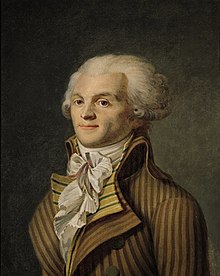
 Welcome to the age of revolution! In this lesson, we will look at five of the most important revolutions in modern history through the lenses of the Renaissance and the Reformation. We have looked at both the Renaissance and the Reformation in our previous two session and now it is time to begin assessing the impact each has made on history. By looking at the results of the English “Bloodless Revolution,” the American Revolution, the French Revolution, the Russian Revolution and the Industrial Revolution we will briefly trace how the Renaissance and the Reformation and the world views formed by them have contributed to influence the development of the modern world.




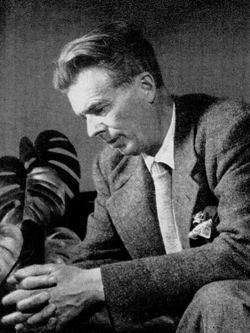



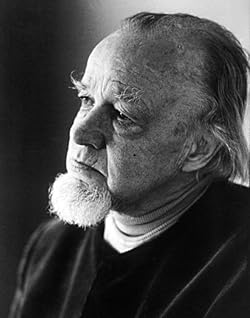


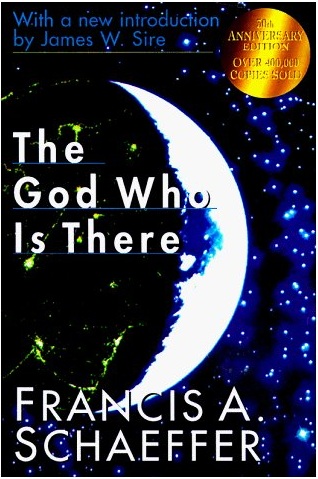



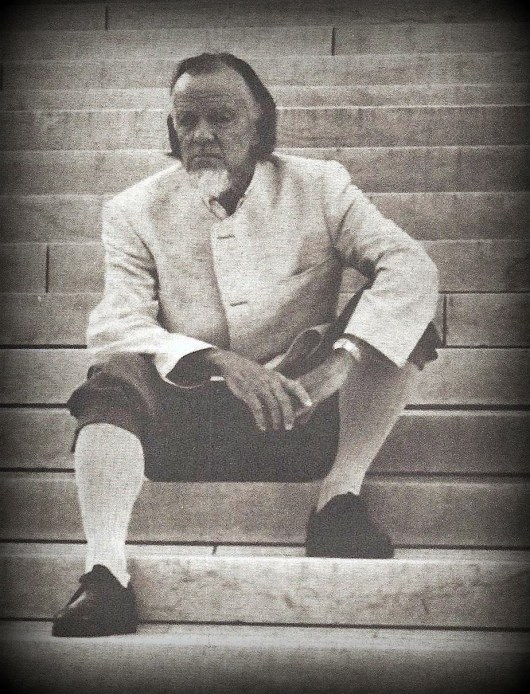





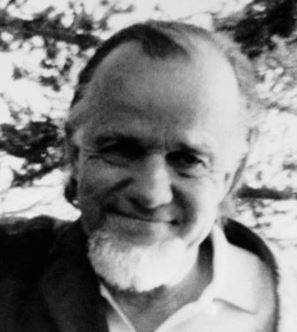


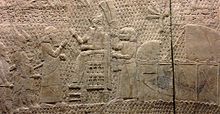

.jpg)


,_oil_on_canvas,_70_x_99_cm,_Gemeentemuseum_Den_Haag.jpg)


,_oil_on_canvas,_79.7_x_109.1_cm,_Gemeentemuseum_Den_Haag,_Netherlands.jpg)


.jpg)




 Edmund Leach in China, c. 1934


 The Daily Hatch


