I have gone back and forth and back and forth with many liberals on the Arkansas Times Blog on many issues such as abortion, human rights, welfare, poverty, gun control and issues dealing with popular culture. Here is another exchange I had with them a while back. My username at the Ark Times Blog is Saline Republican.
Silberback66 you need to read more of the writings of the founders. Joseph Story and many other founders talked about ” a future state of rewards and punishments” which does remind me a lot of the Woody Allen movie “Crimes and Misdemeanors”and the issues covered in that film. Here are some more quotes from the founders and I bet you will like this one from James McHenry a lot because he also touches on the same thing Joseph Story did (also Benjamin Rush, John Quincy Adams):
James McHenry
Signer of the Constitution
[P]ublic utility pleads most forcibly for the general distribution of the Holy Scriptures. The doctrine they preach, the obligations they impose, THE PUNISHMENT THEY THREATEN, THE REWARDS THEY PROMISE, the stamp and image of divinity they bear, which produces a conviction of their truths, can alone secure to society, order and peace, and to our courts of justice and constitutions of government, purity, stability and usefulness. In vain, without the Bible, we increase penal laws and draw entrenchments around our institutions. Bibles are strong entrenchments. Where they abound, men cannot pursue wicked courses, and at the same time enjoy quiet conscience.
(Source: Bernard C. Steiner, One Hundred and Ten Years of Bible Society Work in Maryland, 1810-1920 (Maryland Bible Society, 1921), p. 14.)
John Quincy Adams
Sixth President of the United States
The law given from Sinai was a civil and municipal as well as a moral and religious code; it contained many statutes . . . of universal application-laws essential to the existence of men in society, and most of which have been enacted by every nation which ever professed any code of laws.
(Source: John Quincy Adams, Letters of John Quincy Adams, to His Son, on the Bible and Its Teachings (Auburn: James M. Alden, 1850), p. 61.)
There are three points of doctrine the belief of which forms the foundation of all morality. The first is the existence of God; the second is the immortality of the human soul; and the third is a FUTURE STATE OF REWARDS AND PUNISHMENTS. Suppose it possible for a man to disbelieve either of these three articles of faith and that man will have no conscience, he will have no other law than that of the tiger or the shark. The laws of man may bind him in chains or may put him to death, but they never can make him wise, virtuous, or happy.
(Source: John Quincy Adams, Letters of John Quincy Adams to His Son on the Bible and Its Teachings (Auburn: James M. Alden, 1850), pp. 22-23.)
Benjamin Rush
Signer of the Declaration of Independence
The only foundation for a useful education in a republic is to be laid in religion. Without this there can be no virtue, and without virtue there can be no liberty, and liberty is the object and life of all republican governments.
(Source: Benjamin Rush, Essays, Literary, Moral and Philosophical (Philadelphia: Thomas and William Bradford, 1806), p. 8.)
We profess to be republicans, and yet we neglect the only means of establishing and perpetuating our republican forms of government, that is, the universal education of our youth in the principles of Christianity by the means of the Bible. For this Divine Book, above all others, favors that equality among mankind, that respect for just laws, and those sober and frugal virtues, which constitute the soul of republicanism.
(Source: Benjamin Rush, Essays, Literary, Moral and Philosophical (Philadelphia: Printed by Thomas and William Bradford, 1806), pp. 93-94.)
By renouncing the Bible, philosophers swing from their moorings upon all moral subjects. . . . It is the only correct map of the human heart that ever has been published. . . . All systems of religion, morals, and government not founded upon it [the Bible] must perish, and how consoling the thought, it will not only survive the wreck of these systems but the world itself. “The Gates of Hell shall not prevail against it.” [Matthew 1:18]
(Source: Benjamin Rush, Letters of Benjamin Rush, L. H. Butterfield, editor (Princeton, NJ: Princeton University Press, 1951), p. 936, to John Adams, January 23, 1807.)
Remember that NATIONAL CRIMES REQUIRE NATIONAL PUNISHMENTS AND WITHOUT DECLARING WHAT PUNISHMENT AWAITS THIS EVIL, YOU MAY VENTURE TO ASSURE THEM THAT IT CANNOT PASS WITH IMPUNITY, UNLESS GOD SHALL CEASE TO BE JUST or merciful.
(Source: Benjamin Rush, An Address to the Inhabitants of the British Settlements in America Upon Slave-Keeping (Boston: John Boyles, 1773), p. 30.)
_______________
Even Chris Martin of the musical group Coldplay had to realize that evil rulers like Hitler have to pay for their sins in the afterlife in a place of punishment. Even though Martin left his Christian unbringing behind because of the teaching of hell, when it came to the evil ruler in his song “Viva La Vida” Martin says “Saint Peter will not call his name” or in Martin’s words “eternal damnation” was his fate.
Part one in a two-part series on how America was affected by the infamous Supreme Court decision concerning abortion, and what is being done to return America to a culture of life.
In 1976, three years after the U.S. Supreme Court passed Roe v. Wade, Francis Schaeffer predicted where the acceptance of abortion would take American society. More importantly he knew the root of problem.
In his book How Should We Then Live, the 20th Century’s foremost Christian philosopher explained that when America’s legal system rejected the idea of moral absolutes, arbitrary consensus became the new basis of law. This being the case, it’s not hard to see that law is embracing many heinous things, including not only the removal of legal protection from the unborn, said Schaeffer, but also euthanasia, infanticide and harvesting body parts from those who are brain dead.
Now that America is 30 years down the road from the Roe v. Wade decision, we can better see how Schaeffer was right. Abortion’s negative impact on American culture is obvious.
Abortion Since 1973
In 30 years, over 40 million infants have lost their lives at the behest of their mothers. Abortion’s high tide was reached in 1980 and 1981 when the rate was 29.3 abortions per 1,000 women aged 15 to 44. According to a survey released last week by Planned Parenthood’s Alan Guttmacher Institute, the rate of abortion has now reached its lowest point in 29 years. In 2000, the number of women who had abortions was 21.3 for every 1,000 women.
While the slowing trend is good news to the pro-life community, the cumulative number of abortions since 1973 weighs heavily. In 14 metropolitan areas of the United States, there are more babies aborted than there are live births. The National Right to Life Committee reports that partial birth abortions have tripled since 1996 to at least 2,200 performed in 2000.
Abortion, Feminism and Roe The Supreme Court passed Roe v. Wade during the culmination of a rising influence of the women’s rights movement and the abandoning of moral absolutes in American law. Surprisingly, however, the support for abortion at the time was not widespread. Hadley Arkes, Professor of Jurisprudence and American Institutions at Amherst College says, “In the early days after Roe v. Wade … we never expected it would last as long as it has. With the sentiment in Congress and the (public’s) reaction at the time, we really expected that this thing would be overturned with a constitutional amendment.”
It wasn’t. Now this fatal choice is considered a right, indeed an “entitlement.” Indeed, feminists would have society believe that this ultimate act of selfishness is actually part of the Constitution. In the book, Feminism: Mystique or Mistake, author Diane Passno says, “The secular feminist agenda thrives in a postmodern culture, since the movement is basically selfish or self-centered in nature. It’s all about women and what they want, and has nothing to do with what is healthy for all members of the culture…”
The feminist ideology that backed the push for legalized abortion has indoctrinated our society with the image of women as powerful. And yet, the exact opposite is true in the case of a woman who wants abortion. Passno writes, “If feminists want women to be perceived as masters of their own destiny, then why are irresponsibility and lack of self-control the reasons behind most elective abortions?” In pregnancy (except for the miniscule number of pregnancies caused by rape), a woman has contributed to her predicament by accepting a sexual proposition. Society is expected to pity her because her recreation resulted in an ironic twist of feminism.
Roe gave women a rallying point to claim equality with men on issues related to childbirth. For thousands of years a man could physically walk away from a pregnancy with little outside consequence. Now for the first time women could seemingly walk away from that unwanted pregnancy as well.
Abortion’s Effect on Men
In an interview on KUED-TV in Salt Lake City, women’s rights activist Gloria Steinem articulated the feminist view of utopia for our society, “We’ve had a lot of people in this country who have had the courage to raise their daughters more like theirs sons. Which is great because it means they’re more equal. But there are many fewer people who have had the courage to raise their sons more like their daughters. And that’s what needs to be done.”
Today’s man lives in a world of confusion over what is expected of him. Rosemary Bottcher, author of Feminism: Bewitched by Abortion sums up the double standard saying, “A man is expected to be mature when he fathers a child; he is expected to endure inconvenience and hardship … But the woman, according to feminists, is so selfish, immature, irrational and hysterical that she cannot stand the fact of nine months of inconvenience in order to bring life to another person … or to some other family who might adopt that child.”
The feminist movement made sure that our entire society condones a woman’s killing of an unborn child. If a man is caught running away from the responsibility of a child, he is chastised. But a woman has the “right” to escape the consequences of a carefree lifestyle.
Hope for the Future In the three full decades since the Roe decision, technological advances have carried our debate over life issues to new levels. Just as Francis Schaffer predicted, issues like euthanasia (doctor-assisted suicide), stem cell research and cloning are now dominating headlines. Yet the technology many use to further a culture of death in America may become a double-edged sword.
General Electric, perhaps inadvertently, is teaching people that wombs hold much more than “tissue.” There, during the primetime hours of network television, many of us got our first glimpse what resides in a womb, and it looked like a child. As General Electric ran ads for their new 4-D Ultrasound technology, viewers were greeted by an active preborn baby with distinct features. Singers set the mood with a voiceover of “The First Time Ever I Saw Your Face.”
Kellyanne Conway, president and CEO of the Polling Group, points out, “Did you ever notice that even the people in Hollywood name their babies in the fourth month of pregnancy.”
A preborn baby that is wanted by its mother is a “baby,” and any other preborn is a fetus. The test for what is alive becomes, “Is it wanted by someone?”
As we see the couple in the GE commercial marveling at their baby’s first photo, taken several months before the child’s birth, it becomes harder to deny that baby’s humanness. It becomes apparent that the preborn baby in the womb is alive, regardless of the mindset of its mother.
– Stephen and Candice McGarvey are freelance writers living in Northern Virginia.
In part II of this article, we will talk about what America’s pro-life advocates are doing to on several fronts to fight against the effects of Roe v. Wade.
Dr Richard Land discusses abortion and slavery – 10/14/2004 – part 3 The best pro-life film I have ever seen below by Francis Schaeffer and Dr. C. Everett Koop “Whatever happened to the human race?” Over the years I have taken on the Ark Times liberal bloggers over and over and over concerning the issue […]
The best pro-life film I have ever seen below by Francis Schaeffer and Dr. C. Everett Koop “Whatever happened to the human race?” Francis Schaeffer pictured above._________ The 45 minute video above is from the film series created from Francis Schaeffer’s book “Whatever Happened to the Human Race?” with Dr. C. Everett Koop. This book really […]
The best pro-life film I have ever seen below by Francis Schaeffer and Dr. C. Everett Koop “Whatever happened to the human race?” Over the years I have taken on the Ark Times liberal bloggers over and over and over concerning the issue of abortion. I asked over and over again for one liberal blogger […]
Francis Schaeffer pictured above._________ The best pro-life film I have ever seen below by Francis Schaeffer and Dr. C. Everett Koop “Whatever happened to the human race?” Over the years I have taken on the Ark Times liberal bloggers over and over and over concerning the issue of abortion. I asked over and over again […]
The best pro-life film I have ever seen below by Francis Schaeffer and Dr. C. Everett Koop “Whatever happened to the human race?” On 1-24-13 I took on the child abuse argument put forth by Ark Times Blogger “Deathbyinches,” and the day before I pointed out that because the unborn baby has all the genetic code […]
PHOTO BY STATON BREIDENTHAL from Pro-life march in Little Rock on 1-20-13. Tim Tebow on pro-life super bowl commercial. Over the years I have taken on the Ark Times liberal bloggers over and over and over concerning the issue of abortion. Here is another encounter below. On January 22, 2013 (on the 40th anniversary of the […]
Dr Richard Land discusses abortion and slavery – 10/14/2004 – part 3 The best pro-life film I have ever seen below by Francis Schaeffer and Dr. C. Everett Koop “Whatever happened to the human race?” Over the years I have taken on the Ark Times liberal bloggers over and over and over concerning the issue […]
Many in the world today are taking a long look at the abortion industry because of the May 14, 2013 guilty verdict and life term penalty handed down by a jury (which included 9 out of 12 pro-choice jurors) to Dr. Kermit Gosnell. During this time of reflection I wanted to put forth some of the pro-life’s best arguments.
I truly believe that many of the problems we have today in the USA are due to the advancement of humanism in the last few decades in our society. Ronald Reagan appointed the evangelical Dr. C. Everett Koop to the position of Surgeon General in his administration. He partnered with Dr. Francis Schaeffer in making the video below. It is very valuable information for Christians to have. Actually I have included a video below that includes comments from him on this subject.
Francis Schaeffer: “Whatever Happened to the Human Race” (Episode 1) ABORTION OF THE HUMAN RACE
I am vehemently against the death penalty. Now stay with me…this is not a post about my opinion regarding that. You can disagree or agree with me on that some other time. I did want to share a little bit about why I take the words of prolifers so seriously. I have heard so much vitriol spewed from the mouths of “Christian prolifers” since the Gosnell trial has concluded. I feel like I must address it.
When I was confirmed as a Catholic, I chose Mary Magdalene as my confirmation saint. I felt an immediate connection to her. She had sinned so much…and was forgiven in even greater amounts. She knew she didn’t deserve forgiveness…but she received it anyway. And because of this, she clung to Christ. She knew she was nothing without Him.
I have also done my fair share of sinning. And I have also been forgiven much more than I deserve. I abused and betrayed women in the worst possible way. I convinced them to kill their children. Did I slit the necks of children after they were born? No. But, I was an accomplice to murder. Thousands of times…women I knew, women I didn’t, my friends, even my family. I lied to people. I lied to women when they came to me for accurate information. I was among the worst sinners…those that help to take and destroy life. I am no better than Kermit Gosnell.
I took my own children’s lives…twice. Not because I was coerced. Not because I didn’t know better. But because I thought children would be an inconvenience to my lifestyle. I am responsible for their deaths…no one else.
So when someone talks about Gosnell and says things like, “murderers and people like him don’t deserve to breathe the same air as I do,” or “I hope he burns in hell,” it hurts a little. Because that was me. But I am still here…breathing that same air…and trying to spend my life righting my wrongs. And it’s not just me. I know they hurt others like me, as well. People who have left the abortion industry and will work every day to recover from their sins. People who are still in the industry and think they will be shunned by the pro-life movement…maybe they would reach out to us if they knew we would accept them. I am always terrified that clinic workers will see some of the words from prolifers. I have been told by several former workers that they will NEVER come forward with their stories because they are so scared of how they will be treated by us…by US…the supposed “Christian” movement. Their fears are real AND legitimate.
I know some will say, “but you repented, that is the difference.” But what if I hadn’t…not yet. What if I was still inside the abortion industry? What if I was still an accomplice to murder? What if it took me longer to realize the truth? Do I deserve to die? Are we saying repentance is about our timing? Certainly, it is not about us. It about God and His perfect timing.
Right now, I shouldn’t be in this movement. I should be the COO of the 4th largest revenue generating Planned Parenthood affiliate in the country. I should be overseeing the largest abortion facility in the Western Hemisphere. I should be making 6 times the amount of money that I make in the pro-life movement. But I’m not. Why? Because of forgiveness. Because of mercy. Because of grace. Because of God. And because of REAL pro-lifers. The people I turned to accepted me for me…baggage and all. They knew that I was a broken person, and they loved me anyway. They knew I needed significant healing, and they helped to provide it.
I remember one story in particular which always makes me tear up when I think about it. One of the ladies, Karen, that immediately befriended me after I left Planned Parenthood was asked a question by a reporter. He asked her, “So, what was Abby like before she became pro-life? I mean, how nasty was she?” Karen’s answer was so genuine, and so Christ-like. She simply said, “I don’t remember that person. She is a new creation in Christ. I won’t talk about her past, I only want to talk about her future.” Wow. What grace. What forgiveness. She could have really spilled the beans on me, but she chose not to. Why? Because she truly loved me…and she always had, even while I was working at Planned Parenthood. She always believed the best in me, always believed that my conversion would happen.
It was Christ who changed me. It was the merciful and compassionate words of His people. It was no condemnation. It was not prayers that I would burn in hell. It was not those who yelled and called me names. It was the words of people like Karen. Those who prayed that I would, one day, walk out of that clinic. Those who had constant faith…even when that faith was a struggle to have. I am here because of THEM and because of their Christ-like witness.
Don’t we want that for every abortion clinic worker and abortion provider? Don’t we want that for Kermit Gosnell? I smile every time I imagine his conversion. What a heavenly victory that will be! Can it happen? If you say no, then you do not know the God that I do. My God is in the business of miracles. And my God does not want anyone to suffer in hell. He wants ALL of his children to come to him…yes, even those of us “monsters” that are in or have been in the abortion industry.
Hate comes from hell. Mercy comes from Christ. When we have hate in our hearts, our spirits are damaged. Be careful with your words. Not only are you a living witness of Christ and His truth, but you could put your own soul at risk. “Anyone who hates a brother or sister is a murderer, and you know that no murderer has eternal life residing in him.” 1 John 3:15 When we hate, we are no better than those who kill.
I am not the sweetest person. I’m not the one who catches all the flies with honey…sometimes I am all vinegar. What do you expect? You expect the most tender hearted to work in the abortion industry? Maybe we aren’t like all of you. Maybe we aren’t the most kind-hearted. Maybe you don’t understand how we could do what we have done. But those of us that leave…we are fighters. We are willing to take hits for our former sins. We are willing to stand up in places that are uncomfortable. We are willing to be bruised by others because we know that we have to…we know that will be the price we pay…it just hurts more when the bruises come from those who should be rejoicing in our repentance. We are passionate. We don’t waste time beating around the bush…not when it comes to life…especially the lives that we helped take.
Those of us that have worked in the industry all live our lives with a constant burden. One that will not be free from us until we reach heaven. We can’t let our burden slide off of our shoulders…it is what keeps us on fire. It reminds us of why we fight so hard. We have seen death and evil in a way that most haven’t…and we participated. We are forgiven.
So, should I be able to “breathe the same air as you?” That’s not really up to me to decide. But if you say things like that, know that a small piece of our heart is broken, and I have to believe that it grieves Christ. But even if you break our hearts, we forgive you. Even if you bruise us, we forgive you. He who has been forgiven much, loves much. And we love a lot. I am eagerly awaiting the day when I can call Kermit Gosnell a former and REPENTANT abortion provider.
Thank you for a breathe of sanity and compassion. I’m glad the man was convicted but sad that our society can come up with nothing better than the death penalty for him. He deserves to have a chance to make peace with God. I don’t know if he’ll take it, sadly. I also don’t know what’s in store since the opposition is already disowning him and using his crimes as “the reason abortion should remain safe and legal.” The devil is truly running amok in all of this. I’ll continue to pray prayers of thanksgiving that you’re out there and brave enough to say what needs to be said. Hang in there. God won’t ask us if we won. He’ll ask us if we kept the faith.
Thanks for posting this here!! I don’t like commenting on Facebook
Good, honest, caring and compassionate Christians can disagree on capital punishment (they probably have for centuries) Why is this a deal-breaker for you? It’s not about hate or wishing harm on another person. Most people who are in favor of it see it as a justice issue. If a person schemes pre-meditatively to wantonly take the life of another human being (understanding the complete nature of their action), the Old Testament civil law requires that person to give their life in return. Our justice system is based largely on biblical definitions of justice and that is what is…a person gives what they took…they gave themselves the death sentence. It can be viewed as a pro-life position because it makes an unequivocal societal statement as to the value of the life that was taken. It’s not unreasonable or incongruent with the Christian faith or pro-life values.
The killing of those babies was first degree murder and so capital punishment is reasonable. I hope and pray Kermit Gosnell repents and receives the full and complete forgiveness that Jesus Christ died to give him and all the rest of us sinners who deserve nothing but death and hell. Jesus Christ mediates between us and God, so our debt has been paid in the eternal sense; but when it comes to civil accountability (man to man), he instituted the law/government to be arbiter.
Francis Schaeffer: “Whatever Happened to the Human Race” (Episode 1) ABORTION OF THE HUMAN RACE Published on Oct 6, 2012 by AdamMetropolis ________________ Picture of Francis Schaeffer and his wife Edith from the 1930′s above. I was sad to read about Edith passing away on Easter weekend in 2013. I wanted to pass along this fine […]
I have gone back and forth and back and forth with many liberals on the Arkansas Times Blog on many issues such as abortion, human rights, welfare, poverty, gun control and issues dealing with popular culture. Here is another exchange I had with them a while back. My username at the Ark Times Blog is Saline […]
I have gone back and forth and back and forth with many liberals on the Arkansas Times Blog on many issues such as abortion, human rights, welfare, poverty, gun control and issues dealing with popular culture. Here is another exchange I had with them a while back. My username at the Ark Times Blog is Saline […]
It is truly sad to me that liberals will lie in order to attack good Christian people like state senator Jason Rapert of Conway, Arkansas because he headed a group of pro-life senators that got a pro-life bill through the Arkansas State Senate the last week of January in 2013. I have gone back and […]
I have gone back and forth and back and forth with many liberals on the Arkansas Times Blog on many issues such as abortion, human rights, welfare, poverty, gun control and issues dealing with popular culture. Here is another exchange I had with them a while back. My username at the Ark Times Blog is Saline […]
I have gone back and forth and back and forth with many liberals on the Arkansas Times Blog on many issues such as abortion, human rights, welfare, poverty, gun control and issues dealing with popular culture. Here is another exchange I had with them a while back. My username at the Ark Times Blog is Saline […]
I have gone back and forth and back and forth with many liberals on the Arkansas Times Blog on many issues such as abortion, human rights, welfare, poverty, gun control and issues dealing with popular culture. Here is another exchange I had with them a while back. My username at the Ark Times Blog is Saline […]
Sometimes you can see evidences in someone’s life of how content they really are. I saw something like that on 2-8-13 when I confronted a blogger that goes by the name “AngryOldWoman” on the Arkansas Times Blog. See below. Leadership Crisis in America Published on Jul 11, 2012 Picture of Adrian Rogers above from 1970′s […]
In the film series “WHATEVER HAPPENED TO THE HUMAN RACE?” the arguments are presented against abortion (Episode 1), infanticide (Episode 2), euthenasia (Episode 3), and then there is a discussion of the Christian versus Humanist worldview concerning the issue of “the basis for human dignity” in Episode 4 and then in the last episode a close […]
I have gone back and forth and back and forth with many liberals on the Arkansas Times Blog on many issues such as abortion, human rights, welfare, poverty, gun control and issues dealing with popular culture. Here is another exchange I had with them a while back. My username at the Ark Times Blog is Saline […]
I have gone back and forth and back and forth with many liberals on the Arkansas Times Blog on many issues such as abortion, human rights, welfare, poverty, gun control and issues dealing with popular culture. Here is another exchange I had with them a while back. My username at the Ark Times Blog is Saline […]
I have gone back and forth and back and forth with many liberals on the Arkansas Times Blog on many issues such as abortion, human rights, welfare, poverty, gun control and issues dealing with popular culture. Here is another exchange I had with them a while back. My username at the Ark Times Blog is Saline […]
E P I S O D E 1 0 Dr. Francis Schaeffer – Episode X – Final Choices 27 min FINAL CHOICES I. Authoritarianism the Only Humanistic Social Option One man or an elite giving authoritative arbitrary absolutes. A. Society is sole absolute in absence of other absolutes. B. But society has to be […]
E P I S O D E 9 Dr. Francis Schaeffer – Episode IX – The Age of Personal Peace and Affluence 27 min T h e Age of Personal Peace and Afflunce I. By the Early 1960s People Were Bombarded From Every Side by Modern Man’s Humanistic Thought II. Modern Form of Humanistic Thought Leads […]
E P I S O D E 8 Dr. Francis Schaeffer – Episode VIII – The Age of Fragmentation 27 min I saw this film series in 1979 and it had a major impact on me. T h e Age of FRAGMENTATION I. Art As a Vehicle Of Modern Thought A. Impressionism (Monet, Renoir, Pissarro, Sisley, […]
E P I S O D E 7 Dr. Francis Schaeffer – Episode VII – The Age of Non Reason I am thrilled to get this film series with you. I saw it first in 1979 and it had such a big impact on me. Today’s episode is where we see modern humanist man act […]
E P I S O D E 6 How Should We Then Live 6#1 Uploaded by NoMirrorHDDHrorriMoN on Oct 3, 2011 How Should We Then Live? Episode 6 of 12 ________ I am sharing with you a film series that I saw in 1979. In this film Francis Schaeffer asserted that was a shift in […]
E P I S O D E 5 How Should We Then Live? Episode 5: The Revolutionary Age I was impacted by this film series by Francis Schaeffer back in the 1970′s and I wanted to share it with you. Francis Schaeffer noted, “Reformation Did Not Bring Perfection. But gradually on basis of biblical teaching there […]
Dr. Francis Schaeffer – Episode IV – The Reformation 27 min I was impacted by this film series by Francis Schaeffer back in the 1970′s and I wanted to share it with you. Schaeffer makes three key points concerning the Reformation: “1. Erasmian Christian humanism rejected by Farel. 2. Bible gives needed answers not only as to […]
Francis Schaeffer’s “How should we then live?” Video and outline of episode 3 “The Renaissance” Francis Schaeffer: “How Should We Then Live?” (Episode 3) THE RENAISSANCE I was impacted by this film series by Francis Schaeffer back in the 1970′s and I wanted to share it with you. Schaeffer really shows why we have so […]
Francis Schaeffer: “How Should We Then Live?” (Episode 2) THE MIDDLE AGES I was impacted by this film series by Francis Schaeffer back in the 1970′s and I wanted to share it with you. Schaeffer points out that during this time period unfortunately we have the “Church’s deviation from early church’s teaching in regard […]
Francis Schaeffer: “How Should We Then Live?” (Episode 1) THE ROMAN AGE Today I am starting a series that really had a big impact on my life back in the 1970′s when I first saw it. There are ten parts and today is the first. Francis Schaeffer takes a look at Rome and why […]
Weekly videos from Desiring God to encourage and challenge people to not waste their lives, but to find their joy and meaning in Jesus. More at dontwasteyourlife.com John Piper was at Wheaton when Francis Schaeffer spoke in the 1960’s.
For the past 5 years I have more or less been living in the United States (yes – Hawaii is in the US, and has been for over 50 years). My tastes and influences have inevitably been shaped by my location. Aside from wondering if I’ll actually survive in a part of the world that doesn’t understand the importance of fresh Ahi I also consider that many of my theological influences have been rooted in my choice of location.
By far and large the single greatest influence on my Christian faith has been YWAM Maui, and specifically the School of Biblical Foundations and Missions (SBFM). Through the sacrifice of many people who serve as missionaries to students coming through the base I have been discipled in the ways of my faith. The importance of truth, as revealed through Jesus and the Bible have been embedded in my life. The spiritual disciplines have been enforced. Critical thinking and reason are celebrated here. A rich faith that has space for questions and reasoned thinking (which is, in part, obedience to the Greatest Commandment) has been promoted.
In short, I am thankful to Jesus for leading me here and to the faithful leaders who are now good friends and colleagues, for taking the time to invest in me. The New Testament’s analogy of discipleship being like taking a new-born from milk to solid foods (see 1 Corinthians 3:2, Hebrews 5:12, 1 Peter 2:2) makes so much more sense now that I’ve been around small children. The process is never clean, constantly frustrating and most of the time the kids don’t know what’s going on! But thanks to the patience of many I have progressed and several changes of attire later I can say that, yes, slowly, maturity has been gained.
Over the next few weeks I will be examining some of these people – and others – in more detail, sharing some of what I have learned so far. I’m looking forward to it!
The Francis and Edith Schaeffer Story Pt.1 – Today’s Christian Videos The Francis and Edith Schaeffer Story – Part 3 of 3 Francis Schaeffer: “Whatever Happened to the Human Race” (Episode 1) ABORTION OF THE HUMAN RACE Published on Oct 6, 2012 by AdamMetropolis ________________ Picture of Francis Schaeffer and his wife Edith from the […]
THE MARK OF A CHRISTIAN – CLASS 1 – Introduction Published on Mar 7, 2012 This is the introductory class on “The Mark Of A Christian” by Francis Schaeffer. The class was originally taught at Redeemer Presbyterian Church in Overland Park, KS by Dan Guinn from FrancisSchaefferStudies.org as part of the adult Sunday School hour […]
The Francis and Edith Schaeffer Story Pt.1 – Today’s Christian Videos The Francis and Edith Schaeffer Story – Part 3 of 3 Francis Schaeffer: “Whatever Happened to the Human Race” (Episode 1) ABORTION OF THE HUMAN RACE Published on Oct 6, 2012 by AdamMetropolis ________________ Picture of Francis Schaeffer and his wife Edith from the […]
The Francis and Edith Schaeffer Story Pt.1 – Today’s Christian Videos The Francis and Edith Schaeffer Story – Part 3 of 3 Francis Schaeffer: “Whatever Happened to the Human Race” (Episode 1) ABORTION OF THE HUMAN RACE Published on Oct 6, 2012 by AdamMetropolis ________________ Picture of Francis Schaeffer and his wife Edith from the […]
The Francis and Edith Schaeffer Story Pt.1 – Today’s Christian Videos The Francis and Edith Schaeffer Story – Part 3 of 3 Francis Schaeffer: “Whatever Happened to the Human Race” (Episode 1) ABORTION OF THE HUMAN RACE Published on Oct 6, 2012 by AdamMetropolis ________________ Picture of Francis Schaeffer and his wife Edith from the […]
The Francis and Edith Schaeffer Story Pt.1 – Today’s Christian Videos The Francis and Edith Schaeffer Story – Part 3 of 3 Francis Schaeffer: “Whatever Happened to the Human Race” (Episode 1) ABORTION OF THE HUMAN RACE Published on Oct 6, 2012 by AdamMetropolis ________________ Picture of Francis Schaeffer and his wife Edith from the […]
Francis Schaeffer: “Whatever Happened to the Human Race?” (Episode 2) SLAUGHTER OF THE INNOCENTS Published on Oct 6, 2012 by AdamMetropolis The 45 minute video above is from the film series created from Francis Schaeffer’s book “Whatever Happened to the Human Race?” with Dr. C. Everett Koop. This book really helped develop my political views concerning […]
Francis Schaeffer: “Whatever Happened to the Human Race” (Episode 1) ABORTION OF THE HUMAN RACE Published on Oct 6, 2012 by AdamMetropolis The 45 minute video above is from the film series created from Francis Schaeffer’s book “Whatever Happened to the Human Race?” with Dr. C. Everett Koop. This book really helped develop my political views […]
I have gone back and forth and back and forth with many liberals on the Arkansas Times Blog on many issues such as abortion, human rights, welfare, poverty, gun control and issues dealing with popular culture. Here is another exchange I had with them a while back. My username at the Ark Times Blog is Saline […]
Francis Schaeffer: “Whatever Happened to the Human Race” (Episode 5) TRUTH AND HISTORY Published on Oct 7, 2012 by AdamMetropolis The 45 minute video above is from the film series created from Francis Schaeffer’s book “Whatever Happened to the Human Race?” with Dr. C. Everett Koop. This book really helped develop my political views concerning abortion, […]
Mrs. Schaeffer became a missionary in Switzerland.
Associated Press / April 4, 2013
____
Picture of Francis Schaeffer and his wife Edith from the 1930′s above. I was sad to read about Edith passing away on Easter weekend in 2013. I wanted to pass along this fine article below.
Edith Schaeffer (1914–2013) is one of my heroes. Although I only met her once, her life and her writing have had a profound influence on me.
Thank you, Edith. Thank you for convincing me that I didn’t need money or formal artistic training to bring our Creator’s beauty into that barren efficiency apartment where Ray and I began our marriage. A basket of fresh seasonal fruit on our table throughout the years since then reminds me of what you displayed for me in The Hidden Art of Homemaking. You helped me see creation in a new way.
Thank you, Edith. Thank you for teaching me how precious a family is in What Is a Family? Thank you for showing me that children understand compassion and comfort when they receive compassion and comfort first and foremost in the family setting. Thank you for showing me the beauty of making memories and building traditions. Thank you for giving me the freedom to “lock our door” when our kids needed our undivided attention. Thank you for showing me a family is worth all the time, energy, and hard work it takes to build this treasure. My family owes you.
Thank you, Edith. Thank you for guiding me in how to think biblically about the reality of pain and suffering in my life. Thank you for showing me that God’s answer to my prayers for deliverance can be just as much a victory when He gives me the faith to patiently bear up under it with grace as when He completely removes this trial from my life. Thank you for continuing to trust God in all the afflictions in your own life. You helped build my love and trust in God.
“The victory for God against Satan is when—one by one—God’s people continue to love Him and trust Him in the midst of unchanging circumstances” (Affliction).
Thank you, Edith. Thank you for reminding me that the life of faith is a life which accepts the mysteries of God without demanding they all be explained to my satisfaction and in my timing. Thank you for helping me see and feel things from heaven’s perspective through The Tapestry.
Thank you, Edith. I honor you.
“The memory of the righteous is a blessing” (Prov. 10:7).
How about you? Who are some of your heroes? What have they taught you? How have they helped you follow Christ with all your heart?
(Francis did a great job in his film series “How Should we then live?” in looking at how humanism has affected art and culture in the Western World in the last 2000 years. My favorite episodes include his study of the Renaissance, the Revolutionary age, the age of Nonreason, and the age of Fragmentation.)
E P I S O D E 1 0 Dr. Francis Schaeffer – Episode X – Final Choices 27 min FINAL CHOICES I. Authoritarianism the Only Humanistic Social Option One man or an elite giving authoritative arbitrary absolutes. A. Society is sole absolute in absence of other absolutes. B. But society has to be […]
E P I S O D E 9 Dr. Francis Schaeffer – Episode IX – The Age of Personal Peace and Affluence 27 min T h e Age of Personal Peace and Afflunce I. By the Early 1960s People Were Bombarded From Every Side by Modern Man’s Humanistic Thought II. Modern Form of Humanistic Thought Leads […]
E P I S O D E 8 Dr. Francis Schaeffer – Episode VIII – The Age of Fragmentation 27 min I saw this film series in 1979 and it had a major impact on me. T h e Age of FRAGMENTATION I. Art As a Vehicle Of Modern Thought A. Impressionism (Monet, Renoir, Pissarro, Sisley, […]
E P I S O D E 7 Dr. Francis Schaeffer – Episode VII – The Age of Non Reason I am thrilled to get this film series with you. I saw it first in 1979 and it had such a big impact on me. Today’s episode is where we see modern humanist man act […]
E P I S O D E 6 How Should We Then Live 6#1 Uploaded by NoMirrorHDDHrorriMoN on Oct 3, 2011 How Should We Then Live? Episode 6 of 12 ________ I am sharing with you a film series that I saw in 1979. In this film Francis Schaeffer asserted that was a shift in […]
E P I S O D E 5 How Should We Then Live? Episode 5: The Revolutionary Age I was impacted by this film series by Francis Schaeffer back in the 1970′s and I wanted to share it with you. Francis Schaeffer noted, “Reformation Did Not Bring Perfection. But gradually on basis of biblical teaching there […]
Dr. Francis Schaeffer – Episode IV – The Reformation 27 min I was impacted by this film series by Francis Schaeffer back in the 1970′s and I wanted to share it with you. Schaeffer makes three key points concerning the Reformation: “1. Erasmian Christian humanism rejected by Farel. 2. Bible gives needed answers not only as to […]
Francis Schaeffer’s “How should we then live?” Video and outline of episode 3 “The Renaissance” Francis Schaeffer: “How Should We Then Live?” (Episode 3) THE RENAISSANCE I was impacted by this film series by Francis Schaeffer back in the 1970′s and I wanted to share it with you. Schaeffer really shows why we have so […]
Francis Schaeffer: “How Should We Then Live?” (Episode 2) THE MIDDLE AGES I was impacted by this film series by Francis Schaeffer back in the 1970′s and I wanted to share it with you. Schaeffer points out that during this time period unfortunately we have the “Church’s deviation from early church’s teaching in regard […]
Francis Schaeffer: “How Should We Then Live?” (Episode 1) THE ROMAN AGE Today I am starting a series that really had a big impact on my life back in the 1970′s when I first saw it. There are ten parts and today is the first. Francis Schaeffer takes a look at Rome and why […]
“Therefore, since we are surrounded by such a great cloud of witnesses, let us throw off everything that hinders and the sin that so easily entangles, and let us run with perseverance the race marked out for us.” —Hebrews 12:1
Francis Schaeffer
Man has dominion over the “lower“ orders of creation, but he is not sovereign over them. Only God is the Sovereign Lord, and the lower orders are to be used with this truth in mind. Man is not using his own possessions….. Nature belongs to God, and we are to exercise our dominion over these things not as though entitled to exploit them, but as things borrowed or held in trust, which we are to use realizing that they are not ours intrinsically. Man’s dominion is under God’s Dominion and in God’s Domain.
Surely then, Christians, who have returned through the work of the Lord Jesus Christ to fellowship with God, and have a proper place of reference to the God who is there, should demonstrate the proper use of nature. We are not going to use it as fallen man uses it. Christians, of all people, should not be destroyers. We should treat nature with an overwhelming respect.
The Church has not spoken out as it should have done throughout history against the abuse of nature. But when the Church puts belief into practice, in man and in nature, there is substantial healing. One of the first fruits of that healing is a new sense of beauty.
If I love the Lover, I love what the Lover has made…. If I don’t love what the Lover has made—in the area of man, in the area of nature—and really love it because He made it, do I really love the Lover?
—Francis Schaeffer, Pollution and the Death of Man, 1970
Francis Schaeffer (1912 – 1984) held to the inerrancy of Scripture and passionately proclaimed the “sanctity of human life.” He accurately predicted that if the Church did not participate in the debates surrounding ecological strategy, then the emerging environmental movement would adopt forms of pantheism for its foundations. He and his wife, Edith, revitalized the ancient idea of intentional Christian community and formed L’Abri Fellowship in Switzerland. They welcomed and challenged seekers and scholars from around the world.
Dr Richard Land discusses abortion and slavery – 10/14/2004 – part 3 The best pro-life film I have ever seen below by Francis Schaeffer and Dr. C. Everett Koop “Whatever happened to the human race?” Over the years I have taken on the Ark Times liberal bloggers over and over and over concerning the issue […]
The best pro-life film I have ever seen below by Francis Schaeffer and Dr. C. Everett Koop “Whatever happened to the human race?” Francis Schaeffer pictured above._________ The 45 minute video above is from the film series created from Francis Schaeffer’s book “Whatever Happened to the Human Race?” with Dr. C. Everett Koop. This book really […]
The best pro-life film I have ever seen below by Francis Schaeffer and Dr. C. Everett Koop “Whatever happened to the human race?” Over the years I have taken on the Ark Times liberal bloggers over and over and over concerning the issue of abortion. I asked over and over again for one liberal blogger […]
Francis Schaeffer pictured above._________ The best pro-life film I have ever seen below by Francis Schaeffer and Dr. C. Everett Koop “Whatever happened to the human race?” Over the years I have taken on the Ark Times liberal bloggers over and over and over concerning the issue of abortion. I asked over and over again […]
The best pro-life film I have ever seen below by Francis Schaeffer and Dr. C. Everett Koop “Whatever happened to the human race?” On 1-24-13 I took on the child abuse argument put forth by Ark Times Blogger “Deathbyinches,” and the day before I pointed out that because the unborn baby has all the genetic code […]
PHOTO BY STATON BREIDENTHAL from Pro-life march in Little Rock on 1-20-13. Tim Tebow on pro-life super bowl commercial. Over the years I have taken on the Ark Times liberal bloggers over and over and over concerning the issue of abortion. Here is another encounter below. On January 22, 2013 (on the 40th anniversary of the […]
Dr Richard Land discusses abortion and slavery – 10/14/2004 – part 3 The best pro-life film I have ever seen below by Francis Schaeffer and Dr. C. Everett Koop “Whatever happened to the human race?” Over the years I have taken on the Ark Times liberal bloggers over and over and over concerning the issue […]
Although President Obama had no trouble commenting on the ongoing Trayvon Martin case, White House spokesperson Jay Carney said [last month] Obama wouldn’t be commenting on the Kermit Gosnell mass murder case because he “cannot take a position on an ongoing trial” or “comment further on an ongoing legal proceeding.”
Of course the White House wants to avoid this topic. What a disaster Gosnell is for Obama.
Gosnell first brings to Obama’s door the uncomfortable topic of infanticide. Obama is well known to have votedfour times against the Illinois Born Alive Infants Protection Act as state senator, which sought to protect abortion survivors.
But Obama also opposed two companion bills to BAIPA, one of which brings him zero degrees of separation from Gosnell. I was impressed with Fox’s Ed Henry, who went there in his questions to Carney [last month].
On April 4, 2002, Obama testified against Senate Bill 1663, which required abortionists to provide “reasonable measures consistent with good medical practice” to abortion survivors and to plan to have a second physician present if there was a “reasonable likelihood” that the abortion would result “in a live born child.”
You can read the entire transcript here, but the gist of Obama’s opposition was that he had full faith in abortionists:
The only plausible rationale, to my mind, of this legislation would be if you had a suspicion that a doctor . . . (a) is going to make the wrong assessment, and (b) if the physician discovered, after the labor had been induced, that, in fact, he made an error . . . and . . . would not try to exercise the sort of medical measures and practices that would be involved in saving that child.
Now, if you think that there are possibilities that doctors would not do that, then maybe this bill make sense, but I . . . feel . . . an additional doctor who then has to be called in an emergency situation to come in and make these assessments is really designed to burden the original decision of the woman and the physician.
[I]f these are children who are being born alive, I, at least, have confidence that a doctor who is in that room is going to make sure that they’re looked after.
Obama could not fathom that an abortionist who had been paid to kill a baby wouldn’t turn around and try to save a viable baby’s life in the event of a botch.
Kermit Gosnell would have been one of the abortionists in which Obama had “confidence.” Most know by now Gosnell is on trial for murdering seven abortion survivors and one mother.
Gosnell was committing abortions in Pennsylvania at the very time this bill was being debated in Illinois. Who knows, perhaps Gosnell was “snipping” the spinal cord of an abortion survivor at the moment Obama testified to his sterling character. After all, the grand jury report stated Gosnell likely killed “hundreds” of abortion survivors during the three decades he was in business.
Barack Obama has stated on record that he stands with the Kermit Gosnells of America. He can’t walk that back without opening the door to regulations such as he rejected as state senator. So he’s stuck.
Jill Stanek’s commitment to Christ led her to risk her job, reputation, and friendships to stop the terrible practices of abortion and infanticide. Jill was a registered nurse at Christ Hospital in Illinois when she made the shocking discovery that babies were being aborted alive and allowed to die without medical care. Jill went public and has since become a national figure in the effort to protect both born and preborn infants. In January 2003, Jill was named by World Magazine as one of the 30 most prominent pro-life leaders in the movement over the past 30 years.
E P I S O D E 1 0 Dr. Francis Schaeffer – Episode X – Final Choices 27 min FINAL CHOICES I. Authoritarianism the Only Humanistic Social Option One man or an elite giving authoritative arbitrary absolutes. A. Society is sole absolute in absence of other absolutes. B. But society has to be […]
E P I S O D E 9 Dr. Francis Schaeffer – Episode IX – The Age of Personal Peace and Affluence 27 min T h e Age of Personal Peace and Afflunce I. By the Early 1960s People Were Bombarded From Every Side by Modern Man’s Humanistic Thought II. Modern Form of Humanistic Thought Leads […]
E P I S O D E 8 Dr. Francis Schaeffer – Episode VIII – The Age of Fragmentation 27 min I saw this film series in 1979 and it had a major impact on me. T h e Age of FRAGMENTATION I. Art As a Vehicle Of Modern Thought A. Impressionism (Monet, Renoir, Pissarro, Sisley, […]
E P I S O D E 7 Dr. Francis Schaeffer – Episode VII – The Age of Non Reason I am thrilled to get this film series with you. I saw it first in 1979 and it had such a big impact on me. Today’s episode is where we see modern humanist man act […]
E P I S O D E 6 How Should We Then Live 6#1 Uploaded by NoMirrorHDDHrorriMoN on Oct 3, 2011 How Should We Then Live? Episode 6 of 12 ________ I am sharing with you a film series that I saw in 1979. In this film Francis Schaeffer asserted that was a shift in […]
E P I S O D E 5 How Should We Then Live? Episode 5: The Revolutionary Age I was impacted by this film series by Francis Schaeffer back in the 1970′s and I wanted to share it with you. Francis Schaeffer noted, “Reformation Did Not Bring Perfection. But gradually on basis of biblical teaching there […]
Dr. Francis Schaeffer – Episode IV – The Reformation 27 min I was impacted by this film series by Francis Schaeffer back in the 1970′s and I wanted to share it with you. Schaeffer makes three key points concerning the Reformation: “1. Erasmian Christian humanism rejected by Farel. 2. Bible gives needed answers not only as to […]
Francis Schaeffer’s “How should we then live?” Video and outline of episode 3 “The Renaissance” Francis Schaeffer: “How Should We Then Live?” (Episode 3) THE RENAISSANCE I was impacted by this film series by Francis Schaeffer back in the 1970′s and I wanted to share it with you. Schaeffer really shows why we have so […]
Francis Schaeffer: “How Should We Then Live?” (Episode 2) THE MIDDLE AGES I was impacted by this film series by Francis Schaeffer back in the 1970′s and I wanted to share it with you. Schaeffer points out that during this time period unfortunately we have the “Church’s deviation from early church’s teaching in regard […]
Francis Schaeffer: “How Should We Then Live?” (Episode 1) THE ROMAN AGE Today I am starting a series that really had a big impact on my life back in the 1970′s when I first saw it. There are ten parts and today is the first. Francis Schaeffer takes a look at Rome and why […]
Mrs. Schaeffer became a missionary in Switzerland.
Associated Press / April 4, 2013
____
Picture of Francis Schaeffer and his wife Edith from the 1930′s above. I was sad to read about Edith passing away on Easter weekend in 2013. I wanted to pass along this fine article below.
If my house were burning to the ground and my family was safely outside, there’d be one book in my library I’d most hope to save from the fire: a paperback of Edith Schaeffer’s 1975 book What is a Family? Mrs. Schaeffer (as she’s still known in L’Abri circles) signed this particular edition for me when she was in the States visiting friends nearly ten years ago. In her characteristic fashion, she’d drawn mountains in the background with birds flying over them and wrote a brief personal note for me beneath it. The picture below makes an interesting contrast to Francis Beckwith’s signed book, which was given to him 19 years before and was written with a far steadier hand.
Receiving a book signed by Mrs. Schaeffer was, for me, like coming face-to-face with a hero from another world. Meeting the Schaeffers ranked in my mind alongside meeting C.S. Lewis or G.K. Chesterton, so the thought of actually receiving a book signed by one of them addressed to me… it meant more than I can say and still does to this day. I first discovered the Schaeffers’ books when I picked up Francis’s Escape from Reason in 8th grade in the church library. Even though I didn’t get much, what I got was opened doors I’d never known existed. Having grown up in a fundamentalist dispensational church, the Schaeffers were the ones who introduced me to the fullness of the Gospel, to the idea that (as a friend would later explain it to me) the scope of God’s redemptive work is just as broad as the scope of his created work. There’s nothing in creation left untouched by the Gospel. Additionally, the Schaeffers taught me to love the beauty of God’s creation and about our responsibility to steward it with affection. They gave me license to love the world, to love the good things that God had made and to recognize that there was no conflict between loving creation and creator.
Additionally, as one of the many millennials to grow up in the church and become disillusioned with it, the Schaeffers, along with C.S. Lewis, were the orthodox voices that stayed with me as I studied more liberal brands of Christianity (I entered college in 2007 right as Brian McLaren was becoming a prominent figure in Christian circles) and even considered abandoning the church entirely during my late high-school and early college years. In fact, it was two summer terms spent at the Rochester L’Abri with two couples that had lived with and been mentored by the Schaeffers that were pivotal in my remaining in the church and finding my way to the Reformed stripe of evangelicalism that continues to be my church home to this day. My debt to the Schaeffers is immense.
Of course, I’m not alone in that respect. The Schaeffers’ influence on evangelicalism as a whole was enormous, which explains the multitude of tribute pieces being published since Edith’s death last Saturday at age 98. However, most of the people influenced by the Schaeffers are quite a bit older than me. Since Francis’s death in 1984, the Schaeffers have been largely forgotten by younger evangelicals. Schaeffer’s books have grown increasingly neglected (though a few have been reprinted in the past few years), and L’Abri, though it continues to function (and thank God for that) does not have nearly the recognition and cache within evangelicalism that it did 30 years ago. Perhaps the best way to capture the decline of the Schaeffer’s popularity is to compare their current name recognition to that of C.S. Lewis. It was only 15 years ago that two Methodist scholars wrote a book comparing and contrasting Francis Schaeffer and C.S. Lewis while claiming that the two men were the most important apologists of the 20th century. 15 years later, Lewis’s name still commands enormous respect in evangelical circles. Schaeffer’s, in contrast has been largely forgotten. I suspect that when most people heard of Edith’s death last week they were thrown back 30 or 40 years to the first time they read a Schaeffer book before thinking “I didn’t realize she was still alive.”
So while my story of being influenced by the Schaeffers is common amongst American evangelicals, it’s markedly less common among millennial evangelicals, most of whom were (like me) born after Dr. Schaeffer succumbed to cancer nearly 30 years ago. If evangelicals my age know anything of the Schaeffers, it’s more likely to be what’s told in Frank Schaeffer’s memoirs Crazy for God and Sex, Mom, and God. In those books, Frank paints a picture of his parents that is a striking contrast to the picture many older evangelicals had of the remarkable couple. Frank describes his father as a verbally and sometimes physically abusive man tortured by his religious convictions while Edith becomes a neurotic self-righteous religious nut obsessed with keeping up appearances. Regarding the accuracy of those memoirs, I can do no better than Os Guinness’s definitive takedown published in Books & Culture when Crazy for God was first published.
But even so, as Guinness himself notes, the books have struck a nerve amongst evangelicals and been received much more warmly by younger Christians, a fact that I find extremely sad. Of course, understanding that positive reaction is not difficult: There are few things we enjoy more than seeing through a person we once thought virtuous and discovering that they’re just as flawed and broken as we are. And millennial evangelicals who have been burned by the church tend to be especially fond of such narratives because they confirm our already-held suspicion about the virtue of church leaders. And when those fallen heroes are people that were especially revered by the churches we grew up in…well, even better.
As a result, Frank’s memoirs leave younger Christians us with an uncomfortable dilemma–what do we make of the lives and works of Francis and Edith Schaeffer? It’s true, I’m afraid, that boomer evangelicals often revered them to the point of setting them on an unrealistic pedestal as the perfect, flawless great white hope of the Christian faith. Yet if we allow Frank’s books to so color our perception of them that we see nothing of what our parents saw in them then we will have robbed ourselves of the chance to be helped and mentored by two people who God clearly blessed and who he used to accomplish great things for his church.
Without the Schaeffers, I sincerely wonder if we’d have magazines like Relevant and Cardus or journals like Books & Culture or the Mars Hill Audio Journal. I know that the nonprofit Ransom Fellowship, run by two very dear friends of mine, would not exist as it does. And even as some of the work they inspired has fallen out of favor in recent years (most notably the Christian worldview movement spearheaded by Charles Colson and Nancy Pearcey), I suspect its critics would not be nearly so well equipped to address the movement’s shortcomings were it not for the trailblazing work of the Schaeffers. After all, the worldview movement’s most astute critic, Jamie Smith, is drawing from the same (reformed) theological well as the Schaeffers.
The Schaeffers made it possible in a way it had not been before to be thoughtfully engaged with (and even delighted by) much of popular culture while still holding to Christian orthodoxy. That is a tremendous accomplishment when one considers that today’s evangelicals are, by and large, the theological descendants of fundamentalists who emphasized separation from the world. When Francis Schaeffer first came to Wheaton in 1968, he spoke on the music of The Rolling Stones and The Beatles and Pink Floyd. He talked about the films of Bergman and Antonioni–and at a time when Wheaton’s honor code forbade students from seeing any movies at all! That the Schaeffers accomplished such an enormous cultural work while also modeling a tremendously generous, sacrificial hospitality at L’Abri that imaged the Gospel to thousands of guests over nearly 30 years is nothing short of remarkable.
What I saw in the Schaeffers, and what I hope many of my peers will come to see as well is that the Schaeffers were imperfect people who God used in great and significant ways to train his church in a greater fidelity to the Gospel, a deeper love of creation, and a deep, profound desire to create places of warmth and hospitality where friends and strangers alike can be received as loved and honored guests.
Recommended reading: If you want to learn more about the Schaeffers’ life and work, you’ll do no better than to begin with Edith’s book L’Abri, which tells the story of how L’Abri began. You should then move on to True Spirituality by Francis, which describes the spiritual underpinnings that formed their lives and work at L’Abri. Francis’ trilogy–The God Who Is There, Escape from Reason, and He Is There and He Is Not Silent is interesting and useful in a general way, although Schaeffer was addressing the 1960s counter-culture so some of the material is quite dated at this point. Additionally, Schaeffer did not have access to a regular library at L’Abri because they couldn’t afford books and he was not an academically-trained scholar by any stretch, so some parts of the book are problematic and may drive a specialist up the wall. (I’m thinking particularly of his treatments of Aquinas and Kierkegaard.) Even so, the most instructive aspect of the Schaeffers’ life and work may not be the specific components of their thought so much as their orientation toward those outside the church–warm, welcoming, yet uncompromising in their commitment to Christian orthodoxy. It’s a rare combination that might best be described by borrowing John Piper’s wonderful phrase he used to describe John Newton: “the tough roots of habitual tenderness.” Beyond those four books by Francis, I’d also warmly commend Death in the City and The Mark of a Christian. (There never has been and never will be a book that so radically changes my life as The Mark of a Christian.) Additionally, Edith’s books on prayer and creativity (The Life of Prayer and Forever Music, respectively) are very good. If you’re interested in hospitality, you should also read The Hidden Art of Homemaking while doing your darnedest not to be put off by the title. And if you really want to learn more about the Schaeffers, you can read The Tapestry, which is an autobiography written by Edith two years before Francis’s death in 1984.
(Francis did a great job in his film series “How Should we then live?” in looking at how humanism has affected art and culture in the Western World in the last 2000 years. My favorite episodes include his study of the Renaissance, the Revolutionary age, the age of Nonreason, and the age of Fragmentation.)
E P I S O D E 1 0 Dr. Francis Schaeffer – Episode X – Final Choices 27 min FINAL CHOICES I. Authoritarianism the Only Humanistic Social Option One man or an elite giving authoritative arbitrary absolutes. A. Society is sole absolute in absence of other absolutes. B. But society has to be […]
E P I S O D E 9 Dr. Francis Schaeffer – Episode IX – The Age of Personal Peace and Affluence 27 min T h e Age of Personal Peace and Afflunce I. By the Early 1960s People Were Bombarded From Every Side by Modern Man’s Humanistic Thought II. Modern Form of Humanistic Thought Leads […]
E P I S O D E 8 Dr. Francis Schaeffer – Episode VIII – The Age of Fragmentation 27 min I saw this film series in 1979 and it had a major impact on me. T h e Age of FRAGMENTATION I. Art As a Vehicle Of Modern Thought A. Impressionism (Monet, Renoir, Pissarro, Sisley, […]
E P I S O D E 7 Dr. Francis Schaeffer – Episode VII – The Age of Non Reason I am thrilled to get this film series with you. I saw it first in 1979 and it had such a big impact on me. Today’s episode is where we see modern humanist man act […]
E P I S O D E 6 How Should We Then Live 6#1 Uploaded by NoMirrorHDDHrorriMoN on Oct 3, 2011 How Should We Then Live? Episode 6 of 12 ________ I am sharing with you a film series that I saw in 1979. In this film Francis Schaeffer asserted that was a shift in […]
E P I S O D E 5 How Should We Then Live? Episode 5: The Revolutionary Age I was impacted by this film series by Francis Schaeffer back in the 1970′s and I wanted to share it with you. Francis Schaeffer noted, “Reformation Did Not Bring Perfection. But gradually on basis of biblical teaching there […]
Dr. Francis Schaeffer – Episode IV – The Reformation 27 min I was impacted by this film series by Francis Schaeffer back in the 1970′s and I wanted to share it with you. Schaeffer makes three key points concerning the Reformation: “1. Erasmian Christian humanism rejected by Farel. 2. Bible gives needed answers not only as to […]
Francis Schaeffer’s “How should we then live?” Video and outline of episode 3 “The Renaissance” Francis Schaeffer: “How Should We Then Live?” (Episode 3) THE RENAISSANCE I was impacted by this film series by Francis Schaeffer back in the 1970′s and I wanted to share it with you. Schaeffer really shows why we have so […]
Francis Schaeffer: “How Should We Then Live?” (Episode 2) THE MIDDLE AGES I was impacted by this film series by Francis Schaeffer back in the 1970′s and I wanted to share it with you. Schaeffer points out that during this time period unfortunately we have the “Church’s deviation from early church’s teaching in regard […]
Francis Schaeffer: “How Should We Then Live?” (Episode 1) THE ROMAN AGE Today I am starting a series that really had a big impact on my life back in the 1970′s when I first saw it. There are ten parts and today is the first. Francis Schaeffer takes a look at Rome and why […]
Francis August Schaeffer IV (1912-1984) was one of the most beloved Christian apologists of the twentieth century. His influence was so great that Newsweek once called him “the guru of fundamentalism.”21 There are many reasons for Schaeffer’s popularity, but two stand out.
First and foremost, Schaeffer embodied the ideal of an apologist who sought to “speak the truth in love” (Ephesians 4:15). He talked to people, showed a genuine interest in them, and in his teaching on apologetics emphasized the importance of approaching non-Christians with compassion as individuals in God’s image. L’Abri, his retreat center in the Swiss Alps that has been duplicated in several countries, was a place where people in spiritual and intellectual anguish could go and be heard and helped.
Second, Schaeffer inspired evangelical Christians to broaden their approach to apologetics beyond the usual disciplines of philosophy, theology, science, and history—which have dominated our own discussion in this book—to encompass ethics and the arts. “Cultural apologetics” touches most people more profoundly than traditional forms, because it connects with them in those areas of life in which personality is more deeply involved.
Francis Schaeffer22 grew up in a blue-collar family in Germantown, Pennsylvania, a suburb of Philadelphia. The son of liberal Presbyterians, he read the Bible as a teenager and was surprised to find that it contained answers to the most momentous questions in life. He gave his life to Christ and decided, against his father’s wishes, to pursue the ministry. While in college he began spending Sunday afternoons teaching children at a nearby African-American church. While visiting home on one occasion, he attended his family’s church, where a guest minister was openly attacking the Bible and the deity of Christ. Schaeffer stood up to protest, and then a young woman named Edith Seville also stood up and offered an intelligent defense of the Christian position. Edith, the daughter of missionaries to China, introduced Francis to the apologetic writings of J. Gresham Machen and other professors at Westminster Theological Seminary whom she had met in her parents’ home.
After college Francis married Edith and enrolled at Westminster Seminary in 1935. There he studied under Cornelius Van Til, who was still developing his presuppositional system of apologetics. The following year the newly formed Presbyterian Church in America (now known as the Orthodox Presbyterian Church), which Machen had founded after he was ousted from the mainline Presbyterian church, suffered a split. The splinter group, which was called the Bible Presbyterian Church, favored a premillennial eschatology and differed in other ways from the more staunchly Calvinist parent body. Schaeffer transferred to the new group’s Faith Theological Seminary. He was a member of its first graduating class in 1938 and became its first ordained minister, serving as a pastor for several years in Pennsylvania and Missouri. In St. Louis he and Edith established Children for Christ, which eventually became a worldwide ministry.
In 1948 the Schaeffers moved to Switzerland to serve as missionaries. Postwar Europe was in spiritual crisis, and in 1951 Francis experienced his own spiritual crisis, reexamining the truth claims of Christianity and gaining a more profound realization of the importance of holiness and love in the Christian life. During the next few years young people began coming to Schaeffer’s home to discuss their doubts and to learn about Christianity. As they returned home, they spread the word, and soon the Schaeffers found themselves engaged full-time in a ministry of personal evangelism and apologetics from their home, which they called l’Abri (“the Shelter”), to people from all over the world.
Beginning in the 1960s Francis was invited to speak at conferences and at leading colleges and universities in Europe and America. Out of his lectures were developed his most influential books, beginning with Escape from Reason and The God Who Is There, both of which were published in 1968 by InterVarsity Press. Schaeffer regarded these two books and the 1972 book He Is There and He Is Not Silent as a trilogy that formed the foundation of his published work. He published ten other books during this period, and went on to publish six more in the next four years, culminating in How Should We Then Live? (1976). This book, which was also made into a film series, offered a sweeping overview of the history of culture and the different worldviews that emerged from the ancient Greeks, the early Christian church, the medieval church, the Renaissance and Reformation, and the modern West.
Schaeffer published just two more books, and because of them he is remembered as a prophetic voice of protest as much as he is an apologist or evangelist. In Whatever Happened to the Human Race? (1979), co-authored with C. Everett Koop, Schaeffer lamented the evil of abortion in America and warned that euthanasia was not far behind. Schaeffer was one of the principal figures who made abortion a central issue for American evangelicals during the last two decades of the twentieth century. In A Christian Manifesto (1981) he warned that America had moved so far away from a Christian worldview that Christians might find themselves in situations where they had to practice civil disobedience. Some evangelicals in the pro-life movement concluded that the time Schaeffer had spoken about had arrived, and that belief led to the practice of civil disobedience in their protests at abortion clinics.
These last two books were written and published while Schaeffer was battling cancer. Realizing that his life was coming to an end, he reedited his books into a five-volume set published in 1982 entitled The Complete Works of Francis A. Schaeffer.23 His final literary effort was Great Evangelical Disaster, published just before he died in 1984. In this book he delivered a stinging indictment of the state of the evangelical church in America, warning that ethical and theological compromise was becoming the order of the day.
Schaeffer’s apologetic method has been the subject of considerable debate, and was even while he was alive. Near the end of his life he commented ruefully, “I have been mystified at times about what has been said concerning ‘Schaeffer’s apologetics’” (1:176). Within three years of his death, four major books appeared evaluating his thought and offering markedly different analyses of his apologetic approach.24 This diversity may best be explained on the view that Schaeffer had developed a distinctive apologetic that has important affinities with more than one of the four standard approaches.
Schaeffer and Classical Apologetics
Schaeffer distinguished his approach from classical apologetics but did not criticize that approach. As he saw it, classical apologetics was effective because most non-Christians accepted the elemental laws of logic and the reality of absolutes (though not the true absolute of God). Modern man’s lack of confidence in logic and his relativistic view of truth make it ineffective to conduct apologetics without challenging such epistemological issues. “The use of classical apologetics before this shift took place was effective only because non-Christians were functioning, on the surface, on the same presuppositions, even if they had an inadequate base for them. In classical apologetics though, presuppositions were rarely analyzed, discussed or taken into account” (1:7).
Schaeffer’s apologetic retained some elements of the classical model. As in classical apologetics, he advocated a two-stage defense that moves from God as Creator to Christ as Savior. “We must never forget that the first part of the gospel is not ‘Accept Christ as Savior,’ but ‘God is there’” (1:144). Modern people are lost in two senses: they are “lost evangelically” in the sense that they are sinners without Christ, but they are also “lost in the modern sense” that their lives are without meaning. “This lostness is answered by the existence of a Creator. So Christianity does not begin with ‘accept Christ as Savior.’ Christianity begins with ‘In the beginning God created the heavens (the total of the cosmos) and the earth.’ That is the answer to the twentieth century and its lostness. At this point we are then ready to explain the second lostness (the original cause of all lostness) and the answer in the death of Christ” (1:181).
Schaeffer’s argument for the existence of a Creator is most fully set out in He Is There and He Is Not Silent. His starting point in this book, which argues for “the philosophic necessity of God’s being there and not being silent,” is basically the same as in the cosmological argument. “No one said it better than Jean-Paul Sartre, who said that the basic philosophic question is that something is there rather than nothing being there” (1:277). As in classical apologetics, Schaeffer analyzes this question in terms of the basic alternative worldviews and the answers they give to the question of existence or being.
One might conclude “that there is no logical, rational answer—all is finally chaotic, irrational, and absurd” (1:280). Schaeffer points out that any attempt to express this view is self-defeating: one cannot make a meaningful statement about all being meaningless, or communicate the idea that there is nothing to communicate (1:281). So this is really a non-answer to the problem.
The possible answers to why something rather than nothing is there boil down logically to four. “(1) Once there was absolutely nothing, and now there is something; (2) everything began with an impersonal something; (3) everything began with a personal something; and (4) there is and always has been a dualism” (2:10; cf. 1:282-284). The first answer is actually quite rare once the point is pressed that the beginning must be from an absolute nothing—what Schaeffer calls “nothing nothing” (1:282). One is reminded of Norman Geisler’s version of the cosmological argument in which he emphasizes that “nothing comes from nothing.” Schaeffer also dismisses dualism as an answer, since it inevitably reduces to one of the other two remaining options (1:284 n. 1; 2:10).
By far the most popular answer among non-Christians is that everything began from some impersonal beginning. Often this is articulated as pantheism, but Schaeffer argues that this term is misleading because it smuggles in the idea of a personal God (“theism”) when in fact the pantheist actually holds to an impersonal view of the beginning. He prefers to call this answer “pan-everythingism” (1:283). Pan-everythingism is thus the same view, whether it is expressed in mystical religious terms or in modern scientific terms in which everything is reduced to fundamental physical particles. This view founders because it leaves us with no basis for attributing purpose or meaning to anything, including man: “If we begin with an impersonal, we cannot then have some form of teleological concept. No one has ever demonstrated how time plus chance, beginning with an impersonal, can produce the needed complexity of the universe, let alone the personality of man. No one has given us a clue to this” (1:283).
As Clark Pinnock points out, this appears to be “a rudimentary form of the teleological argument.”25 Schaeffer’s argument here broadens beyond the usual confines of both the cosmological and teleological arguments, integrating into one argument the need to account for the origin of diversity, meaning, and morality as well as being.
This leaves as the only remaining possible answer that ultimately everything owes its existence to “a personal beginning” (1:284). This is an answer that gives meaning to ourselves as persons (1:285). This personal beginning cannot be finite gods (they are not “big enough” to provide an adequate answer), but must be a personal-infinite God (1:286-287). Schaeffer here follows a strategy similar to that employed by Geisler: set forth the basic worldviews (atheism, dualism, pantheism, finite theism, theism) and show that all of them except theism are irrational. As in classical apologetics, Schaeffer concludes that a worldview in which everything was created by an infinite-personal God is the only worldview that provides a rationally adequate answer to the question of why there is something (1:288).
We may represent the structure of Schaeffer’s argument as follows:
The similarities to the cosmological argument are apparent. It is with some justice that Robert L. Reymond calls it “the old cosmological argument of Thomas in new garb.”26 In addition, the argument is structured using the law of noncontradiction as the basic principle, a feature characteristic of the classical approach.
Schaeffer and Evidentialism
While few if any students of Schaeffer would conclude that the classical model dominated his approach to apologetics, some do contend that he is properly identified as an evidentialist. Reymond includes Schaeffer (as well as Carnell) in his chapter on “empirical apologetics.” He recognizes that Schaeffer’s apologetic has presuppositional elements (of which Reymond approves), but concludes that he compromised that approach by using “an empiricist verification test of truth.”27
There is indeed some basis for interpreting Schaeffer as advocating a verificational approach to defending Christian belief. The premise here is that Scripture deals with not only “religious” matters “but also the cosmos and history, which are open to verification” (1:120). He suggests “that scientific proof, philosophical proof and religious proof follow the same rules.”
After the question has been defined, in each case proof consists of two steps:
A. The theory must be noncontradictory and must give an answer to the phenomenon in question.
B. We must be able to live consistently with our theory. (1:121)
Christianity is proved by the fact that it, and it alone, “does offer a nonself-contradictory answer which explains the phenomena and which can be lived with, both in life and in scholarly pursuits” (1:122).
A couple of key elements of the evidentialist approach are present in this passage. First, Schaeffer claims that proof in apologetics should follow the same rules as in science. Second, he specifies that for a theory to be considered proved it must not only be logically self-consistent but also consistent with the “phenomenon in question.”
Schaeffer invites non-Christians to examine the Christian worldview in the light of every kind of phenomenon, including nature, history, human nature, culture, and ethics, confident that Christianity will be proved consistent with the facts. We can only do this, he contends, if we “have faced the question, ‘Is Christianity true?’ for ourselves” (1:140). On the basis of John 20:30-31 Schaeffer affirms, “we are not asked to believe until we have faced the question as to whether this is true on the basis of the space-time evidence.” Likewise, the prologue to Luke’s Gospel (Luke 1:1-4) shows that its “history is open to verification by eyewitnesses” (1:154). Schaeffer argues that if we deny that the Scriptures are “open to verification,” we have no basis to say that people should choose to believe Christianity rather than something else (1:259). Christianity, he affirms, offers to modern man “a unified answer to life on the basis of what is open to verification and discussion” (1:263).
The non-Christian who denies that God can speak to us as he has done in the Bible must, Schaeffer warns, “hold to the uniformity of natural causes in the closed system, against all the evidence (and I do insist it is against the evidence)” (1:325). Such a presupposition is not “viable in the light of what we know. . . . It fails to explain man. It fails to explain the universe and its form. It fails to stand up in the area of epistemology.” On the other hand, Schaeffer affirms that the Christian presupposition that God can and has spoken to man is reasonable in light of what we already know. “In my earlier books and in the previous chapters of this book we have considered whether this presupposition is in fact acceptable, or even reasonable, not upon the basis of Christian faith, but upon the basis of what we know concerning man and the universe as it is” (1:326).
Schaeffer therefore invites people to consider both the closed-system and open-system views of the universe, “and to consider which of these fits the facts of what is” (1:326). This “is a question of which of these two sets of presuppositions really and empirically meets the facts as we look about us in the world” (1:327).
Gordon Lewis argues that we need to distinguish between an inductive, empirical approach, exemplified by Montgomery, Pinnock, and others, and a verificational approach, exemplified above all by Carnell. According to Lewis, Schaeffer employed such a verificational method. “The verificational, or scientific, method addresses a problem by starting with tentative hypotheses. . . . Then the verification method subjects these hypotheses to testing and confirmation or disconfirmation by the coherence of their account with the relevant lines of data.”28
We would contend that Lewis’s verificationalism is just as much a type of evidentialism as the inductivism of such apologists as Montgomery and Pinnock. Few if any evidentialists operate according to the naive inductivism that supposes the apologist can begin with only the bare facts and no epistemology or hypothesis as to how the facts are to be explained. As we saw when we analyzed evidentialism, its essential feature is not a pure inductivism but an approach to justifying truth claims based primarily on empirical facts.
There is, however, one major difference between Schaeffer’s apologetic and both Lewis’s verificationalism and other forms of evidentialism. All evidentialists agree that the Christian apologetic properly concludes with the claim that the Christian beliefs defended have been shown to be probable, not certain. To be sure, Lewis argues that Schaeffer did hold to this probabilistic understanding of apologetics, even if he did not articulate it as clearly as he might: “No, Schaeffer’s conclusion is not justified by a technically logical implication, but by a highly probable practical necessity, given the alleged lack of other hypotheses to test and the improbabilities of the non-Christian options. . . . A more precisely worded verificationalist like Trueblood or Carnell would state the point in terms of probabilities.”29
However, Lewis’s interpretation is rather difficult to sustain in the light of some specific statements Schaeffer made about probability.
Those who object to the position that there are good, adequate, and sufficient reasons to know with our reason that Christianity is true are left with a probability position at some point. At some point and in some terminology they are left with a leap of faith. This does not mean that they are not Christians, but it means that they are offering one more probability to twentieth-century relativistic people to whom everything is only probability. They are offering one more leap of faith without reason (or with the severe diminishing of reason) to a generation that has heard a thousand leaps of faith proposed in regard to the crucial things of human life. I would repeat that what is left is that Christianity is a probability. (1:181)
Note that according to Schaeffer, if one concludes that reason can only show that Christianity is probable, the lack of certainty that results must be compensated with “a leap of faith.” Clearly, Schaeffer saw this as unacceptable. By “good, adequate, and sufficient reasons” he did not mean arguments sufficient to convince one that Christianity was likely or probably true, but sufficient “to know with our reason that Christianity is true” (emphasis added). Apologists must maintain that Christianity is not merely the best answer to the big questions of life, but that it is the only answer.
Schaeffer’s rejection of probability and his frequent reference to presuppositions suggest that he might have some affinity with presuppositionalism, to which we turn next.
Schaeffer and Reformed Apologetics
Like Carnell, Schaeffer was a student of Van Til, and like Carnell, he is commonly identified as a presuppositionalist by classical and evidential apologists and as an evidentialist by Reformed apologists. On the one hand, Schaeffer sometimes seems to express himself as only a presuppositionalist would. For example, speaking of the growing difficulty of communicating the gospel in a relativistic culture, Schaeffer states in a subheading, “Presuppositional Apologetics Would Have Stopped the Decay” (1:7). The question, of course, is what Schaeffer meant by “presuppositional.” On the other hand, Schaeffer denied being either a presuppositionalist or an evidentialist: “I’m neither. I’m not an evidentialist or a presuppositionalist. You’re trying to press me into the category of a theological apologist, which I’m not. I’m not an academic, scholastic apologist. My interest is in evangelism.”30
The issue, though, is not in what setting Schaeffer employs his apologetic method, but rather what that apologetic method is. For that reason the above answer (which, it should be noted, was an off-the-cuff reply to a question in a public meeting) is less than satisfying. Still, it is clear enough that Schaeffer was unwilling to be classified as a presuppositionalist without qualification, and that fact should be taken into account. Evidently what he meant was that he did not wish to limit himself exclusively to the presuppositional approach. On one occasion he met with Van Til and Edmund Clowney, then president of Westminster Seminary, in Clowney’s office to discuss their differences. Clowney reported that Schaeffer agreed with Van Til at every turn, even praising Van Til’s summary of his apologetic as “the most beautiful statement on apologetics I’ve ever heard. I wish there had been a tape recorder here. I would make it required listening for all l’Abri workers.”31
Schaeffer seems to have been indebted to at least three streams of Reformed thought. The first is the theology of Old Princeton. Forrest Baird (who seems generally critical of this influence) has pointed out that Schaeffer followed Hodge and the other Old Princetonians in their emphasis on the inerrancy of Scripture, their critical stance toward revivalism and pietism, and their opposition to liberalism.32
The second is the analysis of Western history and culture produced by the Kuyperian philosopher Herman Dooyeweerd, according to whom the biblical “ground motive” of creation-fall-redemption was supplanted in medieval thought by an irrational dualism between nature and grace. The biblical motive was revived in Reformation theology, the rejection of which led to the irrational dualism in modern thought between nature and freedom.33 This analysis of the history of Western thought underlies Schaeffer’s own sweeping treatments, notably in The God Who Is There, Escape from Reason, and How Should We Then Live?
Schaeffer’s use of Dooyeweerd’s analysis is creative and distinctive: according to Schaeffer, the modern dualism eventually broke down and resulted in modern man crossing what he calls the line of despair. This line represents the transition from a culture in which people lived “with their romantic notions of absolutes (though with no sufficient logical basis)” to one in which many people have abandoned belief in absolutes and so have despaired of finding any rational basis for meaning or purpose in life. “This side of the line, all is changed” (1:8).
Europe before 1890 and the
U.S. before 1935
The line of despair__________________________________________
Europe after 1890
U.S. after 1935
Schaeffer qualifies this schema, explaining that the shift across the line of despair “spread gradually” in three ways. First, it spread from one geographical area to another—from the Continent to Britain to America. Second, it spread from one segment of society to another—from the intellectuals to the workers to the middle class. Third, it spread from one discipline to another—from philosophy to the arts to theology (1:8-9).
Schaeffer argues that modern man, having crossed the line of despair, takes a leap of faith to affirm that life has meaning and purpose because human beings cannot live without such meaning (1:61). This “leap” results in a two-storied view of the world. The “downstairs” is the world of rationality, logic, and order; it is the realm of fact, in which statements have content. The “upstairs” is the world of meaning, value, and hope; it is the realm of faith, in which statements express a blind, contentless optimism about life (1:57-58, 63-64). “The downstairs has no relationship to meaning: the upstairs has no relationship to reason” (1:58). The downstairs is studied in science and history; the upstairs is considered in theology (1:83-85). According to Schaeffer, this two-storied view of the world is what makes liberal theology possible: the liberal excuses theological statements from any normal expectation that they will satisfy rational criteria of meaning and truth because they are upper-story statements.
The third stream of Reformed influence on Schaeffer is the presuppositional apologetics of Van Til.34 While Van Til himself seems to have regarded his influence on Schaeffer as less than adequate, there is clear evidence that Schaeffer learned a great deal from him. Recently William Edgar—who was converted to Christ in a conversation with Schaeffer at L’Abri, later studied apologetics under Van Til, and is now a professor of apologetics at Westminster Seminary—argued that Schaeffer was much closer to Van Til’s position than Van Til recognized.35 He notes that both apologists
emphasized presuppositions,
argued that non-Christians could not give a unified account of reality,
opposed both rationalism and irrationalism but not rationality,
diagnosed man’s ignorance of the truth as a moral rather than a metaphysical problem,
advocated an indirect method of apologetics in which one assumes the non-Christian’s position for the sake of argument, and
affirmed both divine sovereignty and human responsibility.36
But Edgar also sees two crucial differences between the two. The first is Schaeffer’s emphasis (which we have previously considered) that Christianity’s consistency with the way things are provides verification of its truth. Edgar agrees with Van Til that in this regard Schaeffer was naively assuming that non-Christians agree with Christians as to the way things are and as to what is consistent with things as they are. However, Edgar qualifies this criticism by suggesting that Schaeffer’s intent was not to concede to non-Christians that they had an adequate understanding of the way things are, but to acknowledge that by God’s “common grace” non-Christians are enabled to express some truth.37
Second, according to Edgar, “presuppositions” are not understood in Schaeffer’s system in the same way as in Van Til’s. This is a more important question, since if Schaeffer means something different by the term presuppositionalism he cannot properly be termed a presuppositionalist in Van Til’s line.
Edgar points out that for Van Til the unbeliever’s presuppositions in every age and culture are radically different from those of believers. For Schaeffer, on the other hand, premodern unbelievers and believers had the “shared presupposition” that there are absolutes. Modern unbelievers no longer share this presupposition with believers, now that they have crossed “the line of despair.”38 However, this is not exactly what Schaeffer says. He says that before the line of despair, “everyone [that is, all non-Christians] would have been working on much the same presuppositions, which in practice seemed to accord with the Christian’s own presuppositions” (1:6, emphasis added). Note that Schaeffer does not actually say that non-Christians had the same presuppositions as Christians, but that their presuppositions “in practice seemed to accord” with those of Christians. What Schaeffer appears to be saying is that non-Christians and Christians before the line of despair had different presuppositions, but in practice these did not seem to interfere with communication in the way the non-Christian presupposition of relativism does today.
Edgar also repeats Van Til’s criticism that for Schaeffer a presupposition “is nothing much more than a hypothesis, or a starting point.” That is, Edgar understands Schaeffer to view Christian presuppositions as hypotheses regarded as possibly true and subject to verification rather than, as Van Til held, transcendental truths to be defended by showing “the impossibility of the contrary.” Edgar writes, “At bottom, then, Schaeffer’s view of presuppositions does not allow him truly to be transcendental. Rather, he uses presuppositions as a kind of adjunct to various traditional methods in apologetic argument.”39
What Van Til and Edgar identify as a weakness in Schaeffer’s apologetic, Gordon Lewis identifies as a strength. As we saw earlier, Lewis also understands Schaeffer to present the Christian position as a tentative hypothesis verified by its internal and factual coherence. Schaeffer’s emphasis on the verifiability of Christianity does lend some support to this interpretation. However, in general he presented Christianity as anything but a tentatively held position. His consistent claim is that no one can even make sense of being, truth, rationality, knowledge, personality, or morality on any other basis than that of the infinite-personal God revealed in the Bible. “No one stresses more than I that people have no final answers in regard to truth, morals or epistemology without God’s revelation in the Bible” (1:184).
For Schaeffer the (transcendentally) necessary truth of Christianity is not incompatible with its verifiability. Although Christianity is absolutely true, non-Christians must still move in their minds from rejection of Christian presuppositions to acceptance of them. When Schaeffer assures non-Christians that they are not expected to believe and accept those presuppositions until they have verified them, by “verify” he means precisely to look and see that Christianity does give the only adequate answers to the big questions.
Schaeffer and Fideism
Like most conservative evangelicals, Francis Schaeffer was very critical of the philosophy of Kierkegaard and the theology of Barth and contemporary neoevangelicals. In particular, he frequently criticized the Kierkegaardian notion of a “leap” of faith. The index to Schaeffer’s complete works lists over fifty references to the term in the foundational trilogy of books, and it appears sporadically throughout the other volumes (5:555). One might expect, then, that he would have little or no affinity for the fideist approach to apologetics. Yet in fact there is a strong element of fideism (as we have defined it) in Schaeffer’s method.
First of all, it is worth noting that Schaeffer qualified his criticisms of both Kierkegaard and Barth. Kierkegaard is an important figure because he is the father of both secular and religious existentialism (1:14-16). Yet his writings, Schaeffer observed, “are often very helpful,” and Bible-believing Christians in Denmark still use them (1:15). “I do not think that Kierkegaard would be happy, or would agree, with that which has developed from his thinking in either secular or religious existentialism. But what he wrote gradually led to the absolute separation of the rational and logical from faith” (1:16, emphasis added).
Likewise, Schaeffer acknowledged that Barth did not agree with much of what neo-orthodox theologians taught in his wake. “But as Kierkegaard, with his leap, opened the door to existentialism in general, so Karl Barth opened the door to the existentialist leap in theology” (1:55). Elsewhere Schaeffer expresses “profound admiration for Karl Barth” because of his “public stand against Nazism in the Barmen Declaration of 1934” (5:189).
While Schaeffer’s theology and theory of apologetics differ significantly from those of the fideists, his method of apologetics has some striking similarities. Like both Pascal and Kierkegaard, Schaeffer sought to dislodge his hearers from their comfortable delusions through indirect argument. The delusions were different—Kierkegaard mainly combated nominal Christianity, Schaeffer mainly struggled against atheism and liberalism—but the goal was the same.
The key to Schaeffer’s “method” is to find what he calls “the point of tension” (1:129-135). The basis of this method is the principle that “no non-Christian can be consistent to the logic of his [non-Christian] presuppositions.” That is, people cannot live in a way that is consistent with unrealistic presuppositions about the world in which they live or about themselves. “Non-Christian presuppositions simply do not fit into what God has made, including what man is. This being so, every man is in a point of tension. Man cannot make his own universe and live in it” (1:132). “Therefore, the first consideration in our apologetics for modern man, whether factory-hand or research student, is to find the place where his tension exists. We will not always find it easy to do this” (1:135). We will have to invest ourselves in the person, get to know him, and help him discover the point of tension between his theory and his life. This point of tension is the place from which we can begin to communicate with him.
In order to enable the non-Christian to see the point of tension, we must help him realize the logical implications of his presuppositions. This means that we should not start out by trying to change his mind about his presuppositions, but rather to think more deeply about them. “We ought not to try first to move a man away from the logical conclusion of his position but toward it” (1:138). We must do this cautiously and lovingly. “Pushing him towards the logic of his positions is going to cause him pain; therefore, I must not push any further than I need to” (1:138-139). Exposing the point of tension entails what Schaeffer memorably termed “taking the roof off” (1:140), the “roof” being whatever rationale the non-Christian uses to excuse the disparity between what he believes and how he lives. The Christian must lovingly “remove the shelter and allow the truth of the external world and of what man is, to beat upon him” (1:140). The non-Christian must be helped to see his need before he is ready to accept the solution: “The truth that we let in first is not a dogmatic statement of the truth of the Scriptures, but the truth of the external world and the truth of what man himself is. This is what shows him his need. The Scriptures then show him the real nature of his lostness and the answer to it. This, I am convinced, is the true order for our apologetics in the second half of the twentieth century for people living under the line of despair” (1:140-141).
Schaeffer’s reference to “the truth of the external world” should not be construed as a call for empirical investigation into nature or history as a means of establishing rational evidence for the truth of Christianity. While he does not seem to have been opposed to such lines of argument, that is not the direction he is taking here. Rather, he is saying that we need to confront the non-Christian with the truth about the world in which he lives and about what he is and what has gone wrong. This line of argument proves directly that we have a need but cannot identify or prove what the solution to that need is. For Schaeffer the answer to our need is only indirectly supported or verified by the argument, insofar as the answer given in Scripture—reconciliation with God through Jesus Christ—can be shown to meet the need.
Schaeffer’s apologetic method shows affinities to fideism in its focus on the human condition and need as the point at which non-Christian beliefs are critiqued and the truth of the Christian faith is presented. Schaeffer also sounds a fideist note when he warns fellow Christians that a valid and effective apologetic must include the practice of the truth and not merely its rational defense.
Christian apologetics must be able to show intellectually that Christianity speaks of true truth; but it must also exhibit that it is not just a theory. . . . The world has a right to look upon us and make a judgment. We are told by Jesus that as we love one another the world will judge, not only whether we are His disciples, but whether the Father sent the Son [John 13:34-35; 17:21]. The final apologetic, along with the rational, logical defense and presentation, is what the world sees in the individual Christian and in our corporate relationships together. (1:163, 165)
There must be an individual and corporate exhibition that God exists in our century, in order to show that historic Christianity is more than just a superior dialectic or a better point of psychological integration. (1:189)
We may summarize those aspects of Schaeffer’s apologetic that resonate with fideism as follows: (1) the non-Christian must be shown that he cannot consistently live with his non-Christian presuppositions, and (2) the Christian must show that he can live consistently with his presuppositions.
Schaeffer and Integration
Schaeffer’s formal method of apologetics was shaped primarily, though not exclusively, by Reformed apologetics, including the presuppositionalism of Van Til. However, his actual argument for the existence of the God of the Bible closely follows the classical approach, and he affirmed the verifiability of biblical Christianity in terms compatible with some forms of evidentialism. The practical application of his apologetic, on the other hand, assumes the central fideist contention that the truth must be lived and not merely affirmed.
It is no wonder that Schaeffer avoided being labeled an advocate of any one school of apologetic theory. He did believe there were certain guiding principles that should be followed, but he rejected the idea of an apologetic system that could be applied in all cases. He emphasizes that in evangelism and apologetics “we cannot apply mechanical rules. . . . We can lay down some general principles, but there can be no automatic application.” Thus “each person must be dealt with as an individual, not as a case or statistic or machine” (1:130). “I do not believe there is any one apologetic which meets the needs of all people. . . . I do not believe that there is any one system of apologetics that meets the needs of all people, any more than I think there is any one form of evangelism that meets the need of all people. It is to be shaped on the basis of love for the person as a person” (1:176, 177).
I have gone back and forth and back and forth with many liberals on the Arkansas Times Blog on many issues such as abortion, human rights, welfare, poverty, gun control and issues dealing with popular culture. Here is another exchange I had with them a while back. My username at the Ark Times Blog is Saline […]
It is not possible to know where the pro-life evangelicals are coming from unless you look at the work of the person who inspired them the most. That person was Francis Schaeffer. I do care about economic issues but the pro-life issue is the most important to me. Several years ago Adrian Rogers (past president of […]
I got this off a Christian blog spot. This person makes some good points and quotes my favorite Christian philosopher Francis Schaeffer too. Prostitution, Chaos, and Christian Art The newest theatrical release of Victor Hugo’s 1862 novel “Les Miserables” was released on Christmas, but many Christians are refusing to see the movie. The reason simple — […]
Francis Schaeffer was truly a great man and I enjoyed reading his books. A theologian #2: Rev. Francis Schaeffer Duriez, Colin. Francis Schaeffer: An Authentic Life. Wheaton, IL: Crossway Books, 2008. Pp. 240. Francis Schaeffer is one of the great evangelical theologians of our modern day. I was already familiar with some of his books and his […]
Francis Schaeffer: “Whatever Happened to the Human Race?” (Episode 2) SLAUGHTER OF THE INNOCENTS Published on Oct 6, 2012 by AdamMetropolis ___________ The 45 minute video above is from the film series created from Francis Schaeffer’s book “Whatever Happened to the Human Race?” with Dr. C. Everett Koop. This book really helped develop my political views […]
The Francis and Edith Schaeffer Story Pt.1 – Today’s Christian Videos The Francis and Edith Schaeffer Story – Part 3 of 3 Francis Schaeffer: “Whatever Happened to the Human Race” (Episode 1) ABORTION OF THE HUMAN RACE Published on Oct 6, 2012 by AdamMetropolis ________________ Picture of Francis Schaeffer and his wife Edith from the […]
THE MARK OF A CHRISTIAN – CLASS 1 – Introduction Published on Mar 7, 2012 This is the introductory class on “The Mark Of A Christian” by Francis Schaeffer. The class was originally taught at Redeemer Presbyterian Church in Overland Park, KS by Dan Guinn from FrancisSchaefferStudies.org as part of the adult Sunday School hour […]
Francis Schaeffer: “Whatever Happened to the Human Race?” (Episode 2) SLAUGHTER OF THE INNOCENTS Published on Oct 6, 2012 by AdamMetropolis The 45 minute video above is from the film series created from Francis Schaeffer’s book “Whatever Happened to the Human Race?” with Dr. C. Everett Koop. This book really helped develop my political views concerning […]
Francis Schaeffer: “Whatever Happened to the Human Race” (Episode 1) ABORTION OF THE HUMAN RACE Published on Oct 6, 2012 by AdamMetropolis The 45 minute video above is from the film series created from Francis Schaeffer’s book “Whatever Happened to the Human Race?” with Dr. C. Everett Koop. This book really helped develop my political views […]
I have gone back and forth and back and forth with many liberals on the Arkansas Times Blog on many issues such as abortion, human rights, welfare, poverty, gun control and issues dealing with popular culture. Here is another exchange I had with them a while back. My username at the Ark Times Blog is Saline […]
Francis Schaeffer: “Whatever Happened to the Human Race” (Episode 5) TRUTH AND HISTORY Published on Oct 7, 2012 by AdamMetropolis The 45 minute video above is from the film series created from Francis Schaeffer’s book “Whatever Happened to the Human Race?” with Dr. C. Everett Koop. This book really helped develop my political views concerning abortion, […]
The 45 minute video above is from the film series created from Francis Schaeffer’s book “Whatever Happened to the Human Race?” with Dr. C. Everett Koop. This book really helped develop my political views concerning abortion, infanticide, and youth euthanasia, and it gave me a good understanding of those issues.
I was able to watch Francis Schaeffer deliver a speech on a book he wrote called “A Christian Manifesto” and I heard him in several interviews on it in 1981 and 1982. I listened with great interest since I also read that book over and over again. Below is a portion of one of Schaeffer’s talks on a crucial subject that is very important today too.
This address was delivered by the late Dr. Schaeffer in 1982 at the Coral Ridge Presbyterian Church, Fort Lauderdale, Florida. It is based on one of his books, which bears the same title.
———-
What does the first amendment mean?
—–
We must absolutely set out to smash the lie of the new and novel concept of the separation of religion from the state which most people now hold and which Christians have just bought a bill of goods. This is new and this is novel. It has no relationship to the meaning of the First Amendment. The First Amendment was that the state would never interfere with religion. THAT’S ALL THE MEANING THERE WAS TO THE FIRST AMENDMENT. Just read Madison and the Spectator Papers if you don’t think so. That’s all it was!
Now we have turned it over and we have put it on its head and what we must do is absolutely insist that we return to what the First Amendment meant in the first place — not that religion can’t have an influence into society and into the state — not that. But we must insist that there’s a freedom that the First Amendment really gave. Now with this we must emphasize, and I said it, but let me say it again, we do not want a theocracy! I personally am opposed to a theocracy. On this side of the New Testament I do not believe there is a place for a theocracy ’till Jesus the King comes back. But that’s a very different thing while saying clearly we are not in favor of a theocracy in name or in fact, from where we are now, where all religious influence is shut out of the processes of the state and the public schools. We are only asking for one thing. We are asking for the freedom that the First Amendment guaranteed. That’s what we should be standing for.
Francis Schaeffer: “Whatever Happened to the Human Race” (Episode 1) ABORTION OF THE HUMAN RACE Published on Oct 6, 2012 by AdamMetropolis The 45 minute video above is from the film series created from Francis Schaeffer’s book “Whatever Happened to the Human Race?” with Dr. C. Everett Koop. This book really helped develop my political views […]
E P I S O D E 1 0 Dr. Francis Schaeffer – Episode X – Final Choices 27 min FINAL CHOICES I. Authoritarianism the Only Humanistic Social Option One man or an elite giving authoritative arbitrary absolutes. A. Society is sole absolute in absence of other absolutes. B. But society has to be […]
E P I S O D E 9 Dr. Francis Schaeffer – Episode IX – The Age of Personal Peace and Affluence 27 min T h e Age of Personal Peace and Afflunce I. By the Early 1960s People Were Bombarded From Every Side by Modern Man’s Humanistic Thought II. Modern Form of Humanistic Thought Leads […]
E P I S O D E 8 Dr. Francis Schaeffer – Episode VIII – The Age of Fragmentation 27 min I saw this film series in 1979 and it had a major impact on me. T h e Age of FRAGMENTATION I. Art As a Vehicle Of Modern Thought A. Impressionism (Monet, Renoir, Pissarro, Sisley, […]
E P I S O D E 7 Dr. Francis Schaeffer – Episode VII – The Age of Non Reason I am thrilled to get this film series with you. I saw it first in 1979 and it had such a big impact on me. Today’s episode is where we see modern humanist man act […]
E P I S O D E 6 How Should We Then Live 6#1 Uploaded by NoMirrorHDDHrorriMoN on Oct 3, 2011 How Should We Then Live? Episode 6 of 12 ________ I am sharing with you a film series that I saw in 1979. In this film Francis Schaeffer asserted that was a shift in […]
E P I S O D E 5 How Should We Then Live? Episode 5: The Revolutionary Age I was impacted by this film series by Francis Schaeffer back in the 1970′s and I wanted to share it with you. Francis Schaeffer noted, “Reformation Did Not Bring Perfection. But gradually on basis of biblical teaching there […]
Dr. Francis Schaeffer – Episode IV – The Reformation 27 min I was impacted by this film series by Francis Schaeffer back in the 1970′s and I wanted to share it with you. Schaeffer makes three key points concerning the Reformation: “1. Erasmian Christian humanism rejected by Farel. 2. Bible gives needed answers not only as to […]
Francis Schaeffer’s “How should we then live?” Video and outline of episode 3 “The Renaissance” Francis Schaeffer: “How Should We Then Live?” (Episode 3) THE RENAISSANCE I was impacted by this film series by Francis Schaeffer back in the 1970′s and I wanted to share it with you. Schaeffer really shows why we have so […]
Francis Schaeffer: “How Should We Then Live?” (Episode 2) THE MIDDLE AGES I was impacted by this film series by Francis Schaeffer back in the 1970′s and I wanted to share it with you. Schaeffer points out that during this time period unfortunately we have the “Church’s deviation from early church’s teaching in regard […]
Francis Schaeffer: “How Should We Then Live?” (Episode 1) THE ROMAN AGE Today I am starting a series that really had a big impact on my life back in the 1970′s when I first saw it. There are ten parts and today is the first. Francis Schaeffer takes a look at Rome and why […]
Francis Schaeffer: “Whatever Happened to the Human Race” (Episode 5) TRUTH AND HISTORY Published on Oct 7, 2012 by AdamMetropolis This crucial series is narrated by the late Dr. Francis Schaeffer and former Surgeon General Dr. C. Everett Koop. Today, choices are being made that undermine human rights at their most basic level. Practices once […]
The opening song at the beginning of this episode is very insightful. Francis Schaeffer: “Whatever Happened to the Human Race” (Episode 4) THE BASIS FOR HUMAN DIGNITY Published on Oct 7, 2012 by AdamMetropolis This crucial series is narrated by the late Dr. Francis Schaeffer and former Surgeon General Dr. C. Everett Koop. Today, choices […]
Francis Schaeffer: “Whatever Happened to the Human Race” (Episode 3) DEATH BY SOMEONE’S CHOICE Published on Oct 6, 2012 by AdamMetropolis This crucial series is narrated by the late Dr. Francis Schaeffer and former Surgeon General Dr. C. Everett Koop. Today, choices are being made that undermine human rights at their most basic level. Practices […]
Francis Schaeffer: “Whatever Happened to the Human Race?” (Episode 2) SLAUGHTER OF THE INNOCENTS Published on Oct 6, 2012 by AdamMetropolis This crucial series is narrated by the late Dr. Francis Schaeffer and former Surgeon General Dr. C. Everett Koop. Today, choices are being made that undermine human rights at their most basic level. Practices […]
It is not possible to know where the pro-life evangelicals are coming from unless you look at the work of the person who inspired them the most. That person was Francis Schaeffer. I do care about economic issues but the pro-life issue is the most important to me. Several years ago Adrian Rogers (past president of […]
This essay below is worth the read. Schaeffer, Francis – “Francis Schaeffer and the Pro-Life Movement” [How Should We Then Live?, Whatever Happened to the Human Race?, A Christian Manifesto] Editor note: <p> </p> [The following essay explores the role that Francis Schaeffer played in the rise of the pro-life movement. It examines the place of […]
Great article on Schaeffer. Who was Dr. Francis A. Schaeffer? By Francis Schaeffer The unique contribution of Dr. Francis Schaeffer on a whole generation was the ability to communicate the truth of historic Biblical Christianity in a way that combined intellectual integrity with practical, loving care. This grew out of his extensive understanding of the Bible […]
Newsmaker Interview with Surgeon General C. Everett Koop
Published on Feb 25, 2013
The PBS NewsHour interviewed former Surgeon General, Dr. C. Everett Koop, on the anniversary of the first surgeon general’s report on smoking. Jim Lehrer interviewed Koop for a newsmaker conversation for the The MacNeil/Lehrer NewsHour from the surgeon general’s office in Washington on Jan. 11, 1989. Koop died Monday at the age of 96.
Dr. Koop.
C. Everett Koop
Dr. C. Everett Koop played a key role in getting the word out about AIDS. As scientists during the early 1980s uncovered the mechanism by which AIDS is transmitted, public health agencies launched educational campaigns that warned, as did this poster, against the risk of infection from intravenous drug use and the sharing of contaminated needles, unprotected intercourse, and the transmission of the AIDS virus from mother to child. It is pictured below.
On 2-25-13 we lost a great man when we lost Dr. C. Everett Koop. I have written over and over the last few years quoting Dr. C. Everett Koop and his good friend Francis Schaeffer. They both came together for the first time in 1973 when Dr. Koop operated on Schaeffer’s daughter and as a result they became close friends. That led to their involvement together in the book and film series “WHATEVER HAPPENED TO THE HUMAN RACE?” in 1979.
C. Everett Koop, a former U.S. Surgeon General who served under President Ronald Reagan from 1982 to 1989 and was known for his pro-life views, passed away on Monday at his home in Hanover, N.H.
The National Right to Life, one of the oldest and largest pro-life organizations in the country, said in a statement on Tuesday that they were “deeply saddened” by Dr. Koop’s death.
“In an era when pro-abortionists tried to declare that the abortion issue was ‘settled law,’ Dr. Koop provided a voice for the voiceless,” said Carol Tobias, president of National Right to Life.
The former surgeon general co-authored a pro-life book titled Whatever Happened to the Human Race with the late Francis Schaeffer, which argued for the value and dignity of all human life, and opposed practices such as abortion, infanticide, and euthanasia.
“To this day, Whatever Happened to the Human Race is a must-read for its almost prophetic anticipation of the world we live in today,” Tobias added.
The pediatric surgeon, who was 96 years old when he passed away on Monday, was outspoken on a number of issues, and drew criticism both from conservatives and liberals alike.
Reuters noted that Koop, who campaigned passionately against the dangers of HIV and AIDS, urged the use of condoms for men if they were unable to practice abstinence, in order to prevent the spread of the disease. Conservative activist Phyllis Schlafly blasted those efforts for “teaching of safe sodomy in public schools.”
At the same time, he was targeted by some feminist activists for his pro-life views and opposition to abortion, even being labeled “a monster” by one such feminist leader. As a Presbyterian Christian, Koop opposed the practice based on personal and religious views.
For many, however, he was an inspirational figure and a household name who did a great deal for health education in the U.S.
“He saved countless lives through his leadership in confronting the public health crisis that came to be known as AIDS and standing up to powerful special interests like the tobacco companies,” U.S. Representative Henry Waxman, a California Democrat, said on Monday.
“Dr. Koop was not only a pioneering pediatric surgeon but also one of the most courageous and passionate public health advocates of the past century,” added Dr. Wiley W. Souba, dean of the Geisel School.
Slate magazine noted that one of his lasting legacies is his groundbreaking seven-page brochure, “Understanding AIDS,” released in 1986, when the deadly disease was spreading throughout the country and many people were lacking in information about its causes and effects. The pamphlet was distributed to over 107 million households by 1998, making it the largest public health mailing in history.
“In hindsight, that brochure may not be perfect, but it represented the best available information the country had about AIDS at the time,” Slate reported. “Perhaps most importantly, it made sure to refute the notion that it was an epidemic that only some communities had to worry about.”
Koop is survived by his three children, one of whom is a pastor at a nondenominational church, his wife, Cora, and eight grandchildren.
Dr. C. Everett Koop with Ronald Reagan. Dr. Koop was delayed in his confirmation by Ted Kennedy because of his film Whatever Happened to the Human Race? President Obama c/o The White House 1600 Pennsylvania Avenue NW Washington, DC 20500 Dear Mr. President, I know that you receive 20,000 letters a day and that you […]
In the film series “WHATEVER HAPPENED TO THE HUMAN RACE?” the arguments are presented against abortion (Episode 1), infanticide (Episode 2), euthenasia (Episode 3), and then there is a discussion of the Christian versus Humanist worldview concerning the issue of “the basis for human dignity” in Episode 4 and then in the last episode a close […]
Dr. C. Everett Koop with Ronald Reagan. Dr. Koop was delayed in his confirmation by Ted Kennedy because of his film Whatever Happened to the Human Race? Watch the film below starting at the 19 minute mark and that will lead into a powerful question from Dr. C. Everett Koop. This 1979 film is WHATEVER […]
Dr. Koop was delayed in his confirmation by Ted Kennedy because of his film Whatever Happened to the Human Race? Francis Schaeffer February 21, 1982 (Part 1) Uploaded by DeBunker7 on Feb 21, 2008 READ THIS FIRST: In decline of all civilizations we first see a war against the freedom of ideas. Discussion is limited […]
Dr. C. Everett Koop was appointed to the Reagan administration but was held up in the Senate in his confirmation hearings by Ted Kennedy because of his work in pro-life causes. I was thinking about the March for Life that is coming up on Jan 20, 2013 and that is why I posted this today […]
High resolution version (11,426,583 Bytes) Description: The photograph is signed by President Ronald Reagan with the inscription “To Chick Koop, With Best Wishes.” Chick, from chicken coop, was the nickname Koop gained will attending Dartmouth College in the mid-1930s. Koop maintained a cordial relationship with President Reagan, despite his disappointment over Reagan’s refusal to address […]
Francis Schaeffer and C. Everett Koop were prophetic (jh29) What Ever Happened to the Human Race? I recently heard this Breakpoint Commentary by Chuck Colson and it just reminded me of how prophetic Francis Schaeffer and C. Everett Koop were in the late 1970′s with their book and film series “Whatever happened to the human […]
Dr. C. Everett Koop I was thinking about the March for Life that is coming up on Jan 20, 2013 and that is why I posted this today Secular leaps of faith 39 Comments Written by Janie B. Cheaney August 15, 2011, 2:17 PM I’m willing to cut Ryan Lizza some slack. His profile […]
Francis Schaeffer: “Whatever Happened to the Human Race?” (Episode 2) SLAUGHTER OF THE INNOCENTS Published on Oct 6, 2012 by AdamMetropolis The 45 minute video above is from the film series created from Francis Schaeffer’s book “Whatever Happened to the Human Race?” with Dr. C. Everett Koop. This book really helped develop my political views concerning […]
I truly believe that many of the problems we have today in the USA are due to the advancement of humanism in the last few decades in our society. Ronald Reagan appointed the evangelical Dr. C. Everett Koop to the position of Surgeon General in his administration. He partnered with Dr. Francis Schaeffer in making […]
The best pro-life film I have ever seen below by Francis Schaeffer and Dr. C. Everett Koop “Whatever happened to the human race?” Over the years I have taken on the Ark Times liberal bloggers over and over and over concerning the issue of abortion. I asked over and over again for one liberal blogger […]
Francis Schaeffer pictured above._________ The best pro-life film I have ever seen below by Francis Schaeffer and Dr. C. Everett Koop “Whatever happened to the human race?” Over the years I have taken on the Ark Times liberal bloggers over and over and over concerning the issue of abortion. I asked over and over again […]
The best pro-life film I have ever seen below by Francis Schaeffer and Dr. C. Everett Koop “Whatever happened to the human race?” On 1-24-13 I took on the child abuse argument put forth by Ark Times Blogger “Deathbyinches,” and the day before I pointed out that because the unborn baby has all the genetic code […]
PHOTO BY STATON BREIDENTHAL from Pro-life march in Little Rock on 1-20-13. Tim Tebow on pro-life super bowl commercial. Over the years I have taken on the Ark Times liberal bloggers over and over and over concerning the issue of abortion. Here is another encounter below. On January 22, 2013 (on the 40th anniversary of the […]
The best pro-life film I have ever seen below by Francis Schaeffer and Dr. C. Everett Koop “Whatever happened to the human race?” Francis Schaeffer pictured above._________ The 45 minute video above is from the film series created from Francis Schaeffer’s book “Whatever Happened to the Human Race?” with Dr. C. Everett Koop. This book really […]
Dr Richard Land discusses abortion and slavery – 10/14/2004 – part 3 The best pro-life film I have ever seen below by Francis Schaeffer and Dr. C. Everett Koop “Whatever happened to the human race?” Over the years I have taken on the Ark Times liberal bloggers over and over and over concerning the issue […]
Dr Richard Land discusses abortion and slavery – 10/14/2004 – part 3 The best pro-life film I have ever seen below by Francis Schaeffer and Dr. C. Everett Koop “Whatever happened to the human race?” Over the years I have taken on the Ark Times liberal bloggers over and over and over concerning the issue […]
On January 20, 2013 I heard Paul Greenberg talk about the words of Thomas Jefferson that we are all “endowed with certain unalienable rights” and the most important one is the right to life. He mentioned this also in this speech below from 2011: Paul Greenberg Dinner Speech 2011 Fall 2011 Issue Some of you […]
It is not possible to know where the pro-life evangelicals are coming from unless you look at the work of the person who inspired them the most. That person was Francis Schaeffer. I do care about economic issues but the pro-life issue is the most important to me. Several years ago Adrian Rogers (past president of […]

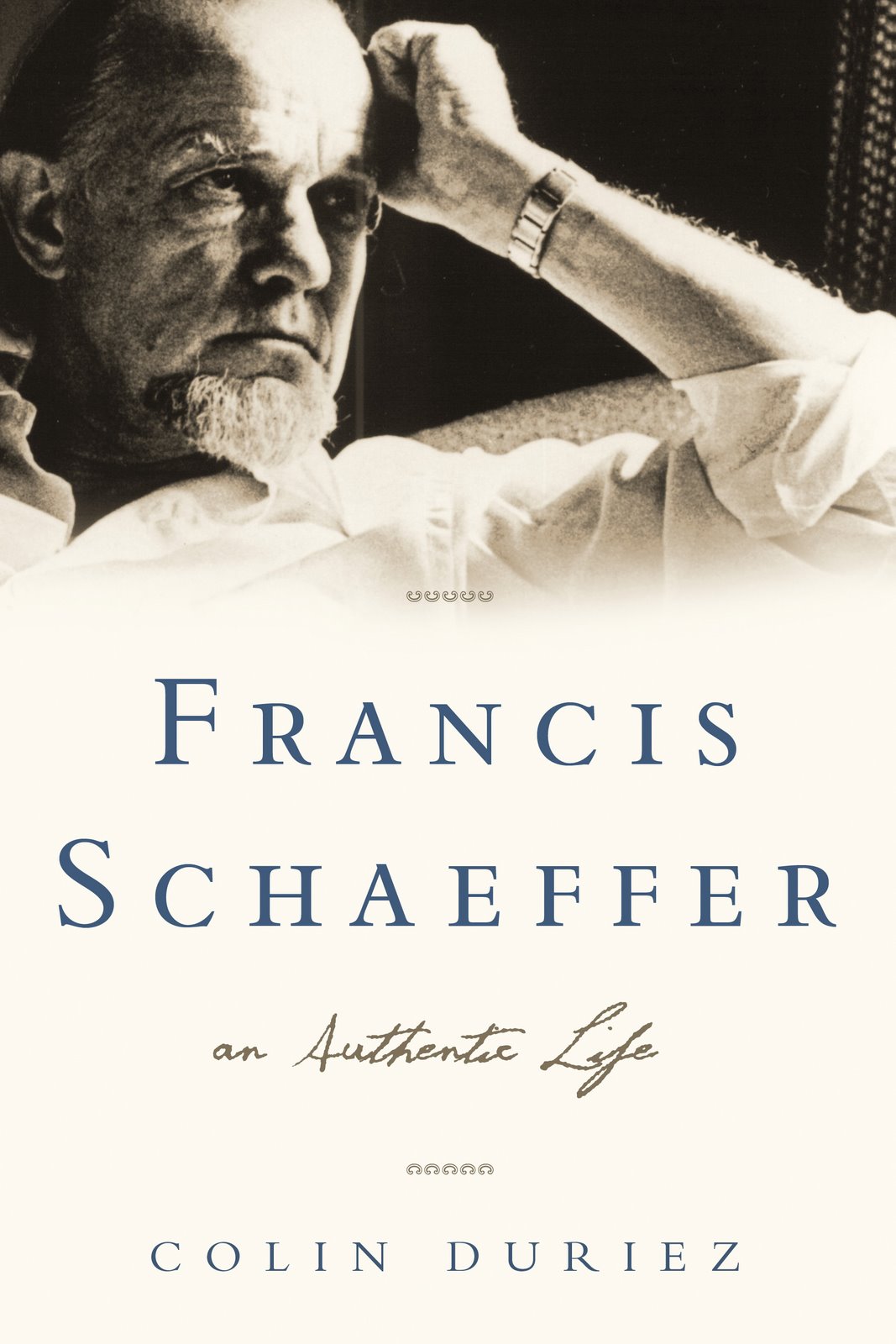 Francis Schaeffer


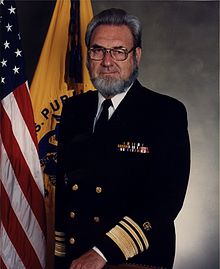


 High resolution version (16,596,036 Bytes)


 The Daily Hatch



5 thoughts on “Tell Me…What Do I Deserve?”
Thank you for a breathe of sanity and compassion. I’m glad the man was convicted but sad that our society can come up with nothing better than the death penalty for him. He deserves to have a chance to make peace with God. I don’t know if he’ll take it, sadly. I also don’t know what’s in store since the opposition is already disowning him and using his crimes as “the reason abortion should remain safe and legal.” The devil is truly running amok in all of this. I’ll continue to pray prayers of thanksgiving that you’re out there and brave enough to say what needs to be said. Hang in there. God won’t ask us if we won. He’ll ask us if we kept the faith.
Hi Abby,
Thanks for posting this here!! I don’t like commenting on Facebook
Good, honest, caring and compassionate Christians can disagree on capital punishment (they probably have for centuries) Why is this a deal-breaker for you? It’s not about hate or wishing harm on another person. Most people who are in favor of it see it as a justice issue. If a person schemes pre-meditatively to wantonly take the life of another human being (understanding the complete nature of their action), the Old Testament civil law requires that person to give their life in return. Our justice system is based largely on biblical definitions of justice and that is what is…a person gives what they took…they gave themselves the death sentence. It can be viewed as a pro-life position because it makes an unequivocal societal statement as to the value of the life that was taken. It’s not unreasonable or incongruent with the Christian faith or pro-life values.
The killing of those babies was first degree murder and so capital punishment is reasonable. I hope and pray Kermit Gosnell repents and receives the full and complete forgiveness that Jesus Christ died to give him and all the rest of us sinners who deserve nothing but death and hell. Jesus Christ mediates between us and God, so our debt has been paid in the eternal sense; but when it comes to civil accountability (man to man), he instituted the law/government to be arbiter.