Category Archives: Francis Schaeffer

Open letter to President Obama (Part 599) Peter Jones on Infanticide and Dr. Gosnell

Open letter to President Obama (Part 599)

(Emailed to White House on 5-17-13.)

President Obama c/o The White House 1600 Pennsylvania Avenue NW Washington, DC 20500

Dear Mr. President,

I know that you receive 20,000 letters a day and that you actually read 10 of them every day. I really do respect you for trying to get a pulse on what is going on out here. I know that you don’t agree with my pro-life views but I wanted to challenge you as a fellow Christian to re-examine your pro-choice view.

___________________

Many in the world today are taking a long look at the abortion industry because of the May 14, 2013 guilty verdict and life term penalty handed down by a jury (which included 9 out of 12 pro-choice jurors)  to Dr. Kermit Gosnell. During this time of reflection I wanted to put forth some of the pro-life’s best arguments.

In the film series “WHATEVER HAPPENED TO THE HUMAN RACE?” the arguments are presented  against abortion (Episode 1),  infanticide (Episode 2),   euthanasia (Episode 3), and then there is a discussion of the Christian versus Humanist worldview concerning the issue of “the basis for human dignity” in Episode 4 and then in the last episode a close look at the truth claims of the Bible.

Francis Schaeffer

__________________________

I truly believe that many of the problems we have today in the USA are due to the advancement of humanism in the last few decades in our society. Ronald Reagan appointed the evangelical Dr. C. Everett Koop to the position of Surgeon General in his administration. He partnered with Dr. Francis Schaeffer in making the video below. It is very valuable information for Christians to have.  Actually I have included a video below that includes comments from him on this subject.

Francis Schaeffer Whatever Happened to the Human Race (Episode 1) ABORTION

_____________________________________


Francis Schaeffer “BASIS FOR HUMAN DIGNITY” Whatever…HTTHR

Dr. Francis schaeffer – The flow of Materialism(from Part 4 of Whatever happened to human race?)

Dr. Francis Schaeffer – The Biblical flow of Truth & History (intro)

Francis Schaeffer – The Biblical Flow of History & Truth (1)

Dr. Francis Schaeffer – The Biblical Flow of Truth & History (part 2)

________________

Banner

Banner

Holy Community
Infanticide, An Expression of Oneism
by Peter Jones    |   April 17, 2013

Jones_PeterDr. Peter Jones is Director of truthXchange, and Adjunct Professor of New Testament, as well as Scholar in Residence, at Westminster Seminary California, and an ordained minister in the Presbyterian Church in America. He has written several books including The Gnostic Empire Strikes Back (1992), Gospel Truth/Pagan Lies (1999), Capturing the Pagan Mind (2003), and The God of Sex (2006).

According to news reports, District Attorney Seth Williams will soon reveal the charges he will file against Kermit Gosnell, the 69-year-old abortion center owner who, after failed abortions, killed Karnamay Mongar and seven other infants with scissors.We have rarely seen such a grisly case of blood-letting, yet the mainstream media are not reporting it.

Even the somewhat liberal Kirsten Powers of USAToday states:

“The deafening silence of too much of the media, once a force for justice in America, is a disgrace…When Rush Limbaugh attacked Sandra Fluke, there was non-stop media hysteria…Yet, accusations of babies having their heads severed — a major human rights story if there ever was one — doesn’t make the cut.”

Had Kermit Gosnell killed dogs, we would be seeing wall-to-wall coverage, but  his filthy clinic and his ghoulish collection of aborted babies (dating back thirty years!) had never been checked by the “authorities.”

GosnellWhy the inaction and deafening silence? It is a question of worldview, a Oneist worldview.

Most of you who read my Inside/Outs have concluded that our American/Western society is “awful.” But how do we analyze “awful” and what can we do about it?  Among the many offensive changes is the chilling holocaust of abortion.

Rare have been the times that biblical Christianity has been in such open conflict with its enemy, today calling itself by the innocuous term, “progressivism.” Elizabeth Fox-Genovese, the Marxist feminist PhD Harvard American Historian, observed about the Sixties, at the end of her life in 1998 “within a remarkably brief period …has occurred a cataclysmic transformation of the very nature of our society.”

There is a simple way to understand the deep conflict of contemporary worldviews. Don’t be intimidated by the word “worldview.” According to the Apostle Paul, there are only two: You worship creation or you worship the Creator (Rom 1:25). This is the ultimate “binary,” by which I mean things that are and remain distinct or different, and will never be fused into one.

The two irreconcilable worldviews may be described in the following ways:

Oneism

The world is self-creating and self-explanatory, and everything is made up of the same stuff, whether matter, spirit or a mixture. There is one basic kind of self-creating existence. In one way or another we worship evolving Nature as divine. Since everything shares in the same divine substance, all distinctions are eliminated and everything is god.

Twoism

The world is the work of an external Creator who caringly made it but is separate and different from it. There are two kinds of existence—the Creator who is uncreated, and everything else, which is created. This worldview celebrates two-ness. We worship as divine only the personal triune Creator, who defined distinctions as the essence of all existence.

If you can do the theological arithmetic of One or Two you will understand the deep conflict in our world. Present opposition to the Gospel is twofold:

1. The promotion of a Oneist view of all of reality, and,

2. The determined elimination of “the binary,” that is, all expressions of biblical Twoism, and especially the binary of the distinction between the Creator and the creation.

In forthcoming Inside/Outs I intend to show, in each area of life where we see conflict, how various social disagreements find their roots in the religious conflict of these two worldviews.

So let’s see how Oneism and Twoism are evident in the issue of abortionist Kermit Gosnell. Francis Schaeffer was right when he warned us a generation ago about the worldview known as secular humanism, which believed that since humanity is only the product of chance, then there are no moral reasons why we should treat fellow human beings as special, created in God’s image.

But there is now a further reason to explain this human tragedy—the “logic” of Oneism.  Pro-abortion advocates argue that the fetus is part of the woman’s body. She “owns” it and is thus free to get rid of it, as she might choose to have a face lift or a tummy tuck. (Biologists understand that the mother’s own body treats the fetus as a foreigner, as evidenced by morning sickness and the biological preparation for independent life.) Planned Parenthood recently stated, without embarrassment that the decision to kill the child who survives an abortion remains with the mother and her doctor! The binary is busted in this horrendous act of infanticide.

This is a noxious form of Oneism. The distinction between two human beings, each made individually in God’s image and deserving of utmost respect, is rejected in favor of the rights of one human being. The mother is important. The baby ultimately has no existence.

Oneism claims to unite us, but without the Twoist world of morals, Oneism leads to more than “awful.” It leads to total degradation and judgment.

One_or_Two_by_JonesFirst published on the Truthxchange on April 12, 2013. Reprint according to policy. The Worldview Church staff recommends Jones’ book “One or Two” through the Truthxchange website.

_____________

Tony Perkins: Gosnell Trial – FOX News

Published on May 13, 2013

Tony Perkins: Gosnell Trial – FOX News

Political Cartoons by Chuck Asay

By Chuck Asay – April 17, 2013

________________

______________________

Thank you so much for your time. I know how valuable it is. I also appreciate the fine family that you have and your commitment as a father and a husband. I also respect you for putting your faith in Christ for your eternal life. I am pleading to you on the basis of the Bible to please review your religious views concerning abortion. It was the Bible that caused the abolition movement of the 1800’s and it also was the basis for Martin Luther King’s movement for civil rights and it also is the basis for recognizing the unborn children.

Sincerely,

Everette Hatcher III, 13900 Cottontail Lane, Alexander, AR 72002, ph 501-920-5733, lowcostsqueegees@yahoo.com

Related posts:

Al Mohler on Kermit Gosnell’s abortion practice

Francis Schaeffer: “Whatever Happened to the Human Race” (Episode 1) ABORTION OF THE HUMAN RACE Published on Oct 6, 2012 by AdamMetropolis ________________ Picture of Francis Schaeffer and his wife Edith from the 1930′s above. I was sad to read about Edith passing away on Easter weekend in 2013. I wanted to pass along this fine […]

Taking on Ark Times Bloggers on various issues Part U “Do men have a say in the abortion debate?” (includes the film SLAUGHTER OF THE INNOCENTS and editorial cartoon)

I have gone back and forth and back and forth with many liberals on the Arkansas Times Blog on many issues such as abortion, human rights, welfare, poverty, gun control  and issues dealing with popular culture. Here is another exchange I had with them a while back. My username at the Ark Times Blog is Saline […]

Taking on Ark Times Bloggers on various issues Part T “Abortion is a dirty business” (includes video “Truth and History” and editorial cartoon)

I have gone back and forth and back and forth with many liberals on the Arkansas Times Blog on many issues such as abortion, human rights, welfare, poverty, gun control  and issues dealing with popular culture. Here is another exchange I had with them a while back. My username at the Ark Times Blog is Saline […]

“Sanctity of Life Saturday” Abortion supporters lying in order to further their clause? Window to the Womb (includes video ABORTION OF THE HUMAN RACE)

It is truly sad to me that liberals will lie in order to attack good Christian people like state senator Jason Rapert of Conway, Arkansas because he headed a group of pro-life senators that got a pro-life bill through the Arkansas State Senate the last week of January in 2013. I have gone back and […]

Taking on Ark Times Bloggers on various issues Part D “If you can’t afford a child can you abort?”Francis Schaeffer Quotes part 4 includes the film ABORTION OF THE HUMAN RACE) (editorial cartoon)

I have gone back and forth and back and forth with many liberals on the Arkansas Times Blog on many issues such as abortion, human rights, welfare, poverty, gun control  and issues dealing with popular culture. Here is another exchange I had with them a while back. My username at the Ark Times Blog is Saline […]

Taking on Ark Times Bloggers on various issues Part C “Abortion” (Francis Schaeffer Quotes part 3 includes the film SLAUGHTER OF THE INNOCENTS) (editorial cartoon)

I have gone back and forth and back and forth with many liberals on the Arkansas Times Blog on many issues such as abortion, human rights, welfare, poverty, gun control  and issues dealing with popular culture. Here is another exchange I had with them a while back. My username at the Ark Times Blog is Saline […]

Taking on Ark Times Bloggers on various issues Part B “Gendercide” (Francis Schaeffer Quotes Part 2 includes the film ABORTION OF THE HUMAN RACE) (editorial cartoon)

I have gone back and forth and back and forth with many liberals on the Arkansas Times Blog on many issues such as abortion, human rights, welfare, poverty, gun control  and issues dealing with popular culture. Here is another exchange I had with them a while back. My username at the Ark Times Blog is Saline […]

SANCTITY OF LIFE SATURDAY “AngryOldWoman” blogger argues that she has no regrets about past abortion

Sometimes you can see evidences in someone’s life of how content they really are. I saw  something like that on 2-8-13 when I confronted a blogger that goes by the name “AngryOldWoman” on the Arkansas Times Blog. See below. Leadership Crisis in America Published on Jul 11, 2012 Picture of Adrian Rogers above from 1970′s […]

“Sanctity of Life Saturday” The Church Awakens: Whatever Happened to the Human Race? (includes the video ABORTION OF THE HUMAN RACE)

In the film series “WHATEVER HAPPENED TO THE HUMAN RACE?” the arguments are presented  against abortion (Episode 1),  infanticide (Episode 2),   euthenasia (Episode 3), and then there is a discussion of the Christian versus Humanist worldview concerning the issue of “the basis for human dignity” in Episode 4 and then in the last episode a close […]

Taking on Ark Times Bloggers on various issues Part H “Are humans special?” includes film ABORTION OF THE HUMAN RACE) Reagan: ” To diminish the value of one category of human life is to diminish us all”

I have gone back and forth and back and forth with many liberals on the Arkansas Times Blog on many issues such as abortion, human rights, welfare, poverty, gun control  and issues dealing with popular culture. Here is another exchange I had with them a while back. My username at the Ark Times Blog is Saline […]

Taking on Ark Times Bloggers on various issues Part G “How do moral nonabsolutists come up with what is right?” includes the film “ABORTION OF THE HUMAN RACE”)

I have gone back and forth and back and forth with many liberals on the Arkansas Times Blog on many issues such as abortion, human rights, welfare, poverty, gun control  and issues dealing with popular culture. Here is another exchange I had with them a while back. My username at the Ark Times Blog is Saline […]

Taking on Ark Times Bloggers on various issues Part E “Moral absolutes and abortion” Francis Schaeffer Quotes part 5(includes the film SLAUGHTER OF THE INNOCENTS) (editorial cartoon)

I have gone back and forth and back and forth with many liberals on the Arkansas Times Blog on many issues such as abortion, human rights, welfare, poverty, gun control  and issues dealing with popular culture. Here is another exchange I had with them a while back. My username at the Ark Times Blog is Saline […]

Francis Schaeffer’s “How should we then live?” Video and outline of episode 10 “Final Choices” (Schaeffer Sundays)

E P I S O D E 1 0   Dr. Francis Schaeffer – Episode X – Final Choices 27 min FINAL CHOICES I. Authoritarianism the Only Humanistic Social Option One man or an elite giving authoritative arbitrary absolutes. A. Society is sole absolute in absence of other absolutes. B. But society has to be […]

Francis Schaeffer’s “How should we then live?” Video and outline of episode 9 “The Age of Personal Peace and Affluence” (Schaeffer Sundays)

E P I S O D E 9 Dr. Francis Schaeffer – Episode IX – The Age of Personal Peace and Affluence 27 min T h e Age of Personal Peace and Afflunce I. By the Early 1960s People Were Bombarded From Every Side by Modern Man’s Humanistic Thought II. Modern Form of Humanistic Thought Leads […]

Francis Schaeffer’s “How should we then live?” Video and outline of episode 8 “The Age of Fragmentation” (Schaeffer Sundays)

E P I S O D E 8 Dr. Francis Schaeffer – Episode VIII – The Age of Fragmentation 27 min I saw this film series in 1979 and it had a major impact on me. T h e Age of FRAGMENTATION I. Art As a Vehicle Of Modern Thought A. Impressionism (Monet, Renoir, Pissarro, Sisley, […]

Francis Schaeffer’s “How should we then live?” Video and outline of episode 7 “The Age of Non-Reason” (Schaeffer Sundays)

E P I S O D E 7 Dr. Francis Schaeffer – Episode VII – The Age of Non Reason I am thrilled to get this film series with you. I saw it first in 1979 and it had such a big impact on me. Today’s episode is where we see modern humanist man act […]

Francis Schaeffer’s “How should we then live?” Video and outline of episode 6 “The Scientific Age” (Schaeffer Sundays)

E P I S O D E 6 How Should We Then Live 6#1 Uploaded by NoMirrorHDDHrorriMoN on Oct 3, 2011 How Should We Then Live? Episode 6 of 12 ________ I am sharing with you a film series that I saw in 1979. In this film Francis Schaeffer asserted that was a shift in […]

Francis Schaeffer’s “How should we then live?” Video and outline of episode 5 “The Revolutionary Age” (Schaeffer Sundays)

E P I S O D E 5 How Should We Then Live? Episode 5: The Revolutionary Age I was impacted by this film series by Francis Schaeffer back in the 1970′s and I wanted to share it with you. Francis Schaeffer noted, “Reformation Did Not Bring Perfection. But gradually on basis of biblical teaching there […]

Francis Schaeffer’s “How should we then live?” Video and outline of episode 4 “The Reformation” (Schaeffer Sundays)

Dr. Francis Schaeffer – Episode IV – The Reformation 27 min I was impacted by this film series by Francis Schaeffer back in the 1970′s and I wanted to share it with you. Schaeffer makes three key points concerning the Reformation: “1. Erasmian Christian humanism rejected by Farel. 2. Bible gives needed answers not only as to […]

“Schaeffer Sundays” Francis Schaeffer’s “How should we then live?” Video and outline of episode 3 “The Renaissance”

Francis Schaeffer’s “How should we then live?” Video and outline of episode 3 “The Renaissance” Francis Schaeffer: “How Should We Then Live?” (Episode 3) THE RENAISSANCE I was impacted by this film series by Francis Schaeffer back in the 1970′s and I wanted to share it with you. Schaeffer really shows why we have so […]

Francis Schaeffer’s “How should we then live?” Video and outline of episode 2 “The Middle Ages” (Schaeffer Sundays)

  Francis Schaeffer: “How Should We Then Live?” (Episode 2) THE MIDDLE AGES I was impacted by this film series by Francis Schaeffer back in the 1970′s and I wanted to share it with you. Schaeffer points out that during this time period unfortunately we have the “Church’s deviation from early church’s teaching in regard […]

Francis Schaeffer’s “How should we then live?” Video and outline of episode 1 “The Roman Age” (Schaeffer Sundays)

Francis Schaeffer: “How Should We Then Live?” (Episode 1) THE ROMAN AGE   Today I am starting a series that really had a big impact on my life back in the 1970′s when I first saw it. There are ten parts and today is the first. Francis Schaeffer takes a look at Rome and why […]

By Everette Hatcher III | Posted in Francis Schaeffer | Edit | Comments (0)


Is there a categorical difference in us and animals?

_____________

John J. Shea

John J. Shea Professor
Ph.D., Harvard University, 1991

2nd Annual Human Evolution Symposium PART ONE

Uploaded on Nov 23, 2010

“Out of Africa: Who, Where, and When?” Sept. 27, 2005. Stony Brook University.

Convened by Richard Leakey.

1. Welcome – Bob McGrath, Provost, Stony Brook University
2. Opening remarks – Richard Leakey, Stony Brook University
3. Introduction of Speakers – William Jungers, Stony Brook University
4. “Out of Africa Again and Again: Some Thoughts about Hominin Dispersals” – Marta Lahr, Cambridge University
5. Meave Leakey, Stony Brook University – “Early Pleistocene Mammals from Africa: Background to Dispersal”
6. John J. Shea, Stony Brook University – “The Levant: A Corridor and a Cul-de-Sac?”

_________________

clip from “APEMAN”

Uploaded on Feb 25, 2011

__________________________________________________________

Dr. John J. Shea appeared on the TV series APE MAN with Walter Cronkite back in the 1990’s and claimed that there is only a degree of difference between monkeys and humans and not a categorical difference. After that program aired I had the opportunity to correspond with Dr. Shea and he was kind enough to send me a two page response to my questions. (This correspondence took place back in 1994 and 1995.)

Dr. Shea also suggested that I read SHADOWS OF FORGOTTEN ANCESTORS by Carl Sagan and his wife Ann Druyan, and I did so. Here are my thoughts on the question.

First, only humans lie in the sense we are held morally responsible. Sagan wrote, “Deception in the social relations of animals…is an emerging and productive topic in biology…” (p. 379). This may be true, but are animals responsible to God? I think not. Romans 3:23 teaches that “All MEN have sinned and fall short of the glory of God.” Animals may deceive but they are not morally responsible.

Second, only men feel guilt. Sagan refers briefly to the fact that men feel guilt (p. 4.14), but he does not spend a lot of time on this. Romans 1:19 asserts, “For that which is known about God is evident to them and made plain in their inner consciousness, because God has show it to them” (Amplified Bible).  Here Sagan turns to  Thomas Henry Huxley who he quotes:

On all sides, I shall hear the cry–“We are men and women, not a mere better sort of apes, a little longer in the leg, more compact in the foot, and bigger in brain than your brutal Chimpanzees and Gorillas. The power of knowledge–the conscience of good and evil--the pitiful tenderness of human affections, raise us out of all real fellowship with the brutes, however, closely they may seem to approximate us.”

To this I can reply that the exclamation would be just and would be most just and would have my entire sympathy, if it were only relevant. But, it is not I who seek to base Man’s dignity upon this great toe, or insinuate that we are lost if an Ape has a hippocampus minor (in its brain). On the contrary, I have done my best to sweep away this vanity… 

WHY DID SAGAN AND HUXLEY FACE SUCH A LARGE CHORUS THAT WAS OBJECTING TO THIS VIEW THAT WE DON’T HAVE A GOD-GIVEN CONSCIENCE? The answer is very simple and it deals with the consequences of Social Darwinism. Chuck Colson said that Larry King was not very impressed with his long talk on the historical accuracy of the scriptures, but when he touched on this subject things got interesting:

Larry King invited me to dinner. “I don’t believe in God,” Larry told me straight out. “But tell me why you believe.” I responded, “Have you seen Woody Allen‘s movie CRIMES AND MISDEMEANORS

Yes, he loved it, in fact. It’s about a doctor who is haunted by GUILT after hiring a killer to murder his mistress. His Jewish father has taught him that God will surely bring justice. In the end the doctor suppresses his GUILT, convincing himself that LIFE IS AN DARWINIAN STRUGGLE WHERE ONLY THE RUTHLESS SURVIVE.

I asked Larry, “Is that our only choice–to be tormented by GUILT or else kill our conscience? Larry, how do you deal with your conscience?” He dropped his fork. I said, “What do you do with the GUILT that is in here? What do you do with what you know you have done wrong?

Then he was ready to listen. I went on and shared with him from Romans which teaches about the voice of conscience that God has given us. 

__________

Third, men have a longing for significance which expresses itself most clearly in the fear of non being.

Fourth, I would point to the fact that only people worship.

Fifth, men are not satisfied unless they have their spiritual needs met. Carl Sagan quotes the poet Walt Whitman, “Not one (animal) is dissatisfied…Not one is respectable or unhappy over the whole earth…” Sagan comments, “On this basis of the evidence presented in this book, we doubt if any of Whitman’s  six purported differences between other animals and humans is true…” (p. 389).

I read Sagan’s book cover to cover and made over 15 pages of notes, and I have yet to find any of the “evidence” that Sagan speaks of on page 389. I find the comments of NOAM CHOMSKY more logical. He calls animal language an “evolutionary miracle” akin to “finding an island of humans who could be taught to fly.”

I like Francis Schaeffer‘s term “Mannishness” of man. He defines it as those aspects of man, such as significance, love, rationality and the fear of non being, which mark him off from animals and machines and give evidence of his being created in the image of a personal God.

The scientist Blaise Pascal is quoted by Sagan on page 364 and then Sagan notes, “Most of the philosophers adjudged great in the history of western thought held that humans are fundamentally different from other animals…”

As you know Pascal was the inventor of the barometer and he lived from 1623 to 1662. Pascal also observed, “There is a God-shaped vacuum in the heart of every man,and only God can fill it.”

What is the solution? “For God so loved the world that He gave his one and only Son, that whoever believes in him should not perish but have eternal life” (John 3:16). The scriptural directive is not for us to work harder to achieve God’s favor (Romans 3:20), but to accept God’s mercy through our repentance and receiving Christ as a free gift (Ephesians 2:8-10).

The Bible and Archaeology – Is the Bible from God? (Kyle Butt)

Is the Bible historically accurate? Here are some of the posts I have done in the past on the subject: 1. The Babylonian Chronicleof Nebuchadnezzars Siege of Jerusalem2. Hezekiah’s Siloam Tunnel Inscription. 3. Taylor Prism (Sennacherib Hexagonal Prism)4. Biblical Cities Attested Archaeologically. 5. The Discovery of the Hittites6.Shishak Smiting His Captives7. Moabite Stone8Black Obelisk of Shalmaneser III9A Verification of places in Gospel of John and Book of Acts., 9B Discovery of Ebla Tablets10. Cyrus Cylinder11. Puru “The lot of Yahali” 9th Century B.C.E.12. The Uzziah Tablet Inscription13. The Pilate Inscription14. Caiaphas Ossuary14 B Pontius Pilate Part 214c. Three greatest American Archaeologists moved to accept Bible’s accuracy through archaeology.

Truth Tuesday: Malcolm Muggeridge Meets Francis Schaeffer by David Virtue

_______________

Malcolm Muggeridge Meets Francis Schaeffer by David Virtue

Episode VII – The Age of Non Reason

___________________________________________

I love the works of Francis Schaeffer and I have been on the internet reading several blogs that talk about Schaeffer’s work and the work below by David Virtue was really helpful. Schaeffer’s film series “How should we then live?  Wikipedia notes, “According to Schaeffer, How Should We Then Live traces Western history from Ancient Rome until the time of writing (1976) along three lines: the philosophic, scientific, and religious.[3] He also makes extensive references to art and architecture as a means of showing how these movements reflected changing patterns of thought through time. Schaeffer’s central premise is: when we base society on the Bible, on the infinite-personal God who is there and has spoken,[4] this provides an absolute by which we can conduct our lives and by which we can judge society.  Here are some posts I have done on this series: Francis Schaeffer’s “How should we then live?” Video and outline of episode 10 “Final Choices” episode 9 “The Age of Personal Peace and Affluence”episode 8 “The Age of Fragmentation”episode 7 “The Age of Non-Reason” episode 6 “The Scientific Age”  episode 5 “The Revolutionary Age” episode 4 “The Reformation” episode 3 “The Renaissance”episode 2 “The Middle Ages,”, and  episode 1 “The Roman Age,” .

In the film series “WHATEVER HAPPENED TO THE HUMAN RACE?” the arguments are presented  against abortion (Episode 1),  infanticide (Episode 2),   euthanasia (Episode 3), and then there is a discussion of the Christian versus Humanist worldview concerning the issue of “the basis for human dignity” in Episode 4 and then in the last episode a close look at the truth claims of the Bible.

Francis Schaeffer

__________________________

The Collision of Two Minds

David Virtue

  • Print this page
  • Email this page
  • Twitter
  • Facebook
  • Bookmark and Share

Powered by Translate

Malcolm Muggeridge Meets Francis Schaeffer

While I was studying in London in the sixties, the name of Francis Schaeffer, an American Christian apologist and evangelist living in Switzerland, lit up the evangelical sky. He had written a book with the seemingly self-evident title, The God Who Is There. The book, however, directly exposed and challenged the intellectual presuppositions and cultural climate of the second half of the twentieth century.

In it Schaeffer articulated what he devised and called the “line of despair” (Europe about 1890 and the United States about 1935) in philosophy, art, music, and the general culture, as well as the New Theology. He attempted to show that for modern man, absolutes had died, modernity reigned, and the floodwaters of secular thought had overwhelmed the Church because its leaders did not understand the importance of combating a false set of presuppositions. Young people were being raised on the old sense of what was right and wrong based on absolutes the West had established from a biblical worldview, but on leaving home they were being exposed to “rationalism” and “humanism” that saw man as the center of all things and pushed God to the sidelines or out of the picture altogether.

Schaeffer feared that the generation following his might not understand what was consciously or unconsciously shaping their thinking, that their faith would suffer as a result, and that they would fall if they were not made aware of the changes in the culture and the intellectual climate that was pushing for change.

To many of us, as students of theology and philosophy who were being affected by the cultural changes, Schaeffer was a breath of fresh air in the otherwise stagnant currents of contemporary evangelicalism.

While the list of evangelists emerging on the American and British scene steadily grew (Billy Graham had by now established himself as the evangelist primus inter pares), there was no one like Schaeffer, who insisted that presuppositions must first be examined by those creating the culture, then addressed and hopefully demolished before the gospel could be articulated, taken seriously, and believed. Schaeffer was afraid that too many evangelists were simply beating the air with their words, failing to make intellectual contact with those they talked with, especially those growing up after World War II and who were encountering major cultural shifts in the early sixties. One could not simply appeal to the emotions and the heart when preaching. One had to consider the head as well, and what was going into it. To simply preach “Jesus saves” without first giving content as to who Jesus was and then addressing the cultural context into which the good news of the gospel was being preached was not to do justice to the gospel. Christian proclamation must have content; it must also appeal to the mind. History ultimately proved him right.

Schaeffer set out not only to preach the gospel but also to give good and sound reasons why the Christian faith was true against all intellectual comers and cultured despisers. Even his evangelical detractors, who thought he was attempting to analyze and answer too much in fields he had only marginal knowledge about, grudgingly admired Schaeffer for speaking out at a time when so many were either silent or merely reacting to the culture with more and stricter prohibitions on what they thought evangelical Christians ought or ought not to do. Furthermore, Schaeffer was not primarily concerned with getting people “saved” but in establishing sound reasons as to why Christianity was true and should be believed. He had been deeply influenced by the Dutch presuppositionalist philosophers Herman Dooyeweerd and Cornelius Van Til, as well as the Princeton theologian J. Gresham Machen and Fuller Theological Seminary apologist E. J. Carnell.

Schaeffer was a beacon of Reformed Christian light in a Europe moving rapidly towards postmodernism. He was asking and attempting to answer the big questions, and he refused to be locked into North American fundamentalist disputes. He had little time for small talk. I rarely saw him laugh. He took life very seriously and saw little value in humor for its own sake.

During the Christmas break in the winter of 1965, I decided to go to L’Abri Fellowship to see and hear Schaeffer for myself. I was curious, fascinated, and not a little in awe of this Christian “guru” tucked away in the Swiss Alps.

I flew to Geneva and made my way through the mountains by train to the French-speaking canton and the small village of Huemoz-Sur-Ollon. A group of wooden chalets huddled precariously against the rocky face of awesomely beautiful Swiss mountains. The name L’Abri meant “Shelter,” and the chalets were home to a number of families and American students. The chalets were “parented” by the married children of the Schaeffers themselves.

A church had been built on an even more precarious rock face, and it was here that Schaeffer preached some of the most powerful sermons I have ever heard. It would be true to say that this articulate and impassioned American Presbyterian was one of the best preachers of our time, uncompromising in his stand for historic Christianity.

Among the disciples of Schaeffer was the brilliant and articulate British sociologist and philosopher Os Guinness, who would later go to the United States to advise an American president and become himself a serious critic of Western culture through numerous books and publications and his own organization, the Trinity Forum.

My time at L’Abri was memorable though brief. Not only was Reformation theology being espoused and defended against existential despair, but I also received my first introduction to a Christian community. On reflection, I think that L’Abri, as a Christian community, was in some ways a more powerful apologetic statement than all the theology and philosophy that flowed from Schaeffer’s tapes and lectures.

Another dimension that was new to me and many others, both scholars and students, many of whom came from the United States, was the whole idea of Christian community and the common life that all those at L’Abri were attempting to live out and for which there were few if any models in contemporary Protestantism. Furthermore, Christian counseling, a relatively new idea, was in place, with private sessions being offered by a fellow New Zealander, Sheila Bird, nicknamed “Birdie” by her friends. Not only were the legalisms of kids from North American fundamentalist homes explored, documented, and addressed, but the demonic was also challenged and brought under the authority of Jesus Christ. Hundreds of students were helped and freed from a variety of bondages through her able counseling. Birdie made a difference not only to my own life but also to many who sought her wise counsel.

My time at L’Abri was all too short. I heard Schaeffer speak, listened to a number of his tapes, and was permitted an opportunity, just once, to speak with him privately. During our brief time together I asked him if he would be interested in meeting with Malcolm Muggeridge. He said he was, and would readily accept an invitation for himself and his wife the following summer if I would set it up. I agreed to do so.

I journeyed back to England and went straight to Robertsbridge, Sussex, for a weekend with Malcolm and Kitty. Over dinner I broached the subject, and both said they would like to meet the Schaeffers, having heard about them, and so a meeting was arranged for the following summer at Ashburnham Place.

At the end of my term in London and with exams completed, I took the train to Battle, Sussex, and made my way over to Ashburnham. I told the Reverend Bickersteth of my plans, and he and his staff were more than happy to oblige in making the necessary arrangements to have the Muggeridges and Schaeffers meet and talk.

On the arranged day the Muggeridges motored over from Robertsbridge, and the Schaeffers, who had flown in from Geneva, came down from London by car. It was an auspicious meeting. Despite the significance of the occasion I felt a little uneasy, as I was unsure how things would go and whether or not I had done the right thing in bringing together two men from such enormously different backgrounds. Both men’s wives, Edith and Kitty, were present.

The Rev. John Bickersteth arranged for us to sit on lawn chairs in the hedged garden for privacy, and his staff brought us tea and scones. I preferred myself to sit on the edge of the lawn, apart from both couples, to watch the interplay between the two men and listen to them talk.

I had high hopes for this meeting. I did not know exactly what to expect, but somewhere in the back of my mind was the hope that perhaps Malcolm would grasp the essential historic nature of Christianity. I looked forward, in any event, to a vigorous dialogue.

After brief introductions, Schaeffer immediately launched into a strident defense of historic Christianity, starting with the Reformation. It was Schaeffer at his best and most erudite. He hammered home the fact that Christianity was a closed-end system and could not be understood apart from history. He used the Bible and history to drive home his points. The only reason, he argued, to be a Christian was because it was verifiably true.

By way of response, Muggeridge made it clear that the facts of Christianity were only of marginal interest to him and did not touch the core of what it meant, for him, to be a Christian. Its truth, he said, did not rest on historical facts as such but in the drama of the Incarnation, God becoming man, a drama that each one of us played out in our own lives, much like a Shakespeare play in which all of us have our staged entrances and exits.

Muggeridge simply could not conceive of facts being either necessarily relevant or always truthful. He had learned, over the course of half a century of knockabout journalism, that the facts of a case did not always tally with the truth. Facts and truth were not necessarily the same. Truth, he said, transcended facts. It was simply not important to him that the Jesus of history was the Christ of faith. Jesus’ life, death, and resurrection transcended all such categories. He did not deny the facts, but saw them as largely irrelevant to the truth of what Christianity was about. The great truths the Church had enshrined through many centuries were artistic truths, which he considered much more truthful than any other kind of truth. Muggeridge said that for him, embracing Christianity was a question of faith, not rational proof, but it was, at the same time, a reasonable faith. If one accepted the initial hurdle of the Incarnation, everything else followed.

As far as the Incarnation is concerned, I believe in it, said Muggeridge. “I believe that God did lean down to become Man in order that we could reach up to him, and that the drama of the Incarnation described in the Creed did take place. And I accept the drama as the key factor in the whole story. If you say to me, ‘Do you believe that Jesus’ birth was by a virgin?’ I would say, yes, I do, because I think the whole drama requires that. But that’s entirely different from saying that I believe that a particular female, without anything else happening, conceived and bore a child and that that child was Jesus. In other words, I see it as an artistic truth rather than an historical truth. I think the Church began to destroy itself when it sought its evidence in historicity or in the process of science. The great truths the Church has enshrined through many centuries are artistic truths, which are much more truthful than any other kind of truth. The worst that could happen to the Christian religion would be for it to be provable in humanistic terms. It would be disastrous. For me, embracing Christianity is a question of faith, not of rational proof, but at the same time a reasonable faith; provided one accepts the initial jump of the Incarnation, everything else follows.”

This was like a red rag to a bull, to Schaeffer. He in turn stoutly defended the absolute necessity for Christianity to be understood, accepted, and grounded in history and its creedal formulations as a religion without equal, distinct and separate from all other religions by history.

Schaeffer was deeply concerned and not a little frightened by the implication of Muggeridge’s thinking. He saw Muggeridge’s position as reflecting the perspective in Salvador Dali’s surrealist painting, Christ of Saint John of the Cross, with the cross of Christ detached from the world and floating freely in the universe without reference to time or space.

This was, to Schaeffer’s mind, a form of nonrational mysticism that was enormously dangerous in both art and theology. Schaeffer saw in Muggeridge’s understanding of the Christian faith a form of free-floating mysticism that, if not moored to biblical truth, would not be open to verification. Muggeridge’s thinking was, to Schaeffer’s mind, a leap of faith without content, an easy step into impersonal mysticism and ultimately a contentless Christianity leading to despair.

As I watched and listened, I saw the two men sailing right by each other, neither really hearing the other or making contact with the other’s position. Each man’s understanding of the Christian faith was so vastly different from the other’s. On one side, Schaeffer, the American apologist and defender of historic Christianity, rooted in Calvin and the Reformation. On the other, Muggeridge, the convert from Socialism, worldliness, cynicism, and personal despair, coming to faith by experiencing and observing the world’s blueprints for peace and love producing just the opposite–war and hate. For him, the kingdom of heaven would never be found on earth; all such utopias and attempted utopias had failure built into them, their leaders bent on the acquisition of power rather than the desire to serve.

As the afternoon wore on, with each man struggling to claim the high ground for his position, I began slowly to sink into despair. One ray of hope entered the conversation when both men absolutely and totally agreed that abortion was morally wrong, indefensible, and would eventually lead to euthanasia. Muggeridge admired the Catholic Church’s staunch support of human life beginning at conception. Schaeffer pegged his belief in the right to life from God’s revelation as the author and giver of life. Later, Schaeffer would write A Christian Manifesto (1981), which defined abortion as the central issue for American society and called Christians to civil disobedience in the struggle against secular humanism that led to the degradation of human life. Both men deplored infanticide. It was the high point of the discussion, the only matter on which they both agreed.

Apart from this one area of agreement there was little the two men had in common. The dialogue soon became a monologue, a lecture by Schaeffer on the necessity for understanding “space and time history,” beginning in Genesis, moving rapidly from the Old Testament into the New, and taking quick historical leaps to the Reformation and to post-Reformation Europe, which was now, he said, devoid of biblical roots. He articulated his “line of despair” and what he saw as the failure of modernity to provide adequate answers for contemporary man’s spiritual predicament. The history lesson soon had Malcolm slumbering. Kitty remained silent throughout. Occasionally Edith interjected her own thoughts on Christianity, which essentially parroted her husband’s but with a shrill edge. The truth is, I had never really taken to Edith, finding her rather self-possessed and little more than an echo of her husband. However, she did appeal to a lot of people and was regularly found on the evangelical speaking circuit in the United States.

As the afternoon wore on, I became increasingly aware of the growing distance between the two men. My tea grew cold, as did my heart. I felt helpless to do or say anything. I listened with growing anxiety at the yawning and increasingly unbridgeable gulf between the two men.

Part of me wanted Schaeffer to shut up and listen more, something I thought he was never very good at doing. My other instinct was to try to shake Muggeridge into the realization that a faith not grounded in history had dangerous implications both for himself and for millions of his radio listeners and television audiences.

On the one or two occasions Muggeridge managed to interject anything, it was to defend Christianity as true from a highly personalist point of view. He had found Christianity to be true not only by a process of elimination but also because everything he had tried or observed had quite simply failed. Socialism, Marxism, Nazism, Fascism, and various forms of nationalism, as well as materialism and promiscuity, had all been tried and found wanting. The dust of death was in all of them. And all of them had occurred in his lifetime, and he had to some degree or other personally experienced them all. By simple deduction, all that was left for him was the faith he had summarily rejected as a youth, influenced largely by his Socialist MP father and the later Fabians.

Muggeridge also spelled out his profound disappointment with the Anglican Church because it, too, he said, had capitulated to modernity in such areas as birth control and abortion and was no longer a fit place to hang one’s spiritual hat. He greatly admired the Roman Catholic Church and the current occupant of the see of Rome, and it was clear that he yearned for a spiritual place to call “home.” Later, he would meet with John Paul II at the invitation of the distinguished conservative American commentator William Buckley. But, like so many aesthetes, he found Catholicism untenable because of the Church’s numerous doctrinal positions, among them papal infallibility, which failed to make any sense to him and which ran counter to his own very modern mind. He saw the Church as another institution bedeviled by power, led invariably by the wrong people. Ironically, both he and Kitty did an about-face and were baptized into the Roman Catholic Church toward the end of their lives, deeply influenced in that decision by the faith and testimony of the Catholic Church’s second-greatest mother, Mother Teresa.

As I listened that warm, sunny afternoon, I recalled an earlier occasion, when an audience participant on a radio show called “Any Questions,” on which Muggeridge was a frequent guest, asked: If Muggeridge had been born in India and raised as a Hindu, would Hinduism be his religion of choice? Muggeridge replied that had he been born in that country, he would undoubtedly have been a devout Hindu. However, because he had been born into Western Christendom, it was in Christianity and Jesus Christ that he found meaning and faith.

I wished I could have, at some level, dismissed the differences between the two men as those of two radically different personalities based on some Myers-Briggs personality ratings. But it was much more than that.

For Muggeridge, the story of Christianity, with its implicit rejection of worldliness, materialism, and concupiscence, and its truth realized in the otherworldly figure of Mother Teresa of Calcutta, summarized for him what Christianity was all about–a rejection of all that this world had to offer in money, sex, or power, the raised fist or the raised phallus.

For Francis Schaeffer, the system of Christianity, with its doctrinal formulations rooted in Scripture, had to be defended at all costs. To relinquish truth at any level was to descend down the slippery slope to liberalism and modernity into a world without the safety net of God’s clear propositional word to man found solely in Holy Scripture.

At about four in the afternoon, the party broke up. Each couple made the appropriate-sounding noises about how wonderful their time together had been. But I knew in my heart that it was not true. The meeting had been an unmitigated disaster. I had bungled badly in bringing the two men together.

The sun still shone that early summer day over the quiet Sussex countryside as I accompanied them back to their cars, but I felt dark and bleak within.

I promised to see Malcolm and Kitty as soon as I could get away from my studies. I never saw Francis Schaeffer again. Years later, following his death, his wife Edith appeared in Vancouver, British Columbia, to give her “Walk Through the Bible” talks at a number of churches. I was religion editor of a daily newspaper at the time, but I didn’t have the stomach to hear her. I heard later that she appealed strongly to her audiences, even though her lectures ran for at least two hours at a time.

Later, when I dropped by the Muggeridges’ cottage for dinner, I broached the subject of the Schaeffers’ visit. When I asked them what they thought of their time with them, Malcolm and Kitty were gracious in their response, saying very little, possibly not wanting to hurt my feelings. But it was not a meeting that would ever be repeated. In my heart I knew that was true.

How we do evaluate the debate between Muggeridge and Schaeffer in the light of a fast-moving postmodernity? Schaeffer was clearly right in his observation that with the departure from “absolute truth,” theological and spiritual chaos would follow. Postmodernity, with its loss of the transcendent and its divination of the human, its replacement of the worship of God in concrete creed based on revealed truth for religious emotion in heightened personalist forms, is now almost completely realized. Schaeffer must be given credit for his insight into the loss of absolutes and a culture gone awry. He was and remains a prophet.

Muggeridge too, must be given credit for his prophetic stance that communism would fail and that the mass media and entertainment industry would be largely responsible for the moral breakdown of Western Christendom. Both men judged the culture accurately, each from his own perspective.

Muggeridge’s understanding that life is a dramatic performance is also true. We each enter the stage to play out our all-too-brief roles, then exit. Facts are not enough. They can mislead or be manipulated. Cameras blink. But Muggeridge’s theological rootlessness and his cavalier attitude toward Christian doctrine provided little of lasting value to prevent the wholesale explosion of postmodernity in England today. The country reflects only a shadow of its former spiritual glory, and the Anglican Church is dying, made largely irrelevant by theological compromise and increasing heterodoxy. His legacy as a writer, seer, and critic of culture will be his lasting legacy.

Schaeffer’s insights and his drive for a firm foundation for Christian belief will endure even in the face of watered down theology and clerics who compromise in the face of withering cultural scorn. The biblical worldview that Francis Schaeffer fought so valiantly for will have to be recaptured if it is to reshape the postmodernist landscape into which we have all now plunged. Only time will tell. The immediate forecast is not at all promising, though many, like myself, see movement toward a realignment of the theological plates as we approach the next millennium.

Read the entire article on the Touchstone website (new window will open).

Posted: 28-Nov-05

Related posts:

Taking on Ark Times Bloggers on various issues Part A “The Pro-life Issue” (Francis Schaeffer Quotes Part 1 includes the film SLAUGHTER OF THE INNOCENTS) (editorial cartoon)

I have gone back and forth and back and forth with many liberals on the Arkansas Times Blog on many issues such as abortion, human rights, welfare, poverty, gun control  and issues dealing with popular culture. Here is another exchange I had with them a while back. My username at the Ark Times Blog is Saline […]

“Schaeffer Sunday” Francis Schaeffer: “Whatever Happened to the Human Race” (Episode 1) ABORTION OF THE HUMAN RACE

It is not possible to know where the pro-life evangelicals are coming from unless you look at the work of the person who inspired them the most. That person was Francis Schaeffer.  I do care about economic issues but the pro-life issue is the most important to me. Several years ago Adrian Rogers (past president of […]

The movie “Les Miserables” and Francis Schaeffer

I got this off a Christian blog spot. This person makes some good points and quotes my favorite Christian philosopher Francis Schaeffer too. Prostitution, Chaos, and Christian Art The newest theatrical release of Victor Hugo’s 1862 novel “Les Miserables” was released on Christmas, but many Christians are refusing to see the movie. The reason simple — […]

“Schaeffer Sunday” Francis Schaeffer is one of the great evangelical theologians of our modern day

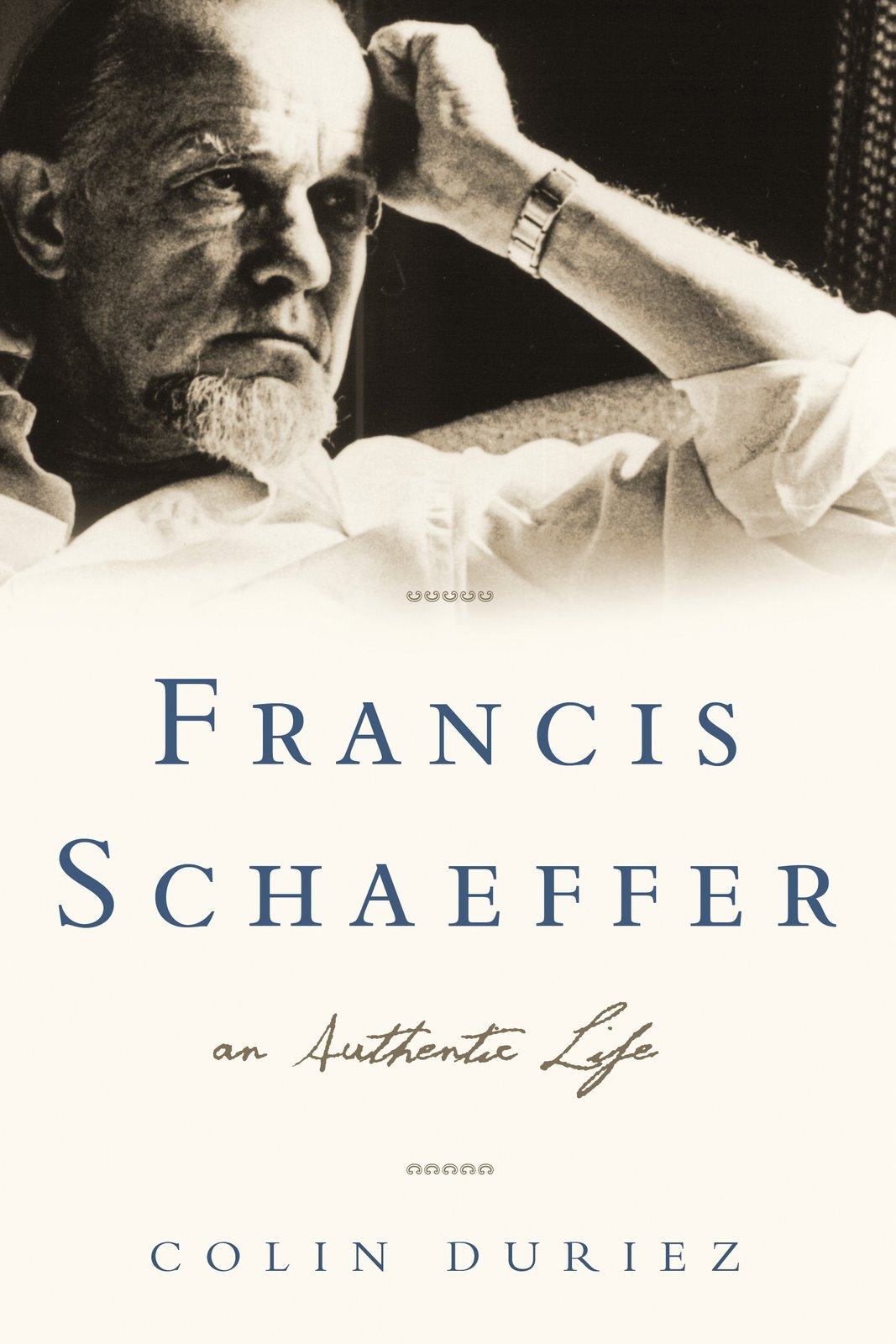
Francis Schaeffer was truly a great man and I enjoyed reading his books. A theologian #2: Rev. Francis Schaeffer Duriez, Colin. Francis Schaeffer: An Authentic Life. Wheaton, IL: Crossway Books, 2008. Pp. 240. Francis Schaeffer is one of the great evangelical theologians of our modern day. I was already familiar with some of his books and his […]

“Schaeffer Sundays” Francis Schaeffer’s own words concerning infanticide and youth enthansia

Francis Schaeffer: “Whatever Happened to the Human Race?” (Episode 2) SLAUGHTER OF THE INNOCENTS Published on Oct 6, 2012 by AdamMetropolis ___________ The 45 minute video above is from the film series created from Francis Schaeffer’s book “Whatever Happened to the Human Race?” with Dr. C. Everett Koop. This book  really helped develop my political views […]

Francis Schaeffer’s wife Edith passes away on Easter weekend 2013 Part 7 (includes pro-life editorial cartoon)

The Francis and Edith Schaeffer Story Pt.1 – Today’s Christian Videos The Francis and Edith Schaeffer Story – Part 3 of 3 Francis Schaeffer: “Whatever Happened to the Human Race” (Episode 1) ABORTION OF THE HUMAN RACE Published on Oct 6, 2012 by AdamMetropolis ________________ Picture of Francis Schaeffer and his wife Edith from the […]

The Mark of the Christian by Francis Schaeffer Part 1

  THE MARK OF A CHRISTIAN – CLASS 1 – Introduction Published on Mar 7, 2012 This is the introductory class on “The Mark Of A Christian” by Francis Schaeffer. The class was originally taught at Redeemer Presbyterian Church in Overland Park, KS by Dan Guinn from FrancisSchaefferStudies.org as part of the adult Sunday School hour […]

“Schaeffer Sundays” Francis Schaeffer’s own words concerning humanist dominated public schools in USA even though country was founded on a Christian base

Francis Schaeffer: “Whatever Happened to the Human Race?” (Episode 2) SLAUGHTER OF THE INNOCENTS Published on Oct 6, 2012 by AdamMetropolis The 45 minute video above is from the film series created from Francis Schaeffer’s book “Whatever Happened to the Human Race?” with Dr. C. Everett Koop. This book  really helped develop my political views concerning […]

“Schaeffer Sundays” Francis Schaeffer’s own words concerning where the Bible-believing Christians been the last few decades

Francis Schaeffer: “Whatever Happened to the Human Race” (Episode 1) ABORTION OF THE HUMAN RACE Published on Oct 6, 2012 by AdamMetropolis The 45 minute video above is from the film series created from Francis Schaeffer’s book “Whatever Happened to the Human Race?” with Dr. C. Everett Koop. This book  really helped develop my political views […]

Taking on Ark Times Bloggers on various issues Part E “Moral absolutes and abortion” Francis Schaeffer Quotes part 5(includes the film SLAUGHTER OF THE INNOCENTS) (editorial cartoon)

I have gone back and forth and back and forth with many liberals on the Arkansas Times Blog on many issues such as abortion, human rights, welfare, poverty, gun control  and issues dealing with popular culture. Here is another exchange I had with them a while back. My username at the Ark Times Blog is Saline […]

“Schaeffer Sundays” Francis Schaeffer’s own words concerning religious liberals and humanists

Francis Schaeffer: “Whatever Happened to the Human Race” (Episode 5) TRUTH AND HISTORY Published on Oct 7, 2012 by AdamMetropolis The 45 minute video above is from the film series created from Francis Schaeffer’s book “Whatever Happened to the Human Race?” with Dr. C. Everett Koop. This book  really helped develop my political views concerning abortion, […]

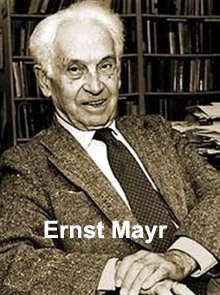
My correspondence with the famous evolutionist Ernst Mayr!!!

________

Ernst Mayr 1904-2005

Bill Gates, John Grisham, James Michener, E. O. Wilson, Ernst Mayr, George Lucas…

Published on May 19, 2012

Bill Gates, John Grisham, James Michener, E. O. Wilson, Ernst Mayr, George Lucas, James Cameron, Larry King, Ian Wilmut, Jane Goodall, Stephen Jay Gould, Tim D. White, Leon Lederman, Timothy Berners-Lee and Bill Gates. Complete and more interview go to websites “www.achievement.org”.

Mais entrevistas e completas no site “www.achievement.org”.

_____________________________________________________________________

____________________________

In 1994 and 1995 I had the opportunity to correspond with the famous evolutionist Dr. Ernst Mayr of Harvard. He stated in his letter of 10-3-94, “Owing to your ideological commitments, it is only natural that you cannot accept the cogency of the scientific evidence. However, to a person such as myself without such commitments, the story of the gradual evolution of life as reconstructed by chemists and molecular biologists is totally convincing.”

I responded by pointing out three points. First, Scientific Naturalism is atheistic by definition. Second, many great scientists of the past were Christians, and that did not disqualify their observations and discoveries. Third, the fact that evolution is true does not rule out God’s existence (Harvard’s own Owen Gingerich and many others such as Francis Collins hold to a Creator and evolution).

Let me just spend some time on my second point. Francis Schaeffer in his book “HOW SHOULD WE THEN LIVE?” stated that according to Alfred North Whitehead and J. Robert Oppenheimer, both renowned philosophers and scientists of our era (but not Christians themselves), modern science was born out of the Christian world view. Whitehead said that Christianity is the “mother of science” because of the insistence on the rationality of God. In the article, “Christianity and Technological Advance – The Astonishing Connection,” by T. V. Varughese, Ph.D, he observed:

Without question, “technology” has now become the new magic word in place of the word “science.” Since technology represents the practical applications of science, it is clearly consumer-oriented. Herein is bright economic promise to all who can provide technology.

In terms of technology, our present world can be divided into at least three groups: countries that are strong providers of technology, both original and improved; countries that are mass producers because of cheaper labor; and countries that are mostly consumers. Without a doubt, being in the position of “originating” superior technology should be a goal for any major country. The difficult question, however, is “how.”

An obvious place to start suggests itself. Why not begin with the countries that have established themselves as strong originators of technology and see if there is a common thread between them? The western nations, after the Renaissance and the Reformation of the 16th century, offer a ready example. Any book on the history of inventions, such as the Guinness Book of Answers, will reveal that the vast majority of scientific inventions have originated in Europe (including Britain) and the USA since the dawn of the 17th century. What led to the fast technological advances in the European countries and North America around that time?

The answer is that something happened which set the stage for science and technology to emerge with full force. Strange as it may seem, that event was the return to Biblical Christianity in these countries.

The Epistemological Foundation of Technology

According to Alfred North Whitehead and J. Robert Oppenheimer, both renowned philosophers and scientists of our era (but not Christians themselves), modern science was born out of the Christian world view. Whitehead said that Christianity is the “mother of science” because of the insistence on the rationality of God.[1] Entomologist Stanley Beck,though not a Christian himself, acknowledged the corner-stone premises of science which the Judeo-Christian world view offers: “The first of the unprovable premises on which science has been based is the belief that the world is real and the human mind is capable of knowing its real nature. The second and best-known postulate underlying the structure of scientific knowledge is that of cause and effect. The third basic scientific premise is that nature is unified.”[2] In other words, the epistemological foundation of technology has been the Judeo-Christian world view presented in the Bible…

Perhaps the most obvious affirmation that Biblical Christianity and science are friends and not foes comes from the fact that most of the early scientists after the Renaissance were also strong believers in the Bible as the authoritative source of knowledge concerning the origin of the universe and man’s place in it.[4] The book of Genesis, the opening book of the Bible, presents the distinctly Judeo-Christian world view of a personal Creator God behind the origin and sustenance of the universe (Genesis 1:1Colossians 1:17; etc.).

Among the early scientists of note who held the Biblical creationist world view are Blaise Pascal (1623-1662), Sir Isaac Newton (1642-1727), and Samuel Morse (1791-1872) – what motivated them was a confidence in the “rationality” behind the universe and the “goodness” of the material world. The creation account in Genesis presents an intelligent, purposeful Creator, who, after completing the creation work, declared it to be very good (Genesis 1:31). That assures us that the physical universe operates under reliable laws which may be discovered by the intelligent mind and used in practical applications. The confidence in the divinely pronounced goodness of the material world removed any reluctance concerning the development of material things for the betterment of life in this world. The spiritual world and the material world can work together in harmony.

 References –

  1. Francis A. Schaeffer: How Should We Then Live (Revell, 1976), p. 132.
  2. Henry M. Morris, Biblical Basis for Modern Science (Baker, 1991), p. 30.
  3. Schaeffer, p. 131.
  4. Henry M. Morris, Men of Science, Men of God (Master Books, CA, 1988), 107 pp.

_____________

Henry Morris pointed out:

Many of these great scientists of the past were before Darwin, but not all of them. However, all of them were acquainted with secular philosophies and some were in fact opponents of Darwinism (Agassiz, Pasteur, Lord Kelvin, Maxwell, Dawson, Virchow, Fabre, Fleming, etc). Many of them believed in the inspiration and authority of the Bible, as well as in the deity and saving work of Jesus Christ. They believed that God had supernaturally created all things, each with its own complex structure for its own unique purpose. They believed that, as scientists, they were “thinking God’s thoughts after Him,” learning to understand and control the laws and processes of nature for God’s glory and man’s good. They believed and practiced science in exactly the same way that modern creationist scientists do.

And somehow this attitude did not hinder them in their commitment to the “scientific method.” In fact one of them, Sir Francis Bacon, is credited with formulating and establishing the scientific method! They seem also to have been able to maintain a proper “scientific attitude,” for it was these men (Newton, Pasteur, Linnaeus, Faraday, Pascal, Lord Kelvin, Maxwell, Kepler, etc.) whose researches and analyses led to the very laws and concepts of science which brought about our modern scientific age…. 

To illustrate the caliber and significance of these great scientists of the past, Tables I and II have been prepared. These tabulations are not complete lists, of course, but at least are representative and they do point up the absurdity of modern assertions that no true scientist can be a creationist and Bible-believing Christian.

Table I lists the creationist “fathers” of many significant branches of modern science. Table II lists the creationist scientists responsible for various vital inventions, discoveries, and other contributions to mankind. These identifications are to some degree oversimplified, of course, for even in the early days of science every new development involved a number of other scientists, before and after. Nevertheless, in each instance, a strong case can be made for attributing the chief responsibility to the creationist scientist indicated. At the very least, his contribution was critically important and thus supports our contention that belief in creation and the Bible helps, rather than hinders, scientific discovery.

_______________

My relatives live 3 miles from Spring Hill, Tennessee. When the new General Motors plant opened there I got to go see it. What if I had said, “The assembly line created a beautiful Saturn automobile!” Hopefully, some would have corected me by responding, “The assembly line did not create the automobile. It was first designed by the General Motors engineers in Detroit.” ASSUMING EVOLUTION IS TRUE, IT WOULD STILL ONLY BE THE MECHANISM. DOES EVOLUTION ACCOUNT FOR THE DESIGNER?

________________

TABLE I

SCIENTIFIC DISCIPLINES ESTABLISHED
BY CREATIONIST SCIENTISTS

DISCIPLINE SCIENTIST
ANTISEPTIC SURGERY JOSEPH LISTER (1827-1912)
BACTERIOLOGY LOUIS PASTEUR (1822-1895)
CALCULUS ISAAC NEWTON (1642-1727)
CELESTIAL MECHANICS JOHANN KEPLER (1571-1630)
CHEMISTRY ROBERT BOYLE (1627-1691)
COMPARATIVE ANATOMY GEORGES CUVIER (1769-1832)
COMPUTER SCIENCE CHARLES BABBAGE (1792-1871)
DIMENSIONAL ANALYSIS LORD RAYLEIGH (1842-1919)
DYNAMICS ISAAC NEWTON (1642-1727)
ELECTRONICS JOHN AMBROSE FLEMING (1849-1945)
ELECTRODYNAMICS JAMES CLERK MAXWELL (1831-1879)
ELECTRO-MAGNETICS MICHAEL FARADAY (1791-1867)
ENERGETICS LORD KELVIN (1824-1907)
ENTOMOLOGY OF LIVING INSECTS HENRI FABRE (1823-1915)
FIELD THEORY MICHAEL FARADAY (1791-1867)
FLUID MECHANICS GEORGE STOKES (1819-1903)
GALACTIC ASTRONOMY WILLIAM HERSCHEL (1738-1822)
GAS DYNAMICS ROBERT BOYLE (1627-1691)
GENETICS GREGOR MENDEL (1822-1884)
GLACIAL GEOLOGY LOUIS AGASSIZ (1807-1873)
GYNECOLOGY JAMES SIMPSON (1811-1870)
HYDRAULICS LEONARDO DA VINCI (1452-1519)
HYDROGRAPHY MATTHEW MAURY (1806-1873)
HYDROSTATICS BLAISE PASCAL (1623-1662)
ICHTHYOLOGY LOUIS AGASSIZ (1807-1873)
ISOTOPIC CHEMISTRY WILLIAM RAMSAY (1852-1916)
MODEL ANALYSIS LORD RAYLEIGH (1842-1919)
NATURAL HISTORY JOHN RAY (1627-1705)
NON-EUCLIDEAN GEOMETRY BERNHARD RIEMANN (1826- 1866)
OCEANOGRAPHY MATTHEW MAURY (1806-1873)
OPTICAL MINERALOGY DAVID BREWSTER (1781-1868)
PALEONTOLOGY JOHN WOODWARD (1665-1728)
PATHOLOGY RUDOLPH VIRCHOW (1821-1902)
PHYSICAL ASTRONOMY JOHANN KEPLER (1571-1630)
REVERSIBLE THERMODYNAMICS JAMES JOULE (1818-1889)
STATISTICAL THERMODYNAMICS JAMES CLERK MAXWELL (1831-1879)
STRATIGRAPHY NICHOLAS STENO (1631-1686)
SYSTEMATIC BIOLOGY CAROLUS LINNAEUS (1707-1778)
THERMODYNAMICS LORD KELVIN (1824-1907)
THERMOKINETICS HUMPHREY DAVY (1778-1829)
VERTEBRATE PALEONTOLOGY GEORGES CUVIER (1769-1832)

______________

TABLE II

NOTABLE INVENTIONS, DISCOVERIES
OR DEVELOPMENTS BY CREATIONIST SCIENTISTS

CONTRIBUTION SCIENTIST
ABSOLUTE TEMPERATURE SCALE LORD KELVIN (1824-1907)
ACTUARIAL TABLES CHARLES BABBAGE (1792-1871)
BAROMETER BLAISE PASCAL (1623-1662)
BIOGENESIS LAW LOUIS PASTEUR (1822-1895)
CALCULATING MACHINE CHARLES BABBAGE (1792-1871)
CHLOROFORM JAMES SIMPSON (1811-1870)
CLASSIFICATION SYSTEM CAROLUS LINNAEUS (1707-1778)
DOUBLE STARS WILLIAM HERSCHEL (1738-1822)
ELECTRIC GENERATOR MICHAEL FARADAY (1791-1867)
ELECTRIC MOTOR JOSEPH HENRY (1797-1878)
EPHEMERIS TABLES JOHANN KEPLER (1571-1630)
FERMENTATION CONTROL LOUIS PASTEUR (1822-1895)
GALVANOMETER JOSEPH HENRY (1797-1878)
GLOBAL STAR CATALOG JOHN HERSCHEL (1792-1871)
INERT GASES WILLIAM RAMSAY (1852-1916)
KALEIDOSCOPE DAVID BREWSTER (1781-1868)
LAW OF GRAVITY ISAAC NEWTON (1642-1727)
MINE SAFETY LAMP HUMPHREY DAVY (1778-1829)
PASTEURIZATION LOUIS PASTEUR (1822-1895)
REFLECTING TELESCOPE ISAAC NEWTON (1642-1727)
SCIENTIFIC METHOD FRANCIS BACON (1561-1626)
SELF-INDUCTION JOSEPH HENRY (1797-1878)
TELEGRAPH SAMUEL F.B. MORSE (1791-1872)
THERMIONIC VALVE AMBROSE FLEMING (1849-1945)
TRANS-ATLANTIC CABLE LORD KELVIN (1824-1907)
VACCINATION & IMMUNIZATION LOUIS PASTEUR (1822-1895)

_______________

2000 Interview with Ernst Mayr, Harvard University

Uploaded on Jul 13, 2008

Interviews conducted in March 2000 at the annual meeting of the American Institute of Biological Sciences on the topic of Challenges for the New Millennium. Museum of Natural History, Smithsonian Institution, Washington DC. See http://www.aibs.org/media-library/ for additional AIBS conference recordings.

________________

Henry Morris

_________________

The Dean of Evolution – A Review of Ernst Mayr’s Latest Book

Download PDFDownload The Dean of Evolution – A Review of Ernst Mayr’s Latest Book PDF

With the passing in recent years of the three most revered scientific spokesmen for evolution—Isaac Asimov, Carl Sagan, and now Stephen Jay Gould—Professor Ernst Mayr is left as the unquestioned dean of the modern evolutionary establishment.

Gould, Asimov, and Sagan were all three extremely prolific and brilliant writers. All three were atheistic professors at prestigious eastern universities (Gould at Harvard, Asimov at Boston University, Sagan at Cornell), and all three were effusive and vigorous anti-creationists. They were formidable opponents (but eminently quotable), and we miss them. All three died at relatively young ages.

But that leaves Ernst Mayr, long-time professor of biology at Harvard. Dr. Mayr was born in 1904 and is (at this writing) still very much alive, and nearing the century mark. Dr. Gould recently called him “the greatest living evolutionary biologist and a writer of extraordinary insight and clarity” (in a jacket blurb on Mayr’s latest book).

Mayr’s New Book

And that book is the subject of this article. Its title is intriguing—What Evolution Is (Basic Books, 2001, 318 pages),—for if anyone could speak authoritatively on such a subject, it should be Professor Mayr. In his adulatory foreword, Jared Diamond, another leading modern evolutionist, concludes: “There is no better book on evolution. There will never be another book like it” (p. xii).

That evaluation should give any reader very high expectations. Unfortunately, however, Dr. Mayr first shows his disdain for creationism, not even considering its arguments. He simply says:

It is now actually misleading to refer to evolution as a theory, considering the massive evidence that has been discovered over the last 140 years documenting its existence. Evolution is no longer a theory, it is simply a fact (p. 275).

He dismissed the evidence for creation as unworthy of further discussion. “The claims of the creationists” he says, “have been refuted so frequently and so thoroughly that there is no need to cover this subject once more” (p. 269).

Ignoring Creation Evidence

He himself, however, has apparently not bothered to read any creationist or secular anti-evolutionist scientific books or articles. Or at least that is what one would infer from the fact that none of them or their arguments and evidence are even mentioned in his book.

No mention is made by Mayr, for example, of creationist expositions of the amazing created designs in living systems, nor of the effects of God’s curse on the creation, or of the significance of the great flood in understanding the geologic record. He does not even acknowledge the significance of naturalistic catastrophism or of such scientific concepts as complexity or probability. Current ideas about “intelligent design” are never mentioned. The origins of all things are due to time, chance, and natural selection, no matter how complex and interdependent they may be, according to Professor Mayr, who had been (along with Julian Huxley, George Simpson, and a few others) primarily responsible for the so-called modern evolutionary synthesis (or neo-Darwinism) back in the 1930s and 1940s.

Neither does Mayr seem aware that there are now thousands of credentialed and knowledgeable scientists (including a great many biologists) who reject evolution, giving not even a nod to the Creation Research Society, or to ICR, or any other creationist organization. He does occasionally refer to God or to Christianity, but only in passing, and always in a context that indicates that he does not believe in either one. He, like his three younger colleagues, is an atheist, and this naturally constrains him to ignore any possible theological implications of the origins issues.

The Alleged Evidence for Evolution

Mayr’s new book is beautifully written and does contain much good material, but it will not convert many to evolutionism, even though he does devote a chapter to what he thinks are the evidences for evolution. These evidences are essentially the same as those used 140 years ago by Darwin in the Origin (fossils, comparative morphology, embryological similarities and recapitulation, vestigial structures, and geographical distribution). Mayr adds nothing new to these arguments, ignoring the fact that creationists (and even a number of evolutionists) have long since refuted all of them. He does devote a brief section to the more recent “evidence” from molecular biology. But that also has been vigorously disputed by a number of specialists in this field, especially the supposed evolutionary relationships implied by the molecules. Even Mayr admits that “molecular clocks are not nearly as constant as often believed” (p. 37), but he does not mention any of the numerous contradictory relationships implied by these biochemical studies (e.g., the well-known genomic similarities of humans and bananas).

As do most evolutionists, Mayr spends much time in discussing micro-evolution, whereas modern creationists only reject macroevolution. He devotes five chapters to microevolution and only one to macroevolution. This particular chapter is quite long, discussing many speculative theories about how macroevolutionary changes might be produced, but there is one vital deficiency. He gives no example of any macroevolutionary change known to have happened. In other words, macroevolution seems never to have occurred within the several thousand years of recorded history. Thus, real evolution (as distinct from variation, recombination, hybridization, and other such “horizontal” changes) does not happen at present. Where, we would ask Professor Mayr, are there any living forms in the process of evolutionary change? He gives no examples, of course, because there are none.

As far as pre-human history is concerned, Dr. Mayr does insist that the fossil record documents past evolution. He cites the usual claims—horses, Archaeopteryx, mammal-like reptiles, walking whales, etc.—which are very equivocal, at best, and have all been shown by creationists to be invalid as transitional forms. Instead of a handful of highly doubtful examples, there ought to be thousands of obvious transitional forms in the fossils if evolution had really been occurring. Yet Mayr admits,

Wherever we look at the living biota, . . . discontinuities are overwhelmingly frequent. . . . The discontinuities are even more striking in the fossil record. New species usually appear in the fossil record suddenly, not connected with their ancestors by a series of intermediates (p. 189).

Professor Mayr still says that the fossils are “the most convincing evidence for the occurrence of evolution” (p. 13). Yet he also says that “the fossil record remains woefully inadequate” (p. 69). Thus, as creationists have often pointed out, there is no real evidence of either present or past evolution.

We have repeatedly noted also that the scientific reason why this is so is because real evolution to any higher level of complexity is impossible by the law of entropy, which states the proven fact that every system of any kind “tends” to go toward lower complexity, unless constrained otherwise by some pre-designed external program and mechanism.

Yet Ernst Mayr seems either to ignore or misunderstand this key argument of the creationists. Here is what he says:

Actually there is no conflict, because the law of entropy is valid only for closed systems, whereas the evolution of a species of organisms takes place in an open system in which organisms can reduce entropy at the expense of the environment and the sun supplies a continuing input of energy (p. 8).

And that’s all he says about one of the key arguments against evolution. This ubiquitous dodge of the evolutionists has been discredited again and again by creationists, and one would think that this “greatest living evolutionary biologist” in this “best book on evolution” would at least take notice of our arguments! At least half of America’s population, according to many polls, are creationists, apparently agreeing more with us than with Mayr.

An open system and external energy are, indeed, necessary conditions for a system to grow in complexity, but most definitely are not sufficient conditions. The question is just how does the sun’s energy produce complexity in an open system? The fact is that the application of external heat energy to an open system (such as from the sun to the earth) will increase the entropy (that is, decrease the organized complexity) in any open system, if that’s all there is. This is a basic principle of thermodynamics, and neither Mayr nor any other evolutionist has answered this problem. Evolution seems to be impossible by the known laws of science.

Professor Mayr does not deal with the theological or Biblical evidences, of course. For those who believe in God and the Bible, on the other hand, creation—not evolution—is, to appropriate Mayr’s words, “simply a fact.” Evolution is merely a belief held by many who “willingly are ignorant” (II Peter 3:5) of the strong evidences and arguments for creation, and who don’t even bother to consider them. In the words of the apostle Paul: “Where is the disputer of this world? hath not God made foolish the wisdom of this world?” (I Corinthians 1:20).

Cite this article: Henry Morris, Ph.D. 2002. The Dean of Evolution – A Review of Ernst Mayr’s Latest Book. Acts & Facts. 31 (8).

___________________

Francis Schaeffer “BASIS FOR HUMAN DIGNITY” Whatever…HTTHR

Related posts:

Open letter to President Obama (Part 519) (The Way of Discovery: A Personal Journey of Faith Henry F. Schaefer III)

Open letter to President Obama (Part 519) (Emailed to White House on 5-3-13.) President Obama c/o The White House 1600 Pennsylvania Avenue NW Washington, DC 20500 Dear Mr. President, I know that you receive 20,000 letters a day and that you actually read 10 of them every day. I really do respect you for trying to get […]

Evolutionary dogma with the biblical message are doomed to undermine faith

The Scientific Age Published on Jul 24, 2012 Dr. Schaeffer’s sweeping epic on the rise and decline of Western thought and Culture Francis Schaeffer rightly noted, “These two world views stand as totals in complete antithesis in content and also in their natural results….It is not just that they happen to bring forth different results, […]

Truth Tuesday:The Way of Discovery: A Personal Journey of Faith Henry F. Schaefer III

The Way of Discovery: A Personal Journey of Faith  Henry F. Schaefer III The Scientific Age Uploaded by NoMirrorHDDHrorriMoN on Oct 3, 2011 _______________ Episode VII – The Age of Non Reason ____________________ Episode 8: The Age Of Fragmentation Published on Jul 24, 2012 Dr. Schaeffer’s sweeping epic on the rise and decline of Western thought and […]

Evolution debating with Ark Times Bloggers Part 6 “Dr. George Wald on the origin of life”

The Long War against God-Henry Morris, part 6 of 6 _______________ I have debated with Ark Times Bloggers many times in the past on many different subjects. Here are some of the subjects: communism, morality, origin of evil, and the Tea Party. I have always loved to post about evolution and I have had a chance […]

Evolution debating with Ark Times Bloggers Part 5 “SCIENTIFIC DISCIPLINES ESTABLISHED BY CREATIONIST SCIENTISTS”

The Long War against God-Henry Morris, part 5 of 6 _______________ I have debated with Ark Times Bloggers many times in the past on many different subjects. Here are some of the subjects: communism, morality, origin of evil, and the Tea Party. I have always loved to post about evolution and I have had a chance […]

Evolution debating with Ark Times Bloggers Part 4 “Neaderthal, Australopithicus and Piltdown man”

The Long War against God-Henry Morris, part 4 of 6 _______________ I have debated with Ark Times Bloggers many times in the past on many different subjects. Here are some of the subjects: communism, morality, origin of evil, and the Tea Party. I have always loved to post about evolution and I have had a chance […]

Evolution debating with Ark Times Bloggers Part 3 “Evolution and spontaneous generation”

The Long War against God-Henry Morris, part 3 of 6 Uploaded by FLIPWORLDUPSIDEDOWN3 on Aug 30, 2010 http://www.icr.org/http://store.icr.org/prodinfo.asp?number=BLOWA2 http://store.icr.org/prodinfo.asp?number=BLOWASG http://www.fliptheworldupsidedown.com/blog _______________ I have debated with Ark Times Bloggers many times in the past on many different subjects. Here are some of the subjects: communism, morality, origin of evil, and the Tea Party. I have […]

Evolution debating with Ark Times Bloggers Part 2 “Gouldians versus Dawkinsians”

The Long War against God-Henry Morris, part 2 of 6 Uploaded by FLIPWORLDUPSIDEDOWN3 on Aug 30, 2010 http://www.icr.org/http://store.icr.org/prodinfo.asp?number=BLOWA2 http://store.icr.org/prodinfo.asp?number=BLOWASG http://www.fliptheworldupsidedown.com/blog _________ I have debated with Ark Times Bloggers many times in the past on many different subjects. Here are some of the subjects: communism, morality, origin of evil, and the Tea Party. I have […]

Evolution debating with Ark Times Bloggers Part 1 “Steven Jay Gould and the fossil record”

The Long War against God-Henry Morris, part 1 of 6 Uploaded by FLIPWORLDUPSIDEDOWN3 on Aug 30, 2010 _________ I have debated with Ark Times Bloggers many times in the past on many different subjects. Here are some of the subjects: communism, morality, origin of evil, and the Tea Party. I have always loved to post about evolution […]

______

The Absurdity of Life without God by William Lane Craig

____________

The Absurdity of Life without God by William Lane Craig

The Scientific Age

Uploaded by  on Oct 3, 2011

_______________

Episode VII – The Age of Non Reason

___________________________________________

I love the works of Francis Schaeffer and I have been on the internet reading several blogs that talk about Schaeffer’s work and the work below by William Lane Craig was really helpful. Schaeffer’s film series “How should we then live?  Wikipedia notes, “According to Schaeffer, How Should We Then Live traces Western history from Ancient Rome until the time of writing (1976) along three lines: the philosophic, scientific, and religious.[3] He also makes extensive references to art and architecture as a means of showing how these movements reflected changing patterns of thought through time. Schaeffer’s central premise is: when we base society on the Bible, on the infinite-personal God who is there and has spoken,[4] this provides an absolute by which we can conduct our lives and by which we can judge society.  Here are some posts I have done on this series: Francis Schaeffer’s “How should we then live?” Video and outline of episode 10 “Final Choices” episode 9 “The Age of Personal Peace and Affluence”episode 8 “The Age of Fragmentation”episode 7 “The Age of Non-Reason” episode 6 “The Scientific Age”  episode 5 “The Revolutionary Age” episode 4 “The Reformation” episode 3 “The Renaissance”episode 2 “The Middle Ages,”, and  episode 1 “The Roman Age,” .

In the film series “WHATEVER HAPPENED TO THE HUMAN RACE?” the arguments are presented  against abortion (Episode 1),  infanticide (Episode 2),   euthanasia (Episode 3), and then there is a discussion of the Christian versus Humanist worldview concerning the issue of “the basis for human dignity” in Episode 4 and then in the last episode a close look at the truth claims of the Bible.

Francis Schaeffer

__________________________

The Absurdity of Life without God

Written by William Lane Craig. Posted in ArticlesBonus Content

Feature Article. This is chapter 2 of the latest edition of William Lane Craig’s book Reasonable Faith. Used by permission of Crossway, copyright © 2008.

One of the apologetic questions that contemporary Christian theology must treat in its doctrine of man is what has been called “the human predicament,” that is to say, the significance of human life in a post-theistic universe. Logically, this question ought, it seems to me, to be raised prior to and as a prelude to the question of God’s existence.

Historical Background

The apologetic for Christianity based on the human predicament is an extremely recent phenomenon, associated primarily with Francis Schaeffer. Often it is referred to as “cultural apologetics” because of its analysis of post-Christian culture. This approach constitutes an entirely different sort of apologetics than the traditional models, since it is not concerned with epistemological issues of justification and warrant. Indeed, in a sense it does not even attempt to show in any positive sense that Christianity is true; it simply explores the disastrous consequences for human existence, society, and culture if Christianity should be false. In this respect, this approach is somewhat akin to existentialism: the precursors of this approach were also precursors of existentialism, and much of its analysis of the human predicament is drawn from the insights of twentieth-century atheistic existentialism.

Blaise Pascal

One of the earliest examples of a Christian apology appealing to the human predicament is the Pensées of the French mathematician and physicist Blaise Pascal (1623–1662). Having come to a personal faith in Christ in 1654, Pascal had planned to write a defense of the Christian faith entitled L’Apologie de la religion chrétienne, but he died of a debilitating disease at the age of only thirty-nine years, leaving behind hundreds of notes for the work, which were then published posthumously as the Pensées.1

Pascal’s approach is thoroughly Christocentric. The Christian religion, he claims, teaches two truths: that there is a God whom men are capable of knowing, and that there is an element of corruption in men that renders them unworthy of God. Knowledge of God without knowledge of man’s wretchedness begets pride, and knowledge of man’s wretchedness without knowledge of God begets despair, but knowledge of Jesus Christ furnishes man knowledge of both simultaneously. Pascal invites us to look at the world from the Christian point of view and see if these truths are not confirmed. His Apology was evidently to comprise two divisions: in the first part he would display the misery of man without God (that man’s nature is corrupt) and in the second part the happiness of man with God (that there is a Redeemer).2 With regard to the latter, Pascal appeals to the evidences of miracle and especially fulfilled prophecy. In confirming the truth of man’s wretchedness Pascal seeks to unfold the human predicament.

For Pascal the human condition is an enigma. For man is at the same time miserable and yet great. On the one hand, his misery is due principally to his uncertainty and insignificance. Writing in the tradition of the French skeptic Montaigne, Pascal repeatedly emphasizes the uncertainty of conclusions reached via reason and the senses. Apart from intuitive first principles, nothing seems capable of being known with certainty. In particular, reason and nature do not seem to furnish decisive evidence as to whether God exists or not. As man looks around him, all he sees is darkness and obscurity. Moreover, insofar as his scientific knowledge is correct, man learns that he is an infinitesimal speck lost in the immensity of time and space. His brief life is bounded on either side by eternity, his place in the universe is lost in the immeasurable infinity of space, and he finds himself suspended, as it were, between the infinite microcosm within and the infinite macrocosm without. Uncertain and untethered, man flounders in his efforts to lead a meaningful and happy life. His condition is characterized by inconstancy, boredom, and anxiety. His relations with his fellow men are warped by self-love; society is founded on mutual deceit. Man’s justice is fickle and relative, and no fixed standard of value may be found.

Despite their predicament, however, most people, incredibly, refuse to seek an answer or even to think about their dilemma. Instead, they lose themselves in escapisms. Listen to Pascal’s description of the reasoning of such a person:

I know not who sent me into the world, nor what the world is, nor what I myself am. I am terribly ignorant of everything. I know not what my body is, nor my senses, nor my soul and that part of me which thinks what I say, which reflects upon itself as well as upon all external things, and has no more knowledge of itself than of them.
I see the terrifying immensity of the universe which surrounds me, and find myself limited to one corner of this vast expanse, without knowing why I am set down here rather than elsewhere, nor why the brief period appointed for my life is assigned to me at this moment rather than another in all the eternity that has gone before and will come after me. On all sides I behold nothing but infinity, in which I am a mere atom, a mere passing shadow that returns no more. All I know is that I must soon die, but what I understand least of all is this very death which I cannot escape.
As I know not whence I come, so I know not whither I go. I only know that on leaving this world I fall for ever into nothingness or into the hands of a wrathful God, without knowing to which of these two states I shall be everlastingly consigned. Such is my condition, full of weakness and uncertainty. From all this I conclude that I ought to spend every day of my life without seeking to know my fate. I might perhaps be able to find a solution to my doubts; but I cannot be bothered to do so, I will not take one step towards its discovery.3

Pascal can only regard such indifference as insane. Man’s condition ought to impel him to seek to discover whether there is a God and a solution to his predicament. But people occupy their time and their thoughts with trivialities and distractions, so as to avoid the despair, boredom, and anxiety that would inevitably result if those diversions were removed.

Such is the misery of man. But mention must also be made of the greatness of man. For although man is miserable, he is at least capable of knowing that he is miserable. The greatness of man consists in thought. Man is a mere reed, yes, but he is a thinking reed. The universe might crush him like a gnat; but even so, man is nobler than the universe because he knows that it crushes him, and the universe has no such knowledge. Man’s whole dignity consists, therefore, in thought. “By space the universe encompasses and swallows me up like a mere speck; by thought I comprehend the universe.” Man’s greatness, then, lies not in his having the solution to his predicament, but in the fact that he alone in all the universe is aware of his wretched condition.

What a chimaera then is man, what a novelty, what a monster, what chaos, what a subject of contradiction, what a prodigy! Judge of all things, yet an imbecile earthworm; depositary of truth, yet a sewer of uncertainty and error; pride and refuse of the universe. Who shall resolve this tangle?4

Pascal hopes that by explaining man’s greatness as well as his misery, he might shake people out of their lethargy to think about their condition and to seek a solution.

Pascal’s analysis of the human predicament leads up to his famous Wager argument, by means of which he hopes to tip the scales in favor of theism.5 The founder of probability theory, Pascal argues that when the odds that God exists are even, then the prudent man will gamble that God exists. This is a wager that all men must make—the game is in progress and a bet must be laid. There is no opting out: you have already joined the game. Which then will you choose—that God exists or that he does not? Pascal argues that since the odds are even, reason is not violated in making either choice; so reason cannot determine which bet to make. Therefore, the choice should be made pragmatically in terms of maximizing one’s happiness. If one wagers that God exists and he does, one has gained eternal life and infinite happiness. If he does not exist, one has lost nothing. On the other hand, if one wagers that God does not exist and he does, then one has suffered infinite loss. If he does not in fact exist, then one has gained nothing. Hence, the only prudent choice is to believe that God exists.

Now Pascal does believe that there is a way of getting a look behind the scenes, to speak, to determine rationally how one should bet, namely, the proofs of Scripture of miracle and prophecy, which he discusses in the second half of his work. But for now, he wants to emphasize that even in the absence of such evidence, one still ought to believe in God. For given the human predicament of being cast into existence and facing either eternal annihilation or eternal wrath, the only reasonable course of action is to believe in God: “for if you win, you win all; if you lose, you lose nothing.”6

Fyodor Dostoyevsky

Another apologetic based on the human predicament may be found in the magnificent novels of the great nineteenth-century Russian writer Fyodor Dostoyevsky (1821–1881). (May I add that I think the obsession of contemporary evangelicals with the writings of authors like C. S. Lewis to the neglect of writers like Dostoyevsky is a great shame? Dostoyevsky is a far, far grander writer.) The problem that tortured Dostoyevsky was the problem of evil: how can a good and loving God exist when the world is filled with so much suffering and evil? Dostoyevsky presented this problem in his works so persuasively, so poignantly, that certain passages of his, notably “The Grand Inquisitor” section from his Brothers Karamazov, are often reprinted in anthologies as classic statements of the problem of evil. As a result, some people are under the impression that Dostoyevsky was himself an atheist and that the viewpoint of the Grand Inquisitor is his own.

Actually, he sought to carry through a two-pronged defense of theism in the face of the problem of evil. Positively, he argued that innocent suffering may perfect character and bring one into a closer relation with God. Negatively, he tried to show that if the existence of God is denied, then one is landed in complete moral relativism, so that no act, regardless how dreadful or heinous, can be condemned by the atheist. To live consistently with such a view of life is unthinkable and impossible. Hence, atheism is destructive of life and ends logically in suicide.

Dostoyevsky’s magnificent novels Crime and Punishment and The Brothers Karamazov powerfully illustrate these themes. In the former a young atheist, convinced of moral relativism, brutally murders an old woman. Though he knows that on his presuppositions he should not feel guilty, nevertheless he is consumed with guilt until he confesses his crime and gives his life to God. The latter novel is the story of four brothers, one of whom murders their father because his atheist brother Ivan had told him that moral absolutes do not exist. Unable to live with the consequences of his own philosophical system, Ivan suffers a mental collapse. The remaining two brothers, one of whom is unjustly accused of the parricide and the other a young Russian orthodox priest, find in what they suffer the perfection of their character and a nearness to God.

Dostoyevsky recognizes that his response to atheism constitutes no positive proof of Christianity. Indeed, he rejects that there could be such. Men demand of Christ that he furnish them “bread and circuses,” but he refuses to do so. The decision to follow Christ must be made in loneliness and anxiety. Each person must face for himself the anguish of a world without God and in the solitude of his own heart give himself to God in faith.

Søren Kierkegaard

The Danish existentialist of the late nineteenth century, Søren Kierkegaard (1813–1855), also presents a sort of negative apologetic for the Christian faith. He thinks of life as being lived on three different planes or stages: the aesthetic stage, the ethical stage, and the religious stage. Man in the aesthetic stage lives life only on the sensual level, a life that is self- and pleasure-centered. This need not be a gross hedonism. Man on this level could be very cultivated and even circumspect; but nevertheless his life revolves around himself and those material things—whether sex, art, music, or whatever—that bring him pleasure. The paradox of life on this level is that it leads ultimately to unhappiness. The self-centered, aesthetic man finds no ultimate meaning in life and no true satisfaction. Thus, the aesthetic life leads finally to boredom, a sort of sickness with life.

But this is not the end, for only at this point is a person ready to live on the second plane of existence, the ethical plane. The transition to the ethical stage of life is a sort of leap motivated by dissatisfaction to a higher level, where one affirms transpersonal moral values and guides life by those objective standards. No longer is life lived only for self and for pleasure; rather one is constrained to seek the ethical good and to change one’s conduct to bring it into conformity with that good. Thus, man in the ethical stage is the moral man. But life on this level, too, ends in unhappiness. For the more one tries sincerely to bring one’s life into conformity with the objective standards of the good, the more painfully aware one is that one cannot do it. Thus, the ethical life, when earnestly pursued, leads ultimately to guilt and despair.

But there is one more stage along life’s way: the religious stage. Here one finds forgiveness of sins and a personal relationship with God. Only here, in intimate communion with one’s Creator, does man find authentic existence and true fulfillment. Again, Kierkegaard represents the transition to this stage from the ethical as a leap. The decision to believe is a criterionless choice, a leap of faith into the dark. Although man can be given no rational grounds to leap, unless he does so, he will remain in despair and inauthentic existence.

Francis Schaeffer

As I remarked earlier, Francis Schaeffer (1912–1984) is the thinker most responsible for crafting a Christian apologetic based on the so-called modern predicament. According to Schaeffer, there can be traced in recent Western culture a “line of despair,” which penetrates philosophy, literature, and the arts in succession. He believes the root of the problem lies in Hegelian philosophy, specifically in its denial of absolute truths. Hegel developed the famous triad of thesis-antithesis-synthesis, in which contradictions are seen not as absolute opposites, but as partial truths, which are synthesized in the whole. Ultimately all is One, which is absolute and non-contradictory. In Schaeffer’s view, Hegel’s system undermined the notion of particular absolute truths (such as “That act is morally wrong” or “This painting is aesthetically ugly”) by synthesizing them into the whole. This denial of absolutes has gradually made its way through Western culture. In each case, it results in despair, because without absolutes man’s endeavors degenerate into absurdity. Schaeffer believes that the Theater of the Absurd, abstract modern art, and modern music such as compositions by John Cage are all indications of what happens below the line of despair. Only by reaffirming belief in the absolute God of Christianity can man and his culture avoid inevitable degeneracy, meaninglessness, and despair.

Schaeffer’s efforts against abortion may be seen as a logical extension of this apologetic. Once God is denied, human life becomes worthless, and we see the fruit of such a philosophy in the abortion and infanticide now taking place in Western society. Schaeffer warns that unless Western man returns to the Christian world and life view, nothing will stop the trend from degenerating into population control and human breeding. Only a theistic worldview can save the human race from itself.

Assessment

The Loss of God and Immortality

Man, writes Loren Eiseley, is the Cosmic Orphan. He is the only creature in the universe who asks, “Why?” Other animals have instincts to guide them, but man has learned to ask questions.

“Who am I?” he asks. “Why am I here? Where am I going?” Since the Enlightenment, when modern man threw off the shackles of religion, he has tried to answer these questions without reference to God. But the answers that have come back were not exhilarating, but dark and terrible. “You are the accidental by-product of nature, a result of matter plus time plus chance. There is no reason for your existence. All you face is death.”

Modern man thought that when he had gotten rid of God, he had freed himself from all that repressed and stifled him. Instead, he discovered that in killing God, he had only succeeded in orphaning himself.

For if there is no God, then man’s life becomes absurd.

If God does not exist, then both man and the universe are inevitably doomed to death. Man, like all biological organisms, must die. With no hope of immortality, man’s life leads only to the grave. His life is but a spark in the infinite blackness, a spark that appears, flickers, and dies forever. Compared to the infinite stretch of time, the span of man’s life is but an infinitesimal moment; and yet this is all the life he will ever know. Therefore, everyone must come face to face with what theologian Paul Tillich has called “the threat of non-being.” For though I know now that I exist, that I am alive, I also know that someday I will no longer exist, that I will no longer be, that I will die. This thought is staggering and threaten-ing: to think that the person I call “myself” will cease to exist, that I will be no more!

I remember vividly the first time my father told me that someday I would die. Somehow, as a child, the thought had just never occurred to me. When he told me, I was filled with fear and unbearable sadness. And though he tried repeatedly to reassure me that this was a long way off, that did not seem to matter. Whether sooner or later, the undeniable fact was that I would die and be no more, and the thought overwhelmed me. Eventually, like all of us, I grew to simply accept the fact. We all learn to live with the inevitable. But the child’s insight remains true. As the French existentialist Jean-Paul Sartre observed, several hours or several years make no difference once you have lost eternity.

Whether it comes sooner or later, the prospect of death and the threat of non-being is a terrible horror. I met a student once who did not feel this threat. He said he had been raised on the farm and was used to seeing the animals being born and dying. Death was for him simply natural—a part of life, so to speak. I was puzzled by how different our two perspectives on death were and found it difficult to understand why he did not feel the threat of non-being. Years later, I think I found my answer in reading Sartre. Sartre observed that death is not threatening so long as we view it as the death of the other, from a third-person standpoint, so to speak. It is only when we internalize it and look at it from the first-person perspective—”my death: I am going to die”—that the threat of non-being be-comes real. As Sartre points out, many people never assume this first-person perspective in the midst of life; one can even look at one’s own death from the third-person standpoint, as if it were the death of another or even of an animal, as did my friend. But the true existential significance of my death can only be appreciated from the first-person perspective, as I realize that I am going to die and forever cease to exist.

And the universe, too, faces a death of its own. Scientists tell us that the universe is expanding, and the galaxies are growing farther and farther apart. As it does so, it grows colder and colder, and its energy is used up. Eventually all the stars will burn out, and all matter will collapse into dead stars and black holes. There will be no light at all; there will be no heat; there will be no life; only the corpses of dead stars and galaxies, ever expanding into the endless darkness and the cold recesses of space—a universe in ruins. This is not science fiction. The entire universe marches irreversibly toward its grave. So not only is the life of each individual person doomed; the entire human race is doomed. The universe is plunging toward inevitable extinction—death is written throughout its structure. There is no escape. There is no hope.

The Absurdity of Life without God and Immortality

If there is no God, then man and the universe are doomed. Like prisoners condemned to death, we await our unavoidable execution. There is no God, and there is no immortality. And what is the consequence of this? It means that life itself is absurd. It means that the life we have is without ultimate significance, value, or purpose. Let’s look at each of these.

NO ULTIMATE MEANING WITHOUT GOD AND IMMORTALITY

If each individual person passes out of existence when he dies, then what ultimate meaning can be given to his life? Does it really matter whether he ever existed at all? It might be said that his life was important because it influenced others or affected the course of history. But this shows only a relative significance to his life, not an ultimate significance. His life may be important relative to certain other events, but what is the ultimate significance of any of those events? If all the events are meaningless, then what can be the ultimate significance of influencing any of them? Ultimately it makes no difference.

Look at it from another perspective: Scientists say that the universe originated in an explosion called the “Big Bang” about thirteen billion years ago. Suppose the Big Bang had never occurred. Suppose the universe had never existed. What ultimate difference would it make? The universe is doomed to die anyway. In the end it makes no difference whether the universe ever existed or not. Therefore, it is without ultimate significance.

The same is true of the human race. Mankind is a doomed race in a dying universe. Because the human race will eventually cease to exist, it makes no ultimate difference whether it ever did exist. Mankind is thus no more significant than a swarm of mosquitoes or a barnyard of pigs, for their end is all the same. The same blind cosmic process that coughed them up in the first place will eventually swallow them all again.

And the same is true of each individual person. The contributions of the scientist to the advance of human knowledge, the researches of the doctor to alleviate pain and suffering, the efforts of the diplomat to secure peace in the world, the sacrifices of good people everywhere to better the lot of the human race—all these come to nothing. In the end they don’t make one bit of difference, not one bit. Each person’s life is therefore without ultimate significance. And because our lives are ultimately meaningless, the activities we fill our lives with are also meaningless. The long hours spent in study at the university, our jobs, our interests, our friendships—all these are, in the final analysis, utterly meaningless.

In his poem “The End of the World” Archibald MacLeish portrays life as an idiotic circus, until one day the show is over:

Quite unexpectedly, as Vasserot
The armless ambidextrian was lighting
A match between his great and second toe,
And Ralph the lion was engaged in biting
The neck of Madame Sossman while the drum
Pointed, and Teeny was about to cough
In waltz-time swinging Jocko by the thumb
Quite unexpectedly the top blew off:
And there, there overhead, there, there hung over
Those thousands of white faces, those dazed eyes,
There in the starless dark, the poise, the hover,
There with vast wings across the cancelled skies,
There in the sudden blackness the black pall
Of nothing, nothing, nothing—nothing at all.7

This is the horror of modern man: because he ends in nothing, he is nothing.

But it’s important to see that it is not just immortality that man needs if life is to be meaningful. Mere duration of existence does not make that existence meaningful. If man and the universe could exist forever, but if there were no God, their existence would still have no ultimate significance. I once read a science-fiction story in which an astronaut was marooned on a barren chunk of rock lost in outer space. He had with him two vials: one containing poison and the other a potion that would make him live forever. Realizing his predicament, he gulped down the poison. But then to his horror, he discovered he had swallowed the wrong vial—he had drunk the potion for immortality. And that meant that he was cursed to exist forever—a meaningless, unending life. Now if God does not exist, our lives are just like that. They could go on and on and still be utterly without meaning. We could still ask of life, “So what?” So it’s not just immortality man needs if life is to be ultimately significant; he needs God and immortality. And if God does not exist, then he has neither.

Twentieth-century man came to understand this. Read Waiting for Godot by Samuel Beckett. During this entire play two men carry on trivial conversation while waiting for a third man to arrive, who never does. Our lives are like that, Beckett is saying; we just kill time waiting—for what, we don’t know. In a tragic portrayal of man, Beckett wrote another play in which the curtain opens revealing a stage littered with junk. For thirty long seconds, the audience sits and stares in silence at that junk. Then the curtain closes. That’s all.

French existentialists Jean-Paul Sartre and Albert Camus understood this, too. Sartre portrayed life in his play No Exit as hell—the final line of the play are the words of resignation, “Well, let’s get on with it.” Hence, Sartre writes elsewhere of the “nausea” of existence. Man, he says, is adrift in a boat without a rudder on an endless sea. Camus, too, saw life as absurd. At the end of his brief novel The Stranger, Camus’s hero discovers in a flash of insight that the universe has no meaning and there is no God to give it one. The French biochemist Jacques Monod seemed to echo those sentiments when he wrote in his work Chance and Necessity, “Man finally knows he is alone in the indifferent immensity of the universe.”

Thus, if there is no God, then life itself becomes meaningless. Man and the universe are without ultimate significance.

NO ULTIMATE VALUE WITHOUT GOD AND IMMORTALITY

If life ends at the grave, then it makes no difference whether one has lived as a Stalin or as a saint. Since one’s destiny is ultimately unrelated to one’s behavior, you may as well just live as you please. As Dostoyevsky put it: “If there is no immortality, then all things are permitted.” On this basis, a writer like Ayn Rand is absolutely correct to praise the virtues of selfishness. Live totally for self; no one holds you accountable! Indeed, it would be foolish to do anything else, for life is too short to jeopardize it by acting out of anything but pure self-interest. Sacrifice for another person would be stupid. Kai Nielsen, an atheist philosopher who attempts to defend the viability of ethics without God, in the end admits,

We have not been able to show that reason requires the moral point of view, or that all really rational persons, unhoodwinked by myth or ideology, need not be individual egoists or classical amoralists. Reason doesn’t decide here. The picture I have painted for you is not a pleasant one. Reflection on it depresses me…. Pure practical reason, even with a good knowledge of the facts, will not take you to morality.8

But the problem becomes even worse. For, regardless of immortality, if there is no God, then any basis for objective standards of right and wrong seems to have evaporated. All we are confronted with is, in Jean-Paul Sartre’s words, the bare, valueless fact of existence. Moral values are either just expressions of personal taste or the by-products of socio-biological evolution and conditioning. In the words of one humanist philosopher, “The moral principles that govern our behavior are rooted in habit and custom, feeling and fashion.”9 In a world without God, who is to say which actions are right and which are wrong? Who is to judge that the values of Adolf Hitler are inferior to those of a saint? The concept of morality loses all meaning in a universe without God. As one contemporary atheistic ethicist points out, “To say that something is wrong because … it is forbidden by God, is … perfectly understandable to anyone who believes in a law-giving God. But to say that something is wrong … even though no God exists to forbid it, is not understandable….” “The concept of moral obligation [is] unintelligible apart from the idea of God. The words remain but their meaning is gone.”10 In a world without a divine lawgiver, there can be no objective right and wrong, only our culturally and personally relative, subjective judgments. This means that it is impossible to condemn war, oppression, or crime as evil. Nor can one praise brotherhood, equality, and love as good. For in a universe without God, good and evil do not exist—there is only the bare valueless fact of existence, and there is no one to say that you are right and I am wrong.

NO ULTIMATE PURPOSE WITHOUT GOD AND IMMORTALITY

If death stands with open arms at the end of life’s trail, then what is the goal of life? To what end has life been lived? Is it all for nothing? Is there no reason for life? And what of the universe? Is it utterly pointless? If its destiny is a cold grave in the recesses of outer space, the answer must be yes—it is pointless. There is no goal, no purpose, for the universe. The litter of a dead universe will just go on expanding and expanding—forever.

And what of man? Is there no purpose at all for the human race? Or will it simply peter out someday, lost in the oblivion of an indifferent universe? The English writer H. G. Wells foresaw such a prospect. In his novel The Time Machine Wells’s time traveler journeys far into the future to discover the destiny of man. All he finds is a dead earth, save for a few lichens and moss, orbiting a gigantic red sun. The only sounds are the rush of the wind and the gentle ripple of the sea. “Beyond these lifeless sounds,” writes Wells, “the world was silent. Silent? It would be hard to convey the stillness of it. All the sounds of man, the bleating of sheep, the cries of birds, the hum of insects, the stir that makes the background of our lives—all that was over.”11 And so Wells’s time traveler returned. But to what?—to merely an earlier point on the purposeless rush toward oblivion. When as a non-Christian I first read Wells’s book, I thought, “No, no! It can’t end that way!” But if there is no God, it will end that way, like it or not. This is reality in a universe without God: there is no hope; there is no purpose. It reminds me of T.S. Eliot’s haunting lines:

This is the way the world ends
Not with a bang but a whimper.12

What is true of mankind as a whole is true of each of us individually: we are here to no purpose. If there is no God, then our life is not fundamentally different from that of a dog. I know that’s harsh, but it’s true. As the ancient writer of Ecclesiastes put it: “The fate of the sons of men and the fate of beasts is the same. As one dies so dies the other; indeed, they all have the same breath and there is no advantage for man over beast, for all is vanity. All go to the same place. All come from the dust and all return to the dust” (Eccles. 3:19–20 AT). In this book, which reads more like a piece of modern existentialist literature than a book of the Bible, the writer shows the futility of pleasure, wealth, education, political fame, and honor in a life doomed to end in death. His verdict? “Vanity of vanities! All is vanity” (1:2 ESV). If life ends at the grave, then we have no ultimate purpose for living.

But more than that: even if it did not end in death, without God life would still be without purpose. For man and the universe would then be simple accidents of chance, thrust into existence for no reason. Without God the universe is the result of a cosmic accident, a chance explosion. There is no reason for which it exists. As for man, he is a freak of nature—a blind product of matter plus time plus chance. Man is just a lump of slime that evolved rationality. There is no more purpose in life for the human race than for a species of insect; for both are the result of the blind interaction of chance and necessity. As one philosopher has put it: “Human life is mounted upon a subhuman pedestal and must shift for itself alone in the heart of a silent and mindless universe.”13

What is true of the universe and of the human race is also true of us as individuals. Insofar as we are individual human beings, we are the result of certain combinations of heredity and environment. We are victims of a kind of genetic and environmental roulette. Biologists like Richard Dawkins regard man as an electro-chemical machine controlled by its mindless genes. If God does not exist, then you are just a miscarriage of nature, thrust into a purposeless universe to live a purposeless life.

So if God does not exist, that means that man and the universe exist to no purpose—since the end of everything is death—and that they came to be for no purpose, since they are only blind products of chance. In short, life is utterly without reason.

Do you understand the gravity of the alternatives before us? For if God exists, then there is hope for man. But if God does not exist, then all we are left with is despair. Do you understand why the question of God’s existence is so vital to man? As Francis Schaeffer aptly put it, “If God is dead, then man is dead, too.”

Unfortunately, the mass of mankind do not realize this fact. They continue on as though nothing has changed. I’m reminded of Nietzsche’s story of the madman who in the early morning hours burst into the marketplace, lantern in hand, crying, “I seek God! I seek God!” Since many of those standing about did not believe in God, he provoked much laughter. “Did God get lost?” they taunted him. “Or is he hiding? Or maybe he has gone on a voyage or emigrated!” Thus they yelled and laughed. Then, writes Nietzsche, the madman turned in their midst and pierced them with his eyes.

“Whither is God?” he cried, “I shall tell you. We have killed him—you and I. All of us are his murderers. But how have we done this? How were we able to drink up the sea? Who gave us the sponge to wipe away the entire horizon? What did we do when we unchained this earth from its sun? Whither is it moving now? Away from all suns? Are we not plunging continually? Backward, sideward, forward, in all directions? Is there any up or down left? Are we not straying as through an infinite nothing? Do we not feel the breath of empty space? Has it not become colder? Is not night and more night coming on all the while? Must not lanterns be lit in the morning? Do we not hear anything yet of the noise of the gravediggers who are burying God? … God is dead…. And we have killed him. How shall we, the murderers of all murderers, comfort ourselves?”14

The crowd stared at the madman in silence and astonishment. At last he dashed his lantern to the ground. “I have come too early,” he said. “This tremendous event is still on its way—it has not yet reached the ears of man.” People did not yet truly comprehend the consequences of what they had done in killing God. But Nietzsche predicted that someday people would realize the implications of their atheism; and this realization would usher in an age of nihilism—the destruction of all meaning and value in life. The end of Christianity, wrote Nietzsche, means the advent of nihilism. This most gruesome of guests is standing already at the door. “Our whole European culture is moving for some time now,” wrote Nietzsche, “with a tortured tension that is growing from decade to decade, as toward a catastrophe: restlessly, violently, headlong, like a river that wants to reach the end, that no longer reflects, that is afraid to reflect.”15

Most people still do not reflect on the consequences of atheism and so, like the crowd in the marketplace, go unknowingly on their way. But when we realize, as did Nietzsche, what atheism implies, then his question presses hard upon us: how shall we, the murderers of all murderers, comfort ourselves?

The Practical Impossibility of Atheism

About the only solution the atheist can offer is that we face the absurdity of life and live bravely. Bertrand Russell, for example, wrote that we must build our lives upon “the firm foundation of unyielding despair.”16 Only by recognizing that the world really is a terrible place can we successfully come to terms with life. Camus said that we should honestly recognize life’s absurdity and then live in love for one another.

The fundamental problem with this solution, however, is that it is impossible to live consistently and happily within such a worldview. If one lives consistently, he will not be happy; if one lives happily, it is only because he is not consistent. Francis Schaeffer has explained this point well. Modern man, says Schaeffer, resides in a two-story universe. In the lower story is the finite world without God; here life is absurd, as we have seen. In the upper story are meaning, value, and purpose. Now modern man lives in the lower story because he believes there is no God. But he cannot live happily in such an absurd world; therefore, he continually makes leaps of faith into the upper story to affirm meaning, value, and purpose, even though he has no right to, since he does not believe in God. Modern man is totally inconsistent when he makes this leap, because these values cannot exist without God, and man in his lower story does not have God.

Let’s look again, then, at each of the three areas in which we saw that life is absurd without God, in order to show how modern man cannot live consistently and happily with his atheism.

MEANING OF LIFE

First, the area of meaning. We saw that without God, life has no meaning. Yet philosophers continue to live as though life does have meaning. For example, Sartre argued that one may create meaning for his life by freely choosing to follow a certain course of action. Sartre himself chose Marxism.

Now this is utterly inconsistent. It is inconsistent to say that life is objectively absurd and then to say that one may create meaning for his life. If life is really absurd, then man is trapped in the lower story. To try to create meaning in life represents a leap to the upper story. But Sartre has no basis for this leap. Without God, there can be no objective meaning in life. Sartre’s program is actually an exercise in self-delusion. For the universe does not really acquire meaning just because I happen to give it one. This is easy to see: for suppose I give the universe one meaning, and you give it another. Who is right? The answer, of course, is neither one. For the universe without God remains objectively meaningless, no matter how we regard it. Sartre is really saying, “Let’s pretend the universe has meaning.” And this is just fooling ourselves.

The point is this: if God does not exist, then life is objectively meaningless; but man cannot live consistently and happily knowing that life is meaningless; so in order to be happy he pretends that life has meaning. But this is, of course, entirely inconsistent—for without God, man and the universe are without any real significance.

VALUE OF LIFE

Turn now to the problem of value. Here is where the most blatant inconsistencies occur. First of all, atheistic humanists are totally inconsistent in affirming the traditional values of love and brotherhood. Camus has been rightly criticized for inconsistently holding both to the absurdity of life and to the ethics of human love and brotherhood. The two are logically incompatible. Bertrand Russell, too, was inconsistent. For though he was an atheist, he was an outspoken social critic, denouncing war and restrictions on sexual freedom. Russell admitted that he could not live as though ethical values were simply a matter of personal taste, and that he therefore found his own views “incredible.” “I do not know the solution,” he confessed.17 The point is that if there is no God, then objective right and wrong cannot exist. As Dostoyevsky said, “All things are permitted.”

But Dostoyevsky also showed in his novels that man cannot live this way. He cannot live as though it is perfectly all right for soldiers to slaughter innocent children. He cannot live as though it is all right for dictatorial regimes to follow a systematic program of physical torture of political prisoners. He cannot live as though it is all right for dictators like Pol Pot or Saddam Hussein to exterminate millions of their own countrymen. Everything in him cries out to say these acts are wrong—really wrong. But if there is no God, he cannot. So he makes a leap of faith and affirms values anyway. And when he does so, he reveals the inadequacy of a world without God.

The horror of a world devoid of value was brought home to me with new intensity several years ago as I viewed a BBC television documentary called “The Gathering.” It concerned the reunion of survivors of the Holocaust in Jerusalem, where they rediscovered lost friendships and shared their experiences. Now I had heard stories of the Holocaust before and had even visited Dachau and Buchenwald, and I thought I was beyond shocking by further tales of horror. But I found that I was not. Perhaps I had been made more sensitive by the recent birth of our beautiful baby girl, so that I applied the situations to her as they were related on the television. In any case, one woman prisoner, a nurse, told of how she was made the gynecologist at Auschwitz. She observed that pregnant women were grouped together by the soldiers under the direction of Dr. Mengele and housed in the same barracks. Some time passed, and she noted that she no longer saw any of these women. She made inquiries. “Where are the pregnant women who were housed in that barracks?” “Haven’t you heard?” came the reply. “Dr. Mengele used them for vivisection.”

Another woman told of how Mengele had bound up her breasts so that she could not suckle her infant. The doctor wanted to learn how long an infant could survive without nourishment. Desperately this poor woman tried to keep her baby alive by giving it pieces of bread soaked in coffee, but to no avail. Each day the baby lost weight, a fact that was eagerly monitored by Dr. Mengele. A nurse then came secretly to this woman and told her, “I have arranged a way for you to get out of here, but you cannot take your baby with you. I have brought a morphine injection that you can give to your child to end its life.” When the woman protested, the nurse was insistent: “Look, your baby is going to die anyway. At least save yourself.” And so this mother felt compelled to take the life of her own baby. Dr. Mengele was furious when he learned of it because he had lost his experimental specimen, and he searched among the dead to find the baby’s discarded corpse so that he could have one last weighing.

My heart was torn by these stories. One rabbi who survived the camp summed it up well when he said that at Auschwitz it was as though there existed a world in which all the Ten Commandments were reversed: “Thou shalt kill, thou shalt lie, thou shalt steal …” Mankind had never seen such a hell.

And yet, if God does not exist, then in a sense, our world is Auschwitz: there is no right and wrong; all things are permitted. But no atheist, no agnostic, can live consistently with such a view of life. Nietzsche himself, who proclaimed the necessity of living “beyond good and evil,” broke with his mentor Richard Wagner precisely over the issue of the composer’s anti-Semitism and strident German nationalism. Similarly Sartre, writing in the aftermath of the Second World War, condemned anti-Semitism, declaring that a doctrine that leads to extermination is not merely an opinion or matter of personal taste, of equal value with its opposite.18 In his important essay “Existentialism Is a Humanism,” Sartre struggles vainly to elude the contradiction between his denial of divinely pre-established values and his urgent desire to affirm the value of human persons. Like Russell, he could not live with the implications of his own denial of ethical absolutes.

Neither can Richard Dawkins. For although he solemnly pronounces, “There is at bottom no design, no purpose, no evil, no good, nothing but pointless indifference…. We are machines for propagating DNA,”19 he is a patent moralist. He declares himself mortified that Enron executive Jeff Skilling regards Dawkins’s The Selfish Gene as his favorite book because of its perceived Social Darwinism.20 He characterizes “Darwinian mistakes” like pity for someone unable to pay us back or sexual attraction to an infertile member of the opposite sex as “blessed, precious mistakes” and calls compassion and generosity “noble emotions.”21 He denounces the doctrine of original sin as “morally obnoxious.”22 He vigorously condemns such actions as the harassment and abuse of homosexuals, religious indoctrination of children, the Incan practice of human sacrifice, and prizing cultural diversity in the case of the Amish over the interests of their children.23 He even goes so far as to offer his own amended Ten Commandments for guiding moral behavior, all the while marvelously oblivious to the contradiction with his ethical subjectivism.24

A second problem for the atheist is that if God does not exist and there is no immortality, then all the evil acts of men go unpunished and all the sacrifices of good men go unrewarded. But who can live with such a view? Richard Wurmbrand, who has been tortured for his faith in communist prisons, says,

The cruelty of atheism is hard to believe when man has no faith in the reward of good or the punishment of evil. There is no reason to be human. There is no restraint from the depths of evil which is in man. The communist torturers often said, “There is no God, no Hereafter, no punishment for evil. We can do what we wish.” I have heard one torturer even say, “I thank God, in whom I don’t believe, that I have lived to this hour when I can express all the evil in my heart.” He expressed it in unbelievable brutality and torture inflicted on prisoners.25

The English theologian Cardinal Newman once said that if he believed that all the evils and injustices of life throughout history were not to be made right by God in the afterlife, “Why I think I should go mad.” Rightly so.

And the same applies to acts of self-sacrifice. A number of years ago, a terrible mid-winter air disaster occurred when a plane leaving the Washington, D.C., airport smashed into a bridge spanning the Potomac River, plunging its passengers into the icy waters. As the rescue helicopters came, attention was focused on one man who again and again pushed the dangling rope ladder to other passengers rather than be pulled to safety himself. Six times he passed the ladder by. When they came again, he was gone. He had freely given his life that others might live. The whole nation turned its eyes to this man in respect and admiration for the selfless and good act he had performed. And yet, if the atheist is right, that man was not noble—he did the stupidest thing possible. He should have gone for the ladder first, pushed others away if necessary in order to survive. But to die for others he did not even know, to give up all the brief existence he would ever have—what for? For the atheist there can be no reason. And yet the atheist, like the rest of us, instinctively reacts with praise for this man’s selfless action. Indeed, one will probably never find an atheist who lives consistently with his system. For a universe without moral account-ability and devoid of value is unimaginably terrible.

PURPOSE OF LIFE

Finally, let’s look at the problem of purpose in life. Unable to live in an impersonal universe in which everything is the product of blind chance, atheists sometimes begin to ascribe personality and motives to the physical processes themselves. It is a bizarre way of speaking and represents a leap from the lower to the upper story. For example, the brilliant Russian physicists Zeldovich and Novikov, in contemplating the properties of the universe, ask, why did “Nature” choose to create this sort of universe instead of another? “Nature” has obviously become a sort of God-substitute, filling the role and function of God. Francis Crick halfway through his book The Origin of the Genetic Code begins to spell nature with a capital N and elsewhere speaks of natural selection as being “clever” and as “thinking” of what it will do. Sir Fred Hoyle, the English astronomer, attributes to the universe itself the qualities of God. For Carl Sagan the “Cosmos,” which he always spelled with a capital letter, obviously fills the role of a God-substitute. Though these men profess not to believe in God, they smuggle in a God-substitute through the back door because they cannot bear to live in a universe in which everything is the chance result of impersonal forces.

Moreover, the only way that most people who deny purpose in life live happily is either by making up some purpose—which amounts to self-delusion as we saw with Sartre—or by not carrying their view to its logical conclusions. Take the problem of death, for example. According to Ernst Bloch, the only way modern man lives in the face of death is by subconsciously borrowing the belief in immortality that his forefathers held to, even though he himself has no basis for this belief, since he does not believe in God. Bloch states that the belief that life ends in nothing is hardly, in his words, “sufficient to keep the head high and to work as if there were no end.” By borrowing the remnants of a belief in immortality, writes Bloch, “modern man does not feel the chasm that unceasingly surrounds him and that will certainly engulf him at last. Through these remnants, he saves his sense of self-identity. Through them the impression arises that man is not perishing, but only that one day the world has the whim no longer to appear to him.” Bloch concludes, “This quite shallow courage feasts on a borrowed credit card. It lives from earlier hopes and the support that they once had provided.”26 Modern man no longer has any right to that support, since he rejects God. But in order to live purposefully, he makes a leap of faith to affirm a reason for living.

Finding ourselves cast into a mindless universe with no apparent purpose or hope of deliverance from thermodynamic extinction, the temptation to invest one’s own petty plans and projects with objective significance and thereby to find some purpose to one’s life is almost irresistible. Thus, the outspoken atheist and Nobel Prize–winning physicist Steven Weinberg at the close of his much acclaimed popularization of contemporary cosmology The First Three Minutes, writes:

However all these problems may be solved, and whichever cosmological model proves correct, there is not much comfort in any of this. It is almost irresistible for humans to believe that we have some special relation to the universe, that human life is not just a more-or-less farcical outcome of a chain of accidents reaching back to the first three minutes, but that somehow we were built in from the beginning…. It is very hard to realize that this is all just a tiny part of an overwhelmingly hostile universe. It is even harder to realize that this present universe has evolved from an unspeakably unfamiliar early condition, and faces a future extinction of endless cold or intolerable heat. The more the universe seems comprehensible, the more it also seems pointless.
But if there is no solace in the fruits of our research, there is at least some consolation in the research itself. Men and women are not content to comfort themselves with tales of gods and giants, or to confine their thoughts to the daily affairs of life; they also build telescopes and satellites and accelerators and sit at their desks for endless hours working out the meaning of the data they gather. The effort to understand the universe is one of the very few things that lifts human life a little above the level of farce, and gives it some of the grace of tragedy.27

There is something strange about Weinberg’s moving description of the human predicament: tragedy is an evaluative term. Weinberg sees the pursuit of scientific research as raising human life above the level of farce to the level of tragedy. But on naturalism, what is the basis for such an evaluative differentiation? Weinberg evidently sees a life devoted to scientific pursuits as truly meaningful, and therefore it’s too bad that so noble a pursuit should be extinguished. But why on naturalism should the pursuit of science be any different from slouching about doing nothing? Since there is no objective purpose to human life, none of our pursuits has any objective significance, however important and dear they may seem to us subjectively.

Daniel Dennett recently betrayed a similar inconsistency. Speaking at a conference in New Orleans, Dennett opened his talk by showing a short film that encapsulated what he wanted to convey. It showed a group of young African men playing with a soccer ball, kicking it into the air and adroitly catching it on their feet in quite amazing ways, while never letting the ball touch the ground. Meanwhile a silent narration played across the screen, describing the unfathomable vastness of the cosmos in space and time and contrasting the tininess and brevity of human existence. We are here for a mere twinkling of the eye and then gone forever. The punch line of the film finally came: “We’d better not blow it.” That was the end. “What a strange film!” I thought to myself. What does it mean on an atheistic view to “blow it”? If there is no objective purpose for the human race, then how can one miss that purpose? Like tragedy, “blowing it” is an evaluative notion which finds no foothold in an atheistic universe. The boys’ skill and evident joy in playing football is no more meaningful a pursuit on atheism than some other kid’s staying home and drinking himself into a stupor. But even atheists recognize that some of life’s pursuits are more objectively meaningful and worthwhile than others.

While participating in a conference on Intelligent Design two years ago, I had the opportunity to have dinner with the agnostic philosopher of science Michael Ruse one evening at an Atlanta steakhouse. During the course of the meal, Michael asked me, “Bill, are you satisfied with where you are in your career as a philosopher?’’ I was rather surprised by the question and said, “Well, yes, basically, I guess I am—how about you?” He then related to me that when he was just starting out as a philosopher of science, he was faced with the choice of vigorously pursuing his career or just taking it rather easy. He said that he then thought of the anguished words of the character played by Marlin Brando at the close of the film On the Waterfront: “I coulda been a contender!” Michael told me that he decided he didn’t want to reach the end of his life and look back in regret and say, “I coulda been a contender!” I was struck by those words. As a Christian I am commanded by the Lord “to contend for the faith that was once for all delivered to the saints” (Jude 3 ESV). But what point is there for an atheist or agnostic to be a “contender”—a contender for what? Since there is no objective purpose in life, the only answer can be, to contend for one’s own made-up purposes—hence, the irresistible tendency to treat career advancement and fame as though they really were objectively important ends, when in fact they are nothing.

The Human Predicament

The dilemma of modern man is thus truly terrible. The atheistic worldview is insufficient to maintain a happy and consistent life. Man cannot live consistently and happily as though life were ultimately without meaning, value, or purpose. If we try to live consistently within the framework of the atheistic worldview, we shall find ourselves profoundly unhappy. If instead we manage to live happily, it is only by giving the lie to our worldview.

Confronted with this dilemma, modern man flounders pathetically for some means of escape. In a remarkable address to the American Academy for the Advancement of Science in 1991, Dr. L. D. Rue, confronted with the predicament of modern man, boldly advocated that we deceive ourselves by means of some “Noble Lie” into thinking that we and the universe still have value.28 Claiming that “the lesson of the past two centuries is that intellectual and moral relativism is profoundly the case,” Dr. Rue muses that the consequence of such a realization is that one’s quest for personal wholeness (or self-fulfillment) and the quest for social coherence become independent from one another. This is because on the view of relativism the search for self-fulfillment becomes radically privatized: each person chooses his own set of values and meaning. “There is no final, objective reading on the world or the self. There is no universal vocabulary for integrating cosmology and morality.” If we are to avoid “the madhouse option,” where self-fulfillment is pursued regardless of social coherence, and “the totalitarian option,” where social coherence is imposed at the expense of personal wholeness, then we have no choice but to embrace some Noble Lie that will inspire us to live beyond selfish interests and so achieve social coherence. A Noble Lie “is one that deceives us, tricks us, compels us beyond self-interest, beyond ego, beyond family, nation, [and] race.” It is a lie, because it tells us that the universe is infused with value (which is a great fiction), because it makes a claim to universal truth (when there is none), and because it tells me not to live for self-interest (which is evidently false). “But without such lies, we cannot live.”

This is the dreadful verdict pronounced over modern man. In order to survive, he must live in self-deception. But even the Noble Lie option is in the end unworkable. For if what I have said thus far is correct, belief in a Noble Lie would not only be necessary to achieve social coherence and personal wholeness for the masses, but it would also be necessary to achieve one’s own personal wholeness. For one cannot live happily and consistently on an atheistic worldview. In order to be happy, one must believe in objective meaning, value, and purpose. But how can one believe in those Noble Lies while at the same time believing in atheism and relativism? The more convinced you are of the necessity of a Noble Lie, the less you are able to believe in it. Like a placebo, a Noble Lie works only on those who believe it is the truth. Once we have seen through the fiction, then the Lie has lost its power over us. Thus, ironically, the Noble Lie cannot solve the human predicament for anyone who has come to see that predicament.

The Noble Lie option therefore leads at best to a society in which an elitist group of illuminati deceive the masses for their own good by perpetuating the Noble Lie. But then why should those of us who are enlightened follow the masses in their deception? Why should we sacrifice self-interest for a fiction? If the great lesson of the past two centuries is moral and intellectual relativism, then why (if we could) pretend that we do not know this truth and live a lie instead? If one answers, “for the sake of social coherence,” one may legitimately ask why I should sacrifice my self-interest for the sake of social coherence. The only answer the relativist can give is that social coherence is in my self-interest—but the problem with this answer is that self-interest and the interest of the herd do not always coincide. Besides, if (out of self-interest) I do care about social coherence, the totalitarian option is always open to me: forget the Noble Lie and maintain social coherence (as well as my self-fulfillment) at the expense of the personal wholeness of the masses. Generations of Soviet leaders who extolled proletarian virtues while they rode in limousines and dined on caviar in their country dachas found this alternative quite workable. Rue would undoubtedly regard such an option as repugnant. But therein lies the rub. Rue’s dilemma is that he obviously values deeply both social coherence and personal wholeness for their own sakes; in other words, they are objective values, which according to his philosophy do not exist. He has already leapt to the upper story. The Noble Lie option thus affirms what it denies and so refutes itself.

The Success of Biblical Christianity

But if atheism fails in this regard, what about biblical Christianity? According to the Christian worldview, God does exist, and man’s life does not end at the grave. In the resurrection body man may enjoy eternal life and fellowship with God. Biblical Christianity therefore provides the two conditions necessary for a meaningful, valuable, and purposeful life for man: God and immortality. Because of this, we can live consistently and happily. Thus, biblical Christianity succeeds precisely where atheism breaks down.

Now I want to make it clear that I have not yet shown biblical Christianity to be true. But what I have done is clearly spell out the alternatives. If God does not exist, then life is futile. If the God of the Bible does exist, then life is meaningful. Only the second of these two alternatives enables us to live happily and consistently. Therefore, it seems to me that even if the evidence for these two options were absolutely equal, a rational person ought to choose biblical Christianity. It seems to me positively irrational to prefer death, futility, and destruction to life, meaningfulness, and happiness. As Pascal said, we have nothing to lose and infinity to gain.

Practical Application

The foregoing discussion makes clear the role I conceive cultural apologetics to play: it is not one’s whole apologetic but rather an introduction to positive argumentation. It serves to lay out in a dramatic way the alternatives facing the unbeliever in order to create a felt need in him. When he realizes the predicament he is in, he will see why the gospel is so important to him; and many a non-Christian will be impelled by these considerations alone to give his life to Christ.

In sharing this material with an unbeliever, we need to push him to the logical conclusions of his position. If I am right, no atheist or agnostic really lives consistently with his worldview. In some way he affirms meaning, value, or purpose without an adequate basis. It is our job to discover those areas and lovingly show him where those beliefs are groundless. We need not attack his values themselves—for they are probably largely correct—but we may agree with him concerning them, and then point out only that he lacks any foundation for those values, whereas the Christian has a foundation. Thus, we need not make him defensive by a frontal attack on his personal values; rather we offer him a foundation for the values he already possesses.

I have found the appeal to moral values to be an especially powerful apologetic to university students. Although students may give lip service to relativism, my experience is that 95 percent can be very quickly convinced that objective moral values do exist after all. All you have to do is produce a few illustrations and let them decide for themselves. Ask what they think of the Hindu practice of suttee (burning widows alive on the funeral pyres of their husbands) or the ancient Chinese custom of crippling women for life by tightly binding their feet from childhood to resemble lotus-blossoms. Point out that without God to provide a transcultural basis for moral values, we’re left with socio-cultural relativism, so that such practices are morally unobjectionable—which scarcely anyone can sincerely accept.

Of course, sometimes you find hard-liners, but usually their position is seen to be so extreme that others are repulsed by it. For example, at a meeting of the Society of Biblical Literature a few years ago, I attended a panel discussion on “Biblical Authority and Homosexuality,” in which all the panelists endorsed the legitimacy of homosexual activity. One panelist dismissed scriptural prohibitions of such activity on the grounds that they reflect the cultural milieu in which they were written. Since this is the case for all of Scripture’s commands (it wasn’t written in a vacuum), he concluded that “there are no timeless, normative, moral truths in Scripture.” In discussion from the floor, I pointed out that such a view leads to socio-cultural relativism, which makes it impossible to criticize any society’s moral values, including those of a society which persecutes homosexuals. He responded with a fog of theological double-talk and claimed that there’s no place outside Scripture where we can find timeless moral values either. “But that just is what we mean by moral relativism,” I said. “In fact, on your view there’s no content to the notion of the goodness of God. He might as well be dead. And Nietzsche recognized that the death of God leads to nihilism.” At this point another panelist came in with that knockdown refutation: “Well, if you’re going to get pejorative, we might as well not discuss it.”

I sat down, but the point wasn’t lost on the audience. The next man who stood up said, “Wait a minute. I’m rather confused. I’m a pastor and people are always coming to me, asking if something they have done is wrong and if they need forgiveness. For example, isn’t it always wrong to abuse a child?” I couldn’t believe the panelist’s response. She replied: “What counts as abuse differs from society to society, so we can’t really use the word ‘abuse’ without tying it to a historical context.” “Call it whatever you like,” the pastor insisted, “but child abuse is damaging to children. Isn’t it wrong to damage children?” And still she wouldn’t admit it! This sort of hardness of heart ultimately backfires on the moral relativist and exposes in the minds of most people the bankruptcy of such a worldview.

In sharing this material with an unbeliever, it’s important also to ask ourselves exactly what part of our case his objections are meant to refute. Thus, if he says that values are merely social conventions pragmatically adopted to ensure mutual survival, what does this purport to refute? Not that life without God really is without value, for this the objection admits. Therefore, it would be a mistake to react by arguing that values are not social conventions but are grounded in God. Rather the objection is really aimed at the claim that one cannot live as though values do not exist; it holds that one may live by social conventions alone.

Seen in this light, however, the objection is entirely implausible, for we have argued precisely that man cannot live as though morality were merely a matter of social convention. We believe certain acts to be genuinely wrong or right. Therefore, one ought to respond to the unbeliever on this score by saying, “You’re exactly right: if God does not exist, then values are merely social conventions. But the point I’m trying to make is that it’s impossible to live consistently and happily with such a worldview.” Push him on the Holocaust or some issue of popular concern like ethnic cleansing, apartheid, or child abuse. Bring it home to him personally, and if he’s honest and you are not threatening, I think he will admit that he does hold to some absolutes. Thus, it’s very important to analyze exactly what the unbeliever’s objection actually attacks before we answer.

I believe that this mode of apologetics can be very effective in helping to bring people to Christ because it does not concern neutral matters but cuts to the heart of the unbeliever’s own existential situation. I remember once, when I was delivering a series of talks at the University of Birmingham in England, that the audience the first night was very hostile and aggressive. The second night I spoke on the absurdity of life without God. This time the largely same audience was utterly subdued: the lions had turned to lambs, and now their questions were no longer attacking but sincere and searching. The remarkable transformation was due to the fact that the message had penetrated their intellectual facade and struck at the core of their existence. I would encourage you to employ this material in evangelistic dorm meetings and fraternity/sorority meetings, where you can compel people to really think about the desperate human predicament in which we all find ourselves.

Literature Cited or Recommended

Historical Background

Dostoyevsky, Fyodor. The Brothers Karamazov. Translated by C. Garnett. Foreword by M. Komroff. New York: New American Library, Signet Classics, 1957.
———. Crime and Punishment. Translated by C. Garnett. Introduction by E. Simmons. New York: Modern Library, 1950.
Kierkegaard, Søren. Either/Or. Translated by D. F. Swenson and L. M. Swenson. Princeton: Princeton University, 1944. Volume 1 describes the first stage of life and Volume 2 the second.
———. Fear and Trembling. Edited and translated with an introduction and notes by H. V. Hong and E. N. Hong. Princeton: Princeton University Press, 1983. This handles the religious stage.
Morris, Thomas V. Making Sense of It All: Pascal and the Meaning of Life. Grand Rapids, Mich.: Eerdmans, 1992.
Pascal, Blaise. Pensées. Edited by Louis Lafuma. Translated by John Warrington. Everyman’s Library. London: Dent, 1960.
Schaeffer, Francis. Escape from Reason. Downers Grove, Ill.: InterVarsity, 1968.
———. The God Who Is There. Downer’s Grove, Ill.: InterVarsity, 1968.
———. How Should We Then Live? Wheaton, Ill.: Crossway Books, 1976.

Assessment

Beckett, Samuel. Waiting for Godot. New York: Grove, 1956.
Bloch, Ernst. Das Prinzip Hoffnung. 2nd ed. 2 vols. Frankfurt am Main: Suhrkamp Verlag, 1959.
Camus, Albert. The Myth of Sisyphus and Other Essays. Translated by J. O’Brien. New York: Vintage, 1959.
———. The Stranger. Translated by S. Gilbert. New York: Vintage, 1958.
Crick, Francis. “Why I Study Biology.” Washington University Magazine. Spring 1971, 20–24.
Dawkins, Richard, The God Delusion. New York: Houghton-Mifflin, 2006.
———. River out of Eden: A Darwinian View of Life. New York: Basic Books, 1996.
———. “The Ultraviolet Garden,” Lecture 4 of 7 Royal Institution Christmas Lectures (1992), http://physicshead.blogspot.com/2007/01/richard-dawkins-lecture-4-ultraviolet.html.
———. Unweaving the Rainbow. London: Allen Lane, 1998.
Eliot, T. S. “The Hollow Men.” In The Complete Poems and Plays. New York: Harcourt, Brace, 1934.
Encyclopaedia Britannica, 15th ed. Propaedia, s.v. “The Cosmic Orphan,” by Loren Eiseley.
Hocking, W. E. Types of Philosophy. New York: Scribner’s, 1959.
Hoyle, Fred. From Stonehenge to Modern Cosmology. San Francisco: W. H. Freeman, 1972.
Kaufmann, Walter, ed. “Existentialism from Dostoyevsky to Sartre.” In Existentialism from Dostoyevsky to Sartre. 2nd ed., edited by W. Kaufmann, 11–51. New York: New American Library, Meridian, 1975.
Kurtz, Paul. Forbidden Fruit. Buffalo, N.Y.: Prometheus, 1988.
Monod, Jacques. Chance and Necessity. Translated by A. Wainhouse. New York: Alfred A. Knopf, 1971.
Moreland, J. P. Scaling the Secular City, chap. 4. Grand Rapids, Mich.: Baker, 1987.
Moreland, J. P. and Kai Nielsen. Does God Exist? Nashville: Thomas Nelson, 1990. Repr. ed.: Prometheus Books, 1993. Part 2 is an excellent debate over ethics without God.
Nielsen, Kai. “Why Should I Be Moral? Revisited.” American Philosophical Quarterly 21 (1984): 81–91.
Nietzsche, Friedrich. “The Gay Science.” In The Portable Nietzsche, edited and translated by W. Kaufmann, 93–102. New York: Viking, 1954.
———. “The Will to Power.”  Translated by Walter Kaufmann. In Existentialism from Dostoyevsky to Sartre. 2nd ed., edited with an introduction by W. Kaufmann, 130–32. New York: New American Library, Meridian, 1975.
Novikov, I. D., and Ya B. Zeldovich. “Physical Processes Near Cosmological Singularities.” Annual Review of Astronomy and Astrophysics 11(1973): 387–410.
Rue, Loyal D. “The Saving Grace of Noble Lies.” Unpublished address to the American Academy for the Advancement of Science, February 1991.
Russell, Bertrand. “A Free Man’s Worship.” In Why I Am Not a Christian, edited by P. Edwards, 104–16. New York: Simon & Schuster, 1957.
———. Letter to the Observer, 6 October 1957.
Sagan, Carl. Cosmos. New York: Random House, 1980.
Sartre, Jean-Paul. Being and Nothingness. Translated with an introduction by H. E. Barnes. New York: Washington Square, 1966.
———. “Existentialism Is a Humanism.” Translated by P. Mairet. In Existentialism from Dostoyevsky to Sartre. 2nd ed., edited with an introduction by W. Kaufmann, 345–69. New York: New American Library, Meridian, 1975.
———. Nausea. Translated by L. Alexander. London: H. Hamilton, 1962.
———. No Exit. Translated by S. Gilbert. New York: Alfred A. Knopf, 1963.
———. “Portrait of the Antisemite.” Translated by M. Guggenheim. In Existentialism from Dostoyevsky to Sartre. 2nd ed., edited with an introduction by W. Kaufmann, 329–45. New York: New American Library, Meridian, 1975.
———. “The Wall.”  Translated by L. Alexander. In Existentialism from Dostoyevsky to Sartre. 2nd ed., edited with an introduction by W. Kaufmann, 281–99. New York: New American Library, Meridian, 1975.
Taylor, Richard. Ethics, Faith, and Reason. Englewood Cliffs, N.J.: Prentice-Hall, 1985. An excellent illustration of the desperate lengths to which an ethicist is driven once a divine moral law giver is denied.
Wells, H. G. The Time Machine. New York: Berkeley, 1957.
Wolpert, Lewis. Six Impossible Things before Breakfast. London: Faber and Faber, 2006.
Wurmbrand, Richard. Tortured for Christ. London: Hodder & Stoughton, 1967.

1. The definitive ordering and numbering of these notes is that of Louis Lafuma, and the Pensées are cited in reference to the number of each fragment.
2. Blaise Pascal, Pensées 29.
3. Ibid., 11.
4. Ibid., 217, 246.
5. Ibid., 343.
6. Ibid.
7. In Major American Poets, ed. Oscar Williams and Edwin Long (New York: New American Library, 1962), 436.
8. Kai Nielsen, “Why Should I Be Moral?” American Philosophical Quarterly 21 (1984): 90.
9. Paul Kurtz, Forbidden Fruit (Buffalo, N.Y.: Prometheus, 1988), 73.
10. Richard Taylor, Ethics, Faith, and Reason (Englewood Cliffs, N.J.: Prentice Hall, 1985), 90, 84.
11. H. G. Wells, The Time Machine (New York: Berkeley, 1957), chap. 11.
12. T. S. Eliot, “The Hollow Men,” in Collected Poems 1909–1962 (New York: Harcourt, Brace, Jovanovich, 1934). Reprinted by permission of the publisher.
13. W. E. Hocking, Types of Philosophy (New York: Scribner’s, 1959), 27.
14. Friedrich Nietzsche, “The Gay Science,” in The Portable Nietzsche, ed. and trans. W. Kaufmann (New York: Viking, 1954), 95.
15. Friedrich Nietzsche, “The Will to Power,” trans. W. Kaufmann, in Existentialism from Dostoyevsky to Sartre , 2nd ed., ed. with an introduction by W. Kaufmann (New York: New American Library, Meridian, 1975), 130–31.
16. Bertrand Russell, “A Free Man’s Worship,” in Why I Am Not a Christian, ed. P. Edwards (New York: Simon & Schuster, 1957), 107.
17. Bertrand Russell, Letter to the Observer, October 6, 1957.
18. Jean-Paul Sartre, “Portrait of the Antisemite,” trans. M. Guiggenheim, in Existentialism, 330.
19. Richard Dawkins, Unweaving the Rainbow (London: Allen Lane, 1998), cited in Lewis Wolpert, Six Impossible Things before Breakfast (London: Faber and Faber, 2006), 215. Unfortunately, Wolpert’s reference is mistaken. The quotation seems to be a pastiche from Richard Dawkins, River Out of Eden: A Darwinian View of Life (New York: Basic, 1996), 133, and Richard Dawkins, “The Ultraviolet Garden,” Lecture 4 of 7 Royal Institution Christmas Lectures (1992), http://physicshead.blogspot.com/2007/01/ richard-dawkins-lecture-4-ultraviolet.html. Thanks to my assistant Joe Gorra for tracking down this reference.
20. Richard Dawkins, The God Delusion (New York: Houghton-Mifflin, 2006), 215.
21. Ibid., 221.
22. Ibid., 251.
23. Ibid., 23, 313–17, 326, 328, 330.
24. Ibid., 264.
25. Richard Wurmbrand, Tortured for Christ (London: Hodder & Stoughton, 1967), 34.
26. Ernst Bloch, Das Prinzip Hoffnung, 2nd ed., 2 vols. (Frankfurt am Main: Suhrkamp Ver-lag, 1959), 2:360–1.
27. Steven Weinberg, The First Three Minutes (London: Andre Deutsch, 1977), 154–55.
28. Loyal D. Rue, “The Saving Grace of Noble Lies,” address to the American Academy for the Advancement of Science, February 1991.
Excerpted from Reasonable Faith, copyright 1994, by William Lane Craig. Used by permission of Crossway Books, a division of GoodNews Publishers, Wheaton, Illinois. http://www.crosswaybooks

Related posts:

Taking on Ark Times Bloggers on various issues Part A “The Pro-life Issue” (Francis Schaeffer Quotes Part 1 includes the film SLAUGHTER OF THE INNOCENTS) (editorial cartoon)

I have gone back and forth and back and forth with many liberals on the Arkansas Times Blog on many issues such as abortion, human rights, welfare, poverty, gun control  and issues dealing with popular culture. Here is another exchange I had with them a while back. My username at the Ark Times Blog is Saline […]

“Schaeffer Sunday” Francis Schaeffer: “Whatever Happened to the Human Race” (Episode 1) ABORTION OF THE HUMAN RACE

It is not possible to know where the pro-life evangelicals are coming from unless you look at the work of the person who inspired them the most. That person was Francis Schaeffer.  I do care about economic issues but the pro-life issue is the most important to me. Several years ago Adrian Rogers (past president of […]

The movie “Les Miserables” and Francis Schaeffer

I got this off a Christian blog spot. This person makes some good points and quotes my favorite Christian philosopher Francis Schaeffer too. Prostitution, Chaos, and Christian Art The newest theatrical release of Victor Hugo’s 1862 novel “Les Miserables” was released on Christmas, but many Christians are refusing to see the movie. The reason simple — […]

“Schaeffer Sunday” Francis Schaeffer is one of the great evangelical theologians of our modern day

Francis Schaeffer was truly a great man and I enjoyed reading his books. A theologian #2: Rev. Francis Schaeffer Duriez, Colin. Francis Schaeffer: An Authentic Life. Wheaton, IL: Crossway Books, 2008. Pp. 240. Francis Schaeffer is one of the great evangelical theologians of our modern day. I was already familiar with some of his books and his […]

“Schaeffer Sundays” Francis Schaeffer’s own words concerning infanticide and youth enthansia

Francis Schaeffer: “Whatever Happened to the Human Race?” (Episode 2) SLAUGHTER OF THE INNOCENTS Published on Oct 6, 2012 by AdamMetropolis ___________ The 45 minute video above is from the film series created from Francis Schaeffer’s book “Whatever Happened to the Human Race?” with Dr. C. Everett Koop. This book  really helped develop my political views […]

Francis Schaeffer’s wife Edith passes away on Easter weekend 2013 Part 7 (includes pro-life editorial cartoon)

The Francis and Edith Schaeffer Story Pt.1 – Today’s Christian Videos The Francis and Edith Schaeffer Story – Part 3 of 3 Francis Schaeffer: “Whatever Happened to the Human Race” (Episode 1) ABORTION OF THE HUMAN RACE Published on Oct 6, 2012 by AdamMetropolis ________________ Picture of Francis Schaeffer and his wife Edith from the […]

The Mark of the Christian by Francis Schaeffer Part 1

  THE MARK OF A CHRISTIAN – CLASS 1 – Introduction Published on Mar 7, 2012 This is the introductory class on “The Mark Of A Christian” by Francis Schaeffer. The class was originally taught at Redeemer Presbyterian Church in Overland Park, KS by Dan Guinn from FrancisSchaefferStudies.org as part of the adult Sunday School hour […]

“Schaeffer Sundays” Francis Schaeffer’s own words concerning humanist dominated public schools in USA even though country was founded on a Christian base

Francis Schaeffer: “Whatever Happened to the Human Race?” (Episode 2) SLAUGHTER OF THE INNOCENTS Published on Oct 6, 2012 by AdamMetropolis The 45 minute video above is from the film series created from Francis Schaeffer’s book “Whatever Happened to the Human Race?” with Dr. C. Everett Koop. This book  really helped develop my political views concerning […]

“Schaeffer Sundays” Francis Schaeffer’s own words concerning where the Bible-believing Christians been the last few decades

Francis Schaeffer: “Whatever Happened to the Human Race” (Episode 1) ABORTION OF THE HUMAN RACE Published on Oct 6, 2012 by AdamMetropolis The 45 minute video above is from the film series created from Francis Schaeffer’s book “Whatever Happened to the Human Race?” with Dr. C. Everett Koop. This book  really helped develop my political views […]

Taking on Ark Times Bloggers on various issues Part E “Moral absolutes and abortion” Francis Schaeffer Quotes part 5(includes the film SLAUGHTER OF THE INNOCENTS) (editorial cartoon)

I have gone back and forth and back and forth with many liberals on the Arkansas Times Blog on many issues such as abortion, human rights, welfare, poverty, gun control  and issues dealing with popular culture. Here is another exchange I had with them a while back. My username at the Ark Times Blog is Saline […]

“Schaeffer Sundays” Francis Schaeffer’s own words concerning religious liberals and humanists

Francis Schaeffer: “Whatever Happened to the Human Race” (Episode 5) TRUTH AND HISTORY Published on Oct 7, 2012 by AdamMetropolis The 45 minute video above is from the film series created from Francis Schaeffer’s book “Whatever Happened to the Human Race?” with Dr. C. Everett Koop. This book  really helped develop my political views concerning abortion, […]

Open letter to President Obama (Part 595) Family Research Council happy with Kermit Gosnell Guilty Verdict

Open letter to President Obama (Part 595)

(Emailed to White House on 5-17-13.)

President Obama c/o The White House 1600 Pennsylvania Avenue NW Washington, DC 20500

Dear Mr. President,

I know that you receive 20,000 letters a day and that you actually read 10 of them every day. I really do respect you for trying to get a pulse on what is going on out here. I know that you don’t agree with my pro-life views but I wanted to challenge you as a fellow Christian to re-examine your pro-choice view.

___________________

Francis Schaeffer Whatever Happened to the Human Race (Episode 1) ABORTION

_____________________________________


Francis Schaeffer “BASIS FOR HUMAN DIGNITY” Whatever…HTTHR

Dr. Francis schaeffer – The flow of Materialism(from Part 4 of Whatever happened to human race?)

___

_____________

Tony Perkins: Gosnell Trial – FOX News

Published on May 13, 2013

Tony Perkins: Gosnell Trial – FOX News

________________

Family Research Council Praises Jury for Bringing Justice to Victims of Abortionist Kermit Gosnell

PR NewswirePR Newswire – Mon, May 13, 2013

WASHINGTON, May 13, 2013 /PRNewswire-USNewswire/ — Anna Higgins, J.D., director of the Center for Human Dignity at the Family Research Council (FRC), commented today on the conviction of Dr. Kermit Gosnell, who performed hundreds of late term abortions and was convicted of the murder of three babies born alive and involuntary manslaughter of Karnamaya Mongar among other charges.

(Logo: http://photos.prnewswire.com/prnh/20080930/FRCLOGO)

“The jury’s verdict in the trial of abortionist Kermit Gosnell brings a just conclusion to a horrific case.

“The Gosnell case serves to highlight two major problems with the abortion industry in this country – its callous disregard for the health and safety of women and the inhumanity of abortion, especially late-term abortion.

“The murders of babies and of at least one woman at the hands of Gosnell could have been prevented had the Pennsylvania health department inspected the Gosnell facility immediately after receiving numerous complaints.  Instead, the department ignored the dangerous conditions for 17 years. In order to protect women like Karnamaya Mongar and prevent infanticide from being practiced in this country, Congress must work with states to require abortion clinics to apply the same safety standards as those followed by other medical facilities, including veterinary offices.

“For too long, abortion facilities have been allowed to self-regulate. Since these atrocities have been made public, other clinics, such as Planned Parenthood of Wilmington, Delaware, have had to shut their doors due to the discovery of unsafe and unsanitary conditions. These recent closings are indicative of a more widespread problem.

“The lack of concern for both unborn babies and babies that survive an abortion is not an attitude isolated to Kermit Gosnell. More recent reports show other abortionists have no respect for human life and are willing to kill babies very late-term or even let babies who are born alive die. One report reveals LeRoy Carhart aborted an unborn baby at 33-weeks gestation in February, and sadly the mother later died from complications. Another report shows D.C. abortionist Cesare Santangelo admitting he would let a child who survives an abortion die.

“Family Research Council calls on Congress to stop the brutal abortion of pain-capable children. Congress can prevent this in the nation’s capitol by passing such protective measures as the ‘District of Columbia Pain-Capable Unborn Child Protection Act.’ The killing of pain-capable unborn babies is inhumane and late-term abortions are dangerous for women,” concluded Higgins.

SOURCE Family Research Council

_____________

Political Cartoons by Chip Bok

______________________

Thank you so much for your time. I know how valuable it is. I also appreciate the fine family that you have and your commitment as a father and a husband. I also respect you for putting your faith in Christ for your eternal life. I am pleading to you on the basis of the Bible to please review your religious views concerning abortion. It was the Bible that caused the abolition movement of the 1800’s and it also was the basis for Martin Luther King’s movement for civil rights and it also is the basis for recognizing the unborn children.

Sincerely,

Everette Hatcher III, 13900 Cottontail Lane, Alexander, AR 72002, ph 501-920-5733, lowcostsqueegees@yahoo.com

Related posts:

Francis Schaeffer’s “How should we then live?” Video and outline of episode 10 “Final Choices” (Schaeffer Sundays)

E P I S O D E 1 0   Dr. Francis Schaeffer – Episode X – Final Choices 27 min FINAL CHOICES I. Authoritarianism the Only Humanistic Social Option One man or an elite giving authoritative arbitrary absolutes. A. Society is sole absolute in absence of other absolutes. B. But society has to be […]

Francis Schaeffer’s “How should we then live?” Video and outline of episode 9 “The Age of Personal Peace and Affluence” (Schaeffer Sundays)

E P I S O D E 9 Dr. Francis Schaeffer – Episode IX – The Age of Personal Peace and Affluence 27 min T h e Age of Personal Peace and Afflunce I. By the Early 1960s People Were Bombarded From Every Side by Modern Man’s Humanistic Thought II. Modern Form of Humanistic Thought Leads […]

Francis Schaeffer’s “How should we then live?” Video and outline of episode 8 “The Age of Fragmentation” (Schaeffer Sundays)

E P I S O D E 8 Dr. Francis Schaeffer – Episode VIII – The Age of Fragmentation 27 min I saw this film series in 1979 and it had a major impact on me. T h e Age of FRAGMENTATION I. Art As a Vehicle Of Modern Thought A. Impressionism (Monet, Renoir, Pissarro, Sisley, […]

Francis Schaeffer’s “How should we then live?” Video and outline of episode 7 “The Age of Non-Reason” (Schaeffer Sundays)

E P I S O D E 7 Dr. Francis Schaeffer – Episode VII – The Age of Non Reason I am thrilled to get this film series with you. I saw it first in 1979 and it had such a big impact on me. Today’s episode is where we see modern humanist man act […]

Francis Schaeffer’s “How should we then live?” Video and outline of episode 6 “The Scientific Age” (Schaeffer Sundays)

E P I S O D E 6 How Should We Then Live 6#1 Uploaded by NoMirrorHDDHrorriMoN on Oct 3, 2011 How Should We Then Live? Episode 6 of 12 ________ I am sharing with you a film series that I saw in 1979. In this film Francis Schaeffer asserted that was a shift in […]

Francis Schaeffer’s “How should we then live?” Video and outline of episode 5 “The Revolutionary Age” (Schaeffer Sundays)

E P I S O D E 5 How Should We Then Live? Episode 5: The Revolutionary Age I was impacted by this film series by Francis Schaeffer back in the 1970′s and I wanted to share it with you. Francis Schaeffer noted, “Reformation Did Not Bring Perfection. But gradually on basis of biblical teaching there […]

Francis Schaeffer’s “How should we then live?” Video and outline of episode 4 “The Reformation” (Schaeffer Sundays)

Dr. Francis Schaeffer – Episode IV – The Reformation 27 min I was impacted by this film series by Francis Schaeffer back in the 1970′s and I wanted to share it with you. Schaeffer makes three key points concerning the Reformation: “1. Erasmian Christian humanism rejected by Farel. 2. Bible gives needed answers not only as to […]

“Schaeffer Sundays” Francis Schaeffer’s “How should we then live?” Video and outline of episode 3 “The Renaissance”

Francis Schaeffer’s “How should we then live?” Video and outline of episode 3 “The Renaissance” Francis Schaeffer: “How Should We Then Live?” (Episode 3) THE RENAISSANCE I was impacted by this film series by Francis Schaeffer back in the 1970′s and I wanted to share it with you. Schaeffer really shows why we have so […]

Francis Schaeffer’s “How should we then live?” Video and outline of episode 2 “The Middle Ages” (Schaeffer Sundays)

  Francis Schaeffer: “How Should We Then Live?” (Episode 2) THE MIDDLE AGES I was impacted by this film series by Francis Schaeffer back in the 1970′s and I wanted to share it with you. Schaeffer points out that during this time period unfortunately we have the “Church’s deviation from early church’s teaching in regard […]

Francis Schaeffer’s “How should we then live?” Video and outline of episode 1 “The Roman Age” (Schaeffer Sundays)

Francis Schaeffer: “How Should We Then Live?” (Episode 1) THE ROMAN AGE   Today I am starting a series that really had a big impact on my life back in the 1970′s when I first saw it. There are ten parts and today is the first. Francis Schaeffer takes a look at Rome and why […]

By Everette Hatcher III | Posted in Francis Schaeffer | Edit | Comments (0)


“Schaeffer Sunday” Abortion debating with Ark Times Bloggers Part 4 (includes the film TRUTH AND HISTORY and editorial cartoon)

I have debated with Ark Times Bloggers many times in the past on many different subjects. Abortion is probably the most often debated subject and I have noticed that many pro-life individuals are now surfacing on the Arkansas Times Blog.  Here are some examples. Arhogfan501 asserted: This is the beginning of the end for recreational abortion in Arkansas. Songbird777 noted: Babies have a right to live and not be chopped up for someone else’s convenience. The person using the username “baker” commented: Planned Parenthood (PPA) does not nor cannot provide mammograms, indeed no affiliate has the necessary license. PPA is an abortion provider and at some 900 plus killings a day rather prolific.

Here is another debate I got into recently on the Arkansas Times Blog and I go by the username “Saline Republican”:

The person with the username “the outlier” said on 3-22-13 on the Ark Times Blog:

“You cannot honestly describe yourself as “pro-life”, Saline. You are anti-abortion.”

I responded:

Am I pro-life?
Frank Beckwith put forth a good definition of a pro-life view:

The pro-life position is subject to somewhat varying formulations. The most widely accepted and representative of these can be defined in the following way: The unborn entity is fully human from the moment of conception. Abortion (narrowly defined) results in the intentional death of the unborn entity. Therefore, abortion entails the intentional killing of a human being. This killing is in most cases unjustified, since the unborn human being has a full right to life.

Later I noted:

Special Sanders asserted, “Any person with the slightest intelligence knows that these measures are not going to have the desired effect. If women can’t get abortions in Arkansas, they will get them in other states OR they can and will simply go to the internet and buy abortion methods which while not deemed SAFE, is NOT illegal.
Women in Arkansas simply want access to “safe” abortions with experienced medical professionals in the healthcare field that are skilled in pregnancy terminations.”

_________
Frank Beckwith answers this argument very well concerning the coat hangers:

The chief reason this argument fails is because it commits the fallacy of begging the question. In fact, as we shall see, this fallacy seems to lurk behind a good percentage of the popular arguments for the pro-choice position. One begs the question when one assumes what one is trying to prove. Another way of putting it is to say that the arguer is reasoning in a circle. For example, if one concludes that the Boston Celtics are the best team because no team is as good, one is not giving any reasons for this belief other than the conclusion one is trying to prove, since to claim that a team is the best team is exactly the same as saying that no team is as good. The question-begging nature of the coat-hanger argument is not difficult to discern: only by assuming that the unborn are not fully human does the argument work. If the unborn are not fully human, then the pro-choice advocate has a legitimate concern, just as one would have in overturning a law forbidding appendicitis operations if countless people were needlessly dying of both appendicitis and illegal operations. But if the unborn are fully human, this pro-choice argument is tantamount to saying that because people die or are harmed while killing other people, the state should make it safe for them to do so. Even some pro-choice advocates, who argue for their position in other ways, admit that the coat hanger/back-alley argument is fallacious. For example, pro-choice philosopher Mary Anne Warren clearly recognizes that her position on abortion cannot rest on this argument without it first being demonstrated that the unborn entity is not fully human. She writes that “the fact that restricting access to abortion has tragic side effects does not, in itself, show that the restrictions are unjustified, since murder is wrong regardless of the consequences of prohibiting it…”9 Although it is doubtful whether statistics can establish a particular moral position, it should be pointed out that there has been considerable debate over both the actual number of illegal abortions and the number of women who died as a result of them prior to legalization.10 Prior to Roe, pro-choicers were fond of saying that nearly a million women every year obtained illegal abortions performed with rusty coat hangers in back-alleys that resulted in thousands of fatalities. Given the gravity of the issue at hand, it would go beyond the duty of kindness to call such claims an exaggeration, because several well-attested facts establish that the pro-choice movement was simply lying. First, Dr. Bernard Nathanson — who was one of the original leaders of the American pro-abortion movement and co-founder of N.A.R.A.L. (National Abortion Rights Action League), and who has since become pro-life — admits that he and others in the abortion rights movement intentionally fabricated the number of women who allegedly died as a result of illegal abortions.

How many deaths were we talking about when abortion was illegal? In N.A.R.A.L. we generally emphasized the drama of the individual case, not the mass statistics, but when we spoke of the latter it was always “5,000 to 10,000 deaths a year.” I confess that I knew the figures were totally false, and I suppose the others did too if they stopped to think of it. But in the “morality” of the revolution, it was a useful figure, widely accepted, so why go out of our way to correct it with honest statistics. The overriding concern was to get the laws eliminated, and anything within reason which had to be done was permissible.11

Second, Dr. Nathanson’s observation is borne out in the best official statistical studies available. According to the U.S. Bureau of Vital Statistics, there were a mere 39 women who died from illegal abortions in 1972, the year before Roe v. Wade.12 Dr. Andre Hellegers, the late Professor of Obstetrics and Gynecology at Georgetown University Hospital, pointed out that there has been a steady decrease of abortion-related deaths since 1942. That year there were 1,231 deaths. Due to improved medical care and the use of penicillin, this number fell to 133 by 1968.13 The year before the first state-legalized abortion, 1966, there were about 120 abortion-related deaths.14 This is not to minimize the undeniable fact that such deaths were significant losses to the families and loved ones of those who died. But one must be willing to admit the equally undeniable fact that if the unborn are fully human, these abortion-related maternal deaths pale in comparison to the 1.5 million preborn humans who die (on the average) every year. And even if we grant that there were more abortion-related deaths than the low number confirmed, there is no doubt that the 5,000 to 10,000 deaths cited by the abortion rights movement is a gross exaggeration.15 Third, it is simply false to claim that there were nearly a million illegal abortions per year prior to legalization. There is no reliable statistical support for this claim.16 In addition, a highly sophisticated recent study has concluded that “a reasonable estimate for the actual number of criminal abortions per year in the prelegalization era [prior to 1967] would be from a low of 39,000 (1950) to a high of 210,000 (1961) and a mean of 98,000 per year.17 Fourth, it is misleading to say that pre-Roe illegal abortions were performed by “back-alley butchers” with rusty coat hangers. While president of Planned Parenthood, Dr. Mary Calderone pointed out in a 1960 American Journal of Health article that Dr. Kinsey showed in 1958 that 84% to 87% of all illegal abortions were performed by licensed physicians in good standing. Dr. Calderone herself concluded that “90% of all illegal abortions are presently done by physicians.”18 It seems that the vast majority of the alleged “back-alley butchers” eventually became the “reproductive health providers” of our present day.
FOOTNOTES

9Mary Anne Warren “On the Moral and Legal Status of Abortion,” in The Problem of Abortion, 2nd ed., ed. Joel Feinberg (Belmont, CA: Wadsworth, 1984), 103. 10 See Daniel Callahan, Abortion: Law, Choice, and Morality (New York: Macmillan, 1970), 132-36; and Stephen Krason, Abortion: Politics, Morality, and the Constitution (Lanham, MD: University Press of America, 1984), 301-10. 11 Bernard Nathanson, M.D., Aborting America (New York: Doubleday, 1979), 193. 12 From the U.S. Bureau of Vital Statistics Center for Disease Control, as cited in Dr. and Mrs. J. C. Wilke, Abortion: Questions and Answers, rev. ed. (Cincinnati: Hayes Publishing, 1988), 101-2. 13 From Dr. Hellegers’s testimony before the U.S. Senate Judiciary Committee on Constitutional Amendments, April 25, 1 1974; cited in John Jefferson Davis, Abortion and the Christian (Phillipsburg, NJ: Presbyterian and Reformed, 1984), 75. 14 From the U.S. Bureau of Vital Statistics Center for Disease Control, as cited in Wilke, 101-2. 15 See Davis, 75. 16 See note 10; Callahan, 132-36; Krason, 301-10. 17 Barbara J. Syska, Thomas W. Hilgers, M.D., and Dennis O’Hare, “An Objective Model for Estimating Criminal Abortions and Its Implications for Public Policy,” in New Perspectives on Human Abortion, ed. Thomas Hilgers, M.D., Dennis J. Horan, and David Mall (Frederick, MD: University Publications of America, 1981), 78. 18 Mary Calderone, “Illegal Abortion as a Public Health Problem,” in American Journal of Health 50 (July 1960):949.

_____________

In the film series “WHATEVER HAPPENED TO THE HUMAN RACE?” the arguments are presented  against abortion (Episode 1),  infanticide (Episode 2),   euthenasia (Episode 3), and then there is a discussion of the Christian versus Humanist worldview concerning the issue of “the basis for human dignity” in Episode 4 and then in the last episode a close look at the truth claims of the Bible.

I truly believe that many of the problems we have today in the USA are due to the advancement of humanism in the last few decades in our society. Ronald Reagan appointed the evangelical Dr. C. Everett Koop to the position of Surgeon General in his administration. He partnered with Dr. Francis Schaeffer in making the video below. It is very valuable information for Christians to have.  Actually I have included a video below that includes comments from him on this subject.

___________

Francis Schaeffer Whatever Happened to the Human Race (Episode 1) ABORTION

_____________________________________


Francis Schaeffer “BASIS FOR HUMAN DIGNITY” Whatever…HTTHR

Dr. Francis schaeffer – The flow of Materialism(from Part 4 of Whatever happened to human race?)

Francis Schaeffer experienced doubts early in his ministry about Christ and the Bible but he worked his way through that.

Compassionate Engagement: A Brief Survey of the Life of Francis Schaeffer, Part 2 – The Early Years

By Derek Brown on January 6, 2012

Read part one here.  

Francis Schaeffer was born on January 30, 1912 in Germantown, Pennsylvania to middle-class parents of German heritage.  After being converted as a young man, Schaeffer felt a calling from God to be a pastor.  After his graduation from college in 1935, Schaeffer married Edith Seville and then entered Westminster Theological Seminary (in Philadelphia) in September of that same year.  As a result of a split within his denomination (PCUSA), Schaeffer soon found himself transferring to a new seminary, Faith Theological, and relocating his membership to a new denomination, the Bible Presbyterian Church.  From this point, it is most helpful to trace Schaeffer’s life in three phases: his time as a separatist pastor, the prelude and development of the work of L’Abri fellowship, and his involvement as a political activist.

Separatist Pastor
After graduation, Francis and Edith would find themselves in three different cities throughout the United States, as Francis would spend the next ten years serving in pastoral ministry.  In the spring of 1947, the Independent Board of Foreign Missions (of the Bible Presbyterian Church) would invite Schaeffer to make a “fact-finding tour” for three months that summer in order to determine how churches in Europe were faring theologically under the destructive influence of neo-orthodoxy.  The impact of this investigative expedition upon Schaeffer cannot be overstated.  Indeed, as biographer and personal friend Colin Duriez observes, “This tour would change his life—and eventually the lives of countless others throughout Europe and the world” (Francis Schaeffer: An Authentic Life, 63).

When the Schaeffer’s returned to St. Louis, Francis began to receive letters from Europeans, requesting that he return to Europe and help establish the same kind of evangelical work that was being cultivated in America.  The mission agency agreed to these requests and decided to send the Schaeffer’s to Europe permanently so that Francis might help revive European Protestantism.  After six months of preparation in Philadelphia, the Schaeffer’s moved to Switzerland.

While in Europe, Schaeffer delivered an address to the International Council of Christian Churches (an organization of separatist churches).  In the address entitled, “The New Modernism,” Schaeffer, responded to the neo-orthodoxy of Karl Barth.  Schaeffer argued that Barth’s separating of religious truth from the facts of history was both nonsensical and dangerous.  Nevertheless, despite his passionate denunciation of Barth’s teaching, Schaeffer revealed his heart for right use of apologetic reasoning; an approach that would later characterize all of his evangelistic efforts:  “The end of apologetics is not to slay men with our logic, but to lead them to the true Christ, the Christ of the whole Scriptures” (Hankins, 32).  Schaeffer’s address in Geneva would anticipate the direction his thought would begin to take, as he would attempt to wrestle with the writings of prominent thinkers and philosophers and their influence on Christianity; this time would also feature Schaeffer’s break with fundamentalism (Hankins, 40).

Schaeffer was beginning to experience growing doubts about the adequacy of fundamentalism, especially with regard to its focus on strident separatism.  Schaeffer believed the Lord would not bless the efforts of separatist churches if they continued “fight without restraint” against those who differed from their work.  Furthermore, Schaeffer began to grow tired of his old mentor, Carl McIntire’s “insatiable desire to fight against other evangelical Christians and institutions” (Hankins, 46).  By 1954, Schaeffer and McIntire were in open warfare; the feud would eventually lead to Schaeffer’s break from McIntire and separatist churches.  The break, however, would free Schaeffer to pursue what would become his life’s work.

Next: Life at L’Abri

________________

Here is a great pro-life cartoon:

Related

Related posts:

“Sanctity of Life Saturday” Abortion debating with Ark Times Bloggers Part 13 “Is it a choice or a child?” and a Heritage Foundation article on 2013 March for Life (includes film THE BASIS FOR HUMAN DIGNITY and editorial cartoon)

I have debated with Ark Times Bloggers many times in the past on many different subjects. Abortion is probably the most often debated subject and I have noticed that many pro-life individuals are now surfacing on the Arkansas Times Blog.  Here are some examples. Arhogfan501 asserted: This is the beginning of the end for recreational abortion in Arkansas. Songbird777 noted: Babies have a right to live and not be chopped up for someone else’s convenience. The person using the username “baker” commented: Planned Parenthood (PPA) does not nor cannot provide mammograms, indeed no affiliate has the necessary license. PPA is an abortion provider and at some 900 plus killings a day rather prolific.

Here is another debate I got into recently on the Arkansas Times Blog and I go by the username “Saline Republican”:

____________

A blogger using the username “Steve E” asserted:

I know of the case histories of some of those, and Tiller did have a niche market. He and one other doctor took on the challenge, but it was a lucrative challenge, and not all those late term abortions were so medically needed. A million a year is pretty good whampum for plunging a knife in the skull of an infant.

Like most, I was aghast at the murder. You change laws, not kill doctors. I was no fan of abortion, but I stood at the doors of some of the clinics in Glendale, Kali to keep the entrances clear. Sometimes I had to get rough to ensure the women entering the building was not hurt.

I may not have believed in abortion, but I believed enough in the choice of the individual to fight for it, to defend it.

But I refuse to be lied to by zealots that say it isn’t murder, that there isn’t something wrong about it, and that Tiller made millions and THAT was the guiding principle.

I replied:

Steven E you need to listen to your own words and then weigh them. This is what you said:
“I lean towards giving the woman the choice, even up to birth, just do not lie to me when you say a fetus is not a baby, or a living person. There is that time, if a woman doesn’t get on the stick and take her MorningAfter pill when she is killing a baby. I don’t believe in taking the choice away from her, I just don’t want to perpetuate a lie, either. Admit that things like parital birth abortions are abominations, and the doctors that do it, do it for money, not some high calling.”
_________

Most liberals argue that the unborn baby is not a human deserving the protection of our laws. It seems that you are saying that even if the unborn baby “a living person” at some point during the 9 months leading up to birth but you “don’t believe in taking the choice away from her” concerning abortion and then you flip back and say “that things like partial birth abortions are abominations.”

Let me try and get you to clarify this a little bit so I don’t go away misunderstanding you.

Are advocating abortion rights over human rights? Prochoice advocate Elizabeth Williams came out and said that on 1-23-13 in her article on Salon. Maybe you agree with her? DO YOU AGREE WITH HER? I AM GOING TO DO SOMETHING THAT I HAVE DONE BEFORE AND THAT IS I AM GOING TO PUT A LONG PASSAGE FROM A PRO-CHOICE ADVOCATE:

The “life” conversation is often too thorny to even broach. Yet I know that throughout my own pregnancies, I never wavered for a moment in the belief that I was carrying a human life inside of me. I believe that’s what a fetus is: a human life. And that doesn’t make me one iota less solidly pro-choice….

Here’s the complicated reality in which we live: All life is not equal. That’s a difficult thing for liberals like me to talk about, lest we wind up looking like death-panel-loving, kill-your-grandma-and-your-precious-baby storm troopers. Yet a fetus can be a human life without having the same rights as the woman in whose body it resides. She’s the boss. Her life and what is right for her circumstances and her health should automatically trump the rights of the non-autonomous entity inside of her. Always.

When we on the pro-choice side get cagey around the life question, it makes us illogically contradictory. I have friends who have referred to their abortions in terms of “scraping out a bunch of cells” and then a few years later were exultant over the pregnancies that they unhesitatingly described in terms of “the baby” and “this kid.” I know women who have been relieved at their abortions and grieved over their miscarriages. Why can’t we agree that how they felt about their pregnancies was vastly different, but that it’s pretty silly to pretend that what was growing inside of them wasn’t the same? Fetuses aren’t selective like that. They don’t qualify as human life only if they’re intended to be born.

When we try to act like a pregnancy doesn’t involve human life, we wind up drawing stupid semantic lines in the sand: first trimester abortion vs. second trimester vs. late term, dancing around the issue trying to decide if there’s a single magic moment when a fetus becomes a person. Are you human only when you’re born? Only when you’re viable outside of the womb? Are you less of a human life when you look like a tadpole than when you can suck on your thumb?

__________
I am tempted to give the whole pro-choice article but I will stop and just give you the link:
http://www.salon.com/2013/01/23/so_what_if…

________________

I truly believe that many of the problems we have today in the USA are due to the advancement of humanism in the last few decades in our society. Ronald Reagan appointed the evangelical Dr. C. Everett Koop to the position of Surgeon General in his administration. He partnered with Dr. Francis Schaeffer in making the video below. It is very valuable information for Christians to have.  Actually I have included a video below that includes comments from him on this subject.

In the film series “WHATEVER HAPPENED TO THE HUMAN RACE?” the arguments are presented  against abortion (Episode 1),  infanticide (Episode 2),   euthenasia (Episode 3), and then there is a discussion of the Christian versus Humanist worldview concerning the issue of “the basis for human dignity” in Episode 4 and then in the last episode a close look at the truth claims of the Bible.

Many liberals actually truly do argue for abortion rights over human rights. Prochoice advocate Elizabeth Williams came out and said that on 1-23-13 in her article on Salon. We hear reasons for abortion such as poverty,and  child abuse,  but why not consider adoption? Instead, the political left will stop at nothing to push the pro-abortion agenda. Why not stop and take an honest look at when life begins for the unborn child and when she begins to feel pain?


Francis Schaeffer Whatever Happened to the Human Race (Episode 1) ABORTION

_____________________________________


Francis Schaeffer “BASIS FOR HUMAN DIGNITY” Whatever…HTTHR

Dr. Francis schaeffer – The flow of Materialism(from Part 4 of Whatever happened to human race?)


________________

___________

Amy Payne

January 25, 2013 at 3:43 pm

For the past 40 years, pro-life advocates from all over the country annually march in solidarity to raise awareness for the most vulnerable in society—the unborn. Without fail, the 40th anniversary March for Life brought large crowds to the National Mall today in the hope of securing the right to life for all.

Heritage’s president-elect, Jim DeMint, understands the importance of the right to life and has always been a strong advocate for the pro-life movement.

“Over the past four decades we have seen countless victories upholding respect for human life and dignity,” he says in Heritage’s new video. “Courageous pro-life policymakers and compassionate ministries such as pregnancy care centers together made great strides to protect unborn life. They moved the hearts and minds of an entire generation.”

The rally brought thousands of people—especially many from the millennial generation. From grade schools to universities all over the country, hundreds of students took a stand on this human rights threat. Kristan Hawkins, the executive director of Students for Life in America, was handing out signs to all the youth that stated, “I AM THE PRO-LIFE GENERATION.” Students and young people held those signs proudly as they faced the bitter cold.

What does this mean for the future? As Heritage’s Sarah Torre wrote, “Today, roughly half of Americans now identify themselves as ‘pro-life,’ including many of the millennial generation who will make up the crowds at today’s march. More than 100 pro-life laws have been passed in states across the country since 2010, including parental notification, informed consent, and abortion clinic regulation legislation.”

These strides and the dedication of rising generations point to a hopeful future for America’s most vulnerable.

Great prolife poster:

Related posts:

Francis Schaeffer’s prayer for us in USA

 Francis Schaeffer: “Whatever Happened to the Human Race” (Episode 1) ABORTION OF THE HUMAN RACE Published on Oct 6, 2012 by AdamMetropolis The 45 minute video above is from the film series created from Francis Schaeffer’s book “Whatever Happened to the Human Race?” with Dr. C. Everett Koop. This book  really helped develop my political views […]

Francis Schaeffer’s “How should we then live?” Video and outline of episode 10 “Final Choices” (Schaeffer Sundays)

E P I S O D E 1 0   Dr. Francis Schaeffer – Episode X – Final Choices 27 min FINAL CHOICES I. Authoritarianism the Only Humanistic Social Option One man or an elite giving authoritative arbitrary absolutes. A. Society is sole absolute in absence of other absolutes. B. But society has to be […]

Francis Schaeffer’s “How should we then live?” Video and outline of episode 9 “The Age of Personal Peace and Affluence” (Schaeffer Sundays)

E P I S O D E 9 Dr. Francis Schaeffer – Episode IX – The Age of Personal Peace and Affluence 27 min T h e Age of Personal Peace and Afflunce I. By the Early 1960s People Were Bombarded From Every Side by Modern Man’s Humanistic Thought II. Modern Form of Humanistic Thought Leads […]

Francis Schaeffer’s “How should we then live?” Video and outline of episode 8 “The Age of Fragmentation” (Schaeffer Sundays)

E P I S O D E 8 Dr. Francis Schaeffer – Episode VIII – The Age of Fragmentation 27 min I saw this film series in 1979 and it had a major impact on me. T h e Age of FRAGMENTATION I. Art As a Vehicle Of Modern Thought A. Impressionism (Monet, Renoir, Pissarro, Sisley, […]

Francis Schaeffer’s “How should we then live?” Video and outline of episode 7 “The Age of Non-Reason” (Schaeffer Sundays)

E P I S O D E 7 Dr. Francis Schaeffer – Episode VII – The Age of Non Reason I am thrilled to get this film series with you. I saw it first in 1979 and it had such a big impact on me. Today’s episode is where we see modern humanist man act […]

Francis Schaeffer’s “How should we then live?” Video and outline of episode 6 “The Scientific Age” (Schaeffer Sundays)

E P I S O D E 6 How Should We Then Live 6#1 Uploaded by NoMirrorHDDHrorriMoN on Oct 3, 2011 How Should We Then Live? Episode 6 of 12 ________ I am sharing with you a film series that I saw in 1979. In this film Francis Schaeffer asserted that was a shift in […]

Francis Schaeffer’s “How should we then live?” Video and outline of episode 5 “The Revolutionary Age” (Schaeffer Sundays)

E P I S O D E 5 How Should We Then Live? Episode 5: The Revolutionary Age I was impacted by this film series by Francis Schaeffer back in the 1970′s and I wanted to share it with you. Francis Schaeffer noted, “Reformation Did Not Bring Perfection. But gradually on basis of biblical teaching there […]

Francis Schaeffer’s “How should we then live?” Video and outline of episode 4 “The Reformation” (Schaeffer Sundays)

Dr. Francis Schaeffer – Episode IV – The Reformation 27 min I was impacted by this film series by Francis Schaeffer back in the 1970′s and I wanted to share it with you. Schaeffer makes three key points concerning the Reformation: “1. Erasmian Christian humanism rejected by Farel. 2. Bible gives needed answers not only as to […]

“Schaeffer Sundays” Francis Schaeffer’s “How should we then live?” Video and outline of episode 3 “The Renaissance”

Francis Schaeffer’s “How should we then live?” Video and outline of episode 3 “The Renaissance” Francis Schaeffer: “How Should We Then Live?” (Episode 3) THE RENAISSANCE I was impacted by this film series by Francis Schaeffer back in the 1970′s and I wanted to share it with you. Schaeffer really shows why we have so […]

Francis Schaeffer’s “How should we then live?” Video and outline of episode 2 “The Middle Ages” (Schaeffer Sundays)

  Francis Schaeffer: “How Should We Then Live?” (Episode 2) THE MIDDLE AGES I was impacted by this film series by Francis Schaeffer back in the 1970′s and I wanted to share it with you. Schaeffer points out that during this time period unfortunately we have the “Church’s deviation from early church’s teaching in regard […]

Francis Schaeffer’s “How should we then live?” Video and outline of episode 1 “The Roman Age” (Schaeffer Sundays)

Francis Schaeffer: “How Should We Then Live?” (Episode 1) THE ROMAN AGE   Today I am starting a series that really had a big impact on my life back in the 1970′s when I first saw it. There are ten parts and today is the first. Francis Schaeffer takes a look at Rome and why […]

Francis Schaeffer: “Whatever Happened to the Human Race” (Episode 5) TRUTH AND HISTORY

Francis Schaeffer: “Whatever Happened to the Human Race” (Episode 5) TRUTH AND HISTORY Published on Oct 7, 2012 by AdamMetropolis This crucial series is narrated by the late Dr. Francis Schaeffer and former Surgeon General Dr. C. Everett Koop. Today, choices are being made that undermine human rights at their most basic level. Practices once […]

Francis Schaeffer: “Whatever Happened to the Human Race” (Episode 4) THE BASIS FOR HUMAN DIGNITY

The opening song at the beginning of this episode is very insightful. Francis Schaeffer: “Whatever Happened to the Human Race” (Episode 4) THE BASIS FOR HUMAN DIGNITY Published on Oct 7, 2012 by AdamMetropolis This crucial series is narrated by the late Dr. Francis Schaeffer and former Surgeon General Dr. C. Everett Koop. Today, choices […]

Francis Schaeffer: “Whatever Happened to the Human Race” (Episode 3) DEATH BY SOMEONE’S CHOICE

Francis Schaeffer: “Whatever Happened to the Human Race” (Episode 3) DEATH BY SOMEONE’S CHOICE Published on Oct 6, 2012 by AdamMetropolis This crucial series is narrated by the late Dr. Francis Schaeffer and former Surgeon General Dr. C. Everett Koop. Today, choices are being made that undermine human rights at their most basic level. Practices […]

Francis Schaeffer: “Whatever Happened to the Human Race?” (Episode 2) SLAUGHTER OF THE INNOCENTS

Francis Schaeffer: “Whatever Happened to the Human Race?” (Episode 2) SLAUGHTER OF THE INNOCENTS Published on Oct 6, 2012 by AdamMetropolis This crucial series is narrated by the late Dr. Francis Schaeffer and former Surgeon General Dr. C. Everett Koop. Today, choices are being made that undermine human rights at their most basic level. Practices […]

Francis Schaeffer: “Whatever Happened to the Human Race” (Episode 1) ABORTION OF THE HUMAN RACE

It is not possible to know where the pro-life evangelicals are coming from unless you look at the work of the person who inspired them the most. That person was Francis Schaeffer.  I do care about economic issues but the pro-life issue is the most important to me. Several years ago Adrian Rogers (past president of […]

The following essay explores the role that Francis Schaeffer played in the rise of the pro-life movement. It examines the place of How Should We Then Live?, Whatever Happened to the Human Race?, and A Christian Manifesto in that process.

This essay below is worth the read. Schaeffer, Francis – “Francis Schaeffer and the Pro-Life Movement” [How Should We Then Live?, Whatever Happened to the Human Race?, A Christian Manifesto] Editor note: <p> </p> [The following essay explores the role that Francis Schaeffer played in the rise of the pro-life movement.  It examines the place of […]

Who was Francis Schaeffer? by Udo Middelmann

Great article on Schaeffer. Who was Dr. Francis A. Schaeffer? By Francis Schaeffer The unique contribution of Dr. Francis Schaeffer on a whole generation was the ability to communicate the truth of historic Biblical Christianity in a way that combined intellectual integrity with practical, loving care. This grew out of his extensive understanding of the Bible […]

.

The Secular Attack on Christianity By: Dr. Paul Kurtz, Dr. Norman Geisler; ©1986

___________________

I really enjoyed this program when I saw it in 1986.

The Secular Attack on Christianity/Program 6

By: Dr. Paul Kurtz, Dr. Norman Geisler; ©1986
How could anybody challenge me to perform something self-sacrificing, ever, if I believe that I am the product of chance, plus time, plus the impersonal, and I got here by accident, and all that there is is my existence? Why should I care about anything else? Plus Questions and Answers from the Audience Segment 2

Contents

Contents

 [hide

Introduction

Ankerberg: Okay. We’ve got some questions right here.
Audience: I address this to Paul. In my belief as a Christian – I’m a Christian – I direct this to you concerning death and what happens when you die. In hearing your views as a skeptic who is not sure – I guess that’s what that means – if I, as a Christian, am wrong and you are right, I’ve lost nothing and I die and cease to exist, as you. But if you’re wrong and I’m right, you’ve lost everything. How do you feel about that, and more importantly, to you, is it worth it?
Kurtz: Well, that’s Pascal’s famous “wager” that you’ve offered. I can find no evidence for the existence of an afterlife, even independent of religion. The belief in salvation is an article of faith. People hopethat they will continue to live after the existence of the body. But spending years in research, and ghost-hunting, and examining the evidence for life-after-life, I don’t find sufficient evidence to support that claim. Therefore, it’s an idle gesture. Now, I can turn the “wager” around, that if God doesn’t exist and this is merely an illusion, then much of what you do is a waste of time. What you ought to do is try to build the best society we can live in here and now and do whatever you can to make life meaningful today.
Ankerberg: The problem with that, Paul, is that the very people that you quote constantly concerning the fact of the need for God, and the quest for God, and the meaning of life, I think, are the strongest testimonies in evidence that you’re wrong. For example, Sartre said, “I needed God.” Or, Camus, “Nothing can discourage the appetite for divinity in the heart of man.” Or Nietzsche, “I hold up before myself the images of Dante and Spinoza [whom Geisler was talking about before] who were bettered accepting the lot of solitude. And in the end, all those who somehow still had a God for company, my life now consists in the wish that it might be otherwise and that somebody might make my truths appear incredible to me.”
Kurtz: Well, but all three rejected belief in God. I affirm you can lead an authentic life and you can find life rich. There’s a kind of fullness of existence in the plans and projects that we create. Life is an adventure. Why the need of an illusion?
Ankerberg: Well, one of the secular humanists, that I would be very proud of, that wrote in your book, one of the essays in your book on moral problems in contemporary society, H. J. Blackham, formerly director of the British Humanist Association, said that the problem, as he saw it, was “the pointlessness of it all.”
Kurtz: Really?
Ankerberg: That’s what he said.
Kurtz: I think you may be quoting Blackham out of context because I’ve heard Blackham speak, and read much of what he said, but Blackham has argued continuously that life is full of meaning; that there are points. The fact that one doesn’t believe in God does not deaden the appetite or the lust for living. On the contrary; great artists and scientists and poets and writers have affirmed the opposite.
Ankerberg: Well, I could go on with the list. Maybe, Dr. Geisler, you would want to say something. You’ve done some research in this area.
Geisler: Well, just let me add one thought. In my doctorate research on this very point, I found that atheists had a need for God and admitted it. Sartre did. Camus did. Walter Kaufman said, “Man is a God-intoxicated ape.” Camus, the quote that you said there. They admitted it, but what they were saying is this: “I have a need for God but He doesn’t exist.” Now, that’s like saying, “I’m starving but there’s no food anywhere.” I can understand somebody saying, “I’m starving because I didn’t find any food.” But I cannot understand somebody saying, “I’m starving and there’s no food anywhere; don’t look for it.” “I’m thirsty and there’s no water anywhere; don’t look for it.” That’s cruel. And to say, “You need God, but Ha-ha! There isn’t a God; don’t look for it!” is also cruel. At least you ought to take a look at the evidence.
Ankerberg: Then human personality would really be a disease because you have these longings and you can’t fulfill it.
Kurtz: Well, not everybody has those longings. None of my friends have those longings. But some people do. Not everybody does.
Geisler: There’s a reason for that. These people we quoted were just atheists, and there’s a reason some atheists don’t have those longings. And it’s spelled out pretty clearly in Romans 1:18 in the Bible. It said, “They turned from the God who was there, and God gave them over to a reprobate mind.” You can get to the point that after you reject the truth, then you no longer have those longings. But they killed the longings that were initially there.
Ankerberg: Question.
Audience: Dr. Geisler, did you “reason” your way to faith in God? And if not, can you expect Dr. Kurtz to do the same?
Geisler: As a matter of fact, I did. I did not come from a Christian home and I had to reason my way through this myself. I studied philosophy and I studied history and I came to a conclusion, as many others who weren’t reared in Christian homes, that the evidence is stronger for Christianity – historical evidence and scientific evidence for God – than for any other belief system. So I committed myself to that. And I haven’t found in 30 years of continual research after that point anything to disrupt that, only further things to confirm it.
Audience: I want to direct a comment to Paul and ask both men to respond to a question. My comment is: You have the answer to the questions you have with you practically all the time. It’s either in your pocket, or in your billfold. It’s the American money. It says, “In God We Trust,” and I’d like you to comment. Why does that say that?
Kurtz: You know, it hasn’t helped inflation very much. So the dollar is cheaper in value over the years. Incidentally, that’s a recent addition. I think that only goes back within this century. It didn’t go back historically. But in any case, that doesn’t prove the point. The fact that American money has “In God We Trust” or not is quite irrelevant to the question of whether or not God exists.
Geisler: Well, we don’t agree on much tonight, so I’d like to wholeheartedly agree with him on that. In fact, I think it’s hypocrisy, because basically it’s “in the dollar we trust” rather than in God.
Audience: Mr. Kurtz, don’t you believe that your real problem is that you don’t want to answer to a holy, righteous God?
Kurtz: “I don’t want to answer to a holy, righteous God.” You know, I have no fear. If God exists and I’m brought to the Judgment Day and I’m called into account. People say, “What happens at the Judgment Day?” I said, “I would have no fear because I would say to God, ‘You didn’t give me the evidence!’” And if man is rational and created in God’s image, then I guess God would respect that.
Audience: Norman?
Geisler: Well, my only response is that He gave the evidence, but you have to open your eyes to see it.
Ankerberg: It seemed like Paul preached that the very evidence was the resurrection, which you denied…
Kurtz: Yes…
Ankerberg: …that God would judge the world by one man rising from the dead, in Acts. [Acts 17:31]
Kurtz: He didn’t give objective, corroborative, independent evidence.
Ankerberg: Question.
Audience: My question is, Dr. Kurtz, I’ve read your books and enjoyed them and I just wanted to give you the opportunity to say a little more about what humanism has contributed to our society.
Kurtz: Oh, here I thought I was in the “arena” being “thrown to the lions.” And here’s one person who is going into the arena with me. Well, I appreciate your question. I think that humanism is a positive moral point of view. And there are great figures in the history of Western civilization who have been humanists and have contributed immeasurably. Whether it’s Mark Twain, or Thomas Edison, or Margaret Sanger, or Michelangelo, or Beethoven; you go through the whole history, or Freud, right down. I mean, you find these people who are concerned with the human condition; concerned with furthering the well-being of human beings. And that’s what humanism is, an effort to improve the human condition, to meliorate a better life here and now. To solve human problems by using intelligence and science and reason as best we can. And I’m really surprised and dismayed at the fact that humanists are attacked and criticized because they want to use human intelligence and they want to contribute to the good life. And I say that there are many people who don’t accept your religion and still are good citizens and good persons.
Ankerberg: Paul, do you know, historically, I guess the reason some Christians – some people wish there would be more – but in ‘61 the secular humanist doctrine was recognized as a religion by the Supreme Court. In ‘62, the Supreme Court said that state-required devotional prayers were banned from the schools. In ‘63, devotional Bible-reading was forbidden in the schools. In ‘68, laws against teaching evolution were ruled unconstitutional in the Arkansas Trial. In 1980, the Supreme Court said that posting the Ten Commandments in the classroom is unconstitutional. And in 1982, a law mandating the teaching of creation with evolution was banned in Arkansas. Are you legislating your morality down Christians’ throats?
Kurtz: I would hope not. You know, I think this great country is based upon the First Amendment, and that’s the separation of church and state. That’s the notion: that the state shall not intervene in religion. And I think that the Supreme Court’s rulings are all an effort to interpret the views of Jefferson and Madison and the great founders of this great republic, who, incidentally, were humanists and deists and believed in freedom of conscience, and believed that our society ought not to establish a religion. Now, it seems to me the great virtue of America has been that we have not had fanaticism, and we’ve not had the religious wars, and that belief and unbelief have flourished in this country because of that. And I deplore the efforts in recent years to bridge this basic principle of the separation of church and state. I believe the Supreme Court decisions in this regard have been an effort to support the First Amendment.
Geisler: John, I think it’s just the opposite. This great country began with these great words: “We hold these truths to be self-evident, that all men are created equal. They are endowed by their Creator with certain inalienable rights,… among these are life, liberty and the pursuit of happiness.” There are at least three great principles in there: a Creator, man was created, and certain moral absolutes. The Supreme Court has ruled that you cannot teach those three things in the public schools. Humanists have superimposed their morality by way of the Supreme Court so that you cannot even teach the principles of the Declaration in American schools. That is not freedom.
Kurtz: You know, that’s not true. The schools do teach the Declaration of Independence. All the students know about it…
Geisler: The truths of the Declaration of Independence.
Kurtz: Well, truths that…
Geisler: Creator, creation, and God-given moral absolutes have been ruled unconstitutional by the Supreme Court.
Kurtz: They’ve not been ruled unconstitutional.
Geisler: To teach in a public school they have.
Kurtz: What the Supreme Court has said is that the schools should not indoctrinate for religion. You can teach about them, and you should teach American history…
Geisler: But they’re indoctrinating them in humanist views that say there is no Creator, no creation and no supernatural. You can indoctrinate in these views, you just can’t indoctrinate in those Christian views.
Kurtz: We live under the Constitution. Now, the Declaration of Independence is crucial; all believe in it. It was written by Jefferson. But the Constitution…
Geisler: You believe in it? You believe there is a Creator, man was created, and in moral absolutes?
Kurtz: No, I don’t believe…. I believe in the Declaration of Independence against tyranny, against established Church of England…
Geisler: “But these truths are self-evident,” it says. And what is “self-evident”, you don’t believe.
Kurtz: Well, I don’t know that they are self-evident, but I believe in the right of free conscience of life and liberty and the pursuit of happiness. But we live under the Constitution and the Bill of Rights and the First Amendment.
Geisler: And the Declaration of Independence is “unconstitutional.”
Kurtz: Now, the Declaration of Independence was written by Jefferson who was against any tyranny over the mind of man and believed in religious liberty. That was fundamental.
Geisler: And I challenge you to go to Washington, DC, and stand in front of Jefferson’s figure, and look over the pond at the White House, and look up at the granite and see what he said. He said, “God who gave us life, gave us liberty. Can a nation endure when we have neglected that these liberties are a gift of God?” That’s what Jefferson believed.
Kurtz: Jefferson also believed that the state ought not to intervene and that the state ought not to proclaim a religion, and he believed in religious liberty.
Geisler: That’s exactly right. And we believe that too, Paul. We think the state should not intervene and say that the only thing you can teach in the public school is, “no Creator, no creation, and no God-given moral absolutes.” That’s intervening and superimposing your humanist religion down our throats and that’s what’s wrong.
Kurtz: I think that’s a libel against the school teachers of America who are loyal Americans. Many of them are religious and believe in God. They represent a wide range of opinion. And to blame the school teachers, and to say that these things are being forbidden, I think is totally mistaken.
Geisler: I’m not blaming the school teachers, I’m blaming the Supreme Court. Those poor school teachers who would like to do something, they have their hands tied. They can’t even post the Ten Commandments on a bulletin board. They could put up your secular humanist Manifesto on the bulletin board, but they can’t put the Ten Commandments up. Is that fair? Is it fair?
Kurtz: Well, I don’t think they’ve posted the secular humanist Manifesto on the bulletin board.
Geisler: But they could.
Kurtz: I don’t think the American teachers are humanists…
Geisler: You’re not answering my question.
Kurtz: I don’t think that they should post the Humanist Manifesto II on the bulletin board.
Geisler: But they can.
Kurtz: I don’t know that they can. It seems to me that one ought not to be allowed to argue for religion or against religion. Either atheism…
Geisler: I thought you said humanism wasn’t a religion.
Kurtz: Okay. But either atheism, or religious…or theism at the same time; the point is that the schools should be neutral. And neither religion or non-religion should be taught in the schools.
Geisler: That’s exactly right: they should be neutral. And they’re not neutral when the only things you can teach are the basic premises of Secular Humanism…
Kurtz: Well, that’s not true.
Geisler: Let me finish. And you can’t teach the basic premises of the Declaration of Independence. That’s hardly neutral.
Kurtz: Well, I think you’ve caricatured what is going on. I think you’ve maligned the teachers. I think our school system…
Geisler: I didn’t malign the teachers, I maligned the Supreme Court.
Kurtz: …is an excellent school system. I think the curriculum and the schools of America have created a great nation, and our students are benefiting from that. These efforts now to attack the schools and to impose religious dogma on the schools, it seems to me, will erode education.
Geisler: That’s exactly right. And the only religious dogma you can teach in the schools right now is secular humanist religious dogma, and that’s got to change!
Kurtz: Secular Humanism is not a religious dogma.
Ankerberg: Can I jump in here, too? Let me jump in here, too, and that is, one of the men who signed the Manifesto II with you, Paul, said this concerning the secular state of our schools. He said, “I think that the most important factor moving us toward a secular society has been the educational factor.” This is Paul Blanshard again. “Our schools may not teach Johnny to read properly, but the fact that Johnny is in school until he is 16 tends to lead toward the elimination of religious superstition. The average American child now acquires a high school education and this militates against Adam and Eve and all the other myths of alleged history.” Now, Paul Blanshard was one of the men who signed it. And I think that this is what Christians are concerned about, is that by legislating the fact that the beliefs of millions of Christians across the country can’t be brought up in the schools in any area – he can’t pray, he can’t read the Bible, he can’t talk about God, can’t talk about the facts of science that relate to creation – you have legislated your morality down the throats of millions of Christians. And they think that it’s unfair, especially according to your own principles.
Kurtz: In response to your question, John, I don’t agree with Paul Blanshard on that point. The fact that he endorsed the Humanist Manifesto doesn’t mean that I accept everything that he says, nor anyone else. But you know, this is an open society. Surely Christians have every opportunity to express their point of view. There’s a free press. There are free churches. I think that religion is probably more vigorous here than almost anywhere else. If you begin to establish a church by allowing the church to express itself through governmental institutions, I mean, why not in the fire house? Why not in the town hall? Why not open up all of the institutions of government to allow religion to interfere. Okay? I don’t know if you agree or disagree. You are then establishing a religion, you see? And that’s contrary to the First Amendment and contrary to what the Constitution is based on.
Ankerberg: You’re just opening up the fact that we are having a discussion about religion. Aren’t you making a differentiation between the fact of, I have a discussion about religion, and belief that you ought to believe this religion.
Kurtz: Well, I think that we ought to teach about religion in the schools. I think we are.
Ankerberg: We can’t even mention it, Paul.
Kurtz: Of course you mention it. I think anyone who has taken a history course has read about the history of religion in the schools. Anyone who takes a sociology course…
Ankerberg: Creation science?
Kurtz: …anyone who takes a philosophy course. Of course you can learn about religion. And the students learn about religion.
Ankerberg: How about creation science?
Kurtz: What you cannot do is indoctrinate for a religious belief. That’s contrary to the spirit of the pluralistic society in which we live.
Ankerberg: Dr. Geisler, in the Arkansas Trial you spoke to this very fact of, concerning the difference between teaching religion and teaching facts. Then talk to the second question of the fact of, what would you suggest Christians do in a society where now we are saying, like in Los Angeles where the state there said that Bible studies had to be zoned, and you couldn’t have them in your home, and then had to be revoked. But the whole society is going that direction: that they’re going to tell us where you can think and talk about these topics. Now, this is America!
Geisler: Well, see, here’s the problem. If it’s one of our beliefs, by definition for a secular humanist it isreligious and can’t be taught. If it’s one of their beliefs by definition, it isn’t religious and can be taught. You talk about, “Heads I win and tails you lose!” You talk about sophisticated, intellectual bigotry, that’s it! Secondly, the Declaration of Independence had three basic principles: God; man created in the image of God; and moral absolutes. Humanists believe exactly the opposite: No God; no man created in the image of God; and no moral absolutes. So you have three religious beliefs by Judeo-Christian tradition, three by humanism, which is called “a religion” and recognized as religion. Now, here’s what the Supreme Court said: “You can’t teach these three.” What does that mean? The only thing you can teach are the religious beliefs of Secular Humanism. If that’s not establishing Secular Humanism, I don’t know what is.
Kurtz: It’s not establishing Secular Humanism, because you can teach science and literature and the arts and philosophy and history and sociology and everything else. You are open to the world of knowledge. And you teach about religion. What you don’t teach, you don’t try to establish a specific religion in the United States. America includes Buddhists and Hindus and Jews and Mormons and non-believers and humanists. This is the beauty of this country. It’s a pluralistic country in which every point of view thrives. And the state should not be used to impose one point of view.
Ankerberg: Going toward a secular state, does it bother you when you hear a person who came out of a secular state, like Alexander Solzhenitsyn who, in receiving the Templeton Prize, stated: “If I were asked today to formulate as concisely as possible the main cause of the ruinous revolution that swallowed up some 60 million of our people, I could not put it more accurately than to repeat, ‘Men have forgotten God. That’s why all this has happened.’” And he is talking about the fact that then the state took arbitrary power and then could redefine personhood, such as Hitler and other Secular States have done. That’s why Christians do not want arbitrary, humanistic values that can change from time to time. They want to stick with the Judeo-Christian principles that give us absolutes that say “Life is important.” No matter who’s there – the Supreme Court, the President, the Congress – life is still going to be important.
Kurtz: I agree with Solzhenitsyn’s attack on totalitarian Communism and the infamies that that society has created…
Ankerberg: And the “cause” that he has also suggested?
Kurtz: …I should also point out that Andre Sakharov, who is a secular humanist, and who signedHumanist Manifesto II and the Secular Humanist Declaration also is opposed to the tyranny in the Soviet Union. So, if one believes in freedom and democracy, one doesn’t necessarily have to believe in God. You can believe in God and believe in dictatorship; believe in the divine right of kings; believe in oligarchy. Democracy is too vital in this country. We believe in freedom. We believe in an open democratic society. We believe in a society in which religious bigotry does not prevail.
Ankerberg: Okay. But if Christians, then, get together and there’s enough of them that vote in a democratic society and express their opinion, that you don’t agree with, then you will go along with the fact that it becomes law again?
Kurtz: Well, obviously I believe in majority rule, the right of the majority. I would hope that this would not undermine the rights of other citizens and I don’t know that that is implied…
Ankerberg: For 200 years we’ve had that right for you to say that.
Kurtz: …and I would quickly hope that it would allow freedom of conscience for people who do not agree with them.
Ankerberg: Dr. Geisler, give us a wrap-up here.
Geisler: Well, America was founded on basic Judeo-Christian principles, and they’re the ones that gave secular humanists their right to express their view. Take a humanist, atheist country like Russia, and see if there are any real religious freedoms for people who don’t believe in that. Actually, humanists ought to be in favor of these Judeo-Christian principles, because they’re the ones that give them their right to practice their humanism. At the same time, I don’t think their ideals are being implemented, because they are not giving us our right to express our views in the public schools.
Ankerberg: Gentlemen, I just want to say thank you tonight. I asked you to share from your heart and to get involved with it, and I think that you have done that. I appreciate, Paul, that you would come and express the views of the secular humanists, and, Dr. Geisler, that you would represent Orthodox Christianity. Thank you, gentlemen, very much.


_____________

Related posts:

FRANCIS SCHAEFFER ANALYZES ART AND CULTURE Part 12 H.J.Blackham and Materialistic Humanism: The World-View of Our Era (Feature on artist Arturo Herrera)

  Dr. Francis schaeffer – The flow of Materialism(from Part 4 of Whatever happened to human race?)     Dr. Francis Schaeffer – The Biblical flow of Truth & History (intro)     Francis Schaeffer – The Biblical Flow of History & Truth (1)     Dr. Francis Schaeffer – The Biblical Flow of Truth […]

Very good article on Francis Schaeffer. Tom Wolfe and Peter Singer!! by Dr. Steven Garber from on November 19, 2013

_______________________ Very good article on Francis Schaeffer. Tom Wolfe. Peter Singer!! Presuppositional Life and Learning Posted on November 19, 2013 by Dr. Steven Garber   Francis Schaeffer. Tom Wolfe. Peter Singer. I spent the morning with the Capitol Fellows thinking about these three men, and their ideas. The first one I studied and studied with many […]

How Richard Dawkins’ favorite book of the Bible (Ecclesiastes) and it’s message of Nihilism can be seen in the lives of Comedian Doug Stanhope, Dave Hope of Kansas and King Solomon!

_____ Doug Stanhope on John Stossel Uploaded on Oct 1, 2011 No description available. ______________________ I have so much respect for the hard work that goes into stand up comedy because I have a son named Hunter who has been involved with a local comedy club and even presented several full length shows himself. He is […]

FRANCIS SCHAEFFER ANALYZES ART AND CULTURE Part 20 Woody Allen and Materialistic Humanism: The World-View of Our Era (Feature on artist Ida Applebroog)

___________________________________________________________________________ Francis Schaeffer “BASIS FOR HUMAN DIGNITY” Whatever…HTTHR ___________________ Woody Allen on Ingmar Bergman and the death. Woody Allen et Marshall McLuhan : « If life were only like this! » What Makes Life Worth Living? – Answered by Woody Allen. ______________ Diane Keaton et Woody Allen What Makes Life Worth Living? _____________________________________________________________________________________________________________________________________ Dr. Francis Schaeffer – […]

My correspondence with George Wald and Antony Flew!!!

During the 1990′s I actually made it a practice to write famous atheists and scientists that were mentioned by Adrian Rogers and Francis Schaeffer and challenge them with the evidence for the Bible’s historicity and the claims of the gospel. Usually I would send them a cassette tape of Adrian Rogers’ messages “6 reasons I know […]

Antony Flew in his book THERE IS A GOD talks about his “notoriety” as an atheist! ( also 7 News : Web Extra: Ricky Gervais on God)

  7News : Web Extra: Ricky Gervais on God Published on Mar 23, 2014 He’s not shy about sharing his opinion with 5 million social media followers so Ricky Gervais was happy to clear a few things up for us too. __________________________________ Discussion (2 of 3): Antony Flew, N.T. Wright, and Gary Habermas Atheist Lawrence Krauss loses debate […]

Antony Flew tells what the book THERE IS A GOD is all about (Ricky Gervais talks about atheim on Piers Morgan Tonight)

Piers Morgan Tonight : CNN Official Interview: Ricky Gervais says atheism shouldn’t offend Uploaded on Jan 20, 2011 Ricky Gervais tells CNN’s Piers Morgan why he’s an atheist, and why his jokes about God shouldn’t offend believers. The Bible and Science (Part 01) __________________________________ Antony Flew tells what the book THERE IS A GOD: “How the world’s most […]

Roy Abraham Varghese: New Atheists’ fall for fallacy of LOGICAL POSITIVISM (Richard Dawkins Interview Ricky Gervais About Atheism!)

Richard Dawkins Interview Ricky Gervais About Atheism! _________ Antony Flew – World’s Most Famous Atheist Accepts Existence of God Uploaded on Nov 28, 2008 Has Science Discovered God? A half-century ago, in 1955, Professor Antony Flew set the agenda for modern atheism with his Theology and Falsification, a paper presented in a debate with C.S. […]

Roy Abraham Varghese: New Atheists’ refuse to engage real issues on question of God’s existence (Ricky Gervais on Science and History with transcript)

  Ricky Gervais on Science and History (with transcript) Published on Apr 20, 2012 The comedian offers a preview of the stand-up routine, Science. Question: What do you make of smart people?Gervais:    Yeah.  I was talking to Karl Pilkington about Einstein.  And he went, “What was so great about him?”  I said, “Well, you know, he […]

Roy Abraham Varghese: ANTONY FLEW, LOGICAL POSITIVISM, AND THE REBIRTH OF RATIONAL THEISM (Ricky Gervais video from office)

Discussion (3 of 3): Antony Flew, N.T. Wright, and Gary Habermas David Brent on Guitar – Free Love Freeway – The Office – BBC The Kalam Cosmological Argument (Scientific Evidence) (Henry Schaefer, PhD) Published on Jun 11, 2012 Scientist Dr. Henry “Fritz” Schaefer gives a lecture on the cosmological argument and shows how contemporary science backs […]


__________________

Very good article on Francis Schaeffer. Tom Wolfe and Peter Singer!! by Dr. Steven Garber from on November 19, 2013

_______________________

Very good article on Francis Schaeffer. Tom Wolfe. Peter Singer!!

Presuppositional Life and Learning

Posted on November 19, 2013 by Dr. Steven Garber


Francis Schaeffer. Tom Wolfe. Peter Singer.

I spent the morning with the Capitol Fellows thinking about these three men, and their ideas. The first one I studied and studied with many years ago, when I was the age of the Fellows– dropping out of college, living in communes in California and Europe, asking questions that college couldn’t answer.

The other two I began reading years later. Wolfe is a novelist, a storyteller who is captured by the soul of America, and decade by decade he writes one more time about who we are, and how we live—from “The Right Stuff” to “Bonfire of the Vanities” to “A Man in Full” to “I Am Charlotte Simmons” to “Back to Blood.” But he is also an essayist, and the piece for today was “Sorry, But Your Soul Just Died,” first published in Forbes, in which he takes up the sociobiologist E.O. Wilson, arguing against his materialist determinism and his reductionist view of human beings, viz. “The fix is in—we’re wired and that’s it.”

And Singer is a professor of philosophy at Princeton University, best known for his utilitarian ethics. In the one of the most ironic and tragic moments in the history of higher education, he was chosen to lead Princeton’s Center for Humane Values. The New Yorker article we drew on was titled, “The Dangerous Philosopher,” as Singer has widely written that those unable to contribute to society should be “let go,” euphemistically speaking. As a film of an earlier generation put it, “They Shoot Horses, Don’t They?” Except of course, when it’s your mother—and then you choose otherwise. You will need to read it yourself.

I had asked the Fellows to read them together, but especially Wolfe and Singer in light of Schaeffer. While most of us don’t think about “presuppositions” in our daily discourse, their reality is the stuff of life for everyone everywhere. We do see the world in distinctive ways. We do make choices about what matters and doesn’t matter because we believe some things do matter, and some things don’t matter. Schaeffer called those beliefs, presuppositions; Dooyeweerd called them “prê-theoretical commitments.” Either way, we all think by them, choose by them, and live by them.

I showed a film short by a friend, Brian Godawa, “Cruel Logic,” to begin class. Part of a longer film, it is a brilliant story about the way that beliefs shape behavior. In the most simple terms, Godawa allows us to ponder presuppositions, taking us into a sordid story of a psychopath who forces a University of California professor known for his utilitarian ethics– undergirded by his pre-theoretical commitment to materialistic determinism –to “own” his beliefs. Hold onto your chair as you watch this.

Atheism/Evolution PUT TO THE TEST – “Cruel Logic” Short Film

Uploaded on Jan 22, 2012
This short film, called Cruel Logic, which was written and filmed by Brian Godawa of http://www.godawa.com/ is a perfect example of what atheism/evolution would look like if taken to its natural conclusions. EVERY Atheist is so inconsistent and would act just like this professor, if put in the same situation.

http://vimeo.com/5355398

_____________________________

The Fellows did well, taking the insights and commitments of each one seriously, asking hard questions where they should, and pushing themselves to answers when possible.

When all is said and done, I want them to learn to read well, both the meaning of their own beliefs about life and death, meaning and responsibility, God and the world, but also the culture that is theirs, full as it is of hope and horror, of longings that make or break the possibility of human flourishing. When our three hours was done, I smiled, knowing that we were further up and further in to the task of learning to read with the eyes of our hearts—which is what the truest leaning always is, because it is what presuppositional learning always is, seeing and hearing from our hearts as we do.

This entry was posted in Blog, Commons, Featured Post. Bookmark the permalink.


________________

Related posts:

FRANCIS SCHAEFFER ANALYZES ART AND CULTURE Part 20 Woody Allen and Materialistic Humanism: The World-View of Our Era (Feature on artist Ida Applebroog)

___________________________________________________________________________ Francis Schaeffer “BASIS FOR HUMAN DIGNITY” Whatever…HTTHR ___________________ Woody Allen on Ingmar Bergman and the death. Woody Allen et Marshall McLuhan : « If life were only like this! » What Makes Life Worth Living? – Answered by Woody Allen. ______________ Diane Keaton et Woody Allen What Makes Life Worth Living? _____________________________________________________________________________________________________________________________________ Dr. Francis Schaeffer – […]

FRANCIS SCHAEFFER ANALYZES ART AND CULTURE Part 19 Movie Director Luis Bunuel (Feature on artist Oliver Herring)

___________ Francis Schaeffer pictured below: ____ Dr. Francis Schaeffer – Episode 8 – The Age of Fragmentation NoMirrorHDDHrorriMoN In the book HOW SHOULD WE THEN LIVE? Schaeffer notes: Especially in the sixties the major philosophic statements which received a wide hearing were made through films. These philosophic movies reached many more people than philosophic writings […]

FRANCIS SCHAEFFER ANALYZES ART AND CULTURE Part 18 “Michelangelo’s DAVID is the statement of what humanistic man saw himself as being tomorrow” (Feature on artist Paul McCarthy)

In this post we are going to see that through the years  humanist thought has encouraged artists like Michelangelo to think that the future was extremely bright versus the place today where many artist who hold the humanist and secular worldview are very pessimistic.   In contrast to Michelangelo’s DAVID when humanist man thought he […]

FRANCIS SCHAEFFER ANALYZES ART AND CULTURE Part 17 Francis Schaeffer discusses quotes of Andy Warhol from “The Observer June 12, 1966″ Part C (Feature on artist David Hockney plus many pictures of Warhol with famous friends)

________________ Dr. Francis Schaeffer – Episode VII – The Age of Non Reason   Francis Schaeffer- How Should We Then Live? -8- The Age of Fragmentation Joseph Rozak· https://www.youtube.com/watch?v=LEmwy_dI2j0   ___________________________ ___________________________ ___________________ Miles Davis and Andy below: ______________________ Dali and Warhol below: ________- __________________ Francis Schaeffer with his son Franky pictured below. Francis and Edith (who passed away in 2013) opened L’ Abri in 1955 in Switzerland. How Should […]

FRANCIS SCHAEFFER ANALYZES ART AND CULTURE Part 16 Francis Schaeffer discusses quotes of Andy Warhol from “The Observer June 12, 1966″ Part B (Feature on artist James Rosenquist plus many pictures of Warhol with famous friends)

_________ John, Yoko and Warhol pictured below: ________________________ The Clash meets Warhol: ______________________ ________________ ________ Andy Warhol and members of The Factory: Gerard Malanga, poet; Viva, actress; Paul Morrissey, director; Taylor Mead, actor; Brigid Polk, actress; Joe Dallesandro, actor; Andy Warhol, artist, New York, October 9, 1969 (picture below)   _____________________ Francis Schaeffer “BASIS FOR […]

FRANCIS SCHAEFFER ANALYZES ART AND CULTURE Part 15 Francis Schaeffer discusses quotes of Andy Warhol from “The Observer June 12, 1966″ Part A (Feature on artist Robert Indiana plus many pictures of Warhol with famous friends)

    Recently I got to see this piece of art by Andy Warhol of Dolly Parton at Crystal Bridges Museum in Bentonville, Arkansas:   Andy Warhol, Dolly Parton (1985) Synthetic polymer paint and silkscreen ink on canvas 42 x 42 in. (106.7 x 106.7 cm) ___________ Susan Anton, Sylvester Stallone and Andy Warhol pictured […]

FRANCIS SCHAEFFER ANALYZES ART AND CULTURE Part 14 David Friedrich Strauss (Feature on artist Roni Horn )

How Should We Then Live The Age of Non Reason Scott87508   ____________________________________________________________________________________________________ Dr. Francis Schaeffer – Episode 8 – The Age of Fragmentation NoMirrorHDDHrorriMoN Francis Schaeffer pictured below: ___________ Francis Schaeffer has written extensively on art and culture spanning the last 2000 years and here are some posts I have done on this subject before : Francis Schaeffer’s “How should we then live?” Video and outline of episode 10 “Final Choices” , episode 9 […]

FRANCIS SCHAEFFER ANALYZES ART AND CULTURE Part 13 Jacob Bronowski and Materialistic Humanism: The World-View of Our Era (Feature on artist Ellen Gallagher )

    ________ Today I am looking at Jacob Bronowski and his contribution to spreading the thought of Charles Darwin to a modern generation.  The artist Ellen Gallagher is one of those in today’s modern generation that talks about how evolution is pictured in his art works. What are some of the observations that Francis Schaeffer […]

FRANCIS SCHAEFFER ANALYZES ART AND CULTURE Part 12 H.J.Blackham and Materialistic Humanism: The World-View of Our Era (Feature on artist Arturo Herrera)

  Dr. Francis schaeffer – The flow of Materialism(from Part 4 of Whatever happened to human race?)     Dr. Francis Schaeffer – The Biblical flow of Truth & History (intro)     Francis Schaeffer – The Biblical Flow of History & Truth (1)     Dr. Francis Schaeffer – The Biblical Flow of Truth […]

FRANCIS SCHAEFFER ANALYZES ART AND CULTURE Part 11 Thomas Aquinas and his Effect on Art and HOW SHOULD WE THEN LIVE? Episode 2: THE MIDDLES AGES (Feature on artist Tony Oursler )

___________________________________ Dr. Francis Schaeffer – Episode 2 – The Middle Ages NoMirrorHDDHrorriMoN Francis Schaeffer pictured below: _______________- _________ _______________________ Size of this preview: 560 × 599 pixels. Other resolutions: 224 × 240 pixels | 449 × 480 pixels | 561 × 600 pixels | 718 × 768 pixels | 957 × 1,024 pixels | 2,024 × 2,165 pixels. Original file ‎(2,024 × 2,165 pixels, file size: 392 KB, MIME type: image/jpeg) […]


______