Nat Hentoff is an atheist, but he became a pro-life activist because of the scientific evidence that shows that the unborn child is a distinct and separate human being and even has a separate DNA. His perspective is a very intriguing one that I thought you would be interested in. I have shared before many cases (Bernard Nathanson, Donald Trump, Paul Greenberg, Kathy Ireland) when other high profile pro-choice leaders have changed their views and this is just another case like those. I have contacted the White House over and over concerning this issue and have even received responses. I am hopeful that people will stop and look even in a secular way (if they are not believers) at this abortion debate and see that the unborn child is deserving of our protection.That is why the writings of Nat Hentoff of the Cato Institute are so crucial.
I truly believe that many of the problems we have today in the USA are due to the advancement of humanism in the last few decades in our society. Ronald Reagan appointed the evangelical Dr. C. Everett Koop to the position of Surgeon General in his administration. He partnered with Dr. Francis Schaeffer in making the video below. It is very valuable information for Christians to have. Actually I have included a video below that includes comments from him on this subject.
_____________________________________
Francis Schaeffer “BASIS FOR HUMAN DIGNITY” Whatever…HTTHR
Dr. Francis schaeffer – The flow of Materialism(from Part 4 of Whatever happened to human race?)
Dr. Francis Schaeffer – The Biblical flow of Truth & History (intro)
Francis Schaeffer – The Biblical Flow of History & Truth (1)
Dr. Francis Schaeffer – The Biblical Flow of Truth & History (part 2)
by Cathryn Donohoe; THE WASHINGTON TIMES
November 6, 1989, Monday, Final Edition, November 6, 1989NEW YORK — Until 1984, he had not given much thought to abortion, he says. He had accepted the view of all the women he knew, including his wife, that the right to an abortion is part of a woman’s fundamental right to privacy, one that allows her control over her body and, by extension, her life.
Then came the case of Baby Jane Doe. She was a Long Island infant born with spina bifida (a condition in which the spinal cord is unprotected because the spinal column does not close properly before birth) and hydrocephalus (excess fluid in the cranium).
With surgery, spina-bifida babies can grow up to be bright, productive adults who might need braces to walk, Mr. Hentoff insists. Yet Baby Jane’s parents, on their doctors’ advice, had refused both surgery to close her spine and a shunt to drain the fluid from her brain. In resisting the federal government’s attempt to enforce treatment, the parents pleaded privacy.
What first piqued Mr. Hentoff’s curiosity was not so much the case itself but the press coverage. All the papers and the networks were using the same words to say the same thing, he says.
“Whenever I see that kind of story, where everybody agrees, I know there’s something wrong,” he says. “I finally figured out they were listening to the [parents’] lawyer.”
He went after the story, later publishing it in The Atlantic as “The Awful Privacy of Baby Doe.” In running it down, he found himself digging into the notorious, 2-year-old case of the first Infant Doe. That Bloomington, Ind., Down’s syndrome baby died of starvation over six days when his parents, who did not want a retarded child, refused surgery for his deformed esophagus.
Then Mr. Hentoff came across the published reports of experiments in what doctors at Yale-New Haven Hospital called “early death as a management option” for infants “considered to have little or no hope of achieving meaningful ‘humanhood.’ ” He talked with happy handicapped adults whose parents could have killed them but didn’t. It changed him.
But as he was fretting over Baby Jane, he says, civil libertarians, liberal congressmen and old ACLU friends were trying to steer him away.
“They were saying, ‘What’s the big fuss about? If the parents had known she was going to come in this way, they would have had an abortion. So why don’t youconsider it a late abortion and go on to something else?’
“Here were liberals, decent people, fully convinced themselves that they were for individual rights and liberties but willing to send into eternity these infants because they were imperfect, inconvenient, costly. I saw the same attitude on the part of the same kinds of people toward abortion, and I thought it was pretty horrifying.”
Mr. Hentoff has a pet phrase he draws from novelist William Burroughs. The moment of truth comes, he says, “when you see the naked lunch at the end of the fork.” Once he heard the phrase, “late abortion,” he knew what was at the end of the fork.
“The ‘slippery slope’ business began to make sense to me then,” he says. “From there it was ineluctable – not just abortion, but euthanasia as well.”
Francis Schaeffer: “Whatever Happened to the Human Race” (Episode 1) ABORTION OF THE HUMAN RACE Published on Oct 6, 2012 by AdamMetropolis ________________ Picture of Francis Schaeffer and his wife Edith from the 1930′s above. I was sad to read about Edith passing away on Easter weekend in 2013. I wanted to pass along this fine […]
ABORTION – THE SILENT SCREAM 1 / Extended, High-Resolution Version (with permission from APF). Republished with Permission from Roy Tidwell of American Portrait Films as long as the following credits are shown: VHS/DVDs Available American Portrait Films Call 1-800-736-4567 http://www.amport.com The Hand of God-Selected Quotes from Bernard N. Nathanson, M.D., Unjust laws exist. Shall we […]
I have been writing President Obama letters and have not received a personal response yet. (He reads 10 letters a day personally and responds to each of them.) However, I did receive a form letter in the form of an email on April 16, 2011. First you will see my letter to him which was mailed around April 9th(although […]
ABORTION – THE SILENT SCREAM 1 / Extended, High-Resolution Version (with permission from APF). Republished with Permission from Roy Tidwell of American Portrait Films as long as the following credits are shown: VHS/DVDs Available American Portrait Films Call 1-800-736-4567 http://www.amport.com The Hand of God-Selected Quotes from Bernard N. Nathanson, M.D., Unjust laws exist. Shall we […]
When I think of the things that make me sad concerning this country, the first thing that pops into my mind is our treatment of unborn children. Donald Trump is probably going to run for president of the United States. Tony Perkins of the Family Research Council recently had a conversation with him concerning the […]
I have gone back and forth and back and forth with many liberals on the Arkansas Times Blog on many issues such as abortion, human rights, welfare, poverty, gun control and issues dealing with popular culture. Here is another exchange I had with them a while back. My username at the Ark Times Blog is Saline […]
I have gone back and forth and back and forth with many liberals on the Arkansas Times Blog on many issues such as abortion, human rights, welfare, poverty, gun control and issues dealing with popular culture. Here is another exchange I had with them a while back. My username at the Ark Times Blog is Saline […]
It is truly sad to me that liberals will lie in order to attack good Christian people like state senator Jason Rapert of Conway, Arkansas because he headed a group of pro-life senators that got a pro-life bill through the Arkansas State Senate the last week of January in 2013. I have gone back and […]
I have gone back and forth and back and forth with many liberals on the Arkansas Times Blog on many issues such as abortion, human rights, welfare, poverty, gun control and issues dealing with popular culture. Here is another exchange I had with them a while back. My username at the Ark Times Blog is Saline […]
I have gone back and forth and back and forth with many liberals on the Arkansas Times Blog on many issues such as abortion, human rights, welfare, poverty, gun control and issues dealing with popular culture. Here is another exchange I had with them a while back. My username at the Ark Times Blog is Saline […]
I have gone back and forth and back and forth with many liberals on the Arkansas Times Blog on many issues such as abortion, human rights, welfare, poverty, gun control and issues dealing with popular culture. Here is another exchange I had with them a while back. My username at the Ark Times Blog is Saline […]
Sometimes you can see evidences in someone’s life of how content they really are. I saw something like that on 2-8-13 when I confronted a blogger that goes by the name “AngryOldWoman” on the Arkansas Times Blog. See below. Leadership Crisis in America Published on Jul 11, 2012 Picture of Adrian Rogers above from 1970′s […]
In the film series “WHATEVER HAPPENED TO THE HUMAN RACE?” the arguments are presented against abortion (Episode 1), infanticide (Episode 2), euthenasia (Episode 3), and then there is a discussion of the Christian versus Humanist worldview concerning the issue of “the basis for human dignity” in Episode 4 and then in the last episode a close […]
I have gone back and forth and back and forth with many liberals on the Arkansas Times Blog on many issues such as abortion, human rights, welfare, poverty, gun control and issues dealing with popular culture. Here is another exchange I had with them a while back. My username at the Ark Times Blog is Saline […]
I have gone back and forth and back and forth with many liberals on the Arkansas Times Blog on many issues such as abortion, human rights, welfare, poverty, gun control and issues dealing with popular culture. Here is another exchange I had with them a while back. My username at the Ark Times Blog is Saline […]
I have gone back and forth and back and forth with many liberals on the Arkansas Times Blog on many issues such as abortion, human rights, welfare, poverty, gun control and issues dealing with popular culture. Here is another exchange I had with them a while back. My username at the Ark Times Blog is Saline […]
E P I S O D E 1 0 Dr. Francis Schaeffer – Episode X – Final Choices 27 min FINAL CHOICES I. Authoritarianism the Only Humanistic Social Option One man or an elite giving authoritative arbitrary absolutes. A. Society is sole absolute in absence of other absolutes. B. But society has to be […]
E P I S O D E 9 Dr. Francis Schaeffer – Episode IX – The Age of Personal Peace and Affluence 27 min T h e Age of Personal Peace and Afflunce I. By the Early 1960s People Were Bombarded From Every Side by Modern Man’s Humanistic Thought II. Modern Form of Humanistic Thought Leads […]
E P I S O D E 8 Dr. Francis Schaeffer – Episode VIII – The Age of Fragmentation 27 min I saw this film series in 1979 and it had a major impact on me. T h e Age of FRAGMENTATION I. Art As a Vehicle Of Modern Thought A. Impressionism (Monet, Renoir, Pissarro, Sisley, […]
E P I S O D E 7 Dr. Francis Schaeffer – Episode VII – The Age of Non Reason I am thrilled to get this film series with you. I saw it first in 1979 and it had such a big impact on me. Today’s episode is where we see modern humanist man act […]
E P I S O D E 6 How Should We Then Live 6#1 Uploaded by NoMirrorHDDHrorriMoN on Oct 3, 2011 How Should We Then Live? Episode 6 of 12 ________ I am sharing with you a film series that I saw in 1979. In this film Francis Schaeffer asserted that was a shift in […]
E P I S O D E 5 How Should We Then Live? Episode 5: The Revolutionary Age I was impacted by this film series by Francis Schaeffer back in the 1970′s and I wanted to share it with you. Francis Schaeffer noted, “Reformation Did Not Bring Perfection. But gradually on basis of biblical teaching there […]
Dr. Francis Schaeffer – Episode IV – The Reformation 27 min I was impacted by this film series by Francis Schaeffer back in the 1970′s and I wanted to share it with you. Schaeffer makes three key points concerning the Reformation: “1. Erasmian Christian humanism rejected by Farel. 2. Bible gives needed answers not only as to […]
Francis Schaeffer’s “How should we then live?” Video and outline of episode 3 “The Renaissance” Francis Schaeffer: “How Should We Then Live?” (Episode 3) THE RENAISSANCE I was impacted by this film series by Francis Schaeffer back in the 1970′s and I wanted to share it with you. Schaeffer really shows why we have so […]
Francis Schaeffer: “How Should We Then Live?” (Episode 2) THE MIDDLE AGES I was impacted by this film series by Francis Schaeffer back in the 1970′s and I wanted to share it with you. Schaeffer points out that during this time period unfortunately we have the “Church’s deviation from early church’s teaching in regard […]
Francis Schaeffer: “How Should We Then Live?” (Episode 1) THE ROMAN AGE Today I am starting a series that really had a big impact on my life back in the 1970′s when I first saw it. There are ten parts and today is the first. Francis Schaeffer takes a look at Rome and why […]
At Berkeley the Free Speech Movement arose simultaneously with the hippie world of drugs. At first it was politically neither left nor right, but rather a call for the freedom to express any political views on Sproul Plaza. Then soon the Free Speech Movement became the Dirty Speech Movement, in which freedom was seen as shouting four-letter words into a mike. Soon after, it became the platform for the political New Left which followed the teaching of Herbert Marcuse. Marcuse was a German professor of philosophy related to the neo-Marxist teaching of the “Frankfurt School,” along with...Jurgen Habermas (1929-).
Brannon Howse talks some about the Frankfurt School in some of his publications too.
During the 1960’s many young people were turning to the New Left fueled by Marcuse and Habermas but something happened to slow many young people’s enthusiasm for that movement.
1970 bombing took away righteous standing of Anti-War movement
Francis Schaeffer mentioned the 1970 bombing in his film series “How should we then live?” and I wanted to give some more history on it. Schaeffer asserted:
In the United States the New Left also slowly ground down,losing favor because of the excesses of the bombings, especially in the bombing of the University of Wisconsin lab in 1970, where a graduate student was killed. This was not the last bomb that was or will be planted in the United States. Hard-core groups of radicals still remain and are active, and could become more active, but the violence which the New Left produced as its natural heritage (as it also had in Europe) caused the majority of young people in the United States no longer to see it as a hope. So some young people began in 1964 to challenge the false values of personal peace and affluence, and we must admire them for this. Humanism, man beginning only from himself, had destroyed the old basis of values, and could find no way to generate with certainty any new values. In the resulting vacuum the impoverished values of personal peace and affluence had comes to stand supreme. And now, for the majority of the young people, after the passing of the false hopes of drugs as an ideology and the fading of the New Left, what remained? Only apathy was left. In the United States by the beginning of the seventies, apathy was almost complete. In contrast to the political activists of the sixties, not many of the young even went to the polls to vote, even though the national voting age was lowered to eighteen. Hope was gone.
After the turmoil of the sixties, many people thought that it was so much the better when the universities quieted down in the early seventies. I could have wept. The young people had been right in their analysis, though wrong in their solutions. How much worse when many gave up hope and simply accepted the same values as their parents–personal peace and affluence. (How Should We Then Live, pp. 209-210
Aug. 24 marked the 41st anniversary of the Sterling Hall bombing on the University of Wisconsin-Madison campus.
Four men planned the bomb at the height of the student protests over the Vietnam War. Back then, current Madison Mayor Paul Soglin was one of the leaders of those student protests in the capitol city. This weekend, Soglin recalled the unrest felt by UW-Madison students.
“The anti-war movement adopted a lot of its tactics and strategies from the civil rights movement which was about ten years older,” said Soglin. “It was one of picketing, demonstration, and passive resistance.”
The four men who planned the bombing focused on the Army Mathematics Research Center housed in Sterling Hall because it was funded by the U.S. Department of Defense and therefore, worked on weapons technology. Karl Armstrong was one of the four men and he recently spoke with CBS News in his first television interview detailing the moments right before the bomb was set off.
“He asked me, he says, ‘Should we go ahead? Are we gonna do this?’ I think I made a comment to him about something like, ‘Now, I know what war is about,'” remembered Armstrong. “And I told him to light it.”
The bomb killed one researcher and father of three, 33-year-old Robert Fassnacht, although Armstrong maintains they planned the attack thinking no one would get hurt. The four men heard about the death as they were in their getaway car after the bomb went off.
“I felt good about doing the bombing, the bombing per se, but not taking someone’s life,” recalled Armstrong.
The researcher’s wife told CBS News that she harbors no ill will toward Armstrong and the other bombers. Three of the four men were captured and served time in prison. Armstrong served eight years of a 23-year sentence.
The fourth man, Leo Burt, was last seen in the fall of 1970 in Ontario and is to this day, still wanted by the FBI, with a $150,000 reward for his capture.
E P I S O D E 9
T h e Age of Personal Peace and Affluence
I. By the Early 1960s People Were Bombarded From Every Side by Modern Man’s Humanistic Thought
II. Modern Form of Humanistic Thought Leads to Pessimism
Regarding a Meaning for Life and for Fixed Values
A. General acceptance of selfish values (personal peace and affluence) accompanied rejection of Christian consensus.
1. Personal peace means: I want to be left alone, and I don’t care what happens to the man across the street or across the world. I want my own life-style to be undisturbed regardless of what it will mean — even to my own children and grandchildren.
2. Affluence means things, things, things, always more things — and success is seen as an abundance of things.
B. Students wish to escape meaninglessness of much of adult society.
1. Watershed was Berkeley in 1964.
2. Drug Taking as an ideology: “turning on” the world.
3. Free Speech Movement on Sproul Plaza.
a) At first neither Left nor Right.
b) Soon became the New Left.
(1) Followed Marcuse and Habermas.
(2) Paris riots.
4. Student analysis of problem was right, but solution wrong.
5. Woodstock, Altamont, and the end of innocence.
6. Drug taking survives the death of ideology but as an escape.
7. Demise of New Left: radical bombings.
8. Apathy supreme. The young accept values of the older generation: their own idea of personal peace and affluence, even though adopting a different life-style.
C. Marxism and Maoism as pseudo-ideals.
1. Vogue for idealistic communism which is another form of leap into the area of non-reason.
2. Solzhenitsyn: violence and expediency as norms of communism.
3. Communist repression in Hungary and Czechoslovakia.
4. Communism has neither philosophic nor historic base for freedom. There is no base for “Communism with a human face.”
5. Utopian Marxism steals its talk of human dignity from Christianity.
6. But when it comes to power, the desire of majority has no meaning.
7. Two streams of communism.
a) Those who hold it as an idealistic leap.
b) Old-line communists who hold orthodox communist ideology and bureaucratic structure as it exists in Russia.
8. Many in West might accept communism if it seemed to give peace and affluence.
III. Legal and Political Results of Attempted Human Autonomy
A. Relativistic law.
1. Base for nonarbitrary law gone; only inertia allows a few principles to survive.
2. Holmes and sociological (variable) law.
3. Sociological law comes from failure of natural law (see evolution of existential from rationalistic theology).
4. Courts are now generating law.
5. Medical, legal, and historical arbitrariness of Supreme Court ruling on abortion and current abortion practice.
B. Sociological law opens door to racism, abrogation of freedoms, euthanasia, and so on.
IV. Social Alternatives After Death of Christian Consensus
A. Hedonism? But might is right when pleasures conflict.
B. Without external absolute, majority vote is absolute. But this justifies a Hitler.
V. Conclusion
A. If there is no absolute by which to judge society, then society is absolute.
B. Humanist thinking—making the individual and mankind the center of all things (autonomous) — has led to death in our culture and in our political life.
Note: Social alternatives after the death of Christian consensus are continued in Episode Ten.
Questions
1. What was the basic cause of campus unrest in the sixties? What has happened to the campus scene since, and why?
2. What elements — in the life and thought of the communist and noncommunist world alike — suggest a possible base for world agreement?
3. “To prophesy doom about Western society is premature. We are, like all others who have lived in times of great change, too close to the details to see the broader picture. One thing we do know:
Society has always gone on, and the most wonderful epochs have followed the greatest depressions. To suggest that our day is the exception says more about our headache than it does about our head.” Debate.
4. As Dr. Schaeffer shows, many apparently isolated events and options gain new meaning when seen in the context of the whole. How far does your own involvement in business, law, financing, and so on reveal an acquiescence to current values?
Key Events and Persons
Oliver Wendell Holmes: 1841-1935
Herbert Marcuse: 1898-1979
Jurgen Habermas 1929-
Alexander Solzhenitsyn: 1917-
Hungarian Revolution: 1956
Free Speech Movement: 1964
Czechoslovakian repression: 1968
Woodstock and Altamont: 1969
Radical bombings: 1970
Supreme Court abortion ruling: 1973
Solzhenitsyn’s The Gulag Archipelago: 1973-74
Further Study
Keeping one’s eyes and ears open is the most useful study project: the prevalence of pornographic films and books, more and more suggestive advertising and TV shows, and signs of arbitrary absolutes.
The following books will repay careful reading, and Solzhenitsyn, though long and horrifying, should not be skipped.
Os Guinness, The Dust of Death (1973).
Alexander Solzhenitsyn, The Gulag Archipelago: Parts I-II (1973), Parts III-IV (1974).
_____________
A Christian Manifesto Francis Schaeffer
Published on Dec 18, 2012
A video important to today. The man was very wise in the ways of God. And of government. Hope you enjoy a good solis teaching from the past. The truth never gets old.
The Roots of the Emergent Church by Francis Schaeffer
How Should We then Live Episode 7 small (Age of Nonreason)
#02 How Should We Then Live? (Promo Clip) Dr. Francis Schaeffer
10 Worldview and Truth
Two Minute Warning: How Then Should We Live?: Francis Schaeffer at 100
Francis Schaeffer “BASIS FOR HUMAN DIGNITY” Whatever…HTTHR
Distinguished guest lecture by Jürgen Habermas at KU Leuven
The renowned German philosopher and sociologist Jürgen Habermas came to Leuven and shared his perspective on the future of a democratic Europe on April 26 2013 in the Pieter De Somer Auditorium. The lecture was introduced by the President of the European Council, Herman Van Rompuy.
Societyis the social science journal superbly edited by Jonathan Imber. In its fall issue it carries an article by Philippe Portier (Ecole Pratique des Hautes Etudes in Paris), entitled “Religion and Democracy in the Thought of Juergen Habermas”. Coincidentally, in a recent issue of the German news magazine Der Spiegel, Habermas is on a list of German celebrity intellectuals who pop up continuously in the media. (The list includes Margot Kaessmann, the Protestant bishop who resigned after being caught driving under the influence. Curiously, she only became a celebrity after this unfortunate incident.) Habermas has been a public intellectual (a more polite term for celebrity) for a very long time. I have never been terribly interested in Habermas, but the coincidence made me think about him. Portier’s article does tell an intriguing story. It might be called a man-bites-dog story.
Habermas is exactly my age. Our paths crossed briefly in the 1960s, when he was a visiting professor in the Graduate Faculty of the New School for Social Research, where I was then teaching. We did not particularly take to each other. I was put off by both his leftist politics and his ponderous philosophical language. (German philosophers, no matter where located on the ideological spectrum, vie with each other in producing texts which are comprehensible only to a small group of initiates.) I also sensed a certain professorial arrogance. I remember reading a response by Habermas to a critic, limited to the statement that he refused to discuss with an individual who quoted Hegel from a secondary source.
Habermas first received a doctorate in philosophy, but moved toward sociology under the influence of the neo-Marxist Frankfurt School, then acquired a second doctorate in the latter field under the fiercely Marxist Wolfgang Abendroth. In 1964 he became a professor in Frankfurt, as successor to Max Horkheimer, who by then was a neo-Marxist icon. Habermas was a hero of the so-called student revolution which erupted in the late 1960s. His students fanned out across West German academia, creating a network which for a while administered an effective ideological hegemony in the human sciences. At the time I found Habermas’ role in this rather objectionable. But I gave him credit for distancing himself sharply from the more radical wing of the student movement, as he later distanced himself from the anti-Enlightenment views of the postmodernists.
In 1981 Habermas published his magnum opus, The Theory of Communicative Action, a strong endorsement of reason as the foundation of public life in a democracy. He retired from his professorship in 1993, but not from his role as an active advocate of Enlightenment rationality. It is debatable how far his more recent work still continues under a neo-Marxist theoretical umbrella. His views on religion have shifted considerably.
Portier distinguishes three phases in Habermas’ treatment of religion.
In phase one, lasting up to the early 1980s, he still viewed religion as an “alienating reality”, a tool of domination for the powerful. In good Marxist tradition, he thought that religion would eventually disappear, as modern society comes to be based on “communicative rationality” and no longer needs the old irrational illusions.
In phase two, roughly 1985-2000, this anti-religious animus is muted. Religion now is seen as unlikely to disappear, because many people (though presumably not Habermas) continue to need its consolations. The public sphere, however, must be exclusively dominated by rationality. Religion must be relegated to private life. One could say that in this phase, at least in the matter of religion, Habermas graduated from Marxism to the French ideal of laicite—the public life of the republic kept antiseptically clean of religious contamination. Phase three is more interesting. As of the late 1990s Habermas’ view of religion is more benign. Religion is now seen as having a useful public function, quite apart from its private consolations. The “colonization” of society by “turbo-capitalism” (nice term—I don’t know if Habermas coined it) has created a cultural crisis and has undermined the solidarity without which democratic rationality cannot function. We are now moving into a “post-secular society”, which can make good use of the “moral intuition” that religion still supplies. Following in the footsteps of Ernst Bloch and other neo-Marxist philo-Godders, Habermas also credits Biblical religion, Judaism and Christianity, for having driven out magical thinking (here there is an echo of Max Weber’s idea of “ the disenchantment of the world”), and for having laid the foundations of individual autonomy and rights.
Habermas developed these ideas in a number of publications and media interviews. The most interesting source (not discussed by Portier in the article) is a 2007 publication by a Catholic press,The Dialectics of Secularization. It is a conversation between Habermas and Cardinal Joseph Ratzinger (at the time of this exchange head of the Congregation for the Doctrine of the Faith, subsequently Pope Benedict XVI). Habermas here gives credit to Christianity for being the purveyor of a universal egalitarianism (equality of all people) and for an openness to reason, thus continuing to provide moral substance for democracy. Not surprisingly, Ratzinger (current Pope) agreed. I am not sure what Habermas’ personal beliefs are. But I don’t think that his change of mind about religion has anything to do with some sort of personal conversion. Rather, as has been the case with most sociologists of religion, Habermas has looked at the world and concluded that secularization theory—that is, the thesis that modernization necessarily leads to a decline of religion—does not fit the facts of the matter. Beyond this acknowledgement of the empirical reality of the contemporary world, Habermas admits the historical roots in Biblical religion of modern individualism, and he thinks that this connection is still operative today. Yet, when all is said and done, Habermas now has a positive view of religion (at least in its Judaeo-Christian version) for utilitarian reasons: Religion, whether true or not, is socially useful.
Let us stipulate that smoking is unhealthy. Let us then assume that a tribe in some remote jungle believes that tobacco smoke attracts malevolent spirits. A public health official sent into the region does not, of course, share this superstition. But he makes use of it in dissuading people from acquiring a taste for newly available cigarettes—because he knows that some people do the right thing for a wrong reason. Eventually, he thinks, people will do the right thing for a better reason. And that will be the end of the demonological theory of tobacco smoke.
Any sociologist will agree that religion, true or not, is useful for the solidarity and moral consensus of society. The problem is that this utility depends on at least some people actually believing that there is the supernatural reality that religion affirms. The utility ceases when nobody believes this anymore.
Edward Gibbon, in chapter 2 of his famous history of the decline of the Roman Empire, has this to say: “The various modes of worship, which prevailed in the Roman world, were all considered by the people, as equally true; by the philosopher, as equally false; and by the magistrate, as equally useful”. When you cross the philosopher with the magistrate, you get Habermas.
Rick Roderick on Habermas – The Fragile Dignity of Humanity [full length]
Uploaded on Jan 25, 2012
This video is 5th in the 8-part video lecture series, The Self Under Siege: Philosophy in the Twentieth Century (1993).
Lecture notes:
I. Habermas is perhaps the last important defender of a kind of rationalism that attempts to save the contributions of modernity, while recognizing its distortions and pathologies. He will attempt to disentangle enlightenment in myth in the name of human emancipation free from unnecessary constraints.
II. Habermas begins his project with a distinction between labor (as analyzed by Marx) and interaction. The first is based on production, the second on communication. The first is monological, the second dialogical. Freud serves as the model for the study of distorted forms of speech and action upon which a critical theory of society can take its start.
III. But to criticize distorted communication, a model of undistorted communication is required. Habermas seeks to develop an argument that the human species has a fundamental interest in undistorted communication that is built into the very structure of language.
IV. Undistorted communication must meet four conditions; the symmetry condition (everyone has an equal chance to talk and listen); the sincerity condition (everyone discloses what they believe to be true); the normative condition (everyone attempts to say what is right morally).
V. Such communication would make a free society possible in which the only force a free person must recognize is “the unforced force of the better argument”. This is not just an elitist notion, since “in a process of enlightenment there can only be participants”.
VI. Undistorted speech and action opens us up to the concept of communicative rationality that acts as a counter concept to merely instrumental rationality as criticized by Marcuse. For Habermas, we should seek a balance between instrumental and critical reason, between science and the ethical and the aesthetic dimensions that have been unbalanced by power and money, state and economy.
VII. The fragile self is caught between these abstract systems of control in its struggle for autonomy and meaning. Habermas’ project for emancipation holds out the hope that a measure of the dignity of humanity can be rescued from the one-sided development of modernity through the power of solidarity and reason.
VIII. Habermas’ project is ongoing, and includes activity in the public sphere where alone the promise of a reasoned consensus based on undistorted communication might be fulfilled.
Jürgen Habermas was born in Düsseldorf, Germany, in 1929. He was 15 when Germany lost the war to the Allies in 1945. He had served in the Hitler Youth and had been sent to defend the western front during the final months of the war. His father was a passive sympathizer with Nazism. Following the Nuremberg trials and the release of documentary films depicting the activities in the concentration camps, Habermas had a political awakening: “All at once we saw that we had been living in a politically criminal system.” This horrific realization was to have a lasting impact on his philosophy, a vigilance against the repeating of such politically criminal behavior.
Habermas’ entrance onto the intellectual scene began in the 1950’s with an influential critique of Martin Heidegger’s philosophy. He studied philosophy at Universities in Göttingen and Bonn, which he followed with studies in philosophy and sociology at the Institute for Social Research under Max Horkheimer and Theodor Adorno. In the 1960’s and 70’s he taught at the University of Heidelberg and Frankfurt am Main. He then accepted a directorship at the Max Planck Institute in Starnberg in 1971. In 1980 he won the Adorno Prize, and two years later he took a professorship at the University of Frankfurt, remaining there until his retirement in 1994.
Habermas embraced the critical theory of the Frankfurt School, a position that views contemporary Western society as maintaining a problematic conception of rationality inherently destructive in its impulse toward domination. He cited the domination over nature by science and technology as exemplary in this regard, And though the Frankfurt School included the 18th century Enlightenment in its evaluation of problematic rationalities, Habermas sought to defend aspects of the Enlightenment that he believed to be constructive and even emancipatory; the development of solutions to problems through the use of reason and logic, while breaking from habits, the traditional conventions that include the strict obedience of religion and its prohibitions. Because Modernism took on the Enlightenment project, it often did so by lamenting the loss of a sense of purpose, coherence and social values in modern society. For Habermas, this tendency is ineffectual, and thus he calls for a return to the Enlightenment’s privileging of order and reason.
In his work, Towards Reconstructing Historical Materialism, Habermas laid out his primary differences with Marx. He viewed Marx’ assessment of human evolution as simply an economic progression as too narrow a definition that leaves out any sense of individual freedom, a critique that Habermas held of modern society as a whole. Habermas divided this notion of economic progression, an evolution of societies, from the process of learning that is assumed by Historical Materialism. Marx viewed progress as linear and deterministic, whereas Habermas argues that the process of learning is dynamic and unpredictable from one epoch to another.
Habermas’ primary contribution to philosophy is his development of a theory of rationality. An ongoing element throughout his work is a critique of industrial democracies in the West for the equating humanity with economic efficiency. For Habermas the ability to use logic and analysis, rationality, goes beyond the strategic calculation of how to achieve a chosen goal. There exists a possibility for community, through communicative action that strives for agreement between others — this is rationality itself. Habermas thus stressed the importance for having an “ideal speech situation” in which citizens are able to raise moral and political concerns and defend them by rationality alone.
In 1981 Habermas published The Theory of Communicative Action, in which he develops on the concept of an ideal speech situation and an accompanying ethics of discourse. Working with Frankfurt School colleague Karl-Otto Apel, he proposes a model of communicative rationality that takes into account the effect power has upon the situation of discourse and opposes the traditional idea of an objective and functionalist reason. Within societal interactions is the performance of subjective and intersubjective duties that are determined by other capacities of reasoning. The theory is developed into comprehensive social theory from which an ethics of discourse is derived. As a furthering of the speech-act philosophy of J.L. Austin, along with theories of child development as envisioned by Jean Piaget, Habermas and Apel sought to construct a non-oppressive, inclusive and universalist moral framework for discourse, based on the inherent desire in all speech acts for a mutual understanding.
The theory of communicative action was applied by Habermas to politics and law, advocating a “deliberative democracy” in which governmental institutions and laws would be open to free reflection and discussion by the public. A key obstacle to the institution of this forum of open policy making is the legitimacy of private property, as it divides interests and makes unequal the situations of individuals. Habermas believes that within his form of democracy, men and women aware of their interest in self-governance and responsibility would seek to adhere only to the most rational argument.
Habermas’ garnered most respect and a teacher and mentor for many theorists working in political sociology, social theory, and social philosophy. Since his retirement from teaching he has continued to be an active thinker and writer.
J.I.PACKER WROTE OF SCHAEFFER, “His communicative style wasnot that of a cautious academic who labors for exhaustive coverage and dispassionate objectivity. It was rather that of an impassioned thinker who paints his vision of eternal truth in bold strokes and stark contrasts.Yet it is a fact that MANY YOUNG THINKERS AND ARTISTS…HAVE FOUND SCHAEFFER’S ANALYSES A LIFELINE TO SANITY WITHOUT WHICH THEY COULD NOT HAVE GONE ON LIVING.”
Francis Schaeffer in Art and the Bible noted, “Many modern artists, it seems to me, have forgotten the value that art has in itself. Much modern art is far too intellectual to be great art. Many modern artists seem not to see the distinction between man and non-man, and it is a part of the lostness of modern man that they no longer see value in the work of art as a work of art.”
Many modern artists are left in this point of desperation that Schaeffer points out and it reminds me of the despair that Solomon speaks of in Ecclesiastes. Christian scholar Ravi Zacharias has noted, “The key to understanding the Book of Ecclesiastes is the term ‘under the sun.’ What that literally means is you lock God out of a closed system, and you are left with only this world of time plus chance plus matter.” THIS IS EXACT POINT SCHAEFFER SAYS SECULAR ARTISTS ARE PAINTING FROM TODAY BECAUSE THEY BELIEVED ARE A RESULT OF MINDLESS CHANCE.
____________
“So it’s like idealism, in general. And so like realism and Dada. That’s also trying to search the expansion of the human ability to see things in a different way. So they are like very ambitious adventurism in a way.
Featured artist: Hiroshi Sugimoto: Becoming an Artist | Art21 “Exclusive”
Uploaded on Apr 29, 2011
Episode #141: Filmed in his New York studio, artist Hiroshi Sugimoto recounts his student days studying Western philosophy (Hegel, Kant, Marx) in Tokyo, encountering Oriental philosophy (such as Zen Buddhism) in California, and his interest in the history of Modernism—all schools of thought that demonstrate “the human ability to see things in a different way.”
Central to Hiroshi Sugimoto’s work is the idea that photography is a time machine, a method of preserving and picturing memory and time. Sugimoto sees with the eye of the sculptor, painter, architect, and philosopher. He creates images that seem to convey his subjects’ essence, whether architectural, sculptural, painterly, or of the natural world.
Hiroshi Sugimoto was born in Tokyo, Japan, in 1948, and lives and works in New York and Tokyo. His interest in art began early. His reading of André Breton’s writings led to his discovery of Surrealism and Dada and a lifelong connection to the work and philosophy of Marcel Duchamp. Central to Sugimoto’s work is the idea that photography is a time machine, a method of preserving and picturing memory and time. This theme provides the defining principle of his ongoing series, including “Dioramas” (1976–), “Theaters” (1978–), and “Seascapes” (1980–). Sugimoto sees with the eye of the sculptor, painter, architect, and philosopher. He uses his camera in a myriad of ways to create images that seem to convey his subjects’ essence, whether architectural, sculptural, painterly, or of the natural world. He places extraordinary value on craftsmanship, printing his photographs with meticulous attention and a keen understanding of the nuances of the silver print and its potential for tonal richness—in his seemingly infinite palette of blacks, whites, and grays. Recent projects include an architectural commission at Naoshima Contemporary Art Center in Japan, for which Sugimoto designed and built a Shinto shrine, and the photographic series, “Conceptual Forms,” inspired by Duchamp’s “Large Glass: The Bride Stripped Bare by her Bachelors, Even.” Sugimoto has received fellowships from the Guggenheim Foundation and the National Endowment for the Arts; in 2001, he received Hasselblad Foundation International Award in Photography. He has had one-person exhibitions at the Metropolitan Museum of Art, New York; the Museum of Modern Art, New York; the Museum of Contemporary Art, Los Angeles; Contemporary Arts Museum, Houston; Museum of Contemporary Art, Chicago; and Hara Museum of Contemporary Art, Tokyo; among others. Hirshhorn Museum and Sculpture Garden, Washington, DC, and Mori Art Museum, Tokyo, were joint organizers of a 2005 Sugimoto retrospective.
This article may be expanded with text translated from the corresponding article in the Japanese Wikipedia. (April 2012)
Click [show] on the right to read important instructions before translating.[show]
Hiroshi Sugimoto, Neue Nationalgalerie, Berlin
“Appropriate Proportion”, one of his architectural projects. Renovation of Gooh shrine, Naoshima, Kagawa prefecture, Japan
Hiroshi Sugimoto (杉本博司, Sugimoto Hiroshi), born on February 23, 1948, is a Japanesephotographer currently dividing his time between Tokyo, Japan and New York City, United States. His catalogue is made up of a number of series, each having a distinct theme and similar attributes.
Hiroshi Sugimoto was born and raised in Tokyo, Japan. In 1970, Sugimoto studied politics and sociology at Rikkyō University in Tokyo. In 1974, he retrained as an artist and received his BFA in Fine Arts at the Art Center College of Design, Los Angeles, California. Afterwards, Sugimoto settled in New York City.
Work
Sugimoto has spoken of his work as an expression of ‘time exposed’, or photographs serving as a time capsule for a series of events in time. His work also focuses on transience of life, and the conflict between life and death.
Sugimoto is also deeply influenced by the writings and works of Marcel Duchamp, as well as the Dadaist and Surrealist movements as a whole. He has also expressed a great deal of interest in late 20th century modern architecture.
His use of an 8×10 large-formatcamera and extremely long exposures has garnered Sugimoto a reputation as a photographer of the highest technical ability. He is equally acclaimed for the conceptual and philosophical aspects of his work.[citation needed]
Dioramas and Portraits
Sugimoto began his work with Dioramas in 1976, a series in which he photographed displays in natural history museums. (A polar bear on a fake ice floe contemplates his fresh-killed seal; vultures fight over carrion in front of painted skies; exotic monkeys hoot in a plastic jungle.)[1] Initially the pictures were shot at the American Museum of Natural History, a place he returned for later dioramas in 1982, 1994, and 2012.[2] The cultural assumption that cameras always show us reality tricks many viewers into assuming the animals in the photos are real until they examine the pictures carefully. His series Portraits, begun in 1999, is based on a similar idea. In that series, Sugimoto photographs wax figures of Henry VIII and his wives. These wax figures are based on portraits from the 16th century and when taking the picture Sugimoto attempts to recreate the lighting that would have been used by the painter. Focusing on Madame Tussaud’s in London, its branch in Amsterdam and a wax museum in Ito, Japan, Sugimoto took three-quarter view photos, using 8-by-10-inch negatives, of the most realistic wax figures. They are typically taken against a black background.[3]
Theatres
In 1978, Sugimoto’s Theatres series involved photographing old American movie palaces and drive-ins with a folding 4×5 camera and tripod, opening his camera shutter and exposing the film for the duration of the entire feature-length movie, the film projector providing the sole lighting.[4] The luminescent screen in the centre of the composition, the architectural details and the seats of the theatre are the only subjects that register owing to the long exposure of each photograph, while the unique lighting gives the works a surreal look, as a part of Sugimoto’s attempt to reveal time in photography.
Seascapes
In 1980 he began working on an ongoing series of photographs of the sea and its horizon, Seascapes, in locations all over the world, using an old-fashioned large-format camera to make exposures of varying duration (up to three hours).[5][6] The locations range from the English Channel and the Cliffs of Moher[7] to the Arctic Ocean, from Positano, Italy, to the Tasman Sea and from the Norwegian Sea at Vesterålen to the Black Sea at Ozuluce in Turkey. The black-and-white pictures are all exactly the same size, bifurcated exactly in half by the horizon line.[8] The systematic nature of Sugimoto’s project recalls the work Sunrise and Sunset at Praiano by Sol LeWitt, in which he photographed sunrises and sunsets over the Tyrrhenian Sea off Praiano, Italy, on the Amalfi Coast.[9]
Architecture works
In 1995, Sugimoto photographed the Sanjūsangen-dō (“Hall of Thirty-Three Bays”) in Kyoto. In special preparation for the shoot, he had all late-medieval and early-modern embellishments removed, as well as having the contemporary fluorescent lighting turned off.[10] Shot from a high vantage point[1] and editing out all architectural features, the resulting 48 photographs[1] concentrate on the bodhisattvas, 1,000 life-size and almost identical gilded figures carved from wood in the 12th and 13th centuries, that are banked up inside the building.[11]
In 1997, on a commission from the Museum of Contemporary Art in Chicago, Sugimoto began producing series of large-format photographs of notable buildings around the world. In 2003, the museum showed the series in a sepulchral installation, with the pictures installed on layered rows of dark-painted partitions.[12] Sugimoto’s later Architecture series (2000–03) consists of blurred images of well-known examples of Modernist architecture.[13]
In 2001, Sugimoto traveled the length of Japan, visiting the so-called meisho “famous sites” for pines: Miho no Matsubara, Matsushima, Amanohashidate.[14] On the royal palace grounds in Tokyo, Sugimoto photographed a pine landscape, copying a traditional 16th-century Japanese ink-painting style.[15] Listed as Japanese national treasures, the Shorinzu-byobu (Pine Forest Screens) (ca. 1590) by Momoyama period (1568 1600) painter Hasegawa Tōhaku (1539–1610) represent a coming of age in Japanese imaging.
Joe
In July 2003 Sugimoto travelled to St. Louis to photograph the Pulitzer Foundation for the Arts, designed by Tadao Ando whose work he had portrayed various times before. However, his ended up photographing Richard Serra’s sculpture Joe (the first in his “Torqued Spiral” series), which rests in an outdoor courtyard, at dawn and at dusk for five days.[16] The resulting Joe series was made with short exposure. The blurring effect results from Sugimoto’s unconventional use of the flexibility of the large format camera, whereby he sets the distance between the lens and the film to twice the focal length, in his words “twice-infinity”.[17] Sugimoto gave the photographs serial numbers from his Architecture series. Significantly, the hand-developed gelatin-silver photographs are mounted on aluminum panels but are otherwise unframed, unglazed and unlaminated to draw attention to what Sugimoto describes as the “transformation from the three-dimensional steel source sculpture to the thin layers of what I would call my ‘silver sculpture’.”[18] When the Pulitzer Foundation decided to publish a book about the series, Sugimoto asked Jonathan Safran Foer, whom he had met years earlier, to write a text to accompany the nineteen selected photographs.[16]
A 2004 series comprises large photographs of antique mathematical and mechanical models, which Sugimoto came across in Tokyo and shot from slightly below.[19] The Mathematical forms – stereometric models in plaster – were created in the 19th century to provide students with a visual understanding of complex trigonometric functions. The Mechanical forms – machine models including gears, pumps and regulators – are industrial tools used to demonstrate basic movements of modern machinery. Sugimoto began working on this series as a response to The Bride Stripped Bare by Her Bachelors, Even (The Large Glass) by Marcel Duchamp.[20]
For the series Stylized Sculpture (2007), Sugimoto selected distinctive garments by celebrated couturiers from the collection of the Kyoto Costume Institute, shot in chiaroscuro on headless mannequins—from Madeleine Vionnet’s precociously modern T-dress and Balenciaga’s wasp-waisted billowing ensemble to Yves St Laurent’s strict geometric Mondrian shift and Issey Miyake’s sail-like slip.[21]
For his 2009 series Lightning Fields Sugimoto abandoned the use of the camera, producing photographs using a 400,000 volt Van de Graaff generator to apply an electrical charge directly onto the film.[4] Instead of placing an object on photo-sensitive paper, then exposing it to light, he produced the image by causing electrical sparks to erupt over the on surface of a 7-by-2.5-foot sheet of film laid on a large metal tabletop.[22] The highly detailed results combine bristling textures and branching sparks into highly evocative images.
Recent work
In 2009 U2 selected Sugimoto’s Boden Sea, Uttwil (1993) as the cover for their album No Line on the Horizon to be released in March that year. This image had previously been used by sound artists Richard Chartier and Taylor Deupree for their 2006 CD inspired by Sugimoto’s “seascapes” series.[23] Sugimoto noted it was merely a “coincidence” that the image appears on both album covers. In addition, he notes that the agreement with U2 was a “stone age deal” or, artist-to-artist. No cash exchanged hands, rather a barter agreement which allows Sugimoto to use the band’s song “No Line on the Horizon” (partly inspired by the “Boden Sea” image) in any future project.[24]
In 2009, Sugimoto acquired some rare negatives made by Henry Fox Talbot in the 1840s and retrieved through an intensely fragile process what “looks remarkably like Plato’s shadows in the cave”.[25] The works of Sugimoto’s All Five Elements series (2011) consist of optical quality glass with black and white film.[26] On the occasion of Art Basel in 2012, Sugimoto presented Couleurs de l’Ombre, 20 different colorful scarf designs in editions of just seven, all created – using a new inkjet printing method – for French fashion label Hermès.[27]
Architecture
Sugimoto is also an accomplished architect. He approaches all of his work from many different perspectives, and architecture is one component that he uses to design the settings for his exhibitions. His recent projects include an architectural commission at Naoshima Contemporary Art Center in Japan, for which Sugimoto designed and built a Shinto shrine.[28] He also gets involved with the performance art occurring beside them. This allows him to frame his works precisely the way he wants to.
In 2013, Sugimoto created a sculpture and rock garden for the Sasha Kanetanaka restaurant in Omotesandō, Tokyo. He also designed Stove, a top-tier French restaurant housed in a refurbished wooden house in the Kiyoharu Art Village, Yamanashi Prefecture.[29]
In 2005, Japan Society, New York, and Arthur M. Sackler Gallery, Washington, organized a US and Canadian tour of “Hiroshi Sugimoto: History of History”, an exhibition of artifacts that Sugimoto has collected over the years, particularly from East Asia and Japan, curated by the artist himself (travelled to the Kanazawa 21st Century Museum of Contemporary Art and the National Museum of Art, Japan).[30]
E P I S O D E 1 0 How Should We Then Live 10#1 FINAL CHOICES I. Authoritarianism the Only Humanistic Social Option One man or an elite giving authoritative arbitrary absolutes. A. Society is sole absolute in absence of other absolutes. B. But society has to be led by an elite: John Kenneth […]
E P I S O D E 9 How Should We Then Live 9#1 T h e Age of Personal Peace and Afflunce I. By the Early 1960s People Were Bombarded From Every Side by Modern Man’s Humanistic Thought II. Modern Form of Humanistic Thought Leads to Pessimism Regarding a Meaning for Life and for Fixed […]
E P I S O D E 8 How Should We Then Live 8#1 I saw this film series in 1979 and it had a major impact on me. T h e Age of FRAGMENTATION I. Art As a Vehicle Of Modern Thought A. Impressionism (Monet, Renoir, Pissarro, Sisley, Degas) and Post-Impressionism (Cézanne, Van Gogh, Gauguin, […]
E P I S O D E 7 How Should We Then Live 7#1 I am thrilled to get this film series with you. I saw it first in 1979 and it had such a big impact on me. Today’s episode is where we see modern humanist man act on his belief that we live […]
I have made it clear from day one when I started this blog that Francis Schaeffer, Milton Friedman, Ronald Reagan and Adrian Rogers had been the biggest influences on my political and religious views. Today I am responding to an unfair attack on Francis Schaeffer’s book “A Christian Manifesto.” As you can see on the […]
E P I S O D E 6 How Should We Then Live 6#1 I am sharing with you a film series that I saw in 1979. In this film Francis Schaeffer asserted that was a shift in Modern Science. A. Change in conviction from earlier modern scientists.B. From an open to a closed natural system: […]
E P I S O D E 5 How Should We Then Live 5-1 I was impacted by this film series by Francis Schaeffer back in the 1970′s and I wanted to share it with you. Francis Schaeffer noted, “Reformation Did Not Bring Perfection. But gradually on basis of biblical teaching there was a unique improvement. A. […]
How Should We Then Live 4-1 I was impacted by this film series by Francis Schaeffer back in the 1970′s and I wanted to share it with you. Schaeffer makes three key points concerning the Reformation: “1. Erasmian Christian humanism rejected by Farel. 2. Bible gives needed answers not only as to how to be right with […]
How Should We Then Live 3-1 I was impacted by this film series by Francis Schaeffer back in the 1970′s and I wanted to share it with you. Schaeffer really shows why we have so many problems today with this excellent episode. He noted, “Could have gone either way—with emphasis on real people living in […]
How Should We Then Live 2-1 I was impacted by this film series by Francis Schaeffer back in the 1970′s and I wanted to share it with you. Schaeffer points out that during this time period unfortunately we have the “Church’s deviation from early church’s teaching in regard to authority and the approach to God.” […]
How Should We Then Live 1-1 Today I am starting a series that really had a big impact on my life back in the 1970′s when I first saw it. There are ten parts and today is the first. Francis Schaeffer takes a look at Rome and why it fell. It fell because of inward [..
At Berkeley the Free Speech Movement arose simultaneously with the hippie world of drugs. … but rather a call for the freedom to express any political views on Sproul Plaza. … followed the teaching of Herbert Marcuse (1898-). Marcuse was a German professor of philosophy related to the neo-Marxist
Moral Support: “One Dimensional Man” author Herbert Marcuse accompanies Bettina Aptheker, center, and Angela Davis’ mother, Sallye Davis, to Angela Davis’ 1972 trial in San Jose. Associated Press
J.I.PACKER WROTE OF SCHAEFFER, “His communicative style was not that of acautious academic who labors for exhaustive coverage and dispassionate objectivity. It was rather that of an impassioned thinker who paints his vision of eternal truth in bold strokes and stark contrasts.Yet it is a fact that MANY YOUNG THINKERS AND ARTISTS…HAVE FOUND SCHAEFFER’S ANALYSES A LIFELINE TO SANITY WITHOUT WHICH THEY COULD NOT HAVE GONE ON LIVING.”
Francis Schaeffer in Art and the Bible noted, “Many modern artists, it seems to me, have forgotten the value that art has in itself. Much modern art is far too intellectual to be great art. Many modern artists seem not to see the distinction between man and non-man, and it is a part of the lostness of modern man that they no longer see value in the work of art as a work of art.”
Many modern artists are left in this point of desperation that Schaeffer points out and it reminds me of the despair that Solomon speaks of in Ecclesiastes. Christian scholar Ravi Zacharias has noted, “The key to understanding the Book of Ecclesiastes is the term ‘under the sun.’ What that literally means is you lock God out of a closed system, and you are left with only this world of time plus chanceplus matter.” THIS IS EXACT POINT SCHAEFFER SAYS SECULAR ARTISTSARE PAINTING FROM TODAY BECAUSE THEY BELIEVED ARE A RESULTOF MINDLESS CHANCE.
Communism catches the attention of the young at heart but it has always brought repression wherever it is tried. “True Communism has never been tried” is something I was told just a few months ago by a well meaning young person who was impressed with the ideas of Karl Marx.I responded that there are only 5 communist countries in the world today and they lack political, economic and religious freedom.
Hope in Marxism-Leninism is a leap in the area of nonreason. From the Russian Revolution until 1959 a total of 66 million prisoners died. This was deemed acceptable to the leaders because internal security was to be gained at any cost. The ends justified the means. The materialism of Marxism gives no basis for human dignity or rights. These hold to their philosophy against all reason and close their eyes to the oppression of the system.
WHY DOES COMMUNISM FAIL?
Communism has always failed because of its materialist base. Francis Schaeffer does a great job of showing that in this clip below. Also Schaeffer shows that there were lots of similar things about the basis for both the French and Russia revolutions and he exposes the materialist and humanist basis of both revolutions.
_____
Bettina’s father was Herbert Aptheker (July 31, 1915 – March 17, 2003) was an American Marxist historian and political activist. From the 1940s, Aptheker was a prominent figure in U.S. scholarly discourse. David Horowitz described Aptheker as “the Communist Party’s most prominent Cold War intellectual”.[1]
Schaeffer compares communism with French Revolution and Napoleon.
1. Lenin took charge in Russia much as Napoleon took charge in France – when people get desperate enough, they’ll take a dictator.
Other examples: Hitler, Julius Caesar. It could happen again.
2. Communism is very repressive, stifling political and artistic freedom. Even allies have to be coerced. (Poland).
Communists say repression is temporary until utopia can be reached – yet there is no evidence of progress in that direction. Dictatorship appears to be permanent.
3. No ultimate basis for morality (right and wrong) – materialist base of communism is just as humanistic as French. Only have “arbitrary absolutes” no final basis for right and wrong.
How is Christianity different from both French Revolution and Communism?
Contrast N.T. Christianity – very positive government reform and great strides against injustice. (especially under Wesleyan revival).
Bible gives absolutes – standards of right and wrong. It shows the problems and why they exist (man’s fall and rebellion against God).
WHY DOES THE IDEA OF COMMUNISM CATCH THE ATTENTION OF SO MANY IDEALISTIC YOUNG PEOPLE? The reason is very simple.
In HOW SHOULD WE THEN LIVE? The Rise and Decline of Western Thought and Culture, the late Francis A. Schaeffer wrote:
Materialism, the philosophic base for Marxist-Leninism, gives no basis for the dignity or rights of man. Where Marxist-Leninism is not in power it attracts and converts by talking much of dignity and rights, but its materialistic base gives no basis for the dignity or rights of man. Yet is attracts by its constant talk of idealism.
To understand this phenomenon we must understand that Marx reached over to that for which Christianity does give a base–the dignity of man–and took the words as words of his own. The only understanding of idealistic sounding Marxist-Leninism is that it is (in this sense) a Christian heresy. Not having the Christian base, until it comes to power it uses the words for which Christianity does give a base. But wherever Marxist-Leninism has had power, it has at no place in history shown where it has not brought forth oppression. As soon as they have had the power, the desire of the majority has become a concept without meaning.
Is Christianity at all like Communism?
Sometimes Communism sounds very “Christian” – desirable goals of equality, justice, etc but these terms are just borrowed from the New Testament. Schaeffer elsewhere explains by saying Marxism is a Christian heresy.
Below is a great article. Free-lance columnist Bradley R. Gitz, who lives and teaches in Batesville, received his Ph.D. in political science from the University of Illinois.
This article was published January 30, 2011 at 2:28 a.m. Here is a portion of that article below:
A final advantage is the mutation of socialism into so many variants over the past century or so. Precisely because Karl Marx was unclear as to how it would work in practice, socialism has always been something of an empty vessel into which would be revolutionaries seeking personal meaning and utopian causes to support can pour pretty much anything.
A desire to increase state power, soak the rich and expand the welfare state is about all that is left of the original vision. Socialism for young lefties these days means “social justice” and compassion for the poor, not the gulag and the NKVD.
In the end, the one argument that will never wash is that communismcan’t be said to have failed because it was never actually tried. This is a transparent intellectual dodge that ignores the fact that “people’s democracies” were established all over the place in the first three decades after World War II.
Such sophistry is resorted to only because communism in all of those places produced hell on earth rather than heaven.
That the attempts to build communism in a remarkable variety of different geographical regions led to only tyranny and mass bloodshed tells us only that it was never feasible in the first place, and that societies built on the socialist principle ironically suffer from the kind of “inner contradictions” that Marx mistakenly predicted would destroy capitalism.
Yes, all economies are mixed in nature, and one could plausibly argue that the socialist impulse took the rough edges off of capitalism by sponsoring the creation of welfare-state programs that command considerable public support.
But the fact remains that no society in history has been able to achieve sustained prosperity without respect for private property and market forces of supply and demand. Nations, therefore, retain their economic dynamism only to the extent that they resist the temptation to travel too far down the socialist road.
A video important to today. The man was very wise in the ways of God. And of government. Hope you enjoy a good solis teaching from the past. The truth never gets old.
The Roots of the Emergent Church by Francis Schaeffer
How Should We then Live Episode 7 small (Age of Nonreason)
#02 How Should We Then Live? (Promo Clip) Dr. Francis Schaeffer
10 Worldview and Truth
Two Minute Warning: How Then Should We Live?: Francis Schaeffer at 100
Francis Schaeffer “BASIS FOR HUMAN DIGNITY” Whatever…HTTHR
Professor Bettina F. Aptheker
Published on Nov 7, 2012
Visiting Professor from University of California at Santa Cruz.
Bettina Fay Aptheker (born September 13, 1944) is an American political activist, feminist, professor and author. A former member of the Communist Party USA like her parents, she was active in civil rights and antiwar movements of the 1960s and 1970s, and has worked in developing feminist studies since the late 1970s.
Aptheker was born in Fort Bragg, North Carolina, to Fay Philippa Aptheker and Herbert Aptheker, first cousins who had married in Brooklyn. Both parents were political activists; her mother, who had been married before and was 10 years older than her husband, was a union organizer. Her father was a Marxist historian whose first book about slave revolts overturned previous conceptions of enslaved African Americans. He was a major figure in changing the writing of African-American history.[1] She was raised in Brooklyn, New York, where her Jewish parents, children of immigrants, had grown up. Her first job as a teenager was in the home of W.E.B. Du Bois, who was a good friend of her father.
Ten years later, she partially retired from political activism and returned to academia for graduate work. In 1976 she completed her master’s degree in communications at San José State University, and started teaching there.
Cover of Aptheker’s May 1968 pamphlet,Columbia Inc.
Aptheker was a delegate to the June 1964 founding convention of the W.E.B. DuBois Clubs, a Communist Party-sponsored youth organization, held in San Francisco.[2]
She rose in influence to become a member of the governing National Committee of the CPUSA. She was remembered by the California party leader Dorothy Healey in her 1990 memoir as “one of the liveliest of the young people who rose to prominence in the party in the 1960s and also one of the warmest human beings I’ve ever met.”[3]
In 1968, the Soviet invasion of Czechoslovakia divided the 120-member leadership of the CPUSA. All but three of the National Committee, headed by party leader Gus Hall, backed the intervention of Soviet tanks.[4] A meeting of the National Committee held over the Labor Day weekend backed Hall by a margin of five-to-one.[3] Bettina Aptheker denounced the invasion into Czechoslovakian internal affairs, however, and voted with the minority; she opposed her father Herbert Aptheker over this issue.[3] One of the CPUSA’s leading intellectuals, he and a majority of its leaders had defended the Soviet intervention in Hungary in 1956.[4]
During the 1970s, Aptheker worked for the defense in the high-profile trial of Angela Davis, a long-time friend and fellow Communist Party member involved in George Jackson‘s attempt to escape from jail. She also wrote a book about the trial, which was published in 1974.[4]
After completing her master’s degree, Aptheker taught African-American and Women’s Studies at San José State University. In the early 1980s, she completed a doctorate in the History of Consciousness program at the University of California, Santa Cruz. Since 1980, she has taught in the Feminist Studies department there.
In 1965 Aptheker married her fellow student Jack Kurzweil, who was also a Communist activist. They divorced in 1978 after having two children together.
Since October 1979, Aptheker has been with Kate Miller, her life partner. They have three children between them (each woman had children in her first marriage). Aptheker is a grandmother.
In her memoir, Intimate Politics, (2006), she wrote about growing up in a leftist household, as what was called a “Red Diaper Baby.” She was strongly influenced in her activism by that of her parents. She also commented on her father’s scholarship. In addition to his commitment to the cause of justice for African Americans, she believed her father celebrated black resistance under slavery as an attempt “to compensate for his deep shame about the way, he believed, the Jews had acted during the Holocaust.”[5]
Her memoir reported that her father had sexually molested her from when she was 3 to age 13. In an opinion column written after her book was reviewed, Aptheker said she had earlier kept silent to shield her family.[6] Memories began to arise in 1999, after her mother’s death and when she began writing the memoir. When her father asked, “Did I ever hurt you as a child?,” she responded “yes” and explained the emotional effects of his treatment. He expressed anguish and sorrow, and they eventually reconciled. With counseling, she found she had suffered dissociation when young, as at the time her family was under great stress during the McCarthy years. Bettina Aptheker stressed her compassion for her father.[6]
Her assertion generated considerable controversy in the academic community because of her father’s stature as a scholar and Communist. Numerous letters were published in the Chronicle of Higher Education, which had reviewed her book, and on the History News Network of George Mason University.[7] Some historians wondered how this news affected people’s perceptions of Herbert Aptheker’s work. Others questioned Bettina Aptheker’s credibility, classing her account in stories of “recovered memory.”[5] The historian Mark Rosenzweig wrote, “the truth about Herbert and Bettina is inaccessible to us.”[8] The historian Jesse Lemisch wrote in his second essay about the controversy, “Shhh! Don’t Talk about Herbert Aptheker”:
“…a general public silence by Old Leftists in response to the report of Herbert Aptheker’s sexual molestation of his daughter Bettina may be writing another chapter in the strange history of American Communism. Fellow Red Diaper Babies and many former Communists seem to want to sweep this under the rug – or, may I say, airbrush it – as if there had never been a Women’s Liberation Movement, and it had never occurred to anybody that there might be a connection between the personal and the political…”[9]
The controversy continued for months. In November 2007, the historian Christopher Phelps published an overview. He included the results of an interview with Kate Miller, who had been present during Aptheker’s 1999 conversation with her father about the abuse, and confirmed her account.[10]
Jump up^Francis X. Gannon, Biographical Dictionary of the Left: Volume II. Boston: Western Islands, 1971; pp. 182-183.
^ Jump up to:abcDorothy Healey and Maurice Isserman, Dorothy Healey Remembers: A Life in the American Communist Party. New York: Oxford University Press, 1990; p. 233.
Episode #121: “You cannot work towards peace being peaceful” says artist Krzystof Wodiczko, who explains this paradoxical position in terms of his personal experiences growing up in Poland under communist rule. Filmed at the Center for Advanced Visual Studies at MIT in Cambridge, Massachusetts, Wodiczko’s interview is punctuated by the sound of sirens from outside, the city in a state of “full alert.”
By appropriating public buildings and monuments as backdrops for projections, Krzysztof Wodiczko focuses attention on ways in which architecture and monuments reflect collective memory and history. Projecting images of community members’ hands, faces, or entire bodies onto architectural façades, and combining those images with voiced testimonies, Wodiczko disrupts our traditional understanding of the functions of public space and architecture. He challenges the silent, stark monumentality of buildings, activating them in an examination of notions of human rights, democracy, and truths about the violence, alienation, and inhumanity that underlie countless aspects of social interaction in present-day society.
VIDEO | Producer: Wesley Miller & Nick Ravich. Interview: Susan Sollins. Camera: Gary Henoch. Sound: Steve Bores. Editor: Joaquin Perez . Special Thanks : Catherine Tatge, the Center for Advanced Visual Studies, and the Massachusetts Institute of Technology (MIT).
_____________________________
Krzysztof Wodiczko | Art21 | Preview from Season 3 of “Art in the Twenty-First Century” (2005)
Uploaded on Apr 8, 2008
Krzysztof Wodiczko creates large-scale slide and video projections of politically-charged images on architectural façades and monuments worldwide. By appropriating public buildings and monuments as backdrops for projections, Wodiczko focuses attention on ways in which architecture and monuments reflect collective memory and history.
Krzysztof Wodiczko is featured in the Season 3 episode “Power” of the Art21 series “Art in the Twenty-First Century”.
Krzysztof Wodiczko: Designer Adam Whiton | Art21 “Exclusive”
Uploaded on Jan 7, 2011
Episode #133: Filmed at the Interrogative Design Group offices at MIT in Cambridge, Massachusetts, designer Adam Whiton discusses his work with artist Krzysztof Wodiczko. By developing innovative technology for projects such as “The Tijuana Projection” (2001), “Dis-Armor” (1999-2000), and “AEgis” (2000), Wodiczko and Whiton explore the potential for design to be used in a way that will “get people to think more…trigger questions and make people uncomfortable.”
By appropriating public buildings and monuments as backdrops for projections, Krzysztof Wodiczko focuses attention on ways in which architecture and monuments reflect collective memory and history. Projecting images of community members’ hands, faces, or entire bodies onto architectural façades, and combining those images with voiced testimonies, Wodiczko disrupts our traditional understanding of the functions of public space and architecture. He challenges the silent, stark monumentality of buildings, activating them in an examination of notions of human rights, democracy, and truths about the violence, alienation, and inhumanity that underlie countless aspects of social interaction in present-day society.
VIDEO | Producer: Wesley Miller & Nick Ravich. Interview: Susan Sollins. Camera: Gary Henoch. Sound: Steve Bores. Editor: Joaquin Perez??. Artwork Courtesy: Interrogative Design Group & Krzysztof Wodiczko. Special Thanks?: Catherine Tatge, the Center for Advanced Visual Studies, the Massachusetts Institute of Technology (MIT). @ 2011, Art21, Inc.
Krzysztof Wodiczko was born in 1943 in Warsaw, Poland, and lives and works in New York and Cambridge, Massachusetts. Since 1980, he has created more than seventy large-scale slide and video projections of politically charged images on architectural façades and monuments worldwide. By appropriating public buildings and monuments as backdrops for projections, Wodiczko focuses attention on ways in which architecture and monuments reflect collective memory and history. In 1996, he added sound and motion to the projections, and began to collaborate with communities around chosen projection sites—giving voice to the concerns of heretofore marginalized and silent citizens who live in the monuments’ shadows. Projecting images of community members’ hands, faces, or entire bodies onto architectural façades, and combining those images with voiced testimonies, Wodiczko disrupts our traditional understanding of the functions of public space and architecture. He challenges the silent, stark monumentality of buildings, activating them in an examination of notions of human rights, democracy, and truths about the violence, alienation, and inhumanity that underlie countless aspects of social interaction in present-day society. Wodiczko has also developed “instruments” to facilitate survival, communication, and healing for homeless people and immigrants; these therapeutic devices—which Wodiczko envisions as technological prosthetics or tools for empowering and extending human abilities—address physical disability as well as economic hardship, emotional trauma, and psychological distress. Wodiczko heads the Interrogative Design Group, and is Director of the Center for Art, Culture, and Technology, at the Massachusetts Institute of Technology. His work has appeared in many international exhibitions, including the Bienal de São Paulo (1965, 1967, 1985); Documenta (1977, 1987); the Venice Biennale (1986, 2000); and the Whitney Biennial (2000). Wodiczko received the 1999 Hiroshima Art Prize for his contribution as an artist to world peace, and the 2004 College Art Association Award for Distinguished Body of Work.
Krzysztof Wodiczko, born April 16, 1943, is an artist renowned for his large-scale slide and video projections on architectural facades and monuments. He has realized more than 80 such public projections in Australia, Austria, Canada, England, Germany, Holland, Ireland, Israel, Italy, Japan, Mexico, Poland, Spain, Switzerland, and the United States.
War, conflict, trauma, memory, and communication in the public sphere are some of the major themes of an oeuvre that spans four decades. His practice, known as Interrogative Design, combines art and technology as a critical design practice in order to highlight marginal social communities and add legitimacy to cultural issues that are often given little design attention.[1]
He lives and works in New York City and teaches in Cambridge, Massachusetts where he is currently professor in residence of art and the public Domain for the Harvard Graduate School of Design (GSD). Wodiczko was formerly director of the Interrogative Design Group at the Massachusetts Institute of Technology (MIT) where he was a professor in the Visual Arts Program since 1991. He also teaches as Visiting Professor in the Psychology Department at the Warsaw School of Social Psychology.
Krzysztof Wodiczko, son of Polish orchestra conductor Bohdan Wodiczko,[2] was born in 1943 during the Warsaw ghetto uprising and grew up in post-war, Soviet-occupied, Poland. In 1967 while still a student at the Academy of Fine Arts in Warsaw, he began collaborating with director Jozef Patkowski and the Experimental Studio on sound performances. He graduated in 1968 with an M.F.A. degree in industrial design and worked for the next two years at UNITRA, Warsaw, designing popular electronic products. From 1970 until his emigration to Canada in 1977, he designed professional optical, mechanical, and electronic instruments at the Polish Optical Works.[3]
In 1969, Wodiczko collaborated with Andrzej Dluzniewski and Wojchiech Wybieralski on a design proposal for a memorial to victims of Majdanek concentration camp in Poland. He also performed with Personal Instrument in the streets of Warsaw and participated in the Biennale de Paris as a leader of a group architectural project. He was a teaching assistant for two years, 1969–70, in the Basic Design Program at the Academy of Fine Arts before moving to the Warsaw Polytechnic Institute where he taught until 1976. Throughout the 1970s he continued his collaborations on sound and music performances with various musicians and artists.
In 1971, Wodiczko began work on Vehicle, which he tested the following year on the streets of Warsaw. In 1972 he created his first solo installation: Corridor at Galeria Wspolczesna, Warsaw. The following year he began exhibiting with Galeria Foksal, Warsaw. In 1975, Wodiczko traveled for the first time to the United States where he was artist-in-residence at the University of Illinois, Urbana and exhibited at N.A.M.E. Gallery, Chicago. He participated again in the Biennale de Paris, this time as a solo artist.
In 1976, Wodiczko began a two-year artist-in-residence program at the Nova Scotia College of Art and Design in Halifax, Canada. He emigrated from Poland in 1977, establishing residency in Canada teaching at the University of Guelph in Ontario, and began working with New York art dealer Hal Bromm. In 1979 he taught at the Ontario College of Art in Toronto and continued teaching at the Nova Scotia College of Art and Design until 1981. From 1981-1982 he was artist in residence at the South Australian School of Art (currently part of the University of South Australia inAdelaide). In 1983, Wodiczko established residency in New York City teaching at the New York Institute of Technology, Old Westbury. The following year, he received Canadian citizenship and in 1986 resident-alien status in the United States. He began teaching at MIT in 1991, maintaining his residence in New York City while working in Cambridge, Massachusetts.
Krzysztof Wodiczko began developing his public projections in 1980 interfacing the facades of urban architecture – whether public monuments, public buildings, or corporate architecture – with images of the body to juxtapose the physical space of architecture with the psycho-social space of the public realm. “In the process of our socialization,” the artist writes, “the very first contact with a public building is no less important than the moment of social confrontation with the father, through which our sexual role and place in society [are] constructed. Early socialization through patriarchal sexual discipline is extended by the later socialization through the institutional architecturalization of our bodies. Thus the spirit of the father never dies, continuously living as it does in the building which was, is, and will be embodying, structuring, mastering, representing, and reproducing his ‘eternal’ and ‘universal’ presence as a patriarchal wisdom-body of power.”[4]
In an often cited example, Wodiczko projected an image of the hand of Ronald Reagan, in formal dress shirt with cufflinks, posed in the pledge of allegiance, onto the north face of the AT&T Long Lines Building in the financial district of New York City four days before the presidential election of 1984. “By creating a spectacle in which a fragment of the governing body, the presidential hand, was asked to stand for corporate business,” writes Ewa Lajer-Burcharth, “Wodiczko offered a suggestion about the class identity of those forces that – hidden under the guise of God, State, and Nation – are the actual receivers of the pledge of allegiance.”[5] In subsequent projections, the artist layered iconic representations of global capitalism, militarism, and consumerism with images of fragments of the body to suggest a consideration of our relation to public space that is contingent both to history and social and political ideologies of the present.
Art historian Patricia C. Phillips writes of the artist’s work: “In his public projects of the past decade, Krzysztof Wodiczko has conducted a series of active mediations that combine significant public sites, tough subjects, and aggressive statements that are only possible because of their temporality. He applies the immediate force of performance to social and political problems. The rhythms of extenuating events and the brevity of each installation give his projected episodes the intensity of public, political demonstrations. His thoroughly staged, illuminated images often require months of preparation, yet they seem like surprise attacks – fiercely focused parasitic invasions of renowned institutional hosts.”[6]
Perhaps the best-known and most popular intervention of this nature was performed when the artist created a projection for Nelson’s column in Trafalgar Square, London in 1985. The South African government was at that time petitioning the British government for financial support. Wodiczko turned one of his projectors away from Nelson’s column projecting a swastika onto the tympanum of the temple-like façade of South Africa House, the South African diplomatic mission to the United Kingdom. Though the image remained only two hours before the police suspended the intervention as a “public nuisance” it lingered in public awareness much longer.[7] It is frequently cited at conferences, in classroom discussions, and other forum as an example of successful urban guerrilla cultural tactics – that is, art and/or performance that is waged by unexpected means for the purpose of engaging an active response.
Tijuana Projection, 2001. Public video projection at the Centro Cultural Tijuana, Mexico. Organized as part of the event InSite 2000.
In explaining the potential of cultural projects in the public sphere, the artist writes: “I try to understand what is happening in the city, how the city can operate as a communicative environment… It is important to understand the circumstances under which communication is reduced or destroyed, and under what possible new conditions it can be provoked to reappear. How can aesthetic practice in the built environment contribute to critical discourse between the inhabitants themselves and the environment? How can aesthetic practice make existing symbolic structures respond to contemporary events?”[8] For Wodiczko, disrupting the complacency of perception is imperative for passersby to stop, reflect, and perhaps even change their thinking; so he built his visual repertoire to evoke both the historical past and the political present.
In this way, Wodiczko’s visual repertoire for his projections expanded beyond the body (ears, eyes, and hands as indicators of human sensibility) to include chains, missiles, tanks, coins, cameras, boots, swastikas, guns, candles, food baskets, and corporate logos. “In these projections,” writes Kathleen MacQueen, “the artist alternates between symbolic, iconic, and indexical images – the principal relations an image can have to its subject, according to the writings of Charles Sanders Peirce – that is, predicated on a cultural reference, a physical resemblance, or a physical relation respectively. In many instances they scramble all relations: the hand, an index of the body – someone’s body – is also an iconic representation of communication that might symbolically represent an open or closed ideological position.” The reductive, visual signs monumentally-sized to fit the facades on which they are projected, are not meant to read as logos for a political agenda, instead they suggest a perceptual contradiction to disrupt the kind of assumptions that beset the casual passerby.[9]
Wodiczko’s visual interventions into public space are intended to alter what Jacques Rancière would later term the realm of the sensible.[10] When the public views its urban monuments with sidelong glances out of the corners of its eyes, it accepts the monuments as natural and uncoded. By intercepting vision with projections, Wodiczko replaces an unconsidered reception with a critical one.[11] This is the lesson of the Russian Formalists, of Bertolt Brecht’s Verfremdungseffekt and of Friedrich Nietzche’s understanding of Goethe’s belief that knowledge must quicken activity rather than lead to complacence.[12]
The artist began to integrate direct activism into his projects in the late 1980s with his vehicles and his instruments, articles of design that would act as band-aids – not only healing social wounds but perhaps more importantly calling attention to them.
While the artist had produced his first vehicle in Poland with additional conceptual versions designed when he lived in Canada, it was with his Homeless Vehicle Project of 1987-89, that he redirected “attention from the work of art as dissent to the work of art as social action: in this case, the discussions and design collaboration with members of the homeless community to develop both a physical object and a conceptual design that would make their participation in the urban economy visible and self-directed.”[13] The Homeless Vehicle Project was both symbolic and useful: the artist’s first work to use a collective process to legitimize the problems of a marginal community “without legitimating the crisis of homelessness.”[14] While the public was cautious, the operators of the vehicles took the project seriously. According to Wodiczko, “You see this in certain gestures, certain ways of behaving, speaking, dialoguing, of building up stories, narratives: the homeless become actors, orators, workers, all things which they usually are not. The idea is to let them speak and tell their own stories, to let them be legitimate actors on the urban stage.”[15] The attention to testimony as a transformative process while still tentative in theHomeless Vehicle Project became a significant performative process in the artist’s Instruments and eventually part of the his projections as well.[16]
Wodiczko created Poliscar in 1991 as a kind of “command center” for communication and community activism – a vehicle equipped with first-aid supplies, video and radio transmission equipment, and tools for everyday survival, it could support legal, medical, and social crisis aid, the mobile units ranging from three to ten miles from a base station. Poliscar was a technological design for the disenfranchised public of the polis or public sphere. Later Wodiczko would merge his vehicles with his projections when working with war veterans (see “Recent Work”).
Krzysztof Wodiczko created the Personal Instrument in 1969, his first conceptual design work taken into the public sphere. Though he had a degree in industrial design and created popular electronics for a Polish manufacturer, his design philosophy was influenced by Russian constructivism epitomized by the poet/artist Vladimir Mayakovsky’s statement, “the streets our brushes, the squares our palettes.” ‘‘The Personal Instrument’’ consisted of a microphone, worn on the forehead, which retrieved sound while photo-receivers in gloves isolated and filtered the sound through the movement of the hand, which was then perceived discriminately by the artist, perceptually confined by the sound-proof headphones. By emphasizing selective listening, vital (under authoritarian restrictions) to a Polish citizen’s survival, Wodiczko intimated the prevalence of censored speech, registering “dissent of a system that fostered only one-directional critical thinking – listening over speech.”[17]
After his work with the homeless community in New York City and Philadelphia, Wodiczko returned to the possibilities of smaller, personal instruments as conceptual and functional objects to offset the problems of communication for urban migrants. Initially based on the iconic staff of the wandering prophet, the Alien Staff (1992 and its variant, 1992/93) was designed to mediate conversation between aliens (the juridical term designating all immigrants whether of legal or illegal status) and the franchised population of an urban environment. The staff not only presented an object of curiosity to passersby, causing them to interrupt their pace long enough to ask questions, it also became a repository of narrative recording and objects both sacred or necessary (e.g., green cards or family mementoes) to the lives of the immigrants. Influenced by Julia Kristeva’s Strangers to Ourselves (1991), Wodiczko developed new equipment in 1993 that focused even more directly on democratic speech rights for the performative stranger. Mouthpiece (Porte-parole) was intended to act as a protective zone so that the immigrant could expand her narrative outward into a collective experience thereby pulling her out of isolation. The video technology, to be worn over the mouth, makes strange the familiar thereby creating a point of entry for passersby to enter into conversation with the immigrant. Between 1993 and 1997, thirteen culturally displaced persons used variants of the Mouthpiece in Paris, Malmö, Helsinki, Warsaw, Amsterdam, Trélazé, and Angers.
…OUT OF HERE: The Veterans Project, 2009–2011. Seven-channel color video with sound. Installation view, Galerie Lelong, New York, 2011.
While working on Porte-parole in Europe, Wodiczko received an invitation from the filmmaker Andrzej Wajda to participate in an urban festival in Krakow using for the first time powerful Barco NVvideo projectors. Working with the Women’s Center, he merged for the first time the testimonial work that had evolved from his work with instruments with the visual impact of his well-known large-scale public projections. Testimony of domestic abuse spoken from the City Hall Tower created shockwaves in an overwhelmingly Catholic culture of denial.
In this way, Wodiczko continued in his testimonial video projections to respond to the needs of urban society’s marginal citizens who frequently survive outside the usual boundaries of juridical and social resources. In 2001, he merged the means of his instruments with the purpose of the projections in his Tijuana Projection executed for InSite 2000. In this public intervention, women working in the “maquiladora” industry of Tijuana, Mexico wore media technology designed to project their faces onto El Centro Cultural as they spoke emotionally of incest, police abuse, and work place discrimination in real time. As participants, their parrhesiatic speech was courageously offered at great risk to themselves for the purpose of moral and political change. Through the video projections, Wodiczko continues to develop the potential for aesthetic practice to effect social change as part of a wider discourse on agonistic pluralism prompted by such influences as Chantal Mouffe and Ludwig Wittgenstein.
The role of art in understanding and confronting conflict becomes an increasingly significant aspect of both Wodiczko’s aesthetic and pedagogical practices. This is true in his continued work with immigrants and his recent work with war veterans in the Veteran Vehicle Project as well as his public lectures and teaching seminars worldwide including his seminar on “Trauma, Conflict, and Art” for the Warsaw School of Social Psychology. Recently, Wodiczko has also created projections for the interiors of cultural spaces as a metaphor for our psychological isolation from broader social and political experience. His 2005 exhibition at Galerie Lelong in New York City, If you see something…, his 2009 installation in the Polish Pavilion for the 53rd Venice Biennale, Guests, position the viewer in relation to the consequences of global capitalism and the conflict produced as a result of the inequitable distribution of resources and opportunities. Krzysztof Wodiczko believes in the necessity for intellectuals to participate actively in society forging, as critic Jan Avgikos points out, “a commitment to resistance and truth-telling that, while often derided as outmoded or impossible, remains a basic human impulse.”[18]
In 2009, the Institute of Contemporary Art in Boston exhibited …Out of Here: The Veterans Project. The multimedia installation, which ran from November 4, 2009, to March 28, 2010, filled a dark and empty museum gallery with recorded voices and explosions, along with flashes of light, simulating the experience of a mortar attack in Iraq. On three walls of the gallery, projectors cast two horizontal rows of windows, creating the illusion that viewers were inside a darkened warehouse. The eight-minute audio track started with the bustle of traffic and citizens in an Iraqi city, brought in children’s laughter, and subtly overlapped an excerpt from an Al Jazeera broadcast of President Obama speaking about the need to endure in Iraq. Listeners also noted an Islamic call to prayer, forebodingly drowned out by the approach of a helicopter. Without much warning, soldiers began yelling and shooting. When the gunfire ceased, a mother was heard wailing, and the episode ended in ominous silence (voices recorded for Out of Here belonged to a mixture of Iraqi-Americans, United States soldiers, and actors).[19]
In the process of creating Out of Here, Wodiczko opted to expand the dictionary definition of veteran. Traditionally, the term is described as “a person who has served in a military force.”[20] Wodiczko has redefined veteran to include anyone who has lived in an area where war was fought at the time they lived there, for example, residents of Iraq from 2003-2011, or residents of Germany, England, France, etc. during World War II. The Iraqi-born civilians (veterans, by the artist’s definition) who contributed to Out of Here, including the woman who lent her voice to the audio track, offered a perspective altogether different from those of the American military who had been in Iraq. This careful manipulation of the term foreshadows the artist’s choice to insert his own thoughts in Out of Here, in addition to culling the testimonies of soldiers and Iraqis. Having lived through World War II in Poland and served in the Polish military during the cold war, Wodiczko is not merely working with veterans; he is one. The artist fulfills both old and new definitions of the word veteran.
One year later, Out of Here was shown at Galerie Lelong in New York City. This second iteration contained an excerpt from a different speech by the President, and mentioned the end of the war and the gradual withdrawal of troops. Speaking on the changes, the artist commented, “It made the work more up to date…but the irony is that this project didn’t have to change much.”[21] Wodiczko cited the locations, Boston and New York, as sufficient to garner different readings of the work. “The works in Boston and New York have different publics. New York’s character and the [art] shows gave Out of Here a big international audience as opposed to the more local audience in Boston.”[22] Collectively, these narratives paint a picture of the individual veterans who told them, the larger picture of the Iraq War, and the more subtle clues to the war’s repercussions.[23]
Jump up^ Douglas Crimp, Rosalyn Deutsche, Ewa Lajer-Burcharth, Krzysztof Wodiczko, “A Conversation with Krzyzstof Wodiczko” inOctober 38 (Autumn 1986): 36.
Jump up^ “Biography” in Krzysztof Wodiczko, Wodiczko (De Appel Amsterdam, 1996), 76. (Most biographical information for “Early life” comes from the biographical data in this catalog.)
Jump up^ Krzysztof Wodiczko, “Public Projections,” Canadian Journal of Political and Social Theory 7 (Winter-Spring, 1983) quoted in Krzysztof Wodiczko, Public Address (Minneapolis: The Walker Art Center, 1992), 89.
Jump up^ Ewa Lajer-Burcharth, “Understanding Wodiczko,” Counter-Monuments: Krzysztof Wodiczko’s Public Projections(Cambridge, MA: Hayden Gallery, List Visual Arts Center, MIT, 1987).
Jump up^ Patricia C. Phillips, “Images of Repossession,” Public Address, 44.
Jump up^ Krzysztof Wodiczko, “Projections,” Perspecta 26, Theatre, Theatricality, and Architecture (1990): 273.
Jump up^ Kathleen MacQueen, Tactical Response: Art in an Age of Terror (Ann Arbor, MI: UMI Publishers, 2010), 89-90.
Jump up^ Jacques Rancière, The Politics of Aesthetics (2000), trans. Gabriel Rockhill (London and New York: Continuum, 2004).
Jump up^ MacQueen, Tactical Response, 91 and Krzysztof Wodiczko, “Designing for a City of Strangers” (1997) in Critical Vehicles: Writings, Projects and Interviews (Cambridge, MA: The MIT Press, 1999), 4-15.
Jump up^ Friedrich Nietzsche, On the Advantage and Disadvantage of History for Life, trans. Peter Preuss (Indianapolis and Cambridge: Hackett Publishing Company, 1980).
Jump up^ Jan Avgikos, “Kryzysztof Wodiczko: Galerie Lelong.” In Artforum International (December 1, 2005), 278.
Jump up^ Blake J. Ruehrwein, “Wodiczko’s Veterans: Artist, Institution, and Audience in …Out of Here: The Veterans Project,” M.A. Thesis, City College of New York, Dec 2012.
Jump up^ The American Heritage Dictionary, 4th ed., s.v. “Veteran.”
Jump up^ Krzysztof Wodiczko, interview by Blake Ruehrwein, April 29, 2011.
Jump up^ Blake J. Ruehrwein, “Wodiczko’s Veterans: Artist, Institution, and Audience in …Out of Here: The Veterans Project,” M.A. Thesis, City College of New York, Dec 2012.
Selected publications, essays, and interviews by the artist[edit]
2009, City of Refuge: A 9/11 Memorial. Edited by Mark Jarzombek and Mechtild Widrich. London: Black Dog Publishing.
2009, “Designing for a City of Strangers” in The Design Culture Reader, edited by Ben Highmore, Routledge.
2008, “Questionnaire: Krzysztof Wodiczko.” October 123, “In what ways have artists, academics, and cultural institutions responded to the U.S.-led invasion and occupation of Iraq?” (Winter 2008): 172-179.
2003, “Creating Democracy: A Dialogue with Krzysztof Wodiczko” by Patricia C. Phillips in Art Journal 64, no. 4 (Winter 2003): 33-47.
2002, “Instruments Projections Monuments” in AA Files 43: 31-41.
1999, Critical Vehicles: Writings, Projects and Interviews. Cambridge, MA: The MIT Press, 1999.
1997, “Alien Staff, Krzysztof Wodiczko in Conversation with Bruce Robbins.” In Veiled Histories: The Body, Place, and Public Art. Edited by Anna Novakov. New York: San Francisco Art Institute and Critical Press, 1997.
1990, “Projections.” Perspecta 26, Theater, Theatricality, and Architecture (1990): 273-287.
1988, “Conversations about a project for a homeless vehicle.” October 47 (Winter 1988): 68-76.
1986, “Conversation with Krzysztof Wodiczko.” With Douglas Crimp, Rosalyn Deutsche and Ewa Lajer-Burcharth. October 38 (Winter 1986): 22-51.
1986, “Krzysztof Wodiczko: Public Projections.” October 38 (1986): 3-22.
2009, Guests/Goscie. With John Rajchman, Bozena Czubak, and Ewa Lajer-Burcharth. Milan and New York: Charta.
2005, Krzysztof Wodiczko: Projekcje Publiczne, Public Projections 1996-2004. With contributions by Anna Smolak, Malgorzata Gadomska, Dariusz Dolinski, et al., The Bunker Sztuki Contemporary Art Gallery, Kraków.
1998, Krzysztof Wodiczko, Hiroshima Museum of Contemporary Art, July–September.
1995, Krzysztof Wodiczko: Projects and Public Projections 1969-1995, De Appel Foundation.
1995, Sztuka Publiczna, Center for Contemporary Art, Warsaw.
1994, Art public, art critique, Paris.
1992, Public Address: Krzysztof Wodiczko, Walker Art Center, Minneapolis.
1991, The Homeless Vehicle Project. With David Lurie, edited by Kyoichi Tsuzuki, Kyoto Shoin.
1990, Krzysztof Wodiczko: New York City Tableau, Tompkins Square, The Homeless Vehicle Project, Exit Art, New York City.
1987, Counter-Monuments: Krzysztof Wodiczko’s Public Projections with Katy Kline and Ewa Lajer-Burcharth, List Visual Arts Center.
2012, Blake J. Ruehrwein, “Wodiczko’s Veterans: Artist, Institution, and Audience in …Out of Here: The Veterans Project,” M.A. Thesis, City College of New York, Dec 2012.
2009, Eva Marxen, “Therapeutic Thinking in Contemporary Art or Psychotherapy in the Arts” in The Arts in Psychotherapy 36: 131-139.
2008-09, Ewa Lajer-Burchardt, “Interiors at Risk: Precarious Spaces in Contemporary Art” in Harvard Design Magazine 29 (Fall-Winter 2008-09)
2008, Dora Apel, “Technologies of War, Media, and Dissent in the Post 9/11 Work of Krzysztof Wodiczko” in Oxford Art Journal 31, no. 2 (June 2008): 261-280.
2008, Rosalyn Deutsche, “The Art of Witness in the Wartime Public Sphere” in Forum Permanente, transcript of the Tate Modern lecture, March 4, 2005.
2007, Tom Williams, “Architecture and Artifice in the Recent Work of Krzysztof Wodiczko” in Shifting Borders, edited by Reid W.F. Cooper, Luke Nicholson, and Jean-François Bélisle, Cambridge Scholars Publishing.
2006-7, Lisa Saltzman, “When Memory Speaks: A Monument Bears Witness” in Trauma and Visuality in Modernity, edited by Lisa Saltzman and Eric Rosenberg, University Press of New England and in Making Memory Matter: Strategies of Remembrance in Contemporary Art, The University of Chicago Press.
2006, Mark Jarzombek, “The Post-traumatic Turn and the Art of Walid Ra’ad and Krzystof Wodiczko: from Theory to Trope and Beyond” in Trauma and Visuality in Modernity, ed. Saltzman and Rosenberg.
2005, James Leger, “Xenology and identity in critical public art: Krzysztof Wodiczko’s immigrant instruments.” Parachute, July 28, 2005.
2002, Andrzej Turowski, “Krzysztof Wodiczko and Polish Art of the 1970s” in Primary Documents: A Sourcebook for Eastern and Central European Art Since the 1950s, The Museum of Modern Art.
2002, Rosalyn Deutsche, “Sharing Strangeness: Krzysztof Wodiczko’s Aegis and the Question of Hospitality” in Grey Room 6 (Winter 2002): 26-43.
1998, Rosalyn Deutsche, Evictions: Art and Spatial Politics, The MIT Press.
1993, Denis Hollier. “While the City Sleeps: Mene, Mene, Tekel, Upharsin’” in October 64 (Spring 1993).
1989, Patricia C. Philips, “Temporality and Public Art.” Art Journal 48, no. 4 (Winter 1989): 331-335.
1987, Ewa Lajer-Burchardt, “Urban Disturbances.” Art in America (November 1987): 146-153, 197.
1986, Rosalyn Deutsche, “Krzysztof Wodiczko’s Homeless Projection and the Site of ‘Urban Revitalization.” October 38 (Fall 1986): 63-99.
BUniverse – “Art, Trauma, and Democracy: Immigrants and Veterans” – Krzysztof Wodickzo shares several short videos depicting immigrants and their feelings about living in a land that is not their own, Institute for Human Sciences, Boston University, December 3, 2009,http://www.bu.edu/buniverse/view/?v=1lV8st9M.
Paul once told the Romans that he was not ashamed of the gospel. Abraham was willing to leave his country, his family, and their pagan gods behind in order to follow a God he did not know to a place he did not know. Today, Christians are told to leave their faith where it belongs – in a church building. Don’t bring it into science, academia, business, politics, economics, education, etc. We are told that our faith should not affect these areas, and yet those who cling to atheism and Darwinism are not told to leave their presuppositions at the door concerning the same things. Why should we, as Paul was, be unashamed of the gospel? Why would Abraham (and for that matter Moses and especially Daniel) not be ashamed to follow God in a culture that did not know Him? What does it mean to not be ashamed of the gospel?
The existentialist philosopher Jean-Paul Sartre accurately diagnosed man’s problem of meaning when he stated, “No finite point has meaning without an infinite reference point.” Sartre and Albert Camus come to the conclusion that life is absurd and meaningless, and if there is no infinite reference point then they are certainly correct. Friedrich Nietzsche came to a similar conclusion. Of course, none of these men could live consistently with their position. Despite his presupposition that life is meaningless, Sartre signed the Algerian Manifesto which condemned the war in Algeria. As a result, he lost many followers because by condemning the war as wrong, he was asserting that there are set morals – morality is not meaningless. Nietzsche lived the most consistently with his position. His life ended in an insane asylum. The Christian agrees with Sartre’s diagnosis of meaning: a finite point (man) has no meaning without an infinite reference point (God). Sartre and others conclude that there is no such infinite reference point, so life (the universe, morality, etc.) is meaningless. But man cannot live as if this is so. The Christian agrees with the problem, but the Biblical position is that there is an infinite reference point with gives meaning to all of life. Why be ashamed of this position?
I am thankful for a conversation I had with two dear friends over coffee this week. We were discussing epistemology (how we know what we know) in the context of Martin Heidegger and Ludwig Wittgenstein. These men had ideas of universal language being the ultimate solution to the problem of knowledge – how can we know with certainty. Essentially, their conclusion was that a universal language could give meaning, purpose, and a basis for knowledge. But their conclusion had no solid base. In order for there to be communication there must a communicator. Logos anyone? Jesus Christ is the Word. The universe came into being through the spoken word of God. Here again, the Christian position gives satisfying answers to philosophical problems. What is there to be ashamed of?
The apostle Paul was an educated man who constantly reasoned with Greek thinkers, Jewish rabbis, and both Jewish and Gentile laymen. He writes the Romans and he tells them, “I am not ashamed of the gospel.” Francis Schaeffer explains, “No wonder Paul says, ‘I’m not ashamed of the gospel intellectually because it is going to have the answers that men need. I am not ashamed of the gospel because it is the power of God unto salvation in every single area; it has answers and meaning for both now and eternity.’ The gospel is great…[it] is a universal message that is fitting for all men and for their total need” (from Death in the City). I have yet to read a book that portrays this truth more clearly than Richard Wurmbrand’s Tortured for Christ. Wurmbrand, a Romanian pastor, recounts his experience in the Underground Church under harsh Communist rule. That church was unashamed! Why? Because they understood that the Russians had a need that could be satisfied only in Christ. They preached and spread the gospel with boldness in the most clever of ways. I have not read Jerry Trousdale’s book, Miraculous Movements, but I suspect its message is similar. He discusses the wild spread of Christianity among extreme sections of Islam. What explanation is there for this? For one, the Christian message applies to all men in all cultures at all times.
Abraham leaves everything familiar to follow a God he did not yet know. Was his faith blind? No. The gods of Abraham’s family had never communicated. They had never spoken, much less given a promise. Abraham did not yet know God, but God had clearly communicated to him and Abraham placed his faith in something solid – the God who clearly existed and communicated. This is the foundational presupposition of the Christian faith and we need not be ashamed of it!
Christians today must not accept the lie that the message of the Bible belongs only in the “religious” box and does not apply to other disciplines and areas of life. The truth is that men must live as though Christianity were true, even if they do not believe that it is. Sartre could talk all he wanted about meaninglessness, but he clearly could not cling to that position when he condemned an unjust war. He had to live as though Christianity were true. As Christians, let’s not be bullied into thinking that the gospel message does not apply to all men in all areas of life. It does. The gospel can withstand academic and intellectual scrutiny. It can withstand and even thrive in the face of extreme persecution. All men need to hear the gospel message. We need not be ashamed.
I have gone back and forth and back and forth with many liberals on the Arkansas Times Blog on many issues such as abortion, human rights, welfare, poverty, gun control and issues dealing with popular culture. Here is another exchange I had with them a while back. My username at the Ark Times Blog is Saline […]
It is not possible to know where the pro-life evangelicals are coming from unless you look at the work of the person who inspired them the most. That person was Francis Schaeffer. I do care about economic issues but the pro-life issue is the most important to me. Several years ago Adrian Rogers (past president of […]
I got this off a Christian blog spot. This person makes some good points and quotes my favorite Christian philosopher Francis Schaeffer too. Prostitution, Chaos, and Christian Art The newest theatrical release of Victor Hugo’s 1862 novel “Les Miserables” was released on Christmas, but many Christians are refusing to see the movie. The reason simple — […]
Francis Schaeffer was truly a great man and I enjoyed reading his books. A theologian #2: Rev. Francis Schaeffer Duriez, Colin. Francis Schaeffer: An Authentic Life. Wheaton, IL: Crossway Books, 2008. Pp. 240. Francis Schaeffer is one of the great evangelical theologians of our modern day. I was already familiar with some of his books and his […]
Francis Schaeffer: “Whatever Happened to the Human Race?” (Episode 2) SLAUGHTER OF THE INNOCENTS Published on Oct 6, 2012 by AdamMetropolis ___________ The 45 minute video above is from the film series created from Francis Schaeffer’s book “Whatever Happened to the Human Race?” with Dr. C. Everett Koop. This book really helped develop my political views […]
The Francis and Edith Schaeffer Story Pt.1 – Today’s Christian Videos The Francis and Edith Schaeffer Story – Part 3 of 3 Francis Schaeffer: “Whatever Happened to the Human Race” (Episode 1) ABORTION OF THE HUMAN RACE Published on Oct 6, 2012 by AdamMetropolis ________________ Picture of Francis Schaeffer and his wife Edith from the […]
THE MARK OF A CHRISTIAN – CLASS 1 – Introduction Published on Mar 7, 2012 This is the introductory class on “The Mark Of A Christian” by Francis Schaeffer. The class was originally taught at Redeemer Presbyterian Church in Overland Park, KS by Dan Guinn from FrancisSchaefferStudies.org as part of the adult Sunday School hour […]
Francis Schaeffer: “Whatever Happened to the Human Race?” (Episode 2) SLAUGHTER OF THE INNOCENTS Published on Oct 6, 2012 by AdamMetropolis The 45 minute video above is from the film series created from Francis Schaeffer’s book “Whatever Happened to the Human Race?” with Dr. C. Everett Koop. This book really helped develop my political views concerning […]
Francis Schaeffer: “Whatever Happened to the Human Race” (Episode 1) ABORTION OF THE HUMAN RACE Published on Oct 6, 2012 by AdamMetropolis The 45 minute video above is from the film series created from Francis Schaeffer’s book “Whatever Happened to the Human Race?” with Dr. C. Everett Koop. This book really helped develop my political views […]
I have gone back and forth and back and forth with many liberals on the Arkansas Times Blog on many issues such as abortion, human rights, welfare, poverty, gun control and issues dealing with popular culture. Here is another exchange I had with them a while back. My username at the Ark Times Blog is Saline […]
Francis Schaeffer: “Whatever Happened to the Human Race” (Episode 5) TRUTH AND HISTORY Published on Oct 7, 2012 by AdamMetropolis The 45 minute video above is from the film series created from Francis Schaeffer’s book “Whatever Happened to the Human Race?” with Dr. C. Everett Koop. This book really helped develop my political views concerning abortion, […]
Nat Hentoff is an atheist, but he became a pro-life activist because of the scientific evidence that shows that the unborn child is a distinct and separate human being and even has a separate DNA. His perspective is a very intriguing one that I thought you would be interested in. I have shared before many cases (Bernard Nathanson, Donald Trump, Paul Greenberg, Kathy Ireland) when other high profile pro-choice leaders have changed their views and this is just another case like those. I have contacted the White House over and over concerning this issue and have even received responses. I am hopeful that people will stop and look even in a secular way (if they are not believers) at this abortion debate and see that the unborn child is deserving of our protection.That is why the writings of Nat Hentoff of the Cato Institute are so crucial.
I truly believe that many of the problems we have today in the USA are due to the advancement of humanism in the last few decades in our society. Ronald Reagan appointed the evangelical Dr. C. Everett Koop to the position of Surgeon General in his administration. He partnered with Dr. Francis Schaeffer in making the video below. It is very valuable information for Christians to have. Actually I have included a video below that includes comments from him on this subject.
Francis Schaeffer Whatever Happened to the Human Race (Episode 1) ABORTION
_____________________________________
Francis Schaeffer “BASIS FOR HUMAN DIGNITY” Whatever…HTTHR
Dr. Francis schaeffer – The flow of Materialism(from Part 4 of Whatever happened to human race?)
Dr. Francis Schaeffer – The Biblical flow of Truth & History (intro)
Francis Schaeffer – The Biblical Flow of History & Truth (1)
Dr. Francis Schaeffer – The Biblical Flow of Truth & History (part 2)
Secular ProLife founder Kelsey Hazzard, left, carries a sign at the 2012 March for Life in Washington, DC.
“Could it be true?” Marco Rossi asks in the September/October 2012 issue of The Humanist. “Is there really such a thing as a pro-life atheist? What’s next, Intelligent Design Agnostics? How about Secularists for Sharia Law?”
Although Rossi seems to think his analogies are comical and highly effective, they are actually inapt. Pro-life atheists do not claim God created prenatal children, that he endowed them with souls, or that he even exists. Instead, pro-life atheists, agnostics, and secular people argue that prenatal children are human beings who have rights, and that to abort them is wrong.
Kelsey Hazzard is a 24-year-old, pro-life University of Miami alumna and recent graduate of the University of Virginia School of Law. She was raised in the United Methodist Church, but as an adult began having doubts about God.
“I took a break from religion for a while, and soon realized that it had no impact whatsoever on my morals,” she said. She now describes herself as an “apatheist,” meaning she does not care whether God exists or not, although she says she finds God’s existence “highly unlikely.”
“I was pro-life the instant I learned what abortion was,” said Hazzard, who is a legal fellow at Americans United for Life. “But my position became much stronger in college, when I took a course on prenatal development.”
In 2009, Hazzard founded Secular ProLife (SPL), a group whose vision is “a world in which abortion is unthinkable, for people of every faith and no faith.” Hazzard, SPL’s president, created the group in part to attract non-religious people to the pro-life movement.
“The first time I attended a March for Life, I was struck by all the religious imagery,” she explained. “I thought ‘Wow, if this were an atheist’s first impression of the pro-life movement, she would never come back!’ And from there, it was a case of ‘build it and they will come.’”
Hazzard points to opinion polls showing the US becoming less religious but more pro-life as compelling reasons to use secular arguments to support the pro-life position. SPL, with a membership made up predominately of college-aged students, has participated in the annual March for Life and the Students for Life of America Conference. Last year, SPL attended the American Atheist Convention in Washington, DC, which included Richard Dawkins among the attendees. SPL also sent a representative to the Texas Freethought Convention last year.
According to SPL member Julie Thielen, who identifies as a gnostic antitheist atheist, the best ways to reach secular people with the pro-life message are through biology and an appeal to human rights.
“When the sperm meets the egg, a genetically complete human being is formed, and all that is required for maturation is time and nutrition,” Thielen said. “As complete human beings in the most vulnerable stages, there should be protections afforded. As a society we are judged by how we treat the most vulnerable—the young, the aged, the infirm, those who can’t speak for themselves. The unborn belong here.”
For many, the historical argument for human equality is the strongest secular argument in favor of life.
“History has many lessons about human beings who were not legal ‘persons,’” said Hazzard. “What seems like common sense to one generation—‘Of course Negroes aren’t real people’—is horrific to the next. What criteria can we set that will prevent this from happening? Every criterion proposed to exclude the unborn can also be used to exclude others. Consciousness? Then it’s fine to kill someone in a temporary coma; they merely have ‘potential.’ Physical independence? So much for conjoined twins. Human appearance? Discrimination based on appearance has been some of the most insidious of all. Birth? Totally arbitrary; there is no ‘personhood fairy’ residing in the birth canal, conferring rights upon exit. At the end of the day, human rights are for all humans. If we don’t protect them for the weakest among us, they’re rather worthless.”
Some pro-choice atheists have expressed skepticism about Secular ProLife, pointing to an old article in the Miami Hurricane, the University of Miami’s college newspaper, in which the student pro-life group was featured and Hazzard misidentified as Catholic. “I understand their skepticism, but I’m not Catholic and never have been,” Hazzard said.
The idea of a pro-life atheist is not new, as Doris Gordon’s story proves. For Gordon, a Jewish, atheist libertarian and former elementary school teacher, it all began in 1959 when she read Atlas Shrugged by Ayn Rand. Ironically, although Rand and her associates were adamantly pro-abortion, reading Rand set Gordon on the path to becoming a fervent pro-lifer. This novel introduced her to Rand’s philosophy, objectivism. Interested by what she read, Gordon was eager to learn more. In 1960, she took the 20-lecture course “The Basic Principles of Objectivism” by Rand’s then-closest associate, Nathaniel Branden.
Things began to unravel in 1967, however, when Gordon attended a talk titled “Certainty v. Omniscience” at an objectivism conference. The talk was given by Leonard Peikoff, a member of Rand’s inner circle and the sole heir to her estate when she died.
“Following the talk, during a Q&A period, a questioner angrily challenged [Peikoff] about abortion, and a big debate broke out among the audience and the conference speakers on the topic. One point of disagreement was on when the new human being begins to exist,” Gordon said.
“That word ‘exist’ really struck me,” she continued. “Rand’s philosophy begins with the axiom ‘existence exists’; A is A. Nothing can pre-exist existence. I am something concrete; I didn’t exist 100 years ago but today I do. When did my existence begin?”
“Well, Rand taught us to think for ourselves, so when I went home, I began to do so. My studying objectivism taught me something about logical reasoning,” Gordon said.
She asked herself if there was any essential difference between the moment before she was born and the moment immediately after. She could not think of any. What about at the junction between the eighth and ninth months? No. From there, she worked her way back, month by month, to see if she could find any essential difference. She could not, until she got to the point of fertilization, where something essentially different occurs: the sperm meets the oocyte, then growth and development can begin.
“It has long been settled by science that in sexual reproduction, the new human organism, a human being, begins to exist and to grow and mature into an adult. On the other hand, individually, neither a sperm nor an oocyte has the capacity to do the same. Logically, therefore, the human zygote is already a living human being,” she said.
Gordon went on to wonder whether the new human being has rights. Though Rand and Gordon have different ideas on the definition of “human being,” Gordon came to conclude, “If all human beings have rights, as Ayn Rand held, then so must this new human being.”
But there was a problem: “What about the mother’s right to control her own body, her unalienable right to liberty?” The child’s right not to be killed seemed to conflict with the mother’s right to control her own body. In 1973, Gordon wrote a letter that was published in Reason, which stated that unwanted pregnancy presented an insoluble conflict of rights between woman and child. She argued that “the unfortunate child was unaware of what was happening, and after all, the mother was in existence first.” For nine years, Gordon remained on the “abortion-choice” side of the debate.
Then one day she thought back on an article by Branden she read in The Objectivist Newsletter, titled, “What are the respective obligations of parents to children, and children to parents?” In a response to a reader’s question, Branden stated that, like it or not, parents have the obligation to take care of their children. “The key to understanding the nature of parental obligation,” he wrote, “lies in the moral principle that human beings must assume responsibility for the consequences of their actions.” He insisted that the basic necessities of food, clothing, and so forth are the child’s “by right.” This helped Gordon begin to see why there is no conflict of rights between mother and child.
“A woman’s right to control her own body does not trump a child’s right not to be killed,” she said. “Given parental obligation, even in unwanted pregnancy, it is the child’s right to parental support and protection from harm that is trump. Parents have no right to intentionally or negligently destroy their children, nor do they have a right to evict their children from the crib or the womb and let them die.”
In an article she wrote years later, “Abortion and Rights: Applying Libertarian Principles Correctly,” Gordon reasoned: “A child’s creation and presence in the womb are caused by biological forces independent and beyond the control of the child; they are brought into play by the acts of the parents. The cause and effect relationship between heterosexual intercourse and pregnancy is well-known.”
“The parent-child situation is unique,” she continues. “It is the only human relationship that begins by one side bringing the other into existence. This fact of parental agency refutes any assertion that the child is a trespasser, a parasite, or an aggressor of any sort. Prenatal children have the right under justice to be in the mother’s body, and both parents owe them support and protection from harm.”
Gordon understood Branden’s argument for parental obligation was about born children only, but she wrote to him to ask whether it could apply, in principle, to children before they are born. He wrote back saying it can’t because they are not yet human beings. She wrote back to Branden asking him for his definition of “human being,” but he never replied.
Gordon, a member of the Association of Libertarian Feminists (ALF), agreed to handle publicity for a panel discussion the group was planning for the 1976 Libertarian Convention. By the time the convention rolled around, Gordon had become a pro-lifer, and tried to talk about abortion and her move to the “other side” to Sharon Presley, one of ALF’s founders and a pro-choicer. Presley, who was setting up an exhibit table, brushed Gordon off, claiming she was tired and had not given much thought to the debate, which shocked Gordon. Presley suggested Gordon talk to her expert on the topic, Lucinda Cisler, who was one of the organizers of the New York chapter of NARAL, originally the National Association for the Repeal of Abortion Laws. “That was Strike One,” Gordon said.
Then Gordon saw Branden at the convention, approached him, and mentioned her letters to him. “I asked him again how he would define ‘human being,’” she remembers. “Instead of defining the term, he said, ‘How would you feel if your 15-year-old daughter got pregnant?’ He evaded my question. One of the most evil things you can do in objectivism is evade the question. And he added further remarks that made me feel as if he had taken everything he had taught me and thrown it out the window. That was Strike Two.”
Later that day, Gordon attended an ALF panel at which Cisler defended unrestricted abortion. Gordon recalls: “When it ended, I ran after her and asked if she could please answer one question for me. She stopped and turned to me. ‘Is a fetus a human being?’ I asked. She said, ‘Yes,’ and walked on. Strike Three.”
The experience inspired Gordon to join with other like-minded libertarians to form Libertarians for Life (LFL). “LFL was different from other pro-life organizations in that we seemed to be alone in focusing on why the so-called woman’s right to control her own body is false,” she said of her group.
Another person who proves that being pro-life is not just for the religious is Nat Hentoff. Hentoff, a Jewish, atheist liberal, is a veteran journalist of 60 years, having written for the Village Voice and the Washington Post. He changed his mind about abortion while writing a news story many years ago.
“I was doing a story about a very young child in Long Island who had spina bifida, and the parents decided they would not treat her anymore, because she would not recognize them and would never be able to communicate with them,” he said.
The ACLU and the prominent media figures agreed with the parents’ decision not to allow further surgeries for the child or use shunts to drain fluid from her brain so she could continue living. “I said, ‘Wait a minute. Anytime everyone agrees with something, I am automatically suspicious,’” Hentoff remembers. He found several doctors who were neonatal experts on spina bifida, and they told him,“No, it will take care, but the worst thing that would happen is she would need a wheelchair,” and that spina bifida “would not affect the brain.”
Hentoff said he read books by physicians who treat babies and their mothers at the same time and—although they did not specifically use the term “pro-life”—it was clear the authors held that a living human organism should be recognized as a human being.
“That made me pro-life,” he says.
Hentoff encourages anyone who wants to find secular information to support the pro-life argument to read works written by doctors who operate on babies in utero. “Read them in terms of what they do—surgeons who deal with the child before the child is actually a child, according to the law,” he said.
Being an atheist pro-lifer often can have its costs. Hentoff has lost lecture-circuit jobs and the opportunity to have a journalism school named after him and was delayed in getting a Lifetime Achievement Award from the National Press Foundation because of his pro-life views. “Being pro-life has cost me a lot, but these are losses I am proud of,” he said.
According to some atheist and secular pro-lifers on the Internet, not all Christians have welcomed their collaboration. Some believers have even urged them to “go get their own events.” This type of response does not help advance the cause of the pro-life movement, according to Dr. Francis Beckwith, who teaches philosophy and church-state studies at Baylor University. In 2007, Beckwith wrote Defending Life: A Moral and Legal Case Against Abortion Choice, which is widely regarded as one of the strongest books defending the pro-life position. According to Beckwith, Christians should work with all people of goodwill who are pro-life.
“We are instructed by the Church, and by Scripture, to advance the good of our neighbor. The fact that we are not in ecclesial communion with those who want to cooperate with us in advancing that good should not matter,” explained Beckwith. “This is so commonsensical that it is a mystery why we would even have to ask the question when it comes to the sanctity of life. Consider an example outside of the abortion debate. Suppose you discovered that the chef who prepares the food for the soup kitchen is an atheist. Would it even cross your mind not to take the food he prepares? Of course not.”
Beckwith said there are three reasons using secular arguments to defend the pro-life position is important. “First, we want to show respect for those who do not share our faith. One way of doing that is to try to persuade based on reasoning that those outside of our communities are more apt to find convincing. Second, these rational and secular arguments are part of the reservoir of the Church’s intellectual tradition, which maintains that faith and reason are not rival understandings, but complimentary ways of acquiring truth. So, when we are employing these arguments we are actually being good Catholics, as well as setting an example to those within the Church and the wider pro-life community on how to engage those with whom we disagree. And third, because these arguments are good arguments, we have an obligation to use them.”
This is not to say we cannot make appeals to religion or Church teaching. “Having said that, there is nothing wrong in principle with employing religious arguments,” Beckwith said. “But we have to know our audience. Take, for example, St. Paul’s encounter with his Gentile and Jewish critics on Mars Hill (Acts 17). When dealing with the Greeks and the Romans, St. Paul did not appeal to the Torah. On the other hand, when St. Paul engaged his Hebrew audience, he did not cite Roman and Greek philosophers.”
Beckwith added, “The Church has a long and noble history of supporting its views by appealing to the deliverances of rational argument.”
Francis Schaeffer: “Whatever Happened to the Human Race” (Episode 1) ABORTION OF THE HUMAN RACE Published on Oct 6, 2012 by AdamMetropolis ________________ Picture of Francis Schaeffer and his wife Edith from the 1930′s above. I was sad to read about Edith passing away on Easter weekend in 2013. I wanted to pass along this fine […]
I have gone back and forth and back and forth with many liberals on the Arkansas Times Blog on many issues such as abortion, human rights, welfare, poverty, gun control and issues dealing with popular culture. Here is another exchange I had with them a while back. My username at the Ark Times Blog is Saline […]
I have gone back and forth and back and forth with many liberals on the Arkansas Times Blog on many issues such as abortion, human rights, welfare, poverty, gun control and issues dealing with popular culture. Here is another exchange I had with them a while back. My username at the Ark Times Blog is Saline […]
It is truly sad to me that liberals will lie in order to attack good Christian people like state senator Jason Rapert of Conway, Arkansas because he headed a group of pro-life senators that got a pro-life bill through the Arkansas State Senate the last week of January in 2013. I have gone back and […]
I have gone back and forth and back and forth with many liberals on the Arkansas Times Blog on many issues such as abortion, human rights, welfare, poverty, gun control and issues dealing with popular culture. Here is another exchange I had with them a while back. My username at the Ark Times Blog is Saline […]
I have gone back and forth and back and forth with many liberals on the Arkansas Times Blog on many issues such as abortion, human rights, welfare, poverty, gun control and issues dealing with popular culture. Here is another exchange I had with them a while back. My username at the Ark Times Blog is Saline […]
I have gone back and forth and back and forth with many liberals on the Arkansas Times Blog on many issues such as abortion, human rights, welfare, poverty, gun control and issues dealing with popular culture. Here is another exchange I had with them a while back. My username at the Ark Times Blog is Saline […]
Sometimes you can see evidences in someone’s life of how content they really are. I saw something like that on 2-8-13 when I confronted a blogger that goes by the name “AngryOldWoman” on the Arkansas Times Blog. See below. Leadership Crisis in America Published on Jul 11, 2012 Picture of Adrian Rogers above from 1970′s […]
In the film series “WHATEVER HAPPENED TO THE HUMAN RACE?” the arguments are presented against abortion (Episode 1), infanticide (Episode 2), euthenasia (Episode 3), and then there is a discussion of the Christian versus Humanist worldview concerning the issue of “the basis for human dignity” in Episode 4 and then in the last episode a close […]
I have gone back and forth and back and forth with many liberals on the Arkansas Times Blog on many issues such as abortion, human rights, welfare, poverty, gun control and issues dealing with popular culture. Here is another exchange I had with them a while back. My username at the Ark Times Blog is Saline […]
I have gone back and forth and back and forth with many liberals on the Arkansas Times Blog on many issues such as abortion, human rights, welfare, poverty, gun control and issues dealing with popular culture. Here is another exchange I had with them a while back. My username at the Ark Times Blog is Saline […]
I have gone back and forth and back and forth with many liberals on the Arkansas Times Blog on many issues such as abortion, human rights, welfare, poverty, gun control and issues dealing with popular culture. Here is another exchange I had with them a while back. My username at the Ark Times Blog is Saline […]
E P I S O D E 1 0 Dr. Francis Schaeffer – Episode X – Final Choices 27 min FINAL CHOICES I. Authoritarianism the Only Humanistic Social Option One man or an elite giving authoritative arbitrary absolutes. A. Society is sole absolute in absence of other absolutes. B. But society has to be […]
E P I S O D E 9 Dr. Francis Schaeffer – Episode IX – The Age of Personal Peace and Affluence 27 min T h e Age of Personal Peace and Afflunce I. By the Early 1960s People Were Bombarded From Every Side by Modern Man’s Humanistic Thought II. Modern Form of Humanistic Thought Leads […]
E P I S O D E 8 Dr. Francis Schaeffer – Episode VIII – The Age of Fragmentation 27 min I saw this film series in 1979 and it had a major impact on me. T h e Age of FRAGMENTATION I. Art As a Vehicle Of Modern Thought A. Impressionism (Monet, Renoir, Pissarro, Sisley, […]
E P I S O D E 7 Dr. Francis Schaeffer – Episode VII – The Age of Non Reason I am thrilled to get this film series with you. I saw it first in 1979 and it had such a big impact on me. Today’s episode is where we see modern humanist man act […]
E P I S O D E 6 How Should We Then Live 6#1 Uploaded by NoMirrorHDDHrorriMoN on Oct 3, 2011 How Should We Then Live? Episode 6 of 12 ________ I am sharing with you a film series that I saw in 1979. In this film Francis Schaeffer asserted that was a shift in […]
E P I S O D E 5 How Should We Then Live? Episode 5: The Revolutionary Age I was impacted by this film series by Francis Schaeffer back in the 1970′s and I wanted to share it with you. Francis Schaeffer noted, “Reformation Did Not Bring Perfection. But gradually on basis of biblical teaching there […]
Dr. Francis Schaeffer – Episode IV – The Reformation 27 min I was impacted by this film series by Francis Schaeffer back in the 1970′s and I wanted to share it with you. Schaeffer makes three key points concerning the Reformation: “1. Erasmian Christian humanism rejected by Farel. 2. Bible gives needed answers not only as to […]
Francis Schaeffer’s “How should we then live?” Video and outline of episode 3 “The Renaissance” Francis Schaeffer: “How Should We Then Live?” (Episode 3) THE RENAISSANCE I was impacted by this film series by Francis Schaeffer back in the 1970′s and I wanted to share it with you. Schaeffer really shows why we have so […]
Francis Schaeffer: “How Should We Then Live?” (Episode 2) THE MIDDLE AGES I was impacted by this film series by Francis Schaeffer back in the 1970′s and I wanted to share it with you. Schaeffer points out that during this time period unfortunately we have the “Church’s deviation from early church’s teaching in regard […]
Francis Schaeffer: “How Should We Then Live?” (Episode 1) THE ROMAN AGE Today I am starting a series that really had a big impact on my life back in the 1970′s when I first saw it. There are ten parts and today is the first. Francis Schaeffer takes a look at Rome and why […]
J.I.PACKER WROTE OF SCHAEFFER, “His communicative style wasnot that of a cautious academic who labors for exhaustive coverage and dispassionate objectivity. It was rather that of an impassioned thinker who paints his vision of eternal truth in bold strokes and stark contrasts.Yet it is a fact that MANY YOUNG THINKERS AND ARTISTS…HAVE FOUND SCHAEFFER’S ANALYSES A LIFELINE TO SANITY WITHOUT WHICH THEY COULD NOT HAVE GONE ON LIVING.”
Francis Schaeffer in Art and the Bible noted, “Many modern artists, it seems to me, have forgotten the value that art has in itself. Much modern art is far too intellectual to be great art. Many modern artists seem not to see the distinction between man and non-man, and it is a part of the lostness of modern man that they no longer see value in the work of art as a work of art.”
Many modern artists are left in this point of desperation that Schaeffer points out and it reminds me of the despair that Solomon speaks of in Ecclesiastes. Christian scholar Ravi Zacharias has noted, “The key to understanding the Book of Ecclesiastes is the term ‘under the sun.’ What that literally means is you lock God out of a closed system, and you are left with only this world of time plus chance plus matter.” THIS IS EXACT POINT SCHAEFFER SAYS SECULAR ARTISTS ARE PAINTING FROM TODAY BECAUSE THEY BELIEVED ARE A RESULT OF MINDLESS CHANCE.
Bob Dylan looked into the modern thought of the 1960’s and he saw that the educated class did not have the answers and he was looking for the answers to the big questions of life in his writings. Over and over again back then reporters were asking him what his songs meant. Actually his songs were an effort to bring up the big questions but he did not have the answers. In the song “A Ballad of a Thin Man” Dylan ridicules the reporter “Mr. Jones” throughout the song for his lack of understanding of this new generation. “Oh my God, am I here all alone?” is the feeling that Mr. Jones has after following around Dylan because he doesn’t even to begin to understand the deep seated dissatisfaction of this new generation with the status quo. Every person that ever lived has had this feeling at one time or another and Romans chapter one discusses the inner conscience that everyone has that points them to the God of the Bible that created the world and put them on this earth for a purpose.
I. By the Early 1960s People Were Bombarded From Every Side by Modern Man’s Humanistic Thought
II. Modern Form of Humanistic Thought Leads to Pessimism
Regarding a Meaning for Life and for Fixed Values
A. General acceptance of selfish values (personal peace and affluence) accompanied rejection of Christian consensus.
1. Personal peace means: I want to be left alone, and I don’t care what happens to the man across the street or across the world. I want my own life-style to be undisturbed regardless of what it will mean — even to my own children and grandchildren.
2. Affluence means things, things, things, always more things — and success is seen as an abundance of things.
B. Students wish to escape meaninglessness of much of adult society.
1. Watershed was Berkeley in 1964.
Bob Dylan also was writing in his music about the disconnect between the young generation of the 1960’s and their parents’ generation. Francis Schaeffer noted: It is called “A Ballad of a a Thin Man” and it apparently was written by Bob Dylan himself. Last time I read you the back cover of the album and I pointed out that when you go to the museums and also in the Theater and in the pop records you see this same message. This is far from nothing. The very music is tremendous. It is great communication. It is like pop art. It is very destructive and just like the Theatre of the absurd although it destroys everything and leaves you with nonsense seemingly yet when you listen to the words with great care it has made a very selective destruction. Let me read the words.
You walk into the room
With your pencil in your hand
You see somebody naked
And you say who is that man?
You try so hard
But you don’t understand
Just what you would’ve said
When you get home
Something is happening
But you don’t know what it is
Do you Mister Jones?
You sneak into the window
And you say, “Is this where it is?”
Somebody points his finger at you
And says, “It’s his”
And you say, “What’s mine?”
Someone else says, “Where what is?”
And you say, “Oh my God, am I here all alone?”
Something is happening
But you don’t know what it is
Do you Mister Jones?
You hand in your ticket
And you go see the geek
Who walks up to you
When he hears you speak
And says, “How does it feel
To be such a freak?”
And you say, “Impossible”
As he hands you a bone
Something is happening
And you don’t know what it is
Do you Mister Jones?
You have many contacts
Out there among the lumberjacks
To get you facts
When someone attacks your imagination
But no one has any respect
Anyway they just expect
You to hand over your check
To tax deductible charity organizations
The sword swallower walks up to you
And he kneels
He crosses himself
And then he clicks his high heels
And without further notice
Asks you how it feels
And says, “Here’s your throat back
Thanks for the loan”
Something is happening
And you don’t know what it is
Do you Mister Jones?
You crawl into the room
Like a camel and you frown
You put your eyes in your pocket
And you put your nose into the ground
There ought to be a law
Against you comin’ around
You got to be made
To be wearing a telephone
But something is happening
And you don’t know what it is
Do you Mister Jones?
Something is happening here
And you don’t know what it is
Do you Mister Jones?
Songwriters
Bob Dylan
Francis Schaeffer observed:
In the June 28, 1966 issue of Look Magazine in the article on California the writer concludes, “It may seem ironical that a highly technical society demands a means for mystically exploration and this is LSD.” All of these may sound different. LSD and Bob Dylan may sounds miles apart. A tremendous art work in one of our great museums and the kids in a concert listening to Bob Dylan but in reality the message is the same. The tension is that according to all logic and rationality ALL IS ABSURD, yet man at the same time can not live with this and he is in this tremendous tension. He just can’t get away from being human. This is exactly what Paul was talking about in the Book of Romans and that man really knows about God and he knows about God in his conscience and from God’s external [creative] works.
_____________
At one point in his life Bob Dylan did come to the same final conclusion that Solomon did so long ago in the Book of Ecclesiastes when he observed the world around him and Dylan expressed this same conclusion in his song “Gotta Serve Somebody” back in the early 1980’s.
Ecclesiastes 12:13-14:
13 Now all has been heard;
here is the conclusion of the matter:
Fear God and keep his commandments,
for this is the whole duty of man.
14 For God will bring every deed into judgment,
including every hidden thing,
whether it is good or evil.
Published on Feb 15, 2014
1998-10-29 Toronto, Canada
____________________________
In fact, at this same time, Dylan joined my favorite Christian musician Keith Green and played the harmonica for this song below:
I pledge my head to heaven
R-0153 Pledge My Head To Heaven (Keith Green) – Bob plays harmonica for Keith Green on this track from his gospel album So You Wanna Go Back To Egypt, Pretty Good Records, 1980
Was Schaeffer right to point at that all people have to deal with the world that God has made around them and they must struggle with their own agnostic views because the conscience that God has given them and the evidence from the creation around them tells them that God exists? (Schaeffer’s terms are the universe and its form and the mannishness of man.)
I have a good friend who is a street preacher who preaches on the Santa Monica Promenade in California and during the Q/A sessions he does have lots of atheists that enjoy their time at the mic. When this happens he always quotes Romans 1:18-19 (Amplified Bible) ” For God’s wrath and indignation are revealed from heaven against all ungodliness and unrighteousness of men, who in their wickedness REPRESSandHINDER the truth and make it inoperative. For that which is KNOWN about God is EVIDENT to them andMADE PLAIN IN THEIR INNER CONSCIOUSNESS, because God has SHOWN IT TO THEM,”(emphasis mine). Then he tells the atheist that the atheist already knows that God exists but he has been suppressing that knowledge in unrighteousness. This usually infuriates the atheist.
My friend draws some large crowds at times and was thinking about setting up a lie detector test and see if atheists actually secretly believe in God. He discussed this project with me since he knew that I had done a lot of research on the idea about 20 years ago.
Nelson Price in THE EMMANUEL FACTOR (1987) tells the story about Brown Trucking Company in Georgia who used to give polygraph tests to their job applicants. However, in part of the test the operator asked, “Do you believe in God?” In every instance when a professing atheist answered “No,” the test showed the person to be lying. My pastor Adrian Rogers used to tell this same story to illustrate Romans 1:19 and it was his conclusion that “there is no such thing anywhere on earth as a true atheist. If a man says he doesn’t believe in God, then he is lying. God has put his moral consciousness into every man’s heart, and a man has to try to kick his conscience to death to say he doesn’t believe in God.”
It is true that polygraph tests for use in hiring were banned by Congress in 1988. Mr and Mrs Claude Brown on Aug 25, 1994 wrote me a letter confirming that over 15,000 applicants previous to 1988 had taken the polygraph test and EVERY TIME SOMEONE SAID THEY DID NOT BELIEVE IN GOD, THE MACHINE SAID THEY WERE LYING.
It had been difficult to catch up to the Browns. I had heard about them from Dr. Rogers’ sermon but I did not have enough information to locate them. Dr. Rogers referred me to Dr. Nelson Price and Dr. Price’s office told me that Claude Brown lived in Atlanta. After writing letters to all 9 of the entries for Claude Brown in the Atlanta telephone book, I finally got in touch with the Browns.
Adrian Rogers also pointed out that the Bible does not recognize the theoretical atheist. Psalms 14:1: The fool has said in his heart, “There is no God.” Dr Rogers notes, “The fool is treating God like he would treat food he did not desire in a cafeteria line. ‘No broccoli for me!’ ” In other words, the fool just doesn’t want God in his life and is a practical atheist, but not a theoretical atheist. Charles Ryrie in the The Ryrie Study Bible came to the same conclusion on this verse.
In about A.D. 60, a Jew who was a Christian and who also knew the Greek and Roman thinking of his day wrote a letter to those who lived in Rome. Previously, he had said the same things to Greek thinkers while speaking on Mars Hill in Athens. He had spoken with the Acropolis above him and the ancient marketplace below him, in the place where the thinkers of Athens met for discussion. A plaque marks that spot today and gives his talk in the common Greek spoken in his day. He was interrupted in his talk in Athens, but his Letter to the Romans gives us without interruption what he had to say to the thinking people of that period.
He said that the integration points of the Greek and Roman world view were not enough to answer the questions posed either by the existence of the universe and its form, or by the uniqueness of man. He said that they deserved judgment because they knew that they did not have an adequate answer to the questions raised by the universe or by the existence of man, and yet they refused, they suppressed, that which is the answer. To quote his letter:
The retribution of God is revealed from heaven against all ungodliness and unrighteousness of men, who suppress the truth in unrighteousness. Because that which is known of God is evident within them [that is, the uniqueness of man in contrast to non-man], for God made it evident to them. For the invisible things of him since the creation of the world are clearly seen, being perceived by the things that are made [that is, the existence of the universe and its form], even his eternal power and divinity; so that they are without excuse. [Roman 1:18ff.]
Here he is saying that the universe and its form and the mannishness of man speak the same truth that the Bible gives in greater detail. That this God exists and that he has not been silent but has spoken to people in the Bible and through Christ was the basis for the return to a more fully biblical Christianity in the days of the Reformers. It was a message of the possibility that people could return to God on the basis of the death of Christ alone. But with it came many other realities, including form and freedom in the culture and society built on that more biblical Christianity. The freedom brought forth was titanic, and yet, with the forms given in the Scripture, the freedoms did not lead to chaos. And it is this which can give us hope for the future. It is either this or an imposed order.
As I have said in the first chapter, people function on the basis of their world view more consistently than even they themselves may realize. The problem is not outward things. The problem is having, and then acting upon, the right world view — the world view which gives men and women the truth of what is.
#02 How Should We Then Live? (Promo Clip) Dr. Francis Schaeffer
10 Worldview and Truth
Two Minute Warning: How Then Should We Live?: Francis Schaeffer at 100
Francis Schaeffer Whatever Happened to the Human Race (Episode 1) ABORTION
Francis Schaeffer “BASIS FOR HUMAN DIGNITY” Whatever…HTTHR
“Ballad of a Thin Man” is a song written and recorded by Bob Dylan, and released as the final track on Side One of his sixth album, Highway 61 Revisited in 1965.
Dylan recorded “Ballad of a Thin Man” in Studio A of Columbia Records in New York City, located at 799 Seventh Avenue, just north of West 52nd Street.[1] on August 2, 1965.[2] Record producer Bob Johnston was in charge of the session, and the backing musicians were Mike Bloomfield on lead guitar, Bobby Gregg on drums, Harvey Goldstein on bass, Al Kooper on organ,[3] and Dylan himself playing piano.[4] Driven by Dylan’s sombre piano chords, which contrast with a horror movie organ part played by Al Kooper, this track was described by Kooper as “musically more sophisticated than anything else on the [Highway 61 Revisited] album.”[5]
Kooper has recalled that at the end of the session, when the musicians listened to the playback of the song, drummer Bobby Gregg said, “That is a nasty song, Bob.” Kooper adds, “Dylan was the King of the Nasty Song at that time.”[6]
Meaning
Dylan’s song revolves around the mishaps of a Mr. Jones, who keeps blundering into strange situations, and the more questions he asks, the less the world makes sense to him. Critic Andy Gill called the song “one of Dylan’s most unrelenting inquisitions, a furious, sneering, dressing-down of a hapless bourgeois intruder into the hipster world of freaks and weirdoes which Dylan now inhabited.[6]
In August 1965, soon after recording the song, when questioned by Nora Ephron and Susan Edmiston about the identity of Mr. Jones, Dylan was deadpan: “He’s a real person. You know him, but not by that name… I saw him come into the room one night and he looked like a camel. He proceeded to put his eyes in his pocket. I asked this guy who he was and he said, ‘That’s Mr. Jones.’ Then I asked this cat, ‘Doesn’t he do anything but put his eyes in his pocket?’ And he told me, ‘He puts his nose on the ground.’ It’s all there, it’s a true story.”[7] At a press conference in San Francisco in December 1965, Dylan supplied more information about Mr. Jones: “He’s a pinboy. He also wears suspenders.”[8]
In March 1986, Dylan told his audience in Japan: “This is a song I wrote a while back in response to people who ask me questions all the time. You just get tired of that every once in a while. You just don’t want to answer no more questions. I figure a person’s life speaks for itself, right? So, every once in a while you got to do this kind of thing, you got to put somebody in their place… So this is my response to something that happened over in England. I think it was about ’63, ’64. [sic] Anyway the song still holds up. Seems to be people around still like that. So I still sing it. It’s called ‘Ballad Of A Thin Man’.”[9]
There has been speculation whether Mr. Jones was based on a specific journalist.[6] In 1975, reporter Jeffrey Jones “outed” himself in a Rolling Stone article, describing how he had attempted to interview Dylan at the 1965 Newport Folk Festival. When Dylan and his entourage later chanced on the hapless reporter in the hotel dining room, Dylan shouted mockingly, “Mr. Jones! Gettin’ it all down, Mr. Jones?”[10] When Bill Flanagan asked Dylan, in 1990, whether one reporter could claim all the credit for Mr. Jones, Dylan replied: “There were a lot of Mister Joneses at that time. Obviously there must have been a tremendous amount of them for me to write that particular song. It was like, ‘Oh man, here’s the thousandth Mister Jones’.”[11]
Interpretation
Dylan critic Mike Marqusee writes that “Ballad of a Thin Man” can be read as “one of the purest songs of protest ever sung”, with its scathing take on “the media, its interest in and inability to comprehend [Dylan] and his music.” For Marqusee, the song became the anthem of an in-group, “disgusted by the old, excited by the new… elated by their discovery of others who shared their feelings”, with its central refrain “Something is happening here/ But you don’t know what it is/ Do you, Mr. Jones?” epitomizing the hip exclusivity of the burgeoning counterculture.[12] Dylan biographer Robert Shelton describes the song’s central character, Mr. Jones, as “one of Dylan’s greatest archetypes”, characterizing him as “a Philistine, a person who does not see… superficially educated and well bred but not very smart about the things that count.”[13]
This article contains embedded lists that may be poorly defined, unverified or indiscriminate. Please help to clean it up to meet Wikipedia’s quality standards. Where appropriate, incorporate items into the main body of the article.(August 2010)
Venues: Tang Teaching Museum, Skidmore College, Saratoga Springs, NY; Art Museum and Pacific Film Archive, Berkeley, CA; Blaffer Gallery, University of Houston, Houston, TX; Addison Gallery of American Art, Andover, MA; Anta Monica Museum, Santa Monica, CA; The Studio Museum in Harlem, New York, NY; Chicago Cultural Center, Chicago, IL
Curator: Maurice Berger, Curator of the Center for Art and Visual Culture, UMBC
Organized by the Center for Art, Design and Visual Culture, UMBC
Fred Wilson: Objects and Installations, 1979–2000 is the first major retrospective of the African-American artist and explores his sustained aesthetic inquiry into the relationship between art and the museum. Wilson’s “mock” museum installations, into which he places provocative and beautifully rendered objects, explore the question of how the museum consciously or unconsciously perpetuates prejudice. The exhibition Fred Wilson: Objects and Installations, 1979–2000 consists of more than 100 objects, each configured to recreate sections of Wilson’s original installations.
Supported by the Norton Family Foundation; Elizabeth Firestone Graham Foundation; Andy Warhol Foundation for Visual Arts; Maryland State Arts Council.
Grey Area (Brown Version) by Fred Wilson on View at the Brooklyn Museum
Fred Wilson’s “Grey Area (Brown Version)” is part of the Contemporary Art Collection of the Brooklyn Museum. This piece is comprised of five busts of the Egyptian queen Nefertiti, each bust measuring 8 3/4 x 9 x 13 in. (47.6 x 22.9 x 33 cm) made of plaster. The artist purchased and painted the busts, illustrating a value scale ranging in color from oatmeal to dark chocolate, raising controversial questions about the racial identity of ancient Egyptians. He has said of his practice, “I use beauty as a way of helping people to receive difficult or upsetting ideas. The topical issues are merely a vehicle for making one aware of one’s own perceptual shift—which is the real thrill.” Wilson is an American artist born in 1954. This artwork is on view in the Contemporary Art Galleries, 4th Floor of the museum.
Fred Wilson | Art21 | Preview from Season 3 of “Art in the Twenty-First Century” (2005)
Uploaded on May 7, 2008
Appropriating curatorial methods and strategies, Fred Wilson creates new contexts for the display of art and artifacts found in museum collections, along with wall labels, sound, lighting, and non-traditional pairings of objects. His sculptures and installations lead viewers to recognize that changes in context create changes in meaning, and thereby shape interpretations of historical truth and artistic value.
Fred Wilson is featured in the Season 3 episode “Structures” of the Art21 series “Art in the Twenty-First Century”.
A 1999 recipient of a MacArthur Foundation “Genius” Grant as well as the 2003 American representative at the Venice Biennale, Fred Wilson is internationally known for his museum installations, in which he re-installs and re-labels objects owned by a museum for the purpose of creating new meanings and non-conventional narratives. Beyond bringing home the point that the way we view and “read” objects is conditioned by context and juxtaposition, Wilson’s installations subvert, criticize, or poke fun at the unspoken assumptions that museums make about the social order, including such issues as class, gender, and ethnicity. He has created such projects across the US and around the world in such diverse venues as the Seattle Art Museum, Museums of History and Ethnography and the National Gallery of Jamaica, the Fine Arts Museums of San Francisco, Dartmouth College, and the Museum of World Culture in Gothenborg, Sweden.
Born in 1954, Wilson has a BFA from SUNY Purchase. Wilson serves on the Board of Trustees of the Whitney Museum of American Art, New York. He lives and works in New York City.
___________________________
Amos Interviews Fred Wilson pt1
Uploaded on Oct 20, 2010
Amos Interviews the man that has brought a great amount of speculation and conversation with his artistic expresssing Mr. Fred Wilson, here is part 1
_______________________
Amos Interviews Fred Wilson pt2
Amos Interviews the man that has brought a great amount of speculation and conversation with his artistic expresssing Mr. Fred Wilson, here is part 2
Fred Wilson was commissioned to create a piece of public art for the Cultural Trail in Indianapolis. When he chose to re-purpose an image of a freed slave, the public was outraged.
Fred Wilson was born in the Bronx, New York, in 1954, and lives and works in New York. He received a BFA from Purchase College, State University of New York. Commenting on his unorthodox artistic practice, Wilson has said that, although he studied art, he no longer has a strong desire to make things with his hands: “I get everything that satisfies my soul from bringing together objects that are in the world, manipulating them, working with spatial arrangements, and having things presented in the way I want to see them.” Thus, Wilson creates new exhibition contexts for the display of art and artifacts found in museum collections—including wall labels, sound, lighting, and non-traditional pairings of objects. His installations lead viewers to recognize that changes in context create changes in meaning. While appropriating curatorial methods and strategies, Wilson maintains his subjective view of the museum environment and the works he presents. He questions (and forces the viewer to question) how curators shape interpretations of historical truth, artistic value, and the language of display—and what kinds of biases our cultural institutions express. In his groundbreaking intervention, “Mining the Museum” (1992), Wilson transformed the Maryland Historical Society’s collection to highlight the history of slavery in America. For the 2003 Venice Biennale, Wilson created a mixed-media installation of many parts—focusing on Africans in Venice and issues and representations of blacks and whites—which included a suite of black glass sculptures; a black-and-white tiled room, with wall graffiti culled from texts of African-American slave narratives; and a video installation of “Othello,” screened backwards. Wilson received a John D. and Catherine T. MacArthur Foundation Achievement Award (1999) and the Larry Aldrich Foundation Award (2003). He is the Distinguished Visiting Fellow in Object, Exhibition, and Knowledge at Skidmore College. Fred Wilson represented the United States at the Cairo Bienniale (1992) and Venice Biennale.
Francis Schaeffer The Last Great Modern Theologian by David Hopkins How Should We Then Live? Episode 5: The Revolutionary Age Episode 8: The Age Of Fragmentation Published on Jul 24, 2012 Dr. Schaeffer’s sweeping epic on the rise and decline of Western thought and Culture _______________________ I love the works of Francis Schaeffer and I […]
_________________ Jim DeMint gives great pro-life speech at 2013 Values Voter Summit!! Francis Schaeffer influenced today’s pro-life leaders!! DeMint: Washington’s Control Creates Division Among Americans Crystal Goodremote October 20, 2013 at 9:00 am Sen. Jim DeMint at Values Voter Summit 2013 Freedom means that people should be able to make their own decisions, but that […]
(Emailed to White House on 3-4-13.) President Obama c/o The White House 1600 Pennsylvania Avenue NW Washington, DC 20500 Dear Mr. President, I know that you receive 20,000 letters a day and that you actually read 10 of them every day. I really do respect you for trying to get a pulse on what is […]
Lila Rose gave great pro-life speech at 2013 Values Voter Summit!!!!Francis Schaeffer influenced many pro-life leaders today!!! _________________ Lila Rose at Values Voter Summit 2013 Francis Schaeffer ______________________ Here are videos from the HOW SHOULD WE THEN LIVE? film series: Francis Schaeffer’s “How should we then live?” Video and outline of episode 10 “Final […]
(Emailed to White House on 3-4-13.) President Obama c/o The White House 1600 Pennsylvania Avenue NW Washington, DC 20500 Dear Mr. President, I know that you receive 20,000 letters a day and that you actually read 10 of them every day. I really do respect you for trying to get a pulse on what is […]
Congressman Jack Kemp introduced Francis Schaeffer to Washington insiders!!!! This article below pointed this out and this video below shows Jack Kemp tracing the roots of the Conservative movement in the USA to the Bible. Jack Kemp: An American Conservative Statesman Published on Jul 30, 2013 Had there never been a Reagan Revolution, there might […]
(Emailed to White House on 3-4-13.) President Obama c/o The White House 1600 Pennsylvania Avenue NW Washington, DC 20500 Dear Mr. President, I know that you receive 20,000 letters a day and that you actually read 10 of them every day. I really do respect you for trying to get a pulse on what is […]
Francis Schaeffer Life and Thought Overview by Michael Donahue How Should We Then Live? Episode 5: The Revolutionary Age Episode VII – The Age of Non Reason ____________________ Episode 8: The Age Of Fragmentation Published on Jul 24, 2012 Dr. Schaeffer’s sweeping epic on the rise and decline of Western thought and Culture _______________________ I […]
Francis Schaeffer quotes on man’s despair _______________ Episode VII – The Age of Non Reason ____________________ Episode 8: The Age Of Fragmentation Published on Jul 24, 2012 Dr. Schaeffer’s sweeping epic on the rise and decline of Western thought and Culture _______________________ I love the works of Francis Schaeffer and I have been on the […]
The Scientific Age Uploaded by NoMirrorHDDHrorriMoN on Oct 3, 2011 _______________ Episode VII – The Age of Non Reason ____________________ Episode 8: The Age Of Fragmentation Published on Jul 24, 2012 Dr. Schaeffer’s sweeping epic on the rise and decline of Western thought and Culture _______________________ I love the works of Francis Schaeffer and I have […]
President Obama c/o The White House 1600 Pennsylvania Avenue NW Washington, DC 20500
Dear Mr. President,
I know that you receive 20,000 letters a day and that you actually read 10 of them every day. I really do respect you for trying to get a pulse on what is going on out here. I know that you don’t agree with my pro-life views but I wanted to challenge you as a fellow Christian to re-examine your pro-choice view. Although we are both Christians and have the Bible as the basis for our moral views, I did want you to take a close look at the views of the pro-life atheist Nat Hentoff too. Hentoff became convinced of the pro-life view because of secular evidence that shows that the unborn child is human. I would ask you to consider his evidence and then of course reverse your views on abortion.
___________________
Pro-life Atheist Nat Hentoff: Mr. President, did you mean what you said at Notre Dame about “working together to reduce the number of women seeking abortions”?
Nat Hentoff is an atheist, but he became a pro-life activist because of the scientific evidence that shows that the unborn child is a distinct and separate human being and even has a separate DNA. His perspective is a very intriguing one that I thought you would be interested in. I have shared before many cases (Bernard Nathanson, Donald Trump, Paul Greenberg, Kathy Ireland) when other high profile pro-choice leaders have changed their views and this is just another case like those. I have contacted the White House over and over concerning this issue and have even received responses. I am hopeful that people will stop and look even in a secular way (if they are not believers) at this abortion debate and see that the unborn child is deserving of our protection.That is why the writings of Nat Hentoff of the Cato Institute are so crucial.
I truly believe that many of the problems we have today in the USA are due to the advancement of humanism in the last few decades in our society. Ronald Reagan appointed the evangelical Dr. C. Everett Koop to the position of Surgeon General in his administration. He partnered with Dr. Francis Schaeffer in making the video below. It is very valuable information for Christians to have. Actually I have included a video below that includes comments from him on this subject.
_____________________________________
Francis Schaeffer “BASIS FOR HUMAN DIGNITY” Whatever…HTTHR
Dr. Francis schaeffer – The flow of Materialism(from Part 4 of Whatever happened to human race?)
Dr. Francis Schaeffer – The Biblical flow of Truth & History (intro)
Francis Schaeffer – The Biblical Flow of History & Truth (1)
Dr. Francis Schaeffer – The Biblical Flow of Truth & History (part 2)
President Obama’s Notre Dame speech on abortion was applauded by the mainstream media, quoting his call for more “open hearts, open minds, fair-minded words.” But except for the pro-life, and some conservative forums, there was no mention of Obama’s omission of his own documented, chilling record on abortion that proves what he also said on that Sunday:
“No matter how much we want to fudge it … the fact is that at some level, the views of the two camps are irreconcilable.” I watched the full-scale coverage of the speech on Fox News; and the reporting, before and after, did not inform the viewers – as one glaring example – that when Obama was an Illinois state senator, he voted three times against a Born-Alive Infants Protection Act that required medical care for an infant, born alive human being, during a botched abortion.
When, during his Notre Dame speech, a protester – before being removed – called Obama a “baby killer,” he was making a literal point.
Obama has also clearly pledged a “litmus test” for his choices for the Supreme Court. In a July 17, 2007, speech to the Planned Parenthood Action Fund, he stated: “With one more vacancy on the Supreme Court, we could be looking at a majority hostile to a woman’s fundamental right to choose for the first time since Roe v. Wade. The next president may be asked to nominate that Supreme Court justice.”
Is this what he means by the need for “open minds” in the debate on abortion?
At Notre Dame, Obama glided away from the truth when he said: “Let’s honor the conscience of those who disagree with abortion, and draft a sensible conscience clause, and make sure that all of our health care policies are grounded in clear ethics and sound science, as well as respect for the equality of women.”
Compare those seemingly “fair-minded words” with this Feb. 27, 2009, headline in the Washington Post: “Obama Administration to Rescind Bush’s ‘Conscience’ Regulation.” The accompanying story began:
“The Obama administration has begun the process of rescinding sweeping new federal protections that were granted in December to healthcare workers who refuse to provide care that violates their personal, moral or religious beliefs.” How do you define “conscience,” Mr. President?
Also absent from Obama’s Notre Dame address, when he paid honor to Dr. Martin Luther King Jr., was what Jesse Jackson, a pro-lifer before deciding to run for president, called “black genocide.” A credible source of abortion statistics, Guttmacher Institute, reported in “Abortion and Woman of Color: The Bigger Picture” by Susan Cohen, its director of government:
“In the United States, the abortion rate (number of abortions per 1,000 women of childbearing age) for black women is almost five times that of white women.”
Three days after Obama was inaugurated, at the annual March for Life in Washington, Luke Robinson, a black pastor from Frederick, Maryland, said to our first black president:
“Please, Mr. President, be that agent of change that can commute the sentence of over 1,400 African American children and over 3,000 children from other ethnic groups, sentenced to die every day in this country by abortion…
“At the conclusion of your term in office, may it never be said that you presided over the largest slaughter of innocent children in the history of the country and that African Americans became an ever-increasing minority under your hand.”
To be fair to the president, he did say at Notre Dame, as he has often before: “So let us work together to reduce the number of women seeking abortions. Let’s reduce unintended pregnancies. Let’s make adoption more available. Let’s provide care and support for women who do carry their children to term.”
There is just such a bill that has been introduced by two Democrats, Mr. President, in Congress: Lincoln Davis of Tennessee in the House and Robert P. Casey Jr. in the Senate. As reported in the valuable Catholic Weekly “Our Sunday Visitor” (May 24, 2009):
“The Pregnant Women Support Act includes a number of provisions to help women faced with … Establish a federally funded, toll-free hot line to direct women to services that can provide them with assistance during and after their pregnancy. Provide support, including education grants and child care, to parents who are teenagers or college students. …
“Require institutions that offer abortions to provide accurate information to pregnant women about their options, including adoption, and the potential short-term and long-term complications associated with abortion.”
My column next week will provide more information about this measure, which should have been a law long ago. As of this writing, the offices of both Casey and Davis tell me there has been no word from the White House about supporting The Pregnant Women Support Act.
Mr. President, did you mean what you said at Notre Dame about “working together to reduce the number of women seeking abortions”?
Nat Hentoff is a nationally renowned authority on the First Amendment and the Bill of Rights. He is a member of the Reporters Committee for Freedom of the Press, and the Cato Institute, where he is a senior fellow.
______________________
Thank you so much for your time. I know how valuable it is. I also appreciate the fine family that you have and your commitment as a father and a husband. Now after presenting the secular approach of Nat Hentoff I wanted to make some comments concerning our shared Christian faith. I respect you for putting your faith in Christ for your eternal life. I am pleading to you on the basis of the Bible to please review your religious views concerning abortion. It was the Bible that caused the abolition movement of the 1800’s and it also was the basis for Martin Luther King’s movement for civil rights and it also is the basis for recognizing the unborn children.
Sincerely,
Everette Hatcher III, 13900 Cottontail Lane, Alexander, AR 72002, ph 501-920-5733, lowcostsqueegees@yahoo.com
Francis Schaeffer: “Whatever Happened to the Human Race” (Episode 1) ABORTION OF THE HUMAN RACE Published on Oct 6, 2012 by AdamMetropolis ________________ Picture of Francis Schaeffer and his wife Edith from the 1930′s above. I was sad to read about Edith passing away on Easter weekend in 2013. I wanted to pass along this fine […]
I have gone back and forth and back and forth with many liberals on the Arkansas Times Blog on many issues such as abortion, human rights, welfare, poverty, gun control and issues dealing with popular culture. Here is another exchange I had with them a while back. My username at the Ark Times Blog is Saline […]
I have gone back and forth and back and forth with many liberals on the Arkansas Times Blog on many issues such as abortion, human rights, welfare, poverty, gun control and issues dealing with popular culture. Here is another exchange I had with them a while back. My username at the Ark Times Blog is Saline […]
It is truly sad to me that liberals will lie in order to attack good Christian people like state senator Jason Rapert of Conway, Arkansas because he headed a group of pro-life senators that got a pro-life bill through the Arkansas State Senate the last week of January in 2013. I have gone back and […]
I have gone back and forth and back and forth with many liberals on the Arkansas Times Blog on many issues such as abortion, human rights, welfare, poverty, gun control and issues dealing with popular culture. Here is another exchange I had with them a while back. My username at the Ark Times Blog is Saline […]
I have gone back and forth and back and forth with many liberals on the Arkansas Times Blog on many issues such as abortion, human rights, welfare, poverty, gun control and issues dealing with popular culture. Here is another exchange I had with them a while back. My username at the Ark Times Blog is Saline […]
I have gone back and forth and back and forth with many liberals on the Arkansas Times Blog on many issues such as abortion, human rights, welfare, poverty, gun control and issues dealing with popular culture. Here is another exchange I had with them a while back. My username at the Ark Times Blog is Saline […]
Sometimes you can see evidences in someone’s life of how content they really are. I saw something like that on 2-8-13 when I confronted a blogger that goes by the name “AngryOldWoman” on the Arkansas Times Blog. See below. Leadership Crisis in America Published on Jul 11, 2012 Picture of Adrian Rogers above from 1970′s […]
In the film series “WHATEVER HAPPENED TO THE HUMAN RACE?” the arguments are presented against abortion (Episode 1), infanticide (Episode 2), euthenasia (Episode 3), and then there is a discussion of the Christian versus Humanist worldview concerning the issue of “the basis for human dignity” in Episode 4 and then in the last episode a close […]
I have gone back and forth and back and forth with many liberals on the Arkansas Times Blog on many issues such as abortion, human rights, welfare, poverty, gun control and issues dealing with popular culture. Here is another exchange I had with them a while back. My username at the Ark Times Blog is Saline […]
I have gone back and forth and back and forth with many liberals on the Arkansas Times Blog on many issues such as abortion, human rights, welfare, poverty, gun control and issues dealing with popular culture. Here is another exchange I had with them a while back. My username at the Ark Times Blog is Saline […]
I have gone back and forth and back and forth with many liberals on the Arkansas Times Blog on many issues such as abortion, human rights, welfare, poverty, gun control and issues dealing with popular culture. Here is another exchange I had with them a while back. My username at the Ark Times Blog is Saline […]
E P I S O D E 1 0 Dr. Francis Schaeffer – Episode X – Final Choices 27 min FINAL CHOICES I. Authoritarianism the Only Humanistic Social Option One man or an elite giving authoritative arbitrary absolutes. A. Society is sole absolute in absence of other absolutes. B. But society has to be […]
E P I S O D E 9 Dr. Francis Schaeffer – Episode IX – The Age of Personal Peace and Affluence 27 min T h e Age of Personal Peace and Afflunce I. By the Early 1960s People Were Bombarded From Every Side by Modern Man’s Humanistic Thought II. Modern Form of Humanistic Thought Leads […]
E P I S O D E 8 Dr. Francis Schaeffer – Episode VIII – The Age of Fragmentation 27 min I saw this film series in 1979 and it had a major impact on me. T h e Age of FRAGMENTATION I. Art As a Vehicle Of Modern Thought A. Impressionism (Monet, Renoir, Pissarro, Sisley, […]
E P I S O D E 7 Dr. Francis Schaeffer – Episode VII – The Age of Non Reason I am thrilled to get this film series with you. I saw it first in 1979 and it had such a big impact on me. Today’s episode is where we see modern humanist man act […]
E P I S O D E 6 How Should We Then Live 6#1 Uploaded by NoMirrorHDDHrorriMoN on Oct 3, 2011 How Should We Then Live? Episode 6 of 12 ________ I am sharing with you a film series that I saw in 1979. In this film Francis Schaeffer asserted that was a shift in […]
E P I S O D E 5 How Should We Then Live? Episode 5: The Revolutionary Age I was impacted by this film series by Francis Schaeffer back in the 1970′s and I wanted to share it with you. Francis Schaeffer noted, “Reformation Did Not Bring Perfection. But gradually on basis of biblical teaching there […]
Dr. Francis Schaeffer – Episode IV – The Reformation 27 min I was impacted by this film series by Francis Schaeffer back in the 1970′s and I wanted to share it with you. Schaeffer makes three key points concerning the Reformation: “1. Erasmian Christian humanism rejected by Farel. 2. Bible gives needed answers not only as to […]
Francis Schaeffer’s “How should we then live?” Video and outline of episode 3 “The Renaissance” Francis Schaeffer: “How Should We Then Live?” (Episode 3) THE RENAISSANCE I was impacted by this film series by Francis Schaeffer back in the 1970′s and I wanted to share it with you. Schaeffer really shows why we have so […]
Francis Schaeffer: “How Should We Then Live?” (Episode 2) THE MIDDLE AGES I was impacted by this film series by Francis Schaeffer back in the 1970′s and I wanted to share it with you. Schaeffer points out that during this time period unfortunately we have the “Church’s deviation from early church’s teaching in regard […]
Francis Schaeffer: “How Should We Then Live?” (Episode 1) THE ROMAN AGE Today I am starting a series that really had a big impact on my life back in the 1970′s when I first saw it. There are ten parts and today is the first. Francis Schaeffer takes a look at Rome and why […]
Have you ever tried having a conversation with a deeply committed liberal? Does it feel like you’re having a conversation with a religious zealot? Well, Dr. Albert Mohler gives us some insight on exactly why it feels that way. Secularism, it seems, is a religion, complete with scriptures, dogmas, priests, a list of sins, and a sacerdotal elite. These people won’t even consider an opposing viewpoint. If they profess to be Christians, they will just throw their Christian “faith” into an upper storage compartment, and affirm they personally believe in core Christian doctrines, but that those beliefs are private, and personal. The VP debate proves that liberals can compartmentalize their Christian faith from their Secularist faith:
“Well, maybe the title should be one Catholic guy talks about these issues while the other Catholic guy interrupts, mumbles, mugs for the camera, and manages to worry anyone who recalls that he’s one heartbeat away from the Presidency. That’s hard to fit into a headline, though, so we’ll just have to make do. Paul Ryan and Joe Biden got this question from Martha Raddatz on faith and abortion almost at the end of the debate, as she noted that this was the first time two Catholics have squared off in these forums. Ryan gives a personal defense of his opposition to abortion and ties it explicitly to his faith, while Biden, er … compartmentalizes:
Sorry, but speaking as a Catholic, Biden’s answer was nonsense, as was his attempt to interrupt Ryan with some scolding on “social justice.” That’s not to say that Catholics have no objections to Ryan on that score — they certainly do, although Ryan’s bishop defended at least Ryan’s intent and spirit on his budget proposals. But the entire Catholic mission of social justice rests on the sacredness of individual human life, beginning at conception — as Biden himself acknowledges in this debate.
The point of social justice is to recognize the sanctity of each human life and act to protect it, be that through shelter, healing, food, and a number of other ways. However, the most defenseless of all human life is that of the unborn. Furthermore, while one can argue to what extent government should be involved in charitable efforts, the basic function of government is to protect the lives of its people. Social justice cannot begin without protecting unborn human life (and it can’t end there, either). That, as Catholics know, is one of the major aspects of the “seamless garment” of Catholic social teaching.
It’s nonsense to say as a government official that you believe that human life starts at conception but that you can’t act to protect it. Certainly many people believe that human life does not start at conception, but that’s less science- and reason-based than the Catholic doctrine that opposes it. At least, though, that belief doesn’t have that inherent contradiction that Biden expressed last night.
It was Francis Schaeffer who reminded us of this Existential compartmentalization, and the liberal’s Kierkegaardian “leap of faith. Greg Koukl capture this best:
“This is a textbook case of what the late Dr. Francis Schaeffer called an upper story leap. What he described in his book Escape From Reason –which is a short book and is worthy of being read if you want to understand why people think the way this rabbi thinks–is that in the realm of facts and history and science–in other words, all that is measurable–we come up with a conclusion that man is meaningless. Life is meaningless. We are caught in a cause and effect naturalistic system. We are part of the machine. That’s the fact of the matter. That’s what science tells us. Because that is hard to handle, we make what Kierkegaard called a leap of faith and we leap into the upper story of faith and significance. So we make a theological statement of faith that we are valuable and we are worthwhile. Here’s what’s important. The statement about value that we are assuming based on belief in the Bible has nothing to do with reality. That’s why modern religious thinkers who think this way are schizophrenic. They can’t defend their faith in the real world because the point is there is no defense in the real world. The real world speaks against value in human beings so we must take a leap of faith.“
Dr. Mohler quotes Howard P. Kainz, professor emeritus of philosophy at Marquette University, frequently in the following segment:
“Kainz offers a crucial insight here. He suggests that one of the most important factors in the nation’s cultural divide is that persons on both sides are deeply committed to their own creeds and worldviews — even if on one side those creeds are secular.
(Secularist liberals have a creed.)
“This explains why talking about abortion or same-sex ‘marriage,’ for example, with certain liberals is usually futile. It is like trying to persuade a committed Muslim to accept Christ. Because his religion forbids it, he can only do so by converting from Islam to Christianity; he cannot accept Christ as long as he remains firmly committed to Islam. So it is with firmly committed liberals: Their ‘religion’ forbids any concessions to the ‘conservative’ agenda, and as long as they remain committed to their secular ideology, it is futile to hope for such concessions from them.”
(Or as the Ferengi Grand Magus Zek complains on Star Trek Deep Space Nine: “it’s like arguing with a Klingon… Yes, I am a trekkie)
Kainz’s argument bears similarities not only to Machen’s observations about the theological scene, but also to Thomas Sowell’s understanding of the larger culture. As Sowell argued in A Conflict of Visions, the basic ideological divide of our times is between those who hold a “constrained vision” over those who hold an “unconstrained vision.” Both worldviews are, in the actual operations of life, reduced to certain “gut feelings” that operate much like religious convictions.
(It boils down to presuppositions)
Kainz concedes that some will resist his designation of secularism as a religion. “Religion in the most common and usual sense connotes dedication to a supreme being or beings,” he acknowledges. Nevertheless, “especially in the last few centuries, ‘religion’ has taken on the additional connotations of dedication to abstract principles or ideals rather than a personal being,” he insists. Kainz dates the rise of this secular religion to the French Enlightenment and its idolatrous worship of reason.
(This “reason” is completely materialistic, and can never move beyond the confines of the physical universe. There is no Special Revelation, and no way to logically move from physics into metaphysics.)
Looking back over the last century, Kainz argues that Marxism and ideological Liberalism have functioned as religious systems for millions of individuals. Looking specifically at Marxism, Kainz argues that the Marxist religion had dogmas, canonical scriptures, priests, theologians, ritualistic observances, parochial congregations, heresies, hagiography, and even an eschatology. Marxism’s dogmas were its core teachings, including economic determinism and the “dictatorship of the proletariat.” Its canonical scriptures included the writings of Marx, Lenin, and Mao Tse Tung. Its priests were those guardians of Marxist purity who functioned as the ideological theorists of the movement. Its ritualistic observances included actions ranging from workers’ strikes to mass rallies. The eschatology of Marxism was to be realized in the appearance of “Communist man” and the new age of Marxist utopia.
Similarly, Kainz argues that modern secular liberalism includes its own dogmas. Among these are the beliefs “that mankind must overcome religious superstition by means of reason; that empirical science can and will eventually answer all the questions about the world and human values that were formerly referred to traditional religion or theology; and that the human race, by constantly invalidating and disregarding hampering traditions, can and will achieve perfectibility.”
(It’s the Utopian dream of optimistic human progress, devoid of any understanding of man’s sin, rebellion, and need of an Intermediary between God and man.)
Kainz also argues that contemporary liberalism has borrowed selectively from the New Testament, turning Jesus’ admonition to “render unto Caesar what is Caesar’s, and to God what is God’s,” as a foundation for “absolute secularism,” enshrined in the language of a wall separating church and state. Thus, “religion [is] reduced to something purely private.”
(This is why groups like the Freedom From Religion are using the billy club of “separation of church and state” to marginalize and Christian expression in this nation. Even the POTUS changed “freedom of religion” to “freedom of worship”. It’s a subtle attempt to grant religious expression only in our houses of worship. Otherwise, keep your non-secular ideas to yourself.)
Secular liberalism also identifies certain sins such as “homophobia” and sexism. As Kainz sees it, the secular scriptures fall into two broad categories: “Darwinist and scientistic writings championing materialist and naturalistic explanations for everything, including morals; and feminist writings exposing the ‘evil’ of patriarchy and tracing male exploitation of females throughout history up to the present.”
(What are the new “Commandments” of Liberalism (whether Modern, or Postmodern)? How about evolution, same-sex marriage, secular feminism, environmentalism, the “green” movement, Moral Relativism, etc.)
The priests and priestesses of secular liberalism constitute its “sacerdotal elite” and tend to be intellectuals who can present liberal values in the public square. Congregations where secular liberals gather include organizations such as Planned Parenthood, the ACLU, the National Organization of Women, and similar bodies. These groups “help supply a sense of affiliation and commonality for the religiously liberal.”
(The use of para-religious liberal groups to further their agenda.)
The rites and rituals of secular liberalism include “gay pride” parades and pro-abortion rallies. Interestingly, the eschatology of this movement is, Kainz argues, the distillation of pragmatism. “In the estimation of the religiously liberal,” Kainz asserts, “all lifestyles and all moralities can approximate this goal, as long as the proscribed illiberal ’sins’ are avoided.”
(Their eschatology is pragmatism: the “ends justifies the means”, and “whatever works”. Their prophet is Saul Alinsky.)
Kainz readily admits that not all liberals are committed to this religious vision of liberalism. As he sees it, “There are many people working for social justice, human rights, international solidarity, and other causes commonly regarded as liberal without a deep ideological commitment.” His point is that conservatives may find common cause and common ground with these non-religiously committed liberals.
(We can and should find common ground with moderate liberals. After all, we share a social concern with them. We, too, as Christians, care about the poor, and we are called to steward this world responsibly. there are many social and political issues we can work cooperatively with liberals to accomplish. It’s practically impossible to work with religious secular liberals on any thing.)
“For many ‘moderate’ liberals, liberalism is a political perspective, not a core ideology,” he observes. “In the culture war it is important for Christians to distinguish between the religiously committed liberal and the moderate liberal. For one thing, Christians should not be surprised when they find no common ground with the former. They may form occasional, even if temporary, alliances with the latter.”
Kainz’s article “Liberalism as Religion: The Culture War Is Between Religious Believer on Both Sides,” appears in the May 2006 edition of Touchstone magazine. His analysis is genuinely helpful in understanding the clash of positions, policies, convictions, and visions that mark our contemporary scene.
Though Kainz does not develop this point, all persons are, in their own way, deeply committed to their own worldview. There is no intellectual possibility of absolute value neutrality — not among human beings, anyway.
The conception of our current cultural conflict as a struggle between two rival religions is instructive and humbling. At the political level, this assessment should serve as a warning that our current ideological divides are not likely to disappear anytime soon. At the far deeper level of theological analysis, this argument serves to remind Christians that evangelism remains central to our mission and purpose. Those who aim at the merely political are missing the forest for the trees, and confusing the temporal for the eternal.
Two rival religions? Machen was right then, and he is right now. The real struggle is between Christianity and Post-Christianity.”
The only way to effectively change a culture is to make them disciples of Jesus Christ. Share your faith with whoever will listen, and yes, that means even those aggravating secular-religious liberals that drive you nuts. Love them in Jesus’ Name.
I have gone back and forth and back and forth with many liberals on the Arkansas Times Blog on many issues such as abortion, human rights, welfare, poverty, gun control and issues dealing with popular culture. Here is another exchange I had with them a while back. My username at the Ark Times Blog is Saline […]
It is not possible to know where the pro-life evangelicals are coming from unless you look at the work of the person who inspired them the most. That person was Francis Schaeffer. I do care about economic issues but the pro-life issue is the most important to me. Several years ago Adrian Rogers (past president of […]
I got this off a Christian blog spot. This person makes some good points and quotes my favorite Christian philosopher Francis Schaeffer too. Prostitution, Chaos, and Christian Art The newest theatrical release of Victor Hugo’s 1862 novel “Les Miserables” was released on Christmas, but many Christians are refusing to see the movie. The reason simple — […]
Francis Schaeffer was truly a great man and I enjoyed reading his books. A theologian #2: Rev. Francis Schaeffer Duriez, Colin. Francis Schaeffer: An Authentic Life. Wheaton, IL: Crossway Books, 2008. Pp. 240. Francis Schaeffer is one of the great evangelical theologians of our modern day. I was already familiar with some of his books and his […]
Francis Schaeffer: “Whatever Happened to the Human Race?” (Episode 2) SLAUGHTER OF THE INNOCENTS Published on Oct 6, 2012 by AdamMetropolis ___________ The 45 minute video above is from the film series created from Francis Schaeffer’s book “Whatever Happened to the Human Race?” with Dr. C. Everett Koop. This book really helped develop my political views […]
The Francis and Edith Schaeffer Story Pt.1 – Today’s Christian Videos The Francis and Edith Schaeffer Story – Part 3 of 3 Francis Schaeffer: “Whatever Happened to the Human Race” (Episode 1) ABORTION OF THE HUMAN RACE Published on Oct 6, 2012 by AdamMetropolis ________________ Picture of Francis Schaeffer and his wife Edith from the […]
THE MARK OF A CHRISTIAN – CLASS 1 – Introduction Published on Mar 7, 2012 This is the introductory class on “The Mark Of A Christian” by Francis Schaeffer. The class was originally taught at Redeemer Presbyterian Church in Overland Park, KS by Dan Guinn from FrancisSchaefferStudies.org as part of the adult Sunday School hour […]
Francis Schaeffer: “Whatever Happened to the Human Race?” (Episode 2) SLAUGHTER OF THE INNOCENTS Published on Oct 6, 2012 by AdamMetropolis The 45 minute video above is from the film series created from Francis Schaeffer’s book “Whatever Happened to the Human Race?” with Dr. C. Everett Koop. This book really helped develop my political views concerning […]
Francis Schaeffer: “Whatever Happened to the Human Race” (Episode 1) ABORTION OF THE HUMAN RACE Published on Oct 6, 2012 by AdamMetropolis The 45 minute video above is from the film series created from Francis Schaeffer’s book “Whatever Happened to the Human Race?” with Dr. C. Everett Koop. This book really helped develop my political views […]
I have gone back and forth and back and forth with many liberals on the Arkansas Times Blog on many issues such as abortion, human rights, welfare, poverty, gun control and issues dealing with popular culture. Here is another exchange I had with them a while back. My username at the Ark Times Blog is Saline […]
Francis Schaeffer: “Whatever Happened to the Human Race” (Episode 5) TRUTH AND HISTORY Published on Oct 7, 2012 by AdamMetropolis The 45 minute video above is from the film series created from Francis Schaeffer’s book “Whatever Happened to the Human Race?” with Dr. C. Everett Koop. This book really helped develop my political views concerning abortion, […]
President Obama c/o The White House 1600 Pennsylvania Avenue NW Washington, DC 20500
Dear Mr. President,
I know that you receive 20,000 letters a day and that you actually read 10 of them every day. I really do respect you for trying to get a pulse on what is going on out here. I know that you don’t agree with my pro-life views but I wanted to challenge you as a fellow Christian to re-examine your pro-choice view.
___________________
Many in the world today are taking a long look at the abortion industry because of the May 14, 2013 guilty verdict and life term penalty handed down by a jury (which included 9 out of 12 pro-choice jurors) to Dr. Kermit Gosnell. During this time of reflection I wanted to put forth some of the pro-life’s best arguments.
I truly believe that many of the problems we have today in the USA are due to the advancement of humanism in the last few decades in our society. Ronald Reagan appointed the evangelical Dr. C. Everett Koop to the position of Surgeon General in his administration. He partnered with Dr. Francis Schaeffer in making the video below. It is very valuable information for Christians to have. Actually I have included a video below that includes comments from him on this subject.
Francis Schaeffer Whatever Happened to the Human Race (Episode 1) ABORTION
_____________________________________
Francis Schaeffer “BASIS FOR HUMAN DIGNITY” Whatever…HTTHR
Dr. Francis schaeffer – The flow of Materialism(from Part 4 of Whatever happened to human race?)
Dr. Francis Schaeffer – The Biblical flow of Truth & History (intro)
Francis Schaeffer – The Biblical Flow of History & Truth (1)
Dr. Francis Schaeffer – The Biblical Flow of Truth & History (part 2)
I’ve steered clear of commenting on the horrific trial of abortion doctor Kermit Gosnell. I’ve known about the story for some time, but just couldn’t bring myself to focus on the horrors in which he was engaged.
Much has been made of the lack of media coverage. My friends here at Patheos Evangelical have done much to change that. Rightly so.
For those not familiar with the case, I point you here, somewhat reluctantly, because the crimes he allegedly committed against helpless infants is revolting and worthy of the worst punishment known to man.
I mention Gosnell today simply because I came across a Psalm in my daily reading that reminded me of him. It is rare that we get such a clear picture of what God calls a “wicked man” in Scripture. But Gosnell — and his ilk — would certainly seem to qualify.
A Psalm for Kermit Gosnell
I share this selection from Psalm 10:8-18. And I think this must be the kind of monster David had in mind.
He sits in ambush in the villages; in hiding places he murders the innocent. His eyes stealthily watch for the helpless; he lurks in ambush like a lion in his thicket; he lurks that he may seize the poor; he seizes the poor when he draws him into his net.
The helpless are crushed, sink down, and fall by his might. He says in his heart, “God has forgotten, he has hidden his face, he will never see it.”
Arise, O LORD; O God, lift up your hand; forget not the afflicted.
Why does the wicked renounce God and say in his heart, “You will not call to account”?
But you do see, for you note mischief and vexation, that you may take it into your hands; to you the helpless commits himself; you have been the helper of the fatherless.
Break the arm of the wicked and evildoer; call his wickedness to account till you find none.
The LORD is king forever and ever; the nations perish from his land.
O LORD, you hear the desire of the afflicted; you will strengthen their heart; you will incline your ear to do justice to the fatherless and the oppressed, so that man who is of the earth may strike terror no more. (Ps. 10:8-18)
_____________
_____________
Tony Perkins: Gosnell Trial – FOX News
Published on May 13, 2013
Tony Perkins: Gosnell Trial – FOX News
______________________
Thank you so much for your time. I know how valuable it is. I also appreciate the fine family that you have and your commitment as a father and a husband. I also respect you for putting your faith in Christ for your eternal life. I am pleading to you on the basis of the Bible to please review your religious views concerning abortion. It was the Bible that caused the abolition movement of the 1800’s and it also was the basis for Martin Luther King’s movement for civil rights and it also is the basis for recognizing the unborn children.
Sincerely,
Everette Hatcher III, 13900 Cottontail Lane, Alexander, AR 72002, ph 501-920-5733, lowcostsqueegees@yahoo.com
Francis Schaeffer: “Whatever Happened to the Human Race” (Episode 1) ABORTION OF THE HUMAN RACE Published on Oct 6, 2012 by AdamMetropolis ________________ Picture of Francis Schaeffer and his wife Edith from the 1930′s above. I was sad to read about Edith passing away on Easter weekend in 2013. I wanted to pass along this fine […]
I have gone back and forth and back and forth with many liberals on the Arkansas Times Blog on many issues such as abortion, human rights, welfare, poverty, gun control and issues dealing with popular culture. Here is another exchange I had with them a while back. My username at the Ark Times Blog is Saline […]
I have gone back and forth and back and forth with many liberals on the Arkansas Times Blog on many issues such as abortion, human rights, welfare, poverty, gun control and issues dealing with popular culture. Here is another exchange I had with them a while back. My username at the Ark Times Blog is Saline […]
It is truly sad to me that liberals will lie in order to attack good Christian people like state senator Jason Rapert of Conway, Arkansas because he headed a group of pro-life senators that got a pro-life bill through the Arkansas State Senate the last week of January in 2013. I have gone back and […]
I have gone back and forth and back and forth with many liberals on the Arkansas Times Blog on many issues such as abortion, human rights, welfare, poverty, gun control and issues dealing with popular culture. Here is another exchange I had with them a while back. My username at the Ark Times Blog is Saline […]
I have gone back and forth and back and forth with many liberals on the Arkansas Times Blog on many issues such as abortion, human rights, welfare, poverty, gun control and issues dealing with popular culture. Here is another exchange I had with them a while back. My username at the Ark Times Blog is Saline […]
I have gone back and forth and back and forth with many liberals on the Arkansas Times Blog on many issues such as abortion, human rights, welfare, poverty, gun control and issues dealing with popular culture. Here is another exchange I had with them a while back. My username at the Ark Times Blog is Saline […]
Sometimes you can see evidences in someone’s life of how content they really are. I saw something like that on 2-8-13 when I confronted a blogger that goes by the name “AngryOldWoman” on the Arkansas Times Blog. See below. Leadership Crisis in America Published on Jul 11, 2012 Picture of Adrian Rogers above from 1970′s […]
In the film series “WHATEVER HAPPENED TO THE HUMAN RACE?” the arguments are presented against abortion (Episode 1), infanticide (Episode 2), euthenasia (Episode 3), and then there is a discussion of the Christian versus Humanist worldview concerning the issue of “the basis for human dignity” in Episode 4 and then in the last episode a close […]
I have gone back and forth and back and forth with many liberals on the Arkansas Times Blog on many issues such as abortion, human rights, welfare, poverty, gun control and issues dealing with popular culture. Here is another exchange I had with them a while back. My username at the Ark Times Blog is Saline […]
I have gone back and forth and back and forth with many liberals on the Arkansas Times Blog on many issues such as abortion, human rights, welfare, poverty, gun control and issues dealing with popular culture. Here is another exchange I had with them a while back. My username at the Ark Times Blog is Saline […]
I have gone back and forth and back and forth with many liberals on the Arkansas Times Blog on many issues such as abortion, human rights, welfare, poverty, gun control and issues dealing with popular culture. Here is another exchange I had with them a while back. My username at the Ark Times Blog is Saline […]
E P I S O D E 1 0 Dr. Francis Schaeffer – Episode X – Final Choices 27 min FINAL CHOICES I. Authoritarianism the Only Humanistic Social Option One man or an elite giving authoritative arbitrary absolutes. A. Society is sole absolute in absence of other absolutes. B. But society has to be […]
E P I S O D E 9 Dr. Francis Schaeffer – Episode IX – The Age of Personal Peace and Affluence 27 min T h e Age of Personal Peace and Afflunce I. By the Early 1960s People Were Bombarded From Every Side by Modern Man’s Humanistic Thought II. Modern Form of Humanistic Thought Leads […]
E P I S O D E 8 Dr. Francis Schaeffer – Episode VIII – The Age of Fragmentation 27 min I saw this film series in 1979 and it had a major impact on me. T h e Age of FRAGMENTATION I. Art As a Vehicle Of Modern Thought A. Impressionism (Monet, Renoir, Pissarro, Sisley, […]
E P I S O D E 7 Dr. Francis Schaeffer – Episode VII – The Age of Non Reason I am thrilled to get this film series with you. I saw it first in 1979 and it had such a big impact on me. Today’s episode is where we see modern humanist man act […]
E P I S O D E 6 How Should We Then Live 6#1 Uploaded by NoMirrorHDDHrorriMoN on Oct 3, 2011 How Should We Then Live? Episode 6 of 12 ________ I am sharing with you a film series that I saw in 1979. In this film Francis Schaeffer asserted that was a shift in […]
E P I S O D E 5 How Should We Then Live? Episode 5: The Revolutionary Age I was impacted by this film series by Francis Schaeffer back in the 1970′s and I wanted to share it with you. Francis Schaeffer noted, “Reformation Did Not Bring Perfection. But gradually on basis of biblical teaching there […]
Dr. Francis Schaeffer – Episode IV – The Reformation 27 min I was impacted by this film series by Francis Schaeffer back in the 1970′s and I wanted to share it with you. Schaeffer makes three key points concerning the Reformation: “1. Erasmian Christian humanism rejected by Farel. 2. Bible gives needed answers not only as to […]
Francis Schaeffer’s “How should we then live?” Video and outline of episode 3 “The Renaissance” Francis Schaeffer: “How Should We Then Live?” (Episode 3) THE RENAISSANCE I was impacted by this film series by Francis Schaeffer back in the 1970′s and I wanted to share it with you. Schaeffer really shows why we have so […]
Francis Schaeffer: “How Should We Then Live?” (Episode 2) THE MIDDLE AGES I was impacted by this film series by Francis Schaeffer back in the 1970′s and I wanted to share it with you. Schaeffer points out that during this time period unfortunately we have the “Church’s deviation from early church’s teaching in regard […]
Francis Schaeffer: “How Should We Then Live?” (Episode 1) THE ROMAN AGE Today I am starting a series that really had a big impact on my life back in the 1970′s when I first saw it. There are ten parts and today is the first. Francis Schaeffer takes a look at Rome and why […]
The Mark of the Christian by Francis Schaeffer Part 6
THE MARK OF A CHRISTIAN – CLASS 6 – True Oneness/Visible Love
Published on Sep 28, 2012
The class was originally taught at Redeemer Presbyterian Church in Overland Park, KS by Dan Guinn from FrancisSchaefferStudies.org as part of the adult Sunday School hour on April. 1st, 2012.
This class covers (section headings by Schaeffer) Section 10 – True Oneness Section 11 – Visible Love
________________
Published on Jan 5, 2013
The class was originally taught at Redeemer Presbyterian Church in Overland Park, KS by Dan Guinn from FrancisSchaefferStudies.org as part of the adult Sunday School hour on April, 8th 2012.
This class covers (section headings by Schaeffer) Section 11 – “Forgiveness” Section 12 – “When Christians Disagree”
Christians should present the truth in love and that is what Francis Schaeffer’s book “The Mark of the Christian” is about. I have a portion of that book below:
Christians have not always presented a pretty picture to the world.
Divided but one The principle we are talking about is universal, applicable in all times and places. Let me, then, give you a second illustration – a different practice of the same principle.
I have been waiting for years for a time when two groups of born-again Christians who for good reasons find it impossible to work together separate without saying bitter things against each other. I have longed for two groups who would continue to show a love to the watching world when they came to the place where organizational unity seems no longer possible between them.
Theoretically, of course, every local church ought to be able to minister to the whole spectrum of society. But in practice we must acknowledge that in certain places it becomes very difficult. The needs of different segments of society are different.
A problem of this nature arose in a church in a large city in the United States. A number of people attuned to the modern age were going to a certain church, but the pastor gradually concluded that he was not able to preach and minister to the two groups together. Some men can, but he personally did not find it possible to minister to the whole spectrum of his congregation – the counterculture people and the far-out ones they brought, and at the same time the people of the surrounding neighborhood.
The example of observable love I am going to present now must not be taken as an “of course” situation in our day. In our generation the lack of love can easily cut both ways. A middle-class people can all too easily be snobbish and unloving against the counterculture Christians, and the counterculture Christians can be equally snobbish and unloving against the middle-class Christians.
After trying for a long time to work together, the elders met and decided that they would make two churches. They made it very plain that they were not dividing because their doctrine was different; they were dividing as a matter of practicability. One member of the old session went to the new group. They worked under the whole session to make an orderly transition. Gradually they had two churches, and they were consciously practicing love toward each other.
Here is a lack of organizational unity that is a true love and unity which the world may observe. The Father has sent the Son!
I want to say with all my heart that as we struggle with the proper preaching of the gospel in the midst of the twentieth century, the importance of observable love must come into our message. We must not forget the final apologetic. The world has a right to look upon us as we, as true Christians, come to practical differences, and it should be able to observe that we do love each other. Our love must have a form that the world may observe; it must be visible.
The one true mark Let us look again at the biblical texts which so clearly indicate the mark of the Christian:
A new commandment I give you: Love one another. As I have loved you, so you must love one another. By this all men will know that you are my disciples, if you love one another. (John 13:33-35)
That all of them may be one, Father, just as you are in me and I am in you. May they also be in us so that the world may believe that you have sent me. (John 17:21)
What then shall we conclude but that as the Samaritan loved the wounded man, we as Christians are called upon to love all people as neighbors, loving them as ourselves. Second, that we are to love all true Christians in a way that the world may observe. This means showing love to our fellow Christians in the midst of our differences-great or small-loving them when it costs us something, loving them even under times of tremendous emotional tension, loving them in a way the world can see.
In short, we are to practice and exhibit the holiness of God and the love of God, for without this we grieve the Holy Spirit.
Love-and the unity it attests to-is the mark Christ gave Christian’s to wear before the world. Only with this mark may the world know that Christians are indeed Christians and that Jesus was sent by the Father.
I truly believe that many of the problems we have today in the USA are due to the advancement of humanism in the last few decades in our society. Ronald Reagan appointed the evangelical Dr. C. Everett Koop to the position of Surgeon General in his administration. He partnered with Dr. Francis Schaeffer in making the video below. It is very valuable information for Christians to have. Actually I have included a video below that includes comments from him on this subject.
Francis Schaeffer: “Whatever Happened to the Human Race” (Episode 1) ABORTION OF THE HUMAN RACE Published on Oct 6, 2012 by AdamMetropolis The 45 minute video above is from the film series created from Francis Schaeffer’s book “Whatever Happened to the Human Race?” with Dr. C. Everett Koop. This book really helped develop my political views […]
E P I S O D E 1 0 Dr. Francis Schaeffer – Episode X – Final Choices 27 min FINAL CHOICES I. Authoritarianism the Only Humanistic Social Option One man or an elite giving authoritative arbitrary absolutes. A. Society is sole absolute in absence of other absolutes. B. But society has to be […]
E P I S O D E 9 Dr. Francis Schaeffer – Episode IX – The Age of Personal Peace and Affluence 27 min T h e Age of Personal Peace and Afflunce I. By the Early 1960s People Were Bombarded From Every Side by Modern Man’s Humanistic Thought II. Modern Form of Humanistic Thought Leads […]
E P I S O D E 8 Dr. Francis Schaeffer – Episode VIII – The Age of Fragmentation 27 min I saw this film series in 1979 and it had a major impact on me. T h e Age of FRAGMENTATION I. Art As a Vehicle Of Modern Thought A. Impressionism (Monet, Renoir, Pissarro, Sisley, […]
E P I S O D E 7 Dr. Francis Schaeffer – Episode VII – The Age of Non Reason I am thrilled to get this film series with you. I saw it first in 1979 and it had such a big impact on me. Today’s episode is where we see modern humanist man act […]
E P I S O D E 6 How Should We Then Live 6#1 Uploaded by NoMirrorHDDHrorriMoN on Oct 3, 2011 How Should We Then Live? Episode 6 of 12 ________ I am sharing with you a film series that I saw in 1979. In this film Francis Schaeffer asserted that was a shift in […]
E P I S O D E 5 How Should We Then Live? Episode 5: The Revolutionary Age I was impacted by this film series by Francis Schaeffer back in the 1970′s and I wanted to share it with you. Francis Schaeffer noted, “Reformation Did Not Bring Perfection. But gradually on basis of biblical teaching there […]
Dr. Francis Schaeffer – Episode IV – The Reformation 27 min I was impacted by this film series by Francis Schaeffer back in the 1970′s and I wanted to share it with you. Schaeffer makes three key points concerning the Reformation: “1. Erasmian Christian humanism rejected by Farel. 2. Bible gives needed answers not only as to […]
Francis Schaeffer’s “How should we then live?” Video and outline of episode 3 “The Renaissance” Francis Schaeffer: “How Should We Then Live?” (Episode 3) THE RENAISSANCE I was impacted by this film series by Francis Schaeffer back in the 1970′s and I wanted to share it with you. Schaeffer really shows why we have so […]
Francis Schaeffer: “How Should We Then Live?” (Episode 2) THE MIDDLE AGES I was impacted by this film series by Francis Schaeffer back in the 1970′s and I wanted to share it with you. Schaeffer points out that during this time period unfortunately we have the “Church’s deviation from early church’s teaching in regard […]
Francis Schaeffer: “How Should We Then Live?” (Episode 1) THE ROMAN AGE Today I am starting a series that really had a big impact on my life back in the 1970′s when I first saw it. There are ten parts and today is the first. Francis Schaeffer takes a look at Rome and why […]
Francis Schaeffer: “Whatever Happened to the Human Race” (Episode 5) TRUTH AND HISTORY Published on Oct 7, 2012 by AdamMetropolis This crucial series is narrated by the late Dr. Francis Schaeffer and former Surgeon General Dr. C. Everett Koop. Today, choices are being made that undermine human rights at their most basic level. Practices once […]
The opening song at the beginning of this episode is very insightful. Francis Schaeffer: “Whatever Happened to the Human Race” (Episode 4) THE BASIS FOR HUMAN DIGNITY Published on Oct 7, 2012 by AdamMetropolis This crucial series is narrated by the late Dr. Francis Schaeffer and former Surgeon General Dr. C. Everett Koop. Today, choices […]
Francis Schaeffer: “Whatever Happened to the Human Race” (Episode 3) DEATH BY SOMEONE’S CHOICE Published on Oct 6, 2012 by AdamMetropolis This crucial series is narrated by the late Dr. Francis Schaeffer and former Surgeon General Dr. C. Everett Koop. Today, choices are being made that undermine human rights at their most basic level. Practices […]
Francis Schaeffer: “Whatever Happened to the Human Race?” (Episode 2) SLAUGHTER OF THE INNOCENTS Published on Oct 6, 2012 by AdamMetropolis This crucial series is narrated by the late Dr. Francis Schaeffer and former Surgeon General Dr. C. Everett Koop. Today, choices are being made that undermine human rights at their most basic level. Practices […]
It is not possible to know where the pro-life evangelicals are coming from unless you look at the work of the person who inspired them the most. That person was Francis Schaeffer. I do care about economic issues but the pro-life issue is the most important to me. Several years ago Adrian Rogers (past president of […]
This essay below is worth the read. Schaeffer, Francis – “Francis Schaeffer and the Pro-Life Movement” [How Should We Then Live?, Whatever Happened to the Human Race?, A Christian Manifesto] Editor note: <p> </p> [The following essay explores the role that Francis Schaeffer played in the rise of the pro-life movement. It examines the place of […]
Great article on Schaeffer. Who was Dr. Francis A. Schaeffer? By Francis Schaeffer The unique contribution of Dr. Francis Schaeffer on a whole generation was the ability to communicate the truth of historic Biblical Christianity in a way that combined intellectual integrity with practical, loving care. This grew out of his extensive understanding of the Bible […]


 , a strong endorsement of reason as the foundation of public life in a democracy. He retired from his professorship in 1993, but not from his role as an active advocate of Enlightenment rationality. It is debatable how far his more recent work still continues under a neo-Marxist theoretical umbrella. His views on religion have shifted considerably.
 . It is a conversation between Habermas and Cardinal Joseph Ratzinger (at the time of this exchange head of the Congregation for the Doctrine of the Faith, subsequently Pope Benedict XVI). Habermas here gives credit to Christianity for being the purveyor of a universal egalitarianism (equality of all people) and for an openness to reason, thus continuing to provide moral substance for democracy. Not surprisingly, Ratzinger (current Pope) agreed. I am not sure what Habermas’ personal beliefs are. But I don’t think that his change of mind about religion has anything to do with some sort of personal conversion. Rather, as has been the case with most sociologists of religion, Habermas has looked at the world and concluded that secularization theory—that is, the thesis that modernization necessarily leads to a decline of religion—does not fit the facts of the matter. Beyond this acknowledgement of the empirical reality of the contemporary world, Habermas admits the historical roots in Biblical religion of modern individualism, and he thinks that this connection is still operative today. Yet, when all is said and done, Habermas now has a positive view of religion (at least in its Judaeo-Christian version) for utilitarian reasons: Religion, whether true or not, is socially useful.


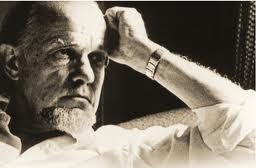


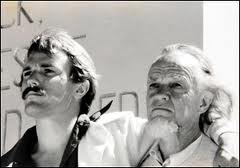





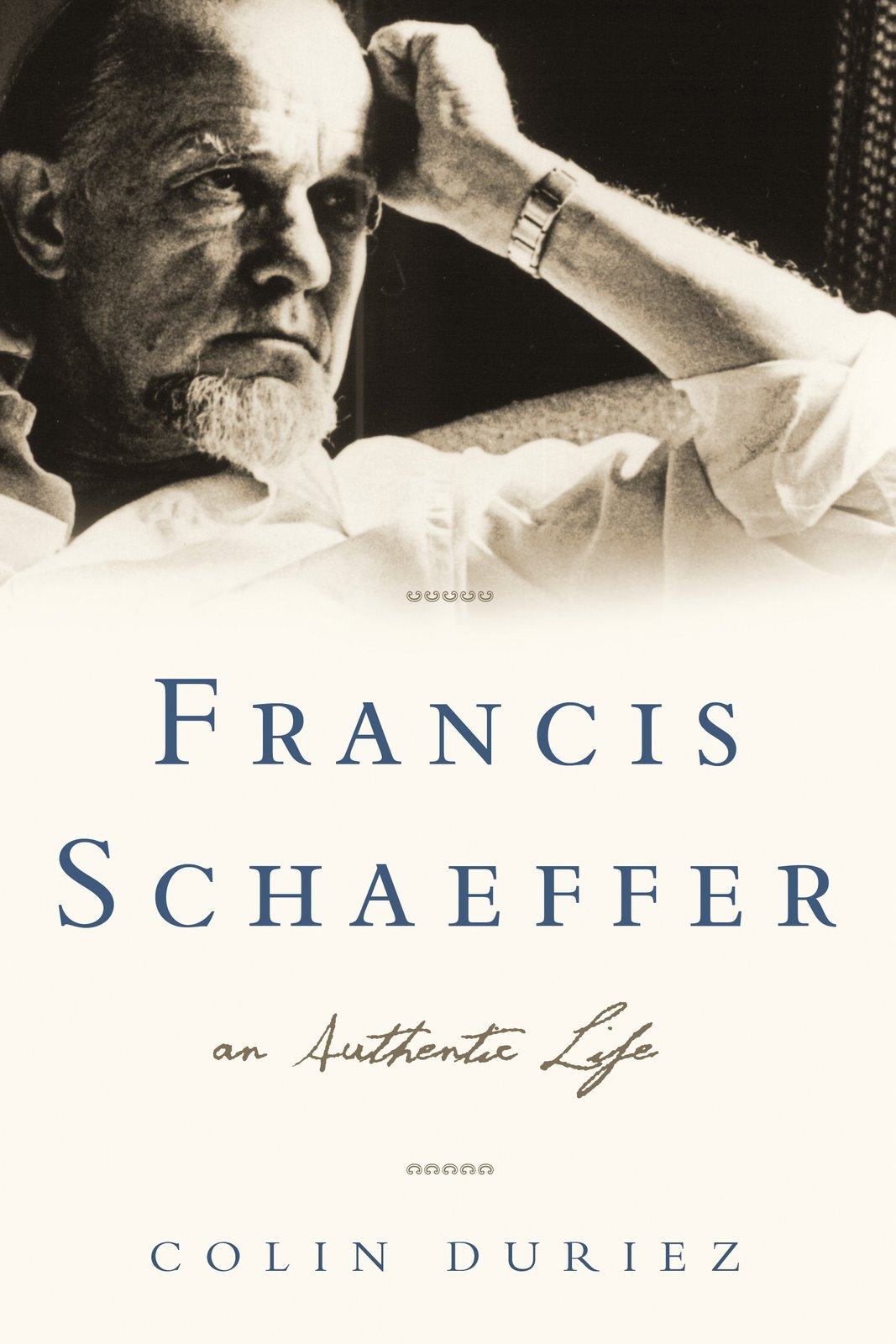


 The Daily Hatch
