One proposal in Democrats’ $3.5 trillion social spending bill not only would increase the number of Americans on government-run health care, but expand the federal government’s role in delivering that care. (Photo: Fat Camera/Getty Images)
A lot of transformative health care policy is embedded in Democrats’ $3.5 trillion social spending bill, including continuation of the Biden administration’s campaign to strip away state flexibility and consolidate greater federal control over Medicaid.
Medicaid, the joint federal-state program to provide health care services to certain low-income Americans, has seen an explosion in enrollment and spending.
The Centers for Medicare and Medicaid Services announced over the summer that a record 80 million Americans are enrolled in Medicaid, and federal spending on it has increased by an estimated 19%.
At the same time, the Biden administration has taken unprecedented steps to curb states’ ability to manage and stabilize Medicaid.
The “Build Back Better” plan, making its way through Congress under a “budget reconciliation” process that will allow Democrats to pass it without any Republican votes, would accelerate these troubling trends and further expand the welfare state.
Most notable in the $3.5 trillion spending bill is creation of a Medicaid-like program. Under the proposal, the federal government would set up and run a new program to provide medical services to individuals in states that elected not to expand their own Medicaid programs.
This proposal not only would increase the number of Americans on government-run health care, but also expand the federal government’s role in delivering that care. Moreover, while the program seems narrowly focused, it is certainly reasonable to assume that it could be expanded and pave the way for a full-blown government takeover.
The Build Back Better plan also would expand Medicaid’s role in delivering long-term care services. If passed, the bill would create a grant program for states to expand access to home and community-based services through Medicaid. It would boost the federal share of costs for states that adopt this expansion, and the federal government also would assume a greater share of related administrative costs.
The COVID-19 relief bills passed by Congress already provided significant federal resources to the states, including an increase in Medicaid assistance for the duration of the public health emergency as well as for home and community-based services.
The spending bill would mean a significant and permanent increase in taxpayer spending on the Medicaid program and exacerbate a growing shift toward the federal government’s assuming a greater share of the cost of Medicaid.
Using Medicaid to solve the long-term care challenges is shortsighted and poorly targeted. Expanding government’s role in delivery of long-term care services drives out private options and stretches an already overstretched safety net aimed at the poor.
Rather than expand Medicaid’s role in long-term care, Congress should promote private alternatives, preserve the safety net for those who already depend on it, and reduce long-term dependence on Medicaid.
The Build Back Better plan also would undermine state flexibility by imposing new federal requirements on the states.
Under Medicaid, the federal government sets out basic rules and the states have significant authority to design their own programs within those parameters. The spending bill would change the status of some populations and services from optional to mandatory. Rather than giving states the ability to tailor programs to meet their unique demands and needs, this proposal would chip away at state flexibility in favor of federal eligibility and benefit mandates.
Finally, Democrats’ bill also would make policy changes that weaken oversight and accountability over these programs. Specifically, the bill would require that certain enrollees remain on Medicaid for an entire year regardless of changes to their eligibility status.
The bill also would make the process of enrolling in Medicaid easier by making “express” eligibility determinations. And the bill would permanently extend the Children’s Health Insurance Program and its funding, removing the need for regular congressional review of the program and essentially putting it on autopilot.
These actions would strip states of flexibility, remove accountability for these programs, and enlarge government’s control over Medicaid and health care in general. Rather than expand the government’s role in health care and put more federal mandates and requirements on the states, Congress should give states greater flexibility to manage the needs of their citizens without adding to the cost.
This health care fight is about control over dollars and decisions. It is a choice between a federal, one-size-fits-all solution that puts Washington first or a flexible solution that puts Americans in need and those closest to them first.
Have an opinion about this article? To sound off, please email letters@DailySignal.com and we’ll consider publishing your edited remarks in our regular “We Hear You” feature. Remember to include the url or headline of the article plus your name and town and/or state.
Arkansas’ own Nick Horton featured on Dan Mitchell’s blog!!! Below is the best video I have ever seen on Obamacare’s lies about Medicaid!!!!
We’ve discussed many times why Obamacare is bad news, whether we’re looking at it from the perspective of the healthcare system, taxpayers, or workers.
But it could be worse. Writing in the Washington Post, Robert Samuelson explains that two-dozen states have refused the lure of expanding Medicaid (the means-tested health care program) in exchange for “free” federal money.
From 1989 to 2013, the share of states’ general funds devoted to Medicaid has risen from 9 percent to 19 percent, reports the National Association of State Budget Officers. Under present law, the squeeze will worsen. The White House report doesn’t discuss this. …To the White House, the right-wing anti-Obamacare crusade is mean-spirited partisanship at its worst. The 24 non- participating states are sacrificing huge amounts of almost-free money… Under the ACA, the federal government pays all the cost of the Medicaid expansion through 2016 and, after that, the reimbursement rate drops gradually to a still-generous 90 percent in 2020.
But that “almost-free money” isn’t free, of course. It’s simply money that the federal government (rather than state governments) is diverting from the productive sector of the economy.
So the 24 states that have rejected Medicaid expansion have done a huge favor for America’s taxpayers. To be more specific, Nic Horton of Watchdog.org explains that these states have lowered the burden of federal spending (compared to what it would have been) by almost $90 billion over the next three years.
By not expanding Medicaid, 24 states are saving taxpayers $88 billion over the next three years. That is $88 billion that will not be added to the national debt — debt that will not be passed on to future generations of taxpayers. On the other hand, states that have expanded Medicaid through Obamacare are adding roughly $84 billion to the national debt through 2016.
Returning to Samuelson’s column, he would like a grand bargain between states and the federal government, with Washington agreeing to pay for all of Medicaid (currently, states pay a portion of the bill) in exchange for states taking over all spending for things such as roads and education.
We could minimize this process for states and localities by transferring all Medicaid costs to Washington (or at least the costs of the elderly and disabled). To pay for it, Washington would reduce transportation and education grants to states. Let Washington mediate among generations. Let states and localities concentrate on their traditional roles of education, public safety and roads. Spare them the swamp of escalating health costs. This is the bargain we need — and probably won’t get.
I like half of that deal. I want to transfer education, law enforcement, and roads back to the state level (or even the local level).
But I don’t want Washington taking full responsibility for Medicaid. Instead, that program also should be sent down to the states as well. This video explains why that reform is so desirable.
Promote Federalism and Replicate the Success of Welfare Reform with Medicaid Block Grants
Uploaded on Jun 26, 2011
The Medicaid program imposes high costs while generating poor results. This Center for Freedom and Prosperity Foundation video explains how block grants, such as the one proposed by Congressman Paul Ryan, will save money and improve healthcare by giving states the freedom to innovate and compete.
________________________
P.S. Since we’re on the topic of Obamacare, this Chip Bok cartoon perfectly captures the essence of the Hobby Lobby decision. The left wants the mandate that contraception and abortifacients be part of health insurance packages.
Rather than exacerbate the damage of using insurance to cover routine costs, wouldn’t it make more sense to have employers simply give their workers more cash compensation and then allow the workers to use their money as they see fit?
That way there’s no role for those evil, patriarchal, oppressive, and misogynistic bosses!
I realize this might upset Sandra Fluke, but at least she has the comfort of knowing that her narcissistic statism generated some good jokes (here, here, and here).
________ Will Republicans defeat Obamacare in Arkansas? February 21, 2014 4:24PM Spending Restraint in Arkansas By Nicole Kaeding Share For the fourth day in a row, the Arkansas House of Representatives has refused to approve the yearly appropriation for its Medicaid program, dubbed the “private-option.” If the legislature continues this refusal and reverses its […]
_____________ I don’t feel sorry for Insurance Companies that endorsed Obamacare but I feel sorry for taxpayers who are about to bail them out!!! TARP Was Bad, but the Looming Obamacare Bailout for Corrupt Insurance Companies Could Be Worse January 3, 2014 by Dan Mitchell I hate to dredge up bad memories so early in a […]
(Emailed to White House on 3-20-13.) President Obama c/o The White House 1600 Pennsylvania Avenue NW Washington, DC 20500 Dear Mr. President, I know that you receive 20,000 letters a day and that you actually read 10 of them every day. I really do respect you for trying to get a pulse on what is […]
Jacque Martin asks CATO Institute Michael Cannon about Obamacare Published on Mar 19, 2013 The CATO Institute’s Michael Cannon spoke at the Arkansas Conservative Caucus on Tuesday March 19th. Several conservatives were present. Cannon talked about how to defeat Obamacare in Arkansas & how the states can stop Obamacare on a national level. Jacque Martin […]
Enlarge image Credit Nathan Vandiver / KUAR Michael Cannon of the Cato Institute told lawmakers March 19, 2013 that abandoning plans to partner with the federal government on a health insurance exchange would both benefit the state and reduce the power of the Affordable Care Act. __________________ I am very pleased with the Republican lawmakers in […]
Here is a great article I read on November9, 2012 in the National Review: November 9, 2012 4:00 A.M. Obamacare Is Still Vulnerable Now is not the time to go wobbly. By Michael F. Cannon President Obama has won reelection, and his administration has asked state officials to decide by Friday, November 16, whether their state […]
Representative Bollinger asks CATO Institute Michael Cannon about Obamacare Published on Mar 19, 2013 The CATO Institute’s Michael Cannon spoke at the Arkansas Conservative Caucus on Tuesday March 19th. Several conservatives were present. Cannon talked about how to defeat Obamacare in Arkansas & how the states can stop Obamacare on a national level. Representative Bollinger […]
Michael Cannon on Medicare and Healthcare In his article, “Medicaid and the consequences,” Arkansas Democrat-Gazette, March 20, 2012, (paywall), Brummett admits, “Medicaid will break the bank of state government if we don’t do something.” However, he never gets around to saying that Obamacare is going to ruin the state financially. It will expand this failing […]
__________ Senator Pryor pictured below: Why do I keep writing and emailing Senator Pryor suggestions on how to cut our budget? I gave him hundreds of ideas about how to cut spending and as far as I can tell he has taken none of my suggestions. You can find some of my suggestions here, here, here, here, here, here, here, here, here, here, here, here, here, here, here, here, here, here, here, here, and here, […]
I have debated with Ark Times Bloggers many times in the past on many different subjects. Abortion is probably the most often debated subject and I have noticed that many pro-life individuals are now surfacing on the Arkansas Times Blog. Here are some examples. Arhogfan501 asserted: This is the beginning of the end for recreational abortion […]
Senate Majority Leader Chuck Schumer (D-NY) announced on Monday that he now seeks to pass the infrastructure bill before the end of October. This development is positive given that there are many harmful provisions that Congress should fix. Yet, despite the longer timeline, Congress has shown little interest in amending either the broker provision or the digital asset surveillance provision. As Congress moves toward the October 31 deadline, they should reverse course on these provisions before they radically alter this nascent industry.
The first item, commonly referred to as the “broker provision,” amends Section 6045(c)(1) of the Internal Revenue Code (IRC). In Section 80603 of the infrastructure bill, the term “broker” is redefined as including “any person who (for consideration) is responsible for regularly providing any service effectuating transfers of digital assets on behalf of another person” (see page 2,419). It then requires said brokers to report gross proceeds and personal information of any and all parties involved in transfers. Yet, such a task is impossible for many of the people who use blockchain technologies, and it does so all for the sake of what is largely already publicly available.
By mandating, for example, miners to collect information that they can’t possibly collect, Congress is setting a de facto ban on cryptocurrency mining in the United States. Worse yet, the information they do have is all publicly available on the blockchain. It would be far more efficient for the government to look at the blockchain themselves––like many law enforcement agencies already have––than require countless individuals to report transaction after transaction. One may make the case that miners should pay taxes on their income, but that case is wholly different from the case to uphold them to an impossible standard of surveillance.
Numerous amendments, some better and some worse, were offered to fix the broker provision, but the bill was ultimately unchanged when the Senate sent it to the House.
Unfortunately, the second item did not receive the same initial attention. It was not until Abe Sutherland, of the Proof of Stake Alliance, published a research report that it became clear that the digital asset surveillance provision (amending Section 6050I(d) of the IRC) within Section 80603 of the infrastructure bill was just as bad, if not worse, for cryptocurrencies.
As it stands, Section 6050I(d) of the IRC requires business transactions of $10,000 or more in cash to be reported to the government. These reports must include the name, address, and taxpayer identification number (i.e., social security number) of the payer. However, the infrastructure bill expands that requirement to include not just cash, but digital assets. This requirement is something that should be challenged and repealed, not “legitimized” through modernization. More so, it makes little sense to apply rules for cash on cryptocurrencies when one stops to observe that the record of their transfer is publicly available on the blockchain.
In his letter announcing the new timeline for the infrastructure bill, Senator Schumer wrote, “[At] the end of the day, we will pass legislation that will dramatically improve the lives of the American people.” If Congress wishes to keep these words true, they should amend the provisions affecting sections 6045 and 6050I of the IRC before they dramatically worsen the lives of the American people in the cryptocurrency industry.
Democratic leaders in Congress are moving ahead with a $1 trillion infrastructure bill and a $3.5 trillion reconciliation bill to expand entitlements. Both bills are fiscally reckless and fund activities that are the proper responsibility of the states and private sector. To hear most politicians tell it, though, you would think there are no downsides — and only tremendous benefits — attendant to federal‐budget expansion. But that is not the case.
Here are ten reasons to oppose the infrastructure and entitlement bills.
Federal Overload
With more than 2,300 programs, the federal government is already far too large for policy‐makers to oversee. As economist Milton Friedman once observed, “Because government is doing so many things it ought not to be doing, it performs the functions it ought to be performing badly.” The White House’s focus on expanding the welfare state in recent months may, for instance, have distracted it from properly planning the Afghanistan pullout.
Tax Hikes
The infrastructure and entitlement bills would be funded partly by damaging tax hikes. Proposed corporate‐tax increases would undermine business investment, thus reducing job opportunities and wages. Proposed capital‐gains‐tax increases would undermine investment in start‐ups, particularly in technology hubs such as Silicon Valley.
Rising Debt
Both bills would be funded partly by incurring more debt, which would result in higher taxes down the road. If both bills pass, federal debt per U.S. household would rise from $179,000 today to $288,000 by 2031. As debt rises, a larger share of worker pay will be taxed to pay interest costs, which will be very hard on tomorrow’s workers, who will have their own costs and crises to deal with.
Economic Crisis
Rising debt could trigger an economic crisis marked by soaring interest rates and falling output. Greece’s debt crisis a decade ago created long‐lasting damage — its real income per capita is still down one‐quarterfrom its pre‐crisis level. Our combined federal‐ and state‐government debt is already about the same size relative to the economy as was Greece’s before its crisis.
States Can Fund It
Most of the proposed spending is for activities that states can fund themselves. With infrastructure, more than half the states have raised their gas taxes to fund their own highways and transit since 2015. With entitlements, some states are already funding activities that the Democrats want to impose nationally, such as paid family leave. Expanding entitlements is a bad idea, but it is far more damaging when in the form of a top‐down scheme imposed by Congress. Besides, the federal government is running huge deficits while the states are enjoying budget surpluses with tax revenues up 11 percent over pre‐pandemic levels.
Democracy
One casualty of rising federal spending is democracy. When the feds hand out subsidies for state and local activities, decision‐making authority is moved from elected state and local officials to unelected and unknown officials in far‐away Washington. The infrastructure and entitlement bills would move control over activities such as preschool, child care, paid leave, housing and zoning, and the electric grid to federal bureaucrats. That is why former Senator James Buckley argued that “citizens are effectively disenfranchised” by federal subsidy programs. In his April address to Congress, President Joe Biden expressed his support for “democracy” 16 times, but his plans to expand federal power would do the opposite.
Diversity
Residents of each state have varying preferences for social programs and taxes. In our federal system, the states can maximize value by tailoring policies to the needs of their residents. But the proposed bills would undermine such beneficial diversity by imposing one‐size‐fits‐all programs for paid leave, preschool, energy, and other activities. In his April address, the president promised that he would bring the nation together, but trying to force conformity on Americans with top‐down programs would increase anger and division.
Corporate Welfare
Democratic leaders, such as Senators Elizabeth Warren and Bernie Sanders, often rail against corporate subsidies. Yet both bills include hundreds of billions in corporate subsidies for broadband, utilities, electric vehicles, manufacturing, research, renewable energy, and other items. If passed, the subsidies would be a boost to the corporate lobbyists in Washington, encouraging them to ask for even more, more, more …
Regulations
Federal subsidies come hand in hand with costly regulations imposed on the states, cities, and private groups administering the programs. The current federal education disabilities law, for example, is 94 pages long but has generated 1,700 pages of regulations and masses of litigation. Meanwhile, federal infrastructure subsidies come tied to labor and environmental rules that raise costs and delay projects. The proposed legislation would likely be accompanied by a mass of costly federal rules on education, energy, housing, college, child care, and other subsidized activities.
Fraud and Waste
Federal subsidy programs suffer from high levels of waste and fraud because state and local administrators have little incentive to restrain costs when the funds come “free” from Washington. Programs such as Medicaid and national school lunches have long had high fraud rates; we have seen massive fraud in the recent pandemic aid to the states, too. Meanwhile, federally funded local projects, such as light‐rail systems, often suffer from large cost overruns. The new hand‐out programs would suffer these same problems.
In sum, new infrastructure and entitlement spending would overload federal policy‐makers, who are already doing a lousy job of managing the vast array of current spending programs. All the proposed spending is for activities that should be instead handled by states, businesses, charities, and individuals. When it imposes national programs, Congress needlessly crushes diversity and local democratic choices. Americans would benefit more from a smaller, leaner federal government that balanced its budget and focused on its core missions.
But since I don’t expect the current crowd in Washington has any interest in getting rid of the Department of Transportation, perhaps we should have a more modest goal of eliminating subsidies for mass transit.
After all, there’s no reason why taxpayers across the nation should be subsidizing the cost of railway, bus, and subway travel in a handful of cities.
Getting rid of these handouts would save a decent chunk of money. Here’s a chart from Downsizing Government, which shows the history of pre-pandemic spending by the Federal Transit Administration.
But that chart is now out of date since politicians have used the pandemic as an excuse to dramatically increase the burden of federal spending. Including big handouts for mass transit.
And now they want to raid taxpayers for more transit money as part of a spending spree on infrastructure.
The Wall Street Journaleditorialized about this topic a couple of days ago.
Democrats are accusing Republicans of holding up the Senate infrastructure deal over funding for mass transit. Here’s what’s really going on: Republicans have bowed to most Democratic demands. But now Democrats are also insisting that they acquiesce to spending ever more to rescue broken rail and bus systems in big liberal cities. Mass transit typically receives $13 billion in federal funds each year, and Congress provided an additional $70 billion for urban transit last year in the myriad pandemic spending bills. That’s more than six times the normal transit budget and more than the annual operating and capital spending of every transit agency in the U.S. combined. …But most mass transit systems face a larger structural budget problem that pre-dated the pandemic: Ballooning operating costs from generous labor contracts and pension payments, which are siphoning off money from system improvements and repairs. Many systems have also been losing riders due to lousy service… So Democrats want Republicans to bail out those cities and their public unions. Republicans have agreed to a $48.5 billion supplemental appropriation for mass transit in the deal. But in addition Democrats are demanding that 20% of transportation spending from the highway trust fund—financed by gas tax revenues—go toward transit.
This is throwing good money after bad.
In a column for the Foundation for Economic Education back in 2019, Hans Bader explained that mass transit in an inefficient money pit.
Mass transit is largely a failure and continues to decline despite growing subsidies to many mass transit systems. Light rail systems are white elephants. …South Korea is abolishing its celebrated high-speed rail line from its capital, Seoul, to a nearby major city because it can’t cover even the marginal costs of keeping the trains running. Most people who ride trains don’t need maximum possible speed,and most of those who do will still take the plane to reach distant destinations. …most Japanese don’t take the bullet train either; they take buses because the bullet train is too expensive. Bullet trains do interfere with freight lines, so Japanese freight lines carry much less cargo than in the United States, where railroads—rather than trucks—carry most freight, thereby reducing pollution… California’s so-called bullet train is vastly behind schedule and over budget, and will likely never come close to covering its operating costs once it is built. …Just the first leg of this $77 billion project will cost billions more than budgeted. And the project is already at least 11 years behind schedule.
Government is a big reason why transit is so inefficient and expensive.
Industry expert Randal O’Toole wrote about the harmful impact of socialized systems back in 2018.
Public ownership of transit has significantly increased the cost of transit, creating another disadvantage for the transit industry relative to other modes of travel. Before 1964, transit systems in most American cities were private and profitable, albeit declining. In 1964, Congress gave cities and states incentives to take over transit systems, and within a decade nearly all had been municipalized …followed by a staggering decline in transit productivity. In the decade before 1964, transit systems carried an average of about 59,000 riders per operating employee. This plunged after 1964 and today averages fewer than 27,000 riders per employee… It is doubtful that any American industry has suffered a 54 percent decline in worker productivity over 30 years unless it was another industry taken over by the government and inflicted with all the inefficiencies associated with government control and management.
We’ll close with this chart from O’Toole’s study, which shows total taxpayer subsidies over time.
The bottom line is that government transit systems are a lot like government schools. More and more money gets spent over time with worse and worse results.
P.S. Click here and here to learn more about the boondoggle of government-funded rail.
P.P.S. Click here to learn more about the boondoggle of government-funded subways.
TRY BORROWING AT A BANK WITH A FINANCIAL CONDITION LIKE THE USA HAS:
The problem in Washington is not lack of revenue but our lack of spending restraint. This video below makes that point. WASHINGTON IS A SPENDING ADDICT!!!
I love reading this blog by Dan Mitchell. No two people agree on everything but I sure do agree with most everything Dan writes on this blog of his. However, I disagree silently with something he has written today. I think it is encouraging that the Republicans in the House have been able to accomplish some things in slowing down the growth in spending by Obama. I know Dan would agree that more needs to be done. For instance, why don’t they just vote no on the next increase to the debt ceiling limit. I have praised over and over and over the 66 House Republicans that voted no on that before. If they did not raise the debt ceiling then we would have a balanced budget instantly. I agree that the Tea Party has made a difference and I have personally posted 49 posts on my blog on different Tea Party heroes of mine.
What would happen if the debt ceiling was not increased? Yes President Obama would probably cancel White House tours and he would try to stop mail service or something else to get on our nerves but that is what the Republicans need to do.
In recent months, people have asked me why I’m acting all giddy and optimistic. Am I hooked on cocaine? Have I fallen in love? Did I inherit several million dollars?
…its liberal predecessor passed a trillion-dollar stimulus, enacted a government takeover of health care and institutionalized the power of Wall Street’s Too Big To Fail banks by passing the Dodd-Frank financial regulation law.
Then he explains that the new Tea Party Congress has changed the fiscal outlook.
…if you look at the hard numbers — if you look at the tax-and-spending trajectory that the United States was on before the 112th Congress was sworn into office, and then look at the path the U.S. is on now — you’d see that Republicans in Congress have made tremendous progress in shrinking the size and scope of the federal government.
But is there any proof?
Conn points out that the CBO “baselines” from early 2011 showed government growing very rapidly.
…the nonpartisan Congressional Budget Office released its annual Budget and Economic Outlook for fiscal years 2011 through 2021. That document showed the federal government was on track to spend…a total of almost $50 trillion ($49.8 trillion to be exact) through 2021. At the same time, tax revenues were set to rise from just 14.8 percent of GDP in 2011 to 20.8 percent in 2021.
The same estimates from early this year, by contrast, show government growing at a slower pace.
The CBO’s Budget and Economic Outlook for fiscal years 2013 through 2023 shows just how much House Republicans have actually accomplished. The federal government is now on track to spend just $46.2 trillion through 2021. That is a $3.6 trillion spending cut. And instead of taxes eating up 21 percent of the U.S. economy in 2021, now the government is set to take in just 18.9 percent.
Here are the respective baselines from those CBO publications. Let’s start by looking at how spending is projected to grow at a slower pace for the rest of the decade.
That’s $3.5 trillion of savings. Not genuine spending cuts, of course, but it’s real progress if government doesn’t grow as fast.
Here are the revenue numbers.
This data basically shows that the tax burden will be much smaller than projected because about 98 percent of the Bush tax cuts were made permanent as part of the fiscal cliff deal.
And if you believe in the Starve-the-Beast theory (and you should), this will make it harder for politicians to increase the burden of government spending in the future.
Conn also notes that the unemployment rate has fallen.
Despite all of this supposedly economy-killing “austerity,” unemployment has steadily fallen, too. When Republicans took control of the House in 2011, the nation’s unemployment rate was 9 percent. Today, it has fallen to 7.7 percent.
If this seems like a familiar point, it’s because I share his assessment. I wrote back in February of last year that gridlock was a positive thing for the economy since it reduced the likelihood of new bad policies.
What’s remarkable about these developments, as Conn notes, is that folks were expecting Obama to have momentum as his second term began.
Just three months ago, many in Washington were predicting Obama would steamroll Republicans into accepting higher taxes for millions of earners, undoing the sequester and maybe even passing new stimulus spending. Instead, Republicans have stayed unified, outfoxed Obama, preserved and made permanent most of last decade’s tax cuts (including permanent indexing of the Alternative Minimum Tax) and let the sequester cuts occur on schedule. As a result, Obama’s approval ratings have tumbled, and his entire second-term agenda is in jeopardy.
The final sentence in that excerpt explains why I’m feeling semi-optimistic. Obama’s agenda of more taxes and more spending is being thwarted.
Sixty Six who resisted “Sugar-coated Satan Sandwich” Debt Deal (Part 49) This post today is a part of a series I am doing on the 66 Republican Tea Party favorites that resisted eating the “Sugar-coated Satan Sandwich” Debt Deal. Actually that name did not originate from a representative who agrees with the Tea Party, but […]
Sixty Six who resisted “Sugar-coated Satan Sandwich” Debt Deal (Part 48) This post today is a part of a series I am doing on the 66 Republican Tea Party favorites that resisted eating the “Sugar-coated Satan Sandwich” Debt Deal. Actually that name did not originate from a representative who agrees with the Tea Party, but […]
Sixty Six who resisted “Sugar-coated Satan Sandwich” Debt Deal (Part 47) This post today is a part of a series I am doing on the 66 Republican Tea Party favorites that resisted eating the “Sugar-coated Satan Sandwich” Debt Deal. Actually that name did not originate from a representative who agrees with the Tea Party, but […]
Sixty Six who resisted “Sugar-coated Satan Sandwich” Debt Deal (Part 46) This post today is a part of a series I am doing on the 66 Republican Tea Party favorites that resisted eating the “Sugar-coated Satan Sandwich” Debt Deal. Actually that name did not originate from a representative who agrees with the Tea Party, […]
Sixty Six who resisted “Sugar-coated Satan Sandwich” Debt Deal (Part 45) This post today is a part of a series I am doing on the 66 Republican Tea Party favorites that resisted eating the “Sugar-coated Satan Sandwich” Debt Deal. Actually that name did not originate from a representative who agrees with the Tea Party, but […]
Sixty Six who resisted “Sugar-coated Satan Sandwich” Debt Deal (Part 44) This post today is a part of a series I am doing on the 66 Republican Tea Party favorites that resisted eating the “Sugar-coated Satan Sandwich” Debt Deal. Actually that name did not originate from a representative who agrees with the Tea Party, but […]
Sixty Six who resisted “Sugar-coated Satan Sandwich” Debt Deal (Part 43) This post today is a part of a series I am doing on the 66 Republican Tea Party favorites that resisted eating the “Sugar-coated Satan Sandwich” Debt Deal. Actually that name did not originate from a representative who agrees with the Tea Party, but […]
Sixty Six who resisted “Sugar-coated Satan Sandwich” Debt Deal (Part 42) This post today is a part of a series I am doing on the 66 Republican Tea Party favorites that resisted eating the “Sugar-coated Satan Sandwich” Debt Deal. Actually that name did not originate from a representative who agrees with the Tea Party, but […]
Sixty Six who resisted “Sugar-coated Satan Sandwich” Debt Deal (Part 41) This post today is a part of a series I am doing on the 66 Republican Tea Party favorites that resisted eating the “Sugar-coated Satan Sandwich” Debt Deal. Actually that name did not originate from a representative who agrees with the Tea Party, but […]
Sixty Six who resisted “Sugar-coated Satan Sandwich” Debt Deal (Part 40) This post today is a part of a series I am doing on the 66 Republican Tea Party favorites that resisted eating the “Sugar-coated Satan Sandwich” Debt Deal. Actually that name did not originate from a representative who agrees with the Tea Party, but […]
Sixty Six who resisted “Sugar-coated Satan Sandwich” Debt Deal (Part 39) This post today is a part of a series I am doing on the 66 Republican Tea Party favorites that resisted eating the “Sugar-coated Satan Sandwich” Debt Deal. Actually that name did not originate from a representative who agrees with the Tea Party, but […]
Sixty Six who resisted “Sugar-coated Satan Sandwich” Debt Deal (Part 38) This post today is a part of a series I am doing on the 66 Republican Tea Party favorites that resisted eating the “Sugar-coated Satan Sandwich” Debt Deal. Actually that name did not originate from a representative who agrees with the Tea Party, but […]
Sixty Six who resisted “Sugar-coated Satan Sandwich” Debt Deal (Part 37) This post today is a part of a series I am doing on the 66 Republican Tea Party favorites that resisted eating the “Sugar-coated Satan Sandwich” Debt Deal. Actually that name did not originate from a representative who agrees with the Tea Party, but […]
Sixty Six who resisted “Sugar-coated Satan Sandwich” Debt Deal (Part 36) This post today is a part of a series I am doing on the 66 Republican Tea Party favorites that resisted eating the “Sugar-coated Satan Sandwich” Debt Deal. Actually that name did not originate from a representative who agrees with the Tea Party, but […]
Sixty Six who resisted “Sugar-coated Satan Sandwich” Debt Deal (Part 35) This post today is a part of a series I am doing on the 66 Republican Tea Party favorites that resisted eating the “Sugar-coated Satan Sandwich” Debt Deal. Actually that name did not originate from a representative who agrees with the Tea Party, but […]
Sixty Six who resisted “Sugar-coated Satan Sandwich” Debt Deal (Part 34) This post today is a part of a series I am doing on the 66 Republican Tea Party favorites that resisted eating the “Sugar-coated Satan Sandwich” Debt Deal. Actually that name did not originate from a representative who agrees with the Tea Party, but […]
Sixty Six who resisted “Sugar-coated Satan Sandwich” Debt Deal (Part 33) This post today is a part of a series I am doing on the 66 Republican Tea Party favorites that resisted eating the “Sugar-coated Satan Sandwich” Debt Deal. Actually that name did not originate from a representative who agrees with the Tea Party, but […]
Sixty Six who resisted “Sugar-coated Satan Sandwich” Debt Deal (Part 32) This post today is a part of a series I am doing on the 66 Republican Tea Party favorites that resisted eating the “Sugar-coated Satan Sandwich” Debt Deal. Actually that name did not originate from a representative who agrees with the Tea Party, but […]
Congressmen Tim Huelskamp on the debt ceiling Sixty Six who resisted “Sugar-coated Satan Sandwich” Debt Deal (Part 31) This post today is a part of a series I am doing on the 66 Republican Tea Party favorites that resisted eating the “Sugar-coated Satan Sandwich” Debt Deal. Actually that name did not originate from a representative […]
Sixty Six who resisted “Sugar-coated Satan Sandwich” Debt Deal (Part 30) This post today is a part of a series I am doing on the 66 Republican Tea Party favorites that resisted eating the “Sugar-coated Satan Sandwich” Debt Deal. Actually that name did not originate from a representative who agrees with the Tea Party, but […]
Sixty Six who resisted “Sugar-coated Satan Sandwich” Debt Deal (Part 29) This post today is a part of a series I am doing on the 66 Republican Tea Party favorites that resisted eating the “Sugar-coated Satan Sandwich” Debt Deal. Actually that name did not originate from a representative who agrees with the Tea Party, but […]
The Sixty Six who resisted “Sugar-coated Satan Sandwich” Debt Deal (Part 28) This post today is a part of a series I am doing on the 66 Republican Tea Party favorites that resisted eating the “Sugar-coated Satan Sandwich” Debt Deal. Actually that name did not originate from a representative who agrees with the Tea Party, […]
The Sixty Six who resisted “Sugar-coated Satan Sandwich” Debt Deal (Part 27) This post today is a part of a series I am doing on the 66 Republican Tea Party favorites that resisted eating the “Sugar-coated Satan Sandwich” Debt Deal. Actually that name did not originate from a representative who agrees with the Tea Party, […]
Perhaps more relevant, that foregone economic growth would translate into more than $10,000 of lost compensation per job. And a lifetime drop in living standards of more than 4 percent for younger people.
And these numbers are based on research by the Congressional Budget Office, which is hardly a bastion of libertarian analysis.
The Biden White House has a different perspective.
How different? Well, the President actually claims that expanding the burden of government won’t cost anything.
I’m not joking. Here are some excerpts from an article in the Washington Post by Seung Min Kim and Tony Romm.
President Biden promised Friday that his sweeping domestic agenda package will cost “nothing” because Democrats will pay for it through tax hikes on the wealthy and corporations… The remarks were an attempt by Bidento assuage some of the cost concerns pointedly expressed by the moderate Democrats about the size of the legislation… The total spending outlined in the plan is $3.5 trillion… “It is zero price tag on the debt we’re paying. We’re going to pay for everything we spend,” Biden said in remarks from the State Dining Room at the White House.
Biden’s strange analysis has generated some amusing responses.
For instance, Gerard Baker opined in the Wall Street Journalabout Biden’s magical approach.
…this is a novel way of estimating the cost of something. That eye-wateringly expensive dinner you had last week didn’t really cost you anything because you paid for it. …You could have used the money to investin your children’s college fund. You could have paid off some of your credit card bill, the debt on which has quadrupled in the last year. But you chose instead to blow it on a few morsels of raw fish and a couple of bottles of 1982 Château Lafite Rothschild. Don’t worry, It didn’t cost you anything.
Biden and his team definitely deserve to be mocked for their silly argument.
For all intents and purposes, they want us to believe that there’s no downside if you combine anti-growth spending increases with anti-growth tax increases – so long as there’s no increase in red ink.
But there’s actually a fiscal theory that sort of supports what the White House is saying.
Capital (saving and investment) is a key driver of productivity and long-run growth.
Budget deficits divert capital from the economy’s productive sector to government.
Budget deficits raise interest rates, reducing incentives for investment.
For what it’s worth, all four of those statements are correct.
But the theory is nonetheless wrong because it elevates one variable – fiscal balance – while ignoring other variables that have a much bigger impact on economic performance.
For instance, the Congressional Budget Office at one point embraced this approach – even though it led to absurd implications such as growth being maximized with tax rates of 100 percent.
The White House today is basically embracing the IMF’s “austerity” argument that deficits/surpluses are the variable that has the biggest impact on growth.
P.S. Folks on the left must get whiplash because some days they embrace the Keynesian argument that deficits are good for growth and other days they argue that a big expansion of government will have zero cost because there is no increase in the deficit.
P.P.S. The folks on the right who focus solely on tax cuts also are guilty of elevating one variable while ignoring others (humorously depicted in this cartoon strip).
Those policies hinder American prosperity (as honest folks on the left acknowledge), but we can survive with slower growth. What really worries me is that we may eventually reach a tipping point of too many people riding in the wagon (and out-voting the people who pull the wagon).
Simply stated, we don’t want America to become another Greece.
But this cartoon may be a more effective argument for getting government out of the business of interfering with market forces. It’s simple, direct, and gets the point across. I’m not sure that always happens with my writing.
My former intern, Orphe Divougny, also did a very good job in explaining why politicians shouldn’t interfere with the right of workers and employers to enter into labor contracts.
Max Brantley is wrong about Tom Cotton’s accusation concerning the rise of welfare spending under President Obama. Actually welfare spending has been increasing for the last 12 years and Obama did nothing during his first four years to slow down the rate of increase of welfare spending. Rachel Sheffield of the Heritage Foundation has noted: […]
I have put up lots of cartoons from Dan Mitchell’s blog before and they have got lots of hits before. Many of them have dealt with the economy, eternal unemployment benefits, socialism, Greece, welfare state or on gun control. I think Max Brantley of the Arkansas Times Blog was right to point out on 2-6-13 that Hillary […]
I thought it was great when the Republican Congress and Bill Clinton put in welfare reform but now that has been done away with and no one has to work anymore it seems. In fact, over 40% of the USA is now on the government dole. What is going to happen when that figure gets over […]
Again we have another shooting and the gun control bloggers are out again calling for more laws. I have written about this subject below and on May 23, 2012, I even got a letter back from President Obama on the subject. Now some very interesting statistics below and a cartoon follows. (Since this just hit the […]
watch?v=llQUrko0Gqw] The federal government spends about 10% on roads and public goods but with the other money in the budget a lot of harm is done including excessive regulations on business. That makes Obama’s comment the other day look very silly. A Funny Look at Obama’s You-Didn’t-Build-That Comment July 28, 2012 by Dan Mitchell I made […]
I have written a lot about this in the past and sometimes you just have to sit back and laugh. Laughing at Obama’s Bumbling Class Warfare Agenda July 13, 2012 by Dan Mitchell We know that President Obama’s class-warfare agenda is bad economic policy. We know high tax rates undermine competitiveness. And we know tax increases […]
Dan Mitchell Discussing Dishonest Budget Numbers with John Stossel Uploaded by danmitchellcato on Feb 11, 2012 No description available. ______________ Dan Mitchell of the Cato Institute has shown before how excessive spending at the federal level has increased in recent years. A Humorous Look at Obama’s Screwy Budget Math May 31, 2012 by Dan Mitchell I’ve […]
Sometimes it is so crazy that you just have to laugh a little. The European Mess, Captured by a Cartoon June 22, 2012 by Dan Mitchell The self-inflicted economic crisis in Europe has generated some good humor, as you can see from these cartoons by Michael Ramirez and Chuck Asay. But for pure laughter, I don’t […]
Another great cartoon on President Obama’s efforts to create jobs!!! A Simple Lesson about Job Creation for Barack Obama December 7, 2011 by Dan Mitchell Even though leftist economists such as Paul Krugman and Larry Summers have admitted that unemployment insurance benefits are a recipe for more joblessness, the White House is arguing that Congress should […]
Dan Mitchell hits the nail on the head and sometimes it gets so sad that you just have to laugh at it like Conan does. In order to correct this mess we got to get people off of government support and get them in the private market place!!!! Chuck Asay’s New Cartoon Nicely Captures Mentality […]
Cato Institute scholar Dan Mitchell is right about Greece and the fate of socialism: Two Pictures that Perfectly Capture the Rise and Fall of the Welfare State July 15, 2011 by Dan Mitchell In my speeches, especially when talking about the fiscal crisis in Europe (or the future fiscal crisis in America), I often warn that […]
John Stossel report “Myth: Gun Control Reduces Crime Sheriff Tommy Robinson tried what he called “Robinson roulette” from 1980 to 1984 in Central Arkansas where he would put some of his men in some stores in the back room with guns and the number of robberies in stores sank. I got this from Dan Mitchell’s […]
I have put up lots of cartons and posters from Dan Mitchell’s blog before and they have got lots of hits before. Many of them have dealt with the economy, eternal unemployment benefits, socialism, Greece, welfare state or on gun control. Amusing Gun Control Picture – Circa 1999 April 3, 2010 by Dan Mitchell Dug this gem out […]
We got to cut spending and stop raising the debt ceiling!!! When Governments Cut Spending Uploaded on Sep 28, 2011 Do governments ever cut spending? According to Dr. Stephen Davies, there are historical examples of government spending cuts in Canada, New Zealand, Sweden, and America. In these cases, despite popular belief, the government spending […]
I have put up lots of cartons and posters from Dan Mitchell’s blog before and they have got lots of hits before. Many of them have dealt with the economy, eternal unemployment benefits, socialism, Greece, welfare state or on gun control. On 2-6-13 the Arkansas Times Blogger “Sound Policy” suggested, “All churches that wish to allow concealed […]
Gun Free Zones???? Stalin and gun control On 1-31-13 ”Arkie” on the Arkansas Times Blog the following: “Remember that the biggest gun control advocate was Hitler and every other tyrant that every lived.” Except that under Hitler, Germany liberalized its gun control laws. __________ After reading the link from Wikipedia that Arkie provided then I responded: […]
On 1-31-13 I posted on the Arkansas Times Blog the following: I like the poster of the lady holding the rifle and next to her are these words: I am compensating for being smaller and weaker than more violent criminals. __________ Then I gave a link to this poster below: On 1-31-13 also I posted […]
Democratic leaders in Congress are moving ahead with a $1 trillion infrastructure bill and a $3.5 trillion reconciliation bill to expand entitlements. Both bills are fiscally reckless and fund activities that are the proper responsibility of the states and private sector. To hear most politicians tell it, though, you would think there are no downsides — and only tremendous benefits — attendant to federal‐budget expansion. But that is not the case.
Here are ten reasons to oppose the infrastructure and entitlement bills.
Federal Overload
With more than 2,300 programs, the federal government is already far too large for policy‐makers to oversee. As economist Milton Friedman once observed, “Because government is doing so many things it ought not to be doing, it performs the functions it ought to be performing badly.” The White House’s focus on expanding the welfare state in recent months may, for instance, have distracted it from properly planning the Afghanistan pullout.
Tax Hikes
The infrastructure and entitlement bills would be funded partly by damaging tax hikes. Proposed corporate‐tax increases would undermine business investment, thus reducing job opportunities and wages. Proposed capital‐gains‐tax increases would undermine investment in start‐ups, particularly in technology hubs such as Silicon Valley.
Rising Debt
Both bills would be funded partly by incurring more debt, which would result in higher taxes down the road. If both bills pass, federal debt per U.S. household would rise from $179,000 today to $288,000 by 2031. As debt rises, a larger share of worker pay will be taxed to pay interest costs, which will be very hard on tomorrow’s workers, who will have their own costs and crises to deal with.
Economic Crisis
Rising debt could trigger an economic crisis marked by soaring interest rates and falling output. Greece’s debt crisis a decade ago created long‐lasting damage — its real income per capita is still down one‐quarterfrom its pre‐crisis level. Our combined federal‐ and state‐government debt is already about the same size relative to the economy as was Greece’s before its crisis.
States Can Fund It
Most of the proposed spending is for activities that states can fund themselves. With infrastructure, more than half the states have raised their gas taxes to fund their own highways and transit since 2015. With entitlements, some states are already funding activities that the Democrats want to impose nationally, such as paid family leave. Expanding entitlements is a bad idea, but it is far more damaging when in the form of a top‐down scheme imposed by Congress. Besides, the federal government is running huge deficits while the states are enjoying budget surpluses with tax revenues up 11 percent over pre‐pandemic levels.
Democracy
One casualty of rising federal spending is democracy. When the feds hand out subsidies for state and local activities, decision‐making authority is moved from elected state and local officials to unelected and unknown officials in far‐away Washington. The infrastructure and entitlement bills would move control over activities such as preschool, child care, paid leave, housing and zoning, and the electric grid to federal bureaucrats. That is why former Senator James Buckley argued that “citizens are effectively disenfranchised” by federal subsidy programs. In his April address to Congress, President Joe Biden expressed his support for “democracy” 16 times, but his plans to expand federal power would do the opposite.
Diversity
Residents of each state have varying preferences for social programs and taxes. In our federal system, the states can maximize value by tailoring policies to the needs of their residents. But the proposed bills would undermine such beneficial diversity by imposing one‐size‐fits‐all programs for paid leave, preschool, energy, and other activities. In his April address, the president promised that he would bring the nation together, but trying to force conformity on Americans with top‐down programs would increase anger and division.
Corporate Welfare
Democratic leaders, such as Senators Elizabeth Warren and Bernie Sanders, often rail against corporate subsidies. Yet both bills include hundreds of billions in corporate subsidies for broadband, utilities, electric vehicles, manufacturing, research, renewable energy, and other items. If passed, the subsidies would be a boost to the corporate lobbyists in Washington, encouraging them to ask for even more, more, more …
Regulations
Federal subsidies come hand in hand with costly regulations imposed on the states, cities, and private groups administering the programs. The current federal education disabilities law, for example, is 94 pages long but has generated 1,700 pages of regulations and masses of litigation. Meanwhile, federal infrastructure subsidies come tied to labor and environmental rules that raise costs and delay projects. The proposed legislation would likely be accompanied by a mass of costly federal rules on education, energy, housing, college, child care, and other subsidized activities.
Fraud and Waste
Federal subsidy programs suffer from high levels of waste and fraud because state and local administrators have little incentive to restrain costs when the funds come “free” from Washington. Programs such as Medicaid and national school lunches have long had high fraud rates; we have seen massive fraud in the recent pandemic aid to the states, too. Meanwhile, federally funded local projects, such as light‐rail systems, often suffer from large cost overruns. The new hand‐out programs would suffer these same problems.
In sum, new infrastructure and entitlement spending would overload federal policy‐makers, who are already doing a lousy job of managing the vast array of current spending programs. All the proposed spending is for activities that should be instead handled by states, businesses, charities, and individuals. When it imposes national programs, Congress needlessly crushes diversity and local democratic choices. Americans would benefit more from a smaller, leaner federal government that balanced its budget and focused on its core missions.
But since I don’t expect the current crowd in Washington has any interest in getting rid of the Department of Transportation, perhaps we should have a more modest goal of eliminating subsidies for mass transit.
After all, there’s no reason why taxpayers across the nation should be subsidizing the cost of railway, bus, and subway travel in a handful of cities.
Getting rid of these handouts would save a decent chunk of money. Here’s a chart from Downsizing Government, which shows the history of pre-pandemic spending by the Federal Transit Administration.
But that chart is now out of date since politicians have used the pandemic as an excuse to dramatically increase the burden of federal spending. Including big handouts for mass transit.
And now they want to raid taxpayers for more transit money as part of a spending spree on infrastructure.
The Wall Street Journaleditorialized about this topic a couple of days ago.
Democrats are accusing Republicans of holding up the Senate infrastructure deal over funding for mass transit. Here’s what’s really going on: Republicans have bowed to most Democratic demands. But now Democrats are also insisting that they acquiesce to spending ever more to rescue broken rail and bus systems in big liberal cities. Mass transit typically receives $13 billion in federal funds each year, and Congress provided an additional $70 billion for urban transit last year in the myriad pandemic spending bills. That’s more than six times the normal transit budget and more than the annual operating and capital spending of every transit agency in the U.S. combined. …But most mass transit systems face a larger structural budget problem that pre-dated the pandemic: Ballooning operating costs from generous labor contracts and pension payments, which are siphoning off money from system improvements and repairs. Many systems have also been losing riders due to lousy service… So Democrats want Republicans to bail out those cities and their public unions. Republicans have agreed to a $48.5 billion supplemental appropriation for mass transit in the deal. But in addition Democrats are demanding that 20% of transportation spending from the highway trust fund—financed by gas tax revenues—go toward transit.
This is throwing good money after bad.
In a column for the Foundation for Economic Education back in 2019, Hans Bader explained that mass transit in an inefficient money pit.
Mass transit is largely a failure and continues to decline despite growing subsidies to many mass transit systems. Light rail systems are white elephants. …South Korea is abolishing its celebrated high-speed rail line from its capital, Seoul, to a nearby major city because it can’t cover even the marginal costs of keeping the trains running. Most people who ride trains don’t need maximum possible speed,and most of those who do will still take the plane to reach distant destinations. …most Japanese don’t take the bullet train either; they take buses because the bullet train is too expensive. Bullet trains do interfere with freight lines, so Japanese freight lines carry much less cargo than in the United States, where railroads—rather than trucks—carry most freight, thereby reducing pollution… California’s so-called bullet train is vastly behind schedule and over budget, and will likely never come close to covering its operating costs once it is built. …Just the first leg of this $77 billion project will cost billions more than budgeted. And the project is already at least 11 years behind schedule.
Government is a big reason why transit is so inefficient and expensive.
Industry expert Randal O’Toole wrote about the harmful impact of socialized systems back in 2018.
Public ownership of transit has significantly increased the cost of transit, creating another disadvantage for the transit industry relative to other modes of travel. Before 1964, transit systems in most American cities were private and profitable, albeit declining. In 1964, Congress gave cities and states incentives to take over transit systems, and within a decade nearly all had been municipalized …followed by a staggering decline in transit productivity. In the decade before 1964, transit systems carried an average of about 59,000 riders per operating employee. This plunged after 1964 and today averages fewer than 27,000 riders per employee… It is doubtful that any American industry has suffered a 54 percent decline in worker productivity over 30 years unless it was another industry taken over by the government and inflicted with all the inefficiencies associated with government control and management.
We’ll close with this chart from O’Toole’s study, which shows total taxpayer subsidies over time.
The bottom line is that government transit systems are a lot like government schools. More and more money gets spent over time with worse and worse results.
P.S. Click here and here to learn more about the boondoggle of government-funded rail.
P.P.S. Click here to learn more about the boondoggle of government-funded subways.
TRY BORROWING AT A BANK WITH A FINANCIAL CONDITION LIKE THE USA HAS:
The problem in Washington is not lack of revenue but our lack of spending restraint. This video below makes that point. WASHINGTON IS A SPENDING ADDICT!!!
I love reading this blog by Dan Mitchell. No two people agree on everything but I sure do agree with most everything Dan writes on this blog of his. However, I disagree silently with something he has written today. I think it is encouraging that the Republicans in the House have been able to accomplish some things in slowing down the growth in spending by Obama. I know Dan would agree that more needs to be done. For instance, why don’t they just vote no on the next increase to the debt ceiling limit. I have praised over and over and over the 66 House Republicans that voted no on that before. If they did not raise the debt ceiling then we would have a balanced budget instantly. I agree that the Tea Party has made a difference and I have personally posted 49 posts on my blog on different Tea Party heroes of mine.
What would happen if the debt ceiling was not increased? Yes President Obama would probably cancel White House tours and he would try to stop mail service or something else to get on our nerves but that is what the Republicans need to do.
In recent months, people have asked me why I’m acting all giddy and optimistic. Am I hooked on cocaine? Have I fallen in love? Did I inherit several million dollars?
…its liberal predecessor passed a trillion-dollar stimulus, enacted a government takeover of health care and institutionalized the power of Wall Street’s Too Big To Fail banks by passing the Dodd-Frank financial regulation law.
Then he explains that the new Tea Party Congress has changed the fiscal outlook.
…if you look at the hard numbers — if you look at the tax-and-spending trajectory that the United States was on before the 112th Congress was sworn into office, and then look at the path the U.S. is on now — you’d see that Republicans in Congress have made tremendous progress in shrinking the size and scope of the federal government.
But is there any proof?
Conn points out that the CBO “baselines” from early 2011 showed government growing very rapidly.
…the nonpartisan Congressional Budget Office released its annual Budget and Economic Outlook for fiscal years 2011 through 2021. That document showed the federal government was on track to spend…a total of almost $50 trillion ($49.8 trillion to be exact) through 2021. At the same time, tax revenues were set to rise from just 14.8 percent of GDP in 2011 to 20.8 percent in 2021.
The same estimates from early this year, by contrast, show government growing at a slower pace.
The CBO’s Budget and Economic Outlook for fiscal years 2013 through 2023 shows just how much House Republicans have actually accomplished. The federal government is now on track to spend just $46.2 trillion through 2021. That is a $3.6 trillion spending cut. And instead of taxes eating up 21 percent of the U.S. economy in 2021, now the government is set to take in just 18.9 percent.
Here are the respective baselines from those CBO publications. Let’s start by looking at how spending is projected to grow at a slower pace for the rest of the decade.
That’s $3.5 trillion of savings. Not genuine spending cuts, of course, but it’s real progress if government doesn’t grow as fast.
Here are the revenue numbers.
This data basically shows that the tax burden will be much smaller than projected because about 98 percent of the Bush tax cuts were made permanent as part of the fiscal cliff deal.
And if you believe in the Starve-the-Beast theory (and you should), this will make it harder for politicians to increase the burden of government spending in the future.
Conn also notes that the unemployment rate has fallen.
Despite all of this supposedly economy-killing “austerity,” unemployment has steadily fallen, too. When Republicans took control of the House in 2011, the nation’s unemployment rate was 9 percent. Today, it has fallen to 7.7 percent.
If this seems like a familiar point, it’s because I share his assessment. I wrote back in February of last year that gridlock was a positive thing for the economy since it reduced the likelihood of new bad policies.
What’s remarkable about these developments, as Conn notes, is that folks were expecting Obama to have momentum as his second term began.
Just three months ago, many in Washington were predicting Obama would steamroll Republicans into accepting higher taxes for millions of earners, undoing the sequester and maybe even passing new stimulus spending. Instead, Republicans have stayed unified, outfoxed Obama, preserved and made permanent most of last decade’s tax cuts (including permanent indexing of the Alternative Minimum Tax) and let the sequester cuts occur on schedule. As a result, Obama’s approval ratings have tumbled, and his entire second-term agenda is in jeopardy.
The final sentence in that excerpt explains why I’m feeling semi-optimistic. Obama’s agenda of more taxes and more spending is being thwarted.
Sixty Six who resisted “Sugar-coated Satan Sandwich” Debt Deal (Part 49) This post today is a part of a series I am doing on the 66 Republican Tea Party favorites that resisted eating the “Sugar-coated Satan Sandwich” Debt Deal. Actually that name did not originate from a representative who agrees with the Tea Party, but […]
Sixty Six who resisted “Sugar-coated Satan Sandwich” Debt Deal (Part 48) This post today is a part of a series I am doing on the 66 Republican Tea Party favorites that resisted eating the “Sugar-coated Satan Sandwich” Debt Deal. Actually that name did not originate from a representative who agrees with the Tea Party, but […]
Sixty Six who resisted “Sugar-coated Satan Sandwich” Debt Deal (Part 47) This post today is a part of a series I am doing on the 66 Republican Tea Party favorites that resisted eating the “Sugar-coated Satan Sandwich” Debt Deal. Actually that name did not originate from a representative who agrees with the Tea Party, but […]
Sixty Six who resisted “Sugar-coated Satan Sandwich” Debt Deal (Part 46) This post today is a part of a series I am doing on the 66 Republican Tea Party favorites that resisted eating the “Sugar-coated Satan Sandwich” Debt Deal. Actually that name did not originate from a representative who agrees with the Tea Party, […]
Sixty Six who resisted “Sugar-coated Satan Sandwich” Debt Deal (Part 45) This post today is a part of a series I am doing on the 66 Republican Tea Party favorites that resisted eating the “Sugar-coated Satan Sandwich” Debt Deal. Actually that name did not originate from a representative who agrees with the Tea Party, but […]
Sixty Six who resisted “Sugar-coated Satan Sandwich” Debt Deal (Part 44) This post today is a part of a series I am doing on the 66 Republican Tea Party favorites that resisted eating the “Sugar-coated Satan Sandwich” Debt Deal. Actually that name did not originate from a representative who agrees with the Tea Party, but […]
Sixty Six who resisted “Sugar-coated Satan Sandwich” Debt Deal (Part 43) This post today is a part of a series I am doing on the 66 Republican Tea Party favorites that resisted eating the “Sugar-coated Satan Sandwich” Debt Deal. Actually that name did not originate from a representative who agrees with the Tea Party, but […]
Sixty Six who resisted “Sugar-coated Satan Sandwich” Debt Deal (Part 42) This post today is a part of a series I am doing on the 66 Republican Tea Party favorites that resisted eating the “Sugar-coated Satan Sandwich” Debt Deal. Actually that name did not originate from a representative who agrees with the Tea Party, but […]
Sixty Six who resisted “Sugar-coated Satan Sandwich” Debt Deal (Part 41) This post today is a part of a series I am doing on the 66 Republican Tea Party favorites that resisted eating the “Sugar-coated Satan Sandwich” Debt Deal. Actually that name did not originate from a representative who agrees with the Tea Party, but […]
Sixty Six who resisted “Sugar-coated Satan Sandwich” Debt Deal (Part 40) This post today is a part of a series I am doing on the 66 Republican Tea Party favorites that resisted eating the “Sugar-coated Satan Sandwich” Debt Deal. Actually that name did not originate from a representative who agrees with the Tea Party, but […]
Sixty Six who resisted “Sugar-coated Satan Sandwich” Debt Deal (Part 39) This post today is a part of a series I am doing on the 66 Republican Tea Party favorites that resisted eating the “Sugar-coated Satan Sandwich” Debt Deal. Actually that name did not originate from a representative who agrees with the Tea Party, but […]
Sixty Six who resisted “Sugar-coated Satan Sandwich” Debt Deal (Part 38) This post today is a part of a series I am doing on the 66 Republican Tea Party favorites that resisted eating the “Sugar-coated Satan Sandwich” Debt Deal. Actually that name did not originate from a representative who agrees with the Tea Party, but […]
Sixty Six who resisted “Sugar-coated Satan Sandwich” Debt Deal (Part 37) This post today is a part of a series I am doing on the 66 Republican Tea Party favorites that resisted eating the “Sugar-coated Satan Sandwich” Debt Deal. Actually that name did not originate from a representative who agrees with the Tea Party, but […]
Sixty Six who resisted “Sugar-coated Satan Sandwich” Debt Deal (Part 36) This post today is a part of a series I am doing on the 66 Republican Tea Party favorites that resisted eating the “Sugar-coated Satan Sandwich” Debt Deal. Actually that name did not originate from a representative who agrees with the Tea Party, but […]
Sixty Six who resisted “Sugar-coated Satan Sandwich” Debt Deal (Part 35) This post today is a part of a series I am doing on the 66 Republican Tea Party favorites that resisted eating the “Sugar-coated Satan Sandwich” Debt Deal. Actually that name did not originate from a representative who agrees with the Tea Party, but […]
Sixty Six who resisted “Sugar-coated Satan Sandwich” Debt Deal (Part 34) This post today is a part of a series I am doing on the 66 Republican Tea Party favorites that resisted eating the “Sugar-coated Satan Sandwich” Debt Deal. Actually that name did not originate from a representative who agrees with the Tea Party, but […]
Sixty Six who resisted “Sugar-coated Satan Sandwich” Debt Deal (Part 33) This post today is a part of a series I am doing on the 66 Republican Tea Party favorites that resisted eating the “Sugar-coated Satan Sandwich” Debt Deal. Actually that name did not originate from a representative who agrees with the Tea Party, but […]
Sixty Six who resisted “Sugar-coated Satan Sandwich” Debt Deal (Part 32) This post today is a part of a series I am doing on the 66 Republican Tea Party favorites that resisted eating the “Sugar-coated Satan Sandwich” Debt Deal. Actually that name did not originate from a representative who agrees with the Tea Party, but […]
Congressmen Tim Huelskamp on the debt ceiling Sixty Six who resisted “Sugar-coated Satan Sandwich” Debt Deal (Part 31) This post today is a part of a series I am doing on the 66 Republican Tea Party favorites that resisted eating the “Sugar-coated Satan Sandwich” Debt Deal. Actually that name did not originate from a representative […]
Sixty Six who resisted “Sugar-coated Satan Sandwich” Debt Deal (Part 30) This post today is a part of a series I am doing on the 66 Republican Tea Party favorites that resisted eating the “Sugar-coated Satan Sandwich” Debt Deal. Actually that name did not originate from a representative who agrees with the Tea Party, but […]
Sixty Six who resisted “Sugar-coated Satan Sandwich” Debt Deal (Part 29) This post today is a part of a series I am doing on the 66 Republican Tea Party favorites that resisted eating the “Sugar-coated Satan Sandwich” Debt Deal. Actually that name did not originate from a representative who agrees with the Tea Party, but […]
The Sixty Six who resisted “Sugar-coated Satan Sandwich” Debt Deal (Part 28) This post today is a part of a series I am doing on the 66 Republican Tea Party favorites that resisted eating the “Sugar-coated Satan Sandwich” Debt Deal. Actually that name did not originate from a representative who agrees with the Tea Party, […]
The Sixty Six who resisted “Sugar-coated Satan Sandwich” Debt Deal (Part 27) This post today is a part of a series I am doing on the 66 Republican Tea Party favorites that resisted eating the “Sugar-coated Satan Sandwich” Debt Deal. Actually that name did not originate from a representative who agrees with the Tea Party, […]
More than 12 years ago, I shared this video containing lots of data and research on the negative relationship between government spending and economic performance.
Now it’s time for me to directly contribute to this debate.
In a study just published by the Club for Growth Foundation, co-authored with Robert O’Quinn (former Chief Economist at the Department of Labor), we estimated the likely economic impact of President Biden’s so-called Build Back Better plan to expand the welfare state.
Here are our main findings.
What’s especially noteworthy about our study is that we based our analysis on research published earlier this year by the Congressional Budget Office. In other words, a very establishment source.
And here are some excerpts from what we wrote.
President Biden has proposed to increase the burden of federal spending substantially over the next 10 years, diverting nearly $5.5 trillion from the private sector to the government… Most, but not all, of this new spending would be financed with higher tax rates on work, saving, investment, and entrepreneurship. …Based on scholarly academic research, including new findings from the nonpartisan Congressional Budget Office, Biden’s tax-and-spend agenda contained in his reconciliation bill will accelerate America’s fiscal decline and undermine economic performance.…the Biden’s reconciliation bill, which increases the spending burden by 1.9 percent of GDP, will reduce the economy’s growth rate by about 0.2 percent each year. That…translates into more than $3 trillion less national income over the next decade. And the nation’s economic output will be $613 billion lower in 2031 compared to what it would be in the absence of President Biden’s fiscal agenda. …The cumulative loss of employee income over the next 10 years will exceed $1.6 trillion. Some of that will be in the form of lower wages and some of that will be a consequence of lost jobs. On average, each worker in a nonfarm job will lose $10,391 in total compensation.
These results shouldn’t be a surprise.
Biden’s fiscal agenda would made the United States more like Europe and the economic data unambiguously demonstrate that Europeans suffer from significantly lower living standards.
P.S. I especially like the CBO study because it shows the amount of damage caused by more spending varies based on how the outlays are financed.
As this chart illustrates, class-warfare taxation is the worst way of financing a bigger burden of government.
P.P.S. The good news is that Biden probably won’t be able to convince Congress to approve all of his proposals for new spending and higher tax rates. The bad news is even approving half of the Biden’s plan would cause considerable damage to American prosperity and competitiveness.
P.P.P.S. For policy wonks, there are two main types of research involving the economic impact of government spending. For those focusing on short-run economic results, there’s a debate about Keynesian economics – whether more government spending can artificially generate some growth, particularly if the outlays are financed with data.
I’m skeptical of the Keynesian argument, but it’s not relevant for today’s column, which focuses on how government spending impacts long-run economic results. And when looking at long-run data, most of the research suggests that government is too big. Indeed, it’s worth noting that there’s even research supporting my view from generally left-leaning international bureaucracies such as the World Bank, the International Monetary Fund, the Organization for Economic Cooperation and Development, and the European Central Bank.
Which is why there should be no tax on capital gains, and a few nations sensibly take this approach.
But they’re outnumbered by countries that do impose this pernicious form of double taxation. For instance, the Tax Foundation has a new report about the level of capital gains taxation in Europe, which includes this very instructive map.
As you can see, some countries, such as Denmark (gee, what a surprise), have very punitive rates.
However, other nations (such as Switzerland, Belgium, Czech Republic, Slovakia, Luxembourg, and Slovenia) wisely don’t impose this form of double taxation.
If the United States was included, we would be in the middle of the pack. Actually, we would be a bit worse than average, especially when you include the Obamacare tax on capital gains.
But if Joe Biden succeeds, the United States soon will have the dubious honor of being the worst of the worst.
The Wall Street Journalopined this morning about the grim news.
Biden officials leaked that they will soon propose raising the federal tax on capital gains to 43.4% from a top rate of 23.8% today. …Mr. Biden will tax capital gains for taxpayers who earn more than $1 million at the personal income tax rate, which he also wants to raise to 39.6% from 37%.Add the 3.8% ObamaCare tax on investment, and you get to 43.4%. And that’s merely the federal rate. Add 13.3% in California and 11.85% in New York (plus 3.88% in New York City), which also tax capital gains as regular income, and you are heading toward the 60% rate range. Keep in mind this is on the sale of gains that are often inflated as assets are held for years without adjustment for inflation. Oh, and Mr. Biden also wants to eliminate the step-up in basis on capital gains that accrues at death.
Beating out Denmark for the highest capital gains tax rate is bad.
But it’s even worse when you realize that capital gains often occur because investors expect an asset to generate more future income. But that future income gets hit by the corporate income tax (as well as the tax on dividends) when it actually materializes.
And I also recommend these columns (here, here, and here) for additional information on why we should be eliminating the capital gains tax rather than increasing it.
P.S. Don’t forget that there’s no indexing to protect taxpayersfrom having to pay tax on gains that are due only to inflation.
President Biden c/o The White House
1600 Pennsylvania Avenue NW
Washington, DC 20500
Dear Mr. President,
Is our country learning from history? California keeps raising their taxes on the wealthy and people keep moving from California to Texas. What does our federal government do? They also have been raising taxes on the wealthy lately. Take a look at this excellent video below and then read a great article by Dan Mitchell of the Cato Institute on what is happening in California right now.
Will Higher Tax Rates Balance the Budget?
Published on Apr 11, 2012
As the U.S. debt and deficit grows, some politicians and economist have called for higher tax rates in order to balance the budget. The question becomes: when the government raises taxes, does it actually collect a larger portion of the US economy?
Professor Antony Davies examines 50 years of economic data and finds that regardless of tax rates, the percentage of GDP that the government collects has remained relatively constant. In other words, no matter how high government sets tax rates, the government gets about the same portion. According to Davies, if we’re concerned about balancing the budget, we should worry less about raising tax revenue and more about growing the economy. The recipe for growth? Lower tax rates and a simplified tax code.
Like most people, I’m a sucker for a heartwarming story around the holidays.
Sometimes, you get that nice feeling when good things happen to good people, like you find at the end of a classic movie like “It’s a Wonderful Life.”
But since I’m a bit of a curmudgeon, I also feel all warm and fuzzy when bad things happen to bad people.
That’s why I always smile when I read stories about taxpayers moving across borders, thus preventing greedy tax-hiking politicians from collecting more revenue.
I smile because I envision the moment when some budget geek tells these sleazy politicians that projected revenues aren’t materializing and they don’t have more money to spend.
So I wish I could be a fly on the wall when this moment of truth happens to California politicians. They convinced voters in the state to enact Prop 30, a huge tax increase targeting those evil, awful, bad rich people.
Governor Brown and his fellow kleptocrats in Sacramento doubtlessly are salivating at the thought of more money to waste.
But notwithstanding a satirical suggestion from Walter Williams, there aren’t guard towers and barbed-wire fences surrounding the state. Productive people can leave, and that’s happening every day. And they take their taxable income with them.
Usually in ways that don’t attract attention. But sometimes a bunch of them leave at the same times, and that is newsworthy. Here’s an example of that happening, as reported by the San Francisco Chronicle.
Chevron Corp. will move up to 800 jobs – about a quarter of its current headquarters staff – from the Bay Area to Houston over the next two years but will remain based in San Ramon, the oil company told employees Thursday. …The company already employs far more people in Houston – about 9,000 full-time employees and contractors – than it does in San Ramon.
We don’t know a lot of details, but these were positions at the company’s headquarters and they were “technical positions dealing with information and advanced energy technologies…tied to Chevron’s worldwide oil exploration and production business.”
Let’s assume these highly skilled employees earn an average of $250,000. I imagine that’s a low-ball estimate, but this is just for purposes of a thought experiment. Now multiply that average salary by 800 workers and you get $200 million of income.
And every penny of that $200 million no longer will be subject to tax by the kleptocrats in the state’s capital.
What’s happening in a big way with Chevron is happening in small ways every single day with investors, entrepreneurs, small business owners, and other “rich’ people.
That’s good for the people escaping. And it also will warm my heart when California’s despicable politicians discover next year that there’s an “unexpected” revenue shortfall.
Thank you so much for your time. I know how valuable it is. I also appreciate the fine family that you have and your commitment as a father and a husband.
Sincerely,
Everette Hatcher III, 13900 Cottontail Lane, Alexander, AR 72002, ph 501-920-5733
(Emailed to White House on 12-21-12.) President Obama c/o The White House 1600 Pennsylvania Avenue NW Washington, DC 20500 Dear Mr. President, I know that you receive 20,000 letters a day and that you actually read 10 of them every day. I really do respect you for trying to get a pulse on […]
(Emailed to White House on 12-21-12.) President Obama c/o The White House 1600 Pennsylvania Avenue NW Washington, DC 20500 Dear Mr. President, I know that you receive 20,000 letters a day and that you actually read 10 of them every day. I really do respect you for trying to get a pulse on what is […]
(Emailed to White House on 12-21-12) President Obama c/o The White House 1600 Pennsylvania Avenue NW Washington, DC 20500 Dear Mr. President, I know that you receive 20,000 letters a day and that you actually read 10 of them every day. I really do respect you for trying to get a pulse on what is […]
The federal government has a spending problem and Milton Friedman came up with the negative income tax to help poor people get out of the welfare trap. It seems that the government screws up about everything. Then why is President Obama wanting more taxes? _______________ Milton Friedman – The Negative Income Tax Published on […]
I was sad to read that the Speaker John Boehner has been involved in punishing tea party republicans. Actually I have written letters to several of these same tea party heroes telling them that I have emailed Boehner encouraging him to listen to them. Rep. David Schweikert (R-AZ),Justin Amash (R-MI), and Tim Huelskamp (R-KS). have been contacted […]
Michael Tanner of the Cato Institute in his article, “Hitting the Ceiling,” National Review Online, March 7, 2012 noted: After all, despite all the sturm und drang about spending cuts as part of last year’s debt-ceiling deal, federal spending not only increased from 2011 to 2012, it rose faster than inflation and population growth combined. […]
Michael Tanner of the Cato Institute in his article, “Hitting the Ceiling,” National Review Online, March 7, 2012 noted: After all, despite all the sturm und drang about spending cuts as part of last year’s debt-ceiling deal, federal spending not only increased from 2011 to 2012, it rose faster than inflation and population growth combined. […]
Some of the heroes are Mo Brooks, Martha Roby, Jeff Flake, Trent Franks, Duncan Hunter, Tom Mcclintock, Devin Nunes, Scott Tipton, Bill Posey, Steve Southerland and those others below in the following posts. THEY VOTED AGAINST THE DEBT CEILING INCREASE IN 2011 AND WE NEED THAT TYPE OF LEADERSHIP NOW SINCE PRESIDENT OBAMA HAS BEEN […]
I hated to see that Allen West may be on the way out. ABC News reported: Nov 7, 2012 7:20am What Happened to the Tea Party (and the Blue Dogs?) Some of the Republican Party‘s most controversial House members are clinging to narrow leads in races where only a few votes are left to count. […]
Rep Himes and Rep Schweikert Discuss the Debt and Budget Deal Michael Tanner of the Cato Institute in his article, “Hitting the Ceiling,” National Review Online, March 7, 2012 noted: After all, despite all the sturm und drang about spending cuts as part of last year’s debt-ceiling deal, federal spending not only increased from 2011 […]
Those policies hinder American prosperity (as honest folks on the left acknowledge), but we can survive with slower growth. What really worries me is that we may eventually reach a tipping point of too many people riding in the wagon (and out-voting the people who pull the wagon).
Simply stated, we don’t want America to become another Greece.
But this cartoon may be a more effective argument for getting government out of the business of interfering with market forces. It’s simple, direct, and gets the point across. I’m not sure that always happens with my writing.
My former intern, Orphe Divougny, also did a very good job in explaining why politicians shouldn’t interfere with the right of workers and employers to enter into labor contracts.
Max Brantley is wrong about Tom Cotton’s accusation concerning the rise of welfare spending under President Obama. Actually welfare spending has been increasing for the last 12 years and Obama did nothing during his first four years to slow down the rate of increase of welfare spending. Rachel Sheffield of the Heritage Foundation has noted: […]
I have put up lots of cartoons from Dan Mitchell’s blog before and they have got lots of hits before. Many of them have dealt with the economy, eternal unemployment benefits, socialism, Greece, welfare state or on gun control. I think Max Brantley of the Arkansas Times Blog was right to point out on 2-6-13 that Hillary […]
I thought it was great when the Republican Congress and Bill Clinton put in welfare reform but now that has been done away with and no one has to work anymore it seems. In fact, over 40% of the USA is now on the government dole. What is going to happen when that figure gets over […]
Again we have another shooting and the gun control bloggers are out again calling for more laws. I have written about this subject below and on May 23, 2012, I even got a letter back from President Obama on the subject. Now some very interesting statistics below and a cartoon follows. (Since this just hit the […]
watch?v=llQUrko0Gqw] The federal government spends about 10% on roads and public goods but with the other money in the budget a lot of harm is done including excessive regulations on business. That makes Obama’s comment the other day look very silly. A Funny Look at Obama’s You-Didn’t-Build-That Comment July 28, 2012 by Dan Mitchell I made […]
I have written a lot about this in the past and sometimes you just have to sit back and laugh. Laughing at Obama’s Bumbling Class Warfare Agenda July 13, 2012 by Dan Mitchell We know that President Obama’s class-warfare agenda is bad economic policy. We know high tax rates undermine competitiveness. And we know tax increases […]
Dan Mitchell Discussing Dishonest Budget Numbers with John Stossel Uploaded by danmitchellcato on Feb 11, 2012 No description available. ______________ Dan Mitchell of the Cato Institute has shown before how excessive spending at the federal level has increased in recent years. A Humorous Look at Obama’s Screwy Budget Math May 31, 2012 by Dan Mitchell I’ve […]
Sometimes it is so crazy that you just have to laugh a little. The European Mess, Captured by a Cartoon June 22, 2012 by Dan Mitchell The self-inflicted economic crisis in Europe has generated some good humor, as you can see from these cartoons by Michael Ramirez and Chuck Asay. But for pure laughter, I don’t […]
Another great cartoon on President Obama’s efforts to create jobs!!! A Simple Lesson about Job Creation for Barack Obama December 7, 2011 by Dan Mitchell Even though leftist economists such as Paul Krugman and Larry Summers have admitted that unemployment insurance benefits are a recipe for more joblessness, the White House is arguing that Congress should […]
Dan Mitchell hits the nail on the head and sometimes it gets so sad that you just have to laugh at it like Conan does. In order to correct this mess we got to get people off of government support and get them in the private market place!!!! Chuck Asay’s New Cartoon Nicely Captures Mentality […]
Cato Institute scholar Dan Mitchell is right about Greece and the fate of socialism: Two Pictures that Perfectly Capture the Rise and Fall of the Welfare State July 15, 2011 by Dan Mitchell In my speeches, especially when talking about the fiscal crisis in Europe (or the future fiscal crisis in America), I often warn that […]
John Stossel report “Myth: Gun Control Reduces Crime Sheriff Tommy Robinson tried what he called “Robinson roulette” from 1980 to 1984 in Central Arkansas where he would put some of his men in some stores in the back room with guns and the number of robberies in stores sank. I got this from Dan Mitchell’s […]
I have put up lots of cartons and posters from Dan Mitchell’s blog before and they have got lots of hits before. Many of them have dealt with the economy, eternal unemployment benefits, socialism, Greece, welfare state or on gun control. Amusing Gun Control Picture – Circa 1999 April 3, 2010 by Dan Mitchell Dug this gem out […]
We got to cut spending and stop raising the debt ceiling!!! When Governments Cut Spending Uploaded on Sep 28, 2011 Do governments ever cut spending? According to Dr. Stephen Davies, there are historical examples of government spending cuts in Canada, New Zealand, Sweden, and America. In these cases, despite popular belief, the government spending […]
I have put up lots of cartons and posters from Dan Mitchell’s blog before and they have got lots of hits before. Many of them have dealt with the economy, eternal unemployment benefits, socialism, Greece, welfare state or on gun control. On 2-6-13 the Arkansas Times Blogger “Sound Policy” suggested, “All churches that wish to allow concealed […]
Gun Free Zones???? Stalin and gun control On 1-31-13 ”Arkie” on the Arkansas Times Blog the following: “Remember that the biggest gun control advocate was Hitler and every other tyrant that every lived.” Except that under Hitler, Germany liberalized its gun control laws. __________ After reading the link from Wikipedia that Arkie provided then I responded: […]
On 1-31-13 I posted on the Arkansas Times Blog the following: I like the poster of the lady holding the rifle and next to her are these words: I am compensating for being smaller and weaker than more violent criminals. __________ Then I gave a link to this poster below: On 1-31-13 also I posted […]
Multitrillion-dollar spending program would reverse Reagan-era tacit understanding that public sector is less efficient than the private in allocating resources
WASHINGTON—President Biden envisions long-term federal spending claiming its biggest share of the American economy in decades. He wants to pay for that program in part by charging the highest-earning Americans the biggest tax rates they’ve faced in years.
The Biden economic team’s ambitions go beyond size to scope. The centerpiece of their program—a multitrillion-dollar proposal to be rolled out starting Wednesday, less than a month after a $1.9 trillion stimulus—seeks to give Washington a new commercial role in matters ranging from charging stations for electric vehicles to child care, and more responsibility for underwriting education, incomes and higher-paying jobs.
It all marks a major turning point for economic policy. The gamble underlying the agenda is a belief that government can be a primary driver for growth. It’s an attempt to recalibrate assumptions that have shaped economic policy of both parties since the 1980s: that the public sector is inherently less efficient than the private, and bureaucrats should generally defer to markets.
The administration’s sweeping plans reflect a calculation that “the risk of doing too little outweighs the risk of doing too much,” said White House National Economic Council Director Brian Deese. “We’re going to be unapologetic about that,” he said. “Government must be a powerful force for good in the lives of Americans.”
The pandemic and lockdown measures that followed have become a Rorschach test for the new economic debate. Former President Donald Trumpargued that the booming economy of 2019 and early 2020 was proof his tax-cutting, deregulating agenda was the best for spurring broadly shared prosperity, and he portrayed the coronavirus and lockdowns as a temporary disruption. The Biden team sees the pandemic as exposing myriad flaws and fragilities that liberals had long identified in the economy, masked by prosperity.
Mr. Biden himself casts his program as a throwback to Lyndon B. Johnson’s 1960s Great Society and Franklin D. Roosevelt’s 1930s New Deal. “This is the first time we’ve been able to, since the Johnson administration and maybe even before that, to begin to change the paradigm,” he said at a White House event in mid-March. Mr. Biden recently spoke with a group of prominent American historians, and his aides have studied FDR’s presidency as they plan his economic agenda.
Mr. Biden’s big plans raise big questions, and big risks. He faces an uphill battle to win over a narrowly divided Congress, with solid Republican opposition plus hesitancy among Democratic moderates who blanch at higher taxes and more spending following nearly $5 trillion in coronavirus relief outlays over the past year.
Conservative-tilting courts, increasingly skeptical of executive authority, might block some of his initiatives. Already, a coalition of Republican state attorneys general has sued to challenge some provisions of the stimulus program and some of his executive orders.
Some economists consider the latest spending plan an overkill response to the temporary, albeit severe, hit from the pandemic and lockdowns. They call recent stirrings in the bond market a warning that the vast increase in government spending and borrowing might prompt a return to the high-inflation/high-interest-rate stagnation of the late 1970s and early 1980s—conditions that fed the long-lasting backlash to expansive FDR-LBJ policies in the first place.
“They’re creating too much demand when it’s not needed. When demand runs away from supply, you get inflation,” said Kevin Hassett, a former Trump chief economic adviser now at Stanford University’s Hoover Institution. “The laws of economics can’t be repealed,” he said.
The Biden agenda rests on the notion those laws have evolved. “There appear to have been a broad-based set of structural changes that have had a very significant effect on how the economy works,” Treasury Secretary Janet Yellen said. “There are a lot of ways in which I think our understanding of the economy has shifted.”
She cited persistently low interest rates and low inflation, defying many conventional forecasts, as reasons to feel more relaxed than before about federal borrowing and low unemployment rates. Ms. Yellen says there’s little sign inflation is in danger of escalating, and is confident that if it does, the Federal Reserve has the tools to contain it.
The administration’s policies are rooted in economic research focused on perceived free-market flaws, much of it conducted and funded by young, left-leaning economists and activists now scattered throughout the administration. Much of the Biden economic agenda is built around the conclusion that climate change in particular is a private-sector breakdown requiring extensive government intervention.
Before joining the Biden Council of Economic Advisers, Heather Boushey ran the Washington Center for Equitable Growth, a think tank devoted to persuading economists and policy makers to take action reducing income inequality. To her and many of her colleagues, the pandemic validates their studies on market failures.
“We’ve talked about inequality—it seems like an abstract concept, but in 2020, this notion of the K-shaped economy became so real,” Ms. Boushey said. She was referring to a recovery where the fortunes of upper-income families—able to keep their jobs, work from home and enjoy gains in their stock portfolios—rose like the letter’s upward-sloping part, while lower-income families were unable to keep jobs in hard-hit service industries such as restaurants.
Plans for selling the administration proposals lean heavily on fears of losing out to China’s model of state-driven capitalism, a concern that resonates across the political spectrum. “China is out-investing us by a long shot, because their plan is to own that future,” Mr. Biden said recently in previewing his program.
In a Wednesday speech in Pittsburgh, the president is preparing to unveil the first part of an economic proposal that would cost $3 trillion or more over 10 years and might be split into multiple pieces of legislation, with more coming in April. The first measure will focus on infrastructure, climate change, domestic manufacturing and research and development. Mr. Biden will find ways to pay for the full cost of the first measure, the White House has said. The second measure will center on child care, healthcare and education.
‘There are a lot of ways in which I think our understanding of the economy has shifted,’ said Treasury Secretary Janet Yellen.
PHOTO: DREW ANGERER/GETTY IMAGES
The multipart package would include higher taxes on corporations, upper-income households and investors. It will call for huge investments in infrastructure and climate programs and provide for universal prekindergarten and tuition-free community college, people familiar with the plan said.
Most Republicans are expected to oppose it, and the president’s advisers are already discussing options for continuing to move some of his proposals without GOP support, including through the process known as budget reconciliation.
Mike Donilon, one of Mr. Biden’s closest advisers, acknowledged the challenges but argued the public supports action. “I don’t think the country is in much mood for relentless obstructionism,” he said.
Critics of big-government projects have long argued that bureaucrats are less skilled than market forces in allocating resources. “What they’re trying to do is re-establish government as a major positive force in the economy, and I believe government is a massive negative force” in it, said Stephen Moore, a former Trump economic adviser. “There really is a micromanagement of the economy from the left.”
Presidents of both parties, hesitant to micromanage, have long steered away from anything smacking of an industrial policy that attempts to bolster specific industries. Biden aides are more willing to target and support certain industries such as the health and high-tech sectors. “We are committed to using the levers of government to encourage more domestic production,” Mr. Deese said.
President Biden held notes on infrastructure while speaking during a news conference in the East Room of the White House on March 25.
PHOTO: OLIVER CONTRERAS/PRESS POOL
The president’s budget and regulatory proposals could disrupt major industries, boosting renewable-energy companies over fossil-fuel firms and expanding markets for emerging technologies. Business groups and Republicans warn that new regulations could stifle growth.
Mr. Biden’s stimulus bill added to federal debt that had already hit peacetime records under Mr. Trump. Mr. Biden has said his full agenda will ultimately be aimed at curbing government borrowing, through tax increases and savings in medical spending.
That will be a challenge. Federal debt, which reached 100% of gross domestic product last fiscal year for the first time since 1946, is expected to rise to a record 107% of economic output by 2031, according to the Congressional Budget Office, fueling concerns that future generations will get stuck with the bill. Fed Chairman Jerome Powell said in March that the federal government can manage its debt at current levels, but policy makers should seek to slow its growth once the economy is stronger.
The long-dominant paradigm Mr. Biden and aides want to change is one widely branded neoliberalism, framed by Ronald Reagan, who declared in his 1981 inaugural address that “government is not the solution to our problem; government is the problem.” He ushered in an era of tax cuts, deregulation and federal programs increasingly designed to work through market forces. That was followed by two of the longest expansions in American history, in the 1980s and the 1990s.
Ronald Reagan speaking at his inauguration on Jan. 20, 1981.
PHOTO: AGENCE FRANCE-PRESSE/GETTY IMAGES
While Democrats controlled the White House for nearly half the time since then, their policies often were constrained by the core Reagan principles, in the view of many progressives. Bill Clinton tried to juggle liberal goals with a focus on balancing the budget, expanding free trade, and deregulating the financial sector. Barack Obama created a new government health program, but to the chagrin of the left, worked through private insurers. His 2009 program to fight the recession was constrained by fears of big deficits.
“For decades now, people have talked about economics as running against government, ignoring how much we need government to be able to build out opportunities,” said Massachusetts Democratic Sen. Elizabeth Warren, who, as an Obama adviser, often tangled with his aides over how aggressively to rein in Wall Street and support homeowners slammed by the 2008-2009 financial crisis.
A confluence of forces since the turn of the century has shaken support for the market-oriented economic model. A sharp increase in income and wealth inequality, combined with longtime wage stagnation that ended just before the pandemic hit, raised questions about how broadly prosperity gets shared absent government intervention. The swift loss of manufacturing jobs undermined support for free trade. China’s success and Wall Street’s collapse in the financial crisis further sowed doubts about free markets.
Those trends animated critics on the left, fueling the 2016 presidential campaigns of self-proclaimed Democratic Socialist Sen. Bernie Sanders of Vermont and the rise to prominence of his allies such as New York Rep. Alexandria Ocasio-Cortez.
Republicans, too, have faced internal challenges to the party’s free-market orientation. Mr. Trump won the presidency in part by attacking bipartisan support for globalization. In office, he launched a trade war with China, regularly criticized big business and intervened to force domestic investments and pressure companies to relocate manufacturing to the U.S. and cut prices of drugs.
“Some establishment Republicans are too willing to do nothing at all with government. They see an all-natural, organic market having its way,” said Missouri GOP Sen. Josh Hawley. Mr. Hawley, a Trump supporter and possible presidential contender, has called for tougher antitrust laws to break up big tech companies and co-sponsored a bill last year with Mr. Sanders to give households $1,200 direct payments.
The first-term senator voted against the latest stimulus bill and opposes many of Mr. Biden’s policies, but he also says that “old-style conservatives have been too quick to wave away policies to strengthen American workers and promote competition rather than monopolies.”
Trends such as wealth disparities and wage stagnation animated the presidential candidacy of Sen. Bernie Sanders of Vermont, seen here speaking at a rally in Manchester, N.H., in August 2015.
PHOTO: RICK FRIEDMAN/CORBIS/GETTY IMAGES
While many of those urging an economic rethink are relatively new voices in the debate, some pillars of the establishment have evolved, including former senior economic aides in the Clinton and George W. Bush administrations. Another Washington veteran whose positions have changed: Joe Biden.
Elected to the Senate in 1972 at age 29, Mr. Biden ousted a Republican incumbent in part by casting himself as more attuned to the needs of the middle class, a theme that became a through-line of his career. He has long espoused the importance of unions, small businesses and a strong working class.
Mr. Biden juggled those causes with a belief in the need to curb government spending and cut taxes. He voted for Mr. Reagan’s historic 1981 tax cuts and backed spending ceilings for most agencies through the 1980s and a balanced-budget constitutional amendment in the 1990s. He regularly floated the idea of limiting Social Security and Medicare.
“For years, a lot of us subscribed to the notion that Milton Friedman warned us about,” that government would harm the economy if it didn’t take a light-touch approach to business, said former Connecticut Democratic Sen. Chris Dodd, a longtime Biden friend, referring to the economist who helped define the small-government neoliberal philosophy.
As Mr. Obama’s vice president during the financial crisis, Mr. Biden walked a tightrope between pushing for spending, especially on infrastructure, and taking the lead in negotiating with Republicans to limit the extent of government expansion. Toward the end of his term, the persistently slow recovery prompted the vice president and his aides to launch a study of wage stagnation, income inequality and ways the government could steer business to do more for workers. That work planted the seeds for his current program.
Joe Biden was first elected to the Senate from Delaware in 1972 after a campaign in which he cast himself as attuned to the needs of the working class.
PHOTO: HENRY GRIFFIN/ASSOCIATED PRESS
Mr. Biden started his 2019 presidential bid determined to lay out more of a big-government agenda than recent Democrats had espoused. But much of the primary field had moved even farther left. He emerged once again as the fiscal scold warning of excessive spending.
The arrival of the pandemic and the killing of George Floyd marked a turning point for Mr. Biden, according to his advisers, bringing into focus what his aides describe as his longstanding desire to “go big.”
Mr. Biden tapped his longtime friend and successor as Delaware senator, Ted Kaufman, to run the transition, and in helping assemble the economic team, Mr. Kaufman said his team focused on people steeped in new economic thinking and steered away from business executives.
“I looked at people who had internalized what Joe Biden’s policy was about, and Joe Biden’s policy was not about taking care of Wall Street or people making over $400,000 a year,” Mr. Kaufman said.
The middle ranks of the administration are filled with academics and activists who have spent the past few years honing a framework for progressive economic policy-making. In March 2019, many of them gathered at a Washington conference called “Bold v. Old.” A panel on toughening antitrust enforcement was led by Jennifer Harris, an official with the Hewlett Foundation—a philanthropy created by one of the founders of Hewlett-PackardCo. —overseeing a program funding researchers seeking to replace the neoliberal paradigm. She was joined by Lina Khan, a young law professor known for laying out the case for breaking upAmazon.com Inc., and Sabeel Rahman, president of Demos, a progressive think tank.
Ms. Harris has joined the Biden National Economic Council. Ms. Khan has been nominated to the Federal Trade Commission. Mr. Rahman works at the Office of Management and Budget.
President Biden at his first press conference as president on March 25.
PHOTO: OLIVER CONTRERAS/PRESS POOL
A change in the Biden approach to economics is a re-evaluation of the costs of government action, which his team says have receded or always been exaggerated. And on the other side of the equation: an assertion that the cost of inaction is greater than previously estimated.
Progressive economists have generated rafts of research, often contested by conservatives, challenging the links between higher tax rates and lower economic activity. “The evidence suggests that the impact of marginal tax rates on labor supply is not as big as we may have once feared,” said Cecilia Rouse, chair of the Council of Economic Advisers.
SHARE YOUR THOUGHTS
Does the government try to do too much or not enough? Join the conversation below.
Liberal academics have produced studies examining the costs to the economy’s productive capacity from inequality and long-term unemployment, work invoked by the Biden team to justify spending big and fast to try to return to full employment as soon as next year. Some critics, including former Clinton and Obama economic adviser Lawrence Summers, have said that spending too aggressively to drive down unemployment could backfire, possibly prompting the Fed to raise interest rates and trigger a recession.
This more relaxed view of previous economic limits has freed the Biden team to plan on a grand scale. They designed a two-step strategy that began with the $1.9 trillion coronavirus relief package, which provided $1,400 direct payments to many Americans, extended a $300 weekly jobless-aid supplement, expanded the child tax credit to provide periodic payments and dropped requirements that recipients work.
That was a symbolically significant shift from the Clinton-era move to tie welfare to work and a nod to the burgeoning progressive demands for a no-strings-attached guaranteed government income floor, at least for families with children.
Biden aides are also preparing an aggressive plan of new regulations and enforcement that can be implemented without Congress.
“The president campaigned on concerns about big tech, about labor market competition, about making sure small businesses can compete with the bigger guys,” Mr. Ramamurti said. “The president has a clear agenda there.”
It appears that only a fraction of the spending proposed in a new $3 trillion to $4 trillion bill would go toward an already too-expansive definition of infrastructure. Pictured: Engineers discuss the progress of an infrastructure construction project. (Photo: Sornranison Prakittrakoon/ Moment/Getty Images)
The media were flooded Monday with news that the Biden administration is working on a colossal new $3 trillion to $4 trillion spending plan.
While full details are not available yet, the plan appears to be another left-wing grab bag of big-government proposals. Rather than stimulating the economy, it would stimulate bigger government while funneling unprecedented amounts of power and money through the hands of politicians in Washington.
All this comes on the heels of President Joe Biden signing into law on March 11 a badly flawed $1.9 trillion legislative package that was originally marketed as a COVID-19 response, but which was more focused on left-wing pet causes, such as bailouts for union pension plans and unnecessary handouts for state governments.
Just a day later, House Speaker Nancy Pelosi, D-Calif., released a statement calling for bipartisan work on legislation that would focus on infrastructure. While there were good reasons to question how beneficial or “bipartisan” such legislation would be, there was at least a chance of finding some across-the-aisle support.
Want to keep up with the 24/7 news cycle? Want to know the most important stories of the day for conservatives? Need news you can trust? Subscribe to The Daily Signal’s email newsletter. Learn more >>
But the potential for bipartisanship was quickly scuttled by news of the latest multitrillion-dollar plan.
It would be bad enough if the latest plan was just a big-spending infrastructure package. However, it appears that only a fraction of the new spending would go toward an already too-expansive definition of infrastructure.
Instead, most of the new spending and tax subsidies would go toward expanding the welfare state, including “free” tuition for community colleges, “free” child care, and other handouts that lack right-of-center support.
This would likely be the largest expansion of the federal government since the “Great Society” of the 1960s, even eclipsing Obamacare in scope.
Reports indicate that Democrats might attempt to split the plan into two bills—one focused on social spending that passes narrowly along party lines, the other focused on actual infrastructure aimed at winning bipartisan support.
However, it’s clear that the $3 trillion-plus total price tag is already souring prospects for bipartisan infrastructure legislation.
House Republicans boycotted the annual Ways and Means Committee “Member’s Day” hearing on Tuesday in the wake of news reports on the plan, since they indicated that Democrats have already made up their minds to pursue as much spending as possible through the legislative procedure known as reconciliation.
Coincidentally, two respected nonpartisan groups released reports this week that show why Biden and Pelosi should pause their aggressive agenda.
First, the Congressional Budget Office published a paper demonstrating what would happen if a sustained increase in federal spending were coupled with big tax increases to pay for the spending.
While the analysis points to different long-term effects from different types of taxes, any tax-and-spend approach would lead to reductions in economic growth and personal income that are larger than the size of the tax hikes.
For example, the analysis found that having 10% more federal government would mean a 12% to 19% reduction in personal consumption.
And that’s a conservative estimate. Most estimates show tax hikes shrink the economy by two to three times more than the revenues they raise.
That doesn’t mean Congress could escape the consequences of a continued spending spree by simply adding to the national debt. The CBO paper cautions that that would not only impose significant costs and divert resources away from the private sector, but it also would be unsustainable and increase the risk of a devastating financial crisis.
Along the same lines, the Government Accountability Office released a sobering reporton the nation’s poor financial health.
Now that Congress has passed a combined total of $6 trillion in legislation in the aftermath of the COVID-19 pandemic (more than $48,000 per household), it must quickly address the unsustainable growth of major benefit programs, such as Social Security, Medicare, and Medicaid.
Even before the pandemic struck, these programs were on a path to bankruptcy. Addressing these shortfalls in a way that is fair to both current retirees and future generations who will have to foot the bill is one of the greatest policy challenges facing the nation.
Unfortunately, Washington is exacerbating the problem by adding excessively to the national debt and potentially stunting economic growth with higher taxes.
While the Biden administration has repeatedly claimed that it will only seek to raise taxes on the wealthy, a government of the size that it’s seeking would require amounts of money that can only be generated through steep across-the-board tax increases on middle-class Americans.
Regardless of whether those taxes are levied tomorrow or in a few years, they would be an inevitable part of expanding the size and scope of the federal government.
Rather than continuing down the path of centralized power and socialism, lawmakers should recognize the costs associated with endless federal spending and chart a course toward financial responsibility and prosperity.
If they don’t, it will be the public’s duty to hold them accountable.
Have an opinion about this article? To sound off, please email letters@DailySignal.com and we will consider publishing your remarks in our regular “We Hear You” feature.
—
March 31, 2021
President Biden c/o The White House
1600 Pennsylvania Avenue NW
Washington, DC 20500
Dear Mr. President,
Please explain to me if you ever do plan to balance the budget while you are President? I have written these things below about you and I really do think that you don’t want to cut spending in order to balance the budget. It seems you ever are daring the Congress to stop you from spending more.
“The credit of the United States ‘is not a bargaining chip,’ Obama said on 1-14-13. However, President Obama keeps getting our country’s credit rating downgraded as he raises the debt ceiling higher and higher!!!!
Washington Could Learn a Lot from a Drug Addict
Just spend more, don’t know how to cut!!! Really!!! That is not living in the real world is it?
Making more dependent on government is not the way to go!!
Why is our government in over 16 trillion dollars in debt? There are many reasons for this but the biggest reason is people say “Let’s spend someone else’s money to solve our problems.” Liberals like Max Brantley have talked this way for years. Brantley will say that conservatives are being harsh when they don’t want the government out encouraging people to be dependent on the government. The Obama adminstration has even promoted a plan for young people to follow like Julia the Moocher.
Imagine standing a baby carrot up next to the 25-story Stephens building in Little Rock. That gives you a picture of the impact on the national debt that federal spending in Arkansas on Medicaid expansion would have, while here at home expansion would give coverage to more than 200,000 of our neediest citizens, create jobs, and save money for the state.
Here’s the thing: while more than a billion dollars a year in federal spending would represent a big-time stimulus for Arkansas, it’s not even a drop in the bucket when it comes to the national debt.
Currently, the national debt is around $16.4 trillion. In fiscal year 2015, the federal government would spend somewhere in the neighborhood of $1.2 billion to fund Medicaid expansion in Arkansas if we say yes. That’s about 1/13,700th of the debt.
It’s hard to get a handle on numbers that big, so to put that in perspective, let’s get back to the baby carrot. Imagine that the height of the Stephens building (365 feet) is the $16 trillion national debt. That $1.2 billion would be the length of a ladybug. Of course, we’re not just talking about one year if we expand. Between now and 2021, the federal government projects to contribute around $10 billion. The federal debt is projected to be around $25 trillion by then, so we’re talking about 1/2,500th of the debt. Compared to the Stephens building? That’s a baby carrot.
______________
Here is how it will all end if everyone feels they should be allowed to have their “baby carrot.”
How sad it is that liberals just don’t get this reality.
While living in Europe in the 1760s, Franklin observed: “in different countries … the more public provisions were made for the poor, the less they provided for themselves, and of course became poorer. And, on the contrary, the less was done for them, the more they did for themselves, and became richer.”
Alexander Fraser Tytler, Lord Woodhouselee(15 October 1747 – 5 January 1813) was a Scottish lawyer, writer, and professor. Tytler was also a historian, and he noted, “A democracy cannot exist as a permanent form of government. It can only exist until the majority discovers it can vote itself largess out of the public treasury. After that, the majority always votes for the candidate promising the most benefits with the result the democracy collapses because of the loose fiscal policy ensuing, always to be followed by a dictatorship, then a monarchy.”
[Jefferson affirms that the main purpose of society is to enable human beings to keep the fruits of their labor.— TGW]
To take from one, because it is thought that his own industry and that of his fathers has acquired too much, in order to spare to others, who, or whose fathers have not exercised equal industry and skill, is to violate arbitrarily the first principle of association, “the guarantee to every one of a free exercise of his industry, and the fruits acquired by it.” If the overgrown wealth of an individual be deemed dangerous to the State, the best corrective is the law of equal inheritance to all in equal degree; and the better, as this enforces a law of nature, while extra taxation violates it.
[From Writings of Thomas Jefferson, ed. Albert E. Bergh (Washington: Thomas Jefferson Memorial Association, 1904), 14:466.]
_______
Jefferson pointed out that to take from the rich and give to the poor through government is just wrong. Franklin knew the poor would have a better path upward without government welfare coming their way. Milton Friedman’s negative income tax is the best method for doing that and by taking away all welfare programs and letting them go to the churches for charity.
_____________
_________
Thank you so much for your time. I know how valuable it is. I also appreciate the fine family that you have and your commitment as a father and a husband.
Sincerely,
Everette Hatcher III, 13900 Cottontail Lane, Alexander, AR 72002, ph 501-920-5733
We got to act fast and get off this path of socialism. Morning Bell: Welfare Spending Shattering All-Time Highs Robert Rector and Amy Payne October 18, 2012 at 9:03 am It’s been a pretty big year for welfare—and a new report shows welfare is bigger than ever. The Obama Administration turned a giant spotlight […]
We need to cut Food Stamp program and not extend it. However, it seems that people tell the taxpayers back home they are going to Washington and cut government spending but once they get up there they just fall in line with everyone else that keeps spending our money. I am glad that at least […]
Government Must Cut Spending Uploaded by HeritageFoundation on Dec 2, 2010 The government can cut roughly $343 billion from the federal budget and they can do so immediately. __________ Liberals argue that the poor need more welfare programs, but I have always argued that these programs enslave the poor to the government. Food Stamps Growth […]
Milton Friedman – The Negative Income Tax Published on May 11, 2012 by LibertyPen In this 1968 interview, Milton Friedman explained the negative income tax, a proposal that at minimum would save taxpayers the 72 percent of our current welfare budget spent on administration. http://www.LibertyPen.com Source: Firing Line with William F Buckley Jr. ________________ Milton […]
Dan Mitchell Commenting on Obama’s Failure to Propose a Fiscal Plan Published on Aug 16, 2012 by danmitchellcato No description available. ___________ After the Welfare State Posted by David Boaz Cato senior fellow Tom G. Palmer, who is lecturing about freedom in Slovenia and Tbilisi this week, asked me to post this announcement of his […]
Is President Obama gutting the welfare reform that Bill Clinton signed into law? Morning Bell: Obama Denies Gutting Welfare Reform Amy Payne August 8, 2012 at 9:15 am The Obama Administration came out swinging against its critics on welfare reform yesterday, with Press Secretary Jay Carney saying the charge that the Administration gutted the successful […]
Thomas Sowell – Welfare Welfare reform was working so good. Why did we have to abandon it? Look at this article from 2003. The Continuing Good News About Welfare Reform By Robert Rector and Patrick Fagan, Ph.D. February 6, 2003 Six years ago, President Bill Clinton signed legislation overhauling part of the nation’s welfare system. […]
Uploaded by ForaTv on May 29, 2009 Complete video at: http://fora.tv/2009/05/18/James_Bartholomew_The_Welfare_State_Were_In Author James Bartholomew argues that welfare benefits actually increase government handouts by ‘ruining’ ambition. He compares welfare to a humane mousetrap. —– Welfare reform was working so good. Why did we have to abandon it? Look at this article from 2003. In the controversial […]
Thomas Sowell If the welfare reform law was successful then why change it? Wasn’t Bill Clinton the president that signed into law? Obama Guts Welfare Reform Robert Rector and Kiki Bradley July 12, 2012 at 4:10 pm Today, the Obama Department of Health and Human Services (HHS) released an official policy directive rewriting the welfare […]
I have been writing President Obama letters and have not received a personal response yet. (He reads 10 letters a day personally and responds to each of them.) However, I did receive a form letter in the form of an email on July 10, 2012. I don’t know which letter of mine generated this response so I have […]
But since I don’t expect the current crowd in Washington has any interest in getting rid of the Department of Transportation, perhaps we should have a more modest goal of eliminating subsidies for mass transit.
After all, there’s no reason why taxpayers across the nation should be subsidizing the cost of railway, bus, and subway travel in a handful of cities.
Getting rid of these handouts would save a decent chunk of money. Here’s a chart from Downsizing Government, which shows the history of pre-pandemic spending by the Federal Transit Administration.
But that chart is now out of date since politicians have used the pandemic as an excuse to dramatically increase the burden of federal spending. Including big handouts for mass transit.
And now they want to raid taxpayers for more transit money as part of a spending spree on infrastructure.
The Wall Street Journaleditorialized about this topic a couple of days ago.
Democrats are accusing Republicans of holding up the Senate infrastructure deal over funding for mass transit. Here’s what’s really going on: Republicans have bowed to most Democratic demands. But now Democrats are also insisting that they acquiesce to spending ever more to rescue broken rail and bus systems in big liberal cities. Mass transit typically receives $13 billion in federal funds each year, and Congress provided an additional $70 billion for urban transit last year in the myriad pandemic spending bills. That’s more than six times the normal transit budget and more than the annual operating and capital spending of every transit agency in the U.S. combined. …But most mass transit systems face a larger structural budget problem that pre-dated the pandemic: Ballooning operating costs from generous labor contracts and pension payments, which are siphoning off money from system improvements and repairs. Many systems have also been losing riders due to lousy service… So Democrats want Republicans to bail out those cities and their public unions. Republicans have agreed to a $48.5 billion supplemental appropriation for mass transit in the deal. But in addition Democrats are demanding that 20% of transportation spending from the highway trust fund—financed by gas tax revenues—go toward transit.
This is throwing good money after bad.
In a column for the Foundation for Economic Education back in 2019, Hans Bader explained that mass transit in an inefficient money pit.
Mass transit is largely a failure and continues to decline despite growing subsidies to many mass transit systems. Light rail systems are white elephants. …South Korea is abolishing its celebrated high-speed rail line from its capital, Seoul, to a nearby major city because it can’t cover even the marginal costs of keeping the trains running. Most people who ride trains don’t need maximum possible speed,and most of those who do will still take the plane to reach distant destinations. …most Japanese don’t take the bullet train either; they take buses because the bullet train is too expensive. Bullet trains do interfere with freight lines, so Japanese freight lines carry much less cargo than in the United States, where railroads—rather than trucks—carry most freight, thereby reducing pollution… California’s so-called bullet train is vastly behind schedule and over budget, and will likely never come close to covering its operating costs once it is built. …Just the first leg of this $77 billion project will cost billions more than budgeted. And the project is already at least 11 years behind schedule.
Government is a big reason why transit is so inefficient and expensive.
Industry expert Randal O’Toole wrote about the harmful impact of socialized systems back in 2018.
Public ownership of transit has significantly increased the cost of transit, creating another disadvantage for the transit industry relative to other modes of travel. Before 1964, transit systems in most American cities were private and profitable, albeit declining. In 1964, Congress gave cities and states incentives to take over transit systems, and within a decade nearly all had been municipalized …followed by a staggering decline in transit productivity. In the decade before 1964, transit systems carried an average of about 59,000 riders per operating employee. This plunged after 1964 and today averages fewer than 27,000 riders per employee… It is doubtful that any American industry has suffered a 54 percent decline in worker productivity over 30 years unless it was another industry taken over by the government and inflicted with all the inefficiencies associated with government control and management.
We’ll close with this chart from O’Toole’s study, which shows total taxpayer subsidies over time.
The bottom line is that government transit systems are a lot like government schools. More and more money gets spent over time with worse and worse results.
P.S. Click here and here to learn more about the boondoggle of government-funded rail.
P.P.S. Click here to learn more about the boondoggle of government-funded subways.
TRY BORROWING AT A BANK WITH A FINANCIAL CONDITION LIKE THE USA HAS:
The problem in Washington is not lack of revenue but our lack of spending restraint. This video below makes that point. WASHINGTON IS A SPENDING ADDICT!!!
I love reading this blog by Dan Mitchell. No two people agree on everything but I sure do agree with most everything Dan writes on this blog of his. However, I disagree silently with something he has written today. I think it is encouraging that the Republicans in the House have been able to accomplish some things in slowing down the growth in spending by Obama. I know Dan would agree that more needs to be done. For instance, why don’t they just vote no on the next increase to the debt ceiling limit. I have praised over and over and over the 66 House Republicans that voted no on that before. If they did not raise the debt ceiling then we would have a balanced budget instantly. I agree that the Tea Party has made a difference and I have personally posted 49 posts on my blog on different Tea Party heroes of mine.
What would happen if the debt ceiling was not increased? Yes President Obama would probably cancel White House tours and he would try to stop mail service or something else to get on our nerves but that is what the Republicans need to do.
In recent months, people have asked me why I’m acting all giddy and optimistic. Am I hooked on cocaine? Have I fallen in love? Did I inherit several million dollars?
…its liberal predecessor passed a trillion-dollar stimulus, enacted a government takeover of health care and institutionalized the power of Wall Street’s Too Big To Fail banks by passing the Dodd-Frank financial regulation law.
Then he explains that the new Tea Party Congress has changed the fiscal outlook.
…if you look at the hard numbers — if you look at the tax-and-spending trajectory that the United States was on before the 112th Congress was sworn into office, and then look at the path the U.S. is on now — you’d see that Republicans in Congress have made tremendous progress in shrinking the size and scope of the federal government.
But is there any proof?
Conn points out that the CBO “baselines” from early 2011 showed government growing very rapidly.
…the nonpartisan Congressional Budget Office released its annual Budget and Economic Outlook for fiscal years 2011 through 2021. That document showed the federal government was on track to spend…a total of almost $50 trillion ($49.8 trillion to be exact) through 2021. At the same time, tax revenues were set to rise from just 14.8 percent of GDP in 2011 to 20.8 percent in 2021.
The same estimates from early this year, by contrast, show government growing at a slower pace.
The CBO’s Budget and Economic Outlook for fiscal years 2013 through 2023 shows just how much House Republicans have actually accomplished. The federal government is now on track to spend just $46.2 trillion through 2021. That is a $3.6 trillion spending cut. And instead of taxes eating up 21 percent of the U.S. economy in 2021, now the government is set to take in just 18.9 percent.
Here are the respective baselines from those CBO publications. Let’s start by looking at how spending is projected to grow at a slower pace for the rest of the decade.
That’s $3.5 trillion of savings. Not genuine spending cuts, of course, but it’s real progress if government doesn’t grow as fast.
Here are the revenue numbers.
This data basically shows that the tax burden will be much smaller than projected because about 98 percent of the Bush tax cuts were made permanent as part of the fiscal cliff deal.
And if you believe in the Starve-the-Beast theory (and you should), this will make it harder for politicians to increase the burden of government spending in the future.
Conn also notes that the unemployment rate has fallen.
Despite all of this supposedly economy-killing “austerity,” unemployment has steadily fallen, too. When Republicans took control of the House in 2011, the nation’s unemployment rate was 9 percent. Today, it has fallen to 7.7 percent.
If this seems like a familiar point, it’s because I share his assessment. I wrote back in February of last year that gridlock was a positive thing for the economy since it reduced the likelihood of new bad policies.
What’s remarkable about these developments, as Conn notes, is that folks were expecting Obama to have momentum as his second term began.
Just three months ago, many in Washington were predicting Obama would steamroll Republicans into accepting higher taxes for millions of earners, undoing the sequester and maybe even passing new stimulus spending. Instead, Republicans have stayed unified, outfoxed Obama, preserved and made permanent most of last decade’s tax cuts (including permanent indexing of the Alternative Minimum Tax) and let the sequester cuts occur on schedule. As a result, Obama’s approval ratings have tumbled, and his entire second-term agenda is in jeopardy.
The final sentence in that excerpt explains why I’m feeling semi-optimistic. Obama’s agenda of more taxes and more spending is being thwarted.
Sixty Six who resisted “Sugar-coated Satan Sandwich” Debt Deal (Part 49) This post today is a part of a series I am doing on the 66 Republican Tea Party favorites that resisted eating the “Sugar-coated Satan Sandwich” Debt Deal. Actually that name did not originate from a representative who agrees with the Tea Party, but […]
Sixty Six who resisted “Sugar-coated Satan Sandwich” Debt Deal (Part 48) This post today is a part of a series I am doing on the 66 Republican Tea Party favorites that resisted eating the “Sugar-coated Satan Sandwich” Debt Deal. Actually that name did not originate from a representative who agrees with the Tea Party, but […]
Sixty Six who resisted “Sugar-coated Satan Sandwich” Debt Deal (Part 47) This post today is a part of a series I am doing on the 66 Republican Tea Party favorites that resisted eating the “Sugar-coated Satan Sandwich” Debt Deal. Actually that name did not originate from a representative who agrees with the Tea Party, but […]
Sixty Six who resisted “Sugar-coated Satan Sandwich” Debt Deal (Part 46) This post today is a part of a series I am doing on the 66 Republican Tea Party favorites that resisted eating the “Sugar-coated Satan Sandwich” Debt Deal. Actually that name did not originate from a representative who agrees with the Tea Party, […]
Sixty Six who resisted “Sugar-coated Satan Sandwich” Debt Deal (Part 45) This post today is a part of a series I am doing on the 66 Republican Tea Party favorites that resisted eating the “Sugar-coated Satan Sandwich” Debt Deal. Actually that name did not originate from a representative who agrees with the Tea Party, but […]
Sixty Six who resisted “Sugar-coated Satan Sandwich” Debt Deal (Part 44) This post today is a part of a series I am doing on the 66 Republican Tea Party favorites that resisted eating the “Sugar-coated Satan Sandwich” Debt Deal. Actually that name did not originate from a representative who agrees with the Tea Party, but […]
Sixty Six who resisted “Sugar-coated Satan Sandwich” Debt Deal (Part 43) This post today is a part of a series I am doing on the 66 Republican Tea Party favorites that resisted eating the “Sugar-coated Satan Sandwich” Debt Deal. Actually that name did not originate from a representative who agrees with the Tea Party, but […]
Sixty Six who resisted “Sugar-coated Satan Sandwich” Debt Deal (Part 42) This post today is a part of a series I am doing on the 66 Republican Tea Party favorites that resisted eating the “Sugar-coated Satan Sandwich” Debt Deal. Actually that name did not originate from a representative who agrees with the Tea Party, but […]
Sixty Six who resisted “Sugar-coated Satan Sandwich” Debt Deal (Part 41) This post today is a part of a series I am doing on the 66 Republican Tea Party favorites that resisted eating the “Sugar-coated Satan Sandwich” Debt Deal. Actually that name did not originate from a representative who agrees with the Tea Party, but […]
Sixty Six who resisted “Sugar-coated Satan Sandwich” Debt Deal (Part 40) This post today is a part of a series I am doing on the 66 Republican Tea Party favorites that resisted eating the “Sugar-coated Satan Sandwich” Debt Deal. Actually that name did not originate from a representative who agrees with the Tea Party, but […]
Sixty Six who resisted “Sugar-coated Satan Sandwich” Debt Deal (Part 39) This post today is a part of a series I am doing on the 66 Republican Tea Party favorites that resisted eating the “Sugar-coated Satan Sandwich” Debt Deal. Actually that name did not originate from a representative who agrees with the Tea Party, but […]
Sixty Six who resisted “Sugar-coated Satan Sandwich” Debt Deal (Part 38) This post today is a part of a series I am doing on the 66 Republican Tea Party favorites that resisted eating the “Sugar-coated Satan Sandwich” Debt Deal. Actually that name did not originate from a representative who agrees with the Tea Party, but […]
Sixty Six who resisted “Sugar-coated Satan Sandwich” Debt Deal (Part 37) This post today is a part of a series I am doing on the 66 Republican Tea Party favorites that resisted eating the “Sugar-coated Satan Sandwich” Debt Deal. Actually that name did not originate from a representative who agrees with the Tea Party, but […]
Sixty Six who resisted “Sugar-coated Satan Sandwich” Debt Deal (Part 36) This post today is a part of a series I am doing on the 66 Republican Tea Party favorites that resisted eating the “Sugar-coated Satan Sandwich” Debt Deal. Actually that name did not originate from a representative who agrees with the Tea Party, but […]
Sixty Six who resisted “Sugar-coated Satan Sandwich” Debt Deal (Part 35) This post today is a part of a series I am doing on the 66 Republican Tea Party favorites that resisted eating the “Sugar-coated Satan Sandwich” Debt Deal. Actually that name did not originate from a representative who agrees with the Tea Party, but […]
Sixty Six who resisted “Sugar-coated Satan Sandwich” Debt Deal (Part 34) This post today is a part of a series I am doing on the 66 Republican Tea Party favorites that resisted eating the “Sugar-coated Satan Sandwich” Debt Deal. Actually that name did not originate from a representative who agrees with the Tea Party, but […]
Sixty Six who resisted “Sugar-coated Satan Sandwich” Debt Deal (Part 33) This post today is a part of a series I am doing on the 66 Republican Tea Party favorites that resisted eating the “Sugar-coated Satan Sandwich” Debt Deal. Actually that name did not originate from a representative who agrees with the Tea Party, but […]
Sixty Six who resisted “Sugar-coated Satan Sandwich” Debt Deal (Part 32) This post today is a part of a series I am doing on the 66 Republican Tea Party favorites that resisted eating the “Sugar-coated Satan Sandwich” Debt Deal. Actually that name did not originate from a representative who agrees with the Tea Party, but […]
Congressmen Tim Huelskamp on the debt ceiling Sixty Six who resisted “Sugar-coated Satan Sandwich” Debt Deal (Part 31) This post today is a part of a series I am doing on the 66 Republican Tea Party favorites that resisted eating the “Sugar-coated Satan Sandwich” Debt Deal. Actually that name did not originate from a representative […]
Sixty Six who resisted “Sugar-coated Satan Sandwich” Debt Deal (Part 30) This post today is a part of a series I am doing on the 66 Republican Tea Party favorites that resisted eating the “Sugar-coated Satan Sandwich” Debt Deal. Actually that name did not originate from a representative who agrees with the Tea Party, but […]
Sixty Six who resisted “Sugar-coated Satan Sandwich” Debt Deal (Part 29) This post today is a part of a series I am doing on the 66 Republican Tea Party favorites that resisted eating the “Sugar-coated Satan Sandwich” Debt Deal. Actually that name did not originate from a representative who agrees with the Tea Party, but […]
The Sixty Six who resisted “Sugar-coated Satan Sandwich” Debt Deal (Part 28) This post today is a part of a series I am doing on the 66 Republican Tea Party favorites that resisted eating the “Sugar-coated Satan Sandwich” Debt Deal. Actually that name did not originate from a representative who agrees with the Tea Party, […]
The Sixty Six who resisted “Sugar-coated Satan Sandwich” Debt Deal (Part 27) This post today is a part of a series I am doing on the 66 Republican Tea Party favorites that resisted eating the “Sugar-coated Satan Sandwich” Debt Deal. Actually that name did not originate from a representative who agrees with the Tea Party, […]
If I was required to put it all in one sentence (sort of), here’s the most important thing to understand about fiscal policy.
This does not mean, by the way, that we should be anarcho-capitalists and oppose all government spending.
But it does mean that all government spending imposes a burden on the economy and that politicians should only spend money to finance “public goods” that generate offsetting benefits.
I’m motivated to address this topic because Philip Klein wrote a column for National Review about Biden’s new spending. He points out that this new spending is bad, regardless of whether it is debt-financed or tax-financed.
As Democrats race toward squandering another $4.1 trillion — perhaps with some Republican help — we are being told over and over how the biggest stumbling block is figuring out how the new spending will be “paid for.” …Senator Joe Manchin (D., W.Va.), who is trying to maintain his image as a moderate, insisted that he doesn’t believe the spending should be passed if it isn’t fully financed.“Everything should be paid for,” Manchin has told reporters. …Republican members of the bipartisan group have also made similar comments. …But it is folly to consider massive amounts of new spending to be “responsible” as long as members of Congress come up with enough taxes to raise… At some point in the next few weeks, Democrats (and possibly Republicans) will announce that they have reached a deal on some sort of major spending compromise. They will claim that it is fully paid for, and assert that it is fiscally responsible. But there is nothing responsible about adding trillions in new obligations at a time when the nation is already heading for fiscal catastrophe.
Klein is correct.
Biden’s spending binge will be just as damaging to prosperity if it is financed with taxes rather than financed by debt.
The key thing to realize is that we’ll have less growth if more of the economy’s output is consumed by government spending.
Giving politicians and bureaucrats more control over the allocation of resources is a very bad idea (as even the World Bank, OECD, and IMF have admitted).
March 31, 2021
President Biden c/o The White House
1600 Pennsylvania Avenue NW
Washington, DC 20500
Dear Mr. President,
Please explain to me if you ever do plan to balance the budget while you are President? I have written these things below about you and I really do think that you don’t want to cut spending in order to balance the budget. It seems you ever are daring the Congress to stop you from spending more.
“The credit of the United States ‘is not a bargaining chip,’ Obama said on 1-14-13. However, President Obama keeps getting our country’s credit rating downgraded as he raises the debt ceiling higher and higher!!!!
Washington Could Learn a Lot from a Drug Addict
Just spend more, don’t know how to cut!!! Really!!! That is not living in the real world is it?
Making more dependent on government is not the way to go!!
Why is our government in over 16 trillion dollars in debt? There are many reasons for this but the biggest reason is people say “Let’s spend someone else’s money to solve our problems.” Liberals like Max Brantley have talked this way for years. Brantley will say that conservatives are being harsh when they don’t want the government out encouraging people to be dependent on the government. The Obama adminstration has even promoted a plan for young people to follow like Julia the Moocher.
Imagine standing a baby carrot up next to the 25-story Stephens building in Little Rock. That gives you a picture of the impact on the national debt that federal spending in Arkansas on Medicaid expansion would have, while here at home expansion would give coverage to more than 200,000 of our neediest citizens, create jobs, and save money for the state.
Here’s the thing: while more than a billion dollars a year in federal spending would represent a big-time stimulus for Arkansas, it’s not even a drop in the bucket when it comes to the national debt.
Currently, the national debt is around $16.4 trillion. In fiscal year 2015, the federal government would spend somewhere in the neighborhood of $1.2 billion to fund Medicaid expansion in Arkansas if we say yes. That’s about 1/13,700th of the debt.
It’s hard to get a handle on numbers that big, so to put that in perspective, let’s get back to the baby carrot. Imagine that the height of the Stephens building (365 feet) is the $16 trillion national debt. That $1.2 billion would be the length of a ladybug. Of course, we’re not just talking about one year if we expand. Between now and 2021, the federal government projects to contribute around $10 billion. The federal debt is projected to be around $25 trillion by then, so we’re talking about 1/2,500th of the debt. Compared to the Stephens building? That’s a baby carrot.
______________
Here is how it will all end if everyone feels they should be allowed to have their “baby carrot.”
How sad it is that liberals just don’t get this reality.
While living in Europe in the 1760s, Franklin observed: “in different countries … the more public provisions were made for the poor, the less they provided for themselves, and of course became poorer. And, on the contrary, the less was done for them, the more they did for themselves, and became richer.”
Alexander Fraser Tytler, Lord Woodhouselee(15 October 1747 – 5 January 1813) was a Scottish lawyer, writer, and professor. Tytler was also a historian, and he noted, “A democracy cannot exist as a permanent form of government. It can only exist until the majority discovers it can vote itself largess out of the public treasury. After that, the majority always votes for the candidate promising the most benefits with the result the democracy collapses because of the loose fiscal policy ensuing, always to be followed by a dictatorship, then a monarchy.”
[Jefferson affirms that the main purpose of society is to enable human beings to keep the fruits of their labor.— TGW]
To take from one, because it is thought that his own industry and that of his fathers has acquired too much, in order to spare to others, who, or whose fathers have not exercised equal industry and skill, is to violate arbitrarily the first principle of association, “the guarantee to every one of a free exercise of his industry, and the fruits acquired by it.” If the overgrown wealth of an individual be deemed dangerous to the State, the best corrective is the law of equal inheritance to all in equal degree; and the better, as this enforces a law of nature, while extra taxation violates it.
[From Writings of Thomas Jefferson, ed. Albert E. Bergh (Washington: Thomas Jefferson Memorial Association, 1904), 14:466.]
_______
Jefferson pointed out that to take from the rich and give to the poor through government is just wrong. Franklin knew the poor would have a better path upward without government welfare coming their way. Milton Friedman’s negative income tax is the best method for doing that and by taking away all welfare programs and letting them go to the churches for charity.
_____________
_________
Thank you so much for your time. I know how valuable it is. I also appreciate the fine family that you have and your commitment as a father and a husband.
Sincerely,
Everette Hatcher III, 13900 Cottontail Lane, Alexander, AR 72002, ph 501-920-5733
We got to act fast and get off this path of socialism. Morning Bell: Welfare Spending Shattering All-Time Highs Robert Rector and Amy Payne October 18, 2012 at 9:03 am It’s been a pretty big year for welfare—and a new report shows welfare is bigger than ever. The Obama Administration turned a giant spotlight […]
We need to cut Food Stamp program and not extend it. However, it seems that people tell the taxpayers back home they are going to Washington and cut government spending but once they get up there they just fall in line with everyone else that keeps spending our money. I am glad that at least […]
Government Must Cut Spending Uploaded by HeritageFoundation on Dec 2, 2010 The government can cut roughly $343 billion from the federal budget and they can do so immediately. __________ Liberals argue that the poor need more welfare programs, but I have always argued that these programs enslave the poor to the government. Food Stamps Growth […]
Milton Friedman – The Negative Income Tax Published on May 11, 2012 by LibertyPen In this 1968 interview, Milton Friedman explained the negative income tax, a proposal that at minimum would save taxpayers the 72 percent of our current welfare budget spent on administration. http://www.LibertyPen.com Source: Firing Line with William F Buckley Jr. ________________ Milton […]
Dan Mitchell Commenting on Obama’s Failure to Propose a Fiscal Plan Published on Aug 16, 2012 by danmitchellcato No description available. ___________ After the Welfare State Posted by David Boaz Cato senior fellow Tom G. Palmer, who is lecturing about freedom in Slovenia and Tbilisi this week, asked me to post this announcement of his […]
Is President Obama gutting the welfare reform that Bill Clinton signed into law? Morning Bell: Obama Denies Gutting Welfare Reform Amy Payne August 8, 2012 at 9:15 am The Obama Administration came out swinging against its critics on welfare reform yesterday, with Press Secretary Jay Carney saying the charge that the Administration gutted the successful […]
Thomas Sowell – Welfare Welfare reform was working so good. Why did we have to abandon it? Look at this article from 2003. The Continuing Good News About Welfare Reform By Robert Rector and Patrick Fagan, Ph.D. February 6, 2003 Six years ago, President Bill Clinton signed legislation overhauling part of the nation’s welfare system. […]
Uploaded by ForaTv on May 29, 2009 Complete video at: http://fora.tv/2009/05/18/James_Bartholomew_The_Welfare_State_Were_In Author James Bartholomew argues that welfare benefits actually increase government handouts by ‘ruining’ ambition. He compares welfare to a humane mousetrap. —– Welfare reform was working so good. Why did we have to abandon it? Look at this article from 2003. In the controversial […]
Thomas Sowell If the welfare reform law was successful then why change it? Wasn’t Bill Clinton the president that signed into law? Obama Guts Welfare Reform Robert Rector and Kiki Bradley July 12, 2012 at 4:10 pm Today, the Obama Department of Health and Human Services (HHS) released an official policy directive rewriting the welfare […]
I have been writing President Obama letters and have not received a personal response yet. (He reads 10 letters a day personally and responds to each of them.) However, I did receive a form letter in the form of an email on July 10, 2012. I don’t know which letter of mine generated this response so I have […]
President Joe Biden rejects the notion that generous COVID-19 relief provisions, and state and local aid, create disincentives for work. Pictured: Biden addresses a joint session of Congress, with Vice President Kamala Harris and House Speaker Nancy Pelosi, D-Calif., on the dais behind him, April 28, in Washington, D.C. (Photo: Melina Mara-Pool/Getty Images)
“Experts” predicted 1 million jobs would be created in April. The actual number fell far short, at 266,000. Republicans warned that overly generous COVID-19 relief benefits create a disincentive to work.
In earnings calls and business surveys, executives often blame stimulus checks and generous unemployment benefits for hampering hiring efforts. …
Friday’s employment report, which is projected to show the economy added 1 million jobs in April, should offer new insight into this mismatch and whether it’s deterring growth.
Want to keep up with the 24/7 news cycle? Want to know the most important stories of the day for conservatives? Need news you can trust? Subscribe to The Daily Signal’s email newsletter. Learn more >>
When the numbers came in, Biden administration officials lacked no shortage of excuses. Some potential workers, they argued, feared going back to work because of COVID-19; many schools had still yet to resume in-school learning, particularly burdensome for single parents; we’re still early in the bounce back from the COVID-19-stricken economy; one month’s worth of numbers does not a story tell; and employers just need to raise wages.
Labor Secretary Marty Walsh urged perspective: “Well, you know, under normal circumstances, and certainly we’re not living in normal circumstances, the 266,000 job gain a month is a good number. Unfortunately, we’re still in the midst of a pandemic.”
President Joe Biden rejected the elephant-in-the-room possible explanation for the disappointingly low April job numbers—that the generous provisions in the COVID-19 relief packages, coupled with state and local aid, create a disincentive for people to go back to work. Biden dismissed “loose talk that Americans just don’t want to work. … The data shows that more workers are looking for jobs, and many can’t find them.”
>> Watch “Severely Disabled Man Suffers Consequences of Paying Americans Not to Work”:
But Bloomberg wrote, “Anyone who previously made less than $32,000 per year is better off financially in the near term receiving unemployment benefits, according to economists at Bank of America.”
Blog writers for the libertarian Cato Institute wrote: “Combined with state unemployment benefits, around 37 percent of workers can currently make more unemployed than in work. A low-income worker in Massachusetts previously earning $535 per week faced a pre-pandemic replacement rate of unemployment insurance benefits to earnings of 48 percent ($257). Now, the same worker would obtain benefits worth 104 percent of their pre-recession earnings ($557).”
But not to worry because, writes The Washington Post, a Labor Department spokesperson says his office “has not seen evidence” that the COVID-19 relief benefits incentivize people not to work.
Since when does the Biden administration require “data” or “evidence”?
Where is the evidence that a $15 minimum wagewill do more good than harm, given that the overwhelming consensus among economists is that minimum wage loss hurt the unskilled?
Where is the evidence that a $2.4 trillion “infrastructure investment” plan will do more good than harm, given the necessary massive tax increases?
Where is the evidence that universal pre-K for the poor will improve results for K-12, given the “fade out” effect that shows no long-term benefit?
There is, however, a great deal of evidence that burdening the economy with more taxes and regulations hurt growth. Eight years into the New Deal plan designed to rescue the economy from the Great Depression, President Franklin Delano Roosevelt’s secretary of the treasury, Henry Morgenthau, wrote:
We have tried spending money. We are spending more than we have ever spent before and it does not work. … I want to see this country prosperous. I want to see people get a job. I want to see people get enough to eat. We have never made good on our promises. … I say after eight years of this Administration we have just as much unemployment as when we started … and an enormous debt to boot!
But as long as politicians, in the name of compassion, take money from one party to give to another; borrow money to be paid later with interest; and print money that ultimately triggers inflation, who needs evidence?
The Daily Signal publishes a variety of perspectives. Nothing written here is to be construed as representing the views of The Heritage Foundation.
Have an opinion about this article? To sound off, please email letters@DailySignal.com and we’ll consider publishing your edited remarks in our regular “We Hear You” feature. Remember to include the URL or headline of the article plus your name and town and/or state.
Many academic studies show that extending unemployment benefits lead to more joblessness!!
Washington is in the middle of another debate about redistributing money.
But that’s hardly newsworthy. Politics, after all, is basically a never-ending racket in which insiders buy votes and accumulate power with other people’s money.
The current debate about extending unemployment benefits is remarkable, though (at least from an economic perspective), because certain politicians want to give people money on the condition that they don’t get a job. Needless to say, that leads to a very perverse incentive structure.
There is a problem with joblessness, to be sure, but it’s misguided to think that extending unemployment benefits is the compassionate response.
Senator Paul and I wrote a column for USA Today about a better way of helping the unemployed. Looking at the empirical evidence, we argue that it’s time to unleash the private sector by reducing the burden of government.
The nation is enduring the weakest recovery since the Great Depression, 11 million people remain unemployed, and millions more have dropped out of the labor force. For minorities, it’s even worse. The black unemployment rate is more than twice that of whites. And the weak job market means that even those who are employed are having a hard time climbing the economic ladder.
We explain that more unemployment benefits is a misguided approach.
There’s a lot of talk about helping those down on their luck, but there’s a big divide on the best approach. Our view is that America needs a growth agenda based on reducing the burden of government. The unemployed need a strong job market, not endless handouts that create dependency. …There’s an understandable desire in Washington to “do something,” and extending benefits once again certainly is the easy route for policy makers. But if we are serious about keeping workers out of the long-term unemployment trap, we must have a debate about which policies cause unemployment and which policies create jobs.
And we definitely can’t overlook this superb Wizard-of-Id parody. It doesn’t focus specifically on unemployment benefits, but it makes a great point about labor supply incentives.
But let’s get back to the column. Our main goal is to identify the types of policies that would generate jobs and growth.
Simply stated, genuine compassion should be defined by helping people get back to work so they don’t need to be wards of the state.
And easing the burden of government is the best way to make that happen. Our column looks at some evidence – from both overseas and here at home – about the policies that are associated with better economic performance.
Big government is responsible for today’s unemployment situation. …Since President Obama was elected, we have spent $560 billion on unemployment benefits. It’s likely many more jobs would have been created had the government not diverted that money from the economy’s productive sector. …Instead of copying stagnant European nations with bigger public sectors, we should learn from countries that have achieved better performance by lowering the burden of government. Singapore and Hong Kong are examples of jurisdictions with small governments and free markets that enjoy strong and sustained growth with very low levels of joblessness. …look at Canada, which has significantly boosted its jobs market with pro-growth reforms, or Switzerland, which has cemented its traditionally strong labor markets with reforms to control the growth of government. This is not a partisan argument. Or at least it shouldn’t be. The United States enjoyed strong levels of job creation during both the Reagan and Clinton years. But in both cases, public policy was largely the same, featuring an increase in economic freedom.
Some people may wonder whether Reagan and Clinton belong in the same category.
And they both presided over periods with generally good economic policy.
Reagan moved the country in the right direction on purpose. Clinton, by contrast, may have wanted to move the nation in the other direction, but he was unsuccessful.Indeed, the evidence is very strong that the overall burden of government fell during his tenure.
Whether by accident or design, America needs another period of free markets and shrinking government.
For further details on the recipe for good policy, here’s the video I narrated for the Center for Freedom and Prosperity, which explains the conditions that lead to strong and sustained growth.
Free Markets and Small Government Produce Prosperity
Uploaded on Feb 17, 2009
Now that the so-called stimulus has been enacted, hopefully policy makers will turn their attention to policies that actually improve economic performance. This Center for Freedom and Prosperity Foundation video reviews the key finding in the Fraser Institute’s Economic Freedom of the World and explains that, contrary to the policies of Presidents Bush and Obama, smaller government and free markets are the way to boost economic growth. For more information: http://www.freedomandprosperity.org
P.P.S. On a separate topic, I wrote in December 2012 that the strongest evidence for media bias is which stories get covered. A perfect example is that journalists already have given 17 times as much coverage of the Chris Christie “bridgegate” scandal as they gave to the IRS scandal over the past six months
______________ If you want to cut government waste then stop allowing people to get addicted to government programs!!!! November 3, 2013 1:07PM Lindbeck’s Law: The Self-Destructive Nature of Expanding Government Benefits By Alan Reynolds Share Relevant foresight from Swedish economist Assar Lindbeck, “Hazardous Welfare State Dynamics,” American Economic Review, May 1995: The basic dilemma of […]
____________ Lots of Waste at the Federal Mediation and Conciliation Service!!!! November 5, 2013 12:50PM ICYMI: FMCS By Jim Harper Share During the hullaballoo around the government shutdown, the Washington Examiner published a jaw-dropping series of stories about blatant waste in an obscure federal agency called the Federal Mediation and Conciliation Service. These stories shouldn’t […]
(Emailed to White House on 3-15-13.) President Obama c/o The White House 1600 Pennsylvania Avenue NW Washington, DC 20500 Dear Mr. President, I know that you receive 20,000 letters a day and that you actually read 10 of them every day. I really do respect you for trying to get a pulse on what is […]


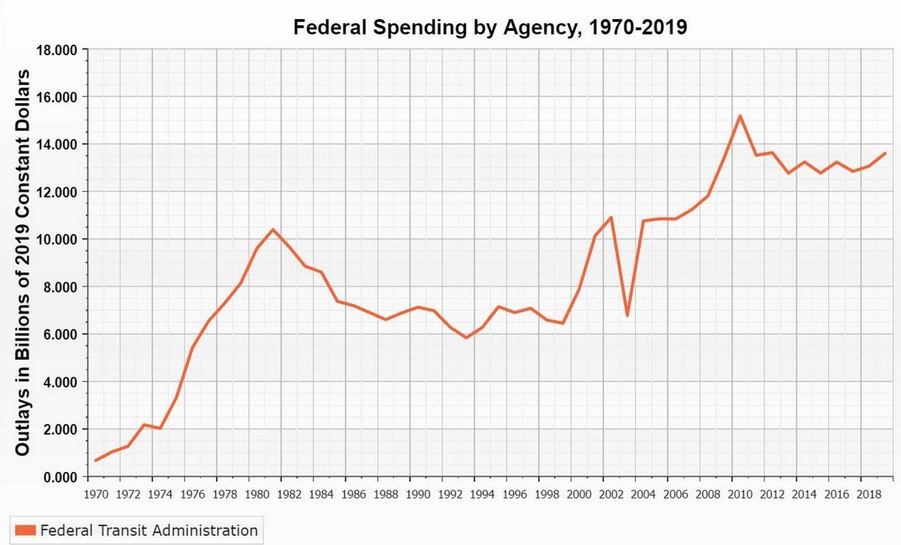


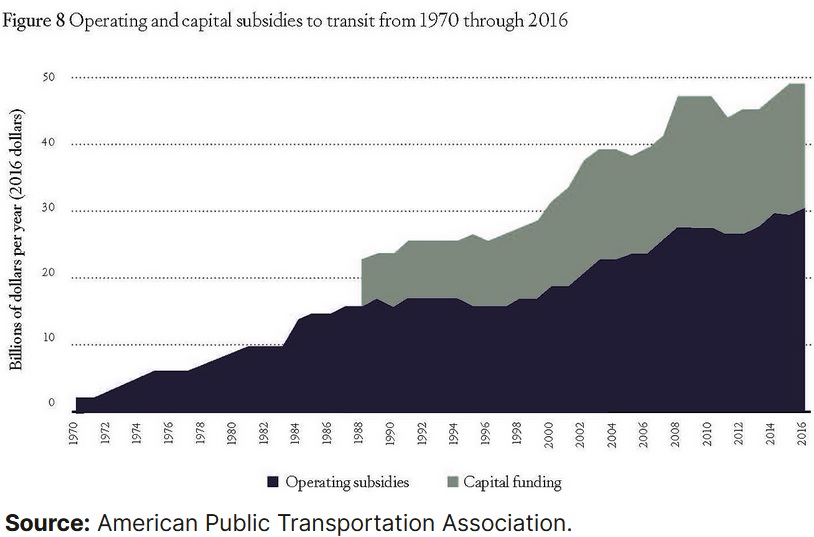
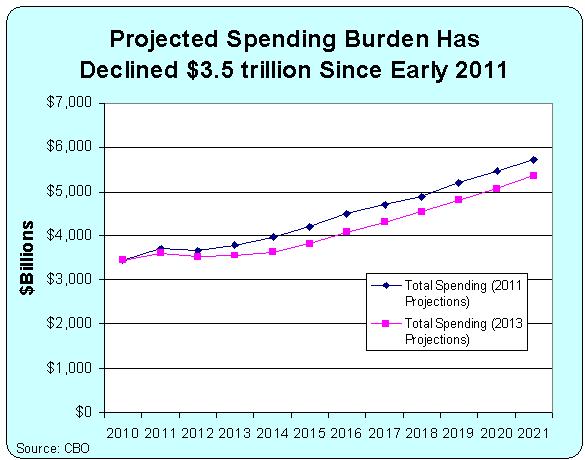
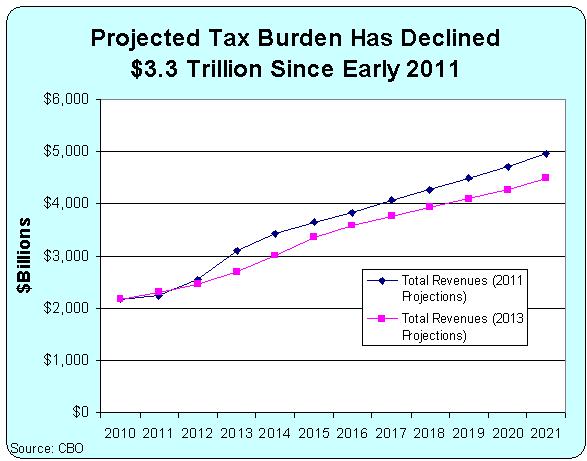
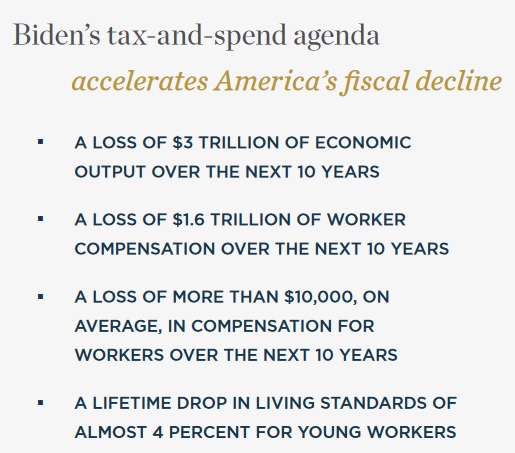
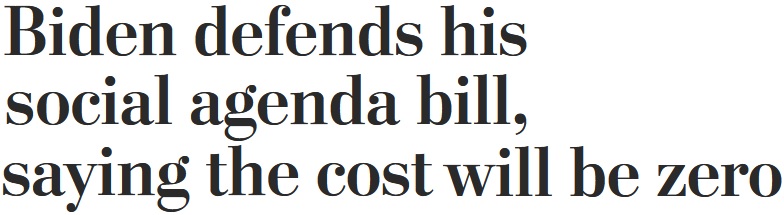

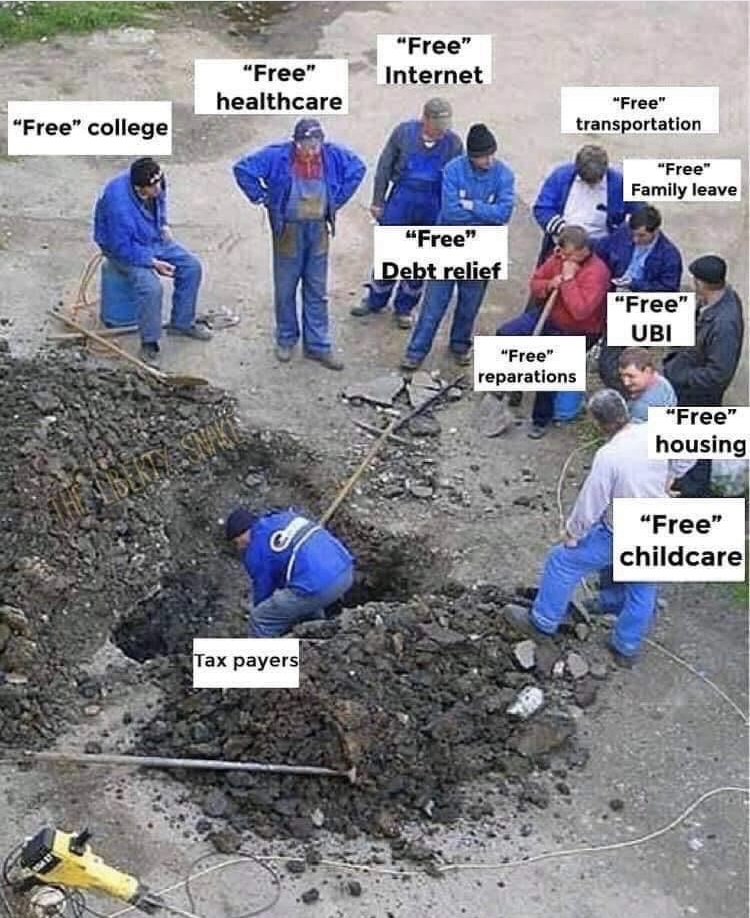
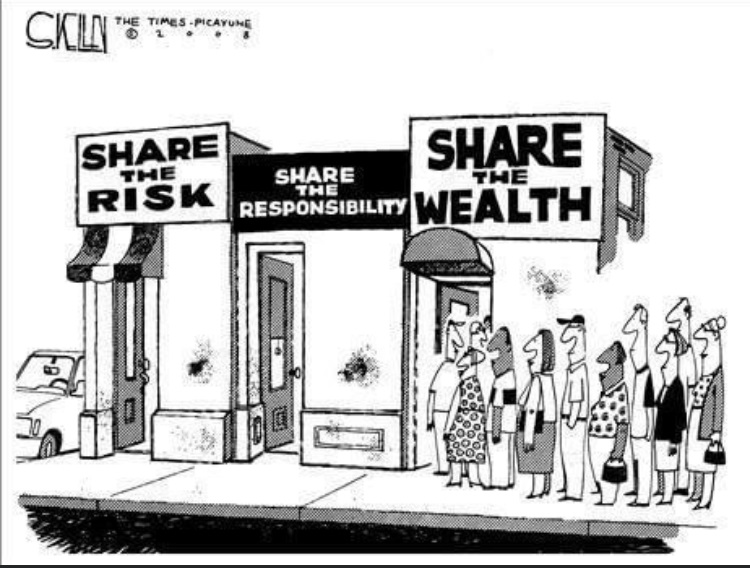
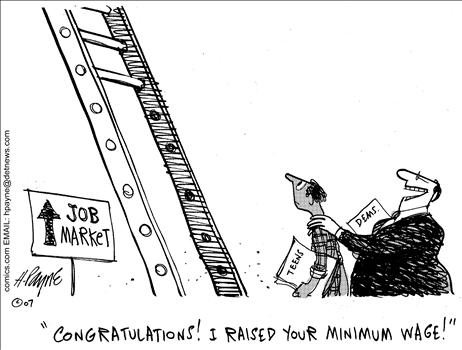

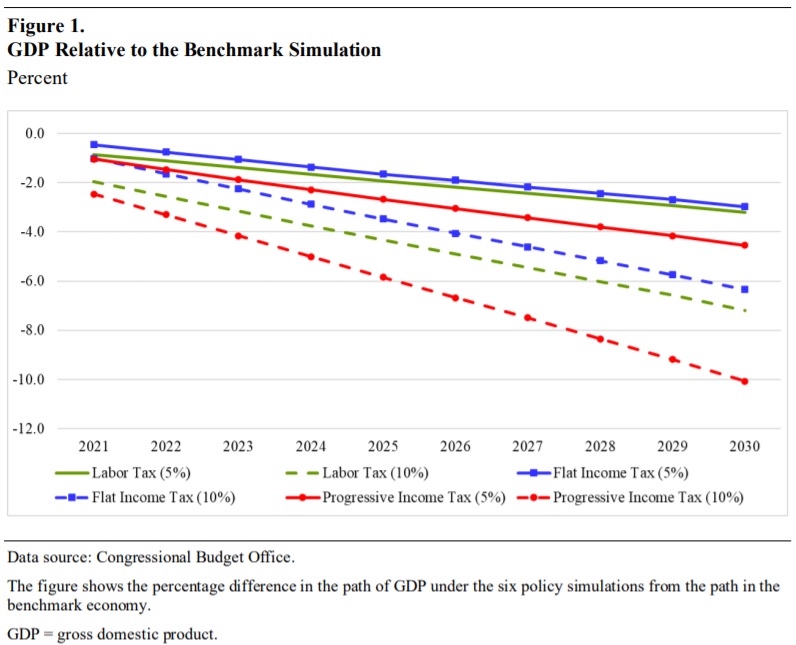
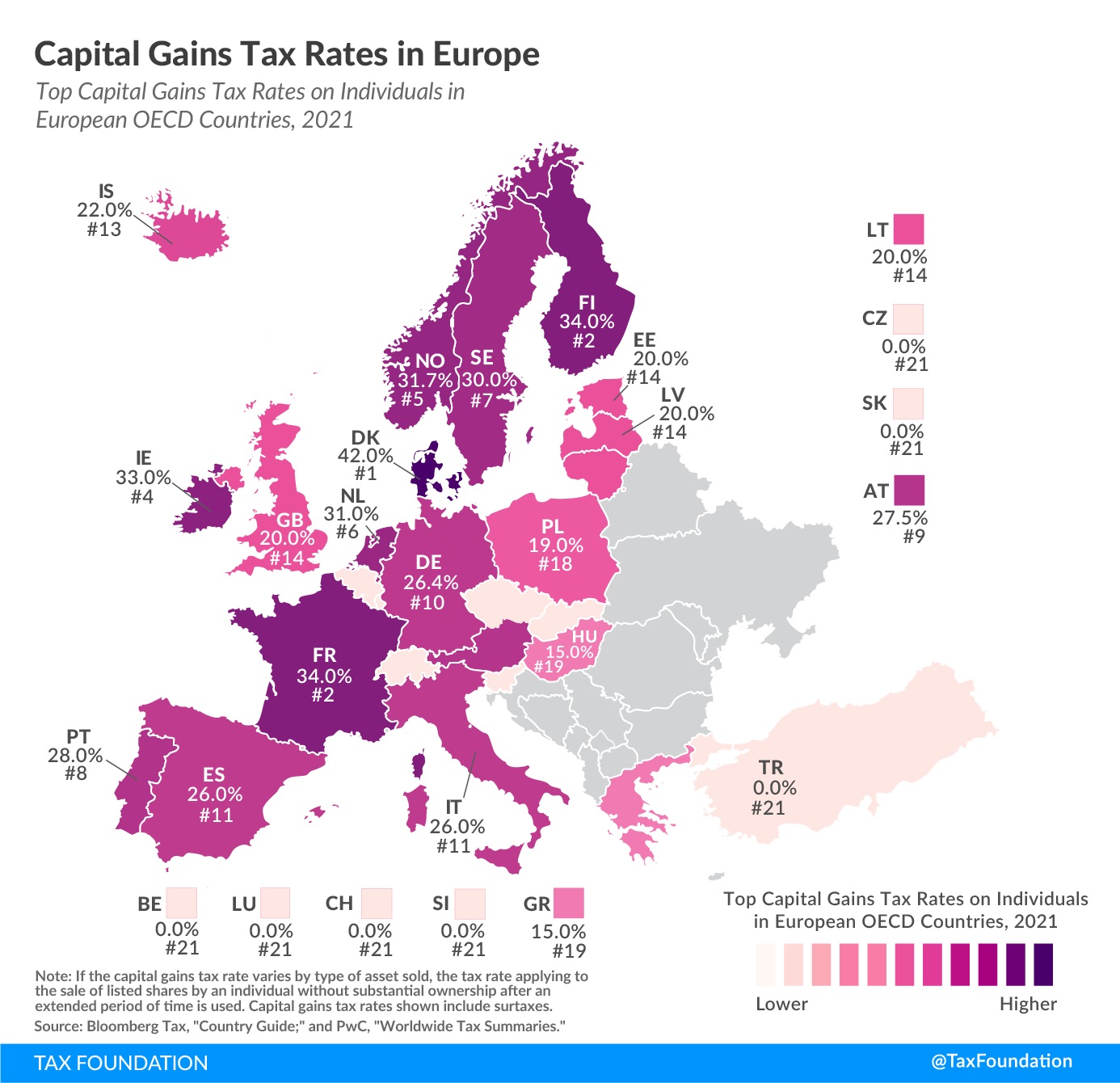







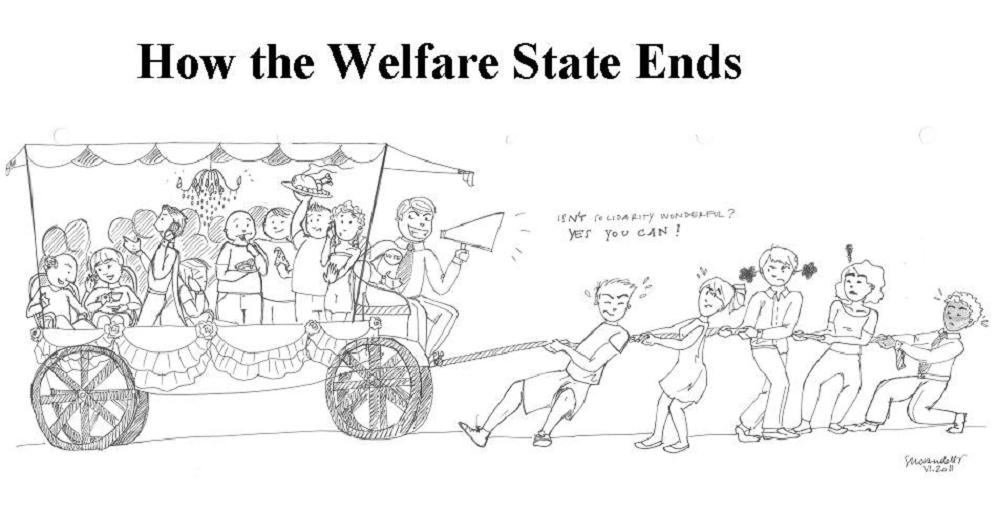

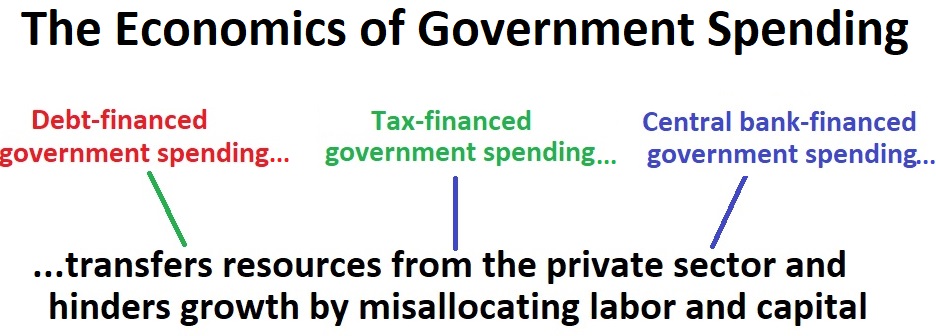

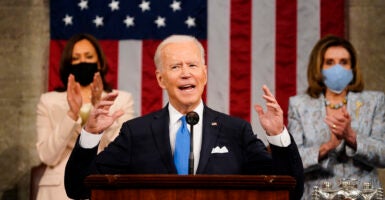
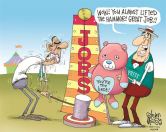
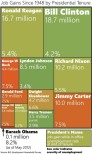


 The Daily Hatch