I personally think there is about a 80% chance ultimately Joe Manchin will support some kind of compromise bill the Democrats come up with, but I do like a lot of what he is saying now:
Amid inflation, debt and the inevitability of future crises, Congress needs to take a strategic pause.
By
Joe Manchin
PHOTO: GETTY IMAGES
The nation faces an unprecedented array of challenges and will inevitably encounter additional crises in the future. Yet some in Congress have a strange belief there is an infinite supply of money to deal with any current or future crisis, and that spending trillions upon trillions will have no negative consequence for the future. I disagree.
An overheating economy has imposed a costly “inflation tax” on every middle- and working-class American. At $28.7 trillion and growing, the nation’s debt has reached record levels. Over the past 18 months, we’ve spent more than $5 trillion responding to the coronavirus pandemic. Now Democratic congressional leaders propose to pass the largest single spending bill in history with no regard to rising inflation, crippling debt or the inevitability of future crises. Ignoring the fiscal consequences of our policy choices will create a disastrous future for the next generation of Americans.
Those who believe such concerns are overstated should ask themselves: What do we do if the pandemic gets worse under the next viral mutation? What do we do if there is a financial crisis like the one that led to the Great Recession? What if we face a terrorist attack or major international conflict? How will America respond to such crises if we needlessly spend trillions of dollars today?
Instead of rushing to spend trillions on new government programs and additional stimulus funding, Congress should hit a strategic pause on the budget-reconciliation legislation. A pause is warranted because it will provide more clarity on the trajectory of the pandemic, and it will allow us to determine whether inflation is transitory or not. While some have suggested this reconciliation legislation must be passed now, I believe that making budgetary decisions under artificial political deadlines never leads to good policy or sound decisions. I have always said if I can’t explain it, I can’t vote for it, and I can’t explain why my Democratic colleagues are rushing to spend $3.5 trillion.
Another reason to pause: We must allow for a complete reporting and analysis of the implications a multitrillion-dollar bill will have for this generation and the next. Such a strategic pause will allow every member of Congress to use the transparent committee process to debate: What should we fund, and what can we simply not afford?
I, for one, won’t support a $3.5 trillion bill, or anywhere near that level of additional spending, without greater clarity about why Congress chooses to ignore the serious effects inflation and debt have on existing government programs. This is even more important now as the Social Security and Medicare Trustees have sounded the alarmthat these life-saving programs will be insolvent and benefits could start to be reduced as soon as 2026 for Medicare and 2033, a year earlier than previously projected, for Social Security.
Establishing an artificial $3.5 trillion spending number and then reverse-engineering the partisan social priorities that should be funded isn’t how you make good policy. Undoubtedly some will argue that bold social-policy action must be taken now. While I share the belief that we should help those who need it the most, we must also be honest about the present economic reality.
Inflation continues to rise and is bleeding the value of Americans’ wages and income. More than 10.1 million jobs remain open. Our economy, as the Biden administration has correctly pointed out, has reached record levels of quarterly growth. This positive economic reality makes clear that the purpose of the proposed $3.5 trillion in new spending isn’t to solve urgent problems, but to re-envision America’s social policies. While my fellow Democrats will disagree, I believe that spending trillions more dollars not only ignores present economic reality, but makes it certain that America will be fiscally weakened when it faces a future recession or national emergency.
In 2017, my Republican friends used the privileged legislative procedure of budget reconciliation to rush through a partisan tax bill that added more than $1 trillion to the national debt and put investors ahead of workers. Then, Democrats rightfully criticized this budgetary tactic. Now, my Democratic friends want to use this same budgetary tactic to push through sweeping legislation to make “historic investments.” Respectfully, it was wrong when the Republicans did it, and it is wrong now. If we want to invest in America, a goal I support, then let’s take the time to get it right and determine what is absolutely necessary.
Many in Washington have convinced themselves we can add trillions of dollars more to our nearly $29 trillion national debt with no repercussions. Regardless of political party, elected leaders are sent to Washington to make tough decisions and not simply go along to get along.
For those who will dismiss my unwillingness to support a $3.5 trillion bill as political posturing, I hope they heed the powerful words of Adm. Mike Mullen, a former chairman of the Joint Chiefs of Staff, who called debt the biggest threat to national security. His comments echoed the fear and concern I’ve heard from many economic experts I’ve personally met with.
At a time of intense political and policy divisions, it would serve us well to remember that members of Congress swear allegiance to this nation and fidelity to its Constitution, not to a political party. By placing a strategic pause on this budgetary proposal, by significantly reducing the size of any possible reconciliation bill to only what America can afford and needs to spend, we can and will build a better and stronger nation for all our families.
Mr. Manchin, a Democrat, is a U.S. senator from West Virginia.
Free To Choose – Milton Friedman on The Welfare System (1978) | Thomas S…
National Debt Set to Skyrocket
Everyone wants to know more about the budget and here is some key information with a chart from the Heritage Foundation and a video from the Cato Institute.
In the past, wars and the Great Depression contributed to rapid but temporary increases in the national debt. Over the next few decades, runaway spending on Medicare, Medicaid, and Social Security will drive the debt to unsustainable levels.
PERCENTAGE OF GDP
Download
Source: Heritage Foundation calculations based on data from the U.S. Department of the Treasury, Institute for the Measurement of Worth, Congressional Budget Office, and White House Office of Management and Budget.
The charts in this book are based primarily on data available as of March 2011 from the Office of Management and Budget (OMB) and the Congressional Budget Office (CBO). The charts using OMB data display the historical growth of the federal government to 2010 while the charts using CBO data display both historical and projected growth from as early as 1940 to 2084. Projections based on OMB data are taken from the White House Fiscal Year 2012 budget. The charts provide data on an annual basis except… Read More
Authors
Emily GoffResearch Assistant
Thomas A. Roe Institute for Economic Policy StudiesKathryn NixPolicy Analyst
Center for Health Policy StudiesJohn FlemingSenior Data Graphics Editor
A pair of two-time Super Bowl winning quarterbacks headline this year’s lineup of speakers at the Little Rock Touchdown Club.
Former New York Giants quarterback Eli Manning and former Pittsburgh Steelers quarterback and Pro Football Hall of Famer Terry Bradshaw are among 17 speakers who were announced Tuesday.
The Little Rock Touchdown Club is returning after taking last year off because of the COVID-19 pandemic.
Arkansas coach Sam Pittman and several former Razorback players are also among the speakers.
The full lineup is below.
Sam Pittman, Arkansas football coach, Aug. 24
Verne Lundquist, former sportscaster and Texas Radio Hall of Famer, Aug. 30
Vince Young, former Texas quarterback, Sept. 7
Terry Bradshaw, former Pittsburgh Steelers quarterback and Pro Football Hall of Famer, Sept. 14
Darren McFadden, former Arkansas and NFL running back, Sept. 27
Eli Manning, former New York Giants quarterback, and Matt Jones, former Arkansas and NFL wide receiver, Oct. 4
Butch Jones, Arkansas State coach, Oct. 11
Austin Allen, former Arkansas quarterback, Oct. 18
Cliff Harris, former Dallas Cowboys safety and Pro Football Hall of Famer, and Drew Pearson, former Dallas Cowboys wide receiver and Pro Football Hall of Famer, Oct. 25
Nathan Brown, Central Arkansas coach, Nov. 1
Walt Coleman, longest-tenured referee in NFL history, Nov. 8
Andre Ware, sportscaster and Heisman Trophy winner, and Quinn Grovey, sportscaster and former Arkansas quarterback, Nov. 15
Here is an article on Vince Dooley when he spoke from the Arkansas Democrat-Gazette:
LITTLE ROCK — Vince Dooley stepped down as athletic director at Georgia in 2004 and as head coach in 1988, but he still keeps close tabs on the Bulldogs football program.
Dooley was in Samford Stadium on Saturday in Athens, Ga., where he watched the Arkansas Razorbacks pull out a last-second 31-24 victory over theBulldogs.
“The score was 24-10 Arkansas and then Georgia dominated the fourth quarter for 14 minutes,” Dooley said Monday at the Little Rock Touchdown Club luncheon at the Embassy Suites hotel. “Georgia scored two touchdowns and had the ball at midfield and then a guy [Jake Bequette] comes off the corner and knocks the hell out of the quarterback.
“[Ryan] Mallett comes back and flicks two throws with his wrist and then gets his body into that last one and it’s all over.”
Mallett’s 40-yard touchdown pass to Greg Childs with 15 seconds left secured the victory and moved the Hogs to 3-0 and No. 10 in The Associated Press rankings, setting up a showdown with No. 1 Alabama on Saturday in Fayetteville.
“I know when two Georgia fans talk to one another, the first thing they say, is ‘How ’bout them Dogs.’ Well today, it’s ‘How ’bout them Hogs.’
“Today, I’m glad not to be in Athens and glad I’m not in coaching.”
With the Bulldogs off to a 1-2 start and 0-2 in the SEC for the first time since 1993, Dooley said he feels for Coach Mark Richt, whom he hired in December 2000. Richt has come under criticism after an 8-5 season a year ago, his worst in his nine years in Athens.
“It’s just the nature of the beast,” Dooley said. “He’s a victim of his own success,and it’s hard for people to tolerate when the team is not winning. The difference is the number of people who don’t tolerate is twice as high.”
While the Hogs are a 7 1 /2-point underdog against defending national champion Alabama, Dooley, who won a national championship in 1980, knows a few key plays can mean the difference between winning and losing.
“If you win a national championship, you need those type of plays to happen,” Dooley said. “Look at Tennessee in 1998 against Arkansas. If they don’t get that fumble, they don’t win it all.”
While Dooley was in the stadium Saturday, he will not be in Samford Stadium on Oct. 9 when Tennessee, coached by his son Derek Dooley, comes to town.
“I will pull for him, but I’m not going to go inside Samford Stadium and pull against Georgia, and besides, they usually have those high tech cameras, which can spot you, and I don’t want that to happen,” Dooley said.
“My wife [Barbara] will be in the stadium, but I’ve told her she’s not allowed to wear that ugly orange until she crosses the state line and I won’t wear that ugly orange either.”
With the Volunteers off to a 1-2 start after a 31-17 loss to Florida, Dooley was asked by the audience if he had any advice for his son and he said, “Hang on.”
“He has a tough job,” Dooley said. “They went through a couple of years where they didn’t recruit anybody and then they hired that one guy [Lane Kiffin] from the West Coast who should have stayed on the West Coast.”
Dooley said he tried to talk his son out of going into coaching after spending one year as a lawyer in Atlanta, but lost that debate. He said when Derek was at LSU, he lost the debate with his mother when he tried to get her to root for LSU when the Tigers played Georgia.
“She told him the credit card is thicker than blood,” Dooley said.
LITTLE ROCK – The Little Rock Touchdown Club kicked off the 2013 season and announced the club’s line-up of renowned speakers and the state’s finest in football.
The Northwest Arkansas Touchdown Club also released its slate of speaker for 2013.
Bret Bielema – Aug. 28
Jeff Long – Sept. 4
Former Oklahoma St. coach Pat Jones – Sept. 18
Lou Holtz – Sept. 23
Fitz Hill – Oct. 2
CBS College Football Columnist – Bruce Feldman – Oct. 16
Mangino at a 2007 KU basketball game Eric Mangino is a very good speaker. Here is a portion of an article by Jim Harris: Jim Harris’ Notebook: Mangino Ready To Return; Big Week For Central Arkansas by Jim Harris 11/14/2011 at 3:37pm It’s easy for fans who don’t follow Kansas football closely to forget just […]
Uploaded by TheMemphisSlim on Sep 3, 2010 Johnny Majors from Huntland, TN tried out for the UT Football team weighing 150 pounds. His Father, Shirley Majors his HS Coach,encourage him and then 4 younger brothers all to be Vols. Johnny Majors was the runner-up in 1956 for the Heisman Trophy to Paul Horning, on a loosing Notre Dame […]
Yesterday at the Little Rock Touchdown Club meeting Rex Nelson during his SEC roundup mentioned the popular rumor that got started last week that Houston Nutt had been contacted by Memphis. Of course, at the time Larry Porter had not even been fired. I called someone I knew in Memphis and they told me that […]
I enjoyed the Little Rock Touchdown Club and have posted a lot about it all fall. I have links below to earlier posts. Yesterday Wally Hall and Steve Sullivan had some good insights. Below are some of the thoughts of Jim Harris that he shared at the lunch. BUILDING THE DEFENSE: How nice it would […]
Earlier I wrote about where I think Arkansas could win a national championship with just two more wins. Below is a portion of an article by Jim Harris of the website Arkansas 360: AND ON BOBBY: Schlabach, on Arkansas’ coach: “I said when he was hired that Bobby Petrino would make Arkansas a contender for […]
Below is a picture of Lane Kiffin with Johnny Majors. Today Johnny Majors spoke at the Little Rock Touchdown Club. Majors told several revealing stories about his time at Arkansas from 1964-1968 when he was an assistant coach under Frank Broyles. One of the funniest stories concerned fellow assistant coach Jim MacKenzie who knew how to […]
Former Tennessee Football Coach Johnny Majors is to speak at Little Rock Touchdown Club todayat the Embassy Suites hotel. Majors coached at Iowa State from 1968-1972, Pittsburgh from 1973-1976 and 1993-1996, where he led the Panthers to the 1976 national championship and at Tennessee from 1977-1992, where he won three SEC championships. 1976 Sugar Bowl National Championship […]
I got to ask Pat Summerall a question at the Little Rock Touchdown Club meeting back in October of 2010. Summerall had pointed out that Tom Landry was the defensive coordinator and Vince Lombardi was the offensive backfield coach when he played for the Giants. Summerall had shared how he had recovered from his […]
We have had some great speakers at the Little Rock Touchdown Club and Auburn’s Pat Dye has to be included in that list. Jim Harris: No Little Rock Touchdown Club Speaker Quite Like Former Auburn Coach Pat Dye by Jim Harris 10/3/2011 at 3:22pm The last time former Auburn head football coach Pat Dye addressed […]
Yesterday I got to hear Lloyd Carr speak to the Little Rock Touchdown Club. Below is how the Arkansas Democrat Gazette covered it. LITTLE ROCK — Lloyd Carr coached Tom Brady at the beginning of his 13-year tenure as Michigan’s head coach and Ryan Mallett at the end. Now, Brady and Mallett are New England […]
The Broyles Award Trophy, made out of solid bronze, depicts Broyles (kneeling) and longtime University of Arkansas assistant coach Wilson Matthews (standing), watching over a Razorback football game or practice. Matthews was the coach of Little Rock Central High School before joining Broyles on the Razorback’s staff. ______________ Today at the Little Rock […]
Gene Stallings used to interview the boys that dated his daughters. He asked his future son-in-laws if they played sports. He wanted to know if they had competed at something. Below is an article on what Stallings thinks about Texas A&M joining SEC. Stallings: SEC best fit for A&M By Troy Schulte Wednesday, September 7, […]
Reggie Herring is featured in this video above about the 1980 Florida St victory over Pitt. Mark May did a great job at the first Little Rock Touchdown Club meeting of the year. Jim Harris of Arkansas Sports 360 did a good article on it and I agree with what Wally Hall wrote on his […]
I got to hear Howard Schnellenberger speak on 9-4-12 at the Little Rock Touchdown Club. I enjoyed hearing his stories about Bear Bryant and what he learned from the Bear. Here is a story by Jim Harris that discusses these too things. Jim Harris: Spirit Of Arkansan Bear Bryant Runs Through Schnellenberger’s Veins <!– 23 […]
1972 USC Football Highlights vs. Notre Dame Uploaded by 63utuber on Jun 14, 2011 No description available. I got to hear Coach Robinson speak in Little Rock on August 27, 2012. Little Rock Touchdown Club Week 2: Hall Of Fame Coach John Robinson by Zack Veddern on Aug 28, 2012 9:07 AM CDT robinson […]
John L. Smith is to speak at the Little Rock Touchdown Club on Monday Sept 24, 2011. I am proud of him for showing up. Bill Vickery had some comments on the debacle on Saturday. Vickery said it totally removed the earlier nightmare he had since he was 7 years old when he witnessed his […]
Randy White spoke at the Little Rock Touchdown Club yesterday. He did a great job. I have always been a big Dallas Cowboy fan. Here is a story from Arkansas Sports 360: HOW ‘BOUT THEM COWBOYS: The Touchdown Club welcomed Randy White to town this Monday. The former Dallas Cowboy defensive tackle is one of […]
I have written a lot about the Dallas Cowboys in the past. One of my favorite stories is getting to ask Pat Summerall a question about Tom Landry and his answer was a classic one. I simply asked him if he had a chance to interact with any Christian Coaches like Tony Dungy or Tom […]
I got to see Matt Jones speak on 9-10-12 at the Little Rock Touchdown Club and I was proud of him for opening up concerning what brought his career to an end. Drugs can derail a great career. Take a look at what happened to Matt Jones: Taken in the first round by the Jacksonville […]
Gov. Beebe, Shane Broadway, Steve Sullivan, Jeff Hankins and all the notable ASU grads were in the audience today at the Little Rock Touchdown Club. This was the second time I got to see Gus Malzahn speak at the Little Rock Touchdown Club. Two years ago he was skyped in since tornadoes made it impossible […]
Arkansas is hoping for a top notch recruiter for the next coach. Will we get one? Jim Harris: Recruiting Expert Lemming Says Right Choice For Hogs Can Land Impact Players <!– 23 –> by Jim Harris 10/29/2012 at 3:45pm As much as recruiting seems to excite every college football fan base, including Arkansas’, one would […]
I really enjoyed hearing Mike Slive speak on Monday. The SEC is blessed to have Slive. Take a look below at all of his accomplishments. Home / Sports / LITTLE ROCK TOUCHDOWN CLUB Slive: Nonconference tie-ups tangle scheduling PHOTO BY KAREN E. SEGRAVE Under the leadership of SEC Commissioner Mike Slive, the conference has won 62 […]
Harvey Updyke Interview on The Paul Finebaum Show 4 21 11 Part 3 Bobby Petrino going to Tennessee later this year? I thought he would jump at the chance to do that. However, the Vols have looked pretty good this year and if they go into Miss St’s homefield this week and beat the #17 […]
On Oct 1, 2012 I got to hear Willie Roaf speak at the Little Rock Touchdown Club and he did a great job. One thing he said about Charles McRae and Antone Davis of Tennessee was hard to hear. I think he said that they were his friends and he thought they were very talented […]
You are called to go Keith’s concerts were evangelistic and exhortational. He was the Lecrae of the 70’s. Here is what he has to say about the great commission:
“The world isn’t being won today because we’re not doing it. It’s our fault. This generation of Christians is responsible for this generation of souls on the earth. And no where in the world is the gospel so plentiful as here in the United States. No where. And I don’t want to see us stand before God on that day ans say, ‘but God I didn’t hear you call me.’ Here is something for all you to chew on, you don’t need to hear a call, you’re already called. In fact, if you stay home from going into all nations you had better be able to say to God, ‘You called me to stay home God, I know that as a fact.'”
Keith Green – Asleep In The Light (live)
Uploaded on May 26, 2008
Keith Green performing “Asleep In The Light” live at Jesus West Coast ’82
Keith Green was an intense and radical man of God. He was taken from this Earth at a relatively young age. His legacy lives on through his music and his sermons. This video is about his life.
My favorite Christian music artist of all time is Keith Green. Sunday, May 5, 2013 You Are Celled To Go – Keith Green Keith Green – (talks about) Jesus Commands Us To Go! (live) Uploaded on May 26, 2008 Keith Green talks about “Jesus Commands Us To Go!” live at Jesus West Coast ’82 You can find […]
Keith Green – So You Wanna Go Back To Egypt (live) Uploaded by monum on May 25, 2008 Keith Green performing “So You Wanna Go Back To Egypt” live at West Coast 1980 ____________ This song really shows Keith’s humor, but it really has great message. Keith also had a great newsletter that went out […]
Keith Green – So You Wanna Go Back To Egypt (live) Uploaded by monum on May 25, 2008 Keith Green performing “So You Wanna Go Back To Egypt” live at West Coast 1980 ____________ This song really shows Keith’s humor, but it really has great message. Keith also had a great newsletter that went out […]
Keith Green – So You Wanna Go Back To Egypt (live) Uploaded by monum on May 25, 2008 Keith Green performing “So You Wanna Go Back To Egypt” live at West Coast 1980 ____________ This song really shows Keith’s humor, but it really has great message. Keith also had a great newsletter that went out […]
Keith Green – So You Wanna Go Back To Egypt (live) Uploaded by monum on May 25, 2008 Keith Green performing “So You Wanna Go Back To Egypt” live at West Coast 1980 ____________ This song really shows Keith’s humor, but it really has great message. Keith also had a great newsletter that went out […]
Keith Green – Easter Song (live) Uploaded by monum on May 25, 2008 Keith Green performing “Easter Song” live from The Daisy Club — LA (1982) ____________________________ Keith Green was a great song writer and performer. Here is his story below: The Lord had taken Keith from concerts of 20 or less — to stadiums […]
Keith Green – Asleep In The Light Uploaded by keithyhuntington on Jul 23, 2006 keith green performing Asleep In The Light at Jesus West Coast 1982 __________________________ Keith Green was a great song writer and performer and the video clip above includes my favorite Keith Green song. Here is his story below: “I repent of […]
Keith Green – Your Love Broke Through Here is something I got off the internet and this website has lots of Keith’s great songs: Keith Green: His Music, Ministry, and Legacy My mom hung up the phone and broke into tears. She had just heard the news of Keith Green’s death. I was only ten […]
The Keith Green Story pt 7/7 I remember when I first Keith Green. He had a great impact on me. Below are some quotes on Keith: Quotes “It’s time to quit playing church and start being the Church (Matt. 18:20)” — Keith Green, as quoted by Melody Green in the introduction to A Cry […]
The Keith Green Story pt 6/7 When I first heard Keith Green in 1978 it had a major impact on my life. Below is his story: LEGEND Keith Green CBN.com – When musician Keith Green died in a plane crash on July 28, 1982, the world lost a special man whose heart was aflame […]
The Broyles Award Trophy, made out of solid bronze, depicts Broyles (kneeling) and longtime University of Arkansas assistant coach Wilson Matthews (standing), watching over a Razorback football game or practice. Matthews was the coach of Little Rock Central High School before joining Broyles on the Razorback’s staff.
______________
Today at the Little Rock Touchdown Club Luncheon, Bobby Bowden spoke, but before he spoke, David Bazell announced that Bowden is the newest member of the Broyles Award Selection Committee. The committee includes Frank Broyles, Don James, Vince Dooley, Haden Fry, Dick MacPherson, Grant Teaff, and LaVell Edwards.
The Broyles Award is an annual award given to honor the best assistant coach in college football. First awarded in 1996, it was named after former University of Arkansas men’s athletic director Frank Broyles. The award is presented in Little Rock, Arkansas.
Bowden told a funny story about the 1980 victory at Nebraska. He pointed out that Nebraska was ranked #3 and was expected to possibly win the national championship. At that time Florida State had not won a game against a top 5 team yet, and FSU went into the game as big underdogs. In fact, the week before FSU had lost 10-9 in a game where they had been heavily favored because of the 10 fumbles they had because their first and second team centers had season ending injuries.
In practice the next week Bowden got several players together to compete for the starting center position and it was won by a walk-on player. The next game against Nebraska, Florida State had no turnovers while Nebraska had 4 and Florida State came away with a 18-14 victory.
Bowden noted that the walk-on center was horrible at blocking, but he was very dependable at providing good snaps. Bowden uses this illustration when he talks to business people to encourage them to seek dependable employees.
Bowden asserted, “That will always go down in my book not neccessarily my favorite win, but probably the most important win in Florida State’s modern day history.”
Below you will see a clip that discusses that 1980 matchup and you will notice that former Arkansas defensive coordinator Reggie Herring is interviewed twice in the 4 minute clip. Herring played on the FSU defense.
In 2006 I went to the Shiloh Christian at Bauxite playoff game in Saline County. It was a cold night, and I noticed Gus Malzahn and several other notable persons at the game. Arkansas had played LSU earlier in the day in Little Rock. During the second half I saw a monster hit by a linebacker from Shiloh, and I exclaimed, “Who was that guy?” The gentleman next to me who was wearing a ski mask responded, “That is my son Adam Herring.” I had been standing next to Reggie Herring for 2 hours and did not even know it.
TALLAHASSEE, Fla. (BP)–Whether it’s leading his team to a national championship on the gridiron, or carefully tending his flock of football players, Florida State’s Bobby Bowden is on-mission for the Lord — 24 hours a day.During 46 years of coaching, Bowden has concerned himself with the salvation of nearly 5,000 young men who have providentially found themselves at his coaching door. Sitting at his desk — family photographs to his right and a picture-window view of the football playing field at Doak Campbell Stadium on his left — the larger-than-life personality becomes the down-to-earth mentor to players and coaches alike. He is just as concerned about his players “getting saved” as he is about them learning playbooks.In fact, when a student athlete signs to play football at Florida State University, one of the first things the coach does is send a letter to the parents asking for permission to take the student to church.Bowden takes the players, as a team, to church twice each season. The churches selected are not necessarily Baptist; typically one is predominantly Anglo and the other predominantly African-American.
“I make all my boys, black or white, go because I want them to see that they are welcomed here in this church no matter what the color of their skin. I want them to understand that.”
He also tells the parents, “I want them to carry on the way that you have trained them in your home because I know how it is when kids get away to college — the first thing they do is quit going to church.”
And while Bowden may be a man of character and integrity, don’t under estimate him as an opponent. Firm coaching principles are as important to him as winning the game.
Tangible evidence of the success of this football legend’s program is on display in the Coyle Moore Athletic Center. The football wing is a museum that houses two Waterford crystal national championship trophies (1993 and 1999), along with hundreds of other awards, rings, trophies, outstanding player portraits and memorabilia from 24 years of winning football games.
Sure, Bowden is proud of winning but it’s mainly others — boosters, media and fans — who bring up the impressive, record-breaking statistics. Bowden unequivocally gives God the glory for his success.
“God hasn’t blessed many coaches more than He has me. He sure has blessed me” and for that “I am very thankful,” Bowden said. Specifically, he mentioned that, “God has given me a great family. We’ve all been very fortunate.”
Bobby and Ann Bowden have been married 51 years and their family includes six children — all married — and 21 grandchildren, all healthy.
Bowden truly loves people. Just to watch him walk around the athletic complex is a lesson in people skills as he speaks and nods to every person he sees. Colleagues say he “never walks past an admiring child without a wink and a smile.”
The Birmingham, Ala., native evidences a God-given talent to motivate others. The genteel charm, quick wit and Southern drawl, mixed with a friendly and outgoing man who loves life and lives it to the fullest, makes people just want to be around him.
“I just love to coach,” he affirmed. “That may sound simple, but I think sometimes people like the things that go around coaching and not the actual job.”
Colleagues use words like “respect, sincerity, class, honesty, charisma, charm and humor” to describe Bowden. His faith in God, commitment to Christ and “rock-solid character” are the things that define this man — not wins, losses or coaching records.
“Our mission on earth is to glorify God, in whatever [situation] He’s put us.” So if you’re doing it to the glory of God, he added, then it better be good.
“I’ve always felt like He put me in coaching to try to reach young men through coaching, through playing ball, you know? It opens a lot of doors for them.”
Startling numbers of Bowden’s players become first-round NFL draft picks, but Bowden encourages them to seek God’s will in planning their futures.
“God is going to find a way for you to make a living,” he said. “He is going to find a profession for you. And to me that’s what all these college students should be doing — searching for the profession into which God wants them to go. Now most of them are going to be led into it by their abilities. Some of them just feel like they want to go into medicine, law, teaching, coaching or criminology. In other words there’s something that just leads you in there, and I feel like if people will ask and seek, that God will lead them where He wants them to go.”
Reflecting on his career and what God has taught him through coaching, Bowden said, “If you love Him and serve Him and try to be loyal to Him and obedient to Him, He’s not going to let you fail. That’s the thing that has happened to me.”
Ever mindful of his Christian testimony, Bowden has “always tried to put God first — I’ve tried. I don’t want people to think that ‘Bobby really thinks he’s a good boy.’ No, I don’t think I’m good. I try to be good. But the thing about it is that God has taught me that if you try to be obedient and try to follow the rules and try to do what He asks you to, you still can be a success.”
Win, lose or draw, Bowden’s first order of business at the end of a game is to immediately shake the other coach’s hand. He is acutely aware of the constant audience of players, coaches, fans and media watching for his reaction, particularly during turbulent times.
Bowden was “raised in a very good Christian home” under the care of “great” parents. They took him to church all of his life, had prayer in the home and read Scripture.
Bowden made a public profession of faith when he was around age 10, but said it wasn’t until he was 23 he really “got the picture” and rededicated his life to the Lord.
He recalled, “As I came up, I thought that being good was being a Christian. I knew you had to join the church. I joined the church. I knew you had to be baptized. I was baptized. I thought that — plus being good — makes you a Christian.
“I finally realized that you are saved by grace.” It’s “nothing that you did and nothing that you earned. Once I understood that, it made life simpler to me. Because, with understanding grace, it makes you want to do better. Nobody’s perfect. I make mistakes every day and do things that are wrong, though I try not to. But that’s the thing about being a Christian and really believing: You try not to.”
He added, “The older I get the stronger I get about my Christian beliefs and faith.”
Ever since his 1953 rededication experience, Bowden has accepted invitations to speak whenever and wherever he can, particularly to church groups, and particularly when he is on the road with the team. Whether the media is watching or not, he minces no words when speaking of eternal salvation.
Comparing his role as a coach and that of ministers, who he admires because “they have got the toughest job in the world,” Bowden acknowledged, “In coaching I can’t make everybody happy. There’s no way. If you win, you didn’t win by a big enough score. … If you are a minister and you are preaching” the responsibility is greater. “You can’t make everybody happy there; don’t water it down so that these people who don’t believe don’t get their feelings hurt,” he admonished. “I think you’ve got to say it like it is, in the best loving way that you can say it now. But, again, preach the Bible and what the Bible teaches and I think your church will flourish.”
–30–
2010 exciting Idlewild baptist church Bobby Bowden guest speaker FSU head coach speaking sermon pastor ken whiten talks about faith in Jesus Christ, God. small story about his mom.
__________________________________
When I attended the Little Rock Touchdown Club on September 12, 2011 I thought that I something may have to do with Bobby Bowden’s testimony and sure enough he started off with a story about him being a Southern Baptist. However, he did not go into details about his faith in Christ. Here I am posting those details:
CBN.com – Bobby Bowden is a coaching legend. His name is synonymous with success. He’s the all-time winningest coach in Division One history, and he’s directed the Florida State University Seminoles to two national championships.
But he says the defining moment in his life came before his coaching career even began, when he rededicated his life to Jesus Christ.
“When I recommitted my life, my whole thinking was…God I’m making myself available to You. I think You’ve led me into coaching. I think this is what You want me to do, God,” he remembers.
And unashamedly, Coach Bowden has been using football at the stadium as a pulpit to witness to young men for the last 53 years.
“You know, that’s all I’ve done over the last 50 years is make it available, and you can’t believe the boys that have called me 20 to 30 years later.”
According to Bowden, his former players have said, “Coach I’m so glad you did this. I’m so glad you said that.”
“You can’t imagine how many boys I’ve coached here that become ministers. That has to be just as satisfying as winning a football game,” he says. “All we got to do is present it. We ain’t gonna save nobody. But He will, and all He asks us to do is to present it.”
Talk to players, coaches, and the people who work most closely with Bobby Bowden over the years, and the thing you hear over and over again is how much he genuinely cares for people.
“As a coach, he’s had a big influence on my life. He hired me because I was a player here. Bobby showed a lot to me by example as a leader — dependability and accountability,” says defensive line coach, Odell Haggins.
“He’s like a second father to me. He’s been so gracious to my family and I forever,” adds former assistant coach, Chuck Amato. “I’ve often said Coach Bowden is a sermon in shoes. What he says and what he preaches, he follows up. He treats the custodian that cleans the commode in his office just as well as he treats the president of the university. He sees no class in people. He sees no difference in race. He treats everybody kind and with respect.”
He’s fair, but tough — much like a general. In fact, had he not gone into coaching, Bowden said he probably would’ve chosen the military as a career.
“I was raised during World War II. So I became very interested in the military.”
“A lot of those skills and strategies carry over. I get a lot of sayings out of it. Some things that General Patton or Stonewall Jackson said, I can use and you’d be amazed at how much the strategy is alike,” says Coach Bowden.
Coach says one attribute that should carry over whether it’s the battlefield or the football field is character — a trait that he instills in his players.
“I’m one of those guys that thinks if you don’t have adversity, forget about character. Because your character is going to be developed by how well you handle adversity,” he says. “Now if you never have adversity, how are you going to develop character?”
And it’s through his own adversity Coach Bowden’s character shines. He’s been criticized for giving second chances to players who break team rules. But Coach says God extended grace to him and when given the opportunity, he’ll do the same.
“I was a boy myself one time. If someone had not forgiven me for some of the things I had done, I would never have made it. So I’m coaching these young men, and I know what they go through and the temptations they’re faced with.”
“They’re going to make mistakes. I made them! I still do! But if it’s up to me, and I’ve got a chance to save someone, and it’s the first time they’ve done something like this … I’m going to give them a second chance.”
And he uses those opportunities to be a positive influence in his players’ lives.
“I believe young men need a male in the home. Young boys raised need a male figure in the home. It’s not what most of them got … somebody to discipline them,” he believes. “I take them to church, have bible reading with them, and pray at supper. I think that myself and the staff add a lot.”
The landscape of college football has changed since Bowden arrived on the scene. A lot of coaches have come and gone. But Coach Bowden has had success with a simple philosophy.
“When I put everything in God’s hands, I don’t have to worry about anything. I don’t have to worry about winning ballgames. I want to. I want to win as much as anybody does, but I don’t have to worry about this. I know that when I die, I live eternally with my God, so the pressure’s off!”
LITTLE ROCK — Some of his material could use an update, but Bobby Bowden’s timing and inflection are good enough for an opening act at a comedy club.
The 81-year-old former Florida State football coach evoked lots of yucks at the Little Rock Touchdown Club on Monday, although a couple of punch lines were familiar and his story about autographed pictures would have worked just as well in Alabama by subbing Nick Saban’s name for that of Bobby Petrino.
Bowden left me wanting more inside football. He talked briefly about how college realignment is driven by money, how winning football attracts students, and how the 25-scholarship limit plays a big role in the number of upsets. He said he could live without a playoff in college football — “It’s not going to get much better than Oregon-Auburn” — and that he didn’t think it would happen because a large majority of college presidents are against it.
Although Missouri and West Virginia are mentioned most often as possible partners with Texas A&M in a move to the Southeastern Conference, Florida State is often in the speculation. They could have joined Arkansas in the SEC 20 years ago, but chose the Atlantic Coast Conference where Bowden believes they will remain.
“People older like I am like tradition,” he said.
Bowden mentioned how he harped on enthusiasm when he was hired at Florida State in 1976 and how persistence might be the most valuable asset in football. He recalled losing two centers in one game early in the 1980 season and losing to Miami the next week when the snap was fumbled 10 times. A week later, the Seminoles were going to play at No. 3 Nebraska and the only two candidates at center had originally been scheduled to be redshirted.
A 185-pound walk-on won the job over a 235-pound scholarship player. At Nebraska, the Seminoles couldn’t do anything in the first half and trailed 14-3. In the second half, the FSU quarterback rolled out regularly to escape the noseman.
The center, he said, hasn’t blocked the Nebraska noseman yet, but the Seminoles did not have a turnover and the Cornhuskers had four in a loss that put FSU on the map.
His message, often delivered to business owners, is to get dependable people.
Bowden opened the comedy with a story about him speaking to a group of Methodists in Georgia. A Southern Baptist, Bowden was asked by a Methodist minister if he was comfortable addressing the audience.
Sure, Bowden said, adding that the two groups worship a bit differently. Asked again, Bowden said he explained, “Y’all continue to do it your way; we’ll continue to do it His.”
The one about trying to get rid of his 10 complimentary game tickets the first year he was at FSU was more predictable. He accommodated family and neighbors and still had two left. Even the school janitor turned him down so he drove to a mall in Tallahassee, put the tickets on the car windshield, and went for a haircut.
An hour later, he came out and there were six tickets on the windshield.
During the three years prior to Bowden’s arrival, the Seminoles won four games. From 1987 to 2000, FSU finished in the top five in The Associated Press poll.
Under Bowden, Florida State won two national championships. Given my druthers, he would have expounded on those teams and some of his others.
——-
Harry King is sports columnist for Stephens Media’s Arkansas News Bureau. His e-mail address is hking@arkansasnews.com.
Former Florida State coach Bobby Bowden By Coley Harvey, Orlando Sentinel7:13 a.m. EDT, September 13, 2011 TALLAHASSEE – According to USA Today, former Florida State coach Bobby Bowden is expected to tell ABC’s “Good Morning America” Tuesday morning that he had prostate cancerwhile he was coaching in 2007, and that he kept his medical […]
I went to the Little Rock Touchdown Club and heard Bobby Bowden of Florida State speak. It was outstanding. Here is an article below on his visit from the Arkansas Democrat-Gazette: LITTLE ROCK — Former Florida State Coach Bobby Bowden is familiar with pressure brought on by high expectations. Two years ago, after the Seminoles […]
The Broyles Award Trophy, made out of solid bronze, depicts Broyles (kneeling) and longtime University of Arkansas assistant coach Wilson Matthews (standing), watching over a Razorback football game or practice. Matthews was the coach of Little Rock Central High School before joining Broyles on the Razorback’s staff. ______________ Today at the Little Rock […]
I went to the Little Rock Touchdown Club and heard Bobby Bowden of Florida State speak. It was outstanding. Here is an article below on his visit from the Arkansas Democrat-Gazette:
LITTLE ROCK — Former Florida State Coach Bobby Bowden is familiar with pressure brought on by high expectations.
Two years ago, after the Seminoles finished the season 7-6, Bowden, 81, wanted to coach one more season. But he was not given that opportunity.
Florida State President T.K. Wetherell asked him to step aside as coach and stay with the team in the diminished role of university ambassador — which would have given him little input on the day-to-day operations of the football team.
Bowden declined. He announced his retirement, and Jimbo Fisher, who had been appointed as the school’s coachin-waiting two years earlier, was given the head-coaching position for the 2010 season.
“That’s just the way it is now,” Bowden told members of the media after speaking to the Little Rock Touchdown Club at the Peabody Hotel in Little Rock on Monday. “I had wanted to coach one more year and try and get to 400 wins.”
Bowden retired with a career record of 377-129-4 after the NCAA forced Florida State to vacate 12 victories from the 2006-2007 seasons for academic problems with his former players.
“They are paying the head coach so much money now that they demand you to win,” Bowden said. “The thing is, head coaches make so much money now that you can retire. There aren’t going to be a lot of coaches who last as long as Joe [Paterno] and I did.”
Paterno has coached 46 years at Penn State with a 402-136-3 record.
Bowden said he made approximately $40,000 per year when he was hired at Florida State in 1976; he was making $2.5 million when he retired two years ago.
His Florida State team won 10 or more games from 1987-2000, never finished lower than fourth in the final AP poll, and won national championships in 1993 and 1999.
But during his last five seasons as coach, the Seminoles went 38-27 and only won 1 ACC championship.
“Those last few years, we didn’t do a good job evaluating players like we once did,” Bowden said. “We would see a kid we wanted, and he wasn’t as good as advertised.”
Failing to live up to expectations also cost Bowden’s sons, Terry and Tommy, their coaching jobs.
Terry Bowden posted a 47-17-1 record from 1993-1998 at Auburn, but he stepped down in 1998 with the Tigers at 1-5 and his job security up in the air.
Tommy Bowden went 72-45 at Clemson from 1999-2008, but resigned when the Tigers started the season 3-3 after being ranked ninth in the preseason Associated Press poll in 2008.
Terry Bowden is now coaching at NCAA Division II North Alabama, while Tommy Bowden is out of coaching.
Bobby Bowden still cares about Florida State football, despite not being able to retire on his own terms. The Seminoles, 2-0 and ranked fifth in this week’s AP poll, host No. 1 Oklahoma Saturday night.
Bowden also acknowledged many of other changes in college coaching, but he remains a traditionalist:
Bowden does not approve of conference realignment, but said it is inevitable.
“Texas A&M is going to leave the Big 12, and if a bunch of schools from the Big 12 leave, then it’s going to change everything,” Bowden said.
On the lack of a playoff in college football: “I don’t think we’ll have a playoff, and it won’t happen because the presidents don’t want it.”
On the coach-in-waiting concept that Florida State, Texas, Maryland and Oregon have used with mixed results: “I think it’s good for the coach-in-waiting,” Bowden said, acknowledging that the coach-in-waiting usually gets promoted or a pay raise if the school doesn’t promote him by a certain date. “The president and athletic council came up with it, and I went along with it because I was at the end of my career.”
On the value a good college football team brings to a university: “When I first came to Florida State in 1976, when I would go recruiting, the president would say, ‘When you go to Tampa, please visit this girl because she’s a straight-A student and we want her,’” Bowden said. “Four years later, we went undefeated, played in our first major bowl game and were on national television. We would take about 2,500 students every year, but were getting 5,000-6,000 applicants because a successful football team attracts students.”
This article was published today at 4:28 a.m.Sports, Pages 19 on 09/13/2011
Multitrillion-dollar spending program would reverse Reagan-era tacit understanding that public sector is less efficient than the private in allocating resources
WASHINGTON—President Biden envisions long-term federal spending claiming its biggest share of the American economy in decades. He wants to pay for that program in part by charging the highest-earning Americans the biggest tax rates they’ve faced in years.
The Biden economic team’s ambitions go beyond size to scope. The centerpiece of their program—a multitrillion-dollar proposal to be rolled out starting Wednesday, less than a month after a $1.9 trillion stimulus—seeks to give Washington a new commercial role in matters ranging from charging stations for electric vehicles to child care, and more responsibility for underwriting education, incomes and higher-paying jobs.
It all marks a major turning point for economic policy. The gamble underlying the agenda is a belief that government can be a primary driver for growth. It’s an attempt to recalibrate assumptions that have shaped economic policy of both parties since the 1980s: that the public sector is inherently less efficient than the private, and bureaucrats should generally defer to markets.
The administration’s sweeping plans reflect a calculation that “the risk of doing too little outweighs the risk of doing too much,” said White House National Economic Council Director Brian Deese. “We’re going to be unapologetic about that,” he said. “Government must be a powerful force for good in the lives of Americans.”
The pandemic and lockdown measures that followed have become a Rorschach test for the new economic debate. Former President Donald Trumpargued that the booming economy of 2019 and early 2020 was proof his tax-cutting, deregulating agenda was the best for spurring broadly shared prosperity, and he portrayed the coronavirus and lockdowns as a temporary disruption. The Biden team sees the pandemic as exposing myriad flaws and fragilities that liberals had long identified in the economy, masked by prosperity.
Mr. Biden himself casts his program as a throwback to Lyndon B. Johnson’s 1960s Great Society and Franklin D. Roosevelt’s 1930s New Deal. “This is the first time we’ve been able to, since the Johnson administration and maybe even before that, to begin to change the paradigm,” he said at a White House event in mid-March. Mr. Biden recently spoke with a group of prominent American historians, and his aides have studied FDR’s presidency as they plan his economic agenda.
Mr. Biden’s big plans raise big questions, and big risks. He faces an uphill battle to win over a narrowly divided Congress, with solid Republican opposition plus hesitancy among Democratic moderates who blanch at higher taxes and more spending following nearly $5 trillion in coronavirus relief outlays over the past year.
Conservative-tilting courts, increasingly skeptical of executive authority, might block some of his initiatives. Already, a coalition of Republican state attorneys general has sued to challenge some provisions of the stimulus program and some of his executive orders.
Some economists consider the latest spending plan an overkill response to the temporary, albeit severe, hit from the pandemic and lockdowns. They call recent stirrings in the bond market a warning that the vast increase in government spending and borrowing might prompt a return to the high-inflation/high-interest-rate stagnation of the late 1970s and early 1980s—conditions that fed the long-lasting backlash to expansive FDR-LBJ policies in the first place.
“They’re creating too much demand when it’s not needed. When demand runs away from supply, you get inflation,” said Kevin Hassett, a former Trump chief economic adviser now at Stanford University’s Hoover Institution. “The laws of economics can’t be repealed,” he said.
The Biden agenda rests on the notion those laws have evolved. “There appear to have been a broad-based set of structural changes that have had a very significant effect on how the economy works,” Treasury Secretary Janet Yellen said. “There are a lot of ways in which I think our understanding of the economy has shifted.”
She cited persistently low interest rates and low inflation, defying many conventional forecasts, as reasons to feel more relaxed than before about federal borrowing and low unemployment rates. Ms. Yellen says there’s little sign inflation is in danger of escalating, and is confident that if it does, the Federal Reserve has the tools to contain it.
The administration’s policies are rooted in economic research focused on perceived free-market flaws, much of it conducted and funded by young, left-leaning economists and activists now scattered throughout the administration. Much of the Biden economic agenda is built around the conclusion that climate change in particular is a private-sector breakdown requiring extensive government intervention.
Before joining the Biden Council of Economic Advisers, Heather Boushey ran the Washington Center for Equitable Growth, a think tank devoted to persuading economists and policy makers to take action reducing income inequality. To her and many of her colleagues, the pandemic validates their studies on market failures.
“We’ve talked about inequality—it seems like an abstract concept, but in 2020, this notion of the K-shaped economy became so real,” Ms. Boushey said. She was referring to a recovery where the fortunes of upper-income families—able to keep their jobs, work from home and enjoy gains in their stock portfolios—rose like the letter’s upward-sloping part, while lower-income families were unable to keep jobs in hard-hit service industries such as restaurants.
Plans for selling the administration proposals lean heavily on fears of losing out to China’s model of state-driven capitalism, a concern that resonates across the political spectrum. “China is out-investing us by a long shot, because their plan is to own that future,” Mr. Biden said recently in previewing his program.
In a Wednesday speech in Pittsburgh, the president is preparing to unveil the first part of an economic proposal that would cost $3 trillion or more over 10 years and might be split into multiple pieces of legislation, with more coming in April. The first measure will focus on infrastructure, climate change, domestic manufacturing and research and development. Mr. Biden will find ways to pay for the full cost of the first measure, the White House has said. The second measure will center on child care, healthcare and education.
‘There are a lot of ways in which I think our understanding of the economy has shifted,’ said Treasury Secretary Janet Yellen.
PHOTO: DREW ANGERER/GETTY IMAGES
The multipart package would include higher taxes on corporations, upper-income households and investors. It will call for huge investments in infrastructure and climate programs and provide for universal prekindergarten and tuition-free community college, people familiar with the plan said.
Most Republicans are expected to oppose it, and the president’s advisers are already discussing options for continuing to move some of his proposals without GOP support, including through the process known as budget reconciliation.
Mike Donilon, one of Mr. Biden’s closest advisers, acknowledged the challenges but argued the public supports action. “I don’t think the country is in much mood for relentless obstructionism,” he said.
Critics of big-government projects have long argued that bureaucrats are less skilled than market forces in allocating resources. “What they’re trying to do is re-establish government as a major positive force in the economy, and I believe government is a massive negative force” in it, said Stephen Moore, a former Trump economic adviser. “There really is a micromanagement of the economy from the left.”
Presidents of both parties, hesitant to micromanage, have long steered away from anything smacking of an industrial policy that attempts to bolster specific industries. Biden aides are more willing to target and support certain industries such as the health and high-tech sectors. “We are committed to using the levers of government to encourage more domestic production,” Mr. Deese said.
President Biden held notes on infrastructure while speaking during a news conference in the East Room of the White House on March 25.
PHOTO: OLIVER CONTRERAS/PRESS POOL
The president’s budget and regulatory proposals could disrupt major industries, boosting renewable-energy companies over fossil-fuel firms and expanding markets for emerging technologies. Business groups and Republicans warn that new regulations could stifle growth.
Mr. Biden’s stimulus bill added to federal debt that had already hit peacetime records under Mr. Trump. Mr. Biden has said his full agenda will ultimately be aimed at curbing government borrowing, through tax increases and savings in medical spending.
That will be a challenge. Federal debt, which reached 100% of gross domestic product last fiscal year for the first time since 1946, is expected to rise to a record 107% of economic output by 2031, according to the Congressional Budget Office, fueling concerns that future generations will get stuck with the bill. Fed Chairman Jerome Powell said in March that the federal government can manage its debt at current levels, but policy makers should seek to slow its growth once the economy is stronger.
The long-dominant paradigm Mr. Biden and aides want to change is one widely branded neoliberalism, framed by Ronald Reagan, who declared in his 1981 inaugural address that “government is not the solution to our problem; government is the problem.” He ushered in an era of tax cuts, deregulation and federal programs increasingly designed to work through market forces. That was followed by two of the longest expansions in American history, in the 1980s and the 1990s.
Ronald Reagan speaking at his inauguration on Jan. 20, 1981.
PHOTO: AGENCE FRANCE-PRESSE/GETTY IMAGES
While Democrats controlled the White House for nearly half the time since then, their policies often were constrained by the core Reagan principles, in the view of many progressives. Bill Clinton tried to juggle liberal goals with a focus on balancing the budget, expanding free trade, and deregulating the financial sector. Barack Obama created a new government health program, but to the chagrin of the left, worked through private insurers. His 2009 program to fight the recession was constrained by fears of big deficits.
“For decades now, people have talked about economics as running against government, ignoring how much we need government to be able to build out opportunities,” said Massachusetts Democratic Sen. Elizabeth Warren, who, as an Obama adviser, often tangled with his aides over how aggressively to rein in Wall Street and support homeowners slammed by the 2008-2009 financial crisis.
A confluence of forces since the turn of the century has shaken support for the market-oriented economic model. A sharp increase in income and wealth inequality, combined with longtime wage stagnation that ended just before the pandemic hit, raised questions about how broadly prosperity gets shared absent government intervention. The swift loss of manufacturing jobs undermined support for free trade. China’s success and Wall Street’s collapse in the financial crisis further sowed doubts about free markets.
Those trends animated critics on the left, fueling the 2016 presidential campaigns of self-proclaimed Democratic Socialist Sen. Bernie Sanders of Vermont and the rise to prominence of his allies such as New York Rep. Alexandria Ocasio-Cortez.
Republicans, too, have faced internal challenges to the party’s free-market orientation. Mr. Trump won the presidency in part by attacking bipartisan support for globalization. In office, he launched a trade war with China, regularly criticized big business and intervened to force domestic investments and pressure companies to relocate manufacturing to the U.S. and cut prices of drugs.
“Some establishment Republicans are too willing to do nothing at all with government. They see an all-natural, organic market having its way,” said Missouri GOP Sen. Josh Hawley. Mr. Hawley, a Trump supporter and possible presidential contender, has called for tougher antitrust laws to break up big tech companies and co-sponsored a bill last year with Mr. Sanders to give households $1,200 direct payments.
The first-term senator voted against the latest stimulus bill and opposes many of Mr. Biden’s policies, but he also says that “old-style conservatives have been too quick to wave away policies to strengthen American workers and promote competition rather than monopolies.”
Trends such as wealth disparities and wage stagnation animated the presidential candidacy of Sen. Bernie Sanders of Vermont, seen here speaking at a rally in Manchester, N.H., in August 2015.
PHOTO: RICK FRIEDMAN/CORBIS/GETTY IMAGES
While many of those urging an economic rethink are relatively new voices in the debate, some pillars of the establishment have evolved, including former senior economic aides in the Clinton and George W. Bush administrations. Another Washington veteran whose positions have changed: Joe Biden.
Elected to the Senate in 1972 at age 29, Mr. Biden ousted a Republican incumbent in part by casting himself as more attuned to the needs of the middle class, a theme that became a through-line of his career. He has long espoused the importance of unions, small businesses and a strong working class.
Mr. Biden juggled those causes with a belief in the need to curb government spending and cut taxes. He voted for Mr. Reagan’s historic 1981 tax cuts and backed spending ceilings for most agencies through the 1980s and a balanced-budget constitutional amendment in the 1990s. He regularly floated the idea of limiting Social Security and Medicare.
“For years, a lot of us subscribed to the notion that Milton Friedman warned us about,” that government would harm the economy if it didn’t take a light-touch approach to business, said former Connecticut Democratic Sen. Chris Dodd, a longtime Biden friend, referring to the economist who helped define the small-government neoliberal philosophy.
As Mr. Obama’s vice president during the financial crisis, Mr. Biden walked a tightrope between pushing for spending, especially on infrastructure, and taking the lead in negotiating with Republicans to limit the extent of government expansion. Toward the end of his term, the persistently slow recovery prompted the vice president and his aides to launch a study of wage stagnation, income inequality and ways the government could steer business to do more for workers. That work planted the seeds for his current program.
Joe Biden was first elected to the Senate from Delaware in 1972 after a campaign in which he cast himself as attuned to the needs of the working class.
PHOTO: HENRY GRIFFIN/ASSOCIATED PRESS
Mr. Biden started his 2019 presidential bid determined to lay out more of a big-government agenda than recent Democrats had espoused. But much of the primary field had moved even farther left. He emerged once again as the fiscal scold warning of excessive spending.
The arrival of the pandemic and the killing of George Floyd marked a turning point for Mr. Biden, according to his advisers, bringing into focus what his aides describe as his longstanding desire to “go big.”
Mr. Biden tapped his longtime friend and successor as Delaware senator, Ted Kaufman, to run the transition, and in helping assemble the economic team, Mr. Kaufman said his team focused on people steeped in new economic thinking and steered away from business executives.
“I looked at people who had internalized what Joe Biden’s policy was about, and Joe Biden’s policy was not about taking care of Wall Street or people making over $400,000 a year,” Mr. Kaufman said.
The middle ranks of the administration are filled with academics and activists who have spent the past few years honing a framework for progressive economic policy-making. In March 2019, many of them gathered at a Washington conference called “Bold v. Old.” A panel on toughening antitrust enforcement was led by Jennifer Harris, an official with the Hewlett Foundation—a philanthropy created by one of the founders of Hewlett-PackardCo. —overseeing a program funding researchers seeking to replace the neoliberal paradigm. She was joined by Lina Khan, a young law professor known for laying out the case for breaking upAmazon.com Inc., and Sabeel Rahman, president of Demos, a progressive think tank.
Ms. Harris has joined the Biden National Economic Council. Ms. Khan has been nominated to the Federal Trade Commission. Mr. Rahman works at the Office of Management and Budget.
President Biden at his first press conference as president on March 25.
PHOTO: OLIVER CONTRERAS/PRESS POOL
A change in the Biden approach to economics is a re-evaluation of the costs of government action, which his team says have receded or always been exaggerated. And on the other side of the equation: an assertion that the cost of inaction is greater than previously estimated.
Progressive economists have generated rafts of research, often contested by conservatives, challenging the links between higher tax rates and lower economic activity. “The evidence suggests that the impact of marginal tax rates on labor supply is not as big as we may have once feared,” said Cecilia Rouse, chair of the Council of Economic Advisers.
SHARE YOUR THOUGHTS
Does the government try to do too much or not enough? Join the conversation below.
Liberal academics have produced studies examining the costs to the economy’s productive capacity from inequality and long-term unemployment, work invoked by the Biden team to justify spending big and fast to try to return to full employment as soon as next year. Some critics, including former Clinton and Obama economic adviser Lawrence Summers, have said that spending too aggressively to drive down unemployment could backfire, possibly prompting the Fed to raise interest rates and trigger a recession.
This more relaxed view of previous economic limits has freed the Biden team to plan on a grand scale. They designed a two-step strategy that began with the $1.9 trillion coronavirus relief package, which provided $1,400 direct payments to many Americans, extended a $300 weekly jobless-aid supplement, expanded the child tax credit to provide periodic payments and dropped requirements that recipients work.
That was a symbolically significant shift from the Clinton-era move to tie welfare to work and a nod to the burgeoning progressive demands for a no-strings-attached guaranteed government income floor, at least for families with children.
Biden aides are also preparing an aggressive plan of new regulations and enforcement that can be implemented without Congress.
“The president campaigned on concerns about big tech, about labor market competition, about making sure small businesses can compete with the bigger guys,” Mr. Ramamurti said. “The president has a clear agenda there.”
It appears that only a fraction of the spending proposed in a new $3 trillion to $4 trillion bill would go toward an already too-expansive definition of infrastructure. Pictured: Engineers discuss the progress of an infrastructure construction project. (Photo: Sornranison Prakittrakoon/ Moment/Getty Images)
The media were flooded Monday with news that the Biden administration is working on a colossal new $3 trillion to $4 trillion spending plan.
While full details are not available yet, the plan appears to be another left-wing grab bag of big-government proposals. Rather than stimulating the economy, it would stimulate bigger government while funneling unprecedented amounts of power and money through the hands of politicians in Washington.
All this comes on the heels of President Joe Biden signing into law on March 11 a badly flawed $1.9 trillion legislative package that was originally marketed as a COVID-19 response, but which was more focused on left-wing pet causes, such as bailouts for union pension plans and unnecessary handouts for state governments.
Just a day later, House Speaker Nancy Pelosi, D-Calif., released a statement calling for bipartisan work on legislation that would focus on infrastructure. While there were good reasons to question how beneficial or “bipartisan” such legislation would be, there was at least a chance of finding some across-the-aisle support.
Want to keep up with the 24/7 news cycle? Want to know the most important stories of the day for conservatives? Need news you can trust? Subscribe to The Daily Signal’s email newsletter. Learn more >>
But the potential for bipartisanship was quickly scuttled by news of the latest multitrillion-dollar plan.
It would be bad enough if the latest plan was just a big-spending infrastructure package. However, it appears that only a fraction of the new spending would go toward an already too-expansive definition of infrastructure.
Instead, most of the new spending and tax subsidies would go toward expanding the welfare state, including “free” tuition for community colleges, “free” child care, and other handouts that lack right-of-center support.
This would likely be the largest expansion of the federal government since the “Great Society” of the 1960s, even eclipsing Obamacare in scope.
Reports indicate that Democrats might attempt to split the plan into two bills—one focused on social spending that passes narrowly along party lines, the other focused on actual infrastructure aimed at winning bipartisan support.
However, it’s clear that the $3 trillion-plus total price tag is already souring prospects for bipartisan infrastructure legislation.
House Republicans boycotted the annual Ways and Means Committee “Member’s Day” hearing on Tuesday in the wake of news reports on the plan, since they indicated that Democrats have already made up their minds to pursue as much spending as possible through the legislative procedure known as reconciliation.
Coincidentally, two respected nonpartisan groups released reports this week that show why Biden and Pelosi should pause their aggressive agenda.
First, the Congressional Budget Office published a paper demonstrating what would happen if a sustained increase in federal spending were coupled with big tax increases to pay for the spending.
While the analysis points to different long-term effects from different types of taxes, any tax-and-spend approach would lead to reductions in economic growth and personal income that are larger than the size of the tax hikes.
For example, the analysis found that having 10% more federal government would mean a 12% to 19% reduction in personal consumption.
And that’s a conservative estimate. Most estimates show tax hikes shrink the economy by two to three times more than the revenues they raise.
That doesn’t mean Congress could escape the consequences of a continued spending spree by simply adding to the national debt. The CBO paper cautions that that would not only impose significant costs and divert resources away from the private sector, but it also would be unsustainable and increase the risk of a devastating financial crisis.
Along the same lines, the Government Accountability Office released a sobering reporton the nation’s poor financial health.
Now that Congress has passed a combined total of $6 trillion in legislation in the aftermath of the COVID-19 pandemic (more than $48,000 per household), it must quickly address the unsustainable growth of major benefit programs, such as Social Security, Medicare, and Medicaid.
Even before the pandemic struck, these programs were on a path to bankruptcy. Addressing these shortfalls in a way that is fair to both current retirees and future generations who will have to foot the bill is one of the greatest policy challenges facing the nation.
Unfortunately, Washington is exacerbating the problem by adding excessively to the national debt and potentially stunting economic growth with higher taxes.
While the Biden administration has repeatedly claimed that it will only seek to raise taxes on the wealthy, a government of the size that it’s seeking would require amounts of money that can only be generated through steep across-the-board tax increases on middle-class Americans.
Regardless of whether those taxes are levied tomorrow or in a few years, they would be an inevitable part of expanding the size and scope of the federal government.
Rather than continuing down the path of centralized power and socialism, lawmakers should recognize the costs associated with endless federal spending and chart a course toward financial responsibility and prosperity.
If they don’t, it will be the public’s duty to hold them accountable.
Have an opinion about this article? To sound off, please email letters@DailySignal.com and we will consider publishing your remarks in our regular “We Hear You” feature.
—
March 31, 2021
President Biden c/o The White House
1600 Pennsylvania Avenue NW
Washington, DC 20500
Dear Mr. President,
Please explain to me if you ever do plan to balance the budget while you are President? I have written these things below about you and I really do think that you don’t want to cut spending in order to balance the budget. It seems you ever are daring the Congress to stop you from spending more.
“The credit of the United States ‘is not a bargaining chip,’ Obama said on 1-14-13. However, President Obama keeps getting our country’s credit rating downgraded as he raises the debt ceiling higher and higher!!!!
Washington Could Learn a Lot from a Drug Addict
Just spend more, don’t know how to cut!!! Really!!! That is not living in the real world is it?
Making more dependent on government is not the way to go!!
Why is our government in over 16 trillion dollars in debt? There are many reasons for this but the biggest reason is people say “Let’s spend someone else’s money to solve our problems.” Liberals like Max Brantley have talked this way for years. Brantley will say that conservatives are being harsh when they don’t want the government out encouraging people to be dependent on the government. The Obama adminstration has even promoted a plan for young people to follow like Julia the Moocher.
Imagine standing a baby carrot up next to the 25-story Stephens building in Little Rock. That gives you a picture of the impact on the national debt that federal spending in Arkansas on Medicaid expansion would have, while here at home expansion would give coverage to more than 200,000 of our neediest citizens, create jobs, and save money for the state.
Here’s the thing: while more than a billion dollars a year in federal spending would represent a big-time stimulus for Arkansas, it’s not even a drop in the bucket when it comes to the national debt.
Currently, the national debt is around $16.4 trillion. In fiscal year 2015, the federal government would spend somewhere in the neighborhood of $1.2 billion to fund Medicaid expansion in Arkansas if we say yes. That’s about 1/13,700th of the debt.
It’s hard to get a handle on numbers that big, so to put that in perspective, let’s get back to the baby carrot. Imagine that the height of the Stephens building (365 feet) is the $16 trillion national debt. That $1.2 billion would be the length of a ladybug. Of course, we’re not just talking about one year if we expand. Between now and 2021, the federal government projects to contribute around $10 billion. The federal debt is projected to be around $25 trillion by then, so we’re talking about 1/2,500th of the debt. Compared to the Stephens building? That’s a baby carrot.
______________
Here is how it will all end if everyone feels they should be allowed to have their “baby carrot.”
How sad it is that liberals just don’t get this reality.
While living in Europe in the 1760s, Franklin observed: “in different countries … the more public provisions were made for the poor, the less they provided for themselves, and of course became poorer. And, on the contrary, the less was done for them, the more they did for themselves, and became richer.”
Alexander Fraser Tytler, Lord Woodhouselee(15 October 1747 – 5 January 1813) was a Scottish lawyer, writer, and professor. Tytler was also a historian, and he noted, “A democracy cannot exist as a permanent form of government. It can only exist until the majority discovers it can vote itself largess out of the public treasury. After that, the majority always votes for the candidate promising the most benefits with the result the democracy collapses because of the loose fiscal policy ensuing, always to be followed by a dictatorship, then a monarchy.”
[Jefferson affirms that the main purpose of society is to enable human beings to keep the fruits of their labor.— TGW]
To take from one, because it is thought that his own industry and that of his fathers has acquired too much, in order to spare to others, who, or whose fathers have not exercised equal industry and skill, is to violate arbitrarily the first principle of association, “the guarantee to every one of a free exercise of his industry, and the fruits acquired by it.” If the overgrown wealth of an individual be deemed dangerous to the State, the best corrective is the law of equal inheritance to all in equal degree; and the better, as this enforces a law of nature, while extra taxation violates it.
[From Writings of Thomas Jefferson, ed. Albert E. Bergh (Washington: Thomas Jefferson Memorial Association, 1904), 14:466.]
_______
Jefferson pointed out that to take from the rich and give to the poor through government is just wrong. Franklin knew the poor would have a better path upward without government welfare coming their way. Milton Friedman’s negative income tax is the best method for doing that and by taking away all welfare programs and letting them go to the churches for charity.
_____________
_________
Thank you so much for your time. I know how valuable it is. I also appreciate the fine family that you have and your commitment as a father and a husband.
Sincerely,
Everette Hatcher III, 13900 Cottontail Lane, Alexander, AR 72002, ph 501-920-5733
We got to act fast and get off this path of socialism. Morning Bell: Welfare Spending Shattering All-Time Highs Robert Rector and Amy Payne October 18, 2012 at 9:03 am It’s been a pretty big year for welfare—and a new report shows welfare is bigger than ever. The Obama Administration turned a giant spotlight […]
We need to cut Food Stamp program and not extend it. However, it seems that people tell the taxpayers back home they are going to Washington and cut government spending but once they get up there they just fall in line with everyone else that keeps spending our money. I am glad that at least […]
Government Must Cut Spending Uploaded by HeritageFoundation on Dec 2, 2010 The government can cut roughly $343 billion from the federal budget and they can do so immediately. __________ Liberals argue that the poor need more welfare programs, but I have always argued that these programs enslave the poor to the government. Food Stamps Growth […]
Milton Friedman – The Negative Income Tax Published on May 11, 2012 by LibertyPen In this 1968 interview, Milton Friedman explained the negative income tax, a proposal that at minimum would save taxpayers the 72 percent of our current welfare budget spent on administration. http://www.LibertyPen.com Source: Firing Line with William F Buckley Jr. ________________ Milton […]
Dan Mitchell Commenting on Obama’s Failure to Propose a Fiscal Plan Published on Aug 16, 2012 by danmitchellcato No description available. ___________ After the Welfare State Posted by David Boaz Cato senior fellow Tom G. Palmer, who is lecturing about freedom in Slovenia and Tbilisi this week, asked me to post this announcement of his […]
Is President Obama gutting the welfare reform that Bill Clinton signed into law? Morning Bell: Obama Denies Gutting Welfare Reform Amy Payne August 8, 2012 at 9:15 am The Obama Administration came out swinging against its critics on welfare reform yesterday, with Press Secretary Jay Carney saying the charge that the Administration gutted the successful […]
Thomas Sowell – Welfare Welfare reform was working so good. Why did we have to abandon it? Look at this article from 2003. The Continuing Good News About Welfare Reform By Robert Rector and Patrick Fagan, Ph.D. February 6, 2003 Six years ago, President Bill Clinton signed legislation overhauling part of the nation’s welfare system. […]
Uploaded by ForaTv on May 29, 2009 Complete video at: http://fora.tv/2009/05/18/James_Bartholomew_The_Welfare_State_Were_In Author James Bartholomew argues that welfare benefits actually increase government handouts by ‘ruining’ ambition. He compares welfare to a humane mousetrap. —– Welfare reform was working so good. Why did we have to abandon it? Look at this article from 2003. In the controversial […]
Thomas Sowell If the welfare reform law was successful then why change it? Wasn’t Bill Clinton the president that signed into law? Obama Guts Welfare Reform Robert Rector and Kiki Bradley July 12, 2012 at 4:10 pm Today, the Obama Department of Health and Human Services (HHS) released an official policy directive rewriting the welfare […]
I have been writing President Obama letters and have not received a personal response yet. (He reads 10 letters a day personally and responds to each of them.) However, I did receive a form letter in the form of an email on July 10, 2012. I don’t know which letter of mine generated this response so I have […]
If I was required to put it all in one sentence (sort of), here’s the most important thing to understand about fiscal policy.
This does not mean, by the way, that we should be anarcho-capitalists and oppose all government spending.
But it does mean that all government spending imposes a burden on the economy and that politicians should only spend money to finance “public goods” that generate offsetting benefits.
I’m motivated to address this topic because Philip Klein wrote a column for National Review about Biden’s new spending. He points out that this new spending is bad, regardless of whether it is debt-financed or tax-financed.
As Democrats race toward squandering another $4.1 trillion — perhaps with some Republican help — we are being told over and over how the biggest stumbling block is figuring out how the new spending will be “paid for.” …Senator Joe Manchin (D., W.Va.), who is trying to maintain his image as a moderate, insisted that he doesn’t believe the spending should be passed if it isn’t fully financed.“Everything should be paid for,” Manchin has told reporters. …Republican members of the bipartisan group have also made similar comments. …But it is folly to consider massive amounts of new spending to be “responsible” as long as members of Congress come up with enough taxes to raise… At some point in the next few weeks, Democrats (and possibly Republicans) will announce that they have reached a deal on some sort of major spending compromise. They will claim that it is fully paid for, and assert that it is fiscally responsible. But there is nothing responsible about adding trillions in new obligations at a time when the nation is already heading for fiscal catastrophe.
Klein is correct.
Biden’s spending binge will be just as damaging to prosperity if it is financed with taxes rather than financed by debt.
The key thing to realize is that we’ll have less growth if more of the economy’s output is consumed by government spending.
Giving politicians and bureaucrats more control over the allocation of resources is a very bad idea (as even the World Bank, OECD, and IMF have admitted).
March 31, 2021
President Biden c/o The White House
1600 Pennsylvania Avenue NW
Washington, DC 20500
Dear Mr. President,
Please explain to me if you ever do plan to balance the budget while you are President? I have written these things below about you and I really do think that you don’t want to cut spending in order to balance the budget. It seems you ever are daring the Congress to stop you from spending more.
“The credit of the United States ‘is not a bargaining chip,’ Obama said on 1-14-13. However, President Obama keeps getting our country’s credit rating downgraded as he raises the debt ceiling higher and higher!!!!
Washington Could Learn a Lot from a Drug Addict
Just spend more, don’t know how to cut!!! Really!!! That is not living in the real world is it?
Making more dependent on government is not the way to go!!
Why is our government in over 16 trillion dollars in debt? There are many reasons for this but the biggest reason is people say “Let’s spend someone else’s money to solve our problems.” Liberals like Max Brantley have talked this way for years. Brantley will say that conservatives are being harsh when they don’t want the government out encouraging people to be dependent on the government. The Obama adminstration has even promoted a plan for young people to follow like Julia the Moocher.
Imagine standing a baby carrot up next to the 25-story Stephens building in Little Rock. That gives you a picture of the impact on the national debt that federal spending in Arkansas on Medicaid expansion would have, while here at home expansion would give coverage to more than 200,000 of our neediest citizens, create jobs, and save money for the state.
Here’s the thing: while more than a billion dollars a year in federal spending would represent a big-time stimulus for Arkansas, it’s not even a drop in the bucket when it comes to the national debt.
Currently, the national debt is around $16.4 trillion. In fiscal year 2015, the federal government would spend somewhere in the neighborhood of $1.2 billion to fund Medicaid expansion in Arkansas if we say yes. That’s about 1/13,700th of the debt.
It’s hard to get a handle on numbers that big, so to put that in perspective, let’s get back to the baby carrot. Imagine that the height of the Stephens building (365 feet) is the $16 trillion national debt. That $1.2 billion would be the length of a ladybug. Of course, we’re not just talking about one year if we expand. Between now and 2021, the federal government projects to contribute around $10 billion. The federal debt is projected to be around $25 trillion by then, so we’re talking about 1/2,500th of the debt. Compared to the Stephens building? That’s a baby carrot.
______________
Here is how it will all end if everyone feels they should be allowed to have their “baby carrot.”
How sad it is that liberals just don’t get this reality.
While living in Europe in the 1760s, Franklin observed: “in different countries … the more public provisions were made for the poor, the less they provided for themselves, and of course became poorer. And, on the contrary, the less was done for them, the more they did for themselves, and became richer.”
Alexander Fraser Tytler, Lord Woodhouselee(15 October 1747 – 5 January 1813) was a Scottish lawyer, writer, and professor. Tytler was also a historian, and he noted, “A democracy cannot exist as a permanent form of government. It can only exist until the majority discovers it can vote itself largess out of the public treasury. After that, the majority always votes for the candidate promising the most benefits with the result the democracy collapses because of the loose fiscal policy ensuing, always to be followed by a dictatorship, then a monarchy.”
[Jefferson affirms that the main purpose of society is to enable human beings to keep the fruits of their labor.— TGW]
To take from one, because it is thought that his own industry and that of his fathers has acquired too much, in order to spare to others, who, or whose fathers have not exercised equal industry and skill, is to violate arbitrarily the first principle of association, “the guarantee to every one of a free exercise of his industry, and the fruits acquired by it.” If the overgrown wealth of an individual be deemed dangerous to the State, the best corrective is the law of equal inheritance to all in equal degree; and the better, as this enforces a law of nature, while extra taxation violates it.
[From Writings of Thomas Jefferson, ed. Albert E. Bergh (Washington: Thomas Jefferson Memorial Association, 1904), 14:466.]
_______
Jefferson pointed out that to take from the rich and give to the poor through government is just wrong. Franklin knew the poor would have a better path upward without government welfare coming their way. Milton Friedman’s negative income tax is the best method for doing that and by taking away all welfare programs and letting them go to the churches for charity.
_____________
_________
Thank you so much for your time. I know how valuable it is. I also appreciate the fine family that you have and your commitment as a father and a husband.
Sincerely,
Everette Hatcher III, 13900 Cottontail Lane, Alexander, AR 72002, ph 501-920-5733
We got to act fast and get off this path of socialism. Morning Bell: Welfare Spending Shattering All-Time Highs Robert Rector and Amy Payne October 18, 2012 at 9:03 am It’s been a pretty big year for welfare—and a new report shows welfare is bigger than ever. The Obama Administration turned a giant spotlight […]
We need to cut Food Stamp program and not extend it. However, it seems that people tell the taxpayers back home they are going to Washington and cut government spending but once they get up there they just fall in line with everyone else that keeps spending our money. I am glad that at least […]
Government Must Cut Spending Uploaded by HeritageFoundation on Dec 2, 2010 The government can cut roughly $343 billion from the federal budget and they can do so immediately. __________ Liberals argue that the poor need more welfare programs, but I have always argued that these programs enslave the poor to the government. Food Stamps Growth […]
Milton Friedman – The Negative Income Tax Published on May 11, 2012 by LibertyPen In this 1968 interview, Milton Friedman explained the negative income tax, a proposal that at minimum would save taxpayers the 72 percent of our current welfare budget spent on administration. http://www.LibertyPen.com Source: Firing Line with William F Buckley Jr. ________________ Milton […]
Dan Mitchell Commenting on Obama’s Failure to Propose a Fiscal Plan Published on Aug 16, 2012 by danmitchellcato No description available. ___________ After the Welfare State Posted by David Boaz Cato senior fellow Tom G. Palmer, who is lecturing about freedom in Slovenia and Tbilisi this week, asked me to post this announcement of his […]
Is President Obama gutting the welfare reform that Bill Clinton signed into law? Morning Bell: Obama Denies Gutting Welfare Reform Amy Payne August 8, 2012 at 9:15 am The Obama Administration came out swinging against its critics on welfare reform yesterday, with Press Secretary Jay Carney saying the charge that the Administration gutted the successful […]
Thomas Sowell – Welfare Welfare reform was working so good. Why did we have to abandon it? Look at this article from 2003. The Continuing Good News About Welfare Reform By Robert Rector and Patrick Fagan, Ph.D. February 6, 2003 Six years ago, President Bill Clinton signed legislation overhauling part of the nation’s welfare system. […]
Uploaded by ForaTv on May 29, 2009 Complete video at: http://fora.tv/2009/05/18/James_Bartholomew_The_Welfare_State_Were_In Author James Bartholomew argues that welfare benefits actually increase government handouts by ‘ruining’ ambition. He compares welfare to a humane mousetrap. —– Welfare reform was working so good. Why did we have to abandon it? Look at this article from 2003. In the controversial […]
Thomas Sowell If the welfare reform law was successful then why change it? Wasn’t Bill Clinton the president that signed into law? Obama Guts Welfare Reform Robert Rector and Kiki Bradley July 12, 2012 at 4:10 pm Today, the Obama Department of Health and Human Services (HHS) released an official policy directive rewriting the welfare […]
I have been writing President Obama letters and have not received a personal response yet. (He reads 10 letters a day personally and responds to each of them.) However, I did receive a form letter in the form of an email on July 10, 2012. I don’t know which letter of mine generated this response so I have […]


 Total Tax Burden Is Rising to Highest Level in History
 Each American’s Share of National Debt Is Growing





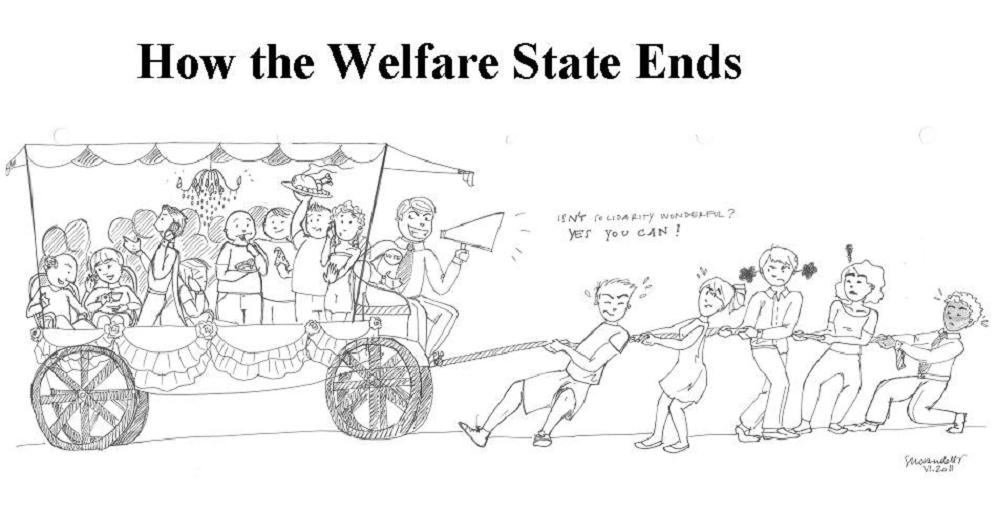

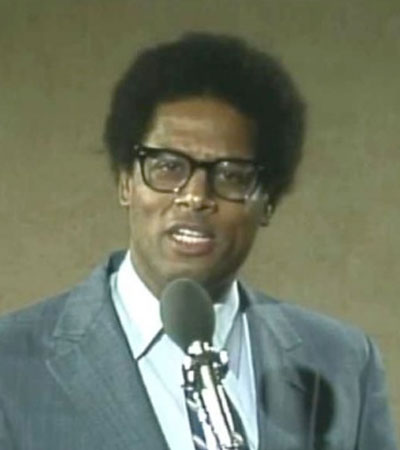


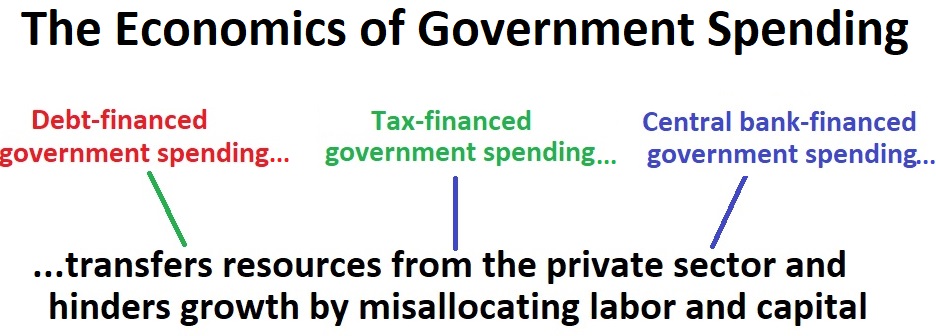



 The Daily Hatch