Category Archives: Current Events

Dan Mitchell: Ryan is right to point out that the IRS is undeserving because of bad behavior. He mentions the Lois Lerner/Tea Party scandal. I think the recent leak of taxpayer data is equally reprehensible!

______

April 15 is usually the worst day of the year, giving Americans ample reasons to both laugh and cry.*

Because of a holiday in Washington, D.C., however, tax returns this year are due on April 18.

So let’s celebrate (or commiserate) this awful day by wading into the debate about whether the Internal Revenue Service should have a bigger budget.

Proponents usually claim the IRS is under-funded by comparing today’s budget to how much the bureaucracy received in 2011.

But that was a one-year spike because of all the money in Obama’s failed stimulus package. If you review long-run data, you can see that the IRS’s budget has increased significantly.

And these numbers are adjusted for inflation.

But perhaps proponents are right, even if they use deceptive numbers.

The Washington Post has a new editorial on this topic, arguing that the bureaucracy needs more money.

The IRS is currently limping along without enough staff or funding. Congress, especially Republicans, needs to face up to reality. …It’s not a mystery how the IRS deteriorated. …the core problem is that Republicans slashed the IRS budget about 18 percent in the past decade. That’s not belt-tightening, it’s gutting an agency. …The Biden administration is rightly asking for a big increase for 2023 (a request of $14.1 billion). This isn’t some Democratic wish list item; it’s about restoring the basic functions of America’s tax collection agency.

When this topic was being debated last year, Ryan Ellis explained that the IRS will target small businesses if it gets a bigger budget.

Here are some excerpts from his piece in National Review.

…the idea is that if taxpayers fund the IRS to the tune of $40 billion over the next decade, the IRS will step up audits and collect an additional $100 billion in tax revenue, penalties, and interest. This is lauded as a good because of the supposed “tax gap,”… Apparently, it doesn’t occur to anyone that the IRS, which is seeking this extra $40 billion in taxpayer funding, has every incentive in the world to exaggerate this “tax gap” and to make wild promises about the new money that additional enforcement will yield for the Treasury. …Giving money to IRS bureaucrats to conduct fishing expedition audits on millions of honest self-employed people? The same IRS behind the Lois Lerner scandal a decade ago, when the IRS inappropriately targeted conservative political groups during the 2012 election season, when Obama was running for reelection?

Ryan is right to point out that the IRS is undeserving because of bad behavior.

He mentions the Lois Lerner/Tea Party scandal. I think the recent leak of taxpayer data is equally reprehensible.

Advocates of more funding will argue that the bureaucracy’s malfeasance is a separate issue and that more employees and more audits are needed regardless of whether criminals at the IRS are caught and punished.

But this brings us to another important topic, which is whether it would be best to fix the underlying tax laws instead of throwing more money at the IRS.

In a column for the Louisville Courier-Times, we get this point of view from Richard Williams of George Mason University’s Mercatus Center.

…money won’t fix this problem. …Another approach would be drastically reducing the complexity of federal taxes. …The Tax Foundation estimates that we give up 3.24 billion hours and $37 billion to comply with federal taxes each year. Given the headaches and anxiety that come with this, Americans don’t need more IRS workers. We need a leaner agency…individual filers and small businesses represent a huge proportion of the public who would gain from simplification. …There is no need to hire more people to oversee a reformed system. What’s not to like?

Amen.

When proponents say the IRS needs more money, they implicitly are arguing for the current, convoluted tax system.

They want the IRS to be in the business of collecting revenue. But that’s just one role.

And that’s just a brief list of the things that the IRS now does in addition to generating revenue.

Get rid of these added roles, ideally as part of a total replacement of the tax code with a flat tax, and the discussion would be about how much money could be saved by reducing the IRS’s budget.

But that means less power for politicians, so don’t hold your breath waiting for genuine tax reform.

That being said, supporters of good policy should feel no obligation to help prop up the current system by shoveling more money to the IRS.

An underfunded corrupt IRS administering a bad tax code is better than a well-funded corrupt IRS administering a bad tax code.

*April 15 may be the worst day of the year, but there’s an argument to be made that October 3 is the worst day in history.

P.S. From my archives, here are some examples of the bureaucrats who will benefit from a bigger IRS budget.

P.P.P.S. And since we’re recycling some oldies but goodies, here’s my collection of IRS humor, including a new Obama 1040 form, a death tax cartoon, a list of tax day tips from David Letterman, a cartoon of how GPS would work if operated by the IRS, an IRS-designed pencil sharpener, two Obamacare/IRS cartoons (here and here), a sale on 1040-form toilet paper (a real product), a song about the tax agency, the IRS’s version of the quadratic formula, and (my favorite) a joke about a Rabbi and an IRS agent.

IRS not only hated Tea Party but also the Constitution!!!

SEPTEMBER 23, 2014 11:57AM

Targeting the Constitution

[Cross-posted from The Volokh Conspiracy]

It is now well known that the IRS targeted tea party organizations. What is less well known, but perhaps even more scandalous, is that the IRS also targeted those who would educate their fellow citizens about the United States Constitution.

According to the inspector general’s report (pp. 30 & 38), this particular IRS targeting commenced on Jan. 25, 2012 — the beginning of the election year for President Obama’s second campaign. On that date: “the BOLO [‘be on the lookout’] criteria were again updated.” The revised criteria included “political action type organizations involved in … educating on the Constitution and Bill of Rights.”

Grass-roots organizations around the country, such as the Linchpins of Liberty (Tennessee), the Spirit of Freedom Institute (Wyoming), and the Constitutional Organization of Liberty (Pennsylvania), allege that they were singled out for special scrutiny at least in part for their work in constitutional education. There may have been many more.

The tea party is viewed with general suspicion in some quarters, and it is not difficult, alas, to imagine the mindset of the officials who decided to target tea party organizations for special scrutiny. But federal officers swear an oath to “support and defend the Constitution of the United States against all enemies, foreign and domestic.” It is chilling to think that these same officials who are suspicious of the tea party are equally suspicious of the Constitution itself.

What is most corrosive about this IRS tripwire is that it is triggered by a particular point of view; it is not, as First Amendment scholars say, viewpoint-neutral. It does not includeobfuscating or denigrating the Constitution; only those “involved in … educating on the Constitution” are captured by this criterion. This viewpoint targeting potentially skews every national debate about politics or government. And the skew in not strictly liberal; indeed, it should trouble liberals as much as conservatives. The ultimate checks on executive power are to be found in the United States Constitution. Insidiously, then, suppressing those “involved in … educating on the Constitution” actually skews national debate in favor of unchecked executive power.

For example, this IRS tripwire would not be triggered by arguing that the NSA should collect the phone records of every American citizen. But it would be triggered by teaching that the Fourth Amendment forbids “unreasonable searches and seizures.” This tripwire would not be triggered by arguing that the president should unilaterally suspend politically inconvenient provisions of federal law, like ObamaCare. But it would be triggered by teaching that, under Article II, section 3, the president “shall take care that the laws be faithfully executed.” This tripwire would not be triggered by arguing that the president should appoint NLRB members unilaterally. But it would be triggered by teaching that, under Article II, section 2, such appointments require “the Advice and Consent of the Senate.” This tripwire would not be triggered by arguing that the president should target and kill U.S. citizens abroad. But it would be triggered by teaching that, per the Fifth Amendment, no person shall “be deprived of life … without due process of law.” This tripwire would not be triggered by arguing that the president should declare war unilaterally. But it would be triggered by teaching that, under Article I, section 8, “Congress shall have Power … To declare War.” In short, the IRS was “on the lookout,” not for those who preach unlimited executive power, but for those who would teach about constitutional constraints.

Even more to the point, perhaps, this IRS tripwire would not be triggered by arguing that the IRS should discriminate against the tea party. But it would be triggered by teaching that such discrimination constitutes unfaithful execution of the tax laws. And thus, alas, there is a perverse logic to targeting constitutional educators alongside tea party organizations. Political discrimination in the administration of the tax laws is not merely “outrageous,” as President Obama has said; it is an assault on our constitutional structure itself. For an official who has chosen to go down this road and target the tea party, there is an Orwellian logic to targeting constitutional educators as well. After all, they are the ones who might shed light on this very point.

This is a new low for American government — targeting those who would teach others about its founding document. Forty years ago, President Richard Nixon went to great lengths to try to conceal the facts of his constitutional violations, but it never occurred to him to conceal the meaning of the Constitution itself, by targeting its teachers. Politicians have always been tempted to try to censor their political adversaries; but none has been so bold as to try to suppress constitutional education directly. Presidents have always sought to push against the constitutional limits of their power; but never have they targeted those who merely teach about such limits. In short, never before has the federal government singled out for special scrutiny those who would teach their fellow citizens about our magnificent Constitution. This is the new innovation of Obama’s IRS.

“We the People” do not yet know who first decided to target “political action type organizations involved in … educating on the Constitution and Bill of Rights.” But there is at least one person who does know. Ironically, though, Lois Lerner, former director of the Exempt Organizations Division of the IRS, is making full use of her own constitutional education: “I have been advised by my counsel to assert my constitutional right not to testify …. One of the basic functions of the Fifth Amendment is to protect innocent individuals, and that is the protection I’m invoking today.”

Five years ago, President Obama, our constitutional law professor-in-chief, presented his first, ringing Constitution Day proclamation: “To succeed, the democracy established in our Constitution requires the active participation of its citizenry. Each of us has a responsibility to learn about our Constitution and teach younger generations about its contents and history.” Quite so. Perhaps this year, Obama could explain why his IRS would target those who answered this call.

Related posts:

Open letter to President Obama (Part 440) A suggestion to cut some wasteful spending out of the government Part 6 (includes editorial cartoon)

(Emailed to White House on 3-15-13.) President Obama c/o The White House 1600 Pennsylvania Avenue NW Washington, DC 20500 Dear Mr. President, I know that you receive 20,000 letters a day and that you actually read 10 of them every day. I really do respect you for trying to get a pulse on what is […]

Open letter to President Obama (Part 438) A suggestion to cut some wasteful spending out of the government Part 5 (includes editorial cartoon)

(Emailed to White House on 3-15-13.) President Obama c/o The White House 1600 Pennsylvania Avenue NW Washington, DC 20500 Dear Mr. President, I know that you receive 20,000 letters a day and that you actually read 10 of them every day. I really do respect you for trying to get a pulse on what is […]

Open letter to President Obama (Part 436) A suggestion to cut some wasteful spending out of the government Part 4 (includes editorial cartoon)

(Emailed to White House on 3-15-13.) President Obama c/o The White House 1600 Pennsylvania Avenue NW Washington, DC 20500 Dear Mr. President, I know that you receive 20,000 letters a day and that you actually read 10 of them every day. I really do respect you for trying to get a pulse on what is […]

Open letter to President Obama (Part 434) A suggestion to cut some wasteful spending out of the government Part 3 (includes editorial cartoon)

(Emailed to White House on 3-15-13.) President Obama c/o The White House 1600 Pennsylvania Avenue NW Washington, DC 20500 Dear Mr. President, I know that you receive 20,000 letters a day and that you actually read 10 of them every day. I really do respect you for trying to get a pulse on what is […]

Open letter to President Obama (Part 432) A suggestion to cut some wasteful spending out of the government Part 2 (includes editorial cartoon)

(Emailed to White House on 3-15-13.) President Obama c/o The White House 1600 Pennsylvania Avenue NW Washington, DC 20500 Dear Mr. President, I know that you receive 20,000 letters a day and that you actually read 10 of them every day. I really do respect you for trying to get a pulse on what is […]

Open letter to President Obama (Part 430) A suggestion to cut some wasteful spending out of the government Part 1 (includes editorial cartoon)

(Emailed to White House on 3-15-13.) President Obama c/o The White House 1600 Pennsylvania Avenue NW Washington, DC 20500 Dear Mr. President, I know that you receive 20,000 letters a day and that you actually read 10 of them every day. I really do respect you for trying to get a pulse on what is […]

Dear Senator Pryor, here are some spending cut suggestions (“Thirsty Thursday”, Open letter to Senator Pryor)

_ Dear Senator Pryor, here are some spending cut suggestions (“Thirsty Thursday”, Open letter to Senator Pryor) __________________ Senator Pryor pictured below: Why do I keep writing and emailing Senator Pryor suggestions on how to cut our budget? I gave him hundreds of ideas about how to cut spending and as far as I can […]

Open letter to President Obama (Part 644) Why the IRS persecuted the Tea Party

Open letter to President Obama (Part 644) (Emailed to White House on 6-10-13.) President Obama c/o The White House 1600 Pennsylvania Avenue NW Washington, DC 20500 Dear Mr. President, I know that you receive 20,000 letters a day and that you actually read 10 of them every day. I really do respect you for trying to get […]

Dear Senator Pryor, here are some spending cut suggestions (“Thirsty Thursday”, Open letter to Senator Pryor)

___________________ Senator Pryor pictured below: Why do I keep writing and emailing Senator Pryor suggestions on how to cut our budget? I gave him hundreds of ideas about how to cut spending and as far as I can tell he has taken none of my suggestions. You can find some of my suggestions here, here, here, here, here, here, here, here, here, here, here, here, here, here, here, here, here, here, here,  here, and  here, and […]

Open letter to President Obama (Part 637 1/2) Abolish the Dept of Transportation and return the responsibility to the States!!!

________ ________________ Pres Obama talking to a youngster outside Arthur Bryant’s BBQ tonight in KC on July 29, 2013. What It’s Like To Get Invited By Obama For Dinner President Obama spends the night in downtown Kansas City Kansas City is ready to host President Obama President Obama has dinner at Arthur Bryant’s Raw: Obama […]

MUSIC MONDAY Every James Bond Theme Song, Ranked Worst to Best Part 1 (#25-26)

________


I really enjoyed the latest James Bond film NO TIME TO DIE and for my thoughts on it you can go to this link

Continue reading

April, 16, 2022 READING A PROVERB A DAY ( PROVERBS 16) 16:28 ”A troublemaker plants seeds of strife;    gossip separates the best of friends!” King Solomon on the scoffer Part 11 of series on King Solomon’s words (Verses listed by Adrian Warnock)(Done 12-20-13) Proverbs chapters 16, 19, 22 and 26

16 We can make our own plans,
    but the Lord gives the right answer.

People may be pure in their own eyes,
    but the Lord examines their motives.

Commit your actions to the Lord,
    and your plans will succeed.

The Lord has made everything for his own purposes,
    even the wicked for a day of disaster.

The Lord detests the proud;
    they will surely be punished.

Unfailing love and faithfulness make atonement for sin.
    By fearing the Lord, people avoid evil.

When people’s lives please the Lord,
    even their enemies are at peace with them.

Better to have little, with godliness,
    than to be rich and dishonest.

We can make our plans,
    but the Lord determines our steps.

10 The king speaks with divine wisdom;
    he must never judge unfairly.

11 The Lord demands accurate scales and balances;
    he sets the standards for fairness.

12 A king detests wrongdoing,
    for his rule is built on justice.

13 The king is pleased with words from righteous lips;
    he loves those who speak honestly.

14 The anger of the king is a deadly threat;
    the wise will try to appease it.

15 When the king smiles, there is life;
    his favor refreshes like a spring rain.

16 How much better to get wisdom than gold,
    and good judgment than silver!

17 The path of the virtuous leads away from evil;
    whoever follows that path is safe.

18 Pride goes before destruction,
    and haughtiness before a fall.

19 Better to live humbly with the poor
    than to share plunder with the proud.

20 Those who listen to instruction will prosper;
    those who trust the Lord will be joyful.

21 The wise are known for their understanding,
    and pleasant words are persuasive.

22 Discretion is a life-giving fountain to those who possess it,
    but discipline is wasted on fools.

23 From a wise mind comes wise speech;
    the words of the wise are persuasive.

24 Kind words are like honey—
    sweet to the soul and healthy for the body.

25 There is a path before each person that seems right,
    but it ends in death.

26 It is good for workers to have an appetite;
    an empty stomach drives them on.

27 Scoundrels create trouble;
    their words are a destructive blaze.

28 A troublemaker plants seeds of strife;
    gossip separates the best of friends.

29 Violent people mislead their companions,
    leading them down a harmful path.

30 With narrowed eyes, people plot evil;
    with a smirk, they plan their mischief.

31 Gray hair is a crown of glory;
    it is gained by living a godly life.

32 Better to be patient than powerful;
    better to have self-control than to conquer a city.

33 We may throw the dice,[a]
    but the Lord determines how they fall.

Proverbs 16 New Living Translation

Proverbs – The Excellent Wife | Bill White | 06-26-2011

Uploaded on Jun 26, 2011

Bill teaches from Proverbs 31 on what the scriptures have to say about being an excellent wife.

__________________

Here are some questions for you.

1. You have three people mentioned in this verse and what do you think their level is in the scale of “Dumber and Dumber?”

Prov 1:22
“How long, O simple ones, will you love being simple? How long will scoffers delight in their scoffing and fools hate knowledge?

_______________

2. If you are a teacher and someone keeps interrupting and disturbing the class what do you do with him?

Prov 22:10
Drive out a scoffer, and strife will go out, and quarrelling and abuse will cease.

__________

3. What are some of the method the scoffer uses to cause division?

Denny Burk notes about the Scoffer:

The scoffer has a general sense of everyone else’s inadequacies, and very little sense of his own. He loves to take his seat and entertain his friends with narratives of other men’s shortcomings (Proverbs 18:8; 26:22). He is a man of division (Proverbs 16:28). He may be the life of the party, but when he goes out peace comes in (Proverbs 22:10; 26:20).

Proverbs 16:28

The Message (MSG)

28 Troublemakers start fights;
gossips break up friendships.

Proverbs 26:20

Amplified Bible (AMP)

20 For lack of wood the fire goes out, and where there is no whisperer, contention ceases.

__________

4. What is the final place the scoffer will find himself?

Proverbs 19:29

Amplified Bible (AMP)

29 Judgments are prepared for scoffers, and stripes for the backs of [self-confident] fools.(A)

5. Can you identify scoffers around you by the way they act?

_____________

PROVERBS – Are Bloggers Scoffers?

Last Sunday I posted the first in a series of posts I am planning which will be a collection of Proverbs by subject. Today I thought I would share with you proverbs about the scoffer. As Tope pointed out in his sermon (linked to in last week’s post), the scoffer is one of two types of “fool” mentioned in Proverbs. A quick search of the Bible will reveal that there are few mentions of the scoffer outside of the book of Proverbs, and that, not surprisingly, all mentions are negative. That might not seem surprising, but in our culture I suspect that the scoffer would, in fact, be honoured. He might be called the cynic, the self-assured, the realist or the independent thinker.One of our society’s favourite songs is “I Did it My Way . . . .” How many of us seek out correction and welcome it? Do we not instead inwardly smart and find ourselves secretly hating the person who dared to correct us? “It’s my life,” we say, “I didn’t ask you for your advice!” Sadly, we are often only too willing to criticise others, often in an angry dismissive way — we who ourselves hate the notion of others correcting us!When you read of the scoffer, don’t think about other people. Instead, ask yourself: “Am I like this — even just a little bit?” For the character of the scoffer is not set in stone. God intends for us to change, and provides us with all that we need for godliness. This is both through the Spirit in us and through our Christian brothers and sisters. How does this work? Quite simply by the scoffer understanding he cannot go on living this way and seeking out someone he trusts enough to whom he can open his life — someone to whom he can say, “Please be honest. What do you see in me that I ought to think about changing?”As I was reading these proverbs through again today, I fear that we could easily switch the word “scoffer” for the word “blogger.” These proverbs have so much in them to challenge the Christian blogging community. How easily could we write — “Bloggers set a city aflame,” or “. . . a blogger doesn’t listen to a rebuke,” or “whoever corrects a blogger gets himself abuse,” or dare I say it — “Blogger is the name of the arrogant haughty man who acts with arrogant pride.” I do not say this merely to rebuke other bloggers — I am only too well aware of these tendencies in myself.I would love to issue a challenge to any blogger willing to take it up to mention one of these proverbs on their own blog and discuss how we can avoid falling into this kind of behaviour — both online and in our off-blog lives.The Scoffer in ProverbsProv 1:22
“How long, O simple ones, will you love being simple? How long will scoffers delight in their scoffing and fools hate knowledge?

Prov 9:7
Whoever corrects a scoffer gets himself abuse, and he who reproves a wicked man incurs injury.

Prov 9:8
Do not reprove a scoffer, or he will hate you; reprove a wise man, and he will love you.

Prov 13:1
A wise son hears his father’s instruction, but a scoffer does not listen to rebuke.

Prov 14:6
A scoffer seeks wisdom in vain, but knowledge is easy for a man of understanding.

Prov 15:12
A scoffer does not like to be reproved; he will not go to the wise.

Prov 19:25
Strike a scoffer, and the simple will learn prudence; reprove a man of understanding, and he will gain knowledge.

Prov 19:29
Condemnation is ready for scoffers, and beating for the backs of fools.

Prov 21:11
When a scoffer is punished, the simple becomes wise; when a wise man is instructed, he gains knowledge.

Prov 21:24
“Scoffer” is the name of the arrogant, haughty man who acts with arrogant pride.

Prov 22:10
Drive out a scoffer, and strife will go out, and quarrelling and abuse will cease.

Prov 24:9
The devising of folly is sin, and the scoffer is an abomination to mankind.

Prov 29:8
Scoffers set a city aflame, but the wise turn away wrath.

You may also like –

Related posts:

Seeing Jesus in Proverbs, Ecclesiastes, and Job

Ecclesiastes 8-10 | Still Searching After All These Years Published on Oct 9, 2012 Calvary Chapel Spring Valley | Sunday Evening | October 7, 2012 | Pastor Derek Neider _______________________ Ecclesiastes 11-12 | Solomon Finds His Way Published on Oct 30, 2012 Calvary Chapel Spring Valley | Sunday Evening | October 28, 2012 | Pastor Derek Neider […]

John MacArthur on Proverbs (Part 10) Summing up Proverbs study

Over and over in Proverbs you hear the words “fear the Lord.” In fact, some of he references are Proverbs 1:7, 29; 2:5; 8:13; 9:10;14:26,27; 15:16 and many more. Below is a sermon by John MacArthur from the Book of Luke on 3 reasons we should fear the Lord. (I have posted John MacArthur’s amazing […]

John MacArthur on Proverbs (Part 9) “Love your neighbor”

Over and over in Proverbs you hear the words “fear the Lord.” In fact, some of he references are Proverbs 1:7, 29; 2:5; 8:13; 9:10;14:26,27; 15:16 and many more. Below is a sermon by John MacArthur from the Book of Luke on 3 reasons we should fear the Lord. (I have posted John MacArthur’s amazing […]

John MacArthur on Proverbs (Part 8) “Manage your money”

Over and over in Proverbs you hear the words “fear the Lord.” In fact, some of he references are Proverbs 1:7, 29; 2:5; 8:13; 9:10;14:26,27; 15:16 and many more. Below is a sermon by John MacArthur from the Book of Luke on 3 reasons we should fear the Lord. (I have posted John MacArthur’s amazing […]

John MacArthur on Proverbs (Part 7) “Pursue your work”

Over and over in Proverbs you hear the words “fear the Lord.” In fact, some of he references are Proverbs 1:7, 29; 2:5; 8:13; 9:10;14:26,27; 15:16 and many more. Below is a sermon by John MacArthur from the Book of Luke on 3 reasons we should fear the Lord. (I have posted John MacArthur’s amazing […]

John MacArthur on Proverbs (Part 6) “Enjoy your wife and watch your words”

Over and over in Proverbs you hear the words “fear the Lord.” In fact, some of he references are Proverbs 1:7, 29; 2:5; 8:13; 9:10;14:26,27; 15:16 and many more. Below is a sermon by John MacArthur from the Book of Luke on 3 reasons we should fear the Lord. (I have posted John MacArthur’s amazing […]

John MacArthur on Proverbs (Part 5) “Control your body”

Over and over in Proverbs you hear the words “fear the Lord.” In fact, some of he references are Proverbs 1:7, 29; 2:5; 8:13; 9:10;14:26,27; 15:16 and many more. Below is a sermon by John MacArthur from the Book of Luke on 3 reasons we should fear the Lord. (I have posted John MacArthur’s amazing […]

John MacArthur on Proverbs (Part 4) “Bad company corrupts…”

Over and over in Proverbs you hear the words “fear the Lord.” In fact, some of he references are Proverbs 1:7, 29; 2:5; 8:13; 9:10;14:26,27; 15:16 and many more. Below is a sermon by John MacArthur from the Book of Luke on 3 reasons we should fear the Lord. (I have posted John MacArthur’s amazing […]

John MacArthur on Proverbs (Part 3) “Guard your mind and obey your parents!!”

Over and over in Proverbs you hear the words “fear the Lord.” In fact, some of he references are Proverbs 1:7, 29; 2:5; 8:13; 9:10;14:26,27; 15:16 and many more. Below is a sermon by John MacArthur from the Book of Luke on 3 reasons we should fear the Lord. It is tough to guard your […]

John MacArthur on Proverbs (Part 2) What does it mean to fear the Lord?

Over and over in Proverbs you hear the words “fear the Lord.” In fact, some of he references are Proverbs 1:7, 29; 2:5; 8:13; 9:10;14:26,27; 15:16 and many more. Below is a sermon by John MacArthur from the Book of Luke on 3 reasons we should fear the Lord. What does it mean to fear […]

The Wisdom of Solomon and the Book of Ecclesiastes

Ecclesiastes 6-8 | Solomon Turns Over a New Leaf Published on Oct 2, 2012 Calvary Chapel Spring Valley | Sunday Evening | September 30, 2012 | Pastor Derek Neider _____________________ I have written on the Book of Ecclesiastes and the subject of the meaning of our lives on several occasions on this blog. In this series on Ecclesiastes I […]

Why is Solomon so depressed in Ecclesiastes? by Brent Cunningham

Ecclesiastes 1 Published on Sep 4, 2012 Calvary Chapel Spring Valley | Sunday Evening | September 2, 2012 | Pastor Derek Neider _____________________ I have written on the Book of Ecclesiastes and the subject of the meaning of our lives on several occasions on this blog. In this series on Ecclesiastes I hope to show how […]

Robert Leroe on Ecclesiastes (Mentions Thomas Aquinas, Princess Diana, Mother Teresa, King Solomon, King Rehoboam, Eugene Peterson, Chuck Swindoll, and John Newton.)

Ecclesiastes 1 Published on Sep 4, 2012 Calvary Chapel Spring Valley | Sunday Evening | September 2, 2012 | Pastor Derek Neider _____________________ I have written on the Book of Ecclesiastes and the subject of the meaning of our lives on several occasions on this blog. In this series on Ecclesiastes I hope to show how […]

Solomon was the author of Ecclesiastes

Ecclesiastes 8-10 | Still Searching After All These Years Published on Oct 9, 2012 Calvary Chapel Spring Valley | Sunday Evening | October 7, 2012 | Pastor Derek Neider _______________________ Ecclesiastes 11-12 | Solomon Finds His Way Published on Oct 30, 2012 Calvary Chapel Spring Valley | Sunday Evening | October 28, 2012 | Pastor Derek Neider […]

Ecclesiastes: Solomon with Life in the Fast Lane

Ecclesiastes 6-8 | Solomon Turns Over a New Leaf Published on Oct 2, 2012 Calvary Chapel Spring Valley | Sunday Evening | September 30, 2012 | Pastor Derek Neider _____________________ I have written on the Book of Ecclesiastes and the subject of the meaning of our lives on several occasions on this blog. In this series […]

Ecclesiastes a scathing and self-deprecating attack on hedonism and secular humanism by Solomon

Ecclesiastes 4-6 | Solomon’s Dissatisfaction Published on Sep 24, 2012 Calvary Chapel Spring Valley | Sunday Evening | September 23, 2012 | Pastor Derek Neider ___________________ I have written on the Book of Ecclesiastes and the subject of the meaning of our lives on several occasions on this blog. In this series on Ecclesiastes I hope […]

Solomon was right in his cynicism–unless……unless there is a God who created us and cares about us

Ecclesiastes 8-10 | Still Searching After All These Years Published on Oct 9, 2012 Calvary Chapel Spring Valley | Sunday Evening | October 7, 2012 | Pastor Derek Neider _______________________ Ecclesiastes 11-12 | Solomon Finds His Way Published on Oct 30, 2012 Calvary Chapel Spring Valley | Sunday Evening | October 28, 2012 | Pastor Derek Neider […]

The Humanist takes on Solomon and the Book of Ecclesiastes

Ecclesiastes 8-10 | Still Searching After All These Years Published on Oct 9, 2012 Calvary Chapel Spring Valley | Sunday Evening | October 7, 2012 | Pastor Derek Neider _______________________ Ecclesiastes 11-12 | Solomon Finds His Way Published on Oct 30, 2012 Calvary Chapel Spring Valley | Sunday Evening | October 28, 2012 | Pastor Derek Neider […]

Tom Brady , Coldplay, Kansas, Solomon and the search for satisfaction (part 3)

Tom Brady “More than this…” Uploaded by EdenWorshipCenter on Jan 22, 2008 EWC sermon illustration showing a clip from the 2005 Tom Brady 60 minutes interview. _______________________ Tom Brady ESPN Interview Tom Brady has famous wife earned over 76 million dollars last year. However, has Brady found lasting satifaction in his life? It does not […]

Tom Brady, Coldplay, Kansas, Solomon and the search for satisfaction (part 2)

Tom Brady “More than this…” Uploaded by EdenWorshipCenter on Jan 22, 2008 EWC sermon illustration showing a clip from the 2005 Tom Brady 60 minutes interview. To Download this video copy the URL to http://www.vixy.net ________________ Obviously from the video clip above, Tom Brady has realized that even though he has won many Super Bowls […]

By Everette Hatcher III | Posted in Current Events | Edit | Comments (0)

Dan Mitchell article: Democrats want to give $80 billion to the Internal Revenue Service to audit millions of Americans each year. Yet…after the progressive website ProPublica first published the secret tax information of rich Americans, the tax agency still can’t explain what happened.

Harboring Criminals at the IRS

At the risk of understatement, I am not a fan of the Internal Revenue Service. But, as shown in this closing segment from a recent interview, I get especially outraged when IRS bureaucrats engage in criminal behavior and nobody cares.

This should outrage everyone that we have officials at a powerful agency illegally leaking confidential information.

My daughter’s dogs even registered their disapproval during the interview (I’m dog sitting for a few days).

We don’t know how many IRS bureaucrats were involved, and we also don’t know whether the motive was money, ideology, or partisanship.

Maybe all three.

This is very reminiscent of what happened about a dozen years ago when other IRS bureaucrats stifled Tea Party groups in order to boost President Obama’s reelection prospects.

Despicable then, and despicable now.

A few months ago, the Wall Street Journaleditorialized about this latest scandal.

Democrats want to give $80 billion to the Internal Revenue Service to audit millions of Americans each year. Yet…after the progressive website ProPublica first published the secret tax information of rich Americans, the tax agency still can’t explain what happened.…IRS Commissioner Charles Rettig…promised when the leak occurred…to find out what happened, but in September he told Senators, “We do not yet have any information concerning the source.” Since then it’s been crickets. …The leak is a crime, but tracing it isn’t merely a matter of criminal enforcement. The breach highlights the general failure of the IRS to protect taxpayer data.  …As troubling is the limp response by the IRS. A separate GAO report this May found that the tax agency failed even to enforce its own authentication protocols, which would help to detect breaches when they occur. …The new money for the IRS is harmful on its own terms, but it’s all the worse when it is provided without strings to an agency that has no idea who is stealing private tax data.

Amen.

Hopefully Republicans won’t be stupid (again) and go along with big budget increases for the corrupt IRS bureaucracy.

By the way, ProPublica this morning published a new story based on their stolen data.

Written by Paul Kiel, it claims rich people pay a very low tax rate.

If your company’s stock shoots up and you grow $1 billion richer, that increase in wealth is real. …From 2014 to 2018,the 25 wealthiest Americans grew about $400 billion richer, according to Forbes. To an economist, this was income, but under tax law, it was mere vapor, irrelevant. And so this group, including the likes of Bezos, Elon Musk and Warren Buffett, paid federal income taxes of about 3.4% on the $400 billion, ProPublica reported. We called this the group’s “True Tax Rate.”

There are two points worth making after reading this nonsense.

  1. The left generally makes misleading claims about the tax rate on rich people by ignoring the fact that any dividends and capital gains they receive also are subject to the corporate income tax. The bottom line is that Warren Buffet does not pay a lower tax rate than his secretary.
  2. The new version of this claim, as illustrated by the ProPublica excerpt, is that the rich have a low tax rate because they aren’t hit with a tax when their assets increase in value. But that’s because an increase in wealth is not an increase in income, just as a decrease in wealth isn’t a loss of income.

If ProPublica wants to add a wealth tax on top of the current income tax, they should be honest and openly make that argument.

Instead, they opted to concoct and disseminate a make-believe tax rate.

The takeaway is that the IRS budget should not be increased, period. And it definitely should not be increased because that would reward criminal bureaucrats.

P.S. Don’t forget that the IRS has embraced a ludicrous claim about a $1 trillion tax gap.

The result of having lots of taxes is the mean IRS.

The IRS: Even Worse Than You Think

Posted by Daniel J. Mitchell

Since it is tax-filing season and we all want to honor our wonderful tax system, let’sgo into the archives and show this video from last year about the onerous compliance costs of the internal revenue code.

Narrated by Hiwa Alaghebandian of the American Enterprise Institute, the mini-documentary explains how needless complexity creates an added burden – sort of like a hidden tax that we pay for the supposed privilege of paying taxes.

__________

The Onerous Compliance Cost of the Internal Revenue Code

Uploaded by  on Apr 12, 2010

The tax system is a complicated nightmare that forces taxpayers to devote ever-larger amounts of time, money, energy, and other resources in hopes of complying with the internal revenue code and avoiding IRS persecution. This CF&P Foundation video shows that this corrupt mess is the result of 97 years of social engineering and industrial policy that began almost immediately after that dark day in 1913 that the income tax was created. www.freedomandprosperity.org

______________________

Two things from the video are worth highlighting.

First, we should make sure to put most of the blame on Congress. As Ms. Alaghebandian notes, the IRS is in the unenviable position of trying to enforce Byzantine tax laws. Yes, there are examples of grotesque IRS abuse, but even the most angelic group of bureaucrats would have a hard time overseeing 70,000-plus pages of laws and regulations (by contrast, the Hong Kong flat tax, which has been in place for more than 60 years, requires less than 200 pages).

Second, we should remember that compliance costs are just the tip of the iceberg. The video also briefly mentions three other costs.

    1. The money we send to Washington, which is a direct cost to our pocketbooks and also an indirect cost since the money often is used tofinance counterproductive programs that further damage the economy.
    2. The budgetary burden of the IRS, which is a staggering $12.5 billion. This is the money we spend to employ an army of tax bureaucrats that is larger than the CIA and FBI combined.
    3. The economic burden of the tax system, which measures the lost economic output from a tax system that penalizes productive behavior.

The way to fix this mess, needless to say, is to junk the entire tax code and start all over.

I’ve been a big proponent of the flat tax, which would mean one low tax rate, no double taxation of savings, and no corrupt loopholes. But I’m also a big fan of national sales tax proposals such as the Fair Tax, assuming we can amend the Constitution so that greedy politicians don’t pull a bait and switch and impose both an income tax and a sales tax.

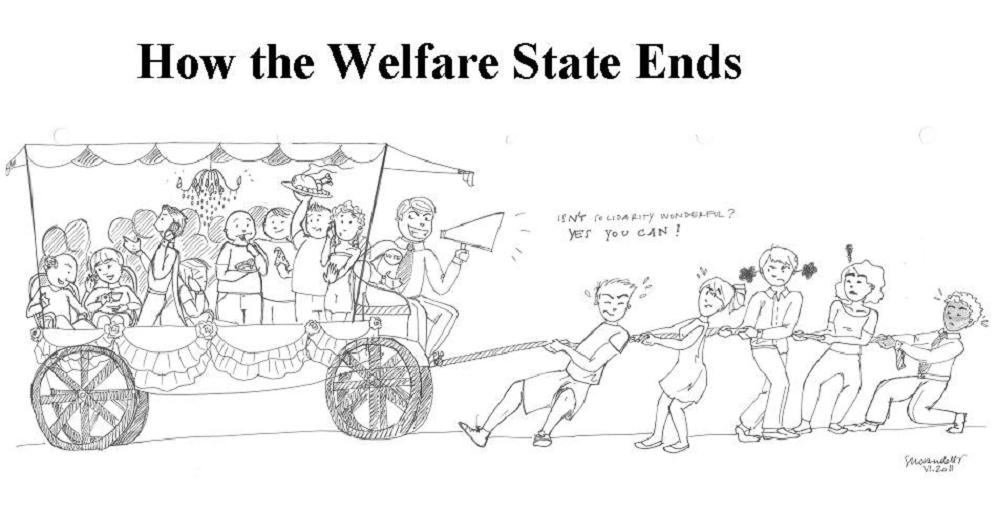
But the most important thing we need to understand is that bloated government is our main problem. If we had a limited federal government, as our Founding Fathers envisioned, it would be almost impossible to have a bad tax system. But if we continue to move in the direction of becoming a European-style welfare state, it will be impossible to have a good tax system.

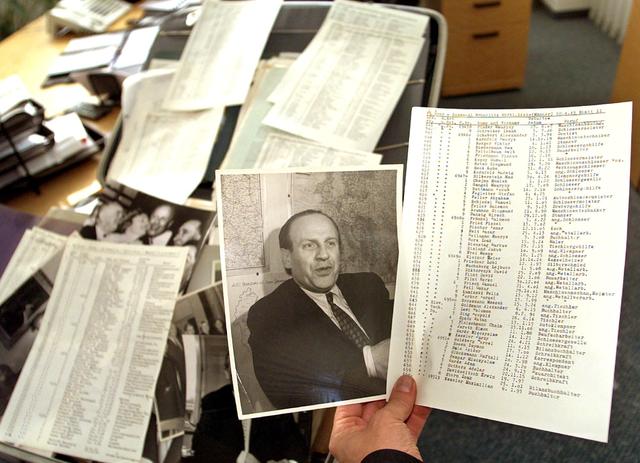
Mimi Reinhard, Oskar Schindler’s secretary who typed up the list of Jews he saved from Nazi extermination, dies at age 107 

Mimi Reinhardt, woman who typed up Schindler’s list, dead at 107 | New Y…

Schindler’s List: I could have saved one more (ending scene) Full HD

Schindler’s list – John Williams – NL orchestra

Beautiful Rendition of Schindlers List’s John Williams….. Memoir of th…

https://youtu.be/CZwIVq_725M

Mimi Reinhard, Oskar Schindler’s secretary who typed up the list of Jews he saved from Nazi extermination, dies at age 107

Mimi Reinhard, a secretary in Oskar Schindler’s office who typed up the list of Jews he saved from extermination by Nazi Germany, has died in Israel at the age of 107.

Reinhard died early Friday and was laid to rest Sunday in Herzliya, near Tel Aviv, her son Sasha Weitman confirmed.

She was one of 1,200 Jews saved by German businessman Schindler after he bribed Nazi authorities to let him keep them as workers in his factories. The account was made into the acclaimed 1993 film “Schindler’s List” by director Steven Spielberg.

Israel Obit Schindler Secretary
Sasha Weitman, son of Mimi Reinhard, a secretary in Oskar Schindler’s office who typed up the list of Jews he saved from extermination by Nazi Germany, holds an old photograph of his mother in Herzliya, Israel, Monday, April 11, 2022. ARIEL SCHALIT / AP

Reinhard was born Carmen Koppel in Vienna, Austria, in 1915, and moved to Krakow, Poland, before the outbreak of World War II. After Nazi Germany invaded Poland in 1939, she was confined to the Krakow ghetto before being sent to the nearby Plaszow concentration camp in 1942.

Reinhard’s knowledge of shorthand got her work in the camp’s administrative office, where, two years later, she was ordered to type up the handwritten list of Jews that were to be transferred to Schindler’s ammunition factory.

“I didn’t know it was such an important thing, that list,” she told an interviewer with Yad Vashem, the World Holocaust Remembrance Center, in 2008. “First of all, I got the list of those who were with Schindler already in Krakow, in his factory. I had to put them on the list.” Later she put her own name, and the names of two friends.

At the Brünnlitz labor camp, where Schindler’s ammunition factory was housed, she was put to work in Schindler’s office.

She said that although she worked in Schindler’s office toward the end of the war, she had little personal contact with him.

“He was a very charming man, very outgoing,” she recalled, decades after the war. “He didn’t treat us like scum.”

After the war, she made her way to the United States, where she lived until immigrating to Israel in 2007 at the age of 92.

Weitman, Reinhard’s son, said that after coming to Israel she “became a kind of a celebrity” because of the Schindler’s List film’s popularity, something he said “pumped another 15 years into her life.”

«Schindlers-Liste» auf Speicher gefunden
The written legacy of the German manufacturer Oskar Schindler (photo), who saved around 1,200 forced laborers from death during the Nazi era, is seen in the editorial offices of the Stuttgarter Zeitung on October 16, 1999.BERND WEISSBROD/PICTURE ALLIANCE VIA GETTY IMAGES


Ricky Gervais act outs atheist bewilderment and frustration in the face of nice Christian nonsense

Carl Sagan – Parents

Carl Sagan said that he missed his parents terribly and he wished he could believe in the afterlife but he was not convinced because of the lack of proof. I had the opportunity to correspond back and forth with Carl Sagan.  I presented him evidence that the Bible was true and there was an afterlife,  but he would not accept the evidence.

Today I want to take another approach to the issue of the afterlife and that is the pure and simple fact that without an enforcement factor people can do what they want in this life and get away with it. This is a big glaring weakness in the Humanist Manifestos that have been published so far. All three of them do not recognize the existence of God who is our final judge. (I am not claiming that this is evidence that points to an afterlife, but this post will demonstrate that atheists many times have not thought through the full ramifications of their philosophy of life.)

I had the unique opportunity to discuss this very issue with Robert Lester Mondale and his wife Rosemary  on April 14, 1996 at his cabin in Fredricktown, Missouri , and my visit was very enjoyable and informative. Mr. Mondale had the distinction of being the only person to sign all three of the Humanist Manifestos in 1933, 1973 and 2003. I asked him which signers of Humanist Manifesto Number One did he know well and he said that Raymond B. Bragg, and Edwin H. Wilson  and him were known as “the three young radicals of the group.”  Harold P. Marley used to have a cabin near his and they used to take long walks together, but Marley’s wife got a job in Hot Springs, Arkansas and they moved down there.

Roy Wood Sellars was a popular professor of philosophy that he knew. I asked if he knew John Dewey and he said he did not, but Dewey did contact him one time to ask him some questions about an article he had written, but Mondale could not recall anything else about that. 

Mondale told me some stories about his neighbors and we got to talking about some of his church members when he was an Unitarian pastor. Once during the 1930’s he was told by one of his wealthier Jewish members that he shouldn’t continue to be critical of the Nazis. This member had just come back from Germany and according to him Hitler had done a great job of getting the economy moving and things were good.

Of course, just a few years later after World War II was over Mondale discovered on a second hand basis what exactly had happened over there when he visited with a Lutheran pastor friend who had just returned from Germany. This Lutheran preacher was one of the first to be allowed in after the liberation of the concentration camps in 1945, and he told Mondale what level of devastation and destruction of  innocent lives went on inside these camps. As Mondale listened to his friend he could feel his own face turning pale.

I asked, “If those Nazis escaped to Brazil or Argentina and lived out their lives in peace would they face judgment after they died?”

Mondale responded, “I don’t think there is anything after death.”

I told Mr. Mondale that there is sense in me that says  justice will be given eventually and God will judge those Nazis even if they evade punishment here on earth. I did point out that in Ecclesiastes 4:1 Solomon did note that without God in the picture  the scales may not be balanced in this life and power could reign, but at the same time the Bible teaches that all  must face the ultimate Judge.

Then I asked him if he got to watch the O.J. Simpson trial and he said that he did and he thought that the prosecution had plenty of evidence too. Again I asked Mr. Mondale the same question concerning O.J. and he responded, “I don’t think there is a God that will intervene and I don’t believe in the afterlife.”

Dan Guinn posted on his blog at http://www.francisschaefferstudies.org concerning the Nazis and evolution: As Schaeffer points out, “…these ideas helped produce an even more far-reaching yet logical conclusion: the Nazi movement in Germany. Heinrich Himmler (1900-1945), leader of the Gestapo, stated that the law of nature must take its course in the survival of the fittest. The result was the gas chambers. Hitler stated numerous times that Christianity and its notion of charity should be “replaced by the ethic of strength over weakness.” Surely many factors were involved in the rise of National Socialism in Germany. For example, the Christian consensus had largely been lost by the undermining from a rationalistic philosophy and a romantic pantheism on the secular side, and a liberal theology (which was an adoption of rationalism in theological terminology) in the universities and many of the churches. Thus biblical Christianity was no longer giving the consensus for German society. After World War I came political and economic chaos and a flood of moral permissiveness in Germany. Thus, many factors created the situation. But in that setting the theory of the survival of the fittest sanctioned what occurred. ” 

Francis Schaeffer notes that this idea ties into today when we are actually talking about making infanticide legal in some academic settings. Look at what these three humanist scholars have written:

  • Peter Singer, who recently was seated in an endowed chair at Princeton’s Center for Human Values, said, “Killing a disabled infant is not morally equivalent to killing a person. Very often it is not wrong at all.”
  • In May 1973, James D. Watson, the Nobel Prize laureate who discovered the double helix of DNA, granted an interview to Prism magazine, then a publication of the American Medical Association. Time later reported the interview to the general public, quoting Watson as having said, “If a child were not declared alive until three days after birth, then all parents could be allowed the choice only a few are given under the present system. The doctor could allow the child to die if the parents so choose and save a lot of misery and suffering. I believe this view is the only rational, compassionate attitude to have.”
  • In January 1978, Francis Crick, also a Nobel laureate, was quoted in the Pacific News Service as saying “… no newborn infant should be declared human until it has passed certain tests regarding its genetic endowment and that if it fails these tests it forfeits the right to live.”

Woody Allen’s 1989 movie, CRIMES AND MISDEMEANORS , was on this very subject of the Nazis that Lester Mondale and I discussed on that day in 1996 at Mondale’s cabin in Missouri.  In this film, Allen attacks his own atheistic view of morality. Martin Landau plays a Jewish eye doctor named Judah Rosenthal raised by a religious father who always told him, “The eyes of God are always upon you.” However, Judah later concludes that God doesn’t exist. He has his mistress (played in the film by Anjelica Huston) murdered because she continually threatened to blow the whistle on his past questionable, probably illegal, business activities. She also attempted to break up Judah’s respectable marriage by going public with their two-year affair. Judah struggles with his conscience throughout the remainder of the movie and continues to be haunted by his father’s words: “The eyes of God are always upon you.” This is a very scary phrase to a young boy, Judah observes. He often wondered how penetrating God’s eyes are.

Later in the film, Judah reflects on the conversation his religious father had with Judah ‘s unbelieving Aunt May at the dinner table many years ago:

“Come on Sol, open your eyes. Six million Jews burned to death by the Nazis, and they got away with it because might makes right,” says aunt May

Sol replies, “May, how did they get away with it?”

Judah asks, “If a man kills, then what?”

Sol responds to his son, “Then in one way or another he will be punished.”

Aunt May comments, “I say if he can do it and get away with it and he chooses not to be bothered by the ethics, then he is home free.”

Judah ‘s final conclusion was that might did make right. He observed that one day, because of this conclusion, he woke up and the cloud of guilt was gone. He was, as his aunt said, “home free.”

Woody Allen has exposed a weakness in his own humanistic view that God is not necessary as a basis for good ethics. There must be an enforcement factor in order to convince Judah not to resort to murder. Otherwise, it is fully to Judah ‘s advantage to remove this troublesome woman from his life. CAN A MATERIALIST OR A HUMANIST THAT DOES NOT BELIEVE IN AN AFTERLIFE GIVE JUDAH ONE REASON WHY HE SHOULDN’T HAVE HIS MISTRESS KILLED?

The Bible tells us, “{God} has also set eternity in the hearts of men…” (Ecclesiastes 3:11 NIV). The secularist calls this an illusion, but the Bible tells us that the idea that we will survive the grave was planted in everyone’s heart by God Himself. Romans 1:19-21 tells us that God has instilled a conscience in everyone that points each of them to Him and tells them what is right and wrong (also Romans 2:14 -15).

It’s no wonder, then, that one of Allen’s fellow humanists would comment, “Certain moral truths — such as do not kill, do not steal, and do not lie — do have a special status of being not just ‘mere opinion’ but bulwarks of humanitarian action. I have no intention of saying, ‘I think Hitler was wrong.’ Hitler WAS wrong.” (Gloria Leitner, “A Perspective on Belief,” THE HUMANIST, May/June 1997, pp. 38-39)

Here Leitner is reasoning from her God-given conscience and not from humanist philosophy. It wasn’t long before she received criticism. Humanist Abigail Ann Martin responded, “Neither am I an advocate of Hitler; however, by whose criteria is he evil?” (THE HUMANIST, September/October 1997, p. 2)

On the April 13, 2014 episode of THE GOOD WIFE called “The Materialist,” Alicia in a custody case asks the father Professor Mercer some questions about his own academic publications. She reads from his book that he is a “materialist and he believes that “free-will is just an illusion,” and we are all just products of the physical world and that includes our thoughts and emotions and there is no basis for calling anything right or wrong. Sounds like to me the good professor would agree wholeheartedly with the humanist Abigail Ann Martin’s assertion concerning Hitler’s morality too! Jean-Paul Sartre noted, “No finite point has meaning without an infinite reference point.”

Christians agree with Judah ‘s father that “The eyes of God are always upon us.” Proverbs 5:21 asserts, “For the ways of man are before the eyes of the Lord, and He ponders all his paths.” Revelation 20:12 states, “…And the dead were judged (sentenced) by what they had done (their whole way of feeling and acting, their aims and endeavors) in accordance with what was recorded in the books” (Amplified Version). The Bible is revealed truth from God. It is the basis for our morality. Judah inherited the Jewish ethical values of the Ten Commandments from his father, but, through years of life as a skeptic, his standards had been lowered. Finally, we discover that Judah ‘s secular version of morality does not resemble his father’s biblically-based morality.

Woody Allen’s CRIMES AND MISDEMEANORS forces unbelievers to grapple with the logical conclusions of a purely secular morality, and  the secularist has no basis for asserting that Judah is wrong.

Larry King actually mentioned on his show, LARRY KING LIVE, that Chuck Colson had discussed the movie CRIMES AND MISDEMEANORS with him. Colson asked King if life was just a Darwinian struggle where the ruthless come out on top. Colson continued, “When we do wrong, is that our only choice? Either live tormented by guilt, or else kill our conscience and live like beasts?” (BREAKPOINT COMMENTARY, “Finding Common Ground,” September 14, 1993)

Josef Mengele tortured and murdered many Jews and then lived the rest of his long life out in South America in peace. Will he ever face judgment for his actions?

The ironic thing is that at the end of our visit I that pointed out to Mr. Mondale that Paul Kurtz had said  in light of the horrible events in World War II that Kurtz witnessed himself in the death camps (Kurtz entered a death camp as an U.S. Soldier to liberate it) that it was obvious that Humanist Manifesto I was way too optimistic and it was necessary to come up with another one.  I thought that might encourage  Mr. Mondale to comment further on our earlier conversion concerning evil deeds, but he just said, “That doesn’t surprise me that Kurtz would say something like that.”

I noticed in Wikipedia:

The second Humanist Manifesto was written in 1973 by Paul Kurtz and Edwin H. Wilson, and was intended to update the previous one. It begins with a statement that the excesses of Nazism and world war had made the first seem “far too optimistic”, and indicated a more hardheaded and realistic approach in its seventeen-point statement, which was much longer and more elaborate than the previous version. Nevertheless, much of the unbridled optimism of the first remained, with hopes stated that war would become obsolete and poverty would be eliminated.

_________________

This is Lester Mondale’s obituary from the American Humanist Association:

R. Lester Mondale of Fredricktown, Missouri died on August 19, 2003, he was ninety-nine years old. Mondale was the last living signer of Humanist Manifesto I (he was the youngest to sign in 1933). He was also the only person to sign all three manifestos.

An AHA member perhaps since the organization’s founding, he received the AHA’s Humanist Pioneer award in 1973 and the Humanist Founder award in 2001. Mondale became a Unitarian minister after being raised a Methodist.

He was very active with the American Humanist Association, the American Ethical Union and served as president of the Fellowship of Religious Humanists in the 60’s and 70’s. Humanists Vice President Sarah Oelberg says that Mondale’s death marks “truly the end of an era” and AHA Director of Planned Giving Bette Chambers calls him “a great man, a great Humanist.”

Lester is survived by his wife, Rosemary, and four daughters: Karen Mondale of St. Louis, Missouri; Julia Jensen of St. Cloud, Minnesota; Tarrie Swenstad of Odin, Minnesota; and Ellen Mondale of Bethesda, Maryland. Also surviving him are his three brothers: Walter Mondale, former vice president of the United States, Pete Mondale, and Morton Mondale. Lester Mondale was also a proud grandparent of seven and a great-grandparent.


The Mondale siblings: Lester, Walter, Mort, Pete, and Clifford and Eleanor Archer (adopted sister); credit: University of Minnesota Law Library Archives

______________

Crimes and Misdemeanors: A Discussion: Part 1

Uploaded by  on Sep 23, 2007

Part 1 of 3: ‘What Does Judah Believe?’
A discussion of Woody Allen’s 1989 movie, perhaps his finest.
By Anton Scamvougeras.

http://camdiscussion.blogspot.com/
antons@mail.ubc.ca

________________________

Crimes and Misdemeanors: A Discussion: Part 2

Crimes and Misdemeanors: A Discussion: Part 3

Is the Bible historically accurate? Here are some of the posts I have done in the past on the subject: 1. The Babylonian Chronicleof Nebuchadnezzars Siege of Jerusalem2. Hezekiah’s Siloam Tunnel Inscription. 3. Taylor Prism (Sennacherib Hexagonal Prism)4. Biblical Cities Attested Archaeologically. 5. The Discovery of the Hittites6.Shishak Smiting His Captives7. Moabite Stone8Black Obelisk of Shalmaneser III9A Verification of places in Gospel of John and Book of Acts., 9B Discovery of Ebla Tablets10. Cyrus Cylinder11. Puru “The lot of Yahali” 9th Century B.C.E.12. The Uzziah Tablet Inscription13. The Pilate Inscription14. Caiaphas Ossuary14 B Pontius Pilate Part 214c. Three greatest American Archaeologists moved to accept Bible’s accuracy through archaeology.

The Bible and Archaeology (2/5)

___________________

Related posts:

Former atheist Antony Flew pointed out that natural selection can’t explain the origin of first life and in every other case, information necessarily points to an intelligent source!

______________ Does God Exist? Thomas Warren vs. Antony Flew Published on Jan 2, 2014 Date: September 20-23, 1976 Location: North Texas State University Christian debater: Thomas B. Warren Atheist debater: Antony G.N. Flew For Thomas Warren: http://www.warrenapologeticscenter.org/ ______________________ Antony Flew and his conversion to theism Uploaded on Aug 12, 2011 Antony Flew, a well known spokesperson […]

DARWINISM RECONSIDERED article from 2005 quotes Antony Flew, Richard Dawkins, Jonathan Miller, and Phillip Johnson

______________ William Lane Craig versus Eddie Tabash Debate Uploaded on Feb 6, 2012 Secular Humanism versus Christianity, Lawyer versus Theologian. Evangelical Christian apologist William Lane Craig debates humanist atheist lawyer Eddie Tabash at Pepperdine University, February 8, 1999. Visithttp://www.Infidels.org and http://www.WilliamLaneCraig.com ________________ Antony Flew on God and Atheism Published on Feb 11, 2013 Lee Strobel […]

Antony Flew interviewed by Benjamin Wiker and the two reasons Flew left atheism!!!

_______________________ Discussion (1 of 3): Antony Flew, N.T. Wright, and Gary Habermas Uploaded on Sep 22, 2010 A discussion with Antony Flew, N.T. Wright, and Gary Habermas. This was held at Westminster Chapel March, 2008 Debate – William Lane Craig vs Christopher Hitchens – Does God Exist? Uploaded on Jan 27, 2011 April 4, 2009 – Craig […]

Kyle Butt notes that Antony Flew left Atheism but fell short of making a profession of faith during his lifetime

_________________ Antony Flew – World’s Most Famous Atheist Accepts Existence of God Uploaded on Nov 28, 2008 Has Science Discovered God? A half-century ago, in 1955, Professor Antony Flew set the agenda for modern atheism with his Theology and Falsification, a paper presented in a debate with C.S. Lewis. This work became the most widely […]

Gary Habermas explains the reasons for Antony Flew’s change of mind

_____________   Antony Flew on God and Atheism Published on Feb 11, 2013 Lee Strobel interviews philosopher and scholar Antony Flew on his conversion from atheism to deism. Much of it has to do with intelligent design. Flew was considered one of the most influential and important thinker for atheism during his time before his […]

The finest article on Antony Flew’s long path from Atheism to Theism!!

___________________    This is the finest article yet I have read that traces Antony Flew’s long path from atheism to theism. How Anthony Flew – Flew to God Among the world’s atheists there was hardly any with the intellectual stature of Anthony Flew.  He was a contemporary with C.S. Lewis and has been a thorn in […]

Antony Flew incorrectly wrote that George Wald later abandoned atheism!!!

  Making Sense of Faith and Science Uploaded on May 16, 2008 Dr. H. Fritz Schaefer confronts the assertion that one cannot believe in God and be a credible scientist. He explains that the theistic world view of Bacon, Kepler, Pascal, Boyle, Newton, Faraday and Maxwell was instrumental in the rise of modern science itself. Presented […]

Antony Flew opened himself up to the possibility of accepting Christian teachings although never making a public profession of faith

Discussion (2 of 3): Antony Flew, N.T. Wright, and Gary Habermas ______________ Atheist Lawrence Krauss loses debate to wiser Christian Published on Sep 13, 2013 http://www.reasonablefaith.org More of this here The Bible and Science (Part 02) The Kalam Cosmological Argument (Scientific Evidence) (Henry Schaefer, PhD) Published on Jun 11, 2012 Scientist Dr. Henry “Fritz” Schaefer gives a lecture […]

Part of the reason Antony Flew left atheism can be found in this Paul Davies’ quote “Science can proceed only if the scientist adopts an essentially theological worldview!”

  Conversation with John Barrow Published on Jun 16, 2012 Templeton Prize 2006, Gifford Lectures 1988 British Academy, 1 June 2012 _______ Many Christians are involved in science and John D. Barrow is one of the leaders of science today. Here is his bio: John D Barrow John D. Barrow was born in London in […]

Antony Flew, “I was particularly impressed with Gerry Schroeder’s point-by-point refutation of what I call the MONKEY THEOREM” or the “the possibility of life arising by chance using the analogy of a multitude of monkeys banging away on computer keyboards and eventually ending up writing a Shakespearean sonnet!”

____________   Discussion (1 of 3): Antony Flew, N.T. Wright, and Gary Habermas Uploaded on Sep 22, 2010 A discussion with Antony Flew, N.T. Wright, and Gary Habermas. This was held at Westminster Chapel March, 2008 ___________   __________ Antony Flew, “I was particularly impressed with Gerry Schroeder’s point-by-point refutation of what I call the MONKEY […]

MUSIC MONDAY “Tomorrow Never Dies” is a song by American singer-songwriter Sheryl Crow that serves as the theme song to the James Bond film of the same name. The song was co-written by Crow and the song’s producer Mitchell Froom, and became her fifth UK top-20 hit, peaking at No. 12 in December 1997!

________

NO TIME TO DIE | Final US Trailer

007 : James Bond : Theme

Goldfinger Theme Song – James Bond

Diamonds Are Forever Theme Song – James Bond

Moonraker Theme Song – James Bond

Adele – Skyfall (Lyric Video)

—-

Billie Eilish – No Time To Die


——

Sam Smith – Writing’s On The Wall (from Spectre) (Official Video)


—-

Thunderball Theme Song – James Bond


Nancy Sinatra – You Only Live Twice (HQ)

__

The Man with the Golden Gun Opening Title Sequence


—-

The spy who loved me (1977) INTRO HD

Sheena Easton • For Your Eyes Only – James Bond/007

—-

James Bond – Octopussy – Theme Song

A View to a Kill Opening Title Sequence

 –

A-ha • The Living Daylights – James Bond 007


LICENCE TO KILL HIGH DEFINITION


-—

James Bond – Goldeneye Opening Theme (HQ)

Sheryl Crow – Tomorrow Never Dies

Tomorrow Never Dies” is a song by American singer-songwriter Sheryl Crow that serves as the theme song to the James Bond film of the same name. The song was co-written by Crow and the song’s producer Mitchell Froom,[2] and became her fifth UK top-20 hit, peaking at No. 12 in December 1997.


HistoryEdit

Another song, “Tomorrow Never Dies”, written by the movie’s composer David Arnold and performed by k.d. lang, was originally produced as the official theme tune. When Crow’s song became the official theme, the k.d. lang song was relegated to the end credits and renamed “Surrender”. The melody of “Surrender” still remains in Arnold’s score.[3]

In addition to k.d. lang’s song, the James Bond producers solicited tracks from other artists, including Pulp, The Cardigans, Saint Etienne, and Swan Lee. These ultimately were rejected in favour of Crow’s song.[4]


ReceptionEdit

Critical receptionEdit

“Tomorrow Never Dies”
Sheryl Crow, Tomorrow Never Dies.png
Single by Sheryl Crow
from the album Tomorrow Never Dies: Music from the Motion Picture
B-side
  • “Strong Enough”
  • “The Book”
  • “No One Said It Would Be Easy”
  • “Ordinary Morning”
Released December 1, 1997[1]
Genre Rock
Length 4:50
Label A&M
Songwriter(s)
Producer(s) Mitchell Froom
Sheryl Crow singles chronology
Home
(1997)
Tomorrow Never Dies
(1997)
My Favorite Mistake
(1998)
 
James Bond theme singles chronology
GoldenEye
(1995)
Tomorrow Never Dies
(1997)
The World Is Not Enough
(1999)
Professional ratings
Review scores
Source Rating
Entertainment Weekly 3/5 stars[5]

Larry Flick from Billboard wrote, “Crow steps forward with a tune that perfectly fuses her distinctive rock/pop style with the bombastic sound that has become the Bond signature. She wails with appropriate melodrama as an array of fluid guitar riffs and swooping strings and piano lines collide at the song’s climax.” He added, “It’s a wonderfully delicious moment that tops off a stellar, deservedly hit-bound recording.”[6] Entertainment Weeklymusic critic Jim Farber negatively reviewed the song, explaining, “While Crow’s music has the right swank and swing, her brittle voice lacks the operatic quality of the best Bond girls and boys, like Shirley Bassey, Tom Jones, or even Melissa Manchester. Tomorrow Never Dies should be for her ears only.” (Manchester has never recorded a song for a James Bond film.)[5] Farber called the choice of Crow “the worst hire since A-ha fronted one of these themes.”[5]

Writing for Filmtracks.com, Christian Clemmensen wished Lang‘s song had remained, and thought Crow’s “beach-bum voice and lazy performance was a disgrace to the film.”[7] Pan-European magazine Music & Media wrote that “this is a topnotch song and a classy record. In true Bond style, it could best be described as a mini epic.”[8]Also NME complimented the song, stating, “But, believe it or not, this is a low-key beauty and probably the best thing ‘Miss’ Crow has ever done. Crow has virtually reinvented the Bond theme by shrugging off the weight of history and playing it straight.”[9] A reviewer from Rolling Stone was also critical, believing Lang’s song to be superior.[10] Ian Hyland from Sunday Mirror rated the song nine out of ten. He commented, “Miss Crow follows the fine tradition of Bond themery with a dreamily brilliant rock song demanding play after play.”[11]

Awards and nominationsEdit

At the 55th Golden Globe Awards, “Tomorrow Never Dies” received a nomination for Best Original Song, but it lost to “My Heart Will Go On” by James Hornerand Will Jennings.[12] The song also received a nomination at the 41st Grammy Awards for Best Song Written for a Motion Picture, Television or Other Visual Media, losing again to “My Heart Will Go On”.[13]


Track listingEdit

2-track CD Single

  1. “Tomorrow Never Dies” (Sheryl Crow, Mitchell Froom) – 4:47
  2. Strong Enough” (Bill Bottrell, David Baerwald, Crow, Kevin Gilbert, Brian MacLeod, David Ricketts) – 3:10

European CD Single (Cat. No. 582 457-2)

  1. “Tomorrow Never Dies” (Crow, Froom) – 4:47
  2. “The Book” (Crow, Jeff Trott) – 4:34
  3. “No One Said It Would Be Easy” (Bottrell, Crow, Gilbert, Dan Schwartz) – 5:29
  4. “Ordinary Morning” (Crow) – 3:55
 

ChartsEdit


Tomorrow Never Dies(soundtrack)


Tomorrow Never Dies: Music from the Motion Picture is the soundtrack of the 18th James Bondfilm of the same name.

Tomorrow Never Dies: Music from the Motion Picture
Tomorrow Never Dies soundtrack.jpg
Soundtrack album by


Released November 27, 1997
Recorded 1997
Label A&M
 
James Bond soundtrack chronology
GoldenEye
(1995)
Tomorrow Never Dies
(1997)
The World Is Not Enough
(1999)
Singles from Tomorrow Never Dies
  1. James Bond Theme
    Released: 3 November 1997
  2. Tomorrow Never Dies
    Released: 1 December 1997
Professional ratings
Review scores
Source Rating
Allmusic 4/5 stars[1]
Filmtracks 4/5 stars[2]

David Arnold composed the score of Tomorrow Never Dies, his first full Bond soundtrack. Arnold came to the producers’ attention due to his successful cover interpretations in Shaken and Stirred: The David Arnold James Bond Project—which featured major artists performing classic James Bond title songs.

The theme tune was chosen through a competitive process. There were approximately twelve submissions; including songs from Swan Lee, Pulp, Saint Etienne, Marc Almond, and Sheryl Crow.[3]According to Nina Persson of Swedish pop group The Cardigans, they were also asked to submit a theme song candidate, but rejected the request due to exhaustion that would be exacerbated by the potential added workload; Persson has called her decision to turn down the offer “one of my biggest mistakes.”[4]

Crow’s theme was eventually picked by Metro-Goldwyn-Mayer. In the meantime, a bold, brassy number in the classic John Barry/Shirley Bassey vein that Arnold himself wrote with David McAlmont and lyricist Don Black with the intent of being a theme, was relegated to the end credits with the title “Surrender”. While McAlmont recorded the demo, “Surrender” was eventually recorded by k.d. langafter an extensive selective process.[5][6]

The score itself follows Barry’s classical style in both composition and orchestration, together with modern electronic rhythms present in most cues. Because the title song was changed so close to the film’s release date, there was no time to work Crow’s melody into any of the score. As a result, melody patterns from “Surrender” appear prominently many times in the score, mainly in the action cues, but it can also be heard in the dramatic “All in a Day’s Work” track.[7]

The DVD version of the film has an “isolated music track” allowing the viewer to watch the film with just the background music.

Scoring of the film had not been completed when the soundtrack was released so on January 11, 2000a second album was released by Chapter III Records which removed the theme songs, Moby’s Bond theme remake and “Station Break”, and had additional music, as well as an interview with David Arnold.[8]


Track listingEdit

All music was composed by David Arnold, except where noted. Cues in bold contain Monty Norman’s James Bond Theme.

1997 releaseEdit

  1. Tomorrow Never Dies” – Sheryl Crow (4:50)
  2. “White Knight” (8:30)
  3. “The Sinking of the Devonshire” (7:07)
  4. “Company Car” (3:08)
  5. “Station Break” (3:30)
  6. “Paris and Bond” (1:55)
  7. “The Last Goodbye” (1:34)
  8. “Hamburg Break In” (2:52)
  9. “Hamburg Break Out” (1:26)
  10. “Doctor Kaufman” (2:26)
  11. “*-3-* Send” (1:17)
  12. “Underwater Discovery” (3:37)
  13. “Back Seat Driver” – David Arnold and Alex Gifford of Propellerheads (4:37)
  14. “Surrender” – k.d. lang (Music by David Arnoldand David McAlmont, Lyrics by Don Black) (3:56)
  15. James Bond Theme” – Moby (3:12)

2000 releaseEdit

  1. “White Knight” (8:29)
  2. “Sinking of the Devonshire” (7:06)
  3. “Company Car” (3:07)
  4. “Paris And Bond” (1:55)
  5. “Last Goodbye” (1:33)
  6. “Hamburg Break In” (2:53)
  7. “Hamburg Break Out” (1:24)
  8. “Doctor Kaufman” (2:27)
  9. “*-3-Send” (1:15)
  10. “Backseat Driver” (4:34)
  11. “Underwater Discovery” (3:36)
  12. “Helicopter Ride” (1:34)
  13. “Bike Chase” (6:44)
  14. “Bike Shop Fight” (2:42)
  15. “Kowloon Bay” (2:27)
  16. “Boarding the Stealth” (4:38)
  17. “A Tricky Spot for 007” (2:48)
  18. “All in a Day’s Work” (5:09)
  19. “Exclusive David Arnold Interview” (11:02)


Barry, Beatles, Billie: 60 years of Bond tunes

<img class=”i-amphtml-intrinsic-sizer” role=”presentation” src=”data:;base64,” alt=”” aria-hidden=”true” />Barry, Beatles, Billie: 60 years of Bond tunes


British actor Daniel Craig poses during a photocall to promote the 24th James Bond film ‘Spectre’ on February 18, 2015 at Rome’s city hall. AFP PHOTO / TIZIANA FABI (Photo by VINCENZO PINTO and TIZIANA FABI / AFP)

Paris, France — Ever since the twanging guitar of John Barry’s theme song first appeared in “Dr No” in 1962, music has been crucial to the James Bond phenomenon.

The songs written for each title sequence have become a way of marking out the evolution of pop music through the past 60 years, from the classics of Shirley Bassey and Paul McCartney to Adele and Billie Eilish.

Nobody remembers Monty

Many assume the original theme was written by John Barry, in part because he became so closely associated with the Bond franchise, composing the soundtrack for 11 of the films.


In fact, Barry only arranged and performed the theme tune.

The famous dung-digger-dung-dung line was actually written by theater composer Monty Norman, developed from an unused Indian-themed score he had written for an adaptation of VS Naipaul’s “A House for Mr Biswas.”

It was Barry’s job to jazz it up, adding the blaring horns that made it so dramatic.

While Norman was given a one-off payment of just £250, Barry built a Hollywood career that has included five Oscars and classic soundtracks to “Midnight Cowboy,” “Out of Africa,” and many more.

Golden girl Shirley Bassey

Bassey became almost as closely linked to Bond as Barry — the only singer to deliver three title tracks: “Goldfinger” (1964), “Diamonds are Forever” (1971), and “Moonraker” (1979).

The first two are considered the most memorable in Bond history, the latter less so — Bassey later admitted she hated the “Moonraker” song and only did it as a favor to Barry.

“Goldfinger” made her a star, but the recording sessions were grueling, with Barry insisting that Bassey, then 27, hold the last belting note for seven full seconds.

“I was holding it and holding it — I was looking at John Barry and I was going blue in the face and he’s going — hold it just one more second. When it finished, I nearly passed out,” she later recalled.

 A new Beatles beginning

The first Bond film without Barry on the baton was “Live and Let Die” in 1973.

For this, the producers turned to another famous “B” The Beatles.

The group’s producer George Martin took over composing duties and brought in Paul McCartney and his band Wings for the theme song.

It became another classic and spawned a famous cover by Guns’N’Roses in later years.

From this point on, the Bond title song became its own mini-industry, without the involvement of the composer.

Big pop tie-ins followed, ranging from the not-so-successful (Lulu’s “The Man with the Golden Gun”) to classics like Carly Simon’s “Nobody Does it Better” and Duran Duran’s “A View to a Kill.”

<img class=”i-amphtml-intrinsic-sizer” role=”presentation” src=”data:;base64,” alt=”” aria-hidden=”true” />Barry, Beatles, Billie: 60 years of Bond tunes

FILE PHOTO: Auctioneer specialists hold a rare intact James Bond ‘Thunderball’ (1965) film poster (estimate £8,000-£12,000), featuring two panels of poster illustrations on the left by Frank McCarthy and two on the right by Robert McGinnis, at Ewbank’s Auctioneers, ahead of an upcoming sale, in Woking, Britain, April 7, 2021. REUTERS/Hannah McKay


The next generation

After a few desultory outings during the Pierce Brosnan years, the Bond genre got a shot of adrenaline with Adele’s “Skyfall” in 2012, which was the first to win an Oscar for best song.

<img class=”i-amphtml-intrinsic-sizer” role=”presentation” src=”data:;base64,” alt=”” aria-hidden=”true” />Barry, Beatles, Billie: 60 years of Bond tunes


Image: Twitter/@007

The following year’s “Writing’s on the Wall” by Sam Smith also won an Oscar, though it got a more mixed critical reception.

The latest incarnation is pop princess Billie Eilish with “No Time to Die,” which she co-wrote with her brother Finneas.

It already has a thumbs-up from the doyenne of the Bond theme world, with Bassey telling The Big Issue: “She did a good job.”

Golden girl Shirley Bassey Bassey became almost as closely linked to Bond as Barry -- the only singer to deliver three title tracks: "Goldfinger" (1964), "Diamonds are Forever" (1971), and "Moonraker" (1979).  The first two are considered the most memorable in Bond history, the latter less so -- Bassey later admitted she hated the "Moonraker" song and only did it as a favor to Barry.

The latest James Bond movie “Skyfall” stars Daniel Craig. 007 boozed so much that in all reality he would have had the tremulous hands of a chronic alcoholic, according to an offbeat study published by the British Medical Journal. PHOTO FROM FACEBOOK.COM/JAMESBONDOO7

Live And Let Die Theme Song – James Bond


https://youtu.be/DupyAkOZLYA

Paul McCartney Uncle Albert Rare Studio Demo

Paul McCartney; Uncle AlbertAdmiral Halsey. (RAM 1971)

https://youtu.be/DupyAkOZLYA

Uncle Albert/Admiral Halsey

From Wikipedia, the free encyclopedia
 
 
“Uncle Albert/Admiral Halsey”
Single by Paul and Linda McCartney
from the album Ram
B-side Too Many People
Released 2 August 1971 (US only)
Format 7″
Recorded 6 November 1970
Genre
Length 4:49
Label Apple
Writer(s) Paul and Linda McCartney
Producer(s) Paul and Linda McCartney
Paul and Linda McCartney singles chronology
Another Day
(1971)
Uncle Albert/Admiral Halsey
(1971)
The Back Seat of My Car
(1971)
Ram track listing
 

Uncle Albert/Admiral Halsey” is a song by Paul and Linda McCartney from the album Ram. Released in the United States as a single on 2 August 1971,[1] but premiering on WLS the previous week (as a “Hit Parade Bound” (HPB)),[2] it reached number one on the Billboard Hot 100 on 4 September 1971,[3][4] making it the first of a string of post-Beatles, McCartney-penned singles to top the US pop chart during the 1970s and 1980s. Billboard ranked it number 22 on its Top Pop Singles of 1971 year-end chart.[5]

Elements and interpretation[edit]

https://youtu.be/XI6C7L66zq8
“Uncle Albert/Admiral Halsey” is composed of several unfinished song fragments that McCartney stitched together similar to the medleys from the Beatles‘ album Abbey Road.[6] The song is noted for its sound effects, including the sounds of a thunderstorm, with rain, heard between the first and second stanza, the sound of a telephone ringing, and a message machine, heard after the second stanza, and a sound of chirping sea birds and wind by the seashore. Linda’s voice is heard in the harmonies as well as the bridge section of the “Admiral Halsey” portion of the song.

McCartney said “Uncle Albert” was based on his uncle. “He’s someone I recall fondly, and when the song was coming it was like a nostalgia thing.”[7] McCartney also said, “As for Admiral Halsey, he’s one of yours, an American admiral”, referring to Fleet Admiral William “Bull” Halsey (1882–1959).[7] McCartney has described the “Uncle Albert” section of the song as an apology from his generation to the older generation, and Admiral Halsey as an authoritarian figure who ought to be ignored.[8]

Despite the disparate elements that make up the song, author Andrew Grant Jackson discerns a coherent narrative to the lyrics, related to McCartney’s emotions in the aftermath of the Beatles’ breakup.[9] In this interpretation, the song begins with McCartney apologizing to his uncle for getting nothing done, and being easily distracted and perhaps depressed in the lethargic “Uncle Albert” section.[9] Then, after some sound effects reminiscent of “Yellow Submarine,” Admiral Halsey appears to him calling him to action, although McCartney remains more interested in “tea and butter pie.” McCartney stated that he put the butter in the pie so that it would not melt at all.[9] Jackson sees a possible sinister allusion in the use of Admiral Halsey as a character in the song, since Halsey was famous for fighting the Japanese in World War II and claiming that “after the war, the Japanese language will be spoken only in hell,” and McCartney’s ex-Beatle partner John Lennon had recently married a Japanese woman, Yoko Ono.[9] The “hands across the water” section which follows could be taken as evocative of the command “All hands on deck!”, rousing McCartney to action, perhaps to compete with Lennon.[9] The song then ends with the “gypsy” section, in which McCartney resolves to get back on the road and perform his music, now that he was on his own without his former bandmates who no longer wanted to tour.[9]

Reception[edit]

Paul McCartney won the Grammy Award for Best Arrangement Accompanying Vocalists in 1971 for the song.[10][11] The single was certified Gold by the Recording Industry Association of America for sales of over one million copies.[12]

According to Allmusic critic Stewart Mason, fans of Paul McCartney’s music are divided in their opinions of this song.[13] Although some fans praise it as “one of his most playful and inventive songs” others criticize it for being “exactly the kind of cute self-indulgence that they find so annoying about his post-Beatles career.”[13] Mason himself considers it “churlish” to be annoyed by the song, given that song isn’t intended to be completely serious, and praises the “Hands across the water” section as being “lovably giddy.”[13]

On the US charts, the song set a songwriting milestone as the all-time songwriting record (at the time) for the most consecutive calendar years to write a #1 song. This gave McCartney eight consecutive years (starting with “I Want to Hold Your Hand“), leaving behind Lennon with only seven years.

Later release[edit]

“Uncle Albert/Admiral Halsey” also appears on Wings Greatest from 1978, even though Ram was not a Wings album, and again on the US version of McCartney’s 1987 compilation, All the Best!, as well as the 2001 compilation Wingspan: Hits and History.

Personnel[edit]

Song uses[edit]

Charts[edit]

Peak positions[edit]

Chart (1971) Position
Australian Kent Music Report[14] 5
Canadian RPM Top 100 Singles[15] 1
Mexican Singles Chart[16] 3
U.S. Billboard Hot 100[4] 1
West German Media Control Singles Chart[17] 30

Year-end charts[edit]

Chart (1971) Position
Canadian RPM Singles Chart[18] 14
U.S. Billboard Top Pop Singles[16] 22

Certifications[edit]

Region Certification
United States (RIAA)[19] Gold

Notes[edit]

  1. Jump up^ McGee 2003, p. 195.
  2. Jump up^ “89WLS Hit Parade”. 1971-08-02. Retrieved 2013-12-21.
  3. Jump up^ Billboard.
  4. ^ Jump up to:a b “Allmusic: Paul McCartney: Charts & Awards”. allmusic.com. Retrieved 2 May 2013.
  5. Jump up^ “Top Pop 100 Singles” Billboard December 25, 1971: TA-36
  6. Jump up^ Blaney, J. (2007). Lennon and McCartney: together alone: a critical discography of their solo work. Jawbone Press. pp. 46, 50. ISBN 978-1-906002-02-2.
  7. ^ Jump up to:a b McGee 2003, p. 196.
  8. Jump up^ Benitez, V.P. (2010). The Words and Music of Paul McCartney: The Solo Years. Praeger. pp. 30–31. ISBN 978-0-313-34969-0.
  9. ^ Jump up to:a b c d e f Jackson, A.G. (2012). Still the Greatest: The Essential Songs of The Beatles’ Solo Careers. Scarecrow Press. ISBN 978-0810882225.
  10. Jump up^ “Past Winners Search”. National Academy of Recording Arts and Sciences. Retrieved 2 May 2014.
  11. Jump up^ “1971 Grammy Awards”.
  12. Jump up^ riaa.com
  13. ^ Jump up to:a b c Mason, S. “Uncle Albert/Admiral Halsey”. Allmusic. Retrieved 2013-12-25.
  14. Jump up^ Kent, David (1993). Australian Chart Book 1970–1992. St Ives, NSW: Australian Chart Book. ISBN 0-646-11917-6.
  15. Jump up^ “Top Singles – Volume 16, No. 5”. RPM. 18 September 1971. Retrieved 5 May 2013.
  16. ^ Jump up to:a b Nielsen Business Media, Inc (25 December 1971). Billboard – Talent in Action 1971. Retrieved 1 May 2014.
  17. Jump up^ “Single Search: Paul and Linda McCartney – “Uncle Albert/Admiral Halsey”” (in German). Media Control. Retrieved 20 February 2013.
  18. Jump up^ “RPM 100 Top Singles of 1971”. RPM. 8 January 1972. Retrieved 11 March 2014.
  19. Jump up^ “American single certifications – Paul Mc Cartney – Uncle Albert”. Recording Industry Association of America. If necessary, click Advanced, then click Format, then select Single, then click SEARCH

References[edit]

Preceded by
How Can You Mend a Broken Heart” by Bee Gees
Billboard Hot 100 number-one single
4 September 1971 (one week)
Succeeded by
Go Away Little Girl” by Donny Osmond
Preceded by
Sweet Hitch-Hiker” by Creedence Clearwater Revival
Canadian “RPM” Singles Chart number-one single
18 September 1971 – 2 October 1971 (three weeks)
Succeeded by
Maggie May” by Rod Stewart

Related posts:

MUSIC MONDAY I’m Waiting for the Man sung by Nico in 1982 (about waiting for drug fix)

I’m Waiting for the Man sung by Nico in 1982 (about waiting for drug fix) __________ Nico Icon documentary part 3 Nico Icon documentary part 4 NICO – I’m Waiting For The Man – (1982, Warehouse, Preston, UK) One of the top 10 songs from The Velvet Underground and Nico is the song “I’m Waiting […]

MUSIC MONDAY Nico’s sad story of drugs and her interaction with Jim Morrison

Nico’s sad story of drugs and her interaction with Jim Morrison Nico – These Days The Doors (1991) – Movie Trailer / Best Parts The Doors Movie – Back Door Man/When The Music’s Over/Arrest of Jim Morrison Uploaded on Jul 30, 2009 A clip from “The Doors” movie with “Back Door Man”, “When The Music’s […]

MUSIC MONDAY Christian Singer’s Controversial Journey Revealed in New Documentary: ‘I Placed Homosexuality on Jesus’ Shoulders’ Oct. 2, 2014 2:23pm Billy Hallowell

Dennis Jernigan – You Are My All In All Uploaded on Oct 18, 2009 Dennis Jernigan – You Are My All In All __________________________________________ Christian Singer’s Controversial Journey Revealed in New Documentary: ‘I Placed Homosexuality on Jesus’ Shoulders’ Oct. 2, 2014 2:23pm Billy Hallowell Singer-songwriter Dennis Jernigan has been making Christian music for decades, recording […]

MUSIC MONDAY Cole Porter’s songs “De-Lovely” and “Let’s misbehave”

Cole Porter’s songs “De-Lovely” and “Let’s misbehave”   ‘At Long Last Love’: Let’s Misbehave/De-Lovely Uploaded on Apr 1, 2009 Burt Reynolds and Cybil Shepherd give an extraordinarily charming performance of Cole Porter’s songs in Peter Bogdanovich’s absolutely wonderful tribute to the golden age of film musicals, ‘At Long Last Love’. _____________________ De-Lovely   From Wikipedia, […]

MUSIC MONDAY Cole Porter’s song’s “My Heart Belongs to Daddy”

________ _______ Cole Porter’s song’s “My Heart Belongs to Daddy” My Heart Belongs To Daddy Uploaded on Jun 20, 2010 Mary Martin became popular on Broadway and received attention in the national media singing “My Heart Belongs to Daddy”. “Mary stopped the show with “My Heart Belongs to Daddy”. With that one song in the […]

MUSIC MONDAY Cole Porter’s song “Love for Sale”

______________ Love For Sale (De-Lovely) Love for Sale (song) From Wikipedia, the free encyclopedia Jump to: navigation, search This article needs additional citations for verification. Please help improve this article by adding citations to reliable sources. Unsourced material may be challenged and removed. (September 2008) “Love for Sale“ Written by Cole Porter Published 1930 Form […]

MUSIC MONDAY Cole Porter’s song “Ev’ry Time We Say Goodbye”

Cole Porter’s song “Ev’ry Time We Say Goodbye” _________________ Natalie Cole – Ev’ry Time We Say Goodbye Ev’ry Time We Say Goodbye   From Wikipedia, the free encyclopedia   Jump to: navigation, search   This article needs additional citations for verification. Please help improve this article by adding citations to reliable sources. Unsourced material may be […]

MUSIC MONDAY Cole Porter’s song “So in Love”

Cole Porter’s song “So in Love” __________________ So in love – De-lovely So in Love From Wikipedia, the free encyclopedia Jump to: navigation, search For the song by Orchestral Manoeuvres in the Dark, see So in Love (OMD song). For the song by Jill Scott, see So in Love (Jill Scott song). Not to be […]

MUSIC MONDAY Cole Porter’s song “Night and Day”

____________________ Cole Porter’s song “Night and Day” Cole Porter´s Day and Night by Fred Astaire & Ginger Rogers Night and Day (song) From Wikipedia, the free encyclopedia Jump to: navigation, search This article includes a list of references, but its sources remain unclear because it has insufficient inline citations. Please help to improve this article […]

MUSIC MONDAY John Lennon and Bob Dylan Conversation mention Johnny Cash and his song “Big River”

Johnny Cash – Big River Uploaded on Jan 16, 2008 Grand Ole Opry, 1962 _______________________________ John Lennon and Bob Dylan Conversation mention Johnny Cash and his song “Big River” _______________________ Big River (Johnny Cash song) From Wikipedia, the free encyclopedia Jump to: navigation, search This article may require cleanup to meet Wikipedia’s quality standards. No […]

April 10, 2022 READING A PROVERB A DAY (PROVERBS 10) John MacArthur on Proverbs “Pursue your work” (Also Adrian Rogers: God’s Grace in the Workplace) Chapter 10 verse 4, “Poor is he who works with a negligent hand but the hand of the diligent makes rich. He who gathers in summer is a son who acts wisely. But he who sleeps in harvest is a son who acts shamefully. Teach your son to work and to plan ahead in his work.”

Adrian Rogers sermon GOD’S GRACE IN THE WORKPLACE really helped me 30 years ago and here is the link to that sermon.

Proverbs 10 New Living Translation

The Proverbs of Solomon

10 The proverbs of Solomon:

A wise child[a] brings joy to a father;
    a foolish child brings grief to a mother.

Tainted wealth has no lasting value,
    but right living can save your life.

The Lord will not let the godly go hungry,
    but he refuses to satisfy the craving of the wicked.

Lazy people are soon poor;
    hard workers get rich.

A wise youth harvests in the summer,
    but one who sleeps during harvest is a disgrace.

The godly are showered with blessings;
    the words of the wicked conceal violent intentions.

We have happy memories of the godly,
    but the name of a wicked person rots away.

The wise are glad to be instructed,
    but babbling fools fall flat on their faces.

People with integrity walk safely,
    but those who follow crooked paths will be exposed.

10 People who wink at wrong cause trouble,
    but a bold reproof promotes peace.[b]

11 The words of the godly are a life-giving fountain;
    the words of the wicked conceal violent intentions.

12 Hatred stirs up quarrels,
    but love makes up for all offenses.

13 Wise words come from the lips of people with understanding,
    but those lacking sense will be beaten with a rod.

14 Wise people treasure knowledge,
    but the babbling of a fool invites disaster.

15 The wealth of the rich is their fortress;
    the poverty of the poor is their destruction.

16 The earnings of the godly enhance their lives,
    but evil people squander their money on sin.

17 People who accept discipline are on the pathway to life,
    but those who ignore correction will go astray.

18 Hiding hatred makes you a liar;
    slandering others makes you a fool.

19 Too much talk leads to sin.
    Be sensible and keep your mouth shut.

20 The words of the godly are like sterling silver;
    the heart of a fool is worthless.

21 The words of the godly encourage many,
    but fools are destroyed by their lack of common sense.

22 The blessing of the Lord makes a person rich,
    and he adds no sorrow with it.

23 Doing wrong is fun for a fool,
    but living wisely brings pleasure to the sensible.

24 The fears of the wicked will be fulfilled;
    the hopes of the godly will be granted.

25 When the storms of life come, the wicked are whirled away,
    but the godly have a lasting foundation.

26 Lazy people irritate their employers,
    like vinegar to the teeth or smoke in the eyes.

27 Fear of the Lord lengthens one’s life,
    but the years of the wicked are cut short.

28 The hopes of the godly result in happiness,
    but the expectations of the wicked come to nothing.

29 The way of the Lord is a stronghold to those with integrity,
    but it destroys the wicked.

30 The godly will never be disturbed,
    but the wicked will be removed from the land.

31 The mouth of the godly person gives wise advice,
    but the tongue that deceives will be cut off.

32 The lips of the godly speak helpful words,
    but the mouth of the wicked speaks perverse words.

Over and over in Proverbs you hear the words “fear the Lord.” In fact, some of he references are Proverbs 1:7, 29; 2:5; 8:13; 9:10;14:26,27; 15:16 and many more. Below is a sermon by John MacArthur from the Book of Luke on 3 reasons we should fear the Lord. (I have posted John MacArthur’s amazing sermon on the fulfillment of Old Testament scripture before on my blog.)

PART 7 of Proverbs series

I remember like yesterday when I first heard my former pastor Adrian Rogers first preach on the topic “God’s Grace in the Workplace.” That was the first time in his first 35 years of ministry that he had dedicated a complete message to the subject of how a Christian should look at his secular job.

Rogers noted, “Does work have eternal significance? Daniel may have wondered the same thing, as he was handling taxation, public relations, law enforcement, building projects, meetings and diplomacy. But yet he served God continually (see Daniel 6:16 and 20).”

Daniel 6:16-20

The Message (MSG)

16 The king caved in and ordered Daniel brought and thrown into the lions’ den. But he said to Daniel, “Your God, to whom you are so loyal, is going to get you out of this.”

17 A stone slab was placed over the opening of the den. The king sealed the cover with his signet ring and the signet rings of all his nobles, fixing Daniel’s fate.

18 The king then went back to his palace. He refused supper. He couldn’t sleep. He spent the night fasting.

19-20 At daybreak the king got up and hurried to the lions’ den. As he approached the den, he called out anxiously, “Daniel, servant of the living God, has your God, whom you serve so loyally, saved you from the lions?”

___________

It is during this time that Daniel became my favorite Bible character and I have spent lots of time studying about him.

John MacArthur

I remember hearing Dr. Adrian Rogers say that if he had to do it over again he would read from Proverbs every day to his kids. They turned out to be great kids and they were raised right. Nevertheless, if he had to do it over again he thought a more emphasis on Proverbs is the way to go. That is why I am spending so much time in Proverbs with my kids today.

John MacArthur does a great job on Proverbs and here is a portion of his sermon on Proverbs.

Number eight. Teach your sons…”Son, pursue your work…pursue your work.” Teach your boys how to work, father, by word and example. Look at the ant, he says in chapter 6, he’s giving this lesson to his son…Son, go to the ant, in verse 6 in chapter 6, and look at this ant, observe her ways and be wise, which having no chief officer or ruler. The first thing you want to do is teach your children how to work without a boss around, even an ant does that. Now your children will work if you stand there with a whip. But the issue is…will they if you won’t? Because they’re going to have to in life. And they also need to be taught how to plan ahead. The ant even knows to prepare her food in the summer anticipating the coming winter. She gathers her provision in the harvest. Teach them to work. How long will you lie down, O lazy son? When will you arise from your sleep? Get your children up. And they’ll say…a little sleep, a little slumber, a little folding of the hands to rest. Sure. And your poverty will come in like a vagabond and your need like an armed man.

You’re going to make yourself poor if you don’t learn how to work. Teach them to pursue work. A sluggard is a lazy man. He’s just an ordinary man really, with too many excuses, too many refusals, too many postponements. According to Proverbs the lazy man will suffer hunger, poverty, failure. Why? Because he sleeps through the harvest. He wants but he won’t work. He loves sleep, is glued to his bed and will follow worthless pursuits trying to get rich quick. On the other hand, the man who pursues his work earns a good living, has plenty of food, is rewarded for his effort and earns respect even before kings…it says in chapter 22 verse 29. Teach your sons to pursue their work…so very important.

Chapter 10 verse 4, “Poor is he who works with a negligent hand but the hand of the diligent makes rich. He who gathers in summer is a son who acts wisely. But he who sleeps in harvest is a son who acts shamefully. Teach your son to work and to plan ahead in his work.”

___________

Adrian Rogers: God’s Grace in the Workplace [#1019] (Audio)

God’s Grace In the Workplace

In all labour there is profit: but the talk of the lips tendeth only to penury.
Proverbs 14:23

So many people wake up in the morning, take a shower, scald their throat with a cup of coffee because they’re running a little late, fight traffic, and get to work. Then, they come home, take a couple of aspirin, watch the evening news, perhaps discuss a few things with a roommate or spouse, maybe putter around the house or yard a little bit, then go to bed.

Now, I’m not saying they don’t love and serve God, perhaps they do. But most of these people think the only time they serve God is when they get off work! They end up giving their prime time to the employer and their leftovers to God!
Jesus said, “No man can serve two masters: for either he will hate the one, and love the other; or else he will hold to the one, and despise the other. Ye cannot serve God and mammon” (Matthew 6:24). I call this split-level living.

You may think there’s nothing exciting about you or your job, but God takes ordinary people and He gives them extraordinary power to do extraordinary things for His glory!

Your job may be putting hub caps on tires. You may be keying data at a computer. You may be digging ditches or washing dishes. You may be doing one of a myriad of what you think are mundane things. But I want to tell you, if you are a Christian, your work is to be the temple of your devotion and the platform of your witness. Every Christian is a minister doing full-time Christian service.

The Sacredness of Everday Work

Your job does not become sacred when you become a minister, missionary, or a staff member of a Christian organization! Every job, if it is done in the power of the Holy Spirit, is a sacred job. Every one!

Let’s look at someone who lived this out from the Word of God – his name was Daniel. In the book of Daniel, we learn that he was taken captive by Nebuchadnezzar and carried to Babylon from Israel. There, he found a secular job as a government bureaucrat (see Daniel 8:27). The government trained him, then pressed him into service.

In this ordinary line of work, Daniel served the Lord Jesus. When Daniel was thrown into the lions’ den because he refused to bow to another god, King Nebuchadnezzar and many others came to believe in our Almighty God.

If you work in the name of Jesus, unto His glory, and in the power of the Holy Spirit, you will receive the same reward for doing that job that I receive for doing my job. God knows about you and is watching you. Every Christian, wherever he serves, is in full-time Christian work.

The SERVICE of Everday Work

Does work have eternal significance? Daniel may have wondered the same thing, as he was handling taxation, public relations, law enforcement, building projects, meetings and diplomacy. But yet he served God continually (see Daniel 6:16 and 20).

Even the home of Jesus was the cottage of a workingman. And whether He was mending plows or mending souls, Jesus was doing the work of God because people need houses to live in and furniture to sit on.

If you know you’re serving the Lord, that’ll put dignity in whatever you are doing: running a machine, greasing automobiles, typing letters, carrying mail, painting houses, digging ditches, cutting yards. Tell the Lord, “I’m doing it for You! And I’ll do it with all my might! As much as any missionary or preacher or evangelist!” That kind of attitude will put a spring in your step.

Simply said, God wants His people to prosper wherever He plants them. You are a priest of God, a minister of God, and in full-time Christian service, and if that doesn’t ring your bell, your clapper’s broken.

Remember, God uses ordinary people to do extraordinary things. Ephesians 3:20 promises that, “God is able to do exceeding abundantly above all that we ask or think, according to the power that worketh in us.”


This article is taken from a sermon by Adrian Rogers

One final question: WHAT DOES THIS VERSE MEAN?

Proverbs 14:23

Amplified Bible (AMP)

23 In all labor there is profit, but idle talk leads only to poverty.

The Message (MSG)

23 Hard work always pays off;
mere talk puts no bread on the table.

FRANCIS SCHAEFFER ANALYZES ART AND CULTURE PART 418 “Practical Atheism” – Psalm 14 Featured artist is Peter Phillips

________________________

I wanted to share with  you some information from a book by Francis Schaeffer that was read by Eric Clapton and Jimmy Page back in the 1970’s. Francis Schaeffer talked about the views of the Beatles  and many other Rock Groups in the 1960’s and 1970’s.  His son Frank wrote recently about the impact of SGT. PEPPER’S LONELY HEARTS CLUB BAND:

“Sgt. Pepper’s” became my personal sound track of liberation back then…Genie, my wife of 44 years… grew up in the Bay Area and as a teen had the distinction of seeing the Beatles three times (!) live and the Rolling Stones four times (!) live.

Meanwhile, I was growing up in Switzerland in a mission(L’Abri Fellowship), and my “almost famous” rock-n-roll high point came when I got a job helping with theLed Zeppelin’slight show at the Montreux Jazz/rock festival.I met Jimmy Page and noticed he was reading one of my dad’s first books, ESCAPE FROM REASON. (No kidding.)

This was back in the days when Dad was a sort of hippie guru for Jesus catering to Beats, hippies and dropouts hitching across Europe.Eric Claptonhad given Page the book as it turned out. I was trying to be “cool” that day on the light show crew… and I wasn’t too pleased to find my brief escape into the rock world from the world of my Dad’s evangelical mission was no escape from my God-world at all. He’d been giving lectures on Bob Dylan, and drug guru Timothy Leary had been a guest at L’Abri. And now I got to briefly “hang out with the band” and Dad got there first, or at least one of his books did! Sheesh! It’s hard to be cool!

…Anyway… Just before coming to my parent’s mission in 1969 – Genie was visiting a friend and knew nothing about the place — she was hanging out with the Santana drummer in California. My then teen bride-to-be Genie might as well have gone to another planet when she stumbled into Dad and Mom’s ministry. The only Billy Graham she’d ever heard of was the Fillmore West manager!

I wonder if my wife-to-be was in the Fillmore West rock palace when Dad and I were there one night in 1968 listening to the Jefferson Airplane together and some hippie handed Dad a joint? Dad passed it on down the row, not taking any himself but totally un-shocked and loving Grace Slick as much as I did… if only Jerry Falwell could have seen us then…

This was back in the days when Dad was a sort of hippie guru for Jesus catering to Beats, hippies and dropouts hitching across Europe. Eric Clapton had given Page the book as it turned out.

Image result for francis schaeffer
730 × 498Images may be subject to copyrightLearn More

In his book HOW SHOULD WE THEN LIVE? Francis Schaeffer noted:

The man who followed on from that point was English–Aldous Huxley (1894-1963). He proposed drugs as a solution. We should, he said, give healthy people drugs and they can then find truth inside their own heads. All that was left for Aldous Huxley and those who followed him was truth inside a person’s own head. With Huxley’s idea, what began with the existential philosophers – man’s individual subjectivity attempting to give order as well as meaning, in contrast to order being shaped by what is objective or external to oneself – came to its logical conclusion. Truth is in one’s own head. The ideal of objective truth was gone.

Image result for aldous huxley
921 × 1390Images may be subject to copyrightLearn More

This emphasis on hallucinogenic drugs brought with it many rock groups–for example, Cream, Jefferson Airplane, Grateful Dead, Incredible String Band, Pink Floyd, and Jimi Hendrix. Most of their work was from 1965-1958. The Beatles’Sergeant Pepper’s Lonely Hearts Club Band (1967) also fits here. This disc is a total unity, not just an isolated series of individual songs, and for a time it became the rallying cry for young people throughout the world. As a whole, this music was the vehicle to carry the drug culture and the mentality which went with it across frontiers which were almost impassible by other means of communication.

Here is a good review of the episode 016 HSWTL The Age of Non-Reason of HOW SHOULD WE THEN LIVE?, December 23, 2007:

Together with the advent of the “drug Age” was the increased interest in the West in  the religious experience of Hinduism and Buddhism. Schaeffer tells us that: “This grasping for a nonrational meaning to life and values is the central reason that these Eastern religions are so popular in the West today.”  Drugs and Eastern religions came like a flood into the Western world.  They became the way that people chose to find meaning and values in life.  By themselves or together, drugs and Eastern religion became the way that people searched inside themselves for ultimate truth.

Along with drugs and Eastern religions there has been a remarkable increase “of the occult appearing as an upper-story hope.”  As modern man searches for answers it “many moderns would rather have demons than be left with the idea that everything in the universe is only one big machine.”  For many people having the “occult in the upper story of nonreason in the hope of having meaning” is better than leaving the upper story of nonreason empty. For them horror or the macabre are more acceptable than the idea that they are just a machine.

Sir Julian Sorell Huxley FRS (22 June 1887 – 14 February 1975) was an English evolutionary biologist, humanist and internationalist.

Timothy F. Leary Editorial Stock Photo

Timothy F. Leary (1920�1996), an American writer, psychologist, campaigner for psychedelic drug research and use and 60s counterculture icon, with Laura Huxley

Timothy F. Leary and Laura Huxley

__

Leary and the Huxleys at the 14th Annual Congress of Applied Psychology, Copenhagen, Aug. 1961 Original: NYPL

Leary and the Huxleys at the 14th Annual Congress of Applied Psychology, Copenhagen, Aug. 1961 Original: Leary Archives, NY Public Library

__________

Never Before Published Photo of Timothy Leary with Aldous and Laura Huxley

Leary and the Huxleys at the 14th Annual Congress of Applied Psychology, Copenhagen, Aug. 1961 Original: NYPL

Leary and the Huxleys at the 14th Annual Congress of Applied Psychology, Copenhagen, Aug. 1961 Original: Leary Archives, NY Public Library

By Michael Horowitz and Lisa Rein

This photograph–possibly the only one in existence of Timothy Leary and Aldous Huxley (there are some with Laura from later years)–documents a historic moment:  the only time the two appeared on stage and gave talks at the same public event.

It also marked a milestone in Leary’s career:   it was the first time he addressed an international conference, where he spoke about the psychedelic research project at Harvard–an event that had both personal and professional implications for him and his associate, Richard Alpert (Ram Dass).

Reprint of the two talks distributed by IFIF (International Federation for Internal Freedom) in 1963. Original from Michael Horowitz' Archives

Reprint of the two talks distributed by IFIF (International Federation for Internal Freedom) in 1963. Original from Michael Horowitz’ Archives

The event was the 14th Annual Congress of Applied Psychology, held in Copenhagen in August, 1961.  Leary chaired the symposium on psychiatric drugs.  It was he who invited Aldous to attend.  The two had met some months earlier, when Tim invited the author of the first two major works of modern psychedelic literature (The Doors of Perception and Heaven and Hell) to participate in the Harvard research program.   Huxley agreed and was “Subject no.11” in a group psilocybin session run by Leary in November 1960.

In Copenhagen, Huxley spoke on the subject of “Visionary Experience,” a topic he often revisited.  After discussing various non-drug methods of achieving visionary experiences, he came around to this:

“In modern times pharmacology has produced, partly by more refined methods of extracts and partly by methods of synthesis, a number of mind-changing drugs of extraordinary power, but remarkable for the fact that they have very little harmful effect on the body….With such drugs as psilocybin, it is possible for the majority of people to go into this other world with very little trouble  and with almost no harm to themselves.”

He concluded his talk by noting that “we shall hear from Dr. Leary of the induction of such experiences by such substances as psilocybin,” anticipating Leary’s subject by noting that psychedelic drugs “may be very, very important in changing our lives, changing our mode of consciousness, perceiving that there are other ways of looking at the world than the ordinary, utilitarian manner, and it may also result in significant changes in behavior.”

It is noteworthy that Frank Barron, Leary’s lifelong friend and colleague, also spoke.  His talk made reference to his “commending the mushroom to the attention of Dr. Leary, who immediately seized upon its possibilities as a vehicle for inducing change in behavior as a result of the altered state of consciousness which the drug produced.”

Leary spoke later in the day on the topic, “How To Change Behavior,” during which he summarized the work he and his team had done since initiating the Psilocybin Research Project in the fall of 1960, offering some controversial opinions:

“For many people, one or two psilocybin experiences can accomplish the goals of a long and successful psychotherapy…. The non-game visionary experiences are, I submit, the key to behavior change.  Drug-induced satori.   In three hours under the right circumstances the cortex can be cleared.  The games that frustrate and torment can be seen in the cosmic dimension.”

The way Robert Greenfield tells it in Timothy Leary: A Biography, Leary’s talk deeply disturbed many of the professional psychologists in the audience (which included several of his nervous academic superiors at Harvard), who believed mind-expanding drugs caused temporary psychosis and should only be used under strict medical supervision.  Richard Alpert (almost a decade before he became known as Ram Dass) followed Tim at the podium, freaking out the assembly even further with the notion that psilocybin and LSD produced genuine mystical experiences, which was an end in itself.

Their deviation from the medical model was more than anyone in the audience could handle —with the exception of Aldous Huxley, who had made similar assertions in his talk, though with a less impassioned tone.

Tim was later told by some psychologists who were present that his talk “had set Danish psychology back twenty years.”   Their Harvard colleague, George Littwin, claimed that this event proved to be the beginning of the end, not only for the research program but of Leary and Alpert’s time at Harvard, which came to a close in June 1963.

Nonetheless, “How To Change Behavior” proved to be one of Leary’s most popular writings, being reprinted in a number of books and journals.

The Copenhagen congress thus represented the first public pronouncement by Leary and Alpert who, taking their cues from Huxley and the results of their own scientific research, were early on convinced that the advent of synthetic psychedelics was a major evolutionary stage for humanity, destined to bring about a cultural revolution which they had no hesitation in facilitating if not spearheading.

___

“Practical Atheism” – Psalm 14

Introduction
I’d like to begin by asking you a question I’ve asked myself. Are you an atheist? You probably think that’s an ignorant question to ask. Of course you aren’t! You wouldn’t be here, worshipping God, if you were. But that isn’t necessarily true. The fact is that America’s churches are filled with atheists. That’s because there are two kinds of atheist and that’s what I’m going to preach about today.

Professing Atheists
David wrote Psalm 14 and in verse 1 mentions those who say, “There is no God.” We call those who do so professing atheists. Professing atheists believe and proclaim that only matter, only atoms and the molecules they form, exist. God, therefore, doesn’t exist.

Atheism is an issue in America today. For one thing, atheists are growing in number. According to a George Barna poll, 11% of Americans are atheists, agnostics or have no religion at all. That’s 30 million people. For another thing, atheists are growing in organization and initiative. This past Christmas season, for instance, four separate groups instituted aggressive radio, television and billboard campaigns attacking belief in God. One, American Atheists, put up billboards displaying the nativity scene. Written over the scene were these words: “You know it’s a myth. This season, celebrate reason.” Christians no longer have the luxury of assuming everyone believes in God. Many don’t.

Why People Are Atheists That’s why we need to understand what David teaches us about atheists in Psalm 14. He begins by telling it like it is in verse 1. They’re fools. The word “fool” here has a mental component and implies something all of us need to know and proclaim. Atheism is intellectual suicide, a point that Paul also makes in Romans 1:18-23. It requires a blind leap of faith, blind because it’s contrary to the facts. It believes, for instance, that something came from nothing or that matter is self-existent. It also believes that chance, which is a pure abstraction, caused the universe to be the way it is. But those beliefs are absurd. They violate logic, which makes them blind leaps of faith.

In his recently published book The Grand Design, Stephen Hawking proposes that the cosmos spontaneously generated “from nothing.” But one has to wonder. How can nothing produce something, let alone hundreds of billions of galaxies? Atheist Richard Dawkins famously declared that theists, those who believe in God, are delusional. But just the opposite is true. It’s atheists, not theists, who are delusional.

But why are they? Stephen Hawking, for instance, is considered the most intelligent person on earth. So why does he believe something that so obviously flies in the face of the facts and common sense?

David tells us in his choice of the Hebrew word translated “fool” in verse 1. There are several Hebrew words for “fool”. The one he chose, nabal, implies an aggressive perversity, which he defines in verses 1-4. Notice the vivid language he uses to describe what atheists in general are or do: “corrupt,” “abominable deeds,” “does not do good,” and “workers of wickedness.”

With that language in mind, listen as I quote two celebrated atheists. One is the 20th century English writer Aldous Huxley: “I had motives for not wanting the world to have meaning; consequently assumed that it had none. The philosopher who finds no meaning . . . . is concerned to prove that there is no valid reason why he personally should not do as he wants to do . . . For myself, the philosophy of meaninglessness (atheism) was essentially an instrument of liberation, sexual and political.” The other atheist is contemporary philosopher Thomas Nagel: “I want atheism to be true . . . . It isn’t just that I don’t believe in God, and, naturally hope I’m right about my belief. It’s that I hope there is God! I don’t want there to be a God; I don’t want the universe to be like that.”

Those astonishing confessions illustrate that atheists in general believe God doesn’t exist because they want Him not to. Their objections aren’t nearly as much intellectual as they are moral. They want to run their own lives, to do whatever they want, without guilt and fear. But if God exists, they can’t. So, they choose to believe He doesn’t. Professing atheists, in other words, don’t live the way they do because they’re atheists. They’re atheists because they live the way they do. They make the way they believe fit and sanction the way they live.

Professing Theists
But it isn’t just professing atheists that concern David here. It’s professing theists as well in verses 6 and 7. These verses picture the wicked oppressing the righteous. But the righteous don’t fret because they know God shelters them, verse 6, and will “restore their fortunes,” verse 7. The righteous of verses 6-7 stand in sharp contrast to the wicked of verses 1-5. The wicked believe that God doesn’t exist. But the righteous believe that He does. They’re theists.

Now, the belief of theists is unlike the belief of atheists. Atheism is a blind leap of faith. Theism is a logical step of faith. By “logical step”, I mean this. If we do the math, if we gather the relevant evidence and connect it up rightly, we’ll conclude two things.

First, we’ll conclude that God can exist. There is no reason in the nature of things why He cannot exist. Atheists commonly point to certain realities or facts like Darwinian evolution or the existence of evil and claim they prove God cannot exist. But they’re categorically wrong about that. The truth is this. There is no reality or fact we can point to and say, “That makes it impossible for God to exist.” Take Darwinian evolution for instance. It’s false but let’s assume it’s true. That would not prove God cannot exist. For one thing, it only addresses how living things came to be and how they came to be the way they are. It says nothing at all about the existence of non-living things and their intricate nature. For another thing, Darwinian evolution itself is elaborate. The complexity and order that characterize it would actually be an argument for God. They clearly imply that someone designed and created evolution. It certainly didn’t design and create itself.

There’s no debating it. Nothing about the universe or life in it renders God existing impossible, improbable, or implausible. So, any objective person, with no ax to grind, will conclude that He can exist.

If we do that math, we’ll conclude a second thing. God does exist. The evidence make it clear to any objective person that He does. I explained some of that evidence in a Sunday school study titled Do the Math. I don’t have time to reiterate it now. But I’ll recount an anecdote that illustrates the result of gathering it and connecting it up rightly.

Antony Flew, who died last year, was a legendary British philosopher. Until the early 2000’s, he was one of the most notable atheists in the world and an outspoken critic of theism and creationism. But the developing knowledge of molecular mechanisms and DNA caused a monumental shift in his worldview. He came to believe in a creator God and explained why: “What I think the DNA material has done is show that intelligence must have been involved in getting these extraordinarily diverse elements together.” In a 2007 interview, he added that his belief in a creator God was the result of “my own insight that the integrated complexity of life itself . . . . can only be explained in terms of an Intelligent Source.” Statements like those compelled the atheists who once adored him to detest him. But Flew didn’t care. He simply replied: “Well, that’s too bad. My whole life has been guided by the principle of Plato’s Socrates: Follow the evidence, wherever it leads.”

That’s exactly right. We should follow the evidence wherever it leads. Flew is a classic case of what happens when we do. We become professing theists. We come to believe that God can exist and does.

Practical Atheists
But that isn’t all we come to believe when we follow the evidence. We also believe that this God who exists is Yahweh, the God of the Bible. Again, I don’t have time to explain the evidence that proves that. I can only refer you to the Do the Math study I mentioned before. But when we objectively follow the evidence it presents, we can and will believe that the God who exists is Yahweh, the God of the Bible.

But it isn’t enough just to believe it. As the Bible and good sense demand, we must live it as well. We say that God exists and is the God of the Bible. So let’s act like it. We’re practical atheists when we don’t. That’s the second kind of atheist. The first kind is the professing atheist of verse 1, who believes God doesn’t exist. The second kind is the practical atheist, who believes God does exist but acts as if He doesn’t.

An analogy helps explain what I mean. Atheists live in many ways as if they aren’t atheists. The belief that there is no God spins off a whole host of other beliefs, like human beings are nothing more than a chance collection of molecules or there are no objective rights and wrongs. If atheism is so, those two beliefs and others must also be so. Atheists though almost always act as if they aren’t. Francis Schaeffer met a group of bright young physicists who insisted to him that only matter exists – that God doesn’t. So he asked them: “How do you live out your atheism at home? Do you treat your wives and children a chance collections of molecules?” To which one of them laughed and replied, “Dr. Schaeffer, you know our lives are a dichotomy.” He meant that they could live out that implication of their atheism in the lab, but couldn’t at home and didn’t.

Whenever atheists love people and treat them as objects of worth or whenever they judge something right or wrong, they’re thinking and acting as if God exists. They are practical theists when they do.

That helps us understand, by way of analogy, what practical atheists are. They’re Christians who are thinking and acting in some way as if God doesn’t exist. The belief that He does exist spins off a whole host of other beliefs. Christians are practical atheists when they’re thinking and acting as if any of those beliefs aren’t so.

With that in mind, the very first belief that God’s existence spins off is this. The invisible world, consisting of God and His kingdom at hand, is utterly real and ultimately important. If it is so that the God of the Bible exists, then that is also so.

Unfortunately many Christians think and act as if it isn’t. A George Barna study, for instance, found that the average Christian spends nine minutes a week reading the Bible. Another study found that the average Christian spends fifteen hours a week watching television. Calculate that in these terms – nine minutes engaging the invisible world and fifteen hours the visible. It’s clear which of the two worlds those Christians in that context regard as primary. It’s the visible.

Christians who think and act that way are practical atheists. Don’t misunderstand me. That doesn’t mean that they won’t go to heaven because in Jesus they will. It does mean that in this specific context, they’re like atheists. They’re giving primary importance to the visible world.

Our call, in contrast, is to give primary importance to the invisible world. It’s to have what Dallas Willard calls “a life beyond.” We think and act as if God and His kingdom at hand are utterly real and ultimately important. We learn how to routinely direct our minds and bodies to God and His kingdom at hand, which we teach here at Bethel, and then do just that. A.W. Tozer sums it up well in his book The Pursuit of God: “We must break the habit of ignoring the spiritual. We must shift our interest from the seen to the unseen. For the great unseen reality is God.” We’re practical Christians, not practical atheists, when we do.

Conclusion
I close with an observation. The greatest distinction among Christians today is this. It’s between those who give primary importance to the invisible world and those who give primary importance to the visible. Are you a practical atheist? Give primary importance to the invisible world, God and His kingdom at hand. You aren’t if you do

.

Featured artist is Peter Phillips

_______________

(Monitor) Pop Goes The Easel – Ken Russell 1962

(Monitor) Pop Goes The Easel – Ken Russell 1962

Peter and Claude Phillips:

___________

_________

Peter Phillips

PETER PHILLIPS  British, born 1939

ALL WORKS  /  PAINTINGS  /  WORKS ON PAPER  /  BIOGRAPHY

Peter Phillips came to Pop Art with an extraordinary speed, conviction and clarity of thought and has since stayed true to its principles whilst continuing to push the idiom into new directions. One of the rare British artists never to have spurned the label, Phillips approached Pop as a question of matching subject matter to the style and technique. In this sense he was closer to the American Pop artists than almost any of his British colleagues. His commitment to Pop was most vividly confirmed by living in New York during 1964-1967.

In his early 1960s work, Phillips trusted his intuitions in marrying the formal grandeur and ambitious scale of Abstract Expressionism with his passion for the trapping of youth culture, with all its associated glamour, energy, sexuality and violence; he borrowed his imagery and hard-edged formal patterns from game boards, the funfair, pin-ups, comic books and other popular sources.

During the 1970s he painted a series of Compositions and Select-O-Matpaintings, populated with predatory birds, molecular structures from the pages of ‘Scientific American’, motor engines and machine parts.

______________

Related posts:

FRANCIS SCHAEFFER ANALYZES ART AND CULTURE Part 53 THE BEATLES (Part E, Stg. Pepper’s and John Lennon’s search in 1967 for truth was through drugs, money, laughter, etc & similar to King Solomon’s, LOTS OF PICTURES OF JOHN AND CYNTHIA) (Feature on artist Yoko Ono)

The John Lennon and the Beatles really were on a long search for meaning and fulfillment in their lives  just like King Solomon did in the Book of Ecclesiastes. Solomon looked into learning (1:12-18, 2:12-17), laughter, ladies, luxuries, and liquor (2:1-2, 8, 10, 11), and labor (2:4-6, 18-20). He fount that without God in the picture all […]

FRANCIS SCHAEFFER ANALYZES ART AND CULTURE Part 52 THE BEATLES (Part D, There is evidence that the Beatles may have been exposed to Francis Schaeffer!!!) (Feature on artist Anna Margaret Rose Freeman )

______________   George Harrison Swears & Insults Paul and Yoko Lucy in the Sky with Diamonds- The Beatles The Beatles:   I have dedicated several posts to this series on the Beatles and I don’t know when this series will end because Francis Schaeffer spent a lot of time listening to the Beatles and talking […]

FRANCIS SCHAEFFER ANALYZES ART AND CULTURE Part 51 THE BEATLES (Part C, List of those on cover of Stg.Pepper’s ) (Feature on artist Raqib Shaw )

  The Beatles in a press conference after their Return from the USA Uploaded on Nov 29, 2010 The Beatles in a press conference after their Return from the USA. The Beatles:   I have dedicated several posts to this series on the Beatles and I don’t know when this series will end because Francis […]

FRANCIS SCHAEFFER ANALYZES ART AND CULTURE Part 50 THE BEATLES (Part B, The Psychedelic Music of the Beatles) (Feature on artist Peter Blake )

__________________   Beatles 1966 Last interview I have dedicated several posts to this series on the Beatles and I don’t know when this series will end because Francis Schaeffer spent a lot of time listening to the Beatles and talking and writing about them and their impact on the culture of the 1960’s. In this […]

FRANCIS SCHAEFFER ANALYZES ART AND CULTURE Part 49 THE BEATLES (Part A, The Meaning of Stg. Pepper’s Cover) (Feature on artist Mika Tajima)

_______________ The Beatles documentary || A Long and Winding Road || Episode 5 (This video discusses Stg. Pepper’s creation I have dedicated several posts to this series on the Beatles and I don’t know when this series will end because Francis Schaeffer spent a lot of time listening to the Beatles and talking and writing about […]

FRANCIS SCHAEFFER ANALYZES ART AND CULTURE PART 48 “BLOW UP” by Michelangelo Antonioni makes Philosophic Statement (Feature on artist Nancy Holt)

_______________ Francis Schaeffer pictured below: _____________________ I have included the 27 minute  episode THE AGE OF NONREASON by Francis Schaeffer. In that video Schaeffer noted,  ” Sergeant Pepper’s Lonely Hearts Club Band…for a time it became the rallying cry for young people throughout the world. It expressed the essence of their lives, thoughts and their feelings.” How Should […]

FRANCIS SCHAEFFER ANALYZES ART AND CULTURE Part 47 Woody Allen and Professor Levy and the death of “Optimistic Humanism” from the movie CRIMES AND MISDEMEANORS Plus Charles Darwin’s comments too!!! (Feature on artist Rodney Graham)

Crimes and Misdemeanors: A Discussion: Part 1 ___________________________________ Today I will answer the simple question: IS IT POSSIBLE TO BE AN OPTIMISTIC SECULAR HUMANIST THAT DOES NOT BELIEVE IN GOD OR AN AFTERLIFE? This question has been around for a long time and you can go back to the 19th century and read this same […]

FRANCIS SCHAEFFER ANALYZES ART AND CULTURE PART 46 Friedrich Nietzsche (Featured artist is Thomas Schütte)

____________________________________ Francis Schaeffer pictured below: __________ Francis Schaeffer has written extensively on art and culture spanning the last 2000years and here are some posts I have done on this subject before : Francis Schaeffer’s “How should we then live?” Video and outline of episode 10 “Final Choices” , episode 9 “The Age of Personal Peace and Affluence”, episode 8 […]

_______________

Dan Mitchell: As Professor Friedman explained, the economics of price controls are very clear. When politicians and bureaucrats suppress prices, you get shortages (as all students should learn in their introductory economics classes)

<img srcset="https://s-libertaddigital-com.cdn.ampproject.org/i/s/s.libertaddigital.com/2022/01/04/300/0/miltonfriedman.jpg.webp 300w, https://s-libertaddigital-com.cdn.ampproject.org/i/s/s.libertaddigital.com/2022/01/04/600/0/miltonfriedman.jpg.webp 600w, https://s-libertaddigital-com.cdn.ampproject.org/i/s/s.libertaddigital.com/2022/01/04/1200/0/miltonfriedman.jpg.webp 1200w" alt="El economista, Milton Friedman (1912-2006) | <span>Alamy

Portrait of Milton Friedman.jpg


The Case Against Price Controls, Part III

In Part I of this series, Professor Don Boudreaux explained the folly of price controls, and Professor Antony Davies was featured in Part II.

Now let’s see some commentary from the late, great, Milton Friedman.

As Professor Friedman explained, the economics of price controls are very clear.

When politicians and bureaucrats suppress prices, you get shortages (as all students should learn in their introductory economics classes).

Sometimes that happens with price controls on specific sectors, such as rental housing in poorly governed cities.

Sometimes it happens because of economy-wide price controls, as we saw during Richard Nixon’s disastrous presidency.

In all cases, price controls are imposed by politicians who are stupid or evil. That’s blunt language, but it’s the only explanation.

Sadly, there will never be a shortage of those kinds of politicians, as can be seen from this column in the Wall Street Journal by Andy Kessler.

Here are some excerpts.

On the 2020 campaign trail, Joe Biden declared, “ Milton Friedman isn’t running the show anymore.” Wrong! …Lo and behold, inflation is running at 7.9%, supply chains are tight, and many store shelves are empty. Friedman’s adage “Inflation is always and everywhere a monetary phenomenon” has stood the test of time. But what scares me most is the likely policy responses by the Biden administration that would pour salt into this self-inflicted wound.It feels as if price controls are coming. …Prices set by producers are signals, and consumers whisper feedback billions of times a day by buying or not buying products. Mess with prices and the economy has no guide. The Soviets instituted price controls on everything from subsidized “red bread” to meat, often resulting in empty shelves. President Franklin D. Roosevelt’s National Recovery Agency fixed prices, prolonging the Depression, all in the name of “fair competition.” …Price controls don’t work. Never have, never will. But we keep instituting them. Try finding a cheap apartment in rent-controlled New York City. …Sen. Elizabeth Warren, a leader among our economic illiterate, noted in February that high prices are caused in part by “giant corporations…”

He closes with a very succinct and sensible observation.

Want to whip inflation now? Forget all the Band-Aids and government controls. Instead, as Friedman suggests, stop printing money.

In other words, Mr. Kessler is suggesting that politicians do the opposite of Mitchell’s Law.

Instead of using one bad policy (inflation) as an excuse to impose a second bad policy (price controls), he wants them to undo the original mistake.

Will Joe Biden and Elizabeth Warren take his advice?

That’s doubtful, but I’m hoping there are more rational people in the rooms where these decisions get made.

Maybe some of them will have read this column from Professor Boudreaux.

Prices are among the visible results of the invisible hand’s successful operation, as well as the single most important source of this success. Each price objectively summarizes an inconceivably large number of details that must be taken account of if the economy is to perform even moderately well. Consider the price of a loaf of a particular kind and brand of bread.…The price at the supermarket of a loaf of bread, a straightforward $4.99, is the distillation of the economic results of the interaction of an unfathomably large number of details from around the globe about opportunities, trade-offs, and preferences. The invisible hand of the market causes these details to be visibly summarized not only in the price of bread, but in the prices of all other consumer goods and services, as well as in the prices of each of the inputs used in production. …These market prices also give investors and entrepreneurs guidance on how to deploy scarce resources in ways that produce that particular mix of goods and services that will today be of greatest benefit for consumers.

I have two comments.

First, Don obviously buys fancier bread than my $1.29-a-loaf store brand (used to be 99 cents, so thanks for nothing to the Federal Reserve).

Second, and far more important, he’s pointing out that market-based prices play an absolutely critical role in coordinating the desires of consumers and producers.

When politicians interfere with prices, it’s akin to throwing sand in the gears of a machine.

For more information on the role of prices, I strongly recommend these videos from Professors Russ Roberts, Howard Baetjer, and Alex Tabarrok.

By Ryan Bourne and Brad Subramaniam

Anti‐​price gouging laws prolonged shortages of certain goods that were in high demand early in the pandemic. Some analysis suggests these laws even worsened public health outcomes, because ongoing shortages of, say, hand sanitizer and toilet paper, led to consumers in states with these regulations searching for them more at physical retailers, actually increasing transmission of the virus.

But there’s an interesting question that’s often underexplored in regard to these laws: how does the expectation that these price controls will be triggered shape people’s beliefs about products’ availability and so customer search behavior?

That’s the topic of another fascinating new paper by economists Rik Chakraborti and Gavin Roberts. Using data for online searches for hand sanitizer and toilet paper across states, they harness the variation in when laws were introduced to research the question: is consumer search behaviour different in states with new anti‐​price gouging legislation introduced during the pandemic from states with pre‐​existing anti‐​price gouging laws?

Economic theory would suggest that any anti‐​price gouging legislation, whenever introduced, would lead to more consumer search for goods, due to the induced shortages. And, sure enough, after controlling for the effects of lockdowns, rising infections, and declines in travel which plagued the early stages of the pandemic, consumers in states with anti‐​price gouging laws were significantly more likely to search online for toilet paper and hand sanitizer than those in states without such laws.

More searching presumably reflects higher levels of hoarding and panic‐​buying creating the shortages—after all, having to resort to online shopping for goods that are commonly bought in stores means the local grocery or drug store has probably been emptied already.

But theory would also suggest that customers in states with past experience of anti‐​price gouging laws might search even more intensely, because people come to expect shortages again when crises hit. In other words, those who have experienced shortages before might be more likely to hoard and panic buy this time around, leading to even higher online search than in situations where new laws are introduced for the first time.

Again, Chakraborti and Roberts’ paper suggests economic theory is correct. States with anti‐​price gouging regulations on the books before the pandemic saw Google Shopping searches for hand sanitizer jump by 153 percent and toilet paper searches nearly double (a 99 percent increase) relative to states without anti‐​price gouging laws. This uplift was much larger than in states where the laws were introduced during the pandemic (100 percent and 46 percent, respectively).

The long and short is that consumers in states with pre‐​existing price controls searched most intensely online for hand sanitizer and toilet paper. This suggests customers learned from previous experience of these price regulations’ effects, with the higher search levels reflecting greater hoarding and panic buying in anticipation of shortages to come. As the authors state, this implies that longstanding anti‐​price gouging legislation is even worse for economic welfare than we might think. The anticipation of shortages actually compounds shortages as consumers become more “experienced,” with excessive and fruitless searching for products the wasteful result.

For more on the basics of anti‐​price gouging legislation in the pandemic, see my book Economics In One Virus. Other Cato pieces can be found here, here, and here.

Government, Markets, and the Supply Chain

Way back in 2009, I shared a meme that succinctly summarizes how Washington operates.

It’s basically a version of Mitchell’s Law. To elaborate, governments cause problems and politicians then use those problems as an excuse to make government even bigger.

Lather, rinse, repeat.

I worry the same thing may be about to happen because of the current concern about “supply chain” issues, perhaps best illustrated by the backlog of ships at key ports, leading to shortages of key goods.

Some of this mess is fallout from the coronavirus pandemic, but it’s being exacerbated by bad policy.

In a column for Reason, J.D. Tuccille points out that government is the problem, not the solution.

…supply-chain issues…create shortages and push prices up around the world. …Lockdowns also changed people’s lives, closing offices and factories and confining people at home. That resulted in massive and unpredictable shifts in demand and unreliable supply. …”Market economies tend to be pretty good at getting food on the supermarket shelves and fuel in petrol stations, if left to themselves,” agrees Pilkington. “That last part is key: if left to themselves. Heavy-handed interference in market economies tends to produce the same pathologies we see in socialist economies, including shortages and inflation. That has been the unintended consequence of lockdown.” …The danger is that people see economic problems caused by earlier fiddling and then demand even more government intervention. …if the government were to further meddle in the market to allocate products made scarce by earlier actions, it’s hard to see how the result wouldn’t be anything other than increased supply chain chaos.

Allysia Finley opines for the Wall Street Journal about California’s role in the supply-chain mess.

The backup of container ships at the Long Beach and Los Angeles ports has grown in recent weeks… The two Southern California ports handle only about 40% of containers entering the U.S., mostly from Asia. Yet ports in other states seem to be handling the surge better. Gov. Ron DeSantis said last month that Florida’s seaports had open capacity.So what’s the matter with California? State labor and environmental policies. …business groups recently asked Gov. Gavin Newsom to declare a state of emergency and suspend labor and environmental laws that are interfering with the movement of goods. …One barrier is a law known as AB5. …Trucking companies warned that the law could put small carriers out of business and cause drivers to leave the state. …there’s little doubt the law hinders efficiency and productivity. …State officials have also pressed localities to attach green mandates to permits for new warehouses, which can be poison pills. …This boatload of regulations is making it more expensive and difficult to store goods arriving at California ports.

Needless to say, I’m not surprised California is making things worse.

The state seems to have some of the nation’s worst politicians.

But let’s set that aside and close with some discussion about one of the differences between government and the private sector.

This may surprise some readers, but people and businesses in the private sector make mistakes all the time.

So part of the supply-chain mess presumably is a result of companies and entrepreneurs making bad guesses.

That being said, there’s a big feedback mechanism in the private sector. It’s called profit and loss.

So when mistakes are made, there’s a big incentive to quickly change.

With government, by contrast, there’s very little flexibility (as we saw during the pandemic). And when politicians and bureaucrats do act, they often respond to political incentives that lead them to make things worse.

Big-Government Republicans Enable Big-Government Democrats

I get asked why I frequently criticize Republicans.

My response is easy. I care about results rather than rhetoric. And while GOP politicians often pay lip service to the principles of limited government,they usually increase spending even faster than Democrats.

Indeed, Republicans are even worse than Democrats when measuring the growth of domestic spending!

This is bad news because it means the burden of government expands when Republicans are in charge.

And, as Gary Abernathy points out in a column for the Washington Post, Republicans then don’t have the moral authority to complain when Democrats engage in spending binges.

President Biden is proposing another $3 trillion in spending… There are objections, but none that can be taken seriously. …Republicans had lost their standing as the party of fiscal responsibility when most of them succumbed to the political virus of covid fever and rubber-stamped around $4 trillion in “covid relief,”… With Trump out and Biden in, Republicans suddenly pretended that their 2020 spending spree happened in some alternate universe.But the GOP’s united opposition to Biden’s $1.9 trillion package won’t wash off the stench of the hypocrisy. …I noted a year ago that we had crossed the Rubicon, that our longtime flirtation with socialism had become a permanent relationship. Congratulations, Bernie Sanders. The GOP won’t become irrelevant because of its association with Trump, as some predict. It will diminish because it is bizarrely opposing now that which it helped make palatable just last year. Fiscal responsibility is dead, and Republicans helped bury it. Put the shovels away, there’s no digging it up now.

For what it’s worth, I hope genuine fiscal responsibility isn’t dead.

Maybe it’s been hibernating ever since Reagan left office (like Pepperidge Farm, I’m old enough to remember those wonderful years).

Subsequent Republican presidents liked to copy Reagan’s rhetoric, but they definitely didn’t copy his policies.

  • Spending restraint was hibernating during the presidency of George H.W. Bush.
  • Spending restraint also was hibernating during the presidency of George W. Bush.
  • And spending restraint was hibernating during the presidency of Donald Trump.

I’m not the only one to notice GOP hypocrisy.

Here are some excerpts from a 2019 column in the Washington Post by Fareed Zakaria.

In what Republicans used to call the core of their agenda — limited government — Trump has been profoundly unconservative. …Trump has now added more than $88 billion in taxes in the form of tariffs, according to the right-leaning Tax Foundation. (Despite what the president says, tariffs are taxes on foreign goods paid by U.S. consumers.) This has had the effect of reducing gross domestic product and denting the wages of Americans.…For decades, conservatives including Margaret Thatcher and Ronald Reagan preached to the world the virtues of free trade. But perhaps even more, they believed in the idea that governments should not pick winners and losers in the economy… Yet the Trump administration…behaved like a Central Planning Agency, granting exemptions on tariffs to favored companies and industries, while refusing them to others. …In true Soviet style, lobbyists, lawyers and corporate executives now line up to petition government officials for these treasured waivers, which are granted in an opaque process… On the core issue that used to define the GOP — economics — the party’s agenda today is state planning and crony capitalism.

Zakaria is right about Republicans going along with most of Trump’s bad policies (as illustrated by this cartoon strip).*

The bottom line is that Republicans would be much more effective arguing against Biden’s spending orgy had they also argued for spending restraint when Trump was in the White House.

P.S. It will be interesting to see what happens in the near future. Will the GOP be a small-government Reagan party or a big-government Trump party?

Or maybe it will go back to being a Nixon-type party, which would mean bigger government but without mean tweets. And there are plenty of options.

If they make the wrong choice (anything other than Reaganism), Margaret Thatcher has already warned us about the consequences.

*To be fair, Republicans also went along with Trump’s good policies. It’s just unfortunate that spending restraint wasn’t one of them.

—-

https://youtu.be/-978MiDt_Ww

March 31, 2021

President Biden  c/o The White House
1600 Pennsylvania Avenue NW
Washington, DC 20500

Dear Mr. President,

Please explain to me if you ever do plan to balance the budget while you are President? I have written these things below about you and I really do think that you don’t want to cut spending in order to balance the budget. It seems you ever are daring the Congress to stop you from spending more.

President Barack Obama speaks about the debt limit in the East Room of the White House in Washington. | AP Photo


“The credit of the United States ‘is not a bargaining chip,’ Obama said on 1-14-13. However, President Obama keeps getting our country’s credit rating downgraded as he raises the debt ceiling higher and higher!!!!

Washington Could Learn a Lot from a Drug Addict

Just spend more, don’t know how to cut!!! Really!!! That is not living in the real world is it?

Making more dependent on government is not the way to go!!

Why is our government in over 16 trillion dollars in debt? There are many reasons for this but the biggest reason is people say “Let’s spend someone else’s money to solve our problems.” Liberals like Max Brantley have talked this way for years. Brantley will say that conservatives are being harsh when they don’t want the government out encouraging people to be dependent on the government. The Obama adminstration has even promoted a plan for young people to follow like Julia the Moocher.  

David Ramsey demonstrates in his Arkansas Times Blog post of 1-14-13 that very point:

Arkansas Politics / Health Care Arkansas’s share of Medicaid expansion and the national debt

Posted by on Mon, Jan 14, 2013 at 1:02 PM

Baby carrot Arkansas Medicaid expansion image


Imagine standing a baby carrot up next to the 25-story Stephens building in Little Rock. That gives you a picture of the impact on the national debt that federal spending in Arkansas on Medicaid expansion would have, while here at home expansion would give coverage to more than 200,000 of our neediest citizens, create jobs, and save money for the state.

Here’s the thing: while more than a billion dollars a year in federal spending would represent a big-time stimulus for Arkansas, it’s not even a drop in the bucket when it comes to the national debt.

Currently, the national debt is around $16.4 trillion. In fiscal year 2015, the federal government would spend somewhere in the neighborhood of $1.2 billion to fund Medicaid expansion in Arkansas if we say yes. That’s about 1/13,700th of the debt.

It’s hard to get a handle on numbers that big, so to put that in perspective, let’s get back to the baby carrot. Imagine that the height of the Stephens building (365 feet) is the $16 trillion national debt. That $1.2 billion would be the length of a ladybug. Of course, we’re not just talking about one year if we expand. Between now and 2021, the federal government projects to contribute around $10 billion. The federal debt is projected to be around $25 trillion by then, so we’re talking about 1/2,500th of the debt. Compared to the Stephens building? That’s a baby carrot.

______________

Here is how it will all end if everyone feels they should be allowed to have their “baby carrot.”

How sad it is that liberals just don’t get this reality.

Here is what the Founding Fathers had to say about welfare. David Weinberger noted:

While living in Europe in the 1760s, Franklin observed: “in different countries … the more public provisions were made for the poor, the less they provided for themselves, and of course became poorer. And, on the contrary, the less was done for them, the more they did for themselves, and became richer.”

Alexander Fraser Tytler, Lord Woodhouselee (15 October 1747 – 5 January 1813) was a Scottish lawyer, writer, and professor. Tytler was also a historian, and he noted, “A democracy cannot exist as a permanent form of government. It can only exist until the majority discovers it can vote itself largess out of the public treasury. After that, the majority always votes for the candidate promising the most benefits with the result the democracy collapses because of the loose fiscal policy ensuing, always to be followed by a dictatorship, then a monarchy.”

Thomas Jefferson to Joseph Milligan

April 6, 1816

[Jefferson affirms that the main purpose of society is to enable human beings to keep the fruits of their labor. — TGW]

To take from one, because it is thought that his own industry and that of his fathers has acquired too much, in order to spare to others, who, or whose fathers have not exercised equal industry and skill, is to violate arbitrarily the first principle of association, “the guarantee to every one of a free exercise of his industry, and the fruits acquired by it.” If the overgrown wealth of an individual be deemed dangerous to the State, the best corrective is the law of equal inheritance to all in equal degree; and the better, as this enforces a law of nature, while extra taxation violates it.

[From Writings of Thomas Jefferson, ed. Albert E. Bergh (Washington: Thomas Jefferson Memorial Association, 1904), 14:466.]

_______

Jefferson pointed out that to take from the rich and give to the poor through government is just wrong. Franklin knew the poor would have a better path upward without government welfare coming their way. Milton Friedman’s negative income tax is the best method for doing that and by taking away all welfare programs and letting them go to the churches for charity.

_____________

_________

Thank you so much for your time. I know how valuable it is. I also appreciate the fine family that you have and your commitment as a father and a husband.

Sincerely,

Everette Hatcher III, 13900 Cottontail Lane, Alexander, AR 72002, ph 501-920-5733

Williams with Sowell – Minimum Wage

Thomas Sowell

Thomas Sowell – Reducing Black Unemployment

By WALTER WILLIAMS

—-

Ronald Reagan with Milton Friedman
Milton Friedman The Power of the Market 2-5

Related posts:

Welfare Spending Shattering All-Time Highs

  We got to act fast and get off this path of socialism. Morning Bell: Welfare Spending Shattering All-Time Highs Robert Rector and Amy Payne October 18, 2012 at 9:03 am It’s been a pretty big year for welfare—and a new report shows welfare is bigger than ever. The Obama Administration turned a giant spotlight […]

We need more brave souls that will vote against Washington welfare programs

We need to cut Food Stamp program and not extend it. However, it seems that people tell the taxpayers back home they are going to Washington and cut government spending but once they get up there they just fall in line with  everyone else that keeps spending our money. I am glad that at least […]

Welfare programs are not the answer for the poor

Government Must Cut Spending Uploaded by HeritageFoundation on Dec 2, 2010 The government can cut roughly $343 billion from the federal budget and they can do so immediately. __________ Liberals argue that the poor need more welfare programs, but I have always argued that these programs enslave the poor to the government. Food Stamps Growth […]

Private charities are best solution and not government welfare

Milton Friedman – The Negative Income Tax Published on May 11, 2012 by LibertyPen In this 1968 interview, Milton Friedman explained the negative income tax, a proposal that at minimum would save taxpayers the 72 percent of our current welfare budget spent on administration. http://www.LibertyPen.com Source: Firing Line with William F Buckley Jr. ________________ Milton […]

The book “After the Welfare State”

Dan Mitchell Commenting on Obama’s Failure to Propose a Fiscal Plan Published on Aug 16, 2012 by danmitchellcato No description available. ___________ After the Welfare State Posted by David Boaz Cato senior fellow Tom G. Palmer, who is lecturing about freedom in Slovenia and Tbilisi this week, asked me to post this announcement of his […]

President Obama responds to Heritage Foundation critics on welfare reform waivers

Is President Obama gutting the welfare reform that Bill Clinton signed into law? Morning Bell: Obama Denies Gutting Welfare Reform Amy Payne August 8, 2012 at 9:15 am The Obama Administration came out swinging against its critics on welfare reform yesterday, with Press Secretary Jay Carney saying the charge that the Administration gutted the successful […]

Welfare reform part 3

Thomas Sowell – Welfare Welfare reform was working so good. Why did we have to abandon it? Look at this article from 2003. The Continuing Good News About Welfare Reform By Robert Rector and Patrick Fagan, Ph.D. February 6, 2003 Six years ago, President Bill Clinton signed legislation overhauling part of the nation’s welfare system. […]

Welfare reform part 2

Uploaded by ForaTv on May 29, 2009 Complete video at: http://fora.tv/2009/05/18/James_Bartholomew_The_Welfare_State_Were_In Author James Bartholomew argues that welfare benefits actually increase government handouts by ‘ruining’ ambition. He compares welfare to a humane mousetrap. —– Welfare reform was working so good. Why did we have to abandon it? Look at this article from 2003. In the controversial […]

Why did Obama stop the Welfare Reform that Clinton put in?

Thomas Sowell If the welfare reform law was successful then why change it? Wasn’t Bill Clinton the president that signed into law? Obama Guts Welfare Reform Robert Rector and Kiki Bradley July 12, 2012 at 4:10 pm Today, the Obama Department of Health and Human Services (HHS) released an official policy directive rewriting the welfare […]

“Feedback Friday” Letter to White House generated form letter response July 10,2012 on welfare, etc (part 14)

I have been writing President Obama letters and have not received a personal response yet.  (He reads 10 letters a day personally and responds to each of them.) However, I did receive a form letter in the form of an email on July 10, 2012. I don’t know which letter of mine generated this response so I have […]

MUSIC MONDAY “You Know My Name” is the theme song of the 2006 James Bond film Casino Royale, performed by American musician Chris Cornell, who wrote and produced it jointly with David Arnold, the soundtrack’s composer!

________

NO TIME TO DIE | Final US Trailer

007 : James Bond : Theme


Casino Royale – Chris Cornell – You Know My Name

You Know My Name” is the theme song of the 2006 James Bond film Casino Royale, performed by American musician Chris Cornell, who wrote and produced it jointly with David Arnold, the soundtrack’s composer. The film producers chose Cornell because they wanted a strong male singer. Cornell and Arnold tried to make the song a replacement theme for the character instead of the “James Bond theme” reflecting the agent’s inexperience in Casino Royale, as well as an introduction to Daniel Craig‘s grittier and more emotional portrayal of Bond.

The track was leaked onto the Internet on September 20, 2006, and later released as an official single on November 13, 2006 through Interscope Records. It charted in many countries, notably peaking at No. 7 on the UK singles chart.[1] It sold 148,000 copies in 2006 in the UK,[1] and has sold 323,000 digital copies and garnered 3.5 million streams in the U.S. as of 2017.[2] Reviews of the song were positive; it won the Satellite Award and the World Soundtrack Award, and was nominated for a Grammy Award. It was not included in the Casino Royale soundtrack, but appeared on Cornell’s second solo album, Carry On.


Composition and recordingEdit

Lia Vollack, Sony Pictures‘s President of Music, called Chris Cornell inviting him to make a song for the new Bond movie, which would “reflect the dramatic new direction of James Bond”, with a “strong male singer”.[3] Cornell thought it was a strange offer, considering that he was American, and assumed he would perform a secondary song instead of the main theme.[4] Cornell declared he liked the Bond movies, particularly the ones with Sean Connery,[3] but that he “wasn’t really a big fan of the last several movies”. But Daniel Craig‘s casting as James Bond intrigued him, and he decided to accept. He then went to Prague to visit the film’s shooting location, and was impressed with its emotional content when he was shown a rough cut.[5] In Prague he also met the film’s composer, David Arnold, who suggested writing a song “that echoed the film score”.[3]

The composers started their writing separately, Cornell in his apartment in Paris, and Arnold in his house in London.[6][7] Cornell said, “It is difficult, I think, to write lyrics for a character, so really I just kind of wandered around for about a month not thinking about it too much, until I sort of formulated some idea of a way that I could approach it, where I’m kind of relating to what’s in the character in the movie. And because this particular Bond is very edgy, but also has a lot of emotional depth, it’s a lot easier.”[8] Later the two musicians met to share their ideas, and according to Arnold “it was almost like we wrote two parts of the same song.”[6] Cornell wrote lyrics, to which Arnold added some lines and later music.[3] Some of Arnold’s ideas included the song’s title, the heavy introduction, and “having the same genetic material as the Bond theme, but in a different order and in a different shape”.[6]

After a demo of the song was approved by the film’s producers,[7] both musicians recorded the full version in AIR Studios London.[3] Cornell and Arnold recorded the guitar and bass parts themselves and hired a session musician for the drums. They were finished by the time Casino Royale wrapped its principal photography on July 21, 2006, and Arnold played it at the wrap party. Afterwards he mixed in the orchestral parts.[6]

Speaking to the film music fan site Maintitles, Arnold said he wanted “You Know My Name” to be a substitute for the James Bond theme, to represent Bond’s immaturity. The song’s motif is heard throughout the film, and the classic theme plays only during the end credits to signal the end of his character arc.[9] Arnold felt the song should tie closer to the score, and have the “DNA of the James Bond music”.[7] The musical arrangement tried to create “the right blend of rock aggression and sophisticated instrumentation”,[10] with Cornell describing it as “more up-tempo and a little more aggressive than any other Bond theme has been, maybe since Paul McCartney’sLive and Let Die‘.”[11]

“I (wanted) an orchestra. I didn’t want to do a song for a James Bond film and not have it sound somewhat like a James Bond song.”

Chris Cornell[12]

Cornell stated that the biggest two influences on “You Know My Name” were Tom Jones, who performed the theme for Thunderball, and Paul McCartney, who composed and performed the theme for Live and Let Die. “I decided that I was going to sing it like Tom Jones, in that crooning style. I wanted people to hear my voice,” Cornell said. “And ‘Live and Let Die’ is a fantastic song. Paul McCartney wouldn’t have written it if not for that movie. I [also] wanted to write a song in its own universe. I knew I’d never have it again — a big orchestra — so I wanted to have fun with it.”[13]Cornell did not put the film’s title in the lyrics, because he “couldn’t imagine it fitting into a song lyric that would come out of my mouth”.[14] And he jokingly stated “Casino Royale didn’t make a good rock title, but I would write a song named Octopussyjust for fun”.[15]

Before producers Michael G. Wilson and Barbara Broccoli announced on July 26, 2006, that Cornell was performing the theme for Casino Royale,[16]various names were reported in the media, including some reports that other performers claimed they were working on the song. Some names mentioned were Tina Turner, who previously sang “GoldenEye” for the 1995 Bond film of the same name,[17] and Tony Christie.[18]

The lyrics try to illustrate Bond’s psyche in Casino Royale, described by Cornell as a conflicted and tough spy with more emotional depth, not the “superconfident, seemingly invincible, winking kinda ladies’ man superspy” of the previous incarnations.[10] Cornell tried to focus on the existential dilemmas and possible sacrifices of secret agents: “There’s an isolation in that; the stakes are very high. I’ve done a lot of living in my 42 years, and it wasn’t hard for me to relate to that.”[12]The song was also an introduction to the character, even though he has been in many previous movies—hence the title “You Know My Name”—dealing with Bond’s actions such as his first assassination, “introducing himself to what may be the rest of his life and how he will live it and what it will mean.”[19]


ReleaseEdit

Three versions of “You Know My Name” were produced. The “Main Version” took the primary spot of the single release. A “Pop Mix” was used in the music video, featured on the Carry On album, and appeared on German singles as the second track. “Film Versions” were more orchestral and used in the Casino Royale’s opening and closing credits.[6][7]

The song was leaked on the internet on September 20, 2006.[20] The first version, the grittier one which was leaked and not used in the movie, was made available for download on iTunes Store on November 13, 2006. It debuted on the UK Single Download Chart at #20 on November 22, 2006. It was released as a stand-alone single on December 14, 2006,[21]with a new acoustic version of the Soundgardensong “Black Hole Sun” on the B-side.[22] The German, Dutch and Australian versions of the single have a second version of “You Know My Name” (called the Pop Mix) as a B-side.[23] This version was used for the music video, and is on Chris Cornell’s solo album Carry On. The orchestral version in the film’s opening titles has not been commercially released.

The song is the first Bond theme not to be included on its film’s soundtrack album. Cornell declared that it happened because he wanted the song to be “his”,[14] and since he wrote “You Know My Name” in midst of recording the solo album Carry On, he felt the song belonged to the album.[3] In 2008, it was included in the compilation The Best of Bond…James Bond.[24]

The song’s music video was directed by Michael Haussman, who tried to compare “the lives of a professional spy and a rock star”.[25] It premiered on MTV‘s Making the Video on October 31, 2006.[26]

CoversEdit


ReceptionEdit

Critical responseEdit

“You Know My Name” received critical acclaim, with critics feeling it fit well in the film. Film reviewer James Berardinelli considered the song to “sound eerily like something by John Barry“;[29] DVD Verdict’s review praised the song, describing it as “working remarkably well in the film’s context, lyrically and sonically”,[30] and Cinefantastiquecalled it “the best Bond theme song in years, [that] captures the full-blooded glory of classics like ‘Goldfinger‘”.[31] Entertainment Weekly listed “You Know My Name” on a list of Academy Award snubs for Best Original Song, describing it as “a musically suave, lyrically ominous rock tune that is perfect for Casino Royale’s dark reboot of the spy franchise”.[32] Among music critics, Billboarddescribed it as “the best Bond theme since ‘A View to a Kill‘”, praising the minimal production;[33] on its review of Carry On, the magazine considered “You Know My Name” to be the best track of the album, describing it as “some of Cornell’s most uncomplicated and accessible music to date”;[34]the BBC‘s unnamed reviewer considered that Cornell’s voice “weighs down” the song;[35]

CommercialEdit

“You Know My Name” was released in the winter of 2006 and became the most successful song from Chris Cornell on the rock charts, and arguably Cornell’s most recognizable and popular one. It peaked at number 79 on the Billboard Hot 100 and number 64 on the Billboard Pop 100 chart.[36][37] In Europe, “You Know My Name” charted in several markets and peaked at number 7 in the UK Singles Chart.[38]

AccoladesEdit

Chris Cornell won both the Satellite Award and the World Soundtrack Award for “You Know My Name” in 2007,[39][40] and garnered a Grammy Awardnomination for Best Song Written For Motion Picture, Television Or Other Visual Media the following year.[41] The song also received a first-round nomination in the Best Original Song category for the 2006 Academy Awards, but did not qualify for the final list of nominees.[42]


Track listingEdit

1

  1. “You Know My Name” 4:02
  2. Black Hole Sun” (Acoustic) 4:38

2

  1. “You Know My Name” 4:02
  2. “You Know My Name” (Pop Mix)
  3. “You Know My Name” (Video)
 

ChartsEdit

Weekly chartsEdit

“You Know My Name”
A man stands in front of an out-of-focus sports car. The background is a gradient that goes from red to green. Besides the man is written "Chris Cornell", with "You Know My Name" below it. In the down right corner is the text "As featured in the motion picture CasinO ROyale", with a gun-like "7" below Royale's "O".
Single by Chris Cornell
from the album Carry On
B-side Black Hole Sun” (Acoustic)
Released November 13, 2006
Recorded 2006
Studio AIR, London
Genre Alternative rock
Length 4:02
Label Interscope
Songwriter(s)
Producer(s)
  • Chris Cornell
  • David Arnold
Chris Cornell singles chronology
Preaching the End of the World
(1999)
You Know My Name
(2006)
No Such Thing
(2007)
 
James Bond theme singles chronology
Die Another Day
(2002)
You Know My Name
(2006)
Another Way to Die
(2008)
Chart (2006–07) Peak
position
Austrian Single Chart 28
Danish Single Chart 2
Dutch Single Chart 10
Euro Digital Tracks[43] 2
European Hot 100 Singles[44] 16
Finnish Single Chart 3
French Single Chart 51
German Single Chart 15
Greek Singles Chart[45] 9
Irish Singles Chart[46] 11
Italian Single Chart 4
Norwegian Single Chart 5
Swedish Single Chart 21
Swiss Single Chart 10
UK Downloads Chart[47] 4
UK Singles Chart[38][48] 7
US Billboard Hot 100[36] 79
US Billboard Pop 100[37] 64

Year-end chartsEdit

Year Chart Rank
2007 German Singles Chart[49] #87
 

See alsoEdit


ReferencesEdit

  1. ^ a b “Chris Cornell wrote and performed the James Bond theme song for Daniel Craig’s first 007 outing in Casino Royale”. Daily Mirror. 18 May 2017. Retrieved 31 May 2016.
  2. ^ “Chris Cornell, Soundgarden Frontman, Dies at Age 52”. Variety. Archived from the original on 26 May 2017. Retrieved 31 May 2016.
  3. ^ a b c d e f “Rock Star Chris Cornell (formerly of Soundgarden & Audioslave) Talks About His New Solo Album, Carry On”. SongwriterUniverse magazine. 11 May 2007. Retrieved 2009-04-15.
  4. ^ Chris Cornell on New Solo Album. MSG.com. 2007-08-01. Archived from the original on 2016-04-10. Retrieved 2009-04-15.
  5. ^ “Chris Cornell Working On Solo LP — But Dismisses Rumors Of Audioslave Split”. MTV. 2006-07-26. Retrieved 2009-04-15.
  6. ^ a b c d e Burlingame, Jon (2012). The Music of James Bond. Oxford University Press. pp. 238–240. ISBN 9780199863303.
  7. ^ a b c d “In Conversation With David Arnold (3)”. MI6-HQ.com. 2007-04-30. Retrieved 2009-07-09.
  8. ^ “CHRIS CORNELL: New Audio Interview Available”. Blabbermouth. October 10, 2006. Retrieved 2012-10-01.
  9. ^ Bregt De Lange and Mario Schuurmans. “Interview with David Arnold at the World Soundtrack Awards 2007”. maintitles.net. Retrieved 2008-03-16.
  10. ^ a b “In the mix”. Variety. 2007-01-02. Retrieved 2009-07-09.
  11. ^ “Cornell Plotting First Solo Album”. Billboard. Retrieved 2010-04-05.
  12. ^ a b Nelson, Steffie (2006-11-29). “Alt rockers flock to the movies”. Variety. Retrieved 2009-07-09.
  13. ^ Lo, Danica (2006-11-19). “CORNELL, CHRIS CORNELL – FORMER GRUNGE GOD GOES SECRET AGENT WITH 007 THEME SONG”. The New York Post. Retrieved 2009-04-15.
  14. ^ a b “Talking Shop: Chris Cornell”. BBC. 2006-11-20. Retrieved 2009-04-15.
  15. ^ Chris Cornell – Casino Royale Premiere. 2006-11-28. Retrieved 2009-04-15.
  16. ^ Steve Elzer (2006-07-26). “Chris Cornell Has Written and Will Perform the Main Title Song for CASINO ROYALE” (Press release). Columbia TriStar Motion Picture Group. Retrieved 2006-07-26.
  17. ^ “Tina Turner links herself to Casino Royale theme song”. MI6-HQ.com. 2006-06-21. Retrieved 2006-06-21.
  18. ^ “Tony Christie Writing ‘Royale’ Theme Song?”. CommanderBond.net. 2005-10-02. Retrieved 2006-06-21.
  19. ^ Robertson, Alex. “Chris Cornell interview”. Virgin Media. Retrieved 2010-01-29.
  20. ^ Weinberg, Scott (2006-09-21). “Check Out the New 007 Song … or not”. Rotten Tomatoes. Retrieved 2010-01-29.
  21. ^ “Music – Casino Royale”. mi6-hq.com. Retrieved 2010-01-29.
  22. ^

Chris Cornell Remembered by Linkin Park’s Chester Bennington

Casey Curry/Invision/AP
Chris Cornell poses for a portrait to promote his latest album, “Higher Truth,” at The Paramount Ranch in Agoura Hills, Calif. on July 29, 2015.

Chris Cornell was good friends with Linkin Park’s Chester Bennington. When he toured with Linkin Park in the late-’00s, Bennington would join Cornell to sing Temple of the Dog’s “Hunger Strike” and Cornell would repay the favor and help sing “Crawling.”

On Thursday (May 18), in light of Chris Cornell’s death, Bennington has shared a note to remember his friend. Read it below:


Dear Chris,

I dreamt about the Beatles last night. I woke up with Rocky Raccoon playing in my head and a concerned look on my wife’s face. She told me my friend has just passed away. Thoughts of you flooded my mind and I wept. I’m still weeping, with sadness, as well as gratitude for having shared some very special moments with you and your beautiful family. You have inspired me in many ways you could never have known. Your talent was pure and unrivaled. Your voice was joy and pain, anger and forgiveness, love and heartache all wrapped up into one. I suppose that’s what we all are. You helped me understand that. I just watched a video of you singing ‘ A day in the life ‘ by the Beatles and thought of my dream. I’d like to think you were saying goodbye in your own way. I can’t imagine a world without you in it. I pray you find peace in the next life. I send my love to your wife and children, friends and family. Thank you for allowing me to be a part of your life.

With all of my love.
Your friend,
Chester Bennington

Chris Cornell * A Day In The Life (Beatles Cover) Live HD


SGT. PEPPER’S LONELY HEARTS CLUB BAND ALBUM was the Beatles’ finest work and in my view it had their best song of all-time in it. The revolutionary song was A DAY IN THE LIFE which both showed the common place part of everyday life and also the sudden unexpected side of life.  The shocking part of the song included the story of TARA BROWNE. You can read more about Tara Browne later in this post and another fine article on him was written by GLENYS ROBERTS in 2012 called, “A Day in the Life: Tragic true story behind one of the Beatles’ most famous hits revealed in new book.”

(Francis Schaeffer pictured below)

Francis Schaeffer noted that King Solomon said that death can arrive unexpectedly at anytime in Ecclesiastes 9:11-13: 

11 Again I saw that under the sun the race is not to the swift, nor the battle to the strong, nor bread to the wise, nor riches to the intelligent, nor favor to those with knowledge, but time and chance happen to them all. 12 For man does not know his time. Like fish that are taken in an evil net, and like birds that are caught in a snare, so the children of man are snared at an evil time, when it suddenly falls upon them. 13 I have also seen this example of wisdom under the sun, and it seemed great to me.

______

Death can come at anytime. Albert Camus in a speeding car with a pretty girl, then Camus dead. Lawrence of Arabia coming over the crest of a hill at 100 mph on his motorcycle and some boy stands in the road and Lawrence turns aside and dies.  

___

The Beatles reached out to those touched by this reality. No wonder in the video THE AGE OF NON-REASON (at 14 min mark) Schaeffer noted,  ” Sergeant Pepper’s Lonely Hearts Club Band…for a time it became the rallying cry for young people throughout the world. It expressed the essence of their lives, thoughts and their feelings.”


_

Let’s get back to Solomon and his search  for meaning in life in what I call the 6 big L words in the Book of Ecclesiastes. He looked into  learning (1:16-18), laughter, ladies, luxuries,  and liquor (2:1-3, 8, 10, 11), and labor (2:4-6, 18-20). After searching in all these areas just like Chris Cornell and Chester Bennington he found them to be  “vanity and a striving after the wind.”

Ecclesiastes 2:7-11 English Standard Version (ESV)

7I had also great possessions of herds and flocks, more than any who had been before me in Jerusalem. 8 I also gathered for myself silver and gold and the treasure of kings and provinces. So I became great and surpassed all who were before me in Jerusalem…10 And whatever my eyes desired I did not keep from them. 11 Then I considered all that my hands had done and the toil I had expended in doing it, and behold, all was vanity and a striving after wind, and there was nothing to be gained UNDER THE SUN.

“For what does it profit a man to gain the whole world and forfeit his soul?” Mark 8:36 (Christ’s words)

God put Solomon’s story in Ecclesiastes in the Bible with the sole purpose of telling people that without God in the picture they will find out the emptiness one feels when possessions or anything else BELOW THE SUN are trying to fill the void that God can only fill.

Then in the last chapter of Ecclesiastes Solomon returns to looking above the sun and he says that obeying the Lord is the proper way to live your life. The  answer to find meaning in life is found in putting your faith and trust in Jesus Christ. The Bible is true from cover to cover and can be trusted. If you need more evidence then go to You Tube and watch the short videos  “Francis Schaeffer – The Biblical Flow of History & Truth (1),“(3 min, 5 sec) and “Dr. Francis Schaeffer – The Biblical Flow of Truth & History (part 2),” (10 min, 46 sec).

Alicia Keys & Jack White – Another Way To Die [Official Video]


Goldfinger Theme Song – James Bond

Diamonds Are Forever Theme Song – James Bond

Moonraker Theme Song – James Bond

Adele – Skyfall (Lyric Video)

—-

Billie Eilish – No Time To Die


——

Sam Smith – Writing’s On The Wall (from Spectre) (Official Video)


—-

Thunderball Theme Song – James Bond


Nancy Sinatra – You Only Live Twice (HQ)

__

The Man with the Golden Gun Opening Title Sequence


—-

The spy who loved me (1977) INTRO HD

Sheena Easton • For Your Eyes Only – James Bond/007

—-

James Bond – Octopussy – Theme Song

A View to a Kill Opening Title Sequence

 –

A-ha • The Living Daylights – James Bond 007


LICENCE TO KILL HIGH DEFINITION


-—

James Bond – Goldeneye Opening Theme (HQ)

Sheryl Crow – Tomorrow Never Dies


Barry, Beatles, Billie: 60 years of Bond tunes

<img class=”i-amphtml-intrinsic-sizer” role=”presentation” src=”data:;base64,” alt=”” aria-hidden=”true” />Barry, Beatles, Billie: 60 years of Bond tunes


British actor Daniel Craig poses during a photocall to promote the 24th James Bond film ‘Spectre’ on February 18, 2015 at Rome’s city hall. AFP PHOTO / TIZIANA FABI (Photo by VINCENZO PINTO and TIZIANA FABI / AFP)

Paris, France — Ever since the twanging guitar of John Barry’s theme song first appeared in “Dr No” in 1962, music has been crucial to the James Bond phenomenon.

The songs written for each title sequence have become a way of marking out the evolution of pop music through the past 60 years, from the classics of Shirley Bassey and Paul McCartney to Adele and Billie Eilish.

Nobody remembers Monty

Many assume the original theme was written by John Barry, in part because he became so closely associated with the Bond franchise, composing the soundtrack for 11 of the films.


In fact, Barry only arranged and performed the theme tune.

The famous dung-digger-dung-dung line was actually written by theater composer Monty Norman, developed from an unused Indian-themed score he had written for an adaptation of VS Naipaul’s “A House for Mr Biswas.”

It was Barry’s job to jazz it up, adding the blaring horns that made it so dramatic.

While Norman was given a one-off payment of just £250, Barry built a Hollywood career that has included five Oscars and classic soundtracks to “Midnight Cowboy,” “Out of Africa,” and many more.

Golden girl Shirley Bassey

Bassey became almost as closely linked to Bond as Barry — the only singer to deliver three title tracks: “Goldfinger” (1964), “Diamonds are Forever” (1971), and “Moonraker” (1979).

The first two are considered the most memorable in Bond history, the latter less so — Bassey later admitted she hated the “Moonraker” song and only did it as a favor to Barry.

“Goldfinger” made her a star, but the recording sessions were grueling, with Barry insisting that Bassey, then 27, hold the last belting note for seven full seconds.

“I was holding it and holding it — I was looking at John Barry and I was going blue in the face and he’s going — hold it just one more second. When it finished, I nearly passed out,” she later recalled.

 A new Beatles beginning

The first Bond film without Barry on the baton was “Live and Let Die” in 1973.

For this, the producers turned to another famous “B” The Beatles.

The group’s producer George Martin took over composing duties and brought in Paul McCartney and his band Wings for the theme song.

It became another classic and spawned a famous cover by Guns’N’Roses in later years.

From this point on, the Bond title song became its own mini-industry, without the involvement of the composer.

Big pop tie-ins followed, ranging from the not-so-successful (Lulu’s “The Man with the Golden Gun”) to classics like Carly Simon’s “Nobody Does it Better” and Duran Duran’s “A View to a Kill.”

<img class=”i-amphtml-intrinsic-sizer” role=”presentation” src=”data:;base64,” alt=”” aria-hidden=”true” />Barry, Beatles, Billie: 60 years of Bond tunes

FILE PHOTO: Auctioneer specialists hold a rare intact James Bond ‘Thunderball’ (1965) film poster (estimate £8,000-£12,000), featuring two panels of poster illustrations on the left by Frank McCarthy and two on the right by Robert McGinnis, at Ewbank’s Auctioneers, ahead of an upcoming sale, in Woking, Britain, April 7, 2021. REUTERS/Hannah McKay


The next generation

After a few desultory outings during the Pierce Brosnan years, the Bond genre got a shot of adrenaline with Adele’s “Skyfall” in 2012, which was the first to win an Oscar for best song.

<img class=”i-amphtml-intrinsic-sizer” role=”presentation” src=”data:;base64,” alt=”” aria-hidden=”true” />Barry, Beatles, Billie: 60 years of Bond tunes


Image: Twitter/@007

The following year’s “Writing’s on the Wall” by Sam Smith also won an Oscar, though it got a more mixed critical reception.

The latest incarnation is pop princess Billie Eilish with “No Time to Die,” which she co-wrote with her brother Finneas.

It already has a thumbs-up from the doyenne of the Bond theme world, with Bassey telling The Big Issue: “She did a good job.”

Golden girl Shirley Bassey Bassey became almost as closely linked to Bond as Barry -- the only singer to deliver three title tracks: "Goldfinger" (1964), "Diamonds are Forever" (1971), and "Moonraker" (1979).  The first two are considered the most memorable in Bond history, the latter less so -- Bassey later admitted she hated the "Moonraker" song and only did it as a favor to Barry.

The latest James Bond movie “Skyfall” stars Daniel Craig. 007 boozed so much that in all reality he would have had the tremulous hands of a chronic alcoholic, according to an offbeat study published by the British Medical Journal. PHOTO FROM FACEBOOK.COM/JAMESBONDOO7

Live And Let Die Theme Song – James Bond


https://youtu.be/DupyAkOZLYA

Paul McCartney Uncle Albert Rare Studio Demo

Paul McCartney; Uncle AlbertAdmiral Halsey. (RAM 1971)

https://youtu.be/DupyAkOZLYA

Uncle Albert/Admiral Halsey

From Wikipedia, the free encyclopedia
 
 
“Uncle Albert/Admiral Halsey”
Single by Paul and Linda McCartney
from the album Ram
B-side Too Many People
Released 2 August 1971 (US only)
Format 7″
Recorded 6 November 1970
Genre
Length 4:49
Label Apple
Writer(s) Paul and Linda McCartney
Producer(s) Paul and Linda McCartney
Paul and Linda McCartney singles chronology
Another Day
(1971)
Uncle Albert/Admiral Halsey
(1971)
The Back Seat of My Car
(1971)
Ram track listing
 

Uncle Albert/Admiral Halsey” is a song by Paul and Linda McCartney from the album Ram. Released in the United States as a single on 2 August 1971,[1] but premiering on WLS the previous week (as a “Hit Parade Bound” (HPB)),[2] it reached number one on the Billboard Hot 100 on 4 September 1971,[3][4] making it the first of a string of post-Beatles, McCartney-penned singles to top the US pop chart during the 1970s and 1980s. Billboard ranked it number 22 on its Top Pop Singles of 1971 year-end chart.[5]

Elements and interpretation[edit]

https://youtu.be/XI6C7L66zq8
“Uncle Albert/Admiral Halsey” is composed of several unfinished song fragments that McCartney stitched together similar to the medleys from the Beatles‘ album Abbey Road.[6] The song is noted for its sound effects, including the sounds of a thunderstorm, with rain, heard between the first and second stanza, the sound of a telephone ringing, and a message machine, heard after the second stanza, and a sound of chirping sea birds and wind by the seashore. Linda’s voice is heard in the harmonies as well as the bridge section of the “Admiral Halsey” portion of the song.

McCartney said “Uncle Albert” was based on his uncle. “He’s someone I recall fondly, and when the song was coming it was like a nostalgia thing.”[7] McCartney also said, “As for Admiral Halsey, he’s one of yours, an American admiral”, referring to Fleet Admiral William “Bull” Halsey (1882–1959).[7] McCartney has described the “Uncle Albert” section of the song as an apology from his generation to the older generation, and Admiral Halsey as an authoritarian figure who ought to be ignored.[8]

Despite the disparate elements that make up the song, author Andrew Grant Jackson discerns a coherent narrative to the lyrics, related to McCartney’s emotions in the aftermath of the Beatles’ breakup.[9] In this interpretation, the song begins with McCartney apologizing to his uncle for getting nothing done, and being easily distracted and perhaps depressed in the lethargic “Uncle Albert” section.[9] Then, after some sound effects reminiscent of “Yellow Submarine,” Admiral Halsey appears to him calling him to action, although McCartney remains more interested in “tea and butter pie.” McCartney stated that he put the butter in the pie so that it would not melt at all.[9] Jackson sees a possible sinister allusion in the use of Admiral Halsey as a character in the song, since Halsey was famous for fighting the Japanese in World War II and claiming that “after the war, the Japanese language will be spoken only in hell,” and McCartney’s ex-Beatle partner John Lennon had recently married a Japanese woman, Yoko Ono.[9] The “hands across the water” section which follows could be taken as evocative of the command “All hands on deck!”, rousing McCartney to action, perhaps to compete with Lennon.[9] The song then ends with the “gypsy” section, in which McCartney resolves to get back on the road and perform his music, now that he was on his own without his former bandmates who no longer wanted to tour.[9]

Reception[edit]

Paul McCartney won the Grammy Award for Best Arrangement Accompanying Vocalists in 1971 for the song.[10][11] The single was certified Gold by the Recording Industry Association of America for sales of over one million copies.[12]

According to Allmusic critic Stewart Mason, fans of Paul McCartney’s music are divided in their opinions of this song.[13] Although some fans praise it as “one of his most playful and inventive songs” others criticize it for being “exactly the kind of cute self-indulgence that they find so annoying about his post-Beatles career.”[13] Mason himself considers it “churlish” to be annoyed by the song, given that song isn’t intended to be completely serious, and praises the “Hands across the water” section as being “lovably giddy.”[13]

On the US charts, the song set a songwriting milestone as the all-time songwriting record (at the time) for the most consecutive calendar years to write a #1 song. This gave McCartney eight consecutive years (starting with “I Want to Hold Your Hand“), leaving behind Lennon with only seven years.

Later release[edit]

“Uncle Albert/Admiral Halsey” also appears on Wings Greatest from 1978, even though Ram was not a Wings album, and again on the US version of McCartney’s 1987 compilation, All the Best!, as well as the 2001 compilation Wingspan: Hits and History.

Personnel[edit]

Song uses[edit]

Charts[edit]

Peak positions[edit]

Chart (1971) Position
Australian Kent Music Report[14] 5
Canadian RPM Top 100 Singles[15] 1
Mexican Singles Chart[16] 3
U.S. Billboard Hot 100[4] 1
West German Media Control Singles Chart[17] 30

Year-end charts[edit]

Chart (1971) Position
Canadian RPM Singles Chart[18] 14
U.S. Billboard Top Pop Singles[16] 22

Certifications[edit]

Region Certification
United States (RIAA)[19] Gold

Notes[edit]

  1. Jump up^ McGee 2003, p. 195.
  2. Jump up^ “89WLS Hit Parade”. 1971-08-02. Retrieved 2013-12-21.
  3. Jump up^ Billboard.
  4. ^ Jump up to:a b “Allmusic: Paul McCartney: Charts & Awards”. allmusic.com. Retrieved 2 May 2013.
  5. Jump up^ “Top Pop 100 Singles” Billboard December 25, 1971: TA-36
  6. Jump up^ Blaney, J. (2007). Lennon and McCartney: together alone: a critical discography of their solo work. Jawbone Press. pp. 46, 50. ISBN 978-1-906002-02-2.
  7. ^ Jump up to:a b McGee 2003, p. 196.
  8. Jump up^ Benitez, V.P. (2010). The Words and Music of Paul McCartney: The Solo Years. Praeger. pp. 30–31. ISBN 978-0-313-34969-0.
  9. ^ Jump up to:a b c d e f Jackson, A.G. (2012). Still the Greatest: The Essential Songs of The Beatles’ Solo Careers. Scarecrow Press. ISBN 978-0810882225.
  10. Jump up^ “Past Winners Search”. National Academy of Recording Arts and Sciences. Retrieved 2 May 2014.
  11. Jump up^ “1971 Grammy Awards”.
  12. Jump up^ riaa.com
  13. ^ Jump up to:a b c Mason, S. “Uncle Albert/Admiral Halsey”. Allmusic. Retrieved 2013-12-25.
  14. Jump up^ Kent, David (1993). Australian Chart Book 1970–1992. St Ives, NSW: Australian Chart Book. ISBN 0-646-11917-6.
  15. Jump up^ “Top Singles – Volume 16, No. 5”. RPM. 18 September 1971. Retrieved 5 May 2013.
  16. ^ Jump up to:a b Nielsen Business Media, Inc (25 December 1971). Billboard – Talent in Action 1971. Retrieved 1 May 2014.
  17. Jump up^ “Single Search: Paul and Linda McCartney – “Uncle Albert/Admiral Halsey”” (in German). Media Control. Retrieved 20 February 2013.
  18. Jump up^ “RPM 100 Top Singles of 1971”. RPM. 8 January 1972. Retrieved 11 March 2014.
  19. Jump up^ “American single certifications – Paul Mc Cartney – Uncle Albert”. Recording Industry Association of America. If necessary, click Advanced, then click Format, then select Single, then click SEARCH

References[edit]

Preceded by
How Can You Mend a Broken Heart” by Bee Gees
Billboard Hot 100 number-one single
4 September 1971 (one week)
Succeeded by
Go Away Little Girl” by Donny Osmond
Preceded by
Sweet Hitch-Hiker” by Creedence Clearwater Revival
Canadian “RPM” Singles Chart number-one single
18 September 1971 – 2 October 1971 (three weeks)
Succeeded by
Maggie May” by Rod Stewart

Related posts:

MUSIC MONDAY I’m Waiting for the Man sung by Nico in 1982 (about waiting for drug fix)

I’m Waiting for the Man sung by Nico in 1982 (about waiting for drug fix) __________ Nico Icon documentary part 3 Nico Icon documentary part 4 NICO – I’m Waiting For The Man – (1982, Warehouse, Preston, UK) One of the top 10 songs from The Velvet Underground and Nico is the song “I’m Waiting […]

MUSIC MONDAY Nico’s sad story of drugs and her interaction with Jim Morrison

Nico’s sad story of drugs and her interaction with Jim Morrison Nico – These Days The Doors (1991) – Movie Trailer / Best Parts The Doors Movie – Back Door Man/When The Music’s Over/Arrest of Jim Morrison Uploaded on Jul 30, 2009 A clip from “The Doors” movie with “Back Door Man”, “When The Music’s […]

MUSIC MONDAY Christian Singer’s Controversial Journey Revealed in New Documentary: ‘I Placed Homosexuality on Jesus’ Shoulders’ Oct. 2, 2014 2:23pm Billy Hallowell

Dennis Jernigan – You Are My All In All Uploaded on Oct 18, 2009 Dennis Jernigan – You Are My All In All __________________________________________ Christian Singer’s Controversial Journey Revealed in New Documentary: ‘I Placed Homosexuality on Jesus’ Shoulders’ Oct. 2, 2014 2:23pm Billy Hallowell Singer-songwriter Dennis Jernigan has been making Christian music for decades, recording […]

MUSIC MONDAY Cole Porter’s songs “De-Lovely” and “Let’s misbehave”

Cole Porter’s songs “De-Lovely” and “Let’s misbehave”   ‘At Long Last Love’: Let’s Misbehave/De-Lovely Uploaded on Apr 1, 2009 Burt Reynolds and Cybil Shepherd give an extraordinarily charming performance of Cole Porter’s songs in Peter Bogdanovich’s absolutely wonderful tribute to the golden age of film musicals, ‘At Long Last Love’. _____________________ De-Lovely   From Wikipedia, […]

MUSIC MONDAY Cole Porter’s song’s “My Heart Belongs to Daddy”

________ _______ Cole Porter’s song’s “My Heart Belongs to Daddy” My Heart Belongs To Daddy Uploaded on Jun 20, 2010 Mary Martin became popular on Broadway and received attention in the national media singing “My Heart Belongs to Daddy”. “Mary stopped the show with “My Heart Belongs to Daddy”. With that one song in the […]

MUSIC MONDAY Cole Porter’s song “Love for Sale”

______________ Love For Sale (De-Lovely) Love for Sale (song) From Wikipedia, the free encyclopedia Jump to: navigation, search This article needs additional citations for verification. Please help improve this article by adding citations to reliable sources. Unsourced material may be challenged and removed. (September 2008) “Love for Sale“ Written by Cole Porter Published 1930 Form […]

MUSIC MONDAY Cole Porter’s song “Ev’ry Time We Say Goodbye”

Cole Porter’s song “Ev’ry Time We Say Goodbye” _________________ Natalie Cole – Ev’ry Time We Say Goodbye Ev’ry Time We Say Goodbye   From Wikipedia, the free encyclopedia   Jump to: navigation, search   This article needs additional citations for verification. Please help improve this article by adding citations to reliable sources. Unsourced material may be […]

MUSIC MONDAY Cole Porter’s song “So in Love”

Cole Porter’s song “So in Love” __________________ So in love – De-lovely So in Love From Wikipedia, the free encyclopedia Jump to: navigation, search For the song by Orchestral Manoeuvres in the Dark, see So in Love (OMD song). For the song by Jill Scott, see So in Love (Jill Scott song). Not to be […]

MUSIC MONDAY Cole Porter’s song “Night and Day”

____________________ Cole Porter’s song “Night and Day” Cole Porter´s Day and Night by Fred Astaire & Ginger Rogers Night and Day (song) From Wikipedia, the free encyclopedia Jump to: navigation, search This article includes a list of references, but its sources remain unclear because it has insufficient inline citations. Please help to improve this article […]

MUSIC MONDAY John Lennon and Bob Dylan Conversation mention Johnny Cash and his song “Big River”

Johnny Cash – Big River Uploaded on Jan 16, 2008 Grand Ole Opry, 1962 _______________________________ John Lennon and Bob Dylan Conversation mention Johnny Cash and his song “Big River” _______________________ Big River (Johnny Cash song) From Wikipedia, the free encyclopedia Jump to: navigation, search This article may require cleanup to meet Wikipedia’s quality standards. No […]