My name is Everette Hatcher III. I am a businessman in Little Rock and have been living in Bryant since 1993. My wife Jill and I have four kids (Rett 24, Hunter 22, Murphey 16, and Wilson 14).
Over at The Dispatch (ungated here) I have a critique of the latest edition of Bartlett’s Familiar Quotations. As I say, Bartlett’s is “the gold standard of quotations, the place anyone can go to confirm a quote and see the source.” But its editors “seem far more familiar with the words of liberal, leftist, and socialist sources than those of conservatives and libertarians.”
Over the past 40 years, since the rise of Ronald Reagan, Margaret Thatcher, John Paul II, and even Deng Xiaoping, the world has seen a turn toward markets and economic freedom (albeit with a fall in 2020 during the pandemic lockdowns). But the thinkers and leaders of that historic change are heavily underrepresented in Bartlett’s.
F. A. Hayek, Milton Friedman, Ludwig von Mises, and Ayn Rand get four citations each, which is slightly better than the 1992 and 2012 editions. But Karl Marx (with Friedrich Engels), whose intellectual stock is surely declining, has risen from 18 citations to 23 in the years since the collapse of Soviet communism.
P. J. O’Rourke gets only one citation. John Rawls is included, but not Robert Nozick. Reagan, one of our most quotable presidents, is represented with 11 quotes, up from 3 in the 1992 edition. Barack Obama gets 21 and John F. Kennedy 29.
In the interest of helping out the editors of the next edition, below I include some quotations that seem to me at least as “familiar” and/or “worthy of perpetuation” as many of the Bartlett’s selections. (If your favorite quotation is not here, it just might be in Bartlett’s.)
The Bible
Samuel told all the words of the Lord unto the people that asked of him a king.
And he said, This will be the manner of the king that shall reign over you: He will take your sons, and appoint them for himself, for his chariots, and to be his horsemen; and some shall run before his chariots.
And he will appoint him captains over thousands, and captains over fifties; and will set them to ear his ground, and to reap his harvest, and to make his instruments of war, and instruments of his chariots.
And he will take your daughters to be confectionaries, and to be cooks, and to be bakers.
And he will take your fields, and your vineyards, and your oliveyards, even the best of them, and give them to his servants.
And he will take the tenth of your seed, and of your vineyards, and give to his officers, and to his servants.
And he will take your menservants, and your maidservants, and your goodliest young men, and your asses, and put them to his work.
He will take the tenth of your sheep: and ye shall be his servants.
And ye shall cry out in that day because of your king which ye shall have chosen you; and the Lord will not hear you in that day.
I Samuel 8 (King James Version)
Lao‐tzu
Without law or compulsion, men would dwell in harmony. I Ching, 32
The more prohibitions there are, The poorer the people will be.
The more laws are promulgated, The more thieves and bandits there will be.
Therefore a sage has said:
So long as I “do nothing” the people will of themselves be transformed.
So long as I love quietude, the people will of themselves go straight.
So long as I act only by inactivity the people will of themselves become prosperous. I Ching, 57
The people starve because those above them eat too much tax‐grain. That is the only reason why they starve. The people are difficult to keep in order because those above them interfere. That is the only reason why they are so difficult to keep in order. I Ching, 75
John Locke
The end of Law is not to abolish or restrain, but to preserve and enlarge Freedom: For in all the states of created beings capable of Laws, where there is no Law, there is no Freedom. For Liberty is to be free from restraint and violence from others which cannot be, where there is no Law: But Freedom is not, as we are told, A Liberty for every Man to do what he lists: (For who could be free, when every other Man’s Humour might domineer over him?) But a Liberty to dispose, and order, as he lists, his Persons, Actions, Possessions, and his whole Property, within the Allowance of those Laws under which he is; and therein not to be subject to the arbitrary Will of another, but freely follow his own. Second Treatise of Government
Though the earth, and all inferior creatures, be common to all men, yet every man has a property in his own person: this no body has any right to but himself. The labour of his body, and the work of his hands, we may say, are properly his. Whatsoever then he removes out of the state that nature hath provided, and left it in, he hath mixed his labour with, and joined to it something that is his own, and thereby makes it his property. It being by him removed from the common state nature hath placed it in, it hath by this labour something annexed to it, that excludes the common right of other men: for this labour being the unquestionable property of the labourer, no man but he can have a right to what that is once joined to, at least where there is enough, and as good, left in common for others. Second Treatise of Government
Adam Smith
Little else is requisite to carry a state to the highest degree of opulence from the lowest barbarism, but peace, easy taxes, and a tolerable administration of justice; all the rest being brought about by the natural course of things. All governments which thwart this natural course, which force things into another channel, or which endeavour to arrest the progress of society at a particular point, are unnatural, and to support themselves are obliged to be oppressive and tyrannical. Manuscript, 1755
Thomas Paine
Could we take off the dark covering of antiquity … we should find the first [king] nothing better than the principal ruffian of some restless gang, whose savage manners or pre‐eminence in subtlety obtained him the title of chief among plunderers. Common Sense
A French bastard landing with an armed Banditti and establishing himself king of England against the consent of the natives, is in plain terms a very paltry rascally original. It certainly hath no divinity in it. Common Sense
There are two distinct classes of men in the nation, those who pay taxes, and those who receive and live upon the taxes. Address to Addressers, 1792
In reviewing the history of the English government, its wars and its taxes, a by‐stander, not blinded by prejudice, nor warped by interest, would declare, that taxes were not raised to carry on wars, but that wars were raised to carry on taxes. The Rights of Man
Thomas Jefferson
Peace, commerce, and honest friendship with all nations, entangling alliances with none. First Inaugural Address
We have more machinery of government than is necessary, too many parasites living on the labor of the industrious. Letter to William Ludlow, 1824
May it be to the world, what I believe it will be, (to some parts sooner, to others later, but finally to all,) the signal of arousing men to burst the chains under which monkish ignorance and superstition had persuaded them to bind themselves, and to assume the blessings and security of self‐government. The form which we have substituted restores the free right to the unbounded exercise of reason, and freedom of opinion. All eyes are opened or opening, to the rights of man. The general spread of the lights of science has already laid open to every view the palpable truth that the mass of mankind has not been born with saddles on their backs, nor a favored few booted and spurred, ready to ride them legitimately, by the grace of God. Letter to the Mayor of Washington, 1826
Mary Wollstonecraft
The birthright of man … is such a degree of liberty, civil and religious, as is compatible with the liberty of every other individual with whom he is united in a social compact, and the continued existence of that compact. A Vindication of the Rights of Men
“Consider, I address you as a legislator, whether, when men contend for their freedom, and to be allowed to judge for themselves respecting their own happiness, it be not inconsistent and unjust to subjugate women, even though you firmly believe that you are acting in the manner best calculated to promote their happiness?” A Vindication of the Rights of Woman
Angelina Grimké
The investigation of the rights of the slave has led me to a better understanding of my own. I have found the Anti‐Slavery cause to be the high school of morals in our land—the school in which human rights are more fully investigated, and better understood and taught, than in any other. Letter to Catherine Beecher
E. L Godkin
To the principles and precepts of Liberalism the prodigious material progress of the age was largely due. Freed from the vexatious meddling of governments, men devoted themselves to their natural task, the bettering of their condition, with the wonderful results which surround us. But it now seems that its material comfort has blinded the eyes of the present generation to the cause which made it possible.…
Only a remnant, old men for the most part, still uphold the liberal doctrine, and when they are gone, it will have no champions.… The old fallacy of divine right has once more reasserted its power, and before it is again repudiated, there must be international struggles on a terrific scale. The Nation, 1900
H. L. Mencken
Under democracy one party always devotes its chief energies to trying to prove that the other party is unfit to rule–and both commonly succeed, and are right. Minority Report
The whole aim of practical politics is to keep the populace alarmed (and hence clamorous to be led to safety) by an endless series of hobgoblins, most of them imaginary. In Defense of Women
Isabel Paterson
Most of the harm in the world is done by good people, and not by accident, lapse, or omission. It is the result of their deliberate actions, long persevered in, which they hold to be motivated by high ideals toward virtuous ends. The God of the Machine
If the full roll of sincere philanthropists were called, from the beginning of time, it would be found that all of them together by their strictly philanthropic activities have never conferred upon humanity one‐tenth of the benefit derived from the normally self‐interested efforts of Thomas Alva Edison, to say nothing of the greater minds who worked out the scientific principles which Edison applied. The God of the Machine
Ludwig von Mises
The alternative is not plan or no plan. The question is whose planning? Should each member of society plan for himself, or should a benevolent government alone plan for them all? Human Action
The ultimate ideal envisioned by liberalism is the perfect cooperation of all mankind, taking place peacefully and without friction. Liberal thinking always has the whole of humanity in view and not just parts. It does not stop at limited groups; it does not end at the border of the village, of the province, of the nation, or of the continent. Its thinking is cosmopolitan and ecumenical: it takes in all men and the whole world. Liberalism is, in this sense, humanism; and the liberal, a citizen of the world, a cosmopolite. Liberalism
F. A. Hayek
Mr. [Irving R.] Levine: How do you cure inflation?
Dr. Von Hayek: You stop printing money.…In a sense, stopping the printing presses is a figurative expression, because it is being done now by creating credit by the Federal Reserve System.
“Meet the Press,” June 22, 1975, NBC News
Our civilisation depends, not only for its origin but also for its preservation, on what can be precisely described only as the extended order of human cooperation, an order more commonly, if somewhat misleadingly, known as capitalism. The Fatal Conceit
“Emergencies” have always been the pretext on which the safeguards of individual liberty have been eroded – and once they are suspended it is not difficult for anyone who has assumed emergency powers to see to it that the emergency will persist. Law, Legislation, and Liberty, vol. 3
We must make the building of a free society once more an intellectual adventure, a deed of courage. What we lack is a liberal Utopia, a programme which seems neither a mere defence of things as they are nor a diluted kind of socialism, but a truly liberal radicalism which does not spare the susceptibilities of the mighty. The Intellectuals and Socialism
Milton Friedman
Well first of all, tell me: Is there some society you know that doesn’t run on greed? You think Russia doesn’t run on greed? You think China doesn’t run on greed? What is greed? Of course, none of us are greedy, it’s only the other fellow who’s greedy. The world runs on individuals pursuing their separate interests. The great achievements of civilization have not come from government bureaus. Einstein didn’t construct his theory under order from a bureaucrat. Henry Ford didn’t revolutionize the automobile industry that way. In the only cases in which the masses have escaped from the kind of grinding poverty you’re talking about, the only cases in recorded history, are where they have had capitalism and largely free trade. If you want to know where the masses are worse off, worst off, it’s exactly in the kinds of societies that depart from that. So that the record of history is absolutely crystal clear, that there is no alternative way so far discovered of improving the lot of the ordinary people that can hold a candle to the productive activities that are unleashed by the free‐enterprise system. Donahue, 1979
A society that puts equality before freedom will get neither. A society that puts freedom before equality will get a high degree of both. Free to Choose
One of the great mistakes is to judge policies and programs by their intentions rather than their results. The Open Mind, PBS, 1975
Early in the morning on July 29, 2011, Wall Street Journal columnist John Fund spoke to a large and enthusiastic crowd at the downtown branch of the Kansas City Public Library. The topic was the relationship between Milton Friedman and Ronald Reagan, and the positive effects on the national policy that Friedman’s influence and Reagan’s actions bestowed. The talk was in celebration and remembrance of Milton Friedman, and coincided with other talks around the nation also sponsored by the Friedman Foundation for Educational Choice. July 31st would have been Milton Friedman’s 99th birthday.
Milton Friedman and Ronald Reagan: An Enduring Relationship – John Fund – Show-Me Institute
Related posts:Milton Friedman’s “Free to Choose” film transcripts and videos here on http://www.thedailyhatch.org
I have many posts on my blog that include both the transcript and videos of Milton Friedman’s film series “Free to Choose” and here are the episodes that I have posted.
_____________
Here are the posts and you can find the links in order below this.
The Power of the Market from 1990
The Failure of Socialism from 1990
The Anatomy of a Crisis from 1980
What is wrong with our schools? from 1980
Created Equal from 1980
From Cradle to Grave from 1980
The Power of the Market 1980
Debate on Inflation from 1980
Milton Friedman is the short one!!!
Milton Friedman’s Free to Choose (1980), episode 3 – Anatomy of a Crisis. part 1
Milton Friedman The Power of the Market 5-5 How can we have personal freedom without economic freedom? That is why I don’t understand why socialists who value individual freedoms want to take away our economic freedoms. I wanted to share this info below with you from Milton Friedman who has influenced me greatly over the […]
By Everette Hatcher III | Posted in Milton Friedman | Edit | Comments (0)
Milton Friedman The Power of the Market 4-5 How can we have personal freedom without economic freedom? That is why I don’t understand why socialists who value individual freedoms want to take away our economic freedoms. I wanted to share this info below with you from Milton Friedman who has influenced me greatly over the […]
By Everette Hatcher III | Posted in Milton Friedman | Edit | Comments (0)
Milton Friedman The Power of the Market 3-5 How can we have personal freedom without economic freedom? That is why I don’t understand why socialists who value individual freedoms want to take away our economic freedoms. I wanted to share this info below with you from Milton Friedman who has influenced me greatly over the […]
By Everette Hatcher III | Posted in Milton Friedman | Edit | Comments (0)
Milton Friedman The Power of the Market 2-5 How can we have personal freedom without economic freedom? That is why I don’t understand why socialists who value individual freedoms want to take away our economic freedoms. I wanted to share this info below with you from Milton Friedman who has influenced me greatly over the […]
By Everette Hatcher III | Posted in Milton Friedman | Edit | Comments (0)
Milton Friedman The Power of the Market 1-5 How can we have personal freedom without economic freedom? That is why I don’t understand why socialists who value individual freedoms want to take away our economic freedoms. I wanted to share this info below with you from Milton Friedman who has influenced me greatly over the […]
By Everette Hatcher III | Posted in Milton Friedman | Tagged arnold schwarzenegger. | Edit | Comments (0)
Milton Friedman’s Free to Choose (1980), episode 3 – Anatomy of a Crisis. part 1
Milton Friedman: Free To Choose – The Failure Of Socialism With Ronald Reagan (Full) Published on Mar 19, 2012 by NoNationalityNeeded Milton Friedman’s writings affected me greatly when I first discovered them and I wanted to share with you. Abstract: Ronald Reagan introduces this program, and traces a line from Adam Smith’s “The Wealth of […]
By Everette Hatcher III | Posted in Milton Friedman, spending out of control | Edit | Comments (0)
Milton Friedman: Free To Choose – The Failure Of Socialism With Ronald Reagan (Full) Published on Mar 19, 2012 by NoNationalityNeeded Milton Friedman’s writings affected me greatly when I first discovered them and I wanted to share with you. Abstract: Ronald Reagan introduces this program, and traces a line from Adam Smith’s “The Wealth of […]
By Everette Hatcher III | Posted in Milton Friedman, spending out of control | Edit | Comments (0)
Milton Friedman: Free To Choose – The Failure Of Socialism With Ronald Reagan (Full) Published on Mar 19, 2012 by NoNationalityNeeded Milton Friedman’s writings affected me greatly when I first discovered them and I wanted to share with you. Abstract: Ronald Reagan introduces this program, and traces a line from Adam Smith’s “The Wealth of […]
By Everette Hatcher III | Posted in Milton Friedman, President Obama | Edit | Comments (0)
Milton Friedman: Free To Choose – The Failure Of Socialism With Ronald Reagan (Full) Published on Mar 19, 2012 by NoNationalityNeeded Milton Friedman’s writings affected me greatly when I first discovered them and I wanted to share with you. Abstract: Ronald Reagan introduces this program, and traces a line from Adam Smith’s “The Wealth of […]
By Everette Hatcher III | Posted in Milton Friedman, President Obama | Edit | Comments (0)
Milton Friedman: Free To Choose – The Failure Of Socialism With Ronald Reagan (Full) Published on Mar 19, 2012 by NoNationalityNeeded Milton Friedman’s writings affected me greatly when I first discovered them and I wanted to share with you. We must not head down the path of socialism like Greece has done. Abstract: Ronald Reagan […]
By Everette Hatcher III | Posted in Milton Friedman, President Obama | Edit | Comments (1)
The two best songs are TIME BOMB and JUNKIE MAN. My friend Jordan has followed Rancid longer than I have and he likes EAST BAY NIGHT
—
3,000 years ago Solomon looked at the issue of escapism through alcohol or drugs just like Rancid did with their song “Junkie Man.” Here are the lyrics below:
The common man don’t suffer pain like this
Only the soul that has never been kissed
Let us adore our beatiful son
He’s riding on the rivers of Babylon
Booting up and shooting up and bring on the brightness
See the son of God is coming up and I see a likeness
Internalize the lunacy, the misery is showing
When you’re brought up, you’re caught up in a system that is going
No one answers, no one takes that call from you (times 3)
Junkie man, tell me what you’re story is (times 2)
Water I desire
Some parents’ house is on fire
Slowly the house gonna burn to the ground
The neighborhood will watch, they’re gonna sound
Will someone be a witness, please tell me that he’s crazy
But he’s not and they know that and can’t get him ’cause he’s not crazy
Beat him, lock him, knock him, take away his authority
Hit ’em, ship ’em, club ’em, submitted conformity
No one answers, no one takes that call from you
Junkie man, tell me what your story is
My hand went blind
You’re in the vane, clairvoyant
You’re in the vane, clairvoyant
My hand went blind
I make love to my trance sister
My trance sister
And my trance parents see from the balcony
I looked out on the big field
On the big field, it opens like the cover of an old bible
And out come the wolves
Out come the wolves, their paws trampling the snow and the alphabet
I stand on my head watching it all go away
Booting up and shooting up and bring on the brightness
See the son of God is coming up and I see a likeness
Internalize the lunacy, the misery is showing
When you’re brought up, you’re caught up in a system that is going
No one answers, no one takes that call from you
Junkie man, tell me what you’re story is
My favorite song on this album would have to be “Junkie Man”. Honestly, one reason for this was because when I first typed in Rancid on youtube.com, this was the first song I came across to click. The hook is extremely catchy though, which is the second reason why it is my favorite. I cannot listen to this song without finding myself chanting, “Junkie Man tell me what your story is.” Then after the second utterance of the chorus, I finally hear the Junkie man’s story, which is the third reason. A fragmented story sounding like a scratched record the way it repeated certain lines, I felt like this was one of the strongest moments in the song. We requested hearing his story and when we actually hear it, in our heads most of us are saying, “WHAT!” This is the moment when we realize that this is what a junkie probably sounds like. Their heads are not in their right mind and this is the reason why people ignore them.
The song overall talks about a man rejected by society basically because people think he is crazy. He is a town local who always has some radical story to tell which most likely sounds barbaric at times and no one in town basically wants to listen to him because of his presumed lunacy. From the way the song makes him seem,
__
This is just the image I perceive though. Whenever I think of a junkie man that no one wants to listen to, I think of the crazy old people that I live around. I usually try to avoid them by crossing the street or turning around because I know they are going to chat away about nonsense. Not only that though, but they are usually the senile old man that doesn’t want to cut off their beard.
After listening to this song a few more times however, I actually thought about the meaning of a junkie. A junkie usually is a drug addict that is at a point where their life is a mess and they may need intensive rehabilitation. Then I think about how I treat the junkies around my way like the senile old men. They are also victim to me avoiding them. Now when I listen to this song, I think of a man named Tony. He is a crack head who I known from my adolescence. Nowadays he spends his time on Ocean Avenue spouting pure non-sense on the streets and no one pays any attention to him. Plus the Junkie in the song sounds “stoned”. He is putting random images in the listeners head such as making love to his trance sister and the big field opening with wolves running across. There may be a deeper meaning to his story though. The wolves may symbolize people coming for him because of his drug problem. His hand going blind would refer to him not being able to see his hand straight because he was high. His trance sister would be the female he is getting high with and is also within the trance caused by the drug. There are many further conclusions that can be drawn. Either way though, with or without a deeper meaning, you get the thought of, “What is he talking about!” ringing in your head. This is what truly makes this song special to me.
Overall, I rate this song 5 out of 5. It’s somewhat easier to understand then the others in the album. It’s easily relatable to the local junkies in the town. It is more innovative then the other songs because it adds a little side story to take our thoughts away from the music and instead listen to the junkie man, thus helping us understand the song better. Lastly, it is just darn right catchy. Again this song gets 5 out of 5, and is voted as my top favorite of the album.
Interesting Links: Inspired by this Rancid song, here is a junkie man telling his story! His story is awfully different than the Junkie in the song in two ways:
He sounds pretty sober to me.
People are listening to him!
Perhaps he is making us think of this song in a different way. Conveying the message that this is what happens to junkies and that no one is going to be there to help you or even attempt to listen to you. Anyways, enjoy his story!
American punk rock band formed in Berkeley, California in 1991. Founded by former members of the band Operation Ivy, Rancid is often credited as being among the wave of bands which revived mainstream interest in punk rock in the United States during the mid-1990s.[7] Over their 28-year career, Rancid remained signed to an independent record label and retained much of its original fan-base, most of which was connected to its underground musical roots.[8]
——
—-
—-
——
Francis Schaeffer noted:
I have lots of young people and older ones come to us from the ends of the earth. And as they come to us, they have gone to the end of this logically and they are not living in a romantic setting. They realize what the situation is. They can’t find any meaning to life. It’s the meaning to the black poetry. It’s the meaning of the black plays. It’s the meaning of all this. It’s the meaning of the words “punk rock.”
–
“They are the natural outcome of a change from a Christian World View to a Humanistic one…
The result is a relativistic value system. A lack of a final meaning to life — that’s first. Why does human life have any value at all, if that is all that reality is? Not only are you going to die individually, but the whole human race is going to die, someday. It may not take the falling of the atom bombs, but someday the world will grow too hot, too cold. That’s what we are told on this other final reality, and someday all you people not only will be individually dead, but the whole conscious life on this world will be dead, and nobody will see the birds fly. And there’s no meaning to life.
As you know, I don’t speak academically, shut off in some scholastic cubicle, as it were. I have lots of young people and older ones come to us from the ends of the earth. And as they come to us, they have gone to the end of this logically and they are not living in a romantic setting. They realize what the situation is. They can’t find any meaning to life. It’s the meaning to the black poetry. It’s the meaning of the black plays. It’s the meaning of all this. It’s the meaning of the words “punk rock.” And I must say, that on the basis of what they are being taught in school, that the final reality is only this material thing, they are not wrong. They’re right! On this other basis there is no meaning to life and not only is there no meaning to life, but there is no value system that is fixed, and we find that the law is based then only on a relativistic basis and that law becomes purely arbitrary.
—
OUTLINE OF ECCLESIATES BY SCHAEFFER
_______
William Lane Craig on Man’s predicament if God doesn’t exist
Read Waiting for Godot by Samuel Beckett. During this entire play two men carry on trivial conversation while waiting for a third man to arrive, who never does. Our lives are like that, Beckett is saying; we just kill time waiting—for what, we don’t know.
Thus, if there is no God, then life itself becomes meaningless. Man and the universe are without ultimate significance.
Francis Schaeffer looks at Nihilism of Solomon and the causes of it!!!
Notes on Ecclesiastes by Francis Schaeffer
Solomon is the author of Ecclesiastes and he is truly an universal man like Leonardo da Vinci.
Two men of the Renaissance stand above all others –Michelangelo and Leonardo da Vinci and it is in them that one can perhaps grasp a view of the ultimate conclusion of humanism for man. Michelangelo was unequaled as a sculptor in the Renaissance and arguably no one has ever matched his talents.
The other giant of the Renaissance period was Leonardo da Vinci – the perfect Renaissance Man, the man who could do almost anything and does it better than most anyone else. As an inventor, an engineer, an anatomist, an architect, an artist, a chemist, a mathematician, he was almost without equal. It was perhaps his mathematics that lead da Vinci to come to his understanding of the ultimate meaning of Humanism. Leonardo is generally accepted as the first modern mathematician. He not only knew mathematics abstractly but applied it in his Notebooks to all manner of engineering problems. He was one of the unique geniuses of history, and in his brilliance he perceived that beginning humanistically with mathematics one only had particulars. He understood that man beginning from himself would never be able to come to meaning on the basis of mathematics. And he knew that having only individual things, particulars, one never could come to universals or meaning and thus one only ends with mechanics. In this he saw ahead to where our generation has come: everything, including man, is the machine.
Leonardo da Vinci compares well to Solomon and they both were universal men searching for the meaning in life. Solomon was searching for a meaning in the midst of the details of life.His struggle was to find the meaning of life. Not just plans in life.Anybody can find plans in life. A child can fill up his time with plans of building tomorrow’s sand castle when today’s has been washed away. There is a difference between finding plans in life and purpose in life. Humanism since the Renaissance and onward has never found it and it has never found it since. Modern man has not found it and it has always got worse and darker in a very real way.
We have here the declaration of Solomon’s universality:
1 Kings 4:30-34
English Standard Version (ESV)
30 so that Solomon’s wisdom surpassed the wisdom of all the people of the east and all the wisdom of Egypt.31 For he was wiser than all other men, wiser than Ethan the Ezrahite, and Heman, Calcol, and Darda, the sons of Mahol, and his fame was in all the surrounding nations.32 He also spoke 3,000 proverbs, and his songs were 1,005.33 He spoke of trees, from the cedar that is in Lebanon to the hyssop that grows out of the wall. He spoke also of beasts, and of birds, and of reptiles, and of fish.34 And people of all nations came to hear the wisdom of Solomon, and from all the kings of the earth, who had heard of his wisdom.
_________________________
Here is the universal man and his genius. Solomon is the universal man with a empire at his disposal. Solomon had it all.
Ecclesiastes 1:3
English Standard Version (ESV)
3 What does man gain by all the toil at which he toils under the sun?
Schaeffer noted that Solomon took a look at the meaning of life on the basis of human life standing alone between birth and death “under the sun.” This phrase UNDER THE SUN appears over and over in Ecclesiastes.
(Added by me:The Christian Scholar Ravi Zacharias noted, “The key to understanding the Book of Ecclesiastes is the term UNDER THE SUN — What that literally means is you lock God out of a closed system and you are left with only this world of Time plus Chance plus matter.” )
Man is caught in the cycle
Ecclesiastes 1:1-7
English Standard Version (ESV)
All Is Vanity
1 The words of the Preacher, the son of David, king in Jerusalem.
2 Vanity of vanities, says the Preacher, vanity of vanities! All is vanity. 3 What does man gain by all the toil at which he toils under the sun? 4 A generation goes, and a generation comes, but the earth remains forever. 5 The sun rises, and the sun goes down, and hastens to the place where it rises. 6 The wind blows to the south and goes around to the north; around and around goes the wind, and on its circuits the wind returns. 7 All streams run to the sea, but the sea is not full; to the place where the streams flow, there they flow again.
8 All things are full of weariness; a man cannot utter it; the eye is not satisfied with seeing, nor the ear filled with hearing. 9 What has been is what will be, and what has been done is what will be done, and there is nothing new under the sun. 10 Is there a thing of which it is said, “See, this is new”? It has been already in the ages before us.
_____________
Solomon is showing a high degree of comprehension of evaporation and the results of it. Seeing also in reality nothing changes. There is change but always in a set framework and that is cycle. You can relate this to the concepts of modern man. Ecclesiastes is the only pessimistic book in the Bible and that is because of the place where Solomon limits himself. He limits himself to the question of human life, life under the sun between birth and death and the answers this would give.
Ecclesiastes 1:4
English Standard Version (ESV)
4 A generation goes, and a generation comes, but the earth remains forever.
___________________
Ecclesiastes 4:16
English Standard Version (ESV)
16 There was no end of all the people, all of whom he led. Yet those who come later will not rejoice in him. Surely this also is vanity and a striving after wind.
__________________________
In verses 1:4 and 4:16 Solomon places man in the cycle. He doesn’t place man outside of the cycle. Man doesn’t escape the cycle. Man is only cycle. Birth and death and youth and old age. With this in mind Solomon makes this statement.
Ecclesiastes 6:12
12 For who knows what is good for a man during his lifetime, during the few years of his futile life? He will spend them like a shadow. For who can tell a man what will be after him under the sun?
____________________
There is no doubt in my mind that Solomon had the same experience in his life that I had as a younger man. I remember standing by the sea and the moon arose and it was copper and beauty. Then the moon did not look like a flat dish but a globe or a sphere since it was close to the horizon. One could feel the global shape of the earth too. Then it occurred to me that I could contemplate the interplay of the spheres and I was exalted because I thought I can look upon them with all their power, might, and size, but they could contempt nothing and I felt as man as God. Then came upon me a horror of great darkness because it suddenly occurred to me that although I could contemplate them and they could contemplate nothing yet they would continue to turn in ongoing cycles when I saw no more forever and I was crushed.
THIS IS SOLOMON’S FEELING TOO. The universal man, Solomon, beyond our intelligence with an empire at his disposal with the opportunity of observation so he could recite these words here in Ecclesiastes 6:12, “For who knows what is good for a man during his lifetime, during the few years of his futile life? He will spend them like a shadow. For who can tell a man what will be after him under the sun?”
Lack of Satisfaction in life
In Ecclesiastes 1:8 he drives this home when he states, “All things are wearisome; Man is not able to tell it. The eye is not satisfied with seeing, Nor is the ear filled with hearing.” Solomon is stating here the fact that there is no final satisfaction because you don’t get to the end of the thing. THERE IS NO FINAL SATISFACTION. This is related to Leonardo da Vinci’s similar search for universals and then meaning in life.
In Ecclesiastes 5:11 Solomon again pursues this theme, “When good things increase, those who consume them increase. So what is the advantage to their owners except to look on?” Doesn’t that sound modern? It is as modern as this evening. Solomon here is stating the fact there is no reaching completion in anything and this is the reason there is no final satisfaction. There is simply no place to stop. It is impossible when laying up wealth for oneself when to stop. It is impossible to have the satisfaction of completion.
Pursuing Learning
Now let us look down the details of his searching.
In Ecclesiastes 1: 13a we have the details of the universal man’s procedure. “And I set my mind to seek and explore by wisdom concerning all that has been done under heaven.”
So like any sensible man the instrument that is used is INTELLECT, and RAITIONALITY, and LOGIC. It is to be noted that even men who despise these in their theories begin and use them or they could not speak. There is no other way to begin except in the way they which man is and that is rational and intellectual with movements of that is logical within him. As a Christian I must say gently in passing that is the way God made him.
So we find first of all Solomon turned to WISDOM and logic. Wisdom is not to be confused with knowledge. A man may have great knowledge and no wisdom. Wisdom is the use of rationality and logic. A man can be very wise and have limited knowledge. Here he turns to wisdom in all that implies and the total rationality of man.
Works of Men done Under the Sun
After wisdom Solomon comes to the great WORKS of men. Ecclesiastes 1:14, “I have seen all the works which have been done under the sun, and behold, all is [p]vanity and striving after wind.” Solomon is the man with an empire at this disposal that speaks. This is the man who has the copper refineries in Ezion-geber. This is the man who made the stables across his empire. This is the man who built the temple in Jerusalem. This is the man who stands on the world trade routes. He is not a provincial. He knew what was happening on the Phonetician coast and he knew what was happening in Egypt. There is no doubt he already knew something of building. This is Solomon and he pursues the greatness of his own construction and his conclusion is VANITY AND VEXATION OF SPIRIT.
Ecclesiastes 2:18-20
18 Thus I hated all the fruit of my labor for which I had labored under the sun, for I must leave it to the man who will come after me.19 And who knows whether he will be a wise man or a fool? Yet he will have control over all the fruit of my labor for which I have labored by acting wisely under the sun. This too is vanity.20 Therefore I completely despaired of all the fruit of my labor for which I had labored under the sun.
He looked at the works of his hands, great and multiplied by his wealth and his position and he shrugged his shoulders.
Ecclesiastes 2:22-23
22 For what does a man get in all his labor and in his striving with which he labors under the sun?23 Because all his days his task is painful and grievous; even at night his mind does not rest. This too is vanity.
Man can not rest and yet he is never done and yet the things which he builds will out live him. If one wants an ironical three phrases these are they. There is a Dutch saying, “The tailor makes many suits but one day he will make a suit that will outlast the tailor.”
God has put eternity in our hearts but we can not know the beginning or the end of the thing from a vantage point of UNDER THE SUN
Ecclesiastes 1:16-18
16 I said to myself, “Behold, I have magnified and increased wisdom more than all who were over Jerusalem before me; and my mind has observed a wealth of wisdom and knowledge.”17 And I set my mind to know wisdom and to know madness and folly; I realized that this also is striving after wind.18 Because in much wisdom there is much grief, and increasing knowledge results in increasing pain.
Solomon points out that you can not know the beginnings or what follows:
Ecclesiastes 3:11
11 He has made everything appropriate in its time. He has also set eternity in their heart, yet so that man will not find out the work which God has done from the beginning even to the end.
Ecclesiastes 1:11
11 There is no remembrance of earlier things; And also of the later things which will occur, There will be for them no remembrance among those who will come later still.
Ecclesiastes 2:16
16 For there is no lasting remembrance of the wise man as with the fool, inasmuch as in the coming days all will be forgotten. And how the wise man and the fool alike die!
You bring together here the factor of the beginning and you can’t know what immediately follows after your death and of course you can’t know the final ends. What do you do and the answer is to get drunk and this was not thought of in the RUBAIYAT OF OMAR KAHAYYAM:
Ecclesiastes 2:1-3
I said to myself, “Come now, I will test you with pleasure. So enjoy yourself.” And behold, it too was futility.2 I said of laughter, “It is madness,” and of pleasure, “What does it accomplish?”3 I explored with my mind how to stimulate my body with wine while my mind was guiding me wisely, and how to take hold of folly, until I could see what good there is for the sons of men to do under heaven the few years of their lives.
You know, my Friends, with what a brave Carouse
I made a Second Marriage in my house;
Divorced old barren Reason from my Bed,
And took the Daughter of the Vine to Spouse.
from the Rubaiyat of Omar Khayyam (Translation by Edward Fitzgerald)
A perfectly good philosophy coming out of Islam, but Solomon is not the first man that thought of it nor the last. In light of what has been presented by Solomon is the solution just to get intoxicated and black the think out? So many people have taken to alcohol and the dope which so often follows in our day. This approach is incomplete, temporary and immature. Papa Hemingway can find the champagne of Paris sufficient for a time, but one he left his youth he never found it sufficient again. He had a lifetime spent looking back to Paris and that champagne and never finding it enough. It is no solution and Solomon says so too.
——————
(End of Schaeffer comments)
I want to talk about a subject that is very sad indeed and it is the attempt by many today to find their meaning in life through drugs and alcohol. Perhaps they are trying to escape the hard realities of life by taking this path. Like everyone around us, I too have many close friends and relatives who have fallen into this trap. I have a great deal of compassion for these individuals. In fact, several times this month I have taken time to drive individuals from a facility that my church sponsors to AA meetings. We want these individuals to overcome their addictions and live in victory. I can’t do anything to go back and save those who have passed on in the past, but I can do something to encourage those who have obstacles to overcome today!!!!
Our church FELLOWSHIP BIBLE CHURCH sponsors HIDDEN CREEK REENTRY CENTER, Assisting incarcerated individuals with a successful transition to their community. I have had the joy of giving some of my time to help these gentlemen. Let me share some posts from their Facebook page:
Well its been a eye jerker today… great tears of joy!! I have watched these guys grow so much… I pray they continue to grow out there… next month they graduate the program!!
_______
I have just finished a book about a man who had a tough time breaking drug addition and the it is entitled, FEARLESS: The undaunted courage and ultimate sacrifice of Navy Seal Team Six Operator Adam Brown by Eric Blehm.
This is how the book opens:
When Adam Brown woke up on March 17, 2010, he didn’t know he would die that night in the Hindu Kush mountains of Afghanistan—but he was ready….Adam Brown did understand what it meant to disappoint, to feel the shame he’d experienced on a hot, humid August afternoon years earlier when his parents had him arrested.“It’s time for you to face what you’ve done,” his father had told him in 1996, just before Adam was handcuffed and escorted to the backseat of the Garland County sheriff’s cruiser. When the deputy slammed the car door shut, Adam watched his mother’s legs buckle, and as she collapsed, his dad caught her and held her tightly against him. She began to cry, and Adam knew he had broken her heart.That vision—of his mother sobbing into his father’s chest—would haunt him for the rest of his life, but it also sparked the journey that defined who he would become. Officially known as a Chief Special Warfare Operator (SEAL), Adam Brown was one of the most respected Special Operations warriors in the U.S. Navy.
____
Why do so many individuals today turn to drugs or liquor? There are various reasons, but let us look at the reason Ernest Hemingway became a drunk.
Ernest Hemingway turned to liquor as a device of escapism because he reached the conclusion that life has no lasting meaning.
“Some lived in it and never felt it but he knew it all was nada y pues nada y nada y pues nada.” This quote from Hemingway’s short storyA Clean Well Lighted Placeshows that Ernest Hemingway embraced nihilism. The Spanish word NADA meaning NOTHING. The old man in the story tried the previous week to commit suicide but was saved by his niece, and he saw it as a temporary saving.
Hemingway also wrote in his last book THE GARDEN OF EDEN,“Happiness in intelligent people is the rarest thing I know.”A sensational bestseller when it appeared in 1986, The Garden of Eden is the last uncompleted novel of Ernest Hemingway, which he worked on intermittently from 1946 until his death in 1961.
In you go to You Tube and watch the video Woody Allen talks ‘Midnight in Paris’ which was posted on January 27, 2017 and runs 43 minutes and 37 seconds, you will notice at the 27 minute mark that Woody Allen says:
I have never gotten to the point where I can give an optimistic view of anything. I have these ideas for stories that I hope are entertaining and I am always criticized for being pessimistic or nihilistic. To me this is just a realistic appraisal of life. What I have learned over the years is that there is no other solution to it. There is no satisfying answer. There is no optimistic answer I can give anybody.
Ernest Hemingway in one of his stories ( A FAREWELL TO ARMS)is looking at a burning log with ants running on it. This is the kind of thinking that has over powered me over the years and slips into my stories.
Drinking was a large part of Hemingway’s life. Solomon in the Book of Ecclesiastes also takes a long look at liquor and tries to see if it will bring any satisfaction UNDER THE SUN.
In fact, Solomon filled his home with the best wine (Eccl 2:3).
Concerning the Book of Ecclesiastes Francis Schaeffer noted:
Solomon was searching for a meaning in the midst of the details of life.His struggle was to find the meaning of life. Humanism since the Renaissance and onward has never found it and it has never found it. Modern man has not found it and it has always got worse and darker in a very real way.
Ecclesiastes is the only pessimistic book in the Bible and that is because of the place where Solomon limits himself. He limits himself to the question of human life, life UNDER THE SUN between birth and death and the answers this would give.
—-
In 1978 I heard the song “Dust in the Wind” by Kansas when it rose to #6 on the charts. That song told me thatKerry Livgren the writer of that song and a member of Kansas had come to the same conclusion that Solomon had. I remember mentioning to my friends at church that we may soon see some members of Kansas become Christians because their search for the meaning of life had obviously come up empty even though they had risen from being an unknown band to the top of the music business and had all the wealth and fame that came with that. Furthermore, like Solomon and Coldplay, they realized death comes to everyone and “there must be something more.”
Livgren wrote:
“All we do, crumbles to the ground though we refuse to see, Dust in the Wind, All we are is dust in the wind, Don’t hang on, Nothing lasts forever but the Earth and Sky, It slips away, And all your money won’t another minute buy.”
Both Kerry Livgren and Dave Hope of Kansas became Christians eventually. Kerry Livgren first tried Eastern Religions and Dave Hope had to come out of a heavy drug addiction. I was shocked and elated to see their personal testimony on The 700 Club in 1981 and that same interview can be seen on youtube today. Livgren lives in Topeka, Kansas today where he teaches “Diggers,” a Sunday school class at Topeka Bible Church. Hope is the head of Worship, Evangelism and Outreach at Immanuel Anglican Church in Destin, Florida.
The movie maker Woody Allen has embraced the nihilistic message of the song “Dust in the Wind” by Kansas. David Segal in his article, “Things are Looking Up for the Director Woody Allen. No?” (Washington Post, July 26, 2006), wrote, “Allen is evangelically passionate about a few subjects. None more so than the chilling emptiness of life…The 70-year-old writer and director has been musing about life, sex, work, death and his generally futile search for hope…the world according to Woody is so bereft of meaning, so godless and absurd, that the only proper response is to curl up on a sofa and howl for your mommy.”
The song “Dust in the Wind” recommends, “Don’t hang on.” Allen himself says, “It’s just an awful thing and in that context you’ve got to find an answer to the question: ‘Why go on?’ ” It is ironic that Chris Martin the leader of Coldplay regards Woody Allen as his favorite director.
Lets sum up the final conclusions of these gentlemen: Coldplay is still searching for that “something more.” Woody Allen has concluded the search is futile. Livgren and Hope of Kansas have become Christians and are involved in fulltime ministry. Solomon’s experiment was a search for meaning to life “under the sun.” Then in last few words in the Book of Ecclesiastes he looks above the sun and brings God back into the picture: “The conclusion, when all has been heard, is: Fear God and keep His commandments, because this applies to every person. For God will bring every act to judgment, everything which is hidden, whether it is good or evil.”
You can hear Kerry Livgren’s story from this youtube link:
(part 1 ten minutes)
(part 2 ten minutes)
Kansas – Dust In The Wind
Ecclesiastes 1
Published on Sep 4, 2012
Calvary Chapel Spring Valley | Sunday Evening | September 2, 2012 | Pastor Derek Neider
The record saw the band break into the mainstream with singles in the likes of Give It Away,Suck My Kiss, and their mournful ballad Under the Bridge. Watch its Gus Van Sant-directed video above.
The eleventh track on the album captured the hearts of many, with John Frusciante’s famous riffs combined with Anthony Kiedis’ heartbreaking lyrics.
But why has it continued to stand the test of time?
Find out why it’s one of the band’s most enduring tracks and arguably Kiedis’ most honest song…
Anthony Kiedis in Red Hot Chili Peppers’ Under The Bridge video. Picture: YouTube/Red Hot Chili Peppers
Drugs have had a hugely negative impact on the California punk rockers over the years, with the band losing their original member Hillel Slovak to a heroin overdose in 1988.
Three years following the death of Hillel (after appointing John Frusciante as their new guitarist and releasing their Mother’s Milk LP) the band set about writing their fifth studio album, Blood Sugar Sex Magik.
Anthony Kiedis was clean during this period of time, and began to feel isolated from his bandmates – especially Flea and Frusciante, who still smoked marijuana together.
Driving home from rehearsals one night he began singing to himself about his feelings of loneliness, and reflected on how drugs had negatively affected his relationships with loved ones- including his former girlfriend Ione Sky.
As he documents in his Scar Tissue memoir, producerRick Rubin used to call him to check up on him and review his material.
When looking through his writing he found a poem entitled Under The Bridge and – instantly touched by their lyrics – Rubin implored Kiedis to show them to the rest of his band.
Kiedis was reluctant, thinking the song too gentle for the Chili Peppers- who still had a very energetic, funk-based sound.
But, after singing the lyrics to Frusciante and drummer Chad Smith, the frontman recalls that they simply: “got up and walked over to their instruments and started finding the beat and guitar chords to match it”.
“I don’t ever want to feel/ Like I did that day/ Take me to the place I love/ Take me all the way”
Anthony Kiedis of Red Hot Chili Peppers around the time of the band’s Bloog Sugar Sex Magik album.Picture: JA Barratt/Photoshot/Getty Images
Speaking about his famous final verse which literally describes the bleak process of scoring and injecting heroin, Kiedis explains: “What that was referring to was a point in time about five years ago when I had nothing in my life, no friends or no places to live, no car or relationship with my family.
“All I had was this connection of mine named Mario. He was a Mexican mafia ex-convict and he and I would stroll the streets of downtown (L.A) looking for our next score. And one particular afternoon it was very hot in the middle of summer and I’d been up for days, and he and I had found what we were looking for and we went to this bridge that was downtown in the middle of Los Angeles in this ghetto.”
“And there was a freeway bridge, and there was this little passage way that you had to go through, and only certain members of this Mexican gang who were all ex-convicts were allowed to go there, and the reason they let me in is because this guy Mario said I was going out with his sister, which was a lie just so we could go in there…”
He adds: “And that always sticks in my brain as a low point in my life.”
While at his lowest point, Kiedis does find some salvation in the chorus, pledging not to feel like he did that day.
While some might think the place he loves is the high of a heroin hit, Kiedis revealed in the same interview: “The place I love is where I am now”.
The frontman never revealed the exact whereabouts of the titular bridge, but many have tried to use clues in his interviews and his autobiography to find it, with Vulture citing a small tunnel underneath Wilshire Boulevard in MacArthur Park as its possible location in 2012.
Sadly, it wasn’t to be the last time the group was marred by drug use.
Kiedis was set to relapse, while John Frusciante’s well-documented struggle with addiction would hit an all-time low when he left the band for the first time in 1992.
Although Under The Bridge is a song about both the isolation of addiction and recovery, it manages to be both gentle and triumphant, while remaining one of the band’s most-loved hits.
Red Hot Chili Peppers – Under The Bridge [Official Music Video]
—
—————
630 × 400Images may be subject to copyright. Learn More
In his book HOW SHOULD WE THEN LIVE? Francis Schaeffer noted:
The man who followed on from that point was English–Aldous Huxley (1894-1963). He proposed drugs as a solution. We should, he said, give healthy people drugs and they can then find truth inside their own heads. All that was left for Aldous Huxley and those who followed him was truth inside a person’s own head. With Huxley’s idea, what began with the existential philosophers – man’s individual subjectivity attempting to give order as well as meaning, in contrast to order being shaped by what is objective or external to oneself – came to its logical conclusion. Truth is in one’s own head. The ideal of objective truth was gone.
This emphasis on hallucinogenic drugs brought with it many rock groups–for example, Cream, Jefferson Airplane, Grateful Dead, Incredible String Band, Pink Floyd, and Jimi Hendrix. Most of their work was from 1965-1958. The Beatles’Sergeant Pepper’s Lonely Hearts Club Band (1967) also fits here. This disc is a total unity, not just an isolated series of individual songs, and for a time it became the rallying cry for young people throughout the world. As a whole, this music was the vehicle to carry the drug culture and the mentality which went with it across frontiers which were almost impassible by other means of communication.
Together with the advent of the “drug Age” was the increased interest in the West in the religious experience of Hinduism and Buddhism. Schaeffer tells us that: “This grasping for a nonrational meaning to life and values is the central reason that these Eastern religions are so popular in the West today.” Drugs and Eastern religions came like a flood into the Western world. They became the way that people chose to find meaning and values in life. By themselves or together, drugs and Eastern religion became the way that people searched inside themselves for ultimate truth.
Along with drugs and Eastern religions there has been a remarkable increase “of the occult appearing as an upper-story hope.” As modern man searches for answers it “many moderns would rather have demons than be left with the idea that everything in the universe is only one big machine.” For many people having the “occult in the upper story of nonreason in the hope of having meaning” is better than leaving the upper story of nonreason empty. For them horror or the macabre are more acceptable than the idea that they are just a machine.
Francis Schaeffer has correctly argued:
The universe was created by an infinite personal God and He brought it into existence by spoken word and made man in His own image. When man tries to reduce [philosophically in a materialistic point of view] himself to less than this [less than being made in the image of God] he will always fail and he will always be willing to make these impossible leaps into the area of nonreason even though they don’t give an answer simply because that isn’t what he is. He himself testifies that this infinite personal God, the God of the Old and New Testament is there. —
Johnny Cash had a long struggle with drugs and his story was told in an earlier post.
The John Lennon and the Beatles really were on a long search for meaning and fulfillment in their lives just like King Solomon did in the Book of Ecclesiastes. Solomon looked into learning (1:12-18, 2:12-17), laughter, ladies, luxuries, and liquor (2:1-2, 8, 10, 11), and labor (2:4-6, 18-20). He fount that without God in the picture all […]
______________ George Harrison Swears & Insults Paul and Yoko Lucy in the Sky with Diamonds- The Beatles The Beatles: I have dedicated several posts to this series on the Beatles and I don’t know when this series will end because Francis Schaeffer spent a lot of time listening to the Beatles and talking […]
The Beatles in a press conference after their Return from the USA Uploaded on Nov 29, 2010 The Beatles in a press conference after their Return from the USA. The Beatles: I have dedicated several posts to this series on the Beatles and I don’t know when this series will end because Francis […]
__________________ Beatles 1966 Last interview I have dedicated several posts to this series on the Beatles and I don’t know when this series will end because Francis Schaeffer spent a lot of time listening to the Beatles and talking and writing about them and their impact on the culture of the 1960’s. In this […]
_______________ The Beatles documentary || A Long and Winding Road || Episode 5 (This video discusses Stg. Pepper’s creation I have dedicated several posts to this series on the Beatles and I don’t know when this series will end because Francis Schaeffer spent a lot of time listening to the Beatles and talking and writing about […]
_______________ Francis Schaeffer pictured below: _____________________ I have included the 27 minute episode THE AGE OF NONREASON by Francis Schaeffer. In that video Schaeffer noted, ” Sergeant Pepper’s Lonely Hearts Club Band…for a time it became the rallying cry for young people throughout the world. It expressed the essence of their lives, thoughts and their feelings.” How Should […]
Crimes and Misdemeanors: A Discussion: Part 1 ___________________________________ Today I will answer the simple question: IS IT POSSIBLE TO BE AN OPTIMISTIC SECULAR HUMANIST THAT DOES NOT BELIEVE IN GOD OR AN AFTERLIFE? This question has been around for a long time and you can go back to the 19th century and read this same […]
____________________________________ Francis Schaeffer pictured below: __________ Francis Schaeffer has written extensively on art and culture spanning the last 2000years and here are some posts I have done on this subject before : Francis Schaeffer’s “How should we then live?” Video and outline of episode 10 “Final Choices” , episode 9 “The Age of Personal Peace and Affluence”, episode 8 […]
Love and Death [Woody Allen] – What if there is no God? [PL] ___________ _______________ How Should We then Live Episode 7 small (Age of Nonreason) #02 How Should We Then Live? (Promo Clip) Dr. Francis Schaeffer 10 Worldview and Truth Two Minute Warning: How Then Should We Live?: Francis Schaeffer at 100 Francis Schaeffer […]
___________________________________ Francis Schaeffer pictured below: ____________________________ Francis Schaeffer “BASIS FOR HUMAN DIGNITY” Whatever…HTTHR Dr. Francis schaeffer – The flow of Materialism(from Part 4 of Whatever happened to human race?) Dr. Francis Schaeffer – The Biblical flow of Truth & History (intro) Francis Schaeffer – The Biblical Flow of History & Truth (1) Dr. Francis Schaeffer […]
The United States Trade Representative (USTR) is conducting a four‐year review of the Section 301 tariffs imposed on imports from China. In 2018, the USTR initiated an investigation into China’s technology and intellectual property practices and concluded that they adversely affected U.S. businesses. As a result, the U.S. imposed punitive tariffs up to 25 percent on over $300 billion worth of imports from China.
As part of the review process, interested Americans could provide comments to the USTR. The almost 1,500 comments filed paint an ugly picture—higher costs and prices, and less investment in workers and capital.
A new study on the impact on American businesses and consumers of Section 301 tariffs specifically on imports of apparel, footwear, travel goods, and furniture paints a similarly bleak picture. All of these goods except furniture are subject to most favored nation (MFN) tariffs—a preferential tariff rate for all World Trade Organization members, except Cuba, and Russia (whose preferential treatment was revoked by Congress in response to the war in Ukraine). Chart 1 illustrates the new total tariffs on these products.
Traditionally, tariffs are paid by importers, so these new rates immediately hit American businesses importing apparel, footwear, travel goods, and furniture. U.S. firms needed to consider whether to share or totally pass on the tariff cost to their customers. In many cases, companies calculated that passing on the tariffs would lose customers. However, absorbing these costs was not sustainable and in order to stay afloat, firms began passing some or all of the new tariff costs to consumers. Table 1 illustrates the direct costs to Americans for apparel, footwear, travel goods, and furniture between 2018 and 2022 as a result of the Section 301 tariffs. The overall cost of the tariffs amounted to over $166 billion.
In response to the tariffs, many businesses tried to change sourcing from China and some succeeded in switching suppliers to other foreign manufacturers. However, most apparel, footwear, and travel goods companies could not change their sourcing.
Some apparel sourcing changed from China to other foreign manufacturers but no manufacturing moved to the U.S. For a variety of reasons, it is not straightforward (or cheap) to shift sourcing. These decisions consider price factors, but other non‐price factors are also part of the equation. For apparel, so much of the specialized supply chain simply does not exist outside of China, including the skilled labor required to make certain apparel items. Clothing is also often subject to “minimum quantity orders” and for small businesses that need lower quantity orders, alternative sources like Vietnam do not accept small orders.
The United States imports almost all shoes sold in the U.S. market. The tariffs forced some U.S. companies to find new suppliers in other countries (though again, not in the U.S.) but most businesses could not find alternative sources. Similar to apparel, Chinese footwear producers are skilled and have specialized machinery that does not exist elsewhere.
Many travel goods benefitted from the Generalized System of Preferences (GSP), which provided duty‐free treatment to specific goods from certain countries. However, the GSP expired at the end of 2020. U.S. firms importing travel goods from GSP countries had to choose whether to pay MFN tariffs or source from China and pay MFN tariffs plus Section 301 tariffs. Even with Section 301 tariffs, the expiration of GSP made China a more competitive place to source from. As a result, since 2020 imports of travel goods from China increased.
American furniture companies importing from China are the unique case and more than the other industries, changed sourcing to other foreign suppliers (though again, not to the U.S.). However, changing suppliers was a difficult endeavor, many U.S. retailers explained that Chinese manufacturers are the best for high volume orders and specialty orders where the furniture is custom built with individual selections for fabrics and materials. Moreover, children’s furniture is subject to more onerous U.S. health and safety standards. Changing sources lengthened the time for new suppliers to become certified with U.S. authorities, increasing wait times for orders. While some of these American companies were able to move production away from China, it came at a cost and required these companies to raise prices to consumers.
In the cases of apparel, footwear, travel goods, and furniture imports (though the same story is true for most other products impacted by Section 301 tariffs), American businesses reported that the tariffs cost them and their customers. On the other hand, Chinese firms managed to maintain much of their business with their American customers. Despite the tariffs, as illustrated in Chart 2, U.S. imports of apparel, footwear, travel goods, and furniture increased since 2020.
Finally, apparel, footwear, and furniture are essential products and an unfortunate fact that is seemingly ignored by policymakers is how tariffs disproportionately affect those earning less. While tariffs are broadly regressive (those at the lower end of the wage scale are unduly burdened), the essential nature of apparel, footwear, and furniture means that Americans tend to consume roughly the same amounts of them each month, regardless of whether prices fall or rise (though differences across households surely exist). Tables 2 and 3 illustrate the differences in shares of expenditure on apparel, footwear, and furniture between those in the top and bottom income quintiles before and after the imposition of Section 301 tariffs on these products.
Section 301 tariffs on imports from China harmed American businesses, workers, and the U.S. economy, costing the poorest the most. Moreover, the tariffs do not target those engaging in unfair practices and therefore have been ineffective at achieving the alleged intended goal of changing China’s economic policies.
As the USTR moves through the review process, there is little hope that it concludes to eliminate these tariffs. The Biden administration already maintained the othertwo tranches of tariffs imposed during the Trump presidency, even swapping some tariffs for complicated tariff‐rate quotas. However, the evidence is clear and it is past timetoremovethesetariffs.
If you don’t have a spare seven minutes to watch the video, it addresses three specific points.
Does cross-border trade destroy manufacturing jobs?
Did liberalizing trade with China take American jobs?
Does trade make us vulnerable because of supply chains?
Plenty of good material, but I also would have challenged protectionists to provide a successful example of protectionism. Today or in the past.
Did protectionism work for Herbert Hoover – or anyone else – in the 1930s?
Did protectionism work for Juan Peron in Argentina in the 1940s and 1950s?
Is protectionism working for India’s economy in the 21st century?
Did protectionism work for Donald Trump between 2017 and 2020?
The answer is no in every single case. So it is no surprise that scholarly research (see here, here, here, here, here, here, here, here, and here) shows that free trade is a better approach if a nation wants more jobs and higher income.
But protectionists make one accurate point. While free trade increases overall employment, that does not mean every worker in every industry benefits.
In his New York Timescolumn, Peter Coy explores this topic.
The skepticism about free markets…has gotten only stronger…only 44 percent of Republican voters…viewed free trade mainly as an opportunity for growth through increased exports. …the standard Econ 101 argument for free trade… First, assert that trade increases prosperity by allowing each country to specialize in what it’s best at. …Second, acknowledge that not everyone wins from free trade… Third, state that this problem can be easily solved: Everyone in society can be made better off if the winners share some of their gains with the losers. …In reality, the winners from trade rarely share much of their gains with the losers. The losers remain losers, and they often vote for candidates who put up tariff walls. …the free traders have failed to deliver on their promises to make free trade and open markets work for all.
A reasonably fair article, but I don’t think “free traders have failed” for reasons I explained in one of my videos from earlier this year.
–
If you don’t want to spend three minutes watching the video, I explain that all trade destroys jobs. And that includes trade within a nation.
Millions of jobs get destroyed every year, in part because new technology, new competitors, and new innovations.
That’s bad news for many people, but it’s also the process that creates even more new jobs.
And it’s the process that has made all of us so much richer than our ancestors. And that includes the ancestors of people who lost jobs because of domestic or international trade.
The pandemic has shocked every sector of the economy. Trade restrictions enacted by the Trump administration and maintained by President Biden have rippled through the U.S. economy but have particularly impacted U.S. ports. The pandemic highlighted that American ports have broader efficiency problems and could use some serious policy and management reforms.
On the west coast in particular, ship congestion has caused severe delays, wreaking havoc on the supply chain. While factories and ports in Asia are working 24/7 to supply American consumers with valuable goods, U.S. ports have been open for far fewer hours because labor union contractsdictate the hourly terms. However, after months of backlog, the ports of Los Angeles (LA) and Long Beach (LB) are finally switching to 24/7 shifts to move goods more quickly.
As a result of these union contracts, government offices are also not open 24/7. The ports of LA and LB account for almost half of all U.S. imports. The Customs and Border Protection (CBP) officials who must clear and admit goods do not work nights or weekends. These limits create additional pressure to have goods shipped to the United States during a prohibitive time frame, or leave ships idling around the ports until they can get in. The latter is the most common response. Recently, ships have been waiting an average of 12.5 days to enter the LA port. Ship idling has caused other problems too. Orange County, CA was affected by an oil spill that is suspected to have been caused by a pipeline hit with idling ship anchors. These differences in operating hours have caused huge ports efficiency losses that are felt across the country.
While it is positive that retailers, couriers, and the International Longshore and Warehouse Union (ILWU) are making changes to run ports more efficiently, permanent trade policy changes would help ease America’s coastal shipping problems.
The best policy would be to unilaterally remove tariffs by the United States. Simply eliminating tariffs would reduce an administrative burden both for traders and CBP officials. Duty‐free trade would increase imports and exports but all other things equal, the freed‐up CBP resources would help to move goods more swiftly through the ports.
However, a few smaller reforms could be implemented now that would considerably help the efficiency of U.S. ports. Removing Section 232 tariffs on steel and aluminum imports could temper the current domestic scarcity of some transportation‐related goods, including chassis (the frame of a vehicle that holds containers). Thesematerials are vital inputs for such products and the Section 232 tariffs are affecting American manufacturers’ ability to meet domestic demand. Eliminating duties and tariffs on transportation‐related goods, including the 221 percent antidumping and countervailing (AD/CVD) duties and 25 percent Section 301 tariffs on Chinese chassis, could help increase the U.S. supply of chassis. While some freighters are paying the higher prices for Chinese chassis, the supply of transportation is still constrained, which has resulted in higher sticker prices on consumer goods.
As LA and LB move to 24/7 shifts, CBP offices should also be open 24/7. Given the sheer volume of trade these two ports process, it would seem sensible to make staffing 24/7 a permanent change at these ports, and at others depending on trade volumes.
Reforming the Jones Act could also help. All freight moved between U.S. ports mustuseU.S.-built, -crewed, and -flagged ships. As a result, traders circumvent these regulations by using alternative modes like trucks and trains. It would be prudent to reform the Jones Act to allow ships not in compliance with the Jones Act to pick up shipments in one U.S. port and unload at another. This would reduce pressure on inland transit that is currently being impacted by the aforementioned tariffs.
These bottlenecks have provided insight into the problems that exist at U.S. ports and with coastal shipping more broadly. Improvements in trade policy have a role to play and policymakers would be remiss not to consider permanent changes that would be beneficial now and could preempt pressures during future economic shocks.
Milton Friedman – Free Trade vs. Protectionism
Free to Choose Part 2: The Tyranny of Control (Featuring Milton Friedman
Larry Elder rebuts candidate’s ‘they’re taking our jobs’ claim
Published: 02/03/2016 at 6:39 PM
One of Donald Trump’s talking points and biggest applause lines is how “they” – Japan, China and Mexico – are “beating us in trade” and are “taking our jobs.” He proposes tariffs, for example, on Chinese goods in retaliation for that country’s alleged “cheating.”
To someone who is out of work in an industry where foreign workers do what he or she once did, Trump-like protectionism sounds appealing. But Trump actually proposes punishing the American consumer. As economist Milton Friedman says, protectionism discriminates against low prices.
It is certainly true that many countries prop up or subsidize companies or even whole industries by providing capital or special privileges. This allows them to produce goods and services “below cost” – or at prices below what a competitor could charge and still make a profit. But doing so also means that taxes in that country, which could have gone to a more productive use, are squandered to keep a company in business that otherwise wouldn’t exist or would have gone out of business. This means consumers in other countries with which the “cheater” country trades can buy those imported goods at a cheaper price.
Trump proposes to retaliate by placing tariffs on those imported goods. But this prevents American consumers from benefiting from the “cheater” country’s folly of propping up companies that would not survive but for the taxes spent to keep it alive. Why compound the stupidity?
Another justification for this kind of protectionism is that a foreign country “exploits” America through the use of “slave labor” which, as to wages, causes a “race to the bottom.” Certainly forced labor, as when “blood diamonds” are mined by workers with guns pointed to their heads, is criminal and immoral. But free laborers offering to work for less money than others is how poor countries become wealthier – by allowing other countries to buy goods more cheaply.
NAFTA, the North American Free Trade Agreement, established in 1994, has become exhibit A on how “we lose” on trade. After all, many American jobs have been “outsourced” to Mexico. But that looks at but one side of the ledger. That an American pays less for certain things frees up capital to spend on something or on someone else. A machinist sees his job “shipped to Mexico,” but the planner or analyst hired by a company with the “savings” might not see the direct relationship between free trade and the fact that he or she has this new job. When NAFTA was debated, businessman and presidential candidate Ross Perot predicted “a giant sucking sound” as jobs and incomes would be lost to Mexico.
The American Enterprise Institute writes: “It is an article of faith among protectionists that NAFTA harmed American workers. … The justification may be that NAFTA went into force at the beginning of 1994 and the U.S. trade balance with Canada and Mexico, two of our top partners, then deteriorated.
“But the American job market improved as these trade deficits grew. Unemployment fell more than two points from the beginning of 1994 through the middle of 2000. Already high labor force participation edged higher to its all-time record by early 2000. Manufacturing employment rose until mid-1998 and was above its pre-NAFTA level until April 2001. Manufacturing wages rose. The strength in the American job market from 1994 to 1999 is not due primarily to NAFTA, but it is plain that the job market, including manufacturing, strengthened after NAFTA.”
Trump is also schizophrenic on this issue. On the one hand, he opposes illegal immigration, which most often is an economic decision where, for example, a poor, unskilled worker from Mexico sneaks into America to make money. On the other hand, Trump deems it unfair and a form of “cheating” if an American company relocates to or builds a factory in Mexico to take advantage of that unskilled Mexican worker’s willingness to work for less.
If Trump were talking about the excessive taxes or regulations that induce American companies to leave the U.S. or to put factories in foreign countries, that would be one thing. The U.S. general top marginal corporate income tax rate is the highest in the industrialized world – and, worldwide, is only exceeded by Chad and the United Arab Emirates. Unnecessary regulations also increase the cost of doing business stateside. But this is not Trump’s argument.
About free trade, the father of modern economics, Adam Smith, in 1776 wrote in “The Wealth of Nations”: “In every country it always is and must be in the interest of the great body of the people to buy whatever they want of those who sell it cheapest. The proposition is so very manifest that it seems ridiculous to take any pains to prove it; nor could it ever have been called in question had not the interested sophistry of merchants and manufacturers confounded the common sense of mankind. Their interest is, in this respect, directly opposite to that of the great body of the people.”
Milton Friedman’s FREE TO CHOOSE “The Tyranny of Control” Transcript and Video (60 Minutes) In 1980 I read the book FREE TO CHOOSE by Milton Friedman and it really enlightened me a tremendous amount. I suggest checking out these episodes and transcripts of Milton Friedman’s film series FREE TO CHOOSE: “The Failure of Socialism” and […]
In 1980 I read the book FREE TO CHOOSE by Milton Friedman and it really enlightened me a tremendous amount. I suggest checking out these episodes and transcripts of Milton Friedman’s film series FREE TO CHOOSE: “The Failure of Socialism” and “What is wrong with our schools?” and “Created Equal” and From Cradle to Grave, […]
In 1980 I read the book FREE TO CHOOSE by Milton Friedman and it really enlightened me a tremendous amount. I suggest checking out these episodes and transcripts of Milton Friedman’s film series FREE TO CHOOSE: “The Failure of Socialism” and “What is wrong with our schools?” and “Created Equal” and From Cradle to Grave, […]
In 1980 I read the book FREE TO CHOOSE by Milton Friedman and it really enlightened me a tremendous amount. I suggest checking out these episodes and transcripts of Milton Friedman’s film series FREE TO CHOOSE: “The Failure of Socialism” and “What is wrong with our schools?” and “Created Equal” and From Cradle to Grave, […]
In 1980 I read the book FREE TO CHOOSE by Milton Friedman and it really enlightened me a tremendous amount. I suggest checking out these episodes and transcripts of Milton Friedman’s film series FREE TO CHOOSE: “The Failure of Socialism” and “What is wrong with our schools?” and “Created Equal” and From Cradle to Grave, […]
In 1980 I read the book FREE TO CHOOSE by Milton Friedman and it really enlightened me a tremendous amount. I suggest checking out these episodes and transcripts of Milton Friedman’s film series FREE TO CHOOSE: “The Failure of Socialism” and “What is wrong with our schools?” and “Created Equal” and From Cradle to Grave, […]
In 1980 I read the book FREE TO CHOOSE by Milton Friedman and it really enlightened me a tremendous amount. I suggest checking out these episodes and transcripts of Milton Friedman’s film series FREE TO CHOOSE: “The Failure of Socialism” and “What is wrong with our schools?” and “Created Equal” and From Cradle to Grave, […]
In 1980 I read the book FREE TO CHOOSE by Milton Friedman and it really enlightened me a tremendous amount. I suggest checking out these episodes and transcripts of Milton Friedman’s film series FREE TO CHOOSE: “The Failure of Socialism” and “What is wrong with our schools?” and “Created Equal” and From Cradle to Grave, […]
Open letter to President Obama (Part 654) (Emailed to White House on July 22, 2013) President Obama c/o The White House 1600 Pennsylvania Avenue NW Washington, DC 20500 Dear Mr. President, I know that you receive 20,000 letters a day and that you actually read 10 of them every day. I really do respect you […]
Open letter to President Obama (Part 650) (Emailed to White House on July 22, 2013) President Obama c/o The White House 1600 Pennsylvania Avenue NW Washington, DC 20500 Dear Mr. President, I know that you receive 20,000 letters a day and that you actually read 10 of them every day. I really do respect you […]
Chris Martin c/o 3 D Management, Music Artist Management Company,
Dear Chris,
I have written a lot about your spiritual views in the past on my blog. I have been heavily influenced by the Christian Philosopher Francis Schaeffer. In fact, if you google “Coldplay Francis Schaeffer” many posts will come up that I did on the spiritual nature of your past songs.
You and I have something in common and it is the song GOD’S GONNA CUT YOU DOWN. You were in the video and my post about that video entitled, People in the Johnny Cash video “God’s Gonna Cut You Down” is the most popular post I have done in recent years. It ranked #1 for all of 2015 and I have over 1,000,000 hits on my http://www.thedailyhatch.org blog site. The ironic thing is that I never knew what a big deal Johnny Cash was until he had died. I grew up in Memphis with his nephew Paul Garrett and we even went to the same school and church. Paul’s mother was Johnny Cash’s sister Margaret Louise Garrett.
Stu Carnall, an early tour manager for Johnny Cash, recalled, “Johnny’s an individualist, and he’s a loner….We’d be on the road for weeks at a time, staying at motels and hotels along the way. While the other members of the troupe would sleep in, Johnny would disappear for a few hours. When he returned, if anyone asked where he’d been, he’d answer straight faced, ‘to church.’”
There were two sides to Johnny Cash and he expressed that best when he said, “There is a spiritual side to me that goes real deep, but I confess right up front that I’m the biggest sinner of them all.”
Have you ever taken the time to read the words of the song?
You can run on for a long time
Run on for a long time
Run on for a long time
Sooner or later God’ll cut you down
Sooner or later God’ll cut you down
Go tell that long tongue liar
Go and tell that midnight rider
Tell the rambler,
The gambler,
The back biter
Tell ’em that God’s gonna cut ’em down
Tell ’em that God’s gonna cut ’em down
Well my goodness gracious let me tell you the news
My head’s been wet with the midnight dew
I’ve been down on bended knee talkin’ to the man from Galilee
He spoke to me in the voice so sweet
I thought I heard the shuffle of the angel’s feet
He called my name and my heart stood still
When he said, “John go do My will!”
Well you may throw your rock and hide your hand
Workin’ in the dark against your fellow man
But as sure as God made black and white
What’s down in the dark will be brought to the light
You can run on for a long time
Run on for a long time
Sooner or later God’ll cut you down
___
Johnny Cash sang this song of Judgment because he knew the Bible says in Romans 6:23, “For the wages of sin is death; but the GIFT OF GOD IS ETERNAL LIFE THROUGH JESUS CHRIST OUR LORD.” The first part of this verse is about the judgment sinners must face if not pardoned, but the second part is about Christ who paid our sin debt!!! Did you know that Romans 6:23 is part of what we call the Roman Road to Christ. Here is how it goes:
Because of our sin, we are separated from God. For all have sinned and fall short of the glory of God. (Romans 3:23)
The Penalty for our sin is death. For the wages of sin is death, but the gift of God is eternal life in Jesus Christ our Lord.(Romans 6:23)
The penalty for our sin was paid by Jesus Christ! But God demonstrates His own love toward us, in that while we were yet sinners, Christ died for us. (Romans 5:8)
If we repent of our sin, then confess and trust Jesus Christ as our Lord and Savior, we will be saved from our sins! For whoever calls on the name of the Lord shall be saved. (Romans 10:13)
…if you confess with your mouth the Lord Jesus and believe in your heart that God has raised Him from the dead, you will be saved. For with the heart one believes unto righteousness, and with the mouth confession is made unto salvation. (Romans 10:9,10)
PS: I have enclosed a booklet entitled THIS WAS YOUR LIFE! If one repents and puts trust in Christ alone for eternal life then he or she will be forgiven. Francis Schaeffer noted, “If Satan tempts you to worry over it, rebuff him by saying I AM FORGIVEN ON THE BASIS OF THE WORK OF CHRIST AS HE DIED ON THE CROSS!!!”
Johnny Cash’s version of the traditional God’s Gonna Cut You Down, from the album “American V: A Hundred Highways”, was released as a music video on November 9 2006, just over three years after Cash died. Producer Rick Rubin opens the music video, saying, “You know, Johnny always wore black. He wore black because he identified with the poor and the downtrodden…”. What follows is a collection of black and white clips of well known pop artists wearing black, each interacting with the song in their own way. Some use religious imagery. Howard sits in his limo reading from Ezekiel 34, a Biblical passage warning about impending judgment for false shepherd. Bono leaning on a graffiti-filled wall between angel’s wings and a halo, pointing to the words, “Sinners Make The Best Saints. J.C. R.I.P.” A number of artists wear or hold crosses.
Artists appear in this order: Rick Rubin, Iggy Pop, Kanye West, Chris Martin, Kris Kristofferson, Patti Smith, Terence Howard, Flea (Red Hot Chili Peppers), Q-Tip, Adam Levine (Maroon 5), Chris Rock, Justin Timberlake, Kate Moss, Sir Peter Blake (Sgt Peppers Artist), Sheryl Crow, Denis Hopper, Woody Harrelson, Amy Lee of Evanescence, Tommy Lee, Natalie Maines, Emily Robison, Martie Maguire (Dixie Chicks), Mick Jones, Sharon Stone, Bono, Shelby Lynne, Anthony Kiedis, Travis Barker, Lisa Marie Presley, Kid Rock, Jay Z, Keith Richards, Billy Gibbons, Corinne Bailey Rae, Johnny Depp, Graham Nash, Brian Wilson, Rick Rubin and Owen Wilson. The video finishes with Rick Rubin traveling to a seaside cliff with friend Owen Wilson to throw a bouquet of flowers up in the air.
American singer and civil rights activist Odetta recorded a traditional version of the song. Musician Sean Michel covered the song during his audition on Season 6 of American Idol.Matchbox Twenty also used the song before playing “How Far We’ve Come” on their “Exile in America” tour.
The New Jersey rock band The Gaslight Anthem have also covered the song.[citation needed] Canadian rock band Three Days Grace has used the song in the opening of their live shows, as well as the rock band Staind . Bobbie Gentry recorded a version as “Sermon” on her album The Delta Sweete. Guitarist Bill Leverty recorded a version for his third solo project Deep South, a tribute album of traditional songs. Tom Jones recorded an up-tempo version which appears on his 2010 album Praise & Blame. Pow woW recorded a version with the Golden Gate Quartet for their 1992 album Regagner les Plaines and performed a live version with the quartet in 2008. A cover of the song by Blues Saraceno was used for the Season 8 trailer of the TV series Dexter. Pedro Costarecorded a neo-blues version for the Discovery channel TV show Weed Country (2013). Virginia based folk rock band Carbon Leaf covered the song many times during their live shows.
SANTIAGO, Chile (BP)–Sean Michel smiled through his distinctive, foot-long beard as he slid the guitar strap over his shoulder and greeted the crowd at El Huevo nightclub with what little Spanish he knows. The former American Idol contestant and his band then erupted into the sounds of Mississippi Delta blues-rock.But unlike other musicians who played that night, the Sean Michel band sang about every person’s need for God and the salvation that comes only through faith in Jesus Christ.”We came down [to Chile] to open doors that other ministries couldn’t,” said Jay Newman, Michel’s manager. “To get in places that only a rock band could — to create a vision for new church-planting movements among the underground, disenfranchised subcultures of Chile.”The Sean Michel band recently traveled through central Chile playing more than 15 shows in bars, churches, schools and parks. The group consists of Southern Baptists Sean Michel, lead singer; Alvin Rapien, lead guitarist; Seth Atchley, bass guitarist; and Tyler Groves, drummer.”Although we’re a blues rock ‘n’ roll band, we’re an extension of the church,” Michel said. “We’re kind of like ‘musicianaries,’ if you will.”MISSIONS-MINDED MUSICIANSThe band formed after Michel and Newman met as students at Ouachita Baptist University in Arkadelphia, Ark. While there, the two began recording and selling Michel’s music as a way to raise money for mission trips to Africa and Asia.”We were just trying to raise money for a mission trip, but we’d also seen God speaking to people through the music,” Michel said. “So we were like, ‘Well, maybe we need to do something with this,’ and we became a music ministry. But it’s always been rooted in missions and … in the Great Commission.”Michel graduated from Ouachita in 2001, Newman in 2004. In 2007, Newman talked Michel into auditioning for American Idol. The exposure Michel received through the television show gained a wider audience for their ministry.”The whole American Idol thing was so weird,” Michel said. “We just kind of went on a whim. But the Lord used it in a big way.”During his tryout, Michel belted out a soulful rendition of Johnny Cash’s “God’s Gonna Cut You Down.” The video of the audition went viral on the Internet.Soon he was doing radio interviews in which he identified himself as a Christian and directed listeners to the band’s Gospel-laden MySpace page. On their next mission trip to Asia, Michel and Newman found that being recognizable gave them access to venues they couldn’t have entered before.The band is now an official extension of First Southern Baptist Church of Bryant, Ark., where the musicians have long been active members serving in the music and youth ministries. Every mission trip they have taken has involved working with International Mission Board (IMB) missionaries.”We’re Southern Baptist,” Michel said. “That’s who we roll with.”TOUR DE FAITH”With short-term mission trips, you can plan, but you just got to be willing for your plans to change,” said Michel. When the band arrived in Chile, they were surprised to find that their schedule wasn’t nearly as full as expected. Almost no public venues had booked shows, and many rock-wary churches had declined to host the band.”The biggest barrier we had was the pastors,” said Cliff Case, an IMB missionary in Santiago, Chile, and a 1984 graduate of Ouachita Baptist. “The older pastors on two or three different occasions gave excuses for not doing it. It was a real frustration in that sense.”Disappointed by the lack of interest, the band prayed for God’s help. They met Jose Campos — or Pépe, as the band came to know him. Campos works with music and youth for the Ministry of the Down and Out, an independent Christian ministry that seeks to reach the often-overlooked demographics of Santiago.Campos was able to use his connections to book shows for the band in venues they wouldn’t have known about otherwise.”Had we met Pépe (Campos) two or three weeks before the group came, there’s no telling how many shows we might have done,” said Case, who met Newman at Ouachita when Case and his wife, Cinthy, were missionaries-in-residence there.Campos booked the show at El Huevo, possibly Chile’s most popular club. Playing there has given the band musical credibility among Chilean rockers. And, one Chilean church reported that a youth accepted Christ after hearing Newman talk before a show. The band already is contemplating a return tour next year.OPENING NEW DOORSSharing the Gospel through their songs is only the beginning for the Sean Michel band. Their vision is to be a catalyst to help churches — and missionaries — connect with the lost people of their communities.”God is not saving the world through rock bands,” Michel said. “He’s saving the world through the church. And it will always be through the local body.”
The band wants to see churches take ministry beyond the church doors.
“If you’re going to want to legitimately reach lost people, you’re going to have to get out,” Michel said. “Go out into the dark places. Those are the places we need to be to reach out.”
The band’s ministry in Chile opened new doors for IMB missionaries to reach the young, musical subculture of Chilean society.
“They laid the groundwork for more opportunities,” Case said. “Now we have a network of who to talk to and how to get organized. We can focus on how to use the work they’re doing so we can win people to the Lord and plant some churches.”
Tristan Taylor is an International Mission Board writer living in the Americas.
Featured artist is Rafael Buñuel
Rafael Buñuel & John Prince: A Friendship. Part 1
Published on Jan 10, 2013
Interview of Rafael Buñuel & John Prince by Ben Pleasants. Produced by Ben Pleasants. Film & Original Music by Neal Rotstein. Interview Conducted on December 12, 2012.
Born in New York City in 1940, Rafael Buñuel spent his childhood in Mexico City. He then moved to Los Angeles, where he earned a B.A. in Theatre Arts UCLA. Rafael has written over 20 plays, most of which have been staged in New York and Los Angeles. His play “Forever,” is currently in the midst of a long run in Mexico City. As a visual artist, Rafael has had solo exhibitions in Los Angeles (Christine Argillet Gallery, Jan Baum Gallery, Italian Cultural Center); Santa Monica (Rico Gallery); Big Sur (Henry Miller Memorial Library) and Madrid (Fauna Galeria). His work is placed in numerous private collections in California, New York, Mexico City, Paris, and Madrid. Rafael’s recently published book of drawings and etchings, “Inkings,” printed in London, is currently available.
The etchings are available directly from Eisenberg Press, as well as from Jean de Merry on Melrose Place in Los Angeles
I got to hear Johnny Cash sing in person back in 1978. Here is a portion of an article about his Christian Testimony. The Man Came Around “Being a Christian isn’t for sissies,” Cash said once. “It takes a real man to live for God—a lot more man than to live for the devil, […]
I got to see Johnny Cash perform in Memphis in 1978 and I actually knew his nephew very well. He was an outspoken Christian and evangelical. Here is an article that discusses this. Johnny Cash’s Complicated Faith Dave Urbanski <!– var fbShare = { google_analytics: ‘true’, } tweetmeme_source = ‘RELEVANTMag’; –> Unwrapping the enigma of […]
I got to hear Johnny Cash sing in person back in 1978. Here is a portion of an article about his Christian Testimony. The Man Came Around A Walking Contradiction Cash’s daughter, singer-songwriter Rosanne Cash, once pointed out that “my father was raised a Baptist, but he has the soul of a mystic. He’s […]
I got to hear Johnny Cash sing in person back in 1978 at a Billy Graham Crusade in Memphis. Here is a portion of an article about his Christian Testimony. The Man Came Around Cash also made major headlines when he shared his faith on The Johnny Cash Show, a popular variety program on ABC […]
I got to hear Johnny Cash sing in person back in 1978. Here is a portion of an article about his Christian Testimony. The Man Came Around Johnny Cash was not ashamed of his Christian faith—though it was sometimes a messy faith—and even got some encouragement from Billy Graham along the way. Dave Urbanski | […]
Wikipedia noted: Johnny Cash recorded a version of “God’s Gonna Cut You Down” on American V: A Hundred Highways in 2003, with an arrangement quite different from most known gospel versions of the song. A music video, directed by Tony Kaye,[1] was made for this version in late 2006. It featured a number of celebrities, […]
Census data shows, on average, state and local government spending as a percentage of personal income rose sharply between 1962 and 1977, but then flattened out in the years leading up to 2020. However, there is substantial variation across jurisdictions: while some states have seen little overall change in the percentage of income devoted to government spending since 1962, others experienced dramatic growth.
The animation below shows how state and local government spending have evolved in all fifty states and DC since 1962. Spending data comes from the Census Bureau’s Annual Survey of State and Local Government Finances, and includes expenditures of federal funds as well as own‐source revenue. State personal income data comes from the Bureau of Economic Analysis. We used personal income for the second quarter of each year, since June 30 is the most common fiscal year end date for U.S. state and local governments.
In nominal terms, government spending has skyrocketed over the last sixty years. Evaluating spending as a proportion of a national income measure (like personal income or GDP) over time corrects for inflation and economic growth.
But the notion that government spending should remain a constant proportion of personal income is open to debate. Some essential industries decline as a percentage of income as our society grows richer. For example, an analysis of USDA data shows that food expenditures (both at home and away from home) fell from 16 percent of personal income in 1962 to 10 percent in 2021. Over the same period, expenditures on “clothing, footwear, and related services” fell from 7 percent to 2 percent of personal income.
State and local government spending (including their expenditures of federal funds) in the median state rose from 15.92 percent in 1962 to 20.50 percent in 1977. For 2020, the most recent year Census data is available, the median ratio was little changed from 43 years earlier at 20.67 percent.
The runup in state and local spending during the 1960s and 1970s is linked to the inception and rollout of Great Society programs under President Lyndon Johnson. During this period, Congress established Medicaid, a state‐administered program that provides health coverage to individuals on low incomes. It also expanded Aid to Families with Dependent Children and the food stamp program (now known as the Supplemental Nutrition Assistance Program).
Once Medicaid was fully implemented and some level of cost control was put in place, the program stabilized as a percentage of personal income in many states. But in the District of Columbia, Medicaid spending has continued to grow rapidly, reaching $3.4 billion in 2022, which is over $5,000 per resident. One cost driver is high enrollment: as of late 2022, 43 percent of DC residents were enrolled in the program (or its sibling, the Children’s Health Insurance Program), a proportion higher than any of the fifty states.
DC also has relatively high educational costs. In 2020, DC’s per pupil cost of public education (excluding capital expenditures) was higher than every state except New York and 69 percent above the national average.
New York is among the states that saw the most rapid growth of spending relative to revenue. Aside from high educational costs per pupil, it also has a high level of Medicaid dependency with over 37 percent of Empire State residents on either that program or CHIP. Another challenge for New York, relative to other large states, is slow personal income growth. This, in turn, is related to the state’s relatively slow population growth. In the 1960 Census, New York was still the nation’s most populous state; it has now fallen to fourth.
Alaska also has relatively high Medicaid enrollment and costs. But the main cause of its surge in state spending after 1977 was exploitation of the Prudhoe Bay Oil Field. A gusher of energy revenue inspiredlegislators to implement a costly industrial policy, increase transfer payments to individuals, and raise public employee compensation. A drop in oil prices in the 1980s constrained personal income growth, contributing to a further rise in the spending to income ratio. Since peaking at over 55 percent in 1987, the ratio has been trending downward.
Two other states that have seen relatively rapid spending growth relative to personal income growth are New Mexico and Delaware. New Mexico’s Medicaid dependence is second only to DC’s with about 42 percent of the state’s population currently enrolled. Medicaid spending of $8.4 billion is roughly 8 percent of personal income. Delaware’s Medicaid costs are less of an issue, and it does not appear that any one factor is driving cost growth in the First State. In the 1960s and 1970s Delaware experimented with big government, raising marginal income tax rates to over 18 percent (a level unmatched anywhere back then or ever since). But these confiscatory taxes were rolled back under Governor Pete Dupont in the late 1970s.
With some notable exceptions discussed here, it appears that interstate competition for residents and the need to balance budgets are keeping a lid on state and local spending, at least as it relates to state personal income. But whether state and local governments need to grow proportionately to their economies remains a debatable proposition.
I shared some data last month from the National Association of State Budget Officers to show that Texas lawmakers have been more fiscally responsible than California lawmakers over the past couple of years.
California politicians were more profligate in 2021 when politicians in Washington were sending lots of money to states because of the pandemic.
And California politicians also increased spending faster in 2022 when conditions (sort of) returned to normal.
What may be a surprise, however, is that (relative) frugality in Texas has only existed for a handful of years. Here are some excerpts from a report written for the Texas Public Policy Foundation by Vance Ginn and Daniel Sánchez-Piñol.
Over the last two decades, Texas’ total state biennial budget growth has had two different phases. The first phase had budget growth above the rate of population growth plus inflation for five of the six budgets from 2004–05 to 2014–15. The second phase…had budget growth below this rate… Figure 1 shows the average biennial growth rates for the six state budgets passed before 2015 and for the four since then.The average biennial budget growth rate in the former period was 12% compared with the rate of population growth plus inflation of 7.4%. In the latter period, the average biennial growth rate of the budget was cut by more than half to 5.2%, which was well below the estimated rate of population growth plus inflation of 9.4%. This improved budget picture must be maintained to correct for the excessive budget growth in the earlier period. …there could be a $27 billion GR surplus at the end of the current 2022–23 biennium. …the priority should be to effectively limit or, even better, freeze the state budget. Texas should use most, if not all, of the resulting surplus to reduce…property tax collections…these taxes could be cut substantially by restraining spending and using the surplus to reduce school district M&O property taxes to ultimately eliminate them over time.
The article has this chart, which is a good illustration of the shift to fiscal restraint in Texas.
For all intents and purposes, Texas in 2016 started abiding by fiscal policy’s Golden Rule.
And this means the burden of government is slowly but surely shrinking compared to the private sector.
That approach is paying big dividends. Spending restraint means there is now a big budget surplus, which is enabling a discussion of how to reduce property taxes (Texas has no income tax).
P.S. I shared data back in 2020 looking at the fiscal performance of Texas and Florida compared to New York and California.
Texas has better government policy than California, most notably in areas such as taxation and regulation.
Since people are moving from the Golden State to the Lone Star State, public policy seems to matter more than natural beauty.
Now let’s look at a bunch of evidence to support those three sentences.
We’ll start with an article by Joel Kotkin of Chapman University.
If one were to explore the most blessed places on earth, California, my home for a half century, would surely be up there. …its salubrious climate, spectacular scenery, vast natural resources… President Biden recently suggested that he wants to “make America California again”. Yet…he should consider whether the California model may be better seen as a cautionary tale than a roadmap to a better future… California now suffers the highest cost-adjusted poverty rate in the country, and the widest gap between middle and upper-middle income earners. …the state has slowly morphed into a low wage economy. Over the past decade, 80% of the state’s jobs have paid under the median wage — half of which are paid less than $40,000…minorities do better today outside of California, enjoying far higher adjusted incomes and rates of homeownership in places like Atlanta and Dallas than in San Francisco and Los Angeles. Almost one-third of Hispanics, the state’s largest ethnic group, subsist below the poverty line, compared with 21% outside the state. …progressive…policies have not brought about greater racial harmony, enhanced upward mobility and widely based economic growth.
Next we have some business news from the San Francisco Chronicle.
Business leaders fear tech giant Oracle’s recent announcement that it is leaving the Bay Area for Austin, Texas, will lead to more exits unless some fundamental political and economic changes are made to keep the region attractive and competitive. “This is something that we have been warning people about for several years. California is not business friendly, we should be honest about it,” said Kenneth Rosen, chairman of the UC Berkeley Fisher Center for Real Estate and Urban Economics.Bay Area Council President Jim Wunderman said… “From consulting companies to tax lawyers to bankers and commercial real estate firms, every person I talk with who provides services to big Bay Area corporations are telling me that their clients are strategizing about leaving…” Charles Schwab, McKesson and Hewlett Packard Enterprise have all exited the high-cost, high-tax, high-regulation Bay Area for a less-expensive, less-regulated and business-friendlier political climate. All of them rode off to Texas. …the pace of the departures appears to be increasing. …A recent online survey of 2,325 California residents, taken between Nov. 4 and Nov. 23 by the Public Policy Institute of California, found 26% of residents have seriously considered moving out of state and that 58% say that the American Dream is harder to achieve in California than elsewhere.
Not according to this column by Hank Adler in the Wall Street Journal.
California’s Legislature is considering a wealth tax on residents, part-year residents, and any person who spends more than 60 days inside the state’s borders in a single year. Even those who move out of state would continue to be subject to the tax for a decade… Assembly Bill 2088 proposes calculating the wealth tax based on current world-wide net worth each Dec. 31. For part-year and temporary residents, the tax would be proportionate based on their number of days in California. The annual tax would be on current net worth and therefore would include wealth earned, inherited or obtained through gifts or estates long before and long after leaving the state. …The authors of the bill estimate the wealth tax will provide Sacramento $7.5 billion in additional revenue every year. Another proposal—to increase the top state income-tax rate to 16.8%—would annually raise another $6.8 billion. Today, California’s wealthiest 1% pay approximately 46% of total state income taxes. …the Legislature looks to the wealthiest Californians to fill funding gaps without considering the constitutionality of the proposals and the ability of people and companies to pick up and leave the state, which news reports suggest they are doing in large numbers. …As of this moment, there are no police roadblocks on the freeways trying to keep moving trucks from leaving California. If A.B. 2088 becomes law, the state may need to consider placing some.
The late (and great) Walter Williams actually joked back in 2012that California might set up East German-style border checkpoints. Let’s hope satire doesn’t become reality.
But what isn’t satire is that people are fleeing the state (along with other poorly governed jurisdictions).
Simply state, the blue state model of high taxes and big government is not working (just as it isn’t working in countries with high taxes and big government).
Interestingly, even the New York Times recognizes that there is a problem in the state that used to be a role model for folks on the left.
Opining for that outlet at the start of the month, Brett Stephens raised concerns about the Golden State.
…today’s Democratic leaders might look to the very Democratic state of California as a model for America’s future. You remember California: People used to want to move there, start businesses, raise families, live their American dream. These days, not so much. Between July 2019 and July 2020, more people — 135,400 to be precise — left the state than moved in… No. 1 destination: Texas, followed by Arizona, Nevada and Washington. Three of those states have no state income tax.
California, by contrast, has very high taxes. Not just an onerous income tax, but high taxes across the board.
Californians also pay some of the nation’s highest sales tax rates (8.66 percent) and corporate tax rates (8.84 percent), as well as the highest taxes on gasoline (63 cents on a gallon as of January, as compared with 20 cents in Texas).
Sadly, these high taxes don’t translate into good services from government.
The state ranks 21st in the country in terms of spending per public school pupil, but 27th in its K-12 educational outcomes. It ties Oregon for third place among states in terms of its per capita homeless rate. Infrastructure? As of 2019, the state had an estimated $70 billion in deferred maintenance backlog. Debt? The state’s unfunded pension liabilities in 2019 ran north of $1.1 trillion, …or $81,300 per household.
Makes you wonder whether the rest of the nation should copy that model?
Democrats hold both U.S. Senate seats, 42 of its 53 seats in the House, have lopsided majorities in the State Assembly and Senate, run nearly every big city and have controlled the governor’s mansion for a decade. If ever there was a perfect laboratory for liberal governance, this is it. So how do you explain these results? …If California is a vision of the sort of future the Biden administration wants for Americans, expect Americans to demur.
Some might be tempted to dismiss Stephens’ column because he is considered the token conservative at the New York Times.
But Ezra Klein also acknowledges that California has a problem, and nobody will accuse him of being on the right side of the spectrum.
Here’s some of what he wrote in his column earlier this month for the New York Times.
I love California. I was born and raised in Orange County. I was educated in the state’s public schools and graduated from the University of California system… But for that very reason, our failures of governance worry me. California has the highest poverty rate in the nation,when you factor in housing costs, and vies for the top spot in income inequality, too. …but there’s a reason 130,000 more people leave than enter each year. California is dominated by Democrats, but many of the people Democrats claim to care about most can’t afford to live there. …California, as the biggest state in the nation, and one where Democrats hold total control of the government, carries a special burden. If progressivism cannot work here, why should the country believe it can work anywhere else?
Kudos to Klein for admitting problems on his side (just like I praise the few GOPers who criticized Trump’s big-government policies).
But his column definitely had some quirky parts, such as when he wrote that, “There are bright spots in recent years…a deeply progressive plan to tax the wealthy.”
That’s actually a big reason for the state’s decline, not a “bright spot.”
I’m not the only one to recognize the limitations of his column.
Who but Ezra Klein could survey the wreck left-wing Democrats have made of California and conclude that the state’s problem is its excessive conservatism? …Klein the rhetorician anticipates objections on this front and writes that he is not speaking of “the political conservatism that privatizes Medicare, but the temperamental conservatism that” — see if this formulation sounds at all familiar — “stands athwart change and yells ‘Stop!’”…California progressives have progressive policies and progressive power, and they like it that way. That is the substance of their conservatism. …Klein and others of his ilk like to present themselves as dispassionate pragmatists, enlightened empiricists who only want to do “what works.” …Klein mocks San Francisco for renaming schools (Begone, Abraham Lincoln!) while it has no plan to reopen them, but he cannot quite see that these are two aspects of a single phenomenon. …Klein…must eventually understand that the troubles he identifies in California are baked into the progressive cake. …That has real-world consequences, currently on display in California to such a spectacular degree that even Ezra Klein is able dimly to perceive them. Maybe he’ll learn something.
I especially appreciate this passage since it excoriates rich leftists for putting teacher unions ahead of disadvantaged children.
Intentions do not matter very much, and mere stated intentions matter even less. Klein is blind to that, which is why he is able to write, as though there were something unusual on display: “For all the city’s vaunted progressivism, [San Francisco] has some of the highest private school enrollment numbers in the country.” Rich progressives have always been in favor of school choice and private schools — for themselves. They only oppose choice for poor people, whose interests must for political reasons be subordinated to those of the public-sector unions from which Democrats in cities such as San Francisco derive their power.
Let’s conclude with some levity.
Here’s a meme that contemplates whether California emigrants bring bad voting habits with them.
Much of my writing is focused on the real-world impact of government policy, and this is why I repeatedly look at the relative economic performance of big government jurisdictions and small government jurisdictions.
So we’ve looked at high-tax states that are languishing, such as California and Illinois, and compared them to zero-income-tax states such as Texas.
With this in mind, you can understand that I was intrigued to see that even the establishment media is noticing that Texas is out-pacing the rest of the nation.
Here are some excerpts from a report by CNN Money on rapid population growth in Texas.
More Americans moved to Texas in recent years than any other state: A net gain of more than 387,000 in the latest Census for 2013. …Five Texas cities — Austin, Houston, San Antonio, Dallas and Fort Worth — were among the top 20 fastest growing large metro areas. Some smaller Texas metro areas grew even faster. In oil-rich Odessa, the population grew 3.3% and nearby Midland recorded a 3% gain.
But why is the population growing?
Well, CNN Money points out that low housing prices and jobs are big reasons.
And on the issue of housing, the article does acknowledge the role of “easy regulations” that enable new home construction.
But on the topic of jobs, the piece contains some good data on employment growth, but no mention of policy.
Jobs is the No. 1 reason for population moves, with affordable housing a close second. …Jobs are plentiful in Austin, where the unemployment rate is just 4.6%. Moody’s Analytics projects job growth to average 4% a year through 2015. Just as important, many jobs there are well paid: The median income of more than $75,000 is nearly 20% higher than the national median.
That’s it. Read the entire article if you don’t believe me, but the reporter was able to write a complete article about the booming economy in Texas without mentioning – not even once – that there’s no state income tax.
But that wasn’t the only omission.
The article doesn’t mention that Texas is the 4th-best state in the Tax Foundation’s ranking of state and local tax burdens.
The article doesn’t mention that Texas was the least oppressive state in the Texas Public Policy Foundation’s Soft Tyranny Index.
The article doesn’t mention that Texas was ranked #11 in the Tax Foundation’s State Business Tax Climate Index.
The article doesn’t mention that Texas is in 14th place in the Mercatus ranking of overall freedom for the 50 states (and in 10th place for fiscal freedom).
By the way, I’m not trying to argue that Texas is the best state.
Indeed, it only got the top ranking in one of the measures cited above.
My point, instead, is simply to note that it takes willful blindness to write about the strong population growth and job performance of Texas without making at least a passing reference to the fact that it is a low-tax, pro-market state.
At least compared to other states. And especially compared to the high-tax states that are stagnating.
Such as California, as illustrated by this data and this data, as well as this Lisa Benson cartoon.
Such as Illinois, as illustrated by this data and this Eric Allie cartoon.
P.S. Paul Krugman has tried to defend California, which has made him an easy target. I debunked him earlier this year, and I also linked to a superb Kevin Williamson takedown of Krugman at the bottom of this post.
P.P.S. Once again, I repeat the two-part challenge I’ve issued to the left. I’ll be happy if any statists can successfully respond to just one of the two questions I posed.
California is the Greece of the USA, but Texas is not perfect either!!! Just Because California Is Terrible, that Doesn’t Mean Texas Is Perfect January 21, 2013 by Dan Mitchell Texas is in much better shape than California. Taxes are lower, in part because Texas has no state income tax. No wonder the Lone Star State […]
We should lower federal taxes because jobs are going to states like Texas that have low taxes. (We should lower state taxes too!!) What Can We Learn by Comparing the Employment Situation in Texas vs. California? April 3, 2013 by Dan Mitchell One of the great things about federalism, above and beyond the fact that it […]
I got on the Arkansas Times Blog and noticed that a person on there was bragging about the high minimum wage law in San Francisco and how everything was going so well there. On 2-15-13 on the Arkansas Times Blog I posted: Couldn’t be better (the person using the username “Couldn’t be better) is bragging […]
Does Government Have a Revenue or Spending Problem? People say the government has a debt problem. Debt is caused by deficits, which is the difference between what the government collects in tax revenue and the amount of government spending. Every time the government runs a deficit, the government debt increases. So what’s to blame: too […]
Former California Governor Arnold Schwarzenegger with his family I posted a portion of an article by John Fund of the Wall Street Journal that pointed out that many businesses are leaving California because of all of their government red tape and moving to Texas. My username is SalineRepublican and this is […]
John Fund at Chamber Day, Part 1 Last week I got to attend the first ever “Conservative Lunch Series” presented by KARN and Americans for Prosperity Foundation at the Little Rock Hilton on University Avenue. This monthly luncheon will be held the fourth Wednesday of every month. The speaker for today’s luncheon was John Fund. John […]
___________ California and France have raised taxes so much that it has hurt economic growth!!! Mirror, Mirror, on the Wall, which Nation and State Punish Success Most of All? September 25, 2014 by Dan Mitchell I’ve shared some interested rankings on tax policy, including a map from the Tax Foundation showing which states have the earliest […]
___________ Jerry Brown raised taxes in California and a rise in the minimum wage, but it won’t work like Krugman thinks!!!! This cartoon below shows what will eventually happen to California and any other state that keeps raising taxes higher and higher. Krugman’s “Gotcha” Moment Leaves Something to Be Desired July 25, 2014 by […]
Open letter to President Obama (Part 573) (Emailed to White House on 7-29-13.) President Obama c/o The White House 1600 Pennsylvania Avenue NW Washington, DC 20500 Dear Mr. President, I know that you receive 20,000 letters a day and that you actually read 10 of them every day. I really do respect you for trying to get […]
Open letter to President Obama (Part 561) (Emailed to White House on 6-25-13.) President Obama c/o The White House 1600 Pennsylvania Avenue NW Washington, DC 20500 Dear Mr. President, I know that you receive 20,000 letters a day and that you actually read 10 of them every day. I really do respect you for trying to get […]
Legislators frequently use recurring rhetorical devices to simplify budget debates. For example, they’ll call for dollar‐for‐dollar agreements and the parity principle across defense and non‐defense spending. As simple and fair as these concepts may appear on the surface, Congress should budget based on fiscal realities and in accordance with national priorities, instead of basing decisions on catchy, yet misguided, tag lines.
Both concepts were used during the debt limit debate of 2011, culminating in the Budget Control Act—a law to raise the debt limit in exchange for spending reductions of the same size (dollar‐for‐dollar), with cuts targeting defense and non‐defense discretionary spending by roughly equal amounts (parity).
There is a major problem with this approach: There is no parity between defense and non‐defense spending in the federal budget. As the graph below shows, non‐defense spending has far outpaced defense spending when it comes to the overall federal budget.
Cumulatively speaking, over the past 50 years, non‐defense spending grew nine times faster than defense spending, after adjusting for inflation. Just considering fiscal year 2022, non‐defense spending was more than seven times larger than defense spending.
Over the next ten years, the U.S. federal government is projected to spend $10.8 trillion on defense and $69.1 trillion on non‐defense (with $36 trillion of that amount alone going to pay for Social Security and Medicare benefits). These projections are based on the latest Congressional Budget Office report.
Divided by U.S. households, American taxpayers will be hit with $78,172 in defense spending, $340,683 in spending on Medicare, Social Security, and interest on the debt, and an additional $239,800 in other non‐defense spending over the next ten years. That’s the size of one gigantic short‐term mortgage that will only partially be paid for with taxes. The rest will add to the already massive federal debt.
Parity in spending reductions among defense and non‐defense categories, in the context of the entire federal budget—not just the one‐third of discretionary appropriations legislators haggle over each year—means something very different than dollar‐for‐dollar cuts.
A New Budget Control Act
As Congress engages in debt limit negotiations this spring and summer, some Republican members are considering pushing yet again for an agreement that would raise the debt limit by one dollar for every dollar in spending cuts. Exact figures are not yet under discussion, but one possible bid could be for another Budget Control Act to reduce and cap discretionary spending.
One of the proposals currently in circulation among House Republicans would reduce non‐defense discretionary spending (transportation, education, energy, etc.) by $130 billion next year, reducing the overall spending level to what it was in fiscal year 2019. This would return non‐defense spending to pre‐pandemic levels—a very reasonable target.
If members of Congress froze non‐defense at the pre‐pandemic level for the next ten years while increasing defense spending at no more than two percent each year, this would save about $4 trillion from 2024 through 2033. $4 trillion is also roughly the amount Congress would need to save, if legislators wanted to strike a deficit reduction deal that’s at least as large as the Budget Control Act of 2011 was.
The math is simple: the Budget Control Act, if fully implemented, would have shaved five percent of projected spending over the ten years during which it was to take effect. Five percent of projected spending over the next ten years amounts to roughly $4 trillion. A new Budget Control Act should account for how fiscal realities have shifted since 2011.
So at least in theory, Republicans are aiming at a deficit reduction deal roughly equivalent to the Budget Control Act of 2011; only this time all the savings would come from the non‐defense side of the discretionary budget.
Reduce Spending Growth to Stabilize the Debt
Another problem is that $4 trillion in spending reductions saves only about half of what’s needed to stabilize the debt at its current elevated levels. U.S. debt levels are projected to exceed the size of the entire U.S. economy as measured by gross domestic product (GDP) as soon as next year.
Such high and rising debt levels slow economic growth, reducing Americans’ incomes and dragging down productive investments. Without reforms, unsustainable debt growth will limit the federal government’s ability to respond to unforeseen emergencies, whether they be a public health crisis like COVID-19 or a major war engagement. Excessive debt growth also increases the risks of a fiscal crisis in the United States, during which legislators could be forced to make sudden and steep spending cuts and significant tax hikes, as interest rates spike and inflation grows out of control.
To avoid further adding to the debt as a share of the economy, legislators would need to agree to reduce deficits by at least $8 trillion over the next ten years. Such a deal would shave about ten cents off every dollar the federal government is currently projecting to spend. Seems doable.
Put another way, annual federal spending is projected to grow from $6.2 trillion in 2023 to nearly $10 trillion in 2033. That amounts to a cumulative increase in spending of about $18 trillion, compared to implementing a budget freeze in 2023. The federal government could stabilize debt as a percentage of GDP by cutting the projected growth in spending in half.
Congress should adopt an agreement to stabilize federal debt over the next ten years, at no more than its current level. Congress can achieve this goal by reducing the projected growth in spending. The responsible choice as Congress confronts the need to raise the debt limit later this year is to adopt spending reforms that stop further growth in debt as a share of GDP.
*/
REMY: RAISE THE DEBT CEILING RAP (AGAIN)
TRY BORROWING AT A BANK WITH A FINANCIAL CONDITION LIKE THE USA HAS:
December 10, 2021
The Honorable Tom Tillis of North Carolina
United States Senate
Washington, D.C. 20510
Dear Senator Tillis
After reading all your views on self-professed conservative economics and cutting spending I was surprised to read your name in this article below that said you made a way for Democrats to raise the debt ceiling even though 72% of your Republican friends in the senate would have no part of it and only 1 out of 201 Republicans in the House voted to do so!!!
Lawmakers still need to pass separate debt ceiling increase by next week to avoid Treasury cash crunch
Senate Minority Leader Mitch McConnell speaks during the a news conference in the Capitol on Tuesday, Nov. 30, 2021. Behind McConnell, from left, are Sens. John Barrasso, R-Wyo., John Thune, R-S.D., and Joni Ernst, R-Iowa. (Bill Clark/CQ Roll Call)
Posted December 9, 2021 at 1:18pm, Updated at 6:27pm
The Senate broke a logjam over the statutory debt limit Thursday, clearing a measure that would allow Democrats to increase the nation’s borrowing capacity on their own without any Republican assistance necessary.
Final passage came after a critical procedural vote, in which 14 Republicans joined all Democrats on a cloture motion to limit debate. That bipartisan cooperation — on a deal brokered by Schumer and Minority Leader Mitch McConnell — cleared the way for Democrats to be able to increase the debt limit on their own and avoid a fiscal crisis.
Schumer thanked McConnell for the agreement in floor remarks Thursday, saying their talks were “fruitful, candid, productive.”
“The proposal I worked on with Leader McConnell will allow Democrats to do precisely what we’ve been seeking to do for months… provide a simple majority vote to fix the debt ceiling without having to resort to a convoluted, lengthy and ultimately risky process,” Schumer said.
McConnell began drawing battle lines over the debt limit this summer, alerting Democrats that Republicans didn’t intend to cooperate on any debt limit bill unless Democrats stopped work on their roughly $2 trillion climate and social spending reconciliation bill. If they continued to work on that package, he said, they should use the same fast-track budget reconciliation process to advance a debt limit bill.
Democrats vowed not to use the reconciliation process for the debt limit or to stop work on their tax and spending package. The intransigence placed Congress in a deadlock over the debt limit as the Treasury Department inched closer to running out of money to pay all of the country’s bills in October.
Nearly all House Republicans — with the exception of retiring Illinois Rep. Adam Kinzinger — voted against the measure Tuesday, railing against the agreement that McConnell brokered with Schumer.
Many Republicans argued that McConnell should have extracted some sort of concession from Democrats to help them advance a debt limit bill outside the reconciliation process, or forced them to use budget reconciliation.
Your vote to help the Democrats jump over the debt ceiling limit hurdle reminded me of this cartoon:
A.F. BRANCO December 10, 2021
—
DON’T YOU SEE THAT MAKING THE GOVERNMENT LIVE ON WHAT IT BRINGS IN WILL MAKE IT PRIORITIZE AND THE USA WILL NOT END UP AS GREECE? WHY GIVE THE DEMOCRATS A FREE PASS NOW?
I would love to get your reaction to this rap song which was recently written about you enabled the Democrats to do:
Ten years and another $15 trillion added to the debt since his original rap, Remy is back to make it rain.
Written and performed by Remy; video produced by Meredith & Austin Bragg; mastering by Ben Karlstrom.
LYRICS:
Raise the debt ceiling!
Raise the debt ceiling!
Raise the debt ceiling!
Raise the debt ceiling again!
Thirty trillion in debt and yo we’re back again
Still printing lots of money, telling all of your friends I told you this would happen but you were a doubting Thomas
Thirty is the last trillion I’ll ever need—I swear, I promise
It’s like we’re spending junkies just getting the itch
Can I have another trillion? I promised my district a bridge
It was a crisis before, we took the lesson to heart
By spending so much money now we’re printing pressing the chart
Spending billions and billions on sweet military gear Did any wind up with the enemy? What do you want to hear?
Raise the debt ceiling!
Raise the debt ceiling!
Raise the debt ceiling!
Raise the debt ceiling again!
Back up in the Fed and we’re still super stoked
Somehow printing lots of money while we’re working remote
Still dropping IOUs in every fund yes sir
Hamilton started this place—that’s why it only goes “BURR!!!”
Prices are rising at every venue it’s bad
And for sure that dollar menu looks especially sad
Gas prices are rising, it’s getting hard for the competent
It costs an arm and a leg—where am I? The Saudi consulate?
Leaving IOUs you should give it a try son
M1 used to sink your battleship, now it’s what you use to buy one
Just say the magic word, I’ll set the printer abuzz
Charmin might run out of paper son, but guess who never does?
Raise the debt ceiling!
Raise the debt ceiling!
Raise the debt ceiling!
Raise the debt ceiling again!
Now if you examine the chart and you look close again
We borrow more than 40 cents of every dollar we spend
Nondiscretionary spending is at terrible paces!
Do you have a response? Yes! You’re racist
We should spend most on children! We should spend most on patients!
Okay—hear me out—why don’t we spend most on interest payments?
We’re playing with fire we know the end of this story!
How do you classify your incompetence? Transitory
Objects in the mirror are closer than they seem
And to a man with a printer each problem looks like a ream
But when I’m looking at the folks that we’ve elected to lead
I’m guessing that it won’t be long till we’re back saying we need to
Raise the debt ceiling!
Raise the debt ceiling!
Raise the debt ceiling!
Raise the debt ceiling again!
SADLY IT WAS JUST 10 YEARS AGO WHEN REMY WROTE ABOUT A 15 TRILLION DEBT:
LYRICS:
Raise da debt ceiling!Raise da debt ceiling!Raise da debt ceiling!Raise da debt ceiling!
14 trillion in debtbut yo we ain’t got no qualmsdroppin $100 billsand million dollar bombs
spending money we don’t havethat’s the name of the gamethey call me cumulo nimbusbecause you KNOW I make it rain
bail out all kind of carsgot all kind of whipsladies ask me how I get emI tell em STIMULUS
Social Security surplus?Oh, guess what? it’s goneI got my hands on everythinglike Dominique Strauss Kahn
ain’t got no Medicare trust fundson, that’s just absurdspending every single penny thatwe see, son, have you heard?
ain’t got no moral objectionsain’t got kind of complaintsain’t got no quantitativestatutory budget restraints
so…[CHORUS]
Yo, we up in the Fedand we living in styleSpending lots of moneywhile we sipping crystal
still making it rainand yeah it be so pleasingwait, not making it rain–we be “Quantitative Easing!”
QE1, QE2QE4, QE3Dropping IOU’sin every fund that I see
printing the cashinflating the moniescallin up China”a-yo we straight out of 20’s!”
in the clubwe be louding outwhile to the market, yeahwe be crowding out
on the beach getting tanand sipping Coronawe got a monetary plan–and it involves a lot of toner…
[CHORUS]
So if you look at the chartand examine the trendwe borrow 40 cents of everysingle dollar we spend
and non-discretionary spendingincreases every daydo you have a comment for Committee?I MAKE IT RAIN
Mr. Speaker, Mr. Speakerwould you beam me up?A Congressperson cutting spending?Couldn’t dream me up
We’re gonna defaultif we follow this road!I should have thought of this14 trillion dollars ago!
I’m the king of the linksI’m a menace at tennisI’m sticking spinnaz on my rimspicking winnaz in business
if you’re looking for some cashit’s about to get heavyI got some big ol’ piles of moneyand guess what–they shovel ready
[CHORUS]
I HAD AN OPPORTUNITY TO CORRESPOND WITH MILTON FRIEDMAN AND READ MANY OF HIS BOOKS AND HERE IS A GREAT ARTICLE I WISH YOU HAD READ EARLIER SO YOU WOULDN’T HAVE VOTED THE WAY YOU DID!!!
President Joe Biden has declared that his proposed $3.5 (or is it $5.5?) trillion “Build Back Better” social agenda will have a “zero” cost—as in $0.00! Why? Because the added expenditures will be covered by increased revenues drawn from businesses and the “rich.”
The President and other progressive Democrats, who have parroted the Biden claim, should reflect on the wisdom of the late Milton Friedman, who had a knack for crystallizing stark economic truths.
During the early 1980s, when supply-side economics was the rage, Reagan Republicans promoted tax-rate cuts as a means of reviving the economy (because the cuts would increase people’s incentives to work, save, and invest), which Friedman believed distracted them from concern about what was happening to government outlays, which continued to rise throughout the decade.
Friedman framed the fiscal issues of the day differently, and with far greater clarity than anyone else. He admonished everyone (including President Reagan’s advisors), to “Keep your eye on one thing and one thing only: how much government is spending, because that’s the true tax. . . If you’re not paying for it in the form of explicit taxes, you’re paying for it indirectly in the form of inflation or in the form of borrowing.”
And make no mistake, government outlays have risen substantially, especially lately, increasing from $3.9 trillion in 2016 to $6.6 trillion in 2020 (including Covid outlays). Even without passage of the reconciliation bill, the White House estimates that federal outlays will continue their upward march through 2026.
Friedman understood that the real taxes on the economy ultimately come in the form of government outlays siphoning off resources for public purposes that would otherwise be used in the private sector. If the government chooses to build a bridge or road, the concrete and steel could have been used to produce houses and office buildings.
How the added government outlays are financed—through taxes, newly printed dollars and inflation, or debt—is of secondary importance, perhaps only marginally affecting people’s incentives. The costs of expanded government outlays will be incurred through the shift of resources from private-directed uses to public-directed uses.
By declaring that his “Build Back Better” agenda has no costs, President Biden must be confused—if he truly means what he has been saying. He may think that the dollars expended for an expanded array of welfare recipients will come only at the expense of the “rich.” Not so at all. Those transferred dollars will enable the recipients to buy goods they could not otherwise buy, which means they can pull resources away from the production of the variety of goods that ordinary Walmart (and Home Depot and Kroger) shoppers, many with far less-than-privileged means, would have bought.
Richard McKenzie is an economics professor (emeritus) in the Merage Business School at the University of California, Irvine. His latest book is The Selfish Brain: A Layman’s Guide to a New Way of Economic Thinking (2021).
The following testimony was given by Mercatus Center Senior Research Fellow Veronique de Rugy to the House Subcommittee on Oversight and Investigations (Committee on Financial Services)during a hearing on federal spending and the debt limit held earlier today.
Chairman Duffy, Ranking Member Green, and members of the subcommittee: Thank you for the opportunity to testify today.
After offering a brief look at how we arrived at our current state, I would like to make the following points:
High and increasing debt has adverse consequences for our economy.
There are a number of institutional reforms that can be implemented to check the spending that drives this growth in debt.
Entitlement reform is essential, as rapidly burgeoning growth in entitlements is driving the growth in spending.
The latest increase in the debt ceiling gives us some time to reach an agreement that reflects real reform, and there are sufficient assets available that default is not a concern.
The Increasing Federal Debt
The origins of the federal government’s statutory debt limit can be traced back to 1917, when the country borrowed money to finance World War I.[i]Limitations on federal borrowing were intended to control congressional spending by limiting the amount of debt that the federal government could accumulate. Policymakers have routinely pushed the debt limit ever higher ever since. Indeed, the limit has been increased almost 20 times since 1993,[ii] and the federal debt has ballooned from less than $5 trillion to $19 trillion. That figure continues to rise, thanks to the Bipartisan Budget Act of 2015, which passed in October and suspended the debt limit until March 16, 2017.[iii]
It is ironic that the suspension of the debt limit was part of a deal to increase spending above the Budget Control Act of 2011’s intended spending caps (for the second time). Despite the popular perception of Republicans and Democrats caught in gridlock, the truth is that after the political dust settles, the end result is always the same: a bipartisan agreement on more spending and more debt.
This needs to change. According to the most recent 10-year fiscal forecast from the Congressional Budget Office (CBO), “federal outlays remain near 21 percent of GDP for the next few years—higher than their average of 20.2 percent over the past 50 years . . . [and] if current laws generally remained the same, growth in outlays would outstrip growth in the economy, and outlays would rise to 23 percent of GDP by 2026.”[iv]
CBO projections also show that federal debt held by the public will reach 76 percent of GDP by the end of 2016—a full two percentage points higher than 2014. It is also expected to grow from $14 trillion this year to $24 trillion by 2026.
That’s probably an underestimate since it is a projection based on the assumption that policymakers will keep their promises to cut spending and raise taxes. Based on Congress’s termination of the sequester years ahead of schedule and its historical propensity to spend more and more each year, such an assumption is unlikely to come true. The projections also assume that the economy will grow at current projected rates and without any recessions. This, too, is unlikely, since the country tends to go into recession every five to six years.
Deficits are also going to go up to $544 billion from last year’s $439 billion. Over the coming decade, the size of the federal deficit will double to reach an annual gap of almost 5 percent of GDP. CBO predicts that deficits will total $9.4 trillion. That’s up $1.5 trillion from its August report. It also notes that under the alternative scenario budget projection, spending will increase to 21.9 percent of GDP in 2020, to 25.8 percent in 2030, and to 30.4 percent in 2040.
The expansion of mandatory programs—such as Medicare, Medicaid, Affordable Care Act subsidies, and Social Security—is the driving force behind this spending growth and our exploding debt. These entitlements will trigger even higher levels of debt in the years outside the 10-year budget window.
Unfortunately, as the debt grows, the interest payments on that debt will grow as well. If the United States does not change course, interest on the debt will end up as one of its biggest budget items. Our unfunded liabilities keep going up, too. The net present value of the promises made to the American people for which the United States does not have the money to pay is roughly $75.5 trillion, according to the Treasury Department.
High debt levels are problematic. As CBO explained a few years ago:
Such high and rising debt later in the coming decade would have serious negative consequences: When interest rates return to higher (more typical) levels, federal spending on interest payments would increase substantially. Moreover, because federal borrowing reduces national saving, over time the capital stock would be smaller and total wages would be lower than they would be if the debt was reduced. In addition, lawmakers would have less flexibility than they would have if debt levels were lower to use tax and spending policy to respond to unexpected challenges. Finally, a large debt increases the risk of a fiscal crisis, during which investors would lose so much confidence in the government’s ability to manage its budget that the government would be unable to borrow at affordable rates.[v]
These numbers are important to keep in mind when discussing the next debt ceiling deadline. Indeed, when March 2017 comes around we can expect that Washington will once again have the same debate it has had for the last few years about whether or not to raise the debt ceiling and under what circumstances. On one side you will find those who want to raise the limit without questions asked. On the other side, you will find those who will demand reforms in exchange for yet another increase in the debt ceiling.
Continuing to pass debt ceiling increases without proper spending reforms would be irresponsible. It is also irresponsible to signal to the international community that the US government could possibly default on its debt obligations while Washington works through whether it will raise the debt limit before or after it formulates a plan to reduce government spending.
WHAT’S AT STAKE
To be sure, default should not be an option on the table. However, raising the debt ceiling without a commitment to improve our long-term debt problem has adverse consequences. In 2011, the rating agency Fitch warned the US government that while it supported raising the debt ceiling, it also wanted the government to come up with a credible medium-term deficit-reduction plan.[vi] Other rating agencies at the time also warned the United States of the negative consequences of not dealing with the country’s long-term debt.
If Congress does not address our debt problem before March 2017, the optimal outcome would then be to raise the debt limit while Congress and the president pass a credible plan to reduce near- and long-term spending at the same time.
Fortunately, if an agreement to control spending and raise the debt limit is not reached, the United States need not risk defaulting on its debt. The Treasury Department has the legal authority to prioritize interest payments on the debt above all other obligations, whether that means delaying payments to contractors or managing other obligations. But Congress should not be forced to raise the debt ceiling under false pretenses.
As was the case in 2011, the United States will have enough expected cash flow (tax revenue) and assets on hand to avoid either of these unattractive options. Managing payments in this manner is by no means optimal, and Treasury officials have indicated that this will be difficult owing to payment automation. That said, it is important to recognize the options that are available to prevent a default. While Washington has difficult choices to make, defaulting on its debt obligations should not be part of the discussion about how to handle the debt limit or reduce long-term government spending.
REAL INSTITUTIONAL REFORM
The heated rhetoric coming in March 2017 about whether Congress should raise the debt ceiling will obscure the federal government’s real problem: an unprecedented increase in government spending and the future explosion of entitlement spending has created a fiscal imbalance today and for the years to come. No matter what Congress decides to do about the debt ceiling, the United States must implement institutional reforms that constrain government spending and return the country to a sustainable fiscal position.
Real institutional reforms, as opposed to onetime cuts, would change the trajectory of fiscal policy and put the United States on a more sustainable path. Such reforms could include:
1. A constitutional amendment to limit spending. The inability of lawmakers to constrain their own spending makes spending limits enforced through the US Constitution preferable.[vii]
2. Meaningful budget reforms that limit lawmakers’ tendency to spend.In the absence of constitutional rules, budget rules should have broad scope, few and high-hurdle escape clauses, and minimal accounting discretion.[viii]
3. The end of budget gimmicks.Creative bookkeeping is at the center of many countries’ financial troubles. Congress should institute a transparent budget process and end abuse of the emergency spending rule, reliance on overly rosy scenarios, and all other gimmicks.[ix]
4. A strict cut-as-you-go system.This system should apply to the entire federal budget, not just to a small portion of it. There should be no new spending without offsetting cuts.[x]
5. A BRAC-like commission for discretionary spending.Commissions composed of independent experts often tackle intractable political problems successfully.[xi]
REAL ENTITLEMENT REFORMS
As mentioned earlier, the drivers of our future debt are spending on Medicare, Medicaid, Affordable Care Act subsidies, and Social Security. Without reforms today, vast tax increases will be needed to pay for the unfunded promises made to a steadily growing cohort of seniors.
While economists disagree when it comes to fiscal policy, a consensus has emerged that spending-based fiscal adjustments are not only more likely to reduce the debt-to-GDP ratio than tax-based ones but are also less likely to trigger a recession.[xii] In fact, if accompanied by the right type of policies (especially changes to public employees’ pay and public pension reforms), spending-based adjustments can actually be associated with economic growth.
Fortunately, numerous workable solutions are available to lawmakers, including adding a system of personal savings accounts to Social Security, liberalizing medical savings accounts, and making the latter permanent to reduce healthcare costs by increasing competition between providers and making consumers more responsive to tradeoffs.[xiii]
These options are supposed to encourage families to save more and also to use their money more responsibly and in a manner more consistent with their long-term needs. And since taxpayers remain in control of their cash, they can also pass it along if they don’t use it all before they die—giving the next generation a head start when it comes to building assets.
Better yet, we should free the healthcare supply from the many constraints imposed by federal and state governments and the special interests they serve.[xiv]The stakes are high: Bringing revolutionary innovation to this industry could mean not just bending the healthcare cost curve but breaking it to bits—making the need for health insurance much less important, if not moot, in many cases.
REVENUE AND ASSETS AVAILABLE TO FUND OUR COMMITMENT UNTIL AN AGREEMENT IS REACHED
With that in mind, let’s think about what happens in March 2017. At that time, the government will reach the debt ceiling, and the Treasury will no longer be able to issue federal debt. The federal government could reduce spending, increase federal revenues by a corresponding amount to cover the gap, or find other funding mechanisms. This would allow time for Congress and the president to reach an agreement to change the country’s financial path before raising the debt ceiling.
At that time, the Treasury Department will have several financial management options to continue paying the government’s obligations. These include (1) prioritizing payments;[xv] (2) taking financial steps, including permitting the suspension of investments in, and the redemption of securities held by, certain government trust funds or postponing the sale of nonmarketable debt;[xvi] (3) liquidating some assets to pay government bills;[xvii] and (4) using the Social Security Trust Fund to continue paying Social Security benefits.[xviii]
PRIORITIZING PAYMENTS
The Secretary of the Treasury has long-standing authority to prioritize payments and does not have to pay bills in the order in which they are received. The US Government Accountability Office found that
the Secretary of the Treasury has the authority to determine the order in which obligations are to be paid should the Congress fail to raise the statutory debt ceiling and revenues are inadequate to cover all required payments. There is no statute or other basis for concluding that the Treasury must pay outstanding obligations in the order they are presented for payment. Treasury is free to liquidate obligations in any order it determines will best serve the interests of the United States.[xix]
According to a report by the Treasury Department’s Inspector General (IG), during the 2011 debt ceiling crisis the Treasury “considered a range of options with respect to how Treasury would operate if the debt ceiling was not raised.” Further, the report notes that Treasury officials told the IG that “organizationally they viewed the option of delaying payments as the least harmful among the options under review” and that “the decision of how Treasury would have operated if the U.S. had exhausted its borrowing authority would have been made by the President in consultation with the Secretary of the Treasury.”[xx]
TEMPORARY MEASURES
During the last debt ceiling debate in 2011, my colleague Jason Fichtner and I listed all the assets that Treasury could tap into to avoid a default until an agreement between the president and Congress be reached.[xxi] We updated this report in 2013.[xxii] At the time we explained that Treasury was expected to collect $2.6 trillion in revenue. We wrote:
That alone would be enough to cover interest on the debt ($218 billion), thereby avoiding any technical default of the US government on its debt obligations to Social Security ($809 billion), Medicare ($581 billion), and Medicaid ($267 billion), and it would leave approximately $725 billion for other priorities.
In addition, we noted that the Treasury Department had financial measures at its disposal to fund government operations temporarily without having to issue new debt. To be clear, our list was only meant to present the range of possible options available to Congress. But, as we noted then, those may not be good or desirable options.
These assets totaled $1.9 trillion and included $50.2 billion in nonrestricted cash on hand,[xxiii] $121.1 billion in restricted cash and other monetary assets (gold, international monetary assets, foreign currency),[xxiv] and the redemption of existing investments in other trust funds.[xxv]
We also noted that the government could rely on the determination of a “debt issuance suspension period.” This determination would permit the redemption of existing, and the suspension of new, investments of the Civil Service Retirement and Disability Fund (CSRDF).[xxvi] Right now there is $858.7 billion intergovernmental holdings in the CSRDF.
In March 2017, the numbers will be different, but the same assets may be used to avoid a default. Relying on any of these sources of funds or increasing the debt ceiling without reducing existing budget commitments illustrates the irresponsible path the country is on and the urgent need for institutional spending reform. Nonetheless, these assets could be used as a temporary measure to allow Congress and the administration to negotiate spending reductions and institutional reforms to the budget process to ensure the nation is put back on a sound fiscal path.
Thank you. I am happy to take your questions.
[i] Congressional Research Service, “The Debt Limit: History and Recent Increases,” October 1, 2015, 5.
[iii] Veronique de Rugy, “Budget Deal Is Business-as-Usual in Washington,” Mercatus Center at George Mason University, November 18, 2015.
[iv] Congressional Budget Office, “The Budget and Economic Outlook: 2016 to 2026,” January 2016, 4.
[v] Congressional Budget Office, “Updated Budget Projections: Fiscal Years 2013 to 2023,” May 2013.
[vi] Veronique de Rugy, “Policy Implications of the S&P Warnings,” The Corner, National Review, July 22, 2011. Also see Jeannette Neumann, “Fitch Unveils Two Possible Routes to Downgrading US Debt Rating,” Wall Street Journal, January 15, 2013.
[vii] David M. Primo, “Constitution Is Only Way to Cut US Deficit,” Bloomberg Business, February 24, 2011.
[viii] David M. Primo, “Making Budget Rules Bite” (Mercatus on Policy, Mercatus Center at George Mason University, Arlington, VA, March 2010).
[ix] Veronique de Rugy, “Budget Gimmicks or the Destructive Art of Creative Accounting” (Mercatus Working Paper, Mercatus Center at George Mason University, Arlington, VA, June 2010).
[x] Veronique de Rugy and David Bieler, “Is PAYGO a No-Go?” (Mercatus on Policy, Mercatus Center at George Mason University, Arlington, VA, April 2010).
xi] Jerry Brito, “The BRAC Model for Spending Reform” (Mercatus on Policy, Mercatus Center at George Mason University, Arlington, VA, February 2010).
[xii] Veronique de Rugy, “The Effect of Tax Increases and Spending Cuts on Economic Growth” (Testimony before the Senate Committee on the Budget, Mercatus Center at George Mason University, Arlington, VA, May 22, 2013).
[xiii] Chris Edwards and Tad DeHaven, “War Between Generations: Federal Spending on the Elderly Set to Explode” (Policy Analysis No. 488, Cato Institute, Washington, DC, September 16, 2003).
[xiv] Robert Graboyes, “Fortress and Frontier in American Health Care” (Mercatus Research, Mercatus Center at George Mason University, Arlington, VA, October 2014).
[xv] Jason J. Fichtner and Veronique de Rugy, “The Debt Ceiling: What Is at Stake?” (Mercatus Research, Mercatus Center at George Mason University, Arlington, VA, April 2011).
[xvi] Veronique de Rugy and Jason J. Fichtner, “The Debt Limit Debate” (Mercatus on Policy, Mercatus Center at George Mason University, Arlington, VA, May 2011).
[xvii] Fichtner and de Rugy, “The Debt Ceiling: What Is at Stake?”
[xviii] The Social Security Trust Funds can only be used to pay Social Security benefits. See Glenn Kessler, “Can President Obama Keep Paying Social Security Benefits Even If the Debt Ceiling Is Reached?,” Washington Post, July 13, 2011; Contract with America Advancement Act of 1996, Pub. L. No. 104-121 (1996).
[xix] US Government Accountability Office, Letter to Senator Bob Packwood, October 9, 1985.
[xx] Department of the Treasury, Office of Inspector General, Letter to Senator Orrin G. Hatch, OIG-CA-12-006, August 24, 2012.
[xxi] Fichtner and de Rugy, “The Debt Ceiling: What Is at Stake?”
[xxii] Jason J. Fichtner and Veronique de Rugy, “The Debt Ceiling: Assets Available to Prevent Default” (Mercatus Research, Mercatus Center at George Mason University, Arlington, VA, January 2013).
[xxiii] Department of the Treasury, “Daily Treasury Statement,” January 14, 2013.
[xxiv] Department of the Treasury, 2012 Financial Report of the US Government, 65. At the time, the Treasury owned approximately 261.4 million ounces of gold and marked the value of its gold holdings at $42 per ounce, giving a reported value of $11.1 billion. At a spot market price of $1,500 per ounce, Treasury’s gold holdings could be valued near $400 billion.
[xxv] Department of the Treasury, “Monthly Statement of the Public Debt of the United States,” December 31, 2015.
[xxvi] In September 1985, the Treasury took the step of disinvesting the Civil Service Retirement and Disability Trust Fund, the Social Security Trust Funds, and several smaller trust funds.
I HAD THE OPPORTUNITY TO CORESPONDENT WITH WALTER WILLIAMS AND I LEARNED MUCH FROM HIM AND HE IS RIGHT THAT CONGRESS IS GOING AGAINST JAMES MADISON’S WARNING:
The largest threat to our prosperity is government spending that far exceeds the authority enumerated in Article 1, Section 8 of the U.S. Constitution. Federal spending in 2017 will top $4 trillion. Social Security, at $1 trillion, will take up most of it. Medicare ($582 billion) and Medicaid ($404 billion) are the next-largest expenditures. Other federal social spending includes food stamps, unemployment compensation, child nutrition, child tax credits, supplemental security income and student loans, all of which total roughly $550 billion. Social spending by Congress consumes about two-thirds of the federal budget.
Where do you think Congress gets the resources for such spending? It’s not the tooth fairy or Santa Claus. The only way Congress can give one American a dollar is to use threats, intimidation and coercion to confiscate that dollar from another American. Congress forcibly uses one American to serve the purposes of another American. We might ask ourselves: What standard of morality justifies the forcible use of one American to serve the purposes of another American? By the way, the forcible use of one person to serve the purposes of another is a fairly good working definition of slavery.
Today’s Americans have little appreciation for how their values reflect a contempt for those of our Founding Fathers. You ask, “Williams, what do you mean by such a statement?” In 1794, Congress appropriated $15,000 to help French refugees who had fled from insurrection in Saint-Domingue (now Haiti). James Madison, the “Father of the Constitution,” stood on the floor of the House to object, saying, “I cannot undertake to lay my finger on that article in the federal Constitution which granted a right to Congress of expending, on objects of benevolence, the money of their constituents.” Most federal spending today is on “objects of benevolence.” Madison also said, “Charity is no part of the legislative duty of the government.”
No doubt some congressmen, academics, hustlers and ignorant people will argue that the general welfare clause of the U.S. Constitution authorizes today’s spending. That is simply unadulterated nonsense. Thomas Jefferson wrote, “Congress (has) not unlimited powers to provide for the general welfare, but (is) restrained to those specifically enumerated.” Madison wrote that “if Congress can do whatever in their discretion can be done by money, and will promote the general welfare, the Government is no longer a limited one possessing enumerated powers, but an indefinite one.” In other words, the general welfare clause authorized Congress to spend money only to carry out the powers and duties specifically enumerated in Article 1, Section 8 and elsewhere in the Constitution, not to meet the infinite needs of the general welfare.
We cannot blame politicians for the spending that places our nation in peril. Politicians are doing precisely what the American people elect them to office to do — namely, use the power of their office to take the rightful property of other Americans and deliver it to them. It would be political suicide for a president or a congressman to argue as Madison did that Congress has no right to expend “on objects of benevolence” the money of its constituents and that “charity is no part of the legislative duty of the government.” It’s unreasonable of us to expect any politician to sabotage his career by living up to his oath of office to uphold and defend our Constitution. That means that if we are to save our nation from the economic and social chaos that awaits us, we the people must have a moral reawakening and eschew what is no less than legalized theft, the taking from one American for the benefit of another.
I know that some people will say, “Williams, I agree with most of what you say, but not when it comes to Social Security. Social Security is my money I had taken out of my pay for retirement.” If you think that, you’ve been duped. The only way you get a Social Security check is for Congress to take the earnings of a worker. Explanation of your duping can be found on my website, in a 2010 article I wrote titled “Washington’s Lies.”
Walter E. Williams is a professor of economics at George Mason University.
Graham Warns Senators: ‘If You’re Wondering Why There’s A Donald Trump,
Dan Mitchell, Cato Institute, Debt Ceiling
“Raise the Debt Ceiling” rap goes viral
Daniel J. Mitchell – USA: Drowning In Debt?
The problem in Washington is not lack of revenue but our lack of spending restraint. This video below makes that point. WASHINGTON IS A SPENDING ADDICT!!!
——-
—
I HAVE WRITTEN REPUBLICAN SENATORS AND REPRESENTATIVES ABOUT THE IMPORTANCE OF NOT RAISING THE DEBT CEILING FOR OVER AN DECADE NOW!!!! WHY DO THEY CONTINUE TO DO SO EVEN THOUGH THEY ALL SAY THEY ARE AGAINST BORROWING 40% OF WHAT THE GOVERNMENT SPENDS? Look at some of these previous letters below:
The Honorable Shelley Moore Capito
United States Senate
Washington, D.C. 20510
Dear Senator Capito,
On September 16, 2021 my post “46 REPUBLICAN SENATORS VOW NOT TO HELP DEMOCRATS RAISE THE DEBT CEILING (HERE WE GO AGAIN!!!!!)” and you were one of the 46 Senators who pledged not to raise the debt ceiling but you folded like a wet leaf just like I predicted:
I have written before about those heroes of mine that have resisted raising the debt ceiling but in the end I have always been disappointed and here we go again!
But first let me give you a taste of something I wrote about 10 years ago on this same issue!
What would happen if the debt ceiling was not increased? Yes President Obama would probably cancel White House tours and he would try to stop mail service or something else to get on our nerves but that is what the Republicans need to do.
All but four Republican senators have signed a pledge that they will not vote to raise the debt ceiling, sending another warning to Democrats that they are on their own on the pressing issue.
Sen. Ron Johnson (R-WI) circulated a letter during the chamber’s vote-a-rama on the $3.5 trillion budget resolution Wednesday, signing up a majority of his fellow Republicans in an effort to link the Democrats’ proposed spending package with the statutory debt limit imposed on the federal government by Congress, which covers spending that has already been approved and must be paid by the U.S. Treasury.
In the letter, which is addressed to “Our Fellow Americans,” the Republican signatories claim that Democrats are responsible for increased federal spending and so must be responsible for raising the debt limit. “We will not vote to increase the debt ceiling, whether that increase comes through a stand-alone bill, a continuing resolution, or any other vehicle,” the letter says. “Democrats, at any time, have the power through reconciliation to unilaterally raise the debt ceiling, and they should not be allowed to pretend otherwise.”
The Republicans who didn’t sign the letter are Sens. Susan Collins of Maine, John Kennedy of Louisiana, Lisa Murkowski of Alaska and Richard Shelby of Alabama.
Why now: A two-year suspension of the debt ceiling expired at the end of July, forcing the U.S. Treasury to begin taking “extraordinary measures” to keep paying its bills as it waits for Congress to either raise or suspend the limit before the country is forced to default. Democrats opted not to include an increase in the debt ceiling in their budget resolution, which would have made it possible to raise the limit without Republican support, though they still have the option of revising the resolution to include such a provision.
What Democrats say: Democrats point out that much of the increased debt in recent years was produced during former President Trump’s administration. “I cannot believe that Republicans would let the country default,” Senate Majority Leader Chuck Schumer (D-NY) said Wednesday. “It has always been bipartisan to deal with the debt ceiling. When Trump was president I believe the Democrats joined with him to raise it three times.”
President Biden told reporters Wednesday that trillions in debt were added “on the Republicans’ watch” but said he was confident that the GOP would act in time. “They are not going to let us default,” he said.
The bottom line: No one expects Congress to allow the U.S. to default, but it looks like we could be in for a high-stakes game of chicken in the coming weeks — and the markets are starting to notice. According to Reuters Wednesday, “Some U.S. Treasury bill yields are beginning to reflect concerns that lawmakers may wait until the last minute to increase or suspend the debt ceiling.”
Will you stand up against the Democrats in the future and make the Government ONLY SPEND WHAT IT BRINGS IN? We are becoming an entitlement society and we must stop this trend!!!!
PS: In 2010 we had a group of conservatives get elected in the House and many of them stood up to President Obama when he wanted to raise the debt limit and I praised these 66 heroes of mine on my blog in 2011 and Representative Andy Harris of Maryland was one of those. Here is what I wrote about him:
Sixty Six who resisted “Sugar-coated Satan Sandwich” Debt Deal (Part 37)
This post today is a part of a series I am doing on the 66 Republican Tea Party favorites that resisted eating the “Sugar-coated Satan Sandwich” Debt Deal. Actually that name did not originate from a representative who agrees with the Tea Party, but from a liberal.
Rep. Emanuel Clever (D-Mo.) called the newly agreed-upon bipartisan compromise deal to raise the debt limit “a sugar-coated satan sandwich.”
“This deal is a sugar-coated satan sandwich. If you lift the bun, you will not like what you see,” Clever tweeted on August 1, 2011.
Washington, DC – Today, Rep. Andy Harris voted against the debt ceiling increase. The plan did not require passage of a balanced budget amendment, which Rep. Harris feels is essential to bringing permanent common sense accountability to Washington.
“A balanced budget amendment is the only way to make sure the federal government spends what it takes in and lives within its means,” said Rep. Andy Harris. “Over the past few weeks I have repeatedly voted for reasonable proposals to raise the debt ceiling that included passage of a balanced budget amendment. But I didn’t come to Washington to continue writing blank checks. Maryland’s families and job creators sent me to Congress to permanently change the way Washington does business. I appreciate Speaker Boehner’s remarkable, historic efforts to craft a proposal to solve the debt ceiling issue. But today’s debt ceiling deal just doesn’t go far enough to build an environment for job creation by requiring passage of a balanced budget amendment to bring permanent common sense accountability to Washington.”
Currently, the U.S. Government has a national debt of $14.3 trillion and runs an annual deficit of $1.65 trillion.
Sixty Six who resisted “Sugar-coated Satan Sandwich” Debt Deal (Part 49) This post today is a part of a series I am doing on the 66 Republican Tea Party favorites that resisted eating the “Sugar-coated Satan Sandwich” Debt Deal. Actually that name did not originate from a representative who agrees with the Tea Party, but […]
Sixty Six who resisted “Sugar-coated Satan Sandwich” Debt Deal (Part 48) This post today is a part of a series I am doing on the 66 Republican Tea Party favorites that resisted eating the “Sugar-coated Satan Sandwich” Debt Deal. Actually that name did not originate from a representative who agrees with the Tea Party, but […]
Sixty Six who resisted “Sugar-coated Satan Sandwich” Debt Deal (Part 47) This post today is a part of a series I am doing on the 66 Republican Tea Party favorites that resisted eating the “Sugar-coated Satan Sandwich” Debt Deal. Actually that name did not originate from a representative who agrees with the Tea Party, but […]
Sixty Six who resisted “Sugar-coated Satan Sandwich” Debt Deal (Part 46) This post today is a part of a series I am doing on the 66 Republican Tea Party favorites that resisted eating the “Sugar-coated Satan Sandwich” Debt Deal. Actually that name did not originate from a representative who agrees with the Tea Party, […]
Sixty Six who resisted “Sugar-coated Satan Sandwich” Debt Deal (Part 45) This post today is a part of a series I am doing on the 66 Republican Tea Party favorites that resisted eating the “Sugar-coated Satan Sandwich” Debt Deal. Actually that name did not originate from a representative who agrees with the Tea Party, but […]
Sixty Six who resisted “Sugar-coated Satan Sandwich” Debt Deal (Part 44) This post today is a part of a series I am doing on the 66 Republican Tea Party favorites that resisted eating the “Sugar-coated Satan Sandwich” Debt Deal. Actually that name did not originate from a representative who agrees with the Tea Party, but […]
Sixty Six who resisted “Sugar-coated Satan Sandwich” Debt Deal (Part 43) This post today is a part of a series I am doing on the 66 Republican Tea Party favorites that resisted eating the “Sugar-coated Satan Sandwich” Debt Deal. Actually that name did not originate from a representative who agrees with the Tea Party, but […]
Sixty Six who resisted “Sugar-coated Satan Sandwich” Debt Deal (Part 42) This post today is a part of a series I am doing on the 66 Republican Tea Party favorites that resisted eating the “Sugar-coated Satan Sandwich” Debt Deal. Actually that name did not originate from a representative who agrees with the Tea Party, but […]
Sixty Six who resisted “Sugar-coated Satan Sandwich” Debt Deal (Part 41) This post today is a part of a series I am doing on the 66 Republican Tea Party favorites that resisted eating the “Sugar-coated Satan Sandwich” Debt Deal. Actually that name did not originate from a representative who agrees with the Tea Party, but […]
Sixty Six who resisted “Sugar-coated Satan Sandwich” Debt Deal (Part 40) This post today is a part of a series I am doing on the 66 Republican Tea Party favorites that resisted eating the “Sugar-coated Satan Sandwich” Debt Deal. Actually that name did not originate from a representative who agrees with the Tea Party, but […]
Sixty Six who resisted “Sugar-coated Satan Sandwich” Debt Deal (Part 39) This post today is a part of a series I am doing on the 66 Republican Tea Party favorites that resisted eating the “Sugar-coated Satan Sandwich” Debt Deal. Actually that name did not originate from a representative who agrees with the Tea Party, but […]
Sixty Six who resisted “Sugar-coated Satan Sandwich” Debt Deal (Part 38) This post today is a part of a series I am doing on the 66 Republican Tea Party favorites that resisted eating the “Sugar-coated Satan Sandwich” Debt Deal. Actually that name did not originate from a representative who agrees with the Tea Party, but […]
Sixty Six who resisted “Sugar-coated Satan Sandwich” Debt Deal (Part 37) This post today is a part of a series I am doing on the 66 Republican Tea Party favorites that resisted eating the “Sugar-coated Satan Sandwich” Debt Deal. Actually that name did not originate from a representative who agrees with the Tea Party, but […]
Sixty Six who resisted “Sugar-coated Satan Sandwich” Debt Deal (Part 36) This post today is a part of a series I am doing on the 66 Republican Tea Party favorites that resisted eating the “Sugar-coated Satan Sandwich” Debt Deal. Actually that name did not originate from a representative who agrees with the Tea Party, but […]
Sixty Six who resisted “Sugar-coated Satan Sandwich” Debt Deal (Part 35) This post today is a part of a series I am doing on the 66 Republican Tea Party favorites that resisted eating the “Sugar-coated Satan Sandwich” Debt Deal. Actually that name did not originate from a representative who agrees with the Tea Party, but […]
Sixty Six who resisted “Sugar-coated Satan Sandwich” Debt Deal (Part 34) This post today is a part of a series I am doing on the 66 Republican Tea Party favorites that resisted eating the “Sugar-coated Satan Sandwich” Debt Deal. Actually that name did not originate from a representative who agrees with the Tea Party, but […]
Sixty Six who resisted “Sugar-coated Satan Sandwich” Debt Deal (Part 33) This post today is a part of a series I am doing on the 66 Republican Tea Party favorites that resisted eating the “Sugar-coated Satan Sandwich” Debt Deal. Actually that name did not originate from a representative who agrees with the Tea Party, but […]
Sixty Six who resisted “Sugar-coated Satan Sandwich” Debt Deal (Part 32) This post today is a part of a series I am doing on the 66 Republican Tea Party favorites that resisted eating the “Sugar-coated Satan Sandwich” Debt Deal. Actually that name did not originate from a representative who agrees with the Tea Party, but […]
Congressmen Tim Huelskamp on the debt ceiling Sixty Six who resisted “Sugar-coated Satan Sandwich” Debt Deal (Part 31) This post today is a part of a series I am doing on the 66 Republican Tea Party favorites that resisted eating the “Sugar-coated Satan Sandwich” Debt Deal. Actually that name did not originate from a representative […]
Sixty Six who resisted “Sugar-coated Satan Sandwich” Debt Deal (Part 30) This post today is a part of a series I am doing on the 66 Republican Tea Party favorites that resisted eating the “Sugar-coated Satan Sandwich” Debt Deal. Actually that name did not originate from a representative who agrees with the Tea Party, but […]
Sixty Six who resisted “Sugar-coated Satan Sandwich” Debt Deal (Part 29) This post today is a part of a series I am doing on the 66 Republican Tea Party favorites that resisted eating the “Sugar-coated Satan Sandwich” Debt Deal. Actually that name did not originate from a representative who agrees with the Tea Party, but […]
The Sixty Six who resisted “Sugar-coated Satan Sandwich” Debt Deal (Part 28) This post today is a part of a series I am doing on the 66 Republican Tea Party favorites that resisted eating the “Sugar-coated Satan Sandwich” Debt Deal. Actually that name did not originate from a representative who agrees with the Tea Party, […]
The Sixty Six who resisted “Sugar-coated Satan Sandwich” Debt Deal (Part 27) This post today is a part of a series I am doing on the 66 Republican Tea Party favorites that resisted eating the “Sugar-coated Satan Sandwich” Debt Deal. Actually that name did not originate from a representative who agrees with the Tea Party, […]
The Sixty Six who resisted “Sugar-coated Satan Sandwich” Debt Deal (Part 26) This post today is a part of a series I am doing on the 66 Republican Tea Party favorites that resisted eating the “Sugar-coated Satan Sandwich” Debt Deal. Actually that name did not originate from a representative who agrees with the Tea Party, […]
Uploaded by RepJoeWalsh on Jun 14, 2011 Our country’s debt continues to grow — it’s eating away at the American Dream. We need to make real cuts now. We need Cut, Cap, and Balance. The Sixty Six who resisted “Sugar-coated Satan Sandwich” Debt Deal (Part 25) This post today is a part of a series […]
The Sixty Six who resisted “Sugar-coated Satan Sandwich” Debt Deal (Part 23) This post today is a part of a series I am doing on the 66 Republican Tea Party favorites that resisted eating the “Sugar-coated Satan Sandwich” Debt Deal. Actually that name did not originate from a representative who agrees with the Tea Party, […]
The Sixty Six who resisted “Sugar-coated Satan Sandwich” Debt Deal (Part 22) This post today is a part of a series I am doing on the 66 Republican Tea Party favorites that resisted eating the “Sugar-coated Satan Sandwich” Debt Deal. Actually that name did not originate from a representative who agrees with the Tea Party, […]
The Sixty Six who resisted “Sugar-coated Satan Sandwich” Debt Deal (Part 21) This post today is a part of a series I am doing on the 66 Republican Tea Party favorites that resisted eating the “Sugar-coated Satan Sandwich” Debt Deal. Actually that name did not originate from a representative who agrees with the Tea Party, […]
The Sixty Six who resisted “Sugar-coated Satan Sandwich” Debt Deal (Part 20) This post today is a part of a series I am doing on the 66 Republican Tea Party favorites that resisted eating the “Sugar-coated Satan Sandwich” Debt Deal. Actually that name did not originate from a representative who agrees with the Tea Party, […]
The Sixty Six who resisted “Sugar-coated Satan Sandwich” Debt Deal (Part 19) This post today is a part of a series I am doing on the 66 Republican Tea Party favorites that resisted eating the “Sugar-coated Satan Sandwich” Debt Deal. Actually that name did not originate from a representative who agrees with the Tea Party, […]
The Sixty Six who resisted “Sugar-coated Satan Sandwich” Debt Deal (Part 18) This post today is a part of a series I am doing on the 66 Republican Tea Party favorites that resisted eating the “Sugar-coated Satan Sandwich” Debt Deal. Actually that name did not originate from a representative who agrees with the Tea Party, […]
The Sixty Six who resisted “Sugar-coated Satan Sandwich” Debt Deal (Part 17) This post today is a part of a series I am doing on the 66 Republican Tea Party favorites that resisted eating the “Sugar-coated Satan Sandwich” Debt Deal. Actually that name did not originate from a representative who agrees with the Tea Party, […]
The Sixty Six who resisted “Sugar-coated Satan Sandwich” Debt Deal (Part 16) This post today is a part of a series I am doing on the 66 Republican Tea Party favorites that resisted eating the “Sugar-coated Satan Sandwich” Debt Deal. Actually that name did not originate from a representative who agrees with the Tea Party, […]
18 For (A)the wrath of God is revealed from heaven against all ungodliness and unrighteousness of men who (B)suppress the truth [a]in unrighteousness, 19 because (C)that which is known about God is evident [b]within them; for God made it evident to them. 20 For (D)since the creation of the world His invisible attributes, His eternal power and divine nature, have been clearly seen, (E)being understood through what has been made, so that they are without excuse. 21 For even though they knew God, they did not [c]honor Him as God or give thanks, but they became (F)futile in their speculations, and their foolish heart was darkened. 22 (G)Professing to be wise, they became fools, 23 and (H)exchanged the glory of the incorruptible God for an image in the form of corruptible man and of birds and four-footed animals and [d]crawling creatures.
24 Therefore (I)God gave them over in the lusts of their hearts to impurity, so that their bodies would be (J)dishonored among them. 25 For they exchanged the truth of God for [e]a (K)lie, and worshiped and served the creature rather than the Creator, (L)who is blessed [f]forever. Amen.
26 For this reason (M)God gave them over to (N)degrading passions; for their women exchanged the natural function for that which is [g]unnatural, 27 and in the same way also the men abandoned the natural function of the woman and burned in their desire toward one another, (O)men with men committing [h]indecent acts and receiving in [i]their own persons the due penalty of their error.
28 And just as they did not see fit [j]to acknowledge God any longer, (P)God gave them over to a depraved mind, to do those things which are not proper, 29 being filled with all unrighteousness, wickedness, greed, evil; full of envy, murder, strife, deceit, malice; they are(Q)gossips, 30 slanderers, [k](R)haters of God, insolent, arrogant, boastful, inventors of evil, (S)disobedient to parents, 31 without understanding, untrustworthy, (T)unloving, unmerciful; 32 and although they know the ordinance of God, that those who practice such things are worthy of (U)death, they not only do the same, but also (V)give hearty approval to those who practice them.
Now, all of a sudden, not only is this characteristic of our nation, but we now promote it. One of the parties, the Democratic Party, has now made Romans 1, the sins of Romans 1, their agenda. What God condemns, they affirm. What God punishes, they exalt. Shocking, really. The Democratic Party has become the anti-God party, the sin-promoting party. By the way, there are seventy-two million registered Democrats in this country who have identified themselves with that party and maybe they need to rethink that identification.
I know from last week’s message that there was some response from people who said, “Why are you getting political?”
Romans 1 is not politics. The Bible is not politics. This has nothing to do with politics. This has to do with speaking the Word of God through the culture in which we live. It has nothing to do with politics. It’s not about personalities; it’s about iniquity and judgment. And why do we say this? Because this must be recognized for what it is–sin, serious sin, damning sin, destructive sin.
First is what Romans says: Romans 1:18-32 New American Standard Bible (NASB) Unbelief and Its Consequences 18 For (A)the wrath of God is revealed from heaven against all ungodliness and unrighteousness of men who (B)suppress the truth [a]in unrighteousness, 19 because (C)that which is known about God is evident [b]within them; for God made it evident to […]
Abortion and the Campaign for Immorality (Selected Scriptures) John MacArthur Published on Sep 30, 2012 by JohnMacArthurGTY http://www.gty.org/resources/sermons/90-448 What a privilege and joy it is to worship the Lord here at Grace Church. Patricia and I miss it when we’re not here. There’s no place like this. Our hearts are full to overflowing to be […]
Prophecy–The Biblical Prophesy About Tyre.mp4 Uploaded by TruthIsLife7 on Dec 5, 2010 A short summary of the prophecy about Tyre and it’s precise fulfillment. Go to this link and watch the whole series for the amazing fulfillment from secular sources. http://www.youtube.com/watch?v=qvt4mDZUefo ________________ John MacArthur on the amazing fulfilled prophecy on Tyre and how it was fulfilled […]
1 John 5:14-17 New American Standard Bible (NASB) 14 This is (A)the confidence which we have [a]before Him, that, (B)if we ask anything according to His will, He hears us. 15 And if we know that He hears us in whatever we ask, (C)we know that we have the requests which we have asked from […]
Today, let’s review some wise – and blunt – analysis from Steven Greenhut.
In an article for Reason, he connects the dots to show that the level of corruption is linked to the size and power of government.
Whenever some astounding corruption scandal explodes onto the front pages, the public is aghast and policymakers cobble together new reforms that promise to keep such outrages from occurring again. …Soon enough, however, we learn about new abuses—or some other scandal grabs the headlines. …corruption is inherent in a system where officials dole out public money and regulate almost everything we do. …The most corrupt nations are, of course, those where dictators, politburos, bureaucrats and security officials can do as they please—and where lowly citizens lack the right to free speech or due process. Our current government may be a far cry from the one the founders designed, but it attempts to limit government power, which is the main source of corruption. …corruption fundamentally is a problem of government power, as official actors use immense powers to help themselves and their allies. If we want less corruption, the solution is obvious: We need less government.
Amen. When government’s footprint is smaller, there’s less opportunity for graft.
As the chief financial officer of the nation’s second-largest state, even I have found it hard to get a handle on how much governments are spending, and how much debt they’re taking on. Every level of government is piling up incredible bills. And they’re coming due, whether we like it or not. Even in low-tax Texas, property taxes have risen three times faster than the inflation rate and four times faster than our population growth since 1992. Our local governments, meanwhile, more than doubled their debt load in the last decade, to more than $7,500 in debt for every man, woman and child in the state. In Houston alone, city-employee pension plans are facing an unfunded liability of $2.4 billion. But too many taxpayers aren’t given the information they need to make informed decisions when they vote debt issues. Recently I spent several months holding about 40 town-hall meetings with Texans across our state. Each time, I asked the attendees if they could tell me how much debt their local governments are carrying. Not a single person in a single town had this information.
In other words, taxpayers need to be eternally vigilant, regardless of where they live. Otherwise the corrupt rectangle of politicians, bureaucrats, lobbyists, and interest groups will figure out hidden ways of using the political process to obtain unearned wealth.
The net result of these three periods is that China did enjoy some growth thanks to partial liberalization. The good news is that the wrenching destitution and suffering of the Mao years is now just an unpleasant memory.
But the bad news is that China is still not a rich nation.
Writing for National Review, Veronique de Rugy noted that Chinese officials are sabotaging the nation with industrial policy – and she warns against similar mistakes in the United States.
…some of us were always skeptical of the notion that China would achieve great economic success after having reversed its move toward market liberalization in 2012 and returned to central planning for its industrial policy. …The idea that a country can become rich through central planning is a myth. …malinvestment, economic distortion, and politically driven policies replete with special-interest-driven handouts, all of which are characteristic features of central planning, eventually inflict a sizeable economic toll that’s impossible to hide. When this happens, the economy slows, companies collapse. …we have a deep historical record that shows repeatedly that state direction of economic activity impoverishes rather than enriches. Many people in America today — on the left and right — still have faith that central planning can work economic marvels, and that we should therefore emulate China’s policies. …Too many politicians, economists, and pundits are invested in the illusion that — equipped with models that can ostensibly predict the future — they can design clever plans to organize the economy.
It’s no surprise that bad policy has bad economic consequences. But it also appears that bad policy has adverse psychological effects as well.
Here are some excerpts from a Washington Postcolumn by Nicholas Eberstadt of the American Enterprise Institute.
China is in the midst of a quiet but stunning nationwide collapse of birthrates. …China’s nosedive in childbearing is a silent alarm. It signals deep disaffection with the bleak future the regime is engineering for its subjects. In this land without democracy, the birth collapse can be read as a landslide vote of no confidence in President Xi Jinping’s rule. …Since 2013 — the year Xi completed his ascent to power — the rate of first marriages in China has fallen by well over half. Headlong flights from bothchildbearing and marriage are taking place in China today. …Birth shocks of this order almost never occur under stable modern governments during peacetime. …“the birth of a baby,” in the words of the government-run publication People’s Daily, remains “a state affair.” But now Beijing wants morebabies from its subjects. A dictatorship may use bayonets to depress birthrates — but it is much trickier to deploy police state tactics to force birthrates up. …The dictatorship has brought this demographic defiance upon itself.
Unhappy and pessimistic people don’t have children.
And some of them also will vote with their feet, as reported by Jason Douglas, Keith Zhai, and Stella Yifan Xie for the Wall Street Journal.
Well-heeled Chinese are leaving China for Singapore, attracted by the city-state’s low taxes and high-quality education, amid anxiety over China’s direction under leader Xi Jinping. …Around 10,800 wealthy Chinese left the country in 2022, according to estimates from New World Wealth, a research firmthat tracks the movements and spending habits of the world’s high-net-worth citizens.…Singapore…has particular attractions for Chinese citizens. It is relatively close to Hong Kong and the Chinese mainland, Mandarin is widely spoken alongside English, and the city boasts excellent schools and a financial sector heavily focused on wealth management. …permanent residency and a fast-track route to Singaporean citizenship are available for those willing to invest at least 2.5 million Singapore dollars ($1.9 million) in new or existing Singapore businesses. …another factor driving Chinese nationals to move abroad is unease over a darkening climate for accumulating wealth in China, as Mr. Xi talks up the need for greater redistribution in his drive for a more egalitarian society.
I’m not surprised that class warfare discourages entrepreneurs. That’s true everywhere in the world.
The exodus from China also was addressed by Li Yuan in an article for the New York Times.
They went to Singapore, Dubai, Malta, London, Tokyo and New York — anywhere but their home country of China, where they felt that their assets, and their personal safety, were increasingly at the mercy of the authoritarian government. …Many of them are still scarred by the last few years, during which China’s leadership went after the country’s biggest private enterprises, vilified its most celebrated entrepreneurs, decimated entire industries with arbitrary regulation… Singapore works because about three million of its citizens, or three-quarters, are ethnic Chinese, and many speak Mandarin. They also like that it is business-friendly and global-minded and, most of all, upholds the rule of law. …For decades, Hong Kong played the role of safe haven for mainland entrepreneurs because of its autonomy from China. That crumbled after Beijing introduced a national security law in the territory in 2020.
I’ll close by observing that China’s economic outlook may be even worse than we think because of dishonest data. And if China follows bad advice from the IMF and OECD, the outlook will become even gloomier.
Testing Milton Friedman: Free Markets – Full Video
Can you name, after all, another government in the world that brags about how little it spends on redistribution programs andhow few people are dependent on government?
And how many jurisdictions adopt private Social Security systems to help make sure the burden of government spending doesn’t climb above 20 percent of GDP?
Here is some additional evidence of Hong Kong’s sensible approach. Below is a slide from a presentation by Hong Kong government officials, quoting the current Financial Secretary and all his predecessors, covering both the period of Chinese sovereignty and British sovereignty. As you can see, the one constant theme is free markets and small government.
For additional background, let’s enjoy the insight of one of these men.
In a column for Reason, my Cato Institute colleague Marian Tupy reminisces on his meeting with John Cowperthwaite, one of the British-appointed economic advisers.
…a young Scottish civil servant named John Cowperthwaite arrived in the colony to oversee its economic development. Some 50 years later, I met Cowperthwaite in St Andrews, Scotland, where I was a student and he was enjoying his retirement. As he told me, “I came to Hong Kong and found the economy working just fine. So, I left it that way.” …Of all the policies that we discussed, one stands out in my mind. I asked him to name the one reform that he was most proud of. “I abolished the collection of statistics,” he replied. Cowperthwaite believed that statistics are dangerous, because they enable social engineers of all stripes to justify state intervention in the economy. At some point during our first conversation I managed to irk him by suggesting that he was chiefly known “for doing nothing.” In fact, he pointed out, keeping the British political busy-bodies from interfering in Hong Kong’s economic affairs took up a large portion of his time.
I especially like Cowperthwaite’s insight about the downside risk of letting governments collect a lot of data.
But let’s not get sidetracked. Economic freedom in Hong Kong is today’s topic. With that in mind, here’s a chart from Marian’s column. It shows that Hong Kong used to be much poorer than the United Kingdom. But after decades of faster growth (thanks to good policy), Hong Kong is now more prosperous than its former colonial master.
In other words, Hong Kong didn’t just converge with one of the world’s richest countries, which by itself would be a remarkable and unusual achievement. It actually became richer.
This is tremendous evidence on the benefits of good policy and the importance of strong, long-run growth.
Let’s close by looking at this issue of growth and development. Here’s a video from Marginal Revolution, narrated by Professor Alex Tabarrok of George Mason University. You should watch it from start to finish, but if you’re pressed for time, make sure to at least watch the first 2:10.
Puzzle of Growth: Rich Countries and Poor Countries
There are two things that are worth emphasizing from the video.
By the way, there are two sins of omission in the video. If you watch the whole thing, you’ll notice it mentions that strong economic performance is linked to therule of law, property rights, free trade, and sensible regulation.
But I’m nitpicking. Let’s close with another video from Marginal Revolution. You should once again watch the entire video, but for those in a rush, I adjusted the settings so it starts at the most important part.
Growth Rates Are Crucial
The video uses GDP data that is adjusted for both inflation and population, which is a very useful approach. But the key lesson, as Professor Tabarrok explained, is that even small sustained changes in growth have enormous implications for long-run prosperity.
Indeed, that’s why Hong Kong is now richer than the United Kingdom. And it’s also worth noting that Hong Kong (and Singapore) are passing the United States.
Milton Friedman’s FREE TO CHOOSE “The Tyranny of Control” Transcript and Video (60 Minutes) In 1980 I read the book FREE TO CHOOSE by Milton Friedman and it really enlightened me a tremendous amount. I suggest checking out these episodes and transcripts of Milton Friedman’s film series FREE TO CHOOSE: “The Failure of Socialism” and […]
In 1980 I read the book FREE TO CHOOSE by Milton Friedman and it really enlightened me a tremendous amount. I suggest checking out these episodes and transcripts of Milton Friedman’s film series FREE TO CHOOSE: “The Failure of Socialism” and “What is wrong with our schools?” and “Created Equal” and From Cradle to Grave, […]
In 1980 I read the book FREE TO CHOOSE by Milton Friedman and it really enlightened me a tremendous amount. I suggest checking out these episodes and transcripts of Milton Friedman’s film series FREE TO CHOOSE: “The Failure of Socialism” and “What is wrong with our schools?” and “Created Equal” and From Cradle to Grave, […]
In 1980 I read the book FREE TO CHOOSE by Milton Friedman and it really enlightened me a tremendous amount. I suggest checking out these episodes and transcripts of Milton Friedman’s film series FREE TO CHOOSE: “The Failure of Socialism” and “What is wrong with our schools?” and “Created Equal” and From Cradle to Grave, […]
In 1980 I read the book FREE TO CHOOSE by Milton Friedman and it really enlightened me a tremendous amount. I suggest checking out these episodes and transcripts of Milton Friedman’s film series FREE TO CHOOSE: “The Failure of Socialism” and “What is wrong with our schools?” and “Created Equal” and From Cradle to Grave, […]
In 1980 I read the book FREE TO CHOOSE by Milton Friedman and it really enlightened me a tremendous amount. I suggest checking out these episodes and transcripts of Milton Friedman’s film series FREE TO CHOOSE: “The Failure of Socialism” and “What is wrong with our schools?” and “Created Equal” and From Cradle to Grave, […]
In 1980 I read the book FREE TO CHOOSE by Milton Friedman and it really enlightened me a tremendous amount. I suggest checking out these episodes and transcripts of Milton Friedman’s film series FREE TO CHOOSE: “The Failure of Socialism” and “What is wrong with our schools?” and “Created Equal” and From Cradle to Grave, […]
In 1980 I read the book FREE TO CHOOSE by Milton Friedman and it really enlightened me a tremendous amount. I suggest checking out these episodes and transcripts of Milton Friedman’s film series FREE TO CHOOSE: “The Failure of Socialism” and “What is wrong with our schools?” and “Created Equal” and From Cradle to Grave, […]
Open letter to President Obama (Part 654) (Emailed to White House on July 22, 2013) President Obama c/o The White House 1600 Pennsylvania Avenue NW Washington, DC 20500 Dear Mr. President, I know that you receive 20,000 letters a day and that you actually read 10 of them every day. I really do respect you […]
Open letter to President Obama (Part 650) (Emailed to White House on July 22, 2013) President Obama c/o The White House 1600 Pennsylvania Avenue NW Washington, DC 20500 Dear Mr. President, I know that you receive 20,000 letters a day and that you actually read 10 of them every day. I really do respect you […]




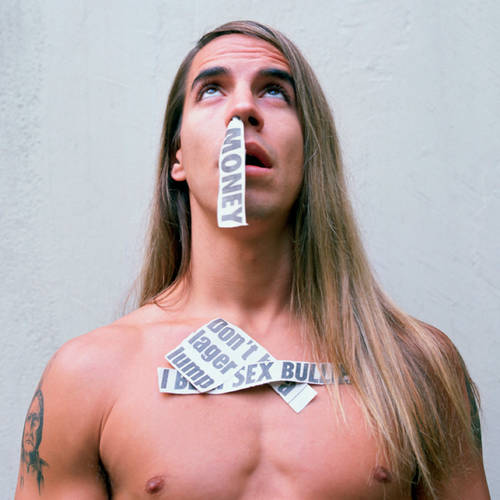




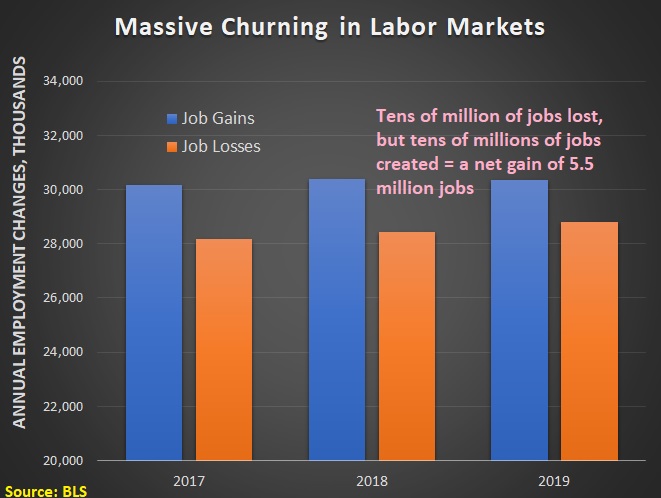


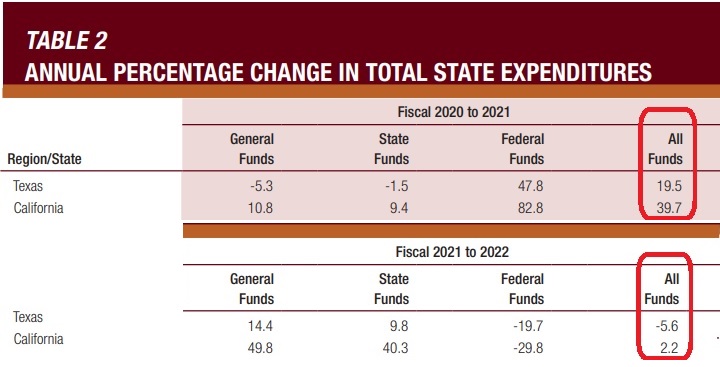
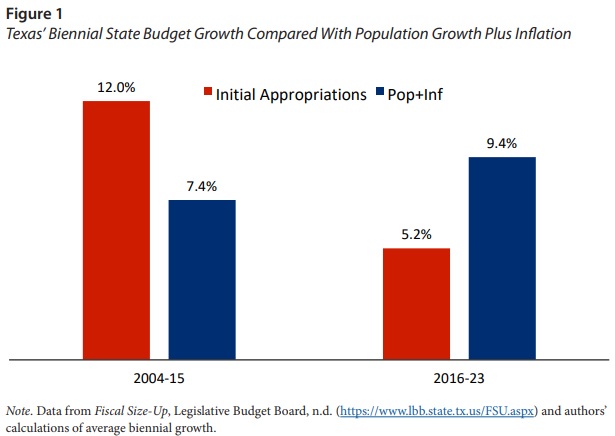




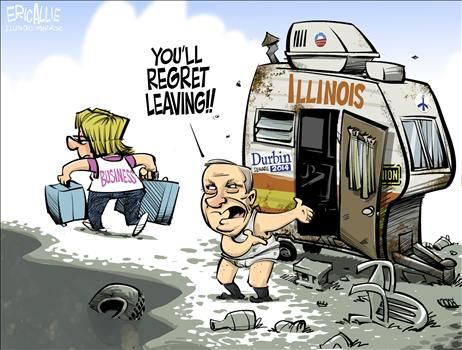
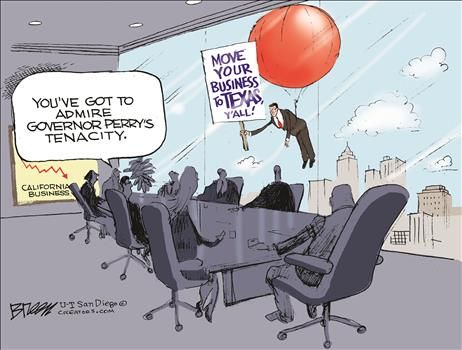




.jpg)
 —
—


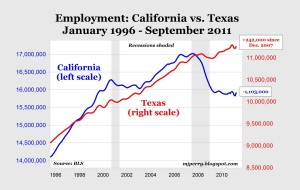






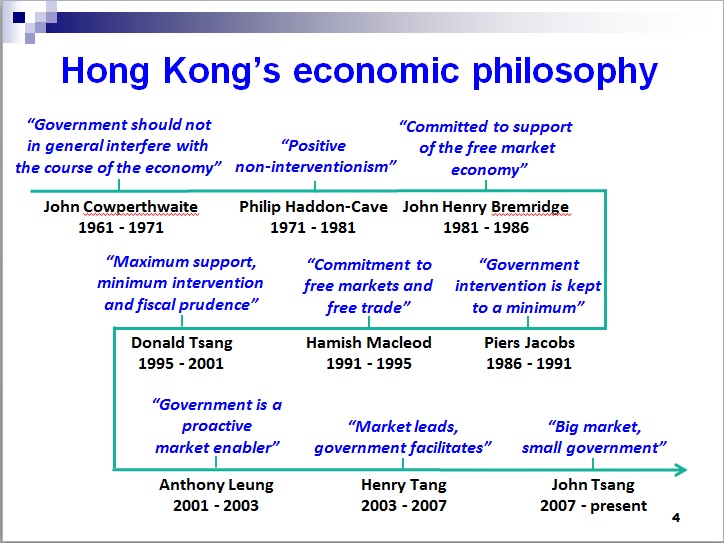


 The Daily Hatch