And we should have learned another lesson when the Fed (with strong support from Ronald Reagan) then put the inflation genie back in the bottle in the 1980s.
But today’s central bankers must have been very bad students.
Writing for National Review, E.J. Antoni explains that we are once again bearing the inevitable cost of bad monetary policy.
…central banks are allowing interest rates to rise in an effort to belatedly respond to a crisis they helped cause. …the global economic downturn has been baked into the cake for months. …central banks around the world laid the groundwork for economic pain when they decided to finance trillions of dollars in unfunded government spending in 2020.As those central banks continued — and in some cases accelerated — their excessive money creation throughout 2021 and into 2022, a global downturn became inevitable. …History shows that high levels of inflation almost always lead to recession …once inflation became apparent central bankers persisted with their earlier course, feeding inflation, rather than starving it. If they had acted earlier, far less drastic treatment would now be required. …there is no way around the harsh reality that the bill is coming due for the last two years of monetary malfeasance.
However, while I agree with the above article, I don’t agree with the title. It should be changed to: “Economies Can’t Avoid the Consequences of Central Bank Actions.”
Why the new title?
For the simple reason that central bankers are actually very capable of dodging responsibility for their mistakes.
For instance, has anyone heard the head of the Federal Reserve, Jerome Powell, apologize for dumping $4 trillion of liquidity into the economy in 2020 and 2021, thus creating today’s big price increases in the United States?
A more glaring example comes from the United Kingdom, where the former Governor of the Bank of England wants to blame Brexit. I’m not joking. Here are some excerpts from a Bloombergstory.
Former Bank of England Governor Mark Carney pointed to Brexit as a key reason why the UK central bank is now having to hike interest rates in its struggle to contain inflation. Alongside rising energy prices and a tight labor market, Britain’s exit from the European Union added to the economic headwinds for the UK,according to Carney. “In the UK, unfortunately, we’ve also had in the near term the impact of Brexit, which has slowed the pace at which the economy can grow,” Carney said in an interview with BBC Radio 4’s “Today” program on Friday. …“The economy’s capacity would go down for a period of time because of Brexit, that would add to inflationary pressure, and we would have a situation, which is the situation we have today, where the Bank of England has to raise interest rates despite the fact the economy is going into recession.”
This is galling.
Brexit did not cause inflation. The finger of blame should be pointed at the Bank of England.
Like the Fed, the BoE dramatically expanded its balance sheet starting in the spring of 2020.
And, like the Fed (and the European Central Bank), it maintained an easy-money policy for the remainder of the year and throughout 2021 – even after it became very clear that the pandemic was not going to cause an economic crisis.
To be fair, Carney left the Bank of England in early 2020, so it’s possible he might not have made the same mistake as Andrew Bailey, who took his place.
But Carney blaming Brexit shows that, if nothing else, he is willing to prevaricate to protect the BoE’s reputation.
What makes his analysis so absurd is that he almost surely would have made the same claims regardless of what happened after Brexit.
Boris Johnson delivered Brexit, but then proceeded to enact bad policies such as higher taxes and more spending. The economy weakened and Carney says this is why the BoE is being forced to raise interest rates.
But if Johnson had enacted good policy (the Singapore-on-Thames scenario), the economy would be performing much better. In that case, Carney doubtlessly would have claimed interest rates needed to rise because of overheating.
In reality, of course, interest rates are going up because the BoE is trying to undo its easy-money mistake.
Too bad Carney isn’t man enough to admit what’s really happening. Maybe a woman would be more honest.
P.S. The current Governor of the BoE, Bailey, also likes shifting blame since he wants people to think that Liz Truss’ proposed tax cuts were responsible for financial market instability – even though his easy-money policies are the real culprit.
—-
This past article below from Dan Mitchell tells the story of Ronald Reagan’s successful strategy against inflation. I had a front row seat since I got to read the book and see the film FREE TO CHOOSE by Milton Friedman in 1980 who Reagan agreed with on this issue and I have included below the episode on inflation!
He also restored America’s national defenses and reoriented foreign policy, both of which led to the collapse of the Soviet Empire, a stupendous achievement that makes Reagan worthy of Mount Rushmore.
But he also has another great achievement, one that doesn’t receive nearly the level of appreciation that it deserves. President Reagan demolished the economic cancer of inflation.
Even Paul Krugman has acknowledged that reining in double-digit inflation was a major positive achievement. Because of his anti-Reagan bias, though, he wants to deny the Gipper any credit.
Robert Samuelson, in a column for the Washington Post, corrects the historical record.
Krugman recently wrote acolumnarguing that the decline of double-digit inflation in the 1980s was the decade’s big economic event, not the cuts in tax rates usually touted by conservatives. Actually, I agree with Krugman on this. But then he asserted that Ronald Reagan had almost nothing to do with it. That’s historically incorrect. Reagan was crucial. …Krugman’s error is so glaring.
Samuelson first provides the historical context.
For those too young to remember, here’s background. From 1960 to 1980, inflation — the general rise of retail prices —marched relentlessly upward. It went from 1.4 percent in 1960 to 5.9 percent in 1969 to 13.3 percent in 1979. The higher it rose, the more unpopular it became. …Worse, government seemed powerless to defeat it. Presidents deployed complex wage and price controls and guidelines. They didn’t work. The Federal Reserve — custodian of credit policies — veered between easy money and tight money, striving both to subdue inflation and to maintain “full employment” (taken as a 4 percent to 5 percent unemployment rate). It achieved neither. From the late 1960s to the early 1980s, there werefour recessions. Inflation became a monster, destabilizing the economy.
The column then explains that there was a dramatic turnaround in the early 1980s, as Fed Chairman Paul Volcker adopted a tight-money policy and inflation was squeezed out of the system much faster than almost anybody thought was possible.
But Krugman wants his readers to think that Reagan played no role in this dramatic and positive development.
Samuelson says this is nonsense. Vanquishing inflation would have been impossible without Reagan’s involvement.
What Reagan provided was political protection. The Fed’s previous failures to stifle inflation reflected its unwillingness to maintain tight-money policies long enough… Successive presidents preferred a different approach: the wage-price policies built on the pleasing (but unrealistic) premise that these could quell inflation without jeopardizing full employment. Reagan rejected this futile path. As the gruesome social costs of Volcker’s policies mounted — the monthly unemployment rate would ultimately rise to a post-World War II high of10.8 percent— Reagan’s approval ratings plunged. In May 1981, they were at 68 percent; by January 1983, 35 percent. Still, he supported the Fed. …It’s doubtful that any other plausible presidential candidate, Republican or Democrat, would have been so forbearing.
What’s the bottom line?
What Volcker and Reagan accomplished was an economic and political triumph. Economically, ending double-digit inflation set the stage for a quarter-century of near-automatic expansion… Politically, Reagan and Volcker showed that leaders can take actions that, though initially painful and unpopular, served the country’s long-term interests. …There was no explicit bargain between them. They had what I’ve called a “compact of conviction.”
By the way, Krugman then put forth a rather lame response to Samuelson, including the rather amazing claim that “[t]he 1980s were a triumph of Keynesian economics.”
As preached and practiced since the 1960s, Keynesian economics promised to stabilize the economy at levels of low inflation and high employment. By the early 1980s, this vision was in tatters, and many economists were fatalistic about controlling high inflation. Maybe it could be contained. It couldn’t be eliminated, because the social costs (high unemployment, lost output) would be too great. …This was a clever rationale for tolerating high inflation, and the Volcker-Reagan monetary onslaught demolished it. High inflation was not an intrinsic condition of wealthy democracies. It was the product of bad economic policies. This was the 1980s’ true lesson, not the contrived triumph of Keynesianism.
If anything, Samuelson is being too kind.
One of the key tenets of Keynesian economics is that there’s a tradeoff between inflation and unemployment (the so-called Phillips Curve).
Yet in the 1970s we had rising inflation and rising unemployment.
While in the 1980s, we had falling inflation and falling unemployment.
But if you’re Paul Krugman and you already have a very long list of mistakes (see here, here, here, here,here,here,here, here, andherefor a few examples), then why not go for the gold and try to give Keynes credit for the supply-side boom of the 1980s
P.S. Since today’s topic is Reagan, it’s a good opportunity to share my favorite poll of the past five years.
P.P.S. Here are some great videos of Reagan in action. And here’s one more if you need another Reagan fix.
Milton Friedman’s FREE TO CHOOSE “How to cure inflation” Transcript and Video (60 Minutes)
In 1980 I read the book FREE TO CHOOSE by Milton Friedman and it really enlightened me a tremendous amount. I suggest checking out these episodes and transcripts of Milton Friedman’s film series FREE TO CHOOSE: “The Failure of Socialism” and “What is wrong with our schools?” and “Created Equal” and From Cradle to Grave, and – Power of the Market.“If we could just stop the printing presses, we would stop inflation,” Milton Friedman says in “How to Cure Inflation” from the Free To Choose series. Now as then, there is only one cause of inflation, and that is when governments print too much money. Milton explains why it is that politicians like inflation, and why wage and price controls are not solutions to the problem.
http://www.freetochoosemedia.org/freetochoose/detail_ftc1980_transcript.php?page=9While many people have a fairly good grasp of what inflation is, few really understand its fundamental cause. There are many popular scapegoats: labor unions, big business, spendthrift consumers, greed, and international forces. Dr. Friedman explains that the actual cause is a government that has exclusive control of the money supply. Friedman says that the solution to inflation is well known among those who have the power to stop it: simply slow down the rate at which new money is printed. But government is one of the primary beneficiaries of inflation. By inflating the currency, tax revenues rise as families are pushed into higher income tax brackets. Thus, inflation transfers wealth and resources from the private to the public sector. In short, inflation is attractive to government because it is a way of increasing taxes without having to pass new legislation to raise tax rates. Inflation is in fact taxation without representation. Wage and price controls are not the cure for inflation because they treat only the symptom (rising prices) and not the disease (monetary expansion). History records that such controls do not work; instead, they have perverse effects on both prices and economic growth and undermine the fundamental productivity of the economy. There is only one cure for inflation: slow the printing presses. But the cure produces the painful side effects of a temporary increase in unemployment and reduced economic growth. It takes considerable political courage to undergo the cure. Friedman cites the example of Japan, which successfully underwent the cure in the mid-seventies but took five years to squeeze inflation out of the system. Inflation is a social disease that has the potential for destroying a free society if it is unchecked. Prolonged inflation undermines belief in the basic equity of the free market system because it tends to destroy the link between effort and reward. And it tears the social fabric because it divides society into winners and losers and sets group against group.(Taxation without representation: Getting knocked up to higher tax brackets because of inflation pt 1)http://www.youtube.com/watch?v=b1dTWDNKH3c
Volume 9 – How to Cure Inflation
Transcript:
Friedman: The Sierra Nevada’s in California 10,000 feet above sea level, in the winter temperatures drop to 40 below zero, in the summer the place bakes in the thin mountain air. In this unlikely spot the town of Body sprang up. In its day Body was filled with prostitutes, drunkards and gamblers part of a colorful history of the American West.
A century ago, this was a town of 10,000 people. What brought them here? Gold. If this were real gold, people would be scrambling for it. The series of gold strikes throughout the West brought people from all over the world, all kinds of people. They came here for one purpose and one purpose only, to strike it rich, quick. But in the process, they built towns, cities, in places where nobody would otherwise have dreamed of building a city. Gold built these cities and when the gold was exhausted, the cities collapsed and became ghost towns. Many of the people who came here ended up the way they began, broke and unhappy. But a few struck it rich. For them, gold was real wealth. But was it for the world as a whole. People couldn’t eat the gold, they couldn’t wear the gold, they couldn’t live in houses made of gold. Because there was more gold, they had to pay a little more gold to buy goods and services. The prices of things in terms of gold went up.
At tremendous cost, at sacrifice of lives, people dug gold out of the bowels of the earth. What happened to that gold? Eventually, at long last, it was transported to distant places only to be buried again under the ground. This time in the vaults of banks throughout the world. There is hardly anything that hasn’t been used for money; rock salt in Ethiopia, brass rings in West Africa, Calgary shells in Uganda, even a toy cannon. Anything can be used as money. Crocodile money in Malaysia, absurd isn’t it?
That beleaguered minority of the population that still smokes may recognize this stuff as the raw material from which their cigarettes are made. But in the early days of the colonies, long before the U.S. was established, this was money. It was the common money of Virginia, Maryland and the Carolinas. It was used for all sorts of things. The legislature voted that it could be used legally to pay taxes. It was used to buy food, clothing and housing. Indeed, one of the most interesting sites was to see the husky young fellows at that time, lug 100 pounds of it down to the docks to pay the costs of the passage of the beauteous young ladies who had come over from England to be their brides.
Now you know how money is. There’s a tendency for it to grow, for more and more of it to be produced and that’s what happened with this tobacco. As more tobacco was produced, there was more money. And as always when there’s more money, prices went up. Inflation. Indeed, at the very end of the process, prices were 40 times as high in terms of tobacco as they had been at the beginning of the process. And as always when inflation occurs, people complained. And as always, the legislature tried to do something. And as always, to very little avail. They prohibited certain classes of people from growing tobacco. They tried to reduce the total amount of tobacco grown, they required people to destroy part of their tobacco. But it did no good. Finally, many people took it into their own hands and they went around destroying other people’s tobacco fields. That was too much. Then they passed a law making it a capital offense, punishable by death, to destroy somebody else’s tobacco. Grecian’s Law, one of the oldest laws in economics, was well illustrated. That law says that cheap money drives out dear money and so it was with tobacco. Anybody who had a debt to pay, of course, tried to pay it in the worst quality of tobacco he had. He saved the good tobacco to sell overseas for hard money. The result was that bad money drove out good money.
Finally, almost a century after they had started using tobacco as money, they established warehouses in which tobacco was deposited in barrels, certified by an inspector according to his views as to it’s quality and quantity. And they issued warehouse certificates which people gave from one to another to pay for the bills that they accumulated.
These pieces of green printed paper are today’s counterparts of those tobacco certificates. Except that they bear no relation to any commodity. In this program I want to take you to Britain to see how inflation weakens the social fabric of society. Then to Tokyo, where the Japanese have the courage to cure inflation. To Berlin, where there is a lesson to be learned from the West Germans and how so called cures are often worse than the disease. And to Washington where our government keeps these machines working overtime. And I am going to show you how inflation can be cured.
The fact is that most people enjoy the early stages of the inflationary process. Britain, in the swinging 60’s, there was plenty of money around, business was brisk, jobs were plentiful and prices had not yet taken off. Everybody seemed happy at first. But by the early 70’s, as the good times rolled along, prices started to rise more and more rapidly. Soon, some of these people are going to lose their jobs. The party was coming to an end.
The story is much the same in the U.S. Only the process started a little later. We’ve had one inflationary party after another. Yet we still can’t seem to avoid them. How come?
Before every election our representatives would like to make us think we are getting a tax break. When they are able to do it, while at the same time actually raising our taxes because of a bit of magic they have in their kit bag. That magic is inflation. They reduced the tax rates but the taxes we have to pay go up because we are automatically shoved into higher brackets by the effective inflation. A neat trick. Taxation without representation.
_________________________________________
Pt 2 Many a political leader has been tempted to turn to wage and price controls despite their repeated failure in practice. On this subject they never seem to learn. But some lessons may be learned. That happened to British P
Bob Crawford: The more I work, it seems like the more they take off me. I know if I work an extra day or two extra days, what they take in federal income tax alone is almost doubled because apparently it puts you in a higher income tax bracket and it takes more off you.
Friedman: Bob Crawford lives with his wife and three children in a suburb of Pittsburgh. They’re a fairly average American family.
Mrs. Crawford: Don’t slam the door Daphne. Okay. Alright. What are you doing? Making your favorite dish.
Friedman: We went to the Crawford’s home after he had spent a couple of days working out his federal and state income taxes for the year. For our benefit, he tried to estimate all the other taxes he had paid as well. In the end, though, he didn’t discover much that would surprise anybody.
Bob Crawford: Inflation is going up, everything is getting more expensive. No matter what you do, as soon as you walk out of the house, everything went up. Your gas bills keep going up, electric bills, your gasoline, you can name a thousand things that are going up. Everything is going sky high. Your food. My wife goes to the grocery store. We used to live on say, $60 or $50 every two weeks just for our basic food. Now it’s $80 or $90 every two weeks. Things are just going out of sight as far as expense to live on. Like I say it’s getting tough. It seems like every month it gets worse and worse. And I don’t know where it’s going to end. At the end of the day that I spend nearly $6,000 of my earnings on taxes. That leaves me with a total of $12,000 to live on. It might seem like a lot of money, but five, six years ago I was earning $12,000.
Friedman: How does taxation without representation really effect how much the Crawford family has left to spend after it’s paid its income taxes. Well in 1972 Bob Crawford earned $12,000. Some of that income was not subject to income tax. After paying income tax on the rest he had this much left to spend. Six years later he was earning $18,000 a year. By 1978 the amount free from tax was larger. But he was now in a higher tax bracket so his taxes went up by a larger percentage than his income. However, those dollars weren’t worth anything like as much. Even his wages, let alone his income after taxes, hadn’t kept up with inflation. His buying power was lower than before. That is taxation without representation in practice.
Unnamed Individual: We have with us today you brothers that are sitting here today that were with us on that committee and I’d like to tell you….
Friedman: There are many traditional scapegoats blamed for inflation. How often have you heard inflation blamed on labor unions for pushing up wages. Workers, of course, don’t agree.
Unnamed Individual: But fellows this is not true. This is subterfuge. This is a myth. Your wage rates are not creating inflation.
Friedman: And he’s right. Higher wages are mostly a result of inflation rather than a cause of it. Indeed, the impression that unions cause inflation arises partly because union wages are slow to react to inflation and then there is pressure to catch up.
Worker: On a day to day basis, try to represent our own numbers. But that in fact is not the case. Not only can we not play catch up, we can’t even maintain a wage rate commensurate with the cost of living that’s gone up in this country.
Friedman: Another scapegoat for inflation is the cost of goods coming from abroad. Inflation, we’re told, is imported. Higher prices abroad driving up prices at home. It’s another way government can blame someone else for inflation. But this argument, too, is wrong. The prices of imports and the countries from which they come are not in terms of dollars, they are in terms of lira or yen or other foreign currencies. What happens to their prices in dollars depends on exchange rates which in turn reflect inflation in the United States.
Since 1973 some governments have had a field day blaming the Arabs for inflation. But if high oil prices were the cause of inflation, how is it that inflation has been less here in Germany, a country that must import every drop of oil and gas that it uses on the roads and in industry, then for example it is in the U.S. which produces half of its own oil. Japan has no oil of its own at all. Yet at the very time the Arabs were quadrupling oil prices, the Japanese people were bringing inflation down from 30 to less than 5% a year. The fallacy is to confuse particular prices like the price of oil, with prices in general. Back at home, President Nixon understood this.
Nixon: “Now here’s what I will not do. I will not take this nation down the road of wage and price controls however politically expedient that may seem. The pros of rationing may seem like an easy way out, but they are really an easy way in for more trouble. To the explosion that follows when you try to clamp a lid on a rising head of steam without turning down the fire under the pot, wage and price controls only postpone the day of reckoning. And in so doing, they rob every American of a very important part of his freedom.
Friedman: Now listen to this:
Nixon: “The time has come for decisive action. Action that will break the vicious circle of spiraling prices and costs. I am today ordering a freeze on all prices and wages throughout the United States for a period of 90 days. In addition, I call upon corporations to extend the wage price freeze to all dividends.”
Friedman: Many a political leader has been tempted to turn to wage and price controls despite their repeated failure in practice. On this subject they never seem to learn. But some lessons may be learned. That happened to British Prime Minister James Callahan who finally discovered that a very different economic myth was wrong. He told the Labor Party Conference about it in 1976.
James Callahan: “We used to think that you could use, spend your way out of a recession and increase employment by cutting taxes and boosting government spending. I tell you in all candor that option no longer exists. It only works on each occasion since the war by injecting a bigger dose of inflation into the economy followed by a higher level of unemployment as the next step. That’s the history of the last 20 years.”
Friedman: Well, it’s one thing to say it. One reason why inflation does so much harm is because it effects different groups differently. Some benefit and of course they attribute that to their own cleverness. Some are hurt, but of course they attribute that to the evil actions of other people. And the whole problem is made far worse by the false cures which government adopts, particularly wage and price control.
The garbage collectors in London felt justifiably aggrieved because their wages had not been permitted to keep pace with the cost of living. They struck, hurting not the people who impose the controls, but their friends and neighbors who had to live with mounting piles of rat infested garbage. Hospital attendants felt justifiably aggrieved because their wages had not been permitted to keep up with the cost of living. They struck, hurting not the people who impose the controls, but cancer patients who were turned out of hospital beds. The attendants behaved as a group in a way they never would have behaved as individuals. One group is set against another group. The social fabric of society is torn apart inflicting scars that it will take decades to heal and all to no avail because wage and price controls, far from being a cure for inflation, only make inflation worse.
Within the memory of most of our political leaders, there’s one vivid example of how economic ruin can be magnified by controls. And the classic demonstration of what to do when it happens.
_______________________________________________
(Wage and Price Controls don’t work)
Inflation is just like alcoholism. In both cases when you start drinking or when you start printing too much money, the good effects come first. The bad effects only come later.
That’s why in both cases there is a strong temptation to overdo it. To drink too much and to print too much money. When it comes to the cure, it’s the other way around. When you stop drinking or when you stop printing money, the bad effects come first and the good effects only come later.
Pt 3
Germany, 1945, a devastated country. A nation defeated in war. The new governing body was the Allied Control Commission, representing the United States, Britain, France and the Soviet Union. They imposed strict controls on practically every aspect of life including wages and prices. Along with the effects of war, the results were tragic. The basic economic order of the country began to collapse. Money lost its value. People reverted to primitive barter where they used cameras, fountain pens, cigarettes, whiskey as money. That was less than 40 years ago.
This is Germany as we know it today. Transformed into a place a lot of people would like to live in. How did they achieve their miraculous recovery? What did they know that we don’t know?
Early one Sunday morning, it was June 20, 1948, the German Minister of Economics, Ludwig Earhardt, a professional economist, simultaneously introduced a new currency, today’s Deutsche Mark, and in one fell swoop, abolished almost all controls on prices and wages. Why did he do it on a Sunday morning? It wasn’t as you might suppose because the Stock Markets were closed on that day, it was, as he loved to confess, because the offices of the American, the British, and the French occupation authorities were closed that day. He was sure that if he had done it when they open they would have countermanded the order. It worked like a charm. Within days, the shops were full of goods. Within months, the German economy was humming along at full steam. Economists weren’t surprised at the results, after all, that’s what a price system is for. But to the rest of the world it seemed an economic miracle that a defeated and devastated country could in little more than a decade become the strongest economy on the continent of Europe.
In a sense this city, West Berlin, is something of a unique economic test tube. Set as it is deep in Communist East Germany. Two fundamentally different economic systems collide here in Europe. Ours and theirs, separated by political philosophies, definitions of freedom and a steel and concrete wall.
To digress from inflation, economic freedom does not stand alone. It is part of a wider order. I wanted to show you how much difference it makes by letting you see how the people live on the other side of that Berlin Wall. But the East German authorities wouldn’t let us. The people over there speak the same language as the people over here. They have the same culture. They have the same for bearers. They are the same people. Yet you don’t need me to tell you how differently they live. There is one simple explanation. The political system over there cannot tolerate economic freedom. The political system over here could not exist without it.
But political freedom cannot be preserved unless inflation is kept in bounds. That’s the responsibility of government which has a monopoly over places like this. The reason we have inflation in the United States or for that matter anywhere in the world is because these pieces of paper and the accompanying book entry or their counterparts in other nations are growing more rapidly than the quantity of goods and services produced. The truth is inflation is made in one place and in one place only. Here in Washington. This is the only place were there are presses like this that turn out these pieces of paper we call money. This is the place where the power resides to determine how rapidly the amount of money shall increase.
What happened to all that noise? That’s what would happen to inflation if we stop letting the amount of money grow so rapidly. This is not a new idea. It’s not a new cure. It’s not a new problem. It’s happened over and over again in history. Sometimes inflation has been cured this way on purpose. Sometimes it’s happened by accident. During the Civil War the North, late in the Civil War, overran the place in the South where the printing presses were sitting up, where the pieces of paper were being turned out. Prior to that point, the South had a very rapid inflation. If my memory serves me right, something like 4% a month. It took the Confederacy something over two weeks to find a new place where they could set up their printing presses and start them going again. During that two week period, inflation came to a halt. After the two week period, when the presses started running again, inflation started up again. It’s that clear, that straightforward. More recently, there’s another dramatic example of the only effective way to deal with rampant inflation.
In 1973, Japanese housewives going to market were faced with an unpleasant fact. The cash in their purses seemed to be losing its value. Prices were starting to sore as the awful story of inflation began to unfold once again. The Japanese government knew what to do. What’s more, they were prepared to do it. When it was all over, economists were able to record precisely what had happened. In 1971 the quantity of money started to grow more rapidly. As always happens, inflation wasn’t affected for a time. But by late 1972 it started to respond. In early 73 the government reacted. It started to cut monetary growth. But inflation continued to soar for a time. The delayed reaction made 1973 a very tough year of recession. Inflation tumbled only when the government demonstrated its determination to keep monetary growth in check. It took five years to squeeze inflation out of the system. Japan attained relative stability. Unfortunately, there’s no way to avoid the difficult road the Japanese had to follow before they could have both low inflation and a healthy economy. First they had to live through a recession until slow monetary growth had its delayed effect on inflation.
Inflation is just like alcoholism. In both cases when you start drinking or when you start printing too much money, the good effects come first. The bad effects only come later.
That’s why in both cases there is a strong temptation to overdo it. To drink too much and to print too much money. When it comes to the cure, it’s the other way around. When you stop drinking or when you stop printing money, the bad effects come first and the good effects only come later. That’s why it’s so hard to persist with the cure. In the United States, four times in the 20 years after 1957, we undertook the cure. But each time we lacked the will to continue. As a result, we had all the bad effects and none of the good effects. Japan on the other hand, by sticking to a policy of slowing down the printing presses for five years, was by 1978 able to reap all the benefits, low inflation and a recovering economy. But there is nothing special about Japan. Every country that has had the courage to persist in a policy of slow monetary growth has been able to cure inflation and at the same time achieve a healthy economy.
___________________________________
Pt 4
The job of the Federal Reserve is not to run government spending; it’s not to run government taxation. The job of the Federal Reserve is to control the money supply and I believe, frankly, I have always believed as you know, that these are excuses and not reasons for the performance.
DISCUSSION
Participants: Robert McKenzie, Moderator; Milton Friedman; Congressman Clarence J. Brown; William M. Martin, Chairman of Federal Reserve 1951_1970; Beryl W. Sprinkel, Executive Vice President, Harris Bank, Chicago; Otmar Emminger, President, Ieutsche Bundesbank, Frankfurt West Germany
MCKENZIE: And here at the Harper Library of the University of Chicago, our distinguished guests have their own ideas, too. So, lets join them now.
BROWN: If you could control the money supply, you can certainly cut back or control the rate of inflation. I’d have to say that that prescription is a little bit easier to write than it is to fill. I think there are some other ways to do it and I would relate the money supply __ I think inflation is a measure of the relationship between money and the goods and services that money is meant to cover. And so if you can stimulate the goods, the production of goods and services, it’s helpful. It’s a little tougher to control the money supply, although I think it can be done, than just saying that you should control it, because we’ve got the growth of credit cards, which is a form of money; created, in effect, by the free enterprise system. It isn’t all just printed in Washington, but that may sound too defensive. I think he was right in saying that the inflation is Washington based.
MCKENZIE: Mr. Martin, nobody has been in the firing line longer than you, 17 years head of the Fed. Could you briefly comment on that and we’ll go around the group.
MARTIN: I want to say 19 years.
(Laughter)
MARTIN: I wouldn’t be out here if it weren’t for Milton Friedman, today. He came down and gave us advice from time to time.
FRIEDMAN: You’ve never taken it.
(Laughter)
MCKENZIE: He’s going to do some interviewing later, I warn you.
MARTIN: And I’m rather glad we didn’t take it __
(Laughter)
MARTIN: __ all the time.
SPRINKEL: In your 19 years as Chairman of the Federal Reserve, Bill, the average growth in the money supply was 3.1 percent per year. The inflation rate was 2.2 percent. Since you left, the money supply has exactly doubled. The inflation rate is average over 7 percent, and, of course, in recent times the money supply has been growing in double-digit territory as has our inflation rate.
EMMINGER: May I, first of all, confirm two facts which have been so vividly brought out in the film of Professor Friedman; namely, that at the basis of the relatively good performance of Western Germany were really two events. One, the establishment of a new sound money which we try to preserve sound afterwards. And, secondly, the jump overnight into a free market economy without any controls over prices and wages. These are the two fundamental facts. We have tried to preserve monetary stability by just trying to follow this prescription of Professor Friedman; namely, monetary discipline. Keeping monetary growth relatively moderate. I must, however, warn you it’s not so easy as it looks. If you just say, governments have to have the courage to persist in that course.
FRIEDMAN: Nobody does disagree with the proposition that excessive growth in money supply is an essential element in the inflationary process and that the real problem is not what to do, but how to have the courage and the will to do it. And I want to go and start, if I may, on that subject; because I think that’s what we ought to explore. Why is it we haven’t had the courage and don’t, and under what circumstances will we? And I want to start with Bill Martin because his experience is a very interesting experience. His 19 years was divided into different periods. In the first period, that average that Beryl Sprinkel spoke about, averaged two very different periods. An early period of very slow growth and slow inflation; a later period of what at the time was regarded as creeping inflation __ now we’d be delighted to get back to it. People don’t remember that at the time that Mr. Nixon introduced price and wage controls in 1971 to control an outrageous inflation, the rate of inflation was four-and-a-half percent per year. Today we’d regard that as a major achievement; but the part of the period when you were Chairman, was a period when the inflation rate was starting to creep up and money growth rate was also creeping up. Now if I go from your period, you were eloquent in your statements to the public, to the press, to everyone, about the evils of inflation, and about the determination on the Federal Reserve not to be the architect of inflation. Your successor, Arthur Burns, was just as eloquent. Made exactly the same kinds of statements as effectively, and again over and over again said the Federal Reserve will not be the architect of inflation. His successor, Mr. G. William Miller, made the same speeches, and the same statements, and the same protestations. His successor, Paul Volcker, he is making the same statements. Now my question to you is: Why is it that there has been such a striking difference between the excellent pronouncements of all Chairmen of the Fed, therefore it’s not personal on you. You have a lot of company, unfortunately for the country. Why is it that there has been such a wide diversion between the excellent pronouncements on the one hand and what I regard as a very poor performance on the other?
MARTIN: Because monetary policy is not the only element. Fiscal policy is equally important.
FRIEDMAN: You’re shifting the buck to the Treasury.
MARTIN: Yes.
FRIEDMAN: To the Congress. We’ll get to Mr. Brown, don’t worry.
MARTIN: Yeah, that’s right.
(Laughter)
MARTIN: The relationship of fiscal policy to monetary policy is one of the important things.
MCKENZIE: Would you remind us, the general audience, when you say “fiscal policy”, what you mean in distinction to “monetary policy”?
MARTIN: Well, taxation.
MCKENZIE: Yeah.
MARTIN: The raising revenue.
FRIEDMAN: And spending.
MARTIN: And spending.
FRIEDMAN: And deficits.
MARTIN: And deficits, yes, exactly. And I think that you have to realize that when I’ve talked for a long time about the independence of the Federal Reserve. That’s independence within the government, not independence of the government. And I’ve worked consistently with the Treasury to try to see that the government is financed. Now this gets back to spending. The government says they’re gonna spend a certain amount, and then it turns out they don’t spend that amount. It doubles.
FRIEDMAN: The job of the Federal Reserve is not to run government spending; it’s not to run government taxation. The job of the Federal Reserve is to control the money supply and I believe, frankly, I have always believed as you know, that these are excuses and not reasons for the performance.
MARTIN: Well that’s where you and I differ, because I think we would be irresponsible if we didn’t take into account the needs and what the government is saying and doing. I think if we just went on our own, irresponsibly, I say it on this, because I was in the Treasury before I came to this __
FRIEDMAN: I know. I know.
MARTIN: __ go to the Fed; and I know the other side of the picture. I think we’d be rightly condemned by the American people and by the electorate.
FRIEDMAN: Every central bank in this world, including the German Central Bank, including the Federal Reserve System, has the technical capacity to make the money supply do over a period of two or three or four months, not daily, but over a period, has the technical capacity to control it.
(Several people talking at once.)
FRIEDMAN: I cannot explain the kind of excessive money creation that has occurred, in terms of the technical incapacity of the Federal Reserve System or of the German Central Bank, or of the Bank of England, or any other central bank in the world.
EMMINGER: I wouldn’t say technically we are incapable of doing that, although we have never succeeded in controlling the money supply month that way. But I would say we can, technically, control it half yearly, from one half-year period to the next and that would be sufficient __
FRIEDMAN: That would be sufficient.
EMMINGER: __ for controlling inflation. But however I __
VOICE OFF SCREEN: It doesn’t move.
FRIEDMAN: I’m an economic scientist, and I’m trying to observe phenomena, and I observe that every Federal Reserve Chairman says one thing and does another. I don’t mean he does, the system does.
MCKENZIE: Yeah. How different is your setup in Germany? You’ve heard this problem of governments getting committed to spending and the Fed having, one way or the other, to accommodate itself to it. Now what’s your position on this very interesting problem?
EMMINGER: We are very independent of the government, from the government, but, on the other hand, we are an advisor of the government. Also on the budget deficits and they would not easily go before Parliament with a deficit which much of it is openly criticized and disapproved by the same bank. Why because we have a tradition in our country that we can also publicly criticize the government on his account. And second, as if happened in our case too, the government goes beyond what is tolerable for the sake of moral equilibrium. We have let it come through in the capital markets. That is to say they have enough interest rates that has drawn public criticism and that has had some effect on their attitude.
_________________________________________
Pt 5
I think that is a very important point that Dr. Emminger just made because there is not a one-to-one relationship between government deficits and what happens to the money supply at all. The pressure on the Federal Reserve comes indirectly. It comes because large government deficits, if they are financed in the general capital market, will drive up interest rates and then we have the right patents in Congress and their successors pressuring the Federal Reserve to enter in and finance the deficit by printing money as a way of supposedly holding down interest rates. Now before I turn to Mr. Brown and ask him that, I just want to make one point which is very important. The Federal Reserve’s activities in trying to hold down interest rates have put us in a position where we have the highest interest rates in history. It’s another example of how, of the difference between the announced intentions of a policy, and the actual results. But now I want to come to Clarence Brown and ask him, shift the buck to him, and put him on the hot seat for a bit. The government spending has been going up rapidly, Republican administration or Democratic administration. This is a nonpartisan issue, it doesn’t matter. Government deficits have been going up rapidly. Republican administration or Democratic administration. Why is it that here again you have the difference between pronouncements and performance? There is no Congressman, no Senator, who will come out and say, “I am in favor of inflation.” There is not a single one who will say, “I am in favor of big deficits.” They’ll all say we want to balance the budget, we want to hold down spending, we want an economical government. How do you explain the difference between performance and talk on the side of Congress?
BROWN:
FRIEDMAN: I think that is a very important point that Dr. Emminger just made because there is not a one-to-one relationship between government deficits and what happens to the money supply at all. The pressure on the Federal Reserve comes indirectly. It comes because large government deficits, if they are financed in the general capital market, will drive up interest rates and then we have the right patents in Congress and their successors pressuring the Federal Reserve to enter in and finance the deficit by printing money as a way of supposedly holding down interest rates. Now before I turn to Mr. Brown and ask him that, I just want to make one point which is very important. The Federal Reserve’s activities in trying to hold down interest rates have put us in a position where we have the highest interest rates in history. It’s another example of how, of the difference between the announced intentions of a policy, and the actual results. But now I want to come to Clarence Brown and ask him, shift the buck to him, and put him on the hot seat for a bit. The government spending has been going up rapidly, Republican administration or Democratic administration. This is a nonpartisan issue, it doesn’t matter. Government deficits have been going up rapidly. Republican administration or Democratic administration. Why is it that here again you have the difference between pronouncements and performance? There is no Congressman, no Senator, who will come out and say, “I am in favor of inflation.” There is not a single one who will say, “I am in favor of big deficits.” They’ll all say we want to balance the budget, we want to hold down spending, we want an economical government. How do you explain the difference between performance and talk on the side of Congress?
BROWN: Well, first I think we have to make one point. I’m not so much with the government as I am against it.
FRIEDMAN: I understand.
BROWN: As you know, I’m a minority member of Congress.
FRIEDMAN: Again, I’m not __ I’m not directing this at you personally.
BROWN: I understand, of course; and while the administrations, as you’ve mentioned, Republican and Democratic administrations, have both been responsible for increases in spending, at least in terms of their recommendations. It is the Congress and only the Congress that appropriates the funds and determines what the taxes are. The President has no authority to do that and so one must lay it at the feet of the U.S. Congress. Now, I guess we’d have to concede that it’s a little bit more fun to give away things than it is to withhold them. And this is the reason that the Congress responds to a general public that says, “I want you to cut everybody else’s program but the one in which I am most particularly interested. Save money, but incidentally, my wife is taking care of the orphanages and so lets try to help the orphanages,” or whatever it is. Let me try to make a point, if I can, however, on what I think is a new spirit moving within the Congress and that is that inflation, as a national affliction, is beginning to have an impact on the political psychology of many Americans. Now the Germans, the Japanese and others have had this terrific postwar inflation. The Germans have been through it twice, after World War I and World War II, and it’s a part of their national psyche. But we are affected in this country by the depression. Our whole tax structure is built on the depression. The idea of the tax structure in the past has been to get the money out of the mattress where it went after the banks failed in this country and jobs were lost, and out of the woodshed or the tin box in the back yard, get it out of there and put it into circulation. Get it moving, get things going. And one of the ways to do that was to encourage inflation. Because if you held on to it, the money would depreciate; and the other way was to tax it away from people and let the government spend it. Now there’s a reaction to that and people are beginning to say, “Wait just a minute. We’re not afflicted as much as we were by depression. We’re now afflicted by inflation, and we’d like for you to get it under control.” Now you can do that in another way and that without reducing the money supply radically. I think the Joint Economic Committee has recommended that we do it gradually. But the way that you can do it is to reduce taxes and the impact of government, that is the weight of government and increase private savings so that the private savings can finance some of the debt that you have.
FRIEDMAN: There is no way you can do it without reducing, in my opinion, the rate of monetary growth. And I, recognizing the facts, even though they ought not to be that way, I wonder whether you can reduce the rate of monetary growth unless Congress actually does reduce government spending as well as government taxes.
BROWN: The problem is that every time we use demand management, we get into a kind of an iron maiden kind of situation. We twist this way and one of the spikes grabs us here, so we twist that way and a spike over here gets us. And every recession has had higher basic unemployment rates than the previous recession in the last several years and every inflation has had higher inflation. We’ve got to get that tilt out of the society.
MCKENZIE: Wouldn’t it be fair to say, though, that a fundamental difference is the Germans are more deeply fearful of a return to inflation, having had the horrifying experience between the wars, especially. We tend to be more afraid of recession turning into depression.
EMMINGER: I think there is something in it and in particular in Germany the government would have to fear very much in their electoral prospects if they went into such an election period with a high inflation rate. But there is another important difference.
MARTIN: We fear unemployment more than inflation it seems.
EMMINGER: You fear unemployment, but unemployment is feared with us, too, but inflation is just as much feared. But there is another difference; namely, once you have got into that escalating inflation, every time the base, the plateau is higher, it’s extremely difficult to get out of it. You must avoid getting into that, now that’s very cheap advice from me because you are now.
(Laughing)
EMMINGER: But we had, for the last fifteen, twenty years, always studied foreign experiences, and told ourselves we never must get into this vicious circle. Once you are in, it takes a long time to get out of it. That is what I am preaching now, that we should avoid at all costs to get again into this vicious circle as we had it already in ’73_’74. It took us, also, four years to get out of it, although we were only at eight percent inflation. Four years to get down to three percent. So you __
MCKENZIE: Those were __ yes.
EMMINGER: You have, I think, the question of whether you can do if in a gradualist way over many, many years, or whether you don’t need a sort of shock treatment.
____________________________________
her we go into a period of still higher unemployment later on and have it to do all over again. That’s the only choice we face. And when the public at large recognizes that, they will then elect people to Congress, and a President to office who is committed to less government spending and to less government printing of money and until that happens we will not cure inflation
Pt 6
SPRINKEL: The film said it took the Japanese _ what _ four years?
FRIEDMAN: Five years.
SPRINKEL: Five years. But one of my greatest concerns is that we haven’t suffered enough yet. Most of the nations that have finally got their inflations __
BROWN: Bad election speech.
SPRINKEL: __ well, I’m not running for office, Clarence.
(Laughter)
SPRINKEL: Most countries that finally got their inflation under control had 20, 30 percent or worse inflation. Germany had much worse and the public supports them. We live in a Democracy, and we’re getting constituencies that gain from inflation. You look at people that own real estate, they’ve done very well.
MCKENZIE: Yes.
SPRINKEL: And how can we get there without going through even more pain, and I doubt that we will.
FRIEDMAN: If you ask who are the constituencies that have benefited most from inflation there are no doubt, it is the homeowners.
SPRINKEL: Yes.
FRIEDMAN: But it’s also the __ it’s also the Congressmen who have been able to vote higher spending without having to vote higher taxes. They have in fact __
BROWN: That’s right.
FRIEDMAN: __ Congress has in fact voted for inflation. But you have never had a Congressman on record to that effect. It’s the government civil servants who have their own salaries are indexed and tied to inflation. They have a retirement benefit, a retirement pension that’s tied to inflation. They qualify, a large fraction of them, for Social Security as well, which is tied to inflation. So that the beneficial __
BROWN: Labor contracts that are indexed and many pricing things that are tied to it.
FRIEDMAN: But the one thing that isn’t tied to inflation and here I want to come back and ask why Congress has been so __ so bad in this area, is our taxes. It has been impossible to get Congress to index the tax system so that you don’t have the present effect where every one percent increase in inflation pushes people up into higher brackets and forces them to pay higher taxes.
BROWN: Well, as you know, I’m an advocate of that.
FRIEDMAN: I know you are.
MCKENZIE: Some countries do that, of course.
FRIEDMAN: Oh, of course.
MCKENZIE: Canada does that. Indexes the __
BROWN: And I went up to Canada on a little weekend seminar program on indexing and came back an advocate of indexing because I found out that the people who are delighted with indexing are the taxpayers.
FRIEDMAN: Absolutely.
BROWN: Because as the inflation rate goes up their tax level either maintains at the same level or goes down. The people who are least __ well, the people who are very unhappy with it are the people who have to plan government spending because it is reducing the amount of money that the government has rather than watching it go up by ten or twelve billion. You get a little dividend to spend in this country, the bureaucrats do every year, but the politicians are unhappy with it too, as Dr. Friedman points out because, you see, politicians don’t get to vote a tax reduction, it happens automatically.
MCKENZIE: Yeah.
BROWN: And so you can’t go back and in a praiseworthy way tell your constituents that I am for you, I voted a tax reduction. And I think we ought to be able to index the tax system so that tax reduction is automatic, rather than have what we’ve had in the past, and that is an automatic increase in the taxes. And the politicians say, “Well, we’re sorry about inflation, but __”.
FRIEDMAN: You’re right and I want to __ I want to go and make a very different point. I sit here and berate you and you as government officials, and so on, but I understand very well that the real culprits are not the politicians, are not the central bankers, but it’s I and my fellow citizens. I always say to people when I talk about this, “If you want to know who’s responsible for inflation, look in the mirror.” It’s not because of the way you spend you money. Inflation doesn’t arise because you got consumers who are spendthrifts; they’ve always been spendthrifts. It doesn’t arise because you’ve got businessmen who are greedy. They’ve always been greedy. Inflation arises because we as citizens have been asking you as politicians to perform an impossible task. We’ve been asking you to spend somebody else’s money on us, but not to spend our money on anybody else.
BROWN: You don’t want us to cut back those dollars for education, right?
FRIEDMAN: Right. And, therefore, __ well, no, I do.
MCKENZIE: We’ve already had a program on that.
FRIEDMAN: We’ve already had a program on that and there’s no viewer of these programs who will be in any doubt about my position on that. But the public at large has not and this is where we come to the political will that Dr. Emminger quite properly talked about. It is __ everybody talks against inflation, but what he means is that he wants the prices of the things he sells to go up and the prices of the things he buys to go down. But, sooner or later, we come to the point where it will be politically profitable to end inflation. This is the point that __
SPRINKEL: Yes.
FRIEDMAN: __ I think you were making.
SPRINKEL: The suffering idea.
FRIEDMAN: Where do you think the __ you know, what do you think the rate of inflation has to be and judged by the experience of other countries before we will be in that position and when do you think that will happen?
SPRINKEL: Well, the evidence says it’s got to be over 20 percent. Now you would think we could learn from others rather than have to repeat mistakes.
FRIEDMAN: Apparently nobody can learn from history.
SPRINKEL: But at the present time we’re going toward higher and not lower inflation.
MCKENZIE: You said earlier, if you want to see who causes inflation look in the mirror.
FRIEDMAN: Right.
MCKENZIE: Now, for everybody watching and taking part in this, there must be some moral to that. What does need __ what has to be the change of attitude of the man in the mirror you’re looking at before we can effectively implement what you call a tough policy that takes courage?
FRIEDMAN: I think that the man in the mirror has to come to recognize that inflation is the most destructive disease known to modern society. There is nothing which will destroy a society so thoroughly and so fully as letting inflation run riot. He must come to recognize that he doesn’t have any good choices. That there are no easy answers. That once you get in this situation where the economy is sick of this insidious disease, there’s gonna be no miracle drug which will enable them to be well tomorrow. That the only choices he has, do I go through a tough period for four or five years of relatively high unemployment, relatively low growth or do I try to push it off by taking some more of the hair of the dog that bit me and get around it now at the cost of still higher unemployment, as Clarence Brown said, later on. The only choice this country faces, is whether we have temporary unemployment for a short period, as a side effect of curling inflation or whether we go into a period of still higher unemployment later on and have it to do all over again. That’s the only choice we face. And when the public at large recognizes that, they will then elect people to Congress, and a President to office who is committed to less government spending and to less government printing of money and until that happens we will not cure inflation.
____________________________________
FRIEDMAN: And therefore the crucial thing is to cut down total government spending from the point of view of inflation. From the point of view of productivity, some of the other measures you were talking about are far more important.
BROWN
Pt 7
BROWN: But, Dr. Friedman, let me __
(Applause)
BROWN: Let me differ with you to this extent. I think it is important that at the time you are trying to get inflation out of the economy that you also give the man in the street, the common man, the opportunity to have a little bit more of his own resources to spend. And if you can reduce his taxes at that time and then reduce government in that process, you give him his money to spend rather than having to yield up all that money to government. If you cut his taxes in a way to encourage it, to putting that money into savings, you can encourage the additional savings in a private sense to finance the debt that you have to carry, and you can also encourage the stimulation of growth in the society, that is the investment into the capital improvements of modernization of plant, make the U.S. more competitive with other countries. And we can try to do it without as much painful unemployment as we can get by with. Don’t you think that has some merit?
FRIEDMAN: The only way __ I am all in favor, as you know, of cutting government spending. I am all in favor of getting rid of the counterproductive government regulation that reduces productivity and disrupts investment. But __
BROWN: And we do that, we can cut taxes some, can we not?
FRIEDMAN: We should __ taxes __ but you are introducing a confusion that has confused the American people. And that is the confusion between spending and taxes. The real tax on the American people is not what you label taxes. It’s total spending. If Congress spends fifty billion dollars more than it takes in, if government spends fifty billion dollars, who do you suppose pays that fifty billion dollars?
BROWN: Of course, of course.
FRIEDMAN: The Arab Sheiks aren’t paying it. Santa Claus isn’t paying it. The Tooth Fairy isn’t paying it. You and I as taxpayers are paying it indirectly through hidden taxation.
MCKENZIE: Your view __
FRIEDMAN: And therefore the crucial thing is to cut down total government spending from the point of view of inflation. From the point of view of productivity, some of the other measures you were talking about are far more important.
BROWN: But if you concede that inflation and taxes are both part and parcel of the same thing, and if you cut spending __
FRIEDMAN: They’re not part and parcel of the same thing.
BROWN: If you cut spending you __ well, but, you take the money from them in one way or another. The average citizen.
FRIEDMAN: Absolutely.
BROWN: To finance the growth of government.
FRIEDMAN: That’s right.
BROWN: So if you cut back the size of government, you can cut both their inflation and their taxes.
FRIEDMAN: That’s right.
BROWN: If you __
FRIEDMAN: I am all in favor of that.
BROWN: All right.
FRIEDMAN: All I am saying is don’t kid yourself into thinking that there is some painless way to do it. There just is not.
BROWN: One other way is productivity. If you can __ if you can increase production, then the impact of inflation is less because you have more goods chasing __
FRIEDMAN: Absolutely, but you have to have a sense of proportion. From the point of view of the real income of the American people, nothing is more important than increasing productivity. But from the point of view of inflation, it’s a bit actor. It would be a miracle if we could raise our productivity from three to five percent a year, that would reduce inflation by two percent.
BROWN: No question, it won’t happen overnight, but it’s part of the __ it’s part of a long range squeezing out of inflation.
FRIEDMAN: There is only one way to ease the __ in my opinion there is only one way to ease the pains of curing inflation and that way is not available. That way is to make it credible to the American people that you are really going to follow the policy you say you’re going to follow. Unfortunately I don’t see any way we can do that.
(Several people talking at once.)
EMMINGER: Professor Friedman, that’s exactly the point which I wanted to illustrate by our own experience. We also had to squeeze out inflation and there was a painful time of one-and-a-half years, but after that we had a continuous lowering of the inflation rate with a slow upward movement in the economy since 1975. Year by year inflation went down and we had a moderate growth rate which has led us now to full employment.
FRIEDMAN: That’s what __
EMMINGER: So you can shorten this period by just this credibility and by a consensus you must have, also with the trade unions, with the whole population that they acknowledge that policy and also play their part in it. Then the pains will be much less.
SPRINKEL: You see in our case, expectations are that inflation’s going to get worse because it always has. This means we must disappoint in a very painful way those expectations and it’s likely to take longer, at least the first time around. Now our real problem has not been that we haven’t tried. We have tried and brought inflation down. Our real problem was, we didn’t stick to it. And then you have it all to do over.
BROWN: Well I would __ I would concede that psychology plays a great, perhaps even the major part, but I do believe that if you have private savings stimulated by your tax system, rather than discouraged by your tax system, you can finance some of that public debt by private savings rather than by inflation and the result will be to ease to some degree the paint of that heavy unemployment that you seem to suggest is the only way to deal with the problem.
FRIEDMAN: The talk is fine, but the problem is that it’s used to evade the key issue: How do you make it credible to the public that you are really going to stick to a policy? Four times we’ve tried it and four times we’ve stopped before we’ve run the course.
(Several people talking at once.)
MCKENZIE: There we leave the matter for tonight, and next week’s concluding program in this series is not to be missed.
Milton Friedman The Power of the Market 1-5 How can we have personal freedom without economic freedom? That is why I don’t understand why socialists who value individual freedoms want to take away our economic freedoms. I wanted to share this info below with you from Milton Friedman who has influenced me greatly over the […]
Milton Friedman: Free To Choose – The Failure Of Socialism With Ronald Reagan (Full) Published on Mar 19, 2012 by NoNationalityNeeded Milton Friedman’s writings affected me greatly when I first discovered them and I wanted to share with you. We must not head down the path of socialism like Greece has done. Abstract: Ronald Reagan […]
Worse still, America’s depression was to become worldwide because of what lies behind these doors. This is the vault of the Federal Reserve Bank of New York. Inside is the largest horde of gold in the world. Because the world was on a gold standard in 1929, these vaults, where the U.S. gold was stored, […]
George Eccles: Well, then we called all our employees together. And we told them to be at the bank at their place at 8:00 a.m. and just act as if nothing was happening, just have a smile on their face, if they could, and me too. And we have four savings windows and we […]
Milton Friedman’s Free to Choose (1980), episode 3 – Anatomy of a Crisis. part 1 FREE TO CHOOSE: Anatomy of Crisis Friedman Delancy Street in New York’s lower east side, hardly one of the city’s best known sites, yet what happened in this street nearly 50 years ago continues to effect all of us today. […]
Friedman Friday” Free to Choose by Milton Friedman: Episode “What is wrong with our schools?” (Part 3 of transcript and video) Here is the video clip and transcript of the film series FREE TO CHOOSE episode “What is wrong with our schools?” Part 3 of 6. Volume 6 – What’s Wrong with our Schools Transcript: If it […]
Here is the video clip and transcript of the film series FREE TO CHOOSE episode “What is wrong with our schools?” Part 2 of 6. Volume 6 – What’s Wrong with our Schools Transcript: Groups of concerned parents and teachers decided to do something about it. They used private funds to take over empty stores and they […]
Here is the video clip and transcript of the film series FREE TO CHOOSE episode “What is wrong with our schools?” Part 1 of 6. Volume 6 – What’s Wrong with our Schools Transcript: Friedman: These youngsters are beginning another day at one of America’s public schools, Hyde Park High School in Boston. What happens when […]
Friedman Friday” Free to Choose by Milton Friedman: Episode “Created Equal” (Part 3 of transcript and video) Liberals like President Obama want to shoot for an equality of outcome. That system does not work. In fact, our free society allows for the closest gap between the wealthy and the poor. Unlike other countries where free enterprise and other […]
Free to Choose by Milton Friedman: Episode “Created Equal” (Part 2 of transcript and video) Liberals like President Obama want to shoot for an equality of outcome. That system does not work. In fact, our free society allows for the closest gap between the wealthy and the poor. Unlike other countries where free enterprise and other freedoms are […]
Milton Friedman and Ronald Reagan Liberals like President Obama (and John Brummett) want to shoot for an equality of outcome. That system does not work. In fact, our free society allows for the closest gap between the wealthy and the poor. Unlike other countries where free enterprise and other freedoms are not present. This is a seven part series. […]
I am currently going through his film series “Free to Choose” which is one the most powerful film series I have ever seen. PART 3 OF 7 Worse still, America’s depression was to become worldwide because of what lies behind these doors. This is the vault of the Federal Reserve Bank of New York. Inside […]
I am currently going through his film series “Free to Choose” which is one the most powerful film series I have ever seen. For the past 7 years Maureen Ramsey has had to buy food and clothes for her family out of a government handout. For the whole of that time, her husband, Steve, hasn’t […]
Friedman Friday:(“Free to Choose” episode 4 – From Cradle to Grave, Part 1 of 7) Volume 4 – From Cradle to Grave Abstract: Since the Depression years of the 1930s, there has been almost continuous expansion of governmental efforts to provide for people’s welfare. First, there was a tremendous expansion of public works. The Social Security Act […]
_________________________ Pt3 Nowadays there’s a considerable amount of traffic at this border. People cross a little more freely than they use to. Many people from Hong Kong trade in China and the market has helped bring the two countries closer together, but the barriers between them are still very real. On this side […]
Aside from its harbor, the only other important resource of Hong Kong is people __ over 4_ million of them. Like America a century ago, Hong Kong in the past few decades has been a haven for people who sought the freedom to make the most of their own abilities. Many of them are […]
“FREE TO CHOOSE” 1: The Power of the Market (Milton Friedman) Free to Choose ^ | 1980 | Milton Friedman Posted on Monday, July 17, 2006 4:20:46 PM by Choose Ye This Day FREE TO CHOOSE: The Power of the Market Friedman: Once all of this was a swamp, covered with forest. The Canarce Indians […]
Milton Friedman: Free To Choose – The Failure Of Socialism With Ronald Reagan (Full) Published on Mar 19, 2012 by NoNationalityNeeded Milton Friedman’s writings affected me greatly when I first discovered them and I wanted to share with you. We must not head down the path of socialism like Greece has done. Abstract: Ronald Reagan […]
This post includes a lot of material that is very depressing, but don’t stop reading until you get to the end of this long post. There is hope.
Francis Schaeffer noted:
I have lots of young people and older ones come to us from the ends of the earth. And as they come to us, they have gone to the end of this logically and they are not living in a romantic setting. They realize what the situation is. They can’t find any meaning to life. It’s the meaning to the black poetry. It’s the meaning of the black plays. It’s the meaning of all this. It’s the meaning of the words “punk rock.”
__
Francis Schaeffer pictured below in 1971 at L Abri
_
-—
Lyrics from Dead Kennedys song SOUP IS GOOD FOOD below:
We’re sorry
But you’re no longer needed
Or wanted
Or even cared about here
Machines can do a better job than you
This is what you get for asking questions
The unions agree
‘Sacrifices must be made’
Computers never go on strike
To save the working man you’ve got to put him out to pasture
Looks like we’ll have to let you go
Doesn’t it feel fulfilling to know
That you-the human being-are now obsolete
And there’s nothing in hell we’ll let you do about it
Soup is good food-(We don’t need you any more)
You made a good meal-(We don’t need you any more)
Now how do you feel-(We don’t need you any more)
To be s$&@ out our ass
And thrown in the cold like a piece of trash
We’re sorry
You’ll just have to leave
Unemployment runs out after just six weeks
How does it feel to be a budget cut?
You’re snipped
You no longer exist
Your number’s been purged from our central computer
So we can rig the facts
And sweep you under the rug
See our chart? Unemployment’s going down
If that ruins your life that’s your problem
Soup is Good Food, Etc.
We’re sorry
We hate to interrupt But it’s against the law to jump off this bridge You’ll just have to kill yourself somewhere else A tourist might see you And we wouldn’t want that
I’m just doing my job, you know
So say uncle
And we’ll take you to the mental health zoo
Force feed you mind-melting chemicals
Til even the outside world looks great
In hi-tech science research labs
It costs too much to bury all the dead
The mutilated disease-injected
Surplus rats who can’t be used anymore
So they’re dumped (with no minister present)
In a spiraling corkscrew dispose-all unit
Ground into sludge and flushed away
Aw geez
Soup is good food
You made a good meal, etc:.
We know how much you’d like to die
We joke about it on our coffee breaks
But we’re paid to force you to have a nice day
In the wonderful world we made just for you
“Poor Rats”, we human rodents chuckle
At least we get a dignified cremation
At yet
At 6:00 tomorrow morning
It’s time to get up and go to work
I don’t need your way of life
I can’t stand your attitudes
I can do without your strife
I don’t need this f$&@$gworld
I don’t need this f&$@$g world
This world brings me down
Gag with every breath
This world brings me down I’m looking forward to death
It seems so unreal to me
So much hate and so mouch pity
I can’t take another day
It’s such a bore
It gets me really sore
I don’t need this f&$@&g world
I don’t need this f$&@$g world
This world brings me down
Gag with every breath
This world brings me down
I’m looking forward to death
Looking forward to death
Looking forward to death
Dead Kennedys’ lyrics were usually political in nature, satirizing establishment political figures (liberal and conservative) and authority in general, as well as popular culture and even the punk movement itself. During their initial incarnation between 1978 and 1986, they attracted considerable controversy for their provocative lyrics and artwork. Several stores refused to stock their recordings, provoking debate about censorship in rock music; in the mid-1980s, vocalist and primary lyricist Jello Biafra became an active campaigner against the Parents Music Resource Center. This culminated in an obscenity trial between 1985 and 1986, which resulted in a hung jury.
The group released a total of four studio albums and one EP before disbanding in 1986. Following the band’s dissolution, Biafra continued to collaborate and record with other artists including D.O.A., NoMeansNo and his own bands Lard and the Guantanamo School of Medicine, as well as releasing several spoken word performances.
In 2000 (upheld on appeal in 2003), Biafra lost an acrimonious legal case initiated by his former Dead Kennedys band mates over songwriting credits and unpaid royalties. In 2001, the band reformed without Biafra; various singers have since been recruited for vocal duties.
Dead Kennedys formed in June 1978 in San Francisco, California, when East Bay Ray (Raymond Pepperell) advertised for bandmates in the newspaper The Recycler, after seeing a ska-punkshow at Mabuhay Gardens in San Francisco. The original band lineup consisted of Jello Biafra (Eric Reed Boucher) on vocals, East Bay Ray on guitar, Klaus Flouride (Geoffrey Lyall) on bass, 6025 (Carlos Cadona) on rhythm guitar and Ted (Bruce Slesinger) on drums and percussion. This lineup recorded their first demos. Their first live show was on July 19, 1978 at Mabuhay Gardens in San Francisco, California. They were the opening act on a bill that included DV8 and Negative Trend with The Offs headlining.
Dead Kennedys played numerous shows at local venues afterwards. Due to the provocative name of the band, they sometimes played under pseudonyms, including “The DK’s”, “The Sharks”, “The Creamsicles” and “The Pink Twinkies”. The band’s real name generated controversy. San Francisco Chronicle columnist Herb Caen wrote in November 1978, “Just when you think tastelessness has reached its nadir, along comes a punk rock group called ‘The Dead Kennedys’, which will play at Mabuhay Gardens on Nov. 22, the 15th anniversary of John F. Kennedy’s assassination.” Despite mounting protests, the owner of Mabuhay declared, “I can’t cancel them NOW—there’s a contract. Not, apparently, the kind of contract some people have in mind.”[5] However, despite popular belief, the name was not meant to insult the Kennedy family, but according to Biafra, “to bring attention to the end of the American Dream”.[6]
6025 left the band in March 1979 under somewhat unclear circumstances, generally considered to be musical differences. In June, the band released their first single, “California Über Alles“, on Biafra and East Bay Ray’s independent label, Alternative Tentacles. The band followed with a poorly attended East Coast tour, being a new and fairly unknown band at the time, without a full album release.
Francis Schaeffer noted:
I have lots of young people and older ones come to us from the ends of the earth. And as they come to us, they have gone to the end of this logically and they are not living in a romantic setting. They realize what the situation is. They can’t find any meaning to life. It’s the meaning to the black poetry. It’s the meaning of the black plays. It’s the meaning of all this. It’s the meaning of the words “punk rock.”
–
“They are the natural outcome of a change from a Christian World View to a Humanistic one…
The result is a relativistic value system. A lack of a final meaning to life — that’s first. Why does human life have any value at all, if that is all that reality is? Not only are you going to die individually, but the whole human race is going to die, someday. It may not take the falling of the atom bombs, but someday the world will grow too hot, too cold. That’s what we are told on this other final reality, and someday all you people not only will be individually dead, but the whole conscious life on this world will be dead, and nobody will see the birds fly. And there’s no meaning to life.
As you know, I don’t speak academically, shut off in some scholastic cubicle, as it were. I have lots of young people and older ones come to us from the ends of the earth. And as they come to us, they have gone to the end of this logically and they are not living in a romantic setting. They realize what the situation is. They can’t find any meaning to life. It’s the meaning to the black poetry. It’s the meaning of the black plays. It’s the meaning of all this. It’s the meaning of the words “punk rock.” And I must say, that on the basis of what they are being taught in school, that the final reality is only this material thing, they are not wrong. They’re right! On this other basis there is no meaning to life and not only is there no meaning to life, but there is no value system that is fixed, and we find that the law is based then only on a relativistic basis and that law becomes purely arbitrary.
—
OUTLINE OF ECCLESIATES BY SCHAEFFER
_______
William Lane Craig on Man’s predicament if God doesn’t exist
Read Waiting for Godot by Samuel Beckett. During this entire play two men carry on trivial conversation while waiting for a third man to arrive, who never does. Our lives are like that, Beckett is saying; we just kill time waiting—for what, we don’t know.
Thus, if there is no God, then life itself becomes meaningless. Man and the universe are without ultimate significance.
Francis Schaeffer looks at Nihilism of Solomon and the causes of it!!!
Notes on Ecclesiastes by Francis Schaeffer
Solomon is the author of Ecclesiastes and he is truly an universal man like Leonardo da Vinci.
Two men of the Renaissance stand above all others –Michelangelo and Leonardo da Vinci and it is in them that one can perhaps grasp a view of the ultimate conclusion of humanism for man. Michelangelo was unequaled as a sculptor in the Renaissance and arguably no one has ever matched his talents.
The other giant of the Renaissance period was Leonardo da Vinci – the perfect Renaissance Man, the man who could do almost anything and does it better than most anyone else. As an inventor, an engineer, an anatomist, an architect, an artist, a chemist, a mathematician, he was almost without equal. It was perhaps his mathematics that lead da Vinci to come to his understanding of the ultimate meaning of Humanism. Leonardo is generally accepted as the first modern mathematician. He not only knew mathematics abstractly but applied it in his Notebooks to all manner of engineering problems. He was one of the unique geniuses of history, and in his brilliance he perceived that beginning humanistically with mathematics one only had particulars. He understood that man beginning from himself would never be able to come to meaning on the basis of mathematics. And he knew that having only individual things, particulars, one never could come to universals or meaning and thus one only ends with mechanics. In this he saw ahead to where our generation has come: everything, including man, is the machine.
Leonardo da Vinci compares well to Solomon and they both were universal men searching for the meaning in life. Solomon was searching for a meaning in the midst of the details of life.His struggle was to find the meaning of life. Not just plans in life.Anybody can find plans in life. A child can fill up his time with plans of building tomorrow’s sand castle when today’s has been washed away. There is a difference between finding plans in life and purpose in life. Humanism since the Renaissance and onward has never found it and it has never found it since. Modern man has not found it and it has always got worse and darker in a very real way.
We have here the declaration of Solomon’s universality:
1 Kings 4:30-34
English Standard Version (ESV)
30 so that Solomon’s wisdom surpassed the wisdom of all the people of the east and all the wisdom of Egypt.31 For he was wiser than all other men, wiser than Ethan the Ezrahite, and Heman, Calcol, and Darda, the sons of Mahol, and his fame was in all the surrounding nations.32 He also spoke 3,000 proverbs, and his songs were 1,005.33 He spoke of trees, from the cedar that is in Lebanon to the hyssop that grows out of the wall. He spoke also of beasts, and of birds, and of reptiles, and of fish.34 And people of all nations came to hear the wisdom of Solomon, and from all the kings of the earth, who had heard of his wisdom.
_________________________
Here is the universal man and his genius. Solomon is the universal man with a empire at his disposal. Solomon had it all.
Ecclesiastes 1:3
English Standard Version (ESV)
3 What does man gain by all the toil at which he toils under the sun?
Schaeffer noted that Solomon took a look at the meaning of life on the basis of human life standing alone between birth and death “under the sun.” This phrase UNDER THE SUN appears over and over in Ecclesiastes.
(Added by me:The Christian Scholar Ravi Zacharias noted, “The key to understanding the Book of Ecclesiastes is the term UNDER THE SUN — What that literally means is you lock God out of a closed system and you are left with only this world of Time plus Chance plus matter.” )
Man is caught in the cycle
Ecclesiastes 1:1-7
English Standard Version (ESV)
All Is Vanity
1 The words of the Preacher, the son of David, king in Jerusalem.
2 Vanity of vanities, says the Preacher, vanity of vanities! All is vanity. 3 What does man gain by all the toil at which he toils under the sun? 4 A generation goes, and a generation comes, but the earth remains forever. 5 The sun rises, and the sun goes down, and hastens to the place where it rises. 6 The wind blows to the south and goes around to the north; around and around goes the wind, and on its circuits the wind returns. 7 All streams run to the sea, but the sea is not full; to the place where the streams flow, there they flow again.
8 All things are full of weariness; a man cannot utter it; the eye is not satisfied with seeing, nor the ear filled with hearing. 9 What has been is what will be, and what has been done is what will be done, and there is nothing new under the sun. 10 Is there a thing of which it is said, “See, this is new”? It has been already in the ages before us.
_____________
Solomon is showing a high degree of comprehension of evaporation and the results of it. Seeing also in reality nothing changes. There is change but always in a set framework and that is cycle. You can relate this to the concepts of modern man. Ecclesiastes is the only pessimistic book in the Bible and that is because of the place where Solomon limits himself. He limits himself to the question of human life, life under the sun between birth and death and the answers this would give.
Ecclesiastes 1:4
English Standard Version (ESV)
4 A generation goes, and a generation comes, but the earth remains forever.
___________________
Ecclesiastes 4:16
English Standard Version (ESV)
16 There was no end of all the people, all of whom he led. Yet those who come later will not rejoice in him. Surely this also is vanity and a striving after wind.
__________________________
In verses 1:4 and 4:16 Solomon places man in the cycle. He doesn’t place man outside of the cycle. Man doesn’t escape the cycle. Man is only cycle. Birth and death and youth and old age. With this in mind Solomon makes this statement.
Ecclesiastes 6:12
12 For who knows what is good for a man during his lifetime, during the few years of his futile life? He will spend them like a shadow. For who can tell a man what will be after him under the sun?
____________________
There is no doubt in my mind that Solomon had the same experience in his life that I had as a younger man. I remember standing by the sea and the moon arose and it was copper and beauty. Then the moon did not look like a flat dish but a globe or a sphere since it was close to the horizon. One could feel the global shape of the earth too. Then it occurred to me that I could contemplate the interplay of the spheres and I was exalted because I thought I can look upon them with all their power, might, and size, but they could contempt nothing and I felt as man as God. Then came upon me a horror of great darkness because it suddenly occurred to me that although I could contemplate them and they could contemplate nothing yet they would continue to turn in ongoing cycles when I saw no more forever and I was crushed.
THIS IS SOLOMON’S FEELING TOO. The universal man, Solomon, beyond our intelligence with an empire at his disposal with the opportunity of observation so he could recite these words here in Ecclesiastes 6:12, “For who knows what is good for a man during his lifetime, during the few years of his futile life? He will spend them like a shadow. For who can tell a man what will be after him under the sun?”
Lack of Satisfaction in life
In Ecclesiastes 1:8 he drives this home when he states, “All things are wearisome; Man is not able to tell it. The eye is not satisfied with seeing, Nor is the ear filled with hearing.” Solomon is stating here the fact that there is no final satisfaction because you don’t get to the end of the thing. THERE IS NO FINAL SATISFACTION. This is related to Leonardo da Vinci’s similar search for universals and then meaning in life.
In Ecclesiastes 5:11 Solomon again pursues this theme, “When good things increase, those who consume them increase. So what is the advantage to their owners except to look on?” Doesn’t that sound modern? It is as modern as this evening. Solomon here is stating the fact there is no reaching completion in anything and this is the reason there is no final satisfaction. There is simply no place to stop. It is impossible when laying up wealth for oneself when to stop. It is impossible to have the satisfaction of completion.
Pursuing Learning
Now let us look down the details of his searching.
In Ecclesiastes 1: 13a we have the details of the universal man’s procedure. “And I set my mind to seek and explore by wisdom concerning all that has been done under heaven.”
So like any sensible man the instrument that is used is INTELLECT, and RAITIONALITY, and LOGIC. It is to be noted that even men who despise these in their theories begin and use them or they could not speak. There is no other way to begin except in the way they which man is and that is rational and intellectual with movements of that is logical within him. As a Christian I must say gently in passing that is the way God made him.
So we find first of all Solomon turned to WISDOM and logic. Wisdom is not to be confused with knowledge. A man may have great knowledge and no wisdom. Wisdom is the use of rationality and logic. A man can be very wise and have limited knowledge. Here he turns to wisdom in all that implies and the total rationality of man.
Works of Men done Under the Sun
After wisdom Solomon comes to the great WORKS of men. Ecclesiastes 1:14, “I have seen all the works which have been done under the sun, and behold, all is [p]vanity and striving after wind.” Solomon is the man with an empire at this disposal that speaks. This is the man who has the copper refineries in Ezion-geber. This is the man who made the stables across his empire. This is the man who built the temple in Jerusalem. This is the man who stands on the world trade routes. He is not a provincial. He knew what was happening on the Phonetician coast and he knew what was happening in Egypt. There is no doubt he already knew something of building. This is Solomon and he pursues the greatness of his own construction and his conclusion is VANITY AND VEXATION OF SPIRIT.
Ecclesiastes 2:18-20
18 Thus I hated all the fruit of my labor for which I had labored under the sun, for I must leave it to the man who will come after me.19 And who knows whether he will be a wise man or a fool? Yet he will have control over all the fruit of my labor for which I have labored by acting wisely under the sun. This too is vanity.20 Therefore I completely despaired of all the fruit of my labor for which I had labored under the sun.
He looked at the works of his hands, great and multiplied by his wealth and his position and he shrugged his shoulders.
Ecclesiastes 2:22-23
22 For what does a man get in all his labor and in his striving with which he labors under the sun?23 Because all his days his task is painful and grievous; even at night his mind does not rest. This too is vanity.
Man can not rest and yet he is never done and yet the things which he builds will out live him. If one wants an ironical three phrases these are they. There is a Dutch saying, “The tailor makes many suits but one day he will make a suit that will outlast the tailor.”
God has put eternity in our hearts but we can not know the beginning or the end of the thing from a vantage point of UNDER THE SUN
Ecclesiastes 1:16-18
16 I said to myself, “Behold, I have magnified and increased wisdom more than all who were over Jerusalem before me; and my mind has observed a wealth of wisdom and knowledge.”17 And I set my mind to know wisdom and to know madness and folly; I realized that this also is striving after wind.18 Because in much wisdom there is much grief, and increasing knowledge results in increasing pain.
Solomon points out that you can not know the beginnings or what follows:
Ecclesiastes 3:11
11 He has made everything appropriate in its time. He has also set eternity in their heart, yet so that man will not find out the work which God has done from the beginning even to the end.
Ecclesiastes 1:11
11 There is no remembrance of earlier things; And also of the later things which will occur, There will be for them no remembrance among those who will come later still.
Ecclesiastes 2:16
16 For there is no lasting remembrance of the wise man as with the fool, inasmuch as in the coming days all will be forgotten. And how the wise man and the fool alike die!
You bring together here the factor of the beginning and you can’t know what immediately follows after your death and of course you can’t know the final ends. What do you do and the answer is to get drunk and this was not thought of in the RUBAIYAT OF OMAR KAHAYYAM:
Ecclesiastes 2:1-3
I said to myself, “Come now, I will test you with pleasure. So enjoy yourself.” And behold, it too was futility.2 I said of laughter, “It is madness,” and of pleasure, “What does it accomplish?”3 I explored with my mind how to stimulate my body with wine while my mind was guiding me wisely, and how to take hold of folly, until I could see what good there is for the sons of men to do under heaven the few years of their lives.
You know, my Friends, with what a brave Carouse
I made a Second Marriage in my house;
Divorced old barren Reason from my Bed,
And took the Daughter of the Vine to Spouse.
from the Rubaiyat of Omar Khayyam (Translation by Edward Fitzgerald)
A perfectly good philosophy coming out of Islam, but Solomon is not the first man that thought of it nor the last. In light of what has been presented by Solomon is the solution just to get intoxicated and black the think out? So many people have taken to alcohol and the dope which so often follows in our day. This approach is incomplete, temporary and immature. Papa Hemingway can find the champagne of Paris sufficient for a time, but one he left his youth he never found it sufficient again. He had a lifetime spent looking back to Paris and that champagne and never finding it enough. It is no solution and Solomon says so too.
Ecclesiastes 2:4-11
4 I enlarged my works: I built houses for myself, I planted vineyards for myself;5 I made gardens and parks for myself and I planted in them all kinds of fruit trees;6 I made ponds of water for myself from which to irrigate a forest of growing trees.7 I bought male and female slaves and I had homeborn slaves. Also I possessed flocks and herds larger than all who preceded me in Jerusalem.8 Also, I collected for myself silver and gold and the treasure of kings and provinces. I provided for myself MALE AND FEMALE SINGERS AND THE PLEASURES OF MEN–MANY CONCUBINES.
9 Then I became great and increased more than all who preceded me in Jerusalem. My wisdom also stood by me.10 All that my eyes desired I did not refuse them. I did not withhold my heart from any pleasure, for my heart was pleased because of all my labor and this was my reward for all my labor.11 Thus I considered all my activities which my hands had done and the labor which I had exerted, and behold all was vanity and striving after wind and there was no profit under the sun.
He doesn’t mean there is no temporary profit but there is no real profit. Nothing that lasts. The walls crumble if they are as old as the Pyramids. You only see a shell of the Pyramids and not the glory that they were. This is what Solomon is saying. Look upon Solomon’s wonder and consider the Cedars of Lebanon which were not in his domain but at his disposal.
Ecclesiastes 6:2
2 a man to whom God has given riches and wealth and honor so that his soul lacks nothing of all that he desires; yet God has not empowered him to eat from them, for a foreigner enjoys them. This is vanity and a severe affliction.
Can someone stuff himself with food he can’t digest? Solomon came to this place of strife and confusion when he went on in his search for meaning.
Oppressed have no comforter
Ecclesiastes 4:1
Then I looked again at all the acts of oppression which were being done under the sun. And behold I saw the tears of the oppressed and that they had no one to comfort them; and on the side of their oppressors was power, but they had no one to comfort them.
Between birth and death power rules. Solomon looked over his kingdom and also around the world and proclaimed that right does not rule but power rules.
Ecclesiastes 7:14-15
14 In the day of prosperity be happy, but in the day of adversity consider—God has made the one as well as the other so that man will not discover anything that will be after him.
15 I have seen everything during my lifetime of futility; there is a righteous man who perishes in his righteousness and there is a wicked man who prolongs his life in his wickedness.
Ecclesiastes 8:14
14 There is futility which is done on the earth, that is, there are righteous men to whom it happens according to the deeds of the wicked. On the other hand, there are evil men to whom it happens according to the deeds of the righteous. I say that this too is futility.
We could say it in 20th century language, “The books are not balanced in this life.”
Pursuing Ladies
If one would flee to alcohol, then surely one may choose sexual pursuits to flee to. Solomon looks in this area too.
Ecclesiastes 7:25-28
25 I directed my mind to know, to investigate and to seek wisdom and an explanation, and to know the evil of folly and the foolishness of madness.26 And I discovered more bitter than death the woman whose heart is snares and nets, whose hands are chains. One who is pleasing to God will escape from her, but the sinner will be captured by her.
27 “Behold, I have discovered this,” says the Preacher, “adding one thing to another to find an explanation,28 I have looked for other answers but have found none. I found one man in a thousand that I could respect, but not one woman. (Good News Translation on verse 28)
One can understand both Solomon’s expertness in this field and his bitterness.
I Kings 11:1-3 (New American Standard Bible)
11 Now King Solomon loved many foreign women along with the daughter of Pharaoh: Moabite, Ammonite, Edomite, Sidonian, and Hittite women,2 from the nations concerning which the Lord had said to the sons of Israel, “You shall not associate with them, nor shall they associate with you, for they will surely turn your heart away after their gods.” Solomon held fast to these in love.3 He had seven hundred wives, princesses, and three hundred concubines, and his wives turned his heart away.
An expert but also the reason for his bitterness. Certainly there have been many men over the centuries who have daydreamed of Solomon’s wealth in this area [of women], but at the end it was sorry, not only sorry but nothing and less than nothing. The simple fact is that one can not know woman in the real sense by pursuing 1000 women. It is not possible. Woman is not found this way. All that is left in this setting if one were to pursue the meaning of life in this direction is this most bitter word found in Ecclesiastes 7:28, “I have looked for other answers but have found none. I found one man in a thousand that I could respect, but not one woman.” (Good News Translation on verse 28) He was searching in the wrong way. He was searching for the answer to life in the limited circle of that which is beautiful in itself but not an answer finally in sexual life. More than that he finally tried to find it in variety and he didn’t even touch one woman at the end.
Relative truth/ Chance and time/ death comes to fool and wiseman/ tried pagan religions
He plunged in such a scientific procedure finally into the thought of final relative truth.
Ecclesiastes 8:6-7
6 For there is a time and a way for everything, although man’s trouble lies heavy on him.7 For he does not know what is to be, for who can tell him how it will be?
In such a setting he is led into misery. Relative truth is also expressed in Ecclesiastes 3:1, “For everything there is a season, and a time for every matter under heaven…” He is not saying this in a positive sense, but it is in a negative sense here. Relative truth in light of Ecclesiastes 8:6-7. When you come to the concept of relative truth only one more step remains and that is that chance rules. Chance is king.
__
Ecclesiastes 9:11
11 Again I saw that under the sun the race is not to the swift, nor the battle to the strong, nor bread to the wise, nor riches to the intelligent, nor favor to those with knowledge, but time and chance happen to them all.
Chance rules. If a man starts out only from himself and works outward it must eventually if he is consistent seem so that only chance rules and naturally in such a setting you can not expect him to have anything else but finally a hate of life.
Ecclesiastes 2:17-18a
17 So I hated life, because what is done under the sun was grievous to me, for all is vanity and a striving after wind. 18 I hated all my toil in which I toil under the sun…
That first great cry “So I hated life.” Naturally if you hate life you long for death and you find him saying this in Ecclesiastes 4:2-3:
2 And I thought the dead who are already dead more fortunate than the living who are still alive.3 But better than both is he who has not yet been and has not seen the evil deeds that are done under the sun.
He lays down an order. It is best never have to been. It is better to be dead, and worse to be alive. But like all men and one could think of the face of Vincent Van Gogh in his final paintings as he came to hate life and you watch something die in his self portraits, the dilemma is double because as one is consistent and one sees life as a game of chance, one must come in a way to hate life. Yet at the same time men never get beyond the fear to die. Solomon didn’t either. So you find him in saying this.
Ecclesiastes 2:14-15
14 The wise person has his eyes in his head, but the fool walks in darkness. And yet I perceived that the same event happens to all of them.15 Then I said in my heart, “What happens to the fool will happen to me also. Why then have I been so very wise?” And I said in my heart that this also is vanity.
The Hebrew is stronger than this and it says “it happens EVEN TO ME,” Solomon on the throne, Solomon the universal man. EVEN TO ME, even to Solomon.
Ecclesiastes 3:18-21
18 I said in my heart with regard to the children of man that God is testing them that they may see that they themselves are but beasts.19 For what happens to the children of man and what happens to the beasts is the same; as one dies, so dies the other. They all have the same breath, and man has no advantage over the beasts, for all is vanity.[n]20 All go to one place. All are from the dust, and to dust all return.21 Who knows whether the spirit of man goes upward and the spirit of the beast goes down into the earth?
What he is saying is as far as the eyes are concerned everything grinds to a stop at death.
Ecclesiastes 4:16
16 There was no end of all the people, all of whom he led. Yet those who come later will not rejoice in him. Surely this also is vanity and a striving after wind.
That is true. There is no place better to feel this than here in Switzerland. You can walk over these hills and men have walked over these hills for at least 4000 years and when do you know when you have passed their graves or who cares? It doesn’t have to be 4000 years ago. Visit a cemetery and look at the tombstones from 40 years ago. Just feel it. IS THIS ALL THERE IS? You can almost see Solomon shrugging his shoulders.
Ecclesiastes 8:8
8 There is no man that hath power over the spirit to retain the spirit; neither hath he power in the day of death: and there is no discharge in that war; neither shall wickedness deliver those that are given to it. (King James Version)
A remarkable two phrase. THERE IS NO DISCHARGE IN THAT WAR or you can translate it “no casting of weapons in that war.” Some wars they come to the end. Even the THIRTY YEARS WAR (1618-1648) finally finished, but this is a war where there is no casting of weapons and putting down the shield because all men fight this battle and one day lose. But more than this he adds, WICKEDNESS WON’T DELIVER YOU FROM THAT FIGHT. Wickedness delivers men from many things, from tedium in a strange city for example. But wickedness won’t deliver you from this war. It isn’t that kind of war. More than this he finally casts death in the world of chance.
Ecclesiastes 9:12
12 For man does not know his time. Like fish that are taken in an evil net, and like birds that are caught in a snare, so the children of man are snared at an evil time, when it suddenly falls upon them.
Death can come at anytime. Death seen merely by the eye of man between birth and death and UNDER THE SUN. Death too is a thing of chance. Albert Camus speeding in a car with a pretty girl at his side and then Camus dead. Lawrence of Arabia coming up over a crest of a hill 100 miles per hour on his motorcycle and some boys are standing in the road and Lawrence turns aside and dies..
————
–
Woody Allen has embraced NIHILISM but he continues marching on.
In the movie MIDNIGHT IN PARIS the idea of nihilism is clearly taught.
(Disclaimer: I am friends with atheists who live very good lives and have embraced life. I am not accusing all atheists of embracing nihilism, but just that some like Woody Allen have nihilistic tendencies. However, a few have taken the logic of NIHILISM a step further and that could possibly lead to SUICIDE.)
Adriana and Gil Pender in MIDNIGHT IN PARIS
In the movie Gertrude Stein says to Gil, “Now, about your book,it’s very unusual, indeed.I mean, in a way, it’s almost like science fiction….The artist’s job is not to succumb to DESPAIR,but to find an antidote for the emptiness of existence.You have a clear and lively voice. Don’t be such a defeatist.”
Also in the film we find this exchange:
ADRIANA: I can never decide whether Paris is more beautiful by day or by night.
GIL PENDER: No, you can’t. You couldn’t pick one. I mean,I can give you a checkmate argument for each side.You know, I sometimes think,”How’s anyone gonna come up with a book, or a painting, or a symphony or a sculpture that can compete with a great city?”You can’t, ’cause, like,you look around, every…every street, every boulevard is its own special art form.And when you think that in the cold,violent, meaningless universe,that Paris exists, these lights…I mean, come on, there’s nothing happening on Jupiter or Neptune,but from way out in space you can see these lights, the cafe’s, people drinking, and singing…I mean, for all we know, Paris is the hottest spot in the universe.
Annie Hall – The Opening Scene [HD]
Manhattan
Francis Schaeffer two months before he died said if he was talking to a gentleman he was sitting next to on an airplane about Christ he wouldn’t start off quoting Bible verses. Schaeffer asserted:
I would go back rather to their dilemma if they hold the modern worldview of the final reality only being energy, etc., I would start with that. I would begin as I stress in the book THE GOD WHO IS THERE about their own [humanist] prophets who really show where their view goes. For instance, Jacques Monod, Nobel Prize winner from France, in his book NECESSITY AND CHANCE said there is no way to tell the OUGHT from the IS. In other words, you live in a totally silent universe.
The men like Monod and Sartre or whoever the man might know that is his [humanist] prophet and they point out quite properly and conclusively what life is like, not just that there is no meaningfulness in life but everyone according to modern man is just living out some kind of game plan. It may be knocking 1/10th of a second off a downhill ski run or making one more million dollars. But all you are doing is making a game plan within the mix of a meaningless situation. WOODY ALLEN exploits this very strongly in his films. He really lives it. I feel for that man, and he has expressed it so thoroughly in ANNIE HALL and MANHATTAN and so on.
Francis Schaeffer is correct about Woody Allen and that Allen has embraced nihilism. I hope that many will read below at the bottom of this post about the men Dave Hope and Kerry Livgren of the rock group KANSAS who also came to the end of themselves but they turned away from nihilism and found meaning to their lives.
.
_
_
A suicide attempt appears in MIDNIGHT IN PARIS when Zelda Fitzgerald goes to the Seine River with the intention of jumping and Gil Pender stops her. It seems the nihilist worldview of Woody Allen keeps him putting suicides into his films.
Remember Professor Levy from the movie CRIMES AND MISDEMEANOR? After addressing the question IS IT POSSIBLE TO BE AN OPTIMISTIC SECULAR HUMANIST THAT DOES NOT BELIEVE IN GOD OR AN AFTERLIFE? Levy jumps out a window!!!
After Levy committed suicide, Cliff reviewed a clip from the documentary footage in which Levy states: “But we must always remember that when we are born we need a great deal of love to persuade us to stay in life. Once we get that love, it usually lasts us. But the universe is a pretty cold place. It’s we who invest it with our feelings. And under certain conditions, we feel that the thing isn’t worth it anymore.”
Hearing the news of Levy’s death, Halley says, “No matter how elaborate a philosophical system you work out, in the end it’s got to be incomplete.”
So some humanists act as if they have a great advantage over Christians. They act as if the advance of science and technology and a better understanding of history (through such concepts as the evolutionary theory) have all made the idea of God and Creation quite ridiculous.
This superior attitude, however, is strange because one of the most striking developments in the last half-century is the growth of a profound pessimism among both the well-educated and less-educated people. The thinkers in our society have been admitting for a long time that they have no final answers at all.
Take Woody Allen, for example. Most people know his as a comedian, but he has thought through where mankind stands after the “religious answers” have been abandoned. In an article in Esquire (May 1977), he says that man is left with:
… alienation, loneliness [and] emptiness verging on madness…. The fundamental thing behind all motivation and all activity is the constant struggle against annihilation and against death. It’s absolutely stupefying in its terror, and it renders anyone’s accomplishments meaningless. As Camus wrote, it’s not only that he (the individual) dies, or that man (as a whole) dies, but that you struggle to do a work of art that will last and then you realize that the universe itself is not going to exist after a period of time. Until those issues are resolved within each person – religiously or psychologically or existentially – the social and political issues will never be resolved, except in a slapdash way.
Allen sums up his view in his film Annie Hall with these words: “Life is divided into the horrible and the miserable.”
However, our intention here is neither to go into the history of irrationalism, nor to examine the proponents of existentialism in our own century, but rather to concentrate on its main thesis. It is this that confronts us on all sides today, and it is impossible to understand modern man without understanding this concept.
Because we shall be using several terms a great deal now, we would ask the reader to attend carefully. When we speak of irrationalism or existentialism or the existential methodology, we are pointing to a quite simple idea. It may have been expressed in a variety of complicated ways by philosophers, but it is not a difficult concept.
Imagine that you are at the movies watching a suspense film. As the story unfolds, the tension increases until finally the hero is trapped in some impossible situation and everyone is groaning inwardly, wondering how he is going to get out of the mess. The suspense is heightened by the knowledge (of the audience, not the hero) that help is on the way in the form of the good guys. The only question is: will the good guys arrive in time?
Now imagine for a moment that the audience is slipped the information that there are no good guys, that the situation of the hero is not just desperate, but completely hopeless. Obviously, the first thing that would happen is that the suspense would be gone. You and the entire audience would simply be waiting for the axe to fall.
If the hero faced the end with courage, this would be morally edifying, but the situation itself would be tragic. If, however, the hero acted as if help were around the corner and kept buoying himself up with this thought (“Someone is on the way!” – “Help is at hand!”), all you could feel for him would be pity. It would be a means to keep hope alive within a hopeless situation. The hero’s hope would change nothing on the outside; it would be unable to manufacture, out of nothing, good guys coming to the rescue. All it would achieve would the hero’s own mental state of hopefulness rather than hopelessness.
The hopefulness itself would rest on a lie or an illusion and thus, viewed objectively, would be finally absurd. And if the hero really knew what the situation was, but consciously used the falsehood to buoy up his feelings and go whistling along, we would either say, “Poor guy!” or “He’s a fool.” It is this kind of conscious deceit that someone like Woody Allen has looked full in the face and will have none of.
Now this is what the existential methodology is about. If the universe we are living in is what the materialistic humanists say it is, then with our reason (when we stop to think about it) we could find absolutely no way to have meaning or morality or hope or beauty. This would plunge us into despair. We would have to take seriously the challenge of Albert Camus (1913-1960) in the first sentence of The Myth of Sisyphus: “There is but one truly serious philosophical problem, and that is suicide.”92 Why stay alive in an absurd universe? Ah! But that is not where we stop. We say to ourselves – “There is hope!” (even though there is no help). “We shall overcome!” (even though nothing is more certain than that we shall be destroyed, both individually at death and cosmically with the end of all conscious life). This is what confronts us on all sides today: the modern irrational-ism.
(Scott and Zelda pictured below)
Dr. Francis Schaeffer – The Biblical flow of Truth & History (intro)
Francis Schaeffer – The Biblical Flow of History & Truth (1)
Dr. Francis Schaeffer – The Biblical Flow of Truth & History (part 2)
Ernest Hemingway and both his good friend Scott Fitzgerald and Scott’s wife Zelda tried to blot it all out with alcohol and later in the film MIDNIGHT IN PARIS we see Zelda trying to commit suicide. She actually was in different stages of mental distress the last 15 years of her life which ended at age 48 when a fire killed 9 people at Highland Hospital in Asheville, North Carolina (according to Wikipedia). Unfortunately her husband F. Scott Fitzgerald died 8 years earlier in 1940 from alcoholism. Ernest Hemingway ended his life on July 2, 1961 by shooting himself with his favorite shotgun.
(An older Zelda in 1942 seen below)
__
(Francis Scott Key Fitzgerald with friend Ernest Hemingway, left)
midnight in paris – Fitzgeralds and Hemingway
______________
ZELDA FITZGERALD: You look lost!-
GIL PENDER: Oh, yeah!- You’re an American?-
ZELDA FITZGERALD: If you count Alabama as America, which I do.I miss the bathtub gin. What do you do?-
GIL PENDER: Me? I’m a writer.-
ZELDA FITZGERALD: Who do you write?-
GIL PENDER: Oh, right now I’m working on a novel.- Oh, yes?
ZELDA FITZGERALD: I’m Zelda, by the way. Oh, Scott! Scott!- Yes, what it is, sweetheart?- Here’s a writer, from, um… where?-
GIL PENDER: California.–
SCOTT FITZGERALD: Scott Fitzgerald, and who are you, old sport?
GIL PENDER: Gil…the… You havethe same names as…As what? Scott Fitzgerald and…Scott and Zelda Fitzgerald.
SCOTT FITZGERALD:The Fitzgeralds. Isn’t she beautiful?
GIL PENDER: Yes. Yes! Yeah, that’s… that’sa coincidence…like….uh…
ZELDA FITZGERALD: You have a glazed look in your eye. Stunned.Stupefied. Anesthetized. Lobotomized
GIL PENDER: I…I…keep looking at the man playing piano, and I believe it or not, recognize hisface from some old sheet music.
ZELDA FITZGERALD: I know I can be one of the great writers of musical lyrics- not that I can write melodies, and I try,and then I hear the songs he writes, and then I realize: I’ll never write a great lyric,- and MY TALENT REALLY LIES IN DRINKING.-
SCOTT FITZGERALD: Sure does.
Later in MIDNIGHT IN PARIS we find Zelda attempting to jump in the Seine river and end her life.
GIL PENDER:God, is that who I think it is?
ADRIANA: What is she doing here,staring into the water?Oh my God! Zelda, what are you doing?!- Please?
ZELDA: I don’t want to live!-
ADRIANA: Stop!- What is it?-
ZELDA: Scott and that beautiful countess.They were– It was so obvious they were whispering about me,and the more they drank, the more he fell in love with her!
GIL PENDER: He…Scott loves only you.- I can tell you that with absolute certainty.-
ZELDA: No.- He’s tired of me!-
GIL PENDER: You’re wrong. You’re wrong. I know.-
ZELDA: How?-
GIL PENDER: Trust me. I know.- Sometimes you get a feel for people, and I get…-
ZELDA: My skin hurts!-
ADRIANA: What do you mean?-
ZELDA: I don’t wanna…I hate the way I look!
ADRIANA:Don’t do that!-
GIL PENDER: Here. Take this.-
ZELDA:What is this?
GIL PENDER: It’s a Valium. It’llmake you feel better.-
ADRIANA:You carry medicine?-
GIL PENDER: No, not normally.It’s just since I’vebeen engaged to Inez,I’ve been having panic attacks, but I’msure they’ll subside after the wedding.
ADRIANA: I’ve never heard of Valium. What is this?
GIL PENDER:It’s the…pill of the future.
__
I have posted this article below earlier but I wanted to include a portion of it today.
People interested in truth often look to philosophy for answers. However, atheist philosophies offer more questions than answers, and this has serious consequences. Statistics show that atheists end up more prone to suicide than people who have a spiritual foundation.[1] One woman, Sharon Rocha, ended up committing suicide after reading an article at the Raving Atheists blog. In her suicide note, Rocha stated “I have been stripped of my delusions… The universe is a cold, uncaring place in which life is short, meaningless and full of suffering.”[2] If you are an atheist thinking of suicide or just seriously interested in the meaning of life, I recommend reading Solomon’s book Ecclesiastes. The book outlines the deceptions of a false perception of reality and the delight of knowing the God who created the universe for a good purpose.
The name Ecclesiastes is translated from Latin into The Preacher. So what exactly is the connection between philosophy and a preacher preaching the gospel? Well, as I’ve written various articles on Christianity, I’ve found that few atheists are interested in reading them. However, when I’ve pointedly challenged the philosophical roots of atheism, I’ve found some atheists eager to step up and defend their beliefs through dialogue and debate. Philosophical questions and challenges are at the core of the book of Ecclesiastes and there is an undertone of evangelism. There’s a saying “You can attract more bees with honey than with vinegar.” But, as we’ll see in Ecclesiastes, you can attract even more bees by prodding the beehive. But you’d better be prepared for what you’re getting into.
Ecclesiastes 12.11 states: “The words of the wise are like goads, their collected sayings like firmly embedded nails–given by one Shepherd.” (NIV)
Goads are pointed prods that are used to help direct cattle and sheep. Words of truth prick the conscience and help to guide people towards moral and ethical reason. The firmly embedded nails signify the fixed principles of logic and the reality of absolute truth. Words of logic help to pin down people who have developed a false paradigm and a false view of reality. Logic helps people to see that their beliefs are not in harmony with reality.
Dr. Francis schaeffer – The flow of Materialism(from Part 4 of Whatever happened to human race?)
Meaninglessness and Materialism
There is a wealth of insight in the book of Ecclesiastes, but you can break down the main philosophical aspects into three main points:
1. The Emptiness of Worldly Pre-occupations – Eccl. 2:1-11
2. The Brevity of Life – Eccl. 12:1-8
3. The Only Logical Purpose in Life – Eccl. 12:13-14[9]
Solomon begins Ecclesiastes 1.2-3 announcing “‘Meaningless! Meaningless!’ says the Teacher. ‘Utterly meaningless! Everything is meaningless.’ What do people gain from all their labors at which they toil under the sun?” How discouraging can you get? The key to understanding the book of Ecclesiastes is to understand that he makes many false statements based upon a materialist perspective, in viewing everything “under the sun” as meaningless. Solomon addresses common materialist idols in society and shows why these are meaningless and empty pursuits. Solomon tries learning, laughter an liquor in an attempt to find satisfaction, but he’s left empty.
Solomon was the perfect candidate to dispel the illusion that wealth and physical pleasure can bring the kind of deep fulfillment we’re searching for in life. As the wealthiest man in history he had everything available at his fingertips. Whatever he desired, he could have. But time after time he was struck by the emptiness of all these material allurements.
Common folks don’t have the money to be able to fulfill whatever whim we may have. In society we are led to believe that if we just had a bigger house, a better job, a more pleasant husband or wife, or whatever it may be, then we would be happy. For us common folks, happiness may seem as though it’s always just around the corner. If only… then I’d be happy. But Solomon became the ultimate object lesson in this regard because he was able to try anything and everything he wanted and he finding out first-hand that materialism represents a sad and vacuous existence compared to theism.
King Solomon of Israel wrote the book of Ecclesiastes after he had backslidden to a certain degree. He had known what was right, but disobeyed God in his life and took on many wives, horse stables and wealth, though these things were forbidden for a king of Israel. Deuteronomy 17:16-17 outlines:
“Only he shall not multiply horses to himself, nor cause the people to return to Egypt, to the end that he may multiply horses; because Yahweh has said to you, You shall henceforth return no more that way. Neither shall he multiply wives to himself, that his heart not turn away: neither shall he greatly multiply to himself silver and gold.”
It seems Solomon allowed his great wisdom get to his head, so to speak, and to fill him with pride. His heart gradually became dulled to God’s presence and purpose. But, nevertheless, God disciplined him and allowed him to see his folly. Though he had made mistakes, Solomon offers that truth is still truth and a person should continue to teach the truth as God guides:
“And moreover, because the preacher was wise, he still taught the people knowledge; yea, he gave good heed, and sought out, and set in order many proverbs.”[10]
Though he learned lessons the hard way, Solomon gave “good heed” to present the truths that he learned and to help teach people his wisdom. It seems he may have been the first “life coach.” In the United States the “pursuit of happiness” is considered a fundamental right from the Declaration of Independence. But this pursuit, in and of itself, can become destructive when relativism rules. A 2011 study shows the 10 countries with the highest suicide rates tend to be countries where atheism has predominated. Most on the list are countries of the former Soviet Union where atheism was enforced by the state for over 70 years.[11] Other statistics bear out the fact that atheists are more prone to suicide than theists. The American Journal of Psychiatry published an article December 2004, Religious Affiliation and Suicide Attempt, with some basic conclusions:
“CONCLUSIONS: Religious affiliation is associated with less suicidal behavior in depressed inpatients. After other factors were controlled, it was found that greater moral objections to suicide and lower aggression level in religiously affiliated subjects may function as protective factors against suicide attempts. Further study about the influence of religious affiliation on aggressive behavior and how moral objections can reduce the probability of acting on suicidal thoughts may offer new therapeutic strategies in suicide prevention.”[12]
Two key aspects were cited in the AJP article: less aggressive behavior and a moral objection to suicide. The decrease of aggression in spiritual people may have to do with the knowledge that there is in-fact deep meaning in life. Sometimes intellectuals are prone to suicide. Solomon confirmed that materialist knowledge without spiritual truth brings grief: “For with much wisdom comes much sorrow; the more knowledge, the more grief.”[13]
(Alan Sandage below)
Like Solomon, people who have large IQs can tend to have inflated egos. In 2010, in an exclusive interview with the Guardian, Stephen Hawking declared that heaven is a “fairy tale” for fearful people.[14] He is correct in one sense that Christians are fearful in that we fear God with a sense of awe and wonder at his majestic wisdom and power. In contrast to Hawking, the Jewish physicist Alan Sandage was an atheist most of his life but simply could not dispel all the evidence he had seen in the cosmos pointing to God’s necessary existence. He became a Christian at age 60, explaining, “I could not live a life full of cynicism. I chose to believe, and a peace of mind came over me.”[15] One of the reasons Sandage believed was the complexity of the universe: “The world is too complicated in all its parts and interconnections to be due to chance alone.”[16]
(Stephen Hawking below in black and white and then a picture from recent movie about Hawking)
It doesn’t take a great mind to understand what Solomon and Sandage knew, it only takes an open mind. Three decades ago, Stephen Hawking declared humanity was on the verge of discovering the “theory of everything”with a 50 per cent chance of knowing it by 2000. But by 2010 Hawking had given up hope.[17] If only Hawking had read the book of Ecclesiastes, he could have saved a lot of wasted time: “He has also set eternity in the hearts of men; yet they cannot fathom what God has done from beginning to end.”[18] Hawking is a good example showing that intelligence and wisdom are two very distinct things.
(King Solomon author of Ecclesiastes below
The “one shepherd” mentioned in Ecclesiastes 12.9 seems to portray Jesus. In John 10.11, Jesus is quoted as saying “I am the good shepherd. The good shepherd lays down his life for the sheep.” NIV Jesus is also referred to as the “word made flesh.” In this sense Jesus is the source of all truth and spiritual satisfaction, as implied by Psalm 81:16. “I would satisfy you with wild honey from the rock”, Jesus being the rock of our salvation.The Logical Conclusions One of the conclusions of Ecclesiastes is that we can live a live of true joy when God is the foundation of our lives:“It is good and fitting for one to eat and drink, and to enjoy the good of all his labor in which he toils under the sun all the days of his life which God gives him; for it is his heritage. As for every man to whom God has given riches and wealth, and given him power to eat of it, to receive his heritage and rejoice in his labor—this is the gift of God. For he will not dwell unduly on the days of his life, because God keeps him busy with the joy of his heart.”[19]Another conclusion is that there is ultimate justice in the world and this knowledge has ramifications for a healthy personal life and for a healthy society:
“Now all has been heard; here is the conclusion of the matter: Fear God and keep his commandments, for this is the duty of all mankind. For God will bring every deed into judgment, including every hidden thing, whether it is good or evil.”[20]
We will be less prone to bitterness when we realize God will address all injustice in the future. And we understand why corruption is rampant today in society because many people do not believe there is any kind of accountability to our Creator. People assume that they can do anything they can get away with. Hopefully more people will recognize that atheism neither works as a personal philosophy nor as a good basis for society.
Even Communist China sees that theism is pragmatically more effective and beneficial than an atheistic model of society: “The officially atheist Chinese government is surprisingly open to Christianity, at least partially, because it sees a link between the faith and economic success, said a sought after scholar who has relations with governments in Asia.”[21] Dr. William Jeynes, senior fellow of The Witherspoon Institute in Princeton, N.J., outlined this fact. But the truth is a dangerous thing and has a way of shaking up deceptive paradigms: “Jeynes concluded by saying that the key message he wants to convey is that China is both open to Christianity and nervous about the religion because of the potential problems it could bring to the communist government.”[22]
If we are left with only time and chance and the view of the UNIFORMITY OF NATURAL CAUSES in a closed system then our only choice is NIHILISM. TWO OTHER ALSO HELD THIS SAME view of uniformity of natural causes in a closed system in 1978 when their hit song DUST IN THE WIND rose to the top 10 in the music charts.
_______________________________________
IF WE ARE LEFT WITH JUST THE MACHINE THEN WHAT IS THE FINAL CONCLUSION IF THERE WAS NO PERSONAL GOD THAT CREATED US? Examine the song DUST IN THE WIND by Kerry Livgren of the group KANSAS which was a hit song in 1978 when it rose to #6 on the charts because so many people connected with the message of the song. It included these words, “All we do, crumbles to the ground though we refuse to see, Dust in the Wind, All we are is dust in the wind, Don’t hang on, Nothing lasts forever but the Earth and Sky, It slips away, And all your money won’t another minute buy.”
Kerry Livgren himself said that he wrote the song because he saw where man was without a personal God in the picture. Solomon pointed out in the Book of Ecclesiastes that those who believe that God doesn’t exist must accept three things. FIRST, death is the end and SECOND, chance and time are the only guiding forces in this life. FINALLY, power reigns in this life and the scales are never balanced. The Christian can face death and also confront the world knowing that it is not determined by chance and time alone and finally there is a judge who will balance the scales.
Both Kerry Livgren and the bass player Dave Hope of Kansas became Christians eventually. Kerry Livgren first tried Eastern Religions and Dave Hope had to come out of a heavy drug addiction. I was shocked and elated to see their personal testimony on The 700 Club in 1981 and that same interview can be seen on You Tube today. Livgren lives in Topeka, Kansas today where he teaches “Diggers,” a Sunday school class at Topeka Bible Church. DAVE HOPE is the head of Worship, Evangelism and Outreach at Immanuel Anglican Church in Destin, Florida.
(Kerry Livgren in front and Dave Hope in background)
About the film:
In 1973, six guys in a local band from America’s heartland began a journey that surpassed even their own wildest expectations, by achieving worldwide superstardom… watch the story unfold as the incredible story of the band KANSAS is told for the first time in the DVD Miracles Out of Nowhere.
_____________________________
Let me close by talking to you about the ROMAN ROAD TO CHRIST.
Rom. 3:10, “As it is written, ‘There is none righteous, not even one . . . “
Rom. 3:23, “For all have sinned and fall short of the glory of God.”
Rom. 5:12, “Therefore, just as through one man sin entered into the world, and death through sin, and so death spread to all men, because all sinned.”
Rom. 6:23, “For the wages of sin is death, but the free gift of God is eternal life in Christ Jesus our Lord.”
Rom. 5:8, “But God demonstrates His own love toward us, in that while we were yet sinners, Christ died for us.”
Rom. 10:9-10, “if you confess with your mouth Jesus as Lord, and believe in your heart that God raised Him from the dead, you shall be saved; for with the heart man believes, resulting in righteousness, and with the mouth he confesses, resulting in salvation.”
Rom. 10:13, “For whoever will call upon the name of the Lord will be saved.”
Woody Allen believes that we live in a cold, violent and meaningless universe and it seems that his main character (Gil Pender, played by Owen Wilson) in the movie MIDNIGHT IN PARIS shares that view. Pender’s meeting with the Surrealists is by far the best scene in the movie because they are ones who can […]
In the last post I pointed out how King Solomon in Ecclesiastes painted a dismal situation for modern man in life UNDER THE SUN and that Bertrand Russell, and T.S. Eliot and other modern writers had agreed with Solomon’s view. However, T.S. Eliot had found a solution to this problem and put his faith in […]
In MIDNIGHT IN PARIS Gil Pender ponders the advice he gets from his literary heroes from the 1920’s. King Solomon in Ecclesiastes painted a dismal situation for modern man in life UNDER THE SUN and many modern artists, poets, and philosophers have agreed. In the 1920’s T.S.Eliot and his house guest Bertrand Russell were two of […]
Ernest Hemingway and Scott Fitzgerald left the prohibitionist America for wet Paris in the 1920’s and they both drank a lot. WINE, WOMEN AND SONG was their motto and I am afraid ultimately wine got the best of Fitzgerald and shortened his career. Woody Allen pictures this culture in the first few clips in the […]
In the film MIDNIGHT IN PARIS Woody Allen the best scene of the movie is when Gil Pender encounters the SURREALISTS!!! This series deals with the Book of Ecclesiastes and Woody Allen films. The first post dealt with MAGIC IN THE MOONLIGHT and it dealt with the fact that in the Book of Ecclesiastes Solomon does contend […]
In the film MIDNIGHT IN PARIS Woody Allen is really looking at one main question through the pursuits of his main character GIL PENDER. That question is WAS THERE EVER A GOLDEN AGE AND DID THE MOST TALENTED UNIVERSAL MEN OF THAT TIME FIND TRUE SATISFACTION DURING IT? This is the second post I have […]
I am starting a series of posts called ECCLESIASTES AND WOODY ALLEN’S FILMS: SOLOMON “WOULD GOT ALONG WELL WITH WOODY!” The quote from the title is actually taken from the film MAGIC IN THE MOONLIGHT where Stanley derides the belief that life has meaning, saying it’s instead “nasty, brutish, and short. Is that Hobbes? I would have […]
Bright Lights, Brilliant Minds A Tale of Three Cities Episode:2 Paris 1928 BBC Documentary 2014
Published on Aug 28, 2014
Bright Lights, Brilliant Minds A Tale of Three Cities Episode:2 Paris 1928 BBC Documentary 2014
Dr James Fox tells the story of Paris in 1928. It was a city that attracted people dreaming of a better world after World War I. This was the year when the surrealists Magritte, Dali and Bunuel brought their bizarre new vision to the people, and when emigre writers and musicians such as Ernest Hemingway and George Gershwin came looking for inspiration.
Paris in 1928 was where black musicians and dancers like Josephine Baker found adulation, where Cole Porter took time off from partying to write Let’s Do it, and where radical architect Le Corbusier planned a modernist utopia that involved pulling down much of Paris itself.
Gil, who once lived in Paris briefly, longs for the era of great writing that was the 1920s, when the city was populated by great artists intermingling and collaborating and drinking, like Hemingway, Picasso, Fitzgerald, Dali, and so on. One night after having suffered through another one of Inez’s pseudo-intellectual friend Paul’s (a squirmingly awkward and hilarious turn by Michael Sheen) speeches about art, instead of going dancing with the group, Gil decides to walk back to the hotel and wander the streets at night, gathering some fresh and air and inspiration. He gets lost during this sojourn, and picked up, half drunk, by a couple in an old Peugeot. The people are Zelda and F. Scott Fitzgerald, and soon Gil is hobnobbing with everyone from Ernest Hemingway and Pablo Picasso to Salvador Dali and Luis Bunuel, and having his novel read and critiqued by Gertrude Stein.
Gil Pender (Owen Wilson) is a successful screenwriter who wants more from life. While on holiday in Paris with his fiancée Inez (Rachel McAdams) and her stuffy, conservative parents, Gil’s finds himself at a creative impasse, working on his novel about nostalgia. Goaded by Inez to stick to money-making movies, Gil separates himself from the group one night – lost and drunk – and at the stroke of twelve, finds himself back in 1920′s Paris. There, he runs into all the greats including Cole Porter, F. Scott Fitzgerald, Ernest Hemingway, Gertrude Stein and Alice B. Toklas. When he meets Picasso’s girlfriend Adriana (Marion Cotillard), Gil’s got to choose between the past and present.
___
——
Kansas – Dust In The Wind
Ecclesiastes 1
Published on Sep 4, 2012
Calvary Chapel Spring Valley | Sunday Evening | September 2, 2012 | Pastor Derek Neider
Why do some children adore their dads and others hate their dads? What’s the difference in dads? I’ve observed dads, and there’s one characteristic I’ve found in almost all dads whose children love and follow them. I’m going to tell you what that characteristic is in a moment.
Sometimes children are caught up in the mistakes and mindset of fathers who won’t do what they should to guide those children into a safe, secure haven. Their own pride and arrogance make shipwreck both of their own lives and their children’s. It doesn’t have to be this way.
The book of Proverbs is a veritable owner’s manual on how to raise a wise child. In large part, that’s why the book was written. From the first chapter, it says:
2To know wisdom and instruction, to perceive the words of understanding; 3To receive the instruction of wisdom, justice, and judgment and equity. 4To give subtlety to the simple and to the young man, knowledge and discretion. 5A wise man will hear and will increase learning and a man of understanding shall attain unto wise counsels… 20Wisdom crieth without, she uttereth her voice in the streets. 21She crieth in the chief place of the concourse in the opening of the gates. In the city she uttereth her words saying, 22“How long ye simple ones, will ye love simplicity? And scorners delight in their scorning and fools hate knowledge?” (Proverbs 1)
Underscore three words in this passage: simple, scorners, and fools. A child isn’t born a scorner or a fool. Verse 22 reveals there’s a long road in the evolution of a fool.
THE IGNORANCE OF THE SIMPLE
The word “simple” in verse 22 means open and naïve; children’ minds and hearts are plastic—easily shaped, innocent.
They lack understanding. 22“How long ye simple ones will ye love simplicity?” There comes a time when the child must be guided out of his simplicity and into wisdom and maturity.
They are easily led into error. A child is an easy target for Madison Avenue, MTV, false religions, and sinful friends. Because they’re so open, they’ll believe anything. They’re like a sponge, you can trick them, flim-flam them, but they’re living in constant danger. “The simple believeth every word…” (14:15). “A prudent man forseeth the evil, and hideth himself: but the simple pass on and are punished” (22:3). The simple thinks he’s indestructible, never weighing the future, easy to lead to the slaughter.
THE DEFIANCE OF THE SCORNER
The scorner, however, has gone a step farther. Heads up, dads. If not guided by dad and mom, they take the next step down—they become the scorner. They get their jollies from being the teenage smart aleck, the cynic in business, the mocker at the university. It breaks my heart to say it, but most teenagers in America are now scorners.
They defy instruction because “scornersdelight in their scorning” (1:22) “A wise son heareth his father’s instruction, but a scorner heareth not rebuke (13:1). A scorner will fire back at you (9:8). They won’t listen. It’s like talking to a brick wall—they’ll tune you out.
They despise the good and godly. “A scorner loveth not the one that reproveth him” (15:12). They’ll never come and say, “Dad, I need help. Will you help me out?” When you try to correct the scorner, they’ll look at you and say with their eyes, “I hate your guts.”
They’re destined for destruction. “Whoso despiseth the Word shall be destroyed” (13:13). If they laugh at the Word of God, they may laugh their way right into Hell. The scorner isvery hard to reach, but there is yet hope; they can still be reclaimed.
THE DESTRUCTION OF THE FOOL
First there was the simple—naive, open, and carefree. But if he’s not taught, he becomes the scorner. Then the scorner becomes a fool. The scorner is insolent, but the fool is immovable— rebellious, arrogant, and wicked.
The fool rejects wisdom. 22“And fools hate knowledge.” “The heart of him that hath understanding seeketh knowledge, but the mouth of fools feedeth on foolishness” (15:14).
He ridicules righteousness. “Fools make a mock at sin” (14:9). This is why we have sitcoms that laugh at drunkenness, glorify adultery, mock marriage, promote homosexuality and relish perversion. Who does that? Fools.
He rejoices in iniquity. “Folly is a joy to him that is destitute of wisdom” (15:20-21). His moral sense has been so perverted, he calls good evil and evil good. His heart is hardened, conscience seared, mind defiled.
He rejects reproof. “Whom the Father loves, He chastens and scourges every son whom He receiveth.” God will chasten those who are His own, but “A reproof entereth more into a wise man than a hundred stripes into a fool” (17:10).Trying to reprove the fool will get you nowhere. Don’t even try. He won’t hear you. He is intransigent. If he were wise, when God chastised him, he would repent.
God gives us little children who begin life “simple”—innocent and open. But if you’re not careful, society will turn them into a smart aleck. If they’re not rescued, dad, when they becomes scorners or smart alecks, they’ll become fools. The fool is on the fast-track for Hell.
We are in serious trouble in America. In 1962, prayer in public schools was declared unconstitutional. In 1963, Bible reading in schools was deemed “unconstitutional” but the killing of pre-born children somehow became (1973) a Constitutional “right.” Then (1980) the Ten Commandments posted on school walls must be removed because—they said—“The child might be tempted to emulate them.”
Secular humanists have proven to be great strategists. They found the one segment of life almost every child will pass through—public education—and targeted it to become their “Sunday School” for humanist philosophy. To do that, they had to purge out any vestige of Christian influence.
To not to raise a fool, what can you do? With everything in modern culture fighting against you, you must gear up for this battle, dads.
1. Expound truth. Saturate them in the Proverbs. Emblazon the Ten Commandments onto their consciousness. Teach them the Beatitudes, that they might learn these simple, basic truths. The battle is for the mind. As the child thinks, so is he.
It’s your God-given responsibility (see Deuteronomy 6:6-9) is to teach these commandments to your sons and grandsons that your family will survive and your home endure.
2.Expose sin. The simple will learn by example when they see discipline falling upon the scorner. Children need to see what happens when sin is exposed and consequences are suffered. “When the scorner is punished, the simple is made wise” (21:11). The worst thing would be for your child to live in a sinful society where he never sees the repercussions of sin. Our children today are insulated; often they don’t see the result of sin. You need to help them understand. Don’t only expound truth, but expose sin. Take him down to skid row. Take him to the prisons. Let him see the end result of bad choices. “Smite a scorner, and the simple will beware” (Proverbs 19:25). They will learn. He thinks he’s indestructible. He does not know. You need to pull back the veil.
3. Expel scorners. Do not let your children hang around with scorners and fools. Just don’t do it. Help him select his friends. That means you may have to be firm and cast out the scorner. Why? Impressionable children will succumb to peer pressure.
Open up your house to your child’s friends. Make your home the headquarters for happiness. And while they’re there, you can monitor those friends. Peer pressure is not bad if the peers are good. If there’s a scorner, a smart aleck, or a fool, you say, “Son, there’s the sidewalk.” “Cast out the scorner and contention shall go out. Yea, strife and reproach shall cease.” (22:10). Moms and dads, underscore this: “He that walketh with wise men shall be wise. But a companion of fools shall be destroyed” (13 20).
4. Express love. Love your children! Delight in them. “For whom the Lord loveth He correcteth, even as a father the son in whom he delighteth” (3:12). Be positive! Don’t be negative. Words can hurt your children more than a slap in the face. Learn to listen. Try to see life from their point of view. They’re facing things you never faced.
5. Be gentle. This is that one characteristic I mentioned at the beginning, which I’ve seen in all dads whose children love and follow them: They are gentle. That’s what children want out of their dad. Yes, they want a dad they can look up to, who’s the strongest, wisest, smartest, fastest, best dad in the world…but they want him to be gentle! Touch them, hug them, give them non-verbal affection.
6. Be transparent. Let them know your fears, joys, disappointments, failures, and goals. They already know you’re not perfect; they don’t want you to be a phony.
7. Be available. Make it a priority that you’re going to be available to your child.
You say, “Pastor Rogers, very frankly, I’m not adequate.”
I know—I’m not either. None of us has what it takes to be this kind of dad or mom. That’s the reason we need Jesus isn’t it? We’ve got to have Christ in our hearts! Because the Christian life is not difficult, it’s impossible. Only one can do it, and that’s Jesus. But He will do it inus and through us if we’ll let Him. The best thing you can do for your children is to love God will all your heart. Give your heart to Jesus.
Ecclesiastes 8-10 | Still Searching After All These Years Published on Oct 9, 2012 Calvary Chapel Spring Valley | Sunday Evening | October 7, 2012 | Pastor Derek Neider _______________________ Ecclesiastes 11-12 | Solomon Finds His Way Published on Oct 30, 2012 Calvary Chapel Spring Valley | Sunday Evening | October 28, 2012 | Pastor Derek Neider […]By Everette Hatcher III | Posted in Current Events | Edit | Comments (0)
Over and over in Proverbs you hear the words “fear the Lord.” In fact, some of he references are Proverbs 1:7, 29; 2:5; 8:13; 9:10;14:26,27; 15:16 and many more. Below is a sermon by John MacArthur from the Book of Luke on 3 reasons we should fear the Lord. (I have posted John MacArthur’s amazing […]By Everette Hatcher III | Posted in Adrian Rogers, Current Events | Edit | Comments (0)
Over and over in Proverbs you hear the words “fear the Lord.” In fact, some of he references are Proverbs 1:7, 29; 2:5; 8:13; 9:10;14:26,27; 15:16 and many more. Below is a sermon by John MacArthur from the Book of Luke on 3 reasons we should fear the Lord. (I have posted John MacArthur’s amazing […]By Everette Hatcher III | Posted in Adrian Rogers, Current Events | Edit | Comments (0)
Over and over in Proverbs you hear the words “fear the Lord.” In fact, some of he references are Proverbs 1:7, 29; 2:5; 8:13; 9:10;14:26,27; 15:16 and many more. Below is a sermon by John MacArthur from the Book of Luke on 3 reasons we should fear the Lord. (I have posted John MacArthur’s amazing […]By Everette Hatcher III | Posted in Adrian Rogers, Current Events | Edit | Comments (0)
Over and over in Proverbs you hear the words “fear the Lord.” In fact, some of he references are Proverbs 1:7, 29; 2:5; 8:13; 9:10;14:26,27; 15:16 and many more. Below is a sermon by John MacArthur from the Book of Luke on 3 reasons we should fear the Lord. (I have posted John MacArthur’s amazing […]By Everette Hatcher III | Posted in Adrian Rogers, Current Events | Edit | Comments (0)
Over and over in Proverbs you hear the words “fear the Lord.” In fact, some of he references are Proverbs 1:7, 29; 2:5; 8:13; 9:10;14:26,27; 15:16 and many more. Below is a sermon by John MacArthur from the Book of Luke on 3 reasons we should fear the Lord. (I have posted John MacArthur’s amazing […]By Everette Hatcher III | Posted in Adrian Rogers, Current Events | Tagged Gene Bartow, John Wooden | Edit | Comments (0)
Over and over in Proverbs you hear the words “fear the Lord.” In fact, some of he references are Proverbs 1:7, 29; 2:5; 8:13; 9:10;14:26,27; 15:16 and many more. Below is a sermon by John MacArthur from the Book of Luke on 3 reasons we should fear the Lord. (I have posted John MacArthur’s amazing […]By Everette Hatcher III | Posted in Adrian Rogers, Current Events | Edit | Comments (0)
Over and over in Proverbs you hear the words “fear the Lord.” In fact, some of he references are Proverbs 1:7, 29; 2:5; 8:13; 9:10;14:26,27; 15:16 and many more. Below is a sermon by John MacArthur from the Book of Luke on 3 reasons we should fear the Lord. (I have posted John MacArthur’s amazing […]By Everette Hatcher III | Posted in Adrian Rogers, Current Events | Edit | Comments (0)
Over and over in Proverbs you hear the words “fear the Lord.” In fact, some of he references are Proverbs 1:7, 29; 2:5; 8:13; 9:10;14:26,27; 15:16 and many more. Below is a sermon by John MacArthur from the Book of Luke on 3 reasons we should fear the Lord. It is tough to guard your […]By Everette Hatcher III | Posted in Adrian Rogers, Current Events | Edit | Comments (0)
Over and over in Proverbs you hear the words “fear the Lord.” In fact, some of he references are Proverbs 1:7, 29; 2:5; 8:13; 9:10;14:26,27; 15:16 and many more. Below is a sermon by John MacArthur from the Book of Luke on 3 reasons we should fear the Lord. What does it mean to fear […]By Everette Hatcher III | Posted in Current Events, Uncategorized | Edit | Comments (0)
Ecclesiastes 6-8 | Solomon Turns Over a New Leaf Published on Oct 2, 2012 Calvary Chapel Spring Valley | Sunday Evening | September 30, 2012 | Pastor Derek Neider _____________________ I have written on the Book of Ecclesiastes and the subject of the meaning of our lives on several occasions on this blog. In this series on Ecclesiastes I […]By Everette Hatcher III | Posted in Current Events | Edit | Comments (0)
Ecclesiastes 1 Published on Sep 4, 2012 Calvary Chapel Spring Valley | Sunday Evening | September 2, 2012 | Pastor Derek Neider _____________________ I have written on the Book of Ecclesiastes and the subject of the meaning of our lives on several occasions on this blog. In this series on Ecclesiastes I hope to show how […]By Everette Hatcher III | Posted in Current Events | Edit | Comments (0)
Ecclesiastes 1 Published on Sep 4, 2012 Calvary Chapel Spring Valley | Sunday Evening | September 2, 2012 | Pastor Derek Neider _____________________ I have written on the Book of Ecclesiastes and the subject of the meaning of our lives on several occasions on this blog. In this series on Ecclesiastes I hope to show how […]By Everette Hatcher III | Posted in Current Events | Edit | Comments (0)
Ecclesiastes 8-10 | Still Searching After All These Years Published on Oct 9, 2012 Calvary Chapel Spring Valley | Sunday Evening | October 7, 2012 | Pastor Derek Neider _______________________ Ecclesiastes 11-12 | Solomon Finds His Way Published on Oct 30, 2012 Calvary Chapel Spring Valley | Sunday Evening | October 28, 2012 | Pastor Derek Neider […]By Everette Hatcher III | Posted in Current Events | Edit | Comments (0)
Ecclesiastes 6-8 | Solomon Turns Over a New Leaf Published on Oct 2, 2012 Calvary Chapel Spring Valley | Sunday Evening | September 30, 2012 | Pastor Derek Neider _____________________ I have written on the Book of Ecclesiastes and the subject of the meaning of our lives on several occasions on this blog. In this series […]By Everette Hatcher III | Posted in Current Events | Edit | Comments (0)
Ecclesiastes 4-6 | Solomon’s Dissatisfaction Published on Sep 24, 2012 Calvary Chapel Spring Valley | Sunday Evening | September 23, 2012 | Pastor Derek Neider ___________________ I have written on the Book of Ecclesiastes and the subject of the meaning of our lives on several occasions on this blog. In this series on Ecclesiastes I hope […]By Everette Hatcher III | Posted in Current Events | Edit | Comments (0)
Ecclesiastes 8-10 | Still Searching After All These Years Published on Oct 9, 2012 Calvary Chapel Spring Valley | Sunday Evening | October 7, 2012 | Pastor Derek Neider _______________________ Ecclesiastes 11-12 | Solomon Finds His Way Published on Oct 30, 2012 Calvary Chapel Spring Valley | Sunday Evening | October 28, 2012 | Pastor Derek Neider […]By Everette Hatcher III | Posted in Current Events | Edit | Comments (0)
Ecclesiastes 8-10 | Still Searching After All These Years Published on Oct 9, 2012 Calvary Chapel Spring Valley | Sunday Evening | October 7, 2012 | Pastor Derek Neider _______________________ Ecclesiastes 11-12 | Solomon Finds His Way Published on Oct 30, 2012 Calvary Chapel Spring Valley | Sunday Evening | October 28, 2012 | Pastor Derek Neider […]By Everette Hatcher III | Posted in Current Events | Edit | Comments (0)
Tom Brady “More than this…” Uploaded by EdenWorshipCenter on Jan 22, 2008 EWC sermon illustration showing a clip from the 2005 Tom Brady 60 minutes interview. _______________________ Tom Brady ESPN Interview Tom Brady has famous wife earned over 76 million dollars last year. However, has Brady found lasting satifaction in his life? It does not […]By Everette Hatcher III | Posted in Current Events | Edit | Comments (0)
Adrian Rogers: How to Be a Child of a Happy Mother Published on Nov 13, 2012 Series: Fortifying Your Family (To read along turn on the annotations.) Adrian Rogers looks at the 5th commandment and the relationship of motherhood in the commandment to honor your father and mother, because the faith that doesn’t begin at home, […]By Everette Hatcher III | Posted in Adrian Rogers, Current Events | Edit | Comments (0)
Ecclesiastes 1 Published on Sep 4, 2012 Calvary Chapel Spring Valley | Sunday Evening | September 2, 2012 | Pastor Derek Neider _____________________ I have written on the Book of Ecclesiastes and the subject of the meaning of our lives on several occasions on this blog. In this series on Ecclesiastes I hope to show how secular humanist man […]By Everette Hatcher III | Posted in Current Events | Edit | Comments (0)
Adrian Rogers – How to Cultivate a Marriage Another great article from Adrian Rogers. Are fathers necessary? “Artificial insemination is the ideal method of producing a pregnancy, and a lesbian partner should have the same parenting rights accorded historically to biological fathers.” Quoted from the United Nations Fourth World Conference on Women, summer of 1995. […]By Everette Hatcher III | Posted in Adrian Rogers, Current Events | Edit | Comments (0)
Tom Brady “More than this…” Uploaded by EdenWorshipCenter on Jan 22, 2008 EWC sermon illustration showing a clip from the 2005 Tom Brady 60 minutes interview. To Download this video copy the URL to http://www.vixy.net ________________ Obviously from the video clip above, Tom Brady has realized that even though he has won many Super Bowls […]
Today, for only the second time, I’m going to say something positive about Argentina. At least in a back-handed way.
I’m currently in Buenos Aires for a conference. And because Argentinian monetary policy is even worse than U.S. monetary policy, the dollar is very strong and I’m able to enjoy great steak dinners for about $15.
Unfortunately, my gain is Argentina’s loss.
In a column for the Wall Street Journal, Dave Seminara discusses that nation’s long-run decline.
Argentina was one of the world’s seven richest countries at the turn of the last century thanks to its agricultural abundance. “People used to say someone is as rich as an Argentine.” …But bad governance has taken a heavy toll. More than a third of Argentines live in poverty and tens of thousands of small businesses closed during the pandemic.…nearly every young person…is plotting an escape to Europe or North America. …Argentina ranks 126th in the World Bank’s ease of doing business index and 96th on Transparency International’s corruption perception index, behind developing countries like Ethiopia, Tanzania and Kosovo. A bloated public sector weighs down Latin America’s third-largest economy. Roughly half the country either works for the government or depends on it for social welfare benefits. …The left’s mistakes in Argentina…profligate social spending, high taxes, and too many restrictions on commerce—are eerily similar to the priorities of the American left.
The most important passage in the above excerpts is that “Roughly half the country either works for the government or depends on it for social welfare benefits.”
How can you save a country when such a high percentage of the population has a direct incentive to vote for more government?
But it’s possible the outlook is even worse if you compared private sector workers to government bureaucrats.
Writing for National Review, Antonella Marty is very dismayed by Argentina’s trajectory.
Argentina’s annual inflation rate now exceeds 70 percent — a 30-year high. Its monthly inflation (just under 8 percent) is comparable to the U.S.’s annualinflation… Argentina is starting to resemble Venezuela — and no country wants to resemble Venezuela. How did things get this bad? The answer is actually quite simple: a big government that loves printing money.For decades, government intervention in Argentina’s economy has ballooned to such an extent that the state basically dictates the overwhelming majority of private-sector activity either directly or indirectly. The public sector’s meddling is notorious, crowding out the entrepreneurship, innovation, and job creation that keeps markets free and healthy. While Argentina’s population exceeds 45 million people, only about six million Argentines are employed in the private sector, while 55 percent of the country’s registered workers are employed by the government.
I don’t know which factoid is more depressing. Is it that “only about six million Argentines are employed in the private sector” or is it that “55 percent of the country’s registered workers are employed by the government”?
For what it’s worth, I assume “registered workers” does not include people in the underground economy. And because taxes and red tape are such a nightmare in Argentina, a lot of economic activity has been forced into the shadows.
But that does not change the fact that the country has a far-too-heavy burden of government. Politicians have turned a rich country into a basket case. And the situation seems to get worse every year, even when supposedly right-leaning governments occasionally get elected.
Today, here are my thoughts on why there should not be a bailout if/when a crisis occurs.
I have moral objections to bailouts, but let’s focus in this column on the practical impact.
And let’s start with this chart, which shows debt levels in Portugal, Italy, Greece, and Spain (the so-called PIGS) ever since the misguided bailout of Greece about a dozen years ago.
As you can see, OECD data reveals that there’s been no change in these poorly governed nations. They have continued to over-spend and accumulate ever-higher levels of debt.
Defenders of bailouts assert that Greece was forced to engage in “austerity” as a condition of getting a bailout.
I have two problems with that argument.
First, notice how Greece’s debt has continued to go up. If that’s a success, I would hate to see an example of failure.
Second, the main effect of the so-called austerity is a much higher tax burden and a somewhat higher spending burden.
If there’s a bailout of Italy (or any other nation), I suspect we’ll see the same thing happen. Higher taxes, higher spending, and higher debt.
I’ll close by acknowledging that there are costs to my approach. If Italy is not given a bailout, the country may have a “disorderly default,” meaning the government simply stops honoring its commitments to pay bondholders.
That is bad for individual bondholders, but it also could hurt – or even bankrupt – financial institutions that foolishly decided to buy a lot of Italian government bonds.
But there should be consequences for imprudent choices. Especially if the alternative is bailouts that misallocate global capital and encourage further bad behavior.
The bottom line is that the long-run damage of bailouts is much greater than the long-run damage of defaults.
Simply stated, almost all western nations suffer from the same toxic combination of dependency, demographic decline, and poorly structured entitlement programs.
But some nations are heading in the wrong direction more rapidly than others, and Greece is best example (perhaps I should say worst example?) of a country that is careening toward catastrophe.
It’s such a basket case that I’m not sure whether the politicians or the people deserve the lion’s share of the blame.
The politicians deserve blame because they treat public office as a tool for self-enrichment and self-aggrandizement, largely by steering taxpayer money to friends, cronies, contributors, and supporters. Sometimes they do this in a search for votes. Sometimes in a search for cash.
The people deserve blame because they view the state as a magical source of freebies and they see no economic or moral problem with using a coercive government to steal from fellow citizens. They realize the system is corrupt, which is why they seek to evade taxes, but that doesn’t stop them from trying to live at the expense of others.
In a best-case scenario, this type of dysfunctional system reduces prosperity. But when the number of people mooching off the state reaches a critical mass (as illustrated by these two cartoons), then you get societal meltdown.
Which is a good description of what’s happening in Greece.
And even when the government is on the verge of collapse and there’s pressure for reform, the political elite somehow figure out how to screw things up.
The latest example is the possible creation of “special economic zones.” When I first glanced at the story excerpted below, I thought this meant the Greek government was going to create something akin to “enterprise zones” featuring lower tax rates and less red tape.
Because I’m a supporter of the law applying equally to everybody, I’m not a big fan of such policies. I want to reduce the burden of government, of course, but I want that approach for entire countries, not just a handful of areas selected by politicians.
But at least the concept is good, right?
Not when Greek politicians are involved. They have taken the worst features of enterprise zones and combined them with the worst features of redistributionism. Here’s some of the story from Ekathimerini.
The government is paving the way for negotiations with the European Commission regarding the creation of special economic zones (SEZ) in Greece, Development Minister Costis Hatzidakis confirmed on Tuesday in Athens. …“SEZ will give a boost to the basis of the real economy,” said Hatzidakis, reiterating that the existing labor legislation will be fully respected. ..This forms part of the 10-point priority plan Hatzidakis announced yesterday aimed at boosting growth. Changes to the investment incentives law and the fast-track regulations will be completed within the next 15 days. The bill to be prepared will include subsidies of up to 80 percent for smaller companies… Public-private partnerships will be used for bolstering regional growth.
So the zones will keep all the bad labor laws, but provide big subsidies and create “public-private partnerships” (i.e., cronyism).
I hate to sound negative all the time, but that sounds precisely like the kind of nonsense that put Greece in a ditch to begin with.
To be fair, the article does talk about targeted tax relief and accelerated procedures for dealing with red tape. But that’s not exactly good news. Targeted tax cuts are a form of discrimination and they create an environment favorable to lobbying and corruption. And while it seems like good news to approve licenses more quickly, why not just get rid of bureaucratic hurdles? After all, this is the country (this is not a joke) that requires stool samples from entrepreneurs seeking to set up online companies.
It’s very hard to have any optimism after reading this type of story. Greece surely is an example of statism run amok, but let’s return to the point I made above about almost all other western nations heading in the same direction. Greece may be closest to the fiscal cliff, but the rest of us are driving in the same direction.
P.S. The BIS and OECD numbers show that the United States is in worse shape – in the long run – than every European welfare state. I assume this is largely based on assumptions of health care spending rising more rapidly in America. The bad news is that this is a reasonable assumption (thanks to our third-party payer problem). The good news is that we can easily solve the problem with a combination of entitlement reform (which deals with a direct cause of third-party payer) and tax reform (which deals with an indirect cause of third-party payer).
I was going to write about Argentina again today, following up on yesterday’s column.
But the National Association of State Budget Officers has released a new report about spending in the 50 states.
This is an opportunity to see how all the pandemic spending by Washington has encouraged bad fiscal policy at the sub-national level.
To be succinct, the answer is “a lot.”
Figure 1 shows that all the grants and handouts enabled reckless policy. For all 50 states, the burden of spending climbed 24.7 percent between 2020 and 2022.
But not all states are created equal.
So I went to Table 1 of the report to see how much spending increased in various states.
Here are some of the highlights. Special applause for Georgia (home of my beloved Bulldawgs!), which actually reduced the spending burden over the past two years. And honorary mention to North Carolina, which is further enhancing its reputation for sensible fiscal policy.
Colorado also was one of the best states, doubtlessly thanks to TABOR. And New Hampshire also deserves further plaudits for relative frugality.
The big states of Texas and Florida increased spending by less than the 24.7 percent average. As did New York, surprisingly.
I’m sure nobody is surprised to see such bad results from New Jersey and California. And Illinoisdeserves some sort of Booby Prize for its recklessness.
P.S. I’ll close by shifting to a different topic. As you can see from Figure 5, Medicaid (the government’s health entitlement for poor people) is consuming ever-larger shares of state budgets (and the federal budget).
Texas has better government policy than California, most notably in areas such as taxation and regulation.
Since people are moving from the Golden State to the Lone Star State, public policy seems to matter more than natural beauty.
Now let’s look at a bunch of evidence to support those three sentences.
We’ll start with an article by Joel Kotkin of Chapman University.
If one were to explore the most blessed places on earth, California, my home for a half century, would surely be up there. …its salubrious climate, spectacular scenery, vast natural resources… President Biden recently suggested that he wants to “make America California again”. Yet…he should consider whether the California model may be better seen as a cautionary tale than a roadmap to a better future… California now suffers the highest cost-adjusted poverty rate in the country, and the widest gap between middle and upper-middle income earners. …the state has slowly morphed into a low wage economy. Over the past decade, 80% of the state’s jobs have paid under the median wage — half of which are paid less than $40,000…minorities do better today outside of California, enjoying far higher adjusted incomes and rates of homeownership in places like Atlanta and Dallas than in San Francisco and Los Angeles. Almost one-third of Hispanics, the state’s largest ethnic group, subsist below the poverty line, compared with 21% outside the state. …progressive…policies have not brought about greater racial harmony, enhanced upward mobility and widely based economic growth.
Next we have some business news from the San Francisco Chronicle.
Business leaders fear tech giant Oracle’s recent announcement that it is leaving the Bay Area for Austin, Texas, will lead to more exits unless some fundamental political and economic changes are made to keep the region attractive and competitive. “This is something that we have been warning people about for several years. California is not business friendly, we should be honest about it,” said Kenneth Rosen, chairman of the UC Berkeley Fisher Center for Real Estate and Urban Economics.Bay Area Council President Jim Wunderman said… “From consulting companies to tax lawyers to bankers and commercial real estate firms, every person I talk with who provides services to big Bay Area corporations are telling me that their clients are strategizing about leaving…” Charles Schwab, McKesson and Hewlett Packard Enterprise have all exited the high-cost, high-tax, high-regulation Bay Area for a less-expensive, less-regulated and business-friendlier political climate. All of them rode off to Texas. …the pace of the departures appears to be increasing. …A recent online survey of 2,325 California residents, taken between Nov. 4 and Nov. 23 by the Public Policy Institute of California, found 26% of residents have seriously considered moving out of state and that 58% say that the American Dream is harder to achieve in California than elsewhere.
Not according to this column by Hank Adler in the Wall Street Journal.
California’s Legislature is considering a wealth tax on residents, part-year residents, and any person who spends more than 60 days inside the state’s borders in a single year. Even those who move out of state would continue to be subject to the tax for a decade… Assembly Bill 2088 proposes calculating the wealth tax based on current world-wide net worth each Dec. 31. For part-year and temporary residents, the tax would be proportionate based on their number of days in California. The annual tax would be on current net worth and therefore would include wealth earned, inherited or obtained through gifts or estates long before and long after leaving the state. …The authors of the bill estimate the wealth tax will provide Sacramento $7.5 billion in additional revenue every year. Another proposal—to increase the top state income-tax rate to 16.8%—would annually raise another $6.8 billion. Today, California’s wealthiest 1% pay approximately 46% of total state income taxes. …the Legislature looks to the wealthiest Californians to fill funding gaps without considering the constitutionality of the proposals and the ability of people and companies to pick up and leave the state, which news reports suggest they are doing in large numbers. …As of this moment, there are no police roadblocks on the freeways trying to keep moving trucks from leaving California. If A.B. 2088 becomes law, the state may need to consider placing some.
The late (and great) Walter Williams actually joked back in 2012that California might set up East German-style border checkpoints. Let’s hope satire doesn’t become reality.
But what isn’t satire is that people are fleeing the state (along with other poorly governed jurisdictions).
Simply state, the blue state model of high taxes and big government is not working (just as it isn’t working in countries with high taxes and big government).
Interestingly, even the New York Times recognizes that there is a problem in the state that used to be a role model for folks on the left.
Opining for that outlet at the start of the month, Brett Stephens raised concerns about the Golden State.
…today’s Democratic leaders might look to the very Democratic state of California as a model for America’s future. You remember California: People used to want to move there, start businesses, raise families, live their American dream. These days, not so much. Between July 2019 and July 2020, more people — 135,400 to be precise — left the state than moved in… No. 1 destination: Texas, followed by Arizona, Nevada and Washington. Three of those states have no state income tax.
California, by contrast, has very high taxes. Not just an onerous income tax, but high taxes across the board.
Californians also pay some of the nation’s highest sales tax rates (8.66 percent) and corporate tax rates (8.84 percent), as well as the highest taxes on gasoline (63 cents on a gallon as of January, as compared with 20 cents in Texas).
Sadly, these high taxes don’t translate into good services from government.
The state ranks 21st in the country in terms of spending per public school pupil, but 27th in its K-12 educational outcomes. It ties Oregon for third place among states in terms of its per capita homeless rate. Infrastructure? As of 2019, the state had an estimated $70 billion in deferred maintenance backlog. Debt? The state’s unfunded pension liabilities in 2019 ran north of $1.1 trillion, …or $81,300 per household.
Makes you wonder whether the rest of the nation should copy that model?
Democrats hold both U.S. Senate seats, 42 of its 53 seats in the House, have lopsided majorities in the State Assembly and Senate, run nearly every big city and have controlled the governor’s mansion for a decade. If ever there was a perfect laboratory for liberal governance, this is it. So how do you explain these results? …If California is a vision of the sort of future the Biden administration wants for Americans, expect Americans to demur.
Some might be tempted to dismiss Stephens’ column because he is considered the token conservative at the New York Times.
But Ezra Klein also acknowledges that California has a problem, and nobody will accuse him of being on the right side of the spectrum.
Here’s some of what he wrote in his column earlier this month for the New York Times.
I love California. I was born and raised in Orange County. I was educated in the state’s public schools and graduated from the University of California system… But for that very reason, our failures of governance worry me. California has the highest poverty rate in the nation,when you factor in housing costs, and vies for the top spot in income inequality, too. …but there’s a reason 130,000 more people leave than enter each year. California is dominated by Democrats, but many of the people Democrats claim to care about most can’t afford to live there. …California, as the biggest state in the nation, and one where Democrats hold total control of the government, carries a special burden. If progressivism cannot work here, why should the country believe it can work anywhere else?
Kudos to Klein for admitting problems on his side (just like I praise the few GOPers who criticized Trump’s big-government policies).
But his column definitely had some quirky parts, such as when he wrote that, “There are bright spots in recent years…a deeply progressive plan to tax the wealthy.”
That’s actually a big reason for the state’s decline, not a “bright spot.”
I’m not the only one to recognize the limitations of his column.
Who but Ezra Klein could survey the wreck left-wing Democrats have made of California and conclude that the state’s problem is its excessive conservatism? …Klein the rhetorician anticipates objections on this front and writes that he is not speaking of “the political conservatism that privatizes Medicare, but the temperamental conservatism that” — see if this formulation sounds at all familiar — “stands athwart change and yells ‘Stop!’”…California progressives have progressive policies and progressive power, and they like it that way. That is the substance of their conservatism. …Klein and others of his ilk like to present themselves as dispassionate pragmatists, enlightened empiricists who only want to do “what works.” …Klein mocks San Francisco for renaming schools (Begone, Abraham Lincoln!) while it has no plan to reopen them, but he cannot quite see that these are two aspects of a single phenomenon. …Klein…must eventually understand that the troubles he identifies in California are baked into the progressive cake. …That has real-world consequences, currently on display in California to such a spectacular degree that even Ezra Klein is able dimly to perceive them. Maybe he’ll learn something.
I especially appreciate this passage since it excoriates rich leftists for putting teacher unions ahead of disadvantaged children.
Intentions do not matter very much, and mere stated intentions matter even less. Klein is blind to that, which is why he is able to write, as though there were something unusual on display: “For all the city’s vaunted progressivism, [San Francisco] has some of the highest private school enrollment numbers in the country.” Rich progressives have always been in favor of school choice and private schools — for themselves. They only oppose choice for poor people, whose interests must for political reasons be subordinated to those of the public-sector unions from which Democrats in cities such as San Francisco derive their power.
Let’s conclude with some levity.
Here’s a meme that contemplates whether California emigrants bring bad voting habits with them.
Much of my writing is focused on the real-world impact of government policy, and this is why I repeatedly look at the relative economic performance of big government jurisdictions and small government jurisdictions.
So we’ve looked at high-tax states that are languishing, such as California and Illinois, and compared them to zero-income-tax states such as Texas.
With this in mind, you can understand that I was intrigued to see that even the establishment media is noticing that Texas is out-pacing the rest of the nation.
Here are some excerpts from a report by CNN Money on rapid population growth in Texas.
More Americans moved to Texas in recent years than any other state: A net gain of more than 387,000 in the latest Census for 2013. …Five Texas cities — Austin, Houston, San Antonio, Dallas and Fort Worth — were among the top 20 fastest growing large metro areas. Some smaller Texas metro areas grew even faster. In oil-rich Odessa, the population grew 3.3% and nearby Midland recorded a 3% gain.
But why is the population growing?
Well, CNN Money points out that low housing prices and jobs are big reasons.
And on the issue of housing, the article does acknowledge the role of “easy regulations” that enable new home construction.
But on the topic of jobs, the piece contains some good data on employment growth, but no mention of policy.
Jobs is the No. 1 reason for population moves, with affordable housing a close second. …Jobs are plentiful in Austin, where the unemployment rate is just 4.6%. Moody’s Analytics projects job growth to average 4% a year through 2015. Just as important, many jobs there are well paid: The median income of more than $75,000 is nearly 20% higher than the national median.
That’s it. Read the entire article if you don’t believe me, but the reporter was able to write a complete article about the booming economy in Texas without mentioning – not even once – that there’s no state income tax.
But that wasn’t the only omission.
The article doesn’t mention that Texas is the 4th-best state in the Tax Foundation’s ranking of state and local tax burdens.
The article doesn’t mention that Texas was the least oppressive state in the Texas Public Policy Foundation’s Soft Tyranny Index.
The article doesn’t mention that Texas was ranked #11 in the Tax Foundation’s State Business Tax Climate Index.
The article doesn’t mention that Texas is in 14th place in the Mercatus ranking of overall freedom for the 50 states (and in 10th place for fiscal freedom).
By the way, I’m not trying to argue that Texas is the best state.
Indeed, it only got the top ranking in one of the measures cited above.
My point, instead, is simply to note that it takes willful blindness to write about the strong population growth and job performance of Texas without making at least a passing reference to the fact that it is a low-tax, pro-market state.
At least compared to other states. And especially compared to the high-tax states that are stagnating.
Such as California, as illustrated by this data and this data, as well as this Lisa Benson cartoon.
Such as Illinois, as illustrated by this data and this Eric Allie cartoon.
P.S. Paul Krugman has tried to defend California, which has made him an easy target. I debunked him earlier this year, and I also linked to a superb Kevin Williamson takedown of Krugman at the bottom of this post.
P.P.S. Once again, I repeat the two-part challenge I’ve issued to the left. I’ll be happy if any statists can successfully respond to just one of the two questions I posed.
California is the Greece of the USA, but Texas is not perfect either!!! Just Because California Is Terrible, that Doesn’t Mean Texas Is Perfect January 21, 2013 by Dan Mitchell Texas is in much better shape than California. Taxes are lower, in part because Texas has no state income tax. No wonder the Lone Star State […]
We should lower federal taxes because jobs are going to states like Texas that have low taxes. (We should lower state taxes too!!) What Can We Learn by Comparing the Employment Situation in Texas vs. California? April 3, 2013 by Dan Mitchell One of the great things about federalism, above and beyond the fact that it […]
I got on the Arkansas Times Blog and noticed that a person on there was bragging about the high minimum wage law in San Francisco and how everything was going so well there. On 2-15-13 on the Arkansas Times Blog I posted: Couldn’t be better (the person using the username “Couldn’t be better) is bragging […]
Does Government Have a Revenue or Spending Problem? People say the government has a debt problem. Debt is caused by deficits, which is the difference between what the government collects in tax revenue and the amount of government spending. Every time the government runs a deficit, the government debt increases. So what’s to blame: too […]
Former California Governor Arnold Schwarzenegger with his family I posted a portion of an article by John Fund of the Wall Street Journal that pointed out that many businesses are leaving California because of all of their government red tape and moving to Texas. My username is SalineRepublican and this is […]
John Fund at Chamber Day, Part 1 Last week I got to attend the first ever “Conservative Lunch Series” presented by KARN and Americans for Prosperity Foundation at the Little Rock Hilton on University Avenue. This monthly luncheon will be held the fourth Wednesday of every month. The speaker for today’s luncheon was John Fund. John […]
___________ California and France have raised taxes so much that it has hurt economic growth!!! Mirror, Mirror, on the Wall, which Nation and State Punish Success Most of All? September 25, 2014 by Dan Mitchell I’ve shared some interested rankings on tax policy, including a map from the Tax Foundation showing which states have the earliest […]
___________ Jerry Brown raised taxes in California and a rise in the minimum wage, but it won’t work like Krugman thinks!!!! This cartoon below shows what will eventually happen to California and any other state that keeps raising taxes higher and higher. Krugman’s “Gotcha” Moment Leaves Something to Be Desired July 25, 2014 by […]
Open letter to President Obama (Part 573) (Emailed to White House on 7-29-13.) President Obama c/o The White House 1600 Pennsylvania Avenue NW Washington, DC 20500 Dear Mr. President, I know that you receive 20,000 letters a day and that you actually read 10 of them every day. I really do respect you for trying to get […]
Open letter to President Obama (Part 561) (Emailed to White House on 6-25-13.) President Obama c/o The White House 1600 Pennsylvania Avenue NW Washington, DC 20500 Dear Mr. President, I know that you receive 20,000 letters a day and that you actually read 10 of them every day. I really do respect you for trying to get […]
But I am vaguely hopeful that things may get better. More specifically, Argentina almost surely will suffer a major collapse at some point in the future.
When that happens, the only option will be liberalization. Simply stated, politicians no longer will have any ability to pillage the private sector (sort of like the Soviet Union and Eastern Europe when communism collapsed).
Naomi Klein views this scenario as “disaster capitalism,” but it’s the only hope for Argentina.
But there’s a catch. Politicians in Buenos Aires will only be forced to reform if they don’t get another bailout from the International Monetary Fund.
Unfortunately, there are (according to Professor Steve Hanke) 22 reasons to expect the IMF to do the wrong thing.
The bureaucrats at that international bureaucracy have a terrible track record of rewarding Argentina when it gets in fiscal trouble.
I wrote just last month that Italy is getting closer and closer to a fiscal crisis and I warned that the IMF may intervene to prop up that country’s bad policy. And when other European countries get in trouble, IMF bureaucrats will probably try to make a bad situation even worse with further bailouts.
The shift toward free markets, which began in the mid-1970s, was especially beneficial for the less fortunate (see here, here, and here).
But it’s quite common for critics to assert that Chile is a bad example because many of the reforms were enacted by General Augusto Pinochet, a dictator who seized power in 1973. And some of those critics also attack Milton Friedman for urging Pinochet to liberalize the economy and reduce the burden of government.
Are these critics right?
To answer that question, I very much recommend the following cartoon strip by Peter Bagge. Published by Reason, it accurately depicts the efforts of reformers to get good reforms from a bad government.
It starts in 1973, with a group of Chilean economists, known as the “Chicago Boys,” who wanted free markets.
In 1975, they invited Milton Friedman to help make the case for economic reform.
This 1982 strip shows some of the controversies that materialized.
But by the time we got to the 21st century, everything Friedman said turned out to be true.
First, I’ll be able to share it with people who want to delegitimize Chile’s transition to a market-oriented democracy (ranked #14 according to the most-recent edition of Economic Freedom of the World). Simply stated, it was bad that Chile had a dictatorship, but it was good that the dictatorship allowed pro-market reforms (particularly when compared to the alternative of a dictatorship with no reforms). And it was great that Chile became a democracy (a process presumably aided by mass prosperity).
Second, we should encourage engagement with distasteful governments. I certainly don’t endorse China’s government or Russia’s government, but I’ve advised government officials from both nations. Heck, I would even give advice to Cuba’s government or North Korea’s government (not that I’m expecting to be asked). My goal is to promote more liberty and it would make me very happy if I could have just a tiny fraction of Friedman’s influence in pursuing that goal.
P.S. Here’s Milton Friedman discussing his role in Chile.
P.P.S. While I disagree, it’s easy to understand why some people try to delegitimize Chile’s reforms by linking them to Pinochet. What baffles me are the folks who try to argue that the reforms were a failure. See, for instance, Prof. Dani Rodrik and the New York Times.
José Niño is a graduate student based in Santiago, Chile. A citizen of the world, he has lived in Venezuela, Colombia, and the United States. He is currently an international research analyst with the Acton Circle of Chile. Follow@JoseAlNino.
EspañolThe power of ideas to help shape political movements has been grossly underestimated over the years. In truth, some of the largest political transformations in human history have come from ideas that were developed in the secluded confines of an intellectual’s home or in obscure academic institutes. Regardless of the origins, ideas can snowball into powerful vehicles of social change.+
As Friedrich Hayek noted in one of his most powerful works, Intellectuals and Socialism,the triumph of socialist ideas can largely be attributed to the ideas first put forward by various intellectuals. They began with relatively well-off intellectuals and then made their way to “second-hand dealers” — journalists, scientists, doctors, teachers, ministers, lecturers, radio commentators, fiction writers, cartoonists, and artists — who then spread those ideas to the masses.+
Intellectuals like Milton Friedman took it upon themselves to reverse this trend and create an environment that was more favorable to free markets. Steadfast in his beliefs in the power of ideas, Friedman knew that big changes usually start out in small venues.+
It was in Chile where Friedman’s vision was first implemented on a large scale. The results were nothing short of spectacular, as Chile was able to escape a veritable economic collapse and experience an unprecedented boom.+
Chile’s economic success was no mere coincidence; it was the product of ideas that Milton Friedman put forward in the 1950s. To understand how such a radical change was brought about, one must first look at the origins of the Chicago Boys, the group of Chilean economists that played a pivotal role in the transformation of Chile’s economy during the 1970s and 1980s.+
The Chicago Boys
Under the tutelage of the United States Agency for International Development (USAID), the University of Chicago signed a modest agreement with the Pontifical Catholic University of Chile in the 1950s to provide a group of Chilean students training in economics.+
In exchange, the University of Chicago would send four faculty members to help the Catholic University build up their economics department. Of these four faculty members, Arnold Harberger would serve as the Chicago Boys’ principal mentor.+
What at first looked liked just another exchange program between universities would play a substantial role in Chile’s economic rise.+
A Country Mired By Statism
At the start of this program, Chile’s economy was in the doldrums. Another victim of Raúl Prebisch’s Import Substitution Industrialization (ISI) policy, Chile had a very loose central banking policy, featured 15 different exchange rates, heavy tariffs, and a number of import and export controls. Subsequent governments maintained the same neo-mercantilist structure up until the 1970s.+
During this era of economic malaise, the Chicago Boys constructed El Ladrillo(The Brick), a text primarily shaped by economist Sergio de Castro which advocated for economic liberalization in all sectors of the Chilean economy. Sadly, this text was largely ignored at that time.+
It wasn’t until the presidency of Salvador Allende that the Chicago Boys’ talents would be desperately needed.+
On the Road to Cuba 2.0
Though democratically elected by a narrow margin in 1970, Salvador Allende was determined to turn Chile into the next Cuba by undermining all of its democratic institutions. Through price controls, arbitrary expropriations, and lax monetary policy, Allende put the Chilean economy on the verge of collapse. By 1973, inflation reached 606 percent and per capita GDP dropped 7.14 percent.+
Under the command of General Augusto Pinochet, the military deposed Allende’s government. Despite this tumultuous change, the military ruler did not have a clear economic vision for Chile.+
Enter Milton Friedman
Milton Friedman’s visit to Chile in March 1975 proved to be quite fateful. Friedman was on a week-long lecture tour for various think thanks. Eventually, Friedman sat down with the general himself for 45 minutes. Right off the bat, Friedman recognized that Pinochet had very little knowledge of economics. After their meeting, Friedman sent Pinochet a letter with a list of policy recommendations.+
Friedman was blunt is his diagnosis of Chile’s economy: for the country to recover, it had to truly embrace free-market measures.+
Ideas Put in Action
Cooler heads prevailed and Pinochet let the Chicago School disciples occupy various posts in the military government. In April 1975, El Plan de Recuperación Económica (The Economic Recovery Plan) was implemented. Soon Chile curbed its inflation, opened up its markets, privatized state-owned industries, and cut government spending. By the 1990s, Chile was experiencing the largest economic boom in its history.+
A principled libertarian, Friedman criticized Pinochet’s repressive political measures. Friedman understood that economic and political freedoms are not mutually exclusive. The principles laid in Friedman’s book Capitalism and Freedom inspired José Piñera, a notable Chilean reformer, to become a part of Chile’s classical liberal revolution.+
Like Friedman, Piñera understood the link between economic and political freedom. This motivated him to help ratify the Chilean Constitution of 1980. The most classically liberal constitution in Latin America’s history, it established the transition towards free elections and Chile’s return to democracy.+
Additionally, Piñera was the architect of Chile’s private social security system that empowered millions of workers and has fostered the growth of an ownership society. This model has been exported to dozens of countries abroad and has served as a market-based alternative to government-run pension systems.+
The “Chilean Miracle” represented the first major triumph against communism during the Cold War. Chile’s classical-liberal revolution subsequently inspired the Thatcher Revolution of 1979 and the Reagan Revolution of 1980. These ideas had resounding effects all over the globe and marked the beginning of the end for Soviet-style models of economic organization.+
There is still much work to do, as the illegitimate children of Marxist and Keynesian thought still run loose these days throughout Latin America. But one thing is absolutely certain: an idea whose time has come is unstoppable.+
RIP Milton Friedman
Milton Friedman is the short one!!!
Milton Friedman’s Free to Choose (1980), episode 3 – Anatomy of a Crisis. part 1
Milton Friedman The Power of the Market 5-5 How can we have personal freedom without economic freedom? That is why I don’t understand why socialists who value individual freedoms want to take away our economic freedoms. I wanted to share this info below with you from Milton Friedman who has influenced me greatly over the […]
The insult to injury was that some people then blamed free enterprise. Indeed, there are still people who think government actually saved the economy.
Sort of like applauding an arsonist after a fire is extinguished.
Whenever I deal with people who harbor these illusions, I ask them a series of questions, none of which have good answers (at least if the goal if to maintain the illusion).
Was it the fault of capitalism that the Fedpursued bad monetary policy?
Was it the fault of capitalism that Hoover and FDR increased spending?
Today, let’s look at the role of tax policy in the 1930s. Chris Edwards wrote on this topic last week, citing a new book by Art Laffer, Brian Domitrovic, and Jeanne Cairns Sinquefield.
Here are some excerpts from Chris’ article.
Many economists would point to monetary policy mistakes for causing the initial slide into the Great Depression. …But Laffer and coauthors argue that the “chief cause of the Great Depression was taxation.” That is a bold claim because policymakers made many mistakes during the 1930s. …Let’s explore the major tax increases of the 1930s… Herbert Hoover signed the first two laws listed here and Franklin Roosevelt the others.
Smoot‐Hawley Tariff Act of 1930.
Revenue Act of 1932.
Gold Confiscation.
Agricultural Adjustment Act.
National Industrial Recovery Act.
Alcohol.
Revenue Act of 1934.
Revenue Act of 1935.
Social Security Act of 1935.
Revenue Act of 1936.
Revenue Act of 1937.
Revenue Act of 1938.
State and local governments jacked up taxes during the 1930s. …high earners responded strongly to the income tax increases of the 1930s… the reported incomes of high earners got slugged in the early 1930s and remained low the rest of the decade. This suggests major economic damage. …Despite these taxpayer responses to higher tax rates, …governments did manage to squeeze substantially more money out of the public during the 1930s. Tax revenues as a percentage of GDP rose from 10.3 percent in 1929, to 15.4 percent in 1933, and then to 16.6 percent in 1940. Meanwhile, government spending soared from 9.9 percent of GDP in 1929 to 18.0 percent in 1932, and then remained near the higher level the rest of the decade.
Here’s a chart that accompanied the article showing the aggregate increases in the fiscal burden of government.
You’ll notice that aggregate tax revenues increased by about 60 percent during the 1930s.
Yet tax rates increased by a far greater amount. There’s a lesson to be learned, as I explained last year, about the Laffer Curve.
P.S. Our friends on the left like class-warfare tax increases because they hurt the rich, but they don’t seem to care that everyone else suffers collateral damage.
The Great Depression Could Have Been Avoided if the Fed Had Not So Badly Botched Its Monetary Policy
September 2007 • Volume: 57 • Issue: 7
The author extends special thanks to Lawrence H. White and Ivan Pongracic, Sr., for their helpful comments.
Few events in U.S. history can rival the Great Depression for its impact. The period from 1929 to 1941 saw fundamental changes in the landscape of American politics and economics, including such monumental events as America ‘s going off the gold standard and the founding of Social Security. It was a watershed for the growth of the federal government.
The Great Depression created a widespread misconception that market economies are inherently unstable and must be managed by the government to avoid large macreconomic fluctuations, that is, business cycles. This view persists to this day despite the more than 40 years since Milton Friedman and Anna Jacobson Schwartz showed convincingly that the Federal Reserve’s monetary policies were largely to blame for the severity of the Great Depression. In 2002 Ben Bernanke (then a Federal Reserve governor, today the chairman of the Board of Governors) made this startling admission in a speech given in honor of Friedman’s 90th birthday: “I would like to say to Milton and Anna: Regarding the Great Depression, you’re right. We did it. We’re very sorry.”
Friedman, the great free-market champion of the last 50 years and one of the most influential economists of the last 200 years, died in November 2006 at 94. He left us an immense intellectual legacy, including his explanation of the Great Depression, which, while persuading a majority of the economics profession, has yet to fully trickle down to the public. It is truly a great mystery why Friedman’s explanation has not been more widely recognized and accepted, especially given its influence among economists. Maybe the reason is that it does not lend itself to quick sound bites by politicians eager to justify more power. Or maybe it is usually presented in a way that makes it too difficult for the layperson to understand. Or maybe it is just that people find it easier to blame the “capitalists” rather than the hallowed Federal Reserve. Whatever the case, it would be beneficial to revisit Friedman’s argument.
The standard explanation of the Great Depression, found in most American high-school history texts, is that it was created by the wild and irrational stock-market speculation that ultimately led to the Great Crash of October 1929. Investor speculations were so excessive—so the story goes—that once the bubble popped, it triggered the most severe decline in economic activity in U.S. history. The key point of this story is that the crash and the subsequent depression were due to factors that are innate to the capitalist system, unchecked under the supposedly laissez-faire policies of Herbert Hoover. It was only once Franklin Delano Roosevelt came into office that the government jump-started the recovery. It is thus claimed that FDR’s policies were responsible not only for the recovery, but in fact for “saving capitalism from itself” when many Americans were willing to consider adopting full-blown socialism in the 1930s as a way to deal with the downturn.
Most people do not realize how much of this explanation had been shaped by Keynesian economics, the dominant economic paradigm from the 1940s to the 1970s. Keynesian economics got its start with the publication of John Maynard Keynes’s General Theory of Employment, Interest, and Money in 1936. There Keynes proposed a view of the Great Depression that was at odds with the rest of the economics profession at the time. Most economists of the era tended to agree that market economies are “self-adjusting” and that they cannot get stuck in a recession for very long. However, this view seemed to be at odds with the ugly reality of the time: persistent unemployment rates of 20 percent and more, even as high as 25 percent in 1933—with no end in sight.
Keynes seemed to be the right man for the time as he was reflecting the increasingly common view that blamed the capitalists themselves for the situation. In the General Theory Keynes rejected the view that the boom-bust cycle was due to over-expansive government monetary policy and that the stubbornness of the Depression was due to government interference with market mechanisms. He labeled all economists who believed such views as “classical”—in other words, hopelessly out of touch with reality. Instead, Keynes proposed a “general theory” that he thought capable of explaining not only the good times but also the bad.
According to Keynes, what drives the economy is aggregate demand or aggregate expenditures. Aggregate demand can be broken down into three main components: personal consumption (C), private investment (I), and government expenditures (G). The relationship can be summed up with this formula: AD = C + I + G. If Aggregate Demand is strong, the economy will be strong. However, if Aggregate Demand falters, businesses will end up with large unsold inventories and will cut back on production to avoid surpluses in the future. As they cut back they will of course need fewer inputs—including labor—and high unemployment will result.
The culprit in this story, the element that throws the entire system out of whack, is private investment. Private investment consists of business expenditures on machines, buildings, factories, and so on. In other words, investment is capital formation. Keynes claimed that private investment is inherently unstable due to what he called the “animal spirits” of businessmen/capitalists. He believed that businessmen are ultimately irrational and prone to herd-like behavior. Like sheep that blindly follow other sheep in the herd, it is easy for businessmen to become “irrationally exuberant”—as well as irrationally lethargic. Investment lethargy would trigger a large decrease in private investment, thus decreasing aggregate expenditures and triggering an economic downturn.
From Downturn to Depression
How do we go from this downturn to a full-blown recession or even a depression? As the economy slows down, unemployment rises and leads to a loss of consumer confidence. Consumer pessimism will lead to more saving and less spending, thus decreasing the personal-consumption component of aggregate demand, exacerbating the downturn. Notice that both I and C are therefore driven by the expectations of private individuals (irrational in the case of business investors): if both investors and consumers become pessimistic and expect a recession, they will cut back on their expenditures and thus cause the aggregate demand to be too low to bring about full employment of available resources. According to Keynes, a recession is, in a nutshell, a self-fulfilling prophecy.
The Great Depression was therefore a long stubborn period of dismally low aggregate expenditures, and according to Keynes, there were no economic forces working to pull the economy out of this situation automatically. In other words, he thought there is no self-corrective mechanism (or invisible hand) in a free-market economy. Instead, irrational changes in expectations would regularly lead to wide and destructive fluctuations in the macroeconomy. So we see that the business cycle is the natural and expected consequence of the unfettered operation of a market economy. Therefore if an unfettered market economy results in depressions, it is clearly undesirable. It also should be obvious now that the standard high-school history-book explanation is basically just a simplified version of this Keynesian story.
What is required to avoid a recession, then, is for the government to insure that the aggregate expenditures are enough to achieve full employment. The government can do that through either fiscal policy (taxation and government spending) or monetary policy (control of the money supply). Keynes favored fiscal policy and recommended that the government engage in massive deficit spending. Deficit spending would allow for an increase in government spending without an offsetting increase in the tax burden on private individuals and businesses. Thus increased government spending could neutralize any decreased expenditures in the private sector, preserving employment and incomes and ultimately reversing the pessimistic expectations that led to the downturn in the first place. Keynesian “demand management” clearly prescribed an important role for the government.
Keynes’s explanation, in addition to creating a new way of analyzing the economy as a whole, heavily influenced policymakers and ordinary people around the world. It was soon accepted that the government must engage in a countercyclical policy of demand management to stabilize the market economy. Both FDR and Keynes were proclaimed the “saviors of capitalism”!
Friedman Follows the Facts
In the 1950s, Friedman and Anna Schwartz began compiling historical data on monetary variables without any particular agenda or intention of overturning the dominant explanation of the Great Depression. But it became obvious that the data were at odds with the standard Keynesian explanation. So in their 1963 book, A Monetary History of the United States, 1867–1960, they presented the empirical evidence that led them to a completely different explanation.
As a result of examining more closely the key years between 1929 and 1933, Friedman and Schwartz first concluded that the Great Depression was not the necessary and direct result of the stock-market crash of October 1929, which they attribute to a speculative investment bubble. (The popping of the “bubble” may have been instigated by the Federal Reserve’s raising of the discount rate—the interest rate the Fed charges on loans to commercial banks—in August 1929. The cause of the speculative bubble that led to the crash is a somewhat controversial topic. Whereas Friedman and Schwartz accepted that the bubble was caused by investors, seemingly endorsing—at least partly—the Keynesian “animal spirits” explanation, Austrian economists have argued otherwise.) In fact, they believed that the economy could have recovered rather rapidly if only the Fed—the central bank of the United States —had not engaged in a series of disastrous policies in the aftermath of the crash.
The Fed had only been in existence for 15 years at the time of the crash, having opened its doors in 1914. The United States had two central banks before the Fed (the Bank of United States, 1792–1812; and the Second Bank of the United States, 1816–1836), but had been without a central bank of any sort for over 75 years until the creation of the Fed. It was created primarily to act as a “lender of last resort” from which private banks could borrow money in times of crisis. The need for a lender of last resort in the U.S. banking system was due to a systemic weakness caused unintentionally by state and federal banking regulations. (Canada, with a freer banking system, had no such systemic weakness and no need for a lender of last resort.) Weak banks are subject to crisis when their depositors are no longer confident that their bank holds sufficient reserves to satisfy all withdrawal demands at a certain time. This can trigger a “bank run,” where depositors attempt to get to the bank before the other depositors in order to withdraw their money before the bank’s limited reserves run out. A run on a bank can easily generate other bank runs as depositors become worried about the financial health of their own similarly weak banks.
The problem with bank runs is that when depositors withdraw money and stuff it under their mattresses rather than trust it to other banks, the money supply shrinks. To understand this phenomenon, we have to explain how we measure the money supply. The simplest measures include not only currency but also checking deposits, since they are commonly used to make payments. What complicates things is that fractional-reserve banking leads to a multiple expansion of deposits. When someone puts money in a bank his checking account reflects the deposit, but the bank does not keep all the money on hand—it’s not a warehouse. Instead, it keeps only a fraction as “reserves” and lends the rest to a borrower, who in turn buys goods or services. The seller then deposits her new income in a bank, where she gets a checking account. The money supply increases by the amount of the new deposit. This process will continue, though in ever-decreasing amounts since banks have to keep some part of the new deposits as reserves. Yet each cycle will increase the money supply by increasing the overall amount of deposits held at banks.
This process works in reverse too. When banks lose reserves due to bank runs, the economy experiences a multiple contraction of deposits. The deposits that are removed from the economy greatly exceed the additional currency that the public now holds, so the money supply decreases.
The stock-market crash of October 1929 made it more difficult for many businesses to repay their loans to the banks, and many banks found their balance sheets impaired as a result. But the most important cause of the bank runs that began in October 1930 was bad times in the farm belt, where the banks were especially weak and poorly diversified. The number of bank runs increased exponentially in December 1930—in that single month 352 banks failed. Most of the failing banks were in the Midwest , their failures caused by farmers who defaulted on their loans because they were hit hard by the economic downturn. No sooner did the first wave of bank runs subside than another got underway in the spring of 1931, creating what Friedman and Schwartz described as a “contagion of fear” among bank depositors. Bank crises continued to come in waves until the spring of 1933.
Roosevelt Comes In
FDR was inaugurated on March 4, 1933, and two days later he declared a “bank holiday,” allowing banks legally to refuse withdrawals by depositors; it lasted ten days. With his famous phrase, “The only thing we have to fear is fear itself,” he intended to dissuade depositors from running on their banks, but by then it was far too late. In 1929 there were a total of 25,000 banks in the United States. As the bank holiday ended, only 12,000 banks were operating (though another 3,000 were to reopen eventually). The effect on the money supply was equally dramatic. From 1929 to 1933 it fell by 27 percent—for every $3 in circulation in 1929 (whether in currency or deposits), only $2 was left in 1933. Such a drastic fall in the money supply inevitably led to a massive decrease in aggregate demand. People’s savings were wiped out so their natural response was to save more to compensate, leading to plummeting consumption spending. Naturally, total economic output also fell dramatically: GDP was 29 percent lower in 1933 than in 1929. And the unemployment rate hit its historic high of 25 percent in 1933.
Friedman and Schwartz argued that all this was due to the Fed’s failure to carry out its assigned role as the lender of last resort. Rather than providing liquidity through loans, the Fed just watched as banks dropped like flies, seemingly oblivious to the effect this would have on the money supply. The Fed could have offset the decrease created by bank failures by engaging in bond purchases, but it did not. As Milton and Rose Friedman wrote in Free to Choose:
The [Federal Reserve] System could have provided a far better solution by engaging in large-scale open market purchases of government bonds. That would have provided banks with additional cash to meet the demands of their depositors. That would have ended—or at least sharply reduced—the stream of bank failures and have prevented the public’s attempted conversion of deposits into currency from reducing the quantity of money. Unfortunately, the Fed’s actions were hesitant and small. In the main, it stood idly by and let the crisis take its course—a pattern of behavior that was to be repeated again and again during the next two years.
According to Friedman and Schwartz, this was a complete abdication of the Fed’s core responsibilities—responsibilities it had taken away from the commercial bank clearinghouses that had acted to mitigate panics before 1914—and was the primary cause of the Great Depression.
The obvious question is: Why didn’t the Fed act? We don’t know for sure, but Friedman and Schwartz proposed several possible explanations: 1) the Fed officials did not fully understand the disastrous consequences of letting so many banks go under. Friedman and Schwartz wrote that Fed officials may have “tended to regard bank failures as regrettable consequences of bank management or bad banking practices, or as inevitable reactions to prior speculative excesses, or as a consequence but hardly a cause of the financial and economic collapse in process”; 2) Fed officials may have been acting out of their own self-interest since many of them were affiliated with large Northeastern banks. Bank failures, at least in the early stages, “were concentrated among smaller banks and since the most influential figures in the system were big-city bankers who deplored the existence of smaller banks, their disappearance may have been viewed with complacency”; 3) The inactivity may have been caused by political infighting between the Federal Reserve Board in Washington, D.C., and regional Fed banks, in particular the New York district bank, which was the most important part of the system at that time. But we may never know the real reason.
Dangers of Centralized Power
There is an important lesson to be learned from this episode: When we centralize great responsibility and power in one institution, its failure will have far-reaching and terrible consequences. The Fed was instituted to act decisively in the exact circumstances that occurred in 1930–33. Friedman and Schwartz pointed out that the Fed’s failure was all the more serious and difficult to understand given how easily it could have been avoided:
At all times throughout the 1929–1933 contraction, alternative policies were available to the system by which it could have kept the stock of money from falling, and indeed could have increased it at almost any desired rate. Those policies did not involve radical innovations. They involved measures of a kind the system had taken in earlier years, of a kind explicitly contemplated by the founders of the system to meet precisely the kind of banking crisis that developed in late 1930 and persisted thereafter. They involved measures that were actually proposed and very likely would have been adopted under a slightly different bureaucratic structure or distribution of power, or even if the men in power had had somewhat different personalities.
This is the most worrisome fact. The institution failed because of the people within it. And given the immense power and influence it had over the economy, its failure was disastrous. It is important to understand that the Great Depression could have been avoided if the Fed had not so badly botched its monetary policy. In fact, Friedman and Schwartz claimed that the depression would not have been a Great Depression if there had been no Federal Reserve in the first place: “[I]f the pre-1914 banking system rather than the Federal Reserve System had been in existence in 1929, the money stock almost certainly would not have undergone a decline comparable to the one that occurred.”
That point was effectively elaborated by Milton and Rose Friedman in Free to Choose:
Had the Federal Reserve System never been established, and had a similar series of runs started, there is little doubt that the same measures would have been taken as in 1907—a restriction of payments. That would have been more drastic than what actually occurred in the final months of 1930. However, by preventing the draining of reserves from good banks, restriction would almost certainly have prevented the subsequent series of bank failures in 1931, 1932, and 1933, just as restriction in 1907 quickly ended bank failures then. . . . The panic over, confidence restored, economic recovery would very likely have begun in early 1931, just as it had in early 1908.
The existence of the Reserve System prevented the drastic therapeutic measure: directly, by reducing the concern of the stronger banks, who, mistakenly as it turned out, were confident that borrowing from the System offered them a reliable escape mechanism in case of difficulty; indirectly, by lulling the community as a whole, and the banking system in particular, into the belief that such drastic measures were no longer necessary now that the System was there to take care of such matters.
In the February 15, 2007, New York Review of Books economist and columnist Paul Krugman charged Friedman with “intellectual dishonesty” because Friedman repeatedly called for a significant reduction of the Fed’s power or even its outright abolition as a result of his work on the Great Depression. Krugman, however, concluded that the real lesson to be learned from Friedman’s explanation is that government institutions should be more active, not less. Krugman believes his conclusion to be so obvious that he is convinced that Friedman’s contrary recommendation must be driven by an ideological agenda and thus is an example of intellectual dishonesty. However, Krugman is clearly missing the point.
Friedman’s conclusion was perfectly logical given his belief that had the Fed not been created, the downturn of 1929 would not have become a major depression. Friedman claims in the paragraph above that without the Fed “the same measures would have been taken [in 1930] as in 1907—a restriction of payments,” which he believes would have prevented the crisis from spreading to “stronger banks,” those not guilty of overextending themselves through over-risky loans. Monetary economist Lawrence H. White of the University of Missouri-St. Louis filled in the blanks in Friedman’s “institutional counter-factual” on the Division of Labour blog (March 12, 2007):
Friedman understood . . . that before the Federal Reserve Act financial panics in the US were mitigated by the actions of private commercial bank clearinghouses. Friedman and Schwartz’s view of the 1930′s was that the Fed, having nationalized the roles of the clearinghouse associations [CHAs], particularly the lender-of-last-resort role, did less to mitigate the panic than the CHAs had done in earlier panics like 1907 and 1893. In that sense, the economy would have been better off if the Fed had not been created. This position is perfectly consistent with the position that, provided we take the Fed’s nationalization of the clearinghouse roles for granted, the Fed was guilty of not doing its job.
Thus the Fed’s failure in the early ’30s shows the dangers of excessive centralization of important market functions that were previously dispersed among multiple private institutions. Friedman’s bottom line remains intact: The Fed caused the Great Depression.
The Perfect Storm
In the decades following Friedman and Schwartz’s work economists started examining other government-policy failures in the aftermath of the crash. They have found an abundant supply of them. Here are several key examples of these bad policies: 1) In response to a sharp decrease in tax revenues in 1930 and 1931 (caused by a slowdown of economic activities), the federal government passed the largest peacetime tax increase in the history of the United States, which clearly applied the brakes on any recovery that could have taken place; 2) the federal government also passed the Smoot-Hawley Tariff Act in 1930, substantially increasing tariffs and leading to retaliatory restrictions by trading partners, which resulted in a considerable decrease in demand for U.S. exports and a further slowdown in production (not to mention a loss of mutually advantageous division of labor); 3) the federal government also instituted all sorts of “public works” programs, beginning under Herbert Hoover and increasing dramatically under FDR; the programs removed hundreds of thousands of people from the labor market and engaged them in economically wasteful activities, such as carving faces of dead presidents into the sides of a mountain, preventing or delaying necessary labor-market adjustments; 4) another federal policy that prevented (labor and other) market adjustments was the price and wage controls enacted under the National Recovery Administration and in effect from 1933 until 1935 (when ruled unconstitutional); this policy massively distorted relative market prices, impairing their ability to function as guides to entrepreneurs; 5) the Fed was not blameless after 1933 either. It increased bank-reserve requirements in three steps in 1936 and 1937, leading to another significant decrease in the money supply. The result was the 1937–38 recession within the Depression, adding insult to injury.
Economists have come to understand the Great Depression as a “perfect storm” of policy failures. A truly frightening number of destructive policies were carried out nearly simultaneously. In retrospect it seems as though whenever the economy began showing the slightest inkling of recovery, a policy would be enacted that would put a quick stop to it.
The better explanation of the Great Depression revealed it was not caused by unfettered market forces. There is nothing in the operation of free markets that would create depressions or even recessions. Rather, we now know that we must look for causes of these phenomena in mismanaged and erroneous government policies. And much of the credit for this change in the way economists look at the Depression must go to Friedman and Schwartz’s groundbreaking work on the Fed’s role. Friedman provided—and ultimately persuaded most economists of—this alternate explanation because of his insistence on honest intellectual inquiry, untainted by ideological biases. It was a courageous thing to do at the time of absolute Keynesian dominance of the economics profession, and it could have been damaging or even destructive to his career. But Friedman’s personal strength of character and intellectual honesty obliged him to stick to the truth, and we are all much better for it today.
Ironically, as a result of the banking crisis of 1930–33, the Fed was granted more responsibilities and more control over banking. As is often the case in politics, failure was used to justify an expansion of power. That expansion of the Fed’s power resulted in a great amount of economic destruction through the subsequent decades. In 1980 Milton and Rose Friedman wrote of the Fed’s record over the 45 years after the banking crisis of 1930–33:
Since 1935 the [Federal Reserve] System has presided over—and greatly contributed to—a major recession of 1937–38, a wartime and immediate postwar inflation, and a roller coaster economy since, with alternate rises and falls in inflation and decreases and increases in unemployment. Each inflationary peak and each temporary inflationary trough has been at a higher and higher level, and the average level of unemployment has gradually increased. The System has not made the same mistake that it made in 1929–1933—of permitting or fostering a monetary collapse—but it has made the opposite mistake, of fostering an unduly rapid growth in the quantity of money and so promoting inflation. In addition, it has continued, by swinging from one extreme to another, to produce not only booms but also recessions, some mild, some sharp.
The Fed’s performance has improved since 1980, but that does not mean it is no longer capable of mistakes that would have devastating consequences for our lives. Friedman’s work should serve as a warning of what can happen when so much power is artificially concentrated in one institution. It is for this reason that it is so vitally important that people today be taught the real story of the Great Depression. Their faith in government institutions might be considerably undermined if they understood what really happened.
The closing scene of After Life Season 3 shows Tony walking away from Tambury Fair with Lisa and their dog Brandy. The married couple hold hands, but Lisa fades away. Shortly after, Brandy disappears. Then, Tony. What’s going on? Have all three passed away?
What does the ending of After Life Season 3 mean?
Luckily, we don’t have to speculate too much, because Gervais himself walked viewers through the ending. In an interview with Digital Spy, the creator explained what was going through his head as he wrote the last scene in Season 3.
“It’s just that life goes on, you know? When we’re all dead and buried, that field’s still there, the Tambury Fair is still going, that tree is still there, and it’s basically said that we all die, but not today,” he said. “That’s what the ending is saying. ‘We all die, but not today’. Enjoy it while you can, life is so finite. Whenever you are born, and whenever you die, it’s all over. So enjoy that bit, that tiny little bit.”
Anne: All right? Yes. I was just saying to Stan you’d be along soon.
Tony: Right.
Anne: Good day at work?
Tony: Yep. You still talk to him?
Anne: Every day. Not just here. Everywhere. I don’t get funny looks at home though. It really helps. Saying it out loud, I mean. You hear yourself.
Tony: Yeah, I’ve never been one for talking to myself. I’d probably argue. ( chuckles )
Anne: You wouldn’t be talking to yourself.
Tony: No. I do feel like she’s still here. And it’s like I’m in two minds. One knows the truth. She died. Logical. There’s no heaven. No reincarnation, no ghosts. I know that. But then I feel her inside me. All the time. Like she’s still part of me, guiding me. ( sighs ) It’s weird.
Anne: That’s because you’re human, and nothing really makes sense. —
I agree with Tony that there is no reincarnation and the emphasis in the beginning of season 2 is the paranormal (as it is in all 3 seasons). Episode 1 in season two starts off with Tony going to a yoga session with Matt and it turns out to be a disaster. Next at a person wants to tell the newspaper how he got raped by the spirit of Liberace. Of course, we can’t leave our Kath who brings up the paranormal and the idea that she can tell when an angel enters a room.
Why do so many people throughout the world believe in God and an afterlife? Ecclesiastes 3:11 “God has planted eternity in the heart of men…” (Living Bible).
Even Tony seems to feel this in episode 4 of the first season of AFTER LIFE when Tony talks about being with his wife in the future.
Matt: Tony that doesn’t even make sense. You are a rational man. You don’t even believe in an afterlife.
Tony: I know she is nowhere. Alright. But get this through your head. I would rather be no where with her then somewhere without her. —
In Podcast Series ABSOLUTELY MENTAL episode 8 WHY DO WE FEAR DEATH? is this following exchange:
Sam Harris “I get it from the other side because I am kinda agnostic about what happens after death. I am sure the religious pictures are wrong. There is no way there is a heaven and a hell of the sort that is imagined by monatheoistic religion, but given that we don’t actually know what reality is. We don’t actually know the distinction between mind and matter, it is still spooky right? We just don’t know how mind relates to the base layer of reality, but I have no expectations of my personally in terms of maintaining the memories of my life will persist. But I just don’t know what CONSCIOUSNESS is in the end.”Ricky Gervais responds “But we are all agnostic by definition because it deals with knowledge.” Sam notes, “ I am pretty sure that I know that rivers of milk and honey don’t exist.” Ricky states, Are you saying you think there might be other than nothingness in terms of experience? I can’t believe you think that. Based on what?” Sam responds, “Based on strange experiences both on psychedelics and in mediation where the mind seems to be…” Ricky observes, “Yeah but you are off your head. You are f$&@ng thinking nonsense!”
—-
This reminds me of Henry Miller who could not live with his secular view and had to embrace some sort of vague pantheism to give himself a leap into the dark irrational and come out of it with a nonsense belief that there is really a future somehow after death while clinging to his secular view.
Francis Schaeffer noted in THE GOD WHO IS THERE:
Mysticism in Literature — Henry Miller
In the writing of his earlier books, Miller (1891-1980) had not just set forth something which is dirty in a trivial sense, but he had succeeded in murdering everything which is meaningful, including sexual things. In these books he expressed his antilaw position, in every sense. However, Miller is another man who could not stand by his own position. Many others have been destroyed in their inner lives by his books, but he was not able to be so tough-fibered. So he joins the growing list of modern men who have accepted the new mysticism. In his later life Miller held to a pantheistic view of the world.
(PAGE 80)
His later views are very cogently and consistently expressed in the Preface which he wrote to the French edition of Elie Favre’s History of Art. He calls his preface, “A Sense of Wonder.”4 This is an important title, for it implies that he is going to contrast the “sense of wonder” with the intellect. And this in fact is what he does. For example, he says, “Above all, he [Elie Favre] was a devout worshipper of the creative spirit in man. His approach, like our own Walt Whitman’s, was nothing less than cosmic.” This already has a pantheistic ring about it. Later on he continues, “What impact his work may have today, particularly on the young who are almost immune to wonder and mystery because of all the knowledge which has been crammed into their heads, I do not know.” This is a significant sentence because he has set the intellect and knowledge against the sense of wonder. One’s intellect would lead one only to the lower story of rationality and logic where there is no meaning in life, only machines. But in contrast to this one has a sense of wonder which bypasses the rational, and this sense is very much related to the use of the word awe that is so much in vogue today. The intellect is divorced and rejected.
It must be plain that the later Henry Miller cannot in any sense be called a Christian. He is doing the same as Salvador Dali and the new theologians are doing—namely, using Christian symbols to give an illusion of meaning to an impersonal world which has no real place for man.
This is Henry Miller, the writer of The Tropics, who in this preface takes up basically the same position as the new theologians. We have ample warning not to accept the “god words” of many modern theologians without being certain that they, like Henry Miller, are not using these words to give an illusion of meaning.
Francis Schaeffer below in his film series shows how this film was appealing to “nonreason” to answer our problems.
In the book HOW SHOULD WE THEN LIVE? Schaeffer notes:
Especially in the sixties the major philosophic statements which received a wide hearing were made through films. These philosophic movies reached many more people than philosophic writings or even painting and literature. Among these films were THE LAST YEAR AT MARIENBAD by Alain Resnais (1961), THE SILENCE by Ingmar Bergman (1967), JULIET OF THE SPIRITS by Federico Fellini (1965), BLOW UP by Michelangelo Antonioni (1966), BELLE DE JOUR by Luis Bunuel (1967), and THE HOUR OF THE WOLF by Ingmar Bergman (1967).
They showed pictorially (and with great force) what it is like if man is a machine and also what it is like if man tries to live in the area of non-reason. In the area of non-reason man is left without categories. He has no way to distinguish between right and wrong, or even between what is objectively true as opposed to illusion or fantasy….One could view these films a hundred times and there still would be no way to be sure what was portrayed as objectively true and what was part of a character’s imagination. if people begin only from themselves and really live in a universe in which there is no personal God to speak, they have no final way to be sure of the difference between reality and fantasy or illusion.
But Bergman (like Sartre, Camus, and all the rest) cannot really live with his own position. Therefore in The Silence the background music is Bach’s Goldberg Variations. When he was asked in the filmed interview about music, he said that there is a small holy part of the human being where music speaks. Bergman also said that while he was writing the script for the film SILENCE that he had the music of Bach’s Goldberg Variations playing in his home and the music interfered with that which was being set forth in that film.
A good example is Antonioni’s BLOW UP. The advertisement for the film read: “Murder without guilt, love without meaning.” Antonioni was portraying how, in the area non-reason, there are no certainties concerning moral values, and no human categories either. BLOW UP had no hero. Compare this with Michelangelo’s DAVID–that statement of humanist pride in the Renaissance. Man had set himself up as autonomous, but the end result was not Michelangelo’s DAVID, but Antonioni’s non-hero. All there is in the film is the camera which goes “click, click, click,” and the human has disappeared. The main character snaps pictures of individual things, particulars. One might point out, for example, the models he snaps: all their humanity and meaning are gone.
After a scene in which clowns play tennis without a ball, there is at the end of the film a reverse zoom shot in which the man who is the central character disappears entirely, and all that remains is the grass. Man is gone. Modern people, on their basis of reason, see themselves only as machines. but as they move into the area of non-reason and look for their optimism, they find themselves separated from reason and without any human or moral values (pp. 201-203)
I have gone back and forth and back and forth with many liberals on the Arkansas Times Blog on many issues such as abortion, human rights, welfare, poverty, gun control and issues dealing with popular culture. Here is another exchange I had with them a while back. My username at the Ark Times Blog is Saline […]By Everette Hatcher III | Posted in Biblical Archaeology, Francis Schaeffer, Prolife | Edit|Comments (0)
I have posted many of the sermons by John MacArthur. He is a great bible teacher and this sermon below is another great message. His series on the Book of Proverbs was outstanding too. I also have posted several of the visits MacArthur made to Larry King’s Show. One of two most popular posts I […]By Everette Hatcher III | Posted in Adrian Rogers, Current Events | Edit|Comments (0)
I have posted many of the sermons by John MacArthur. He is a great bible teacher and this sermon below is another great message. His series on the Book of Proverbs was outstanding too. I also have posted several of the visits MacArthur made to Larry King’s Show. One of two most popular posts I […]By Everette Hatcher III | Posted in Adrian Rogers, Current Events |Tagged Bible Prophecy, john macarthur | Edit|Comments (0)
Prophecy–The Biblical Prophesy About Tyre.mp4 Uploaded by TruthIsLife7 on Dec 5, 2010 A short summary of the prophecy about Tyre and it’s precise fulfillment. Go to this link and watch the whole series for the amazing fulfillment from secular sources. http://www.youtube.com/watch?v=qvt4mDZUefo________________ John MacArthur on the amazing fulfilled prophecy on Tyre and how it was fulfilled […]By Everette Hatcher III | Posted in Biblical Archaeology | Edit|Comments (1)
John MacArthur on the Bible and Science (Part 2) I have posted many of the sermons by John MacArthur. He is a great bible teacher and this sermon below is another great message. His series on the Book of Proverbs was outstanding too. I also have posted several of the visits MacArthur made to Larry […]By Everette Hatcher III | Posted in Current Events | Edit|Comments (0)
John MacArthur on the Bible and Science (Part 1) I have posted many of the sermons by John MacArthur. He is a great bible teacher and this sermon below is another great message. His series on the Book of Proverbs was outstanding too. I also have posted several of the visits MacArthur made to Larry […]By Everette Hatcher III | Posted in Current Events | Edit|Comments (0)
Adrian Rogers – How you can be certain the Bible is the word of God Great article by Adrian Rogers. What evidence is there that the Bible is in fact God’s Word? I want to give you five reasons to affirm the Bible is the Word of God. First, I believe the Bible is the […]By Everette Hatcher III | Posted in Adrian Rogers, Biblical Archaeology | Edit|Comments (0)
Is there any evidence the Bible is true? Articles By PleaseConvinceMe Apologetics Radio The Old Testament is Filled with Fulfilled Prophecy Jim Wallace A Simple Litmus Test There are many ways to verify the reliability of scripture from both internal evidences of transmission and agreement, to external confirmation through archeology and science. But perhaps the […]By Everette Hatcher III | Posted in Biblical Archaeology, Current Events | Edit|Comments (0)
I have gone back and forth and back and forth with many liberals on the Arkansas Times Blog on many issues such as abortion, human rights, welfare, poverty, gun control and issues dealing with popular culture. Here is another exchange I had with them a while back. My username at the Ark Times Blog is […]By Everette Hatcher III | Posted in Francis Schaeffer, Prolife | Edit|Comments (0)
Here is some very convincing evidence that points to the view that the Bible is historically accurate. Archaeological and External Evidence for the Bible Archeology consistently confirms the Bible! Archaeology and the Old Testament Ebla tablets—discovered in 1970s in Northern Syria. Documents written on clay tablets from around 2300 B.C. demonstrate that personal and place […]By Everette Hatcher III | Posted in Biblical Archaeology | E
On Saturday April 18, 2020 at 6pm in London and noon in Arkansas, I had a chance to ask Ricky Gervais a question on his Twitter Live broadcast which was “Is Tony a Nihilist?” At the 20:51 mark Ricky answers my question. Below is the video:
—
—
Ricky Gervais 25/07/2021 Facebook Live at 28:29 mark Ricky answers my question about Sam Harris
Rep. James Comer, R-Ky., likely will become chairman of the House Oversight and Reform Committee under the incoming Republican majority. Pictured: Comer, right, confers with fellow committee member Jim Jordan, R-Ohio, during a June 22 hearing on Capitol Hill. (Photo: Chip Somodevilla/Getty Images)
When Republicans secure a narrow House majority, which appears likely as vote counting continues, it will mean an aggressive oversight agenda in the new year, something the Biden administration largely has avoided from Congress in its first two years.
As of Friday morning, Republicans appeared to control 211 House seats after midterm elections Tuesday—only seven short of the 218 needed for a majority in the 435-member chamber. Democrats apparently had won 196 House seats, according to RealClearPolitics, with 28 races yet to be decided.
Meanwhile, House Republican Leader Kevin McCarthy of California announced his bid Wednesday for speaker of the House. Although a predicted “red wave” didn’t materialize as voting concluded Tuesday, Republicans will control House committees whether they have a one-seat or a 20-seat majority.
Although other topics could arise, congressional Republicans already have stated plans to look into controversies surrounding the business dealings of Hunter Biden and other members of the president’s family, the crisis on the southern border, the politicization of the Justice Department, and even talk of impeachments.
Rep. James Comer, R-Ky., likely will go from ranking member to incoming chairman of the House Oversight and Reform Committee.
Here are eight investigations to expect under GOP leadership of the House in the coming year.
1. Hunter Biden and Beyond
The FBI presented enough evidence to Delaware U.S. Attorney David Weiss to charge Hunter Biden with tax crimes and lying on a gun purchase form, The Washington Post reported in early October.
Republicans in Congress, noting the Chinese business interests of President Joe Biden’s son, say the problem is significantly larger.
In a written statement last week to The Daily Signal, Rep. James Comer, R-Ky., who will take over as chairman of the House Oversight and Reform Committee, said:
Oversight Republicans are investigating the domestic and international business dealings of President Biden’s son, Hunter Biden, and other Biden associates and family members to determine whether these activities compromise U.S. national security and President Biden’s ability to lead with impartiality.
Hunter and other members of the Biden family have a pattern of peddling access to the highest levels of government to enrich themselves. The American people deserve to know whether the president’s connections to his family’s business deals occurred at the expense of American interests and whether they represent a national security threat.
Sen. Charles Grassley of Iowa, the top Republican on the Senate Judiciary Committee, wrote a letterto top Justice Department officials arguing that the foreign business dealings could be much broader and could include other members of the Biden family, including the president.
“These documents also indicate that Joe Biden was aware of Hunter Biden’s business arrangements and may have been involved in some of them,” Grassley says in his Oct. 13 letter to Attorney General Merrick Garland, FBI Director Christopher Wray, and Weiss, the U.S. attorney in Delaware.
“Based on recent protected disclosures to my office,” Grassley wrote, “the FBI has within its possession significant, impactful and voluminous evidence with respect to potential criminal conduct by Hunter Biden and [the president’s brother] James Biden.”
Grassley provided 30 pages of documents collected by the committee—some from whistleblowers within the FBI who allege that the bureau has been holding back.
The documents include details of a contract designed to funnel $5 million from a Chinese government-connected firm, CEFC, to Hunter Biden and James Biden to compensate them for work done while Joe Biden was vice president in the Obama administration.
2. Border Crisis
Republicans say they also plan to hold the Biden administration accountable for the crisis of rampant illegal immigration across the southern border.
“We will also continue our oversight of President Biden’s border crisis that has led to historic illegal immigration, a surge of deadly drugs pouring across the border, and mismanagement of taxpayer dollars,” Comer said in his written statement. “We will hold the Biden administration accountable for this self-inflicted crisis.”
According to the Department of Homeland Security, Mexican cartels’ income from smuggling illegal immigrants across the border into the United States soared from $500 million in 2018 to $13 billion in 2022—a 2,500% jump.
Border Patrol agents apprehended 951,568 illegal immigrants during President Donald Trump’s final 19 months in office, but caught 3.5 million in Biden’s first 19 months as president—a 377% increase.
As of early October, the Border Patrol had encountered at least 266,000 unaccompanied migrant children at the southern border since Biden took office, according to U.S. Customs and Border Protection.
In September, 14 House Republicans wrote Homeland Security Secretary Alejandro Mayorkas to say that “between October 2021 and July 2022, more than 130,000 Venezuelan nationals were encountered after entering the United States illegally.”
The GOP lawmakers argued that the government of Venezuelan President Nicolas Maduro “is deliberately releasing violent prisoners early, including inmates convicted of ‘murder, rape, and extortion,’ and pushing them to join caravans heading to the United States.”
In August, 12 GOP senators wrote to Ronald Davis, director of the U.S. Marshals Service to say: “So far in FY22, [Customs and Border Protection] has apprehended over 9,000 criminal aliens, including 53 for homicide or manslaughter, 283 for sex crimes, and almost 900 for assault, battery, and domestic violence.”
For the federal government, fiscal year 2022 ended Sept. 30.
3. Probing Big Tech
Rep. Cathy McMorris Rodgers, R-Wash., likely the incoming chairwoman of the House Energy and Commerce Committee, has said that House Republicans’ “Big Tech Accountability Platform” would focus on China.
Specifically, GOP lawmakers would focus on how tech companies such as Facebook, Apple, Amazon, and Google allow data to go to China.
“Companies with deep ties to China raise significant concerns about China’s access to American information,” the memo from McMorris Rodgers to fellow GOP members says, adding:
To address this concern, we will consider new transparency obligations, such as
Requiring companies to notify American users if those companies send, maintain, or store their personal information in China.
Requiring companies to notify American users if those companies are owned by the Chinese Communist Party (CCP), a Chinese state-owned entity, or a non-state-owned entity located in China.
In August, Republicans on the House Oversight Committee sought information from White House national climate adviser Gina McCarthy about possible collusion with Big Tech firms to censor criticism of the Biden administration’s environmental policies.
GOP members also raised concerns about former Google CEO Eric Schmidt’s involvement with the White House Office of Science and Technology Policy.
4. COVID-19 Origins
Comer, the likely incoming chairman, told The Daily Signal last week that the House Oversight and Reform Committee also would investigate the origins of COVID-19.
The probe would focus on three key facts, the Kentucky Republican said.
First, the panel would examine growing evidence that the novel coronavirus that causes COVID-19 likely originated in a research lab in Wuhan, China, and that the Communist Party of China covered it up.
Secondly, Comer said, oversight Republicans would focus on whether U.S. taxpayer dollars were funneled to the Wuhan Institute of Virology to conduct risky experimental research on bat coronaviruses. This also is known as “gain-of-function research.”
Third, Comer said the committee would explore whether Dr. Anthony Fauci, the retiring director of the National Institute for Allergy and Infectious Diseases, was aware of this information at the start of the pandemic. And, he said, the panel would investigate whether Fauci or other federal officials acted to conceal facts and intentionally downplay the “lab leak” theory.
“We will continue this oversight to hold U.S. government officials accountable for any wrongdoing and ensure Americans’ tax dollars aren’t being used on risky research at unsecure labs,” Comer said.
In August, Sen. Rand Paul, R-Ky., sent a letter to the National Institutes of Health, telling the agency to maintain its records on COVID-19 and specifying the NIH subagency headed by Fauci.
“Specifically, I request you preserve all records, email, electronic documents, and data created by or shared with Dr. Fauci during his tenure at NIH that relate to COVID-19 including, but not limited to, NIAID-funded coronavirus research,” the Paul letter says. It continues:
This preservation request also includes all records of official business conducted on non-official accounts. For purposes of this request, ‘preserve’ shall be construed to mean taking reasonable steps to prevent the partial or full destruction, alteration, testing, deletion, shredding, incineration, wiping, relocation, migration, theft, mutation, or negligent or reckless handling that could render the information incomplete or inaccessible.
5. Botched Afghanistan Withdrawal
Republicans say they also intend to investigate the Biden administration’s hasty withdrawal from Afghanistan in August 2021.
In late October, Republicans on the House Oversight Committee raised concerns about the Biden administration’s being uncooperative with an official known as the special inspector general for Afghanistan reconstruction. Congress created the post, as well as the office of the same name.
Comer and Rep. Glenn Grothman, R-Wis., ranking member of the committee’s subcommittee on national security, wrote to Special Inspector General John Sopko to inquire about his access.
“On two separate occasions, you have informed the committee that the Biden administration is obstructing your work by failing to produce required information. This is unacceptable,” says the letter to Sopko, who was appointed in 2012 by President Barack Obama.
“Therefore, we request a briefing on your continuing oversight efforts and any obstacles put in place by the Biden administration. Historically, [the] State [Department] and USAID [the U.S. Agency for International Development] have honored SIGAR’s mission,” the letter continues, referring to Sopko’s office. It adds:
But since the Biden administration’s botched Afghanistan withdrawal—which is in desperate need of oversight—State and USAID have denied travel, delayed, obstructed, and even questioned SIGAR’s jurisdictional authority. The Biden administration’s obstruction directly violates the National Defense Authorization Act for FY 2008 and the Inspector General Act of 1978, as amended, which both require agencies to provide inspectors general [with] information or assistance.
The chaotic U.S. exit from Afghanistan left 13 American servicemembers dead and left behind at least $7 billion worth of U.S. military equipment for the Taliban, the Islamic fundamentalist group that regained control of Afghanistan.
House Republicans included addressing the “catastrophic Afghanistan withdrawal” in their “Commitment to America” plan.
6. IRS Management
Grassley led a letter from Republicans on the Senate Finance Committee requesting that the Government Accountability Office investigate financial management at the Internal Revenue Service after Democrats’ so-called Inflation Reduction Act bestowed $80 billion on the tax collection agency.
“If the near-$80 billion is spent out evenly over time, for FY 2023 the IRS will be receiving a supersized 57% boost relative to FY 2022,” the committee senators wrote. “Such an outsized boost to agency funding, derived from legislation developed and passed in partisan fashion, in our view represents a high risk for waste, fraud, abuse, and improper politicized utilization of taxpayer resources.”
The Republican senators seek information on what high-risk IRS issues identified previously by the Government Accountability Office remain outstanding, and what “significant deficiencies in internal controls” continue after IRS financial statements for fiscal year 2021 and fiscal year 2020. They also ask for details of “unresolved information system security control deficiencies” identified in the GAO audit.
7. Possible Impeachments
Some House Republicans have called for the impeachment of Biden. That seems far-fetched now, especially since McCarthy, the likely incoming speaker of the House, hadn’t shown any interest while he was House minority leader.
As speaker of the House, Nancy Pelosi, D-Calif., repeatedly pushed away calls for impeaching then-President Donald Trump from multiple members of the Democratic caucus. But after gaining a House majority in 2019, Pelosi gave into pressure from the more adamant lawmakers in her caucus.
In the House minority, Republicans have introduced 14 impeachment resolutions against either Biden or his Cabinet officials.
If an impeachment happens, some observers say, it’s more likely to happen with Cabinet members—chiefly Homeland Security Secretary Alejandro Mayorkas or Attorney General Merrick Garland.
“I think it’s pretty much guaranteed that Mayorkas is going to be impeached by the House next year. Now, whether he’d be removed by the Senate, because it’s the same process as any other impeachment, that’s unclear,” Mark Krikorian, executive director of the Center for Immigration Studies, told The Daily Signal earlier this year.
“He took an oath to uphold the Constitution of the United States and the Constitution of the laws of the United States, and that ain’t what he’s doing,” Krikorian said of Mayorkas, who Biden appointed. He added:
There’s all kinds of hotheads among Republicans who will say, ‘Well, we got to impeach Biden’ and all this. Impeachment is a political process. It’d be a political error, I think, to go after Biden and even impeach him. Then Kamala Harris is president? I mean, that’s even worse.
But Mayorkas is an appropriate target for impeachment because even though the administration has a policy and he’s following it, it’s precisely because the president is so weak and unable to exercise authority—and there are differing currents of opinion in the administration. Mayorkas could be a lot tougher than he is. He could be actually following the law in a way that he’s not doing.
8. Investigating a Politicized Justice Department
After the FBI raided Trump’s Mar-a-Lago estate in Florida on Aug. 8, McCarthy issued a warning to Garland, Biden’s attorney general.
“When Republicans take back the House, we will conduct immediate oversight of this department, follow the facts, and leave no stone unturned,” the House Republican leader said. “Attorney General Garland, preserve your documents and clear your calendar.”
After revelations that the Justice Department was targeting parents for objecting to local school board policies, some Republican lawmakers said Garland should be forced out.
“We have problems at the border, we have problems with drug cartels, we have problems with human traffickers,” Sen. Marsha Blackburn, R-Tenn., told The Daily Signal last year.
“And Merrick Garland wants the FBI and the U.S. attorney’s offices to focus on parents that go to a school board meeting to ask questions about mandates on their children, curriculums affecting their children, and the safety of their children during the academic day,” Blackburn said. “I think that Merrick Garland should be removed from his position.”
Blackburn said Garland should resign, Biden should fire him, or the House should impeach him and the Senate convict and remove him.
Have an opinion about this article? To sound off, please email letters@DailySignal.com and we’ll consider publishing your edited remarks in our regular “We Hear You” feature. Remember to include the url or headline of the article plus your name and town and/or state.
The left praises democracy when elected but claims the right will destroy democracy when it loses. Pictured: Former presidential candidate Hillary Clinton discusses the 2016 election during her 2017 book tour. (Photo: Bastiaan Slabbers, NurPhoto/Getty Images)
Recently, Democrats have been despondent over President Joe Biden’s sinking poll numbers. His policies on the economy, energy, foreign policy, the border, and COVID-19 all have lost majority support.
As a result, the left now variously alleges that either in 2022, when it expects to lose the Congress, or in 2024, when it fears losing the presidency, Republicans will “destroy democracy” or stage a coup.
A cynic might suggest that those on the left praise democracy when they get elected, only to claim it is broken when they lose. Or they hope to avoid their defeat by trying to terrify the electorate. Or they mask their own revolutionary propensities by projecting them onto their opponents.
After all, who is trying to federalize election laws in national elections contrary to the spirit of the Constitution? Who wishes to repeal or circumvent the Electoral College? Who wishes to destroy the more than 180-year-old Senate filibuster, the over 150-year-old nine-justice Supreme Court, and the more than 60-year-old 50-state union?
Who is attacking the founding constitutional idea of two senators per state?
The Constitution also clearly states that “When the President of the United States is tried, the Chief Justice shall preside.” Who slammed through the impeachment of former President Donald Trump without a presiding chief justice?
Never had a president been either impeached twice or tried in the Senate as a private citizen. Who did both?
The left further broke prior precedent by impeaching Trump without a special counsel’s report, formal hearings, witnesses, and cross-examinations.
Who exactly is violating federal civil rights legislation?
New York City’s Department of Health and Mental Hygiene in December decided to ration new potentially lifesaving COVID-19 medicines, partially on the basis of race, in the name of “equity.”
The agency also allegedly used racial preferences to determine who would be first tested for COVID-19. Yet such racial discrimination seems in direct violation of various title clauses of the 1964 Civil Rights Act.
That law makes it clear that no public agency can use race to deny “equal utilization of any public facility which is owned, operated, or managed by or on behalf of any State or subdivision thereof.” Who is behind the new racial discrimination?
In summer 2020, many local- and state-mandated quarantines and bans on public assemblies were simply ignored with impunity—if demonstrators were associated with Black Lives Matter or protesting the police.
Currently, the Biden administration is also flagrantly embracing the neo-Confederate idea of nullifying federal law.
The Biden administration has allowed nearly 2 million foreign nationals to enter the United States illegally across the southern border—in hopes they will soon be loyal constituents.
The administration has not asked illegal entrants either to be tested for or vaccinated against COVID-19. Yet all U.S. citizens in the military and employed by the federal government are threatened with dismissal if they fail to become vaccinated.
Such selective exemption of lawbreaking non-U.S. citizens, but not millions of U.S. citizens, seems in conflict with the equal protection clause of the 14th Amendment.
After entering the United States illegally, millions of immigrants are protected by some 550 “sanctuary city” jurisdictions. These revolutionary areas all brazenly nullify immigration law by refusing to allow federal immigration authorities to deport illegal immigrant lawbreakers.
At various times in our nation’s history—1832, 1861-65, and 1961-63—America was either racked by internal violence or fought a civil war over similar state nullification of federal laws.
In the last five years, we have indeed seen many internal threats to democracy.
Hillary Clinton hired a foreign national to concoct a dossier of dirt against her presidential opponent. She disguised her own role by projecting her efforts to use Russian sources onto Trump. She used her contacts in government and media to seed the dossier to create a national hysteria about “Russian collusion.” Clinton urged Biden not to accept the 2020 result if he lost, and herself claimed Trump was not a legitimately elected president.
The chairman of the Joint Chiefs of Staff has violated laws governing the chain of command. Some retired officers violated Article 88 of the Uniform Code of Military Justice by slandering their commander in chief. Others publicly were on record calling for the military to intervene to remove an elected president.
Some of the nation’s top officials in the FBI and intelligence committee have misled or lied under oath either to federal investigators or the U.S. Congress, again, mostly with impunity.
All these sustained revolutionary activities were justified as necessary to achieve the supposedly noble ends of removing Trump.
The result is Third World-like jurisprudence in America aimed at rewarding friends and punishing enemies, masked by service to social justice.
We are in a dangerous revolutionary cycle. But the threat is not so much from loud, buffoonish, one-day rioters on Jan. 6. Such clownish characters did not for 120 days loot, burn, attack courthouses and police precincts, cause over 30 deaths, injure 2,000 policemen, and destroy at least $2 billion in property—all under the banner of revolutionary justice.
Even more ominously, stone-cold sober elites are systematically waging an insidious revolution in the shadows that seeks to dismantle America’s institutions and the rule of law as we have known them.
(C)2022 Tribune Content Agency, LLC.
The Daily Signal publishes a variety of perspectives. Nothing written here is to be construed as representing the views of The Heritage Foundation.
Have an opinion about this article? To sound off, please email letters@DailySignal.com and we’ll consider publishing your edited remarks in our regular “We Hear You” feature. Remember to include the URL or headline of the article plus your name and town and/or state.
The Honorable Representative Adam Kinzinger of Illinois, Washington D.C.
Dear Representative Adam Kinzinger,
I noticed that you are a pro-life representative that has a long record of standing up for unborn babies! It was in the 1970’s when I was first introduced to the works of Francis Schaeffer and Dr. C. Everett Koop and I wanted to commend their writings and films to you.
Washington, DC – Today, Congressman Adam Kinzinger (IL-16) joined his House Republican colleagues in a press conference urging Democratic leadership to allow a vote on the Born Alive protections. The proposal would protect babies who survive abortion and provide them with the same medical care that any other premature baby would receive. Yesterday, the Democrats blocked the proposed legislation—for the 17th time—from coming before the House for a vote.
Joining the Congressman and House Republican leaders at the press conference this morning was Jill Stanek, an Illinois nurse and pro-life advocate who has witnessed the devastating realities of these pro-abortion laws. The Illinois legislature is currently debating two abortion bills, similar to the extreme pro-abortion agendas in New York and Virginia.
It seems you have a grudge against President Trump while our freedoms under President Biden are being taken away. I recommend to you the article below:
Roger Kimball Editor and Publisher, The New Criterion
Mr. Kimball concludes his article with these words:
That’s one melancholy lesson of the January 6 insurrection hoax: that America is fast mutating from a republic, in which individual liberty is paramount, into an oligarchy, in which conformity is increasingly demanded and enforced.
Another lesson was perfectly expressed by Donald Trump when he reflected on the unremitting tsunami of hostility that he faced as President. “They’re after you,” he more than once told his supporters. “I’m just in the way.”
There were a few Republicans Thursday who surprised observers when they voted in support of holding former Trump adviser Steve Bannon in contempt of Congress and referring him to the Justice Department for criminal prosecution.
Prior to the vote, four Republicans were considered a lock to approve the criminal referral, according to Capitol Hill sources: Reps. Liz Cheney of Wyoming, Adam Kinzinger of Illinois, Fred Upton of Michigan and Anthony Gonzalez of Ohio.
Cheney and Kinzinger are on the House select committee investigating the Jan. 6 insurrection at the U.S. Capitol, and have for months stood alone as the only two House Republicans willing to speak out against former President Donald Trump’s continued lies about the 2020 election. They were the only two House Republicans to vote for the formation of the select committee on June 30.
House Speaker Nancy Pelosi formed the select committee after Republicans rejected a bipartisan commission that would have been evenly split between five Democrats and five Republicans. Only 35 Republicans voted for that measure when itpassed the House of Representatives, and it was defeated by a GOP filibuster in the Senate.
From left: Reps. Jamie Raskin of Maryland, a Democrat, and Liz Cheney of Wyoming and Adam Kinzinger of Illinois arrive for the House Select Committee hearing investigating the Jan. 6 attack on the U.S. Capitol. (Drew Angerer/Getty Images)
More
Upton has served in the House for more than three decades, since 1987, and will face a primary challenge next year because of his willingness to stand up to Trump.
Gonzalez is retiring from Congress next year, after only four years in the House. “While my desire to build a fuller family life is at the heart of my decision, it is also true that the current state of our politics, especially many of the toxic dynamics inside our own party, is a significant factor in my decision,” Gonzalez said in September when heannounced he would not seek another term.
The remaining five Republicans included three who voted for impeachment — Peter Meijer of Michigan, John Katko of New York and Jaime Herrera Beutler of Washington — and two House Republicans who did not vote to impeach Trump: Nancy Mace of South Carolina and Brian Fitzpatrick of Pennsylvania.
Trump seems never to have discerned what a viper’s nest our politics has become for anyone who is not a paid-up member of The Club.
Maybe Trump understands this now. I have no insight into that question. I am pretty confident, though, that the 74 plus million people who voted for him understand it deeply. It’s another reason that The Club should be wary of celebrating its victory too expansively.
Friedrich Hayek took one of the two epigraphs for his book, The Road to Serfdom, from the philosopher David Hume. “It is seldom,” Hume wrote, “that liberty of any kind is lost all at once.” Much as I admire Hume, I wonder whether he got this quite right. Sometimes, I would argue, liberty is erased almost instantaneously.
I’d be willing to wager that Joseph Hackett, confronted with Hume’s observation, would express similar doubts. I would be happy to ask Mr. Hackett myself, but he is inaccessible. If the ironically titled “Department of Justice” has its way, he will be inaccessible for a long, long time—perhaps as long as 20 years.
Joseph Hackett, you see, is a 51-year-old Trump supporter and member of an organization called the Oath Keepers, a group whose members have pledged to “defend the Constitution against all enemies foreign and domestic.” The FBI does not like the Oath Keepers—agents arrested its leader in January and have picked up many other members in the months since. Hackett traveled to Washington from his home in Florida to join the January 6 rally. According to court documents, he entered the Capitol at 2:45 that afternoon and left some nine minutes later, at 2:54. The next day, he went home. On May 28, he was apprehended by the FBI and indicted on a long list of charges, including conspiracy, obstruction of an official proceeding, destruction of government property, and illegally entering a restricted building.
As far as I have been able to determine, no evidence of Hackett destroying property has come to light. According to his wife, it is not even clear that he entered the Capitol. But he certainly was in the environs. He was a member of the Oath Keepers. He was a supporter of Donald Trump. Therefore, he must be neutralized.
Joseph Hackett is only one of hundreds of citizens who have beenbranded as “domestic terrorists” trying to “overthrow the government” and who are now languishing, in appalling conditions, jailed as political prisoners of an angry state apparat.
Let me recommend that you read this letter below from Senator Ron Johnson and his colleagues:
WASHINGTON — U.S. Sen. Ron Johnson (R-Wis.), along with senators Tommy Tuberville (R-Ala.), Mike Lee (R-Utah), Rick Scott (R-Fla.), and Ted Cruz (R-Texas), sent a letter on Monday to Attorney General Merrick Garland requesting information on the unequal application of justice between the individuals who breached the Capitol on Jan. 6, and those involved in the unrest during the spring and summer of 2020. The senators sent 18 questions to the attorney general on what steps the DOJ has taken to prosecute individuals who committed crimes during both events, and requested a response by June 21.
“Americans have the constitutional right to peaceably assemble and petition the government for a redress of grievances,” the senators wrote. “This constitutional right should be cherished and protected. Violence, property damage, and vandalism of any kind should not be tolerated and individuals that break the law should be prosecuted. However, the potential unequal administration of justice with respect to certain protestors is particularly concerning.”
The full text of the letter can be found here and below.
June 7, 2021
The Honorable Merrick B. Garland
Attorney General
U.S. Department of Justice
950 Pennsylvania Avenue, NW
Washington, DC 20530
Dear Attorney General Garland:
The U.S. Department of Justice (DOJ) is currently dedicating enormous resources and manpower to investigating and prosecuting the criminals who breached the U.S. Capitol on January 6, 2021. We fully support and appreciate the efforts by the DOJ and its federal, state and local law enforcement partners to hold those responsible fully accountable.
We join all Americans in the expectation that the DOJ’s response to the events of January 6 will result in rightful criminal prosecutions and accountability. As you are aware, the mission of the DOJ is, among other things, to ensure fair and impartial administration of justice for all Americans. Today, we write to request information about our concerns regarding potential unequal justice administered in response to other recent instances of mass unrest, destruction, and loss of life throughout the United States.
During the spring and summer of 2020, individuals used peaceful protests across the country to engage in rioting and other crimes that resulted in loss of life, injuries to law enforcement officers, and significant property damage.[1] A federal court house in Portland, Oregon, has been effectively under siege for months.[2] Property destruction stemming from the 2020 social justice protests throughout the country will reportedly result in at least $1 billion to $2 billion in paid insurance claims.[3]
In June 2020, the DOJ reportedly compiled the following information regarding last year’s unrest:
“One federal officer [was] killed, 147 federal officers [were] injured and 600 local officers [were] injured around the country during the protests, frequently from projectiles.”[4]
According to the Bureau of Alcohol, Tobacco, Firearms and Explosives (ATF), “since the start of the unrest there has been 81 Federal Firearms License burglaries of an estimated loss of 1,116 firearms; 876 reported arsons; 76 explosive incidents; and 46 ATF arrests[.]”[5]
Despite these numerous examples of violence occurring during these protests, it appears that individuals charged with committing crimes at these events may benefit from infrequent prosecutions and minimal, if any, penalties. According to a recent article, “prosecutors have approved deals in at least half a dozen federal felony cases arising from clashes between protesters and law enforcement in Oregon last summer. The arrangements — known as deferred resolution agreements — will leave the defendants with a clean criminal record if they stay out of trouble for a period of time and complete a modest amount of community service, according to defense attorneys and court records.”[6]
DOJ’s apparent unwillingness to punish these individuals who allegedly committed crimes during the spring and summer 2020 protests stands in stark contrast to the harsher treatment of the individuals charged in connection with the January 6, 2021 breach of the U.S. Capitol Building in Washington, D.C. To date, DOJ has charged 510 individuals stemming from Capitol breach.[7] DOJ maintains and updates a webpage that lists the defendants charged with crimes committed at the Capitol. This database includes information such as the defendant’s name, charge(s), case number, case documents, location of arrest, case status, and informs readers when the entry was last updated.[8] No such database exists for alleged perpetrators of crimes associated with the spring and summer 2020 protests. It is unclear whether any defendants charged with crimes in connection with the Capitol breach have received deferred resolution agreements.
Americans have the constitutional right to peaceably assemble and petition the government for a redress of grievances. This constitutional right should be cherished and protected. Violence, property damage, and vandalism of any kind should not be tolerated and individuals that break the law should be prosecuted. However, the potential unequal administration of justice with respect to certain protestors is particularly concerning. In order to assist Congress in conducting its oversight work, we respectfully request answers to the following questions by June 21, 2021:
Spring and Summer 2020 Unrest:
Did federal law enforcement utilize geolocation data from defendants’ cell phones to track protestors associated with the unrest in the spring and summer of 2020? If so, how many times and for which locations/riots?
How many individuals who may have committed crimes associated with protests in the spring and summer of 2020 were arrested by law enforcement using pre-dawn raids and SWAT teams?
How many individuals were incarcerated for allegedly committing crimes associated with protests in the spring and summer of 2020?
How many of these individuals are or were placed in solitary confinement? What was the average amount of consecutive days such individuals were in solitary confinement?
How many of these individuals have been released on bail?
How many of these individuals were released on their own recognizance or without being required to post bond?
How many of these individuals were offered deferred resolution agreements?[9]
How many DOJ prosecutors were assigned to work on cases involving defendants who allegedly committed crimes associated with protests in the spring and summer of 2020?
How many FBI personnel were assigned to work on cases involving defendants who allegedly committed crimes associated with protests in the spring and summer of 2020?
January 6, 2021 U.S. Capitol Breach:
Did federal law enforcement utilize geolocation data from defendants’ cell phones to track protestors associated with the January 6, 2021 protests and Capitol breach? If so, how many times and how many additional arrests resulted from law enforcement utilizing geolocation information?
How many individuals who may have committed crimes associated with the Capitol breach were arrested by law enforcement using pre-dawn raids and SWAT teams?
How many individuals are incarcerated for allegedly committing crimes associated with the Capitol breach?
How many of these individuals are or were placed in solitary confinement? What was the average amount of consecutive days such individuals were in solitary confinement?
How many of these individuals have been released on bail?
How many of these individuals have been released on their own recognizance or without being required to post bond?
How many of these individuals were offered deferred resolution agreements?
How many DOJ prosecutors have been assigned to work on cases involving defendants who allegedly committed crimes associated with the Capitol breach?
How many FBI personnel were assigned to work on cases involving defendants who allegedly committed crimes associated with the Capitol breach?
I want to recommend to you a video on YOU TUBE that runs 28 minutes and 39 seconds by Francis Schaeffer entitled because it discusses the founding of our nation and what the FOUNDERS believed:
Edith Schaeffer with her husband, Francis Schaeffer, in 1970 in Switzerland, where they founded L’Abri, a Christian commune.
________________
______________________
March 23, 2021
President Biden c/o The White House 1600 Pennsylvania Avenue NW Washington, DC 20500
Dear Mr. President,
I really do respect you for trying to get a pulse on what is going on out here. I know that you don’t agree with my pro-life views but I wanted to challenge you as a fellow Christian to re-examine your pro-choice view. Although we are both Christians and have the Bible as the basis for our moral views, I did want you to take a close look at the views of the pro-life atheist Nat Hentoff too. Hentoff became convinced of the pro-life view because of secular evidence that shows that the unborn child is human. I would ask you to consider his evidence and then of course reverse your views on abortion.
___________________
The pro-life atheist Nat Hentoff wrote a fine article below I wanted to share with you.
Nat Hentoff is an atheist, but he became a pro-life activist because of the scientific evidence that shows that the unborn child is a distinct and separate human being and even has a separate DNA. His perspective is a very intriguing one that I thought you would be interested in. I have shared before many cases (Bernard Nathanson, Donald Trump, Paul Greenberg, Kathy Ireland) when other high profile pro-choice leaders have changed their views and this is just another case like those. I have contacted the White House over and over concerning this issue and have even received responses. I am hopeful that people will stop and look even in a secular way (if they are not believers) at this abortion debate and see that the unborn child is deserving of our protection.That is why the writings of Nat Hentoff of the Cato Institute are so crucial.
I truly believe that many of the problems we have today in the USA are due to the advancement of humanism in the last few decades in our society. Ronald Reagan appointed the evangelical Dr. C. Everett Koop to the position of Surgeon General in his administration. He partnered with Dr. Francis Schaeffer in making the video below. It is very valuable information for Christians to have. Actually I have included a video below that includes comments from him on this subject.
Francis Schaeffer Whatever Happened to the Human Race (Episode 1) ABORTION
_____________________________________
Dr. Francis schaeffer – from Part 5 of Whatever happened to human race?) Whatever Happened To The Human Race? | Episode 5 | Truth and History
Dr. Francis Schaeffer – A Christian Manifesto – Dr. Francis Schaeffer Lecture
Francis Schaeffer – A 700 Club Special! ~ Francis Schaeffer 1982
Dr. Francis Schaeffer – 1984 SOUNDWORD LABRI CONFERENCE VIDEO – Q&A With Francis & Edith Schaeffer
http://www.NewsandOpinion.com | A longtime friend of mine is married to a doctor who also performs abortions. At the dinner table one recent evening, their 9-year-old son — having heard a word whose meaning he didn’t know — asked, “What is an abortion?” His mother, choosing her words carefully, described the procedure in simple terms.
“But,” said her son, “that means killing the baby.” The mother then explained that there are certain months during which an abortion cannot be performed, with very few exceptions. The 9-year-old shook his head. “But,” he said, “it doesn’t matter what month. It still means killing the babies.”
Hearing the story, I wished it could be repeated to the justices of the Supreme Court, in the hope that at least five of them might act on this 9-year-old’s clarity of thought and vision.
The boy’s spontaneous insistence on the primacy of life also reminded me of a powerful pro-life speaker and writer who, many years ago, helped me become a pro-lifer. He was a preacher, a black preacher. He said: “There are those who argue that the right to privacy is of a higher order than the right to life.
“That,” he continued, “was the premise of slavery. You could not protest the existence or treatment of slaves on the plantation because that was private and therefore out of your right to be concerned.”
This passionate reverend used to warn: “Don’t let the pro-choicers convince you that a fetus isn’t a human being. That’s how the whites dehumanized us … The first step was to distort the image of us as human beings in order to justify what they wanted to do — and not even feel they’d done anything wrong.”
That preacher was Jesse Jackson. Later, he decided to run for the presidency — and it was a credible campaign that many found inspiring in its focus on what still had to be done on civil rights. But Jackson had by now become “pro-choice” — much to the appreciation of most of those in the liberal base.
The last time I saw Jackson was years later, on a train from Washington to New York. I told him of a man nominated, but not yet confirmed, to a seat on a federal circuit court of appeals. This candidate was a strong supporter of capital punishment — which both the Rev. Jackson and I oppose, since it involves the irreversible taking of a human life by the state.
I asked Jackson if he would hold a press conference in Washington, criticizing the nomination, and he said he would. The reverend was true to his word; the press conference took place; but that nominee was confirmed to the federal circuit court. However, I appreciated Jackson’s effort.
On that train, I also told Jackson that I’d been quoting — in articles, and in talks with various groups — from his compelling pro-life statements. I asked him if he’d had any second thoughts on his reversal of those views.
Usually quick to respond to any challenge that he is not consistent in his positions, Jackson paused, and seemed somewhat disquieted at my question. Then he said to me, “I’ll get back to you on that.” I still patiently await what he has to say.
As time goes on, my deepening concern with the consequences of abortion is that its validation by the Supreme Court, as a constitutional practice, helps support the convictions of those who, in other controversies — euthanasia, assisted suicide and the “futility doctrine” by certain hospital ethics committees — believe that there are lives not worth continuing.
Around the time of my conversation with Jackson on the train, I attended a conference on euthanasia at Clark College in Worcester, Mass. There, I met Derek Humphry, the founder of the Hemlock Society, and already known internationally as a key proponent of the “death with dignity” movement.
He told me that for some years in this country, he had considerable difficulty getting his views about assisted suicide and, as he sees it, compassionate euthanasia into the American press.
“But then,” Humphry told me, “a wonderful thing happened. It opened all the doors for me.”
“What was that wonderful thing?” I asked.
“Roe v. Wade,” he answered.
The devaluing of human life — as the 9-year-old at the dinner table put it more vividly — did not end with making abortion legal, and therefore, to some people, moral. The word “baby” does not appear in Roe v. Wade — let alone the word “killing.”
And so, the termination of “lives not worth living” goes on.
______________________
Thank you so much for your time. I know how valuable it is. I also appreciate the fine family that you have and your commitment as a father and a husband. Now after presenting the secular approach of Nat Hentoff I wanted to make some comments concerning our shared Christian faith. I respect you for putting your faith in Christ for your eternal life. I am pleading to you on the basis of the Bible to please review your religious views concerning abortion. It was the Bible that caused the abolition movement of the 1800’s and it also was the basis for Martin Luther King’s movement for civil rights and it also is the basis for recognizing the unborn children.
Sincerely,
Everette Hatcher III, 13900 Cottontail Lane, Alexander, AR 72002, ph 501-920-5733,
Francis Schaeffer: “Whatever Happened to the Human Race” (Episode 1) ABORTION OF THE HUMAN RACE Published on Oct 6, 2012 by AdamMetropolis ________________ Picture of Francis Schaeffer and his wife Edith from the 1930′s above. I was sad to read about Edith passing away on Easter weekend in 2013. I wanted to pass along this fine […]
I have gone back and forth and back and forth with many liberals on the Arkansas Times Blog on many issues such as abortion, human rights, welfare, poverty, gun control and issues dealing with popular culture. Here is another exchange I had with them a while back. My username at the Ark Times Blog is Saline […]
I have gone back and forth and back and forth with many liberals on the Arkansas Times Blog on many issues such as abortion, human rights, welfare, poverty, gun control and issues dealing with popular culture. Here is another exchange I had with them a while back. My username at the Ark Times Blog is Saline […]
It is truly sad to me that liberals will lie in order to attack good Christian people like state senator Jason Rapert of Conway, Arkansas because he headed a group of pro-life senators that got a pro-life bill through the Arkansas State Senate the last week of January in 2013. I have gone back and […]
I have gone back and forth and back and forth with many liberals on the Arkansas Times Blog on many issues such as abortion, human rights, welfare, poverty, gun control and issues dealing with popular culture. Here is another exchange I had with them a while back. My username at the Ark Times Blog is Saline […]
I have gone back and forth and back and forth with many liberals on the Arkansas Times Blog on many issues such as abortion, human rights, welfare, poverty, gun control and issues dealing with popular culture. Here is another exchange I had with them a while back. My username at the Ark Times Blog is Saline […]
I have gone back and forth and back and forth with many liberals on the Arkansas Times Blog on many issues such as abortion, human rights, welfare, poverty, gun control and issues dealing with popular culture. Here is another exchange I had with them a while back. My username at the Ark Times Blog is Saline […]
Sometimes you can see evidences in someone’s life of how content they really are. I saw something like that on 2-8-13 when I confronted a blogger that goes by the name “AngryOldWoman” on the Arkansas Times Blog. See below. Leadership Crisis in America Published on Jul 11, 2012 Picture of Adrian Rogers above from 1970′s […]
In the film series “WHATEVER HAPPENED TO THE HUMAN RACE?” the arguments are presented against abortion (Episode 1), infanticide (Episode 2), euthenasia (Episode 3), and then there is a discussion of the Christian versus Humanist worldview concerning the issue of “the basis for human dignity” in Episode 4 and then in the last episode a close […]
I have gone back and forth and back and forth with many liberals on the Arkansas Times Blog on many issues such as abortion, human rights, welfare, poverty, gun control and issues dealing with popular culture. Here is another exchange I had with them a while back. My username at the Ark Times Blog is Saline […]
I have gone back and forth and back and forth with many liberals on the Arkansas Times Blog on many issues such as abortion, human rights, welfare, poverty, gun control and issues dealing with popular culture. Here is another exchange I had with them a while back. My username at the Ark Times Blog is Saline […]
I have gone back and forth and back and forth with many liberals on the Arkansas Times Blog on many issues such as abortion, human rights, welfare, poverty, gun control and issues dealing with popular culture. Here is another exchange I had with them a while back. My username at the Ark Times Blog is Saline […]
E P I S O D E 1 0 Dr. Francis Schaeffer – Episode X – Final Choices 27 min FINAL CHOICES I. Authoritarianism the Only Humanistic Social Option One man or an elite giving authoritative arbitrary absolutes. A. Society is sole absolute in absence of other absolutes. B. But society has to be […]
E P I S O D E 9 Dr. Francis Schaeffer – Episode IX – The Age of Personal Peace and Affluence 27 min T h e Age of Personal Peace and Afflunce I. By the Early 1960s People Were Bombarded From Every Side by Modern Man’s Humanistic Thought II. Modern Form of Humanistic Thought Leads […]
E P I S O D E 8 Dr. Francis Schaeffer – Episode VIII – The Age of Fragmentation 27 min I saw this film series in 1979 and it had a major impact on me. T h e Age of FRAGMENTATION I. Art As a Vehicle Of Modern Thought A. Impressionism (Monet, Renoir, Pissarro, Sisley, […]
E P I S O D E 7 Dr. Francis Schaeffer – Episode VII – The Age of Non Reason I am thrilled to get this film series with you. I saw it first in 1979 and it had such a big impact on me. Today’s episode is where we see modern humanist man act […]
E P I S O D E 6 How Should We Then Live 6#1 Uploaded by NoMirrorHDDHrorriMoN on Oct 3, 2011 How Should We Then Live? Episode 6 of 12 ________ I am sharing with you a film series that I saw in 1979. In this film Francis Schaeffer asserted that was a shift in […]
E P I S O D E 5 How Should We Then Live? Episode 5: The Revolutionary Age I was impacted by this film series by Francis Schaeffer back in the 1970′s and I wanted to share it with you. Francis Schaeffer noted, “Reformation Did Not Bring Perfection. But gradually on basis of biblical teaching there […]
Dr. Francis Schaeffer – Episode IV – The Reformation 27 min I was impacted by this film series by Francis Schaeffer back in the 1970′s and I wanted to share it with you. Schaeffer makes three key points concerning the Reformation: “1. Erasmian Christian humanism rejected by Farel. 2. Bible gives needed answers not only as to […]
Francis Schaeffer’s “How should we then live?” Video and outline of episode 3 “The Renaissance” Francis Schaeffer: “How Should We Then Live?” (Episode 3) THE RENAISSANCE I was impacted by this film series by Francis Schaeffer back in the 1970′s and I wanted to share it with you. Schaeffer really shows why we have so […]
Francis Schaeffer: “How Should We Then Live?” (Episode 2) THE MIDDLE AGES I was impacted by this film series by Francis Schaeffer back in the 1970′s and I wanted to share it with you. Schaeffer points out that during this time period unfortunately we have the “Church’s deviation from early church’s teaching in regard […]
Francis Schaeffer: “How Should We Then Live?” (Episode 1) THE ROMAN AGE Today I am starting a series that really had a big impact on my life back in the 1970′s when I first saw it. There are ten parts and today is the first. Francis Schaeffer takes a look at Rome and why […]
The writer of Proverbs divides the world into two types of people: wise and foolish. He has much to say about both. A man is made wise by listening to the Lord and living His life in surrender to God’s will and way.
God IS wisdom and the source of all wisdom in this earth. “The fool has said in his heart, ‘There is no God,’” David said. When we reject Him, we reject the process of receiving the wisdom we need. We become foolish, vainly thinking that our mere humanistic thinking is sufficient for life.
And, fools will hurt you. They ruin relationships, cloud decision making, and lead others astray. If you are a man who is seeking wisdom, you will find that dealing with foolish people is a great burden.
I have recently been helping a pastor work through an issue with a very foolish person in his church. This individual is proud and believes their opinion is more important than anyone’s. They are creating strife and discord in the church and there is a very clear unwillingness to submit to godly spiritual leaders. A foolish person, wrapped in religious clothing, is even harder to deal with because they approach others under the guise of spirituality.
Their anger and issues are hard to deal with, which the writer of Proverbs points out. It is a very heavy weight for a leader to bear.
“A stone is heavy and the sand weighty, but the provocation of a fool is heavier than both of them.” (Proverbs 27:4)
Here are twenty instructions from Proverbs about how to recognize and deal with foolish people … some things a wise leader needs to understand.
1. They will not accept instruction
Proverbs 1:7: The fear of the Lord is the beginning of knowledge; fools despise wisdom and instruction.
2.They will not honor others
Proverbs 3:35: The wise will inherit honor, but fools display dishonor.
3. They will quickly gossip and slander others
Proverbs 10:18: He who conceals hatred has lying lips, and he who spreads slander is a fool.
4. They do not have real, spiritual understanding
Proverbs 10:21: The lips of the righteous feed many, but fools die for lack of understanding.
Proverbs 16:22: Understanding is a fountain of life to one who has it, but the discipline of fools is folly.
5.They always think they’re right and will not listen to nor accept humbly the counsel of others
Proverbs 12:15: The way of a fool is right in his own eyes, but a wise man is he who listens to counsel.
6. They are quick to anger
Proverbs 12:16: A fool’s anger is known at once, but a prudent man conceals dishonor.
Proverbs 29:11: A fool always loses his temper, but a wise man holds it back.
7. They will always, ultimately display their foolishness. It cannot be hidden for long.
Proverbs 13:16: Every prudent man acts with knowledge, but a fool displays folly.
8. If you associate with them, it will lead to harm
Proverbs 13:20: He who walks with wise men will be wise, but the companion of fools will suffer harm.
9. They are deceitful, often not even realizing their deception. They are full of self-deception.
Proverbs 14:8: The wisdom of the sensible is to understand his way, but the foolishness of fools is deceit.
10. They are arrogant and careless, particularly about walking into evil.
Proverbs 14:16: A wise man is cautious and turns away from evil, but a fool is arrogant and careless.
11. They are quick to tell everyone what they think, but it’s folly. They have an opinion on everything, that they believe is right.
Proverbs 15:2: The tongue of the wise makes knowledge acceptable, but the mouth of fools spouts folly.
12. They reject discipline
Proverbs 15:5: A fool rejects his father’s discipline, but he who regards reproof is sensible.
13. They do not spread real knowledge (although they think they do)
Proverbs 15:7: The lips of the wise spread knowledge, but the hearts of fools are not so.
14. Don’t give them position or honor
Proverbs 26:8: Like one who binds a stone in a sling, so is he who gives honor to a fool.
Proverbs 26:10: Like an archer who wounds everyone, so is he who hires a fool or who hires those who pass by.
15. They will not receive a healthy rebuke (because they always think they’re right)
Proverbs 17:10: A rebuke goes deeper into one who has understanding than a hundred blows into a fool.
16. They are dangerously protective when you deal with them. They will hurt you to protect their way.
Proverbs 17:12: Let a man meet a bear robbed of her cubs, rather than a fool in his folly.
17. They don’t want understanding, but they love to tell you what they think.
Proverbs 18:2: A fool does not delight in understanding, but only in revealing his own mind.
18. They create strife
Proverbs 18:6: A fool’s lips bring strife, and his mouth calls for blows.
19. They love to quarrel
Proverbs 20:3: Keeping away from strife is an honor for a man, but any fool will quarrel.
20. It’s useless to try to reason with them
Proverbs 23:9: Do not speak in the hearing of a fool, for he will despise the wisdom of your words.
Proverbs 26:4: Do not answer a fool according to his folly, or you will also be like him.
Proverbs 26:5: Answer a fool as his folly deserves, that he not be wise in his own eyes.
All of us are foolish at times, and we’re all capable of becoming foolish. Every leader must evaluate first his own life, to see if he is acting or living foolishly. A wise leader pursues God fervently and humbly, which is to pursue wisdom. But also, a wise leader must know how to recognize and deal with foolish people, particularly those who are causing discord, contention, and strife.
I love the Book of Proverbs and every day I read one chapter of Proverbs. Since there are 31 chapters, I start the 1st of ever month and read chapter 1 and then the next day I read chapter 2 and so on the rest of the month.
John McArthur said:
“First of all, number one issue in gaining wisdom is to fear God…is to fear God. How do you know that? Back in chapter 1 verse 7, we read this, “The fear of the Lord is the beginning of knowledge. Fools despise wisdom and instruction.” The fear of the Lord is the beginning of knowledge. Proverbs 9:10, “The fear of the Lord is the beginning of wisdom and the knowledge of the holy one is true understanding.”
____________
One of the issues I have learned about in Proverbs is concerning the issue of alcohol.
Wine is a mocker, strong drink is a brawler, and whoever is led astray by it is not wise (Proverbs 20:1).
Flickr user Eric Lewis posted the image below with a caption that says the photo shows what’s left of Dunn’s car.
Ryan Dunn tweeted a picture of himself drinking from a bar. At 2 am he left the bar and a few minutes later he was killed after running off the road in his car.There are three reasons that I do not drink and here they are.First,alcohol has brought a social plague on our country not matched by anything we have ever seen in the past. I will never forget the day I heard this statistic in 1975: “Drunk drivers are responsible for 50% of highway fatalities.”My pastor Adrian Rogers shared that statistic from the pulpit. I was only 14 years old at the time, but I was looking forward to driving. It caused me to realize that I had to abstain from alcohol and try to convince my friends and family to do likewise.Second, the Bible does condemn alcoholic wine. There were three kinds of wine mentioned in the Bible (grapes, grape juice and strong drink). Wine in the cluster which is equal to our grapes. Isaiah 65:8 ” “As the new wine is found in the cluster…” The point I am making here is very clear. The Bible does refer to nonalcoholic wine which is equal to our grape juice. Don’t take for granted everytime you read the word “wine” in the Bible that it is referring to the kind of wine we are used to today.Next we have the term “strong drink” which is equal to our wine today. Strong drink is condemned. .Proverbs 20:1 states, “Wine is a mocker, strong drink is raging: and whosoever is deceived thereby is not wise. ”
WHAT WAS “STRONG DRINK” IN BIBLE TIMES?
Distillation was not discovered until about 1500 A.D. Strong drink and unmixed wine in Bible times was from 3% to 11% alcohol. Dr. John MacArthur says “…since anybody in biblical times who drank unmixed wine (9-11% alcohol) was definitely considered a barbarian, then we dont even need to discuss whether a Christian should drink hard liquor–that is apparent!”
Since wine has 9 to 11% alcohol and one brand 20% alcohol, you should not drink that. Brandy contains 15 to 20% alcohol, so thats out! Hard liquor has 40 to 50% alcohol (80 to 100 proof), and that is obviously excluded!
For documentation on this subject Google “alcohol” with the name of Adrian Rogers or John MacArthur. These theologians have covered this subject fully with biblical references.
Third, Romans 14:21 states, “It is better not to eat meat (that had been offered to idols) or drink wine or to do anything else that will cause your brother to fall.” If a person rejects all the linguistic arguments, there is still Romans 14:21 concerning not causing a weaker brother to stumble..
It is consistent with the ethic of love for believers and unbelievers alike. Because I am an example to others, I will make certain no one ever walks the road of sorrow called alcoholism because they saw me take a drink and assumed, “if it is alright for Everette Hatcher, it is alright for me.” No, I will choose to set an uncompromising example of abstinence because I love them. The fact is that 1 of every 6 drinkers in the USA are problem drinkers. Maybe if my family of 6 drank, that could be me or one of my children?
Billy Sunday told a story that illustrates this principle and I heard this story while Adrian Rogers was my pastor at Bellevue Baptist:
I feel like an old fellow in Tennessee who made his living by catching rattlesnakes. He caught one with fourteen rattles and put it in a box with a glass top. One day when he was sawing wood his little five-year old boy,Jim, took the lid off and the rattler wriggled out and struck him in the cheek. He ran to his father and said, “The rattler has bit me.” The father ran and chopped the rattler to pieces, and with his jackknife he cut a chunk from the boy’s cheek and then sucked and sucked at the wound to draw out the poison. -He looked at little Jim, watched the pupils of his eyes dilate and watched him swell to three times his normal size, watched his lips become parched and cracked, and eyes roll, and little Jim gasped and died.
The father took him in his arms, carried him over by the side of the rattler, got on his knees and said, “God, I would not give little Jim for all the rattlers that ever crawled over the Blue Ridge mountains.”
That is the question that must be answered by everyone no matter what their religious beliefs. Is the pleasure of drinking alcohol worth the life of one of your children?
Here is a scripture that describes what will happen to a person addicted to alcohol:
Proverbs 23:29-35
(29) Who hath woe? who hath sorrow? who hath contentions? who hath babbling? who hath wounds without cause? who hath redness of eyes?
(30) They that tarry long at the wine; they that go to seek mixed wine.
(31) Look not thou upon the wine when it is red, when it giveth his color in the cup, when it moveth itself aright.
(32) At the last it biteth like a serpent, and stingeth like an adder.
(33) Thine eyes shall behold strange women, and thine heart shall utter perverse things.
(34) Yea, thou shalt be as he that lieth down in the midst of the sea, or as he that lieth upon the top of a mast.
(35) They have stricken me, shalt thou say, and I was not sick; they have beaten me, and I felt it not: when shall I awake? I will seek it yet again.
More than one-half of American adults have a close family member who has or has had alcoholism.
Alcohol is a factor in nearly half of America’s murders, suicides and accidental deaths.
The highest rates of current and past year heavy alcohol use are reported by workers in the following occupations: construction, food preparation and waiters/waitresses, along with auto mechanics, vehicle repairers, light truck drivers and laborers. 95% of alcoholics die from their disease and die approximately 26 years earlier than their normal life expectancy.
Up to 40% of industrial fatalities and 47% of injuries in the workplace are linked to alcohol consumption and alcoholism.
Absenteeism among alcoholics or problem drinkers is 3.8 to 8.3 times greater than normal.
More than three fourths of female victims of nonfatal, domestic violence reported that their assailant had been drinking or using drugs.
More than one third of pedestrians killed by automobiles were legally drunk.
About half of state prison inmates and 40% of federal prisoners incarcerated for committing violent crimes report they were under the influence of alcohol or drugs at the time of their offense.
Long-term, heavy alcohol use is the leading cause of illness and death from liver disease in the U.S.
Alcoholics spend four times the amount of time in a hospital as non-drinkers, mostly from drinking-related injuries.
Probably the most telling is the last statistic: 95% of alcoholics die from their disease and die approximately 26 years earlier than their normal life expectancy.

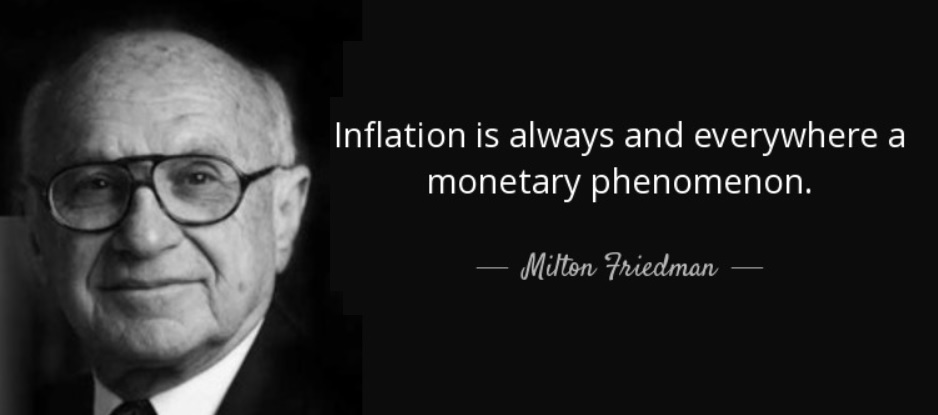 (also blame Lyndon Johnson and Richard Nixon for appointing the wrong people).
As those central banks continued — and in some cases accelerated — their excessive money creation throughout 2021 and into 2022, a global downturn became inevitable. …History shows that high levels of inflation almost always lead to recession …once inflation became apparent central bankers persisted with their earlier course, feeding inflation, rather than starving it. If they had acted earlier, far less drastic treatment would now be required. …there is no way around the harsh reality that the bill is coming due for the last two years of monetary malfeasance.
according to Carney. “In the UK, unfortunately, we’ve also had in the near term the impact of Brexit, which has slowed the pace at which the economy can grow,” Carney said in an interview with BBC Radio 4’s “Today” program on Friday. …“The economy’s capacity would go down for a period of time because of Brexit, that would add to inflationary pressure, and we would have a situation, which is the situation we have today, where the Bank of England has to raise interest rates despite the fact the economy is going into recession.”
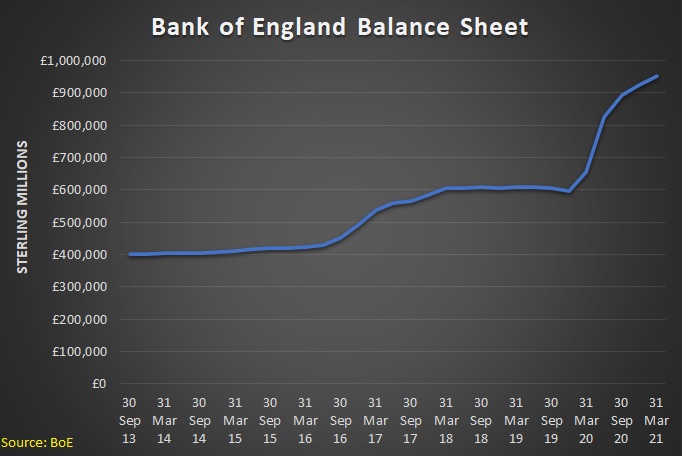 Like the Fed, the BoE dramatically expanded its balance sheet starting in the spring of 2020.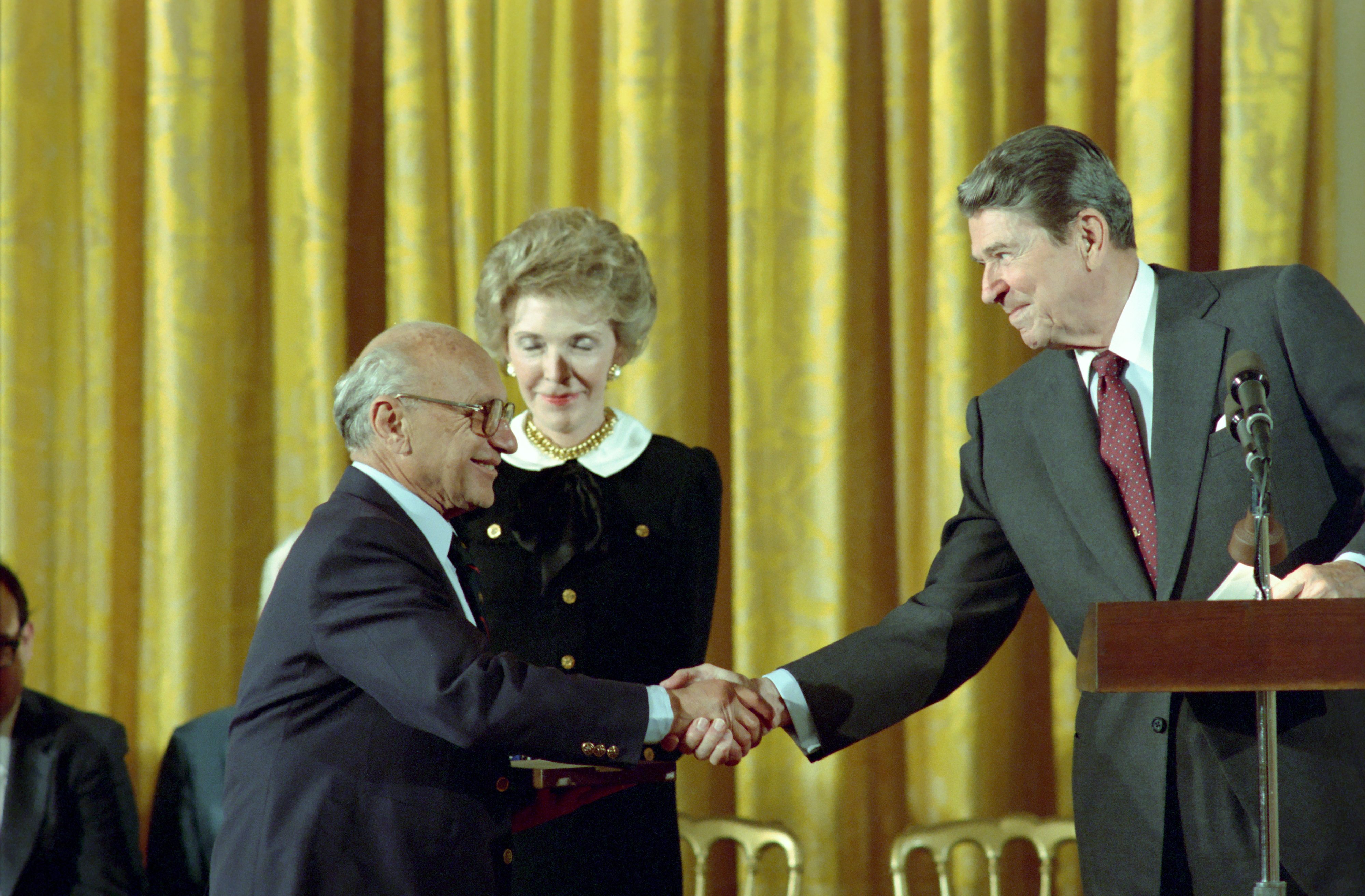
 He also restored America’s national defenses and reoriented foreign policy, both of which led to the collapse of the Soviet Empire, a stupendous achievement that makes Reagan worthy of Mount Rushmore.
 (the so-called Phillips Curve).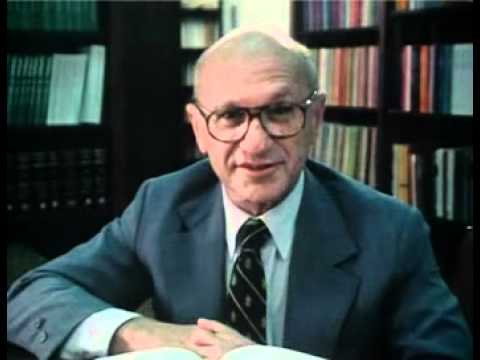


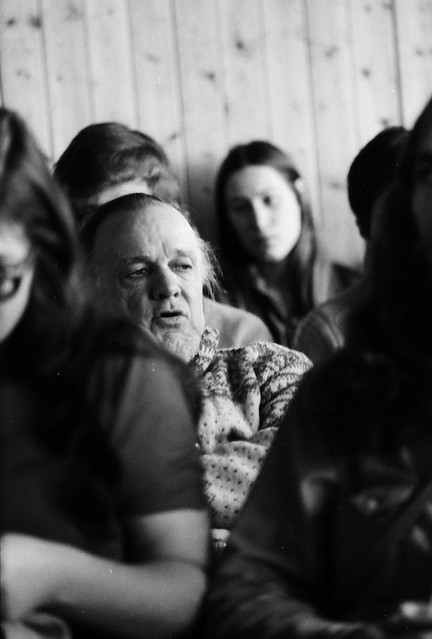
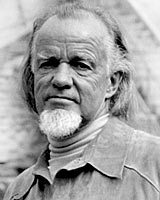










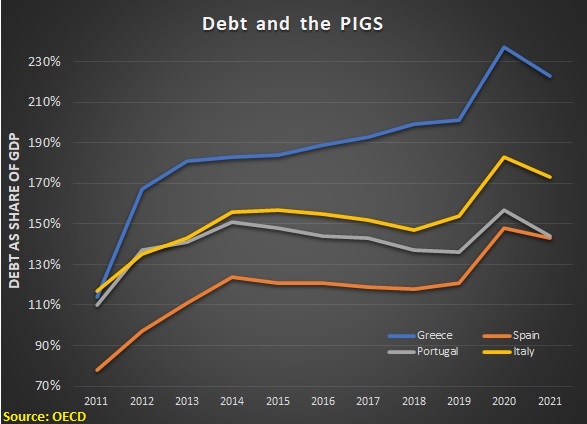

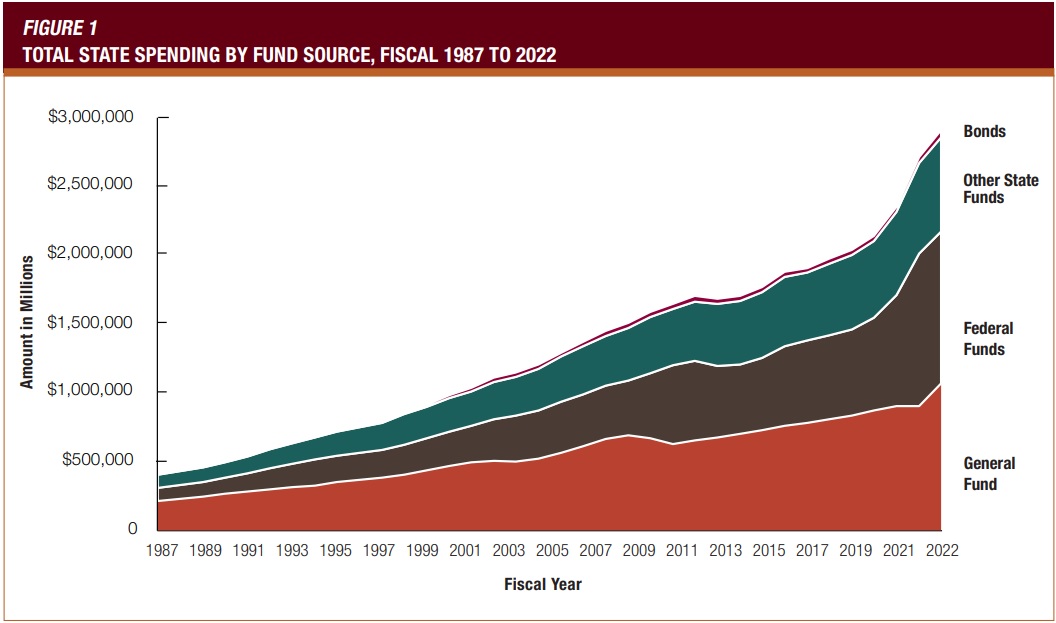
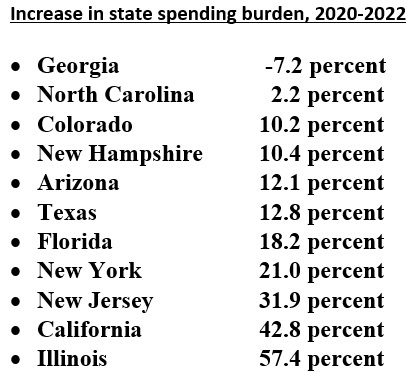


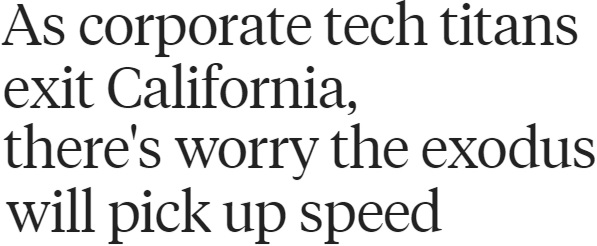
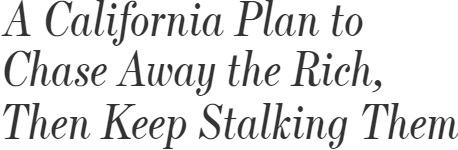



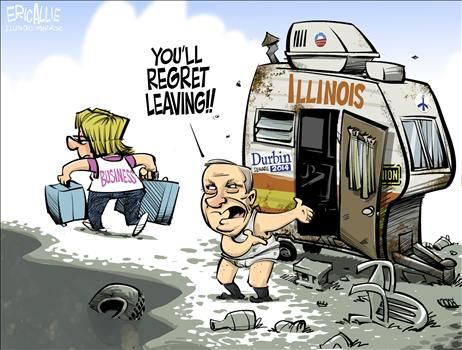
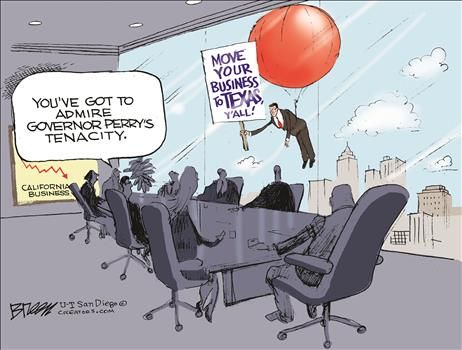


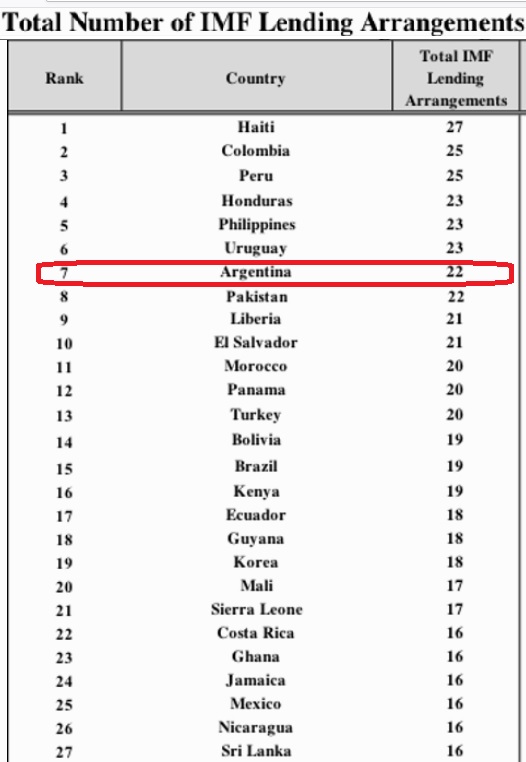
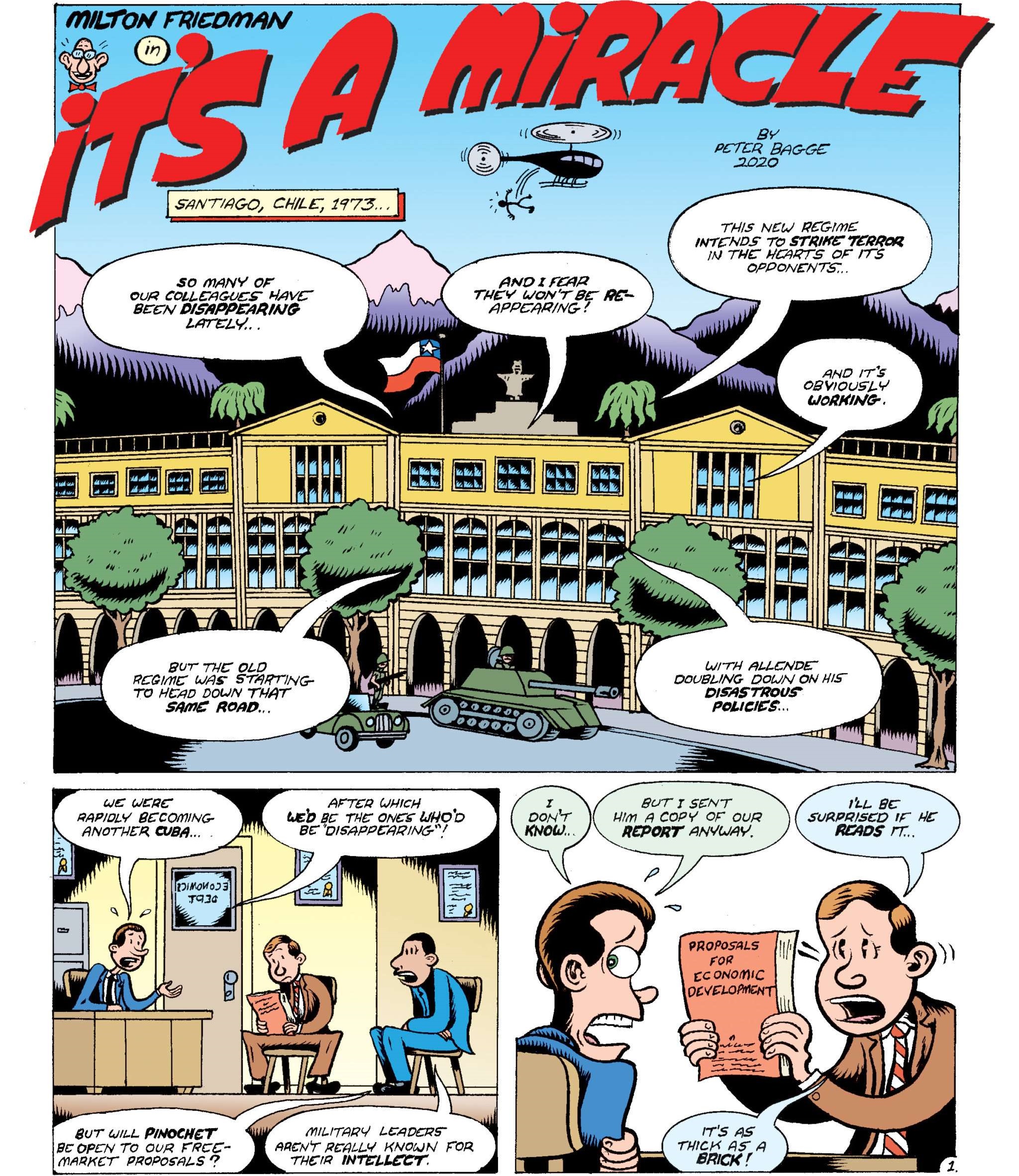
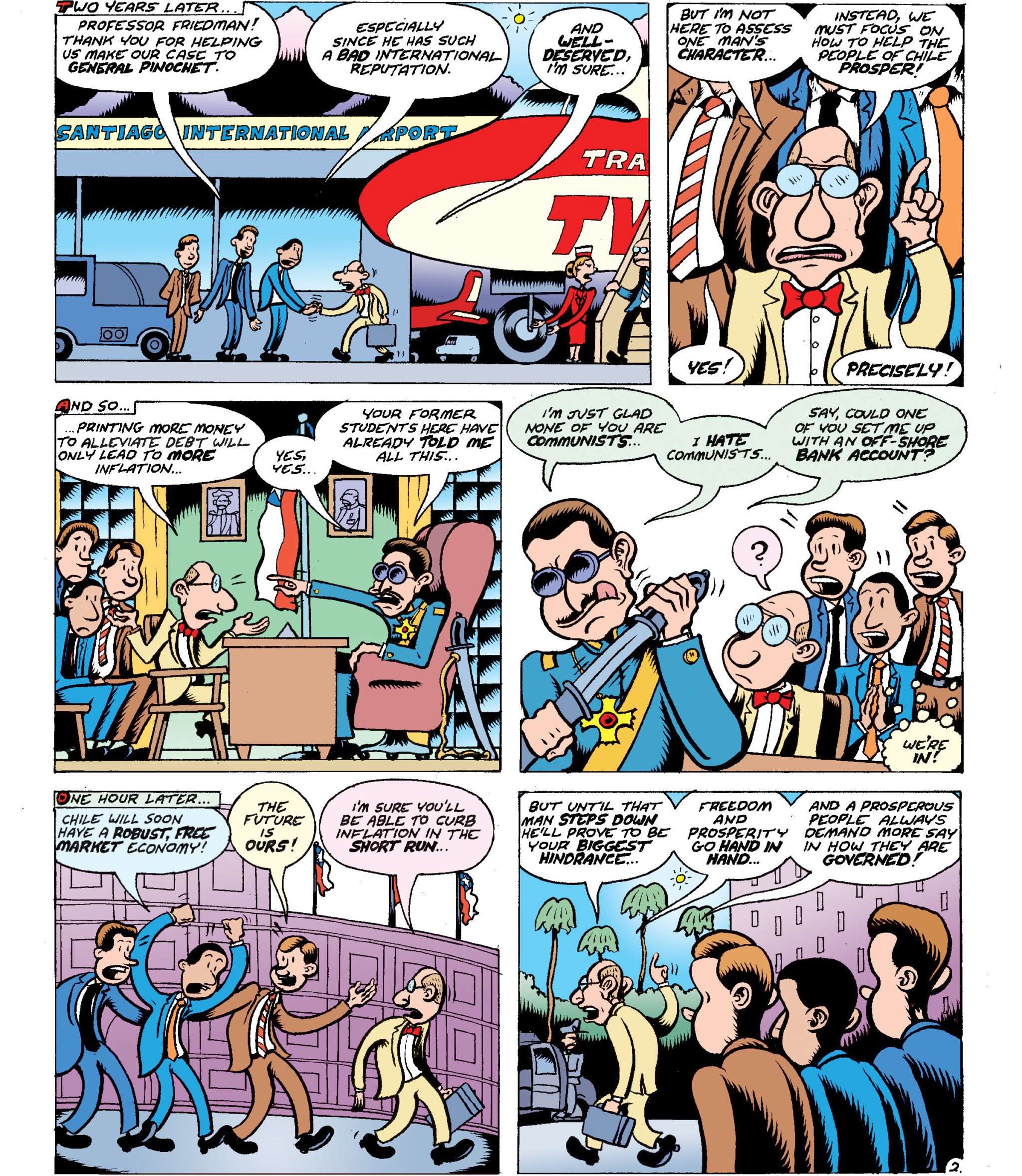
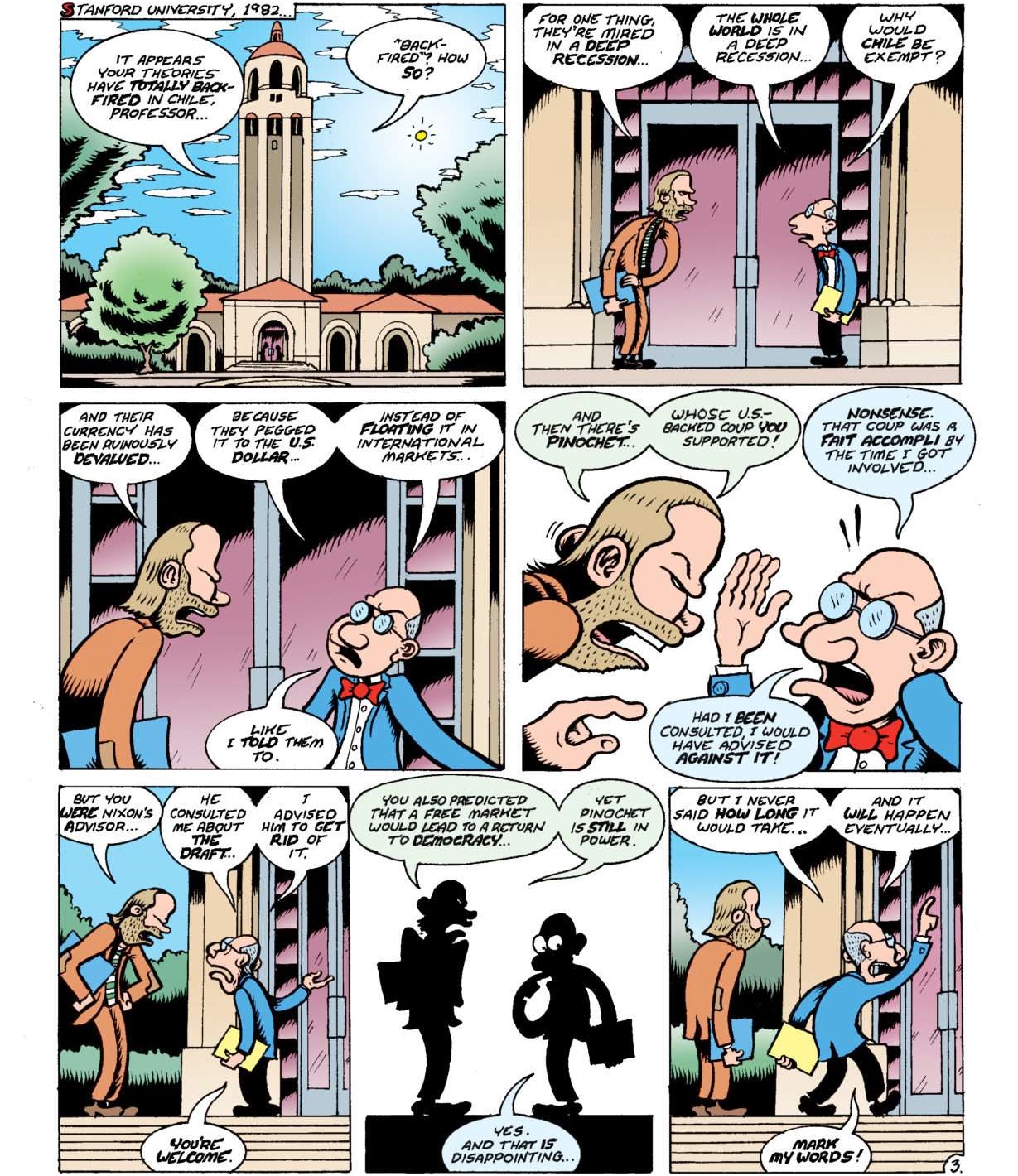
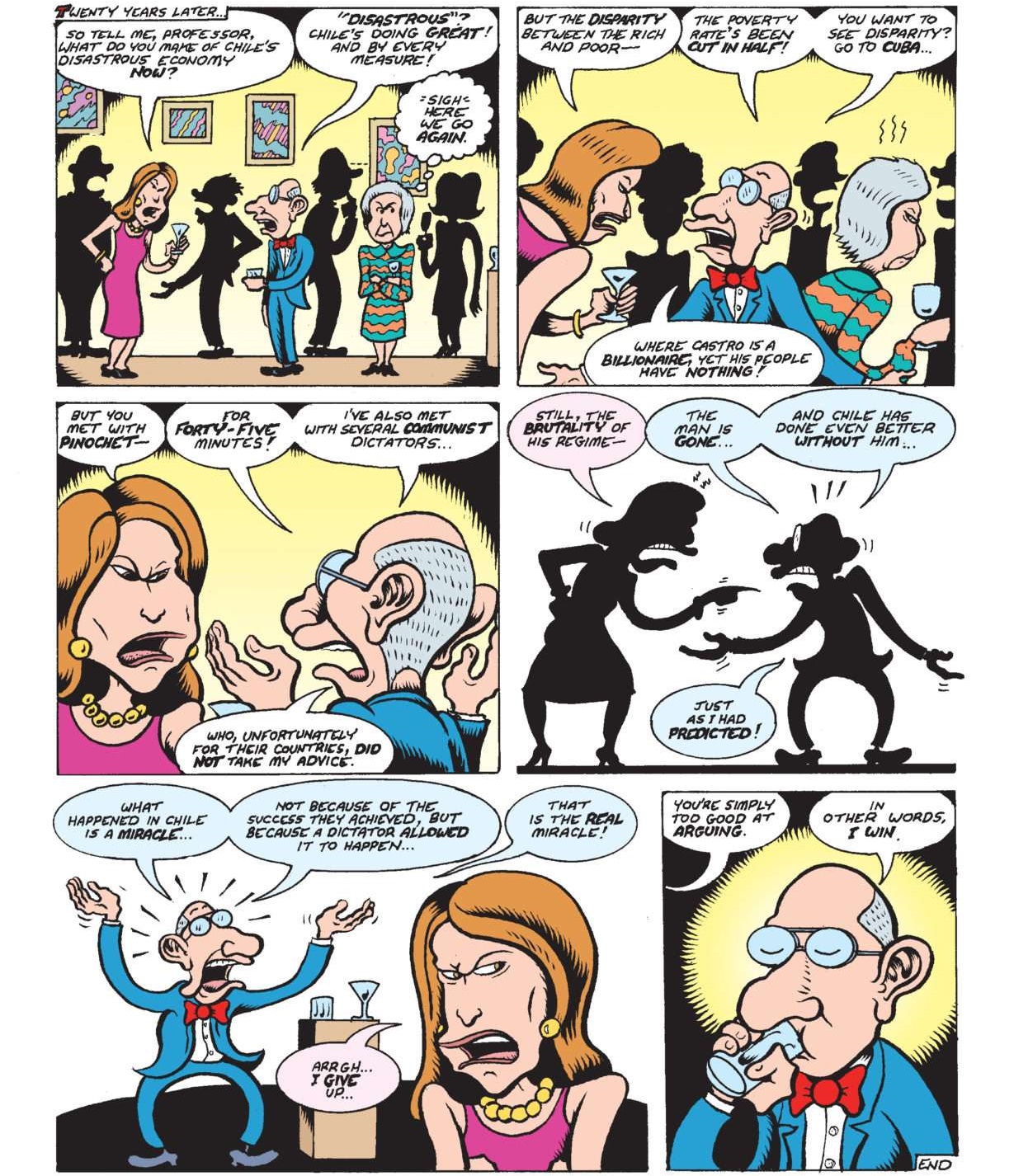


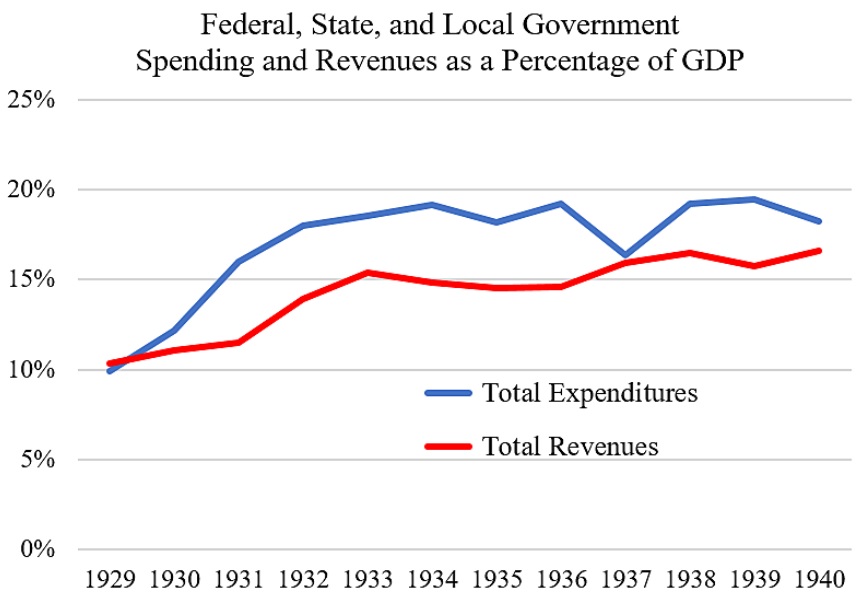












 The Daily Hatch