What do you do when your every institution has been weaponized against you? What do you do when there is a two-tier, no-justice system?
The split-screen of a smug and triumphant Hillary Clinton 2016 campaign lawyer Michael Sussmann walking free from D.C. federal court, and a harried and bewildered former Donald Trump trade adviser Peter Navarro being hauled before it, following his account of a harrowing arrest and detainment, ought to be ingrained indelibly in the American mind.
It sends an unmistakable message: We can get you anytime, anywhere, on any grounds we choose. You can’t touch even a single one of ours.
If by some strange occurrence one of ours is brought before a court, the judge and jury will be rigged against you. “I dare you to ask me to recuse with an acquaintance on the stand,” the judge will say. “What’s a lie to our FBI among friends,” the jury will say. Especially when the lie is a useful one.
The institutions Democrats’ comrade colluded with will be absolved of blame by the putatively adversarial prosecutor representing you, the people. That prosecutor will be plodding, and hew to process crimes against bit players, while the statutes of limitations for the most serious crimes committed by the biggest fish lapse.
You won’t be able to discern whether he is building a masterful case to take us all down, or insulating the very institutions he has served for and with for years, and to which he ultimately answers. That’s the point.
Real conspiracies to concoct fake ones aimed at destroying your singular representative against us will neither be fully revealed nor prosecuted. You will be made to accept it, hanging on every unredacted morsel and revelation, yet waiting in vain for justice.
Conversely, if anyone who can even be remotely affiliated with you ever lashes out in any way — say, over an election in which rules were changed on the fly by non-legislators; an election in which those altered rules created an unprecedented opportunity for fraud that could never be audited because of its remote nature; an election that the most powerful institutions in the country colluded to “fortify” on behalf of their man; an election in which not a court in the land would hear the cases on their merits — it will be cast as an insurrection undertaken by terrorists. (If you raise these points, of course, you too may be cast as a potential terrorist, and at minimum censored.)
Never mind your universal condemnation of the worst acts among the small percentage of the tens of thousands of peaceful, which opponents use to smear your entire movement; that the Democrat narrative is fraudulent: that the only fatalities were found among the putative terrorists. Leftists lie about that point and won’t release the thousands of hours of footage of what transpired. They won’t tell you what their assets were doing on the ground and won’t actually charge anyone with insurrection while they equate them with 9/11 hijackers, kamikaze pilots, and Confederates.
They’ll hold some of the “insurrectionists,” even those slapped with trumped-up trespassing charges, in jail for months on end, and make their lives a living hell. They’ll argue to similarly disposed judges that political wrongthink makes Americans a danger to society, demanding they be kept in jail. They’ll argue for giving the accused terrorism enhancements in their sentences. Some will be pushed to suicide.
When their allies burn down cities, they’ll release them en masse, and if absolutely unavoidable, ensure their sentences are minimized. You won’t mind.
They’ll smear your entire political movement as terroristic in the court of Congress when they can’t do it in the court of law. They’ll pursue again your singular representative, his colleagues, allies, and on down to the most remotely related activists with a congressional probe consisting entirely of us — kind of like the juries you’ll be up in front of.
The probe will be of dubious constitutionality. It will break their own rules. It will abuse targets with the most awesome and chilling powers they have, and seek to break and bankrupt them. They won’t be able to do a thing about it. The process, at minimum, will be the punishment. If they refuse to participate in their own self-immolation, the ruling class will sic their friends in law enforcement on them to hold them criminally liable.
They’ll wreck executive privilege and destroy a whole host of norms in the process while claiming we’re defending them. Do you think your leader will hold us to account?
And then they’ll engage in a society-widewar on wrongthink aimed at smearing and toxifying anyone who dares hold your views, censoring them, hounding them out of public life, and threatening to treat them as terrorists too. They’ll begin the work of building a social credit system with American characteristics where your every wrong thought can and will be used against you.
If you question the ruling class’s authority or the legitimacy of their rule, well, they have a domestic counterterrorism plan for that. This is our democracy, you see. And in our democracy, we win, and you lose.
What do you do when your every institution has been weaponized against you? What do you do when there is a two-tier, no-justice system? What do you do when all the foundations of the system you thought we had have been eroded?
These are the questions those who ask our vote must answer. If they cannot, or will not do so — if they refuse to even recognize the magnitude and gravity of the rampant injustices we are facing as a people — they are simply unfit to lead.
Ben Weingarten is a Federalist Senior Contributor, senior fellow at the London Center for Policy Research and fellow at the Claremont Institute. He was selected as a 2019 Robert Novak Journalism Fellow of the Fund for American Studies, under which he is currently working on a book on U.S.-China policy. Ben writes on national security and foreign policy, economics, and politics for publications including City Journal, Conservative Review and PJ Media. He is the founder and CEO of ChangeUp Media, a media consulting and production company dedicated to advancing conservative principles. Ben is also a 2015 Publius Fellow of the Claremont Institute. You can find his work at benweingarten.com, and follow him on Twitter @bhweingarten.
Open letter to President Obama (Part 644)
(Emailed to White House on 6-10-13.)
President Obama c/o The White House 1600 Pennsylvania Avenue NW Washington, DC 20500
If you take a group of Democrats who are also unionized government employees, and put them in charge of policing political speech, it doesn’t matter how professional and well-intentioned they are. The result will be much like the debacle in the Cincinnati office of the IRS. …there’s no reason to even posit evil intent by the IRS officials who formulated, approved or executed the inappropriate guidelines for picking groups to scrutinize most closely. …The public servants figuring out which groups qualified for 501(c)4 “social welfare” non-profit status were mostly Democrats surrounded by mostly Democrats. …In the 2012 election, every donation traceable to this office went to President Obama or liberal Sen. Sherrod Brown. This is an environment where even those trying to be fair could develop a disproportionate distrust of the Tea Party. One IRS worker — a member of NTEU and contributor to its PAC, which gives 96 percent of its money to Democratic candidates — explained it this way: “The reason NTEU mostly supports Democratic candidates for office is because Democratic candidates are mostly more supportive of civil servants/government employees.”
Tim concludes with a wise observation.
As long as we have a civil service workforce that leans Left, and as long as we have an income tax system that requires the IRS to police political speech, conservative groups can always expect special IRS scrutiny.
The real issue is the expansive, expensive bureaucratic state and its inherent threat to any system of limited government, rule of law, and individual liberty. …the broader the government’s authority, the greater its need for revenue, the wider its enforcement power, the more expansive the bureaucracy’s discretion, the increasingly important the battle for political control, and the more bitter the partisan fight, the more likely government officials will abuse their positions, violate rules, laws, and Constitution, and sacrifice people’s liberties. The blame falls squarely on Congress, not the IRS.
…the denizens of Capitol Hill also have created a tax code marked by outrageous complexity, special interest electioneering, and systematic social engineering. Legislators have intentionally created avenues for tax avoidance to win votes, and then complained about widespread tax avoidance to win votes.
So what’s the answer?
The most obvious response to the scandal — beyond punishing anyone who violated the law — is tax reform. Implement a flat tax and you’d still have an IRS, but the income tax would be less complex, there would be fewer “preferences” for the agency to police, and rates would be lower, leaving taxpayers with less incentive for aggressive tax avoidance. …Failing to address the broader underlying factors also would merely set the stage for a repeat performance in some form a few years hence. …More fundamentally, government, and especially the national government, should do less. Efficient social engineering may be slightly better than inefficient social engineering, but no social engineering would be far better.
But here’s the challenge. We know the solution, but it will be almost impossible to implement good policy unless we figure out some way to restrain the spending side of the fiscal ledger.
___________________________
At the risk of over-simplifying, we will never get tax reform unless we figure out how to implement entitlement reform.
Here’s another Foden cartoon, which I like because it has the same theme asthis Jerry Holbert cartoon, showing big government as a destructive and malicious force.
_____________
Thank you so much for your time. I know how valuable it is. I also appreciate the fine family that you have and your commitment as a father and a husband.
Sincerely,
Everette Hatcher III, 13900 Cottontail Lane, Alexander, AR 72002, ph 501-920-5733, lowcostsqueegees@yahoo.com
We know the IRS commissioner wasn’t telling the truth in March 2012, when he testified: “There’s absolutely no targeting.”However, Lois Lerner knew different when she misled people with those words. Two important points made by Noonan in the Wall Street Journal in the article below: First, only conservative groups were targeted in this scandal by […]
Ohio Liberty Coalition versus the I.R.S. (Tom Zawistowski) Published on May 20, 2013 The Ohio Liberty Coalition was among tea party groups that received special scrutiny from the I.R.S. Tom Zawistowski says his story is not unique. He argues the kinds of questions the I.R.S. asked his group amounts to little more than “opposition research.” Video […]
Francis Schaeffer: “Whatever Happened to the Human Race?” (Episode 2) SLAUGHTER OF THE INNOCENTS Published on Oct 6, 2012 by AdamMetropolis The 45 minute video above is from the film series created from Francis Schaeffer’s book “Whatever Happened to the Human Race?” with Dr. C. Everett Koop. This book really helped develop my political views concerning […]
We got to lower the size of government so we don’t have these abuses like this in the IRS. Cartoonists v. the IRS May 23, 2013 by Dan Mitchell Call me perverse, but I’m enjoying this IRS scandal. It’s good to see them suffer a tiny fraction of the agony they impose on the American people. I’ve already […]
Dear Senator Pryor, Why not pass the Balanced Budget Amendment? As you know that federal deficit is at all time high (1.6 trillion deficit with revenues of 2.2 trillion and spending at 3.8 trillion). On my blog http://www.HaltingArkansasLiberalswithTruth.com I took you at your word and sent you over 100 emails with specific spending cut ideas. However, […]
Is the irs out of control? Here is the link from cato: MAY 22, 2013 8:47AM Can You Vague That Up for Me? By TREVOR BURRUS SHARE As the IRS scandal thickens, targeted groups are coming out to describe their ordeals in dealing with that most-reviled of government agencies. The Ohio Liberty Coalition was one of […]
Get Ready to Be Reamed May 17, 2013 by Dan Mitchell With so many scandals percolating, there are lots of good cartoons being produced. But I think this Chip Bok gem deserves special praise. It manages to weave together both the costly Obamacare boondoggle with the reprehensible politicization of the IRS. So BOHICA, my friends. If […]
You want to talk about irony then look at President Obama’s speech a few days ago when he joked about a potential audit of Ohio St by the IRS then a few days later the IRS scandal breaks!!!! The I.R.S. Abusing Americans Is Nothing New Published on May 15, 2013 The I.R.S. targeting of tea party […]
Dear Senator Pryor, Why not pass the Balanced Budget Amendment? As you know that federal deficit is at all time high (1.6 trillion deficit with revenues of 2.2 trillion and spending at 3.8 trillion). On my blog http://www.HaltingArkansasLiberalswithTruth.com I took you at your word and sent you over 100 emails with specific spending cut ideas. However, […]
We could put in a flat tax and it would enable us to cut billions out of the IRS budget!!!! May 14, 2013 2:34PM IRS Budget Soars By Chris Edwards Share The revelations of IRS officials targeting conservative and libertarian groups suggest that now is a good time for lawmakers to review a broad range […]
This Sunday marks the 77th anniversary of D-Day, a pivotal moment in World War II, when thousands of American, British and Canadian soldiers selflessly stormed the beaches of Normandy to help liberate Europe from the grip of the German-led Axis forces.
To discuss the importance of the anniversary, April Cheek-Messier, president of the National D-Day Memorial Foundation, sat down with Fox News to talk about D-Day and the lessons the events of June 6, 1944, can teach all Americans.
“This memorial pays tribute to all of our, truly our D-Day veterans, our World War II veterans, to any veteran, I think, who served our country, this memorial is a powerful reminder of service and sacrifice,” said Cheek-Messier, who counts several family members among those who served during World War II. “But what’s really important is that we pass on those lessons to the next generation. That’s really what our veterans want to make sure is happening.”
The National D-Day Memorial, which opened in 2001 and was dedicated by President George W. Bush that same year, has never received any federal or state funding. Instead, Cheek-Messier says, the memorial was the result of a grassroots effort led by those who were there on June 6 to honor their fallen comrades.
“[The memorial] truly was a grassroots effort among veterans to start a national monument to recognize those who served, and those who sacrificed on June 6, 1944,” Cheek-Messier said.
Nearly eight decades after the battle, Cheek-Messier says it’s hard to know how many D-Day veterans remain but they likely only numbers in the hundreds.
“If you think about the fact that there are 16 million who served during World War II, there are only around 325,000 World War II veterans still living today, and of that a very small percentage would be D-Day veterans, and we don’t know the exact number, but you can imagine they would probably only be in a few hundred,” said Cheek-Messier.
Cheek-Messier says the COVID pandemic has hit the D-Day veteran community especially hard.
“It’s been pretty devastating,” she said. “We lost many of them. Many out of just, I think, not being able to see their loved ones and things like that. COVID certainly had an impact in many ways.”
Despite the pain brought on by the COVID pandemic over the last year, and the deep cultural and political divisions among many Americans today, Cheek-Messier believes that D-Day and the memorial can again show Americans what the country can be when it unites.
“I think when people walk around the memorial you get a real sense of that, it’s a good feeling. It’s a good feeling of what we can do as a nation, what we can do as a people when we come together,” said Cheek-Messier.
Unlike during World War II, when nearly everyone knew someone serving the American cause, Cheek-Messier says many aren’t aware of the sacrifices made by veterans and their families. “We’ve kind of lost touch a little bit, I think, with our military and the sacrifices that not only our military men and women make, but their families.”
Cheek-Messier noted that Americans should never forget that the freedoms enjoyed by all citizens today came at the expense of those who served before them, including the thousands who perished 77 years ago defending American ideals along the French shoreline.
“We are here and free today to say the things we want and do the things we want because so many have given the ultimate sacrifice, and I don’t think that we should ever forget that.”
Saving Private Ryan opening cemetery scene
HD – Saving Private Ryan – Death of Captain John H. Miller and Final Speech
An old man walks down a wide path through a colonnade of evergreens. He has a full head of gray hair, combed from a wavy peak to one side. His eyebrows spike with a grandfatherly flourish toward his temples. He wears a light blue Windbreaker over a golf shirt with a horizontal stripe, Sansabelt slacks, and the crepe-soled shoes his doctor recommended. His gait is quick but stiff – stiff like someone who has just gotten himself up. He marches forward with great intent and purpose, as if he’s hunting out something or someone.Behind him trail his family. His wife is closest, his son and daughter-in- law a step or two farther behind, bracketing their children.
The man’s eyes show that for the moment he’s not thinking of his family, although he seems to be dragging them in his wake. His eyes are at once wide-open yet fixed, poached by what can only be dread. His mouth works in a way that shows his stomach is in his throat. Off to the left his family can see the curve of a long shore, hear the soughing of the waves, and nearly breathe in the scent of the brine. But the man looks neither to his right nor to his left. He keeps stumbling forward, his body tense yet determined.
When he finally turns to his right, he steps onto a vast lawn striped with thousands of white crosses that extend toward the horizon. Here and there a Jewish star adds to the procession of markers that contrast starkly against the green sward. The old man’s pace speeds as he makes his way through this vast cemetery. His family struggles to keep up.
James Ryan’s determined march finally halts in front of a particular cross. The rims of his eyes show red. He wipes at them with a shaking hand, sniffs hard, tries again to breathe. Here it is, his captain’s cross, the name, the date: Captain John W. Miller, June 13, 1944.
He takes another sniff against his watering eyes, bites his lip. He’s almost choking as he struggles to breathe in the heavy air. His knees give way, and he kneels before the cross, his shoulders heaving. His wife is suddenly at one shoulder, his son at the other. He’s glad they are there, but they cannot help with what needs to be done.
He mumbles that he’s all right, and they retreat several steps, leaving him to the thoughts that press so hard he can’t bear the weight.
Not until this moment does he realize that what he has been looking forward to yet dreading is a transaction. An exchange of some kind. For him this visit to the Normandy American Cemetery is no sightseeing tour. It’s a profound action. Even now he cannot say why he believes this to be the case. The emotion that’s seized him declares it to be so, however.
Whatever must happen involves the question that’s dogged him his whole life. The unspoken question that’s brought him here. He feels its presence in every memory, and not only the good ones.
Now that he’s looking at his captain’s grave, Ryan has to ask the question.
Decades earlier, on June 6, 1944, Captain Miller and his men had landed at Omaha Beach, a horror James Ryan had been spared as part of the 101st Airborne. His unit had been dropped into Normandy the night before the sea assault. He later learned from the tales of his buddies and from seeing newsreel footage what D-day had been like. Although Germany had not been expecting the assault at the place Eisenhower chose, the air assault hadn’t softened their positions one whit, and when the armored front of the Higgins boats opened onto the beach, the men were ducks on a pond to the enemy’s machine guns. Many of those sitting forward in the landing craft never had a chance to move from their seats as the Germans opened fire. Those who jumped over the craft’s sides to swim and crawl ashore could only cling to the Belgian gates and iron hedgehogs – the jack-shaped defensive works strewn in rows all along the shingle that prevented tanks from making the initial assault.
The army rangers humped forward in waves, men falling to the right and left every few feet. They were getting hit not only by machinegun fire but by artillery as well. Bodies flew with the explosions. The wounded picked up their severed arms and stumbled a few more feet to their deaths. The waves washing onto the beaches ran red with blood, lapping at the dead, who lay scattered and senseless.
Captain Miller and a few of his company made it to the seawall. Although 50 percent of the men in the first waves to hit Omaha Beach were killed in action, the others broke the first line of German defenses.
Soon after the hell of D-Day, Captain Miller and a squad of seven men were assigned to find paratrooper James Ryan and bring him home – alive. The army’s chief of staff, General George C. Marshall, had personally issued the order for Private James Ryan to be taken out of the war. Ryan’s two older brothers had died in the great assault, and a third brother had been killed in action in New Guinea. Marshall thought that three sons were enough for any mother to contribute to the war.
Captain Miller and his squad found Ryan with remnants of the 506, Baker Company, which had orders to secure a bridge on the far side of a river. The company had been ordered to hold the bridge at all costs – or, as a final defense, to blow it up. When Captain Miller and his squad arrived to take Ryan home, Ryan refused to leave. Miller asked him what he was supposed to say to Ryan’s mother when she got another folded American flag. Ryan replied, “You can tell her that when you found me, I was with the only brothers I had left. And that there was no way I was deserting them. I think she’d understand that.”
Captain Miller and his squad told Ryan angrily that they had already lost two men in the search to find him. Miller finally decided that they’d make Ryan’s battle their own as well and save him in the process.
The Germans soon came at them – nearly a full company of men, two Panzer tanks, two Tigers. The Americans lured the Panzers down the village’s main street, where they staged an effective ambush. The only thing Ryan had been allowed to do was pitch mortar shells like hand grenades. Captain Miller never let Ryan leave his side, protecting the private every step of the way.
Still, one tank blew their sharpshooter to eternity. Another soldier died in hand-to-hand combat with a knife to his heart. No matter their ingenuity, the squad couldn’t hold off such an overpowering force, and the men made a strategic retreat to the other side of the bridge. In the retreat one of the sergeants was hit and collapsed.
Captain Miller took a shot beneath his ribs as he struggled to fix the wiring on a detonation device. Then an artillery blast knocked him nearly unconscious. All hope lost, Captain Miller began shooting at a tank coming straight at him.
Suddenly, Tankbuster aircraft shrieked down on them, blowing the enemy’s tanks to smithereens and routing their foot soldiers. The Allies’ own armored reinforcements rolled up minutes later.
Of the squad that had come to save Ryan, only two men escaped relatively unscathed. The others were dead or dying.
Captain Miller lay close by where he had been hit, his back slumped against the bridge’s wall. Ryan, in anguish, was alone with his rescuer in the final moments before Miller died. Ryan watched as the captain struggled in his last moments, shot clean through one lung. The captain wouldn’t take another breath, except to grunt, “James. Earn this . . . earn it.”
Were these dying words a final order or charge?
These memories rivet the aged James Ryan, who now finds himself staring at the grave marker and mumbling to his dead commander. He tells Captain Miller that his family is with him. He confesses that he wasn’t sure how he would feel about coming to the cemetery today. He wants Captain Miller to know that every day of his life he’s thought of their conversation at the bridge, of Miller’s dying words. Ryan has tried to live a good life, and he hopes he has. At least in the captain’s eyes, he hopes he’s “earned it,” that his life has been worthy of the sacrifice Captain Miller and the other men made of giving their lives for his.
As Ryan mutters these thoughts, he cannot help wondering how any life, however well lived, could be worthy of his friends’ sacrifice. The old man stands up, but he doesn’t feel released. The question remains unanswered.
His wife comes to his side again. He looks at her and pleads, “Tell me I’ve led a good life.”
Confused by his request, she responds with a question: “What?”
He has to know the answer. He tries to articulate it again: “Tell me I’m a good man.”
The request flusters her, but his earnestness makes her think better of putting it off. With great dignity, she says, “You are.”
His wife turns back to the other family members, whose stirring says they are ready to leave.
Before James Ryan joins them, he comes to attention and salutes his fallen comrade. What a gallant old soldier he is.
Who of us can see this scene from Steven Spielberg’s magnificent film Saving Private Ryan and not ask ourselves the same question: Have I lived a good life?
Does there exist an exact way of calculating the answer to this question? How do we define living a good life? What makes the good we do good enough? Is our life worthy of the sacrifice of others? The unavoidable question of whether we have lived a good life searches our hearts.
Not everyone experiences what Ryan did in such a dramatic way. Yet this question of the good life – and others like it – haunts every human being from the earliest years of our consciousness. Something stirs us at the very core of our being, demanding answers to so many questions: Is there some purpose in life? Are we alone in this universe, or does some force – call it fate, destiny, or providence – guide our lives?
These questions don’t often occur to us so neatly of course. Usually the hardest questions hit us at the hardest times. In the midst of tragedy or serious illness, when confronting violence and injustice, or after seeing our personal hopes shattered, we cry out, “Why is the world such a mess? Is there anything I can do about it?”
There’s a mystery at work in these perennial questions of human existence. I doubt anyone who has ever seen Saving Private Ryan or read great works of literature like Dostoyevsky’s The Brothers Karamazov or Camus’s The Plague has ever doubted the relevance of such questions. Neither does anyone who has ever marveled at the beauty of the Milky Way or sat weeping at the bedside of a dying loved one.
What distinguishes humans from all other creatures is our selfconsciousness: We know we are alive and that we will die, and we cannot keep from asking ourselves questions about why life is the way it is and what it all means.
And isn’t it odd that we all understand immediately why Private Ryan would feel compelled to live an honorable life? Does he believe that in doing so he can make his comrades’ sacrifice worthwhile? Evidently, he does, and we sense the rightness of this. But why does he feel in their debt? Why does he feel that their actions have to be recompensed by his own, as if blind justice with a sword in one hand and balancing scales in the other really existed? And why should goodness be the means of repaying this debt? Why not revenge? Why should he not set about killing as many former Nazis as possible? Somehow that does not satisfy, though. If sacrifice can be repaid at all, it can be done only by sacrifice, not by slaughter. We know this. But why do we know this?
A broad answer lies in our humanity. Because we are human, we ask questions about meaning and purpose. We have an innate sense of justice and our own need to meet the demands of justice. Moral attitudes differ from culture to culture, but take people from a Stone Age culture in a remote village in Papua New Guinea, sit them down in front of Saving Private Ryan, and they will immediately understand the issues involved. They will understand Ryan’s questions and his sense of gratitude.
The word should in the questions that arise from Private Ryan’s life immediately grounds us in ethical considerations. It implies there must be a variety of answers to these questions. It suggests that some answers are better than others – some are right while others are wrong. So, where does this should come from? What does it mean that we possess an innate sense of these things?
At the very least it points to the notion that we all live in a moral universe, which is one of the reasons human beings, regardless of background or economics or place of birth, are irresistibly religious. If nothing else, we know there is someone or something to which we owe a debt for our existence.
Our questions also presume that we can choose our answers to these questions and act on these choices. The freedom of the human will, even if circumscribed, is built into the way the human mind works.
Commenting on life’s questions, U.S. Supreme Court Justice Anthony M. Kennedy, in the case Planned Parenthood v. Casey, said, “At the heart of liberty is the right to define one’s own concept of existence, of meaning, of the universe, and of the mystery of human life.” Kennedy asserted that beliefs about these matters define the attributes of personhood. We are who we are, we are the type of creatures we are, because we are obliged to come to our own conclusions about the great questions. Although I disagree profoundly with the legal conclusion Justice Kennedy drew from this observation, I must admit his summary captures what makes us human.3
I can remember when I first began asking questions early in life. I have particularly vivid memories of the Sunday morning in December 1941 when our family was riveted to the radio, listening with growing anxiety to the reports of the Japanese attacks on Pearl Harbor. I was certain we’d be fighting Japanese soldiers or German SS officers in the streets of our sleepy Boston suburb. I remember asking my father, “Why does there have to be war and bloodshed and death?” He replied – mistakenly, as I now think – that it was all part of the natural process, like famines and plagues that prevented overpopulation.
During the war, I organized fund-raising campaigns in my school, even auctioned off my treasured model airplane collection to raise funds for the war effort. Instinctively I knew I was meant to do my part to protect our freedoms. I wanted my life – even at age twelve – to matter.
I also remember standing in our yard many nights, the world around me in darkness, blackout shades covering every window in the neighborhood, protecting us against the expected air raids. I would stare into the dazzling array of stars above me and wonder where the universe began, where it ended, and what I was doing here. As a student, I struggled to grasp the concept of infinity – what was beyond those stars.
I’ve continued to ask these kinds of questions, especially during times of stress. I’ve asked them in my life as a government official, as a husband and father, as a convicted felon, and then as a Christian leader. Many times in the inner recesses of my conscience I’ve asked Ryan’s questions: Have I been a good man? Have I lived a good life? Sometimes I’ve been unsure; other times I’ve been sure that I have failed. But where do we go to answer these questions? Whom do we ask? Who can tell us the truth about the value of our lives?
While the quest to find answers to such questions can be arduous at times, even heartbreaking, the search for the truth about life is the one thing that makes life worthwhile, exhilarating. The ability to pursue such a search makes us human. Emmanuel Mounier, the founder of the French “personalist” philosophical movement, writes that human life is characterized by a “divine restlessness.” The lack of peace within our hearts spurs us on a quest for the meaning of life – a command imprinted on “unextinguished souls.”4 Pope John Paul II sums up the matter elegantly: “One may define the human being, therefore, as the one who seeks the truth.”5
What will be the truth of our lives and our destinies? Most people want to arrive at Captain Miller’s cemetery cross – or whatever judgment seat they envision – with some confidence that they have lived a good life.
But what is a good life? How does such a life incorporate answers to the great questions? How can such a life be lived?
Have I lived one?
Have you?
(This scene includes violence and bad language) Saving Private Ryan Omaha Beach
The men in the south of Europe, the men of the Renaissance, struggled with themselves trying to find what “could give unity to life.” They were looking for some universal that “could give meaning to life and to morals.” In the north of Europe there was the beginning of another great movement that would come to be known as the Reformation that was emerging from the shadow of the Renaissance. This movement in the north of Europe was a reaction “against the distortions which had gradually appeared in both a religious and a secular form.” Too often the Renaissance and the Reformation are seen as two distinct and separate periods of history. In reality there is such overlap between the periods that it would be better to study them as different sides of the same coin. Francis Schaeffer suggests that: “The High Renaissance in the south and the Reformation in the north must always be considered side by side. They dealt with the same basic problems, but they gave completely opposite answers and brought forth completely opposite results.”
There are two important forerunners to the Reformation that we have mentioned in an earlier class – these were John Wycliffe(1320-1384) and John Huss(1369-1415). Their lives overlapped much of the Renaissance period. For example, their lives overlapped Giotto’s, Dante’s, Petrarch’s, and Boccaccio’s (Wycliffe) and Brunnelleschi’s, Masaccio’s and van Eyck’s (Huss).
John Wycliffe emphasized the Bible as the supreme authority, and he produced an English translation of the Bible that gained great acceptance throughout Europe. John Huss’ importance is explained by Schaeffer as that he “returned to the teachings of the Bible and of the early church and stressed that the Bible is the only source of final authority and that salvation comes only through Christ and His work. He further developed Wycliffe’s views on the priesthood of all believers.”
The beliefs of these early reformers were in opposition to the humanistic elements which had crept into the church. These elements had “led to the authority of the church being accepted as equal to, or greater than, the authority of the Bible and . . . emphasized human work as a basis for meriting the merit of Christ.”
Wycliffe and Huss set the footers upon which the coming Reformation would be built. Yet like much of Christian history these footers were set in blood. Huss was invited to attend the Council of Constance 1414-1418 which was convened to bring an end to the “Great Schism” in which the church had become divided by the creation of two and then three popes. In addition, the council addressed the issue of two great reforms: 1) To reform the corrupt morals of the church and 2) To eradicate heresies, especially those of Wycliffe and Huss. As Schaeffer tells us Huss “promised safe conduct to speak at the Council of Constance, . . . was betrayed and burned at the stake there on July 6, 1415.” Hussites, followers of John Huss, founded what was called the Bohemian Brethren, which were the roots for what came to be the Moravian Church.
Many people have mistakenly categorized the Reformation as an attempt to overthrow the Roman Catholic Church. This is wrong. The Reformation movement began as a reaction to the humanistic elements that had infiltrated the church. It was a reaction against the idea that the authority of the church was equal to or in some quarters even greater than that of the Bible. It was a reaction against the concepts that man could “earn” the merit of Christ, which stood in sharp contrast to what Luther recognized as the “grace” of Christ. The Reformation was about returning to the Bible as the final authority and that an individual’s salvation came only through grace and was based only on Christ and His works, not man’s. It is also worth remembering that there was no Roman Catholic Church at this time – there was just the church.
Humanism did not just suddenly appear in the church during the time of the Renaissance but rather it was the culmination of a slow infiltration process that had been growing over time. By 1500 A.D. it was threatening to strangle the church. Let’s briefly look at the impact of humanism on the church of the Renaissance. First, we see that the authority of the church was now equal to or greater than the authority of the Bible. When we speak of the authority of the church, we are speaking of man and man’s decisions being on par with the revealed word of God. It is a small jump from here to where man supercedes an authority which is not understood for being dominant. Second, was the perversion that man’s works were of greater importance for his salvation than Christ’s grace. We are still influenced by this today when people think that they will go to heaven because of their good deeds, ignoring the fact that it is only because of Christ’s work, His grace and His blood that any man can stand before God and be “saved.” Third, was the increasing blending of pagan thinking with biblical thinking. This is readily apparent in the art of the Renaissance, in the paintings of Raphael, Michelangelo and the writings of Dante to name a few.
The goal of Reformers, while certainly not entirely successful, was to make the Bible their standard, their rule, for living not just church. While there where many areas of life that the Reformers didn’t do well in, they did bring about a movement back to the Bible as the rule for all live and a return to the example of set by the early church.
It has been said that the while the Renaissance and the Reformation dealt with the same questions, they arrived at completely different answers. This is true and even though the question from which both the Renaissance and the Reformation began was the same, their eventual answers were very different. Schaeffer points to Thomas Aquinas as the primary reason that the Renaissance went off in the direction that it did. Remember Aquinas thought that while the will of man was fallen after the events in the Garden of Eden, man’s mind was not affected. This led people to think that man was quite capable of learning the answers to the great questions by looking only to themselves and human reason.
However the Reformers understood that man was completely corrupted in the “fall” and that if one was to find the answers to the great questions of life, man would have to look outside of himself and that the proper starting point for any inquiry was not man but God. “. . . in contrast to the Renaissance humanists, they refused to accept the autonomy of human reason, which acts as though the human mind is infinite, with all knowledge within its realm. Rather, they took seriously the Bible’s own claim for itself – that it is the only final authority. And they took seriously that man needs the answers given by God in the Bible to have adequate answers not only for how to be in an open relationship with God, but also for how to know the present meaning of life and how to have final answers in distinguishing between right and wrong. That is, man needs not only a God who exists, but a God who has spoken in a way that can be understood.”
Schaeffer gives us a concise statement of the difference between the Renaissance and the Reformation when he says: “Because the Reformers did not mix humanism with their position, but took instead a serious view of the Bible, they had no problem of meaning for the individual things, the particulars; they had no nature-versus-grace problem. One could say that the Renaissance centered in autonomous man, while the Reformation centered in the infinite-personal God who had spoken in the Bible. In the answer the Reformation gave, the problem of meaning for individual things, including man, was so completely answered that the problem – as a problem – did not exist. The reason for this is that the Bible gives a unity to the universal and the particulars.”
For the Reformers the Bible was the foundation of what they believed. They believed that the Bible tells us true things about God and that one can “know true things about God because God has revealed Himself” – to man in the Bible. While man cannot know all about God, he can know the truth about God. For Schaeffer and the Reformers, they can know the “truth about that which is the ultimate universal.” The Bible tells us the truth about “meaning, morals, and values.” The Bible also tells the truth about our world, about nature and the people in it. It is not the Bible’s purpose to provide us with “exhaustive truth” about nature, man and the universe but what it does give us is true. And it is this truth which is ultimately important, as Schaeffer tells us. “So one can know many true things about nature, especially why things exist and why they have the form they have. Yet, because the Bible does not give exhaustive truth about history and the cosmos, historians and scientists have a job to do, and their work is not meaningless. To be sure, there is a total break between God and His creation, that is, between God and created things; God is infinite – and created things are finite. But man can know both truth about God and truth about the things of creation because in the Bible God has revealed Himself and has given man the key to understanding God’s world.”
The importance of the truth that the Bible gives us about man cannot be ignored. The Bible tells us that man is made in the image of God. It is for this reason that man as an individual and as society can be great. But here we start first with God. Humanism, whose starting and ending point is man has, ultimately, no sense of meaning or worth to give man, except what each man decides to give himself.
The Bible explains that man is also a “fallen” being and that he has separated himself from God. Because man is not in the proper relationship with God, all of men are sinners and have fallen short of the glory of God. It is the Bible and its truth about man that allowed the Reformers to “could understand both their greatness and their cruelty.”
Over the passing centuries, the church, rather than being a guide to lead man to God had become a wall between man and God. Schaeffer gives us a great example of this in his discussion about the “Rood Screen.” The rood screen was used to separate the people from the altar. The Reformation with the return to the Bible, taught that man “could come to God directly by faith through the finished work of Christ. That is, Christ’s sacrifice on the cross was of infinite value, and people cannot do and need not do anything to earn or add to Christ’s work. But this can be accepted as an unearned gift. It was sola gratia, grace only.” This and the Bible, and the Bible only, sola scriptura, is what enabled the Reformers understanding of God and provided them with the “intellectual and practical answers needed in this present life.”
One of the “raps” against the Reformation that one hears way too frequently is that the Reformation was “antagonistic” to the arts. The reason for this accusation is that the Reformers, in trying to purify their religion by removing certain “inappropriate images,” did in fact destroy what others looked at as works of art. But for the Reformer it was the inappropriateness of the image and the fact that it was leading people astray that was being destroyed not the destruction of art for art’s sake. Schaeffer tells us: “The men of the Reformation saw that the Bible stressed that there is only one mediator between God and man, Christ Jesus. Thus, in the pressure of that historic moment, they sometimes destroyed the images – not as works of art but as religious images which were contrary to the Bible’s emphasis on Jesus as the only mediator.”
It is critical for a proper understanding of the Reformation period to remember for the people of that period “art was an intimate part of life.” If art was destroyed, it was not as art but rather for its “anti-Christian religious significance. Art for the people of this period was not looked upon just for its aesthetic value but rather they looked upon art from the view point of its “truth and religious significance.” If one considers the artistic achievements of the Reformation, especially in music and painting, it is easy to see why those who insist that the Reformation was against the arts are wrong.
A significant moment in history occurred in the Reformation when the congregations in many of the churches as part of the direct approach to God were allowed to sing. In 1562 a hymn book of comprising the Psalms set to music was published. Luther, a fine singer and musician in his own right, wrote the words and music for more than a few hymns – the best known probably being “A Mighty Fortress Is Our God.” Do not underestimate the impact of these hymns and others like them on the culture. Luther’s inscription to a hymn book published by his choir director, Johann Walther, provides us an insight into both Luther and the culture’s understanding of the importance of art and especially music in the life of the people. “I wish that the young men might have something to rid them of their love ditties and wanton songs and might instead of these learn wholesome things and thus yield willingly to the good; also, because I am not of the opinion that all the arts shall be crushed to earth and perish through the Gospel, as some bigoted persons pretend, but would willingly see them all, and especially music, servants of Him who gave and created them.”
Music became the favored mode of expression of the Reformation. Of the many great composers of the time, none surpassed the music of Johann Sebastian Bach (1658-1750). He and his music were true products of the Reformation. “His music was a direct result of the Reformation culture and the biblical Christianity of the time, which was so much a part of Bach himself. There would have been no Bach had there been no Luther. Bach wrote on his score initials representing such phrases as: “With the help of Jesus” – “To God alone be the glory” – “In the name of Jesus.” It was appropriate that the last thing Bach the Christian wrote was “Before Thy Throne I Now Appear.” Bach consciously related both the form and the words of his music to biblical truth.
Another composer deserving mention is Handel, the author of what has become known simply as Handel’s Messiah, written in 1741. As Schaeffer comments, “Even the order of the selections follows with extreme accuracy the Bible’s teaching about the Christ as the Messiah. For example, Handel did not put the “Hallelujah Chorus” at the end, but in its proper place in the flow of the past and future history of Christ. Many modern performances often place it at the end as a musical climax, but Handel followed the Bible’s teaching exactly and placed it at that future historic moment when the Bible says Christ will come back to rule upon the earth – at that point where the Bible prophetically (in the Book of Revelation) puts the cry of “King of kings and Lord of lords!”
Painting of the Reformation was equally significant. The German painter Albrecht Dürer was a man of the Reformation. His famous woodcuts of the Apocalypse and his copperplate engravings of The Knight, Death, and the Devil, and St. Jerome in His Cell are not only compelling works of art but they clearly mark him as a man, as a painter, of the Reformation.
Dürer, Bach, and Handel, are clearly examples of the impact of the Reformation on the arts. It also follows that a man’s world view is reflected in his art or “creative output.” Schaeffer explains it this way: “A person’s world-view almost always shows through in his creative output, however, and thus the marks on the things he creates will be different. This is so in all fields – for example, in the art of the Renaissance compared to that of the Reformation, or in the direction man’s creative stirrings in science will assume, and whether and how the stirring will continue. In the case of the Reformation the art showed the good marks of its biblical base.”
The clearest example of this is in the life of the Reformation painter Rembrandt (1606 – 1669). For whatever reasons the fact that Rembrandt was a Christian and the influence of his beliefs as a Christian on his art is all but forgotten today. Rembrandt understood that Christ died on the cross for his sins and this is captured in his famous work Raising of the Cross. “A man in a blue painter’s beret raises Christ upon the cross. That man is Rembrandt himself – a self-portrait. He thus stated for all the world to see that his sins had sent Christ to the cross.”
Like Dürer, Bach, and Handel, Rembrandt was clearly a man and a product of the Reformation. His Christian world view is plainly depicted in all of his art. “Rembrandt shows in all his work that he was a man of the Reformation; he neither idealized nature nor demeaned it. Moreover, Rembrandt’s biblical base enabled him to excel in painting people with psychological depth. Man was great, but man was also cruel and broken, for he had revolted against God. Rembrandt’s painting was thus lofty, yet down to earth.” Schaeffer summarizes this study by drawing upon the conclusions of Jacob Burckhardt (1818-1897) from his history: The Civilization of the Renaissance in Italy. Speaking of Burckhardt Schaeffer says: “He indicated that freedom was introduced both in the north by the Reformation and in the south by the Renaissance. But in the south it went to license; in the north it did not. The reason was that in Renaissance humanism man had no way to bring forth a meaning to the particulars of life and no place from which to get absolutes in morals. But in the north, the people of the Reformation, standing under the teaching of Scripture, had freedom and yet at the same time compelling absolute values.”
God please once again bless Your people with a sense of “compelling absolute values.” Amen!
MUSIC MONDAY Rolling Stones New Album Part 8 Rolling Stones – Hoo Doo Blues Blue & Lonesome is the album any Rolling Stones fan would have wished for – review 9 Comments Evergreen: The Rolling Stones perform in Cuba earlier this year CREDIT: REX FEATURES Neil McCormick, music critic 22 NOVEMBER 2016 • 12:19PM The Rolling […]By Everette Hatcher III | Posted in Current Events | Edit|Comments (0)
MUSIC MONDAY Rolling Stones New Album Part 7 Rolling Stones – Everybody Knows About My Good Thing The Rolling Stones Alexis Petridis’s album of the week The Rolling Stones: Blue & Lonesome review – more alive than they’ve sounded for years 4/5stars Mick Jagger’s voice and harmonica drive an album of blues covers that returns […]By Everette Hatcher III | Posted in Current Events | Edit|Comments (0)
MUSIC MONDAY Rolling Stones New Album Part 6 Rolling Stones – Just Like I Treat You Music Review: ‘Blue & Lonesome’ by the Rolling Stones By Gregory Katz | AP November 29 The Rolling Stones, “Blue & Lonesome” (Interscope) It shouldn’t be a surprise, really, but still it’s a bit startling to hear just how well […]By Everette Hatcher III | Posted in Current Events | Edit|Comments (0)
MUSIC MONDAY Rolling Stones New Album Part 5 Rolling Stones – Everybody Knows About My Good Thing Review: The Rolling Stones make blues magic on ‘Blue & Lonesome’ Maeve McDermott , USATODAY6:07 p.m. EST November 30, 2016 (Photo: Frazer Harrison, Getty Images) Before the Rolling Stones were rock icons, before its members turned into sex […]By Everette Hatcher III | Posted in Current Events | Edit|Comments (0)
MUSIC MONDAY Rolling Stones New Album Part 3 The Rolling Stones Mick Jagger chats about new album “Blue & Lonesome” on BBC Breakfast 02 Dec 2016 Rolling Stones – I Gotta Go Rolling Stones – ‘Blue & Lonesome’ Review Barry Nicolson 12:52 pm – Dec 2, 2016 57shares The Stones sound their youngest […]By Everette Hatcher III | Posted in Current Events | Edit|Comments (0)
_____________ Carpenters Close To You Karen Carpenter’s tragic story Karen Carpenter’s velvet voice charmed millions in the 70s… but behind the wholesome image she was in turmoil. Desperate to look slim on stage – and above all desperate to please the domineering mother who preferred her brother – she became the first celebrity victim of […]By Everette Hatcher III | Posted in Current Events | Edit|Comments (0)
carpenters -We’ve Only Just Begun The Carpenters – Yesterday Once More (INCLUDES LYRICS) The Carpenters – There’s a kind of hush The Carpenters – Greatest Hits Related posts: MUSIC MONDAY Paul McCartney Mull Of Kintyre November 13, 2016 – 10:29 am Paul McCartney Mull Of Kintyre-Original Video-HQ Uploaded on Nov 25, 2011 Paul McCartney Mull Of […]By Everette Hatcher III | Posted in Current Events | Edit|
My son, obey your father’s commands, and don’t neglect your mother’s instruction.
—
Proverbs 6New Living Translation
Lessons for Daily Life
6 My child,[a] if you have put up security for a friend’s debt or agreed to guarantee the debt of a stranger— 2 if you have trapped yourself by your agreement and are caught by what you said— 3 follow my advice and save yourself, for you have placed yourself at your friend’s mercy. Now swallow your pride; go and beg to have your name erased. 4 Don’t put it off; do it now! Don’t rest until you do. 5 Save yourself like a gazelle escaping from a hunter, like a bird fleeing from a net.
6 Take a lesson from the ants, you lazybones. Learn from their ways and become wise! 7 Though they have no prince or governor or ruler to make them work, 8 they labor hard all summer, gathering food for the winter. 9 But you, lazybones, how long will you sleep? When will you wake up? 10 A little extra sleep, a little more slumber, a little folding of the hands to rest— 11 then poverty will pounce on you like a bandit; scarcity will attack you like an armed robber.
12 What are worthless and wicked people like? They are constant liars, 13 signaling their deceit with a wink of the eye, a nudge of the foot, or the wiggle of fingers. 14 Their perverted hearts plot evil, and they constantly stir up trouble. 15 But they will be destroyed suddenly, broken in an instant beyond all hope of healing.
16 There are six things the Lord hates— no, seven things he detests: 17 haughty eyes, a lying tongue, hands that kill the innocent, 18 a heart that plots evil, feet that race to do wrong, 19 a false witness who pours out lies, a person who sows discord in a family.
20 My son, obey your father’s commands, and don’t neglect your mother’s instruction. 21 Keep their words always in your heart. Tie them around your neck. 22 When you walk, their counsel will lead you. When you sleep, they will protect you. When you wake up, they will advise you. 23 For their command is a lamp and their instruction a light; their corrective discipline is the way to life. 24 It will keep you from the immoral woman, from the smooth tongue of a promiscuous woman. 25 Don’t lust for her beauty. Don’t let her coy glances seduce you. 26 For a prostitute will bring you to poverty,[b] but sleeping with another man’s wife will cost you your life. 27 Can a man scoop a flame into his lap and not have his clothes catch on fire? 28 Can he walk on hot coals and not blister his feet? 29 So it is with the man who sleeps with another man’s wife. He who embraces her will not go unpunished.
30 Excuses might be found for a thief who steals because he is starving. 31 But if he is caught, he must pay back seven times what he stole, even if he has to sell everything in his house. 32 But the man who commits adultery is an utter fool, for he destroys himself. 33 He will be wounded and disgraced. His shame will never be erased. 34 For the woman’s jealous husband will be furious, and he will show no mercy when he takes revenge. 35 He will accept no compensation, nor be satisfied with a payoff of any size.
Ecclesiastes 8-10 | Still Searching After All These Years Published on Oct 9, 2012 Calvary Chapel Spring Valley | Sunday Evening | October 7, 2012 | Pastor Derek Neider _______________________ Ecclesiastes 11-12 | Solomon Finds His Way Published on Oct 30, 2012 Calvary Chapel Spring Valley | Sunday Evening | October 28, 2012 | Pastor Derek Neider […]By Everette Hatcher III | Posted in Current Events | Edit | Comments (0)
Over and over in Proverbs you hear the words “fear the Lord.” In fact, some of he references are Proverbs 1:7, 29; 2:5; 8:13; 9:10;14:26,27; 15:16 and many more. Below is a sermon by John MacArthur from the Book of Luke on 3 reasons we should fear the Lord. (I have posted John MacArthur’s amazing […]By Everette Hatcher III | Posted in Adrian Rogers, Current Events | Edit | Comments (0)
Over and over in Proverbs you hear the words “fear the Lord.” In fact, some of he references are Proverbs 1:7, 29; 2:5; 8:13; 9:10;14:26,27; 15:16 and many more. Below is a sermon by John MacArthur from the Book of Luke on 3 reasons we should fear the Lord. (I have posted John MacArthur’s amazing […]By Everette Hatcher III | Posted in Adrian Rogers, Current Events | Edit | Comments (0)
Over and over in Proverbs you hear the words “fear the Lord.” In fact, some of he references are Proverbs 1:7, 29; 2:5; 8:13; 9:10;14:26,27; 15:16 and many more. Below is a sermon by John MacArthur from the Book of Luke on 3 reasons we should fear the Lord. (I have posted John MacArthur’s amazing […]By Everette Hatcher III | Posted in Adrian Rogers, Current Events | Edit | Comments (0)
Over and over in Proverbs you hear the words “fear the Lord.” In fact, some of he references are Proverbs 1:7, 29; 2:5; 8:13; 9:10;14:26,27; 15:16 and many more. Below is a sermon by John MacArthur from the Book of Luke on 3 reasons we should fear the Lord. (I have posted John MacArthur’s amazing […]By Everette Hatcher III | Posted in Adrian Rogers, Current Events | Edit | Comments (0)
Over and over in Proverbs you hear the words “fear the Lord.” In fact, some of he references are Proverbs 1:7, 29; 2:5; 8:13; 9:10;14:26,27; 15:16 and many more. Below is a sermon by John MacArthur from the Book of Luke on 3 reasons we should fear the Lord. (I have posted John MacArthur’s amazing […]By Everette Hatcher III | Posted in Adrian Rogers, Current Events | Tagged Gene Bartow, John Wooden | Edit | Comments (0)
Over and over in Proverbs you hear the words “fear the Lord.” In fact, some of he references are Proverbs 1:7, 29; 2:5; 8:13; 9:10;14:26,27; 15:16 and many more. Below is a sermon by John MacArthur from the Book of Luke on 3 reasons we should fear the Lord. (I have posted John MacArthur’s amazing […]By Everette Hatcher III | Posted in Adrian Rogers, Current Events | Edit | Comments (0)
Over and over in Proverbs you hear the words “fear the Lord.” In fact, some of he references are Proverbs 1:7, 29; 2:5; 8:13; 9:10;14:26,27; 15:16 and many more. Below is a sermon by John MacArthur from the Book of Luke on 3 reasons we should fear the Lord. (I have posted John MacArthur’s amazing […]By Everette Hatcher III | Posted in Adrian Rogers, Current Events | Edit | Comments (0)
Over and over in Proverbs you hear the words “fear the Lord.” In fact, some of he references are Proverbs 1:7, 29; 2:5; 8:13; 9:10;14:26,27; 15:16 and many more. Below is a sermon by John MacArthur from the Book of Luke on 3 reasons we should fear the Lord. It is tough to guard your […]By Everette Hatcher III | Posted in Adrian Rogers, Current Events | Edit | Comments (0)
Over and over in Proverbs you hear the words “fear the Lord.” In fact, some of he references are Proverbs 1:7, 29; 2:5; 8:13; 9:10;14:26,27; 15:16 and many more. Below is a sermon by John MacArthur from the Book of Luke on 3 reasons we should fear the Lord. What does it mean to fear […]By Everette Hatcher III | Posted in Current Events, Uncategorized | Edit | Comments (0)
Ecclesiastes 6-8 | Solomon Turns Over a New Leaf Published on Oct 2, 2012 Calvary Chapel Spring Valley | Sunday Evening | September 30, 2012 | Pastor Derek Neider _____________________ I have written on the Book of Ecclesiastes and the subject of the meaning of our lives on several occasions on this blog. In this series on Ecclesiastes I […]By Everette Hatcher III | Posted in Current Events | Edit | Comments (0)
Ecclesiastes 1 Published on Sep 4, 2012 Calvary Chapel Spring Valley | Sunday Evening | September 2, 2012 | Pastor Derek Neider _____________________ I have written on the Book of Ecclesiastes and the subject of the meaning of our lives on several occasions on this blog. In this series on Ecclesiastes I hope to show how […]By Everette Hatcher III | Posted in Current Events | Edit | Comments (0)
Ecclesiastes 1 Published on Sep 4, 2012 Calvary Chapel Spring Valley | Sunday Evening | September 2, 2012 | Pastor Derek Neider _____________________ I have written on the Book of Ecclesiastes and the subject of the meaning of our lives on several occasions on this blog. In this series on Ecclesiastes I hope to show how […]By Everette Hatcher III | Posted in Current Events | Edit | Comments (0)
Ecclesiastes 8-10 | Still Searching After All These Years Published on Oct 9, 2012 Calvary Chapel Spring Valley | Sunday Evening | October 7, 2012 | Pastor Derek Neider _______________________ Ecclesiastes 11-12 | Solomon Finds His Way Published on Oct 30, 2012 Calvary Chapel Spring Valley | Sunday Evening | October 28, 2012 | Pastor Derek Neider […]By Everette Hatcher III | Posted in Current Events | Edit | Comments (0)
Ecclesiastes 6-8 | Solomon Turns Over a New Leaf Published on Oct 2, 2012 Calvary Chapel Spring Valley | Sunday Evening | September 30, 2012 | Pastor Derek Neider _____________________ I have written on the Book of Ecclesiastes and the subject of the meaning of our lives on several occasions on this blog. In this series […]By Everette Hatcher III | Posted in Current Events | Edit | Comments (0)
Ecclesiastes 4-6 | Solomon’s Dissatisfaction Published on Sep 24, 2012 Calvary Chapel Spring Valley | Sunday Evening | September 23, 2012 | Pastor Derek Neider ___________________ I have written on the Book of Ecclesiastes and the subject of the meaning of our lives on several occasions on this blog. In this series on Ecclesiastes I hope […]By Everette Hatcher III | Posted in Current Events | Edit | Comments (0)
Ecclesiastes 8-10 | Still Searching After All These Years Published on Oct 9, 2012 Calvary Chapel Spring Valley | Sunday Evening | October 7, 2012 | Pastor Derek Neider _______________________ Ecclesiastes 11-12 | Solomon Finds His Way Published on Oct 30, 2012 Calvary Chapel Spring Valley | Sunday Evening | October 28, 2012 | Pastor Derek Neider […]By Everette Hatcher III | Posted in Current Events | Edit | Comments (0)
Ecclesiastes 8-10 | Still Searching After All These Years Published on Oct 9, 2012 Calvary Chapel Spring Valley | Sunday Evening | October 7, 2012 | Pastor Derek Neider _______________________ Ecclesiastes 11-12 | Solomon Finds His Way Published on Oct 30, 2012 Calvary Chapel Spring Valley | Sunday Evening | October 28, 2012 | Pastor Derek Neider […]By Everette Hatcher III | Posted in Current Events | Edit | Comments (0)
Tom Brady “More than this…” Uploaded by EdenWorshipCenter on Jan 22, 2008 EWC sermon illustration showing a clip from the 2005 Tom Brady 60 minutes interview. _______________________ Tom Brady ESPN Interview Tom Brady has famous wife earned over 76 million dollars last year. However, has Brady found lasting satifaction in his life? It does not […]By Everette Hatcher III | Posted in Current Events | Edit | Comments (0)
Adrian Rogers: How to Be a Child of a Happy Mother Published on Nov 13, 2012 Series: Fortifying Your Family (To read along turn on the annotations.) Adrian Rogers looks at the 5th commandment and the relationship of motherhood in the commandment to honor your father and mother, because the faith that doesn’t begin at home, […]By Everette Hatcher III | Posted in Adrian Rogers, Current Events | Edit | Comments (0)
Ecclesiastes 1 Published on Sep 4, 2012 Calvary Chapel Spring Valley | Sunday Evening | September 2, 2012 | Pastor Derek Neider _____________________ I have written on the Book of Ecclesiastes and the subject of the meaning of our lives on several occasions on this blog. In this series on Ecclesiastes I hope to show how secular humanist man […]By Everette Hatcher III | Posted in Current Events | Edit | Comments (0)
Adrian Rogers – How to Cultivate a Marriage Another great article from Adrian Rogers. Are fathers necessary? “Artificial insemination is the ideal method of producing a pregnancy, and a lesbian partner should have the same parenting rights accorded historically to biological fathers.” Quoted from the United Nations Fourth World Conference on Women, summer of 1995. […]By Everette Hatcher III | Posted in Adrian Rogers, Current Events | Edit | Comments (0)
Tom Brady “More than this…” Uploaded by EdenWorshipCenter on Jan 22, 2008 EWC sermon illustration showing a clip from the 2005 Tom Brady 60 minutes interview. To Download this video copy the URL to http://www.vixy.net ________________ Obviously from the video clip above, Tom Brady has realized that even though he has won many Super Bowls […]
This article below reminds me of this quote by Milton Friedman:
Because we live in a largely free society, we tend to forget how limited is the span of time and the part of the globe for which there has ever been anything like political freedom: the typical state of mankind is tyranny, servitude, and misery. The nineteenth century and early twentieth century in the Western world stand out as striking exceptions to the general trend of historical development. Political freedom in this instance clearly came along with the free market and the development of capitalist institutions.
Because my left-leaning friends have never been able to provide an example, either now or at some point in the past, of a poor nation becoming a rich nation by imposing higher taxes and a bigger burden of government spending.
Yet supposed experts in economic development for decades have pushed foreign aid in failed effortsturn poor countries into rich countries.
More recently (and even more preposterously), international bureaucracies like the OECD, UN, and IMF have been arguing that higher taxes and bigger government are needed to promote economic development.
For all intents and purposes, my argument is based on the fact that western nations became rich in the 1800s and early 1900s when they had very low taxes and very small governments.
And if you don’t have 20 minutes to watch the above video, the most important charts come from a column I wrote back in 2018.
The first chart shows that there was a stunning reduction in poverty in western nations over a 100-year time period.
And the second chart shows that this near-miraculous improvement occurred before those nations had welfare states or any other forms of redistribution spending.
P.S. Rule of law (rather than arbitrary rule by kings, chiefs, emperors, and dictators) is a necessary prerequisite for growth. And weak rule of law is an even bigger challenge in the developing world than bad advice from international bureaucracies.
I recently sat down with Milton Friedman, a few days before his 94th birthday, to discuss the impact of two of his most important contributions to economics and liberty: A Monetary History of the United States, 1870-1960 [co-written] with Anna Schwartz, and Capitalism and Freedom. The ideas in both books had tremendous influence on the economic and intellectual landscape.
You can listen to our two-part podcast conversation on EconTalk:
Russ Roberts: Welcome to EconTalk, part of the Library of Economics and Liberty. I’m your host, Russ Roberts, of George Mason University. My guest today is Milton Friedman. Milton is a senior research fellow at Stanford University’s Hoover Institution, the 1976 Nobel Laureate in Economics and a hero to millions in the United States and around the world for his insights and actions on behalf of economics and liberty.
Russ Roberts: Milton, I’d like our conversation to focus on the ideas contained in two of your books, A Monetary History of the United States, 1867–1960, a massive scholarly work, and Capitalism and Freedom, a slim monograph on the principles of a free society.
Let’s begin with the Monetary History of the United States. Written with Anna Schwartz. Published in 1963, it was an extraordinarily detailed and careful study of the role of money in the economy. And among many important insights, it made the case that inflation is everywhere and always a monetary phenomenon. When that book was published, what was the reaction of the profession to its scholarship?
Milton Friedman: The profession on the whole appreciated its scholarship. As I remember as best I can, there were three different reviews in three different professional journals, all of which were highly favorable even though—I think—two out of the three [reviews] were written by strong Keynesians.
Russ Roberts: And what was its impact in affecting the way the profession, at least in the short run, looked at the role of money?
Milton Friedman: I find that a very hard question to answer. Obviously, many things were going on in the world. Bretton Woods was on. The 1960s were a period of pretty good prosperity. On the whole, during the ’50s and the ’60s, it looked as if the Keynesian interpretation was right. After all, during that period, we had relatively prosperous countries, relatively stable prices, and relatively low interest rates.
It was a golden era, as it were, and everybody was said to be operating on Keynesian lines. What really changed the public perception and also the professional perception was the experience of the 1970s. During the 1970s, you had a combination that under Keynesian analysis could not exist. You had high inflation and high unemployment at the same time—named stagflation—and that combination was really ruled out by the simple kind of Keynesian analysis that was in vogue. But it was that experience which more than anything else led to a basic change in public and intellectual attitudes toward money.
Russ Roberts: So the scholars and the public had to try to puzzle out why this seeming impossibility was definitely occurring.
Milton Friedman: Yes and no. Because of our book, because of Bob Lucas’ work, we had predicted that this would happen and, therefore, it was like an experiment. You wait and see what happens and the predicted results happened.
Russ Roberts: There was a lens to look through to explain what was going on.
Milton Friedman: Sure, because this lens had predicted that you could have both high unemployment and high inflation at the same time.
Russ Roberts: I was an undergraduate and a graduate in the 1970s and my textbooks at the undergraduate level—not the graduate level, because I attended a small university in the Midwest I think you used to have an affiliation with, the University of Chicago—but as an undergraduate, my textbooks talked about all the different theories of inflation—cost push, cost pull, the role of unions, the role of industrial concentration and, of course, the possibility that Milton Friedman, this maverick thinker was right, that money had something to do with it.
It’s my impression that’s not true anymore; that the intellectual environment understands today that inflation is caused by a rapid growth in the money supply.
Milton Friedman: I think it does. I think that’s clear and the last 30 years, last 20 years I should say, has done a great deal to rub that in because every central bank has come to accept the view that it’s responsible for inflation.
Russ Roberts: Let’s talk about those central banks. What role do you think the Monetary History had—and the related work around it, of course—in influencing central bankers in focusing on the money supply in its role of affecting inflation?
Milton Friedman: I think it had a great deal of effect. I think what was most important was a chapter in the Monetary History that dealt with the Great Depression. The difficulty of having people understand monetary theory is very simple—the central banks are good at press relations. The central banks hire people and the central banks employ a large fraction of all economists so there is a bias to tell the case—the story—in a way that is favorable to the central banks.
But the Great Depression was such a major event and such a disaster that there was no way in which you could talk it away, although they tried to do so. If you read the annual reports of the Federal Reserve Board or its testimony before Congress, you will find that as late as 1933, at the very depths of the depression, it’s talking about how much worse things would have been if the Fed hadn’t behaved so well.
But the evidence was so clear. You had a decline in the quantity of money by a third from 1929 to 1933 and that coincided with the decline in the economy by half or so. When you have 25 percent of the working force unemployed, you can’t just talk it away.
Russ Roberts: But at the time, the main lesson that people drew from that was that capitalism is broken.
Milton Friedman: Absolutely. The lesson people drew was that it was a fault of business. It was a market failure. But I think the reason they drew that lesson was because of the way in which the self interest of the monetary authorities led them to promote it.
Russ Roberts: And you could toss in the self-interest of FDR in painting himself as a savior despite the severe recession of 1938.
Milton Friedman: But that would have been the same for them even if they had recognized the cause, only they would have concentrated more on doing—on abolishing the Fed or on reformulating the Fed. But the reason why the public and the intellectuals at large held to that perception was because that was what they were being told by the authorities.
Russ Roberts: And so it justified a great deal of government intervention in the economy at the time, obviously.
Milton Friedman: Oh, it certainly did.
Russ Roberts: And you’re suggesting that the Monetary History was the beginning of a revision toward a different perspective.
Milton Friedman: Well, I don’t know. On the ideological side, there were other things at work. Hayek’sRoad to Serfdom, which was published in 1945 made the ideological case. I don’t know what role the Monetary History played in the public at large but in terms of the monetary authorities, in terms of money, there’s no doubt that it played a considerable role.
Russ Roberts: And that chapter on the Great Depression must have alarmed them greatly about their potential for doing harm.
Milton Friedman: Exactly, exactly.
Russ Roberts: And at that time, in the 1960s, there was a lot of debate about what the role of the central bank should be and because inflation was relatively low, there was much less attention paid to that role.
Milton Friedman: Here and there, there were things like the Federal Reserve Bank of St. Louis, which was arguing against the Federal Reserve policy and which was arguing that they should pay more attention to the quantity of money, but they were mavericks. But so far as the bulk of the population, the bulk of the profession, the bulk of the people hired by the monetary authorities, they all were Keynesians.
Russ Roberts: Focusing on the central bank role, going back again to the ’70s when I was in school and shortly after your book came out, the focus was on the money supply—the quantity of money, counting it, controlling it through open market operations.
Something changed in the last 25 or 30 years. That’s not what Alan Greenspan or Ben Bernanke talk about. They talk about other things and they play with that short-term interest rate, not the so-called stock of money that you focused on so intensely in the book.
Milton Friedman: That’s what the talk about but that’s not what they do.
Russ Roberts: What do they do?
Milton Friedman: They use the short-term interest rate as a way of controlling the quantity of money. If you look at the statistics, the rate of change of the quantity of money from month to month, quarter to quarter, year to year, it has never been so low as it has been over the last 20 years.
I don’t believe there’s another 20-year period in the history of the country in which you can find so steady a rate of growth in the quantity of money and that can’t all be an accident. That’s because they use the short-term interest rate. Look at it in the simplest possible way.
The Fed says the short-term interest rate should be 4.5 percent. How do they keep it there? By buying and selling securities on the open market. Now you’re Mr. Bernanke; you’re Mr. Greenspan. You’re watching that. And with the current short-term interest rate, you find that the quantity of money is starting to creep up more rapidly than you really want. Well, then you will tend to be favorable to raising to a higher rate of interest.
At that higher rate of interest, the demand for money is less and so the supply of money under that phenomenon, instead of having to sell government bonds to keep it there, they have to buy government bonds to keep it there or vice versa. Maybe I’m getting it mixed up. But in any event, the short-term interest rate is a tool with which you can control the quantity of money.
Russ Roberts: But they don’t talk about it that way.
Milton Friedman: No, they don’t talk about it that way.
Russ Roberts: Why do you think that is? Do you have any idea?
Milton Friedman: I don’t know. I’ve always been puzzled by why they insist on using the interest rate rather than the quantity of money.
If you really carried out the logic concerning the quantity of money, you deprive the Federal Reserve of anything to do. Suppose the Federal Reserve said it was going to increase the quantity of money by 4 percent a year, year after year, week after week, month after month. That would be a purely mechanical project. You could program a computer to do that.
Russ Roberts: Like an indexed mutual fund takes away the fun of being a fund manager.
Milton Friedman: Right. That’s part of the reason. But the main reason, I think, is different. It’s that the central bank associates with banks. It regards itself as sort of a mentor of the banking system and, to the individual bank, it doesn’t believe it creates a quantity of money. That doesn’t make any sense to them.
What they deal with are interest rates and therefore, it’s natural and so many of the central bankers are themselves from the banking industry. They’re bankers. And so it’s natural for them to think in terms of interest rates and, moreover, when they think in terms of interest rates, they’ve got all kinds of interest rates—short-term interest rates, long-term interest rates—all kinds of excuses for exercising power or thinking they’re exercising power.
Russ Roberts: Taking credit for exercising power.
Milton Friedman: I’ve always been in favor of abolishing the Federal Reserve and substituting a machine program that would keep the quantity of money going up at a steady rate.
Russ Roberts: And over the last 20 years or so, they’ve approximated that.
Milton Friedman: Come closer to approximating it. Absolutely.
Russ Roberts: And I would argue, and I assume you would as well, that the relative stability of the U.S. economy over the last 20 years is a reflection of that steady growth in the money supply.
Milton Friedman: I think there’s no doubt at all.
Russ Roberts: The non-erratic path.
Milton Friedman: It’s a golden period. It’s a period in which you had declining inflation but a fairly steady rate, a steady level. You had only three recessions, all of them brief, all of them mild. I don’t believe you can find another 20-year period in American history. But it’s interesting to note that so far as the international acceptance of monetary control is concerned, it was started by the Bank of New Zealand, not by the Federal Reserve Bank.
It was some time in the 1980s when New Zealand essentially came close to privatizing its central bank. It set up a situation in which the governor of the Central Bank of New Zealand had a contract with the government in which he agreed to keep the price level—inflation—within a certain bound; 0 to 3 percent or 0 to 2 percent. And if he did not do so, he could be fired.
Russ Roberts: Not decapitated, merely fired.
Milton Friedman: Merely fired.
Russ Roberts: But it still concentrated his mind sufficiently.
Milton Friedman: Oh, yes. And Don Brash was appointed as the first governor of the Central Bank of New Zealand. He’s now the leader of the opposition in the New Zealand Parliament. But at the time, he came from business. He was a businessman and he is an extraordinarily able and effective fellow and he took this job on at the time when New Zealand had a very high inflation rate and he succeeded in living up to his contract.
And that really set the pattern. It was the New Zealand experience, I’m sure, that had more to do with other central banks around the world adopting inflation targeting than the United States experience.
Russ Roberts: Because it was so dramatically effective in New Zealand?
Milton Friedman: It was the first time that anybody had explicitly adopted an inflation target. So that was something that everybody observed. And, secondly, it was so dramatically effective.
Russ Roberts: So are you optimistic about the role the central bank will continue to play in that inflation and price level story? You said we’ve had a golden era of 20, 25 years of stable prices, steady growth with only minor—by historical standards—minor recessions. Are you optimistic about the next 25 years?
Milton Friedman: I have great difficulty not being optimistic about it. All the evidence would seem to be optimistic. On the other hand, I can’t hold back a doubt. Governments want to spend money and sooner or later, governments are going to want to spend money without taxing it and the only way to do that is to print money—to create inflation.
Inflation is a form of taxation. How long will governments be able to resist the temptation? And particularly as people become adjusted to being in a world of stable inflation. They will be bigger suckers as it were. It will be easier to get a lot out of it. If everybody anticipated inflation, you couldn’t get anywhere by inflating.
Russ Roberts: But once you get people lulled into the expectation of a lack of it, there’s the potential to exploit it. Let me ask the question in a different way. A lot of people credit Alan Greenspan with the expansion and success. They give Paul Volcker some credit as well at the early part of this period that we’re talking about.
But they make it sound like the key to success in monetary policy is you just got to get the right person in the job. When Ben Bernanke or whoever is following him comes in, there’s this absurd microscopic examination of the aura and vapors around such a person. And you’re suggesting it really has nothing to do with it.
Milton Friedman: Well, how is it that New Zealand can do it. How is it that Australia can do it. How is it that Great Britain can do it. These are all countries which followed New Zealand. New Zealand started it. But then Australia and Great Britain also adopted inflation targeting.
Russ Roberts: Well, they just happened to find the right guy in each of those places.
Milton Friedman: Oh, they were all lucky. Absolutely. (Laughter.) I’ve always felt that the big defect politically of the Federal Reserve is precisely that so much depends on unelected representatives. The central bank is treated as if it were the Supreme Court. That’s why during the Depression, there was no effective controls on the central bank. There were members of Congress who knew what to do and who trying to get the Fed to do it but they had no way to do so.
Russ Roberts: There was no incentive directly. There was an indirect incentive, of course, which was humiliation and the stigma which has endured. They had no idea at the time of how bad that would turn out—how those decisions would look in retrospect. But you’re suggesting that the disadvantage of the current system is a lack of accountability.
Milton Friedman: Right.
Russ Roberts: But the alternative, the elected system, has the problem that you mentioned earlier of the temptation to exploit the ability to create money to increase revenue.
Milton Friedman: But that’s why what you want—if possible—is a mechanical system. If there was any virtue to the gold standard, it was that virtue. Maybe you could create the same thing now. My favorite proposal really is a little bit more sophisticated—or less sophisticated if you want to look at it that way—than a straight increase in the quantity of money. I would—if I had my choice—freeze the amount of high-powered money. Not increase it.
Russ Roberts: High-powered money being bills and cash.
Milton Friedman: High-powered money is the currency plus bank reserves.
Russ Roberts: Okay.
Milton Friedman: I would freeze that and hold it constant and have it as sort of a natural constant like gravity or something. Now, you would think that that’s a bad idea because there would be no provision for expansion; however, high-powered money is a small fraction of total money and the ratio of total money to high-powered money has been going up over time. So the economy would create more money and on average, you would have a pretty stable money growth and a pretty stable monetary system.
Russ Roberts: What do you think the odds are of that happening?
Milton Friedman: Zero.
Russ Roberts: Zero? Well, that’s a small number, zero. I wish you were a little more optimistic.
Milton Friedman: No, I don’t think it’ll happen unless there is another catastrophe like the Great Depression. But other than that, it’s not going to happen. I think the real danger of this [the current monetary system] breaking down is there’s no danger of it breaking down into a Great Depression. The real danger is it’ll break up into an inflation.
When I see in the Federal Reserve reports that the inflation anticipation for 10, 20 years is on the order of 2 percent a year, I find it very hard to believe it. Sooner or later, the government’s going to get out of hand.
Russ Roberts: But this current run is a lovely illustration of your ideal— a non-discretionary, mechanistic rule. The average person finds it very unappealing. Discretion always seems to be better than rules.
Milton Friedman: That’s right.
Russ Roberts: What you’re saying is that with that discretion—which is not ideal in your world—yet with that discretion, they have followed the rule.
Milton Friedman: Yes.
Russ Roberts: So far. They’ve given the impression to the world that they are wise and careful engineers at the helm of the monetary system and yet they have acted as robots.
Milton Friedman: That’s right.
Russ Roberts: What a wonderful example of a lack of damage done by that discretion. So far. But I understand your pessimism.
Russ Roberts: Milton, let’s turn to Capitalism and Freedom. In the book, you lay out the principles of what you call liberalism. Sometimes you call it liberalism, sometimes 19th Century liberalism. Sometimes you’ve called it classical liberalism. And you advocate there a limited role for government in the legal and monetary system and maximal freedom and responsibility for the individual. And in that book, which was published in 1962, but based on lectures, I think, that you gave in the late 1950s—
Milton Friedman: 1956.
Russ Roberts: So the ideas in that book are 50 years old this year. And in 1956 and thereafter in the book in 1962, you argued for a volunteer army, flexible exchange rates, a monetary rule for stable prices, educational vouchers, privatizing Social Security and a negative income tax. At the time, those ideas were not conservative at all—
Milton Friedman: They were very radical.
Russ Roberts: Some people might call them conservative but you called them liberal because they were about freedom. They were considered either conservative or whacky. What was the reaction to the book when it came out?
Milton Friedman: I don’t know. I really don’t know how to answer that question because when it came out, it did not receive a great deal of attention to begin with. It was reviewed in no major newspaper. The New York Times didn’t review it. The only reviews were in professional magazines. It was reviewed in the American Economic Review, in the Economic Journal and other major professional journals but it got very little public attention.
Russ Roberts: And I’m surprised it was actually reviewed there. A book like that today would be much less likely to be reviewed in the American Economic Review or Economic Journal. It was a polemic of sorts. That’s a little strong.
Milton Friedman: It was a polemic.
Russ Roberts: It was a treatise. It was a manifesto.
Milton Friedman: But by that time, I had acquired a considerable reputation as an economist in professional economics. There was a good deal in this book, however, which was of professional economics importance. What you’ve mentioned—floating exchange rates—and the monetary stuff. It was polemic but it wasn’t primarily polemic.
Russ Roberts: And it’s not written in a polemical style.
Milton Friedman: No, it tried to be a rational argument and it tried to consider the evidence for the points that are made. But you’re stressing how much has since been achieved from it.
Russ Roberts: Correct.
Milton Friedman: But I’ve always stressed the opposite. If you look at the list in Chapter 1 or 2—I have a long list of things government ought not to be doing.
Russ Roberts: And it’s not exhaustive. You say at the end of it this is just the beginnings of a list.
Milton Friedman: The only one of those that has really been achieved is a volunteer army.
Russ Roberts: Right. We’ve made some inroads potentially on agricultural price supports which is, I think, the first thing you list on that page. There was actually somewhat serious talk about changing them. But you’re right. You could argue the glass is half empty. But as, again, someone who came of intellectual age in the 1970s and who was sympathetic to the ideas in the book, to put it mildly, advocating those ideas at the time, any of the ones we’ve talked about on the positive side that actually happened or are close to happening, was a recipe for being treated as a buffoon or a fool or a heartless person. I think it’s an extraordinary intellectual and policy experiment over the last 50 years that so many of those things have come to pass.
Milton Friedman: And what’s happened is that the public attitude has changed tremendously. In 1945, 1950, at the end of the war, intellectual opinion was almost wholly collectivist. Everybody was a socialist. They may not have used the term but that’s what they were. However, practice was not socialist. Practice was free enterprise.
The role of government at that time was such smaller than it has since become and from 1945 on to 1980, what you had was galloping socialism. Government took over more and more control. Government spending went from about 20 percent of national income—government federal, state and local—to about 40 percent of national income until Reagan came along.
But Reagan was able to do what he did because in that 20-year period, intellectual opinion had changed. What had before been a hypothesis was now fact. You now could see what the government did and people didn’t particularly like what the government did. So public attitudes about government had changed very much over that period and I think maybe Capitalism and Freedom added a little of that but I think experience was much more responsible.
Russ Roberts: At the time, the other side of the intellectual argument, the socialist or communist side, was doing quite poorly. But we were not aware of it. The Soviet Union was doing much, much worse than it appeared to be doing.
Milton Friedman: Sure.
Russ Roberts: And so if we had had the facts about the Soviet Union, the experiential case for capitalism and markets might have been even stronger. But it really is rather remarkable that given the intellectual apologists for the Soviet Union of the day, how much the tide changed in public opinion despite the lack of direct evidence that we had.
Milton Friedman: We had very little direct evidence outside the United States and I think it was the evidence of the government in the United States that was playing a role. But I really have never done any serious work on trying to trace the course of general public opinion except as it worked for the politics of it. Reagan could never have gotten elected if there had not been a big change in public opinion. He could not have been elected in 1950.
Russ Roberts: And Goldwater was not electable in 1964 who in many ways was the most free market candidate of the 20th Century. Yet George W. Bush, who is not much of a classical liberal, did at least talk about what he described as privatizing Social Security, a topic that Reagan might think was a good idea but I don’t think ever talked about it publicly, advocated it, never made it a campaign issue. I think probably afraid of it, perhaps correctly so.
I remember in my youth, again going back to the ’70s, talking about eliminating Social Security was an invitation to be described as a person who wanted to see old people die in the streets “as they did before the 1930s” as if somehow Social Security had prevented this from happening, which is bizarre given the level of Social Security in the 30s.
Milton Friedman: Of course.
Russ Roberts: —and all the private mechanisms we have for taking care of ourselves. And so, obviously, Capitalism and Freedom played a role. You mentioned earlier The Road to Serfdom by Hayek in affecting public opinion. There was definitely an intellectual foundation laid for these public opinion changes that gave people something to hold onto.
Milton Friedman: Well, we know that, for example—we happen to know—that Reagan read Capitalism and Freedom before I ever met him and, clearly, that’s a way in which a book has influence.
Russ Roberts: But it also has influence through affecting the electorate who—
Milton Friedman: Oh, sure.
Russ Roberts: And Free to Choose, a book we haven’t mentioned yet, which was a documentary on public television at first and then I think the book followed the documentary or was it the other way around?
Milton Friedman: The book was based on the documentary but appeared in print before the documentary. What happened was we finished all the work on the documentary in the spring of ’79 and we spent the summer of ’79 using the transcripts of the program as a basis for Free to Choose book and Harcourt Brace did a remarkable job of publishing the book. We went to the printers in September and it was in the bookstores in December. Jovanovich—at the time, it was Harcourt Brace Jovanovich—Bill Jovanovich was very much of a fellow thinker and he contributed to our program.
Russ Roberts: In what way?
Milton Friedman: Oh, to begin with, the first step in creating the program was that I gave a series of lectures all over the country on the subjects that were going to be in the program to provide material for the producer and directors to weave into film. And he gave us a contract for publishing the transcripts of those lectures.
Russ Roberts: So that helped finance the trip. The book and the TV series, which reached millions, obviously, helped as well with the ideas of Capitalism and Freedom which probably didn’t sell quite as well —marketed by the University of Chicago Press—but with similar ideas.
Milton Friedman: No, no. The University of Chicago Press did a good job in marketing considering the absence of book reviews. After all, Capitalism and Freedom has sold something like 600,000 copies. Free to Choose has sold over a million copies. And we found it very fascinating to observe the way sales of Capitalism and Freedom went. To begin with, they were relatively few. And then they gradually started to increase and it was entirely person to person—word of mouth.
Russ Roberts: And it is a book that’s still quite topical.
Milton Friedman: The basic principles that we believe in are going to stay the same for the next thousand years. That aspect of it will never go out of date. What goes out of date are the particular applications. We still find Adam Smith’s book, Wealth of Nations well worth reading even though it’s published in 1776.
Russ Roberts: Yes, it is surprisingly informative.
Milton Friedman: It certainly is and it’s so well written.
Russ Roberts: I think a huge part of your success—obviously not the logic but the success of the ideas—is your ability to communicate clearly and effectively to a non-technical audience.
Milton Friedman: Well, I’m not a stylist the way Smith was. The modern economist who really I think matches that is George Stigler.
Russ Roberts: Absolutely. He had a graceful pen. And it was a pen probably, not a keyboard, if I had to guess.
Milton Friedman: Oh, there’s no doubt that it was a pen.
Russ Roberts: I know you can give us the empirical evidence. Let me ask you about another idea in Capitalism and Freedom that you later elaborated on in a Sunday New York Timesmagazine story in the early 1970’s. You wrote there: “There is one and only one social responsibility of business, to use its resources and engage in activities designed to increase its profits, so long as it stays within the rules of the game which is to say engages in open and free competition without deception or fraud.”
I feel that that view of business, the one that says it should maximize its profits, is increasingly under attack and there’s a strong activism afoot in the land to turn corporations and businesses into social organizations, welfare agencies, charitable organizations. One, do you agree with me? Do you think that’s true? And two, what can we do about it? Any ideas?
Milton Friedman: I think it’s absolutely true. There’s no doubt that that’s—the view that there are many stakeholders and not only the shareholders has spread. And business itself propagates the idea because it’s good public relations. They spend money entirely with a view to the bottom line but label it social responsibility spending.
And that sentence, I think, is still just as true as it ever was and I’ve never seen an occasion to change my view about that. Suppose a business wants to do charity. What is it that gives it any special ability to do charity properly? The XYZ Company, in addition to producing XYZ trucks, also wants to be socially responsible and so it does what it thinks is charity. What is its special capacity for that?
It may know how to make trucks but does it know the right way to spend charitable money? And whose money is it spending? It’s spending somebody else’s money. It’s a very bad practice. Business has had such a big incentive to label itself socially responsible—it’s primarily responsible for that conception.
Russ Roberts: Yeah, I worry about that slippery slope as they brag about how well they’ve done in those different dimensions. I’d like them to brag about how profitable they are. That means they’ve produced something that people enjoy, are willing to pay for and have found a way to produce it at a lower cost.
Milton Friedman: The truth of the matter is that the only way anybody can make money is by producing something that people want to buy, but it can give away money without meeting that restriction.
Russ Roberts: That reminds me of one explanation for why people, I think, lean on businesses to indulge other activities besides producing products well. It’s the Willie Sutton theory of why you rob banks—that’s where the money is.
The Chicago City Council recently passed an ordinance requiring large retailers—mainly Wal-Mart and Target—to pay at least $10.00 an hour in wages and $3.00 an hour in benefits.
If you ask the proponents why should Wal-Mart finance a higher standard of living for their workers, why should the investors of Wal-Mart, the stockholders, and Target, be the ones that finance that, I think the answer would be “Well, they have the money.”
That ignores, of course, the incentive effects that then result. They’re the last people that you’d want to have finance this because it discourages them from creating jobs for low skill people. But I think that first order effect of “Well, they’ve got the money, they write the checks so therefore they’ve got the responsibility” has a huge appeal to the average person.
Milton Friedman: But it’s always been true that business is not a friend of a free market. I have given a lecture from time to time under the title Suicidal Impulses of the Business Community,something like that, and it’s true. It’s in the self-interest of the business community to get government on its side. It’s in the self-interest of a particular business. Look at this crazy business about ethanol. Who’s benefiting from that?
Russ Roberts: Farmers. Corn farmers.
Milton Friedman: No, the farmers aren’t benefiting.
Russ Roberts: The landowners.
Milton Friedman: What’s the company that produces it?
Russ Roberts: Archer Daniels Midland. So of course, they lobby and talk about the enormous environmental benefits of ethanol.
Milton Friedman: But the real puzzle—puzzle isn’t quite the right word—the real problem here is where do you find the support for free markets? If free markets weren’t so damn efficient, they could never have survived because they have so many enemies and so few friends. People think of capitalism or free markets as something that obviously is supported by business. People think that if a business party is a party in politics, it will promote free market. But that’s wrong. It will be in the self-interest of individual businesses to promote a tariff here and a tariff there, to promote the use of ethanol—
Russ Roberts: Special regulations for its competitor that apply just by chance to its competitors but not to itself—
Milton Friedman: That’s right.
Russ Roberts: —or that they already comply with but their competitors don’t happen to comply with.
Milton Friedman: And it’s so hard in general, so much harder, to repeal anything government is doing than it is to get it to do it. There are so many stupid things that government is doing that, clearly, it would be in the self-interest of the public at large to have repealed. Who would—who can really on logical grounds defend sugar quotas? There’s no way of defending sugar quotas.
Russ Roberts: You don’t think it’s a big national security issue? [laughter]
Milton Friedman: That was why they were imposed. Because of Cuba. They were initially imposed against Castro. But once you got them, you couldn’t get rid of them.
Russ Roberts: It’s a good example because the beneficiaries are very few.
Milton Friedman: They’re very few.
Russ Roberts: We understand that politically that gives them a certain reason to be loud in talking to the representatives but you’d think the fewness of them would eventually be decisive in overturning it but it has not.
Milton Friedman: No, it’s not, because it’s an advantage. If 50 percent of the people were sugar farmers, you couldn’t possibly have sugar quotas, because it costs too much to the others. But if 1% of the people are sugar producers, for each dollar that they get, that’s divided among 99 people so it’s only one cent to the individual.
Russ Roberts: So their incentive to yell is small— which brings us back to a question that you write about in Capitalism and Freedom. Issue by issue, it’s easy to make the case for discretion.
When you see the cumulative effect of going issue by issue, you really can make the case for principles. You give the example in the book of freedom of speech. Obviously, a lot of Americans are against freedom of speech.
Milton Friedman: Oh, sure.
Russ Roberts: And if you went issue by issue, you’d find a lot of speech that would be voted down as not appropriate and yet we sustain it through enough people believing that it’s a good thing.
Milton Friedman: But even here, with the campaign finance laws, we’re reducing freedom of speech drastically.
Russ Roberts: That gets back to your point about businesses wanting government to protect them. In this case, the business is the industry of government. Politicians like the protection that campaign finance laws gives them.
Milton Friedman: Yeah.
Russ Roberts: That’s a very tough one when they regulate themselves. They do tend to be a little self-interested there. It’s very sad.
Milton Friedman: But how do we get that repealed? What politician is going to come up and make a big fight on repealing the McCain-Feingold legislation.
Russ Roberts: Although the Supreme Court occasionally does speak up and suggest that this is not really consistent with the Constitution.
Milton Friedman: Well, the Supreme Court is not a very strong support in some cases. Look at what it did with property—with eminent domain. The Kelo case is not really a good advertisement for a free market Supreme Court.
Russ Roberts: But ironically, it did produce a backlash at the state and local level against using it.
Milton Friedman: The Institute of Justice—which is a remarkably good organization—has been promoting that backlash against it and they’ve been doing a very good job. It may well be that you’ll end up with a stronger support for property than you originally had. But that wasn’t the intention of the Supreme Court.
Russ Roberts:
Let’s go back to the difficulty of repealing bad laws. You mentioned sugar quotas, sugar price supports, as an example. What role do you think economic illiteracy, a lack of understanding on the part of the public of the full effects of legislation, plays in sustaining laws that are described as in the national interest but are really serving special interests?
Milton Friedman: Very little. Because it’s not in the self-interest of the recipients to figure it out. What housewife is going to spend the time to save the extra money—maybe it’s $5.00 or $10.00 a year she pays extra on sugar? It doesn’t pay to try to figure out. What you’re dealing with is rational ignorance. The rational part is what I want to emphasize. It’s not ignorance that is avoidable because it’s rational to be ignorant.
Yet somehow, people do get it. Minimum wages have become less popular than they used to be. They’ve been trying to pass a rise in the minimum wage for years and they haven’t passed one. And that’s because, I think, there is more understanding of the economic merits or demerits of it than there used to be—more people recognize the effect of a higher minimum wage on the employment of the poor.
Russ Roberts: On the flip side, the living wage, which are these local ordinances or like the one in Chicago we spoke about earlier, gets attention and often passes.
And if anything, you’d think there the effects are going to be more stark in a local area—employers have more choices to leave the area which they wouldn’t have at the federal level. On the case of gasoline price controls, true, no one clamors for price controls but we have all these implicit price controls—threats by attorney generals to prosecute gougers in the wake of Katrina or worse, vaccine manufacturers who might have the gall to charge a market-clearing price.
Instead we have the president of the United States two winters ago begging people to not use the vaccine if they’re not really at risk, instead of using the price mechanism which is so much more effective. It seems to be a paradoxical pattern? Do you have any thoughts on that?
Milton Friedman: I don’t think there’s anything very paradoxical about it. First place, we are now only 20 or 30 years from when we had price controls [on gasoline]. And so a large fraction of the population had personal experience with it. Twenty or 30 years from now, after there’s nobody living who had experience with price controls, I wouldn’t be surprised to see it come back again.
We have to keep ourselves open to the facts. The facts are that the world has become better and better over time. The 19th Century was better than the 18th Century. The 20th Century was better than the 19th Century. The 21st Century is going to be better than the 20th Century. There was once an article back in, oh, 1780 or something, which said how many people lived in free countries and how many lived in the rest—non-free.
And the ratio of people who live in free countries to the total population of the world has surely been going up throughout this whole—these past two centuries. It went up most dramatically recently when the Berlin Wall fell, when the Soviet Union went out of existence. So there’s reason to be optimistic.
Somehow or other, these stupid individuals who vote these bad laws seem to have enough sense to keep from voting laws bad enough to create a negative GNP. So I think in the end, you’ve got to remain an optimist.
Russ Roberts: I share your optimism and I like the long-term perspective. On any one day, you can always get depressed about what’s going on in Washington or in city hall but the long-term trend is toward more freedom and a higher standard of living and although it seems very difficult for people to recognize that, they’re always moaning; the educated class is always moaning about how things have never been worse. We stand on the brink of a precipice either because we have a trade deficit or China or manufacturing jobs are in decline or the inequality due to this, that or the other, or immigration. There’s always some threat to our prosperity that’s imminent and yet we manage to keep going.
Milton Friedman: And yet—another thing on the glass being half empty. While everybody complains about Bush’s tax cuts, nobody really is in favor of higher taxes. There’s no broad sentiment, no broad move [to raise taxes].
Russ Roberts: I want to ask you about George Stigler who you mentioned earlier. Stigler was an observer of the political scene. He was a political economist who described why things were the way they were but he felt it was a waste of time to be an advocate, a preacher, a proselytizer for a particular philosophy or ideology because politicians face these incentives and you’re not going to change what they do. Being an advocate for this policy or that policy or trying to increasing liberty—as you have—is a Quixotic endeavor. Is that a fair assessment of his view?
Milton Friedman: There’s a lot of truth to it. George always used to say, “Milton wants to change the world. I just want to observe it.” But it wasn’t true. That was what he would say. But after all, you never heard George say a good thing about bigger government. You never heard him in any way express views that differed from yours and my views about what we ought to be doing. So I think that was a little bit of a show that he put on.
Russ Roberts: But he didn’t spend as much time as you have professionally.
Milton Friedman: No, no. He did spend much more time on observing.
Russ Roberts: And you have spent a great deal of time obviously on observing but a sizeable amount of time on urging or prodding or pushing politicians and others—the rest of us—to advocate for smaller government and more individual freedom.
Milton Friedman: I have.
Russ Roberts: As a person who spent a lot of time in the—not just in the academic vineyard but in the policy vineyard, do you look back on that as fruitful work?
Milton Friedman: I really had two lives. One was as a scientist—as an economist—and one was as a public intellectual. And everybody more or less does his major scientific work at a relatively early age And it’s kind of natural, I think, that people switch from the one area to the other. Really until the 1970s, I did not have much contact in politics whatsoever.
I had some but not much. But then, I think increasingly as the scientific side of my life matured and I happened to know more people in politics, my interests and my activities switched to some extent. I think what really motivated it more than anything else was when I was writing columns for Newsweek.
Russ Roberts: Which was fun, I assume.
Milton Friedman: It was fun. It was fine. I found it a very challenging thing to do and it made me—forced me—to keep up with the current affairs that were going on and also it brought me into contact with people who were active in politics.
Russ Roberts: Did colleagues other than George voice an opinion about you spending your time that way? I know at that point in your life, you were already incredibly respected and successful but—
Milton Friedman: No. No.
Russ Roberts: For a young scholar, it’s not the best use of time often.
Milton Friedman: I always told my students that if they went to Washington, they shouldn’t stay there more than two years or they’ll get ruined. And in general, I’ve argued to youngsters who came up to me and wanted to be ideologists, wanted to promote an ideological view, that they first better get themselves established as an economist or as a scholar and get a good job and then they could afford to do it.
Russ Roberts: What advice would you give to those who love liberty and would like to see its cause thrive? You talked about some optimism, that the broad historical trends are good. Anything in the short run that you think would be useful or good for people to be aware of or take advantage of?
Milton Friedman: I think people have to do what they want to do. I think that the best thing that people can do who want to promote the free market is to talk about the free market, to think about the free market, to write about the free market and to get into arguments.
Russ Roberts: Something you’ve spent a lot of time at.
Milton Friedman: I’ve had a lot of experience in it, a great deal.
Russ Roberts: That’s good advice. Thank you, Milton.
To post a followup to this essay, go to EconTalk.org.
RELATED CONTENT
A Conversation with Milton Friedman
Recipient of the Nobel Memorial Prize in Economic Sciences, Milton Friedman (1912-2006) has long been recognized as one of our most important economic thinkers and a leader of the Chicago school of economics. He is the author of many books and articles in economics, including A Theory of the Consumption Function and A Monetary History of the United States (with Anna J. Schwartz). Friedman also wrote extensively on public policy, always with a primary emphasis on the preservation and extension of…
I am currently going through his film series “Free to Choose” which is one the most powerful film series I have ever seen. TEMIN: We don’t think the big capital arose before the government did? VON HOFFMAN: Listen, what are we doing here? I mean __ defending big government is like defending death and taxes. […]By Everette Hatcher III | Edit | Comments (0)
I am currently going through his film series “Free to Choose” which is one the most powerful film series I have ever seen worked pretty well for a whole generation. Now anything that works well for a whole generation isn’t entirely bad. From the fact __ from that fact, and the undeniable fact that things […]By Everette Hatcher III | Edit | Comments (0)
I am currently going through his film series “Free to Choose” which is one the most powerful film series I have ever seen. PART 5 of 7 MCKENZIE: Ah, well, that’s not on our agenda actually. (Laughter) VOICE OFF SCREEN: Why not? MCKENZIE: I boldly repeat the question, though, the expectation having been __ having […]By Everette Hatcher III | Edit | Comments (0)
I recently sat down with Milton Friedman, a few days before his 94th birthday, to discuss the impact of two of his most important contributions to economics and liberty: A Monetary History of the United States, 1870-1960 [co-written] with Anna Schwartz, and Capitalism and Freedom. The ideas in both books had tremendous influence on the economic and intellectual landscape.
You can listen to our two-part podcast conversation on EconTalk:
Russ Roberts: Welcome to EconTalk, part of the Library of Economics and Liberty. I’m your host, Russ Roberts, of George Mason University. My guest today is Milton Friedman. Milton is a senior research fellow at Stanford University’s Hoover Institution, the 1976 Nobel Laureate in Economics and a hero to millions in the United States and around the world for his insights and actions on behalf of economics and liberty.
Russ Roberts: Milton, I’d like our conversation to focus on the ideas contained in two of your books, A Monetary History of the United States, 1867–1960, a massive scholarly work, and Capitalism and Freedom, a slim monograph on the principles of a free society.
Let’s begin with the Monetary History of the United States. Written with Anna Schwartz. Published in 1963, it was an extraordinarily detailed and careful study of the role of money in the economy. And among many important insights, it made the case that inflation is everywhere and always a monetary phenomenon. When that book was published, what was the reaction of the profession to its scholarship?
Milton Friedman: The profession on the whole appreciated its scholarship. As I remember as best I can, there were three different reviews in three different professional journals, all of which were highly favorable even though—I think—two out of the three [reviews] were written by strong Keynesians.
Russ Roberts: And what was its impact in affecting the way the profession, at least in the short run, looked at the role of money?
Milton Friedman: I find that a very hard question to answer. Obviously, many things were going on in the world. Bretton Woods was on. The 1960s were a period of pretty good prosperity. On the whole, during the ’50s and the ’60s, it looked as if the Keynesian interpretation was right. After all, during that period, we had relatively prosperous countries, relatively stable prices, and relatively low interest rates.
It was a golden era, as it were, and everybody was said to be operating on Keynesian lines. What really changed the public perception and also the professional perception was the experience of the 1970s. During the 1970s, you had a combination that under Keynesian analysis could not exist. You had high inflation and high unemployment at the same time—named stagflation—and that combination was really ruled out by the simple kind of Keynesian analysis that was in vogue. But it was that experience which more than anything else led to a basic change in public and intellectual attitudes toward money.
Russ Roberts: So the scholars and the public had to try to puzzle out why this seeming impossibility was definitely occurring.
Milton Friedman: Yes and no. Because of our book, because of Bob Lucas’ work, we had predicted that this would happen and, therefore, it was like an experiment. You wait and see what happens and the predicted results happened.
Russ Roberts: There was a lens to look through to explain what was going on.
Milton Friedman: Sure, because this lens had predicted that you could have both high unemployment and high inflation at the same time.
Russ Roberts: I was an undergraduate and a graduate in the 1970s and my textbooks at the undergraduate level—not the graduate level, because I attended a small university in the Midwest I think you used to have an affiliation with, the University of Chicago—but as an undergraduate, my textbooks talked about all the different theories of inflation—cost push, cost pull, the role of unions, the role of industrial concentration and, of course, the possibility that Milton Friedman, this maverick thinker was right, that money had something to do with it.
It’s my impression that’s not true anymore; that the intellectual environment understands today that inflation is caused by a rapid growth in the money supply.
Milton Friedman: I think it does. I think that’s clear and the last 30 years, last 20 years I should say, has done a great deal to rub that in because every central bank has come to accept the view that it’s responsible for inflation.
Russ Roberts: Let’s talk about those central banks. What role do you think the Monetary History had—and the related work around it, of course—in influencing central bankers in focusing on the money supply in its role of affecting inflation?
Milton Friedman: I think it had a great deal of effect. I think what was most important was a chapter in the Monetary History that dealt with the Great Depression. The difficulty of having people understand monetary theory is very simple—the central banks are good at press relations. The central banks hire people and the central banks employ a large fraction of all economists so there is a bias to tell the case—the story—in a way that is favorable to the central banks.
But the Great Depression was such a major event and such a disaster that there was no way in which you could talk it away, although they tried to do so. If you read the annual reports of the Federal Reserve Board or its testimony before Congress, you will find that as late as 1933, at the very depths of the depression, it’s talking about how much worse things would have been if the Fed hadn’t behaved so well.
But the evidence was so clear. You had a decline in the quantity of money by a third from 1929 to 1933 and that coincided with the decline in the economy by half or so. When you have 25 percent of the working force unemployed, you can’t just talk it away.
Russ Roberts: But at the time, the main lesson that people drew from that was that capitalism is broken.
Milton Friedman: Absolutely. The lesson people drew was that it was a fault of business. It was a market failure. But I think the reason they drew that lesson was because of the way in which the self interest of the monetary authorities led them to promote it.
Russ Roberts: And you could toss in the self-interest of FDR in painting himself as a savior despite the severe recession of 1938.
Milton Friedman: But that would have been the same for them even if they had recognized the cause, only they would have concentrated more on doing—on abolishing the Fed or on reformulating the Fed. But the reason why the public and the intellectuals at large held to that perception was because that was what they were being told by the authorities.
Russ Roberts: And so it justified a great deal of government intervention in the economy at the time, obviously.
Milton Friedman: Oh, it certainly did.
Russ Roberts: And you’re suggesting that the Monetary History was the beginning of a revision toward a different perspective.
Milton Friedman: Well, I don’t know. On the ideological side, there were other things at work. Hayek’sRoad to Serfdom, which was published in 1945 made the ideological case. I don’t know what role the Monetary History played in the public at large but in terms of the monetary authorities, in terms of money, there’s no doubt that it played a considerable role.
Russ Roberts: And that chapter on the Great Depression must have alarmed them greatly about their potential for doing harm.
Milton Friedman: Exactly, exactly.
Russ Roberts: And at that time, in the 1960s, there was a lot of debate about what the role of the central bank should be and because inflation was relatively low, there was much less attention paid to that role.
Milton Friedman: Here and there, there were things like the Federal Reserve Bank of St. Louis, which was arguing against the Federal Reserve policy and which was arguing that they should pay more attention to the quantity of money, but they were mavericks. But so far as the bulk of the population, the bulk of the profession, the bulk of the people hired by the monetary authorities, they all were Keynesians.
Russ Roberts: Focusing on the central bank role, going back again to the ’70s when I was in school and shortly after your book came out, the focus was on the money supply—the quantity of money, counting it, controlling it through open market operations.
Something changed in the last 25 or 30 years. That’s not what Alan Greenspan or Ben Bernanke talk about. They talk about other things and they play with that short-term interest rate, not the so-called stock of money that you focused on so intensely in the book.
Milton Friedman: That’s what the talk about but that’s not what they do.
Russ Roberts: What do they do?
Milton Friedman: They use the short-term interest rate as a way of controlling the quantity of money. If you look at the statistics, the rate of change of the quantity of money from month to month, quarter to quarter, year to year, it has never been so low as it has been over the last 20 years.
I don’t believe there’s another 20-year period in the history of the country in which you can find so steady a rate of growth in the quantity of money and that can’t all be an accident. That’s because they use the short-term interest rate. Look at it in the simplest possible way.
The Fed says the short-term interest rate should be 4.5 percent. How do they keep it there? By buying and selling securities on the open market. Now you’re Mr. Bernanke; you’re Mr. Greenspan. You’re watching that. And with the current short-term interest rate, you find that the quantity of money is starting to creep up more rapidly than you really want. Well, then you will tend to be favorable to raising to a higher rate of interest.
At that higher rate of interest, the demand for money is less and so the supply of money under that phenomenon, instead of having to sell government bonds to keep it there, they have to buy government bonds to keep it there or vice versa. Maybe I’m getting it mixed up. But in any event, the short-term interest rate is a tool with which you can control the quantity of money.
Russ Roberts: But they don’t talk about it that way.
Milton Friedman: No, they don’t talk about it that way.
Russ Roberts: Why do you think that is? Do you have any idea?
Milton Friedman: I don’t know. I’ve always been puzzled by why they insist on using the interest rate rather than the quantity of money.
If you really carried out the logic concerning the quantity of money, you deprive the Federal Reserve of anything to do. Suppose the Federal Reserve said it was going to increase the quantity of money by 4 percent a year, year after year, week after week, month after month. That would be a purely mechanical project. You could program a computer to do that.
Russ Roberts: Like an indexed mutual fund takes away the fun of being a fund manager.
Milton Friedman: Right. That’s part of the reason. But the main reason, I think, is different. It’s that the central bank associates with banks. It regards itself as sort of a mentor of the banking system and, to the individual bank, it doesn’t believe it creates a quantity of money. That doesn’t make any sense to them.
What they deal with are interest rates and therefore, it’s natural and so many of the central bankers are themselves from the banking industry. They’re bankers. And so it’s natural for them to think in terms of interest rates and, moreover, when they think in terms of interest rates, they’ve got all kinds of interest rates—short-term interest rates, long-term interest rates—all kinds of excuses for exercising power or thinking they’re exercising power.
Russ Roberts: Taking credit for exercising power.
Milton Friedman: I’ve always been in favor of abolishing the Federal Reserve and substituting a machine program that would keep the quantity of money going up at a steady rate.
Russ Roberts: And over the last 20 years or so, they’ve approximated that.
Milton Friedman: Come closer to approximating it. Absolutely.
Russ Roberts: And I would argue, and I assume you would as well, that the relative stability of the U.S. economy over the last 20 years is a reflection of that steady growth in the money supply.
Milton Friedman: I think there’s no doubt at all.
Russ Roberts: The non-erratic path.
Milton Friedman: It’s a golden period. It’s a period in which you had declining inflation but a fairly steady rate, a steady level. You had only three recessions, all of them brief, all of them mild. I don’t believe you can find another 20-year period in American history. But it’s interesting to note that so far as the international acceptance of monetary control is concerned, it was started by the Bank of New Zealand, not by the Federal Reserve Bank.
It was some time in the 1980s when New Zealand essentially came close to privatizing its central bank. It set up a situation in which the governor of the Central Bank of New Zealand had a contract with the government in which he agreed to keep the price level—inflation—within a certain bound; 0 to 3 percent or 0 to 2 percent. And if he did not do so, he could be fired.
Russ Roberts: Not decapitated, merely fired.
Milton Friedman: Merely fired.
Russ Roberts: But it still concentrated his mind sufficiently.
Milton Friedman: Oh, yes. And Don Brash was appointed as the first governor of the Central Bank of New Zealand. He’s now the leader of the opposition in the New Zealand Parliament. But at the time, he came from business. He was a businessman and he is an extraordinarily able and effective fellow and he took this job on at the time when New Zealand had a very high inflation rate and he succeeded in living up to his contract.
And that really set the pattern. It was the New Zealand experience, I’m sure, that had more to do with other central banks around the world adopting inflation targeting than the United States experience.
Russ Roberts: Because it was so dramatically effective in New Zealand?
Milton Friedman: It was the first time that anybody had explicitly adopted an inflation target. So that was something that everybody observed. And, secondly, it was so dramatically effective.
Russ Roberts: So are you optimistic about the role the central bank will continue to play in that inflation and price level story? You said we’ve had a golden era of 20, 25 years of stable prices, steady growth with only minor—by historical standards—minor recessions. Are you optimistic about the next 25 years?
Milton Friedman: I have great difficulty not being optimistic about it. All the evidence would seem to be optimistic. On the other hand, I can’t hold back a doubt. Governments want to spend money and sooner or later, governments are going to want to spend money without taxing it and the only way to do that is to print money—to create inflation.
Inflation is a form of taxation. How long will governments be able to resist the temptation? And particularly as people become adjusted to being in a world of stable inflation. They will be bigger suckers as it were. It will be easier to get a lot out of it. If everybody anticipated inflation, you couldn’t get anywhere by inflating.
Russ Roberts: But once you get people lulled into the expectation of a lack of it, there’s the potential to exploit it. Let me ask the question in a different way. A lot of people credit Alan Greenspan with the expansion and success. They give Paul Volcker some credit as well at the early part of this period that we’re talking about.
But they make it sound like the key to success in monetary policy is you just got to get the right person in the job. When Ben Bernanke or whoever is following him comes in, there’s this absurd microscopic examination of the aura and vapors around such a person. And you’re suggesting it really has nothing to do with it.
Milton Friedman: Well, how is it that New Zealand can do it. How is it that Australia can do it. How is it that Great Britain can do it. These are all countries which followed New Zealand. New Zealand started it. But then Australia and Great Britain also adopted inflation targeting.
Russ Roberts: Well, they just happened to find the right guy in each of those places.
Milton Friedman: Oh, they were all lucky. Absolutely. (Laughter.) I’ve always felt that the big defect politically of the Federal Reserve is precisely that so much depends on unelected representatives. The central bank is treated as if it were the Supreme Court. That’s why during the Depression, there was no effective controls on the central bank. There were members of Congress who knew what to do and who trying to get the Fed to do it but they had no way to do so.
Russ Roberts: There was no incentive directly. There was an indirect incentive, of course, which was humiliation and the stigma which has endured. They had no idea at the time of how bad that would turn out—how those decisions would look in retrospect. But you’re suggesting that the disadvantage of the current system is a lack of accountability.
Milton Friedman: Right.
Russ Roberts: But the alternative, the elected system, has the problem that you mentioned earlier of the temptation to exploit the ability to create money to increase revenue.
Milton Friedman: But that’s why what you want—if possible—is a mechanical system. If there was any virtue to the gold standard, it was that virtue. Maybe you could create the same thing now. My favorite proposal really is a little bit more sophisticated—or less sophisticated if you want to look at it that way—than a straight increase in the quantity of money. I would—if I had my choice—freeze the amount of high-powered money. Not increase it.
Russ Roberts: High-powered money being bills and cash.
Milton Friedman: High-powered money is the currency plus bank reserves.
Russ Roberts: Okay.
Milton Friedman: I would freeze that and hold it constant and have it as sort of a natural constant like gravity or something. Now, you would think that that’s a bad idea because there would be no provision for expansion; however, high-powered money is a small fraction of total money and the ratio of total money to high-powered money has been going up over time. So the economy would create more money and on average, you would have a pretty stable money growth and a pretty stable monetary system.
Russ Roberts: What do you think the odds are of that happening?
Milton Friedman: Zero.
Russ Roberts: Zero? Well, that’s a small number, zero. I wish you were a little more optimistic.
Milton Friedman: No, I don’t think it’ll happen unless there is another catastrophe like the Great Depression. But other than that, it’s not going to happen. I think the real danger of this [the current monetary system] breaking down is there’s no danger of it breaking down into a Great Depression. The real danger is it’ll break up into an inflation.
When I see in the Federal Reserve reports that the inflation anticipation for 10, 20 years is on the order of 2 percent a year, I find it very hard to believe it. Sooner or later, the government’s going to get out of hand.
Russ Roberts: But this current run is a lovely illustration of your ideal— a non-discretionary, mechanistic rule. The average person finds it very unappealing. Discretion always seems to be better than rules.
Milton Friedman: That’s right.
Russ Roberts: What you’re saying is that with that discretion—which is not ideal in your world—yet with that discretion, they have followed the rule.
Milton Friedman: Yes.
Russ Roberts: So far. They’ve given the impression to the world that they are wise and careful engineers at the helm of the monetary system and yet they have acted as robots.
Milton Friedman: That’s right.
Russ Roberts: What a wonderful example of a lack of damage done by that discretion. So far. But I understand your pessimism.
Russ Roberts: Milton, let’s turn to Capitalism and Freedom. In the book, you lay out the principles of what you call liberalism. Sometimes you call it liberalism, sometimes 19th Century liberalism. Sometimes you’ve called it classical liberalism. And you advocate there a limited role for government in the legal and monetary system and maximal freedom and responsibility for the individual. And in that book, which was published in 1962, but based on lectures, I think, that you gave in the late 1950s—
Milton Friedman: 1956.
Russ Roberts: So the ideas in that book are 50 years old this year. And in 1956 and thereafter in the book in 1962, you argued for a volunteer army, flexible exchange rates, a monetary rule for stable prices, educational vouchers, privatizing Social Security and a negative income tax. At the time, those ideas were not conservative at all—
Milton Friedman: They were very radical.
Russ Roberts: Some people might call them conservative but you called them liberal because they were about freedom. They were considered either conservative or whacky. What was the reaction to the book when it came out?
Milton Friedman: I don’t know. I really don’t know how to answer that question because when it came out, it did not receive a great deal of attention to begin with. It was reviewed in no major newspaper. The New York Times didn’t review it. The only reviews were in professional magazines. It was reviewed in the American Economic Review, in the Economic Journal and other major professional journals but it got very little public attention.
Russ Roberts: And I’m surprised it was actually reviewed there. A book like that today would be much less likely to be reviewed in the American Economic Review or Economic Journal. It was a polemic of sorts. That’s a little strong.
Milton Friedman: It was a polemic.
Russ Roberts: It was a treatise. It was a manifesto.
Milton Friedman: But by that time, I had acquired a considerable reputation as an economist in professional economics. There was a good deal in this book, however, which was of professional economics importance. What you’ve mentioned—floating exchange rates—and the monetary stuff. It was polemic but it wasn’t primarily polemic.
Russ Roberts: And it’s not written in a polemical style.
Milton Friedman: No, it tried to be a rational argument and it tried to consider the evidence for the points that are made. But you’re stressing how much has since been achieved from it.
Russ Roberts: Correct.
Milton Friedman: But I’ve always stressed the opposite. If you look at the list in Chapter 1 or 2—I have a long list of things government ought not to be doing.
Russ Roberts: And it’s not exhaustive. You say at the end of it this is just the beginnings of a list.
Milton Friedman: The only one of those that has really been achieved is a volunteer army.
Russ Roberts: Right. We’ve made some inroads potentially on agricultural price supports which is, I think, the first thing you list on that page. There was actually somewhat serious talk about changing them. But you’re right. You could argue the glass is half empty. But as, again, someone who came of intellectual age in the 1970s and who was sympathetic to the ideas in the book, to put it mildly, advocating those ideas at the time, any of the ones we’ve talked about on the positive side that actually happened or are close to happening, was a recipe for being treated as a buffoon or a fool or a heartless person. I think it’s an extraordinary intellectual and policy experiment over the last 50 years that so many of those things have come to pass.
Milton Friedman: And what’s happened is that the public attitude has changed tremendously. In 1945, 1950, at the end of the war, intellectual opinion was almost wholly collectivist. Everybody was a socialist. They may not have used the term but that’s what they were. However, practice was not socialist. Practice was free enterprise.
The role of government at that time was such smaller than it has since become and from 1945 on to 1980, what you had was galloping socialism. Government took over more and more control. Government spending went from about 20 percent of national income—government federal, state and local—to about 40 percent of national income until Reagan came along.
But Reagan was able to do what he did because in that 20-year period, intellectual opinion had changed. What had before been a hypothesis was now fact. You now could see what the government did and people didn’t particularly like what the government did. So public attitudes about government had changed very much over that period and I think maybe Capitalism and Freedom added a little of that but I think experience was much more responsible.
Russ Roberts: At the time, the other side of the intellectual argument, the socialist or communist side, was doing quite poorly. But we were not aware of it. The Soviet Union was doing much, much worse than it appeared to be doing.
Milton Friedman: Sure.
Russ Roberts: And so if we had had the facts about the Soviet Union, the experiential case for capitalism and markets might have been even stronger. But it really is rather remarkable that given the intellectual apologists for the Soviet Union of the day, how much the tide changed in public opinion despite the lack of direct evidence that we had.
Milton Friedman: We had very little direct evidence outside the United States and I think it was the evidence of the government in the United States that was playing a role. But I really have never done any serious work on trying to trace the course of general public opinion except as it worked for the politics of it. Reagan could never have gotten elected if there had not been a big change in public opinion. He could not have been elected in 1950.
Russ Roberts: And Goldwater was not electable in 1964 who in many ways was the most free market candidate of the 20th Century. Yet George W. Bush, who is not much of a classical liberal, did at least talk about what he described as privatizing Social Security, a topic that Reagan might think was a good idea but I don’t think ever talked about it publicly, advocated it, never made it a campaign issue. I think probably afraid of it, perhaps correctly so.
I remember in my youth, again going back to the ’70s, talking about eliminating Social Security was an invitation to be described as a person who wanted to see old people die in the streets “as they did before the 1930s” as if somehow Social Security had prevented this from happening, which is bizarre given the level of Social Security in the 30s.
Milton Friedman: Of course.
Russ Roberts: —and all the private mechanisms we have for taking care of ourselves. And so, obviously, Capitalism and Freedom played a role. You mentioned earlier The Road to Serfdom by Hayek in affecting public opinion. There was definitely an intellectual foundation laid for these public opinion changes that gave people something to hold onto.
Milton Friedman: Well, we know that, for example—we happen to know—that Reagan read Capitalism and Freedom before I ever met him and, clearly, that’s a way in which a book has influence.
Russ Roberts: But it also has influence through affecting the electorate who—
Milton Friedman: Oh, sure.
Russ Roberts: And Free to Choose, a book we haven’t mentioned yet, which was a documentary on public television at first and then I think the book followed the documentary or was it the other way around?
Milton Friedman: The book was based on the documentary but appeared in print before the documentary. What happened was we finished all the work on the documentary in the spring of ’79 and we spent the summer of ’79 using the transcripts of the program as a basis for Free to Choose book and Harcourt Brace did a remarkable job of publishing the book. We went to the printers in September and it was in the bookstores in December. Jovanovich—at the time, it was Harcourt Brace Jovanovich—Bill Jovanovich was very much of a fellow thinker and he contributed to our program.
Russ Roberts: In what way?
Milton Friedman: Oh, to begin with, the first step in creating the program was that I gave a series of lectures all over the country on the subjects that were going to be in the program to provide material for the producer and directors to weave into film. And he gave us a contract for publishing the transcripts of those lectures.
Russ Roberts: So that helped finance the trip. The book and the TV series, which reached millions, obviously, helped as well with the ideas of Capitalism and Freedom which probably didn’t sell quite as well —marketed by the University of Chicago Press—but with similar ideas.
Milton Friedman: No, no. The University of Chicago Press did a good job in marketing considering the absence of book reviews. After all, Capitalism and Freedom has sold something like 600,000 copies. Free to Choose has sold over a million copies. And we found it very fascinating to observe the way sales of Capitalism and Freedom went. To begin with, they were relatively few. And then they gradually started to increase and it was entirely person to person—word of mouth.
Russ Roberts: And it is a book that’s still quite topical.
Milton Friedman: The basic principles that we believe in are going to stay the same for the next thousand years. That aspect of it will never go out of date. What goes out of date are the particular applications. We still find Adam Smith’s book, Wealth of Nations well worth reading even though it’s published in 1776.
Russ Roberts: Yes, it is surprisingly informative.
Milton Friedman: It certainly is and it’s so well written.
Russ Roberts: I think a huge part of your success—obviously not the logic but the success of the ideas—is your ability to communicate clearly and effectively to a non-technical audience.
Milton Friedman: Well, I’m not a stylist the way Smith was. The modern economist who really I think matches that is George Stigler.
Russ Roberts: Absolutely. He had a graceful pen. And it was a pen probably, not a keyboard, if I had to guess.
Milton Friedman: Oh, there’s no doubt that it was a pen.
Russ Roberts: I know you can give us the empirical evidence. Let me ask you about another idea in Capitalism and Freedom that you later elaborated on in a Sunday New York Timesmagazine story in the early 1970’s. You wrote there: “There is one and only one social responsibility of business, to use its resources and engage in activities designed to increase its profits, so long as it stays within the rules of the game which is to say engages in open and free competition without deception or fraud.”
I feel that that view of business, the one that says it should maximize its profits, is increasingly under attack and there’s a strong activism afoot in the land to turn corporations and businesses into social organizations, welfare agencies, charitable organizations. One, do you agree with me? Do you think that’s true? And two, what can we do about it? Any ideas?
Milton Friedman: I think it’s absolutely true. There’s no doubt that that’s—the view that there are many stakeholders and not only the shareholders has spread. And business itself propagates the idea because it’s good public relations. They spend money entirely with a view to the bottom line but label it social responsibility spending.
And that sentence, I think, is still just as true as it ever was and I’ve never seen an occasion to change my view about that. Suppose a business wants to do charity. What is it that gives it any special ability to do charity properly? The XYZ Company, in addition to producing XYZ trucks, also wants to be socially responsible and so it does what it thinks is charity. What is its special capacity for that?
It may know how to make trucks but does it know the right way to spend charitable money? And whose money is it spending? It’s spending somebody else’s money. It’s a very bad practice. Business has had such a big incentive to label itself socially responsible—it’s primarily responsible for that conception.
Russ Roberts: Yeah, I worry about that slippery slope as they brag about how well they’ve done in those different dimensions. I’d like them to brag about how profitable they are. That means they’ve produced something that people enjoy, are willing to pay for and have found a way to produce it at a lower cost.
Milton Friedman: The truth of the matter is that the only way anybody can make money is by producing something that people want to buy, but it can give away money without meeting that restriction.
Russ Roberts: That reminds me of one explanation for why people, I think, lean on businesses to indulge other activities besides producing products well. It’s the Willie Sutton theory of why you rob banks—that’s where the money is.
The Chicago City Council recently passed an ordinance requiring large retailers—mainly Wal-Mart and Target—to pay at least $10.00 an hour in wages and $3.00 an hour in benefits.
If you ask the proponents why should Wal-Mart finance a higher standard of living for their workers, why should the investors of Wal-Mart, the stockholders, and Target, be the ones that finance that, I think the answer would be “Well, they have the money.”
That ignores, of course, the incentive effects that then result. They’re the last people that you’d want to have finance this because it discourages them from creating jobs for low skill people. But I think that first order effect of “Well, they’ve got the money, they write the checks so therefore they’ve got the responsibility” has a huge appeal to the average person.
Milton Friedman: But it’s always been true that business is not a friend of a free market. I have given a lecture from time to time under the title Suicidal Impulses of the Business Community,something like that, and it’s true. It’s in the self-interest of the business community to get government on its side. It’s in the self-interest of a particular business. Look at this crazy business about ethanol. Who’s benefiting from that?
Russ Roberts: Farmers. Corn farmers.
Milton Friedman: No, the farmers aren’t benefiting.
Russ Roberts: The landowners.
Milton Friedman: What’s the company that produces it?
Russ Roberts: Archer Daniels Midland. So of course, they lobby and talk about the enormous environmental benefits of ethanol.
Milton Friedman: But the real puzzle—puzzle isn’t quite the right word—the real problem here is where do you find the support for free markets? If free markets weren’t so damn efficient, they could never have survived because they have so many enemies and so few friends. People think of capitalism or free markets as something that obviously is supported by business. People think that if a business party is a party in politics, it will promote free market. But that’s wrong. It will be in the self-interest of individual businesses to promote a tariff here and a tariff there, to promote the use of ethanol—
Russ Roberts: Special regulations for its competitor that apply just by chance to its competitors but not to itself—
Milton Friedman: That’s right.
Russ Roberts: —or that they already comply with but their competitors don’t happen to comply with.
Milton Friedman: And it’s so hard in general, so much harder, to repeal anything government is doing than it is to get it to do it. There are so many stupid things that government is doing that, clearly, it would be in the self-interest of the public at large to have repealed. Who would—who can really on logical grounds defend sugar quotas? There’s no way of defending sugar quotas.
Russ Roberts: You don’t think it’s a big national security issue? [laughter]
Milton Friedman: That was why they were imposed. Because of Cuba. They were initially imposed against Castro. But once you got them, you couldn’t get rid of them.
Russ Roberts: It’s a good example because the beneficiaries are very few.
Milton Friedman: They’re very few.
Russ Roberts: We understand that politically that gives them a certain reason to be loud in talking to the representatives but you’d think the fewness of them would eventually be decisive in overturning it but it has not.
Milton Friedman: No, it’s not, because it’s an advantage. If 50 percent of the people were sugar farmers, you couldn’t possibly have sugar quotas, because it costs too much to the others. But if 1% of the people are sugar producers, for each dollar that they get, that’s divided among 99 people so it’s only one cent to the individual.
Russ Roberts: So their incentive to yell is small— which brings us back to a question that you write about in Capitalism and Freedom. Issue by issue, it’s easy to make the case for discretion.
When you see the cumulative effect of going issue by issue, you really can make the case for principles. You give the example in the book of freedom of speech. Obviously, a lot of Americans are against freedom of speech.
Milton Friedman: Oh, sure.
Russ Roberts: And if you went issue by issue, you’d find a lot of speech that would be voted down as not appropriate and yet we sustain it through enough people believing that it’s a good thing.
Milton Friedman: But even here, with the campaign finance laws, we’re reducing freedom of speech drastically.
Russ Roberts: That gets back to your point about businesses wanting government to protect them. In this case, the business is the industry of government. Politicians like the protection that campaign finance laws gives them.
Milton Friedman: Yeah.
Russ Roberts: That’s a very tough one when they regulate themselves. They do tend to be a little self-interested there. It’s very sad.
Milton Friedman: But how do we get that repealed? What politician is going to come up and make a big fight on repealing the McCain-Feingold legislation.
Russ Roberts: Although the Supreme Court occasionally does speak up and suggest that this is not really consistent with the Constitution.
Milton Friedman: Well, the Supreme Court is not a very strong support in some cases. Look at what it did with property—with eminent domain. The Kelo case is not really a good advertisement for a free market Supreme Court.
Russ Roberts: But ironically, it did produce a backlash at the state and local level against using it.
Milton Friedman: The Institute of Justice—which is a remarkably good organization—has been promoting that backlash against it and they’ve been doing a very good job. It may well be that you’ll end up with a stronger support for property than you originally had. But that wasn’t the intention of the Supreme Court.
Russ Roberts:
Let’s go back to the difficulty of repealing bad laws. You mentioned sugar quotas, sugar price supports, as an example. What role do you think economic illiteracy, a lack of understanding on the part of the public of the full effects of legislation, plays in sustaining laws that are described as in the national interest but are really serving special interests?
Milton Friedman: Very little. Because it’s not in the self-interest of the recipients to figure it out. What housewife is going to spend the time to save the extra money—maybe it’s $5.00 or $10.00 a year she pays extra on sugar? It doesn’t pay to try to figure out. What you’re dealing with is rational ignorance. The rational part is what I want to emphasize. It’s not ignorance that is avoidable because it’s rational to be ignorant.
Yet somehow, people do get it. Minimum wages have become less popular than they used to be. They’ve been trying to pass a rise in the minimum wage for years and they haven’t passed one. And that’s because, I think, there is more understanding of the economic merits or demerits of it than there used to be—more people recognize the effect of a higher minimum wage on the employment of the poor.
Russ Roberts: On the flip side, the living wage, which are these local ordinances or like the one in Chicago we spoke about earlier, gets attention and often passes.
And if anything, you’d think there the effects are going to be more stark in a local area—employers have more choices to leave the area which they wouldn’t have at the federal level. On the case of gasoline price controls, true, no one clamors for price controls but we have all these implicit price controls—threats by attorney generals to prosecute gougers in the wake of Katrina or worse, vaccine manufacturers who might have the gall to charge a market-clearing price.
Instead we have the president of the United States two winters ago begging people to not use the vaccine if they’re not really at risk, instead of using the price mechanism which is so much more effective. It seems to be a paradoxical pattern? Do you have any thoughts on that?
Milton Friedman: I don’t think there’s anything very paradoxical about it. First place, we are now only 20 or 30 years from when we had price controls [on gasoline]. And so a large fraction of the population had personal experience with it. Twenty or 30 years from now, after there’s nobody living who had experience with price controls, I wouldn’t be surprised to see it come back again.
We have to keep ourselves open to the facts. The facts are that the world has become better and better over time. The 19th Century was better than the 18th Century. The 20th Century was better than the 19th Century. The 21st Century is going to be better than the 20th Century. There was once an article back in, oh, 1780 or something, which said how many people lived in free countries and how many lived in the rest—non-free.
And the ratio of people who live in free countries to the total population of the world has surely been going up throughout this whole—these past two centuries. It went up most dramatically recently when the Berlin Wall fell, when the Soviet Union went out of existence. So there’s reason to be optimistic.
Somehow or other, these stupid individuals who vote these bad laws seem to have enough sense to keep from voting laws bad enough to create a negative GNP. So I think in the end, you’ve got to remain an optimist.
Russ Roberts: I share your optimism and I like the long-term perspective. On any one day, you can always get depressed about what’s going on in Washington or in city hall but the long-term trend is toward more freedom and a higher standard of living and although it seems very difficult for people to recognize that, they’re always moaning; the educated class is always moaning about how things have never been worse. We stand on the brink of a precipice either because we have a trade deficit or China or manufacturing jobs are in decline or the inequality due to this, that or the other, or immigration. There’s always some threat to our prosperity that’s imminent and yet we manage to keep going.
Milton Friedman: And yet—another thing on the glass being half empty. While everybody complains about Bush’s tax cuts, nobody really is in favor of higher taxes. There’s no broad sentiment, no broad move [to raise taxes].
Russ Roberts: I want to ask you about George Stigler who you mentioned earlier. Stigler was an observer of the political scene. He was a political economist who described why things were the way they were but he felt it was a waste of time to be an advocate, a preacher, a proselytizer for a particular philosophy or ideology because politicians face these incentives and you’re not going to change what they do. Being an advocate for this policy or that policy or trying to increasing liberty—as you have—is a Quixotic endeavor. Is that a fair assessment of his view?
Milton Friedman: There’s a lot of truth to it. George always used to say, “Milton wants to change the world. I just want to observe it.” But it wasn’t true. That was what he would say. But after all, you never heard George say a good thing about bigger government. You never heard him in any way express views that differed from yours and my views about what we ought to be doing. So I think that was a little bit of a show that he put on.
Russ Roberts: But he didn’t spend as much time as you have professionally.
Milton Friedman: No, no. He did spend much more time on observing.
Russ Roberts: And you have spent a great deal of time obviously on observing but a sizeable amount of time on urging or prodding or pushing politicians and others—the rest of us—to advocate for smaller government and more individual freedom.
Milton Friedman: I have.
Russ Roberts: As a person who spent a lot of time in the—not just in the academic vineyard but in the policy vineyard, do you look back on that as fruitful work?
Milton Friedman: I really had two lives. One was as a scientist—as an economist—and one was as a public intellectual. And everybody more or less does his major scientific work at a relatively early age And it’s kind of natural, I think, that people switch from the one area to the other. Really until the 1970s, I did not have much contact in politics whatsoever.
I had some but not much. But then, I think increasingly as the scientific side of my life matured and I happened to know more people in politics, my interests and my activities switched to some extent. I think what really motivated it more than anything else was when I was writing columns for Newsweek.
Russ Roberts: Which was fun, I assume.
Milton Friedman: It was fun. It was fine. I found it a very challenging thing to do and it made me—forced me—to keep up with the current affairs that were going on and also it brought me into contact with people who were active in politics.
Russ Roberts: Did colleagues other than George voice an opinion about you spending your time that way? I know at that point in your life, you were already incredibly respected and successful but—
Milton Friedman: No. No.
Russ Roberts: For a young scholar, it’s not the best use of time often.
Milton Friedman: I always told my students that if they went to Washington, they shouldn’t stay there more than two years or they’ll get ruined. And in general, I’ve argued to youngsters who came up to me and wanted to be ideologists, wanted to promote an ideological view, that they first better get themselves established as an economist or as a scholar and get a good job and then they could afford to do it.
Russ Roberts: What advice would you give to those who love liberty and would like to see its cause thrive? You talked about some optimism, that the broad historical trends are good. Anything in the short run that you think would be useful or good for people to be aware of or take advantage of?
Milton Friedman: I think people have to do what they want to do. I think that the best thing that people can do who want to promote the free market is to talk about the free market, to think about the free market, to write about the free market and to get into arguments.
Russ Roberts: Something you’ve spent a lot of time at.
Milton Friedman: I’ve had a lot of experience in it, a great deal.
Russ Roberts: That’s good advice. Thank you, Milton.
To post a followup to this essay, go to EconTalk.org.
RELATED CONTENT
A Conversation with Milton Friedman
Recipient of the Nobel Memorial Prize in Economic Sciences, Milton Friedman (1912-2006) has long been recognized as one of our most important economic thinkers and a leader of the Chicago school of economics. He is the author of many books and articles in economics, including A Theory of the Consumption Function and A Monetary History of the United States (with Anna J. Schwartz). Friedman also wrote extensively on public policy, always with a primary emphasis on the preservation and extension of…
I am currently going through his film series “Free to Choose” which is one the most powerful film series I have ever seen. TEMIN: We don’t think the big capital arose before the government did? VON HOFFMAN: Listen, what are we doing here? I mean __ defending big government is like defending death and taxes. […]By Everette Hatcher III | Edit | Comments (0)
I am currently going through his film series “Free to Choose” which is one the most powerful film series I have ever seen worked pretty well for a whole generation. Now anything that works well for a whole generation isn’t entirely bad. From the fact __ from that fact, and the undeniable fact that things […]By Everette Hatcher III | Edit | Comments (0)
I am currently going through his film series “Free to Choose” which is one the most powerful film series I have ever seen. PART 5 of 7 MCKENZIE: Ah, well, that’s not on our agenda actually. (Laughter) VOICE OFF SCREEN: Why not? MCKENZIE: I boldly repeat the question, though, the expectation having been __ having […]By Everette Hatcher III | Edit | Comments (0)
5 Listen to me, my son! I know what I am saying; listen!2 Watch yourself, lest you be indiscreet and betray some vital information. 3 For the lips of a prostitute[a] are as sweet as honey, and smooth flattery is her stock-in-trade. 4 But afterwards only a bitter conscience is left to you,[b] sharp as a double-edged sword. 5 She leads you down to death and hell. 6 For she does not know the path to life. She staggers down a crooked trail and doesn’t even realize where it leads.
7 Young men, listen to me, and never forget what I’m about to say: 8 Run from her! Don’t go near her house,9 lest you fall to her temptation and lose your honor, and give the remainder of your life to the cruel and merciless;[c]10 lest strangers obtain your wealth, and you become a slave of foreigners. 11 Lest afterwards you groan in anguish and in shame when syphilis[d] consumes your body, 12 and you say, “Oh, if only I had listened! If only I had not demanded my own way! 13 Oh, why wouldn’t I take advice? Why was I so stupid? 14 For now I must face public disgrace.”
15 Drink from your own well, my son—be faithful and true to your wife. 16 Why should you beget children with women of the street? 17 Why share your children with those outside your home? 18 Be happy, yes, rejoice in the wife of your youth. 19 Let her breasts and tender embrace[e] satisfy you. Let her love alone fill you with delight. 20 Why delight yourself with prostitutes, embracing what isn’t yours? 21 For God is closely watching you, and he weighs carefully everything you do.
22 The wicked man is doomed by his own sins; they are ropes that catch and hold him. 23 He shall die because he will not listen to the truth; he has let himself be led away into incredible folly.
I started this series on my letters and postcards to Hugh Hefner back in September when I read of the passing of Mr. Hefner. There are many more to come. It is my view that he may have taken time to look at glance at one or two of them since these postcards were short and from one of Hef’s favorite cities!!!!
Playboy founder Hugh Hefner, his son Marston Hefner, and his girlfriend, October 2010 Playboy Playmate of the Month Claire Sinclair, pose with a group of Playboy Playmates as they celebrate Hugh Hefner‘s 85th birthday and Marston Hefner’s 21st birthday at the Palms Casino Resort April 9, 2011 in Las Vegas, Nevada.
__
__
Below is the postcard I sent:
_
___
8-28-16
Dear Hugh,
While in Las Vegas I always try to go to church and my favorite church is HOPE COMMUNITY CHURCH where I heard the message THE TALK:AN HONEST CONVERSATION ABOUT GOD’S DESIGN FOR SEX just last September. The pastor Vance Pittman is from Memphis where I grew up. You can google this message and listen to it yourself. I thought of you when Vance said:
How has the GREAT SEXUAL REVOLUTION OF THE 1960’s brought great transformation to our society? Why do so many even in our secular society look back to the 1950’s as the GOOD OLE DAYS! It is because of all the HURT, PAIN and SCARS since then. Proverbs 5:18-19 says:
18 Let your fountain be blessed, and rejoice in the wife of your youth, 19 a lovely deer, a graceful doe. Let her breasts fill you at all times with delight; be intoxicated[a] always in her love.
Andy Stanley in his book THE NEW RULES FOR LOVE, SEX AND DATING wrote: When we ignore God’s relational purpose for sex…when we rip sex out of its divinely designed relational context…we hurt ourselves.
From Everette Hatcher, P.O.Box 23416, Little Rock, AR 72221, PS: Jesus loves you Hugh and I do too! If your mother GRACE was here she would be telling the same thing too!!!!!
__________________
I wrote to Hefner in an earlier letter these words:
Don’t you see that Solomon was right when he observed life UNDER THE SUN without God in the picture and he then concluded in Ecclesiastes 2:11:
“All was vanity and a striving after wind, and there was nothing to be gained UNDER THE SUN.”
Notice this phrase UNDER THE SUN since it appears about 30 times in Ecclesiastes. Francis Schaeffer noted that Solomon took a look at the meaning of life on the basis of human life standing alone between birth and death “under the sun.” This phrase UNDER THE SUN appears over and over in Ecclesiastes. The Christian Scholar Ravi Zacharias noted, “The key to understanding the Book of Ecclesiastes is the term UNDER THE SUN — What that literally means is you lock God out of a closed system and you are left with only this world of Time plus Chance plus matter.”
Sinful Solomon: “……..Let us hear the conclusion of the whole matter: Fear God, and keep his commandments: for this is the whole duty of man.” [Ecclesiastes 12:13]
“…….Rejoice, O young man, in thy youth; and let thy heart cheer thee in the days of thy youth, and walk in the ways of thine heart, and in the sight of thine eyes: but know thou, that for all these things God will bring thee into judgment……” [Ecclesiastes 9:11]
The God / Man Holy Christ:“………For whosoever will save his life shall lose it; but whosoever shall lose his life for my sake and the gospel’s, the same shall save it.
For what shall it profit a man, if he shall gain the whole world, and lose his own soul?
As I began to delve once again into God’s Word, I recognized three steps I should have taken when faced with the temptation.
by Judy Starr
In her book, The Enticement of the Forbidden, Judy Starr tells about the intense attraction she felt toward another man during a mission trip in the Caribbean. She and her husband, Stottler, had begun the mission trip together, and she stayed on after he left because of other responsibilities. Her story here begins at the point when she returned home from the project.
My decision before God to remain faithful and return home came solely from my will, because my heart ached to stay with Eric. As I moved through the motions of boarding the plane home, numbness overtook my senses. Nothing seemed real.
The plane finally touched down in California. The grace of God, along with the counsel and prayers of others, had brought me home. It was one of the hardest things I’d ever done. As if moving through a haze, I staggered down the ramp to meet my husband. The weight of despondency dragged at every step. I had phoned Stottler, revealing part of the story, and I told him I was coming home. Now it was time to face him. By God’s grace there had been nothing physical between Eric and me, but emotional infidelity seemed equally as painful.
When we arrived at our house, Stottler and I sat tensely on the couch, my legs shaking with fear, anticipation, and exhaustion. Weary of the battle against God, I yearned for His fellowship again. I missed having a tender heart that could sense His leading. I also hurt over the anguish I had caused my sweet husband. But the healing of my relationships with God and Stottler was only possible if I began making right choices.
When we choose to sin, problems and sufferings will drag behind us like a ball and chain. The only way to break the chain is to deal with the root cause—confess the sin. So I told Stottler how I felt about Eric. I told him that I had seriously considered staying in the Caribbean. Then I asked for his forgiveness.
I am enormously blessed to have a godly husband. We cried together many times, and we began the process of rebuilding what I had so quickly torn down. Yet for a time, my emotions continued to bleed.
Addiction and withdrawal
Much like a drug addict in isolation, I experienced withdrawal symptoms from Eric. In many ways, an affair is similar to an alcohol or drug addiction. The process of breaking free brings intense feelings of pain, anxiety, and depression. For several months I longed to be with Eric, and a continual dull throb lodged in my heart. Life often seemed bleak, and the future uninviting.
Although I don’t remember having thoughts of suicide, they are not uncommon for people mired in affairs. A woman can’t imagine life without her lover, yet she also recognizes the grief she is causing her family. Suicide may seem the only way out. But time does heal wounds. As the days wore into months, my internal hemorrhaging slowed to a drip, then finally began to close.
It was a slow process back. I had constructed a brick wall between God, Stottler, and myself through one bad choice at a time. Now I needed to make good choices one at a time to tear down that wall. Although the process was painful, each day became a little easier—as long as I stayed away from Eric.
What I should have done
As I began to delve once again into God’s Word, the Lord clearly showed me three steps I should have taken when faced with the temptation toward Eric. These steps also apply to any woman who chooses to rebuild her marriage after making poor choices.
Step 1: Be honest with yourself. Looking back on my entire scenario in the Caribbean, I wondered if the romance with Eric was unavoidable. I alone was responsible for the preparations and daily operations of the boat project. Therefore, each day I had to work closely with a charming captain while being surrounded by an enticing, seductive setting. Was all the heartache avoidable? The answer: absolutely! I could have stopped myself before the infatuation ever began.
Through my disastrous choices, I learned a very important truth: Never underestimate the power of attraction! When attracted to a man, it’s easy to convince ourselves that the feelings could never really grow, so we try to rationalize them away.
Yet we can so quickly begin daydreaming about this attraction: I wonder where he is right now. I really enjoyed our conversation yesterday. When can we talk again? Of course, this friendship is harmless. I would never want anything to happen—I just enjoy his company.
I had those thoughts. They are an open door to a roomful of deadly cobras. The enemy wants you to believe those little lies so that he can slowly ease you into the room. And once you’re in, you will be bitten. Playing with poison will ruin your life.
As we begin toying with an attraction, by necessity we hide our feelings and actions from our husband. The Lord says, “Deceit is in the heart of those who devise evil” (Proverbs 12:20). Deceit always leads to further deceit as sin takes us further and further into danger. It’s so much easier to close the door and never step into the snake pit in the first place!
Step 2: Be honest with God. I believe that what made me the most vulnerable for my involvement with Eric was my lack of daily time in God’s presence. Nothing in my life has had the consistent power to transform me more than my daily times of reading the Bible and praying.
For several months previous to the Caribbean project, I had been ignoring God’s daily call to come away with Him for a time of refreshment and renewal. By the time I arrived on the boat and met the captain, I had a wall of poor choices blocking my sensitivity to the Lord. Because I had allowed my heart to become spiritually insensitive, I refused to bring my feelings toward Eric to the Lord. I refused to acknowledge His conviction, seek His perspective, and rely on His strength to resist my wandering emotions. It was a recipe for disaster.
I am convinced that the most critical element in protecting your marriage is your personal time alone with God. It is irreplaceable. There are no substitutes—not listening to Christian music or Christian radio, not going to church or attending Bible studies. Only as we spend regular one-on-one time in prayer with the Father and time reading His Word will we keep our heart sensitive to obeying His voice in the face of temptation.
Step 3: Be honest with your husband.Once Stottler and I were aboard the boat, it was only a matter of days before I knew a strong attraction existed between Eric and me. But I failed to use the protection that God had provided to help me lock the door on temptation—honesty with my husband.
As soon as I felt that excitement of attraction toward Eric, I should have told Stottler. Telling your husband is a marvelous way to dispel the mystery of a secret intrigue. As long as no one knows, you nurture that attraction, create romantic scenarios in your mind, and dream the fantasy. But as soon as you invite your husband into the fantasy bubble, it bursts. Its ugliness is exposed. And though revealing the temptation to your husband may feel uncomfortable at the time, doing so will save you both from incredible long-term heartache.
God gives our husbands to us as an umbrella of protection. Their prayers for us are God-ordained coverings of shelter. If I had told Stottler immediately upon sensing my attraction to Eric, my thoughts would have been exposed and Stottler could have prayed for me. His prayers and wisdom could have strengthened me to remain sensitive to God’s leading throughout my dealings with Eric. My accountability friends should have been told as well. Giving an account to others is a wonderful deterrent to disobedience.
I also should have determined never to be alone with Eric and sought Stottler’s accountability on this as well. When the need arose to work with Eric, my husband or one of the team members should have been included.
No secrets
Upon returning home to California, I developed a “No Secrets Policy” toward Stottler. What a relief it was to have the closet door opened and all the darkness exposed! My No Secrets Policy relates to any area of my marriage or my walk with God that will affect my relationship with Stottler. For example, feelings of attraction to another man, past moral indiscretions, impure fantasies, and a stagnant fellowship with the Lord can all create a wedge in a marriage if not dealt with immediately.
Honesty, however, is not an excuse for a lack of restraint in our words. The No Secrets Policy does not give me the right to say anything to my husband that pops into my head, especially on those days when I feel like spitting nails. Spewing every negative thought I may have toward Stottler in a moment of anger or physical depression is a sure way to drive a wedge into our relationship. Those moments require self-control.
Honesty protects both our husbands and us. It helps our husbands know our predisposition toward certain temptations so that they can help us face those challenges. By revealing to Stottler any current temptation I may be facing, he can help me to avoid further disasters. And if I continue pursuing the temptation, I will have to tell him. What a wonderful deterrent that is! It’s easier to just resist the temptation in the first place than to reveal my failure to my husband after the fact.
If establishing honesty in your marriage means exposing an affair from your past, proceed carefully. Make sure you have confessed your sin to the Lord and that your heart is broken over your wrongdoing. Then think through how to reveal this news, knowing that it will most likely elicit strong emotions.
When you reveal a previous or current indiscretion, your husband will very likely be upset. Therefore, you may want to talk with a pastor or a Christian counselor first to receive his wisdom on how to share a dark secret. If your husband has been known to be abusive, ask someone to accompany you. Although building a foundation of honesty may be frightening, keep in mind the words of Dr. Willard Harley: “As painful as it is to discover an affair, very few ever divorce because of it. In most cases, both spouses make adjustments that help avoid a repeat. But without the truth, there is little assurance that it will not happen again.”
Ecclesiastes 2-3 Published on Sep 19, 2012 Calvary Chapel Spring Valley | Sunday Evening | September 16, 2012 | Derek Neider _____________________________ I have written on the Book of Ecclesiastes and the subject of the meaning of our lives on several occasions on this blog. In this series on Ecclesiastes I hope to show how secular […]
Is Love All You Need? Jesus v. Lennon Posted on January 19, 2011 by Jovan Payes 0 On June 25, 1967, the Beatles participated in the first worldwide TV special called “Our World”. During this special, the Beatles introduced “All You Need is Love”; one of their most famous and recognizable songs. In it, John Lennon […]
___________________ Something happened to the Beatles in their journey through the 1960’s and although they started off wanting only to hold their girlfriend’s hand it later evolved into wanting to smash all previous sexual standards. The Beatles: Why Don’t We Do It in the Road? _______ Beatle Ringo Starr, and his girlfriend, later his wife, […]
__________ Marvin Minsky __ I was sorry recently to learn of the passing of one of the great scholars of our generation. I have written about Marvin Minsky several times before in this series and today I again look at a letter I wrote to him in the last couple of years. It is my […]
Why was Tony Curtis on the cover of SGT PEPPERS? I have no idea but if I had to hazard a guess I would say that probably it was because he was in the smash hit SOME LIKE IT HOT. Above from the movie SOME LIKE IT HOT __ __ Jojo was a man who […]
__ Francis Schaeffer did not shy away from appreciating the Beatles. In fact, SERGEANT PEPPER’S LONELY HEARTS CLUB BAND album was his favorite and he listened to it over and over. I am a big fan of Francis Schaeffer but there are detractors that attack him because he did not have all the degrees that they […]
On 11-15-05 Adrian Rogers passed over to glory and since it is the 10th anniversary of that day I wanted to celebrate his life in two ways. First, I wanted to pass on some of the material from Adrian Rogers’ sermons I have sent to prominent atheists over the last 20 years. Second, I wanted […]
Looking back on his life as a Beatle Paul said at a certain age you start to think “Wow, I have to get serious. I can’t just be a playboy all of my life.” It is true that the Beatles wrote a lot about girls!!!!!! The Beatles – I Want To Hold your Hand [HD] Although […]
I’ve already shared the “feel-good story” for 2022, so today I’m going to share this year’s feel-good map.
Courtesy of the Tax Foundation, here are the states that have lowered personal income tax rates and/or corporate income tax rates in 2021 and 2022. I’ve previously written about these reforms (both this year and last year), but more and more states and lowering tax burdens, giving us a new reason to write about this topic.
The map is actually even better than it looks because there are several states that don’t have any income taxes, so it’s impossible for them to lower rates. I’ve labelled them with a red zero.
And when you add together the states with no income tax with the states that are reducing income tax rates, more than half of them are either at the right destination (zero) or moving in that direction.
That’s very good news.
And here’s more good news from the Tax Foundation. The flat tax club is expanding.
I prefer the states with no income taxes, but low-rate flat taxes are the next best approach.
Texas has better government policy than California, most notably in areas such as taxation and regulation.
Since people are moving from the Golden State to the Lone Star State, public policy seems to matter more than natural beauty.
Now let’s look at a bunch of evidence to support those three sentences.
We’ll start with an article by Joel Kotkin of Chapman University.
If one were to explore the most blessed places on earth, California, my home for a half century, would surely be up there. …its salubrious climate, spectacular scenery, vast natural resources… President Biden recently suggested that he wants to “make America California again”. Yet…he should consider whether the California model may be better seen as a cautionary tale than a roadmap to a better future… California now suffers the highest cost-adjusted poverty rate in the country, and the widest gap between middle and upper-middle income earners. …the state has slowly morphed into a low wage economy. Over the past decade, 80% of the state’s jobs have paid under the median wage — half of which are paid less than $40,000…minorities do better today outside of California, enjoying far higher adjusted incomes and rates of homeownership in places like Atlanta and Dallas than in San Francisco and Los Angeles. Almost one-third of Hispanics, the state’s largest ethnic group, subsist below the poverty line, compared with 21% outside the state. …progressive…policies have not brought about greater racial harmony, enhanced upward mobility and widely based economic growth.
Next we have some business news from the San Francisco Chronicle.
Business leaders fear tech giant Oracle’s recent announcement that it is leaving the Bay Area for Austin, Texas, will lead to more exits unless some fundamental political and economic changes are made to keep the region attractive and competitive. “This is something that we have been warning people about for several years. California is not business friendly, we should be honest about it,” said Kenneth Rosen, chairman of the UC Berkeley Fisher Center for Real Estate and Urban Economics.Bay Area Council President Jim Wunderman said… “From consulting companies to tax lawyers to bankers and commercial real estate firms, every person I talk with who provides services to big Bay Area corporations are telling me that their clients are strategizing about leaving…” Charles Schwab, McKesson and Hewlett Packard Enterprise have all exited the high-cost, high-tax, high-regulation Bay Area for a less-expensive, less-regulated and business-friendlier political climate. All of them rode off to Texas. …the pace of the departures appears to be increasing. …A recent online survey of 2,325 California residents, taken between Nov. 4 and Nov. 23 by the Public Policy Institute of California, found 26% of residents have seriously considered moving out of state and that 58% say that the American Dream is harder to achieve in California than elsewhere.
Not according to this column by Hank Adler in the Wall Street Journal.
California’s Legislature is considering a wealth tax on residents, part-year residents, and any person who spends more than 60 days inside the state’s borders in a single year. Even those who move out of state would continue to be subject to the tax for a decade… Assembly Bill 2088 proposes calculating the wealth tax based on current world-wide net worth each Dec. 31. For part-year and temporary residents, the tax would be proportionate based on their number of days in California. The annual tax would be on current net worth and therefore would include wealth earned, inherited or obtained through gifts or estates long before and long after leaving the state. …The authors of the bill estimate the wealth tax will provide Sacramento $7.5 billion in additional revenue every year. Another proposal—to increase the top state income-tax rate to 16.8%—would annually raise another $6.8 billion. Today, California’s wealthiest 1% pay approximately 46% of total state income taxes. …the Legislature looks to the wealthiest Californians to fill funding gaps without considering the constitutionality of the proposals and the ability of people and companies to pick up and leave the state, which news reports suggest they are doing in large numbers. …As of this moment, there are no police roadblocks on the freeways trying to keep moving trucks from leaving California. If A.B. 2088 becomes law, the state may need to consider placing some.
The late (and great) Walter Williams actually joked back in 2012that California might set up East German-style border checkpoints. Let’s hope satire doesn’t become reality.
But what isn’t satire is that people are fleeing the state (along with other poorly governed jurisdictions).
Simply state, the blue state model of high taxes and big government is not working (just as it isn’t working in countries with high taxes and big government).
Interestingly, even the New York Times recognizes that there is a problem in the state that used to be a role model for folks on the left.
Opining for that outlet at the start of the month, Brett Stephens raised concerns about the Golden State.
…today’s Democratic leaders might look to the very Democratic state of California as a model for America’s future. You remember California: People used to want to move there, start businesses, raise families, live their American dream. These days, not so much. Between July 2019 and July 2020, more people — 135,400 to be precise — left the state than moved in… No. 1 destination: Texas, followed by Arizona, Nevada and Washington. Three of those states have no state income tax.
California, by contrast, has very high taxes. Not just an onerous income tax, but high taxes across the board.
Californians also pay some of the nation’s highest sales tax rates (8.66 percent) and corporate tax rates (8.84 percent), as well as the highest taxes on gasoline (63 cents on a gallon as of January, as compared with 20 cents in Texas).
Sadly, these high taxes don’t translate into good services from government.
The state ranks 21st in the country in terms of spending per public school pupil, but 27th in its K-12 educational outcomes. It ties Oregon for third place among states in terms of its per capita homeless rate. Infrastructure? As of 2019, the state had an estimated $70 billion in deferred maintenance backlog. Debt? The state’s unfunded pension liabilities in 2019 ran north of $1.1 trillion, …or $81,300 per household.
Makes you wonder whether the rest of the nation should copy that model?
Democrats hold both U.S. Senate seats, 42 of its 53 seats in the House, have lopsided majorities in the State Assembly and Senate, run nearly every big city and have controlled the governor’s mansion for a decade. If ever there was a perfect laboratory for liberal governance, this is it. So how do you explain these results? …If California is a vision of the sort of future the Biden administration wants for Americans, expect Americans to demur.
Some might be tempted to dismiss Stephens’ column because he is considered the token conservative at the New York Times.
But Ezra Klein also acknowledges that California has a problem, and nobody will accuse him of being on the right side of the spectrum.
Here’s some of what he wrote in his column earlier this month for the New York Times.
I love California. I was born and raised in Orange County. I was educated in the state’s public schools and graduated from the University of California system… But for that very reason, our failures of governance worry me. California has the highest poverty rate in the nation,when you factor in housing costs, and vies for the top spot in income inequality, too. …but there’s a reason 130,000 more people leave than enter each year. California is dominated by Democrats, but many of the people Democrats claim to care about most can’t afford to live there. …California, as the biggest state in the nation, and one where Democrats hold total control of the government, carries a special burden. If progressivism cannot work here, why should the country believe it can work anywhere else?
Kudos to Klein for admitting problems on his side (just like I praise the few GOPers who criticized Trump’s big-government policies).
But his column definitely had some quirky parts, such as when he wrote that, “There are bright spots in recent years…a deeply progressive plan to tax the wealthy.”
That’s actually a big reason for the state’s decline, not a “bright spot.”
I’m not the only one to recognize the limitations of his column.
Who but Ezra Klein could survey the wreck left-wing Democrats have made of California and conclude that the state’s problem is its excessive conservatism? …Klein the rhetorician anticipates objections on this front and writes that he is not speaking of “the political conservatism that privatizes Medicare, but the temperamental conservatism that” — see if this formulation sounds at all familiar — “stands athwart change and yells ‘Stop!’”…California progressives have progressive policies and progressive power, and they like it that way. That is the substance of their conservatism. …Klein and others of his ilk like to present themselves as dispassionate pragmatists, enlightened empiricists who only want to do “what works.” …Klein mocks San Francisco for renaming schools (Begone, Abraham Lincoln!) while it has no plan to reopen them, but he cannot quite see that these are two aspects of a single phenomenon. …Klein…must eventually understand that the troubles he identifies in California are baked into the progressive cake. …That has real-world consequences, currently on display in California to such a spectacular degree that even Ezra Klein is able dimly to perceive them. Maybe he’ll learn something.
I especially appreciate this passage since it excoriates rich leftists for putting teacher unions ahead of disadvantaged children.
Intentions do not matter very much, and mere stated intentions matter even less. Klein is blind to that, which is why he is able to write, as though there were something unusual on display: “For all the city’s vaunted progressivism, [San Francisco] has some of the highest private school enrollment numbers in the country.” Rich progressives have always been in favor of school choice and private schools — for themselves. They only oppose choice for poor people, whose interests must for political reasons be subordinated to those of the public-sector unions from which Democrats in cities such as San Francisco derive their power.
Let’s conclude with some levity.
Here’s a meme that contemplates whether California emigrants bring bad voting habits with them.
Much of my writing is focused on the real-world impact of government policy, and this is why I repeatedly look at the relative economic performance of big government jurisdictions and small government jurisdictions.
So we’ve looked at high-tax states that are languishing, such as California and Illinois, and compared them to zero-income-tax states such as Texas.
With this in mind, you can understand that I was intrigued to see that even the establishment media is noticing that Texas is out-pacing the rest of the nation.
Here are some excerpts from a report by CNN Money on rapid population growth in Texas.
More Americans moved to Texas in recent years than any other state: A net gain of more than 387,000 in the latest Census for 2013. …Five Texas cities — Austin, Houston, San Antonio, Dallas and Fort Worth — were among the top 20 fastest growing large metro areas. Some smaller Texas metro areas grew even faster. In oil-rich Odessa, the population grew 3.3% and nearby Midland recorded a 3% gain.
But why is the population growing?
Well, CNN Money points out that low housing prices and jobs are big reasons.
And on the issue of housing, the article does acknowledge the role of “easy regulations” that enable new home construction.
But on the topic of jobs, the piece contains some good data on employment growth, but no mention of policy.
Jobs is the No. 1 reason for population moves, with affordable housing a close second. …Jobs are plentiful in Austin, where the unemployment rate is just 4.6%. Moody’s Analytics projects job growth to average 4% a year through 2015. Just as important, many jobs there are well paid: The median income of more than $75,000 is nearly 20% higher than the national median.
That’s it. Read the entire article if you don’t believe me, but the reporter was able to write a complete article about the booming economy in Texas without mentioning – not even once – that there’s no state income tax.
But that wasn’t the only omission.
The article doesn’t mention that Texas is the 4th-best state in the Tax Foundation’s ranking of state and local tax burdens.
The article doesn’t mention that Texas was the least oppressive state in the Texas Public Policy Foundation’s Soft Tyranny Index.
The article doesn’t mention that Texas was ranked #11 in the Tax Foundation’s State Business Tax Climate Index.
The article doesn’t mention that Texas is in 14th place in the Mercatus ranking of overall freedom for the 50 states (and in 10th place for fiscal freedom).
By the way, I’m not trying to argue that Texas is the best state.
Indeed, it only got the top ranking in one of the measures cited above.
My point, instead, is simply to note that it takes willful blindness to write about the strong population growth and job performance of Texas without making at least a passing reference to the fact that it is a low-tax, pro-market state.
At least compared to other states. And especially compared to the high-tax states that are stagnating.
Such as California, as illustrated by this data and this data, as well as this Lisa Benson cartoon.
Such as Illinois, as illustrated by this data and this Eric Allie cartoon.
P.S. Paul Krugman has tried to defend California, which has made him an easy target. I debunked him earlier this year, and I also linked to a superb Kevin Williamson takedown of Krugman at the bottom of this post.
P.P.S. Once again, I repeat the two-part challenge I’ve issued to the left. I’ll be happy if any statists can successfully respond to just one of the two questions I posed.
California is the Greece of the USA, but Texas is not perfect either!!! Just Because California Is Terrible, that Doesn’t Mean Texas Is Perfect January 21, 2013 by Dan Mitchell Texas is in much better shape than California. Taxes are lower, in part because Texas has no state income tax. No wonder the Lone Star State […]
We should lower federal taxes because jobs are going to states like Texas that have low taxes. (We should lower state taxes too!!) What Can We Learn by Comparing the Employment Situation in Texas vs. California? April 3, 2013 by Dan Mitchell One of the great things about federalism, above and beyond the fact that it […]
I got on the Arkansas Times Blog and noticed that a person on there was bragging about the high minimum wage law in San Francisco and how everything was going so well there. On 2-15-13 on the Arkansas Times Blog I posted: Couldn’t be better (the person using the username “Couldn’t be better) is bragging […]
Does Government Have a Revenue or Spending Problem? People say the government has a debt problem. Debt is caused by deficits, which is the difference between what the government collects in tax revenue and the amount of government spending. Every time the government runs a deficit, the government debt increases. So what’s to blame: too […]
Former California Governor Arnold Schwarzenegger with his family I posted a portion of an article by John Fund of the Wall Street Journal that pointed out that many businesses are leaving California because of all of their government red tape and moving to Texas. My username is SalineRepublican and this is […]
John Fund at Chamber Day, Part 1 Last week I got to attend the first ever “Conservative Lunch Series” presented by KARN and Americans for Prosperity Foundation at the Little Rock Hilton on University Avenue. This monthly luncheon will be held the fourth Wednesday of every month. The speaker for today’s luncheon was John Fund. John […]
___________ California and France have raised taxes so much that it has hurt economic growth!!! Mirror, Mirror, on the Wall, which Nation and State Punish Success Most of All? September 25, 2014 by Dan Mitchell I’ve shared some interested rankings on tax policy, including a map from the Tax Foundation showing which states have the earliest […]
___________ Jerry Brown raised taxes in California and a rise in the minimum wage, but it won’t work like Krugman thinks!!!! This cartoon below shows what will eventually happen to California and any other state that keeps raising taxes higher and higher. Krugman’s “Gotcha” Moment Leaves Something to Be Desired July 25, 2014 by […]
Open letter to President Obama (Part 573) (Emailed to White House on 7-29-13.) President Obama c/o The White House 1600 Pennsylvania Avenue NW Washington, DC 20500 Dear Mr. President, I know that you receive 20,000 letters a day and that you actually read 10 of them every day. I really do respect you for trying to get […]
Open letter to President Obama (Part 561) (Emailed to White House on 6-25-13.) President Obama c/o The White House 1600 Pennsylvania Avenue NW Washington, DC 20500 Dear Mr. President, I know that you receive 20,000 letters a day and that you actually read 10 of them every day. I really do respect you for trying to get […]
The path of the righteous is like the first gleam of dawn, shining ever brighter till the full light of day.” Pr.4:18
Maybe this morning you watched the sun rise. First there was a small hue of pink. As time wore on the sky became brighter & brighter until finally the sun itself peeped over the horizon giving a grand display of light.
When we first come to love Jesus & the path of righteousness, we have and hold on to a small flicker of hope. As we hold on to and cultivate this small flicker of hope & light, we notice it becomes brighter, growing bigger, stronger and spreading into more areas of our lives. This light penetrates all corners of our hearts and scatters sin and darkness. We become stronger in our faith, more sure of our hope, more reliant on our Maker.
Just like rays from the sun becoming brighter & brighter, so are we as we continue to cultivate this hope. Our light for Jesus becomes brighter & brighter, until one day in glory we have a great blazing crescendo of light bursting into the gates of heaven. (I say burst, because I don’t plan to make my entrance with hesitation & timidity!) Oh, what a glorious display of unending, everlasting beauty and perfection!
In today’s reading, verses 20-27, encourage us to pay attention to God’s words, hide them in well guarded hearts, speak purely and in truth, to stay encouraged and keep looking ahead, to watch how we walk and to not stray to evil ways.
Stay focused! Stay true! Eyes on Jesus to keep your perspective right! Don’t let your light grow dim! He deserves a great display.
“Hold on to instruction, do not let it go; guard it well, for it is your life.”Pr.4:13
Instruction obeyed, the flicker of hope & faith held on to,
41 My children, listen when your father corrects you. Pay attention and learn good judgment, 2 for I am giving you good guidance. Don’t turn away from my instructions. 3 For I, too, was once my father’s son, tenderly loved as my mother’s only child. 4 My father taught me, “Take my words to heart. Follow my commands, and you will live. 5 Get wisdom; develop good judgment. Don’t forget my words or turn away from them. 6 Don’t turn your back on wisdom, for she will protect you. Love her, and she will guard you. 7 Getting wisdom is the wisest thing you can do! And whatever else you do, develop good judgment. 8 If you prize wisdom, she will make you great. Embrace her, and she will honor you. 9 She will place a lovely wreath on your head; she will present you with a beautiful crown.” 10 My child, listen to me and do as I say, and you will have a long, good life. 11 I will teach you wisdom’s ways and lead you in straight paths. 12 When you walk, you won’t be held back; when you run, you won’t stumble. 13 Take hold of my instructions; don’t let them go. Guard them, for they are the key to life.
14 Don’t do as the wicked do, and don’t follow the path of evildoers. 15 Don’t even think about it; don’t go that way. Turn away and keep moving. 16 For evil people can’t sleep until they’ve done their evil deed for the day. They can’t rest until they’ve caused someone to stumble. 17 They eat the food of wickedness and drink the wine of violence! 18 The way of the righteous is like the first gleam of dawn, which shines ever brighter until the full light of day. 19 But the way of the wicked is like total darkness. They have no idea what they are stumbling over.
20 My child, pay attention to what I say. Listen carefully to my words. 21 Don’t lose sight of them. Let them penetrate deep into your heart, 22 for they bring life to those who find them, and healing to their whole body. 23 Guard your heart above all else, for it determines the course of your life. 24 Avoid all perverse talk; stay away from corrupt speech. 25 Look straight ahead, and fix your eyes on what lies before you. 26 Mark out a straight path for your feet; stay on the safe path. 27 Don’t get sidetracked; keep your feet from following evil.
__-
10 Videos of sermons below by Adrian Rogers on Proverbs:
– Proverbs 16 New Living Translation 16 We can make our own plans, but the Lord gives the right answer. 2 People may be pure in their own eyes, but the Lord examines their motives. 3 Commit your actions to the Lord, and your plans will succeed. 4 The Lord has made everything for his own purposes, even the […]
– Proverbs 15New Living Translation 15 A gentle answer deflects anger, but harsh words make tempers flare. 2 The tongue of the wise makes knowledge appealing, but the mouth of a fool belches out foolishness. 3 The Lord is watching everywhere, keeping his eye on both the evil and the good. 4 Gentle words are a tree of life; a deceitful tongue crushes the spirit. […]
– Proverbs 14New Living Translation 14 A wise woman builds her home, but a foolish woman tears it down with her own hands. 2 Those who follow the right path fear the Lord; those who take the wrong path despise him. 3 A fool’s proud talk becomes a rod that beats him, but the words of the wise keep them safe. 4 Without […]
— Proverbs 13New Living Translation 13 A wise child accepts a parent’s discipline;[a] a mocker refuses to listen to correction. 2 Wise words will win you a good meal, but treacherous people have an appetite for violence. 3 Those who control their tongue will have a long life; opening your mouth can ruin everything. 4 Lazy people want much but get little, but […]
Proverbs 12New Living Translation 12 To learn, you must love discipline; it is stupid to hate correction. 2 The Lord approves of those who are good, but he condemns those who plan wickedness. 3 Wickedness never brings stability, but the godly have deep roots. 4 A worthy wife is a crown for her husband, but a disgraceful woman is like cancer in his bones. 5 The […]
— John Hagee Devotional 5th October 2020 Today’s Message Scripture: Dishonest scales are an abomination to the Lord, but a just weight is His delight – Proverbs 11:1 God detests dishonest scales; they cause rage and disgust to burn within Him. Why? Dishonest scales give privilege to some and abuse others when “the Lord is the […]
– Proverbs 10 New Living Translation Proverbs 10 New Living Translation The Proverbs of Solomon 10 The proverbs of Solomon: A wise child[a] brings joy to a father; a foolish child brings grief to a mother. 2 Tainted wealth has no lasting value, but right living can save your life. 3 The Lord will not let the godly […]
– Proverbs 9New Living Translation 9 Wisdom has built her house; she has carved its seven columns.2 She has prepared a great banquet, mixed the wines, and set the table.3 She has sent her servants to invite everyone to come. She calls out from the heights overlooking the city.4 “Come in with me,” she urges the simple. To those who lack good judgment, […]
Sermon Overview – Proverbs 8New Living Translation Wisdom Calls for a Hearing 8 Listen as Wisdom calls out! Hear as understanding raises her voice!2 On the hilltop along the road, she takes her stand at the crossroads.3 By the gates at the entrance to the town, on the road leading in, she cries aloud,4 “I call to you, to all of you! I […]
_____ Proverbs 7 New Living Translation Proverbs 7 New International Version Warning Against the Adulterous Woman 7 My son,(A) keep my words and store up my commands within you. 2 Keep my commands and you will live;(B) guard my teachings as the apple of your eye. 3 Bind them on your fingers; write them on the tablet of […]
— Proverbs 6New Living Translation Lessons for Daily Life 6 My child,[a] if you have put up security for a friend’s debt or agreed to guarantee the debt of a stranger—2 if you have trapped yourself by your agreement and are caught by what you said—3 follow my advice and save yourself, for you have placed yourself at your friend’s mercy.Now swallow […]
— Financial Freedom Be not wise in thine own eyes: fear the LORD, and depart from evil. It shall be health to thy navel, and marrow to thy bones. Honour the LORD with thy substance, and with the firstfruits of all thine increase: So shall thy barns be filled with plenty, and thy presses shall […]
— Proverbs 4New Living Translation A Father’s Wise Advice 4 My children,[a] listen when your father corrects you. Pay attention and learn good judgment,2 for I am giving you good guidance. Don’t turn away from my instructions.3 For I, too, was once my father’s son, tenderly loved as my mother’s only child. 4 My father taught me,“Take my words to heart. Follow my commands, […]
— Wisdom: More Precious Than Rubies A Scripture Reading — Proverbs 3:13-20 Blessed are those who find wisdom. . . . She is more precious than rubies. — Proverbs 3:13-15 The book of Proverbs presents two women of different character. One is Wisdom personified. “She is more precious than rubies; nothing you desire can compare with her” […]
— Storing Up Truths A Scripture Reading — Proverbs 2:1-11 My son, if you accept my words and store up my commands within you . . . then you will understand the fear of the Lord and find the knowledge of God. — Proverbs 2:1-5 A subtle, amusing cartoon shows a group of church elders, tired from a lengthy […]
— Proverbs 1New Living Translation The Purpose of Proverbs 1 These are the proverbs of Solomon, David’s son, king of Israel. 2 Their purpose is to teach people wisdom and discipline, to help them understand the insights of the wise.3 Their purpose is to teach people to live disciplined and successful lives, to help them do what is right, just, […]
__________ Proverbs 31:4 “It is not for kings, O Lemuel, it is not for kings to drink wine, or for rulers to take strong drink,”BUT WASHINGTON’S STATE DEPT RUNS UP TAB OF $180,000 FOR MONTH OF SEPTEMBER!!! Proverbs 31 New Living Translation The Sayings of King Lemuel 31 The sayings of King Lemuel contain this message,[a] […]
— How Much Is Enough? A Scripture Reading — Proverbs 30:7-9; Luke 12:13-21 Godliness with contentment is great gain. — 1 Timothy 6:6 In Jesus’ parable, a man receives far more than he needs for his health and well-being. But instead of sharing his abundance with people who don’t have enough, he hoards the surplus and plans to take […]
— Proverbs 29New Living Translation 29 Whoever stubbornly refuses to accept criticism will suddenly be destroyed beyond recovery. 2 When the godly are in authority, the people rejoice. But when the wicked are in power, they groan. 3 The man who loves wisdom brings joy to his father, but if he hangs around with prostitutes, his wealth is wasted. 4 A just […]
— Held by God A Scripture Reading — Proverbs 28:18-28 Those who trust in themselves are fools, but those who walk in wisdom are kept safe.Proverbs 28:26 — As we rushed to catch a flight out of Brazil, rains pouring down the hillside changed the roadway into a river. Passing trucks threw sheets of water on our […]
— Your “Heart Condition” A Scripture Reading — Proverbs 27:19-27 As water reflects the face, so one’s life reflects the heart. — Proverbs 27:19 While chasing prey, cheetahs can run about 60 miles per hour, but only in short spurts. This fast cat’s speed is limited to sprints because of its small heart. Endurance at that speed […]
— Where’s the Problem A Scripture Reading — Judges 2:16-19; Proverbs 26:5, 11-12 They would not listen to their judges… — Judges 2:17 God heard Israel’s cries of distress and often raised up judges to lead and save the people from their enemies. Through Ehud, Deborah, Gideon, and others, God gave the land rest for forty and even eighty […]
— Proverbs 25New Living Translation More Proverbs of Solomon 25 These are more proverbs of Solomon, collected by the advisers of King Hezekiah of Judah. 2 It is God’s privilege to conceal things and the king’s privilege to discover them. 3 No one can comprehend the height of heaven, the depth of the earth, or all that goes on in […]
— Wisdom’s Rare and Beautiful Treasures A Scripture Reading — Proverbs 24:3-4 By wisdom a house is built, and through understanding it is established. . . . — Proverbs 24:3 A Japanese pastor friend, with whom we worked for many years as missionaries, gave us a beautiful bronze statue of hawks lifting off in flight. He had […]
— Proverbs 23New Living Translation 23 While dining with a ruler, pay attention to what is put before you.2 If you are a big eater, put a knife to your throat;3 don’t desire all the delicacies, for he might be trying to trick you. 4 Don’t wear yourself out trying to get rich. Be wise enough to know when to quit.5 In the blink […]
— Proverbs 22New Living Translation 22 Choose a good reputation over great riches; being held in high esteem is better than silver or gold. 2 The rich and poor have this in common: The Lord made them both. 3 A prudent person foresees danger and takes precautions. The simpleton goes blindly on and suffers the consequences. 4 True humility and fear of the Lord lead to […]
Adrian Rogers on Proverbs “How To Be The Father Of A Wise Child” Picture of Adrian Rogers above from 1970’s while pastor of Bellevue Baptist of Memphis, and president of Southern Baptist Convention. (Little known fact, Rogers was the starting quarterback his senior year of the Palm Beach High School football team that won the state title and a […]
— Proverbs 20New Living Translation 20 Wine produces mockers; alcohol leads to brawls. Those led astray by drink cannot be wise. 2 The king’s fury is like a lion’s roar; to rouse his anger is to risk your life. 3 Avoiding a fight is a mark of honor; only fools insist on quarreling. 4 Those too lazy to plow in the right […]
— Proverbs 19New Living Translation 19 Better to be poor and honest than to be dishonest and a fool. 2 Enthusiasm without knowledge is no good; haste makes mistakes. 3 People ruin their lives by their own foolishness and then are angry at the Lord. 4 Wealth makes many “friends”; poverty drives them all away. 5 A false witness will not go unpunished, nor will a […]
We have to listen to our kids chapter 18 tells us in verse 13: 13 Spouting off before listening to the facts is both shameful and foolish. Proverbs 18 New Living Translation Proverbs 18 New Living Translation 18 Unfriendly people care only about themselves; they lash out at common sense. 2 Fools have no interest in understanding; they only want […]
— Proverbs 17New Living Translation 17 Better a dry crust eaten in peace than a house filled with feasting—and conflict. 2 A wise servant will rule over the master’s disgraceful son and will share the inheritance of the master’s children. 3 Fire tests the purity of silver and gold, but the Lord tests the heart. 4 Wrongdoers eagerly listen to gossip; liars pay close attention […]
— Proverbs 16New Living Translation 16 We can make our own plans, but the Lord gives the right answer. 2 People may be pure in their own eyes, but the Lord examines their motives. 3 Commit your actions to the Lord, and your plans will succeed. 4 The Lord has made everything for his own purposes, even the wicked for a day of disaster. 5 The Lord detests the proud; they will surely be […]
— Proverbs 15New Living Translation 15 A gentle answer deflects anger, but harsh words make tempers flare. 2 The tongue of the wise makes knowledge appealing, but the mouth of a fool belches out foolishness. 3 The Lord is watching everywhere, keeping his eye on both the evil and the good. 4 Gentle words are a tree of life; a deceitful tongue crushes the spirit. […]
—- Proverbs 14 New Living Translation Proverbs 14New Living Translation 14 A wise woman builds her home, but a foolish woman tears it down with her own hands. 2 Those who follow the right path fear the Lord; those who take the wrong path despise him. 3 A fool’s proud talk becomes a rod that beats him, but the words of the […]
— Parenting in an Anti-Spanking Culture Articles Deuteronomy 6:6–7; Proverbs 10:13; Proverbs 13:24; Proverbs 19:18; Proverbs 22:15; Proverbs 23:14; Ephesians 6:4 Proverbs 13New Living Translation 13 A wise child accepts a parent’s discipline;[a] a mocker refuses to listen to correction. 2 Wise words will win you a good meal, but treacherous people have an appetite for violence. 3 Those who control their tongue will have a […]
verse 25 “Worry weighs a person down;” Sermon Overview Scripture Passage: Proverbs 12:25 A heavy heart is the beginning of misery, and we were never meant to carry the load. A burdened soul breaks the spirit. A broken spirit thins the immunity of the body. The body then begins to wither, and we get ill. In […]
— Proverbs 10 New Living Translation — Proverbs 10New Living Translation The Proverbs of Solomon 10 The proverbs of Solomon: A wise child[a] brings joy to a father; a foolish child brings grief to a mother. 2 Tainted wealth has no lasting value, but right living can save your life. 3 The Lord will not let the godly go hungry, but he refuses to […]
— Proverbs 9New Living Translation 9 Wisdom has built her house; she has carved its seven columns.2 She has prepared a great banquet, mixed the wines, and set the table.3 She has sent her servants to invite everyone to come. She calls out from the heights overlooking the city.4 “Come in with me,” she urges the simple. To those who lack good judgment, […]
— Proverbs 8New Living Translation Wisdom Calls for a Hearing 8 Listen as Wisdom calls out! Hear as understanding raises her voice!2 On the hilltop along the road, she takes her stand at the crossroads.3 By the gates at the entrance to the town, on the road leading in, she cries aloud,4 “I call to you, to all of you! I raise my […]
— Proverbs 7 New Living Translation Proverbs 7New Living Translation Another Warning about Immoral Women 7 Follow my advice, my son; always treasure my commands.2 Obey my commands and live! Guard my instructions as you guard your own eyes.[a]3 Tie them on your fingers as a reminder. Write them deep within your heart. 4 Love wisdom like a sister; make insight a beloved […]
Matt Walsh and the Daily Wire’s “What Is a Woman?” documentary discusses the gender identity crisis in America with a variety of experts and activists (Photo: The Daily Wire)
“I’ve heard people say that there are no differences between male and female. Those people are idiots.”
Thus begins the Daily Wire host Matt Walsh’s new “What Is a Woman?” documentary, which highlights the left’s ever-growing reluctance and inability to define gender. Think that defining the qualities of men and women is easy for most people today? Think again.
While some may struggle to “figure out” women, Walsh identifies that Western culture’s obsession with gender identity has paralyzed people from defining what a woman is. As the documentary progresses, we see further evidence that the transgender narrative has not only rejected the definitions of “man” and “woman” as insensitive and transphobic, but has dismantled the very concept of universal truth and reality.
Fittingly released on the first day of “Pride Month,” Walsh’s documentary is a thought-provoking, humorous, yet often emotional and disturbing film that illuminates the contradictory and dangerous narrative of the transgenderagenda.
In the documentary, Walsh interviews “the experts,” such as “gender-affirming” therapists, sex change surgeons, and gender ideology professors (most of whom are transgender themselves or members of the LGBTQ+ community), asking them, “What is a woman?” The majority of responders say they have no idea how to define womanhood or refuse to answer the question, calling it bigoted and pointless. Not only are they unable to provide a simple definition of a woman, but they find the entire concept offensive and transphobic.
The documentary begins on a humorous note, as Walsh asks a family therapist, “How do I know if I’m a woman? I mean I like scented candles and I watch ‘Sex and the City.’”
“What a great question!” the therapist (who has every indication of being a woman) says, nodding and smiling encouragingly.
“So, what is a woman?” Walsh asks. A disconcerted look enters the counselor’s eye: “Great question! But I’m not a woman, so I can’t really answer that.”
“I thought therapy would make me less confused,” Walsh said. Us too, Matt.
So, he takes to the streets to ask the common American if they can solve this conundrum. Surprisingly, most of the interviewees responded to the “what is a woman?” question with a blank stare and nervous laughter. Most said it couldn’t be defined and said they would accept Walsh as a woman if that’s what he believed he was.
Especially entertaining is Walsh’s trip to the Women’s March—surely they’ll know what a woman is if they’re marching for them, right? But no, the marching women either ignored Walsh or yelled, “Why are you here?”—insinuating that he was a man (without even asking his gender identity, the audacity!) and that a man had no right to attend a women’s march. “How can you have a women’s march if you don’t know what a woman is?” he asked. Touché.
What is the female gender, according to the transgender community? Walsh spoke with a transgender surgeon who differentiated between sex and gender, saying that sex-change surgery is “altering the physical characteristics of an individual to fit better with a gender identity that is female.” In that case, what is a woman, according to this surgeon? “A woman is a combination of your physical attributes, what you’re showing to the world and the gender clues you give, and hopefully those match your gender identity.”
As if the issue couldn’t get any more confusing, Walsh speaks with a pediatrician and professor who has worked in Planned Parenthood and advocates for “gender and reproductive justice.” She provides “gender affirmation care,” saying that a good doctor is there to listen to the patient and act on what they’re expressing. Walsh asked whether it was ethical for minors to be making life-altering decisions such as taking puberty blockers or opposite sex hormones, since children often have a fantastical, unrealistic interpretation of reality, such as believing in Santa Claus.
“Well, he’s real to them,” the pediatrician said. “But the fact that Santa exists isn’t true,” Walsh countered. “Whose truth are you talking about? It’s very real to the child,” the pediatrician responded.
The documentary makes it clear that Americans can no longer ignore the transgender movement. It is permeating every aspect of society, politics, and education and now targets children as young as preschoolers.
The push for children to define their own realities and irreversibly change their bodies is perhaps what is most disturbing about the transgender agenda. In what other sphere of medicine do patients, especially young children, prescribe both their malady and remedy to the affirmation and acceptance of a counselor or physician? As clinical psychologist Jordan Peterson said to Walsh, “It’s not my job to affirm as a therapist, you come to see me because there’s something wrong.
The fact that the transgender agenda is increasingly targeting young children is what psychiatrist Miriam Grossman finds most disturbing. Grossman explains to Walsh the history of the transgender and sex-ed movement and highlights the unethical, traumatic techniques and flawed studies that have shaped it over the years. “It’s unspeakable what these people have done to our children,” she says.
Not only is the transgender movement harming women’s sports, exposing children to inappropriate material, and encouraging them to reject science and universal truth, it is also irreparably damaging children’s bodies and destroying their futures.
The most moving and persuasive interview occurred with Scott Newgent, a biological female who transitioned to a male as an adult but passionately argues against the rise in gender surgery among children and the subjectivity of gender. “I’m a biological woman that medically transitioned to appear like a man through synthetic hormones and surgery,” Newgent said. “I will never be a man. Is it transphobic for me to tell the truth?”
Newgent describes the details and horrific side effects of gender reassignment surgery that are so conveniently hidden from public discourse. Having undergone multiple surgeries, illnesses, and painful, permanent side effects, Newgent told Walsh, “Nobody would help me, including the doctor who did this to me, because I lost my insurance. I probably won’t live very long.”
Newgent said that the possible risks and side effects were never discussed when considering gender reassignment surgery, and warns parents and anyone considering sex-change surgery that “the truth is that medical transition is experimental.”
Revealing an arm mutilated from skin grafts, Newgent broke down in tears on camera, exclaiming in horror that minor children are regularly operated on without any discussion of the risks and permanence of the surgery, or any discussion as to whether children should ethically be allowed or able to consent to such procedures.
“We’re butchering a generation of children because no one’s willing to talk about anything,” Newgent said. “This is wrong on so many levels. Kids aren’t able to consent.”
The transgender movement is ultimately an attack on scientific fact, the concept of reality, and the meaning of language. No longer are words allowed to mean one thing. No longer is the word “truth” socially acceptable, because who are we to deny “your reality” or “your truth?”
A professor of women (whatever those are, anyway) gender, and sexuality responded to Walsh’s statement that he was seeking the truth with “I’m really uncomfortable with that language of ‘getting to the truth’ because it sounds deeply transphobic to me. The word truth is condescending and rude.”
Sensing that this concept is a purely Western phenomenon, Walsh heads to Nairobi to immerse himself in the customs of a local tribe. In this culture, gender norms and roles are crucial to the survival of the tribe. The men protect and provide, and the women maintain the home and nurture the children. It’s an honor to be a man or a woman in this tribe, and every member knows their distinct duties and privileges.
A group of men laugh in disbelief when Walsh asks what they would do if a man wanted to look and act like a woman—the entire concept is ridiculous and unheard of. “The Maasai people don’t think much about gender,” Walsh observes on the way back home to America, “but they have a firm sense of their identity.”
Instead of solving gender dysphoria and body image discomfort, Americans’ infatuation with identity has only created greater societal instability and refused to answer the most foundational of questions. “What Is a Woman?” succeeds in highlighting the inconsistencies and dangerous agenda of the transgender movement.
Walsh’s angle is particularly effective, as he gives the majority of the screentime to pro-trans activists and medical professionals. The lack of data or persuasive argument for the trans community isn’t the producers’ fault, the “experts” simply couldn’t provide any. Walsh’s sarcastic, borderline-dark sense of humor in the delightfully ridiculous street interviews breaks up the more serious, unsettling information and gives a sense of hope and common sense to the insanity that’s been normalized.
Bold, humorous, thought-provoking, and undeniably chilling, “What is a Woman?” equips its audience to better face the ever-growing reality of the transgender agenda and its far-reaching effects through civil discourse, empathy, and a firm grasp of truth, science, and reality.
At the end of the film, it’s Walsh’s wife who’s the true MVP. “Hey honey, what’s a woman?” Walsh asks. “An adult human female,” she responds.
Of course, who knew it could be that simple?
Have an opinion about this article? To sound off, please email letters@DailySignal.com and we’ll consider publishing your edited remarks in our regular “We Hear You” feature. Remember to include the url or headline of the article plus your name and town and/or state.
After Life 2 – Man identifies as an 8 year old girl
—-
——
Before I get into the fine article by Brendan O’Neill which I present in its entirety, I wanted to quote Francis Schaeffer who spent his life examining the humanism that now Ricky Gervais embraces!
All humans have moral motions and that is why Ricky Gervais knows it is wrong to let biological men use ladies’ bathrooms!!!!!!
“[in Christianity] there is a sufficient basis for morals. Nobody has ever discovered a way of having real “morals” without a moral absolute. If there is no moral absolute, we are left with hedonism (doing what I like) or some form of the social contract theory (what is best for society as a a hole is right). However, neither of these alternative corresponds to the moral motions that men have. Talk to people long enough and deeply enough, and you will find that they consider some things are really right and something are really wrong. Without absolutes, morals as morals cease to exist, and humanistic mean starting from himself is unable to find the absolute he needs. But because the God of the Bible is there, real morals exist. Within this framework I can say one action is right and another wrong, without talking nonsense.” 117
Francis Schaeffer in the film WHATEVER HAPPENED TO THE HUMAN RACE?
He has mocked identity politics – the god of our times
I have long thought that if Life of Brian came out today, it wouldn’t be Christians kicking up a fuss about it — it would be trans activists.
When Monty Python’s classic tale of a man mistaken for a Messiah came to cinemas in 1979, people of faith weren’t happy. They saw it as taking the mick out of Christ and they aired their displeasure noisily. Nuns in New York picketed cinemas. In Ireland the film was banned for eight years.
In 2022 I reckon it would be a very different story. It wouldn’t be Monty Python’s ribbing of the gospels that would outrage the chattering classes — it would be their mockery of trans people.
Life of Brian was way ahead of time. It was Terf before Terf was even a thing. There is a brilliantly observed scene in which Stan of the People’s Front of Judea — or is it the Judean People’s Front? — says he wants to become Loretta.
‘I want to be a woman. From now on, I want you all to call me Loretta’, says Stan, played by Eric Idle. When the others push back and say he can’t just become a woman, he says: ‘It’s my right as a man.’ Which was remarkably perspicacious.
‘I want to have babies’, says Stan / Loretta. ‘You can’t have babies! You haven’t got a womb!’, barks John Cleese’s Reg. Transphobic or what? To calm things down, Francis (Michael Palin) says they should accept Stan’s desire to be Loretta as being ‘symbolic of our struggle against oppression’. ‘Symbolic of his struggle against reality…’ Reg mutters.
——
Imagine if a film or TV show did something like that today. Showed an aspiring ‘trans woman’ being mocked for not having the right body parts to be a woman. Showed a man who wants to be a woman being told — for laughs, remember — that the only thing he’s struggling against is reality.
The cancel-culture mob would kick into action. There’d be a Change.org petition, maybe even a physical protest outside the offices of the production company or streaming service that was foolish enough to broadcast such trans-poking humour. ‘Jokes kill!’, we would be told, day and night.
Hell, JK Rowling can’t even very politely say ‘men aren’t women’ without being subjected to weeks of hatred and violent threats — so heaven help the film company that tried to air a Stan / Loretta skit in these febrile times.
This week, my theory about Life of Brianin 2022 was kind of proven right. For we had the pretty extraordinary sight of Ricky Gervais getting a very free ride for his God-mocking while being dragged into the Twitter stocks for his gags about trans issues.
In his new Netflix special SuperNature, Gervais vents his atheistic spleen. The Christian God is cruel and perverted, he says. Those Christian fundamentalists who believe Aids is the Almighty’s way of punishing gay sex clearly believe in a God who’s up in heaven thinking, ‘I’m sick of all this bumming’. And so just as God once said ‘Let there be light’, according to Gervais in the 1980s He said, ‘Let there be Aids’. What a rotter.
This isn’t the first time Gervais has made fun of God and those who believe in him. He’s famously an atheist. He talks about it all the time. (Rather too much, in my view.) But God-bashing is fine these days. Cool, even. Christians tend to take it in their stride. Believers have mostly kept their counsel following Gervais’s latest mockery of their wicked, ridiculous God.
The same cannot be said of trans activists and their allies. Not even remotely. They have responded with fury to Gervais’s blasphemy against the new god of genderfluidity.
He’s been called all the usual names. Transphobe, Terf, bigot. His crime? Choosing not to adhere to the ideology of transgenderism, daring to dissent from that pseudo-religious mantra we are all now pressured into saying: ‘Trans women are women.’
What’s funny about this spittle-flecked response to Gervais’s trans jokes is that he was really only saying what trans activists themselves have said. He had a bit on ‘old-fashioned women’ — ‘you know, the ones with wombs’ — complaining about born males using their bathrooms. ‘What if he rapes me?’, these women say. To which Gervais, playing the trans activist, responds: ‘What if she rapes you, you… Terf whore.’
Cutting, yes. But also incredibly accurate. Some police forces and courts do indeed refer to rapists as ‘she’ and ‘her’, if that’s how they identify. And, as feminists have pointed out, this results in rape victims being pressured to refer to their rapist with female pronouns. As for the language, anyone who has spent more than five minutes online in recent years will know that that kind of thing is said to gender-critical women all the time.
Like all great blasphemous comics, Gervais is merely shining a light on things that really are said, and things which really do happen, and inviting us, his audience, to laugh and say: ‘Yeah, that is kind of ridiculous.’ Much as Monty Python did with the Bible, in fact.
But, say Gervais’s humourless critics, while the likes of Monty Python were punching up — against God, no less — Gervais is punching down, against vulnerable, marginalised trans people. I don’t buy this at all. Gervais has made it clear that he fully supports rights for trans people. His issue is with the excesses of trans activism and the authoritarianism of identity politics more broadly.
‘I talk about Aids, famine, cancer, the Holocaust, rape, paedophilia’, he says in SuperNature. ‘But no, the one thing you mustn’t joke about is identity politics.’
Absolutely. And that’s because identitarianism is the god of our times. It’s the new religion of the elites, their means of controlling and reprimanding the masses. Ridiculing identity politics is to the 21st century what questioning the authority of God was to the 15th. The woke rage against Gervais really does echo earlier outbursts of intolerant religious fury against anyone who dared to dissent from the Word of God.
—
–
—-
I was referred this subject by a tweet by Daniel Dennett which referenced a fine article by Robyn E. Blumner in defense of her boss at the RICHARD DAWKINS FOUNDATION and you can read my response at this link.
Ricky Gervais is a secular humanist just like his good friend Richard Dawkins and it is the humanists who have bought into this trans-identity politics and as a result the AMERICAN HUMANIST ASSOCIATION has stripped Dawkins of his 1996 HUMANIST OF THE YEAR award.
As an evangelical I have had the opportunity to correspond with more more secular humanists that have signed the Humanist Manifestos than any other evangelical alive (at least that has been one of my goals since reading Francis Schaeffer’s books and watching his films since 1979).
Let me make a few points about Ricky personally and then a few about this comedy routine by the secular humanist Ricky Gervais.
Notice below in AFTER LIFE how he suspects Anne of being a Christian when she tells him “We are not just here for us. We are here for others,“
Ricky Gervais and Penelope Wilton in ‘After Life’ (CREDIT: Netflix)
(Above) Tony (played by Ricky) and Anne on the bench at the graveyard where their spouses are buried.
In the fourth episode of season 1 of AFTER LIFE is the following discussion between Anne and Tony:
Tony: My brother-in-law wants me to try dating again.
Anne: Oh excellent! You need some tips.
Tony: why would I need some tips?
Anne: I imagine you are awful with women…Well all men are awful with women but grumpy selfish ones are the worst.
Tony: Let me take notes. This is dynamite.
Tony: I would just be honest. Tell them my situation and tell them what I am going through. Be honest up front.
Anne: So it is all about you then?
Tony: I can’t win can I? I don’t want to date again. I don’t want to live without Lisa.
Anne: But is not just about you is it? That is what I am saying. What if a nice date made her feel good? That might feel nice right? We are just here for us. We are here for others.
Tony: I don’t do the whole God thing I am afraid.
Anne: Neither do I. It is a load of rubbish. All we got is each other. We have to help each other struggle until we die then we are done. No point in felling sorry for ourselves and making everyone else unhappy too. Might as [kill] yourself if you feel that bad.
Tony: Are you sure you want to work for the Samaritans?
—
Christ came to this world and his followers have changed this world for the better more than any other group that ever existed. When Anne makes the assertions, “But is not just about you is it? That is what I am saying. What if a nice date made her feel good? That might feel nice right? We are not just here for us. We are here for others,” Tony assumes she is a Christian.
If you found yourself in a dark alley late at night, with a group of rough-looking, burly young men walking swiftly toward you, would you feel better knowing they were coming from a Bible study?
If we are only cosmic accidents, how can there be any meaning in our lives? If this is true, which it is in an atheistic world view, our lives are for nothing. It would not matter in the slightest bit if I ever existed. This is why the atheist, if honest and consistent, must face death with despair. Their life is for nothing. Once they are gone, they are gone forever.
I highly recommend Ricky Gervais series AFTER LIFE which is running on NETFLIX because it reminds me of King Solomon trying to find meaning in life UNDER THE SUN without God in the picture!!!
God put Solomon’s story in Ecclesiastes in the Bible with the sole purpose of telling people like Ricky that without God in the picture you will find out the emptiness one feels when possessions are trying to fill the void that God can only fill.
‘I want to have babies’, says Stan / Loretta. ‘You can’t have babies! You haven’t got a womb!’, barks John Cleese’s Reg. Transphobic or what? To calm things down, Francis (Michael Palin) says they should accept Stan’s desire to be Loretta as being ‘symbolic of our struggle against oppression’. ‘Symbolic of his struggle against reality…’ Reg mutters….
He’s been called all the usual names. Transphobe, Terf, bigot. His crime? Choosing not to adhere to the ideology of transgenderism, daring to dissent from that pseudo-religious mantra we are all now pressured into saying: ‘Trans women are women.’
What’s funny about this spittle-flecked response to Gervais’s trans jokes is that he was really only saying what trans activists themselves have said. He had a bit on ‘old-fashioned women’ — ‘you know, the ones with wombs’ — complaining about born males using their bathrooms. ‘What if he rapes me?’, these women say. To which Gervais, playing the trans activist, responds: ‘What if she rapes you, you… Terf whore.’
Ricky is trying to use common sense (through sarcasm) on people that “GOD GAVE…OVER to depraved [minds]. Romans 1 states:
26 For this reason (M)GOD GAVE THEM OVER to degrading passions; for their women exchanged the natural function for that which is unnatural…
28 And just as they did not see fit to acknowledge God any longer, GOD GAVE THEM OVER to a depraved mind, to do those things which are not proper, 29 being filled with all unrighteousness, wickedness, greed, evil; full of envy, murder, strife, deceit, malice; they are…inventors of evil,
—
—-
Francis Schaeffer later in this blog post discusses what the unbelievers in Romans 1 were rejecting, but first John MacArthur discusses what the unbelievers in the Democratic Party today are affirming and how these same activities were condemned 2000 years ago in Romans 1.
Christians Cannot And MUST Not Vote Democrat – John MacArthur
–
A Democrat witness testifying before the HouseJudiciary Committee on abortion rights Thursday declared that men can get pregnant and have abortions. This reminds of Romans chapter 1 and also John MacArthur’s commentary on the 2022 Agenda of the Democratic Party:
25 For they exchanged the truth of God for a lie and worshiped and served the creature rather than the Creator…26 For this reason (M)GOD GAVE THEM OVER to degrading passions; for their women exchanged the natural function for that which is unnatural, 27 and in the same way also the men abandoned the natural function of the woman and burned in their desire toward one another, men with men committing indecent acts and receiving in their own persons the due penalty of their error.28 And just as they did not see fit to acknowledge God any longer, GOD GAVE THEM OVER to a depraved mind, to do those things which are not proper, 29 being filled with all unrighteousness, wickedness, greed, evil; full of envy, murder, strife, deceit, malice; they are…inventors of evil, disobedient to parents, 31 without understanding, untrustworthy, unloving, unmerciful; 32 but also give hearty approval to those who practice them.
Now, all of a sudden, not only is this characteristic of our nation, but we now promote it. One of the parties, the Democratic Party, has now made Romans 1, the sins of Romans 1, their agenda. What God condemns, they affirm.
I know from last week’s message that there was some response from people who said, “Why are you getting political?”
Romans 1 is not politics. This has to do with speaking the Word of God through the culture in which we live….it’s about iniquity and judgment. And why do we say this? Because this must be recognized for what it is–sin, serious sin, damning sin, destructive sin.
Dem witness tells House committee men can get pregnant, have abortions
‘I believe that everyone can identify for themselves,’ Aimee Arrambide tells House Judiciary Committee
A Democrat witness testifying before the HouseJudiciary Committee on abortion rights Thursday declared that men can get pregnant and have abortions.
Aimee Arrambide, the executive director of the abortion rights nonprofit Avow Texas, was asked by Rep. Dan Bishop, R-N.C., to define what “a woman is,” to which she responded, “I believe that everyone can identify for themselves.”
“Do you believe that men can become pregnant and have abortions?” Bishop asked.
“Yes,” Arrambide replied.
The remarks from Arrambide followed a tense exchange between Bishop and Dr. Yashica Robinson, another Democrat witness, after he similarly asked her to define “woman.”
Aimee Arrambide testifies before the House Judiciary Committee on May 11, 2020. (YouTube screenshot) (Screenshot/ House Committee on the Judiciary)
“Dr. Robinson, I noticed in your written testimony you said that you use she/her pronouns. You’re a medical doctor – what is a woman?” Bishop asked Robinson, an OBGYN and board member with Physicians for Reproductive Health.
“I think it’s important that we educate people like you about why we’re doing the things that we do,” Robinson responded. “And so the reason that I use she and her pronouns is because I understand that there are people who become pregnant that may not identify that way. And I think it is discriminatory to speak to people or to call them in such a way as they desire not to be called.”
“Are you going to answer my question? Can you answer the question, what’s a woman?” Bishop asked.
Donna Howard and Aimee Arrambide speaks at Making Virtual Storytelling and Activism Personal during the 2022 SXSW Conference and Festivals at Austin Convention Center on March 14, 2022 in Austin, Texas. (Photo by Hubert Vestil/Getty Images for SXSW)
“I’m a woman, and I will ask you which pronouns do you use?” Robinson replied. “If you tell me that you use she and her pronouns … I’m going to respect you for how you want me to address you.”
“So you gave me an example of a woman, you say that you are a woman, can you tell me otherwise what a woman is?” Bishop asked.
“Yes, I’m telling you, I’m a woman,” Robinson responded.
“Is that as comprehensive a definition as you can give me?” Bishop asked.
“That’s as comprehensive a definition as I will give you today,” Robinson said. “Because I think that it’s important that we focus on what we’re here for, and it’s to talk about access to abortion.”
“So you’re not interested in answering the question that I asked unless it’s part of a message you want to deliver…” Bishop fired back.
Wednesday’s hearing, titled, “Revoking your Rights,” addressed the threat to abortion rights after the leaked Supreme Court draft opinion signaled the high court is poised to soon strike down Roe v. Wade.
John MacArthur explains God’s Wrath on unrighteousness from Romans Chapt…
18 For (A)the wrath of God is revealed from heaven against all ungodliness and unrighteousness of men who (B)suppress the truth [a]in unrighteousness, 19 because (C)that which is known about God is evident [b]within them; for God made it evident to them. 20 For (D)since the creation of the world His invisible attributes, His eternal power and divine nature, have been clearly seen, (E)being understood through what has been made, so that they are without excuse. 21 For even though they knew God, they did not [c]honor Him as God or give thanks, but they became (F)futile in their speculations, and their foolish heart was darkened. 22 (G)Professing to be wise, they became fools, 23 and (H)exchanged the glory of the incorruptible God for an image in the form of corruptible man and of birds and four-footed animals and [d]crawling creatures.
24 Therefore (I)God gave them over in the lusts of their hearts to impurity, so that their bodies would be (J)dishonored among them. 25 For they exchanged the truth of God for [e]a (K)lie, and worshiped and served the creature rather than the Creator, (L)who is blessed [f]forever. Amen.
26 For this reason (M)God gave them over to (N)degrading passions; for their women exchanged the natural function for that which is [g]unnatural, 27 and in the same way also the men abandoned the natural function of the woman and burned in their desire toward one another, (O)men with men committing [h]indecent acts and receiving in [i]their own persons the due penalty of their error.
28 And just as they did not see fit [j]to acknowledge God any longer, (P)God gave them over to a depraved mind, to do those things which are not proper, 29 being filled with all unrighteousness, wickedness, greed, evil; full of envy, murder, strife, deceit, malice; they are(Q)gossips, 30 slanderers, [k](R)haters of God, insolent, arrogant, boastful, inventors of evil, (S)disobedient to parents, 31 without understanding, untrustworthy, (T)unloving, unmerciful; 32 and although they know the ordinance of God, that those who practice such things are worthy of (U)death, they not only do the same, but also (V)give hearty approval to those who practice them.
Now, all of a sudden, not only is this characteristic of our nation, but we now promote it. One of the parties, the Democratic Party, has now made Romans 1, the sins of Romans 1, their agenda. What God condemns, they affirm. What God punishes, they exalt. Shocking, really. The Democratic Party has become the anti-God party, the sin-promoting party. By the way, there are seventy-two million registered Democrats in this country who have identified themselves with that party and maybe they need to rethink that identification.
I know from last week’s message that there was some response from people who said, “Why are you getting political?”
Romans 1 is not politics. The Bible is not politics. This has nothing to do with politics. This has to do with speaking the Word of God through the culture in which we live. It has nothing to do with politics. It’s not about personalities; it’s about iniquity and judgment. And why do we say this? Because this must be recognized for what it is–sin, serious sin, damning sin, destructive sin.
WHAT HAS THE DEMOCRATIC PARTY REJECTED? THE ANSWER IS THE GOD WHO HAS REVEALED HIM SELF THROUGH THE BOOK OF NATURE AND THE BOOK OF SCRIPTURE!
God Is There And He Is Not Silent
Psalm 19
Intro. 1) Francis Schaeffer lived from 1912-1984. He was one of the Christian
intellectual giants of the 20th century. He taught us that you could be a Christian and not abandon the mind. One of the books he wrote was entitled He Is There And He Is Not Silent. In that work he makes a crucial and thought provoking statement, “The infinite- personal God is there, but also he is not silent; that changes the whole world…He is there and is not a silent, nor far-off God.” (Works of F.S., Vol 1, 276).
2) God is there and He is not silent. In fact He has revealed Himself to us in 2 books: the book of nature and the book of Scripture. Francis Bacon, a 15th century scientist who is credited by many with developing the scientific method said it this way: “There are 2 books laid before us to study, to prevent us from falling into error: first the volume to the Scriptures, which reveal the will of God; then the volume of the creation, which expresses His power.”
3) Psalm 19 addresses both of God’s books, the book of nature in vs 1-6 and the book of Scripture in vs. 7-14. Described as a wisdom Psalm, its beauty, poetry and splendor led C.S. Lewis to say, “I take this to be the greatest poem in the Psalter and one of the greatest lyrics in the world” (Reflections on the Psalms, 63).
Trans. God is there and He is not silent. How should we hear and listen to the God who talks?
I. Listen To God Speak Through Nature 19:1-6
God has revealed himself to ever rational human on the earth in two ways: 1) nature and 2) conscience. We call this natural or general revelation. In vs. 1-6 David addresses the wonder of nature and creation.
Whatever Happened To The Human Race? | Episode 5 | Truth and History
First is what Romans says: Romans 1:18-32 New American Standard Bible (NASB) Unbelief and Its Consequences 18 For (A)the wrath of God is revealed from heaven against all ungodliness and unrighteousness of men who (B)suppress the truth [a]in unrighteousness, 19 because (C)that which is known about God is evident [b]within them; for God made it evident to […]
Abortion and the Campaign for Immorality (Selected Scriptures) John MacArthur Published on Sep 30, 2012 by JohnMacArthurGTY http://www.gty.org/resources/sermons/90-448 What a privilege and joy it is to worship the Lord here at Grace Church. Patricia and I miss it when we’re not here. There’s no place like this. Our hearts are full to overflowing to be […]
Prophecy–The Biblical Prophesy About Tyre.mp4 Uploaded by TruthIsLife7 on Dec 5, 2010 A short summary of the prophecy about Tyre and it’s precise fulfillment. Go to this link and watch the whole series for the amazing fulfillment from secular sources. http://www.youtube.com/watch?v=qvt4mDZUefo ________________ John MacArthur on the amazing fulfilled prophecy on Tyre and how it was fulfilled […]
1 John 5:14-17 New American Standard Bible (NASB) 14 This is (A)the confidence which we have [a]before Him, that, (B)if we ask anything according to His will, He hears us. 15 And if we know that He hears us in whatever we ask, (C)we know that we have the requests which we have asked from […]


 It has incompetent employees.

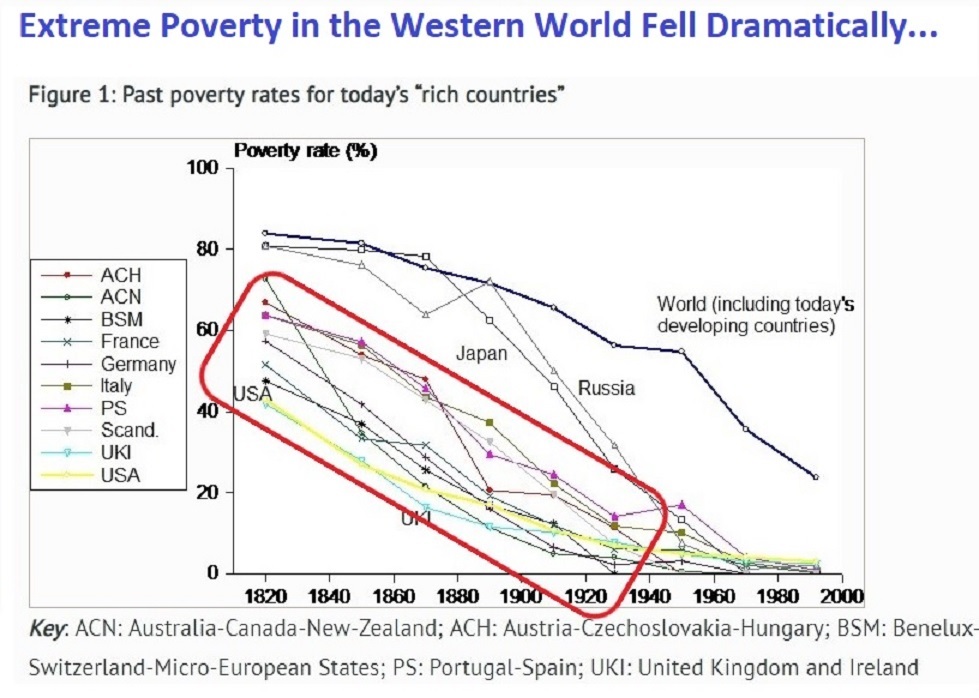





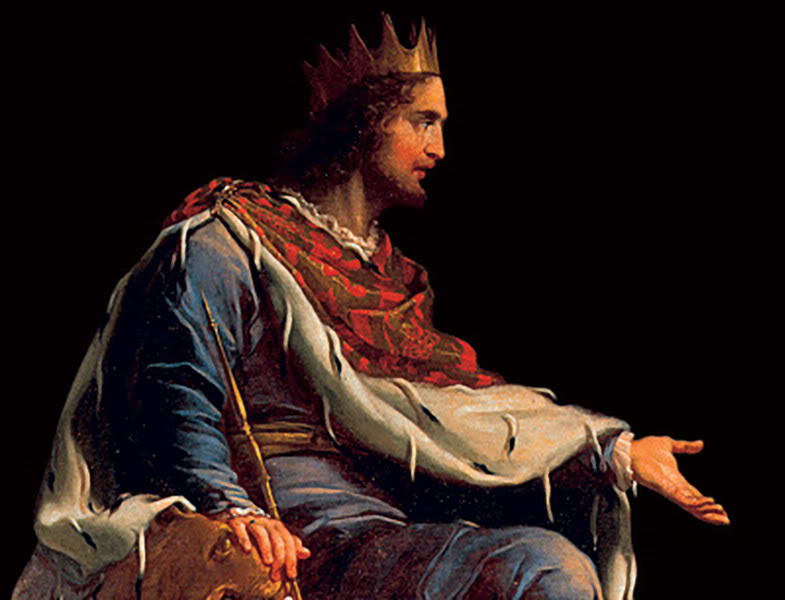

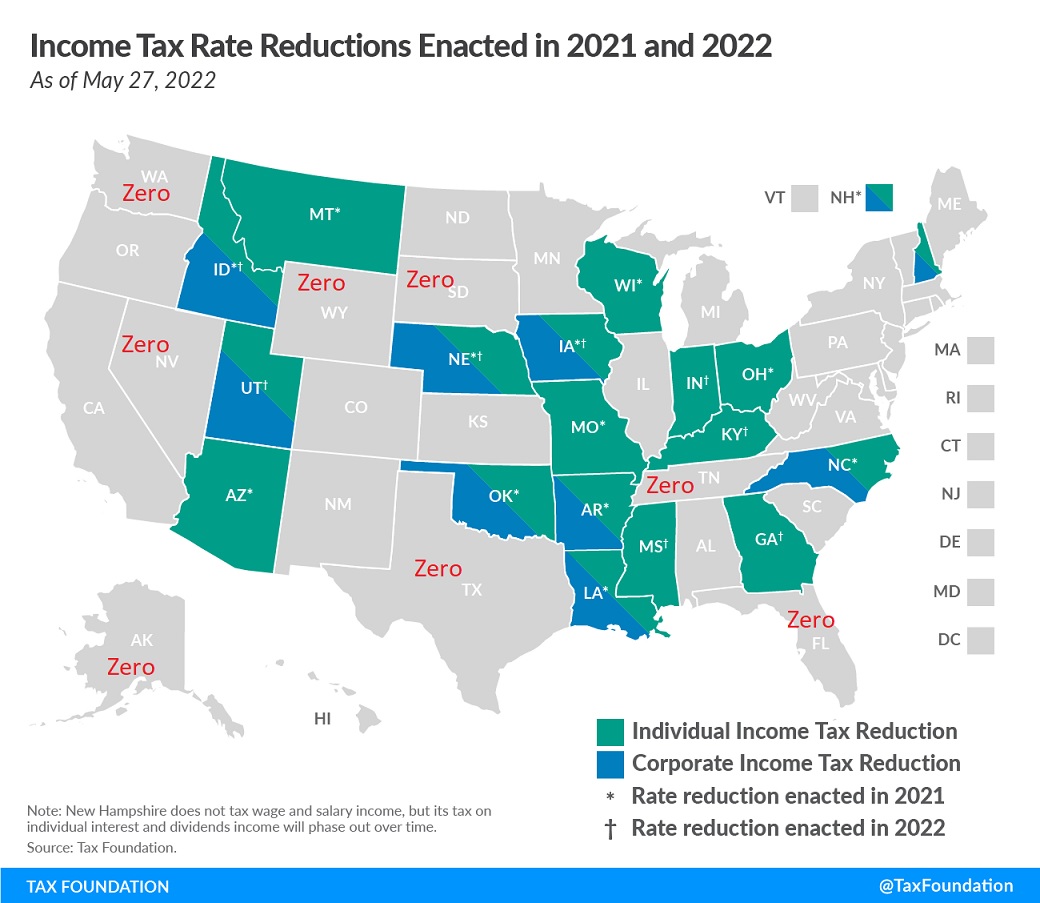





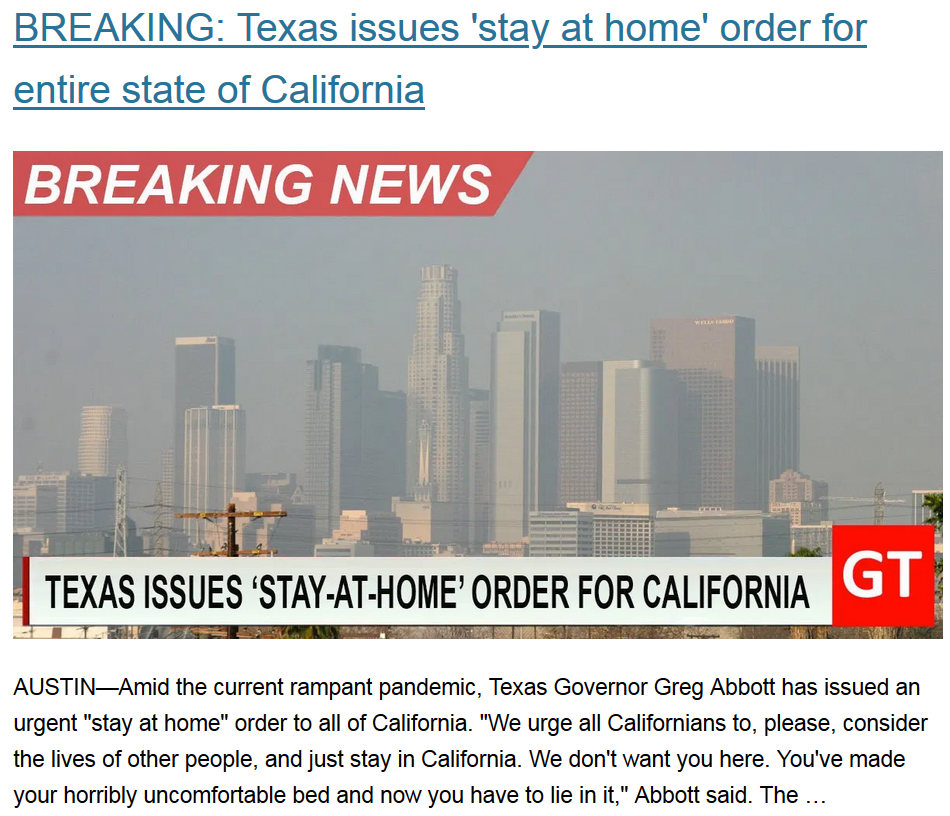

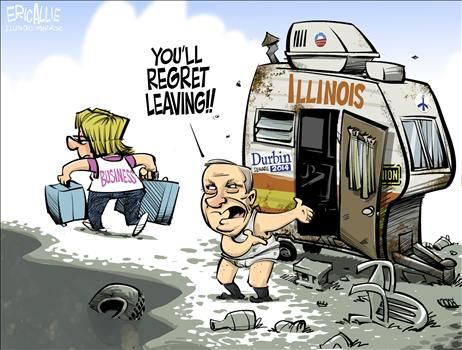
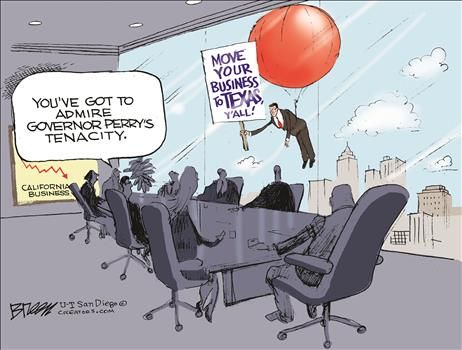
 ——
——




 Ricky Gervais and Penelope Wilton in ‘After Life’ (CREDIT: Netflix)
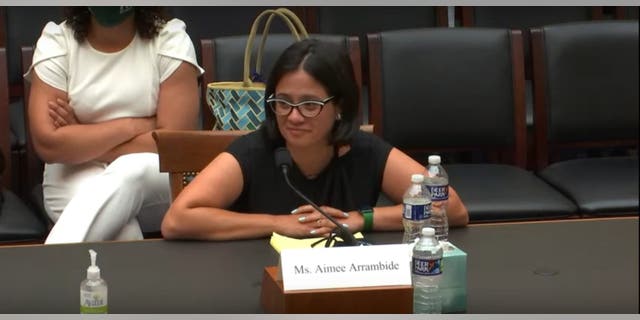



 The Daily Hatch
