All anger is not bad. Jesus was angry, but He was angry at the right things. The Bible says in Ephesians 4:26, “Be angry, and do not sin.” The Bible warns us to be slow to anger because we do often sin in our anger. (See James 1:19.) Proverbs 14:17 says, “A quick-tempered man acts foolishly.” Proverbs 18:13 says, “He who answers a matter before he hears it, it is folly and shame to him.” Proverbs 29:20 says, “Do you see a man hasty in his words? There is more hope for a fool than for him.” Be slow to anger. The way to control your anger is to control your words. Consider Proverbs 15:1, “A soft answer turns away wrath.” Controlling our anger begins with controlling our speech. One angry word builds the next word and that builds the next word, until it gets worse and worse. We must learn to be slow to speak and slow to anger.
What might be an example of righteous anger?
How can even righteous anger turn to sin if we are not careful?
PRACTICE THIS:
Make a list of things that you have anger or passion about today. Consider what is of God and what is not. Ask Him to help you let go of any anger that is not honoring to Him.
Ecclesiastes 8-10 | Still Searching After All These Years Published on Oct 9, 2012 Calvary Chapel Spring Valley | Sunday Evening | October 7, 2012 | Pastor Derek Neider _______________________ Ecclesiastes 11-12 | Solomon Finds His Way Published on Oct 30, 2012 Calvary Chapel Spring Valley | Sunday Evening | October 28, 2012 | Pastor Derek Neider […]By Everette Hatcher III | Posted in Current Events | Edit | Comments (0)
Over and over in Proverbs you hear the words “fear the Lord.” In fact, some of he references are Proverbs 1:7, 29; 2:5; 8:13; 9:10;14:26,27; 15:16 and many more. Below is a sermon by John MacArthur from the Book of Luke on 3 reasons we should fear the Lord. (I have posted John MacArthur’s amazing […]By Everette Hatcher III | Posted in Adrian Rogers, Current Events | Edit | Comments (0)
Over and over in Proverbs you hear the words “fear the Lord.” In fact, some of he references are Proverbs 1:7, 29; 2:5; 8:13; 9:10;14:26,27; 15:16 and many more. Below is a sermon by John MacArthur from the Book of Luke on 3 reasons we should fear the Lord. (I have posted John MacArthur’s amazing […]By Everette Hatcher III | Posted in Adrian Rogers, Current Events | Edit | Comments (0)
Over and over in Proverbs you hear the words “fear the Lord.” In fact, some of he references are Proverbs 1:7, 29; 2:5; 8:13; 9:10;14:26,27; 15:16 and many more. Below is a sermon by John MacArthur from the Book of Luke on 3 reasons we should fear the Lord. (I have posted John MacArthur’s amazing […]By Everette Hatcher III | Posted in Adrian Rogers, Current Events | Edit | Comments (0)
Over and over in Proverbs you hear the words “fear the Lord.” In fact, some of he references are Proverbs 1:7, 29; 2:5; 8:13; 9:10;14:26,27; 15:16 and many more. Below is a sermon by John MacArthur from the Book of Luke on 3 reasons we should fear the Lord. (I have posted John MacArthur’s amazing […]By Everette Hatcher III | Posted in Adrian Rogers, Current Events | Edit | Comments (0)
Over and over in Proverbs you hear the words “fear the Lord.” In fact, some of he references are Proverbs 1:7, 29; 2:5; 8:13; 9:10;14:26,27; 15:16 and many more. Below is a sermon by John MacArthur from the Book of Luke on 3 reasons we should fear the Lord. (I have posted John MacArthur’s amazing […]By Everette Hatcher III | Posted in Adrian Rogers, Current Events | Tagged Gene Bartow, John Wooden | Edit | Comments (0)
Over and over in Proverbs you hear the words “fear the Lord.” In fact, some of he references are Proverbs 1:7, 29; 2:5; 8:13; 9:10;14:26,27; 15:16 and many more. Below is a sermon by John MacArthur from the Book of Luke on 3 reasons we should fear the Lord. (I have posted John MacArthur’s amazing […]By Everette Hatcher III | Posted in Adrian Rogers, Current Events | Edit | Comments (0)
Over and over in Proverbs you hear the words “fear the Lord.” In fact, some of he references are Proverbs 1:7, 29; 2:5; 8:13; 9:10;14:26,27; 15:16 and many more. Below is a sermon by John MacArthur from the Book of Luke on 3 reasons we should fear the Lord. (I have posted John MacArthur’s amazing […]By Everette Hatcher III | Posted in Adrian Rogers, Current Events | Edit | Comments (0)
Over and over in Proverbs you hear the words “fear the Lord.” In fact, some of he references are Proverbs 1:7, 29; 2:5; 8:13; 9:10;14:26,27; 15:16 and many more. Below is a sermon by John MacArthur from the Book of Luke on 3 reasons we should fear the Lord. It is tough to guard your […]By Everette Hatcher III | Posted in Adrian Rogers, Current Events | Edit | Comments (0)
Over and over in Proverbs you hear the words “fear the Lord.” In fact, some of he references are Proverbs 1:7, 29; 2:5; 8:13; 9:10;14:26,27; 15:16 and many more. Below is a sermon by John MacArthur from the Book of Luke on 3 reasons we should fear the Lord. What does it mean to fear […]By Everette Hatcher III | Posted in Current Events, Uncategorized | Edit | Comments (0)
Ecclesiastes 6-8 | Solomon Turns Over a New Leaf Published on Oct 2, 2012 Calvary Chapel Spring Valley | Sunday Evening | September 30, 2012 | Pastor Derek Neider _____________________ I have written on the Book of Ecclesiastes and the subject of the meaning of our lives on several occasions on this blog. In this series on Ecclesiastes I […]By Everette Hatcher III | Posted in Current Events | Edit | Comments (0)
Ecclesiastes 1 Published on Sep 4, 2012 Calvary Chapel Spring Valley | Sunday Evening | September 2, 2012 | Pastor Derek Neider _____________________ I have written on the Book of Ecclesiastes and the subject of the meaning of our lives on several occasions on this blog. In this series on Ecclesiastes I hope to show how […]By Everette Hatcher III | Posted in Current Events | Edit | Comments (0)
Ecclesiastes 1 Published on Sep 4, 2012 Calvary Chapel Spring Valley | Sunday Evening | September 2, 2012 | Pastor Derek Neider _____________________ I have written on the Book of Ecclesiastes and the subject of the meaning of our lives on several occasions on this blog. In this series on Ecclesiastes I hope to show how […]By Everette Hatcher III | Posted in Current Events | Edit | Comments (0)
Ecclesiastes 8-10 | Still Searching After All These Years Published on Oct 9, 2012 Calvary Chapel Spring Valley | Sunday Evening | October 7, 2012 | Pastor Derek Neider _______________________ Ecclesiastes 11-12 | Solomon Finds His Way Published on Oct 30, 2012 Calvary Chapel Spring Valley | Sunday Evening | October 28, 2012 | Pastor Derek Neider […]By Everette Hatcher III | Posted in Current Events | Edit | Comments (0)
Ecclesiastes 6-8 | Solomon Turns Over a New Leaf Published on Oct 2, 2012 Calvary Chapel Spring Valley | Sunday Evening | September 30, 2012 | Pastor Derek Neider _____________________ I have written on the Book of Ecclesiastes and the subject of the meaning of our lives on several occasions on this blog. In this series […]By Everette Hatcher III | Posted in Current Events | Edit | Comments (0)
Ecclesiastes 4-6 | Solomon’s Dissatisfaction Published on Sep 24, 2012 Calvary Chapel Spring Valley | Sunday Evening | September 23, 2012 | Pastor Derek Neider ___________________ I have written on the Book of Ecclesiastes and the subject of the meaning of our lives on several occasions on this blog. In this series on Ecclesiastes I hope […]By Everette Hatcher III | Posted in Current Events | Edit | Comments (0)
Ecclesiastes 8-10 | Still Searching After All These Years Published on Oct 9, 2012 Calvary Chapel Spring Valley | Sunday Evening | October 7, 2012 | Pastor Derek Neider _______________________ Ecclesiastes 11-12 | Solomon Finds His Way Published on Oct 30, 2012 Calvary Chapel Spring Valley | Sunday Evening | October 28, 2012 | Pastor Derek Neider […]By Everette Hatcher III | Posted in Current Events | Edit | Comments (0)
Ecclesiastes 8-10 | Still Searching After All These Years Published on Oct 9, 2012 Calvary Chapel Spring Valley | Sunday Evening | October 7, 2012 | Pastor Derek Neider _______________________ Ecclesiastes 11-12 | Solomon Finds His Way Published on Oct 30, 2012 Calvary Chapel Spring Valley | Sunday Evening | October 28, 2012 | Pastor Derek Neider […]By Everette Hatcher III | Posted in Current Events | Edit | Comments (0)
Tom Brady “More than this…” Uploaded by EdenWorshipCenter on Jan 22, 2008 EWC sermon illustration showing a clip from the 2005 Tom Brady 60 minutes interview. _______________________ Tom Brady ESPN Interview Tom Brady has famous wife earned over 76 million dollars last year. However, has Brady found lasting satifaction in his life? It does not […]By Everette Hatcher III | Posted in Current Events | Edit | Comments (0)
Adrian Rogers: How to Be a Child of a Happy Mother Published on Nov 13, 2012 Series: Fortifying Your Family (To read along turn on the annotations.) Adrian Rogers looks at the 5th commandment and the relationship of motherhood in the commandment to honor your father and mother, because the faith that doesn’t begin at home, […]By Everette Hatcher III | Posted in Adrian Rogers, Current Events | Edit | Comments (0)
Ecclesiastes 1 Published on Sep 4, 2012 Calvary Chapel Spring Valley | Sunday Evening | September 2, 2012 | Pastor Derek Neider _____________________ I have written on the Book of Ecclesiastes and the subject of the meaning of our lives on several occasions on this blog. In this series on Ecclesiastes I hope to show how secular humanist man […]By Everette Hatcher III | Posted in Current Events | Edit | Comments (0)
Adrian Rogers – How to Cultivate a Marriage Another great article from Adrian Rogers. Are fathers necessary? “Artificial insemination is the ideal method of producing a pregnancy, and a lesbian partner should have the same parenting rights accorded historically to biological fathers.” Quoted from the United Nations Fourth World Conference on Women, summer of 1995. […]By Everette Hatcher III | Posted in Adrian Rogers, Current Events | Edit | Comments (0)
Tom Brady “More than this…” Uploaded by EdenWorshipCenter on Jan 22, 2008 EWC sermon illustration showing a clip from the 2005 Tom Brady 60 minutes interview. To Download this video copy the URL to http://www.vixy.net ________________ Obviously from the video clip above, Tom Brady has realized that even though he has won many Super Bowls […]
Though there are no guarantees. A team from high-tax California just won the Super Bowl, so it goes without saying that taxes are not the only factor that determines team success.
But it presumably means that teams in states like California and New York have to overcome a built-in disadvantage.
Let’s take a look at some new research on this issue. Professor Erik Hembre of the University of Illinois at Chicago authored a study that’s been published by International Tax and Public Finance.
Here’s the question he wanted to answer.
Do higher state income taxes harm firms? …This paper examines the state income tax burden in a unique market, professional sports, where teams—the capital in question—are highly immobile and players—the labor—are highly mobileto test whether higher state income tax hinders team performance. Anecdotal evidence suggests higher state income taxes disadvantage professional sports teams. Across the four major US sports leagues, of the forty-nine franchises with long championship droughts, only four are from states that do not have an income tax, while twenty are from the highest taxed states.
Here’s his methodology, which takes advantage of the fact that free agency gave players new-found ability to play where they could keep more of their earnings.
To test the link between state income taxes and team performance, this paper analyzes team performance in the four major US professional sports leagues: the National Basketball Association (NBA), the National Football League (NFL), the National Hockey League (NHL), and Major League Baseball (MLB). To address concerns that the association between team performance and income tax rates may be coincidental, I examine how the tax rate effect changed with the adoption of free agency. Achieving free agency has been a milestone for players’ associations, paramount both for increasing player mobility across teams and for forcing teams to compete for player services without restrictions.
Since athletes respond to incentives (just like entrepreneurs, inventors, and scientists), we should not be surprised that Prof. Hembre found that teams in lower-tax states now enjoy more success.
I compare the link between tax rates and team winning percentage before and after the introduction of free agency in each league using within-team variation in top state marginal income tax rates. Prior to free agency, there was a small positive association between income tax rates and winning. After the introduction of free agency, changes in state income tax rates significantly influence team performance. Each percentage point increase in the top marginal income tax rate is associated with a 0.70 percentage point decrease in win percentage. The tax rate effect on team performance is robust to a variety of specifications, such as controlling for sales and property taxes or alternative tax rate measures. Changing the outcome measure to be championships or finals appearances also yields similar results. The estimated effect size is non-trivial. The main analysis effect size of − 0.70 means that a one standard deviation increase in tax rate will result in 2.05 fewer wins over an 82 game season. …Figure 3 presents the annual point estimates (훽2) and 95% confidence intervals of the income tax rate effects between 1980 and 2017. …in all 9 years prior to any league having free agency, there was a positive income tax effect estimate. This relationship changed shortly after the introduction of free agency and since 1990 the annual income tax effect has remained negative.
Here’s the aforementioned Figure 3 for my wonky readers.
As a fan of better tax policy, I like Prof. Hembre’s findings.
As a fan of the New York Yankees, I don’t like his findings
P.S. Here’s one final tidbit that will appeal to fans of the Raiders.
Considering an extreme case, the recent relocation of the Oakland Raiders from a high income tax state (California) to a no income tax state (Nevada) projects a winning percentage increase of 8.6 percentage points or about 1 game per NFL season
P.P.S. I’ll close by reiterating my caveat about taxes being just one piece of the puzzle. After all, I speculated that taxes may have played a role in LeBron James going from Cleveland to Miami many years ago. But he has since migrated to high-tax California. Though many pro athletes have moved away from the not-so-Golden States, so the general points is still accurate.
The Laffer Curve charts a relationship between tax rates and tax revenue. While the theory behind the Laffer Curve is widely accepted, the concept has become very controversial because politicians on both sides of the debate exaggerate. This video shows the middle ground between those who claim “all tax cuts pay for themselves” and those who claim tax policy has no impact on economic performance. This video, focusing on the theory of the Laffer Curve, is Part I of a three-part series. Part II reviews evidence of Laffer-Curve responses. Part III discusses how the revenue-estimating process in Washington can be improved. For more information please visit the Center for Freedom and Prosperity’s web site: http://www.freedomandprosperity.org
___________
After reading Milton Friedman’s book “Free to Choose” in 1980, I had the opportunity in 1981 to hear Arthur Laffer speak about what great economic expansion we were about to have in the USA because of Reagan’s 25% across the board tax cuts on income taxes and sure enough he was right. In fact, our economy expanded so much that the world took notice. Basically from 1980 to 2007 we dropped our top income tax rate from 73% to 39% which is a decrease of 34% and the world saw what we did and followed along. The drop of the industrialized countries during this same time was 26% (from 68% to 42% on average).
Table 42.2
Top Individual Income Tax Rates in the OECD (percent)
Change
Country 1980 1985 1990 1995 2000 2005 2007 1980–2007
Australia 62 60 49 47 47 47 45 17
Austria 62 62 50 50 50 50 50 12
Belgium 76 76 58 61 60 53 53 24
Britain 83 60 40 40 40 40 40 43
Canada 64 57 49 49 48 44 44 20
Czech Rep. n.a. n.a. n.a. 43 32 32 32 11
Denmark 66 73 68 64 59 59 59 7
Finland 68 67 60 57 54 53 52 16
France 60 65 60 62 61 56 49 11
Germany 65 65 53 57 56 44 47 18
Greece 60 63 50 45 43 40 40 20
Hungary n.a. n.a. 50 44 40 38 36 14
Iceland 63 56 40 47 45 39 36 27
Ireland 60 65 58 48 42 42 41 19
Italy 72 81 66 67 51 44 44 28
Japan 75 70 65 65 50 50 50 25
Korea 89 65 64 48 44 39 39 50
Luxembourg 57 57 56 50 47 39 39 18
Mexico 55 55 40 35 40 30 28 27
Netherlands 72 72 60 60 52 52 52 20
New Zealand 62 66 33 33 39 39 39 23
Norway 75 64 51 42 48 40 40 35
Poland n.a. n.a. n.a. 45 40 40 40 5
Portugal 84 69 40 40 40 40 42 42
Slovakia n.a. n.a. n.a. 42 42 19 19 23
Spain 66 66 56 56 48 40 39 27
Sweden 87 80 65 50 55 56 56 32
Switzerland 38 40 38 37 36 34 34 4
Turkey 75 63 50 55 45 40 40 35
United States 73 55 38 43 43 39 39 34
Average 68 64 52 49 47 43 42 26
SOURCE: James Gwartney and Robert Lawson, Economic Freedom of the World (Vancouver: Fraser Institute,
2007), as updated to 2007 by the authors. Data includes the national and average subnational tax rates.
NOTE: n.a. not applicable.
___________
I know that Max Brantley and many of his friends over the Arkansas Times like to say that the Reagan tax cuts increased the deficit but that clearly is not true.
President Ronald Reagan’s record includes sweeping economic reforms and deep across-the-board tax cuts, market deregulation, and sound monetary policies to contain inflation. His policies resulted in the largest peacetime economic boom in American history and nearly 35 million more jobs. As the Joint Economic Committee reported in April 2000:2
In 1981, newly elected President Ronald Reagan refocused fiscal policy on the long run. He proposed, and Congress passed, sharp cuts in marginal tax rates. The cuts increased incentives to work and stimulated growth. These were funda-mental policy changes that provided the foundation for the Great Expansion that began in December 1982.
Many critics of reducing taxes claim that the Reagan tax cuts drained the U.S. Treasury. The reality is that federal revenues increased significantly between 1980 and 1990:
Total federal revenues doubled from just over $517 billion in 1980 to more than $1 trillion in 1990. In constant inflation-adjusted dollars, this was a 28 percent increase in revenue.3
As a percentage of the gross domestic product (GDP), federal revenues declined only slightly from 18.9 percent in 1980 to 18 percent in 1990.4
Revenues from individual income taxes climbed from just over $244 billion in 1980 to nearly $467 billion in 1990.5 In inflation-adjusted dollars, this amounts to a 25 percent increase.
The Laffer Curve, Part II: Reviewing the EvidenceThis video is second installment of a three-part series. Part I reviews theoretical relationship between tax rates, taxable income, and tax revenue. Part III discusses how the revenue-estimating process in Washington can be improved. For more information please visit the Center for Freedom and Prosperity’s web site: http://www.freedomandprosperity.org.The Laffer Curve, Part III: Dynamic Scoring
In search of authenticity (3): Francis Schaeffer’s interest was not so much to win arguments, but to win people.
· TRANSLATED BY DANIEL WICKHAM
30 AUGUST 2017 · 11:59 CET
When Schaeffer spoke to someone, says Dorothy Woodson, he was totally focused on what the person was saying, truly interested in the person.
“Love is the final apologetic”, said Schaeffer. For that reason he shunned public debates. His interest was not so much to win arguments, but to win people.
“When he was talking to you, he was totally focused on what you were saying”, recalls Dorothy Woodson, “he was interested in you as a person. He didn’t care if you were the most unlearned or the most intellectual person in the world”. He cared only about the individual. For him, people were the most important.
In contrast to current apologetics debates which are quite a spectacle, or in contrast to the battling attitudes of so many believers on social media, Schaeffer believed that one could not bear witness to the faith without caring for the person in front of you.
“I tried to give sincere answers to honest questions”, but he always sought out the motivation that prompted those questions. If he had to face the new atheists today, he would not only respond to their arguments, but he would be asking himself what had shaped someone like Dawkins. He was interested in the person.
Only once did Schaeffer agree to enter into a public debate. It was in Chicago with the most controversial religious leader of his time, the radical bishop of California, James Pike. Although educated a Catholic, Pike lost his faith, and became an Episcopalian minister. He was well-known in the 1960s for his denial of fundamental Christian doctrines which he presented in a book for which he was not ashamed to be called “a heretic”. Pike not only defended civil rights with Martin Luther King and campaigned for the ordination of women in the church, but he attacked Catholic bishops for their opposition to abortion and accepted the homosexuality of his son, with whom he even tried to get in touch after his suicide, through Spiritism.
If there was anyone that a conservative minister or a traditional moralist could easily attack, that was Pike. He not only held hold liberal ideas, but he also had many personal problems. He was an alcoholic and two of his three marriages failed. His son took his own life and his daughter also tried to do the same two years later. He also had a secretary with whom he had intimate relations for three years, before making her his third wife. She was twenty-four years younger than him.
Schaeffer, however, showed him great kindness and many Christians did not understand why he was not more aggressive with him. The debate did not become well-known because of Fran’s attitude, but also because the bishop said things he had never said before, such as his famous phrase that had he hoped to receive the bread of life from the Church but that all they gave him were stones. He was very taken by Schaeffer’s humanity saying he had never met anyone like him. No wonder they began a relationship that lasted until the mysterious death of Pike, who disappeared in the desert of Israel in 1969. Fran did not want to win arguments, he wanted to win people.
THE APOLOGETICS DEBATE
It is no easy task to fit Schaeffer into a particular school of apologetics. Protestantism has been divided since the last century into two schools that are still struggling to gain the attention of the Christian world.
On the one hand we have the evidentialism that is based on the traditional arguments for the existence of God. It is considered ‘classical apologetics’, although evangelicals have added to that basis in “natural theology”, their particular defence of the reliability of Scripture and the resurrection of Christ.
On the other hand, there is presuppositionalism in which Schaeffer was educated with Van Til in Westminster. This teaches that there is no neutral ground between the Christian and the non-Christian, because they start from different worldviews.
Some think that Schaeffer’s faith crisis is evidenced by the sequence of his written works such as his early books, which deal with apologetics – the trilogy that begins in 1968 with “The God Who Is There” and “Escape From Reason”, but continues with “He Is There And He Is Not Silent” (1972), but this is simply not true.
As we said in the previous article, it is “True Spirituality” (1971) which shows how he came through that spiritual crisis. In fact, the basis of his first book is already in note form in 1948. That year he published a review to the commentary by Oliver Buswell, an evidentialist theologian of his own denomination, who wrote about an introduction to the apologetics of Carnell.
Carnell became professor of the Fuller Seminary in 1948, after collaborating with Carl Henry, who was a presuppositionalist as was his teacher at Wheaton University, Gordon Clark. Like Schaeffer, Carnell had studied at Westminster with Van Til, before graduating from Harvard. He was one of the main figures with Ockenga, Henry and Ladd, some of the so-called “new evangelical” movement that would popularize Billy Graham, but he had nervous problems. He underwent psychiatric treatment and died mysteriously. He had accepted an invitation to speak at an ecumenical workshop organized by Catholics at a San Francisco Bay hotel in 1967, but when he did not turn up for the conference, a curate went up to his room and discovered that he had died from a pill overdose – it is not known whether by accident or suicide. He was 47 years old.
Schaeffer’s review of the evidentialist Buswell’s critique of the presuppositionalist Carnell is interesting because he seeks common ground between the two schools. Both agree that the unregenerate person cannot be saved without the sovereign call of God. The work of the Holy Spirit is needed. Yet, as they differ in every other matter, Schaeffer “suggests an answer to the problem”.
It is found in the inconsistency of the fact that the atheist does not commit suicide, even though he sees life as totally irrational. The author of “Escape From Reason” believes that this is a result of common grace, a very important doctrine, but hardly mentioned in evangelical circles although it has enormous implications in practical life. Although non-believers are not saved, they still live by the grace of God (Acts 17:25), who gives the gifts and talents to all, and this explains why Christians are not always the best politicians, artists or professionals.
What interests Schaeffer is not so much the question of conscience, which is a vital issue to “natural theology”, but more what he calls “the point of tension”. He sees his task as “rolling the roof back” for the “unbeliever”, so that he can see the inconsistency of his position. Here Schaeffer had a flexible approach. This varied from one person to another. He saw that presuppositions were contradictory, but he looked for a common life experience in them. Faced with evidentialism, he insisted that there is “common rather than neutral” ground, but he sees room for dialogue, as opposed to the presuppositionalist.
This is why Schaeffer is sometimes called an “inconsistent or compassionate presuppositionalist”, and “a thinking evidentialist”, since he seeks “to prove” presuppositions as hypotheses by their argument and their experience. It is a perspective similar to that of Keller in “The Reason For God”, as opposed, for example, to the evidentialism of McDowell.
THE GOD THAT IS THERE
The problem is that Schaeffer’s apologetic work is hardly known in Hispanic circles despite Jose Grau’s efforts. This is partly because his first book, “The God That Is There”, was never published in Spanish. It appears several times announced in titles and lists of Grau’s publishing house, ‘European Evangelical Editions’, but he never managed to get the book marketed, since the two translations that he commissioned were gibberish. He told me that the two texts that were presented to him were practically illegible. That is why the book that has most impact in our language – already in its third edition – is “Escape From Reason”, his peculiar History of thought.
Schaeffer’s controversial son, Franky, was living in the L’Abri community Fran began in Huemoz (Switzerland) in 1955, to try to give “honest answers to honest questions” to anyone who asked them. Franky found a lighting job at the Montreux festival when Led Zeppelinwas the guest rock band playing that year, and Franky noted that guitarist Jimmy Page was reading “Escape From Reason”. When he introduced himself, Page told him that his father’s book was “very cool”. He also told Franky that Eric Clapton had given it to him after reading it himself. That is how widespread Schaeffer’s influence had become in the early 70’s.
The singularity of his work is not the intellectual demonstration of “The God Who Is There”, but his own personal experience, which is what “True Spirituality” speaks about. This was also true in the way L’Abri was financed. Faithful to the tradition of his in-laws, who came from Hudson Taylor’s Chinese “Faith Mission”, Fran only made known L’Abri´s economic needs in prayer to God. L’Abri never asked for money, but believed that “God would put in the minds of the people He chose the way they should share in His work”. That’s why they did no advertising nor did they even have brochures to start with. “God would bring the people he wanted and keep the others away”. There were no plans, no committee meetings.
Time magazine published an article in 1960 saying: “every weekend the Schaeffer’s are inundated by a crowd of university students – songwriters, writers, actors, singers, dancers and beatniks – who profess all kinds of faith and unbelief. They are existentialists and Catholics, Protestants, Jews and left-wing atheists”. L’Abri, which means “refuge” in French was truly that to all of them.
In conversations, Fran put himself in his listener’s shoes in order to communicate the fact that God does exist, as it is revealed in the Bible, and that He both infinite and personal. That we are sinners by His standards but that Jesus Christ has come in space, time and history, to carry our punishment to the cross. This is how Edith summed up their message. That is the truth that we must communicate in love, not just as a cold concept, but with true emotion, because “love meets people where they are”, said Schaeffer.
This is because “God so loved the world that He sent His Son not to condemn it, but that it might be saved by Him” (John 3:16-17).
Read the first and second article of this series on Francis Schaeffer.
In search of authenticity (2): In Schaeffer´s view what differentiates Christianity from any other religion, is that “God did everything”
· TRANSLATED BY DANIEL WICKHAM
03 AUGUST 2017 · 11:20 CET
Schaeffer with his wife Edith in Switzerland.
There are books you don´t just read, they actually grip you! That´s what happened to me in the late 70’s, when I read Francis Schaeffer´s (1912-1984) “True Spirituality”. If you read the preface I´m sure you´ll want to continue reading …
“Many years had passed since I had been converted from agnosticism to Christianity. Then I was pastor for ten years in the United States and after that I worked in Europe for several years together with my wife Edith. During this period I felt the need to defend the position of historical Christianity as well as the purity of the visible church, very intensely.
However, I gradually faced a new problem; staying in touch with reality. In the first place, it seemed to me that many of those who held an orthodox position were disconnected from reality. Secondly, I noted my own failure to connect with reality. “
THE NEW FUNDAMENTALISM
To understand Schaeffer´s 1950s crisis we have to understand its origins. As I mentioned in the first article, he had not only converted to the Christian faith, but entered into an evangelical movement which distanced him from the nominal Protestantism of his parents.
This is how he became part of the historical fundamentalist movement represented by the elder Machen and his critique of liberal theology, forming the Orthodox Presbyterian Church and the Westminster Seminary in Philadelphia.
But this was not enough. Schaeffer opted for the new fundamentalism as we know it, by entering the Bible Presbyterian Church and the Faith Theological Seminary of the fierce young McIntire … but what differentiates the two?
Neo-fundamentalism is a movement which advocates a separation of second and third degree, i.e. separation from anyone who is “guilty by association” and who has not distanced himself from those who have not become separate from the world.
His extreme position even takes him as far as being unable to distinguish a classic doctrinal position, such as the Augustine tradition. Neo-fundamentalists hold that one´s position on the millennium or on baptism is as important as the doctrine of salvation.
Above all, it embraces a holiness, which is not only characterized by no smoking or drinking, which was acceptable in Westminster, but by it’s distancing from the world and its social entertainments. Although this clashed with Schaeffer’s interest in art and culture, he accepted it and even Edith stopped dancing, although she had done so in high school.
We have to distinguish clearly between both fundamentalist positions to avoid a lot of confusion.The issue at stake in this case is not what the value of “sound doctrine” is but more “what does sound doctrine really mean?” Does it refer to the fundamental truths of Christianity or does it mean “any belief that one considers biblical”?
The most important thing to bear in mind is where does our responsibility lie in this bone of contention? Should you devote your life to shooting everything that moves or do you simply live your faith and proclaim the essential truths of the Gospel?
In practice, what does being a Christian really mean? Is it to become your neighbours’ judge or is it more about true freedom? And finally, how does relate to the world at large? Is this only about spiritual matters? Or does it have to do with daily living?
If there is something that characterizes Schaeffer´s thinking, it is the search for authenticity, which is the title of the book by Duriez, now published in Spanish by Andamio. In it we discover someone who examines himself honestly and asks himself the questions that others take for granted.
Christian language is full of presuppositions that no one recognizes, apart from those who use them, a jargon which is completely foreign to the unbeliever and no longer means anything even to Christians. They are holy sounding phrases which vary depending on ambience and fashion, but they can be considered biblical in appearance only.
All of Schaeffer´s preconceptions came down with a crash during his time in the mountains of Switzerland in the early 50’s. The question everyone asks is: what happened to him? Having read much of what he wrote and comments published on it over the years, I can only say that there´s no easy answer that question…
CRISIS, WHAT CRISIS?
It has struck me that no biographer deals with Schaeffer´s middle- age period. At this stage in life, I can honestly say that I don´t have such a black and white view of things as when I was a younger man who was more prone to extreme points of view than when I reached forty.
Of course there are people who get bogged down at that stage, but by the 1950´s Schaeffer had reached the middle age crisis period which is when we all tend to ask ourselves who we are and what we may have let slip by along the way.
His use of intellectual language gives you the wrong impression because his son-in-law describes him more as a rather emotional type of person. It is not unusual for people to get the impression that he had suddenly embraced atheism. His doubt is so deep rooted that it seems he questions the very existence of God and Christianity´s fundamental truths. I don´t think this was the case, because when he talks about these doubts it is in the preface to his book on “True Spirituality” (1971), not in the prologue to “God is there” (1968).
Although his book was not published until the early 1970s, there were many previous drafts. His problem with editors is that he wanted to keep the verbal style of these talks. The first time he spoke of these issues was at a camp for Presbyterian missionary families in the United States in 1953, but his reflections do not take their current format until he presents them to the community that he forms in L´Abri,Switzerland, by then it was 1964.
The first article that we can find is published in 1951, not within the separatist circle of magazines like The Bible Today or The Beacon, but in a general publication for Sunday schools called Sunday School Times.
Schaeffer comments in these notes the lack of power and joy that exists among those who profess a biblical Christianity. They seek purity, but purity must lead towards love and this was something notably lacking in conservative circles. What he proposes is “not an intellectual problem, but a spiritual one”.
This was a reality which he, the great champion of orthodoxy, discovered was lurking within his own heart. His family recalls that such a discovery led him into a depression where he battled against anger and frustration. He wasn´t judging the Bible, he was judging his own Christianity. His doubts weren´t doctrinal, they were personal.
THE FINISHED WORK OF CHRIST
On the one hand, there is a clear freeing from legalism. As we have said, the neo-fundamentalism in which Schaeffer had been formed was full of rules of separation and purity, and did not allow any room for freedom of conscience.
His daughter Susan – married to my friend Ranald Macaulay – recalls how, when she was 10 years old in 1951, saw her father drink wine for the first time – they didn´t even use it to celebrate the Lord´s Supper! -. It was not so much that he began to smoke and drink, but simply that he didn´t mind others doing it.
At L´Abri – we will discuss this community in the next article – you couldn´t use drugs, but as we shall see, he accepted many young drug users. He didn´t confront their problem morally but existentially. In Schaeffer´s view “lost souls are recovered by the reality of the existence of the Creator,” and not by a new form of legalism.
In that sense, the study of the Epistle to the Romans was vital and was probably the book of the Bible that he most regularly taught on at the community and in conferences.
The expression most repeated by him at that time was “the finished work of Christ.” Schaeffer discovered that Christianity is not a system of values, as is often thought, but a life which is based on “the substitutionary work of Jesus Christ in history.” It comes from the experience of “the power of the crucified, risen and glorified Christ, through the Holy Spirit and by faith.”
In Schaeffer´s view what differentiates Christianity from any other religion, is that “God did everything”. Schaeffer believed that “we can do nothing to save ourselves, because Christ has done it all.”
Although he began by talking about cultural and emotional issues, using examples from art and philosophy, he always brought out mankind´s moral guilt, so to announce that Christ died for us on the cross.
Schaeffer saw himself as an evangelist. He never intended to be anything else. The key question for him was not what are Christian values about so that they may be considered worth believing in, but whether Christianity itself is the truth. It was not an intellectual question, it was more about the essence of life itself. If Christianity is true it affects our whole life. It is “the true truth“as he used to say.
The first of a series of articles on Schaeffer’s legacy and on the challenge he still poses to the world today.
· TRANSLATED BY DANIEL WICKHAM
26 JULY 2017 · 16:40 CET
A biography of Francis Schaeffer (1912-1984) has been published in Spanish.
At long last a biography of Francis Schaeffer (1912-1984) is published in Spanish. There are already many written in English, but the one published by Andamio is one of my favourites.
This is perhaps because it isn´t written by a theologian, philosopher or apologist, but by an expert in fantasy literature, such as Colin Duriez, one of the greatest scholars on the works of Tolkien and C. S. Lewis. His choice for a title is what I think best describes Schaeffer´s life and work, the search for authenticity.
It is no easy task to sum up in a single article Schaeffer’s´ biography and thinking. I have read most of his books, but also many of his letters, as well as many studies that have been published about him.
Most of all and in more recent years I have had access to his family, thanks to the appreciation and enthusiasm that his son-in-law, Ranald Macaulay, has so generously shown me. This is why I have decided to write a series of articles on his legacy and especially on the challenge he still poses to the world today.
This is, of course, my personal opinion! Schaeffer means many things to many people. Most of them, I fear, continue to see him as an intellectual who wrote complex apologetic works. Anyone who believes that shows he has not fully read Schaeffer.
Moreover, he is unaware of Schaeffer´s personal influence, which for me is his greatest legacy. He was a great listener; he learned more from listening than from reading up and he was an excellent conversationalist. He cared more about people than books. However, one book, the Bible, changed his life completely. For him, Christianity was biblical, or it was simply not Christianity.
The truth is that his Christianity was experimental. He was a man of prayer, but above all he sought authenticity. This gave him a total dislike for the super-spirituality that sweeps the evangelical world.
Jose Grau, who is perhaps his main introducer to the Hispanic world, says that this is one the aspects of Schaeffer´s works which is “prophetic”.
This aspect is, if I may borrow Grau´s expression, an issue still pending for the more conservative evangelical Christian world, as pietistic and inhuman then as it is now.
For others, however, Schaeffer is too conservative. Many in liberal circles described him as “the guru of fundamentalism.” The guru bit came from his connection with the hippy environment of the late 60’s and early 70’s, but also because of the extravagance of his Tyrolean dress manner and his approachability within a world as conventional as that of Evangelical Protestantism, where preachers still wore suits and used the same centuries old godly language. What was surprising to the liberal world was that his message remained so “fundamentalist.” But fundamentalist it was.
GURU OF FUNDAMENTALISM?
To understand Schaeffer´s background we have to understand what fundamentalism meant in the late nineteenth and early twentieth centuries. The main historical denominations of Protestantism were divided because their theologians were moving away from the fundamental doctrines of Christianity.
Francis came from a German Lutheran family which had emigrated to the United States. The German school of Bible critique had established an academic empire, where scepticism and intellectual pride was rampant, two things which young Schaffer opposed not only because of his humble origins – the son of an unschooled, uncultured carpenter, but because of his humble attitude.
Fran, as his family and friends called him, had dyslexic problems. When one listens to his recordings, one perceives not only the sharpness of his voice, but also the strange pronunciation he had for some names. His daughter remembers how, as a child, her father asked her to spell out very simple words.
A high school teacher broke him in to the world of art. And although he attended a Presbyterian church, he read the Bible for himself, since the denomination in which he was then attending, was not conservative.
He then joined the church built by Gresham Machen when it separated from northern United States liberal Presbyterianism which was when the Theological Seminary of Westminster in Fidaldelfia was founded.
His conversion occurred when he chanced on an evangelical mission tent-meeting in 1930. This was far removed from the nominal Protestantism of his parents. The following year he wanted to enter Hampden-Sidney University of Virginia, later to study theology.
His father saw pastors as parasites, who did no real work, but even so he agreed to pay him the first semester of general studies in philosophy and classical languages. There was an association of Christian students, which he got to preside, but whilst southern racism still prevailed, Schaeffer instead went to an Afro-American Sunday school.
Years later, his interest in Negro music led him converse with Hans Rookmaaker, the art scholar, who was passionate about jazz and film. They met at the International Council of Christian Churches, Amsterdam 1948, which coordinates fundamentalism as an alternative to the World Council of Churches.
They were so engrossed in their conversation subject that they missed going to meetings and instead walked the canals talking all the time about the relationship between the faith they had found after their conversion and popular culture.
The Dutchman had come across Christianity in a Nazi concentration camp, Auschwitz, where his Jewish fiancée died. He later became a member of a reformed conservative church. His current girlfriend worked as a secretary at the fundamentalist congress.
CHAMPION OF ORTHODOXY
Schaeffer married the daughter of evangelical missionaries serving in China. His parents were in the China Inland Mission, founded by Hudson Taylor. It was a “mission of faith” that sought cultural adaptation, even in the case of the missionaries themselves. Edith’s last name was Seville.
Fran met her at the Presbyterian Church at a youth gathering where a Unitarian lecturer denied the deity of Jesus and the divinity of the Bible.
Schaeffer debated with the speaker and recommended Machen´s book, “Christianity and Liberalism” (1923) to Edith. The year they married also saw the founding of the Westminster Seminary in 1935 where Fran enrolled in the first year, after graduating in Hampden-Sidney.
In order to understand to what extent Schaeffer was a fundamentalist, one needs to understand which part he played in the debate that took place in Westminster in 1937 on Christian freedom.
After forming the Orthodox Presbyterian Church with Machen, who also founded the seminary, a group led by Oliver Buswell and Carl McIntyre, the founder of the International Council of Christian Churches in New York in 1941, they saw the need for a new denomination, the Bible Presbyterian Church, which was to be consistent with the conduct of ” Christian separatism from the world” and premillennial eschatology.
This “neo-fundamentalist” group founded the Faith Theological Seminary and the Schaeffers joined it. The Seminary ruled abstention from alcohol and tobacco – in Westminster they drank and smoked freely- as well as avoiding variety shows and dancing.
Fran was the first minister ordained by the denomination. He became pastor of two churches in Pennsylvania, one in Grove City from 1938 and another in Chester from 1941, before continuing to the third in St. Louis, Missouri, for a further five years.
The Schaeffers were known for their ministry among children. They organized summer Bible schools and founded a missionary organization called Children for Christ, a fundamentalist split from the Alliance for Child Evangelism (APEN), and which sent them to Europe in 1947.
On that trip they visited France, Switzerland, Norway and Holland. They were at the Emmaus Bible Institute, after visiting some pastors in Lausanne and attending a Baptist church in Oslo, at the same time as the World Council of Churches was holding a youth congress.
In Lausanne they established their operations base. Fran gave lectures on the dangers of liberalism. He travelled to Scandinavia, France, Germany. Whilst he was in Rome the dogma of the Assumption of Mary was proclaimed. This prompted him to write about the dangers of Roman Catholicism.
FAITH CRISIS
It is evident that many evangelicals still find themselves in Schaeffer`s pre-crisis phase, a crisis which occurred in Switzerland in the 1950s. They see the dangers of liberalism, Roman Catholicism and the ecumenical movement. They do not see how a Christian can drink or smoke.
They believe that biblical doctrine includes even their own particular eschatological position on the millennium. They must be separate from the world. The problem starts when someone like Fran has doubts about himself more than doubts about the Bible. This honest attitude drives him to search his own heart deeply.
Schaeffer had studied at Westminster with a Dutchman named Van Til, who combined presuppositional apologetics with one of the earliest attacks on Karl Barth’s theology of a “new modernism,” in saying that the Bible contains, but is not the actual Word of God.
His view of Aquinas is the same as that of Van Til, but he differed with him in the radicalism of the view that there was no possible connection between a believer’s faith and the non-Christian worldview.
It is interesting to note that Van Til never chose to disagree with him in public. Schaeffer told Rookmaaker that when he became a pastor he relied so much on his persuasiveness that if the other person did not accept Christ, he thought his own arguments must be unconvincing.
When they went to Switzerland, the Schaeffers already had three daughters. His health was not very good. They thought it was due to the local regional climate of the place where they had settled in a pension in La Rosiaz. They moved to Champéry, where they worked with English girls who spoke no French.
It all seemed rather strange whilst they prepared to hold a congress in Geneva where Fran was going to speak to the International Council of Christian Churches about the dangers of Barth’s “new modernism.” He then has personal contact with Barth.
His bitter correspondence can now be found on a Spanish internet blog. What many people don´t realise is that this happened just before the crisis he had in the 1950s, when he gave up being a missionary.
He relates this experience in the prologue to his book “True spirituality”, published in 1971. I will write about that in my next article. Reading this book was a really liberating experience for me. Like many people who have been raised in church, I also went through a doubting phase.
Some, like Schaeffer, have become Christians in adult life, but they sincerely question the reality of that experience when they get doubts about their spirituality further down the line. What is surprising is that he was pastor, missionary and lecturer, but he had the courage to say out loud what many of us hide in our hearts.
The greatest lesson we can learn from Schaeffer about fundamentalism is that one can be a champion of orthodoxy, seek ecclesiastical purity and live according to the strictest evangelical law, but be fooling oneself.
At the end of his life, dying from cancer, he remembered those years andlamented his crusade for truth which had lacked the love that comes from the Spirit of God in Christ Jesus. He had orthodoxy, but not orthopraxis.
In his view this is “The great evangelical disaster,” the title of the incomplete book he wrote whilst in hospital and which has never been translated. We can have great zeal for the truth, but little of the love through which the world will know that we are Jesus´ disciples (John 13:35)…
God is interested in your prosperity. It is not necessarily a matter of wealth or worldly success. Prosperity means that you live a life of general welfare, where God meets your needs, and you are being fulfilled. It means you are free to enjoy the blessings of God.
If God desires prosperity for us, yet we don’t feel it in our lives, what stands in the way? It’s simple: there’s unconfessed sin in our hearts and in our lives. When we sin, we often times try to cover it up instead of confessing it. But there is a great cost to covering up sin.
We look at the example of King David in the Old Testament. He was a man after God’s own heart. Yet, David sinned against God. He committed adultery. In order to cover up what he had done, he had the woman’s husband killed in the line of battle.
Even while his sin was covered, the guilt consumed David. It dominated his mind, and depressed his heart. It defiled his spirit. It shut up his ability to sing praises to God.
We see through David that God does not let His children get away with covered-up sin. He does not let His children forget what they have done. He deals with His children.
But even still, when we sin and try to run away from the Father, He holds on even tighter.
Pastor and teacher Adrian Rogers says it this way, “Guilt is a dirty wound, and it will never heal until it is confessed and put away. It must be cleansed by the antiseptic of Calvary before it can be healed.”
It starts with confessing your sin to God. And because of what Jesus did on the cross at Calvary, the Holy Spirit will come into your life and uncover your sin so that He may cover it in grace and forgiveness instead.
Apply it to your life
Do you have unconfessed sin in your life that is coming between you and God? You have to know it and name it for what it is. Ask God to reveal it to you, and He will. Through the Holy Spirit, He will convict you specifically, so that you may confess it specifically and ask for forgiveness. And then repent of it.
Proverbs 28 New Living Translation
Proverbs 28New Living Translation
28 The wicked run away when no one is chasing them, but the godly are as bold as lions.
2 When there is moral rot within a nation, its government topples easily. But wise and knowledgeable leaders bring stability.
3 A poor person who oppresses the poor is like a pounding rain that destroys the crops.
4 To reject the law is to praise the wicked; to obey the law is to fight them.
5 Evil people don’t understand justice, but those who follow the Lordunderstand completely.
6 Better to be poor and honest than to be dishonest and rich.
7 Young people who obey the law are wise; those with wild friends bring shame to their parents.[a]
8 Income from charging high interest rates will end up in the pocket of someone who is kind to the poor.
9 God detests the prayers of a person who ignores the law.
10 Those who lead good people along an evil path will fall into their own trap, but the honest will inherit good things.
11 Rich people may think they are wise, but a poor person with discernment can see right through them.
12 When the godly succeed, everyone is glad. When the wicked take charge, people go into hiding.
13 People who conceal their sins will not prosper, but if they confess and turn from them, they will receive mercy.
14 Blessed are those who fear to do wrong,[b] but the stubborn are headed for serious trouble.
15 A wicked ruler is as dangerous to the poor as a roaring lion or an attacking bear.
16 A ruler with no understanding will oppress his people, but one who hates corruption will have a long life.
17 A murderer’s tormented conscience will drive him into the grave. Don’t protect him!
18 The blameless will be rescued from harm, but the crooked will be suddenly destroyed.
19 A hard worker has plenty of food, but a person who chases fantasies ends up in poverty.
20 The trustworthy person will get a rich reward, but a person who wants quick riches will get into trouble.
21 Showing partiality is never good, yet some will do wrong for a mere piece of bread.
22 Greedy people try to get rich quick but don’t realize they’re headed for poverty.
23 In the end, people appreciate honest criticism far more than flattery.
24 Anyone who steals from his father and mother and says, “What’s wrong with that?” is no better than a murderer.
25 Greed causes fighting; trusting the Lord leads to prosperity.
26 Those who trust their own insight are foolish, but anyone who walks in wisdom is safe.
27 Whoever gives to the poor will lack nothing, but those who close their eyes to poverty will be cursed.
28 When the wicked take charge, people go into hiding. When the wicked meet disaster, the godly flourish.
Ecclesiastes 8-10 | Still Searching After All These Years Published on Oct 9, 2012 Calvary Chapel Spring Valley | Sunday Evening | October 7, 2012 | Pastor Derek Neider _______________________ Ecclesiastes 11-12 | Solomon Finds His Way Published on Oct 30, 2012 Calvary Chapel Spring Valley | Sunday Evening | October 28, 2012 | Pastor Derek Neider […]By Everette Hatcher III | Posted in Current Events | Edit | Comments (0)
Over and over in Proverbs you hear the words “fear the Lord.” In fact, some of he references are Proverbs 1:7, 29; 2:5; 8:13; 9:10;14:26,27; 15:16 and many more. Below is a sermon by John MacArthur from the Book of Luke on 3 reasons we should fear the Lord. (I have posted John MacArthur’s amazing […]By Everette Hatcher III | Posted in Adrian Rogers, Current Events | Edit | Comments (0)
Over and over in Proverbs you hear the words “fear the Lord.” In fact, some of he references are Proverbs 1:7, 29; 2:5; 8:13; 9:10;14:26,27; 15:16 and many more. Below is a sermon by John MacArthur from the Book of Luke on 3 reasons we should fear the Lord. (I have posted John MacArthur’s amazing […]By Everette Hatcher III | Posted in Adrian Rogers, Current Events | Edit | Comments (0)
Over and over in Proverbs you hear the words “fear the Lord.” In fact, some of he references are Proverbs 1:7, 29; 2:5; 8:13; 9:10;14:26,27; 15:16 and many more. Below is a sermon by John MacArthur from the Book of Luke on 3 reasons we should fear the Lord. (I have posted John MacArthur’s amazing […]By Everette Hatcher III | Posted in Adrian Rogers, Current Events | Edit | Comments (0)
Over and over in Proverbs you hear the words “fear the Lord.” In fact, some of he references are Proverbs 1:7, 29; 2:5; 8:13; 9:10;14:26,27; 15:16 and many more. Below is a sermon by John MacArthur from the Book of Luke on 3 reasons we should fear the Lord. (I have posted John MacArthur’s amazing […]By Everette Hatcher III | Posted in Adrian Rogers, Current Events | Edit | Comments (0)
Over and over in Proverbs you hear the words “fear the Lord.” In fact, some of he references are Proverbs 1:7, 29; 2:5; 8:13; 9:10;14:26,27; 15:16 and many more. Below is a sermon by John MacArthur from the Book of Luke on 3 reasons we should fear the Lord. (I have posted John MacArthur’s amazing […]By Everette Hatcher III | Posted in Adrian Rogers, Current Events | Tagged Gene Bartow, John Wooden | Edit | Comments (0)
Over and over in Proverbs you hear the words “fear the Lord.” In fact, some of he references are Proverbs 1:7, 29; 2:5; 8:13; 9:10;14:26,27; 15:16 and many more. Below is a sermon by John MacArthur from the Book of Luke on 3 reasons we should fear the Lord. (I have posted John MacArthur’s amazing […]By Everette Hatcher III | Posted in Adrian Rogers, Current Events | Edit | Comments (0)
Over and over in Proverbs you hear the words “fear the Lord.” In fact, some of he references are Proverbs 1:7, 29; 2:5; 8:13; 9:10;14:26,27; 15:16 and many more. Below is a sermon by John MacArthur from the Book of Luke on 3 reasons we should fear the Lord. (I have posted John MacArthur’s amazing […]By Everette Hatcher III | Posted in Adrian Rogers, Current Events | Edit | Comments (0)
Over and over in Proverbs you hear the words “fear the Lord.” In fact, some of he references are Proverbs 1:7, 29; 2:5; 8:13; 9:10;14:26,27; 15:16 and many more. Below is a sermon by John MacArthur from the Book of Luke on 3 reasons we should fear the Lord. It is tough to guard your […]By Everette Hatcher III | Posted in Adrian Rogers, Current Events | Edit | Comments (0)
Over and over in Proverbs you hear the words “fear the Lord.” In fact, some of he references are Proverbs 1:7, 29; 2:5; 8:13; 9:10;14:26,27; 15:16 and many more. Below is a sermon by John MacArthur from the Book of Luke on 3 reasons we should fear the Lord. What does it mean to fear […]By Everette Hatcher III | Posted in Current Events, Uncategorized | Edit | Comments (0)
Ecclesiastes 6-8 | Solomon Turns Over a New Leaf Published on Oct 2, 2012 Calvary Chapel Spring Valley | Sunday Evening | September 30, 2012 | Pastor Derek Neider _____________________ I have written on the Book of Ecclesiastes and the subject of the meaning of our lives on several occasions on this blog. In this series on Ecclesiastes I […]By Everette Hatcher III | Posted in Current Events | Edit | Comments (0)
Ecclesiastes 1 Published on Sep 4, 2012 Calvary Chapel Spring Valley | Sunday Evening | September 2, 2012 | Pastor Derek Neider _____________________ I have written on the Book of Ecclesiastes and the subject of the meaning of our lives on several occasions on this blog. In this series on Ecclesiastes I hope to show how […]By Everette Hatcher III | Posted in Current Events | Edit | Comments (0)
Ecclesiastes 1 Published on Sep 4, 2012 Calvary Chapel Spring Valley | Sunday Evening | September 2, 2012 | Pastor Derek Neider _____________________ I have written on the Book of Ecclesiastes and the subject of the meaning of our lives on several occasions on this blog. In this series on Ecclesiastes I hope to show how […]By Everette Hatcher III | Posted in Current Events | Edit | Comments (0)
Ecclesiastes 8-10 | Still Searching After All These Years Published on Oct 9, 2012 Calvary Chapel Spring Valley | Sunday Evening | October 7, 2012 | Pastor Derek Neider _______________________ Ecclesiastes 11-12 | Solomon Finds His Way Published on Oct 30, 2012 Calvary Chapel Spring Valley | Sunday Evening | October 28, 2012 | Pastor Derek Neider […]By Everette Hatcher III | Posted in Current Events | Edit | Comments (0)
Ecclesiastes 6-8 | Solomon Turns Over a New Leaf Published on Oct 2, 2012 Calvary Chapel Spring Valley | Sunday Evening | September 30, 2012 | Pastor Derek Neider _____________________ I have written on the Book of Ecclesiastes and the subject of the meaning of our lives on several occasions on this blog. In this series […]By Everette Hatcher III | Posted in Current Events | Edit | Comments (0)
Ecclesiastes 4-6 | Solomon’s Dissatisfaction Published on Sep 24, 2012 Calvary Chapel Spring Valley | Sunday Evening | September 23, 2012 | Pastor Derek Neider ___________________ I have written on the Book of Ecclesiastes and the subject of the meaning of our lives on several occasions on this blog. In this series on Ecclesiastes I hope […]By Everette Hatcher III | Posted in Current Events | Edit | Comments (0)
Ecclesiastes 8-10 | Still Searching After All These Years Published on Oct 9, 2012 Calvary Chapel Spring Valley | Sunday Evening | October 7, 2012 | Pastor Derek Neider _______________________ Ecclesiastes 11-12 | Solomon Finds His Way Published on Oct 30, 2012 Calvary Chapel Spring Valley | Sunday Evening | October 28, 2012 | Pastor Derek Neider […]By Everette Hatcher III | Posted in Current Events | Edit | Comments (0)
Ecclesiastes 8-10 | Still Searching After All These Years Published on Oct 9, 2012 Calvary Chapel Spring Valley | Sunday Evening | October 7, 2012 | Pastor Derek Neider _______________________ Ecclesiastes 11-12 | Solomon Finds His Way Published on Oct 30, 2012 Calvary Chapel Spring Valley | Sunday Evening | October 28, 2012 | Pastor Derek Neider […]By Everette Hatcher III | Posted in Current Events | Edit | Comments (0)
Tom Brady “More than this…” Uploaded by EdenWorshipCenter on Jan 22, 2008 EWC sermon illustration showing a clip from the 2005 Tom Brady 60 minutes interview. _______________________ Tom Brady ESPN Interview Tom Brady has famous wife earned over 76 million dollars last year. However, has Brady found lasting satifaction in his life? It does not […]By Everette Hatcher III | Posted in Current Events | Edit | Comments (0)
Adrian Rogers: How to Be a Child of a Happy Mother Published on Nov 13, 2012 Series: Fortifying Your Family (To read along turn on the annotations.) Adrian Rogers looks at the 5th commandment and the relationship of motherhood in the commandment to honor your father and mother, because the faith that doesn’t begin at home, […]By Everette Hatcher III | Posted in Adrian Rogers, Current Events | Edit | Comments (0)
Ecclesiastes 1 Published on Sep 4, 2012 Calvary Chapel Spring Valley | Sunday Evening | September 2, 2012 | Pastor Derek Neider _____________________ I have written on the Book of Ecclesiastes and the subject of the meaning of our lives on several occasions on this blog. In this series on Ecclesiastes I hope to show how secular humanist man […]By Everette Hatcher III | Posted in Current Events | Edit | Comments (0)
Adrian Rogers – How to Cultivate a Marriage Another great article from Adrian Rogers. Are fathers necessary? “Artificial insemination is the ideal method of producing a pregnancy, and a lesbian partner should have the same parenting rights accorded historically to biological fathers.” Quoted from the United Nations Fourth World Conference on Women, summer of 1995. […]By Everette Hatcher III | Posted in Adrian Rogers, Current Events | Edit | Comments (0)
Tom Brady “More than this…” Uploaded by EdenWorshipCenter on Jan 22, 2008 EWC sermon illustration showing a clip from the 2005 Tom Brady 60 minutes interview. To Download this video copy the URL to http://www.vixy.net ________________ Obviously from the video clip above, Tom Brady has realized that even though he has won many Super Bowls […]
I support the the right to keep and bear arms. That said, the horrific school shooting in Texas almost leads me to wish that guns did not exist. Here’s some of what I said as part of a recent episode of The Square Circle.
My main argument during the program is that gun control simply does not work. Such laws might deter law-abiding people from owning guns, but bad people – especially the nutjobs – obviously don’t care about breaking rules.
It is true that nationwide guns bans and gun confiscation might make it harder for these evil people to obtain firearms, but watch this video from Reason (or look at this polling data) if you actually think that’s a practical approach.
Some people argue that it would be better to allow teachers and other school staff to possess weapons.
That would be better than nothing, but who knows if that would have a measurable impact.
Other people say the problem is mental health and/or societal decay.
I’m sure those are factors as well, but pointing out problems is not the same as devising solutions.
Though maybe there is a way we can strengthen “red flag laws” while also guarding against abuse. I’m skeptical, but would like to be proven wrong.
For purposes of today’s column, I want to focus on what appears to be negligent behavior by the cops in Texas. Here are some excerpts from a report by the New York Times.
The grief of families in Uvalde, Texas, was compounded by anger and frustration on Thursday as police leaders struggled to answer questions about the horrific hour it took to halt a gunman who opened fire on students and teachers inside Robb Elementary School.…Parents had massed outside the school on Tuesday as gunfire erupted inside, urging the police who were holding them at bay to go in and stop the carnage. …An armed Uvalde school district officer, who had been nearby, responded…the gunman began firing at the windows and entered the building. The officer did not open fire. …the gunman…went through an unlocked door at 11:40 a.m…and began shooting inside. Police officers, including the school district officer, went into the school minutes later. By the time officers reported that the gunman had been killed around 1 p.m., he had shot dead 19 students and two teachers.
We don’t yet know how quickly this dirtbag killed the kids, but a delay of more than one hour obviously gave him plenty of time.
During that terrifying time — well over an hour — parents of students who were trapped in the school gathered outside the building… Some were physically restrained by the police in a scene that witnesses described as disorder bordering on mayhem. …“Parents were crying and some were fighting verbally with the police and screaming that they wanted their children,” Marcela Cabralez, a pastor, said. Miguel Palacios, a small-business owner, said frantic parents were so upset that at one point they tried to take down the school’s chain-link fence. “The parents were on one side of the fence, the Border Patrol and police were on the other side of the fence, and they were trying to tear it open,” he said. Some of the parents implored the heavily armed police officers at the chaotic scene to storm the school. Others, including those who were off-duty members of law enforcement, went inside themselves to try to find their own children. “There were plenty of men out there armed to the teeth that could have gone in faster,” said Javier Cazares, 43, who arrived at the school on Tuesday as the attack was taking place. He said he could hear gunfire; his daughter, Jacklyn, was inside.
Sadly, the cops in Uvalde either lacked modern training or they disregarded that training.
…questions remained about the decision by the police at the scene to await the arrival of specially trained officers from the Border Patrol to finally storm through the classroom door roughly an hour after officers had first pulled back. …Officers are now trained to disable an active shooter as quickly as possible, before rescuing victims and without waiting for a tactical team or special equipment to arrive.
As I said in the interview, I would not want to charge into a classroom and face hostile gunfire. But if I signed up to be a cop, I would understand that periodic bravery was part of my employment contract.
If I then failed to act, I would live in shame for the rest of my life and would not argue about getting fired and losing my pension.
P.S. When writing on gun-related issues, I always like to share what some honest folks on the left have written.
In 2012, I shared some important observations from Jeffrey Goldberg, a left-leaning writer for The Atlantic. In his column, he basically admitted his side was wrong about gun control.
Then, in 2013, I wrote about a column by Justin Cronin in the New York Times. He self-identified as a liberal, but explained how real-world events have led him to become a supporter of private gun ownership.
In 2015, I shared a column by Jamelle Bouie in Slate, who addressed the left’s fixation on trying to ban so-called assault weapons and explains that such policies are meaningless.
In 2017, Leah Libresco wrote in the Washington Post that advocates of gun control are driven by emotion rather empirical research and evidence.
Last but not least, in 2019, Alex Kingsbury confessed in the New York Times that his long-held dream of gun confiscation was utterly impractical.
Open letter to President Obama (Part 557)
(Emailed to White House on 6-25-13.)
President Obama c/o The White House 1600 Pennsylvania Avenue NW Washington, DC 20500
This story belongs in my “Great Moments in Local Government” series, which features examples of bureaucratic and political stupidity (see here,here,here,here,here,here,here,here,here,here,here, andhere) that will make you laugh, cry, yell, or all of the above.
Not surprisingly, the deeply dysfunctional local government in Washington, DC, wants to be part of this collection.
We have what at first seems like a feel-good story. A little boy is attacked by some vicious pit bulls. Other people in the neighborhood flee to protect themselves. But one man acts quickly and saves the child’s life.
…11-year-old Jayeon Simon and his friend rode bicycles near Eighth and Sheridan streets Northwest in the Brightwood neighborhood. According to court records filed in D.C. Superior Court, three unleashed pit bulls pounced on Jayeon and attacked him. Seeing the attack, Mr. Srigley went inside his home to get his Ruger 9 mm pistol while several other men hopped over fences to get away from the dogs, court records state. From behind the wooden fence of his front lawn, Mr. Srigley began firing at the dogs. His shots attracted the attention of a Metropolitan Police Department officer on bicycle patrol nearby, and he also opened fire on the dogs, killing the other two. The boy survived the attack but now bears scars on his elbow, torso and leg as a reminder.
Mr. Srigley seems like a great guy. Or at least a guy who did something great. Surely he was rewarded, right?
Did he get a commendation from the police department? A ceremonial key to the city from the Mayor?
Mr. Srigley should have been a good liberal, called 911, and relied on the cops to arrive after the child was dead
Don’t be silly. We’re talking about Washington, DC.
…Benjamin Srigley, 39, was required to pay a $1,000 fine…for the three unregistered firearms and the ammunition that investigators found in his possession, said Ted Gest, a spokesman for the office of the attorney general.
But showing great mercy, they decided not to try to send him to prison.
“We took it into account that he saved this boy’s life,” Mr. Gest said.
Gee, what a bunch of swell guys in the DC government. Mr. Srigley is “only” hit with a $1,000 fine.
One hopes that this won’t cause a potential Good Samaritan to let some kid get killed or some woman get raped in the future.
P.S. At least the pit bullsweren’t in a dorm roomproviding federally-mandated “emotional support.”
P.P.S. One of the comments below reminds me that Mr. Srigley should have been a housebroken journalist since thatentitles you to a get-out-of-jail-free cardfor gun offenses in Washington, DC>
”
_____________
Thank you so much for your time. I know how valuable it is. I also appreciate the fine family that you have and your commitment as a father and a husband.
Sincerely,
Everette Hatcher III, 13900 Cottontail Lane, Alexander, AR 72002, ph 501-920-5733, lowcostsqueegees@yahoo.com
Gun control arguments just don’t make any sense, but President Obama still supports gun control. Laughing at Obama’s Belly Flop on Gun Control April 23, 2013 by Dan Mitchell I’ve shared serious articles on gun control, featuring scholars such as John Lott and David Kopel. I also posted testimonials from gun experts and an honest liberal. […]
Gun Control explained Merry Christmas from the 2nd Amendment Buy a Shotgun Joe Biden Lying AR-15 Make your own Gun Free Zone PRK Arms on CBS 47 news, Fresno Suzanna Gratia Hupp explains meaning of 2nd Amendment! Penn and Teller – Gun Control and Columbine Somebody Picked the Wrong Girl 5 Facts About Guns, Schools, […]
The United Nations is full of gun control nuts. The United Nations and Gun Control: Two Negatives Don’t Make a Positive April 15, 2013 by Dan Mitchell Citing the analysis of America’s former Ambassador to the United Nations, I wrote last year about a treaty being concocted at the United Nations that would threaten […]
Sometimes you just have to look at the facts!!! An Inside Look at Left-Wing Social Science Gun Research March 20, 2013 by Dan Mitchell In a presumably futile effort to change their minds by learning how they think, I periodically try to figure out the left-wing mind. Why, for instance, do some people believe in Keynesian […]
I do love Michael Moore’s movie “Canadian Bacon” and I have blogged about it before. However, I am not a big Michael Moore fan. Take a look at this excellent article by Trevor Burrus of the Cato Institute on Moore’s latest stupid claim. March 15, 2013 3:50PM Some Pictures for Michael Moore By Trevor Burrus […]
(This letter was mailed before October 1, 2012) President Obama c/o The White House 1600 Pennsylvania Avenue NW Washington, DC 20500 Dear Mr. President, I know that you receive 20,000 letters a day and that you actually read 10 of them every day. I really do respect you for trying to get a pulse on what […]
Great yardsign on gun control from Dan Mitchell’s blog. Here’s a quiz. What do you do after seeing this sign? Letter to Senator Cruz on constitutional issues in federal gun control proposals David Kopel • February 11, 2013 2:25 pm On Tuesday, the U.S. Senate Judiciary Committee Subcommittee on the Constitution, Civil Rights and Human […]
The rear of the Bath School after the May 18, 1927 bombing. Wikimedia Commons ___________ I have put up lots of cartoons and posters from Dan Mitchell’s blog before and they have got lots of hits before. Many of them have dealt with the economy, eternal unemployment benefits, socialism, Greece, welfare state or on gun control. Did […]
I have put up lots of cartons and posters from Dan Mitchell’s blog before and they have got lots of hits before. Many of them have dealt with the economy, eternal unemployment benefits, socialism, Greece, welfare state or on gun control. There is no doubt that Hitler took away guns from those he wanted to persecute and […]
Max Brantley of The Arkansas Times again on 2-18-13 is complaining about those who believe strongly in the 2nd amendment. Another good cartoon from Dan Mitchell’s blog on gun control. It seems that Colorado is the only state that has passed sensible gun control laws after a gun tragedy and that was after the […]
27 Don’t brag about tomorrow, since you don’t know what the day will bring.
2 Let someone else praise you, not your own mouth— a stranger, not your own lips.
3 A stone is heavy and sand is weighty, but the resentment caused by a fool is even heavier.
4 Anger is cruel, and wrath is like a flood, but jealousy is even more dangerous.
5 An open rebuke is better than hidden love!
6 Wounds from a sincere friend are better than many kisses from an enemy.
7 A person who is full refuses honey, but even bitter food tastes sweet to the hungry.
8 A person who strays from home is like a bird that strays from its nest.
9 The heartfelt counsel of a friend is as sweet as perfume and incense.
10 Never abandon a friend— either yours or your father’s. When disaster strikes, you won’t have to ask your brother for assistance. It’s better to go to a neighbor than to a brother who lives far away.
11 Be wise, my child,[a] and make my heart glad. Then I will be able to answer my critics.
12 A prudent person foresees danger and takes precautions. The simpleton goes blindly on and suffers the consequences.
13 Get security from someone who guarantees a stranger’s debt. Get a deposit if he does it for foreigners.[b]
14 A loud and cheerful greeting early in the morning will be taken as a curse!
15 A quarrelsome wife is as annoying as constant dripping on a rainy day. 16 Stopping her complaints is like trying to stop the wind or trying to hold something with greased hands.
17 As iron sharpens iron, so a friend sharpens a friend.
18 As workers who tend a fig tree are allowed to eat the fruit, so workers who protect their employer’s interests will be rewarded.
19 As a face is reflected in water, so the heart reflects the real person.
20 Just as Death and Destruction[c] are never satisfied, so human desire is never satisfied.
21 Fire tests the purity of silver and gold, but a person is tested by being praised.[d]
22 You cannot separate fools from their foolishness, even though you grind them like grain with mortar and pestle.
23 Know the state of your flocks, and put your heart into caring for your herds, 24 for riches don’t last forever, and the crown might not be passed to the next generation. 25 After the hay is harvested and the new crop appears and the mountain grasses are gathered in, 26 your sheep will provide wool for clothing, and your goats will provide the price of a field. 27 And you will have enough goats’ milk for yourself, your family, and your servant girls.
Ecclesiastes 8-10 | Still Searching After All These Years Published on Oct 9, 2012 Calvary Chapel Spring Valley | Sunday Evening | October 7, 2012 | Pastor Derek Neider _______________________ Ecclesiastes 11-12 | Solomon Finds His Way Published on Oct 30, 2012 Calvary Chapel Spring Valley | Sunday Evening | October 28, 2012 | Pastor Derek Neider […]By Everette Hatcher III | Posted in Current Events | Edit | Comments (0)
Over and over in Proverbs you hear the words “fear the Lord.” In fact, some of he references are Proverbs 1:7, 29; 2:5; 8:13; 9:10;14:26,27; 15:16 and many more. Below is a sermon by John MacArthur from the Book of Luke on 3 reasons we should fear the Lord. (I have posted John MacArthur’s amazing […]By Everette Hatcher III | Posted in Adrian Rogers, Current Events | Edit | Comments (0)
Over and over in Proverbs you hear the words “fear the Lord.” In fact, some of he references are Proverbs 1:7, 29; 2:5; 8:13; 9:10;14:26,27; 15:16 and many more. Below is a sermon by John MacArthur from the Book of Luke on 3 reasons we should fear the Lord. (I have posted John MacArthur’s amazing […]By Everette Hatcher III | Posted in Adrian Rogers, Current Events | Edit | Comments (0)
Over and over in Proverbs you hear the words “fear the Lord.” In fact, some of he references are Proverbs 1:7, 29; 2:5; 8:13; 9:10;14:26,27; 15:16 and many more. Below is a sermon by John MacArthur from the Book of Luke on 3 reasons we should fear the Lord. (I have posted John MacArthur’s amazing […]By Everette Hatcher III | Posted in Adrian Rogers, Current Events | Edit | Comments (0)
Over and over in Proverbs you hear the words “fear the Lord.” In fact, some of he references are Proverbs 1:7, 29; 2:5; 8:13; 9:10;14:26,27; 15:16 and many more. Below is a sermon by John MacArthur from the Book of Luke on 3 reasons we should fear the Lord. (I have posted John MacArthur’s amazing […]By Everette Hatcher III | Posted in Adrian Rogers, Current Events | Edit | Comments (0)
Over and over in Proverbs you hear the words “fear the Lord.” In fact, some of he references are Proverbs 1:7, 29; 2:5; 8:13; 9:10;14:26,27; 15:16 and many more. Below is a sermon by John MacArthur from the Book of Luke on 3 reasons we should fear the Lord. (I have posted John MacArthur’s amazing […]By Everette Hatcher III | Posted in Adrian Rogers, Current Events | Tagged Gene Bartow, John Wooden | Edit | Comments (0)
Over and over in Proverbs you hear the words “fear the Lord.” In fact, some of he references are Proverbs 1:7, 29; 2:5; 8:13; 9:10;14:26,27; 15:16 and many more. Below is a sermon by John MacArthur from the Book of Luke on 3 reasons we should fear the Lord. (I have posted John MacArthur’s amazing […]By Everette Hatcher III | Posted in Adrian Rogers, Current Events | Edit | Comments (0)
Over and over in Proverbs you hear the words “fear the Lord.” In fact, some of he references are Proverbs 1:7, 29; 2:5; 8:13; 9:10;14:26,27; 15:16 and many more. Below is a sermon by John MacArthur from the Book of Luke on 3 reasons we should fear the Lord. (I have posted John MacArthur’s amazing […]By Everette Hatcher III | Posted in Adrian Rogers, Current Events | Edit | Comments (0)
Over and over in Proverbs you hear the words “fear the Lord.” In fact, some of he references are Proverbs 1:7, 29; 2:5; 8:13; 9:10;14:26,27; 15:16 and many more. Below is a sermon by John MacArthur from the Book of Luke on 3 reasons we should fear the Lord. It is tough to guard your […]By Everette Hatcher III | Posted in Adrian Rogers, Current Events | Edit | Comments (0)
Over and over in Proverbs you hear the words “fear the Lord.” In fact, some of he references are Proverbs 1:7, 29; 2:5; 8:13; 9:10;14:26,27; 15:16 and many more. Below is a sermon by John MacArthur from the Book of Luke on 3 reasons we should fear the Lord. What does it mean to fear […]By Everette Hatcher III | Posted in Current Events, Uncategorized | Edit | Comments (0)
Ecclesiastes 6-8 | Solomon Turns Over a New Leaf Published on Oct 2, 2012 Calvary Chapel Spring Valley | Sunday Evening | September 30, 2012 | Pastor Derek Neider _____________________ I have written on the Book of Ecclesiastes and the subject of the meaning of our lives on several occasions on this blog. In this series on Ecclesiastes I […]By Everette Hatcher III | Posted in Current Events | Edit | Comments (0)
Ecclesiastes 1 Published on Sep 4, 2012 Calvary Chapel Spring Valley | Sunday Evening | September 2, 2012 | Pastor Derek Neider _____________________ I have written on the Book of Ecclesiastes and the subject of the meaning of our lives on several occasions on this blog. In this series on Ecclesiastes I hope to show how […]By Everette Hatcher III | Posted in Current Events | Edit | Comments (0)
Ecclesiastes 1 Published on Sep 4, 2012 Calvary Chapel Spring Valley | Sunday Evening | September 2, 2012 | Pastor Derek Neider _____________________ I have written on the Book of Ecclesiastes and the subject of the meaning of our lives on several occasions on this blog. In this series on Ecclesiastes I hope to show how […]By Everette Hatcher III | Posted in Current Events | Edit | Comments (0)
Ecclesiastes 8-10 | Still Searching After All These Years Published on Oct 9, 2012 Calvary Chapel Spring Valley | Sunday Evening | October 7, 2012 | Pastor Derek Neider _______________________ Ecclesiastes 11-12 | Solomon Finds His Way Published on Oct 30, 2012 Calvary Chapel Spring Valley | Sunday Evening | October 28, 2012 | Pastor Derek Neider […]By Everette Hatcher III | Posted in Current Events | Edit | Comments (0)
Ecclesiastes 6-8 | Solomon Turns Over a New Leaf Published on Oct 2, 2012 Calvary Chapel Spring Valley | Sunday Evening | September 30, 2012 | Pastor Derek Neider _____________________ I have written on the Book of Ecclesiastes and the subject of the meaning of our lives on several occasions on this blog. In this series […]By Everette Hatcher III | Posted in Current Events | Edit | Comments (0)
Ecclesiastes 4-6 | Solomon’s Dissatisfaction Published on Sep 24, 2012 Calvary Chapel Spring Valley | Sunday Evening | September 23, 2012 | Pastor Derek Neider ___________________ I have written on the Book of Ecclesiastes and the subject of the meaning of our lives on several occasions on this blog. In this series on Ecclesiastes I hope […]By Everette Hatcher III | Posted in Current Events | Edit | Comments (0)
Ecclesiastes 8-10 | Still Searching After All These Years Published on Oct 9, 2012 Calvary Chapel Spring Valley | Sunday Evening | October 7, 2012 | Pastor Derek Neider _______________________ Ecclesiastes 11-12 | Solomon Finds His Way Published on Oct 30, 2012 Calvary Chapel Spring Valley | Sunday Evening | October 28, 2012 | Pastor Derek Neider […]By Everette Hatcher III | Posted in Current Events | Edit | Comments (0)
Ecclesiastes 8-10 | Still Searching After All These Years Published on Oct 9, 2012 Calvary Chapel Spring Valley | Sunday Evening | October 7, 2012 | Pastor Derek Neider _______________________ Ecclesiastes 11-12 | Solomon Finds His Way Published on Oct 30, 2012 Calvary Chapel Spring Valley | Sunday Evening | October 28, 2012 | Pastor Derek Neider […]By Everette Hatcher III | Posted in Current Events | Edit | Comments (0)
Tom Brady “More than this…” Uploaded by EdenWorshipCenter on Jan 22, 2008 EWC sermon illustration showing a clip from the 2005 Tom Brady 60 minutes interview. _______________________ Tom Brady ESPN Interview Tom Brady has famous wife earned over 76 million dollars last year. However, has Brady found lasting satifaction in his life? It does not […]By Everette Hatcher III | Posted in Current Events | Edit | Comments (0)
Adrian Rogers: How to Be a Child of a Happy Mother Published on Nov 13, 2012 Series: Fortifying Your Family (To read along turn on the annotations.) Adrian Rogers looks at the 5th commandment and the relationship of motherhood in the commandment to honor your father and mother, because the faith that doesn’t begin at home, […]By Everette Hatcher III | Posted in Adrian Rogers, Current Events | Edit | Comments (0)
Ecclesiastes 1 Published on Sep 4, 2012 Calvary Chapel Spring Valley | Sunday Evening | September 2, 2012 | Pastor Derek Neider _____________________ I have written on the Book of Ecclesiastes and the subject of the meaning of our lives on several occasions on this blog. In this series on Ecclesiastes I hope to show how secular humanist man […]By Everette Hatcher III | Posted in Current Events | Edit | Comments (0)
Adrian Rogers – How to Cultivate a Marriage Another great article from Adrian Rogers. Are fathers necessary? “Artificial insemination is the ideal method of producing a pregnancy, and a lesbian partner should have the same parenting rights accorded historically to biological fathers.” Quoted from the United Nations Fourth World Conference on Women, summer of 1995. […]By Everette Hatcher III | Posted in Adrian Rogers, Current Events | Edit | Comments (0)
Tom Brady “More than this…” Uploaded by EdenWorshipCenter on Jan 22, 2008 EWC sermon illustration showing a clip from the 2005 Tom Brady 60 minutes interview. To Download this video copy the URL to http://www.vixy.net ________________ Obviously from the video clip above, Tom Brady has realized that even though he has won many Super Bowls […]
TODAY — Pictured: Ricky Gervais on Tuesday, March 13, 2018 — (Photo by: Nathan Congleton/NBCU Photo Bank/NBCUniversal via Getty Images via Getty Images)
Multiple liberal media outlets are having a hard time dealing with taboo-breaking comedian Ricky Gervais’new Netflix comedy special because of its jokes about transgender people.
Gervais’ new special, titled “SuperNature,” debuted on the streaming platform Tuesday and has already received multiple scathing reviews for containing several outrageous jokes about trans people and the activists who aggressively insist that the public respect their pronouns.
Hollywood magazine Variety, and British outlets Metro and The Independent clutched their collective pearls over the special.
Variety’s opening salvo skewered it for trying to “score points off of a marginalized group of people.” The Hollywood outlet slammed the special as a “collision between two malign forces,” namely Gervais and Netflix. It blasted Gervais as a mere attention seeker and slammed Netflix for publishing the special, reminding readers that the platform stood by comedian Dave Chappelle when he made jokes the trans community found detestable last year.
Netflix is taking heat for publishing a Ricky Gervais stand-up special that mocks trans people.
The Variety piece brutalized the comedian, stating, “Gervais, since the end of his British comedy series ‘The Office,’ has lived his life in public as an escalating series of bids for attention often mistaking a substantial portion of the audience’s boredom with his routine as a sign that he was shocking the right people.”
It then skewered Netflix for promoting “hateful speech,” adding, “And Netflix, stung by a recent employee revolt over jokes about trans people in Dave Chappelle’s 2021 special ‘The Closer,’ is repositioning itself as a place where free speech means the streamer financing, distributing, and promoting hateful speech.”
Variety described Gervais’ set as “graphically describing the things he hates about a group of people already forced to the margins of our society by prejudice and, increasingly, by law.”
It slammed Netflix again, stating, “It may come as a surprise to those who took Netflix at their word: The streamer’s social channels, including one staffed by queer and trans people, have worked to create the impression that the service is a place with a vested interest in celebrating trans people.”
British outlet The Independent gave “SuperNature” a two-star (out of five) review for its offensive jokes. The subheading read, “As is all too frequent these days, the longest riff is reserved for the humiliation of trans people.”
The review added, “The problem with SuperNature, as with much comedy these days, progressive or irreverent, is that it finds itself sucked into the self-referential death spiral of the culture wars.” It described Gervais as a “master of this,” reveling in the “’you can’t say that anymore’ element of taboo comedy.”
“Being offended by the content is a victory for Gervais, who is more comfortable in the composition of quips that rely on a cheap shock factor than any emotional or creative truth,” the review added.
Gervais angered several outlets on Tuesday for his transgender jokes in a recent Netflix stand-up special. (Photo by Paul Drinkwater/NBCUniversal Media, LLC)
The piece also went after the audience, claiming, “They hoot and holler along with all the bigotry, seeming to enjoy it more the closer it gets to the edge, the more buttons it pushes.”
UK outlet Metro described Gervais’ special was packed with “cruel jokes,” and said, “Ricky Gervais used ample time in his new Netflix special to mock trans people, saying that ‘old-fashioned women’ are ‘the ones with wombs’ and joking about transitioning to become ‘Vicky Gervais.’”
The reviewer complained, “However, the comedian claimed he is a supporter of trans rights, saying as such to his audience – before making yet another derogatory quip about the community.”
The Republican-controlled legislature in Kentuckyvoted Wednesday to override Democrat Gov. Andy Beshear’s veto of legislation that would prohibit transgender athletes from competing in sex-segregated sporting events from sixth grade through college.
The expected move came after Beshear refused to sign Senate Bill 83 last week and claimed it was most likely unconstitutional. He said the legislation “discriminates against transgender people” and therefore would not hold up in court.
Kentucky State Capitol in Frankfort, Kentucky on July 29, 2019. (Photo By Raymond Boyd/Getty Images)
The measure is now law in the state after the Republicans overrode the veto of the legislation, which originally passed through the state House with a 70 to 23 vote and the state Senate with a 26 to 9 vote.
Under the new law, a student’s gender will be determined by the “biological sex” indicated on the student’s certified birth certificate “as originally issued at the time of birth or adoption.” This means individuals who transitioned to female later in life could not participate on sports teams designated female in the state.
Republican Sen. Robby Mills, the bill’s lead sponsor, has said the measure would ensure girls and women compete against other “biological females.”
Andy Beshear, governor of Kentucky, speaks during a news conference in Frankfort, Kentucky, U.S., on Thursday, Jan. 27, 2022. (Jon Cherry/Bloomberg via Getty Images)
Mills has said the bill reflects concerns from parents across the Bluegrass State. He said it “thinks ahead” to prevent situations where girls or women are unfairly competing against biological males.
“It would be crushing for a young lady to train her whole career to have it end up competing against a biological male in the state tournament or state finals,” Mills said during a previous debate on the bill.
In vetoing the measure, Beshear said its backers had failed to present a “single instance” in Kentucky of someone gaining a competitive advantage as a result of a “sex reassignment.”
A car is seen at driving by the Capitol Building on January 16, 2021 in Frankfort, Kentucky. (Jon Cherry/Getty Images)
“Transgender children deserve public officials’ efforts to demonstrate that they are valued members of our communities through compassion, kindness and empathy, even if not understanding,” the governor wrote.
The measure also faced criticism from others in the state.
“This bill is a solution in search of a non-existent problem,” said Samuel Crankshaw, a spokesperson for the American Civil Liberties Union of Kentucky. “It is rooted in hate and unconstitutional.”
Fox News’ Timothy H.J. Nerozzi and The Associated Press contributed to this article.
A Proclamation on Transgender Day Of Visibility, 2022
In the past year, hundreds of anti-transgender bills in States were proposed across America, most of them targeting transgender kids. The onslaught has continued this year. These bills are wrong. Efforts to criminalize supportive medical care for transgender kids, to ban transgender children from playing sports, and to outlaw discussing LGBTQI+ people in schools undermine their humanity and corrode our Nation’s values. Studies have shown that these political attacks are damaging to the mental health and well-being of transgender youth, putting children and their families at greater risk of bullying and discrimination.
Deroy Murdock is a Manhattan-based Fox News contributor, a contributing editor with National Review Online, and a senior fellow with the London Center for Policy Research.
“Identifying” as someone who one is not has become all the rage. If you think you’re somebody you’re not, the whole world is expected to nod its collective head, if not stand up and cheer.
This is especially true for gender identity, as William “Lia” Thomas has demonstrated so vividly in collegiate swimming pools. Unheralded male swimmer William Thomas became NCAA champion female swimmer Lia Thomas—Shazam!—just by saying so.
What a cool magic trick.
Gone are the days when a guy had to put some skin in the game to pull this off. Or, more accurately, pull something off to get some skin out of the game; namely, his penis. The old carving-station requirement for gender transition has gone the way of the rotary telephone. Today, mere affirmations will suffice.
“Hey, I’m a girl!” And you are.
As Yogi Berra might say, if he were alive and not in shock: “Only in America.”
Since simple declarations of identity can change people more swiftly than scalpels, what’s next after the triumph of transgenderism?
Why not transnationalism?
Visualize Lupita Martinez. She lives in poverty in Honduras. The mean streets of Tegucigalpa keep her at wits’ end. A crime surge on public transportation is the last macaw that breaks the branch of her patience.
So, Martinez joins a caravan and heads north, to the U.S.-Mexican frontier.
When she comes face to face with a Border Patrol agent, Martinez says the magic words: “I identify as an American.”
“Welcome home, Lupita!” the federal agent says with a warm smile, as he waves this Honduran American citizen back where she belongs.
And why not transracialism?
Picture Ludwig Von Thannhausen, age 18. He lives in suburban Chicago with his native German parents who brought him to America as a baby. He has blond hair, blue eyes, and looks like a young man born in Oberpfaffenhofen who also happens to be white.
But Von Thannhausen can’t get enough of things black.
He is obsessed with the Harlem Renaissance. He knows the literature of Langston Hughes better than Johann Wolfgang von Goethe, the paintings of Aaron Douglas more than Max Ernst, and the music of Duke Ellington deeper than Richard Wagner.
His heroes stretch from Frederick Douglass to the Tuskegee Airmen to Denzel Washington. He listens to everything from Motown to Parliament Funkadelic to Prince to Kanye West.
He dreams of majoring in black studies at Howard University in Washington, D.C., a historically black college. In fact, he’s applying as a black student and seeks scholarships intended for black applicants.
Von Thannhausen resembles a recruit for the Aryan Nation, but he said the secret words: “I identify as black.”
Who are we to disagree? If that’s his identity, that’s his identity.
And if his good grades, decent SAT scores, and impressive baseball record land him a spot at Howard, plus a $50,000 minority scholarship, then who are we to say that he is not really black?
But what would we say to the kid who actually is black (you know: dark skin, dark hair, etc.), applies to Howard, and misses out on admission, a scholarship, or both? If not for Von Thannhausen, those blessings would be hers.
Why not transindividualism?
Imagine that Bob Glenwood has multiple-personality disorder. He identifies as Bob Glenwood, but also as Steve Jones, Myron Shapiro, Jackie Washington, and Concepcion Gomez.
So, he fills out five voter registration applications and requests five absentee ballots.
Who are we to say that Glenwood deserves just one ballot? How dare we disenfranchise the other four people who live inside his brain? That would be Jim Crow 3.0.
As these (for now) fictional scenarios show, America will plunge into ever deeper chaos if we simply let people “identify” as those they are not and then deprive others of goods and benefits meant for people who legitimately embody those identities.
I identify as Walter Cronkite, and that’s the way it is.
The Daily Signal publishes a variety of perspectives. Nothing written here is to be construed as representing the views of The Heritage Foundation.
Have an opinion about this article? To sound off, please email letters@DailySignal.com and we’ll consider publishing your edited remarks in our regular “We Hear You” feature. Remember to include the url or headline of the article plus your name and town and/or state.
Female swimmers (from left) Emma Weyant, Erica Sullivan, and Brooke Forde place behind Lia Thomas (left), the biologically male transgender swimmer who won the NCAA Division 1 women’s 500-yard freestyle on Thursday. (Photo: Justin Casterline/Getty Images)
Concerned Women for America filed a formal civil rights complaint against the University of Pennsylvania on Thursday, contending the school is violating Title IX requirements designed to protect the rights of female student athletes.
The complaint came the same day transgender University of Pennsylvania swimmer Lia Thomas, a biological male, won the 500-yard freestyle at the NCAA’s Division 1 Women’s Swimming and Diving Championships in Atlanta. Thomas is set to compete in the 100-yard and 200-yard freestyles today and tomorrow.
Thomas, who had previously competed on the men’s team, has been dominating women’s competitions and shattering records since switching to the women’s team in 2020.
“Thomas is anatomically and biologically a male with physical capacities that are different from anatomically and biologically female athletes, which extends an unfair advantage and strips female student athletes of opportunities afforded to them by law,” according to a statement from Concerned Women for America, a Christian conservative public policy organization.
The complaint cites federal Title IX requirements for schools to provide equal educational opportunities, including in athletics, to receive federal funding.
“The future of women’s sports is at risk, and the equal rights of female athletes are being infringed,” said Penny Nance, CEO and president of Concerned Women for America. “Any school that defies federal civil rights law by denying women equal opportunities in athletic programs, forcing women to compete against athletes who are biologically male, must be held accountable.”
Jay Richards, a senior research fellow at The Heritage Foundation’s DeVos Center for Religion and Civil Society, expressed support for Concerned Women for America’s complaint against the University of Pennsylvania. (The Daily Signal is the news outlet of The Heritage Foundation.)
“The case of Lia (formerly Will) Thomas at the University of Pennsylvania is a highly visible example of how gender ideology is already wreaking havoc in our schools,” Richards said. “And it’s clearly a violation of the spirit and letter of Title IX. I just hope that courts have the courage to recognize that. If justice is to be served, then CWA should prevail.”
Before I show the clip from AFTER LIFE let me show you how inconsistent humanists can be with this article below. Humanist claim to be the biggest supporters of women’s rights!!
Last week, the American Humanist Association (AHA) stripped British author Richard Dawkins of his 1996 Humanist of the Year award after he made a comment on Twitter that offended some in the transgender community.
“Regrettably, Richard Dawkins has over the past several years accumulated a history of making statements that use the guise of scientific discourse to demean marginalized groups, an approach antithetical to humanist values,” said the AHA. “His latest statement implies that the identities of transgender individuals are fraudulent, while also simultaneously attacking Black identity as one that can be assumed when convenient.”
This is nonsense: Dawkins had raised a point that it is perfectly worthy of discussion, in accordance with the rationalist philosophy of the humanist movement. But it would also have been ridiculous for the organization to punish Dawkins even if the remark had been offensive, given that many of its past awardees have espoused controversial views, and even said insensitive things on Twitter.
Here was Dawkins’ tweet, which concerned Rachel Dolezal, a chapter president of the NAACP who engendered controversy for identifying as black even though she was a white woman:
If it’s disqualifying to express confusion about progressives’ simultaneous embrace of transgender people and vehement rejection of transracial people, I suppose that I will never win a Humanist of the Year award. I wrote the following in my 2019 book, Panic Attack: Young Radicals in the Age of Trump:
If we accept, as many on the left do, that people can identify as female even though they were born male, why is it unthinkable for people to identify as black when they were born white? How can the left embrace transgender people without even considering the possibility that there could be transracial people? (Race, after all, is more obviously socially constructed than gender. While our conception of gender is at least partly based on biologicaldifferences between the sexes, the same is not true for race.)
The point is not to demean transgender people, but to question why people like Dolezal instantly warranted pariah status. Dawkins subsequently clarified that it was not his intention “to ally in any way with Republican bigots in US now exploiting this issue.”
But according to the AHA, this clarification evinced “neither sensitivity nor sincerity.” Dawkins’ name is no longer listed on the website’s awardees page.
Perusing this page reveals something interesting: There are far more controversial past winners than Dawkins. The AHA gave Humanist of the Year awards to the author and activist Alice Walker—who promoted anti-Semitic conspiracy theories—and also to Margaret Sanger, the founder of Planned Parenthood who promoted eugenics and white supremacy. Sanger’s legacy is so complicated that her own organization is currently disowning her.
The AHA has also given lesser awards to several individuals with a history of provocative statements and bad tweets: Jessica Valenti, Cenk Uygur, and others. To be clear, the AHA is within its rights to give or rescind awards to anyone it wishes, for any reason. But people who support the organization’s mission have the same right to criticize it for hypocrisy.
Two such critics are Rebecca Goldstein and Steven Pinker, who won the Humanist of the Year award in 2011 and 2006, respectively. Goldstein and Pinker wrote an open letter to the AHA calling on it to reverse course:
Dawkins did not call for discrimination against or marginalization of any individual or group. And he explicitly denied any intention to disparage anyone or to lend support to transphobic or racist political movements. Now, it would still be completely appropriate for those of you who objected to the substance of his tweets to criticize them in The Humanist or other forums, explaining the nature of their objections. But to seek to punish, dishonor, or humiliate a writer rather than engage with his words is a betrayal of humanism.
The Humanist Manifesto III declares that “the lifestance of humanism [is] guided by reason.” Since no one is infallible, reason requires that a diverse range of ideas be expressed and debated openly, including ones that some people find unfamiliar or uncomfortable. To demonize a writer rather than address the writer’s arguments is a confession that one has no rational response to them.
This illiberal response is all the more damaging to an organization that claims to repudiate the repressive practices of religion. It has not been lost on commentators that an association of “freethinkers” has deemed certain thoughts unthinkable, nor that it is enforcing dogmas and catechisms by excommunicating a heretic. The AHA is turning itself into a laughingstock.
Goldstein and Pinker are quite right. The AHA’s own values require tolerance of difficult conversations around public policy subjects, rather than a knee-jerk drive to punish dissenters from orthodoxies.
—-
—
After Life #1 Trailer
—-
I listened tothis question and answer session at Harvard in 1992 on cassette tapes and was captivated with Ravi Zacharias. His responses were so much better than Kath’s responses to Tony in AFTER LIFE. I have referenced work by Ravi many times in the past and Especially moving was Ravi’s own spiritual search which started in a hospital bed after a failed suicide attempt.I also want you to check out his talk at Princeton and the question and answer time afterwards which are both on YOU TUBEat these two links: Link for talk, Link for Q/A.
After Life 2 Trailer
On Saturday April 18, 2020 at 6pm in London and noon in Arkansas, I had a chance to ask Ricky Gervais a question on his Twitter Live broadcast which was “Is Tony a Nihilist?” At the 20:51 mark Ricky answers my question. Below is the video:
–
—-
—-
If Death is the end then what is the point Kath asks below:
Adrian Rogers (September 12, 1931 – November 15, 2005)
Charles Darwin Autobiography
—
Francis Schaeffer “The Age of NONREASON”
—
——-
—
—-
(Above) Tony and Anne on the bench at the graveyard where their spouses are buried.
—
July 9, 2020 Ricky Gervais
Dear Ricky,
This is the 83rd day in a row that I have written another open letter to you to comment on some of your episodes of AFTER LIFE, and then I wanted to pass along some evidence that indicates the Bible is historically accurate from Francis Schaeffer and Dr. C. Everett Koop Book WHATEVER HAPPENED TO THE HUMAN RACE?
In the 6th episode of the second season of AFTERLIFE Tony and Lenny interview a 50 year old person who pretends to be a 8 year old little girl when everyone in his family knows this person has been around for 50 years.
Just pretending something is true does not make it true. This was true too for Jean Paul Sartre. The atheist Sartre said that this Godless universe has no meaning but “Let’s pretend the universe has meaning.” But this is just fooling ourselves.
—
Let me share a portion of an article by William Lane Craig with you.
Why on atheism life has no ultimate meaning, value, or purpose, and why this view is unlivable.
Francis Schaeffer has explained this point well. Modern man, says Schaeffer, resides in a two-story universe. In the lower story is the finite world without God; here life is absurd, as we have seen. In the upper story are meaning, value, and purpose. Now modern man lives in the lower story because he believes there is no God. But he cannot live happily in such an absurd world; therefore, he continually makes leaps of faith into the upper story to affirm meaning, value, and purpose, even though he has no right to, since he does not believe in God.
Let’s look again, then, at each of the three areas in which we saw life was absurd without God, to show how man cannot live consistently and happily with his atheism.
Meaning of Life
First, the area of meaning. We saw that without God, life has no meaning. Yet philosophers continue to live as though life does have meaning. For example, Sartre argued that one may create meaning for his life by freely choosing to follow a certain course of action. Sartre himself chose Marxism.
Now this is utterly inconsistent. It is inconsistent to say life is objectively absurd and then to say one may create meaning for his life. If life is really absurd, then man is trapped in the lower story. To try to create meaning in life represents a leap to the upper story. But Sartre has no basis for this leap. Without God, there can be no objective meaning in life. Sartre’s program is actually an exercise in self-delusion. Sartre is really saying, “Let’s pretend the universe has meaning.” And this is just fooling ourselves.
The point is this: if God does not exist, then life is objectively meaningless; but man cannot live consistently and happily knowing that life is meaningless; so in order to be happy he pretends life has meaning. But this is, of course, entirely inconsistent—for without God, man and the universe are without any real significance.
Value of Life
Turn now to the problem of value. Here is where the most blatant inconsistencies occur. First of all, atheistic humanists are totally inconsistent in affirming the traditional values of love and brotherhood. Camus has been rightly criticized for inconsistently holding both to the absurdity of life and the ethics of human love and brotherhood. The two are logically incompatible. Bertrand Russell, too, was inconsistent. For though he was an atheist, he was an outspoken social critic, denouncing war and restrictions on sexual freedom. Russell admitted that he could not live as though ethical values were simply a matter of personal taste, and that he therefore found his own views “incredible.” “I do not know the solution,” he confessed.” [7] The point is that if there is no God, then objective right and wrong cannot exist. As Dostoyevsky said, “All things are permitted.”
But Dostoyevsky also showed that man cannot live this way. He cannot live as though it is perfectly all right for soldiers to slaughter innocent children. He cannot live as though it is all right for dictators like Pol Pot to exterminate millions of their own countrymen. Everything in him cries out to say these acts are wrong—really wrong. But if there is no God, he cannot. So he makes a leap of faith and affirms values anyway. And when he does so, he reveals the inadequacy of a world without God.
The horror of a world devoid of value was brought home to me with new intensity a few years ago as I viewed a BBC television documentary called “The Gathering.” It concerned the reunion of survivors of the Holocaust in Jerusalem, where they rediscovered lost friendships and shared their experiences. One woman prisoner, a nurse, told of how she was made the gynecologist at Auschwitz. She observed that pregnant women were grouped together by the soldiers under the direction of Dr. Mengele and housed in the same barracks. Some time passed, and she noted that she no longer saw any of these women. She made inquiries. “Where are the pregnant women who were housed in that barracks?” “Haven’t you heard?” came the reply. “Dr. Mengele used them for vivisection.”
Another woman told of how Mengele had bound up her breasts so that she could not suckle her infant. The doctor wanted to learn how long an infant could survive without nourishment. Desperately this poor woman tried to keep her baby alive by giving it pieces of bread soaked in coffee, but to no avail. Each day the baby lost weight, a fact that was eagerly monitored by Dr. Mengele. A nurse then came secretly to this woman and told her, “I have arranged a way for you to get out of here, but you cannot take your baby with you. I have brought a morphine injection that you can give to your child to end its life.” When the woman protested, the nurse was insistent: “Look, your baby is going to die anyway. At least save yourself.” And so this mother took the life of her own baby. Dr. Mengele was furious when he learned of it because he had lost his experimental specimen, and he searched among the dead to find the baby’s discarded corpse so that he could have one last weighing.
My heart was torn by these stories. One rabbi who survived the camp summed it up well when he said that at Auschwitz it was as though there existed a world in which all the Ten Commandments were reversed. Mankind had never seen such a hell.
And yet, if God does not exist, then in a sense, our world is Auschwitz: there is no absolute right and wrong; all things are permitted. But no atheist, no agnostic, can live consistently with such a view. Nietzsche himself, who proclaimed the necessity of living beyond good and evil, broke with his mentor Richard Wagner precisely over the issue of the composer’s anti-Semitism and strident German nationalism. Similarly Sartre, writing in the aftermath of the Second World War, condemned anti-Semitism, declaring that a doctrine that leads to extermination is not merely an opinion or matter of personal taste, of equal value with its opposite. [8] In his important essay “Existentialism Is a Humanism,” Sartre struggles vainly to elude the contradiction between his denial of divinely pre-established values and his urgent desire to affirm the value of human persons. Like Russell, he could not live with the implications of his own denial of ethical absolutes.
A second problem is that if God does not exist and there is no immortality, then all the evil acts of men go unpunished and all the sacrifices of good men go unrewarded. But who can live with such a view? Richard Wurmbrand, who has been tortured for his faith in communist prisons, says,
The cruelty of atheism is hard to believe when man has no faith in the reward of good or the punishment of evil. There is no reason to be human. There is no restraint from the depths of evil which is in man. The communist torturers often said, ‘There is no God, no Hereafter, no punishment for evil. We can do what we wish.’ I have heard one torturer even say, ‘I thank God, in whom I don’t believe, that I have lived to this hour when I can express all the evil in my heart.’ He expressed it in unbelievable brutality and torture inflicted on prisoners. [9]
And the same applies to acts of self-sacrifice. A number of years ago, a terrible mid-winter air disaster occurred in which a plane leaving the Washington, D.C., airport smashed into a bridge spanning the Potomac River, plunging its passengers into the icy waters. As the rescue helicopters came, attention was focused on one man who again and again pushed the dangling rope ladder to other passengers rather than be pulled to safety himself. Six times he passed the ladder by. When they came again, he was gone. He had freely given his life that others might live. The whole nation turned its eyes to this man in respect and admiration for the selfless and good act he had performed. And yet, if the atheist is right, that man was not noble—he did the stupidest thing possible. He should have gone for the ladder first, pushed others away if necessary in order to survive. But to die for others he did not even know, to give up all the brief existence he would ever have—what for? For the atheist there can be no reason. And yet the atheist, like the rest of us, instinctively reacts with praise for this man’s selfless action. Indeed, one will probably never find an atheist who lives consistently with his system. For a universe without moral accountability and devoid of value is unimaginably terrible.
The Success of Biblical Christianity
But if atheism fails in this regard, what about biblical Christianity? According to the Christian world view, God does exist, and man’s life does not end at the grave. In the resurrection body man may enjoy eternal life and fellowship with God. Biblical Christianity therefore provides the two conditions necessary for a meaningful, valuable, and purposeful life for man: God and immortality. Because of this, we can live consistently and happily. Thus, biblical Christianity succeeds precisely where atheism breaks down.
Conclusion
Now I want to make it clear that I have not yet shown biblical Christianity to be true. But what I have done is clearly spell out the alternatives. If God does not exist, then life is futile. If the God of the Bible does exist, then life is meaningful. Only the second of these two alternatives enables us to live happily and consistently. Therefore, it seems to me that even if the evidence for these two options were absolutely equal, a rational person ought to choose biblical Christianity. It seems to me positively irrational to prefer death, futility, and destruction to life, meaningfulness, and happiness. As Pascal said, we have nothing to lose and infinity to gain.
[1]Kai Nielsen, “Why Should I Be Moral?” American Philosophical Quarterly 21 (1984): 90.
[3]H.G. Wells, The Time Machine (New York: Berkeley, 1957), chap. 11.
[4]W.E. Hocking, Types of Philosophy (New York: Scribner’s, 1959), 27.
[5]Friedrich Nietzsche, “The Gay Science,” in The Portable Nietzsche, ed. and trans. W. Kaufmann (New York: Viking, 1954), 95.
[6]Bertrand Russell, “A Free Man’s Worship,” in Why I Am Not a Christian, ed. P. Edwards (New York: Simon & Schuster, 1957), 107.
[7]Bertrand Russell, Letter to the Observer, 6 October, 1957.
[8]Jean Paul Sartre, “Portrait of the Antisemite,” in Existentialism from Dostoyevsky to Satre, rev. ed., ed. Walter Kaufmann (New York: New Meridian Library, 1975), p. 330.
[10]Ernst Bloch, Das Prinzip Hoffnung, 2d ed., 2 vols. (Frankfurt am Main: Suhrkamp Verlag, 1959), 2:360-1.
[11]Loyal D. Rue, “The Saving Grace of Noble Lies,” address to the American Academy for the Advancement of Science, February, 1991.
—-
This reminds me of an illustration from Francis Schaeffer of what existentialism means:
When we speak of irrationalism or existentialism or the existential methodology, we are pointing to a quite simple idea. It may have been expressed in a variety of complicated ways by philosophers, but it is not a difficult concept. Imagine that you are at the movies watching a suspense film. As the story unfolds, the tension increases until finally the hero is trapped in some impossible situation and everyone is groaning inwardly, wondering how he is going to get out of the mess. The suspense is heightened by the knowledge (of the audience, not the hero) that help is on the way in the form of the good guys. The only question is: will the good guys arrive in time? Now imagine for a moment that the audience is slipped the information that there are no good guys, that the situation of the hero is not just desperate, but completely hopeless. Obviously, the first thing that would happen is that the suspense would be gone. You and the entire audience would simply be waiting for the axe to fall. If the hero faced the end with courage, this would be morally edifying, but the situation itself would be tragic. If, however, the hero acted as if help were around the corner and kept buoying himself up with this thought (“Someone is on the way!” – “Help is at hand!”), all you could feel for him would be pity. It would be a means to keep hope alive within a hopeless situation. The hero’s hope would change nothing on the outside; it would be unable to manufacture, out of nothing, good guys coming to the rescue. All it would achieve would the hero’s own mental state of hopefulness rather than hopelessness. The hopefulness itself would rest on a lie or an illusion and thus, viewed objectively, would be finally absurd. And if the hero really knew what the situation was, but consciously used the falsehood to buoy up his feelings and go whistling along, we would either say, “Poor guy!” or “He’s a fool.” It is this kind of conscious deceit that someone like Woody Allen has looked full in the face and will have none of. Now this is what the existential methodology is about. If the universe we are living in is what the materialistic humanists say it is, then with our reason (when we stop to think about it) we could find absolutely no way to have meaning or morality or hope or beauty. This would plunge us into despair. We would have to take seriously the challenge of Albert Camus (1913-1960) in the first sentence of The Myth of Sisyphus: “There is but one truly serious philosophical problem, and that is suicide.”92 Why stay alive in an absurd universe? Ah! But that is not where we stop. We say to ourselves – “There is hope!” (even though there is no help). “We shall overcome!” (even though nothing is more certain than that we shall be destroyed, both individually at death and cosmically with the end of all conscious life). This is what confronts us on all sides today: the modern irrationalism.
Francis Schaeffer has correctly argued:
The universe was created by an infinite personal God and He brought it into existence by spoken word and made man in His own image. When man tries to reduce [philosophically in a materialistic point of view] himself to less than this [less than being made in the image of God] he will always fail and he will always be willing to make these impossible leaps into the area of nonreason even though they don’t give an answer simply because that isn’t what he is. He himself testifies that this infinite personal God, the God of the Old and New Testament is there.
Instead of making a leap into the area of nonreason the better choice would be to investigate the claims that the Bible is a historically accurate book and that God created the universe and reached out to humankind with the Bible. Below is a piece of that evidence given by Francis Schaeffer concerning the accuracy of the Bible.
TRUTH AND HISTORY (chapter 5 of WHATEVER HAPPENED TO THE HUMAN RACE?)
We now take a jump back in time to the middle of the ninth century before Christ, that is, about 850 B.C. Most people have heard of Jezebel. She was the wife of Ahab, the king of the northern kingdom of Israel. Her wickedness has become so proverbial that we talk about someone as a “Jezebel.” She urged her husband to have Naboth killed, simply because Ahab had expressed his liking for a piece of land owned by Naboth, who would not sell it. The Bible tells us also that she introduced into Israel the worship of her homeland, the Baal worship of Tyre. This led to the opposition of Elijah the Prophet and to the famous conflict on Mount Carmel between Elijah and the priests of Baal.
Here again one finds archaeological confirmations of what the Bible says. Take for example: “As for the other events of Ahab’s reign, including all he did, the palace he built and inlaid with ivory, and the cities he fortified, are they not written in the book of the annals of the kings of Israel?” (I Kings 22:39).
This is a very brief reference in the Bible to events which must have taken a long time: building projects which probably spanned decades. Archaeological excavations at the site of Samaria, the capital, reveal something of the former splendor of the royal citadel. Remnants of the “ivory house” were found and attracted special attention (Palestinian Archaeological Museum, Jerusalem). This appears to have been a treasure pavilion in which the walls and furnishings had been adorned with colored ivory work set with inlays giving a brilliant too, with the denunciations revealed by the prophet Amos:
“I will tear down the winter house along with the summer house; the houses adorned with ivory will be destroyed and the mansions will be demolished,” declares the Lord. (Amos 3:15)
Other archaeological confirmation exists for the time of Ahab. Excavations at Hazor and Megiddo have given evidence of the the extent of fortifications carried out by Ahab. At Megiddo, in particular, Ahab’s works were very extensive including a large series of stables formerly assigned to Solomon’s time.
On the political front, Ahab had to contend with danger from the Aramacaus king of Syria who besieged Samaria, Ahab’s capital. Ben-hadad’s existence is attested by a stela (a column with writing on it) which has been discovered with his name written on it (Melquart Stela, Aleppo Museum, Syria). Again, a detail of history given in the Bible is shown to be correct.
This brings me to the message of Solomon in ECCLESIASTES and below are comments by Francis Schaeffer:
Ecclesiastes 9:7-12
7 Go, eat your bread with joy, and drink your wine with a merry heart, for God has already approved what you do.
8 Let your garments be always white. Let not oil be lacking on your head.
9 Enjoy life with the wife whom you love, (DOES IT SOUND OPTIMISTIC? NOW COMES THE BACKLASH) all the days of your vain life that he has given you under the sun, because that is your portion in life and in your toil at which you toil under the sun. 10 Whatever your hand finds to do, do it with your might, for there is no work or thought or knowledge or wisdom in Sheol, to which you are going.
11 Again I saw that under the sun the race is not to the swift, nor the battle to the strong, nor bread to the wise, nor riches to the intelligent, nor favor to those with knowledge, but time and chance happen to them all.12 For man does not know his time. Like fish that are taken in an evil net, and like birds that are caught in a snare, so the children of man are snared at an evil time, when it suddenly falls upon them.
Solomon when at work takes off his hat and he stands by the grave of man and he says, “ALAS. ALAS. ALAS.”
But interestingly enough the story of Ecclesiastes does not end its message here because in two places in the New Testament it is picked up and carried along and put in its proper perspective.
Luke 12:16-21
16 And he told them a parable, saying, “The land of a rich man produced plentifully, 17 and he thought to himself, ‘What shall I do, for I have nowhere to store my crops?’ 18 And he said, ‘I will do this: I will tear down my barns and build larger ones, and there I will store all my grain and my goods. 19 And I will say to my soul, “Soul, you have ample goods laid up for many years; relax,eat, drink, be merry.”’ [ALMOST EVERYONE WHO HAS PROCEEDED HERE HAS FELT CERTAINLY THAT JESUS IS DELIBERATELY REFERRING TO SOLOMON’S SOLUTION.]20 But God said to him, ‘Fool! This night your soul is required of you, and the things you have prepared, whose will they be?’ 21 So is the one who lays up treasure for himself and is not rich toward God.”
Christ here points out the reason for the failure of the logic that is involved. He points out why it fails in logic and then why it fails in reality. This view of Solomon must end in failure philosophically and also in emotional desperation.
We are not made to live in the shortened environment of UNDER THE SUN in this life only!!! Neither are we made to live only in the environment of a bare concept of afterlife [ignoring trying to make this life better]. We are made to live in the environment of a God who exists and who is the judge. This is the difference and that is what Jesus is setting forth here.
I Corinthians 15:32
32 What do I gain if, humanly speaking, I fought with beasts at Ephesus? If the dead are not raised, “Let us eat and drink, for tomorrow we die.”
There is no doubt here he is reaching back to Solomon again and he is just saying if there isn’t a resurrection of the dead then let’s just follow Solomon and let’s just eat and drink for tomorrow we die!!!! If there isn’t this full structure [including the resurrection of the dead] then just have the courage to follow Solomon and we can eat and drink because tomorrow we die and that is all we have. If the full structure isn’t there then pick up the cup and drink it dry! You can say it a different way in the 20th century: If the full structure is not there then go ahead and be an EXISTENTIALIST, but don’t cheat. Drink the cup to the end. Drink it dry! That is what Paul says. Paul the educated man. Paul the man who knew his Greek philosophy. Paul the man who understood Solomon and the dilemma. Paul said it one way or the other. There is no room for a middle ground. IF CHRISTIANS AREN’T RAISED FROM THE DEAD THEN SOLOMON IS RIGHT IN ECCLESIASTES, BUT ONLY THEN. But if he is right then you should accept all of Solomon’s despair and his conclusions.
Seen below is the third episode of AFTERLIFE (season 1) when Matt takes Tony to a comedy club with front row seats to cheer him up but it turns into disaster!!!
I have gone back and forth and back and forth with many liberals on the Arkansas Times Blog on many issues such as abortion, human rights, welfare, poverty, gun control and issues dealing with popular culture. Here is another exchange I had with them a while back. My username at the Ark Times Blog is Saline […]By Everette Hatcher III | Posted in Biblical Archaeology, Francis Schaeffer, Prolife | Edit|Comments (0)
I have posted many of the sermons by John MacArthur. He is a great bible teacher and this sermon below is another great message. His series on the Book of Proverbs was outstanding too. I also have posted several of the visits MacArthur made to Larry King’s Show. One of two most popular posts I […]By Everette Hatcher III | Posted in Adrian Rogers, Current Events | Edit|Comments (0)
I have posted many of the sermons by John MacArthur. He is a great bible teacher and this sermon below is another great message. His series on the Book of Proverbs was outstanding too. I also have posted several of the visits MacArthur made to Larry King’s Show. One of two most popular posts I […]By Everette Hatcher III | Posted in Adrian Rogers, Current Events |Tagged Bible Prophecy, john macarthur | Edit|Comments (0)
Prophecy–The Biblical Prophesy About Tyre.mp4 Uploaded by TruthIsLife7 on Dec 5, 2010 A short summary of the prophecy about Tyre and it’s precise fulfillment. Go to this link and watch the whole series for the amazing fulfillment from secular sources. http://www.youtube.com/watch?v=qvt4mDZUefo________________ John MacArthur on the amazing fulfilled prophecy on Tyre and how it was fulfilled […]By Everette Hatcher III | Posted in Biblical Archaeology | Edit|Comments (1)
John MacArthur on the Bible and Science (Part 2) I have posted many of the sermons by John MacArthur. He is a great bible teacher and this sermon below is another great message. His series on the Book of Proverbs was outstanding too. I also have posted several of the visits MacArthur made to Larry […]By Everette Hatcher III | Posted in Current Events | Edit|Comments (0)
John MacArthur on the Bible and Science (Part 1) I have posted many of the sermons by John MacArthur. He is a great bible teacher and this sermon below is another great message. His series on the Book of Proverbs was outstanding too. I also have posted several of the visits MacArthur made to Larry […]By Everette Hatcher III | Posted in Current Events | Edit|Comments (0)
Adrian Rogers – How you can be certain the Bible is the word of God Great article by Adrian Rogers. What evidence is there that the Bible is in fact God’s Word? I want to give you five reasons to affirm the Bible is the Word of God. First, I believe the Bible is the […]By Everette Hatcher III | Posted in Adrian Rogers, Biblical Archaeology | Edit|Comments (0)
Is there any evidence the Bible is true? Articles By PleaseConvinceMe Apologetics Radio The Old Testament is Filled with Fulfilled Prophecy Jim Wallace A Simple Litmus Test There are many ways to verify the reliability of scripture from both internal evidences of transmission and agreement, to external confirmation through archeology and science. But perhaps the […]By Everette Hatcher III | Posted in Biblical Archaeology, Current Events | Edit|Comments (0)
I have gone back and forth and back and forth with many liberals on the Arkansas Times Blog on many issues such as abortion, human rights, welfare, poverty, gun control and issues dealing with popular culture. Here is another exchange I had with them a while back. My username at the Ark Times Blog is […]By Everette Hatcher III | Posted in Francis Schaeffer, Prolife | Edit|Comments (0)
Here is some very convincing evidence that points to the view that the Bible is historically accurate. Archaeological and External Evidence for the Bible Archeology consistently confirms the Bible! Archaeology and the Old Testament Ebla tablets—discovered in 1970s in Northern Syria. Documents written on clay tablets from around 2300 B.C. demonstrate that personal and place […]By Everette Hatcher III | Posted in Biblical Archaeology | E
It’s not domestic terrorism when parents disagree with their school boards. Yet the National School Boards Association requested that the Army National Guard and military police monitor parents in board meetings. Pictured: A mother arrives to demonstrate outside a meeting of the Brevard County, Florida, school board to discuss face masks. (Photo: Paul Hennessy/SOPA Images/LightRocket/Getty Images)
Parental rights in education is not domestic terrorism. Any organization that says otherwise should have no influence over public policy whatsoever.
And yet, in a first draft of a letter to President Joe Biden, the National School Boards Association requested the Army National Guard and military police to monitor parents in school board meetings. Why? Because parents voicing concern about woke curriculum is tantamount to “domestic terrorism.”
When I read that I thought, “This has to be a joke.” The National Guardsmen would die of boredom. Parents are not a threat to national security, and we have a right to have our voices heard.
I myself am a parent who has been very concerned about what my child is exposed to when she goes to school. In fact, I filed public record requests with my school district last year to find out if critical race theory was being taught in the classroom. As a result, I was sued by a teachers union, the National Education Association Rhode Island, and its local branch, the National Education Association South Kingstown.
Never in my wildest dreams did I imagine I’d be called a domestic terrorist. It’s laughable that while begging my 3-year-old to eat his broccoli and coaxing my 6-year-old to start her bath, I would be on some FBI watch list. But, thanks to the National School Boards Association and Department of Justice, that’s exactly what moms like myself were labeled in October 2021.
How did wanting transparency in education become dangerous extremism? When did parents being involved in their child’s education become a concerning trend for federal law enforcement—let alone the military?
I hope that any American soldier receiving orders to loom in the tater tot-scented cafeteria of a middle school, monitoring mothers opposing equity initiatives and mask policies, would be too embarrassed to follow such blatantly unconstitutional orders. Surely our military is not so cuckolded that its last effective function is harassing moms.
The fact that the National School Boards Association’s interim director, Chip Slaven, even considered militarizing school boards speaks volumes to the fundamentally disconnected nature of the association and organizations like them, which exist only with the consent of the taxpayers it targeted.
Twenty-three states have ended their membership with the National School Boards Association, and it’s time the remaining states disband for the sake of parental rights in education. The threat to parents’ free speech will permanently linger as long as the National School Boards Association exists.
The only threats I make are for timeouts and early bedtime. I also count to three a lot, and my kindergartner finds that very threatening. The National School Boards Association, however, colluded with the FBI to threaten my constitutional rights. Most of the “threats” cited in Attorney General Merrick Garland’s memo weren’t even legitimate threats of violence. It’s clear where the real threat lies here.
My own state of Rhode Island is one of those remaining states clinging to National School Boards Association membership. In fact, the Rhode Island Association of School Committees’ executive director, Tim Duffy, was so gleeful about targeting parents that he immediately galvanized his Rhode Island school committee membership.
The day after Garland released his memo, Duffy emailed Rhode Island school committee officials stating that the Rhode Island Association of School Committees would coordinate with the FBI and U.S. attorney general for Rhode Island. He directed school committees to report to him “any issues you have had during your school committee meetings.”
Well, this certainly must have been an exciting turn of events for a boring executive director of a nonprofit! One day you’re writing model school board policies, and the next you’re an FBI-deputized bounty hunter of moms. Who can resist such a power rush? Well, 23 other school board associations resisted it. I’m sorry to say my expectations for the Rhode Island Association of School Committees are terribly low, at least under the leadership of Duffy.
Now, it’s easy to view this National School Boards Association debacle as a story unique to public education, but it is not a standalone event.
An investigation into the events surrounding the September 2021 letter from the National School Boards Association concluded that “lack of internal controls” at the association and an aimless board of directors were to blame for the association’s recklessness, but this targeting of parents is not simply the result of its disorganized workplace and lack of leadership. This is a culmination of the Biden administration’s repeated attempts to identify political dissidents and weaponize government power to silence their dissent.
The same ideological opponents in the military were purged under the pretext of fighting extremism. For the Biden administration, parents are just more “enemies [that] lie within our own ranks” and pose a threat to keeping America “safe.” This notion cannot stand and will die only with the dissolution of the National School Boards Association.
Parents aren’t thinking about upcoming elections when they oppose racialized and sexualized curriculum in school. They’re thinking about the welfare of their kids. It’s not a political ploy to want to know what your child is being taught in school. It’s a parental right.
Under the regime of the National School Boards Association, parents will always be viewed as domestic terrorists because their objections threaten the ideology of a politicized public education regime. Parents haven’t made physical threats of violence. Any perceived threat by parents is a threat to an ideology. And those are absolutely permissible.
The good news is that the Biden administration and the National School Boards Association drastically underestimated the resiliency of American parents.
As for myself, parenting a 3-year-old and 6-year-old has equipped me for dealing with my local school board and other anti-parent groups. Both deal in tantrums, emotional manipulation, and fear tactics; both require constant attention and coddling; and both need timeouts. The National School Boards Association needs a permanent timeout.
When parents were first threatened with federal investigations in 2021, my response was “arrest me!” Had the military actually been deployed to school board meetings, parents still would not have been shaken.
Nevertheless, the power and control of local school boards must be restored to elected representatives, unencumbered by special-interest groups like the National School Boards Association hijacking public education to impose its progressive political agenda.
This restoration will be a long haul because the National School Boards Association is not the only special-interest group leeching off public education tax dollars. Teachers unions, consulting agencies, and equity grifters have been riding that public education gravy train for decades. Now that the National School Boards Association has overreached, we must hold it accountable by demanding more than empty mea culpas. Some things you can’t come back from.
If colluding with the FBI to investigate innocent parents after seriously considering siccing the Army National Guard and military police on school board meetings is forgivable, then there are no bounds to government abuse of power. A society that values freedom and government restraint cannot tolerate the continued existence of the National School Boards Association.
President Harry Truman said in a special message to Congress in 1950, “Once a government is committed to the principle of silencing the voice of opposition, it has only one way to go and that is down the path of increasingly repressive measures until it becomes a source of terror to all its citizens, creating a country where everyone lives in fear.”
The National School Boards Association has shown itself to be that source of terror. It is now falling apart, and with its radical views, it should be.
The Daily Signal publishes a variety of perspectives. Nothing written here is to be construed as representing the views of The Heritage Foundation.
Have an opinion about this article? To sound off, please email letters@DailySignal.com and we’ll consider publishing your edited remarks in our regular “We Hear You” feature. Remember to include the URL or headline of the article plus your name and town and/or state.
He’s certainly not a full-blown supporter of the Second Amendment.
And I don’t think he realizes that many of the first gun control laws had racist motivations.
But I’m not going to nit pick. I welcome converts, even half-hearted ones.
Which is why today’s column will cheer another newcomer to the cause.
In a column for the Washington Post, Danielle King describes her decision to become a gun owner.
I never thought I’d own a gun. But there I was, in Hazard, Ky., in the middle of a pandemic on a Saturday, buying a .38 snub-nosed revolver. I’m not your stereotypical gun owner…as a Black woman, I am a statistical rarity… But I had come to believe that I had two choices: take steps to protect myself, or become a victim. I decided I needed to be armed.…it wasn’t until one night last April at my Kentucky home that I decided to become a gun owner myself. The brightness of the living room light startled me from my sleep. …The rustling sounds confirmed that we had an intruder. …The invader eventually made his way to the bedroom door. …The intruder slammed against the door like a battering ram in an attempt to take it down. He nearly succeeded, shattering the frame, but my husband held the rest of the door shut while I hid on the balcony and called the police.It took officers more than 45 minutes to arrive… I realized we needed protection. …Three days after the break-in, with my husband’s encouragement, I went to the gun store and purchased my revolver and some hollow-point bullets.
Ms. King notes that many other blacks are joining her and becoming gun owners.
The National Shooting Sports Foundation reported a 58 percent surge in gun purchases by Black men and women in the first six months of 2020 compared with the same period in 2019, citing a survey of gun retailers. Of all purchasers, 5.4 percent were Black women. I strongly support private gun ownership and the Second Amendment… To be honest, I am still afraid of having guns in my home — and even of having one in my possession. But we are products of a violent nation, and ultimately, I don’t feel like the police can or want to protect me. …My first practice shot was a couple of feet from my backyard, bordering the woods. My husband created a target for me to practice on. …Terrified, my hands trembling, drenched in sweat, I anxiously grasped the revolver’s handle while searching for the trigger. Then, lining up the target while calming my breath, I pressed the trigger to hear a POP. Now, I thought, we are protected.
By the way, I hope what she wrote about the police isn’t true. I’d like to think they want to protect her and her family.
But Ms. King is definitely correct to fear that the police may not have the ability to protect her. Just consider the fact that it took 45 minutes for cops to arrive when her family was threatened by an intruder.
If you read Ms. King’s full column, it’s clear that she hasn’t embraced the full libertarian view on gun ownership. But just as was the case with Charles Blow, I welcome her shift in the correct direction.
P.S. Here are the other columns celebrating folks on the left who have had epiphanies on gun rights.
In 2012, I shared some important observations from Jeffrey Goldberg, a left-leaning writer for The Atlantic. In his column, he basically admitted his side was wrong about gun control.
Then, in 2013, I wrote about a column by Justin Cronin in the New York Times. He self-identified as a liberal, but explained how real-world events have led him to become a supporter of private gun ownership.
In 2015, I shared a column by Jamelle Bouie in Slate, who addressed the left’s fixation on trying to ban so-called assault weapons and explains that such policies are meaningless.
More recently, in 2017, Leah Libresco wrote in the Washington Post that advocates of gun control are driven by emotion rather empirical research and evidence.
Last but not least, Alex Kingsbury in 2019 acknowledged the futility of gun control in a column for the New York Times.
To address that question, let’s start with this video from Prager University, which is narrated by Professor Paul Kengor of Grove City College.
At the risk of understatement, the video is a damning indictment of Marx’s legacy.
His political ideas provided the justification for the genocides of dictators such as Stalin, Mao, and Pol Pot.
His economic ideas led to policies that produced mass deprivation, starvation, and immense human suffering.
Now let’s take a closer look at Marx rather than just his ideas.
Was he a good person who simply had some horribly misguided ideals?
Hardly. Everything we know suggests he was a sickeningly despicable excuse for a human being.
Professor Richard Ebeling has some of the sordid details in an article for Intellectual Takeout.
Karl Marx was born on May 5, 1818, in the Rhineland town of Trier. …he was generally a lazy and good-for-nothing student. …Marx’s only real jobs during his lifetime were as occasional reporters for or editors of newspapers and journals most of which usually closed in a short period of time…He had sex enough times with the family maid that she bore him an illegitimate son… He often used racial slurs and insulting words to describe the mannerisms or appearance of his opponents in the socialist movement. …In Marx’s mind, the Jew in bourgeois society encapsulated the essence of everything he considered despicable in the capitalist system… Marx’s caricaturing description of the asserted “Jewish mindset” rings amazingly similar to those that were later written by the Nazi “race-scientists” of the 1930s.
All told, it appears that Marx lacked a single redeeming feature. He was a very bad person with very bad ideas.
P.S. For those seeking more economic analysis, Marx advocated for the pure version of socialism, meaning government ownership of the means of production (state factories, collective farms, etc).
P.P.S. It’s disgusting that there’s a statue of Marx in his birth city and it’s equally disgusting that the former President of the European Commission went there to celebrate the 200th anniversary of his birth.
P.P.P.S. Marx gets featured frequently in my collection of jokes mocking communism.
The Beatles were good friends of Allen Ginsberg and Terry Southern and many others who were involved in the FREE SPEECH MOVEMENT in Berkeley in the 1960’s. The movement started off just being about FREE SPEECH, but then it turned quickly to the New Left and the Marxist-Leninist point of view. It was in this atmosphere in the mid-sixties that caused KARL MARX to be a logical choice to be on the cover of Sgt. Pepper’s.
Beatles 1966 Last interview
69 THE BEATLES TWO OF US
As a university student, Karl Marx (1818-1883) joined a movement known as the Young Hegelians, who strongly criticized the political and cultural establishments of the day. He became a journalist, and the radical nature of his writings would eventually get him expelled by the governments of Germany, France and Belgium. In 1848, Marx and fellow German thinker Friedrich Engels published “The Communist Manifesto,” which introduced their concept of socialism as a natural result of the conflicts inherent in the capitalist system. Marx later moved to London, where he would live for the rest of his life. In 1867, he published the first volume of “Capital” (Das Kapital), in which he laid out his vision of capitalism and its inevitable tendencies toward self-destruction, and took part in a growing international workers’ movement based on his revolutionary theories.
#02 How Should We Then Live? (Promo Clip) Dr. Francis Schaeffer
1. Sri Yukteswar (Indian Guru)
2. Aleister Crowley (black magician)
3. Mae West
4. Lenny Bruce
5. Stockhausen (modern German composer)
6. W.C. Fields
7. Carl Jung (psychologist)
8. Edgar Allen Poe
9. Fred Astaire
10. Merkin (American artist)
12. Huntz Hall (Bowery Boy)
13. Simon Rodia (creater of Watts Towers)
14. Bob Dylan
15. Aubrey Beardsly (Victorian artist)
16. Sir Robert Peel (Police pioneer)
17. Aldous Huxley (philosopher)
18. Dylan Thomas (Welsh poet)
19. Terry Southern (author)
20. Dion (American pop singer)
21. Tony Curtis
22. Wallace Berman (Los Angeles artist)
23. Tommy Handley (wartime comedian)
24. Marilyn Monroe
25. William Buroughs (author)
26. Mahavatar Babaji (Indian Guru)
27. Stan Laurel
28. Richard Lindner (New York artist)
29. Oliver Hardy 30. Karl Marx
31. H.G. Wells
32. Paramhansa Yogananda (Indian Guru)
33. Stuart Sutcliffe
35. Max Muller
37. Marlon Brando
38. Tom Mix (cowboy film star)
39. Oscar Wilde
40. Tyrone Power
41. Larry Bell (modern painter)
42. Dr. Livingstone
43. Johnny Weissmuller (Tarzan)
44. Stephen Crane (American writer)
45. Issy Bonn (comedian)
46. George Bernard Shaw
47. Albert Stubbins (Liverpool footballer)
49. Lahiri Mahasaya (Indian Guru)
50. Lewis Carol
51. Sonny Liston (boxer)
52 – 55. The Beatles (in wax)
57. Marlene Dietrich
58. Diana Dors
59. Shirley Temple
60. Bobby Breen (singing prodigy)
61. T.E. Lawrence (Lawrence of Arabia)
In these pics from alternate shots of the cover photo, you can still see Leo Gorcey, who was removed because he requested a fee, next to his fellow Bowery Boy pal Huntz Hal, and Ghandi, who was removed because EMI felt his inclusion might offend record buyers in India. http://www.beatlesagain.com/btsgtppr.html
1969 was the year that John & Yoko intensified their long running campaign for World Peace.
They approached the task with the same entrepreneurial expertise as an advertising agency selling a brand of soap powder to the masses. John & Yoko’s product however was PEACE, not soft soap, and they were determined to use any slogan, event and gimmick in order to persuade the World to buy it.
BED PEACE (directed by Yoko & John and filmed by Nic Knowland) is a document of the Montreal events and features John & Yoko in conversation with, amongst others, The World Press, satirist Al Capp, activist Dick Gregory, comedian Tommy Smothers,
Featured songs are Plastic Ono Band’s GIVE PEACE A CHANCE & INSTANT KARMA, Yoko’s REMEMBER LOVE & WHO HAS SEEN THE WIND & John’s acoustic version of BECAUSE.
WHY WAS KARL MARX ON THE COVER? The answer is very simple. Back in Berkeley in 1964 there were the riots that broke out and the Free Speech Movement and this movement was encouraged later by John Lennon and Yoko as they spoke with the protesters by phone in the above video. Also Allen Ginsberg and Terry Southern were good friends with Paul McCartney and they were involved in the Free Speech Movement. The movement started off just being about FREE SPEECH, but then it turned quickly to the New Left and the Marxist-Leninist point of view. It was in this atmosphere in the mid-sixties that caused Karl Marx to be a logical choice to be on the cover.
Jean Genet, Allen Ginsberg, William Burroughs, Terry Southern
Chicago, 1968
_______________
John Lennon with Allen Ginsberg below:
Paul and Linda McCartney with Allen Ginsberg below:
___________
Francis Schaeffer asserted:
In some places the Marxist-Leninist line or the Maoist line took over…But the Marxist-Leninism is another leap into the area of nonreason-as idealistic as drug-taking was in the early days. The young followed Marxism in spite of clear evidence that oppression was not an excess of Stalin, but was and is an integral part of the system of communism.
First, the area of meaning. We saw that without God, life has no meaning. Yet philosophers continue to live as though life does have meaning. For example, Sartre argued that one may create meaning for his life by freely choosing to follow a certain course of action. Sartre himself chose Marxism.
Now this is utterly inconsistent. It is inconsistent to say that life is objectively absurd and then to say that one may create meaning for his life. If life is really absurd, then man is trapped in the lower story. To try to create meaning in life represents a leap to the upper story. But Sartre has no basis for this leap. Without God, there can be no objective meaning in life. Sartre’s program is actually an exercise in self-delusion. For the universe does not really acquire meaning just because I happen to give it one. This is easy to see: for suppose I give the universe one meaning, and you give it another. Who is right? The answer, of course, is neither one. For the universe without God remains objectively meaningless, no matter how we regard it. Sartre is really saying, “Let’s pretend the universe has meaning.” And this is just fooling ourselves.
The point is this: if God does not exist, then life is objectively meaningless; but man cannot live consistently and happily knowing that life is meaningless; so in order to be happy he pretends that life has meaning. But this is, of course, entirely inconsistent—for without God, man and the universe are without any real significance.
Sartre’s worldview is discussed in the film series “How should we then live?” by Francis Schaeffer below.
Transcript from “How Should we then live?”:
Humanist man beginning only from himself has concluded that he is only a machine. Humanist man has no place for a personal God, but there is also no place for man’s significance as man and no place for love, no place for freedom.
Man is only a machine, but the men who hold this position could not and can not live like machines. If they could then modern man would not have his tensions either in his intellectual position or in his life, but he can’t. So they leap away from reason to try to find something that gives meaning to their lives, to life itself, even though to do so they deny their reason.
Once this is done any type of thing could be put there. Because in the area of nonreason, reason gives no basis for a choice. This is the hallmark of modern man. How did it happen? It happened because proud humanist man, though he was finite, insisted in beginning only from himself and only from what he could learn and not from other knowledge, he did not succeed. Perhaps the best known of existentialist philosophers was Jean Paul Sartre. He used to spend much of his time here in Paris at the Les Deux Magots.
Sartre’s position is in the area of reason everything is absurd, but one can authenticate himself, that is give validity to his existence by an act of the will. In Sartre’s position one could equally help an old woman across the street or run her down.
Reason was not involved, and there was nothing to show the direction this authentication by an act of the will should take. But Sartre himself could live consistantly with his own position. At a certain point he signed the Algerian Manifesto which declared that the Algerian war was a dirty war. This action meant that man could use his reason to decide that some things were right and some things were wrong and so he destroyed his own system.
Berkeley’s Campus Free Speech Movement at 50
The Free Speech Movement: civil disobedience in Berkeley 1964
Mario Savio, leader of the Free Speech Movement at UC Berkeley (1964) – from THE EDUCATION ARCHIVE
I have dedicated several posts to this series on the Beatles and I don’t know when this series will end because Francis Schaeffer spent a lot of time listening to the Beatles and talking and writing about them and their impact on the culture of the 1960’s. In this series we have looked at several areas in life where the Beatles looked for meaning and hope but also we have examined some of the lives of those writers, artists, poets, painters, scientists, athletes, models, actors, religious leaders, musicians, comedians, and philosophers that were put on the cover of Sergeant Pepper’s Lonely Hearts Club Band album. We have discovered that many of these individuals on the cover have even taken a Kierkegaardian leap into the area of nonreason in order to find meaning for their lives and that is the reason I have included the 27 minute episode THE AGE OF NONREASON by Francis Schaeffer. In that video Schaeffer noted, ” Sergeant Pepper’s Lonely Hearts Club Band…for a time it became the rallying cry for young people throughout the world. It expressed the essence of their lives, thoughts and their feelings.”
Sergeant Pepper’s Lonely Hearts Club Band Albumreally did look at every potential answer to meaning in life and to as many people as the Beatles could imagine had the answers to life’s big questions. One of the persons on the cover did have access to those answers and I am saving that person for last in this series on the Beatles.
During this long series on the Beatles it has become quite evident that there were reasons why certain writers, artists, poets, painters, scientists, athletes, models, actors, religious leaders, musicians, comedians, and philosophers were put on the cover of Sergeant Pepper’s Lonely Hearts Club Band and that is the Beatles had made it to the top of the world but they were still searching for purpose and lasting meaning for their lives. They felt they were in the same boat as those pictured on the cover and so they called it appropriately Sergeant Pepper’s Lonely Hearts Club Band. In his article “Philosophy and its Effect on Society Robert A. Sungenis, notes that all these individuals “are all viewing the burial scene of the Beatles, which, in the framework we are using here, represents the passing of idealistic innocence and the failure to find a rational answer and meaning to life, an answer to love, purpose, significance and morals. They instead were leaping into the irrational, whether it was by drugs, the occult, suicide, or the bizarre.”
Communism catches the attention of the young at heart but it has always brought repression wherever it is tried. “True Communism has never been tried” is something I was told just a few months ago by a well meaning young person who was impressed with the ideas of Karl Marx. I responded that there are only 5 communist countries in the world today and they lack political, economic and religious freedom.
Hope in Marxism-Leninism is a leap in the area of nonreason. From the Russian Revolution until 1959 a total of 66 million prisoners died. This was deemed acceptable to the leaders because internal security was to be gained at any cost. The ends justified the means. The materialism of Marxism gives no basis for human dignity or rights. These hold to their philosophy against all reason and close their eyes to the oppression of the system.
WHY DOES COMMUNISM FAIL?
Communism has always failed because of its materialist base. Francis Schaeffer does a great job of showing that in this clip below. Also Schaeffer shows that there were lots of similar things about the basis for both the French and Russia revolutions and he exposes the materialist and humanist basis of both revolutions.
Schaeffer compares communism with French Revolution and Napoleon.
1. Lenin took charge in Russia much as Napoleon took charge in France – when people get desperate enough, they’ll take a dictator.
Other examples: Hitler, Julius Caesar. It could happen again.
2. Communism is very repressive, stifling political and artistic freedom. Even allies have to be coerced. (Poland).
Communists say repression is temporary until utopia can be reached – yet there is no evidence of progress in that direction. Dictatorship appears to be permanent.
3. No ultimate basis for morality (right and wrong) – materialist base of communism is just as humanistic as French. Only have “arbitrary absolutes” no final basis for right and wrong.
How is Christianity different from both French Revolution and Communism?
Contrast N.T. Christianity – very positive government reform and great strides against injustice. (especially under Wesleyan revival).
Bible gives absolutes – standards of right and wrong. It shows the problems and why they exist (man’s fall and rebellion against God).
WHY DOES THE IDEA OF COMMUNISM CATCH THE ATTENTION OF SO MANY IDEALISTIC YOUNG PEOPLE? The reason is very simple.
In HOW SHOULD WE THEN LIVE? The Rise and Decline of Western Thought and Culture, the late Francis A. Schaeffer wrote:
Materialism, the philosophic base for Marxist-Leninism, gives no basis for the dignity or rights of man. Where Marxist-Leninism is not in power it attracts and converts by talking much of dignity and rights, but its materialistic base gives no basis for the dignity or rights of man. Yet is attracts by its constant talk of idealism.
To understand this phenomenon we must understand that Marx reached over to that for which Christianity does give a base–the dignity of man–and took the words as words of his own. The only understanding of idealistic sounding Marxist-Leninism is that it is (in this sense) a Christian heresy. Not having the Christian base, until it comes to power it uses the words for which Christianity does give a base. But wherever Marxist-Leninism has had power, it has at no place in history shown where it has not brought forth oppression. As soon as they have had the power, the desire of the majority has become a concept without meaning.
Is Christianity at all like Communism?
Sometimes Communism sounds very “Christian” – desirable goals of equality, justice, etc but these terms are just borrowed from the New Testament. Schaeffer elsewhere explains by saying Marxism is a Christian heresy.
Below is a great article. Free-lance columnist Bradley R. Gitz, who lives and teaches in Batesville, received his Ph.D. in political science from the University of Illinois.
This article was published January 30, 2011 at 2:28 a.m. Here is a portion of that article below:
A final advantage is the mutation of socialism into so many variants over the past century or so. Precisely because Karl Marx was unclear as to how it would work in practice, socialism has always been something of an empty vessel into which would be revolutionaries seeking personal meaning and utopian causes to support can pour pretty much anything.
A desire to increase state power, soak the rich and expand the welfare state is about all that is left of the original vision. Socialism for young lefties these days means “social justice” and compassion for the poor, not the gulag and the NKVD.
In the end, the one argument that will never wash is that communismcan’t be said to have failed because it was never actually tried. This is a transparent intellectual dodge that ignores the fact that “people’s democracies” were established all over the place in the first three decades after World War II.
Such sophistry is resorted to only because communism in all of those places produced hell on earth rather than heaven.
That the attempts to build communism in a remarkable variety of different geographical regions led to only tyranny and mass bloodshed tells us only that it was never feasible in the first place, and that societies built on the socialist principle ironically suffer from the kind of “inner contradictions” that Marx mistakenly predicted would destroy capitalism.
Yes, all economies are mixed in nature, and one could plausibly argue that the socialist impulse took the rough edges off of capitalism by sponsoring the creation of welfare-state programs that command considerable public support.
But the fact remains that no society in history has been able to achieve sustained prosperity without respect for private property and market forces of supply and demand. Nations, therefore, retain their economic dynamism only to the extent that they resist the temptation to travel too far down the socialist road.
Francis Schaeffer notes:
At Berkeley the Free Speech Movement arose simultaneously with the hippie world of drugs. At first it was politically neither left nor right, but rather a call for the freedom to express any political views on Sproul Plaza. Then soon the Free Speech Movement became the Dirty Speech Movement, in which freedom was seen as shouting four-letter words into a mike. Soon after, it became the platform for the political New Left which followed the teaching of Herbert Marcuse. Marcuse was a German professor of philosophy related to the neo-Marxist teaching of the “Frankfurt School,” along with...Jurgen Habermas (1929-).
Herbert Marcuse, “Liberation from the Affluent Society” (1967)
Brannon Howse talks some about the Frankfurt School in some of his publications too.
During the 1960’s many young people were turning to the New Left fueled by Marcuse and Habermas but something happened to slow many young people’s enthusiasm for that movement.
1970 bombing took away righteous standing of Anti-War movement
Francis Schaeffer mentioned the 1970 bombing in his film series “How should we then live?” and I wanted to give some more history on it. Schaeffer asserted:
In the United States the New Left also slowly ground down,losing favor because of the excesses of the bombings, especially in the bombing of the University of Wisconsin lab in 1970, where a graduate student was killed. This was not the last bomb that was or will be planted in the United States. Hard-core groups of radicals still remain and are active, and could become more active, but the violence which the New Left produced as its natural heritage (as it also had in Europe) caused the majority of young people in the United States no longer to see it as a hope. So some young people began in 1964 to challenge the false values of personal peace and affluence, and we must admire them for this. Humanism, man beginning only from himself, had destroyed the old basis of values, and could find no way to generate with certainty any new values. In the resulting vacuum the impoverished values of personal peace and affluence had comes to stand supreme. And now, for the majority of the young people, after the passing of the false hopes of drugs as an ideology and the fading of the New Left, what remained? Only apathy was left. In the United States by the beginning of the seventies, apathy was almost complete. In contrast to the political activists of the sixties, not many of the young even went to the polls to vote, even though the national voting age was lowered to eighteen. Hope was gone.
After the turmoil of the sixties, many people thought that it was so much the better when the universities quieted down in the early seventies. I could have wept. The young people had been right in their analysis, though wrong in their solutions. How much worse when many gave up hope and simply accepted the same values as their parents–personal peace and affluence. (How Should We Then Live, pp. 209-210
Aug. 24 marked the 41st anniversary of the Sterling Hall bombing on the University of Wisconsin-Madison campus.
Four men planned the bomb at the height of the student protests over the Vietnam War. Back then, current Madison Mayor Paul Soglin was one of the leaders of those student protests in the capitol city. This weekend, Soglin recalled the unrest felt by UW-Madison students.
“The anti-war movement adopted a lot of its tactics and strategies from the civil rights movement which was about ten years older,” said Soglin. “It was one of picketing, demonstration, and passive resistance.”
The four men who planned the bombing focused on the Army Mathematics Research Center housed in Sterling Hall because it was funded by the U.S. Department of Defense and therefore, worked on weapons technology. Karl Armstrong was one of the four men and he recently spoke with CBS News in his first television interview detailing the moments right before the bomb was set off.
“He asked me, he says, ‘Should we go ahead? Are we gonna do this?’ I think I made a comment to him about something like, ‘Now, I know what war is about,'” remembered Armstrong. “And I told him to light it.”
The bomb killed one researcher and father of three, 33-year-old Robert Fassnacht, although Armstrong maintains they planned the attack thinking no one would get hurt. The four men heard about the death as they were in their getaway car after the bomb went off.
“I felt good about doing the bombing, the bombing per se, but not taking someone’s life,” recalled Armstrong.
The researcher’s wife told CBS News that she harbors no ill will toward Armstrong and the other bombers. Three of the four men were captured and served time in prison. Armstrong served eight years of a 23-year sentence.
The fourth man, Leo Burt, was last seen in the fall of 1970 in Ontario and is to this day, still wanted by the FBI, with a $150,000 reward for his capture.
E P I S O D E 9
T h e Age of Personal Peace and Affluence
I. By the Early 1960s People Were Bombarded From Every Side by Modern Man’s Humanistic Thought
II. Modern Form of Humanistic Thought Leads to Pessimism
Regarding a Meaning for Life and for Fixed Values
A. General acceptance of selfish values (personal peace and affluence) accompanied rejection of Christian consensus.
1. Personal peace means: I want to be left alone, and I don’t care what happens to the man across the street or across the world. I want my own life-style to be undisturbed regardless of what it will mean — even to my own children and grandchildren.
2. Affluence means things, things, things, always more things — and success is seen as an abundance of things.
B. Students wish to escape meaninglessness of much of adult society.
1. Watershed was Berkeley in 1964.
2. Drug Taking as an ideology: “turning on” the world.
3. Free Speech Movement on Sproul Plaza.
a) At first neither Left nor Right.
b) Soon became the New Left.
(1) Followed Marcuse and Habermas.
(2) Paris riots.
4. Student analysis of problem was right, but solution wrong.
5. Woodstock, Altamont, and the end of innocence.
6. Drug taking survives the death of ideology but as an escape.
7. Demise of New Left: radical bombings.
8. Apathy supreme. The young accept values of the older generation: their own idea of personal peace and affluence, even though adopting a different life-style.
C. Marxism and Maoism as pseudo-ideals.
1. Vogue for idealistic communism which is another form of leap into the area of non-reason.
2. Solzhenitsyn: violence and expediency as norms of communism.
3. Communist repression in Hungary and Czechoslovakia.
4. Communism has neither philosophic nor historic base for freedom. There is no base for “Communism with a human face.”
5. Utopian Marxism steals its talk of human dignity from Christianity.
6. But when it comes to power, the desire of majority has no meaning.
7. Two streams of communism.
a) Those who hold it as an idealistic leap.
b) Old-line communists who hold orthodox communist ideology and bureaucratic structure as it exists in Russia.
8. Many in West might accept communism if it seemed to give peace and affluence.
III. Legal and Political Results of Attempted Human Autonomy
A. Relativistic law.
1. Base for nonarbitrary law gone; only inertia allows a few principles to survive.
2. Holmes and sociological (variable) law.
3. Sociological law comes from failure of natural law (see evolution of existential from rationalistic theology).
4. Courts are now generating law.
5. Medical, legal, and historical arbitrariness of Supreme Court ruling on abortion and current abortion practice.
B. Sociological law opens door to racism, abrogation of freedoms, euthanasia, and so on.
IV. Social Alternatives After Death of Christian Consensus
A. Hedonism? But might is right when pleasures conflict.
B. Without external absolute, majority vote is absolute. But this justifies a Hitler.
V. Conclusion
A. If there is no absolute by which to judge society, then society is absolute.
B. Humanist thinking—making the individual and mankind the center of all things (autonomous) — has led to death in our culture and in our political life.
Note: Social alternatives after the death of Christian consensus are continued in Episode Ten.
Questions
1. What was the basic cause of campus unrest in the sixties? What has happened to the campus scene since, and why?
2. What elements — in the life and thought of the communist and noncommunist world alike — suggest a possible base for world agreement?
3. “To prophesy doom about Western society is premature. We are, like all others who have lived in times of great change, too close to the details to see the broader picture. One thing we do know:
Society has always gone on, and the most wonderful epochs have followed the greatest depressions. To suggest that our day is the exception says more about our headache than it does about our head.” Debate.
4. As Dr. Schaeffer shows, many apparently isolated events and options gain new meaning when seen in the context of the whole. How far does your own involvement in business, law, financing, and so on reveal an acquiescence to current values?
Key Events and Persons
Oliver Wendell Holmes: 1841-1935
Herbert Marcuse: 1898-1979
Jurgen Habermas 1929-
Alexander Solzhenitsyn: 1917-
Hungarian Revolution: 1956
Free Speech Movement: 1964
Czechoslovakian repression: 1968
Woodstock and Altamont: 1969
Radical bombings: 1970
Supreme Court abortion ruling: 1973
Solzhenitsyn’s The Gulag Archipelago: 1973-74
Further Study
Keeping one’s eyes and ears open is the most useful study project: the prevalence of pornographic films and books, more and more suggestive advertising and TV shows, and signs of arbitrary absolutes.
The following books will repay careful reading, and Solzhenitsyn, though long and horrifying, should not be skipped.
Os Guinness, The Dust of Death (1973).
Alexander Solzhenitsyn, The Gulag Archipelago: Parts I-II (1973), Parts III-IV (1974).
_____________
A Christian Manifesto Francis Schaeffer
Published on Dec 18, 2012
A video important to today. The man was very wise in the ways of God. And of government. Hope you enjoy a good solis teaching from the past. The truth never gets old.
The Roots of the Emergent Church by Francis Schaeffer
#02 How Should We Then Live? (Promo Clip) Dr. Francis Schaeffer
10 Worldview and Truth
Two Minute Warning: How Then Should We Live?: Francis Schaeffer at 100
Francis Schaeffer “BASIS FOR HUMAN DIGNITY” Whatever…HTTHR
_______________________
Karl Marx’s most important work was THE COMMUNIST MANIFESTO and ironically Francis Schaeffer’s most popular book was A CHRISTIAN MANIFESTO in 1981 and A.T.Coates in a review noted:
It’s more than a catchy title: A Christian Manifesto. On a flyleaf, Schaeffer names his book’s predecessors to mark his as a Christian political document: “The Communist Manifesto, 1848/ Humanist Manifesto I, 1933/ Humanist Manifesto II, 1973.” Keeping in mind that this book came out in 1981, it’s clear that this move serves two purposes: 1) it places Schaeffer’s book both in the tradition of and in opposition to these other manifestos, and 2) it posits a genealogical connection between communism and humanism—even in the capitalist world, Schaeffer implies, “humanism” springs from Marxism. For Schaeffer, Christianity and “humanism” are mutually incompatible “world views.” A “world view” describes “the overall way people think and view the world and life as a whole” (17). According to Schaeffer, humanism considers ultimate reality to be a random flux of energy and matter, our world to be nothing but the result of pure chance. In the period from 1933-1973, this world view took over American culture, which was founded on “Judeo-Christian” values (55).
_______
EARLIER IN THIS POST I NOTED THAT Francis Schaeffer asserted:
In some places the Marxist-Leninist line or the Maoist line took over…But the Marxist-Leninism is another leap into the area of nonreason-as idealistic as drug-taking was in the early days. The young followed Marxism in spite of clear evidence that oppression was not an excess of Stalin, but was and is an integral part of the system of communism….
The universe was created by an infinite personal God and He brought it into existence by spoken word and made man in His own image. When man tries to reduce [philosophically in a materialistic point of view] himself to less than this [less than being made in the image of God] he will always fail and he will always be willing to make these impossible leaps into the area of nonreason even though they don’t give an answer simply because that isn’t what he is. He himself testifies that this infinite personal God, the God of the Old and New Testament is there.
Instead of making a leap into the area of nonreason the better choice would be to investigate the claims that the Bible is a historically accurate book and that God created the universe and reached out to humankind with the Bible. Below is a piece of that evidence given by Francis Schaeffer concerning the accuracy of the Bible.
The Bible and Archaeology – Is the Bible from God? (Kyle Butt 42 min)
TRUTH AND HISTORY (chapter 5 of WHATEVER HAPPENED TO THE HUMAN RACE?, under footnote #94)
There is also a confirmation of what the Bible says concerning the Egyptian King Tirhakah who came up to oppose the Assyrians. Confirmation of his reality is typified by a sphinx-ram in the British Museum (British Museum Ref. B.B.1779). The small figure between the legs of the ram is a representation of King Tirhakah. The Bible says that when Sennacherib heard that Tirhakah, king of Eqypt, was coming to fight against him, he sent messengers to tell Hezekiah that help from Egypt would be of no use to him.
2 Kings 19:9, 109 Now the king heard concerning Tirhakah king of Cush, “Behold, he has set out to fight against you.” So he sent messengers again to Hezekiah, saying,10 “Thus shall you speak to Hezekiah king of Judah: ‘Do not let your God in whom you trust deceive you by promising that Jerusalem will not be given into the hand of the king of Assyria. (Isaiah 37:9-10 also says about the same thing.)
The date of Sennacherib’s campaign in Palestine is 701 B.C., and something which has often puzzled historians is the role of Tirhakah, who was not king of Egypt and Ethiopia until 690 B.C. But the solution to this problem is simple. In 701 B.C. Tirhakah was only a prince at the side of his military brother, the new Pharaoh Shebitku, who sent Tirhakah with an army to help Hezekiah fend off the Assyrian advance. But the story in Kings and Isaiah does not end in 701 B.C. It carries right through to the death of Sennacherib in 681 B.C., which is nine years after Tirhakah had become king of Egypt and Ethiopia. In other words, the biblical narrative, from the standpoint of 681 B.C., mentions Tirhakah by the title he bore at that time (that is, 681 B.C.), not as he was in 701 B.C. This is still done today, using a man’s title as he is known at the time of writing even it one is speaking of a previous time in his personal history.
Unaware of the the importance of these facts, and falling into wrong interpretations of some of Tirhakah’s inscriptions, some Old Testament scholars have stumbled over each in their eagerness to diagnose historical errors in the Books of the Kings and Isaiah. But as the archaeological confirmation shows, they were quite mistaken. What is striking about these archaeological finds is the way they often converge; there is often not just one line of evidence but several in which the biblical account is confirmed. We do not have confirmation of every single detail in the biblical account, by any means. Nor do we need such total confirmation in view of the amount of evidence there is. To insist on confirmation at every point would be to treat the Bible in a prejudiced way, simply because it is the Bible. The fact that is a religious book does not mean that it cannot also be true when it deals with history.
Not all archaeological finds have a convergence of many different interrelated lines like these around the life of Hezekiah, but they are no less striking. For example, take the “ration tablets” discovered in the ruins of Bablyon. The Bible tells us that after the Assyrians had destroyed the nothern kingdom of Samaria (around 721 B.C.), the southern kingdom, Judah, survived for almost another 150 years until approximately 586 B.C. By this time Assyria, one of the greatest military powers of the ancient world, had been defeated by Bablyon, a neighboring state to the east. That was in 609 B.C. Four years later the Babylonian general, Nebuchadnezzar–then the crown prince–came west and completely defeated Necho II, king of Egypt, at the battle of Carchemish. As a result of this victory he laid claim to Judah, which had previously been in the sphere of influence of Egypt. King Jehoiakim of Judah thus now paid tribute to the Babylonians. The Bible tells us that Jehoiakim rebelled three years later: “During Jehoiakim’s reign Nebuchadnezzar king of Bablyon invaded the land, and Jehoiakim became his vassal for three years. But then he changed his mind and rebelled against Nebuchnezzar” (II Kings 24:1).
The political background for this step can be understood from the Babylonian Chronicles (British Museum, Ref. 21946, records events from 597 B.C. down to 594). These were a compressed chronological summary of the principal events from the Babylonian court. There had been a crucial battle in 601 B.C. between the Egyptians and the Babylonians. This had left both sides weakened, and Jehoiakim took this opportunity to declare his independence of the Babylonian king. His independence, or rather Judah’s independence, did not last long, for Jehoiakim himself died in 598 B.C., leaving his throne and the crisis to his son, Jehoiachin. Second Kings (II Kings 24:10-12, 17) tells us what happened:
10 At that time the servants of Nebuchadnezzar king of Babylon came up to Jerusalem, and the city was besieged.11 And Nebuchadnezzar king of Babylon came to the city while his servants were besieging it,12 and Jehoiachin the king of Judah gave himself up to the king of Babylon, himself and his mother and his servants and his officials and his palace officials. The king of Babylon took him prisoner in the eighth year of his reign. 17 And the king of Babylon made Mattaniah, Jehoiachin’s uncle, king in his place, and changed his name to Zedekiah.
The story of Jehoiachin does not end there, however. The royal family were kept at the court of Nebuchadnezzar, and the Bible says that they , like other royal captives, were provided for by the king with rations of grain and oil (II Kings 25:27-30):
27 And in the thirty-seventh year of the exile of Jehoiachin king of Judah, in the twelfth month, on the twenty-seventh day of the month, Evil-merodach king of Babylon, in the year that he began to reign, graciously freed[a] Jehoiachin king of Judah from prison.28 And he spoke kindly to him and gave him a seat above the seats of the kings who were with him in Babylon.29 So Jehoiachin put off his prison garments. And every day of his life he dined regularly at the king’s table,30 and for his allowance, a regular allowance was given him by the king, according to his daily needs, as long as he lived.
The records of these allowances referred to in the Bible were unearthed in excavations in Babylon in basement storerooms of the royal palace (in Staat-Liches Museum, East Berlin, Vorderas Abteilung; Babylon 28122 and 28126). These are known as the “ration tablets” and they record who received such “rations.” In these, Jehoiachin is mentioned by name.
We also have confirmation of the Babylonian advance towards Judah in Nebuchadezzar’s first campaign. Among the ruins of Lachish were discovered a number of ostraca. Ostraca are broken pieces of earthenware called postherds, which were used for writing on in ink. (The Lachish ostraca are in the Palestinian Archaeological Museum, Jerusalem.) These brief letters reveal the increasing tensions within the growing state of Judah and tie in well with the picture given in the Bible by the Book of Jeremiah the Prophet. In Ostracon VI, the princes are accused of “weakening our hands” (that is, discouraging the writers), which is the very phraseology used in the Bible by the Judean princes against Jeremiah. Also, the use of fire beacons for signaling is found in both Ostracon IV and Jeremiah 6:1, each using the same terminology.
These events took place around the year 600 B.C. Events we considered earlier in relation to the capture of Lachish by Sennacherib during the reign of Hezekiah were around the year 700 B.C.
Owen Jarus reports in The Independent the discovery of a massive statue of Pharaoh Taharqa [English Bible: Tirhakah] deep in Sudan.
No statue of a pharaoh has ever been found further south of Egypt than this one. At the height of his reign, King Taharqa controlled an empire stretching from Sudan to the Levant.
A massive, one ton, statue of Taharqa that was found deep in Sudan. Taharqa was a pharaoh of the 25th dynasty of Egypt and came to power ca. 690 BC, controlling an empire stretching from Sudan to the Levant. The pharaohs of this dynasty were from Nubia – a territory located in modern day Sudan and southern Egypt.
The Nubian pharaohs tried to incorporate Egyptian culture into their own. They built pyramids in Sudan – even though pyramid building in Egypt hadn’t been practised in nearly 800 years. Taharqa’s rule was a high water mark for the 25th dynasty. By the end of his reign a conflict with the Assyrians had forced him to retreat south, back into Nubia – where he died in 664 BC. Egypt became an Assyrian vassal – eventually gaining independence during the 26th dynasty. Taharqa’s successors were never able to retake Egypt.
In addition to Taharqa’s statue, those of two of his successors – Senkamanisken and Aspelta – were found alongside. These two rulers controlled territory in Sudan, but not Egypt.
. . .
While this is the furthest south that a pharaoh’s statue has been found, it doesn’t necessarily mean that Dangeil is the southern border of Taharqa’s empire. It’s possible that he controlled territory further up the Nile.
The statue of Taharqa is truly monumental. “It’s a symbol of royal power,” said Dr. Anderson, an indicator that Dangeil was an “important royal city.”
It’s made of granite and weighs more than one ton. It stood about 2.6 meters (8.5 feet) when it had its head. In ancient times it was smashed into several pieces on purpose. This was also done to the two other statues. It’s not known who did this or why. It happened “a long time after Taharqa,” said Anderson.
. . .
The largest piece of Taharqa’s statue is the torso and base. This part of the statue is so heavy that the archaeological team had to use 18 men to move it onto a truck.
“We had trouble moving him a couple hundred meters,” said Anderson. The move was “extremely well planned,” with the team spending eight to nine days figuring out how to accomplish it without the statue (or the movers) getting damaged.
The full account from The Independent may be read here. A longer article by Jarus, with several photos, may be found in Heritage Key.
After the Assyrian king Sennacherib captured Lachish, he headed for Jerusalem. On the way he heard that King Tirhakah of Ethiopia (Cush) had come out to fight against him.
The king heard that King Tirhakah of Ethiopia was marching out to fight him. He again sent messengers to Hezekiah, ordering them: “Tell King Hezekiah of Judah this: ‘Don’t let your God in whom you trust mislead you when he says, “Jerusalem will not be handed over to the king of Assyria.” Certainly you have heard how the kings of Assyria have annihilated all lands. Do you really think you will be rescued? (2 Kings 19:9-11 NET; cf. Isaiah 37:9)
Hezekiah was king of Judah from 716/15 – 687/86 B.C. (Thiele). The events recorded in the Bible took place shortly before 700 B.C. Tirhakah evidently came to power before 690 B.C., was already a leading commander of the army, or there may be another solution to the problem.
My absolute favorite albums are Rubber Soul and Revolver. On both records you can hear references to other music — R&B, Dylan, psychedelia — but it’s not done in a way that is obvious or dates the records. When you picked up Revolver, you knew it was something different. Heck, they are wearing sunglasses indoors in the picture on the back of the cover and not even looking at the camera . . . and the music was so strange and yet so vivid. If I had to pick a favorite song from those albums, it would be “And Your Bird Can Sing” . . . no, “Girl” . . . no, “For No One” . . . and so on, and so on. . . .
Their breakup album, Let It Be, contains songs both gorgeous and jagged. I suppose ambition and human frailty creeps into every group, but they delivered some incredible performances. I remember going to Leicester Square and seeing the film of Let It Be in 1970. I left with a melancholy feeling.
PAUL McCARTNEY & WINGS – LIVE 1976 – “Lady Madonna”
86
‘Lady Madonna’
Michael Ochs Archives/Getty Images
Main Writer: McCartney Recorded: February 3 and 6, 1968 Released: March 18, 1968 11 weeks; No. 4
Like many of McCartney’s finest songs, “Lady Madonna” is a tribute to working-class womanhood, expressed through Irish-Catholic imagery. “‘Lady Madonna’ started off as the Virgin Mary, then it was a working-class woman, of which obviously there’s millions in Liverpool,” he later said. “There are a lot of Catholics in Liverpool because of the Irish connection.” The Madonna of the song is a long-suffering but indestructible matriarch, as tough as the title character of “Eleanor Rigby,” yet as comforting as Mother Mary from “Let It Be.”
Musically, “Lady Madonna” has an earthier inspiration: the New Orleans piano boogie of Fats Domino. McCartney called it “a Fats Domino impression,” composed while trying to play something bluesy on the piano. The recorded version is a full-on tribute to the New Orleans R&B sound, with tootling saxophones. Domino must have taken it as a compliment. A few months after the song came out, he released his own cover version, which became the last Top 100 hit of his career.
Appears On:Past Masters
Paul McCartney — Back In The USSR (Live in Kiev 2008)
Uploaded on Jun 15, 2008
Paul McCartney’s “Back In The USSR” in Kiev’s historic Independence Square
14.06.2008
Main Writer: McCartney Recorded: August 22 and 23, 1968 Released: November 25, 1968 Not released as a single
The witty opening track to the White Album got a helping hand from one of the American rock stars it parodied: In February 1968, McCartney played his variation on Chuck Berry’s “Back in the U.S.A.” for Beach Boys vocalist Mike Love while the two were visiting India. Love suggested that McCartney add a “California Girls”-style section about the women of the Soviet Union. McCartney then recorded a loose, jovial demo of the song in May.
By the time they started work on the album version on August 22nd, though, the Beatles were at each other’s throats. When McCartney criticized Starr’s drumming on “USSR,” Starr announced he was quitting the band, walked out and headed off for a Mediterranean vacation. The other three Beatles got back to work, recording the basic track with McCartney on drums and Lennon playing six-string bass. They finished it the next day with jet-airplane noise from a sound-effects collection. When Starr returned two weeks later, they covered his drum kit in flowers to welcome him back.
George Petty is most famous for his pin-up drawings that appeared in Esquire magazine in the 1930’s and the covers for many Ice Capades programs. There is an excellent 1997 book on him, Petty – The Classic Pin-Up Art of George Petty. It’s worth getting and I hereby credit it as my main source of information on Petty.
Petty was born in 1894 in Louisiana, the son of a photographer, also named George, who moved his family to the potentially more prosperous Chicago around 1900. George survived traditional schooling, though he thrived at evening classes at the Chicago Art Institute. He spent a great deal of time in his father’s photography studio where he mastered the airbrush, a tool invented around 1889 and used solely to retouch photographs (or their negatives). Petty would help change that.
Prior to World War I, study in Europe was de rigueur for the aspiring artist. After his graduation from high school, Petty’s mother took George and his sister to Paris where he was enrolled at the Académie Julian. This art school was quite famous and had such illustrious alumni as John Singer Sargent, Alfonse Mucha, Matisse, and, most significant to Petty, J.C. Leyendecker. George studied in Paris until 1916, then returned to Chicago. At the age of 18, he should have been prime fodder for the War, but shortly after Petty’s return from Europe, his father died, leaving George the head of the family and so exempt from service.
Not wanting to be a photographer or a photo-retoucher, he closed his father’s studio and went to work for an ad agency, where his first published work was a stylish ice skater on the cover of the 1920 Marshall Field catalog (at right). Ice skaters were to figure prominently in his future. At the agencies, Petty excelled at retouching and his skill with the airbrush was prodigious. He did lots and lots of retouching, all the while focusing his efforts on breaking into the illustration market. There were plenty of advertisements, but his few covers and magazine assignments led nowhere. He began using the airbrush in his drawings, not a common medium at the time, but the results were stunning, like the poster at left that won Petty first prize in the 1933 Chicago World’s Fair poster contest.
In the early Thirties, George opened his own studio and started to get more and more work that relied on pretty women. His daughter Marjorie Jule, born in 1919, was modeling for him and her body topped with an endless variety of faces would appear in many of these ads. In 1933, the depths of the depression, Esquire Magazine was started. At a time when The Saturday Evening Post was a nickel, The Ladies Home Journal a dime, and Good Housekeeping and Cosmopolitan a quarter, Esquiredebuted at 50 cents. Only Fortune, started in 1930, just three months after the stock market crash, was priced higher at $1. And just as Fortune had confounded the prophets by being successful, Esquire‘s first issue sold out – even with a print run of 100,000.
Petty’s work was in that first issue, a cartoon. He wasn’t a cartoonist, but that’s what the magazine needed and they were willing to supply him with situations and gags. The drawings he submitted were printed full page on good paper and the magazine’s 10″x14″ format was perfect for the slick, well-rendered images George was capable of. With his command of the airbrush, a strong foundation in drawing, plenty of practice drawing lissome women, and a willing model, Petty had assembled the components of a meteoric career. His cartoons appeared in seven of the first dozen issues and were thinly disguised excuses for rendering the female body. Even when they were fully clothed, his women looked like, if you’ll pardon the expression, their clothes were airbrushed on.Witness the “cartoon” at above right from a 1935 issue and also issued as part of a spiral-bound portfolio of Petty cartoons from 1937 titled aptly enough, Petty – A Portfolio. Click for larger image.
The exposure brought Petty to the attention of national ad agencies and within two years George was doing monthly ads for Old Gold Cigarettes and Jantzen Swim Wear as well as others, many of which appeared in the same issues of Esquire as his cartoons.The cartoons were a huge success. Quickly dubbed The Petty Girl, the public clamored for more of her and Esquire was more than happy to oblige. With its high production values, the magazine was able to add fold-outs as a design feature. In the Christmas, 1939 issue, one (of four) of these was devoted to the largest Petty Girl yet seen. That’s about 1/2 of her at the right. Fully 30″ long, the modern pin-up was born and Esquire‘s circulation soared yet again.
It’s rather difficult to convey just how famous Petty became – and how fast! This rather obscure Chicago commercial artist was suddenly thrust upon the national stage, literally, overnight. His signature was prominently displayed in all of his advertising work. Jantzen created the “Petty Girl” swimsuit in 1940. Old Gold offered prints of the Petty Girls in their ads. His hands, a brush, and Petty Girl appeared in a watch ad. He was given highly publicized commissions to paint posters for films. The aforementioned portfolio was released. In 1942, when 3700 Chicago high school art students cast their votes for most important artist from their three years of art studies, Petty won first place – as a write-in. He did a cover for Time in 1942 as well as the first in a line of covers for the annual Ice Capades revue. And it would be incorrect to attribute all the fame to the Esquire pin-ups. If anything, it was his national advertising images that got him the most attention – and money.
It was money that finally severed the Esquire relationship. The money Esquire paid bought less and less of Petty’s time as his advertising career soared. Alberto Vargas had been brought in as a replacement during negotiations and in 1942, after a year of uneasy coexistence, the Petty Girl made way for the Varga Girl in Esquire, anyway. Petty continued his high-profile commercial art and spent the war years doing ads and posters (see “It’s for YOU…” below). In 1945, he began a three year alliance with little-known True Magazine and helped them double their circulation. While many of the images still retained his trademark telephone, he was beginning to branch out into more lively poses as the True page above left and “The Panther Girl” (at right) done for the 1946 Ziegfield Follies clearly show.
Petty had always been a sharp businessman and insisted on retaining all secondary rights to his images as well as the return of his original paintings. He licensed their use on playing cards, on drinking glasses, and elsewhere. At left is from an ad I just found in a 1943 issue of The American Weeklywherein for $2 sent directly to Petty, you’d get a set of four 12″x18″ posters printed in six colors!
And he never ceased working. He did a calendar for Ridge Tools in 1953. He returned to Esquire with a 1955 calendar, designed the hood ornaments for the 1954 and 1955 Nash automobiles and in the early Sixties was back doing paintings for The Ice Capades. Petty died in 1975 after witnessing a minor revival of his work, including a new pin-up for the 40th anniversary issue of Esquire.
George Brown Petty IV (April 27, 1894 – July 21, 1975) was an American pin-up artist. His pin-up art appeared primarily in Esquire and Fawcett Publications’s True but was also in calendars marketed by Esquire,True and Ridgid Tool Company. Petty’s Esquire gatefolds originated and popularized the magazine device of centerfold spreads. Reproductions of his work were widely rendered by military artists as nose artdecorating warplanes during the Second World War, including the Memphis Belle, known as “Petty Girls”.
George Petty was born in Abbeville, the seat of Vermilion Parish in south Louisiana to George Brown Petty III and his wife, Sarah. George, IV, was the couple’s second child; his sister Elizabeth had been born in 1891. The Petty family moved to Chicago, Illinois, just before the turn of the century, where George, III, a photographer of some note, enjoyed considerable success with images of young women, madonnas, and nudes.
Petty was not a particularly good student in high school, spending a great deal of time on extracurricular activities instead of schoolwork. His artistic bent first became obvious in high school, where he was the staff artist for the school newspaper.
During his high school years, he enrolled in evening classes at Chicago Academy of Fine Arts under the tutoring of Ruth VanSickle Ford, where he taught his own art course, charging classmates $5.00 per session. He also worked in his father’s photo shop where he learned how to use an airbrush. Petty studied art at the Académie Julian with Jean-Paul Laurens and others until 1916, when World War I caused Joseph P. Herrick, ambassador at that time, to order all Americans to return home.
Petty returned to Chicago, and worked as an airbrush retoucher for a local printing company. He was able to establish himself as a freelance artist, painting calendar girls and magazine covers for The Household. By 1926, he was able to open his own studio.
George Petty never discussed in detail those artists who influenced him, other than J. C. Leyendecker (an artist for The Saturday Evening Post during George’s high school days) for his interpretation of men, Coles Phillips for his technique, and Maxfield Parrish for his use of light. However, it can be inferred from his later work that other influences included artists who were extremely popular in Paris at the time, such as Alfons Mucha, George Barbier and, in particular, the watercolor technique of England’sWilliam Russell Flint.
Petty is especially known for “the Petty Girl”, a series of pin-up paintings of women done for Esquire from the autumn of 1933 until 1956. Petty frequently depicted these women with the relative lengths of their legs being longer—and the relative sizes of their heads being smaller—than those of his actual models.
Petty appeared as a guest on the popular TV program What’s My Line.
Robert Cummings portrayed George Petty in the imaginary musical comedy The Petty Girl (Columbia, 1950), directed by Henry Levin and featuring the film debut of Tippi Hedren as one of the Petty Girls. Nat Perrin‘s screenplay was based on a story by Mary McCarthy. The film is also notable for several lilting, lighthearted songs composed by Harold Arlen (music) and Johnny Mercer (lyrics), including “Fancy Free” and “I Loves Ya”. The large production number at the finale is “The Petty Girl” by Arlen and Mercer, performed by Joan Caulfield (dubbed by Carole Richards), the Petty Girls and a male quartet.
Reid Stewart Austin (The Best of Gil Elvgren) examined the life and art of George Petty in the 192-page Petty: The Classic Pin-Up Art of George Petty. Published by Gramercy in 1997, the lavish volume features a foreword by Hugh Hefner and an introductory essay by Petty’s daughter, Marjorie Petty, who was his main model. In The New York Times Book Review, famed designer George Lois praised this collection of Petty’s creations, commenting:
Just as the cool, unapproachable Gibson Girl was the feminine ideal of young men at the turn of the century, the voluptuous Petty Girl became the ideal of their wide-eyed sons. I’m going on the record to swear that George Brown Petty IV consistently created better-designed women than God, and now I’ve got a big beautiful book to prove it.
Citizens stopped six active shooters in 2021, according to a report by the FBI. (Photo Illustration: Dejan Markovic/EyeEm/Getty Images)
The FBI announced Monday that citizens stopped six active shooters in 2021, according to a report on active shooting incidents.
Citizens stopped six active shooters, whom the FBI defines as “one or more individuals actively engaged in killing or attempting to kill people in a populated area,” in 2021, killing four of them, according to the report “Active Shooter Incidents In The United States In 2021.” There were 61 active shooter incidents in 2021, 12 of which met the FBI’s criteria for a “mass killing,” up from 40 the previous year.
“The active aspect of the definition inherently implies the ongoing nature of an incident, and thus the potential for the response to affect the outcome, whereas a mass killing is defined as three or more killings in a single incident,” the FBI said in a Monday release.
In one incident, armed employees at the Jefferson Gun Outlet in Metairie, Louisiana, returned fire after an active shooter killed two people and injured two others on Feb. 20, 2021, the report said.
Citizens detained an active shooter in the Gaslamp Quarter of San Diego on April 22, 2021, according to the report. In Rigby, Idaho, a middle school teacher disarmed a 12-year-old female student who was firing a handgun on May 6, 2021, at a middle school.
An armed citizen killed an active shooter in an incident outside the Three Corners Townhouses in Fort Smith, Arkansas, on May 15, 2021, the report said.
An active shooter killed two people and wounded another on Oct. 21, 2021, before an armed employee fatally shot the shooter at Agrex Elevator in Superior, Nebraska, the report said.
The FBI report noted that 14 active shooters were killed by law enforcement, 11 committed suicide, 30 were taken into custody, one was killed in a car crash, and one was still at large.
Content created by The Daily Caller News Foundation is available without charge to any eligible news publisher that can provide a large audience. For licensing opportunities for this original content, email licensing@dailycallernewsfoundation.org.
Have an opinion about this article? To sound off, please email letters@DailySignal.com and we’ll consider publishing your edited remarks in our regular “We Hear You” feature. Remember to include the url or headline of the article plus your name and town and/or state.
(Emailed to White House on 3-20-13.)
President Obama c/o The White House
1600 Pennsylvania Avenue NW
Washington, DC 20500
In a presumably futile effort to change their minds by learning how they think, I periodically try to figure out the left-wing mind.
Why, for instance, do some people believe in Keynesian economics, when it is premised on the fanciful notion that you can increase “spending power” by taking money out of the economy’s left pocket and putting it in the economy’s right pocket?
But I’m getting off track. I don’t want to get too serious because the purpose of this post is to share this satirical look at the how leftists rationalize their anti-gun biases.
Let’s take a look at two cities that are quite similar in terms of demographics and income. But they have very different murder rates. Your job is to pretend you’re a leftist and come up with an explanation.
To be fair, we can’t rule out cold weather as a possible explanation given this limited set of data.
Make your own Gun Free Zone
For what it’s worth, however, scholars who actually do real research, like David Kopel and John Lott, reach different conclusions.
Let’s begin with a good jab at one of the anti-Second Amendment groups.
But remember the serious point. If you’re a bad guy and know that a potential victim is sure to be unarmed, does that make you happy or sad?
I realize that an anti-gun zealot will respond by arguing that they want a world where the thugs and crooks also will be disarmed, but how likely is it that such people will turn in their weapons? In any event, most criminals are young men and potential victims need guns to compensate for the inability to match the physical strength of their attackers.
Next let’s look at a poster showing the kind of instructions that statists such as Mayor Bloomberg should post in public places.
These clowns expect us to have blind faith in the ability of public authorities, but the odds of a cop being immediately available when trouble strikes are almost nonexistent.
Here’s a poster that captures the blind naiveté of anti-gun activists. I don’t think I need to add any commentary.
Last but not least, here’s a sign that all anti-gun leftists – assuming they have the courage to publicly celebrate their beliefs – should post outside their homes.
If you enjoy these posters, you can view previous editions here, here, here, here, and here.
___________
Thank you so much for your time. I know how valuable it is. I also appreciate the fine family that you have and your commitment as a father and a husband.
Sincerely,
Everette Hatcher III, 13900 Cottontail Lane, Alexander, AR 72002, ph 501-920-5733, lowcostsqueegees@yahoo.com
To see the magnitude of the problem, let’s peruse the Budget and Economic Outlook, which was released yesterday by the Congressional Budget Office has some.
Most people are focusing on how deficits are going to climb from $1 trillion to $2 trillion-plus over the next 10 years.
That’s not good news, but we should be far more worried about the fact that the burden of government spending is growing faster than the private economy. As a result, government will be consuming an ever-larger share of national output.
The budget wonks who (mistakenly) focus on red ink say the problem is so serious that we need higher taxes.
They look at this chart, which is based on CBO’s baseline forecast (what will happen if taxes and spending are left on autopilot), and assert we have no choice but to raise taxes.
They point out that the annual deficit in 2032 will be almost $2.3 trillion and that it’s impossible cut spending by that much.
Needless to say, it would be a near-impossible political undertaking to cut $2.3 trillion in one year (though it would fulfill libertarian fantasies).
But what if, instead of kicking the can down the road, policymakers imposed some sort of overall spending cap to avoid a giant deficit in 10 year.
This second chart displays that scenario. I took CBO’s baseline (autopilot) numbers and assumed that spending could only increase by 1.4 percent annually starting in 2024.
As you can see, that modest bit of fiscal discipline completely eliminates the project $2.3 trillion annual deficit in 2032.
I’ll close by noting that there’s no need to fixate on whether the budget is balanced by 2032. What matters is trend lines.
It’s not good for government to grow faster than the private economy in the long run. And it’s not good for deficits and debt to climb as a share of economic output in the long run.
Both of those outcomes can be avoided if we have some sort of spending cap so that outlays grow slower than the private sector.
I prefer actual cuts (a requirement to reduce nominal spending each year).
I would be happy with a hard freeze (like we had for a few years after the Tea Party revolt).
As noted above, a 1.4 percent spending cap balances the budget by 2032.
But we would make progress, albeit slow progress, even if the spending cap allowed the budget to grow by 2.0 percent of 2.5 percent per year.
P.S. I start the spending cap in 2024 because spending is not projected to grow by very much between 2022 and 2023. That’s not because today’s politicians are being responsible, however. It’s simply a result of one-time pandemic emergency spending coming to an end. But since that one-time spending has a big impact on short-run numbers, I delayed the spending cap for one year.
P.P.S. The blue revenue line has a kink in 2025 because the baseline forecast assumes that many of the Trump tax cuts expire that year. If those tax cuts are extended or made permanent, revenues would be about $400 billion lower in 2032. As such, balancing the budget by that year would require a spending cap that allows annual outlays to increase by less than 0.9 percent per year.
The best-case scenario is that a spending cap is very stringent (say, limiting annual spending increases to 2 percent annually). This level of fiscal restraint reduces the burden of government spending compared to the private sector (i.e., it fulfills fiscal policy’s Golden Rule).
The avoid-harm scenario is that a spending cap prevents government from becoming a bigger burden. Given dismal long-run fiscal forecasts (a consequence of demographic change and poorly designed entitlement programs), this actually would be an impressive achievement.
There are also some auxiliary benefits of a spending cap.
A new working paper from Italy’s central bank, authored by Anna Laura Mancini and Pietro Tommasino, considers whether spending caps can mitigate the problem of dishonest budgeting by politicians.
…policy-makers have an incentive to “plan to cheat”. That is, they promise an amount of expenditures higher than what they will actually deliver, because this allows them to cater to the demands of the various groups of voters, and at the same time they present overoptimistic revenue forecasts, in order to preserve the appearance of fiscal discipline. Once the extra revenues hoped for by the government fail to materialize, budgeted investment expenditures are downsized or abandoned altogether. In this context, caps on realized spending can contribute to more realistic ex ante spending plans. Indeed, politicians have less room to inflate planned expenditures, once there is a legal ceiling in place.
The authors crunch the numbers and conclude that spending caps result in a greater level of fiscal honesty.
In this paper, we provide evidence in favour of this theoretical intuition, exploiting a unique dataset including the ex-ante budget plans as well as ex-post budget outcomes of…a rule that constrains capital expenditures in municipalities with more than 5,000 residents. …Our analysis show that the municipalities subject to the new capital-spending rule significantly reduced their over-optimism in expenditure projections… Furthermore, in the new regime revenue projections are also more accurate (less over-optimistic). …The reform reduced the forecast error concerning capital expenditures… The effects is significant both statistically and in economic terms. …the introduction of the cap on investment reduced the forecast error on investment expenditures by almost €1 mln, or 35% of the pre-reform average error.
For wonky readers, Figure 1 shows some of relevant data.
For what it’s worth, we seem to have a different problem in the United States.
Rather than exaggerate potential spending on so-called public investment, as seems to have been the case in Italy, American politicians generally low-ball cost estimates for infrastructure projects.
The good news is that a spending cap solves both the Italian version of the problem and the American version of the problem.
As the authors found in their research, it removes the incentive for dishonest budgeting in Italy. And, if adopted in the United States, politicians would learn that it doesn’t help to produce laughably low cost estimates if a spending cap means there is no way of financing cost overruns in the future.
P.S. There is a spending limit in Hong Kong’s constitution, and it has generated very positive results. Given China’s increasing control, it’s unclear how effective it will be in the future.
P.P.S. There’s also a spending limit in Colorado’s constitution, known as the Taxpayers Bill of Rights. It has been very successful.
P.P.P.S. Last month, I wrote about research from both the IMF and the ECB about the benefits of spending caps.
Steve Forbes is 100 percent correct, as was Milton Friedman. Bloated and wasteful government spending is the problem, not inadequate revenue. Deficits are merely a symptom of over-spending:
The late Nobel Prize-winning economist Milton Friedman once famously observed that he would prefer a federal government budget of $1 trillion (this was when a trillion bucks was real money) with a big deficit to a federal budget of $2 trillion that was balanced. His obvious point was that the bigger Washington is, the more of a burden it puts on the economy, whether it finances its spending via taxation, borrowing or printing money. So it’s not President Obama’s mind-numbing, from-here-to-eternity deficits that we should be worrying about but the increasing deadweight put on the rest of us by Washington’s burgeoning budget bloat. Senate Republicans were right to put the kibosh on the formation of a formal bipartisan deficit-fighting commission. Those things always end up increasing taxes while doing little to reduce spending. …One of the biggest economic myths since the Great Depression is that governments can ameliorate or counteract the ebbs and flows of free markets. Government spending has never worked as a trigger for sustained and vibrant economic growth. Ever. Scholarship has demonstrated that the New Deal perpetuated the Depression rather than cured it. On the eve of the Depression the U.S. had the lowest unemployment rate among developed nations. But a decade later, despite six years of FDR’s New Deal, our unemployment rate was one of the highest among developed economies. Japan’s serial stimulus programs over the past two decades have repeatedly underscored this truth. The more the government takes as a proportion of the economy, the worse equity markets do and the higher the unemployment rate.
We’ll start with this video from Kite and Key Media, which correctly observes that entitlement programs are the main cause of red ink.
—
I like that the video pointed out how tax-the-rich schemeswouldn’t work, though it would have been nice if they added some information on how genuine entitlement reform could solve the problem (as you can see here and here, I’ve also nit-picked other debt-themed videos).
But my main message, which I’ve shared over and over again, is that deficits and debt are merely a symptom. The underlying disease is excessive government spending.
Now let’s look at some recent articles on the topic.
We’ll start with Eric Boehm’s column for Reason, which explains how red ink has exploded in recent years.
America’s national debt exceeded $10 trillion for the first time ever in October 2008. By mid-September 2017 the national debt had doubled to $20 trillion. …data released by the U.S. Treasury confirmed that the national debt reached a new milestone: $30 trillion.…Entitlements like Social Security and Medicare are in dire fiscal straits and will become even more costly as the average American gets older. Even without another unexpected crisis, deficits will exceed $1 trillion annually, which means the debt will continue growing, both in real terms and as a percentage of the economy. The Congressional Budget Office estimates that the federal government will add another $12.2 trillion to the debt by 2031.
As already stated, I think the real problem is the spending and the debt is the symptom.
But it is possible, of course, that debt rises so high that investors (the people who buy government bonds) begin to lose faith that they will get repaid.
At that point, governments have to pay higher interest rates to compensate for perceived risk of default, which exacerbates the fiscal burden.
And if there’s not a credible plan to fix the problem, a country can go into a downward spiral. In other words, a debt crisis.
This is what happened to Greece. And I think it’s just a matter of time before it happens to Italy.
Could the United States also be hit by a debt crisis? Will we reach a “tipping point” that leads to the aforementioned loss of faith?
That’s one of the possibilities mentioned in the New York Timescolumn by Peter Coy.
It’s hard to know how much to worry about the federal debt of the United States. …Either the United States can continue to run big deficits and skate along with no harm done or it’s at risk of losing investors’ confidence and having to pay higher interest rates on its debt, which would suppress economic growth. …the huge increase in federal debt incurred during and after the past two recessions — those of 2007-09 and 2020 — has used upa lot of the “fiscal space” the United States once had. In other words, the federal government is closer to the tipping point where big increases in debt finally start to become a real problem. …any given amount of debt becomes easier to sustain as long as the growth rate of the economy (and thus the growth rate of tax revenue) is higher than the interest rate on the debt. In that scenario, interest payments gradually shrink relative to tax revenue. …but it doesn’t explain how much more the debt can grow. …Past a certain point, there’s a double whammy of more dollars of debt plus higher interest costs on each dollar. …sovereign debt crises tend to be self-fulfilling prophecies: Investors get nervous about a government’s ability to pay, so they demand higher interest rates, which raise borrowing costs and produce the bad outcome they feared. It’s a dynamic that Argentines are familiar with — and that Americans had better hope they never experience.
For what it’s worth, I think other major nations will suffer fiscal crisis before the problem becomes acute in the United States.
I really this will make me sound uncharacteristically optimistic, but I’m keeping my fingers crossed that this will finally lead politicians to adopt a spending cap so we don’t become Argentina.
P.S. The Wall Street Journal recently editorialized on the issue of government debt and made a very important point about the difference between the $30 trillion “gross debt” and the “debt held by the public,” which is about $6 trillion lower.
…the debt really isn’t $30 trillion. About $6 trillion of that is debt the government owes to itself in Social Security and other IOUs. …The debt held by the public is some $24 trillion, which is bad enough.
As I’ve noted when writing about Social Security, the IOUs in government trust funds are not real.
Indeed, if you want to know whether some is both honest and knowledgeable about budget matters, ask them which measure of the national debt really matters.
As you can see from this exchange of tweets, competent and careful budget people (regardless of whether they favor big government or small government) focus on “debt held by the public,” which is the term for the money government actually borrows from credit markets.
If you want to know the difference between the various types of government debt – including “unfunded liabilities” – watch this video.
Politicians like to spend money and they don’t particularly care whether that spending is financed by taxes or financed by borrowing (both bad options).
As Milton Friedman sagely observed, that means they will spend every penny they collect in taxes plus as much additional spending financed by borrowing that the political system will allow.
The IMF published a study on this issue about 10 years ago. The authors (Michael Kumhof, Douglas Laxton, and Daniel Leigh) assert that there’s no way of knowing whether Starve the Beast will lead to good or bad results.
…there is no consensus regarding the macroeconomic and welfare consequences of implementing a starve-the-beast approach, henceforth referred to as STB. …it could be beneficial in the ideal case in which it results in cuts in entirely wasteful government spending. In particular, lower spending frees up resources for private consumption, and the associatedlower tax rates reduce distortions in the economy. On the other hand, …lower government spending may itself entail welfare losses…if it augments theproductivity of private factors of production. …the paper examines whether the principal macroeconomic variables such as GDP and consumption, both in the United States and in the rest of the world, respond positively to this policy. …In addition, the paper assesses how the welfare effects depend on the degree to which government spending directly contributes to household welfare or to productivity.
The authors don’t really push any particular conclusion. Instead, they show various economic outcomes depending on with assumptions one adopts.
Since plenty of research shows that government spending is not a net plus for the economy (even IMF economists agree on that point), and because I think a less-punitive tax system is possible (and desirable) if there’s a smaller burden of government spending, I think the findings shown in Figure 4 make the most sense.
Now let’s shift from academic analysis to policy analysis.
In a piece for National Review back in July 2020, Jim Geraghty notes that Starve the Beast has an impact on government finances at the state level.
…we’re probably not going to see a massive expansion of government at the state level in the coming year or two. …Thanks to the pandemic lockdown bringing vast swaths of the economy to a halt, state tax revenues are plummeting.…So states will have much less tax revenue, constitutional balanced-budget requirements that are not easily repealed, and a limited amount of budgetary tricks to work around it. State governments could attempt to raise taxes, but that’s going to be unpopular and hurt state economies when they’re already struggling. Add it all up and it’s a tough set of circumstances for a dramatic expansion of government, no matter how ardently progressive the governor and state legislatures are.
Now let’s look at the most unintentional endorsement of Stave the Beast.
A couple of years ago, Paul Krugman sort of admitted that cutting taxes was a potentially effective strategy for spending restraint.
…the same Republicans now wringing their hands over budget deficits…blew up that same deficit by enacting a huge tax cut for corporations and the wealthy. …this has been the G.O.P.’s budget strategy for decades. First, cut taxes. Then, bemoan the deficit created by those tax cuts and demand cuts in social spending.Lather, rinse, repeat. This strategy, known as “starve the beast,” has been around since the 1970s, when Republican economists like Alan Greenspan and Milton Friedman began declaring that the role of tax cuts in worsening budget deficits was a feature, not a bug. As Greenspan openly put it in 1978, the goal was to rein in spending with tax cuts that reduce revenue, then “trust that there is a political limit to deficit spending.” …voters should realize that the threat to programs… Social Security and Medicare as we know them will be very much in danger.
In other words, Krugman doesn’t like Starve the Beast because he fears it is effective (just like he also acknowledges the Laffer Curve, even though he’s opposed to tax cuts).
Let’s close by looking at some very powerful real-world evidence. Over the past 50 years, there’s been a massive increase in the tax burden in Western Europe.
Did all that additional tax revenue lead to lower deficits and less debt?
Nope, the opposite happened. European politicians spent every penny of the new tax revenue (much of it from value-added taxes). And then they added even more spending financed by additional borrowing.
To be fair, one could argue that this was an argument for the view of “Don’t Feed the Beast” rather than “Starve the Beast,” but it nonetheless shows that more money in the hands of politicians simply means more spending. And more red ink.
P.S. I had a discussion last year with Gene Tunny about the issue of “state capacity libertarianism.”
Friedman & Sowell: Should Our School System Be Privatized?
Regular readers know that the two things that get me most excited are the Georgia Bulldogs and the fight against a bloated public sector that is ineffective in the best of circumstances and more often than not is a threat to our freedoms.
So you will not be surprised to know that I am delighted that former Georgia Bulldog star Fran Tarkenton (who also happened to play in the NFL) has a superb piece in the Wall Street Journal ripping apart the inherent inefficiency of government-run monopoly schools.
Here is the key passage.
Imagine the National Football League in an alternate reality. Each player’s salary is based on how long he’s been in the league. It’s about tenure, not talent. The same scale is used for every player, no matter whether he’s an All-Pro quarterback or the last man on the roster. For every year a player’s been in this NFL, he gets a bump in pay. The only difference between Tom Brady and the worst player in the league is a few years of step increases. And if a player makes it through his third season, he can never be cut from the roster until he chooses to retire, except in the most extreme cases of misconduct. Let’s face the truth about this alternate reality: The on-field product would steadily decline. Why bother playing harder or better and risk getting hurt? No matter how much money was poured into the league, it wouldn’t get better. In fact, in many ways the disincentive to play harder or to try to stand out would be even stronger with more money. Of course, a few wild-eyed reformers might suggest the whole system was broken and needed revamping to reward better results, but the players union would refuse to budge and then demonize the reform advocates: “They hate football. They hate the players. They hate the fans.” The only thing that might get done would be building bigger, more expensive stadiums and installing more state-of-the-art technology. But that just wouldn’t help.
This sounds absurd, of course, but Mr. Tarkenton goes on to explain that this is precisely how government schools operate.
If you haven’t figured it out yet, the NFL in this alternate reality is the real-life American public education system. Teachers’ salaries have no relation to whether teachers are actually good at their job—excellence isn’t rewarded, and neither is extra effort. Pay is almost solely determined by how many years they’ve been teaching. That’s it. After a teacher earns tenure, which is often essentially automatic, firing him or her becomes almost impossible, no matter how bad the performance might be. And if you criticize the system, you’re demonized for hating teachers and not believing in our nation’s children. Inflation-adjusted spending per student in the United States has nearly tripled since 1970. According to the Organization for Economic Cooperation and Development, we spend more per student than any nation except Switzerland, with only middling results to show for it.
Actually, I will disagree with the last sentence of this excerpt. We’re not even getting “middling results.” Here’s a chart from an earlier post showing that we’ve gotten more bureaucracy and more spending but no improvement over the past 40 years.
Milton Friedman’s FREE TO CHOOSE “The Tyranny of Control” Transcript and Video (60 Minutes) In 1980 I read the book FREE TO CHOOSE by Milton Friedman and it really enlightened me a tremendous amount. I suggest checking out these episodes and transcripts of Milton Friedman’s film series FREE TO CHOOSE: “The Failure of Socialism” and […]
In 1980 I read the book FREE TO CHOOSE by Milton Friedman and it really enlightened me a tremendous amount. I suggest checking out these episodes and transcripts of Milton Friedman’s film series FREE TO CHOOSE: “The Failure of Socialism” and “What is wrong with our schools?” and “Created Equal” and From Cradle to Grave, […]
In 1980 I read the book FREE TO CHOOSE by Milton Friedman and it really enlightened me a tremendous amount. I suggest checking out these episodes and transcripts of Milton Friedman’s film series FREE TO CHOOSE: “The Failure of Socialism” and “What is wrong with our schools?” and “Created Equal” and From Cradle to Grave, […]
In 1980 I read the book FREE TO CHOOSE by Milton Friedman and it really enlightened me a tremendous amount. I suggest checking out these episodes and transcripts of Milton Friedman’s film series FREE TO CHOOSE: “The Failure of Socialism” and “What is wrong with our schools?” and “Created Equal” and From Cradle to Grave, […]
In 1980 I read the book FREE TO CHOOSE by Milton Friedman and it really enlightened me a tremendous amount. I suggest checking out these episodes and transcripts of Milton Friedman’s film series FREE TO CHOOSE: “The Failure of Socialism” and “What is wrong with our schools?” and “Created Equal” and From Cradle to Grave, […]
In 1980 I read the book FREE TO CHOOSE by Milton Friedman and it really enlightened me a tremendous amount. I suggest checking out these episodes and transcripts of Milton Friedman’s film series FREE TO CHOOSE: “The Failure of Socialism” and “What is wrong with our schools?” and “Created Equal” and From Cradle to Grave, […]
In 1980 I read the book FREE TO CHOOSE by Milton Friedman and it really enlightened me a tremendous amount. I suggest checking out these episodes and transcripts of Milton Friedman’s film series FREE TO CHOOSE: “The Failure of Socialism” and “What is wrong with our schools?” and “Created Equal” and From Cradle to Grave, […]
In 1980 I read the book FREE TO CHOOSE by Milton Friedman and it really enlightened me a tremendous amount. I suggest checking out these episodes and transcripts of Milton Friedman’s film series FREE TO CHOOSE: “The Failure of Socialism” and “What is wrong with our schools?” and “Created Equal” and From Cradle to Grave, […]
Open letter to President Obama (Part 654) (Emailed to White House on July 22, 2013) President Obama c/o The White House 1600 Pennsylvania Avenue NW Washington, DC 20500 Dear Mr. President, I know that you receive 20,000 letters a day and that you actually read 10 of them every day. I really do respect you […]
Open letter to President Obama (Part 650) (Emailed to White House on July 22, 2013) President Obama c/o The White House 1600 Pennsylvania Avenue NW Washington, DC 20500 Dear Mr. President, I know that you receive 20,000 letters a day and that you actually read 10 of them every day. I really do respect you […]






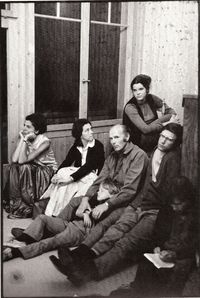
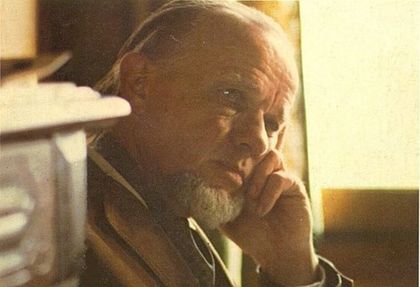


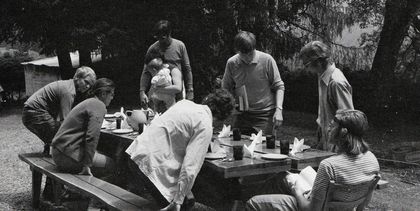





encastellano.jpg)









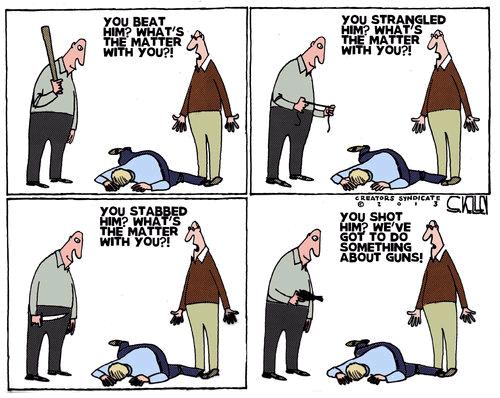














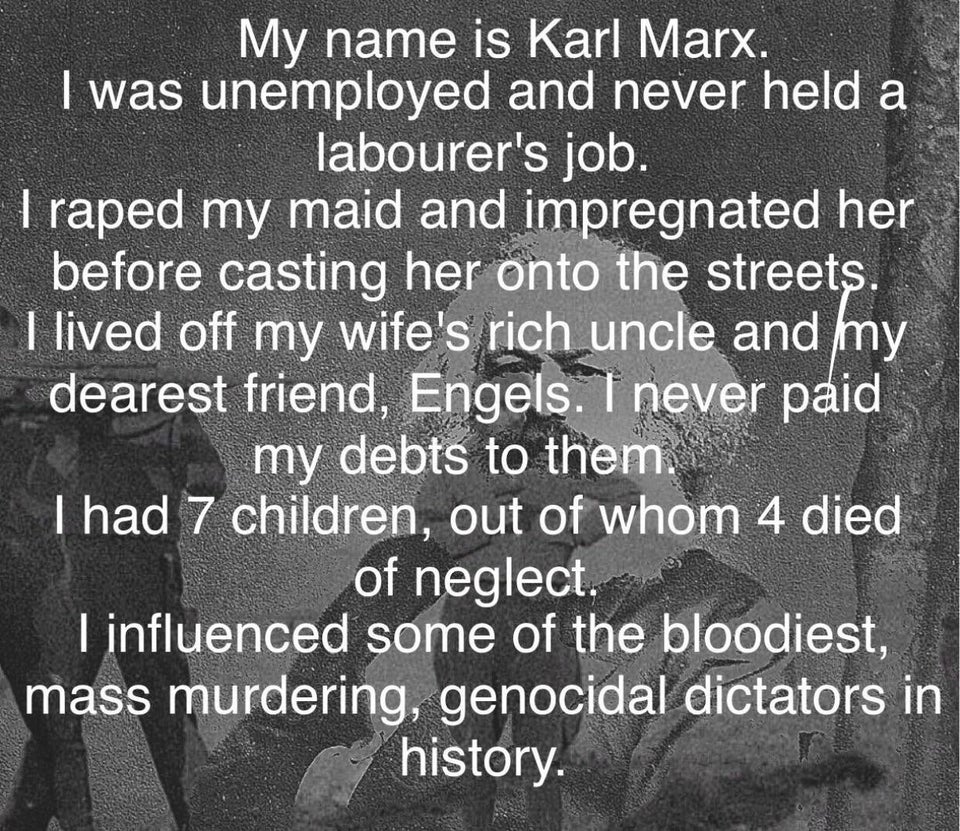











 It’s rather difficult to convey just how famous Petty became – and how fast! This rather obscure Chicago commercial artist was suddenly thrust upon the national stage, literally, overnight. His signature was prominently displayed in all of his advertising work. Jantzen created the “Petty Girl” swimsuit in 1940. Old Gold offered prints of the Petty Girls in their ads. His hands, a brush, and Petty Girl appeared in a watch ad. He was given highly publicized commissions to paint posters for films. The aforementioned portfolio was released. In 1942, when 3700 Chicago high school art students cast their votes for most important artist from their three years of art studies, Petty won first place – as a write-in. He did a cover for Time in 1942 as well as the first in a line of covers for the annual Ice Capades revue. And it would be incorrect to attribute all the fame to the Esquire pin-ups. If anything, it was his national advertising images that got him the most attention – and money.
 It was money that finally severed the Esquire relationship. The money Esquire paid bought less and less of Petty’s time as his advertising career soared.
  Petty had always been a sharp businessman and insisted on retaining all secondary rights to his images as well as the return of his original paintings. He licensed their use on playing cards, on drinking glasses, and elsewhere. At left is from an ad I just found in a 1943 issue of


 “The active aspect of the definition inherently implies the ongoing nature of an incident, and thus the potential for the response to affect the outcome, whereas a mass killing is defined as three or more killings in a single incident,” the FBI said in a Monday













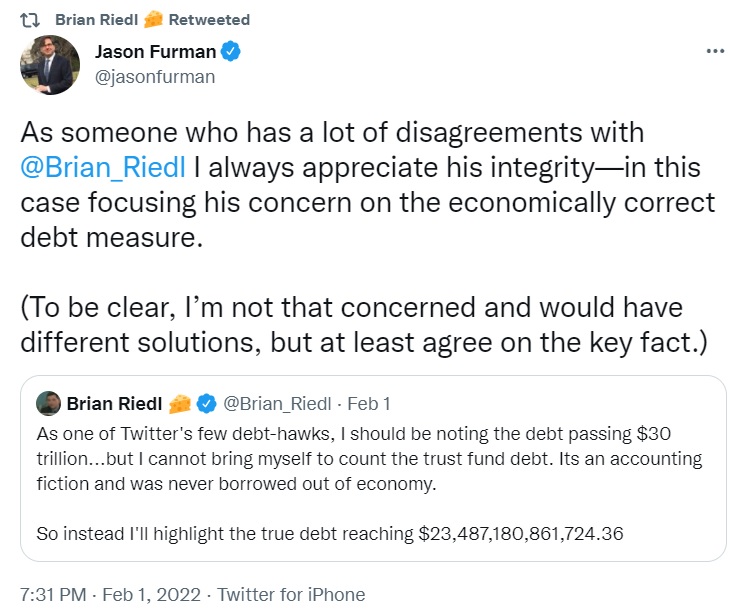
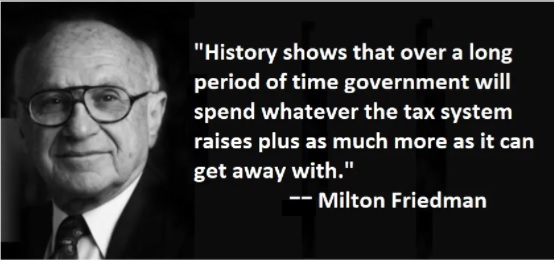





 The Daily Hatch
