Monthly Archives: June 2018

FRANCIS SCHAEFFER ANALYZES ART AND CULTURE Part 218 The Scientist Francis Bacon Featured artist is Colin Self

__________________________

https://www.youtube.com/watch?v=F6FZgLZ5_CU&t=1197s


_____________________________________________________________________________________________________________________________________

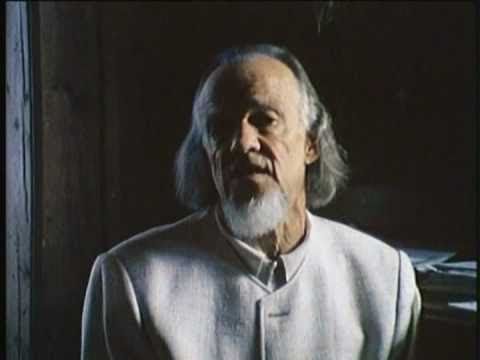
Francis Schaeffer pictured below:
_________

Francis Schaeffer has written extensively on art and culture spanning the last 2000years and here are some posts I have done on this subject before : Francis Schaeffer’s “How should we then live?” Video and outline of episode 10 “Final Choices” episode 9 “The Age of Personal Peace and Affluence”episode 8 “The Age of Fragmentation”episode 7 “The Age of Non-Reason” episode 6 “The Scientific Age” , episode 5 “The Revolutionary Age” episode 4 “The Reformation” episode 3 “The Renaissance”episode 2 “The Middle Ages,”, and  episode 1 “The Roman Age,” . My favorite episodes are number 7 and 8 since they deal with modern art and culture primarily.(Joe Carter rightly noted,Schaefferwho always claimed to be an evangelist and not aphilosopher—was often criticized for the way his work oversimplifiedintellectual history and philosophy.” To those critics I say take a chill pillbecause Schaeffer was introducing millions into the fields of art andculture!!!! !!! More people need to read his works and blog about thembecause they show how people’s worldviews affect their lives!

J.I.PACKER WROTE OF SCHAEFFER, “His communicative style was not that of acautious academic who labors for exhaustive coverage and dispassionate objectivity. It was rather that of an impassioned thinker who paints his vision of eternal truth in bold strokes and stark contrasts.Yet it is a fact that MANY YOUNG THINKERS AND ARTISTS…HAVE FOUND SCHAEFFER’S ANALYSES A LIFELINE TO SANITY WITHOUT WHICH THEY COULD NOT HAVE GONE ON LIVING.”

Francis Schaeffer’s works  are the basis for a large portion of my blog posts andthey have stood the test of time. In fact, many people would say that many of the things he wrote in the 1960’s  were right on  in the sense he saw where ourwestern society was heading and he knew that abortion, infanticide and youthenthansia were  moral boundaries we would be crossing  in the coming decadesbecause of humanism and these are the discussions we are having now!)

There is evidence that points to the fact that the Bible is historically true asSchaeffer pointed out in episode 5 of WHATEVER HAPPENED TO THE HUMAN RACE? There is a basis then for faith in Christ alone for our eternal hope. This linkshows how to do that.

Francis Schaeffer in Art and the Bible noted, “Many modern artists, it seems to me, have forgotten the value that art has in itself. Much modern art is far too intellectual to be great art. Many modern artists seem not to see the distinction between man and non-man, and it is a part of the lostness of modern man that they no longer see value in the work of art as a work of art.” 

Many modern artists are left in this point of desperation that Schaeffer points out and it reminds me of the despair that Solomon speaks of in Ecclesiastes.  Christian scholar Ravi Zacharias has noted, “The key to understanding the Book of Ecclesiastes is the term ‘under the sun.’ What that literally means is you lock God out of a closed system, and you are left with only this world of time plus chanceplus matter.” THIS IS EXACT POINT SCHAEFFER SAYS SECULAR ARTISTSARE PAINTING FROM TODAY BECAUSE THEY BELIEVED ARE A RESULTOF MINDLESS CHANCE.

 Schaeffer noted:

How Do We Know We Know?
During the early stages of modern philosophy (as distinguished from medieval philosophy) – that is, around the seventeenth century in Europe – the question that was troubling philosophers was this: how do we know that we know?
The early modern scientists had made advances in the physical sciences by rejecting previous human authority. For example, they rejected much of what had been inherited from the science of the Middle Ages. At that time, investigation had been governed and restrained by the concepts of Aristotle. In the field of astronomy, this had meant that the Ptolemaic system held sway. Suddenly, observations were made which cast doubt on that entire system of understanding the heavenly bodies. The result was, of course, the Copernican revolution: the discovery that the sun does not move around the earth but, rather, the earth around the sun. Thus, a general attitude was developed toward the ideas which had prevailed till then. The scientists said, “We must not accept the ideas passed down to us or derived from various previous authorities. We must start from scratch and simply observe the world and see how it works. Otherwise, we may be hampered from seeing what is there.”
The early modern scientists did not, however, reject the knowledge that God gave in the Bible as they rejected previous human authority and opinion. For example. in Novum Organum (1620) Francis Bacon wrote: “To conclude, therefore, let no man out of weak conceit of sobriety, or an ill applied moderation, think or maintain that a man can search too far of be too well studied in the book of God’s word, or in the book of God’s works.”81 “The book of God’s word” is the Bible. “The book of God’s works” is the world which God has made.
Modern scientists in general lived, thought, and worked in the framework of rejecting human authority, while respecting what was taught in the Bible in regard to the cosmos – right up to the time of Michael Faraday and James Clerk Maxwell in the second half of the nineteenth century.
The philosophers (and later the materialistic scientists) went further. Their error was to confuse the escape from past human authority (which was indeed confining) with putting man at the center and rejecting God’s authority as well. They wanted to reject all outside authority. They wanted to establish everything only on human observation. That was how the question of epistemology (how we know we know) became so important in modern philosophy. It has remained so right up to our own day.

_______________________________________
The philosopher who first raised these questions was Rene Descartes (1596-1650). Descartes wrote in Meditations on First Philosophy:
How often it happened to me that in the night I dreamt that I found myself on this particular place … whilst in reality I was lying on my bed! At this moment it does seem that it is with eyes awake that I am looking at this paper …. But in thinking over this I remind myself that on many occasions I have in sleep been deceived by similar illusions, and in dwelling carefully on this reflection I see so manifestly that there are no certain indications by which we may clearly distinguish wakefulness from sleep that I am lost in astonishment. And my astonishment is such that it is almost capable of persuading me that I now dream.82
Here is the modern epistemological problem expressed three centuries ago! All knowledge comes through the senses, but how can we rely on our own senses? Sometimes, as in dreaming, we seem to be experiencing things very really, yet the reality is only in our heads.

______________________________
We are reminded of the 1966 film by Michelangelo Antonioni called Blow-Up, in which one of the central issues was this same question. A photographer had taken a picture of a murdered man in a park in London and then became uncertain whether this was, in fact, part of reality or an experience of fantasy similar to a drug trip. Within the humanist world-view there is no final way of telling. And Antonioni ends his film by making the point graphically. Tennis players play the game without a ball. The invisible “ball” goes back and forth and the spectators watch its “path” from side to side until finally the “ball” (which does not exist) goes out over the surrounding wire and “falls” at the photographer’s feet. He pauses for a moment, uncertain about what he should do. (Is observation simply a matter of the majority? Does the reality of things come from the general agreement in society and nothing more?) Then the photographer stoops down, picks up the “ball,” and throws it back onto the court. Here, depicted brilliantly, is the problem of any system which builds its epistemology on man alone. This film was a philosophic statement of the period in which we are living.

_______________

Philosophy: Sir Francis Bacon
Biography, Quotes, Pictures of the Famous Philosopher / Scientist

A little philosophy inclineth man’s mind to atheism, but depth in philosophy bringeth men’s minds about to religion. (Francis Bacon)

Francis Bacon Biography & Summary of his Main Ideas in Philosophy, Science & Religion

Francis Bacon (1561 – 1626 CE)

A little philosophy inclineth man's mind to atheism, but depth in philosophy bringeth men's minds about to religion. (Francis Bacon)Francis Bacon, 1st Viscount St Albans, KC (22 January 1561 – 9 April 1626) was an English philosopher, statesman, spy, freemason and essayist. He was knighted in 1603, created Baron Verulam in 1618, and created Viscount St Albans in 1621; both peerage titles becoming extinct upon his death.

He began his professional life as a lawyer, but he has become best known as a philosophical advocate and defender of the scientific revolution. His works establish and popularize an inductive methodology for scientific inquiry, often called the Baconian method. Induction implies drawing knowledge from the natural world through experimentation, observation, and testing of hypotheses. In the context of his time, such methods were connected with the occult trends of hermeticism and alchemy.

Francis Bacon’s works include his Essays, as well as the Colours of Good and Evil and the Meditationes Sacrae, all published in 1597. His famous aphorism, “knowledge is power”, is found in the Meditations. In the fragment De Interpretatione Naturae Prooemium (written probably about 1603) Bacon analyses his own mental character and establishes his goals, which were threefold: discovery of truth, service to his country, and service to the church. Francis Bacon also wrote In felicem memoriam Elizabethae, a eulogy for the queen written in 1609; and various philosophical works which constitute the fragmentary and incomplete Instauratio magna, the most important part of which is the Novum Organum (published 1620).

Francis Bacon did not propose an actual philosophy, but rather a method of developing philosophy; he wrote that, whilst philosophy at the time used the deductive syllogism to interpret nature, the philosopher should instead proceed through inductive reasoning from fact to axiom to law. Before beginning this induction, the inquirer is to free his mind from certain false notions or tendencies which distort the truth. These are called “Idols” (idola), and are of four kinds: “Idols of the Tribe” (idola tribus), which are common to the race; “Idols of the Den” (idola specus), which are peculiar to the individual; “Idols of the Marketplace” (idola fori), coming from the misuse of language; and “Idols of the Theater” (idola theatri), which result from an abuse of authority. The end of induction is the discovery of forms, the ways in which natural phenomena occur, the causes from which they proceed.

Bacon’s somewhat fragmentary ethical system, derived through use of his methods, is explicated in the seventh and eighth books of his De augmentis scientiarum (1623). He distinguishes between duty to the community, an ethical matter, and duty to God, a purely religious matter. Any moral action is the action of the human will, which is governed by reason and spurred on by the passions; habit is what aids men in directing their will toward the good. No universal rules can be made, as both situations and men’s characters differ.

Bacon distinctly separates religion and philosophy, though the two can coexist. Where philosophy is based on reason, faith is based on revelation, and therefore irrational – in De augmentis he writes that “[t]he more discordant, therefore, and incredible, the divine mystery is, the more honor is shown to God in believing it, and the nobler is the victory of faith.”

http://en.wikipedia.org/wiki/Francis_Bacon

Francis Bacon Quotes, Portraits & Pictures

'Nature, to be commanded, must be obeyed.' (Francis Bacon) A wise man will make more opportunities than he finds.

Anger makes dull men witty, but it keeps them poor.

As the births of living creatures are at first ill-shapen, so are all innovations, which are the births of time.

Beauty itself is but the sensible image of the Infinite.

Choose the life that is most useful, and habit will make it the most agreeable.

Fashion is only the attempt to realize art in living forms and social intercourse.

Fortitude is the marshal of thought, the armor of the will, and the fort of reason.

Friends are thieves of time.

Friendship increases in visiting friends, but in visiting them seldom.

'Histories make men wise; poets, witty; the mathematics, subtle; natural philosophy, deep; moral, grave; logic and rhetoric, able to contend.' (Francis Bacon)He that hath knowledge spareth his words.

Histories make men wise; poets, witty; the mathematics, subtle; natural philosophy, deep; moral, grave; logic and rhetoric, able to contend.

If a man be gracious and courteous to strangers, it shows he is a citizen of the world.

If a man will begin with certainties, he shall end in doubts, but if he will content to begin with doubts, he shall end in certainties.

Imagination was given to man to compensate him for what he is not; a sense of humor to console him for what he is.

In order for the light to shine so brightly, the darkness must be present.

Knowledge is power.

Little do men perceive what solitude is, and how far it extendeth. For a crowd is not company, and faces are but a gallery of pictures, and talk but a tinkling cymbal, where there is no love.

Nature, to be commanded, must be obeyed.

Nothing is pleasant that is not spiced with variety.

Read not to contradict and confute, nor to believe and take for granted … but to weigh and consider.

Science is but an image of the truth.

The correlative to loving our neighbours as ourselves is hating ourselves as we hate our neighbours.

Travel, in the younger sort, is a part of education; in the elder, a part of experience.

Write down the thoughts of the moment. Those that come unsought for are commonly the most valuable.

Young people are fitter to invent than to judge; fitter for execution than for counsel; and more fit for new projects than for settled business.

A bachelor’s life is a fine breakfast, a flat lunch, and a miserable dinner. (Francis Bacon)

Francis Schaeffer “BASIS FOR HUMAN DIGNITY” Whatever…HTTHR

Dr. Francis schaeffer – The flow of Materialism(from Part 4 of Whatever happened to human race?)

Dr. Francis Schaeffer – The Biblical flow of Truth & History (intro)

Francis Schaeffer – The Biblical Flow of History & Truth (1)

Dr. Francis Schaeffer – The Biblical Flow of Truth & History (part 2)

_

Here is a fine article below that mentions Francis Bacon at this link:

Bible-Believing Scientists of the Past


Scientists and Their Gods

(Science and Christianity: Conflict or Coherence?)

Copyright © 1999 Dr. Henry F. Schaefer. All rights reserved.

The Genesis of This Lecture

I first began teaching freshman chemistry at Berkeley in the spring of 1983. Typically we lectured in halls that held about 550. On the first day of class you could fit in 680, which we had that particular morning. It was a full auditorium. Those of you who have had freshman chemistry at a large university will know that many have mixed feelings about that course.

“Many scientists do believe in both science and God, the God of revelation, in a perfectly consistent way.” — Richard Feynman, Nobel laureate in physics


I had never addressed a group of 680 people before and was a bit concerned about it. But I had a fantastic demonstration prepared for them. At Berkeley in the physical science lecture hall, the stage is in three parts. It rotated around, so you could go to your part of the stage and work for several hours before your lecture, getting everything ready. My assistant, Lonny Martin who did all the chemistry demonstrations at Berkley, was in the process of setting up 10 moles of a large number of quantities — 10 moles of benzene, iron, mercury, ethyl alcohol, water, etc. At just the right time, at the grand crescendo of this lecture, I was going to press the button and Lonny would come turning around and show them the ten moles of various items. The student would have great insight as they realized that all these had in common was about the same number of molecules of each one.

It was going to be wonderful. We got to that point in the lecture and I said, “Lonny, come around and show us the moles.” I pressed the button to rotate the stage but nothing happened. I didn’t realize that he was overriding my button press because he wasn’t ready with the moles. This was very embarrassing. I went out in front of the 680 students and was really at a complete loss of what to say, so I made some unprepared remarks. I said, “While we’re waiting for the moles, let me tell you what happened to me in church yesterday morning.”

I was desperate. There was great silence among those 680 students. They had come with all manner of anticipations about freshman chemistry, but stories about church were not among them!

I continued, “Let me tell you what my Sunday School teacher said yesterday.” That raised their interest even more. “I was hoping the group at church would give me some support, moral, spiritual, or whatever for dealing with this large class, but I received none. In fact, the Sunday School teacher asked the class, in honor of me:

What was the difference between a dead dog lying in the middle of the street and a dead chemistry professor lying in the middle of the street

The class was excited about this and I hadn’t even gotten to the punch line. They roared with laughter. The very concept of a dead chemistry professor lying in the middle of the street was hilarious to them. I’m sure some of them began to think, “If this guy were to become a dead chemistry professor very close to the final exam, we probably wouldn’t have to take the final exam. They’d probably give us all passing grades and this would be wonderful.”

I told them my Sunday school teacher had said that the difference between the dead dog lying in the middle of the road and the dead chemistry professor lying in the middle of the road is that there are skid marks in front of the dead dog.

The class thought this was wonderful! Just as they settled down, I pressed the button and around came Lonny with the moles. It was a wonderful beginning to my career as a freshman chemistry lecturer.

About 50 students came down at the end of class. About half had the usual questions like “Which dot do I punch out of this registration card?” There is always some of that. But about half of these students all had something like the same question. Basically they wanted to know “What were you doing in church yesterday?” One in particular said, “The person I most have admired in my life was my high school chemistry teacher last year. He told me with great certainty that it was impossible to be a practicing chemist and have any religious view whatever. What do you think about that?”

We didn’t have a long discussion at that time, but the students asked me if I would speak further on this topic. That became the origin of this lecture.

I gave this talk in Berkeley and in the San Francisco area many times. When I moved to the University of Georgia several years ago, the interest increased. And some faculty members complained to the administration. It was an interesting chapter in my life. The Atlanta Journal and Constitution, the largest newspaper in the southeastern United States, came out with an editorial supporting my right to give this talk, saying, “Fanatics are demanding rigorous control over the dissemination of ideas.”

A Perspective on the Relation of Science and Christianity

Let’s put this question of the relationship between science and Christianity with as broadest, most reasonable perspective we can. The relation between science and other intellectual pursuits has not always been easy. Therefore, many feel there has been a terrible warfare between science and Christianity. But I feel this is not the whole story.

For example, the recent literature text by Susan Gallagher and Roger Lundeen says,

Because in recent history, literature has often found itself in opposition to science, to understand modern views about literature the dominance of science in our culture. For several centuries, scientists have set the standards of truth for Western culture. And their undeniable usefulness in helping us organize, analyze, and manipulate facts has given them an unprecedented importance in modern society.

Not everybody has liked that. For example, John Keats, the great romantic poet, did not like Isaac Newton’s view of reality. He said it threatened to destroy all the beauty in the universe. He feared that a world in which myths and poetic visions had vanished would become a barren and uninviting place. In his poem Lamia, he talks about this destructive power. In this poem, he calls “science” “philosophy”, so I will try to replace the word “philosophy” with “science” because that is what he means.

Do not all charms fly
At the mere touch of cold science?
There was an awful rainbow once in heaven
We knew her woof and texture.
She is given in the dull catalog of common things.
Science will clip an angels wings,
Conquer all mysteries by rule and line,
Empty the haunted air and gnome’s mind,
Unweave a rainbow.

My point is there has been some sparring between science and virtually every other intellectual endeavor. So it should not be entirely surprising if there weren’t a bit of that between science and Christianity.

Has Science Disproved God?

Nevertheless, the position is commonly stated that “science has disproved God.” C. S. Lewis says, in his autobiography Surprised by Joy, that he believed that statement. He talks about the atheism of his early youth and credits it to science. He says,

You will understand that my atheism was inevitably based on what I believed to be the findings of the sciences and those findings, not being a scientist, I had to take on trust, in fact, on authority.

What he’s saying is that somebody told him that science had disproved God and he believe it, even though he didn’t know anything about science.

A more balanced view is this by one of my scientific heroes, Erwin Schrodinger. He was the founder of wave mechanics and the originator of what is the most important equation in science, Schrodinger’s equation. He says,

I’m very astonished that the scientific picture of the real world is very deficient. It gives a lot of factual information, puts all our experience in a magnificently consistent order, but it is ghastly silent about all and sundry that is really near to our heart, that really matters to us. It cannot tell us a word about red and blue, bitter and sweet, physical pain and physical delight, knows nothing of beautiful and ugly, good or bad, God and eternity. Science sometimes pretends to answer questions in these domains, but the answers are very often so silly that we are not inclined to take them seriously.

People do tell good stories. Scientists do tell some interesting stories about religion. This one is from Chemistry in Britain, which is kind of like the Time Magazine of the chemical profession in England. Talking about the release of a new book on science policy, they explore an interesting idea.

If God applied to the government for a research grant for the development of a heaven and earth, he would be turned down on the following grounds:

  • His project is too ambitious.
  • He has no previous track record.
  • His only publication is only a book and not a paper in a refereed journal.
  • He refuses to collaborate with his biggest competitor.
  • His proposal for a heaven and earth is all up in the air.

The Alternatives to Belief in the Sovereign God of the Universe

I want to give examples of two atheists.

Lev Landau
The first is Lev Landau, the most brilliant Soviet physicist of this century. He was the author of many famous books with his coworker Lifchets. I actually used some of these books as a student at M.I.T. This is a story about Landau from his good friend and biographer Kolotnikov. This appeared in Physics Today.This is a story from the end of Landau’s life. Kolotnikov says

The last time I saw Landau was in 1968 after he had an operation. His health had greatly deteriorated. Lifchets and I were summoned to the hospital. We were informed that there was practically no chance he could be saved. When I entered his ward, Landau was lying on his side with his face turned to the wall. He heard my steps, turned his head, and said, “Kollat, please save me.” Those were the last words I heard from Landau. He died that night.

Chandrasekar
Chandrasekar was a famous astrophysicist. He won the Nobel prize in physics in 1983. He was a faculty member at the University of Chicago for many years. At the back of his biography is an interview. Chandrasekar says,

In fact, I consider myself an atheist. But I have a feeling of disappointment because the hope for contentment and a peaceful outlook on life as the result of pursuing a goal has remained largely unfulfilled.

His biographer is astonished. He says:

What? I don’t understand. You mean, single–minded pursuit of science, understanding parts of nature and comprehending nature with such enormous success still leaves you with a feeling of discontentment?

Shandresekar continues in a serious way, saying:

I don’t really have a sense of fulfillment. All I have done seems to not be very much.

The biographer seeks to lighten up the discussion a little saying that everybody has the same sort of feelings. But Shandresekar will not let him do this, saying:

Well that may be, but the fact that other people experience it doesn’t change the fact that one is experiencing it. It doesn’t become less personal on that account.

And Chandrasekar’s final statement:

What is true in my own personal case is that I simply don’t have that sense of harmony which I’d hoped for when I was young. I’ve persevered in science for over fifty years. The time I’ve devoted to other things is miniscule.

Is it Possible to be a Scientist and a Christian?

So the question I want to explore is the one that I was asked by that young man after my freshman chemistry class at Berkeley, “Is it possible to be a scientist and a Christian.” The student and his high school chemistry teacher obviously thought it was not possible.

C. P. Snow
Let me begin from pretty neutral ground by quoting two people with no particular theistic inclination. The first one is C. P. Snow. C. P. Snow used to be very famous as the author of a book called The Two Cultures. C. P. Snow was a physical chemist at Oxford University. He discovered about halfway through his career that he also was a gifted writer and he began writing novels. They are about university life in England. One in particular is called Masters, which I would recommend. C. P. Snow became quite wealthy doing this and then he was able to sit in an in–between position, between the world of the sciences and the world of literature.

He wrote this book, which in it’s time was very famous, about the two cultures—the sciences and the humanities. He said statistically slightly more scientists are in religious terms, unbelievers, compared with the rest of the intellectual world, although there are plenty that are religious and that seems to be increasingly so among the young. So is it possible to be a scientist and a Christian? C. P. Snow, who was certainly not a Christian, said yes.

Richard Feynman
Richard Feynman, Nobel prize in physics in 1965, was a very unusual person. He said some 9 years before receiving the Nobel prize, “Many scientists do believe in both science and God, the God of revelation, in a perfectly consistent way.” So is it possible to be a scientist and a Christian? Yes according to Richard Feynman.

A good summary statement in this regard is by Allen Lichtman, who has written a very well–received book called Origins. He’s an M.I.T. professor who has published this book with Harvard University Press. He says,

References to God continued in the scientific literature until the middle to late 1800’s. It seems likely that the lack of religious references after this time seem more from a change in social and professional conventions among scientists rather than from any change in underlying thought. Indeed, contrary to popular myth, scientists appear to have the same range of attitudes about religious matters as does the general public.

Now one could regard that statement as strictly anecdotal. Americans love statistics. Here’s the result of a poll of the professional society Sigma Zi. Three thousand three hundred responded, so this is certainly beyond statistical uncertainty. The headline says, “Scientists are anchored in the U. S. mainstream.” It says that half participate in religious activities regularly. Looking at the poll is that 43% of Ph.D. scientists are in church on a typical Sunday. In the American public, 44% are in church on a typical Sunday. So it’s clear that whatever it is that causes people to have religious inclinations is unrelated to having an advanced degree in science.

Michael Polyani
Let go a little deeper with a statement from Michael Polyani, professor of chemistry and then philosophy at the University of Manchester. His son, John Polyani, won the Nobel prize in 1986. I think that it’s probably true that when John Polyani’s scientific accomplishments, which have been magnificent, have been mostly forgotten, his father’s work will continue.

Michael Polyani was a great physical chemist at the University of Manchester. About halfway through his career, he switched over to philosophy. He was equally distinguished there. His books are not easy to read. His most influential book is called Personal Knowledge. He was of Jewish physical descent. He was born in Hungary. About the same time he switched from chemistry to philosophy, he joined the Roman Catholic church. He said,

I shall reexamine the suppositions underlying our belief in science and propose to show that they are more extensive than is usually thought. They will appear to coextend with the entire spiritual foundations of man and to go to the very root of his social existence. Hence I will urge our belief in science should be regarded as a token of much wider convictions.

If you read the rest of the book, you will probably make the same conclusion that I make. I’ve concluded that Polyani is pointing out that the observer is always there in the laboratory. He always makes conclusions. He is never neutral. Every scientist brings presuppositions to his or her work. A scientist, for example, never questions the basic soundness of the scientific method. This faith of the scientist arose historically from the Christian belief that God the father created a perfectly orderly universe.

Now I want to give you some evidence of that.

Science Developed in a Christian Environment
I’d like to begin with an outrageous statement that always causes reaction. This is a statement from a British scientist, Robert Clark. It will make you think. He says,

However we may interpret the fact scientific development has only occurred in a Christian culture. The ancients had brains as good as ours. In all civilizations, Babylonia, Egypt, Greece, India, Rome, Persia, China and so on, science developed to a certain point and then stopped. It is easy to argue speculatively that science might have been able to develop in the absence of Christianity, but in fact, it never did. And no wonder. For the non–Christian world felt there was something ethically wrong about science. In Greece, this conviction was enshrined in the legend of Prometheus, the fire–bearer and prototype scientist who stole fire from heaven thus incurring the wrath of the Gods.”

I’d prefer if he had said “sustained scientific development.” I think he’s gone a little too far here, but this will certainly give people something to think about.

Francis Bacon
Let’s explore the idea involved in the statements that Clark and Polyani made, that is, that science grew up in a Christian environment. I was taught that Francis Bacon discovered the scientific method. The higher critics now claim he stole it from somebody else and just popularized it. We’ll leave that to the science historians to settle.

One of Francis Bacon’s statements is called the two–books statement. It’s very famous. He said:

Let no one think or maintain that a person can search too far or be too well studied in either the book of God’s word or the book of God’s works.

He’s talking about the Bible as the book of God’s words and nature as the book of God’s works. He is encouraging learning as much as possible about both. So right at the beginning of the scientific method, we have this statement.

Johannes Kepler
Johannes Kepler posited the idea of elliptical orbits for planets. He’s considered the discoverer of the laws of planetary motion. He was a devout Lutheran Christian. When he was asked the question “Why do you do science?”, he answered that he desired in his scientific research to obtain a sample test of the delight of the Divine Creator in his work and to partake of his joy. This has been said in many ways by other people, to think God’s thoughts after him, to know the mind of man. Kepler might be considered a Deist based on this first statement alone. But he later said:

I believe only and alone in the service of Jesus Christ. In him is all refuge and solace.

Blaise Pascal
Blaise Pascal was a magnificent scientist. He is the father of the mathematical theory of probability and combinatorial analysis. He provided the essential link between the mechanics of fluids and the mechanics of rigid bodies. He is the only physical scientist to make profound contributions to Christian thinking. Many of these thoughts are found in the little book, The Pensees, which I had to read as a sophomore at M.I.T. (They were trying to civilize us geeks at M.I.T., but a few years later decided that it wasn’t working, so we didn’t have to take any more humanities courses.)

Pascal’s theology is centered on the person of Jesus Christ as Savior and based on personal experience. He stated:

God makes people conscious of their inward wretchedness, which the Bible calls “sin” and his infinite mercy. He unites himself to their inmost soul, fills it with humility and joy, with confidence and love, renders them incapable of any other end than Himself. Jesus Christ is the end of all and the center to which all tends.

Pascal also said:

At the center of every human being is a God–shaped vacuum which can only be filled by Jesus Christ.

Robert Boyle
Robert Boyle was perhaps the first chemist. He developed the idea of atoms. Many of my freshman chemistry students know Boyle’s law. Every once in a while I’ll meet one of my former chemistry students. I ask them “What do you remember from the course?” Occasionally they will say: pv = nrt. Then I know I was successful. This is the ideal gas law of which Boyle’s law is a part.

Boyle was a busy man. He wrote many books. One is The Wisdom of God Manifested in the Works of Creation. He personally endowed an annual lectureship promoted to the defense of Christianity against indifferentism and atheism. He was a good friend of Richard Baxter, one of the great Puritan theologians. He was governor of the Corporation for the Spread of the Gospel of Jesus Christ in New England.

Isaac Newton
Although I disagree, a recent poll on who the most important person of history was gave that honor to Sir Isaac Newton. Newton was a mathematician, physicist, co–discoverer with Liebnitz of calculus, the founder of classical physics. He was the first of the three great theoretical physicists. He wrote about a lot of other things. He tried to do chemistry, but was a little bit before his time. He wrote more books on theology than on science. He wrote one about the return of Jesus Christ entitled Observations on the prophecy of Daniel and the Revelation of Saint John. He said:

This most beautiful system of the sun, planets and comets could only proceed from the counsel and dominion of an intelligent and powerful Being.

One might assume from this statement that Newton was a Deist (system of natural religion that affirms God’s existence but denies revelation). However, quotes like this shows this is not true:

There are more sure marks of authenticity in the Bible than in any profane history.

One concludes that Newton was a Biblical literalist. It was not enough that an article of faith could be deduced from Scripture, he said:

It must be expressed in the very form of sound words in which it was delivered by the apostles. For men are apt to run into partings about deductions. All the old heresies lie in deductions. The true faith was in the Biblical texts.

George Trevellian, a secular historian, summarized the contributions of these individuals as follows:

Boyle, Newton and the early members of the Royal Society were religious men who repudiated the skeptical doctrines of Thomas Hobbs. But they familiarized the minds of their countrymen with the idea of law in the universe and with scientific methods of inquiry to discover truth. It was believed that these methods would never lead to any conclusions inconsistent with Biblical history and miraculous religion. Newton lived and died in that faith.

Michael Faraday
My very favorite — and probably the greatest experimental scientist of all — is Michael Farraday. The two hundredth birthday of Michael Faraday’s birth was recently celebrated at the Royal Institution (multi–disciplinary research laboratory in London). There was an interesting article published by my friend Sir John Thomas, who said if Michael Faraday had been living in the era of the Nobel prize, he would have been worthy of at least eight Nobel prizes. Faraday discovered benzene and electromagnetic radiation, invented the generator and was the main architect of classical field theory.

Let me contrast the end of his life with the end of Lev Landau’s life. Faraday was close to death. A friend and well–wisher came by and said, “Sir Michael, what speculations have you now?” This friend was trying to introduce some levity into the situation. Faraday’s career had consisted of making speculations about science and then dash into the laboratory to either prove or disprove them. It was a reasonable thing to say.

Faraday took it very seriously. He replied:

Speculations, man, I have none. I have certainties. I thank God that I don’t rest my dying head upon speculations for “I know whom I have believed and am persuaded that he is able to keep that which I’ve committed unto him against that day.”

John Clerk Maxwell
The second of the three great theoretical physicist of all time would certainly have been James Clerk Maxwell. Someone has documented Maxwell’s career this way:

Maxwell possessed all the gifts necessary for revolutionary advances in theoretical physics—a profound grasp of physical reality, great mathematical ability, total absence of preconceived notions, a creative imagination of the highest order. He possessed also the gift to recognize the right task for this genius—the mathematical interpretation of Faraday’s concept of electromagnetic field. Maxwell’s successful completion of this task resulting in the mathematical [field] equations bearing his name, constituted one of the great achievements of the human intellect.

I disagree with one statement made above. If Maxwell indeed had a total absence of preconceived notions, he would have accomplished a total absence of science. So this is obviously written by somebody who is not a scientist (a squishyhead). However, this statement is basically good.

Maxwell said:

Think what God has determined to do to all those who submit themselves to his righteousness and are willing to receive his gift [of eternal life in Jesus Christ]. They are to be conformed to the image of his Son and when that is fulfilled and God sees they are conformed to the image of Christ, there can be no more condemnation.

Maxwell and Charles Darwin were contemporaries. Many wonder what he thought of Darwin’s theories. In fact, once he was to go to a meeting on the Italian Riviera in February to discuss new developments in science and the Bible. If you’ve ever spent time in Cambridge, England, you know it is very gloomy in the wintertime. If I had been a faculty there, I would have taken an opportunity to go to the Italian Riviera at this time of the year.

Maxwell turned down the invitation. He explained:

The rate of change of scientific hypotheses is naturally much more rapid than that of Biblical interpretation. So if an interpretation is founded on such a hypothesis it may help to keep the hypothesis above ground long after it ought to be buried and forgotten.

This is true. An example of this is the steady–state theory, which was popularized by Fred Hoyle and many others. It is one of the two competing theories of the origin of the universe. The steady–state hypothesis basically says that what you see is what was always there. It became less tenable in 1965 with the observation of the microwave background radiation by Arnold Pansias and Robert Wilson. There are not very many people left who believe in the steady–state hypothesis. It is interesting to go back to about 1960 and find commentaries on the book of Genesis and see how they explain how the steady–state hypothesis can be reconciled with the first chapter of Genesis. Any reasonable person can see that Genesis is talking about a beginning from nothing (ex nihilo), so it takes interesting explanations to reconcile a beginning with the steady–state hypothesis.

The steady–state hypothesis is going to be, within about 20 years, gone and forgotten. These commentaries will probably still be available in libraries and no one will be able to understand them….

David Cole & Francis Collins
Since my area of expertise is right between chemistry and physics, I cannot speak as well for the field of biological sciences. However, my longtime colleague, Berkeley biochemist David Cole and cystic fibrosis pioneer, Francis Collins — director of the Human Genome Project, the largest scientific project ever undertaken — are both well–known as outspoken Christians.

Why Are There So Few Atheists Among Physicists?

Many scientists are considering the facts before them. They say things like:

The present arrangement of matter indicates a very special choice of initial conditions. — Paul Davies

In fact, if one considers the possible constants and laws that could have emerged, the odds against a universe that produced life like ours are immense. — Stephen Hawking

A common sense interpretation of the facts suggests that a superintellect has monkeyed with physics, as well as with chemistry and biology, and that there are no blind forces worth speaking about in nature. — Fred Hoyle

As the Apostle Paul said in his epistle to the Romans:

Since the creation of the world, God’s invisible qualities—His eternal power and divine nature—have been clearly seen, being understood from what has been made.

Why the Perception of Ongoing Battle?

The last question I want to ask, then, is this, Why do so many people still think that there is an ongoing battle between science and Christianity? I don’t deny that there is an ongoing discussion. But I think the facts are that, what you think about God doesn’t depend on whether you have a Ph.D. in the sciences.

Why would some people like to think that this supposed battle rages on? At least in part, I honestly feel it is a misrepresentation. Let me give you just one example. Andrew Dickson White was the first president of Cornell University, the first university in the United States formed on strictly secular principles. (All others had been founded on a Christian basis.) He wrote a very famous book, The History of the Warfare of Science With Theology, in 1896. An excerpt:

[John] Calvin took the lead in his commentary on Genesis, by condemning all who asserted that the earth is not the center of the universe. He clinched the matter by the usual reference to the first verse of the 93rd Psalm and asked, “Who will venture to place the authority of Copernicus above that of the Holy Spirit?”

(This is not making John Calvin look very good!) What’s the real story behind this? Alistair McGrath, Brampton Lecturer at Oxford University and perhaps the greatest living scholar on Calvin, has recently written an authoritative biography of Calvin, in which he goes into question with great detail:

This assertion of Calvin is slavishly repeated by virtually every science writer on the theme of religion and science, such as Bertrand Russell in his History of Western Philosophy. Yet it may be stated categorically that Calvin wrote no such words in his Genesis commentary and expressed no such sentiments in any of his known writings. The assertion that he did is to be found characteristically unsubstantiated in the writings of the nineteenth century….

It would be fair to ask what Calvin really thought of Copernicus’ heliocentric theory of the solar system, and the answer is that we don’t know. He probably didn’t even know about him—Copernicus was not exactly a household name in France or Switzerland in 1520. But in his preface of his translation of the New Testament into French, Calvin wrote:

The whole point of Scripture is to bring us to a knowledge of Jesus Christ and, having come to know Him with all that this implies, we should come to a halt and not expect to learn more.

Conclusion

I hope that I have given you a flavor of the history of science. Those of you who have taken a freshman chemistry or physics course will surely find many of these people familiar. In fact, the reason I have prepared this talk is that these represent the very people I have taught in such courses.

There is a tremendous tradition of distinguished scientists who were and are Christians. I hope that my work is considered sufficiently outstanding to fall into the distinguished among that category. I also hope I have given you enough evidence that you will never again believe that it is impossible to be a scientist and a Christian.

Dr. Francis Schaeffer – Episode VII – The Age of Non Reason

Featured artist is Colin Self

__

In his new exhibition, One Thousand Sketches, the British pop artist mixes political subversion with a sense of fun
colin self

Detail from A Canary and Tangles! (Daddy Colin Self and Coleen) xxx by Colin Self PR

For an exemplary artistic life in modern Britain, it’s worth visiting Colin Self’s exhibition, One Thousand Sketches, at James Hyman Gallery in London. It is full of the joy of the outsider, the fun of rebellion – both political and artistic.

In the early 60s Self was part of the pop generation of British artists who competed with Americans in their appetite for modern life: but British pop art often had a political edge, and like the movement’s visionary founder, Richard Hamilton, Self criticised the establishment. In works such as Leopardskin Nuclear Bunker No 2 (1963), now in the Tate collection, he used savvy sarcasm to confront the masters of war. Pop art was never just about soup cans and celebrities. The bomb was one of the icons of modern life that transfixed it – and at a time when folk song was usually seen as the style of protest, Self showed how a pop iconography could be turned against the cold war.

He continues to be a dissident. His drawings at James Hyman Gallery mix Disney-like cartoons, erotic longings, intimate portraiture, notes for mad projects and Marxist revolutionary dreams. What is lovely about this exhibition, though, is the sense of fun. Here is someone who enjoys his job. Humour never seems to desert him, even when he’s angry. All the sketches come from unexpected directions, all flowing into each other like pages in a visual diary. Boundless creativity, steady introspection and honesty shine through to make this a testimony to decades of artistic and political subversion.

Artists of Self’s generation had a different attitude to drawing and artistic tradition than the superficially comparable pop generation of 90s Britain. Self, like Hamilton, possesses positively Old Masterish skills. But married to a fascination with modern images, his passion for drawing makes a rich and comic art for our time.

Colin Self

Still Life with Art Deco Goldfish Bowl, Curtain and Shells

1969


Colin Self. Streetseen, Hearts and Glances

24 Nov — 18 Dec 2015 at Mayor Gallery in London, United Kingdom

Colin Self, Craigie’s dog “Waynie” (Craigie Aitchison), 15/10/15, Mixed media collage and pencil, 18 x 21 cm

Colin Self (b.1941 Norfolk, England) is a significant figure in British art history. Self studied at Norwich School of Art before attending the Slade School of Art in London during the early 1960s, where he met fellow artists David Hockney and Peter Blake. Born during World War II, his earlier work demonstrated a sensibility to political issues and nuclear paranoia, making him the only British Pop artist to refer explicitly to the Cold War. He also produced works featuring apparently harmless motifs from contemporary life and consumer society, which at times conveys an unexpected atmosphere of violence and sexual threat. His intention was to produce a detailed record of his society, which, in the event of its destruction, would convey its essential qualities to anyone coming across his work in the future. Deeply suspicious of the commercial art world, in 1965 Self returned permanently to Norwich where his subject matter and his repertoire of techniques continued to expand, taking in atmospheric Norfolk landscapes, still-lifes and studies of human behaviour.

The 103 ‘Glances’ exhibited in this show “are more or less an art equivalent to passing a glance at someone in the street or acknowledging or nodding at them without time to have a full conversation. They’re not sketches but complete records in themselves, maybe some parallel to the way we think, having some 60,000 thoughts a day. Sometimes the items have been lost by somebody or dropped as litter; A bit like historical archaeology where scraps from the past are clues and have significance but they are of our times. Who knows if they owe a little something to Kurt Schwitters, when I see his collages I am left wondering who dropped the tram tickets on the street for him to pick up like clues for a detective…” Colin Self.

Alongside the ‘Glances’ series The Mayor Gallery has selected 14 artworks including the classic Colin Self imagery of Cinemas, Hotdogs, Ploughman, and more recent lenticular Hearts collages.

Colin Self is currently participating in The World Goes Pop at the Tate Modern and in International Pop a touring exhibition at the Walker Art Centre, Dallas Museum of Art and Philadelphia Museum of Art.


Colin Self

From Wikipedia, the free encyclopedia

Colin E Self (born 1941 in Rackheath, Norfolk) is an English Pop Artist, whose work has addressed the theme of Cold War politics.

As a student at the Slade School of Fine Art from 1961 to 1963 Colin Self received encouragement for his drawings and collages from the artists David Hockney and Peter Blake. Visits to the USA and Canada in 1962 and 1965 heightened his consciousness of Cold War politics and events such as the Cuban Missile Crisis and the CND marches led him to create highly-innovative prints such as Nuclear Bomber No.1 (1963), one of the earliest multiple plate etchings, and paintings such as ‘Waiting Women and Two Nuclear Bombers’ (1962–63).[1] He also explored the relationship between violence and sexual threat in drawings of glamorous models and his iconic ‘Leopard-skin Nuclear Bomber’ sculptures.

Following his trip to the United States in 1965 he produced a series of drawings based on American nuclear fall-out shelters, Art Deco cinema interiors and of hot dogs, which he described as being ‘as important a 20th century development as (say) a rocket.’ His highly personal and distinctive style of drawing led the artist Richard Hamilton to call him ‘the best draughtsman in England since William Blake.’ During the 1960s Self showed with the Robert Fraser Gallery, London. As printmaker, Self has been a great innovator and was a central figure in the 1960s boom in printmaking. Drawing images from a variety of commercial sources, he created the Power and Beauty series of screenprints (1968) at Editions Alecto while his etching suite Prelude to the 1000 Temporary Objects of Our Time (1970–71) sought to provide a unique record of society in the event of its possible destruction[2]

Suspicious of the commercial art world Self worked in isolation during the 1970s, seeking a sense of solace through the production of atmospheric watercolours and charcoals of the landscapes of his native county Norfolk, and Scotland. From 1972 to 1974 Self worked in collaboration with the German potter Mathies Schwarze at the Töpferei Schwarze Pottery near Cologne, Germany. A trip to the former Soviet Union in 1985-6 provided further stimulus to his explorations of Cold War culture. His collages from the 1980s to the present day combine his interest in Surrealist juxtaposition and the subconscious, with an inventive visual imagination. Some of these works such as ‘Burning Man Jumping from Building’ (1983) and ‘New York Disaster’ (1998) appear remarkably prescient in the light of events such as the attack on the World Trade Center in 2001, while others create lighter, often humorous narratives from found material in everyday life – an extension of the language of Pop art. In 1997 the Tate Gallery held a show of all its holdings of his work. Since 2000 Self has worked on his ‘Odyssey/Iliad’ suite of etchings, in which the artist has returned to his 1960s technique of multiple-plate etching to re-tell the classical story by Homer using contemporary found-imagery and themes.

A retrospective of his work entitled ‘Colin Self: Art in the Nuclear Age’ was held at Pallant House Gallery in 2008, curated by art historian Simon Martin.[3]

References[edit]

  1. Jump up^ collection: Pallant House Gallery, Chichester UK
  2. Jump up^ Tessa Sidey, Editions Alecto: Original Graphics, Multiple Originals 1960-1981, Lund Humphries, 2003
  3. Jump up^ Pallant House Gallery Exhibitions

External links[edit]


Related posts:

Francis Schaeffer’s “How should we then live?” Video and outline of episode 10 “Final Choices” (Schaeffer Sundays)

E P I S O D E 1 0   Dr. Francis Schaeffer – Episode X – Final Choices 27 min FINAL CHOICES I. Authoritarianism the Only Humanistic Social Option One man or an elite giving authoritative arbitrary absolutes. A. Society is sole absolute in absence of other absolutes. B. But society has to be […]

Francis Schaeffer’s “How should we then live?” Video and outline of episode 9 “The Age of Personal Peace and Affluence” (Schaeffer Sundays)

E P I S O D E 9 Dr. Francis Schaeffer – Episode IX – The Age of Personal Peace and Affluence 27 min T h e Age of Personal Peace and Afflunce I. By the Early 1960s People Were Bombarded From Every Side by Modern Man’s Humanistic Thought II. Modern Form of Humanistic Thought Leads […]

Francis Schaeffer’s “How should we then live?” Video and outline of episode 8 “The Age of Fragmentation” (Schaeffer Sundays)

E P I S O D E 8 Dr. Francis Schaeffer – Episode VIII – The Age of Fragmentation 27 min I saw this film series in 1979 and it had a major impact on me. T h e Age of FRAGMENTATION I. Art As a Vehicle Of Modern Thought A. Impressionism (Monet, Renoir, Pissarro, Sisley, […]

Francis Schaeffer’s “How should we then live?” Video and outline of episode 7 “The Age of Non-Reason” (Schaeffer Sundays)

E P I S O D E 7 Dr. Francis Schaeffer – Episode VII – The Age of Non Reason I am thrilled to get this film series with you. I saw it first in 1979 and it had such a big impact on me. Today’s episode is where we see modern humanist man act […]

Francis Schaeffer’s “How should we then live?” Video and outline of episode 6 “The Scientific Age” (Schaeffer Sundays)

E P I S O D E 6 How Should We Then Live 6#1 Uploaded by NoMirrorHDDHrorriMoN on Oct 3, 2011 How Should We Then Live? Episode 6 of 12 ________ I am sharing with you a film series that I saw in 1979. In this film Francis Schaeffer asserted that was a shift in […]

Francis Schaeffer’s “How should we then live?” Video and outline of episode 5 “The Revolutionary Age” (Schaeffer Sundays)

E P I S O D E 5 How Should We Then Live? Episode 5: The Revolutionary Age I was impacted by this film series by Francis Schaeffer back in the 1970′s and I wanted to share it with you. Francis Schaeffer noted, “Reformation Did Not Bring Perfection. But gradually on basis of biblical teaching there […]

Francis Schaeffer’s “How should we then live?” Video and outline of episode 4 “The Reformation” (Schaeffer Sundays)

Dr. Francis Schaeffer – Episode IV – The Reformation 27 min I was impacted by this film series by Francis Schaeffer back in the 1970′s and I wanted to share it with you. Schaeffer makes three key points concerning the Reformation: “1. Erasmian Christian humanism rejected by Farel. 2. Bible gives needed answers not only as to […]

“Schaeffer Sundays” Francis Schaeffer’s “How should we then live?” Video and outline of episode 3 “The Renaissance”

Francis Schaeffer’s “How should we then live?” Video and outline of episode 3 “The Renaissance” Francis Schaeffer: “How Should We Then Live?” (Episode 3) THE RENAISSANCE I was impacted by this film series by Francis Schaeffer back in the 1970′s and I wanted to share it with you. Schaeffer really shows why we have so […]

Francis Schaeffer’s “How should we then live?” Video and outline of episode 2 “The Middle Ages” (Schaeffer Sundays)

  Francis Schaeffer: “How Should We Then Live?” (Episode 2) THE MIDDLE AGES I was impacted by this film series by Francis Schaeffer back in the 1970′s and I wanted to share it with you. Schaeffer points out that during this time period unfortunately we have the “Church’s deviation from early church’s teaching in regard […]

Francis Schaeffer’s “How should we then live?” Video and outline of episode 1 “The Roman Age” (Schaeffer Sundays)

Francis Schaeffer: “How Should We Then Live?” (Episode 1) THE ROMAN AGE   Today I am starting a series that really had a big impact on my life back in the 1970′s when I first saw it. There are ten parts and today is the first. Francis Schaeffer takes a look at Rome and why […]

By Everette Hatcher III | Posted in Francis Schaeffer | Edit | Comments (0)
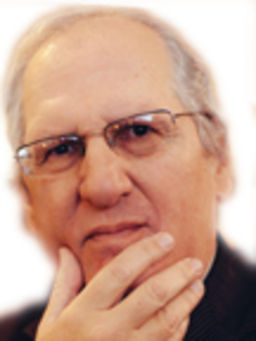
WOODY WEDNESDAY Woody Allen’s movie IRRATIONAL MAN and Nihilism

___

“Irrational Man” Review: Woody Allen’s Existentialism 101

“Irrational Man” considers the human will to meaning and capacity for evil.

Posted Aug 17, 2015

Wikimedia Commons. By Adam Bielauski
Source: Wikimedia Commons. By Adam Bielauski

Whether he publicly acknowledges it or not, Irrational Man, the intriguing yet appropriated title of Woody Allen’s new film, was one of my required texts (William Barrett, 1958) back in a freshman philosophy course I took on existentialism seemingly several lifetimes ago. As such, it telegraphs the, for Woody, not-so-new but persisting and, in this case, explicitly and insightfully depicted themes of this surprisingly enjoyable and well-made movie: existential despair, the problem of meaninglessness, aloneness and  loneliness, the search for love, ethics, freedom of choice and responsibility for those choices, the need at times to decide and act rather than ruminate, the irrationality and apparent randomness of the universe, morality, mortality, human potentiality, and the ever-present possibility of falling into evil despite good intentions.

Readers familiar with Allen’s films and/or with existential philosophy and psychology might imagine Irrational Man, starring Joaquin Phoenix and Emma Stone, to suffer from, as Woody himself would say, “heavyosity.” Certainly some of his previous existentially themed films, like Interiors, for instance, did. But they would be mistaken, since the director wields a relatively light and deft hand in addressing these “ultimate concerns,” to borrow existential theologian and philosopher Paul Tillich’s term. Particularly impressive is Mr. Phoenix’s substantial performance as Abe Lucas, a withdrawn, endarkened, pot-bellied, middle-aged philosophy professor and author in the midst of a full-blown mid-life crisis. Less successful but still charming is Ms. Stone’s take as a precocious, beautiful, brilliant but very naive young college student, Jill, who falls for the older and ostensibly wiser Abe precisely because of his perceived combination of brilliance, vulnerability, and angst-ridden torturedness.

What happens is a cautionary tale of how precarious and dangerous a mid-life or other existential crisis can be, for both the person going through it and for those who care for him or, as in the case of Allen’s Blue Jasmine, her. Professor Lucas has careened headlong into nihilism, taken to drink, lost his sense of purpose and meaning in life, and become creatively blocked, impotent and suicidal (at one point playing Russian Roulette with a loaded pistol at a student party), all the while spouting pithy quotes from Continental philosophers Sartre, Kierkegaard, Kant and Heidegger, a heady combination his students and co-workers clearly find quite romantic and downright irresistable. Despite being preceded by a wicked reputation as a womanizer, it seems Abe had always as a younger man wanted to do good, selflessly volunteering to help others after natural disasters and being an activist for those things he truly valued and felt passionately about. But then something happened. There are hints provided that he has been severely traumatized by life, having lost his mother to suicide when twelve, later being betrayed and abandoned by his wife and best friend, and, perhaps the final straw, having another close buddy blown up by a landmine in the Middle East. These are existential crises, major losses, from which he evidently never recovered, but rather resulted eventually in a profound frustration, anger, rage, embitterment toward life, existential despair and morbid depression.

When the lonely and bored wife of a fellow professor (Parker Posey as Rita), and then his already spoken for student (Stone), throw themselves at him, Abe initially tries to be noble and good, fending off their sexual advances, at least for a little while. But eventually he gives in to getting involved with both, later resulting in breaking up both women’s long-term relationships. But this, and having their blind love and admiration, gives him no real satisfaction. Not until he happens quite by accident upon what he perceives as an opportunity to do something good, something important, something significant–to rid the world of a biased judge and the needless suffering he has supposedly inflicted upon others by murdering him–does his despair, depression, apathy and malaise suddenly disappear. (For possible parallels to Mr. Allen’s own contentious court battles, see this fellow PT blogger’s post.)  Like Raskolnikov in Dostoevsky’s Crime and Punishment, Abe decides, after overhearing a conversation of strangers, to take action to make the world a tiny bit better than it is now by killing this “roach,” referencing perhaps Kafka’s The Metamorphosis. Taking the decision to act, to do something, enlivens him again, lifts him out of his clinical despair (see my prior post) and restores his capacity to enjoy existence and appreciate life’s sublime pleasures once more.The fact that he has rationalized that this evil deed is instead good, almost a delusional level of self-deception, completely escapes him, narcissistically seeing himself as some kind of Nietzschean superman who is morally “beyond good and evil.” Abe is convinced that by committing this single crime, he is following what might be existentialist Ernest Becker’s counsel in The Denial of Death (a book directly referred to by Allen in Annie Hall), that all any of us can do to make life meaningful is contribute something to the world while we are still alive, despite the fact that it is the equivalent to dropping a minuscule droplet of water into a vast cosmic ocean.

Abe actually goes through with his carefully considered, “creative” homicidal plan successfully, having committed an apparently perfect crime, since no one could possibly link him to the murder victim in any way. Except, of course, his student, Jill, whom he was with on a date in a diner when first overhearing the judge’s name and alleged bad behavior. He has no bad conscience or compunction about taking the judge’s life, nor about another man later being arrested and charged with the crime. When Jill finally figures out that he had indeed done the killing, she is appalled and, despite still being in love with  him, threatens to turn him in to the police, pointing out that, ethically, committing one evil deed opens the door to committing another. Which, without spoiling the ending too badly, is precisely what happens here.

Ultimately, Abe recognizes that his life had become meaningless and without purpose, that all his philosophizing was, as he tells his students, a form of “verbal masturbation,” and that his choice to commit murder had provided him with a raison d’etre, a renewed sense of purpose, freedom and power in life. Indeed, to take a life, of an insect, animal, and especially of a human being, is an extreme act of power over another, which often feeds into the psychopath‘s, serial killer’s, or mass murderer’s deep sense of disempowerment, helplessness, and impotence. It also provides an outlet for his or her repressed rage and hatred toward parents, people, authority figures, God, and the world. As existential analyst Viktor Frankl, whose writings Woody Allen is also almost certainly familiar with, and others observe, when we experience an “existential vacuum,” a loss or absence of meaning and purpose in life, there is always the risk that this emptiness will be filled by something neurotic, negative or evil. Nature abhors a vacuum. The inner necessity to create and assert oneself in the world can be expressed constructively or destructively. We, as individuals, are responsible for how we deal with life’s inevitable existential crises, and for ethically choosing between evil and good, destructiveness and creativity, disintegration or integration of the personality, in our efforts to resolve or weather them. Tragically, sometimes in desperation to find or create some sense of meaning, purpose, significance or recognition in life, we can be tempted to engage in evil by irrationally disguising it to ourselves as good. And, in so doing, we sooner or later, in some way or another, fall prey to the consequences of that same evil deed.

Annie Hall – The Opening Scene [HD]

Manhattan

Francis Schaeffer two months before he died said if he was talking to a gentleman he was sitting next to on an airplane about Christ he wouldn’t start off quoting Bible verses. Schaeffer asserted:

I would go back rather to their dilemma if they hold the modern worldview of the final reality only being energy, etc., I would start with that. I would begin as I stress in the book THE GOD WHO IS THERE about their own [humanist] prophets who really show where their view goes. For instance, Jacques Monod, Nobel Prize winner from France, in his book NECESSITY AND CHANCE said there is no way to tell the OUGHT from the IS. In other words, you live in a totally silent universe. 

The men like Monod and Sartre or whoever the man might know that is his [humanist] prophet and they point out quite properly and conclusively what life is like, not just that there is no meaningfulness in life but everyone according to modern man is just living out some kind of game plan. It may be knocking 1/10th of a second off a downhill ski run or making one more million dollars. But all you are doing is making a game plan within the mix of a meaningless situation. WOODY ALLEN exploits this very strongly in his films. He really lives it. I feel for that man, and he has expressed it so thoroughly in ANNIE HALL and MANHATTAN and so on.

According to the Humanist worldview and  Jacques Monod, the universe is silent about values and therefore his good friend Woody Allen demonstrated this very fact so well in his 1989 movie CRIMES AND MISDEMEANORS. In other words, if we can’t get our values from the Bible then  the answer is MIGHT MAKES RIGHT!!!!

__

The question now becomes do you want to know if there is a God or not? Are you willing to examine the same evidence that I provided to the world’s leading atheistic philosopher in 1994 (Antony Flew)? Here some are links below that examine the subjects that Antony Flew studied before he switched from away from atheism, followed by the sermon by Adrian Rogers that I provided to Antony Flew and he said he enjoyed listening to.

Former atheist Antony Flew: “Although I was once sharply critical of the argument to design, I have since come to see that, when correctly formulated, this argument constitutes a persuasive case for the existence of God!

Former atheist Antony Flew said, “I was particularly impressed with Gerry Schroeder’s point-by-point refutation of what I call the MONKEY THEOREM!

Why the world’s most famous atheist (Antony Flew) now believes in God by James A. Beverley

BP)–Antony Flew, a legendary British philosopher and atheist, has changed his mind about the existence of God in light of recent scientific evidence.Flew –

Former Atheist Antony Flew noted that Evolutionists failed to show “Where did a living, self-reproducing organism come from in the first place?”

Former atheist Antony Flew pointed out that natural selection can’t explain the origin of first life and in every other case, information necessarily points to an intelligent source!


Related posts:

Former atheist Antony Flew: “Although I was once sharply critical of the argument to design, I have since come to see that, when correctly formulated, this argument constitutes a persuasive case for the existence of God!”

Discussion (1 of 3): Antony Flew, N.T. Wright, and Gary Habermas Uploaded on Sep 22, 2010 A discussion with Antony Flew, N.T. Wright, and Gary Habermas. This was held at Westminster Chapel March, 2008 Debate – William Lane Craig vs Christopher Hitchens – Does God Exist? Uploaded on Jan 27, 2011 April 4, 2009 – Craig vs. […]

Former atheist Antony Flew said, “I was particularly impressed with Gerry Schroeder’s point-by-point refutation of what I call the MONKEY THEOREM!”

____________ Discussion (1 of 3): Antony Flew, N.T. Wright, and Gary Habermas Uploaded on Sep 22, 2010 A discussion with Antony Flew, N.T. Wright, and Gary Habermas. This was held at Westminster Chapel March, 2008 Is Goodness Without God is Good Enough? William Lane Craig vs. Paul Kurtz Published on Jul 29, 2013 Date: October 24, 2001 […]

The argument from design led former atheist Antony Flew to assert: “I must say again that the journey to my discovery of the Divine has thus far been a pilgrimage of reason, and it has led me to accept the existence of a self-existent, immutable, immaterial, omnipotent, and omniscient Being!”

  ____________ Jesus’ Resurrection: Atheist, Antony Flew, and Theist, Gary Habermas, Dialogue Published on Apr 7, 2012 http://www.veritas.org/talks – Did Jesus die, was he buried, and what happened afterward? Join legendary atheist Antony Flew and Christian historian and apologist Gary Habermas in a discussion about the facts surrounding the death and resurrection of Jesus Christ. Join […]

Former atheist Antony Flew pointed out that natural selection can’t explain the origin of first life and in every other case, information necessarily points to an intelligent source!

______________ Does God Exist? Thomas Warren vs. Antony Flew Published on Jan 2, 2014 Date: September 20-23, 1976 Location: North Texas State University Christian debater: Thomas B. Warren Atheist debater: Antony G.N. Flew For Thomas Warren: http://www.warrenapologeticscenter.org/ ______________________ Antony Flew and his conversion to theism Uploaded on Aug 12, 2011 Antony Flew, a well known spokesperson […]

Former Atheist Antony Flew noted that Evolutionists failed to show “Where did a living, self-reproducing organism come from in the first place?”

____   Does God Exist? Thomas Warren vs. Antony Flew Published on Jan 2, 2014 Date: September 20-23, 1976 Location: North Texas State University Christian debater: Thomas B. Warren Atheist debater: Antony G.N. Flew For Thomas Warren: http://www.warrenapologeticscenter.org/ ______________________ Antony Flew and his conversion to theism Uploaded on Aug 12, 2011 Antony Flew, a well known […]

(BP)–Antony Flew, a legendary British philosopher and atheist, has changed his mind about the existence of God in light of recent scientific evidence.Flew –

_____________ Famed atheist sees evidence for God, cites recent discoveries Antony Flew NASHVILLE, Tenn. (BP)–Antony Flew, a legendary British philosopher and atheist, has changed his mind about the existence of God in light of recent scientific evidence.Flew — a prolific author who has argued against the existence of God and the claims of Christianity for […]

Antony Flew in his book THERE IS A GOD talks about his “notoriety” as an atheist! ( also 7 News : Web Extra: Ricky Gervais on God)

  7News : Web Extra: Ricky Gervais on God Published on Mar 23, 2014 He’s not shy about sharing his opinion with 5 million social media followers so Ricky Gervais was happy to clear a few things up for us too. __________________________________ Discussion (2 of 3): Antony Flew, N.T. Wright, and Gary Habermas Atheist Lawrence Krauss loses debate […]

Was Antony Flew the most prominent atheist of the 20th century?

_________ Antony Flew on God and Atheism Published on Feb 11, 2013 Lee Strobel interviews philosopher and scholar Antony Flew on his conversion from atheism to deism. Much of it has to do with intelligent design. Flew was considered one of the most influential and important thinker for atheism during his time before his death […]

Why the world’s most famous atheist (Antony Flew) now believes in God by James A. Beverley

____________ Antony Flew on God and Atheism Published on Feb 11, 2013 Lee Strobel interviews philosopher and scholar Antony Flew on his conversion from atheism to deism. Much of it has to do with intelligent design. Flew was considered one of the most influential and important thinker for atheism during his time before his death […]

The Death of a (Former) Atheist — Antony Flew, 1923-2010 Antony Flew’s rejection of atheism is an encouragement, but his rejection of Christianity is a warning. Rejecting atheism is simply not enough, by Al Mohler

Discussion (1 of 3): Antony Flew, N.T. Wright, and Gary Habermas Uploaded on Sep 22, 2010 A discussion with Antony Flew, N.T. Wright, and Gary Habermas. This was held at Westminster Chapel March, 2008 ______________________ Making Sense of Faith and Science Uploaded on May 16, 2008 Dr. H. Fritz Schaefer confronts the assertion that one cannot believe […]

__

RESPONDING TO HARRY KROTO’S BRILLIANT RENOWNED ACADEMICS!! Part 149 BB Sir Bertrand Russell The article “The Practical Impossibility of Atheism” by William Lane Craig

___

Image result for bertrand russell

RESPONDING TO HARRY KROTO’S BRILLIANT RENOWNED ACADEMICS!! Part 149 BB Sir Bertrand Russell

On November 21, 2014 I received a letter from Nobel Laureate Harry Kroto and it said:

…Please click on this URL http://vimeo.com/26991975

and you will hear what far smarter people than I have to say on this matter. I agree with them.

Harry Kroto

Image result for harry kroto

I have attempted to respond to all of Dr. Kroto’s friends arguments and I have posted my responses one per week for over a year now. Here are some of my earlier posts:

Arif Ahmed, Sir David AttenboroughMark Balaguer, Horace Barlow, Michael BatePatricia ChurchlandAaron CiechanoverNoam Chomsky,Alan DershowitzHubert Dreyfus, Bart Ehrman, Stephan FeuchtwangDavid Friend,  Riccardo GiacconiIvar Giaever , Roy GlauberRebecca GoldsteinDavid J. Gross,  Brian Greene, Susan GreenfieldStephen F Gudeman,  Alan Guth, Jonathan HaidtTheodor W. Hänsch, Brian Harrison,  Hermann HauserRoald Hoffmann,  Bruce HoodHerbert Huppert,  Gareth Stedman Jones, Steve JonesShelly KaganMichio Kaku,  Stuart Kauffman,  Lawrence KraussHarry Kroto, George LakoffElizabeth Loftus,  Alan MacfarlanePeter MillicanMarvin MinskyLeonard Mlodinow,  Yujin NagasawaAlva NoeDouglas Osheroff,  Jonathan Parry,  Saul PerlmutterHerman Philipse,  Carolyn PorcoRobert M. PriceLisa RandallLord Martin Rees,  Oliver Sacks, John SearleMarcus du SautoySimon SchafferJ. L. Schellenberg,   Lee Silver Peter Singer,  Walter Sinnott-ArmstrongRonald de Sousa, Victor StengerBarry Supple,   Leonard Susskind, Raymond TallisNeil deGrasse Tyson,  .Alexander Vilenkin, Sir John WalkerFrank WilczekSteven Weinberg, and  Lewis Wolpert,

In  the first video below in the 14th clip in this series are his words and I will be responding to them in the next few weeks since Sir Bertrand Russell is probably the most quoted skeptic of our time, unless it was someone like Carl Sagan or Antony Flew.  

50 Renowned Academics Speaking About God (Part 1)

Another 50 Renowned Academics Speaking About God (Part 2)

A Further 50 Renowned Academics Speaking About God (Part 3)

__

Quote from Bertrand Russell:

Q: Why are you not a Christian?

Russell: Because I see no evidence whatever for any of the Christian dogmas. I’ve examined all the stock arguments in favor of the existence of God, and none of them seem to me to be logically valid.

Q: Do you think there’s a practical reason for having a religious belief, for many people?

Russell: Well, there can’t be a practical reason for believing what isn’t true. That’s quite… at least, I rule it out as impossible. Either the thing is true, or it isn’t. If it is true, you should believe it, and if it isn’t, you shouldn’t. And if you can’t find out whether it’s true or whether it isn’t, you should suspend judgment. But you can’t… it seems to me a fundamental dishonesty and a fundamental treachery to intellectual integrity to hold a belief because you think it’s useful, and not because you think it’s true.

__


APOLOGETICS: ETHICS

The Practical Impossibility of Atheism

By William Lane Craig
Guest Contributor

0 Comment(s)

CBN.com – Excerpted with permission from On Guard: Defending Your Faith with Reason and Precision

About the only solution the atheist can offer is that we face the absurdity of life and live bravely. The British philosopher Bertrand Russell, for example, believed that we have no choice but to build our lives upon “the firm foundation of unyielding despair.” Only by recognizing that the world really is a terrible place can we successfully come to terms with life. Camus said that we should honestly recognize life’s absurdity and then live in love for one another.

The fundamental problem with this solution, however, is that it’s impossible to live consistently and happily within the framework of such a worldview. If you live consistently, you will not be happy; if you live happily, it is only because you are not consistent.

Francis Schaeffer has explained this point well. Modern man, says Schaeffer, resides in a two-story universe. In the lower story is the finite world without God; here life is absurd, as we have seen. In the upper story are meaning, value, and purpose. Now modern man lives in the lower story because he believes there is no God. But he cannot live happily in such an absurd world; therefore, he continually makes leaps of faith into the upper story to affirm meaning, value, and purpose, even though he has no right to, since he does not believe in God.

Image result for francis schaeffer

Let’s look again, then, at each of the three areas in which we saw that life was absurd without God, to see how difficult it is to live consistently and happily with an atheistic worldview.

Meaning of Life

First, the area of meaning. We saw that without God, life has no meaning. Yet philosophers continue to live as though life does have meaning. For example, Sartre argued that one may create meaning for his life by freely choosing to follow a certain course of action. Sartre himself chose Marxism.

Now this is totally inconsistent. It is inconsistent to say life is objectively absurd and then to say you may create meaning for your life. If life is really absurd, then you’re trapped in the lower story. To try to create meaning in life represents a leap to the upper story. But Sartre has no basis for this leap. Sartre’s program is actually an exercise in self-delusion. For the universe doesn’t really acquire a meaning just because I happen to give it one. This is easy to see: Suppose I give the universe one meaning, and you give it another. Who’s right? The answer, of course, is neither one. For the universe without God remains objectively meaningless, no matter how we happen to regard it. Sartre is really saying, “Let’s pretend the universe has meaning.” And this is just fooling yourself.

The point is this: If God does not exist, then life is objectively meaningless; but man cannot live consistently and happily knowing that life is meaningless; so in order to be happy he pretends life has meaning. But this is, of course, entirely inconsistent—for without God, man and the universe are without any real significance.

Value of Life

Turn now to the problem of value. Here is where the most blatant inconsistencies occur. First of all, atheistic humanists are totally inconsistent in affirming the traditional values of love and brotherhood. Camus has been rightly criticized for inconsistently holding both to the absurdity of life and the ethics of human love and brotherhood. The view that there are no values is logically incompatible with affirming the values of love and brotherhood. Bertrand Russell, too, was inconsistent. For though he was an atheist, he was an outspoken social critic, denouncing war and restrictions on sexual freedom. Russell admitted that he could not live as though ethical values were simply a matter of personal taste, and that he therefore found his own views “incredible.” “I do not know the solution,” he confessed.6

The point is that if there is no God, then objective right and wrong do not exist. As Dostoyevsky said, “All things are permitted.” But man cannot live this way. So he makes a leap of faith and affirms values anyway. And when he does so, he reveals the inadequacy of a world without God.

The horror of a world devoid of value was brought home to me with new intensity several years ago as I watched a BBC television documentary called The Gathering. It concerned the reunion of survivors of the Holocaust in Jerusalem, where they rediscovered lost friendships and shared their experiences. One former prisoner, a nurse, told of how she was made the gynecologist at Auschwitz. She observed that pregnant women were grouped together by the soldiers under the direction of Dr. Josef Mengele and housed in the same barracks. Some time passed, and she noted that she no longer saw any of these women. She made inquiries. “Where are the pregnant women who were housed in that barracks?” “Haven’t you heard?” came the reply. “Dr. Mengele used them for vivisection.”

Another woman told of how Mengele had bound up her breasts so that she could not suckle her infant. The doctor wanted to learn how long an infant could survive without nourishment. Desperately this poor woman tried to keep her baby alive by giving it pieces of bread soaked in coffee, but to no avail. Each day the baby lost weight, a fact that was eagerly monitored by Dr. Mengele. A nurse then came secretly to this woman and told her, “I have arranged a way for you to get out of here, but you cannot take your baby with you. I have brought a morphine injection that you can give to your child to end its life.” When the woman protested, the nurse was insistent: “Look, your baby is going to die anyway. At least save yourself.” And so this mother felt compelled to take the life of her own baby. Dr. Mengele was furious when he learned of it because he had lost his experimental specimen, and he searched among the dead to find the baby’s discarded corpse so that he could have one last weighing.

My heart was torn by these stories. One rabbi who survived the camp summed it up well when he said that at Auschwitz it was as though there existed a world in which all the Ten Commandments were reversed. Mankind had never seen such a hell.

And yet, if God does not exist, then in a sense, our world is Auschwitz: There is no right and wrong; all things are permitted.

But no atheist, no agnostic, can live consistently with such a view. Nietzsche himself, who proclaimed the necessity of living beyond good and evil, broke with his mentor Richard Wagner precisely over the issue of the composer’s anti-Semitism and strident German nationalism. Similarly, Sartre, writing in the aftermath of the Second World War, condemned anti-Semitism, declaring that a doctrine that leads to mass extermination is not merely an opinion or matter of personal taste of equal value with its opposite. In his important essay “Existentialism Is a Humanism,” Sartre struggles vainly to elude the contradiction between his denial of divinely preestablished values and his urgent desire to affirm the value of human
persons. Like Russell, he could not live with the implications of his own denial of ethical absolutes.

Neither can the so-called New Atheists like Richard Dawkins. For although he says that there is no evil, no good, nothing but pitiless indifference, he is an unabashed moralist. He vigorously condemns such actions as the harassment and abuse of homosexuals, religious indoctrination of children, the Incan practice of human sacrifice, and prizing cultural diversity over the interests of Amish children. He even goes so far as to offer his own amended Ten Commandments for guiding moral behavior, all the while marvelously oblivious to the contradiction with his ethical subjectivism.

Indeed, one will probably never find an atheist who lives consistently with his system. For a universe without moral accountability and devoid of value is unimaginably terrible.

Purpose of Life

Finally, let’s look at the problem of purpose in life. The only way most people who deny purpose in life live happily is either by making up some purpose—which amounts to self-delusion, as we saw with Sartre—or by not carrying their view to its logical conclusions. The temptation to invest one’s own petty plans and projects with objective significance and thereby to find some purpose to one’s life is almost irresistible.

For example, the outspoken atheist and Nobel Prize–winning physicist Steven Weinberg, at the close of his much-acclaimed book The First Three Minutes, writes,

It is almost irresistible for humans to believe that we have some special relation to the universe, that human life is not just a more-or-less farcical outcome of a chain of accidents reaching back to the first three minutes, but that somehow we were built in from the beginning.… It is very hard to realize that this all is just a tiny part of an overwhelmingly hostile universe. It is even harder to realize that this present universe has evolved from an unspeakably unfamiliar early condition, and faces a future extinction of endless cold or intolerable heat. The more the universe seems comprehensible, the more it also seems pointless.

But if there is no solace in the fruits of our research, there is at least some consolation in the research itself. Men and women are not content to comfort themselves with tales of gods and giants, or to confine their thoughts to the daily affairs of life; they also build telescopes and satellites and accelerators, and sit at their desks for endless hours working out the meaning of the data they gather. The effort to understand the universe is one of the very few things that lifts human life a little above the level of farce, and gives it some of the grace of tragedy.

There’s something strange about Weinberg’s moving description of the human predicament: Tragedy is not a neutral term. It expresses an evaluation of a situation. Weinberg evidently sees a life devoted to scientific pursuits as truly meaningful, and therefore it’s tragic that such a noble pursuit should be extinguished. But why, given atheism, should the pursuit of science be any different from slouching about doing nothing? Since there is no objective purpose to human life, none of our pursuits has any objective significance, however important and dear they may seem to us subjectively. They’re no more significant than shuffling deck chairs on the Titanic.

____

Related posts:


RESPONDING TO HARRY KROTO’S BRILLIANT RENOWNED ACADEMICS!! Pausing to take a look at the life of HARRY KROTO Part C (Kroto’s admiration of Bertrand Russell examined)

Today we look at the 3rd letter in the Kroto correspondence and his admiration of Bertrand Russell. (Below The Nobel chemistry laureates Harold Kroto, Robert Curl and Richard Smalley) It is with sadness that I write this post having learned of the death of Sir Harold Kroto on April 30, 2016 at the age of […]

RESPONDING TO HARRY KROTO’S BRILLIANT RENOWNED ACADEMICS!! Part 52 The views of Hegel and Bertrand Russell influenced Gareth Stedman Jones of Cambridge!!

On November 21, 2014 I received a letter from Nobel Laureate Harry Kroto and it said: …Please click on this URL http://vimeo.com/26991975 and you will hear what far smarter people than I have to say on this matter. I agree with them. Harry Kroto _________________ Below you have picture of Dr. Harry Kroto:   Gareth Stedman […]

WOODY WEDNESDAY John Piippo makes the case that Bertrand Russell would have loved Woody Allen because they both were atheists who don’t deny the ramifications of atheism!!!

Top 10 Woody Allen Movies __________ John Piippo makes the case that Bertrand Russell would have loved Woody Allen because they both were  atheists who don’t deny the ramifications of atheism!!! Monday, August 06, 2012 (More On) Woody Allen’s Atheism As I wrote in a previous post, I like Woody Allen. I have long admired his […]

John Piippo makes the case that Bertrand Russell would have loved Woody Allen because they both were two atheists who don’t deny the ramifications of atheism!!!

______ Top 10 Woody Allen Movies PBS American Masters – Woody Allen A Documentary 01 PBS American Masters – Woody Allen A Documentary 02 __________ John Piippo makes the case that Bertrand Russell would have loved Woody Allen because they both were two atheists who don’t deny the ramifications of atheism!!! Monday, August 06, 2012 […]

Bertrand Russell v. Frederick Copleston debate transcript (Part 4)

THE MORAL ARGUMENT     BERTRAND RUSSELL But aren’t you now saying in effect, I mean by God whatever is good or the sum total of what is good — the system of what is good, and, therefore, when a young man loves anything that is good he is loving God. Is that what you’re […]

Bertrand Russell v. Frederick Copleston debate transcript (Part 3)

Great debate Fr. Frederick C. Copleston vs Bertrand Russell – Part 1 Uploaded by riversonthemoon on Jul 15, 2009 BBC Radio Third Programme Recording January 28, 1948. BBC Recording number T7324W. This is an excerpt from the full broadcast from cassette tape A303/5 Open University Course, Problems of Philosophy Units 7-8. Older than 50 years, […]

Bertrand Russell v. Frederick Copleston debate transcript and audio (Part 2)

Uploaded by riversonthemoon on Jul 15, 2009 BBC Radio Third Programme Recording January 28, 1948. BBC Recording number T7324W. This is an excerpt from the full broadcast from cassette tape A303/5 Open University Course, Problems of Philosophy Units 7-8. Older than 50 years, out of UK/BBC copyright. Pardon the hissy audio. It was recorded 51 […]

Bertrand Russell v. Frederick Copleston debate transcript and audio (Part 1)

Fr. Frederick C. Copleston vs Bertrand Russell – Part 1 Uploaded by riversonthemoon on Jul 15, 2009 BBC Radio Third Programme Recording January 28, 1948. BBC Recording number T7324W. This is an excerpt from the full broadcast from cassette tape A303/5 Open University Course, Problems of Philosophy Units 7-8. Older than 50 years, out of […]

Bertrand Russell v. Frederick Copleston debate transcript (Part 4)

THE MORAL ARGUMENT     BERTRAND RUSSELL But aren’t you now saying in effect, I mean by God whatever is good or the sum total of what is good — the system of what is good, and, therefore, when a young man loves anything that is good he is loving God. Is that what you’re […]

Bertrand Russell v. Frederick Copleston debate transcript (Part 3)

Fr. Frederick C. Copleston vs Bertrand Russell – Part 1 Uploaded by riversonthemoon on Jul 15, 2009 BBC Radio Third Programme Recording January 28, 1948. BBC Recording number T7324W. This is an excerpt from the full broadcast from cassette tape A303/5 Open University Course, Problems of Philosophy Units 7-8. Older than 50 years, out of […]

MUSIC MONDAY Painter Jeffrey Hammond of Jethro Tull

__

Jethro Tull – Nothing is Easy – Berkeley 1971

How Much Is That Doggy In The Window? – Jeffrey Hammond-Hammond (Jethro Till)

JETHRO TULL: “THICK AS A BRICK INTERVIEW” with Ian Anderson, Martin Barre, Jeffrey Hammond, (2004)

Jethro Tull guitarist Jeffrey Hammond

PUBLISHED: 00:00 17 October 2017

Jeffrey with his picture of the front at Looe in Cornwall

Jeffrey with his picture of the front at Looe in Cornwall

Lancashire rock star Jeffrey Hammond is back home and about to reveal his hidden talent for art. But first, he spoke exclusively to Barbara Waite

Pleasure Beach Ramp is titled Shellfish Jeans: Evolution in RevolutionPleasure Beach Ramp is titled Shellfish Jeans: Evolution in Revolution

For a man who has played the world’s biggest venues as bass guitarist with 1970s prog rock giants Jethro Tull, Jeffrey Hammond is a surprisingly private man. In his second career as an artist he has studiously avoided the limelight and only close friends and relatives have ever seen his paintings – until now.

Lancashire Life was given an exclusive interview and the chance to see his works ahead of his first ever exhibition, to be held on the Fylde this month. It fulfils a promise to his late partner Tess who wanted him to share his distinctive paintings with a wider audience.

It is another important milestone in Jeffrey’s life. Born is Blackpool, he has come back to Lancashire where he grew up in a boarding house run by his parents in the shadow of the famous Tower.

He lived the rock star life from 1971-1975 and it all started with a chance encounter at Blackpool Grammar School. A fellow student, Ian Anderson, who had never spoken to him before said: ‘You look like a musician? What do you play?’ It was the start of a friendship that survives to this day.

The Lowry Centre is titled The bridge across communitiesThe Lowry Centre is titled The bridge across communities

Ian and another student John Evans wanted to form a group and invited Jeffrey to go with them to see Johnny Breeze and the Atlantics at their local youth club. Watching as the bass player was being mobbed by girls, Jeffrey agreed to be the be group’s bass guitarist despite having no musical training. So it was music, not art, that became the consuming passion during his last years at school.

The group – then known as The Blades – practised in the front room of at John’s mother’s home. ‘We made a horrible racket but in time we progressed from the youth club to doing gigs at workingmen’s clubs in Fleetwood and throughout the Fylde eventually going further afield to Nottingham, Newcastle and Manchester,’ said Jeffrey.

With the repetition of the repertoire the early excitement waned for Jeffrey and he re-took Art A level and joined an art foundation course at Blackpool Tech while his friends kept playing and moved to London.

His tutor suggested he do a painting course, so to apply for college he had to produce a work as part of his portfolio. His picture of a midwife holding a newly-born baby was, in his words, ‘not good’ and, even after it was improved a bit by his tutor, it was still rejected. That meant he could stay in Blackpool. ‘I was thrilled to bits that I would be able stay.’

This view of Bowness is actually titled Queuing for relaxationThis view of Bowness is actually titled Queuing for relaxation

From an early age, Jeffrey knew he wanted to express himself but had no real idea how to go about it. Luck was on his side and he took up a place at Central St Martins College in London when one of the students dropped out.

Still feeling unsure about the move, he was persuaded by his tutor to go but ‘felt like a fish out of water’ for almost all of the three-year course. ‘The other 19 student already felt themselves to be artists, but I had no sense of direction and learned mostly from a fellow student who is still a good friend to this day.

‘It was not an auspicious start to a career, but during the last six months I felt I was getting somewhere – had found the “something” I was looking for. But what to do next?’

Fate intervened again. After failing an interview to get on a Royal Academy course and with Ian and John’s band – now called Jethro Tull – started taking off, they asked him to house-sit and do some decorating – painting of a different kind – while they toured in America.

On their return he was told: ‘You’re joining the band.’ So within a couple of months he found himself working on the hit album Aqualung and touring Scandinavia. ‘I thought I might last a month, but they were all good musicians and helped me through.’

Adopting the name Hammond-Hammond as a joke – adding in his mother’s surname before she married – he started wearing a black and white striped suit and played a matching guitar – his trademark look and a feature of staged performances of the album, Thick as a Brick.

‘It was fabulously exciting touring the world and I enjoyed it for five years, but inside I knew I wanted to paint – to learn to paint.And that’s what I have been doing all these years. Learning.

‘That stage of my life ended abruptly. I just blurted it out at a business meeting that I was leaving with no previous intention of saying it. It wasn’t the best way to handle it, but the band accepted my decision and moved on.’

By this time Jeffrey had married Mahmaz, an Iranian princess distantly related to the Shah of Persia, and the best friend of Ian Anderson’s wife. Together they set up home in Gloucestershire in a beautiful house with land which Jeffrey developed over the happy years they spent there.

He started painting, though his first attempt at a watercolour of the local view was abandoned. Initially, 90 per cent of his time was spent on the 11 acres of gardens but gradually art took the lion’s share of his time.

The couple travelled extensively, to Iran, Europe and America all documented in Jeffrey’s detailed paintings to give a narrative to their trips.

‘It took me a long while to get used to the slower pace of life after the hectic days of the band. Getting close to nature helped, but I wanted to centre myself and I knew I had to begin the long struggle to learn to paint something meaningful.

‘I started with still life where you have absolute control over everything. I was in the very fortunate position of not having to sell my works so I could develop my ideas exactly how I wanted to. I was very privileged.

‘I had to work hard to achieve the painting style I now have. I didn’t have natural talent and I wanted – still want – each painting to be a challenge, to seize a special moment, to tell a story.

Mahmaz, who came to this country to study at boarding school, was interested in the arts, but more theatre and literature and from their base they were ideally place to visit the RSC in Stratford, theatre in Malvern and Bristol, and Welsh National Opera in Cardiff.

Her untimely death and their son’s decision to move to London forced Jeffrey into another big decision. The house they’d both loved was too big for one – it was time to uproot and start again. ‘It was a huge wrench to leave, but I knew I had to do it.’

He had missed living by the seaside, so travelled from Bognor Regis around the coast right up to Anglesey to try and find a home that felt right, but without success. That is until he returned to the Fylde coast he had loved as a boy, setting up home near to his mother.

Painting in his studio, Jeffrey uses photographs of subjects he has taken which suggest a storyline to him. ‘The photographs are essentially an aide-memoire being unable to paint on the spot for the months it takes me to complete each painting.

‘At a certain point the real painting takes over and I no longer look at the photographs, as the picture is well on the way to becoming an autonomous entity and happily has a life of its own.

‘Each picture I paint demands a fresh approach. It is a matter of instinct and feeling to try to achieve what I want, technical aspects being subservient to that. I don’t take myself too seriously, but I do take painting seriously and hope some of the intended humour is seen.’ A good example of that is the fact he often paints himself in the crowd. Look closely and you might spot him.

‘To use a musical analogy I have been trying to write symphonies or operas rather than three-minute songs; a desire to have the space and time to give to a full narrative,’ he added.

While the painting has been an ever-present in his life there have been reminders of the rock stars days. Seven years ago group leader Ian Anderson travelled to Blackpool to unveil a plaque presented by the Performing Rights Society for Music, commemorating the debut gig of his first band The Blades.

Jeffrey, joined by early fans, attended the ceremony as the plaque was unveiled at Holy Family Church Hall, Links Road, North Shore – life coming full circle.

It was a poignant evening for Jeffrey who had found happiness with a new partner Tess, and his assured paintings show an impressive mastery that he would have hardly imagined during those early music days.

She pressed Jeffrey to organise a public showing of his work as she felt people should see his paintings, but unfortunately she died before the exhibition was organised.

It is her legacy that a small selection of his work is now going on show at the Fylde Gallery in Lytham Booths from November 3 for four weeks. He’s called it ‘All the world’s a stage’ a quote from Shakespeare’s As You Like It. He is certainly a man who has played many parts in his time.

Tull factfile

Ian Anderson, flautist and songwriter, lives in the south of England and is still recording and touring under his own name.

John Evan (correct), keyboards, had his own construction company after he left the band and now lives in Australia.

Barrie Barlow, drummer, worked with Robert Plant and Jimmy page after the band broke up and is still involved in music.

Jeffrey played on Aqualung (1971),Thick as a Brick and Living in the Past (1972), A Passion Play (1973), War Child (1974), Minstrel in the Gallery (1975)

Jeffrey Hammond

From Wikipedia, the free encyclopedia
Jeffrey Hammond Hammond
Jethro-Tull-9-73(4).jpg

Jeffrey Hammond in concert with Jethro Tull, 1973
Background information
Birth name Jeffrey Hammond
Born 30 July 1946 (age 71)
Blackpool, Lancashire, England
Origin Blackpool, England
Genres Progressive rockFolk rockHard rock
Occupation(s) Musician
Instruments Bass guitar
Years active 1971–75, 1987–88, 1994
Associated acts Jethro Tull

Jeffrey Hammond (born 30 July 1946) sometimes credited as Jeffrey Hammond-Hammond, is an artist, musician, and former bass guitar player for the progressive rock band Jethro Tull.[1]

Hammond adopted the name “Hammond-Hammond” as a joke, since both his father’s name and mother’s maiden name were the same.[2] He also joked in interviews that his mother defiantly chose to keep her maiden name, just like Eleanor Roosevelt.

Musician with Jethro Tull[edit]

One of several band members from Blackpool, England, he met band leader Ian Anderson in school when he was 17 years old, eventually joining a band with Anderson and future Jethro Tull members John Evan and Barriemore Barlow. After leaving Grammar School, he opted to study painting rather than continue with music, but he was convinced to join Jethro Tull in January 1971. Before joining the band as a performer, Hammond appears to have spent much time with the band in the background. Ian Anderson wrote songs about his friend’s idiosyncrasies, of which the best known are “A Song for Jeffrey” (This Was), “Jeffrey Goes to Leicester Square” (Stand Up) and “For Michael Collins, Jeffrey and Me” (Benefit). Introducing the first song, in the days before Hammond joined the band, Anderson would portray him in slightly condescending terms as someone with emotional problems who lost his way easily, as described in the first line of the song. His eventual appearance as a band member, therefore, was something of a surprise.[citation needed] Hammond is also namechecked in the lyrics of the Benefit track, “Inside”.

Hammond is credited with creating the “claghorn”, a hybrid instrument. He took the mouthpiece and bell from a toy saxophone and attached them to the body of a flute. The result can be heard on the track “Dharma for One” on the album This Was.

During the time of Tull’s dramatic stage costumes, Jeffrey started wearing a black and white striped suit and played a matching bass guitar, and this became his trademark and a feature of Tull’s Thick as a Brick stage performance. Hammond narrated the surreal piece “The Story of the Hare Who Lost His Spectacles” on the album A Passion Play, and the related short film. He also received credit, along with Anderson and John Evan, for writing the piece.

Hammond burned the suit in December 1975 upon his departure from the band.[3] According to Ian Anderson’s sleevenotes for the 2002 reissue of Tull’s Minstrel in the Gallery, Hammond “returned to his first love, painting, and put down his bass guitar, never to play again.”[4] Hammond’s replacement as bass player was John Glascock, a professional musician.

Later appearances[edit]

He made one last attempt to re-join Jethro Tull in the mid-80’s, as told by Ian Anderson during Alan Freeman’s Friday Rock Show in March 1988, while providing comments for the broadcast of Tull’s show at Hammersmith Odeon which Capital Radio was airing. According to Anderson, “Jeffrey was almost about to re-join the band”, but despite one audition being made with the band, the bass player declared himself unable to play the rather difficult music of Jethro Tull and decided to give up.

Hammond attended Jethro Tull’s 25th anniversary reunion party in 1994. He participated in an interview, along with Ian Anderson and Martin Barre, that was featured as a bonus track on the 1997 reissue of Thick as a Brick.

Discography[edit]

References[edit]

  1. Jump up^ Nollen, Scott Allen (2002). Jethro Tull: A history of the band, 1968–2001. McFarland. pp. 82–. ISBN 978-0-7864-1101-6. Retrieved 18 June 2011.
  2. Jump up^ Rees, David. Minstrels in the Gallery, 1998, ISBN 0-946719-22-5, p. 40.
  3. Jump up^ Rees, p. 70.
  4. Jump up^ Official biography of Jeffrey Hammond on Jethro Tull website: JethroTull.com

External links[edit]

__

Related  posts:

MUSIC MONDAY Where is Bob Dylan Spiritually?

____   __ I am moving the MUSIC MONDAY to a monthly feature on http://www.thedailyhatch.org. My passion has been in the recent years to emphasize the works of Francis Schaeffer in my apologetic efforts and most of those posts are either on Tuesdays or Thursdays. ____ bob dylan  plays harmonica on the song I PLEDGE […]

MUSIC MONDAY Paul Greenberg on Beatles

______ I am moving the MUSIC MONDAY to a monthly feature on http://www.thedailyhatch.org. My passion has been in the recent years to emphasize the works of Francis Schaeffer in my apologetic efforts and most of those posts are either on Tuesdays or Thursdays. _______ Paul Greenberg shared a great story about a  5 yr old […]

MUSIC MONDAY The Faces

_ I am moving the MUSIC MONDAY to a monthly feature on http://www.thedailyhatch.org. My passion has been in the recent years to emphasize the works of Francis Schaeffer in my apologetic efforts and most of those posts are either on Tuesdays or Thursdays. The Faces – Maybe I’m Amazed Faces “Stay With Me” The Faces […]

MUSIC MONDAY The story behind the song ITCHYCOO PARK by “The Faces”

_ I am moving the MUSIC MONDAY to a monthly feature on http://www.thedailyhatch.org. My passion has been in the recent years to emphasize the works of Francis Schaeffer in my apologetic efforts and most of those posts are either on Tuesdays or Thursdays. _ The Surprising Meaning Behind ‘Itchycoo Park’ – NME Song Stories ______________ […]

MUSIC MONDAY “Badfinger” Part 2

 I am thinking about moving MUSIC MONDAYS  to a monthly feature on http://www.thedailyhatch.org. My passion has been in recent years to emphasize the works of Francis Schaeffer in my apologetic efforts and most of those posts are either on Tuesdays or Thursdays. I have already done so many ahead that MUSIC MONDAYS will remain weekly […]

MUSIC MONDAY “Badfinger” PART 1

 I am thinking about moving MUSIC MONDAYS  to a monthly feature on http://www.thedailyhatch.org. My passion has been in recent years to emphasize the works of Francis Schaeffer in my apologetic efforts and most of those posts are either on Tuesdays or Thursdays. I have already done so many ahead that MUSIC MONDAYS will remain weekly […]

MUSIC MONDAY “The Association”

 I am thinking about moving MUSIC MONDAYS  to a monthly feature on http://www.thedailyhatch.org. My passion has been in recent years to emphasize the works of Francis Schaeffer in my apologetic efforts and most of those posts are either on Tuesdays or Thursdays. I have already done so many ahead that MUSIC MONDAYS will remain weekly […]

MUSIC MONDAY “The Small Faces”

 I am thinking about moving MUSIC MONDAYS  to a monthly feature on http://www.thedailyhatch.org. My passion has been recent years to emphasize the works of Francis Schaeffer in my apologetic efforts and most of those posts are either on Tuesdays or Thursdays. I have already done so many ahead that MUSIC MONDAYS will remain weekly for […]

MUSIC MONDAY The Hollies!!!!!! Part 2

_ I am thinking about moving MUSIC MONDAYS  to a monthly feature on http://www.thedailyhatch.org. My passion has been in recent years to emphasize the works of Francis Schaeffer in my apologetic efforts and most of those posts are either on Tuesdays or Thursdays. I have already done so many ahead that MUSIC MONDAYS will remain […]

MUSIC MONDAY The Hollies!!!!!! Part 1

I am thinking about moving MUSIC MONDAYS  to a monthly feature on http://www.thedailyhatch.org. My passion has been recent years to emphasize the works of Francis Schaeffer in my apologetic efforts and most of those posts are either on Tuesdays or Thursdays. I have already done so many ahead that MUSIC MONDAYS will remain weekly for […]

FRIEDMAN FRIDAY Listing of transcripts and videos of “Free to Choose” episode 3 – Anatomy of a Crisis on www.theDailyHatch.org

Listing of transcripts and videos of “Free to Choose” episode 3 – Anatomy of a Crisis on http://www.theDailyHatch.org

Milton Friedman in his series “Free to Choose” used a pencil as a simple example to should have the “invisible hand” of the freemarket works (phrase originally used by Adam Smith).

“How grateful I have been over the years for the cogency of Friedman’s ideas which have influenced me. Cherishers of freedom will be indebted to him for generations to come.”
Alan Greenspan, former Chairman, Federal Reserve System

Image result for milton friedman free to choose

“Right at this moment there are people all over the land, I could put dots on the map, who are trying to prove Milton wrong. At some point, somebody else is trying to prove he’s right That’s what I call influence.”
Paul Samuelson, Nobel Laureate in Economic Science

In 1980 when I first sat down and read the book “Free to Choose” I was involved in Ronald Reagan’s campaign for president and excited about the race. Milton Friedman’s books and film series really helped form my conservative views. Take a look at one of my favorite films of his and if you take time to watch these episodes on inflation then you see how Ronald Reagan was able to bring inflation under control in the 1980’s with the help of Paul Volker of the Federal Reserve:

Milton Friedman’s Free to Choose (1980), episode 3 – Anatomy of a Crisis. part 1

FREE TO CHOOSE: Anatomy of Crisis
Friedman Delancy Street in New York’s lower east side, hardly one of the city’s best known sites, yet what happened in this street nearly 50 years ago continues to effect all of us today. Wall Street. Most of us know what happened here 50 years ago. Inside the Stock Exchange on October 29, 1929, the market collapsed. It came to be known as Black Thursday. The Wall Street crash was followed by the worst depression in American history. That depression has been blamed on the failure of capitalism. It was no such thing but the myth lives on. What really happened was very different.
Although things looked healthy on the surface, business had begun to turn down in mid 1929. The crash intensified the recession. So did continuing bank failures in the south and Midwest. But the recession only became a crisis when these failures spread to New York and in particular to this building, then the headquarters of the Bank of United States. The failure of this bank had far reaching effects and need never have happened.
It was something of a historical accident that this particular bank played the role it did. Why did it fail? It was a perfectly good bank. Banks that were in far worse financial shape had come under difficulties before it did and had, through the cooperation of other banks, been saved. The reason why it wasn’t saved has to do with its rather special character. First its name, Bank of United States, a name that made immigrants believe it was an official governmental bank although in fact it was an ordinary commercial bank. Second its ownership, Jewish, both its name and the character of its ownership which had so much to do with attracting the large number of depositors from the many Jewish businessmen in the city of New York. Both of them also had the effect of alienating other bankers who did not like the special advantage of the name and did not like the character of the ownership. As a result, other banks were all too ready to spread rumors, to help promote an atmosphere in which runs got started on the bank and which it came into difficulty. And they were less then usually willing to cooperate in the efforts that were made to save it.
Only a few blocks away is the Federal Reserve Bank of New York. It was here that the Bank of United States could have been saved. Indeed, the Federal Reserve System had been set up 17 years earlier precisely to prevent the worst consequences of bank failures.
The Federal Reserve Bank of New York, whose directors today meet in this room, devised a plan in cooperation with the superintendent of banking of the State of New York to save the Bank of United States. Their plan called for merging the Bank of United States with several other banks and also providing a guarantee fund to be subscribed to by still other bankers to assure the depositors that the assets of the Bank of United States were safe and sound. The Reserve Bank called meeting after meeting to try to put the plan into effect. It was on again, off again. But finally, after an all night meeting on December 10, 1930, the other bankers, including in particular John Pierpont Morgan, refused to subscribe to the guarantee fund and the plan was off. The next day the Bank of United States closed its doors, never again to open for business. For its depositors who saw their savings tied up and their businesses destroyed, the closing was tragic. Yet when the bank was finally liquidated, in the worst years of the depression, it paid back 92.5 cents on the dollar. Had the other banks cooperated to save it, no one would have lost a penny.
For the other New York banks, they thought closing the Bank of United States would have purely local effects. They were wrong. Partly because it had so many depositors, partly because so many of the depositors were small businessmen, partly because it was the largest bank that had ever been permitted to fail in the United States up to this time, the effects were far reaching. Depositors all over the country were frightened about the safety of their funds and rushed to withdraw them. There were runs. There were failures of banks by the droves. And all the time the Federal Reserve System stood idly by when it had the power and the duty and the responsibility to provide the cash that would have enabled the banks to meet the insistent demands of their depositors without closing their doors.
The way runs on banks can spread and can be stopped is a consequence of the way our bank system works. You may think that when you take some cash to a bank and deposit it, the bank takes that money and sticks it in a vault somewhere to wait until you need it again to turn it back over to you.
Bank teller: Okay, how would you like this? Two tens, one five and five ones. Okay.
Friedman: The bank does no such thing with it. It immediately takes a large part of what you put in and lends it out to somebody else. How do you suppose it earns interest, to pay its expenses, or pay you something for the use of your money? The result is that if all depositors in all the banks tried all at once to convert their deposits into cash, there wouldn’t be anything like enough cash in the banks of the country to meet their demands. In order to prevent such an outcome, in order to cut short a run, it is necessary to have some way either to stop people from asking for it, or to have some additional source from which cash can be obtained. That was intended to be the purpose of the Federal Reserve System. It was to provide the additional cash to meet the demands of the depositors when a run arose.
A classic example of how this system could and did work properly can be found over 2,000 miles from New York near the great Salt Lake in Utah.
In the early 30’s some banks in Salt Lake City and surrounding towns began to get into difficulties. The owners of one them were smart enough to see what had to be done to keep their banks open and courageous enough to do it. When fearful depositors began to clamor to withdraw all their money, one of George Eccles jobs was to brief his cashiers on how to handle the run.

Links to other segments:

“Friedman Friday” (“Free to Choose” episode 3 – Anatomy of a Crisis. part 7of 7)

TEMIN: We don’t think the big capital arose before the government did? VON HOFFMAN: Listen, what are we doing here? I mean __ defending big government is like defending death and taxes. When was the last time you met anybody that was in favor of big government? FRIEDMAN: Today, today I met Bob Lekachman, I […]

“Friedman Friday” (“Free to Choose” episode 3 – Anatomy of a Crisis. part 6of 7)

worked pretty well for a whole generation. Now anything that works well for a whole generation isn’t entirely bad. From the fact __ from that fact, and the undeniable fact that things are working poorly now, are we to conclude that the Keynesian sort of mixed regulation was wrong __ FRIEDMAN: Yes. LEKACHMAN: __ or […]

“Friedman Friday” (“Free to Choose” episode 3 – Anatomy of a Crisis. part 5 of 7)

MCKENZIE: Ah, well, that’s not on our agenda actually. (Laughter) VOICE OFF SCREEN: Why not? MCKENZIE: I boldly repeat the question, though, the expectation having been __ having been raised in the public mind, can you reverse this process where government is expected to produce the happy result? LEKACHMAN: Oh, no way. And it would […]

“Friedman Friday” (“Free to Choose” episode 3 – Anatomy of a Crisis. part 4 of 7)

The massive growth of central government that started after the depression has continued ever since. If anything, it has even speeded up in recent years. Each year there are more buildings in Washington occupied by more bureaucrats administering more laws. The Great Depression persuaded the public that private enterprise was a fundamentally unstable system. That […]

“Friedman Friday” (“Free to Choose” episode 3 – Anatomy of a Crisis. part 3 of 7)

Worse still, America’s depression was to become worldwide because of what lies behind these doors. This is the vault of the Federal Reserve Bank of New York. Inside is the largest horde of gold in the world. Because the world was on a gold standard in 1929, these vaults, where the U.S. gold was stored, […]

“Friedman Friday” (Part 16) (“Free to Choose” episode 3 – Anatomy of a Crisis. part 2 of 7)

  George Eccles: Well, then we called all our employees together. And we told them to be at the bank at their place at 8:00 a.m. and just act as if nothing was happening, just have a smile on their face, if they could, and me too. And we have four savings windows and we […]

“Friedman Friday” (“Free to Choose” episode 3 – Anatomy of a Crisis. part 1of 7)

Milton Friedman’s Free to Choose (1980), episode 3 – Anatomy of a Crisis. part 1 FREE TO CHOOSE: Anatomy of Crisis Friedman Delancy Street in New York’s lower east side, hardly one of the city’s best known sites, yet what happened in this street nearly 50 years ago continues to effect all of us today. […]