In this episode “How to Stay Free” Friedman makes the statement “What we need is widespread public recognition that the central government should be limited to its basic functions: defending the nation against foreign enemies, preserving order at home, and mediating our disputes. We must come to recognize that voluntary cooperation through the market and in other ways is a far better way to solve our problems than turning them over to the government.”
In this episode Milton Friedman makes the point, “There was no widespread public demand for Social Security programs… it had to be sold to the American people primarily by the group of reformers, intellectuals, new dealers, the people associated with FDR. The Social Security is one of the most misleading programs. It has been sold as an insurance program. It’s not an insurance program. It’s a program which combines a bad tax, a flat tax on wages up to a maximum with a very inequitable and uneven system of giving benefits under which some people get much, some people get little.”
Pt 5
Lawrence E. Spivak: I know, I believe, I say I know, I think I know, but I’ll say I believe that you felt, you blame the government for the Great Depression of 1929 through 1933 and of course, you had to blame FDR for all he did, but most people feel that he saved this free economy of ours.
Friedman: Given the catastrophe of the Great Depression, there is no doubt in my mind that emergency government measures were necessary. The government had made a mess. Not FDR’s government, it was the government that preceded him. Although it was mainly the Federal Reserve System which really wasn’t subject to election. But once FDR came in he did two very different kinds of things.
Lawrence E. Spivak: Well, had the government made a mess by what it did or but by what it didn’t do.
Friedman: By what it did. By it’s monetary policies which forced and produced a sharp decline in the total quantity of money. It was a mismanagement of the monetary apparatus. If there had been no federal reserve system, in my opinion, there would not have been a Great Depression at that time. But given that the depression had occurred, and it was a catastrophe of almost unimaginable kind, I do not fault at all, indeed on the contrary I commend Roosevelt for some of emergency measures he took. They obviously weren’t of the best, but they were emergency measures and you had an emergency you had to deal with. And the emergency measure such as relief programs, even the WPA which was a make work program, these served a very important function. He also served a very important function by giving people confidence in themselves. His great speech about the only thing we have to fear is fear itself was certainly a very important element in restoring confidence to the public at large. But he went much beyond that, he also started to change, under public pressure, the kind of government system we had. If you go beyond the emergency measures to the, what he regarded as reform measures, things like NRA and AAA, which were declared unconstitutional, but then from there on to the Social Security system, to the …
Lawrence E. Spivak: Take the Social Security System for a minute. The people wanted that, they wanted that protection. They were frightened, they wanted welfare.
Friedman: Not at all.
Lawrence E. Spivak: When you said pressure, who, pressure from whom?
Friedman: Pressure from people who were expressing what they thought the public ought to have. There was no widespread public demand for Social Security programs. The demands…….
Lawrence E. Spivak: No demand for welfare with 13 million people …….
Friedman: There was a demand for welfare and assistance I was separating out the emergency measures from the permanent measures. Social Security in the first 10 years of its existence, helped almost no one. It only took in money. Very few people qualified for benefits. It wasn’t an emergency measure. It was a long term measure. And it had to be sold to the American people primarily by the group of reformers, intellectuals, new dealers, the people associated with FDR. The Social Security is one of the most misleading programs. It has been sold as an insurance program. It’s not an insurance program. It’s a program which combines a bad tax, a flat tax on wages up to a maximum with a very inequitable and uneven system of giving benefits under which some people get much, some people get little. So that Social Security….
Lawrence E. Spivak: Would you now abolish Social Security?
Friedman: I would not go back on any of the commitments that the government has made. But I would certainly reform Social Security in a way that would end in its ultimate elimination.
Lawrence E. Spivak: If you’re not afraid then of the free market under any circumstances, where cooperation which you find necessary which you believe all to come, fails to come, where competition becomes so fierce and becomes very frequently corrupt and where, all where it becomes stupid. Take for example what’s happening in today’s market, the conglomerates. Which have been seizing up all sorts of, we happen to live in a hotel that’s run by a conglomerate. Why should ITT, for example, run a hotel and how are you going to stop that.
Friedman: Well in the first place, once again,
Lawrence E. Spivak: Without government, without…..
Friedman: Once again, it’s government measures that have promoted the conglomerates. The only major reason we have conglomerates is because they are a very effective way to get around a whole batch of tax legislation. Let me ask a different question. Who is more effected by government regulations, by government controls?
Lawrence E Spivak: I thought I was supposed to ask the questions. But I was warned that you might turn these on me.
Friedman: Well tell me, whose more effected the big fellow who can deal with it or that have a separated department to handle the red tape, or the poor fellow?
Lawrence E. Spivak: The big fellow can always take care of himself under any system.
Friedman: Right, and therefore he’ll want a system which gives the big fellow the least advantage. And the system under which he can get government to help him out, gives him the most advantage, not the least. You say am I afraid of greed, of lack of cooperation. Of course. But we always have to compare the real with the real. What are the real alternatives? And if we look at the record of history, if we go back to the 19th century which everybody always points to as the era of the robber baron who strode around the land and ground the poor under his heel, what do we find? The greatest outpouring of voluntary charitable activity in the history of the world. This University, this University of Chicago is an example. It was founded by contributions by John D. Rockefeller and other people. The colleges and universities throughout the Midwest. If you go back and ask when was the Red Cross founded, when was the Salvation Army founded, when were the Boy Scouts founded, you’ll discover all of that came during the 19th century in the era of unregulated rapacious capitalism.
Lawrence E. Spivak: I’d like to go back for a minute to the question of conglomerates. Granted that what you say that the government policies concentration on central government if you will, or whatever you want to call it, are responsible for the growth of conglomerates. What would we, what should we do about them now? Government try to undue them? Or should anybody try to undue them?
Friedman: No.
Lawrence E. Spivak: Or should you just let them fail?
Friedman: You should let them fail, of course. I am strongly opposed to government bailing any of them out. You should let them fail. The best things you can do in my opinion, are first to have complete free trade so you can have conglomerates in other countries compete with conglomerates in this country. We may have only two or three automobile companies, but there’s Toyota, there’s Volkswagen, competition from abroad is effective. But in the second place…
Lawrence E. Spivak: When do you say complete free trade you mean all over the world?
Friedman: No sir. I mean the U.S. all by itself unilaterally should eliminate all trade barriers. We would be better off if all the countries did the same.
Lawrence E. Spivak: What do you think would happen if we just did it though?
Friedman: I think we’d be very much better off and a lot others would then follow our example. That’s what happened in the 19th Century when Great Britain in 1846 completed removed, unilaterally, all trade barriers so that…..
Lawrence E. Spivak: You don’t think this country would be flooded with goods of all kinds from all over the world, maybe cheaper in that we wouldn’t have great unemployment in this country?
Friedman: What would the people who sold us goods do with their money? They’d get dollars, what would they do with the dollars? Eat them. If they want to send us goods and take dollars in return, we’re delighted to have them. No. That’s not a problem as long as you have a free exchange rate. Because we cannot export without importing, we cannot import without exporting. You would not have a reduction in employment, what you’d have would be a different pattern of employment. You’d have more employment in export industries and less employment in those industries that compete with import. But go back to conglomerates, Larry for a moment. I just want to ask a very different kind of a question. Conglomerates are not very attractive, I would much rather have a lot of small enterprises. But there’s all the difference in the world between a private conglomerate and a government conglomerate. In general, the government conglomerate can get money from you without your agreeing to give it to him. You and I pay for Amtrak and for the postal deficit whether we use the services of Amtrak or the postal deficit or not. I don’t pay your conglomerate unless I rent one of their apartments. I get something for my money. So bad as private conglomerates are, they’re less bad than one of the alternatives.
Milton Friedman The Power of the Market 1-5 How can we have personal freedom without economic freedom? That is why I don’t understand why socialists who value individual freedoms want to take away our economic freedoms. I wanted to share this info below with you from Milton Friedman who has influenced me greatly over the […]
Milton Friedman: Free To Choose – The Failure Of Socialism With Ronald Reagan (Full) Published on Mar 19, 2012 by NoNationalityNeeded Milton Friedman’s writings affected me greatly when I first discovered them and I wanted to share with you. We must not head down the path of socialism like Greece has done. Abstract: Ronald Reagan […]
Worse still, America’s depression was to become worldwide because of what lies behind these doors. This is the vault of the Federal Reserve Bank of New York. Inside is the largest horde of gold in the world. Because the world was on a gold standard in 1929, these vaults, where the U.S. gold was stored, […]
George Eccles: Well, then we called all our employees together. And we told them to be at the bank at their place at 8:00 a.m. and just act as if nothing was happening, just have a smile on their face, if they could, and me too. And we have four savings windows and we […]
Milton Friedman’s Free to Choose (1980), episode 3 – Anatomy of a Crisis. part 1 FREE TO CHOOSE: Anatomy of Crisis Friedman Delancy Street in New York’s lower east side, hardly one of the city’s best known sites, yet what happened in this street nearly 50 years ago continues to effect all of us today. […]
Friedman Friday” Free to Choose by Milton Friedman: Episode “What is wrong with our schools?” (Part 3 of transcript and video) Here is the video clip and transcript of the film series FREE TO CHOOSE episode “What is wrong with our schools?” Part 3 of 6. Volume 6 – What’s Wrong with our Schools Transcript: If it […]
Here is the video clip and transcript of the film series FREE TO CHOOSE episode “What is wrong with our schools?” Part 2 of 6. Volume 6 – What’s Wrong with our Schools Transcript: Groups of concerned parents and teachers decided to do something about it. They used private funds to take over empty stores and they […]
Here is the video clip and transcript of the film series FREE TO CHOOSE episode “What is wrong with our schools?” Part 1 of 6. Volume 6 – What’s Wrong with our Schools Transcript: Friedman: These youngsters are beginning another day at one of America’s public schools, Hyde Park High School in Boston. What happens when […]
Friedman Friday” Free to Choose by Milton Friedman: Episode “Created Equal” (Part 3 of transcript and video) Liberals like President Obama want to shoot for an equality of outcome. That system does not work. In fact, our free society allows for the closest gap between the wealthy and the poor. Unlike other countries where free enterprise and other […]
Free to Choose by Milton Friedman: Episode “Created Equal” (Part 2 of transcript and video) Liberals like President Obama want to shoot for an equality of outcome. That system does not work. In fact, our free society allows for the closest gap between the wealthy and the poor. Unlike other countries where free enterprise and other freedoms are […]
Milton Friedman and Ronald Reagan Liberals like President Obama (and John Brummett) want to shoot for an equality of outcome. That system does not work. In fact, our free society allows for the closest gap between the wealthy and the poor. Unlike other countries where free enterprise and other freedoms are not present. This is a seven part series. […]
I am currently going through his film series “Free to Choose” which is one the most powerful film series I have ever seen. PART 3 OF 7 Worse still, America’s depression was to become worldwide because of what lies behind these doors. This is the vault of the Federal Reserve Bank of New York. Inside […]
I am currently going through his film series “Free to Choose” which is one the most powerful film series I have ever seen. For the past 7 years Maureen Ramsey has had to buy food and clothes for her family out of a government handout. For the whole of that time, her husband, Steve, hasn’t […]
Friedman Friday:(“Free to Choose” episode 4 – From Cradle to Grave, Part 1 of 7) Volume 4 – From Cradle to Grave Abstract: Since the Depression years of the 1930s, there has been almost continuous expansion of governmental efforts to provide for people’s welfare. First, there was a tremendous expansion of public works. The Social Security Act […]
_________________________ Pt3 Nowadays there’s a considerable amount of traffic at this border. People cross a little more freely than they use to. Many people from Hong Kong trade in China and the market has helped bring the two countries closer together, but the barriers between them are still very real. On this side […]
Aside from its harbor, the only other important resource of Hong Kong is people __ over 4_ million of them. Like America a century ago, Hong Kong in the past few decades has been a haven for people who sought the freedom to make the most of their own abilities. Many of them are […]
“FREE TO CHOOSE” 1: The Power of the Market (Milton Friedman) Free to Choose ^ | 1980 | Milton Friedman Posted on Monday, July 17, 2006 4:20:46 PM by Choose Ye This Day FREE TO CHOOSE: The Power of the Market Friedman: Once all of this was a swamp, covered with forest. The Canarce Indians […]
Milton Friedman: Free To Choose – The Failure Of Socialism With Ronald Reagan (Full) Published on Mar 19, 2012 by NoNationalityNeeded Milton Friedman’s writings affected me greatly when I first discovered them and I wanted to share with you. We must not head down the path of socialism like Greece has done. Abstract: Ronald Reagan […]
A Review of Stephen and Jane Hawking story THE THEORY OF EVERYTHING PART 8
The Theory of Everything Official Trailer #1 (2014) – Eddie Redmayne, Felicity Jones Movie HD
The Theory of Everything Movie CLIP – Keep Winding (2014) – Eddie Redmayne Movie HD
The Theory of Everything Movie CLIP – You Don’t Know What’s Coming (2014) – Felicity Jones Movie HD
The Theory of Everything Movie CLIP – My Name is Stephen Hawking (2014) – Eddie Redmayne Movie HD
The Theory of Everything Movie CLIP – Blink to Choose (2014) – Felicity Jones Movie HD
The Theory of Everything Official Trailer #2 (2014) HD
I saw this movie the other day and I enjoyed it very much. I have posted many things in the past that refer to Stephen Hawking and his works. My favorite review had this quote below in it.
Much can be said about the brilliance of Stephen Hawking’s mind and how he has survived so many years with MND. Spiritually speaking, could it be that God is giving Stephen time? Time to come to know Him and that, beyond all Stephen’s theories, God is profoundly the Great I Am.
I wish Stephen Hawking to take time to read the work of Dr. Henry F. Schaefer. He speaks of Jane and Stephen in his work.
Below is a video clip with a review of THE THEORY OF EVERYTHING.
With more romance than science, there’s real chemistry here.
Courtesy of Working Title Films
So you say you don’t quite have a handle on singularities, the mechanics of black holes, quantum fluctuations or the wave function theory of the universe? Well, not to worry, you don’t have to know any of that egghead stuff to watch “The Theory of Everything.” This new biopic detailing the relationship between famed theoretical physicist Stephen Hawking and his first wife, Jane, actually has precious little to do with the workings of the universe and much more to do with the workings of the heart.
That’s really no big surprise considering the primary source material for the screenplay comes from Jane’s memoirs rather than Stephen’s. The former Ms. Wilde mastered in European literature, after all, and not physics. That’s where the movie begins, with both Jane and Stephen in college, having a meet-cute at a social function.Jane has been dragged to the party by friends hoping to set her up with someone physically suitable, but she is immediately drawn to the more intellectually stimulating Stephen, a brilliant, though somewhat lackadaisical, science student.
Rather than engage in trivial banter, the two immediately begin to discuss more weighty matters, including the young Hawking’s insistence that there is no God, a belief that will become a lifelong point of contention for the staunchly Anglican Jane. The only thing cosmologists worship, Stephen insists, is the idea of discovering one scientific theory that will unify all things.
On the cusp of formulating his first major thesis regarding black holes, Hawking is informed by doctors that he has amyotrophic lateral sclerosis, better known as Lou Gehrig’s disease, and is given two years to live. Despite this seeming death sentence, Jane still insists on getting married, ignoring the protestations of family members and Stephen himself who, ever the scientist, insists her declarations of love must be a false conclusion.
The film moves rather briskly from there, hitting upon the highlights and low points of the pair’s thirty-year marriage. Even as Stephen’s fame increases, his body deteriorates, putting more and more of a strain on Jane as she takes on the burdens of being a wife, mother, nurse and secretary. Seeking some outlet of her own, Jane joins the church choir where she meets Jonathan Hellyer Jones, the man whom she will eventually develop romantic feelings for. The marriage finally dissolves when Stephen falls in love with one of his nurses.
It’s all pretty standard by-the-book romantic drama material, and with less capable actors, the whole affair could easily sink into Lifetime movie territory. Fortunately, Eddie Redmayne and Felicity Jones turn in career-making performances. Redmayne is a cinch for an Academy Award nomination, not only for perfectly capturing the tics and contortions that come with Hawking’s ailment, but also for managing to convey complex emotions with nothing but the movement of his eyes. Really, the only downside to his performance is that in the early scenes he distractingly looks like a young Austin Powers, but that passes quickly. In a just world, Jones would also earn a nomination for her portrayal of the heroically stoic Jane, but the performance is so understated, so very British, it may sadly pass beneath the Academy’s radar.
Alas, the performances can’t hide all of the film’s problems. Like most biopics of beloved pop culture personalities, “The Theory of Everything” polishes up some of the rough edges of its characters.Take Hawking’s evangelical atheism for example, which in reality displays the modern celebrity scientist’s arrogant dismissal of anyone whose ideas they feel are unworthy, but in the movie is treated as little more than a cute quirk.
“I have a slight problem with the celestial dictatorship premise,” Hawking says charmingly while conversing with Jane. In real life, the proper response to this would be, “Well, so does the Church.That’s why she’s never taught any such notion of God in the history of ever, which you would know if you actually took the time to study the topic instead of blithely dismissing it.” In the film, though, the comment simply gets a giggle and a roll of the eyes from Jane.The movie is as unwilling to confront the superficiality of Hawking’s atheism as it is to delve into the complexities of his scientific theories.
The relationship between the Hawkings is also spruced up a bit as well. It doesn’t take too much time on Google to learn that the breakup of their marriage was hardly the congenial affair depicted in the film. This isn’t a grievous an omission, though, as the alteration serves the movie’s determination to tell a story about the transcendence of love and respect in the face of overwhelming struggles. Which it accomplishes, more or less.
So, if you’re just interested in Hawking’s scientific theories and are looking for an exposition about gravity and worm holes and the like, you’d be better off skipping “The Theory of Everything” and going to see “Interstellar” instead. But if you’re in the mood for a beautifully acted gentle story about two people, one of whom just happens to be the world’s most famous physicist, in an unusual situation struggling to make a relationship work, “The Theory of Everything” might just work for you.
I am taking a slight detour from my series on the message of Jesus because of a fortuitous (providential?) coincidence. Yesterday, I asked: “Is the kingdom of God the same thing as heaven?” The answer, according to Jesus in the New Testament Gospels, is “No.” Heaven is encompassed within God’s reign, but the kingdom of God has as much to do with earth as with what we call heaven.
Today, heaven is in the news. Or, perhaps it would be more accurate to say that the absence of heaven is in the news.
In a recent interview with the Guardian, British scientist Stephen Hawking proclaimed what his fellow Brit, John Lennon, once encouraged us to imagine. Hawking confidently stated that there is no heaven.
“I have lived with the prospect of an early death for the last 49 years. I’m not afraid of death, but I’m in no hurry to die. I have so much I want to do first,” he said.
“I regard the brain as a computer which will stop working when its components fail. There is no heaven or afterlife for broken down computers; that is a fairy story for people afraid of the dark,” he added.
I have to admire Stephen Hawking’s courage, both in life and in his pending death. And I am certainly in awe of his intellect. But what I find curious is his faith. Yes, that’s right, his faith. Stephen Hawking has faith every bit as much as I do. Let me explain what I mean.
Hawking is a scientist, one who operates in the realm of the material and the testable. Now, much of his scientific theorizing goes far, far beyond what can be seen in a microscope or telescope. Testing in the disciplines of theoretical physics, astronomy, and cosmology is not something one can do in a home laboratory. Nevertheless, at least in principal, Hawking’s theories about nature can be tested within the complex theoretical framework in which he operates.
Yet there are many things Hawking cannot know as a scientist because they are untestable. For example, he can’t know as a scientist whether there is an afterlife or not. He cannot know as a scientist if there’s a heaven, and, if so, what it’s like. To put the matter differently, Hawking cannot know as a scientist that there is no heaven. The existence of heaven is beyond the scope of scientific knowledge, even for a man as brilliant as Stephen Hawking.
So, when Hawking affirms confidently that there is no heaven, he is not speaking as a scientist, but as a person of faith. He is expressing his belief that is not based on scientific evidence. Now, he has every right to do this. And he has every right to be taken seriously as a brilliant man with a courageous spirit. But we make a big mistake if we think that Hawking’s conclusions about heaven are a matter of science. They’re not. They can’t be.
“Oh,” you might object, “there is no real knowledge beyond science. The only things that can be known are those things that are determined by science.” The strange thing is that this very statement is itself unscientific. Science cannot prove that science alone is a reliable source of knowledge. So the one who makes this argument has already disproved the argument.
A defender of Hawking might respond by saying that I cannot know that there is a heaven. I would agree, if we’re talking about scientific knowledge. Heaven also cannot be known by means of history or sociology. But if there are other kinds of knowledge, if there is knowledge that transcends the empirical, then heaven might be knowable in that way.
“Ah,” my interlocutor might assert, “but now you’re in the realm of faith!” Yes, perhaps I am, just as Stephen Hawking is when he talks about heaven. But there is a kind of knowledge that interacts with, critiques, clarifies, and strengthens faith.
As you might expect, I believe Hawking is wrong about heaven. And, yes, I hope he’s wrong. But my zeal for heaven does not have to do with my fear of the dark, as he says. In fact, it has everything to do with another of Hawking’s faith commitments. I’ll weigh in on this tomorrow as I talk about what Hawking’s view of heaven misses.
The Theory of Everything Featurette – Eddie Redmayne’s Transformation (2014) – Movie HD
Eddie Redmayne gets critique from Stephen Hawking
Published on Nov 2, 2014
Rising British star Eddie Redmayne, who plays Stephen Hawking in the movie ‘The Theory of Everything’, recalls the nerve-racking meeting with Hawking himself and talks about the transformation he went through portraying the iconic physicist.
‘The Theory Of Everything’ Cast On Meeting Steven Hawking | TODAY
The Theory of Everything Movie Review – Beyond The Trailer
Published on Oct 18, 2014
The Theory of Everything movie review! Beyond The Trailer host Grace Randolph shares her review aka reaction today for this 2014 movie! http://bit.ly/subscribeBTT
The Theory of Everything Movie Review. Beyond The Trailer host Grace Randolph gives you her own review aka reaction to The Theory of Everything starring Eddie Redmayne as Stephen Hawking and Felicity Jones as his wife Jane! Will this movie be a big contender for nominations at the 2015 Oscars?! Would you be wise to factor it into your predictions?! Should you see the full movie? Enjoy The Theory of Everything in 2014, and make Beyond The Trailer your first stop for movie news, trailer and review on YouTube today!
The Theory of Everything Movie Review – Just Seen It
Published on Oct 27, 2014
Stephen Hawking is studying to be a physicist when he falls in love with a student named Jane. But when he is diagnosed with a debilitating illness, his life is forever altered. But the power of love unlocks one of the most brilliant minds of the twentieth century.
Starring Felicity Jones, Eddie Redmayne, and Charlie Cox.
Directed by James Marsh.
Written by Anthony McCarten and Jane Hawking.
Produced by Tim Bevan, Lisa Bruce, Eric Fellner, and Anthony McCarten.
Genre: Biography, Drama.
Aaron, Salim, and Leah discuss the new biopic that tells the story of the brilliant Stephen Hawking and his wife, Jane.
Starring Aaron Fink, Salim Lemelle, and Leah Aldridge.
Directed by Erik Howell.
Edited by Stephen Krystek.
Produced by David Freedman, Cooper Griggs, Kevin Taft, Amy Taylor, Pedro Lemos, and Aaron Fink.
Sound Design by Aaron Fink and Andrew Grossman.
The Theory of Everything (Starring Eddie Redmayne) Movie Review
Published on Nov 6, 2014
The Theory of Everything starring Eddie Redmayne, Felicity Jones, and David Thewlis is reviewed by Alonso Duralde (TheWrap and Linoleum Knife podcast), Christy Lemire (www.ChristyLemire.com), and William Bibbiani (Crave Online).
Starring Eddie Redmayne (“Les Misérables”) and Felicity Jones (“The Amazing Spider-Man 2”), this is the extraordinary story of one of the world’s greatest living minds, the renowned astrophysicist Stephen Hawking, who falls deeply in love with fellow Cambridge student Jane Wilde. Once a healthy, active young man, Hawking received an earth-shattering diagnosis at 21 years of age. With Jane fighting tirelessly by his side, Stephen embarks on his most ambitious scientific work, studying the very thing he now has precious little of – time. Together, they defy impossible odds, breaking new ground in medicine and science, and achieving more than they could ever have dreamed. The film is based on the memoir Travelling to Infinity: My Life with Stephen, by Jane Hawking, and is directed by Academy Award winner James Marsh (“Man on Wire”). (c) Focus
Kristian and special guest Alicia Malone discuss “The Theory of Everything”, the new Stephen Hawking biopic getting serious Oscar buzz for star Eddie Redmayne…how did the kids feel about the flick? Find out now and comment with your take!
In the book, THE DEMON-HAUNTED WORLD: Science as a Candle in the Dark by Carl Sagan. Sagan writes: The Committee for the Scientific Investigation of Claims of the Paranormal is an organization of scientists, academics, magicians, and others dedicated to skeptical scrutiny of emerging or full-blown pseudo-sciences. It was founded by the University of Buffalo philosopher Paul […]
_____________ THE DEMON-HAUNTED WORLD: Science as a Candle in the Dark by Carl Sagan. New York: Random House, 1995. 457 pages, extensive references, index. Hardcover; $25.95. PSCF 48 (December 1996): 263. Sagan is the David Duncan Professor of Astronomy and Space Sciences at Cornell University. He is author of many best sellers, including Cosmos, which […]
Richard Dawkins Interview Ricky Gervais About Atheism! _________ Antony Flew – World’s Most Famous Atheist Accepts Existence of God Uploaded on Nov 28, 2008 Has Science Discovered God? A half-century ago, in 1955, Professor Antony Flew set the agenda for modern atheism with his Theology and Falsification, a paper presented in a debate with C.S. […]
____________ Does God Exist? Thomas Warren vs. Antony Flew Published on Jan 2, 2014 Date: September 20-23, 1976 Location: North Texas State University Christian debater: Thomas B. Warren Atheist debater: Antony G.N. Flew For Thomas Warren: http://www.warrenapologeticscenter.org/ ______________________ Antony Flew and his conversion to theism Uploaded on Aug 12, 2011 Antony Flew, a well known spokesperson […]
____________ Jesus’ Resurrection: Atheist, Antony Flew, and Theist, Gary Habermas, Dialogue Published on Apr 7, 2012 http://www.veritas.org/talks – Did Jesus die, was he buried, and what happened afterward? Join legendary atheist Antony Flew and Christian historian and apologist Gary Habermas in a discussion about the facts surrounding the death and resurrection of Jesus Christ. Join […]
_________________ Antony Flew on God and Atheism Published on Feb 11, 2013 Lee Strobel interviews philosopher and scholar Antony Flew on his conversion from atheism to deism. Much of it has to do with intelligent design. Flew was considered one of the most influential and important thinker for atheism during his time before his […]
Ecclesiastes 1 Published on Sep 4, 2012 Calvary Chapel Spring Valley | Sunday Evening | September 2, 2012 | Pastor Derek Neider _____________________ I have written on the Book of Ecclesiastes and the subject of the meaning of our lives on several occasions on this blog. In this series on Ecclesiastes I hope to show how […]
Morality Presupposes Theism (1 of 4) Uploaded by philosophyreligion on Oct 15, 2010 Dr. Stephen C. Meyer argues that in order to make sense of morality you must presuppose the existence of God. Table of Contents:http://www.youtube.com/view_play_list?p=B324A88301858151____________________________ Below is more on the bio of Stephen C. Meyer: Dr. Stephen C. Meyer Stephen C. […]
RC Sproul Interviews Stephen Meyer, Part 1 of 5 Uploaded by LigonierMinistries on Mar 2, 2010 RC Sproul sits down with Stephen Meyer, author of the book, “Signature in the Cell”, and they discuss philosophy, evolution, education, Intelligent Design, and more. Below is more on the bio of Stephen C. Meyer: Dr. Stephen C. […]
__________ “God and Cosmology” William Lane Craig and Sean Carroll – 2014 Greer Heard Forum Published on Mar 3, 2014 For more resources visit:http://www.reasonablefaith.org On Friday, February 21st, 2014, philosopher and theologian, Dr William Lane Craig, was invited by the Greer Heard Forum to debate Dr Sean Carroll, an atheist theoretical physicist. The topic […]
__________ “God and Cosmology” William Lane Craig and Sean Carroll – 2014 Greer Heard Forum Published on Mar 3, 2014 For more resources visit:http://www.reasonablefaith.org On Friday, February 21st, 2014, philosopher and theologian, Dr William Lane Craig, was invited by the Greer Heard Forum to debate Dr Sean Carroll, an atheist theoretical physicist. The topic […]
_________ Jodie Foster’s mystical flight Contact Don’t read this review if you want to be surprised by the ending of the movie. My next sentence is discussing the end. Over and over in the movie Cooper (played by Matthew McConaghey) says “someone out there is helping us,” but instead of pointing to God who created […]
__________ “God and Cosmology” William Lane Craig and Sean Carroll – 2014 Greer Heard Forum Published on Mar 3, 2014 For more resources visit:http://www.reasonablefaith.org On Friday, February 21st, 2014, philosopher and theologian, Dr William Lane Craig, was invited by the Greer Heard Forum to debate Dr Sean Carroll, an atheist theoretical physicist. The topic […]
__________ “God and Cosmology” William Lane Craig and Sean Carroll – 2014 Greer Heard Forum Published on Mar 3, 2014 For more resources visit:http://www.reasonablefaith.org On Friday, February 21st, 2014, philosopher and theologian, Dr William Lane Craig, was invited by the Greer Heard Forum to debate Dr Sean Carroll, an atheist theoretical physicist. The topic […]
___ _________ Jesus’ Resurrection: Atheist, Antony Flew, and Theist, Gary Habermas, Dialogue Published on Apr 7, 2012 http://www.veritas.org/talks – Did Jesus die, was he buried, and what happened afterward? Join legendary atheist Antony Flew and Christian historian and apologist Gary Habermas in a discussion about the facts surrounding the death and resurrection of Jesus Christ. […]
____________________ Making Sense of Faith and Science Uploaded on May 16, 2008 Dr. H. Fritz Schaefer confronts the assertion that one cannot believe in God and be a credible scientist. He explains that the theistic world view of Bacon, Kepler, Pascal, Boyle, Newton, Faraday and Maxwell was instrumental in the rise of modern science itself. […]
Photo taken in 1944 after a reading of Picasso’s play El deseo pillado por la cola: Standing from left to right: Jacques Lacan, Cécile Éluard, Pierre Reverdy, Louise Leiris, Pablo Picasso, Zanie de Campan, Valentine Hugo, Simone de Beauvoir, Brassaï. Sitting, from left to right: Jean-Paul Sartre, Albert Camus, Michel Leiris, Jean Aubier. Photo by Brassaï. –
Schaeffer was the closest thing to a “man of sorrows” I have seen. He could not allow himself to be happy when most of the world was desperately lost and he knew why. He was the first Christian I found who could embrace faith and the despair of a lost humanity all at the same time. Though he had been found, he still knew what it was to be lost.
Schaeffer was the first Christian leader who taught me to weep over the world instead of judging it. Schaeffer modeled a caring and thoughtful engagement in the history of philosophy and its influence through movies, novels, plays, music, and art. Here was Schaeffer, teaching at Wheaton College about the existential dilemma expressed in Michelangelo Antonioni’s 1966 film, Blowup, when movies were still forbidden to students. He didn’t bat an eye. He ignored our legalism and went on teaching because he had been personally gripped by the desperation of such cultural statements.
Schaeffer taught his followers not to sneer at or dismiss the dissonance in modern art. He showed how these artists were merely expressing the outcome of the presuppositions of the modern era that did away with God and put all conclusions on a strictly human, rational level. Instead of shaking our heads at a depressing, dark, abstract work of art, the true Christian reaction should be to weep for the lost person who created it. Schaeffer was a rare Christian leader who advocated understanding and empathizing with non-Christians instead of taking issue with them.
J.I.PACKER WROTE OF SCHAEFFER, “His communicative style was not that of acautious academic who labors for exhaustive coverage and dispassionate objectivity. It was rather that of an impassioned thinker who paints his vision of eternal truth in bold strokes and stark contrasts.Yet it is a fact that MANY YOUNG THINKERS AND ARTISTS…HAVE FOUND SCHAEFFER’S ANALYSES A LIFELINE TO SANITY WITHOUT WHICH THEY COULD NOT HAVE GONE ON LIVING.”
Francis Schaeffer in Art and the Bible noted, “Many modern artists, it seems to me, have forgotten the value that art has in itself. Much modern art is far too intellectual to be great art. Many modern artists seem not to see the distinction between man and non-man, and it is a part of the lostness of modern man that they no longer see value in the work of art as a work of art.”
Many modern artists are left in this point of desperation that Schaeffer points out and it reminds me of the despair that Solomon speaks of in Ecclesiastes. Christian scholar Ravi Zacharias has noted, “The key to understanding the Book of Ecclesiastes is the term ‘under the sun.’ What that literally means is you lock God out of a closed system, and you are left with only this world of time plus chanceplus matter.” THIS IS EXACT POINT SCHAEFFER SAYS SECULAR ARTISTSARE PAINTING FROM TODAY BECAUSE THEY BELIEVED ARE A RESULTOF MINDLESS CHANCE.
___________
Existentialism and the Meaningful Life [The Common Room]
Published on Jul 7, 2015
Torrey Common Room Discussion with Janelle Aijian, Matt Jenson, and Diane Vincent
The hallmark of the Enlightenment had been “Reason Is King.” The leading thinkers had consciously rejected the need for revelation. As Paul Hazard in European Thought in the Eighteenth Century says, they put Christianity on trial.91
Gradually, however, the problems of this enthronement of human reason emerged. The reason of man was not big enough to handle the big questions, and what man was left with relative knowledge and relative morality. The noose around the humanist’s neck tightened with every passing decade and generation.
What would he do?
Ironically, even though the basis of the humanists’ whole endeavor had been the central importance of man’s reason, when faced with the problems of relative knowledge and relative morality they repudiated reason. Rather than admit defeat in front of God’s revelation, the humanists extended the revolution further – and in a direction which would have been quite unthinkable to their eighteenth-century predecessors. Modern irrationalism was born.
We could go back as far as Immanuel Kant (1724-1804) in philosophy and to Friedrich Schleiermacher (1768-1834) in theology. Modern existentialism is also related to Søren Kierkegaard (1813-1855). However, our intention here is neither to go into the history of irrationalism, nor to examine the proponents of existentialism in our own century, but rather to concentrate on its main thesis. It is this that confronts us on all sides today, and it is impossible to understand modern man without understanding this concept.
Because we shall be using several terms a great deal now, we would ask the reader to attend carefully. When we speak of irrationalism or existentialism or the existential methodology, we are pointing to a quite simple idea. It may have been expressed in a variety of complicated ways by philosophers, but it is not a difficult concept.
Imagine that you are at the movies watching a suspense film. As the story unfolds, the tension increases until finally the hero is trapped in some impossible situation and everyone is groaning inwardly, wondering how he is going to get out of the mess. The suspense is heightened by the knowledge (of the audience, not the hero) that help is on the way in the form of the good guys. The only question is: will the good guys arrive in time?
Now imagine for a moment that the audience is slipped the information that there are no good guys, that the situation of the hero is not just desperate, but completely hopeless. Obviously, the first thing that would happen is that the suspense would be gone. You and the entire audience would simply be waiting for the axe to fall.
If the hero faced the end with courage, this would be morally edifying, but the situation itself would be tragic. If, however, the hero acted as if help were around the corner and kept buoying himself up with this thought (“Someone is on the way!” – “Help is at hand!”), all you could feel for him would be pity. It would be a means to keep hope alive within a hopeless situation. The hero’s hope would change nothing on the outside; it would be unable to manufacture, out of nothing, good guys coming to the rescue. All it would achieve would the hero’s own mental state of hopefulness rather than hopelessness.
The hopefulness itself would rest on a lie or an illusion and thus, viewed objectively, would be finally absurd. And if the hero really knew what the situation was, but consciously used the falsehood to buoy up his feelings and go whistling along, we would either say, “Poor guy!” or “He’s a fool.” It is this kind of conscious deceit that someone like Woody Allen has looked full in the face and will have none of.
Now this is what the existential methodology is about. If the universe we are living in is what the materialistic humanists say it is, then with our reason (when we stop to think about it) we could find absolutely no way to have meaning or morality or hope or beauty. This would plunge us into despair. We would have to take seriously the challenge of Albert Camus (1913-1960) in the first sentence of The Myth of Sisyphus: “There is but one truly serious philosophical problem, and that is suicide.”92 Why stay alive in an absurd universe? Ah! But that is not where we stop. We say to ourselves – “There is hope!” (even though there is no help). “We shall overcome!” (even though nothing is more certain than that we shall be destroyed, both individually at death and cosmically with the end of all conscious life). This is what confronts us on all sides today: the modern irrational-ism.
_________________
Robert Zaretsky, Author, “A Life Worth Living: Albert Camus and the Quest for Meaning,”7 Things You Didn’t Know About Albert Camus,“Posted: 11/07/2013 7:38 am, “Camus was not a pessimist. Sure, he liked to remind us that there was no reason to hope. How could one in a universe of “tender indifference” to our repeated demands for meaning? But this was never a reason for despair. Think of the scene from “Annie Hall,” where Woody Allen puts the moves on a young woman who, while staring at a Jackson Pollock canvas, replies with an apocalyptic vision of the world. Like Allen, Camus would have asked if she was busy tomorrow night and, upon hearing she planned to commit suicide then, would pause only a moment before asking if she was busy tonight.”
How can we reconcile the statement of Zaretsky with Camus’ own words: “There is but one truly serious philosophical problem, and that is suicide.”
In 1972’s Play It Again, Sam, Allen plays a film critic trying to get over his wife’s leaving him by dating again. In one scene, Allen tries to pick up a depressive woman in front of the early Jackson Pollock work. This painting, because of its elusive title, has been the subject of much debate as to what it portrays. This makes for a nifty gag when Allen strolls up and asks the suicidal belle, “What does it say to you?”
______________
Woody Allen in Play It Again Sam
Uploaded on May 20, 2009
Scene from ‘Play it Again Sam’ (1972)
____________
Allan: That’s quite a lovely Jackson Pollock, isn’t it?
Museum Girl: It restates the negativeness of the universe. The hideous lonely emptiness of existence. Nothingness. The predicament of Man forced to live in a barren, Godless eternity like a tiny flame flickering in an immense void with nothing but waste, horror and degradation, forming a useless bleak straitjacket in a black absurd cosmos.
Woody Allen Contemplates God in “Hannah & Her Sisters”
_________
Woody Allen on insanity and Cate Blanchett
12 Questions for Woody Allen
__________________________________
Albert Camus, (1913-60)
Life in AlgeriaAlthough born in extreme poverty, Camus attended the lycee and university in Algiers, where he developed an abiding interest in sports and the theater. His university career was cut short by a severe attack of tuberculosis, an illness from which he suffered periodically throughout his life. The themes of poverty, sport, and the horror of human mortality all figure prominently in his volumes of so-called Algerian essays: L’Envers et l’endroit (The Wrong Side and the Right Side, 1937), Noces (Nuptials, 1938), and L’Ete (Summer, 1954). In 1938 he became a journalist with Alger-Republicain, an anticolonialist newspaper. While working for this daily he wrote detailed reports on the condition of poor Arabs in the Kabyles region. These reports were later published in abridged form in Actuelles III (1958).
The War YearsSuch journalistic experience proved invaluable when Camus went to France during World War II. There he worked for the Combat resistance network and undertook the editorship of the Parisian daily Combat, which first appeared clandestinely in 1943. His editorials, both before and after the liberation, showed a deep desire to combine political action with strict adherence to moral principles.During the war Camus published the main works associated with his doctrine of the absurd–his view that human life is rendered ultimately meaningless by the fact of death and that the individual cannot make rational sense of his experience. These works include the novel The Stranger (1942; Eng. trans., 1946), perhaps his finest work of fiction, which memorably embodies the 20th-century theme of the alienated stranger or outsider; a long essay on the absurd, The Myth of Sysiphysus (1942; Eng. trans., 1955); and two plays published in 1944, Cross Purpose (Eng. trans., 1948) and Caligula (Eng. trans., 1948). In these works Camus explored contemporary nihilism with considerable sympathy, but his own attitude toward the “absurd” remained ambivalent. In theory, philosophical absurdism logically entails total moral indifference. Camus found, however, that neither his own temperament nor his experiences in occupied France allowed him to be satisfied with such total moral neutrality. The growth of his ideas on moral responsibility is partly sketched in the four Letters to a German Friend (1945) included, with a number of other political essays, in Resistance, Rebellion, and Death (1960).
RebellionFrom this point on, Camus was concerned mainly with exploring avenues of rebellion against the absurd as he strove to create something like a humane stoicism. The Plague (1947; Eng. trans., 1948) is a symbolic novel in which the important achievement of those who fight bubonic plague in Oran lies not in the little success they have but in their assertion of human dignity and endurance. In the controversial essay The Rebel (1951; Eng. trans., 1954), he criticized what he regarded as the deceptive doctrines of “absolutist” philosophies–the vertical (eternal) transcendence of Christianity and the horizontal (historical) transcendence of Marxism. He argued in favor of Mediterranean humanism, advocating nature and moderation rather than historicism and violence. He subsequently became involved in a bitter controversy with Jean Paul Sartre over the issues raised in this essay.Camus wrote two overtly political plays, the satirical State of Siege (1948; Eng. trans., 1958) and The Just Assassins (1950; Eng. trans., 1958). It can be argued, however, that Camus scored his major theatrical success with stage adaptations of such novels as William Faulkner’s Requiem for a Nun (1956) and Dostoyevsky’s The Possessed (1959). He also published a third novel, The Fall (1956; Eng. trans., 1957), which some critics read as a flirtation with Christian ideas, and a collection of short stories noteworthy for their technical virtuosity,Exile and the Kingdom (1957; Eng. trans., 1958). Posthumous publications include two sets of Notebooks covering the period 1935-51, an early novel, A Happy Death (1971; Eng. trans., 1972), and a collection of essays, Youthful Writings (1973; Eng. trans., 1976 and 1977)John Cruickshank
How Should We then Live Episode 7 small (Age of Nonreason)
The unity and true knowledge of reality defined as starting from Man alone.
II. Shift in Modern Philosophy
A. Eighteenth century as the vital watershed.
B. Rousseau: ideas and influence.
1. Rousseau and autonomous freedom.
2. Personal freedom and social necessity clash in Rousseau.
3. Rousseau’s influence.
a) Robespierre and the ideology of the Terror.
b) Gauguin, natural freedom, and disillusionment.
C. DeSade: If nature is the absolute, cruelty equals non-cruelty.
D. Impossible tension between autonomous freedom and autonomous reasons conclusion that the universe and people are a part of the total cosmic machine.
E. Kant, Hegel, and Kierkegaard and their followers sought for a unity but they did not solve the problem.
1. After these men and their followers, there came an absolute break between the area of meaning and values, and the area of reason.
2. Now humanistic philosophy sees reason as always leading to pessimism; any hope of optimism lies in non-reason.
III. Existentialism and Non-Reason
A. French existentialism.
1. Total separation of reason and will: Sartre.
2. Not possible to live consistently with this position.
B. German existentialism.
1. Jaspers and the “final experience.”
2. Heidegger and angst.
C. Influence of existentialism.
1. As a formal philosophy it is declining.
2. As a generalized attitude it dominates modern thought.
IV. Forms of Popularization of Nonrational Experience
A. Drug experience.
1. Aldous Huxley and “truth inside one’s head.”
2. Influence of rock groups in spreading the drug culture; psychedelic rock.
B. Eastern religious experience: from the drug trip to the Eastern religious trip.
C. The occult as a basis for “hope” in the area of non-reason.
V. Theological Liberalism and Existentialism
A. Preparation for theological existentialism.
1. Renaissance’s attempt to “synthesize” Greek philosophers and Christianity; religious liberals’ attempt to “synthesize” Enlightenment and Christianity.
2. Religious liberals denied supernatural but accepted reason.
3. Schweitzer’s demolition of liberal aim to separate the natural from the supernatural in the New Testament.
B. Theological existentialism.
1. Intellectual failure of rationalist theology opened door to theological existentialism.
2. Barth brought the existential methodology into theology.
a) Barth’s teaching led to theologians who said that the Bible is not true in the areas of science and history, but they nevertheless look for a religious experience from it.
b) For many adherents of this theology, the Bible does not give absolutes in regard to what is right or wrong in human behavior.
3. Theological existentialism as a cul-de-sac.
a) If Bible is divorced from its teaching concerning the cosmos and history, its values can’t be applied to a historic situation in either morals or law; theological pronouncements
about morals or law are arbitrary.
b) No way to explain evil or distinguish good from evil. Therefore, these theologians are in same position as Hindu philosophers (as illustrated by Kali).
c) Tillich, prayer as reflection, and the deadness of “god.”
d) Religious words used for manipulation of society.
VI. Conclusion
With what Christ and the Bible teach, Man can have life instead of death—in having knowledge that is more than finite Man can have from himself.
Questions
1. What is the difference between theologians and philosophers of the rationalist tradition and those of the existentialist tradition?
2. “If the early church had embraced an existentialist theology, it would have been absorbed into the Roman pantheon.” It didn’t. Why not?
3. “It is true that existentialist theology is foreign to biblical religion. But biblical religion was the product of a particular culture and, though useful for societies in the same cultural stream, it is no longer suitable for an age in which an entire range of world cultures requires a common religious denominator. Religious existentialism provides that, without losing the universal instinct for the holy.” Study this statement carefully. What assumptions are betrayed by it?
4. Can you isolate attitudes and tendencies in yourself, your church, and your community which reflect the “existentialist methodology” described by Dr. Schaeffer?
Key Events and Persons
Rousseau: 1712-1778
Kant: 1724-1804
Marquis de Sade: 1740-1814
The Social Contract: 1762
Hegel: 1770-1831
Kierkegaard: 1813-1855
Paul Gauguin: 1848-1903
Whence, What Whither?: 1897-1898
Albert Schweitzer: 1875-1965
Quest for the Historical Jesus: 1906
Karl Jaspers: 1883-1969
Paul Tillich: 1886-1965
Karl Barth: 1886-1968
Martin Heidegger: 1889-1976
Aldous Huxley: 1894-1963
J.P. Sartre: 1905-1980
Beatles’ Sergeant Pepper: 1967
Further Study
Unless already familiar with them, take time to listen to the Beatles’ records, as well as to discs put out by other groups at the time.
Albert Camus, The Stranger (1942).
Aldous Huxley, The Doors of Perception (1954).
Rousseau, The Social Contract (1762).
J.P. Sartre, Nausea (1938).
Paul Tillich, The Courage to Be (1952).
Following Rousseau, the exaggeration of the delights and the pathos of nature and experience which marks Romanticism may be sampled in, for example, Wordsworth’s poems, Casper David Friedrich’s paintings, and Schubert’s songs.
J.G. Fichte, Addresses to the German Nation (1968).
J.W. von Goethe, The Sorrows of Young Werther (1962).
The Fall is a work absolutely drenched in Christian, particularly Catholic, symbolism. The title is an obvious reference to the Biblical story of Adam and Eve; the novel’s setting of Amsterdam is a stand-in for Dante’s Nine Circles of Hell; and the work is structured as an extended confession of the narrator’s sins, with the reader playing the role of the priest. Yet the novel was written by Albert Camus, a man generally considered a leading light of the atheistic French existentialist movement of the mid-twentieth century. By taking a closer look at Camus’ life and thought, we may discover that there really is no contradiction here. The literary establishment has a constant tendency to lump thinkers together into easily digestable categories. I believe that Camus was, at least partially, a victim of this lust for simplicity.
Camus never expressed the same contempt toward religion as Jean-Paul Sartre and other prominent existentialists. This marked lack, so unfashionable in the French literary circle in which Camus traveled, was perhaps partially due to the fact that Camus never had a religious upbringing to rebel against. Although the young Albert went through certain polite motions of Catholicism, such as first communion, the religion was not taken particularly seriously by anyone within his extended family. Biographer Oliver Todd notes that Albert’s grandmother’s typical response upon learning of someone’s death was, “Well, he’s farted his last” (12). With no family coercion to react emotionally against, Camus exhibited an intellectual, if not spiritual, interest in Christianity from a young age. Indeed, his first work to attract attention in the world of letters was entitled “Christian Metaphysics and Neoplatonism: Plotinus and Saint Augustine.”
Lack of hostility toward Christianity does not of course imply acceptance. Camus throughout his life was very much a secular philosopher. One is thus left wondering what to make of The Fall, steeped as it is in Christian imagery and thought, and positively crying out for the sort of spiritual redemption that Catholics would say can only be found in the confessional. Perhaps as he reached middle age Camus was questioning the relentlessly amoral, self-centered worldview of the existentialists, along with their notion of an essentially meaningless universe devoid of absolutes. To paraphrase Nietzsche, the existentialists had killed God, yet they offered nothing to replace Him, thus leaving a guilt-ridden man like Jean-Baptiste Clamence with nowhere to turn. Clamence desperately wants to confess his sins to a higher power, but the intelligentsia, with their pseudo-sophisticated chattering about relativity and modernity, have taken that option away from him. And so he turns to his only alternative, his fellow man. The Fall documents the sick results of Clamence’s compulsion. He talks and talks to us, confessing sin after sin over the course of several long evenings, yet never achieves the redemption he craves. He is left exhausted but not redeemed, able to take satisfaction only in the notion that he may have dragged the reader down to his own level of empty spiritual misery. Clamence seeks redemption, yet redemption is not something that mortal man can provide.
The issue that Clamence, and by extension Camus, is wrestling with here is hardly unknown to those who have rejected metaphysics. The problem is implicit in our language itself. When it comes to the really important matters, to life and death and love, the secular man finds that words fail him. The old words, much as he would love to dismiss them as outmoded, superstitious nonsense, are the only ones that fit. Faced with a death, the atheist has no alternative that resonates in the same way as the “God rest his soul” of the man of faith. Similarly, a guilt-wracked secularist like Clamence can find no solace in confession, because he does not believe anyone is qualified to hear him and wash him clean. And so the stain remains, and devours him. Religion remains such a potent force in society, against all the evidence of science and rational thought, because it offers something those things cannot. If one would discredit religion, one should perhaps be required to offer something other than empty rationalizations to replace it. I do not know what that something might be, of course, and, for all of his intellectual brilliance, neither did Camus. His novel provides no answers, only painful, almost desperate questions.
The Fall has the feeling of a deeply personal book. One senses somehow that the questions that torment Clamence are the questions that also torment the author. Certainly many commentators at the time of the book’s publication took it as direct description of Camus’ state of mind, circa 1956. Its note of questioning dissatisfaction led many to conclude that Camus was himself on the verge of embracing Christianity, not just intellectually but also spiritually. Speculation on this point is now rather pointless, of course. Camus may just as likely have been casting about for some new value system that could fill the void of traditional religion. Most likely, he had little idea of his own future. We certainly cannot know where Camus’ thoughts would eventually have taken him had he not died so soon after The Fall’s publication, but we do know that he was growing increasingly critical of the existential philosophies of Sartre and others. He wrote shortly after completing the novel that “far from leading to a decent solution of the problem of freedom versus authority, [existentialism can only lead] to servitude” (Oliver 346).
Up to this point, I have been equating Camus very closely with his novel’s protagonist, Clamence. One might question the wisdom of doing so. It is after all a truism in literary criticism that a novel is not a work of autobiography. In the case of The Fall, however, I believe that drawing a close parallel between the author and his protagonist is justified. Certainly there is much circumstantial evidence supporting my case. Clamence is forty years old; Camus was forty-three at the time of the novel’s publication. Both men were socially adept, both were notably polite and patient, and both were quite generous with their money. Both seduced women seemingly effortlessly, but shied away from serious involvement with their conquests. Todd notes in his biography that “when he slept with a woman, and she insisted on further involvement, Camus would explain that his real attachments were elsewhere. …brief sexual adventures posed no problem for him” (345). The similarities are rather striking.
That is not to say that Camus is Clamence, or vice versa. While Camus seems to have drawn from his own psyche in constructing the character, there is no reason to believe that he ever reached the state of bitter despair that marked Clamence. One proof of this might be the fact that the novel exists at all. If one accepts the premise that the creation of art, even deeply tragic art, is fundamentally life-affirming, one has to conclude that by the very act of writing The Fall Camus has transcended Clamence’s existential nihilism. Certainly Camus denied, repeatedly and vehemently, that he and Clamence were one. Some of this may have been self-serving, for no one would want to be too closely associated in the public mind with such an unpleasant character as Clamence, but nevertheless those who remember Camus generally describe him as a fundamentally gentle person, a far cry from the reprobate Clamence has become by the end of the novel. We are on much firmer ground in saying that Clamence, while an individual distinctly separate from his creator, represents the consequence of certain aspects of Camus’ psyche taken to their extremes.
The Fall feels like a transitional work to this reader. Unfortunately, we never got to see where that transition would eventually lead Camus, for his life was cut short in the middle of his stream of thought. Having rejected Christianity, at least as a workable belief system for himself personally, very early in his career, and now having rejected Sartre’s brand of existential atheism, he seems to be searching for some third, better path. If he found it, he never had the chance to share it with us. This gives The Fall an unsettled feeling of incompletion. We are left in limbo, waiting for some sort of answer to the dilemmas it poses, an answer that will of course never arrive. There are no happy endings, and certainly no redemption. We have only some of the most difficult questions one can ask, accompanied by a protagonist who is the very definition of existential angst. Clamence is a martyr for the modern, smugly sophisticated, secular man embodied by thinkers like Sartre, and, yes, his sometimes friend and sometimes enemy Albert Camus himself.
A pastor describes how the great existentialist atheist asked him late in life, Do you perform baptisms?
James W. Sire | posted 10/23/2000 12:00AM
Albert Camus and the Ministerby Howard Mumma
Paraclete, 217 pages, $15.95When Albert Camus’s The Fall was published in 1956, “numerous pious souls” thought the famous atheist, existentialist novelist, and philosopher was nearing conversion—so says French critic Alain Costes. Methodist pastor Howard Mumma was one of those pious souls and for good reason.Mumma is no wishful thinker, no pious Christian admirer who imagines reasons to list Camus among the saints. Over several summers, as he served as guest minister at the American Church in Paris, Mumma was sought out by Camus. Sworn to secrecy at the time, Mumma now reconstructs the “irregular and occasional” dialogues that took place before Camus’s tragic death in a car accident on January 4, 1960. These dialogues climaxed with Camus’s request to be baptized privately.To me and, I imagine, to many not quite so pious readers of Camus, the conversations this book describes come as a stunning revelation—but not one lacking credibility. Still, some readers will surely find this revelation a serious challenge to Camus’s intellectual stature and will refuse to believe it.There is, of course, little way for readers now to verify whether these dialogues took place, or to verify the accuracy of Mumma’s memory then or now, 40 years later, when he is in his 90s. Still, the details of the setting for the dialogues and the reconstructed interchanges have the ring of truth.The problem of painCamus had long dealt with religious issues: the meaning of life, the problem of evil, the feelings of guilt, the foundation for morality, the longing for eternal life.Though, as Camus tells Mumma, “The silence of the universe has led me to conclude that the world is without meaning,” he had already confessed in an essay written in 1950 that he had made his whole life an attempt to “transcend nihilism.” His three major novels—The Stranger (1942), The Plague (1947), and The Fall (1956)—deal with profound moral and spiritual issues. Still, none of them—nor any of his short stories, dramas or essays—gives any indication that he was seriously considering conversion to Christianity.
Camus rejected both Marxism, his constant enemy, and Christianity, his frequent sparring partner. His main sticking point was the problem of suffering and evil. Camus refused to believe in the existence of a God who is both omnipotent and good. The world taken on its own is meaningless. If there were a God, then there might be a meaning to the world. But the profound suffering of the innocent is universal. God—if there is a God—does nothing to prevent it or alleviate it. Therefore he either does not exist or he is not omnipotent and not worth believing in. Worse, he may be evil himself.
Camus’s response to this meaningless world is to rebel, to launch an attack on suffering. In the image of his novel, it is to fight the plague.
What attracts all morally sensitive readers to Camus’s philosophy is its honesty, its openness to the reality of suffering, his refusal to accept any cheap answers, but at the same time his passion to act positively, not only to have compassion on the suffering but, as an intellectual with stellar gifts as a writer, to encourage others to do so as well. Without believing in anything “transcendent,” he calls us to “transcend” nihilism by our actions, to make meaning where there is no meaning.
What Mumma shows us, however, is a Camus who had doubts about his own solution and premonitions that genuine meaning did in fact exist in God as understood by traditional Christianity. “I am searching for something I do not have, something I’m not sure I can define,” he tells Mumma in their first encounter. The world is not rational, it does not fit human needs and desire. “In a word, our very existence is absurd.” Suicide seems the only logical response.
Mumma does not hasten to counter Camus’s charge; rather, he sympathizes with Camus’s frustration and confesses his own inability to make sense of the world. This at first seems like strange behavior for a pastor. In fact, however, it mirrors the behavior of Job’s friends—the one thing they got right. They sat with Job for seven days and seven nights without speaking. Camus returns for a second visit and the dialogue resumes.
As the conversations continue, Camus begins to read the Bible, something he confesses not to have done before. In fact he does not even own one; so Mumma gets one for him, and Camus starts with Genesis. This raises the issue of the whether the Bible is to be taken literally, especially the story of Adam and Eve. When Mumma interprets it as a parable of the origin of the conscience, in short, a tale putting the origin of human evil in the attempt of human beings to make themselves gods, Camus finds the story to ring true.
While Mumma’s answers are broadly speaking neo-orthodox, not quite those an evangelical would likely give, the theology is traditional at heart, and it is in line with Camus’s own understanding of human nature.
Sartre the blusterer.
Mumma then mentions the well-known relationship between Jean-Paul Sartre and Camus. Mumma has already had two significant encounters with Sartre; these become a springboard for further dialogue with Camus. In his conversation with Mumma, Sartre held that there is no god of any kind. Human beings alone have a nonmaterial dimension; from that, they are able to break free of their material constraints and create their own nature, their own character.
When Mumma asks where this nonmaterial nature comes from, Sartre has no explanation. He merely blusters, “I have no answers to this question, but I emphatically deny any natural or biological origin for the spiritual freedom with which man is cursed or blessed. … Let us drop the subject.” Still, a bit dejected, he asks Mumma to explain the Christian view of the question. When Mumma replies, Sartre says, “I have not heard this reasoning before and will have to think on it further.”
The conversation with Sartre then moves to morality. According to Sartre, free individuals create by their choices both their own character and the moral principles by which they live. They are obligated only to themselves. But if they are obligated to no one else, how can ethics be anything but relative? In short, how can there be a morality—an ought in a world of contrary notions of what is good, none of which has a claim on any other? Mumma has only two encounters with Sartre, neither of which stirs Sartre from his commitment to atheism.
Private baptism?
Mumma is no novelist; he does not try to picture the movement of Camus’s mind. What he does is to shock us as he himself is shocked by what Camus suddenly asks: “Howard, do you perform baptisms?” What does “You must be born again” mean? After being told that “baptism is a symbolic commitment to God” and being born again means “to enter anew or afresh into the process of spiritual growth … to receive forgiveness because you have asked God to forgive you of all your sins,” Camus says, “Howard, I am ready. I want this.”
Then came the dilemma for Mumma. Camus had already been baptized in the Roman Catholic Church. According to Methodist belief and that of many other denominations, once is enough. Moreover, baptism is a public affair. It means becoming a part of the visible community of faith. It is the latter that now becomes the sticking point. Camus is a very public figure.
But Mumma would not agree to a private baptism. Instead, he counseled Camus to continue his study of the faith and to postpone baptism till the two of them could reach the same persuasion. Camus accompanied Mumma to the airport as he prepared to return to the States, expecting to see Camus again the next year. “My friend, mon ché;ri, thank you. … I am going to keep striving for the Faith!” Suddenly Mumma has second thoughts. Should he have baptized and confirmed him?
But it is too late. A few months later, Mumma hears of Camus’s sudden death. Although he wonders if he had made a mistake, Mumma writes:
I had implied that baptism was an event that usually only happens once, and I certainly wasn’t worried for his soul. God had set aside a special place for him, I was sure.
Apologetic questions
For any Christian interested in apologetics, this book raises a host of questions.
What if Mumma had answered Camus’s questions in a more evangelical way, arguing for the historicity of Adam and Eve and a less exclusively theological reading of the Bible? Camus could see the power of the theological understanding of evil, one with which most evangelicals would be in basic agreement. Would he have been so ready to proceed if Mumma insisted that he accept a more literal understanding of the Old Testament?
What if Mumma had directed Camus to the Gospels first? Would that have raised a different set of questions in Camus’s mind? Camus has shown some sympathy with Jesus in his writing. Would his fresh and direct encounter with him in the New Testament have given a different focus to his struggle with the problem of evil?
When a seeker asks for baptism, how much must be believed? Given Camus’s status as a celebrity, how important is the public aspect of baptism? We know, for example, the strain on public figures who are converted. Already in the limelight, they are prone to overconfidence and too often fade from overexposure. Worse, the Christian community often parades them before the public as arguments for the faith.
This book is an important addition to apologetic literature—not because of the details of the argument, for there is nothing new here—but because of who Sartre and Camus were and continue to be in the intellectual world. If Sartre could only bluster when a key weakness of his philosophy is pointed out by an ordinary pastor, how solid is the intellectual foundation of atheism? If Camus, more honest and open than Sartre to the flaws of his own system, could finally see the truth of Christianity, how optimistic could we be about the conversion of honest atheists?
James W. Sire, author of The Universe Next Door, has recently published Habits of the Mind: Intellectual Life as a Christian Calling (InterVarsity Press).
In October’s The New Republic James Wood’s ” The Sickness Unto Life” examines why Camus, and thinkers who question God most rigorously, often arrive at highly orthodox conclusions.
A video important to today. The man was very wise in the ways of God. And of government. Hope you enjoy a good solis teaching from the past. The truth never gets old.
The Roots of the Emergent Church by Francis Schaeffer
#02 How Should We Then Live? (Promo Clip) Dr. Francis Schaeffer
10 Worldview and Truth
Two Minute Warning: How Then Should We Live?: Francis Schaeffer at 100
Francis Schaeffer Whatever Happened to the Human Race (Episode 1) ABORTION
Francis Schaeffer “BASIS FOR HUMAN DIGNITY” Whatever…HTTHR
_______________________________
Featured artist today is Hamish Fulton
Understanding contemporary art
_____________
Hamish Fulton’s work is highlighted at the 13:30 minute mark in the above film.
Hamish Fulton, British artist and photographer, was born in 1946 in London, England. He first attended the art foundation course at Hammersmith College of Art. With help from a tutor (David Hall) he was accepted straight into the advanced course at Saint Martin’s School of Art, London, 1966–68, and the following year studied at the Royal College of Art, London.[1] Fulton primarily concentrated his work on the experiences in individual walks that he took.
Hamish Fulton: “seven paces” (2003)
The emotional and physical recollections of his walks, lasting anywhere from one day to many weeks, are displayed as photographs combined with descriptive captions that evoke unique feelings within each viewer. His books expound on these matters.[2][3][4]
For the last twenty years, Fulton has shifted his focus on painting exhibition walls. His wall installation A 21 day coast to coast walking journey. Japan 1996 at the John Weber Gallery, NY incorporates the concrete poetry format and his earlier work A Seven day walk in the mountains Switzerland early summer 1984 was the inspiration for the ‘fulton’ Visual poetry form.[5]
Hamish Fulton is represented in London by Maureen Paley.
Publications
Hamish Fulton: Walking Artist. Richter Verlag, Düsseldorf 2001 ISBN 3-933807-26-3
Hollow Lane Stellar Press (1972) ASIN: B0007AL3FE
Hamish Fulton: Walking Artist. Hamish Fulton, Angela Vettese & Phil Bartlett ISBN 978-3-933807-26-7
Walking Passed. Hamish Fulton. Gingko Press; Reissue edition (21 April 1994) ISBN 978-84-88045-53-9
The work of the English artist Hamish Fulton deals with the physical experience of space. “An object cannot compete with an experience” is the artistic leitmotif to which he has been giving expression in performances and procedural works of art since the late 1960s. On June 23, Hamish Fulton staged an “Art Walk” on the walkway along the Limmat. Two groups of more than 100 people each walked in single file, approaching each other from two different points along the course of the river. The two lines of people crossed paths and separated again, with the common experience in space, the flow of the movements and moving in a flow generating a unique experience of time and space.
HAMISH FULTON, GB, *1946, lives and works in Canterbury
Courtesy of Häusler Contemporary, Munich/Zürich
______________
_________
The Chair of Günther Vogt was founded in 2005. The international team is recruited from the fields of landscape architecture, art, cultural studies and aesthetics, as well as urban management and spatial planning. This constellation supports the development and transformation of complex spaces by maintaining an important quality of spatial design: transdisiplinary praxis.
How we read an artist’s work is often the consequence
of where we place it, in which readily-available, art-historical
category. For instance, if we assign Hamish Fulton’s work to
the plausible category of Land Art, a certain content comes to
the fore: the artist’s environmental concerns, his ethic of minimal
intervention, the references to and respect for native cultures.
Things look a little different if we take Fulton to be a conceptual
artist having one idea – that a walk can be a work of art. In this
case, Fulton’s different interests and concerns may be read as
discoveries yielded by this first intuition. The variety of forms
the work takes, the photographs, wall texts, books and notebooks
exist as documentation leading back to the fading and irrecoverable
experience of the walk.
Hamish Fulton began to make art from walking in the late 60s,
when minimal, conceptual and land art practices were still fluid
and interchangable, in a moment of possibility before attitudes
hardened into form.
E P I S O D E 1 0 Dr. Francis Schaeffer – Episode X – Final Choices 27 min FINAL CHOICES I. Authoritarianism the Only Humanistic Social Option One man or an elite giving authoritative arbitrary absolutes. A. Society is sole absolute in absence of other absolutes. B. But society has to be […]
E P I S O D E 9 Dr. Francis Schaeffer – Episode IX – The Age of Personal Peace and Affluence 27 min T h e Age of Personal Peace and Afflunce I. By the Early 1960s People Were Bombarded From Every Side by Modern Man’s Humanistic Thought II. Modern Form of Humanistic Thought Leads […]
E P I S O D E 8 Dr. Francis Schaeffer – Episode VIII – The Age of Fragmentation 27 min I saw this film series in 1979 and it had a major impact on me. T h e Age of FRAGMENTATION I. Art As a Vehicle Of Modern Thought A. Impressionism (Monet, Renoir, Pissarro, Sisley, […]
E P I S O D E 7 Dr. Francis Schaeffer – Episode VII – The Age of Non Reason I am thrilled to get this film series with you. I saw it first in 1979 and it had such a big impact on me. Today’s episode is where we see modern humanist man act […]
E P I S O D E 6 How Should We Then Live 6#1 Uploaded by NoMirrorHDDHrorriMoN on Oct 3, 2011 How Should We Then Live? Episode 6 of 12 ________ I am sharing with you a film series that I saw in 1979. In this film Francis Schaeffer asserted that was a shift in […]
E P I S O D E 5 How Should We Then Live? Episode 5: The Revolutionary Age I was impacted by this film series by Francis Schaeffer back in the 1970′s and I wanted to share it with you. Francis Schaeffer noted, “Reformation Did Not Bring Perfection. But gradually on basis of biblical teaching there […]
Dr. Francis Schaeffer – Episode IV – The Reformation 27 min I was impacted by this film series by Francis Schaeffer back in the 1970′s and I wanted to share it with you. Schaeffer makes three key points concerning the Reformation: “1. Erasmian Christian humanism rejected by Farel. 2. Bible gives needed answers not only as to […]
Francis Schaeffer’s “How should we then live?” Video and outline of episode 3 “The Renaissance” Francis Schaeffer: “How Should We Then Live?” (Episode 3) THE RENAISSANCE I was impacted by this film series by Francis Schaeffer back in the 1970′s and I wanted to share it with you. Schaeffer really shows why we have so […]
Francis Schaeffer: “How Should We Then Live?” (Episode 2) THE MIDDLE AGES I was impacted by this film series by Francis Schaeffer back in the 1970′s and I wanted to share it with you. Schaeffer points out that during this time period unfortunately we have the “Church’s deviation from early church’s teaching in regard […]
Francis Schaeffer: “How Should We Then Live?” (Episode 1) THE ROMAN AGE Today I am starting a series that really had a big impact on my life back in the 1970′s when I first saw it. There are ten parts and today is the first. Francis Schaeffer takes a look at Rome and why […]
A red-haired boy sits next to his mother in the psychiatrist’s office. She is describing her son’s problems and expressing her disappointment in him. Why is he always depressed? Why can’t he be like other boys his age? The doctor turns to the boy and asks why he is depressed. In a hopeless daze the boy replies, The universe is expanding, and if the universe is everything…and if it’s expanding…someday it will break apart and that’s the end of everything…what’s the point?”
His mother leans over, slaps the kid and scolds: “What is that your business!”
This scene from Annie Hall typifies Woody Allen’s quest for understanding! Allen touches on various topics and themes in all his cinematic works, but three subjects continually resurface: the existence of God, the fear of death and the nature of morality. These are all Jewish questions or at least theological issues. Woody Allen is a seeker who wants answers to the Ultimate Questions. His movie characters differ, yet they are all, in some way, asking these questions he wants answered. They are all “Woody Allens” wrestling with the same issues. He explains:
Maybe it’s because I’m depressed so often that I’m drawn to writers like Kafka, Dostoevski and to a filmmaker like Bergman. I think I have all the symptoms and problems that their characters are occupied with: an obsession with death, an obsession with God or the lack of God, the question of why we are here. Almost all of my work is autobiographical—exaggerated but true.1
But Woody Allen does not allow himself to dwell too long on these universal problems. The mother’s response to her red-haired son’s angst is typical of the comedic lid the filmmaker presses over his depressing outlook to close the issue. True, Woody Allen has made his mark by asking big questions. But it is the absence of satisfactory answers to those questions that causes much of the angst—and humor—we see on the screen. Off screen we see little difference.
Allen’s (authorized) biography, published in 1991, sheds some light on his life and times. Woody Allen, whose given name was Allan Konigsberg, was born and raised in Brooklyn, New York. Allen describes his Jewish family and neighborhood as being from “the heart of the old world, their values are God and carpeting.”2 While he did not embrace the religion of his youth, his Jewishness is ever present in his characters, plots and dialogue. Jewish thought is intrinsic to his life and work.
One can see this in the 1977 film Annie Hall, where Allen’s character, Alvy, is put in contrast to his Midwestern, gentile girlfriend. In one scene he is visiting Annie’s parents. Her grandmother stares at him, picturing him as a stereotypical Chasidic Jew with side locks, black hat and a long coat. The screen splits as Alvy imagines his family on the right and hers on the left. Her parents ask what his parents will be doing for “the holidays”:
“We fast, to atone for our sins,” his mother explains.
Annie’s mother is confused. “What sins? I don’t understand.”
Alvy’s father responds with a shrug: “To tell you the truth, neither do we.”
Nothing worth knowing can be understood by the mind.3
Allen suggests that the greatest thinkers in history died knowing no more than he does now. He often uses humor to poke fun at pretentious intellectuals who spout textbook answers. In another Annie Hall scene Alvy is standing in line at a movie theater. The man behind him is trying to impress his date. Alvy is annoyed, and when the man begins commenting on pop philosopher Marshall McLuhan, Alvy turns and informs him that he knows nothing about McLuhan. To prove his point, he escorts McLuhan himself into the scene. The philosopher deftly puts the object of Alvy/Allen’s scorn (a Columbia University professor of TV, media and film) in his place. Alvy steps out of character and, as Woody Allen, he looks into the camera and sighs: “Boy, if life were only like this.…”
Allen’s films do not merely expose and poke fun at pseudo-intellectuals; they point out that no school of human thought can provide ultimate solutions. Allen’s lack of faith in the world’s systems generates some great one-liners:
He tells how he was caught cheating on a college metaphysics exam: “I was looking into the soul of the boy sitting next to me.”4
He also pokes fun at existentialism, commenting on a course he took in the subject: “I didn’t know any of the answers so I left it all blank. I got a hundred.”5
His first wife studied philosophy in college: “She used to prove that I didn’t exist.”6
Psychology also figures into Allen’s scripts—many of his characters are seeing a therapist.
In Sleeper, Allen’s character wakes up 200 years in the future, where he quickly discovers that the future holds the same old problems as ever. Lamenting the wasted years, he remarks:
“My analyst was a strict Freudian. If I had been going all this time I’d probably almost be cured by now.”7
In another film he describes the unproductive nature of his own therapy:
“My analyst got so frustrated he put in a salad bar.”8
So much for faith in therapy! And when it comes to science, Allen asks and answers the questions, “Can a human soul be glimpsed through a microscope? Maybe—but you’d definitely need one of those very good ones with two eyepieces.”9
The political process as a means of change is also shrugged off:
“Have you ever taken a serious political stand on anything?” he is asked.
“Sure,” he responds, “for twenty-four hours once I refused to eat grapes.”10
And, finally, it is the questions of the human soul—its mortality and morality—that seem really to preoccupy the filmmaker.
I don’t want to achieve immortality through my work. I want to achieve it through not dying.11
In his early writings fear of death provided a great platform for a punch line:
“It’s not that I’m afraid to die, I just don’t want to be there when it happens.”12
“It is impossible to experience one’s own death objectively and still carry a tune.”13
“Death is one of the few things that can be done as easily lying down.”14
“What is it about death that bothers me so much? Probably the hours.”15
Allen’s concern for his own mortality is ever present in his writings as well as his filmmaking. In one short story he dreams he is Socrates in ancient Greece, about to be executed for crimes against the state. His friend tries to calm his fear.
Friend: “What about all that talk about death being the same as sleep?”
Woody: “Yes, but the difference is that when you’re dead and somebody yells, ‘Everybody up, it’s morning,’ it’s very hard to find your slippers.”16
The absurdity of Allen’s humor helps to cushion the seriousness of the subject. Could it be that his comments are so clever and funny that the laughter drowns out the genuine note of anxiety over those issues? In his later films Allen began dealing with death more realistically:
In Hannah and Her Sisters his character Mickey Sacks is tested for a serious medical problem. He agonizes over the possible results only to learn they are negative. Mickey is elated—he leaves the office literally jumping for joy. Yet the next scene shows him depressed again. He realizes that the encouraging test results are but a postponement of death which is still inevitable. In despair, he attempts suicide. Failing that, he goes to a movie theater. The Marx Brothers’ film Duck Soup, an old favorite of his, is playing. The film provides a temporary escape; it even cheers him. His immediate answer to depression is that one should enjoy life while one can. However, that answer apparently did not satisfy Woody Allen, the writer, as Hannah and Her Sisters is one of the few films in which Allen provides a happy ending. Later films raise the same concerns—and usually conclude on a less optimistic note.
To you I’m an atheist, to God I’m the loyal opposition.17
Allen’s fear of death is inextricably linked to his uncertainty about the existence of God. He ponders in an early essay:
“Did matter begin with an explosion or by the word of God? And if by the latter, could He not have begun it just two weeks earlier to take advantage of some of the warmer weather?”18
Again, glibness is his antidote to grappling with the hard questions. The eternal is brought down to the level of the earthly, and therefore minimized.
Yet, Allen never fully embraces the position of atheist. Once, when asked if he believed in God, he replied with a typical Allenesque formula:
“I’m what you’d call a teleological, existential atheist—I believe that there’s an intelligence to the universe, with the exception of certain parts of New Jersey.”19
He ponders spiritual matters, but a punch line always yanks the focus to the sublime, then to the ridiculous. Other examples include:
“I keep wondering if there is an afterlife, and if there is, will they be able to break a twenty?”20
“There is no question that there is an unseen world. The problem is, how far is it from Midtown and how late is it open?”21
Woody Allen is, in the words of his biographer, “a reluctant [he hopes there is a God] but pessimistic [he doubts there is] agnostic who wishes he had been born with religious faith [not to be confused with sectarian belief] and who believes that even if God is absent, it is important to lead an honest and responsible life.”22
Never kill a man, especially if it means taking his life.23
The existence of God is an issue which would not only answer the questions of death and an afterlife, but also the problem of how we ought to live now. Two of Allen’s films which best deal with this issue were made 14 years apart: the 1975 cinematic spoof on the Napoleonic wars and Russian novels, Love and Death, and the 1989 critically acclaimed piece, Crimes and Misdemeanors.
Love and Death was the last of his all-out, zany comedies and the beginning of his on-screen grappling with issues of God and morality. In it Allen plays the part of Boris who denies the existence of God but would truly like to have real faith.
“If I could only see a miracle,” Boris argues, “a burning bush, the seas part.…Uncle Sasha pick up a check.” Or, “If only God would give me some sign. If He would just speak to me once, anything, one sentence, two words. If He would just cough.”
Boris is often debating with his wife Sonia on these important issues of life:
Boris: What if there is no God?…What if we’re just a bunch of absurd people who are running around with no rhyme or reason?
Sonia: But if there is no God, then life has no meaning. Why go on living? Why not just commit suicide?
Boris: Well, let’s not get hysterical! I could be wrong. I’d hate to blow my brains out and then read in the papers they found something!
Later in the film Boris attempts to assassinate Napoleon. Standing over the French emperor, he prepares to shoot. But his conscience (not to mention his cowardice) prevents him from pulling the trigger. His previous philosophical ramblings come to a halt when the rubber meets the road. Boris concludes that murder is morally wrong. There are universal standards and there is even a reason to act morally.
The film ends with Boris being executed for a crime he did not commit. Could it be that Woody Allen was punishing his own character for believing, even momentarily, that there are indeed moral standards and even accountability?
After all, the logical conclusion in following such a path would be to acknowledge the existence of God. Keeping his own role of skeptic intact, Allen gives the plot a twist. In the jail cell his character is visited by “an angel of God” who promises Boris that he will be released. Since the angel’s word proves to be false, Boris again has a reason to be cynical. But in his final scene he speaks optimistically (after all, this is a comedy),
“Death is not really an end; think of it as an effective way to cut down on your expenses.”
As always, Allen’s one-liners are successful in reducing or obscuring the seriousness of the subject matter.
In Crimes and Misdemeanors Woody Allen tackles the issue of morality on a much more serious level. Wealthy ophthalmologist Judah Rosenthal has been having an extramarital affair for two years. When he attempts to end his illicit relationship, his mistress threatens to tell his wife. When backed into an impossible corner and offered an easy way out, Judah finds himself thinking the unthinkable.
Judah’s moral confusion is presented against a backdrop of the religion of his youth. Though he has long since rejected the Jewish religion, he is continually confronted with memories that activate his conscience. He remembers the words of his childhood rabbi:
“The eyes of God are on us always.”
Judah later speaks with another rabbi, a contemporary of his. The rabbi remarks on their contrasting worldviews:
“You see it [the world] as harsh and empty of values and pitiless. And I couldn’t go on living if I didn’t feel with all my heart a moral structure with real meaning and forgiveness and some kind of higher power and a reason to live. Otherwise there is no basis to know how to live.”
These words are ultimately pushed aside, as Judah succumbs to the simple solution of hiring a hit-man to murder his demanding lady in waiting. After the crime, Judah experiences gut-wrenching guilt. Judah Rosenthal finds the case for morality so strong that after the murder he blurts out:
“Without God, life is a cesspool!”
His conscience pushes him to great despair as, again, he examines the situation from a past vantage point. He envisions a Passover seder from his childhood. The conversation becomes a family debate over the importance of the celebration. Some of the relatives don’t believe in God and consider the ritual a foolish waste of time. The head of the extended family stoutly defends his faith, saying, “If necessary, I will always choose God over truth.”
Perhaps this is why Judah rejected his religion—he could not see faith as anything other than some sort of noble delusion for those who refuse to accept life’s ugly truths. As Judah continues to dwell on his crime, he has another vision in which his rabbi friend challenges him with the question: “You don’t think God sees?”
“God is a luxury I can’t afford,” Judah replies. There is a final ring to the statement as Judah decides to put the entire incident behind him.
Judah almost turns himself in; however, the price is too high and so he chooses denial, the most common escape. “In reality,” he says in the last scene, “we rationalize, we deny or else we couldn’t go on living.”
Another character, Professor Levy, speaks on morality in one of the film’s subplots. Levy is an aging philosopher much admired by the character played by Woody Allen, a filmmaker. The filmmaker is planning a documentary based on Levy’s life, and we first see the professor on videotape, discussing the paradox of the ancient Israelites:
“They created a God who cares but who also demands that you behave morally. This God asks Abraham to sacrifice his son, who is beloved to him.…After 5,000 years we have not succeeded to create a really and entirely loving image of God.”
Levy eventually commits suicide. Despite his great learning, his final note discloses nothing more than the obvious: “I’ve gone out the window.”
Professor Levy’s suicide leaves Allen’s character stunned. Still, his humor ameliorates the situation as the filmmaker protests,
“When I grew up in Brooklyn, nobody committed suicide; everyone was too unhappy.”
The final comment on Levy’s suicide is a surprising departure from Allen’s security blanket of humor:
“No matter how elaborate a philosophical system you work out, in the end it’s gotta be incomplete.”
Remember, all of the dialogue is written by Woody Allen. Though his own character supplies comic relief to this dark film, his conclusions are just as bleak. Everyone is guilty of something whether it’s considered a crime or a misdemeanor.
Yet, Allen’s theological questions rarely address the nature of that guilt. The word “sin” is reserved for the grossest offenses—the ones that make the evening news—or would, if they were discovered. Judah Rosenthal’s crime is easily recognizable as sin, while various other infidelities and compromises are mere misdemeanors.
Sin against God is not something Allen appears to take seriously in any of his films. When evangelist Billy Graham was a guest on one of Allen’s 1960s television specials, the comedian was asked (not by Graham) to name his greatest sin. He responded:
“I once had impure thoughts about Art Linkletter.”24
However, when he distances himself from the personal nature of sin and looks to crimes or sins against humanity, Allen speaks with a passion.
In Hannah and Her Sisters the viewer is introduced to the character of Frederick, an angry, isolated artist who is disgusted with the conditions of the world. Of Auschwitz, Frederick remarks to his girlfriend:
“The real question is: ‘Given what people are, why doesn’t it happen more often?’ Of course, it does, in subtler forms.…”
In Allen’s theology, all have fallen short to a greater or lesser degree, but ironically, his view of human imperfection never appears in the same discussion as his thoughts about God.
He does admit to being disconnected with the universe:
“I am two with nature.”25
But he doesn’t mention a connection with a personal God because he doesn’t see a correlation between human failures and the question of connectedness to God.
While Allen is a unique thinker, he seems to be pedestrian when it comes to wrestling with problems of immorality and even inhumanity. While he calls the existence of God into question, he does not deal with our responsibility in acknowledging God if he does exist.
It is simple to analyze sin on a human level. The more people get hurt, the bigger the sin. But the biblical perspective is quite different: Any and all sin causes separation from God. One cannot view such a cosmic separation as large or small based on degrees of sin. Ironically, one of Allen’s short stories underscores the foolishness of comparison degrees of sin:
“Astronomers talk of an inhabited planet named Quelm, so distant from earth that a man traveling at the speed of light would take six million years to get there, although they are planning a new express route that will cut two hours off the trip.”26
The biblical perspective of separation from God is similar. Having “better morals” than the drug pusher, the rapist or the ax murderer makes a big difference—in our society. We should all strive to be the best people we can be, if only to improve the overall quality of life. But in terms of a relationship with God, doing the best one can is like being two hours closer to Quelm. God is so removed from any unrighteousness that the difference between “a little unrighteous” and a lot is irrelevant.
The question his films and essays never ask is: Could being alienated from God be the root cause of our alienation from one another…and even our alienation from our own selves?
“It’s hard to get your heart and your head to agree in life. In my case they’re not even friendly.”27
Woody Allen has a unique way of expressing the uneasy terms on which many people find their heads and their hearts. Perhaps that is why he has received 14 Academy Award nominations. Allen will shoot a scene as many as twenty times, hoping to capture the actors and scenery perfectly. His biographer says “he doesn’t like to go to the next thing until what he’s working on is perfect—a process that guarantees self-defeat.”28
Is filmmaking Woody Allen’s escape from the world at large? His biographer notes, “He assigns himself mental tasks throughout the day with the intent that not a moment will pass without his mind being occupied and therefore insulated from the dilemma of eschatology.”29
It is a continual process—writing takes his mind off of the ultimate questions, yet the characters he creates are always obsessed with those very same questions. Allen determines their fate, occasionally handing out a happy ending. And he seems painfully aware that he will have little to say about the ending of his own script.
There is much to be appreciated and enjoyed in Woody Allen’s humor, but it also seems as if he uses jokes to avoid taking the possibility of God’s existence very seriously. Maybe Woody Allen is afraid to find that God doesn’t exist, or on the other hand maybe he’s afraid to find that he does. In either case, he seems to need to add a comic edge to questions about God to prove that he is not wholehearted in his hope for answers.
Will Woody Allen tackle the problem of his own halfhearted search for God in a serious way in some future film or essay? Maybe, but if the Bible can be believed, it’s an issue that God has already dealt with. The prophet Jeremiah quotes the Creator as saying: “You will seek me and find me when you seek me with all your heart.” (Jer. 29:13)
Endnotes
1.Eric Lax, Woody Allen, (New York: Knopf Publishing, 1991), p. 179.
2.Ibid., p. 166.
3. Manhattan, 1979.
4.Lax, p. 141.
5. Stardust Memories, 1980.
6.Lax, p. 150.
7. Sleeper, 1973.
8. Hannah and Her Sisters, 1986.
9.Woody Allen, “My Speech to the Graduates,” Side Effects, (New York: Random House Publ., 1980), p. 82.
10. Sleeper.
11.Lax, p. 183.
12.Woody Allen, “Death (A Play),” Without Feathers, (New York: Random House Publ., 1975), p. 106.
13.Woody Allen, “My Philosophy,” Getting Even, (New York: Warner Books, 1971), p. 25.
14.Allen, “Early Essays,” Without Feathers, p. 108.
15.Allen, “Selections From the Allen Notebook,” Without Feathers, p. 10.
16.Allen, “My Apology,” Side Effects, p. 54.
17.Stardust Memories.
18.Allen, “My Speech to the Graduates,” Side Effects, p. 82.
19.Sleeper.
20.Allen, “Selections From the Allen Notebook,” Without Feathers, p. 8.
21.Allen, “Examining Psychic Phenomena,” Without Feathers, p. 11.
22.Lax, p. 41.
23. Love and Death, 1975.
24.Lax, p. 132.
25.Ibid., p. 39.
26.Allen, “Fabulous Tales and Mythical Beasts,” Without Feathers, p. 194.
27. Crimes and Misdemeanors, 1989.
28.Lax, p. 322.
29.Ibid., p. 183.
WOODY ALLEN TAKE THE MONEY AND RUN CELLO MARCHING BAND SCENE
Bananas
1971
Bananas (1971) – Trailer
2
Play it Again, Sam
1972
Play It Again, Sam trailer
1
Annie Hall
1977
Annie Hall – Movie Trailer
Related posts:
I love the movie “Midnight in Paris” by Woody Allen and I have done over 30 posts on the historical characters mentioned in the film. Take a look below:
I have spent alot of time talking about Woody Allen films on this blog and looking at his worldview. He has a hopeless, meaningless, nihilistic worldview that believes we are going to turn to dust and there is no afterlife. Even though he has this view he has taken the opportunity to look at the weaknesses of […]
I have spent alot of time talking about Woody Allen films on this blog and looking at his worldview. He has a hopeless, meaningless, nihilistic worldview that believes we are going to turn to dust and there is no afterlife. Even though he has this view he has taken the opportunity to look at the weaknesses of […]
Woody Allen video interview in France Related posts: “Woody Wednesdays” Woody Allen on God and Death June 6, 2012 – 6:00 am Good website on Woody Allen How can I believe in God when just last week I got my tongue caught in the roller of an electric typewriter? If Jesus Christ came back today and […]
I have spent alot of time talking about Woody Allen films on this blog and looking at his worldview. He has a hopeless, meaningless, nihilistic worldview that believes we are going to turn to dust and there is no afterlife. Even though he has this view he has taken the opportunity to look at the weaknesses of […]
A surprisingly civil discussion between evangelical Billy Graham and agnostic comedian Woody Allen. Skip to 2:00 in the video to hear Graham discuss premarital sex, to 4:30 to hear him respond to Allen’s question about the worst sin and to 7:55 for the comparison between accepting Christ and taking LSD. ___________________ The Christian Post > […]
Crimes and Misdemeanors: A Discussion: Part 1 If you like Woody Allen films as much as I do then join me every Wednesday for another look the man and his movies. Below are some of the posts from the past: “Woody Wednesday” How Allen’s film “Crimes and Misdemeanors makes the point that hell is necessary […]
I really enjoyed this documentary on Woody Allen from PBS. Woody Allen: A Documentary, Part 1 Published on Mar 26, 2012 by NewVideoDigital Beginning with Allen’s childhood and his first professional gigs as a teen – furnishing jokes for comics and publicists – WOODY ALLEN: A DOCUMENTARY chronicles the trajectory and longevity of Allen’s career: […]
Crimes and Misdemeanors: A Discussion: Part 3 Uploaded by camdiscussion on Sep 23, 2007 Part 3 of 3: ‘Is Woody Allen A Romantic Or A Realist?’ A discussion of Woody Allen’s 1989 movie, Crimes and Misdemeanors, perhaps his finest. By Anton Scamvougeras. http://camdiscussion.blogspot.com/antons@mail.ubc.ca ______________ One of my favorite Woody Allen movies and I reviewed […]
Crimes and Misdemeanors: A Discussion: Part 2 Uploaded by camdiscussion on Sep 23, 2007 Part 2 of 3: ‘What Does The Movie Tell Us About Ourselves?’ A discussion of Woody Allen’s 1989 movie, perhaps his finest. By Anton Scamvougeras. http://camdiscussion.blogspot.com/antons@mail.ubc.ca _________________- One of my favorite Woody Allen movies and I reviewed it earlier but […]
I have spent alot of time talking about Woody Allen films on this blog and looking at his worldview. He has a hopeless, meaningless, nihilistic worldview that believes we are going to turn to dust and there is no afterlife. Even though he has this view he has taken the opportunity to look at the weaknesses of […]
Crimes and Misdemeanors: A Discussion: Part 1 If you like Woody Allen films as much as I do then join me every Wednesday for another look the man and his movies. Below are some of the posts from the past: “Woody Wednesday” How Allen’s film “Crimes and Misdemeanors makes the point that hell is necessary […]
I have spent alot of time talking about Woody Allen films on this blog and looking at his worldview. He has a hopeless, meaningless, nihilistic worldview that believes we are going to turn to dust and there is no afterlife. Even though he has this view he has taken the opportunity to look at the weaknesses of […]
Crimes and Misdemeanors: A Discussion: Part 1 Uploaded by camdiscussion on Sep 23, 2007 Part 1 of 3: ‘What Does Judah Believe?’ A discussion of Woody Allen’s 1989 movie, perhaps his finest. By Anton Scamvougeras. http://camdiscussion.blogspot.com/antons@mail.ubc.ca _____________ One of my favorite films is this gem by Woody Allen “Crimes and Misdemeanors”: Film Review By […]
Crimes and Misdemeanors: A Discussion: Part 3 Uploaded by camdiscussion on Sep 23, 2007 Part 3 of 3: ‘Is Woody Allen A Romantic Or A Realist?’ A discussion of Woody Allen’s 1989 movie, Crimes and Misdemeanors, perhaps his finest. By Anton Scamvougeras. http://camdiscussion.blogspot.com/antons@mail.ubc.ca ______________ One of my favorite Woody Allen movies and I reviewed […]
Crimes and Misdemeanors: A Discussion: Part 2 Uploaded by camdiscussion on Sep 23, 2007 Part 2 of 3: ‘What Does The Movie Tell Us About Ourselves?’ A discussion of Woody Allen’s 1989 movie, perhaps his finest. By Anton Scamvougeras. http://camdiscussion.blogspot.com/antons@mail.ubc.ca _________________- One of my favorite Woody Allen movies and I reviewed it earlier but […]
Crimes and Misdemeanors: A Discussion: Part 1 Uploaded by camdiscussion on Sep 23, 2007 Part 1 of 3: ‘What Does Judah Believe?’ A discussion of Woody Allen’s 1989 movie, perhaps his finest. By Anton Scamvougeras. http://camdiscussion.blogspot.com/antons@mail.ubc.ca _____________ Today I am starting a discusssion of the movie “Crimes and Misdemeanors” by Woody Allen. This 1989 […]
A Review of Stephen and Jane Hawking story THE THEORY OF EVERYTHING PART 7
The Theory of Everything Official Trailer #1 (2014) – Eddie Redmayne, Felicity Jones Movie HD
The Theory of Everything Movie CLIP – Keep Winding (2014) – Eddie Redmayne Movie HD
The Theory of Everything Movie CLIP – You Don’t Know What’s Coming (2014) – Felicity Jones Movie HD
The Theory of Everything Movie CLIP – My Name is Stephen Hawking (2014) – Eddie Redmayne Movie HD
The Theory of Everything Movie CLIP – Blink to Choose (2014) – Felicity Jones Movie HD
The Theory of Everything Official Trailer #2 (2014) HD
I saw this movie the other day and I enjoyed it very much. I have posted many things in the past that refer to Stephen Hawking and his works. My favorite review had this quote below in it.
Much can be said about the brilliance of Stephen Hawking’s mind and how he has survived so many years with MND. Spiritually speaking, could it be that God is giving Stephen time? Time to come to know Him and that, beyond all Stephen’s theories, God is profoundly the Great I Am.
I wish Stephen Hawking to take time to read the work of Dr. Henry F. Schaefer. He speaks of Jane and Stephen in his work.
Below is a video clip with a review of THE THEORY OF EVERYTHING.
The Theory Of Everything (2014) – Toronto International Film Festival (TIFF) Movie Review
In a slow week for news the theoretical physicist and cosmologist Stephen Hawking has made headlines by stating in his latest book that he now sees no necessity for God in the creation of the universe. (He also said that ‘philosophy is dead’ which suggests that when it comes to promoting books even the best scientists recognise the commercial value of a controversial statement.) His view raises issues for Christians; so let me respond to them.
First, Hawking’s apparent change in belief is not as radical as it seems. The way the story is being portrayed is that Hawking the believer has now, as a result of his research, become an atheist. But was he ever really a believer?
His association with the idea of God came about when, in his best-selling book, A Brief History of Time, he concluded by mentioning the possibility of a theory of the universe that would allow discussion of the great question of its origin.
In a final sentence he wrote, ‘If we find the answer to that, it would be the ultimate triumph of human reason – for then we should know the mind of God.’ It was a great line to end with and his editor must have loved it; Hawking himself has said that, ‘In the proof stage I nearly cut the last sentence … had I done so, the sales might have been halved.’
Now many people read that final sentence or heard it quoted and felt that Hawking was supporting religious faith. Indeed, in the twenty odd years since it was written it has sometimes been quoted as a defence of religious belief.
Yet when you read more about Hawking’s thought it is clear that the ‘God’ he mentioned in that throwaway comment was little more than a philosophical concept. His god was an academic answer to a cosmological puzzle and no more. So his denial of God in his most recent book is hardly a backtracking from a living faith but rather a shifting of position on what is a purely intellectual debate.
Second, it is very clear that even if Hawking ever really seriously believed in a Creator, such a figure bore very little resemblance to the God of the Bible. A God who does no more than ‘light the blue touch paper of the universe’ and then disappears is not the God of Scripture.
The Bible’s God is a being who doesn’t just create the cosmos but is intimately involved in every aspect of it and continues to sustain it. The God of the Bible did not create once but continues to create things every second. He is involved in the world at this moment; see for example Job 38, Psalm 104:10-30 and Matthew 6:26; 10:29. The Christian God is a God who was not just the Ultimate Physicist at the dawn of creation but someone who through Jesus Christ can be our heavenly Father.
Third, we need to listen to such pronouncements on the origin of the cosmos with some caution. Hawking is a very brave man in his confident belief that the origin of the universe does not need God.
He is saying that he understands how, 13 or so billion years ago, this unimaginably vast and complex universe came into being. Given that serious cosmological research is barely 300 years old and has been conducted from only one small planet in a tiny corner of just one galaxy, perhaps a greater degree of humility would be appropriate.
The mind of man is extraordinarily clever – and Professor Hawking’s is especially so – but it is wise to know our limits and to recognise that there are some things about which we may not have all the data and even some that may be utterly beyond our comprehension.
I am not at all surprised that Stephen Hawking did not find any proof for God in the incredibly complex mathematics of the Big Bang. Let us suppose for a moment that he had – that he had detected unmistakable evidence of God’s handiwork in the early history of the cosmos.
On the one hand, it would be gratifying for the believer. Yet wouldn’t it suggest that God was some sort of academic snob who only really wanted to reveal himself to those who were extraordinarily intelligent? What would such a revelation say to those of us who struggle to add up our shopping bills? Or to those who can’t either read or write? No, I think I prefer the God of the Bible, who makes himself accessible through Jesus Christ to all who seek him.
Finally, it is worth making the point that an enormous problem still remains for Stephen Hawking and his followers. One of the most fundamental of all questions is ‘Where did the universe come from?’ The Christian answer is to simply state that God made it out of nothing.
Hawking’s answer to such a question is to say that nothing made the universe: that this greatest possible something came, of its own accord, out of absolutely nothing. Both views require faith but I know which of the two I find it easier to believe in!
xxxxxxxxxxxxxxxxxxxxxx
The Theory of Everything Featurette – Eddie Redmayne’s Transformation (2014) – Movie HD
Eddie Redmayne gets critique from Stephen Hawking
Published on Nov 2, 2014
Rising British star Eddie Redmayne, who plays Stephen Hawking in the movie ‘The Theory of Everything’, recalls the nerve-racking meeting with Hawking himself and talks about the transformation he went through portraying the iconic physicist.
‘The Theory Of Everything’ Cast On Meeting Steven Hawking | TODAY
The Theory of Everything Movie Review – Beyond The Trailer
Published on Oct 18, 2014
The Theory of Everything movie review! Beyond The Trailer host Grace Randolph shares her review aka reaction today for this 2014 movie! http://bit.ly/subscribeBTT
The Theory of Everything Movie Review. Beyond The Trailer host Grace Randolph gives you her own review aka reaction to The Theory of Everything starring Eddie Redmayne as Stephen Hawking and Felicity Jones as his wife Jane! Will this movie be a big contender for nominations at the 2015 Oscars?! Would you be wise to factor it into your predictions?! Should you see the full movie? Enjoy The Theory of Everything in 2014, and make Beyond The Trailer your first stop for movie news, trailer and review on YouTube today!
The Theory of Everything Movie Review – Just Seen It
Published on Oct 27, 2014
Stephen Hawking is studying to be a physicist when he falls in love with a student named Jane. But when he is diagnosed with a debilitating illness, his life is forever altered. But the power of love unlocks one of the most brilliant minds of the twentieth century.
Starring Felicity Jones, Eddie Redmayne, and Charlie Cox.
Directed by James Marsh.
Written by Anthony McCarten and Jane Hawking.
Produced by Tim Bevan, Lisa Bruce, Eric Fellner, and Anthony McCarten.
Genre: Biography, Drama.
Aaron, Salim, and Leah discuss the new biopic that tells the story of the brilliant Stephen Hawking and his wife, Jane.
Starring Aaron Fink, Salim Lemelle, and Leah Aldridge.
Directed by Erik Howell.
Edited by Stephen Krystek.
Produced by David Freedman, Cooper Griggs, Kevin Taft, Amy Taylor, Pedro Lemos, and Aaron Fink.
Sound Design by Aaron Fink and Andrew Grossman.
The Theory of Everything (Starring Eddie Redmayne) Movie Review
Published on Nov 6, 2014
The Theory of Everything starring Eddie Redmayne, Felicity Jones, and David Thewlis is reviewed by Alonso Duralde (TheWrap and Linoleum Knife podcast), Christy Lemire (www.ChristyLemire.com), and William Bibbiani (Crave Online).
Starring Eddie Redmayne (“Les Misérables”) and Felicity Jones (“The Amazing Spider-Man 2”), this is the extraordinary story of one of the world’s greatest living minds, the renowned astrophysicist Stephen Hawking, who falls deeply in love with fellow Cambridge student Jane Wilde. Once a healthy, active young man, Hawking received an earth-shattering diagnosis at 21 years of age. With Jane fighting tirelessly by his side, Stephen embarks on his most ambitious scientific work, studying the very thing he now has precious little of – time. Together, they defy impossible odds, breaking new ground in medicine and science, and achieving more than they could ever have dreamed. The film is based on the memoir Travelling to Infinity: My Life with Stephen, by Jane Hawking, and is directed by Academy Award winner James Marsh (“Man on Wire”). (c) Focus
Kristian and special guest Alicia Malone discuss “The Theory of Everything”, the new Stephen Hawking biopic getting serious Oscar buzz for star Eddie Redmayne…how did the kids feel about the flick? Find out now and comment with your take!
In the book, THE DEMON-HAUNTED WORLD: Science as a Candle in the Dark by Carl Sagan. Sagan writes: The Committee for the Scientific Investigation of Claims of the Paranormal is an organization of scientists, academics, magicians, and others dedicated to skeptical scrutiny of emerging or full-blown pseudo-sciences. It was founded by the University of Buffalo philosopher Paul […]
_____________ THE DEMON-HAUNTED WORLD: Science as a Candle in the Dark by Carl Sagan. New York: Random House, 1995. 457 pages, extensive references, index. Hardcover; $25.95. PSCF 48 (December 1996): 263. Sagan is the David Duncan Professor of Astronomy and Space Sciences at Cornell University. He is author of many best sellers, including Cosmos, which […]
Richard Dawkins Interview Ricky Gervais About Atheism! _________ Antony Flew – World’s Most Famous Atheist Accepts Existence of God Uploaded on Nov 28, 2008 Has Science Discovered God? A half-century ago, in 1955, Professor Antony Flew set the agenda for modern atheism with his Theology and Falsification, a paper presented in a debate with C.S. […]
____________ Does God Exist? Thomas Warren vs. Antony Flew Published on Jan 2, 2014 Date: September 20-23, 1976 Location: North Texas State University Christian debater: Thomas B. Warren Atheist debater: Antony G.N. Flew For Thomas Warren: http://www.warrenapologeticscenter.org/ ______________________ Antony Flew and his conversion to theism Uploaded on Aug 12, 2011 Antony Flew, a well known spokesperson […]
____________ Jesus’ Resurrection: Atheist, Antony Flew, and Theist, Gary Habermas, Dialogue Published on Apr 7, 2012 http://www.veritas.org/talks – Did Jesus die, was he buried, and what happened afterward? Join legendary atheist Antony Flew and Christian historian and apologist Gary Habermas in a discussion about the facts surrounding the death and resurrection of Jesus Christ. Join […]
_________________ Antony Flew on God and Atheism Published on Feb 11, 2013 Lee Strobel interviews philosopher and scholar Antony Flew on his conversion from atheism to deism. Much of it has to do with intelligent design. Flew was considered one of the most influential and important thinker for atheism during his time before his […]
Ecclesiastes 1 Published on Sep 4, 2012 Calvary Chapel Spring Valley | Sunday Evening | September 2, 2012 | Pastor Derek Neider _____________________ I have written on the Book of Ecclesiastes and the subject of the meaning of our lives on several occasions on this blog. In this series on Ecclesiastes I hope to show how […]
Morality Presupposes Theism (1 of 4) Uploaded by philosophyreligion on Oct 15, 2010 Dr. Stephen C. Meyer argues that in order to make sense of morality you must presuppose the existence of God. Table of Contents:http://www.youtube.com/view_play_list?p=B324A88301858151____________________________ Below is more on the bio of Stephen C. Meyer: Dr. Stephen C. Meyer Stephen C. […]
RC Sproul Interviews Stephen Meyer, Part 1 of 5 Uploaded by LigonierMinistries on Mar 2, 2010 RC Sproul sits down with Stephen Meyer, author of the book, “Signature in the Cell”, and they discuss philosophy, evolution, education, Intelligent Design, and more. Below is more on the bio of Stephen C. Meyer: Dr. Stephen C. […]
__________ “God and Cosmology” William Lane Craig and Sean Carroll – 2014 Greer Heard Forum Published on Mar 3, 2014 For more resources visit:http://www.reasonablefaith.org On Friday, February 21st, 2014, philosopher and theologian, Dr William Lane Craig, was invited by the Greer Heard Forum to debate Dr Sean Carroll, an atheist theoretical physicist. The topic […]
__________ “God and Cosmology” William Lane Craig and Sean Carroll – 2014 Greer Heard Forum Published on Mar 3, 2014 For more resources visit:http://www.reasonablefaith.org On Friday, February 21st, 2014, philosopher and theologian, Dr William Lane Craig, was invited by the Greer Heard Forum to debate Dr Sean Carroll, an atheist theoretical physicist. The topic […]
_________ Jodie Foster’s mystical flight Contact Don’t read this review if you want to be surprised by the ending of the movie. My next sentence is discussing the end. Over and over in the movie Cooper (played by Matthew McConaghey) says “someone out there is helping us,” but instead of pointing to God who created […]
__________ “God and Cosmology” William Lane Craig and Sean Carroll – 2014 Greer Heard Forum Published on Mar 3, 2014 For more resources visit:http://www.reasonablefaith.org On Friday, February 21st, 2014, philosopher and theologian, Dr William Lane Craig, was invited by the Greer Heard Forum to debate Dr Sean Carroll, an atheist theoretical physicist. The topic […]
__________ “God and Cosmology” William Lane Craig and Sean Carroll – 2014 Greer Heard Forum Published on Mar 3, 2014 For more resources visit:http://www.reasonablefaith.org On Friday, February 21st, 2014, philosopher and theologian, Dr William Lane Craig, was invited by the Greer Heard Forum to debate Dr Sean Carroll, an atheist theoretical physicist. The topic […]
___ _________ Jesus’ Resurrection: Atheist, Antony Flew, and Theist, Gary Habermas, Dialogue Published on Apr 7, 2012 http://www.veritas.org/talks – Did Jesus die, was he buried, and what happened afterward? Join legendary atheist Antony Flew and Christian historian and apologist Gary Habermas in a discussion about the facts surrounding the death and resurrection of Jesus Christ. […]
____________________ Making Sense of Faith and Science Uploaded on May 16, 2008 Dr. H. Fritz Schaefer confronts the assertion that one cannot believe in God and be a credible scientist. He explains that the theistic world view of Bacon, Kepler, Pascal, Boyle, Newton, Faraday and Maxwell was instrumental in the rise of modern science itself. […]
Medicare Part B paid nearly six times more than Medicare Part D for the same drugs and equipment to treat cancer. Medicare Part B paid $132.9 million for the same medical supplies for cancer treatment for which Medicare Part D paid $22 million.
Two federal projects, one concerning the creation of a facility to produce fuel for nuclear reactors, and the other concerning a building to dispose of liquid waste from the first facility, remain incomplete. The National Nuclear Security Administration has already spent nearly $7 billion on these two unfinished projects, which were supposed to cost only $4 billion overall.
The construction of the Department of Homeland Security (DHS) headquarters was supposed to be complete in 2003. It is nowhere near completion and has already cost taxpayers nearly $4.5 billion.
$2.4 million intended for cotton subsidies was misused by Department of Agriculture employees to purchase laptops, two Ford Explorers, and office artwork, among other items.
The Department of Defense is set to destroy $1.2 billion worth of ammunition because it does not have an effective inventory system to track supplies across the military services. The services each use different inventory systems, preventing proper data sharing and leading to excess materials.
The Department of the Treasury spent $112.7 million on a public relations firm to raise domestic and international public awareness of the new dollar bill’s minor design changes.
The Drug Enforcement Administration (DEA) paid an informant working for Amtrak $854,460 over 20 years to disclose passenger names. The DEA could have received this information free since the Amtrak Police Department, which has access to passengers’ names, is willing to share information with law enforcement partners.
After Hurricane Sandy, the National Oceanic and Atmospheric Administration (NOAA) spent $500,000 to completely replace equipment that was not damaged beyond repair. Instead of repairing the equipment at lower cost, NOAA used the opportunity to purchase brand new equipment.
The Internal Revenue Service will reportedly pay Microsoft $500,000 for one more year of custom support for Windows XP after failing to meet a deadline that would have secured its operating systems. The IRS is still paying for support for the outdated Windows XP, because it failed to complete the software move to Windows 7.
The Metropolitan Washington Airports Authority (MWAA) has been accused of multiple cases of fraud in the development of the Washington, D.C.–area’s light-rail line to Dulles International Airport in northern Virginia. This includes nearly $139 million in purchases for which the MWAA cannot provide documentation.
The Department of Defense spent nearly $500 million to purchase military transport planes for the Afghan Air Force, which have since been scrapped. The planes did not meet operational requirements, and the maintenance of the planes was too expensive for the Afghan Air Force.
The Defense Department overpaid by $3.3 million for radios for the Afghan Army because the Defense Department did not follow contracting procedures, which would have prevented overpayment.
The Department of Homeland Security has one of the largest vehicle fleets of any federal government agency, but according to a recent report by the DHS inspector general, 59 percent of the vehicles are driven less than 12,000 miles a year. In 2012 alone, these underused vehicles cost taxpayers between $35 million and $49 million overall.
The Postal Service lost or cannot confirm receiving 37 trailers from a leasing company. The Postal Service continued to pay the lease for the trailers—despite the fact that they were missing—for two years before deciding to buy the titles for the missing trailers. The leasing and the titles purchase cost $287,000 for trailers that remain missing.
The IRS bought $11.6 million worth of computer software that remains unused because the IRS did not have the space for it. This happened because the IRS did not have an effective way of keeping inventory for computer software.
For more than $6 million annually, the Social Security Administration (SSA) is renting office spaces that remain largely unused or are being misused as storage spaces. According to an Office of the Inspector General report, several of the SSA’s offices are less than 50 percent occupied.
Federal agencies paid nearly $50 million to the Department of Commerce’s National Technical Information Service for information that is mostly available free online.
During the last few days of the 2014 fiscal year, the State Department purchased a $24,969 LED HD TV for the U.S. embassy in Kabul, Afghanistan.
According to an Environmental Protection Agency (EPA) Inspector General report, employees at the EPA had used government credit cards to purchase $79,300 worth of “prohibited, improper, and erroneous” goods and services. Included in the purchases were gym memberships for EPA employees and their family members, DVDs, and academic memberships.
The Mark Twain National Forest in Missouri received up to $100,000 from the U.S. Forest Service to add a 23rd bike trail to the park.
The Denver Museum of Miniature Dolls and Toys was awarded $40,810 from the federal Institute of Museum and Library Services to create a digital inventory of its items.
Grandiose oil portraits of former government agency heads continue to cost taxpayers roughly $20,000 for each new painting.
U.S. Marshals Service wasted $2 million on “swag” gifts, like golf balls, mine-footballs, police-car-shaped stress toys, golf towels, and poker chips in order to build cooperation and camaraderie within the office.
According to the Government Accountability Office, duplication of federal programs and services costs taxpayers $45 billion annually.
Paralegals at the Patent Trial and Appeal Board were paid $5.1 million over four years as they watched Netflix, shopped online, and used social media while on the clock.
The National Endowment for the Humanities provided $47,000 for undergraduate classes that teach students about laughing and the nature of humor. The classes will focus on how humor differs between cultures and how it can be used to deal with tragedies.
Corporate Welfare
The Department of Agriculture’s Market Access Program provided $400,000 to the liquor lobby, which used part of those funds to transport foreign journalists to different breweries and distilleries in the southeastern United States.
The International Trade Administration spent $284,300 to send American indie music executives on an international tour to promote the “independent” music industry.
The U.S. Enrichment Corporation received $60 million from the federal government despite the company announcing plans to declare bankruptcy.
One coffee plantation in Hawaii received a $25,000 grant from the Department of Agriculture to use solar power to dry coffee beans. Coffee bean farmers have been using the sun, in one way or another, to dry their beans for centuries.
The Department of Agriculture awarded a $37,475 grant to teach northern Nevada farmers what kind of fruits and vegetables the Hispanic community enjoys and how to market them to Hispanics.
The Department of Agriculture awarded a $50,000 grant to “Mary’s Alpaca,” an alpaca farm in The Plains, Virginia. This grant came from the Agriculture Department’s “rural development funds” and is intended to support the farm’s business of packaging, selling, and marketing alpaca manure.
In an attempt to create more jobs in butterfly farming, the Department of Agriculture granted $500,000 to the Euchee Butterfly Farm to train Native American members of the Thlopthlocco Tribal Town in butterfly farming.
Questionable Federal Research
In an attempt to fight childhood obesity and type II diabetes, the National Institutes of Health has granted more than $10 million toward the creation of video games that they hope will encourage children to eat healthier and exercise more. One of the games, “Escape from Diab,” is about five children who must get healthy enough to escape from a town full of obese people and their evil king.
The National Institutes of Health spent $466,642 to research whether a lack of social skills is the reason why obese girls are asked on fewer dates, yet engage in more risky sexual behaviors than slimmer girls.
The National Institutes of Health spent more than $2 million to study how singing in a choir affects the health of “minority elders,” including how choir singing promotes body strength and reduces falling incidents among the elderly.
In an effort to understand whether gay men in Peru test positive for syphilis after treatment due to treatment failure or re-infection, the National Institutes of Health spent $330,000 to study the lifestyle and health of men who have sex with men and transgender persons in Peru.
The National Institutes of Health spent $374,000 to study whether preschoolers will eat more vegetables after watching a puppet show about fruits and vegetables.
The National Science Foundation granted more than $200,000 to a Yale University research project that is trying to determine how and why Wikipedia has a systematic gender bias. Researchers believe this is a step toward understanding and addressing gender disparities in academia.
The U.S. Army awarded a $91,318 grant to the Virginia Department of Conservation and Recreation to count and determine the population of “little brown bats” in and around Fort Belvoir, Virginia. The Army hopes this survey will determine whether the bats should be added to the endangered species list.
The National Institutes of Health spent $484,000 to study whether hypnosis can reduce the number and intensity of hot flashes in postmenopausal women and breast cancer survivors.
The National Science Foundation spent $300,000 to study how bicycles work and how humans interact with them. The goal of the study was to find a way to make bike riding a more attractive method of travel in order to reduce society’s carbon footprint.
NASA spent $360,000 for people to stay in slightly declined beds for 70 days to test the effects of gravity on humans over long durations of time. NASA had already conducted this experiment many times since the 1960s.
NASA gave two grants totaling $237,205 to the University of Washington to study how rainfall effects the red crab’s annual migration to Christmas Island. Researchers hope this study will help them better understand the potential consequences of climate change for the red crabs.
The Department of Agriculture’s Sustainable Agriculture Research and Education program awarded a $15,000 grant to the Rich Earth Institute in Vermont, which specializes in using human urine as fertilizer. This specific grant was to study if human urine could be a fertilizer for hay fields.
The National Science Foundation granted $2.9 million to Butler University to create arts, dances, and poems at specific waterways in Indianapolis. The goal of the project is to educate citizens about their city’s urban waterways through artistic expression.
The National Institutes of Health’s Center for Complementary and Alternative Medicine spent $387,000 to study the healing effects of Swedish massage on rabbits.
The Department of the Interior’s U.S. Fish and Wildlife Service spent $10,000 to monitor the growth rate of saltmarsh cordgrass in an attempt to better understand how cordgrass should be treated and how it can be used to protect marshes.
The National Institutes of Health’s Center for Research Resources spent $371,026 for a study to determine if mothers have the same neurological reaction when looking at pictures of their children and their dogs.
The National Science Foundation spent $856,000 to study the wildlife habits of mountains lions through a scientific collar. The study included teaching mountain lions how to walk on treadmills and monitoring the amount of energy used in a mountain lion’s pounce.
The National Institutes of Health spent $1,552,145 on the development of a smartphone game called “Kiddio: Food Fight.” The game is intended to teach parents how to convince their children to eat healthier foods.
Source information on file with The Heritage Foundation.
(Emailed to White House on 3-15-13.) President Obama c/o The White House 1600 Pennsylvania Avenue NW Washington, DC 20500 Dear Mr. President, I know that you receive 20,000 letters a day and that you actually read 10 of them every day. I really do respect you for trying to get a pulse on what is […]
If you want to cut wasteful spending then the disability program must be reformed radically!!! October 7, 2013 1:19PM 60 Minutes Disability Investigation By Chris Edwards Share The abuse and overspending in government disability programs is so bad that even National Public Radio and 60 Minutes have taken notice. On the heels of this excellent […]
If you really want to cut wasteful spending then why not shut down Dept of Housing and Urban Development, Dept of Education and SBA? There are many other areas that should be cut but these should be shut down!!! October 7, 2013 4:57PM Close Washington to Dismantle the Welfare-Warfare State By Doug Bandow Share […]
We need to stop wasteful government spending by privatizing the post office!! Postal Service Won’t Shut Down but Will Default on Its Debt James Gattuso October 1, 2013 at 9:30 am Newscom The U.S. Postal Service (USPS) defaulted on its debt last night. No, it has nothing to do with the partial shutdown of the […]
I wish President Obama would try to cut spending instead of increasing spending and our debt. Two Very Good GSA Waste Cartoons April 21, 2012 by Dan Mitchell One of my first blog posts back in 2009 featured a column about the Social Security Administration squandering $750,000 on a “conference” at a fancy golf resort in […]
The first post I did on Stuart Kauffman used the Fine Tuning Argument of Antony Flew against him among other things. Today I put an article by Kauffman on the question Does science make belief in God obsolete?, and his article asserts, “No, but only if…” Then I post right behind it a response by William D. Phillips. Phillips, a Nobel Laureate in physics, is a fellow of the Joint Quantum Institute of the University of Maryland and the National Institute of Standards and Technology. In this article by Phillips he asserts, “Recently, the philosopher and long-time atheist Anthony Flew changed his mind and decided that, based on such evidence, he should believe in God.”
we continue to develop new notions of God, such as a fully natural God that is the creativity in the cosmos.
Humans have been worshipping gods for thousands of years. Our sense of God in the Western world has evolved from Abraham’s jealous God Yahweh to the God of love of the New Testament. Science and faith have split modern societies just as some form of global civilization is emerging. One result is a retreat into religious fundamentalisms, often bitterly hostile. The schism between science and religion can be healed, but it will require a slow evolution from a supernatural, theistic God to a new sense of a fully natural God as our chosen symbol for the ceaseless creativity in the natural universe. This healing may also require a transformation of science to a new scientific worldview with a place for the ceaseless creativity in the universe that we can call God.
We must “reinvent the sacred,” but it is dangerous: it implies that the sacred is invented. For billions of believers this is Godless heresy. Yet how many gods have we worshiped down the eons? It is we who have told our gods what is sacred, not they who have told us. This does not mean that what we deem sacred is not sacred. It means something wonderful: what we deem sacred is our own choice. At this stage in the evolution of humanity, are we ready to take responsibility for what we will claim as sacred, including all of life and the planet? If so, we must also avoid a dangerous moral hegemony and find ways to allow our sense of the sacred to evolve wisely as well. Reinventing the sacred is also likely to anger many who, like myself, do not believe in a supernatural God. For many of us, the very words “God” and “sacred” have become profoundly suspect. We think of Galileo forced to recant his heliocentric views by the Inquisition. We do not want to return to any form of religion that demands that we abandon the truth of the real world. We think of the millions killed in the name of God. We often ignore the solace, union with God, and the orientation for living that religion brings.
I believe that reinventing the sacred is a global cultural imperative. A global race is under way, between the retreat into fundamentalisms and the construction of a safe, shared space for our spirituality that might also ease those fundamentalist fears.
The new scientific worldview is just beginning to become visible. It goes beyond the reductionism of Descartes, Galileo, and Laplace in which all that occurs in the universe is ultimately to be described by physical law. In its place, this new scientific vision includes the emergence of life, and with life, of agency, meaning, value, doing, hence of “ought” and ultimately our moral reasoning. The rudiments of morality are already seen in the higher primates. Evolution, despite the fears of some faithful, is the first source of morality. While no law of physics is broken, the emergence of all this in the natural evolution of the biosphere cannot be deduced by physics alone.
What we think of as natural law may not suffice to explain nature. We now know, for example, that evolution includes Darwinian pre-adaptations – unused features of organisms that may become useful in a different environment and thus emerge as novel functionalities, such as our middle ear bones, which arose from the jaw bones of an early fish. Could we prestate all the possible Darwinian preadaptations even for humans, let alone predict them? It would seem unlikely. And if not, the evolution of the biosphere, the economy, and civilization are partially beyond natural law.
If this view holds, then we will undergo a major transformation in our understanding of science. Partially beyond law, we are in a co-constructing, ceaselessly creative universe whose detailed unfolding cannot be predicted. Therefore, we truly cannot know all that will happen. In that case, reason, the highest virtue of our beloved Enlightenment, is an insufficient guide to living our lives. We must reunite reason with our entire humanity. And in the face of what can only be called Mystery, we need a means to orient our lives. That we do, in reality, live in the face of an unknown is one root of humanity’s age old need for a supernatural God.
Yet our Abrahamic God is too narrow a stage for our full human spirituality. In the Old Testament, this God created the world and all its creatures for the benefit of humanity. How self-serving and limiting a vision of God. How much vaster are our lives understood as part of the unfolding of the entire universe? We are invited to awe, gratitude, and stewardship. This planet and this life are God’s work, not ours. If God is the creativity in the universe, we are not made in God’s image. We too are God. We can now choose to assume responsibility for ourselves and our world, to the best of our limited wisdom, together with our most powerful symbol: God, as the creativity in the natural universe.
Stuart Kauffman is the director of the Institute for Biocomplexity and Informatics at the University of Calgary and an external professor at the Santa Fe Institute. His most recent book is Reinventing the Sacred: A New View of Science, Reason, and Religion.
Now that we have scientific explanations for the natural phenomena that mystified our ancestors, many scientists and non-scientists believe that we no longer need to appeal to a supernatural God for explanations of anything, thereby making God obsolete. As for people of faith, many of them believe that science, by offering such explanations, opposes their understanding that the universe is the loving and purposeful creation of God. Because science denies this fundamental belief, they conclude that science is mistaken. These very different points of view share a common conviction: that science and religion are irreconcilable enemies. They are not.I am a physicist. I do mainstream research; I publish in peer-reviewed journals; I present my research at professional meetings; I train students and postdoctoral researchers; I try to learn from nature how nature works. In other words, I am an ordinary scientist. I am also a person of religious faith. I attend church; I sing in the gospel choir; I go to Sunday school; I pray regularly; I try to “do justice, love mercy, and walk humbly with my God.” In other words, I am an ordinary person of faith. To many people, this makes me a contradiction – a serious scientist who seriously believes in God. But to many more people, I am someone just like them. While most of the media’s attention goes to the strident atheists who claim that religion is foolish superstition, and to the equally clamorous religious creationists who deny the clear evidence for cosmic and biological evolution, a majority of the people I know have no difficulty accepting scientific knowledge and holding to religious faith.As an experimental physicist, I require hard evidence, reproducible experiments, and rigorous logic to support any scientific hypothesis. How can such a person base belief on faith? In fact there are two questions: “How can I believe in God?” and “Why do I believe in God?”On the first question: a scientist can believe in God because such belief is not a scientific matter. Scientific statements must be “falsifiable.” That is, there must be some outcome that at least in principle could show that the statement is false. I might say, “Einstein’s theory of relativity correctly describes the behavior of visible objects in our solar system.” So far, extremely careful measurements have failed to prove that statement false, but they could (and some people have invested careers in trying to see if they will). By contrast, religious statements are not necessarily falsifiable. I might say, “God loves us and wants us to love one another.” I cannot think of anything that could prove that statement false. Some might argue that if I were more explicit about what I mean by God and the other concepts in my statement, it would become falsifiable. But such an argument misses the point. It is an attempt to turn a religious statement into a scientific one. There is no requirement that every statement be a scientific statement. Nor are non-scientific statements worthless or irrational simply because they are not scientific. “She sings beautifully.” “He is a good man.” “I love you.” These are all non-scientific statements that can be of great value. Science is not the only useful way of looking at life.
What about the second question: why do I believe in God? As a physicist, I look at nature from a particular perspective. I see an orderly, beautiful universe in which nearly all physical phenomena can be understood from a few simple mathematical equations. I see a universe that, had it been constructed slightly differently, would never have given birth to stars and planets, let alone bacteria and people. And there is no good scientific reason for why the universe should not have been different. Many good scientists have concluded from these observations that an intelligent God must have chosen to create the universe with such beautiful, simple, and life-giving properties. Many other equally good scientists are nevertheless atheists. Both conclusions are positions of faith. Recently, the philosopher and long-time atheist Anthony Flew changed his mind and decided that, based on such evidence, he should believe in God. I find these arguments suggestive and supportive of belief in God, but not conclusive. I believe in God because I can feel God’s presence in my life, because I can see the evidence of God’s goodness in the world, because I believe in Love and because I believe that God is Love.
Does this belief make me a better person or a better physicist than others? Hardly. I know plenty of atheists who are both better people and better scientists than I. I do think that this belief makes me better than I would be if I did not believe. Am I free of doubts about God? Hardly. Questions about the presence of evil in the world, the suffering of innocent children, the variety of religious thought, and other imponderables often leave me wondering if I have it right, and always leave me conscious of my ignorance. Nevertheless, I do believe, more because of science than in spite of it, but ultimately just because I believe. As the author of Hebrews put it: “faith is the substance of things hoped for, the evidence of things not seen.”
William D. Phillips, a Nobel Laureate in physics, is a fellow of the Joint Quantum Institute of the University of Maryland and the National Institute of Standards and Technology.
Jesus’ Resurrection: Atheist, Antony Flew, and Theist, Gary Habermas, Dialogue
Published on Apr 7, 2012
http://www.veritas.org/talks – Did Jesus die, was he buried, and what happened afterward? Join legendary atheist Antony Flew and Christian historian and apologist Gary Habermas in a discussion about the facts surrounding the death and resurrection of Jesus Christ. Join the third and final debate between Flew and Habermas, one that took place shortly before Flew admitted there might be a God, just before his death.
Over the past two decades, The Veritas Forum has been hosting vibrant discussions on life’s hardest questions and engaging the world’s leading colleges and universities with Christian perspectives and the relevance of Jesus. Learn more at http://www.veritas.org, with upcoming events and over 600 pieces of media on topics including science, philosophy, music, business, medicine, and more!
NASHVILLE, Tenn. (BP)–Antony Flew, a legendary British philosopher and atheist, has changed his mind about the existence of God in light of recent scientific evidence.Flew — a prolific author who has argued against the existence of God and the claims of Christianity for more than 50 years — first revealed his change of mind in a video of a discussion with several others at New York University organized by the Institute for Metascientific Research. The video, released in December, is titled, “Has Science Discovered God?”Flew said he is now best described as a deist — a person who believes God created the universe but is not actively involved in people’s lives today.”I don’t believe in the God of any revelatory system, although I am open to that,” Flew said in an interview for the winter 2005 edition of Philosophia Christi, the journal of the Evangelical Philosophical Society. “But it seems to me that the case for … [a] God who has the characteristics of power and also intelligence is now much stronger than it ever was before.”Flew, 81, regularly attended the Socratic Club, a weekly religious forum led by famed Christian apologist C.S. Lewis while he attended college at Oxford. Flew proclaimed the lack of evidence for God while teaching at Oxford, Aberdeen, Keele and Reading universities in Britain. He also published numerous books and articles denouncing belief in God.Flew credits his newfound belief in God to arguments from design such as those espoused by the “intelligent design” (ID) movement. ID argues that the universe operates in such a way that it points to the existence of an intelligent creator.”I think that the most impressive arguments for God’s existence are those that are supported by recent scientific discoveries,” Flew said. “… I think the argument to Intelligent Design is enormously stronger than it was when I first met it.”Although many atheists appeal to naturalistic evolution as a method by which the world could have come into existence apart from God, Charles Darwin himself acknowledged that the process of evolution requires a creator to start the process, Flew said.”Darwin himself, in the fourteenth chapter of The Origin of Species, pointed out that his whole argument began with a being which already possessed reproductive powers,” Flew said. “This is the creature the evolution of which a truly comprehensive theory of evolution must give some account. Darwin himself was well aware that he had not produced such an account.”While Flew said he does not believe in a God who is active in the lives of humans, he is “open to” the possibility of divine revelation. He also believes that Christians are intellectually justified in holding to their religion and that the resurrection of Jesus has more evidential support than any other reported miracle in history.”The evidence for the resurrection is better than for claimed miracles in any other religion,” Flew said. “It’s outstandingly different in quality and quantity, I think, from the evidence offered for the occurrence of most other supposedly miraculous events.”Gary Habermas, chairman of the department of philosophy and theology at Liberty University in Lynchburg, Va., told Baptist Press that Flew’s decision to believe in God points to the strength of theistic arguments.”His conversion is a testimony to the many, especially scientific figures, who are coming by way of intelligent design,” said Habermas, who conducted the interview with Flew in Philosophia Christi. “… The fact that he has become a theist is a testimony to the type of evidence we have for God’s existence today.”Flew’s status as a world-famous atheist makes his conversion to belief in God particularly significant, Habermas said in an interview with Baptist Press.”His conversion to theism is very valuable because of his stature,” Habermas said. “The reason this story is going around the world is that he, not just anybody, but he, has converted to theism. I think that’s very significant.”Despite his belief in the existence of God, Flew said it is unlikely that he will ever become a Christian. The major evidence against the God of Christianity is the problem of evil, Flew said.The problem of evil refers to the apparent tension between the existence of a good God and the presence of evil in the world.”The problem of evil is a problem … for Christians,” Flew said. “The thesis that the universe was created and is sustained by a Being of infinite power and goodness is flatly incompatible with the occurrence of massive undeniable and undenied evils in that universe.”Flew also argues that God does not have “any preferences … about or any intentions concerning human behavior or about the eternal destinies of human beings.”Although he does not accept Christianity, Flew emphatically denies the possibility that he would ever become a follower of Islam, citing Islam’s commitment to conquer all of its opponents.”I would never regard Islam with anything but horror and fear because it is fundamentally committed to conquering the world for Islam,” Flew said.Flew will present a more fully developed explanation of his conversion to belief in God in a forthcoming edition of his book, “God & Philosophy.”Earlier works by Flew include “Atheistic Humanism,” “Darwinian Evolution,” “A Dictionary of Philosophy,” “Introduction to Western Philosophy” and “How to Think Straight: An Introduction to Critical Reasoning.
_____________ Thursday, April 15, 2010 Antony Flew – Feb. 11, 1923 – April 8, 2010 As an undergraduate philosophy major way back in the 1970s I read Antony Flew’s classic essay “Theology and Falsification.” There I met the “parable of the gardener,” a story meant to argue for atheism over theism. Then, many years later, […]
________ The Great Debate: Dinesh D’Souza v. Michael Shermer (part 1) Uploaded on Apr 26, 2011 In this debate on what are arguably two of the most important questions in the culture wars today — Is Religion a Force for Good or Evil? and Can you be Good without God? — the conservative Christian author […]
___ _________ Jesus’ Resurrection: Atheist, Antony Flew, and Theist, Gary Habermas, Dialogue Published on Apr 7, 2012 http://www.veritas.org/talks – Did Jesus die, was he buried, and what happened afterward? Join legendary atheist Antony Flew and Christian historian and apologist Gary Habermas in a discussion about the facts surrounding the death and resurrection of Jesus Christ. […]
_________ Discussion (2 of 3): Antony Flew, N.T. Wright, and Gary Habermas ______________ 7News : Web Extra: Ricky Gervais on God Published on Mar 23, 2014 He’s not shy about sharing his opinion with 5 million social media followers so Ricky Gervais was happy to clear a few things up for us too. ______________ The Bible and Science […]
A Review of Stephen and Jane Hawking story THE THEORY OF EVERYTHING PART 6
The Theory of Everything Official Trailer #1 (2014) – Eddie Redmayne, Felicity Jones Movie HD
The Theory of Everything Movie CLIP – Keep Winding (2014) – Eddie Redmayne Movie HD
The Theory of Everything Movie CLIP – You Don’t Know What’s Coming (2014) – Felicity Jones Movie HD
The Theory of Everything Movie CLIP – My Name is Stephen Hawking (2014) – Eddie Redmayne Movie HD
The Theory of Everything Movie CLIP – Blink to Choose (2014) – Felicity Jones Movie HD
The Theory of Everything Official Trailer #2 (2014) HD
I saw this movie the other day and I enjoyed it very much. I have posted many things in the past that refer to Stephen Hawking and his works. My favorite review had this quote below in it.
Much can be said about the brilliance of Stephen Hawking’s mind and how he has survived so many years with MND. Spiritually speaking, could it be that God is giving Stephen time? Time to come to know Him and that, beyond all Stephen’s theories, God is profoundly the Great I Am.
I wish Stephen Hawking to take time to read the work of Dr. Henry F. Schaefer. He speaks of Jane and Stephen in his work.
Below is a video clip with a review of THE THEORY OF EVERYTHING.
The Theory of Everything (Starring Eddie Redmayne) Movie Review
Published on Nov 6, 2014
The Theory of Everything starring Eddie Redmayne, Felicity Jones, and David Thewlis is reviewed by Alonso Duralde (TheWrap and Linoleum Knife podcast), Christy Lemire (www.ChristyLemire.com), and William Bibbiani (Crave Online).
Starring Eddie Redmayne (“Les Misérables”) and Felicity Jones (“The Amazing Spider-Man 2”), this is the extraordinary story of one of the world’s greatest living minds, the renowned astrophysicist Stephen Hawking, who falls deeply in love with fellow Cambridge student Jane Wilde. Once a healthy, active young man, Hawking received an earth-shattering diagnosis at 21 years of age. With Jane fighting tirelessly by his side, Stephen embarks on his most ambitious scientific work, studying the very thing he now has precious little of – time. Together, they defy impossible odds, breaking new ground in medicine and science, and achieving more than they could ever have dreamed. The film is based on the memoir Travelling to Infinity: My Life with Stephen, by Jane Hawking, and is directed by Academy Award winner James Marsh (“Man on Wire”). (c) Focus
Stephen Hawking gives a lecture at KU Leuven university in 2011 (Pic: Getty Images)
1) Born in Oxford on January 8 1942 – 300 years after the death of astronomer Galileo Galilei – Professor Hawking grew up in St Albans, Hertfordshire. After being diagnosed with a rare form of motor neurone disease – amyotrophic lateral sclerosis (ALS) – at the age of 22, Hawking was given just a few years to live.
2) Hawking is as much a celebrity as he is a scientist, having appeared on The Simpsons, Star Trek and having provided narration for a British Telecom commercial that was later sampled on a Pink Floyd album.
3) He had a difficult time at the local public school and was persecuted as a “swot” who was more interested in jazz, classical music and debating than sport and pop. Although not top of the class, he was good at maths and “chaotically enthusiastic in chemistry”. Hawking has said of his workload as an undergraduate at Oxford “amounted to an average of just an hour a day”. He also said: “I’m not proud of this lack of work, I’m just describing my attitude at the time, which I shared with most of my fellow students. You were supposed to be brilliant without effort, or to accept your limitations and get a fourth class degree.”Despite his workload confession, Hawking got a first and went to Cambridge to begin work on his PhD – but he was already beginning to experience the first symptoms of his illness, having fallen over twice for no reason during the last year of his undergraduate degree.
4) Hawking has credited his marriage in 1965 to Jane Wilde, a language student, as a turning point in his life at a time when he was unsure as to what the point of a degree was if he was to die soon. They went on to have three children – Robert, Lucy, and Timothy.
5) At a meeting of the Royal Society meeting, Hawking interrupted a lecture by renowned astrophysicist Sir Fred Hoyle to let him know that he had made a mistake. When asked how he knew there had been an error, Hawking replied: “Because I’ve worked them out in my head.”
6) During the 1970s Hawking produced a stream of first class research, including probably his most important contribution to cosmology: the discovery of Hawking radiation, which allows a black hole to leak energy and gradually fade away to nothing.
7) In the 1980s, Professor Hawking and Professor Jim Hartle proposed a model of the universe which had no boundaries in space or time. The concept was described in A Brief History Of Time, which sold 25 million copies worldwide.
8) In February 1990 he left his wife of twenty five years to set up home with one of his nurses, Elaine Mason. The couple married in September 1995 but divorced in 2006.
9) Among some of his more unconventional theories, Professor Hawking has predicted the end of humanity – due to global warming, a new killer virus, or the impact of a large comet.
10) In 2009 he was awarded the Presidential Medal of Freedom, the highest civilian award in the United States. Hawking was the Lucasian Professor of Mathematics at the University of Cambridge for 30 years, taking up the post in 1979 and retiring on 1 October 2009. He is also a Fellow of Gonville and Caius College, Cambridge having held many other academic positions. In recent years, Professor Hawking has examined the relationship between science and religion, writing a 2010 book Grand Design, which argues that evoking God is not necessary to explain the origins of the universe.
xxxxxxxxxxxxxxxxxxxxxx
The Theory of Everything Featurette – Eddie Redmayne’s Transformation (2014) – Movie HD
Eddie Redmayne gets critique from Stephen Hawking
Published on Nov 2, 2014
Rising British star Eddie Redmayne, who plays Stephen Hawking in the movie ‘The Theory of Everything’, recalls the nerve-racking meeting with Hawking himself and talks about the transformation he went through portraying the iconic physicist.
‘The Theory Of Everything’ Cast On Meeting Steven Hawking | TODAY
The Theory of Everything Movie Review – Beyond The Trailer
Published on Oct 18, 2014
The Theory of Everything movie review! Beyond The Trailer host Grace Randolph shares her review aka reaction today for this 2014 movie! http://bit.ly/subscribeBTT
The Theory of Everything Movie Review. Beyond The Trailer host Grace Randolph gives you her own review aka reaction to The Theory of Everything starring Eddie Redmayne as Stephen Hawking and Felicity Jones as his wife Jane! Will this movie be a big contender for nominations at the 2015 Oscars?! Would you be wise to factor it into your predictions?! Should you see the full movie? Enjoy The Theory of Everything in 2014, and make Beyond The Trailer your first stop for movie news, trailer and review on YouTube today!
The Theory of Everything Movie Review – Just Seen It
Published on Oct 27, 2014
Stephen Hawking is studying to be a physicist when he falls in love with a student named Jane. But when he is diagnosed with a debilitating illness, his life is forever altered. But the power of love unlocks one of the most brilliant minds of the twentieth century.
Starring Felicity Jones, Eddie Redmayne, and Charlie Cox.
Directed by James Marsh.
Written by Anthony McCarten and Jane Hawking.
Produced by Tim Bevan, Lisa Bruce, Eric Fellner, and Anthony McCarten.
Genre: Biography, Drama.
Aaron, Salim, and Leah discuss the new biopic that tells the story of the brilliant Stephen Hawking and his wife, Jane.
Starring Aaron Fink, Salim Lemelle, and Leah Aldridge.
Directed by Erik Howell.
Edited by Stephen Krystek.
Produced by David Freedman, Cooper Griggs, Kevin Taft, Amy Taylor, Pedro Lemos, and Aaron Fink.
Sound Design by Aaron Fink and Andrew Grossman.
____________________________________
The Theory of Everything Movie Review (Schmoes Know)
Kristian and special guest Alicia Malone discuss “The Theory of Everything”, the new Stephen Hawking biopic getting serious Oscar buzz for star Eddie Redmayne…how did the kids feel about the flick? Find out now and comment with your take!
In the book, THE DEMON-HAUNTED WORLD: Science as a Candle in the Dark by Carl Sagan. Sagan writes: The Committee for the Scientific Investigation of Claims of the Paranormal is an organization of scientists, academics, magicians, and others dedicated to skeptical scrutiny of emerging or full-blown pseudo-sciences. It was founded by the University of Buffalo philosopher Paul […]
_____________ THE DEMON-HAUNTED WORLD: Science as a Candle in the Dark by Carl Sagan. New York: Random House, 1995. 457 pages, extensive references, index. Hardcover; $25.95. PSCF 48 (December 1996): 263. Sagan is the David Duncan Professor of Astronomy and Space Sciences at Cornell University. He is author of many best sellers, including Cosmos, which […]
Richard Dawkins Interview Ricky Gervais About Atheism! _________ Antony Flew – World’s Most Famous Atheist Accepts Existence of God Uploaded on Nov 28, 2008 Has Science Discovered God? A half-century ago, in 1955, Professor Antony Flew set the agenda for modern atheism with his Theology and Falsification, a paper presented in a debate with C.S. […]
____________ Does God Exist? Thomas Warren vs. Antony Flew Published on Jan 2, 2014 Date: September 20-23, 1976 Location: North Texas State University Christian debater: Thomas B. Warren Atheist debater: Antony G.N. Flew For Thomas Warren: http://www.warrenapologeticscenter.org/ ______________________ Antony Flew and his conversion to theism Uploaded on Aug 12, 2011 Antony Flew, a well known spokesperson […]
____________ Jesus’ Resurrection: Atheist, Antony Flew, and Theist, Gary Habermas, Dialogue Published on Apr 7, 2012 http://www.veritas.org/talks – Did Jesus die, was he buried, and what happened afterward? Join legendary atheist Antony Flew and Christian historian and apologist Gary Habermas in a discussion about the facts surrounding the death and resurrection of Jesus Christ. Join […]
_________________ Antony Flew on God and Atheism Published on Feb 11, 2013 Lee Strobel interviews philosopher and scholar Antony Flew on his conversion from atheism to deism. Much of it has to do with intelligent design. Flew was considered one of the most influential and important thinker for atheism during his time before his […]
Ecclesiastes 1 Published on Sep 4, 2012 Calvary Chapel Spring Valley | Sunday Evening | September 2, 2012 | Pastor Derek Neider _____________________ I have written on the Book of Ecclesiastes and the subject of the meaning of our lives on several occasions on this blog. In this series on Ecclesiastes I hope to show how […]
Morality Presupposes Theism (1 of 4) Uploaded by philosophyreligion on Oct 15, 2010 Dr. Stephen C. Meyer argues that in order to make sense of morality you must presuppose the existence of God. Table of Contents:http://www.youtube.com/view_play_list?p=B324A88301858151____________________________ Below is more on the bio of Stephen C. Meyer: Dr. Stephen C. Meyer Stephen C. […]
RC Sproul Interviews Stephen Meyer, Part 1 of 5 Uploaded by LigonierMinistries on Mar 2, 2010 RC Sproul sits down with Stephen Meyer, author of the book, “Signature in the Cell”, and they discuss philosophy, evolution, education, Intelligent Design, and more. Below is more on the bio of Stephen C. Meyer: Dr. Stephen C. […]
__________ “God and Cosmology” William Lane Craig and Sean Carroll – 2014 Greer Heard Forum Published on Mar 3, 2014 For more resources visit:http://www.reasonablefaith.org On Friday, February 21st, 2014, philosopher and theologian, Dr William Lane Craig, was invited by the Greer Heard Forum to debate Dr Sean Carroll, an atheist theoretical physicist. The topic […]
__________ “God and Cosmology” William Lane Craig and Sean Carroll – 2014 Greer Heard Forum Published on Mar 3, 2014 For more resources visit:http://www.reasonablefaith.org On Friday, February 21st, 2014, philosopher and theologian, Dr William Lane Craig, was invited by the Greer Heard Forum to debate Dr Sean Carroll, an atheist theoretical physicist. The topic […]
_________ Jodie Foster’s mystical flight Contact Don’t read this review if you want to be surprised by the ending of the movie. My next sentence is discussing the end. Over and over in the movie Cooper (played by Matthew McConaghey) says “someone out there is helping us,” but instead of pointing to God who created […]
__________ “God and Cosmology” William Lane Craig and Sean Carroll – 2014 Greer Heard Forum Published on Mar 3, 2014 For more resources visit:http://www.reasonablefaith.org On Friday, February 21st, 2014, philosopher and theologian, Dr William Lane Craig, was invited by the Greer Heard Forum to debate Dr Sean Carroll, an atheist theoretical physicist. The topic […]
__________ “God and Cosmology” William Lane Craig and Sean Carroll – 2014 Greer Heard Forum Published on Mar 3, 2014 For more resources visit:http://www.reasonablefaith.org On Friday, February 21st, 2014, philosopher and theologian, Dr William Lane Craig, was invited by the Greer Heard Forum to debate Dr Sean Carroll, an atheist theoretical physicist. The topic […]
___ _________ Jesus’ Resurrection: Atheist, Antony Flew, and Theist, Gary Habermas, Dialogue Published on Apr 7, 2012 http://www.veritas.org/talks – Did Jesus die, was he buried, and what happened afterward? Join legendary atheist Antony Flew and Christian historian and apologist Gary Habermas in a discussion about the facts surrounding the death and resurrection of Jesus Christ. […]
____________________ Making Sense of Faith and Science Uploaded on May 16, 2008 Dr. H. Fritz Schaefer confronts the assertion that one cannot believe in God and be a credible scientist. He explains that the theistic world view of Bacon, Kepler, Pascal, Boyle, Newton, Faraday and Maxwell was instrumental in the rise of modern science itself. […]
and you will hear what far smarter people than I have to say on this matter. I agree with them.
Harry Kroto
__________________________
There are 3 videos in this series and they have statements by 150 academics and scientists and I hope to respond to all of them. In this first video below the 42nd clip is of the Nobel Laureate Douglas Osheroff (physicist) and below these videos I have put his complete quote and then I respond to it.
50 Renowned Academics Speaking About God (Part 1)
Another 50 Renowned Academics Speaking About God (Part 2)
A Further 50 Renowned Academics Speaking About God (Part 3)
“I certainly have no idea of what God might be, if he was some great deity that created the universe and defined the physical laws…umm, so be it. But I personally doubt that God intervenes in my own life.”
Douglas Osheroff (physicist)
I heard a story many years ago about a man that held the view like Dr. Osheroff that God is not willing to intervene in a person’s life. Dr. Osheroff is Jewish so I sent him the message WHO IS JESUS? by Adrian Rogers and Rogers goes through the Old Testament and looks at the scriptures that describe the Messiah. I want to encourage those reading this blog post to listen to this audio message which I will send to anyone anywhere anytime if they they contact me at everettehatcher@gmail.com. I have given thousands of these CD’s away over the years that contain this message and they all contain the following story from Adrian Rogers which addressed Dr. Osheroff’s assertion concerning God’s willingness to intervene in our lives. Here is how the story goes:
Years ago Adrian Rogers counseled with a NASA scientist and his severely depressed wife. The wife pointed to her husband and said, “My problem is him.” She went on to explain that her husband was a drinker, a liar, and an adulterer. Dr. Rogers asked the man if he were a Christian. “No!” the man laughed. “I’m an atheist.”
“Really?” Dr. Rogers replied. “That means you’re someone who knows that God does not exist.”
“That’s right,” said the man.
“Would it be fair to say that you don’t know all there is to know in the universe?”
“Of course.”
“Would it be generous to say you know half of all there is to know?”
“Yes.”
“Wouldn’t it be possible that God’s existence might be in the half you don’t know?”
“Okay, but I don’t think He exists.”
“Well then, you’re not an atheist; you’re an agnostic. You’re a doubter.”
“Yes, and I’m a big one.”
“It doesn’t matter what size you are. I want to know what kind you are.”
“What kinds are there?”
“There are honest doubters and dishonest doubters. An honest doubter is willing to search out the truth and live by the results; a dishonest doubter doesn’t want to know the truth. He can’t find God for the same reason a thief can’t find a policeman.”
“I want to know the truth.”
“Would you like to prove that God exists?”
“It can’t be done.”
“It can be done. You’ve just been in the wrong laboratory. Jesus said, ‘If any man’s will is to do His will, he will know whether my teaching is from God or whether I am speaking on my own authority’ (John 7:17). I suggest you read one chapter of the book of John each day, but before you do, pray something like this, ‘God, I don’t know if You’re there, I don’t know if the Bible is true, I don’t know if Jesus is Your Son. But if You show me that You are there, that the Bible is true, and that Jesus is Your Son, then I will follow You. My will is to do your will.”
The man agreed. About three weeks later he returned to Dr. Rogers’s office and invited Jesus Christ to be his Savior and Lord.
When I was 15 I joined my family on an amazing trip with our pastor Adrian Rogers to the land of Israel in 1976 and the most notable event to me was our visit to the Western Wall (or Wailing Wall) where hundreds of orthodox Jews were praying and kissing the wall. At the time we were visiting the wall I noticed that Dr. Rogers was visibly moved to tears because he knew that these Jews had missed the true messiah who had come and died on a cross almost 2000 years before. They were still looking for the messiah to come for the first time sometime in the future.
That one event encouraged my interest in presenting the gospel to the Jews. At about the same time in Little Rock two Jews by the names of Dr. Charles Barg and Dr. Jack Sternberg were encountering that gospel message. I have posted before about their life stories and they can be easily found on the internet.
Below is the message intended for any Jew who is willing to investigate the evidence that Jesus was the Messiah that the Old Testament pointed to:
I THOUGHT OF YOU ON 10-16-14 WHEN OUR TEACHING PASTOR BRANDON BARNARD AT FELLOWSHIP BIBLE CHURCH IN LITTLE ROCK TAUGHT ON JESUS’ MESSAGE TO THOSE JEWS SKEPTICAL OF HIS CLAIMS TO BE THE MESSIAH AND THE SON OF GOD. After hearing this message I went straight to our church bookstore and asked for any books that deal with Jewish skeptics and I bought the books BETWEEN TWO FATHERS by Dr. Charles Barg and CHRISTIANITY: IT’S JEWISH ROOTS by Dr. Jack Sternberg. I highly recommend both of these books.
Brandon’s sermon started with these words from Jesus to the Jewish skeptics of his day:
John 5:18-47 New American Standard Bible (NASB)
Jesus’ Equality with God
18 For this reason therefore the Jews were seeking all the more to kill Him, because He not only was breaking the Sabbath, but also was calling God His own Father, making Himself equal with God.
19 Therefore Jesus answered and was saying to them, “Truly, truly, I say to you, the Son can do nothing of Himself, unless it is something He sees the Father doing; for whatever[a]the Father does, these things the Son also does in like manner.20 For the Father loves the Son, and shows Him all things that He Himself is doing; and the Father will show Himgreater works than these, so that you will marvel.21 For just as the Father raises the dead and gives them life, even so the Son also gives life to whom He wishes.22 For not even the Father judges anyone, but He has given all judgment to the Son,23 so that all will honor the Son even as they honor the Father. He who does not honor the Son does not honor the Father who sent Him.
24 “Truly, truly, I say to you, he who hears My word, and believes Him who sent Me, has eternal life, and does not come into judgment, but has passed out of death into life.
Two Resurrections
25 Truly, truly, I say to you, an hour is coming and now is, when the dead will hear the voice of the Son of God, and those who hear will live.26 For just as the Father has life in Himself, even so He gave to the Son also to have life in Himself;27 and He gave Him authority to execute judgment, because He is [b]the Son of Man.28 Do not marvel at this; for an hour is coming, in which all who are in the tombs will hear His voice,29 and will come forth; those who did the good deeds to a resurrection of life, those who committed the evil deeds to a resurrection of judgment.
30 “I can do nothing on My own initiative. As I hear, I judge; and My judgment is just, because I do not seek My own will, but the will of Him who sent Me.
31 “If I alone testify about Myself, My testimony is not [c]true.32 There is another who testifies of Me, and I know that the testimony which He gives about Me is true.
Witness of John
33 You have sent to John, and he has testified to the truth.34 But the testimony which I receive is not from man, but I say these things so that you may be saved.35 He was the lamp that was burning and was shining and you were willing to rejoice for [d]a while in his light.
Witness of Works
36 But the testimony which I have is greater than the testimony of John; for the works which the Father has given Me to accomplish—the very works that I do—testify about Me, that the Father has sent Me.
Witness of the Father
37 And the Father who sent Me, He has testified of Me. You have neither heard His voice at any time nor seen His form.38 You do not have His word abiding in you, for you do not believe Him whom He sent.
Witness of the Scripture
39 [e]You search the Scriptures because you think that in them you have eternal life; it isthese that testify about Me;40 and you are unwilling to come to Me so that you may have life.41 I do not receive glory from men;42 but I know you, that you do not have the love of God in yourselves.43 I have come in My Father’s name, and you do not receive Me; if another comes in his own name, you will receive him.44 How can you believe, when youreceive [f]glory from one another and you do not seek the [g]glory that is from the one andonly God?45 Do not think that I will accuse you before the Father; the one who accuses you is Moses, in whom you have set your hope.46 For if you believed Moses, you would believe Me, for he wrote about Me.47 But if you do not believe his writings, how will you believe My words?”
I am trying here to prevent anyone saying the really foolish thing that people often say about Him: ‘I’m ready to accept Jesus as a great moral teacher, but I don’t accept His claim to be God.’ That is the one thing we must not say. A man who was merely a man and said the sort of things Jesus said would not be a great moral teacher. He would either be a lunatic—on a level with the man who says he is a poached egg—or else he would be the Devil of Hell. You must make your choice. Either this man was, and is, the Son of God: or else a madman or something worse. You can shut Him up for a fool, you can spit at Him and kill Him as a demon; or you can fall at His feet and call Him Lord and God. But let us not come with any patronising nonsense about His being a great human teacher. He has not left that open to us. He did not intend to. We are faced, then, with a frightening alternative. This man we are talking about either was (and is) just what He said or else a lunatic, or something worse. Now it seems to me obvious that He was neither a lunatic nor a fiend: and consequently, however strange or terrifying or unlikely it may seem, I have to accept the view that He was and is God. God has landed on this enemy-occupied world in human form.
In this passage from John Jesus gives his identity (Son of God verse 25) and his authority (v.27-28 to judge and give life). It also discusses the four witnesses in Christ behalf. Then Brandon asked, “How does the identity and authority of Jesus affect you? He asserted, “It is impossible to honor God apart from honoring Jesus Christ.”
Brandon’s last point of the sermon was this:
PEOPLE DON’T DESIRE THE GLORY OF GOD BECAUSE THEY WANT IT FOR THEMSELVES.
______________
If someone truly wants to worship the Jewish Messiah of the Old Testament then they should take a close look at what the Old Testament says about that Messiah. Both Dr. Barg and Dr. Sternberg found the Old Testament prophecies very convincing and they both are now members of my church in Little Rock which is Fellowship Bible Church. Take a look at some of these verses which are mentioned in Adrian Rogers’ short article below.
“Digging Deeper” into Scripture, you’re going to find that all of the Bible—Old Testament as well as New—is about Jesus Christ. Yes, He appears in the Old Testament—if you know how to find Him there. The Lord Jesus, the Second Person of the Trinity, is found throughout the Old Testament in prophecy, types and shadows.
In this study we’ll see how that occurs.
Did you know there are about 300 prophecies in the Old Testament about the coming Messiah? Professor Peter Stoner was chairman of the mathematics and astronomy departments at Pasadena City College until 1953, then was Chairman of the Science Department at Westmont College in Santa Barbara, California. He wrote a book titled Science Speaks. He proved that it is impossible, by the law of mathematical probability, for Jesus Christ not to be the one true Messiah of Israel and the Son of God
Later in this study we’re going to look at that, so keep reading.
But first let’s begin with something the apostle Peter said, confirming Jesus’ presence in the Old Testament:
1. Turn to Acts 10:43. Peter, testifying in the household of Cornelius about Jesus, says: “To Him,” [to Jesus,] “give all the prophets witness.”
When Peter made this statement, the New Testament had not yet been written. So when Peter says “the prophets,” who is he talking about?
Peter wanted Cornelius, a Roman officer, to know that throughout the Old Testament, the prophets were looking ahead, predicting and proclaiming the arrival of the Messiah.
When we get to the New Testament, we find the fulfillment.
In the gospels, we see Jesus as the Prophet preaching the kingdom of God.
In the epistles and Acts you see Jesus Christ, the ascended Priest, interceding for the people of God.
In the book of Revelation, you see Jesus Christ as the King, coming to rule and reign.
Each of these offices is a portrait of Jesus Christ.
All of the Old Testament pictures Jesus as prophet, priest, and king.
All of the New Testament shows Jesus as the fulfillment.
He is the Prophet, Priest, and King.
Portraits of Jesus in the Old Testament:
Jesus is the second Adam because the first Adam prophesied Him.
Jesus is a beloved, rejected, exalted son and world bread supplier like Joseph.
Jesus is that root out of dry ground, born of a virgin. (Is. 53:2)
Jesus is a priest like Aaron and Melchizedek because they prefigured Him.
Jesus is the fulfillment of the offering of Isaac on Mount Moriah (the same
mount as Mt. Calvary, where Jesus literally died.)
Jesus is the Passover lamb.
Jesus is a prophet like Moses because Moses typified Him.
Jesus is the water that came from the rock in the wilderness.
Jesus is the manna that fell from the sky.
Jesus is the brazen serpent lifted up in the wilderness.
Jesus is the scapegoat bearing away thesins of the people.
Jesus is pictured in the Ark of the Covenant.
Jesus is the mercy seat where the shekinah glory of God dwells.
Jesus is the sacrifice upon the brazen altar in the tabernacle and the temple.
Jesus is a champion like Joshua, whose name literally means “Jesus.”
Jesus is a king like David.
Jesus is a wise counselor like Solomon.
Jesus is the lion of Judah.
Jesus is the good shepherd, “The Lord is my shepherd.”
Jesus is the fruitful branch.
Jesus is that one without form or comeliness yet altogether lovely. (Is 53:2)
_________
Prophecies of Jesus in the Old Testament
Fulfilled prophecy is one of the great proofs of the Deity of Jesus Christ.
God began to prepare the world for the coming of Jesus with a multitude of prophecies in the Old Testament concerning Him. There can be no mistake that Jesus is the Messiah. As Professor Peter Stoner pointed out, the law of mathematical probability makes it totally impossible that anyone other than Jesus else could be the Messiah.
The law of probability is not an abstract law. Life insurance policies, for example, are based on mathematical probability.
Let’s look at just 8 out of 108 Old Testament prophecies Jesus fulfilled.
1. The Messiah will be born in Bethlehem. (Micah 5:2)
Fulfillment: Luke chapter 2 and Matthew 2:1
2. The Messiah will have a forerunner. (Malachi 3:1)
“Behold, I am going to send My messenger, and he will clear the way before Me. And the Lord, whom you seek, will suddenly come to His temple…”
Fulfillment: Matthew 3:1-3 “In those days came John the Baptist, preaching in the wilderness of Judea, and saying, Repent ye: for the kingdom of heaven is at hand. For this is he that was spoken of by the prophet Esaias [Isaiah], saying, ‘The voice of one crying in the wilderness, Prepare ye the way of the Lord, make His paths straight.’”
3. The Messiah would make His triumphant entry riding on a donkey (now what king does that?)
Zechariah 9:9 “Behold, your king is coming to you; He is just and endowed with salvation, Humble, and mounted on a ___________, Even on a colt, the foal of a ___________.
Fulfillment: Matthew 21:7, John 12:14-16
4. The Messiah would die by crucifixion. (Psalm 22, especially vv. 11-18)
“…for dogs have compassed me; the assembly of the wicked have enclosed me; they have pierced my hands and feet.”
Fulfillment: Luke 23:33, Matthew 27:35, Mark 15:24 John 19:23
5. Those who arrested Him would cast lots for His garments (Psalm 22:18)
“They part my garments among them, and _______ ______ upon my vesture.
Fulfillment: Luke 23:34
34 “Then said Jesus, Father, forgive them; for they know not what they do. And they parted His raiment, and cast lots.” Also John 19:23, Mark 15:24, and
Matthew 27:35, “and parted His garments, casting lots.”
6. Messiah would be betrayed by one of His own friends. (Zechariah 11:6)
6 “And one will say to him, ‘What are these wounds between your arms?’ Then he will say, ‘Those with which I was wounded in the house of my ___________.’
Fulfillment: Matthew 26:14-16, “14 Then ____ of the __________, called Judas Iscariot, went unto the chief priests…” Also Mark 14:10-11, John 18:2
7. Messiah would be betrayed for 30 pieces of silver (Zechariah 11:12)
Fulfillment: Matthew 26:15-16
15 And said unto them, What will ye give me, and I will deliver Him unto you? And they covenanted with him for _________ pieces of _________. 16 And from that time he sought opportunity to betray Him.
8. The Messiah will remain silent when He is accused and afflicted. (Isaiah 53:7)
“He was oppressed, and He was afflicted, yet He opened not his mouth: He is brought as a lamb to the slaughter, and as a sheep before her shearers is dumb, so He openeth not His mouth.”
Fulfillment: Mark 14:61, 61 But He held his peace, and answered nothing.”
1 Peter 2:23 23 Who, when He was reviled, reviled not again; when He suffered, He threatened not; but committed Himself to Him that judgeth righteously:”
These are just 8 examples of Old Testament prophecies Jesus fulfilled. There are at least 108, many of which He had no control over, if He were only a human being (such as the place of His birth and the prophesied “flight to Egypt” when He was a child.)
The odds of any one person being able by accident to fulfill even 8 of the 108 prophecies is a number so astronomical, our minds cannot conceive of it. Professor Stoner calculated it to be 1in 1017 or 1 in 100 quadrillion.
Is Jesus Christ found in the Old Testament? He is found in type and shadow in every book of the Old Testament.
Thank you for taking time to read this and feel free to contact me back at everettehatcher@gmail.com or 13900 Cottontail Lane, Alexander, AR 72002
Richard Dawkins & Ricky Gervais on Religion Trailer | The Story of the Jews | PBS ____________________________ Robert Lewis noted that many orthodox Jews believed through the centuries that God would honor the ancient prophecies that predicted that the Jews would be restored to the land of Israel, but then I notice the latest film […]
____________ __________________________________ ___________________________________ In light of recent developments in the news the future fulfillment of Revelation chapter 12 does not look so far-fetched. Obviously Israel is the mother that produced the Messiah (verse 1) and Satan is the dragon that dragged 1/3 of the angels out of heaven with him. Jesus is the child who […]
Zechariah 12:3 (KJV) notes, “And in that day will I make Jerusalem a burdensome stone for all people: all that burden themselves with it shall be cut in pieces, though all the people of the earth be gathered together against it.” It is amazing how up to date the Bible can be in many ways. […]
Irving Kristol pictured below: In 1980 I read the books HOW SHOULD WE THEN LIVE? by Francis Schaeffer and WHATEVER HAPPENED TO THE HUMAN RACE? by both Schaeffer and Dr. C. Everett Koop and I saw the film series by the same names. In those two books Daniel Bell was quoted. In HOW SHOULD WE […]
The Birth Of Israel (2008) – Part 1/8 I can’t say I agree with every word from Chuck Colson’s words below but it is a good article though. Covenant and Conflict Israel’s Place in the World Today By Chuck Colson|Published Date: February 18, 2003 When our BreakPoint Managing Editor Jim Tonkowich returned from this year’s […]
One News Now reports on Friday Obama’s comments a ‘gross error’ GOP lawmaker and Tea Party Caucus founder Michele Bachmann says President Obama has defined his Middle East policy: “blame Israel first.” Supporters of Israel are expressing outrage over President Barack Obama’s call yesterday that Israel give back territory it gained when attacked by Arabs […]
Michele Bachmann released this statement yesterday: Washington, May 19 – Congresswoman Michele Bachmann (MN-06) released the following response after President Obama’s speech today on his Middle East policy, which included a dramatic shift away from support of Israel: “Today President Barack Obama has again indicated that his policy towards Israel is to blame Israel first. […]
“Drink Your Energy Drink & Away We Go!” Michele Bachmann Federal Spending & Jobs Summit Michele Bachmann Wikipedia notes: She married Marcus Bachmann in 1978.[17] They have five children (Lucas, Harrison, Elisa, Caroline, and Sophia), and have also provided foster care for 23 other children.[18][19] Bachmann and her husband own a Christian counseling practice in […]
President Barack Obama addresses an audience during a campaign fundraising event, in Boston, May 18, 2011. (AP Photo/Steven Senne) Secretary of State Hillary Rodham Clinton greets President Obama before his speech at the State Department. Clinton introduced Obama, who joked that she has been accruing quite a few frequent-flier miles. Below is […]
Adrian Rogers: An Old Testament Portrait of Christ Published on Jan 27, 2014 I own nothing, all the rights belong to Adrian Rogers (R.I.P.) & his websitehttp://www.lwf.org. Story of Abraham is told. ______________________________________ Adrian Rogers: The Biography of the King Published on Dec 19, 2012 Series: What Child is This? Who on earth has […]
2,000 prophecies including some 300 prophecies and implications about the life, death, and resurrection of Jesus.
There are no prophetic failures.
While there are both obvious and subtle prophecies, most are very detailed and specific.
No other religion has specific, repeated, and unfailing fulfillment of predictions many years in advance of contingent events over which the predictor had no control.
Studies of psychics show only around 8% of their predictions come true and virtually all of these can be attributed to chance and a general knowledge of circumstances.
Mathematicians have calculated the odds of Jesus fulfilling only 8 of the Messianic prophecies as 1 out of 1017 (a 1 followed by 17 zeros). This is equivalent to covering the entire state of Texas with silver dollars 2 feet deep, marking one of them, mixing them all up and having a blind-folded person select the marked one at random the first time. For more on this, see What Are The Odds?
Fulfilled prophecy is powerful evidence that the Bible is divine rather than human in origin.
Objection: Jesus manipulated events to fulfill prophecy. Answer: (a) Many prophecies were out of his control (ancestry, place of birth, time of death). (b) His miracles confirmed Jesus to be the Messiah. (c) There is no evidence that Jesus was a deceiver. (d) In order to manipulate all the people (including his enemies) and even his disciples to make it appear that he was the Messiah, Jesus would have needed supernatural powers. If he had such powers, he must have been the Messiah he claimed to be.
Examples of Non-Messianic Prophecies
The Succession of Great World Kingdoms (Daniel 2:37-42). Even negative critics agree that Daniel foretold the governments in order of Babylon, Medo-Persia, Greece, and Rome.
Cyrus King of Persia (Isaiah 44:28-45:1). Since Isaiah lived between about 740 and 690 BC and Cyrus did not make his proclamation for Israel to return from exile until about 536 (Ezra 1), there would have been no human way for him to know what Cyrus would be named or what Cyrus would do.
Israel to Be Returned to Its Land A Second Time (Isaiah 11:11-12). The first time God reclaimed a people was from Egypt through the Exodus; the second time is from the Babylonian Exile (Isaiah 51:9-11).
The Closing of the Golden Gate (Ezekiel 44:2-3). The Golden Gate is the eastern gate of Jerusalem, through which Christ made his triumphal entry on Palm Sunday before the crucifixion (Matthew 21). Ezekiel predicted its closing and in 1543 Sultan Suleiman the Magnificent closed the gate and walled it up, not knowing he was fulfilling prophecy. It remains sealed to this day exactly as the Bible predicted.
The Destruction of Tyre (Ezekiel 26:3-14). The prophecy was partly fulfilled when Nebuchadnezzar destroyed the city and left it in ruins. Alexander the Great later attacked the seemingly impregnable Island of Tyre by taking the stones, dust, and timber from the ruined mainland city to build a causeway to the Island. This prophecy is comparable to saying that Chicago will be destroyed and never rebuilt.
The Doom of Edom (Petra) (Jeremiah 49:15-17). Given the virtually impregnable nature of the ancient city carved out of rock and protected by a narrow passageway, this was an incredible prediction. Yet, in 636 AD it was conquered by Muslims and today stands deserted but for tourists.
Flourishing of the Desert in Palestine (Ezekiel 36:33-35). Since before the turn of the twentieth century, Israel has been renovated and Israel’s agriculture is flourishing.
Destruction of Jerusalem (Mark 13:1-2). Fulfilled literally when the Romans completely destroyed Jerusalem and the temple buildings. According to historian and eyewitness Josephus, some of the stones were 37 feet long, 12 feet high and 18 feet wide. Stones were even pried apart to collect the gold leaf that melted from the roof when the temple was set on fire.
______ Ben Parkinson pictured below: On November 9, 2014 at Fellowship Bible Church, Ben Parkinson noted in his sermon that Jesus claimed to be the Messiah and that the Jewish leaders knew what Jesus was claiming when Jesus referred to himself as “I AM.” John 8:57-59 New American Standard Bible (NASB) 57 So the Jews said to […]
One of my favorite messages by Adrian Rogers is called “WHO IS JESUS?”and he goes through the Old Testament and looks at the scriptures that describe the Messiah. I want to encourage you to listen to this audio message which I will send to anyone anywhere anytime. I have given thousands of these CD’s away […]
________________ Picture of a Jew praying at the Wailing Wall: _______ I thought of you last Sunday when I heard the sermon at Fellowship Bible Church since the passage John 5:18-47 was about Jesus talking to the religious Jews of his day who were skeptical about his claims that he was the Messiah. When I […]
_____ Brandon Barnard pictured below: Dr. Charles Barg’s book below: Dr. Jack Sternberg below: When I was 15 I joined my family on an amazing trip with our pastor Adrian Rogers to the land of Israel in 1976 and the most notable event to me was our visit to the Western Wall (or Wailing Wall) […]
Shout Out | Jack Sternberg | A Fellow Physician Began Attending Church – and He was Jewish Published on Jan 6, 2014 Welcome to our weekly podcast of Jewish stories of faith from doubters to doctors to the devoutly Orthodox. We release a new, incredible life journey each Monday. For more information go to jewsforjesus.org/shoutout! […]
The Astonishing Servant of Jehovah (Isaiah 53) John MacArthur Published on Apr 16, 2012 by JohnMacArthurGTY http://www.gty.org/resources/sermons/90-435Now for this morning, I finally want you to open your Bible to the fifty-third chapter of Isaiah, Isaiah chapter 53, and we are about to embark on a study of this immensely important portion of the Old […]
___________ Grace to You :: Unleashing God’s Truth, One Verse at a Time One of John MacArthur’s finest sermon’s Jesus’ Power over Death, (Matthew 9:23-26) Part 2 Scripture: Code: 2266 Would you look with me at Matthew chapter 9…Matthew chapter 9…We’re continuing in our examination of verses 18 through 26. Matthew 9 verses 18 through 26, and […]


 Courtesy of Working Title Films

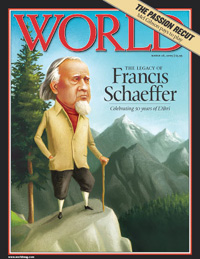


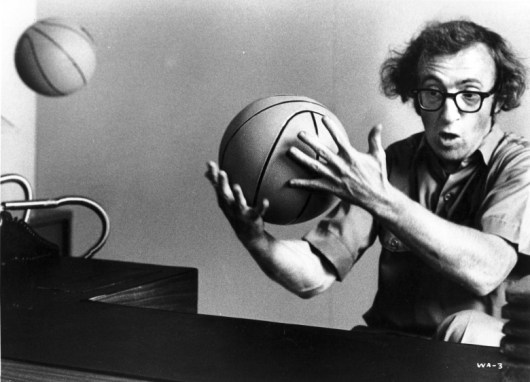
 Although born in extreme poverty, Camus attended the lycee and university in Algiers, where he developed an abiding interest in sports and the theater. His university career was cut short by a severe attack of tuberculosis, an illness from which he suffered periodically throughout his life. The themes of poverty, sport, and the horror of human mortality all figure prominently in his volumes of so-called Algerian essays: L’Envers et l’endroit (The Wrong Side and the Right Side, 1937), Noces (Nuptials, 1938), and L’Ete (Summer, 1954). In 1938 he became a journalist with Alger-Republicain, an anticolonialist newspaper. While working for this daily he wrote detailed reports on the condition of poor Arabs in the Kabyles region. These reports were later published in abridged form in Actuelles III (1958).
 From this point on, Camus was concerned mainly with exploring avenues of rebellion against the absurd as he strove to create something like a humane stoicism. The Plague (1947; Eng. trans., 1948) is a symbolic novel in which the important achievement of those who fight bubonic plague in Oran lies not in the little success they have but in their assertion of human dignity and endurance. In the controversial essay The Rebel (1951; Eng. trans., 1954), he criticized what he regarded as the deceptive doctrines of “absolutist” philosophies–the vertical (eternal) transcendence of Christianity and the horizontal (historical) transcendence of Marxism. He argued in favor of Mediterranean humanism, advocating nature and moderation rather than historicism and violence. He subsequently became involved in a bitter controversy with Jean Paul Sartre over the issues raised in this essay.Camus wrote two overtly political plays, the satirical State of Siege (1948; Eng. trans., 1958) and The Just Assassins (1950; Eng. trans., 1958). It can be argued, however, that Camus scored his major theatrical success with stage adaptations of such novels as William Faulkner’s Requiem for a Nun (1956) and Dostoyevsky’s The Possessed (1959). He also published a third novel, The Fall (1956; Eng. trans., 1957), which some critics read as a flirtation with Christian ideas, and a collection of short stories noteworthy for their technical virtuosity,Exile and the Kingdom (1957; Eng. trans., 1958). Posthumous publications include two sets of Notebooks covering the period 1935-51, an early novel, A Happy Death (1971; Eng. trans., 1972), and a collection of essays, Youthful Writings (1973; Eng. trans., 1976 and 1977)John Cruickshank


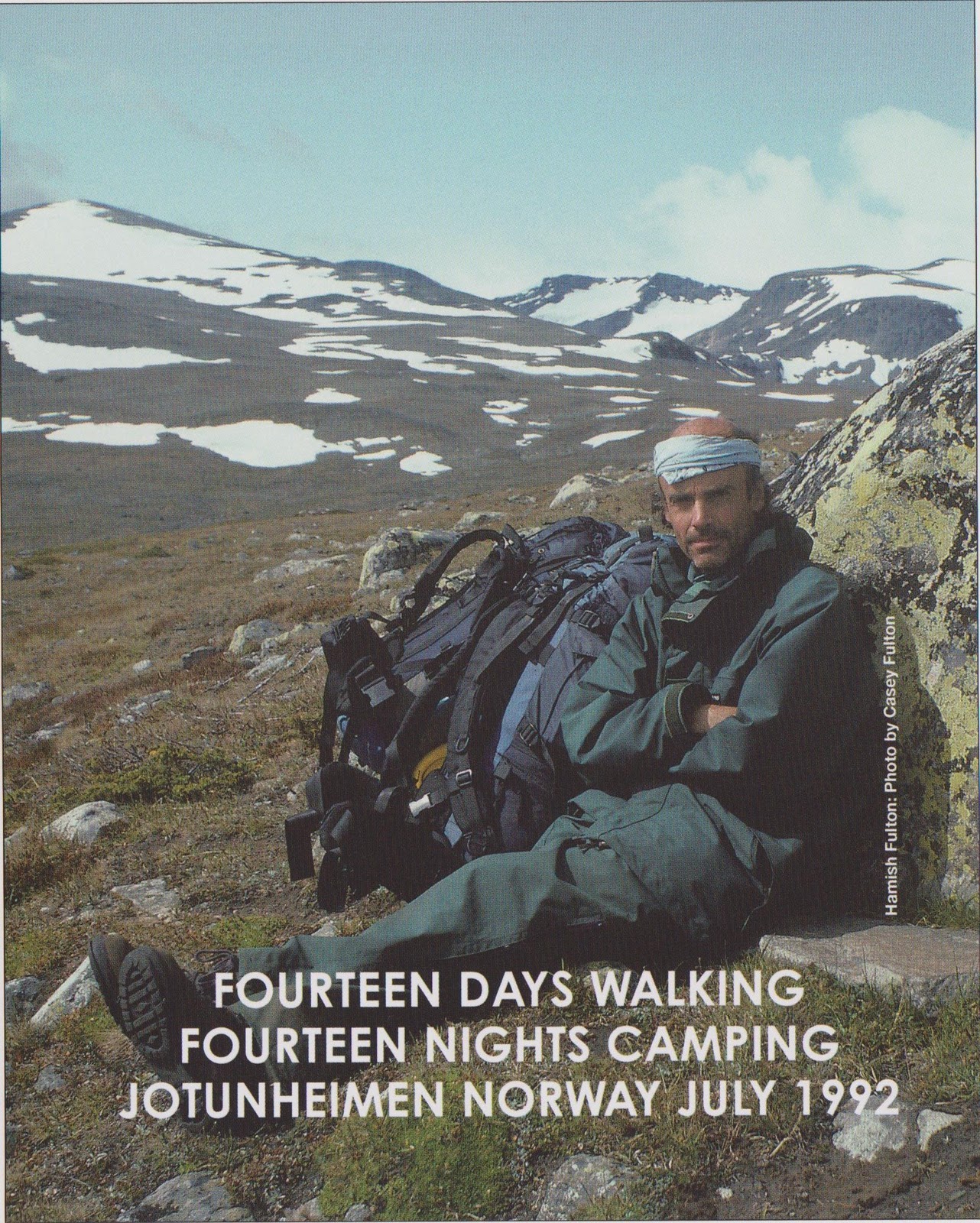





 The Daily Hatch