Francis Schaeffer Whatever Happened to the Human Race (Episode 1) ABORTION
Francis Schaeffer: What Ever Happened to the Human Race? (Full-Length Documentary)
Part 1 on abortion runs from 00:00 to 39:50, Part 2 on Infanticide runs from 39:50 to 1:21:30, Part 3 on Youth Euthanasia runs from 1:21:30 to 1:45:40, Part 4 on the basis of human dignity runs from 1:45:40 to 2:24:45 and Part 5 on the basis of truth runs from 2:24:45 to 3:00:04
________________
Picture of Francis Schaeffer and his wife Edith from the 1930′s above. I was sad to read about Edith passing away on Easter weekend in 2013. I wanted to pass along this fine article below.
Edith Schaeffer, wife of the late Francis Schaeffer, a reknown pastor, author, abortion opponent and founder of the L’Abri conference center in Switzerland passed away today. She was 98.
Schaeffer was born into missionary life in China. She met her husband Francis in the 1930′s at a Christian event in Germantown, Pennsylvania. Later, the two founded the Christian conference center L’Abri in Switzerland, where Edith often tended to meals for the guests. It is stated that she tended a sizable vegetable garden in an effort to have sufficient food for those visiting.
Her husband Francis was a prolific writer and often denounced the secular humanism that he saw permeating society.
“Why has our society changed?” he once asked. “The answer is clear — the consensus of our society no longer rests upon a Christian basis, but upon a humanistic one. Humanism is man putting himself at the center of all things, rather than the creator God.”
Francis also released two films, How Should We Then Live?: The Rise and Decline of Western Thought and Culture and Whatever Happened to the Human Race?, the first of which chronicled the history of the Church from the early Church to current times. The second film addressed the issues of abortion and euthanasia, which Schaeffer strongly opposed.
Francis Schaeffer died in 1984 of lymphoma, and was said to be influential in the lives of many Christian leaders during his time.
The Schaeffer’s son, Frank, wrote a tribute to his mother this morning, which was published in The Huffington Post. Frank, who departed from his parent’s beliefs a number of years ago, had remained in touch with his mother.
“My mother Edith Schaeffer died today. … She has just gone to be with the Lord, as she would put it,” he wrote. “She died at home which was her wish.”
He included in his list of warm memories of his mother “[being] in the garden at dawn weeding and watering her wonderful flowers and vegetables,” “taking impractical detours to look at something lovely” and “praying out loud over meals long — so long — at the table, as she forgot that for the rest of us prayer was mostly a ritual, though for her it was an endless conversation with the eternal.”
Frank also stated that his mother expressed a “horror at the ‘harshness’ … of so many evangelical religious people and the way they treated ‘the lost’ and [would declare], ‘No wonder no one wants to be a Christian if that’s how we treat people!’”
Edith Schaeffer, in addition to caring for her husband and children, and helping run L’Abri, was also a prolific author. Her books included The Hidden Art of Homemaking: Creative Ideas for Enriching Everyday Life, What is a Family and 10 Things Parents Must Teach Their Children.
L’Abri continues to this day, and has expanded to several countries, including in the United States, with facilities in both Massachusetts and Minnesota.
President Obama’s own words put in a pro-life poster:
(Francis did a great job in his film series “How Should we then live?” in looking at how humanism has affected art and culture in the Western World in the last 2000 years. My favorite episodes include his study of the Renaissance, the Revolutionary age, the age of Nonreason, and the age of Fragmentation.)
E P I S O D E 1 0 Dr. Francis Schaeffer – Episode X – Final Choices 27 min FINAL CHOICES I. Authoritarianism the Only Humanistic Social Option One man or an elite giving authoritative arbitrary absolutes. A. Society is sole absolute in absence of other absolutes. B. But society has to be […]
E P I S O D E 9 Dr. Francis Schaeffer – Episode IX – The Age of Personal Peace and Affluence 27 min T h e Age of Personal Peace and Afflunce I. By the Early 1960s People Were Bombarded From Every Side by Modern Man’s Humanistic Thought II. Modern Form of Humanistic Thought Leads […]
E P I S O D E 8 Dr. Francis Schaeffer – Episode VIII – The Age of Fragmentation 27 min I saw this film series in 1979 and it had a major impact on me. T h e Age of FRAGMENTATION I. Art As a Vehicle Of Modern Thought A. Impressionism (Monet, Renoir, Pissarro, Sisley, […]
E P I S O D E 7 Dr. Francis Schaeffer – Episode VII – The Age of Non Reason I am thrilled to get this film series with you. I saw it first in 1979 and it had such a big impact on me. Today’s episode is where we see modern humanist man act […]
E P I S O D E 6 How Should We Then Live 6#1 Uploaded by NoMirrorHDDHrorriMoN on Oct 3, 2011 How Should We Then Live? Episode 6 of 12 ________ I am sharing with you a film series that I saw in 1979. In this film Francis Schaeffer asserted that was a shift in […]
E P I S O D E 5 How Should We Then Live? Episode 5: The Revolutionary Age I was impacted by this film series by Francis Schaeffer back in the 1970′s and I wanted to share it with you. Francis Schaeffer noted, “Reformation Did Not Bring Perfection. But gradually on basis of biblical teaching there […]
Dr. Francis Schaeffer – Episode IV – The Reformation 27 min I was impacted by this film series by Francis Schaeffer back in the 1970′s and I wanted to share it with you. Schaeffer makes three key points concerning the Reformation: “1. Erasmian Christian humanism rejected by Farel. 2. Bible gives needed answers not only as to […]
Francis Schaeffer’s “How should we then live?” Video and outline of episode 3 “The Renaissance” Francis Schaeffer: “How Should We Then Live?” (Episode 3) THE RENAISSANCE I was impacted by this film series by Francis Schaeffer back in the 1970′s and I wanted to share it with you. Schaeffer really shows why we have so […]
Francis Schaeffer: “How Should We Then Live?” (Episode 2) THE MIDDLE AGES I was impacted by this film series by Francis Schaeffer back in the 1970′s and I wanted to share it with you. Schaeffer points out that during this time period unfortunately we have the “Church’s deviation from early church’s teaching in regard […]
Francis Schaeffer: “How Should We Then Live?” (Episode 1) THE ROMAN AGE Today I am starting a series that really had a big impact on my life back in the 1970′s when I first saw it. There are ten parts and today is the first. Francis Schaeffer takes a look at Rome and why […]
Paul Ryan: What Would Milton Friedman Say About Dismal Economic News?
On the 100th anniversary of the birth of economist Milton Friedman, United States Congressman Paul Ryan reflects on the state of the US Economy and offers his take on what Friedman would say about the public policy prescriptions emanating from the current Administration in Washington, D.C
I have given a tremendous amount of thought to the idea of a federal balanced budget amendment. I considered this issue not only as the Chairman of the Republican Party of Pennsylvania but as a father, as a business owner and as an American. I kept coming back to one main prevailing thought which is that if America doesn’t start living within its means and soon, our country will lose the economic fabric that has made our country great. The American dream will be gone. It is a scary thought and one that should provoke thorough debate as our county continues to spiral down the path of fiscal insolvency.
Our country spends more than we take in and the bottom-line is, as a country, we have a spending problem. Our addiction to government spending has led to a downgrade of everyone’s credit rating, because America’s credit rating is our credit rating as well. The downgrade has a direct impact on the loss of global economic power that forces all of us to pay more. Our addiction to big government spending has cost us jobs especially when you consider costly regulations that do more harm than good. Although we hear Democrats call for more government spending as a means to create more jobs, it has not worked and Americans should not be fooled again.
As Pennsylvania’s families weigh spending decisions every day, they know they must have a balanced family budget. If our families ran their households the way that the Federal government runs their budget, the effects would be clear. Their bills wouldn’t have been paid. Their house would be foreclosed. Their car would be repossessed. They would be out on the street.
Pennsylvania businesses must also weigh spending decisions every day. They must meet payroll. They must pay their taxes. They must deliver a quality product if they want return business. If they don’t, payroll is missed. Jobs are lost. Their company goes under.
As a country, we can’t stand in the way of real fiscal reform. The dream of a safe and healthy retirement seems to be farther away for everyone. Without a balanced budget amendment, families across America could see losses in everything they have worked so hard to build, from retirement savings to home values to their own job and maybe even to the safety and security of their own family.
A balanced budget amendment is a guarantee that forces government to make the tough decisions now rather than lay mountains of debt on future generations. I hope you consider this issue no matter what party affiliation you may be. As Americans, Pennsylvanians, fathers and mothers, we owe it to current and future generations to live within our means and keep the American dream alive.
If America does not get welfare reform under control, it will bankrupt America. But the Heritage Foundation’s Robert Rector has a five-step plan to reform welfare while protecting our most vulnerable.
__________________________
The Founders desired to limit government power and constrain politicians and they knew where the welfare state would lead!!!!
If logic decided policy in Washington, federal spending would be low, the budget would be balanced, the benefits of regulations would exceed the costs, and policymakers would guard against unintended consequences. Unfortunately, the nation’s capital is largely impervious to logic, and the tragic results are obvious for all to see.
Emotion and intention seem to have become the principal determinants of government policy. People are poor. Increase the minimum wage. Not everyone can afford a home. Create a dozen housing subsidy programs.
Never mind the consequences as long as the officials involved mean well and their ideas sound good. No need to detain our leaders on white horses, who have other crusades to lead.
This widespread inability to compare consequences to intentions is a basic problem of humanity. In fact, it’s one of the reasons the Founders desired to limit government power and constrain politicians.
For instance, the newly created federal government possessed only limited, enumerated powers. Even if you had weird ideas for transforming the American people, it wouldn’t do you much good to get elected president or to Congress. The federal government wasn’t authorized by the Constitution to engage in soul-molding.
Moreover, there would be strong resistance to any attempt to expand federal power. The constitutional system preserved abundant state authority. Three federal branches offered “checks and balances” to abusive officials or majorities.
Most important, the majority of Americans shared the Founders’ suspicions. At the end of the 19th century a Democratic president still was willing to veto unemployment relief because he believed Congress had no authority to approve such a bill.
However, over the following century and more virtually every limitation on Washington was swept away. Equally important, as faith in religion ebbed faith in politics exploded. Today those who think with their hearts rather than their minds have largely taken control of the nation’s policy agenda.
No where has this been more destructive than in the area of poverty. How to deal with the poor who, Christ told us, would always be with us?
As Charles Murray demonstrated so devastatingly three decades ago in his famous book,Losing Ground, ever expanding federal anti-poverty initiatives ended up turning poor people into permanent wards of Washington. Worse, unconditional welfare benefits turned out to discourage education, punish work, inhibit marriage, preclude family formation, and, ultimately, destroy community. It took the 1996 reforms to reverse much of the culture of dependency.
Similar is the minimum wage, which may become a top election issue this fall. Unless businesses are charities, raising the price of labor will force them to adjust their hiring. How many low-skilled workers will be hired if employers are told to pay more than the labor is worth? There isn’t much benefit in having a theoretical right to a higher paying job if you are not experienced or trained enough to perform it.
There are similar examples in the regulatory field. No one wants to take unsafe, ineffective medicines. So the Food and Drug Administration was tasked with assessing the safety and efficacy of new compounds before they can be released. The intention is good, but ignores the inescapable trade-off between certainty and speed.
The rise of AIDS brought the problem into stark relief, as people faced an ugly death while the bureaucratic, rules-bound FDA denied them the one effective medicine, AZT, in order to make sure it didn’t have harmful side-effects. Years before the agency held up approval of beta-blockers, killing people lest they suffer some lesser harm from taking the drug.
Few people in politics fail to claim to be acting for the public good. In many cases they really believe it. But good intentions are never enough. Consequences are critical. What you intend often doesn’t matter nearly as much as what you actually accomplish.
I have posted stories on welfare before and here is another one. Another Horrifying and Depressing Look at the Human Cost of the Welfare State March 22, 2013 by Dan Mitchell When we think of Julia, the mythical moocher created by the Obama campaign, our first instinct is probably to grab our wallets and purses. After […]
Why are we spending more and more on welfare every year? What would the Founding Fathers have to say about this if they were still here today? We will look at that in a little bit. We need to cut Food Stamp program and not extend it. However, it seems that people tell the taxpayers back […]
The best way to destroy the welfare trap is to put in Milton Friedman’s negative income tax. A Picture of How Redistribution Programs Trap the Less Fortunate in Lives of Dependency I wrote last year about the way in which welfare programs lead to very high implicit marginal tax rates on low-income people. More specifically, they […]
December 19, 2012 The Honorable Steve Womack United States House of Representatives 1508 Longworth House Office Building Washington, D.C. 20515-0403 Dear Congressman Womack, This is the second time I have written to you about this. It is obvious to me that if President Obama gets his hands on more money then he will continue […]
We got to act fast and get off this path of socialism. Morning Bell: Welfare Spending Shattering All-Time Highs Robert Rector and Amy Payne October 18, 2012 at 9:03 am It’s been a pretty big year for welfare—and a new report shows welfare is bigger than ever. The Obama Administration turned a giant spotlight […]
We need to cut Food Stamp program and not extend it. However, it seems that people tell the taxpayers back home they are going to Washington and cut government spending but once they get up there they just fall in line with everyone else that keeps spending our money. I am glad that at least […]
Government Must Cut Spending Uploaded by HeritageFoundation on Dec 2, 2010 The government can cut roughly $343 billion from the federal budget and they can do so immediately. __________ Liberals argue that the poor need more welfare programs, but I have always argued that these programs enslave the poor to the government. Food Stamps Growth […]
Milton Friedman – The Negative Income Tax Published on May 11, 2012 by LibertyPen In this 1968 interview, Milton Friedman explained the negative income tax, a proposal that at minimum would save taxpayers the 72 percent of our current welfare budget spent on administration. http://www.LibertyPen.com Source: Firing Line with William F Buckley Jr. ________________ Milton […]
Dan Mitchell Commenting on Obama’s Failure to Propose a Fiscal Plan Published on Aug 16, 2012 by danmitchellcato No description available. ___________ After the Welfare State Posted by David Boaz Cato senior fellow Tom G. Palmer, who is lecturing about freedom in Slovenia and Tbilisi this week, asked me to post this announcement of his […]
Is President Obama gutting the welfare reform that Bill Clinton signed into law? Morning Bell: Obama Denies Gutting Welfare Reform Amy Payne August 8, 2012 at 9:15 am The Obama Administration came out swinging against its critics on welfare reform yesterday, with Press Secretary Jay Carney saying the charge that the Administration gutted the successful […]
President Obama c/o The White House 1600 Pennsylvania Avenue NW Washington, DC 20500
Dear Mr. President,
I know that you receive 20,000 letters a day and that you actually read 10 of them every day. I really do respect you for trying to get a pulse on what is going on out here. I have a pro-life point of view because I am a Christian and I base my views on an interpretation of the Bible. Francis Schaeffer’s teachings probably influenced more in this area more than any other person. In 1979 he teamed up with Dr. C. Everett Koop and put together the film series WHATEVER HAPPENED TO THE HUMAN RACE? and here is the first episode with covers the issue of abortion. Since you are also a Christian Mr. President I thought would take a great interest in what they had to say.
Francis Schaeffer Whatever Happened to the Human Race (Episode 1) ABORTION
Francis Schaeffer: What Ever Happened to the Human Race? (Full-Length Documentary)
Part 1 on abortion runs from 00:00 to 39:50, Part 2 on Infanticide runs from 39:50 to 1:21:30, Part 3 on Youth Euthanasia runs from 1:21:30 to 1:45:40, Part 4 on the basis of human dignity runs from 1:45:40 to 2:24:45 and Part 5 on the basis of truth runs from 2:24:45 to 3:00:04
Below you that very brilliant people like Dr. Henry F. Schaefer III have accepted the fact that Jesus did actually live the life he said he did and that the Bible is true in all it’s details.
____________________
The Way of Discovery: A Personal Journey of Faith Henry F. Schaefer III
Dr. Schaeffer’s sweeping epic on the rise and decline of Western thought and Culture
_______________________
There are many people of low intelligence and many brilliant persons who do not put there faith in Christ and many others that do!!!! One of the brilliant believers is Dr. Henry F. Schaefer III and he tells his story below.
Professor Henry F. (Fritz) Schaefer is one of the most distinguished physical scientists in the world. The U.S. News and World Report cover story of December 23, 1991 speculated that Professor Schaefer is a “five time nominee for the Nobel Prize.” He has received four of the most prestigious awards of the American Chemical Society, as well as the most highly esteemed award (the Centenary Medal) given to a non-British subject by London’s Royal Society of Chemistry. He is a Fellow of the American Academy of Arts and Sciences. Moreover, his general interest lectures on science and religion have riveted large audiences in nearly all the major universities in the U.S.A. and in Beijing, Berlin, Budapest, Calcutta, Cape Town, New Delhi, Hong Kong, Istanbul, London, Paris, Prague, Sarajevo, Seoul, Shanghai, Singapore, Sofia, St. Petersburg, Sydney, Tokyo, Warsaw, Zagreb, and Zürich.
For 18 years Dr. Schaefer was a faculty member at the University of California at Berkeley, where he remains Professor of Chemistry, Emeritus. Since 1987 Dr. Schaefer has been Graham Perdue Professor of Chemistry and Director of the Center for Computational Chemistry at the University of Georgia.
I would like to take as my theme the title of a book by Michael Polanyi entitled The Way of Discovery. Polanyi was a well–known physical chemist in England who later became even better known as a philosopher. In The Way of Discovery, he makes the point that scientists are not robots, mechanically filling up notebooks with data and coming to inevitable conclusions. To put it another way, science is not just an exercise in advanced logical positivism.
Rather, Polanyi argues, there is much of the artist in the good scientist, and he or she approaches the laboratory with a wealth of presuppositions and intuitions about how things should be.
I can confirm Polanyi’s thesis with an example from my own research. In 1978, one of the most distinguished organic chemists in the world suggested that it was just a matter of time before someone would make the cyclopropyne molecule. Since cyclopropyne would contain a carbon–carbon triple bond in a three–membered ring, my own chemical intuition was very skeptical about such a suggestion. Guided by this presupposition, we were able to demonstrate that cyclopropyne does not involve a triple bond.
One can find pieces of Polanyi’s thesis scattered throughout the philosophy of science. For example, Albert Einstein wrote in 1938 that, “Physical concepts are free creations of the human mind and are not, however it may seem, uniquely determined by the physical world.” So intuition and presupposition in science are by no means harmful, as long as they are continually refined in the dialogue with observation.
The Way of Discovery
Intuition and presupposition are necessary ingredients to discovery. I am a theoretical chemist by profession. Prior to my first involvement with Freshman Chemistry ten years ago, I had spent most of my time as a professor doing research in theoretical chemistry. My research consists of using mathematical equations and computers to understand the electronic structure of molecules. More specifically, we attempt to predict the shapes of molecules, their energetics, their spectra, and how they react with other molecules.
As Polanyi points out, the real excitement of science is the excitement of discovery—to observe things that no human being has ever seen, to discover a new and potentially important molecule or a new type of chemical reaction. If you were to ask the average Ph.D. chemist what Professor Henry Schaefer’s most important discovery was, he or she would probably say “the structure of methylene.”
From time to time, people actually do ask me “What is your most important discovery?” And I respond that the most important discovery in my life occurred during my fourth year on the faculty at Berkeley. This was not a time of professional turbulence in my life. Although I was still an assistant professor, I had been told that the chemistry department was going to recommend my promotion to tenure. Nor was it a time of personal turbulence, since I had already been married for seven years to the most wonderful woman in the world. At the time of this discovery, my students and I were doing some very interesting theoretical work on the identification of the interstellar molecules hydrogen isocyanide and protonated carbon monoxide.
Some Personal Discoveries
However, the most important discovery of my life was my discovery of Jesus Christ. In 1973, I discovered the Jesus Christ of history, the Jesus whose life is described on the pages of the New Testament.
The Jesus I discovered 20 years ago was rather different from the one I had heard of as a boy in church. That Jesus was a well–intentioned, infinitely tolerant person who laid down some simple moral rules which all religions now embrace. The real Jesus bore some resemblance to the Jesus of my youth, but not very much. In particular the real Jesus sharply challenged the religious leaders of His time. And He claimed to be the only way to establish the relationship with God for which we were originally created, stating that all who claimed otherwise were thieves, robbers, and false prophets. The real Jesus was a very controversial person.
I discovered that on a Sunday morning 1,960 years ago that Jesus rose physically from the dead. I discovered that the resurrection of Jesus is not only historically true, but that it’s one of the best–attested facts in all of ancient history. If you haven’t made this discovery yet, I would strongly encourage you to examine the evidence carefully. A good summary of the evidence for the resurrection is given in Frank Morrison’s book, Who Moved the Stone?
I discovered that when the apostles spoke of Jesus being the Son of God, they didn’t mean that God was His Father in some vague and undefinable way. Jesus’ closest companions meant that He was God the Son. Jesus Christ, the carpenter from Nazareth, was and is God almighty.
I discovered that I could know for certain that I have a relationship with God forever. Now this may strike some of you as a terribly arrogant statement. And it would be if it were based on anything I had done. But I’m going to spend eternity in relationship with God because Jesus died on the cross for my rebelliousness and disobedience. It is not because of anything I’ve done, but in spite of everything I’ve done.
I discovered that the New Testament is a reliable historical document. When I became a Christian 12 years ago, I wasn’t sure of this, but a book by the British classics scholar F.F. Bruce changed my thinking in this regard. And as time went by I came to have a deep respect for the Old Testament as well, because I discovered that Jesus spoke personally of its authenticity. I want to emphasize here that a belief in the complete truthfulness of the Bible need not carry with it a wooden or unnaturally literalistic understanding of every verse. To quote a statement of faith that I like very much,
We affirm that God in His work of inspiration (of the Bible, that is) utilized the distinctive personalities and literary styles of the writers who He had chosen and prepared.
In this context, my personal opinion is that the universe is probably 15–20 billion years old. I am convinced that such a view is completely consistent with the teaching of the first chapter of Genesis. For those of you who want to go into this matter in depth, I recommend James Montgomery Boice’s commentary on the first eleven chapters of Genesis.
I discovered that I could share my new–found faith in Jesus Christ with friends and with strangers. I discovered that most of the questions that people have about Christianity boil down to about ten distinct questions, and that there are intellectually sound answers to all ten.
One of my most interesting experiences occurred about 15 years ago. My wife, Karen, and I went with a friend to a visit a husband and wife who had visited our church. We should have expected something unusual because this couple was only about 25 years old and they lived in a $250,000 house. Furthermore, the man who answered the door was about 6’8″ tall. As we sat around getting acquainted, I asked Tom where he and Susie had moved from, to find that they had just moved up from Los Angeles. When I asked what kind of work Tom did, he replied that he was in professional sports. I was still oblivious to all this and so was Karen, but fortunately the third member of our party recognized that we were talking to the starting forward for the Golden State Warriors [professional basketball team] and blurted out, “Oh, so you’re that Tom Abernathy!” The best part of that evening was the ending. An hour after that awkward introduction, Tom and Susie Abernathy received Jesus Christ as their Savior and Lord.
I discovered that there is no problem too heavy for Jesus. Fourteen years ago, I spent several months at the University of Texas. On a Sunday morning (December 9, 1979, to be exact) I had just returned from church and was tidying up a few things in my office in Austin. My wife called and told me that our five–month old son Pierre had just died of crib death, or sudden infant death syndrome. Whatever illusion I had that life was just a bowl of cherries disappeared forever in that instant of time. Without going into the details, I can stand here tonight and tell you that never before nor since have I been so overwhelmed with the certainty of the love of my heavenly Father. There is no problem in your life that Jesus can’t bring you through.
I discovered that life with Jesus begins at the moment of conversion, [through] death, and then on to eternity. Jesus isn’t only interested in extracting a prayer of submission from me. He wants to change my whole life. That’s a tremendous challenge.
Finally, I discovered that the intellectual challenge to fully understand the depths of the Christian faith is quite comparable to that required to plumb the depths of molecular quantum mechanics. I’ve been at it in earnest for over twenty years and haven’t come close to exhausting the wealth of 20th century Christian intellectual writing. Almost anything written by C.S. Lewis is good—my advice is to read it all.
If you want to understand existentialism, read Francis Schaeffer. A book to start with is, The God Who Is There. If you like biography and history, as I do, read Arnold Dallimore’s two volumes on the great evangelist George Whitefield. I’ve read a lot of biographies and Dallimore’s Whitefield is the best. If you want to concentrate on Bible Study and have gone through the lighter commentaries, check out Martin Lloyd–Jones’ eight volumes on the Apostle Paul’s Letter to the Romans. Lloyd–Jones speaks with authority to both the intellect and the heart. And finally, if your passion is theology, make an investment in Carl F. H. Henry’s six volumes of God, Revelation, and Authority. I think Carl Henry is the most outstanding theologian of this generation. His wisdom overflows each of these volumes.
I don’t want to leave without reminding you that there are many spiritual counterfeits today. If you don’t have a church of your own, look for one that is centered on Jesus Christ and based on the Bible.
I’d like to close this message with a series of four questions that Francis Schaeffer asked a young woman who had come to Switzerland searching for truth:
First, he asked her, first, did she believe that God existed—God as clearly revealed in the Bible, who is infinite and yet can be know personally?
Second, did she recognize that she was a sinner in light of God’s standards?
Third, did she believe that Jesus Christ truly came in space, time, and history?
And fourth, would she bow to Him and accept what He, Christ, did for her individually by taking her deserved punishment on the cross?
Thank you so much for your time. I know how valuable it is. I also appreciate the fine family that you have and your commitment as a father and a husband.
Sincerely,
Everette Hatcher III, 13900 Cottontail Lane, Alexander, AR 72002, ph 501-920-5733, lowcostsqueegees@yahoo.com
I have gone back and forth and back and forth with many liberals on the Arkansas Times Blog on many issues such as abortion, human rights, welfare, poverty, gun control and issues dealing with popular culture. Here is another exchange I had with them a while back. My username at the Ark Times Blog is Saline […]
It is not possible to know where the pro-life evangelicals are coming from unless you look at the work of the person who inspired them the most. That person was Francis Schaeffer. I do care about economic issues but the pro-life issue is the most important to me. Several years ago Adrian Rogers (past president of […]
I got this off a Christian blog spot. This person makes some good points and quotes my favorite Christian philosopher Francis Schaeffer too. Prostitution, Chaos, and Christian Art The newest theatrical release of Victor Hugo’s 1862 novel “Les Miserables” was released on Christmas, but many Christians are refusing to see the movie. The reason simple — […]
Francis Schaeffer was truly a great man and I enjoyed reading his books. A theologian #2: Rev. Francis Schaeffer Duriez, Colin. Francis Schaeffer: An Authentic Life. Wheaton, IL: Crossway Books, 2008. Pp. 240. Francis Schaeffer is one of the great evangelical theologians of our modern day. I was already familiar with some of his books and his […]
Francis Schaeffer: “Whatever Happened to the Human Race?” (Episode 2) SLAUGHTER OF THE INNOCENTS Published on Oct 6, 2012 by AdamMetropolis ___________ The 45 minute video above is from the film series created from Francis Schaeffer’s book “Whatever Happened to the Human Race?” with Dr. C. Everett Koop. This book really helped develop my political views […]
The Francis and Edith Schaeffer Story Pt.1 – Today’s Christian Videos The Francis and Edith Schaeffer Story – Part 3 of 3 Francis Schaeffer: “Whatever Happened to the Human Race” (Episode 1) ABORTION OF THE HUMAN RACE Published on Oct 6, 2012 by AdamMetropolis ________________ Picture of Francis Schaeffer and his wife Edith from the […]
THE MARK OF A CHRISTIAN – CLASS 1 – Introduction Published on Mar 7, 2012 This is the introductory class on “The Mark Of A Christian” by Francis Schaeffer. The class was originally taught at Redeemer Presbyterian Church in Overland Park, KS by Dan Guinn from FrancisSchaefferStudies.org as part of the adult Sunday School hour […]
Francis Schaeffer: “Whatever Happened to the Human Race?” (Episode 2) SLAUGHTER OF THE INNOCENTS Published on Oct 6, 2012 by AdamMetropolis The 45 minute video above is from the film series created from Francis Schaeffer’s book “Whatever Happened to the Human Race?” with Dr. C. Everett Koop. This book really helped develop my political views concerning […]
Francis Schaeffer: “Whatever Happened to the Human Race” (Episode 1) ABORTION OF THE HUMAN RACE Published on Oct 6, 2012 by AdamMetropolis The 45 minute video above is from the film series created from Francis Schaeffer’s book “Whatever Happened to the Human Race?” with Dr. C. Everett Koop. This book really helped develop my political views […]
I have gone back and forth and back and forth with many liberals on the Arkansas Times Blog on many issues such as abortion, human rights, welfare, poverty, gun control and issues dealing with popular culture. Here is another exchange I had with them a while back. My username at the Ark Times Blog is Saline […]
Francis Schaeffer: “Whatever Happened to the Human Race” (Episode 5) TRUTH AND HISTORY Published on Oct 7, 2012 by AdamMetropolis The 45 minute video above is from the film series created from Francis Schaeffer’s book “Whatever Happened to the Human Race?” with Dr. C. Everett Koop. This book really helped develop my political views concerning abortion, […]
The Bible maintains several characteristics that prove it is from God. One of those is the fact that the Bible is accurate in every one of its details. The field of archaeology brings to light this amazing accuracy and Kyle Butt does a great job of showing that in this film series he did on “The Bible and Archaeology.”
_________________________-
Camels did exist in the Old Testament!!!!Dr. Lidar Sapir-Hen and Erez Ben-Yosef of Tel Aviv University contend that Camels did not exist during the time of the Old Testament. Yet evidence continues to amass that camel domestication was widely known earlier. Randall Younker adds Late Bronze Age I petroglyphs (Greek = rock/carving) depicting domesticated camels from the Sinai to that evidence. What about the dating of the bones used by Dr.Lidar Sapir-Hen and Dr. Erez Ben-Yosef of Tel Aviv University in this case on the camel? Dr. Elizabeth Mitchell takes them to task in the article “The Bible Wins the Debate with Carbon-Dated Bones.” Furthermore, there is evidence that points to the fact that the Bible is historically true as Francis Schaeffer pointed out in episode 5 of WHATEVER HAPPENED TO THE HUMAN RACE? There is a basis then for faith in Christ alone for our eternal hope. This link shows how to do that.
I have read several posts by others who have attacked some of the basic assumptions of the Lidar Sapir-Hen and Erez Ben-Yosef study on Camels. Here is the article critical of the Bible followed by evidence that camels did exist in the Old Testament.
Early tales of domesticated camels in the Old Testament don’t belong there, say archaeologists in a new blow to Biblical literalists. Tame Camelus dromedarius were not brought to the Levant until centuries after Abraham, Joseph and Jacob, who lived between 2000BC and 1500BC, and decades after the fall of the Kingdom of David.
Dr Lidar Sapir-Hen and Dr Erez Ben-Yosef of Tel Aviv University used radiocarbon dating and other techniques to place the arrival of domestic camels at around 900BC. Their article was published in Tel Aviv, Journal of the Institute of Archaeology of Tel Aviv University.
Camels are mentioned at least 20 times in the Old Testament. Genesis 24:10, for example, tells how Abraham’s senior servant set off to find a wife for his master’s son, Isaac: “Then the servant left, taking with him ten of his master’s camels loaded with all kinds of good things from his master.”
And Genesis 31:17 tells of Jacob’s flight from his uncle and father-in-law, Laban: “Then Jacob rose up, and set his sons and his wives upon camels.”
“In addition to challenging the Bible’s historicity, this anachronism is direct proof that the text was compiled well after the events it describes,” theuniversity said.
A team led by Drs Sapir-Hen and Ben-Yosef have found the oldest known signs of domesticated camels in an ancient, copper-mining area on the border between Israel and Jordan, from the Red Sea to the Dead Sea.
“By analysing archaeological evidence from the copper production sites of the Aravah Valley, we were able to estimate the date of this event in terms of decades rather than centuries,” said Dr Ben-Yosef.
Older camel bones were found in the valley, but the scientists believe they were from wild camels. None of them were associated with copper-mining sites.
Scientists think the animals were first domesticated in the Arabian Peninsula, close to the Aravah valley, over the previous century.
While the discovery is unlikely to trouble those who believe in the literal truth of the Bible, others will find it changes their view of what life was like in the Holy land three thousand years ago.
The appearance of camels as beasts of burden was as dramatic in its way as the first railways were in the industrial era.
“The introduction of the camel to our region was a very important economic and social development,” Dr Ben-Yosef said. Used as pack animals, they opened up trade routes – such as the incense road from Africa to India, named after the frankincense and myrrh that were among its major cargos – that were beyond the range of mules and donkeys.
Pharaoh Shoshenq I (Shishak in the Hebrew bible), who invaded the Kingdom of Israel between 926 and 917 BC, is thought to have brought the camels. The Egyptians are also thought to have introduced more sophisticated technology and centralised labour.
This article was first published in the Summer 2000 issue ofBible and Spade.
Most scholars believe camels were not domesticated until the end of the second millenium BC. Yet evidence continues to amass that camel domestication was widely known earlier. Randall Younker adds Late Bronze Age I petroglyphs (Greek = rock/carving) depicting domesticated camels from the Sinai to that evidence.
Introduction
In July 1998, a small party of colleagues from Andrews University,1 undertook an expedition to Wadi Nasib (the valley of the stone altar) to visit Proto-Sinaitic Inscriptions found by Dr. Georg Gerster in 1961 (Gerster 1961: 62; Albright 1966: 3).2 The inscriptions are located on the vertical face of a large rock on the north side of the pass, through the N-S running ridge that serves as the eastern boundary of the Wadi Nasib. The pass itself is at the head of a tributary wadi of the Wadi Nasib that is located immediately east of the bedouin cemetery of Bir Nasib. The settlement of Bir Nasib, proper, is located just to the south of the cemetery. Just east of the cemetery there is a trail (actually several meandering trails) which climb eastward along the edge of this tributary up to the cut or pass. The Proto-Sinaitic inscriptions were easy to find and were found to be still in the same state of preservation as when Gerster first found them.
Visiting the Proto-Sinaitic Inscriptions
The actual reading of the inscriptions has been a matter of some discussion. Albright (1966) failed to recognize the fourth column as belonging to the inscription and tried to make sense of only the remaining three. Albright’s transcription was: ‘D ‘[L]T[N] L H B[R] [N]H ‘LW. He translated the inscription as “O father E[l], gra[nt] to Heber re[st] beside him!” Rainey (1975), who was able to personally examine the inscription, subsequently noted that there is a fourth column that Albright ignored or overlooked. Also, he modified the readings of a few of the characters. Rainey’s reading of the whole text is: [B]RKT / ‘D[‘] / RB HWT / W L ‘H[ … ] or Blessing(s) (on/of) ‘Ad(d)a’, chief of the stockades(s), arid (on/of) ‘h[ … ]. Other scholars have proposed still other variant readings (e.g., Shea 1987).
Two meters (six ft) to the right of Gerster No. 1, however, is an Egyptian rock-inscription in the form of a stele from the 20th year of Ammenemes III (Gardiner and Peat 1952; pl. XIV; no.46; 1955: 76).3 This inscription is quite weathered and the surviving portion measures only 20 x 23 cm. It is clear that the inscription was originally written in three horizontal lines of hieroglyphics at the top, while the lower part was divided into six vertical columns. It is these six vertical columns that have pretty much eroded away. The translation of Gardiner and Peet of the surviving top portion of the inscription reads, “Year 20 under the majesty of the king of Upper and Lower Egypt Nema’re’, son of Re’ Ammenemes, living like Re’ eternally” (Gardiner and Peet 1955: 76).
The camel’s anatomy led to its value and domestication. Its hump serves for fat storage and probably developed as a body-heater. For water storage, the animal has several sac-shaped extensions in its stomach where liquid can be retained for a long period. Even today camels are bred in the Near East and sell for up to $2,000 each.
About 20 cm (2.5 in) to the right of the Ammenemes III stele is the second, brief Proto-Sinaitic inscription (Gerster No. 2).’ Only two characters and part of a third have survived the ravages of time. The two discernable characters include the bull’s head (aleph) and the zigzag (mem). Obviously, there is too little of this inscription to make out a coherent translation. Like Gerster No. 1, this second Proto-Sinaitic inscription is later than the Ammenemes III stele. It is better preserved and the patina is lighter than the Ammenemes III inscription, indicating that Proto-Sinaitic was carved more recently. Most scholars agree that based on the style of the characters and the color of the patina, both Gerster Nos. 1 and 2 are contemporary.
The date of the Proto-Sinaitic inscriptions has also been a matter of some discussion. Originally, it was thought that they should be dated to the Middle Kingdom. This date seemed to make sense in view of the presence of the Ammenemes III stele (Gardiner 1962). Currently, however; most scholars seem to agree that these should be dated later to the New Kingdom’s Eighteenth Dynasty, i.e. the Late Bronze Age in archaeological terminology. This is because additional examples of this script which were subsequently found in Israel at Shechem, Gezer, and Lachish, appear to be older in that they appear to be associated with an archaeological context dating to the 17th-16th centuries BC and they are drawn more realistically (i.e., primitively). The characters of the Bir Nasib inscriptions, on the other hand, are drawn in a more schematized form suggesting some streamlining of the pictographs through time. Most scholars thus accept a date in the 15th century BC for the Proto-Siniatic inscriptions (Naveh 1987: 26).4
The Bible and Archaeology (3/5)
Discovery of Camel Petroglyphs
After examining and photographing the Proto-Sinaitic inscriptions and the Ammenemes III stele, I stepped back to look at the rest of the rock. Generally not mentioned in the reports of the inscriptions is the presence of a number of petroglyphs found on the same rock face near the inscriptions. From the color of patina and the close association with the inscriptions, it appeared that the petroglyphs generally span the same time period as the Ammenemes III and Proto-Siniatic inscriptions. As I examined the petroglyphs, I followed the rock face to the right (east) 2 or 3 m (6–9 ft) until I could look down the other side of the pass. As I continued to scan the petroglyphs, I suddenly noticed a couple of distinctive animal petroglyphs—camels—that were represented as walking caravan style across the rock to the right (easterly direction). The camels are about .15—.20 m (6–8 in) high and .20—.25 m (8–10 in) in length. The camel figures were quite distinctive, although the first camel (to the right) had been somewhat defaced by later engravings. The trailing camel, however, was not defaced or eroded, so it is quite distinct. The long neck, large head and single hump of the dromedary can easily be made out. What made the camel petroglyphs even more interesting was the presence of human figures in association with them. The lead camel appears to be followed by a walking man. A second walking man is clearly leading the trailing camel. The petroglyphs certainly are depicting domesticated camels.
Dating The Camel Petroglyphs
Petroglyphs are, of course, notoriously difficult to date.
In the same rock face where the Gerster inscriptions and the Ammenemes III stela are found, the author noted additional petroglyphs nearby. Seldom mentioned in reports of the inscriptions, among these petroglyphs is a camel caravan. Seen here is the second camel in the caravan, a single humped dromedary about .15—.20 m (6–8 in) high and .20—.25 m (8–10 in) long, being led by a man. It certainly depicts domesticated camels. Difficult to date, the author proposes a date around 1500 BC. While this is earlier than most scholars date camel domestication, it agrees with Biblical references.
One way is to note the archaeological evidence for human activity in this region. In this case we have a record of activity from the Middle kingdom down to the New Kingdom of Egypt. Archaeologically, the peak of activity in this region was during the 12th and 18th Dynasties of Egypt. There is evidence for later activity during the 19th and 20th Dynasties over at Serabit el-Khadem, although this was at a reduced scale when compared with the earlier periods of activity. At Wadi Nasib proper, there is presently no evidence for activity later than ca. 1500 BC during the Late Bronze Age. This wadi is somewhat isolated and was probably not the main route between Serabit el-Khadem and Egypt. Rather, this route likely had a more restricted use, perhaps connecting the mines with the smelting area (Gardiner and Peet 1955: 5, 30). Perhaps camels were used to bring ore to the smelting area.
A second way of dating is to attempt to reconstruct the sequence of rock engravings (e.g., Anati 1968). The amount of erosion and the color of tile patina of the camel petroglyphs are close to that of the Proto-Sinaitic inscriptionS, providing yet another small bit of evidence that the two are roughly contemporaneous. That the camels are not the latest rock engravings is indicated by a bit of defacing or attempts to draw new characters over the outline of the lead camel.
A third, and perhaps best, way to date a petroglyph is when it is accompanied by inscriptional evidence. In the case of the Wadi Nasib camel petroglyph, we have already noted at least two datable inscriptions that appear on the same rock face. The first is the rock stele of Ammenemes III of the 12th Dynasty. The second inscription is the Proto-Sinaitic inscription known as Gerster Inscription I. As noted, there is virtually universal agreement that these inscriptions date to the 15th century BC, about the transition from the Late Bronze Age I to Late Bronze Age IIA. The date of the inscriptional evidence at Wadi Nasib correlates precisely with the archaeological data that show that the peak of activity was during the 12th and 18th Dynasties of Egypt. There is evidence for later activity during the 19th and 20th Dynasties over at Serabit el-Khadem, although this was at a reduced scale when compared with the earlier expeditions. At Wadi Nasib proper, there is presently no evidence for activity later than ca. 1500 BC.
Taking all three lines of evidence together, it seems quite reasonable to date the camel petroglyph to about the middle of the period of peak activity in this region at nearby Serabit el-Khadem. That is, around 1500 BC.
The Ammenemes III stela. This very weathered Egyptian rock-inscription has three horizontal lines of heiroglyphics at the top and six vertical columns below. The surviving top portion speaks of the 20th year of Ammenemes III, a 12th Dynasty ruler (19th century BC). Dating this inscription helps determine the date of the adjacent camel petroglyphs.
The Bible and Archaeology (4/5)
Implications of the Wadi Nasib Camel Petroglyphs
The possibility that these camel petroglyphs are contemporary with the mining activity at Serabit el-Khadem provides new insights into the copper and turquoise industry with regard to transport of the mined materials. Previously, it has been assumed that donkeys were the primary mode of transporting copper and turquoise from the mining centers back to Egypt. Certainly donkeys were used. However, this petroglyph suggests that camels were in use, too. Indeed, these two camels could represent a small caravan (full size representations of a camel caravan have been recently found at Petra). Camels would be ideally suited for transporting loads of copper and turquoise. Keep in mind that part of the trail crosses over sandy stretches. Camels cannot only travel across sand easier; they carry twice the load of a donkey, move faster and need less feeding and watering (Davis 1987: 166). There does not appear to be a load on the back of the camels, although this may not be surprising since the camels are shown as headed in the direction toward Serabit el-Khadem and may not have picked up their loads [of ore?] as yet. Another possibility is that these camels were employed locally and may have just dropped off loads of ore near the smelting center in Wadi Nasib and are just returning to Serabit el-Khadem, a few miles to the east, to pick up more ore.
These camel petroglyphs also have implications for the history of camel domestication as well as their historicity in the Biblical text. There continue to be some scholars who follow Albright’s skepticism (1942; 1945; 1949: 207) that references to camels in the patriarchal narratives are anachronistic (e.g. Koehler-Rollefson 1993: 183). However, there is now a growing body of scholars who believe that camel domestication must have occurred earlier than previously thought (prior to the 12th century BC) and that the patriarchal narratives accurately reflect this (e.g., Ripinsky 1984; Coote and Whitelam 1987: 102; Zarins 1992: 826; Borowski 1998: 112–18).5 This is not to say that domesticated camels were abundant and widely used everywhere in the ancient Near East in the early second millennium. However, the patriarchal narratives do not necessarily require large numbers of animals. As Borowski (1998: 118) notes, the Biblical evidence indicates that the camel was used primarily as a pack and riding animal during patriarchal times. These data do not require large herds associated with later camel breeding nomads. In this regard, Gottwald (1974; 1978) is correct in not characterizing the patriarchs as pastoral nomads, camel or otherwise. Indeed, the Hebrews had a prohibition against eating camel meat (cf Lv 11:4; Dt 14:1) which probably extended to the drinking of camel milk (Davis 1986: 147). Thus, the patriarchs were not likely keeping large herds of camels for subsistence, the tradition of later camel nomads. Rather, camels were used in relatively smaller numbers, primarily as pack and riding animals. The smaller amount of evidence for domestic camels in the late second millennium BC, especially in Palestine, is in accordance with this more restricted use.
The camel petroglyph from the Wadi Nasib, nevertheless, adds to the growing body of evidence for the use of domesticated camels (albeit on a modest scale) in the ancient Near East prior to the 12th century BC. Borowski, Zarin, and others, thus appear to be correct in not dismissing the reference to camels in the patriarchal narratives as merely anachronistic.
The Bible and Archaeology (5/5)
Footnotes:
1. The party included the author, Dr. William Shea, Dr. Richard Davidson, Prof. JoAnn Davidson, Dr. David Merling, Devin Zinke, Rahel Davidson, John Davidson, Rebecca Younker, and Michael Younker.
2. Gerster notified William Albright about the Wadi Nasib inscriptions on March 7, 1960. The inscriptions were initially published by J. Leibovitch in Le Museon 74 (1961). They were also commented on by Sir Alan Gardiner in the Journal of Egyptian Archaeology, and by Albright himself, in his small volume entitled The Proto-Sinaitic Inscriptions and Their Decipherment (Harvard University Press, 1966: 28–29).
3. Immediately to the right of the Gerster text No. 1, Albright thought there was the outline of a rectangular panel with a rounded corner and a cartouche which appears to enclose the name of Sekhem-re’-khu-tawi, the 15th pharaoh of the 13th Dynasty who ruled over three years (ca. 1760 BC). However, Rainey doubts this reading (Rainey 1975: 108).
4. There was originally some confusion on the precise spatial relationship of Gerster No. 2 and the Ammenemes III stele. The original artist’s depiction, from which Gardiner worked, showed the bull’s head as directly under the Ammenemes III stele. In actuality it is about 20 cm to the right (Gardiner 1962: 45–46).
5. This discovery evokes a parallel found at Aswan, Egypt, that also depicts a man leading a camel by a rope. This petroglyph was originally described by Georg Schweinfurth in 1912 (see picture and discussion of this petroglyph in Ripinsky 1983: 27 and 1984: 139). Again, the petroglyph can possibly be dated by an accompanying inscription. The inscription is hieratic and was dated by Moeller to 2423–2263 BC (Sixth Dynasty), making it considerably older than the Wadi Nasib camel petroglyph (ibid.).
Bibliography
Albright, W. F.
1942 Archaeology and the Religion of Israel. Baltimore: Johns Hopkins.
1945 Review of J. P. Free’s Camel Article. Journal of Biblical Literature 64: 287–88.
1949 The Archaeology of Palestine. Penguin Books, Harmondsworth: Middlesex.
1966 The Proto-Sinaitic Inscriptions and Their Decipherment (Harvard Theological Studies, 22). Cambridge MA: Harvard University Press.
Anati, E. 1968 Rock-Art in Central Arabia: The Oval-headed People of Arabia. Universite’ de Lovain: Institut Orientaliste.
Borowski, C. 1998 Every Living Thing: Daily Use of Animals in Ancient Israel. Walnut Creek CA: AltaMira Press.
Bulliet, R. 1975 The Camel and the Wheel. Cambridge MA: Harvard University Press.
Coote, R., and Whitelam, K. W.
1987 The Emergence of Early Israel in Historical Perspective. Sheffield, England: Almond Press.
Cross, F. M.
1967 The Origin and Early Evolution of the Alphabet. Eretz Israel 8: 10.
Davis, J. J. 1986 The Camel in Biblical Narratives. A Tribute to Gleason Archer: Essays on the Old Testament, eds. W. C. Kaiser, Jr, and R. F. Youngblood. Chicago IL: Moody Press.
Gardiner, A. H. 1962 Once Again, the Proto-Sinaitic Inscriptions. Journal of Egyptian Archaeology 48:45–48.
Gardiner, A. H., and Peet; T. E. 1952 The Inscriptions of Sinai. Vol. 1. London: Egypt Exploration Society.
1955 The Inscriptions of Sinai. Vol 2. London: Egypt Exploration Society.
Gerster, G.
1961 Sinai. Germany: Darmstadt.
Gottwald, N. 1974 Were the Early Israelites Pastoral Nomads. Pp. 223–55 in Rhetorical Criticism: Essays in Honor of James Muilenburg, eds. J. J. Jackson and M. Kessler. Pittsburgh Theological Monograph Series 1. Pittsburgh: Pickwick.
1978 Were the Early Israelites Pastoral Nomads? Biblical Archaeological Review 4: 2–7.
Koehler-Rollefson, I.
1993 Camels and Camel Pastoralism in Arabia. Biblical Archaeologist 56.4: 180–88.
Leibovitch, J.
1961 Deux nouvelles inscriptions protosinaitiques. Le Museon 74: 461–66.
Neveh, J.
1987 Early History of the Alphabet (revised ed.) Jerusalem: Magnes Press.
Petrie, F. 1906 Researches in Sinai. London: John Murrey.
Rainey, A.
1975 Notes on Some Proto-Sinaitic Inscriptions. Israel Exploration Journal 25: 106–16.
Ripinsky, M. 1974 The Camel in the Archaeology of North Africa and the Nile Valley. Popular Archaeology 3.6: 7.
1975 The Camel in Ancient Arabia. Antiquity 49: 196.
1983 Camel Ancestry and Domestication in Egypt and the Sahara. Archaeology 36.3: 21–27.
1984 The Camel in Dynastic Egypt. Journal of Egyptian Archaeology 70: 134–141.
Shea, W. H.
1987 New Light on the Exodus and on Construction of the Tabernacle: Gerster’s Protosinaitic Inscription No. 1. Andrews University Seminary Studies 25.1: 73–96.
Zarins, J.
1978 The Camel in Ancient Arabia: A Further Note. Antiquity 52: 44–46.
1992 Camel. Pp. 824–36 in The Anchor Bible Dictionary, Vol. 1, ed. D.N. Freedman. New York: Doubleday.
Reprinted by permission from Near East Archaeological Society Bulletin 42 (1997).
___________
What about the dating of the bones used by Dr.Lidar Sapir-Hen and Dr. Erez Ben-Yosef of Tel Aviv University in this case on the camel? Dr. Elizabeth Mitchell takes them to task in the article “The Bible Wins the Debate with Carbon-Dated Bones.”
“There is a book . . .” Ken Ham reminded Nye at the recent debate, and the Bible’s history is history we can trust.
Several times during the recent Nye-Ham Debate, Ken Ham referred to history recorded in the Bible to answer questions Nye called “great mysteries.” Recent statements springing from camel bones in ancient copper mines south of the Dead Sea have challenged the historicity of the Bible. However, a closer look at the claims readily shows the Bible stands.
Archaeologists claim camels weren’t domesticated in the Middle East until a millennium after the Bible records their use. God’s Word records Abraham had camels with him when he visited Egypt (Genesis 12:16)? That visit took place around 1900 BC.
The Camel Question
Tel Aviv University archaeologists Lidar Sapir-Hen and Erez Ben-Yosef, who have been exploring ancient Aravah Valley copper mines between the Red Sea and the Dead Sea, decided to take a crack at the camel question. The camel question is not a new one, and they are not the first to dispute the Bible’s historical accounts of camels. Sapir-Hen and Ben-Yosef are the first, however, to publish a study dogmatically drawing down the numerical power of carbon dating upon the biblical accounts.
Even though the Bible describes the use of camels by Abraham, Joseph, and Jacob, some modern liberal scholars insist the camel did not achieve importance as a pack animal until the early Iron Age, and not before the 12th century BC.1 According to a press release from the American Friends of Tel Aviv University (AFTAU), “Archaeologists have shown that camels were not domesticated in the Land of Israel until centuries after the Age of the Patriarchs (2000–1500 BCE). In addition to challenging the Bible’s historicity, this anachronism is direct proof that the text was compiled well after the events it describes.”2
This NASA aerial photo from eBibleTeacher.com has Abraham’s travels to Canaan, to Egypt, and back traced in red. As documented in the Bible, Abraham continued to live nomadically in Canaan for the rest of his life. The ancient Aravah Valley copper mines, from which camel bones were recently dated to the 900s BC, are far to the east of the area where Abraham lived. The camel bones may mark the later importance of camel-dependent trade routes between the Arabian Peninsula (to the right, east, on the map) and the land nearer the Mediterranean. The absence of camel bones datable to the time of Abraham (around 1900 BC) in these copper mines, however, does not mean that Abraham and his contemporaries did not use camels as pack animals just as the Bible describes. Image: www.ebibleteacher.com
Camels—Ships Of The Desert
The Aravah Valley was an important place in the economy of the Middle East by the time of King Solomon, and trade routes naturally traversed the area. The copper mines of the valley are thought to have been on trade routes between the Arabian Peninsula and the settled lands nearer the Mediterranean. Camels would probably have been better able to meet mine-related transport demands than donkeys or mules.
Camels were well-suited to handle the rigors of long journeys along Middle Eastern trade routes. They became a vital part of the economic strength of the region described in the Old Testament. But when did they begin making their contribution to the economic health of the lands at the crossroads of three great continents?
Carbon-dated Camel Bones
“The introduction of the camel to our region was a very important economic and social development,” Ben-Yosef says. “By analyzing archaeological evidence from the copper production sites of the Aravah Valley, we were able to estimate the date of this event in terms of decades rather than centuries.”
Because carbon-dated camel bones abruptly appear in the strata of the ancient copper mines in the region, Sapir-Hen and Ben-Yosef report they “have used radiocarbon dating to pinpoint the moment when domesticated camels arrived in the southern Levant, pushing the estimate from the 12th to the 9th century BCE. The findings,” according to the AFTAU, “further emphasize the disagreements between Biblical texts and verifiable history.”
The carbon dates assigned to the Aravah Valley camel bones—the late 900s BC—are decades too late to have been left there during the time of Kings David and Solomon, according to Sapir-Hen and Ben-Yosef, and they are centuries too late to confirm a domesticated camel presence during Abraham’s day. They suggest that the camel-based economy became important after the rise of Egyptian power in the region.
“Our results have direct implications on dating the beginning of the Arabian trade and the many related economic and social phenomena.” Sapir-Hen and Ben-Yosef write. “As most probably significant trade between southern Arabia and the Levant was not feasible before the use of camels as pack animals, it could not have commenced before the last third of the 10th century BCE.”
Considering The Challenge
In examining the challenge based on these copper-mined carbon dates, we need to consider both the calibration of the technique and the historical context of the claims. Clearly the AFTAU assumes the Bible’s history is neither historically accurate nor verifiable. In this instance, they are defining “verifiable” as that which can be assigned a scientifically trustworthy date. So how trustworthy are carbon dates for the times encompassed by the Old Testament?
Like all clocks, the “clock of carbon-dating” must be calibrated. Unfortunately, carbon dating for the times described in the Old Testament was calibrated in accordance with dates drawn from Egyptian history.
Even most secular Egyptologists now agree that the traditional timeline of ancient Egypt history is in disarray. Traditional Egyptian chronology was developed in the 19th century, and for a long time it was the only archaeological yardstick available to date the history of other ancient near eastern people. However, later datable discoveries in other ancient civilizations were not reconcilable with traditional Egyptian chronology. While there continues to be disagreement about the correct dates for events in Egypt’s history, revisions to the traditional Egyptian timeline have been largely in the direction of agreement with the Bible’s accounts.
Carbon dating as calibrated by traditional Egyptian dates, however, has suffered.3 In addition to the historically fuzzy dates by which carbon dates were calibrated, the interpretation of carbon dates suffers from the same sorts of assumptions affecting other radiometric methods. (Read more about it in “Carbon-14 Dating—Understanding the Basics” and “Radiometric Dating: Problems with the Assumptions.”) Thus, to claim accuracy “within decades” using a method that has been systematically afflicted with at least a six century error (see footnote #3) is not reasonable. This study should in no way lead anyone to suspect the economy of King Solomon’s Israel was any less magnificent and internationally significant than that described in the Bible.
Camels Here, Camels There, But Necessarily Camels Everywhere
Yet even beyond the technical issues with the dating methods, could there be other reasons that might allow for the presence of domestic camels in the herds of Abraham while they were not yet a prominent feature between the Dead Sea and the Gulf of Aqaba? A look at the map should make the answer clear.
There is no reason to assume that the abrupt appearance of camel bones at a certain level in the copper mining region of the southern Aravah Valley precludes their use as pack animals by Abraham and his nomadic neighbors. Abraham entered the Levant from a northerly route, visited Egypt, and returned to the Levant where he remained the rest of his life. Whether or not camel-dependent trade routes across the Aravah Valley into the Arabian Peninsula were yet established has no bearing on the use of camels by people in the more westerly portions of the Levant. And while Egypt’s domination of the region after the time of Solomon could well have resulted in more intensive use of camels through the valley, that also in no way demonstrates that camels weren’t used as pack animals elsewhere in the Levant for millennia before that.
Anachronistic Camels?
When quizzing the past for its historical secrets, historians must rely on written accounts recorded by people who were there. So-called “higher critics” of the Bible, however, have since the 19th century claimed that the history of the Old Testament was written centuries after the writers claim to have written down God’s Word under His inspiration. This was the only way those critics who did (and do) not believe in God’s power to prophesy of coming events could explain away the accuracy of God’s historical predictions. The claim by the AFTAU that these carbon-dated camel bones prove the Hebrew writers were just trying to create a great history for their nation is just more of the same. But, as we can see from the history of carbon dating’s fallible calibration as well as the historical geography evident from a quick look at a map, there is no reason to question the reliability of God’s Word.
Last week we saw design inherent in fish and birds, as well as design economy and the effects of the sin-curse in scorpions.
This week, we’ll have a fascinating look at both genetics and developmental biology and, again, how they point to an awesome Creator. And who knows what else will be in the News?
Remember, if you see a news story that might merit some attention, let us know about it! (note: if the story originates from the Associated Press, FOX News, MSNBC, the New York Times, or another major national media outlet, we will most likely have already heard about it.) And thanks to all of our readers who have submitted great news tips to us. If you didn’t catch all the latest News to Know, why not take a look to see what you’ve missed?
(Please note that links will take you directly to the source. Answers in Genesis is not responsible for content on the websites to which we refer. For more information, please see our Privacy Policy.)
I have posted many of the sermons by John MacArthur. He is a great bible teacher and this sermon below is another great message. His series on the Book of Proverbs was outstanding too. I also have posted several of the visits MacArthur made to Larry King’s Show. One of two most popular posts I […]
I have posted many of the sermons by John MacArthur. He is a great bible teacher and this sermon below is another great message. His series on the Book of Proverbs was outstanding too. I also have posted several of the visits MacArthur made to Larry King’s Show. One of two most popular posts I […]
Adrian Rogers – How you can be certain the Bible is the word of God Great article by Adrian Rogers. What evidence is there that the Bible is in fact God’s Word? I want to give you five reasons to affirm the Bible is the Word of God. First, I believe the Bible is the […]
“In Christ Alone” music video featuring scenes from “The Passion of the Christ”. It is sung by Lou Fellingham of Phatfish and the writer of the hymn is Stuart Townend. On this Easter weekend 2013 there is no other better time to take a look at the truth and accuracy of the Bible. Is the […]
The Bible and Archaeology (1/5) The Bible maintains several characteristics that prove it is from God. One of those is the fact that the Bible is accurate in every one of its details. The field of archaeology brings to light this amazing accuracy. _________________________- Many people have questioned the accuracy of the Bible, but I […]
Larry King – Dr. John MacArthur vs. “father” Manning Uploaded on Sep 26, 2011 GotoThisSite.org ___________ I have seen John MacArthur on Larry King Show many times and I thought you would like to see some of these episodes. I have posted several of John MacArthur’s sermons in the past and my favorite is his […]
The Book of Mormon vs The Bible, Part 7 of an indepth study of Latter Day Saints Archeology The Book of Mormon verses The Bible, Part 7 of an indepth study With the great vast amounts of evidence we find in the Bible through archeology, why is there no evidence for anything written in the […]
Many times as Christians we look at the world and we notice that many of the righteous are suffering and many of the wicked are prospering. It may cause a believer to question that there is a just God. It really gets us back to the basics. What is true success? Is God enough for […]
The Book of Mormon vs The Bible, Part 6 of an indepth study of Latter Day Saints Archeology The Book of Mormon verses The Bible, Part 6 of an indepth study With the great vast amounts of evidence we find in the Bible through archeology, why is there no evidence for anything writte in the Book […]
The Book of Mormon vs The Bible, Part 5 of an indepth study of Latter Day Saints Archeology The Book of Mormon verses The Bible, Part 5 of an indepth study With the great vast amounts of evidence we find in the Bible through archeology, why is there no evidence for anything writte in the […]
Francis Schaeffer below in his film series shows how this film “The Last Year at Marienbad” by Alain Resnais was appealing to “nonreason” to answer our problems.
In the book HOW SHOULD WE THEN LIVE? Schaeffer notes:
Especially in the sixties the major philosophic statements which received a wide hearing were made through films. These philosophic movies reached many more people than philosophic writings or even painting and literature. Among these films were THE LAST YEAR AT MARIENBAD by Alain Resnais (1961), THE SILENCE by Ingmar Bergman (1967), JULIET OF THE SPIRITS by Federico Fellini (1965), BLOW UP by Michelangelo Antonioni (1966), BELLE DE JOUR by Luis Bunuel (1967), and THE HOUR OF THE WOLF by Ingmar Bergman (1967).
They showed pictorially (and with great force) what it is like if man is a machine and also what it is like if man tries to live in the area of non-reason. In the area of non-reason man is left without categories. He has no way to distinguish between right and wrong, or even between what is objectively true as opposed to illusion or fantasy….One could view these films a hundred times and there still would be no way to be sure what was portrayed as objectively true and what was part of a character’s imagination. If people begin only from themselves and really live in a universe in which there is no personal God to speak, they have no final way to be sure of the difference between reality and fantasy or illusion (pp. 201-202).
In the book ESCAPE FROM REASON Schaeffer notes that modern man has come to the place that he truly believes that rationality is downstairs and faith is upstairs in the area of non-reason. What does man do at this point but take a leap from downstairs to upstairs. Schaeffer notes:
The leap is common to every sphere of modern man’s thought. Man is forced to the despair of such a leap because he cannot live merely as a machine . . . If below the line man is dead, above the line, after the non-rational leap, man is left without categories. There are no categories because categories are related to rationality and logic.…The most startling cinema statement was not that man is dead downstairs, but the powerful expression of what man is above the line after the leap. The first of these films was THE LAST YEAR AT MARIENBAD. This is not my guess. The films’s director explained that this is what he wanted the film to show. That is the reason for the long, endless corridors and the unrelatedness in the film. If below the line man is dead, above the line, after non-rational leap, man is left without categories. There are no categories because categories are related to rationality and logic. There is therefore no truth and no nontruth in antithesis, no right and wrong–you are adrift.
J.I.PACKER WROTE OF SCHAEFFER, “His communicative style was not that of a cautious academic who labors for exhaustive coverage and dispassionate objectivity. It was rather that of an impassioned thinker who paints his vision of eternal truth in bold strokes and stark contrasts.Yet it is a fact that MANY YOUNG THINKERS AND ARTISTS…HAVE FOUND SCHAEFFER’S ANALYSES A LIFELINE TO SANITY WITHOUT WHICH THEY COULD NOT HAVE GONE ON LIVING.”
Francis Schaeffer in Art and the Bible noted, “Many modern artists, it seems to me, have forgotten the value that art has in itself. Much modern art is far too intellectual to be great art. Many modern artists seem not to see the distinction between man and non-man, and it is a part of the lostness of modern man that they no longer see value in the work of art as a work of art.”
___________
Francis Schaeffer pictured below:
How Should We then Live Episode 7 small (Age of Nonreason)
#02 How Should We Then Live? (Promo Clip) Dr. Francis Schaeffer
10 Worldview and Truth
Two Minute Warning: How Then Should We Live?: Francis Schaeffer at 100
Francis Schaeffer Whatever Happened to the Human Race (Episode 1) ABORTION
Francis Schaeffer “BASIS FOR HUMAN DIGNITY” Whatever…HTTHR
__________
The above clip is from the film series by Francis Schaeffer “How should we then live?” This film discusses surrealist films like THE LAST YEAR OF MARIENBAD that mixes our reality with our day dreams.
Alain Resnais (French: [alɛ̃ ʁɛnɛ]; born 3 June 1922) is a French film director whose career has extended over more than six decades. After training as a film editor in the mid-1940s, he went on to direct a number of short films which included Night and Fog (1955), an influential documentary about the Nazi concentration camps.[1]
He began making feature films in the late 1950s and consolidated his early reputation with Hiroshima mon amour (1959), Last Year at Marienbad(1961), and Muriel (1963), all of which adopted unconventional narrative techniques to deal with themes of troubled memory and the imagined past. These films were contemporary with, and associated with, the French New Wave (nouvelle vague), though Resnais did not regard himself as being fully part of that movement. He had closer links to the “Left Bank” group of authors and filmmakers who shared a commitment to modernism and an interest in left-wing politics. He also established a regular practice of working on his films in collaboration with writers usually unconnected with the cinema, such as Marguerite Duras, Alain Robbe-Grillet and Jorge Semprún.[1][2][3][4]
In later films Resnais moved away from the overtly political topics of some previous works and developed his interests in an interaction between cinema and other cultural forms, including theatre, music, and comic books. This led to imaginative adaptations of plays by Alan Ayckbourn, Henri Bernstein and Jean Anouilh, as well as films featuring various kinds of popular song.
His films have frequently explored the relationship between consciousness, memory, and the imagination, and he is noted for devising innovative formal structures for his narratives.[5][6] Throughout his career he has won many awards from international film festivals and academies.
Resnais’s first feature film was Hiroshima mon amour (1959). It originated as a commission from the producers of Nuit et brouillard (Anatole Dauman and Argos Films) to make a documentary about the atomic bomb, but Resnais initially declined, thinking that it would be too similar to the earlier film about the concentration camps[22] and that it presented the same problem of how to film incomprehensible suffering.[23] However, in discussion with the novelist Marguerite Duras a fusion of fiction and documentary was developed which acknowledged the impossibility of speakingabout Hiroshima; one could only speak about the impossibility of speaking about Hiroshima.[24] In the film, the themes of memory and forgetting are explored via new narrative techniques which balance images with narrated text and ignore conventional notions of plot and story development.[25] The film was shown at the 1959 Cannes Film Festival, alongside Truffaut’s Les Quatre Cents Coups (The 400 Blows), and its success became associated with the emerging movement of the French New Wave.[26]
Resnais’s next film was L’Année dernière à Marienbad (Last Year at Marienbad) (1961), which he made in collaboration with the novelist Alain Robbe-Grillet. The fragmented and shifting narrative presents three principal characters, a woman and two men, in the opulent setting of a grand European hotel or château where the possibility of a previous encounter a year ago is repeatedly asserted and questioned and contradicted. After winning the Golden Lion at the Venice Film Festival, the film attracted great attention and provoked many divergent interpretations of how it should be understood, encouraged by interviews in which Robbe-Grillet and Resnais themselves appeared to give conflicting explanations of the film. There was little doubt however that it represented a significant challenge to the traditional concept of narrative construction in cinema.[27]
At the beginning of the 1960s France remained deeply divided by the Algerian War, and in 1960 the Manifesto of the 121, which protested against French military policy in Algeria, was signed by a group of leading intellectuals and artists who included Alain Resnais. The war, and the difficulty of coming to terms with its horrors, was a central theme of his next film Muriel (1963), which used a fractured narrative to explore the mental states of its characters. It was among the first French films to comment, even indirectly, on the Algerian experience.[28]
(Francis Schaeffer comments on Sartre’s statement on the Algerian War at this link.)
In 1969 Resnais married Florence Malraux (daughter of the French statesman and writer André Malraux); she was a regular member of his production team, working as assistant director on most of his films from 1961 to 1986. His second wife is Sabine Azéma, who acted in the majority of his films from 1983 onwards; they were married in the English town of Scarborough in 1998.[76]
L’Année dernière à Marienbad (released in the US as Last Year at Marienbad and in the UK as Last Year in Marienbad) is a 1961 French film directed by Alain Resnais from a screenplay by Alain Robbe-Grillet.[1]
The film is famous for its enigmatic narrative structure, in which truth and fiction are difficult to distinguish, and the temporal and spatial relationship of the events is open to question. The dream-like nature of the film has fascinated and baffled audiences and critics; some hail it as a masterpiece, others find it incomprehensible.
At a social gathering at a château or baroque hotel, a man approaches a woman. He claims they met the year before at Marienbad and is convinced that she is waiting there for him. The woman insists they have never met. A second man, who may be the woman’s husband, repeatedly asserts his dominance over the first man, including beating him several times at a mathematical game (a version of Nim). Through ambiguous flashbacks and disorienting shifts of time and location, the film explores the relationships among the characters. Conversations and events are repeated in several places in the château and grounds, and there are numerous tracking shots of the château’s corridors, with ambiguous voiceovers. The characters are unnamed in the film; in the published screenplay, the woman is referred to as “A”, the first man is “X”, and the man who may be her husband is “M”.
Still from L’année dernière à Marienbad; in this surreal image, the couples cast long shadows but the trees do not
The film continually creates an ambiguity in the spatial and temporal aspects of what it shows, and creates uncertainty in the mind of the spectator about the causal relationships between events. This may be achieved through the editing, giving apparently incompatible information in consecutive shots, or within a shot which seems to show impossible juxtapositions, or by means of repetitions of events in different settings and décor. These ambiguities are matched by contradictions in the narrator’s voiceover commentary.[7] Among the notable images in the film is a scene in which two characters (and the camera) rush out of the château and are faced with a tableau of figures arranged in a geometric garden; although the people cast long dramatic shadows, the trees in the garden do not.
The manner in which the film is edited challenged the established classical style of narrative construction.[8] It allowed the themes of time and the mind and the interaction of past and present to be explored in an original way.[9] As spatial and temporal continuity is destroyed by its methods of filming and editing, the film offers instead a “mental continuity”, a continuity of thought.[10]
In determining the visual appearance of the film, Resnais said that he wanted to recreate “a certain style of silent cinema”, and his direction as well as the actors’ make-up sought to produce this atmosphere.[11] He even asked Eastman Kodak if they could supply an old-fashioned filmstock that would ‘bloom’ or ‘halo’ to create the look of a silent film (they could not).[12] Resnais showed his costume designer photographs from L’Inhumaine andL’Argent, for which great fashion designers of the 1920s had created the costumes. He also asked members of his team to look at other silent films including Pabst’s Pandora’s Box: he wanted Delphine Seyrig’s appearance and manner to resemble that of Louise Brooks. Most of Seyrig’s dresses in the film were designed by Chanel.[13] The style of certain silent films is also suggested by the manner in which the characters who populate the hotel are mostly seen in artificial poses, as if frozen in time, rather than behaving naturalistically.[14]
The films which immediately preceded and followed Marienbad in Resnais’s career showed a political engagement with contemporary issues (the atomic bomb, the aftermath of the Occupation in France, and the then taboo subject of the war in Algeria); Marienbad however was seen to take a completely different direction and to focus principally on style.[8] Commenting on this departure, Resnais said: “I was making this film at a time when I think, rightly, that one could not make a film, in France, without speaking about the Algerian war. Indeed I wonder whether the closed and stifling atmosphere of L’Année does not result from those contradictions.”[15]
Critical response to the film was divided from the outset and has remained so.[16][17] Controversy was fuelled when Robbe-Grillet and Resnais appeared to give contradictory answers to the question whether the man and woman had actually met at Marienbad last year or not; this was used as a means of attacking the film by those who disliked it.[18]
In 1963 the writer and film-maker Ado Kyrou declared the film a total triumph in his influential Le Surréalisme au cinéma,[19] recognizing the ambiguous environment and obscure motives within the film as representing many of the concerns of surrealism in narrative cinema. Another early supporter, the actor and surrealist Jacques Brunius, declared that “Marienbad is the greatest film ever made”.[20]
Less reverently, Marienbad received an entry in The Fifty Worst Films of All Time, by Harry Medved, with Randy Dreyfuss and Michael Medved. The authors lampooned the film’s surrealistic style and quoted numerous critics who found it to be pretentious and/or incomprehensible. The film critic Pauline Kael called it “the high-fashion experimental film, the snow job at the ice palace… back at the no-fun party for non-people”.[21]
The movie inspired a brief craze for the Nim variation played by the characters.[22]
Numerous explanations of the ‘story’ have been put forward: that it is a version of the Orpheus and Eurydice myth; that it represents the relationship between patient and psychoanalyst; that it all takes place in the woman’s mind;[23] that it all takes place in the man’s mind, and depicts his refusal to acknowledge that he has killed the woman he loved;[24] that the characters are ghosts or dead souls in limbo;[25] etc.
Some have noted that the film has the atmosphere and the form of a dream, that the structure of the film may be understood by the analogy of a recurring dream,[26] or even that the man’s meeting with the woman is the memory (or dream) of a dream.[27]
Others have heeded, at least as a starting point, the indications given by Robbe-Grillet in the introduction to his screenplay: “Two attitudes are then possible: either the spectator will try to reconstitute some ‘Cartesian’ scheme – the most linear, the most rational he can devise – and this spectator will certainly find the film difficult if not incomprehensible; or else the spectator will let himself be carried along by the extraordinary images in front of him […] and to this spectator, the film will seem the easiest he has ever seen: a film addressed exclusively to his sensibility, to his faculties of sight, hearing, feeling.”[28]
Robbe-Grillet offered a further suggestion of how one might view the work: “The whole film, as a matter of fact, is the story of a persuading [“une persuasion“]: it deals with a reality which the hero creates out of his own vision, out of his own words.”[29]
Resnais for his part gave a more abstract explanation of the film’s purpose: “For me this film is an attempt, still very crude and very primitive, to approach the complexity of thought, of its processes.”[30]
The impact of L’Année dernière à Marienbad upon other film-makers has been widely recognised and variously illustrated, extending from French directors such as Agnès Varda, Marguerite Duras, and Jacques Rivette to international figures like Ingmar Bergman and Federico Fellini.[34] Stanley Kubrick’s The Shining[35] and David Lynch’s Inland Empire[36] are two films which are cited with particular frequency as showing the influence of Marienbad.
Peter Greenaway said that Marienbad had been the most important influence upon his own filmmaking (and he himself established a close working relationship with its cinematographer Sacha Vierny).[37]
The film’s visual style has also been imitated in many TV commercials and fashion photography.[38]
The music video for “To the End“, a 1994 single by British rock group Blur, is based on the film.
This film was the main inspiration for Karl Lagerfeld‘s Chanel Spring-Summer 2011 collection.[39] Lagerfeld’s show was complete with a fountain and a modern replica of the film’s famous garden. Since costumes for this film were done by Coco Chanel, Lagerfeld drew his inspiration from the film and combined the film’s gardens with those at Versailles.
Yes, it’s easy to smile at Alain Resnais’ 1961 film, which inspired so much satire and yet made such a lasting impression. Incredible to think that students actually did stand in the rain to be baffled by it, and then to argue for hours about its meaning–even though the director claimed it had none. I hadn’t seen “Marienbad” in years, and when I saw the new digitized video disc edition in a video store, I reached out automatically: I wanted to see it again, to see if it was silly or profound, and perhaps even to recapture an earlier self–a 19-year-old who hoped Truth could be found in Art.
Viewing the film again, I expected to have a cerebral experience, to see a film more fun to talk about than to watch. What I was not prepared for was the voluptuous quality of “Marienbad,” its command of tone and mood, its hypnotic way of drawing us into its puzzle, its austere visual beauty. Yes, it involves a story that remains a mystery, even to the characters themselves. But one would not want to know the answer to this mystery. Storybooks with happy endings are for children. Adults know that stories keep on unfolding, repeating, turning back on themselves, on and on until that end that no story can evade.
The film takes place in an elegant chateau, one with ornate ceilings, vast drawing rooms, enormous mirrors and paintings, endless corridors and grounds in which shrubbery has been tortured into geometric shapes and patterns. In this chateau are many guests–elegant, expensively dressed, impassive. We are concerned with three of them: “A” (Delphine Seyrig), a beautiful woman. “X” (Giorgio Albertazzi), with movie-idol good looks, who insists they met last year and arranged to meet again this year. And “M” (Sascha Pitoeff), who may be A’s husband or lover, but certainly exercises authority over her. He has a striking appearance, with his sunken triangular face, high cheekbones, deep-set eyes and subtle vampirish overbite.
The film is narrated by X. The others have a few lines of dialogue here and there. On the soundtrack is disturbing music by Francis Seyrig, mostly performed on an organ–Gothic, liturgical, like a requiem. X tells A they met last year. He reminds her of the moments they shared. Their conversations. Their plans to meet in her bedroom while M was at the gaming tables. Her plea that he delay his demands for one year. Her promise to meet him again next summer.
A does not remember. She entreats X, unconvincingly, to leave her alone. He presses on with his memories. He speaks mostly in the second person: “You told me … you said … you begged me … .” It is a narrative he is constructing for her, a story he is telling her about herself. It may be true. We cannot tell. Resnais said that as the co-writer of the story he did not believe it, but as the director, he did. The narrative presses on. The insistent, persuasive X recalls a shooting, a death. No–he corrects himself. It did not happen that way. It must have happened this way, instead … .
We see her in white, in black. Dead, alive. The film, photographed in black and white by Sacha Vierny, is in widescreen. The extreme width allows Resnais to create compositions in which X, A and M seem to occupy different planes, even different states of being. (The DVD is letterboxed; to see this film panned-and-scanned would be pointless.) The camera travels sinuously; the characters usually move in a slow and formal way, so that any sudden movement is a shock (when A stumbles on a gravel walk and X steadies her, it is like a sudden breath of reality).
The men play a game. It has been proposed by M. It involves setting out several rows of matchsticks (or cards, or anything). Two players take turns removing matchsticks, as many as they want, but only from one row at a time. The player who is left with the last matchstick loses. M always wins. On the soundtrack, we hear theories: “The one who starts first wins … the one who goes second wins … you must take only one stick at a time … you must know when to … .” The theories are not helpful, because M always wins anyway. The characters analyzing the stick game are like viewers analyzing the movie: You can say anything you want about it, and it makes no difference.
“I’ll explain it all for you,” promised Gunther Marx, a professor of German at the U. of I. We were sitting over coffee in the student union, late on that rainy night in Urbana. (He would die young; his son Frederick would be one of the makers of “Hoop Dreams.”) “It is a working out of the anthropological archetypes of Claude Levi-Strauss. You have the lover, the loved one and the authority figure. The movie proposes that the lovers had an affair, that they didn’t, that they met before, that they didn’t, that the authority figure knew it, that he didn’t, that he killed her, that he didn’t. Any questions?”
I sipped my coffee and nodded thoughtfully. This was deep. I never subsequently read a single word by Levi-Strauss, but you see I have not forgotten the name. I have no idea if Marx was right. The idea, I think, is that life is like this movie: No matter how many theories you apply to it, life presses on indifferently toward its own inscrutable ends. The fun is in asking questions. Answers are a form of defeat.
It is possible, I realize, to grow impatient with “Last Year at Marienbad.” To find it affected and insufferable. It doesn’t hurtle through its story like today’s hits–it’s not a narrative pinball machine. It is a deliberate, artificial artistic construction. I watched it with a pleasure so intense I was surprised. I knew to begin with there would be no solution. That the three characters would move forever through their dance of desire and denial, and that their clothing and the elegant architecture of the chateau was as real as the bedroom at the end of “2001: A Space Odyssey”–in other words, simply a setting in which human behavior could be observed.
______________
Is Roger Ebert correct when he states, “No matter how many theories you apply to it, life presses on indifferently toward its own inscrutable ends. The fun is in asking questions. Answers are a form of defeat.” I don’t think Ebert is right because it is my view that God has spoken to us and we can know the truth about why we were put on this earth. Also we can know that our lives will not end forever when we die but we do have an afterlife with God. That is the reason I have chosen our next artist and his work to look at closely. I am very interested in his emphasis on the subject of transcendence. James Tuttle is his name below he is pictured with his wife Kyung-Lim Lee who is a poet.
Our current exhibition, The Ecstasy of Knowing, has us thinking about master of light, James Turrell.
James Turrell (b. 1943) is an American artist and Quaker who often describes himself as a sculptor of light. His work mixes architecture, sculpture and atmosphere to communicate feelings of transcendence and mediation.
Skyspace, James Turrell, Photo by Florian Holzherr
Turrell is known for his amazing Skyspaces, enclosed rooms where he subtly changes the light around an aperture in a roof, manipulating the viewer’s perception of the sky from a flat to three-Dimensional space.
Sky Pesher by James Turrell, Walker Art Center
Visitors are encouraged to spend contemplative time in his spaces as each one provides an array of changing colors throughout the day. There are several skyspaces in the United States and around the world.
[ARTS 315] Working in the Expanded Field, part 3: Axiomatic Structures – Jon Anderson
Published on Apr 5, 2012
Contemporary Art Trends [ARTS 315], Jon Anderson
Working in the Expanded Field, part 3: Axiomatic Structures
November 4, 2011
_______________
At the 25 minute mark in the above lecture from Jon Anderson of Biola there is a 12 minuted section on the art of James Turrell. Anderson points out that Turrell is trying to give us “a strong dose of the immaterial, the spiritual, and the transcendent and his work is trying to get us thinking about the spiritual or transcendent.”
SHARE THIS:
Richard Tuttle: Reality & Illusion | Art21 “Exclusive”
Uploaded on May 14, 2009
Episode #056: Artist Richard Tuttle installs the work “Ten Kinds of Memory and Memory Itself” (1973) at the Whitney Museum of American Art, New York.
Richard Tuttle commonly refers to his art as drawing rather than sculpture, emphasizing the diminutive scale and idea-based nature of his work. He subverts the conventions of modernist sculptural practice by creating small, eccentrically playful objects in decidedly humble materials. Influences on his work include calligraphy, architecture, and poetry.
VIDEO | Producer: Wesley Miller and Nick Ravich. Interview: Susan Sollins. Camera & Sound: Sam Henriques and Merce Williams. Editor: Jenny Chiurco. Artwork Courtesy: Richard Tuttle. Special Thanks: The Whitney Museum of American Art, New York.
_____________
You will notice in the interview of Richard Tuttle by the reporter Chris Martin that Tuttle talks about grasping for immortality. Of course, that is not possible with a material base. The famous atheistic philosopher Jean Paul Sartre at the end of his life said:
“I do not feel that I am the product of chance, a speck of dust in the universe, but someone who was expected, prepared, prefigured. In short, a being whom only a Creator could put here; and this idea of a creating hand refers to God.”
You will notice in the interview that Tuttle knew Agnes Bernice Martin (March 22, 1912 – December 16, 2004) who was a famous artist, but he refers to her as though she still communicates to him even after her death. Without the belief in God people will always try to reach out and make a connection beyond this life. No wonder Richard Tuttle thinks this life is too short. In this video below by ART 21 called “Art and Life” Richard Tuttle notes:
In some sense the artist is like Plato might call a “true philosopher.” You can go to the limit of any or all disciplines that might be touched upon in our whole lifetime , for example, doesn’t seem enough to reach all those doors…Art is life and has to be all of life.
Now there is another point I want to demonstrate from Richard Tuttle’s life and work. Tuttle was raised in the Quaker faith and many Quakers hold the view that Christ has revealed himself in the Bible to us and He is the only way to heaven. In fact, their mission papers state, “Scripture calls us to account and helps us know God’s will. The Bible, as interpreted by the Holy Spirit, shows us what God requires of us and provides authoritative and unfailing spiritual guidance for our lives today.” However, Tuttle left his faith for over 25 years and then he came back to it. During this whole time he was searching for the transcendence in his art work. Currently Turrell is involved with the Quaker Fellowship which is called the 3rd Haven Friends Meeting in Easton, Maryland. I do not know if they hold to the traditional Christian views or not.
I have posted many times before about the pop singer Chris Martin of Coldplay (this is a different person than the reporter Chris Martin mentioned earlier) who was raised as an evangelical but he left his faith when he was 20, but he has not been able to totally shake his former beliefs (including his belief in hell) and they keep showing up in his songs. Deep down Martin knows that God created him for a purpose and that God has communicated to him truths about death and the afterlife that he can’t ignore. JUST LIKE TUTTLE IS CHRIS MARTIN BEING NUDGED BACK TO THE FAITH OF HIS CHILDHOOD BECAUSE HE CAN’T GET AROUND THE ISSUE OF “TRANSCENDENCE” IN HIS LIFE? Let’s look at the evidence that Martin keeps coming back to in his songs.
On June 23, 2012 my son Wilson and I got to attend a Coldplay Concert in Dallas. It was great. We drove down from our home in Little Rock, Arkansas earlier in the day. I wish they had played “Cemeteries of London” at the Dallas concert since I like that song a lot. Let me show you two points from the Book of Romans:
God reveals Himself in two Ways
Lets take a look at the lyrics from the song “Cemeteries of London:”
God is in the houses
And God is in my head
And all the cemeteries of London
I see God come in my garden
But I don’t know what He said
For my heart, it wasn’t open
Not open
Romans chapter one clearly points out that God has revealed Himself through both the created world around us and also in a God-given conscience that testifies to each person that God exists.
Notice in this song that the song writer notes, “I see God come in my garden” and “God is in my head.” These are the exact two places mentioned by the scripture. Romans 1:18-20 (Amplified version)
18 For God’s [holy] wrath and indignation are revealed from heaven against all ungodliness and unrighteousness of men, who in their wickedness repress and hinder the truth and make it inoperative.
19 For that which is known about God is evident to them and made plain in their inner consciousness, because God [Himself] has shown it to them.
20 For ever since the creation of the world His invisible nature and attributes, that is, His eternal power and divinity, have been made intelligible and clearly discernible in and through the things that have been made (His handiworks). So [men] are without excuse [altogether without any defense or justification],(B)
__________
Chris Martin of Coldplay pictured below:
_______
Concerning these verses Francis Schaeffer said:
The world is guilty of suppressing God’s truth and living accordingly. The universe and its form and the mannishness of Man speak the same truth that the Bible gives in greater detail.
This is what Chris Martin is having to deal with and he is clearly searching for spiritual answers but it seems he have not found them quite yet. The song “42“: “Time is so short and I’m sure, There must be something more.” Then in the song “Lost” Martin sings these words: “Every river that I tried to cross, Every door I ever tried was locked..”
Solomon went to the extreme in his searching in the Book of Ecclesiastes for this “something more” that Coldplay is talking about, but he found riches (2:8-11), pleasure (2:1), education (2:3), fame (2:9) and his work (2:4) all “meaningless” and “vanity” and “a chasing of the wind.” Every door he tried was locked.
Solomon is searching for the meaning of life in the Book of Ecclesiastes and that reminds me a lot of the search that Chris Martin is currently in. By the way, the final chapter of Ecclesiastes finishes with Solomon emphasizing that serving God is the only proper response of man. My prediction: I am hoping that Coldplay’s next album will also come to that same conclusion that Solomon came to in Ecclesiastes 12:13-14:
13 Now all has been heard;
here is the conclusion of the matter:
Fear God and keep his commandments,
for this is the whole duty of man.
14 For God will bring every deed into judgment,
including every hidden thing,
whether it is good or evil.
Kerry Livgren of Kansas found Christ eventually after first trying some Eastern Religions. I remember telling my friends in 1978 when “Dust in the Wind” was the number 6 song in the USA that Kansas had written a philosophical song that came to the same conclusion about humanistic man as Solomon did so long ago and I predicted that some members of that band would come to know the Christ of the Bible in a personal way. (Some rock bands such as the “Verve“, claim that change is not possible, but it is when Christ comes in and changes someone.) You can hear Kerry Livgren’s story from this youtube link:
(part 1 ten minutes)
(part 2 ten minutes)
In the song Poppyfields” Chris Martin sings, ” People burying their dead…I don’t wanna die on my own here tonight.” That fatalistic view can also be seen in “Dust in the Wind.”
I close my eyes Only for a moment and the moment’s gone All my dreams Pass before my eyes with curiosity
Dust in the wind All they are is dust in the wind
Same old song Just a drop of water in an endless sea All we do Crumbles to the ground, though we refuse to see
(Aa aa aa) Dust in the wind All we are is dust in the wind Oh, ho, ho
Now don’t hang on Nothin’ last forever but the earth and sky It slips away And all your money won’t another minute buy
Dust in the wind All we are is dust in the wind (All we are is dust in the wind)
Dust in the wind (Everything is dust in the wind) Everything is dust in the wind (In the wind)
The brilliant video for Cemeteries of London. It’s the perfect mix between music and image, Coldplay sold around 8 million albums with Viva La Vida.
Elusive: Gwyneth Paltrow and Chris Martin in a rare shot together at a beach party in the Hamptons
_______________
Richard Tuttle: Art & Life | Art21 “Exclusive”
Uploaded on Jul 2, 2009
Episode #063: Richard Tuttle discusses his philosophical relationship to art and life in his New Mexico studio.
Richard Tuttle commonly refers to his art as drawing rather than sculpture, emphasizing the diminutive scale and idea-based nature of his work. He subverts the conventions of modernist sculptural practice by creating small, eccentrically playful objects in decidedly humble materials. Influences on his work include calligraphy, architecture, and poetry.
VIDEO | Producer: Wesley Miller and Nick Ravich. Interview: Susan Sollins. Camera & Sound: Bob Elfstrom and Ray Day. Editor: Jenny Chiurco. Artwork Courtesy: Richard Tuttle.
Photo of Richard Tuttle courtesy of Sperone Westwater.
Throughout his impressive 40 year career, Richard Tuttle has pursued an artistic practice that is not easily categorized, incorporating drawing, painting, and sculpture into an idiosyncratic, intensely personal hybrid. With two successive solo installations at the Drawing Center in New York, a new show at the Wolfsonian-Florida International University in Miami, and an upcoming retrospective opening at the San Francisco Museum of Modern Art in July 2005 and traveling to the Whitney Museum of American Art in the fall, Tuttle’s work has become highly visible recently, despite its sometimes miniscule scale. The Rail spoke with Tuttle at the TriBeCa loft he shares with his wife, poet Mei-mei Berssenbrugge, and their daughter, Martha.
Rail: Somehow in the middle of all this you met Agnes Martin. Can you talk about how you met her and what she meant to you as a young artist?
Tuttle: Well, when I enlisted to be a pilot, I thought they would keep me for years. I felt that I had thrown my life away and that actually gave me courage to call Agnes. After I enlisted I went to the streets, and there was a phone booth and she was living near there, and so I just called her up and she invited me by.
Rail: You called because you knew who she was—you had seen her work?
Tuttle: I called because I had actually seen her and I had had a sort of intuitive response, she had something to say to me about whatever it is I am. So I knew I didn’t need my savings, my little bit of savings, so I thought I’d buy art with it. So I went to Agnes and said I would like to buy a drawing. And I looked at drawing after drawing after drawing, and finally the one I found was in the pages of a telephone book where it was being flattened. When I found it I knew that that was the drawing I wanted. As the years go on, it is just a phenomenal drawing. It is really like the first drawing of the true grids, and that is such an enormous step in terms of art. It is incalculable, that if one did try to calculate it, there are so many different points of view in which you can offer a calculation. I think Agnes is truly an artist who is going to take 100 years for the world to catch up to what she is actually doing.
Rail: Was Agnes encouraging of your work?
Tuttle: Sometimes, not always. There was a period, like there was a group of work I made called “The Tin Pieces,” and she really didn’t go for that at all. But then I remember when I made the first really octagonal cloth piece, and just at that moment Agnes came by and she approved of the piece. That was important; she just thought the others were slipping backwards, which they were.
Rail: Well, how wonderful of her. She was able to give you this clarity and encouragement.
Tuttle: I think we all see differently, yet being able to see is a gift or a talent that we develop, and there are certainly people who are extremely developed in seeing. But a child can also come along and see as well as somebody who has been training their entire life to see.
Rail: Right—it is not about progress or your credentials, but about being open and perceptive in that moment.
Tuttle: Yeah, and the values that emerge from that.
Rail: You’ve stayed close to Agnes Martin and maintained a dialogue over the years?
Tuttle: Yes. I had Agnes on a drive two days ago. Many people feel bad when people get old and they can’t do this or they can’t do that. Actually, we go into these higher levels of illumination. We are not leaving; we are gaining, in fact. Agnes was such an extraordinary human being, and to be around her as she is going through to these higher levels of illumination—I just ask her questions. And the nurses there are like, who is this? But her answers, the freshness! One question I asked her was if she thought Picasso was a good artist. And I didn’t get an answer because she forgot the question [laughs]. But the fact that she didn’t have an answer is also an answer. I asked Agnes, “Is there a special relation between women and abstraction?” And she said, “Without women, you’ll never know what abstraction is.” One issue that we talked about is this difference between men and women. I think that men’s art is read from left to right and women’s art is read from right to left. I faced this any number of times going to art school when I would walk in and try to see what was there. Zero was coming in, and then I would see that this was a woman’s art. So I would go up and read it from right to left, and then I would see. So this happened many times. And finally I went to Agnes and asked her about it because she does this type of painting that seems to be non-gender specific, and maybe for that reason she really didn’t like the question. After a few moments she said, “My paintings have always been read from right to left.” It’s fascinating when you actually look at them that way you get this heart-touching delicacy and poignancy. With Agnes’s work, that is all played against this other formality, this toughness, this structure. She does make such an effort to make it even all over. Where does that come from? I am reading an essay written by Kathryn Tuma, who works at the Drawing Center, who says that Agnes is on record somewhere as saying that when people go to a museum, they have many different emotional responses; they can be happy or angry, but those responses are not connected to the paintings in the museum. And Kathryn says, like any logical person would, “Well, if they’re not connected to the paintings, what are they connected to?” She made a great litany of all the people who have looked at Agnes’s paintings and felt the beauty and all the aesthetic emotional qualities as a kind of proof that Agnes is not correct in saying that one’s response is not connected to the art. I know it is dangerous, but I am kind of for Agnes.
Rail: When I go to a Richard Tuttle show, I never quite know what to expect. Your work has an element of surprise that seems to be pretty consistent. Are there certain techniques that you use to constantly reinvent what you are doing?
Tuttle: Well, I like to think of myself as a very hard worker, but it is very rare and unusual for me to be able to get to do the real stuff. One of the ways I know of that is when it’s an occasion where we feel that we didn’t make something, that it just came through.
Rail: Do you draw or paint on a daily basis?
Tuttle: Yeah. I was very proud of something Adam Weinberg said once. He said, “When you talk to Richard, you always feel like he’s working.” I think I actually carry that too far sometimes. I think that there is a certain energy, and I just make something on a day-to-day basis. Then there’s the question of whether the work is the rare masterpiece or whether it is the day-to-day thing. And when it comes time to show, you know—what is the work? The quandary is whether to show something that’s exceptional or to show that work that you think of as invisible, like invisible daily life.
Rail: Well, the size of your work seems to mirror the invisible intimacy of daily life. Have you ever been tempted to make really large-size pieces?
Tuttle: Well, I guess the issue isn’t size; it’s scale. And each of us has our scale, which I find also quite remarkable. Early on, part of my thinking was economic because I just said I’ll sacrifice, I’ll live cheaply, I’ll make all the sacrifices I need to as long as I can make my art. And the small size kind of came, out of those parameters, to be connected to my scale. But I actually have an idea at the moment that my scale, which I think is much more important than size, also has a relation to supersize: really, really big stuff. I have been doing some projects that are supersize, and they have been very successful, but that is even more paradoxical because when you get to supersize, people don’t know that it becomes invisible.
At the 9:00 mark below Richard Tuttle said, “I have a very hard time believing anything and that doesn’t make life that happy.” Many artists before have come to a place of sadness and despair because they as sensitive men know that we have been put on this world for a purpose they can’t find it.
Conversations | Premiere | Artist Talk | Richard Tuttle
Published on Dec 12, 2012
Richard Tuttle, Artist, New York/New Mexico
In conversation with Chris Dercon, Director of Tate Modern, London
Richard Tuttle was born in Rahway, New Jersey, in 1941, and lives and works in New Mexico and New York. He received a BA from Trinity College, Hartford. Although most of Tuttle’s prolific artistic output since the beginning of his career in the 1960s has taken the form of three-dimensional objects, he commonly refers to his work as drawing rather than sculpture, emphasizing the diminutive scale and idea-based nature of his practice. He subverts the conventions of Modernist sculptural practice—defined by grand, heroic gestures; monumental scale; and the “macho” materials of steel, marble, and bronze—and instead creates small, eccentrically playful objects in decidedly humble, even “pathetic” materials such as paper, rope, string, cloth, wire, twigs, cardboard, bubble wrap, nails, Styrofoam, and plywood. Tuttle also manipulates the space in which his objects exist, placing them unnaturally high or oddly low on a wall—forcing viewers to reconsider and renegotiate the white-cube gallery space in relation to their own bodies. Tuttle uses directed light and shadow to further define his objects and their space. Influences on his work include calligraphy (he has a strong interest in the intrinsic power of line), poetry, and language. A lover of books and printed matter, Tuttle has created artist’s books, collaborated on the design of exhibition catalogues, and is a consummate printmaker. Richard Tuttle received a National Endowment for the Arts fellowship and the Skowhegan Medal for Sculpture. He has had one-person exhibitions at the Museum of Modern Art, New York; Whitney Museum of American Art, New York; Institute of Contemporary Art, Philadelphia; Kunsthaus Zug, Switzerland; Centro Galego de Arte Contemporánea, Santiago de Compostela; and Museu Fundação Serralves, Porto. San Francisco Museum of Modern Art organized a 2005 Tuttle retrospective.
Richard Tuttle | Art21 | Preview from Season 3 of “Art in the Twenty-First Century” (2005)
Uploaded on Oct 14, 2008
Richard Tuttle commonly refers to his work as drawing rather than sculpture, emphasizing the diminutive scale and idea-based nature of his practice. He subverts the conventions of modernist sculptural practice and instead creates small, eccentrically playful objects in decidedly humble materials such as paper, rope, twigs, and bubble wrap. Tuttle also manipulates the space in which his objects exist, forcing viewers to reconsider and renegotiate the white-cube gallery space in relation to their own bodies.
Richard Tuttle is featured in the Season 3 episode “Structures” of the Art21 series “Art in the Twenty-First Century”.
E P I S O D E 1 0 Dr. Francis Schaeffer – Episode X – Final Choices 27 min FINAL CHOICES I. Authoritarianism the Only Humanistic Social Option One man or an elite giving authoritative arbitrary absolutes. A. Society is sole absolute in absence of other absolutes. B. But society has to be […]
E P I S O D E 9 Dr. Francis Schaeffer – Episode IX – The Age of Personal Peace and Affluence 27 min T h e Age of Personal Peace and Afflunce I. By the Early 1960s People Were Bombarded From Every Side by Modern Man’s Humanistic Thought II. Modern Form of Humanistic Thought Leads […]
E P I S O D E 8 Dr. Francis Schaeffer – Episode VIII – The Age of Fragmentation 27 min I saw this film series in 1979 and it had a major impact on me. T h e Age of FRAGMENTATION I. Art As a Vehicle Of Modern Thought A. Impressionism (Monet, Renoir, Pissarro, Sisley, […]
E P I S O D E 7 Dr. Francis Schaeffer – Episode VII – The Age of Non Reason I am thrilled to get this film series with you. I saw it first in 1979 and it had such a big impact on me. Today’s episode is where we see modern humanist man act […]
E P I S O D E 6 How Should We Then Live 6#1 Uploaded by NoMirrorHDDHrorriMoN on Oct 3, 2011 How Should We Then Live? Episode 6 of 12 ________ I am sharing with you a film series that I saw in 1979. In this film Francis Schaeffer asserted that was a shift in […]
E P I S O D E 5 How Should We Then Live? Episode 5: The Revolutionary Age I was impacted by this film series by Francis Schaeffer back in the 1970′s and I wanted to share it with you. Francis Schaeffer noted, “Reformation Did Not Bring Perfection. But gradually on basis of biblical teaching there […]
Dr. Francis Schaeffer – Episode IV – The Reformation 27 min I was impacted by this film series by Francis Schaeffer back in the 1970′s and I wanted to share it with you. Schaeffer makes three key points concerning the Reformation: “1. Erasmian Christian humanism rejected by Farel. 2. Bible gives needed answers not only as to […]
Francis Schaeffer’s “How should we then live?” Video and outline of episode 3 “The Renaissance” Francis Schaeffer: “How Should We Then Live?” (Episode 3) THE RENAISSANCE I was impacted by this film series by Francis Schaeffer back in the 1970′s and I wanted to share it with you. Schaeffer really shows why we have so […]
Francis Schaeffer: “How Should We Then Live?” (Episode 2) THE MIDDLE AGES I was impacted by this film series by Francis Schaeffer back in the 1970′s and I wanted to share it with you. Schaeffer points out that during this time period unfortunately we have the “Church’s deviation from early church’s teaching in regard […]
Francis Schaeffer: “How Should We Then Live?” (Episode 1) THE ROMAN AGE Today I am starting a series that really had a big impact on my life back in the 1970′s when I first saw it. There are ten parts and today is the first. Francis Schaeffer takes a look at Rome and why […]
With any luck, Obamacare will be a textbook example of why we should never again give power to a bunch of political hacks and dreamy-eyed central planners.
Because when they try to buy votes and create more dependency with Rube Goldberg schemes, the results are well..we see the cluster-you-know-what of Obamacareunfolding before our eyes.
Not that anyone should be surprised. Remember what happened when politicians decided government would make housing more affordable?
And remember what happened when politicians decided government should extend American tax law into other nations?
Simply stated, grandiose plans for expanded government don’t end well.
But this isn’t a normal public policy issue.
The Obama Administration has just announced that it arbitrarily will be ignoring one of the requirements in the law, and this is the executive branch’s 18th unilateral change to Obamacare.
We have to ask whether the American political system is being corrupted by a White House that doesn’t feel bound by the rule of law.
To put it mildly, the Wall Street Journal is not impressed.
…the law increasingly means whatever President Obama says it does on any given day. His latest lawless rewrite arrived on Monday as the White House decided to delay the law’s employer mandate for another year and in some cases maybe forever. …last summer the Treasury offered a year-long delay until 2015 despite having no statutory authorization. …Now the new delay arrives amid a furious debate about jobs after a damning Congressional Budget Office report last week, only this time with liberals celebrating ObamaCare’s supposed benefits to the job market. …Oh, and the Treasury also notes that, “As these limited transition rules take effect, we will consider whether it is necessary to further extend any of them beyond 2015.” So the law may be suspended indefinitely if the White House feels like it. …The text of the Affordable Care Act specifically says when the mandate must take effect—”after December 31, 2013″—and does not give the White House the authority to change the terms. Changing an unambiguous statutory mandate requires the approval of Congress, but then this President has often decided the law is whatever he says it is.
I admit that part of me wants Obamacare delayed as much as possible.
After all, even more jobs will be lost if the employer mandate is properly enforced, and that would add to an already anemic employment situation.
But America isn’t Argentina, or some other Banana Republic, where the law is based on the arbitrary and capricious decisions of some political thug.
At least it shouldn’t be.
If the President wants to change the law, he should propose legislation and send it to Congress.
But it’s obvious what that isn’t happening. The White House understands that it would be forced to make concessions to get the changes it wants.
So why not make a mockery of the rule of law instead?
As nicely illustrated by the Lisa Benson cartoon.
This is such a depressing topic that we need to close this post with some cartoons about the failure of Obamacare.
We’ll start with Henry Payne, who uses an Olympics theme.
Gary Varvel has some fun mocking the left about being “liberated” from the drudgery of employment.
Fans of James Bond my remember a certain scene from Goldfinger, and Glenn McCoy recreates that scene.
These are all amusing cartoons, but let’s not forget that Obama will get the last laugh if the final result is more dependency and a permanent expansion of the welfare state.
That was the bad news. The good news is that the Institute for Justice sued to block the IRS/H&R block scheme.
And the great news is that the D.C. Circuit Court of Appeals just drop-kicked theIRS thugs into a dumpster.
Here’s part of the Court’s decision, as reported in the Washington Post.
It might be that allowing the IRS to regulate tax-return preparers more stringently would be wise as a policy matter. But that is a decision for Congress and the President to make if they wish by enacting new legislation…. The IRS may not unilaterally expand its authority.
Let’s keep our fingers crossed that the Courts do the same – by defending the rule of law – on future Obamacare decisions.
____________ Obamacare Death Panels Kills Jobs more often than people!!! Crying about Obamacare, but also Laughing at Obamacare February 8, 2014 by Dan Mitchell I asked back in September whether all the bad news about Obamacare meant it was time to feel sorry for President Obama and other statists. Some people apparently didn’t realize I was […]
Open letter to President Obama (Part 514) (Emailed to White House on 4-15-13.) President Obama c/o The White House 1600 Pennsylvania Avenue NW Washington, DC 20500 Dear Mr. President, I know that you receive 20,000 letters a day and that you actually read 10 of them every day. I really do respect you for trying to get […]
______ Oklahoma Doctors vs. Obamacare Obamacare’s sinking ship is sad to watch!!! Drilling More Holes in Obamacare’s Sinking Ship January 23, 2014 by Dan Mitchell The President’s main “accomplishment” has been such a disaster that I wonder whether it’s time to feel sorry for Obama. And if you looked in the dictionary for a definition of Schadenfreude, you might […]
_____________ I don’t feel sorry for Insurance Companies that endorsed Obamacare but I feel sorry for taxpayers who are about to bail them out!!! TARP Was Bad, but the Looming Obamacare Bailout for Corrupt Insurance Companies Could Be Worse January 3, 2014 by Dan Mitchell I hate to dredge up bad memories so early in a […]
________ Obamacare is so dumb that you just have to laugh!!! Some Partially Serious Thanksgiving Humor November 28, 2013 by Dan Mitchell Tim Carney of the Washington Examiner is a must-read columnist and expert on the pervasive corruption in Washington. He’s also an insightful commentator on why freedom and morality go hand in hand, which suggests […]
Open letter to President Obama (Part 469) (Emailed to White House on 5-4-13.) President Obama c/o The White House 1600 Pennsylvania Avenue NW Washington, DC 20500 Dear Mr. President, I know that you receive 20,000 letters a day and that you actually read 10 of them every day. I really do respect you for trying to get […]
______ We need to repeal Obamacare and get away from third-party payer system and get a genuine free market!!!! The Continuing Obamacare Disaster November 11, 2013 by Dan Mitchell You know things are going poorly for the Obama White House when even the New York Times is writing about the “third world experience” of Obamacare. Heck, […]
________ I have written about this before and I have even emailed the White House about it. Today we have some very good news!!! Supreme Court to Hear Challenges to Obamacare Anti-Conscience Mandate Elizabeth Slattery and Sarah Torre November 26, 2013 at 2:12 pm (0) Today, the Supreme Court announced that it will take up […]
But with the possible exception of this poster, none of this humor has focused on Obama.
So let’s rectify this oversight, starting with the VFW sign that appeared in my inbox yesterday. Looks real, though I make no guarantees about its provenance.
Then we have a very good Lisa Benson cartoon celebrating President Obama’s legislative acumen on gun control.
Though the Alabama tan definitely gets honorable mention for obvious reasons.
______________
Thank you so much for your time. I know how valuable it is. I also appreciate the fine family that you have and your commitment as a father and a husband.
Sincerely,
Everette Hatcher III, 13900 Cottontail Lane, Alexander, AR 72002, ph 501-920-5733, lowcostsqueegees@yahoo.com
Gun Control explained Merry Christmas from the 2nd Amendment Buy a Shotgun Joe Biden Lying AR-15 Make your own Gun Free Zone PRK Arms on CBS 47 news, Fresno Suzanna Gratia Hupp explains meaning of 2nd Amendment! Penn and Teller – Gun Control and Columbine Somebody Picked the Wrong Girl 5 Facts About Guns, Schools, […]
The United Nations is full of gun control nuts. The United Nations and Gun Control: Two Negatives Don’t Make a Positive April 15, 2013 by Dan Mitchell Citing the analysis of America’s former Ambassador to the United Nations, I wrote last year about a treaty being concocted at the United Nations that would threaten […]
Sometimes you just have to look at the facts!!! An Inside Look at Left-Wing Social Science Gun Research March 20, 2013 by Dan Mitchell In a presumably futile effort to change their minds by learning how they think, I periodically try to figure out the left-wing mind. Why, for instance, do some people believe in Keynesian […]
I do love Michael Moore’s movie “Canadian Bacon” and I have blogged about it before. However, I am not a big Michael Moore fan. Take a look at this excellent article by Trevor Burrus of the Cato Institute on Moore’s latest stupid claim. March 15, 2013 3:50PM Some Pictures for Michael Moore By Trevor Burrus […]
(This letter was mailed before October 1, 2012) President Obama c/o The White House 1600 Pennsylvania Avenue NW Washington, DC 20500 Dear Mr. President, I know that you receive 20,000 letters a day and that you actually read 10 of them every day. I really do respect you for trying to get a pulse on what […]
Great yardsign on gun control from Dan Mitchell’s blog. Here’s a quiz. What do you do after seeing this sign? Letter to Senator Cruz on constitutional issues in federal gun control proposals David Kopel • February 11, 2013 2:25 pm On Tuesday, the U.S. Senate Judiciary Committee Subcommittee on the Constitution, Civil Rights and Human […]
The rear of the Bath School after the May 18, 1927 bombing. Wikimedia Commons ___________ I have put up lots of cartoons and posters from Dan Mitchell’s blog before and they have got lots of hits before. Many of them have dealt with the economy, eternal unemployment benefits, socialism, Greece, welfare state or on gun control. Did […]
I have put up lots of cartons and posters from Dan Mitchell’s blog before and they have got lots of hits before. Many of them have dealt with the economy, eternal unemployment benefits, socialism, Greece, welfare state or on gun control. There is no doubt that Hitler took away guns from those he wanted to persecute and […]
Max Brantley of The Arkansas Times again on 2-18-13 is complaining about those who believe strongly in the 2nd amendment. Another good cartoon from Dan Mitchell’s blog on gun control. It seems that Colorado is the only state that has passed sensible gun control laws after a gun tragedy and that was after the […]
I have put up lots of cartoons and posters from Dan Mitchell’s blog before and they have got lots of hits before. Many of them have dealt with the economy, eternal unemployment benefits, socialism, Greece, welfare state or on gun control. Raising My Daughter Right March 26, 2010 by Dan Mitchell I got her this t-shirt at the […]
Why do I keep writing and email Senator Pryor suggestions on how to cut our budget? I gave him hundreds of ideas about how to cut spending and as far as I can tell he has taken none of my suggestions. You can find some of my suggestions here, here, here, here, here, here, here, here, here, here, here, here, here, here, here, here, here, here, here, here, and here, and they all were emailed to him. In fact, I have written 13 posts pointing out reasons why I believe Senator Pryor’s re-election attempt will be unsuccessful. HERE I GO AGAIN WITH ANOTHER EMAIL I JUST SENT TO SENATOR PRYOR!!!
Dear Senator Pryor,
Why not pass the Balanced Budget amendment? As you know that federal deficit is at all time high (1.6 trillion deficit with revenues of 2.2 trillion and spending at 3.8 trillion).
On my blog www.thedailyhatch.org . I took you at your word and sent you over 100 emails with specific spending cut ideas. (Actually there were over 160 emails with specific spending cut suggestions.) However, I did not see any of them in the recent debt deal that Congress adopted although you did respond to me several times. Now I am trying another approach. Every week from now on I will send you an email explaining different reasons why we need the Balanced Budget Amendment. It will appear on my blog on “Thirsty Thursday” because the government is always thirsty for more money to spend. Today I actually have included a great article below from the Heritage Foundation concerning an area of our federal budget that needs to be cut down to size. The funny thing about the Sequester and the 2.4% of cuts in future increases is that President Obama set these up and then he acted like the sky was falling in as the cartoons indicate in the newspapers.
IF YOU TRULY WANT TO CUT THE BUDGET AND BALANCE THE BUDGET THEN SUBMIT THESE POTENTIAL BUDGET CUTS PRESENTED BELOW!!
___________
Better
Published on May 28, 2013
No description available.
____________
I have written about this before and I have made it clear also that we don’t need to be paying for our wealthy allies’ defense when we are going broke. We need Congress to look at cutting anywhere in the budget where they find waste.
National defense is one of the few legitimate functions of the federal government, but that doesn’t mean the military should get a blank check to spend unlimited amounts of money.
To make sure taxpayers get the best bang for the buck (no pun intended), there should be a sober assessment of threats to national security and a plan to defend against those threats without adding superfluous expenditures.
That being said, America already accounts for close to 50 percent of world military spending, with another 25 percent of the global total coming from nations that are allied to the United States, so I’m fairly confident that we’re not under-spending on the Pentagon.
But I would like the Defense Department to have some flexibility to reallocate funds so that we spend money on national security rather than boondoggles.
And there are some absurd examples of waste at the Pentagon, including “green” jet fuel that costs 15 times as much as regular fuel. Here are some of the mind-boggling details from the Washington Examiner.
Defense Secretary Chuck Hagel recently warned that sequestration would cause “suspension of important activities, curtailed training, and could result in furloughs of civilian personnel” but the spending cuts haven’t killed the green fuels program, as the Pentagon has continued purchasing renewable fuel at $59 per gallon. “In March, Gevo entered into a contract with the Defense Logistics Agency to supply the U.S. Army with 3,650 gallons of renewable jet fuel to be delivered by the second quarter of 2013,” Gevo announced this week in its first quarter financial report. “This initial order may be increased by 12,500 gallons.
This is even worse than the bizarre $600,000 frog statue than the Defense Department selected to adorn a new $700 million office building.
I realize that the $700 million office building should be the bigger issue, but I can’t help but be irked by the thought that taxpayers are being raped and pillaged for the frog.
In any event, the $700 million for the office building is pocket change compared to the amount of money we misallocate to subsidize Western Europe to protect against a Warsaw Pact military alliance that no longer exists!
But wasting money in those areas is not a reason to also have waste at the Pentagon.
_______________
The Balanced Budget Amendment is the only thing I can think of that would force Washington to cut spending. We have only a handful of balanced budgets in the last 60 years, so obviously what we are doing is not working. We are passing along this debt to the next generation. YOUR APPROACH HAS BEEN TO REJECT THE BALANCED BUDGET “BECAUSE WE SHOULD CUT THE BUDGET OURSELF,” WELL THEN HERE IS YOUR CHANCE!!!! SUBMIT THESE CUTS!!!!
Thank you for this opportunity to share my ideas with you.
I have said for years that the USA should not pay for the defense Germany and Japan. Yes, there were many reasons that was true in the past, but now they are two of our biggest friends and trading partners and they are on our side. Why should we limit their military now? I read […]
We got lots of problems at home with our country’s finances. Then why are we paying for Germany and Japan’s defense? Romney’s Other 47% Problem by Harvey Sapolsky and Benjamin H. Friedman Harvey Sapolsky is professor emeritus of public policy and organization at MIT. His co-author, Benjamin Friedman, is a research fellow at the Cato […]
I used to think that we must double the defense budget when we were in the cold war, but I did wonder why we were not letting Germany and Japan (who are two of our biggest trade partners) build up their defenses. I was given the old tired answer that we could not trust them […]
I used to think that we must double the defense budget when we were in the cold war, but I did wonder why we were not letting Germany and Japan (who are two of our biggest trade partners) build up their defenses. I was given the old tired answer that we could not trust them […]
Biography Part 2 In 1977, when I reached the age of 65, I retired from teaching at the University of Chicago. At the invitation of Glenn Campbell, Director of the Hoover Institution at Stanford University, I shifted my scholarly work to Hoover where I remain a Senior Research Fellow. We moved to San Francisco, purchasing […]
I have said over and over in the past that we have no business paying for other wealthy countries’ defense needs. April 23, 2013 4:43PM Subsidizing the Security of Wealthy Allies By Christopher A. Preble Share How much does the United States spend on the military relative to our allies? A lot. A new Cato […]
We need to slash defense spending and make other wealthy allies pay for their own defense!!!! The Republicans need to wake up on this issue. APRIL 15, 2013 1:13PM Your Tax Dollars at Work: Subsidizing the Security of Wealthy Allies By CHRISTOPHER A. PREBLE SHARE It’s Tax Day, and for millions of Americans that means ponying […]
The problem with the debt ceiling is very clear to me. We need to get serious about cutting federal spending. I am so upset about it that I have emailed over 100 emails to Senator Pryor concerning specific spending suggestions. I get emails from back from Senator Pryor like the one below. This means that […]
Senator Pryor asks for Spending Cut Suggestions! Here are a few!(Part 164) Senator Mark Pryor wants our ideas on how to cut federal spending. Take a look at this video clip below: Senator Pryor has asked us to send our ideas to him at cutspending@pryor.senate.gov and I have done so in the past and will continue to […]
Senator Pryor asks for Spending Cut Suggestions! Here are a few!(Part 163) Senator Mark Pryor wants our ideas on how to cut federal spending. Take a look at this video clip below: Senator Pryor has asked us to send our ideas to him at cutspending@pryor.senate.gov and I have done so in the past and will continue to […]
Senator Pryor asks for Spending Cut Suggestions! Here are a few!(Part 162) Senator Mark Pryor wants our ideas on how to cut federal spending. Take a look at this video clip below: Senator Pryor has asked us to send our ideas to him at cutspending@pryor.senate.gov and I have done so in the past and will continue to […]
Three very good video tours below from Senator Mark Pryor. Published on Jun 13, 2012 by SenatorPryor Episode 1: Arkansans in the Capitol Published on Jul 9, 2012 by SenatorPryor Episode 2: The Crypt and the Old Supreme Court Published on Aug 20, 2012 by SenatorPryor Episode 3: The Senate Chamber If you want to […]
Senator Pryor asks for Spending Cut Suggestions! Here are a few!(Part 161) Senator Mark Pryor wants our ideas on how to cut federal spending. Take a look at this video clip below: Senator Pryor has asked us to send our ideas to him at cutspending@pryor.senate.gov and I have done so in the past and will continue to […]
Senator Mark Pryor wants our ideas on how to cut federal spending and I sent them to him but he didn’t take any of my suggestions. However, he did take time to get back to me today, but I am not too impressed with Senator Pryor’s response. I gave him hundreds of ideas about how […]
Senator Pryor asks for Spending Cut Suggestions! Here are a few!(Part 160) Senator Mark Pryor wants our ideas on how to cut federal spending. Take a look at this video clip below: Senator Pryor has asked us to send our ideas to him at cutspending@pryor.senate.gov and I have done so in the past and will continue to […]
Senator Pryor asks for Spending Cut Suggestions! Here are a few!(Part 159) Senator Mark Pryor wants our ideas on how to cut federal spending. Take a look at this video clip below: Senator Pryor has asked us to send our ideas to him at cutspending@pryor.senate.gov and I have done so in the past and will continue to […]
Senator Mark Pryor wants our ideas on how to cut federal spending. Take a look at this video clip below: Senator Pryor has asked us to send our ideas to him at cutspending@pryor.senate.gov and I have done so in the past and will continue to do so in the future. On May 11, 2011, I emailed to […]
Office of the Majority Whip | Balanced Budget Amendment Video In 1995, Congress nearly passed a constitutional amendment mandating a balanced budget. The Balanced Budget Amendment would have forced the federal government to live within its means. This Balanced Budget Amendment failed by one vote. 16 years later, Congress has the chance to get it […]
Sadly Senator Pryor has voted against the Balanced Budget Amendment over and over in his long time in the Senate. Senator Pryor: “There are a lot of people who think a balanced-budget amendment solves all the fiscal problems. I completely disagree.” (Peter Urban, Pryor Tilts Balanced Budget, Southwest Times Record, 11/17/11) Dear Senator Pryor, Why […]
Mark Levin and Senator Hatch discuss the balanced budget amendment and it’s importance. Uploaded by loveconstitution on Jan 28, 2011 Mark Levin interviews Senator Hatch 1/27/2011 about the balanced budget amendment. Mark is very excited about the balanced budget amendment being proposed by Senator Orin Hatch and John Cornyn and he discusses the amendment with […]
Dr. Jay Barth with Hendrix College comments on our latest poll results on Arkansas politics (clip from Talkbusiness) Talk Business reported today in the article “Poll Shows Beebe Strength, Pryor Shaky,” the following: A new Talk Business-Hendrix College Poll shows Gov. Mike Beebe (D) maintaining his high job approval rating, while Sen. Mark Pryor (D) […]
U.S. Sen. Mark Pryor at the 2009 Democratic Party Jefferson Jackson Dinner, Arkansas’s largest annual political event. Mark Pryor is up for re-election to the Senate in 2014. It is my opinion that the only reason he did not have an opponent in 2008 was because the Republicans in Arkansas did not want to go […]
Michael Tanner, a senior fellow at the CATO institute, explains that the rate of return on social security will be much lower for todays youth. Steve Brawner wrote in his article “Tiptoeing toward the third rail,” (Arkansas News Bureau, Jan 9,): Social Security has long been considered the “third rail” for American politicians, meaning it’s […]
HALT:HaltingArkansasLiberalswithTruth.com CBS — October 19, 2010 — New York Times’ Jeff Zeleny talks to Jan Crawford about the state of Democrats in the South… Are they a dying species? In the article “Southern Democrat much closer to extinction after GOP wave,” (Washington Times, Nov 4, 2010), Ben Evans notes: After this week’s elections, the […]
HALT:HaltingArkansasLiberalswithTruth.com Roland Martin appears on Rick’s List with Rick Sanchez and the Best Political Team on television (Candy Crowley, John King, Jeffery Toobin, Ed Rollins, Gloria Borger and Victoria Toensing) to discuss day two of the Elena Kagan Supreme Court confirmation hearings. During the analysis, Senator Graham and Elena Kagan had an interesting exchange over […]
President Obama c/o The White House 1600 Pennsylvania Avenue NW Washington, DC 20500
Dear Mr. President,
I know that you receive 20,000 letters a day and that you actually read 10 of them every day. I really do respect you for trying to get a pulse on what is going on out here. I know that you don’t agree with my pro-life views but I wanted to challenge you as a fellow Christian to re-examine your pro-choice view.
___________________
I have debated with Ark Times Bloggers many times in the past on many different subjects. Abortion is probably the most often debated subject and I have noticed that many pro-life individuals are now surfacing on the Arkansas Times Blog. Here are some examples. Arhogfan501 asserted: This is the beginning of the end for recreational abortion in Arkansas. Songbird777 noted: Babies have a right to live and not be chopped up for someone else’s convenience. The person using the username “baker” commented: Planned Parenthood (PPA) does not nor cannot provide mammograms, indeed no affiliate has the necessary license. PPA is an abortion provider and at some 900 plus killings a day rather prolific.
Here is another debate I got into recently on the Arkansas Times Blog and I go by the username “Saline Republican”:
The Principles of Medical Ethics of the AMA do not prohibit a physician from performing an abortion in accordance with good medical practice and under circumstances that do not violate the law.
Arkie, your AMA link is short, and old, but still valid. It also states that will not violate the law. So far, the law, which I agree with, is set by Roe v. Wade, which acknowledges the issue of viability, and give the legal protection infantcidal crones like Norma refuse to accept….Except for one uncomfortable fact, the science of life. It is nice to go off on tangents, and even include the relevance of the religious zealots who claim life begins at conception, and for some, even BOEFORE conception.
What about objective science which shows that despite your assertive lies, that fetus is a life, is a human, is a baby. Before it is out of the womb, it is a human life, and there fore some small consideration shuold be shown for its welfare.
Not snarky and unsubstantiated lunacy as stating that it is not life, or whatever nonsense you spouted.
It is fine to go after those that spout only from faith, but what about biology?
Arkie you had a reply that would seem to make a lot of sense when you asserted: SalineRepublican
I see your five doctors and raise you the AMA.
The Principles of Medical Ethics of the AMA do not prohibit a physician from performing an abortion in accordance with good medical practice and under circumstances that do not violate the law. ___________________________
However, I wonder how respected that organization is today when they have turned their back on the Hippocratic oath. Francis Schaeffer and Dr. C. Everett Koop (who was praised by several on this blog recently) wrote in there book WHATEVER HAPPENED TO THE HUMAN RACE?(published in 1979):
The graduates of American medical schools have traditionally taken the Hippocratic oath, which goes back more than two thousand years at the time of their commencement. The Declaration of Geneva (adopted in September 1948 by the General Assembly of the World Medical Organization and modeled closely on the Hippocratic oath) became used as the graduation oath by more and more medical schools. It includes, “I will maintain the utmost respect for human life; from the time of conception.” This concept for the preservation of human life has been the basis of the medical profession and society in general. It is significant that, when the University of Pittsburgh changed from the Hippocratic oath to the Declaration of Geneva in 1971, the students deleted “from the time of conception” from the clause beginning “I will maintain the utmost respect for human life.” The University of Toronto School of Medicine has also removed the phrase “from the time of conception” from the form of oath it now uses.
____________________
I truly believe that many of the problems we have today in the USA are due to the advancement of humanism in the last few decades in our society. Ronald Reagan appointed the evangelical Dr. C. Everett Koop to the position of Surgeon General in his administration. He partnered with Dr. Francis Schaeffer in making the video below. It is very valuable information for Christians to have. Actually I have included a video below that includes comments from him on this subject.
This article from the UK Telegraph from late February summarizes (and links to) an article in the Journal of Medical Ethics which argues that “newborn babies are not ‘actual persons’ and do not have a ‘moral right to life’. The academics [Alberto Giubilini and Francesca Minerva] also argue that parents should be able to have their baby killed if it turns out to be disabled when it is born.” Giubilini and Minerva “use the phrase ‘after-birth abortion’ rather than ‘infanticide’ to ‘emphasise that the moral status of the individual killed is comparable with that of a fetus’.”
So less than 40 years after abortion on-demand was legalized in the US, we see an article in an academic journal making the argument that because abortion is morally acceptable, infanticide is also morally acceptable. For Christians who have opposed abortion for decades, this development is not surprising.
In their 1979 book Whatever Happened to the Human Race?, Francis Schaeffer and C. Everett Koop wrote:
At a population control conference in Washington DC, as reported by editor-writer Norman Podhoretz, one speaker saw “no reason why anyone who accepted abortion should balk at infanticide.” Another urged certain medical qualifying tests for all newborns. These would determine their genetic characteristics and, thus, whether their right to life should for forfeited. Of course, at present only a few hold these ideas, but unfortunately they are presenting these ideas again and again. Taken a little more seriously each time, they become a little more thinkable each time….
Without the Judeo-Christian base which gives every individual an intrinsic dignity as made in the image of the personal-infinite Creator, each successive horror falls naturally in place. Combine arbitrary law (in which a small group of people may decide what is good for society at that moment of history) with the Supreme Court ruling on arbitrary abortion and the gates are opened for many kinds of killing under the guise of social good.
In his 1980 book The Right to Live, The Right to Die, Koop wrote:
It is, further, absolutely astounding to me that Justice Blackmun could have included the following sentence in his decision: “We need not resolve the question of when life begins.” Where does this lead? It leads to infanticide and eventually to euthanasia. If the law will not protect the life of a normal, unborn child, what chance does a newborn infant have after birth, if in the eyes of Justice Blackmun, he might be less than normal?…
Koop quoted James Watson, who wrote in an American Medical Association publication (in 1973): “If a child were not declared alive until three days after birth, then all parents could be allowed the choice only a few are given in the present system.” Koop also quoted Francis Crick (in a 1978 interview): “No newborn infant should be declared human until it has passed certain tests regarding its genetic endowment and that if it fails these tests, it forfeits the right to live.” So we can see scientific voices (Watson and Crick were Nobel laureates) arguing for infanticide decades ago.
In the US, we have seen our laws become increasingly arbitrary. In some states, euthanasia has been legalized. The Obama administration has given federal funding to embryonic stem cell research, where embryos are destroyed in the hope of finding medical cures. Perhaps a state will legalize infanticide, probably in limited circumstances at first. If this occurs, and the statute is challenged in the courts, how would the Supreme Court would rule on it? In all likelihood, the Court would make another arbitrary ruling.
Our nation has drifted further and further from a fundamental commitment to a God-given right to life, which we had recognized in our Declaration of Independence. If we continue on this path, we can anticipate successive horrors falling naturally in place.
Francis Schaeffer and his wife Edith pictured below.
Francis Schaeffer Whatever Happened to the Human Race (Episode 1) ABORTION
Francis Schaeffer: What Ever Happened to the Human Race? (Full-Length Documentary)
Part 1 on abortion runs from 00:00 to 39:50, Part 2 on Infanticide runs from 39:50 to 1:21:30, Part 3 on Youth Euthanasia runs from 1:21:30 to 1:45:40, Part 4 on the basis of human dignity runs from 1:45:40 to 2:24:45 and Part 5 on the basis of truth runs from 2:24:45 to 3:00:04
Thank you so much for your time. I know how valuable it is. I also appreciate the fine family that you have and your commitment as a father and a husband. I also respect you for putting your faith in Christ for your eternal life. I am pleading to you on the basis of the Bible to please review your religious views concerning abortion. It was the Bible that caused the abolition movement of the 1800’s and it also was the basis for Martin Luther King’s movement for civil rights and it also is the basis for recognizing the unborn children.
Sincerely,
Everette Hatcher III, 13900 Cottontail Lane, Alexander, AR 72002, ph 501-920-5733, lowcostsqueegees@yahoo.com
Francis Schaeffer: “Whatever Happened to the Human Race” (Episode 1) ABORTION OF THE HUMAN RACE Published on Oct 6, 2012 by AdamMetropolis The 45 minute video above is from the film series created from Francis Schaeffer’s book “Whatever Happened to the Human Race?” with Dr. C. Everett Koop. This book really helped develop my political views […]
E P I S O D E 1 0 Dr. Francis Schaeffer – Episode X – Final Choices 27 min FINAL CHOICES I. Authoritarianism the Only Humanistic Social Option One man or an elite giving authoritative arbitrary absolutes. A. Society is sole absolute in absence of other absolutes. B. But society has to be […]
E P I S O D E 9 Dr. Francis Schaeffer – Episode IX – The Age of Personal Peace and Affluence 27 min T h e Age of Personal Peace and Afflunce I. By the Early 1960s People Were Bombarded From Every Side by Modern Man’s Humanistic Thought II. Modern Form of Humanistic Thought Leads […]
E P I S O D E 8 Dr. Francis Schaeffer – Episode VIII – The Age of Fragmentation 27 min I saw this film series in 1979 and it had a major impact on me. T h e Age of FRAGMENTATION I. Art As a Vehicle Of Modern Thought A. Impressionism (Monet, Renoir, Pissarro, Sisley, […]
E P I S O D E 7 Dr. Francis Schaeffer – Episode VII – The Age of Non Reason I am thrilled to get this film series with you. I saw it first in 1979 and it had such a big impact on me. Today’s episode is where we see modern humanist man act […]
E P I S O D E 6 How Should We Then Live 6#1 Uploaded by NoMirrorHDDHrorriMoN on Oct 3, 2011 How Should We Then Live? Episode 6 of 12 ________ I am sharing with you a film series that I saw in 1979. In this film Francis Schaeffer asserted that was a shift in […]
E P I S O D E 5 How Should We Then Live? Episode 5: The Revolutionary Age I was impacted by this film series by Francis Schaeffer back in the 1970′s and I wanted to share it with you. Francis Schaeffer noted, “Reformation Did Not Bring Perfection. But gradually on basis of biblical teaching there […]
Dr. Francis Schaeffer – Episode IV – The Reformation 27 min I was impacted by this film series by Francis Schaeffer back in the 1970′s and I wanted to share it with you. Schaeffer makes three key points concerning the Reformation: “1. Erasmian Christian humanism rejected by Farel. 2. Bible gives needed answers not only as to […]
Francis Schaeffer’s “How should we then live?” Video and outline of episode 3 “The Renaissance” Francis Schaeffer: “How Should We Then Live?” (Episode 3) THE RENAISSANCE I was impacted by this film series by Francis Schaeffer back in the 1970′s and I wanted to share it with you. Schaeffer really shows why we have so […]
Francis Schaeffer: “How Should We Then Live?” (Episode 2) THE MIDDLE AGES I was impacted by this film series by Francis Schaeffer back in the 1970′s and I wanted to share it with you. Schaeffer points out that during this time period unfortunately we have the “Church’s deviation from early church’s teaching in regard […]
Francis Schaeffer: “How Should We Then Live?” (Episode 1) THE ROMAN AGE Today I am starting a series that really had a big impact on my life back in the 1970′s when I first saw it. There are ten parts and today is the first. Francis Schaeffer takes a look at Rome and why […]
Francis Schaeffer: “Whatever Happened to the Human Race” (Episode 5) TRUTH AND HISTORY Published on Oct 7, 2012 by AdamMetropolis This crucial series is narrated by the late Dr. Francis Schaeffer and former Surgeon General Dr. C. Everett Koop. Today, choices are being made that undermine human rights at their most basic level. Practices once […]
The opening song at the beginning of this episode is very insightful. Francis Schaeffer: “Whatever Happened to the Human Race” (Episode 4) THE BASIS FOR HUMAN DIGNITY Published on Oct 7, 2012 by AdamMetropolis This crucial series is narrated by the late Dr. Francis Schaeffer and former Surgeon General Dr. C. Everett Koop. Today, choices […]
Francis Schaeffer: “Whatever Happened to the Human Race” (Episode 3) DEATH BY SOMEONE’S CHOICE Published on Oct 6, 2012 by AdamMetropolis This crucial series is narrated by the late Dr. Francis Schaeffer and former Surgeon General Dr. C. Everett Koop. Today, choices are being made that undermine human rights at their most basic level. Practices […]
Francis Schaeffer: “Whatever Happened to the Human Race?” (Episode 2) SLAUGHTER OF THE INNOCENTS Published on Oct 6, 2012 by AdamMetropolis This crucial series is narrated by the late Dr. Francis Schaeffer and former Surgeon General Dr. C. Everett Koop. Today, choices are being made that undermine human rights at their most basic level. Practices […]
It is not possible to know where the pro-life evangelicals are coming from unless you look at the work of the person who inspired them the most. That person was Francis Schaeffer. I do care about economic issues but the pro-life issue is the most important to me. Several years ago Adrian Rogers (past president of […]
This essay below is worth the read. Schaeffer, Francis – “Francis Schaeffer and the Pro-Life Movement” [How Should We Then Live?, Whatever Happened to the Human Race?, A Christian Manifesto] Editor note: <p> </p> [The following essay explores the role that Francis Schaeffer played in the rise of the pro-life movement. It examines the place of […]
Great article on Schaeffer. Who was Dr. Francis A. Schaeffer? By Francis Schaeffer The unique contribution of Dr. Francis Schaeffer on a whole generation was the ability to communicate the truth of historic Biblical Christianity in a way that combined intellectual integrity with practical, loving care. This grew out of his extensive understanding of the Bible […]





 The camel’s anatomy led to its value and domestication. Its hump serves for fat storage and probably developed as a body-heater. For water storage, the animal has several sac-shaped extensions in its stomach where liquid can be retained for a long period. Even today camels are bred in the Near East and sell for up to $2,000 each.
 In the same rock face where the Gerster inscriptions and the Ammenemes III stela are found, the author noted additional petroglyphs nearby. Seldom mentioned in reports of the inscriptions, among these petroglyphs is a camel caravan. Seen here is the second camel in the caravan, a single humped dromedary about .15—.20 m (6–8 in) high and .20—.25 m (8–10 in) long, being led by a man. It certainly depicts domesticated camels. Difficult to date, the author proposes a date around 1500 BC. While this is earlier than most scholars date camel domestication, it agrees with Biblical references.
 This NASA aerial photo from eBibleTeacher.com has Abraham’s travels to Canaan, to Egypt, and back traced in red. As documented in the Bible, Abraham continued to live nomadically in Canaan for the rest of his life. The ancient Aravah Valley copper mines, from which camel bones were recently dated to the 900s BC, are far to the east of the area where Abraham lived. The camel bones may mark the later importance of camel-dependent trade routes between the Arabian Peninsula (to the right, east, on the map) and the land nearer the Mediterranean. The absence of camel bones datable to the time of Abraham (around 1900 BC) in these copper mines, however, does not mean that Abraham and his contemporaries did not use camels as pack animals just as the Bible describes. Image:
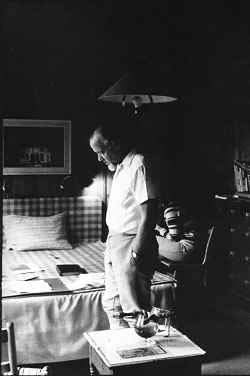
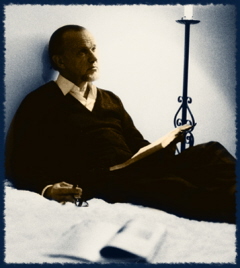





 More Articles…
 Print
Print Facebook
 Twitter
 Photo of Richard Tuttle courtesy of Sperone Westwater.


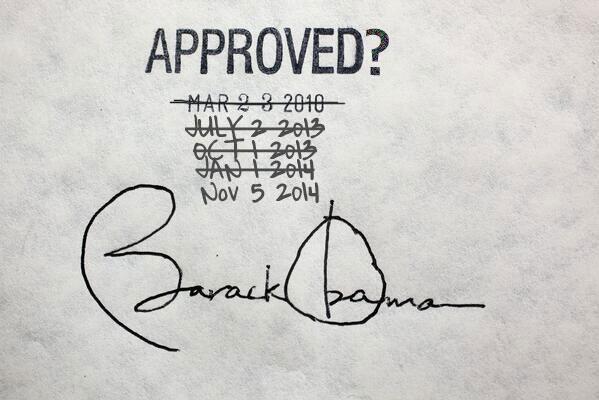





 The Daily Hatch