Monthly Archives: February 2014

“Schaeffer Sunday” Article by Wesley Strackbein “Past Failures and Future Resolves in the Battle for Human Life” (includes video TRUTH AND HISTORY)

I have never read such a great overview of the pro-life movement as the one below. I learned a lot from it and wanted to pass it on to you.

I truly believe that many of the problems we have today in the USA are due to the advancement of humanism in the last few decades in our society. Ronald Reagan appointed the evangelical Dr. C. Everett Koop to the position of Surgeon General in his administration. He partnered with Dr. Francis Schaeffer in making the video below. It is very valuable information for Christians to have.  Actually I have included a video below that includes comments from him on this subject.

___________

Francis Schaeffer: “Whatever Happened to the Human Race” (Episode 5) TRUTH AND HISTORY

Published on Oct 7, 2012 by

_________

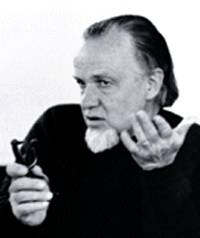
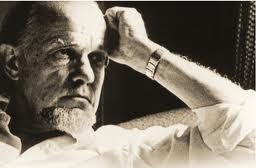
File:Francis Schaeffer.jpg

Francis Schaeffer.

Past Failures and Future Resolves 
in the Battle for Human Life

By Wesley Strackbein

America’s holocaust continues.

Today more than 3,000 children will be murdered in the womb through surgical abortion. These dead children will be heaped on the more than 54 million others who have preceded them since the darkest day in American legal history which occurred when the Roe v. Wade decision was rendered by the U.S. Supreme Court. Forty years ago today, our nation’s highest court legally sanctioned the killing of the unborn.

As we consider this bloody slaughter, it behooves us to ask three key questions: How did Roe v. Wade come about? What has been the Church’s response over the last forty years? And, where do we go from here?

The Legal Backdrop for Roe: 
The Abandonment of Original Intent

In examining America’s legal history, it is clear that Roe v. Wade did not arise out of a vacuum. The decision flowed from a legal trend that had been in motion for more a hundred years in which the meaning of the U.S. Constitution was being increasingly redefined based on the view that it was an “evolving document.” Rather than defending its original intent as envisioned by the drafters of the Constitution, the black robed judges who presided over our nation’s courts were interpreting it to suit their own personal notions of what they deemed best for society.

This trend is pointedly illustrated in a seminal case that the Supreme Court handed down in 1965, eight years before Roe was decided — Griswold v. Connecticut.

Doug Phillips, a constitutional attorney and the founder of Vision Forum Ministries, notes the significance of this earlier landmark decision: “You cannot understand Roe unless you understand Griswold, and you cannot understand Griswold unless you understand the changing nature of judicial interpretation.”

In Griswold v. Connecticut, the Supreme Court struck down a law which forbade contraception use on the basis of “the right to privacy,” a doctrine found nowhere in the Constitution, yet one the justices derived from the “penumbras” and “emanations” of the document.

Phillips explains the Court’s strategy in invoking these terms in Griswold:

[The court] is speaking of little glowing halos around the broad-sweeping principles that are somehow emitted from the Constitution. In point of fact, they are telling us there is nothing in the Constitution that grants ‘the right to privacy,’ but it sure seems like it should be there. . . . What happened in Griswold laid the groundwork for Roe and the murder of unborn children.

The Hammer Falls: 
“Unborn Children are Not Persons”

The case of Roe v. Wade involved a suit made on behalf of Norma McCorvey (under the alias of “Jane Roe ”) who was unable to secure an abortion in Texas based on the state’s law at the time. While she had already given birth to her child by the time the case was heard, the Supreme Court ruled in favor of McCorvey on appeal in a 7-2 decision, invoking the “right of privacy” rationale that had been invented in Griswold.

While the Court was less than confident in defending the “right of privacy” doctrine from the Constitution itself, it nonetheless expanded it to include the right of a mother to murder her unborn child. In writing the majority opinion for the court, Justice Harry Blackmun stated:

[The] right of privacy, whether it be founded in the Fourteenth Amendment’s concept of personal liberty and restrictions upon state action, as we feel it is, or . . . in the Ninth Amendment’s reservation of rights to the people, is broad enough to encompass a woman’s decision whether or not to terminate her pregnancy.

Even as the justices in the majority invoked the Fourteenth Amendment as a purported “source” for the so-called “right to privacy,” the Supreme Court did an in-run around the Amendment’s Equal Protection Clause — which stipulates that “no state shall . . . deny to any person within its jurisdiction the equal protection of the laws” — by denying the personhood of children in the womb.

Blackmun wrote: “the word ‘person,’ as used in the Fourteenth Amendment, does not include the unborn.”

Justice Byron White and William Rehnquist — the two judges who opposed the decision — took the majority’s reasoning to task in their dissent:

I find nothing in the language or history of the Constitution to support the Court’s judgment. The Court simply fashions and announces a new constitutional right for pregnant women and, with scarcely any reason or authority for its action, invests that right with sufficient substance to override most existing state abortion statutes.

The Cultural Landscape: 
A Weak and Abdicated Church

Though the legal trends that lead to Roe v. Wade are important to examine, even more important is where the Church was during this time.

Dan Becker, President of Georgia Right to Life and Field Director of Personhood USA, puts the matter bluntly: “How did [Roe] come about? It came about because of the absence of the Church.”

Doug Phillips agrees:

The Church completely abdicated from speaking to the legal, ethical, and biblical principles that apply to culture and to law. When Roe was ultimately declared by the Court, many Evangelical Christians had nothing to say to it, because they didn’t have a biblical worldview. For more than a century, the Church had increasingly resorted to a form of religious pietism which had no practical application to life and important cultural issues. The result was lamentable — the withdraw of the Church from every area of society meant the demise of our culture and our law system.

Dr. George Grant, a pro-life advocate who has written prolifically in defense of the unborn, offers a similar view.

As the Church, Grant states, “we were not preaching the Word of God, we were not training and equipping disciples, we were not reinforcing and strengthening the family and the other spheres.”

This led, argues Grant, to “a Church that had so marginalized itself intellectually and culturally that it was constitutionally incapable of speaking to the problems [of the day] articulately. That set up Roe v. Wade.”

Delving deeper, Phillips points to the blights of social Darwinism, utilitarianism, and radical feminism as key cultural forces that paved the way for Roe.

While the Church, for example, has historically embraced the sanctity of life from conception to death and welcomed children as a blessing, American Evangelicals in the twentieth century forsook these roots for a selfish course rooted in humanistic, evolutionary theory. Phillips observes:

The Church embraced the basic tenets of Margaret Sanger’s vision for the eugenic age which said that some people life is not worth living; that men can lawfully manipulate their reproduction; and that some babies shouldn’t be brought into this world.

One result attending this shift was that, by the middle decades of the twentieth century, mainline evangelical churches had embraced contraceptive use as a legitimate practice. In 1960, the Church accepted use of the Pill, which is known to act as an abortifacient. This occurred despite the fact that, prior to the last century, the orthodox Church has universally condemned contraceptive use as a selfish perversion of God’s design for human intimacy between husband and wife.

To paraphrase Hosea’s indictment: We sowed the wind — and when Roe was handed down on January 22, 1973 — we reaped the worldwind.

The Church Awakes: 
Whatever Happened to the Human Race?

Though the pall of death loomed over America’s unborn with the Roedecision, the Evangelical Church was not quick to wake from its slumber. While Roman Catholics were faster on point in the battle over the sanctity of human life, Protestants throughout the ’70s largely stayed on the sidelines.

Many longstanding leaders in the pro-life movement who are still active today credit Francis Schaeffer as a key prod who prompted Protestants to enter the fight. Dr. George Grant notes the significance of Schaeffer’s 1979 book and accompanying video, Whatever Happened to the Human Race?, which confronted the issues of abortion, euthanasia, and infanticide; as well as Schaeffer’s best-selling book, A Christian Manifesto, released in 1981, as works that spurred many Evangelicals to engage the arena in defense of life.

Dan Becker of Georgia Right to Life offers these comments:

“Francis Schaeffer was the one who brought most of the evangelical church to the pro-life movement itself back in the early ’80s. It was totally absent from the culture completely, prior to anything having to do with the sanctity of life. It wasn’t on the radar of [most] churches” until Schaeffer brought it to their attention.

Jim Zes, a Reformed Baptist who has been fighting for the sanctity of life for many years in the St. Louis area, remembers a billboard Schaeffer took out in a major Florida city that said, in essence, “Abortions clinics are open with permission by the Church of Jesus Christ.”

Schaeffer’s salvo on the Church’s lethargy is a theme that has motivated Zes to remain engaged in this battle for the long haul.

The Roaring ’80s: 
Progress and Compromise

As the ’80s progressed, pro-life Evangelicals gained more traction, notoriety, and influence. 1988 was a particularly noteworthy year for the movement on several fronts. On the fifteenth anniversary of Roe, Dr. George Grant published Grand Illusions, an earth-shattering expose of the legacy of Planned Parenthood that became a best-seller which has since been reissued in numerous languages and editions.

Also that year, Operation Rescue, under Randall Terry’s leadership, staged a series of controversial abortion clinic blockades in Atlanta, Georgia, surrounding the Democratic National Convention which resulting in more than 1,200 arrests.

Yet while the pro-life movement gained remarkable ascendancy and public awareness at this time, it was during this same general period that the movement on the whole took a turn for the worse, in terms of its core commitments.

The derailment occurred in conjunction with proposed changes to the Hyde Amendment, which since 1976 had banned federal Medicaid funding for abortion. In 1981, pro-lifers strenuously fought for rape, incest, and health of the mother exceptions of the mother to be dropped from the Hyde Amendment and won. Throughout the ’80s, the advocacy of such exceptions was deemed unacceptable by the major pro-life organizations, both Catholic and Protestant.

However, as the ’80s were coming to a close, the debate over the Hyde Amendment was reopened on Capitol Hill, and the exceptions of rape and incest came to the fore of the discussion.

“This led to a debate within the [pro-life] movement about whether or not it would damage the underlying presupposition that all life is sacred and should be protected as an inalienable right,” notes Dan Becker.

In a radical departure, the U.S. Conference of Catholic Bishops, the National Right to Life Committee, and other leading pro-life organizations signed off on the changes and created a “new normal” of what it means to be pro-life — that a politician or other operative in the political arena can support the murder of one category of children and still be deemed “pro-life.”

Looking back on this titanic sea-change, Becker notes the fall-out that resulted: “By abandoning the basic Christian premise of imago Dei, we invited a pragmatism based on natural law. We compromised and capitulated to the point in the pro-life movement where it became ineffectual—both politically and as a preservative agent as salt.”

Becker explains the folly of the rape and incest exception according to God’s law, a principle long recognized in English common law:

Deuteronomy 24:16 says that a child shall not be put to death for the crimes of its father. That means that if a rapist commits an act of violence against a woman, and she conceives, we [must] protect that child, and we [must] advocate that that child should not pay the penalty for its father’s sin.

In assenting to the Hyde Amendment exceptions, a Pandora’s box of compromise was opened. From it came a broader unbiblical strategy that included support of parental notification laws, 24-hour waiting periods, and various other legislation that conceded the premise of the debate.

Pro-lifers were now supporting bills which said in so many words, “You can kill your child, so long as your parents approve; you can kill your child, so long as you wait 24 hours before the knife falls.”

Incrementalism: The Good and the Bad

Many critical of such compromises don’t suggest that incrementalism in the fight for of life is wrong in all cases, but that incrementalism should only be pursued when the core principles of the sanctity of all human life are maintained, not undermined.

Doug Phillips remarks: “If we can pass pro-life laws that don’t ratify the foundation of abortion’s ‘lawfulness,’ or reinforce the wickedness of abortion as a practice, this is something worth pursuing.”

Dan Becker notes that creating tension over competing legal precedents has warrant when done on the right terms: “You can identify a class of human life that you can protect, as long as you don’t name a physical class that you won’t protect, and therefore become complicit.”

In considering positive examples of incrementalism, Dr. Grant commends William Wilberforce for consideration: “When you look at the incrementalism strategies of someone like a Wilberforce . . . the incrementalism reforms were never couched in such a way as to concede the original premise.”

Grant also highlights the wrong approach to incrementalism that officials in Amsterdam took in response to prostitution, “They said we are not going to be able to ban prostitution, so we’ll isolate it and stigmatize it. So what happens then is that it becomes a tourist attraction. You can’t concede the premise of an opponent’s argument.”

Phillips warns of the danger of so-called “victories” that concede the foundation:

The idea that we are accomplishing a victory by ratifying the execution of children on the condition that the mother or father of the baby have sort of warning of the emotional or psychological effect that may occur if they murder their child, or that a cancerous effect may result — that it’s okay to kill as long as we “notify” — is simply horrific. It’s an ethical nightmare which reinforces the very thing we are fighting against.

Score-Card Gamesmanship: 
Pro-Death is the New Pro-Life

A prominent feature of the compromised political strategy employed by Evangelical pro-life groups is how they have score-carded candidates on the issues.

The National Right to Life Committee has been particularly notorious in this regard. The NRLC, for example, endorsed Republican presidential candidates Sen. John McCain and Gov. Mitt Romney as “pro-life” when their past track records as well as contemporary statements provided no defensible basis for such recognition. Both McCain and Romney have consistently supported the murder of children conceived by rape and incest, and have vocally advocated weakening the Republican Party Platform on abortion, among other troubling actions on their part that have threatened the sanctity of life.

But it’s not just presidential races where National Right to Life has gone askew. Last year, the NRLC got well-deserved blowback from the Boston Globe when they spent $45,000 sending out mailers in support of Sen. Scott Brown, who openly supports legalized abortion.

Globe columnist Yvonne Abraham leveled the boom on NRLC: “Even though Brown has been loudly proclaiming that he favors abortion rights, the antiabortion group gave him a 100 percent rating in his first year as a senator, and an 80 percent rating in his second. And it continues to shower him with paper roses.”[1]

The flier that the NRLC mailed in support of Sen. Brown showed a picture of a fetus, a little baby, and an older woman. The flier’s headline was hardly subtle: “It’s time to take America back. . . for LIFE!”[2]

When confronted on this hypocrisy, David O’Steen, executive director of the National Right to Life, admitted that the NRLC sometime supports candidates who favor legalized abortion.

“He is pro-choice,” O’Steen stated. But “if you look at the two candidates, Elizabeth Warren’s position is very extreme. She can only be characterized as pro-abortion.”[3]

Dr. George Grant comments on this trend which he has observed for more than two decades.

The reality is that Al Gore was never pro-life. When he was a [U.S.] rep and then a Senator [from Tennessee], he was never the pro-life, southern Conservative he was made out to be,” who then “converted” to become pro-choice when he was tagged to run as Bill Clinton’s running mate in 1992.

“It was the silly scorecards that took such a shallow representations of [Gore’s] voting record and declared him to be pro-life,” remarks Grant. “But he was always . . . rooted in Bismarkian, Nietzschean, real politick.”

The way a policy group scores candidates reveals their priorities, Grant maintains.

“Most scorecards emerge from institutions that have agendas, and the scorecards usually say more about the agenda of the organization than the candidates themselves,” he notes. “The onus is on pastors to inform their congregations that this is the case.”

This said, Grant does see some value in scorecards, but encourages them to be used only as a first to step getting an education about a particular candidate or candidates, as they have inherent limitations.“There are always hazards to any kind of shorthand, any kind of abbreviated declaration.”

Doug Phillips argues that policy groups should stop misleading others about candidates’ positions when life is at stake and simply tell the truth. “What we need to be saying is not, ‘This candidate is pro-life with exceptions; but this candidate is pro-death with exceptions. This person believes that it’s okay to kill some babies, but not all of them.’”

Appealing to the fundamentals, Phillips offers this as the benchmark in endorsing candidates for public office:

We should never support a candidate who supports the murder of any children through abortion. And until our candidates know that, they are going to keep saying and doing only as much as they have to in order to appease us.

Back on Track: 
Saving the 100, Not Just the 99

Despite negative trends among various leading pro-life groups, the leadership of a number of state organizations has openly repented of past compromise and purposed to return to biblical foundations and definitions in the battle for human life.

Among them is Georgia Right to Life who, in the year 2000, jettisoned the “rape and incest exception” as an acceptable “pro-life” position and has self-consciously sought to return the national debate back to the foundational argument of “personhood” that was a main focus of the pro-life movement prior to the Hyde Amendment compromise.

Tennessee and Alabama’s pro-life groups have followed suit in rejecting “rape and incest exception” in their candidate endorsement policy.

Dan Becker, who is the current president of Georgia Right to Life, notes the blessing that has occurred since GRL made this change twelve years ago.

“Georgia is the only state in the nation where all nine statewide offices that are elected by the voters statewide are pro-life without exception,” he observes. “We have gone from the 50th most protected state in the nation to the 9th.”

Becker adds this salvo: “No longer do we say, ‘We’re going to save the 99 and pray for the 1.’ We’re going to save all 100.”

While GRL’s position is not without major detractors in the movement, Becker is positive about the opportunities that their stand for principle has opened up for them.

“We are impacting the movement in ways that are exciting, new, and effective,” he remarks. “I’ve [now] been tasked to implement the Georgia model in other states. The [fight for personhood] is the new paradigm of pro-life activity for the 21st Century.”

Personhood Is the Battle: 
The Challenges that Lie Ahead

Becker’s insistence that “personhood” return to the center of the debate is based squarely on principle — yet it also anticipates the future horrors on the horizon that will come if this standard is not thoroughly defended and upheld. And the battleground, Becker maintains, is far broader than simply abortion.

“Because we’ve only been anti-abortion — instead of thoroughly defending the doctrine of imago Dei [in all that it entails] — we are only operating on one cylinder, while the culture is running on twelve cylinders,” Becker notes.

He then explains the implications:

We have ceded a lot of battleground in the emerging technologies and on the issue of personhood for the elderly. Because of the burgeoning [aging Baby Boomers], we will see the fight for personhood become increasing important for the elderly, as their personhood is denied through rationed healthcare decisions that define who is protected under the law and who is not.

Great challenges already exist in the field of genetics, as arguments for trans-humanism are being advanced by medical practitioners and ethicists who deny that man is created in God’s image with certain inherent limitations that he, as a creature, is not free to manipulate.

“’When are we human?’ is being debated — what is a human being? — the definition is up for grabs right now,” remarks Becker. “What if we’re okay with trans-genic animal/human hybrids, and we start tinkering with that in our law to allow for it?”

He also comments on the popularity of Spiderman, the Hulk, Ironman, etc. and states that the genetic-manipulation and “enhancements” of these Comic Book icons so popular on the big screen reflect part of a real, raging debate in academia that is hardly fiction.

As complicated and thorny as all of this is, Becker argues that the answer at its core is really quite simple.

“It’s the doctrine of imago Dei,” he says. “As a culture and as a political system . . . [we must call on all] to recognize what God has already granted — an inalienable right to life based on the doctrinal teaching we have understood that has shaped Western history two or three times over the last two thousand years.”

A Blueprint for Victory: 
Humble Repentance for Our Sins

The last forty years have been one of horror and bloodshed for the unborn.

The question now is: Where do we go from here?

Dr. George Grant asserts that the Evangelical Church must begin by getting its priorities straight.

Commenting on the recent Newtown massacre, he laments, “More Christians are concerned that their Second Amendment gun rights are being taken away than seeing the inconsistencies in this rhetoric, given the murder today of 3,300 children, and tomorrow of 3,300 children, and the next day of 3,300 children.”

Jim Zes emphasizes the need for the Church to not only focus on missions of mercy, such as crisis pregnancies centers and adoption — both of which play an important role in Christian outreach — but for the Church to reclaim its prophetic voice and, once again, call good, “good” and evil “evil” and to confront the culture courageously.

Zes says we must affirm God’s law as the standard as part of a clear Gospel message of repentance and hope.

Dr. Grant agrees with this assessment, but says our voice of confrontation to the culture should only sound once we as the Church confess our own sins and repent. “The need in our day is to not so much practice Jeremiads, but Nehemiads.”

He then explains the quandary. “There’s much to lament; there’s much to critique in our culture,” he confesses. “[Y]et the Church is in no position to give our culture Jeremiads because we are so compromised. We can’t give Jeremiads of substance because we are guilty of virtually anything we might lament.”

Our first step, Grant asserts, is for Christians “to come to the ruin and cry out to Almighty God in all humility, as Nehemiah does in Nehemiah 1, and get busy with the hard work of cleaning up the rubble.”

Grant’s main point is this: We can’t take our axe to the culture’s idols until we’ve cleaned up our own house.

Doug Phillips offers these sobering words in closing the discussion: “How can we possibly expect to win the battle for life when we are killing our own children in the womb through abortifacient contraception-when we’re refusing to take an uncompromising stand for all of life?”

Hosea’s pointed words are timely for today’s wayward Church:

Come, and let us return unto the LORD: for he hath torn, and he will heal us; he hath smitten, and he will bind us up. . . . Then shall we know, if we follow on to know the LORD: his going forth is prepared as the morning; and he shall come unto us as the rain, as the latter and former rain unto the earth.” (Hosea 6:1-3)

As we battle for the sanctity of all human life, we as the Church must forsake our wickedness, fall on our face in humility, and repent.

Only then should we expect God’s favor on our land.

 
[1] Yvonne Abraham, “Senator Brown trying to have it both ways,” Boston Globe, October 28, 2012.
[2] Noah Bierman, “Antiabortion group sends out mailers for Scott Brown, who favors legalized abortion,” Boston Globe, October 25, 2012.
[3] Ibid.

__________

Related posts:

Francis Schaeffer’s prayer for us in USA

 Francis Schaeffer: “Whatever Happened to the Human Race” (Episode 1) ABORTION OF THE HUMAN RACE Published on Oct 6, 2012 by AdamMetropolis The 45 minute video above is from the film series created from Francis Schaeffer’s book “Whatever Happened to the Human Race?” with Dr. C. Everett Koop. This book  really helped develop my political views […]


Francis Schaeffer’s “How should we then live?” Video and outline of episode 10 “Final Choices” (Schaeffer Sundays)

E P I S O D E 1 0   Dr. Francis Schaeffer – Episode X – Final Choices 27 min FINAL CHOICES I. Authoritarianism the Only Humanistic Social Option One man or an elite giving authoritative arbitrary absolutes. A. Society is sole absolute in absence of other absolutes. B. But society has to be […]

Francis Schaeffer’s “How should we then live?” Video and outline of episode 9 “The Age of Personal Peace and Affluence” (Schaeffer Sundays)

E P I S O D E 9 Dr. Francis Schaeffer – Episode IX – The Age of Personal Peace and Affluence 27 min T h e Age of Personal Peace and Afflunce I. By the Early 1960s People Were Bombarded From Every Side by Modern Man’s Humanistic Thought II. Modern Form of Humanistic Thought Leads […]

Francis Schaeffer’s “How should we then live?” Video and outline of episode 8 “The Age of Fragmentation” (Schaeffer Sundays)

E P I S O D E 8 Dr. Francis Schaeffer – Episode VIII – The Age of Fragmentation 27 min I saw this film series in 1979 and it had a major impact on me. T h e Age of FRAGMENTATION I. Art As a Vehicle Of Modern Thought A. Impressionism (Monet, Renoir, Pissarro, Sisley, […]

Francis Schaeffer’s “How should we then live?” Video and outline of episode 7 “The Age of Non-Reason” (Schaeffer Sundays)

E P I S O D E 7 Dr. Francis Schaeffer – Episode VII – The Age of Non Reason I am thrilled to get this film series with you. I saw it first in 1979 and it had such a big impact on me. Today’s episode is where we see modern humanist man act […]

Francis Schaeffer’s “How should we then live?” Video and outline of episode 6 “The Scientific Age” (Schaeffer Sundays)

E P I S O D E 6 How Should We Then Live 6#1 Uploaded by NoMirrorHDDHrorriMoN on Oct 3, 2011 How Should We Then Live? Episode 6 of 12 ________ I am sharing with you a film series that I saw in 1979. In this film Francis Schaeffer asserted that was a shift in […]

Francis Schaeffer’s “How should we then live?” Video and outline of episode 5 “The Revolutionary Age” (Schaeffer Sundays)

E P I S O D E 5 How Should We Then Live? Episode 5: The Revolutionary Age I was impacted by this film series by Francis Schaeffer back in the 1970′s and I wanted to share it with you. Francis Schaeffer noted, “Reformation Did Not Bring Perfection. But gradually on basis of biblical teaching there […]

Francis Schaeffer’s “How should we then live?” Video and outline of episode 4 “The Reformation” (Schaeffer Sundays)

Dr. Francis Schaeffer – Episode IV – The Reformation 27 min I was impacted by this film series by Francis Schaeffer back in the 1970′s and I wanted to share it with you. Schaeffer makes three key points concerning the Reformation: “1. Erasmian Christian humanism rejected by Farel. 2. Bible gives needed answers not only as to […]

“Schaeffer Sundays” Francis Schaeffer’s “How should we then live?” Video and outline of episode 3 “The Renaissance”

Francis Schaeffer’s “How should we then live?” Video and outline of episode 3 “The Renaissance” Francis Schaeffer: “How Should We Then Live?” (Episode 3) THE RENAISSANCE I was impacted by this film series by Francis Schaeffer back in the 1970′s and I wanted to share it with you. Schaeffer really shows why we have so […]

Francis Schaeffer’s “How should we then live?” Video and outline of episode 2 “The Middle Ages” (Schaeffer Sundays)

  Francis Schaeffer: “How Should We Then Live?” (Episode 2) THE MIDDLE AGES I was impacted by this film series by Francis Schaeffer back in the 1970′s and I wanted to share it with you. Schaeffer points out that during this time period unfortunately we have the “Church’s deviation from early church’s teaching in regard […]

Francis Schaeffer’s “How should we then live?” Video and outline of episode 1 “The Roman Age” (Schaeffer Sundays)

Francis Schaeffer: “How Should We Then Live?” (Episode 1) THE ROMAN AGE   Today I am starting a series that really had a big impact on my life back in the 1970′s when I first saw it. There are ten parts and today is the first. Francis Schaeffer takes a look at Rome and why […]

Francis Schaeffer: “Whatever Happened to the Human Race” (Episode 5) TRUTH AND HISTORY

Francis Schaeffer: “Whatever Happened to the Human Race” (Episode 5) TRUTH AND HISTORY Published on Oct 7, 2012 by AdamMetropolis This crucial series is narrated by the late Dr. Francis Schaeffer and former Surgeon General Dr. C. Everett Koop. Today, choices are being made that undermine human rights at their most basic level. Practices once […]

Francis Schaeffer: “Whatever Happened to the Human Race” (Episode 4) THE BASIS FOR HUMAN DIGNITY

The opening song at the beginning of this episode is very insightful. Francis Schaeffer: “Whatever Happened to the Human Race” (Episode 4) THE BASIS FOR HUMAN DIGNITY Published on Oct 7, 2012 by AdamMetropolis This crucial series is narrated by the late Dr. Francis Schaeffer and former Surgeon General Dr. C. Everett Koop. Today, choices […]

Francis Schaeffer: “Whatever Happened to the Human Race” (Episode 3) DEATH BY SOMEONE’S CHOICE

Francis Schaeffer: “Whatever Happened to the Human Race” (Episode 3) DEATH BY SOMEONE’S CHOICE Published on Oct 6, 2012 by AdamMetropolis This crucial series is narrated by the late Dr. Francis Schaeffer and former Surgeon General Dr. C. Everett Koop. Today, choices are being made that undermine human rights at their most basic level. Practices […]

Francis Schaeffer: “Whatever Happened to the Human Race?” (Episode 2) SLAUGHTER OF THE INNOCENTS

Francis Schaeffer: “Whatever Happened to the Human Race?” (Episode 2) SLAUGHTER OF THE INNOCENTS Published on Oct 6, 2012 by AdamMetropolis This crucial series is narrated by the late Dr. Francis Schaeffer and former Surgeon General Dr. C. Everett Koop. Today, choices are being made that undermine human rights at their most basic level. Practices […]


Francis Schaeffer: “Whatever Happened to the Human Race” (Episode 1) ABORTION OF THE HUMAN RACE

It is not possible to know where the pro-life evangelicals are coming from unless you look at the work of the person who inspired them the most. That person was Francis Schaeffer.  I do care about economic issues but the pro-life issue is the most important to me. Several years ago Adrian Rogers (past president of […]

The following essay explores the role that Francis Schaeffer played in the rise of the pro-life movement. It examines the place of How Should We Then Live?, Whatever Happened to the Human Race?, and A Christian Manifesto in that process.

This essay below is worth the read. Schaeffer, Francis – “Francis Schaeffer and the Pro-Life Movement” [How Should We Then Live?, Whatever Happened to the Human Race?, A Christian Manifesto] Editor note: <p> </p> [The following essay explores the role that Francis Schaeffer played in the rise of the pro-life movement.  It examines the place of […]

Who was Francis Schaeffer? by Udo Middelmann

Great article on Schaeffer. Who was Dr. Francis A. Schaeffer? By Francis Schaeffer The unique contribution of Dr. Francis Schaeffer on a whole generation was the ability to communicate the truth of historic Biblical Christianity in a way that combined intellectual integrity with practical, loving care. This grew out of his extensive understanding of the Bible […]

“Sanctity of Life Saturday” Francis Schaeffer’s wife Edith passes away on Easter weekend 2013 Part 18 (includes pro-life editorial cartoon)

The Francis and Edith Schaeffer Story Pt.1 – Today’s Christian Videos

The Francis and Edith Schaeffer Story – Part 3 of 3

Francis Schaeffer: “Whatever Happened to the Human Race” (Episode 1) ABORTION OF THE HUMAN RACE

Published on Oct 6, 2012 by

________________

Picture of Francis Schaeffer and his wife Edith from the 1930′s above. I was sad to read about Edith passing away on Easter weekend in 2013. I wanted to pass along this fine article below.

The day I met Edith Schaeffer (1914-2013), and the note she penned to me.

April 1, 2013 By 2 Comments

On March 30, 2013, Edith Schaeffer died at the age of 98. Born on November 3, 1914, she was the widow of Francis A. Schaeffer.  (November 3 is my birthday as well).  In my book, Return to Rome: Confession of An Evangelical Catholic (Brazos Press, 2009), I tell of my encounter with Mrs. Schaeffer at a bookstore in New York City on April 29, 1986, when I was 25 years old:

During my second year in New York City I had the opportunity to meet Edith Schaeffer, the widow of the Presbyterian theologian, Francis A. Schaeffer (1912–1984), whose published works were influential in my decision to pursue graduate work in philosophy. Mrs. Schaeffer was in New York for a book-signing event at the massive Christian Book Distributors retail outlet in Midtown Manhattan. When I arrived there in the mid-afternoon, the crowds had dissipated and Mrs. Schaeffer was sitting alone at a table. I introduced myself to her and told her about her late husband’s influence on me. She seemed sincerely interested in my story. She then kindly asked if I wanted her to sign one of her books. I said “yes,” and handed her a

Edith and Francis Schaeffer

copy of Common Sense Christian Living. She then opened up the book to the first blank page and proceeded to draw a sketch of the Swiss Alps, with birds flying between the mountains and a small flower at the base. (For years, her and her husband lived in Switzerland where they founded the ministry, L’Abri). She then wrote in large letters [photograph of the inscription is below]:

April 29, 1986

To Francis with love, Edith Schaeffer. I’ve written many notes to another Francis—-I do pray your life may be as significant in History.

It was only when I reread Mrs. Schaeffer’s inscription while writing this book that I realized that the day of her written prayer for me is the same day that in 2007 I was publicly received back into the Catholic Church, April 29. This is one of those “coincidences” that really spooks me, but in a good way.


Great prolife poster:

(Francis did a great job in his film series “How Should we then live?” in looking at how humanism has affected art and culture in the Western World in the last 2000 years. My favorite episodes include his study of the Renaissance, the Revolutionary age, the age of Nonreason, and the age of Fragmentation.)

Related posts:

Francis Schaeffer’s “How should we then live?” Video and outline of episode 10 “Final Choices” (Schaeffer Sundays)

E P I S O D E 1 0   Dr. Francis Schaeffer – Episode X – Final Choices 27 min FINAL CHOICES I. Authoritarianism the Only Humanistic Social Option One man or an elite giving authoritative arbitrary absolutes. A. Society is sole absolute in absence of other absolutes. B. But society has to be […]

Francis Schaeffer’s “How should we then live?” Video and outline of episode 9 “The Age of Personal Peace and Affluence” (Schaeffer Sundays)

E P I S O D E 9 Dr. Francis Schaeffer – Episode IX – The Age of Personal Peace and Affluence 27 min T h e Age of Personal Peace and Afflunce I. By the Early 1960s People Were Bombarded From Every Side by Modern Man’s Humanistic Thought II. Modern Form of Humanistic Thought Leads […]

Francis Schaeffer’s “How should we then live?” Video and outline of episode 8 “The Age of Fragmentation” (Schaeffer Sundays)

E P I S O D E 8 Dr. Francis Schaeffer – Episode VIII – The Age of Fragmentation 27 min I saw this film series in 1979 and it had a major impact on me. T h e Age of FRAGMENTATION I. Art As a Vehicle Of Modern Thought A. Impressionism (Monet, Renoir, Pissarro, Sisley, […]

Francis Schaeffer’s “How should we then live?” Video and outline of episode 7 “The Age of Non-Reason” (Schaeffer Sundays)

E P I S O D E 7 Dr. Francis Schaeffer – Episode VII – The Age of Non Reason I am thrilled to get this film series with you. I saw it first in 1979 and it had such a big impact on me. Today’s episode is where we see modern humanist man act […]

Francis Schaeffer’s “How should we then live?” Video and outline of episode 6 “The Scientific Age” (Schaeffer Sundays)

E P I S O D E 6 How Should We Then Live 6#1 Uploaded by NoMirrorHDDHrorriMoN on Oct 3, 2011 How Should We Then Live? Episode 6 of 12 ________ I am sharing with you a film series that I saw in 1979. In this film Francis Schaeffer asserted that was a shift in […]

Francis Schaeffer’s “How should we then live?” Video and outline of episode 5 “The Revolutionary Age” (Schaeffer Sundays)

E P I S O D E 5 How Should We Then Live? Episode 5: The Revolutionary Age I was impacted by this film series by Francis Schaeffer back in the 1970′s and I wanted to share it with you. Francis Schaeffer noted, “Reformation Did Not Bring Perfection. But gradually on basis of biblical teaching there […]

Francis Schaeffer’s “How should we then live?” Video and outline of episode 4 “The Reformation” (Schaeffer Sundays)

Dr. Francis Schaeffer – Episode IV – The Reformation 27 min I was impacted by this film series by Francis Schaeffer back in the 1970′s and I wanted to share it with you. Schaeffer makes three key points concerning the Reformation: “1. Erasmian Christian humanism rejected by Farel. 2. Bible gives needed answers not only as to […]

“Schaeffer Sundays” Francis Schaeffer’s “How should we then live?” Video and outline of episode 3 “The Renaissance”

Francis Schaeffer’s “How should we then live?” Video and outline of episode 3 “The Renaissance” Francis Schaeffer: “How Should We Then Live?” (Episode 3) THE RENAISSANCE I was impacted by this film series by Francis Schaeffer back in the 1970′s and I wanted to share it with you. Schaeffer really shows why we have so […]

Francis Schaeffer’s “How should we then live?” Video and outline of episode 2 “The Middle Ages” (Schaeffer Sundays)

  Francis Schaeffer: “How Should We Then Live?” (Episode 2) THE MIDDLE AGES I was impacted by this film series by Francis Schaeffer back in the 1970′s and I wanted to share it with you. Schaeffer points out that during this time period unfortunately we have the “Church’s deviation from early church’s teaching in regard […]

Francis Schaeffer’s “How should we then live?” Video and outline of episode 1 “The Roman Age” (Schaeffer Sundays)

Francis Schaeffer: “How Should We Then Live?” (Episode 1) THE ROMAN AGE   Today I am starting a series that really had a big impact on my life back in the 1970′s when I first saw it. There are ten parts and today is the first. Francis Schaeffer takes a look at Rome and why […]

FRANCIS SCHAEFFER ANALYZES ART AND CULTURE Part 9 Jasper Johns (Feature on artist Cai Guo-Qiang )

Why am I doing this series FRANCIS SCHAEFFER ANALYZES ART AND CULTURE? John Fischer probably expressed it best when he noted:

Schaeffer was the closest thing to a “man of sorrows” I have seen. He could not allow himself to be happy when most of the world was desperately lost and he knew why. He was the first Christian I found who could embrace faith and the despair of a lost humanity all at the same time. Though he had been found, he still knew what it was to be lost.

Schaeffer was the first Christian leader who taught me to weep over the world instead of judging it. Schaeffer modeled a caring and thoughtful engagement in the history of philosophy and its influence through movies, novels, plays, music, and art. Here was Schaeffer, teaching at Wheaton College about the existential dilemma expressed in Michelangelo Antonioni’s 1966 film, Blowup, when movies were still forbidden to students. He didn’t bat an eye. He ignored our legalism and went on teaching because he had been personally gripped by the desperation of such cultural statements.

Schaeffer taught his followers not to sneer at or dismiss the dissonance in modern art. He showed how these artists were merely expressing the outcome of the presuppositions of the modern era that did away with God and put all conclusions on a strictly human, rational level. Instead of shaking our heads at a depressing, dark, abstract work of art, the true Christian reaction should be to weep for the lost person who created it. Schaeffer was a rare Christian leader who advocated understanding and empathizing with non-Christians instead of taking issue with them.

In ART AND THE BIBLE  Francis Schaeffer observed, “Modern art often flattens man out and speaks in great abstractions; But as Christians, we see things otherwise. Because God has created individual man in His own image and because God knows and is interested in the individual, individual man is worthy of our painting and of our writing!!”

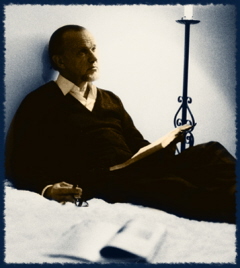
(Francis Schaeffer pictured below)

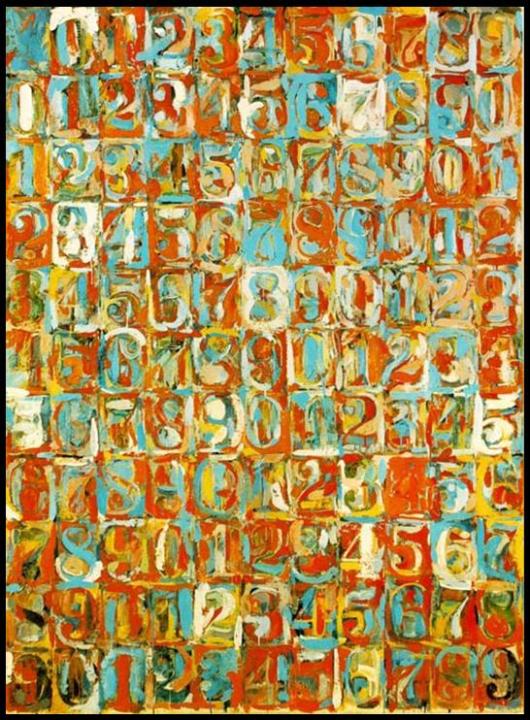
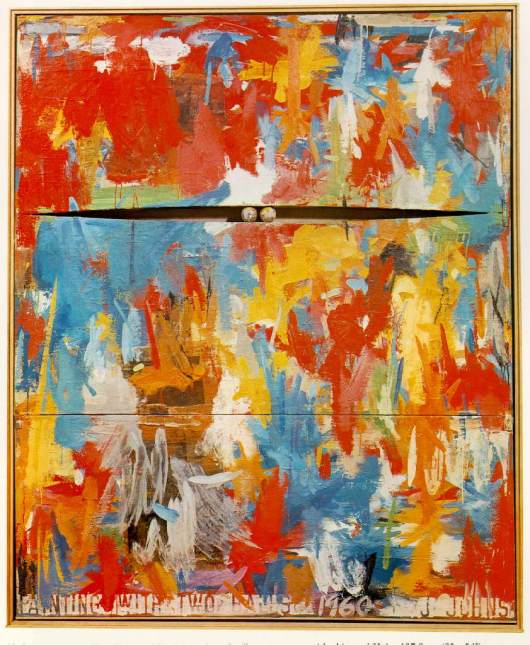
Recently I visited a museum and saw this piece of work by Jasper Johns:

____________

Here is an explanation of the work by the staff of CRYSTAL BRIDGES MUSEUM:

“I DON’T GET IT” : GETTING COMFORTABLE WITH SOME OF CRYSTAL BRIDGES’ MOST CHALLENGING WORKS: JASPER JOHNS

January 8, 2014 by 
Comment on this post
Categories: ArtistsArtworks.

Bookmark and Share

in galleryMuseum guests are sometimes surprised when they draw close to Jasper Johns’s monochromatic painting Alphabets. From a distance it looks like a grid of rectangles painted in shades of gray.  It’s not until the viewer draws close that the letter forms become visible in each block.

They might just as well all be question marks for some visitors.

What on earth was Johns trying to say with this work? 

Jasper Johns “Alphabets” (detail) 1960/1962 Oil on paper mounted on canvas

A close look reveals that the alphabet is repeated, over and over in sequence, from left to right, top to bottom, one letter per square. The letters are styled after those in common stencil patterns, but it’s clear they are painted by hand: some sharp, some almost dissolving into the background, but each letter lined up in regimented rows. In many boxes the paint is thick, the letters seeming almost pressed into the soft surface of the ground. In others the edges of the box are smeared, imprecise.  And yet the overall effect is of a carefully drawn grid of meaningless type. Like old-fashioned rows of dull lead typesetters type: The painting seems full of the potential for meaning, but….what does it mean?

In the middle of the twentieth century, and led by the American Abstract Expressionists, art became increasingly removed from the practice of representation. While the Ab Ex painters eschewed making paintings that looked like something else in favor of large gestures, drips, and splatters intended be spontaneous: to represent the interior emotional life of the artist; other painters sought to strip away all illusion in their work, insisting that a painting be a painting—color, shape, and line in paint on a flat canvas, independent of meaning. The critic Clement Greenberg wrote that “Content is to be dissolved so completely into form that the work of art…cannot be reduced in whole or in part to anything not itself.”

Artists like Johns began to question this approach, and to experiment with ways to create or imply meaning in their work. Johns is best known for his early FLAG PAINTINGS, which also provide a basis for understanding some of the ideas he was working with in Alphabets.  Johns’ representations of the American flag were, indeed, flat paintings; yet they were also fraught with all the many levels and nuances of meaning that a symbol as powerful as a national flag can carry. The paintings were representations of a flag, yes, but also, like actual flags, the works were simply color on cloth: not just the symbol of the thing, but perhaps in a way the thing itself.

Alphabet detail very close

Jasper Johns
“Alphabets” (detail), 1960 / 1962
Oil on paper mounted on canvas

The alphabet painting works in a similar fashion. It is, without a doubt, a painting. The letters and the boxes that contain them are rendered in a highly “painterly” way, emphasizing the fact of the painting as a work of art—hand-crafted using daubs of thick paint on a flat surface. Yet the artist’s exclusive use of gray in the painting is a nod to the black-and-white of print—an oblique reference to the letters as type, not paint, as is the placement of each letter in a box like the lead type once used in printing.

Alphabet detail medium

Jasper Johns “Alphabets” (detail) 1960/1962 Oil on paper mounted on canvas

Johns deliberately selected the alphabet as his subject because it is the basis for all our written language, the building blocks of print (there are those boxes again). And yet the shapes of the letters bear no meaning on their own. Without an understanding of the written code, the letters are just shapes (consider how lost English-language readers feel when faced with a line of Chinese characters, for example). The lines of letters make no words, and yet they are aligned in the familiar order we are taught as children, from a to z, left to right, top to bottom.  It is possible to “read” the painting this way and make sense of it:  Aha! It’s the alphabet!  (Meaning!) This particular sequence of letters, like the stars and stripes of our flag, is heavily loaded with all the potential meanings the alphabet represents, from the simple phrases of Dick and Jane to Man’s Search for Meaning.  And yet, each of the letters is just a letter, devoid of literal meaning.

So:   Is Alphabets just a painting? A representation of a thing?  Or a thing itself?  In a way the painting really IS a big question mark:  How do we glean meaning from a work of art?

Listen in on a conversation between Crystal Bridges President Don Bacigalupi and Creative Director Anna Vernon as they discuss the puzzle of Jasper John’sAlphabets.

Jasper Johns painting below:

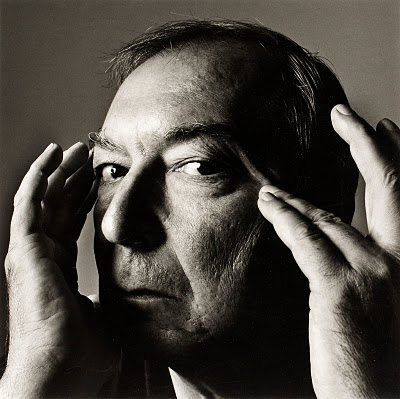
Jasper Johns pictured below:

___________

Francis Schaeffer in his book ART AND THE BIBLE noted:

I am convinced that one of the reasons men spend millions making art museums is not just so that there will be something “aesthetic,” but because the art works in them are an expression of the mannishness of man himself. When I look at the pre-Colombian silver of African masks or ancient Chinese bronzes, not only do I see them as works of art, but I see them as expressions of the nature and character of humanity. As a man, in a certain way they are myself, and I see there the outworking of the creativity that is inherent in the nature of man.

Many modern artists, it seems to me, have forgotten the value that art has in itself. Much modern art is far too intellectual to be great art. I am thinking, for example, of such an artist as Jasper Johns. Many modern artists do not see the distinction between man and non-man, and it is a part of the lostness of modern man that they no longer see value in the work of art. 

Charles Darwin’s view that man is no more than a product of chance of time is the major reason many people have come to believe that there is no real “distinction between man and non-man.” Darwin himself felt this tension. Recently I read the  book Charles Darwin: his life told in an autobiographical chapter, and in a selected series of his published letters  and I noticed that Darwin himself blamed his views of science for making him lose his aesthetic tastes and his enjoyment of the beauty of nature. Below are some quotes from Darwin and some comments on them from the Christian Philosopher Francis Schaeffer.

I have said that in one respect my mind has changed during the last twenty or thirty years. Up to the age of thirty, or beyond it, poetry of many kinds, such as the works of Milton, Gray, Byron, Wordsworth, Coleridge, and Shelley, gave me great pleasure, and even as a schoolboy I took intense delight in Shakespeare, especially in the historical plays. I have also said that formerly pictures gave me considerable, and music very great delight. But now for many years I cannot endure to read a line of poetry: I have tried lately to read Shakespeare, and found it so intolerably dull that it nauseated me. I have also almost lost my taste for pictures or music. Music generally sets me thinking too energetically on what I have been at work on, instead of giving me pleasure. I retain some taste for fine scenery, but it does not cause me the exquisite delight which it formerly did….

This curious and lamentable loss of the higher aesthetic tastes is all the odder, as books on history, biographies, and travels (independently of any scientific facts which they may contain), and essays on all sorts of subjects interest me as much as ever they did. My mind seems to have become a kind of machine for grinding general laws out of large collections of facts, but why this should have caused the atrophy of that part of the brain alone, on which the higher tastes depend, I cannot conceive. A man with a mind more highly organised or better constituted than mine, would not, I suppose, have thus suffered; and if I had to live my life again, I would have made a rule to read some poetry and listen to some music at least once every week; for perhaps the parts of my brain now atrophied would thus have been kept active through use. The loss of these tastes is a loss of happiness, and may possibly be injurious to the intellect, and more probably to the moral character, by enfeebling the emotional part of our nature.

Francis Schaeffer commented:

This is the old man Darwin writing at the end of his life. What he is saying here is the further he has gone on with his studies the more he has seen himself reduced to a machine as far as aesthetic things are concerned. I think this is crucial because as we go through this we find that his struggles and my sincere conviction is that he never came to the logical conclusion of his own position, but he nevertheless in the death of the higher qualities as he calls them, art, music, poetry, and so on, what he had happen to him was his own theory was producing this in his own self just as his theories a hundred years later have produced this in our culture. I don’t think you can hold the evolutionary position as he held it without becoming a machine. What has happened to Darwin personally is merely a forerunner to what occurred to the whole culture as it has fallen in this world of pure material, pure chance and later determinism. Here he is in a situation where his mannishness has suffered in the midst of his own position.

Darwin, C. R. to Doedes, N. D.2 Apr 1873

“It is impossible to answer your question briefly; and I am not sure that I could do so, even if I wrote at some length. But I may say that the impossibility of conceiving that this grand and wondrous universe, with our conscious selves, arose through chance, seems to me the chief argument for the existence of God; but whether this is an argument of real value, I have never been able to decide.”

Francis Schaeffer observed:

So he sees here exactly the same that I would labor and what Paul gives in Romans chapter one, and that is first this tremendous universe [and it’s form] and the second thing, the mannishness of man and the concept of this arising from chance is very difficult for him to come to accept and he is forced to leap into this, his own kind of Kierkegaardian leap, but he is forced to leap into this because of his presuppositions but when in reality the real world troubles him. He sees there is no third alternative. If you do not have the existence of God then you only have chance. In my own lectures I am constantly pointing out there are only two possibilities, either a personal God or this concept of the impersonal plus time plus chance and Darwin understood this . You will notice that he divides it into the same exact two points that Paul does in Romans chapter one into…

Here below is the Romans passage that Schaeffer is referring to and verse 19 refers to what Schaeffer calls “the mannishness of man” and verse 20 refers to Schaeffer’s other point which is  “the universe and it’s form.”Romans 1:18-22Amplified Bible (AMP) 18 For God’s [holy] wrath and indignation are revealed from heaven against all ungodliness and unrighteousness of men, who in their wickedness repress and hinder the truth and make it inoperative. 19 For that which is known about God is evident to them and made plain in their inner consciousness, because God [Himself] has shown it to them. 20 For ever since the creation of the world His invisible nature and attributes, that is, His eternal power and divinity, have been made intelligible and clearly discernible in and through the things that have been made (His handiworks). So [men] are without excuse [altogether without any defense or justification], 21 Because when they knew and recognized Him as God, they did not honor andglorify Him as God or give Him thanks. But instead they became futile and godless in their thinking [with vain imaginings, foolish reasoning, and stupid speculations] and their senseless minds were darkened. 22 Claiming to be wise, they became fools [professing to be smart, they made simpletons of themselves].

Francis Schaeffer noted that in Darwin’s 1876 Autobiography that Darwin  is going to set forth two arguments for God in this and again you will find when he comes to the end of this that he is in tremendous tension. Darwin wrote, 

At the present day the most usual argument for the existence of an intelligent God is drawn from the deep inward conviction and feelings which are experienced by most persons. Formerly I was led by feelings such as those just referred to (although I do not think that the religious sentiment was ever strongly developed in me), to the firm conviction of the existence of God and of the immortality of the soul. In my Journal I wrote that whilst standing in the midst of the grandeur of a Brazilian forest, ‘it is not possible to give an adequate idea of the higher feelings of wonder, admiration, and devotion which fill and elevate the mind.’ I well remember my conviction that there is more in man than the mere breath of his body; but now the grandest scenes would not cause any such convictions and feelings to rise in my mind. It may be truly said that I am like a man who has become colour-blind.

Francis Schaeffer remarked:

Now Darwin says when I look back and when I look at nature I came to the conclusion that man can not be just a fly! But now Darwin has moved from being a younger man to an older man and he has allowed his presuppositions to enter in to block his logic. These things at the end of his life he had no intellectual answer for. To block them out in favor of his theory. Remember the letter of his that said he had lost all aesthetic senses when he had got older and he had become a clod himself. Now interesting he says just the same thing, but not in relation to the arts, namely music, pictures, etc, but to nature itself. Darwin said, “But now the grandest scenes would not cause any such convictions  and feelings to rise in my mind. It may be truly said that I am like a man who has become colour-blind…” So now you see that Darwin’s presuppositions have not only robbed him of the beauty of man’s creation in art, but now the universe. He can’t look at it now and see the beauty. The reason he can’t see the beauty is for a very, very , very simple reason: THE BEAUTY DRIVES HIM TO DISTRACTION. THIS IS WHERE MODERN MAN IS AND IT IS HELL. The art is hell because it reminds him of man and how great man is, and where does it fit in his system? It doesn’t. When he looks at nature and it’s beauty he is driven to the same distraction and so consequently you find what has built up inside him is a real death, not  only the beauty of the artistic but the beauty of nature. He has no answer in his logic and he is left in tension.  He dies and has become less than human because these two great things (such as any kind of art and the beauty of  nature) that would make him human  stand against his theory.

Adrian Rogers on Darwinism and Time and Chance:

_______________

A Christian Manifesto Francis Schaeffer

Published on Dec 18, 2012

A video important to today. The man was very wise in the ways of God. And of government. Hope you enjoy a good solis teaching from the past. The truth never gets old.

The Roots of the Emergent Church by Francis Schaeffer

Francis Shaeffer – The early church (part1)

Francis Shaeffer – The early church (part 2)

Francis Shaeffer – The early church (part 3)

Francis Shaeffer – The early church (part 4)

Francis Shaeffer – The early church (part 5)

How Should We then Live Episode 7 small (Age of Nonreason)

#02 How Should We Then Live? (Promo Clip) Dr. Francis Schaeffer

10 Worldview and Truth
Two Minute Warning: How Then Should We Live?: Francis Schaeffer at 100

Francis Schaeffer “BASIS FOR HUMAN DIGNITY” Whatever…HTTHR

____________________

Art and the Bible by Francis A. Schaeffer

By  on January 18, 2014

art-and-the-bible1

An interesting book, recommended to me by my tutor Sharon, this book looks at art and Christianity, I was interested to see that many of the people talking about this book feel a great sense of relief at his words, as he talks about how the bible views art and how God commends Christians to decorate the temple with art. there are two views on art covered here those related to religious works of art and those relating to how Christians should react to non religious  works of art.

As a Christian I have to confess I have not had any personal problem with art be it religious or otherwise, I can’t say I have spent any time looking at satanic art nore do I really have any wish to.

Schaeffer says that all art should be take first at face value and technical excellence should always be acknowledged, he claims that many artists have be pushed aside becaue of a dislike of their subject rather than their skill. His central point is that God is Lord of all of creation, therefore art is not excluded from His domain, and Christians may therefore both create and view art with good conscience.

Further he gives us guidance on how to proceed with art:

1) The art work as an art work

Firstly “A work of art has a value in itself” so how should an artist begin a work of art, he says “I would insist that he begin his work as an artist by setting out to make a work of art” (Sound familiar)

Secondly he argues that man is created in the image of God and therefore has the capacity to create, and this ability is what differentiates us from “non man” he also argues that we must take care because not every creation is great art

Thirdly he argues that the artist makes a body of work that shows his wold views, he sights Leonardo and Michelangelo and suggests that no one looking at their work can do so without understanding their world view.

2) Art forms add strength to the world view

He argues that a work of art adds something to the world view that the item itself cannot, he sights that when you look at a side of beef hanging in a butchers shop it has much less impact than the painting in the Louvre by Rembrandt of the same name. I have to say I see what he means by this by the same token there are places I have been to that have a more deep meaning than others simply because I too a favored photograph there  I think particularly of\ the screaming bridge in Cincinnati where I took my life into my own hands standing under it in the dark to get that shot or the King and Queen buildings in Atlanta where my friend who lives there spent an evening with me breaking into corporate parking garages to get the perfect shot from the top, these may be significant because of the work to get them bu how about the plain old water tower in Chicago that has ended up in my portfolio I remember that because of the photo not because of the shoot so I resonate with this point.

3) Normal Definition normal Syntax

He argues that we can use rich language and disassociate our work from the normal use and syntax but people will not understand what we are saying as there is no point of reference, he quotes Shakespeare as a master of this by keeping enough normal syntax and definitions that he holds the audience through his far flung metaphors and beautiful verbal twists and because there is a firm core of continuity and straight forward propositions we understand what Shakespeare is saying.

4) Art and the sacred

He starts by quoting that “The fact that something is a work of art does not make it sacred” he says that as Christians we must see that just because an artist portrays a world view it does not mean that we should automatically accept that world view, “Art heightens a world view it does not make it true. The truth of a world view presented by an artist must be judged on separate grounds than artistic greatness”

5) Four standards of Judgement

Schaeffer claims that there are four basic standards of judgement that should be applied to a work of art

  1. Technical excellence
  2. Validity
  3. Intellectual content
  4. The integration of content and vehicle

6) Art can be used for any type of message

Here he proposes that art can be factual or fantasy, and just because a thing takes the for of a work of art does not mean it cannot be factual

7) Changing Styles

Here Schaeffer proposes that many people will reject art just because the style is new or controversial he says its OK for Christians to reject art based on intellect i.e. an understanding of the world view it proposes but it is not OK to reject it simply because the style is different. He says “Styles of art form change and there is nothing wrong with this”

He points out that he writes in English and so does Chaucer but there is quite a difference between the two, there is an essential essence to change that is not wrong.

8) Modern Art forms and the Christian message

Schaeffer points out that styles are independent of the Christian message however it is possible to distort a message by the misuse of a style, he claims that scholars say this it is almost impossible to use Sanskrit to preach a Christian message I have no idea if that is true but his meaning is clear its a bit like using the wrong tool for the job whilest you may be able to drive a nail into a wall with the handle of a screw driver you will probably get much better results with a hammer. I think this is the point he is trying to make.

9) The Christan world view

Schaeffer divides the Christian World view into major and minor themes, the minor theme relates to the abnormality of the revolting world i.e men who have turned from God and the defeated and sinful side of the Christian life. the major theme is the opposite and is about meaningfulness and purposefulness of life.

I have to admit this section made my head spin a little and I think I will have to re read it but the conclusion was that an Artist needs to ensure they focus sufficient time on the major theme.

10) The subject matter of Christian art

In this section Schaeffer reminds us that not all Christian art has to be religious, he points out that God created  everything and so if he created cherry blossom why should an artist not create art based on that cherry blossom. It suggests that almost anything is fair game because God created everything. He quotes that Christianity is not just involved with Salvation  but with the total man in the total world. The Christian message begins with the existence of God forever then with creation. It does not begin with salvation. We should be thankful for salvation but remember that the Christian message is so much more than that. He also points out that religious subjects are not necessarily Christian.

11) An individual art work and the body of an artists work

“Every artist has the problem of making an individual work of art and, as well building up a total body of work” No artist can build everything he wants to say into one piece of work therefore we should not judge an artist on one piece of his work but rather on the whole body of his work.

Conclusion

This book works on the notion that there are many Christians out there who are afraid of creating graven images and so steer clear of of artistic creativity Schaeffer argues skillfully that the act of creating art is in itself a Christian thing that should be celebrated. I enjoyed reading this book it solved for me a problem I don’t think I ever had, probably through ignorance however I can now argue through knowledge that I don’t have a problem now I have read this book.

________________________________________________________________________________________________________________________

Francis Schaeffer has written extensively on art and culture spanning the last 2000years and here are some posts I have done on this subject before : Francis Schaeffer’s “How should we then live?” Video and outline of episode 10 “Final Choices” episode 9 “The Age of Personal Peace and Affluence”episode 8 “The Age of Fragmentation”episode 7 “The Age of Non-Reason” episode 6 “The Scientific Age” episode 5 “The Revolutionary Age” ,  episode 4 “The Reformation” episode 3 “The Renaissance”episode 2 “The Middle Ages,”, and  episode 1 “The Roman Age,” . My favorite episodes are number 7 and 8 since they deal with modern art and culture primarily.(Joe Carter rightly noted, “Schaefferwho always claimed to be an evangelist and not aphilosopher—was often criticized for the way his work oversimplifiedintellectual history and philosophy.” To those critics I say take a chill pillbecause Schaeffer was introducing millions into the fields of art andculture!!!! !!! More people need to read his works and blog about thembecause they show how people’s worldviews affect their lives!

J.I.PACKER WROTE OF SCHAEFFER, “His communicative style was not thaof acautious academiwho labors foexhaustive coverage and dispassionate objectivity. It was rather that of an impassioned thinker who paints his vision of eternal truth in bold strokes and stark contrasts.Yet it is a fact that MANY YOUNG THINKERS AND ARTISTS…HAVE FOUND SCHAEFFER’S ANALYSES A LIFELINE TO SANITY WITHOUT WHICH THEY COULD NOT HAVE GONE ON LIVING.”

Francis Schaeffer’s works  are the basis for a large portion of my blog posts andthey have stood the test of time. In fact, many people would say that many of thethings he wrote in the 1960′s  were right on  in the sense he saw where our westernsociety was heading and he knew that abortion, infanticide and youth enthansiawere  moral boundaries we would be crossing  in the coming decades because ofhumanism and these are the discussions we are having now!)

There is evidence that points to the fact that the Bible is historically true asSchaeffer pointed out in episode 5 of WHATEVER HAPPENED TO THE HUMAN RACEThere is a basis then for faith in Christ alone for our eternal hope. This linkshows how to do that.

Francis Schaeffer in Art and the Bible noted, “Many modern artists, it seems to me, have forgotten the value that art has in itself. Much modern art is far too intellectual to be great art. Many modern artists seem not to see the distinction between man and non-man, and it is a part of the lostness of modern man that they no longer see value in the work of art as a work of art.

___________

Francis Schaeffer pictured below:

Jasper Johns pictured below:

Jasper Johns painting below:

Book Review: “The Shock Of The New” By Robert Hughes (1938-2012) – 
Modern Art, War & Society

By Dr Gideon Polya

24 September, 2012
Countercurrents.org

Chapter 7, “Culture as nature”, involves Hughes addressing the impact of mass media on art: “The sense of natural order, always in some ways correcting the pretensions of Self , gave mode and measure to pre-modern art. If this sense has now become dimmed, it is partly because for most people Nature has been replaced by the culture of congestion… Overload has changed our art. Especially in the last thirty years, capitalism plus electronics have given us a new habitat, our forest of media. The problem for art, then, was how to survive here, how to adapt to this habitat – for otherwise, it was feared, art would go under” (p324). Pre-war American artists coming to grips with American urban reality included Joseph Stella, Charles Demuth  and Stuart Davis. Hughes describes how  radical post-war American artists addressed the capitalist consumer and media saturation culture, his examples including Robert Rauschenberg, Jasper Johns, Richard Hamilton,  Andy Warhol (of Campbell’s Soup and Marilyn Monroe Pop image repetition notoriety), Roy Lichtenstein (of Pop art comic books transmogrified notoriety), James Rosenquist  (“The F-111”),  Claes Oldenburg (“Two Cheeseburgers with Everything”) and culminating with photo-realism as with Robert Cottingham (“Roxy”, 1972) . Hughes concludes testily: “Art is a small thing, though an expensive one, compared to the media. It is a vibration in a museum; it deals with nuances that have no “objective” importance. It is not even a very good religion… But once it gives up its claims to seriousness, it is shot, and its essential role as an arena for free thought and unregimented feeling is lost. The pop sensibility did much to take those claims away, dissolving them in the doctrine that the medium was the message” (p364).
Jasper Johns painting below:

Jasper Johns painting below:

Culture as Nature

Episode 7 of 8

Duration: 1 hour

Robert Hughes goes Pop when he examines the art that referred to the man-made world that fed off culture itself via works by Rauchenberg, Warhol and Lichtenstein and Jasper Johns.

________________

Jasper Johns painting below and it is called ‘Painting With Two Balls’, 1960.

‘Watchman’, 1964 is below:

What do you think of Jasper Johns?

In the late 1950’s, Jasper Johns emerged as force in the American art scene. His richly worked paintings of maps, flags, and targets led the artistic community away from Abstract Expressionism toward a new emphasis on the concrete. Johns laid the groundwork for both Pop Art and Minimalism. Today, as his prints and paintings set record prices at auction, the meanings of his paintings, his imagery, and his changing style continue to be subjects of controversy.

Born in Augusta, Georgia, and raised in Allendale, South Carolina, Jasper Johns grew up wanting to be an artist. “In the place where I was a child, there were no artists and there was no art, so I really didn’t know what that meant,” recounts Johns. “I think I thought it meant that I would be in a situation different from the one that I was in.” He studied briefly at the University of South Carolina before moving to New York in the early fifties.

In New York, Johns met a number of other artists including the composer John Cage, the choreographer Merce Cunningham, and the painter Robert Rauschenberg. While working together creating window displays for Tiffany’s, Johns and Raushenberg explored the New York art scene. After a visit to Philadelphia to see Marcel Duchamp’s painting, The Large Glass (1915-23), Johns became very interested in his work. Duchamp had revolutionized the art world with his “readymades” — a series of found objects presented as finished works of art. This irreverence for the fixed attitudes toward what could be considered art was a substantial influence on Johns. Some time later, with Merce Cunningham, he created a performance based on the piece, entitled “Walkaround Time.”

The modern art community was searching for new ideas to succeed the pure emotionality of the Abstract Expressionists. Johns’ paintings of targets, maps, invited both the wrath and praise of critics. Johns’ early work combined a serious concern for the craft of painting with an everyday, almost absurd, subject matter. The meaning of the painting could be found in the painting process itself. It was a new experience for gallery goers to find paintings solely of such things as flags and numbers. The simplicity and familiarity of the subject matter piqued viewer interest in both Johns’ motivation and his process. Johns explains, “There may or may not be an idea, and the meaning may just be that the painting exists.” One of the great influences on Johns was the writings of Austrian philosopher Ludwig Wittgenstein. In Wittgenstein’s work Johns recognized both a concern for logic, and a desire to investigate the times when logic breaks down. It was through painting that Johns found his own process for trying to understand logic.

In 1958, gallery owner Leo Castelli visited Rauschenberg’s studio and saw Johns’ work for the first time. Castelli was so impressed with the 28-year-old painter’s ability and inventiveness that he offered him a show on the spot. At that first exhibition, the Museum of Modern Art purchased three pieces, making it clear that at Johns was to become a major force in the art world. Thirty years later, his paintings sold for more than any living artist in history.

Johns’ concern for process led him to printmaking. Often he would make counterpart prints to his paintings. He explains, “My experience of life is that it’s very fragmented; certain kinds of things happen, and in another place, a different kind of thing occurs. I would like my work to have some vivid indication of those differences.” For Johns, printmaking was a medium that encouraged experimentation through the ease with which it allowed for repeat endeavors. His innovations in screen printing, lithography, and etching have revolutionized the field.

In the 60s, while continuing his work with flags, numbers, targets, and maps, Johns began to introduce some of his early sculptural ideas into painting. While some of his early sculpture had used everyday objects such as paint brushes, beer cans, and light bulbs, these later works would incorporate them in collage. Collaboration was an important part in advancing Johns’ own art, and he worked regularly with a number of artists including Robert Morris, Andy Warhol, and Bruce Naumann. In 1967, he met the poet Frank O’Hara and illustrated his book, In Memory of My Feelings.

In the seventies Johns met the writer Samuel Beckett and created a set of prints to accompany his text, Fizzles. These prints responded to the overwhelming and dense language of Beckett with a series of obscured and overlapping words. This work represented the beginnings of the more monotone work that Johns would do through out the seventies. By the 80s, Johns’ work had changed again. Having once claimed to be unconcerned with emotions, Johns’ later work shows a strong interest in painting autobiographically. For many, this more sentimental work seemed a betrayal of his earlier direction.

Over the past fifty years Johns has created a body of rich and complex work. His rigorous attention to the themes of popular imagery and abstraction has set the standards for American art. Constantly challenging the technical possibilities of printmaking, painting and sculpture, Johns laid the groundwork for a wide range of experimental artists. Today, he remains at the forefront of American art, with work represented in nearly every major museum collection.

_____________________________

________________

Master of few words

His reworking of the US flag has become one of the most iconic artworks of the last century and his pieces sell for up to $12m. Just don’t ask Jasper Johns what any of it means

Jasper Johns

Jasper Johns: ‘I am concerned with a thing’s not being what it was, with it becoming something other than what it is’
Photo: Eamonn McCabe

In the grounds of his house, Jasper Johns has a studio, a huge converted barn in which the 74 year old does most of his work. From the east, it looks out over the hills of Connecticut; from the west, across a lawn towards the house. The estate is in Sharon, a small town two hours from New York, where the size of the properties makes running into the neighbours mercifully improbable. When we arrive, Johns is in the studio, hunched over an etching. “Just a minute,” he says. He moves with a slowness suggestive of irony and has that Jimmy Stewart knack of looking doleful and amused at the same time. On the wall he has pinned a handwritten reminder: “Don’t forget the string.”

Johns does not particularly like talking about his art. He’s aware that by explaining what he means, he risks limiting the meanings that can be derived from it by others. His claim to the title of World’s Greatest Living Artist is buttressed by his amazing wealth – one piece alone went for £12m – and the iconic status of Flag, one of his earliest works, an equivalent in American college bedrooms to the place occupied in British ones by Matisse’s Blue Nude. When he emerged on the art scene in the late 1950s, Johns’ tightly controlled studies of everyday objects, his sculptures of coffee tins and ale cans, were read as a rebuke to Jackson Pollock and the abstract impressionists and he has since been called the father of pop art. He haughtily rejects both notions.

“I don’t think it matters what it evokes as long as it keeps your eyes and mind busy,” says Johns of art in general. “You’ll come up with your own use for it. And at different times you’ll come up with different uses.” We have settled on the first floor of the barn, in a big airy room which I observe would be great for parties. “I haven’t had any parties here,” he says drily.

Johns is not reclusive, but neither is he forthcoming. He asks me not to use a tape recorder because it makes him tongue-tied. He talks in short, enigmatic sentences, which teasingly deflate all the wind-baggery that has been written about him. Lots of deep things have been said about Johns’ use of irony and ambiguity, his talent for suggesting multiple meanings that was evident from the time of his first exhibition in 1958, in Leo Castelli’s gallery in New York. But he has also inspired a lot of nonsense. Not untypically, an American critic writes: “By connecting looking to eating and the cycle of consumption and waste, Johns not only further de-aestheticised looking and art-making but also underscored art’s connection to the body’s passage of dissolution.”

An exhibition of Johns’ recently opened at the Scottish National Gallery of Modern Art and I ask whether he has much time for modern British artists. “I’m aware of them,” he says. “Of course.” I’m thinking in particular of Tracey Emin; you can’t get much further from Johns’ position on autobiography (horror) than Emin’s work, Everyone I Have Ever Slept With. Johns lived for seven years with the artist Robert Rauschenberg but is loathe to talk about it publicly. I tell him I can’t imagine him ever using a title like Emin’s. He smiles. “I’ll consider it,” he says.

His circumspection might derive in part from his background; like Rauschenberg and Cy Twombly, two artists with whom Johns has much in common, he grew up in the south at a time when those with artistic aspirations were advised to suppress them. His father was a farmer and divorced from his mother, and Johns grew up being passed between various relatives. It was not a happy time and he says he was always “dying” to get away from it. “There was very little art in my childhood. I was raised in South Carolina; I wasn’t aware of any art in South Carolina. There was a minor museum in Charleston, which had nothing of interest in it. It showed local artists, paintings of birds.”

After studying art at the University of South Carolina, he did a compulsory stint in the army and decamped to New York, where he fell in with Rauschenberg and two other big influences, the choreographer Merce Cunningham and composer John Cage. “In a sense,” he says, “you don’t ‘start out’. There are points when you alter your course, but most of what one learns, if that’s the word, occurs gradually. Sometime during the mid-50s I said, ‘I am an artist.’ Before that, for many years, I had said, ‘I’m going to be an artist.’ Then I went through a change of mind and a change of heart. What made ‘going to be an artist’ into ‘being an artist’, was, in part, a spiritual change.”

The hot movement at the time was abstract expressionism, spearheaded by Pollock and Willem de Kooning. But instead of joining it, Johns and Rauschenberg set up in friendly opposition. This was not, says Johns, a cynical decision; it just so happened that his interests lay elsewhere. He thought of talent in terms of “what was helpless in my behaviour – how I could behave out of necessity.” At one point, to illustrate their differences, Rauschenberg took a drawing of Willem de Kooning’s and ostentatiously erased it, a statement made less aggressive by the fact that de Kooning had submitted the drawing for precisely that purpose. Then, in 1960, news reached Johns that de Kooning had criticised Leo Castelli, his art dealer, by saying, “That son-of-a-bitch, you could give him two beer cans and he could sell them.” Johns promptly did a sculpture of two beer cans, and Castelli sold them.

Painted Bronze, two cans of Ballantine Ale cast in bronze, was one in a series of sculptures that came to define Johns’ theories of reality; like the pop art that followed it, his experiments with context sought to reconstitute “ordinary” objects in such a way as to highlight the power of the perceptual over the physical world. In 1964 he explained, as fulsomely as he ever would, what it was he was trying to do: “I am concerned with a thing’s not being what it was, with its becoming something other than what it is, with any moment in which one identifies a thing precisely and with the slipping away of that moment.”

“De Kooning,” he says to me now, “used to say: ‘I’m a house painter and you’re a sign painter.'”

Johns’ most important work with signs is Flag, one of his earliest exhibits, which he did in 1955. It is a collage of the Stars and Stripes made out of encaustic, a wax-type substance which Johns dropped scraps of newspaper into and allowed to set. Flag’s challenge to the notion that symbols of state are fixed and inviolable – that they are not, under any circumstance, open to interpretation – was received at the time as blasphemous. The bits of newspaper symbolised the conflicting fictions upon which nations are built and the encaustic, an unstable material, was perceived by critics to be a metaphor for the unstable nature of identity. These subtleties have largely been lost through the work’s mass reproduction and Flag is now displayed, more often than not, as a straightforward expression of patriotism. “But I wasn’t trying to make a patriotic statement,” says Johns. “Many people thought it was subversive and nasty. It’s funny how feeling has flipped.”

Johns has been reluctant to discuss how much of the work’s theoretical content was intentional. After a long exchange which yielded no insights, a journalist once asked him, in exasperation, whether he chose his materials because he liked them or because they came that way. Johns thought for a moment and said, “I liked them because they came that way.” Today he says, “encaustic was a solution to a problem. I was painting with oil paint and it didn’t dry rapidly enough for me, and I wanted to put another brush stroke on it and I’d read about encaustic so that’s what I used.”

Was he also aware of its potential use as a metaphor?

“The thing is, if you believe in the unconscious – and I do – there’s room for all kinds of possibilities that I don’t know how you prove one way or another.”

How does he know when a piece of art has come out right? Does he think it has a moral force to it?

“I think it does. In that [long pause] if in work you’re able to be in touch with the forces that make you and direct you, then that’s a perfectly reasonable conception of what happens. I’m not sure what ‘coming out right’ means. It often means that what you do holds a kind of energy that you wouldn’t just put there, that comes about through grace of some sort.”

I wonder to what extent Johns and Rauschenberg achieved this state of grace through the exchange of ideas?

“We talked a lot. Each was the audience for the other. He had gone into a period where his gallery closed and we lived in relative isolation in the financial district [of New York]. We discussed ideas for works and occasionally we suggested ideas to one another. You have to be close to someone to do that and understand what they are doing.”

Johns never thought he would be famous. In a way, he says, he was more gobsmacked when he sold his first painting, than when False Start was bought by the publisher Si Newhouse for £12m in 1988. “I didn’t have that kind of imagination. Bob did. I read him a passage from The Autobiography of Alice B Toklas [Gertrude Stein’s novel, which plays with reality in similar ways to Johns’ work, and which he admits to being influenced by] and Bob said, ‘One day they will be writing like that about us.'”

He doesn’t believe he has become better as an artist; just different. Some people think he has become worse. For example Montez Singing, painted in 1989, features two eyes, a nose, a mouth and, inexplicably, a dishcloth all jumbled up on the canvas; the mouth is shut, so would seem to be humming rather than singing and who Montez is, is anybody’s guess. In such cases, John’s belief that “there is no wrong” in art appreciation founders on the assumption that there is any appreciation at all without some kind of helpful explanation.

“Ideas either come or they don’t come,” he says. “One likes to think that one anticipates changes in the spaces we inhabit, and our ideas about space. In terms of painting, I think ideas come in a way – I don’t know how to describe it – they come differently than they did when I was young. When you are young the sense of life you feel is inexhaustible and at various times in your life you see the speed of things alter. Your attitude changes towards thought and what it means.”

Johns once did a sculpture called The Critic Sees, in which he fashioned a pair of glasses with two mouths in the spaces where the eyes should’ve been. He said it was a response to a critic who’d jabbered at him incessantly; it was interpreted as a critique of the impossibility of thought without language. I ask if he ever wishes the critics would lighten up around him.

He says, “I never wish for critics.”

We go out into the garden. Johns loves ferns, and has devoted a whole patch to them. He shows me around it. “The maidenhair fern,” he says. “And the ostrich fern. You can eat the ostrich. But you have to cook it.”

On the way back he looks out over the fields and says with sudden vehemence: “Deer: I hate them. They destroy everything.”

We walk past a pond, at the centre of which stands a sculpture made up of bronze cutlery: a knife, a fork, a spoon. I have read somewhere that it symbolises sex and death. “Oh yes?” says Johns, wryly. “I shall have to look into that.”

I ask if he’s ever thought of writing his memoirs. He says, “I don’t know how to organise thoughts. I don’t know how to have thoughts.” He has no plans to reconstitute Flag to confront post-9/11 patriotism. And although he recently auctioned a painting to raise money for the Democrats, he says his interest in politics is only limited to the election; attempts to have a more general discussion about American government are rebuffed, although he will concede “I went to see that Roger Moore film [sic], Fahrenheit 9/11. I enjoyed it very much.”

We re-enter his studio, where the etching awaits completion. I wonder if it is for anything in particular.

“No,” says Johns. “It is for itself.”

_____________

In this video below at 13:00 Anderson talks about John Cage:

[ARTS 315] Robert Rauschenberg and Jasper Johns – Jon Anderson

Published on Apr 5, 2012

Contemporary Art Trends [ARTS 315], Jon Anderson

Working in the Gap Between Art and Life: Robert Rauschenberg and Jasper John

September 23, 2011

_____________________

Great picture:

Cage Cunningham Johns1998, John Cage, Jasper Johns, Merce Cunningham

____________

Cunningham and Johns: Rare Glimpses Into a Collaboration

Jasper Johns Speaks of Merce Cunningham

By 
Published: January 7, 2013
  • Facebook
  • Twitter
  • Google+
  • Save
  • Email
  • Share
  • Print
  • Reprints

PHILADELPHIA — The current exhibition at the Philadelphia Museum of Art, “Dancing Around the Bride,” on view through Jan. 21, honors five artists: Marcel Duchamp, John Cage, Merce Cunningham, Robert Rauschenberg and Jasper Johns. These artists led a movement away from expressionism in art and often away from art as an artist’s expression of personal feelings. The exhibition shows innumerable links among them.

Rob Strong

Brandon Collwes and Jennifer Goggans in 2011 in Merce Cunningham’s “RainForest”; Jasper Johns designed the costumes and Andy Warhol the décor.

Arts & Entertainment Guide

A sortable calendar of noteworthy cultural events in the New York region, selected by Times critics.

Jim Watson/Agence France-Presse — Getty Images

Jasper Johns in 2011.

James Klosty

Carolyn Brown in Merce Cunningham’s “Walkaround Time,” for which Jasper Johns designed the set and costumes.

The senior figure of the five was Duchamp. Cage and Cunningham began working together in 1942; Rauschenberg and Mr. Johns became, with them, an artistic quartet of close friends in the 1950s. All four had been long fascinated with Duchamp before his death; his interests in chance, in chess, in presenting found objects as art served as models to them all. In 1968 Mr. Johns and Cunningham made a Duchamp-inspired theater piece, “Walkaround Time,” in which Cunningham took multiple ideas from Duchamp’s art and Mr. Johns’s décor reproduced Duchamp’s radical work “The Large Glass” (which is in the Philadelphia Museum’s permanent collection).

I recently had the rare opportunity to interview Mr. Johns, who is 82, and asked him questions about his work with Cunningham, who died in 2009. Mr. Johns privately assisted Rauschenberg in some of his 1950s designs for Cunningham; he was the Merce Cunningham Dance Company’s artistic adviser from 1967 to ’80; and for decades he worked with others to raise both funds and attention for Cunningham’s choreography.

“Merce is my favorite artist in any field,” Mr. Johns said in Newsweek in 1968. “Sometimes I’m pleased by the complexity of a work that I paint. By the fourth day I realize it’s simple. Nothing Merce does is simple. Everything has a fascinating richness and multiplicity of direction.”

Mr. Johns’s interest in Cunningham’s work did not waver; he attended performances by the Cunningham company even after Cunningham’s death. What emerges amid the variety of this Philadelphia exhibition is a shared sensibility: an objective interestedness in the blunt facts of everyday life, an avoidance of self-revelation and an intense absorption with the raw materials with which art, dance and music are made. Though Mr. Johns is famously taciturn about his work and ideas, information in both the Philadelphia show and the recent “Merce 65” iPad application prompted questions about the works on which he and Cunningham collaborated; Mr. Johns proposed that the interview take place over e-mail.

“One doesn’t usually know where ideas come from,” he wrote to me of “Walkaround Time.” But he said: “I think the trigger for the Duchamp set was seeing a small booklet showing each of the elements of ‘The Large Glass’ in very clear line drawings. It occurred to me that these could be enlarged and incorporated into some sort of décor. Merce was agreeable, if I would be the one to ask Marcel for permission. Duchamp was agreeable if I executed the work.”

I asked if he used “Walkaround Time” as a way to absorb himself more deeply in Duchamp’s work. He replied, “I think that I was fully occupied in trying to get the set completed in time.”

That set took apart different elements of “The Large Glass” and broke them up into translucent boxes like scientific specimens and, in performance, held them up to the light in new ways, turning them into stage décor through which lighting passed. Duchamp’s only specification was that at one point they should all be placed together. In one solo Cunningham danced a “striptease” on one spot while changing tights, a tribute to Duchamp’s “Nude Descending a Staircase.” There was a nonintermission: While the curtain remained up, dancers stopped dancing. A solo for Carolyn Brown made an astonishing use of sustained stillness.

It’s both remarkable and characteristic that the two men did not share any ideas in preparing the work. “I don’t remember that I watched ‘Walkaround Time’ rehearsals,” Mr. Johns said. “I believe that I may have given Merce dimensions of the various ‘boxes’ to help him allow for their presence on the stage.”

In spring 1963 Mr. Johns helped start the Foundation for Contemporary Performance Arts, intended to sponsor and raise funds in the performance field; the other founders were Cage, Elaine de Kooning, the art collector David Hayes, and the theater producer Lewis L. Lloyd. Its opening project was an exhibition and sale of works donated by artists to help finance a short Broadway season by the Cunningham company.

Rauschenberg stopped work as the Cunningham company’s regular designer in 1964. When Mr. Johns became its artistic adviser in 1967, a remarkable period ensued in which several other artists made stage designs for Cunningham. The most celebrated of these was Andy Warhol. Cunningham had seen Warhol’s installation “Silver Clouds” at the Leo Castelli Gallery and recognized the theatrical potential of Warhol’s helium-filled silver pillows, which became the décor for Cunningham’s “RainForest.” The costumes, however, were by Mr. Johns: flesh-colored woolen tights with slashes revealing bits of the dancers’ bodies.

“I had asked Andy to design costumes to go with the pillows, but his only suggestion was for the dancers to be nude, an idea that had no appeal for Merce,” Mr. Johns said. “Merce showed me an old pair of his tights that were ripped and torn. I imitated these.”

The recent “Merce 65” iPad application contains photographs of Mr. Johns working on these costumes. Since Mr. Johns’s paintings show the delight he took in the tactile work of brush strokes, I asked if he felt a related pleasure in working on the practical side of stage design, or if he found it frustrating.

“Both, at different times,” he said. His costumes for Cunningham’s “Second Hand” spanned a rainbow spectrum of color when seen all together, but, he added, “I only remember that Viola Farber told me that they looked ‘like a bunch of Easter eggs.’ “

The Cunningham-Johns collaboration included a magnum opus: “Un Jour ou Deux,” choreographed in 1973 for the Paris Opera Ballet, and just revived there this fall. For this work Mr. Johns was assisted by the artist Mark Lancaster. Mr. Johns designed two scrims and put the dancers into costumes that shaded vertically upward from dark to light gray. “Actually the realization was carried out in some backstage room where Mark and I worked directly on dyeing the costumes,” he said, “having been refused the possibility of taking them to a more convenient workplace. Opera officials explained that if we removed their property from the premises, it might be lost.”

Mr. Lancaster soon became a fixture as a Cunningham designer into the mid-1980s. But in 1978 Mr. Johns returned to the company, designing both scenery and costumes for “Exchange,” a great work that felt like watching the passing of history. Mr. Johns’s costumes had a range of color, but all with a strong admixture of gray, a color on which, as this exhibition reminds us, he has focused on intensely. He remarks now that he doubts his work conveyed the image he had in mind: “smoldering coals, covered by ash.”

I told Mr. Johns that Cunningham himself ranged as a dancer from the animal to the urbane. While there are connections between his different works, each premiere often marked a big departure from his last work. How did Mr. Johns respond to Cunningham’s changefulness, to his need to reinvent himself? Mr. Johns’s one-sentence reply might well apply not only to Cunningham’s work but also to his own:

“I did not think of reinvention but of the unfolding and exercise of an inner language.”

This article has been revised to reflect the following correction:

Correction: January 11, 2013

An article on Tuesday about the artist Jasper Johns and his work with Merce Cunningham misidentified a co-founder of the Foundation for Contemporary Performance Arts, which Mr. Johns helped start, and misstated the middle initial of another. (The foundation’s opening project was an exhibition and sale of works donated by artists to help finance a short Broadway season by the Cunningham dance company.) The art collector David Hayes, not the designer David Hayes, was a co-founder, as was the theater producer Lewis L. Lloyd — not Lewis B.

This article has been revised to reflect the following correction:

Correction: January 17, 2013

An article on Jan. 8 about the artist Jasper Johns and his work with Merce Cunningham misstated part of the name of a foundation that Mr. Johns helped start. And a correction on Friday about a co-founder of the organization repeated the error. It was called the Foundation for Contemporary Performance Arts, not the Foundation of Contemporary Performance Arts. (It is now known as the Foundation for Contemporary Arts.)

____________

After looking at Jasper Johns and his good friend John Cage who believe that we are the result of impersonal matter, time and chance I thought it was time to consider the artist Cai Guo-Qiang. Cai Guo-Qiang wants to make several points. The people seeking immortality discovered gun powder and all this destruction and wars came out of it and he is reproducing that in his art. He said the result of his art is beautiful but when asked what it feels like when his art starts to explode and he says he feels emptiness. Francis Schaeffer rightly noted, “Without the existence of the infinite personal God of the Bible  one is just left with emptiness and no lasting purpose for one’s life. If we do not begin with a personal Creator, eventually we are left (no matter how we string it out semantically) with the impersonal plus time plus chance. We must explain everything in the uniqueness of man, and we must understand all of the complexity of the universe on the basis of time plus chance” (Francis A. Schaeffer, The Church at the End of the Twentieth Century, Ch. 1)
Take a look at this video below:

Cai Guo-Qiang Explosion Work

Uploaded on Dec 11, 2008

Chinese artist Cai Guo-Qiang, who works primarily in gunpowder, works on an “Explosion Work” on Long Island, New York, in 2006. Video produced by McConnell/Hauser Inc. http://www.mcconnellhauser.com

An extended version of this video with the final artwork shown is at this YouTube link:
http://youtu.be/U9MTTf0EsT8

___________

Cai Guo-Qiang

June 18th, 2009

Cai Guo-Qiang is a very well known Chinese artist, I guess you know his installation Head On. Beside huge installations, he also makes these works with gunpowder. He has a certain amout of control about the outcome of the explosions, but a large part is uncertain. I think this is quite exiting.
These pieces remind me of Rosemarie Fiore, her work is just a little more colorful.

“Drawing for Transient Rainbow,” 2003
Gunpowder on paper, 198 x 157 inches
Collection Museum of Modern Art, New York
Photo by Hiro Ihara
Courtesy Cai Guo-Qiang

“In the traditional Chinese home, what you will have is your table, your chairs, and it could actually be very empty. Nothing adorns the walls. But next to your host’s chair, there may be a very large ceramic jar that holds many things sticking out of it, and they’re actually scrolls rolled up…If he feels like you are worthy of a certain work, he might unroll it in front of you, and then you have a whole world all of a sudden opened up to you…”

– Cai Guo-Qiang

Cai Guo-Qiang

Cai Guo-Qiang

Cai Guo-Qiang

Cai Guo-Qiang

________

Cai Guo-Qiang

Posted by at 02:57

__________

Cai Guo-Qiang | Art21 | Preview from Season 3 of “Art in the Twenty-First Century” (2005)

Uploaded on Dec 7, 2007

Cai Guo-Qiang’s fireworks explosions—poetic and ambitious at their core—aim to establish an exchange between viewers and the larger universe. For his work, Cai draws on a wide variety of materials, symbols and traditions including elements of feng shui, Chinese medicine, gunpowder, as well as images of dragons and tigers, cars and boats, mushroom clouds and I Ching.

Cai Guo-Qiang is featured in the Season 3 episode “Power” of the Art21 series “Art in the Twenty-First Century”.

Learn more about Cai Guo-Qiang: http://www.art21.org/artists/cai-guo-…

© 2005, 2007 Art21, Inc. All Rights Reserved.

_____________________________________
Cai Gou-Qiang pictured below:
_____________________________

Cai Guo-Qiang

Home » Artists » Cai Guo-Qiang

About Cai Guo-Qiang

Cai Guo-Qiang was born in 1957 in Quanzhou City, Fujian Province, China, and lives and works in New York. He studied stage design at the Shanghai Drama Institute from 1981 to 1985 and attended the Institute for Contemporary Art: The National and International Studio Program at P.S.1 Contemporary Art Center, Long Island City. His work is both scholarly and politically charged. Accomplished in a variety of media, Cai began using gunpowder in his work to foster spontaneity and confront the controlled artistic tradition and social climate in China. While living in Japan from 1986 to 1995, he explored the properties of gunpowder in his drawings, leading to the development of his signature explosion events. These projects, while poetic and ambitious at their core, aim to establish an exchange between viewers and the larger universe. For his work, Cai draws on a wide variety of materials, symbols, narratives, and traditions: elements of feng shui, Chinese medicine and philosophy, images of dragons and tigers, roller coasters, computers, vending machines, and gunpowder. Since the September 11 tragedy, he has reflected upon his use of explosives both as metaphor and material. “Why is it important,” he asks, “to make these violent explosions beautiful? Because the artist, like an alchemist, has the ability to transform certain energies, using poison against poison, using dirt and getting gold.” Cai Guo-Qiang has received a number of awards, including the forty-eighth Venice Biennale International Golden Lion Prize and the CalArts/Alpert Award in the Arts. Among his many solo exhibitions and projects are “Light Cycle: Explosion Project for Central Park,” New York; “Ye Gong Hao Long: Explosion Project for Tate Modern,” London; “Transient Rainbow,” the Museum of Modern Art, New York; “Cai Guo-Qiang,” Shanghai Art Museum; and “APEC Cityscape Fireworks Show,” Asia Pacific Economic Cooperation, Shanghai. His work has appeared in group exhibitions including, among others, Bienal de São Paulo (2004); Whitney Biennial (2000); and three Venice Biennale exhibitions.

___________

Related posts:

Francis Schaeffer’s “How should we then live?” Video and outline of episode 10 “Final Choices” (Schaeffer Sundays)

E P I S O D E 1 0   Dr. Francis Schaeffer – Episode X – Final Choices 27 min FINAL CHOICES I. Authoritarianism the Only Humanistic Social Option One man or an elite giving authoritative arbitrary absolutes. A. Society is sole absolute in absence of other absolutes. B. But society has to be […]

Francis Schaeffer’s “How should we then live?” Video and outline of episode 9 “The Age of Personal Peace and Affluence” (Schaeffer Sundays)

E P I S O D E 9 Dr. Francis Schaeffer – Episode IX – The Age of Personal Peace and Affluence 27 min T h e Age of Personal Peace and Afflunce I. By the Early 1960s People Were Bombarded From Every Side by Modern Man’s Humanistic Thought II. Modern Form of Humanistic Thought Leads […]

Francis Schaeffer’s “How should we then live?” Video and outline of episode 8 “The Age of Fragmentation” (Schaeffer Sundays)

E P I S O D E 8 Dr. Francis Schaeffer – Episode VIII – The Age of Fragmentation 27 min I saw this film series in 1979 and it had a major impact on me. T h e Age of FRAGMENTATION I. Art As a Vehicle Of Modern Thought A. Impressionism (Monet, Renoir, Pissarro, Sisley, […]

Francis Schaeffer’s “How should we then live?” Video and outline of episode 7 “The Age of Non-Reason” (Schaeffer Sundays)

E P I S O D E 7 Dr. Francis Schaeffer – Episode VII – The Age of Non Reason I am thrilled to get this film series with you. I saw it first in 1979 and it had such a big impact on me. Today’s episode is where we see modern humanist man act […]

Francis Schaeffer’s “How should we then live?” Video and outline of episode 6 “The Scientific Age” (Schaeffer Sundays)

E P I S O D E 6 How Should We Then Live 6#1 Uploaded by NoMirrorHDDHrorriMoN on Oct 3, 2011 How Should We Then Live? Episode 6 of 12 ________ I am sharing with you a film series that I saw in 1979. In this film Francis Schaeffer asserted that was a shift in […]

Francis Schaeffer’s “How should we then live?” Video and outline of episode 5 “The Revolutionary Age” (Schaeffer Sundays)

E P I S O D E 5 How Should We Then Live? Episode 5: The Revolutionary Age I was impacted by this film series by Francis Schaeffer back in the 1970′s and I wanted to share it with you. Francis Schaeffer noted, “Reformation Did Not Bring Perfection. But gradually on basis of biblical teaching there […]

Francis Schaeffer’s “How should we then live?” Video and outline of episode 4 “The Reformation” (Schaeffer Sundays)

Dr. Francis Schaeffer – Episode IV – The Reformation 27 min I was impacted by this film series by Francis Schaeffer back in the 1970′s and I wanted to share it with you. Schaeffer makes three key points concerning the Reformation: “1. Erasmian Christian humanism rejected by Farel. 2. Bible gives needed answers not only as to […]

“Schaeffer Sundays” Francis Schaeffer’s “How should we then live?” Video and outline of episode 3 “The Renaissance”

Francis Schaeffer’s “How should we then live?” Video and outline of episode 3 “The Renaissance” Francis Schaeffer: “How Should We Then Live?” (Episode 3) THE RENAISSANCE I was impacted by this film series by Francis Schaeffer back in the 1970′s and I wanted to share it with you. Schaeffer really shows why we have so […]

Francis Schaeffer’s “How should we then live?” Video and outline of episode 2 “The Middle Ages” (Schaeffer Sundays)

  Francis Schaeffer: “How Should We Then Live?” (Episode 2) THE MIDDLE AGES I was impacted by this film series by Francis Schaeffer back in the 1970′s and I wanted to share it with you. Schaeffer points out that during this time period unfortunately we have the “Church’s deviation from early church’s teaching in regard […]

Francis Schaeffer’s “How should we then live?” Video and outline of episode 1 “The Roman Age” (Schaeffer Sundays)

Francis Schaeffer: “How Should We Then Live?” (Episode 1) THE ROMAN AGE   Today I am starting a series that really had a big impact on my life back in the 1970′s when I first saw it. There are ten parts and today is the first. Francis Schaeffer takes a look at Rome and why […]

By Everette Hatcher III | Posted in Francis Schaeffer | Edit | Comments (0)

“Friedman Friday” Warnings from Milton Friedman

The federal government is not doing a good job at almost anything that it does. When it expands then it just takes away our freedom and our money more than it has in the past. This trend must stop. Below are some wise words and warnings from Milton Friedman

Below are some videos and quotes from Milton Friedman and I wanted to share them with you.

Milton Friedman – Fairness Or Freedom?

Uploaded by on Nov 28, 2011

Friedman looks at two competing concepts. http://www.LibertyPen.com

Here are some  good quotes by Milton Friedman:

“A society that puts equality before freedom will get neither. A society that puts freedom before equality will get a high degree of both.”
Milton Friedman

“One of the great mistakes is to judge policies and programs by their intentions rather than their results.”
Milton Friedman

“If you put the federal government in charge of the Sahara Desert, in five years there’d be a shortage of sand.”
Milton Friedman
“The great virtue of a free market system is that it does not care what color people are; it does not care what their religion is; it only cares whether they can produce something you want to buy. It is the most effective system we have discovered to enable people who hate one another to deal with one another and help one another.”
Milton Friedman


Power of the Market – The Pencil

Uploaded by on Aug 26, 2008

Milton Friedman uses a pencil to explain how the operation of the free market promotes harmony and world peace. (1 of 30) http://www.LibertyPen.com

___________

“I am favor of cutting taxes under any circumstances and for any excuse, for any reason, whenever it’s possible.”
Milton Friedman
“Hell hath no fury like a bureaucrat scorned.”
Milton Friedman
“There’s no such thing as a free lunch.”
Milton Friedman

Milton Friedman – The Free Lunch Myth

Uploaded by on Apr 2, 2010

Milton Friedman explodes the myth that government can provide goods and services at no one’s expense. Full video available for purchase at http://www.ideachannel.com
http://www.LibertyPen.com

Open letter to President Obama (Part 524) (The Moocher Hall of Fame Welcomes its First Danish Member)

Open letter to President Obama (Part 524)

(Emailed to White House on 5-3-13.)

President Obama c/o The White House 1600 Pennsylvania Avenue NW Washington, DC 20500

Dear Mr. President,

I know that you receive 20,000 letters a day and that you actually read 10 of them every day. I really do respect you for trying to get a pulse on what is going on out here.

______________________

The Dangers of Government Dependency

Published on Jun 10, 2012

This video from the Center for Freedom and Prosperity Foundation contrasts the dependency mentality in the President’s “Life of Julia” campaign with the traditional American approach of self reliance and individual achievement.

_____________________

Moocher’s Hall of Fame is a hall of shame.

Back in 2010, I posted a “Moocher Index” showing the states with the most dependency. But that was based on numbers and lacked any human-interest angle.

So let’s create a Moocher Hall of Fame for the individuals who best exemplify the culture of loafing, laziness, and dependency that is being subsidized by our vote-buying political class.

But you don’t receive this honor simply by accepting other people’s money. Membership in the Moocher Hall of Fame is reserved for deadbeats who demonstrate some special characteristic that warrants their induction.

* Let’s start with Olga, a Greek woman who earned membership in the Hall of Fame because she protested against the notion that she should be responsible for her own life since she might have to – gasp! – work more than one job and live at home.

* Another proud member of the Hall of Fame is Stanley, who was a shoo-in for the honor after it was learned that this 30-year old man has been scamming disability checks from the government so he can fulfill his fetish of wearing diapers and being an “adult baby.”

* Leroy entered the Hall of Fame after it was reported that he won $2 million from the lottery, but somehow is still collecting food stamps.

* A welfare mother with 11 kids in the United Kingdom was invited into the Hall of Fame after one of her sons was arrested for looting and she said “the riots are because the government does “f*** all” for children.”

* If the Hall of Fame had an award for going above and beyond the call of loafing, then Hans from Austria would be an obvious choice. He cut off his own foot to ensure continued handouts.

* We also have a husband-wife team in the Hall of Fame. Alicia and Matthew were unanimous inductees after it was revealed that they tried to impregnate a 12-year old girl to increase their welfare payments.

* Speaking of husband-wife duos, let’s not forget Danny and Gina, who bragged that it didn’t make sense for them to work when the government was providing them with enough loot to enjoy an apartment, a big flat-screen TV, and 40 daily cigarettes.

* Abdul from Australia is an esteemed member of the Hall of Fame’s terror wing, having received 19 years of welfare while plotting to kill the people who were paying for his life of leisure.

* Keeping with that theme, let’s also recognize Anjem, who got elected to the Hall of Fame for collecting about $40,000-per year in handouts while spewing hate and recruiting other “fanatics to copy him by going on benefits.”

* Last but not least, we have Natalijia, a Lithuanian woman who in now enjoying foreign holidays and designer clothes thanks to the generosity of British taxpayers, but nonetheless complained that she wasn’t getting a taxpayer-financed nanny.

Quite a collection of scroungers.

But I don’t think they’re very bright. They wanted to invite Julia to be the speaker at this year’s induction ceremony, apparently not realizing that she was a make-believe cartoon character created by the Obama campaign to celebrate dependency.

Perhaps they should ask Obama to speak. After all, more people have latched on to the disability system during his presidency than have gotten jobs. Quite an achievement…of sorts.

But I’m digressing. The purpose of this post is to announce the newest member of the Moocher Hall of Fame.

Our proud new bum comes from Denmark. Lazy RobertKnown as “Lazy Robert,” he’s been mooching off the taxpayers for 12 years and he’s very proud of his lifestyle. Here are some inspirational details from a New York Times report.

Robert Nielsen, 45, made headlines last September when he was interviewed on television, admitting that he had basically been on welfare since 2001. Mr. Nielsen said he was able-bodied but had no intention of taking a demeaning job, like working at a fast-food restaurant. He made do quite well on welfare, he said. He even owns his own co-op apartment. …Mr. Nielsen, called “Lazy Robert” by the news media, seems to be enjoying the attention. He says that he is greeted warmly on the street all the time. “Luckily, I am born and live in Denmark, where the government is willing to support my life,” he said.

The story also mentions another Danish moocher. Her story is worth sharing because it shows how the folks riding in the wagon enjoy higher living standards than many of those pulling the wagon.

Visit a single mother of two on welfare, a liberal member of Parliament goaded a skeptical political opponent, see for yourself how hard it is. It turned out, however, that life on welfare was not so hard. The 36-year-old single mother, given the pseudonym “Carina” in the news media, had more money to spend than many of the country’s full-time workers. All told, she was getting about $2,700 a month, and she had been on welfare since she was 16.

This probably doesn’t bode well for Denmark’s future. As illustrated by this famous set of cartoons, this kind of system creates very perverse incentives.

By the way, I decided that Carina didn’t deserve membership in the Hall of Fame because at least she has the decency to be ashamed. Or at least that’s one I’m assuming since the story says she “will no longer give interviews.”

But there are some people who genuinely deserve something, and those folks are the taxpayers of Denmark. They deserve our sympathy. They have one of the world’s most oppressive tax systems, thanks in part to a welfare system that provides a comfortable hammock for Robert and Carina.

_______________________

wrote about Julia the Moocher earlier this month, linking the Obama campaign’s make-believe leech with a real-world Greek woman who thought the government should take care of her.

I also shared an amusing parody of Julia by Iowahawk (the creator of the famous Pelosi car commercial).

Now Michael Ramirez has weighed in, producing a great cartoon about Obama’s dream woman.

Needless to say, Julia is the type of person who believes in riding in the wagon rather than pulling it. Heck, she wants the wagon to be a party bus, as suggested by this cartoon about the rise and fall of the welfare state.

My daughter’s given me a few gray hairs, but thankfully she didn’t turn into a slug like Julia.

P.S. Some of my favorite Ramirez cartoons can be seen herehere,hereherehereherehereherehere, and here.

_______________________


Thank you so much for your time. I know how valuable it is. I also appreciate the fine family that you have and your commitment as a father and a husband.

Sincerely,

Everette Hatcher III, 13900 Cottontail Lane, Alexander, AR 72002, ph 501-920-5733, lowcostsqueegees@yahoo.com


Related posts:

What does the welfare state do to people?

I have posted stories on welfare before and here is another one. Another Horrifying and Depressing Look at the Human Cost of the Welfare State March 22, 2013 by Dan Mitchell When we think of Julia, the mythical moocher created by the Obama campaign, our first instinct is probably to grab our wallets and purses. After […]

The Welfare trap can be destroyed by Milton Friedman’s negative income tax

The best way to destroy the welfare trap is to put in Milton Friedman’s negative income tax. A Picture of How Redistribution Programs Trap the Less Fortunate in Lives of Dependency I wrote last year about the way in which welfare programs lead to very high implicit marginal tax rates on low-income people. More specifically, they […]

Julia is a scumbag

Real Time with Bill Maher March 16 2012 – Alexandra Pelosi Interviews Welfare Recipients in NYC Published on Mar 18, 2012 by vclubscenedotcom Real Time with Bill Maher March 16 2012 – Alexandra Pelosi Interviews Welfare Recipients It is truly sad to me that we have got to such a low point in our country […]

Open letter to President Obama (Part 284)

  President Obama c/o The White House 1600 Pennsylvania Avenue NW Washington, DC 20500 Dear Mr. President, I know that you receive 20,000 letters a day and that you actually read 10 of them every day. I really do respect you for trying to get a pulse on what is going on out here. On […]

Scholars react to President Obama’s 2013 State of the Union Speech Part 7 “Balance” in Obamaspeak

State of the Union 2013 Published on Feb 13, 2013 Cato Institute scholars Michael Tanner, Alex Nowrasteh, Julian Sanchez, Simon Lester, John Samples, Pat Michaels, Jagadeesh Gokhale, Michael F. Cannon, Jim Harper, Malou Innocent, Juan Carlos Hidalgo, Ilya Shapiro, Trevor Burrus and Neal McCluskey respond to President Obama’s 2013 State of the Union Address. Video […]

President Obama’s “You-Didn’t-Build-That” comment misses the mark because only 10% of the federal budget pays for public goods when the rest is actually harmful to the economy (Cartoons)

I have put up lots of cartoons from Dan Mitchell’s blog before and they have got lots of hits before. Many of them have dealt with the economy, eternal unemployment benefits, socialism,  Greece,  welfare state or on gun control.  President Obama’s “You-Didn’t-Build-That” comment misses the mark because only 10% of the federal budget pays for public goods when the […]

Scholars react to President Obama’s 2013 State of the Union Speech Part 6 State of the…Climate?

State of the Union 2013 Published on Feb 13, 2013 Cato Institute scholars Michael Tanner, Alex Nowrasteh, Julian Sanchez, Simon Lester, John Samples, Pat Michaels, Jagadeesh Gokhale, Michael F. Cannon, Jim Harper, Malou Innocent, Juan Carlos Hidalgo, Ilya Shapiro, Trevor Burrus and Neal McCluskey respond to President Obama’s 2013 State of the Union Address. Video […]

Scholars react to President Obama’s 2013 State of the Union Speech Part 5 Infrastructure “Investments” Don’t Deliver On Promises

State of the Union 2013 Published on Feb 13, 2013 Cato Institute scholars Michael Tanner, Alex Nowrasteh, Julian Sanchez, Simon Lester, John Samples, Pat Michaels, Jagadeesh Gokhale, Michael F. Cannon, Jim Harper, Malou Innocent, Juan Carlos Hidalgo, Ilya Shapiro, Trevor Burrus and Neal McCluskey respond to President Obama’s 2013 State of the Union Address. Video […]


At some point we will have too many people dependent on the government to turn back our fate!!!

__________

At some point we will have too many people dependent on the government to turn back our fate!!!

When I give speeches around the country, I often get asked whether it’s time to give up.

More specifically, has America reached a tipping point, with too many people riding in the wagon of government dependency and too few people creating wealth and pulling the wagon in the right direction?

These questions don’t surprise me, particularly since my speeches frequently include very grim BIS, OECD, and IMF data showing that the long-run fiscal problem in the United States is larger than it is in some nations that already are facing fiscal crisis.

But that doesn’t mean I have a good answer. I think there is a tipping point, to be sure, but I’m not sure whether there’s a single variable that tells us when we’ve reached the point of no return.

Is it when government spending consumes 50 percent of economic output? That would be a very bad development if the burden of government spending reached that level, but it’s not necessarily fatal. Back in the early 1990s, the public sector was that big in Canada, yet policy makers in that country were able to restrain budgetary growth and put the country on a positive path. Sweden is another nation that has turned the corner. Government spending peaked at 67 percent of GDP in the early 1990s, but is now down to 47 percent of GDP after years of free-market reforms.

Is it when a majority of households are getting government handouts? That’s also a worrisome development, especially if those folks see the state as a means of living off their fellow citizens. But taking a check from Uncle Sam doesn’t automatically mean a statist mindset. As one of my favorite people opined, “some government beneficiaries – such as Social Security recipients – spent their lives in the private sector and are taking benefits simply because they had no choice but to participate in the system.”

Is it when a majority of people no longer pay income taxes, leaving a shrinking minority to bear all the burden of financing government? It’s not healthy for society when most people think government is “free,” particularly if they perceive an incentive to impose even higher burdens on those who do pay. And there’s no question that the overwhelming majority of the tax burden is borne by the top 10 percent. There’s little evidence, though, that the rest of the population thinks there’s no cost to government – perhaps because many of them pay heavy payroll taxes.

I explore these issues in this interview with Charles Payne.

Dan Mitchell Discussing the Tipping Point when America Becomes a Failed Welfare State

The main takeaway from the interview is that the tipping point is not a number, but a state of mind. It’s the health of the nation’s “social capital.”

So for what it’s worth, the country will be in deep trouble if and when the spirit of self-reliance becomes a minority viewpoint. And the bad news is that we’re heading in that direction.

The good news is that we’re not close to the point of no return. There is some polling data, for instance, showing that Americans still have a much stronger belief in liberty than their European counterparts.

And we’ve even made a small bit of progress against big government in the past few years.

I speculated in the interview that we probably have a couple of decades to save the country, but it will become increasingly difficult to make the necessary changes – such as entitlement reform and welfare decentralization – as we get closer to 2020 and 2030.

Welfare State Wagon CartoonsAnd if those changes don’t occur…?

That’s a very grim subject. I fully understand why some Americans are thinking about the steps they should take to protect their families if reforms don’t occur and a crisis occurs.

Indeed, this to me is one of the most compelling arguments against gun control. If America begins to suffer the chaos and disarray that we’ve seen in nations such as Greece, it’s better to well-armed.

Though maybe there will be some nations that remain stable as the world’s welfare states collapse. And if emigration is your preferred option, I’d bet on Australia.

But wouldn’t it be better to fix what’s wrong and stay in America?


Related posts:

Private charities are best solution and not government welfare

Milton Friedman – The Negative Income Tax Published on May 11, 2012 by LibertyPen In this 1968 interview, Milton Friedman explained the negative income tax, a proposal that at minimum would save taxpayers the 72 percent of our current welfare budget spent on administration. http://www.LibertyPen.com Source: Firing Line with William F Buckley Jr. ________________ Milton […]

The Founders desired to limit government power and constrain politicians and they knew where the welfare state would lead!!!!

  Welfare Can And Must Be Reformed             Uploaded on Jun 29, 2010 If America does not get welfare reform under control, it will bankrupt America. But the Heritage Foundation’s Robert Rector has a five-step plan to reform welfare while protecting our most vulnerable. __________________________ The Founders desired to limit government power and constrain politicians and […]

“Friedman Friday” 40% of USA on government dole, need to eliminate welfare and put in Friedman’s negative income tax

Eight Reasons Why Big Government Hurts Economic Growth We got to cut these welfare programs before everyone stops working and wants to get the free stuff. The Bible says if you don’t work then you should not eat. It also says that churches should help the poor but it doesn’t say that the government should […]

Welfare should not stand in the way of self-sufficiency but should encourage freedom from government dependence!!!

Fox News Follows California Beach Bum Living Off Food Stamps For Years You Won’t Believe This Surfer Living the Food Stamps Dream Rachel Sheffield August 15, 2013 at 5:01 pm This is Jason Greenslate’s typical day: “Wake up, go down to the beach, hang out with my friends, hit on some chicks, start drinking.” He […]

Want to cut waste out of the government then reform welfare state!!!!

The Government Episode 1 Published on Jul 24, 2013 Follow the day-to-day office life of a federal agency trying desperately to spend their way to a bigger budget. _________________________ Want to cut waste out of the government then reform welfare state!!!! Want to Rebuild Opportunity, Mr. President? Start with Welfare Reform T. Elliot Gaiser July 31, […]

40% of USA on government dole, need to eliminate welfare and put in Friedman’s negative income tax

Eight Reasons Why Big Government Hurts Economic Growth We got to cut these welfare programs before everyone stops working and wants to get the free stuff. The Bible says if you don’t work then you should not eat. It also says that churches should help the poor but it doesn’t say that the government should […]

Open letter to President Obama (Part 516) (Welfare state erodes social capital)

Open letter to President Obama (Part 516) (Emailed to White House on 5-3-13.) President Obama c/o The White House 1600 Pennsylvania Avenue NW Washington, DC 20500 Dear Mr. President, I know that you receive 20,000 letters a day and that you actually read 10 of them every day. I really do respect you for trying to get […]

Rand Paul rightly notes, “The Fourth Amendment requires an individualized warrant based on probable cause before the government can search phone records and e-mails”

_________ Reclaiming Our Rights in the 21st Century (Sen. Rand Paul) Published on Aug 1, 2013 Full event: http://www.cato.org/cato-university/2&#8230; Limiting government means expanding the sphere of the individual. And given recent scandals with the NSA and IRS, the struggle for liberty clearly continues. At Cato University, Kentucky’s Junior Senator Rand Paul addressed the crowd, covering […]

By Everette Hatcher III | Posted in President Obama | Tagged  | Edit | Comments (0)

Big government means overpaid bureaucrats who loaf and it encourages dishonesty!!!!

Many people that wok in the government are decent people, but also there is another side to this story too. Big government means overpaid bureaucrats who loaf and it encourages dishonesty!!!! Are Government Bureaucrats Corrupt and Dishonest? January 25, 2014 by Dan Mitchell I don’t like government bureaucrats. Actually, let me re-phrase that statement. I know lots of […]


Dear Senator Pryor, here are some spending cut suggestions (“Thirsty Thursday”, Open letter to Senator Pryor)

Senator Pryor pictured below:

Why do I keep writing and email Senator Pryor suggestions on how to cut our budget? I gave him hundreds of ideas about how to cut spending and as far as I can tell he has taken none of my suggestions. You can find some of my suggestions herehereherehere, hereherehereherehere, herehereherehereherehereherehereherehere,  here, and  here, and they all were emailed to him. In fact, I have written 13 posts pointing out reasons why I believe Senator Pryor’s re-election attempt will be unsuccessful. HERE I GO AGAIN WITH ANOTHER EMAIL I JUST SENT TO SENATOR PRYOR!!!

Dear Senator Pryor,

Why not pass the Balanced  Budget amendment? As you know that federal deficit is at all time high (1.6 trillion deficit with revenues of 2.2 trillion and spending at 3.8 trillion).

On my blog www.thedailyhatch.org . I took you at your word and sent you over 100 emails with specific spending cut ideas. (Actually there were over 160 emails with specific spending cut suggestions.) However, I did not see any of them in the recent debt deal that Congress adopted although you did respond to me several times. Now I am trying another approach. Every week from now on I will send you an email explaining different reasons why we need the Balanced Budget Amendment. It will appear on my blog on “Thirsty Thursday” because the government is always thirsty for more money to spend. Today I actually have included a great article below from the Heritage Foundation concerning an area of our federal budget that needs to be cut down to size. The funny thing about the Sequester and the 2.4% of cuts in future increases is that President Obama set these up and then he acted like the sky was falling in as the cartoons indicate in the newspapers.

IF YOU TRULY WANT TO CUT THE BUDGET AND BALANCE THE BUDGET THEN SUBMIT THESE POTENTIAL BUDGET CUTS PRESENTED BELOW!!

___________

We got to cut the farm bill because it is poorly designed and should be eliminated all together.

Who Really Gets Farm Bill Money (INFOGRAPHIC)

May 30, 2013 at 7:01 am

Whenever Congress throws too much into one bill, special interests profit. The massive farm bill—which is already 80 percent food stamps—is no exception.

So what about the rest of the bill—the farm-related part? Heritage’s Diane Katz reports that it includes subsidies for more than a few surprising recipients. SHARE our infographic to spread the word.

FarmBill_RichandFamous_450pixels

Read the Morning Bell and more en español every day at Heritage Libertad.


_______________

The Balanced Budget Amendment is the only thing I can think of that would force Washington to cut spending. We have only a handful of balanced budgets in the last 60 years, so obviously what we are doing is not working. We are passing along this debt to the next generation. YOUR APPROACH HAS BEEN TO REJECT THE BALANCED BUDGET “BECAUSE WE SHOULD CUT THE BUDGET OURSELF,” WELL THEN HERE IS YOUR CHANCE!!!! SUBMIT THESE CUTS!!!!

Thank you for this opportunity to share my ideas with you.

Sincerely,

Everette Hatcher, lowcostsqueegees@yahoo.com www.thedailyhatch.org, 13900 Cottontail Lane, Alexander, AR 72002, ph 501-920-5733

Related posts:

Congress needs to remove subsidies from the farm bill, not expand them

Congress needs to remove subsidies from the farm bill, not expand them Farm Bill Wastes More Taxpayer Money on Green Subsidies Nicolas Loris May 13, 2013 at 11:27 am Design Pics / Dave Reede/Dave Reede/Newscom Slapping the word rural in front of a bunch of green subsidies does not mean they’re not subsidies. But that’s […]

If increase in food stamps was just because of recession then why spending go from $19.8 billion in 2000 to $37.9 billion in 2007?

If the increase in food stamps was just because of the recession then why did the spending go from $19.8 billion in 2000 to $37.9 billion in 2007? The Facts about Food Stamps Everyone Should Hear Rachel Sheffield and T. Elliot Gaiser May 27, 2013 at 12:00 pm (7) Newscom A recent US News & […]

Food stamp spending has doubled under the Obama Administration

The sad fact is that Food stamp spending has doubled under the Obama Administration. A Bumper Crop of Food Stamps Amy Payne May 21, 2013 at 7:01 am Tweet this Where do food stamps come from? They come from taxpayers—certainly not from family farms. Yet the “farm” bill, a recurring subsidy-fest in Congress, is actually […]

Agriculture Dept is bloated

Agriculture: Downsizing The Federal Government Uploaded on Dec 19, 2008 Agriculture is easily the most distorted sector, with high tariffs and, in developed countries at least, large amounts of government subsidies through price supports and direct payments. On the other hand, developing countries, who have a comparative advantage in these products, cannot afford to subsidize […]

Which states are the leaders in food stamp consumption?

I am glad that my state of Arkansas is not the leader in food stamps!!! Mirror, Mirror, on the Wall, Which State Has the Highest Food Stamp Usage of All? March 19, 2013 by Dan Mitchell The food stamp program seems to be a breeding ground of waste, fraud, and abuse. Some of the horror stories […]

Open letter to President Obama (Part 255)

Government Must Cut Spending Uploaded by HeritageFoundation on Dec 2, 2010 The government can cut roughly $343 billion from the federal budget and they can do so immediately. __________   President Obama c/o The White House 1600 Pennsylvania Avenue NW Washington, DC 20500 Dear Mr. President, I know that you receive 20,000 letters a day […]

Mission accomplished!!! Rick Crawford joins Tea Party Republicans and votes against kick the can down the road “fiscal cliff deal”

  _________________ President Ronald Reagan wisely said: “The federal government has taken too much tax money from the people, too much authority from the states, and too much liberty with the Constitution.” You would think that the Republicans who talk so much of cutting spending would try to get a plan that cuts spending 3 […]

Representative Crawford reads and responds to my letter

  I recently wrote an open letter to Congressman Rick Crawford and I put it on his facebook page. I personally do not have a facebook page so I used my son Wilson’s facebook page and here is what Congressman Crawford said: Wilson- I agree with you that we have a spending problem and not […]

By Everette Hatcher III | Posted in President Obama, Speaker of the House John Boehner, spending out of control, Taxes | Edit | Comments (0)

Mark Pryor responds to me concerning Debt Ceiling email (Part 1)

The problem with the debt ceiling is very clear to me. We need to get serious about cutting federal spending. I am so upset about it that I have emailed over 100 emails to Senator Pryor concerning specific spending suggestions. I get emails from back from Senator Pryor like the one below. This means that […]

Senator Pryor asks for Spending Cut Suggestions! Here are a few!(Part 164)

Senator Pryor asks for Spending Cut Suggestions! Here are a few!(Part 164) Senator Mark Pryor wants our ideas on how to cut federal spending. Take a look at this video clip below: Senator Pryor has asked us to send our ideas to him at cutspending@pryor.senate.gov and I have done so in the past and will continue to […]

Senator Pryor asks for Spending Cut Suggestions! Here are a few!(Part 163)

Senator Pryor asks for Spending Cut Suggestions! Here are a few!(Part 163) Senator Mark Pryor wants our ideas on how to cut federal spending. Take a look at this video clip below: Senator Pryor has asked us to send our ideas to him at cutspending@pryor.senate.gov and I have done so in the past and will continue to […]

Senator Pryor asks for Spending Cut Suggestions! Here are a few!(Part 162)

Senator Pryor asks for Spending Cut Suggestions! Here are a few!(Part 162) Senator Mark Pryor wants our ideas on how to cut federal spending. Take a look at this video clip below: Senator Pryor has asked us to send our ideas to him at cutspending@pryor.senate.gov and I have done so in the past and will continue to […]

Capitol Tours with Senator Mark Pryor

Three very good video tours below from Senator Mark Pryor. Published on Jun 13, 2012 by SenatorPryor Episode 1: Arkansans in the Capitol Published on Jul 9, 2012 by SenatorPryor Episode 2: The Crypt and the Old Supreme Court Published on Aug 20, 2012 by SenatorPryor Episode 3: The Senate Chamber If you want to […]

Senator Pryor asks for Spending Cut Suggestions! Here are a few!(Part 161)

Senator Pryor asks for Spending Cut Suggestions! Here are a few!(Part 161) Senator Mark Pryor wants our ideas on how to cut federal spending. Take a look at this video clip below: Senator Pryor has asked us to send our ideas to him at cutspending@pryor.senate.gov and I have done so in the past and will continue to […]

Senator Mark Pryor responds to my email

Senator Mark Pryor wants our ideas on how to cut federal spending and I sent them to him but he didn’t take any of my suggestions. However, he did take time to get back to me today, but I am not too impressed with Senator Pryor’s response. I gave him hundreds of ideas about how […]

Senator Pryor asks for Spending Cut Suggestions! Here are a few!(Part 160)

Senator Pryor asks for Spending Cut Suggestions! Here are a few!(Part 160) Senator Mark Pryor wants our ideas on how to cut federal spending. Take a look at this video clip below: Senator Pryor has asked us to send our ideas to him at cutspending@pryor.senate.gov and I have done so in the past and will continue to […]

Senator Pryor asks for Spending Cut Suggestions! Here are a few!(Part 159)

Senator Pryor asks for Spending Cut Suggestions! Here are a few!(Part 159) Senator Mark Pryor wants our ideas on how to cut federal spending. Take a look at this video clip below: Senator Pryor has asked us to send our ideas to him at cutspending@pryor.senate.gov and I have done so in the past and will continue to […]

Senator Pryor asks for Spending Cut Suggestions! Here are a few!(Part 158)

Senator Mark Pryor wants our ideas on how to cut federal spending. Take a look at this video clip below: Senator Pryor has asked us to send our ideas to him at cutspending@pryor.senate.gov and I have done so in the past and will continue to do so in the future. On May 11, 2011,  I emailed to […]

Dear Senator Pryor, why not pass the Balanced Budget Amendment? (“Thirsty Thursday”, Open letter to Senator Pryor)

Office of the Majority Whip | Balanced Budget Amendment Video In 1995, Congress nearly passed a constitutional amendment mandating a balanced budget. The Balanced Budget Amendment would have forced the federal government to live within its means. This Balanced Budget Amendment failed by one vote. 16 years later, Congress has the chance to get it […]

Dear Senator Pryor, why not pass the Balanced Budget Amendment? (“Thirsty Thursday”, Open letter to Senator Pryor)

Sadly Senator Pryor has voted against the Balanced Budget Amendment over and over in his long time in the Senate. Senator Pryor: “There are a lot of people who think a balanced-budget amendment solves all the fiscal problems. I completely disagree.” (Peter Urban, Pryor Tilts Balanced Budget, Southwest Times Record, 11/17/11) Dear Senator Pryor, Why […]

Dear Senator Pryor, why not pass the Balanced Budget Amendment? (“Thirsty Thursday”, Open letter to Senator Pryor)

Mark Levin and Senator Hatch discuss the balanced budget amendment and it’s importance. Uploaded by loveconstitution on Jan 28, 2011 Mark Levin interviews Senator Hatch 1/27/2011 about the balanced budget amendment. Mark is very excited about the balanced budget amendment being proposed by Senator Orin Hatch and John Cornyn and he discusses the amendment with […]

Will Senator Pryor be re-elected in 2014? (Part 4)(Royal Wedding Part 5)

Dr. Jay Barth with Hendrix College comments on our latest poll results on Arkansas politics (clip from Talkbusiness) Talk Business reported today in the article “Poll Shows Beebe Strength, Pryor Shaky,” the following: A new Talk Business-Hendrix College Poll shows Gov. Mike Beebe (D) maintaining his high job approval rating, while Sen. Mark Pryor (D) […]

Will Senator Pryor be re-elected in 2014? Part 3 (The Conspirator Part 16)

U.S. Sen. Mark Pryor at the 2009 Democratic Party Jefferson Jackson Dinner, Arkansas’s largest annual political event. Mark Pryor is up for re-election to the Senate in 2014. It is my opinion that the only reason he did not have an opponent in 2008 was because the Republicans in Arkansas did not want to go […]

Will Senator Pryor be re-elected or not? (Part 3)

Michael Tanner, a senior fellow at the CATO institute, explains that the rate of return on social security will be much lower for todays youth. Steve Brawner wrote in his article “Tiptoeing toward the third rail,” (Arkansas News Bureau, Jan 9,): Social Security has long been considered the “third rail” for American politicians, meaning it’s […]

Will Senator Pryor be re-elected or not? Part 2

HALT:HaltingArkansasLiberalswithTruth.com   CBS — October 19, 2010 — New York Times’ Jeff Zeleny talks to Jan Crawford about the state of Democrats in the South… Are they a dying species? In the article “Southern Democrat much closer to extinction after GOP wave,” (Washington Times, Nov 4, 2010), Ben Evans notes: After this week’s elections, the […]

Will Senator Pryor be re-elected or not? Part 1

HALT:HaltingArkansasLiberalswithTruth.com Roland Martin appears on Rick’s List with Rick Sanchez and the Best Political Team on television (Candy Crowley, John King, Jeffery Toobin, Ed Rollins, Gloria Borger and Victoria Toensing) to discuss day two of the Elena Kagan Supreme Court confirmation hearings. During the analysis, Senator Graham and Elena Kagan had an interesting exchange over […]

By Everette Hatcher III | Posted in Arkansas TimesMark PryorMax Brantley | Edit | Comments (0)

Open letter to President Obama (Part 523) (Francis Schaeffer and Postmodernism by Chad Brand)

Open letter to President Obama (Part 523)

(Emailed to White House on 5-3-13.)

President Obama c/o The White House 1600 Pennsylvania Avenue NW Washington, DC 20500

Dear Mr. President,

I know that you receive 20,000 letters a day and that you actually read 10 of them every day. I really do respect you for trying to get a pulse on what is going on out here. I have a pro-life point of view because I am a Christian and I base my views on an interpretation of the Bible. Francis Schaeffer’s teachings probably influenced more in this area more than any other person. In 1979 he teamed up with Dr. C. Everett Koop and put together the film series WHATEVER HAPPENED TO THE HUMAN RACE? and here is the first episode with covers the issue of abortion. Since you are also a Christian Mr. President I thought would take a great interest in what they had to say.

Francis Schaeffer Whatever Happened to the Human Race (Episode 1) ABORTION

Francis Schaeffer: What Ever Happened to the Human Race? (Full-Length Documentary)


Part 1 on abortion runs from 00:00 to 39:50, Part 2 on Infanticide runs from 39:50 to 1:21:30, Part 3 on Youth Euthanasia runs from 1:21:30 to 1:45:40, Part 4 on the basis of human dignity runs from 1:45:40 to 2:24:45 and Part 5 on the basis of truth runs from 2:24:45 to 3:00:04

Below you will see that the Bible will give us answers to our questions about morality because postmodernism can’t.

____________________

Francis Schaeffer and Postmodernism by Chad Brand

The Scientific Age

Uploaded by  on Oct 3, 2011

_______________

Episode VII – The Age of Non Reason

____________________

Episode 8: The Age Of Fragmentation

Published on Jul 24, 2012

Dr. Schaeffer’s sweeping epic on the rise and decline of Western thought and Culture

_______________________

If you take the time to watch the film HOW SHOULD WE THEN LIVE? you will find this statement by Chad Brand is true:  “Francis Schaeffer wanted to tell these young persons who have been steeped in Marcuse, Sartre, and Nietzsche that they do not have to sell their souls to the devil of a fractured metaphysic. The answer to the human condition lies not in nihilism, but in the Infinite-Personal God of biblical revelation.”

I love the works of Francis Schaeffer and I have been on the internet reading several blogs that talk about Schaeffer’s work and the work below  by Chad Brand was really helpful. Schaeffer’s film series “How should we then live?  Wikipedia notes, “According to Schaeffer, How Should We Then Live traces Western history from Ancient Rome until the time of writing (1976) along three lines: the philosophic, scientific, and religious.[3] He also makes extensive references to art and architecture as a means of showing how these movements reflected changing patterns of thought through time. Schaeffer’s central premise is: when we base society on the Bible, on the infinite-personal God who is there and has spoken,[4] this provides an absolute by which we can conduct our lives and by which we can judge society.  Here are some posts I have done on this series: Francis Schaeffer’s “How should we then live?” Video and outline of episode 10 “Final Choices” episode 9 “The Age of Personal Peace and Affluence”episode 8 “The Age of Fragmentation”episode 7 “The Age of Non-Reason” episode 6 “The Scientific Age”  episode 5 “The Revolutionary Age” episode 4 “The Reformation” episode 3 “The Renaissance”episode 2 “The Middle Ages,”, and  episode 1 “The Roman Age,” .

In the film series “WHATEVER HAPPENED TO THE HUMAN RACE?” the arguments are presented  against abortion (Episode 1),  infanticide (Episode 2),   euthanasia (Episode 3), and then there is a discussion of the Christian versus Humanist worldview concerning the issue of “the basis for human dignity” in Episode 4 and then in the last episode a close look at the truth claims of the Bible.

Francis Schaeffer

Francis Schaeffer and Postmodernism

by Chad Brand | Dec 01 2012 | Published in Uncategorized

For me, the ‘Seventies were virtually bookended by Francis Schaeffer. I read The God Who Is There for the first time in 1972 and my intellectual life was transformed. Though I struggled with some of the ideas in the book and at times I wished the author might have given a bit more background material to explain his assessments, I had the overwhelming sense that I had crossed over into a new world. Then in 1978 I spent ten successive Thursday nights going to a church in Ft. Worth, Texas, to view the successive installments of the film series, “How Should We Then Live?” At the time it was a tour de force in Christian film production, and it convinced me that it was possible not only to make a credible case for Christianity, but that it might also be done in an attractive and compelling format.

Schaeffer was the first apologist I ever read, and his impact on my thinking was profound. But he is more than that. Hegel reminded us that the Owl of Minerva flies at dusk, and if this is so, then one might surmise that the real jolt of Schaeffer’s work would not be felt until after he was gone. I personally believe this to be the case. As helpful as he was as a teacher to me when I was eighteen years old, now I read him as a prophet.
Schaeffer was one of the first evangelical thinkers to take note of rising postmodernity, though that term was not au courant in his time, and to recognize it for what it was, not what it claimed to be. His criticisms of Samuel Beckett and Mondrian, for example, show that though these postmodern cultural icons claim to be critiquing any possibility for objective truth claims, the fact is that they offer their own tacit affirmations about truth.

He labored as an evangelist. Schaeffer’s work might be seen as the reverse of the strategy exercised by postmodern critics such as Herbert Marcuse and Theodore Adorno in the early ‘Sixties. These members of the Frankfurt School launched a very caustic critique of all claims to knowledge and truth that stood in the heritage of classical antiquity, of the Christian worldview, or even of modernity. However it may seem to the casual reader of books like One-Dimensional Man, though, the goal of these iconoclasts was not the rejection of outmoded forms of discourse so that marginalized speech might finally have its place in cultural life. These men had political ends in view—they wanted to take over the state. In order to do that, of course, they needed to gain a mass following. Knowing that it was highly unlikely that their intellectual concerns would find a sympathetic hearing among either the working class or the bourgeoisie, these left-wing intellectuals turned to university students to obtain a pool of disciples. Marcuse and company knew full well that their stance of negativity toward prevailing institutions and truth claims would find a ready hearing among the disaffected youth of the (mostly) middle class. The result was the student protest movement in places such as Paris, Columbia University, and Berkeley.

Schaeffer’s work was an antidote to all of this in two ways. First, in his radical demythologizing of the (post)modern and existentialist myths, Schaeffer lifted the lid off of prevailing ideologies and demonstrated that non-Christians cannot give a unified account of reality. This is especially true of the intellectual traditions of the last century, in which thinking persons, under the spell of Kant, Hegel, and Kierkegaard, have slipped below the “line of despair.” Feeling self-conscious about the disarray in their worldview, such persons have thrown a blanket over the chaos to hide it from view, and then have assumed a Protean stance, like James Cagney standing atop a burning building and crying, “I’m on top of the world.” American youth in particular had fallen prey to the notion that nihilism was innocuous, a sort of playful exercise. Louis Armstrong, Bobby Darin, and Frank Sinatra all made hit recordings of the song, “Mack the Knife,” a song about a serial murderer, sung to a sprightly tune, putting a sort of happy face on nihilism. (The full version of the song, from Brecht’s “Three Penny Opera” is more explicit than the American version.) Schaeffer sought to remove the blanket and let the daylight come streaming in to reveal the fractured character of these newly canonical epistemologies. Without diminishing the lure of relativism and nihilism or downplaying the genuine angst of young people in the contemporary world, Francis Schaeffer displayed the vacuity of the postmodern and existentialist “cures.” For me, reading Camus, Nietzsche, and Kafka through the decade of the ‘Seventies, Schaeffer’s sermons kept ringing back: “These men have fallen below the line of despair—they are of no final help to you.”

Second, Schaeffer wanted to tell these young persons who have been steeped in Marcuse, Sartre, and Nietzsche that they do not have to sell their souls to the devil of a fractured metaphysic. The answer to the human condition lies not in nihilism, but in the Infinite-Personal God of biblical revelation. This God seeks a relationship with humans through the death and resurrection of his Son, Jesus Christ. Though the church has often obscured the essence of the faith through its traditions, biblical Christianity understood in terms of the Reformation traditions provides the real solution to the human dilemma. We can know that this message is true both because it rings true in our lives and because it is presented in a Book that is absolutely trustworthy. Again, though my own approach to apologetics may not be completely Schaeferrian any more, his approach helped me work through issues related to presuppositionalism, evidentialism, and the classical approach.

Francis Schaeffer the prophet points us the way through the maze of postmodernity. Like other prophets to postmodernity, such as Solzhenitsyn and Alvin Gouldner, he reminds us that the advocates of existentialism and postmodernism are not disinterested, objective observers of the contemporary situation. They rather have adopted a discourse of radical suspicion for the purposes of transforming the moral condition of this world into something more fitting with their own rejection of Judeo-Christian values. Further, in their defense of marginalized discourses, though they appear to be the Robin Hoods of postmodern culture, taking from the bourgeoisie and their intellectual hired guns, in fact, beneath the mask they really are the Sheriff of Nottingham, with political goals of their own. Postmodernity is a power play by humanistic intellectuals for the purposes of intellectuals, and we ought not to be deluded into thinking otherwise.

Chad Owen Brand

______________________

Thank you so much for your time. I know how valuable it is. I also appreciate the fine family that you have and your commitment as a father and a husband.

Sincerely,

Everette Hatcher III, 13900 Cottontail Lane, Alexander, AR 72002, ph 501-920-5733, lowcostsqueegees@yahoo.com

Related posts:

Francis Schaeffer’s wife Edith passes away on Easter weekend 2013 Part 7 (includes pro-life editorial cartoon)

The Francis and Edith Schaeffer Story Pt.1 – Today’s Christian Videos The Francis and Edith Schaeffer Story – Part 3 of 3 Francis Schaeffer: “Whatever Happened to the Human Race” (Episode 1) ABORTION OF THE HUMAN RACE Published on Oct 6, 2012 by AdamMetropolis ________________ Picture of Francis Schaeffer and his wife Edith from the […]

The Mark of the Christian by Francis Schaeffer Part 1

  THE MARK OF A CHRISTIAN – CLASS 1 – Introduction Published on Mar 7, 2012 This is the introductory class on “The Mark Of A Christian” by Francis Schaeffer. The class was originally taught at Redeemer Presbyterian Church in Overland Park, KS by Dan Guinn from FrancisSchaefferStudies.org as part of the adult Sunday School hour […]

Francis Schaeffer’s wife Edith passes away on Easter weekend 2013 Part 6 (includes pro-life editorial cartoon and tribute from son-in-law Ranald Macaulay)

The Francis and Edith Schaeffer Story Pt.1 – Today’s Christian Videos The Francis and Edith Schaeffer Story – Part 3 of 3 Francis Schaeffer: “Whatever Happened to the Human Race” (Episode 1) ABORTION OF THE HUMAN RACE Published on Oct 6, 2012 by AdamMetropolis ________________ Picture of Francis Schaeffer and his wife Edith from the […]

Francis Schaeffer’s wife Edith passes away on Easter weekend 2013 Part 5 (includes pro-life editorial cartoon)

The Francis and Edith Schaeffer Story Pt.1 – Today’s Christian Videos The Francis and Edith Schaeffer Story – Part 3 of 3 Francis Schaeffer: “Whatever Happened to the Human Race” (Episode 1) ABORTION OF THE HUMAN RACE Published on Oct 6, 2012 by AdamMetropolis ________________ Picture of Francis Schaeffer and his wife Edith from the […]

Francis Schaeffer’s wife Edith passes away on Easter weekend 2013 Part 4 (includes pro-life editorial cartoon)

The Francis and Edith Schaeffer Story Pt.1 – Today’s Christian Videos The Francis and Edith Schaeffer Story – Part 3 of 3 Francis Schaeffer: “Whatever Happened to the Human Race” (Episode 1) ABORTION OF THE HUMAN RACE Published on Oct 6, 2012 by AdamMetropolis ________________ Picture of Francis Schaeffer and his wife Edith from the […]

Francis Schaeffer’s wife Edith passes away on Easter weekend 2013 Part 3 (includes pro-life editorial cartoon)

The Francis and Edith Schaeffer Story Pt.1 – Today’s Christian Videos The Francis and Edith Schaeffer Story – Part 3 of 3 Francis Schaeffer: “Whatever Happened to the Human Race” (Episode 1) ABORTION OF THE HUMAN RACE Published on Oct 6, 2012 by AdamMetropolis ________________ Picture of Francis Schaeffer and his wife Edith from the […]

“Schaeffer Sundays” Francis Schaeffer’s own words concerning humanist dominated public schools in USA even though country was founded on a Christian base

Francis Schaeffer: “Whatever Happened to the Human Race?” (Episode 2) SLAUGHTER OF THE INNOCENTS Published on Oct 6, 2012 by AdamMetropolis The 45 minute video above is from the film series created from Francis Schaeffer’s book “Whatever Happened to the Human Race?” with Dr. C. Everett Koop. This book  really helped develop my political views concerning […]

“Schaeffer Sundays” Francis Schaeffer’s own words concerning where the Bible-believing Christians been the last few decades

Francis Schaeffer: “Whatever Happened to the Human Race” (Episode 1) ABORTION OF THE HUMAN RACE Published on Oct 6, 2012 by AdamMetropolis The 45 minute video above is from the film series created from Francis Schaeffer’s book “Whatever Happened to the Human Race?” with Dr. C. Everett Koop. This book  really helped develop my political views […]

Taking on Ark Times Bloggers on various issues Part E “Moral absolutes and abortion” Francis Schaeffer Quotes part 5(includes the film SLAUGHTER OF THE INNOCENTS) (editorial cartoon)

I have gone back and forth and back and forth with many liberals on the Arkansas Times Blog on many issues such as abortion, human rights, welfare, poverty, gun control  and issues dealing with popular culture. Here is another exchange I had with them a while back. My username at the Ark Times Blog is Saline […]

“Schaeffer Sundays” Francis Schaeffer’s own words concerning religious liberals and humanists

Francis Schaeffer: “Whatever Happened to the Human Race” (Episode 5) TRUTH AND HISTORY Published on Oct 7, 2012 by AdamMetropolis The 45 minute video above is from the film series created from Francis Schaeffer’s book “Whatever Happened to the Human Race?” with Dr. C. Everett Koop. This book  really helped develop my political views concerning abortion, […]

Liberals hate tax deductions even if they are legitimate!!!

____________

One of my favorite groups growing up was ABBA. Here are some of my favorite songs:

Liberals hate tax deductions even if they are legitimate!!!

The tax code is a complicated nightmare, particularly for businesses.

Some people may think this is because of multiple tax rates, which definitely is an issue for all the non-corporate businesses that file “Schedule C” forms using the personal income tax.

A discriminatory rate structure adds to complexity, to be sure, but the main reason for a convoluted business tax system (for large and small companies) is that politicians don’t allow firms to use the simple and logical (and theoretically sound) approach of cash-flow taxation.

Here’s how a sensible business tax would work.

Total Revenue – Total Cost = Profit

And it would be wonderful if our tax system was this simple, and that’s basically how the business portion of the flat tax operates, but that’s not how the current tax code works.

We have about 76,000 pages of tax rules in large part because politicians and bureaucrats have decided that the “cash flow” approach doesn’t give them enough money.

So they’ve created all sorts of rules that in many cases prevent businesses from properly subtracting (or deducting) their costs when calculating their profits.

One of the worst examples is depreciation, which deals with the tax treatment of business investment expenses. You might think lawmakers would like investment since that boosts productivity, wage, and competitiveness, but you would be wrong. The tax code rarely allows companies to fully deduct investment expenses (factories, machines, etc) in the year they occur. Instead, they have to deduct (or depreciate) those costs over many years. In some cases, even decades.

But rather than write about the boring topic of depreciation to make my point about legitimate tax deductions, I’m going to venture into the world of popular culture.

Though since I’m a middle-aged curmudgeon, my example of popular culture is a band that was big about 30 years ago.

The UK-based Guardian is reporting on the supposed scandal of ABBA’s tax deductions. Here are the relevant passages.

The glittering hotpants, sequined jumpsuits and platform heels that Abba wore at the peak of their fame were designed not just for the four band members to stand out – but also for tax efficiency, according to claims over the weekend. Abba…And the reason for their bold fashion choices lay not just in the pop glamour of the late 70s and early 80s, but also in the Swedish tax code. According to Abba: The Official Photo Book, published to mark 40 years since they won Eurovision with Waterloo, the band’s style was influenced in part by laws that allowed the cost of outfits to be deducted against tax – so long as the costumes were so outrageous they could not possibly be worn on the street.

When I read the story, I kept waiting to get to the scandalous part.

But then I realized that the scandal – according to our statist friends – is that ABBA could have paid even more in tax if they wore regular street clothes for their performances.

In other words, this is not a scandal at all. It’s simply the latest iteration of the left-wing campaign (bolstered by tax-free bureaucrats at the Paris-based OECD) to de-legitimize normal and proper tax deductions.

So I guess this means that the New York Yankees should play in t-shirts and gym shorts since getting rid of the pinstripes would increase the team’s taxable income.

And companies should set their thermostats at 60 degrees in the winter since that also would lead to more taxable income.

Or, returning to the example of ABBA, perhaps they should have used these outfits since there wouldn’t be much cost to deduct and that would have boosted taxable income.
Shifting to the individual income tax, another potential revenue raiser is for households to follow this example from Monty Python and sell their kids for medical experiments. That would eliminate personal exemptions and lead to more taxable income.

Heck, maybe our friends on the left should pass a law mandating weekend jobs so we could have more income for them to tax.

Though I’m not sure how that would work since the statists are now saying Obamacare is a good thing because it “liberates” millions of people from having to work.

I’m not sure how they square that circle, but I’m sure the answer is more class-warfare tax policy.

P.S. If you want to a simple rule to determine what’s a legitimate tax deduction, just remember that economic activity should be taxed equally (and at the lowest possible rate). That’s why businesses should have a cash-flow tax, and it’s why households should have a neutral system like a flat tax or national sales tax.

P.P.S. Though it would be nice if we had the very limited government envisioned by the Founding Fathers. In that case, we wouldn’t need any broad-based tax whatsoever.

P.P.P.S. A very low tax rate is the best way of encouraging taxpayers to declare income and minimize deductions. Sweden Individual Income tax ratesWhen ABBA first became famous, the top personal tax rate in Sweden was at the confiscatory level of about 80 percent and the corporate tax rate was about 55 percent. With rates so high, that meant taxpayers had big incentives to reduce taxable income and little reason to control costs.

After all, a krona of deductible expense only reduced income by about 20 öre for individual taxpayers.

Corporate taxpayers weren’t treated as badly, but a rate of 55 percent still meant that a krona of deductible expense only reduced after-tax income by 45 öre.

But if the rate was very modest, say 20 percent, then taxpayers might be far more frugal about costs (whether the cost of uniforms or anything else) because a krona of deductible expense would reduce income by 80 öre.

By the way, the United States conducted an experiment of this type in the 1980s and the rich wound up declaring far more income to the IRS.

_______________

It is sad that we are heading to where Sweden used to be and they are heading to where we used to be. Here is a great article from the Heritage Foundation:

Anthony B. Kim

April 16, 2012 at 5:30 pm

Sweden is known for, among other things, Swedish meatballs, the pop group ABBA, and IKEA.

Well, here is another thing that Sweden should be recognized for: tax cuts. Yes, you heard right: tax cuts.

Sweden used to tax corporations at a 60 percent rate. Now that has come down to 26.3 percent. As noted in a recent article by the U.K.-based Spectator magazine, Sweden’s finance minister, Anders Borg, who was named the most effective finance minister in Europe by the Financial Times, got something awfully right.

Since becoming Sweden’s finance minister, [Borg’s] mission has been to pare back government. His “stimulus” was a permanent tax cut. To critics, this was fiscal lunacy—the so-called “punk tax cutting” agenda. Borg, on the other hand, thought lunacy meant repeating the economics of the 1970s and expecting a different result.… Three years on, it’s pretty clear who was right. “Look at Spain, Portugal or the UK, whose governments were arguing for large temporary stimulus,” he says. “Well, we can see that very little of the stimulus went to the economy. But they are stuck with the debt.” Tax-cutting Sweden, by contrast, had the fastest growth in Europe last year, when it also celebrated the abolition of its deficit.… He continued to cut taxes and cut welfare-spending to pay for it; he even cut property taxes for the rich to lure entrepreneurs back to Sweden. The last bit was the most unpopular, but for Borg, economic recovery starts with entrepreneurs.

The tax cuts, combined with Sweden’s highly efficient regulatory system, have raised the Swedish economy to 21st place in the 2012 Index of Economic Freedom. By sharp contrast, the regulation-loving “Yes, We Can” U.S. Administration has driven down our economic freedom ranking over the past three years and is steering our economy into “Taxmageddon.

Maybe it is time for President Obama to sit down with Sweden’s finance minister for a lesson on how to achieve economic recovery.

________

Open letter to President Obama (Part 522) (Entitlement Spending Is America’s Biggest Fiscal Challenge, but Discretionary Spending Is Still Far too High)

Open letter to President Obama (Part 522)

(Emailed to White House on 5-3-13.)

President Obama c/o The White House 1600 Pennsylvania Avenue NW Washington, DC 20500

Dear Mr. President,

I know that you receive 20,000 letters a day and that you actually read 10 of them every day. I really do respect you for trying to get a pulse on what is going on out here.

______________________

Welfare Can And Must Be Reformed

            Uploaded on Jun 29, 2010

If America does not get welfare reform under control, it will bankrupt America. But the Heritage Foundation’s Robert Rector has a five-step plan to reform welfare while protecting our most vulnerable.

__________________________

We got to get a hold on entitlement spending!!!

If America descends into Greek-style fiscal chaos, there’s no doubt that entitlement programs will be the main factor. Social Security, Medicare, Medicaid, and Disability are all fiscal train wrecks today, and the long-run outlook for these programs is frightful.

Just look at these numbers from the Bank for International Settlements and OECD to see how our fiscal future is bleaker than many of Europe’s welfare states.

If we don’t implement the right kind of entitlement reform, our children and grandchildren at some point will curse our memory.

But that doesn’t mean we shouldn’t worry about other parts of the budget, including the so-called discretionary programs that also have been getting bigger and bigger budgets over time.

That’s why I was a bit perturbed to read Veronique de Rugy’s piece in National Review Online, which implies that these programs are “shrinking” and being subject to a “Big Squeeze.”

…there is another number to look at in that budget. It’s the shrinking share of the budget consumed by discretionary spending (spending on things like defense and infrastructure) to make space for mandatory spending and interest. This is the Big Squeeze. …in FY 2014 mandatory spending plus interest will eat up 67 percent of the budget, leaving discretionary spending with 33 percent of the budget (down from 36 percent in FY 2012). Now by FY 2023, mandatory and interest spending will consume 77 percent of the total budget. Discretionary spending will be left with 23 percent of the budget.

But all that’s really happening here is that entitlement outlays are growing faster than discretionary spending.

Here’s some data from the Historical Tables of the Budget, showing what is happening to spending for both defense discretionary and domestic discretionary. And these are inflation-adjusted numbers, so the we’re looking at genuine increases in spending.

Discretionary Spending FY62-14

As you can see, defense outlays have climbed by about $100 billion over the past 50 years, while outlays for domestic discretionary programs have more than tripled.

If that’s a “Big Squeeze,” I’m hoping that my household budget experiences a similar degree of “shrinking”!

To be fair, Veronique obviously understands these numbers and is simply making the point that politicians presumably should have an incentive to restrain entitlement programs so they have more leeway to also buy votes with discretionary spending.

But I’d hate to think that an uninformed reader would jump to the wrong conclusion and decide we need more discretionary spending.

Particularly since the federal government shouldn’t be spending even one penny for many of the programs and department that are part of the domestic discretionary category. Should there be a federal Department of Transportation? A federal Department of Housing and Urban Development? A federal Department of Agriculture?

No, NO, and Hell NO. I could continue, but you get the idea.

The burden of federal government spending in the United States is far too high and it should be reduced. That includes discretionary spending and entitlement spending.

P.S. Since I don’t want to get on Veronique’s bad side, let me take this opportunity to call attention to her good work on properly defining austerity,. And if you watch her testimony to a congressional committee, it’s also quite obvious that she also understands that the real problem is bloated and wasteful government spending.

P.P.S. For those who don’t have the misfortune of following the federal budget, “entitlements” are programs that are “permanently appropriated,” which simply means that spending automatically changes in response to factors such as eligibility rules, demographic shifts, inflation, and program expansions. Sometimes these programs (such as Social Security, Medicare, Medicaid, etc) are referred to as “mandatory spending.”

The other big part of the budget is “discretionary spending” or “appropriations.” These are programs funded by annual spending bills from the Appropriations Committees, often divided into the two big categories of “defense discretionary” and “nondefense discretionary.”

_____________

Thank you so much for your time. I know how valuable it is. I also appreciate the fine family that you have and your commitment as a father and a husband.

Sincerely,

Everette Hatcher III, 13900 Cottontail Lane, Alexander, AR 72002, ph 501-920-5733, lowcostsqueegees@yahoo.com

Related posts:

Dan Mitchell on Obamacare (includes cartoons on Obamacare)

Some very good points by Dan Mitchell of the Cato Institute on Obamacare: Why We Should Be Optimistic about Repealing Obamacare and Fixing the Healthcare System April 10, 2013 by Dan Mitchell I’m going to make an assertion that seems utterly absurd. The enactment of Obamacare may have been good news. Before sending a team of medical […]

Dan Mitchell’s blog has great cartoon that demonstrates what President Obama has been doing the last 4 years!!!

I have put up lots of cartoons from Dan Mitchell’s blog before and they have got lots of hits before. Many of them have dealt with the economy, eternal unemployment benefits, socialism,  Greece,  welfare state or on gun control.     I’ve Obtained a Secret Pre-Release Copy of Obama’s Budget April 9, 2013 by Dan Mitchell The President is supposed to release […]

Dan Mitchell’s tribute to Margaret Thatcher

Very well said by Dan Mitchell. A Tribute to Margaret Thatcher April 8, 2013 by Dan Mitchell The woman who saved the United Kingdom has died. A Great Woman I got to meet Margaret Thatcher a couple of times and felt lucky each time that I was in the presence of someone who put her nation’s […]

Dan Mitchell, Ron Paul, and Milton Friedman on Immigration Debate (includes editorial cartoon)

I like Milton Friedman’s comments on this issue of immigration   and Ron Paul and Dan Mitchell do well on the issue too. Question of the Week: What’s Your Take on the Immigration Debate? April 7, 2013 by Dan Mitchell A reader from overseas wonders about my views on immigration, particularly amnesty. I confess that this is one of […]

Dan Mitchell on Texas v. California (includes editorial cartoon)

We should lower federal taxes because jobs are going to states like Texas that have low taxes. What Can We Learn by Comparing the Employment Situation in Texas vs. California? April 3, 2013 by Dan Mitchell One of the great things about federalism, above and beyond the fact that it both constrains the power of governments […]

Cartoons from Dan Mitchell’s blog on Obamacare

Third-Party Payer is the Biggest Economic Problem With America’s Health Care System Published on Jul 10, 2012 This mini-documentary from the Center for Freedom and Prosperity Foundation explains that “third-party payer” is the main problem with America’s health care system. This is why undoing Obamacare, while desirable, is just a small first step if we […]

Obamacare cartoons from Dan Mitchell’s blog

I have put up lots of cartoons from Dan Mitchell’s blog before and they have got lots of hits before. Many of them have dealt with the economy, eternal unemployment benefits, socialism,  Greece,  welfare state or on gun control. The funniest cartoon is the one with “Nurse Sebelius” stuffing the huge capsule down the kid’s throat!!! Obamacare […]

Editorial cartoon from Dan Mitchell’s blog on California’s sorry state of affairs

I have put up lots of cartoons from Dan Mitchell’s blog before and they have got lots of hits before. Many of them have dealt with the sequester, economy, eternal unemployment benefits, socialism,  minimum wage laws, tax increases, social security, high taxes in California, Obamacare,  Greece,  welfare state or on gun control. President Obama’s favorite state must be California because […]

Dan Mitchell of the Cato Institute:HUD has to go!!!! (includes political cartoon)

You want a suggestion on how to cut the government then start at HUD. I would prefer to eliminate all of it. Here are Dan Mitchell’s thoughts below: Sequestration’s Impact on HUD: Just 358 More Days and Mission Accomplished March 12, 2013 by Dan Mitchell As part of my “Question of the Week” series, I had […]

Dan Mitchell: Cartoonists React to the Senate Democratic Budget

I read that President Obama in his meetings with the Republicans would not even say that a balanced budget was a goal. According to the budget presented by the Democratic Senate he is in agreement with their approach. Cartoonists have taken the opportunity to poke fun at that below. I  have put up lots of cartoons […]