It’s time for citizens to hold elected officials accountable about spending – even if that means their favorite government-funded program gets axed.
There’s no hint that Washington is starting to take our outrageous spending levels seriously. On the contrary, on Capitol Hill this week, lawmakers are preparing to vote in favor of an omnibus spending bill that totals over one trillion dollars – even though our nation is currently $17 trillion in debt.
After all, very few politicians want to risk cutting a constituent’s favorite program during an election year. Even some of the most egregious examples of wasteful spending – just think of the $98,670 outhouse on a remote road in Alaska – may be well-loved by some constituents.
But if Americans are serious about getting the country’s finances under control and not passing on a huge debt to our children and grandchildren, more than outhouses will have to go. In an October 2013 poll, 88 percent of respondents said Congress should focus on a long-term plan to lower the national debt. Yet last year in a Pew Research Center poll, significantly lower percentages of Americans, when asked which government programs should be cut or reduced, agreed on what programs to cut. While there were 19 options included in the survey, a majority of Republican respondents only supported cuts in two programs, foreign aid and unemployment benefits. Democrats couldn’t identify even one program they would reduce.
I’ve done my own surveys of friends on both sides of the political spectrum. Those on the left say we should get out of all wars, cut defense and make the top one percent of Americans pay more. They don’t think we’ll ever run out of other “rich” people’s money. But what Margaret Thatcher said of the Labour Party running Great Britain in 1976 remains true, even for today’s liberals: “They always run out of other people’s money.” Even in the prosperous United States, the wealthy simply aren’t wealthy enough to finance all the government programs the left wants, even if the rich were taxed at a higher rate. As it is, the top one percent of taxpayers in the United States pay thirty-five percent of total federal income taxes, according to the Tax Foundation.
Those of us on the right push different ideas. I’d like us to revisit our spending on foreign aid ($24 billion in 2012) and the Corporation for Public Broadcasting ($445 million in 2012). And think of all the money we could save by eliminating the bureaucracies and bureaucrats that spend their time determining what kind of light bulbs we can use and to which schools we should send our children.
Yet the troubling fact is that you could do all these things and still our unsustainable debt would continue to grow. Even ideas that cross ideological lines, such as cutting government wasteand eliminating programs that actually help the wealthy as opposed to the little guy they claim to help (just consider the farm bill which has almost nothing to do with small family farms but is rather a form of corporate welfare for mega-agri-businesses), aren’t enough to solve Washington’s spending benders.
Ultimately, Americans have to address the main driver of our debt: entitlements. Social Security, Medicare, and Medicaid together account for 43 percent of federal spending as of 2012. And while many Americans are understandably concerned about what changes to Social Security would mean for them, there are common sense solutions such as raising the retirement age and making Social Security a true insurance program instead of a program promising unaffordable benefits to all without regard to need.
The world is full of countries which have kicked the can down the road, increased taxes, tried to avoid the unavoidable, and yes, finally run out of other people’s money. Those nation’s economies are now in shambles. Look at Greece or Portugal. For that matter, look at California and Illinois.
We can’t let the United States go down that path.
So first, let’s elect people to office who believe in limited government and who care more about the next generation than their next election. The reforms we need require lawmakers with courage – something you’re likely to see little of in the “debate” on the Hill this week over the spending bill.
But we also need courageous citizens. Unless we the voters lead and tell our politicians we’ll support spending cuts, even painful ones, we won’t change the culture of spending in Washington. And sooner rather than later, we will run out of other people’s money.
– Genevieve Wood is a Senior Contributor to The Foundry.
______________ If you want to cut government waste then stop allowing people to get addicted to government programs!!!! November 3, 2013 1:07PM Lindbeck’s Law: The Self-Destructive Nature of Expanding Government Benefits By Alan Reynolds Share Relevant foresight from Swedish economist Assar Lindbeck, “Hazardous Welfare State Dynamics,” American Economic Review, May 1995: The basic dilemma of […]
____________ Lots of Waste at the Federal Mediation and Conciliation Service!!!! November 5, 2013 12:50PM ICYMI: FMCS By Jim Harper Share During the hullaballoo around the government shutdown, the Washington Examiner published a jaw-dropping series of stories about blatant waste in an obscure federal agency called the Federal Mediation and Conciliation Service. These stories shouldn’t […]
(Emailed to White House on 3-15-13.) President Obama c/o The White House 1600 Pennsylvania Avenue NW Washington, DC 20500 Dear Mr. President, I know that you receive 20,000 letters a day and that you actually read 10 of them every day. I really do respect you for trying to get a pulse on what is […]
The government’s budget deficit in 2009 was $1.5 trillion. Many have suggested raising taxes on the rich to cover the difference between what the government collected in revenue and what it spent. Is that a realistic solution? Economics professor Antony Davies uses data to demonstrate why taxing the rich will not be sufficient to make the budget deficit disappear. He says, “The budget deficit is so large that there simply aren’t enough rich people to tax to raise enough to balance the budget.” Instead, it’s time to work on legitimate solutions, like cutting spending.
____________
I got to hear Bobby Jindal speak a few months ago in Hot Springs and he is the real deal. It is my view that if he is able to abolish the income tax in Louisiana then he will be able to grow the economy so much that other states will follow his lead and it will transform our nation. I wish the federal government would buy into the idea of cutting taxes too!!!
The plan will eliminate two major tax types: personal income tax and corporate income and franchise tax. Eliminating income taxes in a revenue-neutral manner and improving sales tax administration will dramatically simplify Louisiana’s tax system and reduce administrative problems for families and small businesses. The effective start date of the program is January 1, 2014. …The plan will ensure revenue neutrality by…[b]roadening the state sales tax base and raising the state rate to 5.88%.
This is a superb plan.
Of all the possible ways for a state to generate revenue, the income tax is the most destructive.
It’s also worth noting that jurisdictions such as Monaco, Bermuda, and the Cayman Islands manage to be very prosperous in the absence of an income tax, though the incredible wealth of these places is partly a function of bad policy elsewhere, so the comparison isn’t perfect.
Anyhow, Gov. Jindal expands on this research with some very powerful data.
Over the last ten years, more than 60 percent of the three million new jobs in American were created by the nine states without an income tax. Every year for the past 40 years, states without an income tax had faster growth than states with the highest income taxes. Economic growth in the nine states without income taxes was 50 percent faster than in the nine states with the highest top income tax rates. Over the past decade, states without income taxes have seen nearly 60 percent higher population growth than the national average. …While we have reversed the more than two-decade problem of out-migration, we can do more to keep people here. Here are a couple of staggering statistics. Between 1995 and 2010, according to IRS data, Louisiana lost $3 billion in adjusted gross income to Texas.
Amen.
I particularly like that he recognizes the power of tax competition as an argument for better tax policy. Taxpayers win when Texas and Louisiana compete to have less oppressive tax systems.
Indeed, this should help explain why I am so fixated on the importance of making governments compete with each other. Simply stated, governments are very prone to over-tax and over-spend if they think taxpayers have no escape options.
So let’s keep our fingers crossed that Gov. Jindal’s proposal gets a friendly reception from the state legislature.
If he succeeds, I imagine he will vault himself to the top tier of Republicans looking to replace Obama.
What makes the cartoon especially effective is that it not only shows that higher tax burden is designed to finance more spending, but also it makes clear that soaking-the-rich won’t be enough.
______________________
Thank you so much for your time. I know how valuable it is. I also appreciate the fine family that you have and your commitment as a father and a husband.
Sincerely,
Everette Hatcher III, 13900 Cottontail Lane, Alexander, AR 72002, ph 501-920-5733, lowcostsqueegees@yahoo.com
Why do I keep writing and email Senator Pryor suggestions on how to cut our budget? I gave him hundreds of ideas about how to cut spending and as far as I can tell he has taken none of my suggestions. You can find some of my suggestions here, here, here, here, here, here, here, here, here, here, here, here, here, here, here, here, here, here, here, here, and here, and they all were emailed to him. In fact, I have written 13 posts pointing out reasons why I believe Senator Pryor’s re-election attempt will be unsuccessful. HERE I GO AGAIN WITH ANOTHER EMAIL I JUST SENT TO SENATOR PRYOR!!!
Dear Senator Pryor,
Why not pass the Balanced Budget amendment? As you know that federal deficit is at all time high (1.6 trillion deficit with revenues of 2.2 trillion and spending at 3.8 trillion).
On my blog www.thedailyhatch.org . I took you at your word and sent you over 100 emails with specific spending cut ideas. (Actually there were over 160 emails with specific spending cut suggestions.) However, I did not see any of them in the recent debt deal that Congress adopted although you did respond to me several times. Now I am trying another approach. Every week from now on I will send you an email explaining different reasons why we need the Balanced Budget Amendment. It will appear on my blog on “Thirsty Thursday” because the government is always thirsty for more money to spend. Today I actually have included a great article below from the Heritage Foundation concerning an area of our federal budget that needs to be cut down to size. The funny thing about the Sequester and the 2.4% of cuts in future increases is that President Obama set these up and then he acted like the sky was falling in as the cartoons indicate in the newspapers.
IF YOU TRULY WANT TO CUT THE BUDGET AND BALANCE THE BUDGET THEN SUBMIT THESE POTENTIAL BUDGET CUTS PRESENTED BELOW!!
Cato held a packed forum on Capitol Hill yesterday examining major farm legislation that is moving through Congress. Our panelists included Andrew Moylan of R Street, Josh Sewell of Taxpayers for Common Sense, and Scott Faber of the Environmental Working Group.
I discussed five reasons why farm subsidies make no sense.
1. Unfair Redistribution. Farm programs take from average taxpayers and give to higher-income farm households, which is a reverse Robin Hood scheme. In 2011 average incomes of farm households was $87,289, or 25 percent higher than the $69,677 average of all U.S. households.
2. Economic Distortions. Farm subsidies can induce excess production, an overuse of marginal farmland, and land price inflation. Subsidies can cause less efficient planting, induce excess borrowing by farmers, and cause insufficient attention to cost control. Farm businesses have less incentive to innovate and control their costs because they know that the government will always bail them out.
3. Environmental Damage. Farm subsidies tend to draw marginal farmland into production, lands that might otherwise be used for forests or wetlands. Subsidies can also induce excess use of fertilizers and pesticides in farm production.
4. Farming Not Unique. Why is farming so coddled by the government? It’s a risky business, but not uniquely so. Industries such as high technology, newspapers, and restaurants are very risky, yet they don’t rely on government handouts. Farming faces certain risks such as adverse weather. But high-tech companies are vulnerable to rapid innovations by competitors, and restaurants are vulnerable to changing consumer tastes and intense competition.
Farmers are supposed to be rugged individualists, so is it strange that they don’t feel more guilt and embarrassment about sponging off taxpayers decade after decade. Instead, farm organizations intensely lobby to keep and expand their welfare handouts from the government.
5. Farming Would Thrive Without Subsidies. If farm subsidies were ended, farming would go through a transition period, which would be tough on some farmers. But farmers would adjust by changing their mix of crops, altering their land use, cutting costs, innovating with new crops and new technologies. Some farms would go bankrupt. But a stronger and more innovative agriculture industry would emerge that would be more productive and more resilient in the long run.
Consider New Zealand’s reforms in the 1980s. That country eliminated nearly all its agriculture subsidies, which created challenges for the nation’s farmers. But New Zealand farmers turned out to be great entrepreneurs, and they made impressive changes to survive and thrive in the new free market environment. Today, New Zealand farmers generally don’t want subsidies, and they argue that we would be all better off without them.
The Balanced Budget Amendment is the only thing I can think of that would force Washington to cut spending. We have only a handful of balanced budgets in the last 60 years, so obviously what we are doing is not working. We are passing along this debt to the next generation. YOUR APPROACH HAS BEEN TO REJECT THE BALANCED BUDGET “BECAUSE WE SHOULD CUT THE BUDGET OURSELF,” WELL THEN HERE IS YOUR CHANCE!!!! SUBMIT THESE CUTS!!!!
Thank you for this opportunity to share my ideas with you.
States should vote down federal spending on farm bill and return more control to states!!!! Some say here in Arkansas that we have to do whatever it takes to support Riceland Foods, but in other states they try to protect federal government handouts to their biggest companies. We need politicians to stop looking out for […]
Congress needs to remove subsidies from the farm bill, not expand them Farm Bill Wastes More Taxpayer Money on Green Subsidies Nicolas Loris May 13, 2013 at 11:27 am Design Pics / Dave Reede/Dave Reede/Newscom Slapping the word rural in front of a bunch of green subsidies does not mean they’re not subsidies. But that’s […]
If the increase in food stamps was just because of the recession then why did the spending go from $19.8 billion in 2000 to $37.9 billion in 2007? The Facts about Food Stamps Everyone Should Hear Rachel Sheffield and T. Elliot Gaiser May 27, 2013 at 12:00 pm (7) Newscom A recent US News & […]
Memphis Tigers John Calipari Interview 2008 Basketball Final Kansas vs. Memphis – 2008 NCAA Title Game Highlights (HD) Knoxnews.com reported: Calipari (and Kentucky) get Kansas again for title NANCY ARMOUR – AP National Writer (AP) Posted April 1, 2012 at 12:18 a.m., updated April 1, 2012 at 3:04 a.m NEW ORLEANS (AP) — Well, this […]
I certainly hope there are some alternatives to the Fayetteville Finger out there. Jason Tolbert reported that there seems to be an impasse. As predicted, the House State Agencies rejected both the Senate compromise map (linked here) passed yesterday with 20 votes and the so called “Luker Amendment” (linked here) named after its author Sen. […]
The sad fact is that Food stamp spending has doubled under the Obama Administration. A Bumper Crop of Food Stamps Amy Payne May 21, 2013 at 7:01 am Tweet this Where do food stamps come from? They come from taxpayers—certainly not from family farms. Yet the “farm” bill, a recurring subsidy-fest in Congress, is actually […]
Agriculture: Downsizing The Federal Government Uploaded on Dec 19, 2008 Agriculture is easily the most distorted sector, with high tariffs and, in developed countries at least, large amounts of government subsidies through price supports and direct payments. On the other hand, developing countries, who have a comparative advantage in these products, cannot afford to subsidize […]
I am glad that my state of Arkansas is not the leader in food stamps!!! Mirror, Mirror, on the Wall, Which State Has the Highest Food Stamp Usage of All? March 19, 2013 by Dan Mitchell The food stamp program seems to be a breeding ground of waste, fraud, and abuse. Some of the horror stories […]
Government Must Cut Spending Uploaded by HeritageFoundation on Dec 2, 2010 The government can cut roughly $343 billion from the federal budget and they can do so immediately. __________ President Obama c/o The White House 1600 Pennsylvania Avenue NW Washington, DC 20500 Dear Mr. President, I know that you receive 20,000 letters a day […]
The problem with the debt ceiling is very clear to me. We need to get serious about cutting federal spending. I am so upset about it that I have emailed over 100 emails to Senator Pryor concerning specific spending suggestions. I get emails from back from Senator Pryor like the one below. This means that […]
Senator Pryor asks for Spending Cut Suggestions! Here are a few!(Part 164) Senator Mark Pryor wants our ideas on how to cut federal spending. Take a look at this video clip below: Senator Pryor has asked us to send our ideas to him at cutspending@pryor.senate.gov and I have done so in the past and will continue to […]
Senator Pryor asks for Spending Cut Suggestions! Here are a few!(Part 163) Senator Mark Pryor wants our ideas on how to cut federal spending. Take a look at this video clip below: Senator Pryor has asked us to send our ideas to him at cutspending@pryor.senate.gov and I have done so in the past and will continue to […]
Senator Pryor asks for Spending Cut Suggestions! Here are a few!(Part 162) Senator Mark Pryor wants our ideas on how to cut federal spending. Take a look at this video clip below: Senator Pryor has asked us to send our ideas to him at cutspending@pryor.senate.gov and I have done so in the past and will continue to […]
Three very good video tours below from Senator Mark Pryor. Published on Jun 13, 2012 by SenatorPryor Episode 1: Arkansans in the Capitol Published on Jul 9, 2012 by SenatorPryor Episode 2: The Crypt and the Old Supreme Court Published on Aug 20, 2012 by SenatorPryor Episode 3: The Senate Chamber If you want to […]
Senator Pryor asks for Spending Cut Suggestions! Here are a few!(Part 161) Senator Mark Pryor wants our ideas on how to cut federal spending. Take a look at this video clip below: Senator Pryor has asked us to send our ideas to him at cutspending@pryor.senate.gov and I have done so in the past and will continue to […]
Senator Mark Pryor wants our ideas on how to cut federal spending and I sent them to him but he didn’t take any of my suggestions. However, he did take time to get back to me today, but I am not too impressed with Senator Pryor’s response. I gave him hundreds of ideas about how […]
Senator Pryor asks for Spending Cut Suggestions! Here are a few!(Part 160) Senator Mark Pryor wants our ideas on how to cut federal spending. Take a look at this video clip below: Senator Pryor has asked us to send our ideas to him at cutspending@pryor.senate.gov and I have done so in the past and will continue to […]
Senator Pryor asks for Spending Cut Suggestions! Here are a few!(Part 159) Senator Mark Pryor wants our ideas on how to cut federal spending. Take a look at this video clip below: Senator Pryor has asked us to send our ideas to him at cutspending@pryor.senate.gov and I have done so in the past and will continue to […]
Senator Mark Pryor wants our ideas on how to cut federal spending. Take a look at this video clip below: Senator Pryor has asked us to send our ideas to him at cutspending@pryor.senate.gov and I have done so in the past and will continue to do so in the future. On May 11, 2011, I emailed to […]
Office of the Majority Whip | Balanced Budget Amendment Video In 1995, Congress nearly passed a constitutional amendment mandating a balanced budget. The Balanced Budget Amendment would have forced the federal government to live within its means. This Balanced Budget Amendment failed by one vote. 16 years later, Congress has the chance to get it […]
Sadly Senator Pryor has voted against the Balanced Budget Amendment over and over in his long time in the Senate. Senator Pryor: “There are a lot of people who think a balanced-budget amendment solves all the fiscal problems. I completely disagree.” (Peter Urban, Pryor Tilts Balanced Budget, Southwest Times Record, 11/17/11) Dear Senator Pryor, Why […]
Mark Levin and Senator Hatch discuss the balanced budget amendment and it’s importance. Uploaded by loveconstitution on Jan 28, 2011 Mark Levin interviews Senator Hatch 1/27/2011 about the balanced budget amendment. Mark is very excited about the balanced budget amendment being proposed by Senator Orin Hatch and John Cornyn and he discusses the amendment with […]
Dr. Jay Barth with Hendrix College comments on our latest poll results on Arkansas politics (clip from Talkbusiness) Talk Business reported today in the article “Poll Shows Beebe Strength, Pryor Shaky,” the following: A new Talk Business-Hendrix College Poll shows Gov. Mike Beebe (D) maintaining his high job approval rating, while Sen. Mark Pryor (D) […]
U.S. Sen. Mark Pryor at the 2009 Democratic Party Jefferson Jackson Dinner, Arkansas’s largest annual political event. Mark Pryor is up for re-election to the Senate in 2014. It is my opinion that the only reason he did not have an opponent in 2008 was because the Republicans in Arkansas did not want to go […]
Michael Tanner, a senior fellow at the CATO institute, explains that the rate of return on social security will be much lower for todays youth. Steve Brawner wrote in his article “Tiptoeing toward the third rail,” (Arkansas News Bureau, Jan 9,): Social Security has long been considered the “third rail” for American politicians, meaning it’s […]
HALT:HaltingArkansasLiberalswithTruth.com CBS — October 19, 2010 — New York Times’ Jeff Zeleny talks to Jan Crawford about the state of Democrats in the South… Are they a dying species? In the article “Southern Democrat much closer to extinction after GOP wave,” (Washington Times, Nov 4, 2010), Ben Evans notes: After this week’s elections, the […]
HALT:HaltingArkansasLiberalswithTruth.com Roland Martin appears on Rick’s List with Rick Sanchez and the Best Political Team on television (Candy Crowley, John King, Jeffery Toobin, Ed Rollins, Gloria Borger and Victoria Toensing) to discuss day two of the Elena Kagan Supreme Court confirmation hearings. During the analysis, Senator Graham and Elena Kagan had an interesting exchange over […]
Any American who travels deals with the Transportation Safety Administration. The Bush administration made many mistakes in the wake of the September 11, 2001 terrorist attacks; creating a government monopoly to handle air transportation security was one of the worst.
Government’s most important duty is protecting its citizens, but others can share that role. After all, no airport or airline wants a plane hijacking, and no airline (or railroad) passenger wants to die in a terrorist incident.
Unfortunately, the TSA is a costly behemoth that is better at bureaucracy than safety. Created in 2001, the TSA spent $7.9 billion and employed 62,000 employees last year alone. The agency’s main job is to protect the more than 450 commercial airports, and two-thirds of the agency’s budget goes for airport screening.
Unfortunately, as my Cato Institute colleague Chris Edwards has documented in a recentPolicy Analysis, the TSA has lived down to expectations. Notes Edwards: “TSA has often made the news for its poor performance and for abusing the civil liberties of airline passengers. It has had a troubled workforce and has made numerous dubious investments.” For all the agency’s spending and effort, “TSA’s screening performance has been no better, and possibly worse, than the performance of the remaining private screeners at U.S. airports.”
Wasteful spending of all sorts. “Unethical and possibly illegal activities,” according to the agency Inspector General. “Costly, counterintuitive, and poorly executed” operations, according to the House oversight committee. Employee misconduct. Ranking 232 out of 240 federal agencies in job satisfaction.
Worst, though, is the TSA’s failure to do the job for which it was created: secure America’s airports and other transportation hubs. Reported Edwards, “There were 25,000security breaches at U.S. airports during TSA’s first decade, despite the agency’s huge spending and all the inconveniences imposed on passengers.” In tests, the agency failed to catch as much as three-quarters of fake explosives.
The problem is not just operational inefficiency. The TSA doesn’t think strategically, or at least, it does not do so effectively. The agency has been criticized for failing to follow “robust risk assessment methodology” and undertaking “little or no evaluation of” program performance.
No planes have been hijacked since 9/11, but, wrote Edwards, “The safety of travelers in recent years may have more to do with the dearth of terrorists in the United States and other security layers around aviation, than with the performance of TSA airport screeners.”
The alternative to the TSA monopoly is privatization. Entrust airport security to airports, which can integrate screening with other aspects of facility security and adjust to local circumstances. It’s not a leap into the unknown; Canadian and most European airports use private screening.
Even the 2001 legislation setting up the TSA allowed a small out for American airports. Five were allowed to go private, and another 11 have chosen to do so in the intervening 12 years. However, the Reason Foundation’s Robert Poole complained that the TSA “micromanages” even private operations, “thereby making it very difficult for screening companies to innovate.” Worse, a House oversight committee charged the agency with “a history of intimidating airport operators that express an interest in” effectively firing the TSA.
Shifting security to private operators would not eliminate problems. But expanding airport flexibility and, more important, creating security competition would encourage increased experimentation.
Americans started to innovate on that tragic September day a dozen years ago. When passengers on the fourth hijacked flight learned what their hijackers had in store, the former ended the mission. Passengers later took down the shoe and underwear bombers.
Obviously, dangers remain. But the best way to protect people would be to end the TSA, limiting Washington to general oversight and tasks such as intelligence activities. Travel would be safer, security would be cheaper, and Americans would be freer.
______________ If you want to cut government waste then stop allowing people to get addicted to government programs!!!! November 3, 2013 1:07PM Lindbeck’s Law: The Self-Destructive Nature of Expanding Government Benefits By Alan Reynolds Share Relevant foresight from Swedish economist Assar Lindbeck, “Hazardous Welfare State Dynamics,” American Economic Review, May 1995: The basic dilemma of […]
____________ Lots of Waste at the Federal Mediation and Conciliation Service!!!! November 5, 2013 12:50PM ICYMI: FMCS By Jim Harper Share During the hullaballoo around the government shutdown, the Washington Examiner published a jaw-dropping series of stories about blatant waste in an obscure federal agency called the Federal Mediation and Conciliation Service. These stories shouldn’t […]
(Emailed to White House on 3-15-13.) President Obama c/o The White House 1600 Pennsylvania Avenue NW Washington, DC 20500 Dear Mr. President, I know that you receive 20,000 letters a day and that you actually read 10 of them every day. I really do respect you for trying to get a pulse on what is […]
I truly believe that many of the problems we have today in the USA are due to the advancement of humanism in the last few decades in our society. Ronald Reagan appointed the evangelical Dr. C. Everett Koop to the position of Surgeon General in his administration. He partnered with Dr. Francis Schaeffer in making the video below. It is very valuable information for Christians to have. Actually I have included a video below that includes comments from him on this subject.
Francis Schaeffer Whatever Happened to the Human Race (Episode 1) ABORTION
Francis Schaeffer: What Ever Happened to the Human Race? (Full-Length Documentary)
Part 1 on abortion runs from 00:00 to 39:50, Part 2 on Infanticide runs from 39:50 to 1:21:30, Part 3 on Youth Euthanasia runs from 1:21:30 to 1:45:40, Part 4 on the basis of human dignity runs from 1:45:40 to 2:24:45 and Part 5 on the basis of truth runs from 2:24:45 to 3:00:04
Olphart you gave me some good advice recently. You suggested, “How about trying to convince people through the media that abortion is not the best, most efficient form of birth control?”
I agree that abortion should not be used that often either but things are not going that way lately. It seems the world is getting much more selfish as everyday goes by and that means that abortion is being used more and more than ever as a birth control.
Drew Belsky is American Thinker‘s deputy editor. He is also communications director for Live Action. Take a look at what he had to say recently:
Former president and famed re definer of words BILL CLINTON USED TO BLOVIATE THAT HE WOULD SEE ABORTION “SAFE, LEGAL, AND RARE” – AND HIS SYCOPHANTS RAN WITH THE SLOGAN. SINCE THEN, THE DEMOCRATIC PARTY HAVE GIVEN UP ON “RARE,” STRIKING IT FROM THEIR PLATFORM and replacing it with “regardless of ability to pay” (that is to say, forcibly funded by taxpayers). Meanwhile, the Gosnell trial, and the extensive documentation of other Gosnells yet unpunished, proves that no number of laws can make abortion “safe” — not for the woman, and certainly not for the dismembered, scissored, and suctioned innocent child. It might make sense, then, to finish off this insidious trifecta and do away with “legal.”
Yet our current president — a bloviator to rival Clinton — tries to invoke God’s blessing for Planned Parenthood, declaring that the abortion giant “is not going anywhere,” and gleefully tweets about free birth control on Mother’s Day.
Hopefully the horror-novel quality of the Gosnell trial and verdict will help Americans — even those who steadfastly refuse to look this evil in the face — see through the gesticulations of the most creepily pro-abortion president in our nation’s history and face facts.
Many in the world today are taking a long look at the abortion industry because of the May 14, 2013 guilty verdict and life term penalty handed down by a jury (which included 9 out of 12 pro-choice jurors) to Dr. Kermit Gosnell. During this time of reflection I wanted to put forth some of the […]
Many in the world today are taking a long look at the abortion industry because of the May 14, 2013 guilty verdict and life term penalty handed down by a jury (which included 9 out of 12 pro-choice jurors) to Dr. Kermit Gosnell. During this time of reflection I wanted to put forth some of the […]
Many in the world today are taking a long look at the abortion industry because of the May 14, 2013 guilty verdict and life term penalty handed down by a jury (which included 9 out of 12 pro-choice jurors) to Dr. Kermit Gosnell. During this time of reflection I wanted to put forth some of the […]
Many in the world today are taking a long look at the abortion industry because of the May 14, 2013 guilty verdict and life term penalty handed down by a jury (which included 9 out of 12 pro-choice jurors) to Dr. Kermit Gosnell. During this time of reflection I wanted to put forth some of the […]
Many in the world today are taking a long look at the abortion industry because of the May 14, 2013 guilty verdict and life term penalty handed down by a jury (which included 9 out of 12 pro-choice jurors) to Dr. Kermit Gosnell. During this time of reflection I wanted to put forth some of the […]
Many in the world today are taking a long look at the abortion industry because of the May 14, 2013 guilty verdict and life term penalty handed down by a jury (which included 9 out of 12 pro-choice jurors) to Dr. Kermit Gosnell. During this time of reflection I wanted to put forth some of the […]
Many in the world today are taking a long look at the abortion industry because of the May 14, 2013 guilty verdict and life term penalty handed down by a jury (which included 9 out of 12 pro-choice jurors) to Dr. Kermit Gosnell. During this time of reflection I wanted to put forth some of the […]
Many in the world today are taking a long look at the abortion industry because of the May 14, 2013 guilty verdict and life term penalty handed down by a jury (which included 9 out of 12 pro-choice jurors) to Dr. Kermit Gosnell. During this time of reflection I wanted to put forth some of the […]
Many in the world today are taking a long look at the abortion industry because of the May 14, 2013 guilty verdict and life term penalty handed down by a jury (which included 9 out of 12 pro-choice jurors) to Dr. Kermit Gosnell. During this time of reflection I wanted to put forth some of the […]
Many in the world today are taking a long look at the abortion industry because of the May 14, 2013 guilty verdict and life term penalty handed down by a jury (which included 9 out of 12 pro-choice jurors) to Dr. Kermit Gosnell. During this time of reflection I wanted to put forth some of the […]
Many in the world today are taking a long look at the abortion industry because of the May 14, 2013 guilty verdict and life term penalty handed down by a jury (which included 9 out of 12 pro-choice jurors) to Dr. Kermit Gosnell. During this time of reflection I wanted to put forth some of the […]
Many in the world today are taking a long look at the abortion industry because of the May 14, 2013 guilty verdict and life term penalty handed down by a jury (which included 9 out of 12 pro-choice jurors) to Dr. Kermit Gosnell. During this time of reflection I wanted to put forth some of the […]
Many in the world today are taking a long look at the abortion industry because of the May 14, 2013 guilty verdict and life term penalty handed down by a jury (which included 9 out of 12 pro-choice jurors) to Dr. Kermit Gosnell. During this time of reflection I wanted to put forth some of the […]
Many in the world today are taking a long look at the abortion industry because of the May 14, 2013 guilty verdict and life term penalty handed down by a jury (which included 9 out of 12 pro-choice jurors) to Dr. Kermit Gosnell. During this time of reflection I wanted to put forth some of the […]
Many in the world today are taking a long look at the abortion industry because of the May 14, 2013 guilty verdict and life term penalty handed down by a jury (which included 9 out of 12 pro-choice jurors) to Dr. Kermit Gosnell. During this time of reflection I wanted to put forth some of the […]
Many in the world today are taking a long look at the abortion industry because of the May 14, 2013 guilty verdict and life term penalty handed down by a jury (which included 9 out of 12 pro-choice jurors) to Dr. Kermit Gosnell. During this time of reflection I wanted to put forth some of the […]
Francis Schaeffer: “Whatever Happened to the Human Race” (Episode 1) ABORTION OF THE HUMAN RACE Published on Oct 6, 2012 by AdamMetropolis ________________ What a great article below: Dr. Alveda King: Guilty Gosnell Verdict May Spark More Justice for Women and Babies Contact: Eugene Vigil, King for America, 470-244-3302 PHILADELPHIA, May 13, 2013 /Christian Newswire/ […]
Many in the world today are taking a long look at the abortion industry because of the May 14, 2013 guilty verdict and life term penalty handed down by a jury (which included 9 out of 12 pro-choice jurors) to Dr. Kermit Gosnell. During this time of reflection I wanted to put forth some of the […]
Francis Schaeffer: “Whatever Happened to the Human Race” (Episode 1) ABORTION OF THE HUMAN RACE Published on Oct 6, 2012 by AdamMetropolis ________________ May 14, 2013 Murdered Thousands, Convicted for Three: The Kermit Gosnell Verdict By Drew Belsky Read more: http://www.americanthinker.com/2013/05/murdered_thousands_convicted_for_three_the_kermit_gosnell_verdict.html#ixzz2TMstLk1c Follow us: @AmericanThinker on Twitter | AmericanThinker on FacebookPhiladelphia abortionist Kermit Gosnell was convicted […]
Many in the world today are taking a long look at the abortion industry because of the May 14, 2013 guilty verdict and life term penalty handed down by a jury (which included 9 out of 12 pro-choice jurors) to Dr. Kermit Gosnell. During this time of reflection I wanted to put forth some of the […]
Francis Schaeffer: “Whatever Happened to the Human Race” (Episode 1) ABORTION OF THE HUMAN RACE Published on Oct 6, 2012 by AdamMetropolis ________________ A Verdict Doesn’t End the Gosnell Story By: Chairman Reince Priebus (Diary) | May 13th, 2013 at 03:27 PM | 28 RESIZE: AAA The horrors that unfolded in the clinic of Dr. […]
Many in the world today are taking a long look at the abortion industry because of the May 14, 2013 guilty verdict and life term penalty handed down by a jury (which included 9 out of 12 pro-choice jurors) to Dr. Kermit Gosnell. During this time of reflection I wanted to put forth some of the […]
Francis Schaeffer: “Whatever Happened to the Human Race” (Episode 1) ABORTION OF THE HUMAN RACE Published on Oct 6, 2012 by AdamMetropolis ________________ All-American Horror Story: Top 10 Kermit Gosnell Trial Revelations by Kristan Hawkins | Washington, DC | LifeNews.com | 4/12/13 3:38 PM Since so many in the media have failed/refused to report on […]
Many in the world today are taking a long look at the abortion industry because of the May 14, 2013 guilty verdict and life term penalty handed down by a jury (which included 9 out of 12 pro-choice jurors) to Dr. Kermit Gosnell. During this time of reflection I wanted to put forth some of the […]
Francis Schaeffer: “Whatever Happened to the Human Race” (Episode 1) ABORTION OF THE HUMAN RACE Published on Oct 6, 2012 by AdamMetropolis _____________ Tony Perkins: Gosnell Trial – FOX News Published on May 13, 2013 Tony Perkins: Gosnell Trial – FOX News ________________ Hey Obama, Kermit Gosnell Is What a Real War on Women Looks Like […]
Many in the world today are taking a long look at the abortion industry because of the May 14, 2013 guilty verdict and life term penalty handed down by a jury (which included 9 out of 12 pro-choice jurors) to Dr. Kermit Gosnell. During this time of reflection I wanted to put forth some of the […]
Francis Schaeffer: “Whatever Happened to the Human Race” (Episode 1) ABORTION OF THE HUMAN RACE Published on Oct 6, 2012 by AdamMetropolis ___ _____________ Tony Perkins: Gosnell Trial – FOX News Published on May 13, 2013 Tony Perkins: Gosnell Trial – FOX News ________________ Family Research Council Praises Jury for Bringing Justice to Victims of Abortionist […]
Many in the world today are taking a long look at the abortion industry because of the May 14, 2013 guilty verdict and life term penalty handed down by a jury (which included 9 out of 12 pro-choice jurors) to Dr. Kermit Gosnell. During this time of reflection I wanted to put forth some of the […]
Many in the world today are taking a long look at the abortion industry because of the May 14, 2013 guilty verdict and life term penalty handed down by a jury (which included 9 out of 12 pro-choice jurors) to Dr. Kermit Gosnell. During this time of reflection I wanted to put forth some of the […]
Francis Schaeffer: “Whatever Happened to the Human Race” (Episode 1) ABORTION OF THE HUMAN RACE Published on Oct 6, 2012 by AdamMetropolis ________________ _____________ Tony Perkins: Gosnell Trial – FOX News Published on May 13, 2013 Tony Perkins: Gosnell Trial – FOX News ________________ Kermit Gosnell and the Logic of “Pro-Choice” by Matthew J. Franck within […]
Many in the world today are taking a long look at the abortion industry because of the May 14, 2013 guilty verdict and life term penalty handed down by a jury (which included 9 out of 12 pro-choice jurors) to Dr. Kermit Gosnell. During this time of reflection I wanted to put forth some of the […]
Many in the world today are taking a long look at the abortion industry because of the May 14, 2013 guilty verdict and life term penalty handed down by a jury (which included 9 out of 12 pro-choice jurors) to Dr. Kermit Gosnell. During this time of reflection I wanted to put forth some of the […]
Francis Schaeffer: “Whatever Happened to the Human Race” (Episode 1) ABORTION OF THE HUMAN RACE Published on Oct 6, 2012 by AdamMetropolis ________________ Fr. Pavone: Right to choose must yield to right to life STATEN ISLAND, NY — Father Frank Pavone, National Director of Priests for Life, had the following comment on the verdict in […]
Many in the world today are taking a long look at the abortion industry because of the May 14, 2013 guilty verdict and life term penalty handed down by a jury (which included 9 out of 12 pro-choice jurors) to Dr. Kermit Gosnell. During this time of reflection I wanted to put forth some of the […]
Francis Schaeffer: “Whatever Happened to the Human Race” (Episode 1) ABORTION OF THE HUMAN RACE Published on Oct 6, 2012 by AdamMetropolis ________________ The truth of abortion … the hope for Gosnell’s repentance A conviction in the murder trial of Philadelphia abortionist Kermit Gosnell has boosted the efforts of pro-lifers to demonstrate what abortion really […]
The Selfishness of Chris Evert Part 2 (Includes videos and Pictures) _________________________________ _____________________ _______________________ __________________________ Tennis – Wimbledon 1974 [ Official Film ] – 05/05 Published on May 1, 2012 John Newcombe, Ken Rosewall, Bjor Borg, Jimmy Connors, Cris Evert… ___________________ Jimmy Connors Reflects Published on May 13, 2013 Jimmy Connors visits “SportsCenter” to discuss his memoir, […]
In 1980 I read the book FREE TO CHOOSE by Milton Friedman and it really enlightened me a tremendous amount. I suggest checking out these episodes and transcripts of Milton Friedman’s film series FREE TO CHOOSE: “The Failure of Socialism” and “What is wrong with our schools?” and “Created Equal” and From Cradle to Grave, and – Power of the Market.“If we could just stop the printing presses, we would stop inflation,” Milton Friedman says in “How to Cure Inflation” from the Free To Choose series. Now as then, there is only one cause of inflation, and that is when governments print too much money. Milton explains why it is that politicians like inflation, and why wage and price controls are not solutions to the problem.
In this episode Friedman noted, “Here we go into a period of still higher unemployment later on and have it to do all over again. That’s the only choice we face. And when the public at large recognizes that, they will then elect people to Congress, and a President to office who is committed to less government spending and to less government printing of money and until that happens we will not cure inflation.”
Pt 6
SPRINKEL: The film said it took the Japanese _ what _ four years?
FRIEDMAN: Five years.
SPRINKEL: Five years. But one of my greatest concerns is that we haven’t suffered enough yet. Most of the nations that have finally got their inflations __
BROWN: Bad election speech.
SPRINKEL: __ well, I’m not running for office, Clarence.
(Laughter)
SPRINKEL: Most countries that finally got their inflation under control had 20, 30 percent or worse inflation. Germany had much worse and the public supports them. We live in a Democracy, and we’re getting constituencies that gain from inflation. You look at people that own real estate, they’ve done very well.
MCKENZIE: Yes.
SPRINKEL: And how can we get there without going through even more pain, and I doubt that we will.
FRIEDMAN: If you ask who are the constituencies that have benefited most from inflation there are no doubt, it is the homeowners.
SPRINKEL: Yes.
FRIEDMAN: But it’s also the __ it’s also the Congressmen who have been able to vote higher spending without having to vote higher taxes. They have in fact __
BROWN: That’s right.
FRIEDMAN: __ Congress has in fact voted for inflation. But you have never had a Congressman on record to that effect. It’s the government civil servants who have their own salaries are indexed and tied to inflation. They have a retirement benefit, a retirement pension that’s tied to inflation. They qualify, a large fraction of them, for Social Security as well, which is tied to inflation. So that the beneficial __
BROWN: Labor contracts that are indexed and many pricing things that are tied to it.
FRIEDMAN: But the one thing that isn’t tied to inflation and here I want to come back and ask why Congress has been so __ so bad in this area, is our taxes. It has been impossible to get Congress to index the tax system so that you don’t have the present effect where every one percent increase in inflation pushes people up into higher brackets and forces them to pay higher taxes.
BROWN: Well, as you know, I’m an advocate of that.
FRIEDMAN: I know you are.
MCKENZIE: Some countries do that, of course.
FRIEDMAN: Oh, of course.
MCKENZIE: Canada does that. Indexes the __
BROWN: And I went up to Canada on a little weekend seminar program on indexing and came back an advocate of indexing because I found out that the people who are delighted with indexing are the taxpayers.
FRIEDMAN: Absolutely.
BROWN: Because as the inflation rate goes up their tax level either maintains at the same level or goes down. The people who are least __ well, the people who are very unhappy with it are the people who have to plan government spending because it is reducing the amount of money that the government has rather than watching it go up by ten or twelve billion. You get a little dividend to spend in this country, the bureaucrats do every year, but the politicians are unhappy with it too, as Dr. Friedman points out because, you see, politicians don’t get to vote a tax reduction, it happens automatically.
MCKENZIE: Yeah.
BROWN: And so you can’t go back and in a praiseworthy way tell your constituents that I am for you, I voted a tax reduction. And I think we ought to be able to index the tax system so that tax reduction is automatic, rather than have what we’ve had in the past, and that is an automatic increase in the taxes. And the politicians say, “Well, we’re sorry about inflation, but __”.
FRIEDMAN: You’re right and I want to __ I want to go and make a very different point. I sit here and berate you and you as government officials, and so on, but I understand very well that the real culprits are not the politicians, are not the central bankers, but it’s I and my fellow citizens. I always say to people when I talk about this, “If you want to know who’s responsible for inflation, look in the mirror.” It’s not because of the way you spend you money. Inflation doesn’t arise because you got consumers who are spendthrifts; they’ve always been spendthrifts. It doesn’t arise because you’ve got businessmen who are greedy. They’ve always been greedy. Inflation arises because we as citizens have been asking you as politicians to perform an impossible task. We’ve been asking you to spend somebody else’s money on us, but not to spend our money on anybody else.
BROWN: You don’t want us to cut back those dollars for education, right?
FRIEDMAN: Right. And, therefore, __ well, no, I do.
MCKENZIE: We’ve already had a program on that.
FRIEDMAN: We’ve already had a program on that and there’s no viewer of these programs who will be in any doubt about my position on that. But the public at large has not and this is where we come to the political will that Dr. Emminger quite properly talked about. It is __ everybody talks against inflation, but what he means is that he wants the prices of the things he sells to go up and the prices of the things he buys to go down. But, sooner or later, we come to the point where it will be politically profitable to end inflation. This is the point that __
SPRINKEL: Yes.
FRIEDMAN: __ I think you were making.
SPRINKEL: The suffering idea.
FRIEDMAN: Where do you think the __ you know, what do you think the rate of inflation has to be and judged by the experience of other countries before we will be in that position and when do you think that will happen?
SPRINKEL: Well, the evidence says it’s got to be over 20 percent. Now you would think we could learn from others rather than have to repeat mistakes.
FRIEDMAN: Apparently nobody can learn from history.
SPRINKEL: But at the present time we’re going toward higher and not lower inflation.
MCKENZIE: You said earlier, if you want to see who causes inflation look in the mirror.
FRIEDMAN: Right.
MCKENZIE: Now, for everybody watching and taking part in this, there must be some moral to that. What does need __ what has to be the change of attitude of the man in the mirror you’re looking at before we can effectively implement what you call a tough policy that takes courage?
FRIEDMAN: I think that the man in the mirror has to come to recognize that inflation is the most destructive disease known to modern society. There is nothing which will destroy a society so thoroughly and so fully as letting inflation run riot. He must come to recognize that he doesn’t have any good choices. That there are no easy answers. That once you get in this situation where the economy is sick of this insidious disease, there’s gonna be no miracle drug which will enable them to be well tomorrow. That the only choices he has, do I go through a tough period for four or five years of relatively high unemployment, relatively low growth or do I try to push it off by taking some more of the hair of the dog that bit me and get around it now at the cost of still higher unemployment, as Clarence Brown said, later on. The only choice this country faces, is whether we have temporary unemployment for a short period, as a side effect of curling inflation or whether we go into a period of still higher unemployment later on and have it to do all over again. That’s the only choice we face. And when the public at large recognizes that, they will then elect people to Congress, and a President to office who is committed to less government spending and to less government printing of money and until that happens we will not cure inflation.
Milton Friedman The Power of the Market 1-5 How can we have personal freedom without economic freedom? That is why I don’t understand why socialists who value individual freedoms want to take away our economic freedoms. I wanted to share this info below with you from Milton Friedman who has influenced me greatly over the […]
Milton Friedman: Free To Choose – The Failure Of Socialism With Ronald Reagan (Full) Published on Mar 19, 2012 by NoNationalityNeeded Milton Friedman’s writings affected me greatly when I first discovered them and I wanted to share with you. We must not head down the path of socialism like Greece has done. Abstract: Ronald Reagan […]
Worse still, America’s depression was to become worldwide because of what lies behind these doors. This is the vault of the Federal Reserve Bank of New York. Inside is the largest horde of gold in the world. Because the world was on a gold standard in 1929, these vaults, where the U.S. gold was stored, […]
George Eccles: Well, then we called all our employees together. And we told them to be at the bank at their place at 8:00 a.m. and just act as if nothing was happening, just have a smile on their face, if they could, and me too. And we have four savings windows and we […]
Milton Friedman’s Free to Choose (1980), episode 3 – Anatomy of a Crisis. part 1 FREE TO CHOOSE: Anatomy of Crisis Friedman Delancy Street in New York’s lower east side, hardly one of the city’s best known sites, yet what happened in this street nearly 50 years ago continues to effect all of us today. […]
Friedman Friday” Free to Choose by Milton Friedman: Episode “What is wrong with our schools?” (Part 3 of transcript and video) Here is the video clip and transcript of the film series FREE TO CHOOSE episode “What is wrong with our schools?” Part 3 of 6. Volume 6 – What’s Wrong with our Schools Transcript: If it […]
Here is the video clip and transcript of the film series FREE TO CHOOSE episode “What is wrong with our schools?” Part 2 of 6. Volume 6 – What’s Wrong with our Schools Transcript: Groups of concerned parents and teachers decided to do something about it. They used private funds to take over empty stores and they […]
Here is the video clip and transcript of the film series FREE TO CHOOSE episode “What is wrong with our schools?” Part 1 of 6. Volume 6 – What’s Wrong with our Schools Transcript: Friedman: These youngsters are beginning another day at one of America’s public schools, Hyde Park High School in Boston. What happens when […]
Friedman Friday” Free to Choose by Milton Friedman: Episode “Created Equal” (Part 3 of transcript and video) Liberals like President Obama want to shoot for an equality of outcome. That system does not work. In fact, our free society allows for the closest gap between the wealthy and the poor. Unlike other countries where free enterprise and other […]
Free to Choose by Milton Friedman: Episode “Created Equal” (Part 2 of transcript and video) Liberals like President Obama want to shoot for an equality of outcome. That system does not work. In fact, our free society allows for the closest gap between the wealthy and the poor. Unlike other countries where free enterprise and other freedoms are […]
Milton Friedman and Ronald Reagan Liberals like President Obama (and John Brummett) want to shoot for an equality of outcome. That system does not work. In fact, our free society allows for the closest gap between the wealthy and the poor. Unlike other countries where free enterprise and other freedoms are not present. This is a seven part series. […]
I am currently going through his film series “Free to Choose” which is one the most powerful film series I have ever seen. PART 3 OF 7 Worse still, America’s depression was to become worldwide because of what lies behind these doors. This is the vault of the Federal Reserve Bank of New York. Inside […]
I am currently going through his film series “Free to Choose” which is one the most powerful film series I have ever seen. For the past 7 years Maureen Ramsey has had to buy food and clothes for her family out of a government handout. For the whole of that time, her husband, Steve, hasn’t […]
Friedman Friday:(“Free to Choose” episode 4 – From Cradle to Grave, Part 1 of 7) Volume 4 – From Cradle to Grave Abstract: Since the Depression years of the 1930s, there has been almost continuous expansion of governmental efforts to provide for people’s welfare. First, there was a tremendous expansion of public works. The Social Security Act […]
_________________________ Pt3 Nowadays there’s a considerable amount of traffic at this border. People cross a little more freely than they use to. Many people from Hong Kong trade in China and the market has helped bring the two countries closer together, but the barriers between them are still very real. On this side […]
Aside from its harbor, the only other important resource of Hong Kong is people __ over 4_ million of them. Like America a century ago, Hong Kong in the past few decades has been a haven for people who sought the freedom to make the most of their own abilities. Many of them are […]
“FREE TO CHOOSE” 1: The Power of the Market (Milton Friedman) Free to Choose ^ | 1980 | Milton Friedman Posted on Monday, July 17, 2006 4:20:46 PM by Choose Ye This Day FREE TO CHOOSE: The Power of the Market Friedman: Once all of this was a swamp, covered with forest. The Canarce Indians […]
Milton Friedman: Free To Choose – The Failure Of Socialism With Ronald Reagan (Full) Published on Mar 19, 2012 by NoNationalityNeeded Milton Friedman’s writings affected me greatly when I first discovered them and I wanted to share with you. We must not head down the path of socialism like Greece has done. Abstract: Ronald Reagan […]
I have spent alot of time talking about Woody Allen films on this blog and looking at his worldview. He has a hopeless, meaningless, nihilistic worldview that believes we are going to turn to dust and there is no afterlife. Even though he has this view he has taken the opportunity to look at the weaknesses of his own secular view. I salute him for doing that. That is why I have returned to his work over and over and presented my own Christian worldview as an alternative.
Today we are looking at a review of Woody Allen’s latest movie Blue Jasmine.
Cate Blanchett falls from grace in ‘Blue Jasmine’ – cinema
Published on Jul 24, 2013
The cast of Woody Allen’s latest offering ‘Blue Jasmine’ were out in force for the premiere at the…
euronews, the most watched news channel in Europe
Subscribe for your daily dose of international news, curated and explained:http://eurone.ws/10ZCK4a
Euronews is available in 13 other languages:http://eurone.ws/17moBCU
http://www.euronews.com/2013/07/24/ca…
The cast of Woody Allen’s latest offering ‘Blue Jasmine’ were out in force for the premiere at the Museum Of Modern Art in New York.
‘Blue Jasmine’ stars Cate Blanchett as Jasmine, a woman in crisis who stays with her less affluent sister after her life in New York falls apart.
“It’s a fall from grace story. It’s someone who walks that terrifying borderline between fantasy and reality and ultimately opts for fantasy and that way lies madness. It’s not a morality tale. Hopefully it’s an entertaining, absurd and moving story, but that was what I was trying to inhabit,” says Cate Blanchett.
The film also stars Alec Baldwin, Sally Hawkins and Peter Sarsgaard.
Sarsgaard analysed his character: “I play a person whose very ambitious, who wants to be a politician and I think not very good in seeing what’s right in front of him, ignoring the truth of what what’s right in front of him, but has basically good ideas and good ideals, but if you’re someone who can’t pay attention to what the truth is, you’re essentially also a kind of liar.”
______________________________
Peter Sarsgaard embraces Cate Blanchett in “Blue Jasmine,” which had a strong debut at the box office this weekend. (Sony Pictures Classics)
Can Woody Allen’s “Blue Jasmine” become a bigger hit than his “Midnight in Paris”?
That’s what Sony Pictures Classics is hoping after “Blue Jasmine” scored the biggest box-office debut of the filmmaker’s career this weekend. Playing in six theaters, the movie starring Cate Blanchett grossed $612,767, according to the film’s distributor. That amounts to a per-theater average of $102,128 — not only the highest such figure of the year for a film opening in limited release, but also the highest for any of Allen’s films.
Two years ago, the writer-director’s “Midnight in Paris” launched with a $99,834-per-theater average and went on to gross $56.8 million overall. Not only did the film become Allen’s most commercially successful, but it also earned the 77-year-old an Oscar for his screenplay.
“We went around to all the theaters in New York, and there were college-aged moviegoers and Woody Allen fans in their 80s — which is what we experienced with ‘Midnight in Paris’ as well,” Michael Barker, co-president of Sony Pictures Classics, said of this weekend’s opening.
“Blue Jasmine” stars Blanchett as a once-wealthy woman trying to recover from a nervous breakdown after the dissolution of her marriage to a con man (Alec Baldwin). The film and its ensemble cast — which also includes Andrew Dice Clay, Sally Hawkins and Louis C.K. — have received largely positive reviews, and most critics are enamored with Blanchett’s performance.
Barker said he is considering mounting an awards campaign for the film, similar to “Midnight in Paris,” which landed four Academy Award nominations.
“We don’t like to put the cart before the horse,” he said, “but not unlike ‘Midnight in Paris,’ when we first saw the film, we thought this was the kind of film that really has the opportunity to get some recognition. Not only for best actress, but the supporting players, Woody’s screenplay and the direction — even the picture. We’ll see how it plays out.”
Next weekend, “Blue Jasmine” will expand to roughly 60 theaters. It is to be in about 1,000 locations nationwide by Aug. 23.
____________________________
Related posts:
I love the movie “Midnight in Paris” by Woody Allen and I have done over 30 posts on the historical characters mentioned in the film. Take a look below:
I have spent alot of time talking about Woody Allen films on this blog and looking at his worldview. He has a hopeless, meaningless, nihilistic worldview that believes we are going to turn to dust and there is no afterlife. Even though he has this view he has taken the opportunity to look at the weaknesses of […]
I have spent alot of time talking about Woody Allen films on this blog and looking at his worldview. He has a hopeless, meaningless, nihilistic worldview that believes we are going to turn to dust and there is no afterlife. Even though he has this view he has taken the opportunity to look at the weaknesses of […]
Woody Allen video interview in France Related posts: “Woody Wednesdays” Woody Allen on God and Death June 6, 2012 – 6:00 am Good website on Woody Allen How can I believe in God when just last week I got my tongue caught in the roller of an electric typewriter? If Jesus Christ came back today and […]
I have spent alot of time talking about Woody Allen films on this blog and looking at his worldview. He has a hopeless, meaningless, nihilistic worldview that believes we are going to turn to dust and there is no afterlife. Even though he has this view he has taken the opportunity to look at the weaknesses of […]
A surprisingly civil discussion between evangelical Billy Graham and agnostic comedian Woody Allen. Skip to 2:00 in the video to hear Graham discuss premarital sex, to 4:30 to hear him respond to Allen’s question about the worst sin and to 7:55 for the comparison between accepting Christ and taking LSD. ___________________ The Christian Post > […]
Crimes and Misdemeanors: A Discussion: Part 1 If you like Woody Allen films as much as I do then join me every Wednesday for another look the man and his movies. Below are some of the posts from the past: “Woody Wednesday” How Allen’s film “Crimes and Misdemeanors makes the point that hell is necessary […]
I really enjoyed this documentary on Woody Allen from PBS. Woody Allen: A Documentary, Part 1 Published on Mar 26, 2012 by NewVideoDigital Beginning with Allen’s childhood and his first professional gigs as a teen – furnishing jokes for comics and publicists – WOODY ALLEN: A DOCUMENTARY chronicles the trajectory and longevity of Allen’s career: […]
Crimes and Misdemeanors: A Discussion: Part 3 Uploaded by camdiscussion on Sep 23, 2007 Part 3 of 3: ‘Is Woody Allen A Romantic Or A Realist?’ A discussion of Woody Allen’s 1989 movie, Crimes and Misdemeanors, perhaps his finest. By Anton Scamvougeras. http://camdiscussion.blogspot.com/antons@mail.ubc.ca ______________ One of my favorite Woody Allen movies and I reviewed […]
Crimes and Misdemeanors: A Discussion: Part 2 Uploaded by camdiscussion on Sep 23, 2007 Part 2 of 3: ‘What Does The Movie Tell Us About Ourselves?’ A discussion of Woody Allen’s 1989 movie, perhaps his finest. By Anton Scamvougeras. http://camdiscussion.blogspot.com/antons@mail.ubc.ca _________________- One of my favorite Woody Allen movies and I reviewed it earlier but […]
I have spent alot of time talking about Woody Allen films on this blog and looking at his worldview. He has a hopeless, meaningless, nihilistic worldview that believes we are going to turn to dust and there is no afterlife. Even though he has this view he has taken the opportunity to look at the weaknesses of […]
Crimes and Misdemeanors: A Discussion: Part 1 If you like Woody Allen films as much as I do then join me every Wednesday for another look the man and his movies. Below are some of the posts from the past: “Woody Wednesday” How Allen’s film “Crimes and Misdemeanors makes the point that hell is necessary […]
I have spent alot of time talking about Woody Allen films on this blog and looking at his worldview. He has a hopeless, meaningless, nihilistic worldview that believes we are going to turn to dust and there is no afterlife. Even though he has this view he has taken the opportunity to look at the weaknesses of […]
Crimes and Misdemeanors: A Discussion: Part 1 Uploaded by camdiscussion on Sep 23, 2007 Part 1 of 3: ‘What Does Judah Believe?’ A discussion of Woody Allen’s 1989 movie, perhaps his finest. By Anton Scamvougeras. http://camdiscussion.blogspot.com/antons@mail.ubc.ca _____________ One of my favorite films is this gem by Woody Allen “Crimes and Misdemeanors”: Film Review By […]
Crimes and Misdemeanors: A Discussion: Part 3 Uploaded by camdiscussion on Sep 23, 2007 Part 3 of 3: ‘Is Woody Allen A Romantic Or A Realist?’ A discussion of Woody Allen’s 1989 movie, Crimes and Misdemeanors, perhaps his finest. By Anton Scamvougeras. http://camdiscussion.blogspot.com/antons@mail.ubc.ca ______________ One of my favorite Woody Allen movies and I reviewed […]
Crimes and Misdemeanors: A Discussion: Part 2 Uploaded by camdiscussion on Sep 23, 2007 Part 2 of 3: ‘What Does The Movie Tell Us About Ourselves?’ A discussion of Woody Allen’s 1989 movie, perhaps his finest. By Anton Scamvougeras. http://camdiscussion.blogspot.com/antons@mail.ubc.ca _________________- One of my favorite Woody Allen movies and I reviewed it earlier but […]
Crimes and Misdemeanors: A Discussion: Part 1 Uploaded by camdiscussion on Sep 23, 2007 Part 1 of 3: ‘What Does Judah Believe?’ A discussion of Woody Allen’s 1989 movie, perhaps his finest. By Anton Scamvougeras. http://camdiscussion.blogspot.com/antons@mail.ubc.ca _____________ Today I am starting a discusssion of the movie “Crimes and Misdemeanors” by Woody Allen. This 1989 […]
President Obama c/o The White House 1600 Pennsylvania Avenue NW Washington, DC 20500
Dear Mr. President,
I know that you receive 20,000 letters a day and that you actually read 10 of them every day. I really do respect you for trying to get a pulse on what is going on out here. I have a pro-life point of view because I am a Christian and I base my views on an interpretation of the Bible. Francis Schaeffer’s teachings probably influenced me more in this area than any other person. In 1979 he teamed up with Dr. C. Everett Koop and put together the film series WHATEVER HAPPENED TO THE HUMAN RACE? and here is the first episode with covers the issue of abortion. Since you are also a Christian Mr. President I thought would take a great interest in what they had to say.
Francis Schaeffer Whatever Happened to the Human Race (Episode 1) ABORTION
Francis Schaeffer: What Ever Happened to the Human Race? (Full-Length Documentary)
Part 1 on abortion runs from 00:00 to 39:50, Part 2 on Infanticide runs from 39:50 to 1:21:30, Part 3 on Youth Euthanasia runs from 1:21:30 to 1:45:40, Part 4 on the basis of human dignity runs from 1:45:40 to 2:24:45 and Part 5 on the basis of truth runs from 2:24:45 to 3:00:04
Below you will see more about my pro-life views and how Christians like you and me should affect the society around us.
____________________
How Should We Then Live? Episode 5: The Revolutionary Age
Episode 8: The Age Of Fragmentation
Published on Jul 24, 2012
Dr. Schaeffer’s sweeping epic on the rise and decline of Western thought and Culture
WE NEED TO GET BACK TO THE ANSWERS OF SCRIPTURE!!! David Hopkins rightly notes, “Schaeffer knew these philosophic problems affect the everyday life of believers. These ideas have a flow of influence from philosophy to art to music to general culture. Schaeffer wrote to get ahead of the ideas to positively affect general culture, replacing deceptive philosophy with the answers of scripture.”
Standing at the melting point The reader may wonder why I would write an article about the “last great modern theologian” in a publication that so proudly dedicates itself to post -modern thought and inquiry. In truth, we should not be so arrogant about what the modern legacy has left to us. The contributions of faithful disciples and scholars from previous generations can be of great worth. I would go so far to say even a book review of Augustine’s The City of God or Aquinas’s Summa Theologica would fit nicely into what we are trying to accomplish at Next-Wave. The goal is to re-communicate the worth of our Christian tradition and experience to a postmodern culture. However, the work of Francis Schaeffer is so recent; it is questionably whether his thoughts even need to be re-communicated to a new culture.
I would like to persuade that Francis Schaeffer (1912-1984) stands at the melting point of the modern and postmodern discussion. In some ways, every “modern” theologian after him is increasingly out of date. And any “postmodern” theologian ahead of him was unfortunately out of place in discussing issues of spiritual importance. Why? Schaeffer was deeply concerned with a shift in epistemology (how we know what we know). He observed the shift during the 1960s. While he never labeled it as such, this shift is what we now call postmodernism . (Note: This term was already in existence when discussing art, architecture, philosophy, and literature; theology really didn’t jump into the discussion until postmodern thought proliferated in the 1980s, 3 years after Jean-Francois Lyotard’s The Postmodern Condition .)
Francis Schaeffer is the last of the modern theologians, but not the first of the postmodern theologians. He still strongly argued for rationalism in apologetics. By this, I mean Francis Schaeffer believed one had to be converted to the appropriate set of presuppositions, namely the law of non-contradiction (“A” cannot be “non-A”), first, in order to believe and experience the God of Christianity. The Bible is viewed as a propositional argument from God to His people, which can only be accepted by the correct presuppositional vantage point. Francis Schaeffer also was skeptical of the increase of Platonism in culture (identified with mysticism) and leaned more towards an Aristotelian view of reality (identified with rationalism). These ideas mark a clear modern thought pattern.
Despite his modern view, Schaeffer offers us many insights in ministering to any culture of believers. And a thorough study of his work would benefit any believer greatly.
How I met Francis Schaeffer When I first came to college, I experienced a massive faith crisis. Raised in a consumer friendly, experience crazed society, I doubted the reasonableness of the Christian system. My understanding of God did not find a home in rationality. I could not give my life to a system, just because someone told me if I say a prayer– God would come down from distant Heaven and have coffee with me (metaphorically speaking, of course). I needed answers. I read Josh McDowell’s More than a Carpenter and C.S. Lewis’s Mere Christianity . Both of these inspirational works satisfied my craving for common sense soundness. until I became a student of philosophy. Anyone who has studied philosophy knows that “common sense soundness” does not go very far. I needed more. I needed philosophical answers. Sorry, but Lewis and McDowell just do not cut it against thinkers like Nietzsche, Sartre, Schopenhauer, Russell, Husserl, and Heidegger. These philosophic heavy weights are playing different games and speaking a different language. Francis Schaeffer, however, knew the language; and I am convinced he could stand toe to toe with any of them.
My campus minister Keith Boone introduced me to the work of Francis Schaeffer. He encouraged me to read the trilogy: The God Who Is There , Escape From Reason , and He Is There And He Is Not Silent . These three books outline the basic premise of any arguments he would develop in later books. Schaeffer was culturally, philosophically, and scripturally informed. He wrote with compassion and fire. I often stayed up late in the night reading and pondering his ideas. Each sentence blowing my mind and causing me to re-evaluate my own hidden agendas for Christianity. He moved me to understand a deeper and truer Gospel than what I had known before.
And in my own postmodern superficiality, I will admit, I also liked him because he just looked cool. Francis Schaeffer has the image of an eccentric academic freak. I really resonated with that– call it my personal image goal. Yes, he is the reason why I grew a goatee. (I can hear my friends, who know me too well, laughing out loud.)
All of his writings exist to prove a basic, and yet radical point, God is really there. He’s not just a concept or an idea. He really exists. But not only that, God is speaking to us. Schaeffer believed humankind was created with dignity and is still formed in the “image of God.” We all have worth and value which is innate with our standing in the universe. We are not just specks of dust on a larger speck of dust circling the sun. From this point, true restoration can take place in the souls of men and women.
Francis Schaeffer wrote to provide intellectual healing to a world in transition. He realized the old models were fading. There are some points we should observe in communicating Schaeffer’s timeless message to postmodernism.
Francis Schaeffer was concerned with being relevant to his time
Francis Schaeffer wrote because he saw the ideas of logical positivism and existentialism being introduced into popular culture in dangerous ways, displacing God from our understanding. Schaeffer noted in his article “How I Have Come to Write My Books” (Inter-Varsity Press 1974): “In my reading of philosophy, I saw that there were innumerable problems that nobody was giving answers for. the Bible, it struck me, dealt with man’s problems in a sweeping, all-encompassing thrust.” Schaeffer knew these philosophic problems affect the everyday life of believers. These ideas have a flow of influence from philosophy to art to music to general culture. Schaeffer wrote to get ahead of the ideas to positively affect general culture, replacing deceptive philosophy with the answers of scripture.
Schaeffer’s goal was not to become “modern,” but to minister to the modern person. Likewise, in an ever-changing society, we should be careful not to adopt postmodernism, but instead, give eternal hope to those people lost in the disparity of postmodernism. “Relevancy” has become a popular sell-word for churches nowadays. But this word has to imply more than just using movie clips in a sermon. Relevancy strikes to the heart of how we think and live.
Francis Schaeffer addresses the issue of a shift in epistemology
Epistemology may not be everyone’s favorite topic of discussion, but for Schaeffer this issue was of utmost importance. He recognized if our thinking is off, everything else will surely to follow. Schaeffer observed a shift in epistemology which involved a false belief that God is simply a concept or theory. We take an unfortunate existential “leap of faith” which is not rooted in the direct experience of God. We do not see God working in daily life. Schaeffer cited Thomas Aquinas (1225-1274) as the initial cause of this trend. According to Schaeffer, Aquinas separated nature from grace in theology. The spiritual world and the earthly world became separated. The earthly world became what was “real” and the spiritual world was the “hypothetical.”
Today we still encounter in the consequences of this shift, especially when referring to a secular versus spiritual society. We create a Christian sub-world that was never meant to exist. Instead of being in the world, we live the hypothetical faith world. We fail to realize that everything is spiritual. Everything is bathed in God’s touch and presence. “For you created all things, and by your will they were created and have their being.” (Revelation 4:11, quoted at the beginning of Schaeffer’s The God Who Is There .) Schaeffer hoped to give his readers understanding of a world in direct connection with a God who is really present.
Art and culture mattered to Francis Schaeffer
Francis Schaeffer was deeply concerned with how art impacted our thoughts and actions. In the trilogy, Schaeffer displays a thorough knowledge of art history. He shows how art has developed along a theme of separation between nature and grace. Schaeffer also is well versed on the contemporary arts, musicians, and filmmakers. He carefully analyzes these influences. Interesting footnote: He was quite possibly the first theologian to intelligently evaluate the punk revolution in Europe .
Schaeffer wrote passionately about the Christian’s ability to worship God through art. In the day of the great evangelical preachers, when such a strong emphasis was placed on teaching, Schaeffer ideas of art as worship reflected the wisdom of the ancients and were simultaneously revolutionary. Schaeffer’s book How Should We Then Live gives a good overview on his ideas about art.
Among postmodern pilgrims everywhere, the subject of art and worship is a very popular topic of conversation. Francis Schaeffer introduces this idea to a new generation of disciples, an invaluable resource to any community interested in created art with meaning and transcendence.
L’Abri: An example of the “community apologetic” When Francis Schaeffer and his wife Edith moved to Switzerland , they decided to open their house to any believers traveling through. These travelers could come for healing, conversation, instruction, and service. They re-named their home L’Abri , French for “the Shelter.” People from all over came to be part of this transit community. Remember my campus minister Keith Boone?
L’Abri expanded to a number of branches throughout the world. Even today, L’Abri receives people. His wife Edith wrote the book L’Abri telling of this community’s development.
Francis Schaeffer did not just live as a hermit scholar. He worked daily with people, and frequently strangers, sharing with them God’s message of peace at L’Abri. He believed strongly that community is the place where God speaks. Not only that, but community is its own apologetic for the Gospel. People can live together in meaningful relationships, sharing, working together with the Spirit’s power.
What is community? How do we “get” it? Schaeffer’s L’Abri was a Christian response to the hippy communes that sought desperately to have community and meaning. L’Abri can also illustrate our own need to re-define church and the gathering of the saints. L’Abri was not just a Sunday morning institution. We need to carefully evaluate the condition of our own local churches from a programmatic institution to a community of believers.
The lasting impact of “The Last Great Modern Theologian” In my opinion, Francis Schaeffer is the last of the relevant and the truly great modern theologians. He stood at the melting point between modern and postmodern. While he never addresses postmodernism, Schaeffer’s influence will be long lasting in the postmodern culture we minister in. A culture that looks longingly for heroes and role models, beyond the celebrities and pop stars.
This past summer I worked at a camp in Glen Rose, Texas . On the first day, I met a boy named “Schaeffer.” He wore a Cowboys cap to cover his blonde matted hair and his big grin revealed two missing teeth. As he was making his bunk, trying to smooth out the sheets while standing on the bed (a difficult task no doubt), I commented to his mother about Francis Schaeffer. She smiled and said, “I know about Francis, we named our son after him. Francis really influenced my husband and me, when we first met.” Imagine that? Schaeffer was my favorite camper for that week. Maybe it was his grin, maybe there is just something in a name.
For more information on Francis Schaeffer: I believe The Shelterwww.rationalpi/theshelter.com is the best Schaeffer site on the Internet. The site contains weekly quotes, a list of books and articles, biography, photos, and links. The Shelter also has an email list, which I am a part of. If you sign up, every week they send a Schaeffer quote, plus some links on web from all areas of interest.
DAVID HOPKINS is program director at the Wesleyan Campus Ministry in the small college town of Commerce , Texas . He currently is part of the Axxess Community at Pantego Bible Churc
Thank you so much for your time. I know how valuable it is. I also appreciate the fine family that you have and your commitment as a father and a husband.
Sincerely,
Everette Hatcher III, 13900 Cottontail Lane, Alexander, AR 72002, ph 501-920-5733, lowcostsqueegees@yahoo.com
The Francis and Edith Schaeffer Story Pt.1 – Today’s Christian Videos The Francis and Edith Schaeffer Story – Part 3 of 3 Francis Schaeffer: “Whatever Happened to the Human Race” (Episode 1) ABORTION OF THE HUMAN RACE Published on Oct 6, 2012 by AdamMetropolis ________________ Picture of Francis Schaeffer and his wife Edith from the […]
THE MARK OF A CHRISTIAN – CLASS 1 – Introduction Published on Mar 7, 2012 This is the introductory class on “The Mark Of A Christian” by Francis Schaeffer. The class was originally taught at Redeemer Presbyterian Church in Overland Park, KS by Dan Guinn from FrancisSchaefferStudies.org as part of the adult Sunday School hour […]
The Francis and Edith Schaeffer Story Pt.1 – Today’s Christian Videos The Francis and Edith Schaeffer Story – Part 3 of 3 Francis Schaeffer: “Whatever Happened to the Human Race” (Episode 1) ABORTION OF THE HUMAN RACE Published on Oct 6, 2012 by AdamMetropolis ________________ Picture of Francis Schaeffer and his wife Edith from the […]
The Francis and Edith Schaeffer Story Pt.1 – Today’s Christian Videos The Francis and Edith Schaeffer Story – Part 3 of 3 Francis Schaeffer: “Whatever Happened to the Human Race” (Episode 1) ABORTION OF THE HUMAN RACE Published on Oct 6, 2012 by AdamMetropolis ________________ Picture of Francis Schaeffer and his wife Edith from the […]
The Francis and Edith Schaeffer Story Pt.1 – Today’s Christian Videos The Francis and Edith Schaeffer Story – Part 3 of 3 Francis Schaeffer: “Whatever Happened to the Human Race” (Episode 1) ABORTION OF THE HUMAN RACE Published on Oct 6, 2012 by AdamMetropolis ________________ Picture of Francis Schaeffer and his wife Edith from the […]
The Francis and Edith Schaeffer Story Pt.1 – Today’s Christian Videos The Francis and Edith Schaeffer Story – Part 3 of 3 Francis Schaeffer: “Whatever Happened to the Human Race” (Episode 1) ABORTION OF THE HUMAN RACE Published on Oct 6, 2012 by AdamMetropolis ________________ Picture of Francis Schaeffer and his wife Edith from the […]
Francis Schaeffer: “Whatever Happened to the Human Race?” (Episode 2) SLAUGHTER OF THE INNOCENTS Published on Oct 6, 2012 by AdamMetropolis The 45 minute video above is from the film series created from Francis Schaeffer’s book “Whatever Happened to the Human Race?” with Dr. C. Everett Koop. This book really helped develop my political views concerning […]
Francis Schaeffer: “Whatever Happened to the Human Race” (Episode 1) ABORTION OF THE HUMAN RACE Published on Oct 6, 2012 by AdamMetropolis The 45 minute video above is from the film series created from Francis Schaeffer’s book “Whatever Happened to the Human Race?” with Dr. C. Everett Koop. This book really helped develop my political views […]
I have gone back and forth and back and forth with many liberals on the Arkansas Times Blog on many issues such as abortion, human rights, welfare, poverty, gun control and issues dealing with popular culture. Here is another exchange I had with them a while back. My username at the Ark Times Blog is Saline […]
Francis Schaeffer: “Whatever Happened to the Human Race” (Episode 5) TRUTH AND HISTORY Published on Oct 7, 2012 by AdamMetropolis The 45 minute video above is from the film series created from Francis Schaeffer’s book “Whatever Happened to the Human Race?” with Dr. C. Everett Koop. This book really helped develop my political views concerning abortion, […]
Schaeffer and Rookmaaker complemented each other in an extraordinary way that affected the actual lives of many people for much good! David Bruce Hegeman noted in
This meeting between Francis Schaeffer and Hans Rookmaaker was to have a profound impact on the history of the modern evangelical church… Schaeffer probed the younger art history student on the meaning of modern art, and the two of them pondered together the impact that post-Christian ideas and values had on European art and culture. Schaeffer already had an interest in culture and had begun visiting art museums after arriving in Europe. Rookmaaker might have been the first Christian Schaeffer had ever met who had seriously studied contemporary art and had the philosophical tools (via Dooyeweerd and his reading of philosophy in prison camp) to analyze and critique the arts from a biblical perspective. It turned out they both had a strong common interest in the relationship between art and Christianity and immediately became close, lifelong friends. Later, after Schaeffer had established L’Abri in the village of Humoz, Switzerland in 1955, Rookmaaker was a frequent visitor and lecturer to the Swiss community. Hans and Anky opened a Dutch branch of L’Abri in 1971.
_______________
Laurel Gasque did a great job going into more detail about their relationship in the following article:
Laurel Gasque is the Associate Editor of ArtWay and the author of Art and the Christian Mind: The Life and Work of H.R. Rookmaaker. She is also sessional lecturer in theology and the arts at Regent College, Vancouver, B.C. and adjunct professor of art history at Trinity Western University in Langley, B.C., Canada.
A European Continental reading of Rookmaaker is needed.So much of what has been written about him offers an American perspective on a person whose thinking was formed outside of American culture, even to some degree outside of Western culture since Rookmaaker’s formative years were spent in the Dutch East Indies.
This, together with a tendency to associate Rookmaaker with theological and philosophical thinkers, has masked his unique voice as an art critic and art historian informed by a Christian perspective. Co-opting him to a specific theological perspective is not helpful for understanding his thinking, the dialogue between art and faith or the wider world of art today. Rookmaaker needs to be seen in his own right. In his time he was not separated from the world of the art that he talked about as are most of those who comment on him today.
The Calvinist thinkers he is attached to, such as Francis Schaeffer and Calvin Seerveld, had a different background. Schaeffer was very much an American, though he lived the better part of his adult life in Europe. Seerveld, though American, has lived in Canada for decades. Providentially, Seerveld’s immigrant family gave him the gift of speaking Dutch and becoming multilingual. Schaeffer was monolingual, despite his living in Switzerland. Rookmaaker was multilingual, something that has escaped his Anglophone critics, who have barely read his Complete Works translated into English for their convenience.
Schaeffer and Rookmaaker met in 1948 through Rookmaaker’s fiancée, Anky Huitker, who arranged a meeting for Hans with Schaeffer when he was in Amsterdam to help convene a meeting of the International Council of Christian Churches (ICCC), a Fundamentalist response to the establishment of the World Council of Churches (WCC).
Rookmaaker was ten years younger than Schaeffer, still a graduate student. There is no doubt that his meeting with Schaeffer had an enormous impact on both of their lives. Their first encounter started with what was to be a half-hour long conversation that was supposed to help Rookmaaker learn about black music in America. (It is doubtful that Schaeffer knew a thing about this subject!) Their discussion ended at 4:00 AM! To his credit, it seems that Schaeffer listened to this young man and thus received his first lesson in the history of jazz, blues and spirituals, but also in modern art as well.
There was definitely a meeting of minds as the two men entered into what was to become a life-long friendship, but this was not a systematic, symbiotic way of thinking that led to a joint intellectual project between the two men. Rookmaaker, in fact, became Schaeffer’s tutor in art. Again, to Schaeffer’s credit, he listened as best he could. But he was already formed by both the American Christian Fundamentalism of Carl McIntire as well as the philosophical apologetics of Cornelius van Til, his teacher at Westminster Theological Seminary in Philadelphia.
There is no doubt that Rookmaaker appreciated having an older friend who opened him to a wider world of English speakers. But he always remained his own man. The bond between Rookmaaker and Schaeffer was deep. However, they were quite different from each other. Heartfelt friendship does not necessarily mean total agreement, even when deep values and beliefs are held in common. We see this, for example, in the profound friendship of C.S. Lewis and Owen Barfield.
Schaeffer was an American evangelist with a Fundamentalist formation who was also an intellectual. Rookmaaker was a European intellectual with a Reformed formation who was in his own way an evangelist. Artists and art students came to faith after many of his lectures. Rookmaaker was certainly not trying to recruit converts, but his presentations were convincing. Schaeffer and Rookmaaker complemented each other in an extraordinary way that affected the actual lives of many people for much good.
Intellectually, they must be considered independently from each other in order to appreciate and to appropriate the direction in which Rookmaaker was heading. He was not the rationalist that Schaeffer tended to be. Before Rookmaaker died in 1977 he had some Schaefferites worried about the direction of his thinking. He was grounded and thinking on a number of fronts. He was not afraid to go where many now associated with post-modernism are in their critique of modernity. He equally espoused art creation by Christians in the contemporary world without any kind of control or constrictions on style. To that end he mentored artists and cared lovingly for his art historian students, even when they did not understand clearly his formation, direction and mission.
The personal bond of friendship between Schaeffer and Rookmaaker must remain intact, but the intellectual trajectories of the two men must be separated in order to have a clearer idea of who Rookmaaker really was and what he actually thought and achieved.
I am featuring the late Mike Kelley today. Kelley’s art made me think of these quotes from Schaeffer:
Many modern artists, it seems to me, have forgotten the value that art has in itself. Much modern art is far too intellectual to be great art. Many modern artists seem not to see the distinction between man and non-man, and it is a part of the lostness of modern man that they no longer see value in the work of art as a work of art.”
When speaking of John Cage and Marcel Duchamp (Duchamp was a big influence on Kelley):
“Art as anti-art when it is mere intellectual statement, divorced from reality of who people are and the fullness of what the universe is.”
___________
Francis Schaeffer in his book HOW SHOULD WE THEN LIVE? noted:
“But even people who believe they are machines cannot live like machines, and thus they must ‘leap upstairs’ against their reason and try to find something which gives meaning to life, even though to
do so they have to deny their reason.” [page3 182]
This quote from Schaeffer also made me wish that Mike Kelley would have had the opportunity to see this video by Dr. Craig because it talks about those like Kelley who think the world is the result of time plus matter plus chance and how life is just absurd without God in the picture.
The Absurdity of Life Without God (William Lane Craig)
Uploaded on Sep 11, 2011
http://reasonablefaith.org – Is life any good or meaningful without the existence of God? Can man have any real value if atheism is true? Does God and Christianity serve as objective meaning to life? Dr. William Lane Craig answers some of these question in this important lecture.
Ahh…Youth!, Mike Kelley, 1991.
Image courtesy of Mike Kelley Foundation for the Arts
Mike Kelley (1954-2012) – A Tribute
Published on Nov 18, 2013
Called one of the most significant artists of his generation, Stamps graduate Mike Kelley was an iconoclast who introduced a distinctive Detroit sensibility to the international art world with his references to everything from Soupy Sales to the Vernor’s gnome. He was a founding member of Destroy All Monsters, a collective formed in Ann Arbor in 1974 with artists Jim Shaw, Niagara and Cary Loren. A major retrospective of his work opened at the Stedelijk Museum, Amsterdam in 2012, at the Centre Georges Pompidou, Paris in 2013 and will travel to MOMA PS1, NY in October 2013 and MOCA Los Angeles in 2014. Before his death in 2012, Kelley had begun work based on a life-sized replica of his childhood suburban Detroit home. The new ‘homestead’ has been relocated to the Museum of Contemporary Art Detroit (MOCAD).
Cary Loren, founding member of Destroy All Monsters, and Mary Clare Stevens, the Executive Director of the Mike Kelley Foundation for the Arts and longtime Kelley friend and studio manager will speak. Their presentations will be followed by the screening of two videos documenting the homestead’s journey from downtown Detroit to Kelley’s former home in Westland, and back again.
___________
Eric and I were very saddened today to learn of the death of Mike Kelley. Formerly of the band Destroy All Monsters (in the earlier, more experimental phases), Mike tried his hand in many disciplines – visual art, performance, experimental music. At the time of this writing, it’s been noted that his death (at age 57) seems to have been a suicide, Faux News suggests due to a breakup, but this doesn’t seem to be backed by any other sources I’ve seen among art blogs or sites, or more likely, people in the art world who knew him and had been in communication with him more recently.
It seems fortuitous that for Winter Solstice I’d given Eric the book collecting art from the early Destroy All Monsters zines. At the time I felt that way because there were only a limited number of these books printed and I’d managed to snag the last copy at St. Mark’s Bookstore. This adds an extra specialness to it.
This is a page scanned from from said book, many of these collages were collaborative with the members of Destroy All Monsters, so it’s hard to say which elements are specifically Mike.
_____________
AN ARTIST WITH ATTITUDE
Published on Dec 26, 2012
INTRO
The deceased LA-based artist, Mike Kelley, is one of the leading voices in contemporary culture in the US and Europe.
It’s been almost a year that Mike Kelley passed away, but those works left behind hasn’t been forgotten, the public get inspired from this artist with attitude.
Recently, the Stedelijk Museum in Amsterdam presented its first major international traveling exhibition.
The museum features Mike Kelley, an artist who suddenly died in the beginning of 2012 and who is internationally regarded as one of the most influential modern artists.
SOUNDBITE(Dutch): CLAIRE VAN DE ELS, Curator
“The Mike Kelley exhibition shows around 200 his works. When you enter the exhibition the first thing you will see is a couple of banners that he has made, which is work from the late eighties. Then you enter a big space where a plaid is spread out on the floor. This work is called Lumpenprole. The next hall is called Half a man. That is a famous installation he has made between 1987 and 1992 in where we can see different sorts of textiles, under which his iconic tapestry that is made from teddy bears and in front of the tapestry you can see a table with candles. In this work Kelley has tried to connect the innocence of the bears with sin.”
Mike Kelley’ s sudden death in the beginning of 2012, came as a shock for many of artists and his friends.
SOUNDBITE(English): ANN GOLDSTEIN, Art Director
“This exhibition was initiated with Mike’ s involvement. It has been in progress for many years. And it has been his sudden and tragic death in the beginning of this year was absolutely devastating for everyone and his absence is very profound, but the work speaks loud and clear. And as much as we miss him, this is the fact we are dealing with. The exhibition suddenly became a retrospective in all senses of the word and his presence is very much felt for those who knew and loved him. And for those who encounter his work for the first time I think they have a great opportunity for a baseline experience into the remarkably world, the remarkable cosmology that he has built with his work.”
Episode #104: Mike Kelley reveals how photographs from yearbooks and newspapers in Detroit served as the inspiration behind the performative project “Day Is Done,” shown installed at Gagosian Gallery.
VIDEO | Producer: Wesley Miller & Nick Ravich. Interview: Susan Sollins. Camera: Nancy Schreiber & Joel Shapiro. Sound: Tom Bergin & Stacy Hruby. Editor: Paulo Padilha. Artwork Courtesy: Mike Kelley. Special Thanks: Gagosian Gallery, New York.
The young woman who reportedly caused Mike Kelley much anguish in his final months posted this on Facebook today. Takeaway line: “I had to leave him in order to protect myself, I hope you all will try to understand and forgive me.”
Mike Kelley (1954-2012) and Thomas Kinkade (1958-2012) Have Gone Home
Kelley was an introvert saw repression as the enemy of sanity. He sought out and even embraced life’s darkness; a Poet Apostate who criticized “normative” values, systems of authority and consumer culture. As critics have pointed out his early use of stuffed animals was intended to “drive a wedge between sentimentality and childhood.” His savage critiques appealed to the jaded appetites of some of the art world’s leading collectors.
Kinkade and Kelley were the yin and yang of American art, one favored by conservative “red” America, the other by “blue.” Kinkade’s work was sold in shopping malls, at the Disney Store and on eBay, while Kelley’s was shown in elite galleries and contemporary art museums.
Yet, despite their differences, they both had a deep interest in the same subject matter: the revisiting of their childhood traumas as portrayed in the image of “home.”
Before his death by suicide in early February, Kelley was working on “Mobile Homeland,” an installation that was intended to recreate his childhood home in Detroit. In his final interview Kelly told Tulsa Kinney of Artillery Magazine that the subject was …” almost too fraught with psychology and dysfunction…things that could easily feel like an emotional burden.”
Home, as seen through a child’s eyes, was a subject that Kelley had dealt with before. In his 1995 installation “We Communicate” Kelly wrote texts for a set of children’s paintings that commented on the psychological underpinnings of each image. One of his commentaries says quite a bit about what he thought a painted image of a house could communicate:
“The house is a crudely scrawled heap surrounded by dark messy slashes of color. The surrounding shading produces an atmosphere that screams with anxiety. No German Expressionist has depicted the black torture of the soul better. Although Elaine is obviously an unhappy child, she is, at least, able to express this state of mind openly and need not hide behind the mask of socialization. She need not pretend to be a ‘good girl.’ The adult world of rules and order, symbolized by the house, is sinking back into an infantile fecal mound that Elaine has the capacity to control.”
Clearly, what Kelley had to say about the child’s way of coping — she was in control because she didn’t repress or pretend — is also an manifesto of his own social and personal ethos. “His subversive critique,” wrote George Melrod after Kelley’s death, “was not just aimed outward toward society at large, but seemingly inward at himself.”
By contrast, one of Kinkade’s signature images, “The Christmas Cottage,” is a sentimentalized image of the artist’s childhood home; Kinkade reportedly launched his artistic career to save it after he learned that his mother could no longer afford the mortgage. It has been stated that one in twenty homes in America is decorated with some kind of Kinkade print. You have to wonder: how many homes had “The Christmas Cottage” hanging over the fireplace when Countrywide posted the foreclosure papers on the front door?
The cottage, which glows as if it had swallowed the Star of Bethlehem, exudes a luminescent fairy tale vibe that Kinkade used as his shield against his life’s disappointments. By painting fairy tales, Kinkade was attempting to achieve what Bruno Bettelheim posited was a “…happy outcome, which the child cannot imagine on his own.” Kelley would have called Kinkade’s approach “denial.” Indeed, Kinkade expertly sugar-coated the subject matter of every one of his mass-reproduced images. No wonder one critic called them “visual Prozac.”
Kinkade reportedly died of “natural causes,” which I assume is a sugar-coating of the actual factors. The artist’s public outbursts — he once reportedly urinated on a Winnie the Pooh figure at the Disneyland Hotel in Anaheim while saying “This one’s for you, Walt.” — and his 2010 arrest for drunk driving suggest that the man’s demons were doing everything they could to burst out.
Kelley, by taking his own life, was characteristically honest. His suicide was his admission of unhappiness, a problem that he had discussed openly in his key works. At the time of his death Kelley was reportedly depressed after a breakup with his girlfriend.
Mike Kelley died “critically acclaimed.” Thomas Kinkade died “popular.” As Leonard Koscianski pointed out on Facebook, they both had their constituencies. They both had considerable public and financial success.
“Mike Kelley,” comments Leonard Koscianski, “made very high priced works that ridiculed middle class sentiment. His works were so expensive that they could never be owned by the middle class he disparaged.” His hanging mixed-media installation, “Deodorized Central Mass with Satellites,” sold at auction for just over $2.7 million dollars in 2006. Kelley, who had once addressed cultural consumerism with a fetishistic phallic candle display called “The Wages of Sin” was represented, at the time of his death, by the world’s most powerful contemporary art dealer, Larry Gagosian.
Kinkade’s art and the product line that grew from it was so successful that his art company was publicly traded on the New York Stock Exchange, and at one point had a market capitalization of $350 million (the total value of the stock) based on annual sales of $250 million. Kinkade, who described the art world as “a very small pond…a very inbred pond,” left behind a net worth that is in dispute. One source says “$70 million” another says the artist, who had faced lawsuits by the owners of Kinkade gallery franchises, died “piss-poor.” At the time of his death, Kinkade and his wife Nanette had been separated for more than a year.
Kelley’s bracingly strange and searchingly intellectual art appealed to America’s 1%. Kincade’s hyper-sincerity, and his celebration of Christ, baseball, and glowing cottages made him the favorite artist of America’s 99%. They were two American artists who, in their striking divergence, tell the story of a nation whose center seems ready to tear apart. Stress makes people look for extreme solutions, both in life and art.
Ultimately, both men seem to have suffered in catering to the almost schizophrenically divided tastes of American society. In public they both maintained powerful identities — a bad boy and a good boy — while in private each one got a bit lost trying to find his way “home” to private peace and reconciliation with his childhood experiences. It might be said — in psychoanalytic terms — that both Kelley and Kinkade ultimately failed to sublimate their impulses and idealizations into workable connections with the world.
Let’s hope, for Kinkade’s sake, that he is safely at home in Heaven. It would have to be a light-filled, cotton candy heaven where a compassionate Christ is present. In Kelley’s case, it is tougher to speculate on where his final home might be and who might comfort him. When Tulsa Kinney asked Kelley, during his final interview, if he ever believed in Heaven and Hell, he responded plainly:
‘No. I never believed in anything.’
________________________
To those who have never believed in anything consider placing your faith alone in the Christ who came to earth and lived a perfect life then died for your sins.
the physical universe, so are there spiritual laws
that govern your relationship with God.
God loves you and offers a wonderful plan for your life.
God’s Love
“God so loved the world that He gave His one and only Son, that whoever
believes in Him shall not perish but have eternal life” (John 3:16, NIV).
God’s Plan [Christ speaking] “I came that they might have life, and might have it abundantly”
[that it might be full and meaningful] (John 10:10).
Why is it that most people are not experiencing that abundant life?
Because…
Man is sinful and separated from God.
Therefore, he cannot know and experience
God’s love and plan for his life.
Man is Sinful “All have sinned and fall short of the glory of God” (Romans 3:23).
Man was created to have fellowship with God; but, because of his own stubborn
self-will, he chose to go his own independent way and fellowship with God was broken.
This self-will, characterized by an attitude of active rebellion or passive indifference,
is an evidence of what the Bible calls sin.
Man Is Separated “The wages of sin is death” [spiritual separation from God] (Romans 6:23).
This diagram illustrates that God isholy and man is sinful. A great gulf separates the two. The arrows illustrate that man is continually trying to reach God and the abundant life through his own efforts, such as a good life, philosophy, or religion
-but he inevitably fails.The third law explains the only way to bridge this gulf…
Jesus Christ is God’s only provision for man’s sin.
Through Him you can know and experience
God’s love and plan for your life.
He Died In Our Place
“God demonstrates His own love toward us, in that while we were yet sinners,
Christ died for us” (Romans 5:8).
He Rose from the Dead
“Christ died for our sins… He was buried… He was raised on the third day,
according to the Scriptures… He appeared to Peter, then to the twelve.
After that He appeared to more than five hundred…” (1 Corinthians 15:3-6).
He Is the Only Way to God
“Jesus said to him, ‘I am the way, and the truth, and the life, no one comes to
the Father but through Me’” (John 14:6).
This diagram illustrates that God has bridged the gulf that separates us from Him by sending His Son, Jesus Christ, to die on the cross in our place to pay the penalty for our sins.It is not enough just to know these three laws…
We must individually receive Jesus Christ as Savior and Lord;
then we can know and experience God’s love and plan for our lives.
We Must Receive Christ “As many as received Him, to them He gave the right to become children
of God, even to those who believe in His name” (John 1:12).
We Receive Christ Through Faith “By grace you have been saved through faith; and that not of yourselves,
it is the gift of God; not as result of works that no one should boast” (Ephesians 2:8,9).
When We Receive Christ, We Experience a New Birth (Read John 3:1-8.)
We Receive Christ Through Personal Invitation [Christ speaking] “Behold, I stand at the door and knock;
if any one hears My voice and opens the door, I will come in to him” (Revelation 3:20).
Receiving Christ involves turning to God from self (repentance) and trusting
Christ to come into our lives to forgive our sins and to make us what He wants us to be.
Just to agree intellectually that Jesus Christ is the Son of God and that He died on the cross
for our sins is not enough. Nor is it enough to have an emotional experience.
We receive Jesus Christ by faith, as an act of the will.
These two circles represent two kinds of lives:
Self-Directed Life S-Self is on the throne -Christ is outside the life -Interests are directed by self, often
resulting in discord and frustration
Christ-Directed Life -Christ is in the life and on the throne S-Self is yielding to Christ,
resulting in harmony with God’s plan -Interests are directed by Christ,
resulting in harmony with God’s plan
Which circle best represents your life?
Which circle would you like to have represent your life?
The following explains how you can receive Christ:
You Can Receive Christ Right Now by Faith Through Prayer
(Prayer is talking with God)
God knows your heart and is not so concerned with your words as He is with the attitude
of your heart. The following is a suggested prayer:
Lord Jesus, I need You. Thank You for dying on the cross for my sins. I open the door of my life and receive You as my Savior and Lord. Thank You for forgiving my sins and giving me eternal life.
Take control of the throne of my life. Make me the kind of person You want me to be.
Does this prayer express the desire of your heart? If it does, I invite you to pray this
prayer right now, and Christ will come into your life, as He promised.
I want to make two points today. First, Greg Koukl has rightly noted that the nudity of a ten year old girl in the art of Robert Mapplethorpe is not defensible, and it demonstrates where our culture is morally. It the same place morally where Rome was 2000 years ago as Francis Schaeffer has demonstrated […]
E P I S O D E 1 0 Dr. Francis Schaeffer – Episode X – Final Choices 27 min FINAL CHOICES I. Authoritarianism the Only Humanistic Social Option One man or an elite giving authoritative arbitrary absolutes. A. Society is sole absolute in absence of other absolutes. B. But society has to be […]
E P I S O D E 9 Dr. Francis Schaeffer – Episode IX – The Age of Personal Peace and Affluence 27 min T h e Age of Personal Peace and Afflunce I. By the Early 1960s People Were Bombarded From Every Side by Modern Man’s Humanistic Thought II. Modern Form of Humanistic Thought Leads […]
E P I S O D E 8 Dr. Francis Schaeffer – Episode VIII – The Age of Fragmentation 27 min I saw this film series in 1979 and it had a major impact on me. T h e Age of FRAGMENTATION I. Art As a Vehicle Of Modern Thought A. Impressionism (Monet, Renoir, Pissarro, Sisley, […]
E P I S O D E 7 Dr. Francis Schaeffer – Episode VII – The Age of Non Reason I am thrilled to get this film series with you. I saw it first in 1979 and it had such a big impact on me. Today’s episode is where we see modern humanist man act […]
E P I S O D E 6 How Should We Then Live 6#1 Uploaded by NoMirrorHDDHrorriMoN on Oct 3, 2011 How Should We Then Live? Episode 6 of 12 ________ I am sharing with you a film series that I saw in 1979. In this film Francis Schaeffer asserted that was a shift in […]
E P I S O D E 5 How Should We Then Live? Episode 5: The Revolutionary Age I was impacted by this film series by Francis Schaeffer back in the 1970′s and I wanted to share it with you. Francis Schaeffer noted, “Reformation Did Not Bring Perfection. But gradually on basis of biblical teaching there […]
Dr. Francis Schaeffer – Episode IV – The Reformation 27 min I was impacted by this film series by Francis Schaeffer back in the 1970′s and I wanted to share it with you. Schaeffer makes three key points concerning the Reformation: “1. Erasmian Christian humanism rejected by Farel. 2. Bible gives needed answers not only as to […]
Francis Schaeffer’s “How should we then live?” Video and outline of episode 3 “The Renaissance” Francis Schaeffer: “How Should We Then Live?” (Episode 3) THE RENAISSANCE I was impacted by this film series by Francis Schaeffer back in the 1970′s and I wanted to share it with you. Schaeffer really shows why we have so […]
Francis Schaeffer: “How Should We Then Live?” (Episode 2) THE MIDDLE AGES I was impacted by this film series by Francis Schaeffer back in the 1970′s and I wanted to share it with you. Schaeffer points out that during this time period unfortunately we have the “Church’s deviation from early church’s teaching in regard […]
Francis Schaeffer: “How Should We Then Live?” (Episode 1) THE ROMAN AGE Today I am starting a series that really had a big impact on my life back in the 1970′s when I first saw it. There are ten parts and today is the first. Francis Schaeffer takes a look at Rome and why […]
If you live anywhere but Washington, D.C., you probably believe that the federal government spends too much. Today the national debt is more than $17 trillion. CBO figured that existing budget plans would add between $6.3 trillion and $8.8 trillion in red ink over the coming decade.
Social Security and Medicare alone account for more than $100 trillion in unfunded liabilities, promised benefits for which no revenues are set. Counting a multitude of other debts and obligations, American taxpayers are on the hook for more than $220 trillion in unfunded liabilities.
However, denizens of Washington see things very differently. Policymakers recently approved a bipartisan budget that increased discretionary spending, theoretically the easiest outlay to control, over the next two years. Legislators ignored so-called entitlement outlays, which threaten to consume the entire federal budget.
It really doesn’t matter which party is in charge in Washington. Most Republicans have little desire to cut federal outlays. One man’s waste is another man’s vote-winning special interest hand-out.
Sen. Tom Coburn (R-Ok.) has issued a second “Wastebook” which contains 100 of the dumbest uses of taxpayers’ money. Explained the Senator: “While the president and his cabinet issued dire warnings about the cataclysmic impacts of sequestration, taxpayers were not alerted to all of the waste being spared from the budget axe.”
For instance, the National Endowment for the Humanities devoted almost $1 million to the Popular Romance Project to “explore the fascinating, often contradictory origins and influences of popular romance as told in novels, films, comics, advice books, songs, and internet fan fiction, taking a global perspective—while looking back across time as far as the ancient Greeks.” The National Science Foundation spent a quarter of a million dollars to study “attitudes toward the Senate filibuster among the American public.”
The Army spent nearly $300 million on a blimp for surveillance in Afghanistan—only to drop the project after its inaugural U.S. flight, selling the airship back to its maker for $301,000. The International Trade Association devoted nearly $300,000 to send Indi Rock music executives on a tour to Brazil.
The National Institutes for Health dropped $335,525 on a study which determined that “marriages that were the happiest were the ones in which the wives were able to calm down quickly during marital conflict.” The $1.9 million Senate Office of Education and Training provides classes for staffers on such subjects as sleeping well and making small talk. The National Endowment for the Arts used $10,000 to underwrite the PowerUP Project, which featured choreographed (utility) pole dancing.
Housing and Urban Development used $1.2 million to create an apartment designed for the deaf in Tempe, Arizona, only to then decide that three-quarters of the residences should be occupied by people with normal hearing. The Agriculture Department gave an Oklahoma winery $200,000 to purchase new equipment.
The Institute of Museum and Library Services gave a New York museum $150,000 to create an exhibit on play. NSF spent $2.9 million to create sites “where arts and science will be used to educate the public about Indianapolis’s water system.”
The Commerce Department provided Las Vegas with $800,000 to think about economic development. The U.S. Marshals Service dropped nearly $800,000 on promotional “swag,” including Christmas ornaments.
Sen. Coburn’s 100 programs cost about $30 billion total. While that’s a lot of money for most anyone except Bill Gates, it is small change for the federal government, less than 1/700thUncle Sam’s current unfunded liabilities. Even eliminating the many wasteful projects that litter the federal bureaucracy would not balance the budget.
But Congress should start by killing the Coburn 100. Americans then need to have an adult conversation about the budget. Too many people expect to live at someone else’s expense through Washington. Which is why the nation faces financial ruin.
______________ If you want to cut government waste then stop allowing people to get addicted to government programs!!!! November 3, 2013 1:07PM Lindbeck’s Law: The Self-Destructive Nature of Expanding Government Benefits By Alan Reynolds Share Relevant foresight from Swedish economist Assar Lindbeck, “Hazardous Welfare State Dynamics,” American Economic Review, May 1995: The basic dilemma of […]
____________ Lots of Waste at the Federal Mediation and Conciliation Service!!!! November 5, 2013 12:50PM ICYMI: FMCS By Jim Harper Share During the hullaballoo around the government shutdown, the Washington Examiner published a jaw-dropping series of stories about blatant waste in an obscure federal agency called the Federal Mediation and Conciliation Service. These stories shouldn’t […]
(Emailed to White House on 3-15-13.) President Obama c/o The White House 1600 Pennsylvania Avenue NW Washington, DC 20500 Dear Mr. President, I know that you receive 20,000 letters a day and that you actually read 10 of them every day. I really do respect you for trying to get a pulse on what is […]


 Cato held a


 DAVID HOPKINS is program director at the Wesleyan Campus Ministry in the small college town of Commerce , Texas . He currently is part of the Axxess Community at Pantego Bible Churc
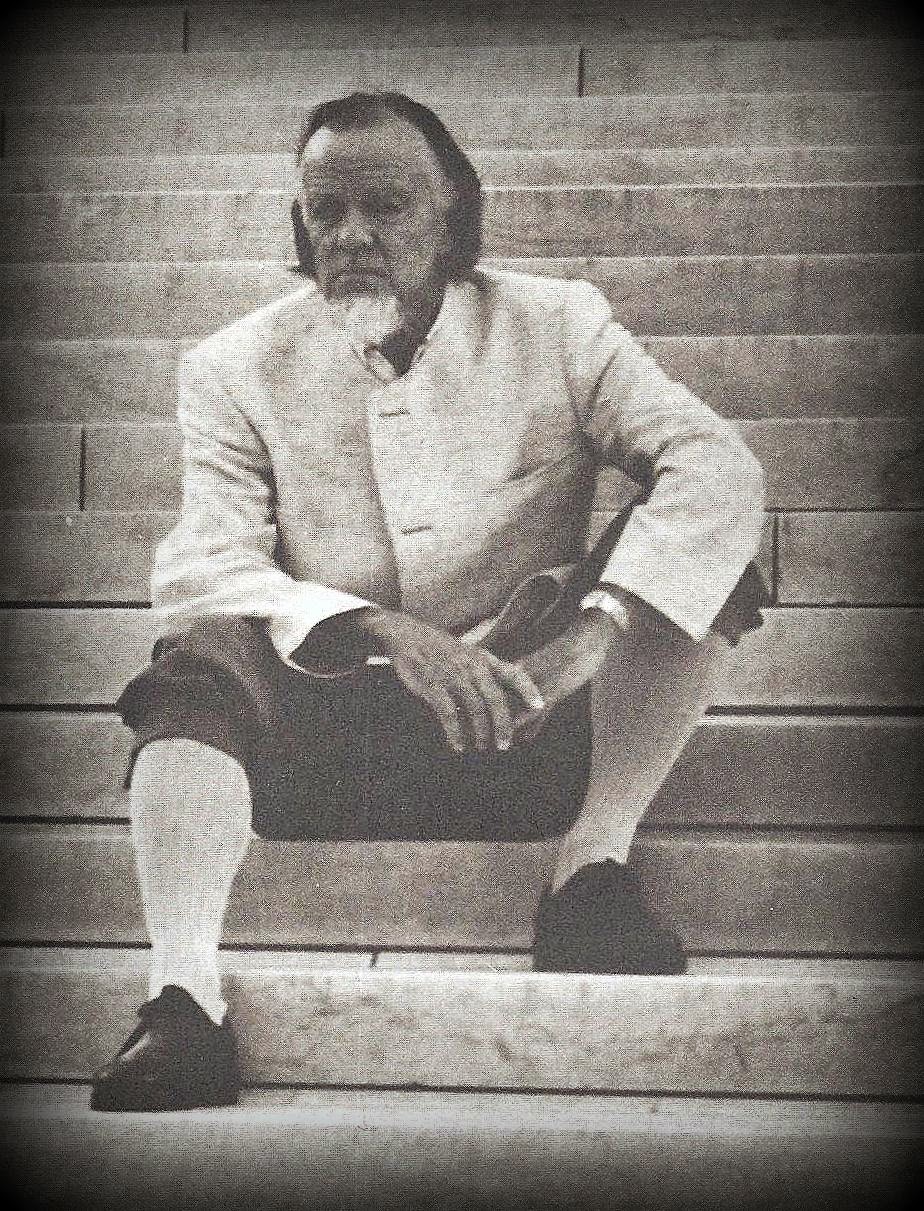




 -Christ is outside the life
 -Interests are directed by self, often


 The Daily Hatch