Over and over I have read that Hugh Hefner was a modern day King Solomon and Hefner’s search for satisfaction was attempted by adding to the number of his sexual experiences.
Have you made any New Year’s resolutions to lose weight and get into shape? Many Americans have great intentions at the start of a new year. Perhaps you have already purchased a gym membership or a piece of exercise equipment. If so, good for you! It’s important to get in shape and be healthy. I own a recumbent bike…and I love it. I work out on it nearly every day. I cycle miles on this bike and burn calories and increase my heart rate. The cool thing is: I don’t even have to leave my house…and in the rainy Pacific Northwest, this is a blessing. But if I am honest, it is a terribly boring and tedious way to exercise. When I look down at the odometer and it says I’ve cycled five miles, I’ve actually gone nowhere. I work up a sweat and ride until I am weary, yet I know that I am going to have to hop back on the bike all over again tomorrow. It is rather depressing!
Life is like riding on a recumbent bike. It is a boring, tedious, and repetitive ride. A thoughtful person will ask, “What is the purpose in life?” Have you ever asked this question? Most people have. For some of us, this question has plagued us over the course of our lives…even our Christian lives. A few years ago, scientists at John Hopkins University surveyed nearly 8,000 college students at forty-eight universities and asked what they considered “very important” to them. What do you think these college students said? Make a lot of money? Get married? Get a job? Buy a home? I can tell you this: only 16 percent answered “making a lot of money.” But a whopping 75 percent said that their first goal was “finding a purpose and meaning to my life.”3 This is a staggering piece of research, isn’t it?
In this New Year, maybe you are seeking to discover a purpose and meaning to your life. If so, the book of Ecclesiastes will guide you in this endeavor…but not in the way you might think.4Ecclesiastes has been dubbed, “the strangest book in the cannon [Bible].”5 It is an enigma for many Christians, for the bulk of this book is the memoirs of a man that is sharing his observations about what is wrong with life. In Eccl 1:1-11, we learn that life is fleeting and disappointing.
1. Life is fleeting (1:1-7).
In this first section, we will come to grips with the temporary nature of life. Inthe first three verses, the author introduces himself and his theme. Verse 1 begins: “The words6 of the Preacher,7 the son of David, king in Jerusalem.”8Although our author chooses not to identify himself, his titles or pen names give him away as Solomon.9 Solomon’s story is recorded for us in the first eleven chapters of 1 Kings. Although King David had many sons, it was his son Solomon who was chosen to be heir to the throne. God so favored Solomon that He appeared to him in a dream offering Solomon whatever blessing he desired. Solomon astutely asked God for wisdom to lead the nation well. He asked for wisdom instead of riches and fame. God honored Solomon’s request, granting him not just unparalleled wisdom, but wealth and recognition as well.
Solomon wrote three books of the Bible: Proverbs, Song of Solomon, and Ecclesiastes. He is considered the wisest and perhaps richest man that has ever lived. He had a fleet of ships that would bring gold to him every day from far off lands. Tragically, Solomon married a foreign woman, which was forbidden by God because of the temptation to be led astray spiritually. Ironically, it was this unwise decision to gain favor from different nations by taking foreign wives that diverted Solomon’s eyes from the one true God. Scripture records that he had 700 wives and 300 concubines. Truly, this diverted Solomon’s devotion, so that it is often said of him that he had a divided heart.
If we were to depict Solomon as someone more modern, he might be considered a mix between Albert Einstein, Bill Gates, HUGH HEFNER, and Brad Pitt. In Ecclesiastes, what philosophical conclusions does this rich powerful genius come to after living a life with everything at his fingertips? We would expect Solomon’s sermon to be entitled “Seven Habits of Highly Successful Kings.”10 In 1:2, Solomon gives the theme of his book.
“‘Vanity of vanities,’ says the Preacher, ‘Vanity of vanities! All is vanity.’”
[Solomon has argued that life is fleeting. In 1:8-11, he shares a second problem with life.]
2. Life is Disappointing (1:8-11).
In these next four verses, Solomon demonstrates that everything and everyone in life will ultimately disappoint us. There are three basic reasons for this: There is no satisfaction under the sun, there is nothing new under the sun, and no one is remembered under the sun.
No satisfaction under the sun (1:8). Solomon states that nothing is truly fulfilling. He writes, “All things are wearisome; man is not able to tell it. The eye is not satisfied with seeing, nor is the ear filled with hearing.”27The Rolling Stones made famous the song, “I Can’t Get No Satisfaction.” Sadly, this song could have been written by Solomon himself. Just like Mick Jagger and the rest of the Stones, Solomon had it all…and then some, yet everything was wearisome to him since one can never say, see, or hear enough. Man just can’t get NO satisfaction! Have you seen a good movie? Read a good book? Listened to a great song? Enjoyed a restful vacation? Delighted in a special experience? It is never enough. It never satisfies, for ultimately you want MORE.
__
Many of the sermons that I heard or read that inspired me to write Hugh Hefner were from this list of gentlemen: Daniel Akin, Brandon Barnard,Matt Chandler, George Critchley, Darryl Dash, Steve DeWitt, Steve Gaines, Norman L. Geisler, Greg Gillbert, Billy Graham, Mark Henry, Dan Jarrell, Walter C. Kaiser, Jr., R. G. Lee, Chris Lewis, Kerry Livgren, Robert Lewis, Bill Parkinson, Ben Parkinson,Vance Pitman, Nelson Price, Adrian Rogers, Philip Graham Ryken, Francis Schaeffer, Lee Strobel, Bill Wellons, Kirk Wetsell, Ken Whitten, Ed Young , Ravi Zacharias, Tom Zobrist, and Richard Zowie.
In the letter I base most of what I had to Mr. Hefner on a sermon I heard from Ken Whitten. I also quoted Francis Schaeffer too.
April 18, 2016
Hugh Hefner Playboy Mansion
10236 Charing Cross Road
Los Angeles, CA 90024-1815
Dear Mr. Hefner,
Over and over again I have written you and compared your life to that of King Solomon the writer of the Book of Ecclesiastes and today I am at it again. If there was one word to describe your life the word PLEASURE is probably that word. As you know I have written you every week since October of 2015 in the hope that you will be willing to reflect back on your life of pleasure UNDER THE SUN like King Solomon did and see what proper reflections your life has rendered. Francis Schaeffer has rightly noted concerning you that your goal with the “playboy mentality is just to smash the puritanical ethnic.” In fact, in your own personal life you definitely have gone the opposite direction of Puritanism.
King Solomon
___
Today we will look at the last chapter of the Book of Ecclesiastes and also look at the sermon on that chapter by Ken Whitten of Idlewild Baptist Church in Tampa, Florida. The sermon today is very appropriate for you since you are approaching your deathbed. In the article, “Hugh Hefner: 10 Truths Behind the Playboy Legend, 6:22 PM PDT 9/21/2011 by THR Staff the article notes:
8. HEFNER DOESN’T TALK ABOUT DEATH
He hardly ever talks about death, a close colleague says: “Even when [a longtime assistant] died, after the memorial, he never mentioned her again.” Is he afraid of the prospect? “No,” insists Hefner, an agnostic who professes no faith in any afterlife. “My mother lived to 101.”
Below is a portion of the Ecclesiastes sermon by Ken Whitten delivered in December 1998:
The conclusion of the whole matter. Solomon has been a philosopher instead of a preacher. God had called him as a preacher but even preachers can get to the place where they think they are smarter than God. Solomon has left his first love. Solomon is the Old Testament prodigal. Solomon is the preacher who we get to gain from his mistakes. He has chased all the pretty bubbles in life. He has tried to find his life in wisdom and education but found it not. He tried to find his wealth and he thought like the world thinks and like Madison Ave teaches that if you get more than you are more, and if you are more then you will be more, and he tried that but came up empty. He tried women. He tried lust. He had some many wives and so many concubines that even the beautiful gift that God gives to a husband and wife, he lost the treasure of that.
(Hugh you gave up your family to chase the skirts)
One by one he checks off his life and says “That’s not, that’s not, that’s not and he is coming back to God and Solomon wants us to understand as he remembers his life previously and where he is now. He goes back to the beginning of his life and he starts out by saying in Chapter 12:
Remember God in Your Youth
12 Remember [thoughtfully] also your Creator in the days of your youth [for you are not your own, but His], before the evil days come or the years draw near when you will say [of physical pleasures], “I have no enjoyment and delight in them”;2 before the sun and the light, and the moon and the stars are darkened [by impaired vision], and the clouds [of depression] return after the rain [of tears];3 in the day when the keepers of the house (hands, arms) tremble, and the strong men (feet, knees) bow themselves, and the grinders (molar teeth) cease because they are few, and those (eyes) who look through the windows grow dim;4 when the doors (lips) are shut in the streets and the sound of the grinding [of the teeth] is low, and one rises at the sound of a bird andthe crowing of a rooster, and all the daughters of music (voice, ears) sing softly.5 Furthermore, they are afraid of a high place and of dangers on the road; the almond tree (hair) blossoms [white], and the grasshopper (a little thing) is a burden, and the [a]caperberry (desire, appetite) fails. For man goes to his eternal home and the mourners go about the streets and market places.6 Earnestly remember your Creatorbefore the silver cord [of life] is broken, or the golden bowl is crushed, or the pitcher at the fountain is shattered and the wheel at the cistern is crushed;7 then the dust [out of which God made man’s body] will return to the earth as it was, and the spirit will return to God who gave it.8 “Vanity of vanities,” says the Preacher. “All [that is done without God’s guidance] is vanity (futility).”
Purpose of the Preacher
9 Furthermore, because the Preacher was wise, he still taught the people knowledge; and he pondered and searched out and arranged many proverbs.10 The Preacher sought to find delightful words, even to write correctly words of truth.
11 The words of the wise are like [prodding] goads, and these collected sayings are [firmly fixed in the mind] like well-driven nails; [b]they are given by one Shepherd.12 But beyond this my son, [about going further than the words given by one Shepherd], be warned: the writing of many books is endless [so do not believe everything you read], and excessive study and devotion to books is wearying to the body.
13 When all has been heard, the end of the matter is: fear God [worship Him with awe-filled reverence, knowing that He is almighty God] and keep His commandments, for this applies to every person.14 For God will bring every act to judgment, every hidden and secret thing, whether it is good or evil.
Life is moving forward not backward. You are heading somewhere. Give attention to your salvation is what Solomon is saying here. FEAR GOD is the Old Testament way of saying BELIEVE ON THE LORD JESUS CHRIST AND BE SAVED. You are come to the place where you face God and make sure of your salvation. FEAR GOD AND KEEP HIS COMMANDMENTS. The word of God is a road map to our life. The word of God says FEAR GOD AND KEEP HIS COMMANDMENTS this is the whole of man. The word DUTY is in italics and this means the whole of man. Our whole what? Our whole body our whole soul, our whole body, our whole spirit.
The word of God has something to say to your body, your soul to your spirit. To your health, to your holiness, to your happiness. Fear God and keep his commandments. You know what I think Solomon is saying. If I had to do it over again I would have a little more fun, a little more faith and a little more fear in life. I would have feared God more and Ecclesiastes 12:14 “For God will bring every act to judgment, every hidden and secret thing, whether it is good or evil.” All of us have secrets in our life that we probably would be ashamed of if you knew what we were thinking.
Someone asked John Quincy Adams how he is doing. “John Quincy Adams is quite well. But the house where he lives is becoming dilapidated. It is tottering. Time and the seasons have nearly destroyed it, and it is becoming quite uninhabitable. I shall have to move out soon. But John Quincy Adams is quite well, thank you.”
John Quincy Adams
Stuart Hamblen wrote:
It is no secret what God can do
What He’s done for others, He’ll do for you
With arms wide open, He’ll pardon you
It is no secret what God can do
There is no night for in His light
You never walk alone
Always feel at home
Wherever you may go
There is no power can conquer you
While God is on your side
Take Him at His promise
Don’t run away and hide
Stuart Hamblen
___
Stuart Hamblen also wrote another song called THIS OLD HOUSE:
This ole house is a-gettin’ shaky
This ole house is a-gettin’ old
This ole house lets in the rain
This ole house lets in the cold
On my knees I’m gettin’ chilly
But I feel no fear or pain
‘Cause I see an angel peekin’
Through a broken window pane
Stuart Hamblen is talking about our body.
If you take 24 hour day and compare the minutes to a life’s span then when you are 15 years old it is 8:51am and when when you are 20 yrs old then it is 11:05am and 30 yrs old 1:25 pm and when you are 40 yrs old and it is 4:16pm and when you are 60 it is 10:11 pm and when you are 70 yrs old it is near midnight.
Solomon closes his Book of Ecclesiastes after saying to fear God is the final conclusion. ARE YOU READY TO MEET GOD TONITE?
Let me share with you the gospel according to the Book of Romans. Here is how it goes:
Because of our sin, we are separated from God. For all have sinned and fall short of the glory of God. (Romans 3:23)
The Penalty for our sin is death. For the wages of sin is death, but the gift of God is eternal life in Jesus Christ our Lord.(Romans 6:23)
The penalty for our sin was paid by Jesus Christ! But God demonstrates His own love toward us, in that while we were yet sinners, Christ died for us. (Romans 5:8)
If we repent of our sin, then confess and trust Jesus Christ as our Lord and Savior, we will be saved from our sins! For whoever calls on the name of the Lord shall be saved. (Romans 10:13)
…if you confess with your mouth the Lord Jesus and believe in your heart that God has raised Him from the dead, you will be saved. For with the heart one believes unto righteousness, and with the mouth confession is made unto salvation. (Romans 10:9,10)
PS:This was the 31st letter that I have written to you and many of those letters have been on the Book of Ecclesiastes. Again it today is was responding to a quote from you.
I started this series on my letters and postcards to Hugh Hefner back in September when I read of the passing of Mr. Hefner. There are many more to come. It is my view that he may have taken time to look at glance at one or two of them since these postcards were short and from one of Hef’s favorite […]
I started this series on my letters and postcards to Hugh Hefner back in September when I read of the passing of Mr. Hefner. There are many more to come. It is my view that he may have taken time to look at glance at one or two of them since these postcards were short and from one of Hef’s favorite […]
I started this series on my letters and postcards to Hugh Hefner back in September when I read of the passing of Mr. Hefner. There are many more to come. It is my view that he may have taken time to look at glance at one or two of them since these postcards were short and from one of Hef’s favorite […]
I started this series on my letters and postcards to Hugh Hefner back in September when I read of the passing of Mr. Hefner. There are many more to come. It is my view that he may have taken time to look at glance at one or two of them since these postcards were short and from one of Hef’s […]
_ I started this series on my letters and postcards to Hugh Hefner back in September when I read of the passing of Mr. Hefner. There are many more to come. It is my view that he may have taken time to look at glance at one or two of them since these postcards were short and from one of […]
_____ I started this series on my letters and postcards to Hugh Hefner back in September when I read of the passing of Mr. Hefner. There are many more to come. It is my view that he may have taken time to look at glance at one or two of them since these postcards were short and from one of Hef’s […]
_____ I started this series on my letters and postcards to Hugh Hefner back in September when I read of the passing of Mr. Hefner. There are many more to come. It is my view that he may have taken time to look at glance at one or two of them since these postcards were […]
_____ I started this series on my letters and postcards to Hugh Hefner back in September when I read of the passing of Mr. Hefner. There are many more to come. It is my view that he may have taken time to look at glance at one or two of them since these postcards were […]
|I saw this on the internet on June 20, 2017 _ Playboy’s Hugh Hefner on board a boat with Barbi Benton and friends sporting a striped navy shirt and a pipe in mouth and a real catch in hand during the 70s. ____________________________________ Below is the last letter I ever wrote to Hugh Hefner. […]
I learned yesterday that Hugh Hefner had passed away. Just last year I visited Chicago and drove by his Chicago Playboy Mansion pictured below. ___ Playboy after dark filmed in Chicago Playboy Mansion During the 1990′s I actually made it a practice to write famous atheists and scientists that were mentioned by Adrian […]
Over and over I have read that Hugh Hefner was a modern day King Solomon and Hefner’s search for satisfaction was attempted by adding to the number of his sexual experiences. Below Dr. Jim Eckman compares Hefner to the Solomon of Ecclesiastes.
Over 3,000 years ago, King Solomon wrote poignantly about his life and about the purpose and meaning of life in general “under the sun.” His observations could be an appropriate epitaph for Hugh Hefner, the founder of the Playboy empire:
1 I said in my heart, “Come now, I will test you with pleasure; enjoy yourself.” But behold, this also was vanity.2 I said of laughter, “It is mad,” and of pleasure, “What use is it?” 3 I searched with my heart how to cheer my body with wine—my heart still guiding me with wisdom—and how to lay hold on folly, till I might see what was good for the children of man to do under heaven during the few days of their life.
. . . 10 And whatever my eyes desired I did not keep from them. I kept my heart from no pleasure, for my heart found pleasure in all my toil, and this was my reward for all my toil.11 Then I considered all that my hands had done and the toil I had expended in doing it, and behold, all was vanity and a striving after wind, and there was nothing to be gained under the sun. [Ecclesiastes 2:1-3, 10-11 (ESV)]
Perhaps as a metaphor for his pleasure-filled life, Hefner paid $75,000 for a crypt next to Marilyn Monroe, where presumably he will be buried.
As one evaluates the legacy of Hugh Hefner, it is difficult to say anything positive about that legacy. Columnist Tim Morris observes that “Hefner didn’t love women [which he claimed]. He lusted for them. He loved only himself and a hedonistic life that was mostly an adolescent fantasy.” Jill Filipovic of Time argues, “What Hefner and Playboy never did was present women as human, or consider us anything like men. Hefner made female sex objects more relatable and accessible . . . . Brilliantly, Hefner attached himself to the sexual revolution and the feminist gains that precipitated it. From his vantage point, publishing a magazine full of naked women was just one part of the new culture of ‘free love.’” In short, he built an empire on male desire!
New York Times columnist Ross Douthat offers the most honest evaluation of Hugh Hefner’s legacy I have read. Permit me extensive quotation from his essay:
“Hef was the grinning pimp of the sexual revolution, with Quaaludes for the ladies and Viagra for himself—a father of smut addictions and eating disorders, abortions and divorce and syphilis, a pretentious huckster who published Updike stories no one read while doing flesh procurement for celebrities, a revolutionary whose revolution chiefly benefitted men much like himself.”
“Hef the vanquisher of puritanism, Hef the political progressive, Hef the great businessman and all the rest . . . What a lot of garbage . . . the things that were distinctly Hefnerian, that made him influential and important, were all rotten, and to the extent they were part of stories that people tend to celebrate, they showed the rot in larger things as well.”
“The social liberalism he championed was the rotten and self-interested sort, a liberalism of male and upper-class privilege, in which the strong and beautiful and rich take their pleasure at the expense of the vulnerable and poor and not-yet-born.”
“And his appreciation of male-female difference was rotten, too—the leering predatory sort of appreciation, the Cosby-Clinton-Trump sort, the sort that nicknames Quaaludes ‘thigh openers’ and expects the girls to laugh, the sort that prefers breast implants to female intellect and rents the charms of youth to escape the realities of age.”
“But in every way that mattered he made those changes worse, our culture coarser and crueler and more sterile than liberalism or feminism or freedom of speech required. And in every way that mattered his life story proved that we were wrong to listen to him, because at the end of the long slide lay only a degraded, priapic senility, or the desperate gaiety of Prince Prospero’s court with the Red Death at the door.”
“Conservatives should ask how their crusade for faith and family and community ended up so Hefnerian itself—with a conservative news network that seems to have been run on Playboy principles and a conservative party that just elected a playboy as our president.”
As many have observed, Hugh Hefner validated the objectification of women. But he did so by embracing and championing libertinism and materialism which hid the reality of philandering, licentiousness and exploitation–all in the name of freedom! Hefner viewed himself as a moral revolutionary, one who “opened up the floodgates” of sexual libertinism which Playboy encouraged, commercialized and symbolized. He thereby transformed American sexual morality by intentionally breaking down the Judeo-Christian sexual ethic that once defined American civilization.
Theologian Albert Mohler maintains that Hefner not only advocated a lifestyle of sexual libertinism but he also advocated a theology. In an interview, Hefner declared that he was a “spiritual person, but I don’t mean that I believe in the supernatural.” He believed in God as creator but not in “the God of the Bible.” He championed that “I urge one and all to live life as if there is no reward in the afterlife and to do it in a moral way that makes it better for you and those around you, and that leaves this world a little better place than when you found it.” Hefner’s moral philosophy and “theology” of libertinism and exploitation are now mainstreamed in American culture. That is his legacy.
Hefner was not a moral revolutionary but a peddler of smut in the name of freedom. His “freedom” produced bondage and enslavement to a sexual fantasy that has destroyed both men and women. He died a pathetic, debauched, degraded old man who personified decadence not liberation.
King Solomon concluded his sobering evaluation of life with this observation about death:
3 This is an evil in all that is done under the sun, that the same event happens to all. Also, the hearts of the children of man are full of evil, and madness is in their hearts while they live, and after that they go to the dead. [Ecclesiastes 9:3 (ESV)]
13 The end of the matter; all has been heard. Fear God and keep his commandments, for this is the whole duty of man.14 For God will bring every deed into judgment, with every secret thing, whether good or evil. [Ecclesiastes 12:13-14 (ESV)]
Hugh Hefner has now experienced the great equalizer—death. He also now realizes that there is a God, the God of the Bible, and he will need to give an account of the life he has lived. What a tragedy; what a waste!
See Ross Douthat in the New York Times (1 October 2017); Jill Filipovic in www.time.com (30 September 2017); Tim Morris in www.nola.com (2 October 2017); and Albert Mohler in www.albertmohler.com (14 October 2015). PRINT PDF
Many of the sermons that I heard or read that inspired me to write Hugh Hefner were from this list of gentlemen: Daniel Akin, Brandon Barnard,Matt Chandler, George Critchley, Darryl Dash, Steve DeWitt, Steve Gaines, Norman L. Geisler, Greg Gillbert, Billy Graham, Mark Henry, Dan Jarrell, Walter C. Kaiser, Jr., R. G. Lee, C.S. Lewis, Chris Lewis, Kerry Livgren, Robert Lewis, Bill Parkinson, Ben Parkinson, Blaise Pascal, Vance Pitman, Nelson Price, Ethan Renoe, Adrian Rogers, Philip Graham Ryken, Francis Schaeffer, Lee Strobel, Bill Wellons, Kirk Wetsell, Ken Whitten, Ed Young , Ravi Zacharias, Tom Zobrist, and Richard Zowie.
In this letter below I quote extensively from an article by Ethan Renoe. I also use quotes from Blaise Pascal and C. S. Lewis. I also quoted Ravi Zacharias when I wrote, “The key to understanding the Book of Ecclesiastes is the term UNDER THE SUN — What that literally means is you lock God out of a closed system and you are left with only this world of Time plus Chance plus matter.”
The Visit of the Queen of Sheba to King Solomon’, oil on canvas painting by Edward Poynter, 1890
Hugh Hefner with the movie maker Woody Allen below:
February 8, 2016
Hugh Hefner Playboy Mansion
10236 Charing Cross Road
Los Angeles, CA 90024-1815
Dear Mr. Hefner,
You have made it known how much you love your movie nights and also that you are a big fan of Woody Allen movies. I have also seen you talk of your glorious past. However, did you know that you may have overlooked some of the negative things that happened in your past. On CBS THIS MORNING 4-9-14 you said you don’t deserve the label of “womanizer” but you are just a “hopeless romantic.” Is this just spinning the past to remove all the negative so you have a golden period? This is what people sometimes call GOLDEN AGE THINKING. People try to either glorify their past in comparison to the present or they try to visualize a time in the past that was golden and they would have been happy in that period.
Marion Cotillard plays Adriana and Owen Wilson plays Gil Pender
Woody Allen’s film MIDNIGHT IN PARIS is brilliant and I am sure you enjoyed it HUGH!!!!
__
Later in this letter I share some words from Ethan Renoe and he talks about a summer that he had a lot of great experiences and anytime he thinks back on that summer his memory is influenced by nostalgia and a longing to go back. He doesn’t recall the negative aspects. YOU MY FRIEND CAN NOT GO TO BED WITH 1000 WOMEN WITHOUT BEING A WOMANIZER.
In this series of letters I have written to you I have often compared you to King Solomon who was the 2nd most wise person mentioned in the Bible behind only Jesus. You should find it intriguing that I have noticed that many hundreds of preachers have mentioned you also in comparison to Solomon. In this letter I want to look both at the Woody Allen movie MIDNIGHT IN PARIS and the final conclusion that Solomon gives in the Book of Ecclesiastes.
In MIDNIGHT IN PARIS Gil Pender concludes there is no GOLDEN AGE, but people dream of a GOLDEN AGE because they find the PRESENT AGE unsatisfying. Actually Solomon said a long time ago, “[God]has placed eternity on the hearts of men.” Scientist Blaise Pascal put it this way, “There is a God-shaped vacuum in the heart of every man which cannot be filled by any created thing, but only by God the Creator, made known through Jesus Christ.” No wonder life is unsatisfying to Gil since he is an agnostic that is not seeking a relationship with God. King Solomon wrote 3,000 years ago in the Book of Ecclesiastes that attempting to find satisfaction in life UNDER THE SUN is equal to CHASING THE WIND. Take a look at a portion of an excellent article by Ethan Renoe:
I have this new theory. It’s not based in anything really, but tell me if you agree. This post is going to be rather extensive in its scope, as I attempt to critique a Woody Allen film, present a theory on memories, and include a Biblical basis for all of it.
The theory is this: Every time you think back to a memory from your own past, you are not thinking directly back to the event itself; you are thinking of the last time you thought of it. You are recalling the feelings, emotions, and colors present the last time you thought of the previous memory. For example, the summer of 2007 was the greatest time of my life. Every day was painted with scenes from the best romantic comedies, mixed with endless East coast adventures, and wrapped in the blanket of my three best friends and I doing everything together.
Now, for the sake of explanation, let’s say I have thought of this summer five times since it happened. By that, I mean I really thought about it and everything that happened over those three months. So, whenever my mind glances in the rear view mirror to that time period, I have to access it through the tunnels of the previous five times I thought of it. In other words, my mind must take a detour through all the times I have recalled it before, rather than taking a highway directly to the events themselves. When this occurs, I also see the summer of ’07 through the fog of all the emotions I had the other five times I thought of it. In this situation, the typical emotion held toward that summer is nostalgia and a longing to go back. In reality,I am sure that there were parts of the summer that were not so great, but because of the detours through my other memories, I can’t see them now. I am convinced that there were things happening in my life that were not enjoyable, or decisions that did not turn out my way, or some other longings I was entertaining at the time. In this way, the memories only get blurrier and blurrier as an icon from my life of a time when things were perfect.
Woody Allen explored this phenomena in his film Midnight in Paris, and dubbed the occurrence ‘Golden Age Thinking.’ Now some readers of my blog may see this review as an excuse to talk once more about the dazzling Marion Cotillard. You would not be wrong. However, Allen presents a few compelling ideas in this piece. Owen Wilson plays Gil; a romantic screenwriter who daydreams about seeing Paris in the 1920’s when it is raining. Somehow, he gets his wish when on a walk one night in Paris and a cab full of old-timey people pulls up and invites him in. He enters and is taken back to the time of Hemingway, Dali, Picasso, and Cole Porter. He is in love with the time. Every night, he returns to the enchanted time of the 20’s, and every morning returns to his drag of a fiancee. Soon after the time travels begin, he meets the mysteriously beautiful Adriana (Cotillard), the supposed muse of Picasso and Hemingway, and is smitten. After a couple nights spent wandering in and out of parties and the streets of Paris in the 1920’s, Adriana reveals that she would much rather live in the time of la Belle Epoque; about a century earlier. They travel back in time even further, this time by magical horse drawn carriage, to the 1890’s. Adriana is overjoyed and wants to stay there rather than in her own time; the 1920’s.
One of the main ideas Allen is conveying here is that everyone has a time they view as the ‘Golden Age;’ the time when nothing was wrong and everything was perfect and alive and beautiful. Even people living in our own personal golden ages. I’m sure that the Ethan living in the summer of 2007 was longing for some time other than the one he was in then, just as the Ethan writing this now does.
Someone else took note of this empty yearning that every human has, several millennia prior to Woody. The wisest man alive, in fact. I know I have used this scripture before, but that’s because I find it so central to the human experience that to overlook it is pure foolishness. Ecclesiastes 3:11 says that “He has placed eternity on the hearts of men.” How many of you long for THAT? How many of you have ever said to yourself, “Boy, I wish I could just go back to forever, when everything was good and okay?” We can’t even fathom eternity, therefore, we cannot even comprehend longing for it. C.S. Lewis is famously quoted in his short piece “The Weight of Glory” for writing, “It would seem that our Lord finds our desires, not too strong, but too weak.” The kind of desire that each one of us has is placed in us for a reason–not to bring us to satisfaction in the promising, yet empty, objects of the world, but in Him [Jesus] alone! There’s a reason that every human being has an unquenchable thirst for another time period, place, or group of friends. We have eternity planted in our hearts. We wants things we can’t even comprehend.This is why the past looks perfect to us only from one side, hindsight, and the present is always left unsatisfied…
FRANCIS SCHAEFFER PICTURED BELOW:
Solomon wrote the Book of Ecclesiastes and he penned the words, “[God] has placed eternity on the hearts of men.” Solomon is pursuing satisfaction in life UNDER THE SUN in the Book of Ecclesiastes. FRANCIS SCHAEFFER noted that Solomon took a look at the meaning of life on the basis of human life standing alone between birth and death “under the sun.” This phrase UNDER THE SUN appears over and over in Ecclesiastes. The Christian Scholar Ravi Zacharias noted, “The key to understanding the Book of Ecclesiastes is the term UNDER THE SUN — What that literally means is you lock God out of a closed system and you are left with only this world of Time plus Chance plus matter.” However, even though Solomon is finding all these pursuits are dead ends he also has this eternity that has been placed in his heart.
BLAISE PASCAL pictured below:
Again this brings me back full circle to Pascal. BLAISE PASCAL, a famous French mathematician and philosopher, put it like this: “There is a God-shaped vacuum in the heart of every man which cannot be filled by any created thing, but only by God the Creator, made known through Jesus Christ.” That ties in nicely with with Ecclesiastes 3:11 “He has placed eternity on the hearts of men.”
PS: This is the 17th letter I have written to you and again I have taken an aspect of your life and responded with what the Bible has to say on that subject. HUGH you may look back on the 1000 women that you slept with and try to rationalize that you are a HOPELESS ROMANTIC but just like Solomon you must admit that your pursuits at womanizing was like an effort of CHASING THE WIND. Don’t you see that Solomon was an old man when he wrote Ecclesiastes and just like you he had also slept with 1000 women but he had not found satisfaction UNDER THE SUN. In fact he exclaimed, GOD HAS PLACED ETERNITY ON THE HEARTS OF MEN!!!! Don’t you think it is time that you take Solomon’s advice in the last chapter? “The end of the matter; all has been heard. Fear God and keep his commandments, for this is the whole duty of man.For God will bring every deed into judgment, with every secret thing, whether good or evil.”
I started this series on my letters and postcards to Hugh Hefner back in September when I read of the passing of Mr. Hefner. There are many more to come. It is my view that he may have taken time to look at glance at one or two of them since these postcards were short and from one of Hef’s favorite […]
I started this series on my letters and postcards to Hugh Hefner back in September when I read of the passing of Mr. Hefner. There are many more to come. It is my view that he may have taken time to look at glance at one or two of them since these postcards were short and from one of Hef’s favorite […]
I started this series on my letters and postcards to Hugh Hefner back in September when I read of the passing of Mr. Hefner. There are many more to come. It is my view that he may have taken time to look at glance at one or two of them since these postcards were short and from one of Hef’s favorite […]
I started this series on my letters and postcards to Hugh Hefner back in September when I read of the passing of Mr. Hefner. There are many more to come. It is my view that he may have taken time to look at glance at one or two of them since these postcards were short and from one of Hef’s […]
_ I started this series on my letters and postcards to Hugh Hefner back in September when I read of the passing of Mr. Hefner. There are many more to come. It is my view that he may have taken time to look at glance at one or two of them since these postcards were short and from one of […]
_____ I started this series on my letters and postcards to Hugh Hefner back in September when I read of the passing of Mr. Hefner. There are many more to come. It is my view that he may have taken time to look at glance at one or two of them since these postcards were short and from one of Hef’s […]
_____ I started this series on my letters and postcards to Hugh Hefner back in September when I read of the passing of Mr. Hefner. There are many more to come. It is my view that he may have taken time to look at glance at one or two of them since these postcards were […]
_____ I started this series on my letters and postcards to Hugh Hefner back in September when I read of the passing of Mr. Hefner. There are many more to come. It is my view that he may have taken time to look at glance at one or two of them since these postcards were […]
|I saw this on the internet on June 20, 2017 _ Playboy’s Hugh Hefner on board a boat with Barbi Benton and friends sporting a striped navy shirt and a pipe in mouth and a real catch in hand during the 70s. ____________________________________ Below is the last letter I ever wrote to Hugh Hefner. […]
I learned yesterday that Hugh Hefner had passed away. Just last year I visited Chicago and drove by his Chicago Playboy Mansion pictured below. ___ Playboy after dark filmed in Chicago Playboy Mansion During the 1990′s I actually made it a practice to write famous atheists and scientists that were mentioned by Adrian […]
3200 × 1680Images may be subject to copyright.Learn More
__
Over and over I have read that Hugh Hefner was a modern day King Solomon and Hefner’s search for satisfaction was attempted by adding to the number of his sexual experiences. Greg Laurie noted:
He was a young man who loved God – yet he became a hedonist extraordinaire, a playboy who made Hugh Hefner look like a lightweight. He was highly educated, yet went on unbelievable drinking binges. He was an architectural genius, masterminding the building of incredible structures, and yet chased after women like there was no tomorrow. And he was worth billions.
King Solomon lived thousands of years ago, yet the lessons and experiences of his life are as current as tomorrow’s newspaper. It was he who coined the phrase, “There’s nothing new under the sun.”
Solomon became the king of Israel after his father David’s death. No one, not even David, had such incredible potential to be a great king. He had a godly heritage from his dad, was given wisdom on a scale that had never been known up to that point and wealth beyond anyone’s most fevered imagination. As a result, he had virtually unlimited power to do good.
Solomon started his reign beautifully. But the joy and beauty began to fade all too soon, as he turned away from the Lord who had so richly blessed him. By the time he came to the end of himself in his later years, he had thrown away a life with unbelievable potential. Here’s how he began his memoirs in the book of the Bible called Ecclesiastes:
These are the words of the Teacher, King David’s son, who ruled in Jerusalem.
“Everything is meaningless,” says the Teacher, “utterly meaningless!”
Solomon liked the word “meaningless,” using it again and again as he wrote about life. In the original language, the word meant emptiness, futility, a wisp of a vapor, a hollow, empty ring, nothingness, a bubble that bursts.
Ecclesiastes tells us that nothing on this earth will satisfy us completely. No thing, no pleasure, no relationship, no accomplishment will bring enduring value in life. It’s like riding one of those stationary bikes. You peddle and peddle but never really go anywhere. You get off in the very same place where you started.
In Ecclesiastes, Solomon was looking back on a life lived without God. He was reflecting on man’s attempt to meet the deepest needs of human life, while leaving God out of the equation.
Initially, Solomon followed the Lord and his father’s good example. But as time passed, the young king forgot this commitment, allowing his heart to become at first divided, and then hardened. He began to love both the Lord and the world. According to Scripture, however, that will never wash. And in this rebellion against God, much like the prodigal son, Solomon broke away from his roots, his foundation, and decided to take a crash course in sin.
Did he ever! And he had the resources to do it! Unlimited sex, gallons of booze, non-stop partying, unrestrained materialism – not to mention the finest education, entertainment and art collecting. You name it, Solomon tried it. He actually did what most people only dream of. But in the end, it all turned into a nightmare.
And then, after many wasted years, Solomon finally came to his senses. He had learned the bitter lessons of life the hard way, but he really had no one to blame but himself. Among other things, he deeply regretted wasting his youth, warning others not to make the same mistake. He wrote: “Don’t let the excitement of youth cause you to forget your Creator. Honor him in your youth before you grow old and no longer enjoy living” (Ecclesiastes 12:1, NLT).
Solomon wraps up his book, saying, “Look, take it from a seasoned pro. Believe me, I know what I’m talking about here! If you leave God out of the picture – no matter what else you may have going – your life will be empty, meaningless and futile. Do you want to have a full life, a more abundant life? Do you truly want to live out your life as a whole woman, a whole man? Well, here’s your answer: Fear God and keep His commandments.”
Many of the sermons that I heard or read that inspired me to write Hugh Hefner were from this list of gentlemen: Daniel Akin, Brandon Barnard,Matt Chandler, George Critchley, Darryl Dash, Steve DeWitt, Steve Gaines, Norman L. Geisler, Greg Gillbert, Billy Graham, Mark Henry, Dan Jarrell, Walter C. Kaiser, Jr., R. G. Lee, Chris Lewis, Kerry Livgren, Robert Lewis, Bill Parkinson, Ben Parkinson,Vance Pitman, Nelson Price, Adrian Rogers, Philip Graham Ryken, Francis Schaeffer, Lee Strobel, Bill Wellons, Kirk Wetsell, Ken Whitten, Ed Young , Ravi Zacharias, Tom Zobrist, and Richard Zowie.
My letter below is based primarily on a sermon by Chris Lewis (pictured below).
I also quoted Ravi Zacharias when I wrote, “The key to understanding the Book of Ecclesiastes is the term UNDER THE SUN — What that literally means is you lock God out of a closed system and you are left with only this world of Time plus Chance plus matter.”
February 2, 2016
Hugh Hefner Playboy Mansion
10236 Charing Cross Road
Los Angeles, CA 90024-1815
Dear Mr. Hefner,
Today it is GROUNDHOG DAY and that is the reason I am going to quote extensively from Chris Lewis pastor of Foothill Church in Glendora, CA and his sermon GROUNDHOG DAY. He got the title from the experience that Solomon pictures in the first 11 verses in Ecclesiastes. You will notice that the theme is CYCLE and how this cycle repeats over and over again just like the cycle that Bill Murray is caught in as portrayed in the movie GROUNDHOG DAY where is character is caught repeating the same events over and over and over again.
“Ned, I would love to stand here and talk with you… but I’m not going to.”
“What if there is no tomorrow? There wasn’t one today.”
Bill Murray punching clock groundhog day alarm
“This is pitiful. A thousand people freezing their butts off waiting to worship a rat. What a hype.”
“Chance of departure today, one hundred percent.”
“Well, it’s Groundhog Day… again…”
“There is no way this winter is ever going to end, as long as this groundhog keeps seeing his shadow. I don’t see any other way out. He’s got to be stopped. And I have to stop him.”
_
1 The words of the Preacher, the son of David, king in Jerusalem.
2 Vanity of vanities, says the Preacher, vanity of vanities! All is vanity. 3 What does man gain by all the toil at which he toils under the sun?
4 A generation goes, and a generation comes, but the earth remains forever. 5 The sun rises, and the sun goes down, and hastens to the place where it rises. 6 The wind blows to the south and goes around to the north; around and around goes the wind, and on its circuits the wind returns. 7 All streams run to the sea, but the sea is not full; to the place where the streams flow, there they flow again. 8 All things are full of weariness; a man cannot utter it; the eye is not satisfied with seeing, nor the ear filled with hearing.
9 What has been is what will be, and what has been done is what will be done, and there is nothing new under the sun. 10 Is there a thing of which it is said, “See, this is new”? It has been already in the ages before us. 11 There is no remembrance of former things, nor will there be any remembrance of later things yet to be among those who come after.
Notice this phrase UNDER THE SUN since it appears about 30 times in Ecclesiastes. Francis Schaeffer noted that Solomon took a look at the meaning of life on the basis of human life standing alone between birth and death “under the sun.” This phrase UNDER THE SUN appears over and over in Ecclesiastes. The Christian Scholar Ravi Zacharias noted, “The key to understanding the Book of Ecclesiastes is the term UNDER THE SUN — What that literally means is you lock God out of a closed system and you are left with only this world of Time plus Chance plus matter.”
As you know I have been writing you regularly for several months now and I have looking at statements you have made about your life and your philosophy. Many times I have compared them to the active searching that Solomon was doing in the BOOK OF ECCLESIASTES. Today I am going to do that same and it will be about your views on working and what can be gained from it.
Looking back over his 87 years – 60 of which have been defined by his creation, Playboy – Hugh Hefner admits it took being a workaholic during his media empire’s formative years to transform him into an icon of sexual liberation and sophisticated indulgence.
“I had been really consumed the first few years on the magazine – I had this phenomenal success on my hands,” Hefner remembers. “And I didn’t want to miss the party that I had created.”
You did not want to miss out on the success of your magazine and you worked hard to see the rewards that would come from that. HUGH NOW LOOKING BACK WHAT LASTING PROFIT OR GAIN DID YOU GET FROM ALL YOUR HARD WORK? There are two ways to look at it. FIRST, what lasting meaning will there be from it UNDER THE SUN (a phrase Solomon uses over and over). SECOND, once you die what value will it have to you?
Chris Lewis pastor of Foothill Church in Glendora, CA in his sermon GROUNDHOG DAY about Ecclesiastes noted:
Because of the wisdom, wealth and power that God gave to Solomon, Solomon is probably the smartest, richest, most brilliant, powerful, good looking man that ever walked the face of the earth. He was like Albert Einstein, Bill Gates, Hugh Hefner, Brad Pitt and George Clooney all rolled into one. It is incredible the gifts that God gave him.
God is looking for people who don’t take their direction from the Bible and not the culture. Solomon does follow God early on but later he abandons his God….In the USA we spend 8.5 hours a day working and that is more than every other country except Japan. What are we working so hard for? What are we chasing?
Mary Bell of Houston has counseled many high level executives. Achievement, Bell begins, is the alcohol of our time. These days, the best people don’t abuse alcohol. They abuse their lives. “You’re successful, so good things happen,” Bell says. “You complete a project, and you feel dynamite, so you move up to euphoria. That feeling doesn’t last forever, and you slide back to normal.But you love the feeling of euphoria, so you’ve got to have it again. The problem is, you can’t stay on that high. The highs don’t seem quite so high. You may win a deal that’s even bigger than the one that got away, but somehow that deal doesn’t take you to euphoria. .”An “achievement addict” is no different from any other kind of addict, Bell suggests.
ECCLESIASTES chapter 1.
1 The words of the Preacher,[a] the son of David, king in Jerusalem.
2 VANITY of vanities, says the Preacher, vanity of vanities! All is vanity. 3 What does man gain by all the toil at which he toils UNDER THE SUN?
The word “VANITY” means a vapor or breath. If it is a cold night you can go outside and you watch your breath and you see it for a moment and then it is gone. Solomon is saying that everything disappears. Time just flies by. LOOK AT HOW FAST YOUR KIDS GREW UP!!!!
This also can be translated MEANINGLESS. It’s not just that life is brief but also that nothing has meaning. Your career is meaningless [UNDER THE SUN]. The clothes you have bought recently will someday be at Goodwill. Everything will end up in the junkyard.
Verse 3 says, “What does man gain by all the toil at which he toils UNDER THE SUN?” In the end for all our hard work we gain NOTHING. What is the profit? Profit is what you have to show for all your hard work. Solomon says the answer UNDER THE SUN to that question is NOTHING.
UNDER THE SUN is a vital phrase. This is what Solomon means by UNDER THE SUN (used 29 times in Ecclesiastes) and that is life through the lense of a Godless world. It is seeing what can only be seen by natural eyes. It is a horizontal view that can not even look up and see that God has something to do with us.
What gain or profit is left after I have lived in life UNDER THE SUN apart from God and Solomon says there is NOTHING and it is MEANINGLESS.
Jesus in Matthew 16:26 asks a similar question: “For what will it profit a man if he gains the whole world and forfeits his soul? Or what shall a man give in return for his soul?”
The answer to Jesus’ question is also NOTHING. So if you decide that this life is all there is and you just see this life UNDER THE SUN without reference to God then you end up with NOTHING. All your success is not irrelevant. All your toil is for NOTHING. All the years you put in at work you leave NOTHING to show for it.
The wisest man who ever lived said life is FUTILE if you only look at life UNDER THE SUN. Solomon saw that people were crooked, bent and broken, but he couldn’t straighten them out…Solomon knew the problem. Everybody in the world knows something is wrong with the world. You do whether you are a Christian or not. Just go to a bookstore and look at the thousands of SELF HELP books that are selling in the millions. Jesus came to answer every frustration that Solomon had [in the Book of Ecclesiastes about life UNDER THE SUN].
When Adam and Eve sinned and they rebelled the earth became frustrated. Who will give us the answer to this? Christ said, “The queen of the south shall rise up in the judgment with this generation, and shall condemn it: for she came from the uttermost parts of the earth to hear the wisdom of Solomon; and, behold, a greater than Solomon is here”(Matthew 12:42).
Why is Jesus greater than Solomon? It is because Jesus is God.
I Corinthians 15:58 says, “Therefore, my beloved brothers, be steadfast, immovable, always abounding in the work of the Lord, knowing that in the Lord your labor is not in vain.”
Philippians 1:21 (English Standard Version) “For to me to live is Christ, and to die is gain.”
(International Standard Version) “For to me, to go on living is the Messiah, and to die is gain.”
Jesus came not to just inform us but to transform us. Jesus came not to only share our grief but to conquer our sin. So Jesus died in our place for our sin. He became our sin for us so we might become the righteousness of God. Anyone who is in Christ is a new creature, and one day we will hear Christ say, “I am making everything new” (Revelation 21:5).
PS: This is the 16th letter I have written to you and I have tried in almost every letter to take your own words and then quote them back to you. Also since so many people have compared your life to the life of King Solomon in the Bible I have often used Solomon’s book Ecclesiastes because it is there where Solomon takes a long look back over his life UNDER THE SUN. Just like you Solomon was a workaholic and I will return to this subject again in a future letter.
Groundhog Day – Ecclesiastes: The Meaning Of Life Part 1
Published on Oct 22, 2013
Sermon preached on Saturday, October 12th, 2013 by Pastor Chris Lewis at Foothill Church in Glendora, CA. Sermon text is Ecclesiastes 1.1-11. For more information please visit http://www.foothillchurch.net.
I started this series on my letters and postcards to Hugh Hefner back in September when I read of the passing of Mr. Hefner. There are many more to come. It is my view that he may have taken time to look at glance at one or two of them since these postcards were short and from one of Hef’s favorite […]
I started this series on my letters and postcards to Hugh Hefner back in September when I read of the passing of Mr. Hefner. There are many more to come. It is my view that he may have taken time to look at glance at one or two of them since these postcards were short and from one of Hef’s favorite […]
I started this series on my letters and postcards to Hugh Hefner back in September when I read of the passing of Mr. Hefner. There are many more to come. It is my view that he may have taken time to look at glance at one or two of them since these postcards were short and from one of Hef’s favorite […]
I started this series on my letters and postcards to Hugh Hefner back in September when I read of the passing of Mr. Hefner. There are many more to come. It is my view that he may have taken time to look at glance at one or two of them since these postcards were short and from one of Hef’s […]
_ I started this series on my letters and postcards to Hugh Hefner back in September when I read of the passing of Mr. Hefner. There are many more to come. It is my view that he may have taken time to look at glance at one or two of them since these postcards were short and from one of […]
_____ I started this series on my letters and postcards to Hugh Hefner back in September when I read of the passing of Mr. Hefner. There are many more to come. It is my view that he may have taken time to look at glance at one or two of them since these postcards were short and from one of Hef’s […]
_____ I started this series on my letters and postcards to Hugh Hefner back in September when I read of the passing of Mr. Hefner. There are many more to come. It is my view that he may have taken time to look at glance at one or two of them since these postcards were […]
_____ I started this series on my letters and postcards to Hugh Hefner back in September when I read of the passing of Mr. Hefner. There are many more to come. It is my view that he may have taken time to look at glance at one or two of them since these postcards were […]
|I saw this on the internet on June 20, 2017 _ Playboy’s Hugh Hefner on board a boat with Barbi Benton and friends sporting a striped navy shirt and a pipe in mouth and a real catch in hand during the 70s. ____________________________________ Below is the last letter I ever wrote to Hugh Hefner. […]
I learned yesterday that Hugh Hefner had passed away. Just last year I visited Chicago and drove by his Chicago Playboy Mansion pictured below. ___ Playboy after dark filmed in Chicago Playboy Mansion During the 1990′s I actually made it a practice to write famous atheists and scientists that were mentioned by Adrian […]
Over and over I have read that Hugh Hefner was a modern day King Solomon and Hefner’s search for satisfaction was attempted by adding to the number of his sexual experiences. Mark Driscoll noted below:
The author of Ecclesiastes is simply referred to as “the Teacher.” Some Bible translations will say Koheleth, which is a title meaning “the teacher/preacher,” or “one who addresses a gathering of people” (1:1, 1:2, 1:12, 7:27, 12:8-10). That teacher is King Solomon.
The Scriptures have a great deal to say about the life of Solomon (I Kings 1-11; II Chronicles 1-9; and 2 Samuel 7, 11-12). His biography reads like the makings of some scandalous epic blockbuster movie. His father was the great King David. His mother, Bathsheeba, was married to another man whom David had killed to cover up their illicit adultery. God granted Solomon one wish for anything he desired, and Solomon chose wisdom, which pleased God. Next to Jesus he was the wisest man who ever lived, was a master of innumerable subjects, and wrote 3000 proverbs, 1005 songs, and three books of the Bible. His power was unparalleled as he reigned as king over Israel for roughly 40 years during a season of peace and prosperity in which leaders from all over the earth visited his kingdom to inquire of him. He also oversaw the construction of God’s temple and his own palace that took 7 and 13 years respectively. His complicated family life included his 700 wives and 300 concubines – he could have literally eaten three meals a day, each with a different wife or concubine, for roughly an entire year.
Gifted with unparalleled wisdom as history’s salutatorian second only to Jesus Christ, Solomon devoted his life to answer that great question of every brooding teenage punk band member and their midlife crisis parent – what is the meaning of life? Solomon took the old adage “don’t knock it ‘til you try it” to the absurd by throwing himself into everything life has to offer with reckless abandon, serving as his own subject in the lab of life. If Bill Gates, Stephen Hawking, and Hugh Hefner somehow morphed into one man who was also simultaneously Pope and President that person might be named Solomon.
Solomon’s is the story of a prodigal son. Born into the affluence of his father David, Solomon departed the ways of his God to indulge his own pointless passions. The fact that he wrote Ecclesiastes indicates that he recognized the folly of his wayward ways, returned to the Lord, and wrote an honest autobiography of the empty and shallow life that he discovered apart from God. Solomon sought the best that life had to offer, and then realized that nothing rivals life simply lived in obedience to God.
Bored and burned out at the end of his life, Solomon summed up his great life experiment with one word that appears 37 or 38 times in the 12 chapters of Ecclesiastes depending upon which English translation you read. The book opens and closes with the Hebrew word “hebel.” The word is nearly impossible to nail down in its essential meaning. Different Bible scholars translate the word in a variety of ways from meaningless (NLT,NIV), to vanity (ESV, KJV, NASB, NKJV, RSV, NRSV), to emptiness (NEB). Elsewhere in the Scriptures, “hebel” refers to a vapor that is wispy, fleeting, elusive, and quickly passing. This reveals that life must be pursued with great urgency, because the days between birth and death pass like the mist of a breath on a cold morning (Psalm 144:4; Job 7:7, 16). If we layer the various translations it makes sense that our fleeting life is complex, so a complex word best describes it.
I cannot prove it, but I believe that Solomon wrote Ecclesiastes at the end of his life. I believe he wrote Song of Songs when he was young and in love, gathered Proverbs throughout his life, and after trashing his fleeting life and losing his first wife he sat down as an old man to write Ecclesiastes just before picking out his casket. Looking back in the rear view mirror of life, he writes arguably the most brutal, painful, and helpful book ever written to young people fresh out of the starting blocks of life.
While the book’s emphasis on life as meaningless is dark, there’s also a clue not to be missed. This is the perspective of life “under the sun.” This phrase appears roughly 29 times in Ecclesiastes depending upon which translation you read. It means life viewed solely without a connection to God or revelation from God. It’s literally a godless life lived solely by our limited insights gleaned solely by our experience without any word from God on the matter. To use a word from conservative grandmas who read their Bible, this is a “worldly” view of life. Life as the world sees it, not as God sees it.
Many of the sermons that I heard or read that inspired me to write Hugh Hefner were from this list of gentlemen: Daniel Akin, Brandon Barnard, Alistair Begg, Matt Chandler, George Critchley, Darryl Dash, Steve DeWitt, Steve Gaines, Norman L. Geisler, Greg Gillbert, Billy Graham, Mark Henry, Dan Jarrell, Walter C. Kaiser, Jr., R. G. Lee, Chris Lewis, Kerry Livgren, Robert Lewis, Bill Parkinson, Ben Parkinson,Vance Pitman, Nelson Price, Adrian Rogers, Philip Graham Ryken, Francis Schaeffer, Lee Strobel, Bill Wellons, Kirk Wetsell, Ken Whitten, Ed Young , Ravi Zacharias, Tom Zobrist, and Richard Zowie.
_
In this letter below I quoted the sermon outline from Adrian Rogers when I wrote, “Hugh you remind me of Solomon because you are looking for lasting meaning in your life and you are looking in the same 6 areas that King Solomon did in what I call the 6 big L words. He looked into learning (1:16-18), laughter, ladies,luxuries, and liquor (2:1-3, 8, 10, 11), and labor (2:4-6, 18-20).” I also quoted Ravi Zacharias when I wrote, “The key to understanding the Book of Ecclesiastes is the term UNDER THE SUN — What that literally means is you lock God out of a closed system and you are left with only this world of Time plus Chance plus matter.”
_
I also quote from a sermon I heard on the radio by Alistair Begg concerning the Beatles in the letter below:
_
June 1, 2016
Hugh Hefner Playboy Mansion
10236 Charing Cross Road
Los Angeles, CA 90024-1815
Dear Mr. Hefner,
HUGH, you are a lot like John Lennon. He didn’t spend much time with his first wife and his family responsibilities but he wised up and stopped chasing the dollars and focused on spending time with his second wife and family responsibilities. In the film HUGH HEFNER PLAYBOY, ACTIVIST AND REBEL your daughter Christie Hefner said at the 55:15 min mark, “I grew up not being with my father so his commitment to and focus on work was just a fact of life.” The John Lennon song WATCHING THE WHEELS shows how people thought he was crazy to change his focus. You have said in the past that you were obsessed with pouring yourself into your work and didn’t have much time for your first set of children but you tried to make much more time for your second set of children. You can see how I have drawn the comparison.
_
Hugh with first wife Millie
__
A couple of weeks ago at the Paul McCartney concert I was really hoping to hear the song CAN’T BUY ME LOVE. In college in 1980, my professor, Dr. Blake, talked a lot about the Beatles. He asked students to speak up because he was a big fan of rock music in the 1960’s when he lost a lot of his hearing. He pointed out that the lyrics in rock music are not always consistent. He noted that the Beatles hit “Money (That’s What I Want)” was followed by the later hit “Can’t Buy Me Love.”
__
John and Julian Lennon
__
__
The Beatles were always searching during the 1960’s for a meaning for their lives. Cynthia Lennon said of John, “HE WAS ALWAYS SEARCHING. JOHN ALWAYS LOOKING FOR THE TRUTH, AN IDEAL, A DREAM.”
No truer words were ever spoken. John in 1967 when the album Sergeant Pepper’s Lonely Hearts Club Band was about to come out was in the middle of some big changes in his life. He was searching for meaning in life in what I call the 6 big L words just like King Solomon did in the Book of Ecclesiastes. He looked into learning (1:16-18), laughter, ladies, luxuries, and liquor (2:1-3, 8, 10, 11), and labor (2:4-6, 18-20).
I think the Beatles did look long and hard into the area of luxuries for their satisfaction and like King Solomon they found it to be “vanity and a striving after the wind.”
Ecclesiastes 2:4-11 English Standard Version (ESV)
4 I made great works. I built houses and planted vineyards for myself.5 I made myself gardens and parks, and planted in them all kinds of fruit trees.6 I made myself pools from which to water the forest of growing trees.7 I bought male and female slaves, and had slaves who were born in my house. I had also great possessions of herds and flocks, more than any who had been before me in Jerusalem.8I also gathered for myself silver and gold and the treasure of kings and provinces. I got singers, both men and women, and many concubines,[a]the delight of the sons of man.
9 So I became great and surpassed all who were before me in Jerusalem. Also my wisdom remained with me.10 And whatever my eyes desired I did not keep from them. I kept my heart from no pleasure, for my heart found pleasure in all my toil, and this was my reward for all my toil.11 Then I considered all that my hands had done and the toil I had expended in doing it, and behold, all was vanity and a striving after wind, and there was nothing to be gained under the sun.
Ecclesiastes 5:10-11 Amplified Bible (AMP)
The Folly of Riches
10 He who loves money will not be satisfied with money, nor he who loves abundance with its gain. This too is vanity (emptiness).11 When good things increase, those who consume them increase. So what advantage is there to their owners except to see them with their eyes?
John Lennon later wrote the song “Watching the Wheels” that indicated he did not care that people thought he was crazy for dropping out of the money-making music business in 1976 to help raise his son. That demonstrated to me that Lennon had discovered how empty a pursuit of building wealth is while ignoring your family.
The Beatles first said money was everything (in the song “Money“), then they said that love could give you anything you want on “From Me to You“, and then they record “Can’t Buy Me Love“. What do you see in this progression?
Francis Schaeffer noted that Solomon in the Book of Ecclesiastes took a look at the meaning of life on the basis of human life standing alone between birth and death “under the sun.” This phrase UNDER THE SUN appears over and over in Ecclesiastes. The Christian Scholar Ravi Zacharias noted, “The key to understanding the Book of Ecclesiastes is the term UNDER THE SUN — What that literally means is you lock God out of a closed system and you are left with only this world of Time plus Chance plus matter.”
Since you are an agnostic or even an atheist then you have a naturalistic materialistic worldview, and this short book of Ecclesiastes should interest you because the wisest man who ever lived in the position of King of Israel came to THREE CONCLUSIONS that will affect you. FIRST, death is the end (Ecclesiastes 9:11-13) and SECOND, chance and time are the only guiding forces in this life(Eccl 3:20). FINALLY, power reigns in this life and the scales are never balanced (Eccl 4:1, 8:15).
Solomon’s experiment was a search for meaning to life “under the sun.” Then in last few words in the Book of Ecclesiastes he looks above the sun and brings God back into the picture: “The conclusion, when all has been heard, is: Fear God and keep His commandments, because this applies to every person. For God will bring every act to judgment, everything which is hidden, whether it is good or evil.”
HUGH don’t you realize that John Lennon was right when he decided to spend time with his family instead of always chasing the dollars. You made a mid-course correction in your life in the 1980’s but then you got back on that work treadmill again. No amount of money can buy your way into heaven because heaven is only attained through grace. Below is a simple explanation of that.
PS: This is the 38th letter I have written to you and I hope you enjoyed your 90th birthday. However, I was sad when I read about the passing of your brother Keith. I know what a close friend he was of yours.
I started this series on my letters and postcards to Hugh Hefner back in September when I read of the passing of Mr. Hefner. There are many more to come. It is my view that he may have taken time to look at glance at one or two of them since these postcards were short and from one of Hef’s favorite […]
I started this series on my letters and postcards to Hugh Hefner back in September when I read of the passing of Mr. Hefner. There are many more to come. It is my view that he may have taken time to look at glance at one or two of them since these postcards were short and from one of Hef’s favorite […]
I started this series on my letters and postcards to Hugh Hefner back in September when I read of the passing of Mr. Hefner. There are many more to come. It is my view that he may have taken time to look at glance at one or two of them since these postcards were short and from one of Hef’s favorite […]
I started this series on my letters and postcards to Hugh Hefner back in September when I read of the passing of Mr. Hefner. There are many more to come. It is my view that he may have taken time to look at glance at one or two of them since these postcards were short and from one of Hef’s […]
_ I started this series on my letters and postcards to Hugh Hefner back in September when I read of the passing of Mr. Hefner. There are many more to come. It is my view that he may have taken time to look at glance at one or two of them since these postcards were short and from one of […]
_____ I started this series on my letters and postcards to Hugh Hefner back in September when I read of the passing of Mr. Hefner. There are many more to come. It is my view that he may have taken time to look at glance at one or two of them since these postcards were short and from one of Hef’s […]
_____ I started this series on my letters and postcards to Hugh Hefner back in September when I read of the passing of Mr. Hefner. There are many more to come. It is my view that he may have taken time to look at glance at one or two of them since these postcards were […]
_____ I started this series on my letters and postcards to Hugh Hefner back in September when I read of the passing of Mr. Hefner. There are many more to come. It is my view that he may have taken time to look at glance at one or two of them since these postcards were […]
|I saw this on the internet on June 20, 2017 _ Playboy’s Hugh Hefner on board a boat with Barbi Benton and friends sporting a striped navy shirt and a pipe in mouth and a real catch in hand during the 70s. ____________________________________ Below is the last letter I ever wrote to Hugh Hefner. […]
I learned yesterday that Hugh Hefner had passed away. Just last year I visited Chicago and drove by his Chicago Playboy Mansion pictured below. ___ Playboy after dark filmed in Chicago Playboy Mansion During the 1990′s I actually made it a practice to write famous atheists and scientists that were mentioned by Adrian […]
let us think of the sex relationship. What is man’s attitude towards the girl? It is possible, and common in the modern setting, to have a “playboy” attitude, or rather a “plaything” attitude, where the “play- mate” becomes the “plaything.” Here, the girl is no more than a sex object.
But what is the Christian view? Somebody may offer at this point the rather romantic no- tion, “You shouldn’t look for any pleasure for yourself; you should just look for the other per- son’s pleasure.” But that is not what the Bible says. We are to love our neighbor as ourselves. We have a right to pleasure, too. But what we do not have a right to do is to forget that the girl is a person and not an animal, or a plant, or a machine. We have the right to have our plea- sure in a sexual relationship, but we have no right whatsoever to exploit a partner as a sex object.
There should be a conscious limitation upon our pleasure. We impose a limit—a self-imposed limit—in order to treat the wife fairly as a per- son. So although a husband could do more, he does not do everything he could do, because he must treat her also as a person and not just as a thing with no value. And if he does so treat her, eventually he loses, because love is gone, and all that is left is just a mechanical, chemical sexuality; humanity is lost as he treats her as less than human. Eventually not only her humanity is diminished, but his as well. In con- trast, if he does less than he could do, even- tually he has more, for he has a human rela- tionship; he has love and not just a physical act. It is like the principle of the boomerang—it can come full circle and destroy the destroyer.
Over and over I have read that Hugh Hefner was a modern day King Solomon and Hefner’s search for satisfaction was attempted by adding to the number of his sexual experiences. Richard Zowie makes the same comparison below:
Gene Simmons, echoing a statement he made a few years ago when blogging about attending a party at the Playboy Mansion, expressed his reverence for “Hef” (Mr. Hefner, I understand, dislikes his first name and prefers the nickname “Hef”). The Israeli-born rocker/businessman said in a recent documentary on Hefner: “Show me any guy, of any age, anywhere in the world, at any time in history, today or tomorrow, that wouldn’t give his left [testicle] to be Hugh Hefner.”
Yoo-hoo, Gene! Over here!
<Richard waves both his hands and tries to get Simmons’ attention>
Simmons and Hefner are more than entitled to do as they wish with their lives, and as long as their actions are with other consenting adults, I prefer to stay out of it.
That being said, with all due respect, Mr. Simmons, speak for yourself. I get the feeling an ancient Hebrew king might say the same thing.
Besides, about 2,900 years before there was ever a Hugh M. Hefner, there was a Hebrew king named Solomon. Reading through First Kings and Second Chronicles indicates that Solomon could’ve easily schooled Hefner on women: Solomon had 700 wives and 300 concubines. We can only imagine the other sex partners he had whenever he went to a party and had his selection of any woman he wanted.
I wonder if Solomon would’ve given his left testicle to be Hefner. It’s a pointless question, because Solomon not only was Hefner, but he no doubt was bigger than Hefner. When you read about Solomon and his downfall, you get the strong feeling his appetite for women was absolutely insatiable. In fact, he was probably the guy Hefner would’ve aspired to be.
This is funny, of course, because Ecclesiastes is a book where Solomon looks back on his life of money, sex, power, fame, sex, wisdom, knowledge and sex and utters this in verse two:
“Vanity of vanities, saith the preacher, vanity of vanities; all is vanity.”
Or:
“Everything is meaningless,” says the Teacher, “completely meaningless!”
In other words, Solomon–the Original Hugh Hefner with his bottomless harem of wives, concubines and one-night stands–had every man’s ultimate sexual fantasy.
And Solomon couldn’t have been more miserable.
The last thing I want to do is use this blog as a soapbox to attack Mr. Hefner and his lifestyle or to attack Simmons for glamorizing it, but I wonder if either is truly happy. If Solomon was miserable in a life where he strayed off his path with God, I suspect these two men are also.
Richard Zowie is a Christian writer, who considers Ecclesiastes to be one of his favorite books of the Bible. Post comments here or drop a line to richardstwoshekels@gmail.com.
______
Many of the sermons that I heard or read that inspired me to write Hugh Hefner were from this list of gentlemen: Daniel Akin, Brandon Barnard,Matt Chandler, George Critchley, Darryl Dash, Steve DeWitt, Steve Gaines, Norman L. Geisler, Greg Gillbert, Billy Graham, Mark Henry, Dan Jarrell, Walter C. Kaiser, Jr., R. G. Lee, Chris Lewis, Kerry Livgren, Robert Lewis, Bill Parkinson, Ben Parkinson,Vance Pitman, Nelson Price, Adrian Rogers, Philip Graham Ryken, Francis Schaeffer, Lee Strobel, Bill Wellons, Kirk Wetsell, Ken Whitten, Ed Young , and Ravi Zacharias, Tom Zobrist, Richard Zowie.
The letter I wrote to Hugh Hefner that is featured today is based primarily on a sermon by Steven Gaines. See it below:
(Adrian Rogers wasting the feet of Steve Gaines pictured above at Bellevue Baptist where Rogers was the pastor from 1972 to 2004 and Gaines is now)
May 26, 2016
Hugh Hefner Playboy Mansion
10236 Charing Cross Road
Los Angeles, CA 90024-1815
Dear Mr. Hefner,
I understand you were longtime friends with Tony Curtis and that he even took up a long-term residence at the Playboy Mansion at one time. Actually over his long life he suffered from alcoholism, drug addiction and what he called an “addiction to women.”Francis Schaeffer observed concerning King Solomon, “You can not know woman by knowing 1000 women.” Since it was your philosophy that produced these results in countless homes in modern times do you feel somewhat responsible to those children who have been disenfranchised by the broken homes?
Tony had fling with Monroe
Wife number one: Janet Leigh, who Curtis married in 1951
To his millions of fans he was the last of the great matinee idols, the most handsome of all Hollywood stars and a man whose incredible sexual career encompassed a fling with Marilyn Monroe and a period of taking showgirls ‘two a day’ like vitamin pills.
But to his family, life with Tony Curtis — who had six children and six wives — was a more fraught affair. His actress daughter Jamie Lee Curtis has declared numerous times that he ‘wasn’t a father’ to her, and he admitted candidly that he had been a lousy dad…
Meanwhile Allegra, the black sheep among the children, who posed for Playboy in her youth, has recently written a book describing her father as a drug-addicted ‘demon’, and bemoaning the fact that he never gave her a chance to be his daughter.
‘My father was a victim of his fame, and I am the victim of my father, the global star. I got to learn about the dark side of the spotlight,’ she said. ‘My life with him was always unstable.’
_
Happier times: Tony Curtis and first wife Janet Leigh pose with their daughters Kelly and Jamie Lee
From the movie SOME LIKE IT HOT
Wife number two: Christine Kaufmann was mother of Alexandra and Allegra (who is pictured in 1967)
Wife number three: Leslie Allen bore Curtis two sons, one of whom died
Wife number four: Actress Andrea Savio was Curtis’ next wife
Wife number five: Lawyer Lisa Deutsch, who he married in 1993
Wife number six: Jill Vandenberg was married to Curtis until his death
I grew up at Bellevue Baptist Church in Memphis, Tennessee and recently I got to listen to a CD with the sermon entitled WHY AM I HERE? by Steve Gaines the current pastor of Bellevue Baptist. This sermon really does describe those who like TONY CURTIS who are looking for life’s meaning in liquor, luxuries or lust. Here is an excerpt:
Today we are going to do a very quick overview of the Book of Ecclesiastes. If you want to describe Ecclesiastes then you could describe it with these words BEEN THERE DONE THAT, NOW WHAT?
Ecclesiastes was written by a frustrated old man who had wasted his life on this earth. Solomon wrote three books. He wrote THE SONG OF SOLOMON when he was a young man in love and he was in love with a precious wife and would to God that he would have stayed in that vein. Then as an older man he wrote Book of Proverbs and he showed that he was indeed a very wise man at the moment he wrote those words inspired by the Holy Spirit. But at the end of his life when he had turned his heart from the Lord and he had married all these women from many different religions and he had all these different concubines and he had tried everything in life then he sat down and wrote his opus call Ecclesiastes. It is a book of frustration written by a man who had wasted his life.
Let’s look first at why we are not here.
FIRST, we are not here primarily for scholarship or learning.
Ecclesiastes 1:12-13 New American Standard Bible (NASB)
12 I, the Preacher, have been king over Israel in Jerusalem.13 And I set my [a]mind to seek and explore by wisdom concerning all that has been done under heaven. It is [b]a grievous task which God has given to the sons of men to be afflicted with.14 I have seen all the works which have been done under the sun, and behold, all is [c]vanity and striving after wind.
SECONDLY, we are not here primarily for possessions and pleasure.
Ecclesiastes 2:3-11 New American Standard Bible (NASB)
3 I explored with my [c]mind how to stimulate my body with wine while my [d]mind was guiding me wisely, and how to take hold of folly, until I could see what good there is for the sons of men [e]to do under heaven the few [f]years of their lives.4I enlarged my works: I built houses for myself, I planted vineyards for myself;5 I made gardens and parks for myself and I planted in them all kinds of fruit trees;6 I made ponds of water for myself from which to irrigate a forest of growing trees.7 I bought male and female slaves and I had [g]homeborn slaves. Also I possessed flocks and herds larger than all who preceded me in Jerusalem.8 Also, I collected for myself silver and gold and the treasure of kings and provinces. I provided for myself male and female singers and the pleasures of men—many concubines.
9 Then I became great and increased more than all who preceded me in Jerusalem. My wisdom also stood by me.10 All that my eyes desired I did not refuse them. I did not withhold my heart from any pleasure, for my heart was pleased because of all my labor and this was my reward for all my labor.11 Thus I considered all my activities which my hands had done and the labor which I had [h]exerted, and behold all was [i]vanity and striving after wind and there was no profit under the sun.
(Verse 8 is put this way by THE MESSAGE, “I gathered a chorus of singers to entertain me with song, and—most exquisite of all pleasures— voluptuous maidens for my bed.”)
THIRDLY, we are not here primarily for work.
Ecclesiastes 2:22-23 New American Standard Bible (NASB)
22 For what does a man get in all his labor and in [d]his striving with which he labors under the sun?23Because all his days his task is painful and grievous; even at night his[e]mind does not rest. This too is vanity.
FOURTHLY, we are not here primarily for money.
Ecclesiastes 5:10-12 New American Standard Bible (NASB)
10 He who loves money will not be satisfied with money, nor he who loves abundance with its income. This too is [a]vanity.11 When good things increase, those who consume them increase. So what is the advantage to their owners except to [b]look on?12 The sleep of the working man is pleasant, whether he eats little or much; but the [c]full stomach of the rich man does not allow him to sleep.
If we are not here primarily for scholarship, possessions, pleasures, work or money then what are we here for?
We are here primarily for God.
Ecclesiastes 12:1, 13-14 New American Standard Bible (NASB)
12 Remember also your Creator in the days of your youth, before the evil days come and the years draw near when you will say, “I have no delight in them”;
13 The conclusion, when all has been heard, is: fear God and keep His commandments, because this applies to every person.14For God will bring every act to judgment, everything which is hidden, whether it is good or evil.
You see Solomon is the one who wrote in Proverbs:
Proverbs 9:10 Amplified Bible (AMP)
10 The [reverent] fear of the Lord [that is, worshiping Him and regarding Him as truly awesome] is the beginning and the preeminent part of wisdom [its starting point and its essence], And the knowledge of the Holy One is understanding and spiritual insight.
But then Solomon wasted his life. He didn’t fear and revere and serve the living God, and then he comes back full circle and says he was right when he first wrote Proverbs 9:10.
Jesus said we are here to focus on the king and his kingdom. “But seek first the kingdom of God and his righteousness, and all these things will be added to you.” (Matt 6:33). Jesus when he was praying to the Father said, “And this is eternal life, that they know you the only true God, and Jesus Christ whom you have sent,” (John 17:3).
My life is supposed to be about Jesus.
Matthew 22:35-38 English Standard Version (ESV)
35 And one of them, a lawyer, asked him a question to test him.36 “Teacher, which is the great commandment in the Law?”37 And he said to him, “You shall love the Lord your God with all your heart and with all your soul and with all your mind.38 This is the great and first commandment.
We are here everyday to enjoy God and to have fellowship with God. To get to know God, to worship God, to serve God and to prepare to meet our God and who we are going to stand before and give account of the life he has given us. That is why we are here. Not primarily for scholarship, possessions, money and career.
If any one person were to be singled out as the most influential promoter of hedonism in modern times, it would surely have to be Hugh Hefner. His Playboy magazine, first published in the mid-1950s has had an unusually large circulation – especially among college and university people – in the intellectual community. Playboy has also had the second largest circulation of all American magazines in all of Western Europe, preceded only by the Reader’s Digest.[6] Through Playboy‚ Hefner has produced a slackening of moral standards, an excessive freedom of profane expression, and a much less disciplined world.
The destructive nature of Hefner’s philosophy, endorsed and promoted by the networks, hasn’t escaped some of the secular press. Chicago Tribune‚ columnist Bob Greene makes some startling and intriguing personal assessments in an article on Hefner. Green credits him with being one of the two most influential Americans in the second half of the twentieth century.[8]
Green says, “Hugh Hefner let Americans know that they could behave in any way they pleased. Conventional ideas of morality didn’t matter; the standards of one’s parents didn’t matter; the approval of one’s peers didn’t matter. All that mattered was that feeling good became an end in itself.”[9] To say that Hugh Hefner is the originator of the immoral revolution we’ve witnessed in recent decades would be incorrect. However, to say that no one person in modern times has more effectively exploited immorality than has Hugh Hefner would not be inaccurate. He took advantage of the fact that, for most Americans, moral standards had already been emptied of their Godly authority.
When a personal sense of duty, responsibility and a sense of moral righteousness is no longer rooted in a belief that God holds all men accountable for their actions, then human behavior is often regulated by one’s own personal pleasures. In the name of freedom, Hefner championed pleasure. By calling for individual freedom, Hefner promoted individual selfishness and social irresponsibility that worked havoc on our cultural morality and especially on the institution of marriage.
This is the legacy of HUGH HEFNER, a modern day Solomon…Can you imagine what it will be like for HUGH HEFNER to stand before the judgment seat of God with a wasted life and having led so many boys and men into pornography and destroyed so many marriages all for hedonism. All for living for pleasure just like Solomon did way back when and I am telling you friend there is no (satisfaction you derive from ) it. What is real is knowing God.
Colossians 1:15-16 English Standard Version (ESV)
15 He is the image of the invisible God, the firstborn of all creation.16 For by[a] him all things were created, in heaven and on earth, visible and invisible, whether thrones or dominions or rulers or authorities—all things were created through him and for him.
Money, possessions, hedonistic pleasures, clubbing around, pornography, food, alcohol, drugs, work, or career will NOT satisfy you . Your ultimate reason for being on this planet is to come to know God. He created this world as a paradise. With sin we messed it all up but he wouldn’t leave us un-reconciled. He kicked out ancestors out of the garden, but then he sent his own son back to this earth to redeem us and reconcile us, to die as an atoning sacrifice for our sins to bring us back to himself so everyday we could wake up and say good morning father. We can know our sins are forgiven. We can know in this broken world that we have been healed of our brokenness by the one who entered into our suffering, not a God who is distant from our suffering but a God who loved us enough to enter into our suffering to give eternal abundant life. That is what life is about, a relationship with God through the Lord Jesus Christ. Would you today give Him your life?
______________
Steve Gaines mentioned that Christ came and laid his life down to die for our sins. Let me share some Old Testament prophecy that indicates the Bible is true concerning Christ being executed on a cross. Some 400 years before crucifixion was invented, both Israel’s King David and the prophet Zechariah described the Messiah’s death in words that perfectly depict that mode of execution. Further, they said that the body would be pierced and that none of the bones would be broken, contrary to customary procedure in cases of crucifixion (Psalm 22 and 34:20; Zechariah 12:10). Again, historians and New Testament writers confirm the fulfillment: Jesus of Nazareth died on a Roman cross, and his extraordinarily quick death eliminated the need for the usual breaking of bones. A spear was thrust into his side to verify that he was, indeed, dead.
Psalm 22 New American Standard Bible (NASB)
For the choir director; upon [a]Aijeleth Hashshahar. A Psalm of David (Solomon’s father)
22My God, my God, why have You forsaken me? [b]Far from my deliverance are the words of my [c]groaning. 2 O my God, I cry by day, but You do not answer; And by night, but [d]I have no rest. 6 But I am a worm and not a man,
A reproach of men and despised by the people. 7All who see me [g]sneer at me; They [h]separate with the lip, they wag the head, saying, 8 “[i]Commit yourself to the Lord; let Him deliver him; Let Him rescue him, because He delights in him.”
12 Many bulls have surrounded me; Strong bulls of Bashan have encircled me. 13 They open wide their mouth at me, As a ravening and a roaring lion. 14 I am poured out like water, And all my bones are out of joint; My heart is like wax; It is melted within [l]me. 15 My strength is dried up like a potsherd, And my tongue cleaves to my jaws; And You lay me [m]in the dust of death. 16 For dogs have surrounded me; [n]A band of evildoers has encompassed me; [o]They pierced my hands and my feet. 17 I can count all my bones. They look, they stare at me; 18 They divide my garments among them, And for my clothing they cast lots.
PS: HUGH I have written you 37 TIMES and many of those letters have been from the sermons at my church in Little Rock but today was a little different since the sermon was from the church that I grew up in. Steve Gaines is the pastor of Bellevue Baptist in Memphis and there have only been 4 pastors at Bellevue since you were born in 1926. Robert G. Lee till 1959 and then Ramsey Pollard till 1972 and Adrian Rogers till 2004 and Steve Gaines since then.
I started this series on my letters and postcards to Hugh Hefner back in September when I read of the passing of Mr. Hefner. There are many more to come. It is my view that he may have taken time to look at glance at one or two of them since these postcards were short and from one of Hef’s favorite […]
I started this series on my letters and postcards to Hugh Hefner back in September when I read of the passing of Mr. Hefner. There are many more to come. It is my view that he may have taken time to look at glance at one or two of them since these postcards were short and from one of Hef’s favorite […]
I started this series on my letters and postcards to Hugh Hefner back in September when I read of the passing of Mr. Hefner. There are many more to come. It is my view that he may have taken time to look at glance at one or two of them since these postcards were short and from one of Hef’s favorite […]
I started this series on my letters and postcards to Hugh Hefner back in September when I read of the passing of Mr. Hefner. There are many more to come. It is my view that he may have taken time to look at glance at one or two of them since these postcards were short and from one of Hef’s […]
_ I started this series on my letters and postcards to Hugh Hefner back in September when I read of the passing of Mr. Hefner. There are many more to come. It is my view that he may have taken time to look at glance at one or two of them since these postcards were short and from one of […]
_____ I started this series on my letters and postcards to Hugh Hefner back in September when I read of the passing of Mr. Hefner. There are many more to come. It is my view that he may have taken time to look at glance at one or two of them since these postcards were short and from one of Hef’s […]
_____ I started this series on my letters and postcards to Hugh Hefner back in September when I read of the passing of Mr. Hefner. There are many more to come. It is my view that he may have taken time to look at glance at one or two of them since these postcards were […]
_____ I started this series on my letters and postcards to Hugh Hefner back in September when I read of the passing of Mr. Hefner. There are many more to come. It is my view that he may have taken time to look at glance at one or two of them since these postcards were […]
|I saw this on the internet on June 20, 2017 _ Playboy’s Hugh Hefner on board a boat with Barbi Benton and friends sporting a striped navy shirt and a pipe in mouth and a real catch in hand during the 70s. ____________________________________ Below is the last letter I ever wrote to Hugh Hefner. […]
I learned yesterday that Hugh Hefner had passed away. Just last year I visited Chicago and drove by his Chicago Playboy Mansion pictured below. ___ Playboy after dark filmed in Chicago Playboy Mansion During the 1990′s I actually made it a practice to write famous atheists and scientists that were mentioned by Adrian […]
Over and over I have read that Hugh Hefner was a modern day King Solomon and Hefner’s search for satisfaction was attempted by adding to the number of his sexual experiences.
Imagine a man more brilliant that Albert Einstein, more wealthy than Bill Gates, more powerful than Barack Obama, the spiritual pedigree of Billy Graham, but more of a hedonist that Hugh Hefner. That’s King Solomon, who wrote the book of Ecclesiastes – who chased “if only” in terms of power, money, sex, fame and learning – but who concluded, “Vanity of vanities, all is vanity!”
Many of the sermons that I heard or read that inspired me to write Hugh Hefner were from this list of gentlemen: Daniel Akin, Brandon Barnard,Matt Chandler, George Critchley, Darryl Dash, Steve DeWitt, Steve Gaines, Norman L. Geisler, Greg Gillbert, Billy Graham, Mark Henry, Dan Jarrell, Walter C. Kaiser, Jr., R. G. Lee, Chris Lewis, Kerry Livgren, Robert Lewis, Bill Parkinson, Ben Parkinson,Vance Pitman, Nelson Price, Adrian Rogers, Philip Graham Ryken, Francis Schaeffer, Lee Strobel, Bill Wellons, Kirk Wetsell, Ken Whitten, Ed Young , Ravi Zacharias, Tom Zobrist, and Richard Zowie.
______________
__
Today I have quoted in my letter to Hugh Hefner extensively from sermons from Ken Whitten of Idlewild Baptist of Tampa, Florida, and Brandon Barnard of Fellowship Bible Church of Little Rock, Arkansas. Plus I quoted Francis Schaeffer concerning some Biblical Archaeology that indicates the Bible is accurate concerning historical details.
May 16, 2016
Hugh Hefner Playboy Mansion
10236 Charing Cross Road
Los Angeles, CA 90024-1815
Dear Mr. Hefner,
Just a few weeks ago I congratulated you on your 90th birthday and today I am turning 55 years old today and many people call that middle age but how many 110 year old people you see walking around? I also have started to think about the end of my life in recent days since it is fast approaching all of us. King Solomon in his book of ECCLESIASTES talks about death quite a lot and he wrote a passage in chapter 2 that I wanted to quote and then I wanted to include some comments from the preacher Ken Whitten in his sermon HAUNTED BY DEATH:Ken Whitten pastor of Tampa’s Idlewild Baptist Church
King Solomon gives us a little key to his heart in the Book of Ecclesiastes when he said he looked for everything imaginable to find satisfaction UNDER THE SUN. Now folks anytime you look for satisfaction UNDER THE SUN it means you have an earthly view of life and if all you have is an earthly view of life you are going to be discouraged. You can tell Solomon is cynical. In Ecclesiastes 2 it says Solomon has tried LEARNING, LABOR, LEISURE, LUST, LAUGHTER, and LIQUOR but it is just like chasing the wind. It was like a little bubble that a kid would blow and then he catches it and there is nothing left there.
12 So I turned to consider wisdom, madness and folly; for what will the man do who will come after the king except what has already been done?13 And I saw that wisdom excels folly as light excels darkness.14 The wise man’s eyes are in his head, but the fool walks in darkness. And yet I know that one fate befalls them both.15 Then I said [j]to myself, “As is the fate of the fool, it will also befall me. Why then have I been extremely wise?” So [k]I said to myself, “This too is vanity.”16 For there is no [l]lasting remembrance of the wise man as with the fool, inasmuch as in the coming days all will be forgotten. And how the wise man and the fool alike die!17 So I hated life, for the work which had been done under the sun was [m]grievous to me; because everything is futility and striving after wind.
Solomon is saying no matter if you are a fool or a wise-man it has nothing to do with removing the reality of death. It is an universal experience and it is going to happen to everyone. The Bible says it “befalls” or overtakes them all. Death overtakes us all.
Solomon looks at life like a race. At the beginning of life and when you are younger you look over your shoulder and in the far distance you see that someone is chasing you and he is in the race with you but you don’t pay much attention to him and there is no sense looking back since you are so far ahead. You think he will never catch you. Then you get a little older and guess what you notice. He seems to be going a little faster and you seem to be going a little slower. And you notice that while you continue to move you are starting to hear the footsteps and you starting failing.
Something is happening to us and we are deteriorating physically. In verse 14 Solomon says one fate befalls both the fool and the wise and that is they both die. The rich is gonna die and the poor is gonna die. The actors, athletes, entertainers and the movie stars are gonna die.
Solomon doesn’t like this very much and he says in verses 16-17:
16 For there is no [l]lasting remembrance of the wise man as with the fool, inasmuch as in the coming days all will be forgotten. And how the wise man and the fool alike die!17 So I hated life, for the work which had been done under the sun was [m]grievous to me; because everything is futility and striving after wind.
Solomon is saying that he doesn’t like this. It doesn’t matter how famous you get because there will be very little remembrance of you. Regardless of how famous you become there are people behind you who are going to be famous and they need your space in the history books and they will take it.
The rich and poor are gonna die. It doesn’t matter what is in your pocketbook but only what is in your heart. If you died tonight where would you spend eternity?
(End of sermon by Ken Whitten)
Below Ken is pictured with his wife Ginny
________________
You might said that this letter is a real downer but I have some good news to share with you. On Easter morning March 27, 2016 at FELLOWSHIP BIBLE CHURCH our teaching pastor Brandon Barnard delivered the message THIS CHANGES EVERYTHING based on I Corinthians chapter 15 and I wanted to share a portion of that sermon with you today.
Teaching pastor at my church, Brandon Barnard, Fellowship Bible Church
This day is the day that changes everything. The resurrection changes everything and that is why we are gathered here today to celebrate the resurrection of our Lord Jesus Christ because it changes everything.
Some of you are going to be blown away by the opportunity before you this Easter morning because the resurrection of Jesus Christ stands at the very heart of Christianity. If what we we are gathered here to celebrate did not happen then people need to pity us as believers. They need to feel sorry for you and me more than anyone on earth because we have set our hopes firmly on a lie.
But if the resurrection really did happen, then we need to repent and we need to believe in Jesus and we need to rejoice that we have hope in this life and the life to come.
Paul wrote this to the believers in Corinth.
1 Corinthians 15:3-6, 13-21 English Standard Version (ESV)
3 For I delivered to you as of first importance what I also received: that Christ died for our sins in accordance with the Scriptures,4 that he was buried, that he was raised on the third day in accordance with the Scriptures,5 and that he appeared to Cephas, then to the twelve.6 Then he appeared to more than five hundred brothers at one time, most of whom are still alive, though some have fallen asleep.
13 But if there is no resurrection of the dead, then not even Christ has been raised.14 And if Christ has not been raised, then our preaching is in vain and your faith is in vain.15 We are even found to be misrepresenting God, because we testified about God that he raised Christ, whom he did not raise if it is true that the dead are not raised.16 For if the dead are not raised, not even Christ has been raised.17 And if Christ has not been raised, your faith is futile and you are still in your sins.18 Then those also who have fallen asleep in Christ have perished.19 If in Christ we have hope[a] in this life only, we are of all people most to be pitied.
20 But in fact Christ has been raised from the dead, the firstfruits of those who have fallen asleep.21 For as by a man came death, by a man has come also the resurrection of the dead.
If Christ hasn’t been raised then these facts are true:
PREACHING AND FAITH ARE IN VAIN.
WE ARE FALSE WITNESSES
WE ARE STILL IN OUR SINS.
THOSE WHO DIED IN FAITH ARE STILL DEAD
WE ARE TO BE PITIED MORE THAN ANYONE ELSE IN THE WORLD.
Verse 20 says, “but Christ has been raised!!! Therefore, these things are true:
Our faith is significant, valuable and eternal.
we are truth tellers!!
we are forgiven of our sins.
death is not our final stop.
don’t pity us but join us in believing in Jesus Christ.
(End of Sermon from Brandon)
A lot of people say they do not believe in an afterlife. However, would you agree that if the Bible is correct in regards to history then Jesus did rise from the grave? Let’s take a closer look at evidence concerning the accuracy of the Bible.
I know that you highly respected Surgeon General C. Everett Koop and he co-authored with Francis Schaeffer the book WHATEVER HAPPENED TO THE HUMAN RACE? Below is a piece of evidence from that book:
Surgeon General C. Everett Koop
Francis Schaeffer
We should take one last step back into the history of the Old Testament. In the previous note we looked first at the Dead Sea Scrolls, dating to around 100 B.C. Then we went back to the period of the Late Monarchy and looked first at the siege of Hezekiah in Jerusalem by Sennacherib in 701 B.C. and also at the last years of Judah down to about 600 B.C. Then we went further back to about 850 B.C., to Ahab and Jezebel, the ivory house, the Black Obelisk, the Moabite Stone and so on–then back again to about 950 B.C., to the time of Solomon and his son Rehoboam and the campaign by Shishak, the Egyptian pharaoh.
This should have built up in our minds a vivid impression of the historic reliability of the biblical text, including even the seemingly obscure details such as the ration tablets in Babylon. We saw, in other words, not only that the Bible gives us a marvelous world view that ties in with the nature of reality and answers the basic problems which philosophers have asked down through the centuries, but also that the Bible is completely reliable, EVEN ON THE HISTORICAL LEVEL.
The previous notes looked back to the time of Moses and Joshua, the escape from Egypt, and the settlement in Canaan. Now we will go back further–back as far as Genesis 12, near the beginning of the Bible.
Do we find that the narrative fades away to a never-never land of myths and legends? By no means. For we have to remind ourselves that although Genesis 12 deals with events a long time ago from our moment of history (about 2000 B.C. or a bit later), the civilized world was already not just old but ancient when Abram/Abraham left “Ur of the Chaldeans” (see Genesis 11:31).
Ur itself was excavated some fifty years ago. In the British Museum, for example, one can see the magnificent contents of a royal burial chamber from Ur. This includes a gold headdressstill in position about the head of a queen who died in Ur about 2500 B.C. It has also been possible to reconstruct from archaeological remains what the streets and buildings must have been like at the time.
Like Ur, the rest of the world of the patriarchs (that is, of Abraham, Isaac, and Jacob) was firm reality. Such places as Haran, where Abraham went first, have been discovered. So has Shechem from this time, with its Canaanite stone walls, which are still standing, and its temple.
Genesis 12:5-9New American Standard Bible (NASB)
5 Abram took Sarai his wife and Lot his nephew, and all their possessions which they had accumulated, and the [a]persons which they had acquired in Haran, and they [b]set out for the land of Canaan; thus they came to the land of Canaan.6 Abram passed through the land as far as the site of Shechem, to the[c]oak of Moreh. Now the Canaanite was then in the land.7 The Lord appeared to Abram and said, “To your [d]descendants I will give this land.” So he built an altar there to the Lord who had appeared to him.8 Then he proceeded from there to the mountain on the east of Bethel, and pitched his tent, with Bethel on the west and Ai on the east; and there he built an altar to the Lord andcalled upon the name of the Lord.9 Abram journeyed on, continuing toward the[e]Negev.
Haran and Shechem may be unfamiliar names to us but the Negrev (or Negeb) is a name we have all read frequently in the news accounts of our own day.
PS: HUGH I have written you 36 TIMES and many of those letters have been from the sermons at my church in Little Rock. HUGH you may not think the Bible is correct about the existence of an afterlife. However, are you willing to take a look at some evidence that demonstrates the Bible is historically accurate and trustworthy?
Haran pictured below
UR of the Chaldees was the port of CHALDEA (Babylonia), a major trade and commerce post.
Headdress of Queen Puabi of Ur, Mesopotamia, 2550 BCE:
I started this series on my letters and postcards to Hugh Hefner back in September when I read of the passing of Mr. Hefner. There are many more to come. It is my view that he may have taken time to look at glance at one or two of them since these postcards were short and from one of Hef’s favorite […]
I started this series on my letters and postcards to Hugh Hefner back in September when I read of the passing of Mr. Hefner. There are many more to come. It is my view that he may have taken time to look at glance at one or two of them since these postcards were short and from one of Hef’s favorite […]
I started this series on my letters and postcards to Hugh Hefner back in September when I read of the passing of Mr. Hefner. There are many more to come. It is my view that he may have taken time to look at glance at one or two of them since these postcards were short and from one of Hef’s favorite […]
I started this series on my letters and postcards to Hugh Hefner back in September when I read of the passing of Mr. Hefner. There are many more to come. It is my view that he may have taken time to look at glance at one or two of them since these postcards were short and from one of Hef’s […]
_ I started this series on my letters and postcards to Hugh Hefner back in September when I read of the passing of Mr. Hefner. There are many more to come. It is my view that he may have taken time to look at glance at one or two of them since these postcards were short and from one of […]
_____ I started this series on my letters and postcards to Hugh Hefner back in September when I read of the passing of Mr. Hefner. There are many more to come. It is my view that he may have taken time to look at glance at one or two of them since these postcards were short and from one of Hef’s […]
_____ I started this series on my letters and postcards to Hugh Hefner back in September when I read of the passing of Mr. Hefner. There are many more to come. It is my view that he may have taken time to look at glance at one or two of them since these postcards were […]
_____ I started this series on my letters and postcards to Hugh Hefner back in September when I read of the passing of Mr. Hefner. There are many more to come. It is my view that he may have taken time to look at glance at one or two of them since these postcards were […]
|I saw this on the internet on June 20, 2017 _ Playboy’s Hugh Hefner on board a boat with Barbi Benton and friends sporting a striped navy shirt and a pipe in mouth and a real catch in hand during the 70s. ____________________________________ Below is the last letter I ever wrote to Hugh Hefner. […]
I learned yesterday that Hugh Hefner had passed away. Just last year I visited Chicago and drove by his Chicago Playboy Mansion pictured below. ___ Playboy after dark filmed in Chicago Playboy Mansion During the 1990′s I actually made it a practice to write famous atheists and scientists that were mentioned by Adrian […]
Over and over I have read that Hugh Hefner was a modern day King Solomon and Hefner’s search for satisfaction was attempted by adding to the number of his sexual experiences. Tremper Longman noted:
Well, the readers of the book would remember the story of King Solomon, the king who had it all. He had more wisdom than anyone, more wealth, more pleasure (remember he had hundreds of wives and concubines). He was, speaking anachronistically and a bit flippantly, Bill Gates, Oprah Winfrey, and Hugh Hefner all rolled up into one. But all that wealth, wisdom, and pleasure was not enough for Solomon, who ended his life a sad apostate. The message for the reader of Ecclesiastes, then, is a warning not to live with the illusion that “if I only had more” (money, wisdom, pleasure), then I would be satisfied with life.
Many of the sermons that I heard or read that inspired me to write Hugh Hefner were from this list of gentlemen: Daniel Akin, Brandon Barnard,Matt Chandler, George Critchley, Darryl Dash, Steve DeWitt, Steve Gaines, Norman L. Geisler, Greg Gillbert, Billy Graham, Mark Henry, Dan Jarrell, Walter C. Kaiser, Jr., R. G. Lee, Chris Lewis, Kerry Livgren, Robert Lewis, Bill Parkinson, Ben Parkinson,Vance Pitman, Nelson Price, Adrian Rogers, Philip Graham Ryken, Francis Schaeffer, Lee Strobel, Bill Wellons, Kirk Wetsell, Ken Whitten, Ed Young , Ravi Zacharias, Tom Zobrist, and Richard Zowie.
__
In this letter I tell the story of Kerry Livgren who had the world at his feet when he was writing hit songs for KANSAS in the 1970’s but he found that there was an emptiness in his heart. As a result, he wrote the song DUST IN THE WIND which reached #6 in the pop music charts in 1978. I later saw him on THE 700 CLUB give his testimony how he found peace in Christ. I can think of no other song that ties in better with Ecclesiastes than the song DUST IN THE WIND.
___
_
In this letter below I quoted the sermon outline from Adrian Rogers when I wrote, “Hugh you remind me of Solomon because you are looking for lasting meaning in your life and you are looking in the same 6 areas that King Solomon did in what I call the 6 big L words. He looked into learning (1:16-18), laughter, ladies,luxuries, and liquor (2:1-3, 8, 10, 11), and labor (2:4-6, 18-20).” I also quoted Ravi Zacharias when I wrote, “The key to understanding the Book of Ecclesiastes is the term UNDER THE SUN — What that literally means is you lock God out of a closed system and you are left with only this world of Time plus Chance plus matter.”
Plus I quoted Francis Schaeffer’s discussion of what Woody Allen said concerning the meaning of life. Allen says that man is left with: “… alienation, loneliness [and] emptiness verging on madness….”
This ties in with Ecclesiastes perfectly.
May 14, 2016
Hugh Hefner Playboy Mansion
10236 Charing Cross Road
Los Angeles, CA 90024-1815
Dear Mr. Hefner,
Last week when I wrote you I mentioned that I got to attend the Paul McCartney concert on April 30, 2016 in Little Rock and I really enjoyed the song BLACKBIRD that Paul played. My family and I really appreciated that stand that Paul took back in the 1960’s by writing that song. I wanted to tell you something that I really appreciate about both your life and also Paul’s. YOU BOTH HAVE ALWAYS STOOD FOR RACIAL EQUALITY!!!!
This week I wanted to talk to you about COMEDY and your personal friend LENNY BRUCE. Lenny Bruce took shots at racists. “Annabelle’s gone off and married a New York actor fellow.” Governor Faubus at his home would respond, “What is his name?” HARRY BELAFONTE!!! “Italian fellow, huh?” What laughs, and such a wonderful guy to nail, you know. I mean I am in for cruelty when you are making jokes about a guy like that.
I’ve been accused of bad taste, and I’ll go down to my grave accused of it and always by the same people, the ones who eat in restaurants that reserve the right to refuse service to anyone.
_
Lenny Bruce in 1959 on TV with Hugh Hefner
Gov Faubus in 1957 in Little Rock
HUGH, there was a dark side to Lenny’s comedy too. Lenny said, “All my humor is based upon destruction and despair. If the whole world were tranquil, without disease and violence, I’d be standing on the breadline right in back of J. Edgar Hoover.”
Bob Dylan in his song LENNY BRUCE wrote, “He’s on some other shore, he didn’t wanna live anymore, Lenny Bruce is dead but he didn’t commit any crime, He just had the insight to rip off the lid before its time.” HUGH, do you have the guts to take a long hard look at the big questions before it is your time to pass on and I hope you come up with a positive solution instead of the nihilistic viewpoint that so many others in the secular world embrace.
Francis Schaeffer quoted your good friend Woody Allen in his book WHATEVER HAPPENED TO THE HUMAN RACE? (co-authored by Dr. C. Everett Koop who I know you respected):
So some humanists act as if they have a great advantage over Christians. They act as if the advance of science and technology and a better understanding of history (through such concepts as the evolutionary theory) have all made the idea of God and Creation quite ridiculous. This superior attitude, however, is strange because one of the most striking developments in the last half-century is the growth of a profound pessimism among both the well-educated and less-educated people. The thinkers in our society have been admitting for a long time that they have no final answers at all. Take Woody Allen, for example. Most people know his as a comedian, but he has thought through where mankind stands after the “religious answers” have been abandoned. In an article in Esquire (May 1977), he says that man is left with: … alienation, loneliness [and] emptiness verging on madness…. The fundamental thing behind all motivation and all activity is the constant struggle against annihilation and against death. It’s absolutely stupefying in its terror, and it renders anyone’s accomplishments meaningless. As Camus wrote, it’s not only that he (the individual) dies, or that man (as a whole) dies, but that you struggle to do a work of art that will last and then you realize that the universe itself is not going to exist after a period of time. Until those issues are resolved within each person – religiously or psychologically or existentially – the social and political issues will never be resolved, except in a slapdash way. Allen sums up his view in his film Annie Hall with these words: “Life is divided into the horrible and the miserable.” Many would like to dismiss this sort of statement as coming from one who is merely a pessimist by temperament, one who sees life without the benefit of a sense of humor. Woody Allen does not allow us that luxury. He speaks as a human being who has simply looked life in the face and has the courage to say what he sees. If there is no personal God, nothing beyond what our eyes can see and our hands can touch, then Woody Allen is right: life is both meaningless and terrifying. As the famous artist Paul Gauguin wrote on his last painting shortly before he tried to commit suicide: “Whence come we? What are we? Whither do we go?” The answers are nowhere, nothing, and nowhere.
Woody Allen and Hugh Hefner in London
To sum up Schaeffer is saying, “If man has been kicked up out of that which is only impersonal by chance , then those things that make him man-hope of purpose and significance, love, motions of morality and rationality, beauty and verbal communication-are ultimately unfulfillable and thus meaningless.” (Francis Schaeffer in THE GOD WHO IS THERE)
HUGH, you have been around the best comics in the world but HAS COMEDY PROVIDED YOU ANY ANSWERS? 3000 years ago Solomon pursued six “L” words in his search for the meaning of life and probing the area of LAUGHTER was one of his first places to start. In Ecclesiastes 2:2 he starts this quest but he concludes it is not productive to be laughing the whole time and not considering the serious issues of life. “I said of laughter, “It is foolishness;” and of mirth, “What does it accomplish?” (2:2). Then Solomon asserted the nihilistic statement in Ecclesiastes 2:17: “So I hated life, because the work that is done under the sun was grievous to me. All of it is meaningless, a chasing after the wind.”
In the Book of Ecclesiastes what are all of the 6 “L” words that Solomon looked into? He looked into learning (1:16-18), laughter, ladies, luxuries, and liquor (2:1-3, 8, 10, 11), and labor (2:4-6, 18-20).
Schaeffer noted that Solomon took a look at the meaning of life on the basis of human life standing alone between birth and death “under the sun.” This phrase UNDER THE SUN appears over and over in Ecclesiastes. The Christian Scholar Ravi Zacharias noted, “The key to understanding the Book of Ecclesiastes is the term UNDER THE SUN — What that literally means is you lock God out of a closed system and you are left with only this world of Time plus Chance plus matter.” This puts him in the same place that you find yourself.
You are an atheist and you have a naturalistic materialistic worldview, and this short book of Ecclesiastes should interest you because the wisest man who ever lived in the position of King of Israel came to THREE CONCLUSIONS that will affect you.
FIRST, chance and time have determined the past, and they will determine the future. (Ecclesiastes 9:11-13)
These two verses below take the 3 elements mentioned in a naturalistic materialistic worldview (time, chance and matter) and so that is all the unbeliever can find “under the sun” without God in the picture. You will notice that these are the three elements that evolutionists point to also.
Ecclesiastes 9:11-12 is following: I have seen something else under the sun: The race is not to the swift or the battle to the strong, nor does food come to the wise or wealth to the brilliant or favor to the learned; but time and chance happen to them all. Moreover, no one knows when their hour will come: As fish are caught in a cruel net, or birds are taken in a snare, so people are trapped by evil times that fall unexpectedly upon them.
SECOND, Death is the great equalizer (Eccl 3:20, “All go to the same place; all come from dust, and to dust all return.”)
THIRD, Power reigns in this life, and the scales are not balanced(Eccl 4:1, 8:15)
Ecclesiastes 4:1-2: “Next I turned my attention to all the outrageous violence that takes place on this planet—the tears of the victims, no one to comfort them; the iron grip of oppressors, no one to rescue the victims from them.” Ecclesiastes 8:14; “Here’s something that happens all the time and makes no sense at all: Good people get what’s coming to the wicked, and bad people get what’s coming to the good. I tell you, this makes no sense. It’s smoke.”
Solomon had all the resources in the world and he found himself searching for meaning in life and trying to come up with answers concerning the afterlife. However, it seems every door he tries to open is locked. Today men try to find satisfaction in learning, liquor, ladies, luxuries, laughter, and labor and that is exactly what Solomon tried to do too. None of those were able to “fill the God-sized vacuum in his heart” (quote from famous mathematician and philosopher Blaise Pascal). You have to wait to the last chapter in Ecclesiastes to find what Solomon’s final conclusion is.
In 1978 I heard the song “Dust in the Wind” by Kansas when it rose to #6 on the charts. That song told me that Kerry Livgren the writer of that song and a member of Kansas had come to the same conclusion that Solomon had. I remember mentioning to my friends at church that we may soon see some members of Kansas become Christians because their search for the meaning of life had obviously come up empty even though they had risen from being an unknown band to the top of the music business and had all the wealth and fame that came with that. Furthermore, Solomon realized death comes to everyone and there must be something more.
Livgren wrote:
“All we do, crumbles to the ground though we refuse to see, Dust in the Wind, All we are is dust in the wind, Don’t hang on, Nothing lasts forever but the Earth and Sky, It slips away, And all your money won’t another minute buy.”
Take a minute and compare Kerry Livgren’s words to that of the late British humanist H.J. Blackham:
“On humanist assumptions, life leads to nothing, and every pretense that it does not is a deceit. If there is a bridge over a gorge which spans only half the distance and ends in mid-air, and if the bridge is crowded with human beings pressing on, one after the other they fall into the abyss. The bridge leads nowhere, and those who are pressing forward to cross it are going nowhere….It does not matter where they think they are going, what preparations for the journey they may have made, how much they may be enjoying it all. The objection merely points out objectively that such a situation is a model of futility“( H. J. Blackham, et al., Objections to Humanism (Riverside, Connecticut: Greenwood Press, 1967).
_____________________________________
The rock group KANSAS
__
Both Kerry Livgren and the bass player DAVE HOPE of Kansas became Christians eventually. Kerry Livgren first tried Eastern Religions and DAVE HOPE had to come out of a heavy drug addiction. I was shocked and elated to see their personal testimony on The 700 Club in 1981 and that same interview can be seen on youtube today. Livgren lives in Topeka, Kansas today where he teaches “Diggers,” a Sunday school class at Topeka Bible Church. DAVE HOPE is the head of Worship, Evangelism and Outreach at Immanuel Anglican Church in Destin, Florida.
YOU believe three things. FIRST, death is the end and SECOND, chance and time are the only guiding forces in this life. FINALLY, power reigns in this life and the scales are never balanced. In contrast, DAVE HOPE believes death is not the end and the Christian can face death and also confront the world knowing that it is not determined by chance and time alone and finally there is a judge who will balance the scales.
Solomon’s experiment was a search for meaning to life “under the sun.” Then in last few words in the Book of Ecclesiastes he looks above the sun and brings God back into the picture: “The conclusion, when all has been heard, is: Fear God and keep His commandments, because this applies to every person. For God will bring every act to judgment, everything which is hidden, whether it is good or evil.”
PS: This is the 35th letter I have written to you and I hope you enjoyed your 90th birthday. However, I was sad when I read about the passing of your brother Keith. I know what a close friend he was of yours.
I started this series on my letters and postcards to Hugh Hefner back in September when I read of the passing of Mr. Hefner. There are many more to come. It is my view that he may have taken time to look at glance at one or two of them since these postcards were short and from one of Hef’s favorite […]
I started this series on my letters and postcards to Hugh Hefner back in September when I read of the passing of Mr. Hefner. There are many more to come. It is my view that he may have taken time to look at glance at one or two of them since these postcards were short and from one of Hef’s favorite […]
I started this series on my letters and postcards to Hugh Hefner back in September when I read of the passing of Mr. Hefner. There are many more to come. It is my view that he may have taken time to look at glance at one or two of them since these postcards were short and from one of Hef’s favorite […]
I started this series on my letters and postcards to Hugh Hefner back in September when I read of the passing of Mr. Hefner. There are many more to come. It is my view that he may have taken time to look at glance at one or two of them since these postcards were short and from one of Hef’s […]
_ I started this series on my letters and postcards to Hugh Hefner back in September when I read of the passing of Mr. Hefner. There are many more to come. It is my view that he may have taken time to look at glance at one or two of them since these postcards were short and from one of […]
_____ I started this series on my letters and postcards to Hugh Hefner back in September when I read of the passing of Mr. Hefner. There are many more to come. It is my view that he may have taken time to look at glance at one or two of them since these postcards were short and from one of Hef’s […]
_____ I started this series on my letters and postcards to Hugh Hefner back in September when I read of the passing of Mr. Hefner. There are many more to come. It is my view that he may have taken time to look at glance at one or two of them since these postcards were […]
_____ I started this series on my letters and postcards to Hugh Hefner back in September when I read of the passing of Mr. Hefner. There are many more to come. It is my view that he may have taken time to look at glance at one or two of them since these postcards were […]
|I saw this on the internet on June 20, 2017 _ Playboy’s Hugh Hefner on board a boat with Barbi Benton and friends sporting a striped navy shirt and a pipe in mouth and a real catch in hand during the 70s. ____________________________________ Below is the last letter I ever wrote to Hugh Hefner. […]
I learned yesterday that Hugh Hefner had passed away. Just last year I visited Chicago and drove by his Chicago Playboy Mansion pictured below. ___ Playboy after dark filmed in Chicago Playboy Mansion During the 1990′s I actually made it a practice to write famous atheists and scientists that were mentioned by Adrian […]
Over and over I have read that Hugh Hefner was a modern day King Solomon and Hefner’s search for satisfaction was attempted by adding to the number of his sexual experiences.
Hefner’s life sounds a lot like Solomon, the writer of Ecclesiastes, doesn’t it? The former King of Israel experienced many of the same pleasures as Hugh Hefner did, and it never completely satisfied him either. Their lives were strikingly similar, at least in Solomon’s early years. But Solomon learned from his folly, and wrote about what he learned. He passed it on through the written Word of God. Readers, pay close attention. Here is the some of the gold Solomon passed down……..
I amassed silver and gold for myself, and the treasure of kings and provinces. I acquired male and female singers, and a harem as well—the delights of a man’s heart.I became greater by far than anyone in Jerusalem before me. In all this my wisdom stayed with me.I denied myself nothing my eyes desired;I refused my heart no pleasure. My heart took delight in all my labor, and this was the reward for all my toil. Yet when I surveyed all that my hands had done and what I had toiled to achieve, everything was meaningless, a chasing after the wind; nothing was gained under the sun. (Ecclesiastes 2:8-11)
Many of the sermons that I heard or read that inspired me to write Hugh Hefner were from this list of gentlemen: Daniel Akin, Brandon Barnard,Matt Chandler, George Critchley, Darryl Dash, Steve DeWitt, Steve Gaines, Norman L. Geisler, Greg Gillbert, Billy Graham, Mark Henry, Dan Jarrell, Walter C. Kaiser, Jr., R. G. Lee, Chris Lewis, Kerry Livgren, Robert Lewis, Bill Parkinson, Ben Parkinson,Vance Pitman, Nelson Price, Adrian Rogers, Philip Graham Ryken, Francis Schaeffer, Lee Strobel, Bill Wellons, Kirk Wetsell, Ken Whitten, Ed Young , Ravi Zacharias, Tom Zobrist, and Richard Zowie.
In this letter below I quoted the sermon outline from Adrian Rogers when I wrote, “Hugh you remind me of Solomon because you are looking for lasting meaning in your life and you are looking in the same 6 areas that King Solomon did in what I call the 6 big L words. He looked into learning (1:16-18), laughter, ladies,luxuries, and liquor (2:1-3, 8, 10, 11), and labor (2:4-6, 18-20).” I also quoted Ravi Zacharias when I wrote, “The key to understanding the Book of Ecclesiastes is the term UNDER THE SUN — What that literally means is you lock God out of a closed system and you are left with only this world of Time plus Chance plus matter.”
Plus I quoted Francis Schaeffer concerning comparing both Leonardo da Vinci and King Solomon to what he called the UNIVERSAL MAN. I added Hugh Hefner and Ted Turner to the list of UNIVERSAL MEN because like Solomon they had empires at their disposal, and with those empires they tried to find satisfaction and meaning from life and like Solomon they found life’s answers UNDER THE SUN unsatisfactory without God in the picture.
In this letter of June 6, 2016 to Hugh Hefner, I also quoted from a book I read called BEEN THERE. DONE THAT. NOW WHAT? (THE MEANING OF LIFE MAY SURPRISE YOU) by Ed Young written in 1994. Below is the letter.
___
June 6, 2016
Hugh Hefner Playboy Mansion
10236 Charing Cross Road
Los Angeles, CA 90024-1815
Dear Mr. Hefner,
In the article MAKE LOVE NOT WAR you asserted, “I had been promoting the basic premises that became the sexual revolution from the very beginning and from early 1960 with the Playboy philosophy…”
Hugh you are an universal man in a way since you have succeeded in business and are recognized throughout the world as a leader in the sexual revolution. However, have you found a lasting meaning?
Below are the comments of Francis Schaeffer on Solomon and the Book of Ecclesiastes:
Leonardo da Vinci and Solomon both were universal men searching for the meaning in life. Solomon was searching for a meaning in the midst of the details of life.His struggle was to find the meaning of life. Not just plans in life.Anybody can find plans in life. A child can fill up his time with plans of building tomorrow’s sand castle when today’s has been washed away. There is a difference between finding plans in life and purpose in life. Humanism since the Renaissance and onward has never found it and it has never found it. Modern man has not found it and it has always got worse and darker in a very real way.
We have here the declaration of Solomon’s universality:
1 Kings 4:30-34
English Standard Version (ESV)
30 so that Solomon’s wisdom surpassed the wisdom of all the people of the east and all the wisdom of Egypt.31 For he was wiser than all other men, wiser than Ethan the Ezrahite, and Heman, Calcol, and Darda, the sons of Mahol, and his fame was in all the surrounding nations.32 He also spoke 3,000 proverbs, and his songs were 1,005.33 He spoke of trees, from the cedar that is in Lebanon to the hyssop that grows out of the wall. He spoke also of beasts, and of birds, and of reptiles, and of fish.34 And people of all nations came to hear the wisdom of Solomon, and from all the kings of the earth, who had heard of his wisdom.
_________________________
Here is the universal man and his genius. Solomon is the universal man with a empire at his disposal. Solomon had it all.
Ecclesiastes 1:3
English Standard Version (ESV)
3 What does man gain by all the toil at which he toils under the sun?
Solomon took a look at the meaning of life on the basis of human life standing alone between birth and death “under the sun.” This phrase UNDER THE SUN appears over and over in Ecclesiastes.
__________
The Christian Scholar Ravi Zacharias noted, “The key to understanding the Book of Ecclesiastes is the term UNDER THE SUN — What that literally means is you lock God out of a closed system and you are left with only this world of Time plus Chance plus matter.”
Hugh you have your sexual exploits just like Solomon did, but also you have thrown your efforts into your business too. Sadly Solomon also found the pursuit of great works in his labor just as empty. In Ecclesiastes 2:11 he asserted, “THEN I CONSIDERED ALL THAT MY HANDS HAD DONE AND THE TOLL I HAD EXPENDED IN DOING IT, AND BEHOLD, ALL WAS VANITY AND A STRIVING AFTER WIND, and there was nothing to be gained under the sun.”
Hugh you have been under the impression that all of your efforts have been an effort to pioneer something new. But Solomon noted in Ecclesiastes 1:9, “What has been is what will be, and what has been done is what will be done, and there is nothing new under the sun.”
Hugh you remind me of Solomon because you are looking for lasting meaning in your life and you are looking in the same 6 areas that King Solomon did in what I call the 6 big L words. He looked into learning (1:16-18), laughter, ladies,luxuries, and liquor (2:1-3, 8, 10, 11), and labor (2:4-6, 18-20).
__
_____________
In the Playboy of August 1978 there appeared the interview, “Turner a candid conversation about big-time sports, sex, money and the media with Atlanta’s hip-shooting team owner and america’s cup winner.”
PLAYBOY: After college in Rhode Island, did you go to work for your father?
TURNER: Well, I was in the Coast Guard for six months first. Then I went into my father’s outdoor-advertising business. I had been putting up billboards with a hammer in my hand every summer since I was about 12, anyway. One summer, my father started making me pay for my room and board at home. Charged me $40 a month. When I complained, he suggested I look around town for something cheaper. So I stayed. But I admired my father a lot.
PLAYBOY: It wasn’t long before you took over the company, right?
TURNER: That’s right. My father committed suicide when I was 24 years old. Blew his brains out. I think he made the mistake of limiting his horizons. When he was a boy in Mississippi, he had told his mother that someday he would make $1,000,000. And when he did that, he had nowhere to go from there. When he killed himself, he was extended for about $5,000,000 or $6,000,000 and had assets of only about $2,000,000. But the situation was not hopeless.
PLAYBOY: How did you handle it?
TURNER: Well, just before he shot himself, he had actually sold the company. But I wanted to keep it. So I had to return the down payment, plus a penalty to the guys who had bought it, to annul the deal. Everybody said I was crazy. I could have taken that money and started something else. Those were very bad times in outdoor advertising. Television was killing billboards.
Did you notice how Ted Turner totally missed the point of the question “How did you handle it?’ because the interviewer was really asking about the aftermath of Turner’s father’s suicide and Ted just told how he financially guided the company? It seems money has blurred the Turners’ vision of what is really important in life Ed Young will specifically comment on that later in this letter!!!!!
_
__
(Clockwise from top right: Turner with his first wife, Judy Nye; his second wife, Jane Smith; and his father)
_
In 1983 I visited Buhrman-Pharr Hardware in Texarkanawhich was one of our customers here in Arkansas and the owner Stanley Jones told me a very interesting story about who his grand kids were. His daughter was married to Ted Turner and his three grand kids lived in Atlanta. Since that date I have taken to read up on Ted Turner’s life and I came upon this passage in the book BEEN THERE. DONE THAT. NOW WHAT? (THE MEANING OF LIFE MAY SURPRISE YOU) by Ed Young written in 1994:
One of the world’s wealthiest men, Ted Turner, has amassed a personal fortune estimated to exceed $3 billion. In 1980, Turner confided to his business adviser that he had four great ambitions for his life: to turn station WTCG into a national network, to go into the movie business, to be the country’s wealthiest man, and to be president of the United States.
Eighteen-year-old Turner enrolled in Brown University in the 1950’s and majored in the classics, to his businessman father’s disgust. While he did well academically, he was eventually expelled and went to work for his father’s business, Turner Advertising in Charleston, South Caroline. He married for the first time in 1960 and divorced his wife while she was pregnant with their first child. Two years later he married again. By this time, his parents had separated and in 1963, his father (a millionaire himself by age fifty) committed suicide and left the family business to his son.
Strategically building his empire one block at a time, Turner never looked back–or so it seemed. But in 1982, in front of thousands of Georgetown University students, the man who appeared bullet-proof exposed a deep, deep heartbreak: “In the middle of a rip-roaring speech about entrepreneurship, Ted pulled out a well-worn copy of SUCCESS magazine, the journal his father used to read to him in the car on those long trips to inspect their billboards. His own face was on the cover. His booming voice trickled to a whisper, and he stared up into the rafters: ‘Is this enough?’ he asked in a hoarse voice.’Is this enough for you, Dad?'”
If you have a love affair with money you will never discover true riches because you will never have them. If you have a love affair with money, you will not enjoy your meals as much or sleep as well as the man who does not share your mistress of mammon. If you have a love affair with money and horde it, you will do so at your own peril. And finally, as Turner’s father proved, if you have a love affair with money you will not have anything but money to leave your family–and you can be sure of one thing: it is as likely to hurt them as it is to help.
Wealth does not last. That’s right. It doesn’t last. “As he had come naked from his mother’s womb” said Solomon, ” so he will return as he came. He will take nothing from the fruit of his labor that he can carry in his hand. And this also is a grievous evil–exactly as a man is born, thus will he die. So, what is the advantage to him who toils for the wind?” (Ecclesiastes 5:15-16).
___________
HUGH do you agree with fellow universal man Solomon that UNDER THE SUN there is no advantage for man when he toils for the wind? Naked we all came into the world and naked we will leave.
Thank you again for your time and I know how busy you are.
PS: This was the 39th letter I have written you and today I not only compared you to King Solomon but also to Ted Turner who took time at the peak of his success to give Playboy an in depth interview. Do you think Ted ever found satisfaction UNDER THE SUN when Solomon admitted that he certainly didn’t?
____
( The Playboy Interview: Moguls eBook: Jeff Bezos, Playboy, Steve Jobs, Lee Iacocca, Bill Gates, David Geffen Malcolm Forbes Ted Turner)
I started this series on my letters and postcards to Hugh Hefner back in September when I read of the passing of Mr. Hefner. There are many more to come. It is my view that he may have taken time to look at glance at one or two of them since these postcards were short and from one of Hef’s favorite […]
I started this series on my letters and postcards to Hugh Hefner back in September when I read of the passing of Mr. Hefner. There are many more to come. It is my view that he may have taken time to look at glance at one or two of them since these postcards were short and from one of Hef’s favorite […]
I started this series on my letters and postcards to Hugh Hefner back in September when I read of the passing of Mr. Hefner. There are many more to come. It is my view that he may have taken time to look at glance at one or two of them since these postcards were short and from one of Hef’s favorite […]
I started this series on my letters and postcards to Hugh Hefner back in September when I read of the passing of Mr. Hefner. There are many more to come. It is my view that he may have taken time to look at glance at one or two of them since these postcards were short and from one of Hef’s […]
_ I started this series on my letters and postcards to Hugh Hefner back in September when I read of the passing of Mr. Hefner. There are many more to come. It is my view that he may have taken time to look at glance at one or two of them since these postcards were short and from one of […]
_____ I started this series on my letters and postcards to Hugh Hefner back in September when I read of the passing of Mr. Hefner. There are many more to come. It is my view that he may have taken time to look at glance at one or two of them since these postcards were short and from one of Hef’s […]
_____ I started this series on my letters and postcards to Hugh Hefner back in September when I read of the passing of Mr. Hefner. There are many more to come. It is my view that he may have taken time to look at glance at one or two of them since these postcards were […]
_____ I started this series on my letters and postcards to Hugh Hefner back in September when I read of the passing of Mr. Hefner. There are many more to come. It is my view that he may have taken time to look at glance at one or two of them since these postcards were […]
|I saw this on the internet on June 20, 2017 _ Playboy’s Hugh Hefner on board a boat with Barbi Benton and friends sporting a striped navy shirt and a pipe in mouth and a real catch in hand during the 70s. ____________________________________ Below is the last letter I ever wrote to Hugh Hefner. […]
I learned yesterday that Hugh Hefner had passed away. Just last year I visited Chicago and drove by his Chicago Playboy Mansion pictured below. ___ Playboy after dark filmed in Chicago Playboy Mansion During the 1990′s I actually made it a practice to write famous atheists and scientists that were mentioned by Adrian […]
At Berkeley the Free Speech Movement arose simultaneously with the hippie world of drugs. At first it was politically neither left nor right, but rather a call for the freedom to express any political views on Sproul Plaza. Then soon the Free Speech Movement became the Dirty Speech Movement, in which freedom was seen as shouting four-letter words into a mike. Soon after, it became the platform for the political New Left which followed the teaching of Herbert Marcuse. Marcuse was a German professor of philosophy related to the neo-Marxist teaching of the “Frankfurt School,” along with...Jurgen Habermas (1929-).
Brannon Howse talks some about the Frankfurt School in some of his publications too.
During the 1960’s many young people were turning to the New Left fueled by Marcuse and Habermas but something happened to slow many young people’s enthusiasm for that movement.
1970 bombing took away righteous standing of Anti-War movement
Francis Schaeffer mentioned the 1970 bombing in his film series “How should we then live?” and I wanted to give some more history on it. Schaeffer asserted:
In the United States the New Left also slowly ground down,losing favor because of the excesses of the bombings, especially in the bombing of the University of Wisconsin lab in 1970, where a graduate student was killed. This was not the last bomb that was or will be planted in the United States. Hard-core groups of radicals still remain and are active, and could become more active, but the violence which the New Left produced as its natural heritage (as it also had in Europe) caused the majority of young people in the United States no longer to see it as a hope. So some young people began in 1964 to challenge the false values of personal peace and affluence, and we must admire them for this. Humanism, man beginning only from himself, had destroyed the old basis of values, and could find no way to generate with certainty any new values. In the resulting vacuum the impoverished values of personal peace and affluence had comes to stand supreme. And now, for the majority of the young people, after the passing of the false hopes of drugs as an ideology and the fading of the New Left, what remained? Only apathy was left. In the United States by the beginning of the seventies, apathy was almost complete. In contrast to the political activists of the sixties, not many of the young even went to the polls to vote, even though the national voting age was lowered to eighteen. Hope was gone.
After the turmoil of the sixties, many people thought that it was so much the better when the universities quieted down in the early seventies. I could have wept. The young people had been right in their analysis, though wrong in their solutions. How much worse when many gave up hope and simply accepted the same values as their parents–personal peace and affluence. (How Should We Then Live, pp. 209-210
Aug. 24 marked the 41st anniversary of the Sterling Hall bombing on the University of Wisconsin-Madison campus.
Four men planned the bomb at the height of the student protests over the Vietnam War. Back then, current Madison Mayor Paul Soglin was one of the leaders of those student protests in the capitol city. This weekend, Soglin recalled the unrest felt by UW-Madison students.
“The anti-war movement adopted a lot of its tactics and strategies from the civil rights movement which was about ten years older,” said Soglin. “It was one of picketing, demonstration, and passive resistance.”
The four men who planned the bombing focused on the Army Mathematics Research Center housed in Sterling Hall because it was funded by the U.S. Department of Defense and therefore, worked on weapons technology. Karl Armstrong was one of the four men and he recently spoke with CBS News in his first television interview detailing the moments right before the bomb was set off.
“He asked me, he says, ‘Should we go ahead? Are we gonna do this?’ I think I made a comment to him about something like, ‘Now, I know what war is about,'” remembered Armstrong. “And I told him to light it.”
The bomb killed one researcher and father of three, 33-year-old Robert Fassnacht, although Armstrong maintains they planned the attack thinking no one would get hurt. The four men heard about the death as they were in their getaway car after the bomb went off.
“I felt good about doing the bombing, the bombing per se, but not taking someone’s life,” recalled Armstrong.
The researcher’s wife told CBS News that she harbors no ill will toward Armstrong and the other bombers. Three of the four men were captured and served time in prison. Armstrong served eight years of a 23-year sentence.
The fourth man, Leo Burt, was last seen in the fall of 1970 in Ontario and is to this day, still wanted by the FBI, with a $150,000 reward for his capture.
E P I S O D E 9
T h e Age of Personal Peace and Affluence
I. By the Early 1960s People Were Bombarded From Every Side by Modern Man’s Humanistic Thought
II. Modern Form of Humanistic Thought Leads to Pessimism
Regarding a Meaning for Life and for Fixed Values
A. General acceptance of selfish values (personal peace and affluence) accompanied rejection of Christian consensus.
1. Personal peace means: I want to be left alone, and I don’t care what happens to the man across the street or across the world. I want my own life-style to be undisturbed regardless of what it will mean — even to my own children and grandchildren.
2. Affluence means things, things, things, always more things — and success is seen as an abundance of things.
B. Students wish to escape meaninglessness of much of adult society.
1. Watershed was Berkeley in 1964.
2. Drug Taking as an ideology: “turning on” the world.
3. Free Speech Movement on Sproul Plaza.
a) At first neither Left nor Right.
b) Soon became the New Left.
(1) Followed Marcuse and Habermas.
(2) Paris riots.
4. Student analysis of problem was right, but solution wrong.
5. Woodstock, Altamont, and the end of innocence.
6. Drug taking survives the death of ideology but as an escape.
7. Demise of New Left: radical bombings.
8. Apathy supreme. The young accept values of the older generation: their own idea of personal peace and affluence, even though adopting a different life-style.
C. Marxism and Maoism as pseudo-ideals.
1. Vogue for idealistic communism which is another form of leap into the area of non-reason.
2. Solzhenitsyn: violence and expediency as norms of communism.
3. Communist repression in Hungary and Czechoslovakia.
4. Communism has neither philosophic nor historic base for freedom. There is no base for “Communism with a human face.”
5. Utopian Marxism steals its talk of human dignity from Christianity.
6. But when it comes to power, the desire of majority has no meaning.
7. Two streams of communism.
a) Those who hold it as an idealistic leap.
b) Old-line communists who hold orthodox communist ideology and bureaucratic structure as it exists in Russia.
8. Many in West might accept communism if it seemed to give peace and affluence.
III. Legal and Political Results of Attempted Human Autonomy
A. Relativistic law.
1. Base for nonarbitrary law gone; only inertia allows a few principles to survive.
2. Holmes and sociological (variable) law.
3. Sociological law comes from failure of natural law (see evolution of existential from rationalistic theology).
4. Courts are now generating law.
5. Medical, legal, and historical arbitrariness of Supreme Court ruling on abortion and current abortion practice.
B. Sociological law opens door to racism, abrogation of freedoms, euthanasia, and so on.
IV. Social Alternatives After Death of Christian Consensus
A. Hedonism? But might is right when pleasures conflict.
B. Without external absolute, majority vote is absolute. But this justifies a Hitler.
V. Conclusion
A. If there is no absolute by which to judge society, then society is absolute.
B. Humanist thinking—making the individual and mankind the center of all things (autonomous) — has led to death in our culture and in our political life.
Note: Social alternatives after the death of Christian consensus are continued in Episode Ten.
Questions
1. What was the basic cause of campus unrest in the sixties? What has happened to the campus scene since, and why?
2. What elements — in the life and thought of the communist and noncommunist world alike — suggest a possible base for world agreement?
3. “To prophesy doom about Western society is premature. We are, like all others who have lived in times of great change, too close to the details to see the broader picture. One thing we do know:
Society has always gone on, and the most wonderful epochs have followed the greatest depressions. To suggest that our day is the exception says more about our headache than it does about our head.” Debate.
4. As Dr. Schaeffer shows, many apparently isolated events and options gain new meaning when seen in the context of the whole. How far does your own involvement in business, law, financing, and so on reveal an acquiescence to current values?
Key Events and Persons
Oliver Wendell Holmes: 1841-1935
Herbert Marcuse: 1898-1979
Jurgen Habermas 1929-
Alexander Solzhenitsyn: 1917-
Hungarian Revolution: 1956
Free Speech Movement: 1964
Czechoslovakian repression: 1968
Woodstock and Altamont: 1969
Radical bombings: 1970
Supreme Court abortion ruling: 1973
Solzhenitsyn’s The Gulag Archipelago: 1973-74
Further Study
Keeping one’s eyes and ears open is the most useful study project: the prevalence of pornographic films and books, more and more suggestive advertising and TV shows, and signs of arbitrary absolutes.
The following books will repay careful reading, and Solzhenitsyn, though long and horrifying, should not be skipped.
Os Guinness, The Dust of Death (1973).
Alexander Solzhenitsyn, The Gulag Archipelago: Parts I-II (1973), Parts III-IV (1974).
_____________
A Christian Manifesto Francis Schaeffer
Published on Dec 18, 2012
A video important to today. The man was very wise in the ways of God. And of government. Hope you enjoy a good solis teaching from the past. The truth never gets old.
The Roots of the Emergent Church by Francis Schaeffer
How Should We then Live Episode 7 small (Age of Nonreason)
#02 How Should We Then Live? (Promo Clip) Dr. Francis Schaeffer
10 Worldview and Truth
Two Minute Warning: How Then Should We Live?: Francis Schaeffer at 100
Francis Schaeffer “BASIS FOR HUMAN DIGNITY” Whatever…HTTHR
Distinguished guest lecture by Jürgen Habermas at KU Leuven
The renowned German philosopher and sociologist Jürgen Habermas came to Leuven and shared his perspective on the future of a democratic Europe on April 26 2013 in the Pieter De Somer Auditorium. The lecture was introduced by the President of the European Council, Herman Van Rompuy.
Societyis the social science journal superbly edited by Jonathan Imber. In its fall issue it carries an article by Philippe Portier (Ecole Pratique des Hautes Etudes in Paris), entitled “Religion and Democracy in the Thought of Juergen Habermas”. Coincidentally, in a recent issue of the German news magazine Der Spiegel, Habermas is on a list of German celebrity intellectuals who pop up continuously in the media. (The list includes Margot Kaessmann, the Protestant bishop who resigned after being caught driving under the influence. Curiously, she only became a celebrity after this unfortunate incident.) Habermas has been a public intellectual (a more polite term for celebrity) for a very long time. I have never been terribly interested in Habermas, but the coincidence made me think about him. Portier’s article does tell an intriguing story. It might be called a man-bites-dog story.
Habermas is exactly my age. Our paths crossed briefly in the 1960s, when he was a visiting professor in the Graduate Faculty of the New School for Social Research, where I was then teaching. We did not particularly take to each other. I was put off by both his leftist politics and his ponderous philosophical language. (German philosophers, no matter where located on the ideological spectrum, vie with each other in producing texts which are comprehensible only to a small group of initiates.) I also sensed a certain professorial arrogance. I remember reading a response by Habermas to a critic, limited to the statement that he refused to discuss with an individual who quoted Hegel from a secondary source.
Habermas first received a doctorate in philosophy, but moved toward sociology under the influence of the neo-Marxist Frankfurt School, then acquired a second doctorate in the latter field under the fiercely Marxist Wolfgang Abendroth. In 1964 he became a professor in Frankfurt, as successor to Max Horkheimer, who by then was a neo-Marxist icon. Habermas was a hero of the so-called student revolution which erupted in the late 1960s. His students fanned out across West German academia, creating a network which for a while administered an effective ideological hegemony in the human sciences. At the time I found Habermas’ role in this rather objectionable. But I gave him credit for distancing himself sharply from the more radical wing of the student movement, as he later distanced himself from the anti-Enlightenment views of the postmodernists.
In 1981 Habermas published his magnum opus, The Theory of Communicative Action, a strong endorsement of reason as the foundation of public life in a democracy. He retired from his professorship in 1993, but not from his role as an active advocate of Enlightenment rationality. It is debatable how far his more recent work still continues under a neo-Marxist theoretical umbrella. His views on religion have shifted considerably.
Portier distinguishes three phases in Habermas’ treatment of religion.
In phase one, lasting up to the early 1980s, he still viewed religion as an “alienating reality”, a tool of domination for the powerful. In good Marxist tradition, he thought that religion would eventually disappear, as modern society comes to be based on “communicative rationality” and no longer needs the old irrational illusions.
In phase two, roughly 1985-2000, this anti-religious animus is muted. Religion now is seen as unlikely to disappear, because many people (though presumably not Habermas) continue to need its consolations. The public sphere, however, must be exclusively dominated by rationality. Religion must be relegated to private life. One could say that in this phase, at least in the matter of religion, Habermas graduated from Marxism to the French ideal of laicite—the public life of the republic kept antiseptically clean of religious contamination. Phase three is more interesting. As of the late 1990s Habermas’ view of religion is more benign. Religion is now seen as having a useful public function, quite apart from its private consolations. The “colonization” of society by “turbo-capitalism” (nice term—I don’t know if Habermas coined it) has created a cultural crisis and has undermined the solidarity without which democratic rationality cannot function. We are now moving into a “post-secular society”, which can make good use of the “moral intuition” that religion still supplies. Following in the footsteps of Ernst Bloch and other neo-Marxist philo-Godders, Habermas also credits Biblical religion, Judaism and Christianity, for having driven out magical thinking (here there is an echo of Max Weber’s idea of “ the disenchantment of the world”), and for having laid the foundations of individual autonomy and rights.
Habermas developed these ideas in a number of publications and media interviews. The most interesting source (not discussed by Portier in the article) is a 2007 publication by a Catholic press,The Dialectics of Secularization. It is a conversation between Habermas and Cardinal Joseph Ratzinger (at the time of this exchange head of the Congregation for the Doctrine of the Faith, subsequently Pope Benedict XVI). Habermas here gives credit to Christianity for being the purveyor of a universal egalitarianism (equality of all people) and for an openness to reason, thus continuing to provide moral substance for democracy. Not surprisingly, Ratzinger (current Pope) agreed. I am not sure what Habermas’ personal beliefs are. But I don’t think that his change of mind about religion has anything to do with some sort of personal conversion. Rather, as has been the case with most sociologists of religion, Habermas has looked at the world and concluded that secularization theory—that is, the thesis that modernization necessarily leads to a decline of religion—does not fit the facts of the matter. Beyond this acknowledgement of the empirical reality of the contemporary world, Habermas admits the historical roots in Biblical religion of modern individualism, and he thinks that this connection is still operative today. Yet, when all is said and done, Habermas now has a positive view of religion (at least in its Judaeo-Christian version) for utilitarian reasons: Religion, whether true or not, is socially useful.
Let us stipulate that smoking is unhealthy. Let us then assume that a tribe in some remote jungle believes that tobacco smoke attracts malevolent spirits. A public health official sent into the region does not, of course, share this superstition. But he makes use of it in dissuading people from acquiring a taste for newly available cigarettes—because he knows that some people do the right thing for a wrong reason. Eventually, he thinks, people will do the right thing for a better reason. And that will be the end of the demonological theory of tobacco smoke.
Any sociologist will agree that religion, true or not, is useful for the solidarity and moral consensus of society. The problem is that this utility depends on at least some people actually believing that there is the supernatural reality that religion affirms. The utility ceases when nobody believes this anymore.
Edward Gibbon, in chapter 2 of his famous history of the decline of the Roman Empire, has this to say: “The various modes of worship, which prevailed in the Roman world, were all considered by the people, as equally true; by the philosopher, as equally false; and by the magistrate, as equally useful”. When you cross the philosopher with the magistrate, you get Habermas.
Rick Roderick on Habermas – The Fragile Dignity of Humanity [full length]
Uploaded on Jan 25, 2012
This video is 5th in the 8-part video lecture series, The Self Under Siege: Philosophy in the Twentieth Century (1993).
Lecture notes:
I. Habermas is perhaps the last important defender of a kind of rationalism that attempts to save the contributions of modernity, while recognizing its distortions and pathologies. He will attempt to disentangle enlightenment in myth in the name of human emancipation free from unnecessary constraints.
II. Habermas begins his project with a distinction between labor (as analyzed by Marx) and interaction. The first is based on production, the second on communication. The first is monological, the second dialogical. Freud serves as the model for the study of distorted forms of speech and action upon which a critical theory of society can take its start.
III. But to criticize distorted communication, a model of undistorted communication is required. Habermas seeks to develop an argument that the human species has a fundamental interest in undistorted communication that is built into the very structure of language.
IV. Undistorted communication must meet four conditions; the symmetry condition (everyone has an equal chance to talk and listen); the sincerity condition (everyone discloses what they believe to be true); the normative condition (everyone attempts to say what is right morally).
V. Such communication would make a free society possible in which the only force a free person must recognize is “the unforced force of the better argument”. This is not just an elitist notion, since “in a process of enlightenment there can only be participants”.
VI. Undistorted speech and action opens us up to the concept of communicative rationality that acts as a counter concept to merely instrumental rationality as criticized by Marcuse. For Habermas, we should seek a balance between instrumental and critical reason, between science and the ethical and the aesthetic dimensions that have been unbalanced by power and money, state and economy.
VII. The fragile self is caught between these abstract systems of control in its struggle for autonomy and meaning. Habermas’ project for emancipation holds out the hope that a measure of the dignity of humanity can be rescued from the one-sided development of modernity through the power of solidarity and reason.
VIII. Habermas’ project is ongoing, and includes activity in the public sphere where alone the promise of a reasoned consensus based on undistorted communication might be fulfilled.
Jürgen Habermas was born in Düsseldorf, Germany, in 1929. He was 15 when Germany lost the war to the Allies in 1945. He had served in the Hitler Youth and had been sent to defend the western front during the final months of the war. His father was a passive sympathizer with Nazism. Following the Nuremberg trials and the release of documentary films depicting the activities in the concentration camps, Habermas had a political awakening: “All at once we saw that we had been living in a politically criminal system.” This horrific realization was to have a lasting impact on his philosophy, a vigilance against the repeating of such politically criminal behavior.
Habermas’ entrance onto the intellectual scene began in the 1950’s with an influential critique of Martin Heidegger’s philosophy. He studied philosophy at Universities in Göttingen and Bonn, which he followed with studies in philosophy and sociology at the Institute for Social Research under Max Horkheimer and Theodor Adorno. In the 1960’s and 70’s he taught at the University of Heidelberg and Frankfurt am Main. He then accepted a directorship at the Max Planck Institute in Starnberg in 1971. In 1980 he won the Adorno Prize, and two years later he took a professorship at the University of Frankfurt, remaining there until his retirement in 1994.
Habermas embraced the critical theory of the Frankfurt School, a position that views contemporary Western society as maintaining a problematic conception of rationality inherently destructive in its impulse toward domination. He cited the domination over nature by science and technology as exemplary in this regard, And though the Frankfurt School included the 18th century Enlightenment in its evaluation of problematic rationalities, Habermas sought to defend aspects of the Enlightenment that he believed to be constructive and even emancipatory; the development of solutions to problems through the use of reason and logic, while breaking from habits, the traditional conventions that include the strict obedience of religion and its prohibitions. Because Modernism took on the Enlightenment project, it often did so by lamenting the loss of a sense of purpose, coherence and social values in modern society. For Habermas, this tendency is ineffectual, and thus he calls for a return to the Enlightenment’s privileging of order and reason.
In his work, Towards Reconstructing Historical Materialism, Habermas laid out his primary differences with Marx. He viewed Marx’ assessment of human evolution as simply an economic progression as too narrow a definition that leaves out any sense of individual freedom, a critique that Habermas held of modern society as a whole. Habermas divided this notion of economic progression, an evolution of societies, from the process of learning that is assumed by Historical Materialism. Marx viewed progress as linear and deterministic, whereas Habermas argues that the process of learning is dynamic and unpredictable from one epoch to another.
Habermas’ primary contribution to philosophy is his development of a theory of rationality. An ongoing element throughout his work is a critique of industrial democracies in the West for the equating humanity with economic efficiency. For Habermas the ability to use logic and analysis, rationality, goes beyond the strategic calculation of how to achieve a chosen goal. There exists a possibility for community, through communicative action that strives for agreement between others — this is rationality itself. Habermas thus stressed the importance for having an “ideal speech situation” in which citizens are able to raise moral and political concerns and defend them by rationality alone.
In 1981 Habermas published The Theory of Communicative Action, in which he develops on the concept of an ideal speech situation and an accompanying ethics of discourse. Working with Frankfurt School colleague Karl-Otto Apel, he proposes a model of communicative rationality that takes into account the effect power has upon the situation of discourse and opposes the traditional idea of an objective and functionalist reason. Within societal interactions is the performance of subjective and intersubjective duties that are determined by other capacities of reasoning. The theory is developed into comprehensive social theory from which an ethics of discourse is derived. As a furthering of the speech-act philosophy of J.L. Austin, along with theories of child development as envisioned by Jean Piaget, Habermas and Apel sought to construct a non-oppressive, inclusive and universalist moral framework for discourse, based on the inherent desire in all speech acts for a mutual understanding.
The theory of communicative action was applied by Habermas to politics and law, advocating a “deliberative democracy” in which governmental institutions and laws would be open to free reflection and discussion by the public. A key obstacle to the institution of this forum of open policy making is the legitimacy of private property, as it divides interests and makes unequal the situations of individuals. Habermas believes that within his form of democracy, men and women aware of their interest in self-governance and responsibility would seek to adhere only to the most rational argument.
Habermas’ garnered most respect and a teacher and mentor for many theorists working in political sociology, social theory, and social philosophy. Since his retirement from teaching he has continued to be an active thinker and writer.
J.I.PACKER WROTE OF SCHAEFFER, “His communicative style wasnot that of a cautious academic who labors for exhaustive coverage and dispassionate objectivity. It was rather that of an impassioned thinker who paints his vision of eternal truth in bold strokes and stark contrasts.Yet it is a fact that MANY YOUNG THINKERS AND ARTISTS…HAVE FOUND SCHAEFFER’S ANALYSES A LIFELINE TO SANITY WITHOUT WHICH THEY COULD NOT HAVE GONE ON LIVING.”
Francis Schaeffer in Art and the Bible noted, “Many modern artists, it seems to me, have forgotten the value that art has in itself. Much modern art is far too intellectual to be great art. Many modern artists seem not to see the distinction between man and non-man, and it is a part of the lostness of modern man that they no longer see value in the work of art as a work of art.”
Many modern artists are left in this point of desperation that Schaeffer points out and it reminds me of the despair that Solomon speaks of in Ecclesiastes. Christian scholar Ravi Zacharias has noted, “The key to understanding the Book of Ecclesiastes is the term ‘under the sun.’ What that literally means is you lock God out of a closed system, and you are left with only this world of time plus chance plus matter.” THIS IS EXACT POINT SCHAEFFER SAYS SECULAR ARTISTS ARE PAINTING FROM TODAY BECAUSE THEY BELIEVED ARE A RESULT OF MINDLESS CHANCE.
____________
“So it’s like idealism, in general. And so like realism and Dada. That’s also trying to search the expansion of the human ability to see things in a different way. So they are like very ambitious adventurism in a way.
Featured artist: Hiroshi Sugimoto: Becoming an Artist | Art21 “Exclusive”
Uploaded on Apr 29, 2011
Episode #141: Filmed in his New York studio, artist Hiroshi Sugimoto recounts his student days studying Western philosophy (Hegel, Kant, Marx) in Tokyo, encountering Oriental philosophy (such as Zen Buddhism) in California, and his interest in the history of Modernism—all schools of thought that demonstrate “the human ability to see things in a different way.”
Central to Hiroshi Sugimoto’s work is the idea that photography is a time machine, a method of preserving and picturing memory and time. Sugimoto sees with the eye of the sculptor, painter, architect, and philosopher. He creates images that seem to convey his subjects’ essence, whether architectural, sculptural, painterly, or of the natural world.
Hiroshi Sugimoto was born in Tokyo, Japan, in 1948, and lives and works in New York and Tokyo. His interest in art began early. His reading of André Breton’s writings led to his discovery of Surrealism and Dada and a lifelong connection to the work and philosophy of Marcel Duchamp. Central to Sugimoto’s work is the idea that photography is a time machine, a method of preserving and picturing memory and time. This theme provides the defining principle of his ongoing series, including “Dioramas” (1976–), “Theaters” (1978–), and “Seascapes” (1980–). Sugimoto sees with the eye of the sculptor, painter, architect, and philosopher. He uses his camera in a myriad of ways to create images that seem to convey his subjects’ essence, whether architectural, sculptural, painterly, or of the natural world. He places extraordinary value on craftsmanship, printing his photographs with meticulous attention and a keen understanding of the nuances of the silver print and its potential for tonal richness—in his seemingly infinite palette of blacks, whites, and grays. Recent projects include an architectural commission at Naoshima Contemporary Art Center in Japan, for which Sugimoto designed and built a Shinto shrine, and the photographic series, “Conceptual Forms,” inspired by Duchamp’s “Large Glass: The Bride Stripped Bare by her Bachelors, Even.” Sugimoto has received fellowships from the Guggenheim Foundation and the National Endowment for the Arts; in 2001, he received Hasselblad Foundation International Award in Photography. He has had one-person exhibitions at the Metropolitan Museum of Art, New York; the Museum of Modern Art, New York; the Museum of Contemporary Art, Los Angeles; Contemporary Arts Museum, Houston; Museum of Contemporary Art, Chicago; and Hara Museum of Contemporary Art, Tokyo; among others. Hirshhorn Museum and Sculpture Garden, Washington, DC, and Mori Art Museum, Tokyo, were joint organizers of a 2005 Sugimoto retrospective.
This article may be expanded with text translated from the corresponding article in the Japanese Wikipedia. (April 2012)
Click [show] on the right to read important instructions before translating.[show]
Hiroshi Sugimoto, Neue Nationalgalerie, Berlin
“Appropriate Proportion”, one of his architectural projects. Renovation of Gooh shrine, Naoshima, Kagawa prefecture, Japan
Hiroshi Sugimoto (杉本博司, Sugimoto Hiroshi), born on February 23, 1948, is a Japanesephotographer currently dividing his time between Tokyo, Japan and New York City, United States. His catalogue is made up of a number of series, each having a distinct theme and similar attributes.
Hiroshi Sugimoto was born and raised in Tokyo, Japan. In 1970, Sugimoto studied politics and sociology at Rikkyō University in Tokyo. In 1974, he retrained as an artist and received his BFA in Fine Arts at the Art Center College of Design, Los Angeles, California. Afterwards, Sugimoto settled in New York City.
Work
Sugimoto has spoken of his work as an expression of ‘time exposed’, or photographs serving as a time capsule for a series of events in time. His work also focuses on transience of life, and the conflict between life and death.
Sugimoto is also deeply influenced by the writings and works of Marcel Duchamp, as well as the Dadaist and Surrealist movements as a whole. He has also expressed a great deal of interest in late 20th century modern architecture.
His use of an 8×10 large-formatcamera and extremely long exposures has garnered Sugimoto a reputation as a photographer of the highest technical ability. He is equally acclaimed for the conceptual and philosophical aspects of his work.[citation needed]
Dioramas and Portraits
Sugimoto began his work with Dioramas in 1976, a series in which he photographed displays in natural history museums. (A polar bear on a fake ice floe contemplates his fresh-killed seal; vultures fight over carrion in front of painted skies; exotic monkeys hoot in a plastic jungle.)[1] Initially the pictures were shot at the American Museum of Natural History, a place he returned for later dioramas in 1982, 1994, and 2012.[2] The cultural assumption that cameras always show us reality tricks many viewers into assuming the animals in the photos are real until they examine the pictures carefully. His series Portraits, begun in 1999, is based on a similar idea. In that series, Sugimoto photographs wax figures of Henry VIII and his wives. These wax figures are based on portraits from the 16th century and when taking the picture Sugimoto attempts to recreate the lighting that would have been used by the painter. Focusing on Madame Tussaud’s in London, its branch in Amsterdam and a wax museum in Ito, Japan, Sugimoto took three-quarter view photos, using 8-by-10-inch negatives, of the most realistic wax figures. They are typically taken against a black background.[3]
Theatres
In 1978, Sugimoto’s Theatres series involved photographing old American movie palaces and drive-ins with a folding 4×5 camera and tripod, opening his camera shutter and exposing the film for the duration of the entire feature-length movie, the film projector providing the sole lighting.[4] The luminescent screen in the centre of the composition, the architectural details and the seats of the theatre are the only subjects that register owing to the long exposure of each photograph, while the unique lighting gives the works a surreal look, as a part of Sugimoto’s attempt to reveal time in photography.
Seascapes
In 1980 he began working on an ongoing series of photographs of the sea and its horizon, Seascapes, in locations all over the world, using an old-fashioned large-format camera to make exposures of varying duration (up to three hours).[5][6] The locations range from the English Channel and the Cliffs of Moher[7] to the Arctic Ocean, from Positano, Italy, to the Tasman Sea and from the Norwegian Sea at Vesterålen to the Black Sea at Ozuluce in Turkey. The black-and-white pictures are all exactly the same size, bifurcated exactly in half by the horizon line.[8] The systematic nature of Sugimoto’s project recalls the work Sunrise and Sunset at Praiano by Sol LeWitt, in which he photographed sunrises and sunsets over the Tyrrhenian Sea off Praiano, Italy, on the Amalfi Coast.[9]
Architecture works
In 1995, Sugimoto photographed the Sanjūsangen-dō (“Hall of Thirty-Three Bays”) in Kyoto. In special preparation for the shoot, he had all late-medieval and early-modern embellishments removed, as well as having the contemporary fluorescent lighting turned off.[10] Shot from a high vantage point[1] and editing out all architectural features, the resulting 48 photographs[1] concentrate on the bodhisattvas, 1,000 life-size and almost identical gilded figures carved from wood in the 12th and 13th centuries, that are banked up inside the building.[11]
In 1997, on a commission from the Museum of Contemporary Art in Chicago, Sugimoto began producing series of large-format photographs of notable buildings around the world. In 2003, the museum showed the series in a sepulchral installation, with the pictures installed on layered rows of dark-painted partitions.[12] Sugimoto’s later Architecture series (2000–03) consists of blurred images of well-known examples of Modernist architecture.[13]
In 2001, Sugimoto traveled the length of Japan, visiting the so-called meisho “famous sites” for pines: Miho no Matsubara, Matsushima, Amanohashidate.[14] On the royal palace grounds in Tokyo, Sugimoto photographed a pine landscape, copying a traditional 16th-century Japanese ink-painting style.[15] Listed as Japanese national treasures, the Shorinzu-byobu (Pine Forest Screens) (ca. 1590) by Momoyama period (1568 1600) painter Hasegawa Tōhaku (1539–1610) represent a coming of age in Japanese imaging.
Joe
In July 2003 Sugimoto travelled to St. Louis to photograph the Pulitzer Foundation for the Arts, designed by Tadao Ando whose work he had portrayed various times before. However, his ended up photographing Richard Serra’s sculpture Joe (the first in his “Torqued Spiral” series), which rests in an outdoor courtyard, at dawn and at dusk for five days.[16] The resulting Joe series was made with short exposure. The blurring effect results from Sugimoto’s unconventional use of the flexibility of the large format camera, whereby he sets the distance between the lens and the film to twice the focal length, in his words “twice-infinity”.[17] Sugimoto gave the photographs serial numbers from his Architecture series. Significantly, the hand-developed gelatin-silver photographs are mounted on aluminum panels but are otherwise unframed, unglazed and unlaminated to draw attention to what Sugimoto describes as the “transformation from the three-dimensional steel source sculpture to the thin layers of what I would call my ‘silver sculpture’.”[18] When the Pulitzer Foundation decided to publish a book about the series, Sugimoto asked Jonathan Safran Foer, whom he had met years earlier, to write a text to accompany the nineteen selected photographs.[16]
A 2004 series comprises large photographs of antique mathematical and mechanical models, which Sugimoto came across in Tokyo and shot from slightly below.[19] The Mathematical forms – stereometric models in plaster – were created in the 19th century to provide students with a visual understanding of complex trigonometric functions. The Mechanical forms – machine models including gears, pumps and regulators – are industrial tools used to demonstrate basic movements of modern machinery. Sugimoto began working on this series as a response to The Bride Stripped Bare by Her Bachelors, Even (The Large Glass) by Marcel Duchamp.[20]
For the series Stylized Sculpture (2007), Sugimoto selected distinctive garments by celebrated couturiers from the collection of the Kyoto Costume Institute, shot in chiaroscuro on headless mannequins—from Madeleine Vionnet’s precociously modern T-dress and Balenciaga’s wasp-waisted billowing ensemble to Yves St Laurent’s strict geometric Mondrian shift and Issey Miyake’s sail-like slip.[21]
For his 2009 series Lightning Fields Sugimoto abandoned the use of the camera, producing photographs using a 400,000 volt Van de Graaff generator to apply an electrical charge directly onto the film.[4] Instead of placing an object on photo-sensitive paper, then exposing it to light, he produced the image by causing electrical sparks to erupt over the on surface of a 7-by-2.5-foot sheet of film laid on a large metal tabletop.[22] The highly detailed results combine bristling textures and branching sparks into highly evocative images.
Recent work
In 2009 U2 selected Sugimoto’s Boden Sea, Uttwil (1993) as the cover for their album No Line on the Horizon to be released in March that year. This image had previously been used by sound artists Richard Chartier and Taylor Deupree for their 2006 CD inspired by Sugimoto’s “seascapes” series.[23] Sugimoto noted it was merely a “coincidence” that the image appears on both album covers. In addition, he notes that the agreement with U2 was a “stone age deal” or, artist-to-artist. No cash exchanged hands, rather a barter agreement which allows Sugimoto to use the band’s song “No Line on the Horizon” (partly inspired by the “Boden Sea” image) in any future project.[24]
In 2009, Sugimoto acquired some rare negatives made by Henry Fox Talbot in the 1840s and retrieved through an intensely fragile process what “looks remarkably like Plato’s shadows in the cave”.[25] The works of Sugimoto’s All Five Elements series (2011) consist of optical quality glass with black and white film.[26] On the occasion of Art Basel in 2012, Sugimoto presented Couleurs de l’Ombre, 20 different colorful scarf designs in editions of just seven, all created – using a new inkjet printing method – for French fashion label Hermès.[27]
Architecture
Sugimoto is also an accomplished architect. He approaches all of his work from many different perspectives, and architecture is one component that he uses to design the settings for his exhibitions. His recent projects include an architectural commission at Naoshima Contemporary Art Center in Japan, for which Sugimoto designed and built a Shinto shrine.[28] He also gets involved with the performance art occurring beside them. This allows him to frame his works precisely the way he wants to.
In 2013, Sugimoto created a sculpture and rock garden for the Sasha Kanetanaka restaurant in Omotesandō, Tokyo. He also designed Stove, a top-tier French restaurant housed in a refurbished wooden house in the Kiyoharu Art Village, Yamanashi Prefecture.[29]
In 2005, Japan Society, New York, and Arthur M. Sackler Gallery, Washington, organized a US and Canadian tour of “Hiroshi Sugimoto: History of History”, an exhibition of artifacts that Sugimoto has collected over the years, particularly from East Asia and Japan, curated by the artist himself (travelled to the Kanazawa 21st Century Museum of Contemporary Art and the National Museum of Art, Japan).[30]
E P I S O D E 1 0 How Should We Then Live 10#1 FINAL CHOICES I. Authoritarianism the Only Humanistic Social Option One man or an elite giving authoritative arbitrary absolutes. A. Society is sole absolute in absence of other absolutes. B. But society has to be led by an elite: John Kenneth […]
E P I S O D E 9 How Should We Then Live 9#1 T h e Age of Personal Peace and Afflunce I. By the Early 1960s People Were Bombarded From Every Side by Modern Man’s Humanistic Thought II. Modern Form of Humanistic Thought Leads to Pessimism Regarding a Meaning for Life and for Fixed […]
E P I S O D E 8 How Should We Then Live 8#1 I saw this film series in 1979 and it had a major impact on me. T h e Age of FRAGMENTATION I. Art As a Vehicle Of Modern Thought A. Impressionism (Monet, Renoir, Pissarro, Sisley, Degas) and Post-Impressionism (Cézanne, Van Gogh, Gauguin, […]
E P I S O D E 7 How Should We Then Live 7#1 I am thrilled to get this film series with you. I saw it first in 1979 and it had such a big impact on me. Today’s episode is where we see modern humanist man act on his belief that we live […]
I have made it clear from day one when I started this blog that Francis Schaeffer, Milton Friedman, Ronald Reagan and Adrian Rogers had been the biggest influences on my political and religious views. Today I am responding to an unfair attack on Francis Schaeffer’s book “A Christian Manifesto.” As you can see on the […]
E P I S O D E 6 How Should We Then Live 6#1 I am sharing with you a film series that I saw in 1979. In this film Francis Schaeffer asserted that was a shift in Modern Science. A. Change in conviction from earlier modern scientists.B. From an open to a closed natural system: […]
E P I S O D E 5 How Should We Then Live 5-1 I was impacted by this film series by Francis Schaeffer back in the 1970′s and I wanted to share it with you. Francis Schaeffer noted, “Reformation Did Not Bring Perfection. But gradually on basis of biblical teaching there was a unique improvement. A. […]
How Should We Then Live 4-1 I was impacted by this film series by Francis Schaeffer back in the 1970′s and I wanted to share it with you. Schaeffer makes three key points concerning the Reformation: “1. Erasmian Christian humanism rejected by Farel. 2. Bible gives needed answers not only as to how to be right with […]
How Should We Then Live 3-1 I was impacted by this film series by Francis Schaeffer back in the 1970′s and I wanted to share it with you. Schaeffer really shows why we have so many problems today with this excellent episode. He noted, “Could have gone either way—with emphasis on real people living in […]
How Should We Then Live 2-1 I was impacted by this film series by Francis Schaeffer back in the 1970′s and I wanted to share it with you. Schaeffer points out that during this time period unfortunately we have the “Church’s deviation from early church’s teaching in regard to authority and the approach to God.” […]
How Should We Then Live 1-1 Today I am starting a series that really had a big impact on my life back in the 1970′s when I first saw it. There are ten parts and today is the first. Francis Schaeffer takes a look at Rome and why it fell. It fell because of inward [..
At Berkeley the Free Speech Movement arose simultaneously with the hippie world of drugs. … but rather a call for the freedom to express any political views on Sproul Plaza. … followed the teaching of Herbert Marcuse (1898-). Marcuse was a German professor of philosophy related to the neo-Marxist
This article below makes we think of the lady tied to the Railroad in the Schaeffer video.
Dr. Francis schaeffer – The flow of Materialism
(Modern man sees no hope for the future and has deluded himself by appealing to nonreason to stay sane. Look at the example of the lady tied to the railroad tracks in this above video as a example.)
“We need some delusions to keep us going,” Allen tells The New York Times. In You Will Meet a Tall Dark Stranger, which opens next week, Allen says,
The people who successfully delude themselves seem happier than the people who can’t. I’ve known people who have put their faith in religion and in fortune tellers. So it occurred to me that that was a good character for a movie: a woman who everything had failed for her, and all of a sudden, it turned out that a woman telling her fortune was helping her. The problem is, eventually, she’s in for a rude awakening.
Oddly, that seems to make the NYT interviewer go directly a reincarnation question, perhaps unawarenearly one in ten Americans believe both in God and in reincarnation, according to the 2008 General Social Survey. Allen answers,
Neither seems plausible to me. I have a grim, scientific assessment of it. I just feel, what you see is what you get.
This is pretty much Allen’s standard God riff. Until You Tube yanked the tapes for copyright reasons, you could once see Allen him try it out on Rev. Billy Graham — although the stalwart evangelist drew almost as many laughs as Allen.
Perhaps his childhood upbringing in an “unreasonable enforced religion” led the one-time Allen Stewart Konigsberg, now Woody Allen to use humor as a survival too. He once told a biographer:
It was a joyless, unpleasant, stupid, barbaric thing when I was a child and I’ve never gotten over that feeling. If you’re talking about religion it’s one thing; I don’t hold Jewish religion with any more seriousness than I would any other.
Allen qualified that by adding that he benefited from Jewish values and cultural habits which he described as “respect for books and learning and the higher professions” and an “appreciation of theater and music.”
But those are fringe benefits, not matters of faith. This may explain why, when the Jewish journal Moment asked 70 Jewish writers, thinkers and cultural figures this spring what “What does it mean to be a Jew today? they didn’t include Allen.
Woody Allen, the film writer, director, and actor, has consistently populated his scripts with characters who exchange dialogue concerning meaning and purpose. In Hannah and Her Sisters a character named Mickey says, “Do you realize what a thread were all hanging by? Can you understand how meaningless everything is? Everything. I gotta get some answers.”{7} […]
I have gone to see Woody Allen’s latest movie “Midnight in Paris” three times and taken lots of notes during the films. I have attempted since June 12th when I first started posting to give a historical rundown on every person mentioned in the film. Below are the results of my study. I welcome any […]
Looking at the (sometimes skewed) morality of Woody Allen’s best films. In the late ’60s, Woody Allen left the world of stand-up comedy behind for the movies. Since then, he’s become one of American cinema’s most celebrated filmmakers. Sure, he’s had his stinkers and his private life hasn’t been without controversy. But he’s also crafted […]
In one of his philosophical and melancholy musings Woody Allen once drily observed: “More than any other time in history, mankind faces a crossroads. One path leads to despair and utter hopelessness. The other, to total extinction. Let us pray we have the wisdom to choose correctly.” Life tortures Woody Allen posted by Rod Dreher […]
Midnight in Paris – a delightfully entertaining film of wit, wonder and love Have you ever thought that you were born in the wrong time? Since I was a child, I found my love for MGM musicals set me apart from my friends. Are we really out of place, or is a sense of nostalgia […]
Five favorite Woody Allen classics Add a comment Sean Kernan , Davenport Classic Movies Examiner June 11, 2011 Woody Allen’s new film “Midnight in Paris” starring Owen Wilson, Rachel McAdams and Oscar winner Marion Cotillard opened Friday, June 10th at Rave Motion Pictures in Davenport, Iowa. “Midnight in Paris” stars Owen Wilson as a blocked […]
Below is a press release from a museum in San Francisco: the steins were known for their saturday evening salons, where artists, writers, musicians, intellectuals, and collectors gathered to discuss contemporary art, culture, and ideas. the stein salons have even been described as ‘the first museum of modern art’! midnight in paris transports you to the stein […]







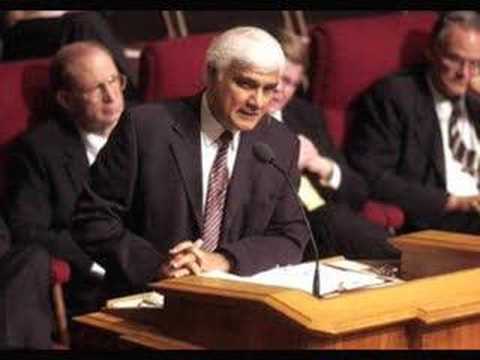
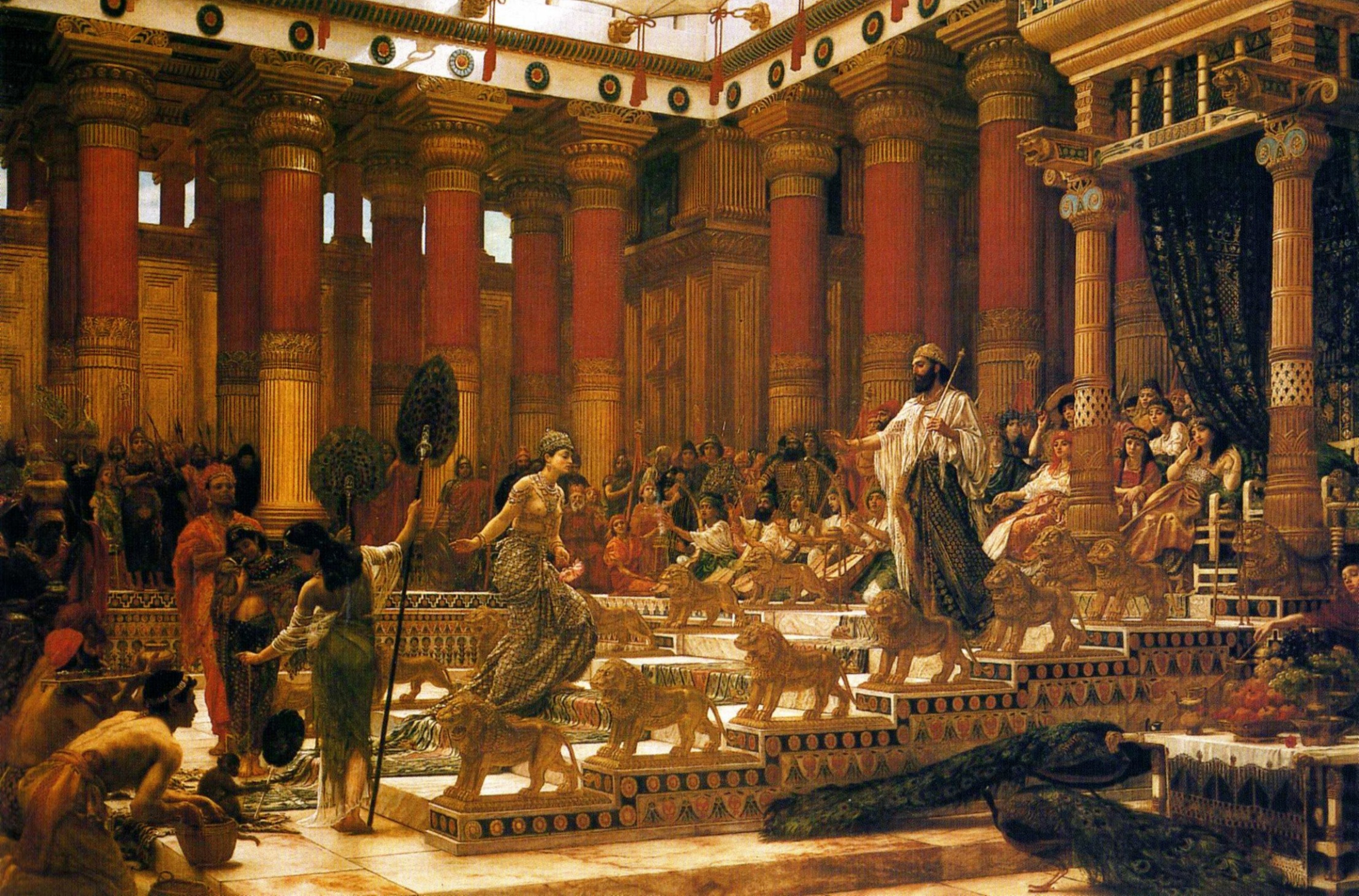


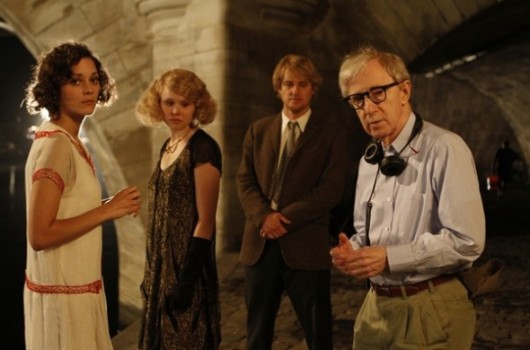








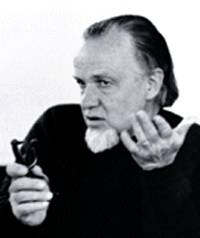




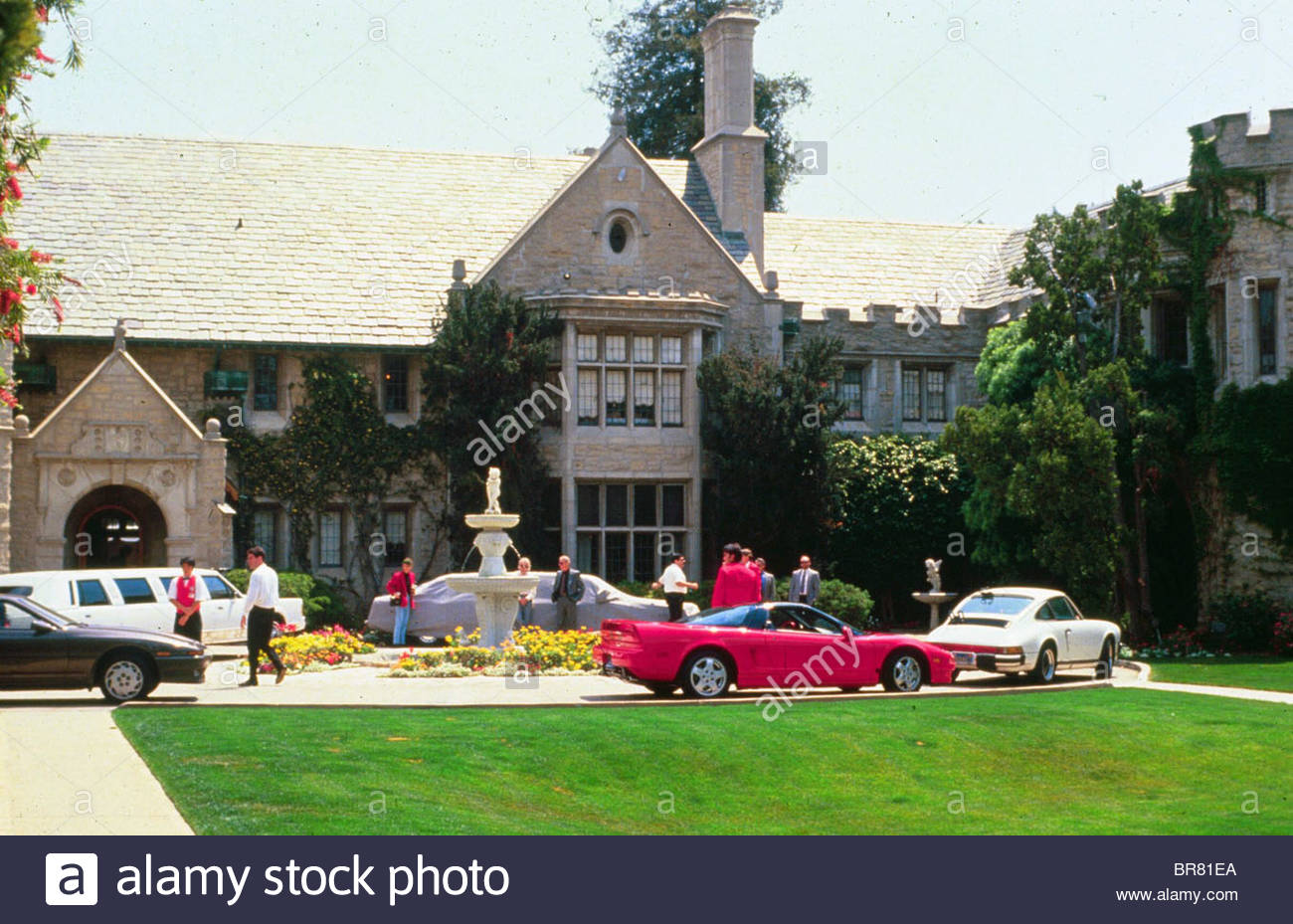


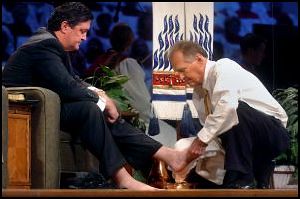












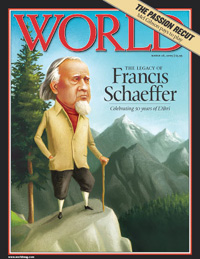






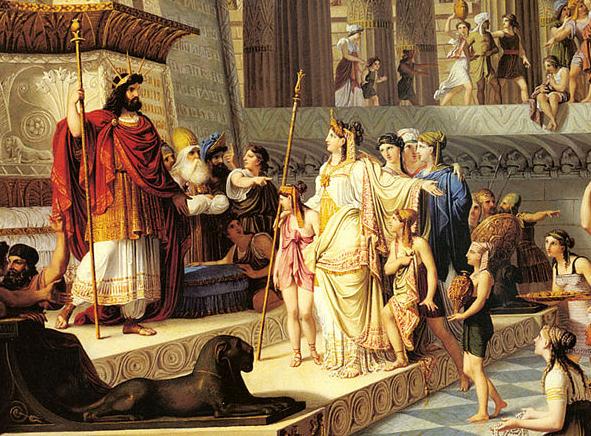


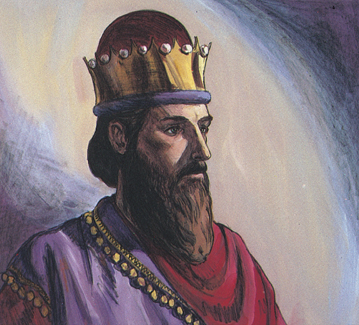







 , a strong endorsement of reason as the foundation of public life in a democracy. He retired from his professorship in 1993, but not from his role as an active advocate of Enlightenment rationality. It is debatable how far his more recent work still continues under a neo-Marxist theoretical umbrella. His views on religion have shifted considerably.
 . It is a conversation between Habermas and Cardinal Joseph Ratzinger (at the time of this exchange head of the Congregation for the Doctrine of the Faith, subsequently Pope Benedict XVI). Habermas here gives credit to Christianity for being the purveyor of a universal egalitarianism (equality of all people) and for an openness to reason, thus continuing to provide moral substance for democracy. Not surprisingly, Ratzinger (current Pope) agreed. I am not sure what Habermas’ personal beliefs are. But I don’t think that his change of mind about religion has anything to do with some sort of personal conversion. Rather, as has been the case with most sociologists of religion, Habermas has looked at the world and concluded that secularization theory—that is, the thesis that modernization necessarily leads to a decline of religion—does not fit the facts of the matter. Beyond this acknowledgement of the empirical reality of the contemporary world, Habermas admits the historical roots in Biblical religion of modern individualism, and he thinks that this connection is still operative today. Yet, when all is said and done, Habermas now has a positive view of religion (at least in its Judaeo-Christian version) for utilitarian reasons: Religion, whether true or not, is socially useful.


 The Daily Hatch