President Obama should be protecting unborn children!!!! (Part 6)

Dr. Francis Schaeffer – The Biblical Flow of Truth & History (part 2)

These posts are all dealing with issues that President Obama did not help on in his first term. I am hopeful that he will continue to respond to my letters that I have written him and that he will especially reconsider his view on the following import issue. President Obama should be protecting unborn children!!!!

The Pro-Life Argument: Is the Pro-Life Argument Unfair?


THE PRO-LIFE ARGUMENT- IntroductionThose who are pro-abortion or, as they prefer to be called, “pro-choice,” argue that the pro-life position on abortion is unfair. Is it really?THE PRO-LIFE ARGUMENT- Unfair Advantage to the RichPro-abortionists argue that if abortion were made illegal, it would become available only to the rich and not to the poor. The poor would become burdened with children they cannot afford to raise. Teenage girls who get pregnant would be forced to endure the emotional and physical ordeals of pregnancy and child-rearing even if they are not ready for them. Forcing women to bear children under these conditions, we are told, would simply be unfair to the women, and also to the children who would have to endure such poverty and unwantedness.THE PRO-LIFE ARGUMENT- A Very Important AssumptionThese arguments all make one very important assumption: that the unborn are not human beings. Should we allow parents who are too poor to take care of their children the right to kill them? If a teenage mother decides six months after giving birth that she doesn’t want her baby any more, should she be allowed to kill it? Of course not! But then, neither should parents of children who have not yet been born have the right to kill them. Thus the issue is not whether abortion is unfair, but whether the unborn are really human beings.THE PRO-LIFE ARGUMENT- Overlooked FactsThese arguments also overlook certain facts. For one thing, except in the case of women who are raped or who are victims of incest, no woman is “forced” to become pregnant or to give birth. And these hard cases account for only a small fraction of the abortions performed. Secondly, in the vast majority of cases adoption is still a very viable alternative to abortion. Children born to homeless mothers, to drug addicts, or to teenage mothers can be adopted into good homes with mature parents.THE PRO-LIFE ARGUMENT- Abortion Unfair to the UnbornMaking abortion a crime would not be unfair to anyone. However, abortion is deadly unfair to the unborn. In fact, we need to recognize one more time what an incredible privilege it is to have children — and to recognize that God, indeed, opens and closes the womb.On abortion and fairness, that’s the CRI Perspective. I’m Hank Hanegraaff.

March 17th, 2009 by CRI | Type: Standard

Filed Under: Current Events and Christianity, Perspectives

Open letter to President Obama (Part 168.7)

President Obama c/o The White House
1600 Pennsylvania Avenue NW
Washington, DC 20500

Dear Mr. President,

I know that you receive 20,000 letters a day and that you actually read 10 of them every day. I really do respect you for trying to get a pulse on what is going on out here.

As a leader you got to make good decisions and raising taxes may be hurtful for the nation at times.

I’m not a big fan of government conspiracy theories, largely because the people in Washington are too bloody incompetent to do anything effectively. Heck, sometimes they can’t even waste money properly even though they have lots of practice.

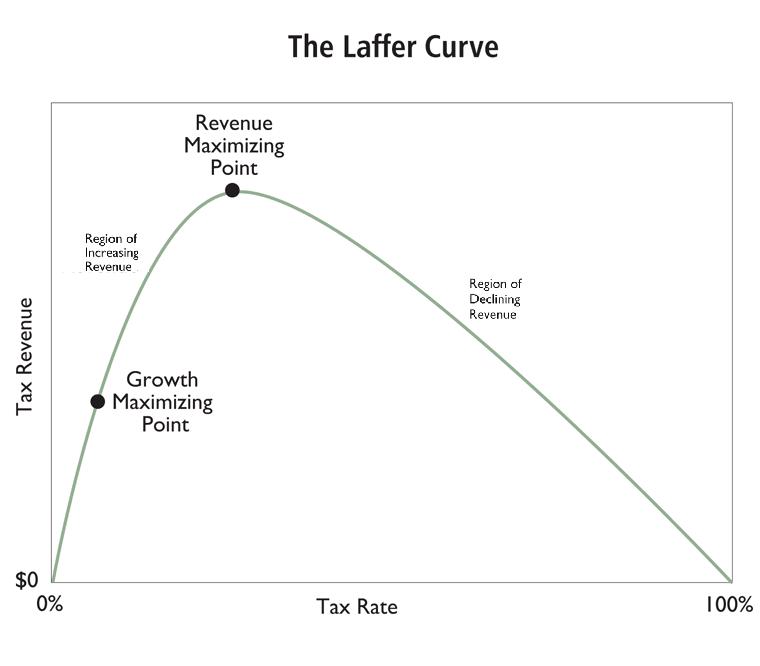
But it recently crossed my mind that maybe President Obama was born in Denmark. Not in a serious way, of course, but you’ll understand my thought process when you read this passage from a report by the government-appointed Danish Economic Council. It doesn’t mention the Laffer Curve, but the report openly states that an increase in the top tax rate would lose revenue because of changes in taxpayer behavior.

…increased taxation on high income earners in Denmark at best is revenue neutral, and may even reduce total tax revenue. This result applies whether one considers the top 10, the top 5 or the top 1 per cent income group. …Using the base estimate of the elasticity of taxable labour income of 0.2, the conclusion is thus that the existing Danish tax system implies an effective tax rate on high income earners that is above – though close to – the tax rate that generates the highest tax revenue. …As an example, the revenue effect of an increase in the marginal tax rate by 6 percentage points for high-income earners is calculated. Using the base estimate of the behavioural response to taxation, this leads to a revenue loss of about ½ billion DKK. …Overall, the scope for acquiring extra tax revenue from high income earners in Denmark is very limited.

Yet there are some politicians in Denmark who want to raise tax rates, even though the damage to the economy will be so significant that the government loses revenue!

If you’re thinking this sounds familiar, you probably remember President Obama’s infamous statement during the 2008 campaign that he wanted to raise the capital gains tax rate for reasons of “fairness” regardless of whether tax revenues decreased (if you think I’m somehow exaggerating or distorting his words, just go to the 4:20 mark of this video).

By the way, the Danish study probably understates how much revenue the government would lose. Their base estimate about the elasticity of taxable labor income (economist jargon for how sensitive labor income is to changes in tax rates) is much lower than Alan Reynolds reported in his recent Wall Street Journal column.

Rich people, unlike the rest of us, have tremendous ability to change the timing, composition, and level of their income, which is a big reason why upper-income taxpayers paid much more to the IRS in the 1980s after President Reagan slashed the top tax rate from 70 percent to 28 percent.

I’m constantly amazed – in a bad way – that politicians and bureaucrats have been so successful in resisting the insights of the Laffer Curve. The U.S. Treasury Department, for instance, is to the left of the Danish Economic Council and basically assumes that tax policy has no impact on economic performance. The same can be said about the Joint Committee on Taxation on Capitol Hill.

This has to be a case of leftist ideology trumping reality, because the evidence for the Laffer Curve is quite powerful – some of it even being produced by international bureaucracies.

None of this is to suggest that “all tax cuts pay for themselves.” That only happens in unusual cases where a group of taxpayers – such as wealthy entrepreneurs and investors – have considerable flexibility in their economic affairs.

In most cases, the government will collect more revenue when tax rates increase. This is because the impact of the change in the tax rate is larger than the impact of the change in taxable income.

But the real question is whether it is ever a good idea to reduce private economic output in order to give politicians more money to spend. To sensible people, that’s the most important insight of the Laffer Curve.

P.S. While this discussion has focused on the foolishness of setting tax rates so high that the government loses revenue, this does not mean politicians should seek the revenue-maximizing tax rate. The ideal point on the Laffer Curve is the growth-maximizing tax rate.

________

Thank you so much for your time. I know how valuable it is. I also appreciate the fine family that you have and your commitment as a father and a husband.

Sincerely,

Everette Hatcher III, 13900 Cottontail Lane, Alexander, AR 72002, ph 501-920-5733, lowcostsqueegees@yahoo.com

The Life and Ministry of Adrian Rogers (Part 1)

7 years ago on November 15, 2005 Adrian Rogers passed away. This is a series of posts about the life and ministry of Adrian Rogers.

Adrian Rogers Memorial – Come To Jesus

Uploaded by on Jan 20, 2011

This video is from Adrian Roger’s Memorial Service held at Bellevue Baptist Church in Memphis, TN in 2005. He was one of the greatest preachers of the past century and I praise God for the impact he has had on my life and ministry. To learn more about Adrian Rogers and his continuing ministry, visit: www.lwf.org

Here is a portion of an article from Baptist Press on Nov 22, 2005: 

CORDOVA, Tenn. (BP)–Two longtime friends of Adrian Rogers were among those who stepped up to the pulpit at his funeral, in their case, to voice the admiration of fellow pastors for his influence in their lives.

“Let us pray that a double portion of Adrian Rogers’ spirit shall be upon us all,” said Jerry Vines, pastor of First Baptist Church in Jacksonville, Fla., and a former Southern Baptist Convention president -– as was Rogers, who died Nov. 15 at the age of 74 after a battle with cancer and pneumonia.

“He taught us preachers, ‘Holiness is not the way to Jesus, but Jesus is the way to holiness,’” Ken Whitten, pastor of Idlewild Baptist Church in Tampa, Fla., told the crowd at Rogers’ Nov. 18 funeral at Bellevue Baptist Church in suburban Memphis.

A transcript of their remarks follows:

KEN WHITTEN

“I believe it was a little boy in the fellowship of this church that best summarized Adrian Rogers’ life. It was a time when Dr. Rogers walked into the activities building and when he walked in, the little boy looked at him and said, ‘Hello Jesus.’ An assistant minister of activities said to him, ‘Michael, that’s not Jesus. That is Dr. Rogers. You know that’s Dr. Rogers and not Jesus, don’t you?’ He said, ‘Well, I don’t know. Every Sunday he holds out his hands and says, “Come to Jesus.”’

“I’m here tonight to tell you that it wasn’t just little boys that thought Dr. Rogers reminded them of Jesus. It was preacher boys, and grown men and women as well. And I am honored to stand here and represent thousands of pastors who are in the ministry today because of the life and the ministry of Adrian Rogers. His life was as much like the Lord Jesus Christ to me as any man I’ve ever met. I loved Adrian Rogers, maybe at times too much, because his voice in my life always sounded like God’s voice. And because of that he guarded the counsel he gave me, fearing that I might follow him and not the Lord.

“I’m sure there were moments in his life he didn’t act like Jesus Christ, but I never saw any. He spoke like Jesus. He lived like Jesus. And he even died at 3:00 like Jesus. I found it very interesting the man that he and Miss Joyce read every morning in the devotional book, ‘My Utmost For His Highest,’ Oswald Chambers, and Dr. Rogers would look at the book and pick it up and say, ‘O.C., what do you say?’ I found it interesting that Oswald Chambers also died on Nov. 15.

“I felt safe as a pastor knowing he was alive. Safe as a denomination. Safe as a pastor who could call for counsel at any time. I know many pastors tonight would echo, he took time for them too. And we all wondered what it was like to be the senior pastor of the world. There are some things he taught us that will forever be etched into our being. Sadly he will no longer speak to our life, but he will forever speak in our life.

“He spoke with authority and his authority was the inspired, inerrant, infallible word of God. Hardly a night would go by that he would not meditate on a verse or a passage of Scripture before he went to bed. He taught us to love God’s word and preach God’s word. And when asked why he used God’s word, he would say, ‘I’m not smart enough to preach anything else. And then again, I’m too smart to preach anything else.’

“He taught us preachers, ‘Holiness is not the way to Jesus, but Jesus is the way to holiness.’ He would say that what’s down in the well comes up in the bucket, that God pays for what he orders, and then he would say, ‘That man, he’s hurting in one place and grunting in another.’ And then he would say, ‘Your problem is you got shot and blamed for limping.’

“He taught us that a faith that fizzles before the finish had a flaw from the first. He would say prophecy is history pre-written, that salvation is not a plan, it’s a man, that where God does not rule, he will overrule. And when he would preach, he would say to know Him is to love Him, to love Him is to trust Him, to trust Him is to obey Him and to obey Him is to be blessed by Him. He taught us preachers that character’s what you are in the dark. He taught us to love God and to hate sin. He showed us preachers how to love your wife and how to honor her, as he demonstrated publicly and unashamed that he loved his childhood sweetheart, his favorite singer, precious Joyce.

“Dr. Rogers and Miss Joyce have taught us that all of our children are individuals, and they taught their children to think, and they raised them according to their own bent. He taught us to look people in the eye when you talk to them and never be distracted when others are waiting in line. He taught us to return the correspondence of every letter sent to you. And so when I am in my pulpit chair and I sit leaning forward, with my back straight, I’ll think of Adrian Rogers. When I throw my shoulders back, as I walk to the pulpit, I’ll think of Adrian Rogers. He was the epitome of graciousness, and when I practice grace, I’ll think of Adrian Rogers. Others adore and idolize athletes. My hero was Adrian Rogers.

“When Jonathan and Saul died, David said, ‘How the mighty are fallen.’ When I think of Dr. Bill Bright, and Dr. Stephen Olford, and now Dr. Adrian Rogers, I echo those words tonight. My fellow pastors, we can no longer tell him how special he is to us, but we can show others –- by imitating his character, honoring his convictions and heeding his counsel.

“I was with my son this week, and he said, ‘Dad, I know you’re hurting.’ And I reminded him that I named him after Dr. Rogers –- Phillip Adrian Whitten. And he said, ‘Dad, I’ll try to live up to that name.’ And I would also like to say to Miss Joyce and this family, thank you for allowing me to tell others tonight of the profound impact Dr. Rogers has had on my life. I want you to know, I will try to live up to that name as well.

“Lastly I’d like to say to Dr. Rogers, thank you for letting me be on your staff. I am not only better for it, the entire Whitten family is better, but Idlewild Church and the city of Tampa are far better off tonight because of your life. I love you. I will miss you. You are right. God is love. Jesus is wonderful. He is a love worth finding, and you have come to Jesus.”
–30–

__________

Related posts:

Adrian Rogers and John MacArthur on wisdom from Proverbs on alcohol

(My pastor growing up was Adrian Rogers and he died 7 years ago today. He would have been 82 if he was still living. ) I love the Book of Proverbs and every day I read one chapter of Proverbs. Since there are 31 chapters, I start the 1st of ever month and read chapter […]

Adrian Rogers on evolution

The Long War against God-Henry Morris, part 1 of 6 Uploaded by FLIPWORLDUPSIDEDOWN3 on Aug 30, 2010 _________ Do you think the theory of evolution is true? Check out this short article by Adrian Rogers: “O Timothy, keep that which is committed to thy trust, avoiding profane and vain babblings, and oppositions of science falsely so called: which […]

The Life and Ministry of Adrian Rogers (Part 2)

7 years ago on November 15, 2005 Adrian Rogers passed away. This is a series of posts about the life and ministry of Adrian Rogers. Adrian Rogers Memorial – Come To Jesus Uploaded by jonwhisner on Jan 20, 2011 This video is from Adrian Roger’s Memorial Service held at Bellevue Baptist Church in Memphis, TN in […]

The Life and Ministry of Adrian Rogers (Part 1)

7 years ago on November 15, 2005 Adrian Rogers passed away. This is a series of posts about the life and ministry of Adrian Rogers. Adrian Rogers Memorial – Come To Jesus Uploaded by jonwhisner on Jan 20, 2011 This video is from Adrian Roger’s Memorial Service held at Bellevue Baptist Church in Memphis, TN in […]


Johnny Cash (Part 6)

I got to see Cash perform in 1978 in Memphis.

Johnny Cash remembered for his faith-based music

Johnny Cash was remembered for how his music “sang the faith” in an article published on Sunday in the Italian Bishops’ Conference’s newspaper Avvenire. Without his faith, the article said, “the voice of Cash would not have been the same,” reports Catholic News Agency.

The bishops’ newspaper remembered the man who, though he “knew” prison and nearly died of a drug overdose, “still … at a certain point in his life, took from it a possible Meaning, with a capital letter.” Cash dedicated the last of his songs, the paper noted, “to sorrowful, moving hymns to man, inserted within his own faith in a God that gives horizons and hopes to man.”

Avvenire also looked at Cash’s work by reviewing the album “Ain’t No Grave,” which it called an “ulterior and touching witness of art imbued with faith and humanity.”

Looking at the recently released book “The Man in Black—Commentated Texts”, Avvenire saw Cash as a ” young country singer that was educated to respect the earth and believe that there is Someone that governs it.”

Later, the paper recalled, he became a “spokesperson of the rejects” in playing concerts for and representing those in jail, “interpreting their repentances and hardships.”

Distancing himself from the American dream, the newspaper wrote, he highlights the injustices and tragedies, shedding light on his true personality as a man “for the poor” and “for those who’ve never read or listened to the words that Jesus said.”

Citing the authors of the book, Valter and Francesco Binaghi, who note that Cash’s inheritance for the 21st century man is a “voice, guitar and faith,” Avvenire asserted that “without faith, the voice of Cash would not have been the same and we would have an example less of how much, (when) wanting to do so, even a guitar can help (us) to live.”

Cash, known as the “Man in Black,” died of diabetes-associated complications after a prolific singing and songwriting career in Sept. 2003. In his lifetime, he also released an series called “The Johnny Cash Spoken Word New Testament,” released on cassette in 1989 and later on CD in 2003.

About the spoken word recordings, he wrote that he approached each session “with fear, respect, awe and reverence for the subject matter. I also did it with a great deal of joy, because I love the Word.”

Christopher Hitchens’ debate with Douglas Wilson (Part 8)

Christopher Hitchens vs. Douglas Wilson Debate at Westminster Theological Seminary, Part 8 of 12

Douglas Wilson

There are a few slight confusions that I would like deal with briefly within the scope of my first few paragraphs. Weather permitting, I would then like to take just a short space to address the central point which you have (again) missed. The remainder of my time will be spent on your claim concerning the origin of ethical imperatives. I would like to do all this in order to set the stage for our unfolding discussion of the central reason why Christianity is good for the world— it is good for the world because Jesus died for the life of the world.

First, the confusions. The point of citing Psalm 14:1 was not to infer that I thought you were “dumb.” In the wisdom literature of the Old Testament, folly is a moral question, not a matter of intelligence. I am quite prepared to cheerfully grant (and not for the sake of the argument) that you are my intellectual superior. But our discussion is not about who has more  horsepower under his intellectual hood—the point of discussion is whether your superior car is on the right road. A fast car can be a real detriment on a dark night when the bridge is out. And you insist on continuing to wear the sunglasses of atheism.

Now the second confusion concerns your citation of the parable of the Good Samaritan. The popular name for the parable should have been a giveaway—you acknowledge that the protagonist of the story was “from Samaria,” but you miss that this was an ethnic and racial issue and not a question of where he happened to live. The man beat up by the side of the road was a Jew, the priest and Levite who passed by on the other side were Jews, and the man who stopped was a despised half-breed, a Samaritan. But you say that it was probable that the Samaritan was a Jew, which inverts the whole story and indicates to me that you have not really been reading the text very closely (Luke 10:27-37). But to answer your point in even bringing the story up, the Samaritan did not need the teaching of Jesus to do what God desired here. Jesus cited the story as an exposition of the second greatest commandment, which is to love your neighbor as yourself. A certain lawyer had asked Jesus to “define neighbor” in order to justify himself, and Jesus then told this story to illustrate the point of an ancient law. So the duty to love our neighbor was revealed to Old Testament writers about a millennium and a half before the Samaritan fulfilled it in his charitable act.

You say, incidentally, that this kind of law was bringing coals to Newcastle—Moses came down from the mount and told people that murder, theft, and perjury were wrong, and all the assembled rolled their collective eyes. “We already knew that!” But the problem is that ancient man didn’t know that, and modern man still doesn’t know it. To state some of the issues that are subsumed under just one of the three categories you mention is to point to controversies that continue down to this day. Consider some of the issues clustered under the easiest of these three to condemn—murder. We have abortion, infanticide, partial-birth abortion, euthanasia, genocide, stem-cell research, capital punishment, and unjust war. Murder is the big E on the eye chart, and we still can’t see it that clearly.

Man, both ancient and modern, certainly knows the entire law of God if it is his own ox being gored, but the purpose of a law code is to have one standard in place for all parties when individuals want to set aside the standards of civilized life to suit themselves. And we need as much help with that as ancient man ever did.

Now we really need to address the point you continue to miss. I am not talking about whether atheists must do evil, or if they can do evil. I have denied the former, and you have now granted the latter. But that is not the point. We are not talking about whether your atheism compels you to run downtown this evening to shoot out the street lights. I grant that it does not. And we are not talking about whether atheists can do vile things. You grant that they can. We are talking about (or, more accurately, I am trying to talk about) whether or not atheism provides any rational basis for rational condemnation when others decide to misbehave this way. You keep saying, “I have come to my ethical position.” I keep asking, “Yes, quite. But why did you do so?”

So the point is not whether we could rustle up some nice places governed by atheists or some hellholes governed by Christians. If given a choice between living in a Virginia governed by Jefferson and living in a Russia under the czars, I would opt to live under your beloved Jefferson.

Fine. But this is not a concession, because it is not the point.

Take the vilest atheist you ever heard of. Imagine yourself sitting at his bedside shortly before he passes away. He says, following Sinatra, “I did it my way.” And then he adds, chuckling, “Got away with it too.” In our thought experiment, the one rule is that you must say something to him, and whatever you say, it must flow directly from your shared atheism—and it must challenge the morality of his choices. What can you possibly say? He did get away with it. There is a great deal of injustice behind him, which he perpetrated, and no justice in front of him. You have no basis for saying anything to him other than to point to your own set of personal prejudices and preferences. You mention this to him, and he shrugs. “Tomayto, tomahto.”

I am certainly willing to take the same thought experiment. I can imagine some pretty vile Christians, and if I couldn’t, I am sure you could help me. The difference between us is that I have a basis for condemning evil in its Christian guise. You have no basis for confronting evil in its atheist guise, or in its Christian guise, either. When you say that a certain practice is evil, you have to be prepared to tell us why it is evil. And this brings us to the last point—you make the first glimmer of an attempt to provide a basis for ethics.

You say in passing that ethical imperatives are “derived from innate human solidarity.” A host of difficult questions immediately arise, which is perhaps why atheists are generally so coy about trying to answer this question. Derived by whom? Is this derivation authoritative? Do the rest of us ever get to vote on which derivations represent true, innate human solidarity? Do we ever get to vote on the authorized derivers? On what basis is innate human solidarity authoritative? If someone rejects innate human solidarity, are they being evil, or are they just a mutation in the inevitable changes that the evolutionary process requires? What is the precise nature of human solidarity? What is easier to read, the book of Romans or innate human solidarity? Are there different denominations that read the book of innate human solidarity differently? Which one is right? Who says?

And last, does innate human solidarity believe in God?

Related posts:

Christopher Hitchens’ view on abortion may surprise you

Christopher Hitchens – Against Abortion Uploaded by BritishNeoCon on Dec 2, 2010 An issue Christopher doesn’t seem to have addressed much in his life. He doesn’t explicitly say that he is against abortion in this segment, but that he does believe that the ‘unborn child’ is a real concept. ___________________________ I was suprised when I […]

Christopher Hitchens discusses Ron Paul in 3-2-11 inteview

Max Brantley in the Arkansas Times Blog reports that Ron Paul is leading in Iowa. Maybe it is time to take a closer look at his views. In the above clip you will see Chistopher Hitchens discuss Ron Paul’s views. In the clip below you will find Ron Paul’s latest commercial. Below is a short […]

Evangelicals react to Christopher Hitchens’ death plus video clips of Hitchens debate (part 3)

DEBATE William Lane Craig vs Christopher Hitchens Does God Exist 07 Below are some reactions of evangelical leaders to the news of Christopher Hitchens’ death:   Christian leaders react to Hitchens’ death Posted on Dec 16, 2011 | by Michael Foust   DEBATE William Lane Craig vs Christopher Hitchens Does God Exist 08 Author and […]

Evangelicals react to Christopher Hitchens’ death plus video clips of Hitchens debate (part 2)

DEBATE William Lane Craig vs Christopher Hitchens Does God Exist 04 Below are some reactions of evangelical leaders to the news of Christopher Hitchens’ death: Christian leaders react to Hitchens’ death Posted on Dec 16, 2011 | by Michael Foust DEBATE William Lane Craig vs Christopher Hitchens Does God Exist 05 Author and speaker Christopher […]

Evangelicals react to Christopher Hitchens’ death plus video clips of Hitchens debate (part 1)

DEBATE William Lane Craig vs Christopher Hitchens Does God Exist 01 Below are some reactions of evangelical leaders to the news of Christopher Hitchens’ death: Christian leaders react to Hitchens’ death Posted on Dec 16, 2011 | by Michael Foust Author and speaker Christopher Hitchens, a leader of an aggressive form of atheism that eventually […]

“Woody Wednesday” Sam Tanenhaus on Woody Allen’s Black Magic

To Rome with Love Trailer Official 2012 [HD] – Alec Baldwin, Jesse Eisenberg

To Rome with Love hits theaters on June 22nd, 2012.

Cast: Woody Allen, Alec Baldwin, Penelope Cruz, Jesse Eisenberg, Greta Gerwig, Ellen Page, Judy Davis, Alison Pill, Roberto Benigni, Isabella Ferrari, Sergio Rubini, Antonio Albanese, Fabio Armiliata, Alessandra Mastronardi, Ornella Muti, Flavio Parenti

“To Rome with Love” is a story about a number of people in Italy – some American, some Italian, some residents, some visitors – and the romances and adventures and predicaments they get into. The film stars Allen, Alec Baldwin, Roberto Benigni, Penelope Cruz, Judy Davis, Jesse Eisenberg, Greta Gerwig and Ellen Page.

To Rome with Love trailer courtesy Sony Pictures Classics.

_____________

A review of Woody Allen’s “To Rome with Love:”

Sam Tanenhaus on Woody Allen’s Black Magic

Jun 18, 2012 1:00 AM EDT


The legendary filmmaker returns to his old obsessions-sexual avarice and megalomaniacal control.

It’s the first Monday in June, 10 days before Woody Allen’s new movie, To Rome With Love, will open the Los Angeles Film Festival, and Allen, dressed as usual in brown, is perched on a chair in the screening room in his functional office on the ground floor of an anonymous Park Avenue building.

It used to be he strictly limited publicity for his films, even banning glowing quotes from newspaper ads, which instead were as stark as his signature black-and-white title cards (“Written and Directed by Woody Allen”). But times have changed for Woody, and for moviegoers, and he now acknowledges the need to hustle his product. He flew to Rome for the world premiere in April and now patiently holds still under the umbrella strobe, genially bantering with the photographer, Platon, who confesses he is uncommonly nervous. “I’ve learned so much about life from you,” he says. Allen deadpans his reply: “I’ve learned not to believe anyone who says that.”

Everyone chuckles, though it is not at all clear he’s joking. Allen’s fabled career has had exhilarating ups, but also abysmal downs, and praise has often been followed by attack. At one low point, in 2002, when he was locked in a bitter lawsuit with his onetime producer, Jean Doumanian, The New York Times, which in better days had consistently proclaimed Allen’s genius, counted a “grand total of eight people” in the seats of the Times Square discount house that was the sole local venue of his latest flop (Hollywood Ending) and speculated that “his long moment as cultural icon may be over.”

Since then Woody has stormed back, perhaps not bigger or better, but more popular than ever, with a sequence of solid hits filmed abroad. Midnight in Paris, released last year, won Allen his third Oscar for best original screenplay, along with a nomination (his seventh) for best director. More remarkably, it is Allen’s top all-time box-office success, earning well over $110 million worldwide.

The shoot finished, we move next door to Allen’s editing room and sit on facing chairs amid unopened cartons and cluttered surfaces, the space resembling the garage of an unhandy suburbanite rather than the atelier of a celebrated filmmaker. “This has always been such a little rathole,” he says. “I’ve been here 30 years or so, and it suffices. We edit in here. We take it in there. We look at it. We hate it.”

woody-allen-fe02-main-tease
Woody Allen (Platon for Newsweek)

At 76, he has aged with unholy grace: the mussed carrot-top, now the cloud tint of jiffy-bag innards, has scarcely thinned; the oblong face remains a mobile mask of amused perplexity; the wiry physique, thanks to daily exercise, still exudes the vigor of the athlete he once was—a skilled-enough boxer, in his teens, to have trained for the Golden Gloves competition. His one obvious debility, no joke for a master of spoken idioms, is defective hearing; his phone, keyed to ear-splitting volume, trilled six times before he asked, in puzzlement, “What’s that?” Unperturbed, he continues calmly, not bothering to raise his voice.

Allen in person is nothing like the nebbishy mess of phobias and insecurities he has been impersonating, on stage and screen, for half a century, dating back to his days doing stand-up in Greenwich Village clubs like The Bitter End. He has the reputation, in fact, for almost terrifying self-assurance and will brusquely dismiss established stars (casualties include Michael Keaton, Sam Shepard, and Christopher Walken) if they fail to meet his exacting standards on the set. But monomania has made him his era’s greatest comic presence, the one true heir of Charlie Chaplin and Buster Keaton. Allen, however, measures himself against stiffer competition. “I think I’ve now made almost 45 films,” he says. “Some nice ones. No masterpieces. I don’t kid myself. It’s not false modesty. If you look at Rashomon, The Bicycle Thief, The Grand Illusion, as masterpieces, [then] no: I don’t have a film I could show in a festival with those films.”

It is unlikely To Rome With Love will be shown beside them either, though its deft intermixing of four separate story lines, each a gentle farce about innocents beguiled into wrong or risky choices, is superbly executed by its all-star ensemble, which includes Roberto Benigni, Alec Baldwin, and Penélope Cruz. All worked for minimum fees, lest they bust Allen’s roughly $17 million budget, tiny by current standards. Italian critics noted diverting moments—for instance, the scene in which a late-blooming opera singer (the great tenor Fabio Armiliato) is wheeled onto the stage in a portable shower, where he scrubs himself while singing an aria from Pagliacci. But many were disappointed. They had come to the screening expecting a major statement—about Rome, about cinema, about life—from the “most European of American directors.” And they didn’t find one.

That a Brooklyn-born comic whose résumé includes boxing a kangaroo and singing to a dog, should be solemnly lionized in the culture capitals of the continent (since 2001 he has filmed in London and Barcelona along with Paris and Rome), might seem ludicrous, the premise of an Allen “mockumentary” à la Take the Money and Run or Zelig. But for Woody it is a simple fact of life—or rather, of cinema, and its awkward mingling of art and commerce. “For the last 25 years, maybe 30 years, I’ve been doing better in Europe and around the world than in the United States,” he says. “It’s hard for me to raise money here whereas in the European countries and in fact all over the world—China, Russia, Israel—they call me and say, ‘Please come here and we’ll finance.’”

woody-allen-fe02-2nd
‘Annie Hall’ (1977) marked his evolution from funny man to major artist. (Brian Hamill / United Artists-Photofest)

It is also, to a great extent, a chosen exile, a matter not only of money but of control. Allen insists on total autonomy—over scripts, casting, editing. Even the stars he recruits see only the pages in the script that contain their own parts. This imperiousness dates back to the brief golden period in American film, lasting from the late-’60s to the mid-’80s, when audiences greeted each new movie as an installment of its director’s commanding vision.

Woody began with slapstick romps (Bananas, Sleeper) that won a cult following on college campuses. Then came Annie Hall, a vehicle for his former girlfriend, Diane Keaton. Released in the spring of 1977, it was a sensation, with its up-to-the-minute news of prosperous, cultured people who sorted through their lives against a backdrop of well-upholstered uptown apartments. Fine as the movie was, the timing was even better. New York in the mid-’70s was in crisis. There was a threatened bankruptcy in 1975, a citywide blackout in 1977 that resulted in arson, lootings, riots, and mass arrests. A serial killer, “Son of Sam,” was stalking quiet neighborhoods in Brooklyn and Queens. The cinematic touchstone was Taxi Driver ( 1976 ), Martin Scorsese’s inferno of murder and vice, set in Times Square.

Annie Hall offered a countervision, hopeful and aspirational. So did Manhattan ( 1979 ), with its exquisite black-and-white panoramas of the island’s visual splendors, and Hannah and Her Sisters ( 1986 ), much of it shot in the sprawling, cozy Upper West Side apartment of Mia Farrow, Allen’s leading lady and off-screen companion. Together these films, each a “canto in [Allen’s] ongoing poem to love and New York City,” as the critic Pauline Kael wrote at the time, helped New Yorkers recover their high sense of self. Manhattan once again was Oz, and Woody its wizard, conjuring up its long-forgotten mystery and allure. For many, inside the city and beyond, he was New York. Almost overnight, the funnyman and gag writer was being mentioned in the same breath as Stanley Kubrick and Francis Ford Coppola.

woody-allen-feo2-3rd
The director with Penelope Cruz and Alessandro Tiberi on the set of ‘To Rome With Love’. (Massimo Percossi / EPA-Landov)

It helped that Woody was steeped in sophisticated homegrown influences: the biting subversive wit of Lenny Bruce and Mort Sahl, the pacing of Broadway technicians like George S. Kaufman and Garson Kanin, the bookish smarts of Philip Roth. All of this placed Woody not so much ahead of the competition as apart from it, playing a different game, in defiance of cheap movie-land thrills. Hollywood might love Woody, but he refused to love it back. The same fans who lined up at Manhattan cinemas when the latest Allen gem opened (after reading the predictable rave from Vincent Canby in the Times) exulted when Woody, nominated year after year for Oscars, declined to attend the ceremony or even to watch it on TV, instead keeping his Sunday-night gig at Michael’s Pub, where he played the clarinet with a Dixieland combo.

Then came the abrupt descent. In 1992 he and Farrow bitterly split over Allen’s affair with Farrow’s 21-year-old adopted daughter, Soon-Yi Previn (who is now his wife). The ensuing custody battle was a tabloid festival (“Mia Has Nude Pix,” “Tell It to the Judge”). The king of the one-liner was reduced to a punchline and worse, a kind of civic embarrassment. Sparkling Allen jests—“Don’t you see the rest of the country looks upon New York like we’re left-wing, communist, Jewish, homosexual pornographers? I think of us that way sometimes, and I live here.”—sounded tinny and smug. Many recalled Joan Didion’s scathing observation in 1979 that Allen and his audience dwelled together in a privileged “subworld,” adding, “the peculiar and hermetic self-regard in Annie Hall and Interiors and Manhattan would seem nothing with which large numbers of people would want to identify.”

Most shocked of all were Allen’s legions of female fans. Many had swooned for this most unlikely of leading men—undersized, sensitive, vulnerable, “in touch with his feelings.” Now they heard him insist, in a line that might have been lifted from one of his scripts, that “the heart wants what it wants”—in this instance a woman 35 years his junior. Seduced by Woody, his admirers had missed the deeper messages in his art, its tricky blurrings of fact and illusion. Growing up in Brooklyn, dreaming of a life in showbiz, he had learned magic, particularly sleight of hand, adept enough at age 14 to audition for television programs. This early history shaped his later art. Allen himself has labeled his technique “misdirection,” and once told the critic and film historian Richard Schickel, “I lead the audience to believe something, but the movie is really going to be about something else.”

He applies the formula most ingeniously in his subtle mixing of autobiography and invention, filtered through the roles played either by himself or various stand-ins. The schlumpy, childlike “Woody” character is in fact sexed-up and calculating, just like Chaplin’s randy “little fellow.” And like Chaplin, Allen favors young actresses. “People get the impression that these films are autobiographical in an acute way,” he told an interviewer in 1986. “In Manhattan they were completely convinced I wanted to marry a 17-year-old girl”—his costar, Mariel Hemingway. In that case he seems to have fooled himself.

woody-allen-fe02-4th
An affair with Soon-Yi Previn (left), adopted daughter of Mia Farrow (center), shocked Allen’s fans. (Ann Clifford / DMI-Time Life Pictures-Getty Images)

In other cases the message is more ambiguous. Annie Hall and Manhattan, though disguised as soulful, romantic “breakup” pictures, are in reality dark, Pygmalion-like tales of sexual avarice and narcissistic control. There is similar “misdirection” in Crimes and Misdemeanors—perhaps the last of Allen’s great New York films. The character most like him isn’t the glum, moralizing documentary filmmaker played by Woody. It’s the vulgar, preening, power-mad TV mogul played by Alan Alda, who barks “ideas” into the portable tape recorder he pulls out of his pocket, much as the young Woody Allen, his motor always running, would interrupt a conversation to scribble one-liners.

So too in To Rome With Love. Beneath the sunny surface, and the pretty-postcard images of the Piazza di Spagna, lurk hints of Allen’s black magic. In the best told of the four tales, a flirtatious, self-dramatizing actress (Ellen Page) comes to visit a happy young American couple (Jesse Eisenberg and Greta Gerwig) who are living in Rome. From the beginning it’s clear where the story is headed, but as the seduction unfolds, the lines gradually blur. Who is really at the center of this story, the earnest student abroad or the casual tourist, glibly quoting snippets from Ezra Pound and W.B. Yeats? And who is the actual stand-in for Woody?

Allen himself obliquely supplies an answer, when he remarks on his public persona. “People always have the mistaken impression that I was an intellectual when in fact I’m not,” he says. “I first started to read because the women that I liked when I was a teenager were always culture vultures and bluestockings. And I tried my best, and they had no time for me. I read so I could hold my own in conversation with them and not get written off.” Those women, he adds, were of a particular type: “The look that Jules Feiffer used to draw, the black-leather bag, hair down, that Greenwich Village look. No makeup.” If the description sounds familiar, that’s because it’s nearly identical to the fantasy woman in “The Whore of Mensa,” Allen’s classic New Yorker parody from 1974, with its rapier insight that for the culturally avid middle class, the great books had become a kind of aphrodisiac.

It is not surprising that Allen is still plumbing his earliest obsessions. Major artists have always done this, particularly as they age and begin to weigh facts of life expectancy against the drive to keep creating, to find new ways to answer old, haunting questions. In Allen’s case, the numbers look uncommonly good: his father lived to 100, his mother to 95.

And Woody, for his part, is already thinking about his next film. The script is completed, and he’s assembling the cast. He’ll be “shooting four or five weeks in San Francisco, and two weeks in New York.” Two weeks isn’t much of a homecoming, but it’s a start. “I try to sneak in an American picture when I can,” he says. Good to hear. His exile has lasted long enough.

Related posts:

Woody Allen’s movie “Midnight in Paris” wins an academy award (link to complete listing of all historical figures mentioned in “Midnight in Paris”)

Sleepers (1973)   Allen (left) wrote, directed and starred in this oddball love story, set 200 years in the future.  It was his first on-screen collaboration with Diane Keaton (second left), who went on to become one of the director’s muses in the early days of his career.   ___________ I have written more on […]

“Woody Wednesday” Allen new movie

Stardust Memories (1980) 1/7 Uploaded by ghostrepublic on Oct 24, 2010 Stardust Memories is a 1980 film written and directed by Woody Allen, who considers this to be one of his best films in addition to The Purple Rose of Cairo and Match Point.[1] The film is shot in black-and-white, particularly reminiscent of Federico Fellini’s […]

Review of “To Rome with Love”

Jesse Eisenberg – Press Conference “To Rome With Love” Published on Apr 21, 2012 by portugal888 Review: Allen’s ‘Rome’ delivers lackluster love Published: Tuesday, June 19 2012 11:06 a.m. MDT By David Germain View 4 photos » This film image released by Sony Pictures Classics shows, : Alec Baldwin as John, left, and Jesse Eisenberg […]

Woody Allen, ‘To Rome With Love’ Director, Talks ‘Midnight In Paris’ Success, Acting Career

How To Recover From a Break Up With Greta Gerwig Published on May 16, 2012 by younghollywood Young Hollywood is hanging out in NYC during the Tribeca film festival, where we chat with rising star Greta Gerwig about her hip slice-of-life movie, ‘Lola Versus’. Greta offers up some advice on how to get over a […]

Sam Tanenhaus on Woody Allen’s Black Magic

To Rome with Love Trailer Official 2012 [HD] – Alec Baldwin, Jesse Eisenberg To Rome with Love hits theaters on June 22nd, 2012. Cast: Woody Allen, Alec Baldwin, Penelope Cruz, Jesse Eisenberg, Greta Gerwig, Ellen Page, Judy Davis, Alison Pill, Roberto Benigni, Isabella Ferrari, Sergio Rubini, Antonio Albanese, Fabio Armiliata, Alessandra Mastronardi, Ornella Muti, Flavio […]

Review: Allen’s ‘Rome’ delivers lackluster love

Penelope Cruz at “To Rome with Love” premiere Published on Jun 15, 2012 by CBSNewsOnline The Los Angeles Film Festival kicked off with Woody Allen’s latest film starring Penelope Cruz. KCAL 9′s Suzanne Marques reports from downtown L.A. at the premiere of “To Rome With Love.” _______________ Review of “To Rome with Love.” Review: Allen’s […]

Woody Allen: “I’m Immune to Whether My Films Do Well or Not”

Voto 10 Web TV – To Rome with Love – Jesse Eisenberg Published on Apr 20, 2012 by voto10cinema Puntata speciale su To Rome with Love della Web TV di Voto 10. Direttamente dal red carpet con Sonia Serafini e Eva Carducci l’intervista a Jesse Eisenberg. ____________________________ I really like the fact that Woody Allen […]

Review: Penelope Cruz, Robert Benigni Make Woody Allen’s “Rome” Movie

Ellen Page with Craig Ferguson 13.06.12 (‘To Rome With Love’) 1080p HD Good review of Woody Allen’s latest movie: Review: Penelope Cruz, Robert Benigni Make Woody Allen’s “Rome” Movie <!– –> After “Midnight in Paris,” you’re not getting–we’re not getting –a sequel, so forget it. Woody Allen’s “To Rome with Love” opens June 22nd after […]

June 14, 2012 Wall Street Journal interview of Woody Allen and he is still talking about the meaninglessness of existence

TO ROME WITH LOVE – conferenza stampa con Allen, Benigni e Cruz http://WWW.RBCASTING.COM Published on Apr 18, 2012 by RBcasting http://www.rbcasting.com Conferenza stampa del film “To Rome With Love”, scritto e diretto da Woody Allen. Tra gli interpreti, lo stesso Allen, Alec Baldwin, Roberto Benigni, Penelope Cruz, Judy Davis, Jesse Eisenberg, Ellen Page e Greta […]

Woody Allen’s worldview as seen in his movies

  I love the movie Crimes and Misdemeanors and have written on it many times in the past. This quote below sums up Woody Allen’s worldview which I disagree with. In fact, the person who said this actually could not live with its conclusions in the movie and committed suicide.   Because Allen continues to […]

“Woody Wednesdays” Woody Allen on God and Death

Good website on Woody Allen How can I believe in God when just last week I got my tongue caught in the roller of an electric typewriter? If Jesus Christ came back today and saw what was being done in his name, he’d never stop throwing up. If only God would give me some clear […]

Woody Allen’s career in pictures “Woody Wednesday”

  Sleepers (1973)   Allen (left) wrote, directed and starred in this oddball love story, set 200 years in the future.  It was his first on-screen collaboration with Diane Keaton (second left), who went on to become one of the director’s muses in the early days of his career.   Bananas (1971)    en cast […]

Woody Allen on politics “Woody Wednesday”

Woody Allen on politics. Top political strategist Woody Allen thinks Obama would get much more done as dictator; No, really May 18, 2010 |  2:22 am The notorious and formerly funny movie director Woody Allen is apparently frustrated with the cumbersome operations of American democracy too. The one-time-father-now-husband-of-his-daughter tells the Spanish-language magazine La Vanguardia that the […]


Terri Blackstock’s husband led to Christ while listening to Adrian Rogers on AFR

Picture of Adrian Rogers above from 1970’s while pastor of Bellevue Baptist of Memphis, and president of Southern Baptist Convention. (Little known fact, Rogers was the starting quarterback his senior year of the Palm Beach High School football team that won the state title and a hero to a 7th grader at the same school named Burt Reynolds.)

__________________

Uploaded by on Sep 29, 2009

This bestselling author writes from the heart when her latest novel details a drug-addicted daughter and a mother who never lets go…

____________

A couple of months ago I was listening to American Family Radio and I heard Terri Blackstock give her testimony. She said her decision to write Christian Suspense Novels was made after her husband listened to Adrian Rogers on American Family Radio and put his faith in Christ. That affected her and caused her to grow spiritually. Here  is her story below:

Testimony

In many ways, I could be described as a Prodigal Daughter, even though I never openly rebelled against God.

I was raised in the church and saved at 14. I walked closely with Christ through my teen years. However, as I reached college age, I grew lukewarm in my faith. Though I attended church, I stopped praying and reading the Bible, and I focused more on things of the world than on spiritual things.

When I began writing romance novels in 1982, I struggled briefly over whether to write books that dealt openly with sex. I managed to rationalize it, however, and when my work became popular, I told myself that God was making it all happen.

When my 13-year marriage ended in 1990, it was a terrible tragedy for me, but I now believe God used it to help me turn back to Him. I moved back to my hometown, where I found a church that offered a divorce recovery ministry and an active singles program. Through that ministry, I began getting my life back on track. I met my husband Ken through the church and we married in 1992.

But I still wasn’t able to give up my romance writing. I told myself I was reaching more people that way than I could writing Christian fiction. I disregarded the fact that what I was writing was helping no one — in fact, my work was full of lies that pointed people away from God instead of to Him.

In 1994, Ken realized he had never had more than an intellectual knowledge of Jesus. He came to know Christ as his Lord and Savior, and became the spiritual leader that I had yearned for all my life.

Ken’s example rekindled my own fire for Christ. I finally saw that my work was an obstacle between Christ and me, and a stumbling block for others. It didn’t matter how many people read my work; if I couldn’t tell them what I knew — what would solve their problems and change their lives — it was of no good.

Since I’ve made my commitment to write books that glorify God, He has opened door after door for me. I am excited about using my gift to challenge other Christians and point unbelievers to Him.

_______

Uploaded by on May 5, 2009

A short video about the life of perhaps the greatest preacher of our modern era.

__________

Dr. Adrian Rogers’ Salvation Story

Uploaded by on Mar 16, 2010

A touching story about when Adrian Rogers accepted Jesus Christ as his Savior.

Adrian Rogers – How to Know God Personally

Related posts:

THREE TELLING ARGUMENTS AGAINST EVOLUTION by Adrian Rogers (Part 1 of series on Evolution)

THREE TELLING ARGUMENTS AGAINST EVOLUTION by Adrian Rogers (Part 1 of series on Evolution) The Long War against God-Henry Morris, part 1 of 6 Uploaded by FLIPWORLDUPSIDEDOWN3 on Aug 30, 2010 http://www.icr.org/ http://store.icr.org/prodinfo.asp?number=BLOWA2 http://store.icr.org/prodinfo.asp?number=BLOWASG http://www.fliptheworldupsidedown.com/blog _____________________________________ I got this from a blogger in April of 2008 concerning candidate Obama’s view on evolution: Q: York County was recently […]

Joe Henry Hankins, former pastor of Little Rock’s First Baptist Church was one of the most evangelistic pastors ever!!!!

Adrian Rogers uses an illustration by Joe Henry Hankins The following was written by John R. Rice about Dr. Hankins time in Little Rock. Brother Hankins is one of the greatest preachers in America. When he had been pastor of the First Baptist Church of Little Rock, Arkansas, four years and eight months, I learned that […]

Christian leaders react to Chuck Colson’s death

I got to hear Chuck Colson speak in person in 1976 at the church I grew up in (Bellevue Baptist Church in Memphis). Our pastor Adrian Rogers was personal friends with Colson. Colson – a guardian of the faith Charlie Butts – OneNewsNow – 4/21/2012 4:15:00 PM Chuck Colson, known worldwide for founding Prison Fellowship […]

What impact will breaking trust with Bobby Petrino’s family have?

Jessica Dorrell was not revealed as the passenger on Petrino’s motorcyle until yesterday. Petrino may feel roughed up now, but he has a bigger task of restoring trust with his wife and kids ahead of him and that may another rough road he has to go down in the future. Back in July of 2011 at church I […]

Two choices now for Bobby Petrino: Follow the path of purity or impurity

If Bobby thinks he is bruised now, then he needs to read about the guy in Proverbs 7:10-27 and what happened to him. I really am hoping that Bobby Petrino can put his marriage back together. He has a clear choice between two paths. In the sermon at Fellowship Bible Church at July 24, 2011, […]

“Payday Someday” by Robert G. Lee (Part 4 of transcript and video)

  Pay Day – Someday by Dr. R. G. Lee Uploaded by BereanBeacon on May 22, 2007 Dr. R. G. Lee, 1886-1978, Biography – http://www.swordofthelord.com/biographies/LeeRG.htm . ____________ I grew up listening to sermons by Adrian Rogers who was the longtime pastor of Bellevue Church in Memphis. In fact, since 1927 only four pastors have led […]

“Payday Someday” by Robert G. Lee (Part 3 of transcript and video)

Pay Day – Someday by Dr. R. G. Lee Uploaded by BereanBeacon on May 22, 2007 Dr. R. G. Lee, 1886-1978, Biography – http://www.swordofthelord.com/biographies/LeeRG.htm . ____________ I grew up listening to sermons by Adrian Rogers who was the longtime pastor of Bellevue Church in Memphis. In fact, since 1927 only four pastors have led Bellevue […]

“Payday Someday” by Robert G. Lee (Part 2 of transcript and video)

  Pay Day – Someday by Dr. R. G. Lee Uploaded by BereanBeacon on May 22, 2007 Dr. R. G. Lee, 1886-1978, Biography – http://www.swordofthelord.com/biographies/LeeRG.htm . ____________ I grew up listening to sermons by Adrian Rogers who was the longtime pastor of Bellevue Church in Memphis. In fact, since 1927 only four pastors have led […]

Evangelicals worship (Part 6, Castle Hills First Baptist Church, San Antonio)

I grew up at Bellevue Baptist in Memphis where Adrian Rogers was the pastor and he used to have Jack Taylor the pastor of Castle Hills First Baptist Church in to speak and the message was always very practical and helpful. Also our youth director, Dan Carter, came from Castle Hills First Baptist Church and […]

“Payday Someday” by Robert G. Lee (Part 1 of transcript and video)

Dr Rogers was fond of this quote he got from Robert G. Lee:  ”Sin will take you farther than you want to go, Sin will keep you longer than you want to stay, Sin will cost you more than you want to pay.“ _________________ Pay Day – Someday by Dr. R. G. Lee Uploaded by BereanBeacon on […]

Does human life begin at birth or conception?

On the Arkansas Times blog in the comment section the person using username “Hackett” asserted: Life begins when the fetus is viable outside the womb, prior to that it is parasitical and lives at the discretion of the host. I responded with this post today: It seems to me the real argument lies in the […]

Barrett Jones of Alabama Crimson Tide (Part 1 of series “Christians in Athletics”)

Today I am starting a new series called “Christians in Athletics.”  Barrett Jones grew up under the ministry of Adrian Rogers at Bellevue. Below is a clip from the Memorial Service for Dr. Rogers.   Barrett Jones of Alabama Crimson Tide has spent time the last two years ministering to earthquake victims in Haiti. Actually […]

Bama’s star lineman Barrett Jones puts ministry first

Barrett Jones of Alabama Crimson Tide has spent time the last two years ministering to earthquake victims in Haiti. (Barrett grew up and went to ECS where I graduated and to Bellevue Baptist where I was a member while growing up. Adrian Rogers was the pastor from 1972 to 2004.) Actually I wrote about Barrett’s […]

A response to 9/11 by Adrian Rogers jh54

  Adrian Rogers – [1/2] How to Come Back When You’re Down Adrian Rogers – [2/2] How to Come Back When You’re Down Here are 5 thoughts by Adrian Rogers: Many have asked how should Christians respond to what happened in America on September 11. And after much prayer and reading through God’s Word, I’d […]

Adrian Rogers’ sermon on Clinton in 98 applies to Newt in 2012

It pays to remember history. Today I am going to go through some of it and give an outline and quotes from the great Southern Baptist leader Adrian Rogers (1931-2005). Max Brantley of the Arkansas Times started this morning off with some comedy: From pro golfer John Daly’s Twitter account following last night’s Republican debate, […]

Carl Sagan versus RC Sproul

At the end of this post is a message by RC Sproul in which he discusses Sagan. Over the years I have confronted many atheists. Here is one story below: I really believe Hebrews 4:12 when it asserts: For the word of God is living and active and sharper than any two-edged sword, and piercing as far as the […]

The Balanced Budget Amendment should cap government spending

Walter E Williams – Balanced Budget Amendment

Uploaded by on Apr 25, 2011

Spendthrift politicians and runaway spending. Is a balanced budget amendment the answer? Professor Williams looks at the situation

________________

Will Rogers has a great quote that I love. He noted, “Lord, the money we do spend on Government and it’s not one bit better than the government we got for one-third the money twenty years ago”(Paula McSpadden Love, The Will Rogers Book, (1972) p. 20.)

The Balanced Budget Amendment should cap federal spending at 18 percent of GDP. I wish that percentage could be even lower.

The Answer Is a Balanced Budget Amendment

By from the October 2011 issue

The question is how to solve our problem of unsustainable debt.

The United States of America is on the road to bankruptcy, with a federal debt of more than $14.2 trillion, almost half of which is owned by foreign countries. (Communist China alone owns fully a quarter of the foreign-held portion). The problem is so well known that it almost came as an anticlimax when Standard & Poor’s recently downgraded U.S. debt from its coveted AAA rating to an unheard-of AA+. As for the budget deficit, it is expected to total $1.3 trillion for this year alone, with tax revenues of about $2.3 trillion and total expenditures of about $3.6 trillion. If a household ran its budget like that, we would say it was headed for a rude shock.

Making matters worse is that our debt is structural rather than cyclical: the federal budget is in deficit both in good economic times and bad. When George W. Bush took office in 2001, the gross federal debt was $5.76 trillion. When he left eight years later, the debt was up to $10.626 trillion, an increase of $607 billion a year. During Barack Obama’s presidency it has risen by $1.7 trillion a year and now almost 40 percent higher than when he took office. Deficits of this size are quite simply unsustainable.

The only way to fix this mess is to radically cut federal spending, cap the budget with pay-as-you-go spending rules, and then enact a balanced budget amendment (BBA).

The most important point is that we need to cut spending, not raise taxes. Total federal spending as a percentage of Gross Domestic Product (GDP) has skyrocketed from around 18 percent, when George W. Bush became president, to more than 25 percent today. This shows that our current deficit problem is entirely due to overspending. If tomorrow we cut spending back to the levels of January 20, 2001, when Bush took office, the deficit would almost disappear.

Then we need to cap and balance the budget, once we’ve cut overall spending back to 2001 levels. To do this effectively, we need to enact a federal BBA to the U.S. Constitution. This amendment should have several features.

First, it should require that the president submit to Congress each year a balanced federal budget with no fiscal gimmicks. Presidential failure to do so would be an impeachable offense. Congress should be constitutionally required to hold a vote in both houses on the president’s proposed budget within three months, with the president and Congress having up to six months to adopt a final budget in any given calendar year (this requirement should be waivable during any time of declared war for up to two years). If they fail to do that, all federal spending except for payments on the debt should be frozen at levels 10 percent lower than in the preceding fiscal year. To help impose this, any one of the several states should have standing to sue in the Supreme Court’s original jurisdiction for enforcement of this requirement.

Second, the BBA should cap federal spending at 18 percent of GDP. A spending cap of this proportion would keep the federal government at the size it was under President Bill Clinton — hardly onerous or severe. The amendment should require a two-thirds vote of both houses of Congress to enact any new taxes or to raise tax rates. Votes to raise the national debt limit should also require a two-thirds majority. These provisions are essential to prevent a BBA from becoming just an excuse to raise taxes.

THE USUAL RESPONSE to calls for such an amendment is that we ought not tamper with the Constitution. Critics of a BBA also claim it is not needed since a majority of Congress could balance the budget today if it really wanted to. There are at least five reasons why those critics are dead wrong.

First, it is a core principle of American constitutionalism that there be no taxation without representation. The American Revolution was fought in part to prevent taxation by a British Parliament in which Americans were not represented. When Congress borrows 40 cents of every dollar it spends, as it is doing today, it passes the burden of paying for current spending on to our children and grandchildren who cannot vote right now — nothing less than taxation without representation.

Second, a core purpose of the Constitution is to protect fundamental principles like freedom of speech and of the press from being whittled away during moments of legislative passion. Exactly the same argument holds true with respect to spending more money than the government collects in tax revenue. Constitutionalizing the balanced budget requirement is as necessary as constitutionalizing the protection of freedom of speech and of the press. This is an argument that was first made more than 30 years ago by Noble Prize laureate Milton Friedman. It is just as true today as it was then.

Third, there is an economic reason why it is easier to assemble lobbies for government spending than it is to assemble a nationwide lobby for a balanced budget. Consider the farm lobby that argues for agricultural price supports, or the AARP that lobbies for benefits for the elderly. It is cheaper and easier for small groups with a shared common interest to lobby Congress than for a large, diffuse majority of the American population to do the same. That’s why the silent majority is silent. A BBA in the Constitution would prevent the special interests from ripping off the children and grandchildren of the silent majority. James Madison wrote in The Federalist No. 51 that the secret of constitutional government was to make ambition counteract ambition. The way to check and balance over-spending is to constitutionalize a pay-as-you-go rule while making tax increases hard to enact.

Fourth, yet another economic reason for a BBA is that it would reduce risk and thereby promote investment. When people are looking for a place to invest, one of their first questions is how risky is the investment and how large is the potential reward. Foreign and American investors since World War II have invested in the U.S. and in its debt because our Constitution of checks and balances makes it hard to do crazy things like nationalize industries or set up a single payer health insurance monopoly.

A BBA would reduce further the risk of investing in the U. S., and that would promote investment and economic growth by constitutionally committing itself not to overspend. The risk of inflationary devaluation of the dollar would thus go way down. This in turn would bolster the dollar as the world’s reserve currency. It would also prevent federal borrowing from crowding out private sector borrowing in the U.S. This would free up a capital for investment in job-creating ventures.

A fifth argument for the BBA paradoxically grows out of one of the arguments commonly made against it: it would be purely symbolic. Or as James Madison would have said, “a mere parchment barrier” against overspending.

This criticism fails for many reasons. A BBA of the kind I argue for would have enforcement teeth. Presidential failure to submit a good-faith balanced budget would be a specific ground for impeachment. Then too, if Congress failed to enact a balanced budget, state governments could sue for an across theboard spending cut of 10 percent.

But suppose Congress wimps out and enacts a BBA without teeth. Would such a symbolic victory be worth anything? The answer again is clearly yes. Almost every state has some form of a balanced budget requirement in its constitution or law. The fact is that balanced budget requirements actually do work at the state level. This strongly suggests they would work at the federal level as well.

CONSTITUTIONAL PROVISIONS, even symbolic ones, set the agenda of political debate. The Second and Tenth Amendments clearly do that in the U.S. today, even though the federal courts almost never enforce them. A BBA would work very much the same way.

The case for a BBA is so powerful that Germany and Switzerland — both models of fiscal sobriety — actually require a balanced budget in their own constitutions. And now Germany and France have actually proposed requiring that all Eurozone countries amend their national constitutions to require a balanced budget. What is good enough for almost every state in the Union and for many countries of Europe is certainly worth trying at the federal level here.

So what harm could come from enacting a BBA to the U.S. Constitution? Is there any argument against such an amendment that outweighs the arguments in favor of it?

One concern conservatives have is that it might lead to tax increases. I share that concern and therefore would couple it with a super-majority requirement for tax increases. That should make a BBA clearly appealing to conservatives of all stripes. But what if such an amendment gets ratified that does not protect against tax increases? Would we then be worse off?

I think the answer is no. It is harder politically for Congress to tax real people living today than it is to borrow money from the children and grandchildren of the silent majority. People living today will mobilize in many ways against tax increases. The correct solution is to cut, cap, and balance, but I would not let concerns about tax increases stop us from doing what virtually every state constitution does.

Another real concern for conservatives is that a BBA could lead to dangerous cuts in spending on national defense. This concern I share. The U.S. is a world leader and the greatest force for liberty and economic opportunity in history. We must always be ready to defend liberty worldwide.

The problem is, however, that current levels of deficit spending — almost half of which is financed by foreign countries — is itself a threat to U.S. global might. We simply cannot defend liberty in Asia, for example, if we continue to borrow massively from the Chinese. We cannot defend freedom in Arab countries while being so dependent on Saudi Arabia and others for imported oil and purchases of our debt. The status quo is at least as threatening to America’s military might as is living under a BBA, for the status quo is not sustainable.

Finally, some conservatives argue that the solution to congressional deficit spending is a line item veto amendment giving the president the same power over spending enjoyed by a majority of state governors. I am quite skeptical about such an amendment because of the enormous power it would shift from Congress to the president. Imagine for a moment that President Obama could threaten senators or representatives with line item vetoes of locally important spending projects unless they voted his way on socialized medicine. Or on a card check law reform making it easy to fraudulently form a union. Do we really want to cede that much power from Congress to the president? I do not think so.

In sum, we need to cut, cap, and balance. To do that permanently, we must enact a BBA. Nothing less than the future of government of the people, by the people, and for the people is at stake.

<!––>

About the Author

Steven G. Calabresi is a professor of law at Northwestern University and a co-founder of the Federalist Society.

President Obama should be protecting unborn children!!!!(Part 5)

Francis Schaeffer

Uploaded by on Feb 7, 2012

Happy Birthday to someone who made a Big Difference. I’m John Stonestreet, and this is The Point. Visit http://www.thepointradio.org for more commentaries about life, culture, and current events.

______________

Francis Schaeffer, Part 2

These posts are all dealing with issues that President Obama did not help on in his first term. I am hopeful that he will continue to respond to my letters that I have written him and that he will especially reconsider his view on the following import issue. President Obama should be protecting unborn children!!!!

What Is Abortion?

Article ID: DA375

By: Hank Hanegraaff

The following is an excerpt from article DA375 by Hank Hanegraaff. The full article can be found by following the link below the excerpt.


Those who continue to fight legislation restricting abortion are in reality not “pro-choice.” Rather, they are singularly “pro-murder.” While the rhetoric has served to camouflage the carnage, abortion is really nothing more than the painful killing of an innocent human being.

What Is Abortion?- Painful

It is painful because the methods employed to kill a preborn child involve burning, smothering, dismembering, and crushing. Dr. James Dobson offers a terrifying description of one method of abortion called Dilation and Extraction (D & X):

Over two days the cervix is dilated. Then an ultrasound device and forceps are used to reach in and grab the baby’s feet. The little body is pulled downward until just the head remains in the cervix. Next the abortionist grasps the nape of the neck and cuts open the back of the skull with blunt scissors. A device called a cannula is then inserted into the wound and the brain material is sucked out. If kidneys or other organs are desired, they are removed while the child is still partially in the vagina. Initially at least, these surgical procedures are performed on a live baby who has not specifically been anesthetized (although the mother’s medication may reduce some of the pain).9

Abortion is also performed by a procedure called Dilation and Curettage (D & C), in which a tiny hoe is used to chop the baby’s body to pieces. The body is then scraped off the wall of the uterus and subsequently reassembled to ensure that no remaining parts have been left behind. Other methods include:

• Saline Solution — a salt solution is injected into the amniotic fluid, burning the skin off the baby who, after thrashing in the uterus for a number of hours, is reduced to a shriveled corpse;

• Suction — presently two-thirds of all abortions in the United States and Canada are carried out using a suction tube, which tears the child apart and deposit the pieces into a jar;

• Hysterotomy — similar to a Caesarean section, except it is designed for the express purpose of killing rather than saving the baby;

• Prostaglandin — the injection of a chemical into the uterine muscle, causing it to react violently, thus expelling the preborn child (the few children who survive decapitation resulting from the violent contractions are exterminated after delivery).

What is Abortion?- Killing

Abortion involves killing because the zygote, which fulfills the criteria needed to establish the existence of biological life (including metabolism, development, the ability to react to stimuli, and cell reproduction), is indeed terminated.

What is Abortion?- Innocent

While it is true that everyone is conceived and born in sin, preborn children are innocent because they have done nothing wrong. They deserve protection, not capital punishment.

What is Abortion?- Human Being

The living baby in the mother’s womb is a human being because he or she is the product of human parents and has a totally distinct human genetic code. This truth that abortion terminates the life of a human being is substantiated by science:

• As Dr. Micheline Matthew-Roth, a principal research associate at Harvard Medical School’s Department of Medicine, puts it, “It is scientifically correct to say that an individual human life begins at conception, when egg and sperm join to form the zygote, and this developing human always is a member of our species in all stages of its life.”10

• French geneticist Jerome L. LeJeune bore eloquent testimony to the truth of Dr. Matthew-Roth’s remarks when he gave the following testimony to a United States Senate sub-committee: “To accept the fact that after fertilization has taken place a new human has come into being is no longer a matter of taste or opinion. The human nature of the human being from conception to old age is not a metaphysical contention, it is plain experimental evidence.”11

• Perhaps Dr. Hymie Gordon, professor of medical genetics and a physician at the prestigious Mayo Clinic, best summarized the perspective of science when he said, “I think we can now also say that the question of the beginning of life — when life begins — is no longer a question for theological or philosophical dispute. It is an established scientific fact. Theologians and philosophers may go on to debate the meaning of life or purpose of life, but it is an established fact that all life, including human life, begins at the moment of conception.”12

Long before science substantiated the truth that abortion is the painful killing of an innocent human being, the psalmist summarized the view of sacred Scripture with these words:

For you created my inmost being; you knit me together in my mother’s womb. I praise you because I am fearfully and wonderfully made; your works are wonderful, I know that full well. My frame was not hidden from you when I was made in the secret place. When I was woven together in the depths of the earth, your eyes saw my unformed body. All the days ordained for me were written in your book before one of them came to be.

Psalm 139:13-16

March 30th, 2009 by CRI | Type: Standard

Filed Under: Abortion, Articles Tags: , , ,

Open letter to Congressman Steve Womack

The Honorable Steve Womack
United States House of Representatives
1508 Longworth House Office Building
Washington, D.C. 20515-0403

Dear Congressman Womack,

I just got finished writing my Congressman Tim Griffin of Little Rock, but since I have a lot of relatives in your district too I thought I would write you too. The time you were elected you joined 87 Freshman lawmakers in Washington and I have been watching closely to see how conservative all of you voted. I must say that I was extremely proud that many in this Freshman class of 2010 voted against the debt ceiling increase deal of August 2011. I just got finished writing Jeff Landry of Louisiana, Idaho First District Congressman Raúl R. Labrador, Kansas Congressman Tim Huelskamp, Rep. Justin Amash (R-MI), and telling that I wrote several letters to Speaker John Boehner quoting their exact words why they voted against the debt ceiling increase in 2011!!!! I AM HOPING THAT YOU WILL JOIN THEM NOW IN OPPOSING A DEBT CEILING INCREASE UNLESS WE GETA BALANCED BUDGET AMENDMENT PASSED FIRST.

I have written a lot on the blog in the last year about the debt ceiling argument. It has been one of the top issues I have dedicated my time to and as result of coming up with interesting issues like that I have experienced over 300,000 hits in the last 12 months on my blog.

Basically on my blog I have spent most of my time on budget issues and the pro-life issues but I also deal with popular culture and sports.

I mentioned earlier that I have written lots of your Tea Party friends in Congress too about this issue of the debt ceiling issue, and I have written a series of letters to the Speaker of the House John Boehner. Here is how I start out in some of those letters:

I know that you will have to meet with newly re-elected President Obama soon and he will probably be anxious for you to raise taxes and  federal spending, but he will want you to leave runaway entitlement programs alone. When that happens then you have one thing you can hold over his head and that is the debt ceiling.

You must stand up to him and tell him that you can not raise it. In December of 2012 or January of 2013 at the latest we will be shutting down the government if we don’t increase the debt limit according to the LA Times. You got to listen to the Tea Party heroes like Rep. Todd Rokita,  Ben Quayle (R-AZ), Jeff Landry (R, LA-03),  Raúl R. Labrador , Tim Huelskamp,  Rep. Justin Amash (R-MI),  , Brooks, Mo (AL – 5), Buerkle, Ann Marie (NY – 25),Chabot, Steven (OH – 1),Duncan, Jeff (SC – 3), Fleischmann, Chuck (TN – 3) ,Gowdy, Trey (SC – 4) ,Griffith, H. Morgan (VA – 9) , Harris, Andy (MD – 1) ,Huizenga, Bill (MI – 2) , Mulvaney, Mick (SC – 5) , Pompeo, Mike (KS – 4) , Ribble, Reid (WI – 8), Rigell, E. Scott (VA – 2) , Ross, Dennis (FL – 12) ,Schweikert, David (AZ – 5), Scott, Austin (GA – 8) , Scott, Tim (SC – 1) , Southerland, Steve (FL – 2) , Stutzman, Marlin (IN – 3) , Walberg, Timothy (MI – 7) , Walsh, Joe (IL – 8),and Woodall, Rob (GA – 7) .

Thank you for your time.

Sincerely,

Everette Hatcher, 13900 Cottontail Lane, Alexander, AR 72002, cell ph 501-920-5733, lowcostsqueegees@yahoo.com, www.thedailyhatch.org

Related posts:

Open letter to Speaker of the House John Boehner (Part 7)

John Boehner, Speaker of the House H-232, The Capital, Washington, DC 20515 Dear Mr. Speaker, I know that you will have to meet with newly re-elected President Obama soon and he will probably be anxious for you to raise taxes and  federal spending, but he will want you to leave runaway entitlement programs alone. When that happens then you […]

Open letter to Speaker of the House John Boehner (Part 6)

John Boehner, Speaker of the House H-232, The Capital, Washington, DC 20515 Dear Mr. Speaker, I know that you will have to meet with newly re-elected President Obama soon and he will probably be anxious for you to raise taxes and  federal spending, but he will want you to leave runaway entitlement programs alone. DON’T LET THEM RAISE THAT […]

Open letter to Speaker of the House John Boehner (Part 5 on debt ceiling)

John Boehner, Speaker of the House H-232, The Capital, Washington, DC 20515 Dear Mr. Speaker, I know that you will have to meet with newly re-elected President Obama soon and he will probably be anxious for you to raise taxes and  federal spending, but he will want you to leave runaway entitlement programs alone. When that happens then you […]

Open letter to Speaker of the House John Boehner (Part 4 on ‘TEFRA Debacle of 1982′)

  John Boehner, Speaker of the House H-232, The Capital, Washington, DC 20515 Dear Mr. Speaker, I know that you will have to meet with newly re-elected President Obama soon and he will probably be anxious for you to raise taxes and  federal spending, but he will want you to leave runaway entitlement programs alone. DO NOT TAKE THE […]

Open letter to Speaker of the House John Boehner (Part 3 on debt ceiling)

John Boehner, Speaker of the House H-232, The Capital, Washington, DC 20515 Dear Mr. Speaker, I know that you will have to meet with newly re-elected President Obama soon and he will probably be anxious for you to raise taxes and  federal spending, but he will want you to leave runaway entitlement programs alone. When that happens then you […]

Open letter to Speaker of the House John Boehner (Part 2 on raising taxes)

 Open letter to Speaker of the House John Boehner (Part 2 on raising taxes) John Boehner, Speaker of the House H-232, The Capital, Washington, DC 20515 Dear Mr. Speaker, I know that you will have to meet with newly re-elected President Obama soon and he will probably be anxious for you to raise taxes and  federal spending, but […]

Open letter to Speaker of the House John Boehner (Part 1 on debt ceiling)

John Boehner, Speaker of the House H-232, The Capital, Washington, DC 20515 Dear Mr. Speaker, I know that you will have to meet with newly re-elected President Obama soon and he will probably be anxious for you to raise taxes and  federal spending, but he will want you to leave runaway entitlement programs alone. When that happens then you […]

John Boehner in Little Rock, I wish he would propose real spending cuts!!!!

Max Brantley of the Arkansas Times noted: House Speaker John Boehner was spotted in Little Rock yesterday — lunch at Whole Hog Cafe and at Cajun’s Wharf during the evening hours. My spin on John Boehner is very simple. He needs to be brave enough to join those conservatives in the House that really do […]

Democrats punt the ball on real spending cuts and Boehner doesn’t do much better

The Arkansas Times Blog reported today: Debt ceiling non-compromise updates BOEHNER: Screaming “Hell no you can’t!” Ah, the good old days. Slate has a running update of the debt ceiling debate in Washington. So far it looks like Speaker of the House John Boehner will have the votes in the House to pass his plan. […]