It’s not easy being a libertarian, especially when your job is to protect economic liberty. Politicians have a natural incentive to increase the size, scope, and power of government.
In almost all cases, our freedoms are best protected when politicians do nothing. Which is why, in general, I’m a fan of gridlock.
But I also realize that we’re on a very bad path (thanks to demographic change and poorly designed entitlement programs), so we need to hope and pray that lawmakers at some point affirmatively take enact reforms to restrain the burden of government spending.
But that won’t happen this year.
Instead, let’s review my hopes and fears on things that might actually happen. We’ll start with the things I hope to see.
Rejuvenated interest in spending restraint – While I don’t have any hope of actual spending discipline with Joe Biden in the White House, I will be very interested to see whether congressional Republicans go back to caring about fiscal responsibility. In my fantasy world, we see a reincarnation of interest in genuine entitlement reform. But I’ll be happy if they simply acknowledge that there’s a problem.
More school choice – More education freedom was one of the good things that happened in 2022 and I am uncharacteristically optimistic that we will see more progress in 2023. In part, this is because the evidence for choice is so strong. But it is also because Republican politicians are learning that there they may lose their jobs if they side with teacher unions over families.
The Supreme Court Ends Civil Asset Forfeiture – I mentioned this as a hope for 2022, 2021, and 2020, so maybe the fourth time is the charm. My fingers are crossed that the odious practice of “theft by government” is finally rejected by the Supreme Court (especially since America’s best Justice is very aware of the problem).
Now let’s look at the things I’m afraid will happen.
Bipartisanship – It’s possible that Republicans and Democrats cooperate to improve policy (the Clinton years, for instance), but normally bad things happenwhen the Evil Party and the Stupid Party agree on something. So I’m worried that the two parties will work together in 2023.
A Bursting Bubble in Italy – Back in 2017, I speculated that an Italian fiscal crisis could be either a good thing or bad thing depending on whether the moral-hazard-promoting folks at the IMF did a bailout. But there has not been a crisis. What I did not foresee is how the European Central Bank would break its own rules by doing an indirect bailout(basically, by buying up the new debt the Italian government has been issuing). At some point, though, bubbles burst. In this case, it won’t be pretty.
P.S. Having just survived an emotionally draining Georgia Bulldog victory over Ohio State last night, my far-and-away biggest hope for 2023 is a victory over TCU on January 9. National champions, again!
We got to stop spending so much money and start paying off our national debt or the future of our children and grandchildren will be very sad indeed. Everyone knows that entitlement spending must be cut but it seems we are not brave enough to do it.
TRUE CONSERVATIVES are not the problem because they voted AGAINST THE OMNIBUS SPENDING BILL THAT DEMOCRATS AND RINO REPUBLICANS LIKE YOU IN THE SENATE HAVE VOTED FOR!!! Why did you betray your conservative supporters back home?
What’s in the $1.7 trillion spending bill Congress wants to pass this week
WASHINGTON – What’s 4,155 pages long and spends $1.7 trillion of your money?
It’s the massive omnibus bill members of Congress are trying to ram through the House and Senate before a partial government shutdown would start at 11:59 p.m. Friday and potentially force lawmakers to spend Christmas at the Capitol to resolve the impasse.
House Republicans have pushed back on both the amount of spending and what the money is being spent on. On Wednesday, Rep. Dan Bishop (R-N.C.) pointed out what he called “some of the most egregious” provisions in the bill.
Among those Bishop cited were:
$524.4 million for the National Institutes of Health to fund a subdivision focused on “minority health and health disparities research.
$410 to reimburse Jordan, Lebanon, Egypt, Tunisia, and Oman for tighter border security.
$65 million “for necessary expenses associated with the restoration of Pacific salmon populations.”
$65 million for salmon?” Bishop tweeted. “Seems fishy.”
Senate Minority Leader Mitch McConnell (R-Ky.) insisted Wednesday that passing the omnibus before the holiday break remains the best option, especially to ensure the military receives critical funding as soon as possible.
President Ronald Reagan once said, “I have only one thing to say to the tax increasers: Go ahead, make my day.” ____________ Here below is a list of those 66 brave Republicans that voted against the debt ceiling increase listed below in August of 2011. The ones in blue are the ones that I have […]
_________________ President Ronald Reagan wisely said: “The federal government has taken too much tax money from the people, too much authority from the states, and too much liberty with the Constitution.” You would think that the Republicans who talk so much of cutting spending would try to get a plan that cuts spending 3 […]
(Emailed to White House on 12-21-12.) President Obama c/o The White House 1600 Pennsylvania Avenue NW Washington, DC 20500 Dear Mr. President, I know that you receive 20,000 letters a day and that you actually read 10 of them every day. I really do respect you for trying to get a pulse on […]
(Emailed to White House on 12-21-12.) President Obama c/o The White House 1600 Pennsylvania Avenue NW Washington, DC 20500 Dear Mr. President, I know that you receive 20,000 letters a day and that you actually read 10 of them every day. I really do respect you for trying to get a pulse on what is […]
(Emailed to White House on 12-21-12) President Obama c/o The White House 1600 Pennsylvania Avenue NW Washington, DC 20500 Dear Mr. President, I know that you receive 20,000 letters a day and that you actually read 10 of them every day. I really do respect you for trying to get a pulse on what is […]
The federal government has a spending problem and Milton Friedman came up with the negative income tax to help poor people get out of the welfare trap. It seems that the government screws up about everything. Then why is President Obama wanting more taxes? _______________ Milton Friedman – The Negative Income Tax Published on […]
I was sad to read that the Speaker John Boehner has been involved in punishing tea party republicans. Actually I have written letters to several of these same tea party heroes telling them that I have emailed Boehner encouraging him to listen to them. Rep. David Schweikert (R-AZ),Justin Amash (R-MI), and Tim Huelskamp (R-KS). have been contacted […]
Michael Tanner of the Cato Institute in his article, “Hitting the Ceiling,” National Review Online, March 7, 2012 noted: After all, despite all the sturm und drang about spending cuts as part of last year’s debt-ceiling deal, federal spending not only increased from 2011 to 2012, it rose faster than inflation and population growth combined. […]
Michael Tanner of the Cato Institute in his article, “Hitting the Ceiling,” National Review Online, March 7, 2012 noted: After all, despite all the sturm und drang about spending cuts as part of last year’s debt-ceiling deal, federal spending not only increased from 2011 to 2012, it rose faster than inflation and population growth combined. […]
Some of the heroes are Mo Brooks, Martha Roby, Jeff Flake, Trent Franks, Duncan Hunter, Tom Mcclintock, Devin Nunes, Scott Tipton, Bill Posey, Steve Southerland and those others below in the following posts. THEY VOTED AGAINST THE DEBT CEILING INCREASE IN 2011 AND WE NEED THAT TYPE OF LEADERSHIP NOW SINCE PRESIDENT OBAMA HAS BEEN […]
I hated to see that Allen West may be on the way out. ABC News reported: Nov 7, 2012 7:20am What Happened to the Tea Party (and the Blue Dogs?) Some of the Republican Party‘s most controversial House members are clinging to narrow leads in races where only a few votes are left to count. […]
Rep Himes and Rep Schweikert Discuss the Debt and Budget Deal Michael Tanner of the Cato Institute in his article, “Hitting the Ceiling,” National Review Online, March 7, 2012 noted: After all, despite all the sturm und drang about spending cuts as part of last year’s debt-ceiling deal, federal spending not only increased from 2011 […]
Michael Tanner of the Cato Institute in his article, “Hitting the Ceiling,” National Review Online, March 7, 2012 noted: After all, despite all the sturm und drang about spending cuts as part of last year’s debt-ceiling deal, federal spending not only increased from 2011 to 2012, it rose faster than inflation and population growth combined. […]
Here is a study done on the votes of the 87 incoming freshman republicans frm the Club for Growth. Freshman Vote Study In the 2010 election, 87 freshmen House Republicans came to Washington pledging fealty to the Tea Party movement and the ideals of limited government and economic freedom. The mainstream media likes to say […]
Stimulating the economy comes from giving the private sector incentive to grow or in other words cutting taxes for job creators and not class warfare. Sadly we have had too many RINOS out there. The Tea Party is the answer for that. The liberal Arkansas Times blog runned by Max Brantley is upset that the Tea […]
Tea Party Conservative Senator Mike Lee interview Here is an excellent interview above with Senator Lee with a fine article below from the Heritage Foundation. Sen. Mike Lee (R-UT) came to Washington as the a tea-party conservative with the goal of fixing the economy, addressing the debt crisis and curbing the growth of the federal […]
I feel so strongly about the evil practice of running up our national debt. I was so proud of Rep. Todd Rokita who voted against the Budget Control Act of 2011 on August 11, 2011. He made this comment: For decades now, we have spent too much money on ourselves and have intentionally allowed our […]
Rep. Quayle on Fox News with Neil Cavuto __________________ We have to get people realize that the most important issue is the debt!!! Recently I read a comment by Congressman Ben Quayle (R-AZ) made after voting against the amended Budget Control Act on August 1, 2011. He said it was important to compel “Congressional Democrats and […]
What future does our country have if we never even attempt to balance our budget. I read some wise words by Congressman Jeff Landry (R, LA-03) regarding the debt ceiling deal that was passed on August 1, 2011:”Throughout this debate, the American people have demanded a real cure to America’s spending addiction – a Balanced Budget […]
I read some wise comments by Idaho First District Congressman Raúl R. Labrador concerning the passage of the Budget Control Act on August 1, 2011 and I wanted to point them out: “The legislation lacks a rock solid commitment to passage of a balanced budget amendment, which I believe is necessary to saving our nation.” I just […]
Gun control arguments just don’t make any sense, but President Obama still supports gun control. Laughing at Obama’s Belly Flop on Gun Control April 23, 2013 by Dan Mitchell I’ve shared serious articles on gun control, featuring scholars such as John Lott and David Kopel. I also posted testimonials from gun experts and an honest liberal. […]
Gun Control explained Merry Christmas from the 2nd Amendment Buy a Shotgun Joe Biden Lying AR-15 Make your own Gun Free Zone PRK Arms on CBS 47 news, Fresno Suzanna Gratia Hupp explains meaning of 2nd Amendment! Penn and Teller – Gun Control and Columbine Somebody Picked the Wrong Girl 5 Facts About Guns, Schools, […]
Continuing a tradition that began back in 2013, let’s look at the best and worst developments of the past year.
Since I try to be optimistic (notwithstanding forcesand evidence to the contrary), let’s start with the good news.
I’ll start by mentioning that we will now have gridlock in Washington. That’s probably a positive development, but I’ll explore that issue tomorrow as part of my “Hopes and Fears” column for 2023.
For today, let’s focus on three concrete developments from 2022 that unambiguously are positive.
States cutting tax rates and enacting tax reform– Since I’m a long-time advocate for better tax policy, I’m very pleased that more states are moving in the right direction. I especially like that the flat tax club is expanding. I’m also amused that a bad thing (massive handouts from Washington) backfired on the left (because many states decided to cut taxes rather than squander the money on new spending).
Chileans vote against a statist constitution – There was horrible news in 2021 when Chileans voted a hard-core leftist into the presidency. But we got very good news this year when the same voters overwhelmingly rejected a proposed constitution that would have dramatically expanded the power of government.
More families have school choice – Just like last year, we can celebrate that there was more progress on education this year. In 2021, West Virginia led the way. In 2022, Arizona was the best example. And we’ll discuss tomorrow why there are reasons to be optimistic about 2023.
Now let’s shift to the bad news of 2022.
I thought about listing inflation, which definitely caused a lot of economic damage this year. But the bad monetary policy actually occurred in 2020 and 2021 when central bankers overreacted to the pandemic.
So I’m going to write instead about bad things that specifically happened in 2022.
The collapse of small-government conservatism in the United Kingdom – Just as today’s Republicans have deviated from Reaganism, the Conservatives in the United Kingdom have deviatedfrom Thatcherism. Except even worse. Republicans in the USA acquiesce to higher spending. Tories in the UK acquiesce to higher spending and higher taxes.
Massachusetts voters opt for class warfare – Starting tomorrow, Massachusetts no longer will have a flat tax of 5 percent. That’s because voters narrowly approved a class-warfare based referendum to replace the flat tax with a new “progressive” system with a top rate of 9 percent. Though bad news for the state’s economy will be offset by good news for moving companies.
P.S. I almost forget to mention that the best thingabout 2022 occurred on January 10 when the Georgia Bulldogs defeated Alabama to win the national championship of college football.
Assuming courts are doing their job, it doesn’t matterif 90 percent of voters support restrictions on free speech.
Assuming courts are doing their job, it doesn’t matter if 90 percent of voters support gun confiscation.
Assuming courts are doing their job, it doesn’t matter if 90 percent of voters support warrantless searches.
That being said, a constitutional republic is a democratic form of government. And if government is staying within proper boundaries, political decisions should be based on majority rule, as expressed through elections.
In some cases, that will lead to decisions I don’t like. For instance, the (tragic) 16th Amendment gives the federal government the authority to impose an income tax and voters repeatedly have elected politicians who have opted to exercise that authority.
Needless to say, I will continue my efforts to educate voters and lawmakers in hopes that eventually there will be majorities that choose a different approach. That’s how things should work in a properly functioning democracy.
But not everyone agrees.
A report in the New York Times, authored by Elizabeth Harris and Alexandra Alter, discusses the controversy over which books should be in the libraries of government schools.
The Keller Independent School District, just outside of Dallas, passed a new rule in November: It banned books from its libraries that include the concept of gender fluidity. …recently, the issue has been supercharged by a rapidly growing and increasingly influential constellation of conservative groups.The organizations frequently describe themselves as defending parental rights. …“This is not about banning books, it’s about protecting the innocence of our children,” said Keith Flaugh, one of the founders of Florida Citizens Alliance, a conservative group focused on education… The restrictions, said Emerson Sykes, a First Amendment litigator for the American Civil Liberties Union, infringe on students’ “right to access a broad range of material without political censorship.” …In Florida, parents who oppose book banning formed the Freedom to Read Project.
As indicated by the excerpt, some people are very sloppy with language.
If a school decides not to buy a certain book for its library, that is not a “book ban.” Censorship only exists when the government uses coercion to prevent people from buying books with their own money.
As I wrote earlier this year, “The fight is not over which books to ban. It’s about which books to buy.”
And this brings us back to the issue of democracy.
School libraries obviously don’t have the space or funds to stock every book ever published, so somebody has to make choices. And voters have the ultimate power to make those choices since they elect school boards.
I’ll close by noting that democracy does not please everyone. Left-leaning parents in Alabama probably don’t always like the decisions of their school boards,just like right-leaning parents in Vermont presumably don’t always like the decisions of their school boards.
And the same thing happens with other contentious issues, such as teaching critical race theory.
Which is why school choice is the best outcome. Then, regardless of ideology, parents can choose schools that have the curriculum (and books) that they think will be best for their children.
P.S. If you want to peruse a genuine example of censorship, click here.
In a study published by the National Bureau of Economic Research, Professors David N. Figlio, Cassandra M.D. Hart & Krzysztof Karbownikfound that school choice led to benefits even for kids who remained stuck in government schools.
They enjoyed better academic outcomes, which is somewhat surprising, but even I was pleasantly shocked to see improved behavioral outcomes as well.
School choice programs have been growing in the United States and worldwide over the past two decades, and thus there is considerable interest in how these policies affect students remaining in public schools. …the evidence on the effects of these programs as they scale up is virtually non-existent. Here, we investigate this question using data from the state of Florida where, over the course of our sample period, the voucher program participation increased nearly seven-fold.We find consistent evidence that as the program grows in size, students in public schools that faced higher competitive pressure levels see greater gains from the program expansion than do those in locations with less competitive pressure. Importantly, we find that these positive externalities extend to behavioral outcomes— absenteeism and suspensions—that have not been well-explored in prior literature on school choice from either voucher or charter programs. Our preferred competition measure, the Competitive Pressure Index, produces estimates implying that a 10 percent increase in the number of students participating in the voucher program increases test scores by 0.3 to 0.7 percent of a standard deviation and reduces behavioral problems by 0.6 to 0.9 percent. …Finally, we find that public school students who are most positively affected come from comparatively lower socioeconomic background, which is the set of students that schools should be most concerned about losing under the Florida Tax Credit Scholarship program.
It’s good news that competition from the private sector produces better results in government schools.
But it’s great news that those from disadvantaged backgrounds disproportionately benefit when there is more school choice.
Wonkier readers will enjoy Figure A2, which shows the benefits to regular kids on the right and disadvantaged kids on the left.
Since the study looked at results in Florida, I’ll close by observing that Florida is ranked #1 for education freedom and ranked #3 for school choice.
P.S. Here’s a video explaining the benefits of school choice.
P.P.S. There’s international evidence from Sweden, Chile, Canada, and the Netherlands, all of which shows superior results when competition replaces government education monopolies.
———-
Milton Friedman chose the emphasis on school choice and school vouchers as his greatest legacy and hopefully the Supreme Court will help that dream see a chance!
Monopoly government school systems cost a lot of moneyand do a bad job.The interests of the education bureaucracy rank higherthan the educational needs of kids. Poor families are especially disadvantaged.
But 2022 may be a good year as well. That’s because the Supreme Court is considering whether to strike down state laws that restrict choice by discriminating against religious schools.
Michael Bindas of the Institute for Justice and Walter Womack of the Southern Christian Leadership Conference make the case for a level playing field in a column for the New York Times.
In 2002, the Supreme Court held that the Constitution allows school choice programs to include schools that provide religious instruction, so long as the voucher program also offers secular options. The question now before the court is whether a state may nevertheless exclude schools that provide religious instruction. The case, Carson v. Makin, …concerns Maine’s tuition assistance program. In that large and sparsely populated state, over half of the school districts have no public high schools. If a student lives in such a district, and it does not contract with another high school to educate its students, then the district must pay tuition for the student to attend the school of her or his parents’ choice. …But one type of school is off limits: a school that provides religious instruction. That may seem unconstitutional, and we argue that it is. Only last year, the Supreme Court, citing the free exercise clause of the Constitution, held that states cannot bar students in a school choice program from selecting religious schools when it allows them to choose other private schools. …The outcome will be enormously consequential for families in public schools that are failing them and will go a long way toward determining whether the most disadvantaged families can exercise the same control over the education of their children as wealthier citizens.
The Wall Street Journaleditorialized on this issue earlier this week.
Maine has one of the country’s oldest educational choice systems, a tuition program for students who live in areas that don’t run schools of their own. Instead these families get to pick a school, and public funds go toward enrollment. Religious schools are excluded, however, and on Wednesday the Supreme Court will hear from parents who have closely read the First Amendment.…Maine argues it isn’t denying funds based on the religious “status” of any school… The state claims, rather, that it is merely refusing to allocate money for a “religious use,” specifically, “an education designed to proselytize and inculcate children with a particular faith.” In practice, this distinction between “status” and “use” falls apart. Think about it: Maine is happy to fund tuition at an evangelical school, as long as nothing evangelical is taught. Hmmm. …A state can’t subsidize tuition only for private schools with government-approved values, and trying to define the product as “secular education” gives away the game. …America’s Founders knew what they were doing when they wrote the First Amendment to protect religious “free exercise.”
What does the other side say?
Rachel Laser, head of Americans United for Separation of Church and State, doesn’t want religious schools to be treated equally under school choice programs.
…two sets of parents in Maine claim that the Constitution’s promise of religious freedom actually requires the state to fund religious education at private schools with taxpayer dollars — as a substitute for public education. This interpretation flips the meaning of religious freedom on its head and threatens both true religious freedom and public education.…The problem here is even bigger than public funds paying for praying, as wrong as that is. Unlike public schools, private religious schools often do not honor civil rights protections, especially for LGBTQ people, women, students with disabilities, religious minorities and the nonreligious. …If the court were to agree with the parents, it would also be rejecting the will of three-quarters of the states, which long ago enacted clauses in their state constitutions and passed statutes specifically prohibiting public funding of religious education. …It is up to parents and religious communities to educate their children in their faith. Publicly funded schools should never serve that purpose.
These arguments are not persuasive.
The fact that many state constitutions include so-called Blaine amendments actually undermines her argument since those provisions were motivated by a desire to discriminate against parochial schools that provided education to Catholic immigrants.
And it’s definitely not clear why school choice shouldn’t include religious schools that follow religious teachings, unless she also wants to argue that student grants and loans shouldn’t go to students at Notre Dame, Brigham Young, Liberty, and other religiously affiliated colleges.
The good news is that Ms. Laser’s arguments don’t seem to be winning. Based on this report from yesterday’s Washington Post, authored by Robert Barnes, there are reasons to believe the Justices will make the right decision.
Conservatives on the Supreme Court seemed…critical of a Maine tuition program that does not allow public funds to go to schools that promote religious instruction. The case involves an unusual program in a small state that affects only a few thousand students. But it could have greater implications… The oral argument went on for nearly two hours and featured an array of hypotheticals. …But the session ended as most suspected it would, with the three liberal justices expressing support for Maine and the six conservatives skeptical that it protected religious parents from unconstitutional discrimination.
I can’t resist sharing this additional excerpt about President Biden deciding to side with teacher unions instead of students.
The Justice Department switched its position in the case after President Biden was inaugurated and now supports Maine.
Instead, let’s close with some uplifting thoughts about what might happen if we get a good decision from the Supreme Court when decisions are announced next year.
Maybe I’m overly optimistic, but I think we’re getting close to a tipping point. As more and more states and communities shift to choice, we will have more and more evidence that it’s a win-win for both families and taxpayers.
Which will lead to more choice programs, which will produce more helpful data.
Libertarians and others are often torn about school choice. They may wish to see the government schooling monopoly weakened, but they may resist supporting choice mechanisms, like vouchers and education savings accounts, because they don’t go far enough. Indeed, most current choice programs continue to rely on taxpayer funding of education and don’t address the underlying compulsory nature of elementary and secondary schooling.
Skeptics may also have legitimate fears that taxpayer-funded education choice programs will lead to over-regulation of previously independent and parochial schooling options, making all schooling mirror compulsory mass schooling, with no substantive variation.
Friedman Challenged Compulsory Schooling Laws
Milton Friedman had these same concerns. The Nobel prize-winning economist is widely considered to be the one to popularize the idea of vouchers and school choice beginning with his 1955 paper, “The Role of Government in Education.” His vision continues to be realized through the important work of EdChoice, formerly the Friedman Foundation for Education Choice, that Friedman and his economist wife, Rose, founded in 1996.
July 31 is Milton Friedman’s birthday. He died in 2006 at the age of 94, but his ideas continue to have an impact, particularly in education policy.
Friedman saw vouchers and other choice programs as half-measures. He recognized the larger problems of taxpayer funding and compulsion, but saw vouchers as an important starting point in allowing parents to regain control of their children’s education. In their popular book, Free To Choose, first published in 1980, the Friedmans wrote:
We regard the voucher plan as a partial solution because it affects neither the financing of schooling nor the compulsory attendance laws. We favor going much farther. (p.161)
They continued:
The compulsory attendance laws are the justification for government control over the standards of private schools. But it is far from clear that there is any justification for the compulsory attendance laws themselves. (p. 162)
The Friedmans admitted that their “own views on this have changed over time,” as they realized that “compulsory attendance at schools is not necessary to achieve that minimum standard of literacy and knowledge,” and that “schooling was well-nigh universal in the United States before either compulsory attendance or government financing of schooling existed. Like most laws, compulsory attendance laws have costs as well as benefits. We no longer believe the benefits justify the costs.” (pp. 162-3)
Still, they felt that vouchers would be the essential starting point toward chipping away at monopoly mass schooling by putting parents back in charge. School choice, in other words, would be a necessary but not sufficient policy approach toward addressing the underlying issue of government control of education.
Vouchers as a First Step
In their book, the Friedmans presented the potential outcomes of their proposed voucher plan, which would give parents access to some or all of the average per-pupil expenditures of a child enrolled in public school. They believed that vouchers would help create a more competitive education market, encouraging education entrepreneurship. They felt that parents would be more empowered with greater control over their children’s education and have a stronger desire to contribute some of their own money toward education. They asserted that in many places “the public school has fostered residential stratification, by tying the kind and cost of schooling to residential location” and suggested that voucher programs would lead to increased integration and heterogeneity. (pp. 166-7)
To the critics who said, and still say, that school choice programs would destroy the public schools, the Friedmans replied that these critics fail to
explain why, if the public school system is doing such a splendid job, it needs to fear competition from nongovernmental, competitive schools or, if it isn’t, why anyone should object to its “destruction.” (p. 170)
What I appreciate most about the Friedmans discussion of vouchers and the promise of school choice is their unrelenting support of parents. They believed that parents, not government bureaucrats and intellectuals, know what is best for their children’s education and well-being and are fully capable of choosing wisely for their children—when they have the opportunity to do so.
They wrote:
Parents generally have both greater interest in their children’s schooling and more intimate knowledge of their capacities and needs than anyone else. Social reformers, and educational reformers in particular, often self-righteously take for granted that parents, especially those who are poor and have little education themselves, have little interest in their children’s education and no competence to choose for them. That is a gratuitous insult. Such parents have frequently had limited opportunity to choose. However, U.S. history has demonstrated that, given the opportunity, they have often been willing to sacrifice a great deal, and have done so wisely, for their children’s welfare. (p. 160).
Today, school voucher programs exist in 15 states plus the District of Columbia. These programs have consistently shown that when parents are given the choice to opt-out of an assigned district school, many will take advantage of the opportunity. In Washington, D.C., low-income parents who win a voucher lottery send their children to private schools.
The most recent three-year federal evaluationof voucher program participants found that while student academic achievement was comparable to achievement for non-voucher students remaining in public schools, there were statistically significant improvements in other important areas. For instance, voucher participants had lower rates of chronic absenteeism than the control groups, as well as higher student satisfaction scores. There were also tremendous cost-savings.
In Wisconsin, the Milwaukee Parental Choice Program has served over 28,000 low-income students attending 129 participating private schools.
According to Corey DeAngelis, Director of School Choice at the Reason Foundation and a prolific researcher on the topic, the recent analysis of the D.C. voucher program “reveals that private schools produce the same academic outcomes for only a third of the cost of the public schools. In other words, school choice is a great investment.”
In Wisconsin, the Milwaukee Parental Choice Program was created in 1990 and is the nation’s oldest voucher program. It currently serves over 28,000 low-income students attending 129 participating private schools. Like the D.C. voucher program, data on test scores of Milwaukee voucher students show similar results to public school students, but non-academic results are promising.
Increased Access and Decreased Crime
Recent research found voucher recipients had lower crime rates and lower incidences of unplanned pregnancies in young adulthood. On his birthday, let’s celebrate Milton Friedman’s vision of enabling parents, not government, to be in control of a child’s education.
According to Howard Fuller, an education professor at Marquette University, founder of the Black Alliance for Educational Options, and one of the developers of the Milwaukee voucher program, the key is parent empowerment—particularly for low-income minority families.
In an interview with NPR, Fuller said: “What I’m saying to you is that there are thousands of black children whose lives are much better today because of the Milwaukee parental choice program,” he says. “They were able to access better schools than they would have without a voucher.”
Putting parents back in charge of their child’s education through school choice measures was Milton Friedman’s goal. It was not his ultimate goal, as it would not fully address the funding and compulsion components of government schooling; but it was, and remains, an important first step. As the Friedmans wrote in Free To Choose:
The strong American tradition of voluntary action has provided many excellent examples that demonstrate what can be done when parents have greater choice. (p. 159).
On his birthday, let’s celebrate Milton Friedman’s vision of enabling parents, not government, to be in control of a child’s education.
Michael Harrington: If you don’t have the expertise, the knowledge technology today, you’re out of the debate. And I think that we have to democratize information and government as well as the economy and society. FRIEDMAN: I am sorry to say Michael Harrington’s solution is not a solution to it. He wants minority rule, I […]
By Everette Hatcher III | Posted in Current Events, Milton Friedman | Edit | Comments (0)
PETERSON: Well, let me ask you how you would cope with this problem, Dr. Friedman. The people decided that they wanted cool air, and there was tremendous need, and so we built a huge industry, the air conditioning industry, hundreds of thousands of jobs, tremendous earnings opportunities and nearly all of us now have air […]
By Everette Hatcher III | Posted in Current Events, Milton Friedman | Edit | Comments (0)
Part 5 Milton Friedman: I do not believe it’s proper to put the situation in terms of industrialist versus government. On the contrary, one of the reasons why I am in favor of less government is because when you have more government industrialists take it over, and the two together form a coalition against the ordinary […]
By Everette Hatcher III | Posted in Current Events, Milton Friedman | Edit | Comments (0)
The fundamental principal of the free society is voluntary cooperation. The economic market, buying and selling, is one example. But it’s only one example. Voluntary cooperation is far broader than that. To take an example that at first sight seems about as far away as you can get __ the language we speak; the words […]
By Everette Hatcher III | Posted in Current Events, Milton Friedman | Edit | Comments (0)
_________________________ Pt3 Nowadays there’s a considerable amount of traffic at this border. People cross a little more freely than they use to. Many people from Hong Kong trade in China and the market has helped bring the two countries closer together, but the barriers between them are still very real. On this side […]
By Everette Hatcher III | Posted in Current Events, Milton Friedman | Edit | Comments (0)
Aside from its harbor, the only other important resource of Hong Kong is people __ over 4_ million of them. Like America a century ago, Hong Kong in the past few decades has been a haven for people who sought the freedom to make the most of their own abilities. Many of them are […]
By Everette Hatcher III | Posted in Current Events, Milton Friedman | Edit | Comments (0)
“FREE TO CHOOSE” 1: The Power of the Market (Milton Friedman) Free to Choose ^ | 1980 | Milton Friedman Posted on Monday, July 17, 2006 4:20:46 PM by Choose Ye This Day FREE TO CHOOSE: The Power of the Market Friedman: Once all of this was a swamp, covered with forest. The Canarce Indians […]
If you would like to see the first three episodes on inflation in Milton Friedman’s film series “Free to Choose” then go to a previous post I did. Ep. 9 – How to Cure Inflation [4/7]. Milton Friedman’s Free to Choose (1980) Uploaded by investbligurucom on Jun 16, 2010 While many people have a fairly […]
Charlie Rose interview of Milton Friedman My favorite economist: Milton Friedman : A Great Champion of Liberty by V. Sundaram Milton Friedman, the Nobel Prize-winning economist who advocated an unfettered free market and had the ear of three US Presidents – Nixon, Ford and Reagan – died last Thursday (16 November, 2006 ) in San Francisco […]
By Everette Hatcher III | Posted in Milton Friedman | Edit | Comments (0)
Stearns Speaks on House Floor in Support of Balanced Budget Amendment Uploaded by RepCliffStearns on Nov 18, 2011 Speaking on House floor in support of Balanced Budget Resolution, 11/18/2011 ___________ Below are some of the main proposals of Milton Friedman. I highly respected his work. David J. Theroux said this about Milton Friedman’s view concerning […]
By Everette Hatcher III | Posted in Milton Friedman | Edit | Comments (0)
Milton Friedman: Free To Choose – The Failure Of Socialism With Ronald Reagan (Full) Published on Mar 19, 2012 by NoNationalityNeeded Milton Friedman’s writings affected me greatly when I first discovered them and I wanted to share with you. We must not head down the path of socialism like Greece has done. Abstract: Ronald Reagan […]
By Everette Hatcher III | Posted in Milton Friedman, President Obama | Edit | Comments (1)
What a great defense of Milton Friedman!!!! Defaming Milton Friedman by Johan Norberg This article appeared in Reason Online on September 26, 2008 PRINT PAGE CITE THIS Sans Serif Serif Share with your friends: ShareThis In the future, if you tell a student or a journalist that you favor free markets and limited government, there is […]
The Centers for Disease Control and Prevention is pushing a document encouraging schools to adopt pro-LGBT policies and curriculums. Pictured: Then-CDC Director-designate Rochelle Walensky speaks at an event with then-President-elect Joe Biden on Dec. 8 in Wilmington, Del. (Photo: Chip Somodevilla/ Getty Images)
Just days after Christmas, the Centers for Disease Control and Prevention republished a “self-assessment tool” urging teachers, administrators, school health staff, and others to become an “awesome ally” by advocating for LGBT causes in school.
The document cites multiple LGBT activist groups, including a division of the Southern Poverty Law Center (SPLC).
The CDC did not respond to The Daily Signal’s request for comment about the document, which it originally published in October 2020.
“School administrators: Our LGBTQ inclusivity self-assessment tool can help you quickly gauge inclusivity at your school,” the CDC’s Division of Adolescent and School Health posted on Twitter on Tuesday. “See your score today and learn ways to increase inclusivity.”
The document, “LGBTQ Inclusivity in Schools: A Self-Assessment Tool,” appears on the CDC’s youth website in a section “For Schools” and under the drop-down “Tools for Supporting LGBTQ Youth.”
“Schools play a critical role in supporting the health and academic development of all youth, including the success of lesbian, gay, bisexual, transgender, and queer/questioning (LGBTQ) youth,” the document states. “Creating and sustaining inclusive school environments, policies, programs, and practices that include LGBTQ youth is one strategy for improving the health and academic success of all youth.”
The document notes that it includes resources from nongovernmental organizations “focused on improving school inclusivity” and that the resources do not represent the CDC’s official opinion. The document further notes that the self-assessment tool is optional, not required, but it touts the document as “a focused, reasonable, and user-friendly approach to identify strategies to increase LGBTQ inclusivity in schools.”
The tool includes four assessments, one each for all users, administrators, educators, and school health services staff. The tool includes three scores: “Commit to Change,” “Beginning to Break Through,” and “Awesome Ally.”
LGBTQ inclusivity continuum, screenshot from “LGBTQ Inclusivity in Schools: A Self-Assessment Tool”
The general self-assessment encourages education leaders to adopt certain mindsets, such as “I cannot assume a student’s gender, gender identity, or sexual orientation,” and urges them to adopt “inclusive” terminology, such as “using individuals’ chosen names/pronouns” and rejecting terms like “boyfriend” and “girlfriend” for “neutral terms” like “partner.”
It also encourages leaders to “advocate for LGBTQ inclusive and affirming materials in all school and classroom environments” and to participate in the school’s Gay-Straight Alliance.
This section also lists resources from activist groups such as GLAAD, the Human Rights Campaign, and PFLAG, along with the infamous “Gender Unicorn” graphic presenting biological sex as inherently different from gender identity.
The Gender Unicorn, Trans Student Educational Resources
The next section encourages administrators to alter their school health policies to include explicit anti-bullying and nondiscrimination policies for LGBTQ students, to allow “students to use the bathroom/locker room which aligns to their chosen gender,” to allow students to alter their paperwork “to present their chosen name and pronouns, rather than their legal name,” and to allow students “access to age-appropriate LGBTQ content and information.” It also encourages administrators to let teachers “develop LGBTQ inclusive curricula” and to support teachers attending LGBTQ trainings.
The document encourages educators to put up “visual labels” such as “rainbow flags, pink triangles, unisex bathroom signs” marking a classroom as “a safe space for LGBTQ students.” It urges them to teach with “LGBTQ inclusive” content and to attend LGBT trainings.
The document also urges teachers to “describe anatomy and physiology separate from gender (e.g., ‘a body with a penis’ and ‘a body with a vagina’).”
Finally, the document urges health services staff toset up “visual labels” to demonstrate support for LGBT causes in the school’s clinic, to offer intake forms with separate sections for “gender identity and sex at birth,” to use students’ chosen names and pronouns, to offer “LGBTQ-specific health pamphlets” at the school clinic, to “describe anatomy and physiology separate from gender,”and to attend LGBT trainings.
Although the CDC document insists the “self-assessment” is voluntary and does not represent an endorsement of LGBT activist groups, it encourages teachers, administrators, and health staff to endorse LGBT activist symbols, consult with LGBT activist organizations, and change school policies in an LGBT activist direction.
Parents have urged schools to remove certain books from libraries, such as Maia Kobabe’s “Gender Queer: A Memoir.” Although the book includes pictures of sexual acts between a boy and a man, a Fairfax County Public Schoolscommittee defended the book, saying it depicts “difficulties nonbinary and asexual individuals may face.” The committee concluded that “the book neither depicts nor describes pedophilia,” but parents have contested this assertion.
While the CDC document does not reference “Gender Queer,” it does cite Teaching Tolerance, a project of the left-leaning SPLC which has since rebranded itself as Learning for Justice. According to critics, the SPLC brands mainstream conservative and Christian organizations “hate groups,” putting them on a map with chapters of the Ku Klux Klan. In 2012, a man used the SPLC “hate map” to target the Family Research Council in a terrorist attack. He was convicted of terrorism.
As I note in my book, “Making Hate Pay: The Corruption of the Southern Poverty Law Center,” the SPLC fired its co-founder and had its president resign amid a racial discrimination and sexual harassment scandal in 2019. During that scandal, a former SPLC staffer admitted that the organization’s accusations of “hate” are a “cynical fundraising scam” aimed at “bilking Northern liberals.”
The CDC did not respond to questions regarding its decision to cite the SPLC.
The CDC also did not respond to questions about how it might defend the LGBT “self-assessment tool” as a necessary health measure. It also did not respond to questions regarding its apparent endorsement of transgender ideology.
While many national health organizations support experimental transgender medical interventions in the name of “gender-affirming care,” medical organizations both in the U.S. and around the world are reversing course. The Florida Board of Medicine and the Florida Board of Osteopathic Medicine last month approved a new rule banning puberty blockers, cross-sex hormones, and transgender surgeries for minors.
Karolinska Hospital in Sweden announced in May 2021 that it would not prescribe hormonal treatments to minors under 16. In June 2021, Finland released medical guidelines opposing such drugs for minors, noting: “Cross-sex identification in childhood, even in extreme cases, generally disappears during puberty.” In April 2021, Britain’s National Institute of Health and Care Excellence concluded that the evidence for using puberty-blocking drugs to treat young people is “very low” and that existing studies of the drugs were small and “subject to bias and confounding.”
The CDC also did not respond to concerns that the document represents activism in the name of promoting public health. The agency also declined to comment on whether it would consider promoting alternative materials from organizations that do not endorse LGBT activism.
Have an opinion about this article? To sound off, please email letters@DailySignal.com and we’ll consider publishing your edited remarks in our regular “We Hear You” feature. Remember to include the url or headline of the article plus your name and town and/or state.
Rachel Levine Targets Transgender Heresy for Big Tech Suppression
Dr. Rachel Levine urged state medical boards to pressure Big Tech to silence “misinformation” opposing “gender-affirming care” in May. Pictured: Levine testifies at his confirmation hearing before the Senate Health, Education, Labor, and Pensions Committee on Feb. 25, 2021. (Photo: Caroline Brehman/Getty Images)
Tyler O’Neil is managing editor of The Daily Signal and the author of “Making Hate Pay: The Corruption of the Southern Poverty Law Center.”
Dr. Rachel Levine, a man who identifies as a woman, urged doctors at state medical boards to pressure Big Tech to stifle “medical misinformation” right after he declared that there is no “scientific or medical dispute” about the benefits of using experimental drugs and surgeries to force male bodies to resemble female bodies or vice versa.
Levine, the assistant secretary of health at the federal Department of Health and Human Services, presented an extremely dubious worldview as the established position of science, and acted as though no rational person would dare dissent.
His worldview posits that many biological males are actually female and vice versa, and that these people are likely to commit suicide unless doctors pump them with drugs to delay puberty, introduce a hormone disease into their bodies, and perhaps even remove healthy body parts and reshape them into facsimiles of the opposite sex’s organs.
Levine, who graduated from Tulane University School of Medicine, said that any dispute about the value of such “treatments” constitutes dangerous “misinformation” that must be purged from social media.
His support for such digital censorship arguably amounts to a modern inquisition into suppressing heresy against the transgender worldview, dressed up in scientific language to appear professional.
Levine supported online censorship in a virtual address to the Federation of State Medical Boards in May in a speech about the COVID-19 pandemic. (The speech has attracted renewed attention online in the past few days.) After addressing medical misinformation related to the pandemic, Levine turned to “another area of substantial misinformation that is directly impacting health equity in our nation, and that is the health equity of sexual and gender minorities.”
“There is substantial misinformation about gender-affirming care for transgender and gender-diverse individuals,” he said. “We are in this nation facing an onslaught of anti-LGBTQI+ actions at the state levels across the United States, and they are dangerous to the public health. They target and politicize evidence-based treatments that should be considered the standard of care and actually aim to criminalize, criminalize medical providers, including physicians providing care to their patients.”
“The positive value of gender-affirming care for youth and adults is not in scientific or medical dispute,” Levine claimed. “So, we all need to work together to get our voices out in the front line, we need to get our voices in the public eye, and we know how effective our medical community can be talking to communities, whether it’s at town halls, schools, conversations with others, and we need to use our clinicians’ voice to collectively advocate for our tech companies to create a healthier, cleaner information environment.”
The Department of Health and Human Services did not respond to The Daily Signal‘s request for comment on how Levine responds to criticism and whether he stands by his call for censorship.
Rather than explaining the kind of medical interventions Levine supports, he used the euphemism “gender-affirming care.” This term refers to various attempts to make a biologically male body resemble the body of a female or vice versa, in the pursuit of a nebulous “gender identity” that often—although not always—corresponds to the gender opposite that of a person’s biological sex.
For young children, it encompasses so-called puberty blockers such as Leuprorelin, which suppresses precocious puberty, but which is also used to perform “chemical castration” on violent sex offenders. For those entering puberty, it encompasses cross-sex hormones—estrogen for males and testosterone for females—in an attempt to change secondary sex characteristics. For some later teens and adults, it encompasses the removal or alteration of body parts—gonads, breast tissue, facial structure, and the Adam’s apple—in order to make males appear female or vice versa.
In an attempt to back up his claim, Levine cited a Feb. 25 study published in the Journal of the American Medical Association finding 60% lower odds of moderate or severe depression and 73% lower odds of suicidality among 104 youths between 13 and 20 who had received so-called puberty blockers and cross-sex hormones over a 12-month period.
Yet this study does not come close to proving Levine’s claim that experimental medical interventions are “not in scientific or medical dispute.” Although many national health organizations support “gender-affirming care,” the Florida Board of Medicine and the Florida Board of Osteopathic Medicine last month approved a new rule banning puberty blockers, cross-sex hormones, and transgender surgeries for minors.
Florida Surgeon General Joseph Ladapo had warned that the state “must do more to protect children from politics-based medicine. Otherwise, children and adolescents in our state will continue to face a substantial risk of long-term harm.”
“While some professional organizations, such as the American Academy of Pediatrics and the Endocrine Society, recommend these treatments for ‘gender-affirming’ care, the scientific evidence supporting these complex medical interventions is extraordinarily weak,” Ladapo wrote to the Florida Board of Medicine.
The Florida Department of Public Health determined in April that “systematic reviews on hormonal treatment for young people show a trend of low-quality evidence, small sample sizes, and medium to high risk of bias.” It cited an International Review of Psychiatry study stating that 80% of those seeking clinical care will lose their desire to identify with the opposite sex.
This trend extends far beyond Florida. Karolinska Hospital in Sweden announced in May 2021 that it would not prescribe hormonal treatments to minors under 16.
In June 2021, Finland released medical guidelines opposing such drugs for minors, noting: “Cross-sex identification in childhood, even in extreme cases, generally disappears during puberty.” The Finnish guidelines add, “The first-line treatment for gender dysphoria is psychosocial support and, as necessary, psychotherapy and treatment of possible comorbid psychiatric disorders.”
In April 2021, Britain’s National Institute of Health and Care Excellence concluded that the evidence for using puberty-blocking drugs to treat young people is “very low” and that existing studies of the drugs were small and “subject to bias and confounding.”
Many people who mutilated their bodies in the pursuit of a transgender identity have spoken out against the “cult” that ensnared them.
“I’m a real, live 22-year-old woman, with a scarred chest and a broken voice, and five o’clock shadow because I couldn’t face the idea of growing up to be a woman. That’s my reality,” Cari Stella said in a disturbing YouTube video.
Other detransitioners have supported the states that have banned drugs that would stunt and potentially sterilize minors. “I believe every state needs to pass a law that protects our youth in this way,” Chloe Cole, a woman who desisted from a male gender identity, said about the Arkansas law.
Is it indeed “compassionate” to encourage an identity that is false to a person’s physical body? Would it be compassionate to tell an anorexic girl who wrongly thinks she is fat that she is right to starve herself? Would such a “treatment” for anorexia be right if major medical institutions endorsed it?
Surely, medical associations cannot be wrong, correct? History suggests they can be very wrong. “Progressive” scientists once endorsed eugenics and lobotomies as the height of medicine. The inventor of the lobotomy received a Nobel Prize, and many Nobel laureates supported eugenics.
It is not “misinformation” to question the value of “treatments” that will leave children stunted, scarred, and infertile, especially when such “care” aims to reverse the biological sex written in the DNA of every cell in a person’s body.
Yet Levine’s transgender worldview will not brook heresy, and he aims to enlist doctors to pressure Big Tech to silence anyone who would dare criticize his experimental “treatments.” Perhaps he’s terrified to hear that he himself might be misinformed.
November 17, 2022
Cynthia Lummis of Wyoming, United States Senate Washington, D.C. 20510
This is an OPEN LETTER TO SENATOR Cynthia Lummis of Wyoming, on the NOVEMBER 16, 2022 CONCERNING THE SENATOR’S “YES” VOTE IN SENATE TO PASS BILL THAT “provides statutory authority for same-sex…marriages,” repealing provisions that define marriage as between a man and a woman!
I am familiar with your church and their traditional view on marriage. Here is a summary of it:
QUESTION: In light of all the recent publicity about same-sex marriage, where does The Lutheran Church—Missouri Synod stand on the issue?
ANSWER: God gave marriage as a picture of the relationship between Christ and His bride the Church (Eph. 5:32). Homosexual behavior is prohibited in the Old and New Testaments (Lev. 18:22, 24, 20:13; 1 Cor. 6:9–20; 1 Tim. 1:10) as contrary to the Creator’s design (Rom. 1:26–27).
The LCMS affirms that such behavior is “intrinsically sinful” and that, “on the basis of Scripture, marriage [is] the lifelong union of one man and one woman (Gen. 2:2-24; Matt. 19:5-6)” (2004 Res. 3-05A).
It has also urged its members “to give a public witness from Scripture against the social acceptance and legal recognition of homosexual ‘marriage’ ” (2004 Res. 3-05A).
At the same time, the Synod firmly believes “the redeeming love of Christ, which rescues humanity from sin, death, and the power of Satan, is offered to all through repentance and faith in Christ, regardless of the nature of their sinfulness” (1992 Res. 3-12A).
—-
Your church’s view is the view the Bible takes and I want to say that I am glad you belong to a Bible affirming church that respects the truth about what the Bible says about homosexuality. Maybe you don’t fully understand fully what the Bible says about homosexuality and that is why you voted the way you did on November 16th?
I heard Greg Koukl talk on this subject and he did a great job. Especially notice the section entitled, “Natural Desire or Natural Function?”
The first chapter of Paul’s letter to the Romans contains what most readers consider the Bible’s clearest condemnation of same-sex relations. Recent scholarship reads the same text and finds just the opposite. Who is right?
To most readers, the first chapter of Paul’s letter to the Romans contains the Bible’s clearest condemnation of same-sex relations–both male and female. Recent scholarship, though, reads the same text and finds just the opposite–that homosexuality is innate and therefore normal, moral, and biblical.
Reconstructing Romans
In Romans, Paul seems to use homosexuality as indicative of man’s deep seated rebellion against God and God’s proper condemnation of man. New interpretations cast a different light on the passage.
Paul, the religious Jew, is looking across the Mediterranean at life in the capital of Graeco-Roman culture. Homosexuality in itself is not the focus of condemnation. Rather, Paul’s opprobrium falls upon paganism’s refusal to acknowledge the true God.
It’s also possible Paul did not understand the physiological basis of genuine homosexuality. John Boswell, professor of history at Yale, is among those who differ with the classical interpretation. In Christianity, Social Tolerance, and Homosexualityhe writes:
The persons Paul condemns are manifestly not homosexual: what he derogates are homosexual acts committed by apparently heterosexual persons….It is not clear that Paul distinguished in his thoughts or writings between gay persons (in the sense of permanent sexual preference) and heterosexuals who simply engaged in periodic homosexual behavior. It is in fact unlikely that many Jews of his day recognized such a distinction, but it is quite apparent that–whether or not he was aware of their existence–Paul did not discuss gay persons but only homosexual acts committed by heterosexual persons.[1] [emphasis in the original]
Paul is speaking to those who violate their natural sexual orientation, Boswell contends, those who go against their own natural desire: “‘Nature’ in Romans 1:26, then, should be understood as the personal nature of the pagans in question.”[2] [emphasis in the original]
Since a homosexual’s natural desire is for the same sex, this verse doesn’t apply to him. He has not chosen to set aside heterosexuality for homosexuality; the orientation he was born with is homosexual. Demanding that he forsake his “sin” and become heterosexual is actually the kind of violation of one’s nature Paul condemns here.
Romans 1:18-27
Both views can’t be correct. Only a close look at the text itself will give us the answer. The details of this passage show why these new interpretations are impossible:[3]
For the wrath of God is revealed from heaven against all ungodliness and unrighteousness of men, who suppress the truth in unrighteousness, because that which is known about God is evident within them; for God made it evident to them.
For since the creation of the world His invisible attributes, His eternal power and divine nature, have been clearly seen, being understood through what has been made, so that they are without excuse. For even though they knew God, they did not honor Him as God, or give thanks; but they became futile in their speculations, and their foolish heart was darkened. Professing to be wise, they became fools, and exchanged the glory of the incorruptible God for an image in the form of corruptible man and of birds and four-footed animals and crawling creatures.
Therefore, God gave them over in the lusts of their hearts to impurity, that their bodies might be dishonored among them. For they exchanged the truth of God for a lie, and worshipped and served the creature rather than the Creator, who is blessed forever. Amen.
For this reason God gave them over to degrading passions; for their women exchanged the natural function for that which is unnatural, and in the same way also the men abandoned the natural function of the woman and burned in their desire toward one another, men with men committing indecent acts and receiving in their own persons the due penalty of their error.
Let me start by making two observations. First, this is about God being mad: “For the wrath of God [orge] is revealed from heaven against all ungodliness and unrighteousness of men….”
Second, there is a specific progression that leads to this “orgy” of anger. Men “suppress the truth in unrighteousness” (v. 18). They exchanged “the truth of God for a lie, and worshipped and served the creature rather than the Creator” (v. 25). Next, “God gave them over in the lusts of their hearts to impurity…” (v. 24). They “exchanged the natural [sexual] function for that which is unnatural (v. 26). Therefore, the wrath of God rightly falls on them (v. 18); they are without excuse (v. 20).
This text is a crystal clear condemnation of homosexuality by the Apostle Paul in the middle of his most brilliant discourse on general revelation. Paul is not speaking to a localized aberration of pedophilia or temple prostitution that’s part of life in the capital of Graeco-Roman culture. He is talking about a universal condition of man.
Regarding the same-sex behavior itself, here are the specific words Paul uses: a lust of the heart, an impurity and dishonoring to the body (v. 24); a degrading passion that’s unnatural (v. 29); an indecent act and an error (v. 27); not proper and the product of a depraved mind (v. 28).
There’s only one way the clear sense of this passage can be missed: if someone is in total revolt against God. According to Paul, homosexual behavior is evidence of active, persistent rebellion against one’s Creator. Verse 32 shows it’s rooted in direct, willful, aggressive sedition against God–true of all so-called Christians who are defending their own homosexuality. God’s response is explicit: “They are without excuse” (v. 20).
Born Gay?
What if one’s “natural” desire is for the same sex, though. What if his homosexuality is part of his physical constitution? There are four different reasons this is a bad argument. The first three are compelling; the fourth is unassailable.
First, this rejoinder assumes there is such a thing as innate homosexuality. The scientific data is far from conclusive, though. Contrary to the hasty claims of the press, there is no definitive evidence that homosexuality is determined by physiological factors (see “Just Doing What Comes Naturally,” Clear Thinking, Spring, 1997).
There’s a second problem. If all who have a desire for the same sex do so “naturally,” then to whom does this verse apply? If everybody is only following their natural sexual desires, then which particular individuals fall under this ban, those who are not aroused by their own gender, but have sex anyway? Generally, for men at least, if there is no arousal, there is no sex. And if there is arousal, according to Boswell et al, then the passion must be natural.
Third, this interpretation introduces a whole new concept–constitutional homosexuality–that is entirely foreign to the text. Boswell himself admits that it was “in fact unlikely that many Jews of [Paul’s] day recognized such a distinction,” and that possibly even Paul himself was in the dark.
If Paul did not understand genuine homosexuality, though, then how can one say he excepted constitutional homosexuals when he wrote that they “exchanged the natural function for that which is unnatural”? This argument self-destructs.
Further, if Paul spoke only to those violating their personal sexual orientation, then wouldn’t he also warn that some men burned unnaturally towards women, and some women towards men? Wouldn’t Paul warn against both types of violation–heterosexuals committing indecent acts with members of the same sex, and homosexuals committing indecent acts with members of the opposite sex?
What in the text allows us to distinguish between constitutional homosexuals and others? Only one word: “natural.” A close look at this word and what it modifies, though, leads to the most devastating critique of all.
Natural Desire or Natural Function?
Paul was not unclear about what he meant by “natural.” Homosexuals do not abandon natural desires; they abandon natural functions: “For this reason God gave them over to degrading passions; for their women exchanged the natural function for that which is unnatural, and in the same way also the men abandoned the natural function of the woman and burned in their desire toward one another…” (1:26-27)
The Greek word kreesis, translated “function” in this text, is used only these two times in the New Testament, but is found frequently in other literature of the time. According to the standard Greek language reference A Greek/English Lexicon of the New Testament and Other Early Christian Literature,[4] the word means “use, relations, function, especially of sexual intercourse.”
Paul is not talking about natural desires here, but natural functions. He is not talking about what one wants sexually, but how one is built to operatesexually. The body is built to function in a specific way. Men were not built to function sexually with men, but with women.
This conclusion becomes unmistakable when one notes what men abandon in verse 27, according to Paul. The modern argument depends on the text teaching that men abandoned their own natural desire for woman and burned toward one another. Men whose natural desire was for other men would then be exempted from Paul’s condemnation. Paul says nothing of the kind, though.
Paul says men forsake not their own natural desire (their constitutional make-up), but rather the “natural function of the woman..” They abandoned the female, who was built by God to be man’s sexual compliment.
The error has nothing to do with anything in the male’s own constitution that he’s denying. It is in the rejection of the proper sexual companion God has made for him–a woman: “The men abandoned the natural function of the woman and burned in their desire toward one another, men with men committing indecent acts….” (v. 27)
Natural desires go with natural functions. The passion that exchanges the natural function of sex between a man and a woman for the unnatural function of sex between a man and a man is what Paul calls a degrading passion.
Jesus clarified the natural, normal relationship: “Have you not read that He who created them from the beginning made them male and female and said ‘For this cause a man shall leave his father and mother and shall cleave to his wife and the two shall become one flesh [sexual intercourse].’?” (Matthew 19:4-5)
Homosexual desire is unnatural because it causes a man to abandon the natural sexual compliment God has ordained for him: a woman. That was Paul’s view. If it was Paul’s view recorded in the inspired text, then it is God’s view. And if it is God’s view, it should be ours if we call ourselves Christian.
[1]John Boswell, Christianity, Social Tolerance, and Homosexuality(Chicago: University of Chicago Press, 1980), p. 109.
[3]Citations are from the New American Standard Bible, copyright 1977, The Lockman Foundation.
[4]Bauer, Arndt and Gingrich (University of Chicago Press).
I want to object to your recent vote on November to do away with traditional marriage special position in our laws!!! Take a look at this letter I wrote to President Obama that applies to you!!!
Francis Schaeffer
December 28, 2020
Office of Barack and Michelle Obama P.O. Box 91000 Washington, DC 20066
Dear President Obama,
I wrote you over 700 letters while you were President and I mailed them to the White House and also published them on my blog http://www.thedailyhatch.org .I received several letters back from your staff and I wanted to thank you for those letters.
There are several issues raised in your book that I would like to discuss with you such as the minimum wage law, the liberal press, the cause of 2007 financial meltdown, and especially your pro-choice (what I call pro-abortion) view which I strongly object to on both religious and scientific grounds, Two of the most impressive things in your book were your dedication to both the National Prayer Breakfast (which spoke at 8 times and your many visits to the sides of wounded warriors!!
I have been reading your autobiography A PROMISED LAND and I have been enjoying it.
Let me make a few comments on it, and here is the first quote of yours I want to comment on:
On page 286 you talk about speaking at the 2009 National Prayer Breakfast and in fact you spoke at 2 of those in 2009 and one each February you were President!! Let me quote from one of those speeches of yours below!
June 19, 2009 REMARKS BY THE PRESIDENT AT THE ESPERANZA NATIONAL HISPANIC PRAYER BREAKFASTJ.W. Marriott Washington, D.C: “At a time when there’s no shortage of challenges to occupy our time, it’s even more important to step back, and to give thanks, and to seek guidance from each other — but most importantly, from God. That’s what we’ve come here to do.”
ARE YOU LOOKING FOR GUIDANCE FROM GOD’S WORD OR FROM OTHER SOURCES LIKE LIBERAL THEOLOGIANS DO?
As a Christian I accept that the Bible is the word of God and inerrant. I understand that you take a much more liberal view of the Bible. Your church denomination includes very liberal theologians and Paul Tillich is probably the most prominent in the past.
Schaeffer went on to analyze how neo-orthodoxy ultimately gives way to radical mysticism:
Karl Barth opened the door to the existentialistic leap in theology… He has been followed by many more, men like Reinhold Niebuhr, Paul Tillich, Bishop John Robinson, Alan Richardson and all the new theologians. They may differ in details, but their struggle is still the same—it is the struggle of modern man who has given up [rationality]. As far as the theologians are concerned … their new system is not open to verification, it must simply be believed.10
As Francis Schaeffer warned nearly thirty years ago in The God Who Is There, the church is following the irrationality of secular philosophy. Consequently, reckless faith has overrun the evangelical community. Many are discarding doctrine in favor of personal experience.
The United States Senate voted November 16, 2022 to advance the so-called Respect for Marriage Act.
HR 8404, which passed the House of Representatives in July, “provides statutory authority for same-sex…marriages,” repealing provisions that define marriage as between a man and a woman. YOU VOTED YES!!!!
Senator I bet don’t like to be compared to President Obama but why did you vote like he would have done on this vote!!!!
President Obama c/o The White House 1600 Pennsylvania Avenue NW Washington, DC 20500 Dear Mr. President, I know that you receive 20,000 letters a day and that you actually read 10 of them every day. I really do respect you for trying to get a pulse on what is going on out here. There have […]By Everette Hatcher III | Posted in David Barton, Founding Fathers, President Obama | Edit |Comments (0)
There have been many articles written by evangelicals like me who fear that our founding fathers would not recognize our country today because secular humanism has rid our nation of spiritual roots. I am deeply troubled by the secular agenda of those who are at war with religion in our public life. Lillian Kwon quoted somebody […]By Everette Hatcher III | Posted in David Barton, Founding Fathers | Edit | Comments (0)
There have been many articles written by evangelicals like me who fear that our founding fathers would not recognize our country today because secular humanism has rid our nation of spiritual roots. I am deeply troubled by the secular agenda of those who are at war with religion in our public life. Lillian Kwon quoted somebody […]By Everette Hatcher III | Posted in David Barton, Founding Fathers | Edit | Comments (0)
There have been many articles written by evangelicals like me who fear that our founding fathers would not recognize our country today because secular humanism has rid our nation of spiritual roots. I am deeply troubled by the secular agenda of those who are at war with religion in our public life. Lillian Kwon quoted somebody […]By Everette Hatcher III | Posted in David Barton, Founding Fathers | Edit | Comments (0)
There have been many articles written by evangelicals like me who fear that our founding fathers would not recognize our country today because secular humanism has rid our nation of spiritual roots. I am deeply troubled by the secular agenda of those who are at war with religion in our public life. Lillian Kwon quoted somebody […]By Everette Hatcher III | Posted in David Barton, Founding Fathers | Edit | Comments (0)
There have been many articles written by evangelicals like me who fear that our founding fathers would not recognize our country today because secular humanism has rid our nation of spiritual roots. I am deeply troubled by the secular agenda of those who are at war with religion in our public life. Lillian Kwon quoted somebody […]By Everette Hatcher III | Posted in Founding Fathers | Edit | Comments (0)
President Obama Speaks at The Ohio State University Commencement Ceremony Published on May 5, 2013 President Obama delivers the commencement address at The Ohio State University. May 5, 2013. You can learn a lot about what President Obama thinks the founding fathers were all about from his recent speech at Ohio State. May 7, 2013, […]By Everette Hatcher III | Posted in Founding Fathers, President Obama | Edit | Comments (0)
Dr. C. Everett Koop with Bill Graham. Francis Schaeffer: “Whatever Happened to the Human Race” (Episode 4) THE BASIS FOR HUMAN DIGNITY Published on Oct 7, 2012 by AdamMetropolis The 45 minute video above is from the film series created from Francis Schaeffer’s book “Whatever Happened to the Human Race?” with Dr. C. Everett Koop. This […]By Everette Hatcher III | Posted in Founding Fathers, Francis Schaeffer, Prolife | Edit |Comments (1)
America’s Founding Fathers Deist or Christian? – David Barton 4/6 There have been many articles written by evangelicals like me who fear that our founding fathers would not recognize our country today because secular humanism has rid our nation of spiritual roots. I am deeply troubled by the secular agenda of those who are at […]By Everette Hatcher III | Posted in David Barton, Founding Fathers | Tagged governor of connecticut, john witherspoon, jonathan trumbull | Edit | Comments (1)
3 Of 5 / The Bible’s Influence In America / American Heritage Series / David Barton There were 55 gentlemen who put together the constitution and their church affliation is of public record. Greg Koukl notes: Members of the Constitutional Convention, the most influential group of men shaping the political foundations of our nation, were […]By Everette Hatcher III | Posted in Founding Fathers | Edit | Comments (0)
I do not think that John Quincy Adams was a founding father in the same sense that his father was. However, I do think he was involved in the early days of our government working with many of the founding fathers. Michele Bachmann got into another history-related tussle on ABC’s “Good Morning America” today, standing […]By Everette Hatcher III | Posted in David Barton, Founding Fathers | Edit | Comments (0)
I have gone back and forth and back and forth with many liberals on the Arkansas Times Blog on many issues such as abortion, human rights, welfare, poverty, gun control and issues dealing with popular culture. Here is another exchange I had with them a while back. My username at the Ark Times Blog is Saline […]By Everette Hatcher III | Posted in Arkansas Times, Francis Schaeffer, Prolife | Edit |Comments (0)
I truly believe that many of the problems we have today in the USA are due to the advancement of humanism in the last few decades in our society. Ronald Reagan appointed the evangelical Dr. C. Everett Koop to the position of Surgeon General in his administration. He partnered with Dr. Francis Schaeffer in making the […]By Everette Hatcher III | Posted in Adrian Rogers, Francis Schaeffer | Edit | Comments (0)
Francis Schaeffer: “Whatever Happened to the Human Race” (Episode 4) THE BASIS FOR HUMAN DIGNITY Published on Oct 7, 2012 by AdamMetropolis ____________ The 45 minute video above is from the film series created from Francis Schaeffer’s book “Whatever Happened to the Human Race?” with Dr. C. Everett Koop. This book really helped develop my political […]By Everette Hatcher III | Posted in Francis Schaeffer | Edit | Comments (0)
Today, we’re going to expand on this list with the “most laughable” tweet of 2022. But this tweet from the Republican National Committee is a case of accidental humor rather than deliberate humor.
As you might expect, the RNC did not bother trying to prove its statement.
That’s because the Republican party generally does a terrible job. Donald Trump expanded government. George W. Bush expanded government. And George H.W. Bush expanded government.
You have to go all the way back to Ronald Reagan to find a Republican who actually was on the side of taxpayers (and before him, you have to go all the way back to Coolidge).
And that’s not because of the defense budget. Even when looking at just domestic spending, Republicans (other than Reagan) have a worse track record.
I have to wonder whether the folks at the RNC were doing hallucinogenic drugs when they sent out that tweet? Or was it a naive intern who heard a few speeches and was tricked into thinking the GOP actually cared about shrinking government.
The latter possibility is a good excuse to share this cartoon.
But let’s also look at some serious analysis.
Here are some excerpts from a column in the Wall Street Journal by Kimberley Strassel. She was motivated by a pork-filled handout to the tech industry this past summer, but then proceeded to list many other sins.
The GOP that is assisting in this quarter-trillion-dollar spendathon is the same GOP that last year provided the votes for a $1 trillion infrastructure boondoggle. The same GOP that in 2020 signed on to not one, not two, three or four, but five Covid “relief” bills, to the tune of some $3.5 trillion. The same GOP that…blew through discretionary spending caps. The same GOP that has unofficially re-embraced earmarks. The party occasionally takes a breather—say to gripe about the Democrats’ $1.9 trillion Covid bill in 2021—but then it’s right back to the spending grindstone. When was the last time anyone heard a Republican talk about the need to reform Social Security or Medicare? That disappeared with the election of Donald Trump (opposed to both)… Instead, a growing faction of the party sees a future in buying the votes of working- and middle-class voters with costly new entitlement proposals of their own, such as expanded child tax credits.
I don’t know whether to laugh or cry.
But since laughing is more fun, here’s a cartoon about earmarks (which recently were endorsed by Republican lawmakers).
I’ll close with a tiny bit of optimism.
I’ve dealt with hundreds of politicians over the years, most of whom were Republicans.
By and large, they usually understand that big government is bad for prosperity. But there are two things that have an impact on their voting behavior.
They are afraid of being rejected by voters who want freebies (especially the ones they already are receiving).
But they might be willing to cast courageous votes if there is a real chance of a long-run change in policy.
To elaborate on the second point, there have been three periods of spending restraint in my lifetime: 1) the Reagan years, 2) the Clinton years, and 3) the Tea Party years.
In all three cases, there was a critical mass of lawmakers who were willing to do the right thing in spite of the usual incentives in Washington to do the wrong thing.
Is there a 4th period in our future? That depends on whether the GOP returns to Reaganism.
————
—
—
December 22, 2022
The Honorable t John Thune of Soth Dakota United States Senate Washington, D.C. 20510
We got to stop spending so much money and start paying off our national debt or the future of our children and grandchildren will be very sad indeed. Everyone knows that entitlement spending must be cut but it seems we are not brave enough to do it.
TRUE CONSERVATIVES are not the problem because they voted AGAINST THE OMNIBUS SPENDING BILL THAT DEMOCRATS AND RINO REPUBLICANS LIKE YOU IN THE SENATE HAVE VOTED FOR!!! Why did you betray your conservative supporters back home?
WASHINGTON – Sen. John Kennedy (R-La.) released the above statement after voting against the $1.7 trillion government appropriations package.
Key excerpts from the senator’s statement are below:
“Here’s the main reason I voted against the budget: Inflation. As I’ve said before, inflation is ravaging the American Dream. It’s a cancer on the American Dream, and we’re not going to get control of it until Congress stops spending so much money.”
“We’ve got to slow the rate of growth of spending and debt. Now, look, I’m not naive. There are many people here in Washington, not just on the Democratic side—there are many big-government Republicans as well—and their attitude is, ‘We can’t possibly spend enough money.’ If they ran out of money to spend and couldn’t borrow any more, they would think about taking out a reverse mortgage on Alaska to get the money. But there are enough Republicans on Capitol Hill for us to be able to slow the rate of growth and spending, and this bill didn’t do that.”
“The question becomes . . . What’s the best way to achieve the best budget? Do we sit down and do it now, or do we wait until we have a majority of Republicans in the House of Representatives? And I said all along, we should wait.”
“Here’s what it comes down to: Would you rather have Nancy Pelosi decide what the federal budget is going to be, or would you rather wait until he’s sworn in as Speaker of the House and have Kevin McCarthy? And that, to me, is a no brainer, and there was never any doubt in my mind that the prudent decision, in terms of controlling spending, was to wait for Kevin McCarthy [instead of] allowing Speaker Pelosi to make the decision.”
President Ronald Reagan once said, “I have only one thing to say to the tax increasers: Go ahead, make my day.” ____________ Here below is a list of those 66 brave Republicans that voted against the debt ceiling increase listed below in August of 2011. The ones in blue are the ones that I have […]
_________________ President Ronald Reagan wisely said: “The federal government has taken too much tax money from the people, too much authority from the states, and too much liberty with the Constitution.” You would think that the Republicans who talk so much of cutting spending would try to get a plan that cuts spending 3 […]
(Emailed to White House on 12-21-12.) President Obama c/o The White House 1600 Pennsylvania Avenue NW Washington, DC 20500 Dear Mr. President, I know that you receive 20,000 letters a day and that you actually read 10 of them every day. I really do respect you for trying to get a pulse on […]
(Emailed to White House on 12-21-12.) President Obama c/o The White House 1600 Pennsylvania Avenue NW Washington, DC 20500 Dear Mr. President, I know that you receive 20,000 letters a day and that you actually read 10 of them every day. I really do respect you for trying to get a pulse on what is […]
(Emailed to White House on 12-21-12) President Obama c/o The White House 1600 Pennsylvania Avenue NW Washington, DC 20500 Dear Mr. President, I know that you receive 20,000 letters a day and that you actually read 10 of them every day. I really do respect you for trying to get a pulse on what is […]
The federal government has a spending problem and Milton Friedman came up with the negative income tax to help poor people get out of the welfare trap. It seems that the government screws up about everything. Then why is President Obama wanting more taxes? _______________ Milton Friedman – The Negative Income Tax Published on […]
I was sad to read that the Speaker John Boehner has been involved in punishing tea party republicans. Actually I have written letters to several of these same tea party heroes telling them that I have emailed Boehner encouraging him to listen to them. Rep. David Schweikert (R-AZ),Justin Amash (R-MI), and Tim Huelskamp (R-KS). have been contacted […]
Michael Tanner of the Cato Institute in his article, “Hitting the Ceiling,” National Review Online, March 7, 2012 noted: After all, despite all the sturm und drang about spending cuts as part of last year’s debt-ceiling deal, federal spending not only increased from 2011 to 2012, it rose faster than inflation and population growth combined. […]
Michael Tanner of the Cato Institute in his article, “Hitting the Ceiling,” National Review Online, March 7, 2012 noted: After all, despite all the sturm und drang about spending cuts as part of last year’s debt-ceiling deal, federal spending not only increased from 2011 to 2012, it rose faster than inflation and population growth combined. […]
Some of the heroes are Mo Brooks, Martha Roby, Jeff Flake, Trent Franks, Duncan Hunter, Tom Mcclintock, Devin Nunes, Scott Tipton, Bill Posey, Steve Southerland and those others below in the following posts. THEY VOTED AGAINST THE DEBT CEILING INCREASE IN 2011 AND WE NEED THAT TYPE OF LEADERSHIP NOW SINCE PRESIDENT OBAMA HAS BEEN […]
I hated to see that Allen West may be on the way out. ABC News reported: Nov 7, 2012 7:20am What Happened to the Tea Party (and the Blue Dogs?) Some of the Republican Party‘s most controversial House members are clinging to narrow leads in races where only a few votes are left to count. […]
Rep Himes and Rep Schweikert Discuss the Debt and Budget Deal Michael Tanner of the Cato Institute in his article, “Hitting the Ceiling,” National Review Online, March 7, 2012 noted: After all, despite all the sturm und drang about spending cuts as part of last year’s debt-ceiling deal, federal spending not only increased from 2011 […]
Michael Tanner of the Cato Institute in his article, “Hitting the Ceiling,” National Review Online, March 7, 2012 noted: After all, despite all the sturm und drang about spending cuts as part of last year’s debt-ceiling deal, federal spending not only increased from 2011 to 2012, it rose faster than inflation and population growth combined. […]
Here is a study done on the votes of the 87 incoming freshman republicans frm the Club for Growth. Freshman Vote Study In the 2010 election, 87 freshmen House Republicans came to Washington pledging fealty to the Tea Party movement and the ideals of limited government and economic freedom. The mainstream media likes to say […]
Stimulating the economy comes from giving the private sector incentive to grow or in other words cutting taxes for job creators and not class warfare. Sadly we have had too many RINOS out there. The Tea Party is the answer for that. The liberal Arkansas Times blog runned by Max Brantley is upset that the Tea […]
Tea Party Conservative Senator Mike Lee interview Here is an excellent interview above with Senator Lee with a fine article below from the Heritage Foundation. Sen. Mike Lee (R-UT) came to Washington as the a tea-party conservative with the goal of fixing the economy, addressing the debt crisis and curbing the growth of the federal […]
I feel so strongly about the evil practice of running up our national debt. I was so proud of Rep. Todd Rokita who voted against the Budget Control Act of 2011 on August 11, 2011. He made this comment: For decades now, we have spent too much money on ourselves and have intentionally allowed our […]
Rep. Quayle on Fox News with Neil Cavuto __________________ We have to get people realize that the most important issue is the debt!!! Recently I read a comment by Congressman Ben Quayle (R-AZ) made after voting against the amended Budget Control Act on August 1, 2011. He said it was important to compel “Congressional Democrats and […]
What future does our country have if we never even attempt to balance our budget. I read some wise words by Congressman Jeff Landry (R, LA-03) regarding the debt ceiling deal that was passed on August 1, 2011:”Throughout this debate, the American people have demanded a real cure to America’s spending addiction – a Balanced Budget […]
I read some wise comments by Idaho First District Congressman Raúl R. Labrador concerning the passage of the Budget Control Act on August 1, 2011 and I wanted to point them out: “The legislation lacks a rock solid commitment to passage of a balanced budget amendment, which I believe is necessary to saving our nation.” I just […]
Gun control arguments just don’t make any sense, but President Obama still supports gun control. Laughing at Obama’s Belly Flop on Gun Control April 23, 2013 by Dan Mitchell I’ve shared serious articles on gun control, featuring scholars such as John Lott and David Kopel. I also posted testimonials from gun experts and an honest liberal. […]
Gun Control explained Merry Christmas from the 2nd Amendment Buy a Shotgun Joe Biden Lying AR-15 Make your own Gun Free Zone PRK Arms on CBS 47 news, Fresno Suzanna Gratia Hupp explains meaning of 2nd Amendment! Penn and Teller – Gun Control and Columbine Somebody Picked the Wrong Girl 5 Facts About Guns, Schools, […]
Dr. Rachel Levine urged state medical boards to pressure Big Tech to silence “misinformation” opposing “gender-affirming care” in May. Pictured: Levine testifies at his confirmation hearing before the Senate Health, Education, Labor, and Pensions Committee on Feb. 25, 2021. (Photo: Caroline Brehman/Getty Images)
Tyler O’Neil is managing editor of The Daily Signal and the author of “Making Hate Pay: The Corruption of the Southern Poverty Law Center.”
Dr. Rachel Levine, a man who identifies as a woman, urged doctors at state medical boards to pressure Big Tech to stifle “medical misinformation” right after he declared that there is no “scientific or medical dispute” about the benefits of using experimental drugs and surgeries to force male bodies to resemble female bodies or vice versa.
Levine, the assistant secretary of health at the federal Department of Health and Human Services, presented an extremely dubious worldview as the established position of science, and acted as though no rational person would dare dissent.
His worldview posits that many biological males are actually female and vice versa, and that these people are likely to commit suicide unless doctors pump them with drugs to delay puberty, introduce a hormone disease into their bodies, and perhaps even remove healthy body parts and reshape them into facsimiles of the opposite sex’s organs.
Levine, who graduated from Tulane University School of Medicine, said that any dispute about the value of such “treatments” constitutes dangerous “misinformation” that must be purged from social media.
His support for such digital censorship arguably amounts to a modern inquisition into suppressing heresy against the transgender worldview, dressed up in scientific language to appear professional.
Levine supported online censorship in a virtual address to the Federation of State Medical Boards in May in a speech about the COVID-19 pandemic. (The speech has attracted renewed attention online in the past few days.) After addressing medical misinformation related to the pandemic, Levine turned to “another area of substantial misinformation that is directly impacting health equity in our nation, and that is the health equity of sexual and gender minorities.”
“There is substantial misinformation about gender-affirming care for transgender and gender-diverse individuals,” he said. “We are in this nation facing an onslaught of anti-LGBTQI+ actions at the state levels across the United States, and they are dangerous to the public health. They target and politicize evidence-based treatments that should be considered the standard of care and actually aim to criminalize, criminalize medical providers, including physicians providing care to their patients.”
“The positive value of gender-affirming care for youth and adults is not in scientific or medical dispute,” Levine claimed. “So, we all need to work together to get our voices out in the front line, we need to get our voices in the public eye, and we know how effective our medical community can be talking to communities, whether it’s at town halls, schools, conversations with others, and we need to use our clinicians’ voice to collectively advocate for our tech companies to create a healthier, cleaner information environment.”
The Department of Health and Human Services did not respond to The Daily Signal‘s request for comment on how Levine responds to criticism and whether he stands by his call for censorship.
Rather than explaining the kind of medical interventions Levine supports, he used the euphemism “gender-affirming care.” This term refers to various attempts to make a biologically male body resemble the body of a female or vice versa, in the pursuit of a nebulous “gender identity” that often—although not always—corresponds to the gender opposite that of a person’s biological sex.
For young children, it encompasses so-called puberty blockers such as Leuprorelin, which suppresses precocious puberty, but which is also used to perform “chemical castration” on violent sex offenders. For those entering puberty, it encompasses cross-sex hormones—estrogen for males and testosterone for females—in an attempt to change secondary sex characteristics. For some later teens and adults, it encompasses the removal or alteration of body parts—gonads, breast tissue, facial structure, and the Adam’s apple—in order to make males appear female or vice versa.
In an attempt to back up his claim, Levine cited a Feb. 25 study published in the Journal of the American Medical Association finding 60% lower odds of moderate or severe depression and 73% lower odds of suicidality among 104 youths between 13 and 20 who had received so-called puberty blockers and cross-sex hormones over a 12-month period.
Yet this study does not come close to proving Levine’s claim that experimental medical interventions are “not in scientific or medical dispute.” Although many national health organizations support “gender-affirming care,” the Florida Board of Medicine and the Florida Board of Osteopathic Medicine last month approved a new rule banning puberty blockers, cross-sex hormones, and transgender surgeries for minors.
Florida Surgeon General Joseph Ladapo had warned that the state “must do more to protect children from politics-based medicine. Otherwise, children and adolescents in our state will continue to face a substantial risk of long-term harm.”
“While some professional organizations, such as the American Academy of Pediatrics and the Endocrine Society, recommend these treatments for ‘gender-affirming’ care, the scientific evidence supporting these complex medical interventions is extraordinarily weak,” Ladapo wrote to the Florida Board of Medicine.
The Florida Department of Public Health determined in April that “systematic reviews on hormonal treatment for young people show a trend of low-quality evidence, small sample sizes, and medium to high risk of bias.” It cited an International Review of Psychiatry study stating that 80% of those seeking clinical care will lose their desire to identify with the opposite sex.
This trend extends far beyond Florida. Karolinska Hospital in Sweden announced in May 2021 that it would not prescribe hormonal treatments to minors under 16.
In June 2021, Finland released medical guidelines opposing such drugs for minors, noting: “Cross-sex identification in childhood, even in extreme cases, generally disappears during puberty.” The Finnish guidelines add, “The first-line treatment for gender dysphoria is psychosocial support and, as necessary, psychotherapy and treatment of possible comorbid psychiatric disorders.”
In April 2021, Britain’s National Institute of Health and Care Excellence concluded that the evidence for using puberty-blocking drugs to treat young people is “very low” and that existing studies of the drugs were small and “subject to bias and confounding.”
Many people who mutilated their bodies in the pursuit of a transgender identity have spoken out against the “cult” that ensnared them.
“I’m a real, live 22-year-old woman, with a scarred chest and a broken voice, and five o’clock shadow because I couldn’t face the idea of growing up to be a woman. That’s my reality,” Cari Stella said in a disturbing YouTube video.
Other detransitioners have supported the states that have banned drugs that would stunt and potentially sterilize minors. “I believe every state needs to pass a law that protects our youth in this way,” Chloe Cole, a woman who desisted from a male gender identity, said about the Arkansas law.
Is it indeed “compassionate” to encourage an identity that is false to a person’s physical body? Would it be compassionate to tell an anorexic girl who wrongly thinks she is fat that she is right to starve herself? Would such a “treatment” for anorexia be right if major medical institutions endorsed it?
Surely, medical associations cannot be wrong, correct? History suggests they can be very wrong. “Progressive” scientists once endorsed eugenics and lobotomies as the height of medicine. The inventor of the lobotomy received a Nobel Prize, and many Nobel laureates supported eugenics.
It is not “misinformation” to question the value of “treatments” that will leave children stunted, scarred, and infertile, especially when such “care” aims to reverse the biological sex written in the DNA of every cell in a person’s body.
Yet Levine’s transgender worldview will not brook heresy, and he aims to enlist doctors to pressure Big Tech to silence anyone who would dare criticize his experimental “treatments.” Perhaps he’s terrified to hear that he himself might be misinformed.
November 17, 2022
Cynthia Lummis of Wyoming, United States Senate Washington, D.C. 20510
This is an OPEN LETTER TO SENATOR Cynthia Lummis of Wyoming, on the NOVEMBER 16, 2022 CONCERNING THE SENATOR’S “YES” VOTE IN SENATE TO PASS BILL THAT “provides statutory authority for same-sex…marriages,” repealing provisions that define marriage as between a man and a woman!
I am familiar with your church and their traditional view on marriage. Here is a summary of it:
QUESTION: In light of all the recent publicity about same-sex marriage, where does The Lutheran Church—Missouri Synod stand on the issue?
ANSWER: God gave marriage as a picture of the relationship between Christ and His bride the Church (Eph. 5:32). Homosexual behavior is prohibited in the Old and New Testaments (Lev. 18:22, 24, 20:13; 1 Cor. 6:9–20; 1 Tim. 1:10) as contrary to the Creator’s design (Rom. 1:26–27).
The LCMS affirms that such behavior is “intrinsically sinful” and that, “on the basis of Scripture, marriage [is] the lifelong union of one man and one woman (Gen. 2:2-24; Matt. 19:5-6)” (2004 Res. 3-05A).
It has also urged its members “to give a public witness from Scripture against the social acceptance and legal recognition of homosexual ‘marriage’ ” (2004 Res. 3-05A).
At the same time, the Synod firmly believes “the redeeming love of Christ, which rescues humanity from sin, death, and the power of Satan, is offered to all through repentance and faith in Christ, regardless of the nature of their sinfulness” (1992 Res. 3-12A).
—-
Your church’s view is the view the Bible takes and I want to say that I am glad you belong to a Bible affirming church that respects the truth about what the Bible says about homosexuality. Maybe you don’t fully understand fully what the Bible says about homosexuality and that is why you voted the way you did on November 16th?
I heard Greg Koukl talk on this subject and he did a great job. Especially notice the section entitled, “Natural Desire or Natural Function?”
The first chapter of Paul’s letter to the Romans contains what most readers consider the Bible’s clearest condemnation of same-sex relations. Recent scholarship reads the same text and finds just the opposite. Who is right?
To most readers, the first chapter of Paul’s letter to the Romans contains the Bible’s clearest condemnation of same-sex relations–both male and female. Recent scholarship, though, reads the same text and finds just the opposite–that homosexuality is innate and therefore normal, moral, and biblical.
Reconstructing Romans
In Romans, Paul seems to use homosexuality as indicative of man’s deep seated rebellion against God and God’s proper condemnation of man. New interpretations cast a different light on the passage.
Paul, the religious Jew, is looking across the Mediterranean at life in the capital of Graeco-Roman culture. Homosexuality in itself is not the focus of condemnation. Rather, Paul’s opprobrium falls upon paganism’s refusal to acknowledge the true God.
It’s also possible Paul did not understand the physiological basis of genuine homosexuality. John Boswell, professor of history at Yale, is among those who differ with the classical interpretation. In Christianity, Social Tolerance, and Homosexualityhe writes:
The persons Paul condemns are manifestly not homosexual: what he derogates are homosexual acts committed by apparently heterosexual persons….It is not clear that Paul distinguished in his thoughts or writings between gay persons (in the sense of permanent sexual preference) and heterosexuals who simply engaged in periodic homosexual behavior. It is in fact unlikely that many Jews of his day recognized such a distinction, but it is quite apparent that–whether or not he was aware of their existence–Paul did not discuss gay persons but only homosexual acts committed by heterosexual persons.[1] [emphasis in the original]
Paul is speaking to those who violate their natural sexual orientation, Boswell contends, those who go against their own natural desire: “‘Nature’ in Romans 1:26, then, should be understood as the personal nature of the pagans in question.”[2] [emphasis in the original]
Since a homosexual’s natural desire is for the same sex, this verse doesn’t apply to him. He has not chosen to set aside heterosexuality for homosexuality; the orientation he was born with is homosexual. Demanding that he forsake his “sin” and become heterosexual is actually the kind of violation of one’s nature Paul condemns here.
Romans 1:18-27
Both views can’t be correct. Only a close look at the text itself will give us the answer. The details of this passage show why these new interpretations are impossible:[3]
For the wrath of God is revealed from heaven against all ungodliness and unrighteousness of men, who suppress the truth in unrighteousness, because that which is known about God is evident within them; for God made it evident to them.
For since the creation of the world His invisible attributes, His eternal power and divine nature, have been clearly seen, being understood through what has been made, so that they are without excuse. For even though they knew God, they did not honor Him as God, or give thanks; but they became futile in their speculations, and their foolish heart was darkened. Professing to be wise, they became fools, and exchanged the glory of the incorruptible God for an image in the form of corruptible man and of birds and four-footed animals and crawling creatures.
Therefore, God gave them over in the lusts of their hearts to impurity, that their bodies might be dishonored among them. For they exchanged the truth of God for a lie, and worshipped and served the creature rather than the Creator, who is blessed forever. Amen.
For this reason God gave them over to degrading passions; for their women exchanged the natural function for that which is unnatural, and in the same way also the men abandoned the natural function of the woman and burned in their desire toward one another, men with men committing indecent acts and receiving in their own persons the due penalty of their error.
Let me start by making two observations. First, this is about God being mad: “For the wrath of God [orge] is revealed from heaven against all ungodliness and unrighteousness of men….”
Second, there is a specific progression that leads to this “orgy” of anger. Men “suppress the truth in unrighteousness” (v. 18). They exchanged “the truth of God for a lie, and worshipped and served the creature rather than the Creator” (v. 25). Next, “God gave them over in the lusts of their hearts to impurity…” (v. 24). They “exchanged the natural [sexual] function for that which is unnatural (v. 26). Therefore, the wrath of God rightly falls on them (v. 18); they are without excuse (v. 20).
This text is a crystal clear condemnation of homosexuality by the Apostle Paul in the middle of his most brilliant discourse on general revelation. Paul is not speaking to a localized aberration of pedophilia or temple prostitution that’s part of life in the capital of Graeco-Roman culture. He is talking about a universal condition of man.
Regarding the same-sex behavior itself, here are the specific words Paul uses: a lust of the heart, an impurity and dishonoring to the body (v. 24); a degrading passion that’s unnatural (v. 29); an indecent act and an error (v. 27); not proper and the product of a depraved mind (v. 28).
There’s only one way the clear sense of this passage can be missed: if someone is in total revolt against God. According to Paul, homosexual behavior is evidence of active, persistent rebellion against one’s Creator. Verse 32 shows it’s rooted in direct, willful, aggressive sedition against God–true of all so-called Christians who are defending their own homosexuality. God’s response is explicit: “They are without excuse” (v. 20).
Born Gay?
What if one’s “natural” desire is for the same sex, though. What if his homosexuality is part of his physical constitution? There are four different reasons this is a bad argument. The first three are compelling; the fourth is unassailable.
First, this rejoinder assumes there is such a thing as innate homosexuality. The scientific data is far from conclusive, though. Contrary to the hasty claims of the press, there is no definitive evidence that homosexuality is determined by physiological factors (see “Just Doing What Comes Naturally,” Clear Thinking, Spring, 1997).
There’s a second problem. If all who have a desire for the same sex do so “naturally,” then to whom does this verse apply? If everybody is only following their natural sexual desires, then which particular individuals fall under this ban, those who are not aroused by their own gender, but have sex anyway? Generally, for men at least, if there is no arousal, there is no sex. And if there is arousal, according to Boswell et al, then the passion must be natural.
Third, this interpretation introduces a whole new concept–constitutional homosexuality–that is entirely foreign to the text. Boswell himself admits that it was “in fact unlikely that many Jews of [Paul’s] day recognized such a distinction,” and that possibly even Paul himself was in the dark.
If Paul did not understand genuine homosexuality, though, then how can one say he excepted constitutional homosexuals when he wrote that they “exchanged the natural function for that which is unnatural”? This argument self-destructs.
Further, if Paul spoke only to those violating their personal sexual orientation, then wouldn’t he also warn that some men burned unnaturally towards women, and some women towards men? Wouldn’t Paul warn against both types of violation–heterosexuals committing indecent acts with members of the same sex, and homosexuals committing indecent acts with members of the opposite sex?
What in the text allows us to distinguish between constitutional homosexuals and others? Only one word: “natural.” A close look at this word and what it modifies, though, leads to the most devastating critique of all.
Natural Desire or Natural Function?
Paul was not unclear about what he meant by “natural.” Homosexuals do not abandon natural desires; they abandon natural functions: “For this reason God gave them over to degrading passions; for their women exchanged the natural function for that which is unnatural, and in the same way also the men abandoned the natural function of the woman and burned in their desire toward one another…” (1:26-27)
The Greek word kreesis, translated “function” in this text, is used only these two times in the New Testament, but is found frequently in other literature of the time. According to the standard Greek language reference A Greek/English Lexicon of the New Testament and Other Early Christian Literature,[4] the word means “use, relations, function, especially of sexual intercourse.”
Paul is not talking about natural desires here, but natural functions. He is not talking about what one wants sexually, but how one is built to operatesexually. The body is built to function in a specific way. Men were not built to function sexually with men, but with women.
This conclusion becomes unmistakable when one notes what men abandon in verse 27, according to Paul. The modern argument depends on the text teaching that men abandoned their own natural desire for woman and burned toward one another. Men whose natural desire was for other men would then be exempted from Paul’s condemnation. Paul says nothing of the kind, though.
Paul says men forsake not their own natural desire (their constitutional make-up), but rather the “natural function of the woman..” They abandoned the female, who was built by God to be man’s sexual compliment.
The error has nothing to do with anything in the male’s own constitution that he’s denying. It is in the rejection of the proper sexual companion God has made for him–a woman: “The men abandoned the natural function of the woman and burned in their desire toward one another, men with men committing indecent acts….” (v. 27)
Natural desires go with natural functions. The passion that exchanges the natural function of sex between a man and a woman for the unnatural function of sex between a man and a man is what Paul calls a degrading passion.
Jesus clarified the natural, normal relationship: “Have you not read that He who created them from the beginning made them male and female and said ‘For this cause a man shall leave his father and mother and shall cleave to his wife and the two shall become one flesh [sexual intercourse].’?” (Matthew 19:4-5)
Homosexual desire is unnatural because it causes a man to abandon the natural sexual compliment God has ordained for him: a woman. That was Paul’s view. If it was Paul’s view recorded in the inspired text, then it is God’s view. And if it is God’s view, it should be ours if we call ourselves Christian.
[1]John Boswell, Christianity, Social Tolerance, and Homosexuality(Chicago: University of Chicago Press, 1980), p. 109.
[3]Citations are from the New American Standard Bible, copyright 1977, The Lockman Foundation.
[4]Bauer, Arndt and Gingrich (University of Chicago Press).
I want to object to your recent vote on November to do away with traditional marriage special position in our laws!!! Take a look at this letter I wrote to President Obama that applies to you!!!
Francis Schaeffer
December 28, 2020
Office of Barack and Michelle Obama P.O. Box 91000 Washington, DC 20066
Dear President Obama,
I wrote you over 700 letters while you were President and I mailed them to the White House and also published them on my blog http://www.thedailyhatch.org .I received several letters back from your staff and I wanted to thank you for those letters.
There are several issues raised in your book that I would like to discuss with you such as the minimum wage law, the liberal press, the cause of 2007 financial meltdown, and especially your pro-choice (what I call pro-abortion) view which I strongly object to on both religious and scientific grounds, Two of the most impressive things in your book were your dedication to both the National Prayer Breakfast (which spoke at 8 times and your many visits to the sides of wounded warriors!!
I have been reading your autobiography A PROMISED LAND and I have been enjoying it.
Let me make a few comments on it, and here is the first quote of yours I want to comment on:
On page 286 you talk about speaking at the 2009 National Prayer Breakfast and in fact you spoke at 2 of those in 2009 and one each February you were President!! Let me quote from one of those speeches of yours below!
June 19, 2009 REMARKS BY THE PRESIDENT AT THE ESPERANZA NATIONAL HISPANIC PRAYER BREAKFASTJ.W. Marriott Washington, D.C: “At a time when there’s no shortage of challenges to occupy our time, it’s even more important to step back, and to give thanks, and to seek guidance from each other — but most importantly, from God. That’s what we’ve come here to do.”
ARE YOU LOOKING FOR GUIDANCE FROM GOD’S WORD OR FROM OTHER SOURCES LIKE LIBERAL THEOLOGIANS DO?
As a Christian I accept that the Bible is the word of God and inerrant. I understand that you take a much more liberal view of the Bible. Your church denomination includes very liberal theologians and Paul Tillich is probably the most prominent in the past.
Schaeffer went on to analyze how neo-orthodoxy ultimately gives way to radical mysticism:
Karl Barth opened the door to the existentialistic leap in theology… He has been followed by many more, men like Reinhold Niebuhr, Paul Tillich, Bishop John Robinson, Alan Richardson and all the new theologians. They may differ in details, but their struggle is still the same—it is the struggle of modern man who has given up [rationality]. As far as the theologians are concerned … their new system is not open to verification, it must simply be believed.10
As Francis Schaeffer warned nearly thirty years ago in The God Who Is There, the church is following the irrationality of secular philosophy. Consequently, reckless faith has overrun the evangelical community. Many are discarding doctrine in favor of personal experience.
The United States Senate voted November 16, 2022 to advance the so-called Respect for Marriage Act.
HR 8404, which passed the House of Representatives in July, “provides statutory authority for same-sex…marriages,” repealing provisions that define marriage as between a man and a woman. YOU VOTED YES!!!!
Senator I bet don’t like to be compared to President Obama but why did you vote like he would have done on this vote!!!!
President Obama c/o The White House 1600 Pennsylvania Avenue NW Washington, DC 20500 Dear Mr. President, I know that you receive 20,000 letters a day and that you actually read 10 of them every day. I really do respect you for trying to get a pulse on what is going on out here. There have […]By Everette Hatcher III | Posted in David Barton, Founding Fathers, President Obama | Edit |Comments (0)
There have been many articles written by evangelicals like me who fear that our founding fathers would not recognize our country today because secular humanism has rid our nation of spiritual roots. I am deeply troubled by the secular agenda of those who are at war with religion in our public life. Lillian Kwon quoted somebody […]By Everette Hatcher III | Posted in David Barton, Founding Fathers | Edit | Comments (0)
There have been many articles written by evangelicals like me who fear that our founding fathers would not recognize our country today because secular humanism has rid our nation of spiritual roots. I am deeply troubled by the secular agenda of those who are at war with religion in our public life. Lillian Kwon quoted somebody […]By Everette Hatcher III | Posted in David Barton, Founding Fathers | Edit | Comments (0)
There have been many articles written by evangelicals like me who fear that our founding fathers would not recognize our country today because secular humanism has rid our nation of spiritual roots. I am deeply troubled by the secular agenda of those who are at war with religion in our public life. Lillian Kwon quoted somebody […]By Everette Hatcher III | Posted in David Barton, Founding Fathers | Edit | Comments (0)
There have been many articles written by evangelicals like me who fear that our founding fathers would not recognize our country today because secular humanism has rid our nation of spiritual roots. I am deeply troubled by the secular agenda of those who are at war with religion in our public life. Lillian Kwon quoted somebody […]By Everette Hatcher III | Posted in David Barton, Founding Fathers | Edit | Comments (0)
There have been many articles written by evangelicals like me who fear that our founding fathers would not recognize our country today because secular humanism has rid our nation of spiritual roots. I am deeply troubled by the secular agenda of those who are at war with religion in our public life. Lillian Kwon quoted somebody […]By Everette Hatcher III | Posted in Founding Fathers | Edit | Comments (0)
President Obama Speaks at The Ohio State University Commencement Ceremony Published on May 5, 2013 President Obama delivers the commencement address at The Ohio State University. May 5, 2013. You can learn a lot about what President Obama thinks the founding fathers were all about from his recent speech at Ohio State. May 7, 2013, […]By Everette Hatcher III | Posted in Founding Fathers, President Obama | Edit | Comments (0)
Dr. C. Everett Koop with Bill Graham. Francis Schaeffer: “Whatever Happened to the Human Race” (Episode 4) THE BASIS FOR HUMAN DIGNITY Published on Oct 7, 2012 by AdamMetropolis The 45 minute video above is from the film series created from Francis Schaeffer’s book “Whatever Happened to the Human Race?” with Dr. C. Everett Koop. This […]By Everette Hatcher III | Posted in Founding Fathers, Francis Schaeffer, Prolife | Edit |Comments (1)
America’s Founding Fathers Deist or Christian? – David Barton 4/6 There have been many articles written by evangelicals like me who fear that our founding fathers would not recognize our country today because secular humanism has rid our nation of spiritual roots. I am deeply troubled by the secular agenda of those who are at […]By Everette Hatcher III | Posted in David Barton, Founding Fathers | Tagged governor of connecticut, john witherspoon, jonathan trumbull | Edit | Comments (1)
3 Of 5 / The Bible’s Influence In America / American Heritage Series / David Barton There were 55 gentlemen who put together the constitution and their church affliation is of public record. Greg Koukl notes: Members of the Constitutional Convention, the most influential group of men shaping the political foundations of our nation, were […]By Everette Hatcher III | Posted in Founding Fathers | Edit | Comments (0)
I do not think that John Quincy Adams was a founding father in the same sense that his father was. However, I do think he was involved in the early days of our government working with many of the founding fathers. Michele Bachmann got into another history-related tussle on ABC’s “Good Morning America” today, standing […]By Everette Hatcher III | Posted in David Barton, Founding Fathers | Edit | Comments (0)
I have gone back and forth and back and forth with many liberals on the Arkansas Times Blog on many issues such as abortion, human rights, welfare, poverty, gun control and issues dealing with popular culture. Here is another exchange I had with them a while back. My username at the Ark Times Blog is Saline […]By Everette Hatcher III | Posted in Arkansas Times, Francis Schaeffer, Prolife | Edit |Comments (0)
I truly believe that many of the problems we have today in the USA are due to the advancement of humanism in the last few decades in our society. Ronald Reagan appointed the evangelical Dr. C. Everett Koop to the position of Surgeon General in his administration. He partnered with Dr. Francis Schaeffer in making the […]By Everette Hatcher III | Posted in Adrian Rogers, Francis Schaeffer | Edit | Comments (0)
Francis Schaeffer: “Whatever Happened to the Human Race” (Episode 4) THE BASIS FOR HUMAN DIGNITY Published on Oct 7, 2012 by AdamMetropolis ____________ The 45 minute video above is from the film series created from Francis Schaeffer’s book “Whatever Happened to the Human Race?” with Dr. C. Everett Koop. This book really helped develop my political […]By Everette Hatcher III | Posted in Francis Schaeffer | Edit | Comments (0)
“Two things I request of You (Deprive me not before I die): Remove falsehood and lies far from me. Give me neither poverty nor riches—feed me with the food allotted to me, lest I be full and deny You, and say, “Who is the Lord?” Or lest I be poor and steal, and profane the name of my God” (Proverbs 30:7-9)
PONDER THIS:
You may encounter in this life both the tests of poverty and of riches. If so, the Lord has some advice for you.
See poverty in the proper perspective. In the Lord Jesus Christ, you are highly exalted, no matter how poor you are. Having Christ, you are richer than the richest man on earth without the Lord Jesus. As a Christian, you have gone from rags to riches in Him.
It’s hard to be poor and even harder to be rich. The rich man may have an easier time in life, but he has a harder time passing the test.
The Lord doesn’t tell the rich to renounce their riches but to properly assess them. It’s not wrong to have money. Some of God’s choicest saints—Abraham for example—were wealthy. But the rich are to see their wealth from a proper perspective.
Many people would do better being poor than rich. Some people can stand almost anything but prosperity.
PRACTICE THIS:
It’s better to have balance, neither wealth nor poverty, but enough food for our daily bread. If we have too much, we may think we don’t need God. If too little, we might be tempted to steal and dishonor the Lord. Remember to thank the Lord today for His daily provision.
Proverbs 30 New Living Translation
Proverbs 30New Living Translation
The Sayings of Agur
30 The sayings of Agur son of Jakeh contain this message.[a]
I am weary, O God; I am weary and worn out, O God.[b] 2 I am too stupid to be human, and I lack common sense. 3 I have not mastered human wisdom, nor do I know the Holy One.
4 Who but God goes up to heaven and comes back down? Who holds the wind in his fists? Who wraps up the oceans in his cloak? Who has created the whole wide world? What is his name—and his son’s name? Tell me if you know!
5 Every word of God proves true. He is a shield to all who come to him for protection. 6 Do not add to his words, or he may rebuke you and expose you as a liar.
7 O God, I beg two favors from you; let me have them before I die. 8 First, help me never to tell a lie. Second, give me neither poverty nor riches! Give me just enough to satisfy my needs. 9 For if I grow rich, I may deny you and say, “Who is the Lord?” And if I am too poor, I may steal and thus insult God’s holy name.
10 Never slander a worker to the employer, or the person will curse you, and you will pay for it.
11 Some people curse their father and do not thank their mother. 12 They are pure in their own eyes, but they are filthy and unwashed. 13 They look proudly around, casting disdainful glances. 14 They have teeth like swords and fangs like knives. They devour the poor from the earth and the needy from among humanity.
15 The leech has two suckers that cry out, “More, more!”[c]
There are three things that are never satisfied— no, four that never say, “Enough!”: 16 the grave,[d] the barren womb, the thirsty desert, the blazing fire.
17 The eye that mocks a father and despises a mother’s instructions will be plucked out by ravens of the valley and eaten by vultures.
18 There are three things that amaze me— no, four things that I don’t understand: 19 how an eagle glides through the sky, how a snake slithers on a rock, how a ship navigates the ocean, how a man loves a woman.
20 An adulterous woman consumes a man, then wipes her mouth and says, “What’s wrong with that?”
21 There are three things that make the earth tremble— no, four it cannot endure: 22 a slave who becomes a king, an overbearing fool who prospers, 23 a bitter woman who finally gets a husband, a servant girl who supplants her mistress.
24 There are four things on earth that are small but unusually wise: 25 Ants—they aren’t strong, but they store up food all summer. 26 Hyraxes[e]—they aren’t powerful, but they make their homes among the rocks. 27 Locusts—they have no king, but they march in formation. 28 Lizards—they are easy to catch, but they are found even in kings’ palaces.
29 There are three things that walk with stately stride— no, four that strut about: 30 the lion, king of animals, who won’t turn aside for anything, 31 the strutting rooster, the male goat, a king as he leads his army.
32 If you have been a fool by being proud or plotting evil, cover your mouth in shame.
33 As the beating of cream yields butter and striking the nose causes bleeding, so stirring up anger causes quarrels.
Ecclesiastes 8-10 | Still Searching After All These Years Published on Oct 9, 2012 Calvary Chapel Spring Valley | Sunday Evening | October 7, 2012 | Pastor Derek Neider _______________________ Ecclesiastes 11-12 | Solomon Finds His Way Published on Oct 30, 2012 Calvary Chapel Spring Valley | Sunday Evening | October 28, 2012 | Pastor Derek Neider […]By Everette Hatcher III | Posted in Current Events | Edit | Comments (0)
Over and over in Proverbs you hear the words “fear the Lord.” In fact, some of he references are Proverbs 1:7, 29; 2:5; 8:13; 9:10;14:26,27; 15:16 and many more. Below is a sermon by John MacArthur from the Book of Luke on 3 reasons we should fear the Lord. (I have posted John MacArthur’s amazing […]By Everette Hatcher III | Posted in Adrian Rogers, Current Events | Edit | Comments (0)
Over and over in Proverbs you hear the words “fear the Lord.” In fact, some of he references are Proverbs 1:7, 29; 2:5; 8:13; 9:10;14:26,27; 15:16 and many more. Below is a sermon by John MacArthur from the Book of Luke on 3 reasons we should fear the Lord. (I have posted John MacArthur’s amazing […]By Everette Hatcher III | Posted in Adrian Rogers, Current Events | Edit | Comments (0)
Over and over in Proverbs you hear the words “fear the Lord.” In fact, some of he references are Proverbs 1:7, 29; 2:5; 8:13; 9:10;14:26,27; 15:16 and many more. Below is a sermon by John MacArthur from the Book of Luke on 3 reasons we should fear the Lord. (I have posted John MacArthur’s amazing […]By Everette Hatcher III | Posted in Adrian Rogers, Current Events | Edit | Comments (0)
Over and over in Proverbs you hear the words “fear the Lord.” In fact, some of he references are Proverbs 1:7, 29; 2:5; 8:13; 9:10;14:26,27; 15:16 and many more. Below is a sermon by John MacArthur from the Book of Luke on 3 reasons we should fear the Lord. (I have posted John MacArthur’s amazing […]By Everette Hatcher III | Posted in Adrian Rogers, Current Events | Edit | Comments (0)
Over and over in Proverbs you hear the words “fear the Lord.” In fact, some of he references are Proverbs 1:7, 29; 2:5; 8:13; 9:10;14:26,27; 15:16 and many more. Below is a sermon by John MacArthur from the Book of Luke on 3 reasons we should fear the Lord. (I have posted John MacArthur’s amazing […]By Everette Hatcher III | Posted in Adrian Rogers, Current Events | Tagged Gene Bartow, John Wooden | Edit | Comments (0)
Over and over in Proverbs you hear the words “fear the Lord.” In fact, some of he references are Proverbs 1:7, 29; 2:5; 8:13; 9:10;14:26,27; 15:16 and many more. Below is a sermon by John MacArthur from the Book of Luke on 3 reasons we should fear the Lord. (I have posted John MacArthur’s amazing […]By Everette Hatcher III | Posted in Adrian Rogers, Current Events | Edit | Comments (0)
Over and over in Proverbs you hear the words “fear the Lord.” In fact, some of he references are Proverbs 1:7, 29; 2:5; 8:13; 9:10;14:26,27; 15:16 and many more. Below is a sermon by John MacArthur from the Book of Luke on 3 reasons we should fear the Lord. (I have posted John MacArthur’s amazing […]By Everette Hatcher III | Posted in Adrian Rogers, Current Events | Edit | Comments (0)
Over and over in Proverbs you hear the words “fear the Lord.” In fact, some of he references are Proverbs 1:7, 29; 2:5; 8:13; 9:10;14:26,27; 15:16 and many more. Below is a sermon by John MacArthur from the Book of Luke on 3 reasons we should fear the Lord. It is tough to guard your […]By Everette Hatcher III | Posted in Adrian Rogers, Current Events | Edit | Comments (0)
Over and over in Proverbs you hear the words “fear the Lord.” In fact, some of he references are Proverbs 1:7, 29; 2:5; 8:13; 9:10;14:26,27; 15:16 and many more. Below is a sermon by John MacArthur from the Book of Luke on 3 reasons we should fear the Lord. What does it mean to fear […]By Everette Hatcher III | Posted in Current Events, Uncategorized | Edit | Comments (0)
Ecclesiastes 6-8 | Solomon Turns Over a New Leaf Published on Oct 2, 2012 Calvary Chapel Spring Valley | Sunday Evening | September 30, 2012 | Pastor Derek Neider _____________________ I have written on the Book of Ecclesiastes and the subject of the meaning of our lives on several occasions on this blog. In this series on Ecclesiastes I […]By Everette Hatcher III | Posted in Current Events | Edit | Comments (0)
Ecclesiastes 1 Published on Sep 4, 2012 Calvary Chapel Spring Valley | Sunday Evening | September 2, 2012 | Pastor Derek Neider _____________________ I have written on the Book of Ecclesiastes and the subject of the meaning of our lives on several occasions on this blog. In this series on Ecclesiastes I hope to show how […]By Everette Hatcher III | Posted in Current Events | Edit | Comments (0)
Ecclesiastes 1 Published on Sep 4, 2012 Calvary Chapel Spring Valley | Sunday Evening | September 2, 2012 | Pastor Derek Neider _____________________ I have written on the Book of Ecclesiastes and the subject of the meaning of our lives on several occasions on this blog. In this series on Ecclesiastes I hope to show how […]By Everette Hatcher III | Posted in Current Events | Edit | Comments (0)
Ecclesiastes 8-10 | Still Searching After All These Years Published on Oct 9, 2012 Calvary Chapel Spring Valley | Sunday Evening | October 7, 2012 | Pastor Derek Neider _______________________ Ecclesiastes 11-12 | Solomon Finds His Way Published on Oct 30, 2012 Calvary Chapel Spring Valley | Sunday Evening | October 28, 2012 | Pastor Derek Neider […]By Everette Hatcher III | Posted in Current Events | Edit | Comments (0)
Ecclesiastes 6-8 | Solomon Turns Over a New Leaf Published on Oct 2, 2012 Calvary Chapel Spring Valley | Sunday Evening | September 30, 2012 | Pastor Derek Neider _____________________ I have written on the Book of Ecclesiastes and the subject of the meaning of our lives on several occasions on this blog. In this series […]By Everette Hatcher III | Posted in Current Events | Edit | Comments (0)
Ecclesiastes 4-6 | Solomon’s Dissatisfaction Published on Sep 24, 2012 Calvary Chapel Spring Valley | Sunday Evening | September 23, 2012 | Pastor Derek Neider ___________________ I have written on the Book of Ecclesiastes and the subject of the meaning of our lives on several occasions on this blog. In this series on Ecclesiastes I hope […]By Everette Hatcher III | Posted in Current Events | Edit | Comments (0)
Ecclesiastes 8-10 | Still Searching After All These Years Published on Oct 9, 2012 Calvary Chapel Spring Valley | Sunday Evening | October 7, 2012 | Pastor Derek Neider _______________________ Ecclesiastes 11-12 | Solomon Finds His Way Published on Oct 30, 2012 Calvary Chapel Spring Valley | Sunday Evening | October 28, 2012 | Pastor Derek Neider […]By Everette Hatcher III | Posted in Current Events | Edit | Comments (0)
Ecclesiastes 8-10 | Still Searching After All These Years Published on Oct 9, 2012 Calvary Chapel Spring Valley | Sunday Evening | October 7, 2012 | Pastor Derek Neider _______________________ Ecclesiastes 11-12 | Solomon Finds His Way Published on Oct 30, 2012 Calvary Chapel Spring Valley | Sunday Evening | October 28, 2012 | Pastor Derek Neider […]By Everette Hatcher III | Posted in Current Events | Edit | Comments (0)
Tom Brady “More than this…” Uploaded by EdenWorshipCenter on Jan 22, 2008 EWC sermon illustration showing a clip from the 2005 Tom Brady 60 minutes interview. _______________________ Tom Brady ESPN Interview Tom Brady has famous wife earned over 76 million dollars last year. However, has Brady found lasting satifaction in his life? It does not […]By Everette Hatcher III | Posted in Current Events | Edit | Comments (0)
Adrian Rogers: How to Be a Child of a Happy Mother Published on Nov 13, 2012 Series: Fortifying Your Family (To read along turn on the annotations.) Adrian Rogers looks at the 5th commandment and the relationship of motherhood in the commandment to honor your father and mother, because the faith that doesn’t begin at home, […]By Everette Hatcher III | Posted in Adrian Rogers, Current Events | Edit | Comments (0)
Ecclesiastes 1 Published on Sep 4, 2012 Calvary Chapel Spring Valley | Sunday Evening | September 2, 2012 | Pastor Derek Neider _____________________ I have written on the Book of Ecclesiastes and the subject of the meaning of our lives on several occasions on this blog. In this series on Ecclesiastes I hope to show how secular humanist man […]By Everette Hatcher III | Posted in Current Events | Edit | Comments (0)
Adrian Rogers – How to Cultivate a Marriage Another great article from Adrian Rogers. Are fathers necessary? “Artificial insemination is the ideal method of producing a pregnancy, and a lesbian partner should have the same parenting rights accorded historically to biological fathers.” Quoted from the United Nations Fourth World Conference on Women, summer of 1995. […]By Everette Hatcher III | Posted in Adrian Rogers, Current Events | Edit | Comments (0)
Tom Brady “More than this…” Uploaded by EdenWorshipCenter on Jan 22, 2008 EWC sermon illustration showing a clip from the 2005 Tom Brady 60 minutes interview. To Download this video copy the URL to http://www.vixy.net ________________ Obviously from the video clip above, Tom Brady has realized that even though he has won many Super Bowls […]
29 Whoever stubbornly refuses to accept criticism will suddenly be destroyed beyond recovery.
2 When the godly are in authority, the people rejoice. But when the wicked are in power, they groan.
3 The man who loves wisdom brings joy to his father, but if he hangs around with prostitutes, his wealth is wasted.
4 A just king gives stability to his nation, but one who demands bribes destroys it.
5 To flatter friends is to lay a trap for their feet.
6 Evil people are trapped by sin, but the righteous escape, shouting for joy.
7 The godly care about the rights of the poor; the wicked don’t care at all.
8 Mockers can get a whole town agitated, but the wise will calm anger.
9 If a wise person takes a fool to court, there will be ranting and ridicule but no satisfaction.
10 The bloodthirsty hate blameless people, but the upright seek to help them.[a]
11 Fools vent their anger, but the wise quietly hold it back.
12 If a ruler pays attention to liars, all his advisers will be wicked.
13 The poor and the oppressor have this in common— the Lord gives sight to the eyes of both.
14 If a king judges the poor fairly, his throne will last forever.
15 To discipline a child produces wisdom, but a mother is disgraced by an undisciplined child.
16 When the wicked are in authority, sin flourishes, but the godly will live to see their downfall.
17 Discipline your children, and they will give you peace of mind and will make your heart glad.
18 When people do not accept divine guidance, they run wild. But whoever obeys the law is joyful.
19 Words alone will not discipline a servant; the words may be understood, but they are not heeded.
20 There is more hope for a fool than for someone who speaks without thinking.
21 A servant pampered from childhood will become a rebel.
22 An angry person starts fights; a hot-tempered person commits all kinds of sin.
23 Pride ends in humiliation, while humility brings honor.
24 If you assist a thief, you only hurt yourself. You are sworn to tell the truth, but you dare not testify.
25 Fearing people is a dangerous trap, but trusting the Lord means safety.
26 Many seek the ruler’s favor, but justice comes from the Lord.
27 The righteous despise the unjust; the wicked despise the godly.
—
What were five euros for students in a bar with Tyler he would. Former CEO of what were fighting.
Today Adrian Rogers starts a brand-new series getting a handle on your emotions and I’m emotional right now right arm all play some up on down him all around. But that’s is to try to harness that. Many times Adrian Rogers would stop by the studio.
We have the privilege of asking him questions regarding the series about getting a handle on your emotions.
We asking the question what can our listeners learn from the series about our emotions, they can learn how to use their emotions rather than letting their emotions abuse them.
They can learn how to have the joy in the victory.
The piece, the satisfaction, the contentment that is our legacy in the Lord Jesus Christ carry today’s message is called God’s answer to anger. Proverbs chapter 19 verses 11 and 12 will be looking at that with Adrian Rogerssaid that unjustified anger is like an acid brings harm to anything this Portland including the very container it inhabits. And sometimes that container is our very lives. That’s true also think a righteous anger you know doing it in the right way for the right reason at the right time God cannot lie. I think that’s so true Carrie learning how to use our emotions the right way. Adrian Rogers said it this way when it comes to learning how to use our emotions the right way. Someone is wisely said the only way to be angry and sin not, is to be angry only at sin if single children abuse doesn’t make you angry of seeing dope pushers take advantage of the innocent youth doesn’t make you angry.
If racial pride than the arrogance our prejudice doesn’t make you angry. In the something wrong with you but that anger needs to be channeled.
It needs to be controlled.
It needs to be righteous anger, and so this is a very important subject for us.
You know that’s a great word.
I think many times we have to remember that your people are looking at us almost as the pacesetter and that depends on our emotions and that depends on our reaction to the action you what I think that’s a great point Adrian Rogers makes about righteous anger. It is expected. In fact, injustice all to stir us and move us to act with Jerry. We love hearing from our lobar fighting listeners and I think you have a comment is coming recently.
This is having been saying for over 70 years and I’ve taught Sunday school for over 30 of those years, yet I’m still learning so much from the teaching and preaching of Dr. Rogers.
Thank you for sharing these timeless messages coming. We love to get this in mind that this is a affirmation it’s a shot in the arm. What we did well. If you been listening, you know, just for the first time are like this listener for 30 years benefiting from the ministry of lobar fighting in your Christian walk in us the ripple effect of the ministry and and that’s our prayer that it will continue to saturate Carrie as we wrap up, 20, 21, the year winds down no lover fighting really appreciates and values the prayers and the faithfulness of our friends we do in and let me say this.
This is a critical time of year for us. This is the time of year that our supporters and friends really rise to the occasion and they just give me they give of their time. They give of their treasure.
They give of their of their prayers and we welcome all of that because that is the livelihood of lobar funding so I just want to encourage our supporters our listeners to raise the bar no go one step higher this year. All that money goes right back into the ministry so that we can reach the world for Jesus Christ. If we do want to challenge our lobar fighting community to give at this year’s event to help share the gospel of Jesus Christ through those timeless messages of Adrian Rogers. You can call with your calendar year and gift at 1877 love God or you can give online@lwf.org/radio. Once again we appreciate so much your support will what today’s message called God’s answer to anger part one. Here’s Adrian Rogers that they were going to be. It was something that I believe I just believe may be personal important to you, but I want to check out.
So let me ask your question while you turn Proverbs chapter 19. How many of you ever get angry, lose your temper or find it. Whatever the case is were going to be speaking today on God’s answer to anger God’s answer to anger.
Proverbs chapter 19 in verse 11 the discretion of a man for it is aimed that is a smart fella not quick to get mad.
The discretion of a man before his anger and it is his glory to pass over a transgression. The king’s wrath is as the roaring lion, but his favor is as good do upon the grass God’s answer to anger as somebody said that anger is an acid that destroys its container. Indeed it does and is a corrosive acid that does harm to anything that it is portal not talk about ungodly anger, unjustified anger. Not all anger is bad as we can see in a moment to modify some anger is good to see in a moment that the Bible on at least one place commands us to be angry so we going to learn about God’s answer to anger unjustified on godly anger. Now, therefore, basic thoughts and the first is this that saddening sudden anger is to be controlled.
That is if you’re a person who pride yourself and having a short few, you better be careful. Bible has a lot to say about you. Rather, some people you know I just I was my Irish. It just runs in the family. Whatever it is and there like a loaded shotgun with a hairtrigger time they jostle they blast away last little while, will so did that tornado I want to see what the Bible has to say about getting angry in a hurry about being to be angry. Now our verse. Our text says here the discretion of man before his design. That is a man who is a wise man does not fly off the handle some of the Scriptures and by the way, the book of Proverbs has things that go all the way through it, so you must will just lick your fingers. We’ll look at a lot of passages in Proverbs Proverbs chapter 14 and verse 17 look at it. He that is so great deal of foolishly friend in plain, unvarnished language, you are a fool if you quit getting is I don’t call me a fool I didn’t God. He that is so angry foolishly like again if you will, in chapter 15 and verse 18 are wrathful man startups try but he that is slow to anger a piece of strife you want to get in trouble. I mean if you want somebody to rearrange your face that you be one of these kind of fellas who is quick to anger and somebody’s going to explain something to you that you don’t explain one of these days. That’s what God is saying right here in Proverbs 15, verse 18 Proverbs chapter 25 in verse eight does not hastily describe. That is, don’t jump into an argument quickly less. I will not want to do in the end thereof that is you start something you can’t finish and when thy neighbor had put me to shame. You put your mouth in action before you brains in gear and you go to find out that you’re not going to be able to finish what you started is what God’s words is what you will hear in Proverbs chapter 29 and verse 20 says now a man that is hasty in his words, there is more hope of a fool than of him. You come up being you got improve your food.
Now when you get angry, dear friend. There is so much that you you can lose your job you can lose your friends lose you children English a while you lose your health may lose a few teeth you can lose your testimony is nothing more debilitating your Christian testimony of the fact that you just fly off the handle. Now the Bible tells us here that we are to deferring.
That is, sudden anger is to be control how you control over all you have to confess now that a lot of us who just would like to admit. We getting a Christian and I am not mad with sweet little bear little us that we can get angry because we can. And so the very first thing we must do is confess by the way, if you repress it rather than confessedly all kinds of damage you may say that you not angry, but your stomach keeps the school not apply to be surprise what kind of physiological, psychological and spiritual problems take place when you have repressed anger are in for that matter even expressed anger that is not handled properly football your body responds begins to pump that adrenaline into your bloodstream and then your blood pressure rises and then your muscles get tense and ready for flight or flight are both in your heart beat your hands become sweaty your eyes dilate and up. One man said my life is at the mercy of any rascal who can make me angry. My life is at the mercy of any rascal who can make me angry. And every time you get needlessly unjustifiably angry, drive another nail in the coffin. So first thing when you find these feelings coming confess.
Confess don’t repress contestant to the Lord bring them to the Lord say Lord is some movement in the Ottoman line and tell Lord about someone as well said that if you repress anger is like lighting a wastebasket and putting it in the closet and closing the door. It may burn itself out or it may burn the house is burning. There is very first thing you need to do is just open the closet door and say there is Lord in the here has my wastebasket and I set it on fire. Now is the very first thing you need to do is to confess, and then the second thing you need to do. You need to consider. You say I’m getting upset that you need to consider and say what is it, Lord. That is making me upset, looking you in Proverbs chapter 14 and verse 29 here for moment. Chapter 14 verse 29 he that is slow to wrath is of great understanding you see when you don’t get angry right away or when you feel his anger coming you just kind of confess it to the Lord and say now, Lord, show me he will show he that is slow to wrath is of great understanding you need to analyze what it is this making a they don’t all have to confess it, consider control is I can’t control yes you can. This something comes over me.
I can’t control myself yes you can.
Yes you can. Sometimes husband widely and when these family discussions can be heard. About two blocks away and they will just be at one another’s throat and the phone will ring hello, don’t tell me you can’t turn it on and turn it off. You can write, you know, don’t surpass you and I know to telling you folks, I’m telling you that all is just a lot of excuses to say that we can control we can control what we can control and we better learn out of control in Proverbs chapter 29 and verse 11. Letter of his mind.
A wise man keep the land you keep just about everything, all wise man can control it if you will know it� Way, help to welcome with. So what I’m trying to say is that if you find that first class of anger over and over and over again in the book of Proverbs and in other places in the Bible.
The Bible says that we are to control something we have a chance confess considerate and contain all right now look. Sudden anger is to be control. Secondly, sinful anger is to be condemned.
Why do we defer anger as our text tells us to do. Why is it that we are slow, so we might find out whether it is righteous anger sampling if it is sinful anger is to be condemned is to be dealt with harshly.
It is to be repudiated is to be repented. I don’t treat anger, unjustified anger, sinful anger as weakness is not weakness. It is wickedness. One thing that God will not accept percentages in alibi by the way, what is sinful anger well number one is anger without a call when Jesus said, except to be angry with his brother without a cause to be in danger of hell fire.
Anger without a call. Many times the problem is not what somebody is done with the problem is within us is our own frustration. It’s our own lack of peace with God and sinners in our lives. By the way, nobody outwardly can control your motion. You do that anger without a call that a something else that is sampling is anger that is centered in a person rather than anger that is centered on an offense when you get angry so that your anger makes you hate a person rather than hate what that person is done will say more about that in a moment that sampling sinful anger is anger that burns and desires remain. That is sampling sinful anger is anger that is cherished up and stored up in the hard way not to stir up anger and when not to start paying some people love their anger they hold onto sinful anger is anger that has an unforgiving spirit that will not refuses to forgive. Now we must deal with sinful anger as we would be with any other sin.
It must be condemned.
It must be repented of God will not accept an alibi. All right. Sudden anger is to be control sinful anger is to be condemned now. Stubborn anger is to be conquered now. The Bible goes on to say in our textbook at again if you will hear in Proverbs chapter 19 the discretion of Amanda Firth is anger and it is his glory to pass over transgression. What a glorious victory.
It is when we learn the Passover transgression. That is to forgive and to get some people don’t seem to be able to do that you not to be copied by anger God wants you to be victorious. Now how you going to do it. I going to get rid of the stubborn anger welling the book of Proverbs, in turn, if you will for moment to Ephesians chapter 4, and I’m sure you some amazing scriptures here on anger in the book of Ephesians and will use Proverbs as a steppingstone to the New Testament, Ephesians chapter 4 verse 26 be angry and sin not let not the sun go down upon your wrath not here to talk about stubborn anger again when you let the sun go down upon your ring. That is when you live with during their husbands or wives get into an argument and then rather than meeting by the bed and getting right with God.
Get right with one another. You go to bed.
Back to back and let the sun go down upon your knee what you’ve done.
You open the door whole slew foot what you’ve done is this you said that will come in and write my home that will come in and destroy my family that will come in and write my testimony. You have given the devil place.
The Bible says let not the sun go down upon your wrath need to give a place to watch of God as you give the devil a beachhead a foothold abound asked and believe you me, he’s ready to come in and it is that anger that’s stubborn pain. That’s stubborn anger that the devil loves to have the campground now let me show you how the devil works when you open the door, you let the sun go down upon your wrath and you come in. The devil has six this is going to destroy you with this matter of stubborn anger that I’m talking about beginning verse 31 when Ephesians 431 let all bitterness, one, and wrath to an angry three and clamor for an evil speaking. Five. Be put away from you, with all malice. Six those are the six steps six the number remain. And when you open the door to the devil you let the sun go down upon your wrath. Sudden anger becomes stubborn anger sure what happens. First of all he talked about bitterness here.
What is bitterness bitterness is that feeling of resentment when somebody does your wrong or you think they’ve done your wrong and you get better in your heart.
Now the Bible in the book of Hebrews calls this a root of bitterness trying to ban a lineup. So Jim dealt with at rascal because the room is down there and there is that root of bitterness and it gets in their and you began to feel hurt somehow you feel that your rights have been trampled on. Somehow you been overlooked.
Somebody wrong and you feel that you are justified and that’s what the Bible calls bitterness that step number one bitterness now what happens to bitterness. Well the next thing is the next word he uses here is that step number two. The word wrath come from the Greek word that means you get all hot about you get all hot and bothered as a slow burn start and the bitterness turns the burning you just feel at fire starting and its mole smokers, you know, I feel it’s an ugly feeling that bitterness I felt that business becomes that hotness that burning that smoldering thing. Look at the third step here.
The third word is anger now wrath speaks of that which is on the inside.
But anger speaks of that which is only outside and the Greek word for anger here means that which is open and outward. It is outward hostility. Now, as the smoldering rags that are in the attic of the mind now burst into playing we may been better for quite a while. We may be doing the slow burn for quite a while and then just the right catalyst happened and that is anger. That’s the third step. This is outward now and is active now and then.
That’s followed by number four clamor. Now the word clamor as the idea being vocal being live and maybe tears, but most often it is shouting you ever notice when people get angry and begin their divorce rises and saying you talk to the person is that when I you don’t have to shout and clamor comes in but I want Paul is when we start we lift our voices that way. That clamor turns to evil speaking, then when we hear ourselves talking that way and open hostility breaks out. Then we start to say things we never really meant we began to speak evil is evil speaking, slander, I hate you. I wish you’d never been born. A stupid shop person I ever knew, and we began to say thing that we know not true but will the role I’m doing good now me and telling this and you start to say those things you know me, but you verbalize because that bitterness turned up burning and burning to anger and that anger turned to clamor and I clamor turns an evil speaking men that evil speaking, does one turns to malice, no analysis as when you hurt somebody you can hurt them with the official hurt, with words can hurt them with words you hurt them with money get hurt with Mike. That’s when a mother will slap as when a husband will that’s when somebody goes for go on a ghost or sticker are just some foolish, silly thing about just sitting over there grinning and having a time and you’re the one who open the door, only write my home right my life write my help destroy the whole thing your you gave a place that because you let the sun go down upon your wrath. And that’s great anger.
They begins to take its toll. Terrible and awful. It is not is not one of his had been at one time another pastor is exactly the way work you only some psychologist dictate God’s word is already here to tell us exactly what the devil wants to do the harm is the hardest to rightist directors to destroy us to destroy testimony, listen to you, not going be able to conquer anger, or anything else of the Christ on the inside is not victory over the devil you need. It is the victor of the devil, the Lord Jesus Christ and having Christ on the inside and you know whatever you feel with Watts Bills Ave., Jocelyn the right you will know what you feel with this. He Was Bills Ave., Jocelyn you feel with Jesus, somebody just as Jesus your part to this message coming up tomorrow on love worth finding today. If you have questions about who Jesus is what he means to you. How to begin a relationship with God through Christ were discovered.
Jesus page@lwf.org/radio you find resources and materials there that will answer questions you may have about your faith again go to LWF.org/radio and click Discover Jesus, so glad you joined us for today studying God’s word start receiving daily devotions and links to our program sign up for our daily emails LWF.org/radio and join us tomorrow for the conclusion of God’s answer to Hank right here on love
President Joe Biden delivers a Christmas address from the White House on Dec. 22. He never specifically referenced Jesus by name. (Photo: Brendan Smialowski/AFP/Getty Images)
Tim Graham is director of media analysis at the Media Research Center and executive editor of the blog NewsBusters.org.
Imagine being a speechwriter for a so-called devout Catholic president and being asked to write a Christmas speech. It sounded like the first instruction was: Don’t say the words “Jesus Christ.”
There’s mention of “the birth of a child—a child Christians believe to be the son of God; miraculously now, here among us on Earth, bringing hope, love and peace and joy to the world.” There are citations of “O Holy Night” and “Hark! The Herald Angels Sing,” but there’s no “Jesus.”
Christmas, according to President Joe Biden, isn’t the arrival of our eternal salvation, but just a message of “hope, love, peace, and joy.” It’s a message that “speaks to all of us, whether we’re Christian, Jewish, Hindu, Muslim, Buddhist, or any other faith, or no faith at all.”
Jesus did bring a universal message, but it carried with it a message of conversion. Accept Christ and put faith in Him. It’s more than a Hallmark card sentiment. It can be controversial, and politicians try to manage controversy very carefully. A Democrat whose loyal voters often have “no faith at all” don’t want a Jesus appeal in their political Christmas pudding. Their ACLU antennas are always attentive.
But Biden’s Dec. 22 Christmas message was even stranger when he tried to claim he opposed how “our politics has gotten so angry, so mean, so partisan.” He offered no apologies for uncorking angry partisan lies like the Republicans were somehow “Jim Crow on steroids,” guilty of a “21st-century Jim Crow assault,” and they even made “Jim Crow look like Jim Eagle.”
The “fact-checkers” never raised an eyebrow.
Sure, Biden wants to take a brief timeout and say, hey, let’s not see one another as “Team Red” or “Team Blue.” That sounds nice. But within a day or two, the White House was out screaming about Texas Gov. Greg Abbott sending buses loaded with 100 illegal immigrants to unload near the vice president’s residence in Washington, D.C. The White House called it a “shameful stunt,” and the “news” network publicists helpfully repeated it.
It didn’t matter to Biden’s narrative shapers that illegal-immigrant advocates were standing outside the bus to receive them. As advocate Amy Fischer told NPR, “We had volunteers ready to meet the buses and then immediately transfer onto buses that were provided by the city to transport them to a church that had volunteers, community, hot food, clothes waiting for people, toys for the kiddos.”
There were no apologies from Biden for allowing a record 2.7 million illegal border “encounters” in fiscal year 2022—a new record—with the promise of an even greater surge as Democrats push to erase the COVID-19 restrictions of Title 42. It’s a “Team Blue” move to maximize immigration and suggest your opponents hate humanity when they advocate for restrictions.
Similarly, “devout Catholic” Biden never apologizes for trying to override any restrictions on abortion. Just last week, it was reported that Stephanie Carter, an Army veteran and nurse practitioner at a veterans hospital in Texas, is suing the Department of Veterans Affairs for forcing her to handle and distribute abortion pills in violation of her religious beliefs.
The Biden administration is aggressively searching for loopholes to provide “abortion access” in states that now ban abortions. But there are no loopholes for Christians like Carter to opt out of handing out death pills.
The networks didn’t report on Bishop Joseph Strickland of Tyler, Texas, who recently tweeted Biden is “an evil president” who “promotes” the “murder of the unborn at every turn.” Somehow, that message wasn’t appropriate for Christmas.
THE PRESIDENT: Good afternoon. “How silently, how silently, the wondrous Gift is given.”
There is a certain stillness at the center of the Christmas story. A silent night when all the world goes quiet and all the glamour, all the noise, everything that divides us, everything that pits us against one another, everything — everything that seems so important but really isn’t, this all fades away in stillness of the winter’s evening.
And we look to the sky, to a lone star, shining brighter than all the rest, guiding us to the birth of a child — a child Christians believe to be the son of God; miraculously now, here among us on Earth, bringing hope, love and peace and joy to the world.
Yes, it’s a story that’s 2,000 years old, but it’s still very much alive today. Just look into the eyes of a child on Christmas morning, or listen to the laughter of a family together this holiday season after years — after years of being apart. Just feel the hope rising in your chest as you sing “Hark! The Herald Angels Sing,” even though you’ve sung the countless times before.
Yes, even after 2,000 years, Christmas still has the power to lift us up, to bring us together, to change lives, to change the world.
The Christmas story is at the heart of the Christmas — Christian faith. But the message of hope, love, peace, and joy, they’re also universal.
It speaks to all of us, whether we’re Christian, Jewish, Hindu, Muslim, Buddhist, or any other faith, or no faith at all. It speaks to all of us as human beings who are here on this Earth to care for one another, to look out for one another, to love one another.
The message of Christmas is always important, but it’s especially important through tough times, like the ones we’ve been through the past few years.
The pandemic has taken so much from us. We’ve lost so much time with one another. We’ve lost so many people — people we loved. Over a million lives lost in America alone. That’s a million empty chairs breaking hearts in homes all across the country.
Our politics has gotten so angry, so mean, so partisan. And too often we see each other as enemies, not as neighbors; as Democrats or Republicans, not as fellow Americans. We’ve become too divided.
But as tough as these times have been, if we look a little closer, we see bright spots all across the country: the strength, the determination, the resilience that’s long defined America.
We’re surely making progress. Things are getting better. COVID lon- — no longer controls our lives. Our kids are back in school. People are back to work. In fact, more people are working than ever before.
Americans are building again, innovating again, dreaming again.
So my hope this Christmas season is that we take a few moments of quiet reflection and find that stillness in the heart of Christmas — that’s at the heart of Christmas, and look — really look at each other, not as Democrats or Republicans, not as members of “Team Red” or “Team Blue,” but as who we really are: fellow Americans. Fellow human beings worthy of being treated with dignity and respect.
I sincerely hope this holiway [sic] se- — this holiday season will drain the poison that has infected our politics and set us against one another.
I hope this Christmas season marks a fresh start for our nation, because there is so much that unites us as Americans, so much more that unites us than divides us.
We’re truly blessed to live in this nation. And I truly hope we take the time to look out — look out for one another. Not at one — for one another.
So many people struggle at Christmas. It can be a time of great pain and terrible loneliness. I know, like many of you know.
It was 50 years ago this week that I lost my first wife and my infant daughter in a car accident, and my two sons were badly injured, when they were out shopping for a Christmas tree. I know how hard this time of year can be.
But here’s what I learned long ago: No one — no one can ever know what someone else is going through, what’s really going on in their life, what they’re struggling with, what they’re trying to overcome.
That’s why sometimes the smallest act of kindness can mean so much. A simple smile. A hug. An unexpected phone call. A quiet cup of coffee. Simple acts of kindness that can lift a spirit, provide compo- — comfort, and perhaps maybe even save a life.
So, this Christmas, let’s spread a little kindness.
This Christmas, let’s be that — that helping hand, that strong shoulder, that friendly voice when no one else seems to care for those who are struggling, in trouble, in need. It just might be the best gift you can ever give.
And let’s be sure to remember the brave women and men in uniform who defend and protect our nation. Many of them — many of them are away from their families at this time of year. Let’s keep them in our prayers.
You know, and I believe Christmas is a season of hope. And throughout the life of this country, it’s been during the weeks of December — even in the midst of some of our toughest days — that some of the best chapters of our story have been written.
It was during these weeks back in 1862 that President Lincoln prepared the Emancipation Proclamation, which he issued on New Year’s Day.
At Christmas 1941, in the week — weeks after Pearl Harbor, Franklin Delano Roosevelt hosted Winston Churchill in this White House. Together, they planned the Allied strategy to defeat fascism and autocracy.
And it was 1968 that the most terrible year — of years — a year of assassination and riot, of war and chaos — that the astronauts of Apollo 8 circled the Moon and spoke to us here on Earth.
From the silence of space, on a silent night on a Christmas Eve, they read the story of Christmas — Creation from the King James Bible. It went: “In the beginning God created Heaven and Earth. And God said, ‘Let there be light,’ and there was light.”
That light is still with us, illuminating our way forward as Americans and as citizens of the world. A light that burned in the beginning and at Bethlehem. A light that shines still today in our own time, our own lives.
As we sing “O’ Holy Night” — “His law is love, and His Gospel is peace” — may I wish you and for you, and for our nation, now and always, is that we’ll live in the light — the light of liberty and hope, of love and generosity, of kindness and compassion, of dignity and decency.
So, from the Biden family, we wish you and your family peace, joy, health, and happiness.
Merry Christmas. Happy Holidays. And all the best in the New Year.
God bless you all. And may God protect our troops. Thank you.
Adrian Rogers: The Wisdom of Christmas
The Wisdom of Christmas SERMON REFERENCE: Matthew 2:1-12 LWF SERMON NUMBER: #2326
Find the Christmas story, please, in Matthew chapter 2, and we’re talking today about Christmas wisdom, how you can have some wisdom in your Christmas. Now let’s read this story here, Matthew chapter 2 verse 1 and I’m going to read right through verse 12 here. “Now when Jesus was born in Bethlehem of Judea in the days of Herod the king, behold, there came wise men,” now just underscore that, “wise men from the east to Jerusalem, saying, ‘Where is He that is born king of the Jews? For we have seen His star in the east and are come to worship Him.’ When Herod the king had heard these things, he was troubled and all Jerusalem with him. And when he had gathered all the chief priests and the scribes of the people together, he demanded of them where Christ should be born. They said unto him, ‘In Bethlehem of Judea, for thus it is written by the prophet, ‘And thou, Bethlehem, in the land of Judah, art not the least among the princes of Judah, for out of thee shall come a governor that shall rule My people Israel.’’ Then Herod, when he had privily called the wise men, inquired of them diligently what time the star appeared. And he sent them to Bethlehem and said, ‘Go and search diligently for the young child and when ye have found Him, bring me word again that I may come and worship Him also.’” Of course, you know what he wanted to do was not to worship Him but to kill Him, as you can tell by reading more Scripture. “And when they had heard the king, they departed and lo, the star which they saw in the east went before them till it came and stood over where the young child was. And when they saw the star, they rejoiced with exceeding great joy, and when they were come into the house, they saw the young child with Mary His mother and fell down and worshipped Him, and when they had opened their treasures they presented unto Him gifts: gold and frankincense and myrrh. And being warned of God in a dream that they should not return to Herod, they departed into their own country another way.”
Now there’s a lot that we don’t know about these wise men. For example, we don’t know how many there were. Some say there were three because three types of gifts. Maybe so, but maybe not, the Bible doesn’t say with specificity. We certainly don’t know they rode on camels. They may have. Some scholars say they probably rode Arabian horses. We really don’t know. We really don’t know what country they came from. Most likely however, they came from Babylon. There’re a lot of things that we don’t know about these men. We don’t have to know because if we had to know, the Bible would’ve told us with specificity. But we do know this; that they were wise, because the Bible says they were wise men. The biblical word for that is magi. These were men who were students of Scripture, they were students of prophecy, they were students of the stars in the sky and most likely if they were from Babylon they were students of the prophet Daniel because Daniel spent a great deal of time in Babylon, and Daniel himself was a great, great prophet and very wise. Now there’s something else we don’t know. We don’t know exactly what that star was. Now there’s some astronomers who say, “Well, it was a super nova, or alignment of the planets that caused, at that particular time, excessive brightness in the sky.” That’s impossible that it could’ve been something like that for this reason. It moved and it led them, so you could not have some super nova, some star like that. Others say, “Alright, then, it was a comet.” No, it couldn’t been a comet because a comet just flashes across the sky and it’s gone. And, it couldn’t been a comet that would’ve stayed up there for months as these men traversed that distance of about three hundred miles from Babylon or wherever it was in the east when they first saw the star. What was it? Edersheim, who is a Messianic Jewish scholar, says that the word star has a number of meanings in the Bible, and it comes from a root that literally means brilliance, light. And most likely what this brilliance was, this aura, this thing in the sky, was the Shekinah glory of God! And when you think about it, that makes perfect sense. Because the glory of God has already led people in the Old Testament. For example, what led the children of Israel through the wilderness?
Exodus 13 verse 21, a pillar of fire by night, a pillar of cloud by day. That was what they called the Shekinah glory of God, that effulgence of God that had a physical manifestation of God’s glory, and of course it could move, it did move, it guided them through the wilderness. When Solomon dedicated the temple, what happened? The Shekinah glory of God came into the Holy of Holies. And before the Babylonians invaded Israel, Ezekiel the prophet, in Second Chronicles chapter 7 verses 1 and 2, tells about that Shekinah glory, how it departed from the Temple. He said it came out of the Holy of Holies to the threshold there of the Temple, and then later on it moved from the threshold of the Temple, it moved on to the gate, the Eastern Gate. And Ezekiel saw it. And then he saw that glory as it moved on to the Mount of Olives and went on up and disappeared. What I’m trying to say is that the glory of the Lord could be seen as a brilliance. Ezekiel described it.
As a matter of fact, when those shepherds were in the field, what shone around them? The glory of the Lord! And then they went, and it came over the place where the young child lay. So, I think that what happened is, and it’s a wonderful story, is that the glory of God appeared to these wise men there in the east and that glory of God led them there to that place, that house where the young child was. For example, look in Luke chapter 2 verse 9, just write it down, “And lo, the angel of the Lord came upon them and the glory of the Lord shone round about them and they were sore afraid.” Now, there’s some things we may not know about all of the details. We know everything we need to know, because if we need to know anymore, the Bible would tell us. But we do know this; that these men were exceedingly wise men. Why? Because they sought out the Lord Jesus Christ to worship Him.
Look up here and let me tell you something, now, my precious friend, listen to me; the wisest thing you could ever do at Christmastime or any other time is to worship Jesus. Now I hope that doesn’t fall flat, I hope you don’t miss that. Friend, that is the bottom of all bottom lines. That is the wisest thing that anybody could ever do, and it’s simply to worship the Lord Jesus Christ. Now there are a lot of people who want the joys of Christmas without the worship of Jesus! Impossible! Impossible! Now you may have a giddy time, but you’re never going to know the joys of Christmas until you learn to worship the Lord Jesus Christ.
I want you to see that these men were so interested in worshipping the Lord Jesus Christ, that they did this in spite of great difficulty. The Bible says in Matthew 2 verse 1, “Now when Jesus was born in Bethlehem of Judea in the days of Herod the king, behold there came wise men from the east to worship Him.” If Babylon, that’s a distance of about three hundred miles. There was the difficulty of distance. Friend, a three hundred mile trip today, if you’re riding in a fine automobile, may tire you out. Can you imagine what a trip would’ve been like in that day? The difficulty of a trip like that!
And there was not only the distance but the discomfort. They were not riding in an air-conditioned automobile; there were no trains, no planes, no motels. This is rugged terrain. They’re coming over that kind of inhospitable terrain to worship the Lord. And very frankly, those of you who are watching on television, this is a rainy day in our city today and I hate to tell you this, but there are some folks who are not here today because it’s raining. One morning Joyce and I, it was about 5:30 in the morning and a thunderclap hit. She said, “Adrian, did you hear that?” I said, “What?” She said, “Ten thousand Baptists just rolled over and went back to sleep.”
I mean, you know, difficulty. Here these guys came to worship the Lord in spite of difficulty. I’m amazed at what will keep some people out of the house of God, and I go turn on my television, I see up there in Green Bay, the Green Bay Packers playing football on television, and there are guys out there without their shirts on, full of embalming fluid in the snow. You don’t know what I’m talking about when I say embalming fluid. I hope you don’t. Well, I hope you do. I hope you know, but I hope you don’t know by experience. Alright
now, I mean, these guys are out there, I mean, bare-chested, rooting for people pulling a football up and down a pasture. And yet people say, “Well, you know, it’s raining; we couldn’t come this morning.” No, here were men, they wanted to worship the Lord in spite of distance, in spite of difficulty, and in spite of danger. There was old Herod the king. He was the one who had all the little boy babies murdered later on, he said, “Tell me where He is that I might come and worship Him.” He didn’t want to worship Him; he wanted to murder Him. He tried to murder the baby Jesus. He’d already murdered a couple of wives; he’d murdered three sons. As a matter of fact, Herod, who was so hated, had arranged that when he died, there were some prominent citizens, he had a list of them, they were all to be put to death the day he died. Do you know why? He wanted there to be some tears the day he died. So he had a list of people. I mean, that’s the kind of a man that Herod was! And these wise men, since that’s his jurisdiction, had to deal with him. In spite of distance, in spite of difficulty, in spite of danger, they sought to worship the Lord Jesus Christ.
I wonder, does worship mean that much to you, or do you have sort of a take it and leave it attitude. The Bible says in Jeremiah 29 verse 13, “You shall seek for Me and find Me when you search for Me with all your heart!” God have mercy upon our half-hearted worship, say, “Amen.” I mean, if He’s worth anything, He’s worth everything.
Worship means “worth-ship,” that’s where we get the word worship. “Worth-ship.” What is Jesus worth to you? I believe the biggest cult in America is the cult of the comfortable; we just want to take it easy. Jeremiah 29 verse 13, “And ye shall seek Me and find Me when you shall search for Me with all of your heart.”
Now, how did these wise men find the Lord Jesus? I want you to listen, because our message today is going to have two points. Number one, how they sought Him, and number two, what they brought Him. Okay? How they sought Him, and number two, what they brought Him.
Now, first of all, I want you to see how these wise men sought the Lord Jesus Christ. How they sought Him. Matthew 2 verse 1 says, “Now when Jesus was born in Bethlehem of Judea, in the days of Herod the king, behold, there came wise men to Jerusalem.” There were three things that helped them to find the Lord Jesus and, friend, if you’re listening through television or if you’re here today without Christ, let me tell you how you can seek the Lord Jesus Christ.
First of all, there was the ministry of the Spirit, there was the ministry of the Spirit. What put in the hearts of these men to seek the Lord Jesus? The Holy Spirit. In Romans 3:11, the Bible says of our human flesh, “There’s none that seeketh after God, no, not one.” Now there are a lot of people in the realm of church growth today who say “Well, we need to have seeker-sensitive services,” that is, the people are coming seeking God. Friend, the Bible says no man seeks God. None, not one. You say, “Well, I sought Him.” The only reason you sought Him is because He first sought you. Listen, friend, when God got you, you were running from God. The only reason God got you is He can run faster than you can, I mean, “There’s none that seeketh after God, no not one.” “We love Him because He first loved us.” First John 4 verse 19. It is God who put the desire in our heart to seek Him. It was God who put the desire in the heart of these wise men to seek the Lord God.
Worship is a desire planted in the hearts of men by the Holy Spirit. And I want to tell you, today God is seeking you. You say, “How do I know?” Well, in First Peter 3:9, the Bible teaches the Lord, “Is not willing that any should perish, but that all should come to repentance.” And in John 1:9 the Bible says Christ is, “That light that lighteth every man that cometh into the world,” and I can tell you with authority today that Jesus is seeking you, and I don’t believe it’s incidental or accidental that you’re in this service today or listening by television or tape. God is seeking you! And by the dear Holy Spirit of God, if you will listen, there’s a still small voice in you that is inclining your heart to worship Him. You can stultify and smother that voice if you will, but God is reaching out to you through the ministry of the Holy Spirit, and the Holy Spirit and the bride say,
There’s a second thing that enabled these wise men to seek Him. Not only the ministry of the Spirit, but there was the message of the Scripture. Look in Matthew 2 verses 2 through 6 of this same chapter. And the Bible says, “Saying, where is He that is born king of the Jews, for we have seen His star in the east and are come to worship Him. Then Herod the king, when he heard these things, he was troubled and all Jerusalem with him, and when he had gathered all the chief priests and the scribes of the people together, he demanded of them where Christ should be born.” Now that’s a strange thing. Where’s the Messiah going to be born? He brings the high muckety-mucks in there, the priests and the scribes. “Tell me where He’s going to be born.”
“And they said unto him, ‘In Bethlehem of Judea.’” Now how did they know that? “For thus it is written by the prophet, ‘Thou Bethlehem, in the land of Judah, art not the least among the princes of Judah, for out of thee shall come a governor that shall rule My people Israel.’” It’s very plain. The Bible prophesied in minute detail things about the Lord Jesus Christ and one of these was His birthplace. These men had the Word of God. They had not only this prophecy from Micah chapter 5 and verse 2 that tells that Jesus Christ would be born in Bethlehem, but if they came from Babylon, they also had the prophecies of the prophet Daniel, who told in Daniel chapter 9 verses 24 through 27 in that remarkable prophecy, the time that Jesus would come as the Messiah. These are wonderful prophecies.
Now I want to tell you something else; if you want to find Jesus this Christmas season, not only is there the ministry of the Spirit, there’s the message of the Scripture. Open the Bible and read. Listen, many of these people missed His first coming because they simply did not read, believe, or obey the Scripture. We don’t have any record, for example, that these scribes and these priests went down there to worship Him. That’s amazing. They knew where He was, they knew about it, but they still didn’t go. We don’t have any record that Herod went. That’s amazing. There was the message, the plain message.
You can hear me preach today and believe it intellectually and miss it altogether, did you know that? Isn’t it amazing that there are unbelieving believers, they never really ever act on what they say they believe? And by the way, as the Scriptures clearly and plainly delineated His first coming, listen to me carefully, the Scriptures clearly and plainly delineate His second coming. And there’s some who missed His first coming, and there’s some who are going to miss His second coming for exactly the same reason! They’re not listening to the ministry of the Spirit and the message of the Scriptures.
But now there was a third thing that led these men, these wise men, and that was the miracle of the star, that we read about in Matthew 2 verse 10. The Shekinah glory of God was leading them step by step. Well, you say, “When God appears to me in Shekinah glory, then I will follow Him.” Friend, God knew what was necessary for those people in that day at that time. Listen carefully to me. When you set your heart to find God, when you want to know Him, whatever it takes,
whatever is necessary, God will get that to you that you might know Him. Now it may not be a miracle of a star; it might be some other kind of a miracle. It might be that God will send some messenger to you. It may be that you will hear the urging of a next-door neighbor. I don’t know what kind of a star God will send to you, but God will reveal His glory to you!
Now, if you don’t want the Lord, God’s not going to lead you, God’s not going to guide you. I don’t even find any record that the star appeared to Herod at all, for example. Why? Herod didn’t want to know the Lord. I’ve often said some people can’t find God for the same reason a thief can’t find a policeman. They don’t want to know! They don’t seek God. You get serious about seeking God, listen to me, you get serious about seeking God, I promise you, on the authority of the Word of God, He’ll reveal Himself to you. Whatever’s necessary! If you want to know Him, you can know Him. So these men were wise, number one, in how they sought Him. They were wise, number two, in what they brought Him. Now what did they bring Him? Well, the Bible says that they brought Him gold, frankincense, and myrrh. Now, is that just incidental? No, it’s fundamental. Why these three specific gifts?
Why are these things mentioned in the Scripture? I remind you that Second Timothy 3:16 tells us that all Scripture’s given by inspiration of God. There’s nothing there that is not important, properly understood. So, the gold, number one, speaks of His sovereign dominion, His sovereign dominion. Now, look in Matthew 2 verse 2, “Where is He that is born,” what? “King, King of the Jews.” And then look in chapter 2 verse 6, “And thou Bethlehem, in the land of Judah, art not least among the princes of Judah, for out of these shall come a governor,” that means a ruler, “that shall rule My people Israel.” It is obvious, beyond any equivocation, that these wise men knew that that child was a King. If you want to have wisdom this Christmas, you’re going to understand the same thing. “He is Lord, He is Lord, He is risen from the dead, and He is Lord.” You see, when they brought gold, gold was the most precious metal they knew. In that day it was used to signify a king. They made their crowns of gold. The Bible speaks of crowns of gold. Daniel said that Messiah would be a King. He speaks in Daniel 9 verse 25 of Messiah the prince. Isaiah the prophet said in Isaiah chapter 9 verse 7 that He was to be a King. Listen to this, “Of the increase of His government at peace there shall be no end. Upon the throne of David and upon His kingdom to order it and to establish it with judgment and with justice from henceforth even forever. The zeal of the Lord of Hosts shall perform this.” That little baby is King.
Now you’ll never, never, never, never know the meaning of Christmas until you crown Him King. Have you done that? The angel said to Mary in Luke 1 verse 33, “And He shall reign over the house of Jacob forever, and of His kingdom there shall be no end.” When you deal with Jesus, you’re dealing with sovereignty, and He is worthy of our tribute. When you come to an earthly king, you had an earthly king or even a government, you pay tribute. Jesus said in Matthew 22 verse 21, “Render unto Caesar the things that are Caesar’s and unto God, the things that are God’s.” I’ll guarantee you, when income tax comes around, unless you’re a dirty crook, you’re going to pay your taxes. You render to Caesar the things that are Caesar’s.
I want to ask you a question; have you rendered to Jesus the things that are His? Do you realize that He is King of kings and Lord of lords? Have you taken the crown from your head and put the crown upon His head? Do you say, “Lord Jesus, I surrender my gold to You? I pay tribute to You, I do homage to You, I bow my knee to You.” Have you done that? I say, listen, have you done that? In everybody’s heart there’s a throne. When self is on that throne, Christ is on the cross; when Christ is on that throne, self is on the cross, and everybody’s in one of those two categories today. These men were wise because they recognized His sovereign dominion. “Where is He that is born King of the Jews?”
Alright, but secondly, not only did they bring to Him gold, but they brought to Him frankincense. And frankincense speaks of His sinless Deity. Not only is He King, friend, He is God! He is God. You say, “Well, what does the frankincense have to do with this?” Well, look again in Matthew 2 verse 11, says, “They brought unto Him gifts, gold and frankincense and myrrh.”
What is frankincense? Frankincense is one of the ingredients in a sweet perfume that was used in the tabernacle and the temple for one purpose; the worship of God. As a matter of fact, God said in Exodus chapter 30 verse 27 that it’s not to be used for any other purpose. It is sacred, to be used for Almighty God. Now, not only did they worship Him therefore as King, but they worshipped Him as God. As a matter of fact, the Bible says, “They came and worshipped Him.” Look in chapter 2 verse 11, “When they were come into the house, they saw the young child with Mary His mother and fell down and worshipped Him.”
If that Child is not God, that’s the ultimate in blasphemy. That anybody would worship a two-legged creature who is not God. Why, if He’s not God, He has aided and abetted the greatest crime of the centuries, and that is enticing people to idolatry. The Bible says in Exodus 20 verse 3 that we’re to worship God, we’re to have no other gods before us. In the book of the Revelation chapter 19 and verse 10, an angel appeared to John, so awesome, so glorious. John, when he was stricken in awe with this particular angel, John fell to his face to worship him. The angel said, “Hey, wait, wait, whoa, whoa, whoa, whoa, whoa, get up, don’t worship
me,” The angel said, “Look, if you do it, we’ll both be in trouble. You’ll be in trouble for doing it; I’ll be in trouble for letting you do it. Worship God.” One of Jehovah’s false witnesses comes and knocks on your door. You ask him this question, “Do you worship Jesus?” “Well,” he’ll say, “We venerate Jesus.” “No, no, do you worship Jesus?” “Well, we admire.” “No, no, do you worship Jesus?” You see, he’s between a rock and a hard place. If Jesus is not God, they have no business worshipping Him, and if Jesus was worshipped in the Bible and they don’t, they’re not doing what the Bible teaches. You see, either He’s God or He’s not God. Now my friend, when they came and they worshipped Him, and they brought that frankincense which was a sweet perfume to be used for God only, and they bowed down and worshipped Him, they were saying not only is He one of sovereign dominion, He’s a king, but He’s one also of sinless Deity. He is God. Now folks, if there’s a message that needs to be preached in this day and this age, that’s the message. Sometimes the Muslims say, “Oh, we believe in Jesus.” Oh, they believe in Jesus as a prophet. We believe in Jesus as God. Paul told Timothy in First Timothy 3:16, “Great is the mystery of godliness; God was manifest in the flesh.” You’ll never know Christmas as you ought to know Christmas until you see, friend, His sovereign dominion, till you see His sinless Deity. We sing that Christmas carol, “What Child Is This?” Let Isaiah answer that question, Isaiah 9 verse 6, “For unto us a Child is born, unto us a Son is given, and the government shall be upon His shoulder and His name shall be called, Wonderful, Counselor, the Mighty God, the Everlasting Father, the Prince of Peace.” Now thirdly, not only did they bring to Him gold, and not only did they bring to Him frankincense, which was that sweet perfume to be used for God only, but thirdly, they brought to Him myrrh. Now what is myrrh? Look again at Matthew chapter 2 verse 11, “And when they had come into the house and saw the young child with Mary His mother and fell down and worshipped Him, and when they had opened their treasures, they presented unto Him gifts, gold and frankincense and myrrh.” And myrrh. What is myrrh? Well, when Jesus died on the cross for our sins, one of the things they offered Him to drink was myrrh. It was a bitter herb. Put in your margin Mark 15 verse 23, “And they gave Him to drink wine mingled with myrrh, but He received it not.” When they would bury the dead, one of the spices they used, the bitter spices to embalm the dead, was myrrh. That’s a strange thing to give a baby that’s just been born. Something bitter. Something used to embalm the dead. Now whether these wise men knew with precision what they were doing, I have no knowledge, but I know this; that God the Holy Spirit was working in the whole thing. And here you have a prophecy, a prophecy not of, only of His sovereign dominion, not only of His sinless Deity, but of His sacrificial death, His sacrificial death. They gave Him myrrh. This was a baby that was born to die. They anticipated, they recognized His death upon the cross. Now, today you can make much of Christmas and everybody loves Christmas. I mean we get together, we eat, we give presents, the lights are beautiful and a little baby. Who can’t get excited about a little baby? But you know something? In the Bible we find no record that the early church ever celebrated Christmas. I don’t think it’s wrong to celebrate Christmas. But the early church had a memorial, not to remember His birth. They had a memorial, the Lord’s Supper, to remember what? His death, His death. The more carnal a person is, the more they will make of His birth, the less they will make of His death. Oh, they love the cradle; they don’t love the cross. And that same crowd, that same giddy crowd that will be dancing around the cradle on Christmas evening, will be in a drunken stupor on New Year’s singing, “Auld Lang Syne.” Now, they don’t see this baby as a sovereign king. They don’t see Him as sinless deity; they don’t see Him as the sacrificial Savior who’s going to die a death, an ignominious death on the cross. Would you like to worship Jesus with wisdom this Christmas? Thank God that this babe was born to die. Did you know, He was the only one ever chose to die? No man ever has chosen to die. You say, “What about
those men who are suicide bombers?” They don’t choose to die. They’re going to die anyway. All people are going to die. The only thing they did was to choose the time of their death. All people are going to die. I’ve told you before, there’s a new statistic on death. One out of one people die. You’re going to die. Jesus was the only one who chose to die. In John 10:18 He said, “No man taketh My life from Me. I lay it down of Myself!” He didn’t have to die! Because there was no sin in Him. “The wages of sin is death.” Romans 6:23. He didn’t have to die. He could never have died unless He willingly, voluntarily, vicariously laid down His life upon that cross. “No man taketh My life from Me, I lay it down of Myself.” That baby was born to die. He was born a naked baby, He died a naked man upon a cross. The painters have been kind to Him and at least have put a loincloth on Him. No, my dear Savior, stripped of His clothing, nailed, writhing in pain, naked upon a cross. From the time He was a child, He had the shadow of a cross.
Do you want to be wise this Christmas? Friend, you be wise like these men, in the way they sought Him. You be wise like these men in what they brought Him.
The gold tells me, are you listening? Your wealth belongs to Jesus. Don’t get the idea you’ve done Him a wild favor if you give Him a dime out of a dollar. Friend, the whole dollar is His; He just lets you use it. It’s all His. You don’t believe that, do you? Friend, it is all His! Psalm 50:12, “The Earth is the Lord’s and the fullness thereof.” So your wealth belongs to Him. Does that turn you off? In Mark chapter 10 verses 17 through 22, it turned a rich young ruler off one time, and he went away sorrowful. He’s King, He’s sovereign. Your wealth belongs to Him.
I’ll tell you something else. He is God! And your worship belongs to Him. You need to fall on your face before Him, make Him Lord of lords and King of kings.
And I’ll tell you a third thing. He is Savior, and your witness belongs to Him. You need to receive Him and then go tell it on the mountains. Let everybody know that Jesus is the Lord of lords and the King of kings and if we believe what we believe, this Christmas message, and in these pregnant days in which we live, we’re going to tell the world there is a Savior born who is Christ the Lord, is Christ the Lord. That’d be a wise Christmas, wouldn’t it? To seek Him the way these men sought Him. To bring to Him what they brought to Him. To recognize who He is and say, “Lord, my wealth, my worship, my witness is yours, Lord Jesus. With every inch, every ounce, every nerve, every sinew, all of my fiber, as much as in me is, Jesus, You’re Lord.”
Are you afraid to do that? Don’t be. You want to have a real Christmas? You say, “Pastor Rogers, you’re making it tough.” No I’m not. His commandments are not grievous. I’m making it joyful. I’m telling you how to have a real Christmas. I’m telling you how to make the joys of Christmas burst aflame in your heart and in your life. We serve a wonderful Savior, do we not? We really do. I’m so glad to know the Lord Jesus Christ, and I want you to know Jesus.
I’d like every head bowed and every eye closed, no one stirring, no one looking around. The Bible says, “If any man be in Christ, he is a new creature; old things are passed away, all things are become new.” How would you like to have a brand new start? How would you like to start the New Year, a new start, with a new heart? To find Jesus as your personal Savior and Lord? I want to lead you in a prayer, and in this prayer you can give your heart to Jesus Christ.
Now, if you are wise, you’ll know that He is seeking you today. Through His Spirit, through the Scriptures, through this message. He wants to save you. Would you pray a prayer like this? “Lord Jesus, I know that You’re King of kings. I take myself off the throne and I enthrone You. I know that You are the mighty God, I stand in awe of You. I worship You. I believe that You died on the cross to pay for my sin with Your blood. Thank You for paying for my sin. And now by faith, by faith I receive You into my life as my Lord and Savior. Come in right now, forgive my sin, cleanse me.” Oh, friend, He will. “Though your sins be as scarlet, they’ll be white as snow.” “Cleanse me, save me, Lord Jesus. Take control of my life and begin now to make me what You want me to be. And give me the courage to make it public, help me not to be ashamed of You. In Your
–
______
December 9, 2016
Hugh Hefner Playboy Mansion 10236 Charing Cross Road Los Angeles, CA 90024-1815
Dear Mr. Hefner,
Since October 19, 2015 I have written you nonstop and I wanted to slow down and not write you every week now but move to more of a monthly mode so I can take more time considering the last few messages I should send to you. Since Christmas is coming up later this month I wanted to include something about Christmas in today’s letter. I know you are very familiar with Charlie Brown so I chose to use something from him. When I was growing up in Memphis I was a member of Bellevue Baptist where Adrian Rogers was my pastor. Rogers loved to quote from the Charlie Brown series because he knew that many times there was a Christian theme and below is just such a case:
Charlie Brown: I guess you were right, Linus. I shouldn’t have picked this little tree. Everything I do turns into a disaster. I guess I REALLY DON’T KNOW WHAT CHRISTMAS IS ALL ABOUT!!!!!! [shouting in desperation]
Charlie Brown: Isn’t there anyone who knows what Christmas is all about?
Linus Van Pelt: Sure, Charlie Brown, I can tell you what Christmas is all about.
Linus Van Pelt: “And there were in the same country shepherds abiding in the field, keeping watch over their flock by night. And lo, the angel of the Lord came upon them, and the glory of the Lord shone round about them: and they were sore afraid. And the angel said unto them, ‘Fear not:”
[Linus drops his security blanket on purpose]
Linus Van Pelt: “for behold, I bring unto you good tidings of great joy, which shall be to all people. For unto you is born this day in the City of David a Savior, which is Christ the Lord. And this shall be a sign unto you; Ye shall find the babe wrapped in swaddling clothes, lying in a manger.’ And suddenly there was with the angel a multitude of the heavenly host, praising God, and saying, ‘Glory to God in the highest, and on earth peace, good will toward men.'”
[Luke 2:8-14 KJV]
Linus Van Pelt: [Linus picks up his blanket and walks back towards Charlie Brown] That’s what Christmas is all about, Charlie Brown.
WHAT IS CHRISTMAS ALL ABOUT? It is about the messiah who left heaven to live 33 years on this earth as the GOD-MAN and died for our sins. WANT SOME EVIDENCE? Take a look at this article below from Walter Kaiser, Jr.
In his “Encyclopedia of Biblical Prophecy,” J. Barton Payne itemized 127 Messianic predictions involving more than 3,000 Bible verses, with a remarkable 574 verses referring directly to a personal Messiah! My book “The Messiah in the Old Testament” examined 65 direct prophecies about the Messiah. These incredible promises formed one of the most central themes of the Old Testament: the coming Messiah.
The word Messiah or Anointed One (or in Greek, Christ), is taken from Psalm 2:2 and Daniel 9:25-26. The term took its meaning from the Jewish practice of anointing their priests and kings. But this term was applied in a special sense to the future Ruler who would be sent from God to sit on the throne of David forever. He is the One that God distinctly identified many years ahead of His arrival on earth, as Acts 3:18 affirms: “But this is how God fulfilled what he had foretold through all the prophets, saying that his Christ [Messiah] would suffer” (NIV).
Likewise, according to 1 Peter 1:11, the Old Testament prophets predicted “the sufferings of Christ and the glories that would follow” (NIV). The Messiah’s coming was not a secret left in a corner, but the repeated revelation of God to His people in the Old Testament.
Here are some of the definite clues about this coming that God gave in the Old Testament:
The Messiah would be the seed/offspring of a woman and would crush the head of Satan (Genesis 3:15).
He would come from the seed/offspring of Abraham and would bless all the nations on earth (Genesis 12:3).
He would be a “prophet like Moses” to whom God said we must listen (Deuteronomy 18:15).
He would be born in Bethlehem of Judah (Micah 5:2).
He would be born of a virgin (Isaiah 7:14).
He would have a throne, a kingdom and a dynasty, or house, starting with King David, that will last forever (2 Samuel 7:16).
He would be called “Wonderful Counselor,” “Mighty God,” “Everlasting Father,” “Prince of Peace,” and would possess an everlasting kingdom (Isaiah 9:6-7).
He would ride into Jerusalem on a donkey, righteous and having salvation, coming with gentleness (Zechariah 9:9-10).
He would be pierced for our transgression and crushed for our iniquities (Isaiah 53:5).
He would die among the wicked ones but be buried with the rich (Isaiah 53:9).
He would be resurrected from the grave, for God would not allow His Holy One to suffer decay (Psalm 16:10).
He would come again from the clouds of heaven as the Son of Man (Daniel 7:13-14).
He would be the “Sun of Righteousness” for all who revere Him and look for His coming again (Malachi 4:2).
He is the One whom Israel will one day recognize as the One they pierced, causing bitter grief (Zechariah 12:10).
The prophesies about the Messiah were not a bunch of scattered predictions randomly placed throughout the Old Testament, but they form a unified promise-plan of God, where each promise is interrelated and connected into a grand series comprising one continuous plan of God. Thus, a unity builds as the story of God’s call on Israel, and then on the house of David, progresses in each part of the Old Testament.
However, this eternal plan of God also had multiple fulfillments as it continued to unfold in the life and times of Israel. For example, every successive Davidic king was at once both a fulfillment in that day as well as a promise of what was to come when Christ, the final One in the Davidic line, arrived. Each of these successive fulfillments gave confidence that what was in the distant future would certainly happen, because God was working in the fabric of history as well. And although the promise was made to specific persons, such as Eve, Abraham, Isaac, Jacob and David, it was cosmopolitan in its inclusiveness. What God was doing through Israel and these individuals was to be a source of blessing to all the families of the earth (Genesis 12:3).
Some insist that the Messiah whom Christians revere is not the same one that Jewish people also look forward to meeting. Some years ago, I had an opportunity to be part of a televised debate with a rabbi who is a Jewish New Testament scholar around the question, “Is Jesus the Messiah?” The rabbi explained the Jewish point of view: “Evangelicals believe the Messiah has two comings: one at Christmas and one at His second coming. We Jews believe He will only come once, at a time of peace on earth just as the prophet Zechariah declared in Zechariah 12-14. Since we still experience wars, Messiah has not yet come.”
I responded, “It says in Zechariah 12:10 that ‘They will look on me.’ Who is the one speaking here?”
He replied: “The Almighty, of course.”
I responded, “It says, ‘They will look on me, the one they have pierced.’ How did He get pierced?” He answered that he did not know. I said, “I have an idea. It was at Calvary.” He did not counter with any further argument.
The Bible is saying that on that future day of His Second Coming, Jews and Gentiles will personally see the One who was pierced for the sins of the world. In other words, that “future day” will not be the first time they have seen Him. So even the Old Testament, it turns out, anticipated two comings of the Messiah: one at His birth and another when He comes as triumphant king at His Second Coming.
What would this world be like without the Messiah? What would Christmas be like without the fulfillment of all those ancient promises and the prospect of Messiah’s coming yet once more as King of kings and Lord of lords? His arrival has made the difference between light and darkness itself. Think what His triumphal appearance once more will mean to this world. Everyone, including all of nature itself (Romans 8:20-21), will let out a burst of praise such as has never been heard: Here comes the King Himself, our Lord and our Savior! Joy to the World!
_______________
Jesus came over 2000 years ago and he was the light of the world. By contrast those who reject him will be thrown into hell and that is a place of eternal darkness. Below is a portion of a sermon by Adrian Rogers and I want you to notice the quote by Dr. Robert G. Lee who the pastor of Bellevue near the year of your birth (1926):
This Place Called Hell
Adrian Rogers
Revelation 21:6-8
I want you to take God’s word and turn with me, please, today to revelation, chapter 21 and we’re going to read verses 7 and 8. Revelation, chapter 21 verses 7 and 8.
Now listen to this scripture, revelation 21, verse seven, ”he that overcometh shall inherit all things and I will be his God, and he shall be my son.” what a wonderful promise that is!! But now listen to verse 8, ”but the fearful, and unbelieving, and the abominable, and murderers, fornicators, and sorcerers, and idolaters, and all liars shall have their part in the lake which burneth with fire and brimstone, which is the second death.
The late, great Dr. Robert G. Lee, who was the pastor of this church, said this, and I wrote it down, he said, ”I know some people call the preacher who stands squarely upon the teaching of Christ and his apostles narrow, harsh, cruel.” then he said, ”as to being narrow, I have no desire to any broader than was Jesus. As to being cruel, is it cruel to tell a man the truth? Is a man to be called cruel who declares the whole counsel of God and points out to men their danger? Is it cruel to arouse sleeping people to the fact that the house is on fire? Is it cruel to jerk a blind man away from the rattlesnake in the coil? Is it cruel to declare to people the deadliness of disease and tell them which medicine to take?” and then dr. Lee said this; he said, ”I had rather be called cruel for being kind, than to be called kind for being cruel.”
Hell is a place of eternal darkness. Now heaven is spoken of as a place of light. Look if you will in revelation, chapter 21 and verse 23. It speaks of this wonderful city called ‘heaven.’ ”and the city had no need of the sun, neither of the moon to shine in it: for the glory of God did light it, and the lamb is the lamp of it. And the nations of them who are saved shall walk in the light of it: and the kings of the earth do bring their glory and honor into it.” heaven is a place of fantastic beauty, and fantastic light.
But, my friend, hell is a PLACE OF DARKNESS . Jude, verse 13 calls it the blackness of darkness forever. Listen to it again, the blackness of darkness forever. Listen to what our dear savior said in Matthew, chapter 8 and verse 12, ”but the children of the kingdom,” he’s talking here about the kingdom of Satan, ”shall be cast into outer darkness: and there shall be weeping and gnashing of teeth.” outer darkness, darkness, darkness!! If you die without Christ and go to hell, never again will you see a glimmer of light. Never will you see the twink’ of a star. Never will you see the glory of the sun. Never will you see the luster of the moon. The blackness of darkness forever! The bible calls it out of, outer darkness, outer darkness.
When I was in seminary, I had a dear friend, a boy named harold. He’s a preacher of the gospel on the gulf coast of mississippi. Harold was going home for the thanksgiving holidays and he had a tragic automobile accident. When harold awakened in the hospital, the people came to him and said, ”son, you are alive, your body is crushed and broken, but you’re going to live. But your wife is dead, and you’re children are dead. You’re left alone.” I talked to harold about that. The tears came to my eyes as he told me about that night. He said, ”I was in pain.” he said, ”I was in confusion; I was in despair.” and he said, ”the night went on, and on, and on, and on, and on, and on. And I thought, ‘oh, my God, will the sun never come up? When will this night end?”’ he thought if he could just see the sun come up, if he could just get out of this horrible night, he could make it. You know, the bible says, ”darkness may endure for a season, but joy cometh in the morning.” an’, my dear friend, if you go to hell, they’ll never be a morning. Never a morning, never a sunrise, never any light, outer darkness. The blackness of darkness, forever.
Evangelist robert sumner tells of a boy, 14 or 15 year-old boy, who was raised in an unGodly family near where he lived. This boy was sick; he knew he was going to die. He had an unGodly father who didn’t believe, didn’t understand the word of God. This boy was afraid of being put in the ground in the grave, afraid of being covered with dirt, afraid of being shut away from the light.
And he made his dad make a solemn promise. He said, ”dad, when I die, I want you to put a window on my grave to let the sunlight in.” and this dad and the boy in their superstition, in their ignorance, not knowing that when we die the soul is separated from the body and the body sleeps in the earth and has no sensation at all, but not understanding that, or somehow in their superstition, built a shaft going down to that coffin with a window on the top, so that the sun could shine on that dead body. But, my dear friend, if you die without Jesus Christ, no man’s art can fashion a window that will let in the slightest ray of light. The bible calls it outer darkness. No longer will you ever see the smiling face of a child, no longer will you ever see the beauties that God has described in this city of light here in revelation, chapter 21.
I want to help you to receive Christ today. Right where you are, you can trust him, you can pray a prayer right where you are and say, ”oh, God, I’m a sinner and I’m lost and I need to be saved. Jesus, you died to save me, and you promised to save me, if I would trust you. I trust you today with all of my heart. Come into my heart, forgive my sin, save me, Lord Jesus.” the bible says, ”believe on the Lord Jesus Christ and thou shalt be saved.” father, I pray that many today will say an everlasting ‘yes’ to Jesus Christ, in his name I pray, amen.
PS: While I was researching some material on Christmas to send you today I realized that you will be getting more than one letter this month because there is too much material on Christmas that I think you can relate to, and, in fact, you have made a big deal about Christmas your whole life.
–
—
–
Francis Schaeffer has rightly noted concerning Hugh Hefner that Hefner’s goal with the “playboy mentality is just to smash the puritanical ethnic.” I have made the comparison throughout this series of blog posts between Hefner and King Solomon (the author of the BOOK of ECCLESIASTES). I have noticed that many preachers who have delivered sermons on Ecclesiastes have also mentioned Hefner as a modern day example of King Solomon especially because they both tried to find sexual satisfaction through the volume of women you could slept with in a lifetime.
Ecclesiastes 2:8-10 The Message (MSG)
I piled up silver and gold, loot from kings and kingdoms. I gathered a chorus of singers to entertain me with song, and—most exquisite of all pleasures— voluptuous maidens for my bed.
9-10 Oh, how I prospered! I left all my predecessors in Jerusalem far behind, left them behind in the dust. What’s more, I kept a clear head through it all. Everything I wanted I took—I never said no to myself. I gave in to every impulse, held back nothing. I sucked the marrow of pleasure out of every task—my reward to myself for a hard day’s work!
1 Kings 11:1-3 English Standard Version (ESV)
11 Now King Solomon loved many foreign women, along with the daughter of Pharaoh: Moabite, Ammonite, Edomite, Sidonian, and Hittite women, 2 from the nations concerning which the Lord had said to the people of Israel, “You shall not enter into marriage with them, neither shall they with you, for surely they will turn away your heart after their gods.” Solomon clung to these in love.3 He had 700 wives, who were princesses, and 300 concubines. And his wives turned away his heart.
Francis Schaeffer observed concerning Solomon, “You can not know woman by knowing 1000 women.”
Mariah Robertson was born in 1975 in Indianapolis, Indiana, grew up in Sacramento, California, and lives and works in New York. A photographer often working without a camera, Robertson creates images through ceaseless darkroom experimentation.
Through this open approach, a roll of metallic film accidentally exposed in her studio led to a series of large-scale works. Without knowing exactly what outcomes her hand-applied color chemicals will cause, she balances this lack of control with her mastery of the material. Her willingness to push the boundaries of photography allows her a freedom not often found within the field.
Ecclesiastes 2-3 Published on Sep 19, 2012 Calvary Chapel Spring Valley | Sunday Evening | September 16, 2012 | Derek Neider _____________________________ I have written on the Book of Ecclesiastes and the subject of the meaning of our lives on several occasions on this blog. In this series on Ecclesiastes I hope to show how secular […] By Everette Hatcher III | Posted in Current Events | Edit | Comments (0)
Is Love All You Need? Jesus v. Lennon Posted on January 19, 2011 by Jovan Payes 0 On June 25, 1967, the Beatles participated in the first worldwide TV special called “Our World”. During this special, the Beatles introduced “All You Need is Love”; one of their most famous and recognizable songs. In it, John Lennon […] By Everette Hatcher III | Posted in Francis Schaeffer | Edit | Comments (0)
___________________ Something happened to the Beatles in their journey through the 1960’s and although they started off wanting only to hold their girlfriend’s hand it later evolved into wanting to smash all previous sexual standards. The Beatles: Why Don’t We Do It in the Road? _______ Beatle Ringo Starr, and his girlfriend, later his wife, […] By Everette Hatcher III | Posted in Current Events | Edit | Comments (0)
__________ Marvin Minsky __ I was sorry recently to learn of the passing of one of the great scholars of our generation. I have written about Marvin Minsky several times before in this series and today I again look at a letter I wrote to him in the last couple of years. It is my […] By Everette Hatcher III | Posted in Adrian Rogers, Francis Schaeffer | Edit | Comments (0)
Why was Tony Curtis on the cover of SGT PEPPERS? I have no idea but if I had to hazard a guess I would say that probably it was because he was in the smash hit SOME LIKE IT HOT. Above from the movie SOME LIKE IT HOT __ __ Jojo was a man who […] By Everette Hatcher III | Posted in Current Events | Edit | Comments (0)
The Wisdom of Christmas SERMON REFERENCE: Matthew 2:1-12 LWF SERMON NUMBER: #2326
Find the Christmas story, please, in Matthew chapter 2, and we’re talking today about Christmas wisdom, how you can have some wisdom in your Christmas. Now let’s read this story here, Matthew chapter 2 verse 1 and I’m going to read right through verse 12 here. “Now when Jesus was born in Bethlehem of Judea in the days of Herod the king, behold, there came wise men,” now just underscore that, “wise men from the east to Jerusalem, saying, ‘Where is He that is born king of the Jews? For we have seen His star in the east and are come to worship Him.’ When Herod the king had heard these things, he was troubled and all Jerusalem with him. And when he had gathered all the chief priests and the scribes of the people together, he demanded of them where Christ should be born. They said unto him, ‘In Bethlehem of Judea, for thus it is written by the prophet, ‘And thou, Bethlehem, in the land of Judah, art not the least among the princes of Judah, for out of thee shall come a governor that shall rule My people Israel.’’ Then Herod, when he had privily called the wise men, inquired of them diligently what time the star appeared. And he sent them to Bethlehem and said, ‘Go and search diligently for the young child and when ye have found Him, bring me word again that I may come and worship Him also.’” Of course, you know what he wanted to do was not to worship Him but to kill Him, as you can tell by reading more Scripture. “And when they had heard the king, they departed and lo, the star which they saw in the east went before them till it came and stood over where the young child was. And when they saw the star, they rejoiced with exceeding great joy, and when they were come into the house, they saw the young child with Mary His mother and fell down and worshipped Him, and when they had opened their treasures they presented unto Him gifts: gold and frankincense and myrrh. And being warned of God in a dream that they should not return to Herod, they departed into their own country another way.”
Now there’s a lot that we don’t know about these wise men. For example, we don’t know how many there were. Some say there were three because three types of gifts. Maybe so, but maybe not, the Bible doesn’t say with specificity. We certainly don’t know they rode on camels. They may have. Some scholars say they probably rode Arabian horses. We really don’t know. We really don’t know what country they came from. Most likely however, they came from Babylon. There’re a lot of things that we don’t know about these men. We don’t have to know because if we had to know, the Bible would’ve told us with specificity. But we do know this; that they were wise, because the Bible says they were wise men. The biblical word for that is magi. These were men who were students of Scripture, they were students of prophecy, they were students of the stars in the sky and most likely if they were from Babylon they were students of the prophet Daniel because Daniel spent a great deal of time in Babylon, and Daniel himself was a great, great prophet and very wise. Now there’s something else we don’t know. We don’t know exactly what that star was. Now there’s some astronomers who say, “Well, it was a super nova, or alignment of the planets that caused, at that particular time, excessive brightness in the sky.” That’s impossible that it could’ve been something like that for this reason. It moved and it led them, so you could not have some super nova, some star like that. Others say, “Alright, then, it was a comet.” No, it couldn’t been a comet because a comet just flashes across the sky and it’s gone. And, it couldn’t been a comet that would’ve stayed up there for months as these men traversed that distance of about three hundred miles from Babylon or wherever it was in the east when they first saw the star. What was it? Edersheim, who is a Messianic Jewish scholar, says that the word star has a number of meanings in the Bible, and it comes from a root that literally means brilliance, light. And most likely what this brilliance was, this aura, this thing in the sky, was the Shekinah glory of God! And when you think about it, that makes perfect sense. Because the glory of God has already led people in the Old Testament. For example, what led the children of Israel through the wilderness?
Exodus 13 verse 21, a pillar of fire by night, a pillar of cloud by day. That was what they called the Shekinah glory of God, that effulgence of God that had a physical manifestation of God’s glory, and of course it could move, it did move, it guided them through the wilderness. When Solomon dedicated the temple, what happened? The Shekinah glory of God came into the Holy of Holies. And before the Babylonians invaded Israel, Ezekiel the prophet, in Second Chronicles chapter 7 verses 1 and 2, tells about that Shekinah glory, how it departed from the Temple. He said it came out of the Holy of Holies to the threshold there of the Temple, and then later on it moved from the threshold of the Temple, it moved on to the gate, the Eastern Gate. And Ezekiel saw it. And then he saw that glory as it moved on to the Mount of Olives and went on up and disappeared. What I’m trying to say is that the glory of the Lord could be seen as a brilliance. Ezekiel described it.
As a matter of fact, when those shepherds were in the field, what shone around them? The glory of the Lord! And then they went, and it came over the place where the young child lay. So, I think that what happened is, and it’s a wonderful story, is that the glory of God appeared to these wise men there in the east and that glory of God led them there to that place, that house where the young child was. For example, look in Luke chapter 2 verse 9, just write it down, “And lo, the angel of the Lord came upon them and the glory of the Lord shone round about them and they were sore afraid.” Now, there’s some things we may not know about all of the details. We know everything we need to know, because if we need to know anymore, the Bible would tell us. But we do know this; that these men were exceedingly wise men. Why? Because they sought out the Lord Jesus Christ to worship Him.
Look up here and let me tell you something, now, my precious friend, listen to me; the wisest thing you could ever do at Christmastime or any other time is to worship Jesus. Now I hope that doesn’t fall flat, I hope you don’t miss that. Friend, that is the bottom of all bottom lines. That is the wisest thing that anybody could ever do, and it’s simply to worship the Lord Jesus Christ. Now there are a lot of people who want the joys of Christmas without the worship of Jesus! Impossible! Impossible! Now you may have a giddy time, but you’re never going to know the joys of Christmas until you learn to worship the Lord Jesus Christ.
I want you to see that these men were so interested in worshipping the Lord Jesus Christ, that they did this in spite of great difficulty. The Bible says in Matthew 2 verse 1, “Now when Jesus was born in Bethlehem of Judea in the days of Herod the king, behold there came wise men from the east to worship Him.” If Babylon, that’s a distance of about three hundred miles. There was the difficulty of distance. Friend, a three hundred mile trip today, if you’re riding in a fine automobile, may tire you out. Can you imagine what a trip would’ve been like in that day? The difficulty of a trip like that!
And there was not only the distance but the discomfort. They were not riding in an air-conditioned automobile; there were no trains, no planes, no motels. This is rugged terrain. They’re coming over that kind of inhospitable terrain to worship the Lord. And very frankly, those of you who are watching on television, this is a rainy day in our city today and I hate to tell you this, but there are some folks who are not here today because it’s raining. One morning Joyce and I, it was about 5:30 in the morning and a thunderclap hit. She said, “Adrian, did you hear that?” I said, “What?” She said, “Ten thousand Baptists just rolled over and went back to sleep.”
I mean, you know, difficulty. Here these guys came to worship the Lord in spite of difficulty. I’m amazed at what will keep some people out of the house of God, and I go turn on my television, I see up there in Green Bay, the Green Bay Packers playing football on television, and there are guys out there without their shirts on, full of embalming fluid in the snow. You don’t know what I’m talking about when I say embalming fluid. I hope you don’t. Well, I hope you do. I hope you know, but I hope you don’t know by experience. Alright
now, I mean, these guys are out there, I mean, bare-chested, rooting for people pulling a football up and down a pasture. And yet people say, “Well, you know, it’s raining; we couldn’t come this morning.” No, here were men, they wanted to worship the Lord in spite of distance, in spite of difficulty, and in spite of danger. There was old Herod the king. He was the one who had all the little boy babies murdered later on, he said, “Tell me where He is that I might come and worship Him.” He didn’t want to worship Him; he wanted to murder Him. He tried to murder the baby Jesus. He’d already murdered a couple of wives; he’d murdered three sons. As a matter of fact, Herod, who was so hated, had arranged that when he died, there were some prominent citizens, he had a list of them, they were all to be put to death the day he died. Do you know why? He wanted there to be some tears the day he died. So he had a list of people. I mean, that’s the kind of a man that Herod was! And these wise men, since that’s his jurisdiction, had to deal with him. In spite of distance, in spite of difficulty, in spite of danger, they sought to worship the Lord Jesus Christ.
I wonder, does worship mean that much to you, or do you have sort of a take it and leave it attitude. The Bible says in Jeremiah 29 verse 13, “You shall seek for Me and find Me when you search for Me with all your heart!” God have mercy upon our half-hearted worship, say, “Amen.” I mean, if He’s worth anything, He’s worth everything.
Worship means “worth-ship,” that’s where we get the word worship. “Worth-ship.” What is Jesus worth to you? I believe the biggest cult in America is the cult of the comfortable; we just want to take it easy. Jeremiah 29 verse 13, “And ye shall seek Me and find Me when you shall search for Me with all of your heart.”
Now, how did these wise men find the Lord Jesus? I want you to listen, because our message today is going to have two points. Number one, how they sought Him, and number two, what they brought Him. Okay? How they sought Him, and number two, what they brought Him.
Now, first of all, I want you to see how these wise men sought the Lord Jesus Christ. How they sought Him. Matthew 2 verse 1 says, “Now when Jesus was born in Bethlehem of Judea, in the days of Herod the king, behold, there came wise men to Jerusalem.” There were three things that helped them to find the Lord Jesus and, friend, if you’re listening through television or if you’re here today without Christ, let me tell you how you can seek the Lord Jesus Christ.
First of all, there was the ministry of the Spirit, there was the ministry of the Spirit. What put in the hearts of these men to seek the Lord Jesus? The Holy Spirit. In Romans 3:11, the Bible says of our human flesh, “There’s none that seeketh after God, no, not one.” Now there are a lot of people in the realm of church growth today who say “Well, we need to have seeker-sensitive services,” that is, the people are coming seeking God. Friend, the Bible says no man seeks God. None, not one. You say, “Well, I sought Him.” The only reason you sought Him is because He first sought you. Listen, friend, when God got you, you were running from God. The only reason God got you is He can run faster than you can, I mean, “There’s none that seeketh after God, no not one.” “We love Him because He first loved us.” First John 4 verse 19. It is God who put the desire in our heart to seek Him. It was God who put the desire in the heart of these wise men to seek the Lord God.
Worship is a desire planted in the hearts of men by the Holy Spirit. And I want to tell you, today God is seeking you. You say, “How do I know?” Well, in First Peter 3:9, the Bible teaches the Lord, “Is not willing that any should perish, but that all should come to repentance.” And in John 1:9 the Bible says Christ is, “That light that lighteth every man that cometh into the world,” and I can tell you with authority today that Jesus is seeking you, and I don’t believe it’s incidental or accidental that you’re in this service today or listening by television or tape. God is seeking you! And by the dear Holy Spirit of God, if you will listen, there’s a still small voice in you that is inclining your heart to worship Him. You can stultify and smother that voice if you will, but God is reaching out to you through the ministry of the Holy Spirit, and the Holy Spirit and the bride say,
There’s a second thing that enabled these wise men to seek Him. Not only the ministry of the Spirit, but there was the message of the Scripture. Look in Matthew 2 verses 2 through 6 of this same chapter. And the Bible says, “Saying, where is He that is born king of the Jews, for we have seen His star in the east and are come to worship Him. Then Herod the king, when he heard these things, he was troubled and all Jerusalem with him, and when he had gathered all the chief priests and the scribes of the people together, he demanded of them where Christ should be born.” Now that’s a strange thing. Where’s the Messiah going to be born? He brings the high muckety-mucks in there, the priests and the scribes. “Tell me where He’s going to be born.”
“And they said unto him, ‘In Bethlehem of Judea.’” Now how did they know that? “For thus it is written by the prophet, ‘Thou Bethlehem, in the land of Judah, art not the least among the princes of Judah, for out of thee shall come a governor that shall rule My people Israel.’” It’s very plain. The Bible prophesied in minute detail things about the Lord Jesus Christ and one of these was His birthplace. These men had the Word of God. They had not only this prophecy from Micah chapter 5 and verse 2 that tells that Jesus Christ would be born in Bethlehem, but if they came from Babylon, they also had the prophecies of the prophet Daniel, who told in Daniel chapter 9 verses 24 through 27 in that remarkable prophecy, the time that Jesus would come as the Messiah. These are wonderful prophecies.
Now I want to tell you something else; if you want to find Jesus this Christmas season, not only is there the ministry of the Spirit, there’s the message of the Scripture. Open the Bible and read. Listen, many of these people missed His first coming because they simply did not read, believe, or obey the Scripture. We don’t have any record, for example, that these scribes and these priests went down there to worship Him. That’s amazing. They knew where He was, they knew about it, but they still didn’t go. We don’t have any record that Herod went. That’s amazing. There was the message, the plain message.
You can hear me preach today and believe it intellectually and miss it altogether, did you know that? Isn’t it amazing that there are unbelieving believers, they never really ever act on what they say they believe? And by the way, as the Scriptures clearly and plainly delineated His first coming, listen to me carefully, the Scriptures clearly and plainly delineate His second coming. And there’s some who missed His first coming, and there’s some who are going to miss His second coming for exactly the same reason! They’re not listening to the ministry of the Spirit and the message of the Scriptures.
But now there was a third thing that led these men, these wise men, and that was the miracle of the star, that we read about in Matthew 2 verse 10. The Shekinah glory of God was leading them step by step. Well, you say, “When God appears to me in Shekinah glory, then I will follow Him.” Friend, God knew what was necessary for those people in that day at that time. Listen carefully to me. When you set your heart to find God, when you want to know Him, whatever it takes,
whatever is necessary, God will get that to you that you might know Him. Now it may not be a miracle of a star; it might be some other kind of a miracle. It might be that God will send some messenger to you. It may be that you will hear the urging of a next-door neighbor. I don’t know what kind of a star God will send to you, but God will reveal His glory to you!
Now, if you don’t want the Lord, God’s not going to lead you, God’s not going to guide you. I don’t even find any record that the star appeared to Herod at all, for example. Why? Herod didn’t want to know the Lord. I’ve often said some people can’t find God for the same reason a thief can’t find a policeman. They don’t want to know! They don’t seek God. You get serious about seeking God, listen to me, you get serious about seeking God, I promise you, on the authority of the Word of God, He’ll reveal Himself to you. Whatever’s necessary! If you want to know Him, you can know Him. So these men were wise, number one, in how they sought Him. They were wise, number two, in what they brought Him. Now what did they bring Him? Well, the Bible says that they brought Him gold, frankincense, and myrrh. Now, is that just incidental? No, it’s fundamental. Why these three specific gifts?
Why are these things mentioned in the Scripture? I remind you that Second Timothy 3:16 tells us that all Scripture’s given by inspiration of God. There’s nothing there that is not important, properly understood. So, the gold, number one, speaks of His sovereign dominion, His sovereign dominion. Now, look in Matthew 2 verse 2, “Where is He that is born,” what? “King, King of the Jews.” And then look in chapter 2 verse 6, “And thou Bethlehem, in the land of Judah, art not least among the princes of Judah, for out of these shall come a governor,” that means a ruler, “that shall rule My people Israel.” It is obvious, beyond any equivocation, that these wise men knew that that child was a King. If you want to have wisdom this Christmas, you’re going to understand the same thing. “He is Lord, He is Lord, He is risen from the dead, and He is Lord.” You see, when they brought gold, gold was the most precious metal they knew. In that day it was used to signify a king. They made their crowns of gold. The Bible speaks of crowns of gold. Daniel said that Messiah would be a King. He speaks in Daniel 9 verse 25 of Messiah the prince. Isaiah the prophet said in Isaiah chapter 9 verse 7 that He was to be a King. Listen to this, “Of the increase of His government at peace there shall be no end. Upon the throne of David and upon His kingdom to order it and to establish it with judgment and with justice from henceforth even forever. The zeal of the Lord of Hosts shall perform this.” That little baby is King.
Now you’ll never, never, never, never know the meaning of Christmas until you crown Him King. Have you done that? The angel said to Mary in Luke 1 verse 33, “And He shall reign over the house of Jacob forever, and of His kingdom there shall be no end.” When you deal with Jesus, you’re dealing with sovereignty, and He is worthy of our tribute. When you come to an earthly king, you had an earthly king or even a government, you pay tribute. Jesus said in Matthew 22 verse 21, “Render unto Caesar the things that are Caesar’s and unto God, the things that are God’s.” I’ll guarantee you, when income tax comes around, unless you’re a dirty crook, you’re going to pay your taxes. You render to Caesar the things that are Caesar’s.
I want to ask you a question; have you rendered to Jesus the things that are His? Do you realize that He is King of kings and Lord of lords? Have you taken the crown from your head and put the crown upon His head? Do you say, “Lord Jesus, I surrender my gold to You? I pay tribute to You, I do homage to You, I bow my knee to You.” Have you done that? I say, listen, have you done that? In everybody’s heart there’s a throne. When self is on that throne, Christ is on the cross; when Christ is on that throne, self is on the cross, and everybody’s in one of those two categories today. These men were wise because they recognized His sovereign dominion. “Where is He that is born King of the Jews?”
Alright, but secondly, not only did they bring to Him gold, but they brought to Him frankincense. And frankincense speaks of His sinless Deity. Not only is He King, friend, He is God! He is God. You say, “Well, what does the frankincense have to do with this?” Well, look again in Matthew 2 verse 11, says, “They brought unto Him gifts, gold and frankincense and myrrh.”
What is frankincense? Frankincense is one of the ingredients in a sweet perfume that was used in the tabernacle and the temple for one purpose; the worship of God. As a matter of fact, God said in Exodus chapter 30 verse 27 that it’s not to be used for any other purpose. It is sacred, to be used for Almighty God. Now, not only did they worship Him therefore as King, but they worshipped Him as God. As a matter of fact, the Bible says, “They came and worshipped Him.” Look in chapter 2 verse 11, “When they were come into the house, they saw the young child with Mary His mother and fell down and worshipped Him.”
If that Child is not God, that’s the ultimate in blasphemy. That anybody would worship a two-legged creature who is not God. Why, if He’s not God, He has aided and abetted the greatest crime of the centuries, and that is enticing people to idolatry. The Bible says in Exodus 20 verse 3 that we’re to worship God, we’re to have no other gods before us. In the book of the Revelation chapter 19 and verse 10, an angel appeared to John, so awesome, so glorious. John, when he was stricken in awe with this particular angel, John fell to his face to worship him. The angel said, “Hey, wait, wait, whoa, whoa, whoa, whoa, whoa, get up, don’t worship
me,” The angel said, “Look, if you do it, we’ll both be in trouble. You’ll be in trouble for doing it; I’ll be in trouble for letting you do it. Worship God.” One of Jehovah’s false witnesses comes and knocks on your door. You ask him this question, “Do you worship Jesus?” “Well,” he’ll say, “We venerate Jesus.” “No, no, do you worship Jesus?” “Well, we admire.” “No, no, do you worship Jesus?” You see, he’s between a rock and a hard place. If Jesus is not God, they have no business worshipping Him, and if Jesus was worshipped in the Bible and they don’t, they’re not doing what the Bible teaches. You see, either He’s God or He’s not God. Now my friend, when they came and they worshipped Him, and they brought that frankincense which was a sweet perfume to be used for God only, and they bowed down and worshipped Him, they were saying not only is He one of sovereign dominion, He’s a king, but He’s one also of sinless Deity. He is God. Now folks, if there’s a message that needs to be preached in this day and this age, that’s the message. Sometimes the Muslims say, “Oh, we believe in Jesus.” Oh, they believe in Jesus as a prophet. We believe in Jesus as God. Paul told Timothy in First Timothy 3:16, “Great is the mystery of godliness; God was manifest in the flesh.” You’ll never know Christmas as you ought to know Christmas until you see, friend, His sovereign dominion, till you see His sinless Deity. We sing that Christmas carol, “What Child Is This?” Let Isaiah answer that question, Isaiah 9 verse 6, “For unto us a Child is born, unto us a Son is given, and the government shall be upon His shoulder and His name shall be called, Wonderful, Counselor, the Mighty God, the Everlasting Father, the Prince of Peace.” Now thirdly, not only did they bring to Him gold, and not only did they bring to Him frankincense, which was that sweet perfume to be used for God only, but thirdly, they brought to Him myrrh. Now what is myrrh? Look again at Matthew chapter 2 verse 11, “And when they had come into the house and saw the young child with Mary His mother and fell down and worshipped Him, and when they had opened their treasures, they presented unto Him gifts, gold and frankincense and myrrh.” And myrrh. What is myrrh? Well, when Jesus died on the cross for our sins, one of the things they offered Him to drink was myrrh. It was a bitter herb. Put in your margin Mark 15 verse 23, “And they gave Him to drink wine mingled with myrrh, but He received it not.” When they would bury the dead, one of the spices they used, the bitter spices to embalm the dead, was myrrh. That’s a strange thing to give a baby that’s just been born. Something bitter. Something used to embalm the dead. Now whether these wise men knew with precision what they were doing, I have no knowledge, but I know this; that God the Holy Spirit was working in the whole thing. And here you have a prophecy, a prophecy not of, only of His sovereign dominion, not only of His sinless Deity, but of His sacrificial death, His sacrificial death. They gave Him myrrh. This was a baby that was born to die. They anticipated, they recognized His death upon the cross. Now, today you can make much of Christmas and everybody loves Christmas. I mean we get together, we eat, we give presents, the lights are beautiful and a little baby. Who can’t get excited about a little baby? But you know something? In the Bible we find no record that the early church ever celebrated Christmas. I don’t think it’s wrong to celebrate Christmas. But the early church had a memorial, not to remember His birth. They had a memorial, the Lord’s Supper, to remember what? His death, His death. The more carnal a person is, the more they will make of His birth, the less they will make of His death. Oh, they love the cradle; they don’t love the cross. And that same crowd, that same giddy crowd that will be dancing around the cradle on Christmas evening, will be in a drunken stupor on New Year’s singing, “Auld Lang Syne.” Now, they don’t see this baby as a sovereign king. They don’t see Him as sinless deity; they don’t see Him as the sacrificial Savior who’s going to die a death, an ignominious death on the cross. Would you like to worship Jesus with wisdom this Christmas? Thank God that this babe was born to die. Did you know, He was the only one ever chose to die? No man ever has chosen to die. You say, “What about
those men who are suicide bombers?” They don’t choose to die. They’re going to die anyway. All people are going to die. The only thing they did was to choose the time of their death. All people are going to die. I’ve told you before, there’s a new statistic on death. One out of one people die. You’re going to die. Jesus was the only one who chose to die. In John 10:18 He said, “No man taketh My life from Me. I lay it down of Myself!” He didn’t have to die! Because there was no sin in Him. “The wages of sin is death.” Romans 6:23. He didn’t have to die. He could never have died unless He willingly, voluntarily, vicariously laid down His life upon that cross. “No man taketh My life from Me, I lay it down of Myself.” That baby was born to die. He was born a naked baby, He died a naked man upon a cross. The painters have been kind to Him and at least have put a loincloth on Him. No, my dear Savior, stripped of His clothing, nailed, writhing in pain, naked upon a cross. From the time He was a child, He had the shadow of a cross.
Do you want to be wise this Christmas? Friend, you be wise like these men, in the way they sought Him. You be wise like these men in what they brought Him.
The gold tells me, are you listening? Your wealth belongs to Jesus. Don’t get the idea you’ve done Him a wild favor if you give Him a dime out of a dollar. Friend, the whole dollar is His; He just lets you use it. It’s all His. You don’t believe that, do you? Friend, it is all His! Psalm 50:12, “The Earth is the Lord’s and the fullness thereof.” So your wealth belongs to Him. Does that turn you off? In Mark chapter 10 verses 17 through 22, it turned a rich young ruler off one time, and he went away sorrowful. He’s King, He’s sovereign. Your wealth belongs to Him.
I’ll tell you something else. He is God! And your worship belongs to Him. You need to fall on your face before Him, make Him Lord of lords and King of kings.
And I’ll tell you a third thing. He is Savior, and your witness belongs to Him. You need to receive Him and then go tell it on the mountains. Let everybody know that Jesus is the Lord of lords and the King of kings and if we believe what we believe, this Christmas message, and in these pregnant days in which we live, we’re going to tell the world there is a Savior born who is Christ the Lord, is Christ the Lord. That’d be a wise Christmas, wouldn’t it? To seek Him the way these men sought Him. To bring to Him what they brought to Him. To recognize who He is and say, “Lord, my wealth, my worship, my witness is yours, Lord Jesus. With every inch, every ounce, every nerve, every sinew, all of my fiber, as much as in me is, Jesus, You’re Lord.”
Are you afraid to do that? Don’t be. You want to have a real Christmas? You say, “Pastor Rogers, you’re making it tough.” No I’m not. His commandments are not grievous. I’m making it joyful. I’m telling you how to have a real Christmas. I’m telling you how to make the joys of Christmas burst aflame in your heart and in your life. We serve a wonderful Savior, do we not? We really do. I’m so glad to know the Lord Jesus Christ, and I want you to know Jesus.
I’d like every head bowed and every eye closed, no one stirring, no one looking around. The Bible says, “If any man be in Christ, he is a new creature; old things are passed away, all things are become new.” How would you like to have a brand new start? How would you like to start the New Year, a new start, with a new heart? To find Jesus as your personal Savior and Lord? I want to lead you in a prayer, and in this prayer you can give your heart to Jesus Christ.
Now, if you are wise, you’ll know that He is seeking you today. Through His Spirit, through the Scriptures, through this message. He wants to save you. Would you pray a prayer like this? “Lord Jesus, I know that You’re King of kings. I take myself off the throne and I enthrone You. I know that You are the mighty God, I stand in awe of You. I worship You. I believe that You died on the cross to pay for my sin with Your blood. Thank You for paying for my sin. And now by faith, by faith I receive You into my life as my Lord and Savior. Come in right now, forgive my sin, cleanse me.” Oh, friend, He will. “Though your sins be as scarlet, they’ll be white as snow.” “Cleanse me, save me, Lord Jesus. Take control of my life and begin now to make me what You want me to be. And give me the courage to make it public, help me not to be ashamed of You. In Your
–
______
December 9, 2016
Hugh Hefner Playboy Mansion 10236 Charing Cross Road Los Angeles, CA 90024-1815
Dear Mr. Hefner,
Since October 19, 2015 I have written you nonstop and I wanted to slow down and not write you every week now but move to more of a monthly mode so I can take more time considering the last few messages I should send to you. Since Christmas is coming up later this month I wanted to include something about Christmas in today’s letter. I know you are very familiar with Charlie Brown so I chose to use something from him. When I was growing up in Memphis I was a member of Bellevue Baptist where Adrian Rogers was my pastor. Rogers loved to quote from the Charlie Brown series because he knew that many times there was a Christian theme and below is just such a case:
Charlie Brown: I guess you were right, Linus. I shouldn’t have picked this little tree. Everything I do turns into a disaster. I guess I REALLY DON’T KNOW WHAT CHRISTMAS IS ALL ABOUT!!!!!! [shouting in desperation]
Charlie Brown: Isn’t there anyone who knows what Christmas is all about?
Linus Van Pelt: Sure, Charlie Brown, I can tell you what Christmas is all about.
Linus Van Pelt: “And there were in the same country shepherds abiding in the field, keeping watch over their flock by night. And lo, the angel of the Lord came upon them, and the glory of the Lord shone round about them: and they were sore afraid. And the angel said unto them, ‘Fear not:”
[Linus drops his security blanket on purpose]
Linus Van Pelt: “for behold, I bring unto you good tidings of great joy, which shall be to all people. For unto you is born this day in the City of David a Savior, which is Christ the Lord. And this shall be a sign unto you; Ye shall find the babe wrapped in swaddling clothes, lying in a manger.’ And suddenly there was with the angel a multitude of the heavenly host, praising God, and saying, ‘Glory to God in the highest, and on earth peace, good will toward men.'”
[Luke 2:8-14 KJV]
Linus Van Pelt: [Linus picks up his blanket and walks back towards Charlie Brown] That’s what Christmas is all about, Charlie Brown.
WHAT IS CHRISTMAS ALL ABOUT? It is about the messiah who left heaven to live 33 years on this earth as the GOD-MAN and died for our sins. WANT SOME EVIDENCE? Take a look at this article below from Walter Kaiser, Jr.
In his “Encyclopedia of Biblical Prophecy,” J. Barton Payne itemized 127 Messianic predictions involving more than 3,000 Bible verses, with a remarkable 574 verses referring directly to a personal Messiah! My book “The Messiah in the Old Testament” examined 65 direct prophecies about the Messiah. These incredible promises formed one of the most central themes of the Old Testament: the coming Messiah.
The word Messiah or Anointed One (or in Greek, Christ), is taken from Psalm 2:2 and Daniel 9:25-26. The term took its meaning from the Jewish practice of anointing their priests and kings. But this term was applied in a special sense to the future Ruler who would be sent from God to sit on the throne of David forever. He is the One that God distinctly identified many years ahead of His arrival on earth, as Acts 3:18 affirms: “But this is how God fulfilled what he had foretold through all the prophets, saying that his Christ [Messiah] would suffer” (NIV).
Likewise, according to 1 Peter 1:11, the Old Testament prophets predicted “the sufferings of Christ and the glories that would follow” (NIV). The Messiah’s coming was not a secret left in a corner, but the repeated revelation of God to His people in the Old Testament.
Here are some of the definite clues about this coming that God gave in the Old Testament:
The Messiah would be the seed/offspring of a woman and would crush the head of Satan (Genesis 3:15).
He would come from the seed/offspring of Abraham and would bless all the nations on earth (Genesis 12:3).
He would be a “prophet like Moses” to whom God said we must listen (Deuteronomy 18:15).
He would be born in Bethlehem of Judah (Micah 5:2).
He would be born of a virgin (Isaiah 7:14).
He would have a throne, a kingdom and a dynasty, or house, starting with King David, that will last forever (2 Samuel 7:16).
He would be called “Wonderful Counselor,” “Mighty God,” “Everlasting Father,” “Prince of Peace,” and would possess an everlasting kingdom (Isaiah 9:6-7).
He would ride into Jerusalem on a donkey, righteous and having salvation, coming with gentleness (Zechariah 9:9-10).
He would be pierced for our transgression and crushed for our iniquities (Isaiah 53:5).
He would die among the wicked ones but be buried with the rich (Isaiah 53:9).
He would be resurrected from the grave, for God would not allow His Holy One to suffer decay (Psalm 16:10).
He would come again from the clouds of heaven as the Son of Man (Daniel 7:13-14).
He would be the “Sun of Righteousness” for all who revere Him and look for His coming again (Malachi 4:2).
He is the One whom Israel will one day recognize as the One they pierced, causing bitter grief (Zechariah 12:10).
The prophesies about the Messiah were not a bunch of scattered predictions randomly placed throughout the Old Testament, but they form a unified promise-plan of God, where each promise is interrelated and connected into a grand series comprising one continuous plan of God. Thus, a unity builds as the story of God’s call on Israel, and then on the house of David, progresses in each part of the Old Testament.
However, this eternal plan of God also had multiple fulfillments as it continued to unfold in the life and times of Israel. For example, every successive Davidic king was at once both a fulfillment in that day as well as a promise of what was to come when Christ, the final One in the Davidic line, arrived. Each of these successive fulfillments gave confidence that what was in the distant future would certainly happen, because God was working in the fabric of history as well. And although the promise was made to specific persons, such as Eve, Abraham, Isaac, Jacob and David, it was cosmopolitan in its inclusiveness. What God was doing through Israel and these individuals was to be a source of blessing to all the families of the earth (Genesis 12:3).
Some insist that the Messiah whom Christians revere is not the same one that Jewish people also look forward to meeting. Some years ago, I had an opportunity to be part of a televised debate with a rabbi who is a Jewish New Testament scholar around the question, “Is Jesus the Messiah?” The rabbi explained the Jewish point of view: “Evangelicals believe the Messiah has two comings: one at Christmas and one at His second coming. We Jews believe He will only come once, at a time of peace on earth just as the prophet Zechariah declared in Zechariah 12-14. Since we still experience wars, Messiah has not yet come.”
I responded, “It says in Zechariah 12:10 that ‘They will look on me.’ Who is the one speaking here?”
He replied: “The Almighty, of course.”
I responded, “It says, ‘They will look on me, the one they have pierced.’ How did He get pierced?” He answered that he did not know. I said, “I have an idea. It was at Calvary.” He did not counter with any further argument.
The Bible is saying that on that future day of His Second Coming, Jews and Gentiles will personally see the One who was pierced for the sins of the world. In other words, that “future day” will not be the first time they have seen Him. So even the Old Testament, it turns out, anticipated two comings of the Messiah: one at His birth and another when He comes as triumphant king at His Second Coming.
What would this world be like without the Messiah? What would Christmas be like without the fulfillment of all those ancient promises and the prospect of Messiah’s coming yet once more as King of kings and Lord of lords? His arrival has made the difference between light and darkness itself. Think what His triumphal appearance once more will mean to this world. Everyone, including all of nature itself (Romans 8:20-21), will let out a burst of praise such as has never been heard: Here comes the King Himself, our Lord and our Savior! Joy to the World!
_______________
Jesus came over 2000 years ago and he was the light of the world. By contrast those who reject him will be thrown into hell and that is a place of eternal darkness. Below is a portion of a sermon by Adrian Rogers and I want you to notice the quote by Dr. Robert G. Lee who the pastor of Bellevue near the year of your birth (1926):
This Place Called Hell
Adrian Rogers
Revelation 21:6-8
I want you to take God’s word and turn with me, please, today to revelation, chapter 21 and we’re going to read verses 7 and 8. Revelation, chapter 21 verses 7 and 8.
Now listen to this scripture, revelation 21, verse seven, ”he that overcometh shall inherit all things and I will be his God, and he shall be my son.” what a wonderful promise that is!! But now listen to verse 8, ”but the fearful, and unbelieving, and the abominable, and murderers, fornicators, and sorcerers, and idolaters, and all liars shall have their part in the lake which burneth with fire and brimstone, which is the second death.
The late, great Dr. Robert G. Lee, who was the pastor of this church, said this, and I wrote it down, he said, ”I know some people call the preacher who stands squarely upon the teaching of Christ and his apostles narrow, harsh, cruel.” then he said, ”as to being narrow, I have no desire to any broader than was Jesus. As to being cruel, is it cruel to tell a man the truth? Is a man to be called cruel who declares the whole counsel of God and points out to men their danger? Is it cruel to arouse sleeping people to the fact that the house is on fire? Is it cruel to jerk a blind man away from the rattlesnake in the coil? Is it cruel to declare to people the deadliness of disease and tell them which medicine to take?” and then dr. Lee said this; he said, ”I had rather be called cruel for being kind, than to be called kind for being cruel.”
Hell is a place of eternal darkness. Now heaven is spoken of as a place of light. Look if you will in revelation, chapter 21 and verse 23. It speaks of this wonderful city called ‘heaven.’ ”and the city had no need of the sun, neither of the moon to shine in it: for the glory of God did light it, and the lamb is the lamp of it. And the nations of them who are saved shall walk in the light of it: and the kings of the earth do bring their glory and honor into it.” heaven is a place of fantastic beauty, and fantastic light.
But, my friend, hell is a PLACE OF DARKNESS . Jude, verse 13 calls it the blackness of darkness forever. Listen to it again, the blackness of darkness forever. Listen to what our dear savior said in Matthew, chapter 8 and verse 12, ”but the children of the kingdom,” he’s talking here about the kingdom of Satan, ”shall be cast into outer darkness: and there shall be weeping and gnashing of teeth.” outer darkness, darkness, darkness!! If you die without Christ and go to hell, never again will you see a glimmer of light. Never will you see the twink’ of a star. Never will you see the glory of the sun. Never will you see the luster of the moon. The blackness of darkness forever! The bible calls it out of, outer darkness, outer darkness.
When I was in seminary, I had a dear friend, a boy named harold. He’s a preacher of the gospel on the gulf coast of mississippi. Harold was going home for the thanksgiving holidays and he had a tragic automobile accident. When harold awakened in the hospital, the people came to him and said, ”son, you are alive, your body is crushed and broken, but you’re going to live. But your wife is dead, and you’re children are dead. You’re left alone.” I talked to harold about that. The tears came to my eyes as he told me about that night. He said, ”I was in pain.” he said, ”I was in confusion; I was in despair.” and he said, ”the night went on, and on, and on, and on, and on, and on. And I thought, ‘oh, my God, will the sun never come up? When will this night end?”’ he thought if he could just see the sun come up, if he could just get out of this horrible night, he could make it. You know, the bible says, ”darkness may endure for a season, but joy cometh in the morning.” an’, my dear friend, if you go to hell, they’ll never be a morning. Never a morning, never a sunrise, never any light, outer darkness. The blackness of darkness, forever.
Evangelist robert sumner tells of a boy, 14 or 15 year-old boy, who was raised in an unGodly family near where he lived. This boy was sick; he knew he was going to die. He had an unGodly father who didn’t believe, didn’t understand the word of God. This boy was afraid of being put in the ground in the grave, afraid of being covered with dirt, afraid of being shut away from the light.
And he made his dad make a solemn promise. He said, ”dad, when I die, I want you to put a window on my grave to let the sunlight in.” and this dad and the boy in their superstition, in their ignorance, not knowing that when we die the soul is separated from the body and the body sleeps in the earth and has no sensation at all, but not understanding that, or somehow in their superstition, built a shaft going down to that coffin with a window on the top, so that the sun could shine on that dead body. But, my dear friend, if you die without Jesus Christ, no man’s art can fashion a window that will let in the slightest ray of light. The bible calls it outer darkness. No longer will you ever see the smiling face of a child, no longer will you ever see the beauties that God has described in this city of light here in revelation, chapter 21.
I want to help you to receive Christ today. Right where you are, you can trust him, you can pray a prayer right where you are and say, ”oh, God, I’m a sinner and I’m lost and I need to be saved. Jesus, you died to save me, and you promised to save me, if I would trust you. I trust you today with all of my heart. Come into my heart, forgive my sin, save me, Lord Jesus.” the bible says, ”believe on the Lord Jesus Christ and thou shalt be saved.” father, I pray that many today will say an everlasting ‘yes’ to Jesus Christ, in his name I pray, amen.
PS: While I was researching some material on Christmas to send you today I realized that you will be getting more than one letter this month because there is too much material on Christmas that I think you can relate to, and, in fact, you have made a big deal about Christmas your whole life.
–
—
–
Francis Schaeffer has rightly noted concerning Hugh Hefner that Hefner’s goal with the “playboy mentality is just to smash the puritanical ethnic.” I have made the comparison throughout this series of blog posts between Hefner and King Solomon (the author of the BOOK of ECCLESIASTES). I have noticed that many preachers who have delivered sermons on Ecclesiastes have also mentioned Hefner as a modern day example of King Solomon especially because they both tried to find sexual satisfaction through the volume of women you could slept with in a lifetime.
Ecclesiastes 2:8-10 The Message (MSG)
I piled up silver and gold, loot from kings and kingdoms. I gathered a chorus of singers to entertain me with song, and—most exquisite of all pleasures— voluptuous maidens for my bed.
9-10 Oh, how I prospered! I left all my predecessors in Jerusalem far behind, left them behind in the dust. What’s more, I kept a clear head through it all. Everything I wanted I took—I never said no to myself. I gave in to every impulse, held back nothing. I sucked the marrow of pleasure out of every task—my reward to myself for a hard day’s work!
1 Kings 11:1-3 English Standard Version (ESV)
11 Now King Solomon loved many foreign women, along with the daughter of Pharaoh: Moabite, Ammonite, Edomite, Sidonian, and Hittite women, 2 from the nations concerning which the Lord had said to the people of Israel, “You shall not enter into marriage with them, neither shall they with you, for surely they will turn away your heart after their gods.” Solomon clung to these in love.3 He had 700 wives, who were princesses, and 300 concubines. And his wives turned away his heart.
Francis Schaeffer observed concerning Solomon, “You can not know woman by knowing 1000 women.”
Mariah Robertson was born in 1975 in Indianapolis, Indiana, grew up in Sacramento, California, and lives and works in New York. A photographer often working without a camera, Robertson creates images through ceaseless darkroom experimentation.
Through this open approach, a roll of metallic film accidentally exposed in her studio led to a series of large-scale works. Without knowing exactly what outcomes her hand-applied color chemicals will cause, she balances this lack of control with her mastery of the material. Her willingness to push the boundaries of photography allows her a freedom not often found within the field.
Ecclesiastes 2-3 Published on Sep 19, 2012 Calvary Chapel Spring Valley | Sunday Evening | September 16, 2012 | Derek Neider _____________________________ I have written on the Book of Ecclesiastes and the subject of the meaning of our lives on several occasions on this blog. In this series on Ecclesiastes I hope to show how secular […] By Everette Hatcher III | Posted in Current Events | Edit | Comments (0)
Is Love All You Need? Jesus v. Lennon Posted on January 19, 2011 by Jovan Payes 0 On June 25, 1967, the Beatles participated in the first worldwide TV special called “Our World”. During this special, the Beatles introduced “All You Need is Love”; one of their most famous and recognizable songs. In it, John Lennon […] By Everette Hatcher III | Posted in Francis Schaeffer | Edit | Comments (0)
___________________ Something happened to the Beatles in their journey through the 1960’s and although they started off wanting only to hold their girlfriend’s hand it later evolved into wanting to smash all previous sexual standards. The Beatles: Why Don’t We Do It in the Road? _______ Beatle Ringo Starr, and his girlfriend, later his wife, […] By Everette Hatcher III | Posted in Current Events | Edit | Comments (0)
__________ Marvin Minsky __ I was sorry recently to learn of the passing of one of the great scholars of our generation. I have written about Marvin Minsky several times before in this series and today I again look at a letter I wrote to him in the last couple of years. It is my […] By Everette Hatcher III | Posted in Adrian Rogers, Francis Schaeffer | Edit | Comments (0)
Why was Tony Curtis on the cover of SGT PEPPERS? I have no idea but if I had to hazard a guess I would say that probably it was because he was in the smash hit SOME LIKE IT HOT. Above from the movie SOME LIKE IT HOT __ __ Jojo was a man who […] By Everette Hatcher III | Posted in Current Events | Edit | Comments (0)

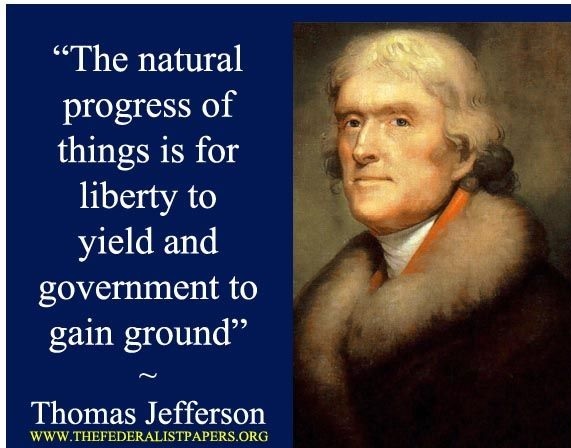














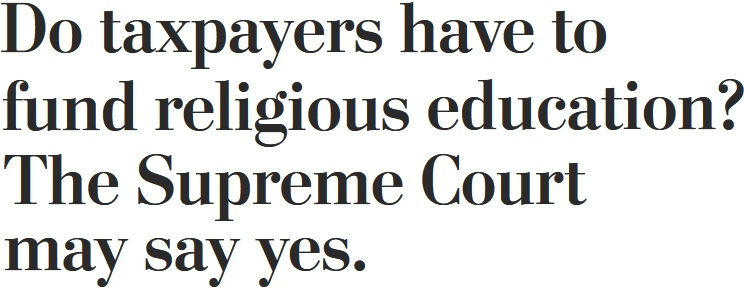
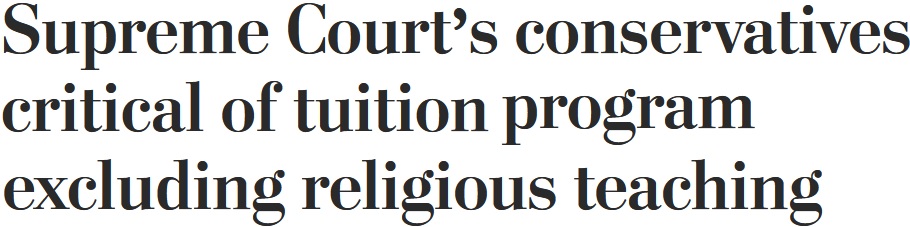








 True discernment has suffered a horrible setback in the past few decades because reason itself has been under attack within the church. As Francis Schaeffer warned nearly thirty years ago in The God Who Is There, the church is following the irrationality of secular philosophy. Consequently, reckless faith has overrun the evangelical community. Many are discarding doctrine in favor of personal experience. Others say they are willing to disregard crucial biblical distinctives in order to achieve external unity among all professing Christians. True Christianity marked by intelligent, biblical faith seems to be declining even among the most conservative evangelicals.THE ABANDONMENT OF OBJECTIVE TRUTHThe visible church in our generation has become astonishingly tolerant of aberrant teaching and outlandish ideas—and frighteningly intolerant of sound teaching. The popular evangelical conception of “truth” has become almost completely subjective. Truth is viewed as fluid, always relative, never absolute. To suggest that any objective criterion might be used to distinguish truth from error is to be egregiously out of step with the spirit of the age. In some circles, Scripture itself has been ruled out as a reliable test of truth. After all, the Bible can be interpreted in so many different ways—who can say which interpretation is right? And many believe there is truth beyond the Bible.All this relativity has had disastrous effects on the typical Christian’s ability to discern truth from error, right from wrong, good from evil. The plainest teachings of the Bible are being questioned among people who declare themselves believers in the Bible. For example, some Christians are no longer certain whether homosexuality should be classed as a sin. Others argue that the feminist agenda is compatible with biblical Christianity. “Christian” television, radio, books, and magazines serve up a preposterous smorgasbord of ideas from the merely capricious to the downright dangerous—and the average Christian is woefully ill-equipped to sort out the lies from the truth.Even to suggest that a sorting between lies and truth is necessary is viewed by many as perilously intolerant. There is a notion abroad that any dispute over doctrine is inherently evil. Concern for orthodoxy is regarded as incompatible with Christian unity. Doctrine itself is labeled divisive and those who make doctrine an issue are branded uncharitable. No one is permitted to criticize anyone else’s beliefs, no matter how unbiblical those beliefs seem to be. A recent article in Christianity Today exemplifies the trend. The article, titled “Hunting for Heresy,” profiled two well-known Christian leaders who had “come under withering attack for controversial writings.”1One is a popular speaker on the college lecture circuit and a bestselling author. He wrote a book in which he encouraged homosexuals to establish permanent live-together relationships (albeit celibate ones). He suggests the evangelical community suffers from “homophobia.” He is convinced that permanent living arrangements between homosexuals are the only alternative to loneliness for people he believes are “born with a homosexual orientation.” This man’s wife has published an article in a homosexual magazine in which she enthusiastically affirms” monogamous sexual relationships between homosexuals. The speaker-author says he has a “very, very strong” disagreement with his wife’s approval of homosexual sex, but his own view seems to allow homosexuals to engage in other kinds of physical intimacy short of actual intercourse.The other Christian leader profiled in the Christianity Today article is a woman who, with her husband, is a featured speaker for a popular, nationally-syndicated radio and television ministry. Their ministry is not a weird offshoot from some fringe cult, but an established, well-respected mainstay from the evangelical heartland. She also serves as chairperson of one of the largest evangelical student organizations in the world. This woman has written a book in which she chronicles some rather peculiar spiritual experiences. She dedicates the book to her male alter ego, an imaginary person named “Eddie Bishop” who romances her in her dreams. This woman says she also has visions of “the Christ child that is within” her. He appears to her as a drooling, emaciated, barefoot “idiot child” in a torn undershirt—”its head totally bald and lolled to one side.” The woman has engaged the services of a Catholic nun who serves as her “spiritual director,” helping to interpret her dreams and fantasies. The book mingles mysticism, Jungian psychology, out-of-body experiences, feminist ideas, subjective religious experience, and this woman’s romantic fantasies into an extraordinary amalgam. The book is frankly so bizarre that it is disturbing to read.The remarkable thing about the Christianity Today article is that the story was not written to expose the aberrant ideas being taught by these two leading evangelicals. Instead, what the magazine’s editors deemed newsworthy was the fact that these people were under attack for their views.In the world of modern evangelicalism, it is allowable to advocate the most unconventional, unbiblical doctrines—as long as you afford everyone else the same privilege. About the only thing that is taboo nowadays is the intolerance of those who dare to point out others’ errors. Anyone today who is bold enough to suggest that someone else’s ideas or doctrines are unsound or unbiblical is dismissed at once as contentious, divisive, unloving, or unchristian. It is all right toespouse any view you wish, but it is not all right to criticize another person’s views—no matter how patently unbiblical those views may be.When tolerance is valued over truth, the cause of truth always suffers. Church history shows this to be so. Only when the people of God have mounted a hardy defense of truth and sound doctrine has the church flourished and grown strong. The Reformation, the Puritan era, and the Great Awakenings are all examples of this. The times of decline in the history of the church have always been marked by an undue emphasis on tolerance—which leads inevitably to carelessness, worldliness, doctrinal compromise, and great confusion in the church.ADRIFT ON A SEA OF SUBJECTIVITYThat the church would lose her moorings in this particular age, however, poses greater dangers than ever. For in the past hundred years or so, the world has changed in a dramatic and very frightening way. People no longer look at truth the way they used to. In fact, we live under a prevailing philosophy that has become hostile to the very idea of absolute truth.From the beginning of recorded history until late last century, virtually all human philosophy assumed the necessity of absolute truth. Truth was universally understood as that which is true, not false; factual, not erroneous; correct, not incorrect; moral, not immoral; just, not unjust; right, not wrong. Practically all philosophers since the time of Plato assumed the objectivity of truth. Philosophy itself was a quest for the highest understanding of truth. Such a pursuit was presumed to be possible, even necessary, because truth was understood to be the same for every person. This did not mean that everyone agreed what truth was, of course. But virtually all agreed that whatever was true was true for everyone.That all changed in the nineteenth century with the birth of existentialism. Existentialism defies precise definition, but it includes the concept that the highest truth is subjective (having its source in the individual’s mind) rather than objective (something that actually exists outside the individual). Existentialism elevates individual experience and personal choice, minimizing or ruling out absolute standards of truth, goodness, morality, and such things. We might accurately characterize existentialism as the abandonment of objectivity. Existentialism is inherently anti-intellectual, against reason, irrational.Danish philosopher Søren Kierkegaard first used the term “existential.” Kierkegaard’s life and philosophy revolved around his experiences with Christianity. Christian ideas and biblical terminology reverberate in many of his writings. He wrote much about faith and certainly regarded himself as a Christian. Many of his ideas began as a legitimate reaction against the stale formalism of the Danish Lutheran state church. He was rightly offended at the barren ritualism of the church, properly outraged that people who had no love for God called themselves Christians just because they happened to be born in a “Christian” nation.But in his reaction against the lifeless state church, Kierkegaard set up a false antithesis. He decided that objectivity and truth were incompatible. To counter the passionless ritualism and lifeless doctrinal formulas he saw in Danish Lutheranism, Kierkegaard devised an approach to religion that was pure passion, altogether subjective. Faith, he suggested, means the rejection of reason and the exaltation of feeling and personal experience. It was Kierkegaard who coined the expression “leap of faith.” Faith to him was an irrational experience, above all a personal choice. He recorded these words in his journal on August 1, 1835: “The thing is to find a truth which is true for me, to find the idea for which I can live and die.”2Clearly, Kierkegaard had already rejected as inherently worthless the belief that truth is objective. His journal continues with these words:What would be the use of discovering so-called objective truth …. What good would it do me if truth stood before me, cold and naked, not caring whether I recognized her or not, and producing in me a shudder of fear rather than a trusting devotion? … I am left standing like a man who has rented a house and gathered all the furniture and household things together, but has not yet found the beloved with whom to share the joys and sorrows of his life…. It is this divine side of man, his inward action, which means everything—not a mass of [objective] information.3Having repudiated the objectivity of truth, Kierkegaard was left longing for an existential experience, which he believed would bring him a sense of personal fulfillment. He stood on the precipice, preparing to make his leap of faith. Ultimately, the idea he chose to live and die for was Christianity, but it was a characteristically subjective brand of Christianity that he embraced.Though Kierkegaard was virtually unknown during his lifetime, his writings have endured and have deeply influenced all subsequent philosophy. His idea of “truth that is true for me” infiltrated popular thought and set the tone for our generations radical rejection of all objective standards.Kierkegaard knew how to make irrationalism sound profound. “God does not exist; He is eternal,” he wrote. He believed Christianity was full of “existential paradoxes,” which he regarded as actual contradictions, proof that truth is irrational.Using the example of Abraham’s willingness to sacrifice Isaac (Gen. 22:1-19), Kierkegaard suggested that God called Abraham to violate moral law in slaying his son. For Kierkegaard, Abraham’s willingness to “suspend” his ethical convictions epitomized the leap of faith that is demanded of everyone. Kierkegaard believed the incident proved that “the single individual [Abraham] is higher than the universal [moral law].”4 Building on that conclusion, the Danish philosopher offered this observation: “Abraham represents faith…. He acts by virtue of the absurd, for it is precisely [by virtue of] the absurd that he as the single individual is higher than the universal.”5 “[I] cannot understand Abraham,” Kierkegaard declared, “even though in a certain demented sense I admire him more than all others.”6It is not difficult to see how such thinking thrusts all truth into the realm of pure subjectivity—even to the point of absurdity or dementia. Everything becomes relative. Absolutes dematerialize. The difference between truth and nonsense becomes meaningless. All that matters is personal experience.And one person’s experience is as valid as another’s—even if everyone’s experiences lead to contradictory conceptions of truth. “Truth that is true for me” might be different from someone else’s truth. In fact, our beliefs might be obviously contradictory, yet another person’s “truth” in no way invalidates mine. Because “truth”is authenticated by personal experience, its only relevance is for the individual who makes the leap of faith. That is existentialism.Existentialism caught on in a big way in secular philosophy. Friedrich Nietzsche, for example, also rejected reason and emphasized the will of the individual. Nietzsche probably knew nothing of Kierkegaard’s works, but their ideas paralleled at the key points. Unlike Kierkegaard, however, Nietzsche never made the leap of faith to Christianity. Instead, he leapt to the conclusion that God is dead. The truth that was “true for him,” it seems, turned out to be the opposite of the truth Kierkegaard chose. But their epistemology (the way they arrived at their ideas) was exactly the same.Later existentialists, such as Martin Heidegger and Jean-Paul Sartre, refined Kierkegaard’s ideas while following the atheism of Nietzsche. Heidegger and Sartre both believed that reason is futile and life basically meaningless. Those ideas have been a powerful force in twentieth-century thought. As the world continues to grow more atheistic, more secular, and more irrational, it helps to understand that it is being propelled in that direction by strong existentialist influences.EXISTENTIALISM INVADES THE CHURCH But don’t get the idea that existentialism’s influence is limited to the secular world. From the moment Kierkegaard wedded existentialist ideas with Christianity, neo-orthodox theology was the inevitable outcome.Neo-orthodoxy is the term used to identify an existentialist variety of Christianity. Because it denies the essential objective basis of truth—the absolute truth and authority of Scripture—neo-orthodoxy must be understood as pseudo-Christianity. Its heyday came in the middle of the twentieth century with the writings of Karl Barth, Emil Brunner, Paul Tillich, and Reinhold Niebuhr. Those men echoed the language and the thinking of Kierkegaard, speaking of the primacy of “personal authenticity,” while downplaying or denying the significance of objective truth. Barth, the father of neo-orthodoxy, explicitly acknowledged his debt to Kierkegaard.7Neo-orthodoxy’s attitude toward Scripture is a microcosm of the entire existentialist philosophy: the Bible itself is not objectively the Word of God, but it becomes the Word of God when it speaks to me individually. In neo-orthodoxy, that same subjectivism is imposed on all the doctrines of historic Christianity. Familiar terms are used, but are redefined or employed in a way that is purposely vague—not to convey objective meaning, but to communicate a subjective symbolism. After all, any “truth” theological terms convey is unique to the person who exercises faith. What the Bible means becomes unimportant. What it means to me is the relevant issue. All of this resoundingly echoes Kierkegaard’s concept of “truth that is true for me.”Thus while neo-orthodox theologians often sound as if they are affirming traditional beliefs, their actual system differs radically from the historic understanding of the Christian faith. By denying the objectivity of truth, they relegate all theology to the realm of subjective relativism. It is a theology perfectly suited for the age in which we live.And that is precisely why it is so deadly.Francis Schaeffer’s 1968 work The God Who Is There included a perceptive analysis of Kierkegaard’s influence on modern thought and modern theology.8 Schaeffer named the boundary between rationality and irrationality “the line of despair.” He noted that existentialism pushed secular thought below the line of despair sometime in the nineteenth century. Religious neo-orthodoxy was simply a johnny-come-lately response of theologians who were jumping on the existentialist bandwagon, following secular art, music, and general culture: “Neo-orthodoxy gave no new answer. What existential philosophy had already said in secular language, it now said in theological language…. [With the advent of neo-orthodoxy,] theology too has gone below the line of despair.”9Schaeffer went on to analyze how neo-orthodoxy ultimately gives way to radical mysticism:Karl Barth opened the door to the existentialistic leap in theology… He has been followed by many more, men like Reinhold Niebuhr, Paul Tillich, Bishop John Robinson, Alan Richardson and all the new theologians. They may differ in details, but their struggle is still the same—it is the struggle of modern man who has given up [rationality]. As far as the theologians are concerned … their new system is not open to verification, it must simply be believed.10Such a system, Schaeffer points out, has no integrity. Those who espouse it cannot live with the repercussions of their own illogic. “In practice a man cannot totally reject [rationality], however much his system leads him to it, unless he experiences … some form of mental breakdown.” Thus people have been forced to an even deeper level of despair: “a level of mysticism with nothing there.”11MYSTICISM: IRRATIONALITY GONE TO SEEDMysticism is the idea that spiritual reality is found by looking inward. Mysticism is perfectly suited for religious existentialism; indeed, it is its inevitable consequence. The mystic disdains rational understanding and seeks truth instead through the feelings, the imagination, personal visions, inner voices, private illumination, or other purely subjective means. Objective truth becomes practically superfluous. Mystical experiences are therefore self-authenticating; that is, they are not subject to any form of objective verification. They are unique to the person who experiences them. Since they do not arise from or depend upon any rational process, they are invulnerable to any refutation by rational means.Arthur L. Johnson writes,The experience convinces the mystic in such a way, and to such a degree, that lie simply cannot doubt its value and the correctness of what he believes it “says.”…In its crudest form this position says that believing something to be so makes it so. The idea is that ultimate reality is purely mental; therefore one is able to create whatever reality one wishes. Thus the mystic “creates” truth through his experience. In a less extreme form, the view seems to be that there are “alternate realities,” one as real as another, and that these “break in upon” the mystic in his experiences. Whatever form is taken, the criterion of truth is again a purely private and subjective experience that provides no means of verification and no safeguard against error. Nevertheless, it is seen by the mystic as being above question by others.The practical result of all this is that it is nearly impossible to reason with any convinced mystic. Such people are generally beyond the reach of reason.12Mysticism is therefore antithetical to discernment. It is an extreme form of reckless faith.Mysticism is the great melting pot into which neo-orthodoxy, the charismatic movement, anti-intellectual evangelicals, and even some segments of Roman Catholicism have been synthesized. It has produced movements like the Third Wave (a neo-charismatic movement with excessive emphasis on signs, wonders, and personal prophecies); Renovaré (an organization that blends teachings from monasticism, ancient Catholic mysticism, Eastern religion, and other mystical traditions); the spiritual warfare movement (which seeks to engage demonic powers in direct confrontation); and the modern prophecy movement (which encourages believers to seek private, extrabiblical revelation directly ftom God). The influx of mysticism has also opened evangelicalism to New-Age concepts like subliminal thought- control, inner healing, communication with angels, channeling, dream analysis, positive confession, and a host of other therapies andpractices coming directly from occult and Eastern religions. The face of evangelicalism has changed so dramatically in the past twenty years that what is called evangelicalism today is beginning to resemble what used to be called neo-orthodoxy. If anything, some segments of contemporary evangelicalism are even more subjective in their approach to truth than neo-orthodoxy ever was.It could be argued that evangelicalism never successfully resisted neo-orthodoxy. Twenty years ago evangelicals took a heroic stand against neo-orthodox influences on the issue of biblical inerrancy. But whatever victory was gained in that battle is now being sacrificed on the altar of mysticism. Mysticism renders biblical inerrancy irrelevant. After all, if the highest truth is subjective and comes from within us, then it doesn’t ultimately matter if the specifics of Scripture are true or not. If the content of faith is not the real issue, what does it really matter if the Bible has errors or not?In other words, neo-orthodoxy attacked the objective inspiration of Scripture. Evangelical mysticism attacks the objective interpretation of Scripture. The practical effect is the same. By embracing existential relativism, evangelicals are forfeiting the very riches they fought so hard to protect. If we can gain meaningful guidance from characters who appear in our fantasies, why should we bother ourselves with what the Bible says? If we are going to disregard or even reject the biblical verdict against homosexuality, what difference does it make if the historical and factual matter revealed in Scripture is accurate or inaccurate? If personal prophecies, visions, dreams, and angelic beings are available to give us up-to-the-minute spiritual direction—”fresh revelation” as it is often called—who cares if Scripture is without error in the whole or in the parts?Mysticism further nullifies Scripture by pointing people away from the sure Word of God as the only reliable object of faith. Warning of the dangers of mysticism, Schaeffer wrote,Probably the best way to describe this concept of modern theology is to say that it is faith in faith, rather than faith directed to an object which is actually there…. A modern man cannot talk about the object of his faith, only about the faith itself. So he can discuss the existence of his faith and its “size” as it exists against all reason, but that is all. Modern man’s faith turns inward…. Faith is introverted, because it has no certain object … it is rationally not open to discussion. This position, I would suggest, is actually a greater despair and darkness than the position of those modern men who commit suicide.“13The faith of mysticism is an illusion. “Truth that is true for me” is irrelevant to anyone else, because it lacks any objective basis. Ultimately, therefore, existential faith is impotent to lift anyone above the level of despair. All it can do is seek more experiences and more feelings. Multitudes are trapped in the desperate cycle of feeding off one experience while zealously seeking the next. Such people have no real concept of truth; they just believe. Theirs is a reckless faith.MEANWHILE, AT THE OTHER END OF THE SPECTRUM…Mysticism, however, is not the only form of reckless faith that threatens the contemporary church. A new movement has been gaining strength lately. Evangelicals are leaving the fold and moving into Eastern Orthodoxy, Roman Catholicism, and liturgical high-church Protestantism. Rejecting the ever-changing subjectivism of a free- wheeling existential Protestantism, they seek a religion with historical roots. Turned off by the shallow silliness that has overrun the evangelical movement, they desire a more magisterial approach. Perhaps sensing the dangers of a religion that points people inward, they choose instead a religion that emphasizes external ceremonies and dogmatic hierarchical authority.I listened to the taped testimony of one of these converts to Roman Catholicism, a former Protestant minister. He said he had graduated with highest honors from a leading Protestant seminary. He told his audience that as a student he was rabidly anti-Catholic and fully committed to Protestant Reformed doctrine (although he refuted this himself by admitting he had already rejected the crucial doctrine of justification by faith). After college he began to read Roman Catholic writings and found himself drawn to Catholic theology and liturgy. He described his initial resistance to the doctrines of purgatory, the perpetual virginity of Mary, transubstantiation, and prayers to Mary and the saints. All of those doctrines are easily disproved by the Bible.14 But this man—acknowledging that he could find no warrant anywhere in Scripture for praying to Mary—nevertheless completely changed his outlook on such matters after he tried praying the rosary and received an answer to a very specific prayer. He concluded that it must have been Mary who answered his prayer and immediately began praying regularly to her. Ultimately, he decided the Bible alone was not a sufficient rule of faith for believers, and he put his faith in papal authority and church tradition.That man’s leap of faith may not have been of the existential variety, but it was a blind leap nonetheless. He chose the other extreme of reckless faith, the kind that makes extrabiblical religious tradition the object of one’s faith.This kind of faith is reckless because it subjugates the written Word of God to oral tradition, church authority, or some other human criterion. It is an uncritical trust in an earthly religious authority—the pope, tradition, a self-styled prophet like David Koresh, or whatever. Such faith rarely jettisons Scripture altogether—but by forcing God’s Word into the mold of religious tradition, it invalidates the Word of God and renders it of no effect (cf. Matt. 15:6).The man whose taped testimony I heard is now an apologist for the Roman Catholic Church. He speaks to Catholic congregations and tells them how to counter biblical arguments against Catholicism. At the end of his testimony tape, he deals briefly with the official Catholic attitude toward Scripture. He is eager to assure his listeners that the modern Roman Catholic Church has no objection if Catholic people want to read Scripture for themselves. Even personal Bible study is all right, he says—but then hastens to add that it is not necessary to go overboard. “A verse or two a day is enough.” This man, a seminary graduate, surely should be aware that a comment like that seriously understates the importance of the written Word of God. We are commanded to meditate on Scripture day and night (Josh. 1:8; Ps. 1:2). We are to let it fill our hearts at all times (Deut. 6:6-9). We must study it diligently and handle it rightly (2 Tim. 2:15). The Bible alone is able to give us the wisdom that leads to salvation, then adequately equip us for every good work (2 Tim. 3:15-17).Discernment depends on a knowledge of Scripture. Those who are content to listen gullibly to some voice of human authority rather than hearing God’s Word and letting it speak for itself cannot be discerning. Theirs is a reckless, irrational faith.We identified the inward-looking extreme of reckless faith as mysticism. We could call this other variety rote tradition. In Isaiah 29:13, that is precisely how God Himself characterized it: “This people their lip service, but draw near with their words and honor Me with their lip service, but they remove their hearts far from Me, and their reverence for Me consists of tradition learned by rote” (emphasis added).Scripture has nothing but condemnation for rote tradition. Barren religious ritual, sacerdotal formalism, or liturgy out of a book are not the same as worship. Real worship, like faith, must engage the mind. Jesus said, “The true worshipers … worship the Father in spirit and truth; for such people the Father seeks to be His worshipers” (John 4:23).Did you realize that rote tradition was the very error for which Jesus condemned the Pharisees? He told them,“Rightly did Isaiah prophesy of you hypocrites, as it is written, ‘This people honors Me with their lips, but their heart is far away from Me. But in vain do they worship Me. teaching as doctrines the precepts of men.’ Neglecting the commandment of God, you hold to the tradition of men.”He was also saying to them, “You nicely set aside the commandment of God in order to keep your tradition” (Mark 7:6-9).Rote tradition is not unlike mysticism in that it also bypasses the mind. Paul said this of the Jews who were so absorbed in their empty religious traditions:I bear them witness that they have a zeal for God, but not in accordance with knowledge. For not knowing about God’s righteousness, and seeking to establish their own, they did not subject themselves to the righteousness of God. For Christ is the end of the law for righteousness to everyone who believes (Rom. 10:2-4).Their problem was not a lack of zeal. It was not that they were short on enthusiasm, emotionally flat, or slothful about religious observances. The issue was that the zeal they displayed was rote tradition, “not in accordance with knowledge.” They were not sufficiently discerning, and therefore their faith itself was deficient.Paul is specific in stating that their ignorance lay in trying to establish their own righteousness rather than submitting to the righteousness of God. This passage comes at the culmination of Paul’s doctrinal discussion in Romans. In context it is very clear that he was talking about the doctrine ofjustification by faith. He had thoroughly expounded this subject beginning in chapter 3. He said we are “justified as a gift by His grace through the redemption which is in Christ Jesus” (3:24). Justification is “by faith apart from works of the Law” (v.28). “God reckons righteousness apart from works” (Rom. 4:6).But instead of seeking the perfect righteousness of Christ, which God reckons to those who believe, the unbelieving Jews had set out to try to establish a righteousness of their own through works. That is where rote tradition always leads. It is a religion of works. Thus the ritualistic, unbelieving Pharisees are an exact parallel to Roman Catholicism, Eastern Orthodoxy, and most forms of ritual-laden Protestantism. All of them deny justification by faith.If the Pharisees or their followers had used the Scriptures as their standard of truth rather than rabbinical tradition, they would have known that God justifies sinners by faith. Repeatedly, Jesus said things to them like “Did you never read in the Scriptures . . . ?” (Matt. 21:42); “You are mistaken, not understanding the Scriptures, or the power of God” (22:29); and, “Are you the teacher of Israel, and do not understand these things?” (John 3:10). What He continually chided them for was their ignorance of the Scriptures. They had set rote tradition in place of the written Word of God (Matt. 15:6), and they were condemned for it.Contrast the way Luke commended the Bereans for their noblemindedness: “For they received the word [the New Testament gospel from the apostles] with great eagerness, examining the Scriptures [the Old Testament books] daily, to see whether these things were so” (Acts 17:1 1). What made the Bereans worthy of commendation? Their eagerness to be discerning. They rightly refused to blindly accept anyone’s teaching (even that of the apostles) without clear warrant from God’s Word.Spiritual discernment is, I believe, the only antidote to the existentialism of our age. Until’Christians regain the will to test everything by the rule of Scripture, reject what is false, and hold fast to what is true, the church will struggle and falter, and our testimony to a world in sin will be impaired.But if the church will rise up and stand for the truth of God’s Word against all the lies of this evil world, then we will begin to see the power of truth that sets people free (John 8:32).Endnotes1. John W. Kennedy, “Hunting for Heresy,” Christianity Today (16 May 1994).2. Robert Bretall, cd., A Kierkegaard Anthology (Princeton, N. J.: Princeton University Press, 1946), 5 (emphasis in original).3. Ibid.4. Søren Kierkegaard, Fear and Trembling, Howard V. Hong and Edna H. Hong, trans. (Princeton, N. J.: Princeton University Press, 1983), 55.5. Ibid.6. Ibid., 57.7. Karl Barth, The Epistle to the Romans, Edwyn C. Hoskyns, trans. (London: Oxford University Press, 1933). Barth cites Kierkegaard repeatedly in this, one of his earliest works.8. Francis Schaeffer, The God Who Is There, in The Complete Works of Francis A. Schaeffer, Volume I (Wheaton, Ill.: Crossway Books, 1982).9. Ibid., 53.10. Ibid., 55.11. Ibid., 58.12. Arthur L. Johnson, Faith Misguided: Exposing the Dangers of Mysticism (Chicago: Moody Press, 1988), 31-32.13. Schaeffer, 64-65, emphasis added.14. Purgatory: Luke 23:42-43 and 2 Cor. 5:8 indicate that believers go immediately to be with Christ at death. Perpetual Virginity of Mary: Matt. 1:25 states that Joseph kept Mary a virgin only until Jesus’ birth, and John 2:12 and Acts 1:14 reveal that Jesus had brothers. Transubstantiation: Heb. 7:27 and 10:12 teach that Christ made one sacrifice for sins forever; there is no need for the daily sacrifice of the Mass. Prayers to Mary and the saints: prayers, adoration, and spiritual veneration offered to anyone but God is expressly forbidden by the first commandment and elsewhere throughout Scripture (Ex. 20:3; Matt. 4:10; Acts 10:25-26; Rev. 19:10; Rev. 22:8-9).Excerpt from Reckless Faith: When the Church Loses Its Will to Discern, © 1994 by John MacArthur.We do pray this article has blessed you in some way. Our prayer is that you will use this message to better understand what is happening in our churches today.Blessings,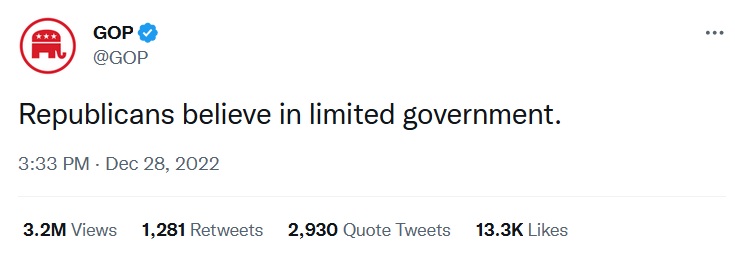









 The Daily Hatch