Category Archives: Uncategorized

Tucker Carlson: New emails reveal exactly what Burisma wanted from Joe Biden! Did Joe Biden subvert American foreign policy to enrich his own family?

Tucker Carlson: New emails reveal exactly what Burisma wanted from Joe Biden

Did Joe Biden subvert American foreign policy to enrich his own family?
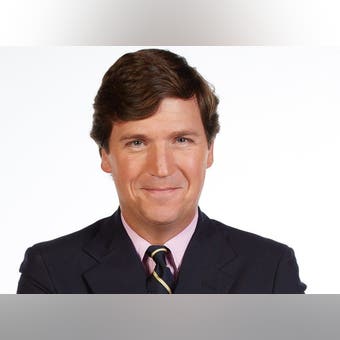
Tucker Carlson

 By Tucker Carlson | Fox News

Editor’s Note: This article was adapted from Tucker Carlson’s opening commentary on the Oct. 15, 2020 edition of “Tucker Carlson Tonight.”

Tom Cotton said it best below:

We knew Joe Biden’s son Hunter pocketed $50,000 a month for a job with a Ukrainian gas company. Joe Biden allowed his son to make millions in Ukraine and China while Joe was Vice President. 

Now, the New York Post is reporting that Vice President Biden may have been introduced to some of the corrupt Ukrainian businessmen paying Hunter… at the same time Vice President Biden was supposed to be overseeing our policy towards Ukraine.

Not everything you hear is untrue and not every story is complex. At the heart of the growing Biden-Ukrainescandal, for example, is a very straightforward question: Did Joe Biden subvert American foreign policy in order to enrich his own family?

In 2015, Joe Biden was the sitting vice president of the United States. Included in his portfolio were U.S. relations with the nation of Ukraine. At that moment, Vice President Joe Biden had more influence over the Ukrainian government and the Ukrainian economy than any other person on the globe outside of Eastern Europe.

Biden’s younger son, Hunter, knew that and hoped to get rich from his father’s influence. Emails published Wednesday by The New York Post, documents apparently taken directly from Hunter Biden’s own laptop, tell some of that story.

“Tucker Carlson Tonight” have obtained another batch of emails, some exclusively. We believe they also came from Hunter Biden’s laptop. We can’t prove that they did, we haven’t examined that computer. But every detail that we could check, including Hunter Biden’s personal email address at the time, suggests they are authentic.

TUCKER CARLSON: THE JOE BIDEN STORY FACEBOOK AND TWITTER DON’T WANT YOU TO READ

If these emails are fake, this is the most complex and sophisticated hoax in history. It almost seems beyond human capacity. The Biden campaign clearly believes these emails are real. They have not said otherwise. We sent the body of them to Hunter Biden’s attorney and never heard back. So with that in mind, here’s what we have learned.

On Nov. 2, 2015, at 4:36 p.m., a Burisma executive called Vadym Pozharskyi emailed Hunter Biden and his business partner, Devon Archer. The purpose of the email, Pozharskyi explains, is to “be on the same page re our final goals … including, but not limited to: a concrete course of actions.”

So what did Burisma want, exactly? Well, good PR, for starters. Pozharskyi wanted “high-ranking US [sic] officials” to express their “positive opinion” of Burisma, and then he wanted the administration to act on Burisma’s behalf.

“The scope of work should also include organization of a visit of a number of widely recognized and influential current and/or former US [sic] policy-makers to Ukraine in November, aiming to conduct meetings with and bring positive signal/message and support” to Burisma.

The goal, Pozharskyi explained, was to “close down for [sic] any cases/pursuits” against the head of Burisma in Ukraine.

BIDEN CAMP HITS BACK AT HUNTER BIDEN EMAIL REPORT

It couldn’t be clearer what they wanted. Burisma wanted Huter Biden’s father to get their company out of legal trouble with the Ukrainian government. And that’s exactly what happened. One month later to the day, on Dec. 2, 2015, Hunter Biden received a notice from a Washington PR firm called Blue Star Strategies, which apparently had been hired to lobby the Obama administration on Ukraine. “Tucker Carlson Tonight” have exclusively obtained that email.

“Hello all …” it began. “This morning, the White House hosted a conference call regarding the Vice President’s upcoming trip to Ukraine. Attached is a memo from the Blue Star Strategies team with the minutes of the call, which outlined the trip’s agenda and addressed several questions regarding U.S. policy toward Ukraine.”

So here you have a PR firm involved in an official White House foreign policy call. How could that happen? Good question. But it worked.

Days later, Joe Biden flew to Ukraine and did exactly what his son wanted. The vice president gave a speech slamming the very Ukrainian law enforcement official who was tormenting Burisma. If the Ukrainian government didn’t fire its top prosecutor, a man called Viktor Shokin, Biden explained, the administration would withhold a billion dollars in American aid. Now, Ukraine is a poor country, so they had no choice but to obey. Biden’s bullying worked. He bragged about it later.

The obvious question: Why was the vice president of the United States threatening a tiny country like Ukraine to fire its top prosecutor? That doesn’t seem like a vice president’s role. Well, now we know why.

Viktor Shokin has signed an affidavit affirming that he was, in fact, investigating Burisma at the moment Joe Biden had him removed. Shokin said that before he was fired, administration officials pressured him to drop the case against Burisma. He would not do that, so Joe Biden canned him

That’s how things really work in Washington. Your son’s got a lucrative consulting deal with a Ukrainian energy company, you tailor American foreign policy — our foreign policy– to help make him rich.  Even at the State Department, possibly the most cynical agency in government, this seemed shockingly brazen.

During the impeachment proceedings last fall, a State Department official named George Kent said it was widely known in Washington that the Bidens were up to something sleazy in Ukraine. 

“I was on a call with somebody on the vice president’s staff and … I raised my concerns that I had heard that Hunter Biden was on the board” of Burisma, Kent recalled. This, he noted, could create a perception of a conflict of interest.

So how did the vice president’s office respond to this concern? According to George Kent, “The message that I recall hearing back was that the vice president’s son, Beau, was dying of cancer and there was no further bandwidth to deal with family-related issues at the time.”

Family-related issues? This was America’s foreign policy being tailored to Joe Biden’s son. Five years later, Joe Biden still has not been forced to explain why he fired Ukraine’s top prosecutor at precisely the moment his son was being paid to get him to fire Ukraine’s top prosecutor, nor has Joe Biden addressed whether or not he personally benefited from the Burisma contract.

But there are tantalizing hints. On Wednesday, former New York City Mayor Rudy Giuliani published what he said was yet another email from Hunter Biden’s laptop. It’s a note to one of his children. At the end of the email, there’s this quote: “But dont [sic] worry unlike Pop I won’t make you give me half your salary.”

WHILE CENSORING HUNTER BIDEN STORY, TWITTER ALLOWS CHINA, IRAN STATE MEDIA

What does that mean, exactly? Well, we don’t know. There may be more detail on the laptop, but unfortunately, we don’t have access to that. But the question remains, how has Joe Biden lived in extravagance all these years on a government salary? No one has ever answered that question. And the tech monopolies are working hard to make certain no one ever does.

Thursday morning, the New York Post published another story based on the emails. This one describes a business venture Hunter Biden was working on in China. One email describes a “provisional agreement that the equity will be distributed as follows … 10 held by H for the big guy?” 

The big guy? Is the big guy Joe Biden? If so, how much did Joe Biden get and how much of that came from the Communist Chinese government? Those are real questions, this man could be elected president in three weeks. But Twitter doesn’t want you to wonder. It won’t allow you to ask those questions. Twitter restricted the New York Post story as “unsafe,” like it was a lawn dart or a defective circular saw. And that was enough for the Biden campaign.

All day Thursday, they deflected questions about Joe Biden’s subversion of our country’s foreign policy by invoking Twitter’s ban on the New York Post story. So the tech monopoly censors information to help their candidate, that candidate uses that censorship to dismiss the story. One hand washes the other. 

It doesn’t matter who you plan to vote for Nov. 3, you should be terrified. Democracies cannot exist and never will be able to exist without the free flow of information. That is a prerequisite and without it, we’re done. But companies like Facebook and Google and Twitter do not care because they don’t believe in democracy. They worship power and they don’t need to be consistent. Melania Trump’s private phone conversations, the president’s stolen tax returns, they were happy to publish all of that. But if you criticize the Democratic candidate, their candidate, you are banned.

“Facebook and Twitter have policies to not spread things that are utterly unreliable, that have been debunked, and where their origin is untrustworthy,” Sen. Chris Coons, D-Del., said Thursday. “They’re practicing their own internal controls, as I wish they had over the past four years … An active Russian disinformation campaign in 2016 had an influence on that election. They are trying even harder in this election. I’m glad that they are managing the content on their own websites.” 

Chris Coons is a liar.

Not one word of this story has been debunked, not one word in those emails has been “debunked.” And if it is debunked, we’ll be the first to report it because we’re not liars. But did you catch the phrase he wanted you to hear: “Russian disinformation”? That’s what they’re claiming these emails are. And it’s all over the Internet, in fact-free, conspiracy-laden conjecture crazier than anything the QAnon people ever thought of.

But none of their garbage, their lunatic lies about Russia is ever censored by the tech monopolies. It’s not “unsafe” because it helps Joe Biden. Therefore, you can read it.

And where are the real journalists, now that we need them more than ever? They’re gone. They’re cowering. They’re afraid. They don’t want to upset power. Jake Sherman of Politico, who claims to be a news reporter, actually apologized on Twitter for asking the Biden campaign about Hunter Biden’s emails. These people are craven. They have no standards. They have no self-respect. Like their masters in Silicon Valley, they worship power alone.


—-

Twitter, Facebook Suppress New York Post Report on Hunter Biden

Andrew Kerr4 hours ago

Twitter on Wednesday afternoon began blocking tweets from being posted that contained links to the New York Post’s report on alleged emails that purportedly show Hunter Biden offered to introduce then-Vice President Joe Biden to an executive of the Ukrainian gas company Burisma.

“We can’t complete this request because this link has been identified by Twitter or our partners as being potentially harmful,” Twitter told users who attempted to post a tweet containing a link to the Post’s story.dailycallerlogo

A Twitter spokesperson told the Daily Caller News Foundation that the platform took action to limit the spread of the Post’s report because of the lack of authoritative reporting on the origins of the materials cited by the outlet.

“In line with our Hacked Materials Policy, as well as our approach to blocking URLs, we are taking action to block any links to or images of the material in question on Twitter,” the spokesperson said.

There’s no evidence at the moment the Post relied on hacked materials for its report.

According to the Post, the email was part of a “massive trove of data recovered from a laptop computer” that was dropped off at a Delaware computer repair shop in April 2019. The owner of the repair shop said the customer never came back to pay for the service and retrieve the computer, the Post reported.

The Post uploaded an invoice signed by the customer that states that equipment left with the repair shop “after 90 days of notification of completed service will be treated as abandoned.”

The repair shop owner later alerted the FBI to the existence of the laptop and its hard drive after it went unclaimed, both of which were seized by federal authorities in December, according to a federal subpoena obtained by the Post.

Before the laptop was seized, however, the shop owner reportedly made a copy of its hard drive and turned it over to a lawyer for former New York Mayor Rudy Giuliani, who in turn provided a copy of the hard drive’s contents to the Post.

The Daily Caller News Foundation has not confirmed the authenticity of the emails reported by the Post, and the Biden campaign issued a statement on Wednesday denying that Biden met with the Burisma executive in 2015 as alleged in the Post’s report.

Link to New York Post story blocked by Twitter. (Screenshot: Andrew Kerr)

Also on Wednesday afternoon, Twitter began blocking any tweet from being posted that contained links to one of the two documents the Post uploaded to document sharing platform Scribd.

One of the documents depicts an alleged email sent by Hunter Biden in April 2014 to his former business partner Devon Archer, and the other is an alleged email that Vadym Pozharsky, an advisor to Burisma’s board of directors, sent to Hunter Biden and Archer in May 2014.

Link to New York Post Scribd document titled, “Email from Vadim Pozharskyi to Devon Archer and Hunter Biden” blocked by Twitter. (Screenshot: Andrew Kerr)

story.

https://d-3624628980887906306.ampproject.net/2010010034001/frame.html

Content created by The Daily Caller News Foundation is available without charge to any eligible news publisher that can provide a large audience. For licensing opportunities of this original content, please contact licensing@dailycallernewsfoundation.org.https://www.google.com/amp/s/www.dailysignal.com/2020/10/14/twitter-facebook-suppress-new-york-post-report-on-hunter-biden/amp/

Link to New York Post Scribd document titled, “Email from Robert Biden to Devon Archer” blocked by Twitter. (Screenshot:Andrew Kerr)

Facebook spokesman Andy Stone, a former staffer for the Democratic House Majority PAC and former California Democratic Sen. Barbara Boxer, announced earlier Wednesday it would reduce the distribution of the Post’s report despite the lack of any fact-checks against the story.

6 Highlights From the Pence-Harris Debate

Fred Lucas @FredLucasWH / Jarrett Stepman @JarrettStepman / October 08, 2020 / 182 Comments

During the vice presidential debate Wednesday night, Sen. Kamala Harris, D-Calif., and Vice President Mike Pence sparred over a variety of policies, revealing significant differences on several issues.

The debate, which was moderated by USA Today Washington bureau chief Susan Page, featured the two contenders discussing issues ranging from climate change and COVID-19 to abortion and the Supreme Court. 

Here are six highlights from the debate:

1) COVID-19

Harris aggressively attacked the Trump administration’s handling of the COVID-19 pandemic. After the opening question, she laid out what could be called a prosecutor’s case. How are socialists deluding a whole generation? Learn more now >>

“The American people have witnessed what is the greatest failure of any presidential administration in the history of our country,” the California senator said. “And here are the facts: 210,000 dead people in our country in just the last several months, over 7 million people who have contracted this disease, 1 in 5 businesses closed. We are looking at frontline workers treated like sacrificial workers. We are looking at 30 million people who in the last several months had to file for unemployment.”

That was in response to a question from Page about what the Biden administration would have done differently than Trump to address the COVID-19 pandemic. Harris then went on to summarize the Biden-Harris plan. 

“Our plan is about what we need to do around a national strategy, for contact tracing, for testing, for administration of a vaccine, and make sure it’s free,” Harris said. 

Pence, who headed the White House coronavirus task force, defended the administration’s record. 

“I want the American people to know that from the very first day, President Donald Trump has put the health of America first,” the vice president said. “Before there were more than five cases in the United States—all people who had returned from China—President Donald Trump did what no other American had ever done. That was, he suspended all travel from China, the second-largest economy in the world.”

Pence added: “Joe Biden opposed that decision.”

“He said it was xenophobic and hysterical. I can tell you, having led the White House coronavirus task force that decision alone by President Trump gave us invaluable time to set up the greatest mobilization since World War II,” Pence said. “I believe it saved hundreds of thousands of American lives.” 

As for the Biden plan, Pence said, the Trump administration was already doing much of what it recommends. He also took a shot at a Biden scandal that effectively ended his 1988 presidential bid. 

“The reality is, when you look at the Biden plan, it looks an awful lot like what President Trump and I and our task force have been doing every step of the way,” he said. “ … It looks a little bit like plagiarism, something Joe Biden knows a little bit about.” 

In September 1987, Biden came in for withering criticism for borrowing lines from a speech by then-British Labor Party leader Neil Kinnock without attribution, knocking him out of the race when it was subsequently revealed to be part of a larger pattern of borrowing lines from other politicians without credit.

Asked about the race to develop a vaccine, Harris said she wouldn’t trust a Trump-endorsed vaccine, but would take one approved by Dr. Anthony Fauci, the director of the National Institutes of Allergy and Infectious Diseases.

“If the public health professionals, if Dr. Fauci, if the doctors tell us that we should take it, I’ll be the first in line to take it. Absolutely,” Harris said. “But if Donald Trump tells us that we should take it, I’m not taking it.”

Pence fired back that the California senator was politicizing the vaccine. 

“The fact that you continue to undermine public confidence in a vaccine, if a vaccine emerges during the Trump administration, I think, is unconscionable,” the vice president said. “Senator, I just ask you, stop playing politics with people’s lives. The reality is, we will have a vaccine by the end of this year, and it will continue to save countless American lives.”

2) Taxes and the Economy

Harris and Pence sparred over the tax cuts passed by Congress in 2017 and debated Biden’s tax plan.

Harris said that the Biden administration would repeal the 2017 tax cuts “on Day One,” and that they were passed to benefit the “rich.”

“Joe Biden believes you measure the health and strength of America’s economy based on the health and strength of the American worker and the American family,” Harris said. “On the other hand, you have Donald Trump, who measures the strength of the economy based on how rich people are doing.”

Pence defended the tax cuts and said: “Joe Biden said twice in the debate last week that he’s going to repeal the Trump tax cuts,” Pence said. “That was tax cuts that gave the average working family $2,000 with a tax break.”

In 2017, Congress passed the Tax Cuts and Jobs Act, which reduced federal income taxes and made various other changes to the U.S. tax code.

Following the tax cut, the American economy experienced record low unemployment, wage growth, and an overall increase in business investment, according to Adam Michel, a specialist on tax policy and the federal budget as a policy analyst in the Thomas A. Roe Institute for Economic Policy Studies at The Heritage Foundation.

Harris said that Biden’s tax plan would end tax breaks for the wealthy but wouldn’t raise taxes on American making under $400,000.

“He has been very clear about that,” Harris said, adding, “Joe Biden is the one who, during the Great Recession, was responsible for the Recovery Act that brought America back, and now the Trump and Pence administration wants to take credit for Joe Biden’s success for the economy that they had at the beginning of their term.”

According to The Washington Post, “most Americans received a tax” cut in 2017, not just the rich.

Biden’s tax proposal would raise taxes about $3 trillion over the next decade, according to the nonpartisan Tax Foundation.

“… The Biden tax plan would reduce [gross domestic product] by 1.47 percent over the long term,” according to the Tax Foundation’s General Equilibrium Model. “On a conventional basis, the Biden tax plan by 2030 would lead to about 6.5 percent less after-tax income for the top 1 percent of taxpayers and about a 1.7 percent decline in after-tax income for all taxpayers on average.”

According to the left-leaning Tax Policy Center, Biden’s proposal “would increase taxes on average on all income groups, but the highest-income households would see substantially larger increases, both in dollar amounts and as a share of their incomes.”

3) Climate Change and Fracking 

Harris said a Biden administration would grow the economy through green energy, but she also denied past support for banning fracking. 

“Joe Biden will not ban fracking. That is a fact. I will repeat that Joe Biden has been very clear that he thinks about growing jobs,” Harris said, adding, “Part of those jobs that will be created by Joe Biden are going to be about clean energy and renewable energy, because Joe understands that the West Coast of our country is burning, including my home state of California.”

Harris also spoke about climate-related problems in the Southeast and in the Midwest. 

“Joe sees what is happening in the Gulf states, which are being battered by storms. Joe has seen and talked with the farmers in Iowa, whose entire crops have been destroyed because of floods,” she said. “So, Joe believes again in science. … We have seen a pattern with this administration, which is, they don’t believe in science. Joe’s plan is about saying we are going to deal with it, but we are going to create jobs.” 

Pence addressed the issue of climate change, but also attacked the Biden campaign’s promises for the environment. 

“As I said, Susan, the climate is changing. We’ll follow the science,” he said. 

“With regard to banning fracking, I just recommend people look at the record. You yourself said repeatedly you would ban fracking,” Pence said of Harris. “You were the first Senate co-sponsor of the Green New Deal. 

“While Joe Biden denied support for the Green New Deal, Susan, thank you for pointing out the Green New Deal is on [the Biden-Harris] website. As USA Today said, it’s essentially the same plan as you co-sponsored with AOC.”

That was a reference to Rep. Alexandria Ocasio-Cortez, D-N.Y., the main sponsor of the Green New Deal in the House. 

“You just heard the senator say she was going to resubmit America to the Paris Climate Accord. The American people have always cherished our environment, and we’ll continue to cherish it,” Pence said. “We’ve made great progress reducing [carbon dioxide] emissions through American innovation and the development of natural gas through fracking. 

“We don’t need a massive $2 trillion Green New Deal that would impose all new mandates on American businesses and American families. … It makes no sense. It will cost jobs.”

4) China

Pence and Harris sparred over U.S. relations with China, including its role in the outbreak of the COVID-19 pandemic.

“China and the World Health Organization did not play straight with the American people,” Pence said. “They did not let our personnel into China … until the middle of February.”

The vice president defended the administration’s aggressive trade policy with Beijing. “But China has been taking advantage of the United States for decades, in the wake of Biden cheerleading for China,” he said.

Harris said that the Trump administration had “lost” the trade war with China. “What ended up happening because of a so-called “trade war” with China? America lost 300,000 manufacturing jobs,” she said.

Pence countered that a Biden administration would go soft on the communist country.

“Joe Biden has been a cheerleader for communist China over the last several decades,” he said. 

The vice president criticized the record of the administration of Biden’s boss, President Barack Obama, saying that it had dismissed the idea that manufacturing jobs could ever come back to America.

“In our first three years, this administration saw 500,000 manufacturing jobs created, and that’s the type of growth we’re going to see,” Pence said.

5) Supreme Court and Abortion

With the nomination of federal appeals court Judge Amy Coney Barrett to the Supreme Court, Page asked both candidates what they would want their respective states of Indiana and California to do if the high court were to overturn the 1973 Roe v. Wade decision that legalized abortion nationwide and sent the matter back to the states to decide for themselves.

Neither candidate directly addressed the question, but both spoke of the abortion issue in the context of the Supreme Court. 

“The issues before us couldn’t be more serious,” Harris said. “There is the issue of choice, and I will always fight for a woman’s right to make a decision about her own body. It should be her decision and not that of Donald Trump and the vice president, Michael Pence.”

Pence reiterated his pro-life stance, and called out the Biden-Harris ticket. 

“I couldn’t be more proud to serve as vice president to a president who stands unapologetically for the sanctity of human life. I will not apologize for it,” he said. “This is another one of those cases where there is such a dramatic contrast. Joe Biden and Kamala Harris support taxpayer funding of abortion all the way up to the moment of birth, late-term abortion.” 

Pence asked Harris at one point if she would support packing the courts, meaning increasing the number of Supreme Court justices to 10 or more, and then he accused her of not answering the question.

“Once again you gave a non-answer, Joe Biden gave a non-answer,” Pence said. “The American people deserve a straight answer.”

In his remarks, Pence noted the Supreme Court has had nine justices for the past 150 years.

6) Race Relations

The vice presidential candidates also had a heated exchange on race relations amid social unrest in major American cities. 

Harris called out Trump for what she claimed was his reluctance to condemn white supremacists, referring to last week’s presidential debate between Trump and Biden. 

“Last week, the president of the United States took a debate stage in front of 70 million Americans and refused to condemn white supremacists,” Harris said. “It wasn’t like he wasn’t given a chance. He didn’t do it, and then he doubled down. Then he said, when pressed, ‘Stand back, stand by.’ This is part of a pattern with Donald Trump.” 

She also cited the deadly 2017 Charlottesville, Va., Unite the Right rally. 

Pence countered by citing Trump’s comments regarding the Charlottesville violence. 

“This is one of the things that makes people dislike the media so much in this country, that you selectively edit so much,” Pence said, arguing that the media had distorted what Trump had said about there being “very fine people” on both sides in Charlottesville.

“After President Trump made comments about people on either side of the debate over monuments, he condemned the KKK, neo-Nazis and white supremacists,” the vice president said. 

“He has done so repeatedly. Your concern that he doesn’t condemn neo-Nazis, President Trump has Jewish grandchildren. His daughter and son-in-law are Jewish. This is a president who respects and cherishes all of the American people.”

Pence then went on offense about Harris’ prosecution record as a district attorney in San Francisco.  

“When you were D.A. in San Francisco, African Americans were 19 times more likely to be prosecuted for minor drug offenses than whites and Hispanics,” Pence said to Harris. “You increased the disproportionate incarceration. You did nothing on criminal justice reform in California. You didn’t lift a finger to pass the First Step Act on Capitol Hill.” 

The First Step Act is a bipartisan criminal justice reform bill signed into law by Trump in December 2018.

Harris didn’t directly defend her record as district attorney of San Francisco, but pivoted to her record as California attorney general. 

“Having served as the attorney general of California, the work I did is a model of what our nation needs to do and what we will be able to do,” she said, adding, “I was the first statewide officer to institute a requirement that my agents would wear body cameras and keep them on full time. We were the first to initiate that there would be training for law enforcement on implicit bias.”

——

I grew up and went to EVANGELICAL CHRISTIAN SCHOOL in Memphis and ran some of our track meets at RHODES COLLEGE and I know that campus well and I even was contacted by a official at Rhodes with some recruiting material after a good performance in my sophomore year in my mile run there in 1978. Also during the late 1970’s I helped my friends Byron Tyler and David Rogers in a Christian Rock Saturday morning show on Rhodes’s radio station!!! My brother-in-law graduated from Rhodes but I graduated from University of Memphis in 1982.

—-

Amy Coney Barrett: A View from Rhodes College

Tim H.

By Tim H.

Tim H.

 | September 23, 202027 COMMENTS

President Trump is going to announce his nomination for the Supreme Court later this week, and all the talk is about Amy Coney Barrett, currently a Notre Dame professor of law and a judge on the Seventh Circuit Court of Appeals. As it happens, Amy was a classmate of mine at Rhodes College, a small (1,400 students at the time) liberal-arts school in Memphis. I didn’t know her well, but she was a friend of other friends, and we were acquainted a bit through being in a club together.

I can tell you a few things about her, though. For one thing, she did not have a wild reputation, so I think that if she’s nominated, the Senate hearings will have to find something else to complain about. She was an English major and served on the Honor Council, a student body that enforced our honor code against lying and cheating (a great feature of academics at Rhodes that allowed us take-home tests in many classes). We were both in Mortar Board, an honor society. She wasn’t a political activist and was never a member of the College Republicans (I was, and we had a much larger membership than the College Democrats).Amy at the homecoming game senior year
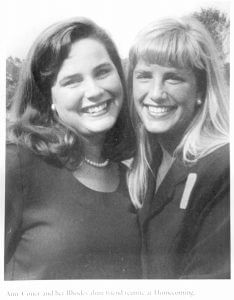
Popular, as far as I knew, and by our senior year, she shows up in the yearbook’s candid photos taken around campus.Candid photo in the social room (the ironing board refers to another picture)

I hadn’t thought about her for a long time, until three years ago when friends were pointing out she’d been nominated for the Seventh Circuit, and Sen. Dianne Feinstein grilled her over her religion, proclaiming that “the dogma lives loudly within you.” At the time, I thought that was a rough Senate hearing.

My daughter was a Notre Dame student, and two years ago, I stopped by to visit Amy at her home in South Bend and catch up. She had been listed as being on the president’s shortlist for a Supreme Court seat, and Kavanaugh was going through his own nomination process at that time.L to R: Me, Amy Barrett, and my daughter

My daughter had been treating the accusations against him as probably true by default and took an unconcerned view towards the behavior of the press. Amy knows Kavanaugh, spoke well of him, and described what it was like seeing the press contacting her and digging through rumors about him. That changed my daughter’s opinion of how these things go, she told me. I meant to ask her if she were named to the Supreme Court if she’d be willing to go through all of the hatred and attacks on her reputation that would surely be a part of it. But I can’t remember if I did. I reckon we’ll all find out soon enough, though.

As a footnote, if Amy is confirmed to the court, she would be the second Supreme Court justice to come from Rhodes. Our first was Abe Fortas (class of 1930), who was named by President Johnson in 1965. Fortas resigned in 1969 after a series of ethics scandals, but the college gives out the Abe Fortas Award for Excellence in Legal Studies each year. Quite understandable; we’re a small school, and we should still be proud one of our own was elevated to the Supreme Court. May Amy Barrett bring us more honor.Published in LawTags: SCOTUS; SUPREME COURT; Amy Coney Barrett

Amy Coney Barrett (born January 28, 1972)[1][2] is an American lawyer, jurist, and academic who serves as a circuit judge on the U.S. Court of Appeals for the Seventh Circuit. Barrett considers herself a public-meaning originalist; her judicial philosophy has been likened to that of her mentor and former boss, Antonin Scalia.[3] Barrett’s scholarship focuses on originalism.

Amy Coney Barrett
Barrett in 2018
Judge of the United States Court of Appeals for the Seventh Circuit
Incumbent
Assumed office 
November 2, 2017
Appointed byDonald Trump
Preceded byJohn Daniel Tinder
Personal details
BornJanuary 28, 1972(age 48)
New OrleansLouisiana, U.S.
Spouse(s)Jesse Barrett
EducationRhodes College (BA)
University of Notre Dame(JD)
Academic background
Academic work
DisciplineJurisprudence
InstitutionsNotre Dame Law School
WebsiteNotre Dame Law Biography

Barrett was nominated to the Seventh Circuit Court of Appeals by President Donald Trump on May 8, 2017 and confirmed by the Senate on October 31, 2017. While serving on the federal bench, she was a professor of law at Notre Dame Law School, where she has taught civil procedure, constitutional law, and statutory interpretation.[4][2][5][6] Shortly after her confirmation to the Seventh Circuit Court of Appeals in 2017, Barrett was added to President Trump’s list of potential Supreme Court nominees.[7]Trump reportedly intends to nominate her to succeed Ruth Bader Ginsburg on the United States Supreme Court.[8]

Early life and education

Barrett was born in New Orleans, Louisiana, in 1972.[2] She is the eldest of seven children, with five sisters and a brother. Her father Michael Coney worked as an attorney for Shell Oil Company, and her mother Linda was a homemaker. Barrett grew up in Metairie, a suburb of New Orleans, and graduated from St. Mary’s Dominican High School in 1990.[9]

Barrett studied English literature at Rhodes College, graduating in 1994 with a Bachelor of Arts magna cum laude and Phi Beta Kappa membership.[10] She then studied law at Notre Dame Law School on a full-tuition scholarship. She served as an executive editor of the Notre Dame Law Review[11] and graduated first in her class in 1997 with a Juris Doctor summa cum laude.[12]

Career

Clerkships and private practice

After law school Barrett spent two years as a judicial law clerk, first for Judge Laurence Silberman of the U.S. Court of Appeals for the D.C. Circuit from 1997 to 1998,[13] then for Justice Antonin Scalia of the U.S. Supreme Court from 1998 to 1999.[13]

From 1999 to 2002, she practiced law at Miller, Cassidy, Larroca & Lewin in Washington, D.C.[11][14]

Teaching and scholarship

Barrett served as a visiting associate professor and John M. Olin Fellow in Law at George Washington University Law School for a year before returning to her alma mater, Notre Dame Law School in 2002.[15]At Notre Dame she taught federal courts, constitutional law, and statutory interpretation. Barrett was named a Professor of Law in 2010, and from 2014 to 2017 held the Diane and M.O. Miller Research Chair of Law.[16] Her scholarship focuses on constitutional law, originalism, statutory interpretation, and stare decisis.[12] Her academic work has been published in journals such as the ColumbiaCornellVirginiaNotre Dame, and TexasLaw Reviews.[15] Some of her most significant publications are Suspension and Delegation, 99 Cornell L. Rev. 251 (2014), Precedent and Jurisprudential Disagreement, 91 Tex. L. Rev. 1711 (2013), The Supervisory Power of the Supreme Court, 106 Colum. L. Rev. 101 (2006), and Stare Decisis and Due Process, 74 U. Colo. L. Rev. 1011 (2003).

At Notre Dame, Barrett received the “Distinguished Professor of the Year” award three times.[15] She taught Constitutional Law, Civil Procedure, Evidence, Federal Courts, Constitutional Theory Seminar, and Statutory Interpretation Seminar.[15] Barrett has continued to teach seminars as a sitting judge.[17]

Federal judicial service

Nomination and confirmation

President Donald Trump nominated Barrett on May 8, 2017, to serve as a United States Circuit Judge of the United States Court of Appeals for the Seventh Circuit, to the seat vacated by Judge John Daniel Tinder, who took senior status on February 18, 2015.[18][19]Judge Laurence Silberman, for whom Barrett first clerked after law school, swearing her in at her investiture as a judge on the Seventh Circuit.

A hearing on Barrett’s nomination before the Senate Judiciary Committee was held on September 6, 2017.[20] During the hearing, Senator Dianne Feinstein questioned Barrett about a law review article Barrett co-wrote in 1998 with Professor John H. Garvey in which she argued that Catholic judges should in some cases recuse themselves from death penalty cases due to their moral objections to the death penalty. The article concluded that the trial judge should recuse herself instead of entering the order. Asked to “elaborate on the statements and discuss how you view the issue of faith versus fulfilling the responsibility as a judge today,” Barrett said that she had participated in many death-penalty appeals while serving as law clerk to Scalia, adding, “My personal church affiliation or my religious belief would not bear on the discharge of my duties as a judge”[21][22] and “It is never appropriate for a judge to impose that judge’s personal convictions, whether they arise from faith or anywhere else, on the law.”[23] Worried that Barrett would not uphold Roe v. Wade given her Catholic beliefs, Feinstein followed Barrett’s response by saying, “the dogma lives loudly within you, and that is a concern.”[24][25][26] The hearing made Barrett popular with religious conservatives,[11] and in response, the conservative Judicial Crisis Network began to sell mugs with Barrett’s photo and Feinstein’s “dogma” remark.[27]Feinstein’s and other senators’ questioning was criticized by some Republicans and other observers, such as university presidents John I. Jenkins and Christopher Eisgruber, as improper inquiry into a nominee’s religious belief that employed an unconstitutional “religious test” for office;[23][28][29]others, such as Nan Aron, defended Feinstein’s line of questioning.[29]

Lambda Legal, an LGBT civil rights organization, co-signed a letter with 26 other gay rights organizations opposing Barrett’s nomination. The letter expressed doubts about her ability to separate faith from her rulings on LGBT matters.[30][31] During her Senate confirmation hearing, Barrett was questioned about landmark LGBTQ legal precedents such as Obergefell v. HodgesUnited States v. Windsor, and Lawrence v. Texas. Barrett said these cases are “binding precedents” that she intended to “faithfully follow if confirmed” to the appeals court, as required by law.[30] The letter co-signed by Lambda Legal said “Simply repeating that she would be bound by Supreme Court precedent does not illuminate—indeed, it obfuscates—how Professor Barrett would interpret and apply precedent when faced with the sorts of dilemmas that, in her view, ‘put Catholic judges in a bind.'”[30] Carrie Severino of the Judicial Crisis Network later said that warnings from LGBT advocacy groups about shortlisted nominees to replace Justice Anthony Kennedy, including Barrett, were “very much overblown” and called them “mostly scare tactics.”[30]

In 2015, Barrett signed a letter in support of the Ordinary Synod of Bishops on the Family that endorsed the Catholic Church’s teachings on human sexuality and its definition of marriage as between one man and one woman. When asked about the letter, she testified that the Church’s definition of marriage is legally irrelevant.[32][33]

Barrett’s nomination was supported by every law clerk she had worked with and all of her 49 faculty colleagues at Notre Dame Law school. 450 former students signed a letter to the Senate Judiciary Committee supporting Barrett’s nomination.[34][35]

On October 5, 2017, the Senate Judiciary Committee voted 11–9 on party lines to recommend Barrett and report her nomination to the full Senate.[36][37] On October 30, the Senate invoked cloture by a vote of 54–42.[38] It confirmed her by a vote of 55–43 on October 31, with three Democrats—Joe DonnellyTim Kaine, and Joe Manchin—voting for her.[10] She received her commission two days later.[2] Barrett is the first and to date only woman to occupy an Indiana seat on the Seventh Circuit.[39]

Notable cases

Title IX

In Doe v. Purdue University, 928 F.3d 652 (7th Cir. 2019), the court, in a unanimous decision written by Barrett, reinstated a suit brought by a male Purdue University student (John Doe) who had been found guilty of sexual assault by Purdue University, which resulted in a one-year suspension, loss of his Navy ROTC scholarship, and expulsion from the ROTC affecting his ability to pursue his chosen career in the Navy.[40] Doe alleged the school’s Advisory Committee on Equity discriminated against him on the basis of his sex and violated his rights to due process by not interviewing the alleged victim, not allowing him to present evidence in his defense, including an erroneous statement that he confessed to some of the alleged assault, and appearing to believe the victim instead of the accused without hearing from either party or having even read the investigation report. The court found that Doe had adequately alleged that the university deprived him of his occupational liberty without due process in violation of the Fourteenth Amendment and had violated his Title IX rights “by imposing a punishment infected by sex bias,” and remanded to the District Court for further proceedings.[41][42][43]

Title VII

In EEOC v. AutoZone, the Seventh Circuit considered the federal government’s appeal from a ruling in a suit brought by the Equal Employment Opportunity Commission against AutoZone; the EEOC argued that the retailer’s assignment of employees to different stores based on race (e.g., “sending African American employees to stores in heavily African American neighborhoods”) violated Title VII of the Civil Rights Act. The panel, which did not include Barrett, ruled in favor of AutoZone. An unsuccessful petition for rehearing en banc was filed. Three judges—Chief Judge Diane Wood and Judges Ilana Rovner and David Hamilton—voted to grant rehearing, and criticized the panel decision as upholding a “separate-but-equal arrangement”; Barrett and four other judges voted to deny rehearing.[11]

Immigration

In Cook County v. Wolf, 962 F.3d 208 (7th Cir. 2020), Barrett wrote a 40-page dissent from the majority’s decision to uphold a preliminary injunction on the Trump administration’s controversial “public charge rule“, which heightened the standard for obtaining a green card. In her dissent, she argued that any noncitizens who disenrolled from government benefits because of the rule did so due to confusion about the rule itself rather than from its application, writing that the vast majority of the people subject to the rule are not eligible for government benefits in the first place. On the merits, Barrett departed from her colleagues Wood and Rovner, who held that DHS’s interpretation of that provision was unreasonable under Chevron Step Two. Barrett would have held that the new rule fell within the broad scope of discretion granted to the Executive by Congress through the Immigration and Nationality Act.[44][45][46] The public charge issue is the subject of a circuit split.[44][46][47]

In Yafai v. Pompeo, 924 F.3d 969 (7th Cir. 2019), the court considered a case brought by a Yemeni citizen, Ahmad, and her husband, a U.S. citizen, who challenged a consular officer’s decision to twice deny Ahmad’s visa application under the Immigration and Nationality Act. Yafai, the U.S. citizen, argued that the denial of his wife’s visa application violated his constitutional right to live in the United States with his spouse.[48] In an 2-1 majority opinion authored by Barrett, the court held that the plaintiff’s claim was properly dismissed under the doctrine of consular nonreviewability. She declined to address whether Yafai had been denied a constitutional right (or whether a constitutional right to live in the United States with his spouse existed) because even if a constitutional right was implicated, the court lacked authority to disturb the consular officer’s decision to deny Ahmad’s visa application because that decision was facially legitimate and bona fide. Following the panel’s decision, Yafai filed a petition for rehearing en banc; the petition was denied, with eight judges voting against rehearing and three in favor, Wood, Rovner and Hamilton. Barrett and Judge Joel Flaumconcurred in the denial of rehearing.[48][49]

Second Amendment

In Kanter v. Barr, 919 F.3d 437 (7th Cir. 2019), Barrett dissented when the court upheld a law prohibiting convicted nonviolent felons from possessing firearms. The plaintiffs had been convicted of mail fraud. The majority upheld the felony dispossession statutes as “substantially related to an important government interest in preventing gun violence.” In her dissent, Barrett argued that while the government has a legitimate interest in denying gun possession to felons convicted of violent crimes, there is no evidence that denying guns to nonviolent felons promotes this interest, and that the law violates the Second Amendment.[50][51]

Fourth Amendment

In Rainsberger v. Benner, 913 F.3d 640 (7th Cir. 2019), the panel, in an opinion by Barrett, affirmed the district court’s ruling denying the defendant’s motion for summary judgment and qualified immunity in a 42 U.S.C. § 1983 case. The defendant, Benner, was a police detective who knowingly provided false and misleading information in a probable cause affidavit that was used to obtain an arrest warrant against Rainsberger. (The charges were later dropped and Rainsberger was released.) The court found the defendant’s lies and omissions violated “clearly established law” and thus Benner was not shielded by qualified immunity.[52]

The case United States v. Watson, 900 F.3d 892 (7th Cir. 2018) involved police responding to an anonymous tip that people were “playing with guns” in a parking lot. The police arrived and searched the defendant’s vehicle, taking possession of two firearms; the defendant was later charged with being a felon in possession of a firearm. The district court denied the defendant’s motion to suppress. On appeal, the Seventh Circuit, in a decision by Barrett, vacated and remanded, determining that the police lacked probable cause to search the vehicle based solely upon the tip, when no crime was alleged. Barrett distinguished Navarette v. California and wrote, “the police were right to respond to the anonymous call by coming to the parking lot to determine what was happening. But determining what was happening and immediately seizing people upon arrival are two different things, and the latter was premature…Watson’s case presents a close call. But this one falls on the wrong side of the Fourth Amendment.”[53]

In a 2013 Texas Law Review article, Barrett included as one of only seven Supreme Court “superprecedents“, Mapp vs Ohio (1961); the seminal case where the court found through the doctrine of selective incorporation that the 4th Amendment’s protections against unreasonable searches and seizures was binding on state and local authorities in the same way it historically applied to the federal government.

Civil procedure and standing

In Casillas v. Madison Ave. Associates, Inc., 926 F.3d 329 (7th Cir. 2019), the plaintiff brought a class-action lawsuit against Madison Avenue, alleging that the company violated the Fair Debt Collection Practices Act (FDCPA) when it sent her a debt-collection letter that described the FDCPA process for verifying a debt but failed to specify that she was required to respond in writing to trigger the FDCPA protections. Casillas did not allege that she had tried to verify her debt and trigger the statutory protections under the FDCPA, or that the amount owed was in any doubt. In a decision written by Barrett, the panel, citing the Supreme Court’s decision in Spokeo, Inc. v. Robins, found that the plaintiff’s allegation of receiving incorrect or incomplete information was a “bare procedural violation” that was insufficiently concrete to satisfy the Article III‘s injury-in-fact requirement. Wood dissented from the denial of rehearing en banc. The issue created a circuit split.[54][55][56]

Judicial philosophy and political views

Barrett considers herself an originalist. She is a constitutional scholar with expertise in statutory interpretation.[10] Reuters described Barrett as a “a favorite among religious conservatives,” and said that she has supported expansive gun rights and voted in favor of one of the Trump administration’s anti-immigration policies.[57]

Barrett was one of Justice Antonin Scalia‘s law clerks. She has spoken and written of her admiration of his close attention to the text of statutes. She has also praised his adherence to originalism.[58]

In 2013, Barrett wrote a Texas Law Review article on the doctrine of stare decisis wherein she listed seven cases that should be considered “superprecedents”—cases that the court would never consider overturning. The list included Brown v. Board of Education but specifically excluded Roe v. Wade. In explaining why it was not included, Barrett referenced scholarship agreeing that in order to qualify as “superprecedent” a decision must enjoy widespread support from not only jurists but politicians and the public at large to the extent of becoming immune to reversal or challenge. She argued the people must trust the validity of a ruling to such an extent the matter has been taken “off of the court’s agenda,” with lower courts no longer taking challenges to them seriously. Barrett pointed to Planned Parenthood v. Casey as specific evidence Roe had not yet attained this status.[59] The article did not include any pro-Second Amendment or pro-LGBT cases as “Super-Precedent”.[30][31] When asked during her confirmation hearings why she did not include any pro-LGBT cases as “superprecedent”, Barrett explained that the list contained in the article was collected from other scholars and not a product of her own independent analysis on the subject.[32][33]

Barrett has never ruled directly on a case pertaining to abortion rights, but she did vote to rehear a successful challenge to Indiana’s parental notification law in 2019. In 2018, Barrett voted against striking down another Indiana law requiring burial or cremation of fetal remains. In both cases, Barrett voted with the minority. The Supreme Court later reinstated the fetal remains law and in July 2020 it ordered a rehearing in the parental notification case.[57] At a 2013 event reflecting on the 40th anniversary of Roe v. Wade, she described the decision—in Notre Dame Magazine‘s paraphrase—as “creating through judicial fiat a framework of abortion on demand.”[60][61] She also remarked that it was “very unlikely” the court would overturn the core of Roe v. Wade: “The fundamental element, that the woman has a right to choose abortion, will probably stand. The controversy right now is about funding. It’s a question of whether abortions will be publicly or privately funded.”[62][63] NPR said that those statements were made before the election of Donald Trump and the changing composition of the Supreme Court to the right subsequent to his election, which could make Barrett’s vote pivotal in overturning Roe v. Wade.[64]

Barrett was critical of Chief Justice John Roberts’opinion in the 5–4 decision that upheld the constitutionality of the central provision in the Affordable Care Act (Obamacare) in NFIB vs. Sebelius. Roberts’s opinion defended the constitutionality of the individual mandate of the Affordable Care Act by characterizing it as a “tax.” Barrett disapproved of this approach, saying Roberts pushed the ACA “beyond it’s plausible limit to save it.”[64][65][66][67] She criticized the Obama administration for providing employees of religious institutions the option of obtaining birth controlwithout having the religious institutions pay for it.[65]

Potential Supreme Court nomination

Barrett has been on President Trump’s list of potential Supreme Court nominees since 2017, almost immediately after her court of appeals confirmation. In July 2018, after Anthony Kennedy‘s retirement announcement, she was reportedly one of three finalists Trump considered, along with Judge Raymond Kethledge and Judge Brett Kavanaugh.[16][68] Trump chose Kavanaugh.[69]Reportedly, although Trump liked Barrett, he was concerned about her lack of experience on the bench.[70] In the Republican Party, Barrett was favored by social conservatives.[70]

After Kavanaugh’s selection, Barrett was viewed as a possible Trump nominee for a future Supreme Court vacancy.[71] Trump was reportedly “saving” Ruth Bader Ginsburg‘s seat for Barrett if Ginsburg retired or died during his presidency.[72] Ginsburg died on September 18, 2020, and Barrett has been widely mentioned as the front-runner to succeed her.[73][74][75][76]

Personal life

Judge Barrett with her husband, Jesse

Since 1999, Barrett has been married to fellow Notre Dame Law graduate Jesse M. Barrett, a partner at SouthBank Legal in South BendIndiana. Previously, Jesse Barrett worked as an Assistant U.S. Attorneyfor the Northern District of Indiana for 13 years.[77][78][79] They live in South Bend and have seven children, ranging in age from 8-19.[80] Two of the Barrett children are adopted from Haiti. Their youngest biological child has special needs.[79][2][81]Barrett is a practicing Catholic.[82][83]

In September 2017, The New York Times reported that Barrett was an active member of a small, tightly knit Charismatic Christian group called People of Praise.[84][85] Founded in South Bend, the group is associated with the Catholic Charismatic Renewalmovement; it is ecumenical and not formally affiliated with the Catholic Church, but about 90% of its members are Catholic.[85][86]

Affiliations and recognition

From 2010 to 2016, Barrett served by appointment of the Chief Justice on the Advisory Committee for the Federal Rules of Appellate Procedure.[15]

Barrett was a member of the Federalist Society from 2005 to 2006 and from 2014 to 2017.[25][10][11] She is a member of the American Law Institute.[87]

Selected publications

See also

References

—-

​Amy Coney Barrett was appointed to the U.S. Court of Appeals for the Seventh Circuit in November 2017. She serves on the faculty of the Notre Dame Law School, teaching on constitutional law, federal courts, and statutory interpretation, and previously served on the Advisory Committee for the Federal Rules of Appellate Procedure. She earned her bachelor’s degree from Rhodes College in 1994 and her J.D. from Notre Dame Law School in 1997. Following law school, Barrett clerked for Judge Laurence Silberman of the U.S. Court of Appeals for the D.C. Circuit and for Associate Justice Antonin Scalia of the U.S. Supreme Court. She also practiced law with Washington, D.C. law firm Miller, Cassidy, Larroca & Lewin.

—-

—-


—-Related posts:

Taking on Ark Times Bloggers on various issues Part P “Freedom of speech lives on Ark Times Blog” (includes the video ABORTION OF THE HUMAN RACE) (editorial cartoon)

April 25, 2013 – 6:49 am

I have gone back and forth and back and forth with many liberals on the Arkansas Times Blog on many issues such as abortion, human rights, welfare, poverty, gun control  and issues dealing with popular culture. Here is another exchange I had with them a while back. My username at the Ark Times Blog is Saline […]By Everette Hatcher III | Posted in Francis SchaefferProlife | Edit | Comments (0)
Taking on Ark Times Bloggers on various issues Part O “Without God in the picture there can not be lasting meaning to our lives” (includes film ABORTION OF THE HUMAN RACE)

April 23, 2013 – 7:04 am

I have gone back and forth and back and forth with many liberals on the Arkansas Times Blog on many issues such as abortion, human rights, welfare, poverty, gun control  and issues dealing with popular culture. Here is another exchange I had with them a while back. My username at the Ark Times Blog is Saline […]By Everette Hatcher III | Posted in Francis SchaefferPresident ObamaProlife | Edit | Comments (0)
Taking on Ark Times Bloggers on various issues Part K “On what basis do you say murder is wrong?”Part 1 (includes film ABORTION OF THE HUMAN RACE)

April 16, 2013 – 5:49 am

I have gone back and forth and back and forth with many liberals on the Arkansas Times Blog on many issues such as abortion, human rights, welfare, poverty, gun control  and issues dealing with popular culture. Here is another exchange I had with them a while back. My username at the Ark Times Blog is Saline […]By Everette Hatcher III | Posted in Francis SchaefferPresident ObamaProlife | Edit | Comments (0)
Taking on Ark Times Bloggers on various issues Part J “Can atheists find lasting meaning to their lives?” (includes film ABORTION OF THE HUMAN RACE)

April 15, 2013 – 7:48 am

I have gone back and forth and back and forth with many liberals on the Arkansas Times Blog on many issues such as abortion, human rights, welfare, poverty, gun control  and issues dealing with popular culture. Here is another exchange I had with them a while back. My username at the Ark Times Blog is Saline […]By Everette Hatcher III | Posted in Francis SchaefferProlife | Edit | Comments (0)
Taking on Ark Times Bloggers on various issues Part H “Are humans special?” includes film ABORTION OF THE HUMAN RACE) Reagan: ” To diminish the value of one category of human life is to diminish us all”

April 10, 2013 – 6:43 am

I have gone back and forth and back and forth with many liberals on the Arkansas Times Blog on many issues such as abortion, human rights, welfare, poverty, gun control  and issues dealing with popular culture. Here is another exchange I had with them a while back. My username at the Ark Times Blog is Saline […]By Everette Hatcher III | Posted in Francis SchaefferProlife | Edit | Comments (0)

Taking on Ark Times Bloggers on various issues Part G “How do moral nonabsolutists come up with what is right?” includes the film “ABORTION OF THE HUMAN RACE”)

April 9, 2013 – 6:36 am

I have gone back and forth and back and forth with many liberals on the Arkansas Times Blog on many issues such as abortion, human rights, welfare, poverty, gun control  and issues dealing with popular culture. Here is another exchange I had with them a while back. My username at the Ark Times Blog is Saline […]By Everette Hatcher III | Posted in Francis SchaefferProlife | Edit | Comments (3)

Taking on Ark Times Bloggers on various issues Part E “Moral absolutes and abortion” Francis Schaeffer Quotes part 5(includes the film SLAUGHTER OF THE INNOCENTS) (editorial cartoon)

April 7, 2013 – 6:25 am

I have gone back and forth and back and forth with many liberals on the Arkansas Times Blog on many issues such as abortion, human rights, welfare, poverty, gun control  and issues dealing with popular culture. Here is another exchange I had with them a while back. My username at the Ark Times Blog is Saline […]By Everette Hatcher III | Posted in Francis SchaefferProlife | Edit | Comments (2)

“Sanctity of Life Saturday” Abortion supporters lying in order to further their clause? Window to the Womb (includes video ABORTION OF THE HUMAN RACE)

April 6, 2013 – 12:01 am

It is truly sad to me that liberals will lie in order to attack good Christian people like state senator Jason Rapert of Conway, Arkansas because he headed a group of pro-life senators that got a pro-life bill through the Arkansas State Senate the last week of January in 2013. I have gone back and […]By Everette Hatcher III | Posted in Arkansas TimesFrancis SchaefferMax BrantleyProlife | Edit | Comments (0)

Taking on Ark Times Bloggers on various issues Part D “If you can’t afford a child can you abort?”Francis Schaeffer Quotes part 4 includes the film ABORTION OF THE HUMAN RACE) (editorial cartoon)

April 5, 2013 – 6:30 am

I have gone back and forth and back and forth with many liberals on the Arkansas Times Blog on many issues such as abortion, human rights, welfare, poverty, gun control  and issues dealing with popular culture. Here is another exchange I had with them a while back. My username at the Ark Times Blog is Saline […]By Everette Hatcher III | Posted in Francis SchaefferProlife | Edit | Comments (0)

Portland protesters topple Lincoln, Roosevelt statues during ‘Day of Rage’


Portland protesters topple Lincoln, Roosevelt statues during ‘Day of Rage’

The unrest was reportedly tied to the ‘Day of Rage’ on the eve of Columbus Day

Edmund DeMarche

 By Edmund DeMarche | Fox News

Portland absorbed another night of violent protests Sunday that resulted in the toppling of two statues in the city and reports of numerous buildings with their windows smashed in, including the Oregon Historical Society.

The unrest was reportedly tied to the “Day of Rage” on the eve of Columbus Day.

Andy Ngo, a journalist who has been documenting the unrest in the city, posted images of the destruction on Twitter. The Oregonian reported that protesters managed to bring down statues of Abraham Lincoln and Theodore Roosevelt.

Ngo posted a video of what he identified as the protesters toppling the statue of Roosevelt, which depicts the former president riding on horseback. The video showed a rope tied around the statue and protesters could be heard cheering when the statue shifted.https://www.google.com/amp/s/www.foxnews.com/us/portland-protesters-topple-lincoln-roosevelt-statues-during-day-of-rage.amp

Jussie Smollett

Justin “Jussie” Smollett[1] (/ˈdʒʌsi/ JUSS-ee,born June 21, 1982)[1] is an American actor and singer. He began his career as a child actor in 1987 acting in films including The Mighty Ducks (1992) and Rob Reiner‘s North (1994). In 2015, Smollett portrayed musician Jamal Lyon in the Fox drama series Empire, a role that was hailed as groundbreaking for its positive depiction of a black gay man on television. Smollett has also appeared in Ridley Scott‘s science fiction film Alien: Covenant (2017) as Ricks and in Marshall (2017) as Langston Hughes.

Jussie Smollett
Smollett at the 2016 PaleyFest
BornJustin Smollett
June 21, 1982 (age 38)
Santa Rosa, California, U.S.
OccupationActor singer songwriter
Years active1991–present
RelativesJake Smollett (brother)
Jurnee Smollett-Bell(sister)

Smollett was indicted in February 2019, for disorderly conduct for allegedly staging a fake hate crime assault;[2] the charges were dropped the following month.[3] In February 2020, he was indicted on six counts of making false police reports.[4][5][6]

2019 alleged hate crime hoax

Main article: Jussie Smollett alleged assault

On January 29, 2019, Smollett told police that he was attacked outside his apartment building by two men in ski masks. He reported they called him racialand homophobic slurs and said “this is MAGA country,” a reference to President Donald Trump‘s slogan “Make America Great Again.”[36] He claimed they used their hands, feet, and teeth as weapons in the assault.[37][38] According to a statement released by the Chicago Police Department, the two suspects then “poured an unknown liquid” on Smollett and put a noose around his neck.[39]Smollett said that he fought them off. Smollett was treated at Northwestern Memorial Hospital; not seriously injured, he was released “in good condition” later that morning.[36][40][41] The police were called after 2:30 a.m.;[42] when they arrived around 2:40 am, Smollett had a white rope around his neck.[43] Smollett said that the attack may have been motivated by his criticism of the Trump administration[44] and that he believed that the alleged assault was linked to the threatening letter that was sent to him earlier that month.[35]

On February 20, 2019, Smollett was charged by a grand jury with a class 4 felony for filing a false police report.[45][46][47] The next day, Smollett surrendered himself at the Chicago Police Department’s Central Booking station.[48] Shortly thereafter, CPD spokesman Anthony Guglielmi stated that Smollett “is under arrest and in the custody of detectives”.[49] On March 26, 2019, all charges filed against Smollett were dropped, with Judge Steven Watkins ordering the public court file sealed.[3][50] First Assistant State’s Attorney Joseph Magats said the office reached a deal with Smollett’s defense team in which prosecutors dropped the charges upon Smollett performing 16 hours of community service[51][52][53] and forfeiting his $10,000 bond.[54][55][56]

On April 12, 2019, the city of Chicago filed a lawsuit in the Circuit Court of Cook County against Smollett for the cost of overtime authorities expended investigating the alleged attack, totalling $130,105.15.[57][58][6][59] In November 2019, Smollett filed a counter-suit against the city of Chicago alleging he was the victim of “mass public ridicule and harm” and arguing he should not be made to reimburse the city for the cost of the investigation.[60] On February 11, 2020, after further investigation by a special prosecutor was completed, Smollett was indicted again by a Cook County grand jury on six counts pertaining to making four false police reports.[4][6] On June 12, 2020, a judge struck down Smollett’s claim that his February charge violated the principle of double jeopardy.[61]

Last Update 3 hrs ago

AOC to VP Pence: ‘It’s Congresswoman Ocasio-Cortez to you’

Ocasio-Cortez appeared bothered by what she saw as “gender dynamics” at work during the debate, in which Pence was the only male participant

By Dom Calicchio | Fox News

U.S. Rep. Alexandria Ocasio-Cortez appeared to be closely watching the vice presidential debateWednesday night, tweeting several responses to comments by Vice President Mike Pence during his confrontation against Sen. Kamala Harris.

Particularly irking the New York Democrat seemed to be Pence’s reference to her by her widely used nickname “AOC.” 

“For the record @Mike_Pence, it’s Congresswoman Ocasio-Cortez to you,” Ocasio-Cortez responded on Twitter.


Alexandria Ocasio-Cortez@AOCUS House candidate, NY-14For the record @Mike_Pence, it’s Congresswoman Ocasio-Cortez to you.9:29 PM · Oct 7, 2020

Ocasio-Cortez also appeared bothered by what she saw as “gender dynamics” at work during the debate, in which Pence was the only male participant. She accused Pence of demanding answers for the questions he posed to Harris, while trying to avoid directly answering questions put to him by the debate moderator, Susan Page of USA Today.

“Why is it that Mike Pence doesn’t seem to have to answer any of the questions asked of him in this debate?” she wrote.


Alexandria Ocasio-Cortez@AOC
US House candidate, NY-14Why is it that Mike Pence doesn’t seem to have to answer any of the questions asked of him in this debate?9:06 PM · Oct 7, 2020

“Pence demanding that Harris answer *his* own personal questions when he won’t even answer the moderator’s is gross, and exemplary of the gender dynamics so many women have to deal with at work,” she added.


Alexandria Ocasio-Cortez@AOCUS House candidate, NY-14Pence demanding that Harris answer *his* own personal questions when he won’t even answer the moderator’s is gross, and exemplary of the gender dynamics so many women have to deal with at work.9:18 PM · Oct 7, 2020

But perhaps the most touchy subject for Ocasio-Cortez – a member of so-called “Squad” of far-left lawmakers on Capitol Hill — was climate change.

During the debate, Pence had suggested that the Green New Deal – the signature legislative proposal of Ocasio-Cortez – was a product of “climate alarmists” that would be expensive and cost many Americans their jobs. Estimates have placed the deal’s price tag at more than $90 trillion.

Pence claimed that the Democratic presidential ticket of former Vice President Joe Biden and Harris would fully embrace the plan if elected.

“Now, Joe Biden and Kamala Harris would put us back in the Paris climate accord, they’d impose the Green New Deal, which would crush American energy, would increase the energy costs of American families in their homes, and literally crush American jobs,” Pence said.

Ocasio-Cortez responded by claiming the Green New Deal “has been lied about nonstop.”

“It’s a massive job-creation and infrastructure plan to decarbonize & increase quality of work and life,” she wrote.

The vice president also accused Biden and Harris of wanting to steer the U.S. away from traditional energy sources and ban fracking – a process that has helped contribute to the nation’s resurgence in the energy sector but has been a divisive topic among Democrats, who are split between the economic benefits of the process and what many see as its potentially harmful environmental impact.

The debate performance of Vice President Mike Pence drew close scrutiny by U.S. Rep. Alexandria Ocasio-Cortez, D-N.Y.

The debate performance of Vice President Mike Pence drew close scrutiny by U.S. Rep. Alexandria Ocasio-Cortez, D-N.Y.

Harris quickly shot down Pence’s assertion about fracking.

“The American people know Joe Biden will not ban fracking,” Harris said. “That is a fact. That is a fact.”

Ocasio-Cortez – perhaps mindful of accusations that she was less than enthusiastic for the Biden-Harris ticket after preferring progressive Sen. Bernie Sanders for president earlier in the campaign – kept her fracking response limited to a single sentence.


Alexandria Ocasio-Cortez@AOC
US House candidate, NY-14Fracking is bad, actually8:43 PM · Oct 7, 2020498.3K92.1K people are Tweeting about this

“Fracking is bad, actually,” she wrote.Dom Calicchio is a Senior Editor at FoxNews.com. Reach him at dom.calicchio@foxnews.com.


—-

​Amy Coney Barrett was appointed to the U.S. Court of Appeals for the Seventh Circuit in November 2017. She serves on the faculty of the Notre Dame Law School, teaching on constitutional law, federal courts, and statutory interpretation, and previously served on the Advisory Committee for the Federal Rules of Appellate Procedure. She earned her bachelor’s degree from Rhodes College in 1994 and her J.D. from Notre Dame Law School in 1997. Following law school, Barrett clerked for Judge Laurence Silberman of the U.S. Court of Appeals for the D.C. Circuit and for Associate Justice Antonin Scalia of the U.S. Supreme Court. She also practiced law with Washington, D.C. law firm Miller, Cassidy, Larroca & Lewin.

—-

—-


—-Related posts:

Taking on Ark Times Bloggers on various issues Part P “Freedom of speech lives on Ark Times Blog” (includes the video ABORTION OF THE HUMAN RACE) (editorial cartoon)

April 25, 2013 – 6:49 am

I have gone back and forth and back and forth with many liberals on the Arkansas Times Blog on many issues such as abortion, human rights, welfare, poverty, gun control  and issues dealing with popular culture. Here is another exchange I had with them a while back. My username at the Ark Times Blog is Saline […]By Everette Hatcher III | Posted in Francis SchaefferProlife | Edit | Comments (0)

Taking on Ark Times Bloggers on various issues Part O “Without God in the picture there can not be lasting meaning to our lives” (includes film ABORTION OF THE HUMAN RACE)

April 23, 2013 – 7:04 am

I have gone back and forth and back and forth with many liberals on the Arkansas Times Blog on many issues such as abortion, human rights, welfare, poverty, gun control  and issues dealing with popular culture. Here is another exchange I had with them a while back. My username at the Ark Times Blog is Saline […]By Everette Hatcher III | Posted in Francis SchaefferPresident ObamaProlife | Edit | Comments (0)

Taking on Ark Times Bloggers on various issues Part K “On what basis do you say murder is wrong?”Part 1 (includes film ABORTION OF THE HUMAN RACE)

April 16, 2013 – 5:49 am

I have gone back and forth and back and forth with many liberals on the Arkansas Times Blog on many issues such as abortion, human rights, welfare, poverty, gun control  and issues dealing with popular culture. Here is another exchange I had with them a while back. My username at the Ark Times Blog is Saline […]By Everette Hatcher III | Posted in Francis SchaefferPresident ObamaProlife | Edit | Comments (0)

Taking on Ark Times Bloggers on various issues Part J “Can atheists find lasting meaning to their lives?” (includes film ABORTION OF THE HUMAN RACE)

April 15, 2013 – 7:48 am

I have gone back and forth and back and forth with many liberals on the Arkansas Times Blog on many issues such as abortion, human rights, welfare, poverty, gun control  and issues dealing with popular culture. Here is another exchange I had with them a while back. My username at the Ark Times Blog is Saline […]By Everette Hatcher III | Posted in Francis SchaefferProlife | Edit | Comments (0)

Taking on Ark Times Bloggers on various issues Part H “Are humans special?” includes film ABORTION OF THE HUMAN RACE) Reagan: ” To diminish the value of one category of human life is to diminish us all”

April 10, 2013 – 6:43 am

I have gone back and forth and back and forth with many liberals on the Arkansas Times Blog on many issues such as abortion, human rights, welfare, poverty, gun control  and issues dealing with popular culture. Here is another exchange I had with them a while back. My username at the Ark Times Blog is Saline […]By Everette Hatcher III | Posted in Francis SchaefferProlife | Edit | Comments (0)

Taking on Ark Times Bloggers on various issues Part G “How do moral nonabsolutists come up with what is right?” includes the film “ABORTION OF THE HUMAN RACE”)

April 9, 2013 – 6:36 am

I have gone back and forth and back and forth with many liberals on the Arkansas Times Blog on many issues such as abortion, human rights, welfare, poverty, gun control  and issues dealing with popular culture. Here is another exchange I had with them a while back. My username at the Ark Times Blog is Saline […]By Everette Hatcher III | Posted in Francis SchaefferProlife | Edit | Comments (3)

Taking on Ark Times Bloggers on various issues Part E “Moral absolutes and abortion” Francis Schaeffer Quotes part 5(includes the film SLAUGHTER OF THE INNOCENTS) (editorial cartoon)

April 7, 2013 – 6:25 am

I have gone back and forth and back and forth with many liberals on the Arkansas Times Blog on many issues such as abortion, human rights, welfare, poverty, gun control  and issues dealing with popular culture. Here is another exchange I had with them a while back. My username at the Ark Times Blog is Saline […]By Everette Hatcher III | Posted in Francis SchaefferProlife | Edit | Comments (2)

“Sanctity of Life Saturday” Abortion supporters lying in order to further their clause? Window to the Womb (includes video ABORTION OF THE HUMAN RACE)

April 6, 2013 – 12:01 am

It is truly sad to me that liberals will lie in order to attack good Christian people like state senator Jason Rapert of Conway, Arkansas because he headed a group of pro-life senators that got a pro-life bill through the Arkansas State Senate the last week of January in 2013. I have gone back and […]By Everette Hatcher III | Posted in Arkansas TimesFrancis SchaefferMax BrantleyProlife | Edit | Comments (0)

Taking on Ark Times Bloggers on various issues Part D “If you can’t afford a child can you abort?”Francis Schaeffer Quotes part 4 includes the film ABORTION OF THE HUMAN RACE) (editorial cartoon)

April 5, 2013 – 6:30 am

I have gone back and forth and back and forth with many liberals on the Arkansas Times Blog on many issues such as abortion, human rights, welfare, poverty, gun control  and issues dealing with popular culture. Here is another exchange I had with them a while back. My username at the Ark Times Blog is Saline […]By Everette Hatcher III | Posted in Francis SchaefferProlife | Edit | Comments (0)

Jussie Smollett Back in news!


Jussie Smollett

Justin “Jussie” Smollett[1] (/ˈdʒʌsi/ JUSS-ee,born June 21, 1982)[1] is an American actor and singer. He began his career as a child actor in 1987 acting in films including The Mighty Ducks (1992) and Rob Reiner‘s North (1994). In 2015, Smollett portrayed musician Jamal Lyon in the Fox drama series Empire, a role that was hailed as groundbreaking for its positive depiction of a black gay man on television. Smollett has also appeared in Ridley Scott‘s science fiction film Alien: Covenant (2017) as Ricks and in Marshall (2017) as Langston Hughes.

Jussie Smollett
Smollett at the 2016 PaleyFest
BornJustin Smollett
June 21, 1982 (age 38)
Santa Rosa, California, U.S.
OccupationActor singer songwriter
Years active1991–present
RelativesJake Smollett (brother)
Jurnee Smollett-Bell(sister)

Smollett was indicted in February 2019, for disorderly conduct for allegedly staging a fake hate crime assault;[2] the charges were dropped the following month.[3] In February 2020, he was indicted on six counts of making false police reports.[4][5][6]

2019 alleged hate crime hoax

Main article: Jussie Smollett alleged assault

On January 29, 2019, Smollett told police that he was attacked outside his apartment building by two men in ski masks. He reported they called him racialand homophobic slurs and said “this is MAGA country,” a reference to President Donald Trump‘s slogan “Make America Great Again.”[36] He claimed they used their hands, feet, and teeth as weapons in the assault.[37][38] According to a statement released by the Chicago Police Department, the two suspects then “poured an unknown liquid” on Smollett and put a noose around his neck.[39]Smollett said that he fought them off. Smollett was treated at Northwestern Memorial Hospital; not seriously injured, he was released “in good condition” later that morning.[36][40][41] The police were called after 2:30 a.m.;[42] when they arrived around 2:40 am, Smollett had a white rope around his neck.[43] Smollett said that the attack may have been motivated by his criticism of the Trump administration[44] and that he believed that the alleged assault was linked to the threatening letter that was sent to him earlier that month.[35]

On February 20, 2019, Smollett was charged by a grand jury with a class 4 felony for filing a false police report.[45][46][47] The next day, Smollett surrendered himself at the Chicago Police Department’s Central Booking station.[48] Shortly thereafter, CPD spokesman Anthony Guglielmi stated that Smollett “is under arrest and in the custody of detectives”.[49] On March 26, 2019, all charges filed against Smollett were dropped, with Judge Steven Watkins ordering the public court file sealed.[3][50] First Assistant State’s Attorney Joseph Magats said the office reached a deal with Smollett’s defense team in which prosecutors dropped the charges upon Smollett performing 16 hours of community service[51][52][53] and forfeiting his $10,000 bond.[54][55][56]

On April 12, 2019, the city of Chicago filed a lawsuit in the Circuit Court of Cook County against Smollett for the cost of overtime authorities expended investigating the alleged attack, totalling $130,105.15.[57][58][6][59] In November 2019, Smollett filed a counter-suit against the city of Chicago alleging he was the victim of “mass public ridicule and harm” and arguing he should not be made to reimburse the city for the cost of the investigation.[60] On February 11, 2020, after further investigation by a special prosecutor was completed, Smollett was indicted again by a Cook County grand jury on six counts pertaining to making four false police reports.[4][6] On June 12, 2020, a judge struck down Smollett’s claim that his February charge violated the principle of double jeopardy.[61]

Last Update 3 hrs ago

AOC to VP Pence: ‘It’s Congresswoman Ocasio-Cortez to you’

Ocasio-Cortez appeared bothered by what she saw as “gender dynamics” at work during the debate, in which Pence was the only male participant

By Dom Calicchio | Fox News

U.S. Rep. Alexandria Ocasio-Cortez appeared to be closely watching the vice presidential debateWednesday night, tweeting several responses to comments by Vice President Mike Pence during his confrontation against Sen. Kamala Harris.

Particularly irking the New York Democrat seemed to be Pence’s reference to her by her widely used nickname “AOC.” 

“For the record @Mike_Pence, it’s Congresswoman Ocasio-Cortez to you,” Ocasio-Cortez responded on Twitter.


Alexandria Ocasio-Cortez@AOCUS House candidate, NY-14For the record @Mike_Pence, it’s Congresswoman Ocasio-Cortez to you.9:29 PM · Oct 7, 2020

Ocasio-Cortez also appeared bothered by what she saw as “gender dynamics” at work during the debate, in which Pence was the only male participant. She accused Pence of demanding answers for the questions he posed to Harris, while trying to avoid directly answering questions put to him by the debate moderator, Susan Page of USA Today.

“Why is it that Mike Pence doesn’t seem to have to answer any of the questions asked of him in this debate?” she wrote.


Alexandria Ocasio-Cortez@AOC
US House candidate, NY-14Why is it that Mike Pence doesn’t seem to have to answer any of the questions asked of him in this debate?9:06 PM · Oct 7, 2020

“Pence demanding that Harris answer *his* own personal questions when he won’t even answer the moderator’s is gross, and exemplary of the gender dynamics so many women have to deal with at work,” she added.


Alexandria Ocasio-Cortez@AOCUS House candidate, NY-14Pence demanding that Harris answer *his* own personal questions when he won’t even answer the moderator’s is gross, and exemplary of the gender dynamics so many women have to deal with at work.9:18 PM · Oct 7, 2020

But perhaps the most touchy subject for Ocasio-Cortez – a member of so-called “Squad” of far-left lawmakers on Capitol Hill — was climate change.

During the debate, Pence had suggested that the Green New Deal – the signature legislative proposal of Ocasio-Cortez – was a product of “climate alarmists” that would be expensive and cost many Americans their jobs. Estimates have placed the deal’s price tag at more than $90 trillion.

Pence claimed that the Democratic presidential ticket of former Vice President Joe Biden and Harris would fully embrace the plan if elected.

“Now, Joe Biden and Kamala Harris would put us back in the Paris climate accord, they’d impose the Green New Deal, which would crush American energy, would increase the energy costs of American families in their homes, and literally crush American jobs,” Pence said.

Ocasio-Cortez responded by claiming the Green New Deal “has been lied about nonstop.”

“It’s a massive job-creation and infrastructure plan to decarbonize & increase quality of work and life,” she wrote.

The vice president also accused Biden and Harris of wanting to steer the U.S. away from traditional energy sources and ban fracking – a process that has helped contribute to the nation’s resurgence in the energy sector but has been a divisive topic among Democrats, who are split between the economic benefits of the process and what many see as its potentially harmful environmental impact.

The debate performance of Vice President Mike Pence drew close scrutiny by U.S. Rep. Alexandria Ocasio-Cortez, D-N.Y.

The debate performance of Vice President Mike Pence drew close scrutiny by U.S. Rep. Alexandria Ocasio-Cortez, D-N.Y.

Harris quickly shot down Pence’s assertion about fracking.

“The American people know Joe Biden will not ban fracking,” Harris said. “That is a fact. That is a fact.”

Ocasio-Cortez – perhaps mindful of accusations that she was less than enthusiastic for the Biden-Harris ticket after preferring progressive Sen. Bernie Sanders for president earlier in the campaign – kept her fracking response limited to a single sentence.


Alexandria Ocasio-Cortez@AOC
US House candidate, NY-14Fracking is bad, actually8:43 PM · Oct 7, 2020498.3K92.1K people are Tweeting about this

“Fracking is bad, actually,” she wrote.Dom Calicchio is a Senior Editor at FoxNews.com. Reach him at dom.calicchio@foxnews.com.


—-

​Amy Coney Barrett was appointed to the U.S. Court of Appeals for the Seventh Circuit in November 2017. She serves on the faculty of the Notre Dame Law School, teaching on constitutional law, federal courts, and statutory interpretation, and previously served on the Advisory Committee for the Federal Rules of Appellate Procedure. She earned her bachelor’s degree from Rhodes College in 1994 and her J.D. from Notre Dame Law School in 1997. Following law school, Barrett clerked for Judge Laurence Silberman of the U.S. Court of Appeals for the D.C. Circuit and for Associate Justice Antonin Scalia of the U.S. Supreme Court. She also practiced law with Washington, D.C. law firm Miller, Cassidy, Larroca & Lewin.

—-

—-


—-Related posts:

Taking on Ark Times Bloggers on various issues Part P “Freedom of speech lives on Ark Times Blog” (includes the video ABORTION OF THE HUMAN RACE) (editorial cartoon)

April 25, 2013 – 6:49 am

I have gone back and forth and back and forth with many liberals on the Arkansas Times Blog on many issues such as abortion, human rights, welfare, poverty, gun control  and issues dealing with popular culture. Here is another exchange I had with them a while back. My username at the Ark Times Blog is Saline […]By Everette Hatcher III | Posted in Francis SchaefferProlife | Edit | Comments (0)

Taking on Ark Times Bloggers on various issues Part O “Without God in the picture there can not be lasting meaning to our lives” (includes film ABORTION OF THE HUMAN RACE)

April 23, 2013 – 7:04 am

I have gone back and forth and back and forth with many liberals on the Arkansas Times Blog on many issues such as abortion, human rights, welfare, poverty, gun control  and issues dealing with popular culture. Here is another exchange I had with them a while back. My username at the Ark Times Blog is Saline […]By Everette Hatcher III | Posted in Francis SchaefferPresident ObamaProlife | Edit | Comments (0)

Taking on Ark Times Bloggers on various issues Part K “On what basis do you say murder is wrong?”Part 1 (includes film ABORTION OF THE HUMAN RACE)

April 16, 2013 – 5:49 am

I have gone back and forth and back and forth with many liberals on the Arkansas Times Blog on many issues such as abortion, human rights, welfare, poverty, gun control  and issues dealing with popular culture. Here is another exchange I had with them a while back. My username at the Ark Times Blog is Saline […]By Everette Hatcher III | Posted in Francis SchaefferPresident ObamaProlife | Edit | Comments (0)

Taking on Ark Times Bloggers on various issues Part J “Can atheists find lasting meaning to their lives?” (includes film ABORTION OF THE HUMAN RACE)

April 15, 2013 – 7:48 am

I have gone back and forth and back and forth with many liberals on the Arkansas Times Blog on many issues such as abortion, human rights, welfare, poverty, gun control  and issues dealing with popular culture. Here is another exchange I had with them a while back. My username at the Ark Times Blog is Saline […]By Everette Hatcher III | Posted in Francis SchaefferProlife | Edit | Comments (0)

Taking on Ark Times Bloggers on various issues Part H “Are humans special?” includes film ABORTION OF THE HUMAN RACE) Reagan: ” To diminish the value of one category of human life is to diminish us all”

April 10, 2013 – 6:43 am

I have gone back and forth and back and forth with many liberals on the Arkansas Times Blog on many issues such as abortion, human rights, welfare, poverty, gun control  and issues dealing with popular culture. Here is another exchange I had with them a while back. My username at the Ark Times Blog is Saline […]By Everette Hatcher III | Posted in Francis SchaefferProlife | Edit | Comments (0)

Taking on Ark Times Bloggers on various issues Part G “How do moral nonabsolutists come up with what is right?” includes the film “ABORTION OF THE HUMAN RACE”)

April 9, 2013 – 6:36 am

I have gone back and forth and back and forth with many liberals on the Arkansas Times Blog on many issues such as abortion, human rights, welfare, poverty, gun control  and issues dealing with popular culture. Here is another exchange I had with them a while back. My username at the Ark Times Blog is Saline […]By Everette Hatcher III | Posted in Francis SchaefferProlife | Edit | Comments (3)

Taking on Ark Times Bloggers on various issues Part E “Moral absolutes and abortion” Francis Schaeffer Quotes part 5(includes the film SLAUGHTER OF THE INNOCENTS) (editorial cartoon)

April 7, 2013 – 6:25 am

I have gone back and forth and back and forth with many liberals on the Arkansas Times Blog on many issues such as abortion, human rights, welfare, poverty, gun control  and issues dealing with popular culture. Here is another exchange I had with them a while back. My username at the Ark Times Blog is Saline […]By Everette Hatcher III | Posted in Francis SchaefferProlife | Edit | Comments (2)

“Sanctity of Life Saturday” Abortion supporters lying in order to further their clause? Window to the Womb (includes video ABORTION OF THE HUMAN RACE)

April 6, 2013 – 12:01 am

It is truly sad to me that liberals will lie in order to attack good Christian people like state senator Jason Rapert of Conway, Arkansas because he headed a group of pro-life senators that got a pro-life bill through the Arkansas State Senate the last week of January in 2013. I have gone back and […]By Everette Hatcher III | Posted in Arkansas TimesFrancis SchaefferMax BrantleyProlife | Edit | Comments (0)

Taking on Ark Times Bloggers on various issues Part D “If you can’t afford a child can you abort?”Francis Schaeffer Quotes part 4 includes the film ABORTION OF THE HUMAN RACE) (editorial cartoon)

April 5, 2013 – 6:30 am

I have gone back and forth and back and forth with many liberals on the Arkansas Times Blog on many issues such as abortion, human rights, welfare, poverty, gun control  and issues dealing with popular culture. Here is another exchange I had with them a while back. My username at the Ark Times Blog is Saline […]By Everette Hatcher III | Posted in Francis SchaefferProlife | Edit | Comments (0)

Twitter, Facebook Suppress New York Post Report on Hunter Biden

Tom Cotton said it best below:

We knew Joe Biden’s son Hunter pocketed $50,000 a month for a job with a Ukrainian gas company. Joe Biden allowed his son to make millions in Ukraine and China while Joe was Vice President. 

Now, the New York Post is reporting that Vice President Biden may have been introduced to some of the corrupt Ukrainian businessmen paying Hunter… at the same time Vice President Biden was supposed to be overseeing our policy towards Ukraine.

Twitter, Facebook Suppress New York Post Report on Hunter Biden

Andrew Kerr4 hours ago

Twitter on Wednesday afternoon began blocking tweets from being posted that contained links to the New York Post’s report on alleged emails that purportedly show Hunter Biden offered to introduce then-Vice President Joe Biden to an executive of the Ukrainian gas company Burisma.

“We can’t complete this request because this link has been identified by Twitter or our partners as being potentially harmful,” Twitter told users who attempted to post a tweet containing a link to the Post’s story.dailycallerlogo

A Twitter spokesperson told the Daily Caller News Foundation that the platform took action to limit the spread of the Post’s report because of the lack of authoritative reporting on the origins of the materials cited by the outlet.

“In line with our Hacked Materials Policy, as well as our approach to blocking URLs, we are taking action to block any links to or images of the material in question on Twitter,” the spokesperson said.

There’s no evidence at the moment the Post relied on hacked materials for its report.

According to the Post, the email was part of a “massive trove of data recovered from a laptop computer” that was dropped off at a Delaware computer repair shop in April 2019. The owner of the repair shop said the customer never came back to pay for the service and retrieve the computer, the Post reported.

The Post uploaded an invoice signed by the customer that states that equipment left with the repair shop “after 90 days of notification of completed service will be treated as abandoned.”

The repair shop owner later alerted the FBI to the existence of the laptop and its hard drive after it went unclaimed, both of which were seized by federal authorities in December, according to a federal subpoena obtained by the Post.

Before the laptop was seized, however, the shop owner reportedly made a copy of its hard drive and turned it over to a lawyer for former New York Mayor Rudy Giuliani, who in turn provided a copy of the hard drive’s contents to the Post.

The Daily Caller News Foundation has not confirmed the authenticity of the emails reported by the Post, and the Biden campaign issued a statement on Wednesday denying that Biden met with the Burisma executive in 2015 as alleged in the Post’s report.

Link to New York Post story blocked by Twitter. (Screenshot: Andrew Kerr)

Also on Wednesday afternoon, Twitter began blocking any tweet from being posted that contained links to one of the two documents the Post uploaded to document sharing platform Scribd.

One of the documents depicts an alleged email sent by Hunter Biden in April 2014 to his former business partner Devon Archer, and the other is an alleged email that Vadym Pozharsky, an advisor to Burisma’s board of directors, sent to Hunter Biden and Archer in May 2014.

Link to New York Post Scribd document titled, “Email from Vadim Pozharskyi to Devon Archer and Hunter Biden” blocked by Twitter. (Screenshot: Andrew Kerr)

story.

https://d-3624628980887906306.ampproject.net/2010010034001/frame.html

Content created by The Daily Caller News Foundation is available without charge to any eligible news publisher that can provide a large audience. For licensing opportunities of this original content, please contact licensing@dailycallernewsfoundation.org.https://www.google.com/amp/s/www.dailysignal.com/2020/10/14/twitter-facebook-suppress-new-york-post-report-on-hunter-biden/amp/

Link to New York Post Scribd document titled, “Email from Robert Biden to Devon Archer” blocked by Twitter. (Screenshot:Andrew Kerr)

Facebook spokesman Andy Stone, a former staffer for the Democratic House Majority PAC and former California Democratic Sen. Barbara Boxer, announced earlier Wednesday it would reduce the distribution of the Post’s report despite the lack of any fact-checks against the story.

6 Highlights From the Pence-Harris Debate

Fred Lucas @FredLucasWH / Jarrett Stepman @JarrettStepman / October 08, 2020 / 182 Comments

During the vice presidential debate Wednesday night, Sen. Kamala Harris, D-Calif., and Vice President Mike Pence sparred over a variety of policies, revealing significant differences on several issues.

The debate, which was moderated by USA Today Washington bureau chief Susan Page, featured the two contenders discussing issues ranging from climate change and COVID-19 to abortion and the Supreme Court. 

Here are six highlights from the debate:

1) COVID-19

Harris aggressively attacked the Trump administration’s handling of the COVID-19 pandemic. After the opening question, she laid out what could be called a prosecutor’s case. How are socialists deluding a whole generation? Learn more now >>

“The American people have witnessed what is the greatest failure of any presidential administration in the history of our country,” the California senator said. “And here are the facts: 210,000 dead people in our country in just the last several months, over 7 million people who have contracted this disease, 1 in 5 businesses closed. We are looking at frontline workers treated like sacrificial workers. We are looking at 30 million people who in the last several months had to file for unemployment.”

That was in response to a question from Page about what the Biden administration would have done differently than Trump to address the COVID-19 pandemic. Harris then went on to summarize the Biden-Harris plan. 

“Our plan is about what we need to do around a national strategy, for contact tracing, for testing, for administration of a vaccine, and make sure it’s free,” Harris said. 

Pence, who headed the White House coronavirus task force, defended the administration’s record. 

“I want the American people to know that from the very first day, President Donald Trump has put the health of America first,” the vice president said. “Before there were more than five cases in the United States—all people who had returned from China—President Donald Trump did what no other American had ever done. That was, he suspended all travel from China, the second-largest economy in the world.”

Pence added: “Joe Biden opposed that decision.”

“He said it was xenophobic and hysterical. I can tell you, having led the White House coronavirus task force that decision alone by President Trump gave us invaluable time to set up the greatest mobilization since World War II,” Pence said. “I believe it saved hundreds of thousands of American lives.” 

As for the Biden plan, Pence said, the Trump administration was already doing much of what it recommends. He also took a shot at a Biden scandal that effectively ended his 1988 presidential bid. 

“The reality is, when you look at the Biden plan, it looks an awful lot like what President Trump and I and our task force have been doing every step of the way,” he said. “ … It looks a little bit like plagiarism, something Joe Biden knows a little bit about.” 

In September 1987, Biden came in for withering criticism for borrowing lines from a speech by then-British Labor Party leader Neil Kinnock without attribution, knocking him out of the race when it was subsequently revealed to be part of a larger pattern of borrowing lines from other politicians without credit.

Asked about the race to develop a vaccine, Harris said she wouldn’t trust a Trump-endorsed vaccine, but would take one approved by Dr. Anthony Fauci, the director of the National Institutes of Allergy and Infectious Diseases.

“If the public health professionals, if Dr. Fauci, if the doctors tell us that we should take it, I’ll be the first in line to take it. Absolutely,” Harris said. “But if Donald Trump tells us that we should take it, I’m not taking it.”

Pence fired back that the California senator was politicizing the vaccine. 

“The fact that you continue to undermine public confidence in a vaccine, if a vaccine emerges during the Trump administration, I think, is unconscionable,” the vice president said. “Senator, I just ask you, stop playing politics with people’s lives. The reality is, we will have a vaccine by the end of this year, and it will continue to save countless American lives.”

2) Taxes and the Economy

Harris and Pence sparred over the tax cuts passed by Congress in 2017 and debated Biden’s tax plan.

Harris said that the Biden administration would repeal the 2017 tax cuts “on Day One,” and that they were passed to benefit the “rich.”

“Joe Biden believes you measure the health and strength of America’s economy based on the health and strength of the American worker and the American family,” Harris said. “On the other hand, you have Donald Trump, who measures the strength of the economy based on how rich people are doing.”

Pence defended the tax cuts and said: “Joe Biden said twice in the debate last week that he’s going to repeal the Trump tax cuts,” Pence said. “That was tax cuts that gave the average working family $2,000 with a tax break.”

In 2017, Congress passed the Tax Cuts and Jobs Act, which reduced federal income taxes and made various other changes to the U.S. tax code.

Following the tax cut, the American economy experienced record low unemployment, wage growth, and an overall increase in business investment, according to Adam Michel, a specialist on tax policy and the federal budget as a policy analyst in the Thomas A. Roe Institute for Economic Policy Studies at The Heritage Foundation.

Harris said that Biden’s tax plan would end tax breaks for the wealthy but wouldn’t raise taxes on American making under $400,000.

“He has been very clear about that,” Harris said, adding, “Joe Biden is the one who, during the Great Recession, was responsible for the Recovery Act that brought America back, and now the Trump and Pence administration wants to take credit for Joe Biden’s success for the economy that they had at the beginning of their term.”

According to The Washington Post, “most Americans received a tax” cut in 2017, not just the rich.

Biden’s tax proposal would raise taxes about $3 trillion over the next decade, according to the nonpartisan Tax Foundation.

“… The Biden tax plan would reduce [gross domestic product] by 1.47 percent over the long term,” according to the Tax Foundation’s General Equilibrium Model. “On a conventional basis, the Biden tax plan by 2030 would lead to about 6.5 percent less after-tax income for the top 1 percent of taxpayers and about a 1.7 percent decline in after-tax income for all taxpayers on average.”

According to the left-leaning Tax Policy Center, Biden’s proposal “would increase taxes on average on all income groups, but the highest-income households would see substantially larger increases, both in dollar amounts and as a share of their incomes.”

3) Climate Change and Fracking 

Harris said a Biden administration would grow the economy through green energy, but she also denied past support for banning fracking. 

“Joe Biden will not ban fracking. That is a fact. I will repeat that Joe Biden has been very clear that he thinks about growing jobs,” Harris said, adding, “Part of those jobs that will be created by Joe Biden are going to be about clean energy and renewable energy, because Joe understands that the West Coast of our country is burning, including my home state of California.”

Harris also spoke about climate-related problems in the Southeast and in the Midwest. 

“Joe sees what is happening in the Gulf states, which are being battered by storms. Joe has seen and talked with the farmers in Iowa, whose entire crops have been destroyed because of floods,” she said. “So, Joe believes again in science. … We have seen a pattern with this administration, which is, they don’t believe in science. Joe’s plan is about saying we are going to deal with it, but we are going to create jobs.” 

Pence addressed the issue of climate change, but also attacked the Biden campaign’s promises for the environment. 

“As I said, Susan, the climate is changing. We’ll follow the science,” he said. 

“With regard to banning fracking, I just recommend people look at the record. You yourself said repeatedly you would ban fracking,” Pence said of Harris. “You were the first Senate co-sponsor of the Green New Deal. 

“While Joe Biden denied support for the Green New Deal, Susan, thank you for pointing out the Green New Deal is on [the Biden-Harris] website. As USA Today said, it’s essentially the same plan as you co-sponsored with AOC.”

That was a reference to Rep. Alexandria Ocasio-Cortez, D-N.Y., the main sponsor of the Green New Deal in the House. 

“You just heard the senator say she was going to resubmit America to the Paris Climate Accord. The American people have always cherished our environment, and we’ll continue to cherish it,” Pence said. “We’ve made great progress reducing [carbon dioxide] emissions through American innovation and the development of natural gas through fracking. 

“We don’t need a massive $2 trillion Green New Deal that would impose all new mandates on American businesses and American families. … It makes no sense. It will cost jobs.”

4) China

Pence and Harris sparred over U.S. relations with China, including its role in the outbreak of the COVID-19 pandemic.

“China and the World Health Organization did not play straight with the American people,” Pence said. “They did not let our personnel into China … until the middle of February.”

The vice president defended the administration’s aggressive trade policy with Beijing. “But China has been taking advantage of the United States for decades, in the wake of Biden cheerleading for China,” he said.

Harris said that the Trump administration had “lost” the trade war with China. “What ended up happening because of a so-called “trade war” with China? America lost 300,000 manufacturing jobs,” she said.

Pence countered that a Biden administration would go soft on the communist country.

“Joe Biden has been a cheerleader for communist China over the last several decades,” he said. 

The vice president criticized the record of the administration of Biden’s boss, President Barack Obama, saying that it had dismissed the idea that manufacturing jobs could ever come back to America.

“In our first three years, this administration saw 500,000 manufacturing jobs created, and that’s the type of growth we’re going to see,” Pence said.

5) Supreme Court and Abortion

With the nomination of federal appeals court Judge Amy Coney Barrett to the Supreme Court, Page asked both candidates what they would want their respective states of Indiana and California to do if the high court were to overturn the 1973 Roe v. Wade decision that legalized abortion nationwide and sent the matter back to the states to decide for themselves.

Neither candidate directly addressed the question, but both spoke of the abortion issue in the context of the Supreme Court. 

“The issues before us couldn’t be more serious,” Harris said. “There is the issue of choice, and I will always fight for a woman’s right to make a decision about her own body. It should be her decision and not that of Donald Trump and the vice president, Michael Pence.”

Pence reiterated his pro-life stance, and called out the Biden-Harris ticket. 

“I couldn’t be more proud to serve as vice president to a president who stands unapologetically for the sanctity of human life. I will not apologize for it,” he said. “This is another one of those cases where there is such a dramatic contrast. Joe Biden and Kamala Harris support taxpayer funding of abortion all the way up to the moment of birth, late-term abortion.” 

Pence asked Harris at one point if she would support packing the courts, meaning increasing the number of Supreme Court justices to 10 or more, and then he accused her of not answering the question.

“Once again you gave a non-answer, Joe Biden gave a non-answer,” Pence said. “The American people deserve a straight answer.”

In his remarks, Pence noted the Supreme Court has had nine justices for the past 150 years.

6) Race Relations

The vice presidential candidates also had a heated exchange on race relations amid social unrest in major American cities. 

Harris called out Trump for what she claimed was his reluctance to condemn white supremacists, referring to last week’s presidential debate between Trump and Biden. 

“Last week, the president of the United States took a debate stage in front of 70 million Americans and refused to condemn white supremacists,” Harris said. “It wasn’t like he wasn’t given a chance. He didn’t do it, and then he doubled down. Then he said, when pressed, ‘Stand back, stand by.’ This is part of a pattern with Donald Trump.” 

She also cited the deadly 2017 Charlottesville, Va., Unite the Right rally. 

Pence countered by citing Trump’s comments regarding the Charlottesville violence. 

“This is one of the things that makes people dislike the media so much in this country, that you selectively edit so much,” Pence said, arguing that the media had distorted what Trump had said about there being “very fine people” on both sides in Charlottesville.

“After President Trump made comments about people on either side of the debate over monuments, he condemned the KKK, neo-Nazis and white supremacists,” the vice president said. 

“He has done so repeatedly. Your concern that he doesn’t condemn neo-Nazis, President Trump has Jewish grandchildren. His daughter and son-in-law are Jewish. This is a president who respects and cherishes all of the American people.”

Pence then went on offense about Harris’ prosecution record as a district attorney in San Francisco.  

“When you were D.A. in San Francisco, African Americans were 19 times more likely to be prosecuted for minor drug offenses than whites and Hispanics,” Pence said to Harris. “You increased the disproportionate incarceration. You did nothing on criminal justice reform in California. You didn’t lift a finger to pass the First Step Act on Capitol Hill.” 

The First Step Act is a bipartisan criminal justice reform bill signed into law by Trump in December 2018.

Harris didn’t directly defend her record as district attorney of San Francisco, but pivoted to her record as California attorney general. 

“Having served as the attorney general of California, the work I did is a model of what our nation needs to do and what we will be able to do,” she said, adding, “I was the first statewide officer to institute a requirement that my agents would wear body cameras and keep them on full time. We were the first to initiate that there would be training for law enforcement on implicit bias.”

——

I grew up and went to EVANGELICAL CHRISTIAN SCHOOL in Memphis and ran some of our track meets at RHODES COLLEGE and I know that campus well and I even was contacted by a official at Rhodes with some recruiting material after a good performance in my sophomore year in my mile run there in 1978. Also during the late 1970’s I helped my friends Byron Tyler and David Rogers in a Christian Rock Saturday morning show on Rhodes’s radio station!!! My brother-in-law graduated from Rhodes but I graduated from University of Memphis in 1982.

—-

Amy Coney Barrett: A View from Rhodes College

Tim H.

By Tim H.

Tim H.

 | September 23, 202027 COMMENTS

President Trump is going to announce his nomination for the Supreme Court later this week, and all the talk is about Amy Coney Barrett, currently a Notre Dame professor of law and a judge on the Seventh Circuit Court of Appeals. As it happens, Amy was a classmate of mine at Rhodes College, a small (1,400 students at the time) liberal-arts school in Memphis. I didn’t know her well, but she was a friend of other friends, and we were acquainted a bit through being in a club together.

I can tell you a few things about her, though. For one thing, she did not have a wild reputation, so I think that if she’s nominated, the Senate hearings will have to find something else to complain about. She was an English major and served on the Honor Council, a student body that enforced our honor code against lying and cheating (a great feature of academics at Rhodes that allowed us take-home tests in many classes). We were both in Mortar Board, an honor society. She wasn’t a political activist and was never a member of the College Republicans (I was, and we had a much larger membership than the College Democrats).Amy at the homecoming game senior year

Popular, as far as I knew, and by our senior year, she shows up in the yearbook’s candid photos taken around campus.Candid photo in the social room (the ironing board refers to another picture)

I hadn’t thought about her for a long time, until three years ago when friends were pointing out she’d been nominated for the Seventh Circuit, and Sen. Dianne Feinstein grilled her over her religion, proclaiming that “the dogma lives loudly within you.” At the time, I thought that was a rough Senate hearing.

My daughter was a Notre Dame student, and two years ago, I stopped by to visit Amy at her home in South Bend and catch up. She had been listed as being on the president’s shortlist for a Supreme Court seat, and Kavanaugh was going through his own nomination process at that time.L to R: Me, Amy Barrett, and my daughter

My daughter had been treating the accusations against him as probably true by default and took an unconcerned view towards the behavior of the press. Amy knows Kavanaugh, spoke well of him, and described what it was like seeing the press contacting her and digging through rumors about him. That changed my daughter’s opinion of how these things go, she told me. I meant to ask her if she were named to the Supreme Court if she’d be willing to go through all of the hatred and attacks on her reputation that would surely be a part of it. But I can’t remember if I did. I reckon we’ll all find out soon enough, though.

As a footnote, if Amy is confirmed to the court, she would be the second Supreme Court justice to come from Rhodes. Our first was Abe Fortas (class of 1930), who was named by President Johnson in 1965. Fortas resigned in 1969 after a series of ethics scandals, but the college gives out the Abe Fortas Award for Excellence in Legal Studies each year. Quite understandable; we’re a small school, and we should still be proud one of our own was elevated to the Supreme Court. May Amy Barrett bring us more honor.Published in LawTags: SCOTUS; SUPREME COURT; Amy Coney Barrett

Amy Coney Barrett (born January 28, 1972)[1][2] is an American lawyer, jurist, and academic who serves as a circuit judge on the U.S. Court of Appeals for the Seventh Circuit. Barrett considers herself a public-meaning originalist; her judicial philosophy has been likened to that of her mentor and former boss, Antonin Scalia.[3] Barrett’s scholarship focuses on originalism.

Amy Coney Barrett
Barrett in 2018
Judge of the United States Court of Appeals for the Seventh Circuit
Incumbent
Assumed office 
November 2, 2017
Appointed byDonald Trump
Preceded byJohn Daniel Tinder
Personal details
BornJanuary 28, 1972(age 48)
New OrleansLouisiana, U.S.
Spouse(s)Jesse Barrett
EducationRhodes College (BA)
University of Notre Dame(JD)
Academic background
Academic work
DisciplineJurisprudence
InstitutionsNotre Dame Law School
WebsiteNotre Dame Law Biography

Barrett was nominated to the Seventh Circuit Court of Appeals by President Donald Trump on May 8, 2017 and confirmed by the Senate on October 31, 2017. While serving on the federal bench, she was a professor of law at Notre Dame Law School, where she has taught civil procedure, constitutional law, and statutory interpretation.[4][2][5][6] Shortly after her confirmation to the Seventh Circuit Court of Appeals in 2017, Barrett was added to President Trump’s list of potential Supreme Court nominees.[7]Trump reportedly intends to nominate her to succeed Ruth Bader Ginsburg on the United States Supreme Court.[8]

Early life and education

Barrett was born in New Orleans, Louisiana, in 1972.[2] She is the eldest of seven children, with five sisters and a brother. Her father Michael Coney worked as an attorney for Shell Oil Company, and her mother Linda was a homemaker. Barrett grew up in Metairie, a suburb of New Orleans, and graduated from St. Mary’s Dominican High School in 1990.[9]

Barrett studied English literature at Rhodes College, graduating in 1994 with a Bachelor of Arts magna cum laude and Phi Beta Kappa membership.[10] She then studied law at Notre Dame Law School on a full-tuition scholarship. She served as an executive editor of the Notre Dame Law Review[11] and graduated first in her class in 1997 with a Juris Doctor summa cum laude.[12]

Career

Clerkships and private practice

After law school Barrett spent two years as a judicial law clerk, first for Judge Laurence Silberman of the U.S. Court of Appeals for the D.C. Circuit from 1997 to 1998,[13] then for Justice Antonin Scalia of the U.S. Supreme Court from 1998 to 1999.[13]

From 1999 to 2002, she practiced law at Miller, Cassidy, Larroca & Lewin in Washington, D.C.[11][14]

Teaching and scholarship

Barrett served as a visiting associate professor and John M. Olin Fellow in Law at George Washington University Law School for a year before returning to her alma mater, Notre Dame Law School in 2002.[15]At Notre Dame she taught federal courts, constitutional law, and statutory interpretation. Barrett was named a Professor of Law in 2010, and from 2014 to 2017 held the Diane and M.O. Miller Research Chair of Law.[16] Her scholarship focuses on constitutional law, originalism, statutory interpretation, and stare decisis.[12] Her academic work has been published in journals such as the ColumbiaCornellVirginiaNotre Dame, and TexasLaw Reviews.[15] Some of her most significant publications are Suspension and Delegation, 99 Cornell L. Rev. 251 (2014), Precedent and Jurisprudential Disagreement, 91 Tex. L. Rev. 1711 (2013), The Supervisory Power of the Supreme Court, 106 Colum. L. Rev. 101 (2006), and Stare Decisis and Due Process, 74 U. Colo. L. Rev. 1011 (2003).

At Notre Dame, Barrett received the “Distinguished Professor of the Year” award three times.[15] She taught Constitutional Law, Civil Procedure, Evidence, Federal Courts, Constitutional Theory Seminar, and Statutory Interpretation Seminar.[15] Barrett has continued to teach seminars as a sitting judge.[17]

Federal judicial service

Nomination and confirmation

President Donald Trump nominated Barrett on May 8, 2017, to serve as a United States Circuit Judge of the United States Court of Appeals for the Seventh Circuit, to the seat vacated by Judge John Daniel Tinder, who took senior status on February 18, 2015.[18][19]Judge Laurence Silberman, for whom Barrett first clerked after law school, swearing her in at her investiture as a judge on the Seventh Circuit.

A hearing on Barrett’s nomination before the Senate Judiciary Committee was held on September 6, 2017.[20] During the hearing, Senator Dianne Feinstein questioned Barrett about a law review article Barrett co-wrote in 1998 with Professor John H. Garvey in which she argued that Catholic judges should in some cases recuse themselves from death penalty cases due to their moral objections to the death penalty. The article concluded that the trial judge should recuse herself instead of entering the order. Asked to “elaborate on the statements and discuss how you view the issue of faith versus fulfilling the responsibility as a judge today,” Barrett said that she had participated in many death-penalty appeals while serving as law clerk to Scalia, adding, “My personal church affiliation or my religious belief would not bear on the discharge of my duties as a judge”[21][22] and “It is never appropriate for a judge to impose that judge’s personal convictions, whether they arise from faith or anywhere else, on the law.”[23] Worried that Barrett would not uphold Roe v. Wade given her Catholic beliefs, Feinstein followed Barrett’s response by saying, “the dogma lives loudly within you, and that is a concern.”[24][25][26] The hearing made Barrett popular with religious conservatives,[11] and in response, the conservative Judicial Crisis Network began to sell mugs with Barrett’s photo and Feinstein’s “dogma” remark.[27]Feinstein’s and other senators’ questioning was criticized by some Republicans and other observers, such as university presidents John I. Jenkins and Christopher Eisgruber, as improper inquiry into a nominee’s religious belief that employed an unconstitutional “religious test” for office;[23][28][29]others, such as Nan Aron, defended Feinstein’s line of questioning.[29]

Lambda Legal, an LGBT civil rights organization, co-signed a letter with 26 other gay rights organizations opposing Barrett’s nomination. The letter expressed doubts about her ability to separate faith from her rulings on LGBT matters.[30][31] During her Senate confirmation hearing, Barrett was questioned about landmark LGBTQ legal precedents such as Obergefell v. HodgesUnited States v. Windsor, and Lawrence v. Texas. Barrett said these cases are “binding precedents” that she intended to “faithfully follow if confirmed” to the appeals court, as required by law.[30] The letter co-signed by Lambda Legal said “Simply repeating that she would be bound by Supreme Court precedent does not illuminate—indeed, it obfuscates—how Professor Barrett would interpret and apply precedent when faced with the sorts of dilemmas that, in her view, ‘put Catholic judges in a bind.'”[30] Carrie Severino of the Judicial Crisis Network later said that warnings from LGBT advocacy groups about shortlisted nominees to replace Justice Anthony Kennedy, including Barrett, were “very much overblown” and called them “mostly scare tactics.”[30]

In 2015, Barrett signed a letter in support of the Ordinary Synod of Bishops on the Family that endorsed the Catholic Church’s teachings on human sexuality and its definition of marriage as between one man and one woman. When asked about the letter, she testified that the Church’s definition of marriage is legally irrelevant.[32][33]

Barrett’s nomination was supported by every law clerk she had worked with and all of her 49 faculty colleagues at Notre Dame Law school. 450 former students signed a letter to the Senate Judiciary Committee supporting Barrett’s nomination.[34][35]

On October 5, 2017, the Senate Judiciary Committee voted 11–9 on party lines to recommend Barrett and report her nomination to the full Senate.[36][37] On October 30, the Senate invoked cloture by a vote of 54–42.[38] It confirmed her by a vote of 55–43 on October 31, with three Democrats—Joe DonnellyTim Kaine, and Joe Manchin—voting for her.[10] She received her commission two days later.[2] Barrett is the first and to date only woman to occupy an Indiana seat on the Seventh Circuit.[39]

Notable cases

Title IX

In Doe v. Purdue University, 928 F.3d 652 (7th Cir. 2019), the court, in a unanimous decision written by Barrett, reinstated a suit brought by a male Purdue University student (John Doe) who had been found guilty of sexual assault by Purdue University, which resulted in a one-year suspension, loss of his Navy ROTC scholarship, and expulsion from the ROTC affecting his ability to pursue his chosen career in the Navy.[40] Doe alleged the school’s Advisory Committee on Equity discriminated against him on the basis of his sex and violated his rights to due process by not interviewing the alleged victim, not allowing him to present evidence in his defense, including an erroneous statement that he confessed to some of the alleged assault, and appearing to believe the victim instead of the accused without hearing from either party or having even read the investigation report. The court found that Doe had adequately alleged that the university deprived him of his occupational liberty without due process in violation of the Fourteenth Amendment and had violated his Title IX rights “by imposing a punishment infected by sex bias,” and remanded to the District Court for further proceedings.[41][42][43]

Title VII

In EEOC v. AutoZone, the Seventh Circuit considered the federal government’s appeal from a ruling in a suit brought by the Equal Employment Opportunity Commission against AutoZone; the EEOC argued that the retailer’s assignment of employees to different stores based on race (e.g., “sending African American employees to stores in heavily African American neighborhoods”) violated Title VII of the Civil Rights Act. The panel, which did not include Barrett, ruled in favor of AutoZone. An unsuccessful petition for rehearing en banc was filed. Three judges—Chief Judge Diane Wood and Judges Ilana Rovner and David Hamilton—voted to grant rehearing, and criticized the panel decision as upholding a “separate-but-equal arrangement”; Barrett and four other judges voted to deny rehearing.[11]

Immigration

In Cook County v. Wolf, 962 F.3d 208 (7th Cir. 2020), Barrett wrote a 40-page dissent from the majority’s decision to uphold a preliminary injunction on the Trump administration’s controversial “public charge rule“, which heightened the standard for obtaining a green card. In her dissent, she argued that any noncitizens who disenrolled from government benefits because of the rule did so due to confusion about the rule itself rather than from its application, writing that the vast majority of the people subject to the rule are not eligible for government benefits in the first place. On the merits, Barrett departed from her colleagues Wood and Rovner, who held that DHS’s interpretation of that provision was unreasonable under Chevron Step Two. Barrett would have held that the new rule fell within the broad scope of discretion granted to the Executive by Congress through the Immigration and Nationality Act.[44][45][46] The public charge issue is the subject of a circuit split.[44][46][47]

In Yafai v. Pompeo, 924 F.3d 969 (7th Cir. 2019), the court considered a case brought by a Yemeni citizen, Ahmad, and her husband, a U.S. citizen, who challenged a consular officer’s decision to twice deny Ahmad’s visa application under the Immigration and Nationality Act. Yafai, the U.S. citizen, argued that the denial of his wife’s visa application violated his constitutional right to live in the United States with his spouse.[48] In an 2-1 majority opinion authored by Barrett, the court held that the plaintiff’s claim was properly dismissed under the doctrine of consular nonreviewability. She declined to address whether Yafai had been denied a constitutional right (or whether a constitutional right to live in the United States with his spouse existed) because even if a constitutional right was implicated, the court lacked authority to disturb the consular officer’s decision to deny Ahmad’s visa application because that decision was facially legitimate and bona fide. Following the panel’s decision, Yafai filed a petition for rehearing en banc; the petition was denied, with eight judges voting against rehearing and three in favor, Wood, Rovner and Hamilton. Barrett and Judge Joel Flaumconcurred in the denial of rehearing.[48][49]

Second Amendment

In Kanter v. Barr, 919 F.3d 437 (7th Cir. 2019), Barrett dissented when the court upheld a law prohibiting convicted nonviolent felons from possessing firearms. The plaintiffs had been convicted of mail fraud. The majority upheld the felony dispossession statutes as “substantially related to an important government interest in preventing gun violence.” In her dissent, Barrett argued that while the government has a legitimate interest in denying gun possession to felons convicted of violent crimes, there is no evidence that denying guns to nonviolent felons promotes this interest, and that the law violates the Second Amendment.[50][51]

Fourth Amendment

In Rainsberger v. Benner, 913 F.3d 640 (7th Cir. 2019), the panel, in an opinion by Barrett, affirmed the district court’s ruling denying the defendant’s motion for summary judgment and qualified immunity in a 42 U.S.C. § 1983 case. The defendant, Benner, was a police detective who knowingly provided false and misleading information in a probable cause affidavit that was used to obtain an arrest warrant against Rainsberger. (The charges were later dropped and Rainsberger was released.) The court found the defendant’s lies and omissions violated “clearly established law” and thus Benner was not shielded by qualified immunity.[52]

The case United States v. Watson, 900 F.3d 892 (7th Cir. 2018) involved police responding to an anonymous tip that people were “playing with guns” in a parking lot. The police arrived and searched the defendant’s vehicle, taking possession of two firearms; the defendant was later charged with being a felon in possession of a firearm. The district court denied the defendant’s motion to suppress. On appeal, the Seventh Circuit, in a decision by Barrett, vacated and remanded, determining that the police lacked probable cause to search the vehicle based solely upon the tip, when no crime was alleged. Barrett distinguished Navarette v. California and wrote, “the police were right to respond to the anonymous call by coming to the parking lot to determine what was happening. But determining what was happening and immediately seizing people upon arrival are two different things, and the latter was premature…Watson’s case presents a close call. But this one falls on the wrong side of the Fourth Amendment.”[53]

In a 2013 Texas Law Review article, Barrett included as one of only seven Supreme Court “superprecedents“, Mapp vs Ohio (1961); the seminal case where the court found through the doctrine of selective incorporation that the 4th Amendment’s protections against unreasonable searches and seizures was binding on state and local authorities in the same way it historically applied to the federal government.

Civil procedure and standing

In Casillas v. Madison Ave. Associates, Inc., 926 F.3d 329 (7th Cir. 2019), the plaintiff brought a class-action lawsuit against Madison Avenue, alleging that the company violated the Fair Debt Collection Practices Act (FDCPA) when it sent her a debt-collection letter that described the FDCPA process for verifying a debt but failed to specify that she was required to respond in writing to trigger the FDCPA protections. Casillas did not allege that she had tried to verify her debt and trigger the statutory protections under the FDCPA, or that the amount owed was in any doubt. In a decision written by Barrett, the panel, citing the Supreme Court’s decision in Spokeo, Inc. v. Robins, found that the plaintiff’s allegation of receiving incorrect or incomplete information was a “bare procedural violation” that was insufficiently concrete to satisfy the Article III‘s injury-in-fact requirement. Wood dissented from the denial of rehearing en banc. The issue created a circuit split.[54][55][56]

Judicial philosophy and political views

Barrett considers herself an originalist. She is a constitutional scholar with expertise in statutory interpretation.[10] Reuters described Barrett as a “a favorite among religious conservatives,” and said that she has supported expansive gun rights and voted in favor of one of the Trump administration’s anti-immigration policies.[57]

Barrett was one of Justice Antonin Scalia‘s law clerks. She has spoken and written of her admiration of his close attention to the text of statutes. She has also praised his adherence to originalism.[58]

In 2013, Barrett wrote a Texas Law Review article on the doctrine of stare decisis wherein she listed seven cases that should be considered “superprecedents”—cases that the court would never consider overturning. The list included Brown v. Board of Education but specifically excluded Roe v. Wade. In explaining why it was not included, Barrett referenced scholarship agreeing that in order to qualify as “superprecedent” a decision must enjoy widespread support from not only jurists but politicians and the public at large to the extent of becoming immune to reversal or challenge. She argued the people must trust the validity of a ruling to such an extent the matter has been taken “off of the court’s agenda,” with lower courts no longer taking challenges to them seriously. Barrett pointed to Planned Parenthood v. Casey as specific evidence Roe had not yet attained this status.[59] The article did not include any pro-Second Amendment or pro-LGBT cases as “Super-Precedent”.[30][31] When asked during her confirmation hearings why she did not include any pro-LGBT cases as “superprecedent”, Barrett explained that the list contained in the article was collected from other scholars and not a product of her own independent analysis on the subject.[32][33]

Barrett has never ruled directly on a case pertaining to abortion rights, but she did vote to rehear a successful challenge to Indiana’s parental notification law in 2019. In 2018, Barrett voted against striking down another Indiana law requiring burial or cremation of fetal remains. In both cases, Barrett voted with the minority. The Supreme Court later reinstated the fetal remains law and in July 2020 it ordered a rehearing in the parental notification case.[57] At a 2013 event reflecting on the 40th anniversary of Roe v. Wade, she described the decision—in Notre Dame Magazine‘s paraphrase—as “creating through judicial fiat a framework of abortion on demand.”[60][61] She also remarked that it was “very unlikely” the court would overturn the core of Roe v. Wade: “The fundamental element, that the woman has a right to choose abortion, will probably stand. The controversy right now is about funding. It’s a question of whether abortions will be publicly or privately funded.”[62][63] NPR said that those statements were made before the election of Donald Trump and the changing composition of the Supreme Court to the right subsequent to his election, which could make Barrett’s vote pivotal in overturning Roe v. Wade.[64]

Barrett was critical of Chief Justice John Roberts’opinion in the 5–4 decision that upheld the constitutionality of the central provision in the Affordable Care Act (Obamacare) in NFIB vs. Sebelius. Roberts’s opinion defended the constitutionality of the individual mandate of the Affordable Care Act by characterizing it as a “tax.” Barrett disapproved of this approach, saying Roberts pushed the ACA “beyond it’s plausible limit to save it.”[64][65][66][67] She criticized the Obama administration for providing employees of religious institutions the option of obtaining birth controlwithout having the religious institutions pay for it.[65]

Potential Supreme Court nomination

Barrett has been on President Trump’s list of potential Supreme Court nominees since 2017, almost immediately after her court of appeals confirmation. In July 2018, after Anthony Kennedy‘s retirement announcement, she was reportedly one of three finalists Trump considered, along with Judge Raymond Kethledge and Judge Brett Kavanaugh.[16][68] Trump chose Kavanaugh.[69]Reportedly, although Trump liked Barrett, he was concerned about her lack of experience on the bench.[70] In the Republican Party, Barrett was favored by social conservatives.[70]

After Kavanaugh’s selection, Barrett was viewed as a possible Trump nominee for a future Supreme Court vacancy.[71] Trump was reportedly “saving” Ruth Bader Ginsburg‘s seat for Barrett if Ginsburg retired or died during his presidency.[72] Ginsburg died on September 18, 2020, and Barrett has been widely mentioned as the front-runner to succeed her.[73][74][75][76]

Personal life

Judge Barrett with her husband, Jesse

Since 1999, Barrett has been married to fellow Notre Dame Law graduate Jesse M. Barrett, a partner at SouthBank Legal in South BendIndiana. Previously, Jesse Barrett worked as an Assistant U.S. Attorneyfor the Northern District of Indiana for 13 years.[77][78][79] They live in South Bend and have seven children, ranging in age from 8-19.[80] Two of the Barrett children are adopted from Haiti. Their youngest biological child has special needs.[79][2][81]Barrett is a practicing Catholic.[82][83]

In September 2017, The New York Times reported that Barrett was an active member of a small, tightly knit Charismatic Christian group called People of Praise.[84][85] Founded in South Bend, the group is associated with the Catholic Charismatic Renewalmovement; it is ecumenical and not formally affiliated with the Catholic Church, but about 90% of its members are Catholic.[85][86]

Affiliations and recognition

From 2010 to 2016, Barrett served by appointment of the Chief Justice on the Advisory Committee for the Federal Rules of Appellate Procedure.[15]

Barrett was a member of the Federalist Society from 2005 to 2006 and from 2014 to 2017.[25][10][11] She is a member of the American Law Institute.[87]

Selected publications

See also

References

—-

​Amy Coney Barrett was appointed to the U.S. Court of Appeals for the Seventh Circuit in November 2017. She serves on the faculty of the Notre Dame Law School, teaching on constitutional law, federal courts, and statutory interpretation, and previously served on the Advisory Committee for the Federal Rules of Appellate Procedure. She earned her bachelor’s degree from Rhodes College in 1994 and her J.D. from Notre Dame Law School in 1997. Following law school, Barrett clerked for Judge Laurence Silberman of the U.S. Court of Appeals for the D.C. Circuit and for Associate Justice Antonin Scalia of the U.S. Supreme Court. She also practiced law with Washington, D.C. law firm Miller, Cassidy, Larroca & Lewin.

—-

—-


—-Related posts:

Taking on Ark Times Bloggers on various issues Part P “Freedom of speech lives on Ark Times Blog” (includes the video ABORTION OF THE HUMAN RACE) (editorial cartoon)

April 25, 2013 – 6:49 am

I have gone back and forth and back and forth with many liberals on the Arkansas Times Blog on many issues such as abortion, human rights, welfare, poverty, gun control  and issues dealing with popular culture. Here is another exchange I had with them a while back. My username at the Ark Times Blog is Saline […]By Everette Hatcher III | Posted in Francis SchaefferProlife | Edit | Comments (0)

Taking on Ark Times Bloggers on various issues Part O “Without God in the picture there can not be lasting meaning to our lives” (includes film ABORTION OF THE HUMAN RACE)

April 23, 2013 – 7:04 am

I have gone back and forth and back and forth with many liberals on the Arkansas Times Blog on many issues such as abortion, human rights, welfare, poverty, gun control  and issues dealing with popular culture. Here is another exchange I had with them a while back. My username at the Ark Times Blog is Saline […]By Everette Hatcher III | Posted in Francis SchaefferPresident ObamaProlife | Edit | Comments (0)

Taking on Ark Times Bloggers on various issues Part K “On what basis do you say murder is wrong?”Part 1 (includes film ABORTION OF THE HUMAN RACE)

April 16, 2013 – 5:49 am

I have gone back and forth and back and forth with many liberals on the Arkansas Times Blog on many issues such as abortion, human rights, welfare, poverty, gun control  and issues dealing with popular culture. Here is another exchange I had with them a while back. My username at the Ark Times Blog is Saline […]By Everette Hatcher III | Posted in Francis SchaefferPresident ObamaProlife | Edit | Comments (0)

Taking on Ark Times Bloggers on various issues Part J “Can atheists find lasting meaning to their lives?” (includes film ABORTION OF THE HUMAN RACE)

April 15, 2013 – 7:48 am

I have gone back and forth and back and forth with many liberals on the Arkansas Times Blog on many issues such as abortion, human rights, welfare, poverty, gun control  and issues dealing with popular culture. Here is another exchange I had with them a while back. My username at the Ark Times Blog is Saline […]By Everette Hatcher III | Posted in Francis SchaefferProlife | Edit | Comments (0)

Taking on Ark Times Bloggers on various issues Part H “Are humans special?” includes film ABORTION OF THE HUMAN RACE) Reagan: ” To diminish the value of one category of human life is to diminish us all”

April 10, 2013 – 6:43 am

I have gone back and forth and back and forth with many liberals on the Arkansas Times Blog on many issues such as abortion, human rights, welfare, poverty, gun control  and issues dealing with popular culture. Here is another exchange I had with them a while back. My username at the Ark Times Blog is Saline […]By Everette Hatcher III | Posted in Francis SchaefferProlife | Edit | Comments (0)

Taking on Ark Times Bloggers on various issues Part G “How do moral nonabsolutists come up with what is right?” includes the film “ABORTION OF THE HUMAN RACE”)

April 9, 2013 – 6:36 am

I have gone back and forth and back and forth with many liberals on the Arkansas Times Blog on many issues such as abortion, human rights, welfare, poverty, gun control  and issues dealing with popular culture. Here is another exchange I had with them a while back. My username at the Ark Times Blog is Saline […]By Everette Hatcher III | Posted in Francis SchaefferProlife | Edit | Comments (3)

Taking on Ark Times Bloggers on various issues Part E “Moral absolutes and abortion” Francis Schaeffer Quotes part 5(includes the film SLAUGHTER OF THE INNOCENTS) (editorial cartoon)

April 7, 2013 – 6:25 am

I have gone back and forth and back and forth with many liberals on the Arkansas Times Blog on many issues such as abortion, human rights, welfare, poverty, gun control  and issues dealing with popular culture. Here is another exchange I had with them a while back. My username at the Ark Times Blog is Saline […]By Everette Hatcher III | Posted in Francis SchaefferProlife | Edit | Comments (2)

“Sanctity of Life Saturday” Abortion supporters lying in order to further their clause? Window to the Womb (includes video ABORTION OF THE HUMAN RACE)

April 6, 2013 – 12:01 am

It is truly sad to me that liberals will lie in order to attack good Christian people like state senator Jason Rapert of Conway, Arkansas because he headed a group of pro-life senators that got a pro-life bill through the Arkansas State Senate the last week of January in 2013. I have gone back and […]By Everette Hatcher III | Posted in Arkansas TimesFrancis SchaefferMax BrantleyProlife | Edit | Comments (0)

Taking on Ark Times Bloggers on various issues Part D “If you can’t afford a child can you abort?”Francis Schaeffer Quotes part 4 includes the film ABORTION OF THE HUMAN RACE) (editorial cartoon)

April 5, 2013 – 6:30 am

I have gone back and forth and back and forth with many liberals on the Arkansas Times Blog on many issues such as abortion, human rights, welfare, poverty, gun control  and issues dealing with popular culture. Here is another exchange I had with them a while back. My username at the Ark Times Blog is Saline […]By Everette Hatcher III | Posted in Francis SchaefferProlife | Edit | Comments (0)

In Vice President Debate Kamala Harris quote of Lincoln refuted but Liberal FACT CHECKERS only say it “may be a little bit of a stretch.”

Check out the quote below by Kamala Harris in the debate concerning President Lincoln stating that the reason he put off nominating a Supreme Court replacement after the election was because Lincoln wanted the winner of the the 1864 election to make the pick, and then see that debunked. Yet liberal fact checkers like Planned Parenthood do not put in the false category but only say it “may be a little bit of a stretch.”


Sen. Kamala Harris told Pence. “In 1864… Abraham Lincoln was up for reelection. And it was 27 days before the election. And a seat became open on the United States Supreme Court. Abraham Lincoln’s party was in charge not only of the White House but the Senate. But Honest Abe said, ‘It’s not the right thing to do. The American people deserve to make the decision about who will be the next president of the United States, and then that person will be able to select who will serve on the highest court of the land.”

Michael Burlingame, the distinguished chair in Lincoln studies at the University of Illinois-Springfield, told PolitiFact, “I’ve never seen anything like that quote in all my 36 years of Lincoln research.”

“Lincoln, of course, said no such thing,” Dan McLaughlin of THE NATIONAL REVIEW refuted the Democrat Wednesday night. “He sent no nominee to the Senate in October 1864 because the Senate was out of session until December.”

Gillian Brockell of the WASHINGTON POST also made the same point as McLaughlin:

Congress was in recess until early December, so there would have been no point in naming a man before the election anyway. Lincoln shrewdly used that to his advantage. If he had lost the election, there is no evidence he wouldn’t have filled the spot in the lame-duck session.

In fact, most historians assume Lincoln intended on filling the vacancy as soon as he could in the lame duck session.

Claim: In 1864, 27 days before the election, President Abraham Lincoln decided not to nominate an appointment to a vacant seat on the U.S. Supreme Court because he believed the people should decide.

  • Context: In a discussion of Trump’s recent nomination of Amy Coney Barrett to the supreme court just weeks before the November Election, Harris recalled a moment in political history when Abraham Lincoln chose to defer the nomination of a justice to the court following a Justice’s death less than a month before the election. Harris tied this story to the current moment, as most voters across the country would like for the winner of the November election to appoint the next justice to the Supreme Court.
  • Fact-check: Lincoln did wait to appoint a justice in 1864 until December, a month after the presidential election. His decision to do so may or may not have been politically motivated, as many potential candidates were eager to campaign for his reelection with the hope that he would return the favor with a nomination to the court. Harris’s claim that Lincoln waited so that the people could decide on the president and the court appointment may be a little bit of a stretch, but it is also not necessarily representative of the position we’re in today, given that during Abraham Lincoln’s presidency, only white men were allowed to vote.

Vice Presidential Debate Fact Check

By Anna Selle | Oct. 8, 2020, 9:39 p.m.

Washington Post fact-check’s Harris’ ‘little history lesson’ about Lincoln: ‘Wasn’t exactly true’

Harris insisted ‘Honest Abe’ said filling a vacant Supreme Court seat during an election was ‘not the right thing to do’

By Joseph A. Wulfsohn | Fox News

The Washington Post offered a sharp rebuke to the “little history lesson” Sen. Kamala Harris shared during Wednesday night’s vice presidential debate, which apparently “wasn’t exactly true.”

During an exchange with Vice President Mike Penceon the confirmation of Judge Amy Coney Barrett to the Supreme Court, Harris suggested that one of the most revered Republican presidents would be in favor of allowing a newly elected president to fill a vacant seat instead of rushing a confirmation in the heat of an election.

She made her argument in response to Pence saying that President Trump‘s appointment is following precedent. 

“I’m so glad we went through a little history lesson. Let’s do that a little more,” Harris told Pence. “In 1864… Abraham Lincoln was up for reelection. And it was 27 days before the election. And a seat became open on the United States Supreme Court. Abraham Lincoln’s party was in charge not only of the White House but the Senate. But Honest Abe said, ‘It’s not the right thing to do. The American people deserve to make the decision about who will be the next president of the United States, and then that person will be able to select who will serve on the highest court of the land.”

Well, according to a report from The Washington Post on Thursday, Harris did not accurately describe what took place under Lincoln when filling the vacant seat of Chief Justice Roger B. Taney.

“Harris is correct that a seat became available 27 days before the election. And that Lincoln didn’t nominate anyone until after he won,” the Post wrote. “But there is no evidence he thought the seat should be filled by the winner of the election. In fact, he had other motives for the delay.”

According to Lincoln historian Michael Burlingame, Lincoln told his aides he wanted to delay his Supreme Court confirmation process because he was “waiting to receive expressions of public opinion from the country,” though the Post noted, “that didn’t mean he was waiting for ballots so much as the mail.”

“The overarching effect of the delay is that it held Lincoln’s broad but shaky coalition of conservative and radical Republicans together,” the Post explained. “Congress was in recess until early December, so there would have been no point in naming a man before the election anyway. Lincoln shrewdly used that to his advantage. If he had lost the election, there is no evidence he wouldn’t have filled the spot in the lame-duck session.”

The Post concluded, “So Harris is mistaken about Lincoln’s motivations in this regard.”

National Review senior writer Dan McLaughin went even further, accusing Harris of “dishonesty” with her Lincoln anecdote. 

“Lincoln, of course, said no such thing,” McLaughlin refuted the Democrat Wednesday night. “He sent no nominee to the Senate in October 1864 because the Senate was out of session until December.”

He added, “Kamala Harris is simply inventing history.”

6 Highlights From the Pence-Harris Debate

Fred Lucas @FredLucasWH / Jarrett Stepman @JarrettStepman / October 08, 2020 / 182 Comments

During the vice presidential debate Wednesday night, Sen. Kamala Harris, D-Calif., and Vice President Mike Pence sparred over a variety of policies, revealing significant differences on several issues.

The debate, which was moderated by USA Today Washington bureau chief Susan Page, featured the two contenders discussing issues ranging from climate change and COVID-19 to abortion and the Supreme Court. 

Here are six highlights from the debate:

1) COVID-19

Harris aggressively attacked the Trump administration’s handling of the COVID-19 pandemic. After the opening question, she laid out what could be called a prosecutor’s case. How are socialists deluding a whole generation? Learn more now >>

“The American people have witnessed what is the greatest failure of any presidential administration in the history of our country,” the California senator said. “And here are the facts: 210,000 dead people in our country in just the last several months, over 7 million people who have contracted this disease, 1 in 5 businesses closed. We are looking at frontline workers treated like sacrificial workers. We are looking at 30 million people who in the last several months had to file for unemployment.”

That was in response to a question from Page about what the Biden administration would have done differently than Trump to address the COVID-19 pandemic. Harris then went on to summarize the Biden-Harris plan. 

“Our plan is about what we need to do around a national strategy, for contact tracing, for testing, for administration of a vaccine, and make sure it’s free,” Harris said. 

Pence, who headed the White House coronavirus task force, defended the administration’s record. 

“I want the American people to know that from the very first day, President Donald Trump has put the health of America first,” the vice president said. “Before there were more than five cases in the United States—all people who had returned from China—President Donald Trump did what no other American had ever done. That was, he suspended all travel from China, the second-largest economy in the world.”

Pence added: “Joe Biden opposed that decision.”

“He said it was xenophobic and hysterical. I can tell you, having led the White House coronavirus task force that decision alone by President Trump gave us invaluable time to set up the greatest mobilization since World War II,” Pence said. “I believe it saved hundreds of thousands of American lives.” 

As for the Biden plan, Pence said, the Trump administration was already doing much of what it recommends. He also took a shot at a Biden scandal that effectively ended his 1988 presidential bid. 

“The reality is, when you look at the Biden plan, it looks an awful lot like what President Trump and I and our task force have been doing every step of the way,” he said. “ … It looks a little bit like plagiarism, something Joe Biden knows a little bit about.” 

In September 1987, Biden came in for withering criticism for borrowing lines from a speech by then-British Labor Party leader Neil Kinnock without attribution, knocking him out of the race when it was subsequently revealed to be part of a larger pattern of borrowing lines from other politicians without credit.

Asked about the race to develop a vaccine, Harris said she wouldn’t trust a Trump-endorsed vaccine, but would take one approved by Dr. Anthony Fauci, the director of the National Institutes of Allergy and Infectious Diseases.

“If the public health professionals, if Dr. Fauci, if the doctors tell us that we should take it, I’ll be the first in line to take it. Absolutely,” Harris said. “But if Donald Trump tells us that we should take it, I’m not taking it.”

Pence fired back that the California senator was politicizing the vaccine. 

“The fact that you continue to undermine public confidence in a vaccine, if a vaccine emerges during the Trump administration, I think, is unconscionable,” the vice president said. “Senator, I just ask you, stop playing politics with people’s lives. The reality is, we will have a vaccine by the end of this year, and it will continue to save countless American lives.”

2) Taxes and the Economy

Harris and Pence sparred over the tax cuts passed by Congress in 2017 and debated Biden’s tax plan.

Harris said that the Biden administration would repeal the 2017 tax cuts “on Day One,” and that they were passed to benefit the “rich.”

“Joe Biden believes you measure the health and strength of America’s economy based on the health and strength of the American worker and the American family,” Harris said. “On the other hand, you have Donald Trump, who measures the strength of the economy based on how rich people are doing.”

Pence defended the tax cuts and said: “Joe Biden said twice in the debate last week that he’s going to repeal the Trump tax cuts,” Pence said. “That was tax cuts that gave the average working family $2,000 with a tax break.”

In 2017, Congress passed the Tax Cuts and Jobs Act, which reduced federal income taxes and made various other changes to the U.S. tax code.

Following the tax cut, the American economy experienced record low unemployment, wage growth, and an overall increase in business investment, according to Adam Michel, a specialist on tax policy and the federal budget as a policy analyst in the Thomas A. Roe Institute for Economic Policy Studies at The Heritage Foundation.

Harris said that Biden’s tax plan would end tax breaks for the wealthy but wouldn’t raise taxes on American making under $400,000.

“He has been very clear about that,” Harris said, adding, “Joe Biden is the one who, during the Great Recession, was responsible for the Recovery Act that brought America back, and now the Trump and Pence administration wants to take credit for Joe Biden’s success for the economy that they had at the beginning of their term.”

According to The Washington Post, “most Americans received a tax” cut in 2017, not just the rich.

Biden’s tax proposal would raise taxes about $3 trillion over the next decade, according to the nonpartisan Tax Foundation.

“… The Biden tax plan would reduce [gross domestic product] by 1.47 percent over the long term,” according to the Tax Foundation’s General Equilibrium Model. “On a conventional basis, the Biden tax plan by 2030 would lead to about 6.5 percent less after-tax income for the top 1 percent of taxpayers and about a 1.7 percent decline in after-tax income for all taxpayers on average.”

According to the left-leaning Tax Policy Center, Biden’s proposal “would increase taxes on average on all income groups, but the highest-income households would see substantially larger increases, both in dollar amounts and as a share of their incomes.”

3) Climate Change and Fracking 

Harris said a Biden administration would grow the economy through green energy, but she also denied past support for banning fracking. 

“Joe Biden will not ban fracking. That is a fact. I will repeat that Joe Biden has been very clear that he thinks about growing jobs,” Harris said, adding, “Part of those jobs that will be created by Joe Biden are going to be about clean energy and renewable energy, because Joe understands that the West Coast of our country is burning, including my home state of California.”

Harris also spoke about climate-related problems in the Southeast and in the Midwest. 

“Joe sees what is happening in the Gulf states, which are being battered by storms. Joe has seen and talked with the farmers in Iowa, whose entire crops have been destroyed because of floods,” she said. “So, Joe believes again in science. … We have seen a pattern with this administration, which is, they don’t believe in science. Joe’s plan is about saying we are going to deal with it, but we are going to create jobs.” 

Pence addressed the issue of climate change, but also attacked the Biden campaign’s promises for the environment. 

“As I said, Susan, the climate is changing. We’ll follow the science,” he said. 

“With regard to banning fracking, I just recommend people look at the record. You yourself said repeatedly you would ban fracking,” Pence said of Harris. “You were the first Senate co-sponsor of the Green New Deal. 

“While Joe Biden denied support for the Green New Deal, Susan, thank you for pointing out the Green New Deal is on [the Biden-Harris] website. As USA Today said, it’s essentially the same plan as you co-sponsored with AOC.”

That was a reference to Rep. Alexandria Ocasio-Cortez, D-N.Y., the main sponsor of the Green New Deal in the House. 

“You just heard the senator say she was going to resubmit America to the Paris Climate Accord. The American people have always cherished our environment, and we’ll continue to cherish it,” Pence said. “We’ve made great progress reducing [carbon dioxide] emissions through American innovation and the development of natural gas through fracking. 

“We don’t need a massive $2 trillion Green New Deal that would impose all new mandates on American businesses and American families. … It makes no sense. It will cost jobs.”

4) China

Pence and Harris sparred over U.S. relations with China, including its role in the outbreak of the COVID-19 pandemic.

“China and the World Health Organization did not play straight with the American people,” Pence said. “They did not let our personnel into China … until the middle of February.”

The vice president defended the administration’s aggressive trade policy with Beijing. “But China has been taking advantage of the United States for decades, in the wake of Biden cheerleading for China,” he said.

Harris said that the Trump administration had “lost” the trade war with China. “What ended up happening because of a so-called “trade war” with China? America lost 300,000 manufacturing jobs,” she said.

Pence countered that a Biden administration would go soft on the communist country.

“Joe Biden has been a cheerleader for communist China over the last several decades,” he said. 

The vice president criticized the record of the administration of Biden’s boss, President Barack Obama, saying that it had dismissed the idea that manufacturing jobs could ever come back to America.

“In our first three years, this administration saw 500,000 manufacturing jobs created, and that’s the type of growth we’re going to see,” Pence said.

5) Supreme Court and Abortion

With the nomination of federal appeals court Judge Amy Coney Barrett to the Supreme Court, Page asked both candidates what they would want their respective states of Indiana and California to do if the high court were to overturn the 1973 Roe v. Wade decision that legalized abortion nationwide and sent the matter back to the states to decide for themselves.

Neither candidate directly addressed the question, but both spoke of the abortion issue in the context of the Supreme Court. 

“The issues before us couldn’t be more serious,” Harris said. “There is the issue of choice, and I will always fight for a woman’s right to make a decision about her own body. It should be her decision and not that of Donald Trump and the vice president, Michael Pence.”

Pence reiterated his pro-life stance, and called out the Biden-Harris ticket. 

“I couldn’t be more proud to serve as vice president to a president who stands unapologetically for the sanctity of human life. I will not apologize for it,” he said. “This is another one of those cases where there is such a dramatic contrast. Joe Biden and Kamala Harris support taxpayer funding of abortion all the way up to the moment of birth, late-term abortion.” 

Pence asked Harris at one point if she would support packing the courts, meaning increasing the number of Supreme Court justices to 10 or more, and then he accused her of not answering the question.

“Once again you gave a non-answer, Joe Biden gave a non-answer,” Pence said. “The American people deserve a straight answer.”

In his remarks, Pence noted the Supreme Court has had nine justices for the past 150 years.

6) Race Relations

The vice presidential candidates also had a heated exchange on race relations amid social unrest in major American cities. 

Harris called out Trump for what she claimed was his reluctance to condemn white supremacists, referring to last week’s presidential debate between Trump and Biden. 

“Last week, the president of the United States took a debate stage in front of 70 million Americans and refused to condemn white supremacists,” Harris said. “It wasn’t like he wasn’t given a chance. He didn’t do it, and then he doubled down. Then he said, when pressed, ‘Stand back, stand by.’ This is part of a pattern with Donald Trump.” 

She also cited the deadly 2017 Charlottesville, Va., Unite the Right rally. 

Pence countered by citing Trump’s comments regarding the Charlottesville violence. 

“This is one of the things that makes people dislike the media so much in this country, that you selectively edit so much,” Pence said, arguing that the media had distorted what Trump had said about there being “very fine people” on both sides in Charlottesville.

“After President Trump made comments about people on either side of the debate over monuments, he condemned the KKK, neo-Nazis and white supremacists,” the vice president said. 

“He has done so repeatedly. Your concern that he doesn’t condemn neo-Nazis, President Trump has Jewish grandchildren. His daughter and son-in-law are Jewish. This is a president who respects and cherishes all of the American people.”

Pence then went on offense about Harris’ prosecution record as a district attorney in San Francisco.  

“When you were D.A. in San Francisco, African Americans were 19 times more likely to be prosecuted for minor drug offenses than whites and Hispanics,” Pence said to Harris. “You increased the disproportionate incarceration. You did nothing on criminal justice reform in California. You didn’t lift a finger to pass the First Step Act on Capitol Hill.” 

The First Step Act is a bipartisan criminal justice reform bill signed into law by Trump in December 2018.

Harris didn’t directly defend her record as district attorney of San Francisco, but pivoted to her record as California attorney general. 

“Having served as the attorney general of California, the work I did is a model of what our nation needs to do and what we will be able to do,” she said, adding, “I was the first statewide officer to institute a requirement that my agents would wear body cameras and keep them on full time. We were the first to initiate that there would be training for law enforcement on implicit bias.”

——

I grew up and went to EVANGELICAL CHRISTIAN SCHOOL in Memphis and ran some of our track meets at RHODES COLLEGE and I know that campus well and I even was contacted by a official at Rhodes with some recruiting material after a good performance in my sophomore year in my mile run there in 1978. Also during the late 1970’s I helped my friends Byron Tyler and David Rogers in a Christian Rock Saturday morning show on Rhodes’s radio station!!! My brother-in-law graduated from Rhodes but I graduated from University of Memphis in 1982.

—-

Amy Coney Barrett: A View from Rhodes College

Tim H.

By Tim H.

Tim H.

 | September 23, 202027 COMMENTS

President Trump is going to announce his nomination for the Supreme Court later this week, and all the talk is about Amy Coney Barrett, currently a Notre Dame professor of law and a judge on the Seventh Circuit Court of Appeals. As it happens, Amy was a classmate of mine at Rhodes College, a small (1,400 students at the time) liberal-arts school in Memphis. I didn’t know her well, but she was a friend of other friends, and we were acquainted a bit through being in a club together.

I can tell you a few things about her, though. For one thing, she did not have a wild reputation, so I think that if she’s nominated, the Senate hearings will have to find something else to complain about. She was an English major and served on the Honor Council, a student body that enforced our honor code against lying and cheating (a great feature of academics at Rhodes that allowed us take-home tests in many classes). We were both in Mortar Board, an honor society. She wasn’t a political activist and was never a member of the College Republicans (I was, and we had a much larger membership than the College Democrats).Amy at the homecoming game senior year

Popular, as far as I knew, and by our senior year, she shows up in the yearbook’s candid photos taken around campus.Candid photo in the social room (the ironing board refers to another picture)

I hadn’t thought about her for a long time, until three years ago when friends were pointing out she’d been nominated for the Seventh Circuit, and Sen. Dianne Feinstein grilled her over her religion, proclaiming that “the dogma lives loudly within you.” At the time, I thought that was a rough Senate hearing.

My daughter was a Notre Dame student, and two years ago, I stopped by to visit Amy at her home in South Bend and catch up. She had been listed as being on the president’s shortlist for a Supreme Court seat, and Kavanaugh was going through his own nomination process at that time.L to R: Me, Amy Barrett, and my daughter

My daughter had been treating the accusations against him as probably true by default and took an unconcerned view towards the behavior of the press. Amy knows Kavanaugh, spoke well of him, and described what it was like seeing the press contacting her and digging through rumors about him. That changed my daughter’s opinion of how these things go, she told me. I meant to ask her if she were named to the Supreme Court if she’d be willing to go through all of the hatred and attacks on her reputation that would surely be a part of it. But I can’t remember if I did. I reckon we’ll all find out soon enough, though.

As a footnote, if Amy is confirmed to the court, she would be the second Supreme Court justice to come from Rhodes. Our first was Abe Fortas (class of 1930), who was named by President Johnson in 1965. Fortas resigned in 1969 after a series of ethics scandals, but the college gives out the Abe Fortas Award for Excellence in Legal Studies each year. Quite understandable; we’re a small school, and we should still be proud one of our own was elevated to the Supreme Court. May Amy Barrett bring us more honor.Published in LawTags: SCOTUS; SUPREME COURT; Amy Coney Barrett

Amy Coney Barrett (born January 28, 1972)[1][2] is an American lawyer, jurist, and academic who serves as a circuit judge on the U.S. Court of Appeals for the Seventh Circuit. Barrett considers herself a public-meaning originalist; her judicial philosophy has been likened to that of her mentor and former boss, Antonin Scalia.[3] Barrett’s scholarship focuses on originalism.

Amy Coney Barrett
Barrett in 2018
Judge of the United States Court of Appeals for the Seventh Circuit
Incumbent
Assumed office 
November 2, 2017
Appointed byDonald Trump
Preceded byJohn Daniel Tinder
Personal details
BornJanuary 28, 1972(age 48)
New OrleansLouisiana, U.S.
Spouse(s)Jesse Barrett
EducationRhodes College (BA)
University of Notre Dame(JD)
Academic background
Academic work
DisciplineJurisprudence
InstitutionsNotre Dame Law School
WebsiteNotre Dame Law Biography

Barrett was nominated to the Seventh Circuit Court of Appeals by President Donald Trump on May 8, 2017 and confirmed by the Senate on October 31, 2017. While serving on the federal bench, she was a professor of law at Notre Dame Law School, where she has taught civil procedure, constitutional law, and statutory interpretation.[4][2][5][6] Shortly after her confirmation to the Seventh Circuit Court of Appeals in 2017, Barrett was added to President Trump’s list of potential Supreme Court nominees.[7]Trump reportedly intends to nominate her to succeed Ruth Bader Ginsburg on the United States Supreme Court.[8]

Early life and education

Barrett was born in New Orleans, Louisiana, in 1972.[2] She is the eldest of seven children, with five sisters and a brother. Her father Michael Coney worked as an attorney for Shell Oil Company, and her mother Linda was a homemaker. Barrett grew up in Metairie, a suburb of New Orleans, and graduated from St. Mary’s Dominican High School in 1990.[9]

Barrett studied English literature at Rhodes College, graduating in 1994 with a Bachelor of Arts magna cum laude and Phi Beta Kappa membership.[10] She then studied law at Notre Dame Law School on a full-tuition scholarship. She served as an executive editor of the Notre Dame Law Review[11] and graduated first in her class in 1997 with a Juris Doctor summa cum laude.[12]

Career

Clerkships and private practice

After law school Barrett spent two years as a judicial law clerk, first for Judge Laurence Silberman of the U.S. Court of Appeals for the D.C. Circuit from 1997 to 1998,[13] then for Justice Antonin Scalia of the U.S. Supreme Court from 1998 to 1999.[13]

From 1999 to 2002, she practiced law at Miller, Cassidy, Larroca & Lewin in Washington, D.C.[11][14]

Teaching and scholarship

Barrett served as a visiting associate professor and John M. Olin Fellow in Law at George Washington University Law School for a year before returning to her alma mater, Notre Dame Law School in 2002.[15]At Notre Dame she taught federal courts, constitutional law, and statutory interpretation. Barrett was named a Professor of Law in 2010, and from 2014 to 2017 held the Diane and M.O. Miller Research Chair of Law.[16] Her scholarship focuses on constitutional law, originalism, statutory interpretation, and stare decisis.[12] Her academic work has been published in journals such as the ColumbiaCornellVirginiaNotre Dame, and TexasLaw Reviews.[15] Some of her most significant publications are Suspension and Delegation, 99 Cornell L. Rev. 251 (2014), Precedent and Jurisprudential Disagreement, 91 Tex. L. Rev. 1711 (2013), The Supervisory Power of the Supreme Court, 106 Colum. L. Rev. 101 (2006), and Stare Decisis and Due Process, 74 U. Colo. L. Rev. 1011 (2003).

At Notre Dame, Barrett received the “Distinguished Professor of the Year” award three times.[15] She taught Constitutional Law, Civil Procedure, Evidence, Federal Courts, Constitutional Theory Seminar, and Statutory Interpretation Seminar.[15] Barrett has continued to teach seminars as a sitting judge.[17]

Federal judicial service

Nomination and confirmation

President Donald Trump nominated Barrett on May 8, 2017, to serve as a United States Circuit Judge of the United States Court of Appeals for the Seventh Circuit, to the seat vacated by Judge John Daniel Tinder, who took senior status on February 18, 2015.[18][19]Judge Laurence Silberman, for whom Barrett first clerked after law school, swearing her in at her investiture as a judge on the Seventh Circuit.

A hearing on Barrett’s nomination before the Senate Judiciary Committee was held on September 6, 2017.[20] During the hearing, Senator Dianne Feinstein questioned Barrett about a law review article Barrett co-wrote in 1998 with Professor John H. Garvey in which she argued that Catholic judges should in some cases recuse themselves from death penalty cases due to their moral objections to the death penalty. The article concluded that the trial judge should recuse herself instead of entering the order. Asked to “elaborate on the statements and discuss how you view the issue of faith versus fulfilling the responsibility as a judge today,” Barrett said that she had participated in many death-penalty appeals while serving as law clerk to Scalia, adding, “My personal church affiliation or my religious belief would not bear on the discharge of my duties as a judge”[21][22] and “It is never appropriate for a judge to impose that judge’s personal convictions, whether they arise from faith or anywhere else, on the law.”[23] Worried that Barrett would not uphold Roe v. Wade given her Catholic beliefs, Feinstein followed Barrett’s response by saying, “the dogma lives loudly within you, and that is a concern.”[24][25][26] The hearing made Barrett popular with religious conservatives,[11] and in response, the conservative Judicial Crisis Network began to sell mugs with Barrett’s photo and Feinstein’s “dogma” remark.[27]Feinstein’s and other senators’ questioning was criticized by some Republicans and other observers, such as university presidents John I. Jenkins and Christopher Eisgruber, as improper inquiry into a nominee’s religious belief that employed an unconstitutional “religious test” for office;[23][28][29]others, such as Nan Aron, defended Feinstein’s line of questioning.[29]

Lambda Legal, an LGBT civil rights organization, co-signed a letter with 26 other gay rights organizations opposing Barrett’s nomination. The letter expressed doubts about her ability to separate faith from her rulings on LGBT matters.[30][31] During her Senate confirmation hearing, Barrett was questioned about landmark LGBTQ legal precedents such as Obergefell v. HodgesUnited States v. Windsor, and Lawrence v. Texas. Barrett said these cases are “binding precedents” that she intended to “faithfully follow if confirmed” to the appeals court, as required by law.[30] The letter co-signed by Lambda Legal said “Simply repeating that she would be bound by Supreme Court precedent does not illuminate—indeed, it obfuscates—how Professor Barrett would interpret and apply precedent when faced with the sorts of dilemmas that, in her view, ‘put Catholic judges in a bind.'”[30] Carrie Severino of the Judicial Crisis Network later said that warnings from LGBT advocacy groups about shortlisted nominees to replace Justice Anthony Kennedy, including Barrett, were “very much overblown” and called them “mostly scare tactics.”[30]

In 2015, Barrett signed a letter in support of the Ordinary Synod of Bishops on the Family that endorsed the Catholic Church’s teachings on human sexuality and its definition of marriage as between one man and one woman. When asked about the letter, she testified that the Church’s definition of marriage is legally irrelevant.[32][33]

Barrett’s nomination was supported by every law clerk she had worked with and all of her 49 faculty colleagues at Notre Dame Law school. 450 former students signed a letter to the Senate Judiciary Committee supporting Barrett’s nomination.[34][35]

On October 5, 2017, the Senate Judiciary Committee voted 11–9 on party lines to recommend Barrett and report her nomination to the full Senate.[36][37] On October 30, the Senate invoked cloture by a vote of 54–42.[38] It confirmed her by a vote of 55–43 on October 31, with three Democrats—Joe DonnellyTim Kaine, and Joe Manchin—voting for her.[10] She received her commission two days later.[2] Barrett is the first and to date only woman to occupy an Indiana seat on the Seventh Circuit.[39]

Notable cases

Title IX

In Doe v. Purdue University, 928 F.3d 652 (7th Cir. 2019), the court, in a unanimous decision written by Barrett, reinstated a suit brought by a male Purdue University student (John Doe) who had been found guilty of sexual assault by Purdue University, which resulted in a one-year suspension, loss of his Navy ROTC scholarship, and expulsion from the ROTC affecting his ability to pursue his chosen career in the Navy.[40] Doe alleged the school’s Advisory Committee on Equity discriminated against him on the basis of his sex and violated his rights to due process by not interviewing the alleged victim, not allowing him to present evidence in his defense, including an erroneous statement that he confessed to some of the alleged assault, and appearing to believe the victim instead of the accused without hearing from either party or having even read the investigation report. The court found that Doe had adequately alleged that the university deprived him of his occupational liberty without due process in violation of the Fourteenth Amendment and had violated his Title IX rights “by imposing a punishment infected by sex bias,” and remanded to the District Court for further proceedings.[41][42][43]

Title VII

In EEOC v. AutoZone, the Seventh Circuit considered the federal government’s appeal from a ruling in a suit brought by the Equal Employment Opportunity Commission against AutoZone; the EEOC argued that the retailer’s assignment of employees to different stores based on race (e.g., “sending African American employees to stores in heavily African American neighborhoods”) violated Title VII of the Civil Rights Act. The panel, which did not include Barrett, ruled in favor of AutoZone. An unsuccessful petition for rehearing en banc was filed. Three judges—Chief Judge Diane Wood and Judges Ilana Rovner and David Hamilton—voted to grant rehearing, and criticized the panel decision as upholding a “separate-but-equal arrangement”; Barrett and four other judges voted to deny rehearing.[11]

Immigration

In Cook County v. Wolf, 962 F.3d 208 (7th Cir. 2020), Barrett wrote a 40-page dissent from the majority’s decision to uphold a preliminary injunction on the Trump administration’s controversial “public charge rule“, which heightened the standard for obtaining a green card. In her dissent, she argued that any noncitizens who disenrolled from government benefits because of the rule did so due to confusion about the rule itself rather than from its application, writing that the vast majority of the people subject to the rule are not eligible for government benefits in the first place. On the merits, Barrett departed from her colleagues Wood and Rovner, who held that DHS’s interpretation of that provision was unreasonable under Chevron Step Two. Barrett would have held that the new rule fell within the broad scope of discretion granted to the Executive by Congress through the Immigration and Nationality Act.[44][45][46] The public charge issue is the subject of a circuit split.[44][46][47]

In Yafai v. Pompeo, 924 F.3d 969 (7th Cir. 2019), the court considered a case brought by a Yemeni citizen, Ahmad, and her husband, a U.S. citizen, who challenged a consular officer’s decision to twice deny Ahmad’s visa application under the Immigration and Nationality Act. Yafai, the U.S. citizen, argued that the denial of his wife’s visa application violated his constitutional right to live in the United States with his spouse.[48] In an 2-1 majority opinion authored by Barrett, the court held that the plaintiff’s claim was properly dismissed under the doctrine of consular nonreviewability. She declined to address whether Yafai had been denied a constitutional right (or whether a constitutional right to live in the United States with his spouse existed) because even if a constitutional right was implicated, the court lacked authority to disturb the consular officer’s decision to deny Ahmad’s visa application because that decision was facially legitimate and bona fide. Following the panel’s decision, Yafai filed a petition for rehearing en banc; the petition was denied, with eight judges voting against rehearing and three in favor, Wood, Rovner and Hamilton. Barrett and Judge Joel Flaumconcurred in the denial of rehearing.[48][49]

Second Amendment

In Kanter v. Barr, 919 F.3d 437 (7th Cir. 2019), Barrett dissented when the court upheld a law prohibiting convicted nonviolent felons from possessing firearms. The plaintiffs had been convicted of mail fraud. The majority upheld the felony dispossession statutes as “substantially related to an important government interest in preventing gun violence.” In her dissent, Barrett argued that while the government has a legitimate interest in denying gun possession to felons convicted of violent crimes, there is no evidence that denying guns to nonviolent felons promotes this interest, and that the law violates the Second Amendment.[50][51]

Fourth Amendment

In Rainsberger v. Benner, 913 F.3d 640 (7th Cir. 2019), the panel, in an opinion by Barrett, affirmed the district court’s ruling denying the defendant’s motion for summary judgment and qualified immunity in a 42 U.S.C. § 1983 case. The defendant, Benner, was a police detective who knowingly provided false and misleading information in a probable cause affidavit that was used to obtain an arrest warrant against Rainsberger. (The charges were later dropped and Rainsberger was released.) The court found the defendant’s lies and omissions violated “clearly established law” and thus Benner was not shielded by qualified immunity.[52]

The case United States v. Watson, 900 F.3d 892 (7th Cir. 2018) involved police responding to an anonymous tip that people were “playing with guns” in a parking lot. The police arrived and searched the defendant’s vehicle, taking possession of two firearms; the defendant was later charged with being a felon in possession of a firearm. The district court denied the defendant’s motion to suppress. On appeal, the Seventh Circuit, in a decision by Barrett, vacated and remanded, determining that the police lacked probable cause to search the vehicle based solely upon the tip, when no crime was alleged. Barrett distinguished Navarette v. California and wrote, “the police were right to respond to the anonymous call by coming to the parking lot to determine what was happening. But determining what was happening and immediately seizing people upon arrival are two different things, and the latter was premature…Watson’s case presents a close call. But this one falls on the wrong side of the Fourth Amendment.”[53]

In a 2013 Texas Law Review article, Barrett included as one of only seven Supreme Court “superprecedents“, Mapp vs Ohio (1961); the seminal case where the court found through the doctrine of selective incorporation that the 4th Amendment’s protections against unreasonable searches and seizures was binding on state and local authorities in the same way it historically applied to the federal government.

Civil procedure and standing

In Casillas v. Madison Ave. Associates, Inc., 926 F.3d 329 (7th Cir. 2019), the plaintiff brought a class-action lawsuit against Madison Avenue, alleging that the company violated the Fair Debt Collection Practices Act (FDCPA) when it sent her a debt-collection letter that described the FDCPA process for verifying a debt but failed to specify that she was required to respond in writing to trigger the FDCPA protections. Casillas did not allege that she had tried to verify her debt and trigger the statutory protections under the FDCPA, or that the amount owed was in any doubt. In a decision written by Barrett, the panel, citing the Supreme Court’s decision in Spokeo, Inc. v. Robins, found that the plaintiff’s allegation of receiving incorrect or incomplete information was a “bare procedural violation” that was insufficiently concrete to satisfy the Article III‘s injury-in-fact requirement. Wood dissented from the denial of rehearing en banc. The issue created a circuit split.[54][55][56]

Judicial philosophy and political views

Barrett considers herself an originalist. She is a constitutional scholar with expertise in statutory interpretation.[10] Reuters described Barrett as a “a favorite among religious conservatives,” and said that she has supported expansive gun rights and voted in favor of one of the Trump administration’s anti-immigration policies.[57]

Barrett was one of Justice Antonin Scalia‘s law clerks. She has spoken and written of her admiration of his close attention to the text of statutes. She has also praised his adherence to originalism.[58]

In 2013, Barrett wrote a Texas Law Review article on the doctrine of stare decisis wherein she listed seven cases that should be considered “superprecedents”—cases that the court would never consider overturning. The list included Brown v. Board of Education but specifically excluded Roe v. Wade. In explaining why it was not included, Barrett referenced scholarship agreeing that in order to qualify as “superprecedent” a decision must enjoy widespread support from not only jurists but politicians and the public at large to the extent of becoming immune to reversal or challenge. She argued the people must trust the validity of a ruling to such an extent the matter has been taken “off of the court’s agenda,” with lower courts no longer taking challenges to them seriously. Barrett pointed to Planned Parenthood v. Casey as specific evidence Roe had not yet attained this status.[59] The article did not include any pro-Second Amendment or pro-LGBT cases as “Super-Precedent”.[30][31] When asked during her confirmation hearings why she did not include any pro-LGBT cases as “superprecedent”, Barrett explained that the list contained in the article was collected from other scholars and not a product of her own independent analysis on the subject.[32][33]

Barrett has never ruled directly on a case pertaining to abortion rights, but she did vote to rehear a successful challenge to Indiana’s parental notification law in 2019. In 2018, Barrett voted against striking down another Indiana law requiring burial or cremation of fetal remains. In both cases, Barrett voted with the minority. The Supreme Court later reinstated the fetal remains law and in July 2020 it ordered a rehearing in the parental notification case.[57] At a 2013 event reflecting on the 40th anniversary of Roe v. Wade, she described the decision—in Notre Dame Magazine‘s paraphrase—as “creating through judicial fiat a framework of abortion on demand.”[60][61] She also remarked that it was “very unlikely” the court would overturn the core of Roe v. Wade: “The fundamental element, that the woman has a right to choose abortion, will probably stand. The controversy right now is about funding. It’s a question of whether abortions will be publicly or privately funded.”[62][63] NPR said that those statements were made before the election of Donald Trump and the changing composition of the Supreme Court to the right subsequent to his election, which could make Barrett’s vote pivotal in overturning Roe v. Wade.[64]

Barrett was critical of Chief Justice John Roberts’opinion in the 5–4 decision that upheld the constitutionality of the central provision in the Affordable Care Act (Obamacare) in NFIB vs. Sebelius. Roberts’s opinion defended the constitutionality of the individual mandate of the Affordable Care Act by characterizing it as a “tax.” Barrett disapproved of this approach, saying Roberts pushed the ACA “beyond it’s plausible limit to save it.”[64][65][66][67] She criticized the Obama administration for providing employees of religious institutions the option of obtaining birth controlwithout having the religious institutions pay for it.[65]

Potential Supreme Court nomination

Barrett has been on President Trump’s list of potential Supreme Court nominees since 2017, almost immediately after her court of appeals confirmation. In July 2018, after Anthony Kennedy‘s retirement announcement, she was reportedly one of three finalists Trump considered, along with Judge Raymond Kethledge and Judge Brett Kavanaugh.[16][68] Trump chose Kavanaugh.[69]Reportedly, although Trump liked Barrett, he was concerned about her lack of experience on the bench.[70] In the Republican Party, Barrett was favored by social conservatives.[70]

After Kavanaugh’s selection, Barrett was viewed as a possible Trump nominee for a future Supreme Court vacancy.[71] Trump was reportedly “saving” Ruth Bader Ginsburg‘s seat for Barrett if Ginsburg retired or died during his presidency.[72] Ginsburg died on September 18, 2020, and Barrett has been widely mentioned as the front-runner to succeed her.[73][74][75][76]

Personal life

Judge Barrett with her husband, Jesse

Since 1999, Barrett has been married to fellow Notre Dame Law graduate Jesse M. Barrett, a partner at SouthBank Legal in South BendIndiana. Previously, Jesse Barrett worked as an Assistant U.S. Attorneyfor the Northern District of Indiana for 13 years.[77][78][79] They live in South Bend and have seven children, ranging in age from 8-19.[80] Two of the Barrett children are adopted from Haiti. Their youngest biological child has special needs.[79][2][81]Barrett is a practicing Catholic.[82][83]

In September 2017, The New York Times reported that Barrett was an active member of a small, tightly knit Charismatic Christian group called People of Praise.[84][85] Founded in South Bend, the group is associated with the Catholic Charismatic Renewalmovement; it is ecumenical and not formally affiliated with the Catholic Church, but about 90% of its members are Catholic.[85][86]

Affiliations and recognition

From 2010 to 2016, Barrett served by appointment of the Chief Justice on the Advisory Committee for the Federal Rules of Appellate Procedure.[15]

Barrett was a member of the Federalist Society from 2005 to 2006 and from 2014 to 2017.[25][10][11] She is a member of the American Law Institute.[87]

Selected publications

See also

References

—-

​Amy Coney Barrett was appointed to the U.S. Court of Appeals for the Seventh Circuit in November 2017. She serves on the faculty of the Notre Dame Law School, teaching on constitutional law, federal courts, and statutory interpretation, and previously served on the Advisory Committee for the Federal Rules of Appellate Procedure. She earned her bachelor’s degree from Rhodes College in 1994 and her J.D. from Notre Dame Law School in 1997. Following law school, Barrett clerked for Judge Laurence Silberman of the U.S. Court of Appeals for the D.C. Circuit and for Associate Justice Antonin Scalia of the U.S. Supreme Court. She also practiced law with Washington, D.C. law firm Miller, Cassidy, Larroca & Lewin.

—-

—-


—-Related posts:

Taking on Ark Times Bloggers on various issues Part P “Freedom of speech lives on Ark Times Blog” (includes the video ABORTION OF THE HUMAN RACE) (editorial cartoon)

April 25, 2013 – 6:49 am

I have gone back and forth and back and forth with many liberals on the Arkansas Times Blog on many issues such as abortion, human rights, welfare, poverty, gun control  and issues dealing with popular culture. Here is another exchange I had with them a while back. My username at the Ark Times Blog is Saline […]By Everette Hatcher III | Posted in Francis SchaefferProlife | Edit | Comments (0)

Taking on Ark Times Bloggers on various issues Part O “Without God in the picture there can not be lasting meaning to our lives” (includes film ABORTION OF THE HUMAN RACE)

April 23, 2013 – 7:04 am

I have gone back and forth and back and forth with many liberals on the Arkansas Times Blog on many issues such as abortion, human rights, welfare, poverty, gun control  and issues dealing with popular culture. Here is another exchange I had with them a while back. My username at the Ark Times Blog is Saline […]By Everette Hatcher III | Posted in Francis SchaefferPresident ObamaProlife | Edit | Comments (0)

Taking on Ark Times Bloggers on various issues Part K “On what basis do you say murder is wrong?”Part 1 (includes film ABORTION OF THE HUMAN RACE)

April 16, 2013 – 5:49 am

I have gone back and forth and back and forth with many liberals on the Arkansas Times Blog on many issues such as abortion, human rights, welfare, poverty, gun control  and issues dealing with popular culture. Here is another exchange I had with them a while back. My username at the Ark Times Blog is Saline […]By Everette Hatcher III | Posted in Francis SchaefferPresident ObamaProlife | Edit | Comments (0)

Taking on Ark Times Bloggers on various issues Part J “Can atheists find lasting meaning to their lives?” (includes film ABORTION OF THE HUMAN RACE)

April 15, 2013 – 7:48 am

I have gone back and forth and back and forth with many liberals on the Arkansas Times Blog on many issues such as abortion, human rights, welfare, poverty, gun control  and issues dealing with popular culture. Here is another exchange I had with them a while back. My username at the Ark Times Blog is Saline […]By Everette Hatcher III | Posted in Francis SchaefferProlife | Edit | Comments (0)

Taking on Ark Times Bloggers on various issues Part H “Are humans special?” includes film ABORTION OF THE HUMAN RACE) Reagan: ” To diminish the value of one category of human life is to diminish us all”

April 10, 2013 – 6:43 am

I have gone back and forth and back and forth with many liberals on the Arkansas Times Blog on many issues such as abortion, human rights, welfare, poverty, gun control  and issues dealing with popular culture. Here is another exchange I had with them a while back. My username at the Ark Times Blog is Saline […]By Everette Hatcher III | Posted in Francis SchaefferProlife | Edit | Comments (0)

Taking on Ark Times Bloggers on various issues Part G “How do moral nonabsolutists come up with what is right?” includes the film “ABORTION OF THE HUMAN RACE”)

April 9, 2013 – 6:36 am

I have gone back and forth and back and forth with many liberals on the Arkansas Times Blog on many issues such as abortion, human rights, welfare, poverty, gun control  and issues dealing with popular culture. Here is another exchange I had with them a while back. My username at the Ark Times Blog is Saline […]By Everette Hatcher III | Posted in Francis SchaefferProlife | Edit | Comments (3)

Taking on Ark Times Bloggers on various issues Part E “Moral absolutes and abortion” Francis Schaeffer Quotes part 5(includes the film SLAUGHTER OF THE INNOCENTS) (editorial cartoon)

April 7, 2013 – 6:25 am

I have gone back and forth and back and forth with many liberals on the Arkansas Times Blog on many issues such as abortion, human rights, welfare, poverty, gun control  and issues dealing with popular culture. Here is another exchange I had with them a while back. My username at the Ark Times Blog is Saline […]By Everette Hatcher III | Posted in Francis SchaefferProlife | Edit | Comments (2)

“Sanctity of Life Saturday” Abortion supporters lying in order to further their clause? Window to the Womb (includes video ABORTION OF THE HUMAN RACE)

April 6, 2013 – 12:01 am

It is truly sad to me that liberals will lie in order to attack good Christian people like state senator Jason Rapert of Conway, Arkansas because he headed a group of pro-life senators that got a pro-life bill through the Arkansas State Senate the last week of January in 2013. I have gone back and […]By Everette Hatcher III | Posted in Arkansas TimesFrancis SchaefferMax BrantleyProlife | Edit | Comments (0)

Taking on Ark Times Bloggers on various issues Part D “If you can’t afford a child can you abort?”Francis Schaeffer Quotes part 4 includes the film ABORTION OF THE HUMAN RACE) (editorial cartoon)

April 5, 2013 – 6:30 am

I have gone back and forth and back and forth with many liberals on the Arkansas Times Blog on many issues such as abortion, human rights, welfare, poverty, gun control  and issues dealing with popular culture. Here is another exchange I had with them a while back. My username at the Ark Times Blog is Saline […]By Everette Hatcher III | Posted in Francis SchaefferProlife | Edit | Comments (0)

6 Highlights From the Pence-Harris Debate

6 Highlights From the Pence-Harris Debate

Fred Lucas @FredLucasWH / Jarrett Stepman @JarrettStepman / October 08, 2020 / 182 Comments

During the vice presidential debate Wednesday night, Sen. Kamala Harris, D-Calif., and Vice President Mike Pence sparred over a variety of policies, revealing significant differences on several issues.

The debate, which was moderated by USA Today Washington bureau chief Susan Page, featured the two contenders discussing issues ranging from climate change and COVID-19 to abortion and the Supreme Court. 

Here are six highlights from the debate:

1) COVID-19

Harris aggressively attacked the Trump administration’s handling of the COVID-19 pandemic. After the opening question, she laid out what could be called a prosecutor’s case. How are socialists deluding a whole generation? Learn more now >>

“The American people have witnessed what is the greatest failure of any presidential administration in the history of our country,” the California senator said. “And here are the facts: 210,000 dead people in our country in just the last several months, over 7 million people who have contracted this disease, 1 in 5 businesses closed. We are looking at frontline workers treated like sacrificial workers. We are looking at 30 million people who in the last several months had to file for unemployment.”

That was in response to a question from Page about what the Biden administration would have done differently than Trump to address the COVID-19 pandemic. Harris then went on to summarize the Biden-Harris plan. 

“Our plan is about what we need to do around a national strategy, for contact tracing, for testing, for administration of a vaccine, and make sure it’s free,” Harris said. 

Pence, who headed the White House coronavirus task force, defended the administration’s record. 

“I want the American people to know that from the very first day, President Donald Trump has put the health of America first,” the vice president said. “Before there were more than five cases in the United States—all people who had returned from China—President Donald Trump did what no other American had ever done. That was, he suspended all travel from China, the second-largest economy in the world.”

Pence added: “Joe Biden opposed that decision.”

“He said it was xenophobic and hysterical. I can tell you, having led the White House coronavirus task force that decision alone by President Trump gave us invaluable time to set up the greatest mobilization since World War II,” Pence said. “I believe it saved hundreds of thousands of American lives.” 

As for the Biden plan, Pence said, the Trump administration was already doing much of what it recommends. He also took a shot at a Biden scandal that effectively ended his 1988 presidential bid. 

“The reality is, when you look at the Biden plan, it looks an awful lot like what President Trump and I and our task force have been doing every step of the way,” he said. “ … It looks a little bit like plagiarism, something Joe Biden knows a little bit about.” 

In September 1987, Biden came in for withering criticism for borrowing lines from a speech by then-British Labor Party leader Neil Kinnock without attribution, knocking him out of the race when it was subsequently revealed to be part of a larger pattern of borrowing lines from other politicians without credit.

Asked about the race to develop a vaccine, Harris said she wouldn’t trust a Trump-endorsed vaccine, but would take one approved by Dr. Anthony Fauci, the director of the National Institutes of Allergy and Infectious Diseases.

“If the public health professionals, if Dr. Fauci, if the doctors tell us that we should take it, I’ll be the first in line to take it. Absolutely,” Harris said. “But if Donald Trump tells us that we should take it, I’m not taking it.”

Pence fired back that the California senator was politicizing the vaccine. 

“The fact that you continue to undermine public confidence in a vaccine, if a vaccine emerges during the Trump administration, I think, is unconscionable,” the vice president said. “Senator, I just ask you, stop playing politics with people’s lives. The reality is, we will have a vaccine by the end of this year, and it will continue to save countless American lives.”

2) Taxes and the Economy

Harris and Pence sparred over the tax cuts passed by Congress in 2017 and debated Biden’s tax plan.

Harris said that the Biden administration would repeal the 2017 tax cuts “on Day One,” and that they were passed to benefit the “rich.”

“Joe Biden believes you measure the health and strength of America’s economy based on the health and strength of the American worker and the American family,” Harris said. “On the other hand, you have Donald Trump, who measures the strength of the economy based on how rich people are doing.”

Pence defended the tax cuts and said: “Joe Biden said twice in the debate last week that he’s going to repeal the Trump tax cuts,” Pence said. “That was tax cuts that gave the average working family $2,000 with a tax break.”

In 2017, Congress passed the Tax Cuts and Jobs Act, which reduced federal income taxes and made various other changes to the U.S. tax code.

Following the tax cut, the American economy experienced record low unemployment, wage growth, and an overall increase in business investment, according to Adam Michel, a specialist on tax policy and the federal budget as a policy analyst in the Thomas A. Roe Institute for Economic Policy Studies at The Heritage Foundation.

Harris said that Biden’s tax plan would end tax breaks for the wealthy but wouldn’t raise taxes on American making under $400,000.

“He has been very clear about that,” Harris said, adding, “Joe Biden is the one who, during the Great Recession, was responsible for the Recovery Act that brought America back, and now the Trump and Pence administration wants to take credit for Joe Biden’s success for the economy that they had at the beginning of their term.”

According to The Washington Post, “most Americans received a tax” cut in 2017, not just the rich.

Biden’s tax proposal would raise taxes about $3 trillion over the next decade, according to the nonpartisan Tax Foundation.

“… The Biden tax plan would reduce [gross domestic product] by 1.47 percent over the long term,” according to the Tax Foundation’s General Equilibrium Model. “On a conventional basis, the Biden tax plan by 2030 would lead to about 6.5 percent less after-tax income for the top 1 percent of taxpayers and about a 1.7 percent decline in after-tax income for all taxpayers on average.”

According to the left-leaning Tax Policy Center, Biden’s proposal “would increase taxes on average on all income groups, but the highest-income households would see substantially larger increases, both in dollar amounts and as a share of their incomes.”

3) Climate Change and Fracking 

Harris said a Biden administration would grow the economy through green energy, but she also denied past support for banning fracking. 

“Joe Biden will not ban fracking. That is a fact. I will repeat that Joe Biden has been very clear that he thinks about growing jobs,” Harris said, adding, “Part of those jobs that will be created by Joe Biden are going to be about clean energy and renewable energy, because Joe understands that the West Coast of our country is burning, including my home state of California.”

Harris also spoke about climate-related problems in the Southeast and in the Midwest. 

“Joe sees what is happening in the Gulf states, which are being battered by storms. Joe has seen and talked with the farmers in Iowa, whose entire crops have been destroyed because of floods,” she said. “So, Joe believes again in science. … We have seen a pattern with this administration, which is, they don’t believe in science. Joe’s plan is about saying we are going to deal with it, but we are going to create jobs.” 

Pence addressed the issue of climate change, but also attacked the Biden campaign’s promises for the environment. 

“As I said, Susan, the climate is changing. We’ll follow the science,” he said. 

“With regard to banning fracking, I just recommend people look at the record. You yourself said repeatedly you would ban fracking,” Pence said of Harris. “You were the first Senate co-sponsor of the Green New Deal. 

“While Joe Biden denied support for the Green New Deal, Susan, thank you for pointing out the Green New Deal is on [the Biden-Harris] website. As USA Today said, it’s essentially the same plan as you co-sponsored with AOC.”

That was a reference to Rep. Alexandria Ocasio-Cortez, D-N.Y., the main sponsor of the Green New Deal in the House. 

“You just heard the senator say she was going to resubmit America to the Paris Climate Accord. The American people have always cherished our environment, and we’ll continue to cherish it,” Pence said. “We’ve made great progress reducing [carbon dioxide] emissions through American innovation and the development of natural gas through fracking. 

“We don’t need a massive $2 trillion Green New Deal that would impose all new mandates on American businesses and American families. … It makes no sense. It will cost jobs.”

4) China

Pence and Harris sparred over U.S. relations with China, including its role in the outbreak of the COVID-19 pandemic.

“China and the World Health Organization did not play straight with the American people,” Pence said. “They did not let our personnel into China … until the middle of February.”

The vice president defended the administration’s aggressive trade policy with Beijing. “But China has been taking advantage of the United States for decades, in the wake of Biden cheerleading for China,” he said.

Harris said that the Trump administration had “lost” the trade war with China. “What ended up happening because of a so-called “trade war” with China? America lost 300,000 manufacturing jobs,” she said.

Pence countered that a Biden administration would go soft on the communist country.

“Joe Biden has been a cheerleader for communist China over the last several decades,” he said. 

The vice president criticized the record of the administration of Biden’s boss, President Barack Obama, saying that it had dismissed the idea that manufacturing jobs could ever come back to America.

“In our first three years, this administration saw 500,000 manufacturing jobs created, and that’s the type of growth we’re going to see,” Pence said.

5) Supreme Court and Abortion

With the nomination of federal appeals court Judge Amy Coney Barrett to the Supreme Court, Page asked both candidates what they would want their respective states of Indiana and California to do if the high court were to overturn the 1973 Roe v. Wade decision that legalized abortion nationwide and sent the matter back to the states to decide for themselves.

Neither candidate directly addressed the question, but both spoke of the abortion issue in the context of the Supreme Court. 

“The issues before us couldn’t be more serious,” Harris said. “There is the issue of choice, and I will always fight for a woman’s right to make a decision about her own body. It should be her decision and not that of Donald Trump and the vice president, Michael Pence.”

Pence reiterated his pro-life stance, and called out the Biden-Harris ticket. 

“I couldn’t be more proud to serve as vice president to a president who stands unapologetically for the sanctity of human life. I will not apologize for it,” he said. “This is another one of those cases where there is such a dramatic contrast. Joe Biden and Kamala Harris support taxpayer funding of abortion all the way up to the moment of birth, late-term abortion.” 

Pence asked Harris at one point if she would support packing the courts, meaning increasing the number of Supreme Court justices to 10 or more, and then he accused her of not answering the question.

“Once again you gave a non-answer, Joe Biden gave a non-answer,” Pence said. “The American people deserve a straight answer.”

In his remarks, Pence noted the Supreme Court has had nine justices for the past 150 years.

6) Race Relations

The vice presidential candidates also had a heated exchange on race relations amid social unrest in major American cities. 

Harris called out Trump for what she claimed was his reluctance to condemn white supremacists, referring to last week’s presidential debate between Trump and Biden. 

“Last week, the president of the United States took a debate stage in front of 70 million Americans and refused to condemn white supremacists,” Harris said. “It wasn’t like he wasn’t given a chance. He didn’t do it, and then he doubled down. Then he said, when pressed, ‘Stand back, stand by.’ This is part of a pattern with Donald Trump.” 

She also cited the deadly 2017 Charlottesville, Va., Unite the Right rally. 

Pence countered by citing Trump’s comments regarding the Charlottesville violence. 

“This is one of the things that makes people dislike the media so much in this country, that you selectively edit so much,” Pence said, arguing that the media had distorted what Trump had said about there being “very fine people” on both sides in Charlottesville.

“After President Trump made comments about people on either side of the debate over monuments, he condemned the KKK, neo-Nazis and white supremacists,” the vice president said. 

“He has done so repeatedly. Your concern that he doesn’t condemn neo-Nazis, President Trump has Jewish grandchildren. His daughter and son-in-law are Jewish. This is a president who respects and cherishes all of the American people.”

Pence then went on offense about Harris’ prosecution record as a district attorney in San Francisco.  

“When you were D.A. in San Francisco, African Americans were 19 times more likely to be prosecuted for minor drug offenses than whites and Hispanics,” Pence said to Harris. “You increased the disproportionate incarceration. You did nothing on criminal justice reform in California. You didn’t lift a finger to pass the First Step Act on Capitol Hill.” 

The First Step Act is a bipartisan criminal justice reform bill signed into law by Trump in December 2018.

Harris didn’t directly defend her record as district attorney of San Francisco, but pivoted to her record as California attorney general. 

“Having served as the attorney general of California, the work I did is a model of what our nation needs to do and what we will be able to do,” she said, adding, “I was the first statewide officer to institute a requirement that my agents would wear body cameras and keep them on full time. We were the first to initiate that there would be training for law enforcement on implicit bias.”

——

I grew up and went to EVANGELICAL CHRISTIAN SCHOOL in Memphis and ran some of our track meets at RHODES COLLEGE and I know that campus well and I even was contacted by a official at Rhodes with some recruiting material after a good performance in my sophomore year in my mile run there in 1978. Also during the late 1970’s I helped my friends Byron Tyler and David Rogers in a Christian Rock Saturday morning show on Rhodes’s radio station!!! My brother-in-law graduated from Rhodes but I graduated from University of Memphis in 1982.

—-

Amy Coney Barrett: A View from Rhodes College

Tim H.

By Tim H.

Tim H.

 | September 23, 202027 COMMENTS

President Trump is going to announce his nomination for the Supreme Court later this week, and all the talk is about Amy Coney Barrett, currently a Notre Dame professor of law and a judge on the Seventh Circuit Court of Appeals. As it happens, Amy was a classmate of mine at Rhodes College, a small (1,400 students at the time) liberal-arts school in Memphis. I didn’t know her well, but she was a friend of other friends, and we were acquainted a bit through being in a club together.

I can tell you a few things about her, though. For one thing, she did not have a wild reputation, so I think that if she’s nominated, the Senate hearings will have to find something else to complain about. She was an English major and served on the Honor Council, a student body that enforced our honor code against lying and cheating (a great feature of academics at Rhodes that allowed us take-home tests in many classes). We were both in Mortar Board, an honor society. She wasn’t a political activist and was never a member of the College Republicans (I was, and we had a much larger membership than the College Democrats).Amy at the homecoming game senior year

Popular, as far as I knew, and by our senior year, she shows up in the yearbook’s candid photos taken around campus.Candid photo in the social room (the ironing board refers to another picture)

I hadn’t thought about her for a long time, until three years ago when friends were pointing out she’d been nominated for the Seventh Circuit, and Sen. Dianne Feinstein grilled her over her religion, proclaiming that “the dogma lives loudly within you.” At the time, I thought that was a rough Senate hearing.

My daughter was a Notre Dame student, and two years ago, I stopped by to visit Amy at her home in South Bend and catch up. She had been listed as being on the president’s shortlist for a Supreme Court seat, and Kavanaugh was going through his own nomination process at that time.L to R: Me, Amy Barrett, and my daughter

My daughter had been treating the accusations against him as probably true by default and took an unconcerned view towards the behavior of the press. Amy knows Kavanaugh, spoke well of him, and described what it was like seeing the press contacting her and digging through rumors about him. That changed my daughter’s opinion of how these things go, she told me. I meant to ask her if she were named to the Supreme Court if she’d be willing to go through all of the hatred and attacks on her reputation that would surely be a part of it. But I can’t remember if I did. I reckon we’ll all find out soon enough, though.

As a footnote, if Amy is confirmed to the court, she would be the second Supreme Court justice to come from Rhodes. Our first was Abe Fortas (class of 1930), who was named by President Johnson in 1965. Fortas resigned in 1969 after a series of ethics scandals, but the college gives out the Abe Fortas Award for Excellence in Legal Studies each year. Quite understandable; we’re a small school, and we should still be proud one of our own was elevated to the Supreme Court. May Amy Barrett bring us more honor.Published in LawTags: SCOTUS; SUPREME COURT; Amy Coney Barrett

Amy Coney Barrett (born January 28, 1972)[1][2] is an American lawyer, jurist, and academic who serves as a circuit judge on the U.S. Court of Appeals for the Seventh Circuit. Barrett considers herself a public-meaning originalist; her judicial philosophy has been likened to that of her mentor and former boss, Antonin Scalia.[3] Barrett’s scholarship focuses on originalism.

Amy Coney Barrett
Barrett in 2018
Judge of the United States Court of Appeals for the Seventh Circuit
Incumbent
Assumed office 
November 2, 2017
Appointed byDonald Trump
Preceded byJohn Daniel Tinder
Personal details
BornJanuary 28, 1972(age 48)
New OrleansLouisiana, U.S.
Spouse(s)Jesse Barrett
EducationRhodes College (BA)
University of Notre Dame(JD)
Academic background
Academic work
DisciplineJurisprudence
InstitutionsNotre Dame Law School
WebsiteNotre Dame Law Biography

Barrett was nominated to the Seventh Circuit Court of Appeals by President Donald Trump on May 8, 2017 and confirmed by the Senate on October 31, 2017. While serving on the federal bench, she was a professor of law at Notre Dame Law School, where she has taught civil procedure, constitutional law, and statutory interpretation.[4][2][5][6] Shortly after her confirmation to the Seventh Circuit Court of Appeals in 2017, Barrett was added to President Trump’s list of potential Supreme Court nominees.[7]Trump reportedly intends to nominate her to succeed Ruth Bader Ginsburg on the United States Supreme Court.[8]

Early life and education

Barrett was born in New Orleans, Louisiana, in 1972.[2] She is the eldest of seven children, with five sisters and a brother. Her father Michael Coney worked as an attorney for Shell Oil Company, and her mother Linda was a homemaker. Barrett grew up in Metairie, a suburb of New Orleans, and graduated from St. Mary’s Dominican High School in 1990.[9]

Barrett studied English literature at Rhodes College, graduating in 1994 with a Bachelor of Arts magna cum laude and Phi Beta Kappa membership.[10] She then studied law at Notre Dame Law School on a full-tuition scholarship. She served as an executive editor of the Notre Dame Law Review[11] and graduated first in her class in 1997 with a Juris Doctor summa cum laude.[12]

Career

Clerkships and private practice

After law school Barrett spent two years as a judicial law clerk, first for Judge Laurence Silberman of the U.S. Court of Appeals for the D.C. Circuit from 1997 to 1998,[13] then for Justice Antonin Scalia of the U.S. Supreme Court from 1998 to 1999.[13]

From 1999 to 2002, she practiced law at Miller, Cassidy, Larroca & Lewin in Washington, D.C.[11][14]

Teaching and scholarship

Barrett served as a visiting associate professor and John M. Olin Fellow in Law at George Washington University Law School for a year before returning to her alma mater, Notre Dame Law School in 2002.[15]At Notre Dame she taught federal courts, constitutional law, and statutory interpretation. Barrett was named a Professor of Law in 2010, and from 2014 to 2017 held the Diane and M.O. Miller Research Chair of Law.[16] Her scholarship focuses on constitutional law, originalism, statutory interpretation, and stare decisis.[12] Her academic work has been published in journals such as the ColumbiaCornellVirginiaNotre Dame, and TexasLaw Reviews.[15] Some of her most significant publications are Suspension and Delegation, 99 Cornell L. Rev. 251 (2014), Precedent and Jurisprudential Disagreement, 91 Tex. L. Rev. 1711 (2013), The Supervisory Power of the Supreme Court, 106 Colum. L. Rev. 101 (2006), and Stare Decisis and Due Process, 74 U. Colo. L. Rev. 1011 (2003).

At Notre Dame, Barrett received the “Distinguished Professor of the Year” award three times.[15] She taught Constitutional Law, Civil Procedure, Evidence, Federal Courts, Constitutional Theory Seminar, and Statutory Interpretation Seminar.[15] Barrett has continued to teach seminars as a sitting judge.[17]

Federal judicial service

Nomination and confirmation

President Donald Trump nominated Barrett on May 8, 2017, to serve as a United States Circuit Judge of the United States Court of Appeals for the Seventh Circuit, to the seat vacated by Judge John Daniel Tinder, who took senior status on February 18, 2015.[18][19]Judge Laurence Silberman, for whom Barrett first clerked after law school, swearing her in at her investiture as a judge on the Seventh Circuit.

A hearing on Barrett’s nomination before the Senate Judiciary Committee was held on September 6, 2017.[20] During the hearing, Senator Dianne Feinstein questioned Barrett about a law review article Barrett co-wrote in 1998 with Professor John H. Garvey in which she argued that Catholic judges should in some cases recuse themselves from death penalty cases due to their moral objections to the death penalty. The article concluded that the trial judge should recuse herself instead of entering the order. Asked to “elaborate on the statements and discuss how you view the issue of faith versus fulfilling the responsibility as a judge today,” Barrett said that she had participated in many death-penalty appeals while serving as law clerk to Scalia, adding, “My personal church affiliation or my religious belief would not bear on the discharge of my duties as a judge”[21][22] and “It is never appropriate for a judge to impose that judge’s personal convictions, whether they arise from faith or anywhere else, on the law.”[23] Worried that Barrett would not uphold Roe v. Wade given her Catholic beliefs, Feinstein followed Barrett’s response by saying, “the dogma lives loudly within you, and that is a concern.”[24][25][26] The hearing made Barrett popular with religious conservatives,[11] and in response, the conservative Judicial Crisis Network began to sell mugs with Barrett’s photo and Feinstein’s “dogma” remark.[27]Feinstein’s and other senators’ questioning was criticized by some Republicans and other observers, such as university presidents John I. Jenkins and Christopher Eisgruber, as improper inquiry into a nominee’s religious belief that employed an unconstitutional “religious test” for office;[23][28][29]others, such as Nan Aron, defended Feinstein’s line of questioning.[29]

Lambda Legal, an LGBT civil rights organization, co-signed a letter with 26 other gay rights organizations opposing Barrett’s nomination. The letter expressed doubts about her ability to separate faith from her rulings on LGBT matters.[30][31] During her Senate confirmation hearing, Barrett was questioned about landmark LGBTQ legal precedents such as Obergefell v. HodgesUnited States v. Windsor, and Lawrence v. Texas. Barrett said these cases are “binding precedents” that she intended to “faithfully follow if confirmed” to the appeals court, as required by law.[30] The letter co-signed by Lambda Legal said “Simply repeating that she would be bound by Supreme Court precedent does not illuminate—indeed, it obfuscates—how Professor Barrett would interpret and apply precedent when faced with the sorts of dilemmas that, in her view, ‘put Catholic judges in a bind.'”[30] Carrie Severino of the Judicial Crisis Network later said that warnings from LGBT advocacy groups about shortlisted nominees to replace Justice Anthony Kennedy, including Barrett, were “very much overblown” and called them “mostly scare tactics.”[30]

In 2015, Barrett signed a letter in support of the Ordinary Synod of Bishops on the Family that endorsed the Catholic Church’s teachings on human sexuality and its definition of marriage as between one man and one woman. When asked about the letter, she testified that the Church’s definition of marriage is legally irrelevant.[32][33]

Barrett’s nomination was supported by every law clerk she had worked with and all of her 49 faculty colleagues at Notre Dame Law school. 450 former students signed a letter to the Senate Judiciary Committee supporting Barrett’s nomination.[34][35]

On October 5, 2017, the Senate Judiciary Committee voted 11–9 on party lines to recommend Barrett and report her nomination to the full Senate.[36][37] On October 30, the Senate invoked cloture by a vote of 54–42.[38] It confirmed her by a vote of 55–43 on October 31, with three Democrats—Joe DonnellyTim Kaine, and Joe Manchin—voting for her.[10] She received her commission two days later.[2] Barrett is the first and to date only woman to occupy an Indiana seat on the Seventh Circuit.[39]

Notable cases

Title IX

In Doe v. Purdue University, 928 F.3d 652 (7th Cir. 2019), the court, in a unanimous decision written by Barrett, reinstated a suit brought by a male Purdue University student (John Doe) who had been found guilty of sexual assault by Purdue University, which resulted in a one-year suspension, loss of his Navy ROTC scholarship, and expulsion from the ROTC affecting his ability to pursue his chosen career in the Navy.[40] Doe alleged the school’s Advisory Committee on Equity discriminated against him on the basis of his sex and violated his rights to due process by not interviewing the alleged victim, not allowing him to present evidence in his defense, including an erroneous statement that he confessed to some of the alleged assault, and appearing to believe the victim instead of the accused without hearing from either party or having even read the investigation report. The court found that Doe had adequately alleged that the university deprived him of his occupational liberty without due process in violation of the Fourteenth Amendment and had violated his Title IX rights “by imposing a punishment infected by sex bias,” and remanded to the District Court for further proceedings.[41][42][43]

Title VII

In EEOC v. AutoZone, the Seventh Circuit considered the federal government’s appeal from a ruling in a suit brought by the Equal Employment Opportunity Commission against AutoZone; the EEOC argued that the retailer’s assignment of employees to different stores based on race (e.g., “sending African American employees to stores in heavily African American neighborhoods”) violated Title VII of the Civil Rights Act. The panel, which did not include Barrett, ruled in favor of AutoZone. An unsuccessful petition for rehearing en banc was filed. Three judges—Chief Judge Diane Wood and Judges Ilana Rovner and David Hamilton—voted to grant rehearing, and criticized the panel decision as upholding a “separate-but-equal arrangement”; Barrett and four other judges voted to deny rehearing.[11]

Immigration

In Cook County v. Wolf, 962 F.3d 208 (7th Cir. 2020), Barrett wrote a 40-page dissent from the majority’s decision to uphold a preliminary injunction on the Trump administration’s controversial “public charge rule“, which heightened the standard for obtaining a green card. In her dissent, she argued that any noncitizens who disenrolled from government benefits because of the rule did so due to confusion about the rule itself rather than from its application, writing that the vast majority of the people subject to the rule are not eligible for government benefits in the first place. On the merits, Barrett departed from her colleagues Wood and Rovner, who held that DHS’s interpretation of that provision was unreasonable under Chevron Step Two. Barrett would have held that the new rule fell within the broad scope of discretion granted to the Executive by Congress through the Immigration and Nationality Act.[44][45][46] The public charge issue is the subject of a circuit split.[44][46][47]

In Yafai v. Pompeo, 924 F.3d 969 (7th Cir. 2019), the court considered a case brought by a Yemeni citizen, Ahmad, and her husband, a U.S. citizen, who challenged a consular officer’s decision to twice deny Ahmad’s visa application under the Immigration and Nationality Act. Yafai, the U.S. citizen, argued that the denial of his wife’s visa application violated his constitutional right to live in the United States with his spouse.[48] In an 2-1 majority opinion authored by Barrett, the court held that the plaintiff’s claim was properly dismissed under the doctrine of consular nonreviewability. She declined to address whether Yafai had been denied a constitutional right (or whether a constitutional right to live in the United States with his spouse existed) because even if a constitutional right was implicated, the court lacked authority to disturb the consular officer’s decision to deny Ahmad’s visa application because that decision was facially legitimate and bona fide. Following the panel’s decision, Yafai filed a petition for rehearing en banc; the petition was denied, with eight judges voting against rehearing and three in favor, Wood, Rovner and Hamilton. Barrett and Judge Joel Flaumconcurred in the denial of rehearing.[48][49]

Second Amendment

In Kanter v. Barr, 919 F.3d 437 (7th Cir. 2019), Barrett dissented when the court upheld a law prohibiting convicted nonviolent felons from possessing firearms. The plaintiffs had been convicted of mail fraud. The majority upheld the felony dispossession statutes as “substantially related to an important government interest in preventing gun violence.” In her dissent, Barrett argued that while the government has a legitimate interest in denying gun possession to felons convicted of violent crimes, there is no evidence that denying guns to nonviolent felons promotes this interest, and that the law violates the Second Amendment.[50][51]

Fourth Amendment

In Rainsberger v. Benner, 913 F.3d 640 (7th Cir. 2019), the panel, in an opinion by Barrett, affirmed the district court’s ruling denying the defendant’s motion for summary judgment and qualified immunity in a 42 U.S.C. § 1983 case. The defendant, Benner, was a police detective who knowingly provided false and misleading information in a probable cause affidavit that was used to obtain an arrest warrant against Rainsberger. (The charges were later dropped and Rainsberger was released.) The court found the defendant’s lies and omissions violated “clearly established law” and thus Benner was not shielded by qualified immunity.[52]

The case United States v. Watson, 900 F.3d 892 (7th Cir. 2018) involved police responding to an anonymous tip that people were “playing with guns” in a parking lot. The police arrived and searched the defendant’s vehicle, taking possession of two firearms; the defendant was later charged with being a felon in possession of a firearm. The district court denied the defendant’s motion to suppress. On appeal, the Seventh Circuit, in a decision by Barrett, vacated and remanded, determining that the police lacked probable cause to search the vehicle based solely upon the tip, when no crime was alleged. Barrett distinguished Navarette v. California and wrote, “the police were right to respond to the anonymous call by coming to the parking lot to determine what was happening. But determining what was happening and immediately seizing people upon arrival are two different things, and the latter was premature…Watson’s case presents a close call. But this one falls on the wrong side of the Fourth Amendment.”[53]

In a 2013 Texas Law Review article, Barrett included as one of only seven Supreme Court “superprecedents“, Mapp vs Ohio (1961); the seminal case where the court found through the doctrine of selective incorporation that the 4th Amendment’s protections against unreasonable searches and seizures was binding on state and local authorities in the same way it historically applied to the federal government.

Civil procedure and standing

In Casillas v. Madison Ave. Associates, Inc., 926 F.3d 329 (7th Cir. 2019), the plaintiff brought a class-action lawsuit against Madison Avenue, alleging that the company violated the Fair Debt Collection Practices Act (FDCPA) when it sent her a debt-collection letter that described the FDCPA process for verifying a debt but failed to specify that she was required to respond in writing to trigger the FDCPA protections. Casillas did not allege that she had tried to verify her debt and trigger the statutory protections under the FDCPA, or that the amount owed was in any doubt. In a decision written by Barrett, the panel, citing the Supreme Court’s decision in Spokeo, Inc. v. Robins, found that the plaintiff’s allegation of receiving incorrect or incomplete information was a “bare procedural violation” that was insufficiently concrete to satisfy the Article III‘s injury-in-fact requirement. Wood dissented from the denial of rehearing en banc. The issue created a circuit split.[54][55][56]

Judicial philosophy and political views

Barrett considers herself an originalist. She is a constitutional scholar with expertise in statutory interpretation.[10] Reuters described Barrett as a “a favorite among religious conservatives,” and said that she has supported expansive gun rights and voted in favor of one of the Trump administration’s anti-immigration policies.[57]

Barrett was one of Justice Antonin Scalia‘s law clerks. She has spoken and written of her admiration of his close attention to the text of statutes. She has also praised his adherence to originalism.[58]

In 2013, Barrett wrote a Texas Law Review article on the doctrine of stare decisis wherein she listed seven cases that should be considered “superprecedents”—cases that the court would never consider overturning. The list included Brown v. Board of Education but specifically excluded Roe v. Wade. In explaining why it was not included, Barrett referenced scholarship agreeing that in order to qualify as “superprecedent” a decision must enjoy widespread support from not only jurists but politicians and the public at large to the extent of becoming immune to reversal or challenge. She argued the people must trust the validity of a ruling to such an extent the matter has been taken “off of the court’s agenda,” with lower courts no longer taking challenges to them seriously. Barrett pointed to Planned Parenthood v. Casey as specific evidence Roe had not yet attained this status.[59] The article did not include any pro-Second Amendment or pro-LGBT cases as “Super-Precedent”.[30][31] When asked during her confirmation hearings why she did not include any pro-LGBT cases as “superprecedent”, Barrett explained that the list contained in the article was collected from other scholars and not a product of her own independent analysis on the subject.[32][33]

Barrett has never ruled directly on a case pertaining to abortion rights, but she did vote to rehear a successful challenge to Indiana’s parental notification law in 2019. In 2018, Barrett voted against striking down another Indiana law requiring burial or cremation of fetal remains. In both cases, Barrett voted with the minority. The Supreme Court later reinstated the fetal remains law and in July 2020 it ordered a rehearing in the parental notification case.[57] At a 2013 event reflecting on the 40th anniversary of Roe v. Wade, she described the decision—in Notre Dame Magazine‘s paraphrase—as “creating through judicial fiat a framework of abortion on demand.”[60][61] She also remarked that it was “very unlikely” the court would overturn the core of Roe v. Wade: “The fundamental element, that the woman has a right to choose abortion, will probably stand. The controversy right now is about funding. It’s a question of whether abortions will be publicly or privately funded.”[62][63] NPR said that those statements were made before the election of Donald Trump and the changing composition of the Supreme Court to the right subsequent to his election, which could make Barrett’s vote pivotal in overturning Roe v. Wade.[64]

Barrett was critical of Chief Justice John Roberts’opinion in the 5–4 decision that upheld the constitutionality of the central provision in the Affordable Care Act (Obamacare) in NFIB vs. Sebelius. Roberts’s opinion defended the constitutionality of the individual mandate of the Affordable Care Act by characterizing it as a “tax.” Barrett disapproved of this approach, saying Roberts pushed the ACA “beyond it’s plausible limit to save it.”[64][65][66][67] She criticized the Obama administration for providing employees of religious institutions the option of obtaining birth controlwithout having the religious institutions pay for it.[65]

Potential Supreme Court nomination

Barrett has been on President Trump’s list of potential Supreme Court nominees since 2017, almost immediately after her court of appeals confirmation. In July 2018, after Anthony Kennedy‘s retirement announcement, she was reportedly one of three finalists Trump considered, along with Judge Raymond Kethledge and Judge Brett Kavanaugh.[16][68] Trump chose Kavanaugh.[69]Reportedly, although Trump liked Barrett, he was concerned about her lack of experience on the bench.[70] In the Republican Party, Barrett was favored by social conservatives.[70]

After Kavanaugh’s selection, Barrett was viewed as a possible Trump nominee for a future Supreme Court vacancy.[71] Trump was reportedly “saving” Ruth Bader Ginsburg‘s seat for Barrett if Ginsburg retired or died during his presidency.[72] Ginsburg died on September 18, 2020, and Barrett has been widely mentioned as the front-runner to succeed her.[73][74][75][76]

Personal life

Judge Barrett with her husband, Jesse

Since 1999, Barrett has been married to fellow Notre Dame Law graduate Jesse M. Barrett, a partner at SouthBank Legal in South BendIndiana. Previously, Jesse Barrett worked as an Assistant U.S. Attorneyfor the Northern District of Indiana for 13 years.[77][78][79] They live in South Bend and have seven children, ranging in age from 8-19.[80] Two of the Barrett children are adopted from Haiti. Their youngest biological child has special needs.[79][2][81]Barrett is a practicing Catholic.[82][83]

In September 2017, The New York Times reported that Barrett was an active member of a small, tightly knit Charismatic Christian group called People of Praise.[84][85] Founded in South Bend, the group is associated with the Catholic Charismatic Renewalmovement; it is ecumenical and not formally affiliated with the Catholic Church, but about 90% of its members are Catholic.[85][86]

Affiliations and recognition

From 2010 to 2016, Barrett served by appointment of the Chief Justice on the Advisory Committee for the Federal Rules of Appellate Procedure.[15]

Barrett was a member of the Federalist Society from 2005 to 2006 and from 2014 to 2017.[25][10][11] She is a member of the American Law Institute.[87]

Selected publications

See also

References

—-

​Amy Coney Barrett was appointed to the U.S. Court of Appeals for the Seventh Circuit in November 2017. She serves on the faculty of the Notre Dame Law School, teaching on constitutional law, federal courts, and statutory interpretation, and previously served on the Advisory Committee for the Federal Rules of Appellate Procedure. She earned her bachelor’s degree from Rhodes College in 1994 and her J.D. from Notre Dame Law School in 1997. Following law school, Barrett clerked for Judge Laurence Silberman of the U.S. Court of Appeals for the D.C. Circuit and for Associate Justice Antonin Scalia of the U.S. Supreme Court. She also practiced law with Washington, D.C. law firm Miller, Cassidy, Larroca & Lewin.

—-

—-


—-Related posts:

Taking on Ark Times Bloggers on various issues Part P “Freedom of speech lives on Ark Times Blog” (includes the video ABORTION OF THE HUMAN RACE) (editorial cartoon)

April 25, 2013 – 6:49 am

I have gone back and forth and back and forth with many liberals on the Arkansas Times Blog on many issues such as abortion, human rights, welfare, poverty, gun control  and issues dealing with popular culture. Here is another exchange I had with them a while back. My username at the Ark Times Blog is Saline […]By Everette Hatcher III | Posted in Francis SchaefferProlife | Edit | Comments (0)

Taking on Ark Times Bloggers on various issues Part O “Without God in the picture there can not be lasting meaning to our lives” (includes film ABORTION OF THE HUMAN RACE)

April 23, 2013 – 7:04 am

I have gone back and forth and back and forth with many liberals on the Arkansas Times Blog on many issues such as abortion, human rights, welfare, poverty, gun control  and issues dealing with popular culture. Here is another exchange I had with them a while back. My username at the Ark Times Blog is Saline […]By Everette Hatcher III | Posted in Francis SchaefferPresident ObamaProlife | Edit | Comments (0)

Taking on Ark Times Bloggers on various issues Part K “On what basis do you say murder is wrong?”Part 1 (includes film ABORTION OF THE HUMAN RACE)

April 16, 2013 – 5:49 am

I have gone back and forth and back and forth with many liberals on the Arkansas Times Blog on many issues such as abortion, human rights, welfare, poverty, gun control  and issues dealing with popular culture. Here is another exchange I had with them a while back. My username at the Ark Times Blog is Saline […]By Everette Hatcher III | Posted in Francis SchaefferPresident ObamaProlife | Edit | Comments (0)

Taking on Ark Times Bloggers on various issues Part J “Can atheists find lasting meaning to their lives?” (includes film ABORTION OF THE HUMAN RACE)

April 15, 2013 – 7:48 am

I have gone back and forth and back and forth with many liberals on the Arkansas Times Blog on many issues such as abortion, human rights, welfare, poverty, gun control  and issues dealing with popular culture. Here is another exchange I had with them a while back. My username at the Ark Times Blog is Saline […]By Everette Hatcher III | Posted in Francis SchaefferProlife | Edit | Comments (0)

Taking on Ark Times Bloggers on various issues Part H “Are humans special?” includes film ABORTION OF THE HUMAN RACE) Reagan: ” To diminish the value of one category of human life is to diminish us all”

April 10, 2013 – 6:43 am

I have gone back and forth and back and forth with many liberals on the Arkansas Times Blog on many issues such as abortion, human rights, welfare, poverty, gun control  and issues dealing with popular culture. Here is another exchange I had with them a while back. My username at the Ark Times Blog is Saline […]By Everette Hatcher III | Posted in Francis SchaefferProlife | Edit | Comments (0)

Taking on Ark Times Bloggers on various issues Part G “How do moral nonabsolutists come up with what is right?” includes the film “ABORTION OF THE HUMAN RACE”)

April 9, 2013 – 6:36 am

I have gone back and forth and back and forth with many liberals on the Arkansas Times Blog on many issues such as abortion, human rights, welfare, poverty, gun control  and issues dealing with popular culture. Here is another exchange I had with them a while back. My username at the Ark Times Blog is Saline […]By Everette Hatcher III | Posted in Francis SchaefferProlife | Edit | Comments (3)

Taking on Ark Times Bloggers on various issues Part E “Moral absolutes and abortion” Francis Schaeffer Quotes part 5(includes the film SLAUGHTER OF THE INNOCENTS) (editorial cartoon)

April 7, 2013 – 6:25 am

I have gone back and forth and back and forth with many liberals on the Arkansas Times Blog on many issues such as abortion, human rights, welfare, poverty, gun control  and issues dealing with popular culture. Here is another exchange I had with them a while back. My username at the Ark Times Blog is Saline […]By Everette Hatcher III | Posted in Francis SchaefferProlife | Edit | Comments (2)

“Sanctity of Life Saturday” Abortion supporters lying in order to further their clause? Window to the Womb (includes video ABORTION OF THE HUMAN RACE)

April 6, 2013 – 12:01 am

It is truly sad to me that liberals will lie in order to attack good Christian people like state senator Jason Rapert of Conway, Arkansas because he headed a group of pro-life senators that got a pro-life bill through the Arkansas State Senate the last week of January in 2013. I have gone back and […]By Everette Hatcher III | Posted in Arkansas TimesFrancis SchaefferMax BrantleyProlife | Edit | Comments (0)

Taking on Ark Times Bloggers on various issues Part D “If you can’t afford a child can you abort?”Francis Schaeffer Quotes part 4 includes the film ABORTION OF THE HUMAN RACE) (editorial cartoon)

April 5, 2013 – 6:30 am

I have gone back and forth and back and forth with many liberals on the Arkansas Times Blog on many issues such as abortion, human rights, welfare, poverty, gun control  and issues dealing with popular culture. Here is another exchange I had with them a while back. My username at the Ark Times Blog is Saline […]By Everette Hatcher III | Posted in Francis SchaefferProlife | Edit | Comments (0)

ASA Hutchinson gets High Grade from Cato Institute for being very good Governor and ranked 5th out of 50!!!!

—-

ASA Hutchinson gets High Grade from Cato Institute for being very good Governor and ranked 5th out of 50 and a score of 64!!!!

America’s Best and Worst Governors

October 7, 2020 by Dan Mitchell

According to the Fraser Institute’s calculations of overall economic freedom, Delaware apparently has the worst politicians and New Hampshire has the best ones.

According to comprehensive estimates of economic liberty in Freedom in the 50 States, New York’s politicians seem to be the worst and Florida’s are the best.

But what if we focus just on fiscal policy?

Earlier this year, I wrote three columns that illustrated different ways – income taxessales taxes, and government spending burden – of measuring the quality of state fiscal policy.

Today, let’s look at a comprehensive assessment of the nation’s governors, courtesy of Chris Edwards. Here’s his core methodology.

…this year’s 15th biennial fiscal report card on the governors…examines state budget actions since 2018. It uses statistical data to grade the governors on their tax and spending records—governors who have restrained taxes and spending receive higher grades, while those who have substantially increased taxes and spending receive lower grades. …Scores ranging from 0 to 100 were calculated for each governor on the basis of seven tax and spending variables. Scores closer to 100 indicate governors who favored smaller-government policies. 

Only four governors got the highest grade (and that’s using a curve!), led by Chris Sununu of New Hampshire.

Those of you who follow politics may be interested in knowing that Kristi Noem (R-SD) and Ron DeSantis (R-FL), both potential presidential candidates in 2024, got “B” grades. So good, but not great.

Now let’s look at the most profligate chief executives.

The worst of the worst is Jay Inslee of Washington. So however bad Biden’s agenda is for the country, let’s be happy that Governor Inslee didn’t win the Democratic presidential nomination.

I’m not surprised by the other “F” governors. Though I am surprised that Gov. Pritzker isn’t in last place, given his efforts to get rid of the the Illinois flat tax.

For what it’s worth, the best-ranked Democrat (a “B” grade) is Steve Sisolak of Nevada. I assume this means he hasn’t tried to ruin the state’s zero-income-tax status. The worst-ranked Republican (a “D” grade) is Bill Lee of Tennessee and his bad score is because of huge increases in the state spending burden.

Last but not least, Chris identifies a systemic problem impacting almost all states. Simply stated, government spending has been growing too rapidly, more than double what would be needed to keep pace with inflation.

General fund spending grew at an annual average rate of 4.1 percent between 2010 and 2020, including increases of 5.5 percent in 2019 and 5.8 percent in 2020.

Here’s the accompanying chart.

In the study, Chris says states should use “rainy day funds” to avoid boom-and-bust budgeting (in other words, set aside some revenue when the economy is growing so it’s not necessary to make big adjustments when there’s a recession).

That’s definitely a prudent approach, and the study points out that some blue-leaning states like California follow that policy, while others (most notably, Illinois) recklessly spent surplus revenue.

My two cents is that a spending cap is the best long-run solution, and Colorado’s TABOR is easily the best fiscal rule among the 50 states.

P.S. Governor Sununu of New Hampshire needs to continue getting good scores to atone for his father’s terrible role, as Chief of Staff for George H.W. Bush, in pushing through the failed 1990 tax increase.

Why Milton Friedman Saw School Choice as a First Step, Not a Final One

On his birthday, let’s celebrate Milton Friedman’s vision of enabling parents, not government, to be in control of a child’s education.

Wednesday, July 31, 2019
Kerry McDonald
Kerry McDonald

EducationMilton FriedmanSchool ChoiceSchooling

Libertarians and others are often torn about school choice. They may wish to see the government schooling monopoly weakened, but they may resist supporting choice mechanisms, like vouchers and education savings accounts, because they don’t go far enough. Indeed, most current choice programs continue to rely on taxpayer funding of education and don’t address the underlying compulsory nature of elementary and secondary schooling.

Skeptics may also have legitimate fears that taxpayer-funded education choice programs will lead to over-regulation of previously independent and parochial schooling options, making all schooling mirror compulsory mass schooling, with no substantive variation.

Milton Friedman had these same concerns. The Nobel prize-winning economist is widely considered to be the one to popularize the idea of vouchers and school choice beginning with his 1955 paper, “The Role of Government in Education.” His vision continues to be realized through the important work of EdChoice, formerly the Friedman Foundation for Education Choice, that Friedman and his economist wife, Rose, founded in 1996.

July 31 is Milton Friedman’s birthday. He died in 2006 at the age of 94, but his ideas continue to have an impact, particularly in education policy.

Friedman saw vouchers and other choice programs as half-measures. He recognized the larger problems of taxpayer funding and compulsion, but saw vouchers as an important starting point in allowing parents to regain control of their children’s education. In their popular book, Free To Choose, first published in 1980, the Friedmans wrote:

We regard the voucher plan as a partial solution because it affects neither the financing of schooling nor the compulsory attendance laws. We favor going much farther. (p.161)

They continued:

The compulsory attendance laws are the justification for government control over the standards of private schools. But it is far from clear that there is any justification for the compulsory attendance laws themselves. (p. 162)

The Friedmans admitted that their “own views on this have changed over time,” as they realized that “compulsory attendance at schools is not necessary to achieve that minimum standard of literacy and knowledge,” and that “schooling was well-nigh universal in the United States before either compulsory attendance or government financing of schooling existed. Like most laws, compulsory attendance laws have costs as well as benefits. We no longer believe the benefits justify the costs.” (pp. 162-3)

Still, they felt that vouchers would be the essential starting point toward chipping away at monopoly mass schooling by putting parents back in charge. School choice, in other words, would be a necessary but not sufficient policy approach toward addressing the underlying issue of government control of education.

In their book, the Friedmans presented the potential outcomes of their proposed voucher plan, which would give parents access to some or all of the average per-pupil expenditures of a child enrolled in public school. They believed that vouchers would help create a more competitive education market, encouraging education entrepreneurship. They felt that parents would be more empowered with greater control over their children’s education and have a stronger desire to contribute some of their own money toward education. They asserted that in many places “the public school has fostered residential stratification, by tying the kind and cost of schooling to residential location” and suggested that voucher programs would lead to increased integration and heterogeneity. (pp. 166-7)

To the critics who said, and still say, that school choice programs would destroy the public schools, the Friedmans replied that these critics fail to

explain why, if the public school system is doing such a splendid job, it needs to fear competition from nongovernmental, competitive schools or, if it isn’t, why anyone should object to its “destruction.” (p. 170)

What I appreciate most about the Friedmans discussion of vouchers and the promise of school choice is their unrelenting support of parents. They believed that parents, not government bureaucrats and intellectuals, know what is best for their children’s education and well-being and are fully capable of choosing wisely for their children—when they have the opportunity to do so.

They wrote:

Parents generally have both greater interest in their children’s schooling and more intimate knowledge of their capacities and needs than anyone else. Social reformers, and educational reformers in particular, often self-righteously take for granted that parents, especially those who are poor and have little education themselves, have little interest in their children’s education and no competence to choose for them. That is a gratuitous insult. Such parents have frequently had limited opportunity to choose. However, U.S. history has demonstrated that, given the opportunity, they have often been willing to sacrifice a great deal, and have done so wisely, for their children’s welfare. (p. 160).

Sign-Up: Receive Kerry’s Weekly Parenting and Education Newsletter!

Today, school voucher programs exist in 15 states plus the District of Columbia. These programs have consistently shown that when parents are given the choice to opt-out of an assigned district school, many will take advantage of the opportunity. In Washington, D.C., low-income parents who win a voucher lottery send their children to private schools.

The most recent three-year federal evaluationof voucher program participants found that while student academic achievement was comparable to achievement for non-voucher students remaining in public schools, there were statistically significant improvements in other important areas. For instance, voucher participants had lower rates of chronic absenteeism than the control groups, as well as higher student satisfaction scores. There were also tremendous cost-savings.

In Wisconsin, the Milwaukee Parental Choice Program has served over 28,000 low-income students attending 129 participating private schools.

According to Corey DeAngelis, Director of School Choice at the Reason Foundation and a prolific researcher on the topic, the recent analysis of the D.C. voucher program “reveals that private schools produce the same academic outcomes for only a third of the cost of the public schools. In other words, school choice is a great investment.”

In Wisconsin, the Milwaukee Parental Choice Program was created in 1990 and is the nation’s oldest voucher program. It currently serves over 28,000 low-income students attending 129 participating private schools. Like the D.C. voucher program, data on test scores of Milwaukee voucher students show similar results to public school students, but non-academic results are promising.

Recent research found voucher recipients had lower crime rates and lower incidences of unplanned pregnancies in young adulthood. On his birthday, let’s celebrate Milton Friedman’s vision of enabling parents, not government, to be in control of a child’s education.

According to Howard Fuller, an education professor at Marquette University, founder of the Black Alliance for Educational Options, and one of the developers of the Milwaukee voucher program, the key is parent empowerment—particularly for low-income minority families.

In an interview with NPR, Fuller said: “What I’m saying to you is that there are thousands of black children whose lives are much better today because of the Milwaukee parental choice program,” he says. 
“They were able to access better schools than they would have without a voucher.”

Putting parents back in charge of their child’s education through school choice measures was Milton Friedman’s goal. It was not his ultimate goal, as it would not fully address the funding and compulsion components of government schooling; but it was, and remains, an important first step. As the Friedmans wrote in Free To Choose:

The strong American tradition of voluntary action has provided many excellent examples that demonstrate what can be done when parents have greater choice. (p. 159).

On his birthday, let’s celebrate Milton Friedman’s vision of enabling parents, not government, to be in control of a child’s education.

Kerry McDonald

Milton Friedman

Related posts:


“Friedman Friday” (“Free to Choose” episode 1 – Power of the Market. part 7 of 7)

March 16, 2012 – 12:25 am

  Michael Harrington:  If you don’t have the expertise, the knowledge technology today, you’re out of the debate. And I think that we have to democratize information and government as well as the economy and society. FRIEDMAN: I am sorry to say Michael Harrington’s solution is not a solution to it. He wants minority rule, I […] By Everette Hatcher III | Posted in Current Events, Milton Friedman | Edit | Comments (0)

“Friedman Friday” (“Free to Choose” episode 1 – Power of the Market. part 6 of 7)

March 9, 2012 – 12:29 am

PETERSON: Well, let me ask you how you would cope with this problem, Dr. Friedman. The people decided that they wanted cool air, and there was tremendous need, and so we built a huge industry, the air conditioning industry, hundreds of thousands of jobs, tremendous earnings opportunities and nearly all of us now have air […] By Everette Hatcher III | Posted in Current Events, Milton Friedman | Edit | Comments (0)

“Friedman Friday” (“Free to Choose” episode 1 – Power of the Market. part 5 of 7)

March 2, 2012 – 12:26 am

Part 5 Milton Friedman: I do not believe it’s proper to put the situation in terms of industrialist versus government. On the contrary, one of the reasons why I am in favor of less government is because when you have more government industrialists take it over, and the two together form a coalition against the ordinary […] By Everette Hatcher III | Posted in Current Events, Milton Friedman | Edit | Comments (0)

“Friedman Friday” (“Free to Choose” episode 1 – Power of the Market. part 4 of 7)

February 24, 2012 – 12:21 am

The fundamental principal of the free society is voluntary cooperation. The economic market, buying and selling, is one example. But it’s only one example. Voluntary cooperation is far broader than that. To take an example that at first sight seems about as far away as you can get __ the language we speak; the words […] By Everette Hatcher III | Posted in Current Events, Milton Friedman | Edit | Comments (0)

“Friedman Friday” (“Free to Choose” episode 1 – Power of the Market. part 3 of 7)

February 17, 2012 – 12:12 am

  _________________________   Pt3  Nowadays there’s a considerable amount of traffic at this border. People cross a little more freely than they use to. Many people from Hong Kong trade in China and the market has helped bring the two countries closer together, but the barriers between them are still very real. On this side […] By Everette Hatcher III | Posted in Current Events, Milton Friedman | Edit | Comments (0)

“Friedman Friday” (“Free to Choose” episode 1 – Power of the Market. part 2 of 7)

February 10, 2012 – 12:09 am

  Aside from its harbor, the only other important resource of Hong Kong is people __ over 4_ million of them. Like America a century ago, Hong Kong in the past few decades has been a haven for people who sought the freedom to make the most of their own abilities. Many of them are […] By Everette Hatcher III | Posted in Current Events, Milton Friedman | Edit | Comments (0)

“Friedman Friday” (“Free to Choose” episode 1 – Power of the Market. part 1of 7)

February 3, 2012 – 12:07 am

“FREE TO CHOOSE” 1: The Power of the Market (Milton Friedman) Free to Choose ^ | 1980 | Milton Friedman Posted on Monday, July 17, 2006 4:20:46 PM by Choose Ye This Day FREE TO CHOOSE: The Power of the Market Friedman: Once all of this was a swamp, covered with forest. The Canarce Indians […]

Milton Friedman The Power of the Market 1-5

Debate on Milton Friedman’s cure for inflation

September 29, 2011 – 7:24 am

If you would like to see the first three episodes on inflation in Milton Friedman’s film series “Free to Choose” then go to a previous post I did. Ep. 9 – How to Cure Inflation [4/7]. Milton Friedman’s Free to Choose (1980) Uploaded by investbligurucom on Jun 16, 2010 While many people have a fairly […]

By Everette Hatcher III | Also posted in Current Events | Tagged dr friedman, expansion history, income tax brackets, political courage, www youtube | Edit | Comments (0)

“Friedman Friday” Milton Friedman believed in liberty (Interview by Charlie Rose of Milton Friedman part 1)

April 19, 2013 – 1:14 am

Charlie Rose interview of Milton Friedman My favorite economist: Milton Friedman : A Great Champion of Liberty  by V. Sundaram   Milton Friedman, the Nobel Prize-winning economist who advocated an unfettered free market and had the ear of three US Presidents – Nixon, Ford and Reagan – died last Thursday (16 November, 2006 ) in San Francisco […] By Everette Hatcher III | Posted in Milton Friedman | Edit | Comments (0)

What were the main proposals of Milton Friedman?

February 21, 2013 – 1:01 am

Stearns Speaks on House Floor in Support of Balanced Budget Amendment Uploaded by RepCliffStearns on Nov 18, 2011 Speaking on House floor in support of Balanced Budget Resolution, 11/18/2011 ___________ Below are some of the main proposals of Milton Friedman. I highly respected his work. David J. Theroux said this about Milton Friedman’s view concerning […] By Everette Hatcher III | Posted in Milton Friedman | Edit | Comments (0)

“Friedman Friday,” EPISODE “The Failure of Socialism” of Free to Choose in 1990 by Milton Friedman (Part 1)

December 7, 2012 – 5:55 am

Milton Friedman: Free To Choose – The Failure Of Socialism With Ronald Reagan (Full) Published on Mar 19, 2012 by NoNationalityNeeded Milton Friedman’s writings affected me greatly when I first discovered them and I wanted to share with you. We must not head down the path of socialism like Greece has done. Abstract: Ronald Reagan […] By Everette Hatcher III | Posted in Milton FriedmanPresident Obama | Edit | Comments (1)

Defending Milton Friedman

July 31, 2012 – 6:45 am

What a great defense of Milton Friedman!!!!   Defaming Milton Friedman by Johan Norberg This article appeared in Reason Online on September 26, 2008  PRINT PAGE  CITE THIS      Sans Serif      Serif Share with your friends: ShareThis In the future, if you tell a student or a journalist that you favor free markets and limited government, there is […]

Milton Friedman on Spending

—-

Milton Friedman on Spending

October 3, 2020 by Dan Mitchell

I identified four heroes from the “Battle of Ideas” video I shared in late August – Friedrich Hayek, Milton Friedman, Ronald Reagan, and Margaret Thatcher. Here’s one of those heroes, Milton Friedman, explaining what’s needed to control big government.

Why Milton Friedman Saw School Choice as a First Step, Not a Final One

On his birthday, let’s celebrate Milton Friedman’s vision of enabling parents, not government, to be in control of a child’s education.

Wednesday, July 31, 2019
Kerry McDonald
Kerry McDonald

EducationMilton FriedmanSchool ChoiceSchooling

Libertarians and others are often torn about school choice. They may wish to see the government schooling monopoly weakened, but they may resist supporting choice mechanisms, like vouchers and education savings accounts, because they don’t go far enough. Indeed, most current choice programs continue to rely on taxpayer funding of education and don’t address the underlying compulsory nature of elementary and secondary schooling.

Skeptics may also have legitimate fears that taxpayer-funded education choice programs will lead to over-regulation of previously independent and parochial schooling options, making all schooling mirror compulsory mass schooling, with no substantive variation.

Milton Friedman had these same concerns. The Nobel prize-winning economist is widely considered to be the one to popularize the idea of vouchers and school choice beginning with his 1955 paper, “The Role of Government in Education.” His vision continues to be realized through the important work of EdChoice, formerly the Friedman Foundation for Education Choice, that Friedman and his economist wife, Rose, founded in 1996.

July 31 is Milton Friedman’s birthday. He died in 2006 at the age of 94, but his ideas continue to have an impact, particularly in education policy.

Friedman saw vouchers and other choice programs as half-measures. He recognized the larger problems of taxpayer funding and compulsion, but saw vouchers as an important starting point in allowing parents to regain control of their children’s education. In their popular book, Free To Choose, first published in 1980, the Friedmans wrote:

We regard the voucher plan as a partial solution because it affects neither the financing of schooling nor the compulsory attendance laws. We favor going much farther. (p.161)

They continued:

The compulsory attendance laws are the justification for government control over the standards of private schools. But it is far from clear that there is any justification for the compulsory attendance laws themselves. (p. 162)

The Friedmans admitted that their “own views on this have changed over time,” as they realized that “compulsory attendance at schools is not necessary to achieve that minimum standard of literacy and knowledge,” and that “schooling was well-nigh universal in the United States before either compulsory attendance or government financing of schooling existed. Like most laws, compulsory attendance laws have costs as well as benefits. We no longer believe the benefits justify the costs.” (pp. 162-3)

Still, they felt that vouchers would be the essential starting point toward chipping away at monopoly mass schooling by putting parents back in charge. School choice, in other words, would be a necessary but not sufficient policy approach toward addressing the underlying issue of government control of education.

In their book, the Friedmans presented the potential outcomes of their proposed voucher plan, which would give parents access to some or all of the average per-pupil expenditures of a child enrolled in public school. They believed that vouchers would help create a more competitive education market, encouraging education entrepreneurship. They felt that parents would be more empowered with greater control over their children’s education and have a stronger desire to contribute some of their own money toward education. They asserted that in many places “the public school has fostered residential stratification, by tying the kind and cost of schooling to residential location” and suggested that voucher programs would lead to increased integration and heterogeneity. (pp. 166-7)

To the critics who said, and still say, that school choice programs would destroy the public schools, the Friedmans replied that these critics fail to

explain why, if the public school system is doing such a splendid job, it needs to fear competition from nongovernmental, competitive schools or, if it isn’t, why anyone should object to its “destruction.” (p. 170)

What I appreciate most about the Friedmans discussion of vouchers and the promise of school choice is their unrelenting support of parents. They believed that parents, not government bureaucrats and intellectuals, know what is best for their children’s education and well-being and are fully capable of choosing wisely for their children—when they have the opportunity to do so.

They wrote:

Parents generally have both greater interest in their children’s schooling and more intimate knowledge of their capacities and needs than anyone else. Social reformers, and educational reformers in particular, often self-righteously take for granted that parents, especially those who are poor and have little education themselves, have little interest in their children’s education and no competence to choose for them. That is a gratuitous insult. Such parents have frequently had limited opportunity to choose. However, U.S. history has demonstrated that, given the opportunity, they have often been willing to sacrifice a great deal, and have done so wisely, for their children’s welfare. (p. 160).

Sign-Up: Receive Kerry’s Weekly Parenting and Education Newsletter!

Today, school voucher programs exist in 15 states plus the District of Columbia. These programs have consistently shown that when parents are given the choice to opt-out of an assigned district school, many will take advantage of the opportunity. In Washington, D.C., low-income parents who win a voucher lottery send their children to private schools.

The most recent three-year federal evaluationof voucher program participants found that while student academic achievement was comparable to achievement for non-voucher students remaining in public schools, there were statistically significant improvements in other important areas. For instance, voucher participants had lower rates of chronic absenteeism than the control groups, as well as higher student satisfaction scores. There were also tremendous cost-savings.

In Wisconsin, the Milwaukee Parental Choice Program has served over 28,000 low-income students attending 129 participating private schools.

According to Corey DeAngelis, Director of School Choice at the Reason Foundation and a prolific researcher on the topic, the recent analysis of the D.C. voucher program “reveals that private schools produce the same academic outcomes for only a third of the cost of the public schools. In other words, school choice is a great investment.”

In Wisconsin, the Milwaukee Parental Choice Program was created in 1990 and is the nation’s oldest voucher program. It currently serves over 28,000 low-income students attending 129 participating private schools. Like the D.C. voucher program, data on test scores of Milwaukee voucher students show similar results to public school students, but non-academic results are promising.

Recent research found voucher recipients had lower crime rates and lower incidences of unplanned pregnancies in young adulthood. On his birthday, let’s celebrate Milton Friedman’s vision of enabling parents, not government, to be in control of a child’s education.

According to Howard Fuller, an education professor at Marquette University, founder of the Black Alliance for Educational Options, and one of the developers of the Milwaukee voucher program, the key is parent empowerment—particularly for low-income minority families.

In an interview with NPR, Fuller said: “What I’m saying to you is that there are thousands of black children whose lives are much better today because of the Milwaukee parental choice program,” he says. 
“They were able to access better schools than they would have without a voucher.”

Putting parents back in charge of their child’s education through school choice measures was Milton Friedman’s goal. It was not his ultimate goal, as it would not fully address the funding and compulsion components of government schooling; but it was, and remains, an important first step. As the Friedmans wrote in Free To Choose:

The strong American tradition of voluntary action has provided many excellent examples that demonstrate what can be done when parents have greater choice. (p. 159).

On his birthday, let’s celebrate Milton Friedman’s vision of enabling parents, not government, to be in control of a child’s education.

Kerry McDonald

Milton Friedman

Related posts:


“Friedman Friday” (“Free to Choose” episode 1 – Power of the Market. part 7 of 7)

March 16, 2012 – 12:25 am

  Michael Harrington:  If you don’t have the expertise, the knowledge technology today, you’re out of the debate. And I think that we have to democratize information and government as well as the economy and society. FRIEDMAN: I am sorry to say Michael Harrington’s solution is not a solution to it. He wants minority rule, I […] By Everette Hatcher III | Posted in Current Events, Milton Friedman | Edit | Comments (0)

“Friedman Friday” (“Free to Choose” episode 1 – Power of the Market. part 6 of 7)

March 9, 2012 – 12:29 am

PETERSON: Well, let me ask you how you would cope with this problem, Dr. Friedman. The people decided that they wanted cool air, and there was tremendous need, and so we built a huge industry, the air conditioning industry, hundreds of thousands of jobs, tremendous earnings opportunities and nearly all of us now have air […] By Everette Hatcher III | Posted in Current Events, Milton Friedman | Edit | Comments (0)

“Friedman Friday” (“Free to Choose” episode 1 – Power of the Market. part 5 of 7)

March 2, 2012 – 12:26 am

Part 5 Milton Friedman: I do not believe it’s proper to put the situation in terms of industrialist versus government. On the contrary, one of the reasons why I am in favor of less government is because when you have more government industrialists take it over, and the two together form a coalition against the ordinary […] By Everette Hatcher III | Posted in Current Events, Milton Friedman | Edit | Comments (0)

“Friedman Friday” (“Free to Choose” episode 1 – Power of the Market. part 4 of 7)

February 24, 2012 – 12:21 am

The fundamental principal of the free society is voluntary cooperation. The economic market, buying and selling, is one example. But it’s only one example. Voluntary cooperation is far broader than that. To take an example that at first sight seems about as far away as you can get __ the language we speak; the words […] By Everette Hatcher III | Posted in Current Events, Milton Friedman | Edit | Comments (0)

“Friedman Friday” (“Free to Choose” episode 1 – Power of the Market. part 3 of 7)

February 17, 2012 – 12:12 am

  _________________________   Pt3  Nowadays there’s a considerable amount of traffic at this border. People cross a little more freely than they use to. Many people from Hong Kong trade in China and the market has helped bring the two countries closer together, but the barriers between them are still very real. On this side […] By Everette Hatcher III | Posted in Current Events, Milton Friedman | Edit | Comments (0)

“Friedman Friday” (“Free to Choose” episode 1 – Power of the Market. part 2 of 7)

February 10, 2012 – 12:09 am

  Aside from its harbor, the only other important resource of Hong Kong is people __ over 4_ million of them. Like America a century ago, Hong Kong in the past few decades has been a haven for people who sought the freedom to make the most of their own abilities. Many of them are […] By Everette Hatcher III | Posted in Current Events, Milton Friedman | Edit | Comments (0)

“Friedman Friday” (“Free to Choose” episode 1 – Power of the Market. part 1of 7)

February 3, 2012 – 12:07 am

“FREE TO CHOOSE” 1: The Power of the Market (Milton Friedman) Free to Choose ^ | 1980 | Milton Friedman Posted on Monday, July 17, 2006 4:20:46 PM by Choose Ye This Day FREE TO CHOOSE: The Power of the Market Friedman: Once all of this was a swamp, covered with forest. The Canarce Indians […]

Milton Friedman The Power of the Market 1-5

Debate on Milton Friedman’s cure for inflation

September 29, 2011 – 7:24 am

If you would like to see the first three episodes on inflation in Milton Friedman’s film series “Free to Choose” then go to a previous post I did. Ep. 9 – How to Cure Inflation [4/7]. Milton Friedman’s Free to Choose (1980) Uploaded by investbligurucom on Jun 16, 2010 While many people have a fairly […]

By Everette Hatcher III | Also posted in Current Events | Tagged dr friedman, expansion history, income tax brackets, political courage, www youtube | Edit | Comments (0)

“Friedman Friday” Milton Friedman believed in liberty (Interview by Charlie Rose of Milton Friedman part 1)

April 19, 2013 – 1:14 am

Charlie Rose interview of Milton Friedman My favorite economist: Milton Friedman : A Great Champion of Liberty  by V. Sundaram   Milton Friedman, the Nobel Prize-winning economist who advocated an unfettered free market and had the ear of three US Presidents – Nixon, Ford and Reagan – died last Thursday (16 November, 2006 ) in San Francisco […] By Everette Hatcher III | Posted in Milton Friedman | Edit | Comments (0)

What were the main proposals of Milton Friedman?

February 21, 2013 – 1:01 am

Stearns Speaks on House Floor in Support of Balanced Budget Amendment Uploaded by RepCliffStearns on Nov 18, 2011 Speaking on House floor in support of Balanced Budget Resolution, 11/18/2011 ___________ Below are some of the main proposals of Milton Friedman. I highly respected his work. David J. Theroux said this about Milton Friedman’s view concerning […] By Everette Hatcher III | Posted in Milton Friedman | Edit | Comments (0)

“Friedman Friday,” EPISODE “The Failure of Socialism” of Free to Choose in 1990 by Milton Friedman (Part 1)

December 7, 2012 – 5:55 am

Milton Friedman: Free To Choose – The Failure Of Socialism With Ronald Reagan (Full) Published on Mar 19, 2012 by NoNationalityNeeded Milton Friedman’s writings affected me greatly when I first discovered them and I wanted to share with you. We must not head down the path of socialism like Greece has done. Abstract: Ronald Reagan […] By Everette Hatcher III | Posted in Milton FriedmanPresident Obama | Edit | Comments (1)

Defending Milton Friedman

July 31, 2012 – 6:45 am

What a great defense of Milton Friedman!!!!   Defaming Milton Friedman by Johan Norberg This article appeared in Reason Online on September 26, 2008  PRINT PAGE  CITE THIS      Sans Serif      Serif Share with your friends: ShareThis In the future, if you tell a student or a journalist that you favor free markets and limited government, there is […]

Milton Friedman on Taxation

—-

Milton Friedman on Taxation

October 4, 2020 by Dan Mitchell

Yesterday’s column featured some of Milton Friedman’s wisdom from 50 years ago on how a high level of societal capital (work ethic, spirit of self-reliance, etc) is needed if we want to limit government.

Today, let’s look at what he said back then about that era’s high tax rates.

His core argument is that high marginal tax rates are self-defeating because the affected taxpayers (like Trump and Biden) will change their behavior to protect themselves from being pillaged.

This was in the pre-Reagan era, when the top federal tax rate was 70 percent, and notice that Friedman made a Laffer Curve-type prediction that a flat tax of 19 percent would collect more revenue than the so-called progressive system.

We actually don’t know if that specific prediction would have been accurate, but we do know that Reagan successfully lowered the top tax rate on the rich from 70 percent in 1980 to 28 percent in 1988.

So, by looking at what happened to tax revenues from these taxpayers, we can get a pretty good idea whether Friedman’s prediction was correct.

Well, here’s the IRS data from 1980 and 1988 for taxpayers impacted by the highest tax rate. I’ve circled (in red) the relevant data showing how we got more rich people, more taxable income, and more tax revenue.

The bottom line is that Friedman was right.

Good tax policy (i.e., lower rates on productive behavior) can be a win-win situation. Taxpayers earn more and keep more, while politicians also wind up with more because the economic pie expands.

Something to keep in mind since some politicians in Washington want a return to confiscatory taxes on work, saving, investment, and entrepreneurship.

—-

Why Milton Friedman Saw School Choice as a First Step, Not a Final One

On his birthday, let’s celebrate Milton Friedman’s vision of enabling parents, not government, to be in control of a child’s education.

Wednesday, July 31, 2019
Kerry McDonald
Kerry McDonald

EducationMilton FriedmanSchool ChoiceSchooling

Libertarians and others are often torn about school choice. They may wish to see the government schooling monopoly weakened, but they may resist supporting choice mechanisms, like vouchers and education savings accounts, because they don’t go far enough. Indeed, most current choice programs continue to rely on taxpayer funding of education and don’t address the underlying compulsory nature of elementary and secondary schooling.

Skeptics may also have legitimate fears that taxpayer-funded education choice programs will lead to over-regulation of previously independent and parochial schooling options, making all schooling mirror compulsory mass schooling, with no substantive variation.

Milton Friedman had these same concerns. The Nobel prize-winning economist is widely considered to be the one to popularize the idea of vouchers and school choice beginning with his 1955 paper, “The Role of Government in Education.” His vision continues to be realized through the important work of EdChoice, formerly the Friedman Foundation for Education Choice, that Friedman and his economist wife, Rose, founded in 1996.

July 31 is Milton Friedman’s birthday. He died in 2006 at the age of 94, but his ideas continue to have an impact, particularly in education policy.

Friedman saw vouchers and other choice programs as half-measures. He recognized the larger problems of taxpayer funding and compulsion, but saw vouchers as an important starting point in allowing parents to regain control of their children’s education. In their popular book, Free To Choose, first published in 1980, the Friedmans wrote:

We regard the voucher plan as a partial solution because it affects neither the financing of schooling nor the compulsory attendance laws. We favor going much farther. (p.161)

They continued:

The compulsory attendance laws are the justification for government control over the standards of private schools. But it is far from clear that there is any justification for the compulsory attendance laws themselves. (p. 162)

The Friedmans admitted that their “own views on this have changed over time,” as they realized that “compulsory attendance at schools is not necessary to achieve that minimum standard of literacy and knowledge,” and that “schooling was well-nigh universal in the United States before either compulsory attendance or government financing of schooling existed. Like most laws, compulsory attendance laws have costs as well as benefits. We no longer believe the benefits justify the costs.” (pp. 162-3)

Still, they felt that vouchers would be the essential starting point toward chipping away at monopoly mass schooling by putting parents back in charge. School choice, in other words, would be a necessary but not sufficient policy approach toward addressing the underlying issue of government control of education.

In their book, the Friedmans presented the potential outcomes of their proposed voucher plan, which would give parents access to some or all of the average per-pupil expenditures of a child enrolled in public school. They believed that vouchers would help create a more competitive education market, encouraging education entrepreneurship. They felt that parents would be more empowered with greater control over their children’s education and have a stronger desire to contribute some of their own money toward education. They asserted that in many places “the public school has fostered residential stratification, by tying the kind and cost of schooling to residential location” and suggested that voucher programs would lead to increased integration and heterogeneity. (pp. 166-7)

To the critics who said, and still say, that school choice programs would destroy the public schools, the Friedmans replied that these critics fail to

explain why, if the public school system is doing such a splendid job, it needs to fear competition from nongovernmental, competitive schools or, if it isn’t, why anyone should object to its “destruction.” (p. 170)

What I appreciate most about the Friedmans discussion of vouchers and the promise of school choice is their unrelenting support of parents. They believed that parents, not government bureaucrats and intellectuals, know what is best for their children’s education and well-being and are fully capable of choosing wisely for their children—when they have the opportunity to do so.

They wrote:

Parents generally have both greater interest in their children’s schooling and more intimate knowledge of their capacities and needs than anyone else. Social reformers, and educational reformers in particular, often self-righteously take for granted that parents, especially those who are poor and have little education themselves, have little interest in their children’s education and no competence to choose for them. That is a gratuitous insult. Such parents have frequently had limited opportunity to choose. However, U.S. history has demonstrated that, given the opportunity, they have often been willing to sacrifice a great deal, and have done so wisely, for their children’s welfare. (p. 160).

Sign-Up: Receive Kerry’s Weekly Parenting and Education Newsletter!

Today, school voucher programs exist in 15 states plus the District of Columbia. These programs have consistently shown that when parents are given the choice to opt-out of an assigned district school, many will take advantage of the opportunity. In Washington, D.C., low-income parents who win a voucher lottery send their children to private schools.

The most recent three-year federal evaluationof voucher program participants found that while student academic achievement was comparable to achievement for non-voucher students remaining in public schools, there were statistically significant improvements in other important areas. For instance, voucher participants had lower rates of chronic absenteeism than the control groups, as well as higher student satisfaction scores. There were also tremendous cost-savings.

In Wisconsin, the Milwaukee Parental Choice Program has served over 28,000 low-income students attending 129 participating private schools.

According to Corey DeAngelis, Director of School Choice at the Reason Foundation and a prolific researcher on the topic, the recent analysis of the D.C. voucher program “reveals that private schools produce the same academic outcomes for only a third of the cost of the public schools. In other words, school choice is a great investment.”

In Wisconsin, the Milwaukee Parental Choice Program was created in 1990 and is the nation’s oldest voucher program. It currently serves over 28,000 low-income students attending 129 participating private schools. Like the D.C. voucher program, data on test scores of Milwaukee voucher students show similar results to public school students, but non-academic results are promising.

Recent research found voucher recipients had lower crime rates and lower incidences of unplanned pregnancies in young adulthood. On his birthday, let’s celebrate Milton Friedman’s vision of enabling parents, not government, to be in control of a child’s education.

According to Howard Fuller, an education professor at Marquette University, founder of the Black Alliance for Educational Options, and one of the developers of the Milwaukee voucher program, the key is parent empowerment—particularly for low-income minority families.

In an interview with NPR, Fuller said: “What I’m saying to you is that there are thousands of black children whose lives are much better today because of the Milwaukee parental choice program,” he says. 
“They were able to access better schools than they would have without a voucher.”

Putting parents back in charge of their child’s education through school choice measures was Milton Friedman’s goal. It was not his ultimate goal, as it would not fully address the funding and compulsion components of government schooling; but it was, and remains, an important first step. As the Friedmans wrote in Free To Choose:

The strong American tradition of voluntary action has provided many excellent examples that demonstrate what can be done when parents have greater choice. (p. 159).

On his birthday, let’s celebrate Milton Friedman’s vision of enabling parents, not government, to be in control of a child’s education.

Kerry McDonald

Milton Friedman

Related posts:


“Friedman Friday” (“Free to Choose” episode 1 – Power of the Market. part 7 of 7)

March 16, 2012 – 12:25 am

  Michael Harrington:  If you don’t have the expertise, the knowledge technology today, you’re out of the debate. And I think that we have to democratize information and government as well as the economy and society. FRIEDMAN: I am sorry to say Michael Harrington’s solution is not a solution to it. He wants minority rule, I […] By Everette Hatcher III | Posted in Current Events, Milton Friedman | Edit | Comments (0)

“Friedman Friday” (“Free to Choose” episode 1 – Power of the Market. part 6 of 7)

March 9, 2012 – 12:29 am

PETERSON: Well, let me ask you how you would cope with this problem, Dr. Friedman. The people decided that they wanted cool air, and there was tremendous need, and so we built a huge industry, the air conditioning industry, hundreds of thousands of jobs, tremendous earnings opportunities and nearly all of us now have air […] By Everette Hatcher III | Posted in Current Events, Milton Friedman | Edit | Comments (0)

“Friedman Friday” (“Free to Choose” episode 1 – Power of the Market. part 5 of 7)

March 2, 2012 – 12:26 am

Part 5 Milton Friedman: I do not believe it’s proper to put the situation in terms of industrialist versus government. On the contrary, one of the reasons why I am in favor of less government is because when you have more government industrialists take it over, and the two together form a coalition against the ordinary […] By Everette Hatcher III | Posted in Current Events, Milton Friedman | Edit | Comments (0)

“Friedman Friday” (“Free to Choose” episode 1 – Power of the Market. part 4 of 7)

February 24, 2012 – 12:21 am

The fundamental principal of the free society is voluntary cooperation. The economic market, buying and selling, is one example. But it’s only one example. Voluntary cooperation is far broader than that. To take an example that at first sight seems about as far away as you can get __ the language we speak; the words […] By Everette Hatcher III | Posted in Current Events, Milton Friedman | Edit | Comments (0)

“Friedman Friday” (“Free to Choose” episode 1 – Power of the Market. part 3 of 7)

February 17, 2012 – 12:12 am

  _________________________   Pt3  Nowadays there’s a considerable amount of traffic at this border. People cross a little more freely than they use to. Many people from Hong Kong trade in China and the market has helped bring the two countries closer together, but the barriers between them are still very real. On this side […] By Everette Hatcher III | Posted in Current Events, Milton Friedman | Edit | Comments (0)

“Friedman Friday” (“Free to Choose” episode 1 – Power of the Market. part 2 of 7)

February 10, 2012 – 12:09 am

  Aside from its harbor, the only other important resource of Hong Kong is people __ over 4_ million of them. Like America a century ago, Hong Kong in the past few decades has been a haven for people who sought the freedom to make the most of their own abilities. Many of them are […] By Everette Hatcher III | Posted in Current Events, Milton Friedman | Edit | Comments (0)

“Friedman Friday” (“Free to Choose” episode 1 – Power of the Market. part 1of 7)

February 3, 2012 – 12:07 am

“FREE TO CHOOSE” 1: The Power of the Market (Milton Friedman) Free to Choose ^ | 1980 | Milton Friedman Posted on Monday, July 17, 2006 4:20:46 PM by Choose Ye This Day FREE TO CHOOSE: The Power of the Market Friedman: Once all of this was a swamp, covered with forest. The Canarce Indians […]

Milton Friedman The Power of the Market 1-5

Debate on Milton Friedman’s cure for inflation

September 29, 2011 – 7:24 am

If you would like to see the first three episodes on inflation in Milton Friedman’s film series “Free to Choose” then go to a previous post I did. Ep. 9 – How to Cure Inflation [4/7]. Milton Friedman’s Free to Choose (1980) Uploaded by investbligurucom on Jun 16, 2010 While many people have a fairly […]

By Everette Hatcher III | Also posted in Current Events | Tagged dr friedman, expansion history, income tax brackets, political courage, www youtube | Edit | Comments (0)

“Friedman Friday” Milton Friedman believed in liberty (Interview by Charlie Rose of Milton Friedman part 1)

April 19, 2013 – 1:14 am

Charlie Rose interview of Milton Friedman My favorite economist: Milton Friedman : A Great Champion of Liberty  by V. Sundaram   Milton Friedman, the Nobel Prize-winning economist who advocated an unfettered free market and had the ear of three US Presidents – Nixon, Ford and Reagan – died last Thursday (16 November, 2006 ) in San Francisco […] By Everette Hatcher III | Posted in Milton Friedman | Edit | Comments (0)

What were the main proposals of Milton Friedman?

February 21, 2013 – 1:01 am

Stearns Speaks on House Floor in Support of Balanced Budget Amendment Uploaded by RepCliffStearns on Nov 18, 2011 Speaking on House floor in support of Balanced Budget Resolution, 11/18/2011 ___________ Below are some of the main proposals of Milton Friedman. I highly respected his work. David J. Theroux said this about Milton Friedman’s view concerning […] By Everette Hatcher III | Posted in Milton Friedman | Edit | Comments (0)

“Friedman Friday,” EPISODE “The Failure of Socialism” of Free to Choose in 1990 by Milton Friedman (Part 1)

December 7, 2012 – 5:55 am

Milton Friedman: Free To Choose – The Failure Of Socialism With Ronald Reagan (Full) Published on Mar 19, 2012 by NoNationalityNeeded Milton Friedman’s writings affected me greatly when I first discovered them and I wanted to share with you. We must not head down the path of socialism like Greece has done. Abstract: Ronald Reagan […] By Everette Hatcher III | Posted in Milton FriedmanPresident Obama | Edit | Comments (1)

Defending Milton Friedman

July 31, 2012 – 6:45 am

What a great defense of Milton Friedman!!!!   Defaming Milton Friedman by Johan Norberg This article appeared in Reason Online on September 26, 2008  PRINT PAGE  CITE THIS      Sans Serif      Serif Share with your friends: ShareThis In the future, if you tell a student or a journalist that you favor free markets and limited government, there is […]

Milton Friedman’s school voucher program is the best opportunity for poor kids to get an excellent education!!!

—-

Milton Friedman’s school voucher program is the best opportunity for poor kids to get an excellent education!!!


The Case Against Government Schools

September 19, 2020 by Dan Mitchell

I’ve been writing about the benefits of school choice for a long time, largely because government schools are becoming ever-more expensive while produced ever-more dismal outcomes.

But even I was surprised to see this tweet, which shows how so many parents in New York City seek alternative educational opportunities for their children.

What makes these numbers so shocking is that parents are forced to pay for government schools. So when they opt for alternatives such as private schools, they’re paying twice.

But they decide the extra cost is justified because they know government-run schools don’t do a good job (and those failures have become even more apparent because of coronavirus).

For instance, David Harsanyi indicts government schooling in an article for National Review.

“Public” schools have been a catastrophe for the United States. …State-run schools have undercut two fundamental conditions of a healthy tolerant society. First, they’ve created millions of civic illiterates who are disconnected from long-held communal values and national identity. Second, they’ve exacerbated the very inequalities that trigger the tearing apart of fissures. …No institution has fought harder to preserve segregated communities than the average teachers’ union. …Prosperous Americans already enjoy school choice — and not merely because they can afford private schools. …This entire dynamic is driven by the antiquated notion that the best way to educate kids is to throw them into the nearest government building. It’s the teachers’ unions that safeguard these fiefdoms through racketeering schemes: First they funnel taxpayer dollars to the political campaigns of allies who, when elected, return the favor by protecting union monopolies and supporting higher taxes that fund unions and ultimately political campaigns. …most poor parents, typically black or Hispanic, are compelled to send their kids to inferior schools… Joe Biden says he’ll create not a child-oriented Department of Education but a “teacher-oriented Department of Education.” By teachers, Biden means unions. …It’s likely that left-wing ideologues run your school district. They decide what your children learn. …The embedded left-wing nature of big school districts is so normalized that parents rarely say a word. …a voucher system creates opportunities for all kinds of students, not just wealthy ones.

I suppose it should explicitly stated that those opportunities would produce better results, both for taxpayers and for kids.

In an article for the American Institute for Economic Research, Gregory van Kipnis compares government schools and private schools.

Only when there is a monopoly are we denied choice. The negative consequences of that are well known… Monopolies produce goods and services at a higher price and a lower quality than would be obtained in a competitive market. That is certainly the case with public education. …society should be interested in data about the costs and outcomes of different approaches to education, namely public versus private schools, and how this data should affect our choices and behavior.

And what does the data tell us?

…currently (as of 2018), a public school education in the US costs 89% more than private education; that is, $14,653 for a public school and $7,736 for a private education. The high relative cost of public school education has persisted since the earliest period for which the data has been collected – 1965 (Chart 1a). …Private education is significantly less expensive.

Here’s the chart showing that government schools are far more expensive.

This raises a separate question: Are government schools more expensive because they’re producing better results?

Nope.

While the generally accepted knowledge is that private education produces better results than public school education, …Chart 4…shows the trends and levels in the composite ACT test results (meaning for math and reading combined) for the period 2001-2014, for private, public and homeschooled children. …The results speak for themselves – private schools test at a significantly higher level than public schools, and the gap is widening.

Here’s a chart showing the difference.

So what’s the bottom line?

Consumers of any product know they get better outcomes, as measured by quality and price, if the product is offered in competitive markets. This is true even in markets that have only limited competition. Any competition is better than none. Just as that principle is true in the markets for cars and cafes, so it is true in the market for educational services. …It is manifestly cheaper to get a private education and get a far better education in a private school. The problem holding back the growth in private education is that you have to pay twice to get it. The economics and facts support the logic of freeing parents to obtain private education and alternative public education for their children. To further facilitate this decision, parents should be given vouchers and credits equal to the cost of public school in their area, which they can freely use to fund their choice of better education in the private sector.

Amen. School choices produces better educational outcomes and saves money for taxpayers.

Hard to argue with the data (unless, of course, your motive is to appease teacher unions).

___________-

Why Milton Friedman Saw School Choice as a First Step, Not a Final One

On his birthday, let’s celebrate Milton Friedman’s vision of enabling parents, not government, to be in control of a child’s education.

Wednesday, July 31, 2019
Kerry McDonald
Kerry McDonald

EducationMilton FriedmanSchool ChoiceSchooling

Libertarians and others are often torn about school choice. They may wish to see the government schooling monopoly weakened, but they may resist supporting choice mechanisms, like vouchers and education savings accounts, because they don’t go far enough. Indeed, most current choice programs continue to rely on taxpayer funding of education and don’t address the underlying compulsory nature of elementary and secondary schooling.

Skeptics may also have legitimate fears that taxpayer-funded education choice programs will lead to over-regulation of previously independent and parochial schooling options, making all schooling mirror compulsory mass schooling, with no substantive variation.

Milton Friedman had these same concerns. The Nobel prize-winning economist is widely considered to be the one to popularize the idea of vouchers and school choice beginning with his 1955 paper, “The Role of Government in Education.” His vision continues to be realized through the important work of EdChoice, formerly the Friedman Foundation for Education Choice, that Friedman and his economist wife, Rose, founded in 1996.

July 31 is Milton Friedman’s birthday. He died in 2006 at the age of 94, but his ideas continue to have an impact, particularly in education policy.

Friedman saw vouchers and other choice programs as half-measures. He recognized the larger problems of taxpayer funding and compulsion, but saw vouchers as an important starting point in allowing parents to regain control of their children’s education. In their popular book, Free To Choose, first published in 1980, the Friedmans wrote:

We regard the voucher plan as a partial solution because it affects neither the financing of schooling nor the compulsory attendance laws. We favor going much farther. (p.161)

They continued:

The compulsory attendance laws are the justification for government control over the standards of private schools. But it is far from clear that there is any justification for the compulsory attendance laws themselves. (p. 162)

The Friedmans admitted that their “own views on this have changed over time,” as they realized that “compulsory attendance at schools is not necessary to achieve that minimum standard of literacy and knowledge,” and that “schooling was well-nigh universal in the United States before either compulsory attendance or government financing of schooling existed. Like most laws, compulsory attendance laws have costs as well as benefits. We no longer believe the benefits justify the costs.” (pp. 162-3)

Still, they felt that vouchers would be the essential starting point toward chipping away at monopoly mass schooling by putting parents back in charge. School choice, in other words, would be a necessary but not sufficient policy approach toward addressing the underlying issue of government control of education.

In their book, the Friedmans presented the potential outcomes of their proposed voucher plan, which would give parents access to some or all of the average per-pupil expenditures of a child enrolled in public school. They believed that vouchers would help create a more competitive education market, encouraging education entrepreneurship. They felt that parents would be more empowered with greater control over their children’s education and have a stronger desire to contribute some of their own money toward education. They asserted that in many places “the public school has fostered residential stratification, by tying the kind and cost of schooling to residential location” and suggested that voucher programs would lead to increased integration and heterogeneity. (pp. 166-7)

To the critics who said, and still say, that school choice programs would destroy the public schools, the Friedmans replied that these critics fail to

explain why, if the public school system is doing such a splendid job, it needs to fear competition from nongovernmental, competitive schools or, if it isn’t, why anyone should object to its “destruction.” (p. 170)

What I appreciate most about the Friedmans discussion of vouchers and the promise of school choice is their unrelenting support of parents. They believed that parents, not government bureaucrats and intellectuals, know what is best for their children’s education and well-being and are fully capable of choosing wisely for their children—when they have the opportunity to do so.

They wrote:

Parents generally have both greater interest in their children’s schooling and more intimate knowledge of their capacities and needs than anyone else. Social reformers, and educational reformers in particular, often self-righteously take for granted that parents, especially those who are poor and have little education themselves, have little interest in their children’s education and no competence to choose for them. That is a gratuitous insult. Such parents have frequently had limited opportunity to choose. However, U.S. history has demonstrated that, given the opportunity, they have often been willing to sacrifice a great deal, and have done so wisely, for their children’s welfare. (p. 160).

Sign-Up: Receive Kerry’s Weekly Parenting and Education Newsletter!

Today, school voucher programs exist in 15 states plus the District of Columbia. These programs have consistently shown that when parents are given the choice to opt-out of an assigned district school, many will take advantage of the opportunity. In Washington, D.C., low-income parents who win a voucher lottery send their children to private schools.

The most recent three-year federal evaluationof voucher program participants found that while student academic achievement was comparable to achievement for non-voucher students remaining in public schools, there were statistically significant improvements in other important areas. For instance, voucher participants had lower rates of chronic absenteeism than the control groups, as well as higher student satisfaction scores. There were also tremendous cost-savings.

In Wisconsin, the Milwaukee Parental Choice Program has served over 28,000 low-income students attending 129 participating private schools.

According to Corey DeAngelis, Director of School Choice at the Reason Foundation and a prolific researcher on the topic, the recent analysis of the D.C. voucher program “reveals that private schools produce the same academic outcomes for only a third of the cost of the public schools. In other words, school choice is a great investment.”

In Wisconsin, the Milwaukee Parental Choice Program was created in 1990 and is the nation’s oldest voucher program. It currently serves over 28,000 low-income students attending 129 participating private schools. Like the D.C. voucher program, data on test scores of Milwaukee voucher students show similar results to public school students, but non-academic results are promising.

Recent research found voucher recipients had lower crime rates and lower incidences of unplanned pregnancies in young adulthood. On his birthday, let’s celebrate Milton Friedman’s vision of enabling parents, not government, to be in control of a child’s education.

According to Howard Fuller, an education professor at Marquette University, founder of the Black Alliance for Educational Options, and one of the developers of the Milwaukee voucher program, the key is parent empowerment—particularly for low-income minority families.

In an interview with NPR, Fuller said: “What I’m saying to you is that there are thousands of black children whose lives are much better today because of the Milwaukee parental choice program,” he says. 
“They were able to access better schools than they would have without a voucher.”

Putting parents back in charge of their child’s education through school choice measures was Milton Friedman’s goal. It was not his ultimate goal, as it would not fully address the funding and compulsion components of government schooling; but it was, and remains, an important first step. As the Friedmans wrote in Free To Choose:

The strong American tradition of voluntary action has provided many excellent examples that demonstrate what can be done when parents have greater choice. (p. 159).

On his birthday, let’s celebrate Milton Friedman’s vision of enabling parents, not government, to be in control of a child’s education.

Kerry McDonald

Milton Friedman

Related posts:


“Friedman Friday” (“Free to Choose” episode 1 – Power of the Market. part 7 of 7)

March 16, 2012 – 12:25 am

  Michael Harrington:  If you don’t have the expertise, the knowledge technology today, you’re out of the debate. And I think that we have to democratize information and government as well as the economy and society. FRIEDMAN: I am sorry to say Michael Harrington’s solution is not a solution to it. He wants minority rule, I […] By Everette Hatcher III | Posted in Current Events, Milton Friedman | Edit | Comments (0)

“Friedman Friday” (“Free to Choose” episode 1 – Power of the Market. part 6 of 7)

March 9, 2012 – 12:29 am

PETERSON: Well, let me ask you how you would cope with this problem, Dr. Friedman. The people decided that they wanted cool air, and there was tremendous need, and so we built a huge industry, the air conditioning industry, hundreds of thousands of jobs, tremendous earnings opportunities and nearly all of us now have air […] By Everette Hatcher III | Posted in Current Events, Milton Friedman | Edit | Comments (0)

“Friedman Friday” (“Free to Choose” episode 1 – Power of the Market. part 5 of 7)

March 2, 2012 – 12:26 am

Part 5 Milton Friedman: I do not believe it’s proper to put the situation in terms of industrialist versus government. On the contrary, one of the reasons why I am in favor of less government is because when you have more government industrialists take it over, and the two together form a coalition against the ordinary […] By Everette Hatcher III | Posted in Current Events, Milton Friedman | Edit | Comments (0)

“Friedman Friday” (“Free to Choose” episode 1 – Power of the Market. part 4 of 7)

February 24, 2012 – 12:21 am

The fundamental principal of the free society is voluntary cooperation. The economic market, buying and selling, is one example. But it’s only one example. Voluntary cooperation is far broader than that. To take an example that at first sight seems about as far away as you can get __ the language we speak; the words […] By Everette Hatcher III | Posted in Current Events, Milton Friedman | Edit | Comments (0)

“Friedman Friday” (“Free to Choose” episode 1 – Power of the Market. part 3 of 7)

February 17, 2012 – 12:12 am

  _________________________   Pt3  Nowadays there’s a considerable amount of traffic at this border. People cross a little more freely than they use to. Many people from Hong Kong trade in China and the market has helped bring the two countries closer together, but the barriers between them are still very real. On this side […] By Everette Hatcher III | Posted in Current Events, Milton Friedman | Edit | Comments (0)

“Friedman Friday” (“Free to Choose” episode 1 – Power of the Market. part 2 of 7)

February 10, 2012 – 12:09 am

  Aside from its harbor, the only other important resource of Hong Kong is people __ over 4_ million of them. Like America a century ago, Hong Kong in the past few decades has been a haven for people who sought the freedom to make the most of their own abilities. Many of them are […] By Everette Hatcher III | Posted in Current Events, Milton Friedman | Edit | Comments (0)

“Friedman Friday” (“Free to Choose” episode 1 – Power of the Market. part 1of 7)

February 3, 2012 – 12:07 am

“FREE TO CHOOSE” 1: The Power of the Market (Milton Friedman) Free to Choose ^ | 1980 | Milton Friedman Posted on Monday, July 17, 2006 4:20:46 PM by Choose Ye This Day FREE TO CHOOSE: The Power of the Market Friedman: Once all of this was a swamp, covered with forest. The Canarce Indians […]

Milton Friedman The Power of the Market 1-5

Debate on Milton Friedman’s cure for inflation

September 29, 2011 – 7:24 am

If you would like to see the first three episodes on inflation in Milton Friedman’s film series “Free to Choose” then go to a previous post I did. Ep. 9 – How to Cure Inflation [4/7]. Milton Friedman’s Free to Choose (1980) Uploaded by investbligurucom on Jun 16, 2010 While many people have a fairly […]

By Everette Hatcher III | Also posted in Current Events | Tagged dr friedman, expansion history, income tax brackets, political courage, www youtube | Edit | Comments (0)

“Friedman Friday” Milton Friedman believed in liberty (Interview by Charlie Rose of Milton Friedman part 1)

April 19, 2013 – 1:14 am

Charlie Rose interview of Milton Friedman My favorite economist: Milton Friedman : A Great Champion of Liberty  by V. Sundaram   Milton Friedman, the Nobel Prize-winning economist who advocated an unfettered free market and had the ear of three US Presidents – Nixon, Ford and Reagan – died last Thursday (16 November, 2006 ) in San Francisco […] By Everette Hatcher III | Posted in Milton Friedman | Edit | Comments (0)

What were the main proposals of Milton Friedman?

February 21, 2013 – 1:01 am

Stearns Speaks on House Floor in Support of Balanced Budget Amendment Uploaded by RepCliffStearns on Nov 18, 2011 Speaking on House floor in support of Balanced Budget Resolution, 11/18/2011 ___________ Below are some of the main proposals of Milton Friedman. I highly respected his work. David J. Theroux said this about Milton Friedman’s view concerning […] By Everette Hatcher III | Posted in Milton Friedman | Edit | Comments (0)

“Friedman Friday,” EPISODE “The Failure of Socialism” of Free to Choose in 1990 by Milton Friedman (Part 1)

December 7, 2012 – 5:55 am

Milton Friedman: Free To Choose – The Failure Of Socialism With Ronald Reagan (Full) Published on Mar 19, 2012 by NoNationalityNeeded Milton Friedman’s writings affected me greatly when I first discovered them and I wanted to share with you. We must not head down the path of socialism like Greece has done. Abstract: Ronald Reagan […] By Everette Hatcher III | Posted in Milton FriedmanPresident Obama | Edit | Comments (1)

Defending Milton Friedman

July 31, 2012 – 6:45 am

What a great defense of Milton Friedman!!!!   Defaming Milton Friedman by Johan Norberg This article appeared in Reason Online on September 26, 2008  PRINT PAGE  CITE THIS      Sans Serif      Serif Share with your friends: ShareThis In the future, if you tell a student or a journalist that you favor free markets and limited government, there is […]