Let’s put Congress on a budget!!!! I have done everything in my power to get the federal Senators and Representatives to cut spending.
TRY BORROWING AT A BANK WITH A FINANCIAL CONDITION LIKE THE USA HAS:
The problem in Washington is not lack of revenue but our lack of spending restraint. This video below makes that point. WASHINGTON IS A SPENDING ADDICT!!!
It is obvious to me that if President Obama gets his hands on more money then he will continue to spend away our children’s future. He has already taken the national debt from 11 trillion to 17 trillion in just 5 years. Over, and over, and over, and over, and over and over I have written Speaker Boehner and every Republican that represents Arkansans in Arkansas before.
What if you had no spending limits this holiday season?
You could take that dream ski vacation you’ve always wanted…and buy all new ski gear for your family to take on the trip…wait, why are you renting a cabin? Go ahead and buy that cabin! And don’t forget the private jet that will take you there…
This is basically how Washington spends your money.
While you’ve been planning your expenses carefully, Congress hasn’t had a proper budget in years. It just keeps tacking on spending.
That’s why the 2.5 percent budget cut Congress agreed to a couple of years ago was so important. The credit cards are beyond maxed—we’re more than $17 trillion in debt.
When you hear Members of Congress complaining that they can’t find anywhere to cut—that even existing spending cuts should be undone so they can spend more—remember these little goodies:
These are only the beginning. In fact, Heritage experts have helpfully identified outdated or unnecessary government programs that could be eliminated so Congress could save $42 billion of your money.
So let’s not hear that there’s nowhere to cut. It’s time for budgeting—and staying within that budget.
Read the Morning Bell and more en español every day at Heritage Libertad.
____________ 10 Ways to cut spending in Washington suggested by the Cato Institute!!! A MESSAGE FROM THE CATO INSTITUTEON SPENDING: NO SACRED COWS We face another budget crisis and possible government shutdown as early as January, unless Congress can come together on a bipartisan basis to cut spending. The Affordable Care Act is far from […]
The Dysfunction in Washington is Republicans and Democrats that are unwilling to cut spending in order to vote for more programs (Democrats want more food stamps etc but Republicans vote for their pet programs and wars too like No Child Left Behind Act, the Iraq war, the prescription drug entitlement, and the TARP bailout). If […]
Washington better wake up and cut spending or the USA will end up bankrupt like Detroit!!! Atlas Shrugs in Detroit July 25, 2013 by Dan Mitchell About two weeks ago, while making an important point about the Laffer Curve, here’s what I wrote about the fiscal disaster in Detroit. Detroit’s problems are the completely predictable result […]
When Governments Cut Spending Uploaded on Sep 28, 2011 Do governments ever cut spending? According to Dr. Stephen Davies, there are historical examples of government spending cuts in Canada, New Zealand, Sweden, and America. In these cases, despite popular belief, the government spending cuts did not cause economic stagnation. In fact, the spending cuts often […]
We got to cut spending and this farm bill is the perfect place to start!!! May 29, 2013 12:33PM Farm Bill Would Increase Spending 47% By Chris Edwards Share House and Senate farm subsidy supporters are pushing to enact the first big farm bill since 2008. Democratic and Republican supporters say that this year’s legislation […]
President Obama will not cut spending ever it appears. Early Details Show Obama Will Propose a Bait-and-Switch Budget Plan Containing Higher Taxes and More Spending April 5, 2013 by Dan Mitchell Are we about to see a new kinder-and-gentler Obama? Has the tax-and-spend President of the past four years been replaced by a fiscal moderate? That’s […]
We got to cut spending and stop raising the debt ceiling!!! When Governments Cut Spending Uploaded on Sep 28, 2011 Do governments ever cut spending? According to Dr. Stephen Davies, there are historical examples of government spending cuts in Canada, New Zealand, Sweden, and America. In these cases, despite popular belief, the government spending […]
Maybe Romney will focus on cutting spending now that Ryan is on board. Is the American Electorate that Dumb? Posted by Roger Pilon Today POLITICO Arena asks: Can Ryan boost Romney’s poll numbers? My response: Ryan is the shot in the arm that Romney needed. If last night’s “60 Minutes” interview of the two is […]
Why can’t we learn the lesson from Europe that we must start to cut spending and balance our budget or we will end up like Greece? Europe’s Crisis Is Because of Too Much Government, Not the Euro Currency July 19, 2012 by Dan Mitchell The mess in Europe has been rather frustrating, largely because almost everybody […]
A funny carton. Finally, Some Government Workers Who Want to Cut Spending April 23, 2012 by Dan Mitchell In recent years, taxpayers have been victimized by huge expansions in the burden of government spending. Among the highlights (lowlights would be a much better word): A corrupt bailout of politically connected Wall Street insiders. A bloated healthcare […]
Budget deal reached and it hits air travelers for $26 billion & does nothing for debt reduction
Published on Dec 10, 2013
The budget deal reached between Patty Murray and Paul Ryan does nothing to reduce the debt or even the deficit by an significant amount. It does nothing for entitlement reform or tax reform. The deal breaks the sequester cap of $967 and increases spending to over #1 trillion for each of the next 2 years. The deal is just a steady as she goes kind of bill. In the bill there is a proposal to extract $26 billion from air travelers – air travelers are taking the hit in this bill.
P.J. O’Rourke-The Debt Ceiling & The Budget Sequester-Greater Talent Network
___________
Dan Mitchell Debunking Sequester Hysteria with Neil Cavuto
Dec 2013 Budget Deal: Chris Edwards rightly noted, ” It raises spending and taxes, and reduces the deficit only in a jury-rigged scorekeeping kind of a way that won’t actually be realized.”
The Ryan-Murray budget deal is remarkably bad when you look at the details. If the Republican Party is supposed to be the fiscally conservative party, there is virtually nothing Republican in the agreement. The Democrats could have written the whole thing themselves. It raises spending and taxes, and reduces the deficit only in a jury-rigged scorekeeping kind of a way that won’t actually be realized.
The deal raises spending $63 billion in 2014 and 2015, split between defense and nondefense programs. That is a lot of money even by Washington standards, and it effectively guts the Budget Control Act of 2011. At least it guts the authority of it; appropriators now know that if they whine and complain a bit, future-year spending caps will dissolve like butter under a hot knife.
In return for the spending hike, the deal creates $85 billion of savings on paper. According to the SBC analysis, $34 billion of those savings are actually revenue increases and $51 billion are spending reductions. So there are more spending hikes in this package ($63 billion) than claimed spending cuts ($51 billion). So this agreement makes government bigger, not smaller, even by its own accounting.
Here’s the most astounding thing: $47 billion of the $85 billion in claimed savings are scored to occur in 2022 and 2023. So the package hikes spending right now, but promises to deliver more than half of the offsetting savings a decade from now.
Most of the 2022 and 2023 savings ($28 billion) are supposed to come from putting caps on entitlement spending in those years. Senate Budget Committee Chairman Jeff Sessions says these savings are of “dubious validity,” but he is being polite. After all, we now know that Republicans won’t stick with caps when push comes to shove, so I would call those future caps “worthless.”
If we count the 2022 and 2023 entitlement savings as being worth zero, we are left with a budget package that hikes spending $63 billion, cuts other spending just $23 billion, and raises revenues $34 billion. With fiscal results like that, I’d take gridlock over bipartisan agreement any day.
House, Senate Budget chairs reach deal to preempt another gov t shutdown Paul Ryan has been fighting for sequestration for years(1 yr ago) _____________________________ THE NEW BUDGET DEAL OF DEC 2013 IS: Promises of fictitious spending now instead of real spending caps!!! 3 Things You Need to Know About the Congressional Budget Deal Romina Boccia […]
House, Senate Budget chairs reach deal to preempt another gov t shutdown Paul Ryan has been fighting for sequestration for years(1 yr ago) _____________________________ We got to cut spending increases like the Sequester was doing in order to control government spending!!! The budget deal is a huge Republican cave-in Republicans in Congress have put in […]
____ I POURED MY HEART OUT IN AN EMAIL TO SENATOR BOOZMAN THE OTHER DAY AND THEN SENT THAT EMAIL TO 30 SENATORS AND REPRESENTATIVES ALL OVER THE USA!!! HERE I GO AGAIN. This is very much the same case as raising the debt ceiling in my view. It seems that the Republicans keep allowing […]
______ If you really want to cut the growth of government spending then keep the sequester in place!!! December 9, 2013 11:01AM Budget Deal: A Dangerous Precedent By Chris Edwards Share Republican and Democratic negotiators are expected to agree to a budget deal this week setting spending levels for 2014. The Washington Post says that […]
________________________ Senator John Boozman, 320 Hart Senate Office Building Washington, DC 20510 Phone: (202) 224-4843 Fax: (202) 228-1371 Dear Senator Boozman, I want to thank you for taking the time out of your busy day to respond to my earlier letter to you on this same subject. I have always TRIED TO CONTACT THE REPRESENTATIVES AND SENATORS ABOUT THEIR RESPONSIBILITY […]
The Sequester actually did help control the growth of government and hopefully we can cut deeper this time around!!! Government Shutdown Jokes…and the Sick Joke of Obama’s Shutdown Strategy October 8, 2013 by Dan Mitchell Even though it’s an uphill battle, I’m glad there are some lawmakers willing to fight Obamacare. They realize a hard battle […]
What Can Washington Politicians Learn From America’s Moms? Published on Apr 2, 2013 We asked folks what Washington politicians can learn from America’s moms ___________________ We need deeper cuts than the Sequester!!! Below are some very funny cartoons from Dan Mitchell’s blog on the Sequester. Sequestration “Meat Cleaver” Is Really a Scalpel Danny Huizinga July 26, […]
When Governments Cut Spending Uploaded on Sep 28, 2011 Do governments ever cut spending? According to Dr. Stephen Davies, there are historical examples of government spending cuts in Canada, New Zealand, Sweden, and America. In these cases, despite popular belief, the government spending cuts did not cause economic stagnation. In fact, the spending cuts often […]
If you blame the Sequester for blaming job growth then you don’t have a good grasp on economics. The Overlooked Jobs Tragedy April 9, 2013 by Dan Mitchell When the monthly job numbers are released, most people focus on the unemployment rate. On many occasions, I’ve cited that number, usually to point out that the unemployment […]
I have put up lots of cartoons from Dan Mitchell’s blog before and they have got lots of hits before. Many of them have dealt with the economy, eternal unemployment benefits, socialism, Greece, welfare state or on gun control. Sequester was not so bad after all. Since the Sequester Has Been in Place for More than One […]
I have put up lots of cartoons from Dan Mitchell’s blog before and they have got lots of hits before. Many of them have dealt with the economy, eternal unemployment benefits, socialism, Greece, welfare state or on gun control. As Humorously Explained by Henry Payne, the World Amazingly Didn’t End When Uncle Sam Got Put on a […]
Why do I keep writing and email Senator Pryor suggestions on how to cut our budget? I gave him hundreds of ideas about how to cut spending and as far as I can tell he has taken none of my suggestions. You can find some of my suggestions here, here, here, here, here, here, here, here, here, here, here, here, here, here, here, here, here, here, here, here, and here, and they all were emailed to him. In fact, I have written 13 posts pointing out reasons why I believe Senator Pryor’s re-election attempt will be unsuccessful. HERE I GO AGAIN WITH ANOTHER EMAIL I JUST SENT TO SENATOR PRYOR!!!
Dear Senator Pryor,
Why not pass the Balanced Budget amendment? As you know that federal deficit is at all time high (1.6 trillion deficit with revenues of 2.2 trillion and spending at 3.8 trillion).
On my blog www.thedailyhatch.org . I took you at your word and sent you over 100 emails with specific spending cut ideas. (Actually there were over 160 emails with specific spending cut suggestions.) However, I did not see any of them in the recent debt deal that Congress adopted although you did respond to me several times. Now I am trying another approach. Every week from now on I will send you an email explaining different reasons why we need the Balanced Budget Amendment. It will appear on my blog on “Thirsty Thursday” because the government is always thirsty for more money to spend. Today I actually have included a great article below from the Heritage Foundation concerning an area of our federal budget that needs to be cut down to size. The funny thing about the Sequester and the 2.4% of cuts in future increases is that President Obama set these up and then he acted like the sky was falling in as the cartoons indicate in the newspapers.
IF YOU TRULY WANT TO CUT THE BUDGET AND BALANCE THE BUDGET THEN SUBMIT THESE POTENTIAL BUDGET CUTS PRESENTED BELOW!!
___________
Better
Published on May 28, 2013
No description available.
____________
Congress needs to remove subsidies from the farm bill, not expand them
Slapping the word rural in front of a bunch of green subsidies does not mean they’re not subsidies. But that’s exactly what the Rural Energy Investment Act section of the Senate version of the farm bill legislation does.
The legislation includes direct handouts and loan guarantees for advanced biofuels and bio-refineries, renewable chemicals, and bio-based product manufacturers. It would also reauthorize the Rural Energy for America Program, which “provides grants for energy audits and renewable energy development assistance. It also provides funds to agricultural producers and rural small businesses to purchase and install renewable energy systems and make energy efficiency improvements.”
The Rural Energy Self-Sufficiency Program includes grants “to assess energy use in a rural community, evaluate ideas for reducing energy use, and develop and install integrated renewable energy systems.”
In other words, more wasteful green subsidies. These handouts come on top of a number of policies that already provide preferential treatment to biofuels and renewable energy—including the Renewable Fuel Standard (RFS), which mandates the use of biofuels—and a number of targeted tax credits incentivizing production of renewable energy generation.
Businesses do not need public investment to improve efficiency and cut costs; they make those investments regularly with their own money. Integrating more renewable energy will make economic sense for rural communities when it’s not artificially driven by politicians.
The Rural Energy Investment Act section also includes a biodiesel fuel education program that would spend $1 million a year for “competitive grants to nonprofit organizations that educate governmental and private entities operating vehicle fleets, and educates the public about the benefits of biodiesel fuel use.”
Well, here’s a free education lesson: The Environmental Protection Agency’s (EPA) biodiesel program is bad for both the economy and the environment. The EPA has acknowledged that its target of 1.28 billion gallons of commercial biodiesel for 2013 will increase soybean prices, which is good for soybean growers but bad for the rest of us.
For only 2013 and just for the biodiesel component of the RFS, net costs of the rule are projected to be between $263 million and $425 million.
The environmental benefit of more biodiesel production is nowhere to be found; in fact, it’s quite the opposite. Sofie Miller, policy analyst in the George Washington University Regulatory Studies Center, points out:
The EPA also estimates that this standard will cause up to $52 million in environmental costs from reductions in air quality, and will have modest but “directionally negative” effects on water quality, water use, wetlands, ecosystems, and wildlife habitats.
Also included in the bill are the Biomass Research and Development Initiative and the Biomass Crop Assistance Program (BCAP). The Department of Agriculture emphasizes that BCAP’s goals are to lower financial risk and solve the classic chicken-and-egg situation in which the government provides subsidies for commercial-scale production and consumption, because one won’t be successful without the other.
First, it is not the role of the government to lower financial risk. Markets take on risks all the time. Government involvement only privatizes the gains and socializes the losses. Second, good economic ideas overcome the chicken-and-egg situation all the time without government assistance. We have gas stations and gas-powered cars, cell phones and cell towers. No big government programs were necessary to make that happen.
Congress needs to remove subsidies from the farm bill, not expand them. Eliminating all of the programs in the Rural Energy Investment Act section is a good place to start.
_______________
The Balanced Budget Amendment is the only thing I can think of that would force Washington to cut spending. We have only a handful of balanced budgets in the last 60 years, so obviously what we are doing is not working. We are passing along this debt to the next generation. YOUR APPROACH HAS BEEN TO REJECT THE BALANCED BUDGET “BECAUSE WE SHOULD CUT THE BUDGET OURSELF,” WELL THEN HERE IS YOUR CHANCE!!!! SUBMIT THESE CUTS!!!!
Thank you for this opportunity to share my ideas with you.
Senator Pryor pictured below: Why do I keep writing and email Senator Pryor suggestions on how to cut our budget? I gave him hundreds of ideas about how to cut spending and as far as I can tell he has taken none of my suggestions. You can find some of my suggestions here, here, here, […]
Senator Pryor pictured below: Why do I keep writing and email Senator Pryor suggestions on how to cut our budget? I gave him hundreds of ideas about how to cut spending and as far as I can tell he has taken none of my suggestions. You can find some of my suggestions here, here, here, […]
Senator Pryor pictured below: Why do I keep writing and email Senator Pryor suggestions on how to cut our budget? I gave him hundreds of ideas about how to cut spending and as far as I can tell he has taken none of my suggestions. You can find some of my suggestions here, here, here, […]
Senator Pryor pictured below: Why do I keep writing and email Senator Pryor suggestions on how to cut our budget? I gave him hundreds of ideas about how to cut spending and as far as I can tell he has taken none of my suggestions. You can find some of my suggestions here, here, here, […]
Senator Pryor pictured below: Why do I keep writing and email Senator Pryor suggestions on how to cut our budget? I gave him hundreds of ideas about how to cut spending and as far as I can tell he has taken none of my suggestions. You can find some of my suggestions here, here, here, […]
Broun Introduces Balanced Budget Amendment Uploaded by RepPaulBroun on Feb 23, 2010 No description available. _______________ Dear Senator Pryor, Why not pass the Balanced Budget Amendment? As you know that federal deficit is at all time high (1.6 trillion deficit with revenues of 2.2 trillion and spending at 3.8 trillion). On my blog http://www.HaltingArkansasLiberalswithTruth.com I took […]
Senator Pryor asks for Spending Cut Suggestions! Here are a few!(Part 165) Senator Mark Pryor wants our ideas on how to cut federal spending. Take a look at this video clip below: Senator Pryor has asked us to send our ideas to him at cutspending@pryor.senate.gov and I have done so in the past and will continue to […]
The problem with the debt ceiling is very clear to me. We need to get serious about cutting federal spending. I am so upset about it that I have emailed over 100 emails to Senator Pryor concerning specific spending suggestions. I get emails from back from Senator Pryor like the one below. This means that […]
Senator Pryor asks for Spending Cut Suggestions! Here are a few!(Part 164) Senator Mark Pryor wants our ideas on how to cut federal spending. Take a look at this video clip below: Senator Pryor has asked us to send our ideas to him at cutspending@pryor.senate.gov and I have done so in the past and will continue to […]
Senator Pryor asks for Spending Cut Suggestions! Here are a few!(Part 163) Senator Mark Pryor wants our ideas on how to cut federal spending. Take a look at this video clip below: Senator Pryor has asked us to send our ideas to him at cutspending@pryor.senate.gov and I have done so in the past and will continue to […]
The problem with the debt ceiling is very clear to me. We need to get serious about cutting federal spending. I am so upset about it that I have emailed over 100 emails to Senator Pryor concerning specific spending suggestions. I get emails from back from Senator Pryor like the one below. This means that […]
Senator Pryor asks for Spending Cut Suggestions! Here are a few!(Part 164) Senator Mark Pryor wants our ideas on how to cut federal spending. Take a look at this video clip below: Senator Pryor has asked us to send our ideas to him at cutspending@pryor.senate.gov and I have done so in the past and will continue to […]
Senator Pryor asks for Spending Cut Suggestions! Here are a few!(Part 163) Senator Mark Pryor wants our ideas on how to cut federal spending. Take a look at this video clip below: Senator Pryor has asked us to send our ideas to him at cutspending@pryor.senate.gov and I have done so in the past and will continue to […]
Senator Pryor asks for Spending Cut Suggestions! Here are a few!(Part 162) Senator Mark Pryor wants our ideas on how to cut federal spending. Take a look at this video clip below: Senator Pryor has asked us to send our ideas to him at cutspending@pryor.senate.gov and I have done so in the past and will continue to […]
Three very good video tours below from Senator Mark Pryor. Published on Jun 13, 2012 by SenatorPryor Episode 1: Arkansans in the Capitol Published on Jul 9, 2012 by SenatorPryor Episode 2: The Crypt and the Old Supreme Court Published on Aug 20, 2012 by SenatorPryor Episode 3: The Senate Chamber If you want to […]
Senator Pryor asks for Spending Cut Suggestions! Here are a few!(Part 161) Senator Mark Pryor wants our ideas on how to cut federal spending. Take a look at this video clip below: Senator Pryor has asked us to send our ideas to him at cutspending@pryor.senate.gov and I have done so in the past and will continue to […]
Senator Mark Pryor wants our ideas on how to cut federal spending and I sent them to him but he didn’t take any of my suggestions. However, he did take time to get back to me today, but I am not too impressed with Senator Pryor’s response. I gave him hundreds of ideas about how […]
Senator Pryor asks for Spending Cut Suggestions! Here are a few!(Part 160) Senator Mark Pryor wants our ideas on how to cut federal spending. Take a look at this video clip below: Senator Pryor has asked us to send our ideas to him at cutspending@pryor.senate.gov and I have done so in the past and will continue to […]
Senator Pryor asks for Spending Cut Suggestions! Here are a few!(Part 159) Senator Mark Pryor wants our ideas on how to cut federal spending. Take a look at this video clip below: Senator Pryor has asked us to send our ideas to him at cutspending@pryor.senate.gov and I have done so in the past and will continue to […]
Senator Mark Pryor wants our ideas on how to cut federal spending. Take a look at this video clip below: Senator Pryor has asked us to send our ideas to him at cutspending@pryor.senate.gov and I have done so in the past and will continue to do so in the future. On May 11, 2011, I emailed to […]
Office of the Majority Whip | Balanced Budget Amendment Video In 1995, Congress nearly passed a constitutional amendment mandating a balanced budget. The Balanced Budget Amendment would have forced the federal government to live within its means. This Balanced Budget Amendment failed by one vote. 16 years later, Congress has the chance to get it […]
Sadly Senator Pryor has voted against the Balanced Budget Amendment over and over in his long time in the Senate. Senator Pryor: “There are a lot of people who think a balanced-budget amendment solves all the fiscal problems. I completely disagree.” (Peter Urban, Pryor Tilts Balanced Budget, Southwest Times Record, 11/17/11) Dear Senator Pryor, Why […]
Mark Levin and Senator Hatch discuss the balanced budget amendment and it’s importance. Uploaded by loveconstitution on Jan 28, 2011 Mark Levin interviews Senator Hatch 1/27/2011 about the balanced budget amendment. Mark is very excited about the balanced budget amendment being proposed by Senator Orin Hatch and John Cornyn and he discusses the amendment with […]
Dr. Jay Barth with Hendrix College comments on our latest poll results on Arkansas politics (clip from Talkbusiness) Talk Business reported today in the article “Poll Shows Beebe Strength, Pryor Shaky,” the following: A new Talk Business-Hendrix College Poll shows Gov. Mike Beebe (D) maintaining his high job approval rating, while Sen. Mark Pryor (D) […]
U.S. Sen. Mark Pryor at the 2009 Democratic Party Jefferson Jackson Dinner, Arkansas’s largest annual political event. Mark Pryor is up for re-election to the Senate in 2014. It is my opinion that the only reason he did not have an opponent in 2008 was because the Republicans in Arkansas did not want to go […]
Michael Tanner, a senior fellow at the CATO institute, explains that the rate of return on social security will be much lower for todays youth. Steve Brawner wrote in his article “Tiptoeing toward the third rail,” (Arkansas News Bureau, Jan 9,): Social Security has long been considered the “third rail” for American politicians, meaning it’s […]
HALT:HaltingArkansasLiberalswithTruth.com CBS — October 19, 2010 — New York Times’ Jeff Zeleny talks to Jan Crawford about the state of Democrats in the South… Are they a dying species? In the article “Southern Democrat much closer to extinction after GOP wave,” (Washington Times, Nov 4, 2010), Ben Evans notes: After this week’s elections, the […]
HALT:HaltingArkansasLiberalswithTruth.com Roland Martin appears on Rick’s List with Rick Sanchez and the Best Political Team on television (Candy Crowley, John King, Jeffery Toobin, Ed Rollins, Gloria Borger and Victoria Toensing) to discuss day two of the Elena Kagan Supreme Court confirmation hearings. During the analysis, Senator Graham and Elena Kagan had an interesting exchange over […]
Ron Fournier: ‘Asinine’ Small Budget Deal ‘Shows How Pitiful’ D.C. Has Become
Published on Dec 9, 2013
Ron Fournier, editorial director for National Journal, heaped scorn on members of Congress from both parties on Monday in a discussion on MSNBC about a proposed budget deal. The outlines of the deal, which avoid tackling debt drivers or reforming the tax code, will raise taxes on American travelers and may cut pension benefits for millions of Americans. Fournier called the deal “absurd” and said it was “pitiful” that lawmakers would congratulate themselves and take a vacation after this punt.
MSNBC anchor Chris Jansing noted that the small budget deal, many of the details of which remain unknown, was described by the Washington Post as a “ceasefire.”
POLITICO’s Carrie Budoff Brown noted that, while the deal is far from a grand bargain, is significant because the congressional negotiators plan to address some of the sequester cuts that have roiled a number of constituencies in Washington D.C. She added, however, that a long-term structural budget deal is a recipe for gridlock because both Republicans and Democrats are unwilling to compromise.
Fournier noted that this is indicative of how Washington works — something that he and average Americans should not tolerate. “I think, the fact that you’re even asking if this can be considered a deal or success just shows you how pitiful this city gotten right now,” he declared.
__________________________
Rep. Ryan on bipartisan budget deal – It ‘moves the ball in the right direction’
Published on Dec 11, 2013
12/10/2013 – On the Record with Greta Van Sustren, Fox News
______________
Dec 2013 Budget Deal: Jim DeMint noted, “Country singer Aaron Tippin’s old hit song YOU’VE GOT TO STAND FOR SOMETHING (OR YOU’LL FALL FOR ANYTHING) could be the new theme song for the Republican leadership in the U.S. House”
Country singer Aaron Tippin’s old hit song “You’ve Got to Stand for Something (or You’ll Fall For Anything)” could be the new theme song for the Republican leadership in the U.S. House. There’s a reason that 71% of Republicans across America are dissatisfied with Republican leadership in Washington. The big budget deal announced this week breaks important promises congressional leaders have made to each other and the American people to cut spending and taxes. It is essentially a tax-and-spend plan, but is being hailed by the political and media establishment as a reasonable and modest accomplishment because it promises to do better in the future.
In their defense, Republicans are in a tough spot. They have two bad options. They can continue to capitulate and go along with the always happy to tax and spend liberals, or they can take a stand for the good of the country and watch the Democrats close the government, change the rules, or issue an executive order—and then listen to liberals and the media blame it all on Republicans. It’s a pattern that’s been developing for a long time. The Democrats know the Republicans are afraid to take a stand, so they keep pushing the “compromises” further to the left.
Many want to return to the “good old days” in Congress when everyone got along, compromised, and worked in a friendly bipartisan way. That’s how America got $17 trillion in debt. You can’t spend, borrow, and waste that much money without bipartisan cooperation.
When I came to Congress in 1999, senior appropriators (the guys who hand out the money) from both parties ran the place. They used thousands of special project giveaways (earmarks) to Members in both parties to buy votes, pass big spending bills, and achieve bipartisan support for other big government programs. But thanks to a conservative resurgence in 2010, earmarks were banned. That’s made it harder to pass big spending bills and why you have some still hoping to bring back pork barrel politics.
Make no mistake: Compromise in Washington is used to increase spending, grow the federal government and expand its power. Those defending the status quo deal-making say Americans who are concerned about debt and spending should take half a loaf now and go back for the second half later. Nonsense! This deal is a win for big spenders and leaves conservatives with little more than crumbs.
The big new budget deal was prompted by political pressure to eliminate spending cuts instituted by the sequestration deal to slow the growth of our massive, destructive, and unsustainable debt. Despite its poor design and unwise cuts to our military, it is the first real commitment by Congress in a long time to slow the growth of government over a 10-year budget window. Don’t be fooled. Sequestration does not cut spending. Instead of federal spending increasing 74 percent over the next 10 years, the sequester would hold spending increases to 69 percent! And some people call that Draconian?
Increases spending immediately for promises to reduce spending in the future (Fool me once…)
Cuts Medicare using provider cuts that threaten access to care for seniors (price controls, instead of sensible Medicare reforms)
Takes more money from the American people to fuel higher spending in the form of user fees (these are tax increases by another name)
Uses gimmicks for savings
Funds Obamacare
Fails to make a down payment toward the spending and debt crisis
As Ronald Reagan’s former budget director, David Stockman, said yesterday: “Let’s be clear—it’s a joke and betrayal. It’s the final surrender of the House Republican leadership to Beltway politics and kicking the can and ignoring the budget monster that’s hurtling down the road.”
This week leaders in both parties will speed the passage of this new bill, which is another new pattern of the Washington establishment: Pass it quickly before the people find out what’s in it. If you ever wondered how America got $17 trillion in debt, now you know.
House, Senate Budget chairs reach deal to preempt another gov t shutdown Paul Ryan has been fighting for sequestration for years(1 yr ago) _____________________________ THE NEW BUDGET DEAL OF DEC 2013 IS: Promises of fictitious spending now instead of real spending caps!!! 3 Things You Need to Know About the Congressional Budget Deal Romina Boccia […]
House, Senate Budget chairs reach deal to preempt another gov t shutdown Paul Ryan has been fighting for sequestration for years(1 yr ago) _____________________________ We got to cut spending increases like the Sequester was doing in order to control government spending!!! The budget deal is a huge Republican cave-in Republicans in Congress have put in […]
____ I POURED MY HEART OUT IN AN EMAIL TO SENATOR BOOZMAN THE OTHER DAY AND THEN SENT THAT EMAIL TO 30 SENATORS AND REPRESENTATIVES ALL OVER THE USA!!! HERE I GO AGAIN. This is very much the same case as raising the debt ceiling in my view. It seems that the Republicans keep allowing […]
______ If you really want to cut the growth of government spending then keep the sequester in place!!! December 9, 2013 11:01AM Budget Deal: A Dangerous Precedent By Chris Edwards Share Republican and Democratic negotiators are expected to agree to a budget deal this week setting spending levels for 2014. The Washington Post says that […]
________________________ Senator John Boozman, 320 Hart Senate Office Building Washington, DC 20510 Phone: (202) 224-4843 Fax: (202) 228-1371 Dear Senator Boozman, I want to thank you for taking the time out of your busy day to respond to my earlier letter to you on this same subject. I have always TRIED TO CONTACT THE REPRESENTATIVES AND SENATORS ABOUT THEIR RESPONSIBILITY […]
The Sequester actually did help control the growth of government and hopefully we can cut deeper this time around!!! Government Shutdown Jokes…and the Sick Joke of Obama’s Shutdown Strategy October 8, 2013 by Dan Mitchell Even though it’s an uphill battle, I’m glad there are some lawmakers willing to fight Obamacare. They realize a hard battle […]
What Can Washington Politicians Learn From America’s Moms? Published on Apr 2, 2013 We asked folks what Washington politicians can learn from America’s moms ___________________ We need deeper cuts than the Sequester!!! Below are some very funny cartoons from Dan Mitchell’s blog on the Sequester. Sequestration “Meat Cleaver” Is Really a Scalpel Danny Huizinga July 26, […]
When Governments Cut Spending Uploaded on Sep 28, 2011 Do governments ever cut spending? According to Dr. Stephen Davies, there are historical examples of government spending cuts in Canada, New Zealand, Sweden, and America. In these cases, despite popular belief, the government spending cuts did not cause economic stagnation. In fact, the spending cuts often […]
If you blame the Sequester for blaming job growth then you don’t have a good grasp on economics. The Overlooked Jobs Tragedy April 9, 2013 by Dan Mitchell When the monthly job numbers are released, most people focus on the unemployment rate. On many occasions, I’ve cited that number, usually to point out that the unemployment […]
I have put up lots of cartoons from Dan Mitchell’s blog before and they have got lots of hits before. Many of them have dealt with the economy, eternal unemployment benefits, socialism, Greece, welfare state or on gun control. Sequester was not so bad after all. Since the Sequester Has Been in Place for More than One […]
I have put up lots of cartoons from Dan Mitchell’s blog before and they have got lots of hits before. Many of them have dealt with the economy, eternal unemployment benefits, socialism, Greece, welfare state or on gun control. As Humorously Explained by Henry Payne, the World Amazingly Didn’t End When Uncle Sam Got Put on a […]
Dec 2013 Budget Deal:Representative Tom McClintock (R-CA) explained it this way: “I happen to believe once government spends a dollar they have decided to tax that dollar. The only question is when and by what means.”
The congressional budget deal includes some “user fees.”
For the Washington establishment, that’s apparently the politically correct way of telling Americans they’ll be paying more to the federal government. For the rest of us, it’s a tax increase.
The Ryan-Murray budget deal, which passed the House on a 332-94 vote, includes a number of “fee” increases. One would make flying more expensive. Travelers are currently charged $2.50 per flight under the Transportation Security Administration’s airline security “fee.” Under the budget deal, that would increase to $5.60 per flight or $11.20 for a round-trip ticket.
Supporters of the deal are claiming this isn’t a tax increase—but take a look at your airline receipt. The airline security charge is just one of the taxes you’ll see. According to Delta Airlines, there’s also the Domestic Transportation Tax (7.5 percent), Travel Facilities Tax ($8.40), and U.S. International Transportation Tax ($17.20). These are all considered taxes.
When asked if the “user fees” were a code name for a tax increase, Representative Tom McClintock (R-CA) explained it this way: “I happen to believe once government spends a dollar they have decided to tax that dollar. The only question is when and by what means.”
Not all government user fees are problematic. If they’re used to provide services to distinct groups of individuals or specific businesses or industries, they might make sense. That’s not what’s happening here.
“If a higher fee does not directly cover the cost of a government service and instead goes to pay for more spending, then it is akin to a tax increase,” said Curtis Dubay, Heritage’s senior tax policy analyst. “The budget deal uses the higher fees to cover the cost of more spending; hence it is essentially a tax hike.”
Taxpayers are tired of Washington’s gimmicks and games—and conservatives on Capitol Hill shouldn’t fall for this sneaky wordplay. The $63 billion spending hike in the Ryan-Murray budget has to come from somewhere.
Only in Washington could something like this fly. The American people shouldn’t buy it—or, in this case, pay for it.
Read the Morning Bell and more en español every day at Heritage Libertad.
House, Senate Budget chairs reach deal to preempt another gov t shutdown Paul Ryan has been fighting for sequestration for years(1 yr ago) _____________________________ THE NEW BUDGET DEAL OF DEC 2013 IS: Promises of fictitious spending now instead of real spending caps!!! 3 Things You Need to Know About the Congressional Budget Deal Romina Boccia […]
House, Senate Budget chairs reach deal to preempt another gov t shutdown Paul Ryan has been fighting for sequestration for years(1 yr ago) _____________________________ We got to cut spending increases like the Sequester was doing in order to control government spending!!! The budget deal is a huge Republican cave-in Republicans in Congress have put in […]
____ I POURED MY HEART OUT IN AN EMAIL TO SENATOR BOOZMAN THE OTHER DAY AND THEN SENT THAT EMAIL TO 30 SENATORS AND REPRESENTATIVES ALL OVER THE USA!!! HERE I GO AGAIN. This is very much the same case as raising the debt ceiling in my view. It seems that the Republicans keep allowing […]
______ If you really want to cut the growth of government spending then keep the sequester in place!!! December 9, 2013 11:01AM Budget Deal: A Dangerous Precedent By Chris Edwards Share Republican and Democratic negotiators are expected to agree to a budget deal this week setting spending levels for 2014. The Washington Post says that […]
________________________ Senator John Boozman, 320 Hart Senate Office Building Washington, DC 20510 Phone: (202) 224-4843 Fax: (202) 228-1371 Dear Senator Boozman, I want to thank you for taking the time out of your busy day to respond to my earlier letter to you on this same subject. I have always TRIED TO CONTACT THE REPRESENTATIVES AND SENATORS ABOUT THEIR RESPONSIBILITY […]
The Sequester actually did help control the growth of government and hopefully we can cut deeper this time around!!! Government Shutdown Jokes…and the Sick Joke of Obama’s Shutdown Strategy October 8, 2013 by Dan Mitchell Even though it’s an uphill battle, I’m glad there are some lawmakers willing to fight Obamacare. They realize a hard battle […]
What Can Washington Politicians Learn From America’s Moms? Published on Apr 2, 2013 We asked folks what Washington politicians can learn from America’s moms ___________________ We need deeper cuts than the Sequester!!! Below are some very funny cartoons from Dan Mitchell’s blog on the Sequester. Sequestration “Meat Cleaver” Is Really a Scalpel Danny Huizinga July 26, […]
When Governments Cut Spending Uploaded on Sep 28, 2011 Do governments ever cut spending? According to Dr. Stephen Davies, there are historical examples of government spending cuts in Canada, New Zealand, Sweden, and America. In these cases, despite popular belief, the government spending cuts did not cause economic stagnation. In fact, the spending cuts often […]
If you blame the Sequester for blaming job growth then you don’t have a good grasp on economics. The Overlooked Jobs Tragedy April 9, 2013 by Dan Mitchell When the monthly job numbers are released, most people focus on the unemployment rate. On many occasions, I’ve cited that number, usually to point out that the unemployment […]
I have put up lots of cartoons from Dan Mitchell’s blog before and they have got lots of hits before. Many of them have dealt with the economy, eternal unemployment benefits, socialism, Greece, welfare state or on gun control. Sequester was not so bad after all. Since the Sequester Has Been in Place for More than One […]
I have put up lots of cartoons from Dan Mitchell’s blog before and they have got lots of hits before. Many of them have dealt with the economy, eternal unemployment benefits, socialism, Greece, welfare state or on gun control. As Humorously Explained by Henry Payne, the World Amazingly Didn’t End When Uncle Sam Got Put on a […]
Should Congress approve the budget compromise?(Includes
Romina Boccia of the Heritage Foundation)
Published on Dec 11, 2013
Avoiding provisions that sharply divide the two parties, budget negotiators reached a deal to fund the government for two years. Kwame Holman reports on reaction to the deal. Judy Woodruff talks to Steven Rattner of Willett Advisors, Douglas Holtz-Eakin of the American Action Forum and Romina Boccia of the Heritage Foundation.
Next week, the Senate will consider the Ryan-Murray budget deal — a spending plan that disappoints conservatives and believers in a limited government that manages its finances.
Earlier during the negotiations between House Budget Chairman Paul Ryan (R-WI) and Senate Budget Chairwoman Patty Murray (D-WA), my colleagues and I at Heritage warned that sacrificing short-term budget constraint for savings that would occur in the long-term future is a dubious proposition.
Budget historians know that previous agreements of more spending today and budget cuts tomorrow have resulted in more spending today and more spending tomorrow as well. Blowing through the sequester caps today doesn’t make us confident that future Congresses will abide by these caps in the next decade.
While the agreement does take some positive steps — having federal workers fund more of their own retirement plans instead of relying on taxpayer funding — the deal will put additional pressure on Medicare providers. To finance Obamacare, President Obama took hundreds of billions from Medicare providers and Medicare Advantage plans, and the sequester also reduced payment to Medicare providers. Policymakers go to future Medicare spending, because they know CBO will score these as big savings on paper, no questions asked.
There are better ways to reduce Medicare’s burden on the government and most of these provider cuts are simply price controls. The results are budget agreements that result in billions of paper savings, but much higher deficits in reality as politicians blow through these caps when Medicare doctors, hospitals, and, of course, beneficiaries are threatened. We believe that there can be a good trade using the sequester for entitlement reform, but this deal is not it.
Finally, conservatives should favor user fees in place of broader tax increases because fees are more closely tied to the government service delivered and thus more efficient and fair than income taxes. However, the higher fees in this case are simply a placeholder for tax increases since the fees are used as cover for higher spending. This defeats the purpose of fees, which should not serve as a vehicle for higher government spending.
House, Senate Budget chairs reach deal to preempt another gov t shutdown Paul Ryan has been fighting for sequestration for years(1 yr ago) _____________________________ THE NEW BUDGET DEAL OF DEC 2013 IS: Promises of fictitious spending now instead of real spending caps!!! 3 Things You Need to Know About the Congressional Budget Deal Romina Boccia […]
House, Senate Budget chairs reach deal to preempt another gov t shutdown Paul Ryan has been fighting for sequestration for years(1 yr ago) _____________________________ We got to cut spending increases like the Sequester was doing in order to control government spending!!! The budget deal is a huge Republican cave-in Republicans in Congress have put in […]
____ I POURED MY HEART OUT IN AN EMAIL TO SENATOR BOOZMAN THE OTHER DAY AND THEN SENT THAT EMAIL TO 30 SENATORS AND REPRESENTATIVES ALL OVER THE USA!!! HERE I GO AGAIN. This is very much the same case as raising the debt ceiling in my view. It seems that the Republicans keep allowing […]
______ If you really want to cut the growth of government spending then keep the sequester in place!!! December 9, 2013 11:01AM Budget Deal: A Dangerous Precedent By Chris Edwards Share Republican and Democratic negotiators are expected to agree to a budget deal this week setting spending levels for 2014. The Washington Post says that […]
________________________ Senator John Boozman, 320 Hart Senate Office Building Washington, DC 20510 Phone: (202) 224-4843 Fax: (202) 228-1371 Dear Senator Boozman, I want to thank you for taking the time out of your busy day to respond to my earlier letter to you on this same subject. I have always TRIED TO CONTACT THE REPRESENTATIVES AND SENATORS ABOUT THEIR RESPONSIBILITY […]
The Sequester actually did help control the growth of government and hopefully we can cut deeper this time around!!! Government Shutdown Jokes…and the Sick Joke of Obama’s Shutdown Strategy October 8, 2013 by Dan Mitchell Even though it’s an uphill battle, I’m glad there are some lawmakers willing to fight Obamacare. They realize a hard battle […]
What Can Washington Politicians Learn From America’s Moms? Published on Apr 2, 2013 We asked folks what Washington politicians can learn from America’s moms ___________________ We need deeper cuts than the Sequester!!! Below are some very funny cartoons from Dan Mitchell’s blog on the Sequester. Sequestration “Meat Cleaver” Is Really a Scalpel Danny Huizinga July 26, […]
When Governments Cut Spending Uploaded on Sep 28, 2011 Do governments ever cut spending? According to Dr. Stephen Davies, there are historical examples of government spending cuts in Canada, New Zealand, Sweden, and America. In these cases, despite popular belief, the government spending cuts did not cause economic stagnation. In fact, the spending cuts often […]
If you blame the Sequester for blaming job growth then you don’t have a good grasp on economics. The Overlooked Jobs Tragedy April 9, 2013 by Dan Mitchell When the monthly job numbers are released, most people focus on the unemployment rate. On many occasions, I’ve cited that number, usually to point out that the unemployment […]
I have put up lots of cartoons from Dan Mitchell’s blog before and they have got lots of hits before. Many of them have dealt with the economy, eternal unemployment benefits, socialism, Greece, welfare state or on gun control. Sequester was not so bad after all. Since the Sequester Has Been in Place for More than One […]
I have put up lots of cartoons from Dan Mitchell’s blog before and they have got lots of hits before. Many of them have dealt with the economy, eternal unemployment benefits, socialism, Greece, welfare state or on gun control. As Humorously Explained by Henry Payne, the World Amazingly Didn’t End When Uncle Sam Got Put on a […]
House, Senate Budget chairs reach deal to preempt another gov t shutdown
Paul Ryan has been fighting for sequestration for years(1 yr ago)
_____________________________
BUDGET DEAL OF DEC 2013: Representative Mick Mulvaney (R-SC):”Now we’ve raised the debt ceiling over a trillion dollars this calendar year without a single penny of spending reduction”
The Murray-Ryan budget surfaced Tuesday night, and led the conversation between House conservatives this morning at The Foundry’s Conversations With Conservatives. Missed the event? We’ve compiled an exclusive list of some of their comments below.
On the Murray-Ryan Budget Deal:
Representative Mick Mulvaney (R-SC):
Now we’ve raised the debt ceiling over a trillion dollars this calendar year without a single penny of spending reduction.
Representative Jim Jordan (R-OH):
Eleven months ago our conference made a decision, the entire conference made a decision. … It was real simple, we will not get rid of the sequester unless and until we get the kind of big savings and management programs, the real changes that will preserve and save those programs, and put our nation on a path to balance within the next 10 years.
It is not going to put it on that path to balance that everyone in this country knows we need to do if we’re going to get our country out of this fiscal mess.
Representative Tim Huelskamp (R-KS):
It is more spending, more revenue coming to Washington.
Representative Raúl Labrador (R-ID):
I think it’s a terrible plan, I think it undoes everything that we set out in the Williamsburg Accord, I think it actually violates everything we set out in the Williamsburg Accord. It also makes a lot of promises to the American people that are false.
We are making promises of future spending decreases again, for actual spending increases today.
On User Fees:
Representative Tom McClintock (R-CA):
I happen to believe once government spends a dollar they have decided to tax that dollar. The only question is when and by what means. So I agree that this is a $63 billion increase in spending over the next two years, and therefore $63 billion in new taxes that have to come from someone…
Representative Raúl Labrador (R-ID):
We aren’t using it for deficit reduction, we’re just using it for increasing spending.
On Signing Up for Insurance Under Obamacare:
Representative Tim Huelskamp (R-KS):
It’s confusing. It’s meant to be that way. … [In Kansas] one insurance company refused to tell me on the phone whether they cover abortion. Refused. Said, ‘Call somebody else, we don’t know.’
________________________ Senator John Boozman, 320 Hart Senate Office Building Washington, DC 20510 Phone: (202) 224-4843 Fax: (202) 228-1371 Dear Senator Boozman, I want to thank you for taking the time out of your busy day to respond to my earlier letter to you on this same subject. I have always TRIED TO CONTACT THE REPRESENTATIVES AND SENATORS ABOUT THEIR RESPONSIBILITY […]
Senator John Boozman, 320 Hart Senate Office Building Washington, DC 20510 Phone: (202) 224-4843 Fax: (202) 228-1371 Dear Senator Boozman, I want to thank you for taking the time out of your busy day to respond to my earlier letter to you on this same subject. It is obvious to me that if President Obama […]
It is obvious to me that if President Obama gets his hands on more money then he will continue to spend away our children’s future. He has already taken the national debt from 11 trillion to 16 trillion in just 4 years. Over, and over, and over, and over, and over and over I have written […]
___ Corker Says President’s 2012 Budget Proposal Shows “Lack of Urgency” on Spending Uploaded by senatorcorker on Feb 14, 2011 In remarks on the Senate floor today, U.S. Senator Bob Corker, R-Tenn., expressed disappointment in President Obama’s 2012 budget proposal, saying it displayed a “lack of urgency” to get federal spending under control. Corker has introduced the […]
From a lecture given by Dr. Milton Friedman in Erie, Pennsylvania (1978). Steve Brawner in his article “Safer roads and balanced budgets,” Arkansas News Bureau, April 13, 2011, noted: The disagreement is over the solutions — on what spending to cut; what taxes to raise (basically none ever, according to Boozman); whether or not to […]
Why do I keep writing and email Senator Pryor suggestions on how to cut our budget? I gave him hundreds of ideas about how to cut spending and as far as I can tell he has taken none of my suggestions. You can find some of my suggestions here, here, here, here, here, here, here, here, here, here, here, here, here, here, here, here, here, here, here, here, and here, and they all were emailed to him. In fact, I have written 13 posts pointing out reasons why I believe Senator Pryor’s re-election attempt will be unsuccessful. HERE I GO AGAIN WITH ANOTHER EMAIL I JUST SENT TO SENATOR PRYOR!!!
Dear Senator Pryor,
Why not pass the Balanced Budget amendment? As you know that federal deficit is at all time high (1.6 trillion deficit with revenues of 2.2 trillion and spending at 3.8 trillion).
On my blog www.thedailyhatch.org . I took you at your word and sent you over 100 emails with specific spending cut ideas. (Actually there were over 160 emails with specific spending cut suggestions.) However, I did not see any of them in the recent debt deal that Congress adopted although you did respond to me several times. Now I am trying another approach. Every week from now on I will send you an email explaining different reasons why we need the Balanced Budget Amendment. It will appear on my blog on “Thirsty Thursday” because the government is always thirsty for more money to spend. Today I actually have included a great article below from the Heritage Foundation concerning an area of our federal budget that needs to be cut down to size. The funny thing about the Sequester and the 2.4% of cuts in future increases is that President Obama set these up and then he acted like the sky was falling in as the cartoons indicate in the newspapers.
IF YOU TRULY WANT TO CUT THE BUDGET AND BALANCE THE BUDGET THEN SUBMIT THESE POTENTIAL BUDGET CUTS PRESENTED BELOW!!
___________
Better
Published on May 28, 2013
No description available.
____________
Agriculture: Downsizing The Federal Government
Uploaded on Dec 19, 2008
Agriculture is easily the most distorted sector, with high tariffs and, in developed countries at least, large amounts of government subsidies through price supports and direct payments. On the other hand, developing countries, who have a comparative advantage in these products, cannot afford to subsidize their agriculture sector and face prohibitive tariffs for their products abroad. The powerful agriculture lobby groups, particularly in the large developed countries, make reform politically difficult. Chris Edwards, Sallie James and Dan Ikenson discuss the inequities of American farm policies.
____________________
We got to stop spending money on the dumb farm programs.
Every five years or so, Congress reauthorizes recurring legislation known as the “Farm Bill.” The Senate and House Agriculture Committees are expected to mark up new farm bill legislation this week and next week, respectively. As Congress develops a new farm bill, here are a few things it should keep in mind:
1) Central planning is just as bad with agriculture as it is with any other industry. Some in Washington may think, for example, that they can take on the impossible tasks of determining the perfect price for soybeans or the proper supply of sugar. Only the free market, and not centrally planned economic systems, can allocate resources in the most productive manner. Agriculture is an extremely complicated sector, and those who advocate for limited government and free-market principles in all other aspects of the economy shouldn’t create a special exception for agriculture.
2) Respect farmers and the agriculture sector. Farming is a sophisticated business and there are endless innovations within the field. Farmers are just as capable of handling the challenges and risks associated with their work as any other business leaders, as evidenced by record high net farm income. They don’t need subsidies upon subsidies, and they especially don’t need taxpayer dollars to try and eliminate virtually all of their risk. Just like with other business leaders, they can minimize their risk through private means and sound risk management. The myriad different farm policies can also hurt farmers, such as through quotas that limit the amount of a crop that can be placed in commerce and conservation restrictions that tie the hands of farmers when it comes to how they can utilize their own property.
3) Stop paying farmers to not grow crops. Under the direct payment program, farmers are paid regardless of whether they grow crops. According to a 2012 Government Accountability Office report, from 2003 to 2011, $10.6 billion (about 25 percent of all direct payments) went to farmers who did not grow any of the crops for which they were being allocated money in a given year.
4) Don’t forget about taxpayers and family farms. If the existing farm bill programs continue as is, it would likely cost about $1 trillion from 2014 to 2023. That’s not the federal government’s money, that’s taxpayer money. At a minimum, Congress should represent the interests of taxpayers by, among other things, placing a cap on all premium subsidies that farmers can receive through the crop insurance program, setting caps on total subsidies received, and setting strict income eligibility limits for receipt of any subsidies.
There’s a misconception that the purpose of the farm programs is to assist small family farms. While family farms receive significant subsidies, the large farms are the primary beneficiaries of subsidies. As stated in a recent Heritage report, “Nearly 80 percent of farms with gross cash farm income of $250,000–$999,999 receive government payments, compared to 24 percent of farms with gross cash farm income of $10,000–$249,999.” Ironically, as large farms receive massive subsidies, they are better able to compete against smaller farms and keep out any new competition.
5) No shell games: There needs to be a significant net reduction in subsidy costs. Last year, the Senate passed a farm bill that would have repealed costly programs, including direct payments. The House Agriculture Committee did the same thing. The problem is that the Senate and the House Agriculture Committee would have just replaced the direct payment program with programs that would have been as costly, or even costlier, than the direct payment program. Eliminating one program only to replace it with another is just a shell game that can’t hide the fact that taxpayers will continue to bear the large financial burden of massive farm subsidies.
6) Subsidies hurt consumers. The cost of subsidies is not just limited to the burden on taxpayers. Consumers are also harmed because of higher prices that result from artificial attempts to drive up prices, such as through quotas and tariffs. The sugar program, for example, which is essentially one big anti-consumer market distortion, has led to American sugar prices being two to four times greater than world sugar prices.
The farm bill is one of the most important pieces of legislation that Congress will consider this year. As it does so, these six principles would serve as a useful framework for providing direction in developing sound agriculture policy.
_______________
The Balanced Budget Amendment is the only thing I can think of that would force Washington to cut spending. We have only a handful of balanced budgets in the last 60 years, so obviously what we are doing is not working. We are passing along this debt to the next generation. YOUR APPROACH HAS BEEN TO REJECT THE BALANCED BUDGET “BECAUSE WE SHOULD CUT THE BUDGET OURSELF,” WELL THEN HERE IS YOUR CHANCE!!!! SUBMIT THESE CUTS!!!!
Thank you for this opportunity to share my ideas with you.
Agriculture: Downsizing The Federal Government I got this info below from Cato Institute website: Uploaded by catoinstitutevideo on Dec 19, 2008 Agriculture is easily the most distorted sector, with high tariffs and, in developed countries at least, large amounts of government subsidies through price supports and direct payments. On the other hand, developing countries, who […]
We need to cut Food Stamp program and not extend it. However, it seems that people tell the taxpayers back home they are going to Washington and cut government spending but once they get up there they just fall in line with everyone else that keeps spending our money. I am glad that at least […]
President Obama c/o The White House 1600 Pennsylvania Avenue NW Washington, DC 20500 Dear Mr. President, I know that you receive 20,000 letters a day and that you actually read 10 of them every day. I really do respect you for trying to get a pulse on what is going on out here. We need […]
Earlier I posted about Rick Crawford’s mistake where he said he agree to tax increases if the Democrats tried to balance the budget. Now he has allowed a bloated bill that includes Food Stamps to get out of committee and it has angered the conservative Cato Institute. GOP Freshmen Vote to Move Farm Bill Out […]
Senator Mark Pryor wants our ideas on how to cut federal spending. Take a look at this video clip below: Senator Pryor has asked us to send our ideas to him at cutspending@pryor.senate.gov and I have done so in the past and will continue to do so in the future. On May 11, 2011, I emailed to […]
Senator Mark Pryor wants our ideas on how to cut federal spending. Take a look at this video clip below: Senator Pryor has asked us to send our ideas to him at cutspending@pryor.senate.gov and I have done so in the past and will continue to do so in the future. On May 11, 2011, I emailed to […]
Senator Mark Pryor wants our ideas on how to cut federal spending. Take a look at this video clip below: Senator Pryor has asked us to send our ideas to him at cutspending@pryor.senate.gov and I have done so in the past and will continue to do so in the future. On May 11, 2011, I emailed […]
Senator Mark Pryor wants our ideas on how to cut federal spending. Take a look at this video clip below: Senator Pryor has asked us to send our ideas to him at cutspending@pryor.senate.gov and I have done so in the past and will continue to do so in the future. On May 11, 2011, I […]
Senator Mark Pryor wants our ideas on how to cut federal spending. Take a look at this video clip below: Senator Pryor has asked us to send our ideas to him at cutspending@pryor.senate.gov and I have done so in the past and will continue to do so in the future. On May 11, 2011, […]
Senator Mark Pryor wants our ideas on how to cut federal spending. Take a look at this video clip below: Senator Pryor has asked us to send our ideas to him at cutspending@pryor.senate.gov and I have done so in the past and will continue to do so in the future. On May 11, 2011, I […]
The problem with the debt ceiling is very clear to me. We need to get serious about cutting federal spending. I am so upset about it that I have emailed over 100 emails to Senator Pryor concerning specific spending suggestions. I get emails from back from Senator Pryor like the one below. This means that […]
Senator Pryor asks for Spending Cut Suggestions! Here are a few!(Part 164) Senator Mark Pryor wants our ideas on how to cut federal spending. Take a look at this video clip below: Senator Pryor has asked us to send our ideas to him at cutspending@pryor.senate.gov and I have done so in the past and will continue to […]
Senator Pryor asks for Spending Cut Suggestions! Here are a few!(Part 163) Senator Mark Pryor wants our ideas on how to cut federal spending. Take a look at this video clip below: Senator Pryor has asked us to send our ideas to him at cutspending@pryor.senate.gov and I have done so in the past and will continue to […]
Senator Pryor asks for Spending Cut Suggestions! Here are a few!(Part 162) Senator Mark Pryor wants our ideas on how to cut federal spending. Take a look at this video clip below: Senator Pryor has asked us to send our ideas to him at cutspending@pryor.senate.gov and I have done so in the past and will continue to […]
Three very good video tours below from Senator Mark Pryor. Published on Jun 13, 2012 by SenatorPryor Episode 1: Arkansans in the Capitol Published on Jul 9, 2012 by SenatorPryor Episode 2: The Crypt and the Old Supreme Court Published on Aug 20, 2012 by SenatorPryor Episode 3: The Senate Chamber If you want to […]
Senator Pryor asks for Spending Cut Suggestions! Here are a few!(Part 161) Senator Mark Pryor wants our ideas on how to cut federal spending. Take a look at this video clip below: Senator Pryor has asked us to send our ideas to him at cutspending@pryor.senate.gov and I have done so in the past and will continue to […]
Senator Mark Pryor wants our ideas on how to cut federal spending and I sent them to him but he didn’t take any of my suggestions. However, he did take time to get back to me today, but I am not too impressed with Senator Pryor’s response. I gave him hundreds of ideas about how […]
Senator Pryor asks for Spending Cut Suggestions! Here are a few!(Part 160) Senator Mark Pryor wants our ideas on how to cut federal spending. Take a look at this video clip below: Senator Pryor has asked us to send our ideas to him at cutspending@pryor.senate.gov and I have done so in the past and will continue to […]
Senator Pryor asks for Spending Cut Suggestions! Here are a few!(Part 159) Senator Mark Pryor wants our ideas on how to cut federal spending. Take a look at this video clip below: Senator Pryor has asked us to send our ideas to him at cutspending@pryor.senate.gov and I have done so in the past and will continue to […]
Senator Mark Pryor wants our ideas on how to cut federal spending. Take a look at this video clip below: Senator Pryor has asked us to send our ideas to him at cutspending@pryor.senate.gov and I have done so in the past and will continue to do so in the future. On May 11, 2011, I emailed to […]
Office of the Majority Whip | Balanced Budget Amendment Video In 1995, Congress nearly passed a constitutional amendment mandating a balanced budget. The Balanced Budget Amendment would have forced the federal government to live within its means. This Balanced Budget Amendment failed by one vote. 16 years later, Congress has the chance to get it […]
Sadly Senator Pryor has voted against the Balanced Budget Amendment over and over in his long time in the Senate. Senator Pryor: “There are a lot of people who think a balanced-budget amendment solves all the fiscal problems. I completely disagree.” (Peter Urban, Pryor Tilts Balanced Budget, Southwest Times Record, 11/17/11) Dear Senator Pryor, Why […]
Mark Levin and Senator Hatch discuss the balanced budget amendment and it’s importance. Uploaded by loveconstitution on Jan 28, 2011 Mark Levin interviews Senator Hatch 1/27/2011 about the balanced budget amendment. Mark is very excited about the balanced budget amendment being proposed by Senator Orin Hatch and John Cornyn and he discusses the amendment with […]
Dr. Jay Barth with Hendrix College comments on our latest poll results on Arkansas politics (clip from Talkbusiness) Talk Business reported today in the article “Poll Shows Beebe Strength, Pryor Shaky,” the following: A new Talk Business-Hendrix College Poll shows Gov. Mike Beebe (D) maintaining his high job approval rating, while Sen. Mark Pryor (D) […]
U.S. Sen. Mark Pryor at the 2009 Democratic Party Jefferson Jackson Dinner, Arkansas’s largest annual political event. Mark Pryor is up for re-election to the Senate in 2014. It is my opinion that the only reason he did not have an opponent in 2008 was because the Republicans in Arkansas did not want to go […]
Michael Tanner, a senior fellow at the CATO institute, explains that the rate of return on social security will be much lower for todays youth. Steve Brawner wrote in his article “Tiptoeing toward the third rail,” (Arkansas News Bureau, Jan 9,): Social Security has long been considered the “third rail” for American politicians, meaning it’s […]
HALT:HaltingArkansasLiberalswithTruth.com CBS — October 19, 2010 — New York Times’ Jeff Zeleny talks to Jan Crawford about the state of Democrats in the South… Are they a dying species? In the article “Southern Democrat much closer to extinction after GOP wave,” (Washington Times, Nov 4, 2010), Ben Evans notes: After this week’s elections, the […]
HALT:HaltingArkansasLiberalswithTruth.com Roland Martin appears on Rick’s List with Rick Sanchez and the Best Political Team on television (Candy Crowley, John King, Jeffery Toobin, Ed Rollins, Gloria Borger and Victoria Toensing) to discuss day two of the Elena Kagan Supreme Court confirmation hearings. During the analysis, Senator Graham and Elena Kagan had an interesting exchange over […]
Conversations with Conservatives (Credit: Chris Maddaloni/CQ Roll Call/Newscom)
House conservatives expressed disagreement and disappointment with the Senate-House budget deal at today’s “Conversations with Conservatives” hosted by The Foundry on Capitol Hill.
The deal, brokered by Senate Budget Committee Chairman Patty Murray (D-WA) and House Budget Committee Chairman Paul Ryan (R-WI), was a bipartisan compromise.
One of the most outspoken members on today’s panel, Representative Raul Labrador (R-ID), said of the budget deal, “I haven’t decided if I’m going to be a really strong no or just a no.”
The two-year budget deal, which was released Tuesday night, calls for $1 trillion in federal spending in 2014 while replacing some sequestration cuts. While it promises savings later, it calls for more spending now—something many conservatives have a big problem with.
One reason some are so vehemently opposed is because it doesn’t just delay savings, it pushes it nine or 10 years down the road.
The only person on the panel dedicated to voting “yes” on the deal was Representative Vicky Hartzler (R-MO), who still expressed skepticism about the direction of the deal, saying it was not “preferable” but “does achieve some…goals without raising taxes.”
Many on the panel disagreed with Hartzler’s position, and as Heritage pointed out today, “raising revenue to spend more is simply taxing and spending.”
Labrador noted that the deal is nothing but “empty promises.”
Most Members on the panel are outspoken on reducing Washington’s out-of-control spending, and this budget deal does not rein that in. Additionally, it raises Transportation and Security Administration fees—yet another burden on the American people.
“Since August 2011, the debt ceiling was raised to the tune of $3 trillion,” said Representative Tim Huelskamp (R-KS). “What have conservatives gotten in exchange for that?”
Washington has a spending problem, yet this budget deal is another step towards more spending. Representative Mick Mulvaney (R-SC) summed it up:
The debate about the debt ceiling needs to be about whether or not the we solve the problems that give rise to the debt ceiling issue in the first place…Now we’ve raised the debt ceiling over $1 trillion this year without a single penny of spending reductions….we’re not doing anything at all about the underlying problem.
While the deal was cut seemingly to avoid gridlock again, it’s clear that those in opposition have no plans to remain silent.
________________________ Senator John Boozman, 320 Hart Senate Office Building Washington, DC 20510 Phone: (202) 224-4843 Fax: (202) 228-1371 Dear Senator Boozman, I want to thank you for taking the time out of your busy day to respond to my earlier letter to you on this same subject. I have always TRIED TO CONTACT THE REPRESENTATIVES AND SENATORS ABOUT THEIR RESPONSIBILITY […]
Senator John Boozman, 320 Hart Senate Office Building Washington, DC 20510 Phone: (202) 224-4843 Fax: (202) 228-1371 Dear Senator Boozman, I want to thank you for taking the time out of your busy day to respond to my earlier letter to you on this same subject. It is obvious to me that if President Obama […]
It is obvious to me that if President Obama gets his hands on more money then he will continue to spend away our children’s future. He has already taken the national debt from 11 trillion to 16 trillion in just 4 years. Over, and over, and over, and over, and over and over I have written […]
___ Corker Says President’s 2012 Budget Proposal Shows “Lack of Urgency” on Spending Uploaded by senatorcorker on Feb 14, 2011 In remarks on the Senate floor today, U.S. Senator Bob Corker, R-Tenn., expressed disappointment in President Obama’s 2012 budget proposal, saying it displayed a “lack of urgency” to get federal spending under control. Corker has introduced the […]
From a lecture given by Dr. Milton Friedman in Erie, Pennsylvania (1978). Steve Brawner in his article “Safer roads and balanced budgets,” Arkansas News Bureau, April 13, 2011, noted: The disagreement is over the solutions — on what spending to cut; what taxes to raise (basically none ever, according to Boozman); whether or not to […]
Does Government Have a Revenue or Spending Problem?
People say the government has a debt problem. Debt is caused by deficits, which is the difference between what the government collects in tax revenue and the amount of government spending. Every time the government runs a deficit, the government debt increases. So what’s to blame: too much spending, or too little tax revenue? Economics professor Antony Davies examines the data and concludes that the root cause of the debt is too much government spending.
_______________
If we want to cut back on the size of government then we have to cut our spending and not grow our spending. Look at what is happening right now in the federal government with the foodstamp program.
Across the country, states are courting participants for food stamps (now known as the Supplemental Nutrition Assistance Program, or SNAP). The U.S. Department of Agriculture (USDA) even has a webpage dedicated to helping states create“SNAP Outreach Plans.”
The argument from the USDA is that “Food Stamps Make America Stronger” by stimulating states’ economies. States are responding to the call. According toThe Washington Post: “Rhode Island hosts SNAP-themed bingo games for the elderly. Alabama hands out fliers that read: ‘Be a patriot. Bring your food stamp money home.’ Three states in the Midwest throw food-stamp parties where new recipients sign up en masse.” And Florida even employs recruiters.
The recruiter profiled in thePost’s story, Dillie Nerios, is required to get “at least 150 seniors” to enroll in “food stamps each month, a quota she usually exceeds.”
“Help is available. You deserve it. So, yes or no?” she tells prospective food stamp recipients. “State-issued training manuals” even provides responses she can use when individuals protest.
Policy changes over the years have also helped swell the numbers. For example, in 2000, the Clinton Administrationbroadened food stamp eligibilityby allowing states to weaken income limits and waive asset limits. Then, in 2009,President Obama suspended food stamp work requirementsfor able-bodied adults. This was to be a temporary change, but he’s continued to allow states to waive work requirements.
The underlying mentality of all of this is one that completely overlooks helping individuals achieve self-sufficiency, instead promoting government dependence.
The U.S. welfare system—which today includes roughly80 means-tested welfare programsthat provide food, housing, cash, medical care, and social services—has operated under this mentality since the War on Poverty began in the 1960s. For decades now, welfare has failed to promote individual independence through addressing the causes of poverty, instead growing ever larger to merely band-aid the symptoms.
Americans are a generous people and want to help their neighbors—but they also know thatwork is the best way out of poverty. And helping individuals out of poverty should be the goal.
SaidSenator Jeff Sessions(R–AL) in February of this year, “No longer can we measure compassion by how much we spend on poverty, but [instead we should measure it by] how many people we help to lift out of poverty.”
In my speeches, especially when talking about the fiscal crisis in Europe (or thefuture fiscal crisis in America), I often warn that the welfare state reaches a point-of-no-return when the number of people riding in the wagon begins to outnumber the number of people pulling the wagon.
To be more specific, if more than 50 percent of the population is dependent on government (employed in the bureaucracy, living off welfare, receiving pensions, etc), it becomes ratherdifficult to form a coalition to fix the mess. This may explain why Greek politicians have resisted significant reforms, even though the nation faces a fiscal death spiral.
But you don’t need me to explain this relationship. One of our Cato interns, Silvia Morandotti, used her artistic skills to create two images (click pictures for better resolution) that show what a welfare state looks like when it first begins and what it eventually becomes.
These images are remarkably accurate. The welfare state starts with small programs targeted at a handful of genuinely needy people. But as politicians figure out the electoral benefits of expanding programs and people figure out the that they can let others work on their behalf, the ratio of producers to consumers begins to worsen.
Then things get really interesting. Small nations such as Greece can rely on permanent bailouts from bigger countries and the IMF, but sooner or later, as larger nations begin to go bankrupt, that approach won’t be feasible.
I often conclude my speeches by joking with the audience that it’s time to stock up on canned goods, bottled water, and ammo. Many people, I’m finding, don’t think that line very funny.
If you spend too much then people won’t want to work anymore.
Economists often do a crummy job of teaching people about the impact of fiscal policy on the labor force, largely because we put people to sleep with boring discussions about “labor supply” decisions (myblog post from last yearperhaps being an example of this tendency).
From now on, I will try to remember to use this cartoon. It’s a parody of Obama’s policies, but the last slide (or is it a panel?) is a great teaching tool about what happens when politicians turn the safety net into a hammock.
_________
_______________________
Thank you so much for your time. I know how valuable it is. I also appreciate the fine family that you have and your commitment as a father and a husband.
Sincerely,
Everette Hatcher III, 13900 Cottontail Lane, Alexander, AR 72002, ph 501-920-5733, lowcostsqueegees@yahoo.com
Welfare Can And Must Be Reformed Uploaded on Jun 29, 2010 If America does not get welfare reform under control, it will bankrupt America. But the Heritage Foundation’s Robert Rector has a five-step plan to reform welfare while protecting our most vulnerable. __________________________ We got to slow down the growth of Food Stamps. One […]
Eight Reasons Why Big Government Hurts Economic Growth __________________ We got to cut spending and we must first start with food stamp program and we need some Senators that are willing to make the tough cuts. Food Stamp Republicans Posted by Chris Edwards Newt Gingrich had fun calling President Obama the “food stamp president,” but […]
Milton Friedman’s negative income tax explained by Friedman in 1968: We need to cut back on the Food Stamp program and not try to increase it. What really upsets me is that when the government gets involved in welfare there is a welfare trap created for those who become dependent on the program. Once they […]
Welfare Can And Must Be Reformed Uploaded by HeritageFoundation on Jun 29, 2010 If America does not get welfare reform under control, it will bankrupt America. But the Heritage Foundation’s Robert Rector has a five-step plan to reform welfare while protecting our most vulnerable. __________________________ If welfare increases as much as it has in the […]
I am glad that my state of Arkansas is not the leader in food stamps!!! Mirror, Mirror, on the Wall, Which State Has the Highest Food Stamp Usage of All? March 19, 2013 by Dan Mitchell The food stamp program seems to be a breeding ground of waste, fraud, and abuse. Some of the horror stories […]
Government Must Cut Spending Uploaded by HeritageFoundation on Dec 2, 2010 The government can cut roughly $343 billion from the federal budget and they can do so immediately. __________ We are becoming a country filled with people that dependent on the federal government when we should be growing our economy by lowering taxes and putting […]
Uploaded by oversightandreform on Mar 6, 2012 Learn More athttp://oversight.house.govThe Oversight Committee is examining reports of food stamp merchants previously disqualified who continue to defraud the program. According to a Scripps Howard News Service report, food stamp fraud costs taxpayers hundreds of millions every year. Watch the Oversight hearing live tomorrow at 930 […]
Why are despicable people sometimes subsidized by taxpayers? Are You Happy that Your Tax Dollars Subsidized the Tsarnaev Family? April 28, 2013 by Dan Mitchell The bad news is that there are despicable and evil people seeking to kill innocents. The worse news is that some of these pathetic excuses for protoplasm are subsidized by […]
We got to stop encouraging people to stay on welfare. How the Welfare State Erodes Social Capital, as Illustrated by a Chuck Asay Cartoon April 26, 2013 by Dan Mitchell I’m a big fan of Chuck Asay’s political cartoons. My favorite is his nothing-left-to-steal masterpiece. And his tractor cartoon and his regime-uncertainty cartoon are brilliant indictments […]
The Dangers of Government Dependency Published on Jun 10, 2012 This video from the Center for Freedom and Prosperity Foundation contrasts the dependency mentality in the President’s “Life of Julia” campaign with the traditional American approach of self reliance and individual achievement. _____________________ Moocher’s Hall of Fame is a hall of shame. The Moocher […]






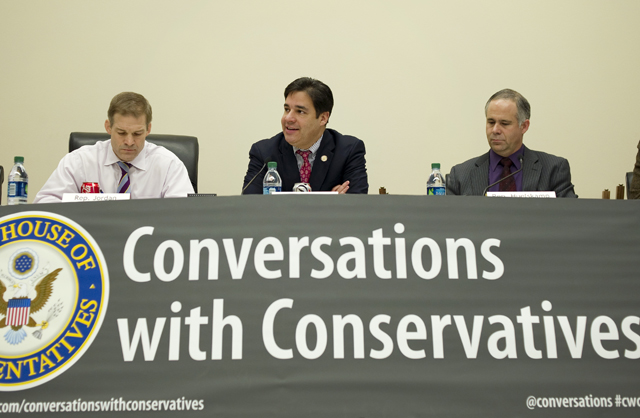


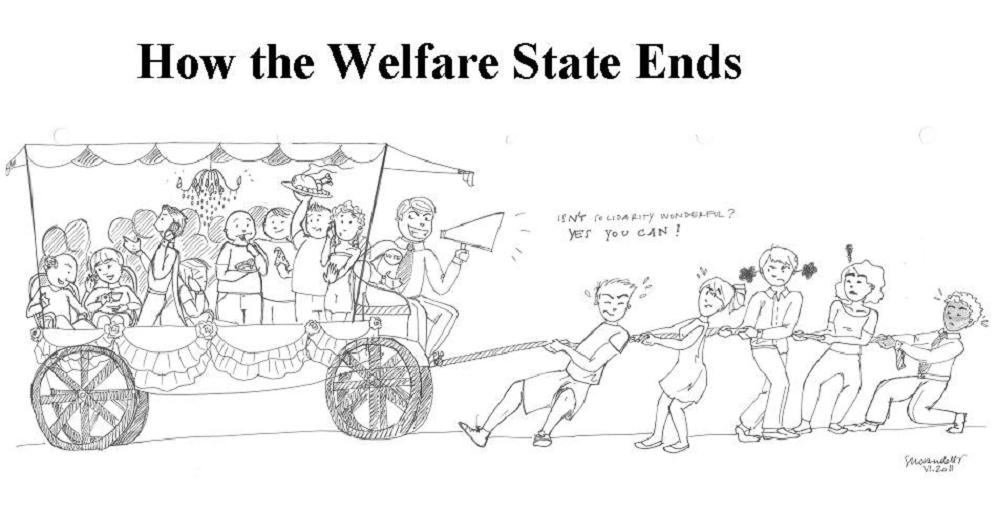
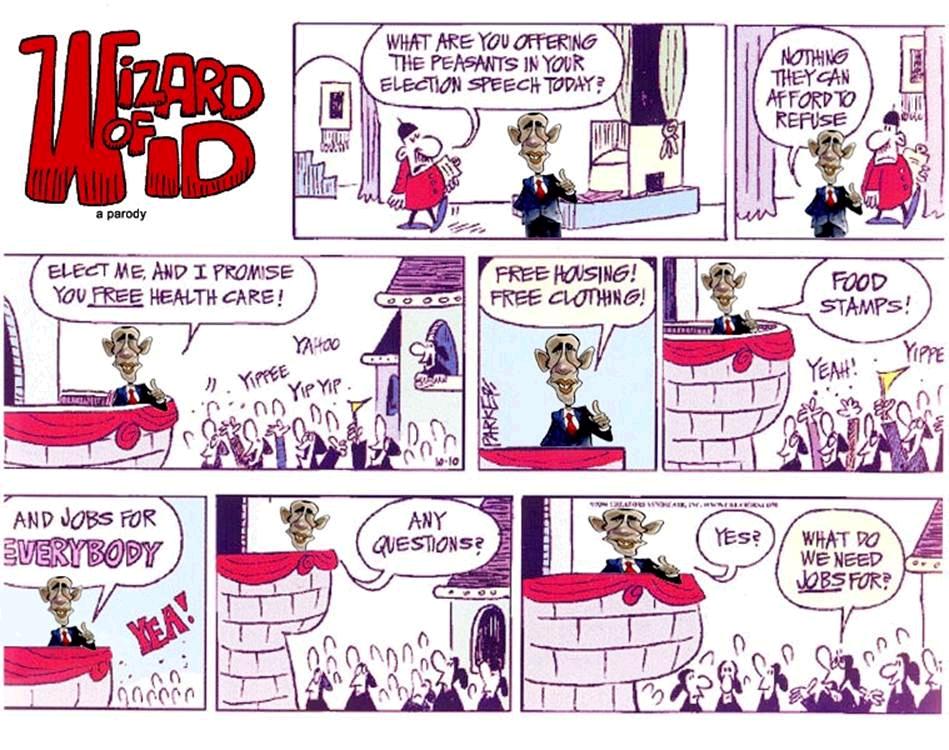


 The Daily Hatch