President-elect Joe Biden called Thursday night for a $1.9 trillion COVID-19 package that will include another round of relief checks for most Americans, a bailout for state and local governments, boosted unemployment payments, and a higher federal minimum wage.
Biden is also proposing $170 billion to assist in reopening schools and a $350 billion bailout of state and local governments. And on top of all that, Biden called for raising the national minimum wage to $15 an hour.
Those last two details may be the most contentious details. Democrats pushed for a similar bailout in earlier negotiations over COVID stimulus bills, but Senate Republicans blocked them. Democrats will have a slim Senate majority once the winners of two Georgia run-off elections are sworn-in, but the case for a state bailout remains shaky.
I wanted to let you know what I think about the minimum wage increase you have proposed for the whole country and I wanted to quote Milton Friedman who you are familiar with and you made it clear in July that you didn’t care for his views!Let me challenge you to take a closer look at what he had to say!
The fact is, the programs labeled as being “for the poor,” or “for the needy,” [by politicians like President Obama] almost always have effects exactly the opposite of those which their well-intentioned sponsors intend them to have.
Let me give you a very simple example – take the minimum wage law. Its well-meaning sponsors [like President Obama]– there are always in these cases two groups of sponsors – there are the well-meaning sponsors and there are the special interests, who are using the well-meaning sponsors as front men. You almost always when you have bad programs have an unholy coalition of the do-gooders on the one hand, and the special interest on the other. The minimum wage law is as clear a case as you could want. The special interests are of course the trade unions – the monopolistic trade craft unions. The do-gooders believe that by passing a law saying that nobody shall get less than $9 per hour (adjusted for today) or whatever the minimum wage is, you are helping poor people who need the money. You are doing nothing of the kind. What you are doing is to assure, that people whose skills, are not sufficient to justify that kind of a wage will be unemployed.
The minimum wage law is most properly described as a law saying that employers must discriminate against people who have low skills. That’s what the law says. The law says that here’s a man who has a skill that would justify a wage of $5 or $6 per hour (adjusted for today), but you may not employ him, it’s illegal, because if you employ him you must pay him $9 per hour. So what’s the result? To employ him at $9 per hour is to engage in charity. There’s nothing wrong with charity. But most employers are not in the position to engage in that kind of charity. Thus, the consequences of minimum wage laws have been almost wholly bad. We have increased unemployment and increased poverty.
Moreover, the effects have been concentrated on the groups that the do-gooders would most like to help. The people who have been hurt most by the minimum wage laws are the blacks. I have often said that the most anti-black law on the books of this land is the minimum wage law.
There is absolutely no positive objective achieved by the minimum wage law. Its real purpose is to reduce competition for the trade unions and make it easier for them to maintain the higher wages of their privileged members.
Bottom Line:
Update: The current (January) teenage unemployment rate was 23.4%, and 37.8% for black teenagers.
_____________
Thank you so much for your time. I know how valuable it is. I also appreciate the fine family that you have and your commitment as a father and a husband.
Sincerely,
Everette Hatcher III, 13900 Cottontail Lane, Alexander, AR 72002, ph 501-920-5733
President-elect Joe Biden called Thursday night for a $1.9 trillion COVID-19 package that will include another round of relief checks for most Americans, a bailout for state and local governments, boosted unemployment payments, and a higher federal minimum wage.
Biden is also proposing $170 billion to assist in reopening schools and a $350 billion bailout of state and local governments. And on top of all that, Biden called for raising the national minimum wage to $15 an hour.
Those last two details may be the most contentious details. Democrats pushed for a similar bailout in earlier negotiations over COVID stimulus bills, but Senate Republicans blocked them. Democrats will have a slim Senate majority once the winners of two Georgia run-off elections are sworn-in, but the case for a state bailout remains shaky.
Biden did not address plans for spending offsets or tax increases in his speech. An unnamed Biden official told The Wall Street Journal on Thursday that the president-elect did not believe now was the time for worrying about widening budget deficits and that Biden’s focus was on the more immediate emergency.
I wanted to let you know what I think about the minimum wage increase you have proposed for the whole country and I wanted to quote Milton Friedman who you are familiar with and you made it clear in July that you didn’t care for his views!Let me challenge you to take a closer look at what he had to say!
Daniel Mitchell quotes Milton Friedman on minimum wage and contrasts Trump a d Biden approach!
In another display of selfless masochism, I watched the Trump–Biden debate last night.
The candidates behaved better, for whatever that’s worth, but I was disappointed that there so little time (and even less substance) devoted to economic issues.
One of the few exceptions was the brief tussle regarding the minimum wage. Trump waffled on the issue, so I don’t give him any points, but Biden fully embraced the Bernie Sanders policyof basically doubling the minimum wage to $15 per hour.
The economic of this issue are very simple. If a worker generates, say, $9 of revenue per hour, and politicians say that worker can’t be employed for less than $15 per hour, that’s a recipe for unemployment.
Earlier this month, Professor Steven Landsburg on the University of Rochester opined for the Wall Street Journal on Biden’s minimum-wage policy.
It isn’t only that I think Mr. Biden is frequently wrong. It’s that he tends to be wrong in ways that suggest he never cared about being right. He makes no attempt to defend many of his policies with logic or evidence, and he deals with objections by ignoring or misrepresenting them. …Take Mr. Biden’s stance on the federal minimum wage, which he wants to increase to $15 an hour from $7.25. …So why does Mr. Biden want to raise the minimum wage…?He hasn’t said, so I have two guesses, neither of which reflects well on him. Guess No. 1: He’s dissembling about the cost. …The minimum wage…comes directly from employers but indirectly (after firms shrink and prices rise) from consumers. A minimum wage is a stealth tax on eating at McDonald’s or shopping at Walmart. …Mr. Biden should acknowledge the cost of wage hikes and argue for accepting it. Instead he’s silent about the cost, hoping he can foist it on people who won’t realize they’re footing this bill. Guess No. 2: He’s rewarding his friends and punishing his enemies. New York is going to vote for Mr. Biden. The state also has a high cost of living and high wages—so New Yorkers would be largely unaffected by the minimum-wage hike. Alabama is going to vote against Mr. Biden. Alabama has a low cost of living and relatively low wages—so under the Biden plan Alabama firms would shrink, to the benefit of competitors in New York. Alabama workers and consumers would pay a greater price than New Yorkers.
____
_________
Let’s share one last bit of evidence. Mark Perry’s article referenced some new research by Jeffrey Clemens, Lisa Kahn, and Jonathan Meer.
Here’s what those scholars found in a study published by the National Bureau of Economic Research.
We investigate whether changes in firms’ skill requirements are channels through which labor markets respond to minimum wage increases. …Data from the American Community Survey show that recent minimum wage changes resulted in increases in the average age and education of the individuals employed in low-wage jobs. Data on job vacancy postings show that the prevalence of a high school diploma requirement increases at the same time. The shift in skill requirements begins within the first quarter of a minimum wage hike. Further, it results from both within-firm shifts in postings and across-firms shifts towards firms that sought more-skilled workers at baseline. Given the poor labor market outcomes of individuals without high school diplomas, these findings have substantial policy relevance. This possibility was recognized well over a century ago by Smith (1907), who noted that the “enactment of a minimum wage involves the possibility of creating a class prevented by the State from obtaining employment.” Further, negative effects may be exacerbated for minority groups in the presence of labor market discrimination.
So why do politicians push for higher minimum wages, when all the evidence suggests that vulnerable workers bear the heaviest cost?
Part of the answer is that they don’t understand economics and don’t care about evidence.
But there’s also a more reprehensible answer, which is that they do understand, but they want to curry favor with union bosses, and those union bosses push for higher minimum wages as a way of reducing competition from lower-skilled workers.
P.S. Here’s my CNBC debate with Joe Biden’s top economic advisor on this issue.
P.P.P.S. But if you’re pressed for time, don’t listen to me pontificate. Instead, watch this video.
Thank you so much for your time. I know how valuable it is. I also appreciate the fine family that you have and your commitment as a father and a husband.
Sincerely,
Everette Hatcher III, 13900 Cottontail Lane, Alexander, AR 72002, ph 501-920-5733
President-elect Joe Biden called Thursday night for a $1.9 trillion COVID-19 package that will include another round of relief checks for most Americans, a bailout for state and local governments, boosted unemployment payments, and a higher federal minimum wage.
Biden is also proposing $170 billion to assist in reopening schools and a $350 billion bailout of state and local governments. And on top of all that, Biden called for raising the national minimum wage to $15 an hour.
Those last two details may be the most contentious details. Democrats pushed for a similar bailout in earlier negotiations over COVID stimulus bills, but Senate Republicans blocked them. Democrats will have a slim Senate majority once the winners of two Georgia run-off elections are sworn-in, but the case for a state bailout remains shaky.
The big unanswered question is how Biden plans to pay for it all. Thanks to years of poor budgeting and overzealous spending by Congress and President Donald Trump, America faces a $3 trillion budget deficit and a national debt that’s zooming towards $30 trillion. An additional $1.9 trillion will only add to the nation’s already overburdened credit card.
Biden did not address plans for spending offsets or tax increases in his speech. An unnamed Biden official told The Wall Street Journal on Thursday that the president-elect did not believe now was the time for worrying about widening budget deficits and that Biden’s focus was on the more immediate emergency.
I wanted to let you know what I think about the minimum wage increase you have proposed for the whole country and I wanted to quote Milton Friedman who you are familiar with and you made it clear in July that you didn’t care for his views!Let me challenge you to take a closer look at what he had to say!
The cost of living varies enormously across the country.
Joe Biden campaigns in Cleveland, Sept. 30.
PHOTO: ALEX WONG/GETTY IMAGES
Rep. Donald Norcross (“Biden’s Good Case for a $15 Minimum Wage,” Letters, Oct. 12) bases his argument for an increase in the minimum wage, in part, on the cost of apartment rent in New Jersey. He has no one to blame but himself. Rents are driven by high taxes (sales, income, real estate, energy, employment, etc.) and restrictions on building new housing imposed by politicians like himself. Cut the taxes and red tape and rents will follow.
George Roeck
Westfield, N.J.
The cost of living varies enormously across the country—ask anyone living in New York or San Francisco. These people likely need far more than $15 an hour to survive with one job. However, people living in many other places can do well enough on a lower minimum wage. The basic economic laws of supply and demand will determine what wages actually are, as evidenced in the three years before the Covid-19 virus decimated the economy. We had full employment, wages were rising rapidly across all levels, especially at the bottom, and the “employees wanted” sections of newspapers across the nation were larger than ever.
Some states recently raised their minimum wage which, not surprisingly, resulted in employers laying off workers, the net result being that those most in need suffer the most. So what we have again are politicians, most of whom have never actually run a business, trying to manipulate something to gain votes in an election. Kindly let us run our businesses as we know how to do it far better than you.
Peter I. Volny
Fountain Hills, Ariz.
Rep. Norcross, says that “the federal minimum wage . . . isn’t livable no matter where you reside.” That statement doesn’t hold up to scrutiny. Most of those earning the minimum wage aren’t heads of households, as Mr. Norcross implies. They are unskilled workers who are starting out, typically teenagers. More than doubling the minimum wage would effectively price them out of the workforce, snatching away from them the first rung of the ladder of economic advancement, denying those laborers the opportunity to learn skills that would enable them to move up to higher levels of income.
To paraphrase Nobel Laureate Milton Friedman: “Would you rather have no job at $15 an hour than a job at $7.25 an hour?”
Scott Kaufmann
Kansas City, Kan.
_____________
Thank you so much for your time. I know how valuable it is. I also appreciate the fine family that you have and your commitment as a father and a husband.
Sincerely,
Everette Hatcher III, 13900 Cottontail Lane, Alexander, AR 72002, ph 501-920-5733
President-elect Joe Biden called Thursday night for a $1.9 trillion COVID-19 package that will include another round of relief checks for most Americans, a bailout for state and local governments, boosted unemployment payments, and a higher federal minimum wage.
Biden is also proposing $170 billion to assist in reopening schools and a $350 billion bailout of state and local governments. And on top of all that, Biden called for raising the national minimum wage to $15 an hour.
Those last two details may be the most contentious details. Democrats pushed for a similar bailout in earlier negotiations over COVID stimulus bills, but Senate Republicans blocked them. Democrats will have a slim Senate majority once the winners of two Georgia run-off elections are sworn-in, but the case for a state bailout remains shaky.
The big unanswered question is how Biden plans to pay for it all. Thanks to years of poor budgeting and overzealous spending by Congress and President Donald Trump, America faces a $3 trillion budget deficit and a national debt that’s zooming towards $30 trillion. An additional $1.9 trillion will only add to the nation’s already overburdened credit card.
Biden did not address plans for spending offsets or tax increases in his speech. An unnamed Biden official told The Wall Street Journal on Thursday that the president-elect did not believe now was the time for worrying about widening budget deficits and that Biden’s focus was on the more immediate emergency.
But near-universal $1,400 checks are not good policy, no matter how popular they might be. States and local governments have the ability to make their own taxing and spending decisions and should not expect or require federal aid—and certainly not when the federal government is in such dire fiscal straits on its own. And ambitious plans to increase social spending and hike wages that don’t have anything to do with the pandemic should be considered separately.
I wanted to let you know what I think about the minimum wage increase you have proposed for the whole country and I wanted to quote Milton Friedman who you are familiar with and you made it clear in July that you didn’t care for his views!Let me challenge you to take a closer look at what he had to say!
In the US elections, Florida voters approved 60:40, a proposal to raise the state’s minimum wage rate to $15 an hour by 2026. President-elect Joe Biden supports an increase in the national minimum wage, unlike Trump. In high-income economies, a national minimum wage policy does raise incomes of low-wage workers, given better enforcement and governance standards. It also increases demand, with the propensity to consume higher at lower income levels. And that is crucial in the pandemic-struck economy.
Florida is the eighth state in the US to raise its hourly minimum wage to $15. The change would be incremental. Employers are required to raise the minimum wage, currently $8.56, annually by $1 for the next several years; once the $15-mark is reached, subsequent wage hikes would be inflation-adjusted. In the past, free-market economists like Milton Friedman have argued that a national minimum wage would lead to unemployment as firms would be unable to pay workers.
_____________
Thank you so much for your time. I know how valuable it is. I also appreciate the fine family that you have and your commitment as a father and a husband.
Sincerely,
Everette Hatcher III, 13900 Cottontail Lane, Alexander, AR 72002, ph 501-920-5733
President-elect Joe Biden called Thursday night for a $1.9 trillion COVID-19 package that will include another round of relief checks for most Americans, a bailout for state and local governments, boosted unemployment payments, and a higher federal minimum wage.
Biden is also proposing $170 billion to assist in reopening schools and a $350 billion bailout of state and local governments. And on top of all that, Biden called for raising the national minimum wage to $15 an hour.
Those last two details may be the most contentious details. Democrats pushed for a similar bailout in earlier negotiations over COVID stimulus bills, but Senate Republicans blocked them. Democrats will have a slim Senate majority once the winners of two Georgia run-off elections are sworn-in, but the case for a state bailout remains shaky.
Democrats may still need Republican votes for much of Biden’s plan. The reconciliation process could be used to amend existing tax and budget matters with a simple majority vote in the Senate—perhaps to do something like adjusting the amount of the child tax credit—but relief checks and a state government bailout will likely require 60 votes.
The big unanswered question is how Biden plans to pay for it all. Thanks to years of poor budgeting and overzealous spending by Congress and President Donald Trump, America faces a $3 trillion budget deficit and a national debt that’s zooming towards $30 trillion. An additional $1.9 trillion will only add to the nation’s already overburdened credit card.
Biden did not address plans for spending offsets or tax increases in his speech. An unnamed Biden official told The Wall Street Journal on Thursday that the president-elect did not believe now was the time for worrying about widening budget deficits and that Biden’s focus was on the more immediate emergency.
Previously, Biden has indicated that he will push for higher taxes on corporations and on individuals making more than $400,000 annually.
But near-universal $1,400 checks are not good policy, no matter how popular they might be. States and local governments have the ability to make their own taxing and spending decisions and should not expect or require federal aid—and certainly not when the federal government is in such dire fiscal straits on its own. And ambitious plans to increase social spending and hike wages that don’t have anything to do with the pandemic should be considered separately.
I wanted to let you know what I think about the minimum wage increase you have proposed for the whole country and I wanted to quote Milton Friedman who you are familiar with and you made it clear in July that you didn’t care for his views!Let me challenge you to take a closer look at what he had to say!
Tens of millions of workers are unemployed right now as the economy struggles to rebound from the COVID-19 crisis and ensuing government lockdowns. But if Joe Biden and Democrats sweep the board in November, even more people could find themselves out of jobs at the worst possible time.
Remember, the “moderate” Democratic presidential nominee has endorsed a $15 federal minimum wage. Meanwhile, House Democrats have already passed a bill that would mandate a $15 hourly rate in all 50 states, even those where it would constitute a more than doubling of the current minimum wage. And a new analysis by the fiscally conservative Employment Policies Institute finds that enacting this proposal would destroy 2 million jobs by 2027.
“Texas projects to have the highest losses, totaling over 370,000 jobs lost by 2027,” the report finds. “Pennsylvania, Florida, North Carolina, Ohio, and Georgia are all expected to see over 100,000 jobs lost in the next six years as well.”
The two economists who authored the study, William Even of Miami University and David Macpherson of Trinity University, also conclude that the job losses from a $15 minimum wage would disproportionately hurt young people and women. Of all the impacted jobs currently filled by African Americans, 9% would be eliminated entirely.
This shouldn’t come as a surprise. As free-market economist and Nobel laureate Milton Friedman once wrote, “The real tragedy of minimum wage laws is that they are supported by well-meaning groups who want to reduce poverty. But the people who are hurt most by higher minimums are the most poverty stricken.”
It’s easy to understand the basic economics of why minimum wage laws don’t work. Here is economist Thomas Sowell: “By the simplest and most basic economics, a price artificially raised tends to cause more to be supplied and less to be demanded than when prices are left to be determined by supply and demand in a free market,” he writes in his book Basic Economics. “The result is a surplus, whether the price that is set artificially high is that of farm produce or labor.”
Think about it like this: What would you do if the government passed a mandate tripling the price of a household good? You would buy less of it, of course, because the previous market price was representative of what that product was actually worth to consumers like you.
And don’t think that this new study is some outlier either. A 2019 survey, also conducted by the Employment Policies Institute, revealed that 3 in 4 economists oppose increasing the minimum wage, even though most respondents were registered Democrats or independents.
Moreover, a research review by the Cato Institute concluded, “The main finding of economic theory and empirical research over the past 70 years is that minimum wage increases tend to reduce employment.”
As the Washington Examiner’s Tiana Lowe has noted, even the nonpartisan Congressional Budget Office has projected millions of jobs lost nationally from a federal $15 minimum wage.
Oh, and it’s not as if a $15 minimum wage is the only disastrous economic policy Biden is running on — not even close. In fact, a Stanford study just found that the Democrat’s confiscatory tax policies and harsh regulatory regime would destroy 5 million jobs and reduce median household income by $6,500. And that’s to say nothing of Biden’s support for anti-gig economy legislation that would make millions of people’s flexible livelihoods illegal.
In spite of all this, Biden has campaigned on the notion that he alone can steer the country back from the COVID-19 downturn and that he cares about blue-collar workers. Maybe if Biden ever comes out of his basement, someone will force the candidate to explain why he’s running on a platform that would wipe out millions of jobs with the stroke of a pen.
Brad Polumbo (@Brad_Polumbo) is opinion editor at the Foundation for Economic Education and a Washington Examiner contributor.
_____________
Thank you so much for your time. I know how valuable it is. I also appreciate the fine family that you have and your commitment as a father and a husband.
Sincerely,
Everette Hatcher III, 13900 Cottontail Lane, Alexander, AR 72002, ph 501-920-5733
President-elect Joe Biden called Thursday night for a $1.9 trillion COVID-19 package that will include another round of relief checks for most Americans, a bailout for state and local governments, boosted unemployment payments, and a higher federal minimum wage.
The package is the first part of what Biden called a two-step plan to get America through the rest of the pandemic. The second part will be the centerpiece of Biden’s first State of the Union address, scheduled for next month.
Biden is also proposing $170 billion to assist in reopening schools and a $350 billion bailout of state and local governments. And on top of all that, Biden called for raising the national minimum wage to $15 an hour.
Those last two details may be the most contentious details. Democrats pushed for a similar bailout in earlier negotiations over COVID stimulus bills, but Senate Republicans blocked them. Democrats will have a slim Senate majority once the winners of two Georgia run-off elections are sworn-in, but the case for a state bailout remains shaky.
Democrats may still need Republican votes for much of Biden’s plan. The reconciliation process could be used to amend existing tax and budget matters with a simple majority vote in the Senate—perhaps to do something like adjusting the amount of the child tax credit—but relief checks and a state government bailout will likely require 60 votes.
That may also explain why some other Democratic priorities, such as the restoration of the state and local tax deduction (the “SALT” deduction), are not included in the package Biden outlined Thursday. The abolition of the SALT deduction was a major element of the tax overhaul passed by Republicans in 2017, and undoing that would likely cost Biden any shot at GOP support for this proposal.
The big unanswered question is how Biden plans to pay for it all. Thanks to years of poor budgeting and overzealous spending by Congress and President Donald Trump, America faces a $3 trillion budget deficit and a national debt that’s zooming towards $30 trillion. An additional $1.9 trillion will only add to the nation’s already overburdened credit card.
Biden did not address plans for spending offsets or tax increases in his speech. An unnamed Biden official told The Wall Street Journal on Thursday that the president-elect did not believe now was the time for worrying about widening budget deficits and that Biden’s focus was on the more immediate emergency.
Previously, Biden has indicated that he will push for higher taxes on corporations and on individuals making more than $400,000 annually.
In the coming days, Biden intends to outline his plans for a national vaccination effort, including an ambitious goal to deliver 100 million vaccinations during the new administration’s first 100 days. To the extent that Biden can in fact streamline the process and get more shots in more arms, that’s welcome. So too is a push to reopen the schools as soon as possible. And targeted relief for unemployed workers will help people harmed by the pandemic and by the government-imposed lockdowns it inspired.
But near-universal $1,400 checks are not good policy, no matter how popular they might be. States and local governments have the ability to make their own taxing and spending decisions and should not expect or require federal aid—and certainly not when the federal government is in such dire fiscal straits on its own. And ambitious plans to increase social spending and hike wages that don’t have anything to do with the pandemic should be considered separately.
Congress should scrutinize each element of Biden’s “part one” relief plan, and pass only the proposals that will directly and immediately help to end the pandemic or relieve its effects.
I wanted to let you know what I think about the minimum wage increase you have proposed for the whole country and I wanted to quote Milton Friedman who you are familiar with and you made it clear in July that you didn’t care for his views!Let me challenge you to take a closer look at what he had to say!
Companies Are Preparing to Cut Jobs and Automate if Biden Gets $15 Minimum Wage Hike, Reporting Shows
Let’s hope that Joe Biden’s minimum wage fantasies never become law—or workers will pay the price for his economic naiveté.
Nobel laureate Milton Friedman once said that “One of the great mistakes is to judge policies and programs by their intentions rather than their results.” When it comes to the $15 minimum wagehike supported by Joe Biden and many of his fellow Democrats, it’s becoming increasingly clear that the results will be ugly.
New reporting reveals that Chief Financial Officers at top American companies are “considering raising prices, cutting workers’ hours and investing in automation to offset a potential rise in labor costs.”
CFOs are gearing up to raise prices, reduce workers’ hours and ramp up technology investments as they face the possibility of higher labor costs under a Biden administration, @markgmaurer reports for @CFOJournal@WSJ. https://t.co/t6Kscf5lu6
“Companies including Chipotle Mexican Grill Inc., Potbelly Corp. and Texas Roadhouse Inc. are already doing the math to assess what a higher federal minimum wage could mean for their operations and cost base,” the Wall Street Journalreports.
“Some executives fear that increases to the federal pay floor would drive up wages across income classes, hurting profits and forcing businesses to find savings to offset higher spending on labor,” the paper continues.
First and foremost, we can expect businesses to respond to artificially-high wage mandates by cutting jobs and reducing employee hours.
Why?This new reporting is bad news for low-skilled workers—the very group that a $15 minimum wage is supposed to help.
Well, labor is a product like any other. If the cost of soda was artificially mandated at $10 per can by the government, the simple fact is that consumers would buy less of it. When employers are legally forced to pay more for labor than it is worth in the market, they naturally and inevitably do the same.
“By the simplest and most basic economics, a price artificially raised tends to cause more to be supplied and less to be demanded than when prices are left to be determined by supply and demand in a free market,” famed economist Thomas Sowell wrote inBasic Economics. “The result is a surplus, whether the price that is set artificially high is that of farm produce or labor.”
“Unfortunately, the real minimum wage is always zero,” Sowell concluded. “And that is the wage that many workers receive in the wake of the creation or escalation of a government-mandated minimum wage.”
The government may determine and decree a “living wage” under a minimum wage law, but unless the worker actually finds an employer willing to pay him that much, he will remain unemployed with a hypothetical right.
Ample evidence confirms these theoretical predictions.
For example, the nonpartisan Congressional Budget Office projects that enacting a $15 minimum wage nationwide would destroy from 1.3 to 3.7 million jobs. Similarly, analysis from the Employment Policies Institute concludes that a federal $15 minimum wage would kill 2 million jobs.
These studies aren’t outliers. A research review by the Cato Institute concluded, “The main finding of economic theory and empirical research over the past 70 years is that minimum wage increases tend to reduce employment.”
So, it’s fair to assume that the warnings CFOs are offering about potential slashes in employment can be extrapolated beyond their specific companies. Proponents of a $15 minimum wage might intend to help workers, but they will inevitably and invariably put millions of them out of work altogether if their efforts are successful.
Meanwhile, other companies told the Journal they would pass the costs onto consumers by hiking prices. (Is that a win for the working class?)
And in an another twist, some companies said they would seek additional opportunities to invest in automation and eliminate their demand for labor altogether in lieu of paying mandated wages that far exceed a worker’s value.Let’s hope that Joe Biden’s minimum wage fantasies never become law—or workers will pay the price for his naiveté.
“Pool Corp., a distributor of swimming pool supplies, plans to ramp up investments in technology to offset the potential rise in labor costs,” the Journalreports. “The company would look to reduce manual processes such as product orders and certain warehouse operations.”
“[Automation is] the most significant investment that we can make…when it comes to lowering the impact of potentially higher labor costs down the road,” Pool Corp CFO Mark Joslin said.
All of this is bad, bad news for workers. You know, the group that a $15 minimum wage is supposed to help.
So, let’s hope that Joe Biden’s minimum wage fantasies never become law—or workers will pay the price for his naiveté.
Brad Polumbo (@Brad_Polumbo) is a libertarian-conservative journalist and Opinion Editor at the Foundation for Economic Education.
_____________
Thank you so much for your time. I know how valuable it is. I also appreciate the fine family that you have and your commitment as a father and a husband.
Sincerely,
Everette Hatcher III, 13900 Cottontail Lane, Alexander, AR 72002, ph 501-920-5733
But I’m getting a lot of requests to comment about Trump, especially in light of the recent protest/riot/insurrection and the ongoing political fallout (impeachment, etc).
So here are 10 observations (full disclosure: I didn’t vote for Trump in 2016 or 2020, but have never been part of the Never-Trump community).
Trump’s style is bluster and bullying – As I wrote way back before the 2016 election, Trump’s personal style is akin to a temperamental child. This can be entertaining (which is why CNN and other networks gave him so much attention during his initial campaign), but it also has limitations as an approach to governance (for instance, you don’t stop a virus by merely asserting it won’t come to the United States).
Trump is America’s “Crazy Uncle” – Early in his presidency, I happened to be in New Zealand and was asked about Trump in a TV interview. I basically said he’s like a grouchy and opinionated uncle who shows up on holidays and dominates the conversation with controversial statements. Given what’s happened over the past few years, that observation holds up well.
Republicans lawmakewrs in Washington never liked Trump – GOPers in the House and Senate like some of the things Trump has accomplished (tax reform and conservative judges), but they’ve never liked having him as president because he is too erratic and too self-centered. But most important, they’ve been afraid his simultaneous popularity (with core GOP primary voters) and unpopularity (with, say, suburbanites) is a threat to their ability to stay in power. In other words, it’s hard to win general elections in some places as a Trumpian populist but also hard to win GOP primaries in many places as a Never-Trumper.
Republican voters, by contrast, like Trump – One thing that surprised me over the past four yeas is that I found strong support for Trump from grassroots conservative Republicans. Yes, they didn’t like his fiscal profligacy and they mostly didn’t like his protectionism, but they did like the fact that he was a “fighter,” unlike so many (but not all) Republican politicians who get cozy with the DC establishment. They also figured he was worth supporting because he was so reviled by the establishment media (i.e., the enemy of my enemy is my friend).
Republican lawmakers generally have been in a no-win situation – Because of Trump’s popularity with GOP voters, Republican lawmakers have felt a lot of pressure to act as Trump loyalists even though many of them don’t like his behavior and disagree with some of his policies.
Be glad there were normal GOPers in the Trump Administration – Some people in the Never-Trump community want to create a blacklist of people who worked for Trump. This is misguided in the vast majority of cases. Most Trump appointees had nothing to do with Trump’s excesses and instead did good things (deregulation, for instance) in the various agencies and departments where they worked.
There are three GOP wings: Populist Trumpies, conservative Reaganites, and the establishment – Most pundits portray GOP infighting as a battles between Trumpist conservatives and the Republican establishment (symbolized, perhaps, by Sen. Romney). But that’s an insufficient description of what’s happening because it overlooks the fact that there are plenty of Reagan-style conservatives who definitely are not part of the establishment, yet don’t fit in with Trump’s big-government populism. It will be very interesting to see which anti-establishment strain wields more influence in the next few years.
Trump’s legacy to GOP: Total Democratic control of DC – On January 21, 2017, Republicans controlled the House, the Senate, and the White House. Four years later (a few days from now), Democrats will control the House, the Senate, and the White House. By way of background, one of the reasons I don’t like George W. Bush is that his failed polices paved the way for the left to have total control of Washington in 2009 and 2010. Shouldn’t Trump be judged similarly?
In spite of his many flaws, why did Trump win normally Democratic states? – While I just explained that Trump set the stage for the left to have total power in Washington, Republicans need to figure out how Trump managed to win some states in 2016 that historically have been unwinnable when contested by establishment Republicans (though he lost some traditionally GOP-leaning states in 2020).
In spite of his many flaws, why did Trump get more minority votes? – Similarly, Republicans need to figure out how a supposedly racist Trump managed to win a higher percentage of minority voters than recent GOP nominees such as John McCain and Mitt Romney. The bottom line is Republicans need to figure out if there are good parts of Trumpism once Trump is out of the picture.
I’ll close with a few statements:
It is perfectly okay to have voted for Trump because you liked some of his policies (whether they are ones I like, such as tax cuts, or ones I don’t like, such as protectionism).
It is perfectly okay to have voted against Trump for the same reason.
It is perfectly okay to have voted for Trump because you wanted to shake up the Washington establishment with unconventional behavior.
It is perfectly okay to have voted against Trump because his unconventional behavior was offensive.
It is perfectly okay to have been a Never-Trumper or a Trumpian populist.
What’s not okay, though, is to engage in political violence.
And what’s utterly awful is lying to supporters and creating the conditions for political violence.
P.S. While it’s worth spending some time to dissect and analyze the past four years, I hope that libertarians, Reagan conservatives, Trump populists, Never-Trumpers, establishment Republicans, etc, all join together to fight some of Biden’s awful ideas (the “public option” threat to private health insurance, class-warfare taxes, gun control, a blue-state bailout, etc).
But I doubt anyone cares about that. Let’s instead look at what happened last night (and, in some cases, what is still happening).
President
It appears that Biden will prevail in the battle for the White House when the dust settles, but you can see from this Washington Post map that the race was much closer than most people expected (Pennsylvania is expected to shift to Biden as mail-in votes are counted, and perhaps Georgia as well).
If that’s the final result, here are two obvious takeaways based on where a president has a lot of unilateral power.
Other policy areas generally require agreement between the executive branch and the legislative branch, so we can’t know the impact of a Biden presidency without perusing congressional results.
Senate
In my humble opinion, the big news of the night is that Republicans appear to have retained control of the Senate.
If true, that means some left-wing goals are now very unlikely.
There won’t be any court packing. There won’t be any serious effort to increase the number of Democratic senators by granting statehood to Washington, DC, and Puerto Rico.
But let’s focus on the economic issues. Here are some quick takeaways.
There will be another “stimulus,” but it won’t be nearly as profligate as would have been the case if Democrats had total control of Congress and the White House.
There won’t be any serious effort for forced unionization in right-to-work states.
The corporate tax rate will stay 21 percent (the best fiscal achievement of Trump’s presidency).
House of Representatives
It appears that Republicans will gain seats, which is contrary to all expectations.
That being said, there’s zero possibility of a GOP takeover, so Nancy Pelosi will remain in charge.
Ballot Initiatives
I wrote two weeks ago about this election’s six most important ballot initiatives.
The great news is that taxpayers scored a big victory by defeating the effort to get rid of the flat tax in Illinois an replace it with a so-called progressive tax. Winning that battle probably won’t rescue the Prairie State, but at least it will slow down its march to bankruptcy.
The other five battles mostly were decided correctly – at least based on the latest vote margins.
California voters rejected an initiative that would allow the state to engage in racial discrimination.
The California initiative to weaken limits on property taxes is trailing.
The Colorado initiative to lower the state’s flat tax appears prevailed.
The Colorado initiative to strengthen TABOR (the state’s spending cap) is leading.
The one clear piece of bad news is that an Arizona initiative to impose a big increase in the top income tax rate appears likely to prevail.
What’s the future for Trump and Trumpism?
Regular readers know I want the GOP to be the Party of Reaganrather than the Party of Trump.
So I will be very interested to see whether Trump’s apparent defeat means Republicans go back to (at least pretending to favor) conventional small-government conservatism.
That will have the be the topic of a future column.
A Silver Lining for Republicans
The party controlling the White House usually loses mid-term elections. For recent examples, Democrats won the House in 2018 and there were big victories for the GOP in 2010 and 2014during the Obama years.
In all likelihood, Republicans will now do much better in the 2022 midterm election with Biden in the White House instead of Trump.
A Silver Lining for Taxpayers
It’s not something that can be quantified, but congressional Republicans will now become much better on spending issues. They’ll no longer face pressure to go along with Trump’s profligacy and they’ll have a partisan incentive to oppose Biden’s profligate agenda.
P.S. Whether you’re happy or sad about the election results, remember that it’s always appropriate to laugh at the clowns and crooks in Washington.
President Reagan, Nancy Reagan, Tom Selleck, Dudley Moore, Lucille Ball at a Tribute to Bob Hope’s 80th birthday at the Kennedy Center. 5/20/83.
Below is a fine article and video from Dan Mitchell.
(R Row, from front to rear) Milton Friedman, George Shultz, Pres. Ronald Reagan, Arthur Burns, William Simon and Walter Wriston & unknown at a meeting of White House economic
But that video is only six minutes long, so I only skim the surface. For those of you who feel that you’re missing out, you can listen to me pontificate on public policy and growth for more than sixty minutes in this video of a class I taught at the Citadel in South Carolina (and if you’re a glutton for punishment, there’s also nearly an hour of Q&A).
Cato Institute Senior Fellow Daniel J. Mitchell
Published on Apr 2, 2012
Cato Institute Senior Fellow Daniel J. Mitchell speaks to cadets economics and conservatism. This is the 10th lecture in the seminar series titled “The Conservative Intellectual Tradition in America.”
_______________
There are two points that are worth some additional attention.
1. In my discussion of regulation, I mention that health and safety rules can actually cause needless deaths by undermining economic performance. Ielaborated on this topic when I waded into the election-season debateabout whether Obama supporters were right to accuse Romney of causing a worker’s premature death.
2. In my discussion of deficits and debt, I criticize the Congressional Budget Office for assuming that government fiscal balance is the key determinant of economic growth. And since CBO assumes you maximize growth by somehow having large surpluses, the bureaucrats actually argue that higher taxes are good for growth andtheir analysis implies that the growth-maximizing tax rate is 100 percent.
P.S. If you prefer much shorter doses of Dan Mitchell, you can watch myone-minute videos on tax reformthat were produced by the Heartland Institute.
What did we learn from the Laffer Curve in the 1980′s? Lowering top tax rate from 70% to 28% from 1980 to 1988 and those earning over $200,000 paid 99 billion in taxes instead of 19 billion!!!! A Lesson on the Laffer Curve for Barack Obama November 6, 2011 by Dan Mitchell One of my frustrating missions […]
Will Rogers has a great quote that I love. He noted, “Lord, the money we do spend on Government and it’s not one bit better than the government we got for one-third the money twenty years ago”(Paula McSpadden Love, The Will Rogers Book, (1972) p. 20.) Dan Mitchell praises Calvin Coolidge for keeping the federal government small. […]
President Obama c/o The White House 1600 Pennsylvania Avenue NW Washington, DC 20500 Dear Mr. President, I know that you receive 20,000 letters a day and that you actually read 10 of them every day. I really do respect you for trying to get a pulse on what is going on out here. The way […]
Dan Mitchell does a great job explaining the Laffer Curve President Obama c/o The White House 1600 Pennsylvania Avenue NW Washington, DC 20500 Dear Mr. President, I know that you receive 20,000 letters a day and that you actually read 10 of them every day. I really do respect you for trying to get a […]
I have put up lots of cartoons from Dan Mitchell’s blog before and they have got lots of hits before. Many of them have dealt with the economy, eternal unemployment benefits, socialism, Greece, welfare state or on gun control. Today’s cartoon deals with the Laffer curve. Revenge of the Laffer Curve…Again and Again and Again March 27, 2013 […]
Class Warfare just don’t pay it seems. Why can’t we learn from other countries’ mistakes? Class Warfare Tax Policy Causes Portugal to Crash on the Laffer Curve, but Will Obama Learn from this Mistake? December 31, 2012 by Dan Mitchell Back in mid-2010, I wrote that Portugal was going to exacerbate its fiscal problems by raising […]
The Laffer Curve – Explained Uploaded by Eddie Stannard on Nov 14, 2011 This video explains the relationship between tax rates, taxable income, and tax revenue. The key lesson is that the Laffer Curve is not an all-or-nothing proposition, where we have to choose between the exaggerated claim that “all tax cuts pay for themselves” […]
I enjoyed this article below because it demonstrates that the Laffer Curve has been working for almost 100 years now when it is put to the test in the USA. I actually got to hear Arthur Laffer speak in person in 1981 and he told us in advance what was going to happen the 1980′s […]
I got to hear Arthur Laffer speak back in 1981 and he predicted what would happen in the next few years with the Reagan tax cuts and he was right with every prediction. The Laffer Curve Wreaks Havoc in the United Kingdom July 1, 2012 by Dan Mitchell Back in 2010, I excoriated the new […]
Raising taxes will not work. Liberals act like the Laffer Curve does not exist. The Laffer Curve Shows that Tax Increases Are a Very Bad Idea – even if They Generate More Tax Revenue April 10, 2012 by Dan Mitchell The Laffer Curve is a graphical representation of the relationship between tax rates, tax revenue, and […]
Ep. 4 – From Cradle to Grave [6/7]. Milton Friedman’s Free to Choose (1980)
January 20, 2021
President Biden c/o The White House
1600 Pennsylvania Avenue NW
Washington, DC 20500
Dear Mr. President,
Thank you for taking time to have your office try and get a pulse on what is going on out here in the country. I wanted to let you know what I think about the minimum wage increase you have proposed for the whole country and I wanted to quote Milton Friedman who you are familiar with and you made it clear in July that you didn’t care for his views!Let me challenge you to take a closer look at what he had to say!
Joe Biden has nominated economist Cecilia Rouse to chair his Council of Economic Advisers, with Jared Bernstein and Heather Boushey as members working alongside her. That announcement drew a common reaction from progressive commentatorsand economists: that it was great news that Biden had chosen candidates committed to “full employment.”
This concept can be a bit of a minefield for non-economists. When economists say “full employment,” they generally do not mean a situation where “everyone is working” or even “everyone who wants to work has a job and the hours they desire.” Instead, they usually define “full employment” as a situation when unemployment is at its natural rate, i.e. when the economy is operating at its full, realistic potential (with only those between jobs, or who will find it near impossible to get jobs, out of work).
This definition throws up all sorts of disagreements between academic economists that can mean people talk past each other on the desirability of the goal.
The level debate
First, economists argue over what level of unemployment constitutes full employment, and thus how far we are away from it. On the face of it, the U.S. appeared very close to something like it prior to COVID-19 hitting, with unemployment at a five-decade low, the prime-age labor force participation rate having risen sustainably for the first time since the 1980s, and African-American unemployment at its lowest level since the 1970s, as real compensation grew strongly.
But the “natural rate” of unemployment is a moveable feast and difficult to predict with any certainty. Over the past decade, the Federal Reserve and others have revised down their estimate of the natural rate from near 5 percent to closer to 4 percent. Trends therefore suggest they were initially overly pessimistic, although the natural rate can vary year-to-year. Some economists even think there was still substantive slack in the labor market in 2019, with a lot of workers desiring longer hours and the potential for those “economically inactive” to be pulled back into the labor force if only the opportunity arose.
How to lower the natural rate debate
Second, economists argue over whether particular “structural” policies could reduce the natural rate of unemployment and so enhance the number of people we’d expect to be in work at “full employment.” Libertarian economists like me would say that if only governments didn’t gum up labor markets through policies such as minimum wage laws, unemployment insurance, and land-use policies that reduce the mobility of workers, the natural rate of unemployment would be lower.
More progressive economists tend to favor the idea that there are structural barriers to entry in the labor market for particular groups, which different government policies could alleviate. For example, they often propose child-care subsidies to encourage more parents into the labor market, or subsidies for retraining for certain groups of workers, particularly those who have been rendered unemployed from technological change. Free-market economists would usually reject such attempts to tilt the playing field towards certain work-leisure decisions and highlight the deadweight costs of the taxation ultimately required to finance such programs.
The desirability of “full employment” debate
Third, economists argue over whether “full employment” should be an explicit aim of government policy.
Technically, governments could get everyone into work if they employed all out-of-work people on public works projects at high enough wages. But free-market economists would point out that these sorts of make work schemes and extensive subsidies would tend to harm overall prosperity and crowd out private jobs.
Sure, governments can “create jobs” – you could always put everyone to work in some capacity through getting people to pick up litter (think of Milton Friedman’s famous example of giving canal building workers spoons instead of shovels to create more jobs). But what delivers prosperity over time is the process of value creation in markets delivering jobs that serve our ever-changing wants and needs. Putting everyone in some form of useless work undermines this process of wealth creation, as Steve Horwitz explains here.
Again, economists on the progressive and socialist left often appear to reject this way of thinking. Instead they often talk about “full employment” as if it should be the primary aim of policy, so advocating for job guarantees or public works, as if these are perfect substitutes for private sector roles, particularly during downturns.
The macroeconomic debate
Finally, economists argue over what is needed to achieve “full employment” from a macroeconomic perspective and whether targeting it is a sensible goal. The term became re-popularized during the debates about “austerity vs. stimulus” after the Great Recession. Sometimes it is just a synonym for the economy running hot at its potential.
Certain economists argued that policymakers were too pessimistic about the true “natural rate” of unemployment, or at least the closely related concept of the NAIRU (the non-accelerating inflation rate of unemployment) after the financial crisis. They thought that a belief that there was a high structural unemployment was becoming a self-fulfilling prophecy, because the fear of generating inflation from pushing unemployment below the NAIRU was causing policymakers to hold back on macroeconomic stimulus. With just more government borrowing not offset by the Fed, these economists believed government could achieve full employment faster.
That, of course, relies on fiscal and monetary policy actually being successful in achieving this goal. Some economists would cite the 1970s example as showing it is naïve to believe you can run the economy hot until you see inflation rising, because at that stage it is difficult to keep a lid on it. In other words, underestimating the NAIRU can be just as much of a problem as overestimating it. That’s why a lot of monetary economists, including my colleague George Selgin, believe that NGDP level targeting is a good way of avoiding both errors, because that regime negates the need to think about targeting employment at all.
The views of Biden’s CEA
So where do Biden’s nominees fall on these questions? It’s clear from public musings that they generally hold an economic understanding of “full employment.” Cecilia Rouse’s work has focused more on the barriers to a higher level of employment—what might be deemed supply-side explanations for unemployment, such as poor education and regulatory barriers.
Jared Bernstein has been more of a demand-sider, explicitly talking about a full employment goal as a macroeconomic aim. He has been the most prolific in suggesting that policymakers were too pessimistic about the natural rate of unemployment post-financial crisis, arguing that the unemployment rate did not sufficiently reflect underemployment or that many people had given up looking for work. The labor market strength since then suggests that he was correct in that analysis.
In terms of policy, however, the nominees are much more likely to think interventionist government is the route to a more expansive level of employment than libertarians—pushing, in particular, for child-care policies to lower the natural rate and being committed to a very expansionary macroeconomic policy.
A lot of Bernstein’s work in particular seems predicated on the idea that the federal government should target “full employment” as a sort of moral duty. Yet, given Biden’s campaign’s position on the need for more regulation of the gig economy and these economists’ commitment to a $15 minimum wage—which most economists would acknowledge at least risks jobs in low productivity areas of the country—one cannot say that raising employment levels is a consistent goal underpinning the whole Biden policy platform.
Indeed, given something near full employment was achieved in 2019 through a policy mix that Bernstein and the other nominees do not favor, it is not clear why these candidates should be considered “full employment” advocates any more than the Trump White House has been. Rather than outcomes, what the label is really referencing here, I suspect, is the intention to use active government policy to attempt to achieve the goal.
Bernstein has wanted to run macroeconomic policy hot in targeting “full employment” for a long time. In a 2013 book with Dean Baker, for example, he defined “full employment” in macroeconomic terms as a goal to get to a level of employment (hours and jobs) whereby further increases in aggregate demand would not increase employment.
That particular definition, aiming to get to a place where pumping in additional money had no impact at all on employment levels, is an extraordinarily expansive one that would soon hit diminishing returns, with the ever-growing threat of more inflation resulting from trying to push unemployment below its natural rate.
I commented at the time of the publication of Joe Biden’s campaign policy agenda that the labor market policies were receiving insufficient attention. Not only was there a commitment to a $15 federal minimum wage, as well as a desire for something akin to the AB5 California law affecting the gig economy, but the proposals contained a lot of pro-union policies, such as having the federal government effectively preempt right-to-work laws. Combined, these represented a huge overhaul of U.S. employment policy.
It’s not a surprise then that Biden’s CEA is dominated by labor market economists. But given the jobs market was an area of clear economic strength prior to COVID-19, particularly relative to other countries, it will be interesting to see how this purported commitment to “full employment” manifests itself over time.
_____________
Thank you so much for your time. I know how valuable it is. I also appreciate the fine family that you have and your commitment as a father and a husband.
Sincerely,
Everette Hatcher III, 13900 Cottontail Lane, Alexander, AR 72002, ph 501-920-5733
Ep. 4 – From Cradle to Grave [6/7]. Milton Friedman’s Free to Choose (1980)
—
March 21, 2021
President Biden c/o The White House
1600 Pennsylvania Avenue NW
Washington, DC 20500
Dear Mr. President,
With the national debt increasing faster than ever we must make the hard decisions to balance the budget now. If we wait another decade to balance the budget then we will surely risk our economic collapse.
The first step is to remove all welfare programs and replace them with the negative income tax program that Milton Friedman first suggested.
Milton Friedman points out that though many government welfare programs are well intentioned, they tend to have pernicious side effects. In Dr. Friedman’s view, perhaps the most serious shortcoming of governmental welfare activities is their tendency to strip away individual independence and dignity. This is because bureaucrats in welfare agencies are placed in positions of tremendous power over welfare recipients, exercising great influence over their lives. In addition, welfare programs tend to be self-perpetuating because they destroy work incentives. Dr. Friedman suggests a negative income tax as a way of helping the poor. The government would pay money to people falling below a certain income level. As they obtained jobs and earned money, they would continue to receive some payments from the government until their outside income reached a certain ceiling. This system would make people better off who sought work and earned income.
Participants: Robert McKenzie, Moderator; Milton Friedman; James R. Dumpson, Chief Administrator, Human Resources Admin., NYC; Thomas Sowell, Professor of Economics, UCLA; Robert Lampman, Professor of Economics, Institute of Poverty; Helen Bohen O’Bannon, Secretary of Welfare, State of Pennsylvania
LAMPMAN: I think it’s a viable approach to some part of the problems of poverty. It involves, first of all, cash payments rather than in kind payments as I understand it? It involves payments on a non-categorical basis.
MCKENZIE: What do you mean non-categorical?
LAMPMAN: That is to say, it doesn’t matter whether you’re a female-headed family or a male-headed family or whether you’re young or old, you’re sick or well.
MCKENZIE: If your income falls below a certain level you __
LAMPMAN: Pay some guaranteed income level for people based on family size and then it has a take-back rate which is modest, I suppose, by definition. Now, the question is: How many things you want to use that program to replace? How many things you want to replace with such a negative income tax program.
MCKENZIE: Would you replace everything with it __ just __ we clear that point up. Would you virtually wipe out the remaining forms of welfare if you got this program going?
FRIEDMAN: Yes, I would not __ I think its purpose is precisely to provide a transition between where we are now and where we would like to go because while __ because I agree with you, that given that we’ve corrupted the people on welfare and gotten them on there. We do have an obligation not to throw them out in the street and put them in the difficult adjustment you’ve made. We’ve got to ease the __
MCKENZIE: Yeah. Okay. Right.
FRIEDMAN: __ ease it off __
MCKENZIE: Sure. Yeah.
FRIEDMAN: __ and so __ but I would want to replace all __
MCKENZIE: Yeah. Okay.
FRIEDMAN: __ present welfare programs.
MCKENZIE: Let’s get reactions to this and then we’ll come back to you.
SOWELL: Well, I saw some figures recently which said that if you took all the money spent on poverty in the United States and divided it by all the poverty families you’d come out with a figure of $32,000 per family. Now, the average poverty family is apparently not getting the $32,000 and so clearly someone in between the treasury and those families is getting an awful lot of that money and I think if you simply eliminated the middle man, as they say in the commercials, that there’d be an awful lot of benefit both to the poor and to the taxpayers.
DUMPSON: I’m supportive of the negative income tax concept and the objective of it. I’d like to point out, however, that administratively we have another bureaucracy set up. Somebody has to take into account earnings. Someone has to decide when to pay back that which they’re entitled to. There’s a time lag between the paying back __ the earning and the paying back. There are a variety of problems in there that I will be prepared to accept but I want you to know that government intervention is not going to be eliminated.
O’BANNON: The issue that I have is: Where do children come in? What are their rights under a negative income tax? And are we, by building in a negative income tax, in fact subsidizing the illegitimacy that Tom Sowell is so concerned about?
FRIEDMAN: The major reason it is not feasible today to have a negative income tax is because the present welfare bureaucracy would be out of work. They are the major objectors and as Senator Pat __ he’s now a senator, Pat Moynihan demonstrated in his book on the Nixon program, the chief obstacle to getting it enacted was the welfare bureaucracy. So that I don’t believe these administrative problems, if you got it enacted, would be at all serious.
O’BANNON: I think the other assumption under the negative income tax, and it’s one that I’m not sure I can buy, is that everybody has a minimum level of understanding about how to spend money. In other words, how to use the marketplace to satisfy wishes. And I, as an economist, would say, yes, we do. We __ everybody from age four to a hundred knows how to use money to satisfy wants and that’s the __
FRIEDMAN: But they don’t. They don’t. There are all sorts of problems of people who are not going to be able to. But that’s a minority problem. That’s a problem for private activity and private charity. One thing is sure: They’re spending __ they would be spending their own money and that however knowledgeable you are about money __
O’BANNON: They would be spending my money.
FRIEDMAN: They would be spending my money, but it would be one stage less then. Right now, the welfare worker is spending Mr. A’s money to help Mr. C. And there’s a big takeoff in the middle as Tom Sowell said.
SOWELL: The question is not whether the people on welfare or low incomes can all spend their money effectively; the question is: How effectively do they spend it as compared to how effectively the bureaucrats spend it for them. Comparing anything to perfection or to some arbitrary standard settles nothing. The same thing is true in the education area. They’re saying “Would families be able to spend their __ select schools for their kids under a voucher system,” for example. Well, the question is: Could they possibly do much worse than the current bureaucrats are doing in the public school system.
O’BANNON: Oh __
MCKENZIE: We’ve run on education on another program. Bob Lampman.
(Laughing)
LAMPMAN: I want to quibble with something you said, Tom, about half of the money not going to the poor or something. That doesn’t __ shouldn’t leave the viewer to think that all the money is going to the administrators of programs. A lot of what you are talking about goes to non-poor recipients. For example, social security, as a program, pays a roughly half of its benefits to people who otherwise would not be poor. Unemployment insurance pays about two-thirds of its benefits or so to non-poor persons. And those are, in some definitions, welfare or anti-poverty programs and that’s how statisticians come up with this horrendous sounding discrepancy between the total amount of money spent and the total cash benefits that go to the poor.
SOWELL: Well, I think, I think it’s a perfectly valid point though, because supposedly we were not setting up unemployment benefits and social security in order to keep the affluent.
LAMPMAN: Well, this goes back to its big philosophy, debate we might have. I think that it’s easy to oversimplify things and say that all these programs, including the public schools are there to be a help to the poor and poor only.
FRIEDMAN: Yeah, but I was saying __
LAMPMAN: But let me mention that the negative income tax has some of its impetus in that it would be a way of confining benefit payments to people who are __
SOWELL: Yes. Yes.
LAMPMAN: __ and it would cut out benefits for an awful lot of people who now have expectations that they’re going to get them, not in the form of public assistance, but in the form of social insurance as we use the term.
SOWELL: Well, in order to be made for not disappointing the expectations on which people have built their lives for one generation, but not of continuing for eternity in order to avoid one generation of transition.
MCKENZIE: What are the other hurdles toward getting underway. Now, you said, I don’t know how seriously, the biggest almost the only hurdle is the welfare bureaucracy.
FRIEDMAN: No. Now, there’d be the biggest immediate group of lobbyists that will lobby against it.
MCKENZIE: Yep.
FRIEDMAN: The biggest hurdle in getting it over at the moment is that there is no way of constructing a sensible negative income tax system that will not hurt some people. There will be some people who will get less money than they are now getting under __ particularly those in the upper income groups. Particularly the affluent who are now being subsidized by the welfare and they, will make it politically difficult for the people to put it into effect. The attempt is to put a negative income tax in effect which costs less money, is easier to administer, and yet which doesn’t pay anybody in the society one dollar less than he’s now getting. There’s no way in which you can construct such a program. But, although it’s not politically feasible now, the force of history is on its side, it’s going to become political __
MCKENZIE: Dr. James Dumpson.
DUMPSON: Let’s not say that the __ give the impression that welfare administrators were against negative income tax, the fat program for example, as Moynihan says, because they would lose their jobs, for example. Many of us were opposed to it because of certain features in that program: A $24 __ $2,400 level for a family of four. We were opposed to that. And if one goes down the Congressional record, those who testified, will be shown to be saying, “Yes, we’re for it conceptually. But we’re against this piece and this piece, if you change that you’ll have our support.”
FRIEDMAN: I was in the same position. I first proposed the negative income tax twenty-five years ago but I testified against the final version of the Nixon plan. Why? Because the welfare bureaucrats had led them to introduce changes in it which converted it from a decent satisfactory negative income tax to one which would have been just as bad as what you have now. Would have been added on top of everything else.
O’BANNON: Cold reality.
FRIEDMAN: It’s political reality __
O’BANNON: That’s right.
_____________
Thank you so much for your time. I know how valuable it is. I also appreciate the fine family that you have and your commitment as a father and a husband.
Sincerely,
Everette Hatcher III, 13900 Cottontail Lane, Alexander, AR 72002, ph 501-920-5733
Trump was a big spender before coronavirus and he became an even-bigger spender once the pandemic began.
But the White House generally didn’t add insult to injury by citing Keynesian economic theory to justify the president’s profligacy .
Prior to the pandemic, the excuse was that more money was needed for defense and that required (from a political perspective) more money for domestic programs.
And once the coronavirus hit, the excuse was that people and businesses needed to be compensated because of government-mandated lockdowns.
I thought the pre-pandemic excuse was pathetic and I’ve been skeptical of the post-pandemic excuse (why, for instance, are bureaucrats getting checks when their comfy jobs aren’t at risk?).
Well, Trump in on the way out and Biden is on the way in, which means one big spender is being replaced by another.
But there will be one difference, at least stylistically. Biden will copy Obama by citing Keynesian theory to justify his spending binges.
To begin, Andy Kessler opines about so-called stimulus in his Wall Street Journalcolumn.
…get ready for the “multipliers.” You know, the idea that a government dollar spent magically turns into multiple dollars in the economy. …Expect more multiplier mumbo jumbo as the Biden administration begins its tax-and-spend fiesta. …during the early days of the Obama administration. The financial crisis team…were “carrying around this list of multipliers”…Every dollar spent extending unemployment insurance benefits would, the fairy tale went, boost the economy by $1.64. …every dollar spent on food stamps would spur a $1.73 increase in gross domestic product. …“bang for the buck”—the proverbial free lunch. It’s more like “dud for the dollar” because it didn’t work. It never does. Multipliers are a canard, a Keynesian conceit. …The theory of multipliers is based on the Keynesian view that poorer consumers tend to spend a large amount of increased income, and the rich less so. But multipliers are half a story. Someone has to put up the original money that allegedly gets multiplied, taking it away from the private sector and negating whatever dwindling chain of transactions are hypothesized.
Amen.
Kessler is making many of the same points I made in my 2008 video about Keynesian economics, so I obviously agree
Since Kessler’s column poked holes in the theory, now let’s look at some new evidence.
Former Senator Phil Gramm has a column on this topic in today’s WSJ, co-authored by Mike Solon.
The main takeaway is that Obama did a Keynesian “stimulus” and the economy suffered a weaker-than-normal recovery.
Between the start of the subprime mortgage crisis and the end of the recession in mid-2009, net new spending of $1.6 trillion was enacted. In 2009, federal spending as a share of gross domestic product surged by an unprecedented 4.2 percentage points to reach 24.4%, the highest level since World War II. Spending was 23.3% of GDP in 2010.…what happened after 2010? …some six months into the Obama administration, the Office of Management and Budget and the Congressional Budget Office both confidently predicted an economic boom, with real GDP growing an average of 3.6% from 2010-13. …Yet…growth from 2010-13 averaged less than 2.1%, half the 4.2% average growth rates in the four-year periods following the previous 10 postwar recessions. The Obama recovery didn’t falter for lack of sustained stimulus; it was shackled from the beginning by his economic program.
I think it’s especially instructive to compare the economy’s weak performance under Obama with the strong recovery we enjoyed under Reagan.
By the way, I think it’s possible to artificially and temporarily boost consumption with so-called stimulus spending, but increasing consumer spending with borrowed money is not the same as boosting national income.
Anyhow, what’s the moral of this story?
Because Mr. Biden’s proposed program is little more than Mr. Obama’s tax, spend and regulate agenda on steroids, and because his appointees are merely grayer retreads of the Obama administration, it is excessively optimistic to believe that his stimulus will do any more good for the economy than Mr. Obama’s did. …How does it end? …it isn’t a question of if government is going to run out of other people’s money, but when.
For what it’s worth, I think the United States could be profligate for decades before we reach some sort of fiscal crisis.
But Gramm and Solon are correct to cite Thatcher’s warning that statists eventually run out of other people’s money.
P.S. My fingers are crossed that Biden is more like Bill Clintonrather than Barack Obama, but I’m not overly hopeful.
P.P.S. We have a very recent example of Paul Krugman being wrong about Keynesian economics.
The House and Senate are considering farm bill legislation this week whose costs should raise red flags for all Americans. In fact, the House and Senate versions of the bill would cost far more than the Obama stimulus package.
The costs are just one example of how the farm bill ignores taxpayers, consumers, and virtually all Americans.
First of all, the “farm bill” is a misleading title. It’s more appropriately called the food stamp bill, since nearly 80 percent of the costs are connected to food stamps. By combining agriculture programs with food stamps, legislators have turned the food stamp bill into a political game where, every five years, Congress rubberstamps legislation that helps special interests at the expense of most Americans.
It’s well past time that the politics is taken out of the food stamp bill. There should be a separate food stamp bill and a separate agriculture-only farm bill. The legislation that the House and Senate are considering this week should concern all Americans. Massive new subsidies are added, and old subsidies are maintained or made even worse. The effect will be high costs to taxpayers and higher food prices for consumers.
Further, the government’s interference into farming and ranching practices will undermine the freedom that farmers should have when making critical agriculture decisions.
(Emailed to White House on 3-15-13.) President Obama c/o The White House 1600 Pennsylvania Avenue NW Washington, DC 20500 Dear Mr. President, I know that you receive 20,000 letters a day and that you actually read 10 of them every day. I really do respect you for trying to get a pulse on what is […]
Senator Pryor pictured below: Why do I keep writing and email Senator Pryor suggestions on how to cut our budget? I gave him hundreds of ideas about how to cut spending and as far as I can tell he has taken none of my suggestions. You can find some of my suggestions here, here, here, here, here, here, here, here, here, here, here, here, here, here, here, here, here, here, here, here, and here, and they […]
(Emailed to White House on 3-15-13.) President Obama c/o The White House 1600 Pennsylvania Avenue NW Washington, DC 20500 Dear Mr. President, I know that you receive 20,000 letters a day and that you actually read 10 of them every day. I really do respect you for trying to get a pulse on what is […]
The Dysfunction in Washington is Republicans and Democrats that are unwilling to cut spending in order to vote for more programs (Democrats want more food stamps etc but Republicans vote for their pet programs and wars too like No Child Left Behind Act, the Iraq war, the prescription drug entitlement, and the TARP bailout). If […]
Senator Pryor pictured below: Why do I keep writing and email Senator Pryor suggestions on how to cut our budget? I gave him hundreds of ideas about how to cut spending and as far as I can tell he has taken none of my suggestions. You can find some of my suggestions here, here, here, here, here, here, here, here, here, here, here, here, here, here, here, here, here, here, here, here, and here, and they […]
If you want to cut wasteful spending then the disability program must be reformed radically!!! October 7, 2013 1:19PM 60 Minutes Disability Investigation By Chris Edwards Share The abuse and overspending in government disability programs is so bad that even National Public Radio and 60 Minutes have taken notice. On the heels of this excellent […]
If you really want to cut wasteful spending then why not shut down Dept of Housing and Urban Development, Dept of Education and SBA? There are many other areas that should be cut but these should be shut down!!! October 7, 2013 4:57PM Close Washington to Dismantle the Welfare-Warfare State By Doug Bandow Share […]
Senator Pryor pictured below: Why do I keep writing and email Senator Pryor suggestions on how to cut our budget? I gave him hundreds of ideas about how to cut spending and as far as I can tell he has taken none of my suggestions. You can find some of my suggestions here, here, here, here, here, here, here, here, here, here, here, here, here, here, here, here, here, here, here, here, and here, and they […]
We need to stop wasteful government spending by privatizing the post office!! Postal Service Won’t Shut Down but Will Default on Its Debt James Gattuso October 1, 2013 at 9:30 am Newscom The U.S. Postal Service (USPS) defaulted on its debt last night. No, it has nothing to do with the partial shutdown of the […]
We need to stop the stupid spending by Bureaucrats!!! Bureaucrats Gone Wild: Government Spends Recklessly as Fiscal Year Ends Rob Bluey September 29, 2013 at 1:55 pm Credit: Tetra Images/Newscom Washington’s reckless spending is driving America into debt — and yet federal bureaucrats continue their wasteful and frivolous ways. The latest example comes courtesy […]


 Update: The current (January) teenage unemployment rate was 23.4%, and 37.8% for black teenagers.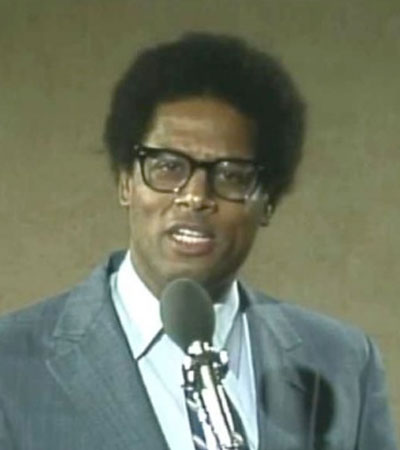





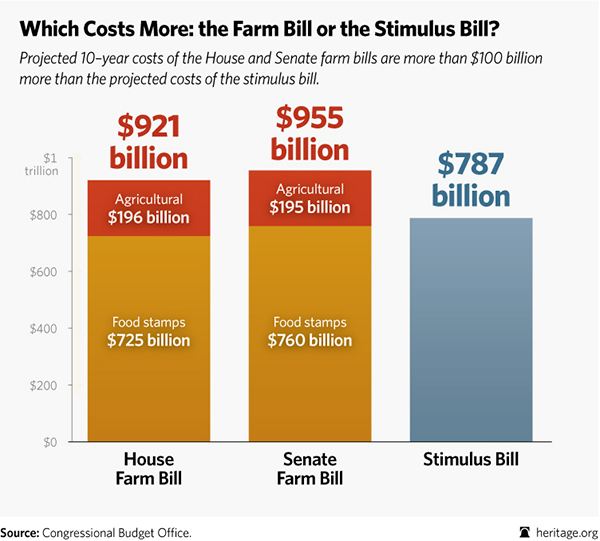


 The Daily Hatch