Category Archives: President Obama

Is Social Security Worth Its Cost? 

Social Security: Universal or selective? (1971) – with Milton Friedman …

Is Social Security Worth Its Cost?

July 10, 2018 25 min read Download Report

SUMMARY

Americans would be better off keeping their payroll tax contributions and saving them in private retirement accounts than having to contribute to the government’s broken Social Security system. Social Security’s design has, over the decades, presumed that many Americans are too incompetent to make informed decisions for themselves, but few Americans believe that the government knows better than they do what is best for them and their families. Moreover, Social Security’s financial structure effectively guarantees that workers will receive extremely low—or even negative returns—on their payroll taxes.

KEY TAKEAWAYS

This report compares what Social Security can provide and what workers could receive if they had ownership of their Social Security payroll taxes.

This information can help individuals of all ages understand what they can expect to receive from Social Security or from private savings.

Virtually all Americans would be better off keeping their payroll taxes and saving them in private retirement accounts.

Social Security began as an anti-poverty insurance program, aimed at preventing workers from outliving their savings when they were no longer physically able to work. As such, Social Security was limited in nature, beginning as only a 2 percent payroll tax—and promising to never take more than 6 percent of workers’ pay. Today, Social Security’s Old Age and Survivors Insurance (OASI) retirement program takes 10.6 percent of workers’ pay, and its Disability Insurance (DI) program takes another 1.8 percent, for a combined total of 12.4 percent. This is more than most Americans pay in income taxes.

As Social Security has grown in size and scope, it has become more than just an insurance and poverty prevention program—and with millions of seniors living below the federal poverty line, it is not doing a great job even at that. Having reduced the incentive to save for retirement, Social Security now represents a significant portion of most workers’ retirement savings. Despite the fact that Social Security was intended to be an insurance program, providing a secure retirement income, individuals have no legal claim to their scheduled Social Security benefits, as the program can only pay out as much money as it has on hand and Congress can change benefit levels if it wants. Not surprisingly, more than 60 percent of workers under the age of 50 do not think Social Security will be able to pay them a benefit when they retire.

With Social Security consuming such a large component of workers’ paychecks and offsetting their own private savings, it is important that workers receive a valuable benefit from Social Security—one at least as good as they, as a whole, could obtain from saving on their own. This analysis looks across the United States and across generations to see if Social Security does in fact provide that.

Get exclusive insider information from Heritage experts delivered straight to your inbox each week. Subscribe to The Agenda >>

Utilizing federal government data on life expectancy and earnings in each state, Heritage analysts found that:

  • On average, personal retirement savings significantly outperform the current Social Security system. Taking an average of all 50 states and the District of Columbia, the average worker receives significantly less from Social Security than he would have if he had conservatively invested his Social Security payroll taxes in the market.
  • Foregone benefits vary across generations.For average-earner males in Florida (a median-income state), lost investment earnings equal over $600,000 for those born in 1955; over $700,000 for those born in 1975; and over $1.1 million for those born in 1995. For average-earner females living in Florida, Social Security will provide over $190,000 less in lifetime income than personal savings for those born in 1955; over $230,000 less for those born in 1975; and over $420,000 less for those born in 1995. (See Appendix Tables.)
  • Individuals with lower life expectancies often lose greatly. This occurs because they receive little or nothing in benefits and cannot pass along all their lost contributions to their surviving family members. Consequently, certain areas of the country, including Washington, DC, have significantly lower returns from Social Security.
  • Younger workers face lower, and even negative, returns from Social Security compared to older workers. This comes as a result of paying higher average Social Security tax rates over their lifetimes, coupled with a two-year increase in Social Security’s normal retirement age—as well as the benefit cuts that will occur if Social Security’s trust fund runs dry.

To see if Social Security is a worthwhile program for Americans—across generations and states—researchers at The Heritage Foundation’s Center for Data Analysis created a statistical model, The Heritage Foundation Social Security Rate of Return Model, to examine Social Security’s costs and benefits. We compare these results to what workers would have earned (including estimates on what younger workers likely would earn) in personal retirement savings accounts.

Social Security: Origin and Intent

Established during the Great Depression in the 1930s as part of President Franklin Delano Roosevelt’s New Deal, Social Security is a federal program designed to protect against poverty in old age. At that time, Social Security’s eligibility age of 65 was higher than the average life expectancy.1

Centers for Disease Control, “United States Life Tables, 1998,” National Vital Statistics Reports, Vol. 48, No. 18 February 7, 2001, Table 11, https://www.cdc.gov/nchs/data/nvsr/nvsr48/nvs48_18.pdf (accessed April 20, 2018).

Social Security’s payroll tax began at a rate of 2 percent and was never intended to rise above 6 percent.2

Social Security Administration, “Social Security and Medicare Tax Rates,” https://www.ssa.gov/OACT/ProgData/taxRates.html (accessed October 3, 2016).

Those taxes seemed sufficient because life expectancy was 17 years lower then than it is today; not many people lived long enough to collect benefits, and those who did collected them for less time than retirees today.3

Life expectancy for men in 1935 was 59.42 years compared to 76.07 in 2016; for women it was 63.32 years in 1935 compared to 80.45 years in 2016. See Felicity C. Bell and Michael L. Miller, Life Tables for the United States Social Security Area: 1900–2100, Social Security Administration, Table 10, pp. 162–166, https://www.ssa.gov/oact/NOTES/pdf_studies/study120.pdf (accessed April 20, 2018).

However, what started out small has morphed into a nearly $1 trillion annual program that redistributes income to 61 million people—or about one out of every five people in the United States (including about 50 million OASI beneficiaries and 11 million DI beneficiaries).4

Social Security Administration, The 2017 Annual Report of the Board of Trustees.

When Social Security first began, there were 42 workers paying into the system for every one retiree receiving retirement checks. Today, there are only 3.4 workers per OASI beneficiary.5

Ibid., Table IV.B3, p. 61.

The program has long been on an unsustainable path and will run out of funds to pay promised benefits in 2029 according to the Congressional Budget Office6

Congressional Budget Office, “CBO’s 2016 Long-Term Projections for Social Security: Additional Information,” Exhibit 8, p. 9, https://www.cbo.gov/sites/default/files/114th-congress-2015-2016/reports/52298-socialsecuritychartbook.pdf (accessed April 20, 2018).

and in 2035 according to the Social Security Trustees.7

Social Security Administration, The 2017 Annual Report of the Board of Trustees.

Absent reforms, benefits will decline by over 20 percent across the board after the Trust Fund runs dry.8

Ibid.

Knowing the estimated benefits workers will get from Social Security versus what they could get by saving on their own can help workers and policymakers better assess what types of Social Security reforms would be most beneficial.

Social Security’s payroll tax consumes 12.4 percent of workers’ paychecks (10.6 percent for the OASI program and 1.8 percent for the DI program)—but that is not enough to sustain the programs.9

For the period between 2016 and 2018, 0.57 percent of the 10.6 percent OASI , or retirement, program payroll tax is being reallocated to the DI program, meaning the OASI payroll tax is temporarily 10.03 percent and the DI tax is 2.37 percent. However, for the purposes of this analysis, we assume that the OASI payroll tax remains constant at 10.6 percentage points and the DI tax remains constant at 1.8 percentage points. See Social Security Administration, “Social Security Tax Rates,” https://www.ssa.gov/oact/progdata/oasdiRates.html (accessed October 14, 2016).

Maintaining current benefit levels for both OASI and DI would require the payroll tax to rise to 15.33 percent.10

Social Security Administration, The 2017 Annual Report of the Board of Trustees, Table IV.B5, p. 70. Although the stated actuarial deficits for the OASI and DI are 2.59 percentage points and 0.24 percentage points of taxable payroll (a combined total of 2.83), the Social Security Trustees note that the combined OASDI payroll tax would have to rise by 2.93 percentage points because of behavioral responses. We distribute the additional 0.10 percentage point increase proportionally across the OASI and DI programs, resulting in tax increases of 2.68 percentage points and 0.25 percentage points, respectively.

Unfortunately, the payroll tax reduces workers disposable incomes and provides many with an incentive to save less. Therefore, a significant percentage of older individuals today rely primarily on Social Security for retirement income.11

More than 33 percent of aged beneficiaries receiving Social Security benefits had less than 10 percent additional income to their social security checks during retirement. Social Security Administration, “Income of the Aged Chartbook, 2014,” https://www.ssa.gov/policy/docs/chartbooks/income_aged/2014/iac14.html#chart9 (accessed July 29, 2016).

Because Social Security no longer functions primarily as a poverty-prevention program for individuals who are too old to work, and since it consumes so much of workers’ savings capacity, it is important to quantify whether or not Social Security is a valuable savings program.

Why Rates of Return Matter

“Rate of return” is a widely used metric to measure the performance of an investment—that is, how much a given dollar returns over a specified period of time. If $100 invested today is worth $110 in one year, then it has a 10 percent annual rate of return that year. Since workers contribute payroll taxes and expect to receive something in return, Social Security is considered an investment by many people.

In reality, however, Social Security is not an investment. For starters, today’s cash-flow deficits within the program mean that all incoming payroll taxes go immediately out the door to pay promised benefits. Moreover, Congress ultimately determines what workers pay into the system and receive from it—leaving workers with no control.

Social Security’s rate of return, or what workers get back in comparison to what they pay in, is entirely determined by Social Security’s benefit calculation formula as well as its Trust Fund assets. Consequently, the “returns” individuals receive from their Social Security contributions vary wildly across individual workers and across generations. While Social Security provided a high return on payroll taxes to its early beneficiaries, it promises a much lower return to future beneficiaries—and, under certain scenarios, the actual return that it can currently afford to pay to millions of future retirees can even be negative.

We used the Heritage Foundation Social Security Rate of Return Model to compute the program’s internal rate of return under two scenarios: (1) current law (which assumes the trust fund runs dry in 2035 and benefits are cut by over 20 percent);12

Social Security Administration, The 2017 Annual Report of the Board of Trustees of the Federal Old-Age and Survivors Insurance and Federal Disability Insurance Trust Funds, Table IV.B1, p. 54.

and (2) maintaining promised benefits through an across-the-board payroll tax increase. Although some individuals do not live long enough to collect Social Security benefits, we only report rates of return for those who live to at least age 66 (the current full, or normal retirement age). Consequently, our results overstate Social Security’s actual rate of return because they exclude individuals who die before age 66 and receive little, if anything, in return for their Social Security contributions.13

Unlike a retirement account that can be passed on, the Social Security death benefit consists of just $255.00. Social Security Administration, “Frequently Asked Questions: Who Can Get a Lump-Sum Death Benefit?” https://faq.ssa.gov/link/portal/34011/34019/Article/3768/Who-can-get-a-lump-sum-death-benefit (accessed August 21, 2017).

We compare these Social Security returns to a third scenario in which workers are hypothetically able to invest their payroll taxes in private accounts made up of stocks and bonds, as opposed to relying on benefits paid from other workers. These private account simulations assume that workers conservatively invest 50 percent of their existing payroll taxes in federal government bonds and the other 50 percent in large stocks.14

Large stocks are based on those of the Standard & Poor’s (S&P’s) 500 Composite index as used in Roger G. Ibbotson, 2017 SBBI Yearbook: Stocks, Bonds, Bills, and Inflation: U.S. Capital Markets Performance by Asset Class, 1926–2016 (Hoboken, NJ: John Wiley and Sons, Inc., 2017), Chapter 4. Returns for large stocks are the inflation-adjusted capital gains or losses plus reinvested dividends of large-cap stocks as reported therein. Government bonds are those used by Ibbotson to calculate annual returns on long-term government bonds, and usually consist of 20-year treasury bonds.

We applied historical rates of return for stocks and bonds through 2016 and projected forward the historical average (from 1954–2016) for 2017 and beyond (2.75 percent for government bonds and 7.04 percent for large-cap stocks). Full details are available in our methodological appendix.

Key Assumptions and Methodology of Heritage Foundation Social Security Rate of Return Model15

See, infra, “Appendix: Basic Assumptions and Methodology,” for a more complete explanation of the methodology of these calculations.

This analysis utilized the Heritage Foundation’s Social Security Rate of Return Model, which incorporates the following assumptions:

  • The hypothetical amount invested in personal retirement savings accounts equals Social Security’s payroll tax, which is 10.6 percent under current law (which requires benefit cuts beginning in 2035 to maintain solvency of the Social Security Trust Fund), and 13.28 percent under a financially solvent system that can maintain “promised” benefits. We do not make any changes to Social Security’s Disability Insurance (SSDI) program in this exercise, nor do we include the 1.8 percentage point SSDI payroll tax in workers’ hypothetical personal retirement account contributions.
  • We display results separately for both male and female individual workers with: (1) average earnings; (2) 50 percent of average earnings; and (3) the taxable maximum ($127,200 in 2017).
  • For state-by-state analysis, we make use of the fact that average incomes and life expectancies vary by state.
  • We account for future increases in life expectancy and wages. Unless otherwise stated, we use the intermediate assumptions reported in the Social Security Trustees’ 2017 annual report.16

    Social Security Administration, The 2017 Annual Report of the Board of Trustees, Table VI.G6, pp. 216–217. AWI for years not presented in the five-year forecast were interpolated based on the growth rates of these forecasts themselves.

  • We adjust all Social Security benefits for inflation according to the Social Security Administration’s use of the Consumer Price Index for Urban Wage Earners and Clerical Workers (CPI-W). For discounting previous and future values of wages, investments, and returns, we use the Consumer Price Index for All Urban Consumers (CPI-U) to remain consistent with our source for inflation-adjusted returns (2017 SBBI Yearbook).17

    Ibbotson, 2017 SBBI Yearbook, Chapter 4.

    We use the Congressional Budget Office’s January 2017 projections for future inflation in the CPI-U.18

    Congressional Budget Office, “The Budget and Economic Outlook: 2017 to 2027,” January 24, 2017, p. 54, https://www.cbo.gov/publication/52370 (accessed May 5, 2017).

  • We include both the employee’s and employer’s shares of payroll taxes in the calculations.19

    We do not address taxation issues upon withdrawal of retirement funds. We treat investments in personal savings accounts the same as payroll taxes under current law, meaning the employee portion of taxes is not tax deductible (Roth treatment), while the employer portion is tax deductible. Both these accounts, as well as some Social Security benefits, may be subject to post-retirement income taxes.

  • The rate of return on private investments listed in the tables assume a conservative mix of 50 percent large-cap U.S. stocks and 50 percent U.S. Treasury bonds. We also provide information about how much workers pay in OASI payroll taxes over their careers and how much they receive in Social Security benefits (assuming they live the average life expectancy), compared to how much they could have accumulated in a private retirement account had they invested their payroll tax dollars.

National Analysis

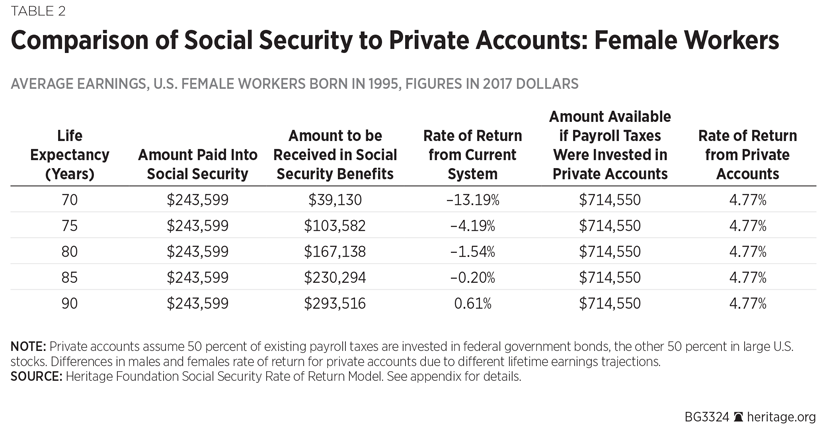
We used the Heritage Foundation Social Security Rate of Return Model to determine how American workers born in 1995 and with differing life expectancies fare in terms of the expected rate of return they receive from Social Security (the amount they receive from Social Security compared to what they paid in payroll taxes, all in 2017 dollars):
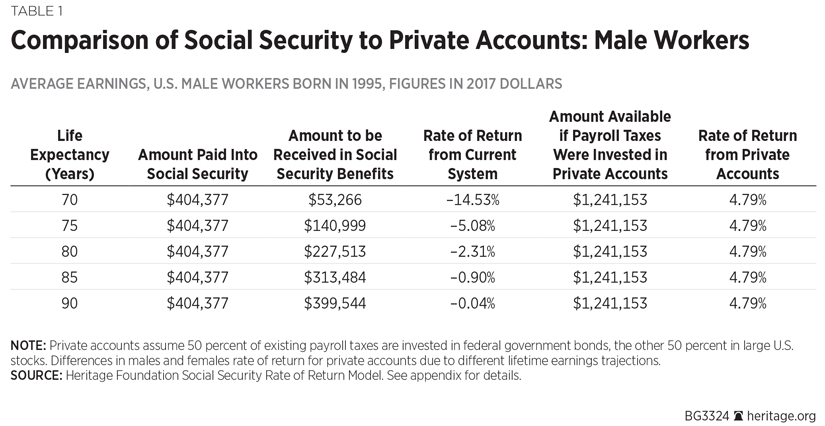
BG3324 Table 1

BG3324 Table 2

These results illustrate that Social Security provides extremely poor—often negative—rates of return for younger workers all across the country, especially for individuals with lower life expectancies. In comparison to the current system, private retirement accounts would provide significantly higher returns to Americans, regardless of their life expectancies.

State-by-State Analysis

We also used The Heritage Foundation Social Security Rate of Return Model to conduct a state-by-state analysis of the rate of return of Social Security versus a hypothetical simulation assuming payroll taxes used for Social Security were instead invested in private accounts. The following tables provide, by state of residence, the rate of return of Social Security compared to private accounts.

These tables, as well as the more detailed tables in our appendix, show workers’ estimated total lifetime Social Security benefits compared to their accumulated personal retirement account balances under two scenarios—tax increases or benefit cuts—that would make Social Security solvent over the long run. We also break total benefits and accumulated account balances down into monthly benefits and monthly annuities that workers could purchase using their personal retirement account balances. For both measures, we show workers by state, gender, and income level:


BG3324 Table 3

BG3324 Table 4

BG3324 Table 5

BG3324 Table 6

BG3324 Table 7

BG3324 Table 8

BG3324 Table 9

BG3324 Table 10

Our results demonstrate that younger workers (born in 1995) of all income levels would receive between two and seven times as much in retirement income from personal savings as they would from Social Security. Because Social Security paid out more in benefits than it collected in tax revenues to earlier generations, the gains would not be as large for older workers (those born in 1955 and 1975); however, they would still receive more from personal retirement accounts than from Social Security.

Why Private Savings Produce Higher Retirement Incomes than Social Security

Our results establish that personal investment accounts provide a significantly greater rate of return compared both to what Social Security can afford to pay as well as what it has promised to pay. Prior research comes to the same conclusion.20

Davis and Lacoude, What Social Security Will Pay. See, for example, Thomas A. Garrett and Russell M. Rhine, “Social Security Versus Private Retirement Accounts: A Historical Analysis,“ Federal Reserve Bank of St. Louis Review, Vol. 87 (March/April 2005), pp. 103–121, https://research.stlouisfed.org/publications/review/05/03/part1/GarrettRhine.pdf (accessed September 30, 2016), and Michael Tanner, “Still a Better Deal: Private Investment vs. Social Security,“ CATO Institute Policy Analysis No. 692, February 13, 2012, http://www.cato.org/publications/policy-analysis/still-better-deal-private-investment-vs-social-security (accessed October 4, 2016).

1. Higher Returns and Larger Retirement Incomes. Investment returns in the private market are two to three times the rate of return of U.S. Treasuries (what Social Security used to invest in when it ran surpluses). Consequently, even most low-income earners who get the most back from Social Security (relative to what they contribute) would end up with higher retirement incomes if they had personal investment accounts. This phenomenon was not always true in the past under Social Security’s unsustainable promises, but it is true for anyone in their 40s or younger today.

For example, a 23-year-old female, born in 1995, living in Florida and earning the average wage can expect a monthly Social Security check of $1,393 in 2017 dollars when she retires at age 67 in 2062. However, if her payroll taxes had been invested half in large-cap stocks and half in Treasury bonds, based on historical averages she could buy an inflation-adjusting annuity (similar to Social Security) that would provide $2,524 per month in year 2017 dollars.21

The single female earner in Florida would have $709,461 saved at retirement in 2017 dollars. If she purchased an annuity paying her a monthly payout until death, which adjusts for CPI-U each year, it would pay her an estimated $2,524 in monthly income in 2017 dollars. Rate is based on ImmediateAnnuities.com annuity quotes in effect October 21, 2016, https://www.immediateannuities.com/ (accessed May 5, 2017).

This amount represents almost twice the amount Social Security will be able to pay.

The same is true for other earners. A 23-year-old male, born in 1995, living in Florida and earning only half the average wage throughout his working years would accumulate enough in a personal account to receive an annuity that would pay $3,093 per month in 2017 dollars. Social Security can only provide him significantly less at $1,551 per month.22

The single male earner in Florida would have $781,910 saved up at retirement in 2017 dollars. If he purchased an annuity paying him a monthly payout until death, which adjusts for CPI-U each year, it would pay him an estimated $3,093 in monthly income in 2017 dollars. Rate is based on ImmediateAnnuities.com annuity quotes in effect October 21, 2016, https://www.immediateannuities.com/ (accessed May 5, 2017).

Even low-earning females (born in 1995) who tend to receive the most bang-for-the-buck from Social Security would receive 40 percent more from a personal account than from Social Security ($1,262 per month from a personal account vs. $902 from Social Security).


BG3324 Table 11

BG3324 Table 12

2. Continued Wealth Growth Post-Retirement.A second advantage of private retirement savings is that savings that are not withdrawn at retirement can continue to earn investment returns during retirement. Even with conservative investments, savings can continue to grow and provide for larger disbursements in subsequent years and bequests to help support family members, friends, or charities after death.

3. The Ability to Leave Bequests. Social Security prevents workers from passing on their “saved” payroll taxes to their heirs if they die before collecting benefits or shortly afterwards. Under the current system, a mean-income worker pays about $4,700 per year into Social Security’s retirement program.23

In the first quarter of 2017, the mean usual weekly earnings of full-time wage and salary workers was $855. This translates into $44,460 annually and would amount to $212,074 over a 45-year career, assuming the worker begins at age 22 and retires at age 67. Mean earnings come from U.S. Department of Labor, Bureau of Labor Statistics, “Table 1: Mean Usual Weekly Earnings of Full-Time Wage and Salary Workers by Sex, Quarterly Averages, Seasonally Adjusted,” https://www.bls.gov/news.release/wkyeng.t01.htm (accessed June 29, 2017).

Over a 45-year career, that is up to $212,000 that he could potentially lose if he dies before collecting benefits. Personal savings, on the other hand, do not disappear if their owners die before using them. Shifting some or all of Social Security’s taxes to personal savings could have a particularly large and positive impact on lower-income earners as well as on many other groups that tend to have lower life expectancies and are more likely to get little to nothing back from their Social Security taxes. Bequests can serve as more than windfall benefits; they can change individuals’ and families’ lifetime trajectories by providing money that can help a child or grandchild attend college, start a business, or make other investments in their futures.

4. Larger Paychecks, Greater Incomes, and Increased Wealth. Social Security could accomplish the goal of preventing poverty in old age with significantly lower taxes than it currently extracts. A smaller Social Security program would leave workers with bigger paychecks that they could use for current consumption, gaining education, pursuing business opportunities, building wealth, and generating higher retirement incomes. More income and wealth would make low- and middle-income communities more dynamic and prosperous places to live and work.

5. Increased Productivity. Personal savings that support private investments allow companies to create productivity-enhancing capital in the form of new machines, technology, and facilities. This increases the output of workers, which leads to better jobs and higher wages.24

For a discussion of what capital is and how it increases output, see Marginal Revolution University, “Physical Capital and Diminishing Returns,“ http://www.mruniversity.com/courses/principles-economics-macroeconomics/law-diminishing-returns-marginal-product-capital (accessed June 29, 2016). For a discussion of how workers’ income increases when the supply of capital increases, see James Sherk, “Labor’s Share of Income Little Changed Since 1948,“ Heritage Foundation Backgrounder No. 3111, May 31, 2016, http://www.heritage.org/research/reports/2016/05/labors-share-of-income-little-changed-since-1948.

The current Social Security system—which immediately spends all incoming revenues on retirees’ benefits—fails to accomplish the same productivity- and opportunity-enhancing effects.

Conclusion

This report provides workers with a comparison between what Social Security can provide and what they could receive if they had ownership of their Social Security payroll taxes. This information can help individuals of all ages understand what they can expect to get from the program in the long run.

The results are overwhelmingly clear. Americans would be better off keeping their payroll tax contributions and saving them in private retirement accounts than having to sacrifice them to the government’s broken Social Security system. Social Security’s design has, over the decades, presumed that many Americans are too incompetent to make informed decisions for themselves, but few Americans believe that the government knows better than they do what is best for them and their families. Moreover, Social Security’s financial structure effectively guarantees that workers will receive extremely low, or even negative, returns on their payroll taxes.

—Kevin Dayaratna, PhD, is Senior Statistician and Research Programmer in the Center for Data Analysis, of the Institute for Economic Freedom, at The Heritage Foundation. Rachel Greszler is Research Fellow in Economics, Budget, and Entitlements in the Thomas A. Roe Institute for Economic Policy Studies of the Institute for Economic Freedom. Patrick Tyrrell is Research Coordinator in the Center for International Trade and Economics of the Kathryn and Shelby Cullom Davis Institute for National Security and Foreign Policy, at The Heritage Foundation.

The Real (and Growing) Problem with Social Security

In an ideal world, Americans would have personal retirement accounts, just like workers in Australia, Sweden, Chile, Hong Kong, Israel, Switzerland, and a few dozen other nations.

But we’re not in that ideal world. We are forced to participate in a Ponzi Scheme known as Social Security.

By the way, that’s not necessarily a disparaging description. A Ponzi Scheme can work if there are always enough new people in the system to pay off the old people.

But because of demographic changes (increasing lifespans and decreasing birthrates), that’s not what we have in the United States.

And this is why Social Security faces serious long-run problems.

How serious? The Social Security Administration finally released the annual Trustees Report. This document has a wealth of data on the program’s financial condition, and Table VI.G9 is where the rubber meets the road.

As you can see from this chart, there will be an ever-increasing burden of Social Security taxes and spending over the next 75 years. And these numbers are adjusted for inflation!
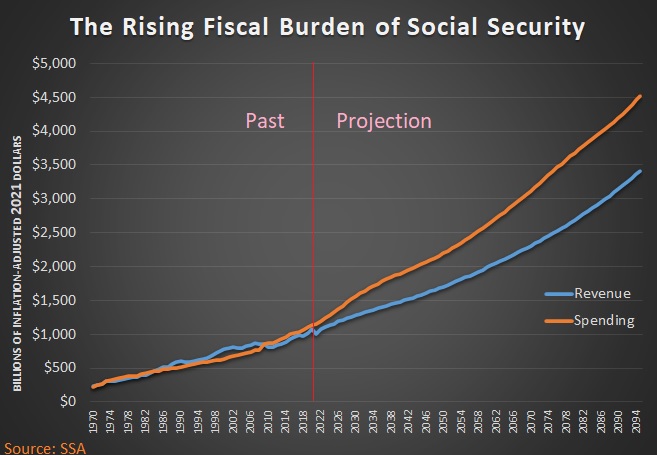
The good news (relatively speaking) is that the economy also will be growing over the next 75 years, both in nominal terms and inflation-adjusted terms.

The bad news is that spending on Social Security will grow at a faster rate, so the program will consume a larger share of the economy’s output.

And because Social Security spending is growing faster than the economy (and also faster than tax revenue), this next chart shows there is going to be more and more red ink in the future. Once again, you’re looking at inflation-adjusted data.
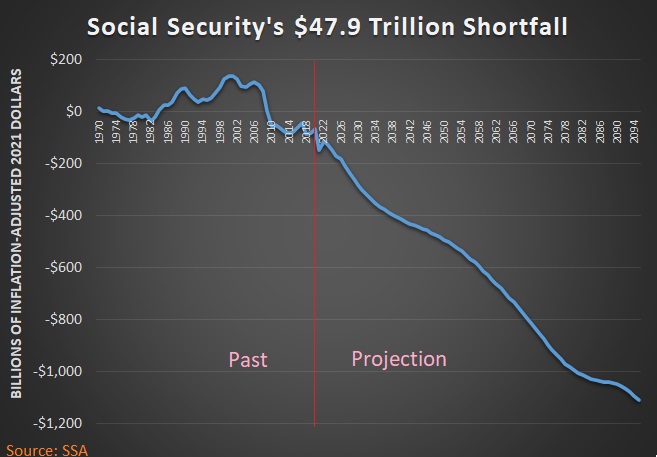
As indicated by the chart’s title, the cumulative shortfall over the next 75 years is nearly $48 trillion. That’s a lot of money, even by Washington standards.

And with each passing year, the problem seems to worsen. The 75-year shortfall was $44.7 trillion according to the 2020 report and $42.1 trillion according to the 2019 report.

I’ll conclude by observing that today’s column focuses on the big-picture fiscal problems with Social Security.

But let’s not forget the program’s second crisis, which is the fact that Americans are deprived of the ability to enjoy much higher levels of retirement income.

Certain groups are particularly harmed by this aspect of the current program, including minorities, women, older workers, and low-income workers.

P.S. Our friends on the left argue that the program’s fiscal problems (the first crisis) can be solved with tax increases. Perhaps that is true, but it will mean a weaker economy and it will exacerbate the second crisis by forcing workers to pay more to get less.

P.P.S. I once made a $16 trillion dollar mistake on national TV when discussing Social Security’s shaky finances.

P.P.P.S. Much of the news coverage about the Trustees Report has focused on the year the Social Security Trust Fund supposedly runs out of money. But this is sloppy journalismsince the Trust Fund has nothing but IOUs (as illustrated by this joke).

America’s Future Fiscal Crisis Can Be Averted

I’m not optimist about America’s fiscal future. Thanks primarily to entitlement programs, the long-run outlook shows an ever-increasing burden of government spending.

And rather than hit the brakes, Biden wants to step on the gas with new giveaways, especially his plan to gut Bill Clinton’s welfare reform by creating new per-child handouts that would subsidize idleness and family dissolution.

But that doesn’t mean the problems can’t be fixed. We simply need to replace fiscal profligacy with spending restraint.

To set the stage for this discussion, here’s a look at what’s happened to the budget over the past several decades.  You can see how the burden of federal spending has steadily increased, with noticeable one-time bumps in 2008-2009 (TARP and Obama’s so-called stimulus) and 2020-2021 (coronavirus).

The chart also includes projections between 2021 and 2031, based on new numbers from the Congressional Budget Office.

For today’s column, I want to focus on the next 10 years and show how the current fiscal mess can be averted with some modest spending restraint.

This second chart shows that spending actually drops over the next two years as coronavirus-related spending comes to an end. But once we get to 2023, the orange line shows that “baseline” spending (what happens to the budget if things are left on autopilot) climbs rapidly, more than twice the rate needed to keep pace with inflation.

But if there’s any sort of fiscal restraint (a freeze or some sort of spending cap), then the numbers look much better.
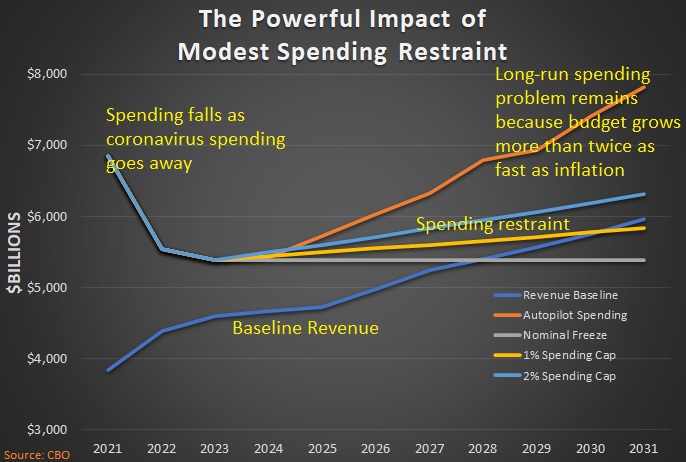
More specifically, a freeze or a 1-percent spending cap would actually produce a budget surplus by the year 2031.

But I’m not fixated on getting to a balanced budget. What’s more important is that the burden of government spending shrinks when the budget grows slower than the private sector.

In other words, we get good results when policy makers follow fiscal policy’s Golden Rule.

P.S. While it’s difficult to convince politicians to support spending restraint, it’s worth noting that the nation enjoyed a five-year spending freeze between 2009-2014.

P.P.S. In the long run, a spending freeze almost certainly requires genuine entitlement reform.

Open letter to President Obama (Part 712)

(Emailed to White House on 6-25-13.)

President Obama c/o The White House 1600 Pennsylvania Avenue NW Washington, DC 20500

Dear Mr. President,

I know that you receive 20,000 letters a day and that you actually read 10 of them every day. I really do respect you for trying to get a pulse on what is going on out here.

The federal government debt is growing so much that it is endangering us because if things keep going like they are now we will not have any money left for the national defense because we are so far in debt as a nation. We have been spending so much on our welfare state through food stamps and other programs that I am worrying that many of our citizens are becoming more dependent on government and in many cases they are losing their incentive to work hard because of the welfare trap the government has put in place. Other nations in Europe have gone down this road and we see what mess this has gotten them in. People really are losing their faith in big government and they want more liberty back. It seems to me we have to get back to the founding  principles that made our country great.  We also need to realize that a big government will encourage waste and corruptionThe recent scandals in our government have proved my point. In fact, the jokes you made at Ohio State about possibly auditing them are not so funny now that reality shows how the IRS was acting more like a monster out of control. Also raising taxes on the job creators is a very bad idea too. The Laffer Curve clearly demonstrates that when the tax rates are raised many individuals will move their investments to places where they will not get taxed as much.

______________________

I have written my Congressmen and Senators over and over about the debt ceiling increase requests by you and I have urged them to turn them down. This video below shows why I wanted them turned down.

What Is The Debt Ceiling?

Published on May 19, 2013

What is the debt ceiling and why does it matter? Find out:http://BankruptingAmerica.org/DebtCei…

Congress’s dance with the debt limit can be confusing and, frankly, the details can be a real snooze fest for many Americans. Sometimes a little humor clarifies the absurdities of Washington antics better than flow charts and talk of trillions.

The 31-second video and accompanying infographic “The Debt Ceiling Explained” by Bankrupting America offers the facts, leavened with a dose of levity. The conclusion is serious, however: The country’s debt threatens economic growth, and spending cuts are the answer.

_________________________

Senator John Boozman, 320 Hart Senate Office Building Washington, DC 20510 Phone: (202) 224-4843 Fax: (202) 228-1371
Dear Senator Boozman,

I want to thank you for taking the time out of your busy day to respond to my earlier letter to you on this same subject.

It is obvious to me that if President Obama gets his hands on more money then he will continue to spend away our children’s future. He has already taken the national debt from 11 trillion to 16 trillion in just 4 years. Over, and over, and over, and over, and over and over I have written Speaker Boehner and written every Republican that represents Arkansans in Arkansas before (Griffin, Womack, Crawford, and only Senator Boozman got a chance to respond) concerning this. I am hoping they will stand up against this reckless spending that our federal government has done and will continue to do if given the chance.

Why don’t the Republicans  just vote no on the next increase to the debt ceiling limit. I have praised over and over and over the 66 House Republicans that voted no on that before. If they did not raise the debt ceiling then we would have a balanced budget instantly.  I agree that the Tea Party has made a difference and I have personally posted 49 posts on my blog on different Tea Party heroes of mine.

What would happen if the debt ceiling was not increased? Yes President Obama would probably cancel White House tours and he would try to stop mail service or something else to get on our nerves but that is what the Republicans need to do.

I have written and emailed Senator Pryor over, and over again with spending cut suggestions but he has ignored all of these good ideas in favor of keeping the printing presses going as we plunge our future generations further in debt. I am convinced if he does not change his liberal voting record that he will no longer be our senator in 2014.

I have written hundreds of letters and emails to President Obama and I must say that I have been impressed that he has had the White House staff answer so many of my letters. The White House answered concerning Social Security (two times), Green Technologies, welfare, small businesses, Obamacare (twice),  federal overspending, expanding unemployment benefits to 99 weeks,  gun control, national debt, abortion, jumpstarting the economy, and various other  issues.   However, his policies have not changed, and by the way the White House after answering over 50 of my letters before November of 2012 has not answered one since.   President Obama is committed to cutting nothing from the budget that I can tell.

 I have praised over and over and over the 66 House Republicans that voted no on that before. If they did not raise the debt ceiling then we would have a balanced budget instantly.  I agree that the Tea Party has made a difference and I have personally posted 49 posts on my blog on different Tea Party heroes of mine.

TRY BORROWING AT A BANK WITH A FINANCIAL CONDITION LIKE THE USA HAS:

The problem in Washington is not lack of revenue but our lack of spending restraint. This video below makes that point. WASHINGTON IS A SPENDING ADDICT!!!

Please take the time to read Mo Brooks’ words and respond to me and tell me if you will vote against the debt ceiling increase. It is the only leverage we have on President Obama. Others have responded to me in the past including you and for that I am very grateful.

Thank you for your time.

Sincerely,

Everette Hatcher, 13900 Cottontail Lane, Alexander, AR 72002, cell ph 501-920-5733, lowcostsqueegees@yahoo.com, www.thedailyhatch.org

_____________

Thank you so much for your time. I know how valuable it is. I also appreciate the fine family that you have and your commitment as a father and a husband.

Sincerely,

Everette Hatcher III, 13900 Cottontail Lane, Alexander, AR 72002, ph 501-920-5733, lowcostsqueegees@yahoo.com

Related posts:

Sixty Six who resisted “Sugar-coated Satan Sandwich” Debt Deal (Part 49)

Sixty Six who resisted “Sugar-coated Satan Sandwich” Debt Deal (Part 49) This post today is a part of a series I am doing on the 66 Republican Tea Party favorites that resisted eating the “Sugar-coated Satan Sandwich” Debt Deal. Actually that name did not originate from a representative who agrees with the Tea Party, but […]

Sixty Six who resisted “Sugar-coated Satan Sandwich” Debt Deal (Part 48)

Sixty Six who resisted “Sugar-coated Satan Sandwich” Debt Deal (Part 48) This post today is a part of a series I am doing on the 66 Republican Tea Party favorites that resisted eating the “Sugar-coated Satan Sandwich” Debt Deal. Actually that name did not originate from a representative who agrees with the Tea Party, but […]

Sixty Six who resisted “Sugar-coated Satan Sandwich” Debt Deal (Part 47)

Sixty Six who resisted “Sugar-coated Satan Sandwich” Debt Deal (Part 47) This post today is a part of a series I am doing on the 66 Republican Tea Party favorites that resisted eating the “Sugar-coated Satan Sandwich” Debt Deal. Actually that name did not originate from a representative who agrees with the Tea Party, but […]

Sixty Six who resisted “Sugar-coated Satan Sandwich” Debt Deal (Part 46)

  Sixty Six who resisted “Sugar-coated Satan Sandwich” Debt Deal (Part 46) This post today is a part of a series I am doing on the 66 Republican Tea Party favorites that resisted eating the “Sugar-coated Satan Sandwich” Debt Deal. Actually that name did not originate from a representative who agrees with the Tea Party, […]

Sixty Six who resisted “Sugar-coated Satan Sandwich” Debt Deal (Part 45)

Sixty Six who resisted “Sugar-coated Satan Sandwich” Debt Deal (Part 45) This post today is a part of a series I am doing on the 66 Republican Tea Party favorites that resisted eating the “Sugar-coated Satan Sandwich” Debt Deal. Actually that name did not originate from a representative who agrees with the Tea Party, but […]

Sixty Six who resisted “Sugar-coated Satan Sandwich” Debt Deal (Part 44)

Sixty Six who resisted “Sugar-coated Satan Sandwich” Debt Deal (Part 44) This post today is a part of a series I am doing on the 66 Republican Tea Party favorites that resisted eating the “Sugar-coated Satan Sandwich” Debt Deal. Actually that name did not originate from a representative who agrees with the Tea Party, but […]

Sixty Six who resisted “Sugar-coated Satan Sandwich” Debt Deal (Part 43)

Sixty Six who resisted “Sugar-coated Satan Sandwich” Debt Deal (Part 43) This post today is a part of a series I am doing on the 66 Republican Tea Party favorites that resisted eating the “Sugar-coated Satan Sandwich” Debt Deal. Actually that name did not originate from a representative who agrees with the Tea Party, but […]

Sixty Six who resisted “Sugar-coated Satan Sandwich” Debt Deal (Part 42)

Sixty Six who resisted “Sugar-coated Satan Sandwich” Debt Deal (Part 42) This post today is a part of a series I am doing on the 66 Republican Tea Party favorites that resisted eating the “Sugar-coated Satan Sandwich” Debt Deal. Actually that name did not originate from a representative who agrees with the Tea Party, but […]

Sixty Six who resisted “Sugar-coated Satan Sandwich” Debt Deal (Part 41)

Sixty Six who resisted “Sugar-coated Satan Sandwich” Debt Deal (Part 41) This post today is a part of a series I am doing on the 66 Republican Tea Party favorites that resisted eating the “Sugar-coated Satan Sandwich” Debt Deal. Actually that name did not originate from a representative who agrees with the Tea Party, but […]

Sixty Six who resisted “Sugar-coated Satan Sandwich” Debt Deal (Part 40)

Sixty Six who resisted “Sugar-coated Satan Sandwich” Debt Deal (Part 40) This post today is a part of a series I am doing on the 66 Republican Tea Party favorites that resisted eating the “Sugar-coated Satan Sandwich” Debt Deal. Actually that name did not originate from a representative who agrees with the Tea Party, but […]

Sixty Six who resisted “Sugar-coated Satan Sandwich” Debt Deal (Part 39)

Sixty Six who resisted “Sugar-coated Satan Sandwich” Debt Deal (Part 39) This post today is a part of a series I am doing on the 66 Republican Tea Party favorites that resisted eating the “Sugar-coated Satan Sandwich” Debt Deal. Actually that name did not originate from a representative who agrees with the Tea Party, but […]

Sixty Six who resisted “Sugar-coated Satan Sandwich” Debt Deal (Part 38)

Sixty Six who resisted “Sugar-coated Satan Sandwich” Debt Deal (Part 38) This post today is a part of a series I am doing on the 66 Republican Tea Party favorites that resisted eating the “Sugar-coated Satan Sandwich” Debt Deal. Actually that name did not originate from a representative who agrees with the Tea Party, but […]

Sixty Six who resisted “Sugar-coated Satan Sandwich” Debt Deal (Part 37)

Sixty Six who resisted “Sugar-coated Satan Sandwich” Debt Deal (Part 37) This post today is a part of a series I am doing on the 66 Republican Tea Party favorites that resisted eating the “Sugar-coated Satan Sandwich” Debt Deal. Actually that name did not originate from a representative who agrees with the Tea Party, but […]

Sixty Six who resisted “Sugar-coated Satan Sandwich” Debt Deal (Part 36)

Sixty Six who resisted “Sugar-coated Satan Sandwich” Debt Deal (Part 36) This post today is a part of a series I am doing on the 66 Republican Tea Party favorites that resisted eating the “Sugar-coated Satan Sandwich” Debt Deal. Actually that name did not originate from a representative who agrees with the Tea Party, but […]

Sixty Six who resisted “Sugar-coated Satan Sandwich” Debt Deal (Part 35)

Sixty Six who resisted “Sugar-coated Satan Sandwich” Debt Deal (Part 35) This post today is a part of a series I am doing on the 66 Republican Tea Party favorites that resisted eating the “Sugar-coated Satan Sandwich” Debt Deal. Actually that name did not originate from a representative who agrees with the Tea Party, but […]

Sixty Six who resisted “Sugar-coated Satan Sandwich” Debt Deal (Part 34)

Sixty Six who resisted “Sugar-coated Satan Sandwich” Debt Deal (Part 34) This post today is a part of a series I am doing on the 66 Republican Tea Party favorites that resisted eating the “Sugar-coated Satan Sandwich” Debt Deal. Actually that name did not originate from a representative who agrees with the Tea Party, but […]

Sixty Six who resisted “Sugar-coated Satan Sandwich” Debt Deal (Part 33)

Sixty Six who resisted “Sugar-coated Satan Sandwich” Debt Deal (Part 33) This post today is a part of a series I am doing on the 66 Republican Tea Party favorites that resisted eating the “Sugar-coated Satan Sandwich” Debt Deal. Actually that name did not originate from a representative who agrees with the Tea Party, but […]

Sixty Six who resisted “Sugar-coated Satan Sandwich” Debt Deal (Part 32)

Sixty Six who resisted “Sugar-coated Satan Sandwich” Debt Deal (Part 32) This post today is a part of a series I am doing on the 66 Republican Tea Party favorites that resisted eating the “Sugar-coated Satan Sandwich” Debt Deal. Actually that name did not originate from a representative who agrees with the Tea Party, but […]

Sixty Six who resisted “Sugar-coated Satan Sandwich” Debt Deal (Part 31)

Congressmen Tim Huelskamp on the debt ceiling Sixty Six who resisted “Sugar-coated Satan Sandwich” Debt Deal (Part 31) This post today is a part of a series I am doing on the 66 Republican Tea Party favorites that resisted eating the “Sugar-coated Satan Sandwich” Debt Deal. Actually that name did not originate from a representative […]

Sixty Six who resisted “Sugar-coated Satan Sandwich” Debt Deal (Part 30)

Sixty Six who resisted “Sugar-coated Satan Sandwich” Debt Deal (Part 30) This post today is a part of a series I am doing on the 66 Republican Tea Party favorites that resisted eating the “Sugar-coated Satan Sandwich” Debt Deal. Actually that name did not originate from a representative who agrees with the Tea Party, but […]

The Sixty Six who resisted “Sugar-coated Satan Sandwich” Debt Deal (Part 29)

 Sixty Six who resisted “Sugar-coated Satan Sandwich” Debt Deal (Part 29) This post today is a part of a series I am doing on the 66 Republican Tea Party favorites that resisted eating the “Sugar-coated Satan Sandwich” Debt Deal. Actually that name did not originate from a representative who agrees with the Tea Party, but […]

The Sixty Six who resisted “Sugar-coated Satan Sandwich” Debt Deal (Part 28)

The Sixty Six who resisted “Sugar-coated Satan Sandwich” Debt Deal (Part 28) This post today is a part of a series I am doing on the 66 Republican Tea Party favorites that resisted eating the “Sugar-coated Satan Sandwich” Debt Deal. Actually that name did not originate from a representative who agrees with the Tea Party, […]

The Sixty Six who resisted “Sugar-coated Satan Sandwich” Debt Deal (Part 27)

The Sixty Six who resisted “Sugar-coated Satan Sandwich” Debt Deal (Part 27) This post today is a part of a series I am doing on the 66 Republican Tea Party favorites that resisted eating the “Sugar-coated Satan Sandwich” Debt Deal. Actually that name did not originate from a representative who agrees with the Tea Party, […]

The Sixty Six who resisted “Sugar-coated Satan Sandwich” Debt Deal (Part 26)

The Sixty Six who resisted “Sugar-coated Satan Sandwich” Debt Deal (Part 26) This post today is a part of a series I am doing on the 66 Republican Tea Party favorites that resisted eating the “Sugar-coated Satan Sandwich” Debt Deal. Actually that name did not originate from a representative who agrees with the Tea Party, […]

The Sixty Six who resisted “Sugar-coated Satan Sandwich” Debt Deal (Part 25)

Uploaded by RepJoeWalsh on Jun 14, 2011 Our country’s debt continues to grow — it’s eating away at the American Dream. We need to make real cuts now. We need Cut, Cap, and Balance. The Sixty Six who resisted “Sugar-coated Satan Sandwich” Debt Deal (Part 25) This post today is a part of a series […]

The Sixty Six who resisted “Sugar-coated Satan Sandwich” Debt Deal (Part 23)

The Sixty Six who resisted “Sugar-coated Satan Sandwich” Debt Deal (Part 23) This post today is a part of a series I am doing on the 66 Republican Tea Party favorites that resisted eating the “Sugar-coated Satan Sandwich” Debt Deal. Actually that name did not originate from a representative who agrees with the Tea Party, […]

The Sixty Six who resisted “Sugar-coated Satan Sandwich” Debt Deal (Part 22)

The Sixty Six who resisted “Sugar-coated Satan Sandwich” Debt Deal (Part 22) This post today is a part of a series I am doing on the 66 Republican Tea Party favorites that resisted eating the “Sugar-coated Satan Sandwich” Debt Deal. Actually that name did not originate from a representative who agrees with the Tea Party, […]

The Sixty Six who resisted “Sugar-coated Satan Sandwich” Debt Deal (Part 21)

The Sixty Six who resisted “Sugar-coated Satan Sandwich” Debt Deal (Part 21) This post today is a part of a series I am doing on the 66 Republican Tea Party favorites that resisted eating the “Sugar-coated Satan Sandwich” Debt Deal. Actually that name did not originate from a representative who agrees with the Tea Party, […]

The Sixty Six who resisted “Sugar-coated Satan Sandwich” Debt Deal (Part 20)

The Sixty Six who resisted “Sugar-coated Satan Sandwich” Debt Deal (Part 20) This post today is a part of a series I am doing on the 66 Republican Tea Party favorites that resisted eating the “Sugar-coated Satan Sandwich” Debt Deal. Actually that name did not originate from a representative who agrees with the Tea Party, […]

The Sixty Six who resisted “Sugar-coated Satan Sandwich” Debt Deal (Part 19)

The Sixty Six who resisted “Sugar-coated Satan Sandwich” Debt Deal (Part 19) This post today is a part of a series I am doing on the 66 Republican Tea Party favorites that resisted eating the “Sugar-coated Satan Sandwich” Debt Deal. Actually that name did not originate from a representative who agrees with the Tea Party, […]

The Sixty Six who resisted “Sugar-coated Satan Sandwich” Debt Deal (Part 18)

The Sixty Six who resisted “Sugar-coated Satan Sandwich” Debt Deal (Part 18) This post today is a part of a series I am doing on the 66 Republican Tea Party favorites that resisted eating the “Sugar-coated Satan Sandwich” Debt Deal. Actually that name did not originate from a representative who agrees with the Tea Party, […]

The Sixty Six who resisted “Sugar-coated Satan Sandwich” Debt Deal (Part 17)

The Sixty Six who resisted “Sugar-coated Satan Sandwich” Debt Deal (Part 17) This post today is a part of a series I am doing on the 66 Republican Tea Party favorites that resisted eating the “Sugar-coated Satan Sandwich” Debt Deal. Actually that name did not originate from a representative who agrees with the Tea Party, […]

The Sixty Six who resisted “Sugar-coated Satan Sandwich” Debt Deal (Part 16)

The Sixty Six who resisted “Sugar-coated Satan Sandwich” Debt Deal (Part 16) This post today is a part of a series I am doing on the 66 Republican Tea Party favorites that resisted eating the “Sugar-coated Satan Sandwich” Debt Deal. Actually that name did not originate from a representative who agrees with the Tea Party, […]

By Everette Hatcher III | Posted in spending out of control | Edit | Comments (0)

Sen. Rand Paul releases annual Festivus Report, which focuses on what he sees as wasteful spending 

Sen. Rand Paul releases annual Festivus Report, which focuses on what he sees as wasteful spending

Paul’s office identified $52,598,515,585 what it sees as wasteful spending

Sen. Rand Paul, R-Ky., kept his annual tradition going this year by releasing his “Festivus Report 2021,” where he airs his grievances about wasteful spending in the federal government, and where the money could have been better spent.

Festivus, of course, was made famous in a December 1997 “Seinfeld” episode called “The Strike.” The fictional holiday occurs on Dec. 23—a day before Christmas Eve—and instead of basking in the glow of family members and candlelight, participants confront each other about annoyances endured during the year. The holiday is marked by an “unadorned aluminum pole.”

Paul’s office identified $52,598,515,585 what it sees as waste, including money spent on “a study of pigeons gambling on slot machines, giving kids junk food, and telling citizens of Vietnam not to burn their trash,” according to a statement.

Senator Rand Paul, a Republican from Kentucky, released his annual Festivus Report on Wednesday. Photographer: Al Drago/Bloomberg via Getty Images

Senator Rand Paul, a Republican from Kentucky, released his annual Festivus Report on Wednesday. Photographer: Al Drago/Bloomberg via Getty Images

His list reads like a menu with bulleted items next to their price tags. He posted about the $549 million on Afghanistan Air Force planes he said were later sold as scrap, the $2.4 trillion in the construction of buildings in Afghanistan that essentially went unused and the pigeons playing slot machines study that cost $465,339.

<img class="i-amphtml-blurry-placeholder" src="data:;base64,AUGUST 31, 2021: Taliban fighters wielding American supplied weapons, equipment and uniforms, at the Kabul International Airport. (MARCUS YAM / LOS ANGELES TIMES)

AUGUST 31, 2021: Taliban fighters wielding American supplied weapons, equipment and uniforms, at the Kabul International Airport. (MARCUS YAM / LOS ANGELES TIMES) (MARCUS YAM / LOS ANGELES TIMES)

Paul’s statement said the average U.S. taxpayer pays about $15,332, which he said means the government wasted the taxes from about 3.4 million Americans.

The statement, which had footnotes to support his claims, said that $52 billion could have been spent on 13,149 miles of 4-lane highway construction across the U.S., 4.5 months of operating Veterans Affairs or giving every person in the world $6.78.

Another Case Study Comparing the Private Sector and Government

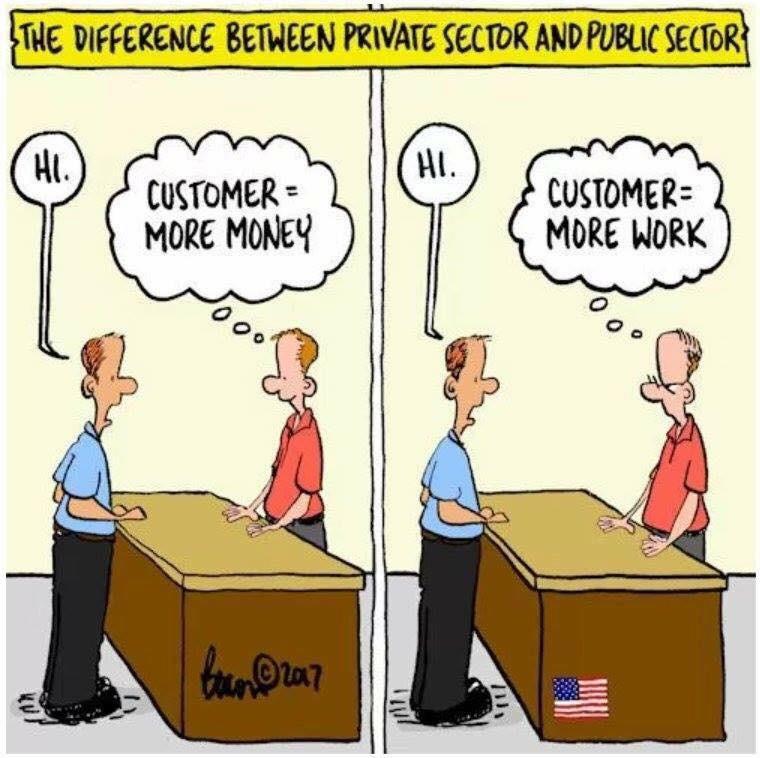
I periodically look at issues (social security, education, infrastructure, TSA, etc) to compare the private sector and the public sector.

This new video from John Stossel gives us another example

The video reminds us that incentives matter.

Normally, the private sector does a better job then government because of competition. More specifically, profit-seeking companies fight for our dollars by offering goods and services based on quality and/or price.

But even when competition isn’t a big factor – such as the operation of a park, we can see how the private sector produces superior outcomes.

The surrounding businesses benefit if there is a clean and safe park. So when they actually got the authority to run the park, they put in place effective policies.

People in government are not opposed to clean and safe parks, of course, but they often make decisions on the basis of political factors (rewarding certain contractors, providing patronage jobs, etc).

The net result is that government involvement is a bad recipe for higher costs and poor performance (click here for another example from New York City).

P.S. The superiority of the private sector is a big reason to reject industrial policy. As shown in this video, we get better resultswhen businesses focus on attracting customers, not attracting subsidies.

Defending Capitalism, Part I

I was a big fan of (and occasional guest on) John Stossel’s TV show, and I’m now a big fan of his videos (see here, here, here, here, here, here, and here).

So it was an honor to appear in his latest video about “Capitalism Myths.”

It’s a two-part series. In this first video, we discussed three myths about free enterprise.

Myth #1 – Capitalists get rich by ‘taking’ money from others.

Since voluntary exchange, by definition, is mutually beneficial, this is a truly absurd argument. Indeed, only the most vapid politicians and pundits suggest otherwise.

The most definitive research in this area came from Professor William Nordhaus of Yale, who estimated that, “innovators are able to capture about 2.2 percent of the total social surplus from innovation.”

Translated from economic jargon, that means the rest of society gets nearly 98 percent of the value created by rich entrepreneurs.

Myth #2 – The rich getting richer, and the poor getting poorer.

This is an issue I’ve repeatedly addressed, showing how poverty was the natural state of humanity until capitalism appeared a few hundred years ago.

Now we are incomprehensibly rich by comparison. At least in market-oriented nations.

Focusing on more-recent data, I’ve shown that living standards have dramatically increased in the post-World War II era.

In the video, John and I also discussed the Census Bureau’s data showing that the middle class is shrinking, but only because more people are becoming rich.

Myth #3 – Monopolies destroyed the free market.

Supporters of government intervention commonly argue that capitalism produces monopolies, meaning big producers capture the market and exploit consumers.

This is a rather puzzling argument since monopolies almost always are the result of government favoritism.

Even if we go back to the days of the so-called Robber Barons, we find that the consumers were only exploited when politicians decided to prohibit competition.

P.S. Next week, the second video will look at four other myths about capitalism.

P.P.S. On a related note, I have a five-part series (Part IPart IIPart III, and Part IV, and Part V) on “The Case for Capitalism.”

The climate-change hustle

John Stossel: Through 50 years of reporting on scares, only COVID proved true

I hear that climate change will destroy much of the world.

“There will be irreversible damage to the planet!” warns a CNN anchor.

Joe Biden says he’ll spend $500 billion a year to fight what his website calls an “existential threat to life.”

Really?

I’m a consumer reporter. Over the years, alarmed scientists have passionately warned me about many things they thought were about to kill Americans.

Asbestos in hair dryers, coffee, computer terminals, electric power lines, microwave ovens, cellphones (brain tumors!), electric blankets, herbicides, plastic residue, etc., are causing “America’s cancer epidemic”!

If those things don’t get us, “West Nile Virus will!” Or SARS, Bird Flu, Ebola, flesh-eating bacteria or “killer bees.”

Experts told me millions would die on Jan. 1, 2000, because computers couldn’t handle the switch from 1999. Machines would fail; planes would crash.

The scientists were well-informed specialists in their fields. They were sincerely alarmed. The more knowledge you have about a threat, the more alarmed you get.

Yet, mass death didn’t happen. COVID-19 has been the only time in my 50 years of reporting that a scare proved true.

Maybe you accepted the phrase I used above: “America’s cancer epidemic.” But there is no cancer epidemic. Cancer rates are down. We simply live long enough to get diseases like cancer. But people think there’s a cancer epidemic.

The opposite is true. As we’ve been exposed to more plastics, pesticides, mysterious chemicals, food additives and new technologies, we live longer than ever!

That’s why I’m skeptical when I’m told: Climate change is a crisis!

Climate change is real. It’s a problem, but I doubt that it’s “an existential threat.”

Saying that makes alarmists mad.

When Marc Morano says it, activists try to prevent him from speaking.

“They do not want dissent,” says Morano, founder of ClimateDepot.com, a website that rebuts much of what climate activists teach in schools.

“It’s an indoctrination that’s so complete that by the time (kids) get to high school, they’re not even aware that there’s any scientific dissent.”

Morano’s new movie, “Climate Hustle 2,” presents that dissent. My new video this week features his movie.

Morano argues that politicians use fear of global warming to gain power.

“Climate Hustle 2” features Sen. Chuck Schumer shouting: “If we would do more on climate change, we’d have fewer of these hurricanes and other types of storms! Everyone knows that!”

But everyone doesn’t know that. Many scientists refute it. Congress’ own hearings include testimony about how our warmer climate has not caused increases in the number of hurricanes or tornadoes. “Climate Hustle 2” includes many examples like that.

“Why should we believe you?” I ask Morano. “You’re getting money from the fossil fuel industry.” After all, Daily Kos calls him “Evil Personified” and says ExxonMobil funds him.

“Not at all,” he replies. “I’m paid by about 90% individual contributions from around the country. Why would ExxonMobil give me money (when) they want to appear green?”

Morano’s movie frustrates climate activists by pointing out how hypocritical some are.

Actor Leonardo DiCaprio says he lives a “green lifestyle … (using) energy-efficient appliances. I drive a hybrid car.”

Then he flies to Europe to attend a party.

I like watching Morano point out celebrities’ hypocrisy, but think one claim in his movie goes too far.

“Stopping climate change is not about saving the planet,” says narrator Kevin Sorbo. “It’s about climate elites trying to convince us to accept a future where they call all the shots.”

I push back at Morano: “I think they are genuinely concerned, and they want to save us.”

“Their vision of saving us is putting them in charge,” he replies.

And if they’re in charge, he says, they will destroy capitalism.

—-
State of the Union 2013

Published on Feb 13, 2013

Cato Institute scholars Michael Tanner, Alex Nowrasteh, Julian Sanchez, Simon Lester, John Samples, Pat Michaels, Jagadeesh Gokhale, Michael F. Cannon, Jim Harper, Malou Innocent, Juan Carlos Hidalgo, Ilya Shapiro, Trevor Burrus and Neal McCluskey respond to President Obama’s 2013 State of the Union Address.

Video produced by Caleb O. Brown, Austin Bragg and Lester Romero.

_______________

In the past I have written the White House on several issues such as abortion, medicare, welfare,  Greece, healthcare, and what the founding fathers had to say about welfare programs,   and have got several responses from the White House concerning issues such as Obamacare, Social Security, welfare,  and excessive government spending.

Today I am taking a look at the response of the scholars of the Heritage Foundation and the Cato Institute scholars to the 2013 State of the Union Address.

Amy Payne

February 13, 2013 at 8:22 am

State of the…Climate?

Swept into office four years ago based, in part, on promises to slow sea-level rise, President Obama initiated a radical climate agenda. It seems we are seeing a rerun in 2013. It is worth asking what is different four years after his first State of the Union Address?

There have been four more years of no global warming. In 2010, there had been no significant world temperature increase for over a decade. The streak is now 16 years long. We have four years of costly lessons on the waste and inefficiency of green-energy subsidies.

The scientific basis for catastrophic climate change gets weaker and weaker. The economic argument for green subsidies has already collapsed. It is time for the administration to quit using both arguments to justify a regulatory and fiscal power grab.

David W. Kreutzer, PhD, research fellow in energy economics and climate change, Center for Data Analysis

Related posts:

President Obama responds to Heritage Foundation critics on welfare reform waivers

Is President Obama gutting the welfare reform that Bill Clinton signed into law? Morning Bell: Obama Denies Gutting Welfare Reform Amy Payne August 8, 2012 at 9:15 am The Obama Administration came out swinging against its critics on welfare reform yesterday, with Press Secretary Jay Carney saying the charge that the Administration gutted the successful […]

HERITAGE FOUNDATION INTERVIEW:Senator Blunt Vows to Keep Pressure on President Obama Over Contraceptive Mandate

Senator Blunt Vows to Keep Pressure on President Obama Over Contraceptive Mandate Uploaded by HeritageFoundation on Feb 13, 2012 http://blog.heritage.org/2012/02/13/sen-blunt-vows-to-keep-pressure-on-obama-&#8230; | Sen. Roy Blunt (R-MO) introduced legislation to protect religious organizations from Obamacare’s overreach last summer. Now, as President Obama presses forward with his anti-conscience mandate, Blunt is prepared to keep the pressure on the […]

Cartoons from Dan Mitchell’s blog that demonstrate what Obama is doing to our economy Part 2

Max Brantley is wrong about Tom Cotton’s accusation concerning the rise of welfare spending under President Obama. Actually welfare spending has been increasing for the last 12 years and Obama did nothing during his first four years to slow down the rate of increase of welfare spending. Rachel Sheffield of the Heritage Foundation has noted: […]

Heritage Foundation Videos and Interviews are displayed on www.thedailyhatch.org

Sen. Mitch McConnell: Americans Don’t Approve of Anything Obama Has Done Uploaded by HeritageFoundation on Dec 8, 2011 In an exclusive interview at The Heritage Foundation, Senate Minority Leader Mitch McConnell (R-KY) sharply criticized President Obama for engaging in class warfare and accused him of shifting the focus away from his own failed policies in […]

Did Obama prolong the recession with the auto baleout?

Obamanomics: A Legacy of Wasteful Spending Published on Aug 12, 2012 by CFPEcon101 This mini-documentary from the Center for Freedom and Prosperity Foundation highlights egregious examples of wasteful spending from the so-called stimulus legislation and explains why government spending hurts economic performance. **Links to additional reading material** Thomas Sowell, “Stimulus or Sedative?” http://www.realclearpolitics.com/articles/2010/03/09/stimulus_or_sedative_104&#8230; Veronique de […]

Open letter to President Obama (Part 222)

  President Obama c/o The White House 1600 Pennsylvania Avenue NW Washington, DC 20500 Dear Mr. President, I know that you receive 20,000 letters a day and that you actually read 10 of them every day. I really do respect you for trying to get a pulse on what is going on out here. Is […]

Open letter to President Obama (Part 221)

  President Obama c/o The White House 1600 Pennsylvania Avenue NW Washington, DC 20500 Dear Mr. President, I know that you receive 20,000 letters a day and that you actually read 10 of them every day. I really do respect you for trying to get a pulse on what is going on out here. The […]

Open letter to President Obama (Part 216)

Thomas Sowell (This letter was mailed before September 1, 2012) President Obama c/o The White House 1600 Pennsylvania Avenue NW Washington, DC 20500 Dear Mr. President, I know that you receive 20,000 letters a day and that you actually read 10 of them every day. I really do respect you for trying to get a […]

Open letters to President Obama displayed here on www.thedailyhatch.org

I have been writing letters to President Obama almost all of 2012. I have received several responses from the White House but none of the responses have been personal responses from the President. Below is a letter I wrote to the President and a form letter response that I got followed by links to other […]

Biden Administration Sanctions Mail-Order Abortion. Here’s How the Move Endangers Women!

 width=

An abortion pill, misoprostol, causes contractions to empty the uterus. The regimen is approved to be used for up to 70 days, or 10 weeks, into a pregnancy. Pictured: An ultrasound of a twelve-week-old unborn child. (Photo: Getty Images)

The Food and Drug Administration announcedThursday that it will significantly weaken longstanding safety protocols that have applied to dangerous chemical abortion pills for more than 20 years, opening the door to widespread telemedicine abortion and abortion pill-by-mail distribution.

The Biden administration’s decision is a response to the abortion industry’s demands at the expense of women’s health and safety.

Here’s what you need to know about how the Food and Drug Administration’s actions will further endanger women and what this means for the abortion policy landscape going forward.

Abortion Pills and the Risk Evaluation and Mitigation Strategy

Want to keep up with the 24/7 news cycle? Want to know the most important stories of the day for conservatives? Need news you can trust? Subscribe to The Daily Signal’s email newsletter. Learn more >>

The chemical abortion pill regimen is a two-part process. The first pill, mifepristone (also known as RU-486 or its brand name, Mifeprex), causes the death of the unborn child by cutting off the hormone progesterone, which is required to sustain a pregnancy.

The second pill, misoprostol (brand name Cytotec), causes contractions to empty the uterus. The regimen is approved to be used for up to 70 days (10 weeks) into pregnancy.

The rate of chemical abortion has increased by 120% in the past decade, with roughly half of abortions today being chemical rather than surgical.

The Food and Drug Administration imposes a safety program called a Risk Evaluation and Mitigation Strategy (REMS) on 62 drugs currently on the market to “ensure that the benefits of a drug … outweigh the risks.” One such drug is mifepristone, the abortion pill.

Under the heightened safety protocols of the mifepristone risk evaluation and mitigation strategy, the drug can only be dispensed by a qualified prescriber who seeks permission from the abortion pill manufacturer. This means those who prescribe the abortion pill tend to be abortion providers who “opt in” rather than your everyday primary care doctor or OB-GYN.

Another condition was a requirement that mifepristone only be dispensed in certain healthcare settings such as a clinic or hospital. But the Food and Drug Administration’s update Thursday to the mifepristone REMS made a significant change.

What Changed?

Under the guise of COVID-19 containment, this spring the Food and Drug Administration stopped enforcing the in-person dispensing requirement that restricted abortion pill dispensing to limited health care settings. Thursday’s action made that policy permanent and formally removed the in-person dispensing requirement from the REMS.

What does it mean in practice? It means the Food and Drug Administration has formally sanctioned abortion pill-by-mail, leaving women to have risky do-it-yourself abortions alone, without medical supervision.

Changes Endanger Women

Since the Food and Drug Administration approved mifepristone in 2000, the drug has been associated with 26 deaths, thousands of serious adverse events, and more than 500 life-threatening complications (that we know of, due to lackluster state and federal reporting requirements). Life-threatening complications include sepsis and ruptured-ectopic pregnancy. Other side effects can include fever, pelvic inflammatory disease, cramping, nausea, and severe bleeding.

The complication rate from abortion pills is fourtimes that of a first trimester surgical abortion. One recent study found that between 2002 and 2015, emergency room visits following a chemical abortion increased by more than 500%.

So how does mail-order abortion put women even further at risk?

It is impossible for a prescriber who may not even be in the same town—or state—to rule out ectopic pregnancy without an ultrasound; no screening questions during a video chat can replace an in-person evaluation in this context.

Neither can a prescriber precisely date a pregnancy, meaning more women might be prescribed an abortion pill well past 70 days gestation (a serious risk itself, as the risks from a chemical abortion increase the farther along in pregnancy she is).

Or consider what in-home do-it-yourself abortions mean for women who face coercion and threats from an unsupportive partner, an abuser, or a human trafficker. The American Association of Pro-Life OB-GYNS notes, a “visit with a physician in early pregnancy is the only chance these women will have to expose this pressure they’re facing.”

Policy Landscape: What Now?

The number of abortion facilities declined 5% between 2014 and 2017. Most private practice OB-GYNs don’t perform abortions, and among those, only half are willing to refer patients elsewhere. Allowing mail-order abortions is a boon to the abortion industry, allowing it to expand far beyond brick-and-mortar clinics.

The Supreme Court may correct a grave constitutional error and overturn Roe v. Wade via the Dobbs vs. Jackson Women’s Health Organization case, which was heard at the Supreme Court Dec. 1.

But even if the Supreme Court rules that states may protect unborn children before viability (roughly 24 weeks, the point at which a child can survive outside the womb), mail-order abortion pills will make it harder for states to protect women and unborn children within their jurisdictions.

The abortion lobby has characterized the Food and Drug Administration’s mail-order abortion decision as one that “doesn’t go far enough” and ultimately wants mifepristone REMS removed entirely.

In fact, abortion-industry advocates have called for abortion pills to be available over-the-counter,or even taken as a monthly preventive measure, rebranding mifepristone as a “missed period pill.”

It’s clear that pro-abortion advocates will continue agitating to remove remaining safety protocols and make abortion pills as widely available as possible, regardless of what the science and data tells us about the dangers.

Now more than ever, policymakers—particularly at the stage level—must counteract the Food and Drug Administration’s ideologically motivated surrender to the abortion lobby by protecting life in their jurisdictions. They can do this through policies that include prohibitions on telemedicine and mail-order abortions, heightened informed-consent requirements, and reporting requirements to better track complications. Six states—Arizona, Indiana, Montana, Ohio, Oklahoma, South Dakota, and Texas—have already taken such action.

At the federal level, opportunities to pursue pro-life policies currently face the challenges of a pro-abortion House of Representatives and presidential administration. Nonetheless, from committee hearings to communications with administration officials, policymakers should embrace their duty to conduct oversight activity at President Joe Biden’s Food and Drug Administration.

Protecting women and unborn children’s health and safety—not checking off items from the abortion industry’s Christmas wish list—should be the policy priority at all levels of government.

Have an opinion about this article? To sound off, please email letters@DailySignal.com and we’ll consider publishing your edited remarks in our regular “We Hear You” feature. Remember to include the URL or headline of the article plus your name and town and/or state.

Abortion: When Does Life Begin? – R.C. Sproul


Dr. Francis schaeffer – The flow of Materialism(from Part 4 of Whatever happened to human race? Co-authored by Francis Schaeffer and Dr. C. Everett Koop)

C. Everett Koop
C. Everett Koop, 1980s.jpg
13th Surgeon General of the United States
In office
January 21, 1982 – October 1, 1989

Abortion: What About Those Who Demand Their Rights? – R.C. Sproul

Whatever Happened To The Human Race? | Episode 1 | Abortion of the Human Race (2010)

Standing Strong Under Fire: Popular Abortion Arguments and Why They Fail

Whatever Happened To The Human Race? | Episode 2 | Slaughter of the Innocents (2010)

Ben Shapiro Obliterates Every Pro-Abortion Argument

Whatever Happened To The Human Race? | Episode 3 | Death by Someone’s Choice (2010)

Adrian Rogers: Innocent Blood [#1004] (Audio)

Whatever Happened To The Human Race? | Episode 5 | Truth and History (20…

Abortion: What Is Your Verdict? – R.C. Sproul

John MacArthur Abortion and the Campaign for Immorality (Selected Scriptures)

John MacArthur on Romans 13

Image<img class=”i-amphtml-blurry-placeholder” src=”data:;base64,Edith Schaeffer with her husband, Francis Schaeffer, in 1970 in Switzerland, where they founded L’Abri, a Christian commune.

________________

______________________

September 25, 2021

President Biden  c/o The White House 1600 Pennsylvania Avenue NW Washington, DC 20500

Dear Mr. President,

I really do respect you for trying to get a pulse on what is going on out here. I know that you don’t agree with my pro-life views but I wanted to challenge you as a fellow Christian to re-examine your pro-choice view.

In the past I have spent most of my time looking at this issue from the spiritual side. In the film series “WHATEVER HAPPENED TO THE HUMAN RACE?” the arguments are presented  against abortion (Episode 1),  infanticide (Episode 2),   euthanasia (Episode 3), and then there is a discussion of the Christian versus Humanist worldview concerning the issue of “the basis for human dignity” in Episode 4 and then in the last episode a close look at the truth claims of the Bible.

Francis Schaeffer

__________________________

I truly believe that many of the problems we have today in the USA are due to the advancement of humanism in the last few decades in our society. Ronald Reagan appointed the evangelical Dr. C. Everett Koop to the position of Surgeon General in his administration. He partnered with Dr. Francis Schaeffer in making the video WHATEVER HAPPENED TO THE HUMAN RACE? which can be found on You Tube. It is very valuable information for Christians to have.

Today I want to respond to your letter to me on July 9, 2021. Here it is below:

THE WHITE HOUSE

WASHINGTON

July 9, 2021

Mr. Everette Hatcher III

Alexander, AR

Dear Mr. Hatcher,

Thank you for taking your time to share your thoughts on abortion. Hearing from passionate individuals like me inspires me every day, and I welcome the opportunity to respond to your letter

Our country faces many challenges, and the road we will travel together will be one of the most difficult in our history. Despite these tough times, I have never been more optimistic for the future of America. I believe we are better positioned than any country in the world to lead in the 21st century not just by the example of our power but by the power of our example.

As we move forward to address the complex issues of our time, I encourage you to remain an active participant in helping write the next great chapter of the American story. We need your courage and dedication at this critical time, and we must meet this moment together as the United States of America. If we do that, I believe that our best days still lie ahead.

Sincerely

Joe Biden

Mr. President, my wife was born in JEFFERSON MEMORIAL HOSPITAL in Pine Bluff, Arkansas and Adrian Rogers tells a story about another lady that was born in that same hospital: “They took that grocery sack and Maria home and one hour passed and two hours passed and that baby was still crying and panting for his life in that grocery sack. They took that little baby down to the hospital there in Pine Bluff, Arkansas, and they called an obstetrician and he called a pediatrician and they called nurses and they began to work on that little baby. Today that baby is alive and well and healthy, that little mass of protoplasm. That little thing that wasn’t a human being is alive and well. I want to tell you they spent $150,000 to save the life of that baby. NOW CAN YOU EXPLAIN TO ME HOW THEY CAN SPEND $150,000 TO SAVE THE LIFE OF SOMETHING THAT SOMEBODY WAS PAYING ANOTHER DOCTOR TO TAKE THE LIFE OF?”

_________________

Carl Sagan pictured below:

Image result for carl sagan

_________

_

Recently I have been revisiting my correspondence in 1995 with the famous astronomer Carl Sagan who I had the privilege to correspond with in 1994, 1995 and 1996. In 1996 I had a chance to respond to his December 5, 1995letter on January 10, 1996 and I never heard back from him again since his cancer returned and he passed away later in 1996. Below is what Carl Sagan wrote to me in his December 5, 1995 letter:

Thanks for your recent letter about evolution and abortion. The correlation is hardly one to one; there are evolutionists who are anti-abortion and anti-evolutionists who are pro-abortion.You argue that God exists because otherwise we could not understand the world in our consciousness. But if you think God is necessary to understand the world, then why do you not ask the next question of where God came from? And if you say “God was always here,” why not say that the universe was always here? On abortion, my views are contained in the enclosed article (Sagan, Carl and Ann Druyan {1990}, “The Question of Abortion,” Parade Magazine, April 22.)

I was introduced to when reading a book by Francis Schaeffer called HE IS THERE AND HE IS NOT SILENT written in 1968.

Image result for francis schaeffer

Francis Schaeffer

I was blessed with the opportunity to correspond with Dr. Sagan, and in his December 5, 1995 letter Dr. Sagan went on to tell me that he was enclosing his article “The Question of Abortion: A Search for Answers”by Carl Sagan and Ann Druyan. I am going to respond to several points made in that article. Here is a portion of Sagan’s article (here is a link to the whole article):

Image result for adrian rogers
(both Adrian Rogers and Francis Schaeffer mentioned Carl Sagan in their books and that prompted me to write Sagan and expose him to their views.

Image result for Ann Druyan

Carl Sagan and Ann Druyan pictured above

Related image

 “The Question of Abortion: A Search for Answers”

by Carl Sagan and Ann Druyan

For the complete text, including illustrations, introductory quote, footnotes, and commentary on the reaction to the originally published article see Billions and Billions.

The issue had been decided years ago. The court had chosen the middle ground. You’d think the fight was over. Instead, there are mass rallies, bombings and intimidation, murders of workers at abortion clinics, arrests, intense lobbying, legislative drama, Congressional hearings, Supreme Court decisions, major political parties almost defining themselves on the issue, and clerics threatening politicians with perdition. Partisans fling accusations of hypocrisy and murder. The intent of the Constitution and the will of God are equally invoked. Doubtful arguments are trotted out as certitudes. The contending factions call on science to bolster their positions. Families are divided, husbands and wives agree not to discuss it, old friends are no longer speaking. Politicians check the latest polls to discover the dictates of their consciences. Amid all the shouting, it is hard for the adversaries to hear one another. Opinions are polarized. Minds are closed.

Is it wrong to abort a pregnancy? Always? Sometimes? Never? How do we decide? We wrote this article to understand better what the contending views are and to see if we ourselves could find a position that would satisfy us both. Is there no middle ground? We had to weigh the arguments of both sides for consistency and to pose test cases, some of which are purely hypothetical. If in some of these tests we seem to go too far, we ask the reader to be patient with us–we’re trying to stress the various positions to the breaking point to see their weaknesses and where they fail.

In contemplative moments, nearly everyone recognizes that the issue is not wholly one-sided. Many partisans of differing views, we find, feel some disquiet, some unease when confronting what’s behind the opposing arguments. (This is partly why such confrontations are avoided.) And the issue surely touches on deep questions: What are our responses to one another? Should we permit the state to intrude into the most intimate and personal aspects of our lives? Where are the boundaries of freedom? What does it mean to be human?

Of the many actual points of view, it is widely held–especially in the media, which rarely have the time or the inclination to make fine distinctions–that there are only two: “pro-choice” and “pro-life.” This is what the two principal warring camps like to call themselves, and that’s what we’ll call them here. In the simplest characterization, a pro-choicer would hold that the decision to abort a pregnancy is to be made only by the woman; the state has no right to interfere. And a pro-lifer would hold that, from the moment of conception, the embryo or fetus is alive; that this life imposes on us a moral obligation to preserve it; and that abortion is tantamount to murder. Both names–pro-choice and pro-life–were picked with an eye toward influencing those whose minds are not yet made up: Few people wish to be counted either as being against freedom of choice or as opposed to life. Indeed, freedom and life are two of our most cherished values, and here they seem to be in fundamental conflict.

Let’s consider these two absolutist positions in turn. A newborn baby is surely the same being it was just before birth. There ‘s good evidence that a late-term fetus responds to sound–including music, but especially its mother’s voice. It can suck its thumb or do a somersault. Occasionally, it generates adult brain-wave patterns. Some people claim to remember being born, or even the uterine environment. Perhaps there is thought in the womb. It’s hard to maintain that a transformation to full personhood happens abruptly at the moment of birth. Why, then, should it be murder to kill an infant the day after it was born but not the day before?

As a practical matter, this isn’t very important: Less than 1 percent of all tabulated abortions in the United States are listed in the last three months of pregnancy (and, on closer investigation, most such reports turn out to be due to miscarriage or miscalculation). But third-trimester abortions provide a test of the limits of the pro-choice point of view. Does a woman’s “innate right to control her own body” encompass the right to kill a near-term fetus who is, for all intents and purposes, identical to a newborn child?

——-

End of Sagan Excerpt

When I was in high school the book and film series named WHATEVER HAPPENED TO THE HUMAN RACE? came out and it featured Doctor C. Everett Koop and Francis Schaeffer and they looked at the issues of abortion, infanticide, and youth euthanasia and they looked at comments from such scholars as Peter Singer and James D. Watson.

Image result for c. everett koop


C. Everett Koop pictured above and Peter Singer below

Peter Singer, an endowed chair at Princeton’s Center for Human Values, said, “Killing a disabled infant is not morally equivalent to killing a person. Very often it is not wrong at all.”

James D.Watson

In May 1973, James D. Watson, the Nobel Prize laureate who discovered the double helix of DNA, granted an interview to Prism magazine, then a publication of the American Medical Association. Time later reported the interview to the general public, quoting Watson as having said, “If a child were not declared alive until three days after birth, then all parents could be allowed the choice only a few are given under the present system. The doctor could allow the child to die if the parents so choose and save a lot of misery and suffering. I believe this view is the only rational, compassionate attitude to have.”

Carl Sagan

On August 30, 1995 I mailed a letter to Carl Sagan that probably prompted this discussion on abortion and it enclosed a lengthy story from Adrian Rogers about an abortion case in Pine Bluff, Arkansas that almost became an infanticide case:

An excerpt from the Sunday morning message (11-6-83) by Adrian Rogers in Memphis, TN.

I want to tell you that secular humanism and so-called abortion rights are inseparably linked together. We have been taught that our bodies and our children are the products of the evolutionary process, and so therefore human life may not be all that valuable to begin with. We have come today to where it is legal and even considered to be a good thing to put little babies to death…15 million little babies put to death since 1973 because of this philosophy of Secular Humanism.

How did the court make that type of decision? You would think it would be so obvious. You can’t do that! You can’t kill little babies! Why? Because the Bible says! Friend, they don’t give a hoot what the Bible says! There used to be a time when they talked about what the Bible says because there was a time that we as a nation had a constitution that was based in the Judeo-Christian ethic, but today if we say “The Bible says” or “God says “Separation of Church and State. Don’t tell us what the Bible says or what God says. We will tell you what we think!” Therefore, they look at the situation and they decide if it is right or wrong purely on the humanistic philosophy that right and wrong are relative and the situation says what is right or what is wrong.

This little girl just 19 years old went into the doctor’s office and he examined her. He said, “We can take take of you.” He gave her an injection in her arm that was to cause her to go into labor and to get rid of that protoplasm, that feud, that little mass that was in her, but she wasn’t prepared for the sound she was about to hear. It was a little baby crying. That little baby weighed 13 ounces. His hand the size of my thumbnail. You know what the doctor did. The doctor put that little baby in a grocery sack and gave it to Maria’s two friends who were with her in that doctor office and Said, “It will stop making those noises after a while.”

Image result for adrian rogers

(Adrian Rogers pictured above)

Image result for pine bluff arkansas 1983
Pine Bluff, Arkansas
Image result for jefferson county hospital, pine bluff, arkansas
My wife was born in main hospital in Pine Bluff, Arkansas

They took that grocery sack and Maria home and one hour passed and two hours passed and that baby was still crying and panting for his life in that grocery sack. They took that little baby down to the hospital there in Pine Bluff, Arkansas, and they called an obstetrician and he called a pediatrician and they called nurses and they began to work on that little baby. Today that baby is alive and well and healthy, that little mass of protoplasm. That little thing that wasn’t a human being is alive and well. I want to tell you they spent $150,000 to save the life of that baby. NOW CAN YOU EXPLAIN TO ME HOW THEY CAN SPEND $150,000 TO SAVE THE LIFE OF SOMETHING THAT SOMEBODY WAS PAYING ANOTHER DOCTOR TO TAKE THE LIFE OF? The same life!!! Are you going to tell me that is not a baby? Are you going to tell me that if that baby had been put to death it would not have been murder? You will never convince me of that. What has happened to us in America? We have been sold a bill of goods by the Secular Humanists!

Image result for carl sagan humanist of the year 1982
Carl Sagan was elected the HUMANIST OF THE YEAR in 1982 by the AMERICAN HUMANIST ASSOCIATION

Carl Sagan asked, “Does a woman’s “innate right to control her own body” encompass the right to kill a near-term fetus who is, for all intents and purposes, identical to a newborn child?”

This message “A Christian Manifesto” was given in 1982 by the late Christian Philosopher Francis Schaeffer when he was age 70 at D. James Kennedy’s Corral Ridge Presbyterian Church.
Listen to this important message where Dr. Schaeffer says it is the duty of Christians to disobey the government when it comes in conflict with God’s laws. So many have misinterpreted Romans 13 to mean unconditional obedience to the state. When the state promotes an evil agenda and anti-Christian statues we must obey God rather than men. Acts
I use to watch James Kennedy preach from his TV pulpit with great delight in the 1980’s. Both of these men are gone to be with the Lord now. We need new Christian leaders to rise up in their stead.
To view Part 2 See Francis Schaeffer Lecture- Christian Manifesto Pt 2 of 2 video
The religious and political freedom’s we enjoy as Americans was based on the Bible and the legacy of the Reformation according to Francis Schaeffer. These freedoms will continue to diminish as we cast off the authority of Holy Scripture.
In public schools there is no other view of reality but that final reality is shaped by chance.
Likewise, public television gives us many things that we like culturally but so much of it is mere propaganda shaped by a humanistic world and life view.

_____________________________

I was able to watch Francis Schaeffer deliver a speech on a book he wrote called “A Christian Manifesto” and I heard him in several interviews on it in 1981 and 1982. I listened with great interest since I also read that book over and over again. Below is a portion of one of Schaeffer’s talks  on a crucial subject that is very important today too.

A great talk by Francis Schaeffer:A Christian Manifesto
by Dr. Francis A. SchaefferThis address was delivered by the late Dr. Schaeffer in 1982 at the Coral Ridge Presbyterian Church, Fort Lauderdale, Florida. It is based on one of his books, which bears the same title._________

Infanticide and youth enthansia ———So what we find then, is that the medical profession has largely changed — not all doctors. I’m sure there are doctors here in the audience who feel very, very differently, who feel indeed that human life is important and you wouldn’t take it, easily, wantonly. But, in general, we must say (and all you have to do is look at the TV programs), all you have to do is hear about the increased talk about allowing the Mongoloid child — the child with Down’s Syndrome — to starve to death if it’s born this way. Increasingly, we find on every side the medical profession has changed its views.

Image result for Mongoloid child -- the child with Down's Syndrome  FRANCIS SCHAEFFER

The view now is, “Is this life worth saving?”I look at you… You’re an older congregation than I am usually used to speaking to. You’d better think, because — this — means — you! It does not stop with abortion and infanticide. It stops at the question, “What about the old person? Is he worth hanging on to?” Should we, as they are doing in England in this awful organization, EXIT, teach older people to commit suicide? Should we help them get rid of them because they are an economic burden, a nuisance? I want to tell you, once you begin chipping away the medical profession…

The intrinsic value of the human life is founded upon the Judeo-Christian concept that man is unique because he is made in the image of God, and not because he is well, strong, a consumer, a sex object or any other thing. That is where whatever compassion this country has is, and certainly it is far from perfect and has never been perfect. Nor out of the Reformation has there been a Golden Age, but whatever compassion there has ever been, it is rooted in the fact that our culture knows that man is unique, is made in the image of God. Take it away, and I just say gently, the stopper is out of the bathtub for all human life.

Image result for Mongoloid child -- the child with Down's Syndrome  FRANCIS SCHAEFFER

______________________________________

Thank you so much for your time. I know how valuable it is. I also appreciate the fine family that you have and your commitment as a father and a husband. Now I wanted to make some comments concerning our shared Christian faith.  I  respect you for putting your faith in Christ for your eternal life. I am pleading to you on the basis of the Bible to please review your religious views concerning abortion. It was the Bible that caused the abolition movement of the 1800’s and it also was the basis for Martin Luther King’s movement for civil rights and it also is the basis for recognizing the unborn children.

Sincerely,

Everette Hatcher III, 13900 Cottontail Lane, Alexander, AR 72002, ph 501-920-5733,

Related posts:

Al Mohler on Kermit Gosnell’s abortion practice

Francis Schaeffer: “Whatever Happened to the Human Race” (Episode 1) ABORTION OF THE HUMAN RACE Published on Oct 6, 2012 by AdamMetropolis ________________ Picture of Francis Schaeffer and his wife Edith from the 1930′s above. I was sad to read about Edith passing away on Easter weekend in 2013. I wanted to pass along this fine […]

A man of pro-life convictions: Bernard Nathanson (part4)

ABORTION – THE SILENT SCREAM 1 / Extended, High-Resolution Version (with permission from APF). Republished with Permission from Roy Tidwell of American Portrait Films as long as the following credits are shown: VHS/DVDs Available American Portrait Films Call 1-800-736-4567 http://www.amport.com The Hand of God-Selected Quotes from Bernard N. Nathanson, M.D., Unjust laws exist. Shall we […]

Abortionist Bernard Nathanson turned pro-life activist (part 11)

ABORTION – THE SILENT SCREAM 1 / Extended, High-Resolution Version (with permission from APF). Republished with Permission from Roy Tidwell of American Portrait Films as long as the following credits are shown: VHS/DVDs Available American Portrait Films Call 1-800-736-4567 http://www.amport.com The Hand of God-Selected Quotes from Bernard N. Nathanson, M.D., Unjust laws exist. Shall we […]

Abortionist Bernard Nathanson turned pro-life activist (part 9)(Donald Trump changes to pro-life view)

When I think of the things that make me sad concerning this country, the first thing that pops into my mind is our treatment of unborn children. Donald Trump is probably going to run for president of the United States. Tony Perkins of the Family Research Council recently had a conversation with him concerning the […]

Taking on Ark Times Bloggers on various issues Part U “Do men have a say in the abortion debate?” (includes the film SLAUGHTER OF THE INNOCENTS and editorial cartoon)

I have gone back and forth and back and forth with many liberals on the Arkansas Times Blog on many issues such as abortion, human rights, welfare, poverty, gun control  and issues dealing with popular culture. Here is another exchange I had with them a while back. My username at the Ark Times Blog is Saline […]

Taking on Ark Times Bloggers on various issues Part T “Abortion is a dirty business” (includes video “Truth and History” and editorial cartoon)

I have gone back and forth and back and forth with many liberals on the Arkansas Times Blog on many issues such as abortion, human rights, welfare, poverty, gun control  and issues dealing with popular culture. Here is another exchange I had with them a while back. My username at the Ark Times Blog is Saline […]

“Sanctity of Life Saturday” Abortion supporters lying in order to further their clause? Window to the Womb (includes video ABORTION OF THE HUMAN RACE)

It is truly sad to me that liberals will lie in order to attack good Christian people like state senator Jason Rapert of Conway, Arkansas because he headed a group of pro-life senators that got a pro-life bill through the Arkansas State Senate the last week of January in 2013. I have gone back and […]

Taking on Ark Times Bloggers on various issues Part D “If you can’t afford a child can you abort?”Francis Schaeffer Quotes part 4 includes the film ABORTION OF THE HUMAN RACE) (editorial cartoon)

I have gone back and forth and back and forth with many liberals on the Arkansas Times Blog on many issues such as abortion, human rights, welfare, poverty, gun control  and issues dealing with popular culture. Here is another exchange I had with them a while back. My username at the Ark Times Blog is Saline […]

Taking on Ark Times Bloggers on various issues Part C “Abortion” (Francis Schaeffer Quotes part 3 includes the film SLAUGHTER OF THE INNOCENTS) (editorial cartoon)

I have gone back and forth and back and forth with many liberals on the Arkansas Times Blog on many issues such as abortion, human rights, welfare, poverty, gun control  and issues dealing with popular culture. Here is another exchange I had with them a while back. My username at the Ark Times Blog is Saline […]

Taking on Ark Times Bloggers on various issues Part B “Gendercide” (Francis Schaeffer Quotes Part 2 includes the film ABORTION OF THE HUMAN RACE) (editorial cartoon)

I have gone back and forth and back and forth with many liberals on the Arkansas Times Blog on many issues such as abortion, human rights, welfare, poverty, gun control  and issues dealing with popular culture. Here is another exchange I had with them a while back. My username at the Ark Times Blog is Saline […]

SANCTITY OF LIFE SATURDAY “AngryOldWoman” blogger argues that she has no regrets about past abortion

Sometimes you can see evidences in someone’s life of how content they really are. I saw  something like that on 2-8-13 when I confronted a blogger that goes by the name “AngryOldWoman” on the Arkansas Times Blog. See below. Leadership Crisis in America Published on Jul 11, 2012 Picture of Adrian Rogers above from 1970′s […]

“Sanctity of Life Saturday” The Church Awakens: Whatever Happened to the Human Race? (includes the video ABORTION OF THE HUMAN RACE)

In the film series “WHATEVER HAPPENED TO THE HUMAN RACE?” the arguments are presented  against abortion (Episode 1),  infanticide (Episode 2),   euthenasia (Episode 3), and then there is a discussion of the Christian versus Humanist worldview concerning the issue of “the basis for human dignity” in Episode 4 and then in the last episode a close […]

Taking on Ark Times Bloggers on various issues Part H “Are humans special?” includes film ABORTION OF THE HUMAN RACE) Reagan: ” To diminish the value of one category of human life is to diminish us all”

I have gone back and forth and back and forth with many liberals on the Arkansas Times Blog on many issues such as abortion, human rights, welfare, poverty, gun control  and issues dealing with popular culture. Here is another exchange I had with them a while back. My username at the Ark Times Blog is Saline […]

Taking on Ark Times Bloggers on various issues Part G “How do moral nonabsolutists come up with what is right?” includes the film “ABORTION OF THE HUMAN RACE”)

I have gone back and forth and back and forth with many liberals on the Arkansas Times Blog on many issues such as abortion, human rights, welfare, poverty, gun control  and issues dealing with popular culture. Here is another exchange I had with them a while back. My username at the Ark Times Blog is Saline […]

Taking on Ark Times Bloggers on various issues Part E “Moral absolutes and abortion” Francis Schaeffer Quotes part 5(includes the film SLAUGHTER OF THE INNOCENTS) (editorial cartoon)

I have gone back and forth and back and forth with many liberals on the Arkansas Times Blog on many issues such as abortion, human rights, welfare, poverty, gun control  and issues dealing with popular culture. Here is another exchange I had with them a while back. My username at the Ark Times Blog is Saline […]

Francis Schaeffer’s “How should we then live?” Video and outline of episode 10 “Final Choices” (Schaeffer Sundays)

E P I S O D E 1 0   Dr. Francis Schaeffer – Episode X – Final Choices 27 min FINAL CHOICES I. Authoritarianism the Only Humanistic Social Option One man or an elite giving authoritative arbitrary absolutes. A. Society is sole absolute in absence of other absolutes. B. But society has to be […]

Francis Schaeffer’s “How should we then live?” Video and outline of episode 9 “The Age of Personal Peace and Affluence” (Schaeffer Sundays)

E P I S O D E 9 Dr. Francis Schaeffer – Episode IX – The Age of Personal Peace and Affluence 27 min T h e Age of Personal Peace and Afflunce I. By the Early 1960s People Were Bombarded From Every Side by Modern Man’s Humanistic Thought II. Modern Form of Humanistic Thought Leads […]

Francis Schaeffer’s “How should we then live?” Video and outline of episode 8 “The Age of Fragmentation” (Schaeffer Sundays)

E P I S O D E 8 Dr. Francis Schaeffer – Episode VIII – The Age of Fragmentation 27 min I saw this film series in 1979 and it had a major impact on me. T h e Age of FRAGMENTATION I. Art As a Vehicle Of Modern Thought A. Impressionism (Monet, Renoir, Pissarro, Sisley, […]

Francis Schaeffer’s “How should we then live?” Video and outline of episode 7 “The Age of Non-Reason” (Schaeffer Sundays)

E P I S O D E 7 Dr. Francis Schaeffer – Episode VII – The Age of Non Reason I am thrilled to get this film series with you. I saw it first in 1979 and it had such a big impact on me. Today’s episode is where we see modern humanist man act […]

Francis Schaeffer’s “How should we then live?” Video and outline of episode 6 “The Scientific Age” (Schaeffer Sundays)

E P I S O D E 6 How Should We Then Live 6#1 Uploaded by NoMirrorHDDHrorriMoN on Oct 3, 2011 How Should We Then Live? Episode 6 of 12 ________ I am sharing with you a film series that I saw in 1979. In this film Francis Schaeffer asserted that was a shift in […]

Francis Schaeffer’s “How should we then live?” Video and outline of episode 5 “The Revolutionary Age” (Schaeffer Sundays)

E P I S O D E 5 How Should We Then Live? Episode 5: The Revolutionary Age I was impacted by this film series by Francis Schaeffer back in the 1970′s and I wanted to share it with you. Francis Schaeffer noted, “Reformation Did Not Bring Perfection. But gradually on basis of biblical teaching there […]

Francis Schaeffer’s “How should we then live?” Video and outline of episode 4 “The Reformation” (Schaeffer Sundays)

Dr. Francis Schaeffer – Episode IV – The Reformation 27 min I was impacted by this film series by Francis Schaeffer back in the 1970′s and I wanted to share it with you. Schaeffer makes three key points concerning the Reformation: “1. Erasmian Christian humanism rejected by Farel. 2. Bible gives needed answers not only as to […]

“Schaeffer Sundays” Francis Schaeffer’s “How should we then live?” Video and outline of episode 3 “The Renaissance”

Francis Schaeffer’s “How should we then live?” Video and outline of episode 3 “The Renaissance” Francis Schaeffer: “How Should We Then Live?” (Episode 3) THE RENAISSANCE I was impacted by this film series by Francis Schaeffer back in the 1970′s and I wanted to share it with you. Schaeffer really shows why we have so […]

Francis Schaeffer’s “How should we then live?” Video and outline of episode 2 “The Middle Ages” (Schaeffer Sundays)

  Francis Schaeffer: “How Should We Then Live?” (Episode 2) THE MIDDLE AGES I was impacted by this film series by Francis Schaeffer back in the 1970′s and I wanted to share it with you. Schaeffer points out that during this time period unfortunately we have the “Church’s deviation from early church’s teaching in regard […]

Francis Schaeffer’s “How should we then live?” Video and outline of episode 1 “The Roman Age” (Schaeffer Sundays)

Francis Schaeffer: “How Should We Then Live?” (Episode 1) THE ROMAN AGE   Today I am starting a series that really had a big impact on my life back in the 1970′s when I first saw it. There are ten parts and today is the first. Francis Schaeffer takes a look at Rome and why […]

By Everette Hatcher III | Posted in Francis Schaeffer | Edit | Comments (0)

Dan Mitchell: “The private sector does a better job then government because of competition. More specifically, profit-seeking companies fight for our dollars by offering goods and services based on quality and/or price!”

Another Case Study Comparing the Private Sector and Government

I periodically look at issues (social security, education, infrastructure, TSA, etc) to compare the private sector and the public sector.

This new video from John Stossel gives us another example

The video reminds us that incentives matter.

Normally, the private sector does a better job then government because of competition. More specifically, profit-seeking companies fight for our dollars by offering goods and services based on quality and/or price.

But even when competition isn’t a big factor – such as the operation of a park, we can see how the private sector produces superior outcomes.

The surrounding businesses benefit if there is a clean and safe park. So when they actually got the authority to run the park, they put in place effective policies.

People in government are not opposed to clean and safe parks, of course, but they often make decisions on the basis of political factors (rewarding certain contractors, providing patronage jobs, etc).

The net result is that government involvement is a bad recipe for higher costs and poor performance (click here for another example from New York City).

P.S. The superiority of the private sector is a big reason to reject industrial policy. As shown in this video, we get better resultswhen businesses focus on attracting customers, not attracting subsidies.

Defending Capitalism, Part I

I was a big fan of (and occasional guest on) John Stossel’s TV show, and I’m now a big fan of his videos (see here, here, here, here, here, here, and here).

So it was an honor to appear in his latest video about “Capitalism Myths.”

It’s a two-part series. In this first video, we discussed three myths about free enterprise.

Myth #1 – Capitalists get rich by ‘taking’ money from others.

Since voluntary exchange, by definition, is mutually beneficial, this is a truly absurd argument. Indeed, only the most vapid politicians and pundits suggest otherwise.

The most definitive research in this area came from Professor William Nordhaus of Yale, who estimated that, “innovators are able to capture about 2.2 percent of the total social surplus from innovation.”

Translated from economic jargon, that means the rest of society gets nearly 98 percent of the value created by rich entrepreneurs.

Myth #2 – The rich getting richer, and the poor getting poorer.

This is an issue I’ve repeatedly addressed, showing how poverty was the natural state of humanity until capitalism appeared a few hundred years ago.

Now we are incomprehensibly rich by comparison. At least in market-oriented nations.

Focusing on more-recent data, I’ve shown that living standards have dramatically increased in the post-World War II era.

In the video, John and I also discussed the Census Bureau’s data showing that the middle class is shrinking, but only because more people are becoming rich.

Myth #3 – Monopolies destroyed the free market.

Supporters of government intervention commonly argue that capitalism produces monopolies, meaning big producers capture the market and exploit consumers.

This is a rather puzzling argument since monopolies almost always are the result of government favoritism.

Even if we go back to the days of the so-called Robber Barons, we find that the consumers were only exploited when politicians decided to prohibit competition.

P.S. Next week, the second video will look at four other myths about capitalism.

P.P.S. On a related note, I have a five-part series (Part IPart IIPart III, and Part IV, and Part V) on “The Case for Capitalism.”

The climate-change hustle

John Stossel: Through 50 years of reporting on scares, only COVID proved true

I hear that climate change will destroy much of the world.

“There will be irreversible damage to the planet!” warns a CNN anchor.

Joe Biden says he’ll spend $500 billion a year to fight what his website calls an “existential threat to life.”

Really?

I’m a consumer reporter. Over the years, alarmed scientists have passionately warned me about many things they thought were about to kill Americans.

Asbestos in hair dryers, coffee, computer terminals, electric power lines, microwave ovens, cellphones (brain tumors!), electric blankets, herbicides, plastic residue, etc., are causing “America’s cancer epidemic”!

If those things don’t get us, “West Nile Virus will!” Or SARS, Bird Flu, Ebola, flesh-eating bacteria or “killer bees.”

Experts told me millions would die on Jan. 1, 2000, because computers couldn’t handle the switch from 1999. Machines would fail; planes would crash.

The scientists were well-informed specialists in their fields. They were sincerely alarmed. The more knowledge you have about a threat, the more alarmed you get.

Yet, mass death didn’t happen. COVID-19 has been the only time in my 50 years of reporting that a scare proved true.

Maybe you accepted the phrase I used above: “America’s cancer epidemic.” But there is no cancer epidemic. Cancer rates are down. We simply live long enough to get diseases like cancer. But people think there’s a cancer epidemic.

The opposite is true. As we’ve been exposed to more plastics, pesticides, mysterious chemicals, food additives and new technologies, we live longer than ever!

That’s why I’m skeptical when I’m told: Climate change is a crisis!

Climate change is real. It’s a problem, but I doubt that it’s “an existential threat.”

Saying that makes alarmists mad.

When Marc Morano says it, activists try to prevent him from speaking.

“They do not want dissent,” says Morano, founder of ClimateDepot.com, a website that rebuts much of what climate activists teach in schools.

“It’s an indoctrination that’s so complete that by the time (kids) get to high school, they’re not even aware that there’s any scientific dissent.”

Morano’s new movie, “Climate Hustle 2,” presents that dissent. My new video this week features his movie.

Morano argues that politicians use fear of global warming to gain power.

“Climate Hustle 2” features Sen. Chuck Schumer shouting: “If we would do more on climate change, we’d have fewer of these hurricanes and other types of storms! Everyone knows that!”

But everyone doesn’t know that. Many scientists refute it. Congress’ own hearings include testimony about how our warmer climate has not caused increases in the number of hurricanes or tornadoes. “Climate Hustle 2” includes many examples like that.

“Why should we believe you?” I ask Morano. “You’re getting money from the fossil fuel industry.” After all, Daily Kos calls him “Evil Personified” and says ExxonMobil funds him.

“Not at all,” he replies. “I’m paid by about 90% individual contributions from around the country. Why would ExxonMobil give me money (when) they want to appear green?”

Morano’s movie frustrates climate activists by pointing out how hypocritical some are.

Actor Leonardo DiCaprio says he lives a “green lifestyle … (using) energy-efficient appliances. I drive a hybrid car.”

Then he flies to Europe to attend a party.

I like watching Morano point out celebrities’ hypocrisy, but think one claim in his movie goes too far.

“Stopping climate change is not about saving the planet,” says narrator Kevin Sorbo. “It’s about climate elites trying to convince us to accept a future where they call all the shots.”

I push back at Morano: “I think they are genuinely concerned, and they want to save us.”

“Their vision of saving us is putting them in charge,” he replies.

And if they’re in charge, he says, they will destroy capitalism.

—-
State of the Union 2013

Published on Feb 13, 2013

Cato Institute scholars Michael Tanner, Alex Nowrasteh, Julian Sanchez, Simon Lester, John Samples, Pat Michaels, Jagadeesh Gokhale, Michael F. Cannon, Jim Harper, Malou Innocent, Juan Carlos Hidalgo, Ilya Shapiro, Trevor Burrus and Neal McCluskey respond to President Obama’s 2013 State of the Union Address.

Video produced by Caleb O. Brown, Austin Bragg and Lester Romero.

_______________

In the past I have written the White House on several issues such as abortion, medicare, welfare,  Greece, healthcare, and what the founding fathers had to say about welfare programs,   and have got several responses from the White House concerning issues such as Obamacare, Social Security, welfare,  and excessive government spending.

Today I am taking a look at the response of the scholars of the Heritage Foundation and the Cato Institute scholars to the 2013 State of the Union Address.

Amy Payne

February 13, 2013 at 8:22 am

State of the…Climate?

Swept into office four years ago based, in part, on promises to slow sea-level rise, President Obama initiated a radical climate agenda. It seems we are seeing a rerun in 2013. It is worth asking what is different four years after his first State of the Union Address?

There have been four more years of no global warming. In 2010, there had been no significant world temperature increase for over a decade. The streak is now 16 years long. We have four years of costly lessons on the waste and inefficiency of green-energy subsidies.

The scientific basis for catastrophic climate change gets weaker and weaker. The economic argument for green subsidies has already collapsed. It is time for the administration to quit using both arguments to justify a regulatory and fiscal power grab.

David W. Kreutzer, PhD, research fellow in energy economics and climate change, Center for Data Analysis

Related posts:

President Obama responds to Heritage Foundation critics on welfare reform waivers

Is President Obama gutting the welfare reform that Bill Clinton signed into law? Morning Bell: Obama Denies Gutting Welfare Reform Amy Payne August 8, 2012 at 9:15 am The Obama Administration came out swinging against its critics on welfare reform yesterday, with Press Secretary Jay Carney saying the charge that the Administration gutted the successful […]

HERITAGE FOUNDATION INTERVIEW:Senator Blunt Vows to Keep Pressure on President Obama Over Contraceptive Mandate

Senator Blunt Vows to Keep Pressure on President Obama Over Contraceptive Mandate Uploaded by HeritageFoundation on Feb 13, 2012 http://blog.heritage.org/2012/02/13/sen-blunt-vows-to-keep-pressure-on-obama-&#8230; | Sen. Roy Blunt (R-MO) introduced legislation to protect religious organizations from Obamacare’s overreach last summer. Now, as President Obama presses forward with his anti-conscience mandate, Blunt is prepared to keep the pressure on the […]

Cartoons from Dan Mitchell’s blog that demonstrate what Obama is doing to our economy Part 2

Max Brantley is wrong about Tom Cotton’s accusation concerning the rise of welfare spending under President Obama. Actually welfare spending has been increasing for the last 12 years and Obama did nothing during his first four years to slow down the rate of increase of welfare spending. Rachel Sheffield of the Heritage Foundation has noted: […]

Heritage Foundation Videos and Interviews are displayed on www.thedailyhatch.org

Sen. Mitch McConnell: Americans Don’t Approve of Anything Obama Has Done Uploaded by HeritageFoundation on Dec 8, 2011 In an exclusive interview at The Heritage Foundation, Senate Minority Leader Mitch McConnell (R-KY) sharply criticized President Obama for engaging in class warfare and accused him of shifting the focus away from his own failed policies in […]

Did Obama prolong the recession with the auto baleout?

Obamanomics: A Legacy of Wasteful Spending Published on Aug 12, 2012 by CFPEcon101 This mini-documentary from the Center for Freedom and Prosperity Foundation highlights egregious examples of wasteful spending from the so-called stimulus legislation and explains why government spending hurts economic performance. **Links to additional reading material** Thomas Sowell, “Stimulus or Sedative?” http://www.realclearpolitics.com/articles/2010/03/09/stimulus_or_sedative_104&#8230; Veronique de […]

Open letter to President Obama (Part 222)

  President Obama c/o The White House 1600 Pennsylvania Avenue NW Washington, DC 20500 Dear Mr. President, I know that you receive 20,000 letters a day and that you actually read 10 of them every day. I really do respect you for trying to get a pulse on what is going on out here. Is […]

Open letter to President Obama (Part 221)

  President Obama c/o The White House 1600 Pennsylvania Avenue NW Washington, DC 20500 Dear Mr. President, I know that you receive 20,000 letters a day and that you actually read 10 of them every day. I really do respect you for trying to get a pulse on what is going on out here. The […]

Open letter to President Obama (Part 216)

Thomas Sowell (This letter was mailed before September 1, 2012) President Obama c/o The White House 1600 Pennsylvania Avenue NW Washington, DC 20500 Dear Mr. President, I know that you receive 20,000 letters a day and that you actually read 10 of them every day. I really do respect you for trying to get a […]

Open letters to President Obama displayed here on www.thedailyhatch.org

I have been writing letters to President Obama almost all of 2012. I have received several responses from the White House but none of the responses have been personal responses from the President. Below is a letter I wrote to the President and a form letter response that I got followed by links to other […]

Longstanding Anti‐​Price Gouging Statutes Worsen Shortages 

By Ryan Bourne and Brad Subramaniam

Anti‐​price gouging laws prolonged shortages of certain goods that were in high demand early in the pandemic. Some analysis suggests these laws even worsened public health outcomes, because ongoing shortages of, say, hand sanitizer and toilet paper, led to consumers in states with these regulations searching for them more at physical retailers, actually increasing transmission of the virus.

But there’s an interesting question that’s often underexplored in regard to these laws: how does the expectation that these price controls will be triggered shape people’s beliefs about products’ availability and so customer search behavior?

That’s the topic of another fascinating new paper by economists Rik Chakraborti and Gavin Roberts. Using data for online searches for hand sanitizer and toilet paper across states, they harness the variation in when laws were introduced to research the question: is consumer search behaviour different in states with new anti‐​price gouging legislation introduced during the pandemic from states with pre‐​existing anti‐​price gouging laws?

Economic theory would suggest that any anti‐​price gouging legislation, whenever introduced, would lead to more consumer search for goods, due to the induced shortages. And, sure enough, after controlling for the effects of lockdowns, rising infections, and declines in travel which plagued the early stages of the pandemic, consumers in states with anti‐​price gouging laws were significantly more likely to search online for toilet paper and hand sanitizer than those in states without such laws.

More searching presumably reflects higher levels of hoarding and panic‐​buying creating the shortages—after all, having to resort to online shopping for goods that are commonly bought in stores means the local grocery or drug store has probably been emptied already.

But theory would also suggest that customers in states with past experience of anti‐​price gouging laws might search even more intensely, because people come to expect shortages again when crises hit. In other words, those who have experienced shortages before might be more likely to hoard and panic buy this time around, leading to even higher online search than in situations where new laws are introduced for the first time.

Again, Chakraborti and Roberts’ paper suggests economic theory is correct. States with anti‐​price gouging regulations on the books before the pandemic saw Google Shopping searches for hand sanitizer jump by 153 percent and toilet paper searches nearly double (a 99 percent increase) relative to states without anti‐​price gouging laws. This uplift was much larger than in states where the laws were introduced during the pandemic (100 percent and 46 percent, respectively).

The long and short is that consumers in states with pre‐​existing price controls searched most intensely online for hand sanitizer and toilet paper. This suggests customers learned from previous experience of these price regulations’ effects, with the higher search levels reflecting greater hoarding and panic buying in anticipation of shortages to come. As the authors state, this implies that longstanding anti‐​price gouging legislation is even worse for economic welfare than we might think. The anticipation of shortages actually compounds shortages as consumers become more “experienced,” with excessive and fruitless searching for products the wasteful result.

For more on the basics of anti‐​price gouging legislation in the pandemic, see my book Economics In One Virus. Other Cato pieces can be found here, here, and here.


Government, Markets, and the Supply Chain

Way back in 2009, I shared a meme that succinctly summarizes how Washington operates.

It’s basically a version of Mitchell’s Law. To elaborate, governments cause problems and politicians then use those problems as an excuse to make government even bigger.

Lather, rinse, repeat.

I worry the same thing may be about to happen because of the current concern about “supply chain” issues, perhaps best illustrated by the backlog of ships at key ports, leading to shortages of key goods.

Some of this mess is fallout from the coronavirus pandemic, but it’s being exacerbated by bad policy.

In a column for Reason, J.D. Tuccille points out that government is the problem, not the solution.

…supply-chain issues…create shortages and push prices up around the world. …Lockdowns also changed people’s lives, closing offices and factories and confining people at home. That resulted in massive and unpredictable shifts in demand and unreliable supply. …”Market economies tend to be pretty good at getting food on the supermarket shelves and fuel in petrol stations, if left to themselves,” agrees Pilkington. “That last part is key: if left to themselves. Heavy-handed interference in market economies tends to produce the same pathologies we see in socialist economies, including shortages and inflation. That has been the unintended consequence of lockdown.” …The danger is that people see economic problems caused by earlier fiddling and then demand even more government intervention. …if the government were to further meddle in the market to allocate products made scarce by earlier actions, it’s hard to see how the result wouldn’t be anything other than increased supply chain chaos.

Allysia Finley opines for the Wall Street Journal about California’s role in the supply-chain mess.

The backup of container ships at the Long Beach and Los Angeles ports has grown in recent weeks… The two Southern California ports handle only about 40% of containers entering the U.S., mostly from Asia. Yet ports in other states seem to be handling the surge better. Gov. Ron DeSantis said last month that Florida’s seaports had open capacity.So what’s the matter with California? State labor and environmental policies. …business groups recently asked Gov. Gavin Newsom to declare a state of emergency and suspend labor and environmental laws that are interfering with the movement of goods. …One barrier is a law known as AB5. …Trucking companies warned that the law could put small carriers out of business and cause drivers to leave the state. …there’s little doubt the law hinders efficiency and productivity. …State officials have also pressed localities to attach green mandates to permits for new warehouses, which can be poison pills. …This boatload of regulations is making it more expensive and difficult to store goods arriving at California ports.

Needless to say, I’m not surprised California is making things worse.

The state seems to have some of the nation’s worst politicians.

But let’s set that aside and close with some discussion about one of the differences between government and the private sector.

This may surprise some readers, but people and businesses in the private sector make mistakes all the time.

So part of the supply-chain mess presumably is a result of companies and entrepreneurs making bad guesses.

That being said, there’s a big feedback mechanism in the private sector. It’s called profit and loss.

So when mistakes are made, there’s a big incentive to quickly change.

With government, by contrast, there’s very little flexibility (as we saw during the pandemic). And when politicians and bureaucrats do act, they often respond to political incentives that lead them to make things worse.


Big-Government Republicans Enable Big-Government Democrats

I get asked why I frequently criticize Republicans.

My response is easy. I care about results rather than rhetoric. And while GOP politicians often pay lip service to the principles of limited government,they usually increase spending even faster than Democrats.

Indeed, Republicans are even worse than Democrats when measuring the growth of domestic spending!

This is bad news because it means the burden of government expands when Republicans are in charge.

And, as Gary Abernathy points out in a column for the Washington Post, Republicans then don’t have the moral authority to complain when Democrats engage in spending binges.

President Biden is proposing another $3 trillion in spending… There are objections, but none that can be taken seriously. …Republicans had lost their standing as the party of fiscal responsibility when most of them succumbed to the political virus of covid fever and rubber-stamped around $4 trillion in “covid relief,”… With Trump out and Biden in, Republicans suddenly pretended that their 2020 spending spree happened in some alternate universe.But the GOP’s united opposition to Biden’s $1.9 trillion package won’t wash off the stench of the hypocrisy. …I noted a year ago that we had crossed the Rubicon, that our longtime flirtation with socialism had become a permanent relationship. Congratulations, Bernie Sanders. The GOP won’t become irrelevant because of its association with Trump, as some predict. It will diminish because it is bizarrely opposing now that which it helped make palatable just last year. Fiscal responsibility is dead, and Republicans helped bury it. Put the shovels away, there’s no digging it up now.

For what it’s worth, I hope genuine fiscal responsibility isn’t dead.

Maybe it’s been hibernating ever since Reagan left office (like Pepperidge Farm, I’m old enough to remember those wonderful years).

Subsequent Republican presidents liked to copy Reagan’s rhetoric, but they definitely didn’t copy his policies.

  • Spending restraint was hibernating during the presidency of George H.W. Bush.
  • Spending restraint also was hibernating during the presidency of George W. Bush.
  • And spending restraint was hibernating during the presidency of Donald Trump.

I’m not the only one to notice GOP hypocrisy.

Here are some excerpts from a 2019 column in the Washington Post by Fareed Zakaria.

In what Republicans used to call the core of their agenda — limited government — Trump has been profoundly unconservative. …Trump has now added more than $88 billion in taxes in the form of tariffs, according to the right-leaning Tax Foundation. (Despite what the president says, tariffs are taxes on foreign goods paid by U.S. consumers.) This has had the effect of reducing gross domestic product and denting the wages of Americans.…For decades, conservatives including Margaret Thatcher and Ronald Reagan preached to the world the virtues of free trade. But perhaps even more, they believed in the idea that governments should not pick winners and losers in the economy… Yet the Trump administration…behaved like a Central Planning Agency, granting exemptions on tariffs to favored companies and industries, while refusing them to others. …In true Soviet style, lobbyists, lawyers and corporate executives now line up to petition government officials for these treasured waivers, which are granted in an opaque process… On the core issue that used to define the GOP — economics — the party’s agenda today is state planning and crony capitalism.

Zakaria is right about Republicans going along with most of Trump’s bad policies (as illustrated by this cartoon strip).*

The bottom line is that Republicans would be much more effective arguing against Biden’s spending orgy had they also argued for spending restraint when Trump was in the White House.

P.S. It will be interesting to see what happens in the near future. Will the GOP be a small-government Reagan party or a big-government Trump party?

Or maybe it will go back to being a Nixon-type party, which would mean bigger government but without mean tweets. And there are plenty of options.

If they make the wrong choice (anything other than Reaganism), Margaret Thatcher has already warned us about the consequences.

*To be fair, Republicans also went along with Trump’s good policies. It’s just unfortunate that spending restraint wasn’t one of them.

—-

March 31, 2021

President Biden  c/o The White House
1600 Pennsylvania Avenue NW
Washington, DC 20500

Dear Mr. President,

Please explain to me if you ever do plan to balance the budget while you are President? I have written these things below about you and I really do think that you don’t want to cut spending in order to balance the budget. It seems you ever are daring the Congress to stop you from spending more.

President Barack Obama speaks about the debt limit in the East Room of the White House in Washington. | AP Photo


“The credit of the United States ‘is not a bargaining chip,’ Obama said on 1-14-13. However, President Obama keeps getting our country’s credit rating downgraded as he raises the debt ceiling higher and higher!!!!

Washington Could Learn a Lot from a Drug Addict

Just spend more, don’t know how to cut!!! Really!!! That is not living in the real world is it?

Making more dependent on government is not the way to go!!

Why is our government in over 16 trillion dollars in debt? There are many reasons for this but the biggest reason is people say “Let’s spend someone else’s money to solve our problems.” Liberals like Max Brantley have talked this way for years. Brantley will say that conservatives are being harsh when they don’t want the government out encouraging people to be dependent on the government. The Obama adminstration has even promoted a plan for young people to follow like Julia the Moocher.  

David Ramsey demonstrates in his Arkansas Times Blog post of 1-14-13 that very point:

Arkansas Politics / Health Care Arkansas’s share of Medicaid expansion and the national debt

Posted by on Mon, Jan 14, 2013 at 1:02 PM

Baby carrot Arkansas Medicaid expansion image


Imagine standing a baby carrot up next to the 25-story Stephens building in Little Rock. That gives you a picture of the impact on the national debt that federal spending in Arkansas on Medicaid expansion would have, while here at home expansion would give coverage to more than 200,000 of our neediest citizens, create jobs, and save money for the state.

Here’s the thing: while more than a billion dollars a year in federal spending would represent a big-time stimulus for Arkansas, it’s not even a drop in the bucket when it comes to the national debt.

Currently, the national debt is around $16.4 trillion. In fiscal year 2015, the federal government would spend somewhere in the neighborhood of $1.2 billion to fund Medicaid expansion in Arkansas if we say yes. That’s about 1/13,700th of the debt.

It’s hard to get a handle on numbers that big, so to put that in perspective, let’s get back to the baby carrot. Imagine that the height of the Stephens building (365 feet) is the $16 trillion national debt. That $1.2 billion would be the length of a ladybug. Of course, we’re not just talking about one year if we expand. Between now and 2021, the federal government projects to contribute around $10 billion. The federal debt is projected to be around $25 trillion by then, so we’re talking about 1/2,500th of the debt. Compared to the Stephens building? That’s a baby carrot.

______________

Here is how it will all end if everyone feels they should be allowed to have their “baby carrot.”

How sad it is that liberals just don’t get this reality.

Here is what the Founding Fathers had to say about welfare. David Weinberger noted:

While living in Europe in the 1760s, Franklin observed: “in different countries … the more public provisions were made for the poor, the less they provided for themselves, and of course became poorer. And, on the contrary, the less was done for them, the more they did for themselves, and became richer.”

Alexander Fraser Tytler, Lord Woodhouselee (15 October 1747 – 5 January 1813) was a Scottish lawyer, writer, and professor. Tytler was also a historian, and he noted, “A democracy cannot exist as a permanent form of government. It can only exist until the majority discovers it can vote itself largess out of the public treasury. After that, the majority always votes for the candidate promising the most benefits with the result the democracy collapses because of the loose fiscal policy ensuing, always to be followed by a dictatorship, then a monarchy.”

Thomas Jefferson to Joseph Milligan

April 6, 1816

[Jefferson affirms that the main purpose of society is to enable human beings to keep the fruits of their labor. — TGW]

To take from one, because it is thought that his own industry and that of his fathers has acquired too much, in order to spare to others, who, or whose fathers have not exercised equal industry and skill, is to violate arbitrarily the first principle of association, “the guarantee to every one of a free exercise of his industry, and the fruits acquired by it.” If the overgrown wealth of an individual be deemed dangerous to the State, the best corrective is the law of equal inheritance to all in equal degree; and the better, as this enforces a law of nature, while extra taxation violates it.

[From Writings of Thomas Jefferson, ed. Albert E. Bergh (Washington: Thomas Jefferson Memorial Association, 1904), 14:466.]

_______

Jefferson pointed out that to take from the rich and give to the poor through government is just wrong. Franklin knew the poor would have a better path upward without government welfare coming their way. Milton Friedman’s negative income tax is the best method for doing that and by taking away all welfare programs and letting them go to the churches for charity.

_____________

_________

Thank you so much for your time. I know how valuable it is. I also appreciate the fine family that you have and your commitment as a father and a husband.

Sincerely,

Everette Hatcher III, 13900 Cottontail Lane, Alexander, AR 72002, ph 501-920-5733

Williams with Sowell – Minimum Wage

Thomas Sowell

Thomas Sowell – Reducing Black Unemployment

By WALTER WILLIAMS

—-

Ronald Reagan with Milton Friedman
Milton Friedman The Power of the Market 2-5

Related posts:

Welfare Spending Shattering All-Time Highs

  We got to act fast and get off this path of socialism. Morning Bell: Welfare Spending Shattering All-Time Highs Robert Rector and Amy Payne October 18, 2012 at 9:03 am It’s been a pretty big year for welfare—and a new report shows welfare is bigger than ever. The Obama Administration turned a giant spotlight […]

We need more brave souls that will vote against Washington welfare programs

We need to cut Food Stamp program and not extend it. However, it seems that people tell the taxpayers back home they are going to Washington and cut government spending but once they get up there they just fall in line with  everyone else that keeps spending our money. I am glad that at least […]

Welfare programs are not the answer for the poor

Government Must Cut Spending Uploaded by HeritageFoundation on Dec 2, 2010 The government can cut roughly $343 billion from the federal budget and they can do so immediately. __________ Liberals argue that the poor need more welfare programs, but I have always argued that these programs enslave the poor to the government. Food Stamps Growth […]

Private charities are best solution and not government welfare

Milton Friedman – The Negative Income Tax Published on May 11, 2012 by LibertyPen In this 1968 interview, Milton Friedman explained the negative income tax, a proposal that at minimum would save taxpayers the 72 percent of our current welfare budget spent on administration. http://www.LibertyPen.com Source: Firing Line with William F Buckley Jr. ________________ Milton […]

The book “After the Welfare State”

Dan Mitchell Commenting on Obama’s Failure to Propose a Fiscal Plan Published on Aug 16, 2012 by danmitchellcato No description available. ___________ After the Welfare State Posted by David Boaz Cato senior fellow Tom G. Palmer, who is lecturing about freedom in Slovenia and Tbilisi this week, asked me to post this announcement of his […]

President Obama responds to Heritage Foundation critics on welfare reform waivers

Is President Obama gutting the welfare reform that Bill Clinton signed into law? Morning Bell: Obama Denies Gutting Welfare Reform Amy Payne August 8, 2012 at 9:15 am The Obama Administration came out swinging against its critics on welfare reform yesterday, with Press Secretary Jay Carney saying the charge that the Administration gutted the successful […]

Welfare reform part 3

Thomas Sowell – Welfare Welfare reform was working so good. Why did we have to abandon it? Look at this article from 2003. The Continuing Good News About Welfare Reform By Robert Rector and Patrick Fagan, Ph.D. February 6, 2003 Six years ago, President Bill Clinton signed legislation overhauling part of the nation’s welfare system. […]

Welfare reform part 2

Uploaded by ForaTv on May 29, 2009 Complete video at: http://fora.tv/2009/05/18/James_Bartholomew_The_Welfare_State_Were_In Author James Bartholomew argues that welfare benefits actually increase government handouts by ‘ruining’ ambition. He compares welfare to a humane mousetrap. —– Welfare reform was working so good. Why did we have to abandon it? Look at this article from 2003. In the controversial […]

Why did Obama stop the Welfare Reform that Clinton put in?

Thomas Sowell If the welfare reform law was successful then why change it? Wasn’t Bill Clinton the president that signed into law? Obama Guts Welfare Reform Robert Rector and Kiki Bradley July 12, 2012 at 4:10 pm Today, the Obama Department of Health and Human Services (HHS) released an official policy directive rewriting the welfare […]

“Feedback Friday” Letter to White House generated form letter response July 10,2012 on welfare, etc (part 14)

I have been writing President Obama letters and have not received a personal response yet.  (He reads 10 letters a day personally and responds to each of them.) However, I did receive a form letter in the form of an email on July 10, 2012. I don’t know which letter of mine generated this response so I have […]

SCOTUS Keeps Texas Heartbeat Law Alive, But Roberts Joins Court’s Left-Wing In Foreshadowing Pro-Abortion Dissent 

SCOTUS Keeps Texas Heartbeat Law Alive, But Roberts Joins Court’s Left-Wing In Foreshadowing Pro-Abortion Dissent

The U.S. Supreme Court ruled on Friday that abortion facilities in Texas may sue certain officials in the Lone Star State over its recently enacted “heartbeat law,” which went into effect on Sept. 1 and bans killing unborn babies past six weeks gestation.

In a largely procedural decision, the court determined that Texas abortion providers can take legal action in lower courts against Texas licensing officials over the pro-life law but reaffirmed that other state authorities may not be sued. The ruling did not interfere with the law’s current standing but merely opened up the door for certain entities to sue the state over the law.

In the majority opinion, Justice Neil Gorsuch argued that “certain abortion providers can pursue a pre-enforcement challenge to a recently enacted Texas statute” but reaffirmed that the question of the law’s constitutionality “is not before the Court.”

Despite Gorsuch’s emphasis, Chief Justice John Roberts wrote his own opinion, signed onto by Justices Sonia Sotomayor, Stephen Breyer, and Elena Kagan, that used terminology signaling his opposition to the law and his belief that it is unconstitutional.

“Texas has employed an array of stratagems designed to shield its unconstitutional law from judicial review,” Roberts wrote.

Later he added that “these provisions, among others, effectively chill the provision of abortions in Texas” and claimed that abortion is “a federal right.”

Roberts’ strong display of opposition to the Texas law prompted some to speculate whether he could be the fourth vote in Dobbs v. Jackson Women’s Health Organization to side with upholding abortion law and Roe v. Wade.

In a separate decision, the court also rejected a challenge to the heartbeat law by President Joe Biden’s Department of Justice.

Jordan Boyd is a staff writer at The Federalist. She graduated from Baylor University where she majored in political science and minored in journalism.

Abortion: When Does Life Begin? – R.C. Sproul


Dr. Francis schaeffer – The flow of Materialism(from Part 4 of Whatever happened to human race? Co-authored by Francis Schaeffer and Dr. C. Everett Koop)

C. Everett Koop
C. Everett Koop, 1980s.jpg
13th Surgeon General of the United States
In office
January 21, 1982 – October 1, 1989

Abortion: What About Those Who Demand Their Rights? – R.C. Sproul

Whatever Happened To The Human Race? | Episode 1 | Abortion of the Human Race (2010)

Standing Strong Under Fire: Popular Abortion Arguments and Why They Fail

Whatever Happened To The Human Race? | Episode 2 | Slaughter of the Innocents (2010)

Ben Shapiro Obliterates Every Pro-Abortion Argument

Whatever Happened To The Human Race? | Episode 3 | Death by Someone’s Choice (2010)

Adrian Rogers: Innocent Blood [#1004] (Audio)

Whatever Happened To The Human Race? | Episode 5 | Truth and History (20…

Abortion: What Is Your Verdict? – R.C. Sproul

John MacArthur Abortion and the Campaign for Immorality (Selected Scriptures)

John MacArthur on Romans 13

Image<img class=”i-amphtml-blurry-placeholder” src=”data:;base64,Edith Schaeffer with her husband, Francis Schaeffer, in 1970 in Switzerland, where they founded L’Abri, a Christian commune.

________________

______________________

September 25, 2021

President Biden  c/o The White House 1600 Pennsylvania Avenue NW Washington, DC 20500

Dear Mr. President,

I really do respect you for trying to get a pulse on what is going on out here. I know that you don’t agree with my pro-life views but I wanted to challenge you as a fellow Christian to re-examine your pro-choice view.

In the past I have spent most of my time looking at this issue from the spiritual side. In the film series “WHATEVER HAPPENED TO THE HUMAN RACE?” the arguments are presented  against abortion (Episode 1),  infanticide (Episode 2),   euthanasia (Episode 3), and then there is a discussion of the Christian versus Humanist worldview concerning the issue of “the basis for human dignity” in Episode 4 and then in the last episode a close look at the truth claims of the Bible.

Francis Schaeffer

__________________________

I truly believe that many of the problems we have today in the USA are due to the advancement of humanism in the last few decades in our society. Ronald Reagan appointed the evangelical Dr. C. Everett Koop to the position of Surgeon General in his administration. He partnered with Dr. Francis Schaeffer in making the video WHATEVER HAPPENED TO THE HUMAN RACE? which can be found on You Tube. It is very valuable information for Christians to have.

Today I want to respond to your letter to me on July 9, 2021. Here it is below:

THE WHITE HOUSE

WASHINGTON

July 9, 2021

Mr. Everette Hatcher III

Alexander, AR

Dear Mr. Hatcher,

Thank you for taking your time to share your thoughts on abortion. Hearing from passionate individuals like me inspires me every day, and I welcome the opportunity to respond to your letter

Our country faces many challenges, and the road we will travel together will be one of the most difficult in our history. Despite these tough times, I have never been more optimistic for the future of America. I believe we are better positioned than any country in the world to lead in the 21st century not just by the example of our power but by the power of our example.

As we move forward to address the complex issues of our time, I encourage you to remain an active participant in helping write the next great chapter of the American story. We need your courage and dedication at this critical time, and we must meet this moment together as the United States of America. If we do that, I believe that our best days still lie ahead.

Sincerely

Joe Biden

Mr. President, my wife was born in JEFFERSON MEMORIAL HOSPITAL in Pine Bluff, Arkansas and Adrian Rogers tells a story about another lady that was born in that same hospital: “They took that grocery sack and Maria home and one hour passed and two hours passed and that baby was still crying and panting for his life in that grocery sack. They took that little baby down to the hospital there in Pine Bluff, Arkansas, and they called an obstetrician and he called a pediatrician and they called nurses and they began to work on that little baby. Today that baby is alive and well and healthy, that little mass of protoplasm. That little thing that wasn’t a human being is alive and well. I want to tell you they spent $150,000 to save the life of that baby. NOW CAN YOU EXPLAIN TO ME HOW THEY CAN SPEND $150,000 TO SAVE THE LIFE OF SOMETHING THAT SOMEBODY WAS PAYING ANOTHER DOCTOR TO TAKE THE LIFE OF?”

_________________

Carl Sagan pictured below:

Image result for carl sagan

_________

_

Recently I have been revisiting my correspondence in 1995 with the famous astronomer Carl Sagan who I had the privilege to correspond with in 1994, 1995 and 1996. In 1996 I had a chance to respond to his December 5, 1995letter on January 10, 1996 and I never heard back from him again since his cancer returned and he passed away later in 1996. Below is what Carl Sagan wrote to me in his December 5, 1995 letter:

Thanks for your recent letter about evolution and abortion. The correlation is hardly one to one; there are evolutionists who are anti-abortion and anti-evolutionists who are pro-abortion.You argue that God exists because otherwise we could not understand the world in our consciousness. But if you think God is necessary to understand the world, then why do you not ask the next question of where God came from? And if you say “God was always here,” why not say that the universe was always here? On abortion, my views are contained in the enclosed article (Sagan, Carl and Ann Druyan {1990}, “The Question of Abortion,” Parade Magazine, April 22.)

I was introduced to when reading a book by Francis Schaeffer called HE IS THERE AND HE IS NOT SILENT written in 1968.

Image result for francis schaeffer

Francis Schaeffer

I was blessed with the opportunity to correspond with Dr. Sagan, and in his December 5, 1995 letter Dr. Sagan went on to tell me that he was enclosing his article “The Question of Abortion: A Search for Answers”by Carl Sagan and Ann Druyan. I am going to respond to several points made in that article. Here is a portion of Sagan’s article (here is a link to the whole article):

Image result for adrian rogers
(both Adrian Rogers and Francis Schaeffer mentioned Carl Sagan in their books and that prompted me to write Sagan and expose him to their views.

Image result for Ann Druyan

Carl Sagan and Ann Druyan pictured above

Related image

 “The Question of Abortion: A Search for Answers”

by Carl Sagan and Ann Druyan

For the complete text, including illustrations, introductory quote, footnotes, and commentary on the reaction to the originally published article see Billions and Billions.

The issue had been decided years ago. The court had chosen the middle ground. You’d think the fight was over. Instead, there are mass rallies, bombings and intimidation, murders of workers at abortion clinics, arrests, intense lobbying, legislative drama, Congressional hearings, Supreme Court decisions, major political parties almost defining themselves on the issue, and clerics threatening politicians with perdition. Partisans fling accusations of hypocrisy and murder. The intent of the Constitution and the will of God are equally invoked. Doubtful arguments are trotted out as certitudes. The contending factions call on science to bolster their positions. Families are divided, husbands and wives agree not to discuss it, old friends are no longer speaking. Politicians check the latest polls to discover the dictates of their consciences. Amid all the shouting, it is hard for the adversaries to hear one another. Opinions are polarized. Minds are closed.

Is it wrong to abort a pregnancy? Always? Sometimes? Never? How do we decide? We wrote this article to understand better what the contending views are and to see if we ourselves could find a position that would satisfy us both. Is there no middle ground? We had to weigh the arguments of both sides for consistency and to pose test cases, some of which are purely hypothetical. If in some of these tests we seem to go too far, we ask the reader to be patient with us–we’re trying to stress the various positions to the breaking point to see their weaknesses and where they fail.

In contemplative moments, nearly everyone recognizes that the issue is not wholly one-sided. Many partisans of differing views, we find, feel some disquiet, some unease when confronting what’s behind the opposing arguments. (This is partly why such confrontations are avoided.) And the issue surely touches on deep questions: What are our responses to one another? Should we permit the state to intrude into the most intimate and personal aspects of our lives? Where are the boundaries of freedom? What does it mean to be human?

Of the many actual points of view, it is widely held–especially in the media, which rarely have the time or the inclination to make fine distinctions–that there are only two: “pro-choice” and “pro-life.” This is what the two principal warring camps like to call themselves, and that’s what we’ll call them here. In the simplest characterization, a pro-choicer would hold that the decision to abort a pregnancy is to be made only by the woman; the state has no right to interfere. And a pro-lifer would hold that, from the moment of conception, the embryo or fetus is alive; that this life imposes on us a moral obligation to preserve it; and that abortion is tantamount to murder. Both names–pro-choice and pro-life–were picked with an eye toward influencing those whose minds are not yet made up: Few people wish to be counted either as being against freedom of choice or as opposed to life. Indeed, freedom and life are two of our most cherished values, and here they seem to be in fundamental conflict.

Let’s consider these two absolutist positions in turn. A newborn baby is surely the same being it was just before birth. There ‘s good evidence that a late-term fetus responds to sound–including music, but especially its mother’s voice. It can suck its thumb or do a somersault. Occasionally, it generates adult brain-wave patterns. Some people claim to remember being born, or even the uterine environment. Perhaps there is thought in the womb. It’s hard to maintain that a transformation to full personhood happens abruptly at the moment of birth. Why, then, should it be murder to kill an infant the day after it was born but not the day before?

As a practical matter, this isn’t very important: Less than 1 percent of all tabulated abortions in the United States are listed in the last three months of pregnancy (and, on closer investigation, most such reports turn out to be due to miscarriage or miscalculation). But third-trimester abortions provide a test of the limits of the pro-choice point of view. Does a woman’s “innate right to control her own body” encompass the right to kill a near-term fetus who is, for all intents and purposes, identical to a newborn child?

——-

End of Sagan Excerpt

When I was in high school the book and film series named WHATEVER HAPPENED TO THE HUMAN RACE? came out and it featured Doctor C. Everett Koop and Francis Schaeffer and they looked at the issues of abortion, infanticide, and youth euthanasia and they looked at comments from such scholars as Peter Singer and James D. Watson.

Image result for c. everett koop


C. Everett Koop pictured above and Peter Singer below

Peter Singer, an endowed chair at Princeton’s Center for Human Values, said, “Killing a disabled infant is not morally equivalent to killing a person. Very often it is not wrong at all.”

James D.Watson

In May 1973, James D. Watson, the Nobel Prize laureate who discovered the double helix of DNA, granted an interview to Prism magazine, then a publication of the American Medical Association. Time later reported the interview to the general public, quoting Watson as having said, “If a child were not declared alive until three days after birth, then all parents could be allowed the choice only a few are given under the present system. The doctor could allow the child to die if the parents so choose and save a lot of misery and suffering. I believe this view is the only rational, compassionate attitude to have.”

Carl Sagan

On August 30, 1995 I mailed a letter to Carl Sagan that probably prompted this discussion on abortion and it enclosed a lengthy story from Adrian Rogers about an abortion case in Pine Bluff, Arkansas that almost became an infanticide case:

An excerpt from the Sunday morning message (11-6-83) by Adrian Rogers in Memphis, TN.

I want to tell you that secular humanism and so-called abortion rights are inseparably linked together. We have been taught that our bodies and our children are the products of the evolutionary process, and so therefore human life may not be all that valuable to begin with. We have come today to where it is legal and even considered to be a good thing to put little babies to death…15 million little babies put to death since 1973 because of this philosophy of Secular Humanism.

How did the court make that type of decision? You would think it would be so obvious. You can’t do that! You can’t kill little babies! Why? Because the Bible says! Friend, they don’t give a hoot what the Bible says! There used to be a time when they talked about what the Bible says because there was a time that we as a nation had a constitution that was based in the Judeo-Christian ethic, but today if we say “The Bible says” or “God says “Separation of Church and State. Don’t tell us what the Bible says or what God says. We will tell you what we think!” Therefore, they look at the situation and they decide if it is right or wrong purely on the humanistic philosophy that right and wrong are relative and the situation says what is right or what is wrong.

This little girl just 19 years old went into the doctor’s office and he examined her. He said, “We can take take of you.” He gave her an injection in her arm that was to cause her to go into labor and to get rid of that protoplasm, that feud, that little mass that was in her, but she wasn’t prepared for the sound she was about to hear. It was a little baby crying. That little baby weighed 13 ounces. His hand the size of my thumbnail. You know what the doctor did. The doctor put that little baby in a grocery sack and gave it to Maria’s two friends who were with her in that doctor office and Said, “It will stop making those noises after a while.”

Image result for adrian rogers

(Adrian Rogers pictured above)

Image result for pine bluff arkansas 1983
Pine Bluff, Arkansas
Image result for jefferson county hospital, pine bluff, arkansas
My wife was born in main hospital in Pine Bluff, Arkansas

They took that grocery sack and Maria home and one hour passed and two hours passed and that baby was still crying and panting for his life in that grocery sack. They took that little baby down to the hospital there in Pine Bluff, Arkansas, and they called an obstetrician and he called a pediatrician and they called nurses and they began to work on that little baby. Today that baby is alive and well and healthy, that little mass of protoplasm. That little thing that wasn’t a human being is alive and well. I want to tell you they spent $150,000 to save the life of that baby. NOW CAN YOU EXPLAIN TO ME HOW THEY CAN SPEND $150,000 TO SAVE THE LIFE OF SOMETHING THAT SOMEBODY WAS PAYING ANOTHER DOCTOR TO TAKE THE LIFE OF? The same life!!! Are you going to tell me that is not a baby? Are you going to tell me that if that baby had been put to death it would not have been murder? You will never convince me of that. What has happened to us in America? We have been sold a bill of goods by the Secular Humanists!

Image result for carl sagan humanist of the year 1982
Carl Sagan was elected the HUMANIST OF THE YEAR in 1982 by the AMERICAN HUMANIST ASSOCIATION

Carl Sagan asked, “Does a woman’s “innate right to control her own body” encompass the right to kill a near-term fetus who is, for all intents and purposes, identical to a newborn child?”

This message “A Christian Manifesto” was given in 1982 by the late Christian Philosopher Francis Schaeffer when he was age 70 at D. James Kennedy’s Corral Ridge Presbyterian Church.
Listen to this important message where Dr. Schaeffer says it is the duty of Christians to disobey the government when it comes in conflict with God’s laws. So many have misinterpreted Romans 13 to mean unconditional obedience to the state. When the state promotes an evil agenda and anti-Christian statues we must obey God rather than men. Acts
I use to watch James Kennedy preach from his TV pulpit with great delight in the 1980’s. Both of these men are gone to be with the Lord now. We need new Christian leaders to rise up in their stead.
To view Part 2 See Francis Schaeffer Lecture- Christian Manifesto Pt 2 of 2 video
The religious and political freedom’s we enjoy as Americans was based on the Bible and the legacy of the Reformation according to Francis Schaeffer. These freedoms will continue to diminish as we cast off the authority of Holy Scripture.
In public schools there is no other view of reality but that final reality is shaped by chance.
Likewise, public television gives us many things that we like culturally but so much of it is mere propaganda shaped by a humanistic world and life view.

_____________________________

I was able to watch Francis Schaeffer deliver a speech on a book he wrote called “A Christian Manifesto” and I heard him in several interviews on it in 1981 and 1982. I listened with great interest since I also read that book over and over again. Below is a portion of one of Schaeffer’s talks  on a crucial subject that is very important today too.

A great talk by Francis Schaeffer:A Christian Manifesto
by Dr. Francis A. SchaefferThis address was delivered by the late Dr. Schaeffer in 1982 at the Coral Ridge Presbyterian Church, Fort Lauderdale, Florida. It is based on one of his books, which bears the same title._________

Infanticide and youth enthansia ———So what we find then, is that the medical profession has largely changed — not all doctors. I’m sure there are doctors here in the audience who feel very, very differently, who feel indeed that human life is important and you wouldn’t take it, easily, wantonly. But, in general, we must say (and all you have to do is look at the TV programs), all you have to do is hear about the increased talk about allowing the Mongoloid child — the child with Down’s Syndrome — to starve to death if it’s born this way. Increasingly, we find on every side the medical profession has changed its views.

Image result for Mongoloid child -- the child with Down's Syndrome  FRANCIS SCHAEFFER

The view now is, “Is this life worth saving?”I look at you… You’re an older congregation than I am usually used to speaking to. You’d better think, because — this — means — you! It does not stop with abortion and infanticide. It stops at the question, “What about the old person? Is he worth hanging on to?” Should we, as they are doing in England in this awful organization, EXIT, teach older people to commit suicide? Should we help them get rid of them because they are an economic burden, a nuisance? I want to tell you, once you begin chipping away the medical profession…

The intrinsic value of the human life is founded upon the Judeo-Christian concept that man is unique because he is made in the image of God, and not because he is well, strong, a consumer, a sex object or any other thing. That is where whatever compassion this country has is, and certainly it is far from perfect and has never been perfect. Nor out of the Reformation has there been a Golden Age, but whatever compassion there has ever been, it is rooted in the fact that our culture knows that man is unique, is made in the image of God. Take it away, and I just say gently, the stopper is out of the bathtub for all human life.

Image result for Mongoloid child -- the child with Down's Syndrome  FRANCIS SCHAEFFER

______________________________________

Thank you so much for your time. I know how valuable it is. I also appreciate the fine family that you have and your commitment as a father and a husband. Now I wanted to make some comments concerning our shared Christian faith.  I  respect you for putting your faith in Christ for your eternal life. I am pleading to you on the basis of the Bible to please review your religious views concerning abortion. It was the Bible that caused the abolition movement of the 1800’s and it also was the basis for Martin Luther King’s movement for civil rights and it also is the basis for recognizing the unborn children.

Sincerely,

Everette Hatcher III, 13900 Cottontail Lane, Alexander, AR 72002, ph 501-920-5733,

Related posts:

Al Mohler on Kermit Gosnell’s abortion practice

Francis Schaeffer: “Whatever Happened to the Human Race” (Episode 1) ABORTION OF THE HUMAN RACE Published on Oct 6, 2012 by AdamMetropolis ________________ Picture of Francis Schaeffer and his wife Edith from the 1930′s above. I was sad to read about Edith passing away on Easter weekend in 2013. I wanted to pass along this fine […]

A man of pro-life convictions: Bernard Nathanson (part4)

ABORTION – THE SILENT SCREAM 1 / Extended, High-Resolution Version (with permission from APF). Republished with Permission from Roy Tidwell of American Portrait Films as long as the following credits are shown: VHS/DVDs Available American Portrait Films Call 1-800-736-4567 http://www.amport.com The Hand of God-Selected Quotes from Bernard N. Nathanson, M.D., Unjust laws exist. Shall we […]

Abortionist Bernard Nathanson turned pro-life activist (part 11)

ABORTION – THE SILENT SCREAM 1 / Extended, High-Resolution Version (with permission from APF). Republished with Permission from Roy Tidwell of American Portrait Films as long as the following credits are shown: VHS/DVDs Available American Portrait Films Call 1-800-736-4567 http://www.amport.com The Hand of God-Selected Quotes from Bernard N. Nathanson, M.D., Unjust laws exist. Shall we […]

Abortionist Bernard Nathanson turned pro-life activist (part 9)(Donald Trump changes to pro-life view)

When I think of the things that make me sad concerning this country, the first thing that pops into my mind is our treatment of unborn children. Donald Trump is probably going to run for president of the United States. Tony Perkins of the Family Research Council recently had a conversation with him concerning the […]

Taking on Ark Times Bloggers on various issues Part U “Do men have a say in the abortion debate?” (includes the film SLAUGHTER OF THE INNOCENTS and editorial cartoon)

I have gone back and forth and back and forth with many liberals on the Arkansas Times Blog on many issues such as abortion, human rights, welfare, poverty, gun control  and issues dealing with popular culture. Here is another exchange I had with them a while back. My username at the Ark Times Blog is Saline […]

Taking on Ark Times Bloggers on various issues Part T “Abortion is a dirty business” (includes video “Truth and History” and editorial cartoon)

I have gone back and forth and back and forth with many liberals on the Arkansas Times Blog on many issues such as abortion, human rights, welfare, poverty, gun control  and issues dealing with popular culture. Here is another exchange I had with them a while back. My username at the Ark Times Blog is Saline […]

“Sanctity of Life Saturday” Abortion supporters lying in order to further their clause? Window to the Womb (includes video ABORTION OF THE HUMAN RACE)

It is truly sad to me that liberals will lie in order to attack good Christian people like state senator Jason Rapert of Conway, Arkansas because he headed a group of pro-life senators that got a pro-life bill through the Arkansas State Senate the last week of January in 2013. I have gone back and […]

Taking on Ark Times Bloggers on various issues Part D “If you can’t afford a child can you abort?”Francis Schaeffer Quotes part 4 includes the film ABORTION OF THE HUMAN RACE) (editorial cartoon)

I have gone back and forth and back and forth with many liberals on the Arkansas Times Blog on many issues such as abortion, human rights, welfare, poverty, gun control  and issues dealing with popular culture. Here is another exchange I had with them a while back. My username at the Ark Times Blog is Saline […]

Taking on Ark Times Bloggers on various issues Part C “Abortion” (Francis Schaeffer Quotes part 3 includes the film SLAUGHTER OF THE INNOCENTS) (editorial cartoon)

I have gone back and forth and back and forth with many liberals on the Arkansas Times Blog on many issues such as abortion, human rights, welfare, poverty, gun control  and issues dealing with popular culture. Here is another exchange I had with them a while back. My username at the Ark Times Blog is Saline […]

Taking on Ark Times Bloggers on various issues Part B “Gendercide” (Francis Schaeffer Quotes Part 2 includes the film ABORTION OF THE HUMAN RACE) (editorial cartoon)

I have gone back and forth and back and forth with many liberals on the Arkansas Times Blog on many issues such as abortion, human rights, welfare, poverty, gun control  and issues dealing with popular culture. Here is another exchange I had with them a while back. My username at the Ark Times Blog is Saline […]

SANCTITY OF LIFE SATURDAY “AngryOldWoman” blogger argues that she has no regrets about past abortion

Sometimes you can see evidences in someone’s life of how content they really are. I saw  something like that on 2-8-13 when I confronted a blogger that goes by the name “AngryOldWoman” on the Arkansas Times Blog. See below. Leadership Crisis in America Published on Jul 11, 2012 Picture of Adrian Rogers above from 1970′s […]

“Sanctity of Life Saturday” The Church Awakens: Whatever Happened to the Human Race? (includes the video ABORTION OF THE HUMAN RACE)

In the film series “WHATEVER HAPPENED TO THE HUMAN RACE?” the arguments are presented  against abortion (Episode 1),  infanticide (Episode 2),   euthenasia (Episode 3), and then there is a discussion of the Christian versus Humanist worldview concerning the issue of “the basis for human dignity” in Episode 4 and then in the last episode a close […]

Taking on Ark Times Bloggers on various issues Part H “Are humans special?” includes film ABORTION OF THE HUMAN RACE) Reagan: ” To diminish the value of one category of human life is to diminish us all”

I have gone back and forth and back and forth with many liberals on the Arkansas Times Blog on many issues such as abortion, human rights, welfare, poverty, gun control  and issues dealing with popular culture. Here is another exchange I had with them a while back. My username at the Ark Times Blog is Saline […]

Taking on Ark Times Bloggers on various issues Part G “How do moral nonabsolutists come up with what is right?” includes the film “ABORTION OF THE HUMAN RACE”)

I have gone back and forth and back and forth with many liberals on the Arkansas Times Blog on many issues such as abortion, human rights, welfare, poverty, gun control  and issues dealing with popular culture. Here is another exchange I had with them a while back. My username at the Ark Times Blog is Saline […]

Taking on Ark Times Bloggers on various issues Part E “Moral absolutes and abortion” Francis Schaeffer Quotes part 5(includes the film SLAUGHTER OF THE INNOCENTS) (editorial cartoon)

I have gone back and forth and back and forth with many liberals on the Arkansas Times Blog on many issues such as abortion, human rights, welfare, poverty, gun control  and issues dealing with popular culture. Here is another exchange I had with them a while back. My username at the Ark Times Blog is Saline […]

Francis Schaeffer’s “How should we then live?” Video and outline of episode 10 “Final Choices” (Schaeffer Sundays)

E P I S O D E 1 0   Dr. Francis Schaeffer – Episode X – Final Choices 27 min FINAL CHOICES I. Authoritarianism the Only Humanistic Social Option One man or an elite giving authoritative arbitrary absolutes. A. Society is sole absolute in absence of other absolutes. B. But society has to be […]

Francis Schaeffer’s “How should we then live?” Video and outline of episode 9 “The Age of Personal Peace and Affluence” (Schaeffer Sundays)

E P I S O D E 9 Dr. Francis Schaeffer – Episode IX – The Age of Personal Peace and Affluence 27 min T h e Age of Personal Peace and Afflunce I. By the Early 1960s People Were Bombarded From Every Side by Modern Man’s Humanistic Thought II. Modern Form of Humanistic Thought Leads […]

Francis Schaeffer’s “How should we then live?” Video and outline of episode 8 “The Age of Fragmentation” (Schaeffer Sundays)

E P I S O D E 8 Dr. Francis Schaeffer – Episode VIII – The Age of Fragmentation 27 min I saw this film series in 1979 and it had a major impact on me. T h e Age of FRAGMENTATION I. Art As a Vehicle Of Modern Thought A. Impressionism (Monet, Renoir, Pissarro, Sisley, […]

Francis Schaeffer’s “How should we then live?” Video and outline of episode 7 “The Age of Non-Reason” (Schaeffer Sundays)

E P I S O D E 7 Dr. Francis Schaeffer – Episode VII – The Age of Non Reason I am thrilled to get this film series with you. I saw it first in 1979 and it had such a big impact on me. Today’s episode is where we see modern humanist man act […]

Francis Schaeffer’s “How should we then live?” Video and outline of episode 6 “The Scientific Age” (Schaeffer Sundays)

E P I S O D E 6 How Should We Then Live 6#1 Uploaded by NoMirrorHDDHrorriMoN on Oct 3, 2011 How Should We Then Live? Episode 6 of 12 ________ I am sharing with you a film series that I saw in 1979. In this film Francis Schaeffer asserted that was a shift in […]

Francis Schaeffer’s “How should we then live?” Video and outline of episode 5 “The Revolutionary Age” (Schaeffer Sundays)

E P I S O D E 5 How Should We Then Live? Episode 5: The Revolutionary Age I was impacted by this film series by Francis Schaeffer back in the 1970′s and I wanted to share it with you. Francis Schaeffer noted, “Reformation Did Not Bring Perfection. But gradually on basis of biblical teaching there […]

Francis Schaeffer’s “How should we then live?” Video and outline of episode 4 “The Reformation” (Schaeffer Sundays)

Dr. Francis Schaeffer – Episode IV – The Reformation 27 min I was impacted by this film series by Francis Schaeffer back in the 1970′s and I wanted to share it with you. Schaeffer makes three key points concerning the Reformation: “1. Erasmian Christian humanism rejected by Farel. 2. Bible gives needed answers not only as to […]

“Schaeffer Sundays” Francis Schaeffer’s “How should we then live?” Video and outline of episode 3 “The Renaissance”

Francis Schaeffer’s “How should we then live?” Video and outline of episode 3 “The Renaissance” Francis Schaeffer: “How Should We Then Live?” (Episode 3) THE RENAISSANCE I was impacted by this film series by Francis Schaeffer back in the 1970′s and I wanted to share it with you. Schaeffer really shows why we have so […]

Francis Schaeffer’s “How should we then live?” Video and outline of episode 2 “The Middle Ages” (Schaeffer Sundays)

  Francis Schaeffer: “How Should We Then Live?” (Episode 2) THE MIDDLE AGES I was impacted by this film series by Francis Schaeffer back in the 1970′s and I wanted to share it with you. Schaeffer points out that during this time period unfortunately we have the “Church’s deviation from early church’s teaching in regard […]

Francis Schaeffer’s “How should we then live?” Video and outline of episode 1 “The Roman Age” (Schaeffer Sundays)

Francis Schaeffer: “How Should We Then Live?” (Episode 1) THE ROMAN AGE   Today I am starting a series that really had a big impact on my life back in the 1970′s when I first saw it. There are ten parts and today is the first. Francis Schaeffer takes a look at Rome and why […]

By Everette Hatcher III | Posted in Francis Schaeffer | Edit | Comments (0)

Pro-Life Leaders React to High Court’s Procedural Ruling on Texas’ Heartbeat Law 

Abortion: When Does Life Begin? – R.C. Sproul

 width=

A pro-life activist displays a model of a fetus during a demonstration in front of the U.S. Supreme Court on June 29, 2020. (Photo: Alex Wong/Getty Images)

Pro-life leaders anxiously awaiting decisions in major abortion cases reacted Friday to news that the Supreme Court had dismissed one challenge to Texas’ ban on abortions after an unborn baby has a heartbeat.

“Today, the Supreme Court refused to strike down the lifesaving and democratically popular Texas heartbeat law,” said Live Action founder and President Lila Rose. “While the court did give a road map for lower courts to put the law on hold, the opinion of the court was crystal clear that this case was not commenting on the constitutionality of the abortion restriction itself.”

“The court’s decision also allows the law to stay in effect as litigation continues, an important victory for life,” she added.

The Supreme Court dismissed a challenge by the Biden administration to Texas’ heartbeat law, allowing the law to remain in effect—at least for the time being. The court is allowing Texas abortion providers’ challenge to the law to proceed.

“After being subjected to continuous intimidation and fearmongering from the left, the court’s five constitutionalists showed an unwavering commitment to applying the law to the facts before them, and an unwillingness to expand Article III standing, as they were asked to do,” saidJudicial Crisis Network President Carrie Severino.

Severino called it “refreshing to see the court rightly address procedural questions about [Senate Bill 8] and its jurisdiction as such,” asking: “Could the days of the court’s ‘abortion distortion’ jurisprudence finally be behind us?”

The heartbeat law, or SB 8, has particularly angered pro-abortion media, activists, and lawmakers, as it allows private citizens to sue anyone who “knowingly engages in conduct that aids or abets the performance or inducement of an abortion.”

“With the Supreme Court’s decision to allow Texas’ Heartbeat Act to remain in effect while litigation continues, thousands of babies’ lives will continue to be saved, and thousands of mothers will continue to be protected from the abortion industry in the state of Texas,” said Heritage Action for America Executive Director Jessica Anderson. “This is a win for life as we prepare for a ruling in the Dobbs case. It’s time for [Roe v. Wade] to go.”

Susan B. Anthony List President Marjorie Dannenfelser also praised the news Friday, noting that allowing the Texas law to remain in effect saves “the lives of unborn children” and protects “mothers while litigation continues in lower courts.”

Dannenfelser noted that in Dobbs v. Jackson Women’s Health Organization, a separate case out of Mississippi, the court is “directly considering the constitutionality of laws that protect unborn children and mothers prior to viability.”

Dobbs presents the biggest opportunity in generations to modernize our laws,” she said. “We have great hope that the court will return the issue back to the people to decide through their elected representatives, letting democracy and consensus prevail.”

March for Life President Jeanne Mancini pointed out that the court merely ruled on a proceduralissue in the Texas abortion case, without “addressing the merits of the case challenging the Texas Heartbeat Act.”

“The Texas law came about because, for decades, Roe has blocked states from being able to regulate abortion, a right the Constitution gives to the people through their elected representatives,” Mancini said. “We hope, in the upcoming Dobbscase, the court returns this right to the people.”

The Supreme Court heard arguments last week in Dobbs, a case involving a 2018 Mississippi lawbanning most abortions after 15 weeks. Known as the Gestational Age Act, the law was blocked by a federal appellate court after abortion proponents challenged it on behalf of Mississippi’s last remaining abortion clinic.

After the 5th U.S. Circuit Court of Appeals struck down the law in December 2019, the state of Mississippi asked the Supreme Court to take up the case.

Dobbs is perhaps the most pivotal abortion case in recent history as it directly challenges Roe v. Wade, the Supreme Court’s 1973 decision legalizing abortion nationwide. The case addresses whether bans on abortion prior to fetal viability are constitutional.

“The court’s dismissal of [the Justice Department’s] suit as improvidently granted further illustrates what has become increasingly clear,” said Severino. “[Attorney General] Merrick Garland is not the moderate he was presented to be when he was nominated, and runs a department that has been radically politicized.”

The Judicial Crisis Network president said that litigation regarding the Texas abortion law will continue in both Texas state court and in federal court.

“It’s a reminder of the chaos that Roe and [Planned Parenthood v. Casey] created, and the importance that those precedents be overturned,” she said.

Have an opinion about this article? To sound off, please email letters@DailySignal.com and we’ll consider publishing your edited remarks in our regular “We Hear You” feature. Remember to include the url or headline of the article plus your name and town and/or state.

Want to keep up with the 24/7 news cycle? Want to know the most important stories of the day for conservatives? Need news you can trust? Subscribe to The Daily Signal’s email newsletter. Learn more >>


Dr. Francis schaeffer – The flow of Materialism(from Part 4 of Whatever happened to human race? Co-authored by Francis Schaeffer and Dr. C. Everett Koop)

C. Everett Koop
C. Everett Koop, 1980s.jpg
13th Surgeon General of the United States
In office
January 21, 1982 – October 1, 1989

Abortion: What About Those Who Demand Their Rights? – R.C. Sproul

Whatever Happened To The Human Race? | Episode 1 | Abortion of the Human Race (2010)

Standing Strong Under Fire: Popular Abortion Arguments and Why They Fail

Whatever Happened To The Human Race? | Episode 2 | Slaughter of the Innocents (2010)

Ben Shapiro Obliterates Every Pro-Abortion Argument

Whatever Happened To The Human Race? | Episode 3 | Death by Someone’s Choice (2010)

Adrian Rogers: Innocent Blood [#1004] (Audio)

Whatever Happened To The Human Race? | Episode 5 | Truth and History (20…

Abortion: What Is Your Verdict? – R.C. Sproul

John MacArthur Abortion and the Campaign for Immorality (Selected Scriptures)

John MacArthur on Romans 13

Image<img class=”i-amphtml-blurry-placeholder” src=”data:;base64,Edith Schaeffer with her husband, Francis Schaeffer, in 1970 in Switzerland, where they founded L’Abri, a Christian commune.

________________

______________________

September 25, 2021

President Biden  c/o The White House 1600 Pennsylvania Avenue NW Washington, DC 20500

Dear Mr. President,

I really do respect you for trying to get a pulse on what is going on out here. I know that you don’t agree with my pro-life views but I wanted to challenge you as a fellow Christian to re-examine your pro-choice view.

In the past I have spent most of my time looking at this issue from the spiritual side. In the film series “WHATEVER HAPPENED TO THE HUMAN RACE?” the arguments are presented  against abortion (Episode 1),  infanticide (Episode 2),   euthanasia (Episode 3), and then there is a discussion of the Christian versus Humanist worldview concerning the issue of “the basis for human dignity” in Episode 4 and then in the last episode a close look at the truth claims of the Bible.

Francis Schaeffer

__________________________

I truly believe that many of the problems we have today in the USA are due to the advancement of humanism in the last few decades in our society. Ronald Reagan appointed the evangelical Dr. C. Everett Koop to the position of Surgeon General in his administration. He partnered with Dr. Francis Schaeffer in making the video WHATEVER HAPPENED TO THE HUMAN RACE? which can be found on You Tube. It is very valuable information for Christians to have.

Today I want to respond to your letter to me on July 9, 2021. Here it is below:

THE WHITE HOUSE

WASHINGTON

July 9, 2021

Mr. Everette Hatcher III

Alexander, AR

Dear Mr. Hatcher,

Thank you for taking your time to share your thoughts on abortion. Hearing from passionate individuals like me inspires me every day, and I welcome the opportunity to respond to your letter

Our country faces many challenges, and the road we will travel together will be one of the most difficult in our history. Despite these tough times, I have never been more optimistic for the future of America. I believe we are better positioned than any country in the world to lead in the 21st century not just by the example of our power but by the power of our example.

As we move forward to address the complex issues of our time, I encourage you to remain an active participant in helping write the next great chapter of the American story. We need your courage and dedication at this critical time, and we must meet this moment together as the United States of America. If we do that, I believe that our best days still lie ahead.

Sincerely

Joe Biden

Mr. President, my wife was born in JEFFERSON MEMORIAL HOSPITAL in Pine Bluff, Arkansas and Adrian Rogers tells a story about another lady that was born in that same hospital: “They took that grocery sack and Maria home and one hour passed and two hours passed and that baby was still crying and panting for his life in that grocery sack. They took that little baby down to the hospital there in Pine Bluff, Arkansas, and they called an obstetrician and he called a pediatrician and they called nurses and they began to work on that little baby. Today that baby is alive and well and healthy, that little mass of protoplasm. That little thing that wasn’t a human being is alive and well. I want to tell you they spent $150,000 to save the life of that baby. NOW CAN YOU EXPLAIN TO ME HOW THEY CAN SPEND $150,000 TO SAVE THE LIFE OF SOMETHING THAT SOMEBODY WAS PAYING ANOTHER DOCTOR TO TAKE THE LIFE OF?”

_________________

Carl Sagan pictured below:

Image result for carl sagan

_________

_

Recently I have been revisiting my correspondence in 1995 with the famous astronomer Carl Sagan who I had the privilege to correspond with in 1994, 1995 and 1996. In 1996 I had a chance to respond to his December 5, 1995letter on January 10, 1996 and I never heard back from him again since his cancer returned and he passed away later in 1996. Below is what Carl Sagan wrote to me in his December 5, 1995 letter:

Thanks for your recent letter about evolution and abortion. The correlation is hardly one to one; there are evolutionists who are anti-abortion and anti-evolutionists who are pro-abortion.You argue that God exists because otherwise we could not understand the world in our consciousness. But if you think God is necessary to understand the world, then why do you not ask the next question of where God came from? And if you say “God was always here,” why not say that the universe was always here? On abortion, my views are contained in the enclosed article (Sagan, Carl and Ann Druyan {1990}, “The Question of Abortion,” Parade Magazine, April 22.)

I was introduced to when reading a book by Francis Schaeffer called HE IS THERE AND HE IS NOT SILENT written in 1968.

Image result for francis schaeffer

Francis Schaeffer

I was blessed with the opportunity to correspond with Dr. Sagan, and in his December 5, 1995 letter Dr. Sagan went on to tell me that he was enclosing his article “The Question of Abortion: A Search for Answers”by Carl Sagan and Ann Druyan. I am going to respond to several points made in that article. Here is a portion of Sagan’s article (here is a link to the whole article):

Image result for adrian rogers
(both Adrian Rogers and Francis Schaeffer mentioned Carl Sagan in their books and that prompted me to write Sagan and expose him to their views.

Image result for Ann Druyan

Carl Sagan and Ann Druyan pictured above

Related image

 “The Question of Abortion: A Search for Answers”

by Carl Sagan and Ann Druyan

For the complete text, including illustrations, introductory quote, footnotes, and commentary on the reaction to the originally published article see Billions and Billions.

The issue had been decided years ago. The court had chosen the middle ground. You’d think the fight was over. Instead, there are mass rallies, bombings and intimidation, murders of workers at abortion clinics, arrests, intense lobbying, legislative drama, Congressional hearings, Supreme Court decisions, major political parties almost defining themselves on the issue, and clerics threatening politicians with perdition. Partisans fling accusations of hypocrisy and murder. The intent of the Constitution and the will of God are equally invoked. Doubtful arguments are trotted out as certitudes. The contending factions call on science to bolster their positions. Families are divided, husbands and wives agree not to discuss it, old friends are no longer speaking. Politicians check the latest polls to discover the dictates of their consciences. Amid all the shouting, it is hard for the adversaries to hear one another. Opinions are polarized. Minds are closed.

Is it wrong to abort a pregnancy? Always? Sometimes? Never? How do we decide? We wrote this article to understand better what the contending views are and to see if we ourselves could find a position that would satisfy us both. Is there no middle ground? We had to weigh the arguments of both sides for consistency and to pose test cases, some of which are purely hypothetical. If in some of these tests we seem to go too far, we ask the reader to be patient with us–we’re trying to stress the various positions to the breaking point to see their weaknesses and where they fail.

In contemplative moments, nearly everyone recognizes that the issue is not wholly one-sided. Many partisans of differing views, we find, feel some disquiet, some unease when confronting what’s behind the opposing arguments. (This is partly why such confrontations are avoided.) And the issue surely touches on deep questions: What are our responses to one another? Should we permit the state to intrude into the most intimate and personal aspects of our lives? Where are the boundaries of freedom? What does it mean to be human?

Of the many actual points of view, it is widely held–especially in the media, which rarely have the time or the inclination to make fine distinctions–that there are only two: “pro-choice” and “pro-life.” This is what the two principal warring camps like to call themselves, and that’s what we’ll call them here. In the simplest characterization, a pro-choicer would hold that the decision to abort a pregnancy is to be made only by the woman; the state has no right to interfere. And a pro-lifer would hold that, from the moment of conception, the embryo or fetus is alive; that this life imposes on us a moral obligation to preserve it; and that abortion is tantamount to murder. Both names–pro-choice and pro-life–were picked with an eye toward influencing those whose minds are not yet made up: Few people wish to be counted either as being against freedom of choice or as opposed to life. Indeed, freedom and life are two of our most cherished values, and here they seem to be in fundamental conflict.

Let’s consider these two absolutist positions in turn. A newborn baby is surely the same being it was just before birth. There ‘s good evidence that a late-term fetus responds to sound–including music, but especially its mother’s voice. It can suck its thumb or do a somersault. Occasionally, it generates adult brain-wave patterns. Some people claim to remember being born, or even the uterine environment. Perhaps there is thought in the womb. It’s hard to maintain that a transformation to full personhood happens abruptly at the moment of birth. Why, then, should it be murder to kill an infant the day after it was born but not the day before?

As a practical matter, this isn’t very important: Less than 1 percent of all tabulated abortions in the United States are listed in the last three months of pregnancy (and, on closer investigation, most such reports turn out to be due to miscarriage or miscalculation). But third-trimester abortions provide a test of the limits of the pro-choice point of view. Does a woman’s “innate right to control her own body” encompass the right to kill a near-term fetus who is, for all intents and purposes, identical to a newborn child?

——-

End of Sagan Excerpt

When I was in high school the book and film series named WHATEVER HAPPENED TO THE HUMAN RACE? came out and it featured Doctor C. Everett Koop and Francis Schaeffer and they looked at the issues of abortion, infanticide, and youth euthanasia and they looked at comments from such scholars as Peter Singer and James D. Watson.

Image result for c. everett koop


C. Everett Koop pictured above and Peter Singer below

Peter Singer, an endowed chair at Princeton’s Center for Human Values, said, “Killing a disabled infant is not morally equivalent to killing a person. Very often it is not wrong at all.”

James D.Watson

In May 1973, James D. Watson, the Nobel Prize laureate who discovered the double helix of DNA, granted an interview to Prism magazine, then a publication of the American Medical Association. Time later reported the interview to the general public, quoting Watson as having said, “If a child were not declared alive until three days after birth, then all parents could be allowed the choice only a few are given under the present system. The doctor could allow the child to die if the parents so choose and save a lot of misery and suffering. I believe this view is the only rational, compassionate attitude to have.”

Carl Sagan

On August 30, 1995 I mailed a letter to Carl Sagan that probably prompted this discussion on abortion and it enclosed a lengthy story from Adrian Rogers about an abortion case in Pine Bluff, Arkansas that almost became an infanticide case:

An excerpt from the Sunday morning message (11-6-83) by Adrian Rogers in Memphis, TN.

I want to tell you that secular humanism and so-called abortion rights are inseparably linked together. We have been taught that our bodies and our children are the products of the evolutionary process, and so therefore human life may not be all that valuable to begin with. We have come today to where it is legal and even considered to be a good thing to put little babies to death…15 million little babies put to death since 1973 because of this philosophy of Secular Humanism.

How did the court make that type of decision? You would think it would be so obvious. You can’t do that! You can’t kill little babies! Why? Because the Bible says! Friend, they don’t give a hoot what the Bible says! There used to be a time when they talked about what the Bible says because there was a time that we as a nation had a constitution that was based in the Judeo-Christian ethic, but today if we say “The Bible says” or “God says “Separation of Church and State. Don’t tell us what the Bible says or what God says. We will tell you what we think!” Therefore, they look at the situation and they decide if it is right or wrong purely on the humanistic philosophy that right and wrong are relative and the situation says what is right or what is wrong.

This little girl just 19 years old went into the doctor’s office and he examined her. He said, “We can take take of you.” He gave her an injection in her arm that was to cause her to go into labor and to get rid of that protoplasm, that feud, that little mass that was in her, but she wasn’t prepared for the sound she was about to hear. It was a little baby crying. That little baby weighed 13 ounces. His hand the size of my thumbnail. You know what the doctor did. The doctor put that little baby in a grocery sack and gave it to Maria’s two friends who were with her in that doctor office and Said, “It will stop making those noises after a while.”

Image result for adrian rogers

(Adrian Rogers pictured above)

Image result for pine bluff arkansas 1983
Pine Bluff, Arkansas
Image result for jefferson county hospital, pine bluff, arkansas
My wife was born in main hospital in Pine Bluff, Arkansas

They took that grocery sack and Maria home and one hour passed and two hours passed and that baby was still crying and panting for his life in that grocery sack. They took that little baby down to the hospital there in Pine Bluff, Arkansas, and they called an obstetrician and he called a pediatrician and they called nurses and they began to work on that little baby. Today that baby is alive and well and healthy, that little mass of protoplasm. That little thing that wasn’t a human being is alive and well. I want to tell you they spent $150,000 to save the life of that baby. NOW CAN YOU EXPLAIN TO ME HOW THEY CAN SPEND $150,000 TO SAVE THE LIFE OF SOMETHING THAT SOMEBODY WAS PAYING ANOTHER DOCTOR TO TAKE THE LIFE OF? The same life!!! Are you going to tell me that is not a baby? Are you going to tell me that if that baby had been put to death it would not have been murder? You will never convince me of that. What has happened to us in America? We have been sold a bill of goods by the Secular Humanists!

Image result for carl sagan humanist of the year 1982
Carl Sagan was elected the HUMANIST OF THE YEAR in 1982 by the AMERICAN HUMANIST ASSOCIATION

Carl Sagan asked, “Does a woman’s “innate right to control her own body” encompass the right to kill a near-term fetus who is, for all intents and purposes, identical to a newborn child?”

This message “A Christian Manifesto” was given in 1982 by the late Christian Philosopher Francis Schaeffer when he was age 70 at D. James Kennedy’s Corral Ridge Presbyterian Church.
Listen to this important message where Dr. Schaeffer says it is the duty of Christians to disobey the government when it comes in conflict with God’s laws. So many have misinterpreted Romans 13 to mean unconditional obedience to the state. When the state promotes an evil agenda and anti-Christian statues we must obey God rather than men. Acts
I use to watch James Kennedy preach from his TV pulpit with great delight in the 1980’s. Both of these men are gone to be with the Lord now. We need new Christian leaders to rise up in their stead.
To view Part 2 See Francis Schaeffer Lecture- Christian Manifesto Pt 2 of 2 video
The religious and political freedom’s we enjoy as Americans was based on the Bible and the legacy of the Reformation according to Francis Schaeffer. These freedoms will continue to diminish as we cast off the authority of Holy Scripture.
In public schools there is no other view of reality but that final reality is shaped by chance.
Likewise, public television gives us many things that we like culturally but so much of it is mere propaganda shaped by a humanistic world and life view.

_____________________________

I was able to watch Francis Schaeffer deliver a speech on a book he wrote called “A Christian Manifesto” and I heard him in several interviews on it in 1981 and 1982. I listened with great interest since I also read that book over and over again. Below is a portion of one of Schaeffer’s talks  on a crucial subject that is very important today too.

A great talk by Francis Schaeffer:A Christian Manifesto
by Dr. Francis A. SchaefferThis address was delivered by the late Dr. Schaeffer in 1982 at the Coral Ridge Presbyterian Church, Fort Lauderdale, Florida. It is based on one of his books, which bears the same title._________

Infanticide and youth enthansia ———So what we find then, is that the medical profession has largely changed — not all doctors. I’m sure there are doctors here in the audience who feel very, very differently, who feel indeed that human life is important and you wouldn’t take it, easily, wantonly. But, in general, we must say (and all you have to do is look at the TV programs), all you have to do is hear about the increased talk about allowing the Mongoloid child — the child with Down’s Syndrome — to starve to death if it’s born this way. Increasingly, we find on every side the medical profession has changed its views.

Image result for Mongoloid child -- the child with Down's Syndrome  FRANCIS SCHAEFFER

The view now is, “Is this life worth saving?”I look at you… You’re an older congregation than I am usually used to speaking to. You’d better think, because — this — means — you! It does not stop with abortion and infanticide. It stops at the question, “What about the old person? Is he worth hanging on to?” Should we, as they are doing in England in this awful organization, EXIT, teach older people to commit suicide? Should we help them get rid of them because they are an economic burden, a nuisance? I want to tell you, once you begin chipping away the medical profession…

The intrinsic value of the human life is founded upon the Judeo-Christian concept that man is unique because he is made in the image of God, and not because he is well, strong, a consumer, a sex object or any other thing. That is where whatever compassion this country has is, and certainly it is far from perfect and has never been perfect. Nor out of the Reformation has there been a Golden Age, but whatever compassion there has ever been, it is rooted in the fact that our culture knows that man is unique, is made in the image of God. Take it away, and I just say gently, the stopper is out of the bathtub for all human life.

Image result for Mongoloid child -- the child with Down's Syndrome  FRANCIS SCHAEFFER

______________________________________

Thank you so much for your time. I know how valuable it is. I also appreciate the fine family that you have and your commitment as a father and a husband. Now I wanted to make some comments concerning our shared Christian faith.  I  respect you for putting your faith in Christ for your eternal life. I am pleading to you on the basis of the Bible to please review your religious views concerning abortion. It was the Bible that caused the abolition movement of the 1800’s and it also was the basis for Martin Luther King’s movement for civil rights and it also is the basis for recognizing the unborn children.

Sincerely,

Everette Hatcher III, 13900 Cottontail Lane, Alexander, AR 72002, ph 501-920-5733,

Related posts:

Al Mohler on Kermit Gosnell’s abortion practice

Francis Schaeffer: “Whatever Happened to the Human Race” (Episode 1) ABORTION OF THE HUMAN RACE Published on Oct 6, 2012 by AdamMetropolis ________________ Picture of Francis Schaeffer and his wife Edith from the 1930′s above. I was sad to read about Edith passing away on Easter weekend in 2013. I wanted to pass along this fine […]

A man of pro-life convictions: Bernard Nathanson (part4)

ABORTION – THE SILENT SCREAM 1 / Extended, High-Resolution Version (with permission from APF). Republished with Permission from Roy Tidwell of American Portrait Films as long as the following credits are shown: VHS/DVDs Available American Portrait Films Call 1-800-736-4567 http://www.amport.com The Hand of God-Selected Quotes from Bernard N. Nathanson, M.D., Unjust laws exist. Shall we […]

Abortionist Bernard Nathanson turned pro-life activist (part 11)

ABORTION – THE SILENT SCREAM 1 / Extended, High-Resolution Version (with permission from APF). Republished with Permission from Roy Tidwell of American Portrait Films as long as the following credits are shown: VHS/DVDs Available American Portrait Films Call 1-800-736-4567 http://www.amport.com The Hand of God-Selected Quotes from Bernard N. Nathanson, M.D., Unjust laws exist. Shall we […]

Abortionist Bernard Nathanson turned pro-life activist (part 9)(Donald Trump changes to pro-life view)

When I think of the things that make me sad concerning this country, the first thing that pops into my mind is our treatment of unborn children. Donald Trump is probably going to run for president of the United States. Tony Perkins of the Family Research Council recently had a conversation with him concerning the […]

Taking on Ark Times Bloggers on various issues Part U “Do men have a say in the abortion debate?” (includes the film SLAUGHTER OF THE INNOCENTS and editorial cartoon)

I have gone back and forth and back and forth with many liberals on the Arkansas Times Blog on many issues such as abortion, human rights, welfare, poverty, gun control  and issues dealing with popular culture. Here is another exchange I had with them a while back. My username at the Ark Times Blog is Saline […]

Taking on Ark Times Bloggers on various issues Part T “Abortion is a dirty business” (includes video “Truth and History” and editorial cartoon)

I have gone back and forth and back and forth with many liberals on the Arkansas Times Blog on many issues such as abortion, human rights, welfare, poverty, gun control  and issues dealing with popular culture. Here is another exchange I had with them a while back. My username at the Ark Times Blog is Saline […]

“Sanctity of Life Saturday” Abortion supporters lying in order to further their clause? Window to the Womb (includes video ABORTION OF THE HUMAN RACE)

It is truly sad to me that liberals will lie in order to attack good Christian people like state senator Jason Rapert of Conway, Arkansas because he headed a group of pro-life senators that got a pro-life bill through the Arkansas State Senate the last week of January in 2013. I have gone back and […]

Taking on Ark Times Bloggers on various issues Part D “If you can’t afford a child can you abort?”Francis Schaeffer Quotes part 4 includes the film ABORTION OF THE HUMAN RACE) (editorial cartoon)

I have gone back and forth and back and forth with many liberals on the Arkansas Times Blog on many issues such as abortion, human rights, welfare, poverty, gun control  and issues dealing with popular culture. Here is another exchange I had with them a while back. My username at the Ark Times Blog is Saline […]

Taking on Ark Times Bloggers on various issues Part C “Abortion” (Francis Schaeffer Quotes part 3 includes the film SLAUGHTER OF THE INNOCENTS) (editorial cartoon)

I have gone back and forth and back and forth with many liberals on the Arkansas Times Blog on many issues such as abortion, human rights, welfare, poverty, gun control  and issues dealing with popular culture. Here is another exchange I had with them a while back. My username at the Ark Times Blog is Saline […]

Taking on Ark Times Bloggers on various issues Part B “Gendercide” (Francis Schaeffer Quotes Part 2 includes the film ABORTION OF THE HUMAN RACE) (editorial cartoon)

I have gone back and forth and back and forth with many liberals on the Arkansas Times Blog on many issues such as abortion, human rights, welfare, poverty, gun control  and issues dealing with popular culture. Here is another exchange I had with them a while back. My username at the Ark Times Blog is Saline […]

SANCTITY OF LIFE SATURDAY “AngryOldWoman” blogger argues that she has no regrets about past abortion

Sometimes you can see evidences in someone’s life of how content they really are. I saw  something like that on 2-8-13 when I confronted a blogger that goes by the name “AngryOldWoman” on the Arkansas Times Blog. See below. Leadership Crisis in America Published on Jul 11, 2012 Picture of Adrian Rogers above from 1970′s […]

“Sanctity of Life Saturday” The Church Awakens: Whatever Happened to the Human Race? (includes the video ABORTION OF THE HUMAN RACE)

In the film series “WHATEVER HAPPENED TO THE HUMAN RACE?” the arguments are presented  against abortion (Episode 1),  infanticide (Episode 2),   euthenasia (Episode 3), and then there is a discussion of the Christian versus Humanist worldview concerning the issue of “the basis for human dignity” in Episode 4 and then in the last episode a close […]

Taking on Ark Times Bloggers on various issues Part H “Are humans special?” includes film ABORTION OF THE HUMAN RACE) Reagan: ” To diminish the value of one category of human life is to diminish us all”

I have gone back and forth and back and forth with many liberals on the Arkansas Times Blog on many issues such as abortion, human rights, welfare, poverty, gun control  and issues dealing with popular culture. Here is another exchange I had with them a while back. My username at the Ark Times Blog is Saline […]

Taking on Ark Times Bloggers on various issues Part G “How do moral nonabsolutists come up with what is right?” includes the film “ABORTION OF THE HUMAN RACE”)

I have gone back and forth and back and forth with many liberals on the Arkansas Times Blog on many issues such as abortion, human rights, welfare, poverty, gun control  and issues dealing with popular culture. Here is another exchange I had with them a while back. My username at the Ark Times Blog is Saline […]

Taking on Ark Times Bloggers on various issues Part E “Moral absolutes and abortion” Francis Schaeffer Quotes part 5(includes the film SLAUGHTER OF THE INNOCENTS) (editorial cartoon)

I have gone back and forth and back and forth with many liberals on the Arkansas Times Blog on many issues such as abortion, human rights, welfare, poverty, gun control  and issues dealing with popular culture. Here is another exchange I had with them a while back. My username at the Ark Times Blog is Saline […]

Francis Schaeffer’s “How should we then live?” Video and outline of episode 10 “Final Choices” (Schaeffer Sundays)

E P I S O D E 1 0   Dr. Francis Schaeffer – Episode X – Final Choices 27 min FINAL CHOICES I. Authoritarianism the Only Humanistic Social Option One man or an elite giving authoritative arbitrary absolutes. A. Society is sole absolute in absence of other absolutes. B. But society has to be […]

Francis Schaeffer’s “How should we then live?” Video and outline of episode 9 “The Age of Personal Peace and Affluence” (Schaeffer Sundays)

E P I S O D E 9 Dr. Francis Schaeffer – Episode IX – The Age of Personal Peace and Affluence 27 min T h e Age of Personal Peace and Afflunce I. By the Early 1960s People Were Bombarded From Every Side by Modern Man’s Humanistic Thought II. Modern Form of Humanistic Thought Leads […]

Francis Schaeffer’s “How should we then live?” Video and outline of episode 8 “The Age of Fragmentation” (Schaeffer Sundays)

E P I S O D E 8 Dr. Francis Schaeffer – Episode VIII – The Age of Fragmentation 27 min I saw this film series in 1979 and it had a major impact on me. T h e Age of FRAGMENTATION I. Art As a Vehicle Of Modern Thought A. Impressionism (Monet, Renoir, Pissarro, Sisley, […]

Francis Schaeffer’s “How should we then live?” Video and outline of episode 7 “The Age of Non-Reason” (Schaeffer Sundays)

E P I S O D E 7 Dr. Francis Schaeffer – Episode VII – The Age of Non Reason I am thrilled to get this film series with you. I saw it first in 1979 and it had such a big impact on me. Today’s episode is where we see modern humanist man act […]

Francis Schaeffer’s “How should we then live?” Video and outline of episode 6 “The Scientific Age” (Schaeffer Sundays)

E P I S O D E 6 How Should We Then Live 6#1 Uploaded by NoMirrorHDDHrorriMoN on Oct 3, 2011 How Should We Then Live? Episode 6 of 12 ________ I am sharing with you a film series that I saw in 1979. In this film Francis Schaeffer asserted that was a shift in […]

Francis Schaeffer’s “How should we then live?” Video and outline of episode 5 “The Revolutionary Age” (Schaeffer Sundays)

E P I S O D E 5 How Should We Then Live? Episode 5: The Revolutionary Age I was impacted by this film series by Francis Schaeffer back in the 1970′s and I wanted to share it with you. Francis Schaeffer noted, “Reformation Did Not Bring Perfection. But gradually on basis of biblical teaching there […]

Francis Schaeffer’s “How should we then live?” Video and outline of episode 4 “The Reformation” (Schaeffer Sundays)

Dr. Francis Schaeffer – Episode IV – The Reformation 27 min I was impacted by this film series by Francis Schaeffer back in the 1970′s and I wanted to share it with you. Schaeffer makes three key points concerning the Reformation: “1. Erasmian Christian humanism rejected by Farel. 2. Bible gives needed answers not only as to […]

“Schaeffer Sundays” Francis Schaeffer’s “How should we then live?” Video and outline of episode 3 “The Renaissance”

Francis Schaeffer’s “How should we then live?” Video and outline of episode 3 “The Renaissance” Francis Schaeffer: “How Should We Then Live?” (Episode 3) THE RENAISSANCE I was impacted by this film series by Francis Schaeffer back in the 1970′s and I wanted to share it with you. Schaeffer really shows why we have so […]

Francis Schaeffer’s “How should we then live?” Video and outline of episode 2 “The Middle Ages” (Schaeffer Sundays)

  Francis Schaeffer: “How Should We Then Live?” (Episode 2) THE MIDDLE AGES I was impacted by this film series by Francis Schaeffer back in the 1970′s and I wanted to share it with you. Schaeffer points out that during this time period unfortunately we have the “Church’s deviation from early church’s teaching in regard […]

Francis Schaeffer’s “How should we then live?” Video and outline of episode 1 “The Roman Age” (Schaeffer Sundays)

Francis Schaeffer: “How Should We Then Live?” (Episode 1) THE ROMAN AGE   Today I am starting a series that really had a big impact on my life back in the 1970′s when I first saw it. There are ten parts and today is the first. Francis Schaeffer takes a look at Rome and why […]

By Everette Hatcher III | Posted in Francis Schaeffer | Edit | Comments (0)

Joe Biden’s “Build Back Better” Bill Would be the Biggest Expansion of Tax-Funded Abortions in History 

Abortion: When Does Life Begin? – R.C. Sproul

Joe Biden’s “Build Back Better” Bill Would be the Biggest Expansion of Tax-Funded Abortions in History

National  |  Jennifer Popik  |   Dec 9, 2021   |   7:16PM   |  Washington, DC

Congress returns this week with a busy slate of items they wish to accomplish prior to the Christmas holiday. Pro-lifers are poised for a fight to stop additional federal funding of abortion.

This past Friday, President Joe Biden signed a short-term continuing resolution to keep the government funded until February. 18, 2022. This temporary measure maintains current spending levels and abortion funding restrictions.  Passage of the continuing resolution means that last year’s appropriations, which contain the Hyde Amendment as well as other abortion-funding restrictions, remain in place for the time being. This funding bill to keep the government open will mean that Congress has time to continue to work on keeping the government open.

In July 2021, House Democrats passed several appropriations bills that did not include the Hyde Amendment or other longstanding, bipartisan pro-life protections and, instead, added pro-abortion provisions. Senate-side, nine appropriations bills were released in late October, but not voted on by the Appropriations Committee. The bills include taxpayer funding of abortion.

Republican leadership has maintained their commitment to opposing efforts to strip out pro-life protections.  A majority of the House and 60 Senators would need to agree on any future spending.

Congress is also continuing work on the massive so-called “Build Back Better” social spending plan using the reconciliation process. The threshold under this process is 51 votes and is therefore not subject to a filibuster.

SUPPORT LIFENEWS! To help us stand against Joe Biden’s abortion agenda, please help LifeNews.com with a donation!

(Note: The “Invest in America” legislation that was signed into law on November 8th was related to infrastructure and did not contain pro-life issues. The bi-partisan bill was supported by all Democrats, as well as 13 Republican members of the House and 19 Republicans in the Senate. )

On November 19, the House passed their version of the legislation with no Republican support. No Republican Senator has announced support, so all 50 Democrats would need to agree.

The legislation is expected to undergo changes in the Senate, not only due to differing concerns of Senators, but also because of the process by which the bill is assessed by the parliamentarian to ensure the provisions are related to the budget. The “Byrd” rule prohibits provisions that are viewed as “extraneous” to the budget. This is intended to prevent non-budgetary provisions that proponents might otherwise desire to push from using the easier path of needing only a simple majority.

Notably, the House Democrats’ multi-trillion-dollar reconciliation bill creates radical expansions of taxpayer funding for abortion and the abortion industry. This includes several schemes to use reconciliation to bypass the Hyde Amendment to provide abortion on demand to the Medicaid-coverage gap population in the 12 states that have not expanded Medicaid.

Sen. Joe Manchin (D-Wv) has voiced opposition to abortion funding, while many members of the House remain committed to funding abortion in the package. President Biden, when asked about abortion funding on October 4th, told reporters “I’d sign it either way.”

Some, but not all of the pro-life problems in the House-passed bill include:

*Mandating abortion funding in Affordable Care Act (Obamacare) plans in states that did not expand Medicaid, starting in 2024.

* Funding abortions via reinsurance payments and cost-sharing funding to states.

* Extending the Obamacare expansion from the Covid-19 American Rescue Plan Act. This would further subsidize Obamacare exchange plans that cover abortion, and subsidize millions of individuals’ taxpayer-funded plans that cover abortion on demand.

* Directing billions of dollars to various public health grants without Hyde Amendment protections.

LifeNews Note: Jennifer Popik J.D. is the director of federal legislation for National Right to Life.

Dr. Francis schaeffer – The flow of Materialism(from Part 4 of Whatever happened to human race? Co-authored by Francis Schaeffer and Dr. C. Everett Koop)

C. Everett Koop
C. Everett Koop, 1980s.jpg
13th Surgeon General of the United States
In office
January 21, 1982 – October 1, 1989

Abortion: What About Those Who Demand Their Rights? – R.C. Sproul

Whatever Happened To The Human Race? | Episode 1 | Abortion of the Human Race (2010)

Standing Strong Under Fire: Popular Abortion Arguments and Why They Fail

Whatever Happened To The Human Race? | Episode 2 | Slaughter of the Innocents (2010)

Ben Shapiro Obliterates Every Pro-Abortion Argument

Whatever Happened To The Human Race? | Episode 3 | Death by Someone’s Choice (2010)

Adrian Rogers: Innocent Blood [#1004] (Audio)

Whatever Happened To The Human Race? | Episode 5 | Truth and History (20…

Abortion: What Is Your Verdict? – R.C. Sproul

John MacArthur Abortion and the Campaign for Immorality (Selected Scriptures)

John MacArthur on Romans 13

Image<img class=”i-amphtml-blurry-placeholder” src=”data:;base64,Edith Schaeffer with her husband, Francis Schaeffer, in 1970 in Switzerland, where they founded L’Abri, a Christian commune.

________________

______________________

September 25, 2021

President Biden  c/o The White House 1600 Pennsylvania Avenue NW Washington, DC 20500

Dear Mr. President,

I really do respect you for trying to get a pulse on what is going on out here. I know that you don’t agree with my pro-life views but I wanted to challenge you as a fellow Christian to re-examine your pro-choice view.

In the past I have spent most of my time looking at this issue from the spiritual side. In the film series “WHATEVER HAPPENED TO THE HUMAN RACE?” the arguments are presented  against abortion (Episode 1),  infanticide (Episode 2),   euthanasia (Episode 3), and then there is a discussion of the Christian versus Humanist worldview concerning the issue of “the basis for human dignity” in Episode 4 and then in the last episode a close look at the truth claims of the Bible.

Francis Schaeffer

__________________________

I truly believe that many of the problems we have today in the USA are due to the advancement of humanism in the last few decades in our society. Ronald Reagan appointed the evangelical Dr. C. Everett Koop to the position of Surgeon General in his administration. He partnered with Dr. Francis Schaeffer in making the video WHATEVER HAPPENED TO THE HUMAN RACE? which can be found on You Tube. It is very valuable information for Christians to have.

Today I want to respond to your letter to me on July 9, 2021. Here it is below:

THE WHITE HOUSE

WASHINGTON

July 9, 2021

Mr. Everette Hatcher III

Alexander, AR

Dear Mr. Hatcher,

Thank you for taking your time to share your thoughts on abortion. Hearing from passionate individuals like me inspires me every day, and I welcome the opportunity to respond to your letter

Our country faces many challenges, and the road we will travel together will be one of the most difficult in our history. Despite these tough times, I have never been more optimistic for the future of America. I believe we are better positioned than any country in the world to lead in the 21st century not just by the example of our power but by the power of our example.

As we move forward to address the complex issues of our time, I encourage you to remain an active participant in helping write the next great chapter of the American story. We need your courage and dedication at this critical time, and we must meet this moment together as the United States of America. If we do that, I believe that our best days still lie ahead.

Sincerely

Joe Biden

Mr. President, my wife was born in JEFFERSON MEMORIAL HOSPITAL in Pine Bluff, Arkansas and Adrian Rogers tells a story about another lady that was born in that same hospital: “They took that grocery sack and Maria home and one hour passed and two hours passed and that baby was still crying and panting for his life in that grocery sack. They took that little baby down to the hospital there in Pine Bluff, Arkansas, and they called an obstetrician and he called a pediatrician and they called nurses and they began to work on that little baby. Today that baby is alive and well and healthy, that little mass of protoplasm. That little thing that wasn’t a human being is alive and well. I want to tell you they spent $150,000 to save the life of that baby. NOW CAN YOU EXPLAIN TO ME HOW THEY CAN SPEND $150,000 TO SAVE THE LIFE OF SOMETHING THAT SOMEBODY WAS PAYING ANOTHER DOCTOR TO TAKE THE LIFE OF?”

_________________

Carl Sagan pictured below:

Image result for carl sagan

_________

_

Recently I have been revisiting my correspondence in 1995 with the famous astronomer Carl Sagan who I had the privilege to correspond with in 1994, 1995 and 1996. In 1996 I had a chance to respond to his December 5, 1995letter on January 10, 1996 and I never heard back from him again since his cancer returned and he passed away later in 1996. Below is what Carl Sagan wrote to me in his December 5, 1995 letter:

Thanks for your recent letter about evolution and abortion. The correlation is hardly one to one; there are evolutionists who are anti-abortion and anti-evolutionists who are pro-abortion.You argue that God exists because otherwise we could not understand the world in our consciousness. But if you think God is necessary to understand the world, then why do you not ask the next question of where God came from? And if you say “God was always here,” why not say that the universe was always here? On abortion, my views are contained in the enclosed article (Sagan, Carl and Ann Druyan {1990}, “The Question of Abortion,” Parade Magazine, April 22.)

I was introduced to when reading a book by Francis Schaeffer called HE IS THERE AND HE IS NOT SILENT written in 1968.

Image result for francis schaeffer

Francis Schaeffer

I was blessed with the opportunity to correspond with Dr. Sagan, and in his December 5, 1995 letter Dr. Sagan went on to tell me that he was enclosing his article “The Question of Abortion: A Search for Answers”by Carl Sagan and Ann Druyan. I am going to respond to several points made in that article. Here is a portion of Sagan’s article (here is a link to the whole article):

Image result for adrian rogers
(both Adrian Rogers and Francis Schaeffer mentioned Carl Sagan in their books and that prompted me to write Sagan and expose him to their views.

Image result for Ann Druyan

Carl Sagan and Ann Druyan pictured above

Related image

 “The Question of Abortion: A Search for Answers”

by Carl Sagan and Ann Druyan

For the complete text, including illustrations, introductory quote, footnotes, and commentary on the reaction to the originally published article see Billions and Billions.

The issue had been decided years ago. The court had chosen the middle ground. You’d think the fight was over. Instead, there are mass rallies, bombings and intimidation, murders of workers at abortion clinics, arrests, intense lobbying, legislative drama, Congressional hearings, Supreme Court decisions, major political parties almost defining themselves on the issue, and clerics threatening politicians with perdition. Partisans fling accusations of hypocrisy and murder. The intent of the Constitution and the will of God are equally invoked. Doubtful arguments are trotted out as certitudes. The contending factions call on science to bolster their positions. Families are divided, husbands and wives agree not to discuss it, old friends are no longer speaking. Politicians check the latest polls to discover the dictates of their consciences. Amid all the shouting, it is hard for the adversaries to hear one another. Opinions are polarized. Minds are closed.

Is it wrong to abort a pregnancy? Always? Sometimes? Never? How do we decide? We wrote this article to understand better what the contending views are and to see if we ourselves could find a position that would satisfy us both. Is there no middle ground? We had to weigh the arguments of both sides for consistency and to pose test cases, some of which are purely hypothetical. If in some of these tests we seem to go too far, we ask the reader to be patient with us–we’re trying to stress the various positions to the breaking point to see their weaknesses and where they fail.

In contemplative moments, nearly everyone recognizes that the issue is not wholly one-sided. Many partisans of differing views, we find, feel some disquiet, some unease when confronting what’s behind the opposing arguments. (This is partly why such confrontations are avoided.) And the issue surely touches on deep questions: What are our responses to one another? Should we permit the state to intrude into the most intimate and personal aspects of our lives? Where are the boundaries of freedom? What does it mean to be human?

Of the many actual points of view, it is widely held–especially in the media, which rarely have the time or the inclination to make fine distinctions–that there are only two: “pro-choice” and “pro-life.” This is what the two principal warring camps like to call themselves, and that’s what we’ll call them here. In the simplest characterization, a pro-choicer would hold that the decision to abort a pregnancy is to be made only by the woman; the state has no right to interfere. And a pro-lifer would hold that, from the moment of conception, the embryo or fetus is alive; that this life imposes on us a moral obligation to preserve it; and that abortion is tantamount to murder. Both names–pro-choice and pro-life–were picked with an eye toward influencing those whose minds are not yet made up: Few people wish to be counted either as being against freedom of choice or as opposed to life. Indeed, freedom and life are two of our most cherished values, and here they seem to be in fundamental conflict.

Let’s consider these two absolutist positions in turn. A newborn baby is surely the same being it was just before birth. There ‘s good evidence that a late-term fetus responds to sound–including music, but especially its mother’s voice. It can suck its thumb or do a somersault. Occasionally, it generates adult brain-wave patterns. Some people claim to remember being born, or even the uterine environment. Perhaps there is thought in the womb. It’s hard to maintain that a transformation to full personhood happens abruptly at the moment of birth. Why, then, should it be murder to kill an infant the day after it was born but not the day before?

As a practical matter, this isn’t very important: Less than 1 percent of all tabulated abortions in the United States are listed in the last three months of pregnancy (and, on closer investigation, most such reports turn out to be due to miscarriage or miscalculation). But third-trimester abortions provide a test of the limits of the pro-choice point of view. Does a woman’s “innate right to control her own body” encompass the right to kill a near-term fetus who is, for all intents and purposes, identical to a newborn child?

——-

End of Sagan Excerpt

When I was in high school the book and film series named WHATEVER HAPPENED TO THE HUMAN RACE? came out and it featured Doctor C. Everett Koop and Francis Schaeffer and they looked at the issues of abortion, infanticide, and youth euthanasia and they looked at comments from such scholars as Peter Singer and James D. Watson.

Image result for c. everett koop


C. Everett Koop pictured above and Peter Singer below

Peter Singer, an endowed chair at Princeton’s Center for Human Values, said, “Killing a disabled infant is not morally equivalent to killing a person. Very often it is not wrong at all.”

James D.Watson

In May 1973, James D. Watson, the Nobel Prize laureate who discovered the double helix of DNA, granted an interview to Prism magazine, then a publication of the American Medical Association. Time later reported the interview to the general public, quoting Watson as having said, “If a child were not declared alive until three days after birth, then all parents could be allowed the choice only a few are given under the present system. The doctor could allow the child to die if the parents so choose and save a lot of misery and suffering. I believe this view is the only rational, compassionate attitude to have.”

Carl Sagan

On August 30, 1995 I mailed a letter to Carl Sagan that probably prompted this discussion on abortion and it enclosed a lengthy story from Adrian Rogers about an abortion case in Pine Bluff, Arkansas that almost became an infanticide case:

An excerpt from the Sunday morning message (11-6-83) by Adrian Rogers in Memphis, TN.

I want to tell you that secular humanism and so-called abortion rights are inseparably linked together. We have been taught that our bodies and our children are the products of the evolutionary process, and so therefore human life may not be all that valuable to begin with. We have come today to where it is legal and even considered to be a good thing to put little babies to death…15 million little babies put to death since 1973 because of this philosophy of Secular Humanism.

How did the court make that type of decision? You would think it would be so obvious. You can’t do that! You can’t kill little babies! Why? Because the Bible says! Friend, they don’t give a hoot what the Bible says! There used to be a time when they talked about what the Bible says because there was a time that we as a nation had a constitution that was based in the Judeo-Christian ethic, but today if we say “The Bible says” or “God says “Separation of Church and State. Don’t tell us what the Bible says or what God says. We will tell you what we think!” Therefore, they look at the situation and they decide if it is right or wrong purely on the humanistic philosophy that right and wrong are relative and the situation says what is right or what is wrong.

This little girl just 19 years old went into the doctor’s office and he examined her. He said, “We can take take of you.” He gave her an injection in her arm that was to cause her to go into labor and to get rid of that protoplasm, that feud, that little mass that was in her, but she wasn’t prepared for the sound she was about to hear. It was a little baby crying. That little baby weighed 13 ounces. His hand the size of my thumbnail. You know what the doctor did. The doctor put that little baby in a grocery sack and gave it to Maria’s two friends who were with her in that doctor office and Said, “It will stop making those noises after a while.”

Image result for adrian rogers

(Adrian Rogers pictured above)

Image result for pine bluff arkansas 1983
Pine Bluff, Arkansas
Image result for jefferson county hospital, pine bluff, arkansas
My wife was born in main hospital in Pine Bluff, Arkansas

They took that grocery sack and Maria home and one hour passed and two hours passed and that baby was still crying and panting for his life in that grocery sack. They took that little baby down to the hospital there in Pine Bluff, Arkansas, and they called an obstetrician and he called a pediatrician and they called nurses and they began to work on that little baby. Today that baby is alive and well and healthy, that little mass of protoplasm. That little thing that wasn’t a human being is alive and well. I want to tell you they spent $150,000 to save the life of that baby. NOW CAN YOU EXPLAIN TO ME HOW THEY CAN SPEND $150,000 TO SAVE THE LIFE OF SOMETHING THAT SOMEBODY WAS PAYING ANOTHER DOCTOR TO TAKE THE LIFE OF? The same life!!! Are you going to tell me that is not a baby? Are you going to tell me that if that baby had been put to death it would not have been murder? You will never convince me of that. What has happened to us in America? We have been sold a bill of goods by the Secular Humanists!

Image result for carl sagan humanist of the year 1982
Carl Sagan was elected the HUMANIST OF THE YEAR in 1982 by the AMERICAN HUMANIST ASSOCIATION

Carl Sagan asked, “Does a woman’s “innate right to control her own body” encompass the right to kill a near-term fetus who is, for all intents and purposes, identical to a newborn child?”

This message “A Christian Manifesto” was given in 1982 by the late Christian Philosopher Francis Schaeffer when he was age 70 at D. James Kennedy’s Corral Ridge Presbyterian Church.
Listen to this important message where Dr. Schaeffer says it is the duty of Christians to disobey the government when it comes in conflict with God’s laws. So many have misinterpreted Romans 13 to mean unconditional obedience to the state. When the state promotes an evil agenda and anti-Christian statues we must obey God rather than men. Acts
I use to watch James Kennedy preach from his TV pulpit with great delight in the 1980’s. Both of these men are gone to be with the Lord now. We need new Christian leaders to rise up in their stead.
To view Part 2 See Francis Schaeffer Lecture- Christian Manifesto Pt 2 of 2 video
The religious and political freedom’s we enjoy as Americans was based on the Bible and the legacy of the Reformation according to Francis Schaeffer. These freedoms will continue to diminish as we cast off the authority of Holy Scripture.
In public schools there is no other view of reality but that final reality is shaped by chance.
Likewise, public television gives us many things that we like culturally but so much of it is mere propaganda shaped by a humanistic world and life view.

_____________________________

I was able to watch Francis Schaeffer deliver a speech on a book he wrote called “A Christian Manifesto” and I heard him in several interviews on it in 1981 and 1982. I listened with great interest since I also read that book over and over again. Below is a portion of one of Schaeffer’s talks  on a crucial subject that is very important today too.

A great talk by Francis Schaeffer:A Christian Manifesto
by Dr. Francis A. SchaefferThis address was delivered by the late Dr. Schaeffer in 1982 at the Coral Ridge Presbyterian Church, Fort Lauderdale, Florida. It is based on one of his books, which bears the same title._________

Infanticide and youth enthansia ———So what we find then, is that the medical profession has largely changed — not all doctors. I’m sure there are doctors here in the audience who feel very, very differently, who feel indeed that human life is important and you wouldn’t take it, easily, wantonly. But, in general, we must say (and all you have to do is look at the TV programs), all you have to do is hear about the increased talk about allowing the Mongoloid child — the child with Down’s Syndrome — to starve to death if it’s born this way. Increasingly, we find on every side the medical profession has changed its views.

Image result for Mongoloid child -- the child with Down's Syndrome  FRANCIS SCHAEFFER

The view now is, “Is this life worth saving?”I look at you… You’re an older congregation than I am usually used to speaking to. You’d better think, because — this — means — you! It does not stop with abortion and infanticide. It stops at the question, “What about the old person? Is he worth hanging on to?” Should we, as they are doing in England in this awful organization, EXIT, teach older people to commit suicide? Should we help them get rid of them because they are an economic burden, a nuisance? I want to tell you, once you begin chipping away the medical profession…

The intrinsic value of the human life is founded upon the Judeo-Christian concept that man is unique because he is made in the image of God, and not because he is well, strong, a consumer, a sex object or any other thing. That is where whatever compassion this country has is, and certainly it is far from perfect and has never been perfect. Nor out of the Reformation has there been a Golden Age, but whatever compassion there has ever been, it is rooted in the fact that our culture knows that man is unique, is made in the image of God. Take it away, and I just say gently, the stopper is out of the bathtub for all human life.

Image result for Mongoloid child -- the child with Down's Syndrome  FRANCIS SCHAEFFER

______________________________________

Thank you so much for your time. I know how valuable it is. I also appreciate the fine family that you have and your commitment as a father and a husband. Now I wanted to make some comments concerning our shared Christian faith.  I  respect you for putting your faith in Christ for your eternal life. I am pleading to you on the basis of the Bible to please review your religious views concerning abortion. It was the Bible that caused the abolition movement of the 1800’s and it also was the basis for Martin Luther King’s movement for civil rights and it also is the basis for recognizing the unborn children.

Sincerely,

Everette Hatcher III, 13900 Cottontail Lane, Alexander, AR 72002, ph 501-920-5733,

Related posts:

Al Mohler on Kermit Gosnell’s abortion practice

Francis Schaeffer: “Whatever Happened to the Human Race” (Episode 1) ABORTION OF THE HUMAN RACE Published on Oct 6, 2012 by AdamMetropolis ________________ Picture of Francis Schaeffer and his wife Edith from the 1930′s above. I was sad to read about Edith passing away on Easter weekend in 2013. I wanted to pass along this fine […]

A man of pro-life convictions: Bernard Nathanson (part4)

ABORTION – THE SILENT SCREAM 1 / Extended, High-Resolution Version (with permission from APF). Republished with Permission from Roy Tidwell of American Portrait Films as long as the following credits are shown: VHS/DVDs Available American Portrait Films Call 1-800-736-4567 http://www.amport.com The Hand of God-Selected Quotes from Bernard N. Nathanson, M.D., Unjust laws exist. Shall we […]

Abortionist Bernard Nathanson turned pro-life activist (part 11)

ABORTION – THE SILENT SCREAM 1 / Extended, High-Resolution Version (with permission from APF). Republished with Permission from Roy Tidwell of American Portrait Films as long as the following credits are shown: VHS/DVDs Available American Portrait Films Call 1-800-736-4567 http://www.amport.com The Hand of God-Selected Quotes from Bernard N. Nathanson, M.D., Unjust laws exist. Shall we […]

Abortionist Bernard Nathanson turned pro-life activist (part 9)(Donald Trump changes to pro-life view)

When I think of the things that make me sad concerning this country, the first thing that pops into my mind is our treatment of unborn children. Donald Trump is probably going to run for president of the United States. Tony Perkins of the Family Research Council recently had a conversation with him concerning the […]

Taking on Ark Times Bloggers on various issues Part U “Do men have a say in the abortion debate?” (includes the film SLAUGHTER OF THE INNOCENTS and editorial cartoon)

I have gone back and forth and back and forth with many liberals on the Arkansas Times Blog on many issues such as abortion, human rights, welfare, poverty, gun control  and issues dealing with popular culture. Here is another exchange I had with them a while back. My username at the Ark Times Blog is Saline […]

Taking on Ark Times Bloggers on various issues Part T “Abortion is a dirty business” (includes video “Truth and History” and editorial cartoon)

I have gone back and forth and back and forth with many liberals on the Arkansas Times Blog on many issues such as abortion, human rights, welfare, poverty, gun control  and issues dealing with popular culture. Here is another exchange I had with them a while back. My username at the Ark Times Blog is Saline […]

“Sanctity of Life Saturday” Abortion supporters lying in order to further their clause? Window to the Womb (includes video ABORTION OF THE HUMAN RACE)

It is truly sad to me that liberals will lie in order to attack good Christian people like state senator Jason Rapert of Conway, Arkansas because he headed a group of pro-life senators that got a pro-life bill through the Arkansas State Senate the last week of January in 2013. I have gone back and […]

Taking on Ark Times Bloggers on various issues Part D “If you can’t afford a child can you abort?”Francis Schaeffer Quotes part 4 includes the film ABORTION OF THE HUMAN RACE) (editorial cartoon)

I have gone back and forth and back and forth with many liberals on the Arkansas Times Blog on many issues such as abortion, human rights, welfare, poverty, gun control  and issues dealing with popular culture. Here is another exchange I had with them a while back. My username at the Ark Times Blog is Saline […]

Taking on Ark Times Bloggers on various issues Part C “Abortion” (Francis Schaeffer Quotes part 3 includes the film SLAUGHTER OF THE INNOCENTS) (editorial cartoon)

I have gone back and forth and back and forth with many liberals on the Arkansas Times Blog on many issues such as abortion, human rights, welfare, poverty, gun control  and issues dealing with popular culture. Here is another exchange I had with them a while back. My username at the Ark Times Blog is Saline […]

Taking on Ark Times Bloggers on various issues Part B “Gendercide” (Francis Schaeffer Quotes Part 2 includes the film ABORTION OF THE HUMAN RACE) (editorial cartoon)

I have gone back and forth and back and forth with many liberals on the Arkansas Times Blog on many issues such as abortion, human rights, welfare, poverty, gun control  and issues dealing with popular culture. Here is another exchange I had with them a while back. My username at the Ark Times Blog is Saline […]

SANCTITY OF LIFE SATURDAY “AngryOldWoman” blogger argues that she has no regrets about past abortion

Sometimes you can see evidences in someone’s life of how content they really are. I saw  something like that on 2-8-13 when I confronted a blogger that goes by the name “AngryOldWoman” on the Arkansas Times Blog. See below. Leadership Crisis in America Published on Jul 11, 2012 Picture of Adrian Rogers above from 1970′s […]

“Sanctity of Life Saturday” The Church Awakens: Whatever Happened to the Human Race? (includes the video ABORTION OF THE HUMAN RACE)

In the film series “WHATEVER HAPPENED TO THE HUMAN RACE?” the arguments are presented  against abortion (Episode 1),  infanticide (Episode 2),   euthenasia (Episode 3), and then there is a discussion of the Christian versus Humanist worldview concerning the issue of “the basis for human dignity” in Episode 4 and then in the last episode a close […]

Taking on Ark Times Bloggers on various issues Part H “Are humans special?” includes film ABORTION OF THE HUMAN RACE) Reagan: ” To diminish the value of one category of human life is to diminish us all”

I have gone back and forth and back and forth with many liberals on the Arkansas Times Blog on many issues such as abortion, human rights, welfare, poverty, gun control  and issues dealing with popular culture. Here is another exchange I had with them a while back. My username at the Ark Times Blog is Saline […]

Taking on Ark Times Bloggers on various issues Part G “How do moral nonabsolutists come up with what is right?” includes the film “ABORTION OF THE HUMAN RACE”)

I have gone back and forth and back and forth with many liberals on the Arkansas Times Blog on many issues such as abortion, human rights, welfare, poverty, gun control  and issues dealing with popular culture. Here is another exchange I had with them a while back. My username at the Ark Times Blog is Saline […]

Taking on Ark Times Bloggers on various issues Part E “Moral absolutes and abortion” Francis Schaeffer Quotes part 5(includes the film SLAUGHTER OF THE INNOCENTS) (editorial cartoon)

I have gone back and forth and back and forth with many liberals on the Arkansas Times Blog on many issues such as abortion, human rights, welfare, poverty, gun control  and issues dealing with popular culture. Here is another exchange I had with them a while back. My username at the Ark Times Blog is Saline […]

Francis Schaeffer’s “How should we then live?” Video and outline of episode 10 “Final Choices” (Schaeffer Sundays)

E P I S O D E 1 0   Dr. Francis Schaeffer – Episode X – Final Choices 27 min FINAL CHOICES I. Authoritarianism the Only Humanistic Social Option One man or an elite giving authoritative arbitrary absolutes. A. Society is sole absolute in absence of other absolutes. B. But society has to be […]

Francis Schaeffer’s “How should we then live?” Video and outline of episode 9 “The Age of Personal Peace and Affluence” (Schaeffer Sundays)

E P I S O D E 9 Dr. Francis Schaeffer – Episode IX – The Age of Personal Peace and Affluence 27 min T h e Age of Personal Peace and Afflunce I. By the Early 1960s People Were Bombarded From Every Side by Modern Man’s Humanistic Thought II. Modern Form of Humanistic Thought Leads […]

Francis Schaeffer’s “How should we then live?” Video and outline of episode 8 “The Age of Fragmentation” (Schaeffer Sundays)

E P I S O D E 8 Dr. Francis Schaeffer – Episode VIII – The Age of Fragmentation 27 min I saw this film series in 1979 and it had a major impact on me. T h e Age of FRAGMENTATION I. Art As a Vehicle Of Modern Thought A. Impressionism (Monet, Renoir, Pissarro, Sisley, […]

Francis Schaeffer’s “How should we then live?” Video and outline of episode 7 “The Age of Non-Reason” (Schaeffer Sundays)

E P I S O D E 7 Dr. Francis Schaeffer – Episode VII – The Age of Non Reason I am thrilled to get this film series with you. I saw it first in 1979 and it had such a big impact on me. Today’s episode is where we see modern humanist man act […]

Francis Schaeffer’s “How should we then live?” Video and outline of episode 6 “The Scientific Age” (Schaeffer Sundays)

E P I S O D E 6 How Should We Then Live 6#1 Uploaded by NoMirrorHDDHrorriMoN on Oct 3, 2011 How Should We Then Live? Episode 6 of 12 ________ I am sharing with you a film series that I saw in 1979. In this film Francis Schaeffer asserted that was a shift in […]

Francis Schaeffer’s “How should we then live?” Video and outline of episode 5 “The Revolutionary Age” (Schaeffer Sundays)

E P I S O D E 5 How Should We Then Live? Episode 5: The Revolutionary Age I was impacted by this film series by Francis Schaeffer back in the 1970′s and I wanted to share it with you. Francis Schaeffer noted, “Reformation Did Not Bring Perfection. But gradually on basis of biblical teaching there […]

Francis Schaeffer’s “How should we then live?” Video and outline of episode 4 “The Reformation” (Schaeffer Sundays)

Dr. Francis Schaeffer – Episode IV – The Reformation 27 min I was impacted by this film series by Francis Schaeffer back in the 1970′s and I wanted to share it with you. Schaeffer makes three key points concerning the Reformation: “1. Erasmian Christian humanism rejected by Farel. 2. Bible gives needed answers not only as to […]

“Schaeffer Sundays” Francis Schaeffer’s “How should we then live?” Video and outline of episode 3 “The Renaissance”

Francis Schaeffer’s “How should we then live?” Video and outline of episode 3 “The Renaissance” Francis Schaeffer: “How Should We Then Live?” (Episode 3) THE RENAISSANCE I was impacted by this film series by Francis Schaeffer back in the 1970′s and I wanted to share it with you. Schaeffer really shows why we have so […]

Francis Schaeffer’s “How should we then live?” Video and outline of episode 2 “The Middle Ages” (Schaeffer Sundays)

  Francis Schaeffer: “How Should We Then Live?” (Episode 2) THE MIDDLE AGES I was impacted by this film series by Francis Schaeffer back in the 1970′s and I wanted to share it with you. Schaeffer points out that during this time period unfortunately we have the “Church’s deviation from early church’s teaching in regard […]

Francis Schaeffer’s “How should we then live?” Video and outline of episode 1 “The Roman Age” (Schaeffer Sundays)

Francis Schaeffer: “How Should We Then Live?” (Episode 1) THE ROMAN AGE   Today I am starting a series that really had a big impact on my life back in the 1970′s when I first saw it. There are ten parts and today is the first. Francis Schaeffer takes a look at Rome and why […]

By Everette Hatcher III | Posted in Francis Schaeffer | Edit | Comments (0)

Dan Mitchell: “I think limited government is the recipe for economic dynamism, which is why I’m a big fan of the  U.S. Constitution, which was designed to limit the powers of Washington!”

The Size of Government and State Capacity

If we want more prosperity, what’s the ideal size of government? Anarcho-capitalists would say it shouldn’t exist at all, while some hard-core leftists want something like North Korea, where the state is everything.

The rest of us want something between those extremes, but that still leaves plenty of room for disagreement.

I think limited government is the recipe for economic dynamism, which is why I’m a big fan of the  U.S. Constitution, which was designed to limit the powers of Washington.

Others believe that government should be bigger, in some cases much bigger, with international bureaucracies often advocatingthis view.

There are even some libertarians who believe that more government spending can lead to economic growth by boosting “state capacity.”

What is state capacity, in case you’re wondering? It’s the notion that the private economy is more likely to flourish if government is sufficiently large that it can competently fulfill certain functions.

Writing for Econlib, Professor Bryan Caplan explains one of the problems with the literature on state capacity.

In the last few years, social scientists have started heavily appealing to “state capacity” to explain the wealth of nations.  Why do some countries prosper?  Because they have great state capacity.  Why do others flounder?  Because they have crummy state capacity.  What do floundering countries need to do in order to prosper?  Build state capacity, naturally.…Weak and question-begging empirics aside, the whole literature is conceptually confused. …the coronavirus crisis plainly shows that Western democracies have overwhelmingstate capacity. …What’s going wrong?  Simple: Despite fantastic state capacity, the U.S. government has absurd state priorities!  Instead of squandering trillions on poorly-targeted relief, the U.S. government could have spent a few hundred billion on testing and vaccine research.  Better yet, it could have offered hundreds of billions in prizes for progress in these areas – prizes open to anyone on Earth to win. So why didn’t this happen?  Simple: Because the people in charge in virtually every country are irresponsible, disorganized, innumerate, impulsive, and emotional.

Professor Caplan points out that supporters of bigger government don’t have a coherent response to this problem.

I don’t think I’ve ever heard a fan of state capacity research acknowledge this obvious point, much less try to fairly adjudicate it. …I’m tempted to say that appeals to state capacity are tautological, but even the tautologies are half-baked.

If you want an example of how proponents go awry, check out a new study on this topic from Brink Lindsey of the Niskanen Center.

It certainly seems like he wants readers to blindly accept the notion that bigger government means competent government means more prosperity.

The concept of state capacity – “the ability of a state to collect taxes, enforce law and order, and provide public goods” – was developed by political scientists, economic historians, and development economists to illuminate the strong institutional contrast that parallels the economic contrast between rich and poor countries. Rich countries are all distinguished by having large, strong, and relatively capable states; poor countries, by contrast, are generally characterized by weak and frequently ineffective states.

This is a remarkable anti-empirical excerpt. Let’s look at two reason why Lindsey’s argument doesn’t hold water.

First and most important, it ignores the fact that today’s rich countries in the North American and Western Europe got rich – and achieved high levels of state capacity – when they had very small governments (and no redistribution programs) back in the 1800s and early 1900s.

This is a very inconvenient fact for who argue bigger government is needed to boost state capacity.

Second, it also ignores the fact that there are countries today with very high levels of state capacity and very modest-sized governments. Consider, for example, the “Asian Tigers” of Singapore, Hong Kong, and Taiwan. These jurisdictions rank very highly for public goods, yet the burden of government is very small by modern standards.

This is a very inconvenient fact for those who argue bigger government is needed to boost state capacity.

Here’s the bottom line: Does anyone actually believe more government spending will make Washington more competent and effective?

For instance, is there any reason to think Biden’s tax-and-spend policies will improve the federal government’s performance?

Or let’s shift to the developing world, places that don’t do a good job providing actual “public goods.”

These are place that would benefit from (properly defined) state capacity, but who thinks bigger government will lead to better government in Honduras? Or Pakistan? Or Malawi?

Simply stated, it is highly unlikely that bigger government leads to more competent government. Indeed, all the evidence points in the other direction (with the pandemic response being a painful example of how bloated governments do a bad job of responding to genuine problems).

Which is why I developed the Seventh Theorem of Government.

Is Venezuela a Warning for the United States?

Thanks to socialism, Venezuela is a basket case.

This video from John Stossel asks if the United States can and should learn from this bad example.

The easy answer is yes. Indeed, you can click here and here to get 56 examples of why we should not copy Venezuela’s descent to statism.

The main thing to understand is that the world is an economic laboratory and the various countries are experiments showing what works and what doesn’t work.

Nations such as Venezuela clearly are wretched examples of what happens if there is a large amount of bad policy.

Other nations, by contrast, are examples of what happens if there’s a medium level of bad policy. Think Greece, Argentina, and Italy.

While countries such as the United States and Denmark show what happens if there is a (comparatively) modest amount of bad policy.

All this is depicted in the “socialism slide,” which I created back in 2019 to show how nations score in the Fraser Institute’s Economic Freedom of the World.

The good news is that the United States would have to fall a long way down the slide before approaching Venezuela-style economic despotism.

Even Biden’s plan would represent just a small step in that wrong direction.

P.S. I’m focused on the dangers of copying Venezuela’s bad economic policies, but I agree about the downsides of the other two policies – gun control and speech control – mentioned in the video.

P.P.S. I’ll never stop being amazed that the New York Timeswrote about Venezuela’s economic crisis and never once mentioned socialism.

Defending Capitalism, Part I

I was a big fan of (and occasional guest on) John Stossel’s TV show, and I’m now a big fan of his videos (see here, here, here, here, here, here, and here).

So it was an honor to appear in his latest video about “Capitalism Myths.”

It’s a two-part series. In this first video, we discussed three myths about free enterprise.

Myth #1 – Capitalists get rich by ‘taking’ money from others.

Since voluntary exchange, by definition, is mutually beneficial, this is a truly absurd argument. Indeed, only the most vapid politicians and pundits suggest otherwise.

The most definitive research in this area came from Professor William Nordhaus of Yale, who estimated that, “innovators are able to capture about 2.2 percent of the total social surplus from innovation.”

Translated from economic jargon, that means the rest of society gets nearly 98 percent of the value created by rich entrepreneurs.

Myth #2 – The rich getting richer, and the poor getting poorer.

This is an issue I’ve repeatedly addressed, showing how poverty was the natural state of humanity until capitalism appeared a few hundred years ago.

Now we are incomprehensibly rich by comparison. At least in market-oriented nations.

Focusing on more-recent data, I’ve shown that living standards have dramatically increased in the post-World War II era.

In the video, John and I also discussed the Census Bureau’s data showing that the middle class is shrinking, but only because more people are becoming rich.

Myth #3 – Monopolies destroyed the free market.

Supporters of government intervention commonly argue that capitalism produces monopolies, meaning big producers capture the market and exploit consumers.

This is a rather puzzling argument since monopolies almost always are the result of government favoritism.

Even if we go back to the days of the so-called Robber Barons, we find that the consumers were only exploited when politicians decided to prohibit competition.

P.S. Next week, the second video will look at four other myths about capitalism.

P.P.S. On a related note, I have a five-part series (Part IPart IIPart III, and Part IV, and Part V) on “The Case for Capitalism.”

The climate-change hustle

John Stossel: Through 50 years of reporting on scares, only COVID proved true

I hear that climate change will destroy much of the world.

“There will be irreversible damage to the planet!” warns a CNN anchor.

Joe Biden says he’ll spend $500 billion a year to fight what his website calls an “existential threat to life.”

Really?

I’m a consumer reporter. Over the years, alarmed scientists have passionately warned me about many things they thought were about to kill Americans.

Asbestos in hair dryers, coffee, computer terminals, electric power lines, microwave ovens, cellphones (brain tumors!), electric blankets, herbicides, plastic residue, etc., are causing “America’s cancer epidemic”!

If those things don’t get us, “West Nile Virus will!” Or SARS, Bird Flu, Ebola, flesh-eating bacteria or “killer bees.”

Experts told me millions would die on Jan. 1, 2000, because computers couldn’t handle the switch from 1999. Machines would fail; planes would crash.

The scientists were well-informed specialists in their fields. They were sincerely alarmed. The more knowledge you have about a threat, the more alarmed you get.

Yet, mass death didn’t happen. COVID-19 has been the only time in my 50 years of reporting that a scare proved true.

Maybe you accepted the phrase I used above: “America’s cancer epidemic.” But there is no cancer epidemic. Cancer rates are down. We simply live long enough to get diseases like cancer. But people think there’s a cancer epidemic.

The opposite is true. As we’ve been exposed to more plastics, pesticides, mysterious chemicals, food additives and new technologies, we live longer than ever!

That’s why I’m skeptical when I’m told: Climate change is a crisis!

Climate change is real. It’s a problem, but I doubt that it’s “an existential threat.”

Saying that makes alarmists mad.

When Marc Morano says it, activists try to prevent him from speaking.

“They do not want dissent,” says Morano, founder of ClimateDepot.com, a website that rebuts much of what climate activists teach in schools.

“It’s an indoctrination that’s so complete that by the time (kids) get to high school, they’re not even aware that there’s any scientific dissent.”

Morano’s new movie, “Climate Hustle 2,” presents that dissent. My new video this week features his movie.

Morano argues that politicians use fear of global warming to gain power.

“Climate Hustle 2” features Sen. Chuck Schumer shouting: “If we would do more on climate change, we’d have fewer of these hurricanes and other types of storms! Everyone knows that!”

But everyone doesn’t know that. Many scientists refute it. Congress’ own hearings include testimony about how our warmer climate has not caused increases in the number of hurricanes or tornadoes. “Climate Hustle 2” includes many examples like that.

“Why should we believe you?” I ask Morano. “You’re getting money from the fossil fuel industry.” After all, Daily Kos calls him “Evil Personified” and says ExxonMobil funds him.

“Not at all,” he replies. “I’m paid by about 90% individual contributions from around the country. Why would ExxonMobil give me money (when) they want to appear green?”

Morano’s movie frustrates climate activists by pointing out how hypocritical some are.

Actor Leonardo DiCaprio says he lives a “green lifestyle … (using) energy-efficient appliances. I drive a hybrid car.”

Then he flies to Europe to attend a party.

I like watching Morano point out celebrities’ hypocrisy, but think one claim in his movie goes too far.

“Stopping climate change is not about saving the planet,” says narrator Kevin Sorbo. “It’s about climate elites trying to convince us to accept a future where they call all the shots.”

I push back at Morano: “I think they are genuinely concerned, and they want to save us.”

“Their vision of saving us is putting them in charge,” he replies.

And if they’re in charge, he says, they will destroy capitalism.

—-
State of the Union 2013

Published on Feb 13, 2013

Cato Institute scholars Michael Tanner, Alex Nowrasteh, Julian Sanchez, Simon Lester, John Samples, Pat Michaels, Jagadeesh Gokhale, Michael F. Cannon, Jim Harper, Malou Innocent, Juan Carlos Hidalgo, Ilya Shapiro, Trevor Burrus and Neal McCluskey respond to President Obama’s 2013 State of the Union Address.

Video produced by Caleb O. Brown, Austin Bragg and Lester Romero.

_______________

In the past I have written the White House on several issues such as abortion, medicare, welfare,  Greece, healthcare, and what the founding fathers had to say about welfare programs,   and have got several responses from the White House concerning issues such as Obamacare, Social Security, welfare,  and excessive government spending.

Today I am taking a look at the response of the scholars of the Heritage Foundation and the Cato Institute scholars to the 2013 State of the Union Address.

Amy Payne

February 13, 2013 at 8:22 am

State of the…Climate?

Swept into office four years ago based, in part, on promises to slow sea-level rise, President Obama initiated a radical climate agenda. It seems we are seeing a rerun in 2013. It is worth asking what is different four years after his first State of the Union Address?

There have been four more years of no global warming. In 2010, there had been no significant world temperature increase for over a decade. The streak is now 16 years long. We have four years of costly lessons on the waste and inefficiency of green-energy subsidies.

The scientific basis for catastrophic climate change gets weaker and weaker. The economic argument for green subsidies has already collapsed. It is time for the administration to quit using both arguments to justify a regulatory and fiscal power grab.

David W. Kreutzer, PhD, research fellow in energy economics and climate change, Center for Data Analysis

Related posts:

President Obama responds to Heritage Foundation critics on welfare reform waivers

Is President Obama gutting the welfare reform that Bill Clinton signed into law? Morning Bell: Obama Denies Gutting Welfare Reform Amy Payne August 8, 2012 at 9:15 am The Obama Administration came out swinging against its critics on welfare reform yesterday, with Press Secretary Jay Carney saying the charge that the Administration gutted the successful […]

HERITAGE FOUNDATION INTERVIEW:Senator Blunt Vows to Keep Pressure on President Obama Over Contraceptive Mandate

Senator Blunt Vows to Keep Pressure on President Obama Over Contraceptive Mandate Uploaded by HeritageFoundation on Feb 13, 2012 http://blog.heritage.org/2012/02/13/sen-blunt-vows-to-keep-pressure-on-obama-&#8230; | Sen. Roy Blunt (R-MO) introduced legislation to protect religious organizations from Obamacare’s overreach last summer. Now, as President Obama presses forward with his anti-conscience mandate, Blunt is prepared to keep the pressure on the […]

Cartoons from Dan Mitchell’s blog that demonstrate what Obama is doing to our economy Part 2

Max Brantley is wrong about Tom Cotton’s accusation concerning the rise of welfare spending under President Obama. Actually welfare spending has been increasing for the last 12 years and Obama did nothing during his first four years to slow down the rate of increase of welfare spending. Rachel Sheffield of the Heritage Foundation has noted: […]

Heritage Foundation Videos and Interviews are displayed on www.thedailyhatch.org

Sen. Mitch McConnell: Americans Don’t Approve of Anything Obama Has Done Uploaded by HeritageFoundation on Dec 8, 2011 In an exclusive interview at The Heritage Foundation, Senate Minority Leader Mitch McConnell (R-KY) sharply criticized President Obama for engaging in class warfare and accused him of shifting the focus away from his own failed policies in […]

Did Obama prolong the recession with the auto baleout?

Obamanomics: A Legacy of Wasteful Spending Published on Aug 12, 2012 by CFPEcon101 This mini-documentary from the Center for Freedom and Prosperity Foundation highlights egregious examples of wasteful spending from the so-called stimulus legislation and explains why government spending hurts economic performance. **Links to additional reading material** Thomas Sowell, “Stimulus or Sedative?” http://www.realclearpolitics.com/articles/2010/03/09/stimulus_or_sedative_104&#8230; Veronique de […]

Open letter to President Obama (Part 222)

  President Obama c/o The White House 1600 Pennsylvania Avenue NW Washington, DC 20500 Dear Mr. President, I know that you receive 20,000 letters a day and that you actually read 10 of them every day. I really do respect you for trying to get a pulse on what is going on out here. Is […]

Open letter to President Obama (Part 221)

  President Obama c/o The White House 1600 Pennsylvania Avenue NW Washington, DC 20500 Dear Mr. President, I know that you receive 20,000 letters a day and that you actually read 10 of them every day. I really do respect you for trying to get a pulse on what is going on out here. The […]

Open letter to President Obama (Part 216)

Thomas Sowell (This letter was mailed before September 1, 2012) President Obama c/o The White House 1600 Pennsylvania Avenue NW Washington, DC 20500 Dear Mr. President, I know that you receive 20,000 letters a day and that you actually read 10 of them every day. I really do respect you for trying to get a […]

Open letters to President Obama displayed here on www.thedailyhatch.org

I have been writing letters to President Obama almost all of 2012. I have received several responses from the White House but none of the responses have been personal responses from the President. Below is a letter I wrote to the President and a form letter response that I got followed by links to other […]

Dan Mitchell “I think that our friends on the left who fixate on inequality are mostly motivated by an ideological desire for bigger government (or an ideological desire to hurt the rich)!”

Counter-Tweet of the Year: Crushing the Inequality Narrative

I have a four-part series (here, herehere, and here) that explains why it’s much better to focus on fighting poverty rather than fretting about inequality.

I also think that our friends on the left who fixate on inequality are mostly motivated by an ideological desire for bigger government (or an ideological desire to hurt the rich).

Helping the less fortunate seems to be – at best – a secondary concern for them.

But let’s not worry about deciphering their real motives and instead look at why their approach is misguided.

Here’s a tweet from Gabriel Zucman, who (along with Thomas Piketty) is one of the most widely cited crusaders for class-warfare policy.

He is upset that the richest people in the world earn a lot more than the poorest people, and he obviously wants people to view these numbers as scandalous (and, with a reference to colonialism, maybe even subliminally racist).

If the economy was a fixed pie, maybe there would be something scandalous in Zucman’s data, but that’s not the case.

What we’re really seeing in these numbers is that some nations in the 1800s got much richer thanks to capitalism, and that meant their citizens enjoyed much higher levels of income.

But what about the rest of the world, you may ask?

This brings us to the counter-tweet of the year for 2021. Scott Winship of the American Enterprise Institute responded to Zucman and called attention to a statistic that deserves far more attention.

As far as I’m concerned, every decent and good person should celebrate the information in Swinship’s chart and view the information in Zucman’s chart as irrelevant.

Or, maybe those numbers are relevant, but only in that they tell us that some low-income countries still have lots of room to grow.

But I suspect Zucman would not be in favor of the good policiesthat would be needed to help poor nations converge with rich ones.

The Failure of Lyndon Johnson’s Great Society

When asked to list the worst presidents of the 20th century, Woodrow Wilson, Franklin Roosevelt, and Richard Nixon belong on the list.

But this Reason video with Amity Shlaes shows why Lyndon Johnson also is among the worst of the worst.

https://youtu.be/0TLezYG_5kY

You should watch every second of the video, but if you don’t have 33 minutes to spare, here’s a helpful summary.

Johnson declared war on poverty, jacked up federal spending on education, and pushed massive new entitlement programs, including Medicare and Medicaid, which promised to deliver high-quality, low-cost health care to the nation’s elderly and poor. …But did the Great Society achieve its goals of eradicating poverty, sheltering the homeless, and helping all citizens participate more fully in the American Dream? In Great Society: A New History, Amity Shlaes argues that Lyndon Johnson’s bold makeover of the government was a massive failure.

Massive failure may be an understatement.

LBJ’s two big entitlement programs, Medicare and Medicaid, are the biggest reason why America will suffer a future fiscal crisis.

And his so-called War on Poverty was a disaster for both taxpayers and poor people.

How much of a disaster?

Let’s augment Amity’s analysis with these excerpts from Jason Riley’s column in the Wall Street Journal.

Entitlement programs were dramatically expanded in the 1960s in the service of a war on poverty, yet poverty fell at a slower rate after the Great Society initiatives were implemented, and overall dependency on the government for food, shelter and other basic necessities increased. …Liberals pitch these social programs in the name of helping underprivileged minority groups and reducing inequality, but the lesson of the 1960s is that government relief can put in place incentives that have the opposite effect. Between 1940 and 1960 the percentage of black families living in poverty declined by 40 points… No welfare program has ever come close to replicating that rate of black advancement… Moreover, what we experienced in the wake of the Great Society interventions was slower progress or outright retrogression. Black labor-force participation rates fell, black unemployment rates rose, and the black nuclear family disintegrated. In 1960 fewer than 25% of black children were being raised by a single mother; within four decades, it was more than half. …The welfare state is often discussed in relation to its effect on racial and ethnic minorities, yet crime, single parenting and drug abuse also increased among poor whites in the aftermath of the Great Society. When the government indulges and subsidizes counterproductive behavior, we tend to get more of it.

What’s depressing is that Biden wants to replicate LBJ’s mistakes. His new entitlements will mean slower growth and more dependency.

P.S. Amity Shlaes also has done great work to highlight the achievements of one of America’s best presidents.

The Real (and Growing) Problem with Social Security

In an ideal world, Americans would have personal retirement accounts, just like workers in Australia, Sweden, Chile, Hong Kong, Israel, Switzerland, and a few dozen other nations.

But we’re not in that ideal world. We are forced to participate in a Ponzi Scheme known as Social Security.

By the way, that’s not necessarily a disparaging description. A Ponzi Scheme can work if there are always enough new people in the system to pay off the old people.

But because of demographic changes (increasing lifespans and decreasing birthrates), that’s not what we have in the United States.

And this is why Social Security faces serious long-run problems.

How serious? The Social Security Administration finally released the annual Trustees Report. This document has a wealth of data on the program’s financial condition, and Table VI.G9 is where the rubber meets the road.

As you can see from this chart, there will be an ever-increasing burden of Social Security taxes and spending over the next 75 years. And these numbers are adjusted for inflation!

The good news (relatively speaking) is that the economy also will be growing over the next 75 years, both in nominal terms and inflation-adjusted terms.

The bad news is that spending on Social Security will grow at a faster rate, so the program will consume a larger share of the economy’s output.

And because Social Security spending is growing faster than the economy (and also faster than tax revenue), this next chart shows there is going to be more and more red ink in the future. Once again, you’re looking at inflation-adjusted data.

As indicated by the chart’s title, the cumulative shortfall over the next 75 years is nearly $48 trillion. That’s a lot of money, even by Washington standards.

And with each passing year, the problem seems to worsen. The 75-year shortfall was $44.7 trillion according to the 2020 report and $42.1 trillion according to the 2019 report.

I’ll conclude by observing that today’s column focuses on the big-picture fiscal problems with Social Security.

But let’s not forget the program’s second crisis, which is the fact that Americans are deprived of the ability to enjoy much higher levels of retirement income.

Certain groups are particularly harmed by this aspect of the current program, including minorities, women, older workers, and low-income workers.

P.S. Our friends on the left argue that the program’s fiscal problems (the first crisis) can be solved with tax increases. Perhaps that is true, but it will mean a weaker economy and it will exacerbate the second crisis by forcing workers to pay more to get less.

P.P.S. I once made a $16 trillion dollar mistake on national TV when discussing Social Security’s shaky finances.

P.P.P.S. Much of the news coverage about the Trustees Report has focused on the year the Social Security Trust Fund supposedly runs out of money. But this is sloppy journalismsince the Trust Fund has nothing but IOUs (as illustrated by this joke).

America’s Future Fiscal Crisis Can Be Averted

I’m not optimist about America’s fiscal future. Thanks primarily to entitlement programs, the long-run outlook shows an ever-increasing burden of government spending.

And rather than hit the brakes, Biden wants to step on the gas with new giveaways, especially his plan to gut Bill Clinton’s welfare reform by creating new per-child handouts that would subsidize idleness and family dissolution.

But that doesn’t mean the problems can’t be fixed. We simply need to replace fiscal profligacy with spending restraint.

To set the stage for this discussion, here’s a look at what’s happened to the budget over the past several decades.  You can see how the burden of federal spending has steadily increased, with noticeable one-time bumps in 2008-2009 (TARP and Obama’s so-called stimulus) and 2020-2021 (coronavirus).

The chart also includes projections between 2021 and 2031, based on new numbers from the Congressional Budget Office.

For today’s column, I want to focus on the next 10 years and show how the current fiscal mess can be averted with some modest spending restraint.

This second chart shows that spending actually drops over the next two years as coronavirus-related spending comes to an end. But once we get to 2023, the orange line shows that “baseline” spending (what happens to the budget if things are left on autopilot) climbs rapidly, more than twice the rate needed to keep pace with inflation.

But if there’s any sort of fiscal restraint (a freeze or some sort of spending cap), then the numbers look much better.

More specifically, a freeze or a 1-percent spending cap would actually produce a budget surplus by the year 2031.

But I’m not fixated on getting to a balanced budget. What’s more important is that the burden of government spending shrinks when the budget grows slower than the private sector.

In other words, we get good results when policy makers follow fiscal policy’s Golden Rule.

P.S. While it’s difficult to convince politicians to support spending restraint, it’s worth noting that the nation enjoyed a five-year spending freeze between 2009-2014.

P.P.S. In the long run, a spending freeze almost certainly requires genuine entitlement reform.

Open letter to President Obama (Part 712)

(Emailed to White House on 6-25-13.)

President Obama c/o The White House 1600 Pennsylvania Avenue NW Washington, DC 20500

Dear Mr. President,

I know that you receive 20,000 letters a day and that you actually read 10 of them every day. I really do respect you for trying to get a pulse on what is going on out here.

The federal government debt is growing so much that it is endangering us because if things keep going like they are now we will not have any money left for the national defense because we are so far in debt as a nation. We have been spending so much on our welfare state through food stamps and other programs that I am worrying that many of our citizens are becoming more dependent on government and in many cases they are losing their incentive to work hard because of the welfare trap the government has put in place. Other nations in Europe have gone down this road and we see what mess this has gotten them in. People really are losing their faith in big government and they want more liberty back. It seems to me we have to get back to the founding  principles that made our country great.  We also need to realize that a big government will encourage waste and corruptionThe recent scandals in our government have proved my point. In fact, the jokes you made at Ohio State about possibly auditing them are not so funny now that reality shows how the IRS was acting more like a monster out of control. Also raising taxes on the job creators is a very bad idea too. The Laffer Curve clearly demonstrates that when the tax rates are raised many individuals will move their investments to places where they will not get taxed as much.

______________________

I have written my Congressmen and Senators over and over about the debt ceiling increase requests by you and I have urged them to turn them down. This video below shows why I wanted them turned down.

What Is The Debt Ceiling?

Published on May 19, 2013

What is the debt ceiling and why does it matter? Find out:http://BankruptingAmerica.org/DebtCei…

Congress’s dance with the debt limit can be confusing and, frankly, the details can be a real snooze fest for many Americans. Sometimes a little humor clarifies the absurdities of Washington antics better than flow charts and talk of trillions.

The 31-second video and accompanying infographic “The Debt Ceiling Explained” by Bankrupting America offers the facts, leavened with a dose of levity. The conclusion is serious, however: The country’s debt threatens economic growth, and spending cuts are the answer.

_________________________

Senator John Boozman, 320 Hart Senate Office Building Washington, DC 20510 Phone: (202) 224-4843 Fax: (202) 228-1371
Dear Senator Boozman,

I want to thank you for taking the time out of your busy day to respond to my earlier letter to you on this same subject.

It is obvious to me that if President Obama gets his hands on more money then he will continue to spend away our children’s future. He has already taken the national debt from 11 trillion to 16 trillion in just 4 years. Over, and over, and over, and over, and over and over I have written Speaker Boehner and written every Republican that represents Arkansans in Arkansas before (Griffin, Womack, Crawford, and only Senator Boozman got a chance to respond) concerning this. I am hoping they will stand up against this reckless spending that our federal government has done and will continue to do if given the chance.

Why don’t the Republicans  just vote no on the next increase to the debt ceiling limit. I have praised over and over and over the 66 House Republicans that voted no on that before. If they did not raise the debt ceiling then we would have a balanced budget instantly.  I agree that the Tea Party has made a difference and I have personally posted 49 posts on my blog on different Tea Party heroes of mine.

What would happen if the debt ceiling was not increased? Yes President Obama would probably cancel White House tours and he would try to stop mail service or something else to get on our nerves but that is what the Republicans need to do.

I have written and emailed Senator Pryor over, and over again with spending cut suggestions but he has ignored all of these good ideas in favor of keeping the printing presses going as we plunge our future generations further in debt. I am convinced if he does not change his liberal voting record that he will no longer be our senator in 2014.

I have written hundreds of letters and emails to President Obama and I must say that I have been impressed that he has had the White House staff answer so many of my letters. The White House answered concerning Social Security (two times), Green Technologies, welfare, small businesses, Obamacare (twice),  federal overspending, expanding unemployment benefits to 99 weeks,  gun control, national debt, abortion, jumpstarting the economy, and various other  issues.   However, his policies have not changed, and by the way the White House after answering over 50 of my letters before November of 2012 has not answered one since.   President Obama is committed to cutting nothing from the budget that I can tell.

 I have praised over and over and over the 66 House Republicans that voted no on that before. If they did not raise the debt ceiling then we would have a balanced budget instantly.  I agree that the Tea Party has made a difference and I have personally posted 49 posts on my blog on different Tea Party heroes of mine.

TRY BORROWING AT A BANK WITH A FINANCIAL CONDITION LIKE THE USA HAS:

The problem in Washington is not lack of revenue but our lack of spending restraint. This video below makes that point. WASHINGTON IS A SPENDING ADDICT!!!

Please take the time to read Mo Brooks’ words and respond to me and tell me if you will vote against the debt ceiling increase. It is the only leverage we have on President Obama. Others have responded to me in the past including you and for that I am very grateful.

Thank you for your time.

Sincerely,

Everette Hatcher, 13900 Cottontail Lane, Alexander, AR 72002, cell ph 501-920-5733, lowcostsqueegees@yahoo.com, www.thedailyhatch.org

_____________

Thank you so much for your time. I know how valuable it is. I also appreciate the fine family that you have and your commitment as a father and a husband.

Sincerely,

Everette Hatcher III, 13900 Cottontail Lane, Alexander, AR 72002, ph 501-920-5733, lowcostsqueegees@yahoo.com

Related posts:

Sixty Six who resisted “Sugar-coated Satan Sandwich” Debt Deal (Part 49)

Sixty Six who resisted “Sugar-coated Satan Sandwich” Debt Deal (Part 49) This post today is a part of a series I am doing on the 66 Republican Tea Party favorites that resisted eating the “Sugar-coated Satan Sandwich” Debt Deal. Actually that name did not originate from a representative who agrees with the Tea Party, but […]

Sixty Six who resisted “Sugar-coated Satan Sandwich” Debt Deal (Part 48)

Sixty Six who resisted “Sugar-coated Satan Sandwich” Debt Deal (Part 48) This post today is a part of a series I am doing on the 66 Republican Tea Party favorites that resisted eating the “Sugar-coated Satan Sandwich” Debt Deal. Actually that name did not originate from a representative who agrees with the Tea Party, but […]

Sixty Six who resisted “Sugar-coated Satan Sandwich” Debt Deal (Part 47)

Sixty Six who resisted “Sugar-coated Satan Sandwich” Debt Deal (Part 47) This post today is a part of a series I am doing on the 66 Republican Tea Party favorites that resisted eating the “Sugar-coated Satan Sandwich” Debt Deal. Actually that name did not originate from a representative who agrees with the Tea Party, but […]

Sixty Six who resisted “Sugar-coated Satan Sandwich” Debt Deal (Part 46)

  Sixty Six who resisted “Sugar-coated Satan Sandwich” Debt Deal (Part 46) This post today is a part of a series I am doing on the 66 Republican Tea Party favorites that resisted eating the “Sugar-coated Satan Sandwich” Debt Deal. Actually that name did not originate from a representative who agrees with the Tea Party, […]

Sixty Six who resisted “Sugar-coated Satan Sandwich” Debt Deal (Part 45)

Sixty Six who resisted “Sugar-coated Satan Sandwich” Debt Deal (Part 45) This post today is a part of a series I am doing on the 66 Republican Tea Party favorites that resisted eating the “Sugar-coated Satan Sandwich” Debt Deal. Actually that name did not originate from a representative who agrees with the Tea Party, but […]

Sixty Six who resisted “Sugar-coated Satan Sandwich” Debt Deal (Part 44)

Sixty Six who resisted “Sugar-coated Satan Sandwich” Debt Deal (Part 44) This post today is a part of a series I am doing on the 66 Republican Tea Party favorites that resisted eating the “Sugar-coated Satan Sandwich” Debt Deal. Actually that name did not originate from a representative who agrees with the Tea Party, but […]

Sixty Six who resisted “Sugar-coated Satan Sandwich” Debt Deal (Part 43)

Sixty Six who resisted “Sugar-coated Satan Sandwich” Debt Deal (Part 43) This post today is a part of a series I am doing on the 66 Republican Tea Party favorites that resisted eating the “Sugar-coated Satan Sandwich” Debt Deal. Actually that name did not originate from a representative who agrees with the Tea Party, but […]

Sixty Six who resisted “Sugar-coated Satan Sandwich” Debt Deal (Part 42)

Sixty Six who resisted “Sugar-coated Satan Sandwich” Debt Deal (Part 42) This post today is a part of a series I am doing on the 66 Republican Tea Party favorites that resisted eating the “Sugar-coated Satan Sandwich” Debt Deal. Actually that name did not originate from a representative who agrees with the Tea Party, but […]

Sixty Six who resisted “Sugar-coated Satan Sandwich” Debt Deal (Part 41)

Sixty Six who resisted “Sugar-coated Satan Sandwich” Debt Deal (Part 41) This post today is a part of a series I am doing on the 66 Republican Tea Party favorites that resisted eating the “Sugar-coated Satan Sandwich” Debt Deal. Actually that name did not originate from a representative who agrees with the Tea Party, but […]

Sixty Six who resisted “Sugar-coated Satan Sandwich” Debt Deal (Part 40)
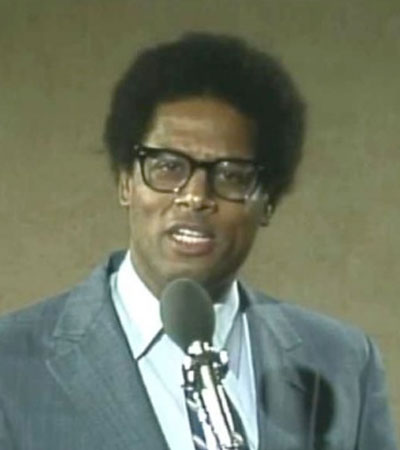
Sixty Six who resisted “Sugar-coated Satan Sandwich” Debt Deal (Part 40) This post today is a part of a series I am doing on the 66 Republican Tea Party favorites that resisted eating the “Sugar-coated Satan Sandwich” Debt Deal. Actually that name did not originate from a representative who agrees with the Tea Party, but […]

Sixty Six who resisted “Sugar-coated Satan Sandwich” Debt Deal (Part 39)

Sixty Six who resisted “Sugar-coated Satan Sandwich” Debt Deal (Part 39) This post today is a part of a series I am doing on the 66 Republican Tea Party favorites that resisted eating the “Sugar-coated Satan Sandwich” Debt Deal. Actually that name did not originate from a representative who agrees with the Tea Party, but […]

Sixty Six who resisted “Sugar-coated Satan Sandwich” Debt Deal (Part 38)

Sixty Six who resisted “Sugar-coated Satan Sandwich” Debt Deal (Part 38) This post today is a part of a series I am doing on the 66 Republican Tea Party favorites that resisted eating the “Sugar-coated Satan Sandwich” Debt Deal. Actually that name did not originate from a representative who agrees with the Tea Party, but […]

Sixty Six who resisted “Sugar-coated Satan Sandwich” Debt Deal (Part 37)

Sixty Six who resisted “Sugar-coated Satan Sandwich” Debt Deal (Part 37) This post today is a part of a series I am doing on the 66 Republican Tea Party favorites that resisted eating the “Sugar-coated Satan Sandwich” Debt Deal. Actually that name did not originate from a representative who agrees with the Tea Party, but […]

Sixty Six who resisted “Sugar-coated Satan Sandwich” Debt Deal (Part 36)

Sixty Six who resisted “Sugar-coated Satan Sandwich” Debt Deal (Part 36) This post today is a part of a series I am doing on the 66 Republican Tea Party favorites that resisted eating the “Sugar-coated Satan Sandwich” Debt Deal. Actually that name did not originate from a representative who agrees with the Tea Party, but […]

Sixty Six who resisted “Sugar-coated Satan Sandwich” Debt Deal (Part 35)

Sixty Six who resisted “Sugar-coated Satan Sandwich” Debt Deal (Part 35) This post today is a part of a series I am doing on the 66 Republican Tea Party favorites that resisted eating the “Sugar-coated Satan Sandwich” Debt Deal. Actually that name did not originate from a representative who agrees with the Tea Party, but […]

Sixty Six who resisted “Sugar-coated Satan Sandwich” Debt Deal (Part 34)

Sixty Six who resisted “Sugar-coated Satan Sandwich” Debt Deal (Part 34) This post today is a part of a series I am doing on the 66 Republican Tea Party favorites that resisted eating the “Sugar-coated Satan Sandwich” Debt Deal. Actually that name did not originate from a representative who agrees with the Tea Party, but […]

Sixty Six who resisted “Sugar-coated Satan Sandwich” Debt Deal (Part 33)

Sixty Six who resisted “Sugar-coated Satan Sandwich” Debt Deal (Part 33) This post today is a part of a series I am doing on the 66 Republican Tea Party favorites that resisted eating the “Sugar-coated Satan Sandwich” Debt Deal. Actually that name did not originate from a representative who agrees with the Tea Party, but […]

Sixty Six who resisted “Sugar-coated Satan Sandwich” Debt Deal (Part 32)

Sixty Six who resisted “Sugar-coated Satan Sandwich” Debt Deal (Part 32) This post today is a part of a series I am doing on the 66 Republican Tea Party favorites that resisted eating the “Sugar-coated Satan Sandwich” Debt Deal. Actually that name did not originate from a representative who agrees with the Tea Party, but […]

Sixty Six who resisted “Sugar-coated Satan Sandwich” Debt Deal (Part 31)

Congressmen Tim Huelskamp on the debt ceiling Sixty Six who resisted “Sugar-coated Satan Sandwich” Debt Deal (Part 31) This post today is a part of a series I am doing on the 66 Republican Tea Party favorites that resisted eating the “Sugar-coated Satan Sandwich” Debt Deal. Actually that name did not originate from a representative […]

Sixty Six who resisted “Sugar-coated Satan Sandwich” Debt Deal (Part 30)

Sixty Six who resisted “Sugar-coated Satan Sandwich” Debt Deal (Part 30) This post today is a part of a series I am doing on the 66 Republican Tea Party favorites that resisted eating the “Sugar-coated Satan Sandwich” Debt Deal. Actually that name did not originate from a representative who agrees with the Tea Party, but […]

The Sixty Six who resisted “Sugar-coated Satan Sandwich” Debt Deal (Part 29)

 Sixty Six who resisted “Sugar-coated Satan Sandwich” Debt Deal (Part 29) This post today is a part of a series I am doing on the 66 Republican Tea Party favorites that resisted eating the “Sugar-coated Satan Sandwich” Debt Deal. Actually that name did not originate from a representative who agrees with the Tea Party, but […]

The Sixty Six who resisted “Sugar-coated Satan Sandwich” Debt Deal (Part 28)

The Sixty Six who resisted “Sugar-coated Satan Sandwich” Debt Deal (Part 28) This post today is a part of a series I am doing on the 66 Republican Tea Party favorites that resisted eating the “Sugar-coated Satan Sandwich” Debt Deal. Actually that name did not originate from a representative who agrees with the Tea Party, […]

The Sixty Six who resisted “Sugar-coated Satan Sandwich” Debt Deal (Part 27)

The Sixty Six who resisted “Sugar-coated Satan Sandwich” Debt Deal (Part 27) This post today is a part of a series I am doing on the 66 Republican Tea Party favorites that resisted eating the “Sugar-coated Satan Sandwich” Debt Deal. Actually that name did not originate from a representative who agrees with the Tea Party, […]

The Sixty Six who resisted “Sugar-coated Satan Sandwich” Debt Deal (Part 26)

The Sixty Six who resisted “Sugar-coated Satan Sandwich” Debt Deal (Part 26) This post today is a part of a series I am doing on the 66 Republican Tea Party favorites that resisted eating the “Sugar-coated Satan Sandwich” Debt Deal. Actually that name did not originate from a representative who agrees with the Tea Party, […]

The Sixty Six who resisted “Sugar-coated Satan Sandwich” Debt Deal (Part 25)

Uploaded by RepJoeWalsh on Jun 14, 2011 Our country’s debt continues to grow — it’s eating away at the American Dream. We need to make real cuts now. We need Cut, Cap, and Balance. The Sixty Six who resisted “Sugar-coated Satan Sandwich” Debt Deal (Part 25) This post today is a part of a series […]

The Sixty Six who resisted “Sugar-coated Satan Sandwich” Debt Deal (Part 23)

The Sixty Six who resisted “Sugar-coated Satan Sandwich” Debt Deal (Part 23) This post today is a part of a series I am doing on the 66 Republican Tea Party favorites that resisted eating the “Sugar-coated Satan Sandwich” Debt Deal. Actually that name did not originate from a representative who agrees with the Tea Party, […]

The Sixty Six who resisted “Sugar-coated Satan Sandwich” Debt Deal (Part 22)

The Sixty Six who resisted “Sugar-coated Satan Sandwich” Debt Deal (Part 22) This post today is a part of a series I am doing on the 66 Republican Tea Party favorites that resisted eating the “Sugar-coated Satan Sandwich” Debt Deal. Actually that name did not originate from a representative who agrees with the Tea Party, […]

The Sixty Six who resisted “Sugar-coated Satan Sandwich” Debt Deal (Part 21)

The Sixty Six who resisted “Sugar-coated Satan Sandwich” Debt Deal (Part 21) This post today is a part of a series I am doing on the 66 Republican Tea Party favorites that resisted eating the “Sugar-coated Satan Sandwich” Debt Deal. Actually that name did not originate from a representative who agrees with the Tea Party, […]

The Sixty Six who resisted “Sugar-coated Satan Sandwich” Debt Deal (Part 20)

The Sixty Six who resisted “Sugar-coated Satan Sandwich” Debt Deal (Part 20) This post today is a part of a series I am doing on the 66 Republican Tea Party favorites that resisted eating the “Sugar-coated Satan Sandwich” Debt Deal. Actually that name did not originate from a representative who agrees with the Tea Party, […]

The Sixty Six who resisted “Sugar-coated Satan Sandwich” Debt Deal (Part 19)

The Sixty Six who resisted “Sugar-coated Satan Sandwich” Debt Deal (Part 19) This post today is a part of a series I am doing on the 66 Republican Tea Party favorites that resisted eating the “Sugar-coated Satan Sandwich” Debt Deal. Actually that name did not originate from a representative who agrees with the Tea Party, […]

The Sixty Six who resisted “Sugar-coated Satan Sandwich” Debt Deal (Part 18)

The Sixty Six who resisted “Sugar-coated Satan Sandwich” Debt Deal (Part 18) This post today is a part of a series I am doing on the 66 Republican Tea Party favorites that resisted eating the “Sugar-coated Satan Sandwich” Debt Deal. Actually that name did not originate from a representative who agrees with the Tea Party, […]

The Sixty Six who resisted “Sugar-coated Satan Sandwich” Debt Deal (Part 17)

The Sixty Six who resisted “Sugar-coated Satan Sandwich” Debt Deal (Part 17) This post today is a part of a series I am doing on the 66 Republican Tea Party favorites that resisted eating the “Sugar-coated Satan Sandwich” Debt Deal. Actually that name did not originate from a representative who agrees with the Tea Party, […]

The Sixty Six who resisted “Sugar-coated Satan Sandwich” Debt Deal (Part 16)

The Sixty Six who resisted “Sugar-coated Satan Sandwich” Debt Deal (Part 16) This post today is a part of a series I am doing on the 66 Republican Tea Party favorites that resisted eating the “Sugar-coated Satan Sandwich” Debt Deal. Actually that name did not originate from a representative who agrees with the Tea Party, […]

By Everette Hatcher III | Posted in spending out of control | Edit | Comments (0)