In about A.D. 60, a Jew who was a Christian and who also knew the Greek and Roman thinking of his day wrote a letter to those who lived in Rome. Previously, he had said the same things to Greek thinkers while speaking on Mars Hill in Athens. He had spoken with the Acropolis above him and the ancient marketplace below him, in the place wherethe thinkers of Athens met for discussion. A plaque marks that spot today and gives his talk in the common Greek spoken in his day. He was interrupted in his talk in Athens, but his Letter to the Romans gives us without interruption what he had to say to the thinking people of that period.
He said that the integration points of the Greek and Roman world view were not enough to answer the questions posed either by the existence of the universe and its form, or by the uniqueness of man. He said that they deserved judgment because they knew that they did not have an adequate answer to the questions raised by the universe or by the existence of man, and yet they refused, they suppressed, that which is the answer. To quote his letter:
The retribution of God is revealed from heaven against all ungodliness and unrighteousness of men, who suppress the truth in unrighteousness. Because that which is known of God is evident within them [that is, the uniqueness of man in contrast to non-man], for God made it evident to them. For the invisible things of him since the creation of the world are clearly seen, being perceived by the things that are made [that is, the existence of the universe and its form], even his eternal power and divinity; so that they are without excuse. [The Apostle Paul wrote in Romans 1:18ff.]
Here he is saying that the universe and its form and the mannishness of man speak the same truth that the Bible gives in greater detail. That this God exists and that he has not been silent but has spoken to people in the Bible and through Christ was the basis for the return to a more fully biblical Christianity in the days of the Reformers. It was a message of the possibility that people could return to God on the basis of the death of Christ alone. But with it came many other realities, including form and freedom in the culture and society built on that more biblical Christianity. The freedom brought forth was titanic, and yet, with the forms given in the Scripture, the freedoms did not lead to chaos. And it is this which can give us hope for the future. It is either this or an imposed order.
As I have said in the first chapter, people function on the basis of their world view more consistently than even they themselves may realize. The problem is not outward things. The problem is having, and then acting upon, the right world view — the world view which gives men and women the truth of what is.
C. Answer approached through consideration of the past.
D. Any starting point in history would be good; we start with Rome because it is direct ancestor of modern West.
II. Rome: The Empire Triumphant
A. Size and military strength of Empire.
B. Imperial sway evoked by Aventicum (Avenches), Switzerland.
III. Rome: Cultural Analysis
A. Greece and Rome: cultural influences and parallels.
1. Society as the absolute, to give meaning to life.
2. Finite gods as ground of accepted values.
B. Problems arising from Roman culture.
1. No infinite reference point as base for values and society.
2. Collapse of civic ideals therefore inevitable.
C. Results of collapse of ideals.
1. Dictatorship of Julius Caesar a response to civil disorder.
2. Firmly established authoritarian rule of Augustus.
D. Characteristics of regime introduced by Augustus.
1. Claim to give peace and the fruits of civilization.
2. Care to maintain facade of republican constitution.
3. People ready to accept absolute power in return for peace and prosperity.
4. Religious sanction for emperor-dictators: the emperor as God.
E. Christian persecution
1. Religious toleration in the Empire.
2. Christians persecuted because they would worship only the infinite-personal God and not Caesar also. They had an absolute whereby to judge the Roman state and its actions.
F. Viability of presuppositions facing social and political tension.
1. Christians had infinite reference point in God and His revelation in the Old Testament, the revelation through Christ, and the growing New Testament.
2. Christians could confront Roman culture and be untouched by its inner weakness, including its relativism and syncretism.
3. Roman hump-backed bridge, like Roman culture, could only stand if not subjected to overwhelming pressures.
IV. Rome: Eventual Decline and Fall
A. Growth of taste for cruelty.
B. Decadence seen in rampant sexuality and lust for violence.
C. General apathy, as seen in decline in artistic creativity.
D. Economic decline, more expensive government, and tighter centralization.
E. Successful barbarian invasions because of internal rot.
V. Conclusion
There is no foundation strong enough for society or the individual life within the realm of finiteness and beginning from Man alone as autonomous.
Questions
1. Dr. Schaeffer claims that, through looking at history, we can see how presuppositions determine events. Does his discussion bear this out and, if so, how?
2. How can a survey of Roman history in one-half hour be either useful or responsible? Discuss.
3. “History does not repeat itself.” —The parallels between the history of Rome and the twentieth century West are many and obvious.” How may these statements be reconciled?
Key Events and Persons
Julius Caesar: 100-44 B.C.
Augustus Caesar (Octavian): 63 B.C.-A.D. 14
Declared Pontifex Maximus: 12 B.C.
Diocletian: (Emperor) A.D. 284-305
Further Study
Here, as in succeeding suggestions for further study, it will be assumed that if you want to devote a great deal of time to a topic you can consult a library or a good bookstore. Suggestions given below are made on the basis of relevance to the text, readability, and availability.
Not all the books will necessarily agree at all—or in all details—with Dr. Schaeffer’s presentation. But as in the general conduct of life, so in matters of the mind, one must learn to discriminate. If you avoid reading things with which you disagree, you will be naive about what most of the world thinks. On the other hand, if you read everything—but without a critical mind—you will end up accepting by default all that the world (and especially your own moment of history) thinks.
J.P.V.D. Balsdon, Life and Leisure in Ancient Rome (1969).
E.M. Blaiklock, The Christian in Pagean Society (1956).
Samuel Dill, Roman Society in the Last Century of the Western Empire (1962).
E.M.B. Green, Evangelism in the Early Church (1970).
Plutarch, Lives of the Noble Greeks and Romans: A Selection (1972).
Full gallery of images, press release and link available after the jump.
Images:
Images courtesy of BROADWAY 1602, New York
Press Release:
The rediscovered oeuvre of first generation Bauhaus artist Xanti Schawinsky offers the contemporary consciousness a valuable untapped reservoir of aesthetic memory in the midst of the new century’s multi-front wars and financial turmoil.
His subtle, intimate, but powerful work from the 1940’s particularly draws attention to the not yet explored dimensions of the afterlife of Bauhaus ideals subject to the pressures of war and forced immigration. It is an aesthetic with a more existentialist and dystopian face, far from the positivism and bravura of the Bauhaus architects’ further achievements in the US after the decline of the influential school in Europe.
Born in 1904, in Switzerland, to Polish Jewish parents, Alexander “Xanti” Schawinsky worked for three years in Theodor Merrill’s Cologne architecture office before enrolling at the Bauhaus in 1924 where he studied with Walter Gropius, Wassily Kandinsky, Paul Klee, Josef Albers, Oskar Schlemmer, and Laszlo Moholy-Nagy. Schawinsky had a significant presence at the Bauhaus in Weimar and Dessau. He was particularly active in the theater department and strongly inspired by Schlemmer, whose position as teacher he took on and developed further. Photos from the early years of the Bauhaus show Schawinsky as a dynamic figure in many of its experimental extra-curricular activities. Among them was the influential Bauhaus Jazz band where Schawinsky introduced his “Step Danse-Step Machine” style of mechanical music and dance to pounding rhythms coupled with dramatic lighting effects and performance elements.
Schawinsky’s protean role at the Bauhaus was documented in the original 1938 MoMA Bauhaus exhibition organized with the help of Herbert Bayer, fellow Bauhaus student and teacher, and Walter Gropius, founder and director of the famed 20th c. school. This pivotal show of MoMA’s early days included a prominent group of Schawinsky’s theater and architecture paintings, his experimental photography, innovative graphic designs, ultra modern costume, set and exhibition designs, and his avant-garde theater and music work.
During their 20’s, most people build foundation skills, beliefs, and a firm positive sense of identity from their experience with teachers and mentors in a relative secure environment. While having the privilege to learn many technical skills in an exceptional avant-garde environment, Schawinsky also observed and experienced anxiety and persecution. He saw his Bauhaus undergo political pressure and ouster from the very cities that hosted it, saw the leaders he admired forced to leave, and the school, itself, compelled to close. He had seen the school, in an effort to survive, shift emphasis from handicraft, Expressionism, and the “the spiritual in art” to partner with industry, design for mass production, and embrace the machine aesthetic. As a Swiss/Polish “foreigner” and a Jew, the rise of Fascism was a perilous time. What Schawinsky learned in the anxious years between the two World Wars was that survival was an anxious process of constantly changing locations, creative styles and identities.
In 1936, Albers secured Schawinsky and his wife safe passage to the United States to teach at the legendary Black Mountain College. In charge of theater arts, Schawinsky expanded his ideas for experimental theater to be a multi-media “total experience.” His production of “Spectrodrama” and “Danse Macabre” at the Black Mountain College, demonstrated these ideas and laid the foundations for the work of John Cage and others at the College. In 1938 political in-fighting among the faculty led him to move again, this time to New York City. There he collaborated on pavilion designs for the 1939 World’s Fair with colleagues Gropius, Bayer, and Marcel Breuer.
In New York among the tight-knit ex-patriot cultural community centered on the activities of avant-garde gallerist Julien Levy, Schawinsky for the first time experienced a sense of safety and integration. His new-comer status afforded him unique new perspectives on his life and the arts. He had the freedom and burden of confronting his own identity and purpose in “life during wartime.” At the same historical moment that the French philosopher Gabriel Marcel was coining the term “existentialism,” and Jean-Paul Sartre began to lecture and write about it, Schawinsky began to compose his own existential works with images which speak as clearly as words.
From work Schawinsky did for the “Visual Problems Unit” of the Army Air Corps designing anti-aircraft targeting patterns for artillery manuals, he conceived his 1942 series The Faces of War. In these imaginative tempera and graphite drawings Schawinsky expressed a fundamental despair that “the machines” of the utopian Bauhaus theater had become the machines of mass destruction in the dystopian theaters of war. He made each a camouflage-painted robotic golem – a man/machine – at turns a threatening enemy or a powerful avenger. In his series of photo collages, Theme and Variation on a Face: Walter Gropius, he reflected upon his creative father/mentor and friend, presenting the architect in positive and negative versions integrated with linear architectural forms (culture) and tree forms including roots (nature and history). In the photo collages The Variations on a Face Series (Woman,) he confronted the enigmatic disembodied face of a woman, floating in a variety of spaces – landscape space, night sky space, topographically diagrammed space. However, Schawinsky extended his meditations using the portrait head motif still further.
Kurt Schwitters said that during the war years artists had to rebuild themselves from scraps and Schawinsky, possibly inspired by Czech poet Vít?zslav Nezval’s 1937 poem The Man Who Composes His Own Portrait With Objects, did so in his 1943 Character Head Series of graphite drawings of potential identities thematically pieced together from elements of nature, culture, and trade in the world around him. In a style related to the “paranoiac-critical” imaging methods of Salvador Dali, Schawinsky worked through his own need to make himself one with his environment by literally re-making himself from his environment.
The pastel drawing Untitled from 1945, though, is perhaps a summation of the artist’s existentialist experience of wartime, immigration and the post-war era. Two abstract featureless figures float in a dark nebulous space filled with light linear vortexes inspired by flight and targeting patterns the artist had designed for the army. The larger, a head and shoulders patterned in a regular grid suggesting the all-glass curtain-wall façade of a Modernist skyscraper, confronts a smaller golden yellow silhouette that stands framed in a doorway of bright yellow, violet, red-orange and green planes drawn in forced perspective.
In this vivid eerie scene of the existential aftermath of the war Schawinsky gives form to his anxiety and brings to bear his visionary experience as a synthesizer of the man-machine of the Bauhaus aesthetic into multi-media performance – an aesthetic picked up emblematically by Kraftwerk and other musician/artists in the 1970s as an expression of the climactic phase of the cold war.
Anke Kempkes, Larry List
New York, December 2009
Laszlo Moholy-Nagy, Xanti Schawinsky in Ascona, Sul Ponte Maggia, 1933
Bauhaus (1919-1933) as an Art & Design educational institution had a great influence on the development of the 20th century art, architecture, textile, graphic, industrial design and typography. Bauhaus was aimed to reach the total work of art and operated to educate new artists who could bring social changes.
From the early stage of the Bauhaus, they explored the role and function of art that closely related to our daily life in modern technology civilization through various workshops such as metal, textile, design and architecture under each meister. Their experiment and instruction method was not just purposed to develop the individual’s creativity and ability, but also guided to reach a total art through workshops by members of the Bauhaus.
Particularly, they mainly dealt with dynamic role of stage as space of harmony among human, space and machine. For this, their study about ‘total theater’ as a playground for primary experimentation was proceeding from the beginning of the Bauhaus. The Bauhaus stage workshop was established by Walter Gropius in 1921 and it was led by Lothar Schreyer, director, until 1923 and taken over by Oskar Schlemmer, painter and choreographer, in 1929.
The leading role of the Bauhaus, such as Walter Gropius, Oskar Schlemmer, Laszlo Moholy-Nagy, Xanti Schawinsky, Paul Klee, Wasily Kandinsky experimented synthesis among human, space and machine not only in their own area, but also on the stage. They believed that their research about mechanical and abstract stage design, costume, doll, dance, humorous movement, light and sound could even make a change of the modern human body and mind. Thus, we could readily understand a characteristic of stage experiments at the Bauhaus that tried to develop a new idea of modern man collectively by Johannes Itten’s word “Play becomes work, work becomes party, party becomes play.”
Human Space Machine-Stage Experiments at the Bauhaus was planned in collaboration with the Bauhaus Dessau Foundation since 2012. This exhibition deals with the Bauhaus’s experiments about new type of human response to changes of a new era, from World War I to early 1930s. Exhibitions about architecture and design of the Bauhaus were often shown, but this is the first full-scale exhibition ever to focus on stage experiments in Asia. The exhibition is organized in seven sections; Section one ‘Body of Harmonization’, section two ‘Atmospherical Devices’, section three‘Constructivist Figuration’, section four ‘Eccentric stage mechanisims’, section five ‘Sculptural choreographies’, section six‘Total theaters’, section seven ‘Programmed collectives’. In this exhibition organization make possible to recognize characteristic of the Bauhaus as an arena of creative and experimental idea toward multiple approach of art.
In addition, this exhibition presents six Korean contemporary artists; Na Kim, Paik Namjune, Ahn Sangsoo, Oh Jaewoo, Cho Sohee, Han Kyungwoo to show an enormous creativity and imagination of the Bauhaus also thrive in 21th century Korea contemporary art. Their artworks influenced by Bauhaus both directly and indirectly reminds us the Bauhaus movement was not a particular tendency within a certain period, but closer to the intrinsic manner of artists.
“All the art of the past rises up before me, the art of all ages and all civilizations, everything becomes simultaneous, as if space had replaced time. Memories of works of art blend with affective memories, with my work, with my whole life.”
ALBERTO GIACOMETTI SYNOPSIS
Alberto Giacometti’s remarkable career traces the shifting enthusiasms of European art before and after the Second World War. As a Surrealist in the 1930s, he devised innovative sculptural forms, sometimes reminiscent of toys and games. And as anExistentialist after the war, he led the way in creating a style that summed up the philosophy’s interests in perception, alienation and anxiety. Although his output extends into painting and drawing, the Swiss-born and Paris-based artist is most famous for his sculpture. And he is perhaps best remembered for his figurative work, which helped make the motif of the suffering human figure a popular symbol of post-war trauma.
ALBERTO GIACOMETTI KEY IDEAS
Giacometti’s work of the 1930s represents probably the most important contribution to Surrealist sculpture. In an effort to explore themes derived from Freudianpsychoanalysis, like sexuality, obsession and trauma, he developed a variety of different sculptural objects. Some were influenced by primitive art, but perhaps most striking were those that resemble games, toys, and architectural models. They almost encourage the viewer to physically interact with them, an idea which was very radical at the time.
In the late 1930s, Giacometti abandoned abstraction and Surrealism, becoming more interested in how to represent the human figure in a convincing illusion of real space. He wanted to depict figures in such a way as to capture a palpable sense of spatial distance, so that we, as viewers, might share in the artist’s own sense of distance from his model, or from the encounter that inspired the work. The solution he arrived at involved whittling the figures down to the slenderest proportions.
Giacometti’s post-war achievement – finding a language through which to represent the figure in real space – impressed the many writers of the period who were interested in Phenomenology and Existentialism. Both of these philosophies contained ideas about self-consciousness and how we relate to other human beings, and Giacometti’s art was thought to powerfully capture the tone of melancholy, alienation and loneliness that these ideas suggested.
Although the 1950s art world of both Europe and the United States was dominated by abstract painting, Giacometti’s figurative sculpture came to be a hugely influential model of how the human figure might return to art. His figures represented human beings alone in the world, turned in on themselves and failing to communicate with their fellows, despite their overwhelming desire to reach out.
In his early years, Giacometti often experienced difficulty in sculpting from life. In this despair, he began to work from memory. The early plaster bust Gazing Head, arguably the artist’s first truly original work, illustrates the culmination of this effort. The flatness of the head and face – Giacometti’s economical placement of smooth divots for definition – result in a bust that is at once abstract and figurative. And yet the underlying theme of the work, the act of gazing, invites viewers to ponder whether what they are looking at is in fact a mirror. When Gazing Head was first exhibited in Paris in 1929, it immediately grabbed the attention of the French Surrealists, beginning an association that would cement the early part of Giacometti’s career.
Alberto Giacometti was born in 1901 in the mountain hamlet of Borgonovo, in eastern Switzerland. He was the first of four children born to Giovanni Giacometti, a Post-Impressionist painter, and Annetta Giacometti-Stampa, whose family was among the area’s prominent land owners. In addition to his father, several members of Giacometti’s extended family were artists, including Augusto Giacometti (second cousin to both Giovanni and Annetta), who was a Symbolist painter, and Cuno Amiet, Alberto’s godfather and a close family friend, who was a Fauvist.
When Giacometti was no older than ten, he began to send pencil and crayon drawings to his godfather Amiet, most of which he saved and survive today. And in the years that followed, he began to experiment with oils and still-lifes, often using his siblings as models. He produced his first painting at age twelve.
MORE
ALBERTO GIACOMETTI LEGACY
Both of the important phases of Giacometti’s career yielded innovations that influenced a wide range of artists. His Surrealist sculpture of the 1930s, for instance, influencedHenry Moore, partly inspiring the Surrealism that would be such an important component of Moore’s practice throughout his life. It is certainly hard to imagine Moore’s own innovative experiments in the 1930s without Giacometti’s example. And Giacometti’s figurative work was vital in re-establishing the figure as a viable motif in the post-war period, at a time when abstract art dominated. His spindly bronze figures, which appear punctured and fragile, compressed in space, are in many respects visual manifestations of Existentialist thought, emblems of the condition of modern humanity ravaged by doubt.
“Let me know how to make only one and I will be able to make a thousand.”
“Just the same, if I begin my statue, as they do, with the tip of the nose, then an infinity of time will not be too much before I get to the nostrils.”
“When I make my drawings … the path traced by my pencil on the sheet of paper is, to some extend, analogous to the gesture of a man groping his way in the darkness.”
“All the art of the past rises up before me, the art of all ages and all civilizations, everything becomes simultaneous, as if space had replaced time. Memories of works of art blend with affective memories, with my work, with my whole life.”
Art forms add strength to the world-view which shows through, no matter what the world-view is or whether the world-view is true or false. Think, for example, of a side of beef hanging in a butcher shop. It just hangs there. But if you go to the Louvre and look at Rembrandt’s painting, Side of Beef Hanging in a Butcher Shop, it’s very different. It’s startling to come upon this particular work because it says a lot more than its title. Rembrandt’s art causes us to see the side of beef in a concentrated way, and, speaking for myself, after looking and looking at his picture I have never been able to look at a side of beef in a butcher shop with the superficiality I did before. How much stronger is Rembrandt’s painting than merely the label, A Side of Beef.
In literature, there is a parallel. Good prose as an art form has something bad prose does not. Further, poetry has something good prose does not. We may have long discussions on what is added, but the fact that there are distinct differences is clear. Even in the Bible, the poetry adds a dimension not present in the prose. In fact, the effect of any proposition, whether true or false, can be heightened if it is expressed in poetry or in artistic Prose rather than in bald, formulaic statement.
normal definitions, normal syntax
In all forms of writing, both poetry and prose, it makes a tremendous difference whether there is a continuity or a discontinuity with the normal definitions of words in normal syntax. Many modern writers make a concerted effort to disassociate the language of their works from the normal use of language in which there is a normal definition of words and a normal use of syntax. If there is no continuity with the way in which language is normally used, then there is no way for a reader or an audience to know what the author is saying.
An artist can, of course, use language with great richness, fill his writing with figures of speech and hyperbole or play games with the syntax. The great artist often does this, going far beyond a merely rudimentary use of normal grammar and normal definition of words. And in doing so, he adds depth and dimension.
Shakespeare is the great example. We understand Shakespeare’s dramas because he uses enough normal syntax and normal definitions of words so that there is a running story and a continuity between the running story and all of the artistic devices he uses. We know what Shakespeare is saying not because of the far-flung metaphors and beautiful verbal twists, but because of the continuity they have with the story on the level of normal definition and normal syntax. There is a firm core of straightforward propositions. What is true in literature is also true in painting and sculpture. The common symbolic vocabulary that belongs to all men (the artists and the viewers) is the world around us — namely, God’s world. That symbolic vocabulary in the representational arts stands parallel to normal grammar and normal syntax in the literary arts. When, therefore, there is no attempt on the part of an artist to use this symbolic vocabulary at all, then communication breaks down. There is then no way for anyone to know what the artist is saying. My point is not that making this sort of art is immoral or anti-Christian, but rather that a dimension is lost.
Totally abstract art stands in an undefined relationship with the viewer, for the viewer is completely alienated from the painter. There is a huge wall between them. The painter and the viewer stand separated from each other in total alienation, a greater alienation than Giacometti could ever show in his alienated figures.
When Giacometti pictures the awful alienation of man, he makes figures which are alienated, but he is still living in God’s world and is still using the common symbolic forms, no matter how he distorts them. He plays with the vocabulary, but the vocabulary is still there. So there is a communication between Giacometti and me, a titanic communication. I can understand what he is saying and I cry.
In contrast to this, there is a distinct limitation to totally abstract art. Like prose or poetry which has no contact with normal syntax and the normal definitions of words, it is a quarry out of which the observer or the hearer has a personal emotional response.
art and the sacred
The fact that something is a work of art does not make it sacred. Martin Heidegger in What Is Philosophy? came finally to the view that there are small beings (namely, people) who verbalize, and therefore we can hope that Being has some meaning. His great cry at the end of this book is to listen to the poet. Heidegger is not saying that we should listen to the content of what the poets say, because one can find two different poets who give absolutely opposite content and this doesn’t matter. Rather, the poet as a poet became Heidegger’s upper-story optimistic hope.
As Christians, we must see that just because an artist —even a great artist —portrays a world-view in writing or on canvas, it does not mean that we should automatically accept that worldview. Art may heighten the impact of the world-view —in fact, we can count on this — but it does not make something true. The truth of a world-view presented by an artist must be judged on grounds other than artistic greatness.
four standards of judgment
What kind of judgment does one apply, then, to a work of art? I believe that there are four basic standards:
(1) technical excellence; (2) validity; (3) intellectual content, the world-view which comes through; and (4) the integration of content and vehicle.
I will discuss technical excellence in relationship to painting because it is easy to point out through this medium what I mean. Here one considers the use of color, form, the texture of the paint, the handling of lines, the balance, composition and unity of the painting, and so forth. In each of these, there can be varying degrees of technical excellence. By recognizing technical excellence as an aspect of an art work, we are often able to say that while we do not agree with such and such an artist’s world-view, he is nonetheless a great artist.
We are not being true to the artist as a man if we consider his art work junk simply because we differ with his outlook on life. Christian schools, Christian parents, and Christian pastors often have turned off young people at just this point. Because the schools, the pastors and the parents did not make a distinction between technical excellence and content, the whole of much great art has been rejected with scorn or ridicule. Instead, if the artist’s technical excellence is high, he is to be praised for this, even if we differ with his world-view. Man must be treated fairly as man. Creative ability and technical excellence are therefore important criteria. Validity is the second criterion. By validity I mean whether an artist is honest to himself and to his world-view, or whether he makes his art only for money or for the sake of being accepted. If an artist makes an art work solely for a patron — whether that patron is the ancient noble, or the modern art gallery to which the artist wants access, or the modern art critics of the moment — his work does not have validity. The modern forms of ²the patronÓ are more destructive than even that of the old noble.
To bring it down to earth, let’s see what happens in the art form of preaching. There is many a pastor who does not have validity. Some preach for material gain and others in order to be accepted by their congregation. It is so easy to play to the audience, to adjust what one says or the way one says it to produce the kind of effect which will be most beneficial to the preacher himself. And when one sees the issue in relationship to the gospel, the force of the dishonesty is especially obvious. We can think of the contemporary dramatists whose future is in the hands of the critics of the passing moment. In drama, art, music and cinema, we have a set of New York and London critics who can make or break the artist. How easy it is to play to the critic and not to take one’s art as a serious expression of what the artist himself wants to say and do.
The third criterion for the judgment of a work of art is its content, that which reflects the world-view of the artist. As far as a Christian is concerned, the world-view that is shown through a body of art must be seen ultimately in terms of the Scripture. The artist’s world-view is not to be free from the judgment of the Word of God. In this the artist is like a scientist. The scientist may wear a white coat and be considered an “authority” by society, but where his statements impinge upon what God has given us in Scripture, they come under the ultimate authority of His Word. An artist may wear a painterØs smock and be considered almost a holy man; yet where his work shows his world-view, the content must be judged by its relationship to the Christian world-view.
I think we can now see how it is possible to make such judgments concerning the work of art. If we stand as Christians before a man’s canvas and say that he is a great artist in technical excellence and validity — if in fact he is — if we have been fair with him as a man and as an artist, then we can say that his world-view is wrong. We can judge his view on the same basis as we judge the views of anybody else — philosopher, common man, laborer, businessman or whatever.
Let’s be more specific. The notion of Bohemian freedom which Jean-Jacques Rousseau promulgated and which has been so prevalent in modern society has no place in Christian thinking. Rousseau was seeking a kind of autonomous freedom, and from him stemmed a group of “supermen” whose lives were lived above reason, as it were, and above the norms of society. For a long time this Bohemian life was taken to be the ideal for the artist, and it has come in the last few decades to be considered an ideal for more than the artist. From a Christian point of view, however, this sort of life is not allowed. God’s Word binds the great man and the small, the scientist and the simple, the king and the artist.
Some artists may not know that they are consciously showing forth a world-view. Nonetheless, a world-view usually does show through from the body of their work. Even those works which were constructed under the principle of art for art’s sake often imply a world-view — even the world-view that there is no meaning is a message. In any case, whether the artist is conscious of the world-view or not, to the extent that it is there it must come under the judgment of the Word of God
There is a corollary to this third criterion. We should realize that if something untrue or immoral is stated in great art, it can be far more destructive and devastating than if it is expressed in poor art or prosaic statement. Much of the crude art, the common product of counterculture communities and the underground press, is laden with destructive messages, but the art is so poor that it does not have much force. But the greater the artistic expression, the more important it is to consciously bring it and its world-view under the judgment of Christ and the Bible. The common reaction among many, however, is just the opposite. Many seem to feel that the greater the art, the less we ought to be critical of its world-view. This we must reverse.
An example of the devastating effect of great art with nonChristian content occurs in Zen. In Zen, the world is nothing, man is nothing, everything is nothing; but Zen poetry says it beautifully, so much more beautifully than the counterculture press. Swearing in four-letter words, the counterculture press often declares that man is nothing, the world is nothing, nothing is nothing. And one thinks to himself, “Ah, but if it were said with some beauty, maybe there would be something.” And then Zen comes along as a high art form and gives this message with beauty. And now you’re dead twice. There is a second corollary related to judging the content of an art work. It is possible for a non-Christian writer or painter to write and paint according to a Christian world-view even though he himself is not a Christian. To understand this, we must distinguish between two meanings of the word Christian. The first and essential meaning is that a Christian is a person who has accepted Christ as his Savior and has thus passed from death to life, from the kingdom of darkness to the kingdom of God, by being born again. But if a number of people really are Christians, then they bring forth a kind of consensus that exists apart from themselves and sometimes non-Christians paint and write within the framework of that consensus even though they as individuals are not Christians.
There are, therefore, four kinds of people in the realm of art. The first is the born-again man who writes or paints within the Christian total world-view. The second is the non-Christian who expresses his own non-Christian world-view. The third is the man who is personally a non-Christian, but nevertheless writes or paints on the basis of the Christian consensus by which he has been influenced. For example, in another area, if one were to ask whether Benjamin Franklin or Thomas Jefferson personally were Christians, the answer, as best we can judge from what they have said, is no. Nonetheless, they produced something that had some sort of Christian framework because they were producing it out of the Christian consensus of Samuel Rutherford’s Lex Rex. Thus, from a Christian framework Jefferson and Franklin were able to write that men have certain inalienable rights, a notion derived from a specifically Christian world-view. The fourth person is the born-again Christian who does not understand what the total Christian world-view should be and therefore produces art which embodies a non-Christian worldview. In other words, just as it is possible for a non-Christian to be inconsistent and to paint God’s world in spite of his personal philosophy, it is possible for a Christian to be inconsistent and embody in his paintings a non-Christian world-view. And it is this latter which is perhaps the most sad.
The fourth criterion for judging a work of art involves how well the artist has suited the vehicle to the message. For those art works which are truly great, there is a correlation between the style and the content. The greatest art fits the vehicle that is being used to the world-view that is being presented.
A clear example is found in T. S. Eliot’s The Waste Land. When Eliot published this in 1922, he became a hero to the modern poets, because for the first time he dared to make the form of his poetry fit the nature of the world as he saw it — namely, broken, unrelated, ruptured. What was that form? A collection of shattered fragments of language and images, and allusions drawn seemingly haphazardly from all manner of literature, philosophy and religious writings from the ancients to the present. But modern poets were pleased, for they now had a poetic form to fit the modern world-view of unrelatedness.
The breakthrough in painting came in Picasso’s Demoiselles d’Avignon (1907), a painting which takes its name from a house of prostitution in Barcelona. Picasso began this work in the vein of other paintings of the period; but as one critic describes it, Picasso ended it as “a semi-abstract composition in which the forms of the nudes and their accessories are broken up into planes compressed into a shallow space.” More specifically, Picasso began on the left by painting the forms rather naturally, toward the middle he painted more like Spanish primitives, and finally on the right, as he finished his work, he painted the women as only abstract forms and symbols or masks, and thus succeeded in making monsters of his human subjects. Picasso knew what he was doing, and for a moment the world stood still. It was in fact so strong an expression that for a long time even his friends would not accept it. They didn’t even want to look at it. Thus, in his painting of the women Picasso pictured the fractured nature of modern man. What T. S. Eliot did in his poetry, Picasso had already done in painting. Both men deserve high scores for suiting the vehicle to the message.
No art should be judged on the basis of this criterion alone, however. We should ultimately see all art works in the light of their technique, validity, world-view, and suiting of form to content.
I want to make two points today. First, Greg Koukl has rightly noted that the nudity of a ten year old girl in the art of Robert Mapplethorpe is not defensible, and it demonstrates where our culture is morally. It the same place morally where Rome was 2000 years ago as Francis Schaeffer has demonstrated […]
E P I S O D E 1 0 Dr. Francis Schaeffer – Episode X – Final Choices 27 min FINAL CHOICES I. Authoritarianism the Only Humanistic Social Option One man or an elite giving authoritative arbitrary absolutes. A. Society is sole absolute in absence of other absolutes. B. But society has to be […]
E P I S O D E 9 Dr. Francis Schaeffer – Episode IX – The Age of Personal Peace and Affluence 27 min T h e Age of Personal Peace and Afflunce I. By the Early 1960s People Were Bombarded From Every Side by Modern Man’s Humanistic Thought II. Modern Form of Humanistic Thought Leads […]
E P I S O D E 8 Dr. Francis Schaeffer – Episode VIII – The Age of Fragmentation 27 min I saw this film series in 1979 and it had a major impact on me. T h e Age of FRAGMENTATION I. Art As a Vehicle Of Modern Thought A. Impressionism (Monet, Renoir, Pissarro, Sisley, […]
E P I S O D E 7 Dr. Francis Schaeffer – Episode VII – The Age of Non Reason I am thrilled to get this film series with you. I saw it first in 1979 and it had such a big impact on me. Today’s episode is where we see modern humanist man act […]
E P I S O D E 6 How Should We Then Live 6#1 Uploaded by NoMirrorHDDHrorriMoN on Oct 3, 2011 How Should We Then Live? Episode 6 of 12 ________ I am sharing with you a film series that I saw in 1979. In this film Francis Schaeffer asserted that was a shift in […]
E P I S O D E 5 How Should We Then Live? Episode 5: The Revolutionary Age I was impacted by this film series by Francis Schaeffer back in the 1970′s and I wanted to share it with you. Francis Schaeffer noted, “Reformation Did Not Bring Perfection. But gradually on basis of biblical teaching there […]
Dr. Francis Schaeffer – Episode IV – The Reformation 27 min I was impacted by this film series by Francis Schaeffer back in the 1970′s and I wanted to share it with you. Schaeffer makes three key points concerning the Reformation: “1. Erasmian Christian humanism rejected by Farel. 2. Bible gives needed answers not only as to […]
Francis Schaeffer’s “How should we then live?” Video and outline of episode 3 “The Renaissance” Francis Schaeffer: “How Should We Then Live?” (Episode 3) THE RENAISSANCE I was impacted by this film series by Francis Schaeffer back in the 1970′s and I wanted to share it with you. Schaeffer really shows why we have so […]
Francis Schaeffer: “How Should We Then Live?” (Episode 2) THE MIDDLE AGES I was impacted by this film series by Francis Schaeffer back in the 1970′s and I wanted to share it with you. Schaeffer points out that during this time period unfortunately we have the “Church’s deviation from early church’s teaching in regard […]
Francis Schaeffer: “How Should We Then Live?” (Episode 1) THE ROMAN AGE Today I am starting a series that really had a big impact on my life back in the 1970′s when I first saw it. There are ten parts and today is the first. Francis Schaeffer takes a look at Rome and why […]
Aniara is an opera in two acts by Karl-Birger Blomdahl, with a libretto by Erik Lindegren based on the poem Aniara by Harry Martinson, that was premiered in 1959.[1] Subtitle of poem and opera is the ambiguous phrase En revy om människan i tid och rum: “A revue/review about Man in Time and Space”.[2]
The score of Aniara is varied and makes full use of a range of musical idioms, including jazz, serial writing and an electronic tape. The narrative is sung primarily by Mimaroben, a bass-baritone, who operates the electronic tape, Mima, the computer, and by the chorus.[1] In essence the opera (and poem) deal with the relationship between the individual and the group through time.
Many representatives of the international press were in Stockholm for the premiere in 1959 at a time when the space age was beginning.[2] Blomdahl said in interview that the opera (in common with his next opera Herr von Hancken) was founded on “modern man’s complexity and his basically impossible situation”; Aniara dealt with “the downfall of the group”.[3] A production was mounted in Gothenburg in 1994.[4]
Controlled by the computer Mima, the space shipAniara leaves the poisoned Earth, heading for Mars. Through Mimaroben, who is the operator of Mima, the emigrants learn of the evil of mankind.
During the celebration of midsummer, the vessel is thrown off course, causing panic, and forcing a journey to the constellationLyra which commander Chefone says will last for the rest of the lives of the crew and passengers. When the Earth is destroyed, Mima cannot continue, and Sandon makes jokes about the safety on board, but when the mute describes in signs the end of the world he becomes silent. Chefone blames Mimaroben, who, with the pilot Isagel, is taken away.
The commander deals as best he can with the increased despair and moral deterioration among those aboard, depicted in a scene in a hall of mirrors, where Daisy Dodd, her lesbian partner, and the passengers dance, and the blind poetess speaks of her cult of Light, which has replaced Mima. The body of the dead chief technician is shot into outer space in the direction of the star Rigel. The 20th anniversary of the voyage is celebrated, and the blind poetess ecstatically sees the city of heaven, but is taken away.
The final scene shows the last night onboard where Isagel dances and the blind poetess sings of the joy of death. A light beam sweeps over the dead passengers and Mimaroben prepares for the end. Finally darkness descends over the occupants of the space ship, and the audience in the theatre.
The first performance was broadcast by Swedish Radio; a subsequent recording was conducted by Stig Westerberg, and included Viveka Anderberg, Björn Haugan, Stefan Parkman, Mikael Samuelson, Thomas Sunnegårdh and Jerker Arvidssonin among the cast.
^ Jump up to:abWiklund A. Aniara. In: The New Grove Dictionary of Opera. Macmillan, London & New York, 1997.
^ Jump up to:abThoor A. Opera in Space and in the Round. In: Swedish music – past and present, special edition of Musikrevy. STIM & Swedish Institute for Cultural Relations Abroad, Stockholm, 1966.
Jump up^Hambraeus B. Conversation with Karl-Birger Blomdahl. In: Swedish music – past and present, special edition of Musikrevy. STIM & Swedish Institute for Cultural Relations Abroad, Stockholm, 1966.
Charles Darwin also tried to put a positive spin on his evolutionary views. Darwin wrote, “Believing as I do that man in the distant future will be a far more perfect creature than he now is…”
Francis Schaeffer commented:
Now you have now the birth of Julian Huxley’s evolutionary optimistic humanism already stated by Darwin. Darwin now has a theory that man is going to be better. If you had lived at 1860 or 1890 and you said to Darwin, “By 1970 will man be better?” He certainly would have the hope that man would be better as Julian Huxley does today. Of course, I wonder what he would say if he lived in our day and saw what has been made of his own views in the direction of (the mass murder) Richard Speck (and deterministic thinking of today’s philosophers). I wonder what he would say. So you have the factor, already the dilemma in Darwin that I pointed out in Julian Huxley and that is evolutionary optimistic humanism rests always on tomorrow. You never have an argument from the present or the past for evolutionary optimistic humanism.
You can have evolutionary nihilism on the basis of the present and the past. Every time you have someone bringing in evolutionary optimistic humanism it is always based on what is going to be produced tomorrow. When is it coming? The years pass and is it coming? Arthur Koestler doesn’t think it is coming. He sees lots of problems here and puts forth for another solution.
Darwin wrote, “…it is an intolerable thought that he and all other sentient beings are doomed to complete annihilation after such long-continued slow progress. To those who fully admit the immortality of the human soul, the destruction of our world will not appear so dreadful…”
Francis Schaeffer commented:
Here you feel Marcel Proust and the dust of death is on everything today because the dust of death is on everything tomorrow. Here you have the dilemma of Nevil Shute’s ON THE BEACH. If it is true that all we have left is biological continuity and biological complexity, which is all we have left in Darwinism here, or in many of the modern philosophies, then you can’t stand Shute’s ON THE BEACH. Maybe tomorrow at noon human life may be wiped out. Darwin already feels the tension, because if human life is going to be wiped out tomorrow, what is it worth today? Darwin can’t stand the thought of death of all men. Charlie Chaplin when he heard there was no life on Mars said, “I’m lonely.”
You think of the Swedish Opera (ANIARA) that is pictured inside a spaceship. There was a group of men and women going into outer space and they had come to another planet and the singing inside the spaceship was normal opera music. Suddenly there was a big explosion and the world had blown up and these were the last people left, the only conscious people left, and the last scene is the spaceship is off course and it will never land, but will just sail out into outer space. They say when it was shown in Stockholm the first time, the tough Swedes with all their modern mannishness, came out (after the opera was over) with hardly a word said, just complete silence.
Darwin already with his own position says he CAN’T STAND IT!! You can say, “Why can’t you stand it?” We would say to Darwin, “You were not made for this kind of thing. Man was made in the image of God. Your CAN’T- STAND- IT- NESS is screaming at you that your position is wrong. Why can’t you listen to yourself?”
You find all he is left here is biological continuity, and thus his feeling as well as his reason now is against his own theory, yet he holds it against the conclusions of his reason. Reason doesn’t make it hard to be a Christian. Darwin shows us the other way. He is holding his position against his reason.
_________________
Featured artist is :David Weinrib
when david weinrib* installed hank de ricco’s 27 pole piece on the green area outside of the design center, it took me a while to get used to this
_____________
(L–R) Leon Smith, Guardian, 2003, painted steel, 5 ½ x 3 x 2½ feet; Sculpture Park Curator David Weinrib with sculptor Leon Smith
work called Double Loops 1965
1962 work called Needle
Weinrib’s Pocket
Published on Apr 11, 2014
Curatorium. Hudson ny
Sometimes we sit around Harriet HQ and daydream about what it woulda been like to be a student at Black Mountain College in the 50s. Sitting in on Charles Olson’s marathon workshops
On Friday, November 30th at 8:00 pm the Black Mountain College Museum + Arts Center (56 Broadway in downtown Asheville) presents a rare opportunity to hear first-hand about the Black Mountain College pottery program and the amazing artists who worked at the school in the early 1950s. Artist David Weinrib was potter-in-residence and guest faculty along with Karen Karnes from summer 1952 through summer 1954 at Black Mountain College.
In 1952, David Weinrib and Karen Karnes were invited to come to Black Mountain College for the summer. This visit evolved into their positions as BMC’s Potters in Residence. That same year, they played hosts to a symposium moderated by Marguerite Wildenhain, featuring Bernard Leach, Shoji Hamada and Soetsu Yanagi as presenters. The following year, the pair organized a summer session with yet another influential group of ceramicists: Peter Voulkos, Daniel Rhodes and Warren Mackenzie. These symposia were hugely influential to the studio pottery movement, with some potters claiming that their directions as artists were forever altered.
In the time that followed his Black Mountain College experience, Weinrib was instrumental in starting the intentional community, the Gate Hill Cooperative at Stony Point in New York. Involved in this live/work project were several faces from BMC: John Cage, David Tudor, Karen Karnes, Paul & Vera Williams and M.C. Richards.
David Weinrib has worked as an instructor, potter, designer, curator and sculptor (in various mediums, including plastics), and has received numerous awards for his work. The pieces that Weinrib created at BMC have a painterly quality that is at once engaging and unique. His work displays a versatility and creative energy that is not often rivaled.
Entrevista dada a BBC Ingmar Bergman fala de sua vida e sua obra – Legenda em Inglês
Breaking Down Bergman – An interview with Liv Ullmann about Liv & Ingmar
Published on May 18, 2013
Actress Liv Ullmann sat down with Breaking Down Bergman co-host David Friend while at the Montreal World Film Festival to discuss the documentary Liv & Ingmar. The film looks at her relationship with director Ingmar Bergman, and in the interview Ullmann talks about why she decided to participate in the documentary and what Bergman might think of the digital age of cinema.
Breaking Down Bergman is a web series hosted by Friend and Sonia Strimban. Together we are watching the career of the Swedish director from his first film to his last, in order, and discussing their observations. Visit the main channel for more details.
The Silence (Tystnaden) – Breaking Down Bergman – Episode #25
Published on Feb 11, 2013
WARNING: This video contains clips from Bergman’s The Silence which may not be suitable for younger viewers.
Two sisters travel with a young boy by train, but stop midtrip at a hotel as one of the sisters, who is sick, becomes increasingly ill. While at the hotel, the other sister wanders the city and encounters a random man who she has sex with, while the boy spends his time wandering a mostly empty hotel.
All related clips and images are copyrighted and property of their respective owners.
Friend and Strimban are watching the career of the Swedish director from his first film to his last, in order, and discussing their observations. Visit the main channel for more details.
_________________
Woody Allen on Ingmar Bergman (1/2)
Uploaded on Jul 30, 2008
Woody Allen on Ingmar Bergman. Interviewer: Mark Kermode.
_____________________
Woody Allen on Ingmar Bergman (2/2)
Uploaded on Jul 30, 2008
Woody Allen on Ingmar Bergman. Interviewer: Mark Kermode.
________________
The Magician (Ansiktet) – Breaking Down Bergman – Episode #20
The world of illusion becomes Bergman’s vision in The Magician, also known as The Face. Hosts David Friend and Sonia Strimban discuss some of the director’s ideas in this film, and disagree on a few of the themes.
All related clips and images are copyrighted and property of their respective owners.
Friend and Strimban are watching the career of the Swedish director from his first film to his last, in order, and discussing their observations. Visit the main channel for more details
________________________
Persona (1/2) (Persona) – Breaking Down Bergman – Episode #27
Published on Mar 25, 2013
A young nurse, a veteran actress, together they make the intellectual puzzle that is Persona, one of Ingmar Bergman’s most acclaimed and complex films. In this two-part episode co-hosts David Friend and Sonia Strimban discuss the film, with the first video focusing on the actresses and their characters.
All related clips and images are copyrighted and property of their respective owners.
Friend and Strimban are watching the career of the Swedish director from his first film to his last, in order, and discussing their observations. Visit the main channel for more details
_______________________
Persona (2/2) (Persona) – Breaking Down Bergman – Episode #27 (Part 2)
Published on Apr 15, 2013
Part 2 of the Persona discussion. A young nurse, a veteran actress, together they make the intellectual puzzle that is Persona, one of Ingmar Bergman’s most acclaimed and complex films. In this two-part episode co-hosts David Friend and Sonia Strimban discuss the film, with the second video focusing on the origins of the film and its themes.
All related clips and images are copyrighted and property of their respective owners.
Friend and Strimban are watching the career of the Swedish director from his first film to his last, in order, and discussing their observations. Visit the main channel for more details
_____________________
Cries and Whispers (Viskningar och rop) – Breaking Down Bergman – Episode #33
Published on Feb 3, 2014
Three sisters reunite when one of them is stricken with cancer, and the process unearths emotions between them that have been long repressed. Ingmar Bergman’s richly coloured film is at times one of his most epic in scale and intimate in performance. Co-hosts David Friend and Sonia Strimban discuss numerous angles of the film, including how it ties to others like Brink of Life, and how the colour palette of the production influences the storyline.
Friend and Strimban are watching the career of the Swedish director from his first film to his last, in order, and discussing their observations. Visit the main channel for more details.
All related clips and images are copyrighted and property of their respective owners.
_________________
Breaking Down Bergman – An interview with Liv Ullmann about Liv & Ingmar
Published on May 18, 2013
Actress Liv Ullmann sat down with Breaking Down Bergman co-host David Friend while at the Montreal World Film Festival to discuss the documentary Liv & Ingmar. The film looks at her relationship with director Ingmar Bergman, and in the interview Ullmann talks about why she decided to participate in the documentary and what Bergman might think of the digital age of cinema.
Breaking Down Bergman is a web series hosted by Friend and Sonia Strimban. Together we are watching the career of the Swedish director from his first film to his last, in order, and discussing their observations. Visit the main channel for more details.
Hour of the Wolf (Vargtimmen) – Breaking Down Bergman – Episode #28
Published on Jul 15, 2013
A dark and mysterious tale of an artist’s slow descent into madness is rife with uncertainties, questionable truths and plenty of surprises. David Friend and Sonia Strimban discuss the film and try to decode some of its more confusing aspects.
All related clips and images are copyrighted and property of their respective owners.
Friend and Strimban are watching the career of the Swedish director from his first film to his last, in order, and discussing their observations. Visit the main channel for more details
___________
Wild Strawberries (1/2) (Smultronstället) Breaking Down Bergman – Episode #18 Part 1
After Bergman stunned audiences and critics with The Seventh Seal, he delivers another classic with Wild Strawberries. Hosts David Friend and Sonia Strimban discuss the film in two parts, first looking at the actors and the structure of the film.
All related clips and images are copyrighted and property of their respective owners.
Friend and Strimban are watching the career of the Swedish director from his first film to his last, in order, and discussing their observations. Visit the main channel for more details.
_________________
Wild Strawberries (2/2) (Smultronstället) Breaking Down Bergman – Episode #18 Part 2
Hosts David Friend and Sonia Strimban look at Ingmar Bergman’s use of dreams in Wild Strawberries. The second part of the two-part discussion also focuses on the use of mirrors as imagery in the film, one of Bergman’s trademarks.
All related clips and images are copyrighted and property of their respective owners.
Friend and Strimban are watching the career of the Swedish director from his first film to his last, in order, and discussing their observations. Visit the main channel for more details.
___________________
The Seventh Seal (1/3) (Det sjunde inseglet) – Breaking Down Bergman – Episode #17
Ingmar Bergman’s most recognized (and likely most parodied) film is broken down into three parts for this discussion. In part one, hosts David Friend and Sonia Strimban look at the origins of the film, setting the scene for the debates that follow in the two subsequent videos, which are linked.
All related clips and images are copyrighted and property of their respective owners.
Friend and Strimban are watching the career of the Swedish director from his first film to his last, in order, and discussing their observations. Visit the main channel for more details.
________________
The Seventh Seal (2/3) (Det sjunde inseglet) – Breaking Down Bergman – Episode #17 Part 2
The second part of the discussion on Ingmar Bergman’s most recognized film takes on what most Breaking Down Bergman episodes find most important, the meaning and symbolism behind the film. Hosts David Friend and Sonia Strimban focus particularly on religion and how it relates to the characters, but also take a moment to ponder the wild strawberries that make a curious appearance in one scene.
All related clips and images are copyrighted and property of their respective owners.
Friend and Strimban are watching the career of the Swedish director from his first film to his last, in order, and discussing their observations. Visit the main channel for more details.
_____________
The Seventh Seal (3/3) (Det sjunde inseglet) – Breaking Down Bergman – Episode #17 Part 3
The final episode on The Seventh Seal looks at the importance of this legendary film in modern cinema, and whether it still resonates with today’s audiences in the same way it did during its initial release. Hosts David Friend and Sonia Strimban also talk about how Bergman’s film changed the way we watch movies.
All related clips and images are copyrighted and property of their respective owners.
Friend and Strimban are watching the career of the Swedish director from his first film to his last, in order, and discussing their observations. Visit the main channel for more details
_____________________
__________________
_____________
_____________
Francis Schaeffer below in his film series shows how this film was appealing to “nonreason” to answer our problems.
In the book HOW SHOULD WE THEN LIVE? Schaeffer notes:
Especially in the sixties the major philosophic statements which received a wide hearing were made through films. These philosophic movies reached many more people than philosophic writings or even painting and literature. Among these films were THE LAST YEAR AT MARIENBAD by Alain Resnais (1961), THE SILENCE by Ingmar Bergman (1967), JULIET OF THE SPIRITS by Federico Fellini (1965), BLOW UP by Michelangelo Antonioni (1966), BELLE DE JOUR by Luis Bunuel (1967), and THE HOUR OF THE WOLF by Ingmar Bergman (1967).
They showed pictorially (and with great force) what it is like if man is a machine and also what it is like if man tries to live in the area of non-reason. In the area of non-reason man is left without categories. He has no way to distinguish between right and wrong, or even between what is objectively true as opposed to illusion or fantasy….One could view these films a hundred times and there still would be no way to be sure what was portrayed as objectively true and what was part of a character’s imagination. if people begin only from themselves and really live in a universe in which there is no personal God to speak, they have no final way to be sure of the difference between reality and fantasy or illusion.
But Bergman (like Sartre, Camus, and all the rest) cannot really live with his own position. Therefore in The Silence the background music is Bach’s Goldberg Variations. When he was asked in the filmed interview about music, he said that there is a small holy part of the human being where music speaks. Bergman also said that while he was writing the script for the film SILENCE that he had the music of Bach’s Goldberg Variations playing in his home and the music interfered with that which was being set forth in that film (pp. 201-203).
“
____________________
__________
The above clip is from the film series by Francis Schaeffer “How should we then live?” Below is an outline of the 8th episode on the Impressionists and the age of Fragmentation. The third part discusses surrealist films like Belle de Jour that mixes our reality with our day dreams.
AGE OF FRAGMENTATION
I. Art As a Vehicle Of Modern Thought
A. Impressionism (Monet, Renoir, Pissarro, Sisley, Degas) and Post-Impressionism (Cézanne, Van Gogh, Gauguin, Seurat): appearance and reality.
1. Problem of reality in Impressionism: no universal.
2. Post-Impression seeks the universal behind appearances.
3. Painting expresses an idea in its own terms as a work of art; to discuss the idea in a painting is not to intellectualize art.
4. Parallel search for universal in art and philosophy; Cézanne.
B. Fragmentation.
1. Extremes of ultra-naturalism or abstraction: Wassily Kandinsky.
2. Picasso leads choice for abstraction: relevance of this choice.
3. Failure of Picasso (like Sartre, and for similar reasons) to be fully consistent with his choice.
C. Retreat to absurdity.
1. Dada , and Marcel Duchamp: art as absurd. (Dada gave birth to Surrealism).
2. Art followed philosophy but came sooner to logical end.
3. Chance in his art technique as an art theory impossible to practice: Pollock.
II. Music As a Vehicle of Modern Thought
A. Non-resolution and fragmentation: German and French streams.
1. Influence of Beethoven’s last Quartets.
2. Direction and influence of Debussy.
3. Schoenberg’s non-resolution; contrast with Bach.
4. Stockhausen: electronic music and concern with the element of change.
B. Cage: a case study in confusion.
1. Deliberate chance and confusion in Cage’s music.
2. Cage’s inability to live the philosophy of his music.
C. Contrast of music-by-chance and the world around us.
1. Inconsistency of indulging in expression of chaos when we acknowledge order for practical matters like airplane design.
2. Art as anti-art when it is mere intellectual statement, divorced from reality of who people are and the fullness of what the universe is.
III. General Culture As the Vehicle of Modern Thought
A. Propagation of idea of fragmentation in literature.
1. Effect of Eliot’s Wasteland and Picasso’s Demoiselles d’ Avignon
compared; the drift of general culture.
2. Eliot’s change in his form of writing when he became a Christian.
3. Philosophic popularization by novel: Sartre, Camus, de Beauvoir.
B. Cinema as advanced medium of philosophy.
1. Cinema in the 1960s used to express Man’s destruction: e.g. Blow-up.
2. Cinema and the leap into fantasy:
The Hour of the Wolf, Belle de Jour, Juliet of the Spirits,
The Last Year at Marienbad.
3. Bergman’s inability to live out his philosophy (see Cage):
Silence and The Hour of the Wolf.
IV. Only on Christian Base Can Reality Be Faced Squarely
He created indelible allegories of postwar man adrift without God. He was the movies’ great dramatist of strong, tortured women, and the finest director of actresses. More than any filmmaker, he raised the status of movies to an art form equal to novels and plays. Yet when Ingmar Bergman died on Monday, the popular description of him was: Woody Allen’s favorite director.
What did the domineering Swedish tragedian and the self-depreciating American comedian have in common? Plenty. Both created original scripts from their experiences and obsessions. Both worked fast — at least a movie a year for most of their long careers — and relatively cheap. Both forged long relationships with their sponsoring studios. And Bergman was a strong influence on Allen’s work: from his New Yorker parody of The Seventh Seal, “Death Knocks” (in which the hero plays not chess with Death but gin rummy) to a cameo by a Grim Reaper in Love and Death and, more deeply, the inspiration for the theme and tone of Interiors and Another Woman.
Shooting his new film in Spain, Allen took time out to talk with me about Bergman. We began by remarking on the death, the same day as Bergman’s, of Michelangelo Antonioni — the Italian director of L’Avventura, Eclipse, Blowup and The Passenger, and another prime depicter of modern alienation. — R.C.
RICHARD CORLISS: The insular Swede and the cosmopolitan Italian, dead on the same day.
WOODY ALLEN: Dreadful and astonishing. Two titanic film directors! Everyone here was shocked. Their work lives on, which just means their films are showing in a few places and sold on DVD. But the men are no longer with us, and that is tragic.
R.C.: But Bergman was 89, Antonioni 94. They had a great run, and you have to think they got to say what they had to say.
W.A.: Yes, they were not prematurely taken from our midst. Still, to me, the fact that it happens at all is sad, just terrible, tragic.
R.C.: Your connection with Bergman is well known. Did you know Antonioni at all?
W.A.: I knew him slightly and spent some time with him. He was thin as a wire and athletic and energetic and mentally alert. And he was a wonderful ping-pong player. I played with him; he always won because he had a great reach. That was his game.
R.C.: But it’s fair to say you’re first and foremost a Bergman guy, and that you have been for 50 years. There were a lot of young people in the ’50s who saw Bergman’s films — usually it was The Seventh Seal — and were overwhelmed with an almost religious conversion. And the doctrine of this religion was that film was an art.
W.A.: I agree. For me it was Wild Strawberries. Then The Seventh Seal and The Magician. That whole group of films that came out then told us that Bergman was a magical filmmaker. There had never been anything like it, this combination of intellectual artist and film technician. His technique was sensational.
R.C.: After long admiring Bergman, you finally met him, through Liv Ullmann, who had starred in many of his films and lived with him for a few years.
W.A.: He and I had dinner in his New York hotel suite; it was a great treat for me. I was nervous, I really didn’t want to go. But he was not at all what you might expect: the formidable, dark, brooding genius. He was a regular guy. He commiserated with me about low box-office grosses and women and having to put up with studios.
Later, he’d speak to me by phone from his oddball little island [Faro, where Bergman lived his last 40 years]. He confided about his irrational dreams: for instance, that he would show up on the set and not know where to put the camera and be completely panic-stricken. He’d have to wake up and tell himself that he is an experienced, respected director and he certainly does know where to put the camera. But that anxiety was with him long after he had created 15, 20 masterpieces.
R.C.: You knew he was Ingmar Bergman, but maybe he didn’t. He didn’t get to view his reputation from the outside.
W.A.: Exactly. The world saw him as a genius, and he was worrying about the weekend grosses. Yet he was plain and colloquial in speech, not full of profound pronunciamentos about life. Sven Nykvist [his cinematographer] told me that when they were doing all those scenes about death and dying, they’d be cracking jokes and gossiping about the actors’ sex lives.
R.C.: You worked with Nykvist on four films. And you seem to share Bergman’s work ethic.
W.A.: I copied some of that from him. I liked his attitude that a film is not an event you make a big deal out of. He felt filmmaking was just a group of people working. At times he made two and three films in a year. He worked very fast; he’d shoot seven or eight pages of script at a time. They didn’t have the money to do anything else.
R.C.: One reason that boys of a certain age were enthralled by Bergman’s films was that he had some of the world’s most beautiful and powerful actresses in his repertory company: Eva Dahlbeck, Harriet and Bibi Andersson, Ingrid Thulin, Gunnel Lindblom, Liv Ullmann, Lena Olin. These were major mesmerizers, and they all worked for him.
W.A.: He was obsessed with faces and had a wonderful way with women. He had an affinity for women that Tennessee Williams did. Some kind of closeness he felt. Their problems obsessed him.
R.C.: One difference there is that Tennessee Williams didn’t sleep with his leading ladies. Bergman was a famously imperious charmer, and had long liaisons with Harriet Andersson, then Bibi Andersson, then Liv Ullmann. There was a rumor that all seven actresses in his film All These Women were former Bergman mistresses.
W.A.: That would not surprise me because, as I heard it from Sven, that’s the way it was there. There was an enormous amount of socializing, and sexual and romantic escapades. It was a lighter situation than you would think. There’s so much feeling on the screen that you think he had to have a serious life. But he was a ladies’ man. He loved relationships with women.
R.C.: Many film critics assign Bergman to a lower rank because, they say, he makes filmed plays. I don’t see this as a limitation, but wouldn’t you agree that he was essentially a film writer who directed his own work?
W.A.: That could be said of me too. But you must also take a Bergman film like Cries and Whispers where there’s almost no dialogue at all. This could only be done on film. He invented a film vocabulary that suited what he wanted to say, that had never really been done before. He’d put the camera on one person’s face close and leave it there, and just leave it there and leave it there. It was the opposite of what you learned to do in film school, but it was enormously effective and entertaining.
R.C.: OK. So you think he’s great, and I think he’s great. But to many young people — I mean bright, film-savvy kids — he’s Ingmar Who? What relevance do his films have today?
W.A.: I think his films have eternal relevance, because they deal with the difficulty of personal relationships and lack of communication between people and religious aspirations and mortality, existential themes that will be relevant a thousand years from now. When many of the things that are successful and trendy today will have been long relegated to musty-looking antiques, his stuff will still be great.
R.C.: But not many artists worry about God’s silence these days. In the media the current battle is between militant believers and devout atheists. You get very few tortured agnostics.
W.A.: You’re right. That was his obsession. He was brought up religiously [his father was a Lutheran minister] and it wasn’t simply a question of atheism or not. He longed for the possibility of religious phenomenon. That longing tortured him his whole life. But in the end he was a great entertainer. The Seventh Seal, all those films, they grip you. It’s not like doing homework.
R.C.: If someone who hadn’t seen any of his films asked you to recommend just five, what would be your Bergman starter set?
W.A.: The Seventh Seal, Wild Strawberries, The Magician, Cries and Whispers and Persona.
R.C.: Many directors would be happy to have made just those five films.
de Kooning with painting, 1946. Photograph by Harry Bowden, 10x9in. Archives of American Art.
1904 April 24, Willem de Kooning is born in Port of Rotterdam, Holland, to Leendert de Kooning (b. February 10, 1876) and Cornelia Nobel de Kooning (b. March 3, 1877). He has one older sister, Marie (b. 1899). (His mother later gives birth to three more daughters, none of whom live past one year.)
1909 Parents divorce; court awards custody of five-year-old Willem to his father. His mother, however, kidnaps Willem and is later awarded full custody.
1916 Completes grammar school.
1916-1920 Begins training in commercial art under Jan and Jaap Giding, proprietors of a large commercial art firm, with whom he resides. Enrolls in the Academie voor Beeldende Kunsten en Technische Wetenschappen in Brussels, Belgium, attending night classes until 1924, when he graduates with certifications in both carpentry and art.
1920 Leaves the Giddings to begin training with Bernard Romein, noted art director of a large department store in Rotterdam.
1924-1926 Travels to Antwerp and enrolls in the Van Schelling School of Design, commuting to Brussels to study simultaneously at the Académie Royale des Beaux-Arts, supporting himself with commercial work.
The Kiss, 1925. Graphite on paper, 48.3×33.5cm. Allan Stone Gallery, New York City.
1926 Immigrates to United States as a stow-away on the SS Shelly, arriving in Newport News, Virginia on July 30. Takes ship to Boston, Massachusetts, then travels by train to Rhode Island. Settles in Hoboken, New Jersey, and finds lodging at the Dutch Seaman’s Home. Becomes acquainted with other artists and moves to New York City. Works as commercial artist and as a sign-painter, window dresser, and carpenter.
1927 Moves to Manhattan and begins working for Eastman Brothers, a design firm. Meets Misha Reznikoff, who is later instrumental in securing his 1948 summer teaching job at Black Mountain College.
1928 Spends the summer at the artists’ colony in Woodstock, New York.
1929 Becomes associated with modern artists John Graham and Stuart Davis. Buys Capehart hi-fi sound system, spending nearly six months’ salary. Frequents George’s in the Village and the Savoy Ballroom in Harlem with David Margoli and other artists.
1930 Meets David Smith and Arshile Gorky. Moves into studio apartment with Gorky. Works as a window dresser for A.S. Beck, a chain of shoe stores in New York. Meets Virginia “Nini” Diaz, with whom he goes to Woodstock, New York. in late May. Moves to 348 W. 55th Street with Diaz in the autumn; Diaz’s mother moves in. Diaz has first of three abortions, the last in 1935, which leaves her unable to conceive.
1932 Moves to Greenwich Village with Diaz.
1934 Joins Artist’s Union, which leads to attending John Reed Club (a pro- Communist group) meetings, despite his anti-Commuist leanings. Meets Julie Browner in May and begins relationship; Diaz moves out. Returns to Woodstock and rents home with Browner for the summer. Invites Diaz to join them, which she does, resulting in a ménage à trois. Invites Marie Marchowski and her friend to join them; they also move in. Returns to New York City, live at 40 Union Square, a home owned by friend and architect Mac Vogel. Browning returns from Woodstock; she and de Kooning move to 145 West 21st Street, then to 145 West 23rd Street.
1935 Meets Rudy Burckhardt and Edwin Denby, who become first collectors of de Kooning’s work. Begins full-time employment with the mural division of the Works Progress Administration’s Federal Art Project, one of which is the Williamsburg Federal Housing Project in Brooklyn. Makes pivotal decision to devote his life to art, inspired by WPA director Burgoyne Diller. Leaves A.S. Beck to pursue art full time. Meets art critic, Harold Rosenberg. His mother comes to visit.
1936 Moves with Browner to commercially-zoned 156 West 22nd Street. Meets artist Mark Rothko. Unfinished work for the Williamsburg mural is included in group exhibition New Horizons in American Art at the Museum of Modern Art in Manhattan, September 14-October 12; this is his first public recognition in America. Declines participation in the American Abstract Artists group.
1937System and Dialectics of Art, by John Graham, is published, naming de Kooning one of eight painters he considered “outstanding.” Arshile Gorky paints Portrait of Master Bill, a painting of de Kooning. Resigns from the WPA in August when “American citizens only” policy is announced, effective post-July. Begins work on a mural, Medicine, for the World’s Fair on the Hall of Pharmacy building; work on this continues until early 1939.
1938 Browner moves in with Diaz. Meets Elaine Marie Fried, a fellow artist and teacher. Paints a series of male figures, including Two Men Standing, A Man, and Seated Figure. Begins abstractions Pink Landscape and Elegy.
1939 Becomes influenced by the Surrealist style of Gorky and Picasso and the Gestural style of Jackson Pollock and Franz Kline. Suffers financially; tutors local art students. Becomes engaged to Fried. Visits Balcomb Greene in Fishkill. With other artists, petitions the Museum of Modern Art to show the work of Earl Kerkam after his death.
The Glazier, 1940. Oil on canvas, 54×44 in. Metropolitan Museum. Figure.
1940 Alcoholism and poverty are both significant. Becomes identified with the Abstract Expressionist movement. Drawings appear in Harper’s Bazaar. On May 14, his birthplace, Rotterdam, is hit by Germans. Harper’s Bazaar commissions four hairstyle sketches, with Elaine as model, for $75 each.
1941 Attends Miro exhibition. Is influenced by Matta, with whom he and Gorky become friends.
1942 Work is featured in the January 20-February 6 John Graham exhibition at McMillan, Inc. Drawing of a sailor with pipe is used in advertisement for Model Tobacco in Life Magazine.
1943 George Keller promises a one-man show at his Bignou Gallery; de Kooning fails to send sufficient work to exhibit. A group show included Pink Landscape and Elegy; both were bought by Helena Rubenstein for $1,050. Moved to 156 West 22nd Street. In summer, meets Franz Kline at Conrad Marca Relli’s 148 West 4th Street studio. Marries Elaine Fried on December 9. Shortly thereafter, he discovers her in bed with ex-lover, Robert Jonas.
1944Abstract and Surrealist Art in the United States features de Kooning’s work at the Cincinnati Art Museum, February 8 – March 12. After closing, the exhibition moves to the Mortimer Brandt Gallery. Sidney Janis publishes the book, Abstract and Surrealist Art in America.
1945Painting The Netherlands wins competition sponsored by the Container Corporation of America in January. The Wave is shown in the Autumn Salon at Peggy Guggenheim’s Art of This Century exhibition in the fall. Elaine sails to Provincetown with physicist Bill Hardy; de Kooning disapproves. Paints Pink Angels.
1946 Inspired by Pollock and Kline, begins first black-and-white abstracts. Charles Egan opens gallery at 63 East 57th Street. Marie Marchowsky commissions backdrop for a dance performance at New York Times Hall; de Kooning and Resnick collaborate on the project. Rents a studio with Jack Tworkov. Contacts father by letter in November requesting to see him. His father encourages him to seek more stable employment.
Valentine, 1947. Oil and enamel. Museum of Modern Art, New York. Abstract.
1947 Creates the black-and-white painting, Orestes, entitled by Tiger’s Eye magazine.
1948 Charles Egan Gallery arranges first one-man show on April 12, consisting of black-and-white enamels includingPainting, Village, Square & Dark Pond; reviews are favorable. Museum of Modern Art purchases Painting for $700; it is the only sale of the exhibition. Teaches summer session at Black Mountain College in North Carolina. Returns with student Pat Passlof.. Arshile Gorky hangs himself July 21. Elaine has affairs with Charles Egan, a brief fling with Harold Rosenburg, and then an affair withThomas Hess; the latter relationship lasts until the early 1950s. Willem has numerous trysts and involvements.Mailbox is shown at the Whitney’s annual show of American art the fall. Life magazine names de Kooning one of the five “young extremists.”
1949 Meets Mary Abbott; begins affair which extends intermittently until the mid-1950s. Is introduced to projector by Franz Kline; begins series of large canvas abstractions. Gives first public statement at The Subjects of the Artist School. Drinking increases. Rents cottage with Elaine in Provincetown. PaintsSailcloth and Two Women on a Wharf. Sidney Janis Gallery features portrait of de Kooning with Elaine in exhibition.Intrasubjectives exhibition at Samuel M. Kootz Gallery, September 4 – October 3, includes de Kooning. Opens restaurant, The Club, with other artists.
1950 Begins Woman I; at nearly seven feet in height, it is his largest, completes in 1952. Participates with Alfred Barr in the Venice Biennale exhibition of younger American Painters in the U.S. Pavilion, June 8-October 15. Young Painters in the U.S. and France exhibits Woman (1949-1950) at the Sidney Janis Gallery. Joins symposium which writes letter of protest to New York Herald Tribune regarding the national jury of selection for the Metropolitan Museum of Art; group pickets the Museum and refuses to submit work. New York Herald Tribune calls the group “The Irascible Eighteen.” Protest is covered in numerous national magazines. Teaches at Yale School of Art until 1952. Helps title Franz Kline’s first one-man show.
1951Excavation is exhibited in Abstract Painting and Sculpture in America at the Museum of Modern Art, January 23 – March 25. Speaks at symposium organized by the Museum of Modern Art. Holds one-man show at Egan Gallery in April, with limited sales and no proceeds after expenses. Participates inNinth Street Exhibition. Receives financial support from Sidney Janis, contingent upon agreement to call his studio the Janis Gallery. Excavation wins $4,000 first prize in the 60th Annual American Exhibition: Paint and Sculpture at the Art Institute of Chicago. One of 20 artists exhibited in the American Vanguard Art for Paris exhibition at Sidney Janis Gallery, December 26 – January 5, 1952.
1952 Abandons Woman I, but revisits at the urging of art historian Meyer Sharpiro in June; completes in mid-June, but begins reworking in December. Starts several new “Woman” works. Elaine accompanies him to the Hamptons. Moves to 88 East 10th Street; spends much time with Harold Rosenberg. Meets art student Joan Ward, who becomes pregnant; the pregnancy is aborted.
Woman I, 1950. Oil on canvas, 192.7×147.3. Museum of Modern Art, New York.
1953 Officially changes studio name to Janis Gallery. Exhibits small retrospective at the Workshop Center for the Arts in Washington and School of the Museum of Fine Arts in Boston. First show at Sidney Janis Gallery opens in March. Drinking increases, as does continual reworking of paintings.
1954 Participates in Venice Biennale with Excavation; becomes famous as leading Abstract Expressionism artist. Has affair with Marisol Escobar. Rents house in Bridgehampton in the summer with Elaine, Ward, Ludwig Sander, and Franz Kline. Sells pictures to Martha Jackson and uses money for fare for his mother to visit. Begins painting abstract landscapes, using bright “circus colors.”
1955 Joan Ward becomes pregnant.
1956 Ward gives birth to Johanna Lisbeth (Lisa) de Kooning on January 29. Has second one-man show at Sidney Janis Gallery, April 3; the show is a sell-out. Jackson Pollock and Edith Metzger die in car crash August 11. Elaine returns from Europe and joins de Kooning, Ward and Lisa at Martha’s Vineyard.
1957 Has affair with Pollock’s widow, Ruth Kligman. Later has affair with actress Shirley Stoler; allegedly offers her painting, which she refuses. Creates abstract landscapes, continues “Woman” art from 1957- 1961.
Two figures in landscape. Oil. National Galleyr of Australia. Painting.
1958 Takes Ruth Kligman to Cuba in February; they drift apart but reunite and spend early summer at Martha’s Vineyard together. Meets attorney Lee Eastman. Travels to Europe to meet Kligman. Hires Bernard Reis as accountant in May.
1959 Moves studio to 831 Broadway. Monograph on de Kooning by Thomas B. Hess is published by Braziller in New York. Sidney Janis Gallery opens exhibition of new large abstractions on May 4; all pieces sell. Woman series and some urban landscapes are shown at The New American Painting as shown in 8 European Countries 1958-1959 exhibition at the Museum of Modern Art, May 28 – September 8. Buys 4.2 acres in the Springs of Long Island on June 23. Stays with Kligman in Rome from July 28 until January 1960, where he begins working with black enamel mixed with pumice, also produces several collages. Ward moves to San Francisco with Lisa. Work is featured in Sixteen Americans exhibition at the Museum of Modern Art, December 16 – February 17, 1960.
1960 Michael Sonnabend and Robert Snyder make film documentary which features Sketchbook No. 1: Three Americans. Returns from Italy and hires young California artist Dane Dixon as assistant. Grove Press publishes De Kooning, by Harriet Janis and Rudi Blesh. Spends summer in Southhampton. Visits Joan Ward and Lisa in San Francisco; visits galleries and does lithographs in Berkelely. Convinces Ward to return to New York. Drinking escalates.
Waves, 1960. Lithograph, 109x73cm, Yale University Gallery. Print.
1961 Buys more land in the Springs. Has affair with Marina Ospina.
1962 Becomes American citizen. March exhibition at the Sidney Janis Gallery fails. Meets Mera McAlister in March; affair lasts until winter. Sidney Janis allows Allan Stone to handle some small works; Newman- De Kooning, an exhibition of two founding fathers opens at the Allan Stone Gallery at 48 East 86th Street, October 23. The New Realists group show runs October 31 – December 1 at the Sidney Janis Gallery. Elaine paints portrait of President Kennedy for the Harry S. Truman Library.
1963 Moves back to the Springs in March, resides with Ward and Lisa. Later moves to East Hampton, Long Island. PaintsClam Diggers. Begins affair with neighbor Susan Brockman in the summer; moves in with Brockman and her friend, Clare Hooten. Later moves with Brockman to cottage on Barnes Landing, then to house owned by Bernice D’Vorazon. Later stays with John and Rae Ferren, then rents home near studio on Woodbine Drive. Splits from Brockman, but reunites in winter. Is hospitalized for alcoholism, but drinks again after release. Produces only one painting, Two Standing Women.
1964 Plans 1968 retrospective with Eduard de Wilde from the Stedelijk Museum in Holland. Ward and Lisa move to 3rd Avenue apartment. Receives the Presidential Medal of Freedom in September. Becomes friends with art collector Joseph Hirshhorn. Harold Rosenberg writes profile for Vogue magazine.
1965 The Institute of Contemporary Art features de Kooning inThe Decisive Years, 1943 to 1953, exhibiting January 13 – February 19. Ends relationship with Sidney Janis, resulting in multiple lawsuits. Rents cottage with Brockman in the spring; relationship ends shortly thereafter. Accepts retrospective at Smith College, April 8 – May 2. Gives paintings to Ward and Lisa; draws up will, leaving most of his money to Lisa. Personal assistant John McMahon becomes part-time employee; Michael Wright is hired. Intermittent hospitalizations for alcoholism. Has affair with Molly Barnes. Police Gazette sells for $37,000, October 13.
1966 Enters Southampton Hospital for alcoholism in January. Attends Lisa’s birthday party in New York. Becomes involved with anti-war protests, grows hair. Draws Women Singing I,Women Singing II, and Screaming Girls.
1967 Walker and Company publishes 24 charcoal drawings produced in 1966. Joins prestigious New York gallery M. Knoedler and Company to start contemporary art department. Eastman negotiates $100,000 annual guarantee for first refusal of work. Provides 22 additional paintings on August 4, including several of the Women on the Sign series. Ward and Lisa return to the Springs. First exhibition at M. Knoedler and Company opens November 10; works include Woman Sag Harbour, Woman Accobanac, Woman Springs, and Woman, Montaulk. Despite negative reviews, some sell. Enters Southampton Hospital for alcoholism in December.
1968 Michael Wright resigns. Visits Europe, returns to Holland for major retrospective at Stedelijk Museum in Amsterdam, accompanied by Ward, Lisa, and Leo Cohan. (Exhibition begins there September 18, travels to London on December 8, then New York, March 5 – April 26, 1969.) Sees sister, Marie, and step-brother, Koos Lassoy; they visit their mother September 19, who dies October 8. Has car crash on Thanksgiving after drinking, he and Ward survive.
1969 Retrospect of 147 paintings, pastels, collages and drawings is held at the Museum of Modern Art, March 5 – April 26, to mixed reviews. Begins renovations of home with Ward in spring. Takes Brockman to Italy in summer; upon return, stays with her and visits Ward and Lisa. Begins sculpting in bronze. Hires David Christian to make enlarged experimental version of previous small work, Seated Woman.
1970 Visits Japan. Works on lithography; produces Love to Wakako and Mr. and Mrs. Krishner. Has affair with Emilie (Mimi) Kilgore in August; proclaims true love.
Minnie Mouse, 1971. Lithograph, National Gallery of Art, Washington, D.C. Print.
Landscape at Stanton Street, 1971. Lithograph, 75.8x56cm. Art Gallery of New South Wales. Print.
1971 Sculpts Clam Digger. Moves back into studio in August. Exhibits Seven by de Kooning at the Museum of Modern Art in December.
1972 Takes Mimi to attend the Venice Bienne in June. Has final exhibition at the Sidney Janis Gallery (part of legal settlement) in October. Lisa moves to New York, residing with de Kooning before taking apartment at 3rd Avenue and 10th Street.
1973 Enters Southampton Hospital with liver and pancreas damage in February. Undergoes rehabilitation in October and November.
1974 Traveling exhibition is organized by Fourcade, Droll. Inc., which runs until early 1977. Woman V sells for $850,000 in September, a record price for a living American artist. Dane Dixon becomes full-time assistant after McMahon leaves.
1975 Exhibits in Japan and Paris. Proposes to Kilgore, who declines. Completes 24 works in six months. Exhibits at Fourcade, Droll, Inc. in October.
Two Trees, 1975. Oil on canvas. Thought Factory. Painting.
1976 Hirshhorn Museum and the U.S. Information Agency organize major traveling exhibition to tour eleven cities in Europe. Xavier Fourcade becomes exclusive art dealer of de Kooning; mounts show of 12 new works, to favorable reviews.
1977 Attends Alcoholics Anonymous with Elaine.
1978Willem de Kooning in East Hampton exhibition at the Guggenheim Museum in New York, February 10 – April 23, is successful. American Art at Mid-Century: The Subjects of the Artist exhibit features de Kooning at the opening of the new East Building of the National Gallery in Washington in May. Goes on binge in June after several friends, including Harold Rosenberg and Thomas Hess, die.
1979 Stops painting. Drinking continues.
1980 Works becomes graphic. From 1980 to 1987, Tom Ferrarra is assistant.
1981 Lisa begins building house on studio grounds. Revises will to include Elaine as equal beneficiary with Lisa. Begins painting again in spring.
1982 February issue of Art News features Willem de Kooning: I Am Only Halfway Through, by Avis Berman; cover photograph of de Kooning ` and Paul McCartney taken by Linda Eastman, wife of McCartney and daughter of Lee Eastman. Dustin Hoffman films documentary, De Kooning on de Kooning forStrokes of Genius series in March. Attends premier. Also attends White House dinner to honor Queen Beatrix of the Netherlands in April. New work is exhibited as New Paintings: 1981- 1982 at the Fourcade, Droll Gallery, March 17 – May 1.
1983 Finishes 54 paintings with the help of staff assistants. Is encouraged by Fourcade and Eastman to authorize enlarged photographs of sculptures. Untitled #2 is cast in a sterling silver, limited edition by Gemini Foundry in California. Allan Stone buys Two Women for $1.2 million in May. Willem de Kooning: Drawing, Paintings, Sculpture opens at the Whitney Museum of Art on December 15.
1984 Finishes 51 paintings. Receives commission to paint triptych for St. Peter’s Church in New York City; paintsHallelujah, which fails to receive hoped-for price of $900,000 and is taken down at the insistence of the congregation.
1985 Paints 63 pieces. Early signs of Alzheimer’s disease are apparent. Works with help from Elaine and assistants onUntitled XIII and Untitled XX. Last show at the Fourcade, Droll Gallery, Exhibition of de Kooning’s recent work from 1984-1985is held in October.
1986 Completes 43 works. Exhibition of Willem de Kooning’s work from 1983-1986 exhibits at the Anthony d’Offay Gallery in London.
1987 Does 26 paintings via projection of old sketches onto canvases by assistants. Pink Lady sells for $3.63 million. Xavier Fourcade dies of AIDS; de Kooning is not told. Elaine is diagnosed with lung cancer.
1988 Paints 27 paintings. Elaine authorizes a series of prints; encourages the changing of the will to make Lisa sole beneficiary. Attempt is blocked by Eastman, who remains executor. Elaine undergoes radiation treatments at Sloan-Kettering.
1989 Elaine dies at age 70; de Kooning is never told. Lisa and Eastman file petition declaring de Kooning incompetent. Eastman also attempts to become sole conservator, charging Lisa with mismanagement; court rules they remain co-conservators. Enters Southampton Hospital in May for a hernia operation, then in July for prostate surgery.
Untitled XXII, 1983. Oil on canvas, 70x80in. Saint Louis Museum of Art. Painting.
1990 Stops painting. Mini-retrospective, Willem de Kooning: An Exhibition of Paintings is held at the Salander-O’Reilly Galleries, September – October. De Kooning / Dubuffet: The Woman is shown at the Pace Gallery from December until January, 1991.
1993Willem de Kooning from the Hirshhorn Museum Collection opens at the Hirshhorn Museum and Sculpture Garden on October 21. Jennifer McLaughlin resigns; she is his final assistant.
1994 The Naitonal Gallery of Art in Washington exhibitsWillem de Kooning: Paintings, May – September 5.
1996 The Academie Van Beeldende Kunsten en Technishche Wetenschappen, where de Kooning studied in Amsterdam, officially changes its name to the Willem de Kooning Academy.
1997 Dies March 19, 1997 in the Springs. Funeral is attended by some 300 friends and associates, including Ruth Kligman, Susan Brockman, Molly Barnes, and Emilie Kilgore. Lisa is guest speaker.
Willem de Kooning’s Asheville takes its name from the North Carolina town near Black Mountain College where de Kooning taught in the summer of 1948. A small but extremely complex work, it gathers together numerous, often oblique allusions, including references to the college and sections that recall de Kooning’s early training in crafts such as marbling, woodgraining, and lettering.De Kooning’s works often blur the distinctions between drawings, studies, and paintings. Rather than the traditional academic progression from study to finished painting, de Kooning creates a constant flow and exchange of ideas and forms across different media. Four other versions ofAsheville show shapes similar to those found in The Phillips Collection’s painting, suggesting that de Kooning consciously refined the seemingly random forms of the Phillips painting through his manipulations of form in the related works.Asheville is an important example of de Kooning’s intricate experiments in “collage painting” of the late 1940s in which he used collage procedures, combining different materials such as torn paper and drawings to create illusions that might be used as a source for visual ideas. These techniques assisted the artist in working out a final composition that was free from any actual collaged elements. In the completed work, de Kooning created jumps and visual ruptures between passages that mimic collage. Additional deceptions in Asheville include the illusion of a tack holding a cut-out form at the upper left and a depiction of paper peeling from the surface to the left of what appears to be a mouth at the picture’s center.De Kooning enhanced these effects by scraping down and building up the surface of the painting numerous times. This layering blends spontaneity and measured thought, giving Asheville a look of immediacy and chance, though de Kooning actually constructed the painting thoughtfully over a number of months. In addition, he interspersed sinuous black lines throughout the work with a liner’s brush, a tool with unusually long brush hairs traditionally used by sign painters. These gestures of black tracery resemble the spontaneous, unconscious marks of Surrealism’s psychic automatism, but upon closer inspection they reveal de Kooning’s technical mastery of the brush and reflect his fascination with precise line.Content in Asheville is suggested through momentary glimpses of reality. The skyline noted near the upper-center edge of the painting suggests the Blue Ridge Mountains looming over the grounds of Black Mountain College. Beneath this passage is an area of blue that may refer to Lake Eden, which was adjacent to the school. Additional fragments include eyes, hands, and a mouth, as well as a window of green, an effective foil for the interplay between indoor and outdoor space in the picture.Central to de Kooning’s art is the ambiguity and multiplicity of meanings through appropriations and transformations of reality. At the time de Kooning painted Asheville, the abstract expressionists struggled to come to terms with a multiplicity of ideas: the emotional legacy of World War II, the heritage of modernism, and the array of influences available to them in New York. De Kooning responded to this flux of ideas and experiences with an extraordinary degree of self-conscious control. His depictions of collage in Asheville are characteristic of a measured approach that allowed him to respect older traditions of figuration, illusion and craft, while simultaneously engaging more radical modern idioms.
If you listen to the song HEAR ME LORD you make think it is a great Christian song but actually in the context of Eastern Mysticism the words do not reach out to a personal God. Francis Schaeffer said concerning Harrison’s Eastern Mysticism,”Modern humanistic materialism is an impersonal system. The East is no different. Both begin and end with impersonality.”
“Hear Me Lord” is a song by English musician George Harrison, released on his 1970 triple album All Things Must Pass. It appeared as the last track on side four of the original LP format and is generally viewed as the closing song on the album, disc three being the largely instrumental Apple Jam. Harrison wrote “Hear Me Lord” in January 1969 while still in the Beatles, but it was passed over for inclusion on what became the band’s final album, Let It Be (1970).
Musically, the song is in the gospel-rock style, while the lyrics take the form of a personal prayer, in which Harrison seeks help and forgiveness from his deity. Along with “My Sweet Lord“, it is among the most overtly religious selections on All Things Must Pass. The recording was co-produced by Phil Spector and features musical contributions from Eric Clapton, Gary Wright, Billy Preston, Bobby Whitlock and other musicians from Delaney & Bonnie‘s Friends band.
On release, Ben Gerson of Rolling Stone described “Hear Me Lord” as the album’s “big statement” and a “majestic plea”.[1] Harrison performed the song at the Concert for Bangladesh on 1 August 1971, during the afternoon show only, although the recording has never been issued officially.
Despite it being recognised as a deeply personal statement, “Hear Me Lord” was a composition that Harrison did not mention at all in his 1980 autobiography, I, Me, Mine.[2][3] Simon Leng, author of the first musical biography on George Harrison, describes the self-revelation evident in the lyrics to “Hear Me Lord” as “unprecedented” – “How many millionaire rock stars,” he asks, “use a song to beg forgiveness from God, or anyone else …?”[2] Leng observes three “anchors” in the song’s lyrics: the phrases “forgive me”, “help me” and “hear me”.[2]
Forgive me Lord, please
Those years when I ignored you
Forgive them Lord
Those that feel they can’t afford you.
Help me Lord, please
To rise above this dealing
Help me Lord, please
To love you with more feeling.
At both ends of the road
To the left and the right
Above and below us
Out and in –
There’s no place that you’re not in
Won’t you hear me, Lord?
In their pleas for forgiveness, acknowledgement of weakness and promise of self-improvement, Harrison’s words have been described by author Ian Inglis as offering a similar statement to the Christian Lord’s Prayer.[4] In addition, Inglis highlights the song’s final verse – particularly the lines “Help me Lord, please / To burn out this desire” – as being an “almost flagellatory … self-chastisement” on its composer’s part.[4] Religious academic Joshua Greene has recognised the same couplet as an example of Harrison the “life-lover”, prone to “sexual fantasies”, and just one facet of its parent album’s “intimately detailed account of a spiritual journey”.[5]
On Monday, 6 January 1969, during the Get Back sessions at Twickenham Film Studios, Harrison presented the song to the other Beatles, announcing that he had written it over the weekend.[6] Like “Let It Down“, “Isn’t It a Pity” and other compositions of his around this time,[7] it was met with little enthusiasm from bandmates John Lennon and Paul McCartney.[8] The band barely rehearsed “Hear Me Lord” that day,[3] during which Harrison and McCartney engaged in an on-camera argument culminating in Harrison’s resigned comment “Whatever it is that will please you, I’ll do it.”[9] Even after the location had been moved to the Apple basement later that month and keyboard player Billy Preston brought in – two developments Harrison instigated in an attempt to improve the atmosphere[10][11] – he would not play the song again at any Beatles session.[3]
At Abbey Road Studios on 20 May 1970, a month after the Beatles’ break-up, Harrison ran through “Hear Me Lord” alone on electric guitar for producer Phil Spector.[16] Leng suggests that, following Lennon and McCartney’s routine dismissal of many of his compositions, Harrison “presented his new songs with reticence, almost with a Pavlovian expectation of their being rejected”.[17] In his interview for the 2011 George Harrison: Living in the Material World documentary, Spector explains his positive reaction to Harrison’s spiritually themed songs: “He just lived by his deeds. He was spiritual and you knew it, and there was no salesmanship involved. It made you spiritual being around him.”[18] Harrison biographer Gary Tillery notes an additional need for faith on the singer’s part in mid 1970 as “pillars of Harrison’s old life were passing away”, with the demise of his former band and the fatal illness of his mother, Louise.[19]
Selected for inclusion on All Things Must Pass, the subsequent band performance of “Hear Me Lord” has been described by Leng as “slow-cooking, gospel rock”.[2] The musicians on the recording were all those with whom Harrison had briefly toured Europe in December 1969, as a member of Delaney & Bonnie‘s Friends band,[20][21] including Preston and Eric Clapton, supplemented by pianist Gary Wright, a mainstay of the extended sessions for All Things Must Pass.[22] The track begins with Jim Gordon‘s heavily treated drums and features a “rolling” piano commentary from Wright and “sweet slide guitar licks” from Harrison, Leng writes.[2] Author Bruce Spizer remarks on the “soulful” backing-vocal arrangement performed by Harrison, multi-tracked and credited to the George O’Hara-Smith Singers.[3]
The guitar interplay between Harrison and Clapton, notably what Leng terms the track’s “‘Little Wing‘ riffs”, would be reprised on “Back in My Life Again” and “A Day Without Jesus” for organ player Bobby Whitlock‘s eponymous solo album, which was recorded in January 1971.[23] In their Solo Beatles Compendium, Chip Madinger and Mark Easter observe that the official take of “Hear Me Lord” ran considerably longer than the released 5:46 running time;[24] on the 2001 reissue of All Things Must Pass, the song’s length was extended to 6:01.[25]
“Hear Me Lord” was released in November 1970 as the last track on disc two of All Things Must Pass.[26] It was effectively the final song on the album,[24] since the third LP, Apple Jam, was a bonus disc consisting almost entirely of instrumental jams recorded during the sessions.[27][28] Discussing the critical and commercial success of Harrison’s triple album, author Nicholas Schaffner wrote in 1977: “George painted his masterpiece at a time when both he and his audience still believed music could change the world. If Lennon’s studio was his soap-box, then Harrison’s was his pulpit.”[29]
Reflecting the intentions behind songs such as “Hear Me Lord” and the album’s worldwide number 1 hit single, “My Sweet Lord“,[30] Harrison said in a rare interview at the time: “Music should be used for the perception of God, not jitterbugging.”[31] He added: “I want to be God-conscious. That’s really my only ambition, and everything else in life is incidental.”[32] Former Mojo editor Mat Snow includes “Hear Me Lord” among the songs that provided “added vindication” for Harrison, after All Things Must Pass saw him become “by far the most successful” former Beatle by the Christmas of 1970.[33]
In his album review for the NME, Alan Smith described “Hear Me Lord” as an “impassioned hymn” and a “stand-out number within the whole set”.[34] To Rolling Stone‘s Ben Gerson, having bemoaned that “[Harrison’s] words sometimes try too hard; [as if] he’s taking himself or the subject too seriously”, “Hear Me Lord” was “the big statement”.[1] “Here George stops preaching,” Gerson continued, “and, speaking only to a God, delivers a simple, but majestic plea: ‘Help me Lord please / To rise a little higher …'”[1]
Reviewers in the 21st century have deemed the song a perfect album closer,[4][35][36] a point to which Madinger and Easter add: “If the Lord hadn’t heard him by now, then there wasn’t much else [Harrison] could do to get his ear.”[24] Harrison biographer Elliot Huntley praises “Hear Me Lord” as “another soulful hymn … another number given the full gospel treatment by Spector” and credits Harrison with being “the first white man to combine gospel and rock without sounding ludicrous”.[35] Writing in Rolling Stone Press’s Harrison tribute, following the singer’s death in November 2001, Greg Kot described the music as “orchestrated into a dense, echo-laden cathedral of rock in excelsis by Phil Spector” before noting: “But the real stars of this monumental effort are Harrison’s songs, which give awe-inspiring dimension to his spirituality and sobering depth to his yearning for a love that doesn’t lie.”[37]
Simon Leng concedes that the lyrics alone might make “Hear Me Lord” seem “falsely pious” yet, like Bruce Spizer,[3] he recognises Harrison’s “clear” sincerity reflected in his performance on the recording.[2] “Even more than ‘My Sweet Lord’,” Leng writes, “the closer to the album proper is the most emotionally compelling piece on an emotionally naked compilation. This is a true outpouring of feeling … A movingly impassioned vocal completes a picture that is as cathartic as anything on Lennon’s Plastic Ono Band album.”[2] Less convinced, Ian Inglis writes: “the impression is of a man cowed, rather than liberated, by his faith.”[4] Inglis notes an “uneasy self-righteousness” in Harrison’s verse-one lines “Forgive them Lord / Those that feel they can’t afford you“, and concludes: “The song’s gospel-tinged backing matches the evangelical nature of its sentiments, but [‘Hear Me Lord’] is a slightly unsettling end to a collection of songs of great power and passion.”[38]
“Hear Me Lord” was included in Harrison’s proposed setlist for the Concert for Bangladesh[40] when rehearsals got under way at Nola Studios, New York City, in the last week of July 1971.[41] Harrison then performed it during the afternoon show at Madison Square Garden on Sunday, 1 August, immediately following Bob Dylan‘s surprise set.[42] After what author Alan Clayson describes as a “creaky” performance of the song,[43] a slight reorganisation of the concert program saw it dropped for the second show.[44]
Along with Dylan’s “Love Minus Zero/No Limit“, “Hear Me Lord” was the only song performed at the Concert for Bangladesh that did not appear on the official live album of the event and in Saul Swimmer‘s 1972 concert film.[44] Following Harrison’s death in November 2001, Chris Carter, an American DJ and a consultant to Capitol Records, spoke of including “Hear Me Lord” on a planned reissue of The Concert for Bangladesh,[45] which was scheduled for release during 2002.[46] Carter added: “there are some technical problems with the recording [of the song] … so that’s still up in the air.”[45] The reissue took place in October 2005, with “Love Minus Zero/No Limit” included as a bonus track,[47] but without the addition of “Hear Me Lord”.[48]
The New Mysticism What about the spread of Eastern religions and techniques within the West – things like TM, Yoga, the cults? We have moved beyond the counterculture of the sixties, but where to? These elements from the East no longer influence just the beat generation and the dropouts. Now they are fashionable for the middle classes as well. They are everywhere.
What about those who take drugs as a means of “expanding their consciousness”? This, too, is in the same direction. Your mind is a hindrance to you: “Blow it”! As Timothy Leary put it in The Politics of Ecstasy (1968): “Our favorite concepts are standing in the way of a flood tide two billion years building up. The verbal dam is collapsing. Head for the hills or prepare your intellectual craft to flow with the current.” So we see again the rejection of the mind. The verbal dam, the concepts, the intellectual craft? These must be bypassed by the “new man.”
Wherever we look, this is what confronts us: irrational experience. We must be careful not to be bewildered by the surface differences between these movements. We are not saying they are all the same. Of course there are differences. The secular existentialists, for example, disagree with one another. Then, too, secular existentialists differ with religious existentialists; the former tend to be pessimistic, the latter optimistic. Some of the movements are serious and command our respect. Some are just bizarre. There are differences. Yet, all of them represent the new mysticism! The problem with mysticism of this sort is, interestingly enough, the same problem we considered earlier in relation to all humanistic systems. Who is going to say what is right?
As soon as one removes the checking mechanism of the mind by which to measure things, everything can then be “right” and everything can also be “wrong.” Eventually, anything and everything can be allowed! Take a simple example from life: If you are asking for directions in a city, you first listen to the directions your guide is giving and then you set off. Let us say the directions are: “Take the first turn on the right, called Twenty-fourth Street; then the next turn of the left, called Kennedy Drive; and then keep going till you come to the park where you will see the concert hall just past a big lake on your right.” Armed with there directions, you go along – checking up on what you have been told: “Yes, there is Twenty-fourth Street. Yes, there is Kennedy Drive,” and so on.
In other words, you are not just told words; you are able to see if these words relate to the outside world, the world you have to operate in if you are going to get from A to B. This is where your mind is essential. You can check to see if the information you have been given is true or false.
Imagine, on the other hand, that someone said, in answer to your request for directions, “I don’t know where or what B is. It is impossible to talk about a `concert hall.’ What is a `concert hall’ anyway? We can only say of it that it is the `Unknowable.'” How completely ridiculous for you to be told, “Go any way – because this is the way”!
The trick in all these positions is to argue first of all that the End – Final Reality – cannot be spoken of (because it cannot be known by the mind) and yet to give the directions to find it. We should notice, however, that in this setting we can never ask questions ahead of time about the directions we receive. They are directions only for blindfolded experience, the blind “leap of faith.”
We cannot ask, “How will I know that it is truth or that it is the divine I am experiencing?” The answer is always, “There is no way you can be told, for it is an answer beyond language, beyond categories, but take this path [or that one, or another one] anyway.”
Thus, modern man is bombarded from all sides by devotees of this or that experience. The media only compound the problem. So does the commercialism of our highly technological societies. The danger of manipulation from these alone is overwhelming. In the absence of a clear standard, they are a force for the control of people’s minds and behavior that is beyond anything in history. In fact, there are no clear standards in Western society now; and where there is an appearance of standards, very often there is insufficient motivation to lean against the enormous pressures. And why? In part, at least, because there is an inadequate basis for knowledge and for morality.
When we add to this that modern man has become a “mystic,” we soon realize the seriousness of the situation. For in all these mystical solutions no one can finally say anything about right and wrong. The East has had this problem for thousands of years. In a pantheistic system, whatever pious statements may be made along the way, ultimately good and evil are equal in God, the impersonal God. So we hear Yun-Men, a Zen master, saying, “If you want to get the plain truth, be not concerned with right and wrong. Conflict between right and wrong is the sickness of the mind.”
Society can have no stability on this Eastern world-view or its present Western counterpart. It just does not work. And so one finds a gravitation toward some form of authoritarian government, an individual tyrant or group of tyrants who takes the reins of power and rule. And the freedoms, the sorts of freedoms we have enjoyed in the West, are lost.
We are, then, brought back to our starting point. The inhumanities and the growing loss of freedoms in the West are the result of a world-view which as no place for “people.” Modern humanistic materialism is an impersonal system. The East is no different. Both begin and end with impersonality.
Francis Schaeffer in his book HOW SHOULD WE THEN LIVE? (page 191 Vol 5) asserted:
But this finally brings them to the place where the word GOD merely becomes the word GOD, and no certain content can be put into it. In this many of the established theologians are in the same position as George Harrison (1943-) (the former Beatles guitarist) when he wrote MY SWEET LORD (1970). Many people thought he had come to Christianity. But listen to the words in the background: “Krishna, Krishna, Krishna.” Krishna is one Hindu name for God. This song expressed no content, just a feeling of religious experience. To Harrison, the words were equal: Christ or Krishna. Actually, neither the word used nor its content was of importance.
This article is about the German painter. For people with the same or similar names, see Carl Schmidt.
Karl Schmidt-Rottluff
(mid 1910s)
Karl Schmidt-Rottluff (Karl Schmidt until 1905; 1 December 1884 –10 August 1976) was a German expressionistpainter and printmaker; he was one of the four founders of the artist group Die Brücke.
Schmidt-Rottluff was born in Rottluff, nowadays a district of Chemnitz, and was called Karl Schmidt until 1906. He attended the humanistische gymnasium (classics-oriented secondary school) in Chemnitz.[1] He began to study architecture in Dresden but gave up after a term[1] when he became one of the founders of the group Die Brücke (“The Bridge”), along with his fellow architecture students Ernst Ludwig Kirchner, Fritz Bleyl and Erich Heckel. The group was founded in Dresden on 7 June 1905, and its first exhibition opened in Leipzig in November of the same year.
Woman with a Bag by Karl Schmidt-Rottluff (1915)
In 1906 he added “Rottluff” to his surname. He spent the summer of that year on the island of Alsen, in the company of Emil Nolde. From 1907 to 1912 he spent the summers on the coast at Dangast, near Bremen. In December 1911, he and the other members of Die Brücke moved from Dresden to Berlin.[1] The group was dissolved in 1913. He served in the army on the eastern front from 1915–18 before returning to Berlin, where he spent the rest of his life along with his wife, Emy Frisch, except for a period during the Second World War, when he returned to Rottluff following the destruction of his studio in an air raid.[1] In 1924 the art historian Rosa Schapire who had been a long-time supporter, and sometimes model, published a catalogue of Schmidt-Rottluff’s graphic works.[2]
The honours bestowed on Schmidt-Rottluff after World War I, as Expressionism was officially recognized in Germany, were taken away from him after the rise to power of the Nazis. He was expelled from the Prussian Academy of Arts in 1933, two years after his admission.[3]
In 1937, 608 of Schmidt-Rottluff’s paintings were seized from museums by the Nazis and several of them shown in exhibitions of “degenerate art” (“Entartete Kunst”). By 1941 he had been expelled from the painters guild and forbidden to paint.
After the war, in 1947, Schmidt-Rottluff was appointed professor at the University of Arts in Berlin-Charlottenburg, through which he again exercised an important influence on a new generation of artists. An endowment made by him in 1964 provided the basis for the Brücke Museum in West Berlin, which opened in 1967 as a repository of works by members of the group.[3]
Schmidt-Rottluff’s works are included in the collections of, among others, the Museum of Modern Art, New York; the Neue Galerie, New York; the Los Angeles County Museum of Art. The Museum am Theaterplatz in Chemnitz has a large collection of work from Schmidt-Rottluff.[4]
In 2011, the Neue Nationalgalerie returned two paintings by Schmidt-Rottluff, a 1920 self-portrait and a 1910 landscape titled Farm in Dangast, to the heirs of Robert Graetz, a Berlin businessman who was deported by the Nazis to Poland in 1942. A German government panel, led by former constitutional judge Jutta Limbach, had previously ruled that the loss was almost certainly a result of Nazi persecution and the paintings should be returned.[5] Schmidt Rottluff’s esteemed Self Portrait with Monocle is now currently in the Staatliche Museum.
In 1997, £925,500 was paid for Schmidt-Rottluff’s Dangaster Park (1910) at Sotheby’s in London.[6] At a 2001 Phillips de Pury auction, British art dealer James Roundell bought Schmidt-Rottluff’s The Reader (1911) for $3.9 million.[7] The top price ever paid at auction for a work by Schmidt-Rottluff was almost $6 million for Akte im Freien – Drei badende Frauen (Outdoor Nudes – Three Bathing Women) (1913) at Christie’s in London in 2008.[5]
^ Jump up to:abcdCarey, Frances; Griffiths, Anthony (1984). “Karl Schmidt-Rottluff”. The Print in Germany 1880–1933. London: British Museum Publications. p. 123. ISBN0-7141-1621-1.
MUSIC MONDAY Rolling Stones New Album Part 8 Rolling Stones – Hoo Doo Blues Blue & Lonesome is the album any Rolling Stones fan would have wished for – review 9 Comments Evergreen: The Rolling Stones perform in Cuba earlier this year CREDIT: REX FEATURES Neil McCormick, music critic 22 NOVEMBER 2016 • 12:19PM The Rolling […]
MUSIC MONDAY Rolling Stones New Album Part 7 Rolling Stones – Everybody Knows About My Good Thing The Rolling Stones Alexis Petridis’s album of the week The Rolling Stones: Blue & Lonesome review – more alive than they’ve sounded for years 4/5stars Mick Jagger’s voice and harmonica drive an album of blues covers that returns […]
MUSIC MONDAY Rolling Stones New Album Part 6 Rolling Stones – Just Like I Treat You Music Review: ‘Blue & Lonesome’ by the Rolling Stones By Gregory Katz | AP November 29 The Rolling Stones, “Blue & Lonesome” (Interscope) It shouldn’t be a surprise, really, but still it’s a bit startling to hear just how well […]
MUSIC MONDAY Rolling Stones New Album Part 5 Rolling Stones – Everybody Knows About My Good Thing Review: The Rolling Stones make blues magic on ‘Blue & Lonesome’ Maeve McDermott , USATODAY6:07 p.m. EST November 30, 2016 (Photo: Frazer Harrison, Getty Images) Before the Rolling Stones were rock icons, before its members turned into sex […]
MUSIC MONDAY Rolling Stones New Album Part 4 Rolling Stones – Little Rain Rolling Stones, ‘Blue & Lonesome’: Album Review By Michael Gallucci November 30, 2016 1:34 PM Read More: Rolling Stones, ‘Blue & Lonesome’: Album Review | http://ultimateclassicrock.com/rolling-stones-blue-lonesome-review/?trackback=tsmclip The Rolling Stones were never really a thinking band. A shrewd one, for sure, […]
MUSIC MONDAY Rolling Stones New Album Part 3 The Rolling Stones Mick Jagger chats about new album “Blue & Lonesome” on BBC Breakfast 02 Dec 2016 Rolling Stones – I Gotta Go Rolling Stones – ‘Blue & Lonesome’ Review Barry Nicolson 12:52 pm – Dec 2, 2016 57shares The Stones sound their youngest […]
_____________ Carpenters Close To You Karen Carpenter’s tragic story Karen Carpenter’s velvet voice charmed millions in the 70s… but behind the wholesome image she was in turmoil. Desperate to look slim on stage – and above all desperate to please the domineering mother who preferred her brother – she became the first celebrity victim of […]
carpenters -We’ve Only Just Begun The Carpenters – Yesterday Once More (INCLUDES LYRICS) The Carpenters – There’s a kind of hush The Carpenters – Greatest Hits Related posts: MUSIC MONDAY Paul McCartney Mull Of Kintyre November 13, 2016 – 10:29 am Paul McCartney Mull Of Kintyre-Original Video-HQ Uploaded on Nov 25, 2011 Paul McCartney Mull Of […]
XIII. Chapter Thirteen: The Alternatives
A. The Pressures of having no absolutes on a people whose only values are personal peace
and prosperity are several:
1. Economic breakdown
Note Germany’s acceptance of Hitler was in large part due to their dissatisfaction with the Wiemar
Republic and the terrible inflation they experienced under that regime. People will give up liberty in
the fact of losing their prosperity.
2.The threat of war (especially between the west and communism)
3. The chaos of violence–especially random or political violence, and indiscriminate terrorism
People will give up their liberties when they are threatened by indiscriminate terrorism.
4. The radical redistribution of the world’s wealth
(1) A lowering of wealth among those people and nations that have come to take it for granted
(2) A redistribution of power in the world
“In a descending spiral of prosperity and world power, an manipulating authoritarian government
might be easily welcomed, in the hope that such a government would somehow soften the
unpleasant results caused by a lessening of prosperity and world power.” [page 247]
5. A growing shortage of food and other natural resources
B. No Peace w/o chaos apart from a Christian base
There was a false view that democracy could be planted anywhere from outside. Freedom w/o chaos
had “come forth from a Christian base” and “freedom w/o chaos could not be separated from its
roots.” [page 248]
1. People will not stand for chaos and will give up liberties to retain it
This opens the door for authoritarian governments. This is where we are headed now.
2. Munich Pact
British Prime Minister Neville Chamberlain signed the Munich Pact with Hitler in 1938. This cost
Czechoslovakia and WWII with the allusion of “peace in our time.” Churchill afterward spoke to the
House of Commons:
“[The people] should know that we have sustained a defeat without a war . . . they should know that
we have passed an awful milestone in our history . . . and that the terrible words have for the time
being been pronounced against the Western democracies: ‘Thou art weighed in the balance and
found wanting.’ And do not suppose this is the end. This is only the beginning of the reckoning.
This is only the first sip, the first foretaste of a bitter cup which will be proffered to us year by year
unless, by a supreme recovery of moral health and martial vigor, we arise again and take our stand
for freedom as in the olden times.” [page 249-50]
C. A Special Note (pages 253ff.)
“But let us be realistic in another way, too. If we as Christians do not speak out as authoritarian
governments grow from within or come from outside, eventually we or our children will be the
enemy of society and the state. No truly authoritarian government can tolerate those who have a
real absolute by which to judge its arbitrary absolutes and who speak out and act upon that
absolute.” [Francis Schaeffer, How Shall We Then Live?, page 254]
Canadian artist Dorothea Rockburne grounds her practice in mathematical theories that she first encountered while studying with Max Dehn at the legendary Black Mountain College. This exhibition includes a selection of key works since the 1970s, featuring one of Rockburne’s most recent drawings, The Mathematical Edges of Maine, a response to her travel to the state in the summer of 2014.
Programming
April 21, 2015 | 4:30 p.m. | BCMA
Gallery Conversation: “Art, Mathematics, and the Legacy of Black Mountain College”
Dorothea Rockburne, Ph.D, artist, and Dave Peifer, chair and professor of Mathematics, University of North Carolina-Asheville, discuss the mathematical theories behind Rockburne’s artistic work. They further explain how her art reflects the interdisciplinary education provided by the legendary Black Mountain College. Presented in conjunction with the exhibition A Gift of Knowing: The Art of Dorothea Rockburne.
Milton Friedman – Greed not in Communism? Communism catches the attention of the young at heart but it has always brought repression wherever it is tried (“Schaeffer Sundays” Part 1) Francis Schaeffer is a hero of mine and I want to honor him with a series of posts on Sundays called “Schaeffer Sundays” which will […]
Francis Schaeffer __ WOODSTOCK ’69 FRIDAY Part 1 Published on May 22, 2015 Beschreibung Woodstock ’69 FRIDAY Part 1 With A Little Help Of My Friends Joe Cocker Woodstock (film) From Wikipedia, the free encyclopedia This article needs additional or better citations for verification. Please help improve this article by adding citations to […]
_ CROSBY, STILLS, NASH Woodstock 1971 Francis Schaeffer Tuesday, August 25, 2009 Woodstock August 15-18, 2009 marked the 40th anniversary of the original Woodstock festival. The first Woodstock festival was held from August 15-18, at Bethel, New York. There have been namesake Woodstock festivals since that time. Woodstock was a music festival playing psychedelic rock […]
Jimi Hendrix The Star Spangled Banner American Anthem Live at Woodstock 1969 WOODSTOCK ’69 SATURDAY Part 2 The peak of the drug culture of the hippie movement was well symbolized by the movie Woodstock. Woodstock was a rock festival held in northeastern United States in the summer of 1969. The movie about that rock festival was released […]
______ The Beatles – Real Love _______ The Beatles are featured in this episode below and Schaeffer noted, ” Sergeant Pepper’s Lonely Hearts Club Band…for a time it became the rallying cry for young people throughout the world.” How Should We then Live Episode 7 The Beatles: Real Love (Beatles song) From Wikipedia, the free encyclopedia […]
The Rolling Stones – Gimme Shelter (Official Lyric Video) Published on May 16, 2016 Lyric video for “Gimme Shelter” by The Rolling Stones. Gimme Shelter Directed by: Hector Santizo Composers: Mick Jagger, Keith Richards Producers: Julian Klein, Robin Klein, Mick Gochanour, Hector Santizo (C) 2016 ABKCO Music & Records, Inc. Download or stream the […]
Jesse Jackson, Joan Baez, Ira Sandperl and Martin Luther King Jr. Francis Schaeffer pictured in his film WHATEVER HAPPENED TO THE HUMAN RACE? Francis Schaeffer “BASIS FOR HUMAN DIGNITY” Whatever…HTTHR The Devaluing of Life in America Former Surgeon General C. Everett Koop and Christian apologist Francis A. Schaeffer issue a stern warning […]
Francis Schaeffer pictured in his film WHATEVER HAPPENED TO THE HUMAN RACE? Francis Schaeffer “BASIS FOR HUMAN DIGNITY” Whatever…HTTHR The Devaluing of Life in America Former Surgeon General C. Everett Koop and Christian apologist Francis A. Schaeffer issue a stern warning concerning the devaluing of life in America. They quote Psychiatrist Leo Alexander, […]
__ Nat Hentoff like and Milton Friedman and John Hospers was a hero to Libertarians. Over the years I had the opportunity to correspond with some prominent Libertarians such as Friedman and Hospers. Friedman was very gracious, but Hospers was not. I sent a cassette tape of Adrian Rogers on Evolution to John Hospers in May […]
__ _________ Nat Hentoff, Journalist and Social Commentator, Dies at 91 By ROBERT D. McFADDENJAN. 7, 2017 Continue reading the main storyShare This Page Share Tweet Email More Save Photo Nat Hentoff in 2009. CreditMarilynn K. Yee/The New York Times Nat Hentoff, an author, journalist, jazz critic and civil libertarian who called himself a troublemaker […]
XI. Chapter Eleven: Our Society
A. As a result of the abandonment of the Christian worldview modern man has adopted two
impoverished values: personal peace and affluence
1. Personal Peace
Meaning: to be left alone, not to be troubled by other people and their woes, to live one’s live with
the minimal possibility of being disturbed.
2. Affluence
Meaning: an overwhelming and ever-increasing prosperity, a life made up of material possessions and
convenience.
B. Reason leads to pessimism in regard to a meaning of life and with reference to any fixed
values
Hope of having any meaning has been placed in the area of non-reason. Result was that drugs were
introduced to give meaning to people.
1. Hope in Drugs: Aldous Huxley and Timothy Leary
Leary called drugs the sacraments of a new religion. Some thought drugs would bring on a utopia
and even suggested that LSD be introduced into the drinking water of cities. In the late 1960s the
hope based on drugs passed away.
2. Hope in Marxism-Leninism
From the Russian Revolution until 1959 a total of 66 million prisoners died. This was deemed
acceptable to the leaders because internal security was to be gained at any cost. The ends justified
the means. The materialism of Marxism gives no basis for human dignity or rights.
a. Two streams of Marxism-Leninism
(1) Idealistic form
These hold to their philosophy against all reason and close their eyes to the oppression of the system.
(2) Old-line form
These hold to old-time communist orthodoxy such as that which was held in the old Soviet Union.
3. In the United States
a. Samuel Rutherford’s Lex Rex based on the Bible is no longer
We are now ruled by arbitrary judgements rather than Law. There is still the desire to have freedom
w/o chaos but this cannot be apart from the absolutes of biblical law. We are in the latter stages of
“borrowing” from the past, but this borrowing cannot last.
b. Civil law has become sociological law
Just as “modern-modern” science has become sociologicalscience, civil law has become sociological
law. Former Supreme Court justice OliverWendell Holmes, Jr. (1841-1935) wrote in “The Common
Law” that law is based on experience.
Frederick Moore Vinson (1890-1953), former Chief Justice of the Supreme Court, stated that
“nothing is more certain in modern society than the principle that there are no absolutes.”
(1) Natural Law
From the time of Rousseau when nature was being venerated there has been an attempt to make
nature the basis for law. This law in nature is discovered by man’s reason. This was part of the
Enlightenment optimism. But nature provides no basis for either ethics or law as nature is both cruel
and non-cruel.
c. The result
There is no basis for law so we are left with shifting sand.
“Law has only a variable content. Much modern law is not even based on precedent; that is, it does
not necessarily hold fast to a continuity with the legal decisions of the past. Thus, within a wide
range, the Constitution of the United States can be made to say what the courts of the present want
it to say–based on a court’s decision as to what the court feels is sociologically helpful at the
moment. At times this brings forth happy results, as least temporarily; but once the door is opened,
anything can become law and the arbitrary judgements of men are king. Law is now freewheeling,
and the courts not only interpret the laws which legislators have made, but make law. Lex Rex has
become Rex Lex. Arbitraryjudgment concerning currentsociologicalgood is king.” [pages 219-20]
As arbitrary absolutes so characterize communism and Marxism, so it characterizes our nation. This
means that huge changes of direction can be made, socially, and the majority of the people will accept
them without even questioning, regardless of how inconsistent they are with the past law or opinion.
(1) Schaeffer gives Roe V. Wade as an example (pages 220-24)
Roe v. Wade and the thirteenth and fourteenth amendments – note quote by Professor Witherspoon
on page 222 where he contends that the original intent of the framers of these amendments was to
guard against another Dred Scott decision where the courts would exclude any class of person from
Constitutional protection – exactly what the courts have done since Roe v. Wade.
In the pagan Roman Empire abortion was freely practiced. The influence of Christianity abolished
it. In 314 the Council of Ancyra barred from the taking of the Lord’s Supper for 10 years anyone
who had an abortion or made drugs to cause one. The Synod of Elvira (305-06) had specified
excommunication till the deathbed for these infractions.
4. Today’s options: Hedonism, Majority Rule or Rule by an Elite
a. Hedonism
“Trying to build a society on hedonism leads to chaos. One man can live on a desert island and do
as he wishes within the limits of the form of the universe, but as soon as two men live on the island,
if they are to live in peace, they cannot both do simply as they please.” [page 223]
b. The 51% vote
It used to be that a lone Christian with a Bible could look in the face of a majority and demonstrate
that the majority was wrong if they violated biblical absolutes in law or ethic. But this foundation is
gone and now there is no absolute by which to judge. On the basis of the absolute of the majority
Hitler was entitled to do as he pleased.
c. Rule by the powerful elite
The last option is rule by a man or men who dictate the way things will be. They serve as the absolute
standard of law and ethics. With this freedom is lost. “If there are no absolutes by which to judge
society, then society is absolute.”
(1) John Kenneth Galbraith (1908-?)
Galbraith suggested rule by an elite class composed of the intellectuals (in the academic and scientific
world).
(2) Daniel Bell (1919-?)
Bell suggested an elite comprised of select intellectuals. He believed that the university will become
the central institution of the next 100 years
“There is a death wish inherent in humanism–the impulsive drive to beat to death the base which made
our freedoms and our culture possible.” [Francis Schaeffer, 226]
5. Two effects of our loss of meaning and values that we see in our culture
(1) Degeneracy
(2) The Rise of the Elite
People cannot stand chaos and if it takes a person to fill the vacuum they will accept it regardless of
the ultimate consequences. People will guard their personal peace and affluence at all costs. Liberty
will be gone.
6. Gibbon’s “Rise and Fall of the Roman Empire” (1776-88)
a. Gibbon said that five certain attributes marked the fall of Rome
(1) An increasing love of show and luxury (affluence)
(2) A widening gap between the very rich and the very poor
(3) An obsession with sex
(4) Freakishness in the arts
(5) An increased desire for people to live off of the state
This outline below is one that I have found very helpful. It is by Tony Bartolucci
XII. Chapter Twelve: Manipulation and the New Elite
A. Determinism: Man has no freedom in his choices
1. S. Freud’s “Psychological Determinism”
Focused on a child’s relationship with its mother during early development.
2. B.F. Skinner’s “Sociological Determinism”
Published “Beyond Freedom and Dignity” in 1971. Claimed that all people are can be explained by
the way their environment has conditioned them.
3. Francis Crick’s “Genetic Determinism”
Crick (b. 1916) received the 1962 Nobel Prize for breaking the DNA code.
The Christian position isn’t that there is no such thing as conditioning, but that conditioning does not
explain who we are (or render us unaccountable).
B. Manipulation by the Media
1. Television
2. Mass Media
“All that is needed is that the world-view of the elite and the worldview of the central news media to
coincide. One may discuss if planned collusion exists at times, but to be looking only for the
possibility of a clandestine plot opens the, way for failing to see a much greater danger: that many of
those who are in the most prominent places of influence and many of those who decide what is news
do have the common, modern, humanist world-view we have described at length in this book.” [page
240]
Just as we now have sociological science, and law, we also now have sociological news. News can
be “colored” by what is said, or not said, or how something is said (emphasized) or not. It reminds
me of music; music is the emphasis of certain notes and pitches to the neglect of others. In the end
it makes a statement. News reporting has become like that.
C. The future of the USA and manipulation
1. In Government
A manipulated authoritarian government could come from the administrative side or the legislative
side and with the courts making law it could come from the judicial side also.
Schaeffer sees an “imperial judiciary” with the concept of “variable law.” The courts making law
rather than interpreting law.
2. The loss of freedom
When freedom is separated from the Christian base upon which it was founded, the freedoms become
a force of destruction leading to chaos. As Eric Hoffer (1902-?) once said, “When freedom destroys
order, the yearning for order will destroy freedom.”
“At that point the world left or right will make no difference. They are only two roads to the same
end.; There is no difference between an authoritarian government from the right or the left: the
results are the same. An elite, an authoritarianism as such, will gradually force form on society so
that it will not go on to chaos. And most people will accept it–from the desire for personal peace
and affluence, from apathy, and from the yearning for order to assure the functioning of some
political system, business, and the affairs of daily life. That is just what Rome did with Caesar
Augustus.” [page 244]
If you have never read it, you really should take the time to read Francis Schaeffer’s The God Who is There. He discusses the “line of despair” — the inability of modern human thought to both understand the particular and the general; to create a system of thought which incorporates all — including our “manishness” that stuff of us which makes us human and real. There is no way to construct a comprehensive and rational world view which does not rightly incorporate what God has done in Jesus Christ. If that sounds strange, then you should consider Schaeffer’s work.
In the book, he works through philosophy, art, theology and demonstrate how the despair crossed the 20th century. Here is a bit about Mondrian:
Mondrian painted his pictures and hung them on the wall. They were frameless so that they would not look like holes in the wall. As the pictures conflicted with the room, he had to make a new room. So Mondrian had furniture made for him, particularly by Rietveld, a member of the De Stijl group, and Van der Leck. There was an exhibition in the Stedelijk Museum in Amsterdam in July–September 1951, called “De Stijl,” where this could be seen. As you looked, you were led to admire the balance between room and furniture, in just the same way as there is such a good balance in his individual pictures. But if a man came into that room, there would be no place for him. It is a room for abstract balance, but not for man. This is the conclusion modern man has reached, below the line of despair. He has tried to build a system out from himself, but this system has come to the place where there is not room in the universe for man.
Piet Mondrian Art Documentary. Episode 14 Artists of the 20th Century
Broadway Boogie-Woogie (1942-43)
Francis Schaeffer noted:
Hans Arp (1887-1966), an Alsatian sculptor, wrote a poem which appeared in the final issue of the magazine De Stijl (The Style) which was published by the De Stijlgroup of artists led by Piet Mondrian and Theo van Doesburg. Mondrian (1872-1944) was the best-known artist of this school. He was not of the Dada school which accepted and portrayed absurdity. Rather, Mondrian was hoping to paint the absolute. Hand Arp, however, was a Dadaist artist connected with De Stijl. His power “Für Theo Van Doesburg,” translated from German reads:
the head downward
the legs upward
he tumbles into the bottomless
from whence he came
he has no more honour in his body
he bites no more bite of any short meal
he answers no greeting
and is not proud when being adored
the head downward
the legs upward
he tumbles into the bottomless
from whence he came
like a dish covered with hair
like a four-legged sucking chair
like a deaf echotrunk
half full half empty
the head downward
the legs upward
he tumbles into the bottomless
from whence he came
Dada carried to its logical conclusion the notion of all having come about by chance; the result was the final absurdity of everything, including humanity.
The man who perhaps most clearly and consciously showed this understanding of the resulting absurdity fo all things was Marcel Duchamp (1887-1969). He carried the concept of fragmentation further in Nude Descending a Staircase(1912), one version of which is now in the Philadelphia Museum of Art–a painting in which the human disappeared completely. The chance and fragmented concept of what is led to the devaluation and absurdity of all things. All one was left with was a fragmented view of a life which is absurd in all its parts. Duchamp realized that the absurdity of all things includes the absurdity of art itself. His “ready-mades” were any object near at hand, which he simply signed. It could be a bicycle wheel or a urinal. Thus art itself was declared absurd.
Francis Schaeffer in his book HOW SHOULD WE THEN LIVE? noted on pages 200-203:
Jackson Pollock (1912-1956) is perhaps the clearest example in the United States of painting deliberately in order to make the statements that all is chance. He placed canvases horizontally on the floor and dripped paint on them from suspended cans swinging over them. Thus, his paintings were a product of chance. But wait a minute! Is there not an order in the lines of paint on his canvases? Yes, because it was not really chance shaping his canvases! The universe is not a random universe; it has order. Therefore, as the dripping paint from the swinging cans moved over the canvases, the lines of paint were following the order of the universe itself. The universe is not what these painters said it is.
John Cage provides perhaps the clearest example of what is involved in the shift of music. Cage believed the universe is a universe of chance. He tried carrying this out with great consistency. For example, at times he flipped coins to decide what the music should be. At other times he erected a machine that led an orchestra by chance motions so that the orchestra would not know what was coming next. Thus there was no order. Or again, he placed two conductors leading the same orchestra, separated from each other by a partition, so that what resulted was utter confusion. There is a close tie-in again to painting; in 1947 Cage made a composition he called MUSIC FOR MARCEL DUCHAMP. But the sound produced by his music was composed only of silence (interrupted only by random environmental sounds), but as soon as he used his chance methods sheer noise was the outcome.
But Cage also showed that one cannot live on such a base, that the chance concept of the universe does not fit the universe as it is. Cage is an expert in mycology, the science of mushrooms. And he himself said, “I became aware that if I approached mushrooms in the spirit of my chance operation, I would die shortly.” Mushroom picking must be carefully discriminative. His theory of the universe does not fit the universe that exists.
All of this music by chance, which results in noise, makes a strange contrast to the airplanes sitting in our airports or slicing through our skies. An airplane is carefully formed; it is orderly (and many would also think it beautiful). This is in sharp contrast to the intellectualized art which states that the universe is chance. Why is the airplane carefully formed and orderly, and what Cage produced utter noise? Simply because an airplane must fit the orderly flow lines of the universe if it is to fly!
Pieter Cornelis “Piet” Mondrian had a dream of becoming a Realist painter, but instead was responsible for evolving the Neoplasticism movement. His paintings were often sparse and asymmetrical, using only three primary colors.
Piet Mondrian had a difficult childhood. His father was a Protestant who devoted his time to church activities, mostly at the expense of his family life, and his mother was very sickly. As a result, he grew up bitter and cynical. He became fascinated with art after his father taught him how to draw. In 1892, Mondrian enrolled in the Rijksakademie van beeldende kunsten (Royal Academy of Visual Arts) in Amsterdam. He returned home when he fell ill due to pneumonia. While recovering, he painted rural watercolor landscapes. Due to his childhood struggles, he had difficulty maintaining relationships in adult life. He married Greet Heybroek in 1914 and broke up just three years later, never marrying again after that. Mondrian fell ill from an acute pneumonia attack and died in 1944. He left everything to a young artist named Harry Holtzman, disinheriting his siblings. His memorial service was held at the Universal Chapel on Lexington Avenue in New York City and was attended by roughly two hundred people, including many famous artists. He was interred in the Cypress Hills Cemetery in Brooklyn, New York.
CAREER
In 1904, Piet Mondrian painted Brabant Farmyard, which reflected his aim to be a Realist painter. The naturalistic characteristics in this painting showed his association with The Hague School. He painted farmyards, depicting landscapes that were sparse and placed close to the viewer. His 1922 paintingComposition embraced Neoplasticism and followed the movement’s principles. In this artwork, he placed the elements in asymmetric order to achieve an unbalanced equilibrium and used only three primary colors. In 1942, his last completed painting, Broadway Boogie Woogie, paid homage to New York City. Critics say it did not reflect the qualities expected of Neoplasticism, which is thought to have been due to his failing health and the shortage of art supplies caused by the war.
FUN FACTS
Mondrian’s father was a school principal.
He lived in the United States the last four years of his life
Pieter Cornelis “Piet” Mondriaan, after 1906 Mondrian (/ˈmɔːndriˌɑːn, ˈmɒn-/;[1] Dutch: [ˈpit ˈmɔndrijaːn], later [ˈmɔndrijɑn]; 7 March 1872 – 1 February 1944), was a Dutch painter and theoretician who is regarded as one of the greatest artists of the 20th century.[2][3] He is known for being one of the pioneers of 20th century abstract art, as he changed his artistic direction from figurative painting to an increasingly abstract style, until he reached a point where his artistic vocabulary was reduced to simple geometric elements.[4]
Mondrian’s art was highly utopian and was concerned with a search for universal values and aesthetics. He proclaimed in 1914: Art is higher than reality and has no direct relation to reality. To approach the spiritual in art, one will make as little use as possible of reality, because reality is opposed to the spiritual. We find ourselves in the presence of an abstract art. Art should be above reality, otherwise it would have no value for man.[5] His art, however, always remained rooted in nature.
He was a contributor to the De Stijl art movement and group, which he co-founded with Theo van Doesburg. He evolved a non-representational form which he termed Neoplasticism. This was the new ‘pure plastic art’ which he believed was necessary in order to create ‘universal beauty’. To express this, Mondrian eventually decided to limit his formal vocabulary to the three primary colors (red, blue and yellow), the three primary values (black, white and gray) and the two primary directions (horizontal and vertical).[6] Mondrian’s arrival in Paris from the Netherlands in 1911 marked the beginning of a period of profound change. He encountered experiments in Cubism and with the intent of integrating himself within the Parisian avant-garde removed an ‘a’ from the Dutch spelling of his name (Mondriaan).[7][8]
Mondrian’s work had an enormous influence on 20th century art, influencing not only the course of abstract painting and numerous major styles and art movements (e.g. Color Field painting, Abstract Expressionism and Minimalism), but also fields outside the domain of painting, such as design, architecture and fashion.[9]Design historian Stephen Bayley said: ‘Mondrian has come to mean Modernism. His name and his work sum up the High Modernist ideal. I don’t like the word ‘iconic’, so let’s say that he’s become totemic – a totem for everything Modernism set out to be.[10]
In this house, now the Villa Mondriaan, in Winterswijk, Piet Mondrian lived from 1880 to 1892
Mondrian was born in Amersfoort in the Netherlands, the second of his parents’ children.[11] He was descended from Christian Dirkzoon Monderyan who lived in The Hague as early as 1670.[7] The family moved to Winterswijk when his father, Pieter Cornelius Mondriaan, was appointed head teacher at a local primary school.[12]Mondrian was introduced to art from an early age. His father was a qualified drawing teacher, and, with his uncle, Fritz Mondriaan (a pupil of Willem Maris of the Hague School of artists), the younger Piet often painted and drew along the river Gein.[13]
After a strict Protestant upbringing, in 1892, Mondrian entered the Academy for Fine Art in Amsterdam.[14] He was already qualified as a teacher.[12] He began his career as a teacher in primary education, but he also practiced painting. Most of his work from this period is naturalistic or Impressionistic, consisting largely of landscapes. These pastoral images of his native country depict windmills, fields, and rivers, initially in the Dutch Impressionist manner of the Hague School and then in a variety of styles and techniques that attest to his search for a personal style. These paintings are representational, and they illustrate the influence that various artistic movements had on Mondrian, including pointillism and the vivid colors of Fauvism.
Willow Grove: Impression of Light and Shadow, c. 1905, oil on canvas, 35 × 45 cm, Dallas Museum of Art
Spring Sun (Lentezon): Castle Ruin: Brederode, c. late 1909 – early 1910, oil on masonite, 62 × 72 cm, Dallas Museum of Art
On display in the Gemeentemuseum Den Haag] are a number of paintings from this period, including such Post-Impressionist works as The Red Mill and Trees in Moonrise. Another painting, Evening (Avond) (1908), depicting a tree in a field at dusk, even augurs future developments by using a palette consisting almost entirely of red, yellow, and blue. Although Avond is only limitedly abstract, it is the earliest Mondrian painting to emphasize primary colors.
Piet Mondrian, View from the Dunes with Beach and Piers, Domburg, 1909, oil and pencil on cardboard, Museum of Modern Art, New York
Mondrian’s earliest paintings showing a degree of abstraction are a series of canvases from 1905 to 1908 that depict dim scenes of indistinct trees and houses reflected in still water. Although the result leads the viewer to begin focusing on the forms over the content, these paintings are still firmly rooted in nature, and it is only the knowledge of Mondrian’s later achievements that leads one to search in these works for the roots of his future abstraction.
Mondrian’s art was intimately related to his spiritual and philosophical studies. In 1908, he became interested in the theosophical movement launched by Helena Petrovna Blavatsky in the late 19th century, and in 1909 he joined the Dutch branch of the Theosophical Society. The work of Blavatsky and a parallel spiritual movement, Rudolf Steiner‘s Anthroposophy, significantly affected the further development of his aesthetic.[15] Blavatsky believed that it was possible to attain a more profound knowledge of nature than that provided by empirical means, and much of Mondrian’s work for the rest of his life was inspired by his search for that spiritual knowledge. In 1918, he wrote “I got everything from the Secret Doctrine”, referring to a book written by Blavatsky. In 1921, in a letter to Steiner, Mondrian argued that his neoplasticism was “the art of the foreseeable future for all true Anthroposophists and Theosophists”. He remained a committed Theosophist in subsequent years, although he also believed that his own artistic current, neoplasticism, would eventually become part of a larger, ecumenical spirituality.[16]
Mondrian and his later work were deeply influenced by the 1911 Moderne Kunstkring exhibition of Cubism in Amsterdam. His search for simplification is shown in two versions of Still Life with Ginger Pot (Stilleven met Gemberpot). The 1911 version [17] is Cubist; in the 1912 version[18] the objects are reduced to a round shape with triangles and rectangles.
Gray Tree, 1911, an early experimentation with Cubism[19]
In 1911, Mondrian moved to Paris and changed his name, dropping an ‘a’ from Mondriaan, to emphasize his departure from the Netherlands, and his integration within the Parisian avant-garde.[8][20] While in Paris, the influence of the Cubist style of Picasso and Georges Braque appeared almost immediately in Mondrian’s work. Paintings such as The Sea (1912) and his various studies of trees from that year still contain a measure of representation, but, increasingly, they are dominated by geometric shapes and interlocking planes. While Mondrian was eager to absorb the Cubist influence into his work, it seems clear that he saw Cubism as a “port of call” on his artistic journey, rather than as a destination.
Unlike the Cubists, Mondrian still attempted to reconcile his painting with his spiritual pursuits, and in 1913 he began to fuse his art and his theosophical studies into a theory that signaled his final break from representational painting. While Mondrian was visiting the Netherlands in 1914, World War I began, forcing him to remain in there for the duration of the conflict. During this period, he stayed at the Laren artists’ colony, where he met Bart van der Leck and Theo van Doesburg, who were both undergoing their own personal journeys toward abstraction. Van der Leck’s use of only primary colors in his art greatly influenced Mondrian. After a meeting with Van der Leck in 1916, Mondrian wrote, “My technique which was more or less Cubist, and therefore more or less pictorial, came under the influence of his precise method.”[21]With Van Doesburg, Mondrian founded De Stijl (The Style), a journal of the De Stijl Group, in which he first published essays defining his theory, which he called neoplasticism.
Mondrian published “De Nieuwe Beelding in de schilderkunst” (“The New Plastic in Painting”)[22] in twelve installments during 1917 and 1918. This was his first major attempt to express his artistic theory in writing. Mondrian’s best and most-often quoted expression of this theory, however, comes from a letter he wrote to H. P. Bremmerin 1914:
I construct lines and color combinations on a flat surface, in order to express general beauty with the utmost awareness. Nature (or, that which I see) inspires me, puts me, as with any painter, in an emotional state so that an urge comes about to make something, but I want to come as close as possible to the truth and abstract everything from that, until I reach the foundation (still just an external foundation!) of things…
I believe it is possible that, through horizontal and vertical lines constructed with awareness, but not with calculation, led by high intuition, and brought to harmony and rhythm, these basic forms of beauty, supplemented if necessary by other direct lines or curves, can become a work of art, as strong as it is true.[23]
Piet Mondrian and Pétro (Nelly) van Doesburg in Mondrian’s Paris studio, 1923
Tableau I, 1921
When World War I ended in 1918, Mondrian returned to France where he would remain until 1938. Immersed in the crucible of artistic innovation that was post-war Paris, he flourished in an atmosphere of intellectual freedom that enabled him to embrace an art of pure abstraction for the rest of his life. Mondrian began producing grid-based paintings in late 1919, and in 1920, the style for which he came to be renowned began to appear.
In the early paintings of this style the lines delineating the rectangular forms are relatively thin, and they are gray, not black. The lines also tend to fade as they approach the edge of the painting, rather than stopping abruptly. The forms themselves, smaller and more numerous than in later paintings, are filled with primary colors, black, or gray, and nearly all of them are colored; only a few are left white.
Composition II in Red, Blue, and Yellow, 1930
During late 1920 and 1921, Mondrian’s paintings arrive at what is to casual observers their definitive and mature form. Thick black lines now separate the forms, which are larger and fewer in number, and more of the forms are left white. This was not the culmination of his artistic evolution, however. Although the refinements became subtler, Mondrian’s work continued to evolve during his years in Paris.
In the 1921 paintings, many, though not all, of the black lines stop short at a seemingly arbitrary distance from the edge of the canvas although the divisions between the rectangular forms remain intact. Here, too, the rectangular forms remain mostly colored. As the years passed and Mondrian’s work evolved further, he began extending all of the lines to the edges of the canvas, and he began to use fewer and fewer colored forms, favoring white instead.
These tendencies are particularly obvious in the “lozenge” works that Mondrian began producing with regularity in the mid-1920s. The “lozenge” paintings are square canvases tilted 45 degrees, so that they have a diamond shape. Typical of these is Schilderij No. 1: Lozenge With Two Lines and Blue (1926). One of the most minimal of Mondrian’s canvases, this painting consists only of two black, perpendicular lines and a small blue triangular form. The lines extend all the way to the edges of the canvas, almost giving the impression that the painting is a fragment of a larger work.
Although one’s view of the painting is hampered by the glass protecting it, and by the toll that age and handling have obviously taken on the canvas, a close examination of this painting begins to reveal something of the artist’s method. The painting is not composed of perfectly flat planes of color, as one might expect. Subtle brush strokes are evident throughout. The artist appears to have used different techniques for the various elements.[citation needed] The black lines are the flattest elements, with the least amount of depth. The colored forms have the most obvious brush strokes, all running in one direction. Most interesting, however, are the white forms, which clearly have been painted in layers, using brush strokes running in different directions. This generates a greater sense of depth in the white forms so that they appear to overwhelm the lines and the colors, which indeed they were doing, as Mondrian’s paintings of this period came to be increasingly dominated by white space.
Schilderij No. 1 may be the most extreme extent of Mondrian’s minimalism. As the years progressed, lines began to take precedence over forms in his painting. In the 1930s, he began to use thinner lines and double lines more frequently, punctuated with a few small colored forms, if any at all. Double lines particularly excited Mondrian, for he believed they offered his paintings a new dynamism which he was eager to explore.
In 1934–35 three of Mondrian’s paintings were exhibited as part of the “Abstract and Concrete” exhibitions in the UK at Oxford, London, and Liverpool.[24]
In September 1938, Mondrian left Paris in the face of advancing fascism and moved to London.[26] After the Netherlands was invaded and Paris fell in 1940, he left London for Manhattan, where he would remain until his death. Some of Mondrian’s later works are difficult to place in terms of his artistic development because there were quite a few canvases that he began in Paris or London and only completed months or years later in Manhattan. The finished works from this later period are visually busy, with more lines than any of his work since the 1920s, placed in an overlapping arrangement that is almost cartographical in appearance. He spent many long hours painting on his own until his hands blistered, and he sometimes cried or made himself sick.
Mondrian produced Lozenge Composition With Four Yellow Lines (1933), a simple painting that innovated thick, colored lines instead of black ones. After that one painting, this practice remained dormant in Mondrian’s work until he arrived in Manhattan, at which time he began to embrace it with abandon. In some examples of this new direction, such as Composition (1938) / Place de la Concorde (1943), he appears to have taken unfinished black-line paintings from Paris and completed them in New York by adding short perpendicular lines of different colors, running between the longer black lines, or from a black line to the edge of the canvas. The newly colored areas are thick, almost bridging the gap between lines and forms, and it is startling to see color in a Mondrian painting that is unbounded by black. Other works mix long lines of red amidst the familiar black lines, creating a new sense of depth by the addition of a colored layer on top of the black one. His painting Composition No. 10, 1939–1942, characterized by primary colors, white ground and black grid lines clearly defined Mondrian’s radical but classical approach to the rectangle.
On 23 September 1940 Mondrian left Europe for New York aboard the Cunard White Star Lines ship RMS Samaria, departing from Liverpool.[27] The new canvases that Mondrian began in Manhattan are even more startling, and indicate the beginning of a new idiom that was cut short by the artist’s death. New York City (1942) is a complex lattice of red, blue, and yellow lines, occasionally interlacing to create a greater sense of depth than his previous works. An unfinished 1941 version of this work uses strips of painted paper tape, which the artist could rearrange at will to experiment with different designs.
Victory Boogie Woogie (1942–44)
His painting Broadway Boogie-Woogie (1942–43) at The Museum of Modern Art in Manhattan was highly influential in the school of abstract geometric painting. The piece is made up of a number of shimmering squares of bright color that leap from the canvas, then appear to shimmer, drawing the viewer into those neon lights. In this painting and the unfinished Victory Boogie Woogie (1942–44), Mondrian replaced former solid lines with lines created from small adjoining rectangles of color, created in part by using small pieces of paper tape in various colors. Larger unbounded rectangles of color punctuate the design, some with smaller concentric rectangles inside them. While Mondrian’s works of the 1920s and 1930s tend to have an almost scientific austerity about them, these are bright, lively paintings, reflecting the upbeat music that inspired them and the city in which they were made.
In these final works, the forms have indeed usurped the role of the lines, opening another new door for Mondrian’s development as an abstractionist. The Boogie-Woogiepaintings were clearly more of a revolutionary change than an evolutionary one, representing the most profound development in Mondrian’s work since his abandonment of representational art in 1913.
In 2008 the Dutch television program Andere Tijden found the only known movie footage with Mondrian.[28] The discovery of the film footage was announced at the end of a two-year research program on the Victory Boogie Woogie. The research found that the painting was in very good condition and that Mondrian painted the composition in one session. It also was found that the composition was changed radically by Mondrian shortly before his death by using small pieces of colored tape.
When the 47-year-old Piet Mondrian left the Netherlands for unfettered Paris for the second and last time in 1919, he set about at once to make his studio a nurturing environment for paintings he had in mind that would increasingly express the principles of neoplasticism about which he had been writing for two years. To hide the studio’s structural flaws quickly and inexpensively, he tacked up large rectangular placards, each in a single color or neutral hue. Smaller colored paper squares and rectangles, composed together, accented the walls. Then came an intense period of painting. Again he addressed the walls, repositioning the colored cutouts, adding to their number, altering the dynamics of color and space, producing new tensions and equilibrium. Before long, he had established a creative schedule in which a period of painting took turns with a period of experimentally regrouping the smaller papers on the walls, a process that directly fed the next period of painting. It was a pattern he followed for the rest of his life, through wartime moves from Paris to London’s Hampstead in 1938 and 1940, across the Atlantic to Manhattan.
At the age of 71 in the fall of 1943, Mondrian moved into his second and final Manhattan studio at 15 East 59th Street, and set about to recreate the environment he had learned over the years was most congenial to his modest way of life and most stimulating to his art. He painted the high walls the same off-white he used on his easel and on the seats, tables and storage cases he designed and fashioned meticulously from discarded orange and apple-crates. He glossed the top of a white metal stool in the same brilliant primary red he applied to the cardboard sheath he made for the radio-phonograph that spilled forth his beloved jazz from well-traveled records. Visitors to this last studio seldom saw more than one or two new canvases, but found, often to their astonishment, that eight large compositions of colored bits of paper he had tacked and re-tacked to the walls in ever-changing relationships constituted together an environment that, paradoxically and simultaneously, was both kinetic and serene, stimulating and restful. It was the best space, Mondrian said, that he had inhabited. He was there for only a few months, as he died in February 1944.
After his death, Mondrian’s friend and sponsor in Manhattan, artist Harry Holtzman, and another painter friend, Fritz Glarner, carefully documented the studio on film and in still photographs before opening it to the public for a six-week exhibition. Before dismantling the studio, Holtzman (who was also Mondrian’s heir) traced the wall compositions precisely, prepared exact portable facsimiles of the space each had occupied, and affixed to each the original surviving cut-out components. These portable Mondrian compositions have become known as “The Wall Works”. Since Mondrian’s death, they have been exhibited twice at Manhattan’s Museum of Modern Art (1983 and 1995–96),[29] once in SoHo at the Carpenter + Hochman Gallery (1984), once each at the Galerie Tokoro in Tokyo, Japan (1993), the XXII Biennial of Sao Paulo (1994), the University of Michigan (1995), and – the first time shown in Europe – at the Akademie der Künste (Academy of The Arts), in Berlin (22 February – 22 April 2007).
The Mondrian / Holtzman Trust functions as Mondrian’s official estate, and “aims to promote awareness of Mondrian’s artwork and to ensure the integrity of his work”.[32]
Mondrian dresses by Yves Saint Laurent shown with a Mondrian painting in 1966.
The National Museum of Serbia was the first museum to include one of Mondrian’s paintings in its permanent exhibition.[33]
Along with Klee and Kandinsky, Mondrian was one of the main inspirations to the early pointillist musical aesthetic of serialist composer Pierre Boulez,[34] although his interest in Mondrian was restricted to the works of 1914–15.[35] By May 1949 Boulez said he was “suspicious of Mondrian,” and by December 1951 expressed a dislike for his paintings (regarding them as “the most denuded of mystery that have ever been in the world”), and a strong preference for Klee.[36]
In the 1930s, the French fashion designer Lola Prusac, who worked at that time for Hermès in Paris, designed a range of luggage and bags inspired by the latest works of Mondrian: inlays of red, blue, and yellow leather squares.[37]
In 2001–2003 British artist Keith Milow made a series of paintings based on the so-called Transatlantic Paintings (1935–1940) by Mondrian.[38]
Fashion designer Yves Saint Laurent‘s Fall 1965 Mondrian collection featured shift dresses in blocks of primary color with black bordering, inspired by Mondrian.[39]The collection proved so popular that it inspired a range of imitations that encompassed garments from coats to boots.
The La Vie Claire cycling team’s bicycles and clothing designs were inspired by Mondrian’s work throughout the 1980s. The French ski and bicycle equipment manufacturer Look, which also sponsored the team, used a Mondrian-inspired logo for a while. The style was revived in 2008 for a limited edition frame.[40]
1980s R&B group Force MDs created a music video for their hit “Love is a House”, superimposing themselves performing inside of digitally drawn squares inspired by Composition II.[41]
An episode of the BBC TV drama Hustle entitled “Picture Perfect” is about the team attempting to create and sell a Mondrian forgery. To do so, they must steal a real Mondrian (Composition with Red, Yellow, Blue, and Black, 1921) from an art gallery.
The Mondrian is a 20-story high-rise in the Cityplace neighborhood of Oak Lawn, Dallas, Texas (US). Construction started on the structure in 2003 and the building was completed in 2005.
In 2008, Nike released a pair of Dunk Low SB shoes inspired by Mondrian’s iconic neo-plastic paintings.[44]
The front cover to Australian rock band Silverchair‘s fifth and final album Young Modern (2007) is a tribute to Piet Mondrian’s Composition II in Red, Blue, and Yellow.
The mathematics book An introduction to sparse stochastic processes[45] by M.Unser and P.Tafti uses a representation of a stochastic process called the Mondrian process for its cover, which is named because of its resemblance with Piet Mondrian artworks.
The Hague City Council honored Mondrian by adorning walls of City Hall with reproductions of his works and describing it as “the largest Mondrian painting in the world.”[46] The event celebrated the 100th year of De Stijl movement which Mondrian helped to found.[47]
From 6 June to 5 October 2014, the Tate Liverpool displayed the largest UK collection of Mondrian’s works, in commemoration of the 70th anniversary of his death. Mondrian and his Studios included a life-size reconstruction of his Paris studio. Charles Darwent, in The Guardian, wrote: “With its black floor and white walls hung with moveable panels of red, yellow and blue, the studio at Rue du Départ was not just a place for making Mondrians. It was a Mondrian – and a generator of Mondrians.”[8] He has been described as “the world’s greatest abstract geometrist”.[48]
Jump up^Robert Hughes, The Shock of the New – Episode 4 – Trouble in Utopia – 21 September 1980 – BBC.
Jump up^Blotkamp, Carel (1994) Mondrian: The Art of Destruction. London. Reaction Books Ltd. pp: 9
Jump up^Gardner, H., Kleiner, F. S., & Mamiya, C. J. (2006). Gardner’s art through the ages: the Western perspective. Belmont, CA, Thomson Wadsworth: 780
Jump up^Seuphor, Michel (1956) Piet Mondrian: Life and Work. New York: Abrams: 117
Jump up^“Piet Mondrian”, Tate gallery, published in Ronald Alley, Catalogue of the Tate Gallery’s Collection of Modern Art other than Works by British Artists, Tate Gallery and Sotheby Parke-Bernet, London 1981, pp.532–3. Retrieved 18 December 2007.
Jump up^Sellon, Emily B.; Weber, Renee (1992). “Theosophy and the Theosophical Society”. In Faivre, Antoine; Needleman, Jacob. Modern Esoteric Spirituality. World Spirituality. 21. Crossroad. p. 327. ISBN0824514440.
Jump up^Introvigne, Massimo (2014). “From Mondrian to Charmion von Wiegand: Neoplasticism, Theosophy and Buddhism”. In Noble, Judith; Shepherd, Dominic; Ansell, Robert. Black Mirror 0: Territory. Fulgur Esoterica. pp. 49–61.
Boulez, Pierre, and Cage, John (1995). The Boulez-Cage Correspondence, new edition, edited by Jean-Jacques Nattiez; translated from the French by Robert Samuels. Cambridge and New York: Cambridge University Press. ISBN0-521-48558-4.
Cooper, Harry A. (1997). “Dialectics of Painting: Mondrian’s Diamond Series, 1918–1944”. PhD diss. Cambridge: Harvard University.
Mondrian, Piet (1986). The New Art – The New Life: The Collected Writings of Piet Mondrian, edited by Harry Holtzman and Martin S. James. Documents of 20th-Century Art. Boston: G. K. Hall and Co. ISBN0-8057-9957-5. Reprinted 1987, London: Thames and Hudson. ISBN0-500-60011-2. Reprinted 1993, New York: Da Capo Press. ISBN0-306-80508-1.
Strauss, Walter A. (1989). “Stacey Peter F. Boulez and the Modern Concept. Lincoln: University of Nebraska Press, 1987″. SubStance 18, no. 2, issue 59:131–34.
Welsh, Robert P., Joop J. Joosten, and Henk Scheepmaker (1998). Piet Mondrian: Catalogue Raisonné, translated by Jacques Bosser. Blaricum: V+K Publishing/Inmerc.
Larousse and Co., Inc. (1976). Mondrian, Piet. In Dictionary of Painters (p. 285). New York: Larousse and Co., Inc.
Busignani, Alberto (1968). Mondrian: The Life and Work of the Artist, Illustrated by 80 Colour Plates, translated from the Italian by Caroline Beamish. A Dolphin Art Book. London: Thames and Hudson.
Gooding, Mel (2001). Abstract Art. Movements in Modern Art. London: Tate Publishing; Cambridge and New York: Cambridge University Press. ISBN1-85437-302-1 (Tate); ISBN0-521-80928-2 (Cambridge, cloth); ISBN0-521-00631-7 (Cambridge, pbk).
A list of the Best Painters of all-time in Western Painting, the 101 most important painters of the history of western painting, from 13th century to 21st century
by G. Fernández – theartwolf.com
Although this list stems from a deep study of the painters, their contribution to Western painting, and their influence on later artists; we are aware that objectivity does not exist in Art, so we understand that most readers will not agree 100% with this list. In any case, theartwolf.com assures that this list is only intended as a tribute to painting and the painters who have made it an unforgettable Art
1. PABLO PICASSO (1881-1973) – Picasso is to Art History a giant earthquake with eternal aftermaths. With the possible exception of Michelangelo (who focused his greatest efforts in sculpture and architecture), no other artist had such ambitions at the time of placing his oeuvre in the history of art. Picasso created the avant-garde. Picasso destroyed the avant-garde. He looked back at the masters and surpassed them all. He faced the whole history of art and single-handedly redefined the tortuous relationship between work and spectator
2. GIOTTO DI BONDONE (c.1267-1337) – It has been said that Giotto was the first real painter, like Adam was the first man. We agree with the first part. Giotto continued the Byzantine style of Cimabue and other predecessors, but he earned the right to be included in gold letters in the history of painting when he added a quality unknown to date: emotion
3. LEONARDO DA VINCI (1452-1519) – For better or for worse, Leonardo will be forever known as the author of the most famous painting of all time, the “Gioconda” or “Mona Lisa”. But he is more, much more. His humanist, almost scientific gaze, entered the art of the quattrocento and revoluted it with his sfumetto that nobody was ever able to imitate
4. PAUL CÉZANNE (1839-1906) – “Cezanne is the father of us all.” This famous quote has been attributed to both Picasso and Matisse, and certainly it does not matter who actually said it, because in either case would be appropriate. While he exhibited with the Impressionist painters, Cézanne left behind the whole group and developed a style of painting never seen so far, which opened the door for the arrival of Cubism and the rest of the vanguards of the twentieth century
5. REMBRANDT VAN RIJN (1606-1669) – The fascinating use of the light and shadows in Rembrandt’s works seem to reflect his own life, moving from fame to oblivion. Rembrandt is the great master of Dutch painting, and, along with Velázquez, the main figure of 17th century European Painting. He is, in addition, the great master of the self-portrait of all time, an artist who had never show mercy at the time of depicting himself
6. DIEGO VELÁZQUEZ (1599-1660) – Along with Rembrandt, one of the summits of Baroque painting. But unlike the Dutch artist, the Sevillan painter spent most of his life in the comfortable but rigid courtesan society. Nevertheless, Velázquez was an innovator, a “painter of atmospheres” two centuries before Turner and the Impressionists, which it is shown in his colossal ‘royal paintings’ (“Meninas”, “The Forge of Vulcan”), but also in his small and memorable sketches of the Villa Medici.
7. WASSILY KANDINSKY (1866-1944) – Although the title of “father of abstraction” has been assigned to several artists, from Picasso to Turner, few painters could claim it with as much justice as Kandinsky. Many artists have succeeded in painting emotion, but very few have changed the way we understand art. Wassily Kandinsky is one of them.
8. CLAUDE MONET (1840-1926) – The importance of Monet in the history of art is sometimes “underrated”, as Art lovers tend to see only the overwhelming beauty that emanates from his canvases, ignoring the complex technique and composition of the work (a “defect” somehow caused by Monet himself, when he declared that “I do not understand why everyone discusses my art and pretends to understand, as if it were necessary to understand, when it is simply necessary to love”). However, Monet’s experiments, including studies on the changes in an object caused by daylight at different times of the day; and the almost abstract quality of his “water lilies”, are clearly a prologue to the art of the twentieth century.
9. CARAVAGGIO (1571-1610) – The tough and violent Caravaggio is considered the father of Baroque painting, with his spectacular use of lights and shadows. Caravaggio’s chiaroscuro became so famous that many painters started to copy his paintings, creating the ‘Caravaggisti’ style.
10. JOSEPH MALLORD WILLIAM TURNER (1775-1851) – Turner is the best landscape painter of Western painting. Whereas he had been at his beginnings an academic painter, Turner was slowly but unstoppably evolving towards a free, atmospheric style, sometimes even outlining the abstraction, which was misunderstood and rejected by the same critics who had admired him for decades
11. JAN VAN EYCK (1390-1441) – Van Eyck is the colossal pillar on which rests the whole Flemish paintings from later centuries, the genius of accuracy, thoroughness and perspective, well above any other artist of his time, either Flemish or Italian.
12. ALBRECHT DÜRER (1471-1528) – The real Leonardo da Vinci of Northern European Rennaisance was Albrecht Dürer, a restless and innovative genious, master of drawing and color. He is one of the first artists to represent nature without artifice, either in his painted landscapes or in his drawings of plants and animals
13. JACKSON POLLOCK (1912-1956) – The major figure of American Abstract Expressionism, Pollock created his best works, his famous drips, between 1947 and 1950. After those fascinating years, comparable to Picasso’s blue period or van Gogh’s final months in Auvers, he abandoned the drip, and his latest works are often bold, unexciting works.
14. MICHELANGELO BUONARROTI (1475-1564) – Some readers will be quite surprised to see the man who is, along with Picasso, the greatest artistic genius of all time, out of the “top ten” of this list, but the fact is that even Michelangelo defined himself as “sculptor”, and even his painted masterpiece (the frescoes in the Sistine Chapel) are often defined as ‘painted sculptures’. Nevertheless, that unforgettable masterpiece is enough to guarantee him a place of honor in the history of painting
15. PAUL GAUGUIN (1848-1903) – One of the most fascinating figures in the history of painting, his works moved from Impressionism (soon abandoned) to a colorful and vigorous symbolism, as can be seen in his ‘Polynesian paintings’. Matisse and Fauvism could not be understood without the works of Paul Gauguin
16. FRANCISCO DE GOYA (1746-1828) – Goya is an enigma. In the whole History of Art few figures are as complex as the artist born in Fuendetodos, Spain. Enterprising and indefinable, a painter with no rival in all his life, Goya was the painter of the Court and the painter of the people. He was a religious painter and a mystical painter. He was the author of the beauty and eroticism of the ‘Maja desnuda’ and the creator of the explicit horror of ‘The Third of May, 1808’. He was an oil painter, a fresco painter, a sketcher and an engraver. And he never stopped his metamorphosis
17. VINCENT VAN GOGH (1853-1890) – Few names in the history of painting are now as famous as Van Gogh, despite the complete neglect he suffered in life. His works, strong and personal, are one of the greatest influences in the twentieth century painting, especially in German Expressionism
18. ÉDOUARD MANET (1832-1883) – Manet was the origin of Impressionism, a revolutionary in a time of great artistic revolutions. His (at the time) quite polemical “Olympia” or “Déjeuner sur l’Herbe” opened the way for the great figures of Impressionism
19. MARK ROTHKO (1903-1970) – The influence of Rothko in the history of painting is yet to be quantified, because the truth is that almost 40 years after his death the influence of Rothko’s large, dazzling and emotional masses of color continues to increase in many painters of the 21st century
20. HENRI MATISSE (1869-1954) – Art critics tend to regard Matisse as the greatest exponent of twentieth century painting, only surpassed by Picasso. This is an exaggeration, although the almost pure use of color in some of his works strongly influenced many of the following avant-gardes
21. RAPHAEL (1483-1520) – Equally loved and hated in different eras, no one can doubt that Raphael is one of the greatest geniuses of the Renaissance, with an excellent technique in terms of drawing and color
22. JEAN-MICHEL BASQUIAT (1960-1988) – Basquiat is undoubtedly the most important and famous member of the “graffiti movement” that appeared in the New York scene in the early’80s, an artistic movement whose enormous influence on later painting is still to be measured
23. EDVARD MUNCH (1863-1944) – Modernist in his context, Munch could be also considered the first expressionist painter in history. Works like “The Scream” are vital to understanding the twentieth century painting.
24. TITIAN (c.1476-1576) – After the premature death of Giorgione, Titian became the leading figure of Venetian painting of his time. His use of color and his taste for mythological themes defined the main features of 16th century Venetian Art. His influence on later artists -Rubens, Velázquez…- is extremely important
25. PIET MONDRIAN (1872 -1944) – Along with Kandinsky and Malevich, Mondrian is the leading figure of early abstract painting. After emigrating to New York, Mondrian filled his abstract paintings with a fascinating emotional quality, as we can se in his series of “boogie-woogies” created in the mid-40s
26. PIERO DELLA FRANCESCA (1416-1492) – Despite being one of the most important figures of the quattrocento, the Art of Piero della Francesca has been described as “cold”, “hieratic” or even “impersonal”. But with the apparition of Berenson and the great historians of his era, like Michel Hérubel -who defended the “metaphysical dimension” of the paintings by Piero-, his precise and detailed Art finally occupied the place that it deserves in the Art history
27. PETER PAUL RUBENS (1577-1640) – Rubens was one of the most prolific painters of all time, thanks in part to the collaboration of his study. Very famous in life, he traveled around Europe to meet orders from very wealthy and important clients. His female nudes are still amazing in our days
28. ANDY WARHOL (1928-1987) – Brilliant and controversial, Warhol is the leading figure of pop-art and one of the icons of contemporary art. His silkscreen series depicting icons of the mass-media (as a reinterpretation of Monet’s series of Water lilies or the Rouen Cathedral) are one of the milestones of contemporary Art, with a huge influence in the Art of our days
29. JOAN MIRÓ (1893-1983) – Like most geniuses, Miro is an unclassificable artist. His interest in the world of the unconscious, those hidden in the depths of the mind, link him with Surrealism, but with a personal style, sometimes closer to Fauvism and Expressionism. His most important works are those from the series of “Constellations”, created in the early 40s
30. TOMMASO MASACCIO (1401-1428) – Masaccio was one of the first old masters to use the laws of scientific perspective in his works . One of the greatest innovative painters of the Early Renaissance
31. MARC CHAGALL (1887-1985) – Artist of dreams and fantasies, Chagall was for all his life an immigrant fascinated by the lights and colors of the places he visited. Few names from the School of Paris of the early twentieth century have contributed so much -and with such variety of ideas- to change modern Art as this man “impressed by the light,” as he defined himself
31. GUSTAVE COURBET (1819-1877) – Leading figure of realism, and a clear precedent for the impressionists, Courbet was one of the greatest revolutionaries, both as an artist and as a social-activist, of the history of painting. Like Rembrandt and other predecessors, Courbet did not seek to create beauty, but believed that beauty is achieved when and artist represents the purest reality without artifice
33. NICOLAS POUSSIN (1594-1665) – The greatest among the great French Baroque painters, Poussin had a vital influence on French painting for many centuries. His use of color is unique among all the painters of his era
34. WILLEM DE KOONING (1904-1997) – After Pollock, the leading figure of abstract expressionism, though one of his greatest contributions was not to feel limited by the abstraction, often resorting to a heartbreaking figurative painting (his series of “Women” are the best example) with a major influence on later artists such as Francis Bacon or Lucian Freud
35. PAUL KLEE (1879-1940) – In a period of artistic revolutions and innovations, few artists were as crucial as Paul Klee. His studies of color, widely taught at the Bauhaus, are unique among all the artists of his time
36. FRANCIS BACON (1909-1992) – Maximum exponent, along with Lucian Freud, of the so-called “School of London”, Bacon’s style was totally against all canons of painting, not only in those terms related to beauty, but also against the dominance of the Abstract Expressionism of his time
37. GUSTAV KLIMT (1862-1918) – Half way between modernism and symbolism appears the figure of Gustav Klimt, who was also devoted to the industrial arts. His nearly abstract landscapes also make him a forerunner of geometric abstraction
38. EUGÈNE DELACROIX (1798-1863) – Eugène Delacroix is the French romanticism painter “par excellence” and one of the most important names in the European painting of the first half of the 19th century. His famous “Liberty leading the People”also demonstrates the capacity of Painting to become the symbol of an era.
39. PAOLO UCCELLO (1397-1475) – “Solitary, eccentric, melancholic and poor”. Giorgio Vasari described with these four words one of the most audacious geniuses of the early Florentine Renaissance, Paolo Uccello.
40. WILLIAM BLAKE (1757-1827) – Revolutionary and mystic, painter and poet, Blake is one of the most fascinating artists of any era. His watercolors, prints and temperas are filled with a wild imagination (almost crazyness), unique among the artists of his era
41. KAZIMIR MALEVICH (1878-1935) – Creator of Suprematism, Malevich will forever be one of the most controversial figures of the history of art among the general public, divided between those who consider him an essential renewal and those who consider that his works based on polygons of pure colors do not deserve to be considered Art
42. ANDREA MANTEGNA (1431-1506) – One of the greatest exponents of the Quattrocento, interested in the human figure, which he often represented under extreme perspectives (“The Dead Christ”)
43. JAN VERMEER (1632-1675) – Vermeer was the leading figure of the Delft School, and for sure one of the greatest landscape painters of all time. Works such as “View of the Delft” are considered almost “impressionist” due to the liveliness of his brushwork. He was also a skilled portraitist
44. EL GRECO (1541-1614) – One of the most original and fascinating artists of his era, with a very personal technique that was admired, three centuries later, by the impressionist painters
45. CASPAR DAVID FRIEDRICH (1774-1840) – Leading figure of German Romantic painting, Friedrich is still identified as the painter of landscapes of loneliness and distress, with human figures facing the terrible magnificence of nature.
46. WINSLOW HOMER (1836-1910) – The main figure of American painting of his era, Homer was a breath of fresh air for the American artistic scene, which was “stuck” in academic painting and the more romantic Hudson River School. Homer’s loose and lively brushstroke is almost impressionistic .
47. MARCEL DUCHAMP (1887-1968) – One of the major figures of Dadaism and a prototype of “total artist”, Duchamp is one of the most important and controversial figures of his era. His contribution to painting is just a small part of his huge contribution to the art world.
48. GIORGIONE (1478-1510) – Like so many other painters who died at young age, Giorgione (1477-1510) makes us wonder what place would his exquisite painting occupy in the history of Art if he had enjoyed a long existence, just like his direct artistic heir – Titian.
49. FRIDA KAHLO (1907-1954) – In recent years, Frida’s increasing fame seems to have obscured her importance in Latin American art. On September 17th, 1925, Kahlo was almost killed in a terrible bus accident. She did not died, but the violent crash had terrible sequels, breaking her spinal column, pelvis, and right leg.. After this accident, Kahlo’s self-portraits can be considered as quiet but terrible moans
50. HANS HOLBEIN THE YOUNGER (1497-1543) – After Dürer, Holbein is the greatest of the German painters of his time. The fascinating portrait of “The Ambassadors” is still considered one of the most enigmatic paintings of art history
51. EDGAR DEGAS (1834-1917) – Though Degas was not a “pure” impressionist painter, his works shared the ideals of that artistic movement. Degas paintings of young dancers or ballerinas are icons of late 19th century painting
52. FRA ANGELICO (1387-1455) – One of the great colorists from the early Renaissance. Initially trained as an illuminator, he is the author of masterpieces such as “The Annunciation” in the Prado Museum.
53. GEORGES SEURAT (1859-1891) – Georges Seurat is one of the most important post-impressionist painters, and he is considered the creator of the “pointillism”, a style of painting in which small distinct points of primary colors create the impression of a wide selection of secondary and intermediate colors.
54. JEAN-ANTOINE WATTEAU (1684-1721) – Watteau is today considered one of the pioneers of rococo. Unfortunately, he died at the height of his powers, as it is evidenced in the great portrait of “Gilles” painted in the year of his death
55. SALVADOR DALÍ (1904-1989) – “I am Surrealism!” shouted Dalí when he was expelled from the surrealist movement by André Breton. Although the quote sounds presumptuous (which was not unusual in Dalí), the fact is that Dalí’s paintings are now the most famous images of all the surrealist movement.
56. MAX ERNST (1891-1976) – Halfway between Surrealism and Dadaism appears Max Ernst, important in both movements. Ernst was a brave artistic explorer thanks in part to the support of his wife and patron, Peggy Guggenheim
57. TINTORETTO (1518-1594) – Tintoretto is the most flamboyant of all Venetian masters (not the best, such honour can only be reclaimed by Titian or Giorgione) and his remarkable oeuvre not only closed the Venetian splendour till the apparition of Canaletto and his contemporaries, but also makes him the last of the Cinquecento masters.
58. JASPER JOHNS (born 1930) – The last living legend of the early Pop Art, although he has never considered himself a “pop artist”. His most famous works are the series of “Flags” and “Targets“.
59. SANDRO BOTTICELLI (1445-1510) – “If Botticelli were alive now he would be working for Vogue”, said actor Peter Ustinov. As well as Raphael, Botticelli had been equally loved or hated in different eras, but his use of color is one of the most fascinating among all old masters.
60. DAVID HOCKNEY (born 1937) – David Hockney is one of the living myths of the Pop Art. Born in Great Britain, he moved to California, where he immediately felt identified with the light, the culture and the urban landscape of the ‘Golden State’
61. UMBERTO BOCCIONI (1882-1916) – The maximum figure of Italian Futurism, fascinated by the world of the machine, and the movement as a symbol of contemporary times.
62. JOACHIM PATINIR (1480-1524) – Much less technically gifted than other Flemish painters like Memling or van der Weyden, his contribution to the history of art is vital for the incorporation of landscape as a major element in the painting.
63. DUCCIO DA BUONINSEGNA (c.1255/60 – 1318/19) – While in Florence Giotto di Bondone was changing the history of painting, Duccio of Buoninsegna provided a breath of fresh air to the important Sienese School.
64. ROGER VAN DER WEYDEN (1399-1464) – After Van Eyck, the leading exponent of Flemish painting in the fifteenth century; a master of perspective and composition.
65. JOHN CONSTABLE (1776-1837) – John Constable (1776-1837) is, along with Turner, the great figure of English romanticism. But unlike his contemporary, he never left England, and he devoted all his time to represent the life and landscapes of his beloved England.
66. JACQUES-LOUIS DAVID (1748-1825) – David is the summit of neoclassicism, a grandiloquent artist whose compositions seem to reflect his own hectic and revolutionary life.
67. ARSHILLE GORKY (1905-1948) – Armenian-born American painter, Gorky was a surrealist painter and also one of the leaders of abstract expressionism. He was called “the Ingres of the unconscious”.
68. HIERONYMUS BOSCH (1450-1516) – An extremely religious man, all works by Bosch are basically moralizing, didactic. The artist sees in the society of his time the triumph of sin, the depravation, and all the things that have caused the fall of the human being from its angelical character; and he wants to warn his contemporaries about the terrible consequences of his impure acts.
69. PIETER BRUEGEL THE ELDER (1528-1569) – Many scholars and art critics claim to have found important similarities between the works by Hyeronimus Bosch and those by Brueghel, but the truth is that the differences between both of them are abysmal. Whereas Bosch’s fantasies are born of a deep deception and preoccupation for the human being, with a clearly moralizing message; works by Bruegel are full of irony, and even filled with a love for the rural life, which seems to anticipate the Dutch landscape paintings from the next century.
70. SIMONE MARTINI (1284-1344) – One of the great painters of the Trecento, he was a step further and helped to expand its progress, which culminated in the “International Style”.
71. Frederic Edwin Church (1826-1900) – Church represents the culmination of the Hudson River School: he had Cole’s love for the landscape, Asher Brown Durand’s romantic lyricism, and Albert Bierstadt’s grandiloquence, but he was braver and technically more gifted than anyone of them. Church is without any doubt one of the greatest landscape painters of all time, perhaps only surpassed by Turner and some impressionists and postimpressionists like Monet or Cézanne.
72. EDWARD HOPPER (1882-1967) – Hopper is widely known as the painter of urban loneliness. His most famous work, the fabulous “Nighthawks” (1942) has become the symbol of the solitude of the contemporary metropolis, and it is one of the icons of the 20th century Art.
73. LUCIO FONTANA (1899-1968) – Father of the “White Manifesto”, in which he stated that “Matter, colour and sound in motion are the phenomena whose simultaneous development makes up the new art”. His “Concepts Spatiales” are already icons of the art of the second half of the twentieth century.
74. FRANZ MARC (1880-1916) – After Kandinsky, the great figure of the Expressionist group “The Blue Rider” and one of the most important expressionist painters ever. He died at the height of his artistic powers, when his use of color was even anticipating the later abstraction.
75. PIERRE-AUGUSTE RENOIR (1841-1919) – One of the key figures of Impressionism, he soon left the movement to pursue a more personal, academic painting.
76. JAMES MCNEILL WHISTLER (1834-1903) – Along with Winslow Homer, the great figure of American painting of his time. Whistler was an excellent portraitist, which is shown in the fabulous portrait of his mother, considered one of the great masterpieces of American painting of all time.
77. THEODORE GÉRICAULT (1791-1824) – Key figure in romanticism, revolutionary in his life and works despite his bourgeois origins. In his masterpiece, “The raft of the Medusa”, Gericault creates a painting that we can define as “politically incorrect”, as it depicts the miseries of a large group of castaways abandoned after the shipwreck of a French naval frigate.
78. WILLIAM HOGARTH (1697-1764) – A list of the great portrait painters of all time should never miss the name of William Hogarth, whose studies and sketches could even qualify as “pre-impressionist”.
79. CAMILLE COROT (1796-1875) – One of the great figures of French realism in the 19th century and certainly one of the major influences for the impressionist painters like Monet or Renoir, thanks to his love for “plen-air” painting, emphasizing the use of light.
80. GEORGES BRAQUE (1882-1963) – Along with Picasso and Juan Gris, the main figure of Cubism, the most important of the avant-gardes of the 20th century Art.
81. HANS MEMLING (1435-1494) – Perhaps the most complete and “well-balanced” of all fifteenth century Flemish painters, although he was not as innovative as Van Eyck or van der Weyden.
82. GERHARD RICHTER (born 1932) – One of the most important artists of recent decades, Richter is known either for his fierce and colorful abstractions or his serene landscapes and scenes with candles.
83. AMEDEO MODIGLIANI (1884-1920) – One of the most original portraitists of the history of painting, considered as a “cursed” painter because of his wild life and early death.
84. GEORGES DE LA TOUR (1593-1652) – The influence of Caravaggio is evident in De la Tour, whose use of light and shadows is unique among the painters of the Baroque era.
85. GENTILESCHI, ARTEMISIA (1597-1654) – One of the most gifted artists of the early baroque era, she was the first female painter to become a member of the Accademia di Arte del Disegno in Florence.
86. JEAN FRANÇOIS MILLET (1814-1875) – One of the main figures of the Barbizon School, author of one of the most emotive paintings of the 19th century: The “Angelus“.
87. FRANCISCO DE ZURBARÁN (1598-1664) – The closest to Caravaggio of all Spanish Baroque painters, his latest works show a mastery of chiaroscuro without parallel among any other painter of his time.
88. CIMABUE (c.1240-1302) – Although in some of his works Cimabue already represented a visible evolution of the rigid Byzantine art, his greatest contribution to painting was to discover a young talented artist named Giotto (see number 2), who changed forever the Western painting.
89. JAMES ENSOR (1860-1949) – Violent painter whose strong, almost “unfinished” works make him a precursor of Expressionism
90. RENÉ MAGRITTE (1898-1967) – One of the leading figures of surrealism, his apparently simple works are the result of a complex reflection about reality and the world of dreams
91. EL LISSITZKY (1890-1941) – One of the main exponents of Russian avant-garde painting. Influenced by Malevich, he also excelled in graphic design.
92. EGON SCHIELE (1890-1918) – Another “died too young” artist, his strong and ruthless portraits influenced the works of later artists, like Lucian freud or Francis Bacon.
93. DANTE GABRIEL ROSSETTI (1828-1882) – Perhaps the key figure in the pre-Raphaelite movement, Rossetti left the poetry to focus on classic painting with a style that influenced the symbolism.
94. FRANS HALS (c.1580-1666) – One of the most important portraitists ever, his lively brushwork influenced early impressionism.
95. CLAUDE LORRAIN (1600-1682) – His works were a vital influence on many landscape painters for many centuries, both in Europe (Corot, Courbet) and in America (Hudson River School).
96. ROY LICHTENSTEIN (1923-1977) – Along with Andy Warhol, the most famous figure of the American Pop-Art. His works are often related to the style of the comics, though Lichtenstein rejected that idea.
97. GEORGIA O’KEEFE (1887-1986) – A leading figure in the 20th century American Art, O’Keefe single-handedly redefined the Western American painting.
98. GUSTAVE MOREAU (1826-1898) – One of the key figures of symbolism, introverted and mysterious in life, but very free and colorful in his works.
99. GIORGIO DE CHIRICO (1888-1978) – Considered the father of metaphysical painting and a major influence on the Surrealist movement.
100. FERNAND LÉGER (1881-1955) – At first a cubist, Leger was increasingly attracted to the world of machinery and movement, creating works such as “The Discs” (1918).
101. JEAN-AUGUSTE-DOMINIQUE INGRES (1780-1867) – Ingres was the most prominent disciple of the most famous neoclassicist painter, Jacques Louis David, so he should not be considered an innovator. He was, however, a master of classic portrait.
Milton Friedman – Greed not in Communism? Communism catches the attention of the young at heart but it has always brought repression wherever it is tried (“Schaeffer Sundays” Part 1) Francis Schaeffer is a hero of mine and I want to honor him with a series of posts on Sundays called “Schaeffer Sundays” which will […]
Francis Schaeffer __ WOODSTOCK ’69 FRIDAY Part 1 Published on May 22, 2015 Beschreibung Woodstock ’69 FRIDAY Part 1 With A Little Help Of My Friends Joe Cocker Woodstock (film) From Wikipedia, the free encyclopedia This article needs additional or better citations for verification. Please help improve this article by adding citations to […]
_ CROSBY, STILLS, NASH Woodstock 1971 Francis Schaeffer Tuesday, August 25, 2009 Woodstock August 15-18, 2009 marked the 40th anniversary of the original Woodstock festival. The first Woodstock festival was held from August 15-18, at Bethel, New York. There have been namesake Woodstock festivals since that time. Woodstock was a music festival playing psychedelic rock […]
Jimi Hendrix The Star Spangled Banner American Anthem Live at Woodstock 1969 WOODSTOCK ’69 SATURDAY Part 2 The peak of the drug culture of the hippie movement was well symbolized by the movie Woodstock. Woodstock was a rock festival held in northeastern United States in the summer of 1969. The movie about that rock festival was released […]
______ The Beatles – Real Love _______ The Beatles are featured in this episode below and Schaeffer noted, ” Sergeant Pepper’s Lonely Hearts Club Band…for a time it became the rallying cry for young people throughout the world.” How Should We then Live Episode 7 The Beatles: Real Love (Beatles song) From Wikipedia, the free encyclopedia […]
The Rolling Stones – Gimme Shelter (Official Lyric Video) Published on May 16, 2016 Lyric video for “Gimme Shelter” by The Rolling Stones. Gimme Shelter Directed by: Hector Santizo Composers: Mick Jagger, Keith Richards Producers: Julian Klein, Robin Klein, Mick Gochanour, Hector Santizo (C) 2016 ABKCO Music & Records, Inc. Download or stream the […]
Jesse Jackson, Joan Baez, Ira Sandperl and Martin Luther King Jr. Francis Schaeffer pictured in his film WHATEVER HAPPENED TO THE HUMAN RACE? Francis Schaeffer “BASIS FOR HUMAN DIGNITY” Whatever…HTTHR The Devaluing of Life in America Former Surgeon General C. Everett Koop and Christian apologist Francis A. Schaeffer issue a stern warning […]
Francis Schaeffer pictured in his film WHATEVER HAPPENED TO THE HUMAN RACE? Francis Schaeffer “BASIS FOR HUMAN DIGNITY” Whatever…HTTHR The Devaluing of Life in America Former Surgeon General C. Everett Koop and Christian apologist Francis A. Schaeffer issue a stern warning concerning the devaluing of life in America. They quote Psychiatrist Leo Alexander, […]
__ Nat Hentoff like and Milton Friedman and John Hospers was a hero to Libertarians. Over the years I had the opportunity to correspond with some prominent Libertarians such as Friedman and Hospers. Friedman was very gracious, but Hospers was not. I sent a cassette tape of Adrian Rogers on Evolution to John Hospers in May […]
__ _________ Nat Hentoff, Journalist and Social Commentator, Dies at 91 By ROBERT D. McFADDENJAN. 7, 2017 Continue reading the main storyShare This Page Share Tweet Email More Save Photo Nat Hentoff in 2009. CreditMarilynn K. Yee/The New York Times Nat Hentoff, an author, journalist, jazz critic and civil libertarian who called himself a troublemaker […]
IX. Chapter Nine: Modern Philosophy and Modern Theology
A. Secular Existential Philosophers and The Move “Upstairs”
Moderns have put various things upstairs in a vain attempt to find meaning in life. Reason, the
existentialists believed, leads only to pessimism and despair.
1. Jean-Paul Sartre (1905-1980)
Believed that in the area of reason all is absurd, but people could nonetheless authenticate themselves
by an act of the will. (“On the basis of histeaching, you could authenticate yourself either by helping
a poor old lady along the road at night or by speeding up your auto and running her down. Reason
is not involved, and nothing can show you the direction which your will should take.” page 183).
Sartre did not live consistently with his worldview, however. This showed when he signed the
Algerian Manifesto in 1960 which declared the Algerian War evil. His later leftist political views also
demonstrated that he deep down believed man could use reason to determine right and wrong, this
in contradiction to his own philosophy.
2. Albert Camus (1913-1960)
Camus is often connected with Sartre as the twin pillars of French Existentialism.
3. Martin Heidegger (1889-1976) – German
Also believed that answers are separated fromreason. He coined the German term”angst” – a general
feeling of anxiety with no object.
In his later years he modified his views to that which is (being) is true and meaningful.
4. Karl Jaspers (1883-1969) – German
Believed we could have a life-transforming (rationally indescribable) experience that would give us
meaning and direction. He had such an experience while watching a play”Green Pastures.” Divorced
from reason, it was emotionally charged. But asthe months passed by, Jaspersfelt the power of this
experience wane and slip through his fingers resulting in his contemplating suicide.
5. Aldous Huxley (1894-1963) (Brother of Julian Huxley)
Proposed drugs as a solution. Wrote “Brave New World” in 1932. Made his wife promise to give
him LSD when he was ready to die so that he could die while on a trip.
The result of existentialism is that truth is only in your head. Objective truth does not exist.
B. Religions
1. Hinduism and Buddhism
Both are non-rational and try to find meaning in life apart from rationality.
2. The Occult
3. Surrealism
Surrealism is the combining of Freud’s concept of the existence of the unconscious with Dada, an art
and life form in which all was seen as absurd (Dada was a random term chosen out of a French
dictionary – means “rocking horse.”) Promoted bythe artist/philosopher Salvidor Dali(b. 1904) who
later abandoned it.
C. Summary
The dichotomy between reason and nonreason is impregnable from Kierkegaard onward.
“Downstairs in the area of reason, man is a machine, man is meaningless. And upstairs optimism
about meaning and values is totally separated from reason. . . . Once people adopt this
dichotomy–where reason is totally separated fromnonreason–theythen must face the fact that many
types of things can be put in the area of nonreason. And it really does not matter what one chooses
to put there, because reason give no basis for a choice between one thing or another.” [page 189]
D. Theological Existentialism
1. Karl Barth (1886-1968)
German who stood fast against Nazism. He was in contrast to the older, liberal theologians of
Germany who denied the miraculous, yet tried to hold onto a historical Christianity. They were
caught in a rational dilemma because they didn’t believe something could be true and false at the same
time. Either Jesus was resurrected or he wasn’t.
Barth brought a change to this believing that the contradiction was acceptable. He upheld German
higher criticism and denied inerrancy. But he also held that a word from God breaks through the
Bible to man when he encounters it. Reason was of no importance to this. This was “NeoOrthodoxy”
(better, “Neo-Liberalism”). The Bible is not about absolute propositions of right and
wrong (cf. to today’s emerging church movt.).
From this point onward, theology was added to allthe other thingsthat were pushed into the category
of nonreason.
a. What about the Problem of Evil?
These neo-liberals could not answer the question of why evil exists and are left with the same answer
as the Hindu – everything that is, is equally in God. This is demonstrated in the Hindu Kali – a
feminine image of God with fangs and skulls around her neck. This pictures “god” as encompassing
all that is, good and evil. There is no right or wrong grounded in absolute truth, only bad karma.
2. Paul Tillich (1886-1965) – Harvard Divinity School
Religious words and concepts without real substance.
a. The God is Dead Theology of the 1960s
b. The next Logical Step is that Theological Words Have no Absolute
Meaning but Change with Times and Culture (as we see today)
c. Nietzche (1844-1900) – Perhaps the First to Say “God is Dead”
If God is dead, then everything for which God gives an answer died with him. Schaeffer believes that
when Nietzche came to Switzerland and went insane it was more than his venereal disease that cause
it. It was because “he understood that insanity was the only philosophic answer if the infinitepersonal
God does not exist.” [page 193]
This outline below is one that I have found very helpful. It is by Tony Bartolucci
X. Chapter Ten: Modern Art, Music, Literature, and Films
A. Modern Pessimism and Fragmentation Have Spread Three Different Ways
1. Geographically from European Mainland to England to the USA
2. Culturally from Philosophy to Art to Music to General Culture (novels, poetry,
drama, cinema)
a. Philosophy
The flow historically was from the philosophers Rousseau, Kant, Hegeland Kierkegaard onward who
lost hope of a unity in knowledge and hope and passed that worldview on to the artists.
b. Art
(1) The Impressionists
Art reflectsthe philosophy of the artist. The Impressionists(Monet – 1840-1926 and others) painted
only what their eyes saw, but they doubted the reality behind the rays of light that their eyes saw.
After 1855 Monet brought his philosophy to its logical conclusion and reality became a dream. “As
reality became a dream, Impressionism as a movement fell apart.” [page 196]
(2) The Post-Impressionists (Van Gogh – 1853-1890)
The P.I. tried to find the way back to reality (they sensed the need for universals) but failed.
“After philosophy had moved from unity to fragmentation, thisfragmentation was also carried into
the field of painting. The fragmentation shown in post-Impressionist paintings was parallel to the
loss of a hope for a unity of knowledge in philosophy. It was not just a new technique in painting.
It expressed a worldview.” [page 197]
(3) Resulting belief in the absurdity of all things
According to Schaeffer, the man who most exemplified an understanding of absurdity was Marcel
Duchamp (1887-1969).
(4) Jackson Pollock (1912-56)
American artist who tried to make the statement that all is chance. He placed a canvas on the floor
and suspected buckets of paint from the ceiling from which dripped paint onto the canvas in random
fashion. However, it was not really random asthe buckets and dripsfollowed set patterns of gravity
and motion!
c. Music
Fragmentation in music – example of John Cage who believed the universe to be random chance and
composed music that way (Eg. flipping coins, using a randomly programmed machine to conduct
music; making music that was a confusion of sounds).
d. General culture (poetry, novels the cinema)
3. Socially from the intellectuals to the educated and then through the mass media to all
a. Science and positivism
Modern science jettisoned the epistemological base of earlier science (that the universe was created
by a reasonable God and therefore was rational and intelligible). The result was that modern
scientists made the philosophy of positivism their base for knowing. Positivism is a philosophy that
contends that when you observe an object you have seen all there is. Your observation tells you all
you need to know.
But some realized that the observer was not totally objective. The observer has biases and
preconceived notions that affect his observation and interpretation of the data. Also, how can one
be sure that the data is real and not an illusion? This was not a problem in a Christian worldview.
There is a parallel to positivism in science to impressionism in art. The Impressionist simply painted
what he saw but questioned the reality behind the light-waves that reached his eyes.
Without a Christian worldview there is not a sufficient base to conduct philosophy, art, or science.
Science today has no sufficient epistemological base, know positive way of knowing that reality exists
and can be known. Science today tends to go in one or two directions as a result: 1) High
technology, often with the goal of increasing wealth; 2) Sociological science (people who use science
as a means to an end). With the latter evolutionism stands out as a means to deny that God exists,
promote humanism, Communism, Marxism, etc. This is why science is a “sacred cow” today.
Note how that same bias and objective has led to “sociological news and media.”
B. The Generation Gap
The older middle-class (i.e. those who were parents in the 1940s – 60s) still clung to the old ways.
However, they didn’t have a sufficient base for doing so. When their children were educated they
noticed that their parents had no basis for the old ways (Eg. religion) and, believing their parents
were governed by no more than dead tradition, they jettisoned their parents “habits.”
C. Existentialism and Linguistic analysis
Both are considered philosophies, but probably are “anti-philosophies.” Existentialismdeals with the
big questions of life, but separates the answers from reason, placing them in the category of nonreason.
Linguistic analysis leads to neither values or facts, only the analysis of language.
D. Music and Film demonstrate the despair of man (cf. last quote on page 209)
This outline below is one that I have found very helpful. It is by Tony Bartolucci
_
__
Featured artist is Josef Albers
Bauhaus: Art as Life – Talk: An Insider’s Glimpse of Bauhaus Lfe
Published on May 16, 2012
Nicolas Fox Weber, Director of the Josef and Anni Albers Foundation, explores day-to-day life at the Bauhaus: the personal relationships, the struggles and even the scandals. Showing little-known images of Bauhauslers frolicking on the beach, sitting around a samovar, parading at costume parties, and even feigning lovers’ duels, Weber sets the enjoyment and challenges of Bauhaus life in context.
Part of Bauhaus: Art as Life (3 May – 12 Aug) at Barbican Art Gallery. Find out more – http://bit.ly/mBAT3e
______________________
At Black Mountain College
Teaching at Brauhaus
Color in Context: Revisiting Albers, with Anoka Faruqee
Josef and Anni Albers at Black Mountain College, 1938 photograph by Theodore Dreier
An iconic book reimagined: Josef Albers’ “Interaction of Color”
Published on Jul 29, 2013
“Interaction of Color” — Josef Albers’ iconic book that taught legions of students and professionals alike how to think creatively about color — has been given a modern makeover as an iPad app, just in time for the 50th anniversary of its publication by Yale University Press.
__________
Later in life:
Drawing class of Josef Albers at Black Mountain College: Left to right: Harriett Engelhardt, Bela Martin, Lisa Jalowetz Aronson (stooping), Josef Albers, Robert de Niro, Martha McMillan, Eunice Schifris, Claude Stoller. Photo courtesy North Carolina State
From a historical point of view the twenties were quite tumultuous, the political conditions that would bring to the outbreak of World War II just a decade later were starting to build up. The world was destroyed by the war, a period of re-construction and renewal started and America was seen as an example of growth that then collapsed after the crisis of 1929. On the artistic front the new continent was gearing towards a return to realist tendencies, many artists had been let down by the new avant-garde movements. In Europe abstractionism took hold, the idea was to declare a new method of aesthetic conception that wasn’t based on a loyal repetition of objects to portray. This concept would be carried on especially by Bauhaus during these years for what concerns figurative art, and applied arts and architecture as well. The Twenties are also the years of Surrealism, a direct consequence of Dadaism, born thanks to the importance that Breton gave to dreams and the subconscious in modern culture. Let’s go through these steps that are full of events and charged with artistic productions through the 5 best artists from the ‘20s.
Piet Mondrian ( 1872–1944 )
In 1917 he founded the group “De Stijl” along with Theo van Doesburg and Bart van der Leck. Even if his style was fairly traditional, figurative and naturalistic at first, at a certain point of his career the artist turned his style towards a sort of geometric minimalism following several inspiring external influences. His personal philosophical and spiritual studies were important for his work, observing Picasso and Braque he reached a personal geometric style enriched by a more and more important minimalist vein. His paintings, often imitated and trivialized, are composed of areas that are almost always painted with homogenous blues, reds, yellows and framed with a black line that became thicker as the artist took awareness of his style. It’s a mistake to call Mondrian’s works “non –representative”, instead they are the result of a careful study and personal research.
Josef Albers ( 1888–1976 )
He was a German painter and theoretician of abstract art.
The artworks that set him apart from others are characterized by geometric forms that are evenly filled with primary colors and that aren’t necessarily created on traditional supports, in fact the artist often uses glass supports through which he can continuously change the artwork’s visual perception. He was also a passionate and creative painting teacher, for Bauhaus, which he joined in 1920. A careful theoretician of abstract art, he was engaged in studies on perception through the creation and observation of ambiguous geometries and on their potential evocative qualities.
Paul Klee ( 1879–1940 )
An all-around artist, Klee loves music and poetry but especially painting, which he considers the highest form of art. A son of two musicians, for him music represents an important and fundamental means of artistic inspiration. As much as he is considered an abstract artist, abstractionism is not his only approach to art, he thought that art shouldn’t represent reality, but that it should be a conversation around and on reality. In fact his vision of the real world produced artworks in which reality is altered, evanescent, dissolved, a personal representation that creates a wide range of supports. His paintings are free, carefree, playful, almost as if they were the result of a child’s innocent hand. He was an enthusiastic painting teacher, a passionate theoretician of abstractionism and in 1911 he founded «Der Blaue Reiter» along with Alfred Kubin, August Macke, Wassily Kandinskij and Franz Marc.
Salvador Dalì ( 1904–1989 )
Dalì is one of the main representatives of the surrealist movement, a persona with a versatile and eccentric character, with a lack of a sense of measure, besides painting, during his artistic career, he worked in several fields such as cinema, sculpture and writing, theatre and design. He was a skillful drawer, an extravagant man with a lively imagination. He declared that his artworks were inspired by Renaissance techniques and they are full of symbolism, for him painting is a way of showing his most subconscious impulses and desires. His is a hallucinatory art rich with evocative images and artificial scenes in which he often faces the theme of paranoia. Very often his behaviors at the limits of decency had people paying attention to him rather than his art.
Man Ray ( 1890–1976 )
Emmanuel Radnitsky is Man Ray’s real name. Since he was a child he loved painting and graphic representation, but he’s known especially for his great ability in photographing, in fact he became the official photographer of the surrealist movement. An artist with a multi-faceted personality, he was a passionate inventor of the most varied objects, so strange and absurd that they could be defined as sculptures. Thanks to his friendship with Duchamp he came into contact with the American Dadaist movement, he revolutionized the art of photographing inventing a new technique called “Rayography”, which consists in putting objects between the light source and th
An Experiment in American Education
By Carol Cruickshanks
At a pastoral campus in the Blue Ridge Mountains of North Carolina, Bauhaus emigres and American educators co-created a progressive experiment in arts and learning. The faculty and students who homed in on Black Mountain during its 23-year-existence were innovators in all fields of artistic endeavor, comprising a noteworthy Who’s Who of modernists.
From its tentative beginnings in 1933 until its doors closed in 1956, Black Mountain’s reputation grew. By the early 1940s, it was a destination of choice for the American avant-garde. The attraction was linked from the start with the presence of the egalitarian, communal Bauhaus spirit. Founded in 1919 and shut down in 1933, the revolutionary German art school integrated art with technology for the enhancement of both, elevating design and craft to the status of art, and applying a new aesthetic to industry.
JosefAlbers led the procession of dozens of Bauhaus faculty and students to Black Mountain, eventually even including Walter Gropius, the German school’s founding director. Other American institutions were recipients of Bauhaus influence, notably Harvard, where Gropius headed the School of Architecture, and Chicago’s Institute of Design where Laszlo Moholy-Nagy created a ‘New Bauhaus.’ But Black Mountain was unique–a Southern institution with rural roots, where farming was part of the educational concept, and students wore jeans and sandals decades before they became collegiate fashion.
The unique confluence of European Modernism with American progressive education happened both by intention and by chance. Black Mountain College opened in September 1933 with eleven faculty members and about twice as many students, on a site used by the Blue Ridge Assembly, a Christian conference, during the summer months. In the midst of the Depression, its founder, John Andrew Rice, a Classics professor, embarked on the risky endeavor of attracting students to a college with no scholastic reputation. His goal: to provide an alternative to traditional higher education, with ideals of democracy and the opportunity for students to realize their fullest potential.
Instead of the medieval hierarchy, rigid requirements, codes and rights of passage that delineated practices at other American colleges the structure of Black Mountain evolved from consensus. There were no remote trustees to satisfy, since the faculty owned the college. Students were represented in administrative meetings, and students and faculty shared the daily work and function of the college community. All students were essentially working students, avoiding class distinctions based on family wealth. Eventually, the college farm raised food, and workshops produced articles made in Black Mountain studios.
At Black Mountain, students created their own courses of study with the help of an advisor. There were no required classes and no grades, and the role of the arts in the curriculum evolved to a position of equality with traditional subjects.
Albers Arrives
Rice assembled his faculty, many from the ranks of disaffected professors at Rollins College in Florida, where he had taught before his dismissal earlier that year. He envisioned a resident artist who would be a key figure in the interdisciplinary curriculum, but the available candidates seemed to hold conventional attitudes about teaching art–not what Rice had in mind. Philip Johnson, then Curator of Architecture and Design at the Museum of Modern Art in New York, proposed JosefAlbers, whom he had met during a visit to Dessau, Germany, site of the Bauhaus. Johnson had sat in on Albers’s classes and was impressed by his experiential approach to teaching.
Events in Germany during the summer of 1933 cemented Albers’s decision to come to America. In June, the National Socialist Party required that the Bauhaus install party members on the faculty. In resistance to this edict, Gropius decided to “temporarily” close. Ultimately, the school never reopened, but in this uncertain period, the telegram came from Rice offering Albers a teaching position in America.
Albers and his wife Anni arrived in Asheville, North Carolina, in early December 1933, following a reception in New York organized by the Museum of Modern Art. Albers became the first Bauhaus instructor hired to teach in America, heading up a wave of emigration of talented artists and scientists fleeing Nazi oppression. Though Albers did not speak English, Rice considered a German-speaking faculty member a learning opportunity for the college community.
Anni Albers was to develop her own important contribution to Black Mountain, with the establishment of the weaving workshop. She became a faculty member of tremendous influence, as she matured in stature as an artist.
As his English improved, Albers’s influence on the educational track of the college grew. Albers shaped his art classes in the model of the vorkurs, or preliminary study, as he had taught it at the Bauhaus. Emphasis was on experiencing the properties of materials firsthand. An example of this investigative process might include an exercise involving the tensile and structural properties of paper. Beginning with a flat sheet of the material, the student would create a form by folding, cutting or manipulating. Given a problem to solve, students would develop a solution on their own, and bring the completed effort to the next meeting of the class. All projects were then displayed and critiqued. A student without a project was not admitted to the class. While the discussion was part of the educational process, doing was the essential element of understanding.
Albers’s goal, he wrote, was the “…disciplined education of eye and hand.” Through the direct experience of material, without preconceived or imitative notions, students had the opportunity for inventiveness and discovery. Copying solutions from art history or making a “work of art” was not the point. This innovative approach to learning basic similarity, gaining what Albers called “a finger tip feeling” for material, was revolutionary in American art education.
In the 1930s, American art favored figurative work, even though Modernist elements had been gradually embraced by native artists who studied in Europe or were influenced by it. Pure abstraction was rooted in European Modernism as early as 1912, when Wassily Kandinsky created non-objective abstract art–art without reference the pictorial tradition. Albers’s dedication to geometric abstraction was an aesthetic then shared only by the most sophisticated American audience. He saw abstract art as pure art, a step away from imitation, and the most viable expression of pure form. “Abstract Art is Art in its beginning and is the Art of the Future,” he wrote.
Albers understood both the virtues and the limitations of his curriculum. He invited artists of other disciplines to expand the offerings at Black Mountain, including such other former Bauhaus participants as Kandinsky and sculptor Jean Arp, who were still in Europe, and graphic artist Herbert Bayer, who had already arrived in America.
In 1936, Albers was instrumental in arranging passage from Europe for Alexander Schawinsky, a former Bauhaus student. Schawinsky, hired to teach painting and drawing, began staging performances aimed at modernizing theatrical methods and concepts, as he had done at the Bauhaus under his mentor, Oskar Schlemmer. Within a year of his arrival, Schawinsky staged Spectodrama: Life Play Illusion, with actors clothed in abstract costumes of paper art fabric strips, on a dramatically lighted stage against a black backdrop. Schawinsky’s productions at Black Mountain were among the first American presentations of what was later to become known as performance theater.
The Designer-Craftsperson
Anni Albers’s role at Black Mountain exemplified the Bauhaus model of the designer-craftsperson. In Germany, she had worked as a textile designer and part-time instructor in the Bauhaus weaving workshop. After her first year at Black Mountain, she was appointed to the faculty, soon establishing a similar weaving workshop for practical application of the skills learned in the classroom. In this studio, students produced mats and cloths to be sold to the public, contributing to the economy of the college.
The aesthetics of weaving, as she taught it, reiterated the Bauhaus ideal of sensitive design in the service of industry. Kore Kadden Lindenfeld, a textile designer who was enrolled at Black Mountain from 1945-48, recalled the two-fold emphasis of her studies with Anni Albers. One aspect was technical achievement, a facility with the hand loom in preparation for machine production. The other was inventive, playful exploration of materials.
The model of designer-craftsperson was established in other workshops at Black Mountain during the late 1930s. Bookbinding, printing, and woodworking provided applied experience and skill development for the student as well as service to the college community. Furniture for dormitory rooms was made on site. A modular concept for a desk, bookcase and chest that could be moved and rearranged as necessary was designed for production in the workshop. The college press printed programs for concerts and dramas, featuring original art and imaginative graphic design.
After 1940, when the college purchased property at Lake Eden, students participated in architectural projects. The most significant project, which still exists–the Studies Building–was a two-level cantilevered structure rising out of the hillside on stilts. The original design was a collaboration between Walter Gropius and Marcel Breuer. Financial concerns and the need to move to the new campus within a year required a less elaborate plan that could be constructed by students under the supervision of architecture professor A. Lawrence Kosher. The result was fashioned from native stone, concrete and steel columns, sheathed in corrugated fireproof material.
Collaborations
The interdisciplinary nature of Black Mountain provided the perfect stage for collaborative effort in the arts. Participation in events at the college drew on the painting, theatrical, music and writing talents of students, faculty, and the frequent distinguished visitors. The isolated campus, far from any major city or cultural center, required entertainment to be produced on site.
At the new Lake Eden campus, special projects were developed each summer, beginning in 1941 with a work camp to help complete the buildings. The Summer Institutes were unique events that evolved from the particular roster of participants. Black Mountain’s summer programs became legend in 1944 with the Music Institute, organized to celebrate composer Arnold Schoenberg’s seventieth birthday. That same summer, the Art Institute included four guest artists in addition to Albers, a lecture series by Walter Gropius, and a “clothing course” taught by Bernard Rudofsky, the Austrian designer who was then organizing his seminal exhibition “Are Clothes Modern?” for the Museum of Modern Art.
In 1946, Jean Varda, artist in residence, and students constructed a Trojan horse for the summer party with a Greek theme. Classes were suspended for the preparation of costumes. In 1948, Buckminster Fuller constructed the first large-scale model of his Geodesic Dome with Venetian blind strips and the labors of students and other participants, including painter Elaine de Kooning. The same summer, Fuller appeared in a production of The Ruse of Medusa, by Erik Satie along with dancer Merce Cunningham, on a set designed by abstract painter Willem de Kooning.
Another extraordinary year, 1952, included the meeting of studio ceramic artists Bernard Leach, who brought the aesthetic of handmade pottery to the West; Shoji Hamada, the “national treasure” of Japan; and Marguerite Wildenhain from the Bauhaus. They converged with celebrated postwar studio potters Peter Voulkous, Karnes Karnes, David Weintraub and Robert Turner, inspiring writer Mary Caroline Richards to write Centering, her prose poem on the metaphor of pottery and life.
The same summer saw composer John Cage, musician David Tudor, and dancer Merce Cunningham arrange a performance work based on Cage’s theories of chance, the I Ching. Improvisation and electronic music, viewed today as the first ever “happening.”
The avant-garde of the New York art world was at home at Black Mountain in the 1950s. First Generation Abstract Expressionists Franz Kline, Willem de Kooning and Robert Motherwell all appeared there, as did art critic Clement Greenberg who first brought attention to the Abstract Expressionist movement. The next generation of artists--Robert Rauschenberg, Kenneth Nolan and Kenneth Snelson--was there as students.
In the literary realm, Robert Creeley and Charles Olson developed and published the Black Mountain Review. Poetry, prose, photographs and drawings by artists residing on campus, and emerging artists residing elsewhere, contributed to the literary journal. In 1954, a two-page article titled Essentials of Spontaneous Prose by Jack Kerouac appeared along with a review of Allen Ginsberg’s recently published Howl.
Josef and Anni Albers, who had lived and worked at the rural campus for sixteen years, left in 1949 when Josef became the founding director of Yale’s Institute of Design. The Bauhaus spirit, which had been so important in the formative years of the college, had evolved into a home-grown American avant-garde spirit.
Despite heroic efforts to remain financially solvent, Black Mountain College ceased to function in 1956. The faculty and students disseminated–some gravitating to San Francisco, others to New York–carrying with them the influence and ideas of a true learning community.
Carol Cruickshanks teaches History of Modern Art at the College of New Jersey
“If today’s arts love the machine, technology and organization, if they aspire to precision and reject anything vague and dreamy, this implies an instinctive repudiation of chaos and a longing to find the form appropriate to our times.”
Oskar Schlemmer
BAUHAUS SYNOPSIS
The Bauhaus was the most influential modernist art school of the 20th century, one whose approach to teaching, and understanding art’s relationship to society and technology, had a major impact both in Europe and the United States long after it closed. It was shaped by the 19th and early 20th centuries trends such as Arts and Crafts movement, which had sought to level the distinction between fine and applied arts, and to reunite creativity and manufacturing. This is reflected in the romantic medievalism of the school’s early years, in which it pictured itself as a kind of medieval crafts guild. But in the mid 1920s the medievalism gave way to a stress on uniting art and industrial design, and it was this which ultimately proved to be its most original and important achievement. The school is also renowned for its faculty, which included artists Wassily Kandinsky, Josef Albers, László Moholy-Nagy, Paul Klee andJohannes Itten, architects Walter Gropius and Ludwig Mies van der Rohe, and designerMarcel Breuer.
BAUHAUS KEY IDEAS
The motivations behind the creation of the Bauhaus lay in the 19th century, in anxieties about the soullessness of manufacturing and its products, and in fears about art’s loss of purpose in society. Creativity and manufacturing were drifting apart, and the Bauhaus aimed to unite them once again, rejuvenating design for everyday life.
Although the Bauhaus abandoned much of the ethos of the old academic tradition of fine art education, it maintained a stress on intellectual and theoretical pursuits, and linked these to an emphasis on practical skills, crafts and techniques that was more reminiscent of the medieval guild system. Fine art and craft were brought together with the goal of problem solving for a modern industrial society. In so doing, the Bauhaus effectively leveled the old hierarchy of the arts, placing crafts on par with fine arts such as sculpture and painting, and paving the way for many of the ideas that have inspired artists in the late 20th century.
The stress on experiment and problem solving at the Bauhaus has proved enormously influential for the approaches to education in the arts. It has led to the ‘fine arts’ being rethought as the ‘visual arts’, and art considered less as an adjunct of the humanities, like literature or history, and more as a kind of research science.
Gropius’s complex for the Bauhaus at Dessau has come to be seen as a landmark in modern, functionalist design. Although the design seems strongly unified from above, each element is clearly divided from the next, and on the ground it unfolds a wonderful succession of changing perspectives. The building consists of an asphalt tiled roof, steel framework, and reinforced concrete bricks to reduce noise and protect against the weather. In addition, a glass curtain wall – a feature that would come to be typical of modernist architecture – allows in ample quantities of light. Gropius created three wings that were arranged asymmetrically to connect different workshops and dormitories within the school. The asymmetry expressed the school’s functionalist approach and yet retained an elegance that showed how beauty and practicality could be combined.
Bauhaus Beginnings
The Bauhaus, a German word meaning “house of building”, was a school founded in 1919 in Weimar, Germany by architect Walter Gropius. The school emerged out of late-19th-century desires to reunite the applied arts and manufacturing, and to reform education. These had given birth to several new schools of art and applied art throughout Germany, and it was out of two such schools that the new Bauhaus was born.
Gropius called for the school to show a new respect for craft and technique in all artistic media, and suggested a return to attitudes to art and craft once characteristic of the medieval age, before art and manufacturing had drifted far apart. Gropius envisioned the Bauhaus encompassing the totality of all artistic media, including fine art, industrial design, graphic design, typography, interior design, and architecture.
Concepts and Styles
Central to the school’s operation was its original and influential curriculum. It was described by Gropius in the manner of a wheel diagram, with the outer ring representing the vorkurs, a six-month preliminary course, initiated by Johannes Itten, which concentrated on practical formal analysis, in particular on the contrasting properties of forms, colors and materials. The two middle rings represented two three-year courses, the formlehre, focused on problems related to form, and werklehre, a practical workshop instruction that emphasized technical craft skills. These classes emphasized functionalism through simplified, geometric forms that allowed new designs to be reproduced with ease. At the center of the curriculum were courses specialized in building construction that led students to seek practicality and necessity through technological reproduction, with an emphasis on craft and workmanship that was lost in technological manufacturing. And the basic pedagogical approach was to eliminate competitive tendencies and to foster individual creative potential and a sense of community and shared purpose.
The creators of this program were a fabulously talented faculty that Gropius attracted. Avant-garde painters Johannes Itten and Lyonel Feininger, and sculptor Gerhard Marcks were among his first appointments. Itten would be particularly important: he was central to the creation of the Vorkurs, and his background in Expressionism lent much of the tone to the early years of the school, including its emphasis on craft and its medievalism. Indeed, Itten’s avant-gardism and Gropius’s social concerns soon put them at odds. By the early 1920s, however, Gropius had won out; Itten left and was replaced by Lázlsó Moholy-Nagy, who reformed vorkurs into a program that embraced technology and stressed its use for society. Other important appointments included Wassily Kandinsky, Paul Klee, Georg Muche, and Oskar Schlemmer.
In 1925, the Bauhaus moved to the German industrial town of Dessau, initiating its most fruitful period. Gropius designed a new building for the school, which has since come to be seen as a landmark of modern, functionalist architecture. It was also here that the school finally created a department of architecture, something that had been conspicuously lacking in an institution that had been premised on the union of the arts. But by 1928 Gropius was worn down by his work, and by the increasing battles with the school’s critics, and he stood down, turning over the helm to Swiss architectHannes Meyer. Meyer headed the architecture department, and, as an active communist, he incorporated his Marxist ideals through student organizations and classroom programs. The school continued to build in strength but criticism of Meyer’sMarxism grew, and he was dismissed as director in 1930, and after local elections brought the Nazis to power in 1932, the school in Dessau was closed.
In the same year, 1932, it moved to Berlin, under the new direction of architect Ludwig Mies van der Rohe, an advocate of functionalism. He struggled with far poorer resources, and a faculty that had lost some of its brightest stars; he also tried to remove politics from the school’s ethos, but when the Nazis came to power in 1933, the school was closed indefinitely.
BAUHAUS LEGACY
The Bauhaus influence travelled along with its faculty. Gropius went on to teach at the Graduate School of Design at Harvard University, Mies van der Rohe became Director of the College of Architecture, Planning and Design, at the Illinois Institute of Technology, Josef Albers began to teach at Black Mountain College in North Carolina,Laszlo Moholy-Nagy formed what became the Institute of Design in Chicago, and Max Bill, a former Bauhaus student, opened the Institute of Design in Ulm, Germany. The latter three were all important in spreading the Bauhaus philosophy: Moholy-Nagy and Albers were particularly important in refashioning that philosophy into one suited to the climate of a modern research university in a market-oriented culture; Bill, meanwhile, played a significant role in spreading geometric abstraction throughout the world.
“The ultimate aim of all artistic activity is building! … Architects, sculptors, painters, we must all get back to craft! … The artist is a heightened manifestation of the craftsman. … Let us form … a new guild of craftsmen without the class divisions that set out to raise an arrogant barrier between craftsmen and artists! … Let us together create the new building of the future which will be all in one: architecture and sculpture and painting.”
Walter Gropius
“Designing is not a profession but an attitude. Design has many connotations. It is the organization of materials and processes in the most productive way, in a harmonious balance of all elements necessary for a certain function. It is the integration of technological, social, and economical requirements, biological necessities, and the psychological effects of materials, shape, color, volume and space. Thinking in relationships.”
Laszlo Moholy-Nagy
“I consider morals and aesthetics one and the same, for they cover only one impulse, one drive inherent in our consciousness – to bring our life and all our actions into a satisfactory relationship with the events of the world as our consciousness wants it to be, in harmony with our life and according to the laws of consciousness itself.”
Naum Gabo
“Architecture is the will of an epoch translated into space.”
Mies van der Rohe
Milton Friedman – Greed not in Communism? Communism catches the attention of the young at heart but it has always brought repression wherever it is tried (“Schaeffer Sundays” Part 1) Francis Schaeffer is a hero of mine and I want to honor him with a series of posts on Sundays called “Schaeffer Sundays” which will […]
Francis Schaeffer __ WOODSTOCK ’69 FRIDAY Part 1 Published on May 22, 2015 Beschreibung Woodstock ’69 FRIDAY Part 1 With A Little Help Of My Friends Joe Cocker Woodstock (film) From Wikipedia, the free encyclopedia This article needs additional or better citations for verification. Please help improve this article by adding citations to […]
_ CROSBY, STILLS, NASH Woodstock 1971 Francis Schaeffer Tuesday, August 25, 2009 Woodstock August 15-18, 2009 marked the 40th anniversary of the original Woodstock festival. The first Woodstock festival was held from August 15-18, at Bethel, New York. There have been namesake Woodstock festivals since that time. Woodstock was a music festival playing psychedelic rock […]
Jimi Hendrix The Star Spangled Banner American Anthem Live at Woodstock 1969 WOODSTOCK ’69 SATURDAY Part 2 The peak of the drug culture of the hippie movement was well symbolized by the movie Woodstock. Woodstock was a rock festival held in northeastern United States in the summer of 1969. The movie about that rock festival was released […]
______ The Beatles – Real Love _______ The Beatles are featured in this episode below and Schaeffer noted, ” Sergeant Pepper’s Lonely Hearts Club Band…for a time it became the rallying cry for young people throughout the world.” How Should We then Live Episode 7 The Beatles: Real Love (Beatles song) From Wikipedia, the free encyclopedia […]
The Rolling Stones – Gimme Shelter (Official Lyric Video) Published on May 16, 2016 Lyric video for “Gimme Shelter” by The Rolling Stones. Gimme Shelter Directed by: Hector Santizo Composers: Mick Jagger, Keith Richards Producers: Julian Klein, Robin Klein, Mick Gochanour, Hector Santizo (C) 2016 ABKCO Music & Records, Inc. Download or stream the […]
Jesse Jackson, Joan Baez, Ira Sandperl and Martin Luther King Jr. Francis Schaeffer pictured in his film WHATEVER HAPPENED TO THE HUMAN RACE? Francis Schaeffer “BASIS FOR HUMAN DIGNITY” Whatever…HTTHR The Devaluing of Life in America Former Surgeon General C. Everett Koop and Christian apologist Francis A. Schaeffer issue a stern warning […]
Francis Schaeffer pictured in his film WHATEVER HAPPENED TO THE HUMAN RACE? Francis Schaeffer “BASIS FOR HUMAN DIGNITY” Whatever…HTTHR The Devaluing of Life in America Former Surgeon General C. Everett Koop and Christian apologist Francis A. Schaeffer issue a stern warning concerning the devaluing of life in America. They quote Psychiatrist Leo Alexander, […]
__ Nat Hentoff like and Milton Friedman and John Hospers was a hero to Libertarians. Over the years I had the opportunity to correspond with some prominent Libertarians such as Friedman and Hospers. Friedman was very gracious, but Hospers was not. I sent a cassette tape of Adrian Rogers on Evolution to John Hospers in May […]
__ _________ Nat Hentoff, Journalist and Social Commentator, Dies at 91 By ROBERT D. McFADDENJAN. 7, 2017 Continue reading the main storyShare This Page Share Tweet Email More Save Photo Nat Hentoff in 2009. CreditMarilynn K. Yee/The New York Times Nat Hentoff, an author, journalist, jazz critic and civil libertarian who called himself a troublemaker […]
VIII. Chapter Eight: The Breakdown in Philosophy and Science
A. The Legacy of Plato
A.N. Whitehead believed that all of European history is a footnote on Plato. That might go too far,
but Plato did affirm that if there are no absolutes, then the particulars in life have no meaning. The
universal, or absolute, is that under which all the particulars fit, they give unity and meaning to the
whole.
B. Jean-Paul Sartre (1905-80) – French Existentialist
He believed that a finite point is absurd if you have no infinite reference point. Example is morals:
With no absolute point of reference there is no standard for right or wrong.
We also need absolutes if we are to have meaning in ourselves, as human beings. We must also have
absolutes if we are to have a solid epistemology.
C. Non-Christian Philosophers From the Time of the Greeks Until the Modern Period had
Three Things in Common
They were rationalists. They believed that man can begin with himself and find ultimate answers.
Second, they took reason seriously. They believed that reason was a valid proof instrument. They
thought in terms of antithesis/contrast (Eg. A is A and A is not non-A). Third, they were optimistic.
They believed that a utopia of sorts can be universally reached by reason (Star-Trek ideal).
D. Three Shifts Came Afterward (Shifts in Science; Philosophy; Theology)
1. Science
Shifted from modern science (which rested on a Christian worldview), to what Schaeffer calls
“modern, modern science.” Science went from an open system to closed. God was left out. With
no place for God, eventually there was no place for man (he was just another part of the machine).
Prior to this scientism, cause and effect were applied to physics, astronomy and chemistry. Now they
are applied to psychology and sociology. Everything is mechanical, cause-and-effect. God died and
so did man.
a. Lyell (1797-1882), Darwin and Huxley
Lyell (uniformity in a closed system) and Darwin (origins in a closed system). Huxley popularized
Darwin’s ideals. It was Herbert Spencer who coined the phrase, “survival of the fittest.”
b. Connection to Nazi Germany
Henreich Himmler (1900-`1945) took Spencer’s “survival of the fittest” and applied it to the
Germany. Hitler believed that Christianity and its concept of love should be replaced with “the ethic
of strength over weakness” (page 170).
Part of the problem in Germany at this time was the rise of liberal theology, which has adopted
rationalism in theological terminology (closed system).
2. Philosophy
a. The Older Non-Christian Philosophers
There was a search for true meaning in rationalism, but this search left philosopher after philosopher
short. One would come along and say “here is a circle which will give a unified and true knowledge
of what reality really is:” . Another would come along and cross that circle out q and say, “No,
here is the circle:” . Then another would come along, cross out that circle q, and say: “You are
all wrong, here is the circle:” . On and on it went. The older philosophers didn’t find the circle, but
they were optimistic that someone would. “Then the line of crossed-out circles was broken, and a
drastic shift came. It is this shift that causes modern man to be modern man.” [page 171]
(1) Rene’ Descarte (1596-1650) – “I think therefore I am”
Many believe Descarte was the first of the modern philosophers, but Schaeffer disagrees, feeling he
should be the last of the old guard for two reasons: 1) He remained confident that by rationalism one
could doubt all notions based on authority and man could start within himself with total sufficiency
(“I think therefore I am”). 2) He believe mathematics would provide a unity for all kinds of
investigations. So, he was yet optimistic. The shift to pessimism came in the next century.
b. Modern Philosophy
Four philosophers marked the shift in thought from optimism to pessimism: Jean-Jacques Rousseau;
Immanuel Kant; Wilhelm Friedrich Hegel; Soren Kierkegaard.
(1) Rousseau (1712-1778) – “Man the noble savage”
Rousseau was a French-speaking Swiss from Geneva. There was a shift in individual things and
ultimate meaning from that of the old guard (humanism of the High-Renaissance):
UNIVERSALS (that which give meaning to the particulars)
PARTICULARS (including each person individually)
To this:
AUTONOMOUS FREEDOM
AUTONOMOUS NATURE
As Schaeffer observes, there was two parts to this new formulation of the old problem. Man was
now viewed as a machine along with everything else in the universe (just another cog or a collection
of molecules among trillions). Starting w/mechanics one always ends w/mechanics. Second,
Rousseau viewed this tension in terms of society, political life, and culture.
For him, primitive man “the noble savage” was superior to modern man. He wrote, “If man is good
by nature, as I believe to have shown him to be, it follows that he stays like that as long as nothing
foreign to him corrupts him.” [page 173] In 1749 he had an epiphany of sorts when he concluded that
the Enlightenment, with it’s emphasis on reason, had resulted in man losing more than he had gained.
At this time Rousseau gave up faith in progress.
Rousseau and his disciples de-emphasized reason, viewing the restraints of civilization as evil: “Man
was born free but everywhere he is in chains!” [page 173]
The result of making nature the basis of morals influenced civil law: “The Natural Law of
Jurisprudence.” Thisis “Law without God.” However, nature is cruel as well as non-cruel [page 176]
Negatively, Rousseau’s philosophy influenced the French artist Gauguin (1848-1903). In his search
for “freedom” Gauguin deserted his family and moved to Tahiti where he tried to be the noble savage.
He found out that this ideal was an illusion. Afterward, he pained his last work (f. 1898): “Whence
Come We? What Are We? Whither Do We Go? It is a portrait of an old woman dying. When he
finished this work Gauguin tried to commit suicide. He died about five years later.
Another example is Marquis de Sade (1740-1814) from whom we derive the term “sadism.” de Sade
knew that if nature was all there is, then what is is right! He wrote: “As nature has made us (men)
the strongest, we can do with her (women) whatever we please.” [page 177]
(a) Rousseau’s Philosophy Backfires – The Reign of Terror
How would this fit into a society without anarchy? Individual freedom would be reflected in the
“general will” through the social contract. This could even come by force, as the French Revolution
shows. The Reign of Terror was an attempt to purify the general will via the guillotine.
In his book “The Social Contract” (1762) he wrote:
“In order that the social compact may not be an empty formula, it tacitly includes the undertaking,
which alone can give force to the rest, that whoever refuses to obey the general will shall be
compelled to do so by the whole body.” This means nothing less than that he will be forced to be
free.” [page 174]
Robespierre, the “King of Terror” was a disciple of Rousseau and used this strain of thought to justify
his actions.
(b) Rousseau’s Influence Today
In another book, “Confessions,” (1782) Rousseau put forth that the best education was the absence
of education. This has influenced our own educational philosophies to this day (“self-expression”
learning, etc.).
Will and Ariel Durant believed Rousseau to be the most important influence on modern thought.
Rousseau’s concept of autonomous freedom led to the Bohemian ideal where the noble man is one
who fights against all of society’s standards, values, laws. Cf. the Bohemian ideal which marked out
the hippie generation of the 60s.
(c) In England: David Hume (1711-1776)
A contemporary of Rousseau, Hume (in England) also criticized reason as a means of knowledge,
questioning the existence of “cause and effect.” He upheld the centrality of human experience and
feeling.
(2) Immanuel Kant (1724-1804)
Wrote: “Critique of Pure Reason” (1781). He worded the problem of is age differently from that of
Rousseau:
NOUMENAL WORLD (the concepts of meaning and value)
PHENOMENAL WORLD (the world that can be measured; the external world of science)
Kant, like Rousseau, could not unify his worldview. There was no way to do this beginning with
man.
(3) Wilhelm Friedrich Hegel (1770-1831)
Hegel understood the need for unity between Kant’s two worlds. Hegel emphasized the flow of
history. Quoting Copleston, Schaeffer writes (page 179):
“According to Hegel, the universe is steadily unfolding and so is man’s understanding of it. No
single proposition about reality can truly reflect what is the case. Rather, in the heart of the truth
of a given proposition one finds its opposite. This, where recognized, unfolds and stands in
opposition to the theses. Yet there is truth in both thesis and antitheses, and when this is perceived
a synthesisisformed and a new proposition states the truth of the newly recognized situation. But
this in truth is found to contain its own contradiction and the process goes on ad infinitum. Thus
the universe and man’s understanding of it unfolds dialectically. In sort the universe with its
consciousness–man–evolves.”
Our generation today sees truth in this way, a result of synthesis rather than absolutes. Truth can be
found in the changing flow of history (and opinion), through thesis, antithesis, synthesis. “When this
happens, truth, as people have always thought of truth, has died.” [page 179]
(4) Soren Kierkegaard (1813-1855)
Meaning is found apart from reason, as reason will always lead to pessimism. Could be illustrated
like this:
The things that are Hope, meaning, future
Reason Religion or Metaphysics.
Leap of faith
For Kierkegaard, faith is believing in something apart from objective truth.
NONREASON = FAITH/OPTIMISM
REASON = PESSIMISM
c. All of this Leads to our Modern Dilemma:
“In our day, humanistic reason affirms that there is only the cosmic machine, which encompasses
everything, including people. To those who hold this view everything people are or do is explained
by some form of determinism, some type of behaviorism, some kind of reductionism.” [Schaeffer,
page 180]
Note Schaeffer’s story about hearing a lecture by George Wald, former professor of chemistry at
Harvard. He believed all things are the product of chance. During the lecture, he said, “Four hundred
years ago there was a collection of molecules named Shakespeare which produced Hamlet.”
Man, beginning with a proud humanism a few centuries ago, tried to make himself autonomous and
rather than becoming great, he found himself to be nothing more than a collection of molecules!
Out of nothing man has come, nothing man is.
E. The Question of Origins
What was the beginning of everything? There are only four possible answers to this question.
1. Once Absolutely Nothing Existed and Then Something Came to Be
a. Everything Came from Nothing (ex nihilo)
This is philosophically absurd. Therefore, if everything came from something, something has always
existed.
2. Everything Came from Something or Someone
a. Everything Came from a Personal Someone (God)
This is God who providentially guides the universe.
b. Everything Came from an Impersonal Someone
Includes pantheism, deism, gods, a god, a living impersonal force. No providential immanent
guidance in this system.
c. Everything Came from an Impersonal Something
Atheistic Evolution. No guidance in this system other than chance or that which is natural (survival
of the fittest, cause and effect).
(1) Louis Pasteur (1822-1895)
Proved in 1864 that if non-living things were pasteurized, life could not come forth. IOW –
abiogenesis is impossible in a closed system.
F. Summary
From the High (later) Renaissance to today we see an historical journey to despair. This is where
men live today. Man is a machine in a universe of machines. But man cannot live like a machine!
“But even people who believe they are machines cannot live like machines, and thus they must ‘leap
upstairs’ against their reason and try to find something which gives meaning to life, even though to
do so they have to deny their reason.” [page3 182]
Those in the earlier Renaissance would never had settled for this; they would have considered it
intellectual suicide to separate meaning and values from reason.
_
__
__
Woman with a Parasol – Madame Monet and Her Son
______________
프란시스 쉐퍼 – 그러면 우리는 어떻게 살 것인가 introduction (Episode 1)
02 How Should We Then Live? (Promo Clip) Dr. Francis Schaeffer
The clip above is from episode 9 THE AGE OF PERSONAL PEACE AND AFFLUENCE
10 Worldview and Truth
In above clip Schaeffer quotes Paul’s speech in Greece from Romans 1 (from Episode FINAL CHOICES)
Two Minute Warning: How Then Should We Live?: Francis Schaeffer at 100
A Christian Manifesto Francis Schaeffer
Today I am posting my second post in this series that includes over 50 modern artists that have made a splash. Last time it was Tracey Emin of England and today it is Peter Howson of Scotland. Howson has overcome alcoholism in order to continue his painting. Many times in the past great painters and writers have had their careers halted by the bottle in the past. William Faulkner, Ernest Heminingway, Scott Fitzgerald and James Joyce are all in the Woody Allen movie “Midnight in Paris” and they all were alcoholics. However, there is deliverance from alcoholism through the power of Christ.
How Should We Then Live – Episode 8 – The Age of Fragmentation
Published on Aug 6, 2015
Francis Shaeffer
Francis Schaeffer in the episode, “The Age of Fragmentation,” Episode 8 of HOW SHOULD WE THEN LIVE? noted:
Monet, Renoir, Camille Pissarro, Sisley, Degas were following nature as it has been called in their painting they were impressionists.They painted only what their eyes brought them. But was there reality behind the light waves reaching their eyes? After 1885 Monet carried this to its conclusion and reality tended to become a dream. With impressionism the door was open for art to become the vehicle for modern thought. As reality became a dream, impressionism began to fall apart. These men Cezanne, Van Gogh, Gauguin, Seurat, all great post Impressionists felt the problem, felt the loss of meaning. They set out to solve the problem, to find the way back to reality, to the absolute behind the individual things, behind the particulars, ultimately they failed.
I am not saying that these painters were always consciously painting their philosophy of life, but rather in their work as a whole their worldview was often reflected. Cezanne reduced nature to what he considered its basic geometric forms. In this he was searching for an universal which would tie all kinds of individual things in nature together, but this gave a broken fragmented appearance to his pictures.
In his bathers there is much freshness, much vitality. An absolute wonder in the balance of the picture as a whole, but he portrayed not only nature but also man himself in fragmented form. I want to stress that I am not minimizing these men as men. To read van Gogh’s letters is to weep for the pain of this sensitive man. Nor do I minimize their talent as painters. Their work often has great beauty indeed. But their art did become the vehicle of modern man’s view of fractured truth and light. As philosophy had moved from unity to fragmentation so did painting. In 1912Kaczynski wrote an article saying that in so far as the old harmony, that is an unity of knowledge have been lost, that only two possibilities remained: extreme abstraction or extreme naturalism, both he said were equal.
Claude Monet – Grainstacks, end of day, Autumn, 1890
Oscar-Claude Monet (/moʊˈneɪ/; French: [klod mɔnɛ]; 14 November 1840 – 5 December 1926) was a founder of French Impressionist painting, and the most consistent and prolific practitioner of the movement’s philosophy of expressing one’s perceptions before nature, especially as applied to plein-airlandscape painting.[1][2] The term “Impressionism” is derived from the title of his painting Impression, soleil levant (Impression, Sunrise), which was exhibited in 1874 in the first of the independent exhibitions mounted by Monet and his associates as an alternative to the Salon de Paris.
Monet’s ambition of documenting the French countryside led him to adopt a method of painting the same scene many times in order to capture the changing of light and the passing of the seasons. From 1883 Monet lived in Giverny, where he purchased a house and property and began a vast landscaping project which included lily ponds that would become the subjects of his best-known works. In 1899 he began painting the water lilies, first in vertical views with a Japanese bridge as a central feature, and later in the series of large-scale paintings that was to occupy him continuously for the next 20 years of his life.
Claude Monet was born on 14 November 1840 on the fifth floor of 45 rue Laffitte, in the 9th arrondissement of Paris.[3] He was the second son of Claude Adolphe Monet and Louise Justine Aubrée Monet, both of them second-generation Parisians. On 20 May 1841, he was baptized in the local parish church, Notre-Dame-de-Lorette, as Oscar-Claude, but his parents called him simply Oscar.[3][4] (He signed his juvenilia “O. Monet”.) Despite being baptized Catholic, Monet later became an atheist.[5][6]
In 1845, his family moved to Le Havre in Normandy. His father wanted him to go into the family’s ship-chandling and grocery business,[7] but Monet wanted to become an artist. His mother was a singer, and supported Monet’s desire for a career in art.[8]
On 1 April 1851, Monet entered Le Havre secondary school of the arts. Locals knew him well for his charcoal caricatures, which he would sell for ten to twenty francs. Monet also undertook his first drawing lessons from Jacques-François Ochard, a former student of Jacques-Louis David. On the beaches of Normandy around 1856 he met fellow artist Eugène Boudin, who became his mentor and taught him to use oil paints. Boudin taught Monet “en plein air” (outdoor) techniques for painting.[9] Both received the influence of Johan Barthold Jongkind.
On 28 January 1857, his mother died. At the age of sixteen, he left school and went to live with his widowed, childless aunt, Marie-Jeanne Lecadre.
When Monet traveled to Paris to visit the Louvre, he witnessed painters copying from the old masters. Having brought his paints and other tools with him, he would instead go and sit by a window and paint what he saw.[10] Monet was in Paris for several years and met other young painters, including Édouard Manet and others who would become friends and fellow Impressionists.
After drawing a low ballot number in March 1861, Monet was drafted into the First Regiment of African Light Cavalry (Chasseurs d’Afrique) in Algeria for a seven-year period of military service. His prosperous father could have purchased Monet’s exemption from conscription but declined to do so when his son refused to give up painting. While in Algeria Monet did only a few sketches of casbah scenes, a single landscape, and several portraits of officers, all of which have been lost. In a Le Temps interview of 1900 however he commented that the light and vivid colours of North Africa “contained the germ of my future researches”.[11] After about a year of garrison duty in Algiers, Monet contracted typhoid fever and briefly went absent without leave. Following convalescence, Monet’s aunt intervened to get him out of the army if he agreed to complete a course at an art school. It is possible that the Dutch painter Johan Barthold Jongkind, whom Monet knew, may have prompted his aunt on this matter.
Disillusioned with the traditional art taught at art schools, in 1862 Monet became a student of Charles Gleyre in Paris, where he met Pierre-Auguste Renoir, Frédéric Bazilleand Alfred Sisley. Together they shared new approaches to art, painting the effects of light en plein air with broken colour and rapid brushstrokes, in what later came to be known as Impressionism.
In January 1865 Monet was working on a version of Le déjeuner sur l’herbe, aiming to present it for hanging at the Salon, which had rejected Manet’s Le déjeuner sur l’herbe two years earlier.[13] Monet’s painting was very large and could not be completed in time. (It was later cut up, with parts now in different galleries.) Monet submitted instead a painting of Camille or The Woman in the Green Dress (La femme à la robe verte), one of many works using his future wife, Camille Doncieux, as his model. Both this painting and a small landscape were hung.[13] The following year Monet used Camille for his model in Women in the Garden, and On the Bank of the Seine, Bennecourt in 1868. Camille became pregnant and gave birth to their first child, Jean, in 1867.[14] Monet and Camille married on 28 June 1870, just before the outbreak of the Franco-Prussian War,[15] and, after their excursion to London and Zaandam, they moved to Argenteuil, in December 1871. During this time Monet painted various works of modern life. He and Camille lived in poverty for most of this period. Following the successful exhibition of some maritime paintings, and the winning of a silver medal at Le Havre, Monet’s paintings were seized by creditors, from whom they were bought back by a shipping merchant, Gaudibert, who was also a patron of Boudin.[13]
From the late 1860s, Monet and other like-minded artists met with rejection from the conservative Académie des Beaux-Arts, which held its annual exhibition at the Salon de Paris. During the latter part of 1873, Monet, Pierre-Auguste Renoir, Camille Pissarro, and Alfred Sisley organized the Société anonyme des artistes peintres, sculpteurs et graveurs(Anonymous Society of Painters, Sculptors, and Engravers) to exhibit their artworks independently. At their first exhibition, held in April 1874, Monet exhibited the work that was to give the group its lasting name. He was inspired by the style and subject matter of previous modern painters Camille Pissarro and Edouard Manet.[16]
Impression, Sunrise was painted in 1872, depicting a Le Havre port landscape. From the painting’s title the art critic Louis Leroy, in his review, “L’Exposition des Impressionnistes,” which appeared in Le Charivari, coined the term “Impressionism“.[17] It was intended as disparagement but the Impressionists appropriated the term for themselves.[18][19]
Franco-Prussian War and Argenteuil
After the outbreak of the Franco-Prussian War (19 July 1870), Monet and his family took refuge in England in September 1870,[20] where he studied the works of John Constable and Joseph Mallord William Turner, both of whose landscapes would serve to inspire Monet’s innovations in the study of colour. In the spring of 1871, Monet’s works were refused authorisation for inclusion in the Royal Academy exhibition.[15]
In May 1871, he left London to live in Zaandam, in the Netherlands,[15] where he made twenty-five paintings (and the police suspected him of revolutionary activities).[21] He also paid a first visit to nearby Amsterdam. In October or November 1871, he returned to France. From December 1871 to 1878 he lived at Argenteuil, a village on the right bank of the Seine river near Paris, and a popular Sunday-outing destination for Parisians, where he painted some of his best-known works. In 1873, Monet purchased a small boat equipped to be used as a floating studio.[22] From the boat studio Monet painted landscapes and also portraits of Édouard Manet and his wife; Manet in turn depicted Monet painting aboard the boat, accompanied by Camille, in 1874.[22] In 1874, he briefly returned to Holland.[23]
Impressionism
Madame Monet in a Japanese kimono, 1875, Museum of Fine Arts, Boston
The first Impressionist exhibition was held in 1874 at 35 boulevard des Capucines, Paris, from 15 April to 15 May. The primary purpose of the participants was not so much to promote a new style, but to free themselves from the constraints of the Salon de Paris. The exhibition, open to anyone prepared to pay 60 francs, gave artists the opportunity to show their work without the interference of a jury.[24][25][26]
Renoir chaired the hanging committee and did most of the work himself, as others members failed to present themselves.[24][25]
In addition to Impression: Sunrise (pictured above), Monet presented four oil paintings and seven pastels. Among the paintings he displayed was The Luncheon (1868), which features Camille Doncieux and Jean Monet, and which had been rejected by the Paris Salon of 1870.[27] Also in this exhibition was a painting titled Boulevard des Capucines, a painting of the boulevard done from the photographer Nadar’s apartment at no. 35. Monet painted the subject twice, and it is uncertain which of the two pictures, that now in the Pushkin Museum in Moscow, or that in the Nelson-Atkins Museum of Art in Kansas City, was the painting that appeared in the groundbreaking 1874 exhibition, though more recently the Moscow picture has been favoured.[28][29] Altogether, 165 works were exhibited in the exhibition, including 4 oils, 2 pastels and 3 watercolours by Morisot; 6 oils and 1 pastel by Renoir; 10 works by Degas; 5 by Pissarro; 3 by Cézanne; and 3 by Guillaumin. Several works were on loan, including Cézanne’s Modern Olympia, Morisot’s Hide and Seek (owned by Manet) and 2 landscapes by Sisley that had been purchased by Durand-Ruel.[24][25][26]
The total attendance is estimated at 3500, and some works did sell, though some exhibitors had placed their prices too high. Pissarro was asking 1000 francs for The Orchard and Monet the same for Impression: Sunrise, neither of which sold. Renoir failed to obtain the 500 francs he was asking for La Loge, but later sold it for 450 francs to Père Martin, dealer and supporter of the group.[24][25][26]
Paintings 1858–1872
View at Rouelles, Le Havre 1858, Private collection; an early work showing the influence of Corot and Courbet
Mouth of the Seine at Honfleur, 1865, Norton Simon Foundation, Pasadena, CA; indicates the influence of Dutch maritime painting.[30]
The Luncheon, 1868, Städel, which features Camille Doncieux and Jean Monet, was rejected by the Paris Salon of 1870 but included in the first Impressionists’ exhibition in 1874.[33]
Le port de Trouville (Breakwater at Trouville, Low Tide), 1870, Museum of Fine Arts, Budapest.[35]
La plage de Trouville, 1870, National Gallery, London. The left figure may be Camille, on the right possibly the wife of Eugène Boudin, whose beach scenes influenced Monet.[36]
In 1876, Camille Monet became ill with tuberculosis. Their second son, Michel, was born on 17 March 1878. This second child weakened her already fading health. In the summer of that year, the family moved to the village of Vétheuil where they shared a house with the family of Ernest Hoschedé, a wealthy department store owner and patron of the arts. In 1878, Camille Monet was diagnosed with uterine cancer,[37][38][39] and she died on 5 September 1879 at the age of thirty-two.[40][41]
Monet made a study in oils of his dead wife. Many years later, Monet confessed to his friend Georges Clemenceau that his need to analyse colours was both the joy and torment of his life. He explained,
I one day found myself looking at my beloved wife’s dead face and just systematically noting the colours according to an automatic reflex!
John Berger describes the work as “a blizzard of white, grey, purplish paint … a terrible blizzard of loss which will forever efface her features. In fact there can be very few death-bed paintings which have been so intensely felt or subjectively expressive.”[42]
Vétheuil
After several difficult months following the death of Camille, Monet began to create some of his best paintings of the 19th century. During the early 1880s, Monet painted several groups of landscapes and seascapes in what he considered to be campaigns to document the French countryside. These began to evolve into series of pictures in which he documented the same scene many times in order to capture the changing of light and the passing of the seasons.
Monet’s friend Ernest Hoschedé became bankrupt, and left in 1878 for Belgium. After the death of Camille Monet in September 1879, and while Monet continued to live in the house in Vétheuil, Alice Hoschedéhelped Monet to raise his two sons, Jean and Michel. She took them to Paris to live alongside her own six children,[43]Blanche (who married Jean Monet), Germaine, Suzanne, Marthe, Jean-Pierre, and Jacques. In the spring of 1880, Alice Hoschedé and all the children left Paris and rejoined Monet at Vétheuil.[44] In 1881, all of them moved to Poissy, which Monet hated. In April 1883, looking out the window of the little train between Vernon and Gasny, he discovered Giverny in Normandy.[43][45][46] Monet, Alice Hoschedé and the children moved to Vernon, then to the house in Giverny, where he planted a large garden and where he painted for much of the rest of his life. Following the death of her estranged husband, Monet married Alice Hoschedé in 1892.[9]
Study of a Figure Outdoors: Woman with a Parasol, facing left, 1886. Musée d’Orsay
Monet’s house and garden
Monet rented and eventually purchased a house and gardens in Giverny. At the beginning of May 1883, Monet and his large family rented the home and 2 acres (0.81 ha) from a local landowner. The house was situated near the main road between the towns of Vernon and Gasny at Giverny. There was a barn that doubled as a painting studio, orchards and a small garden. The house was close enough to the local schools for the children to attend, and the surrounding landscape offered many suitable motifs for Monet’s work.
The family worked and built up the gardens, and Monet’s fortunes began to change for the better as his dealer, Paul Durand-Ruel, had increasing success in selling his paintings.[47] By November 1890, Monet was prosperous enough to buy the house, the surrounding buildings and the land for his gardens. During the 1890s, Monet built a greenhouse and a second studio, a spacious building well lit with skylights.
Monet wrote daily instructions to his gardener, precise designs and layouts for plantings, and invoices for his floral purchases and his collection of botany books. As Monet’s wealth grew, his garden evolved. He remained its architect, even after he hired seven gardeners.[48]
Monet purchased additional land with a water meadow. In 1893 he began a vast landscaping project which included lily ponds that would become the subjects of his best-known works. White water lilies local to France were planted along with imported cultivars from South America and Egypt, resulting in a range of colours including yellow, blue and white lilies that turned pink with age.[49] In 1899 he began painting the water lilies, first in vertical views with a Japanese bridge as a central feature, and later in the series of large-scale paintings that was to occupy him continuously for the next 20 years of his life. This scenery, with its alternating light and mirror-like reflections, became an integral part of his work. By the mid-1910s Monet had achieved:
a completely new, fluid, and somewhat audacious style of painting in which the water-lily pond became the point of departure for an almost abstract art
Monet’s second wife, Alice, died in 1911, and his oldest son Jean, who had married Alice’s daughter Blanche, Monet’s particular favourite, died in 1914.[9] After Alice died, Blanche looked after and cared for Monet. It was during this time that Monet began to develop the first signs of cataracts.[52]
During World War I, in which his younger son Michel served and his friend and admirer Georges Clemenceau led the French nation, Monet painted a series of weeping willow trees as homage to the French fallen soldiers. In 1923, he underwent two operations to remove his cataracts. The paintings done while the cataracts affected his vision have a general reddish tone, which is characteristic of the vision of cataract victims. It may also be that after surgery he was able to see certain ultravioletwavelengths of light that are normally excluded by the lens of the eye; this may have had an effect on the colours he perceived. After his operations he even repainted some of these paintings, with bluer water lilies than before.[53]
Death
Monet family grave at Giverny
Monet died of lung cancer on 5 December 1926 at the age of 86 and is buried in the Giverny church cemetery.[45] Monet had insisted that the occasion be simple; thus only about fifty people attended the ceremony.[54]
His home, garden, and waterlily pond were bequeathed by his son Michel, his only heir, to the French Academy of Fine Arts (part of the Institut de France) in 1966. Through the Fondation Claude Monet, the house and gardens were opened for visits in 1980, following restoration.[55] In addition to souvenirs of Monet and other objects of his life, the house contains his collection of Japanese woodcut prints. The house and garden, along with the Museum of Impressionism, are major attractions in Giverny, which hosts tourists from all over the world.
Weeping Willow, 1918–1919, Kimball Art Museum, Fort Worth, Monet’s Weeping Willow paintings were an homage to the fallen French soldiers of World War I
House Among the Roses, between 1917 and 1919, Albertina, Vienna
Rouen Cathedral at sunset, 1893, Musée Marmottan Monet. An example of the Rouen Cathedral Series.
Monet has been described as “the driving force behind Impressionism”.[56] Crucial to the art of the Impressionist painters was the understanding of the effects of light on the local colour of objects, and the effects of the juxtaposition of colours with each other.[57] Monet’s long career as a painter was spent in the pursuit of this aim.
In 1856, his chance meeting with Eugene Boudin, a painter of small beach scenes, opened his eyes to the possibility of plein-air painting. From that time, with a short interruption for military service, he dedicated himself to searching for new and improved methods of painterly expression. To this end, as a young man, he visited the Paris Salon and familiarised himself with the works of older painters, and made friends with other young artists.[56] The five years that he spent at Argenteuil, spending much time on the River Seine in a little floating studio, were formative in his study of the effects of light and reflections. He began to think in terms of colours and shapes rather than scenes and objects. He used bright colours in dabs and dashes and squiggles of paint. Having rejected the academic teachings of Gleyre’s studio, he freed himself from theory, saying “I like to paint as a bird sings.”[58]
In 1877 a series of paintings at St-Lazare Station had Monet looking at smoke and steam and the way that they affected colour and visibility, being sometimes opaque and sometimes translucent. He was to further use this study in the painting of the effects of mist and rain on the landscape.[59] The study of the effects of atmosphere was to evolve into a number of series of paintings in which Monet repeatedly painted the same subject in different lights, at different hours of the day, and through the changes of weather and season. This process began in the 1880s and continued until the end of his life in 1926.
His first series exhibited as such was of Haystacks, painted from different points of view and at different times of the day. Fifteen of the paintings were exhibited at the Galerie Durand-Ruel in 1891. In 1892 he produced what is probably his best-known series, twenty-six views of Rouen Cathedral.[57] In these paintings Monet broke with painterly traditions by cropping the subject so that only a portion of the façade is seen on the canvas. The paintings do not focus on the grand Medieval building, but on the play of light and shade across its surface, transforming the solid masonry.[60]
Other series include Poplars, Mornings on the Seine, and the Water Lilies that were painted on his property at Giverny. Between 1883 and 1908, Monet traveled to the Mediterranean, where he painted landmarks, landscapes, and seascapes, including a series of paintings in Venice. In London he painted four series: the Houses of Parliament, London, Charing Cross Bridge, Waterloo Bridge, and Views of Westminster Bridge. Helen Gardner writes:
“Monet, with a scientific precision, has given us an unparalleled and unexcelled record of the passing of time as seen in the movement of light over identical forms.”[61]
Falaises près de Dieppe (Cliffs near Dieppe) has been stolen on two separate occasions: once in 1998 (in which the museum’s curator was convicted of the theft and jailed for five years and two months along with two accomplices) and most recently in August 2007.[65] It was recovered in June 2008.[66]
Monet’s Le Pont du chemin de fer à Argenteuil, an 1873 painting of a railway bridge spanning the Seine near Paris, was bought by an anonymous telephone bidder for a record $41.4 million at Christie’s auction in New York on 6 May 2008. The previous record for his painting stood at $36.5 million.[67] Just a few weeks later, Le bassin aux nymphéas (from the water lilies series) sold at Christie’s 24 June 2008 auction in London, lot 19,[68] for £36,500,000 ($71,892,376.34) (hammer price) or £40,921,250 ($80,451,178) with fees, nearly doubling the record for the artist[69] and representing one of the top 20 highest prices paid for a painting at the time.
In October 2013, Monet’s paintings, L’Eglise de Vetheuil and Le Bassin aux Nympheas, became subjects of a legal case in New York against NY-based Vilma Bautista, one-time aide to Imelda Marcos, wife of dictator Ferdinand Marcos,[70] after she sold Le Bassin aux Nympheas for $32 million to a Swiss buyer. The said Monet paintings, along with two others, were acquired by Imelda during her husband’s presidency and allegedly bought using the nation’s funds. Bautista’s lawyer claimed that the aide sold the painting for Imelda but did not have a chance to give her the money. The Philippine government seeks the return of the painting.[70]Le Bassin aux Nympheas, also known as Japanese Footbridge over the Water-Lily Pond at Giverny, is part of Monet’s famed Water Lilies series.
Series of water lilies in different lights
Le Bassin Aux Nymphéas, 1919. Monet’s late series of Waterlily paintings are among his best-known works.
Impressionism: a centenary exhibition, an exhibition catalog from The Metropolitan Museum of Art (fully available online as PDF), which contains material on Monet (p. 131–167)
A list of the Best Painters of all-time in Western Painting, the 101 most important painters of the history of western painting, from 13th century to 21st century
by G. Fernández – theartwolf.com
Although this list stems from a deep study of the painters, their contribution to Western painting, and their influence on later artists; we are aware that objectivity does not exist in Art, so we understand that most readers will not agree 100% with this list. In any case, theartwolf.com assures that this list is only intended as a tribute to painting and the painters who have made it an unforgettable Art
1. PABLO PICASSO (1881-1973) – Picasso is to Art History a giant earthquake with eternal aftermaths. With the possible exception of Michelangelo (who focused his greatest efforts in sculpture and architecture), no other artist had such ambitions at the time of placing his oeuvre in the history of art. Picasso created the avant-garde. Picasso destroyed the avant-garde. He looked back at the masters and surpassed them all. He faced the whole history of art and single-handedly redefined the tortuous relationship between work and spectator
2. GIOTTO DI BONDONE (c.1267-1337) – It has been said that Giotto was the first real painter, like Adam was the first man. We agree with the first part. Giotto continued the Byzantine style of Cimabue and other predecessors, but he earned the right to be included in gold letters in the history of painting when he added a quality unknown to date: emotion
3. LEONARDO DA VINCI (1452-1519) – For better or for worse, Leonardo will be forever known as the author of the most famous painting of all time, the “Gioconda” or “Mona Lisa”. But he is more, much more. His humanist, almost scientific gaze, entered the art of the quattrocento and revoluted it with his sfumetto that nobody was ever able to imitate
4. PAUL CÉZANNE (1839-1906) – “Cezanne is the father of us all.” This famous quote has been attributed to both Picasso and Matisse, and certainly it does not matter who actually said it, because in either case would be appropriate. While he exhibited with the Impressionist painters, Cézanne left behind the whole group and developed a style of painting never seen so far, which opened the door for the arrival of Cubism and the rest of the vanguards of the twentieth century
5. REMBRANDT VAN RIJN (1606-1669) – The fascinating use of the light and shadows in Rembrandt’s works seem to reflect his own life, moving from fame to oblivion. Rembrandt is the great master of Dutch painting, and, along with Velázquez, the main figure of 17th century European Painting. He is, in addition, the great master of the self-portrait of all time, an artist who had never show mercy at the time of depicting himself
6. DIEGO VELÁZQUEZ (1599-1660) – Along with Rembrandt, one of the summits of Baroque painting. But unlike the Dutch artist, the Sevillan painter spent most of his life in the comfortable but rigid courtesan society. Nevertheless, Velázquez was an innovator, a “painter of atmospheres” two centuries before Turner and the Impressionists, which it is shown in his colossal ‘royal paintings’ (“Meninas”, “The Forge of Vulcan”), but also in his small and memorable sketches of the Villa Medici.
7. WASSILY KANDINSKY (1866-1944) – Although the title of “father of abstraction” has been assigned to several artists, from Picasso to Turner, few painters could claim it with as much justice as Kandinsky. Many artists have succeeded in painting emotion, but very few have changed the way we understand art. Wassily Kandinsky is one of them.
8. CLAUDE MONET (1840-1926) – The importance of Monet in the history of art is sometimes “underrated”, as Art lovers tend to see only the overwhelming beauty that emanates from his canvases, ignoring the complex technique and composition of the work (a “defect” somehow caused by Monet himself, when he declared that “I do not understand why everyone discusses my art and pretends to understand, as if it were necessary to understand, when it is simply necessary to love”). However, Monet’s experiments, including studies on the changes in an object caused by daylight at different times of the day; and the almost abstract quality of his “water lilies”, are clearly a prologue to the art of the twentieth century.
9. CARAVAGGIO (1571-1610) – The tough and violent Caravaggio is considered the father of Baroque painting, with his spectacular use of lights and shadows. Caravaggio’s chiaroscuro became so famous that many painters started to copy his paintings, creating the ‘Caravaggisti’ style.
10. JOSEPH MALLORD WILLIAM TURNER (1775-1851) – Turner is the best landscape painter of Western painting. Whereas he had been at his beginnings an academic painter, Turner was slowly but unstoppably evolving towards a free, atmospheric style, sometimes even outlining the abstraction, which was misunderstood and rejected by the same critics who had admired him for decades
11. JAN VAN EYCK (1390-1441) – Van Eyck is the colossal pillar on which rests the whole Flemish paintings from later centuries, the genius of accuracy, thoroughness and perspective, well above any other artist of his time, either Flemish or Italian.
12. ALBRECHT DÜRER (1471-1528) – The real Leonardo da Vinci of Northern European Rennaisance was Albrecht Dürer, a restless and innovative genious, master of drawing and color. He is one of the first artists to represent nature without artifice, either in his painted landscapes or in his drawings of plants and animals
13. JACKSON POLLOCK (1912-1956) – The major figure of American Abstract Expressionism, Pollock created his best works, his famous drips, between 1947 and 1950. After those fascinating years, comparable to Picasso’s blue period or van Gogh’s final months in Auvers, he abandoned the drip, and his latest works are often bold, unexciting works.
14. MICHELANGELO BUONARROTI (1475-1564) – Some readers will be quite surprised to see the man who is, along with Picasso, the greatest artistic genius of all time, out of the “top ten” of this list, but the fact is that even Michelangelo defined himself as “sculptor”, and even his painted masterpiece (the frescoes in the Sistine Chapel) are often defined as ‘painted sculptures’. Nevertheless, that unforgettable masterpiece is enough to guarantee him a place of honor in the history of painting
15. PAUL GAUGUIN (1848-1903) – One of the most fascinating figures in the history of painting, his works moved from Impressionism (soon abandoned) to a colorful and vigorous symbolism, as can be seen in his ‘Polynesian paintings’. Matisse and Fauvism could not be understood without the works of Paul Gauguin
16. FRANCISCO DE GOYA (1746-1828) – Goya is an enigma. In the whole History of Art few figures are as complex as the artist born in Fuendetodos, Spain. Enterprising and indefinable, a painter with no rival in all his life, Goya was the painter of the Court and the painter of the people. He was a religious painter and a mystical painter. He was the author of the beauty and eroticism of the ‘Maja desnuda’ and the creator of the explicit horror of ‘The Third of May, 1808’. He was an oil painter, a fresco painter, a sketcher and an engraver. And he never stopped his metamorphosis
17. VINCENT VAN GOGH (1853-1890) – Few names in the history of painting are now as famous as Van Gogh, despite the complete neglect he suffered in life. His works, strong and personal, are one of the greatest influences in the twentieth century painting, especially in German Expressionism
18. ÉDOUARD MANET (1832-1883) – Manet was the origin of Impressionism, a revolutionary in a time of great artistic revolutions. His (at the time) quite polemical “Olympia” or “Déjeuner sur l’Herbe” opened the way for the great figures of Impressionism
19. MARK ROTHKO (1903-1970) – The influence of Rothko in the history of painting is yet to be quantified, because the truth is that almost 40 years after his death the influence of Rothko’s large, dazzling and emotional masses of color continues to increase in many painters of the 21st century
20. HENRI MATISSE (1869-1954) – Art critics tend to regard Matisse as the greatest exponent of twentieth century painting, only surpassed by Picasso. This is an exaggeration, although the almost pure use of color in some of his works strongly influenced many of the following avant-gardes
21. RAPHAEL (1483-1520) – Equally loved and hated in different eras, no one can doubt that Raphael is one of the greatest geniuses of the Renaissance, with an excellent technique in terms of drawing and color
22. JEAN-MICHEL BASQUIAT (1960-1988) – Basquiat is undoubtedly the most important and famous member of the “graffiti movement” that appeared in the New York scene in the early’80s, an artistic movement whose enormous influence on later painting is still to be measured
23. EDVARD MUNCH (1863-1944) – Modernist in his context, Munch could be also considered the first expressionist painter in history. Works like “The Scream” are vital to understanding the twentieth century painting.
24. TITIAN (c.1476-1576) – After the premature death of Giorgione, Titian became the leading figure of Venetian painting of his time. His use of color and his taste for mythological themes defined the main features of 16th century Venetian Art. His influence on later artists -Rubens, Velázquez…- is extremely important
25. PIET MONDRIAN (1872 -1944) – Along with Kandinsky and Malevich, Mondrian is the leading figure of early abstract painting. After emigrating to New York, Mondrian filled his abstract paintings with a fascinating emotional quality, as we can se in his series of “boogie-woogies” created in the mid-40s
26. PIERO DELLA FRANCESCA (1416-1492) – Despite being one of the most important figures of the quattrocento, the Art of Piero della Francesca has been described as “cold”, “hieratic” or even “impersonal”. But with the apparition of Berenson and the great historians of his era, like Michel Hérubel -who defended the “metaphysical dimension” of the paintings by Piero-, his precise and detailed Art finally occupied the place that it deserves in the Art history
27. PETER PAUL RUBENS (1577-1640) – Rubens was one of the most prolific painters of all time, thanks in part to the collaboration of his study. Very famous in life, he traveled around Europe to meet orders from very wealthy and important clients. His female nudes are still amazing in our days
28. ANDY WARHOL (1928-1987) – Brilliant and controversial, Warhol is the leading figure of pop-art and one of the icons of contemporary art. His silkscreen series depicting icons of the mass-media (as a reinterpretation of Monet’s series of Water lilies or the Rouen Cathedral) are one of the milestones of contemporary Art, with a huge influence in the Art of our days
29. JOAN MIRÓ (1893-1983) – Like most geniuses, Miro is an unclassificable artist. His interest in the world of the unconscious, those hidden in the depths of the mind, link him with Surrealism, but with a personal style, sometimes closer to Fauvism and Expressionism. His most important works are those from the series of “Constellations”, created in the early 40s
30. TOMMASO MASACCIO (1401-1428) – Masaccio was one of the first old masters to use the laws of scientific perspective in his works . One of the greatest innovative painters of the Early Renaissance
31. MARC CHAGALL (1887-1985) – Artist of dreams and fantasies, Chagall was for all his life an immigrant fascinated by the lights and colors of the places he visited. Few names from the School of Paris of the early twentieth century have contributed so much -and with such variety of ideas- to change modern Art as this man “impressed by the light,” as he defined himself
31. GUSTAVE COURBET (1819-1877) – Leading figure of realism, and a clear precedent for the impressionists, Courbet was one of the greatest revolutionaries, both as an artist and as a social-activist, of the history of painting. Like Rembrandt and other predecessors, Courbet did not seek to create beauty, but believed that beauty is achieved when and artist represents the purest reality without artifice
33. NICOLAS POUSSIN (1594-1665) – The greatest among the great French Baroque painters, Poussin had a vital influence on French painting for many centuries. His use of color is unique among all the painters of his era
34. WILLEM DE KOONING (1904-1997) – After Pollock, the leading figure of abstract expressionism, though one of his greatest contributions was not to feel limited by the abstraction, often resorting to a heartbreaking figurative painting (his series of “Women” are the best example) with a major influence on later artists such as Francis Bacon or Lucian Freud
35. PAUL KLEE (1879-1940) – In a period of artistic revolutions and innovations, few artists were as crucial as Paul Klee. His studies of color, widely taught at the Bauhaus, are unique among all the artists of his time
36. FRANCIS BACON (1909-1992) – Maximum exponent, along with Lucian Freud, of the so-called “School of London”, Bacon’s style was totally against all canons of painting, not only in those terms related to beauty, but also against the dominance of the Abstract Expressionism of his time
37. GUSTAV KLIMT (1862-1918) – Half way between modernism and symbolism appears the figure of Gustav Klimt, who was also devoted to the industrial arts. His nearly abstract landscapes also make him a forerunner of geometric abstraction
38. EUGÈNE DELACROIX (1798-1863) – Eugène Delacroix is the French romanticism painter “par excellence” and one of the most important names in the European painting of the first half of the 19th century. His famous “Liberty leading the People”also demonstrates the capacity of Painting to become the symbol of an era.
39. PAOLO UCCELLO (1397-1475) – “Solitary, eccentric, melancholic and poor”. Giorgio Vasari described with these four words one of the most audacious geniuses of the early Florentine Renaissance, Paolo Uccello.
40. WILLIAM BLAKE (1757-1827) – Revolutionary and mystic, painter and poet, Blake is one of the most fascinating artists of any era. His watercolors, prints and temperas are filled with a wild imagination (almost crazyness), unique among the artists of his era
41. KAZIMIR MALEVICH (1878-1935) – Creator of Suprematism, Malevich will forever be one of the most controversial figures of the history of art among the general public, divided between those who consider him an essential renewal and those who consider that his works based on polygons of pure colors do not deserve to be considered Art
42. ANDREA MANTEGNA (1431-1506) – One of the greatest exponents of the Quattrocento, interested in the human figure, which he often represented under extreme perspectives (“The Dead Christ”)
43. JAN VERMEER (1632-1675) – Vermeer was the leading figure of the Delft School, and for sure one of the greatest landscape painters of all time. Works such as “View of the Delft” are considered almost “impressionist” due to the liveliness of his brushwork. He was also a skilled portraitist
44. EL GRECO (1541-1614) – One of the most original and fascinating artists of his era, with a very personal technique that was admired, three centuries later, by the impressionist painters
45. CASPAR DAVID FRIEDRICH (1774-1840) – Leading figure of German Romantic painting, Friedrich is still identified as the painter of landscapes of loneliness and distress, with human figures facing the terrible magnificence of nature.
46. WINSLOW HOMER (1836-1910) – The main figure of American painting of his era, Homer was a breath of fresh air for the American artistic scene, which was “stuck” in academic painting and the more romantic Hudson River School. Homer’s loose and lively brushstroke is almost impressionistic .
47. MARCEL DUCHAMP (1887-1968) – One of the major figures of Dadaism and a prototype of “total artist”, Duchamp is one of the most important and controversial figures of his era. His contribution to painting is just a small part of his huge contribution to the art world.
48. GIORGIONE (1478-1510) – Like so many other painters who died at young age, Giorgione (1477-1510) makes us wonder what place would his exquisite painting occupy in the history of Art if he had enjoyed a long existence, just like his direct artistic heir – Titian.
49. FRIDA KAHLO (1907-1954) – In recent years, Frida’s increasing fame seems to have obscured her importance in Latin American art. On September 17th, 1925, Kahlo was almost killed in a terrible bus accident. She did not died, but the violent crash had terrible sequels, breaking her spinal column, pelvis, and right leg.. After this accident, Kahlo’s self-portraits can be considered as quiet but terrible moans
50. HANS HOLBEIN THE YOUNGER (1497-1543) – After Dürer, Holbein is the greatest of the German painters of his time. The fascinating portrait of “The Ambassadors” is still considered one of the most enigmatic paintings of art history
51. EDGAR DEGAS (1834-1917) – Though Degas was not a “pure” impressionist painter, his works shared the ideals of that artistic movement. Degas paintings of young dancers or ballerinas are icons of late 19th century painting
52. FRA ANGELICO (1387-1455) – One of the great colorists from the early Renaissance. Initially trained as an illuminator, he is the author of masterpieces such as “The Annunciation” in the Prado Museum.
53. GEORGES SEURAT (1859-1891) – Georges Seurat is one of the most important post-impressionist painters, and he is considered the creator of the “pointillism”, a style of painting in which small distinct points of primary colors create the impression of a wide selection of secondary and intermediate colors.
54. JEAN-ANTOINE WATTEAU (1684-1721) – Watteau is today considered one of the pioneers of rococo. Unfortunately, he died at the height of his powers, as it is evidenced in the great portrait of “Gilles” painted in the year of his death
55. SALVADOR DALÍ (1904-1989) – “I am Surrealism!” shouted Dalí when he was expelled from the surrealist movement by André Breton. Although the quote sounds presumptuous (which was not unusual in Dalí), the fact is that Dalí’s paintings are now the most famous images of all the surrealist movement.
56. MAX ERNST (1891-1976) – Halfway between Surrealism and Dadaism appears Max Ernst, important in both movements. Ernst was a brave artistic explorer thanks in part to the support of his wife and patron, Peggy Guggenheim
57. TINTORETTO (1518-1594) – Tintoretto is the most flamboyant of all Venetian masters (not the best, such honour can only be reclaimed by Titian or Giorgione) and his remarkable oeuvre not only closed the Venetian splendour till the apparition of Canaletto and his contemporaries, but also makes him the last of the Cinquecento masters.
58. JASPER JOHNS (born 1930) – The last living legend of the early Pop Art, although he has never considered himself a “pop artist”. His most famous works are the series of “Flags” and “Targets“.
59. SANDRO BOTTICELLI (1445-1510) – “If Botticelli were alive now he would be working for Vogue”, said actor Peter Ustinov. As well as Raphael, Botticelli had been equally loved or hated in different eras, but his use of color is one of the most fascinating among all old masters.
60. DAVID HOCKNEY (born 1937) – David Hockney is one of the living myths of the Pop Art. Born in Great Britain, he moved to California, where he immediately felt identified with the light, the culture and the urban landscape of the ‘Golden State’
61. UMBERTO BOCCIONI (1882-1916) – The maximum figure of Italian Futurism, fascinated by the world of the machine, and the movement as a symbol of contemporary times.
62. JOACHIM PATINIR (1480-1524) – Much less technically gifted than other Flemish painters like Memling or van der Weyden, his contribution to the history of art is vital for the incorporation of landscape as a major element in the painting.
63. DUCCIO DA BUONINSEGNA (c.1255/60 – 1318/19) – While in Florence Giotto di Bondone was changing the history of painting, Duccio of Buoninsegna provided a breath of fresh air to the important Sienese School.
64. ROGER VAN DER WEYDEN (1399-1464) – After Van Eyck, the leading exponent of Flemish painting in the fifteenth century; a master of perspective and composition.
65. JOHN CONSTABLE (1776-1837) – John Constable (1776-1837) is, along with Turner, the great figure of English romanticism. But unlike his contemporary, he never left England, and he devoted all his time to represent the life and landscapes of his beloved England.
66. JACQUES-LOUIS DAVID (1748-1825) – David is the summit of neoclassicism, a grandiloquent artist whose compositions seem to reflect his own hectic and revolutionary life.
67. ARSHILLE GORKY (1905-1948) – Armenian-born American painter, Gorky was a surrealist painter and also one of the leaders of abstract expressionism. He was called “the Ingres of the unconscious”.
68. HIERONYMUS BOSCH (1450-1516) – An extremely religious man, all works by Bosch are basically moralizing, didactic. The artist sees in the society of his time the triumph of sin, the depravation, and all the things that have caused the fall of the human being from its angelical character; and he wants to warn his contemporaries about the terrible consequences of his impure acts.
69. PIETER BRUEGEL THE ELDER (1528-1569) – Many scholars and art critics claim to have found important similarities between the works by Hyeronimus Bosch and those by Brueghel, but the truth is that the differences between both of them are abysmal. Whereas Bosch’s fantasies are born of a deep deception and preoccupation for the human being, with a clearly moralizing message; works by Bruegel are full of irony, and even filled with a love for the rural life, which seems to anticipate the Dutch landscape paintings from the next century.
70. SIMONE MARTINI (1284-1344) – One of the great painters of the Trecento, he was a step further and helped to expand its progress, which culminated in the “International Style”.
71. Frederic Edwin Church (1826-1900) – Church represents the culmination of the Hudson River School: he had Cole’s love for the landscape, Asher Brown Durand’s romantic lyricism, and Albert Bierstadt’s grandiloquence, but he was braver and technically more gifted than anyone of them. Church is without any doubt one of the greatest landscape painters of all time, perhaps only surpassed by Turner and some impressionists and postimpressionists like Monet or Cézanne.
72. EDWARD HOPPER (1882-1967) – Hopper is widely known as the painter of urban loneliness. His most famous work, the fabulous “Nighthawks” (1942) has become the symbol of the solitude of the contemporary metropolis, and it is one of the icons of the 20th century Art.
73. LUCIO FONTANA (1899-1968) – Father of the “White Manifesto”, in which he stated that “Matter, colour and sound in motion are the phenomena whose simultaneous development makes up the new art”. His “Concepts Spatiales” are already icons of the art of the second half of the twentieth century.
74. FRANZ MARC (1880-1916) – After Kandinsky, the great figure of the Expressionist group “The Blue Rider” and one of the most important expressionist painters ever. He died at the height of his artistic powers, when his use of color was even anticipating the later abstraction.
75. PIERRE-AUGUSTE RENOIR (1841-1919) – One of the key figures of Impressionism, he soon left the movement to pursue a more personal, academic painting.
76. JAMES MCNEILL WHISTLER (1834-1903) – Along with Winslow Homer, the great figure of American painting of his time. Whistler was an excellent portraitist, which is shown in the fabulous portrait of his mother, considered one of the great masterpieces of American painting of all time.
77. THEODORE GÉRICAULT (1791-1824) – Key figure in romanticism, revolutionary in his life and works despite his bourgeois origins. In his masterpiece, “The raft of the Medusa”, Gericault creates a painting that we can define as “politically incorrect”, as it depicts the miseries of a large group of castaways abandoned after the shipwreck of a French naval frigate.
78. WILLIAM HOGARTH (1697-1764) – A list of the great portrait painters of all time should never miss the name of William Hogarth, whose studies and sketches could even qualify as “pre-impressionist”.
79. CAMILLE COROT (1796-1875) – One of the great figures of French realism in the 19th century and certainly one of the major influences for the impressionist painters like Monet or Renoir, thanks to his love for “plen-air” painting, emphasizing the use of light.
80. GEORGES BRAQUE (1882-1963) – Along with Picasso and Juan Gris, the main figure of Cubism, the most important of the avant-gardes of the 20th century Art.
81. HANS MEMLING (1435-1494) – Perhaps the most complete and “well-balanced” of all fifteenth century Flemish painters, although he was not as innovative as Van Eyck or van der Weyden.
82. GERHARD RICHTER (born 1932) – One of the most important artists of recent decades, Richter is known either for his fierce and colorful abstractions or his serene landscapes and scenes with candles.
83. AMEDEO MODIGLIANI (1884-1920) – One of the most original portraitists of the history of painting, considered as a “cursed” painter because of his wild life and early death.
84. GEORGES DE LA TOUR (1593-1652) – The influence of Caravaggio is evident in De la Tour, whose use of light and shadows is unique among the painters of the Baroque era.
85. GENTILESCHI, ARTEMISIA (1597-1654) – One of the most gifted artists of the early baroque era, she was the first female painter to become a member of the Accademia di Arte del Disegno in Florence.
86. JEAN FRANÇOIS MILLET (1814-1875) – One of the main figures of the Barbizon School, author of one of the most emotive paintings of the 19th century: The “Angelus“.
87. FRANCISCO DE ZURBARÁN (1598-1664) – The closest to Caravaggio of all Spanish Baroque painters, his latest works show a mastery of chiaroscuro without parallel among any other painter of his time.
88. CIMABUE (c.1240-1302) – Although in some of his works Cimabue already represented a visible evolution of the rigid Byzantine art, his greatest contribution to painting was to discover a young talented artist named Giotto (see number 2), who changed forever the Western painting.
89. JAMES ENSOR (1860-1949) – Violent painter whose strong, almost “unfinished” works make him a precursor of Expressionism
90. RENÉ MAGRITTE (1898-1967) – One of the leading figures of surrealism, his apparently simple works are the result of a complex reflection about reality and the world of dreams
91. EL LISSITZKY (1890-1941) – One of the main exponents of Russian avant-garde painting. Influenced by Malevich, he also excelled in graphic design.
92. EGON SCHIELE (1890-1918) – Another “died too young” artist, his strong and ruthless portraits influenced the works of later artists, like Lucian freud or Francis Bacon.
93. DANTE GABRIEL ROSSETTI (1828-1882) – Perhaps the key figure in the pre-Raphaelite movement, Rossetti left the poetry to focus on classic painting with a style that influenced the symbolism.
94. FRANS HALS (c.1580-1666) – One of the most important portraitists ever, his lively brushwork influenced early impressionism.
95. CLAUDE LORRAIN (1600-1682) – His works were a vital influence on many landscape painters for many centuries, both in Europe (Corot, Courbet) and in America (Hudson River School).
96. ROY LICHTENSTEIN (1923-1977) – Along with Andy Warhol, the most famous figure of the American Pop-Art. His works are often related to the style of the comics, though Lichtenstein rejected that idea.
97. GEORGIA O’KEEFE (1887-1986) – A leading figure in the 20th century American Art, O’Keefe single-handedly redefined the Western American painting.
98. GUSTAVE MOREAU (1826-1898) – One of the key figures of symbolism, introverted and mysterious in life, but very free and colorful in his works.
99. GIORGIO DE CHIRICO (1888-1978) – Considered the father of metaphysical painting and a major influence on the Surrealist movement.
100. FERNAND LÉGER (1881-1955) – At first a cubist, Leger was increasingly attracted to the world of machinery and movement, creating works such as “The Discs” (1918).
101. JEAN-AUGUSTE-DOMINIQUE INGRES (1780-1867) – Ingres was the most prominent disciple of the most famous neoclassicist painter, Jacques Louis David, so he should not be considered an innovator. He was, however, a master of classic portrait.
Milton Friedman – Greed not in Communism? Communism catches the attention of the young at heart but it has always brought repression wherever it is tried (“Schaeffer Sundays” Part 1) Francis Schaeffer is a hero of mine and I want to honor him with a series of posts on Sundays called “Schaeffer Sundays” which will […]
Francis Schaeffer __ WOODSTOCK ’69 FRIDAY Part 1 Published on May 22, 2015 Beschreibung Woodstock ’69 FRIDAY Part 1 With A Little Help Of My Friends Joe Cocker Woodstock (film) From Wikipedia, the free encyclopedia This article needs additional or better citations for verification. Please help improve this article by adding citations to […]
_ CROSBY, STILLS, NASH Woodstock 1971 Francis Schaeffer Tuesday, August 25, 2009 Woodstock August 15-18, 2009 marked the 40th anniversary of the original Woodstock festival. The first Woodstock festival was held from August 15-18, at Bethel, New York. There have been namesake Woodstock festivals since that time. Woodstock was a music festival playing psychedelic rock […]
Jimi Hendrix The Star Spangled Banner American Anthem Live at Woodstock 1969 WOODSTOCK ’69 SATURDAY Part 2 The peak of the drug culture of the hippie movement was well symbolized by the movie Woodstock. Woodstock was a rock festival held in northeastern United States in the summer of 1969. The movie about that rock festival was released […]
______ The Beatles – Real Love _______ The Beatles are featured in this episode below and Schaeffer noted, ” Sergeant Pepper’s Lonely Hearts Club Band…for a time it became the rallying cry for young people throughout the world.” How Should We then Live Episode 7 The Beatles: Real Love (Beatles song) From Wikipedia, the free encyclopedia […]
The Rolling Stones – Gimme Shelter (Official Lyric Video) Published on May 16, 2016 Lyric video for “Gimme Shelter” by The Rolling Stones. Gimme Shelter Directed by: Hector Santizo Composers: Mick Jagger, Keith Richards Producers: Julian Klein, Robin Klein, Mick Gochanour, Hector Santizo (C) 2016 ABKCO Music & Records, Inc. Download or stream the […]
Jesse Jackson, Joan Baez, Ira Sandperl and Martin Luther King Jr. Francis Schaeffer pictured in his film WHATEVER HAPPENED TO THE HUMAN RACE? Francis Schaeffer “BASIS FOR HUMAN DIGNITY” Whatever…HTTHR The Devaluing of Life in America Former Surgeon General C. Everett Koop and Christian apologist Francis A. Schaeffer issue a stern warning […]
Francis Schaeffer pictured in his film WHATEVER HAPPENED TO THE HUMAN RACE? Francis Schaeffer “BASIS FOR HUMAN DIGNITY” Whatever…HTTHR The Devaluing of Life in America Former Surgeon General C. Everett Koop and Christian apologist Francis A. Schaeffer issue a stern warning concerning the devaluing of life in America. They quote Psychiatrist Leo Alexander, […]
__ Nat Hentoff like and Milton Friedman and John Hospers was a hero to Libertarians. Over the years I had the opportunity to correspond with some prominent Libertarians such as Friedman and Hospers. Friedman was very gracious, but Hospers was not. I sent a cassette tape of Adrian Rogers on Evolution to John Hospers in May […]
__ _________ Nat Hentoff, Journalist and Social Commentator, Dies at 91 By ROBERT D. McFADDENJAN. 7, 2017 Continue reading the main storyShare This Page Share Tweet Email More Save Photo Nat Hentoff in 2009. CreditMarilynn K. Yee/The New York Times Nat Hentoff, an author, journalist, jazz critic and civil libertarian who called himself a troublemaker […]
VII. Chapter Seven: The Rise of Modern Science
A. The Scientific Revolution
The S.R. came at the same time as the High Renaissance and the Reformation. According to
Schaeffer, we can date the rise of modern science with Copernicus (1475-1543). The S.R. was
almost exclusively a western phenomenon. The east (China, Islam, etc.) did have some
contributions, but they were limited by their adherence to Aristotelian logic and Neoplatonism. It was
at Oxford that scholars first attacked Aquinas’ philosophy based on Aristotle; this was in the 13 c. th
1. Christianity and Science
Both Alfred North Whitehead (d. 1947) and J. Robert Oppenheimer (d. 1967) maintained that
modern science was born out of a Christian worldview. Apparently, neither man was a Christian.
Whitehead wrote that Christianity isthe mother ofscience because of “the medieval insistence on the
rationality of God” (page 157). General consistent observations about nature were only reliable
because they were based upon a rational and consistent God (cf. pages 158-59).
a. Francis Bacon (1561-1626)
Bacon could be called the major prophet of the S.R. Bacon believed in, and studied the Bible. For
Bacon and these early scientists, science was not autonomous (as it is today).
b. Note the List of Christians who were Leaders in the S.R. Listed by Schaeffer on Pages 159-161
B. Christianity and Changing Worldviews of Science
1. Einstein’s Theory of Relativity
Some try to support a worldview of relativity on the basis of Einstein. But Einstein’s theory is based
on the assumption that everywhere in the universe light travels at the same speed in a vacuum.
“Nothing is less relative philosophically than the theory of relativity” (page 162). As Einstein once
quipped, “I cannot believe that God plays dice with the cosmos.”
2. Werner Heisenberg’s Theory of Uncertainty or the Indeterminacy Principle
This principle has to do with a certain area of observation, specifically the location of an object and
its velocity. A physicist cannot have an accurate observation of both the location of colliding atoms
and their velocity. ISW the quantum theory does not support randomness. All of these things are
based on the premise of a consistent, orderly universe (cf. page 162).
C. Benefits of the Christian Worldview
1. Gave a Foundation to the Observations of Science – There is a Fixed Uniformity
2. Man Can Endeavor to Learn Scientific Truth by way of Reason (man can reason because he
is created in the image of God)
3. A Christian Base Meant that the World was Worth Learning About (nature reflects the
handiwork of God, not the taboos of pantheistic deities)
4. There was no Inconsistency or Conflict Between the Bible and Science
D. Other Worldviews in Contrast Then and Now
1. Note that the Greeks, Moslems and the Chinese Lost Interest in Science
The Chinese, for example, never had the confidence that the laws ofthe universe could be understood
since there was no assurance that a God more rational than ourselves had instituted such knowledge.
2. The Christian Uniformity of Natural Causes in an Open System
The early Christian scientiststhat were foundational to the S.R. upheld uniformity in an open system.
God has made a cause and effect universe. But the universe is open (not closed) and God and man
are outside of the uniformity of natural causes. “In other words, all that exists is not a part of a total
cosmic machine” (page 164). The cause and effect universe may be changed in its direction by God
or by man (of course, God is ultimately sovereign over man). This makes place for the importance
of God as well as man in the cosmos.
_
__
__
Featured artist is David Garibaldi
David Garibaldi – Jesus Painting
Uploaded on Sep 24, 2011
David Garibaldi paints secular people primarily, but this is a nice “surprise” video in which he paints Jesus on the cross.
David Garibaldi paints a portrait of Michael Jackson at the 11th Annual Sacramento Film & Music Festival – July 29th, 2010
David Michael Garibaldi (born December 15, 1982)[1] is an American performance painter. His specialty is his “Rhythm and Hue” stage act in which he rapidly creates paintings of notable rock musicians.
Garibaldi was born in Los Angeles, California. In July 2006 he was invited to the Rock & Roll Hall of Fame and Museum in Cleveland, Ohio, where he painted a portrait of Mick Jagger. In September 2008 he was the opening act for Blue Man Group‘s tour in Canada and the United States.[2] He has also opened for Snoop Dogg. During the halftime of a Golden State Warriors basketball game in November 2007, Garibaldi painted Carlos Santana, after which the musician unexpectedly greeted Garibaldi and later signed the creation.[3] On April 11, 2009, he appeared on The 700 Club and painted a portrait of Jesus.[4] On July 29, 2010, he painted his first self-portrait during a benefit performance at the 11th Annual Sacramento Film and Music Festival at the Crest Theatre, following the world premiere of Walking Dreams, a documentary about his work directed by Chad Ross.[5] On April 20, 2012, Garibaldi painted Jeremy Lin during halftime of the New York Knicks game.
Garibaldi appeared in the seventh season of America’s Got Talent. He has gone forward all the way to the finals with his act, David Garibaldi and His CMYK‘s, finishing in fourth place.
On the 17th of February 2017, David was invited by Matthew Patrick (MatPat) to guest star on GTLive on YouTube. David Garibaldi created several paintings which were given to lucky raffle winners watching the stream.
Milton Friedman – Greed not in Communism? Communism catches the attention of the young at heart but it has always brought repression wherever it is tried (“Schaeffer Sundays” Part 1) Francis Schaeffer is a hero of mine and I want to honor him with a series of posts on Sundays called “Schaeffer Sundays” which will […]
Francis Schaeffer __ WOODSTOCK ’69 FRIDAY Part 1 Published on May 22, 2015 Beschreibung Woodstock ’69 FRIDAY Part 1 With A Little Help Of My Friends Joe Cocker Woodstock (film) From Wikipedia, the free encyclopedia This article needs additional or better citations for verification. Please help improve this article by adding citations to […]
_ CROSBY, STILLS, NASH Woodstock 1971 Francis Schaeffer Tuesday, August 25, 2009 Woodstock August 15-18, 2009 marked the 40th anniversary of the original Woodstock festival. The first Woodstock festival was held from August 15-18, at Bethel, New York. There have been namesake Woodstock festivals since that time. Woodstock was a music festival playing psychedelic rock […]
Jimi Hendrix The Star Spangled Banner American Anthem Live at Woodstock 1969 WOODSTOCK ’69 SATURDAY Part 2 The peak of the drug culture of the hippie movement was well symbolized by the movie Woodstock. Woodstock was a rock festival held in northeastern United States in the summer of 1969. The movie about that rock festival was released […]
______ The Beatles – Real Love _______ The Beatles are featured in this episode below and Schaeffer noted, ” Sergeant Pepper’s Lonely Hearts Club Band…for a time it became the rallying cry for young people throughout the world.” How Should We then Live Episode 7 The Beatles: Real Love (Beatles song) From Wikipedia, the free encyclopedia […]
The Rolling Stones – Gimme Shelter (Official Lyric Video) Published on May 16, 2016 Lyric video for “Gimme Shelter” by The Rolling Stones. Gimme Shelter Directed by: Hector Santizo Composers: Mick Jagger, Keith Richards Producers: Julian Klein, Robin Klein, Mick Gochanour, Hector Santizo (C) 2016 ABKCO Music & Records, Inc. Download or stream the […]
Jesse Jackson, Joan Baez, Ira Sandperl and Martin Luther King Jr. Francis Schaeffer pictured in his film WHATEVER HAPPENED TO THE HUMAN RACE? Francis Schaeffer “BASIS FOR HUMAN DIGNITY” Whatever…HTTHR The Devaluing of Life in America Former Surgeon General C. Everett Koop and Christian apologist Francis A. Schaeffer issue a stern warning […]
Francis Schaeffer pictured in his film WHATEVER HAPPENED TO THE HUMAN RACE? Francis Schaeffer “BASIS FOR HUMAN DIGNITY” Whatever…HTTHR The Devaluing of Life in America Former Surgeon General C. Everett Koop and Christian apologist Francis A. Schaeffer issue a stern warning concerning the devaluing of life in America. They quote Psychiatrist Leo Alexander, […]
__ Nat Hentoff like and Milton Friedman and John Hospers was a hero to Libertarians. Over the years I had the opportunity to correspond with some prominent Libertarians such as Friedman and Hospers. Friedman was very gracious, but Hospers was not. I sent a cassette tape of Adrian Rogers on Evolution to John Hospers in May […]
__ _________ Nat Hentoff, Journalist and Social Commentator, Dies at 91 By ROBERT D. McFADDENJAN. 7, 2017 Continue reading the main storyShare This Page Share Tweet Email More Save Photo Nat Hentoff in 2009. CreditMarilynn K. Yee/The New York Times Nat Hentoff, an author, journalist, jazz critic and civil libertarian who called himself a troublemaker […]





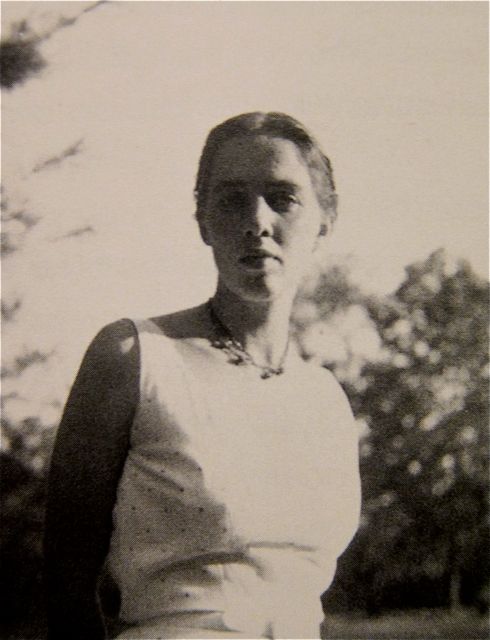
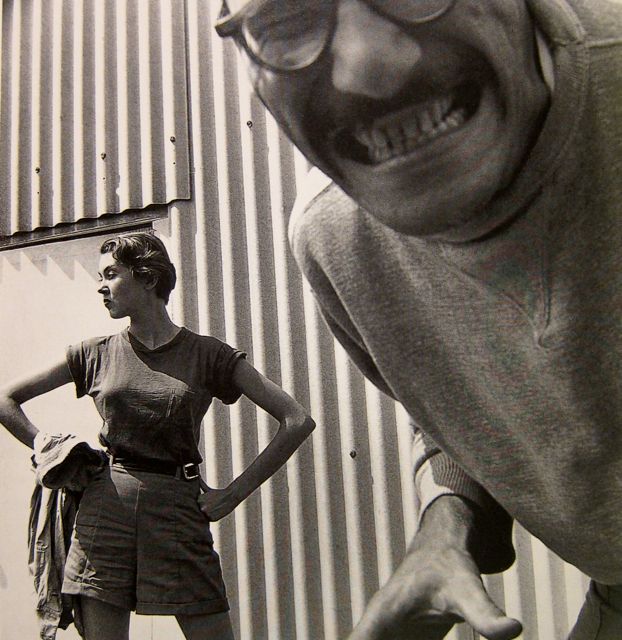


,_oil_on_canvas,_70_x_99_cm,_Gemeentemuseum_Den_Haag.jpg)


,_oil_on_canvas,_79.7_x_109.1_cm,_Gemeentemuseum_Den_Haag,_Netherlands.jpg)


.jpg)


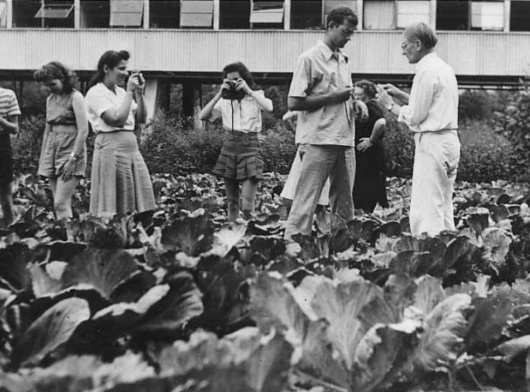


 Central to the school’s operation was its original and influential curriculum. It was described by Gropius in the manner of a wheel diagram, with the outer ring representing the vorkurs, a six-month preliminary course, initiated by
  In the same year, 1932, it moved to Berlin, under the new direction of architect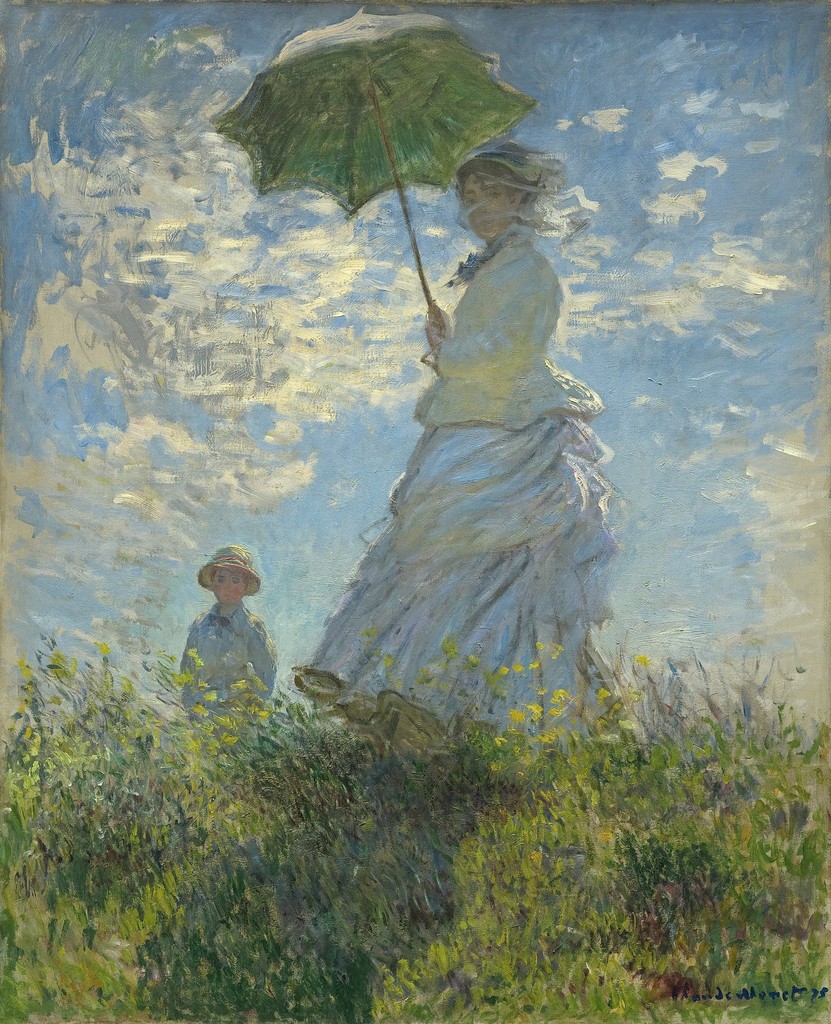


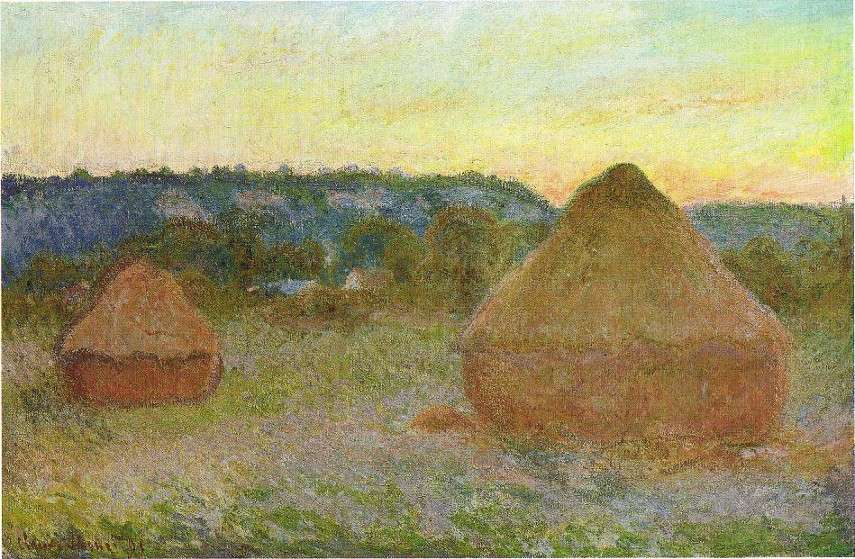


.jpg)


,_oil_on_canvas,_54_x_65.7_cm,_Museum_of_Fine_Arts,_Budapest.jpg)


.jpg)
-Monet.jpg)


.JPG)


.jpg)



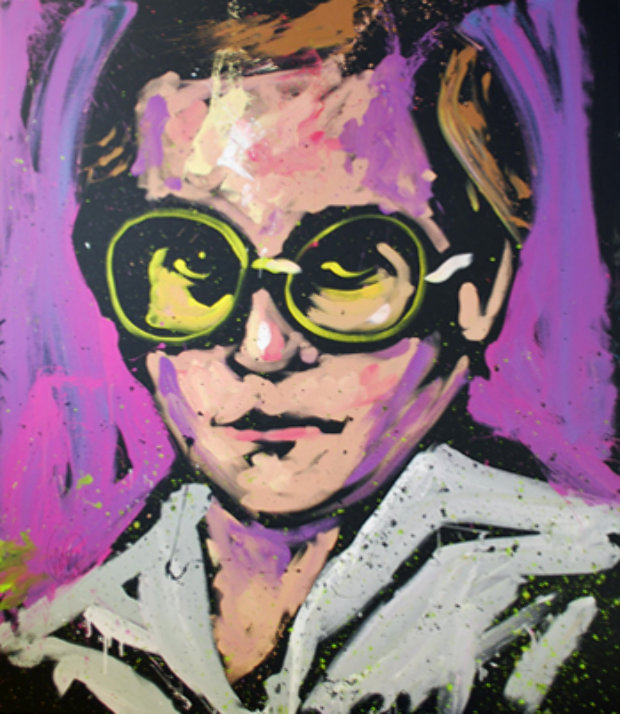


 The Daily Hatch