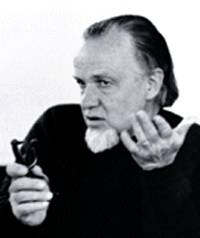
Category Archives: Francis Schaeffer

The Apologetics For Postmodernism by Rick Shrader

The Apologetics For Postmodernism by Rick Shrader

Episode VII – The Age of Non Reason

____________________

Dr. Francis Schaeffer – Episode 8 – The Age of Fragmentation

NoMirrorHDDHrorriMoN


Francis Schaeffer- How Should We Then Live? -8- The Age of Fragmentation

Joseph Rozak·

https://www.youtube.com/watch?v=LEmwy_dI2j0


_______________________

I love the works of Francis Schaeffer and I have been on the internet reading several blogs that talk about Schaeffer’s work and the work below  by Rick Shrader was really helpful. Schaeffer’s film series “How should we then live?  Wikipedia notes, “According to Schaeffer, How Should We Then Live traces Western history from Ancient Rome until the time of writing (1976) along three lines: the philosophic, scientific, and religious.[3] He also makes extensive references to art and architecture as a means of showing how these movements reflected changing patterns of thought through time. Schaeffer’s central premise is: when we base society on the Bible, on the infinite-personal God who is there and has spoken,[4] this provides an absolute by which we can conduct our lives and by which we can judge society.  Here are some posts I have done on this series: Francis Schaeffer’s “How should we then live?” Video and outline of episode 10 “Final Choices” episode 9 “The Age of Personal Peace and Affluence”episode 8 “The Age of Fragmentation”episode 7 “The Age of Non-Reason” episode 6 “The Scientific Age”  episode 5 “The Revolutionary Age” episode 4 “The Reformation” episode 3 “The Renaissance”episode 2 “The Middle Ages,”, and  episode 1 “The Roman Age,” .

In the film series “WHATEVER HAPPENED TO THE HUMAN RACE?” the arguments are presented  against abortion (Episode 1),  infanticide (Episode 2),   euthanasia (Episode 3), and then there is a discussion of the Christian versus Humanist worldview concerning the issue of “the basis for human dignity” in Episode 4 and then in the last episode a close look at the truth claims of the Bible.

Francis Schaeffer

Article Index
Postmodernism-By Rick Shrader
Section 1: The History of Postmodernism
Section 2: The Expressions of Postmodernism
Section 3: The Apologetics for Postmodernism
All Pages
Page 4 of 4

Section III

The Apologetics For Postmodernism

The most important question for any Christian to face is how to reach his own generation.  We understand that the only really important question is the eternal question and understanding our culture has always been a key to reaching the culture.   Douglas Groothuis wrote, “Our souls reflect our worlds and our worlds reflect our souls.  One who aspires to understand the nature of the soul ought, then, to be an auditor of culture.”[65] But there have always been disagreements over the appropriate ways to reach each generation in their own culture.

It is easy to ignore the changes in culture and refuse to “become all things to all men” but it is also easy to become what the culture is in order to reach it.  Franky Schaeffer, in 1981, lamented the over-reaction by the new Christian left in reaching this new generation:

Today, we still have this kind of utilitarianism.  However, to complicate matters there is a new breed of utilitarianism, which has come about largely through those who (often for correct reasons) have rebelled against the materialistic consumer-oriented utilitarian activity for activity’s sake position of the church.

Unfortunately, those who have rebelled have latched on to another nineteenth-century phenomenon and have been infiltrated by it and just as damaged as those they have rebelled against.[66]

It seems to this author that either extreme is wrong.  Nothing is compromised by learning about the culture in which one lives, nor by trying to think like they think.  We cannot retreat out of the world to win the world.  But while learning about our culture, we must not adopt the philosophy and life-style that is contrary to God.  Retreat is wrong and capitulation is wrong, but infiltration with confrontation must be accomplished.

There are four areas in which the Christian must keep the right balance in a postmodern age.

Truth and Reality

The Apostle Paul tells us that we must have “our loins girt about with truth” (Eph 6:14).  God’s Word is filled with the importance of standing for truth as a testimony to God in the world.  We are to “buy the truth and sell it not” (Prov 23:23), that is, we must give everything we have to get it and once we have it, we must not give it up for any price.  The reason for this emphasis on truth in God’s Word is that lying, or being contrary to what is true, is a denial of God’s reality.  We are told that God cannot lie (Titus 1:2) and in fact it would be impossible for such a thing to happen (Heb 6:18).  God’s very nature is truth and our very ministry is “For the truth’s sake, which dwelleth in us, and shall be with us for ever” (2 John 2).  God’s world was a perfectly truthful world until Satan introduced an element that is contrary to God’s nature—a lie (John 8:44).  Man’s selfish nature is inclined to agree with the lies of Satan in opposition to the truth of God.  This opposition may manifest itself in false claims, actions that are contrary to God’s will, thoughts that arise out of a selfish heart, immoral actions contrary to God’s holy character, breaking the laws of the land or any number of “lies.”  The believer simply cannot agree with a lie whether by word or deed.  Such a thing is sin for him because it is contrary to God and the way He made the world.

As our study has shown, never in the history of Christianity has truth been more under attack, not just the truthfulness of certain biblical propositions, but the very existence of truth as a possibility.  Without the possibility of truth, the postmodern man sees no reality in history or science.  Francis Schaeffer, some years ago wrote, “History as history has always presented problems, but as the concept of the possibility of true truth has been lost, the erosion of the line between history and the fantasy the writer wishes to use as history for his own purposes is more and more successful as a tool of manipulation.”[67] Believers must not give in to this same manipulation.  Ron Mayers points out, “The individual who says he is a Christian, but does not live like a Christian, actually gives the lie to his own testimony.  Unfortunately, unbelievers interpret this contradiction as an indication of the absence of truth in the claims of Christianity.”[68]

In reaching the postmodern whether by words and actions or by worship styles and homiletics, Christians must show the reality of God and His hand in this world by displaying an unswerving loyalty to truth.  One recent article lamented, in the onslaught of attacks on truth, that “the church in North America is not answering postmodernists effectively, and we are losing ground so rapidly that many church leaders are ready to join the new postmodern consensus.”[69] Such capitulation must never take place.

We must be careful of evangelistic stealth ministries.  If we are trying to draw the postmodern into our churches by presenting the things he likes (music, style, language, technology, etc) while at the same time hiding fundamental Christian practices (prayer, communion, baptism, self-denial, piety), it will backfire on us.  It is not that the postmodern will be turned off by this.  That is the bedrock of his world.  There is no absolute truth and all practices are to be individually selected according to each person’s likes and dislikes.  In an ironic way, Christian ministries that cater to the postmodern’s likes and dislikes, are actually agreeing that Christianity can be taken or left as each individual (or generation) pleases.  These people will stay around as long as it benefits them to do so.

Worship and Immanence

To the postmodern, worship is mere technological symbolism over substance.  We have discovered that in his world the symbols are the substance.  Groothuis writes, “The image is everything because the essence has become unknown and unknowable.”[70] Because he sees reality and truth as being constructed at the moment, worship need not go beyond the worship act.  This amounts to worshiping worship.  The more “real” the worship service seems, the less a postmodern person needs or wants anything beyond that.  Some years ago, Vance Havner quoted Newton D. Baker as saying, “The effect of modern inventions has been to immeasurably increase the difficulty of deliberation and contemplation about large and important issues.”[71] I believe it was Hitler who was the first to mesmerize audiences with multi-media presentations which made the individual forget his personal struggles and become caught up in the emotion of the moment.

We must proclaim God as transcendent—but not too transcendent.  His ways are not our ways and He is above the limitations of the world.  But He is not so far away that we cannot know Him.  And we must proclaim God as immanent—but not too immanent.  He condescends to men of low estate.  But He is not the world itself, nor the music, nor the emotion of a worship service.  We are not converted by “getting in touch” with the immanent.  C.S. Lewis wrote, “Until a certain spiritual level has been reached, the promise of immortality will always operate as a bribe which vitiates the whole religion and infinitely inflames those very self-regards which religion must cut down and uproot.”[72] We must be very careful not to give the sinner what he wants, but rather what he needs.  And usually, in the spiritual realm, what a sinner needs is not at all what he wants.  Pascal wrote centuries ago, “They imagine that such a conversion consists in a worship of God conducted, as they picture it, like some exchange or conversation.”[73]

Perhaps no word has grown up in our worship services like the word “community.”  Active churches are seeking community among attendees in order to draw them into the “group” and thereby seek a commitment from them.  The fellowship of believers cannot be minimized in the New Testament nor in our churches.  But understanding the postmodern man, we must be careful how the newcomer sees the group relationship.  Francis Schaeffer, a sage of sorts concerning the coming postmodern era, in 1971 warned:

Now we are ready to start talking about the community.  I would stress again, however, that a person does not come into relationship with God when he enters the Christian community, whether it is a local church or any other form of community.  As I have said, the liberals have gone on to promote other concepts of community.  They teach that the only way you can be in relationship to God is when you are in a group.  The modern concept is that you enter into community; in this community there is horizontal relationship; in these small I-Thou relationships you can hope that there is a big I-Thou relationship.

This is not the Christian teaching.  There is no such thing as a Christian community unless it is made up of individuals who are already Christians through the work of Christ.  One can talk about Christian community until one is green, but there will be no Christian community except on the basis of a personal relationship with the personal God through Christ.[74]

It would be abnormal if Christians did not want to reach the present generation in any way they could.  But because we are also of this postmodern age, we must ask the sobering question:  Are we changing our worship style because it is what will reach the lost?  Or are we changing our worship style because it is what we like?  The early church reached the lost by doing what God wanted them to do in order to worship Him.

Culture and Moral Law

We are coming dangerously close to believing that culture is morally neutral.  Most definitions, however, will necessarily include some word like “expression” or “achievement” to describe the thing called culture.  We ought to remember that the root of culture is “cult.”  It is a society, or at least the norms of a society, that have been formulated by the members of that cult.  That is why John Leo can decry the absence of truth by saying, “This casualness in popular culture is reinforced by trends in the intellectual world which hold that truth is socially constructed and doesn’t exist in the real world.”[75] That is why gangs develop strict codes concerning the clothing they wear, language they use and attitudes they must have, because their cult has necessarily created its own culture.  The moral value of such culture is abundantly expressed in the mores developed by the people of that culture.

Culture is the spirit of the age.  It can be a healthy spirit expressed by believers, but because it is the expression of human beings, it is usually a sinful spirit.  The New Testament combines the word “world” (kosmos) with the word “age” (aion) to give us this picture.  We are not to be conformed to the “aion” (Rom 12:2); when we were lost, we walked according to the “aion” of this “world” (Eph 2:2); Demas forsook Paul, having loved “this present aion” or actually, this “now age” (2 Tim 4:10).  We walk in this world, the “kosmos,” because we are creatures here, but we do not walk by its spirit, the “aion.” Peter said we should not be “fashioning ourselves” (1 Pet 1:14) to this world by our selfish desires.

Many secular culture-watchers have argued for postmodernism’s affect on the culture in a moral way.  Steven Connor, professor of English at Birkbeck College, London University writes, “In popular culture as elsewhere, the postmodern condition is not a set of symptons that are simply present in a body of sociological and textual evidence, but a complex effect of the relationship between social practice and the theory that organizes, interprets and legitimates its forms.”[76] Edward O. Wilson writes, “If these premises are correct, it follows that one culture is as good as any other in the expression of truth and morality, each in its own special way.”[77]

Sadly, it is the churches that have been slow to realize and admit that current culture cannot be adapted and used in any way it chooses.  While church leaders have ignored the moral implications of popular culture, other Christian leaders have had to sound the warning.  Ravi Zacharias writes, “History is replete with examples of unscrutinized cultural trends that were uncritically accepted yet brought about dramatic changes of national import . . . Cultures have a purpose, and in the whirlwind of possibilities that confront society, reason dictates that we find justification for the way we think and why we think, beyond chance existence.”[78] David Wells writes, “Culture, then, is the outward discipline in which inherited meanings and morality, beliefs and ways of behaving are preserved.  It is that collectively assumed scheme of understanding that defines both what is normal and what meanings we should attach to public behavior.”[79] David Chilton, writing about liberal Christian revolutionaries, says, “Revolution is a religious faith.  All men, created in the image of God, are fundamentally religious: all cultural activity is essentially an outgrowth of man’s religious position; for our life and thought are exercised either in obedience to, or rebellion against, God.”[80]

Though culture is often ignored by unwary believers as having moral significance, the postmodern attaches meaning to almost everything he does as well as to what the church does.  Veith reminds us, “Every cultural artifact is thus construed as a ‘text.’ That is, every human creation is analogous to language.  To use a postmodernist slogan, ‘The world is a text.’  Governments, worldviews, technologies, histories, scientific theories, social customs, and religions are all essentially linguistic constructs.”[81] We were better instructed by Robinson Crusoe, watching the cannibals devour their comrades and saying, “whose barbarous customs, were their own disaster, being in them a token indeed of God’s having left them, with the other nations of that part of the world, to such stupidity and to such inhuman courses.”[82] We should be so observant of the spirit of our own age.

Normally we react to the situation which we have observed firsthand, especially if we have grown uncomfortable with obvious inconsistencies.  Douglas McLachlan responds to cultural abuses from conservatives:

Fundamentalists have tended to limit the application of Christian truth to personal life styles while failing to see its application to the great cultural issues of our day.    There are occasions when we will have to turn our attention away from such things as hem lines and hair lengths (and there is a place for dealing with modesty in both dress and grooming—Paul and Peter did!) and to focus on such issues as encroaching secularism, avaricious materialism, pervasive evolutionism and defiant feminism.[83]

In the conservative church-growth scene, however, many are sounding alarms against those who see no difficulty in bringing today’s culture into the church.  William H. Willimon says, “In leaning over to speak to the modern world, I fear we may have fallen in.”[84] John MacArthur writes, “The culture around us has declared war on all standards, and the church is unwittingly following suit. . . . It is, once again, a capitulation to the relativism of an existential culture.”[85] Francis Schaeffer wrote, “Furthermore, if we acquiesce, we will no longer be the redeeming salt for our culture—a culture which is committed to the concept that both morals and laws are only a matter of cultural orientation, of statistical averages. . . If our reflex action is always accommodation regardless of the centrality of the truth involved, there is something wrong.”[86] Groothuis adds, “It is no coincidence that those churches that most readily incorporate elements of contemporary culture into their worship services are also least likely to appreciate the need to confront and to transform contemporary culture according to biblical truth.”[87]

William Bennett, former chairman of the National Endowment for the Humanities and Secretary of Education, as well as the author of many books dealing with culture, writes, “My worry is that people are not unsettled enough; I don’t think we are angry enough.  We have become inured to the cultural rot that is settling in.  Like Paulina, we are getting used to it, even though it is not a good thing to get used to.”[88] Perhaps we have lost our zeal for God and gained a zeal for the success that cultural relationships brings.

In 1941, Vance Havner wrote these timely words:

There was Demas, who forsook Paul, having loved this present world.  Doubtless he had started out in dead earnest, maybe with plenty of fire, but the pull of the old life and the charm of the world were too much for him.  Think not, however, of Demas merely as the sort lured away today by dances and movies.  Certainly all that belongs to this present world, but we are in danger of restricting “worldliness” to a few pet evils, forgetting that what is in mind here is the age in which Demas lived.  The spirit of the times got him, and he got into the tempo of it, was carried away with the surge of it.[89]

Repentance and Faith

A.W. Tozer wrote, “To the question, ‘What must I do to be saved?’ we must learn the correct answer.  To fail here is not to gamble with our souls; it is to guarantee eternal banishment from the face of God.  Here we must be right or be finally lost.”[90] This must be our bottom line with the postmodern man.  Here we cannot be content to have learned what it takes to gather people together week after week, to have been culturally savvy enough to attract attention, or to have been well-liked and accepted by our generation.  The postmodern man can follow every demand we make of him, even pray whatever we ask him to pray, and in his mind simply be adding Christianity to the file of other practical self-helps.

If we are truly interested in being “culturally relevant” in the most important thing, we will study our generation to find out how we can bring them to repentance and faith.  If all we are doing is winning their approval we have failed.  It is not success for a Christian simply to “build a church” or “gather a crowd.”   Years ago J. Gresham Machen wrote:

Faith is being exalted so high today that men are being satisfied with any kind of faith, just so it is faith.  It makes no difference what is believed, we are told, just so the blessed attitude of faith is there.  The undogmatic faith, it is said, is better than the dogmatic, because it is purer faith—faith less weakened by the alloy of knowledge.[91]

The postmodernist may be the easiest sinner to invite to faith that we have seen in two hundred years!  The problem will be whether we can know if that faith is the biblical faith of the New Testament.

To begin with, we must remember that the postmodern man doesn’t regard history as having actually taken place.  As Craig says, “Indeed, it is not clear whether there really is such a thing as the past on a thoroughgoing post-modernist view.”[92] Or as Benjamin Woolley writes, “Artificial reality is the authentic postmodern condition, and virtual reality its definitive technological expression . . . . The artificial is the authentic.”[93] This is why we are evangelizing on thin ice when we turn our church services into technological playlands for the postmodern’s sake, and then ask him to respond to a real, historical message.  It is existentialism, not Christianity, that talks much about faith but admits we cannot know the historical facts behind the faith.

Connor, in a chapter on postmodern performance, argues that the medium is what is real to a postmodernist, and the message behind the medium has no urgency or reality after the medium is finished.  He writes:

Sound and image are simultaneous with the ‘real’ music that is being performed (although, of course, in the case of most contemporary music the ‘original’ sound is usually itself only an amplified derivation from an initiating signal), even if it remains obvious that what is most real about the event is precisely the fact that it is being projected as mass experience . . . .  In the case of the ‘live’ performance, the desire for originality is a secondary effect of various forms of reproduction.  The intense ‘reality’ of the performance is not something that lies behind the particulars of the setting, the technology and the audience; its reality consists in all of that apparatus of representation.[94]

The critical point for the presentation of Christianity is that the message of salvation must be believed as historically true regardless of the quality of the medium.  If Adam and Eve did not live, then perhaps we have no real sin for which to repent.  If Jesus Christ did not live, die and resurrect as the Bible says, then there is no Christian message.  Of all the world’s religion, Christianity is the only one that depends solely on a historical miracle being a fact!  Machen wrote, “Salvation does depend upon what happened long ago, but the event of long ago has effects that continue until today.”[95] The postmodern man is in a precarious position of denying, or at least doubting, everything in the past and yet still claiming to have faith.  He tells the Christian to “get real” but has bought into the notion (i.e. “Minimalism”) that nothing is real outside of his own mind.

For this man, everything is a “text” which tells him the usability of what he is seeing.  To dress like him, talk like him, play his music and recreate his world inside the church (or even inside the individual Christian life), may well be telling him that the church’s message is no more “real” than his own, individualized message.  This doesn’t mean he won’t like it or commit to it:  it means that he never buys it as really real.

In 1 Corinthians 14, Paul was concerned that when lost people came in the church, they might see the same kind of emotional displays that they saw in their pagan temples and simply add their Christian experience to their pagan experiences.  “But,” he writes, “if all prophesy, and there come in one that believeth not, or one unlearned, he is convinced of all, he is judged of all: and thus are the secrets of his heart made manifest; and so falling down on his face he will worship God, and report that God is in you of a truth” (1 Cor 14:24-25).  We ought to be concerned when the postmodern man comes into our services and is as comfortable there as he is in his own world.

John Knox wrote, “The man, I say, that understands and knows his own corrupt nature and God’s severe judgment, most gladly will receive the free redemption offered by Christ Jesus, which is the only victory that overthrows Satan and his power.”[96] We have to trust the power of the gospel message and the work of the Holy Spirit enough to believe that when a man is uncomfortable and feels out of place in church, though he may be far from his world, he is close to the kingdom of God.  This is the path of conviction down which everyone must come if he is to come to Christ.  Yet, to feel uncomfortable is the epitome of wrong for the postmodern man.  Truth does not matter, but protecting one’s space matters most.  The gospel appeal, therefore, is a delicate moment for the postmodernist.

When Machen wrote in 1923, he was writing to the modern man and his social and liberal tendencies.  This excerpt, however, may still be exactly our problem reaching the postmodern man.

The fundamental fault of the modern Church is that she is busily engaged in an absolutely impossible task—she is busily engaged in calling the righteous to repentance.  Modern preachers are trying to bring men into the Church without requiring them to relinquish their pride; they are trying to help men avoid the conviction of sin.  The preacher gets up into the pulpit, opens the Bible, and addresses the congregation somewhat as follows:  ‘You people are very good,’ he says; ‘you respond to every appeal that looks toward the welfare of the community. Now we have in the Bible—especially in the life of Jesus—something so good that we believe it is good enough even for you good people.’  Such is modern preaching.  But it is entirely futile.  Even our Lord did not call the righteous to repentance, and probably we shall be no more successful than He.[97]

We must not find ourselves agreeing with the postmodern man.  Our stewardship is to preach the wonderful grace of God through the gospel of Jesus Christ.  No generation has been promised that such a task would be easy or popular.  But the call to ministry is a call to the proclamation of truth and to believe that what God asks us to give is exactly what our generation needs.

Conclusion

We are all asked to “be ready always to give an answer to every man that asketh you a reason of the hope that is in you with meekness and fear” (1 Peter 3:15).  It may be easier to recognize error than to find a way to combat it.  The churches of Jesus Christ must search the Scriptures for truth and then give it out without violating sacred principles.  There will always be room for variation as we take the gospel to the people where we live.  The concern in this section has been that we do not think we are reaching the postmodern man just because we attract him.  The success syndrome may be harder to fight with this generation than ever before simply because this generation can and will follow anything with little or no real commitment.  There must be a telling reason why our churches are as large and active as any time in recent history and yet the commitment levels of those making professions of faith are so low.

When we stand before Christ we will be asked to give account of “how” we built on the foundation, not “how much.”  Our stewardship is to proclaim what our King has given us to proclaim.  It is an awesome task and sometimes we feel inadequate.  But the rewards for faithful service will be worth it all.

The apologist, C.S. Lewis, once finished an argument this way.

One last word.  I have found that nothing is more dangerous to one’s own faith than the work of an apologist.  No doctrine of that Faith seems to me so spectral, so unreal as one that I have just successfully defended in a public debate.  For a moment, you see, it has seemed to rest on oneself: as a result, when you go away from that debate, it seems no stronger than that weak pillar.  That is why we apologists take our lives in our hands and can be saved only by falling back continually from the web of our own arguments, as from our intellectual counters, into the Reality—from Christian apologetics into Christ Himself.  That also is why we need one another’s continual help—oremus pro invice


[1] Gene Edward Veith, Jr. Postmodern Times (Wheaton: Crossway Books, 1994), 29.

[2] Ibid., 31.

[3] Thomas Oden, “The Death Of Modernity” The Challenge of Postmodernism (Wheaton: BridgePoint Books, 1995), 20.

[4] Veith, Postmodern Times, 27.

[5] Carl F.H. Henry, The Challenge of Postmodernism (Wheaton: BridgePoint Books, 1995), 34.

[6] Veith, Postmodern Times, 35.

[7] Ibid.

[8] H.R. Rookmaaker, Modern Art and the Death of a Culture (Wheaton: Crossway Books, 1994), 170.

[9] Francis Schaeffer, The Great Evangelical Disaster (Wheaton: Crossway Books, 1992), 49.

[10] Veith, Postmodern Times, 38.

[11] Toynbee, A Study Of History, Quoted by Veith, Postmodern Times, 44.

[12] John Silber, “Will Our Media Moguls Do The Right Thing?”, AFA Journal, September 1995, 16.

[13] C.S. Lewis, The Abolition Of Man (New York: MacMillan Pub. Co., 1955), 34-35.

[14] Veith, Postmodern Times, 39.

[15] Oden, “The Death Of Modernity,” The Challenge Of Postmodernism, 25.

[16] Os Guinness, Fit Bodies, Fat Minds (Grand Rapids: Baker Book, 1994), 102.

[17] Francis Schaeffer, The Great Evangelical Disaster, 90.

[18] Interview with Ravi Zacharias, “Reaching the Happy Thinking Pagan: How Can We Present the Christian   Message to Postmodern People?” Leadership Magazine, Spring 1995, 23.

[19] Veith, Postmodern Times, 86.

[20] Tim Keller, “Preaching Morality in an Amoral Age” Christianity TodayInc./Leadership Journal, copyright 1996.  Downloaded from AOL, 1/24/96.

[21] David Dockery, “Preface” The Challenge of Postmodernism, 14.

[22] Quoted by John Leo, “True Lies vs. Total Recall” U.S. News & World Report, August 7, 1995.

[23] Gene Veith, Postmodern Times, 72.

[24] Francis Schaeffer, The Great Evangelical Disaster, 98-99.

[25] Ravi Zacharias, Deliver Us From Evil (Dallas:  Word Publishing, 1996), 53.

[26] Gene Veith, Postmodern Times, 74.

[27] Os Guinness, Fit Bodies, Fat Minds, 102-103.

[28] Cal Thomas, “The Gospel According to Bill Should Not Fool Anyone” Ft. Collins Coloradoan, nd.

[29] John Ankerberg & John Weldon, Protestants & Catholics: Do They Now Agree? (Eugene: Harvest House, 1995), 113.

[30] Gene Edward Veith, Jr., Modern Fascism (St. Louis:  Concordia Publishing House, 1993), 37.

[31] Carl F.H. Henry, “Postmodernism: The New Spectre?” The Challenge Of Postmodernism, 36.

[32] Gene Veith, Postmodern Times, 56.

[33] Roger Lundin, “The Pragmatics of Postmodernism” Christian Apologetics in the Postmodern World Phillip, TimothyR. And Okholm, Dennis L., Ed. (Downer’s Grove:  InterVarsity Press, 1995), 32.

[34] Quoted by Steve Rabey, “This Is Not Your Boomer’s Generation” Leadership, Fall 1996, 17.

[35] Gene Veith, Postmodern Times, 132.

[36] Albert Mohler, “Evangelical: What’s in a Name?”  The Coming Evangelical Crisis, John H. Armstrong, Ed. (Chicago:  Moody Press, 1996), 38.

[37] Francis Schaeffer, The Church At The End Of The 20th Century (Wheaton: Crossway Books, 1994), 91.

[38] Gene Edward Veith, Jr. State Of The Arts (Wheaton:  Crossway Books, 1991), 54.

[39] Ibid., 60.

[40] In Schaeffer’s book, The God Who Is There, he shows how all of the “fine arts” drop below “the line of despair.”  Just as modern art broke all of the rules of representation on canvass, modern music broke all of the rules of structure and composition.  This was modern man expressing himself as the highest form of evolution, not able to be bound by any laws.

[41] H.R. Rookmaaker, 161.

[42] Veith, The State Of The Arts, 21.

[43] George Will, “The Shocking Bourgeoisie” The Morning After (New York: MacMillan, 1986), 55.

[44] John G. Stackhouse, Jr., “From Architecture To Argument,” Christian Apologetics in a Postmodern World, 40.

[45] Ibid, 41.

[46] Ibid

[47] Francis Schaeffer, The God Who Is There (Downer’s Grove: InterVarsity Press, 1968), 35.

[48] Gene Veith, Postmodern Times, 117.

[49] Quoted by Robert Wright, “Can Machines Think?” Time Magazine, March 25, 1996.

[50] Leonard Payton, “How Shall We Then Sing,” The Coming Evangelical Crisis, 198.

[51] Gene Veith, Postmodern Times, 61.

[52] Francis Schaeffer, The Church At The End Of The Twentieth Century (Wheaton: Crossway Books, 1994), 50.

[53] Neil Postman, Technopoly (New York: Vintage Books, 1992), 52.

[54] Douglas Groothuis, The Soul In Cyberspace (Grand Rapids: Baker Books, 1997), 53.

[55] Quoted by Douglas Groothuis, Ibid., 54.

[56] Neil Postman, Technopoly, 67.

[57] Groothuis, The Soul In Cyberspace, 65.

[58] Quoted by Groothuis, Ibid., 125.

[59] Ibid., 122.

[60] J. Gresham Machen, Christianity And Liberalism (Grand Rapids: Eerdmans, 1977), 121.

[61] Neil Postman, Technopoly, 18-19.

[62] A.W. Tozer, The Pursuit Of God (Harrisburg: Christian Publications, 1958), 69.

[63] Gene Veith, Postmodern Times, 209.

[64] Os Guinness, Fit Bodies, Fat Minds, 110.

[65] Douglas Groothuis, The Soul In CyberSpace, 23.

[66] Franky Schaeffer, Addicted To Mediocrity (Wheaton:  Crossway Books, 1993), 69.

[67] Francis Schaeffer, The Church At The End Of The Twentieth Century,  89.

[68] Ron Mayers, Balanced Apologetics (Grand Rapids:  Kregel, 1984), 58.

[69] Jim Leffel and Dennis McCallum, “The Postmodern Challenge: facing the spirit of the age,” Christian Research Journal, Fall 1996, 35.

[70] Groothuis, The Soul in Cyberspace, 16.

[71] Quoted by Vance Havner, Rest Awhile (New York: Revell, 1941), 11.

[72] C.S. Lewis, God In The Dock (Grand Rapids: Eerdmans, 1994), 130.

[73] Blaise Pascal, Pensees (New York: Penquin, 1966) 27/378, 137.

[74] Francis Schaeffer, The Church At The End Of The Twentieth Century, 54-55.

[75] John Leo, “This column is mostly true,” U.S. News & World Report, December 16, 1996, 17.

[76] Steven Connor, Postmodernist Culture (Oxford, UK: Blackwell Publishers, 1997) 205.

[77] Edward O. Wilson, “Back From Chaos,” The Atlantic Monthly, March, 1998, 58.

[78] Ravi Zacharias, Deliver Us From Evil, 17.

[79] Quoted by David Doran, “Market-Driven Ministry: Blessing or Curse?” Detroit Baptist Seminary Journal, Fall 1996, 212.

[80] David Chilton, Productive Christians in an Age of Guilt Manipulators (Tyler:  ICE, 1985) 3.

[81] Veith, Postmodern Times, 52.

[82] Daniel Defoe, Robinson Crusoe (Chicago:  Moody)  209.

[83] Douglas McLachlan, Reclaiming Authentic Fundamentalism (Independence, MO: AACS, 1993) 18.

[84] William H. Willimon, “This Culture Is Overrated” Christianity Today, May 19, 1997, 27.

[85] John MacArthur, Reckless Faith (Wheaton: Crossway Books, 1994), 45.

[86] Francis Schaeffer, The Great Evangelical Disaster, 64.

[87] Douglas Groothuis, Christianity That Counts (Grand Rapids: Baker, 1994), 81.

[88] William Bennett, “Redeeming Our Time,” Imprimis, Hillsdale College, November 1995, 3.

[89] Vance Havner, Rest Awhile (New York:  Revell, 1941), 46.

[90] A.W. Tozer, The Best Of A.W. Tozer (Grand Rapids: Baker, 1991), 100.

[91] J. Gresham Machen, Christianity and Liberalism (Eerdman’s, 1977), 141.

[92] William Lane Craig, Reasonable Faith, 167.

[93] Quoted by Douglas Groothuis, The Soul In CyberSpace, 27.

[94] Connor, 174-175.

[95] Machen, 71.

[96] John Knox, “On the First Temptation of Christ,” Orations, Mayo Hazeltine, Ed., 1349.

[97] Machen, 68.

Related posts:

Taking on Ark Times Bloggers on various issues Part A “The Pro-life Issue” (Francis Schaeffer Quotes Part 1 includes the film SLAUGHTER OF THE INNOCENTS) (editorial cartoon)

I have gone back and forth and back and forth with many liberals on the Arkansas Times Blog on many issues such as abortion, human rights, welfare, poverty, gun control  and issues dealing with popular culture. Here is another exchange I had with them a while back. My username at the Ark Times Blog is Saline […]

“Schaeffer Sunday” Francis Schaeffer: “Whatever Happened to the Human Race” (Episode 1) ABORTION OF THE HUMAN RACE

It is not possible to know where the pro-life evangelicals are coming from unless you look at the work of the person who inspired them the most. That person was Francis Schaeffer.  I do care about economic issues but the pro-life issue is the most important to me. Several years ago Adrian Rogers (past president of […]

The movie “Les Miserables” and Francis Schaeffer

I got this off a Christian blog spot. This person makes some good points and quotes my favorite Christian philosopher Francis Schaeffer too. Prostitution, Chaos, and Christian Art The newest theatrical release of Victor Hugo’s 1862 novel “Les Miserables” was released on Christmas, but many Christians are refusing to see the movie. The reason simple — […]

“Schaeffer Sunday” Francis Schaeffer is one of the great evangelical theologians of our modern day

Francis Schaeffer was truly a great man and I enjoyed reading his books. A theologian #2: Rev. Francis Schaeffer Duriez, Colin. Francis Schaeffer: An Authentic Life. Wheaton, IL: Crossway Books, 2008. Pp. 240. Francis Schaeffer is one of the great evangelical theologians of our modern day. I was already familiar with some of his books and his […]

“Schaeffer Sundays” Francis Schaeffer’s own words concerning infanticide and youth enthansia

Francis Schaeffer: “Whatever Happened to the Human Race?” (Episode 2) SLAUGHTER OF THE INNOCENTS Published on Oct 6, 2012 by AdamMetropolis ___________ The 45 minute video above is from the film series created from Francis Schaeffer’s book “Whatever Happened to the Human Race?” with Dr. C. Everett Koop. This book  really helped develop my political views […]

Francis Schaeffer’s wife Edith passes away on Easter weekend 2013 Part 7 (includes pro-life editorial cartoon)

The Francis and Edith Schaeffer Story Pt.1 – Today’s Christian Videos The Francis and Edith Schaeffer Story – Part 3 of 3 Francis Schaeffer: “Whatever Happened to the Human Race” (Episode 1) ABORTION OF THE HUMAN RACE Published on Oct 6, 2012 by AdamMetropolis ________________ Picture of Francis Schaeffer and his wife Edith from the […]

The Mark of the Christian by Francis Schaeffer Part 1

  THE MARK OF A CHRISTIAN – CLASS 1 – Introduction Published on Mar 7, 2012 This is the introductory class on “The Mark Of A Christian” by Francis Schaeffer. The class was originally taught at Redeemer Presbyterian Church in Overland Park, KS by Dan Guinn from FrancisSchaefferStudies.org as part of the adult Sunday School hour […]

“Schaeffer Sundays” Francis Schaeffer’s own words concerning humanist dominated public schools in USA even though country was founded on a Christian base

Francis Schaeffer: “Whatever Happened to the Human Race?” (Episode 2) SLAUGHTER OF THE INNOCENTS Published on Oct 6, 2012 by AdamMetropolis The 45 minute video above is from the film series created from Francis Schaeffer’s book “Whatever Happened to the Human Race?” with Dr. C. Everett Koop. This book  really helped develop my political views concerning […]

“Schaeffer Sundays” Francis Schaeffer’s own words concerning where the Bible-believing Christians been the last few decades

Francis Schaeffer: “Whatever Happened to the Human Race” (Episode 1) ABORTION OF THE HUMAN RACE Published on Oct 6, 2012 by AdamMetropolis The 45 minute video above is from the film series created from Francis Schaeffer’s book “Whatever Happened to the Human Race?” with Dr. C. Everett Koop. This book  really helped develop my political views […]

Taking on Ark Times Bloggers on various issues Part E “Moral absolutes and abortion” Francis Schaeffer Quotes part 5(includes the film SLAUGHTER OF THE INNOCENTS) (editorial cartoon)

I have gone back and forth and back and forth with many liberals on the Arkansas Times Blog on many issues such as abortion, human rights, welfare, poverty, gun control  and issues dealing with popular culture. Here is another exchange I had with them a while back. My username at the Ark Times Blog is Saline […]

“Schaeffer Sundays” Francis Schaeffer’s own words concerning religious liberals and humanists

Francis Schaeffer: “Whatever Happened to the Human Race” (Episode 5) TRUTH AND HISTORY Published on Oct 7, 2012 by AdamMetropolis The 45 minute video above is from the film series created from Francis Schaeffer’s book “Whatever Happened to the Human Race?” with Dr. C. Everett Koop. This book  really helped develop my political views concerning abortion, […]

Truth Tuesday: Apostle to the Intellectuals? by Steve West

Episode VII – The Age of Non Reason

Dr. Schaeffer’s sweeping epic on the rise and decline of Western thought and Culture

_______________________

I love the works of Francis Schaeffer and I have been on the internet reading several blogs that talk about Schaeffer’s work and the work below by Steve West was really helpful. Schaeffer’s film series “How should we then live?  Wikipedia notes, “According to Schaeffer, How Should We Then Live traces Western history from Ancient Rome until the time of writing (1976) along three lines: the philosophic, scientific, and religious.[3] He also makes extensive references to art and architecture as a means of showing how these movements reflected changing patterns of thought through time. Schaeffer’s central premise is: when we base society on the Bible, on the infinite-personal God who is there and has spoken,[4] this provides an absolute by which we can conduct our lives and by which we can judge society.  Here are some posts I have done on this series: Francis Schaeffer’s “How should we then live?” Video and outline of episode 10 “Final Choices” episode 9 “The Age of Personal Peace and Affluence”episode 8 “The Age of Fragmentation”episode 7 “The Age of Non-Reason” episode 6 “The Scientific Age”  episode 5 “The Revolutionary Age” episode 4 “The Reformation” episode 3 “The Renaissance”episode 2 “The Middle Ages,”, and  episode 1 “The Roman Age,” .

In the film series “WHATEVER HAPPENED TO THE HUMAN RACE?” the arguments are presented  against abortion (Episode 1),  infanticide (Episode 2),   euthanasia (Episode 3), and then there is a discussion of the Christian versus Humanist worldview concerning the issue of “the basis for human dignity” in Episode 4 and then in the last episode a close look at the truth claims of the Bible.

Francis Schaeffer

Apostle to the Intellectuals?

Francis_schaefferA Time Magazine article from January 11, 1960 describes Francis Schaeffer’s ministry as a “mission to intellectuals.”  While one can understand why this might be said, my reading about Francis and Edith Schaeffer belies this simple assertion.  In reading, what stands out to me is his love for children, his pastor’s heart, and his working class roots which gave him an identification with ordinary folk everywhere.

Children.  In the Summer of 1936 the newlywed Schaeffers accepted a job directing Camp Richard Webber Oliver in Rumney, New Hampshire, in the White Mountains.  This “apostle to the intellectuals,” Edith recounts, “cared for little boys — taught them, hiked with them, read them stories at night, tucked them in, prayed with them, led them to the Lord with a measure of real understanding, tied their shoes, put mecurochrome on their cuts and ice on their bruises, scolded them and loved them” (Tapestry, p. 188).  Shortly thereafter, in his first pastorate at Covenant Presbyterian Church, in Grove City, Pennsylvania, Edith says “Fran’s first thought was to start reaching children in the town, but he hadn’t one child to start with, let alone a nucleus” (Tapestry, p. 204) (It was a church of 18 people, all adults!)    And so he began — with hot dog roasts, door-to-door visitation, and, finally, the first two-week Summer Bible School, at which 79 children showed up.

The emphasis on children continued into his next pastorate, at Bible Presbyterian Church in St. Louis, Missouri, where past Covenant Seminary President Will Barker (who was a young boy then) recalls Schaeffer piling a load of boys in his car and taking them through the St. Louis zoo, with some antics along the way.  It was here that the Schaeffers began a work called “Children for Christ,” a seven point program for reaching out to the children of St. Louis which included camps, open-air gatherings, Summer Bible Schools, released time classes, and Empire Builder Clubs.  The ministry spread to other churches beyond their denomination.  In fact, Children for Christ was a significant factor in their being sent to Europe.  Once in Europe, they went about with flannel boards to illustrate the Gospel, sang and taught songs, and began founding Children for Christ clubs wherever they could.  In sum, children were forever on Francis and Edith Schaeffer’s hearts; these little ones mattered as much as any adult, much less intellectuals.  Ironically enough, a number of these children were the future intellectuals, if you call it that.

A Pastor’s heart.  His sensitivity to children no doubt came from his pastor’s heart.  In his first pastorate, his congregation and community were made up working class families and farmers.  Edith recounts that “Fran’s pastoral calls included taking a chair along to sand while he talked to a farmer milking a cow.  He felt that working together provided a better atmosphere for conversation, something real rather than just “polite” (Tapestry, p. 208).  It was a humble beginning and yet exactly the right beginning in ministry for a man who would live humbly all his life, opening his home and life to so many, having so little “space” for himself.

Working class roots.  Having grown up in a family that valued hard work, Schaeffer learned to work with his hands, be it carpentry work, electrical wiring, or plumbing.  At Covenant Presbyterian Church, he joined in the remodeling of a church building, painting the steeple himself.  No doubt this openness to doing menial work endeared him to people.  Certainly it also helped him identify and empathize with people of all backgrounds.  This disciplined upbringing helped him endure some of the relative privations of post-War Europe and certainly increased his accessibility to all with whom he came in contact.

Apostle to the intellectuals?  Yes, but not exclusively so.  Apologist?  Yes, but also (and perhaps foremost), a pastor.  What shines through Francis and Edith Schaeffer is a love for and openness to people, old and young, blue-collar worker and intellectual.

Posted by on Monday, July 31, 2006 | Permalink

__________________________

Related posts:

Taking on Ark Times Bloggers on various issues Part A “The Pro-life Issue” (Francis Schaeffer Quotes Part 1 includes the film SLAUGHTER OF THE INNOCENTS) (editorial cartoon)

I have gone back and forth and back and forth with many liberals on the Arkansas Times Blog on many issues such as abortion, human rights, welfare, poverty, gun control  and issues dealing with popular culture. Here is another exchange I had with them a while back. My username at the Ark Times Blog is Saline […]

“Schaeffer Sunday” Francis Schaeffer: “Whatever Happened to the Human Race” (Episode 1) ABORTION OF THE HUMAN RACE

It is not possible to know where the pro-life evangelicals are coming from unless you look at the work of the person who inspired them the most. That person was Francis Schaeffer.  I do care about economic issues but the pro-life issue is the most important to me. Several years ago Adrian Rogers (past president of […]

The movie “Les Miserables” and Francis Schaeffer

I got this off a Christian blog spot. This person makes some good points and quotes my favorite Christian philosopher Francis Schaeffer too. Prostitution, Chaos, and Christian Art The newest theatrical release of Victor Hugo’s 1862 novel “Les Miserables” was released on Christmas, but many Christians are refusing to see the movie. The reason simple — […]

“Schaeffer Sunday” Francis Schaeffer is one of the great evangelical theologians of our modern day

Francis Schaeffer was truly a great man and I enjoyed reading his books. A theologian #2: Rev. Francis Schaeffer Duriez, Colin. Francis Schaeffer: An Authentic Life. Wheaton, IL: Crossway Books, 2008. Pp. 240. Francis Schaeffer is one of the great evangelical theologians of our modern day. I was already familiar with some of his books and his […]

“Schaeffer Sundays” Francis Schaeffer’s own words concerning infanticide and youth enthansia

Francis Schaeffer: “Whatever Happened to the Human Race?” (Episode 2) SLAUGHTER OF THE INNOCENTS Published on Oct 6, 2012 by AdamMetropolis ___________ The 45 minute video above is from the film series created from Francis Schaeffer’s book “Whatever Happened to the Human Race?” with Dr. C. Everett Koop. This book  really helped develop my political views […]

Francis Schaeffer’s wife Edith passes away on Easter weekend 2013 Part 7 (includes pro-life editorial cartoon)

The Francis and Edith Schaeffer Story Pt.1 – Today’s Christian Videos The Francis and Edith Schaeffer Story – Part 3 of 3 Francis Schaeffer: “Whatever Happened to the Human Race” (Episode 1) ABORTION OF THE HUMAN RACE Published on Oct 6, 2012 by AdamMetropolis ________________ Picture of Francis Schaeffer and his wife Edith from the […]

The Mark of the Christian by Francis Schaeffer Part 1

  THE MARK OF A CHRISTIAN – CLASS 1 – Introduction Published on Mar 7, 2012 This is the introductory class on “The Mark Of A Christian” by Francis Schaeffer. The class was originally taught at Redeemer Presbyterian Church in Overland Park, KS by Dan Guinn from FrancisSchaefferStudies.org as part of the adult Sunday School hour […]

“Schaeffer Sundays” Francis Schaeffer’s own words concerning humanist dominated public schools in USA even though country was founded on a Christian base

Francis Schaeffer: “Whatever Happened to the Human Race?” (Episode 2) SLAUGHTER OF THE INNOCENTS Published on Oct 6, 2012 by AdamMetropolis The 45 minute video above is from the film series created from Francis Schaeffer’s book “Whatever Happened to the Human Race?” with Dr. C. Everett Koop. This book  really helped develop my political views concerning […]

“Schaeffer Sundays” Francis Schaeffer’s own words concerning where the Bible-believing Christians been the last few decades

Francis Schaeffer: “Whatever Happened to the Human Race” (Episode 1) ABORTION OF THE HUMAN RACE Published on Oct 6, 2012 by AdamMetropolis The 45 minute video above is from the film series created from Francis Schaeffer’s book “Whatever Happened to the Human Race?” with Dr. C. Everett Koop. This book  really helped develop my political views […]

Taking on Ark Times Bloggers on various issues Part E “Moral absolutes and abortion” Francis Schaeffer Quotes part 5(includes the film SLAUGHTER OF THE INNOCENTS) (editorial cartoon)

I have gone back and forth and back and forth with many liberals on the Arkansas Times Blog on many issues such as abortion, human rights, welfare, poverty, gun control  and issues dealing with popular culture. Here is another exchange I had with them a while back. My username at the Ark Times Blog is Saline […]

“Schaeffer Sundays” Francis Schaeffer’s own words concerning religious liberals and humanists

Francis Schaeffer: “Whatever Happened to the Human Race” (Episode 5) TRUTH AND HISTORY Published on Oct 7, 2012 by AdamMetropolis The 45 minute video above is from the film series created from Francis Schaeffer’s book “Whatever Happened to the Human Race?” with Dr. C. Everett Koop. This book  really helped develop my political views concerning abortion, […]

Wrestling with Tough Questions by Billy McMahon

Episode VII – The Age of Non Reason

____________________

Dr. Francis Schaeffer – Episode 8 – The Age of Fragmentation

NoMirrorHDDHrorriMoN


Francis Schaeffer- How Should We Then Live? -8- The Age of Fragmentation

Joseph Rozak·

https://www.youtube.com/watch?v=LEmwy_dI2j0

_______________________

I love the works of Francis Schaeffer and I have been on the internet reading several blogs that talk about Schaeffer’s work and the work below by Billy McMahon was really helpful. Schaeffer’s film series “How should we then live?  Wikipedia notes, “According to Schaeffer, How Should We Then Live traces Western history from Ancient Rome until the time of writing (1976) along three lines: the philosophic, scientific, and religious.[3] He also makes extensive references to art and architecture as a means of showing how these movements reflected changing patterns of thought through time. Schaeffer’s central premise is: when we base society on the Bible, on the infinite-personal God who is there and has spoken,[4] this provides an absolute by which we can conduct our lives and by which we can judge society.  Here are some posts I have done on this series: Francis Schaeffer’s “How should we then live?” Video and outline of episode 10 “Final Choices” episode 9 “The Age of Personal Peace and Affluence”episode 8 “The Age of Fragmentation”episode 7 “The Age of Non-Reason” episode 6 “The Scientific Age”  episode 5 “The Revolutionary Age” episode 4 “The Reformation” episode 3 “The Renaissance”episode 2 “The Middle Ages,”, and  episode 1 “The Roman Age,” .

In the film series “WHATEVER HAPPENED TO THE HUMAN RACE?” the arguments are presented  against abortion (Episode 1),  infanticide (Episode 2),   euthanasia (Episode 3), and then there is a discussion of the Christian versus Humanist worldview concerning the issue of “the basis for human dignity” in Episode 4 and then in the last episode a close look at the truth claims of the Bible.

Francis Schaeffer

The only reason I put up this post is because of the excellent response below by Bradley Rogers in the comment section.

Wrestling with Tough Questions

Posted on May 4, 2011 by Billyy McMahon

Several years ago, I was a huge fan of Francis Schaeffer, a reformed Christian and self-proclaimed critic of art, culture, and philosophy. I read all of his books and much of my worldview was shaped by his critiques of non-Christian thought. I remember dismissing a lot of contemporary views (postmodernism, emergent church, Rob Bell, relativism, atheism, ect.) with the simple claim that “modern man is dead.” Is modern man actually “dead?” According to Schaeffer, yes, he has rebelled against God and sought to create understanding through himself. This explains why we have paintings such as Marcel Duchamp’s Nude Descending a Staircase No. 2.

Modern man’s world crumbles. Conventions fall apart and reality becomes disintegrated as there is no lasting hope. On the other hand, the Bible has the potential to offer answers in this broken world.

I remember in one book by Schaeffer, Albert Camus’ The Plague is somewhat rejected for being nihilistic, atheistic, and borderline ridiculous. In the book, the main character Rieux, a doctor, must deal with a modern resurgence of the bubonic plague. His wife is taken away, he sees others die on an hourly basis, and wrestles with losing hope.

After actually reading Camus, I was deeply moved. Camus raised questions directly related to the horrors experienced in the World Wars. Rieux seems to mirror Camus in that he struggles with belief in God, morality, and his own life’s purpose. After finishing the book, I realized that I had grown past my previous dismissal of the surrounding culture. Modern humanity should not be dismissed for being “dead;” people simply have questions that they constantly wrestle with. All of these concerns are completely legitimate. For example, why did God allow Auschwitz to happen? Why do I have so much anxiety? Does moral good actually exist? If he’s there, can God actually hear me?

While these questions might seem haunting or shocking to many, people actually deal with these issues. Perhaps rather than dismissing the person wrestling with something grave and atheistic, why not befriend him/her and engage in the issue as well? The metaphor of wrestling with God is definitely not limited to Jacob.

2 Responses

  1. Bradley Rogers, on May 4, 2011 at 9:15 pm said:

    I don’t think that Schaeffer would reject those questions listed in your section “for example,” nor would I think he would reject the person asking them. I think the issue that he takes is with the assertion that life is absurd, and if life is absurd, then God must be dead. If God is dead, then man is dead. Struggling with the concept is incredibly important and should absolutely be discussed, but the acceptance and promotion of this existentialistic philosophy is dangerous, and it should be rejected because it conflicts with truth.

    Also, it should be noted that Labri Fellowship Internation, a house of sorts that Dr. Schaeffer created, is a resting place for people to go and seek the answers to the questions that you listed. They go and converse and philosophize and seek ultimate understanding. http://www.labri.org/

    If I misunderstood what you were saying, or you just straight up disagree, please let me know!

__________________________

Related posts:

Taking on Ark Times Bloggers on various issues Part A “The Pro-life Issue” (Francis Schaeffer Quotes Part 1 includes the film SLAUGHTER OF THE INNOCENTS) (editorial cartoon)

I have gone back and forth and back and forth with many liberals on the Arkansas Times Blog on many issues such as abortion, human rights, welfare, poverty, gun control  and issues dealing with popular culture. Here is another exchange I had with them a while back. My username at the Ark Times Blog is Saline […]

“Schaeffer Sunday” Francis Schaeffer: “Whatever Happened to the Human Race” (Episode 1) ABORTION OF THE HUMAN RACE

It is not possible to know where the pro-life evangelicals are coming from unless you look at the work of the person who inspired them the most. That person was Francis Schaeffer.  I do care about economic issues but the pro-life issue is the most important to me. Several years ago Adrian Rogers (past president of […]

The movie “Les Miserables” and Francis Schaeffer

I got this off a Christian blog spot. This person makes some good points and quotes my favorite Christian philosopher Francis Schaeffer too. Prostitution, Chaos, and Christian Art The newest theatrical release of Victor Hugo’s 1862 novel “Les Miserables” was released on Christmas, but many Christians are refusing to see the movie. The reason simple — […]

“Schaeffer Sunday” Francis Schaeffer is one of the great evangelical theologians of our modern day

Francis Schaeffer was truly a great man and I enjoyed reading his books. A theologian #2: Rev. Francis Schaeffer Duriez, Colin. Francis Schaeffer: An Authentic Life. Wheaton, IL: Crossway Books, 2008. Pp. 240. Francis Schaeffer is one of the great evangelical theologians of our modern day. I was already familiar with some of his books and his […]

“Schaeffer Sundays” Francis Schaeffer’s own words concerning infanticide and youth enthansia

Francis Schaeffer: “Whatever Happened to the Human Race?” (Episode 2) SLAUGHTER OF THE INNOCENTS Published on Oct 6, 2012 by AdamMetropolis ___________ The 45 minute video above is from the film series created from Francis Schaeffer’s book “Whatever Happened to the Human Race?” with Dr. C. Everett Koop. This book  really helped develop my political views […]

Francis Schaeffer’s wife Edith passes away on Easter weekend 2013 Part 7 (includes pro-life editorial cartoon)

The Francis and Edith Schaeffer Story Pt.1 – Today’s Christian Videos The Francis and Edith Schaeffer Story – Part 3 of 3 Francis Schaeffer: “Whatever Happened to the Human Race” (Episode 1) ABORTION OF THE HUMAN RACE Published on Oct 6, 2012 by AdamMetropolis ________________ Picture of Francis Schaeffer and his wife Edith from the […]

The Mark of the Christian by Francis Schaeffer Part 1

  THE MARK OF A CHRISTIAN – CLASS 1 – Introduction Published on Mar 7, 2012 This is the introductory class on “The Mark Of A Christian” by Francis Schaeffer. The class was originally taught at Redeemer Presbyterian Church in Overland Park, KS by Dan Guinn from FrancisSchaefferStudies.org as part of the adult Sunday School hour […]

“Schaeffer Sundays” Francis Schaeffer’s own words concerning humanist dominated public schools in USA even though country was founded on a Christian base

Francis Schaeffer: “Whatever Happened to the Human Race?” (Episode 2) SLAUGHTER OF THE INNOCENTS Published on Oct 6, 2012 by AdamMetropolis The 45 minute video above is from the film series created from Francis Schaeffer’s book “Whatever Happened to the Human Race?” with Dr. C. Everett Koop. This book  really helped develop my political views concerning […]

“Schaeffer Sundays” Francis Schaeffer’s own words concerning where the Bible-believing Christians been the last few decades

Francis Schaeffer: “Whatever Happened to the Human Race” (Episode 1) ABORTION OF THE HUMAN RACE Published on Oct 6, 2012 by AdamMetropolis The 45 minute video above is from the film series created from Francis Schaeffer’s book “Whatever Happened to the Human Race?” with Dr. C. Everett Koop. This book  really helped develop my political views […]

Taking on Ark Times Bloggers on various issues Part E “Moral absolutes and abortion” Francis Schaeffer Quotes part 5(includes the film SLAUGHTER OF THE INNOCENTS) (editorial cartoon)

I have gone back and forth and back and forth with many liberals on the Arkansas Times Blog on many issues such as abortion, human rights, welfare, poverty, gun control  and issues dealing with popular culture. Here is another exchange I had with them a while back. My username at the Ark Times Blog is Saline […]

“Schaeffer Sundays” Francis Schaeffer’s own words concerning religious liberals and humanists

Francis Schaeffer: “Whatever Happened to the Human Race” (Episode 5) TRUTH AND HISTORY Published on Oct 7, 2012 by AdamMetropolis The 45 minute video above is from the film series created from Francis Schaeffer’s book “Whatever Happened to the Human Race?” with Dr. C. Everett Koop. This book  really helped develop my political views concerning abortion, […]

By Everette Hatcher III | Posted in Francis Schaeffer | Edit | Comments (0)

ANALYSIS: Will the Kermit Gosnell verdict change the abortion debate?

Many in the world today are taking a long look at the abortion industry because of the May 14, 2013 guilty verdict and life term penalty handed down by a jury (which included 9 out of 12 pro-choice jurors)  to Dr. Kermit Gosnell. During this time of reflection I wanted to put forth some of the pro-life’s best arguments.

In the film series “WHATEVER HAPPENED TO THE HUMAN RACE?” the arguments are presented  against abortion (Episode 1),  infanticide (Episode 2),   euthanasia (Episode 3), and then there is a discussion of the Christian versus Humanist worldview concerning the issue of “the basis for human dignity” in Episode 4 and then in the last episode a close look at the truth claims of the Bible.

Francis Schaeffer

__________________________

I truly believe that many of the problems we have today in the USA are due to the advancement of humanism in the last few decades in our society. Ronald Reagan appointed the evangelical Dr. C. Everett Koop to the position of Surgeon General in his administration. He partnered with Dr. Francis Schaeffer in making the video below. It is very valuable information for Christians to have.  Actually I have included a video below that includes comments from him on this subject.

Francis Schaeffer: “Whatever Happened to the Human Race” (Episode 1) ABORTION OF THE HUMAN RACE

Published on Oct 6, 2012 by 

________________

ANALYSIS: Will the Kermit Gosnell verdict change the abortion debate? | May 14, 2013

(RNS) Even before rogue abortionist Kermit Gosnell was convicted in Philadelphia on Monday (May 13) of delivering and then killing late-term infants, abortion opponents were convinced they had a case that could reshape an abortion debate that has remained static over the years.

roe v. wade

Show caption

Even before rogue abortionist Kermit Gosnell was convicted in Philadelphia on Monday (May 13) of delivering and then killing late-term infants, abortion opponents were convinced they had a case that could reshape an abortion debate that has remained static over the years. RNS photo courtesy Shutterstock.com

After the verdict, they were even more confident.

“Dr. Gosnell is only the front man; and the real trial has only just begun. The defendant is the abortion license in America,” Robert P. George, a Princeton law professor and leading conservative activist, wrote after a jury convicted Gosnell of three counts of first-degree murder for snipping the spines of babies after botched abortions.

Gosnell, who could face the death penalty, was also found guilty of involuntary manslaughter in the death of a 41-year-old patient who sought an abortion at the squalid West Philadelphia clinic that prosecutors labeled a “house of horrors.”

Yet the fervent prayers for a game-changing impact from the Gosnell conviction may go unanswered for a variety of reasons.

A ‘monster’ used by both sides

One is that Gosnell is an equal-opportunity icon: Abortion rights supporters also believe they can make a powerful argument out of the Gosnell case for greater and more affordable access to safe abortion services.

“Anti-choice politicians, and their unrelenting efforts to deny women access to safe and legal abortion care, will only drive more women to back-alley butchers like Kermit Gosnell,” Ilyse Hogue, president of NARAL Pro-Choice America, wrote in an email that was part of a post-verdict media barrage that was almost as intense as the one orchestrated by abortion opponents.

In fact, at least nine of the jurors who convicted Gosnell told the court that they are “pro-choice.” As New York Magazine’s Dan Amira put it: “Pretty much everyone believed that Gosnell is a monster who did horrible things. Where the two sides part ways is on what the tragedy says about abortion more broadly.”

Public opinion stalemate

A second factor working against prospects for a major shift is that most Americans, like the courts, are so settled in their views on abortion that it’s hard for anything — even the gruesome Gosnell story — to change their minds.

A Gallup Poll taken weeks into the Gosnell trial and a few days before the verdict found public opinion virtually unchanged: 26 percent of Americans said abortion should be legal under any circumstances, 20 percent said it should be illegal in all circumstances, and more than half — 52 percent — opted for something in between, as has been the case since 1975.

The Gallup survey also showed that few people were even paying attention to the case; conservative activists accused the media of downplaying the trial due to a liberal bias, but it turns out that conservative media also did not cover the case very much in part because the details were so horrific that the audience would likely tune those stories out. 

Overtaken by events

A third reason that the Gosnell case is probably not “the trial of the century,” as one abortion foe claimed, is simply bad timing: Benghazi, the IRS investigations of Tea Party groups, and reports that the Justice Department had snooped on journalists’ phone records all overshadowed the Gosnell story.

Those other controversies not only gave the public something less gruesome to focus on, but they gave conservatives too many targets all at once.

‘Safe, legal and rare’ but still legal

Finally, it may well be that the Gosnell case seemed like such a slam-dunk for abortion opponents that they overreached in arguing that Gosnell showed why every abortion is always and everywhere wrong.

“The unsafe conditions of the clinic do not cause our gut-wrenching response,” Collin Garbarino wrote a month ago in First Things, predicting that the trial, just starting, would strengthen the anti-abortion movement. “No. Our horror stems from the very act of abortion itself, the most brutal and distasteful act tolerated in America today.”

Or as George put it, after the Gosnell trial “it will no longer be possible to pretend that abortion and infanticide are radically different acts or practices.”

Yet by a wide margin, most Americans are not willing to make such sweeping judgments on legalized abortion, whatever their views on Gosnell. What many might support, however, are measures to provide greater oversight of abortion clinics and perhaps some limits on relatively rare late-term abortions.

Such proposals are gaining steam around the country — often at the initiative of conservative lawmakers — and in the wake of the Gosnell case are even attracting support from more liberal commentators, such as Michael Wear, who led the Obama campaign’s outreach to faith groups in 2012, and The Washington Post’s Melinda Henneberger.

“Though I do not support a ‘personhood’ amendment, neither am I okay with the Orwellian dodge that it’s not a baby unless and until we say it’s a baby,” Henneberger wrote.

The risk for abortion opponents is that endorsing such limited policies could be seen as settling for a Clintonesque standard for abortion as “safe, legal and rare” — but nonetheless still legal.

Still, the more pragmatic activists in the movement seem to recognize that the momentum from the Gosnell moment is likely to fade as quickly as it does for gun control advocates after a deadly shooting massacre. So if they don’t seize this moment for what they can get, they may wind up leaving loyalists in both camps energized, but the center as ambivalent as ever.

KRE/LEM END GIBSON

_____________

Tony Perkins: Gosnell Trial – FOX News

Published on May 13, 2013

Tony Perkins: Gosnell Trial – FOX News

Related posts:

Al Mohler on Kermit Gosnell’s abortion practice

Francis Schaeffer: “Whatever Happened to the Human Race” (Episode 1) ABORTION OF THE HUMAN RACE Published on Oct 6, 2012 by AdamMetropolis ________________ Picture of Francis Schaeffer and his wife Edith from the 1930′s above. I was sad to read about Edith passing away on Easter weekend in 2013. I wanted to pass along this fine […]

Taking on Ark Times Bloggers on various issues Part U “Do men have a say in the abortion debate?” (includes the film SLAUGHTER OF THE INNOCENTS and editorial cartoon)

I have gone back and forth and back and forth with many liberals on the Arkansas Times Blog on many issues such as abortion, human rights, welfare, poverty, gun control  and issues dealing with popular culture. Here is another exchange I had with them a while back. My username at the Ark Times Blog is Saline […]

Taking on Ark Times Bloggers on various issues Part T “Abortion is a dirty business” (includes video “Truth and History” and editorial cartoon)

I have gone back and forth and back and forth with many liberals on the Arkansas Times Blog on many issues such as abortion, human rights, welfare, poverty, gun control  and issues dealing with popular culture. Here is another exchange I had with them a while back. My username at the Ark Times Blog is Saline […]

“Sanctity of Life Saturday” Abortion supporters lying in order to further their clause? Window to the Womb (includes video ABORTION OF THE HUMAN RACE)

It is truly sad to me that liberals will lie in order to attack good Christian people like state senator Jason Rapert of Conway, Arkansas because he headed a group of pro-life senators that got a pro-life bill through the Arkansas State Senate the last week of January in 2013. I have gone back and […]

Taking on Ark Times Bloggers on various issues Part D “If you can’t afford a child can you abort?”Francis Schaeffer Quotes part 4 includes the film ABORTION OF THE HUMAN RACE) (editorial cartoon)

I have gone back and forth and back and forth with many liberals on the Arkansas Times Blog on many issues such as abortion, human rights, welfare, poverty, gun control  and issues dealing with popular culture. Here is another exchange I had with them a while back. My username at the Ark Times Blog is Saline […]

Taking on Ark Times Bloggers on various issues Part C “Abortion” (Francis Schaeffer Quotes part 3 includes the film SLAUGHTER OF THE INNOCENTS) (editorial cartoon)

I have gone back and forth and back and forth with many liberals on the Arkansas Times Blog on many issues such as abortion, human rights, welfare, poverty, gun control  and issues dealing with popular culture. Here is another exchange I had with them a while back. My username at the Ark Times Blog is Saline […]

Taking on Ark Times Bloggers on various issues Part B “Gendercide” (Francis Schaeffer Quotes Part 2 includes the film ABORTION OF THE HUMAN RACE) (editorial cartoon)

I have gone back and forth and back and forth with many liberals on the Arkansas Times Blog on many issues such as abortion, human rights, welfare, poverty, gun control  and issues dealing with popular culture. Here is another exchange I had with them a while back. My username at the Ark Times Blog is Saline […]

SANCTITY OF LIFE SATURDAY “AngryOldWoman” blogger argues that she has no regrets about past abortion

Sometimes you can see evidences in someone’s life of how content they really are. I saw  something like that on 2-8-13 when I confronted a blogger that goes by the name “AngryOldWoman” on the Arkansas Times Blog. See below. Leadership Crisis in America Published on Jul 11, 2012 Picture of Adrian Rogers above from 1970′s […]

“Sanctity of Life Saturday” The Church Awakens: Whatever Happened to the Human Race? (includes the video ABORTION OF THE HUMAN RACE)

In the film series “WHATEVER HAPPENED TO THE HUMAN RACE?” the arguments are presented  against abortion (Episode 1),  infanticide (Episode 2),   euthenasia (Episode 3), and then there is a discussion of the Christian versus Humanist worldview concerning the issue of “the basis for human dignity” in Episode 4 and then in the last episode a close […]

Taking on Ark Times Bloggers on various issues Part H “Are humans special?” includes film ABORTION OF THE HUMAN RACE) Reagan: ” To diminish the value of one category of human life is to diminish us all”

I have gone back and forth and back and forth with many liberals on the Arkansas Times Blog on many issues such as abortion, human rights, welfare, poverty, gun control  and issues dealing with popular culture. Here is another exchange I had with them a while back. My username at the Ark Times Blog is Saline […]

Taking on Ark Times Bloggers on various issues Part G “How do moral nonabsolutists come up with what is right?” includes the film “ABORTION OF THE HUMAN RACE”)

I have gone back and forth and back and forth with many liberals on the Arkansas Times Blog on many issues such as abortion, human rights, welfare, poverty, gun control  and issues dealing with popular culture. Here is another exchange I had with them a while back. My username at the Ark Times Blog is Saline […]

Taking on Ark Times Bloggers on various issues Part E “Moral absolutes and abortion” Francis Schaeffer Quotes part 5(includes the film SLAUGHTER OF THE INNOCENTS) (editorial cartoon)

I have gone back and forth and back and forth with many liberals on the Arkansas Times Blog on many issues such as abortion, human rights, welfare, poverty, gun control  and issues dealing with popular culture. Here is another exchange I had with them a while back. My username at the Ark Times Blog is Saline […]

Francis Schaeffer’s “How should we then live?” Video and outline of episode 10 “Final Choices” (Schaeffer Sundays)

E P I S O D E 1 0   Dr. Francis Schaeffer – Episode X – Final Choices 27 min FINAL CHOICES I. Authoritarianism the Only Humanistic Social Option One man or an elite giving authoritative arbitrary absolutes. A. Society is sole absolute in absence of other absolutes. B. But society has to be […]

Francis Schaeffer’s “How should we then live?” Video and outline of episode 9 “The Age of Personal Peace and Affluence” (Schaeffer Sundays)

E P I S O D E 9 Dr. Francis Schaeffer – Episode IX – The Age of Personal Peace and Affluence 27 min T h e Age of Personal Peace and Afflunce I. By the Early 1960s People Were Bombarded From Every Side by Modern Man’s Humanistic Thought II. Modern Form of Humanistic Thought Leads […]

Francis Schaeffer’s “How should we then live?” Video and outline of episode 8 “The Age of Fragmentation” (Schaeffer Sundays)

E P I S O D E 8 Dr. Francis Schaeffer – Episode VIII – The Age of Fragmentation 27 min I saw this film series in 1979 and it had a major impact on me. T h e Age of FRAGMENTATION I. Art As a Vehicle Of Modern Thought A. Impressionism (Monet, Renoir, Pissarro, Sisley, […]

Francis Schaeffer’s “How should we then live?” Video and outline of episode 7 “The Age of Non-Reason” (Schaeffer Sundays)

E P I S O D E 7 Dr. Francis Schaeffer – Episode VII – The Age of Non Reason I am thrilled to get this film series with you. I saw it first in 1979 and it had such a big impact on me. Today’s episode is where we see modern humanist man act […]

Francis Schaeffer’s “How should we then live?” Video and outline of episode 6 “The Scientific Age” (Schaeffer Sundays)

E P I S O D E 6 How Should We Then Live 6#1 Uploaded by NoMirrorHDDHrorriMoN on Oct 3, 2011 How Should We Then Live? Episode 6 of 12 ________ I am sharing with you a film series that I saw in 1979. In this film Francis Schaeffer asserted that was a shift in […]

Francis Schaeffer’s “How should we then live?” Video and outline of episode 5 “The Revolutionary Age” (Schaeffer Sundays)

E P I S O D E 5 How Should We Then Live? Episode 5: The Revolutionary Age I was impacted by this film series by Francis Schaeffer back in the 1970′s and I wanted to share it with you. Francis Schaeffer noted, “Reformation Did Not Bring Perfection. But gradually on basis of biblical teaching there […]

Francis Schaeffer’s “How should we then live?” Video and outline of episode 4 “The Reformation” (Schaeffer Sundays)

Dr. Francis Schaeffer – Episode IV – The Reformation 27 min I was impacted by this film series by Francis Schaeffer back in the 1970′s and I wanted to share it with you. Schaeffer makes three key points concerning the Reformation: “1. Erasmian Christian humanism rejected by Farel. 2. Bible gives needed answers not only as to […]

“Schaeffer Sundays” Francis Schaeffer’s “How should we then live?” Video and outline of episode 3 “The Renaissance”

Francis Schaeffer’s “How should we then live?” Video and outline of episode 3 “The Renaissance” Francis Schaeffer: “How Should We Then Live?” (Episode 3) THE RENAISSANCE I was impacted by this film series by Francis Schaeffer back in the 1970′s and I wanted to share it with you. Schaeffer really shows why we have so […]

Francis Schaeffer’s “How should we then live?” Video and outline of episode 2 “The Middle Ages” (Schaeffer Sundays)

  Francis Schaeffer: “How Should We Then Live?” (Episode 2) THE MIDDLE AGES I was impacted by this film series by Francis Schaeffer back in the 1970′s and I wanted to share it with you. Schaeffer points out that during this time period unfortunately we have the “Church’s deviation from early church’s teaching in regard […]

Francis Schaeffer’s “How should we then live?” Video and outline of episode 1 “The Roman Age” (Schaeffer Sundays)

Francis Schaeffer: “How Should We Then Live?” (Episode 1) THE ROMAN AGE   Today I am starting a series that really had a big impact on my life back in the 1970′s when I first saw it. There are ten parts and today is the first. Francis Schaeffer takes a look at Rome and why […]

By Everette Hatcher III | Posted in Francis Schaeffer | Edit | Comments (0)

Open letter to President Obama (Part 357)

(This letter was emailed to White House on 12-13-12.)

President Obama c/o The White House
1600 Pennsylvania Avenue NW
Washington, DC 20500

Dear Mr. President,

I know that you receive 20,000 letters a day and that you actually read 10 of them every day. I really do respect you for trying to get a pulse on what is going on out here.

I truly believe that many of the problems we have today in the USA are due to the advancement of humanism in the last few decades in our society. As you know Ronald Reagan appointed the evangelical Dr. C. Everett Koop to the position of Surgeon General in his administration. Please consider contacting him and asking his opinion concerning humanism. Actually I have included a video below that includes comments from him on this subject.

Francis Schaeffer: “Whatever Happened to the Human Race?” (Episode 2) SLAUGHTER OF THE INNOCENTS

Published on Oct 6, 2012 by

The 45 minute video above is from the film series created from Francis Schaeffer’s book “Whatever Happened to the Human Race?” with Dr. C. Everett Koop. This book  really helped develop my political views concerning abortion, infanticide, and youth euthanasia, and it gave me a good understanding of those issues.
 
I was able to watch Francis Schaeffer deliver a speech on a book he wrote called “A Christian Manifesto” and I heard him in several interviews on it in 1981 and 1982. I listened with great interest since I also read that book over and over again. Below is a portion of one of Schaeffer’s talks  on a crucial subject that is very important today too.


A Christian Manifesto
by Dr. Francis A. Schaeffer
This address was delivered by the late Dr. Schaeffer in 1982 at the Coral Ridge Presbyterian Church, Fort Lauderdale, Florida. It is based on one of his books, which bears the same title.

——–

USA was founded on Christian base but  has humanist dominated public schools

——

This country was founded on a Christian base with all its freedom for everybody. Let me stress that. This country was founded on a Christian base with all its freedom for everybody, not just Christians, but all its freedom for everyone. And now, this is being largely lost. We live not ten years from now, but tonight, in a Humanistic culture and we are rapidly moving at express train speed into a totally Humanistic culture. We’re close to it. We are in a Humanistic culture, as I point out in the public schools and these other things, but we are moving toward a TOTALLY Humanistic culture and moving very quickly.
I would repeat at this place about our public schools because it’s worth saying. Most people don’t realize something. Communism, you know, is not basically an economic theory. It’s materialistic communism, which means that at the very heart of the Marx, Engels, Lenin kind of communism (because you have to put all three together to really understand) is the materialistic concept of the final reality. That is the base for all that occurs in the communist countries.
I am wearing a Solidarity pin — in case you wonder what this is on my lapel. We had two young men from L’Abri take in an 8 ton truck of food into Poland — very bad weather — they almost were killed on the roads. They got in just three days before the crackdown. We, of L’Abri, have taken care of small numbers of each successive wave of Europeans who have been persecuted in the communist nations, the Hungarians, Czechoslovakians, now the Poles. A dear wonderful Christian schoolteacher that we love very much (she’s a wonderful, wonderful Christian young woman, brilliant as brilliant, and she studied at L’Abri for a long time and she was one of the contact points for the destination of the food) — thought that the crackdown might come. So she sent me out this Solidarity pin. This wasn’t made in Newark! This came from Poland. I have a hope. I hope I can wear it until I can hand it back to her and she can wear it again in Poland. That’s my hope! But all the oppression you have ever heard of in Mao’s China, Stalin’s day, Poland, Czechoslovakia — any place that you can name it — Afghanistan — all the oppression is the automatic, the mechanical certainty, that comes from having this other world view of the final reality only being material or energy shaped by pure chance. That’s where it comes from.
And what about our schools? I think I should stress again! By law, you are no more allowed to teach religious values and religious views in our public schools than you are in the schools of Russia tonight. We don’t teach Marxism over here in most of our schools, but as far as all religious teaching (except the religion of Humanism, which is a different kind of a thing) it is just as banned by law from our schools, and our schools are just as secular as the schools in Soviet Russia — just exactly! Not ten years from now. Tonight!
Congress opens with prayer. Why? Because Congress always is opened with prayer. Back there, the founding fathers didn’t consider the 13 provincial congresses that sent representatives to form our country in Philadelphia really open until there was prayer. The Congress in Washington, where Edith and I have just been, speaking to various men in political areas and circles — that Congress is not open until there is prayer. It’s illegal, in many places, for youngsters to merely meet and pray on the geographical location of the public schools. I would repeat, we are not only immoral, we’re stupid. I mean that. I don’t know which is the worst: being immoral or stupid on such an issue. We are not only immoral, we are stupid for the place we have allowed ourselves to come to without noticing.
 
__________
 

Thank you so much for your time. I know how valuable it is. I also appreciate the fine family that you have and your commitment as a father and a husband.

Sincerely,

Everette Hatcher III, 13900 Cottontail Lane, Alexander, AR 72002, ph 501-920-5733, lowcostsqueegees@yahoo.com

___________
Related posts:

Francis Schaeffer’s own words concerning religious liberals and humanists

Francis Schaeffer: “Whatever Happened to the Human Race” (Episode 5) TRUTH AND HISTORY Published on Oct 7, 2012 by AdamMetropolis The 45 minute video above is from the film series created from Francis Schaeffer’s book “Whatever Happened to the Human Race?” with Dr. C. Everett Koop. This book  really helped develop my political views concerning abortion, […]

Francis Schaeffer’s own words concerning the possibility that minorities may be mistreated under 51% rule

Francis Schaeffer: “Whatever Happened to the Human Race” (Episode 4) THE BASIS FOR HUMAN DIGNITY Published on Oct 7, 2012 by AdamMetropolis ____________ The 45 minute video above is from the film series created from Francis Schaeffer’s book “Whatever Happened to the Human Race?” with Dr. C. Everett Koop. This book  really helped develop my political […]

Francis Schaeffer’s own words concerning our view of acceptable killing versus Stalin, Mao and Hitler

Francis Schaeffer: “Whatever Happened to the Human Race” (Episode 3) DEATH BY SOMEONE’S CHOICE Published on Oct 6, 2012 by AdamMetropolis _________ The 45 minute video above is from the film series created from Francis Schaeffer’s book “Whatever Happened to the Human Race?” with Dr. C. Everett Koop. This book  really helped develop my political views […]

Francis Schaeffer’s own words concerning infanticide and youth enthansia

Francis Schaeffer: “Whatever Happened to the Human Race?” (Episode 2) SLAUGHTER OF THE INNOCENTS Published on Oct 6, 2012 by AdamMetropolis ___________ The 45 minute video above is from the film series created from Francis Schaeffer’s book “Whatever Happened to the Human Race?” with Dr. C. Everett Koop. This book  really helped develop my political views […]

Francis Schaeffer’s own words concerning tyranny as anti-God agenda pushed through courts

Francis Schaeffer: “Whatever Happened to the Human Race” (Episode 1) ABORTION OF THE HUMAN RACE Published on Oct 6, 2012 by AdamMetropolis ________ The 45 minute video above is from the film series created from Francis Schaeffer’s book “Whatever Happened to the Human Race?” with Dr. C. Everett Koop. This book  really helped develop my political […]

Francis Schaeffer’s own words concerning secular humanism and the public schools in the USA

Francis Schaeffer: “Whatever Happened to the Human Race” (Episode 5) TRUTH AND HISTORY Published on Oct 7, 2012 by AdamMetropolis The 45 minute video above is from the film series created from Francis Schaeffer’s book “Whatever Happened to the Human Race?” with Dr. C. Everett Koop. This book  really helped develop my political views concerning abortion, […]

Francis Schaeffer’s own words concerning the founding fathers and their belief in inalienable rights

Francis Schaeffer: “Whatever Happened to the Human Race” (Episode 4) THE BASIS FOR HUMAN DIGNITY Published on Oct 7, 2012 by AdamMetropolis The 45 minute video above is from the film series created from Francis Schaeffer’s book “Whatever Happened to the Human Race?” with Dr. C. Everett Koop. This book  really helped develop my political views […]

Francis Schaeffer’s own words concerning humanism and its arbitrary laws

Francis Schaeffer: “Whatever Happened to the Human Race” (Episode 3) DEATH BY SOMEONE’S CHOICE Published on Oct 6, 2012 by AdamMetropolis The 45 minute video above is from the film series created from Francis Schaeffer’s book “Whatever Happened to the Human Race?” with Dr. C. Everett Koop. This book  really helped develop my political views concerning […]

Francis Schaeffer’s own words concerning humanism and its bad results

Francis Schaeffer: “Whatever Happened to the Human Race?” (Episode 2) SLAUGHTER OF THE INNOCENTS Published on Oct 6, 2012 by AdamMetropolis The 45 minute video above is from the film series created from Francis Schaeffer’s book “Whatever Happened to the Human Race?” with Dr. C. Everett Koop. This book  really helped develop my political views concerning […]

 Francis Schaeffer’s prayer for us in USA

 Francis Schaeffer: “Whatever Happened to the Human Race” (Episode 1) ABORTION OF THE HUMAN RACE Published on Oct 6, 2012 by AdamMetropolis The 45 minute video above is from the film series created from Francis Schaeffer’s book “Whatever Happened to the Human Race?” with Dr. C. Everett Koop. This book  really helped develop my political views […]


Francis Schaeffer’s “How should we then live?” Video and outline of episode 10 “Final Choices” (Schaeffer Sundays)

E P I S O D E 1 0   Dr. Francis Schaeffer – Episode X – Final Choices 27 min FINAL CHOICES I. Authoritarianism the Only Humanistic Social Option One man or an elite giving authoritative arbitrary absolutes. A. Society is sole absolute in absence of other absolutes. B. But society has to be […]

Francis Schaeffer’s “How should we then live?” Video and outline of episode 9 “The Age of Personal Peace and Affluence” (Schaeffer Sundays)

E P I S O D E 9 Dr. Francis Schaeffer – Episode IX – The Age of Personal Peace and Affluence 27 min T h e Age of Personal Peace and Afflunce I. By the Early 1960s People Were Bombarded From Every Side by Modern Man’s Humanistic Thought II. Modern Form of Humanistic Thought Leads […]

Francis Schaeffer’s “How should we then live?” Video and outline of episode 8 “The Age of Fragmentation” (Schaeffer Sundays)

E P I S O D E 8 Dr. Francis Schaeffer – Episode VIII – The Age of Fragmentation 27 min I saw this film series in 1979 and it had a major impact on me. T h e Age of FRAGMENTATION I. Art As a Vehicle Of Modern Thought A. Impressionism (Monet, Renoir, Pissarro, Sisley, […]

Francis Schaeffer’s “How should we then live?” Video and outline of episode 7 “The Age of Non-Reason” (Schaeffer Sundays)

E P I S O D E 7 Dr. Francis Schaeffer – Episode VII – The Age of Non Reason I am thrilled to get this film series with you. I saw it first in 1979 and it had such a big impact on me. Today’s episode is where we see modern humanist man act […]

Francis Schaeffer’s “How should we then live?” Video and outline of episode 6 “The Scientific Age” (Schaeffer Sundays)

E P I S O D E 6 How Should We Then Live 6#1 Uploaded by NoMirrorHDDHrorriMoN on Oct 3, 2011 How Should We Then Live? Episode 6 of 12 ________ I am sharing with you a film series that I saw in 1979. In this film Francis Schaeffer asserted that was a shift in […]

Francis Schaeffer’s “How should we then live?” Video and outline of episode 5 “The Revolutionary Age” (Schaeffer Sundays)

E P I S O D E 5 How Should We Then Live? Episode 5: The Revolutionary Age I was impacted by this film series by Francis Schaeffer back in the 1970′s and I wanted to share it with you. Francis Schaeffer noted, “Reformation Did Not Bring Perfection. But gradually on basis of biblical teaching there […]

Francis Schaeffer’s “How should we then live?” Video and outline of episode 4 “The Reformation” (Schaeffer Sundays)

Dr. Francis Schaeffer – Episode IV – The Reformation 27 min I was impacted by this film series by Francis Schaeffer back in the 1970′s and I wanted to share it with you. Schaeffer makes three key points concerning the Reformation: “1. Erasmian Christian humanism rejected by Farel. 2. Bible gives needed answers not only as to […]

“Schaeffer Sundays” Francis Schaeffer’s “How should we then live?” Video and outline of episode 3 “The Renaissance”

Francis Schaeffer’s “How should we then live?” Video and outline of episode 3 “The Renaissance” Francis Schaeffer: “How Should We Then Live?” (Episode 3) THE RENAISSANCE I was impacted by this film series by Francis Schaeffer back in the 1970′s and I wanted to share it with you. Schaeffer really shows why we have so […]

Francis Schaeffer’s “How should we then live?” Video and outline of episode 2 “The Middle Ages” (Schaeffer Sundays)

  Francis Schaeffer: “How Should We Then Live?” (Episode 2) THE MIDDLE AGES I was impacted by this film series by Francis Schaeffer back in the 1970′s and I wanted to share it with you. Schaeffer points out that during this time period unfortunately we have the “Church’s deviation from early church’s teaching in regard […]

Francis Schaeffer’s “How should we then live?” Video and outline of episode 1 “The Roman Age” (Schaeffer Sundays)

Francis Schaeffer: “How Should We Then Live?” (Episode 1) THE ROMAN AGE   Today I am starting a series that really had a big impact on my life back in the 1970′s when I first saw it. There are ten parts and today is the first. Francis Schaeffer takes a look at Rome and why […]

Francis Schaeffer: “Whatever Happened to the Human Race” (Episode 5) TRUTH AND HISTORY

Francis Schaeffer: “Whatever Happened to the Human Race” (Episode 5) TRUTH AND HISTORY Published on Oct 7, 2012 by AdamMetropolis This crucial series is narrated by the late Dr. Francis Schaeffer and former Surgeon General Dr. C. Everett Koop. Today, choices are being made that undermine human rights at their most basic level. Practices once […]

Francis Schaeffer: “Whatever Happened to the Human Race” (Episode 4) THE BASIS FOR HUMAN DIGNITY

The opening song at the beginning of this episode is very insightful. Francis Schaeffer: “Whatever Happened to the Human Race” (Episode 4) THE BASIS FOR HUMAN DIGNITY Published on Oct 7, 2012 by AdamMetropolis This crucial series is narrated by the late Dr. Francis Schaeffer and former Surgeon General Dr. C. Everett Koop. Today, choices […]

Francis Schaeffer: “Whatever Happened to the Human Race” (Episode 3) DEATH BY SOMEONE’S CHOICE

Francis Schaeffer: “Whatever Happened to the Human Race” (Episode 3) DEATH BY SOMEONE’S CHOICE Published on Oct 6, 2012 by AdamMetropolis This crucial series is narrated by the late Dr. Francis Schaeffer and former Surgeon General Dr. C. Everett Koop. Today, choices are being made that undermine human rights at their most basic level. Practices […]

Francis Schaeffer: “Whatever Happened to the Human Race?” (Episode 2) SLAUGHTER OF THE INNOCENTS

Francis Schaeffer: “Whatever Happened to the Human Race?” (Episode 2) SLAUGHTER OF THE INNOCENTS Published on Oct 6, 2012 by AdamMetropolis This crucial series is narrated by the late Dr. Francis Schaeffer and former Surgeon General Dr. C. Everett Koop. Today, choices are being made that undermine human rights at their most basic level. Practices […]


Francis Schaeffer: “Whatever Happened to the Human Race” (Episode 1) ABORTION OF THE HUMAN RACE

It is not possible to know where the pro-life evangelicals are coming from unless you look at the work of the person who inspired them the most. That person was Francis Schaeffer.  I do care about economic issues but the pro-life issue is the most important to me. Several years ago Adrian Rogers (past president of […]

The following essay explores the role that Francis Schaeffer played in the rise of the pro-life movement. It examines the place of How Should We Then Live?, Whatever Happened to the Human Race?, and A Christian Manifesto in that process.

This essay below is worth the read. Schaeffer, Francis – “Francis Schaeffer and the Pro-Life Movement” [How Should We Then Live?, Whatever Happened to the Human Race?, A Christian Manifesto] Editor note: <p> </p> [The following essay explores the role that Francis Schaeffer played in the rise of the pro-life movement.  It examines the place of […]

Who was Francis Schaeffer? by Udo Middelmann

Great article on Schaeffer. Who was Dr. Francis A. Schaeffer? By Francis Schaeffer The unique contribution of Dr. Francis Schaeffer on a whole generation was the ability to communicate the truth of historic Biblical Christianity in a way that combined intellectual integrity with practical, loving care. This grew out of his extensive understanding of the Bible […]

Taking on Ark Times Bloggers on the “Absurdity of Life without God!!” Part 3 (If there is no lasting meaning to our lives then isn’t life utterly without reason?)

__________________________________________________________

The Bible and Science (Part 03)

There Is A Difference Between Absolute and Objective Moral Values

Published on Dec 6, 2012

For more resources visit: http://www.reasonablefaith.org

The Bethinking National Apologetics Day Conference: “Countering the New Atheism” took place during the UK Reasonable Faith Tour in October 2011. Christian academics William Lane Craig, John Lennox, Peter J Williams and Gary Habermas lead 600 people in training on how to defend and proclaim the credibility of Christianity against the growing tide of secularism and New Atheist popular thought in western society.

In this session, William Lane Craig delivers his critique of Richard Dawkins’ objections to arguments for the existence of God, followed by questions and answers from the audience. In this clip, Dr Craig addresses a question about objective moral values and distinguishes them from absolute moral values.

Dr. Francis Schaeffer – The Biblical Flow of Truth & History (part 2)

Francis Schaeffer pictured below:

______________________________

_________________

Life without God in the picture is absurdity!!!. That was the view of King Solomon when he wrote the Book of Ecclesiastes 3000 years ago and it is the view of many of the modern philosophers today. Modern man has tried to come up with a lasting meaning for life without God in the picture (life under the sun), but it is not possible. Without the infinite-personal God of the Bible to reveal moral absolutes then man is left to embrace moral relativism. In a time plus chance universe man is reduced to a machine and can not find a place for values such as love. Both of Francis Schaeffer’s film series have tackled these subjects and he shows how this is reflected in the arts.

Here are some posts I have done on the series “HOW SHOULD WE THEN LIVE? : Francis Schaeffer’s “How should we then live?” Video and outline of episode 10 “Final Choices” episode 9 “The Age of Personal Peace and Affluence”episode 8 “The Age of Fragmentation”episode 7 “The Age of Non-Reason” episode 6 “The Scientific Age”  episode 5 “The Revolutionary Age” episode 4 “The Reformation” episode 3 “The Renaissance”episode 2 “The Middle Ages,”, and  episode 1 “The Roman Age,” .

In the film series “WHATEVER HAPPENED TO THE HUMAN RACE?” the arguments are presented  against abortion (Episode 1),  infanticide (Episode 2),   euthenasia (Episode 3), and then there is a discussion of the Christian versus Humanist worldview concerning the issue of “the basis for human dignity” in Episode 4 and then in the last episode a close look at the truth claims of the Bible.

I have discussed many subjects with my liberal friends over at the Ark Times Blog in the past and I have taken them on now on the subject of the absurdity of life without God in the picture. Most of my responses included quotes from William Lane Craig’s book THE ABSURDITY OF LIFE WITHOUT GOD.  Here is the result of one of those encounters from June of 2013:

I wrote:

Citzen1 wrote, “I am not troubled that I will not be known by distant generations. Being appreciated by current ones is enough for me.”

Citzen1, if there is no lasting meaning to our lives then isn’t life utterly without reason?

Zatharus wrote, “…knowledge of an afterlife is even less knowable than a before life.”

Zatharus, then if this life doesn’t count then Hitler is never going to be punished for what he did in this life!!!! We can know if there is an afterlife. The Bible is a testable document. There are fulfilled prophecies in it from the Old Testament that have been fulfilled in history.

The secular view is totally bankrupt when it comes to this issue of finding a lasting meaning to our lives.

William Lane Craig wrote:

If death stands with open arms at the end of life’s trail, then what is the goal of life? To what end has life been lived? Is it all for nothing? Is there no reason for life? And what of the universe? Is it utterly pointless? If its destiny is a cold grave in the recesses of outer space, the answer must be yes—it is pointless. There is no goal, no purpose, for the universe. The litter of a dead universe will just go on expanding and expanding—forever.

And what of man? Is there no purpose at all for the human race? Or will it simply peter out someday, lost in the oblivion of an indifferent universe? The English writer H. G. Wells foresaw such a prospect. In his novel The Time Machine Wells’s time traveler journeys far into the future to discover the destiny of man. All he finds is a dead earth, save for a few lichens and moss, orbiting a gigantic red sun. The only sounds are the rush of the wind and the gentle ripple of the sea. “Beyond these lifeless sounds,” writes Wells, “the world was silent. Silent? It would be hard to convey the stillness of it. All the sounds of man, the bleating of sheep, the cries of birds, the hum of insects, the stir that makes the background of our lives—all that was over.”11 And so Wells’s time traveler returned. But to what?—to merely an earlier point on the purposeless rush toward oblivion. When as a non-Christian I first read Wells’s book, I thought, “No, no! It can’t end that way!” But if there is no God, it will end that way, like it or not. This is reality in a universe without God: there is no hope; there is no purpose. It reminds me of T.S. Eliot’s haunting lines:

This is the way the world ends
Not with a bang but a whimper.12

What is true of mankind as a whole is true of each of us individually: we are here to no purpose. If there is no God, then our life is not fundamentally different from that of a dog. I know that’s harsh, but it’s true. As the ancient writer of Ecclesiastes put it: “The fate of the sons of men and the fate of beasts is the same. As one dies so dies the other; indeed, they all have the same breath and there is no advantage for man over beast, for all is vanity. All go to the same place. All come from the dust and all return to the dust” (Eccles. 3:19–20 AT). In this book, which reads more like a piece of modern existentialist literature than a book of the Bible, the writer shows the futility of pleasure, wealth, education, political fame, and honor in a life doomed to end in death. His verdict? “Vanity of vanities! All is vanity” (1:2 ESV). If life ends at the grave, then we have no ultimate purpose for living.

But more than that: even if it did not end in death, without God life would still be without purpose. For man and the universe would then be simple accidents of chance, thrust into existence for no reason. Without God the universe is the result of a cosmic accident, a chance explosion. There is no reason for which it exists. As for man, he is a freak of nature—a blind product of matter plus time plus chance. Man is just a lump of slime that evolved rationality. There is no more purpose in life for the human race than for a species of insect; for both are the result of the blind interaction of chance and necessity. As one philosopher has put it: “Human life is mounted upon a subhuman pedestal and must shift for itself alone in the heart of a silent and mindless universe.”13

What is true of the universe and of the human race is also true of us as individuals. Insofar as we are individual human beings, we are the result of certain combinations of heredity and environment. We are victims of a kind of genetic and environmental roulette. Biologists like Richard Dawkins regard man as an electro-chemical machine controlled by its mindless genes. If God does not exist, then you are just a miscarriage of nature, thrust into a purposeless universe to live a purposeless life.

So if God does not exist, that means that man and the universe exist to no purpose—since the end of everything is death—and that they came to be for no purpose, since they are only blind products of chance. In short, life is utterly without reason.

Related posts:

Francis Schaeffer’s “How should we then live?” Video and outline of episode 10 “Final Choices” (Schaeffer Sundays)

E P I S O D E 1 0   Dr. Francis Schaeffer – Episode X – Final Choices 27 min FINAL CHOICES I. Authoritarianism the Only Humanistic Social Option One man or an elite giving authoritative arbitrary absolutes. A. Society is sole absolute in absence of other absolutes. B. But society has to be […]

Francis Schaeffer’s “How should we then live?” Video and outline of episode 9 “The Age of Personal Peace and Affluence” (Schaeffer Sundays)

E P I S O D E 9 Dr. Francis Schaeffer – Episode IX – The Age of Personal Peace and Affluence 27 min T h e Age of Personal Peace and Afflunce I. By the Early 1960s People Were Bombarded From Every Side by Modern Man’s Humanistic Thought II. Modern Form of Humanistic Thought Leads […]

Francis Schaeffer’s “How should we then live?” Video and outline of episode 8 “The Age of Fragmentation” (Schaeffer Sundays)

E P I S O D E 8 Dr. Francis Schaeffer – Episode VIII – The Age of Fragmentation 27 min I saw this film series in 1979 and it had a major impact on me. T h e Age of FRAGMENTATION I. Art As a Vehicle Of Modern Thought A. Impressionism (Monet, Renoir, Pissarro, Sisley, […]

Francis Schaeffer’s “How should we then live?” Video and outline of episode 7 “The Age of Non-Reason” (Schaeffer Sundays)

E P I S O D E 7 Dr. Francis Schaeffer – Episode VII – The Age of Non Reason I am thrilled to get this film series with you. I saw it first in 1979 and it had such a big impact on me. Today’s episode is where we see modern humanist man act […]

Francis Schaeffer’s “How should we then live?” Video and outline of episode 6 “The Scientific Age” (Schaeffer Sundays)

E P I S O D E 6 How Should We Then Live 6#1 Uploaded by NoMirrorHDDHrorriMoN on Oct 3, 2011 How Should We Then Live? Episode 6 of 12 ________ I am sharing with you a film series that I saw in 1979. In this film Francis Schaeffer asserted that was a shift in […]

Francis Schaeffer’s “How should we then live?” Video and outline of episode 5 “The Revolutionary Age” (Schaeffer Sundays)

E P I S O D E 5 How Should We Then Live? Episode 5: The Revolutionary Age I was impacted by this film series by Francis Schaeffer back in the 1970′s and I wanted to share it with you. Francis Schaeffer noted, “Reformation Did Not Bring Perfection. But gradually on basis of biblical teaching there […]

Francis Schaeffer’s “How should we then live?” Video and outline of episode 4 “The Reformation” (Schaeffer Sundays)

Dr. Francis Schaeffer – Episode IV – The Reformation 27 min I was impacted by this film series by Francis Schaeffer back in the 1970′s and I wanted to share it with you. Schaeffer makes three key points concerning the Reformation: “1. Erasmian Christian humanism rejected by Farel. 2. Bible gives needed answers not only as to […]

“Schaeffer Sundays” Francis Schaeffer’s “How should we then live?” Video and outline of episode 3 “The Renaissance”

Francis Schaeffer’s “How should we then live?” Video and outline of episode 3 “The Renaissance” Francis Schaeffer: “How Should We Then Live?” (Episode 3) THE RENAISSANCE I was impacted by this film series by Francis Schaeffer back in the 1970′s and I wanted to share it with you. Schaeffer really shows why we have so […]

Francis Schaeffer’s “How should we then live?” Video and outline of episode 2 “The Middle Ages” (Schaeffer Sundays)

  Francis Schaeffer: “How Should We Then Live?” (Episode 2) THE MIDDLE AGES I was impacted by this film series by Francis Schaeffer back in the 1970′s and I wanted to share it with you. Schaeffer points out that during this time period unfortunately we have the “Church’s deviation from early church’s teaching in regard […]

Francis Schaeffer’s “How should we then live?” Video and outline of episode 1 “The Roman Age” (Schaeffer Sundays)

Francis Schaeffer: “How Should We Then Live?” (Episode 1) THE ROMAN AGE   Today I am starting a series that really had a big impact on my life back in the 1970′s when I first saw it. There are ten parts and today is the first. Francis Schaeffer takes a look at Rome and why […]

Francis Schaeffer: “Whatever Happened to the Human Race” (Episode 5) TRUTH AND HISTORY

Francis Schaeffer: “Whatever Happened to the Human Race” (Episode 5) TRUTH AND HISTORY Published on Oct 7, 2012 by AdamMetropolis This crucial series is narrated by the late Dr. Francis Schaeffer and former Surgeon General Dr. C. Everett Koop. Today, choices are being made that undermine human rights at their most basic level. Practices once […]

Francis Schaeffer: “Whatever Happened to the Human Race” (Episode 4) THE BASIS FOR HUMAN DIGNITY

The opening song at the beginning of this episode is very insightful. Francis Schaeffer: “Whatever Happened to the Human Race” (Episode 4) THE BASIS FOR HUMAN DIGNITY Published on Oct 7, 2012 by AdamMetropolis This crucial series is narrated by the late Dr. Francis Schaeffer and former Surgeon General Dr. C. Everett Koop. Today, choices […]

Francis Schaeffer: “Whatever Happened to the Human Race” (Episode 3) DEATH BY SOMEONE’S CHOICE

Francis Schaeffer: “Whatever Happened to the Human Race” (Episode 3) DEATH BY SOMEONE’S CHOICE Published on Oct 6, 2012 by AdamMetropolis This crucial series is narrated by the late Dr. Francis Schaeffer and former Surgeon General Dr. C. Everett Koop. Today, choices are being made that undermine human rights at their most basic level. Practices […]

Francis Schaeffer: “Whatever Happened to the Human Race?” (Episode 2) SLAUGHTER OF THE INNOCENTS

Francis Schaeffer: “Whatever Happened to the Human Race?” (Episode 2) SLAUGHTER OF THE INNOCENTS Published on Oct 6, 2012 by AdamMetropolis This crucial series is narrated by the late Dr. Francis Schaeffer and former Surgeon General Dr. C. Everett Koop. Today, choices are being made that undermine human rights at their most basic level. Practices […]

Francis Schaeffer: “Whatever Happened to the Human Race” (Episode 1) ABORTION OF THE HUMAN RACE

It is not possible to know where the pro-life evangelicals are coming from unless you look at the work of the person who inspired them the most. That person was Francis Schaeffer.  I do care about economic issues but the pro-life issue is the most important to me. Several years ago Adrian Rogers (past president of […]

Ecclesiastes, Purpose, Meaning, and the Necessity of God by Suiwen Liang (Quotes Will Durant, Madalyn Murray O’Hair, Stephen Jay Gould,Richard Dawkins, Jean-Paul Sartre,Bertrand Russell, Leo Tolstoy, Loren Eiseley,Aldous Huxley, G.K. Chesterton, Ravi Zacharias, and C.S. Lewis.)

Ecclesiastes 2-3 Published on Sep 19, 2012 Calvary Chapel Spring Valley | Sunday Evening | September 16, 2012 | Derek Neider _____________________________ I have written on the Book of Ecclesiastes and the subject of the meaning of our lives on several occasions on this blog. In this series on Ecclesiastes I hope to show how secular […]

Robert Leroe on Ecclesiastes (Mentions Thomas Aquinas, Princess Diana, Mother Teresa, King Solomon, King Rehoboam, Eugene Peterson, Chuck Swindoll, and John Newton.)

Ecclesiastes 1 Published on Sep 4, 2012 Calvary Chapel Spring Valley | Sunday Evening | September 2, 2012 | Pastor Derek Neider _____________________ I have written on the Book of Ecclesiastes and the subject of the meaning of our lives on several occasions on this blog. In this series on Ecclesiastes I hope to show how […]

Super Bowl, Black Eyed Peas, and the Meaning of Life and Ecclesiastes

Ecclesiastes 8-10 | Still Searching After All These Years Published on Oct 9, 2012 Calvary Chapel Spring Valley | Sunday Evening | October 7, 2012 | Pastor Derek Neider _______________________ Ecclesiastes 11-12 | Solomon Finds His Way Published on Oct 30, 2012 Calvary Chapel Spring Valley | Sunday Evening | October 28, 2012 | Pastor Derek Neider […]

Brian LePort on Ecclesiastes

Ecclesiastes 6-8 | Solomon Turns Over a New Leaf Published on Oct 2, 2012 Calvary Chapel Spring Valley | Sunday Evening | September 30, 2012 | Pastor Derek Neider _____________________ I have written on the Book of Ecclesiastes and the subject of the meaning of our lives on several occasions on this blog. In this series […]

J.W. Wartick on Ecclesiastes

Ecclesiastes 4-6 | Solomon’s Dissatisfaction Published on Sep 24, 2012 Calvary Chapel Spring Valley | Sunday Evening | September 23, 2012 | Pastor Derek Neider ___________________ I have written on the Book of Ecclesiastes and the subject of the meaning of our lives on several occasions on this blog. In this series on Ecclesiastes I hope […]

Overview of the Book of Ecclesiastes

Overview of the Book of Ecclesiastes Overview of the Book of EcclesiastesAuthor: Solomon or an unknown sage in the royal courtPurpose: To demonstrate that life viewed merely from a realistic human perspective must result in pessimism, and to offer hope through humble obedience and faithfulness to God until the final judgment.Date: 930-586 B.C. Ecclesiastes 2-3 Published on Sep 19, […]

Doy Moyer on the Book of Ecclesiastes and Apologetics

Ecclesiastes 1 Published on Sep 4, 2012 Calvary Chapel Spring Valley | Sunday Evening | September 2, 2012 | Pastor Derek Neider _____________________ I have written on the Book of Ecclesiastes and the subject of the meaning of our lives on several occasions on this blog. In this series on Ecclesiastes I hope to show how […]

Solomon was the author of Ecclesiastes

Ecclesiastes 8-10 | Still Searching After All These Years Published on Oct 9, 2012 Calvary Chapel Spring Valley | Sunday Evening | October 7, 2012 | Pastor Derek Neider _______________________ Ecclesiastes 11-12 | Solomon Finds His Way Published on Oct 30, 2012 Calvary Chapel Spring Valley | Sunday Evening | October 28, 2012 | Pastor Derek Neider […]

By Everette Hatcher III | Posted in Current Events | Edit | Comments (0)

“Schaeffer Sunday” Francis Schaeffer’s impact is still felt throughout the Christian church

I have always benefitted from reading the works of Francis Schaeffer.

Francis Schaeffer

An Authentic Life

Book Details

Discerning Reader Editorial Review

Reviewed 06/24/2008 by Tim Challies.

Recommended. A must read for any who have loved or admired Francis Schaeffer.

I think it is safe to say that, of all theologians contemporary or ancient, few have had as profound an affect on my life as Francis Schaeffer. Though I’ve read little of what he wrote, though he died when I was only a young child, and though I have never heard even one of his sermons, I know that my faith has been shaped by him. He was, after all, a major influence on my parents and on so many of their friends. Shortly after their conversion, my parents went three times to various European L’Abri locations, spending upwards of a year at them. In so many ways Schaeffer shaped their fledgling faith just as they later shaped mine. I am indebted to him as I am to them. And in this I am hardly the only one. Though it has been almost twenty five years since his death, Schaeffer’s impact is still felt throughout the Christian church.

Despite my indebtedness, and despite his influence over me, I know so little about Francis Schaeffer. Though widely admired, it seems that few people have taken on the challenge of documenting his life (his son’s recent attempt notwithstanding). It was with great interest, then, that I turned to Francis Schaeffer: An Authentic Life, a new biography written by Colin Duriez, who has previously written accounts of the lives of C.S. Lewis and J.R.R. Tolkien.

The publisher’s description aptly summarizes the content. “From his working-class childhood in Pennsylvania, to the founding of L’Abri, his personal crisis of faith, and his latter years as a compassionate controversialist in the worldwide spotlight, all the eras of Schaeffer’s life unfold within these pages. But Duriez, who studied under and interviewed Schaeffer, also takes a deeper look, revealing those distinct life phases, as well as Schaeffer’s teachings and his complexities as a person, within their historical context so that contemporary readers may better understand all of who Schaeffer was—and why he still matters today.” Duriez depends largely on oral history he gathered—upwards of 150,000 words of it, to describe the life of this great Christian.

I find that there are at least two kinds of biographies. There are some where the reader closes the cover and feels as if he now knows a lot about the book’s subject; then there is the occasional sublime biography where the reader closes the book and feels as if he truly knowsthe subject. While I wanted this biography to fit in the latter category, I feel that it fits instead in the former. This is not meant as a critique as much as an honest assessment. Though the book has undoubtedly increased my knowledge of Francis Schaeffer, my respect for him, and my understanding of his impact on the church, I do not feel as if I really know him, as perhaps I did with Jonathan Edwards after reading Marsden’s great account of his life or with Whitefield after enjoying Dallimore’s two-volume masterpiece.

Yet the book stands on its own merits and it stands well. It is thorough without being burdensome and grapples well with the complexities of Francis Schaeffer, his life, and his ministry. It describes a man who had a unique gift for teaching and a deep, reverent love for his Saviour.

The best and, to my knowledge, the only full-length biography of Schaeffer available today, this one is well worth the read. I do not think it will stand in history as the definitive account of Schaeffer’s life, but it is still a very good account and one that will bless you as you read it. If you have been influenced by Schaeffer or if you have sought to understand his ministry, you will want to secure a copy for yourself.

Taking on Ark Times Bloggers on the “Absurdity of Life without God!!” Part 2 (NIETZSCHE predicted that someday people would realize the implications of their atheism)

The Bible and Science (Part 02)

How Can We Demonstrate that Objective Moral Values Exist to a Nihilist Who Holds

Published on Dec 17, 2012

For more resources visit: http://www.reasonablefaith.org

The Bethinking National Apologetics Day Conference: “Countering the New Atheism” took place during the UK Reasonable Faith Tour in October 2011. Christian academics William Lane Craig, John Lennox, Peter J Williams and Gary Habermas lead 600 people in training on how to defend and proclaim the credibility of Christianity against the growing tide of secularism and New Atheist popular thought in western society.

In this session, William Lane Craig delivers his critique of Richard Dawkins’ objections to arguments for the existence of God, followed by questions and answers from the audience. In this clip, Dr Craig addresses a question about how objective moral values can be demonstrated to a Nihilist, who hold that they are illusory.

Richard Dawkins Vs. William Lane Craig Debate

Uploaded on Oct 23, 2011

Richard Dawkins TIMES:
7:20
32:15
1:03:05
1:19:33
1:39:33

William Lane Craig TIMES:
13:39
46:27
1:14:04
1:36:08

__________________

Francis Schaeffer – The Biblical Flow of History & Truth (1)

Francis Schaeffer pictured below

File:Francis Schaeffer.jpg

_________________

Life without God in the picture is absurdity!!!. That was the view of King Solomon when he wrote the Book of Ecclesiastes 3000 years ago and it is the view of many of the modern philosophers today. Modern man has tried to come up with a lasting meaning for life without God in the picture (life under the sun), but it is not possible. Without the infinite-personal God of the Bible to reveal moral absolutes then man is left to embrace moral relativism. In a time plus chance universe man is reduced to a machine and can not find a place for values such as love. Both of Francis Schaeffer’s film series have tackled these subjects and he shows how this is reflected in the arts.

Here are some posts I have done on the series “HOW SHOULD WE THEN LIVE? : Francis Schaeffer’s “How should we then live?” Video and outline of episode 10 “Final Choices” episode 9 “The Age of Personal Peace and Affluence”episode 8 “The Age of Fragmentation”episode 7 “The Age of Non-Reason” episode 6 “The Scientific Age”  episode 5 “The Revolutionary Age” episode 4 “The Reformation” episode 3 “The Renaissance”episode 2 “The Middle Ages,”, and  episode 1 “The Roman Age,” .

In the film series “WHATEVER HAPPENED TO THE HUMAN RACE?” the arguments are presented  against abortion (Episode 1),  infanticide (Episode 2),   euthenasia (Episode 3), and then there is a discussion of the Christian versus Humanist worldview concerning the issue of “the basis for human dignity” in Episode 4 and then in the last episode a close look at the truth claims of the Bible.

I have discussed many subjects with my liberal friends over at the Ark Times Blog in the past and I have taken them on now on the subject of the absurdity of life without God in the picture. Most of my responses included quotes from William Lane Craig’s book THE ABSURDITY OF LIFE WITHOUT GOD.  Here is the result of one of those encounters from June of 2013:

I wrote:

Zatharus, let me show you the result of your atheism. You wrote, “You are here because your parents had sex; knowledge of an afterlife is even less knowable than a before life; other than that created by the person, 42. Can we now discuss the dichotomy of existentialism?”
Then you quoted, Friedrich Nietzsche, “To live is to suffer, to survive is to find some meaning in the suffering.”
________________
NIETZSCHE understood what a lot of people today fail to realize.

William Lane Craig writes:

Do you understand the gravity of the alternatives before us? For if God exists, then there is hope for man. But if God does not exist, then all we are left with is despair. Do you understand why the question of God’s existence is so vital to man? As Francis Schaeffer aptly put it, “If God is dead, then man is dead, too.”

Unfortunately, the mass of mankind do not realize this fact. They continue on as though nothing has changed. I’m reminded of NIETZSCHE’S story of the madman who in the early morning hours burst into the marketplace, lantern in hand, crying, “I seek God! I seek God!” Since many of those standing about did not believe in God, he provoked much laughter. “Did God get lost?” they taunted him. “Or is he hiding? Or maybe he has gone on a voyage or emigrated!” Thus they yelled and laughed. Then, writes Nietzsche, the madman turned in their midst and pierced them with his eyes.

“Whither is God?” he cried, “I shall tell you. We have killed him—you and I. All of us are his murderers. But how have we done this? How were we able to drink up the sea? Who gave us the sponge to wipe away the entire horizon? What did we do when we unchained this earth from its sun? Whither is it moving now? Away from all suns? Are we not plunging continually? Backward, sideward, forward, in all directions? Is there any up or down left? Are we not straying as through an infinite nothing? Do we not feel the breath of empty space? Has it not become colder? Is not night and more night coming on all the while? Must not lanterns be lit in the morning? Do we not hear anything yet of the noise of the gravediggers who are burying God? … God is dead…. And we have killed him. How shall we, the murderers of all murderers, comfort ourselves?”14

The crowd stared at the madman in silence and astonishment. At last he dashed his lantern to the ground. “I have come too early,” he said. “This tremendous event is still on its way—it has not yet reached the ears of man.” People did not yet truly comprehend the consequences of what they had done in killing God. But NIETZSCHE predicted that someday people would realize the implications of their atheism; and this realization would usher in an age of nihilism—the destruction of all meaning and value in life. The end of Christianity, wrote NIETZSCHE, means the advent of nihilism. This most gruesome of guests is standing already at the door. “Our whole European culture is moving for some time now,” wrote NIETZSCHE, “with a tortured tension that is growing from decade to decade, as toward a catastrophe: restlessly, violently, headlong, like a river that wants to reach the end, that no longer reflects, that is afraid to reflect.”15

MOST PEOPLE STILL DO NOT REFLECT ON THE CONSEQUENCES OF ATHEISM AND SO, LIKE THE CROWD IN THE MARKETPLACE, GO UNKNOWINGLY ON THEIR WAY. But when we realize, as did Nietzsche, what atheism implies, then his question presses hard upon us: how shall we, the murderers of all murderers, comfort ourselves?

Related posts:

Francis Schaeffer’s “How should we then live?” Video and outline of episode 10 “Final Choices” (Schaeffer Sundays)

E P I S O D E 1 0   Dr. Francis Schaeffer – Episode X – Final Choices 27 min FINAL CHOICES I. Authoritarianism the Only Humanistic Social Option One man or an elite giving authoritative arbitrary absolutes. A. Society is sole absolute in absence of other absolutes. B. But society has to be […]

Francis Schaeffer’s “How should we then live?” Video and outline of episode 9 “The Age of Personal Peace and Affluence” (Schaeffer Sundays)

E P I S O D E 9 Dr. Francis Schaeffer – Episode IX – The Age of Personal Peace and Affluence 27 min T h e Age of Personal Peace and Afflunce I. By the Early 1960s People Were Bombarded From Every Side by Modern Man’s Humanistic Thought II. Modern Form of Humanistic Thought Leads […]

Francis Schaeffer’s “How should we then live?” Video and outline of episode 8 “The Age of Fragmentation” (Schaeffer Sundays)

E P I S O D E 8 Dr. Francis Schaeffer – Episode VIII – The Age of Fragmentation 27 min I saw this film series in 1979 and it had a major impact on me. T h e Age of FRAGMENTATION I. Art As a Vehicle Of Modern Thought A. Impressionism (Monet, Renoir, Pissarro, Sisley, […]

Francis Schaeffer’s “How should we then live?” Video and outline of episode 7 “The Age of Non-Reason” (Schaeffer Sundays)

E P I S O D E 7 Dr. Francis Schaeffer – Episode VII – The Age of Non Reason I am thrilled to get this film series with you. I saw it first in 1979 and it had such a big impact on me. Today’s episode is where we see modern humanist man act […]

Francis Schaeffer’s “How should we then live?” Video and outline of episode 6 “The Scientific Age” (Schaeffer Sundays)

E P I S O D E 6 How Should We Then Live 6#1 Uploaded by NoMirrorHDDHrorriMoN on Oct 3, 2011 How Should We Then Live? Episode 6 of 12 ________ I am sharing with you a film series that I saw in 1979. In this film Francis Schaeffer asserted that was a shift in […]

Francis Schaeffer’s “How should we then live?” Video and outline of episode 5 “The Revolutionary Age” (Schaeffer Sundays)

E P I S O D E 5 How Should We Then Live? Episode 5: The Revolutionary Age I was impacted by this film series by Francis Schaeffer back in the 1970′s and I wanted to share it with you. Francis Schaeffer noted, “Reformation Did Not Bring Perfection. But gradually on basis of biblical teaching there […]

Francis Schaeffer’s “How should we then live?” Video and outline of episode 4 “The Reformation” (Schaeffer Sundays)

Dr. Francis Schaeffer – Episode IV – The Reformation 27 min I was impacted by this film series by Francis Schaeffer back in the 1970′s and I wanted to share it with you. Schaeffer makes three key points concerning the Reformation: “1. Erasmian Christian humanism rejected by Farel. 2. Bible gives needed answers not only as to […]

“Schaeffer Sundays” Francis Schaeffer’s “How should we then live?” Video and outline of episode 3 “The Renaissance”

Francis Schaeffer’s “How should we then live?” Video and outline of episode 3 “The Renaissance” Francis Schaeffer: “How Should We Then Live?” (Episode 3) THE RENAISSANCE I was impacted by this film series by Francis Schaeffer back in the 1970′s and I wanted to share it with you. Schaeffer really shows why we have so […]

Francis Schaeffer’s “How should we then live?” Video and outline of episode 2 “The Middle Ages” (Schaeffer Sundays)

  Francis Schaeffer: “How Should We Then Live?” (Episode 2) THE MIDDLE AGES I was impacted by this film series by Francis Schaeffer back in the 1970′s and I wanted to share it with you. Schaeffer points out that during this time period unfortunately we have the “Church’s deviation from early church’s teaching in regard […]

Francis Schaeffer’s “How should we then live?” Video and outline of episode 1 “The Roman Age” (Schaeffer Sundays)

Francis Schaeffer: “How Should We Then Live?” (Episode 1) THE ROMAN AGE   Today I am starting a series that really had a big impact on my life back in the 1970′s when I first saw it. There are ten parts and today is the first. Francis Schaeffer takes a look at Rome and why […]

Francis Schaeffer: “Whatever Happened to the Human Race” (Episode 5) TRUTH AND HISTORY

Francis Schaeffer: “Whatever Happened to the Human Race” (Episode 5) TRUTH AND HISTORY Published on Oct 7, 2012 by AdamMetropolis This crucial series is narrated by the late Dr. Francis Schaeffer and former Surgeon General Dr. C. Everett Koop. Today, choices are being made that undermine human rights at their most basic level. Practices once […]

Francis Schaeffer: “Whatever Happened to the Human Race” (Episode 4) THE BASIS FOR HUMAN DIGNITY

The opening song at the beginning of this episode is very insightful. Francis Schaeffer: “Whatever Happened to the Human Race” (Episode 4) THE BASIS FOR HUMAN DIGNITY Published on Oct 7, 2012 by AdamMetropolis This crucial series is narrated by the late Dr. Francis Schaeffer and former Surgeon General Dr. C. Everett Koop. Today, choices […]

Francis Schaeffer: “Whatever Happened to the Human Race” (Episode 3) DEATH BY SOMEONE’S CHOICE

Francis Schaeffer: “Whatever Happened to the Human Race” (Episode 3) DEATH BY SOMEONE’S CHOICE Published on Oct 6, 2012 by AdamMetropolis This crucial series is narrated by the late Dr. Francis Schaeffer and former Surgeon General Dr. C. Everett Koop. Today, choices are being made that undermine human rights at their most basic level. Practices […]

Francis Schaeffer: “Whatever Happened to the Human Race?” (Episode 2) SLAUGHTER OF THE INNOCENTS

Francis Schaeffer: “Whatever Happened to the Human Race?” (Episode 2) SLAUGHTER OF THE INNOCENTS Published on Oct 6, 2012 by AdamMetropolis This crucial series is narrated by the late Dr. Francis Schaeffer and former Surgeon General Dr. C. Everett Koop. Today, choices are being made that undermine human rights at their most basic level. Practices […]

Francis Schaeffer: “Whatever Happened to the Human Race” (Episode 1) ABORTION OF THE HUMAN RACE

It is not possible to know where the pro-life evangelicals are coming from unless you look at the work of the person who inspired them the most. That person was Francis Schaeffer.  I do care about economic issues but the pro-life issue is the most important to me. Several years ago Adrian Rogers (past president of […]

Ecclesiastes, Purpose, Meaning, and the Necessity of God by Suiwen Liang (Quotes Will Durant, Madalyn Murray O’Hair, Stephen Jay Gould,Richard Dawkins, Jean-Paul Sartre,Bertrand Russell, Leo Tolstoy, Loren Eiseley,Aldous Huxley, G.K. Chesterton, Ravi Zacharias, and C.S. Lewis.)

Ecclesiastes 2-3 Published on Sep 19, 2012 Calvary Chapel Spring Valley | Sunday Evening | September 16, 2012 | Derek Neider _____________________________ I have written on the Book of Ecclesiastes and the subject of the meaning of our lives on several occasions on this blog. In this series on Ecclesiastes I hope to show how secular […]

Robert Leroe on Ecclesiastes (Mentions Thomas Aquinas, Princess Diana, Mother Teresa, King Solomon, King Rehoboam, Eugene Peterson, Chuck Swindoll, and John Newton.)

Ecclesiastes 1 Published on Sep 4, 2012 Calvary Chapel Spring Valley | Sunday Evening | September 2, 2012 | Pastor Derek Neider _____________________ I have written on the Book of Ecclesiastes and the subject of the meaning of our lives on several occasions on this blog. In this series on Ecclesiastes I hope to show how […]

Super Bowl, Black Eyed Peas, and the Meaning of Life and Ecclesiastes

Ecclesiastes 8-10 | Still Searching After All These Years Published on Oct 9, 2012 Calvary Chapel Spring Valley | Sunday Evening | October 7, 2012 | Pastor Derek Neider _______________________ Ecclesiastes 11-12 | Solomon Finds His Way Published on Oct 30, 2012 Calvary Chapel Spring Valley | Sunday Evening | October 28, 2012 | Pastor Derek Neider […]

Brian LePort on Ecclesiastes

Ecclesiastes 6-8 | Solomon Turns Over a New Leaf Published on Oct 2, 2012 Calvary Chapel Spring Valley | Sunday Evening | September 30, 2012 | Pastor Derek Neider _____________________ I have written on the Book of Ecclesiastes and the subject of the meaning of our lives on several occasions on this blog. In this series […]

J.W. Wartick on Ecclesiastes

Ecclesiastes 4-6 | Solomon’s Dissatisfaction Published on Sep 24, 2012 Calvary Chapel Spring Valley | Sunday Evening | September 23, 2012 | Pastor Derek Neider ___________________ I have written on the Book of Ecclesiastes and the subject of the meaning of our lives on several occasions on this blog. In this series on Ecclesiastes I hope […]

Overview of the Book of Ecclesiastes

Overview of the Book of Ecclesiastes Overview of the Book of EcclesiastesAuthor: Solomon or an unknown sage in the royal courtPurpose: To demonstrate that life viewed merely from a realistic human perspective must result in pessimism, and to offer hope through humble obedience and faithfulness to God until the final judgment.Date: 930-586 B.C. Ecclesiastes 2-3 Published on Sep 19, […]

Doy Moyer on the Book of Ecclesiastes and Apologetics

Ecclesiastes 1 Published on Sep 4, 2012 Calvary Chapel Spring Valley | Sunday Evening | September 2, 2012 | Pastor Derek Neider _____________________ I have written on the Book of Ecclesiastes and the subject of the meaning of our lives on several occasions on this blog. In this series on Ecclesiastes I hope to show how […]

Solomon was the author of Ecclesiastes

Ecclesiastes 8-10 | Still Searching After All These Years Published on Oct 9, 2012 Calvary Chapel Spring Valley | Sunday Evening | October 7, 2012 | Pastor Derek Neider _______________________ Ecclesiastes 11-12 | Solomon Finds His Way Published on Oct 30, 2012 Calvary Chapel Spring Valley | Sunday Evening | October 28, 2012 | Pastor Derek Neider […]

By Everette Hatcher III | Posted in Current Events | Edit | Comments (0)

“Sanctity of Life Saturday” Remembering Dr. C. Everett Koop with pictures and quotes Part 13 (includes editorial cartoon)

Dr. C. Everett Koop is pictured above.

Francis Schaeffer: “Whatever Happened to the Human Race” (Episode 1) ABORTION OF THE HUMAN RACE

Published on Oct 6, 2012 by

Newsmaker Interview with Surgeon General C. Everett Koop

Published on Feb 25, 2013

The PBS NewsHour interviewed former Surgeon General, Dr. C. Everett Koop, on the anniversary of the first surgeon general’s report on smoking. Jim Lehrer interviewed Koop for a newsmaker conversation for the The MacNeil/Lehrer NewsHour from the surgeon general’s office in Washington on Jan. 11, 1989. Koop died Monday at the age of 96.

Dr. Koop

On 2-25-13 we lost a great man when we lost Dr. C. Everett Koop. I have written over and over the last few years quoting Dr. C. Everett Koop and his good friend Francis Schaeffer. They both came together for the first time in 1973 when Dr. Koop operated on Schaeffer’s daughter and as a result they became close friends. That led to their involvement together in the book and film series “WHATEVER HAPPENED TO THE HUMAN RACE?” in 1979.

In the film series “WHATEVER HAPPENED TO THE HUMAN RACE?” the arguments are presented  against abortion (Episode 1),  infanticide (Episode 2),   euthenasia (Episode 3), and then there is a discussion of the Christian versus Humanist worldview concerning the issue of “the basis for human dignity” in Episode 4 and then in the last episode a close look at the truth claims of the Bible.

In this 1979 film series they dealt with the big social issues and predicted what social problems we have in the future because of humanism. For instance, they knew that the Jack Kevorkians of the world would be coming down the pike. They predicted that there was a slippery slope from abortion to infanticide to youth euthanasia brought on by the materialistic worldview.

A young Dr. Koop below

Koop, who transformed surgeon general post, dies

APNews | 11 hours ago

Koop, who transformed surgeon general post, dies

With his striking beard and starched uniform, former Surgeon General Dr. C. Everett Koop became one of the most recognizable figures of the Reagan era — and one of the most unexpectedly enduring.

His nomination in 1981 met a wall of opposition from women’s groups and liberal politicians, who complained President Ronald Reagan selected Koop, a pediatric surgeon and evangelical Christian from Philadelphia, only because of his conservative views, especially his staunch opposition to abortion.

Soon, though, he was a hero to AIDS activists, who chanted “Koop, Koop” at his appearances but booed other officials. And when he left his post in 1989, he left behind a landscape where AIDS was a top research and educational priority, smoking was considered a public health hazard, and access to abortion remained largely intact.

Koop, who turned his once-obscure post into a bully pulpit for seven years during the Reagan and George H.W. Bush administrations and who surprised both ends of the political spectrum by setting aside his conservative personal views on issues such as homosexuality and abortion to keep his focus sharply medical, died Monday at his home in Hanover, N.H. He was 96.

An assistant at Koop’s Dartmouth College institute, Susan Wills, confirmed his death but didn’t disclose its cause.

Dr. Richard Carmona, who served as surgeon general a decade ago under President George W. Bush, said Koop was a mentor to him and preached the importance of staying true to the science even if it made politicians uncomfortable.

“He set the bar high for all who followed in his footsteps,” Carmona said.

Although the surgeon general has no real authority to set government policy, Koop described himself as “the health conscience of the country” and said modestly just before leaving his post that “my only influence was through moral suasion.”

A former pipe smoker, Koop carried out a crusade to end smoking in the United States; his goal had been to do so by 2000. He said cigarettes were as addictive as heroin and cocaine. And he shocked his conservative supporters when he endorsed condoms and sex education to stop the spread of AIDS.

Chris Collins, a vice president of amFAR, the Foundation for AIDS Research, said many people don’t realize what an important role Koop played in the beginning of the AIDS epidemic.

“At the time, he really changed the national conversation, and he showed real courage in pursuing the duties of his job,” Collins said.

Even after leaving office, Koop continued to promote public health causes, from preventing childhood accidents to better training for doctors.

“I will use the written word, the spoken word and whatever I can in the electronic media to deliver health messages to this country as long as people will listen,” he promised.

In 1996, he rapped Republican presidential hopeful Bob Dole for suggesting that tobacco was not invariably addictive, saying Dole’s comments “either exposed his abysmal lack of knowledge of nicotine addiction or his blind support of the tobacco industry.”

Although Koop eventually won wide respect with his blend of old-fashioned values, pragmatism and empathy, his nomination met staunch opposition.

Foes noted that Koop traveled the country in 1979 and 1980 giving speeches that predicted a progression “from liberalized abortion to infanticide to passive euthanasia to active euthanasia, indeed to the very beginnings of the political climate that led to Auschwitz, Dachau and Belsen.”

But Koop, a devout Presbyterian, was confirmed after he told a Senate panel he would not use the surgeon general’s post to promote his religious ideology. He kept his word.

In 1986, he issued a frank report on AIDS, urging the use of condoms for “safe sex” and advocating sex education as early as third grade.

He also maneuvered around uncooperative Reagan administration officials in 1988 to send an educational AIDS pamphlet to more than 100 million U.S. households, the largest public health mailing ever.

Koop personally opposed homosexuality and believed sex should be saved for marriage. But he insisted that Americans, especially young people, must not die because they were deprived of explicit information about how HIV was transmitted.

Koop further angered conservatives by refusing to issue a report requested by the Reagan White House, saying he could not find enough scientific evidence to determine whether abortion has harmful psychological effects on women.

Koop maintained his personal opposition to abortion, however. After he left office, he told medical students it violated their Hippocratic oath. In 2009, he wrote to Senate Majority Leader Harry Reid, urging that health care legislation include a provision to ensure doctors and medical students would not be forced to perform abortions. The letter briefly set off a security scare because it was hand delivered.

Koop served as chairman of the National Safe Kids Campaign and as an adviser to President Bill Clinton’s health care reform plan.

At a congressional hearing in 2007, Koop spoke about political pressure on the surgeon general post. He said Reagan was pressed to fire him every day, but Reagan would not interfere.

Koop, worried that medicine had lost old-fashioned caring and personal relationships between doctors and patients, opened his institute at Dartmouth to teach medical students basic values and ethics. He also was a part-owner of a short-lived venture, drkoop.com, to provide consumer health care information via the Internet.

Koop was born in the New York City borough of Brooklyn, the only son of a Manhattan banker and the nephew of a doctor. He said by age 5 he knew he wanted to be a surgeon and at age 13 he practiced his skills on neighborhood cats.

He attended Dartmouth, where he received the nickname Chick, short for “chicken Koop.” It stuck for life.

Koop received his medical degree at Cornell Medical College, choosing pediatric surgery because so few surgeons practiced it.

In 1938, he married Elizabeth Flanagan, the daughter of a Connecticut doctor. They had four children, one of whom died in a mountain climbing accident when he was 20.

Koop was appointed surgeon-in-chief at Children’s Hospital in Philadelphia and served as a professor at the University of Pennsylvania School of Medicine.

He pioneered surgery on newborns and successfully separated three sets of conjoined twins. He won national acclaim by reconstructing the chest of a baby born with the heart outside the body.

Although raised as a Baptist, he was drawn to a Presbyterian church near the hospital, where he developed an abiding faith. He began praying at the bedside of his young patients — ignoring the snickers of some of his colleagues.

Koop’s wife died in 2007, and he married Cora Hogue in 2010.

He was by far the best-known surgeon general and for decades afterward was still a recognized personality.

“I was walking down the street with him one time” about five years ago, recalled Dr. George Wohlreich, director of the College of Physicians of Philadelphia, a medical society with which Koop had longstanding ties. “People were yelling out, ‘There goes Dr. Koop!’ You’d have thought he was a rock star.”

___

Ring reported from Montpelier, Vt. Cass reported from Washington. AP Medical Writers Lauran Neergaard in Washington and Mike Stobbe in New York contributed to this report.

_________

Dr. Koop with Francis Schaeffer in their film WHATEVER HAPPENED TO THE HUMAN RACE? made it clear that unborn babies have the right to life. That point is made well in this political cartoon about abortion:

Related posts:

Open letter to President Obama (Part 232 B) Dr. C. Everett Koop and Reagan pictured together

Dr. C. Everett Koop with Ronald Reagan. Dr. Koop was delayed in his confirmation by Ted Kennedy because of his film Whatever Happened to the Human Race? President Obama c/o The White House 1600 Pennsylvania Avenue NW Washington, DC 20500 Dear Mr. President, I know that you receive 20,000 letters a day and that you […]

“Sanctity of Life Saturday” Francis Schaeffer and Dr. C. Everett Koop asked Reagan to issue pro-life proclamation in 1983 (includes video ABORTION OF THE HUMAN RACE)

In the film series “WHATEVER HAPPENED TO THE HUMAN RACE?” the arguments are presented  against abortion (Episode 1),  infanticide (Episode 2),   euthenasia (Episode 3), and then there is a discussion of the Christian versus Humanist worldview concerning the issue of “the basis for human dignity” in Episode 4 and then in the last episode a close […]

Dr. C. Everett Koop on abortion’s 1973 Roe v. Wade impact on child abuse

Dr. C. Everett Koop with Ronald Reagan. Dr. Koop was delayed in his confirmation by Ted Kennedy because of his film Whatever Happened to the Human Race? Watch the film below starting at the 19 minute mark and that will lead into a powerful question from Dr. C. Everett Koop. This 1979 film is WHATEVER […]

Open letter to President Obama (Part 221 B) Dr. C. Everett Koop and Francis Schaeffer rightly called abortion “the watershed issue of our era”

 Dr. Koop was delayed in his confirmation by Ted Kennedy because of his film Whatever Happened to the Human Race? Francis Schaeffer February 21, 1982 (Part 1) Uploaded by DeBunker7 on Feb 21, 2008 READ THIS FIRST: In decline of all civilizations we first see a war against the freedom of ideas. Discussion is limited […]

Francis Schaeffer and C. Everette Koop on the Hippocratic oath (March for Life January 20, 2013)

Dr. C. Everett Koop was appointed to the Reagan administration but was held up in the Senate in his confirmation hearings by Ted Kennedy because of his work in pro-life causes. I was thinking about the March for Life that is coming up on Jan 20, 2013  and that is why I posted this today […]

Ronald Wilson Reagan pictured with Dr. C. Everett Koop

High resolution version (11,426,583 Bytes) Description: The photograph is signed by President Ronald Reagan with the inscription “To Chick Koop, With Best Wishes.” Chick, from chicken coop, was the nickname Koop gained will attending Dartmouth College in the mid-1930s. Koop maintained a cordial relationship with President Reagan, despite his disappointment over Reagan’s refusal to address […]

Francis Schaeffer and C. Everett Koop were prophetic (jh29)

Francis Schaeffer and C. Everett Koop were prophetic (jh29) What Ever Happened to the Human Race? I recently heard this Breakpoint Commentary by Chuck Colson and it just reminded me of how prophetic Francis Schaeffer and C. Everett Koop were in the late 1970′s with their book and film series “Whatever happened to the human […]

Should Michele Bachmann be punished for taking pro-life views from Schaeffer and Koop? (March for Life January 20, 2013)

  Dr. C. Everett Koop I was thinking about the March for Life that is coming up on Jan 20, 2013  and that is why I posted this today Secular leaps of faith 39 Comments Written by Janie B. Cheaney August 15, 2011, 2:17 PM I’m willing to cut Ryan Lizza some slack. His profile […]

“Schaeffer Sundays” Francis Schaeffer’s own words concerning humanism and its bad results

Francis Schaeffer: “Whatever Happened to the Human Race?” (Episode 2) SLAUGHTER OF THE INNOCENTS Published on Oct 6, 2012 by AdamMetropolis The 45 minute video above is from the film series created from Francis Schaeffer’s book “Whatever Happened to the Human Race?” with Dr. C. Everett Koop. This book  really helped develop my political views concerning […]

“Sanctity of Life Saturday”:Derek Melleby’s review of the book “Francis Schaeffer: An Authentic Life” (includes film THE BASIS FOR HUMAN DIGNITY)

  I truly believe that many of the problems we have today in the USA are due to the advancement of humanism in the last few decades in our society. Ronald Reagan appointed the evangelical Dr. C. Everett Koop to the position of Surgeon General in his administration. He partnered with Dr. Francis Schaeffer in making […]

Taking on Ark Times bloggers about abortion on the 40th anniversary date of Roe v. Wade (Part 5) “Slavery issue compared to rights of unborn child”

The best pro-life film I have ever seen below by Francis Schaeffer and Dr. C. Everett Koop “Whatever happened to the human race?” Over the years I have taken on the Ark Times liberal bloggers over and over and over concerning the issue of abortion. I asked over and over again for one liberal blogger […]

Taking on Ark Times bloggers about abortion on the 40th anniversary date of Roe v. Wade (Part 4) “How do pro-lifers react to the movie THE CIDER HOUSE RULES?”

Francis Schaeffer pictured above._________ The best pro-life film I have ever seen below by Francis Schaeffer and Dr. C. Everett Koop “Whatever happened to the human race?” Over the years I have taken on the Ark Times liberal bloggers over and over and over concerning the issue of abortion. I asked over and over again […]

Taking on Ark Times bloggers about abortion on the 40th anniversary date of Roe v. Wade (Part 3) “What should be the punishment for abortion doctors?”

The best pro-life film I have ever seen below by Francis Schaeffer and Dr. C. Everett Koop “Whatever happened to the human race?” On 1-24-13 I took on the child abuse argument put forth by Ark Times Blogger “Deathbyinches,” and the day before I pointed out that because the unborn baby has all the genetic code […]

Taking on Ark Times bloggers about abortion on the 40th anniversary date of Roe v. Wade (Part 2) “The pro-abortion child abuse argument destroyed here”

PHOTO BY STATON BREIDENTHAL from Pro-life march in Little Rock on 1-20-13. Tim Tebow on pro-life super bowl commercial. Over the years I have taken on the Ark Times liberal bloggers over and over and over concerning the issue of abortion. Here is another encounter below. On January 22, 2013 (on the 40th anniversary of the […]

Taking on Ark Times bloggers about abortion on the 40th anniversary date of Roe v. Wade (Part 6) For many pro-abortionists ” …the problem is not determining when actual human life begins, but when the value of that life begins to out weigh other considerations”

The best pro-life film I have ever seen below by Francis Schaeffer and Dr. C. Everett Koop “Whatever happened to the human race?” Francis Schaeffer pictured above._________ The 45 minute video above is from the film series created from Francis Schaeffer’s book “Whatever Happened to the Human Race?” with Dr. C. Everett Koop. This book  really […]

Taking on Ark Times bloggers about abortion on the 40th anniversary date of Roe v. Wade (Part 7) “Poverty not good reason for abortion, why not give up for adoption?”

Dr Richard Land discusses abortion and slavery – 10/14/2004 – part 3 The best pro-life film I have ever seen below by Francis Schaeffer and Dr. C. Everett Koop “Whatever happened to the human race?” Over the years I have taken on the Ark Times liberal bloggers over and over and over concerning the issue […]

Taking on Ark Times bloggers about abortion on the 40th anniversary date of Roe v. Wade (Part 1)

Dr Richard Land discusses abortion and slavery – 10/14/2004 – part 3 The best pro-life film I have ever seen below by Francis Schaeffer and Dr. C. Everett Koop “Whatever happened to the human race?” Over the years I have taken on the Ark Times liberal bloggers over and over and over concerning the issue […]

Paul Greenberg became pro-life because we are all “endowed with certain unalienable rights”

On January 20, 2013 I heard Paul Greenberg talk about the words of Thomas Jefferson that we are all “endowed with certain unalienable rights” and the most important one is the right to life. He mentioned this also in this speech below from 2011: Paul Greenberg Dinner Speech 2011 Fall 2011 Issue Some of you […]

How Pulitzer Prize-winning Paul Greenberg, one of the most respected and honored commentators in America, changed his mind about abortion and endorses now the pro-life view

It is not possible to know where the pro-life evangelicals are coming from unless you look at the work of the person who inspired them the most. That person was Francis Schaeffer.  I do care about economic issues but the pro-life issue is the most important to me. Several years ago Adrian Rogers (past president of […]

“Sanctity of Life Saturday” Taking on Ark Times Bloggers on various issues Part E “Moral absolutes and abortion” Francis Schaeffer Quotes part 5(includes the film SLAUGHTER OF THE INNOCENTS) (editorial cartoon)

I have gone back and forth and back and forth with many liberals on the Arkansas Times Blog on many issues such as abortion, human rights, welfare, poverty, gun control  and issues dealing with popular culture. Here is another exchange I had with them a while back. My username at the Ark Times Blog is Saline Republican.

On 2-21-13 on the Arkansas Times Blog  I asserted: 

Elwood you suggest if prolife people are not willing to pay for poor people’s unwanted babies’ needs then we are not part of the answer.

Hank Hanegraaff noted:

Attacking people rather than arguing principles, ad hominem arguments are a trick designed to distract attention from the real issue — namely, that abortion is the killing of an innocent human being.

On 2-21-13 on the Arkansas Times Blog  the liberal Amy Benton Bradley-Hole observed:

“Instead, it is an attempt to attack character in order to avoid the case against abortion.”

The hell it is. It’s an attempt to make moral absolutists face reality and comprehend the actual results of their misguided actions. But the problem with moral absolutists is they’re too dense to understand this.

On 2-21-13 on the Arkansas Times Blog  I responded:

Francis Schaeffer rightly noted, “If there is no absolute moral standard, then one cannot say in a final sense that anything is right or wrong. By absolute we mean that which always applies, that which provides a final or ultimate standard. There must be an absolute if there are to be morals, and there must be an absolute if there are to be real values. If there is no absolute beyond man’s ideas, then there is no final appeal to judge between individuals and groups whose moral judgements conflict. We are merely left with conflicting opinions.”

That is why I wonder why Amy Bento Bradley-Holes would be critical of moral absolutes. On what basis do moral nonabsolutists have to say that Hitler was wrong?

________________

I truly believe that many of the problems we have today in the USA are due to the advancement of humanism in the last few decades in our society. Ronald Reagan appointed the evangelical Dr. C. Everett Koop to the position of Surgeon General in his administration. He partnered with Dr. Francis Schaeffer in making the video below. It is very valuable information for Christians to have.  Actually I have included a video below that includes comments from him on this subject.

In the film series “WHATEVER HAPPENED TO THE HUMAN RACE?” the arguments are presented  against abortion (Episode 1),  infanticide (Episode 2),   euthenasia (Episode 3), and then there is a discussion of the Christian versus Humanist worldview concerning the issue of “the basis for human dignity” in Episode 4 and then in the last episode a close look at the truth claims of the Bible.

Francis Schaeffer and his wife Edith pictured below.

Francis Schaeffer: “Whatever Happened to the Human Race?” (Episode 2) SLAUGHTER OF THE INNOCENTS

Published on Oct 6, 2012 by

___________

Francis Schaeffer saw the issues that our society would be facing in the future because of humanism and he was right on just about everything. Take a look at some of his quotes below: (By the way one of my favorite quotes is the first one listed below.)

“People today are trying to hang on to the dignity of man, but they do not know how to, because they have lost the truth that man is made in the image of God. . . . We are watching our culture put into effect the fact that when you tell men long enough that they are machines, it soon begins to show in their actions. You see it in our whole culture — in the theater of cruelty, in the violence in the streets, in the death of man in art and life.”
Francis A. Schaeffer, Escape from Reason: A Penetrating Analysis of Trends in Modern Thought
“When a man comes under the blood of Christ, his whole capacity as a man is refashioned. His soul is saved, yes, but so are his mind and his body. True spirituality means the lordship of Christ over the total man.”
Francis A. Schaeffer, Art & the Bible
“I am afraid that as evangelicals, we think that a work of art only has value if we reduce it to a tract.”
Francis A. Schaeffer, Art & the Bible
“As Christians, we must see that just because an artist -even a great artist- portrays a worldview in writing or on canvas, it does not mean that we should automatically accept that worldview. Good art heightens the impact of that worldview, but it does not make it true.”
Francis A. Schaeffer, Art & the Bible
“Returning to the Moral Majority, we must realize that regardless of whether we think the Moral Majority has always said the right things or whether we do not, or whether we think they have made some mistakes or whether we do not, they have certainly done one thing right: they have used the freedom we still have in the political arena to stand against the other total entity [secular humanism]. They have carried the fact that law is king, law is above the lawmakers, and God is above the law in to this area of life where it always should have been. And this is a part of true spirituality.The Moral Majority has drawn a line between the one total view of reality and the other total view of reality and the results this brings forth in government and law. And if you personally do not like some of the details of what they have done, do it better. But you must understand that all Christians have got to do the same kind of thing or you are simply not showing the Lordship of Christ in the totality of life.”
Francis A. Schaeffer, A Christian Manifesto and Pollution and the Death of Man
“Christian art is the expression of the whole life of the whole person as a Christian. What a Christian portrays in his art is the totality of life. Art is not to be solely a vehicle for some sort of self-conscious evangelism.”
Francis A. Schaeffer, Art & the Bible
“Truth carries with it confrontation. Truth demands confrontation; loving confrontation, but confrontation nevertheless.”
Francis A. Schaeffer, The Great Evangelical Disaster
“We are not being true to the artist as a man if we consider his work “junk”, simply because we differ with his outlook on life. Instead, if the artist’s technical excellence is high, he is to be praised for this even if we differ with his worldview… Yet where his work shows his worldview, it must be judged by its relationship to the Christian worldview.If we stand as Christians before a man’s canvas and recognize that he is a great artist in technical excellence, we have been fair with him as a man. Then we can say that his worldview is wrong. We can judge his views on the same basis as we judge anybody else- philosopher, common man, laborer, business man, or whatever. God’s Word binds the great man and the small, the scientist and the simple, the king and the artist.We should realize that if something untrue or immoral is stated in great art, it can be far more devastating than if it is expressed in poor art. The greater the artistic expression, the more important it is to consciously bring it and it’s worldview under the judgment of Christ and the Bible. The common reaction among many however, is just the opposite. Ordinarily, many seem to feel that the greater the art, the less we ought to be critical of its worldview. This we must reverse.”
Francis A. Schaeffer
“We should realize that if something untrue or immoral is stated in great art, it can be far more devastating than if it is expressed in poor art. The greater the artistic expression, the more important it is to consciously bring it and it’s worldview under the judgment of Christ and the Bible. The common reaction among many however, is just the opposite. Ordinarily, many seem to feel that the greater the art, the less we ought to be critical of its worldview. This we must reverse.”
Francis A. Schaeffer, Art & the Bible
Related posts:

Francis Schaeffer’s prayer for us in USA

 Francis Schaeffer: “Whatever Happened to the Human Race” (Episode 1) ABORTION OF THE HUMAN RACE Published on Oct 6, 2012 by AdamMetropolis The 45 minute video above is from the film series created from Francis Schaeffer’s book “Whatever Happened to the Human Race?” with Dr. C. Everett Koop. This book  really helped develop my political views […]

Francis Schaeffer’s “How should we then live?” Video and outline of episode 10 “Final Choices” (Schaeffer Sundays)

E P I S O D E 1 0   Dr. Francis Schaeffer – Episode X – Final Choices 27 min FINAL CHOICES I. Authoritarianism the Only Humanistic Social Option One man or an elite giving authoritative arbitrary absolutes. A. Society is sole absolute in absence of other absolutes. B. But society has to be […]

Francis Schaeffer’s “How should we then live?” Video and outline of episode 9 “The Age of Personal Peace and Affluence” (Schaeffer Sundays)

E P I S O D E 9 Dr. Francis Schaeffer – Episode IX – The Age of Personal Peace and Affluence 27 min T h e Age of Personal Peace and Afflunce I. By the Early 1960s People Were Bombarded From Every Side by Modern Man’s Humanistic Thought II. Modern Form of Humanistic Thought Leads […]

Francis Schaeffer’s “How should we then live?” Video and outline of episode 8 “The Age of Fragmentation” (Schaeffer Sundays)

E P I S O D E 8 Dr. Francis Schaeffer – Episode VIII – The Age of Fragmentation 27 min I saw this film series in 1979 and it had a major impact on me. T h e Age of FRAGMENTATION I. Art As a Vehicle Of Modern Thought A. Impressionism (Monet, Renoir, Pissarro, Sisley, […]

Francis Schaeffer’s “How should we then live?” Video and outline of episode 7 “The Age of Non-Reason” (Schaeffer Sundays)

E P I S O D E 7 Dr. Francis Schaeffer – Episode VII – The Age of Non Reason I am thrilled to get this film series with you. I saw it first in 1979 and it had such a big impact on me. Today’s episode is where we see modern humanist man act […]

Francis Schaeffer’s “How should we then live?” Video and outline of episode 6 “The Scientific Age” (Schaeffer Sundays)

E P I S O D E 6 How Should We Then Live 6#1 Uploaded by NoMirrorHDDHrorriMoN on Oct 3, 2011 How Should We Then Live? Episode 6 of 12 ________ I am sharing with you a film series that I saw in 1979. In this film Francis Schaeffer asserted that was a shift in […]

Francis Schaeffer’s “How should we then live?” Video and outline of episode 5 “The Revolutionary Age” (Schaeffer Sundays)

E P I S O D E 5 How Should We Then Live? Episode 5: The Revolutionary Age I was impacted by this film series by Francis Schaeffer back in the 1970′s and I wanted to share it with you. Francis Schaeffer noted, “Reformation Did Not Bring Perfection. But gradually on basis of biblical teaching there […]

Francis Schaeffer’s “How should we then live?” Video and outline of episode 4 “The Reformation” (Schaeffer Sundays)

Dr. Francis Schaeffer – Episode IV – The Reformation 27 min I was impacted by this film series by Francis Schaeffer back in the 1970′s and I wanted to share it with you. Schaeffer makes three key points concerning the Reformation: “1. Erasmian Christian humanism rejected by Farel. 2. Bible gives needed answers not only as to […]

“Schaeffer Sundays” Francis Schaeffer’s “How should we then live?” Video and outline of episode 3 “The Renaissance”

Francis Schaeffer’s “How should we then live?” Video and outline of episode 3 “The Renaissance” Francis Schaeffer: “How Should We Then Live?” (Episode 3) THE RENAISSANCE I was impacted by this film series by Francis Schaeffer back in the 1970′s and I wanted to share it with you. Schaeffer really shows why we have so […]

Francis Schaeffer’s “How should we then live?” Video and outline of episode 2 “The Middle Ages” (Schaeffer Sundays)

  Francis Schaeffer: “How Should We Then Live?” (Episode 2) THE MIDDLE AGES I was impacted by this film series by Francis Schaeffer back in the 1970′s and I wanted to share it with you. Schaeffer points out that during this time period unfortunately we have the “Church’s deviation from early church’s teaching in regard […]

Francis Schaeffer’s “How should we then live?” Video and outline of episode 1 “The Roman Age” (Schaeffer Sundays)

Francis Schaeffer: “How Should We Then Live?” (Episode 1) THE ROMAN AGE   Today I am starting a series that really had a big impact on my life back in the 1970′s when I first saw it. There are ten parts and today is the first. Francis Schaeffer takes a look at Rome and why […]

Francis Schaeffer: “Whatever Happened to the Human Race” (Episode 5) TRUTH AND HISTORY

Francis Schaeffer: “Whatever Happened to the Human Race” (Episode 5) TRUTH AND HISTORY Published on Oct 7, 2012 by AdamMetropolis This crucial series is narrated by the late Dr. Francis Schaeffer and former Surgeon General Dr. C. Everett Koop. Today, choices are being made that undermine human rights at their most basic level. Practices once […]

Francis Schaeffer: “Whatever Happened to the Human Race” (Episode 4) THE BASIS FOR HUMAN DIGNITY

The opening song at the beginning of this episode is very insightful. Francis Schaeffer: “Whatever Happened to the Human Race” (Episode 4) THE BASIS FOR HUMAN DIGNITY Published on Oct 7, 2012 by AdamMetropolis This crucial series is narrated by the late Dr. Francis Schaeffer and former Surgeon General Dr. C. Everett Koop. Today, choices […]

Francis Schaeffer: “Whatever Happened to the Human Race” (Episode 3) DEATH BY SOMEONE’S CHOICE

Francis Schaeffer: “Whatever Happened to the Human Race” (Episode 3) DEATH BY SOMEONE’S CHOICE Published on Oct 6, 2012 by AdamMetropolis This crucial series is narrated by the late Dr. Francis Schaeffer and former Surgeon General Dr. C. Everett Koop. Today, choices are being made that undermine human rights at their most basic level. Practices […]

Francis Schaeffer: “Whatever Happened to the Human Race?” (Episode 2) SLAUGHTER OF THE INNOCENTS

Francis Schaeffer: “Whatever Happened to the Human Race?” (Episode 2) SLAUGHTER OF THE INNOCENTS Published on Oct 6, 2012 by AdamMetropolis This crucial series is narrated by the late Dr. Francis Schaeffer and former Surgeon General Dr. C. Everett Koop. Today, choices are being made that undermine human rights at their most basic level. Practices […]

Francis Schaeffer: “Whatever Happened to the Human Race” (Episode 1) ABORTION OF THE HUMAN RACE

It is not possible to know where the pro-life evangelicals are coming from unless you look at the work of the person who inspired them the most. That person was Francis Schaeffer.  I do care about economic issues but the pro-life issue is the most important to me. Several years ago Adrian Rogers (past president of […]

The following essay explores the role that Francis Schaeffer played in the rise of the pro-life movement. It examines the place of How Should We Then Live?, Whatever Happened to the Human Race?, and A Christian Manifesto in that process.

This essay below is worth the read. Schaeffer, Francis – “Francis Schaeffer and the Pro-Life Movement” [How Should We Then Live?, Whatever Happened to the Human Race?, A Christian Manifesto] Editor note: <p> </p> [The following essay explores the role that Francis Schaeffer played in the rise of the pro-life movement.  It examines the place of […]

Who was Francis Schaeffer? by Udo Middelmann

Great article on Schaeffer. Who was Dr. Francis A. Schaeffer? By Francis Schaeffer The unique contribution of Dr. Francis Schaeffer on a whole generation was the ability to communicate the truth of historic Biblical Christianity in a way that combined intellectual integrity with practical, loving care. This grew out of his extensive understanding of the Bible […]