President Obama c/o The White House 1600 Pennsylvania Avenue NW Washington, DC 20500
Dear Mr. President,
I know that you receive 20,000 letters a day and that you actually read 10 of them every day. I really do respect you for trying to get a pulse on what is going on out here. I know that you don’t agree with my pro-life views but I wanted to challenge you as a fellow Christian to re-examine your pro-choice view.
___________________
I have debated with Ark Times Bloggers many times in the past on many different subjects. Abortion is probably the most often debated subject and I have noticed that many pro-life individuals are now surfacing on the Arkansas Times Blog. Here are some examples. Arhogfan501 asserted: This is the beginning of the end for recreational abortion in Arkansas. Songbird777 noted: Babies have a right to live and not be chopped up for someone else’s convenience. The person using the username “baker” commented: Planned Parenthood (PPA) does not nor cannot provide mammograms, indeed no affiliate has the necessary license. PPA is an abortion provider and at some 900 plus killings a day rather prolific.
Here is another debate I got into recently on the Arkansas Times Blog and I go by the username “Saline Republican”:
First protest I’ve been involved in in probably 30 years. Glad to say I was there. Glad to see the huge range of ages. Loved the family with the t-shirts — Mom by Choice, Dad by Choice, Born by Choice. Personal favorite sign — “If you don’t want an abortion, don’t have one.”
This follows the statements “Dad by choice and Mom by choice.”
I can only wish that unborn babies could be born if they chose to be. Unfortunately their parents choose selfishly to end their hopes of being born way too often.
Bluesyoucanuse was born not by her choice. It was not possible, but I am glad her parents made the prolife choice!!!!!!!!!
_________
Bluesyoucanuse says, “If you don’t want an abortion, don’t have one.”
Deanna Gandler responded to this question with this reasoned response:
What if Abraham Lincoln had told the North – ‘Don’t like Slavery? Don’t own slaves.’?”
Slavery was the defining issue of the day during that time period, and there were many citizens in America who truly believed that an African American was not a person, but a belonging, a piece of property to be disposed of as their owners saw fit. The Supreme Court of the United States had even ruled in the Dred Scott case that they were property and not citizens. The Supreme Court chose to uphold slavery, and claimed Constitutional authority in their decision.
Much like the Dred Scott ruling was overturned by the refusal of brave men and women in our country to merely turn a blind eye to the injustice going on all around them- the unconstitutional Roe v Wade can be overturned one day as well. But we must not give up on this fight. We must follow the example of Lincoln, and continue to fight for the rights of our fellow man.
“Four score and seven years ago our fathers brought forth on this continent, a new nation, conceived in Liberty, and dedicated to the proposition that all men are created equal.” Abraham Lincoln, in The Gettysburg Address
______
I truly believe that many of the problems we have today in the USA are due to the advancement of humanism in the last few decades in our society. Ronald Reagan appointed the evangelical Dr. C. Everett Koop to the position of Surgeon General in his administration. He partnered with Dr. Francis Schaeffer in making the video below. It is very valuable information for Christians to have. Actually I have included a video below that includes comments from him on this subject.
Former Surgeon General C. Everett Koop and Christian apologist Francis A. Schaeffer issue a stern warning concerning the devaluing of life in America. They quote Psychiatrist Leo Alexander, who served with the office of Chief of Counsel for War Crimes in Nuremberg:
It started with the acceptance of the attitude basic in the euthanasia movement, that there is such a thing as life not worthy to be lived…. …. The first direct order for euthanasia was issued by Hitler on Sept. 1, 1939…. All state institutions were required to report on patients who had been ill for five years or more or who were unable to work, by filling out questionnaires giving name, race, marital status, nationality, next of kin, whether regularly visited and by whom, who bore the financial responsibility and so forth. The decision regarding which patients should be killed was made entirely on the basis of this brief information by expert consultants, most of whom were professors of psychiatry in the key universities. These consultants never saw the patients themselves.
The Nazis set up an organization specifically for the killing of children, which they called, “Realm’s Committee for Scientific Approach to Severe Illness Due to Heredity and Constitution.” Children were transported to the killing centers by “The Charitable Transport Company for the Sick.” “The Charitable Foundation for Institutional Care” collected the cost of killing the children from the relatives, who did not know that they were paying to kill their own kinfolk. The cause of death was falsified on the death certificates. [Francis A. Schaeffer and C. Everett Koop, M.D., Whatever Happened to the Human Race? (Old Tappan, NJ: Fleming H. Revell Company, 1979), pp. 103-107].
It hasn’t been too far back in the history of the United States, that black people were sold like cattle in our slave markets. For economic reasons, white society had classified them as “nonhuman.” The U S Supreme Court upheld this lie in its infamous Dred Scott Decision.
Jesse L. Jackson, in 1977, tied the prior treatment of blacks with our present treatment of the preborn:
You could not protest the existence or treatment of slaves on the plantation because that was private and therefore outside your right to be concerned…. The Constitution called us three-fifths human and the whites further dehumanized us by calling us `niggers.’ It was part of the dehumanizing process…. These advocates taking life prior to birth do not call it killing or murder, they call it abortion. They further never talk about aborting a baby because that would imply something human…. Fetus sounds less than human and therefore can be justified…. What happens to the mind of a person, and the moral fabric of a nation, that accepts the aborting of the life of a baby without a pang of conscience? What kind of a person and what kind of a society will we have twenty years hence if life can be taken so casually? It is that question, the question of our attitude, our value system, and our mind set with regard to the nature and the worth of life itself that is the central question confronting mankind. Failure to answer that question affirmatively may leave us with a hell right here on earth. [Francis A. Schaeffer and C. Everett Koop, M.D., Whatever Happened to the Human Race? (Old Tappan, NJ: Fleming H. Revell Company, 1979), p. 209.]
Twenty-five years after Rev. Jackson’s prediction, we have seen 45,000,000 preborn children killed for convenience and money. There is no telling how many newborns have been sedated and deliberately left to die of starvation.
For a former “insider” expose of the brutal and woman-exploiting abortion industry, read Carol Everett’s book, Blood Money (Sisters, OR: Multnomah Press Books, 1992). Her book tore at my heart. It spoke of how degenerate a part of the medical community had become. Carol Everett later found Christ and now ministers hope and healing.
The infamous pathologist Jack Kevorkian has grabbed headlines by murdering sick people. But, secretly in the hospitals, how many old and sick people have been “put to sleep” by other physicians simply by administering an overdose of medication, or by withholding needed medication?
I was touched, influenced and inspired by the ideas of Bill Bennett. See William J. Bennett, The De-Valuing of America—The Fight for Our Culture and Our Children (New York: Simon and Schuster, 1992).
___
It is a sad fact that so many unborn babies have been aborted in the last 40 years and this editorial cartoon touches on that fact:
_
______________________
Thank you so much for your time. I know how valuable it is. I also appreciate the fine family that you have and your commitment as a father and a husband. I also respect you for putting your faith in Christ for your eternal life. I am pleading to you on the basis of the Bible to please review your religious views concerning abortion. It was the Bible that caused the abolition movement of the 1800’s and it also was the basis for Martin Luther King’s movement for civil rights and it also is the basis for recognizing the unborn children.
Sincerely,
Everette Hatcher III, 13900 Cottontail Lane, Alexander, AR 72002, ph 501-920-5733, lowcostsqueegees@yahoo.com
Francis Schaeffer: “Whatever Happened to the Human Race” (Episode 1) ABORTION OF THE HUMAN RACE Published on Oct 6, 2012 by AdamMetropolis The 45 minute video above is from the film series created from Francis Schaeffer’s book “Whatever Happened to the Human Race?” with Dr. C. Everett Koop. This book really helped develop my political views […]
E P I S O D E 1 0 Dr. Francis Schaeffer – Episode X – Final Choices 27 min FINAL CHOICES I. Authoritarianism the Only Humanistic Social Option One man or an elite giving authoritative arbitrary absolutes. A. Society is sole absolute in absence of other absolutes. B. But society has to be […]
E P I S O D E 9 Dr. Francis Schaeffer – Episode IX – The Age of Personal Peace and Affluence 27 min T h e Age of Personal Peace and Afflunce I. By the Early 1960s People Were Bombarded From Every Side by Modern Man’s Humanistic Thought II. Modern Form of Humanistic Thought Leads […]
E P I S O D E 8 Dr. Francis Schaeffer – Episode VIII – The Age of Fragmentation 27 min I saw this film series in 1979 and it had a major impact on me. T h e Age of FRAGMENTATION I. Art As a Vehicle Of Modern Thought A. Impressionism (Monet, Renoir, Pissarro, Sisley, […]
E P I S O D E 7 Dr. Francis Schaeffer – Episode VII – The Age of Non Reason I am thrilled to get this film series with you. I saw it first in 1979 and it had such a big impact on me. Today’s episode is where we see modern humanist man act […]
E P I S O D E 6 How Should We Then Live 6#1 Uploaded by NoMirrorHDDHrorriMoN on Oct 3, 2011 How Should We Then Live? Episode 6 of 12 ________ I am sharing with you a film series that I saw in 1979. In this film Francis Schaeffer asserted that was a shift in […]
E P I S O D E 5 How Should We Then Live? Episode 5: The Revolutionary Age I was impacted by this film series by Francis Schaeffer back in the 1970′s and I wanted to share it with you. Francis Schaeffer noted, “Reformation Did Not Bring Perfection. But gradually on basis of biblical teaching there […]
Dr. Francis Schaeffer – Episode IV – The Reformation 27 min I was impacted by this film series by Francis Schaeffer back in the 1970′s and I wanted to share it with you. Schaeffer makes three key points concerning the Reformation: “1. Erasmian Christian humanism rejected by Farel. 2. Bible gives needed answers not only as to […]
Francis Schaeffer’s “How should we then live?” Video and outline of episode 3 “The Renaissance” Francis Schaeffer: “How Should We Then Live?” (Episode 3) THE RENAISSANCE I was impacted by this film series by Francis Schaeffer back in the 1970′s and I wanted to share it with you. Schaeffer really shows why we have so […]
Francis Schaeffer: “How Should We Then Live?” (Episode 2) THE MIDDLE AGES I was impacted by this film series by Francis Schaeffer back in the 1970′s and I wanted to share it with you. Schaeffer points out that during this time period unfortunately we have the “Church’s deviation from early church’s teaching in regard […]
Francis Schaeffer: “How Should We Then Live?” (Episode 1) THE ROMAN AGE Today I am starting a series that really had a big impact on my life back in the 1970′s when I first saw it. There are ten parts and today is the first. Francis Schaeffer takes a look at Rome and why […]
Francis Schaeffer: “Whatever Happened to the Human Race” (Episode 5) TRUTH AND HISTORY Published on Oct 7, 2012 by AdamMetropolis This crucial series is narrated by the late Dr. Francis Schaeffer and former Surgeon General Dr. C. Everett Koop. Today, choices are being made that undermine human rights at their most basic level. Practices once […]
The opening song at the beginning of this episode is very insightful. Francis Schaeffer: “Whatever Happened to the Human Race” (Episode 4) THE BASIS FOR HUMAN DIGNITY Published on Oct 7, 2012 by AdamMetropolis This crucial series is narrated by the late Dr. Francis Schaeffer and former Surgeon General Dr. C. Everett Koop. Today, choices […]
Francis Schaeffer: “Whatever Happened to the Human Race” (Episode 3) DEATH BY SOMEONE’S CHOICE Published on Oct 6, 2012 by AdamMetropolis This crucial series is narrated by the late Dr. Francis Schaeffer and former Surgeon General Dr. C. Everett Koop. Today, choices are being made that undermine human rights at their most basic level. Practices […]
Francis Schaeffer: “Whatever Happened to the Human Race?” (Episode 2) SLAUGHTER OF THE INNOCENTS Published on Oct 6, 2012 by AdamMetropolis This crucial series is narrated by the late Dr. Francis Schaeffer and former Surgeon General Dr. C. Everett Koop. Today, choices are being made that undermine human rights at their most basic level. Practices […]
It is not possible to know where the pro-life evangelicals are coming from unless you look at the work of the person who inspired them the most. That person was Francis Schaeffer. I do care about economic issues but the pro-life issue is the most important to me. Several years ago Adrian Rogers (past president of […]
This essay below is worth the read. Schaeffer, Francis – “Francis Schaeffer and the Pro-Life Movement” [How Should We Then Live?, Whatever Happened to the Human Race?, A Christian Manifesto] Editor note: <p> </p> [The following essay explores the role that Francis Schaeffer played in the rise of the pro-life movement. It examines the place of […]
Great article on Schaeffer. Who was Dr. Francis A. Schaeffer? By Francis Schaeffer The unique contribution of Dr. Francis Schaeffer on a whole generation was the ability to communicate the truth of historic Biblical Christianity in a way that combined intellectual integrity with practical, loving care. This grew out of his extensive understanding of the Bible […]
Francis August Schaeffer IV (1912-1984) was one of the most beloved Christian apologists of the twentieth century. His influence was so great that Newsweek once called him “the guru of fundamentalism.”21 There are many reasons for Schaeffer’s popularity, but two stand out.
First and foremost, Schaeffer embodied the ideal of an apologist who sought to “speak the truth in love” (Ephesians 4:15). He talked to people, showed a genuine interest in them, and in his teaching on apologetics emphasized the importance of approaching non-Christians with compassion as individuals in God’s image. L’Abri, his retreat center in the Swiss Alps that has been duplicated in several countries, was a place where people in spiritual and intellectual anguish could go and be heard and helped.
Second, Schaeffer inspired evangelical Christians to broaden their approach to apologetics beyond the usual disciplines of philosophy, theology, science, and history—which have dominated our own discussion in this book—to encompass ethics and the arts. “Cultural apologetics” touches most people more profoundly than traditional forms, because it connects with them in those areas of life in which personality is more deeply involved.
Francis Schaeffer22 grew up in a blue-collar family in Germantown, Pennsylvania, a suburb of Philadelphia. The son of liberal Presbyterians, he read the Bible as a teenager and was surprised to find that it contained answers to the most momentous questions in life. He gave his life to Christ and decided, against his father’s wishes, to pursue the ministry. While in college he began spending Sunday afternoons teaching children at a nearby African-American church. While visiting home on one occasion, he attended his family’s church, where a guest minister was openly attacking the Bible and the deity of Christ. Schaeffer stood up to protest, and then a young woman named Edith Seville also stood up and offered an intelligent defense of the Christian position. Edith, the daughter of missionaries to China, introduced Francis to the apologetic writings of J. Gresham Machen and other professors at Westminster Theological Seminary whom she had met in her parents’ home.
After college Francis married Edith and enrolled at Westminster Seminary in 1935. There he studied under Cornelius Van Til, who was still developing his presuppositional system of apologetics. The following year the newly formed Presbyterian Church in America (now known as the Orthodox Presbyterian Church), which Machen had founded after he was ousted from the mainline Presbyterian church, suffered a split. The splinter group, which was called the Bible Presbyterian Church, favored a premillennial eschatology and differed in other ways from the more staunchly Calvinist parent body. Schaeffer transferred to the new group’s Faith Theological Seminary. He was a member of its first graduating class in 1938 and became its first ordained minister, serving as a pastor for several years in Pennsylvania and Missouri. In St. Louis he and Edith established Children for Christ, which eventually became a worldwide ministry.
In 1948 the Schaeffers moved to Switzerland to serve as missionaries. Postwar Europe was in spiritual crisis, and in 1951 Francis experienced his own spiritual crisis, reexamining the truth claims of Christianity and gaining a more profound realization of the importance of holiness and love in the Christian life. During the next few years young people began coming to Schaeffer’s home to discuss their doubts and to learn about Christianity. As they returned home, they spread the word, and soon the Schaeffers found themselves engaged full-time in a ministry of personal evangelism and apologetics from their home, which they called l’Abri (“the Shelter”), to people from all over the world.
Beginning in the 1960s Francis was invited to speak at conferences and at leading colleges and universities in Europe and America. Out of his lectures were developed his most influential books, beginning with Escape from Reason and The God Who Is There, both of which were published in 1968 by InterVarsity Press. Schaeffer regarded these two books and the 1972 book He Is There and He Is Not Silent as a trilogy that formed the foundation of his published work. He published ten other books during this period, and went on to publish six more in the next four years, culminating in How Should We Then Live? (1976). This book, which was also made into a film series, offered a sweeping overview of the history of culture and the different worldviews that emerged from the ancient Greeks, the early Christian church, the medieval church, the Renaissance and Reformation, and the modern West.
Schaeffer published just two more books, and because of them he is remembered as a prophetic voice of protest as much as he is an apologist or evangelist. In Whatever Happened to the Human Race? (1979), co-authored with C. Everett Koop, Schaeffer lamented the evil of abortion in America and warned that euthanasia was not far behind. Schaeffer was one of the principal figures who made abortion a central issue for American evangelicals during the last two decades of the twentieth century. In A Christian Manifesto (1981) he warned that America had moved so far away from a Christian worldview that Christians might find themselves in situations where they had to practice civil disobedience. Some evangelicals in the pro-life movement concluded that the time Schaeffer had spoken about had arrived, and that belief led to the practice of civil disobedience in their protests at abortion clinics.
These last two books were written and published while Schaeffer was battling cancer. Realizing that his life was coming to an end, he reedited his books into a five-volume set published in 1982 entitled The Complete Works of Francis A. Schaeffer.23 His final literary effort was Great Evangelical Disaster, published just before he died in 1984. In this book he delivered a stinging indictment of the state of the evangelical church in America, warning that ethical and theological compromise was becoming the order of the day.
Schaeffer’s apologetic method has been the subject of considerable debate, and was even while he was alive. Near the end of his life he commented ruefully, “I have been mystified at times about what has been said concerning ‘Schaeffer’s apologetics’” (1:176). Within three years of his death, four major books appeared evaluating his thought and offering markedly different analyses of his apologetic approach.24 This diversity may best be explained on the view that Schaeffer had developed a distinctive apologetic that has important affinities with more than one of the four standard approaches.
Schaeffer and Classical Apologetics
Schaeffer distinguished his approach from classical apologetics but did not criticize that approach. As he saw it, classical apologetics was effective because most non-Christians accepted the elemental laws of logic and the reality of absolutes (though not the true absolute of God). Modern man’s lack of confidence in logic and his relativistic view of truth make it ineffective to conduct apologetics without challenging such epistemological issues. “The use of classical apologetics before this shift took place was effective only because non-Christians were functioning, on the surface, on the same presuppositions, even if they had an inadequate base for them. In classical apologetics though, presuppositions were rarely analyzed, discussed or taken into account” (1:7).
Schaeffer’s apologetic retained some elements of the classical model. As in classical apologetics, he advocated a two-stage defense that moves from God as Creator to Christ as Savior. “We must never forget that the first part of the gospel is not ‘Accept Christ as Savior,’ but ‘God is there’” (1:144). Modern people are lost in two senses: they are “lost evangelically” in the sense that they are sinners without Christ, but they are also “lost in the modern sense” that their lives are without meaning. “This lostness is answered by the existence of a Creator. So Christianity does not begin with ‘accept Christ as Savior.’ Christianity begins with ‘In the beginning God created the heavens (the total of the cosmos) and the earth.’ That is the answer to the twentieth century and its lostness. At this point we are then ready to explain the second lostness (the original cause of all lostness) and the answer in the death of Christ” (1:181).
Schaeffer’s argument for the existence of a Creator is most fully set out in He Is There and He Is Not Silent. His starting point in this book, which argues for “the philosophic necessity of God’s being there and not being silent,” is basically the same as in the cosmological argument. “No one said it better than Jean-Paul Sartre, who said that the basic philosophic question is that something is there rather than nothing being there” (1:277). As in classical apologetics, Schaeffer analyzes this question in terms of the basic alternative worldviews and the answers they give to the question of existence or being.
One might conclude “that there is no logical, rational answer—all is finally chaotic, irrational, and absurd” (1:280). Schaeffer points out that any attempt to express this view is self-defeating: one cannot make a meaningful statement about all being meaningless, or communicate the idea that there is nothing to communicate (1:281). So this is really a non-answer to the problem.
The possible answers to why something rather than nothing is there boil down logically to four. “(1) Once there was absolutely nothing, and now there is something; (2) everything began with an impersonal something; (3) everything began with a personal something; and (4) there is and always has been a dualism” (2:10; cf. 1:282-284). The first answer is actually quite rare once the point is pressed that the beginning must be from an absolute nothing—what Schaeffer calls “nothing nothing” (1:282). One is reminded of Norman Geisler’s version of the cosmological argument in which he emphasizes that “nothing comes from nothing.” Schaeffer also dismisses dualism as an answer, since it inevitably reduces to one of the other two remaining options (1:284 n. 1; 2:10).
By far the most popular answer among non-Christians is that everything began from some impersonal beginning. Often this is articulated as pantheism, but Schaeffer argues that this term is misleading because it smuggles in the idea of a personal God (“theism”) when in fact the pantheist actually holds to an impersonal view of the beginning. He prefers to call this answer “pan-everythingism” (1:283). Pan-everythingism is thus the same view, whether it is expressed in mystical religious terms or in modern scientific terms in which everything is reduced to fundamental physical particles. This view founders because it leaves us with no basis for attributing purpose or meaning to anything, including man: “If we begin with an impersonal, we cannot then have some form of teleological concept. No one has ever demonstrated how time plus chance, beginning with an impersonal, can produce the needed complexity of the universe, let alone the personality of man. No one has given us a clue to this” (1:283).
As Clark Pinnock points out, this appears to be “a rudimentary form of the teleological argument.”25 Schaeffer’s argument here broadens beyond the usual confines of both the cosmological and teleological arguments, integrating into one argument the need to account for the origin of diversity, meaning, and morality as well as being.
This leaves as the only remaining possible answer that ultimately everything owes its existence to “a personal beginning” (1:284). This is an answer that gives meaning to ourselves as persons (1:285). This personal beginning cannot be finite gods (they are not “big enough” to provide an adequate answer), but must be a personal-infinite God (1:286-287). Schaeffer here follows a strategy similar to that employed by Geisler: set forth the basic worldviews (atheism, dualism, pantheism, finite theism, theism) and show that all of them except theism are irrational. As in classical apologetics, Schaeffer concludes that a worldview in which everything was created by an infinite-personal God is the only worldview that provides a rationally adequate answer to the question of why there is something (1:288).
We may represent the structure of Schaeffer’s argument as follows:
The similarities to the cosmological argument are apparent. It is with some justice that Robert L. Reymond calls it “the old cosmological argument of Thomas in new garb.”26 In addition, the argument is structured using the law of noncontradiction as the basic principle, a feature characteristic of the classical approach.
Schaeffer and Evidentialism
While few if any students of Schaeffer would conclude that the classical model dominated his approach to apologetics, some do contend that he is properly identified as an evidentialist. Reymond includes Schaeffer (as well as Carnell) in his chapter on “empirical apologetics.” He recognizes that Schaeffer’s apologetic has presuppositional elements (of which Reymond approves), but concludes that he compromised that approach by using “an empiricist verification test of truth.”27
There is indeed some basis for interpreting Schaeffer as advocating a verificational approach to defending Christian belief. The premise here is that Scripture deals with not only “religious” matters “but also the cosmos and history, which are open to verification” (1:120). He suggests “that scientific proof, philosophical proof and religious proof follow the same rules.”
After the question has been defined, in each case proof consists of two steps:
A. The theory must be noncontradictory and must give an answer to the phenomenon in question.
B. We must be able to live consistently with our theory. (1:121)
Christianity is proved by the fact that it, and it alone, “does offer a nonself-contradictory answer which explains the phenomena and which can be lived with, both in life and in scholarly pursuits” (1:122).
A couple of key elements of the evidentialist approach are present in this passage. First, Schaeffer claims that proof in apologetics should follow the same rules as in science. Second, he specifies that for a theory to be considered proved it must not only be logically self-consistent but also consistent with the “phenomenon in question.”
Schaeffer invites non-Christians to examine the Christian worldview in the light of every kind of phenomenon, including nature, history, human nature, culture, and ethics, confident that Christianity will be proved consistent with the facts. We can only do this, he contends, if we “have faced the question, ‘Is Christianity true?’ for ourselves” (1:140). On the basis of John 20:30-31 Schaeffer affirms, “we are not asked to believe until we have faced the question as to whether this is true on the basis of the space-time evidence.” Likewise, the prologue to Luke’s Gospel (Luke 1:1-4) shows that its “history is open to verification by eyewitnesses” (1:154). Schaeffer argues that if we deny that the Scriptures are “open to verification,” we have no basis to say that people should choose to believe Christianity rather than something else (1:259). Christianity, he affirms, offers to modern man “a unified answer to life on the basis of what is open to verification and discussion” (1:263).
The non-Christian who denies that God can speak to us as he has done in the Bible must, Schaeffer warns, “hold to the uniformity of natural causes in the closed system, against all the evidence (and I do insist it is against the evidence)” (1:325). Such a presupposition is not “viable in the light of what we know. . . . It fails to explain man. It fails to explain the universe and its form. It fails to stand up in the area of epistemology.” On the other hand, Schaeffer affirms that the Christian presupposition that God can and has spoken to man is reasonable in light of what we already know. “In my earlier books and in the previous chapters of this book we have considered whether this presupposition is in fact acceptable, or even reasonable, not upon the basis of Christian faith, but upon the basis of what we know concerning man and the universe as it is” (1:326).
Schaeffer therefore invites people to consider both the closed-system and open-system views of the universe, “and to consider which of these fits the facts of what is” (1:326). This “is a question of which of these two sets of presuppositions really and empirically meets the facts as we look about us in the world” (1:327).
Gordon Lewis argues that we need to distinguish between an inductive, empirical approach, exemplified by Montgomery, Pinnock, and others, and a verificational approach, exemplified above all by Carnell. According to Lewis, Schaeffer employed such a verificational method. “The verificational, or scientific, method addresses a problem by starting with tentative hypotheses. . . . Then the verification method subjects these hypotheses to testing and confirmation or disconfirmation by the coherence of their account with the relevant lines of data.”28
We would contend that Lewis’s verificationalism is just as much a type of evidentialism as the inductivism of such apologists as Montgomery and Pinnock. Few if any evidentialists operate according to the naive inductivism that supposes the apologist can begin with only the bare facts and no epistemology or hypothesis as to how the facts are to be explained. As we saw when we analyzed evidentialism, its essential feature is not a pure inductivism but an approach to justifying truth claims based primarily on empirical facts.
There is, however, one major difference between Schaeffer’s apologetic and both Lewis’s verificationalism and other forms of evidentialism. All evidentialists agree that the Christian apologetic properly concludes with the claim that the Christian beliefs defended have been shown to be probable, not certain. To be sure, Lewis argues that Schaeffer did hold to this probabilistic understanding of apologetics, even if he did not articulate it as clearly as he might: “No, Schaeffer’s conclusion is not justified by a technically logical implication, but by a highly probable practical necessity, given the alleged lack of other hypotheses to test and the improbabilities of the non-Christian options. . . . A more precisely worded verificationalist like Trueblood or Carnell would state the point in terms of probabilities.”29
However, Lewis’s interpretation is rather difficult to sustain in the light of some specific statements Schaeffer made about probability.
Those who object to the position that there are good, adequate, and sufficient reasons to know with our reason that Christianity is true are left with a probability position at some point. At some point and in some terminology they are left with a leap of faith. This does not mean that they are not Christians, but it means that they are offering one more probability to twentieth-century relativistic people to whom everything is only probability. They are offering one more leap of faith without reason (or with the severe diminishing of reason) to a generation that has heard a thousand leaps of faith proposed in regard to the crucial things of human life. I would repeat that what is left is that Christianity is a probability. (1:181)
Note that according to Schaeffer, if one concludes that reason can only show that Christianity is probable, the lack of certainty that results must be compensated with “a leap of faith.” Clearly, Schaeffer saw this as unacceptable. By “good, adequate, and sufficient reasons” he did not mean arguments sufficient to convince one that Christianity was likely or probably true, but sufficient “to know with our reason that Christianity is true” (emphasis added). Apologists must maintain that Christianity is not merely the best answer to the big questions of life, but that it is the only answer.
Schaeffer’s rejection of probability and his frequent reference to presuppositions suggest that he might have some affinity with presuppositionalism, to which we turn next.
Schaeffer and Reformed Apologetics
Like Carnell, Schaeffer was a student of Van Til, and like Carnell, he is commonly identified as a presuppositionalist by classical and evidential apologists and as an evidentialist by Reformed apologists. On the one hand, Schaeffer sometimes seems to express himself as only a presuppositionalist would. For example, speaking of the growing difficulty of communicating the gospel in a relativistic culture, Schaeffer states in a subheading, “Presuppositional Apologetics Would Have Stopped the Decay” (1:7). The question, of course, is what Schaeffer meant by “presuppositional.” On the other hand, Schaeffer denied being either a presuppositionalist or an evidentialist: “I’m neither. I’m not an evidentialist or a presuppositionalist. You’re trying to press me into the category of a theological apologist, which I’m not. I’m not an academic, scholastic apologist. My interest is in evangelism.”30
The issue, though, is not in what setting Schaeffer employs his apologetic method, but rather what that apologetic method is. For that reason the above answer (which, it should be noted, was an off-the-cuff reply to a question in a public meeting) is less than satisfying. Still, it is clear enough that Schaeffer was unwilling to be classified as a presuppositionalist without qualification, and that fact should be taken into account. Evidently what he meant was that he did not wish to limit himself exclusively to the presuppositional approach. On one occasion he met with Van Til and Edmund Clowney, then president of Westminster Seminary, in Clowney’s office to discuss their differences. Clowney reported that Schaeffer agreed with Van Til at every turn, even praising Van Til’s summary of his apologetic as “the most beautiful statement on apologetics I’ve ever heard. I wish there had been a tape recorder here. I would make it required listening for all l’Abri workers.”31
Schaeffer seems to have been indebted to at least three streams of Reformed thought. The first is the theology of Old Princeton. Forrest Baird (who seems generally critical of this influence) has pointed out that Schaeffer followed Hodge and the other Old Princetonians in their emphasis on the inerrancy of Scripture, their critical stance toward revivalism and pietism, and their opposition to liberalism.32
The second is the analysis of Western history and culture produced by the Kuyperian philosopher Herman Dooyeweerd, according to whom the biblical “ground motive” of creation-fall-redemption was supplanted in medieval thought by an irrational dualism between nature and grace. The biblical motive was revived in Reformation theology, the rejection of which led to the irrational dualism in modern thought between nature and freedom.33 This analysis of the history of Western thought underlies Schaeffer’s own sweeping treatments, notably in The God Who Is There, Escape from Reason, and How Should We Then Live?
Schaeffer’s use of Dooyeweerd’s analysis is creative and distinctive: according to Schaeffer, the modern dualism eventually broke down and resulted in modern man crossing what he calls the line of despair. This line represents the transition from a culture in which people lived “with their romantic notions of absolutes (though with no sufficient logical basis)” to one in which many people have abandoned belief in absolutes and so have despaired of finding any rational basis for meaning or purpose in life. “This side of the line, all is changed” (1:8).
Europe before 1890 and the
U.S. before 1935
The line of despair__________________________________________
Europe after 1890
U.S. after 1935
Schaeffer qualifies this schema, explaining that the shift across the line of despair “spread gradually” in three ways. First, it spread from one geographical area to another—from the Continent to Britain to America. Second, it spread from one segment of society to another—from the intellectuals to the workers to the middle class. Third, it spread from one discipline to another—from philosophy to the arts to theology (1:8-9).
Schaeffer argues that modern man, having crossed the line of despair, takes a leap of faith to affirm that life has meaning and purpose because human beings cannot live without such meaning (1:61). This “leap” results in a two-storied view of the world. The “downstairs” is the world of rationality, logic, and order; it is the realm of fact, in which statements have content. The “upstairs” is the world of meaning, value, and hope; it is the realm of faith, in which statements express a blind, contentless optimism about life (1:57-58, 63-64). “The downstairs has no relationship to meaning: the upstairs has no relationship to reason” (1:58). The downstairs is studied in science and history; the upstairs is considered in theology (1:83-85). According to Schaeffer, this two-storied view of the world is what makes liberal theology possible: the liberal excuses theological statements from any normal expectation that they will satisfy rational criteria of meaning and truth because they are upper-story statements.
The third stream of Reformed influence on Schaeffer is the presuppositional apologetics of Van Til.34 While Van Til himself seems to have regarded his influence on Schaeffer as less than adequate, there is clear evidence that Schaeffer learned a great deal from him. Recently William Edgar—who was converted to Christ in a conversation with Schaeffer at L’Abri, later studied apologetics under Van Til, and is now a professor of apologetics at Westminster Seminary—argued that Schaeffer was much closer to Van Til’s position than Van Til recognized.35 He notes that both apologists
emphasized presuppositions,
argued that non-Christians could not give a unified account of reality,
opposed both rationalism and irrationalism but not rationality,
diagnosed man’s ignorance of the truth as a moral rather than a metaphysical problem,
advocated an indirect method of apologetics in which one assumes the non-Christian’s position for the sake of argument, and
affirmed both divine sovereignty and human responsibility.36
But Edgar also sees two crucial differences between the two. The first is Schaeffer’s emphasis (which we have previously considered) that Christianity’s consistency with the way things are provides verification of its truth. Edgar agrees with Van Til that in this regard Schaeffer was naively assuming that non-Christians agree with Christians as to the way things are and as to what is consistent with things as they are. However, Edgar qualifies this criticism by suggesting that Schaeffer’s intent was not to concede to non-Christians that they had an adequate understanding of the way things are, but to acknowledge that by God’s “common grace” non-Christians are enabled to express some truth.37
Second, according to Edgar, “presuppositions” are not understood in Schaeffer’s system in the same way as in Van Til’s. This is a more important question, since if Schaeffer means something different by the term presuppositionalism he cannot properly be termed a presuppositionalist in Van Til’s line.
Edgar points out that for Van Til the unbeliever’s presuppositions in every age and culture are radically different from those of believers. For Schaeffer, on the other hand, premodern unbelievers and believers had the “shared presupposition” that there are absolutes. Modern unbelievers no longer share this presupposition with believers, now that they have crossed “the line of despair.”38 However, this is not exactly what Schaeffer says. He says that before the line of despair, “everyone [that is, all non-Christians] would have been working on much the same presuppositions, which in practice seemed to accord with the Christian’s own presuppositions” (1:6, emphasis added). Note that Schaeffer does not actually say that non-Christians had the same presuppositions as Christians, but that their presuppositions “in practice seemed to accord” with those of Christians. What Schaeffer appears to be saying is that non-Christians and Christians before the line of despair had different presuppositions, but in practice these did not seem to interfere with communication in the way the non-Christian presupposition of relativism does today.
Edgar also repeats Van Til’s criticism that for Schaeffer a presupposition “is nothing much more than a hypothesis, or a starting point.” That is, Edgar understands Schaeffer to view Christian presuppositions as hypotheses regarded as possibly true and subject to verification rather than, as Van Til held, transcendental truths to be defended by showing “the impossibility of the contrary.” Edgar writes, “At bottom, then, Schaeffer’s view of presuppositions does not allow him truly to be transcendental. Rather, he uses presuppositions as a kind of adjunct to various traditional methods in apologetic argument.”39
What Van Til and Edgar identify as a weakness in Schaeffer’s apologetic, Gordon Lewis identifies as a strength. As we saw earlier, Lewis also understands Schaeffer to present the Christian position as a tentative hypothesis verified by its internal and factual coherence. Schaeffer’s emphasis on the verifiability of Christianity does lend some support to this interpretation. However, in general he presented Christianity as anything but a tentatively held position. His consistent claim is that no one can even make sense of being, truth, rationality, knowledge, personality, or morality on any other basis than that of the infinite-personal God revealed in the Bible. “No one stresses more than I that people have no final answers in regard to truth, morals or epistemology without God’s revelation in the Bible” (1:184).
For Schaeffer the (transcendentally) necessary truth of Christianity is not incompatible with its verifiability. Although Christianity is absolutely true, non-Christians must still move in their minds from rejection of Christian presuppositions to acceptance of them. When Schaeffer assures non-Christians that they are not expected to believe and accept those presuppositions until they have verified them, by “verify” he means precisely to look and see that Christianity does give the only adequate answers to the big questions.
Schaeffer and Fideism
Like most conservative evangelicals, Francis Schaeffer was very critical of the philosophy of Kierkegaard and the theology of Barth and contemporary neoevangelicals. In particular, he frequently criticized the Kierkegaardian notion of a “leap” of faith. The index to Schaeffer’s complete works lists over fifty references to the term in the foundational trilogy of books, and it appears sporadically throughout the other volumes (5:555). One might expect, then, that he would have little or no affinity for the fideist approach to apologetics. Yet in fact there is a strong element of fideism (as we have defined it) in Schaeffer’s method.
First of all, it is worth noting that Schaeffer qualified his criticisms of both Kierkegaard and Barth. Kierkegaard is an important figure because he is the father of both secular and religious existentialism (1:14-16). Yet his writings, Schaeffer observed, “are often very helpful,” and Bible-believing Christians in Denmark still use them (1:15). “I do not think that Kierkegaard would be happy, or would agree, with that which has developed from his thinking in either secular or religious existentialism. But what he wrote gradually led to the absolute separation of the rational and logical from faith” (1:16, emphasis added).
Likewise, Schaeffer acknowledged that Barth did not agree with much of what neo-orthodox theologians taught in his wake. “But as Kierkegaard, with his leap, opened the door to existentialism in general, so Karl Barth opened the door to the existentialist leap in theology” (1:55). Elsewhere Schaeffer expresses “profound admiration for Karl Barth” because of his “public stand against Nazism in the Barmen Declaration of 1934” (5:189).
While Schaeffer’s theology and theory of apologetics differ significantly from those of the fideists, his method of apologetics has some striking similarities. Like both Pascal and Kierkegaard, Schaeffer sought to dislodge his hearers from their comfortable delusions through indirect argument. The delusions were different—Kierkegaard mainly combated nominal Christianity, Schaeffer mainly struggled against atheism and liberalism—but the goal was the same.
The key to Schaeffer’s “method” is to find what he calls “the point of tension” (1:129-135). The basis of this method is the principle that “no non-Christian can be consistent to the logic of his [non-Christian] presuppositions.” That is, people cannot live in a way that is consistent with unrealistic presuppositions about the world in which they live or about themselves. “Non-Christian presuppositions simply do not fit into what God has made, including what man is. This being so, every man is in a point of tension. Man cannot make his own universe and live in it” (1:132). “Therefore, the first consideration in our apologetics for modern man, whether factory-hand or research student, is to find the place where his tension exists. We will not always find it easy to do this” (1:135). We will have to invest ourselves in the person, get to know him, and help him discover the point of tension between his theory and his life. This point of tension is the place from which we can begin to communicate with him.
In order to enable the non-Christian to see the point of tension, we must help him realize the logical implications of his presuppositions. This means that we should not start out by trying to change his mind about his presuppositions, but rather to think more deeply about them. “We ought not to try first to move a man away from the logical conclusion of his position but toward it” (1:138). We must do this cautiously and lovingly. “Pushing him towards the logic of his positions is going to cause him pain; therefore, I must not push any further than I need to” (1:138-139). Exposing the point of tension entails what Schaeffer memorably termed “taking the roof off” (1:140), the “roof” being whatever rationale the non-Christian uses to excuse the disparity between what he believes and how he lives. The Christian must lovingly “remove the shelter and allow the truth of the external world and of what man is, to beat upon him” (1:140). The non-Christian must be helped to see his need before he is ready to accept the solution: “The truth that we let in first is not a dogmatic statement of the truth of the Scriptures, but the truth of the external world and the truth of what man himself is. This is what shows him his need. The Scriptures then show him the real nature of his lostness and the answer to it. This, I am convinced, is the true order for our apologetics in the second half of the twentieth century for people living under the line of despair” (1:140-141).
Schaeffer’s reference to “the truth of the external world” should not be construed as a call for empirical investigation into nature or history as a means of establishing rational evidence for the truth of Christianity. While he does not seem to have been opposed to such lines of argument, that is not the direction he is taking here. Rather, he is saying that we need to confront the non-Christian with the truth about the world in which he lives and about what he is and what has gone wrong. This line of argument proves directly that we have a need but cannot identify or prove what the solution to that need is. For Schaeffer the answer to our need is only indirectly supported or verified by the argument, insofar as the answer given in Scripture—reconciliation with God through Jesus Christ—can be shown to meet the need.
Schaeffer’s apologetic method shows affinities to fideism in its focus on the human condition and need as the point at which non-Christian beliefs are critiqued and the truth of the Christian faith is presented. Schaeffer also sounds a fideist note when he warns fellow Christians that a valid and effective apologetic must include the practice of the truth and not merely its rational defense.
Christian apologetics must be able to show intellectually that Christianity speaks of true truth; but it must also exhibit that it is not just a theory. . . . The world has a right to look upon us and make a judgment. We are told by Jesus that as we love one another the world will judge, not only whether we are His disciples, but whether the Father sent the Son [John 13:34-35; 17:21]. The final apologetic, along with the rational, logical defense and presentation, is what the world sees in the individual Christian and in our corporate relationships together. (1:163, 165)
There must be an individual and corporate exhibition that God exists in our century, in order to show that historic Christianity is more than just a superior dialectic or a better point of psychological integration. (1:189)
We may summarize those aspects of Schaeffer’s apologetic that resonate with fideism as follows: (1) the non-Christian must be shown that he cannot consistently live with his non-Christian presuppositions, and (2) the Christian must show that he can live consistently with his presuppositions.
Schaeffer and Integration
Schaeffer’s formal method of apologetics was shaped primarily, though not exclusively, by Reformed apologetics, including the presuppositionalism of Van Til. However, his actual argument for the existence of the God of the Bible closely follows the classical approach, and he affirmed the verifiability of biblical Christianity in terms compatible with some forms of evidentialism. The practical application of his apologetic, on the other hand, assumes the central fideist contention that the truth must be lived and not merely affirmed.
It is no wonder that Schaeffer avoided being labeled an advocate of any one school of apologetic theory. He did believe there were certain guiding principles that should be followed, but he rejected the idea of an apologetic system that could be applied in all cases. He emphasizes that in evangelism and apologetics “we cannot apply mechanical rules. . . . We can lay down some general principles, but there can be no automatic application.” Thus “each person must be dealt with as an individual, not as a case or statistic or machine” (1:130). “I do not believe there is any one apologetic which meets the needs of all people. . . . I do not believe that there is any one system of apologetics that meets the needs of all people, any more than I think there is any one form of evangelism that meets the need of all people. It is to be shaped on the basis of love for the person as a person” (1:176, 177).
I have gone back and forth and back and forth with many liberals on the Arkansas Times Blog on many issues such as abortion, human rights, welfare, poverty, gun control and issues dealing with popular culture. Here is another exchange I had with them a while back. My username at the Ark Times Blog is Saline […]
It is not possible to know where the pro-life evangelicals are coming from unless you look at the work of the person who inspired them the most. That person was Francis Schaeffer. I do care about economic issues but the pro-life issue is the most important to me. Several years ago Adrian Rogers (past president of […]
I got this off a Christian blog spot. This person makes some good points and quotes my favorite Christian philosopher Francis Schaeffer too. Prostitution, Chaos, and Christian Art The newest theatrical release of Victor Hugo’s 1862 novel “Les Miserables” was released on Christmas, but many Christians are refusing to see the movie. The reason simple — […]
Francis Schaeffer was truly a great man and I enjoyed reading his books. A theologian #2: Rev. Francis Schaeffer Duriez, Colin. Francis Schaeffer: An Authentic Life. Wheaton, IL: Crossway Books, 2008. Pp. 240. Francis Schaeffer is one of the great evangelical theologians of our modern day. I was already familiar with some of his books and his […]
Francis Schaeffer: “Whatever Happened to the Human Race?” (Episode 2) SLAUGHTER OF THE INNOCENTS Published on Oct 6, 2012 by AdamMetropolis ___________ The 45 minute video above is from the film series created from Francis Schaeffer’s book “Whatever Happened to the Human Race?” with Dr. C. Everett Koop. This book really helped develop my political views […]
The Francis and Edith Schaeffer Story Pt.1 – Today’s Christian Videos The Francis and Edith Schaeffer Story – Part 3 of 3 Francis Schaeffer: “Whatever Happened to the Human Race” (Episode 1) ABORTION OF THE HUMAN RACE Published on Oct 6, 2012 by AdamMetropolis ________________ Picture of Francis Schaeffer and his wife Edith from the […]
THE MARK OF A CHRISTIAN – CLASS 1 – Introduction Published on Mar 7, 2012 This is the introductory class on “The Mark Of A Christian” by Francis Schaeffer. The class was originally taught at Redeemer Presbyterian Church in Overland Park, KS by Dan Guinn from FrancisSchaefferStudies.org as part of the adult Sunday School hour […]
Francis Schaeffer: “Whatever Happened to the Human Race?” (Episode 2) SLAUGHTER OF THE INNOCENTS Published on Oct 6, 2012 by AdamMetropolis The 45 minute video above is from the film series created from Francis Schaeffer’s book “Whatever Happened to the Human Race?” with Dr. C. Everett Koop. This book really helped develop my political views concerning […]
Francis Schaeffer: “Whatever Happened to the Human Race” (Episode 1) ABORTION OF THE HUMAN RACE Published on Oct 6, 2012 by AdamMetropolis The 45 minute video above is from the film series created from Francis Schaeffer’s book “Whatever Happened to the Human Race?” with Dr. C. Everett Koop. This book really helped develop my political views […]
I have gone back and forth and back and forth with many liberals on the Arkansas Times Blog on many issues such as abortion, human rights, welfare, poverty, gun control and issues dealing with popular culture. Here is another exchange I had with them a while back. My username at the Ark Times Blog is Saline […]
Francis Schaeffer: “Whatever Happened to the Human Race” (Episode 5) TRUTH AND HISTORY Published on Oct 7, 2012 by AdamMetropolis The 45 minute video above is from the film series created from Francis Schaeffer’s book “Whatever Happened to the Human Race?” with Dr. C. Everett Koop. This book really helped develop my political views concerning abortion, […]
I truly believe that many of the problems we have today in the USA are due to the advancement of humanism in the last few decades in our society. Ronald Reagan appointed the evangelical Dr. C. Everett Koop to the position of Surgeon General in his administration. He partnered with Dr. Francis Schaeffer in making the video below. It is very valuable information for Christians to have. Actually I have included a video below that includes comments from him on this subject.
Francis Schaeffer Whatever Happened to the Human Race (Episode 1) ABORTION
Francis Schaeffer: What Ever Happened to the Human Race? (Full-Length Documentary)
Part 1 on abortion runs from 00:00 to 39:50, Part 2 on Infanticide runs from 39:50 to 1:21:30, Part 3 on Youth Euthanasia runs from 1:21:30 to 1:45:40, Part 4 on the basis of human dignity runs from 1:45:40 to 2:24:45 and Part 5 on the basis of truth runs from 2:24:45 to 3:00:04
_______________
Francis Schaeffer pictured above. I really have so much respect for Francis Schaeffer and the way he taught so many people about the importance of getting involved in the pro-life movement.
This pastor, apologist and writer had a profound impact on evangelicalism in the second half of the twentieth century, and his impact is still very much felt today. Although he has been dead now for a quarter of a century (he died in 1984), this great Christian continues to influence believers around the world.Born in 1912, he studied under Cornelius Van Til and J. Gresham Machen at Westminster Theological Seminary. He became a Presbyterian pastor in the US. But his global impact took off when he went to Europe in 1948.In Holland he met art historian Hans Rookmaaker, and was introduced to the thinking of Abraham Kuyper and Dutch neo-Calvinism. Thus the presuppositional apologetics and worldview thinking he learned at Westminster was further augmented in Europe.He and his wife Edith soon settled in Switzerland, and established a ministry which would influence millions of people. In 1955 they started L’Abri (French for ’shelter’) in the Swiss Alps. There he taught Christian truths to anyone who would listen, and soon travellers worldwide were coming to the Swiss chalets to hear and learn and work.This ministry became especially vital during the counterculture of the 60s. Westerners seeking truth and gurus in the East would often travel along the “hippy trail”. From London and Amsterdam, Western young people would travel through Europe to India, Nepal and other exotic locations hoping to find truth in the wisdom of the East.As they often stopped at L’Abri along the way, they were exposed to the truth about Jesus Christ and biblical Christianity. The routine there was fairly simple. They could stay at the chalets, do some work during the day, and study and listen to lectures by Schaeffer, Rookmaaker, Oz Guinness and others during evenings and weekends.
Edith Schaeffer especially developed a hospitality ministry (which she wrote up in Hidden Art and L’Abri). Sure, people would throw up on the carpets and cause other headaches for the Schaeffers, but they loved these young people and were intent on reaching them with the Gospel of Christ.
The evening lectures and debates were the highlight of life at L’Abri. Many young intellectuals and seekers were warmly yet forthrightly confronted with the logical contradictions of their own non-Christian thought systems, and the coherence and beauty of the Christian worldview. Many people were saved through this ministry, and countless others were strongly influenced by it.
The core of his thought appeared in his first three works: Escape from Reason (1968), The God Who is There (1968), and He is There and He is Not Silent (1972). This trilogy serves as the basis of all his other thought. In it he lays out the case for the biblical worldview, and offers penetrating critiques of non-Christian philosophies and worldviews.
His apologetic method was full-orbed, with many discussions of art, film, literature, culture, sociology, philosophy, theology and history along the way. He firmly believed that Christianity spoke to every area of life, and that believers must love God with their minds as well as the rest of their being.
He insisted that Christians develop a complete biblical worldview, and see how their faith impacts on all aspects of life. He said, “The basic problem of the Christians in this country in the last eighty years or so is that they have seen things in bits and pieces instead of totals.”
And his apologetics was not just about right thinking. He was a pastor, and he knew that right behaviour was also critical. This was a constant theme in his writings, especially in his The Mark of the Christian (1970) and True Spirituality (1971). He insisted that we not only defend the truthfulness of the Gospel, but that we live the truth of the Gospel as well.
As he said in his important 1976 volume How Should We Then Live?, “As Christians we are not only to know the right worldview, the worldview that tells us the truth of what is, but consciously to act upon that worldview so as to influence society in all its parts and facets across the whole spectrum of life, as much as we can.”
He was certainly no mere egghead. All his learning and brilliance was aimed only at one thing: to help people come to know Christ, and to make Christianity known as the sole answer to mankind’s problems. He engaged with all the important thinkers and philosophers of the day, not as a simple academic exercise, but so that he could effectively speak to them and their followers about the truth claims of Christianity.
Consider an illustration of his real heart on this: after delivering a learned lecture on a deep philosophical and apologetic topic, he said in the ensuing question time that he was ‘just a plain old evangelist’. The audience broke into laughter, trying to square this with his eloquent discourse. But deep down that was what Schaeffer was all about: an evangelist.
Schaeffer was greatly concerned that the church was just not doing its job in terms of having a holistic witness to the surrounding culture: “Our culture, society, government, and law are in the condition they are in, not because of a conspiracy, but because the church has forsaken its duty to be the salt of the culture.”
Thus he wrote books on a wide variety of themes, including Art and the Bible (1973), and Pollution and the Death of Man: The Christian View of Ecology (1970). Toward the latter part of his career he made two important series of videos dealing with contemporary issues: How Should We Then Live? and Whatever Happened to the Human Race?
His concerns especially moved in the direction of the life issues, and he became an outspoken critic of the culture of death, taking a strong stand against abortion and euthanasia at a time when few other evangelicals were concerned about such matters.
Indeed, he became increasingly concerned about the state of evangelical Christianity, and how it had in so many ways simply followed the dead-end paths of the surrounding culture. His last book, The Great Evangelical Disaster, written the year he died (1984), was a clarion call for the church to rouse from its slumbers, and become a true beacon of hope, truth and light in a dark and broken world.
He was greatly concerned about the erosion of truth and the collapse of moral absolutes, and offered a genuine prophetic voice to a dying world. His works and influence were enormous, and he was one of the great Christian apologists and activists of last century.
No committed Christian should be ignorant of his life and work. For those who want to go further with Schaeffer, his twenty or so books can still be found, but a 5-volume Complete Works of Francis Schaeffer came out in 1985 and is still widely available. It is well worth getting if you don’t have his original volumes.
Also, helpful works about Schaeffer include:
Scott Burson and Jerry Walls, CS Lewis & Francis Schaeffer (IVP, 1998).
Colin Duriez, Francis Schaeffer: An Authentic Life (IVP, 2008).
Bryan Follis, Truth and Love: The Apologetics of Francis Schaeffer. (Crossway, 2006).
Barry Hankins, Francis Schaeffer and the Shaping of Evangelical America. (Eerdmans, 2008).
Schaeffer was a prophetic voice, both to the non-Christian culture around him, and to the church as well. He took his faith seriously, and wanted all believers to engage with their culture in order to reach it for Christ and his Kingdom. We will all benefit greatly by reading – or re-reading – the works of this great Christian thinker, pastor, evangelist and apologist.
Francis Schaeffer: “Whatever Happened to the Human Race” (Episode 1) ABORTION OF THE HUMAN RACE Published on Oct 6, 2012 by AdamMetropolis The 45 minute video above is from the film series created from Francis Schaeffer’s book “Whatever Happened to the Human Race?” with Dr. C. Everett Koop. This book really helped develop my political views […]
E P I S O D E 1 0 Dr. Francis Schaeffer – Episode X – Final Choices 27 min FINAL CHOICES I. Authoritarianism the Only Humanistic Social Option One man or an elite giving authoritative arbitrary absolutes. A. Society is sole absolute in absence of other absolutes. B. But society has to be […]
E P I S O D E 9 Dr. Francis Schaeffer – Episode IX – The Age of Personal Peace and Affluence 27 min T h e Age of Personal Peace and Afflunce I. By the Early 1960s People Were Bombarded From Every Side by Modern Man’s Humanistic Thought II. Modern Form of Humanistic Thought Leads […]
E P I S O D E 8 Dr. Francis Schaeffer – Episode VIII – The Age of Fragmentation 27 min I saw this film series in 1979 and it had a major impact on me. T h e Age of FRAGMENTATION I. Art As a Vehicle Of Modern Thought A. Impressionism (Monet, Renoir, Pissarro, Sisley, […]
E P I S O D E 7 Dr. Francis Schaeffer – Episode VII – The Age of Non Reason I am thrilled to get this film series with you. I saw it first in 1979 and it had such a big impact on me. Today’s episode is where we see modern humanist man act […]
E P I S O D E 6 How Should We Then Live 6#1 Uploaded by NoMirrorHDDHrorriMoN on Oct 3, 2011 How Should We Then Live? Episode 6 of 12 ________ I am sharing with you a film series that I saw in 1979. In this film Francis Schaeffer asserted that was a shift in […]
E P I S O D E 5 How Should We Then Live? Episode 5: The Revolutionary Age I was impacted by this film series by Francis Schaeffer back in the 1970′s and I wanted to share it with you. Francis Schaeffer noted, “Reformation Did Not Bring Perfection. But gradually on basis of biblical teaching there […]
Dr. Francis Schaeffer – Episode IV – The Reformation 27 min I was impacted by this film series by Francis Schaeffer back in the 1970′s and I wanted to share it with you. Schaeffer makes three key points concerning the Reformation: “1. Erasmian Christian humanism rejected by Farel. 2. Bible gives needed answers not only as to […]
Francis Schaeffer’s “How should we then live?” Video and outline of episode 3 “The Renaissance” Francis Schaeffer: “How Should We Then Live?” (Episode 3) THE RENAISSANCE I was impacted by this film series by Francis Schaeffer back in the 1970′s and I wanted to share it with you. Schaeffer really shows why we have so […]
Francis Schaeffer: “How Should We Then Live?” (Episode 2) THE MIDDLE AGES I was impacted by this film series by Francis Schaeffer back in the 1970′s and I wanted to share it with you. Schaeffer points out that during this time period unfortunately we have the “Church’s deviation from early church’s teaching in regard […]
Francis Schaeffer: “How Should We Then Live?” (Episode 1) THE ROMAN AGE Today I am starting a series that really had a big impact on my life back in the 1970′s when I first saw it. There are ten parts and today is the first. Francis Schaeffer takes a look at Rome and why […]
Francis Schaeffer: “Whatever Happened to the Human Race” (Episode 5) TRUTH AND HISTORY Published on Oct 7, 2012 by AdamMetropolis This crucial series is narrated by the late Dr. Francis Schaeffer and former Surgeon General Dr. C. Everett Koop. Today, choices are being made that undermine human rights at their most basic level. Practices once […]
The opening song at the beginning of this episode is very insightful. Francis Schaeffer: “Whatever Happened to the Human Race” (Episode 4) THE BASIS FOR HUMAN DIGNITY Published on Oct 7, 2012 by AdamMetropolis This crucial series is narrated by the late Dr. Francis Schaeffer and former Surgeon General Dr. C. Everett Koop. Today, choices […]
Francis Schaeffer: “Whatever Happened to the Human Race” (Episode 3) DEATH BY SOMEONE’S CHOICE Published on Oct 6, 2012 by AdamMetropolis This crucial series is narrated by the late Dr. Francis Schaeffer and former Surgeon General Dr. C. Everett Koop. Today, choices are being made that undermine human rights at their most basic level. Practices […]
Francis Schaeffer: “Whatever Happened to the Human Race?” (Episode 2) SLAUGHTER OF THE INNOCENTS Published on Oct 6, 2012 by AdamMetropolis This crucial series is narrated by the late Dr. Francis Schaeffer and former Surgeon General Dr. C. Everett Koop. Today, choices are being made that undermine human rights at their most basic level. Practices […]
It is not possible to know where the pro-life evangelicals are coming from unless you look at the work of the person who inspired them the most. That person was Francis Schaeffer. I do care about economic issues but the pro-life issue is the most important to me. Several years ago Adrian Rogers (past president of […]
This essay below is worth the read. Schaeffer, Francis – “Francis Schaeffer and the Pro-Life Movement” [How Should We Then Live?, Whatever Happened to the Human Race?, A Christian Manifesto] Editor note: <p> </p> [The following essay explores the role that Francis Schaeffer played in the rise of the pro-life movement. It examines the place of […]
Great article on Schaeffer. Who was Dr. Francis A. Schaeffer? By Francis Schaeffer The unique contribution of Dr. Francis Schaeffer on a whole generation was the ability to communicate the truth of historic Biblical Christianity in a way that combined intellectual integrity with practical, loving care. This grew out of his extensive understanding of the Bible […]
What is faith? Faith is often characterized as blind belief just because we want it to be true. It’s sometimes thought to be belief in spite of evidence to the contrary. But is that really what Biblical faith is like or is it a strawman argument that’s easily knocked down to make a point errantly?
Francis Schaeffer presents this story about faith:
Suppose we are climbing in the Alps and are very high on the bare rock, and suddenly the fog rolls in. The guide turns to us and says that the ice is forming and that there is no hope; before morning we will all freeze to death here on the shoulder of the mountain. Simply to keep warm the guide keeps us moving in the dense fog further out on the shoulder until none of us have any idea where we are. After an hour or so, someone says to the guide, “Suppose I dropped and hit a ledge ten feet down in the fog. What would happen then?” The guide would say that you might make it until the morning and thus live. So, with absolutely no knowledge or any reason tosupport his action, one of the group hangs and drops into the fog. This would be one kind of faith, a leap of faith.
Suppose, however, after we have worked out on the shoulder in the midst of the fog and the growing ice on the rock, we had stopped and we heard a voice which said, “You cannot see me, but I know exactly where you are from your voices. I am on another ridge. I have lived in these mountains, man and boy, for over sixty years and I know every foot of them. I assure you that ten feet below you there is a ledge. If you hang and drop, you can make it through the night and I will get you in the morning.
I would not hang and drop at once, but would ask questions to try to ascertain if the man knew what he was talking about and it he was not my enemy. In the Alps, for example, I would ask him his name. If the name he gave me was the name of a family from that part of the mountains, it would count a great deal to me. In the Swiss Alps there are certain family names that indicate mountain families of that area. In my desperate situation, even though time would be running out, I would ask him what to me would be the adequate and sufficient questions, and when I became convinced by his answers, then I would hang and drop.
Schaeffer’s story captures the idea that faith is not blind. It is based on reason, logic, information, but lives in a situation where a gap exists. Faith bridges the gap by trusting in someone or something in a better position than yourself. In this story, faith was put in the knowledge of the man who grew up in the Alps. It was a rational, tested faith based on questioning the man’s knowledge, but it was still faith because the ledge below couldn’t be seen, touched or definitively known. This idea that faith is well informed and not irrational is the first point to keep in mind.
The second point is about the object of faith. When you walk across ice, your trust is put in the ice to hold your weight. Ice is the object of your faith. If your trust is misplaced, you’ll quickly be wet, cold and in significant danger. It wouldn’t have mattered whether you have a little faith in the ice or trust it fully. The strength of the object of faith is what counts. It the story it was the knowledge of the guide in the fog.
Christian faith captures both of these ideas. First, God provides evidence of Himself in creation, in prophecy, in archeology, in Scripture’s consistency across 40+ authors and in the life of Jesus. He doesn’t leave us without witness or guidance. Second, He then requires us to make Jesus the object of our faith. Jesus’ sinless life, substitutionary death and bodily resurrection are what matter. As Paul said, if Jesus didn’t rise from the dead our faith is in vain (1 Corinthians 15:17). Putting trust in the Creator of the universe rather than our own feeble attempts to be good doesn’t seem like much of a stretch when you look at the history of mankind’s failures an our own individual struggles. We have all sinned and fall short of the glory of God and must put our faith in Jesus’ work to wash our sin away so we can enter God’s presence.
E P I S O D E 1 0 Dr. Francis Schaeffer – Episode X – Final Choices 27 min FINAL CHOICES I. Authoritarianism the Only Humanistic Social Option One man or an elite giving authoritative arbitrary absolutes. A. Society is sole absolute in absence of other absolutes. B. But society has to be […]
E P I S O D E 9 Dr. Francis Schaeffer – Episode IX – The Age of Personal Peace and Affluence 27 min T h e Age of Personal Peace and Afflunce I. By the Early 1960s People Were Bombarded From Every Side by Modern Man’s Humanistic Thought II. Modern Form of Humanistic Thought Leads […]
E P I S O D E 8 Dr. Francis Schaeffer – Episode VIII – The Age of Fragmentation 27 min I saw this film series in 1979 and it had a major impact on me. T h e Age of FRAGMENTATION I. Art As a Vehicle Of Modern Thought A. Impressionism (Monet, Renoir, Pissarro, Sisley, […]
E P I S O D E 7 Dr. Francis Schaeffer – Episode VII – The Age of Non Reason I am thrilled to get this film series with you. I saw it first in 1979 and it had such a big impact on me. Today’s episode is where we see modern humanist man act […]
E P I S O D E 6 How Should We Then Live 6#1 Uploaded by NoMirrorHDDHrorriMoN on Oct 3, 2011 How Should We Then Live? Episode 6 of 12 ________ I am sharing with you a film series that I saw in 1979. In this film Francis Schaeffer asserted that was a shift in […]
E P I S O D E 5 How Should We Then Live? Episode 5: The Revolutionary Age I was impacted by this film series by Francis Schaeffer back in the 1970′s and I wanted to share it with you. Francis Schaeffer noted, “Reformation Did Not Bring Perfection. But gradually on basis of biblical teaching there […]
Dr. Francis Schaeffer – Episode IV – The Reformation 27 min I was impacted by this film series by Francis Schaeffer back in the 1970′s and I wanted to share it with you. Schaeffer makes three key points concerning the Reformation: “1. Erasmian Christian humanism rejected by Farel. 2. Bible gives needed answers not only as to […]
Francis Schaeffer’s “How should we then live?” Video and outline of episode 3 “The Renaissance” Francis Schaeffer: “How Should We Then Live?” (Episode 3) THE RENAISSANCE I was impacted by this film series by Francis Schaeffer back in the 1970′s and I wanted to share it with you. Schaeffer really shows why we have so […]
Francis Schaeffer: “How Should We Then Live?” (Episode 2) THE MIDDLE AGES I was impacted by this film series by Francis Schaeffer back in the 1970′s and I wanted to share it with you. Schaeffer points out that during this time period unfortunately we have the “Church’s deviation from early church’s teaching in regard […]
Francis Schaeffer: “How Should We Then Live?” (Episode 1) THE ROMAN AGE Today I am starting a series that really had a big impact on my life back in the 1970′s when I first saw it. There are ten parts and today is the first. Francis Schaeffer takes a look at Rome and why […]
Francis Schaeffer Whatever Happened to the Human Race (Episode 1) ABORTION
Francis Schaeffer: What Ever Happened to the Human Race? (Full-Length Documentary)
Part 1 on abortion runs from 00:00 to 39:50, Part 2 on Infanticide runs from 39:50 to 1:21:30, Part 3 on Youth Euthanasia runs from 1:21:30 to 1:45:40, Part 4 on the basis of human dignity runs from 1:45:40 to 2:24:45 and Part 5 on the basis of truth runs from 2:24:45 to 3:00:04
________________
Picture of Francis Schaeffer and his wife Edith from the 1930′s above. I was sad to read about Edith passing away on Easter weekend in 2013. I wanted to pass along this fine article below.
Edith Rachel Merritt Seville Schaeffer died on March 30, 2013 in her home in Gryon, Switzerland, where she had moved 13 years ago to be surrounded by memories, her music, her son’s paintings and the detailed care organized daily by her daughter Deborah Middelmann. She was born on November 3, 1914 as the third daughter of Dr. George Hugh and Jessie Maude Seville in Wenchau, China, where her parents ran a school for girls and taught the Bible in Mandarin.
Edith Schaeffer marked her life with the expression of rich ideas, often rebellious against the staid and superficial life she saw among Christians. The oldest sister became a communist in New York of the 30ies, the second eloped. Edith Seville married Francis August Schaeffer in 1935 and in no way was she the typical pastor’s or missionary wife. She turned her active mind to work with her husband, teaching first seminary wives to think and to question, to create and make of life something of integrity, as her husband so wanted her to do.
To put her husband through 3 years of seminary she tailored men’s suits, made ball room gowns and wedding dresses for private clients. From whole cow skins she made belts sold in New York stores. With very little money she prepared tasteful and varied meals. She painted a fresco on the ceiling of the vestibule in the little church her husband pastored in Grove City, while he attached a steeple to it with the elders’ help. They lectured together and encouraged many to use their minds to understand what they believed and how to respond to the intellectual and cultural ideas around them. Together they travelled and taught in churches and university halls from Finland to Portugal, helping people understand Christianity as the truth of the universe, not a personal faith, and pointing out the cultural and philosophical pitfalls in everyone’s way.
She lived her life as a work of art, an exhibition of true significance and a portrait of a generous, stunning and creative personality. She always sought ways to draw on life’s opportunities to show that human beings are made for the enrichment of everyone’s life, for the encouragement of people. This was a central part of the work she and her husband engaged in from the very start of their life together. She was in all things generous. When books provided royalties she used all of it to give her four children and their families annual reunions for the cousins to know each other.
When she left the work of L’Abri after her husband’s death she started the Francis A Schaeffer Foundation with Udo and Deborah Middelmann to safeguard his papers and the ideas that underline their life, to make them available for a wider audience. She found people interesting anywhere, engaged in conversation and so met the most amazing individuals. She talked, for instance, with the author Andre Aciman, standing in line for tickets to Carnegie Hall in NY and found out that he had had our village doctor, Dr. Gandur, as his pediatrician in Alexandria, Egypt. He was so grateful to be in touch through her with his old doctor.
She enjoyed people in the streets, in airplanes and over the phone, wherever she found them or when they could reach her. She stayed up nights to help someone out of their distress or need. With much imagination she served her meals with stunning decorations made from twigs and moss, field flowers and stones. Duncan from Kenya once remarked: “This is the first place where I see the beauty of the truth of the Bible consistently carried over into all areas of life.”
After the death of her husband in 1984 Edith Schaeffer added a whole new chapter to her life. She continued to write books, lectured widely and returned twice to her place of birth in China. She investigated the making the Baby Grand Piano she had received as a gift at the Steinway factory in New York and presented “Forever Music” in a concert at Alice Tully Hall in New York with the Guarneri Quartet. Through Franz Mohr, the chief piano voicer at Steinway she came to know musicians like Rostropovich, the pianists Horowitz and Rudoph Serkin, the Cellists YoYo Ma and Ya Ya Ling, and also the guitarist Christopher Parkening. She organized concerts and elaborate receptions for musicians and friends in her home in Rochester, MN. When she met B. B. King at the International Jazz Festival in Montreux he gave her his pass to the evening’s concert. Once on vacations on the island of Elba, Sonny Rollins noticed her beauty and rhythm in the audience as she danced during his concert, came off the stage and danced with her.
Today she “slipped into the nearer presence of Jesus”, her Lord, from whom she awaits the promised resurrection to continue her life on earth and to dance once again with a body restored to wholeness.
If you wish to honor Edith Schaeffer’s life you can support her intense commitment to the work of the Francis Schaeffer Foundation, Jermintin 3, CH -1882 Gryon, Switzerland
I was saved at 25 out of a life of debauchery, perversion, and rebellion. As a revolutionary and active organizing communist, I was Damascus roaded.
The Bible became my only truth, and the Schaeffers taught me how to live it with my gifts and calling.
One quote, in particular, from Edith changed my life forever. To wit, “We may live in a pluralistic society, but we do not live in a pluralistic universe.”
Easter 2013 will forever be remembered with her passing.
(Francis did a great job in his film series “How Should we then live?” in looking at how humanism has affected art and culture in the Western World in the last 2000 years. My favorite episodes include his study of the Renaissance, the Revolutionary age, the age of Nonreason, and the age of Fragmentation.)
E P I S O D E 1 0 Dr. Francis Schaeffer – Episode X – Final Choices 27 min FINAL CHOICES I. Authoritarianism the Only Humanistic Social Option One man or an elite giving authoritative arbitrary absolutes. A. Society is sole absolute in absence of other absolutes. B. But society has to be […]
E P I S O D E 9 Dr. Francis Schaeffer – Episode IX – The Age of Personal Peace and Affluence 27 min T h e Age of Personal Peace and Afflunce I. By the Early 1960s People Were Bombarded From Every Side by Modern Man’s Humanistic Thought II. Modern Form of Humanistic Thought Leads […]
E P I S O D E 8 Dr. Francis Schaeffer – Episode VIII – The Age of Fragmentation 27 min I saw this film series in 1979 and it had a major impact on me. T h e Age of FRAGMENTATION I. Art As a Vehicle Of Modern Thought A. Impressionism (Monet, Renoir, Pissarro, Sisley, […]
E P I S O D E 7 Dr. Francis Schaeffer – Episode VII – The Age of Non Reason I am thrilled to get this film series with you. I saw it first in 1979 and it had such a big impact on me. Today’s episode is where we see modern humanist man act […]
E P I S O D E 6 How Should We Then Live 6#1 Uploaded by NoMirrorHDDHrorriMoN on Oct 3, 2011 How Should We Then Live? Episode 6 of 12 ________ I am sharing with you a film series that I saw in 1979. In this film Francis Schaeffer asserted that was a shift in […]
E P I S O D E 5 How Should We Then Live? Episode 5: The Revolutionary Age I was impacted by this film series by Francis Schaeffer back in the 1970′s and I wanted to share it with you. Francis Schaeffer noted, “Reformation Did Not Bring Perfection. But gradually on basis of biblical teaching there […]
Dr. Francis Schaeffer – Episode IV – The Reformation 27 min I was impacted by this film series by Francis Schaeffer back in the 1970′s and I wanted to share it with you. Schaeffer makes three key points concerning the Reformation: “1. Erasmian Christian humanism rejected by Farel. 2. Bible gives needed answers not only as to […]
Francis Schaeffer’s “How should we then live?” Video and outline of episode 3 “The Renaissance” Francis Schaeffer: “How Should We Then Live?” (Episode 3) THE RENAISSANCE I was impacted by this film series by Francis Schaeffer back in the 1970′s and I wanted to share it with you. Schaeffer really shows why we have so […]
Francis Schaeffer: “How Should We Then Live?” (Episode 2) THE MIDDLE AGES I was impacted by this film series by Francis Schaeffer back in the 1970′s and I wanted to share it with you. Schaeffer points out that during this time period unfortunately we have the “Church’s deviation from early church’s teaching in regard […]
Francis Schaeffer: “How Should We Then Live?” (Episode 1) THE ROMAN AGE Today I am starting a series that really had a big impact on my life back in the 1970′s when I first saw it. There are ten parts and today is the first. Francis Schaeffer takes a look at Rome and why […]
“The Lamb of God” – The Ghent altar piece is in St. Bavo Cathedral in Ghent, Belgium. Hubert van Eyck began creating the altar piece. Jan van Eyck, his brother, completed the the beautiful painting which Hubert left unfinished (1425-1429). The music is from Hymns Triumphant II and includes, “The Church’s One Foundation”, “We’re Marching to Zion”, and “I Love Thy Kingdom, Lord”. The hymns were performed by the Amen Choir. Orchestration is by the London National Philharmonic Orchestra. The musical score was arranged and conducted by Lee Holdridge.
This is an altarpiece containing panels of several different paintings. They include Mary, Jesus, Adam and Eve,and singing angels. Notice the beauty and intricacies.
The central part of this painting is in the lower panels. Focus your study on these panels. Notice that there are several groups coming to the center.
The Principle
Dr. Francis Schaeffer explains that “most impressive is the central theme: the rich, the poor – people of all classes and backgrounds – coming to Christ. And who is this Christ? Van Eyck comprehended the Biblical understanding of Christ as the Lamb of God who died on the cross to take away the moral guilt of those who accept Him as
Savior. But this Christ is not now dead. He stands upright and alive on the altar, symbolizing that He died as the substitute, sacrificed, but He now lives! As van Eyck painted this, almost certainly he had Jesus’ own words in mind, as Christ speaks in the Apocalypse, the last book in the Bible: ‘I am the living one that became dead, and behold, I am alive for evermore, Amen; and I have the keys of death and Hades.’” (How Should We Then Live?, page 66).
The Painter
While Masaccio was working out techniques of perspective for the Italian Renaissance painters, Jan van Eyck was working in Northern Europe under the influence of Reformation thought. He too painted people and objects in their proper place – just as if you could see into the painting. If Masaccio is ‘The Father of Renaissance Art’, Jan
van Eyck is ‘The Father of Reformation Art.’ Van Eyck mastered light and landscape as well as discovering oil painting, a technique in which linseed oil serves as the solvent for pigment rather than egg, which was used in the Italian technique of tempera. This technique allows for greater beauty and delicacy in art.
Photo courtesy of Archives of American Art, Smithsonian Institution
Lt. Daniel J. Kern and German conservator Karl Sieber examining Jan van Eyck’s Adoration of the Mystic Lamb, also known as the Ghent Altarpiece (1432).
Thomas Carr Howe papers, Archives of American Art, Smithsonian Institution
The Monuments Men – Official Trailer (2013) [HD] George Clooney, Matt Damon
Release Date: December 18, 2013
Genre: Action, Thriller
Director: George Clooney
Writer: George Clooney, Grant Heslov
Starring: George Clooney, Matt Damon, Bill Murray
Studio: Columbia Pictures (Sony)
Plot: Based on the true story of the greatest treasure hunt in history, “The Monuments Men” is an action-thriller focusing on an unlikely World War II platoon, tasked by FDR with going into Germany to rescue artistic masterpieces from Nazi thieves and returning them to their rightful owners. It would be an impossible mission: with the art trapped behind enemy lines, and with the German army under orders to destroy everything as the Reich fell, how could these guys — seven museum directors, curators, and art historians, all more familiar with Michelangelo than the M-1 — possibly hope to succeed? But as the Monuments Men, as they were called, found themselves in a race against time to avoid the destruction of 1000 years of culture, they would risk their lives to protect and defend mankind’s greatest achievements.
J.I.PACKER WROTE OF SCHAEFFER, “His communicative style was not that of a cautious academic who labors for exhaustive coverage and dispassionate objectivity. It was rather that of an impassioned thinker who paints his vision of eternal truth in bold strokes and stark contrasts.Yet it is a fact that MANY YOUNG THINKERS AND ARTISTS…HAVE FOUND SCHAEFFER’S ANALYSES A LIFELINE TO SANITY WITHOUT WHICH THEY COULD NOT HAVE GONE ON LIVING.”
Francis Schaeffer in Art and the Bible noted, “Many modern artists, it seems to me, have forgotten the value that art has in itself. Much modern art is far too intellectual to be great art. Many modern artists seem not to see the distinction between man and non-man, and it is a part of the lostness of modern man that they no longer see value in the work of art as a work of art.”
The first episode in this series included a feature on Tracey Emin of England and the second post featured Peter Howson of Scotland, and the third and fourth posts were extensive pieces on the art and writings of Mike Kelley of LA (sadly Kelley committed suicide in 2012). The fifth post featured the german painter Gerhard Richter and sixth post today featured Makoto Fujimura who was born in Boston to Japanese parents, but now lives in New York City.
__________________________________
Makoto Fujimura pictured below:
A Conversation with Makoto Fujimura
Published on Jul 31, 2012
Dean of the School of Divinity at Cairn Univeristy, and Director of the Center for University Studies, Dr. Jonathan Master, sat down for a conversation with artist Makoto Fujimura to discuss his life and work, and his thoughts on the intersection of art, culture, and the Christian life.
_____________
Highlights of Encounter 11: Mako Fujimura on Being Generative
Published on May 30, 2012
“Being Generative” is the theme of Encounter 11. Makoto Fujimura invites us to consider that “being generative” means dwelling in the liminal spaces of culture. He suggests that the poet Emily Dickinson best exemplifies this generative quality through her use of dashes that humanize her poetry.
Bio:
Makoto Fujimura is an artist, writer, and speaker who is recognized worldwide as a cultural influencer by both faith-based and secular media. A Presidential appointee to the National Council on the Arts (2003-2009), Fujimura has contributed internationally as an advocate for the arts, speaking with decision makers and advising governmental policies on the arts. Fujimura’s second book, Refractions: A Journey of Faith, Art and Culture, is a collection of essays bringing people of all backgrounds together in conversation and meditation on culture, art, and humanity. Fujimura founded International Arts Movement in 1991.
Makoto Fujimura (1960) was born in Boston to Japanese parents. He was educated in the US (Bucknell University) and Japan, where he studied traditional Japanese art. Fujimura’s work reflects two cultures, as he combines the medieval technique of Nihonga (using ground minerals and precious metals in hide glue) with abstract expressionism. Just as in Asian art, nature and human experience are often suggested with colors and vague forms rather than with explicit outline. This makes the world of Fujimura one of mystery. We can only enter this world when we take the time to stand still and look and meditate.
Fujimura’s paintings change over time. For instance, he uses silver that will tarnish and become cloudy and dark, and gold leaves that become more transparent as the minerals “settle.” Fujimura uses natural materials. He grinds up minerals and metals and combines them with a glue of animal hide. This painstaking process and the visible effects of aging tell us of Fujimura’s philosophy: art reflects the materiality of the created world, as well as the reality of suffering (crushing and aging). At the same time, his work also tells us of the transcendent splendor of God and his creation. We see the metals and minerals refracting light in ever-changing ways, and we think of the subtleties and enchantment of life. Slowly, Fujimura draws us into his deeply spiritual visual poetry and we marvel at the ethereal beauty that can be present in the midst of life’s darkness and destruction.
Golden Pines-Gordon was commissioned by Gordon College, a Christian College in Massachusetts, for their new Science Center (2008). When Fujimura visited the yet unfinished building, he was inspired by two pine trees outside in front of the Coy Pond. Today the same trees and pond are still visible through the window left of the painting. The real trees and the painting exist side by side, just as science and art exist in close relationship. Science and art both describe and explore God’s creation, only expressed in different “languages.”
The painting is fairly large (48×60 inches, 122×152 cm) and is almost entirely covered by thin squares of gold leaf. We associate gold with spirituality and eternity; it reminds us of the golden backgrounds of icons and illustrated manuscripts. Fujimura uses layers of gold and vibrant, earth-bound colors. Alternatively, they hide and reveal each other.
In the middle of the painting we see a large tree that refers to the mystery of creation. The silvery trunk with its shadow are planted in a layer of unpainted kumohada (Japanese rag paper). It stretches out its branches and clusters of pines throughout the expanse of gold. We notice some brush strokes, but much of the tree is suggested by dripped splotches of deep blue azurite and blue-green malachite. Diagonally on the right we see several trunks with leaves that suggest the receding line of trees on the other side of the college’s Coy Pond. This perspective creates a depth between the large tree in the middle and the trees on the right.
A small tree on the lower right stretches out its main bare branch toward the large tree, as in deference. This tree connotes the scientific realm, bound to the closed system of nature. If we look carefully, we see golden squiggles under the small pine, as if forming its foundation. Only when we are familiar with the text from Ps. 19:1-2 can we decipher it: “The heavens declare the glory of God; the skies proclaim the works of his hands. Day after day they pour forth speech. For Gordon College.” In Fujimura’s visual poetry science and creation express the same: we experience the glorious presence of God.
——-
More about Makoto Fujimura: For Fujimura, art is not something he “produces,” but a process that reveals the core of his humanity. This is why his activities are not limited to studio painting. Fujimura also makes video installations, writes, lectures, collaborates with musicians, mentors art students, and helps with church planting activities. Based in New York City, two blocks from “Ground Zero,” he initiated the TriBeCa Temporary project to provide a place of healing for local artists after 9/11. In 1990, Fujimura founded the non-profit organization IAM (International Arts Movement), whose mission is to “gather artists and creative catalysts to wrestle with the deep questions of art, faith and humanity in order to inspire the creative community to engage the culture that is and create the world that ought to be.” www.makotofujimura.com and www.iamny.org
Books
– Refractions: A Journey of Faith, Art, and Culture, Makoto Fujimura and Tim Keller (Colorado Springs: NavPress, 2009)
– Objects of Grace: Conversations on Creativity and Faith, James Romaine (Baltimore: Square Halo Books, 2002), p 150-173.
– English Standard Version of the Bible, to be released by Crossway in January 2011 to commemorate the four hundred year anniversary of the King James Bible, will have five works of Fujimura illustrating the four gospels.
Gallery
Fujimura’s main exhibitor is the Dillon Gallery in New York City.
Cisca Ireland-Verwoerd resides in Boston, MA, with her husband and son. She lectures and writes about her two favorite topics: mission and theology in art.
By Eric Gorski, AP Religion Writer | July 26, 2007
There are no crosses in Makoto Fujimura’s paintings. No images of Jesus gazing into the distance, or serene scenes of churches in a snow-cloaked wood.
Fujimura’s abstract works speak to his evangelical Christian faith. But to find it takes some digging.
After the 2001 terrorist strikes on the World Trade Center, three blocks from Fujimura’s home, his work explored the power of fire to both destroy and purify, themes drawn from the Christian Gospels and Dante’s “The Divine Comedy.”
“I am a Christian,” says Fujimura, 46, who founded the nonprofit International Arts Movement to help bridge the gap between the religious and art communities. “I am also an artist and creative, and what I do is driven by my faith experience.
“But I am also a human being living in the 21st century, struggling with a lot of brokenness — my own, as well as the world’s. I don’t want to use the term ‘Christian’ to shield me away from the suffering or evil that I see, or to escape in some nice ghetto where everyone thinks the same.”
By making a name for himself in the secular art world, Fujimura has become a role model for creatively wired evangelicals. They believe that their churches have forsaken the visual arts for too long — and that a renaissance has begun.
On the grass-roots and institutional level, evidence is mounting to support that view: Art galleries are opening in churches; prominent seminaries are investing in new centers exploring theology and the arts; and, graduates from evangelical film schools are making Hollywood movies.
These artistic evangelicals, though still relatively small in number, are striving to be creators of culture rather than imitators, said Dick Staub, a Seattle-based radio talk show host and author of “The Culturally Savvy Christian: A Manifesto for Deepening Faith and Enriching Popular Culture In an Age of Christianity-Lite.” There is a desire, he said, to avoid inventing a parallel arts universe with Christian knockoffs for Christian audiences.
“They want to make art that connects to everybody,” Staub said. “The call is first and foremost to make good art.”
That doesn’t necessarily mean overtly religious art, but rather art informed by faith. Fujimura, for example, shares more with abstract expressionist Jackson Pollock than with Thomas Kinkade, a self-described devout Christian whose brushwork of idyllic landscapes, crosses and churches are big sellers.
As a result, Fujimura — whose work has been displayed at museums in Tokyo and Washington, D.C. — gets questions from his fellow believers dubious about abstract and modern art.
“The Bible is full of abstraction,” said Fujimura, an elder at a Greenwich Village church he helped start. “Think about this God who created the universe, the heavens and the earth from nothing. In order to have faith you have to reach out to something, to a mystery.”
It isn’t always an easy sell.
Evangelical unease with the visual arts dates to the Protestant Reformation of the 16th century. Andy Crouch, editorial director for Christianity Today’s Christian Vision Project, which examines how evangelicals intersect with the broader culture, notes that Protestantism traces its origins to an era when noses were snapped off sculptures in a rejection of Catholic visual tradition while the word of God was elevated.
Attitudes began to change in the 1960s and 1970s, when Christian theologian Francis Schaeffer and Dutch art historian Hans Rookmaaker challenged believers to emerge from their cocoons and engage the culture, including in the arts.
Now, Crouch said, those ideas are resonating with a younger generation of believers who live in an image-saturated culture. They sense a disconnect worshipping in churches bare of anything that’s visually arresting.
“The very parched nature of evangelical visual culture is making people who have grown up in this culture thirsty for beauty,” he said.
Increasingly, that ground is being explored on seminary campuses. One of the most ambitious examples is the Brehm Center for Worship, Theology, and the Arts at Fuller Theological Seminary in Pasadena, Calif., founded in 2001 and bankrolled by a $15 million donation from a Virginia couple that earned a fortune in information technology.
The center aspires to be an evangelical arts think tank, with five stand-alone institutes focused upon worship and music, film and moving images, art and architecture, drama, journalism and creative writing, preaching and the study of the “emerging church,” which incorporates painting, dance and other fine arts into worship.
Craig Detweiler, co-director of the center’s Reel Spirituality Institute, said students are fascinated with finding the sacred in the mundane and exploring life’s mysteries. In other words, themes with far-reaching appeal.
“Maybe 20 years ago, young filmmakers wanted to tell stories for their own audience,” said Detweiler, a screenwriter. “Today’s young filmmakers … find holy moments within mainstream movies and want to create more of the same.
“For too long, Christian art has implied pale imitation,” Detweiler said. “We’re trying to get back to the days of the Renaissance, where the church was the patron of the finest art.”
In another sign that institutional evangelicalism is taking the arts seriously, a Center for Theology and the Arts was founded last year at the flagship seminary of the nation’s largest Protestant denomination: Southern Baptist Theological Seminary in Louisville, Ky. The center’s work begins modestly this summer with a workshop drawing parallels between the art of drawing and Bible study, arguing both are about seeing and observing.
“If we as Christians believe that creativity and imagination is a gift from God, why have we neglected it for so many years?” said center director Steve Halla, a former Dallas Theological Seminary professor and a woodcut artist.
Already, evangelicals are exerting greater influence in the film industry.
Even before the success of Mel Gibson’s “The Passion of the Christ,” Southern California was home to a Christian screenwriting factory called Act One, an on-the-rise film school at the evangelical Biola University and a film studies center sponsored by the Council for Christian Colleges & Universities.
More recently, evangelicals have turned their attention to the contemporary art world. For the past two years, students primarily from Christian colleges and universities have studied and interned at galleries and graphic-design firms through the New York Center for Art and Media Studies, a satellite of Bethel University in St. Paul, Minn.
“We are not trying to recruit missionaries into New York City or anything like that,” said James Romaine, an art historian and the center’s director. “We’re helping young artists grow and become the best artists they can be.”
Echoing others, Romaine describes an evolution in evangelical thinking about the arts.
“For people of my parents’ generation, there was always a question of, ‘Can you be a Christian and an artist?'” he said. “When I was a student, the question was, `How can I be a Christian and an artist, in a philosophical sense?’ Now, there’s a sense of, ‘Let’s get to it. How can I be a part of this art world?'”
___________________ How Should we then live Part 7 Dr. Francis Schaeffer examines the Age of Non-Reason and he mentions the work of Paul Gauguin. Paul Gauguin October 12, 2012 by theempireoffilms Paul Gauguin was born in Paris, France, on June 7, 1848, to a French father, a journalist from Orléans, and a mother of Spanish Peruvian descent. When […]
__________________________ Today I am posting my second post in this series that includes over 50 modern artists that have made a splash. Last time it was Tracey Emin of England and today it is Peter Howson of Scotland. Howson has overcome alcoholism in order to continue his painting. Many times in the past great painters […]
E P I S O D E 1 0 Dr. Francis Schaeffer – Episode X – Final Choices 27 min FINAL CHOICES I. Authoritarianism the Only Humanistic Social Option One man or an elite giving authoritative arbitrary absolutes. A. Society is sole absolute in absence of other absolutes. B. But society has to be […]
E P I S O D E 9 Dr. Francis Schaeffer – Episode IX – The Age of Personal Peace and Affluence 27 min T h e Age of Personal Peace and Afflunce I. By the Early 1960s People Were Bombarded From Every Side by Modern Man’s Humanistic Thought II. Modern Form of Humanistic Thought Leads […]
E P I S O D E 8 Dr. Francis Schaeffer – Episode VIII – The Age of Fragmentation 27 min I saw this film series in 1979 and it had a major impact on me. T h e Age of FRAGMENTATION I. Art As a Vehicle Of Modern Thought A. Impressionism (Monet, Renoir, Pissarro, Sisley, […]
E P I S O D E 7 Dr. Francis Schaeffer – Episode VII – The Age of Non Reason I am thrilled to get this film series with you. I saw it first in 1979 and it had such a big impact on me. Today’s episode is where we see modern humanist man act […]
E P I S O D E 6 How Should We Then Live 6#1 Uploaded by NoMirrorHDDHrorriMoN on Oct 3, 2011 How Should We Then Live? Episode 6 of 12 ________ I am sharing with you a film series that I saw in 1979. In this film Francis Schaeffer asserted that was a shift in […]
E P I S O D E 5 How Should We Then Live? Episode 5: The Revolutionary Age I was impacted by this film series by Francis Schaeffer back in the 1970′s and I wanted to share it with you. Francis Schaeffer noted, “Reformation Did Not Bring Perfection. But gradually on basis of biblical teaching there […]
Dr. Francis Schaeffer – Episode IV – The Reformation 27 min I was impacted by this film series by Francis Schaeffer back in the 1970′s and I wanted to share it with you. Schaeffer makes three key points concerning the Reformation: “1. Erasmian Christian humanism rejected by Farel. 2. Bible gives needed answers not only as to […]
Francis Schaeffer’s “How should we then live?” Video and outline of episode 3 “The Renaissance” Francis Schaeffer: “How Should We Then Live?” (Episode 3) THE RENAISSANCE I was impacted by this film series by Francis Schaeffer back in the 1970′s and I wanted to share it with you. Schaeffer really shows why we have so […]
Francis Schaeffer: “How Should We Then Live?” (Episode 2) THE MIDDLE AGES I was impacted by this film series by Francis Schaeffer back in the 1970′s and I wanted to share it with you. Schaeffer points out that during this time period unfortunately we have the “Church’s deviation from early church’s teaching in regard […]
Francis Schaeffer: “How Should We Then Live?” (Episode 1) THE ROMAN AGE Today I am starting a series that really had a big impact on my life back in the 1970′s when I first saw it. There are ten parts and today is the first. Francis Schaeffer takes a look at Rome and why […]
President Obama c/o The White House 1600 Pennsylvania Avenue NW Washington, DC 20500
Dear Mr. President,
I know that you receive 20,000 letters a day and that you actually read 10 of them every day. I really do respect you for trying to get a pulse on what is going on out here. I have a pro-life point of view because I am a Christian and I base my views on an interpretation of the Bible. Francis Schaeffer’s teachings probably influenced more in this area more than any other person. In 1979 he teamed up with Dr. C. Everett Koop and put together the film series WHATEVER HAPPENED TO THE HUMAN RACE? and here is the first episode with covers the issue of abortion. Since you are also a Christian Mr. President I thought would take a great interest in what they had to say.
“I love the man that can smile in trouble, that can gather strength from distress, and grow brave by reflection. ‘Tis the business of little minds to shrink; but he whose heart is firm, and whose conscience approves his conduct, will pursue his principles unto death.” – Thomas Paine, The Crisis
What the deist Thomas Paine wrote better describes the measure of Biblical courage– the ability to advance what one reasonably knows is true when doubt weighs heavy and there is seemingly only hopelessness to embrace. To have this courage is essential to a mature Christian faith. It takes courage-to-be a Christian thinker while the world moves in and out of philosophical belief systems. Courage is necessary to face the onslaught of non-Christian worldviews and philosophies that pop-up again and again in everyday conversations. Moreover, because philosophy changes culture like nothing else can, I believe that the courage-to-be Christian in spite of the philosophical pluralism that abounds today is necessary for cultural change.
Just realizing that we live in a post-modern Western world is too shallow of an analyses. The truth is that there is a plethora of worldviews from strong philosophical systems of ages ago still to grapple with in the public square today. That is, Obama is half-black and president. But this does not mean we are in a post-racial world where racism is triumphed because a half-black man is the highest public office. No racism still abounds today. Likewise, Western societies are still negotiating with existential anxiety, lostness, and dread. We may not be living in such a post-existential world just yet. Among the many philosophical systems that abound today, it seems that there is a lurking existentialism that persists, virtually shadowed by other worldviews. Taken down to the individual level, the existential worldview for a non-believer seems to be the crux of the matter for a person to live for Jesus. After much truth is conveyed in an appropriate apologetic fashion, he/she typically contends “Even if Jesus is not a fairytale, what will he do for me? I already have sufficient reasons for my existence in this world!”
Additionally, one of the ultimate tasks of apologetics is to help remove the intellectual barriers and road blocks that a person has which keeps them from coming face to face with Jesus. At the heart of apologetics is Jesus. Once the struggles of doubt, competing worldviews, and falsities are removed, the soul has nowhere to hide. Light encounters darkness. A decision must be made. Apologetical truth and diplomacy can do nothing efficient at this point because this is where the pure and unadulterated gospel (good news) is timely and poignant. This is the point of conversion or rejection. The soul needs at this moment courage to face the truth of his existential lostness. It is at this moment a person can introspectively turn towards Jesus for healing & the satisfying meaning for his existence or continue to subjectively search for his existential meaning elsewhere.
This persistent existential search is comfortable for the rejecting soul and makes sense when one considers the humanistic backdrop of mankind’s history without God. People from the tower of Babel till now subjectively and objectively acknowledge that life apart from an ultimate higher purpose tends towards abstraction and hedonism. So where does that lead one to? – anxiety, despair, loneliness, dread, fear, and hopelessness. So man must have an alternate meaning to live for, a reason for being that is Godless but necessarily courageous. So man tends to get creative and build. Societies, infrastructure, and development begin. Man is in control of his own fate. Man creates meaning for his being.
About the middle of the last century, the existentialist movement of Western philosophy was flourishing. Thinkers such as Nietzsche, Jon Paul Sartre, Albert Camus, and others courageously led the dreadful charge into the realms of death, nothingness, and absurdity. Man’s existence was wrought with tragedy, purposelessness, and hopelessness because man is alone in the universe and there is nothing else like him in it. But out of this nothingness and lostness, man creates something and goes somewhere. Existential hope emerges. There can be courage to live another day. Perhaps, in another blog more existentialist points of view can be developed.
While some of this train of thought eventually morphed and declined away into other philosophical genres during the latter part of the century, much remains at the heart of our current cultural milieu. Now, interestingly, the writings of Paul Tillich, a notable theologian during the 1950’s who responded to the governing voices of humanist existential thinkers, influenced President Obama. Obama’s book, The Audacity of Hope, is undergirded by the courage-to-be that Tillich resolutely declares is necessary for hopelessness. Hope without courage is unsavory and useless.
But more importantly, and I think Obama knows this, hope without truth is dangerous. Although it can lead to powerful optimism, when tried repeatedly, it will fatigue. Hope needs substance beyond the subject – a transcendent reality in which hope is grounded.
For the soul who rejects Jesus after truths are provided, it is clear that truth is more audacious than Obama’s audacious hope. In response to this existential rejection, Francis Schaeffer contended that “Man cannot make his own universe and then live in it.” There is a house bigger and better than the fort in the backyard. The audacious truth is: a habited un-lonely mansion awaits us post-death.
Overall, in terms of academic philosophy, existentialism has been tried and found wanting. Most of academia does not interact with it. But how existentialism was so and is still so courageously embraced (sometimes unknowingly) by many average persons and great thinkers alike fascinates me. And this is the point – even secular thinkers displayed great courage to think well and advance their humanist thought, even if that thought has to do with hope in spite of nothingness and creating one’s own existential meaning in the universe.
Unfortunately, Christian courage-to-be and think cogently about Christianity is what I find sadly missing from most Western Christians. As so many Christian young people lose their faith due to questions that seem to have no answers, I stagger in disbelief and shake my head in frustration.
Moreover, the pervasive decline in general intellectualism by many adult believers is just as surprising. Christians struggle to have any courage-to-be smart in a world pluralized with strange existentialist meanings & worldviews. This is a heartbreaking reality of our present church. Why do most Christians not even know what apologetics is? And where is the Christian courage to advance our hope? For the most part, courage just is appallingly lacking in many Christians. Courage to share one’s faith with a non-believer, courage to face one’s family of origin issues with a professional counselor, or courage to learn some apologetic type truth and exercise those brain muscles is at best dormant in many believers.
But the Bible is full of heroes who lived lives with courage. There were many heroes like Moses, David, Gideon, Daniel, Nehemiah, & Paul who experienced and exhibited the power and the boldness of the Holy Spirit. But more importantly, they were not just action heroes, they were people of fortitude and being. They were heroes “who, contrary to hope, in hope believed.” (Romans 4:18) These heroes had what Paul Tillich called the “courage-to-be.” This is a type of courage that is rooted in a reasoned filled faith which allowed them to look into the face of the anxiety and despair to find God’s purpose. It came from “being” in-spite of “non-being” –living in spite of death. The courage I am advocating is that which attacks on offense in spite of life’s failures and fears.
I’m reminded of playing quarterback in high school. Because my team was small in numbers, I had to play both offense and defense. Also, because my school had a small student body, in both numbers and size, my offensive line could only amount to an average 5’-5” tall 200 lb each. So needless to say, due to the onslaught of the defense, I scrambled and was sacked often. It forced me to learn the hard way how to have poise in the pocket and see down field to complete a pass when several hungry linebackers wanted to eat a quarterback sandwich. This is the kind of courage-to-be that Tillich is talking about. It’s the ability to look the world of despair straight in the eye and in spite of it, still be.
When thinking about the dread, despair, and loneliness that Sarte, Camus, and others wrote of, the competitiveness in me is fired up. If they can find a way to achieve meaning and hope, we ought to be able to do it and do it better. It is the Christian who has a better hope in the midst of hopelessness and has a better courage in the midst of fear, dread, and anxiety. “Where O death where is your victory?” Where O death where is your sting?” (1 Cor 15:55 & Hosea 13:14)
The striking, blinding, and deafening hope of a Christian is that Jesus is the hero of existentialism. He accounted for the anxiety, fear, and despair of the abyss. “He is not a refuge from reality, but a way into its depths.” (Brennan Manning, Abba’s Child) “Death has been swallowed up in Victory?” (1 Cor 15:54) Jesus did as it was prophesied, “He will swallow up death forever. The Sovereign Lord will wipe away the tears from all faces.” (Isaiah 25:8) Deep in the heart of man’s lostness and loneliness, Jesus appears.
The courage we need to face the demands of our intellectual drought & the dread of our own existential journey is not elated passion or desperate clinging to Jesus during a trial or tribulation. It’s not the highs that come from an intense worship song or a spiritual retreat. This courage is the existential aliveness, awakening, and awareness of the present risenness of Jesus. Courage that is grounded in His presence and His rock solid systematic theological belief system of truths continually built – plateau over plateau by the illuminating power of the Holy Spirit.
Moreover, in terms of our need for rediscovering Christian intellectualism, it is not dull or passive. The insightful Brennan Manning states that “In this decade of much empty religious talk and proliferating Bible studies, idle intellectual curiosity, and pretensions of importance, intelligence without courage is bankrupt. The truth of faith has little value when it is not also the life of the heart.” This truth really needs a courageous heart. This is the intelligence that pursues truth for one’s own meaning sake, which is a worthy task, as Jesus says, “The truth shall set you free.”
Lastly, Christians must be thinkers who stand firm with courage emerging from the inside out. Francis Schaeffer further responded to this cultural drama saying “If it is true that evil is evil, that God hates it to the point of the cross and that there is a moral law fixed in what God is in Himself, then Christians should be the first into the field against what is wrong – including man’s inhumanity to man.” Paul says in 1 Corinthians 16:13 “Be on your guard; stand firm in the faith; be men of courage; be strong.” These are strong words, but we can do it Paul, maybe one day as you did, when you literally did face death for your beliefs. We can have the courage to “fight the good fight” and “contend for the faith” even in spite of fear, anxiety, and despair.
By remaining true to Truth and advancing with such courage, the better Hope will last unto death.
____________________
Thank you so much for your time. I know how valuable it is. I also appreciate the fine family that you have and your commitment as a father and a husband.
Sincerely,
Everette Hatcher III, 13900 Cottontail Lane, Alexander, AR 72002, ph 501-920-5733, lowcostsqueegees@yahoo.com
The Francis and Edith Schaeffer Story Pt.1 – Today’s Christian Videos The Francis and Edith Schaeffer Story – Part 3 of 3 Francis Schaeffer: “Whatever Happened to the Human Race” (Episode 1) ABORTION OF THE HUMAN RACE Published on Oct 6, 2012 by AdamMetropolis ________________ Picture of Francis Schaeffer and his wife Edith from the […]
THE MARK OF A CHRISTIAN – CLASS 1 – Introduction Published on Mar 7, 2012 This is the introductory class on “The Mark Of A Christian” by Francis Schaeffer. The class was originally taught at Redeemer Presbyterian Church in Overland Park, KS by Dan Guinn from FrancisSchaefferStudies.org as part of the adult Sunday School hour […]
The Francis and Edith Schaeffer Story Pt.1 – Today’s Christian Videos The Francis and Edith Schaeffer Story – Part 3 of 3 Francis Schaeffer: “Whatever Happened to the Human Race” (Episode 1) ABORTION OF THE HUMAN RACE Published on Oct 6, 2012 by AdamMetropolis ________________ Picture of Francis Schaeffer and his wife Edith from the […]
The Francis and Edith Schaeffer Story Pt.1 – Today’s Christian Videos The Francis and Edith Schaeffer Story – Part 3 of 3 Francis Schaeffer: “Whatever Happened to the Human Race” (Episode 1) ABORTION OF THE HUMAN RACE Published on Oct 6, 2012 by AdamMetropolis ________________ Picture of Francis Schaeffer and his wife Edith from the […]
The Francis and Edith Schaeffer Story Pt.1 – Today’s Christian Videos The Francis and Edith Schaeffer Story – Part 3 of 3 Francis Schaeffer: “Whatever Happened to the Human Race” (Episode 1) ABORTION OF THE HUMAN RACE Published on Oct 6, 2012 by AdamMetropolis ________________ Picture of Francis Schaeffer and his wife Edith from the […]
The Francis and Edith Schaeffer Story Pt.1 – Today’s Christian Videos The Francis and Edith Schaeffer Story – Part 3 of 3 Francis Schaeffer: “Whatever Happened to the Human Race” (Episode 1) ABORTION OF THE HUMAN RACE Published on Oct 6, 2012 by AdamMetropolis ________________ Picture of Francis Schaeffer and his wife Edith from the […]
Francis Schaeffer: “Whatever Happened to the Human Race?” (Episode 2) SLAUGHTER OF THE INNOCENTS Published on Oct 6, 2012 by AdamMetropolis The 45 minute video above is from the film series created from Francis Schaeffer’s book “Whatever Happened to the Human Race?” with Dr. C. Everett Koop. This book really helped develop my political views concerning […]
Francis Schaeffer: “Whatever Happened to the Human Race” (Episode 1) ABORTION OF THE HUMAN RACE Published on Oct 6, 2012 by AdamMetropolis The 45 minute video above is from the film series created from Francis Schaeffer’s book “Whatever Happened to the Human Race?” with Dr. C. Everett Koop. This book really helped develop my political views […]
I have gone back and forth and back and forth with many liberals on the Arkansas Times Blog on many issues such as abortion, human rights, welfare, poverty, gun control and issues dealing with popular culture. Here is another exchange I had with them a while back. My username at the Ark Times Blog is Saline […]
Francis Schaeffer: “Whatever Happened to the Human Race” (Episode 5) TRUTH AND HISTORY Published on Oct 7, 2012 by AdamMetropolis The 45 minute video above is from the film series created from Francis Schaeffer’s book “Whatever Happened to the Human Race?” with Dr. C. Everett Koop. This book really helped develop my political views concerning abortion, […]
I truly believe that many of the problems we have today in the USA are due to the advancement of humanism in the last few decades in our society. Ronald Reagan appointed the evangelical Dr. C. Everett Koop to the position of Surgeon General in his administration. He partnered with Dr. Francis Schaeffer in making the video below. It is very valuable information for Christians to have. Actually I have included a video below that includes comments from him on this subject.
Francis Schaeffer Whatever Happened to the Human Race (Episode 1) ABORTION
Francis Schaeffer: What Ever Happened to the Human Race? (Full-Length Documentary)
Part 1 on abortion runs from 00:00 to 39:50, Part 2 on Infanticide runs from 39:50 to 1:21:30, Part 3 on Youth Euthanasia runs from 1:21:30 to 1:45:40, Part 4 on the basis of human dignity runs from 1:45:40 to 2:24:45 and Part 5 on the basis of truth runs from 2:24:45 to 3:00:04
Olphart wrote, “The fact is that you’ve already lost the war but don’t realize it.”
I tend to agree with your opinion that the public has become so selfish today that they want the opportunity to have abortion in order to continue on with their selfish pursuits.
These words below seem to back up your view.
David Gibson wrote:
Even before rogue abortionist Kermit Gosnell was convicted in Philadelphia on Monday (May 13) of delivering and then killing late-term infants, abortion opponents were convinced they had a case that could reshape an abortion debate that has remained static over the years. RNS photo courtesy Shutterstock.com
After the verdict, they were even more confident.
“Dr. Gosnell is only the front man; and the real trial has only just begun. The defendant is the abortion license in America,” Robert P. George, a Princeton law professor and leading conservative activist, wrote after a jury convicted Gosnell of three counts of first-degree murder for snipping the spines of babies after botched abortions.
Yet the fervent prayers for a game-changing impact from the Gosnell conviction may go unanswered for a variety of reasons.
One is that Gosnell is an equal-opportunity icon: Abortion rights supporters also believe they can make a powerful argument out of the Gosnell case for greater and more affordable access to safe abortion services.
A second factor working against prospects for a major shift is that most Americans, like the courts, are so settled in their views on abortion that it’s hard for anything — even the gruesome Gosnell story — to change their minds.
A Gallup Poll taken weeks into the Gosnell trial and a few days before the verdict found public opinion virtually unchanged: 26 percent of Americans said abortion should be legal under any circumstances, 20 percent said it should be illegal in all circumstances, and more than half — 52 percent — opted for something in between, as has been the case since 1975.
The Gallup survey also showed that few people were even paying attention to the case; conservative activists accused the media of downplaying the trial due to a liberal bias, but it turns out that conservative media also did not cover the case very much in part because the details were so horrific that the audience would likely tune those stories out.
Overtaken by events
A third reason that the Gosnell case is probably not “the trial of the century,” as one abortion foe claimed, is simply bad timing: Benghazi, the IRS investigations of Tea Party groups, and reports that the Justice Department had snooped on journalists’ phone records all overshadowed the Gosnell story.
Those other controversies not only gave the public something less gruesome to focus on, but they gave conservatives too many targets all at once.
‘Safe, legal and rare’ but still legal
Finally, it may well be that the Gosnell case seemed like such a slam-dunk for abortion opponents that they overreached in arguing that Gosnell showed why every abortion is always and everywhere wrong.
Yet by a wide margin, most Americans are not willing to make such sweeping judgments on legalized abortion, whatever their views on Gosnell. What many might support, however, are measures to provide greater oversight of abortion clinics and perhaps some limits on relatively rare late-term abortions.
Still, the more pragmatic activists in the movement seem to recognize that the momentum from the Gosnell moment is likely to fade as quickly as it does for gun control advocates after a deadly shooting massacre. So if they don’t seize this moment for what they can get, they may wind up leaving loyalists in both camps energized, but the center as ambivalent as ever.
Many in the world today are taking a long look at the abortion industry because of the May 14, 2013 guilty verdict and life term penalty handed down by a jury (which included 9 out of 12 pro-choice jurors) to Dr. Kermit Gosnell. During this time of reflection I wanted to put forth some of the […]
Many in the world today are taking a long look at the abortion industry because of the May 14, 2013 guilty verdict and life term penalty handed down by a jury (which included 9 out of 12 pro-choice jurors) to Dr. Kermit Gosnell. During this time of reflection I wanted to put forth some of the […]
Many in the world today are taking a long look at the abortion industry because of the May 14, 2013 guilty verdict and life term penalty handed down by a jury (which included 9 out of 12 pro-choice jurors) to Dr. Kermit Gosnell. During this time of reflection I wanted to put forth some of the […]
Many in the world today are taking a long look at the abortion industry because of the May 14, 2013 guilty verdict and life term penalty handed down by a jury (which included 9 out of 12 pro-choice jurors) to Dr. Kermit Gosnell. During this time of reflection I wanted to put forth some of the […]
Many in the world today are taking a long look at the abortion industry because of the May 14, 2013 guilty verdict and life term penalty handed down by a jury (which included 9 out of 12 pro-choice jurors) to Dr. Kermit Gosnell. During this time of reflection I wanted to put forth some of the […]
Many in the world today are taking a long look at the abortion industry because of the May 14, 2013 guilty verdict and life term penalty handed down by a jury (which included 9 out of 12 pro-choice jurors) to Dr. Kermit Gosnell. During this time of reflection I wanted to put forth some of the […]
Many in the world today are taking a long look at the abortion industry because of the May 14, 2013 guilty verdict and life term penalty handed down by a jury (which included 9 out of 12 pro-choice jurors) to Dr. Kermit Gosnell. During this time of reflection I wanted to put forth some of the […]
Many in the world today are taking a long look at the abortion industry because of the May 14, 2013 guilty verdict and life term penalty handed down by a jury (which included 9 out of 12 pro-choice jurors) to Dr. Kermit Gosnell. During this time of reflection I wanted to put forth some of the […]
Many in the world today are taking a long look at the abortion industry because of the May 14, 2013 guilty verdict and life term penalty handed down by a jury (which included 9 out of 12 pro-choice jurors) to Dr. Kermit Gosnell. During this time of reflection I wanted to put forth some of the […]
Many in the world today are taking a long look at the abortion industry because of the May 14, 2013 guilty verdict and life term penalty handed down by a jury (which included 9 out of 12 pro-choice jurors) to Dr. Kermit Gosnell. During this time of reflection I wanted to put forth some of the […]
Many in the world today are taking a long look at the abortion industry because of the May 14, 2013 guilty verdict and life term penalty handed down by a jury (which included 9 out of 12 pro-choice jurors) to Dr. Kermit Gosnell. During this time of reflection I wanted to put forth some of the […]
Many in the world today are taking a long look at the abortion industry because of the May 14, 2013 guilty verdict and life term penalty handed down by a jury (which included 9 out of 12 pro-choice jurors) to Dr. Kermit Gosnell. During this time of reflection I wanted to put forth some of the […]
Many in the world today are taking a long look at the abortion industry because of the May 14, 2013 guilty verdict and life term penalty handed down by a jury (which included 9 out of 12 pro-choice jurors) to Dr. Kermit Gosnell. During this time of reflection I wanted to put forth some of the […]
Many in the world today are taking a long look at the abortion industry because of the May 14, 2013 guilty verdict and life term penalty handed down by a jury (which included 9 out of 12 pro-choice jurors) to Dr. Kermit Gosnell. During this time of reflection I wanted to put forth some of the […]
Many in the world today are taking a long look at the abortion industry because of the May 14, 2013 guilty verdict and life term penalty handed down by a jury (which included 9 out of 12 pro-choice jurors) to Dr. Kermit Gosnell. During this time of reflection I wanted to put forth some of the […]
Many in the world today are taking a long look at the abortion industry because of the May 14, 2013 guilty verdict and life term penalty handed down by a jury (which included 9 out of 12 pro-choice jurors) to Dr. Kermit Gosnell. During this time of reflection I wanted to put forth some of the […]
Francis Schaeffer: “Whatever Happened to the Human Race” (Episode 1) ABORTION OF THE HUMAN RACE Published on Oct 6, 2012 by AdamMetropolis ________________ What a great article below: Dr. Alveda King: Guilty Gosnell Verdict May Spark More Justice for Women and Babies Contact: Eugene Vigil, King for America, 470-244-3302 PHILADELPHIA, May 13, 2013 /Christian Newswire/ […]
Many in the world today are taking a long look at the abortion industry because of the May 14, 2013 guilty verdict and life term penalty handed down by a jury (which included 9 out of 12 pro-choice jurors) to Dr. Kermit Gosnell. During this time of reflection I wanted to put forth some of the […]
Francis Schaeffer: “Whatever Happened to the Human Race” (Episode 1) ABORTION OF THE HUMAN RACE Published on Oct 6, 2012 by AdamMetropolis ________________ May 14, 2013 Murdered Thousands, Convicted for Three: The Kermit Gosnell Verdict By Drew Belsky Read more: http://www.americanthinker.com/2013/05/murdered_thousands_convicted_for_three_the_kermit_gosnell_verdict.html#ixzz2TMstLk1c Follow us: @AmericanThinker on Twitter | AmericanThinker on FacebookPhiladelphia abortionist Kermit Gosnell was convicted […]
Many in the world today are taking a long look at the abortion industry because of the May 14, 2013 guilty verdict and life term penalty handed down by a jury (which included 9 out of 12 pro-choice jurors) to Dr. Kermit Gosnell. During this time of reflection I wanted to put forth some of the […]
Francis Schaeffer: “Whatever Happened to the Human Race” (Episode 1) ABORTION OF THE HUMAN RACE Published on Oct 6, 2012 by AdamMetropolis ________________ A Verdict Doesn’t End the Gosnell Story By: Chairman Reince Priebus (Diary) | May 13th, 2013 at 03:27 PM | 28 RESIZE: AAA The horrors that unfolded in the clinic of Dr. […]
Many in the world today are taking a long look at the abortion industry because of the May 14, 2013 guilty verdict and life term penalty handed down by a jury (which included 9 out of 12 pro-choice jurors) to Dr. Kermit Gosnell. During this time of reflection I wanted to put forth some of the […]
Francis Schaeffer: “Whatever Happened to the Human Race” (Episode 1) ABORTION OF THE HUMAN RACE Published on Oct 6, 2012 by AdamMetropolis ________________ All-American Horror Story: Top 10 Kermit Gosnell Trial Revelations by Kristan Hawkins | Washington, DC | LifeNews.com | 4/12/13 3:38 PM Since so many in the media have failed/refused to report on […]
Many in the world today are taking a long look at the abortion industry because of the May 14, 2013 guilty verdict and life term penalty handed down by a jury (which included 9 out of 12 pro-choice jurors) to Dr. Kermit Gosnell. During this time of reflection I wanted to put forth some of the […]
Francis Schaeffer: “Whatever Happened to the Human Race” (Episode 1) ABORTION OF THE HUMAN RACE Published on Oct 6, 2012 by AdamMetropolis _____________ Tony Perkins: Gosnell Trial – FOX News Published on May 13, 2013 Tony Perkins: Gosnell Trial – FOX News ________________ Hey Obama, Kermit Gosnell Is What a Real War on Women Looks Like […]
Many in the world today are taking a long look at the abortion industry because of the May 14, 2013 guilty verdict and life term penalty handed down by a jury (which included 9 out of 12 pro-choice jurors) to Dr. Kermit Gosnell. During this time of reflection I wanted to put forth some of the […]
Francis Schaeffer: “Whatever Happened to the Human Race” (Episode 1) ABORTION OF THE HUMAN RACE Published on Oct 6, 2012 by AdamMetropolis ___ _____________ Tony Perkins: Gosnell Trial – FOX News Published on May 13, 2013 Tony Perkins: Gosnell Trial – FOX News ________________ Family Research Council Praises Jury for Bringing Justice to Victims of Abortionist […]
Many in the world today are taking a long look at the abortion industry because of the May 14, 2013 guilty verdict and life term penalty handed down by a jury (which included 9 out of 12 pro-choice jurors) to Dr. Kermit Gosnell. During this time of reflection I wanted to put forth some of the […]
Many in the world today are taking a long look at the abortion industry because of the May 14, 2013 guilty verdict and life term penalty handed down by a jury (which included 9 out of 12 pro-choice jurors) to Dr. Kermit Gosnell. During this time of reflection I wanted to put forth some of the […]
Francis Schaeffer: “Whatever Happened to the Human Race” (Episode 1) ABORTION OF THE HUMAN RACE Published on Oct 6, 2012 by AdamMetropolis ________________ _____________ Tony Perkins: Gosnell Trial – FOX News Published on May 13, 2013 Tony Perkins: Gosnell Trial – FOX News ________________ Kermit Gosnell and the Logic of “Pro-Choice” by Matthew J. Franck within […]
Many in the world today are taking a long look at the abortion industry because of the May 14, 2013 guilty verdict and life term penalty handed down by a jury (which included 9 out of 12 pro-choice jurors) to Dr. Kermit Gosnell. During this time of reflection I wanted to put forth some of the […]
Many in the world today are taking a long look at the abortion industry because of the May 14, 2013 guilty verdict and life term penalty handed down by a jury (which included 9 out of 12 pro-choice jurors) to Dr. Kermit Gosnell. During this time of reflection I wanted to put forth some of the […]
Francis Schaeffer: “Whatever Happened to the Human Race” (Episode 1) ABORTION OF THE HUMAN RACE Published on Oct 6, 2012 by AdamMetropolis ________________ Fr. Pavone: Right to choose must yield to right to life STATEN ISLAND, NY — Father Frank Pavone, National Director of Priests for Life, had the following comment on the verdict in […]
Many in the world today are taking a long look at the abortion industry because of the May 14, 2013 guilty verdict and life term penalty handed down by a jury (which included 9 out of 12 pro-choice jurors) to Dr. Kermit Gosnell. During this time of reflection I wanted to put forth some of the […]
Francis Schaeffer: “Whatever Happened to the Human Race” (Episode 1) ABORTION OF THE HUMAN RACE Published on Oct 6, 2012 by AdamMetropolis ________________ The truth of abortion … the hope for Gosnell’s repentance A conviction in the murder trial of Philadelphia abortionist Kermit Gosnell has boosted the efforts of pro-lifers to demonstrate what abortion really […]
The Selfishness of Chris Evert Part 2 (Includes videos and Pictures) _________________________________ _____________________ _______________________ __________________________ Tennis – Wimbledon 1974 [ Official Film ] – 05/05 Published on May 1, 2012 John Newcombe, Ken Rosewall, Bjor Borg, Jimmy Connors, Cris Evert… ___________________ Jimmy Connors Reflects Published on May 13, 2013 Jimmy Connors visits “SportsCenter” to discuss his memoir, […]
President Obama c/o The White House 1600 Pennsylvania Avenue NW Washington, DC 20500
Dear Mr. President,
I know that you receive 20,000 letters a day and that you actually read 10 of them every day. I really do respect you for trying to get a pulse on what is going on out here. I know that you don’t agree with my pro-life views but I wanted to challenge you as a fellow Christian to re-examine your pro-choice view.
___________________
I have debated with Ark Times Bloggers many times in the past on many different subjects. Abortion is probably the most often debated subject and I have noticed that many pro-life individuals are now surfacing on the Arkansas Times Blog. Here are some examples. Arhogfan501 asserted: This is the beginning of the end for recreational abortion in Arkansas. Songbird777 noted: Babies have a right to live and not be chopped up for someone else’s convenience. The person using the username “baker” commented: Planned Parenthood (PPA) does not nor cannot provide mammograms, indeed no affiliate has the necessary license. PPA is an abortion provider and at some 900 plus killings a day rather prolific.
Here is another debate I got into recently on the Arkansas Times Blog and I go by the username “Saline Republican”:
On 3-22-13 on the Arkansas Times Blog Kimocat said, “Wow, Saline — you sure spend a lot of your life worrying about other people’s zygotes. But it still all boils down to whether one considers an implanted fertilized egg to be the same as a living, breathing person. I do not, and most objective people do not either. If your crazy religion thinks a fertilized egg is “a gift from God.” Fine, believe that. But stop trying to force everyone to believe it too. Your self-righteous indignation is really wearing thin.”
I could compare this to the arguments put forth by those who wanted the abolitionists to shut up or to those like Deitrick Bonhoeffer who wrote the famous paper in April of 1933 ““The Church and the Jewish Question.”
Bonhoeffer was explicit about the church’s obligations to fight political injustice. The church, he wrote, must fight evil in three stages: The first was to question state injustice and call the state to responsibility; the second was to help the victims of injustice, whether they were church members or not. Ultimately, however, the church might find itself called “not only to help the victims who have fallen under the wheel, but to fall into the spokes of the wheel itself” in order to halt the machinery of injustice.
______________ Believe it or not lots of the opposition to Bonhoeffer came from the church. This is a human life issue and many nonbelievers have lined up to take up for the unborn children.
Everette’s sole reason for living is to ensure that when a sperm and egg do the do si do that the end product must be carried to term. At the moment of forced birth he is finished with that end product and moves on to the next one. It’s assembly line work. Inspected by No. 666.
Sound policy said I am poor excuse for a human being. I respect you as a human being and I will continue to take up for the smallest and weakest in our society. Today that is the unborn child.
It is sad that in Jan of 1973 with the Roe v. Wade decision struck down almost every abortion law in the nation.
Proverbs 31:8-9 – Speak up for those who can’t speak for themselves
_________________
I truly believe that many of the problems we have today in the USA are due to the advancement of humanism in the last few decades in our society. Ronald Reagan appointed the evangelical Dr. C. Everett Koop to the position of Surgeon General in his administration. He partnered with Dr. Francis Schaeffer in making the video below. It is very valuable information for Christians to have. Actually I have included a video below that includes comments from him on this subject.
Francis Schaeffer and his wife Edith pictured below.
Francis Schaeffer Whatever Happened to the Human Race (Episode 1) ABORTION
Francis Schaeffer: What Ever Happened to the Human Race? (Full-Length Documentary)
Part 1 on abortion runs from 00:00 to 39:50, Part 2 on Infanticide runs from 39:50 to 1:21:30, Part 3 on Youth Euthanasia runs from 1:21:30 to 1:45:40, Part 4 on the basis of human dignity runs from 1:45:40 to 2:24:45 and Part 5 on the basis of truth runs from 2:24:45 to 3:00:04
There is no question about it: Francis Schaeffer was a prophet. Clear indicators of being a prophet of God include the following traits: -speaking boldly and uncompromisingly about biblical truth; -going against the grain and challenging convention; -speaking truths well ahead of the time, and leading the people of God to where they must be; -proclaiming unpleasant but necessary truths, etc.
Francis Schaeffer did all this and more. He had such a vitally important ministry, and millions have been impacted by him, including myself. Such an important figure as this deserves all the promotion and endorsement that we can give him. Indeed, I wrote about him in more detail earlier: www.billmuehlenberg.com/2009/10/14/notable-christians-francis-schaeffer/
In many of his books, talks, lectures and articles he hammered home the need for believers to stand strong and loud for the unborn. Many in the evangelical world were simply sleeping through the abortion holocaust, which was especially unleashed with the 1973 Roe v Wade Supreme Court decision.
Here I just want to summarise some of his many words on the issue of abortion. Let me begin with his very important 1981 volume, A Christian Manifesto. In his chapter on “Revival, Revolution, and Reform” he begins this way: “As we turn to the evangelical leadership of this country in the last decades, unhappily, we must come to the conclusion that often it has not been much help. It has shown the mark of the platonic, overly spiritualized Christianity. Spirituality to the evangelical leadership often has not included the Lordship of Christ over the whole spectrum of life.”
He looks at how previous leadership did indeed get involved in the pressing battles of the day. For example, the revivals of Wesley and Whitefield impacted the whole nation, not just the spiritual landscape. The work of Wilberforce and Shaftesbury was not just about saving souls, but transforming society.
“Our evangelical leadership seems to have forgotten its heritage” he says. “Many of the evangelical leadership either were totally silent about abortion, or qualified what they did say about abortion to such an extent that they really said nothing, or less than nothing, as far as the battle for human life was concerned.”
He goes on to write: “We must understand that the question of the dignity of human life is not something on the periphery of Judeo-Christian thinking, but almost in the center of it (though not the center because the center is the existence of God Himself). But the dignity of human life is unbreakably linked to the existence of the personal-infinite God.”
And of course he rightly argued that abortion was just one part of the bigger battle we have with secular humanism: “Certainly every Christian ought to be praying and working to nullify the abominable abortion law. But as we work and pray, we should have in mind not only this important issue as though it stood alone. Rather, we should be struggling and praying that this whole other total entity – the material-energy chance worldview – can be rolled back with all its results across all of life.”
In his earlier 1976 volume, How Should We Then Live (and the 10-part film series that went with it), he looked at the 1973 ruling in some detail. He talked about the decline of absolutes in American law, and how this decision was completely arbitrary. First, it was medically arbitrary, denying the clear understanding of biology and science.
Second, it was legally arbitrary, “disregarding the intent of the Thirteenth and Fourteenth Amendments of the Constitution.” And third, it was at “complete variance with the past Christian consensus. In the pagan Roman Empire, abortion was freely practiced, but Christians took a stand against it. In 314 the Council of Ancyra barred from the taking of the Lord’s Supper for ten years all who procured abortions or made drugs to further abortions.”
If this arbitrary law is accepted by “most modern people, bred with the concept of no absolutes but rather relativity, why wouldn’t arbitrary absolutes in regard to such matters as authoritarian limitations on freedom be equally accepted as long as they were thought to be sociologically helpful? We are left to sociological law without any certainty of limitation.”
Yes he certainly got that right. It was a prophetic insight into where things would lead, and we have certainly arrived, with euthanasia legalised in various places, and academics arguing for the acceptability of infanticide. Indeed, he made the warning quite clear back then: “The door is open. In regard to the fetus, the courts have arbitrarily separated ‘aliveness’ from ‘personhood,’ and if this is so, why not arbitrarily do the same with the aged? So the steps move along, and euthanasia may well become increasingly acceptable.”
In 1979 his book and film series, Whatever Happened to the Human Race?, co-authored with C. Everett Koop, appeared. It looked at the issues of abortion, infanticide, and euthanasia, and sounded a clear alarm for evangelicals to wake up to their social responsibilities. It also argued that abortion rights logically lead to euthanasia and infanticide rights.
In The Great Evangelical Disaster written in 1984 he continues these themes. As he had done elsewhere, he warned about the dangers of accommodation. He said “we must ask where we as evangelicals have been in the battle for truth and morality in our culture. Have we as evangelicals been on the front lines contending for the faith and confronting the moral breakdown over the last forty to sixty years?
Have we been aware that there is a battle going on – not just a heavenly battle, but a life-and-death struggle over what will happen to men and women and children in both this life and the next? . . .Truth demands confrontation. It must be loving confrontation, but there must be confrontation nonetheless.
“Sadly we must say that this has seldom happened. Most of the evangelical world has not been active in the battle, or even been able to see that we are in a battle. And when it comes to the issues of the day the evangelical world most often has said nothing; or worse has said nothing different from what the world would say.
“Here is the great evangelical disaster – the failure of the evangelical world to stand for truth as truth. There is only one word for this – namely accommodation: the evangelical church has accommodated to the world spirit of the age.”
Quite so. And he was fully aware that to win some of these battles we will need to get out of our evangelical ghettoes and start working together with others wherever possible. Some of these battles are just too big and too important to simply lose by default because we are so concerned about our ecclesiastical or theological purity.
Thus Schaeffer saw no problem whatsoever in working with, say, Catholics on the abortion issue, even though he of course had theological differences with them. As he told two British journalists, “I have two words which I would recommend to anybody . . . and they are ‘ally’ and ‘co-belligerent.’ An ally is a person who is a born-again Christian with whom I can go a long way down the road . . . now I don’t say to the very end, because I’m a Presbyterian and I might not be able to form a church with a strong Baptist . . . but we can go a long way down the road – and that’s an ally.
“A co-belligerent is a person who may not have any sufficient basis for taking the right position but takes the right position on a single issue. And I can join with him without any danger as long as I realize that he is not an ally and all we’re talking about is a single issue.”
Perhaps more than any other individual Schaeffer helped to put the abortion issue (and its wider implications) on the map of the evangelical world. He stirred a generation of believers to see their faith must extend beyond pietism and privatism into other areas where it really matters.
In closing, I repeat part of the quote I cited above: “We must understand that the question of the dignity of human life is not something on the periphery of Judeo-Christian thinking”. He understood that 35 years ago. Do we?
Thank you so much for your time. I know how valuable it is. I also appreciate the fine family that you have and your commitment as a father and a husband. I also respect you for putting your faith in Christ for your eternal life. I am pleading to you on the basis of the Bible to please review your religious views concerning abortion. It was the Bible that caused the abolition movement of the 1800’s and it also was the basis for Martin Luther King’s movement for civil rights and it also is the basis for recognizing the unborn children.
Sincerely,
Everette Hatcher III, 13900 Cottontail Lane, Alexander, AR 72002, ph 501-920-5733, lowcostsqueegees@yahoo.com
Francis Schaeffer: “Whatever Happened to the Human Race” (Episode 1) ABORTION OF THE HUMAN RACE Published on Oct 6, 2012 by AdamMetropolis The 45 minute video above is from the film series created from Francis Schaeffer’s book “Whatever Happened to the Human Race?” with Dr. C. Everett Koop. This book really helped develop my political views […]
E P I S O D E 1 0 Dr. Francis Schaeffer – Episode X – Final Choices 27 min FINAL CHOICES I. Authoritarianism the Only Humanistic Social Option One man or an elite giving authoritative arbitrary absolutes. A. Society is sole absolute in absence of other absolutes. B. But society has to be […]
E P I S O D E 9 Dr. Francis Schaeffer – Episode IX – The Age of Personal Peace and Affluence 27 min T h e Age of Personal Peace and Afflunce I. By the Early 1960s People Were Bombarded From Every Side by Modern Man’s Humanistic Thought II. Modern Form of Humanistic Thought Leads […]
E P I S O D E 8 Dr. Francis Schaeffer – Episode VIII – The Age of Fragmentation 27 min I saw this film series in 1979 and it had a major impact on me. T h e Age of FRAGMENTATION I. Art As a Vehicle Of Modern Thought A. Impressionism (Monet, Renoir, Pissarro, Sisley, […]
E P I S O D E 7 Dr. Francis Schaeffer – Episode VII – The Age of Non Reason I am thrilled to get this film series with you. I saw it first in 1979 and it had such a big impact on me. Today’s episode is where we see modern humanist man act […]
E P I S O D E 6 How Should We Then Live 6#1 Uploaded by NoMirrorHDDHrorriMoN on Oct 3, 2011 How Should We Then Live? Episode 6 of 12 ________ I am sharing with you a film series that I saw in 1979. In this film Francis Schaeffer asserted that was a shift in […]
E P I S O D E 5 How Should We Then Live? Episode 5: The Revolutionary Age I was impacted by this film series by Francis Schaeffer back in the 1970′s and I wanted to share it with you. Francis Schaeffer noted, “Reformation Did Not Bring Perfection. But gradually on basis of biblical teaching there […]
Dr. Francis Schaeffer – Episode IV – The Reformation 27 min I was impacted by this film series by Francis Schaeffer back in the 1970′s and I wanted to share it with you. Schaeffer makes three key points concerning the Reformation: “1. Erasmian Christian humanism rejected by Farel. 2. Bible gives needed answers not only as to […]
Francis Schaeffer’s “How should we then live?” Video and outline of episode 3 “The Renaissance” Francis Schaeffer: “How Should We Then Live?” (Episode 3) THE RENAISSANCE I was impacted by this film series by Francis Schaeffer back in the 1970′s and I wanted to share it with you. Schaeffer really shows why we have so […]
Francis Schaeffer: “How Should We Then Live?” (Episode 2) THE MIDDLE AGES I was impacted by this film series by Francis Schaeffer back in the 1970′s and I wanted to share it with you. Schaeffer points out that during this time period unfortunately we have the “Church’s deviation from early church’s teaching in regard […]
Francis Schaeffer: “How Should We Then Live?” (Episode 1) THE ROMAN AGE Today I am starting a series that really had a big impact on my life back in the 1970′s when I first saw it. There are ten parts and today is the first. Francis Schaeffer takes a look at Rome and why […]
Francis Schaeffer: “Whatever Happened to the Human Race” (Episode 5) TRUTH AND HISTORY Published on Oct 7, 2012 by AdamMetropolis This crucial series is narrated by the late Dr. Francis Schaeffer and former Surgeon General Dr. C. Everett Koop. Today, choices are being made that undermine human rights at their most basic level. Practices once […]
The opening song at the beginning of this episode is very insightful. Francis Schaeffer: “Whatever Happened to the Human Race” (Episode 4) THE BASIS FOR HUMAN DIGNITY Published on Oct 7, 2012 by AdamMetropolis This crucial series is narrated by the late Dr. Francis Schaeffer and former Surgeon General Dr. C. Everett Koop. Today, choices […]
Francis Schaeffer: “Whatever Happened to the Human Race” (Episode 3) DEATH BY SOMEONE’S CHOICE Published on Oct 6, 2012 by AdamMetropolis This crucial series is narrated by the late Dr. Francis Schaeffer and former Surgeon General Dr. C. Everett Koop. Today, choices are being made that undermine human rights at their most basic level. Practices […]
Francis Schaeffer: “Whatever Happened to the Human Race?” (Episode 2) SLAUGHTER OF THE INNOCENTS Published on Oct 6, 2012 by AdamMetropolis This crucial series is narrated by the late Dr. Francis Schaeffer and former Surgeon General Dr. C. Everett Koop. Today, choices are being made that undermine human rights at their most basic level. Practices […]
It is not possible to know where the pro-life evangelicals are coming from unless you look at the work of the person who inspired them the most. That person was Francis Schaeffer. I do care about economic issues but the pro-life issue is the most important to me. Several years ago Adrian Rogers (past president of […]
This essay below is worth the read. Schaeffer, Francis – “Francis Schaeffer and the Pro-Life Movement” [How Should We Then Live?, Whatever Happened to the Human Race?, A Christian Manifesto] Editor note: <p> </p> [The following essay explores the role that Francis Schaeffer played in the rise of the pro-life movement. It examines the place of […]
Great article on Schaeffer. Who was Dr. Francis A. Schaeffer? By Francis Schaeffer The unique contribution of Dr. Francis Schaeffer on a whole generation was the ability to communicate the truth of historic Biblical Christianity in a way that combined intellectual integrity with practical, loving care. This grew out of his extensive understanding of the Bible […]
Many modern artists, it seems to me, have forgotten the value that art has in itself. Much modern art is far too intellectual to be great art. Many modern artists seem not to see the distinction between man and non-man, and it is a part of the lostness of modern man that they no longer see value in the work of art as a work of art.I am afraid, however, that as evangelicals we have largely made the same mistake. Too often we think that a work of art has value only if we reduce it to a tract. This too is to view art solely as a message forthe intellect.”
Dr Richard Land discusses abortion and slavery – 10/14/2004 – part 3 The best pro-life film I have ever seen below by Francis Schaeffer and Dr. C. Everett Koop “Whatever happened to the human race?” Over the years I have taken on the Ark Times liberal bloggers over and over and over concerning the issue […]
The best pro-life film I have ever seen below by Francis Schaeffer and Dr. C. Everett Koop “Whatever happened to the human race?” Francis Schaeffer pictured above._________ The 45 minute video above is from the film series created from Francis Schaeffer’s book “Whatever Happened to the Human Race?” with Dr. C. Everett Koop. This book really […]
The best pro-life film I have ever seen below by Francis Schaeffer and Dr. C. Everett Koop “Whatever happened to the human race?” Over the years I have taken on the Ark Times liberal bloggers over and over and over concerning the issue of abortion. I asked over and over again for one liberal blogger […]
Francis Schaeffer pictured above._________ The best pro-life film I have ever seen below by Francis Schaeffer and Dr. C. Everett Koop “Whatever happened to the human race?” Over the years I have taken on the Ark Times liberal bloggers over and over and over concerning the issue of abortion. I asked over and over again […]
The best pro-life film I have ever seen below by Francis Schaeffer and Dr. C. Everett Koop “Whatever happened to the human race?” On 1-24-13 I took on the child abuse argument put forth by Ark Times Blogger “Deathbyinches,” and the day before I pointed out that because the unborn baby has all the genetic code […]
PHOTO BY STATON BREIDENTHAL from Pro-life march in Little Rock on 1-20-13. Tim Tebow on pro-life super bowl commercial. Over the years I have taken on the Ark Times liberal bloggers over and over and over concerning the issue of abortion. Here is another encounter below. On January 22, 2013 (on the 40th anniversary of the […]
Dr Richard Land discusses abortion and slavery – 10/14/2004 – part 3 The best pro-life film I have ever seen below by Francis Schaeffer and Dr. C. Everett Koop “Whatever happened to the human race?” Over the years I have taken on the Ark Times liberal bloggers over and over and over concerning the issue […]


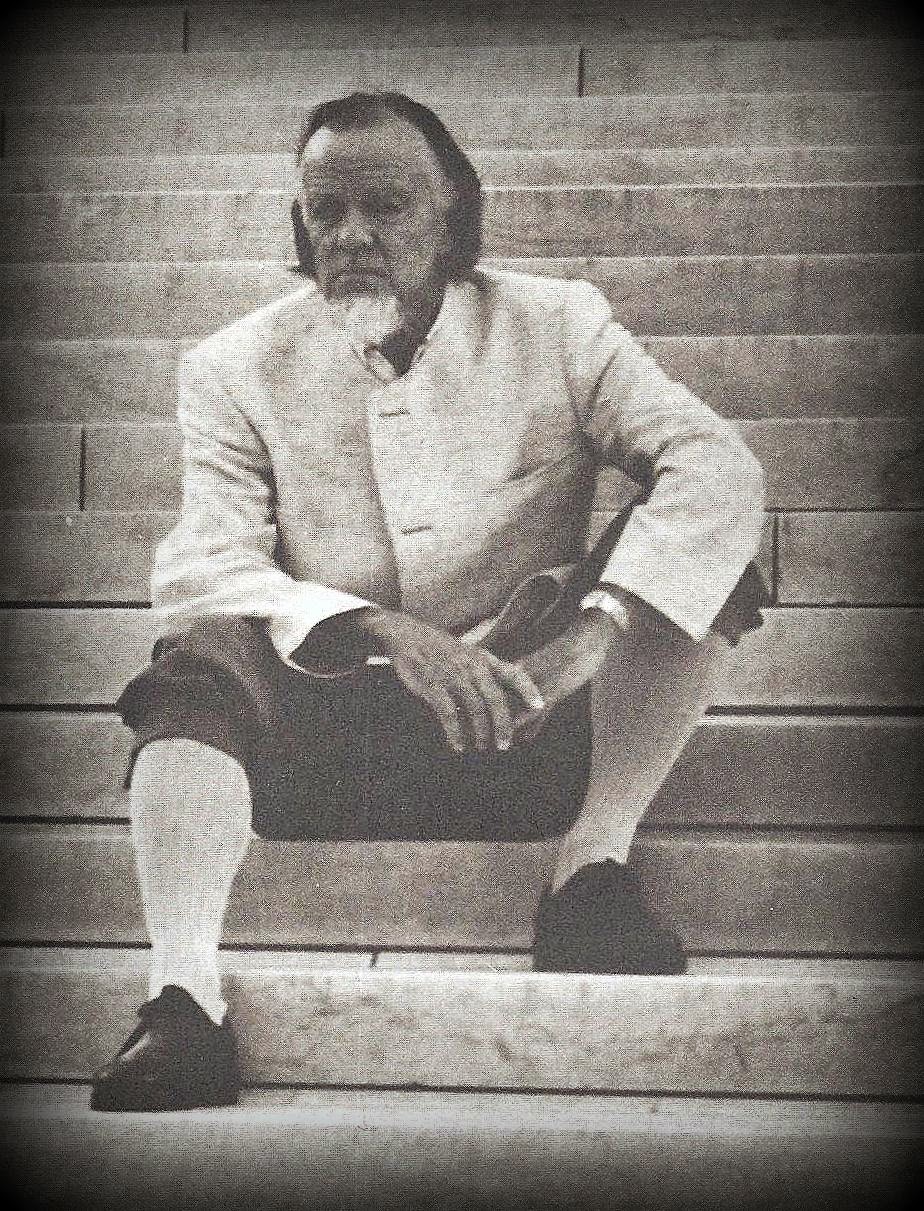




 The Daily Hatch


