Margaret Keane, Painter Behind Tim Burton’s ‘Big Eyes’ | KQED Arts
January 12, 2015
Dear Mrs. Keane,
I watched with great interest the movie about your life and it was so impressive that I went back to go see it a second time and I told my friends about it. Furthermore, I have done several posts on my blog discussing the movie and your artwork. I hope you have a chance to look it over at http://www.thedailyhatch.org .
I thought about you yesterday (January 11, 2015) when our pastor Mark Henry was preaching his sermon and he finished with this passage from the 8th chapter of the Gospel of John:
53 Are you greater than our father Abraham, who died? And the prophets died! Who do you make yourself out to be?”54 Jesus answered, “If I glorify myself, my glory is nothing.It is my Father who glorifies me, of whom you say, ‘He is our God.’55 But you have not known him. I know him. If I were to say that I do not know him, I would be a liar like you, but I do know him and I keep his word.56 Your father Abraham rejoiced that he would see my day. He saw it and was glad.”57 So the Jews said to him, “You are not yet fifty years old, and have you seen Abraham?”58 Jesus said to them, “Truly, truly, I say to you, before Abraham was, I am.”59 So they picked up stones to throw at him, but Jesus hid himself and went out of the temple.
________
Then Mark comments:
Now when Jesus says here, “Truly, Truly before Abraham was I AM.” Jesus is making a powerful statement about who he is. Jesus is in essence saying, “I am God.”
I remind you of an encounter that Moses had with God at a burning bush. He was questioning the burning bush, and God himself and asking God who Moses should say has sent him and what his name is and God says out of the burning bush, “I am who I am.” Jesus is making the strongest declaration of who he is.
_____________________
Mrs. Keane, I am glad that you were honest and told the truth about painting these wonderful paintings but I want you to take a moment and consider the fact that Jesus did claim to be God when he said he was the great “I AM.” Why else would the Jews pick up stones and attempt to stone him?
Keep up the good work with the paintings.
Everette Hatcher, P.O.Box 23416, Little Rock, AR 72221, cell ph 501-920-5733
Big Eyes Official Trailer #1 (2014) – Tim Burton, Amy Adams Movie HD
Today I thought I would share an artist that has a direct effect on my art work! This wonderful painter has been an inspiration to me far before I actually new who she was! From a young age I’ve loved thrift stores, garage sales, and antique stores. You can find many prints or similar style paintings like Margaret Keane’s in those locations. So I was exposed young to the beauty of big eyes. Those big eyes have always pulled me in and tugged on my heart strings. It’s as if the eyes speak to me. Honestly I feel like a nut saying that, but the eye connection is so strong in some paintings its as close to a conversation as a painting can get for me!
So when I started sculpting my art dolls and my process started leading me in this big eye, unrealistic style, I decided to just go with it. I really did try to sculpt realistic faces a few times but it usually just made them look even more alien like! So I stopped fighting what I thought I had to make and embraced what was naturally happening! That’s when I started researching other artists who use big eyes and really learnt about Keane’s history.
I found it very interesting to know that her husband actually tried claiming he did the paintings! I mean seriously what a poop! So of course when they were getting a divorce in the best way ever she proved the paintings were really hers! She painted out in the open right infront of the judge and everyone to show the work was really hers. So when the husband was asked to do the same “I can’t I have a sore shoulder”. Needless to say, she won the case and has continued to do HER work!
As all artist progress and change through their life and career, Keane’s work has experienced shifts of change. In her early career her characters or style were known as “Big Eyes”, “Sad eyes”, “Waifs” or simply known as “Keane”. Many times a tear graced the characters cheek. However, after the divorce Keane moved to Hawaii and while stylistically the same her paintings became brighter and a bit happier. Then again later in life after joining a church her paintings became even a bit happier. So when a tear graced a face, at that point it was of joy not sadness.
Her work was highly criticised in the art world and yet they were some of the best selling art in the Western world in the early 60’s! You may or may not like them yourselves, but there is no denying Keane’s influence on American pop culture! A funny fact for me is that Tim Burton is a long time fan and collector of Keane’s work. Going so far as to commission an art piece, and now working on a movie about her career and court battle with her ex-husband! Although that movie has been talked about for a while, I’m still waiting patiently for something to actually happen with that! I find it funny because I get so many people coming into the gallery saying “this is very Tim Burton like” or referencing him somehow. Which I really don’t mind because I love his work, but in reality I didn’t even consiously think about his work when making mine! I looked at a lot of Keane, Mark Ryden, and Katie Olivias for stylistic inspiration and a myriad of other art doll makers for technical know how. So now seeing that our inspirations crossed paths is a funny little tidbit for me.
Keane is now located in San Francisco where you can visit Keane Eyes Gallery and see her work first hand. It is by appointment though so don’t be a dummy like me and think you can walk there and go right in. Or you’ll end up peering through the windows like me! Have you seen her work or similar work before? Or have you seen how it has influenced pop culture at all?
DP/30: Big Eyes, Amy Adams
Big Eyes (2014) Q&A with Amy Adams, Margaret Keane & The Writers
____________________ Bill Parkinson, one of the teaching pastors at Fellowship Bible Church in Little Rock delivered the message GOD’S INDESCRIBABLE GIFT on December 14, 2014. In Luke 2, we hear the angels praising God, proclaiming, “Glory to God in the highest, and on earth peace among men on whom His favor rests.” This morning we […]
________________ Brandon Barnard pictured below: On Sunday November 30, 2014 at FELLOWSHIP BIBLE CHURCH in Little Rock our teaching pastor BRANDON BARNARD delivered the message A TALE OF TWO HEARTS based on John 7:1-24: As we look at the passage in John 7 today, we see a tale of two hearts. One that seeks the […]
_____ Brandon Barnard pictured below: Dr. Charles Barg’s book below: Dr. Jack Sternberg below: When I was 15 I joined my family on an amazing trip with our pastor Adrian Rogers to the land of Israel in 1976 and the most notable event to me was our visit to the Western Wall (or Wailing Wall) […]
I Still Haven’t Found What I’m Looking For / U2 The Rolling Stones Satisfaction (rare) If you want to see the path that Kerry Livgren and Dave Hope of the rock group Kansas took to find true satisfaction then listen to their song “Dust in the Wind” and then read their testimony at this link […]
On the show Gene Simmons Family Jewels, Shannon Tweed, 54 yrs old, is the mother of Gene’s two kids and she has been with Gene for 28 yrs but now she is looking for more committment from Gene. She wants him to stop cheating on her. In the July 19th episode Nick said to his […]
Gene Simmons and his son Nick (Refer to end of post for more on Nick and Gene) 28 July 2011 Gene Simmons has proposed to long-term girlfriend Shannon Tweed. The Kiss bassist – who claims to have slept with over 2,000 women and has for a long time vowed never to marry – popped the question […]
Gene Simmons and Shannon Tweed John McArthur The Truth About Divorce, #2 (Mark 10:1-12) On the show Gene Simmons has been arguing the point that he admits that he is selfish, but he still feels he has the right to be selfish. In the conclusion of the final episode of the year on July 24th […]
Gene Simmons Proposes To Shannon Tweed Kiss singer/bassist Gene Simmons proposed to his longtime girlfriend Shannon Tweed in Belize recently, TMZ reports. The couple has been together 28 years and share two children, 22-year-old son Nicholas and 18-year-old daughter Sophie. Simmons popped the question on the A&E reality show ‘Gene Simmons Family Jewels,’ which has followed the life of the Simmons brood since […]
Open letter to President Obama (Part 515) (Emailed to White House on 5-3-13.) President Obama c/o The White House 1600 Pennsylvania Avenue NW Washington, DC 20500 Dear Mr. President, I know that you receive 20,000 letters a day and that you actually read 10 of them every day. I really do respect you for trying to get […]
Testimony of former agnostic Nancy Pearcey who met her husband at Francis Schaeffer’s L’Abri Fellowship in Switzerland!!!!! Francis Schaeffer was a huge influence on many modern day pro-life leaders. Below is the video testimony of Nancy Pearcey and how she wrestled with the truth that Schaeffer confronted her with. She actually fled after one month […]
Release Date: December 25, 2014 Rating: PG-13 (for thematic elements and brief strong language) Genre: Drama Run Time: 105 min Director: Tim Burton Cast: Amy Adams, Christoph Waltz, Danny Huston, Krysten Ritter, Jason Schwartzman, Terence Stamp
Few directors boast as instantly recognizable a style as Tim Burton. To his credit (and, on balance, our benefit) he’s been able to maintain his singular aesthetic within the Hollywood system. Yet after what many saw as a loss of artistic self in gaudy big budget properties like Alice In Wonderland and Dark Shadows, Burton has gone back to more personal works. In 2012 he expanded his early-career stop-motion animated short Frankenweenie into a feature film, and now his follow-up is a low budget passion project.
While it’s a welcome return to individual expression, Big Eyes is also Burton’s most conventional film since Big Fish – and arguably of his entire career, one that reduces his gothic palette to mere heightened realism. Seeing the word “Big” featured in both titles is likely just a coincidence, yet it carries an irony when you consider how neutered they both seem compared to his audaciously dark body of work. ThankfullyBig Eyes doesn’t collapse under the avalanche of sentiment that buried Big Fish, and ends up being a compelling (if not entirely powerful) study of artistic conviction and compromise.
Perhaps the most fascinating aspect of Big Eyes is its meta subtext. It feels like a direct response by Burton to the criticisms of “selling out” he’s received of late, but it’s not an angry rebuttal; this is an honest introspection. Based on a true story (and adapted to the screen by Scott Alexander and Larry Karaszewski, the writers behind Burton’s other true-story movie Ed Wood), Big Eyes dramatizes the life of 1950s painter Margaret Keane (Amy Adams, The Muppets), whose work – innocent child portraits with exaggerated saucer-shaped eyes – never found an audience until her second husband Walter Keane (Christoph Waltz, Horrible Bosses 2) began to take credit for them. It’s an easy slight-of-hand as all of the paintings were simply autographed “Keane.”
Walter, a mediocre painter with a pedestrian sensibility, is a vivacious extrovert with magnetic charm. His own paintings may not exhibit genius but his salesmanship sure does; he can make a pitch both sophisticated and emotional. By contrast, the introverted Margaret would rather just huddle away in her studio and then expect the work to speak for (and sell) itself.
So when she discovers that her belated breakthrough is due to Walter presenting himself as the painter – and learns of this well after they’ve begun to reap financial rewards – Margaret suppresses her anger over Walter’s deceit and agrees to keep the ruse going. She’ll paint, he’ll sell, and together they’ll become rich, which is exactly what they do. Walter’s savvy business acumen turns Margaret’s coveted artwork into an entire cottage industry of Big Eye merchandise. Big Eyes is more than a basic tale of Art vs. Commerce. It’s The Ethics of a Salesman vs. The Ethics of an Artist, and you feel Burton’s own personal struggle between the two permeate the entire narrative.
Along with that thematic core, what gives the story more complexity than one might suspect is that Walter, even with his too-good-to-be-true charisma, is not initially a huckster. Despite his own shady history, he doesn’t seek to steal credit from Margaret. His flaw is that he’s a salesman to a fault, and so to take credit for the paintings is merely a shrewd, even practical, business decision. But it is that decision that begins to progressively corrupt him into a controlling megalomaniac for whom the ends justify the fraud. He gains a false sense of cultural import too, and Margaret is merely an assembly line. Margaret’s moral path follows the opposite trajectory. She becomes more troubled by her own lack of integrity (especially toward her daughter) along with the total loss of identity and self-worth. Compounding the guilt is that she’s culpable in her own victimization.
Burton doesn’t seem to be aligning himself solely with the heroine but also the villain. Through them, he takes stock of his own best and worst (even ugly) tendencies. Walter Keane is just as much a stand-in for Burton as is Margaret, and by examining their real life conflict Burton appears to be working out his own internal one. Alice in Wonderland and Edward Scissorhands both came from him, after all, so what does the crass commercialism of the former and the artistic sincerity of the latter reveal about him not just as a filmmaker but as a person?
Adams gives dimension to Margaret’s frailty, which is both emotional and circumstantial, while still tapping into a well of courage when she can no longer live with her shame. It’s a deeply felt performance that makes Margaret’s choices understandable and sympathetic. Two-time Oscar-winner Waltz relishes the broad nature of Walter’s persona but elevates it beyond caricature. Walter’s not trying to pull a fast one; he honestly doesn’t see what’s wrong with what he’s doing, which makes for something vastly more interesting (and real) than a self-aware slimeball. And for Burton, while his images are much more muted in color and design than we’re used to (it’s basically Burton-light), the bold pastels and period detail still make for a visually appealing experience.
The film resorts to a typical Third Act climax – yes, in a courtroom – that leads to the only resolution it possibly could. Yet on the whole Big Eyes is an engaging and thoughtful (if formulaic) look at a fight to redeem one’s artistic and personal integrity. Through examining Margaret and Walter Keane, Tim Burton seeks the same thing: ultimately, Big Eyes is a search and fight for himself.
CAUTIONS (may contain spoilers):
Drugs/Alcohol: Alcohol consumed in various scenes, at home and in pubs. Some drunkenness at home, which leads to angry outbursts. Smoking occurs on occasion.
Language/Profanity: Occasional but not frequent. One F-word, one S-word, and a few other milder profanities. A couple of vulgar expressions and a crude gesture. A couple of mild sexual references. EDITOR’S NOTE/UPDATE: It’s been brought to our attention that there are also 5-6 instances of the Lord’s name taken in vain in the film, including one ‘GD’ in the first minute. Both Crosswalk and Jeffrey Huston would like to offer our sincere apologies for this accidental omission.
Sexual Content/Nudity: Some kissing and embracing.
Violence/Other: Portrayals of non-graphic violence, along with scaring, intimidating, threatening. Intense domestic fights, verbal abuse. Violence-threatening situations. Early reference to physical domestic abuse. Some one-on-one fighting, fistfights.
Midnight in Paris – a delightfully entertaining film of wit, wonder and love Have you ever thought that you were born in the wrong time? Since I was a child, I found my love for MGM musicals set me apart from my friends. Are we really out of place, or is a sense of nostalgia […]
Five favorite Woody Allen classics Add a comment Sean Kernan , Davenport Classic Movies Examiner June 11, 2011 Woody Allen’s new film “Midnight in Paris” starring Owen Wilson, Rachel McAdams and Oscar winner Marion Cotillard opened Friday, June 10th at Rave Motion Pictures in Davenport, Iowa. “Midnight in Paris” stars Owen Wilson as a blocked […]
Hemingway talks about the fear of death in the latest Woody Allen film “Midnight in Paris.” This is one of Allen’s themes that visits often in his films. This is the Golden Age; “Midnight in Paris” is effortlessly lovely by Nick Christian, Editor-In-Chief Volume 16, Issue 34 June 14, 2010 The CNM Chronicle gives “Midnight […]
WOODY ALLEN Reveals New Muse? Review and Pictures and Video Clips of Woody Allen’s movie “MAGIC IN THE MOONLIGHT” Part 16 Review: Woody Allen’s ‘Magic In The Moonlight’ Starring Colin Firth & Emma Stone REVIEWS BY RODRIGO PEREZ JULY 18, 2014 9:02 AM 12 COMMENTS “Cloquet hated reality but realized it was still the […]
_________________________ Review and Pictures and Video Clips of Woody Allen’s movie “MAGIC IN THE MOONLIGHT” Part 15 Magic in the Moonlight Theatrical Review [Sony Pictures Classics; 2014] Director: Woody Allen Runtime: 97 minutes Written by Nick Newman, July 18, 2014 at 10:00 am Share7 Tweet24 0 Reddit0 Tumblr0 Email0 Magic in the Moonlight’s pending release […]
Emma Stone and Colin Firth promoting Woody Allen’s ‘Magic in the Moonlight’ on Good Morning America Review and Pictures and Video Clips of Woody Allen’s movie “MAGIC IN THE MOONLIGHT” Part 14 Colin Firth looks handsome and happy in dark blue suit at Magic In The Moonlight screening… despite lukewarm reviews from critics By ELEANOR […]
Magic In The Moonlight: Hamish Linklater Exclusive Interview Review and Pictures and Video Clips of Woody Allen’s movie “MAGIC IN THE MOONLIGHT” Part 13 Film Review: Magic in the Moonlight JULY 21, 2014 tags: Colin Firth, Emma Stone, Magic in the Moonlight, Review,Woody Allen (Re-posted from LimitéMagazine.com) by Daniel Quitério Exotic locations. Defined characters. Sharp wit. […]
_____________________________________ Magic In The Moonlight: Hamish Linklater Exclusive Interview Review and Pictures and Video Clips of Woody Allen’s movie “MAGIC IN THE MOONLIGHT” Part 12 ‘Magic in the Moonlight’ (2014) Movie Review Fun, witty and charming, but loses steam in its final third BY: BRAD BREVET MONDAY, JUL 21, 2014 AT 10:11 AM Emma Stone […]
Academy Conversations: Magic in the Moonlight Published on Jul 21, 2014 Magic in the Moonlight discussion with actors Colin Firth and Hamish Linklater on July 20, 2014 at the Samuel Goldwyn Theater. ______________________________________ Review and Pictures and Video Clips of Woody Allen’s movie “MAGIC IN THE MOONLIGHT” Part 11 Woody Allen’s Magic in the Moonlight: […]
Magic In The Moonlight: Jacki Weaver Exclusive Interview Review and Pictures and Video Clips of Woody Allen’s movie “MAGIC IN THE MOONLIGHT” Part 9 Colin Firth and Emma Stone make magic together in Woody Allen’s breezily entertaining 1920s romance. Scott Foundas Chief Film Critic@foundasonfilm Romance blooms under the sun and the stars in Woody Allen’s […]
Below Al Mohler responds to the extremist Muslim Cleric Anjem Choudary’s USA TODAY article!!! He shows the differences between the Christian faith and this radical muslim faith of Anjem Choudary. Mohler notes:
That is a stunning difference between blasphemy in the Christian worldview and the understanding of blasphemy in the Islamic worldview.
As Choudary made very clear in his article inUSA Today, Muslims have a basic responsibility to protect—by violence if necessary—any insult to Islam or the prophet Mohammed. After citing Mohammed to say, “Whoever insults a prophet, kill him,” Choudary wrote,in USA Today, “However, because the honor of the Prophet is something which all Muslims want to defend, many will take the law into their own hands, as we often see.” Indeed, as we saw quite murderously in Paris yesterday.
It is very important that Christians understand that it is not our responsibility to defend the honor of Jesus Christ. As the Bible indicates, Christ will do that himself. Our responsibility is to bear testimony to Christ and, in following his example, bear scorn where necessary in his own name. For this reason, Christians support freedom of expression; understanding that to be a basic human right and not one granted merely by the secular state. Rather freedom of conscience and freedom of expression is bound up in the fact that God has created us in his own image. Christians must therefore defend freedom of expression even while we engage in the public square and bear testimony to the lordship of Christ.
This is an edited transcript of The Briefing podcast from early Thursday morning, January 8, 2015.
The war on terror took on a savage new face yesterday when two gunmen entered the headquarters of a French satirical newspaper known as Charlie Hebdo and opened fire, killing 12 people—10 people connected with the newspaper and two police officers.
TheWashington Postreported this morning, “France’s deadliest terrorist attack in modern memory unfolded with chilling precision here Wednesday as gunmen speaking fluent French burst into a satirical newspaper’s weekly staff meeting and raked the room with bullets, leaving behind what one witness described as ‘absolute carnage.’”
Reporters Griff Witte and Anthony Faiola also reported, “After shooting dead their final victim, the exultant killers calmly fled the scene, sparking a manhunt that extended across this capital city and deep into its suburbs… France raised its security alarm to the highest level and mobilized teams on foot, by air and in vehicles seeking the three masked assailants, who carried out the assault shouting the Arabic call of ‘Allahu Akbar,’ or ‘God is great,’ amid the gunfire.”
Charlie Hebdo—which means “Charlie Weekly”— is well-known in French culture as a far left satirical magazine. In fact, at one point in its history Charlie Hebdo had been put out of business by the French government due to inflammatory comments made in the aftermath of the death of the late French President Charles de Gaulle. But the magazine re-started in 1992 and, in recent years, has become world-famous for running satirical cartoons—including cartoons against the prophet Mohammed.
The scene of carnage in the headquarters of Charlie Hebdo was yet another sign that the Islamic culture, at least as represented by these terrorists, is ready to take whatever steps necessary to put an end to what they consider blasphemy.
French President François Hollande very clearly indicated that he considered this “a terrorist attack, without a doubt.” The French president also stated, “Journalists and police officers have been assassinated in cowardly fashion….France is in a state of shock.”
The attack on the Charlie Hebdo headquarters was hardly unprecedented. In 2011 the headquarters were firebombed after running a similar cartoon satirizing the prophet Mohammed. As theWashington Postreported, “Charlie Hebdo’s iconoclastic style frequently pushed the envelope. The newspaper was already under regular police guard after being targeted in the past.”
As the news of the massacre unfolded, I immediately thought of an editorial that ran in the final edition theWall Street Journalin 2014. That editorial, entitled “Progressives and Disorder,” pointed to the fact that Western elites are often relatively unwilling or unable to deal with the disorder that has now emerged on the world scene. Western elites believe and insist that humanity operates on basically rational terms. No one better illustrates this rationalist approach to world affairs than President Barack Obama. But as theWall Street Journaleditors made clear, those Western elites are relatively helpless when it comes to dealing with the world that will not operate by the same rules of rational order and rational discourse.
The massacre in Paris is yet another sign that a a good portion of the world’s population operates by a very different worldview and by a very different moral code. There is a form of rationality evident in the Islamic attacks, in the larger context of Islamic terrorism, and in particular in the attack upon the newspaper Charlie Hebdo. But that rationality is the rationality of Islam, not of the Western worldview; certainly not of the modern Western secular worldview.
An example of the West’s confusion is demonstrated in an article that appears in this morning’s edition of theNew York Times entitled “‘Dangerous Moment’ for Europe, as Fear and Resentment Grow,” written by Steven Erlanger and Katrin Bennhold. The article cites Olivier Roy, a French scholar of Islam and Islamic radicalism, who defined the Paris assault as “a quantitative and therefore qualitative turning point…This was a maximum-impact attack. They did this to shock the public, and in that sense they succeeded.”
But theNew York Timesarticle is notable for the fact that it lacks any moral clarity about how to understand this massacre. The article cites Andrew Hussey, identified as a Paris-based professor of post-colonial studies, who noted, “Politically, the official left in France has been in denial of the conflict between France and the Arab world. But the French in general sense it.”
One of the fundamental problems among Western elites is that they cannot understand a theological worldview—particularly the theological worldview of Islam. Being basically rational and secular in their own worldview, Western elites find it almost impossible to understand the radical actions taken by Islamic terrorists.
For example, Islamic teaching distinguishes the house of Islam (Dar al_Islam)—that part of the world which is under submission to the Quran and Sharia law—from the house of war (Dar al-Harb)—that portion of the world that is not yet brought under Sharia rule. That logic is simply something that the modern secular mind really cannot understand and the American government seems almost resolutely determined to ignore or even to deny.
Speaking on Hugh Hewitt’s radio program yesterday, Republican Senator Lindsey Graham of South Carolina indicated that he believes that what we are witnessing is a religious war. But that statement is not echoed by other sectors of the American government—in particular, the United States State Department and, even more pointedly, the American White House. President Obama continues to refer to the group that calls itself the Islamic State by the acronym ISIL—trying to do anything to avoid mentioning the word Islam.
Similar efforts have been undertaken, very categorically, by the United States State Department and by governments in Great Britain and also in France. Even though France has been on the front lines of the war on terror, in terms of its military engagement, French leaders have been unwilling to take on Islam as a cultural challenge, a theological challenge, and, more importantly, a worldview challenge.
In an absolutely stunning development this morning,USA Todayran an article by an extremist Muslim cleric in Britain, Anjem Choudary, who wrote, “Contrary to popular misconception, Islam does not mean peace but rather means submission to the commands of Allah alone. Therefore, Muslims do not believe in the concept of freedom of expression, as their speech and actions are determined by divine revelation and not based on people’s desires.”
He went on to write, “Although Muslims may not agree about the idea of freedom of expression, even non-Muslims who espouse it say it comes with responsibilities. In an increasingly unstable and insecure world, the potential consequences of insulting the Messenger Muhammad are known to Muslims and non-Muslims alike.”
Choudary went on basically to defend the massacre in Paris. He wrote, “Muslims consider the honor of the Prophet Muhammad to be dearer to them than that of their parents or even themselves. To defend it is considered to be an obligation upon them. The strict punishment if found guilty of this crime under sharia (Islamic law) is capital punishment implementable by an Islamic State. This is because the Messenger Muhammad said, ‘Whoever insults a Prophet, kill him.’”
To my knowledge, this is the first time a major American newspaper has run an editorial column by a radical extremist actually calling for the death of those who insult the honor of the prophet Mohammed. In its tagline for the articleUSA Todayactually stated that Choudary “is a radical Muslim cleric in London and a lecturer in sharia.”
But as theWashington Post reported on October 11, 2014, there is no doubt about Choudary’s actual ties to Islamic terrorism and the fact that he has proven very elusive to British authorities. In that article The Postreported, “Iraq and Syria, Choudary says confidently, are only the beginning. The Islamic State’s signature black flag will fly over 10 Downing Street, not to mention the White House. And it won’t happen peacefully, but only after a great battle that is now underway.”
The article cites Choudary as saying, “We believe there will be complete domination of the world by Islam. That may sound like some kind of James Bond movie—you know, Dr. No and world domination and all that. But we believe it.”
Witte then wrote, “With such grandiose proclamations, it is tempting to dismiss Choudary as a cartoonish hate preacher straight out of central casting. Many do. But harder to ignore is his record of inspiring impressionable young men to carry out violence in the name of Islam—both in Britain and overseas.”
I cannot think of a precedent whereby a major American newspaper has given this kind of extremist this kind of voice in the pages of its own newspaper.
Blasphemy and the Christian Worldview
From a Christian worldview perspective there are a couple of very crucial issues for us to consider. First is the issue of blasphemy. Islam considers blasphemy a capital crime and defines blasphemy as an insult to the Quran, to Islam, and most specifically and personally, to the prophet Mohammed. Christianity also has a concern about blasphemy, but as a spiritual crime—as a sin against God, not as a matter of civic law.
As a matter of fact, Christians recognize that Jesus Christ himself suffered insults and blasphemy on our behalf. Further, Christ deterred the church from pursuing violence when he told Peter to put his sword away. Christ did not revile those who blasphemed him by calling for violence, but rather he accepted the blasphemy as part of the suffering he was called to endure. That is a stunning difference between blasphemy in the Christian worldview and the understanding of blasphemy in the Islamic worldview.
As Choudary made very clear in his article inUSA Today, Muslims have a basic responsibility to protect—by violence if necessary—any insult to Islam or the prophet Mohammed. After citing Mohammed to say, “Whoever insults a prophet, kill him,” Choudary wrote,in USA Today, “However, because the honor of the Prophet is something which all Muslims want to defend, many will take the law into their own hands, as we often see.” Indeed, as we saw quite murderously in Paris yesterday.
It is very important that Christians understand that it is not our responsibility to defend the honor of Jesus Christ. As the Bible indicates, Christ will do that himself. Our responsibility is to bear testimony to Christ and, in following his example, bear scorn where necessary in his own name. For this reason, Christians support freedom of expression; understanding that to be a basic human right and not one granted merely by the secular state. Rather freedom of conscience and freedom of expression is bound up in the fact that God has created us in his own image. Christians must therefore defend freedom of expression even while we engage in the public square and bear testimony to the lordship of Christ.
As Christians we understand that every word—indeed every blasphemous word—will eventually stand under divine judgment. There is absolutely nothing to celebrate in blasphemy. But, even as Christians understand the grave consequences of blasphemy, we do not consider it our responsibility to punish the blasphemer. That’s a very important issue and one that is in keeping with the example of our Lord Jesus Christ himself.
Theological Extremism and The Secular Worldview
Andrew Hussey’s insightful comment in the New York Times is worth repeating: “Politically, the official left in France has been in denial of the conflict between France and the Arab world. But the French in general sense it.”
The reality is that secular elites in general find it incomprehensible to discern why the events in Paris yesterday took place. The denial that this type of terrorism is tied to a theological worldview, present in so many Western intellectual circles, is going to be far harder to hold in light of this kind of massacre. Even as the manhunt for the two assailants spreads throughout France and into much of Europe, the reality is that French intellectuals, European intellectuals, and their American compatriots, are finding themselves hard-pressed to deny that this is indeed a religious war—there is a theological dimension here that simply must be accepted.
It is true, of course, that not all Muslims are radicalized or extremist. It is true that many Muslims, especially in the West, have nothing to do with these kinds of terrorist attacks—either in plotting it or in supporting it. It is also true that most of the Muslims around the world, even if they hold to a theological worldview that justifies these kinds of actions, will never be involved in them. But the other side of the equation is that the Western world now finds itself at war with at least a very large sector of Islam.
Indeed, there is evidence that Islamic terrorism is growing. Keep in mind the report in theWashington Postthat over 2000 young Muslims in France have joined the jihad in the Middle East. To those numbers must be added similar figures of young Muslims joining the jihad from the United Kingdom and from other European countries. Further, there are reports of at least several hundred young Muslims leaving the United States from cities including Minneapolis, Minnesota to join the jihad as well.
The Charlie Hebdo newspaper in Paris was known for satirically attacking just about every form of religious expression – including Orthodox Judaism and Christianity. But that newspaper did not have to fear any kind of terrorism from Orthodox Jews or from Christians. Both Jews and Christians take blasphemy to be a grave sin but not in the same sense as Islam. French elites and the French people have now been informed of exactly what kind of jihad has been declared against them as a nation, against them as a people, and against freedom of expression.
There is a role for satire in the Christian worldview, even within the Bible. Just think of Isaiah 44’s satirical description of the folly of human idolatry. But that is not warrant for Christians to enter into any kind of irresponsible and intentionally offensive form of satire. Consider the example of the Apostle Paul in Acts 17 who, standing at Mars Hill in the context of religious pluralism, did not resort to satire or ridicule. Instead, he boldly declared Christ and he did so in a way that was calculated to make a very clear distinction between the worship of Jesus Christ and the worship of idols. He did so in a way that should serve as an example to all Christians, especially in our contemporary context of radical religious pluralism.
We are living in a world growing more dangerous by the day. That world — the real world — is a world of clashing ideologies and conflicting worldviews. The real world is also a world in which theology always matters, and a world in which an empty secular worldview is no match for an Islamic theology set on conquest and driven by revenge.
Who are the good guys: Hamas or Israel? ___________________ Zechariah 12:3 (KJV) notes, “And in that day will I make Jerusalem a burdensome stone for all people: all that burden themselves with it shall be cut in pieces, though all the people of the earth be gathered together against it.” It is amazing how up […]
Zechariah 12:3 (KJV) notes, “And in that day will I make Jerusalem a burdensome stone for all people: all that burden themselves with it shall be cut in pieces, though all the people of the earth be gathered together against it.” It is amazing how up to date the Bible can be in many ways. […]
___________________ Dr. Francis schaeffer – The flow of Materialism(from Part 4 of Whatever happened to human race?) Norman Podhoretz – Reflections of a Jewish Neoconservative Jews and Christians should both support the State of Israel and also the pro-life view!!!! I understand that Francis and Edith Schaeffer were good friends with like minded Jews such as Norman […]
____________ __________________________________ ___________________________________ In light of recent developments in the news the future fulfillment of Revelation chapter 12 does not look so far-fetched. Obviously Israel is the mother that produced the Messiah (verse 1) and Satan is the dragon that dragged 1/3 of the angels out of heaven with him. Jesus is the child who […]
Irving Kristol pictured below: In 1980 I read the books HOW SHOULD WE THEN LIVE? by Francis Schaeffer and WHATEVER HAPPENED TO THE HUMAN RACE? by both Schaeffer and Dr. C. Everett Koop and I saw the film series by the same names. In those two books Daniel Bell was quoted. In HOW SHOULD WE […]
One News Now reports on Friday Obama’s comments a ‘gross error’ GOP lawmaker and Tea Party Caucus founder Michele Bachmann says President Obama has defined his Middle East policy: “blame Israel first.” Supporters of Israel are expressing outrage over President Barack Obama’s call yesterday that Israel give back territory it gained when attacked by Arabs […]
President Barack Obama addresses an audience during a campaign fundraising event, in Boston, May 18, 2011. (AP Photo/Steven Senne) Secretary of State Hillary Rodham Clinton greets President Obama before his speech at the State Department. Clinton introduced Obama, who joked that she has been accruing quite a few frequent-flier miles. Below is […]
Is God a Delusion? – William Lane Craig vs Lewis Wolpert Published on Apr 30, 2012 Professor Craig debated Professor Wolpert at Central Hall, Westminster, Feb. 28, 2007, with John Humphrys in the chair. Professor Wolpert is Professor of Biology as Applied to Medicine at University College, London and is well known for his atheistic […]
Interview of the scientist Herbert Huppert – part one Uploaded on Jul 22, 2010 An Interview on the life and work of Herbert Huppert, made on 25th May 2009 by Alan Macfarlane and edited by Sarah Harrison. For a higher quality, downloadable version with detailed summary, please see http://www.alanmacfarlane.com_________________ On November 21, 2014 I […]
_________________ On November 21, 2014 I received a letter from Nobel Laureate Harry Kroto and it said: …Please click on this URLhttp://vimeo.com/26991975 and you will hear what far smarter people than I have to say on this matter. I agree with them. Harry Kroto __________________________ There are 3 videos in this series and they have […]
______ Ben Parkinson pictured below: On November 9, 2014 at Fellowship Bible Church, Ben Parkinson noted in his sermon that Jesus claimed to be the Messiah and that the Jewish leaders knew what Jesus was claiming when Jesus referred to himself as “I AM.” John 8:57-59 New American Standard Bible (NASB) 57 So the Jews said to […]
The Atheism Tapes – Steven Weinberg [2/6] Published on Sep 25, 2012 Jonathan Miller in conversation with American physicist and Nobel laureate Steven Weinberg ___________________________ I have posted many times in the past about Steven Weinberg on my blog and I have always found his works very engaging. It is true that he is a […]
Larry Norman and Steve Turner on John Lennon’s spiritual quest and Jesus!!!
______________
I posted a lot in the past about my favorite Christian musicians such as Keith Green (I enjoyed reading Green’s monthly publications too), and 2nd Chapter of Acts and others. Today I wanted to talk about one of Larry Norman’s songs. David Rogers introduced me to Larry Norman’s music in the 1970’s and his album IN ANOTHER LAND came out in 1976 and sold an enormous amount of copies for a Christian record back then.
Larry Norman on John Lennon, Paul McCartney and the Beatles
Uploaded on Dec 28, 2011
Larry shares his view on The Beatles, especially John Lennon
Two books tell the story behind John Lennon’s short-lived conversion.
Steve Turner/ June 12, 2000
Two new books on John Lennon claim that the ex-Beatle experienced a brief period as a born-again Christian during the 1970s. While living the life of a virtual recluse in New York’s Dakota Building, Lennon became an avid viewer of American TV evangelists and, at some point during 1977, declared that he had been saved. Robert Rosen in Nowhere Man: The Final Days of John Lennon (published in June by Soft Skull Press) cites Billy Graham as the main influence, whereas Geoffrey Giuliano in Lennon in America (published in June by Cooper Square Press) mentions both Graham and Pat Robertson. Both agree that the period, during which Lennon peppered his everyday conversation with
“Praise the Lord” and “Thank you, Jesus,” was brief. Giuliano says it lasted for “a matter of months.” Rosen suggests it was “about two weeks.”
Both writers have based their information on sources close to Lennon and on the singer’s personal diaries, which circulated shortly after his death and were then retrieved by his widow, Yoko Ono. The existence of the diaries has been known for some time, but so far no writer has divulged their contents. Because of legal problems, neither Rosen nor Giuliano has been able to quote directly from the diaries, but both have drawn on the information.
“One day [Lennon] had an epiphany—he allowed himself to be touched by the love of Jesus Christ, and it drove him to tears of joy and ecstacy,” writes Rosen, a New York journalist briefly employed by Ono.
“He drew a picture of a crucifix; he was born again, and the experience was such a kick that he had to share it with Yoko.”
Giuliano, who has written extensively about the Beatles, pinpoints the conversion to a Palm Sunday and says that Lennon was so moved by a series about Jesus broadcast on Robertson’s CBN that he broke down in tears. In the following weeks, he attended church services and took his son, Sean, to a Christian theater performance. He even called The 700 Club help line to request prayer for his health and troubled marriage.
“He prayed for forgiveness when he stepped on insects or snapped at the maid,” Giuliano writes.
“He became convinced that Jesus was personally protecting Sean.”
Ono, whose first husband Anthony Cox became an evangelical Christian in the 1970s, was displeased with Lennon’s changed outlook. Giuliano claims that Lennon began to challenge her interest in the occult and was disappointed that she wouldn’t join him in watching Graham’s telecasts.
“She feared that John’s new faith would clash with her own ideas about spiritualism and threaten her iron hold over him.”
In the end Ono won. In his final years, the man best known for his lines “Imagine there’s no heaven / It’s easy if you try” was living a life dictated by astrologers, numerologists, clairvoyants, psychics, herbalists, and tarot-card readers. The one song that Lennon wrote during his born-again period has never been released. “You Saved My Soul,” which recounts being prevented from attempting suicide while staying in a Tokyo hotel, is known only to Beatles bootleggers. Two years later, Lennon wrote a parody of Bob Dylan’s “Gotta Serve Somebody” in which he urged his listeners to believe in no one but themselves—a line he had peddled on his first solo release in 1970. According to Rosen in Nowhere Man, Lennon wrote the song in Palm Beach after seeing the newly converted Dylan on a Grammy Awards TV broadcast.
Rosen writes that “Serve Yourself” was “a wrathful protest bristling with fury and despair.”
“(You got to serve yourself / Nobody gonna do it for you / You may believe in devils / You may believe in laws / But you know you’re gonna to have to serve yourself.”)Unlike the other Beatles, Lennon was raised as a nominal Christian and attended Sunday school at St. Peter’s Church in Woolton, Liverpool. This early exposure to Christianity may explain why he always seemed to regard Jesus as a figure who had to be dealt with, whether through comparison (“The Beatles are more popular than Jesus”), identification (“They’re gonna crucify me,” in “Ballad of John and Yoko”), or challenge (“I don’t believe in Jesus,” in “God”).
Where his contemporaries ignored Jesus, Lennon had to continually take him on. In his final interviews, carried out just weeks before his death in December 1980, Lennon said his beliefs could be described as “Zen Christian, Zen pagan, Zen Marxist” or nothing at all. Speaking to Newsweek‘s Barbara Graustark, however, Lennon revealed that he still reads the Bible. “Some of [Christ’s parables] are only making sense to me now, after a whole life of sitting in church or school,” he told her.
“It was just moany, moany, moany for years, and then I hear it again and I think, God, that’s what he means.”
Steve Turner is a journalist and poet living in London.
Related Elsewhere
Nowhere Man and Lennon in America are available from Amazon.com and other Web retailers. The Buffalo Newsand The Times discuss the controversy swirling around the sources used for Lennon in America. An interview with Geoffrey Giuliano, author of Lennon in America, is available online. Excerpts of Nowhere Man are available from the publisher.In 1966, there was a furor over Lennon’s alleged comment that the Beatles were more popular than Jesus. About.com has an area devoted to the Beatles, which links to the other top Beatles sites.Sister publication Books & Culture looked at the spiritual side of Lennon contemporary Bob Dylan in a 1998 issue.
Previous Popular Culture columns include:
The Clay Cries Out | “The Miracle Maker” presents an animated, supernatural, and utterly believable Jesus. (April 3, 2000)
Take a Little Time Out | Amy Grants ever-smiling face is everywhere, obscuring the tragedy of two failed marriages. (Feb. 7, 2000)
Rocking the Church | The Rolling Stone of Christian magazines turns 20. (March 1, 1999)
larry Norman 1983b Wish We’d All Been Ready, I Am A Servant
Uploaded on Mar 5, 2008
From VHS tape “Illegal Observations – The Best of Norman Bootlegs, Part 2 Vol 7”
Please show your love for Larry’s work by purchasing videos and albums in the online store at http://www.larrynorman.com . Even though Larry is gone his work lives on (as well as his medical bills). We all must help to preserve his legacy for future generations.
Francis Schaeffer Whatever Happened to the Human Race (Episode 1) ABORTION _____________________________________ 1978 Prolife Pamphlet from Keith Green’s ministry has saved the lives of many babies!!!! Francis Schaeffer “BASIS FOR HUMAN DIGNITY” Whatever…HTTHR Dr. Francis schaeffer – The flow of Materialism(from Part 4 of Whatever happened to human race?) Dr. Francis Schaeffer – The Biblical […]
This is a tribute to Keith Green who died 32 years ago today!!! On July 28, 1983 I was sitting by the radio when CBS radio news came on and gave the shocking news that Keith Green had been killed by an airplane crash in Texas with two of his children. 7 months later I […]
My favorite Christian music artist of all time is Keith Green. Sunday, May 5, 2013 You Are Celled To Go – Keith Green Keith Green – (talks about) Jesus Commands Us To Go! (live) Uploaded on May 26, 2008 Keith Green talks about “Jesus Commands Us To Go!” live at Jesus West Coast ’82 You can find […]
To me this song below sums up Keith Green’s life best. 2nd Chapter of Acts – Make My Life A Prayer to You Make my life a prayer to You I want to do what You want me to No empty words and no white lies No token prayers, no compromise I want to shine […]
Keith Green – Easter Song (live) Uploaded by monum on May 25, 2008 Keith Green performing “Easter Song” live from The Daisy Club — LA (1982) ____________________________ Keith Green was a great song writer and performer. Here is his story below: The Lord had taken Keith from concerts of 20 or less — to stadiums […]
Keith Green – Asleep In The Light Uploaded by keithyhuntington on Jul 23, 2006 keith green performing Asleep In The Light at Jesus West Coast 1982 __________________________ Keith Green was a great song writer and performer and the video clip above includes my favorite Keith Green song. Here is his story below: “I repent of […]
Keith Green – So You Wanna Go Back To Egypt (live) Uploaded by monum on May 25, 2008 Keith Green performing “So You Wanna Go Back To Egypt” live at West Coast 1980 ____________ This song really shows Keith’s humor, but it really has great message. Keith also had a great newsletter that went out […]
Keith Green – So You Wanna Go Back To Egypt (live) Uploaded by monum on May 25, 2008 Keith Green performing “So You Wanna Go Back To Egypt” live at West Coast 1980 ____________ This song really shows Keith’s humor, but it really has great message. Keith also had a great newsletter that went out […]
Keith Green – Your Love Broke Through Here is something I got off the internet and this website has lots of Keith’s great songs: Keith Green: His Music, Ministry, and Legacy My mom hung up the phone and broke into tears. She had just heard the news of Keith Green’s death. I was only ten […]
Keith Green – So You Wanna Go Back To Egypt (live) Uploaded by monum on May 25, 2008 Keith Green performing “So You Wanna Go Back To Egypt” live at West Coast 1980 ____________ This song really shows Keith’s humor, but it really has great message. Keith also had a great newsletter that went out […]
C.S.Lewis started off as an atheist then a Christian who clung to some secular beliefs then finally a much orthodox Christian near the end of his life!!!!
There would be a strong case for the assertion that C.S. Lewis (1898–1963) has been the most celebrated Christian apologist of the second half of the twentieth century. Even into the twenty-first century Lewis’s popularity shows no sign of diminishing. His war-time radio broadcasts, which aired in 1942–1944, were published in book form as Mere Christianity, which has proved enormously influential. His other books have also found themselves onto the bookshelves of many Christians, notably The Problem of Pain, The Screwtape Letters, Miracles,The Four Loves, The Abolition of Man, and Letters to Malcolm, as well as the seven Chronicles of Narnia and his science fiction trilogy (Out of the Silent Planet,Perelandra, That Hideous Strength). Even The Pilgrim’s Regress, which Lewis later came to regret somewhat, is applauded by J. I. Packer as ‘the freshest and liveliest of all his books’, and the one that Packer has reread more often than any other.1 For logic, beauty of expression, command of the English language, honesty, earthy wit, and imagination, few writers can equal Lewis—or come near him.
C.S. Lewis as theologian
Theologically, Lewis described himself as an Anglican who was ‘not especially “high,” nor especially “low,” nor especially anything else.’2 He is often regarded as suspect in his views, especially regarding the doctrines of revelation and the atonement. Certainly, Lewis retained some liberal elements in his thinking. For example, he was open on the possibility of persons of other religions belonging to Christ without knowing it.3 Regarding revelation, he declared in an interview conducted in 1944 that ‘The Old Testament contains fabulous elements.’ He considered that the accounts of Jonah and of Noah were ‘fabulous’, whereas the court history of King David was probably as reliable as the court history of King Louis XIV. ‘Then, in the New Testament the thing really happens.’4 It is the sort of view that rightly needs to be criticized by evangelical believers. Lewis held quite a high view of Scripture, but it remained somewhat vague and elusive in places. Not long before his death, he commented that as Christians ‘we still believe (as I do) that all Holy Scripture is in some sense—though not all parts of it in the same sense—the Word of God.’5
Regarding the atonement, Lewis was equally as vague and disappointing. He declared that what matters is that it works, not how it works: ‘The central Christian belief is that Christ’s death has somehow put us right with God and given us a fresh start. Theories as to how it did this are another matter. A good many different theories have been held as to how it works; what all Christians are agreed on is that it does work.’6
Later in life, Lewis appears to have shifted in a direction that was more biblically orthodox.
Later in life, Lewis appears to have shifted in a direction that was more biblically orthodox. One of his last essays, Fern-seeds and Elephants, is quite a devastating critique of the acceptance of Modernist theology in the Church of England. Lewis’s final sentence is particularly barbed: ‘Missionary to the priests of one’s own church is an embarrassing role; though I have a horrid feeling that if such mission work is not soon undertaken, the future history of the Church of England is likely to be short.’7 Overall, Lewis never regarded himself as a theologian; his strengths lay in his wonderful command of prose and in his clarity of thought.
C.S. Lewis as an atheist
Only in 1929 did Lewis become what he called ‘perhaps the most dejected and reluctant convert in all England’.8 This was a conversion to theism, but it was followed two years later by the acceptance, while being driven to the zoo, that Jesus was the Son of God. Until his conversion, Lewis was a rabid unbeliever, being not simply indifferent to Christianity but decidedly hostile—not unlike Richard Dawkins today. Indeed, Lewis was to refer to this period of his life as ‘the days when I still hated Christianity’.9 He used the traditional argument that the state of the world shows that it is not governed by a good God. In October 1916 he wrote to one who was to be his lifelong friend, Arthur Greeves: ‘I believe in no religion. There is absolutely no proof for any of them, and from a philosophical standpoint Christianity is not even the best. All religions, that is, all mythologies, to give them their proper name, are merely man’s own invention, Christ as much as Loki.’10
Lewis was more philosophical than scientific in his outlook, and so he rarely referred to the evolutionary hypothesis in his rejection of Christianity. One of the few references comes in 1925 when Lewis recorded that Mrs Moore’s daughter, Maureen, had asked him about the theory of evolution. Lewis’s response was straightforward: ‘I explained that the Biblical and scientific accounts were alternatives. She asked me which I believed. I said the scientific. She said “I suppose if one believes in it then, one doesn’t believe in God.” I said one could believe in God without believing in all the things said about him in the Old Testament. Here the matter ended.’11
C.S. Lewis’ early attitude to evolution as a Christian
When Lewis became a Christian, he felt no immediate need to renounce any belief in evolution. In the meantime, Bernard Acworth (a retired Royal Navy captain), Douglas Dewar, and Sir Ambrose Fleming launched the Evolution Protest Movement. Acworth came to seek to enlist the pen of Lewis on the side of the anti-evolutionary creationists. Lewis, however, was reluctant to come on board. On 9 December 1944 he wrote to Acworth: ‘I can’t have made my position clear. I am not either attacking or defending Evolution. I believe that Christianity can still be believed, even if Evolution is true. This is where you and I differ. Thinking as I do, I can’t help regarding your advice (that I henceforth include arguments against Evolution in all my Christian apologetics) as a temptation to fight the battle on what is really a false issue: and also on terrain very unsuitable for the only weapon I have.’12
At this time, Lewis was not convinced that it was wise for Christians to declare war on evolution, and in any case he did not possess enough biological knowledge to make any contribution to the cause of creationism. In The Problem of Pain, written in 1940, Lewis showed his willingness to accept virtually any view of evolution provided the biblical doctrine of the Fall was retained.13
C.S. Lewis’s growing questioning of evolution
However, by 1951 that tone was changing, and Lewis wrote to the same Captain Acworth: ‘What inclines me now to think you may be right in regarding [evolution] as the central and radical lie in the whole web of falsehood that now governs our lives is not so much your arguments against it as the fanatical and twisted attitudes of its defenders.’14 Lewis rarely intruded into the area of science as such but he was impressed by Acworth’s arguments, and wrote: ‘The point that the whole economy of nature demands simultaneity of at least a v[ery] great many species is a v[ery] sticky one.’14
For all that, Lewis refused to write a preface for an anti-evolutionary work on the grounds that he was known to be no scientist. He argued that ‘When a man has become a popular Apologist he must watch his step. Everyone is on the look out for things that might discredit him.’14He was somewhat gleeful that Piltdown Man had been proved to be a hoax in 1953, but warned that Christians had been guilty too of forged decretals and faked miracles. He had no time for the rhapsodies of Teilhard de Chardin in The Phenomenon of Man, which he regarded as ‘evolution run mad’.14
It was sometime in this period when, at a dinner party where the guests included Helen Gardner, the topic was raised as to whom one would like to meet in heaven. One guest suggested Shakespeare while another suggested the apostle Paul, but Lewis said that he would like to meet Adam. He gave as his reasons:
Adam was, from the first, a man in knowledge as well as in stature. He alone of all men ‘had been in Eden, in the garden of God, he had walked up and down in the midst of the stones of fire’. He was endowed, says Athanasius, with ‘a vision of God so far-reaching that he could contemplate the eternity of the Divine Essence and the coming operation of His Word’. He was ‘a heavenly being’ according to St. Ambrose, who breathed the aether and was accustomed to converse with God ‘face to face’.
Helen Gardner, a church-goer with a deep interest in the seventeenth century English metaphysical poets, ventured to suggest that Adam, if he existed, would be a Neanderthal ape-like figure whose conversation would hardly be interesting. Apparently, Lewis responded in a gruff voice: ‘I see we have a Darwinian in our midst.’15
In a letter to Dorothy Sayers on 4 March 1954 Lewis penned a satirical poem entitled Evolutionary Hymn. Christians with no sense of mockery have sometime asked whether it was meant to be serious, and to be dated from his unbelieving days. Lewis, however, had a well developed sense of satire, and this effort is particularly biting. Its opening stanza is:
Lead us, Evolution, lead us
Up the future’s endless stair:
Chop us, change us, prod us, weed us
For stagnation is despair:
Groping, guessing, yet progressing,
Lead us nobody knows where.
Significantly, this attacks the claims of evolution as a philosophy rather than as a science.
As early as Mere Christianity, C.S. Lewis had mocked creative evolution as espoused by George Bernard Shaw and Henri Bergson: ‘The Life-Force is a sort of tame God. You can switch it on when you want, but it will not bother you. All the thrills of religion and none of the cost.’16Lewis’s interests were more philosophical than scientific, although that should not be interpreted to mean that he espoused a brand of Idealism. Lewis’s views on evolution provide an interesting insight into his questing intellect. Ultimately, they stop short of the full-orbed Christian view, but we can be thankful that he came to see that the evolutionary hypothesis made for bad philosophy, and increasingly came to view its scientific underpinning, in so far as he understood it, as equally as flawed. One wonders what he might have said had his vague acceptance of evolution been shaken earlier. There is a wealth of suggestive possibilities in his 1951 lament: ‘I wish I were younger.’14
C.S. Lewis on materialistic thoughts
‘If the solar system was brought about by an accidental collision, then the appearance of organic life on this planet was also an accident, and the whole evolution of Man was an accident too. If so, then all our present thoughts are mere accidents—the accidental by-product of the movement of atoms. And this holds for the thoughts of the materialists and astronomers as well as for anyone else’s. But if their thoughts—i.e. of materialism and astronomy—are merely accidental by-products, why should we believe them to be true? I see no reason for believing that one accident should be able to give me a correct account of all the other accidents. It’s like expecting that the accidental shape taken by the splash when you upset a milkjug should give you a correct account of how the jug was made and why it was upset.’
C.S. Lewis (1898–1963), The Business of Heaven, Fount Paperbacks, U.K., p. 97, 1984.
__________ Adrian Rogers – How you can be certain the Bible is the word of God In the 1970’s and 1980’s I was a member of Bellevue Baptist in Memphis where Adrian Rogers was pastor and was a student at ECS from the 5th grade to the 12th grade where I was introduced to […]
Irving Kristol pictured below: In 1980 I read the books HOW SHOULD WE THEN LIVE? by Francis Schaeffer and WHATEVER HAPPENED TO THE HUMAN RACE? by both Schaeffer and Dr. C. Everett Koop and I saw the film series by the same names. In those two books Daniel Bell was quoted. In HOW SHOULD WE […]
_________________ On November 21, 2014 I received a letter from Nobel Laureate Harry Kroto and it said: …Please click on this URLhttp://vimeo.com/26991975 and you will hear what far smarter people than I have to say on this matter. I agree with them. Harry Kroto __________________________ There are 3 videos in this series and they have […]
_____________ Discussion (1 of 3): Antony Flew, N.T. Wright, and Gary Habermas Uploaded on Sep 22, 2010 A discussion with Antony Flew, N.T. Wright, and Gary Habermas. This was held at Westminster Chapel March, 2008 Is Goodness Without God is Good Enough? William Lane Craig vs. Paul Kurtz Published on Jul 29, 2013 Date: October 24, 2001 […]
_____________ I touched on this same subject with a signer of Humanist Manifesto 1, 2, and 3 and I posted that earlier. Frank Turek vs David Silverman – The Reality Debate April 25, 2013 Moderator: If God is all-powerful why does he not remove evil, if he is not all-powerful why call him God? Mr. Turek: […]
________________ ‘Cosmos’ vs. ‘Master Designer’ BY JOHN STONESTREET, CHRISTIAN POST GUEST COLUMNIST March 18, 2014|1:11 pm “The cosmos is all that is, all there ever was, and all there ever will be.” Those opening words from Carl Sagan’s 1980s TV series, “The Cosmos” are a succinct statement of what’s become the driving philosophy behind much […]
__________ Contributors Justin Taylor THE INVISIBLE VS. THE CONSTANT GARDENER: PARABLES FOR AND AGAINST ATHEISM August 22, 2011 1 Comments 15 0 British philosopher of religion Antony Flew (1923-2010), writing as an atheist in 1955, expanded upon a parable designed to show that there is no difference between (God as) an “invisible gardener” and there […]
________________________ When Science Points To God Dinesh D’Souza | Nov 24, 2008 Recommend this article Recommend Contemporary atheism marches behind the banner of science. It is perhaps no surprise that several leading atheists—from biologist Richard Dawkins to cognitive psychologist Steven Pinker to physicist Victor Stenger—are also leading scientists. The central argument of these scientific atheists […]
_____________ The Folly of Denying God Hank Hanegraaff Beyond a doubt, the most significant question to ever penetrate the human mind is that of the existence of God. More consequences for humanity hinge on the denial or affirmation of God’s existence than any other issue. Countless numbers of Christian families have sent their children off […]
______________ Religion for Atheists: A Nonbelievers Guide to the Uses of Religion Alain de Botton Jan 24, 2013 Series: Volume 16 – 2013 Alain de Botton Religion for Atheists: A Nonbelievers Guide to the Uses of Religion. New York: Pantheon Books, 2012. Hardback. $26.95. 320 pages. ISBN-10: 0307379108; ISBN-13: 978-0307379108. Cultural critic and popular atheistic philosopher, Alain de […]
________ The Great Debate: Dinesh D’Souza v. Michael Shermer (part 1) Uploaded on Apr 26, 2011 In this debate on what are arguably two of the most important questions in the culture wars today — Is Religion a Force for Good or Evil? and Can you be Good without God? — the conservative Christian author […]
___ _________ Jesus’ Resurrection: Atheist, Antony Flew, and Theist, Gary Habermas, Dialogue Published on Apr 7, 2012 http://www.veritas.org/talks – Did Jesus die, was he buried, and what happened afterward? Join legendary atheist Antony Flew and Christian historian and apologist Gary Habermas in a discussion about the facts surrounding the death and resurrection of Jesus Christ. […]
During the 1990′s I actually made it a practice to write famous atheists and scientists that were mentioned by Adrian Rogers and Francis Schaeffer and challenge them with the evidence for the Bible’s historicity and the claims of the gospel. Usually I would send them a cassette tape of Adrian Rogers’ messages “6 reasons I know […]
7News : Web Extra: Ricky Gervais on God Published on Mar 23, 2014 He’s not shy about sharing his opinion with 5 million social media followers so Ricky Gervais was happy to clear a few things up for us too. __________________________________ Discussion (2 of 3): Antony Flew, N.T. Wright, and Gary Habermas ___________ The Bible and Science […]
Piers Morgan Tonight : CNN Official Interview: Ricky Gervais says atheism shouldn’t offend Uploaded on Jan 20, 2011 Ricky Gervais tells CNN’s Piers Morgan why he’s an atheist, and why his jokes about God shouldn’t offend believers. The Bible and Science (Part 01) __________________________________ Antony Flew tells what the book THERE IS A GOD: “How the world’s most […]
Richard Dawkins Interview Ricky Gervais About Atheism! _________ Antony Flew – World’s Most Famous Atheist Accepts Existence of God Uploaded on Nov 28, 2008 Has Science Discovered God? A half-century ago, in 1955, Professor Antony Flew set the agenda for modern atheism with his Theology and Falsification, a paper presented in a debate with C.S. […]
Ricky Gervais on Science and History (with transcript) Published on Apr 20, 2012 The comedian offers a preview of the stand-up routine, Science. Question: What do you make of smart people?Gervais: Yeah. I was talking to Karl Pilkington about Einstein. And he went, “What was so great about him?” I said, “Well, you know, he […]
Discussion (3 of 3): Antony Flew, N.T. Wright, and Gary Habermas David Brent on Guitar – Free Love Freeway – The Office – BBC The Kalam Cosmological Argument (Scientific Evidence) (Henry Schaefer, PhD) Published on Jun 11, 2012 Scientist Dr. Henry “Fritz” Schaefer gives a lecture on the cosmological argument and shows how contemporary science backs […]
________________ The Bible and Science (Part 01) Making Sense of Faith and Science Uploaded on May 16, 2008 Dr. H. Fritz Schaefer confronts the assertion that one cannot believe in God and be a credible scientist. He explains that the theistic world view of Bacon, Kepler, Pascal, Boyle, Newton, Faraday and Maxwell was instrumental in the […]
_____________ Ricky Gervais – Losing Religion and Becoming An Atheist Uploaded on Jul 2, 2009 Ricky Gervais – Losing Religion and Becoming An Atheist _____________________ Chuck Colson wrote back in 2005 concerning Antony Flew: When he reads the first chapter of Genesis, Flew says he’s impressed that a book written thousands of years ago harmonizes with […]
____________ Does God Exist? Thomas Warren vs. Antony Flew Published on Jan 2, 2014 Date: September 20-23, 1976 Location: North Texas State University Christian debater: Thomas B. Warren Atheist debater: Antony G.N. Flew For Thomas Warren: http://www.warrenapologeticscenter.org/ ______________________ Antony Flew and his conversion to theism Uploaded on Aug 12, 2011 Antony Flew, a well known spokesperson […]
Discussion (1 of 3): Antony Flew, N.T. Wright, and Gary Habermas Uploaded on Sep 22, 2010 A discussion with Antony Flew, N.T. Wright, and Gary Habermas. This was held at Westminster Chapel March, 2008 Debate – William Lane Craig vs Christopher Hitchens – Does God Exist? Uploaded on Jan 27, 2011 April 4, 2009 – Craig vs. […]
Burt Reynolds as “Gator” McKlusky in White Lightning.
Vitals
Burt Reynolds as Bobby “Gator” McKlusky, paroled moonshine runner
Bogan County, Arkansas, Summer 1973
Background
This was the first of the “hick flicks”, a series of films that became popular in the ’70s. The story was usually the same, an anti-hero would use his muscle car to face off against a corrupt, and usually fat, Southern lawman with illegal booze as the story’s MacGuffin. Burt Reynolds himself would be associated with this subgenre, with his appearance in White Lightning, the more lighthearted sequel Gator, and the wildly popular Smokey and the Bandit. This first, 1973′s White Lightning, is the most gritty of the trio.
Additional hick flicks include low budget fare such as Macon County Line and Moonrunners, the latter of which would go on to inspire The Dukes of Hazzard.
Now, while my personal dream is to own a 1969 Dodge Charger R/T – the Dukes’ choice – the pants in that show are a little too painted-on to warrant a BAMF Style entry for my first car week series. I may give in in the future, as a Charger is a tempting vehicle to write about.
White Lightning is set in the fictional Bogan County, Arkansas, run by the corrupt sheriff J.C. Connors. Connors was played by Ned Beatty, in one of his first films since his debut a year earlier in Deliverence. The film was shot on location in Arkansas, with many local landmarks visible on screen.
Burt plays Gator McKlusky, a former moonshine runner serving time in an Arkansas prison. His brother is killed during the opening credits by Connors, sending McKlusky on a personal mission to get even.
What’d He Wear?
After ditching his ultra-’70s white suit and polyester shirt, Gator arrives at the old McKlusky homestead in his staple outfit throughout the film, a blue work shirt and dark jeans with boots. There are slight variations on each one as the plot thickens, but the core remains the same.
Gator’s first shirt is a sky blue polyester snap-down. It is a very typical shirt as seen in these types of movies, with Western-style single-pointed shoulder yokes in the front and a rear pointed yoke. Since it is the mid-’70s, the shirt has long point collars. Not quite disco collars, but still on the large side.
A mustache-free Burt takes some getting used to.
Burt wears the shirt with the double-snapped cuffs unfastened and rolled up his sleeves to his elbows, as he does with all of his shirts. There is a white button worn unfastened at the collar and five silver-rimmed pearl snaps down a front placket. There are two chest pockets, each with a flap that closes with a single snap.
The shirt is worn with a pair of dark blue denim jeans. They are a standard pair with five pockets and belt loops. Thankfully, they are boot cut and roomy throughout the leg. As the decade progressed and Burt slid into the role of the Bandit, jeans became tighter, lighter, and flared. I wasn’t around in the mid-’70s deep South, but I’d guess that most good ol’ boys scoffed at any man in a pair of painted-on jeans. The jeans have rounded rear pockets with a brown “X” stitched at the top corners of each pocket.
Oh, so that’s why they call it “sky” blue!
Burt’s belt is black canvas with two prongs. There are two rows of silver-rimmed holes across the whole belt. A large silver rectangular clasp fastens the belt in the front. This is sometimes switched up for a brown or black solid leather belt, but the canvas is Gator’s go-to.
Gator wears two sets of plain-toe boots during the film as well, a black pair and a brown pair. We don’t see much of them, since Gator almost always has his jeans over them, but they appear to have button-fastened sides and travel a substantial length up each leg. Underneath, he wears a pair of white tube socks.
For a brief scene where Burt romances the middle-aged county clerk, Gator wears a dark blue polyester version of his first shirt. It is the same cut, with the snaps appearing to be more of a blue pearl, although that could just be the shading of the shirt having an effect. Like the first, he wears the top button and top snap unfastened and rolls the sleeves to his elbows. This shirt is also worn with the dark blue jeans. However, he wears the jeans with a brown leather belt with a rounded brass clasp.
Burt’s final shirt, worn for the final half of the film, is a blue chambray utility shirt. Unlike the others, this has buttons instead of snaps, with six blue buttons fastening down from his collar to his waist. The top button, worn unfastened, closes on an extended tab.
The last shirt has shoulder seams instead of the large Western-style yokes. It slightly resembles a darker version of a U.S. Navy utility shirt and may indicate Gator’s military history. The collars are large and soft, but not quite as imposing as those on his polyester snap-downs.
Burt, hard at work on the script for Gator.
It has two chest pockets with straight button-down flaps. Gator utilizes each pocket, keeping his cigarettes in his right and his green-covered notebook (for his “life story”) with a pencil in his left.
Gator’s jeans with the last shirt are also a different pair. They are more of a medium-dark wash with squared pockets. Thankfully, they are also a roomy boot cut. Burt wears the jeans with both his black canvas belt and a solid black leather belt. Both pairs of boots are also seen with this outfit.
Burt is pretty much attached at the hip to his car in this one. And every other movie he’s made.
Gator’s single accessory is a large, unexplained pinky ring, worn on his right hand. The ring is gold with a flat, square face that appears to be engraved.
Maybe the ring gives him mystical driving ability?
Go Big or Go Home
White Lightning, filmed in 1973, is something of an anomaly of its genre. It is what many of the later similar films of the ’70s should have been, an updated version of the Thunder Road type story. Instead, studios and family audiences stepped in the way and ruined the verisimilitude of the gritty chain-smoking whiskey runners who cursed and stole each other’s women while facing off against deadly corrupt lawmen. Instead, we were given clean-cut jokesters who let out a few “Aw, hecks” before speeding off from the bumbling sheriff who can’t seem to get his hat off the ground.
(It may seem like I’m taking a lot of digs at The Dukes of Hazzard. In fact, the show was/is a favorite of mine while growing up and I have all seven seasons on DVD. It just doesn’t quite classify as BAMF-y as White Lightning does.)
Gator does break one inviolable rule of the South though: Never steal a man’s gun.
Like Don Draper and many of our fathers and grandfathers, Gator is loyal to his Lucky Strike unfiltered cigarettes, always keeping a pack handy in his pocket and lighting up with a match in his downtime. He’s also not opposed to drinking, with Lone Star beer seeming to be his drink of choice.
Lone Star, the “official beer of Texas”, was first brewed by Adolphus Busch in 1884. Twenty years later, the Lone Star Brewery was built on Jones Avenue in San Antonio. It closed for Prohibition in 1918 but opened its doors instantly when the law was repealed fifteen years later. The first beer to be called “Lone Star” in its present formula was first brewed in 1940. The logo seen throughout White Lightning, boasting of the “pure artisan water” used in the brewing process, was first printed in 1967. This would be short-lived, as the beer was acquired by Olympia Brewing Company in Washington by 1976 and, after a series of acquisitions, the Texas brewery was phased out. In 1999, Pabst purchased Lone Star and announced its re-introduction , keeping the brewing local to Texas. Now, you can again drink like Gator McKlusky with the shield-and-star logo on the Lone Star labels. However, I wouldn’t recommend his method of drinking a tall boy while driving.
Drinking in a bar is fine, though.
Not only was Gator a BAMF, but it goes without saying that Burt Reynolds is also. During the filming of the chase sequence that ends with Gator’s Ford flying onto floating barge, stunt driver Hal Needham accidentally landed the car just a bit too short, landing on the barge’s stern with the rear of the car dipping into the water. Burt, who had been watching from behind the camera, instantly dove into the water, swam to the barge, and helped pull Needham from the car. Needham recovered and enjoyed a long, successful partnership with Burt Reynolds, directing him in hit films such as Hooper, The Cannonball Run, Stroker Ace, and – of course – Smokey and the Bandit. Burt paid tribute to Needham by making sure to mention him during his guest appearance on a third season episode of Archer.
How to Get the Look
Gator has a revolving wardrobe of similar clothes throughout the film. The base look is a blue snap-down long-sleeve shirt, dark jeans, black boots, and a black canvas belt.
The shirts:
Sky blue Western-style polyester snap-down shirt with two snap-flapped chest pockets
Dark blue Western-style polyester snap-down shirt with two snap-flapped chest pockets
Medium blue chambray button-down utility shirt with two button-flapped chest pockets
The jeans:
Dark wash 5-pocket boot cut denim jeans
Medium-dark wash 5-pocket boot cut denim jeans
Footwear:
Black leather boots with button-fastened sides
Dark brown leather boots with button-fastened sides
White tube socks
Other:
Black canvas belt with two rows of silver-rimmed holes and a large silver rectangular clasp
Brown leather belt with a rounded brass clasp
Black leather belt with a rounded silver clasp
Gold pinky ring with a flat, square, engraved face
Also, if you’re trying to channel Burt Reynolds, you may be tempted to wear a mustache. In 1973, Burt’s epic mustache wasn’t yet a part of his image. Sorry.
The Car
For his “mission”, the authorities give Gator a car that impresses him and us, a brown 1971 Ford Custom 500 four-door sedan with a blue interior and a 429 Police Interceptor engine. The car, as the G-men explain, is built for running moonshine and is fitted with a four-speed Hurst manual transmission and a set of Cooper Tire Wide Runner polyglas tires on black steel wheels.
I would do just about anything to spend one day as Hal Needham.
We see shots of both a four-speed manual and the three-speed column-shift automatic, which was the actual standard transmission with the ’71 Custom 500, but the film emphasizes the four-speed.
And how!
At this time, most Customs and Custom 500s were fitted with either the base inline six-cylinder engine or a small-block 289 ci or 351 ci V8. If a customer, whether police or civilian, wanted a larger engine, Ford’s full range of large-block V8s, including the 427 ci and the 429 ci, were available with transmissions from overdrive and four-speed manual to the SelectShift automatic three-speed. By 1972, the three-speed SelectShift had been made standard on all V8-powered engines. 1972 was also the last year for the base Custom, with the Custom 500 continuing for a few more years, mostly for fleet sales, ending U.S. production in 1978.
One of Ford’s top-of-the-line engines in 1971 was the 429 Cobra Jet, a version of the Ford 385 engine (named for the 3.85″ crankshaft stroke). The Ford 385 was offered as a 429 ci or a 460 ci for most production cars, with additional options for trucks and utility vehicles. The engine in Gator’s Custom 500, the 429 Police Interceptor, was a slightly enhanced version of the 429 Cobra Jet with 11-1 compression. It was rated at 375 horsepower and accompanied a Holley 4-barrel carburetor. With an engine like that, averaging less than 9 mpg, the 1971 Ford Custom 500 could pass anything… except a gas station.
A day in the life.
1971 Ford Custom 500
Body Style: 4-door sedan
Engine: 429 cu. in. (7.0 L) Ford 385 V8 “Police Interceptor” with a Holley 4-barrel carburetor
Power: 375 bhp (279 kW)
Transmission: 4-speed manual
Wheelbase: 121 inches (2700 mm)
Length: 216.2 inches (4660 mm)
Width: 79.2 inches (1800 mm)
Interestingly, a 1971 Custom 500 was also chosen in an early episode of The Dukes of Hazzard (Episode 5, “High Octane”) as Uncle Jesse’s old moonshine runner. He fuels the car on the Dukes’ trademark whiskey and runs until he is out of gas to avoid revenue agents.
Music to Drive By
While the film’s theme song is perfect for the eerie opening, it doesn’t do much for fast driving through the dirty back roads of Arkansas. Tarantino liked it enough to use it in Inglourious Basterds though, and that film’s soundtrack is now one of the few places it can be heard.
Instead, this would be the time to listen to great tracks from the Outlaw Country movement of the ’70s, particularly led by Waylon Jennings, Johnny Cash, Merle Haggard, and Willie Nelson. Musicians like those guys felt country was getting too soft and wanted to bring back the authentic outlaw sound of Hank Williams and Jimmie Rodgers.
Of course, another option would be to download Jerry Reed, a friend of Burt’s who later starred with him (in Smokey and the Bandit) and against him (in Gator), who provided plenty of music for these Southern flicks of the ’70s.
Zechariah 12:3 (KJV) notes, “And in that day will I make Jerusalem a burdensome stone for all people: all that burden themselves with it shall be cut in pieces, though all the people of the earth be gathered together against it.”
It is amazing how up to date the Bible can be in many ways.
Mike Huckabee opened up his 8-2-14 Fox news show up with these words:
“You bet it is tragic that many civilians in Gaza have died, but when Palestinians pack their population around their military hardware and weaponry and then they fail to heed the leaflets, radio transmissions, dud warning bombs, phone calls and text messages, the results will be tragic. One MSNBC reporter blamed Israel for an attack on a school that turned out to be a misguided Hamas rocket. I wonder if the Jew-haters would feel better if Israel was terrible at protecting and there were thousands of dead Jewish children?,,,,Every single agreed to cease-fire agreement pushed for by President Obama has resulted in Hamas violating it by firing more rockets right into civilian targets in Israel.”
Furthermore, Bible believers are not surprised that Israel doesn’t get along with their cousins in the Middle East because Genesis 16:12 notes concerning Israel’s neighbors “…he will live in hostility towards all his brothers.” Also we were not surprised when the Jews returned to the Holy Land after War World II because Isaiah 11:12 asserts, “And He will … gather together the dispersed of Judah from the four corners of the earth.”
Amos 9:14-15: “And I will bring back the exiles of My people Israel, and they shall build the waste cities and inhabit them; and they shall plant vineyards and drink the wine from them; they shall also make gardens and eat the fruit of them. And I will plant them upon their land, and they shall no more be torn up out of their land which I gave them, says the Lord your God.”
I visited Israel in 1976 and our tour guide was my pastor Adrian Rogers. During the trip he asserted that the Jews had a divine right to be in the land, but they would never have peace until Christ came back.
Rogers also made 4 other points concerning the young nation of Israel.
First, the Old Testament predicted that the Jews would regather from all over the world and form a new reborn nation of Israel. (Isaiah 11:11-12)
Second, it was also predicted that the nation of Israel would become a stumbling block to the whole world. (Zechariah 12:3)
Third, it was predicted that the Hebrew language would be used again as the Jews’ first language even though we know in 1948 that Hebrew at that time was a dead language! (Zeph 3:9; 2 Thess 2:3-4).
Fourth, it was predicted that the Jews would never again be removed from their land.(Amos 9:14-15)
I was fascinated to read a few years later these groundbreaking words by a famous columnist who happened to be a Jew. Irving Kristol in his article, “The Political Dilemma of American Jews,” COMMENTARY MAGAZINE, 7/1/84 , wrote:
The rise of the Moral Majority is another new feature of the American landscape that baffles Jews…One of the reasons—perhaps the main reason—they do not know what to do about it is the fact that the Moral Majority is strongly pro-Israel. Some Jews, enmeshed in the liberal time warp, refuse to take this mundane fact seriously. They are wrong. Just how wrong they are can be seen by asking the question: how significant would it be for American Jews if the Moral Majority were anti-Israel? The answer is easy and inescapable: it would be of major significance. Indeed, it would generally be regarded by Jews as a very alarming matter. So it is ironic, and puzzling, that American Jews appear to be not all that interested in, and certainly not enthusiastic about, the fact that the Moral Majority is unequivocally pro-Israel… In short, is it not time for an agonizing reappraisal?
I later corresponded with Mr. Kristol and his good friend Daniel Bell and shared with them some of these same Old Testament Prophecies concerning the Jews returning to the promised land once again.
Dear Mr. Hatcher, Thank you for your thoughtful letter. I don’t know whether or not the prophecies of the Ezekiel are being fulfilled. The very nature of such prophecy, or the parables of Jesus, are inherently ambiguous, and so always opaque. As to the survival of the Jewish people, I think of the remark of Samuel Johnson that there is nothing stronger than the knowledge that one may be hanged the next day to concentrate the mind–or the will. Sincerely, Daniel Bell
On September 21, 1995 his good friend Irving Kristol added this comment, “I am leery of taking Biblical prophecies too literally. They always seem to get fulfilled, some way or other, whatever happens. They are inspiring, of course, which enough for me.”
Just recently I got to visit with Irving Kristol’s son Bill in a political meeting in Hot Springs, Arkansas on July 18, 2014. I gave him copies of letters I had received from both his father and their family friend Daniel Bell. He was amazed. He read the letters on the spot and thanked me for them. I told that Old Testament prophecies concerning Israel was the subject of the letters. Then I told him how much I respected his mother’s historical work and asked how she was doing.
The Bible maintains several characteristics that prove it is from God. One of those is the fact that the Bible is accurate in every one of its details. The field of archaeology brings to light this amazing accuracy and Kyle Butt does a great job of showing that in this film series he did on “The Bible and Archaeology.”
_________________________-
The Bible and Archaeology (2/5)
Adrian Rogers – How you can be certain the Bible is the word of God
I want to give you five reasons to affirm the Bible is the Word of God.
First, I believe the Bible is the Word of God because of its scientific accuracy. The Truth of the Word of God tells us that God “hangeth the earth upon nothing” (Job 26:7). How did Job know that the earth hung in space before the age of modern astronomy and space travel? The Holy Spirit told him. The scientists of Isaiah’s day didn’t know the topography of the earth, but Isaiah said, “It is [God] that sitteth upon the circle of the earth” (Isaiah 40:22). The word for “circle” here means a globe or sphere. How did Isaiah know that God say upon the circle of the earth? By divine inspiration.
Secondly, the Bible is affirmed through historical accuracy. Do you remember the story about the handwriting on the wall that is found in the fifth chapter of Daniel? Belshazzar hosted a feast with a thousand of his lords and ladies. Suddenly, a gruesome hand appeared out of nowhere and began to write on a wall. The king was disturbed and asked for someone to interpret the writing. Daniel was found and gave the interpretation. After the interpretation, “Then commanded Belshazzar, and they clothed Daniel with scarlet, and put a chain of gold about his neck, and made a proclamation concerning him, that he should be the third ruler in the kingdom.” (Daniel 5:29). Basing their opinion on Babylonian records, the historians claim this never happened. According to the records, the last king of Babylon was not Belshazzar, but a man named Nabonidas. And so, they said, the Bible is in error. There wasn’t a record of a king named Belshazzar. Well, the spades of archeologists continued to do their work. In 1853, an inscription was found on a cornerstone of a temple built by Nabonidas, to the god Ur, which read: “May I, Nabonidas, king of Babylon, not sin against thee. And may reverence for thee dwell in the heart of Belshazzar, my first-born favorite son.” From other inscriptions, it was learned that Belshazzar and Nabonidas were co-regents. Nabonidas traveled while Belshazzar stayed home to run the kingdom. Now that we know that Belshazzar and Nabonidas were co-regents, it makes sense that Belshazzar would say that Daniel would be the third ruler. What a marvelous nugget of truth tucked away in the Word of God!
Third, from Genesis to Revelation, the Bible reads as one book. And there is incredible unity to the Bible. The Bible is one book, and yet it is made up of 66 books, was written by at least 40 different authors over a period of about 1600 years, in 13 different countries and on three different continents. It was written in at least three different languages by people in all professions. The Bible forms one beautiful temple of truth that does not contradict itself theologically, morally, ethically, doctrinally, scientifically, historically, or in any other way.
Fourth, did you know the Bible is the only book in the world that has accurate prophecy? When you read the prophecies of the Bible, you simply have to stand back in awe. There are over 300 precise prophecies that deal with the Lord Jesus Christ in the Old Testament that are fulfilled in the New Testament. To say that these are fulfilled by chance is an astronomical impossibility.
Finally, the Bible is not a book of the month, but the Book of the Ages. First Peter 1:25 says: “But the word of the Lord endureth for ever. And this is the Word which by the gospel is preached unto you.” No book has ever had as much opposition as the Bible. Men have laughed at it, scorned it, burned it, ridiculed it, and made laws against it. But the Word of God has survived. And it is applicable today as much as it was yesterday and will be tomorrow.
It’s so majestically deep that scholars could swim and never touch the bottom. Yet so wonderfully shallow that a little child could come and get a drink of water without fear of drowning. That is God’s precious, holy Word. The Word of God. Know it. Believe it. It is True.
“In Christ Alone” music video featuring scenes from “The Passion of the Christ”. It is sung by Lou Fellingham of Phatfish and the writer of the hymn is Stuart Townend. On this Easter weekend 2013 there is no other better time to take a look at the truth and accuracy of the Bible. Is the […]
Here is some very convincing evidence that points to the view that the Bible is historically accurate. Archaeological and External Evidence for the Bible Archeology consistently confirms the Bible! Archaeology and the Old Testament Ebla tablets—discovered in 1970s in Northern Syria. Documents written on clay tablets from around 2300 B.C. demonstrate that personal and place […]
Larry King – Dr. John MacArthur vs. “father” Manning Uploaded on Sep 26, 2011 GotoThisSite.org ___________ I have seen John MacArthur on Larry King Show many times and I thought you would like to see some of these episodes. I have posted several of John MacArthur’s sermons in the past and my favorite is his […]
The Bible and Archaeology (1/5) The Bible maintains several characteristics that prove it is from God. One of those is the fact that the Bible is accurate in every one of its details. The field of archaeology brings to light this amazing accuracy. _________________________- Many people have questioned the accuracy of the Bible, but I […]
Irving Kristol pictured below: In 1980 I read the books HOW SHOULD WE THEN LIVE? by Francis Schaeffer and WHATEVER HAPPENED TO THE HUMAN RACE? by both Schaeffer and Dr. C. Everett Koop and I saw the film series by the same names. In those two books Daniel Bell was quoted. In HOW SHOULD WE […]
______________ Bill Kristol Published on Jul 20, 2014 The Weekly Standard editor and publisher Bill Kristol discusses Clintons, Pryor-Cotton and 2016. _____________________________________________________________________ On Friday July 18, 2014 I had the opportunity to visit personally with Bill Kristol who is the founder of THE WEEKLY STANDARD MAGAZINE. I told him that I had the privilege to […]
Richard Dawkins & Ricky Gervais on Religion Trailer | The Story of the Jews | PBS ____________________________ Robert Lewis noted that many orthodox Jews believed through the centuries that God would honor the ancient prophecies that predicted that the Jews would be restored to the land of Israel, but then I notice the latest film […]
A review of the movie WHITE LIGHTNING made in Arkansas in 1973 ( with pictures) Part 1
_
Burt Reynolds White Lightning Review
__
Published on Jul 7, 2013
This video is for entertainment only. Attached is a review (with comments) of the 1973 Burt Reynolds movie “White Lightning”. I hope viewers enjoy taking another look at this early 70’s American classic.
Welcome one and all to the week of Burt Reynolds. Now I will be going over his earliest movies as we already covered him being in Gunsmoke for 4 years. This time around we have a guanine time line movie for you. It’s all about stilling shine, bribes and a bit unorthodox police brutality. So strap on your seat belts, keep a look out of smokeys and brace yourselves. This is White Lightning.
Silly smokeys think I am gonna pull over.
You damn peanuthead, you don’t know your spoiler from second base, you know that?
Bobby”Gator” McKlusky (Burt Reynolds of Navajo Joe, Gunsmoke, Shamus, The Longest Yard, Hooper, Starting Over and City Heat) is doing a nickel stretch in Arkansas corrections for running moonshine when he finds out his younger brother Donny was murdered. He believes that the sheriff of the county he grew up in is responsible. He knows that Sheriff J.C. Conners (Ned Beatty of Deliverance, The Thief Who Came to Dinner, The Last American Hero, Gator, Superman, Midnight Crossing and Homicide: Life on the Street)is more crooked than a white fence and agrees to go undercover for the Feds to expose the sheriff for the dubious, heartless bastard that he is. To do that, the Feds outfit Gator with a ’71 LTD with a V8 big block so he can tear ass around the county and sign up to run moonshine or “White Lightning” as it is called in these here parts. Yikes, talking like that is contagious.
Ladies dig the burns, fellas. Remember that.
Gator hooks up with an ex-con mechanic name of Dude Watson (Matt Clark of In the Heat of the Night, The Outlaw Josey Wales and Back to the Future Part III) to bring Gator into the shine business. Reluctant as hell but knows when he is whipped, Dude links Gator up with Roy (Bo Hopkins of the Wild Bunch, American Graffiti, Midnight Express and Cowboy Up) a good ole boy that needs a blocker to mess with the cops between deliveries. Gator starts jotting down how much gets delivered and to whom, in the hopes this will tighten the noose around J.C.’s neck. A bit of side action from Roy’s ladyfriend Lou (Jennifer Billingsley of General Hospital, Lady in a Cage and The Thirsty Dead) who could not outwit a stuffed iguana but is easy on the eyes.
I have just a few points to make about the film. This flick was shot in 35mm Spherical and sadly recorded in Mono. Stereo was a trifle expensive. As the cops are chasing Gator down a dirt path I noticed the rear window in his car was indeed missing but prior to the chase he leapt in the car and it had a rear window. Continuity people!!!! We had a few six shooters fire more than their fare share of rounds than the revolver carried but again this tiny oversight can be ignored.
Best be good, boy or I make you squeal like me.
This film has street brawling, car chases, shoot outs and more action in just one film that I have seen in a while. Yes fellas, you get to see a fair amount of Billingsley; now move on. All in all it was a fun flick.
The Saline County Courthouse in Benton, Arkansas is the county courthouse of Saline County. Built in 1901, the courthouse was the third built in the county. Architect Charles L. Thompson designed the building in theRomanesque Revival style, an uncommon design choice in Arkansas. The two-story brick building features a four-story clock tower at one corner, smaller towers at the other three corners, dentillatedcornices, and rounded arch entrances. The courthouse has served as Saline County’s seat of government since its construction.[2]
Christian review of songs about God by R.E.M., Smashing Pumpkins, Creed, Tori Amos, Sarah McLachlan, Madonna, and Lauryn Hill
___________________________
Spirituality and Pop Music – from Tori Amos to Lauryn Hill BY: David John Seel, Jr.
Spirituality is hip and was omnipresent in pop music in 1998. From pop to hip-hop, Sanskrit to Scripture, popular culture displayed a renewed spiritual consciousness. At the year’s Video Music Awards, Madonna, the former Material Girl, performed “Shanti/Ashtangi,” a Sanskrit sloka off her award-winning album, Ray of Light. At the Grammy Awards, Lauryn Hill accepted the award for “Album of the Year” by reading a passage from Psalm 40, and adding “Know that God is great and he conquers all.”And the growth in spiritual interest is hardly limited to the universe of music. One could also point to the popularity of the angel-to-the-rescue dramas on TV, the apocalyptic blockbusters in theaters, and the bestsellers on the soul in bookstores. Some cultural analysts have even suggested that the 1990s may well be remembered in the publishing world as “the decade of the soul.”Is this simply a fad—a shallow fashion statement like wearing a crucifix or Tibetan mala beads? A reader responds in the April 1999 issue of Spin, “This current emphasis on spirituality is just another confirmation of the state of emptiness we all feel at times. But for a chic guru to flaunt it like the newest Tamagotchi is pretty pathetic.” And you too may want to explain this away to a crass commercialism of matters best left in private.Nevertheless, spirituality is going platinum in the music world and it may well portend to a deeper longing in the contemporary consciousness. It is to this possibility that my comments are addressed.
The Beat of the Heart
Music has a unique place within youth culture. Even more than fashion or entertainment choices, music is the identity trademark of teens. Historian Garry Wills once wrote, “Show me your leader and you have bared your soul.” Likewise, show me your CD collection and you have bared your soul. Tell me what music you most identify with, what posters hang in your dorm room, and you say a lot about the state of your heart. Whether you listen to pop, electronica, metal, Ska, grunge, Goth, hip-hop, country, Phish or the women of Lilith Fair, your choice says something about who you are. For example, if I were to tell you that my nineteen-year-old son who attends Colby College in Maine listens to Phish and my fifteen-year-old son who attends a boarding school in New York listens to Ska, then you would be able to place them in a particular social group within any college or prep school.
Music, then, is the beat of the heart and explores the most basic questions of identity: “Where do I find security?” and “How do I find significance?” Put differently, teens long to “find a home” and to “make a name” for themselves. In the parlance of hip-hop, identity is about “finding blood” and “getting big.” The New York Times Magazine editor Charles McGrath, commenting on a photo essay of American teens, observes, “The really powerful feeling here, the emotion animating almost all these pictures in one way or another, is not so much physical desire as simply the wish to connect: to belong, to fit in. It may not be too much to say that all these kids are looking for surrogate families, for people who will take them in and accept them without question, and what’s fascinating is how much the process is reduced to symbols and uniforms.”
“Will you be there for me?” is the central religious question for youth today, writes Tom Beaudoin, author of Virtual Faith: The Irreverent Spiritual Quest of Generation X. At its most basic, it is a relational rather than a philosophical question. It is personal rather than abstract. It is a question born of broken relationships, laced with realism, poignant with need. It unmasks the fear of abandonment as well as the loss of meaning. It is the cry for an embrace, the passion for intimacy, the longing for fidelity at the deepest levels of the heart. It is the longing for a love that will not leave in the morning light. Augustine, reflecting on his youth, admits in his Confessions that “The single desire that dominated my search for delight was simply to love and to be loved.” It is the desire expressed in Madonna’s 1998 song “Drowned World/Substitute for Love:” “I traveled round the world / Looking for a home / I found myself in crowded rooms / Feeling so alone.” The song ends, “My substitute for love / This is my religion.” Music is an experience that often speaks in a language more profound than words. Here we find expressed the soul’s longings and loves that we don’t often dare to express ourselves.
Spirituality is an important theme within pop music and music is an important vehicle through which teenage identity is expressed. We will look now at three frequent themes expressed through pop spirituality: a crisis of meaning, a critique of Christianity, and a celebration of paganism. This analysis will not examine explicitly gospel or Christian music, even though I am well aware of the popularity of such groups as Jars of Clay and DC Talk as well as artists such as Kirk Franklin. What is of particular interest to me is how spirituality is being expressed musically in venues where it is most unlikely.
Pop Spirituality Unplugged
1. Crisis of Meaning
In the summer of 1996, Rolling Stone magazine declared that the “Hot Mood” of 90s youth was confusion. In the article, Will Dana referred to a line in Yeats’ poem, “The Second Coming:” “Things fall apart; the center cannot hold.” Of contemporary youth culture, he wrote, “We used to think the center couldn’t hold. All of a sudden, there doesn’t seem to be a center at all.” Contemporary music does not simply speak of the loss of meaning, but the loss of the possibility of meaning. Michael Stipes of the rock group R.E.M. sings, “I can’t taste it / I’m tired and naked / I don’t know what I’m hungry for / I don’t know what I want anymore.” Or Smashing Pumpkin’s lead singer Billy Corgan’s shout “God is empty / just like me,” from the song “Zero.” Sheryl Crow asks, “If it makes you happy / Then why the hell are you so sad?” Grunge band, Creed’s My Own Prison album, asks pointedly, “What’s this life for?”
A video for my uni project on the negative side of technology, i focused on weaponry and war, nuclear war in particular. I used clips released by the American government during the Cold War to inform the public (and on the whole) mislead them, by suggesting procedures they could carry out to ensure their safety. Of course in a nuclear war situation, they would make little difference! I used the fantastic Zero by Smashing Pumpkins as the soundtrack.
______________________
Creed – What’s This Life For (Video 2009)
Uploaded on Dec 2, 2009
Music video by Creed performing What’s This Life For. (C) 2009 Wind-up Records, LLC
______________
Reality doesn’t leave many options. Most of the time our answer is simply whatever is fun—follow Jimmy Buffett’s “parrot-heads” to “Margaritaville.” Sometimes our answer is the freedom to have and do whatever we want, a freedom that comes with wealth and power—follow hip-hop’s Master P to the land of No Limit. On rarer occasions, we might think of helping out someone else—realizing with Jewel that the “ugly girl,” “faggot,” and “Jew” are all just “pieces of you.” Education for most people is just a means of delayed gratification for wealth, power, and pleasure. The getting of wisdom, it seems, inspires few songs. And that leaves spirituality. When everything else seems like a wild goose chase, when the diversions seem like dead-ends, some may stop and ask the deeper questions of the heart. There are many songs that explore these cul-de-sacs of meaning-when all our life’s aspirations seem out of synch with our life’s actualities.
Stuck in an abusive relationship, Tori Amos asks on her 1991 album, Little Earthquakes, “Why do we crucify ourselves / Every day I crucify myself / Nothing I do is good enough for you / Crucify myself every day / And my HEART is sick of being in chains.” Jewel explained on her 1998 album, Spirit, “When you’re standing in deep water / And you’re bailing yourself out with a straw / And when you’re drowning in deep water / And you wake up making love to a wall / Well it’s these little times that help to remind / It’s nothing without love.” But “Is love possible in a world like this?” Amos asks whether love is only a series of one-night stands where sex substitutes for intimacy. Is there more than sex? Can you hold what I hold dear? Will you be there for me?
Songs about sex, love, and relationships are essentially spiritual explorations about the meaning of life at heart-level. Listen to Tori Amos’ song “Leather,” to the poignancy of her questions. There is nothing theoretical or abstract about the fear, loneliness, and finally despair exposed in her music.
Tori Amos Leather
Uploaded on Jan 7, 2007
Tori Amos, Leather
________________
“Leather”
Tori Amos, Little Earthquakes (1991)
Look I’m standing naked before you
Don’t you want more than my sex
I can scream as loud as your last one
But I can’t claim innocence
Oh god could it be the weather
Oh god why am I here
If love isn’t forever
And it’s NOT THE WEATHER
Hand me my leather
I could just pretend that you love me
The night would lose all sense of fear
But why do I need you to love me
When you can’t hold what I hold dear
I almost ran over an angel
He had a nice big fat cigar
“IN A SENSE” he said
“You’re alone here
So if you jump you best jump far”…
The angel’s spiritual counsel is that you are, in fact, alone here, and so if you want a solution, you’d best jump far. Many are following Tori Amos’ lead by abandoning traditional religious answers for newer forms of spirituality. But in route, a few cheap shots at one’s upbringing are standard fare. This is the second theme of pop spirituality—a critique of Christianity.
2. Critique of Christianity
Tori Amos was born the daughter of a North Carolina Methodist minister. She long since abandoned Christianity for a mythical, pagan, fairy world. Amos is the “Anne Rice of rock,” or as another observer put it, “a moon child for lost souls and misfits.” Her hostility toward Christianity—in part explainable to her experience of rape—is legendary. (Listen to her song, “Me and a Gun,” on Little Earthquakes.) Rolling Stone’s Steven Daly says of Amos, “The woman has few peers in the God-baiting stakes. Compared with the Amos oeuvre, Madonna’s blasphemous stunts look positively devout; and when this little minister’s daughter starts exorcising the ‘shame’ of her ‘Victorian Christian’ upbringing, she makes soi-disant Satanist Marilyn Manson seem cartoonish and ineffectual.”
“Yes, I do have a mission,” Amos says bluntly, “To expose the dark side of Christianity.” Of her song, “God,” on the 1996 album, Boys For Pele, she comments, “Why don’t people want to hear about God getting a blow job? I thought those born-again Christians would love that.”
Emily Saliers of Indigo Girls is also a preacher’s kid. In her 1989 song, “Closer To Fine,” she proclaims her liberation from moral absolutes, “The less I seek my source for some definitive / The closer I am to fine.” On R.E.M.’s 1991 Out of Time album, Michael Stipes sings about “Losing My Religion.” Alanis Morisette, on her 1995 Jagged Little Pill album, takes aim at her Catholic upbringing in her song, “Forgiven:” “We all had delusions in our heads / We all had our minds made up for us / We had to believe in something / So we did.”
Pop spirituality is largely spirituality without God, if God is understood as the transcendent God of the Bible. Sarah McLachlan in her 1997 cover of XTC’s song “Dear God,” sings a cosmic “Dear John” letter blaming God for all the evil and disease in the world. Listen to her musical testimony to the rejection of God.
Heartwrenching cover of the XTC song…a commentary on the authenticity of the traditional portrayal of the universal construction which shockingly retains its creationist ideologies. To question is to illuminate.
________________________
“Dear God”
Sarah McLachlan, Sampler (1997)
Dear God,
Hope you got the letter down here.
I don’t mean a big reduction in the price of beer
But all the people that you made in your image,
See them starving on their feet
‘Cause they don’t get enough to eat
From God
I can’t believe in you.
Dear God,
Sorry to disturb you, but
I feel that I should be heard loud and clear.
We all need a big reduction in the amount of tears
And all the people that you made in your image,
See them fighting in the street
‘Cause they can’t make opinions meet
About God,
I can’t believe in you.
Did you make disease, and the diamond blue?
Did you make mankind after we made you?
And the devil, too?!
Dear God,
Don’t know if you notice, but…
Your name is on a lot of quotes in this book,
Us crazy humans wrote it, you should take a look,
And all the people that you made in your image,
Still believing that junk is true
Well I know it ain’t, and so do you
Dear God,
I can’t believe in…
I don’t believe in…
I won’t believe in heaven and hell.
No saints, no sinners, no devil as well.
No pearly gates, no thorny crown.
You’re always letting us humans down.
The wars you bring, the babes you drown.
And it’s the same the whole world ‘round.
The hurt I see helps to compound
That Father, Son, and Holy Ghost
Is just somebody’s unholy hoax
And if you’re up there you’d perceive
That my heart’s here upon my sleeve.
If there’s one thing I don’t believe in….
It’s you…
Dear God.
There are many people who may still use “god-talk,” but in more and more cases the meaning has changed. The immanent gods of Nature are replacing the historic transcendent Creator God of Christianity. This is the third trend in pop spirituality: the celebration of paganism.
3. Celebration of Paganism
With a few notable exceptions, God is largely dead in pop spirituality. Instead we are offered a design-it-yourself, cafeteria approach to religion that is non-institutional, individualist, subjective, and syncretistic. The cover of July-August 1998 UTNE Reader reads, “Designer God: In a mix-and-match world, why not create your own religion?” Pop spirituality is infused with an eclectic array of Eastern and neopagan spiritualities. “Contemporary American spirituality is largely a cut-and-paste affair,” writes Spin’s Erik Davis, “perfectly in tune with today’s musical mixology.”
The central characteristic of contemporary spirituality is an “inner pluralism.” All of the world religions are found in a single psyche. Traditional boundaries between religion dissolve and individuals hold multiple citizenship in a number of separate faiths with no complete allegiance to any. Princeton sociologist Robert Wuthnow recently interviewed a 26-year-old disabilities counselor for a study on American spirituality. She described her religious preference as “Methodist-Taoist-Native American-Quaker-Russian Orthodox-Buddhist-Jew.” Spirituality today is a divine deli where consumers of meaning pick and choose among increasingly exotic pagan alternatives. Art historian Camille Paglia argues that “Popular culture is an eruption of paganism… Judeo-Christianity never defeated paganism but rather drove it underground, from which it constantly erupts in all kinds of ways.”
The rebirth of paganism is a return to varieties of pantheism, the worship of nature. Pantheism, C.S. Lewis observed, is “humanity’s natural religion.” Here one doesn’t get “saved,” one gets “connected.” Pagan wisdom consists in the attempt to understand how our lives are to be properly placed and perceived within the forces of Nature. The aim is to open one’s heart to these unseen realities. “Consumed with how much you get,” Madonna chides, “you’re frozen when your heart is not open.” Pop spirituality combines personal autonomy with cosmic meaning. “You hold the key,” Madonna explains. Everyone follows their own road as they follow the signs of their heart. Listen to Madonna’s techno-influenced “Sky Fits Heaven” on the 1998 Grammy Pop Album of the Year, Ray of Light.
Madonna – 07. Sky Fits Heaven
Uploaded on Apr 27, 2011
Sky Fits Heaven
Madonna
Ray Of Light [1998]
_________________
“Sky Fits Heaven”
Madonna, Ray of Light (1998)
Sky fits heaven so fly it
That’s what the prophet said to me
Child fits mother so hold your baby tight
That’s what my future could see
Fate fits karma so use it
That’s what the wise man said to me
Love fits virtue so hold on to the light
That’s what our future will be
Traveling down this road
Watching the signs as I go
I think I’ll follow the sun
Isn’t everyone just
Traveling down their own road
Watching the signs as they go
I think I’ll follow my heart
It’s a very good place to start
Traveling down my own road
Watching the signs as they go
Traveling down my own road
Watching the signs as I go
Traveling, traveling
Watching the signs as I go
Hand fits giving so do it
That’s what the Gospel said to me
Life fits living so let your judgments go
That’s how our future should be
Traveling down this road
Watching the signs as I go
Think I’ll follow the sun
Isn’t everyone just
Traveling down their own road
Watching the signs as they go
Think I’ll follow my heart
It’s a very good place to start
Traveling down my own road
Watching the signs as they go
Just in case anyone misses her religious direction, “Sky Fits Heaven” flows seamlessly into the next song, Madonna’s Sanskrit version of a Hindu prayer.
Examined more closely, however, theoretical pantheism quickly degenerates into practical “metheism.” The worship of nature becomes the worship of one’s own nature, even the spiritualizing of one’s instincts, bordering on autoeroticism.
Neale Donald Walsch’s book series Conversations With God is a multi-year run-away best seller. What is it that makes these books so popular? Walsch’s central argument is simply that God is me. Listen to these excerpts: “Blessed are the Self-centered, for they shall know God… The highest good is that which produces the highest good for you… A thing is only right or wrong because you say it is. A thing is not right or wrong intrinsically… So be ready, kind soul. For you will be vilified and spat upon…from the moment you accept and adopt your holy cause—the realization of Self.”
G. K. Chesterton was right to warn, “That Jones shall worship the god within him turns out ultimately to mean that Jones shall worship Jones.” Again Spin’s Erik Davis observes of the current music scene, “Mystical options such as yoga and pop cabala offer direct access to deeper essence, without the pesky moral codes of conventional religion. Unfortunately, this search can easily degenerate into another American cult of the self, a cult that already enshrines celebrities as the closest thing mortals come to being realized beings.” Likewise, Princeton theologian Thomas Molnar concludes, “A good case can be made for the proposition that what attracts members of a weakened Christian civilization to Oriental creeds and occult doctrines is not Buddhism, the Tantra, the Tao, the Zen, Brahmanism, or shamanism. Much more important, is the presence in each of these new religions…of the hope of self-divination.”
This is consumer spirituality well suited for the celebrity limelight and lifestyle. Paganism is spirituality attuned to the postmodern zeitgeist; for in the end, it celebrates self and sex. Whenever meaning is sought in Nature its practice takes a predictable course—and it has been this way from the beginning of time: a personal deity offers a personal morality reinforced by a personal power, which ends in the worship of the person and their passions. Paganism always ends in that which is violent and orgiastic. Chesterton again observes, “A man loves Nature in the morning for her innocence and amiability, and at nightfall, if he is loving her still, it is for her darkness and her cruelty.” Paganism is a theology of hubris and hedonism.
Pop spirituality, then, quickly becomes the highest form of self-worship—the divination of ego, the spiritualizing of desire. This is religion adapted to therapeutic consumerism: cosmic meaning without personal morality, self-affirmation without self-constraint. Jewel, whose debut 1995 album Pieces of You sold over 10 million copies, asks, “Who will save your soul, if you won’t save your own?” Who’s my savior in pop spirituality? In the final analysis, I am. God is me and what I want is god.
The Miseducation of Spirituality Lite
But the story doesn’t end here. Enter Lauryn Hill. In her truly remarkable debut solo hip-hop album, The Miseducation of Lauryn Hill, she raises the stakes on pop spirituality lite. Here is a 23-year-old with spiritual unction. “There is always a spiritual war, but there’s a battle for the souls of black folk, and just folk in general, and the music has a lot to do with it,” she says. In interviews, Hill unequivocally describes herself as Christian (tinged with Rastafarian influences). Locating her prophetic message within the Christian narrative gives her words an unusual gravity and grace. Life is lived not for personal freedom, but personal responsibility. One’s choices are made before the face of God. In her song, “Final Hour,” she challenges the avarice of hip-hop: “You could get the money / You could get the power / But keep your eyes on the final hour.” In “Superstar,” Hill warns that no one—not even hip-hop superstars—can live above spiritual laws: “Now tell me your philosophy / On exactly what an artist should be / Should they be someone with prosperity / And no concept of reality? / Now who you know without any flaws / That lives above the spiritual laws / And does anything they feel just because / There’s always someone there who’ll applaud.”
The significance of Lauryn Hill’s accomplishments—10 Grammy Award nominations, 5 Grammy Awards (more than any other artist in history), a triple-platinum album—cannot be appreciated without understanding hip-hop. Mall America has become hip-hop. Hip-hop is pop style. No other musical genre has as much influence today in youth culture than rap. “Hip-hop is the rock of today,” boasts MC Jean Wyclef. “It is the folk music of this generation,” says Beck. Music critic Nelson George writes, “Now we know that rap music, and hip-hop style as a whole, has utterly broken through from its ghetto roots to assert a lasting influence on American clothing, magazine publication, television, language, sexuality, and social policy as well as its obvious presence in records and movies.” In 1998, for the first time ever, rap out-sold what previously had been America’s top-selling format, country music. White kids purchase more than 70% of hip-hop albums. There is an increasing influence of white rap artist such as the Beastie Boys, Everlast, and the artist Eminen, (a.k.a. Marshall Mathers) a white 19-year-old rapper from Detroit backed by Dr. Dre.
Nor is hip-hop known for its positive message. “Hip-hop is the rebellious voice of youth. It’s what people want to hear,” explains MC Jay-Z in Time’s cover story, “Hip-Hop Nation.” “Kids don’t want to be like Mike anymore. Their heroes are rappers,” claims MC Sean (Puffy) Combs. The central tenets of hip-hop are rebellion, aggression, and materialism. It is pop culture’s answer to commodified rebellion. “Hip-hop is perhaps the only art form that celebrates capitalism openly…. Rappers make money without remorse,” writes Time’s Christopher Farley. Hip-hop is hoppin’, writes Nelson George, because “materialism replaced spirituality as the definer of life’s worth…. A voracious appetite for ‘goods,’ not good.”
Hip-hop is the most image-driven part of pop music and has spawned a revolution in fashion. By 1996, Tommy Hilfiger had become the leading apparel company traded on the New York Stock Exchange largely due to its embrace of hip-hop. Finally, hip-hop promotes an in-your-face aggressive attitude toward others. Hip-hop rules the world of youth culture for a reason. It reflects what kids are thinking, an uncaring attitude about rules or responsibility.
Not so Lauryn Hill. She is on a mission to change the world for the good. Change will come, she argues, from the inside out. “How you gon’ win / When you ain’t right within?” she asks in her hot single, “Doo Wop That Thing.” Hers is a message of hope and optimism like Jewel. But unlike Jewel, her confidence is in a God who is more than a New Age dream or a neopagan natural force. She sings of our responsibility to plant the seeds of change. Hill does not have a Polyannaish faith in faith, but a realistic confidence that everything is in God’s hands. It is because she is adjacent to the King that she fears no human being and believes that after winter comes the spring. Here is “Everything Is Everything,” where Hill addresses the hopelessness of urban youth and the possibility that their dreams will one day find their place.
Music video by Lauryn Hill performing Everything Is Everything. (C) 1998 Sony BMG Music Entertainment
_____________________________
“Everything Is Everything”
Lauryn Hill, The Miseducation of Lauryn Hill (1998)
Everything is everything
What is meant to be, will be
After winter, must come spring
Change, it comes eventually
I wrote these words for everyone
Who struggles in their youth
Who won’t accept deception
Instead of what is truth
It seems we lose the game
Before we even start to play
Who made these rules? We’re so confused
Easily led astray
Let me tell ya that
I philosophy
Possibly speak tongues
Beat drums, Abyssinian, street Baptist
Rap this in fine linen
From the beginning
My practice extending across the atlas
I begat this
Flippin’ in the ghetto on a dirty mattress
You can’t match this rapper/actress
More powerful than two Cleopatras
Bomb graffiti on the tomb of Nefertiti
MCs ain’t ready to take it to the Serengeti
My rhymes is heavy like the mind of Sister Betty
L. Boogie spars with stars and constellations
Then came down for a little conversation
Adjacent to the king, fear no human being
Roll with cherubims to Nassau Coliseum
Now hear this mixture
Where hip hop meets scripture
Develop a negative into a positive picture
Sometimes it seems
We’ll touch that dream
But things come slow or not at all
And the ones on top, won’t make it stop
So convinced that they might fall
Let’s love ourselves then we can’t fail
To make a better situation
Tomorrow, our seed will grow
All we need is dedication
Lauryn Hill portrays a traditional spiritual search in the most unlikely of musical forms. A point not lost on Hill herself. Accepting the Grammy she beamed, “Wow, ya know what, this is amazing. I thank you God. Thank you Father, so much. This is crazy ‘cause this is hip-hop music.” Hill is larger than life, because unlike Amos, McLachlan, Madonna, and Jewel her spiritual resources are finally outside herself.
Pop Spirituality Assessed
We began with the question what is pop spirituality? And I’ve explored three dominant themes. Its depiction of the crisis of meaning; its conscious critique of Christianity; and its celebration of paganism. I have also suggested that Lauryn Hill stands alone in the music world today speaking like the Old Testament prophetess Deborah. But more important than what is pop spirituality, is the more personal question, what does it say about us?
The popularity of pop spirituality says that many are stopping the distractions long enough to ask the deeper questions of life. In this way, this trend in pop music is a significant spiritual accomplishment. Here is an honest look at the deeper longings of the heart. Here is a critique of the unreflective life. Here is an admission of the vanity of fame, fashion, and fortune. We all live cluttered lives. Pop spirituality challenges the distractions that fill our hours and indifference that fill our hearts with the honest seeker’s question: “There must be something more?” “Hell is not populated mainly by passionate rebels,” writes philosopher Peter Kreeft, “but by nice, bland, indifferent, respectable people who simply never gave a damn.” For the Mod Squad soundtrack, Lauryn Hill wrote these lyrics: “There ain’t no excuse / ‘Cause in every situation man chooses / His own plate / His own fate / His own date at redemption / And only fools and babies get exemptions / In the hereafter school / See, we all stay for detention / And, uh, did I mention / It’s either ascension or descension / No third dimension / So pay attention.”
Paganism may offer spirituality without morality, a religion that celebrates self and sex. But even paganism—with all its talk of fairies and spirits—puts to the lie the arrogant materialism that rules out the inner realities of the soul. C. S. Lewis observed, “Christians and pagans had much more in common with each other than either has with a post-Christian. The gap between those who worship different gods is not so wide as that between those who worship and those who do not.” The discerning question is not “whether spirits,” but “which spirits.” In pop spirituality there is the recognition that we are not human beings having a spiritual experience, but spiritual beings having a human experience. The spiritual is our highest and natural environment: life lived at its fullest. As Augustine concluded after years of hard partying and intellectual seeking, “You have formed us for yourself, and our hearts are restless until they find their rest in you.” Pop spirituality is the outer voice of this inner search.
Celtic scholar John O’Donohue has written a new book entitled, Eternal Echoes: Exploring Our Yearning to Belong. Our heart’s longings to belong are, in fact, eternal echoes. O’Donohue said recently, “Maybe divinity is actually that secret tissue which links everything that is—matter, spirit, future, past, possibility, fact, question, quest. Maybe the divine is the great belonging.” The Apostle John says, “Perfect love drives out fear.” It is for this love that we long.
This is beautifully captured in Jewel’s song, “Absence of Fear.” Listen to her haunting lyrics and music and ask yourself this question: For what are you wanting and waiting?
“Absence of Fear”
Jewel, Spirit (1998)
Inside my skin there is this space
It twists and turns
It bleeds and aches
Inside my heart there’s an empty room
It’s waiting for lightning
It’s waiting for you
And I am wanting
And I am needing you here
Inside the absence of fear
Muscle and sinew
Velvet and stone
This vessel is haunted
It creaks and moans
My bones call to you
In their separate skin
I make myself translucent
To let you in, for
I am wanting
And I am needing you here
Inside the absence of fear
There is this hunger
This restlessness inside of me
And it knows that you’re no stranger
You’re my gravity
My hands will adore you though all darkness aim
They will lay you out in moonlight
And reinvent your name
For I am wanting you
And I am needing you here
I need you near
Inside the absence of fear
Questions: 1. When Dr. Seel gave this address at Chatham Hall, he played the five songs, “Leather,” “Dear God,” “Sky Fits Heaven,” “Everything is Everything,” and “Absence of Fear” so the students could listen to them with him. We recommend that you do the same, especially if you meet with friends in a small group to discuss this article—something we also highly recommend. (If you are not familiar with this music, listen to each song more than once. It would also be wise to take the time to listen to some—or preferably all—of the rest of the songs on each album.) 2. “Spirituality in Pop Music” is an example of a Christian using pop music as a window of insight into our culture. How does Dr. Seel go about accomplishing this? To what extent are you developing skill in finding windows of insight into the surrounding culture? What plans should you make? 3. Because this was a talk given to a group of college students, it is also an example of how believers can use pop culture as a point of contact with non-Christians to prompt discussion about the Big Questions of life. (What Francis Schaeffer called pre-evangelism.) How does Dr. Seel go about accomplishing this? 4. To what extent are you developing skill in finding points of contact in the surrounding culture to prompt discussion with non-Christians? What plans should you make? 5. “Show me your CD collection,” Dr. Seel says, “and you have bared your soul. Tell me what music you most identify with, what posters hang in your dorm room, and you say a lot about the state of your heart.” What does your CD collection say about you? 6. Some Christians would raise questions—or serious objections—to purchasing, listening to, or displaying some (or all) of the albums Dr. Seel mentions. What might their questions / objections consist of? What passages of Scripture might they raise? How would you respond to their questions / objections? 7. To what extent is the Christian community prepared for the interest in spirituality which is occurring on post-modern culture? What reading (or listening) might you plan to do in order to better understand this cultural shift? If you are involved in either home-schooling or Christian schooling—especially with junior- or senior-high students—to what extent is that schooling preparing your children with the discernment skills Dr. Seel models in this article? To what extent is that schooling introducing your children to this cultural shift? To what extent is that schooling teaching your children to think Christianly about pop music so they can listen to it with discernment?
Source: –
David John Seel, Jr. John Seel is a cultural renewal entrepreneur, film producer, and educational reformer. He is a Senior Fellow at the Work Research Foundation and adjunct professor at Gordon-Conwell Theological Seminary. He and his wife, Kathryn, live in Cohasset, Massachusetts. He can be reached at djsjr@earthlink.net.
__________________
Related posts:
ith Everette Hatcher
Search Results for: ‘music monday francis schaeffer’
The Francis and Edith Schaeffer Story Pt.1 – Today’s Christian Videos The Francis and Edith Schaeffer Story – Part 3 of 3 Francis Schaeffer: “Whatever Happened to the Human Race” (Episode 1) ABORTION OF THE HUMAN RACE Published on Oct 6, 2012 by AdamMetropolis ________________ Mrs. Schaeffer became a missionary in Switzerland. Associated Press / April 4, […]
Uploaded by emimusic on Feb 28, 2009 Pre-VEVO play count: 22,581,204 Music video by The Verve performing Bitter Sweet Symphony. ________ At the 4.40 mark in the clip below Chris Martin identifies the best song ever written in his estimation: What does the song mean? Here is a thought off the internet: This song is […]
Coldplay – In My Place (Live in Dallas) June 22 2012 Published on Jun 24, 2012 by maimiaa Coldplay performing at American Airlines Center in Dallas, TX Coldplay brought confetti, lights and thousands of fans to the American Airlines Center; see photos from their colorful show Photo Gallery News Sports Lifestyles Comments (0) 7/11 […]
Coldplay – Mylo Xyloto/Hurts Like Heaven (Live) @ American Airlines Center Coldplay brought confetti, lights and thousands of fans to the American Airlines Center; see photos from their colorful show Photo Gallery News Sports Lifestyles Comments (0) 2/11 Published on Jun 24, 2012 by Crwdickerson Coldplay Performing Mylo Xyloto/Hurts Like Heaven @ […]
Nico’s sad story of drugs and her interaction with Jim Morrison Nico – These Days The Doors (1991) – Movie Trailer / Best Parts The Doors Movie – Back Door Man/When The Music’s Over/Arrest of Jim Morrison Uploaded on Jul 30, 2009 A clip from “The Doors” movie with “Back Door Man”, “When The Music’s […]
Pictures and Videos of Edie Sedgwick and the story of her losing battle against drugs and alcohol Part 2 Drugs and alcohol have taken the life of many people and I have posted many times about their unfortunate deaths. Whitney Houston, Amy Winehouse, Gary Thain, Janis Joplin, Jimi Hendrix, Brian Jones, Kurt Cobain, and Jim […]
Pictures and Videos of Edie Sedgwick and the story of her losing battle against drugs and alcohol Part 1 Factory Girl – The Real Edie Uploaded on Aug 30, 2011 Friends and family of Edie Sedgwick discuss what the factory girl was really like, and the battles and relationships she went through _____________ Edie Sedgwick Excerpt […]
I really enjoyed the movie “Savannah Smiles” last night and afterwards I looked up what happened to Bridgette Andersen and where she is today. IMDB notes: Bridgette Andersen was born on July 11, 1975 to Frank Glass and Teresa Andersen in Inglewood, California and grew up in Malibu. She always considered it good luck to […]
Today I heard Tim Todd’s testimony about drugs. Related posts: Whitney Houston dead at 48, long history of drugs and alcohol February 11, 2012 – 8:31 pm Sad news about Whitney Houston’s death tonight. I have included some earlier posts about drugs and alcohol and rock stars. LOS ANGELES (AP) — Whitney Houston, who ruled as […]
I have written about the “27 Club” several times in the past and I have got a lot of hits in the last 30 days on these blog posts below that deal with Rock and Rollers and drugs. Keith Richards’ wife is a bible believing christian Pete de Freitas of Echo and the Bunnymen is a […]
Sad news about Whitney Houston’s death tonight. I have included some earlier posts about drugs and alcohol and rock stars. LOS ANGELES (AP) — Whitney Houston, who ruled as pop music’s queen until her majestic voice and regal image were ravaged by drug use, erratic behavior and a tumultuous marriage to singer Bobby Brown, has […]
Aaron Douglas played for Vols and Bama before dying because of drugs jh39 Aaron Douglas was a lineman for Alabama and I have already written about another Bama lineman by the name of Barrett Jones who was a teammate of Aaron’s. Here are the two links below: Barrett Jones of Alabama Crimson Tide (Part 1 […]
The recent events in Little Rock concerning KARK TV’s top weatherman Brett Cummins and his experience of drinking alcohol and snorting coke has left a lot of people asking questions. Since the evening ended in the tragic death of one of Brett’s friends, Dexter Williams, many questions have centered on the use of illegal drugs. […]
Brett Cummins has risen to be the top tv weatherman in the evening at KARK News 4. However, something is missing in his life. (I wish Brett would just take the time to read the story by Marvin A. McMickle | Senior Pastor, Antioch Baptist Church, Cleveland, Ohio at the end of this post). I […]
This has to be the most satisfying 7-win season any Razorback fan is likely to experience.
The Texas Bowl wasn’t quite the shutout victory the program enjoyed against LSU and Ole Miss, but it might as well have been. The Hogs held Texas to just 59 total yards. And only two of those came on the ground (going back to the 2000 Cotton Bowl, Texas is -25 in total rushing yards between the two games). Until their last drive, it appeared Texas might have their lowest offensive output in program history. And that’s history history. 1910s no passing history. That drive ended with Henre Toliver’s interception that gave the Hogs the ball back for good.
The entire stat sheet is glorious. Arkansas didn’t commit any turnovers – the only fumble was recovered in the air by Hunter Henry which set up the team’s opening field goal. Tyrone Swoopes completed 13 passes, more than Brandon Allen did, but those passes gained only 57 yards. The Razorbacks had the ball for 41:10 and gained 191 yards on the ground. Jonathan Williams and Alex Collins both hit 1,100 yards for the season. Trey Flowers and Martrell Spaight, the Hogs two outstanding seniors on defense, both had great moments throughout the game. Demetrius Wilson had the best play of his career on the team’s first touchdown.
And that doesn’t even get into the individual player stats.
Texas’ lone touchdown came on a good drive in the second quarter in which their passing game appeared to be competent. It came immediately following a disastrousawesome fumble in the end zone on a handoff that resulted in Arkansas’ second touchdown and a 17-0 lead. And after Texas scored to cut the lead to 10 with a few minutes to go in the half, the Hogs marched right down the field and scored with 24 seconds left for the answer.
Arkansas basically just sat on Texas in the third quarter. The Horns couldn’t do anything offensively. Arkansas had a couple of scoring opportunities but couldn’t convert. Jonathan Williams finally broke the goal line in the fourth quarter to make everyone relax.
Now the Hogs get to go into the offseason with all the momentum they could ask for. Hopefully they can capitalize on it during these last few weeks of the recruiting year and heading into spring practice. The team will likely get a lot of hype coming into 2015. They’ll be ranked somewhere and with good reason.
But that’s all for us to spend the next eight months talking about. Tonight, every fan should be extremely proud of this group. For all the struggles of the last few years, and staring at an offseason with an 0-20 tag right in the face, they created moments Razorback fans will remember forever. There will be at least 5 times as many people claiming to be on the field after beating LSU than actually were there. Rohan Gaines’ 100-yard pick-6 that sealed bowl eligibility in the rain against the best Ole Miss team in a couple of generations was amazing. And everybody who beat Texas instantly gets their names etched in Hog lore.
I know there’s a segment of fans that doesn’t care about the Texas rivalry, but we’ve seen over the last few weeks what happens when they do play. Every great moment and many of the bad ones get discussed and shown. No matter what happens with Brandon Allen’s up-and-down career, he’ll always have that big pass to Wilson and Texas Bowl MVP trophy. Bret Bielema will always be included in hype videos like previous coaches. Arkansas is currently set to host Texas in Fayetteville in 2021, and if that’s the next time the two programs square off, all of this stuff will come up again. And that’s really cool.
Many people will look back at this season and see a 7-6 record and think it was a pretty mediocre year. And it’s true that it certainly had its share of disappointments, but ending was so rich it’s difficult to feel anything but pride. This was a team expected by most not to make a bowl. Five wins was considered a slightly optimistic pick. They surpassed it and did so in pretty spectacular fashion.
Now we just need to make these next 8 months go by really fast.
I was listening to 103.7 the buzz in Little Rock today and they were saying at 11:45am that Alex Collins’ mother grabbed the letter of intent and ran out the door with it this morning at the signing ceremony. Word is that his mother wants him to sign with Miami according to the Justin down […]
Here are some articles that tell us a little about Bret Bielema the new Razorback football coach. Did leave for Arkansas because his grace period was running out at Wisconsin? The second article discusses the style of play that Bielema will bring to Arkansas and it is a positive article that predicts good things for […]
__________ Highlights: Arkansas State vs Tennessee Arkansas St played well but came up short against young and talented Vols!!!! Owen Williams’ defensive pressure key in containing ASU’s Knighten By Patrick MacCoon, Staff Writer Published: Mon Sep 08, 2014 Hayley Pennesi • The Daily Beacon Junior defensive tackle Owen Williams reaches out to grab Arkansas […]
____________ Arkansas State is taking on the Tennessee Vols this week and I must say that Arkansas State has played many of the top teams in the country in the past and when some of those teams were not on top of their game Arkansas State has taken them to the wire. Last year they […]
____________ I agree with Thomas Harvey that the Vols will prevail against Arkansas State this week but I predict that the Red Wolves will be ahead in the second half at some point!!!
____________ I saw the Tennessee v. Utah State game last night on TV and I must say that the Vols look better than I thought they would this year. This is an Utah State team that won 9 games last year and they were manhandled by the Vols. However, I must point out that Arkansas […]
__________ Frank Broyles, Barry Switzer, and Bobby Burnett (L-R) (1965 Cotton Bowl) The 1964 football Hog football team: Arkansas Photos Picture – 1964 Arkansas Football Team 1000 x 750426.9KBcollegeheroes.com A great picture: Jim Harris: Leading Arkansas to the Top – Frank Broyles’ Coaching Legacy Endures Featured, Football, Razorbacks | June 27, 2014 by Jim […]
America’s Game – 1962 Ole Miss Rebels National Champions – John Vaught I am doing a series on the “Ghosts of Ole Miss broadcast.” I enjoyed watching the Ghosts of Ole Miss broadcast on ESPN on 1-27-13 with my mother. She went to Ole Miss in the early 1960’s. Also living in Little Rock my […]









 Burt Reynolds as “Gator” McKlusky in White Lightning.
 A mustache-free Burt takes some getting used to.
 Oh, so that’s why they call it “sky” blue!
 Burt, hard at work on the script for Gator.
 Burt is pretty much attached at the hip to his car in this one. And every other movie he’s made.
 Maybe the ring gives him mystical driving ability?
 Gator does break one inviolable rule of the South though: Never steal a man’s gun.
 Drinking in a bar is fine, though.
 The shirts:
 I would do just about anything to spend one day as Hal Needham.
 And how!
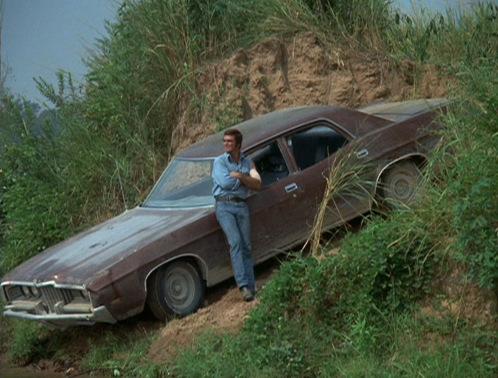 A day in the life.





 The Daily Hatch